INN AT SARASOTA BAY CLUB
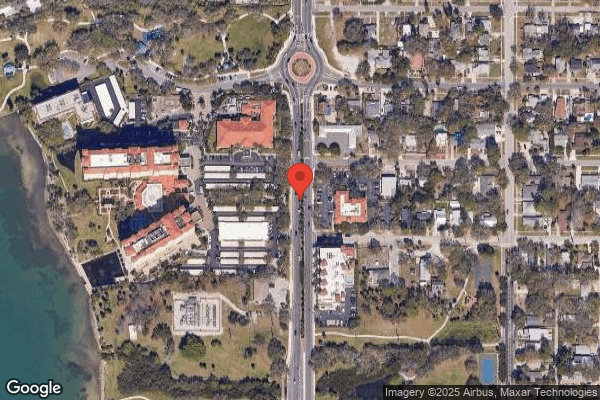

1303 NORTH TAMIAMI TRAIL, SARASOTA, FL 34236 (941) 953-6949
For profit - Corporation 44 Beds FREEDOM MANAGEMENT COMPANY Data: November 2025
Trust Grade
70/100
#362 of 690 in FL
Last Inspection: August 2024

Within standard 12-15 month inspection cycle. Federal law requires annual inspections.

Overview

The Inn at Sarasota Bay Club has a Trust Grade of B, indicating it is a good choice, though not among the elite facilities. It ranks #362 out of 690 in Florida, placing it in the bottom half of nursing homes statewide, and #12 out of 30 in Sarasota County, meaning there are only 11 local options that are better. Unfortunately, the facility is worsening, with issues rising from 3 in 2023 to 6 in 2024. Staffing is a relative strength, with a 4 out of 5-star rating, but the turnover rate of 47% is average, suggesting some instability in staff retention. Notably, the facility has no fines on record, which is a positive sign, and it has average RN coverage, meaning residents receive adequate nursing oversight. However, there have been concerning incidents, such as failure to properly clean kitchen equipment, leading to a risk of food contamination, and inadequate monitoring of residents' weights and vital signs, indicating lapses in care standards. Overall, while there are strengths in staffing and no fines, the increase in reported issues and specific care concerns should be carefully considered by families.

Trust Score
B
70/100
In Florida
#362/690
Bottom 48%
Safety Record
Low Risk
No red flags
Inspections
Getting Worse
3 → 6 violations
Staff Stability
⚠ Watch
47% turnover. Above average. Higher turnover means staff may not know residents' routines.
Penalties
✓ Good
No fines on record. Clean compliance history, better than most Florida facilities.
Skilled Nurses
✓ Good
Each resident gets 63 minutes of Registered Nurse (RN) attention daily — more than 97% of Florida nursing homes. RNs are the most trained staff who catch health problems before they become serious.
Violations
⚠ Watch
11 deficiencies on record. Higher than average. Multiple issues found across inspections.
★★★☆☆
3.0
Overall Rating
★★★★☆
4.0
Staff Levels
★★★☆☆
3.0
Care Quality
★★★☆☆
3.0
Inspection Score
Stable
2023: 3 issues
2024: 6 issues

The Good

  • 4-Star Staffing Rating · Above-average nurse staffing levels
  • Full Sprinkler Coverage · Fire safety systems throughout facility
  • No fines on record

Facility shows strength in staffing levels, fire safety.

The Bad

3-Star Overall Rating

Near Florida average (3.2)

Meets federal standards, typical of most facilities

Staff Turnover: 47%

Near Florida avg (46%)

Higher turnover may affect care consistency

Chain: FREEDOM MANAGEMENT COMPANY

Part of a multi-facility chain

Ask about local staffing decisions and management

The Ugly 11 deficiencies on record

Aug 2024 6 deficiencies
CONCERN (D)

Potential for Harm - no one hurt, but risky conditions existed

Safe Environment (Tag F0584)

Could have caused harm · This affected 1 resident

Based on observation, clinical record review, review of facility policy, resident and staff interviews, the facility failed to maintain a sanitary environment for 1 (Resident # 22) of 20 residents' ro...

Read full inspector narrative →
Based on observation, clinical record review, review of facility policy, resident and staff interviews, the facility failed to maintain a sanitary environment for 1 (Resident # 22) of 20 residents' rooms observed by failure to ensure the resident's room was free from foul odor. The findings included: The facility's policy and procedure for Housekeeping Expectations revealed to clean all resident bathrooms daily; Clean resident occupied rooms, a minimum of once weekly and as directed or deemed necessary; Clean vacated rooms as directed to prepare for admission ready. A complete room cleaning is performed, please speak with Admissions for any special cleaning requirements. The policy and procedure for the (Brand name) Urine Collection Systems (non-invasive urine collection system for women with urinary incontinence) with and effective date of 10/01/2018 stated, The facility does not provide any [Brand name] Collection systems, parts or supplies. Should a resident be clinically appropriate for the use of this type of urine collection system, the resident understands that they accept the responsibility of the cost and maintenance of the collection system machine, parts and supplies. Residents using a urine collection system such as a [Brand name], agree to hold The Inn harmless for any negative outcomes as a result of the use of this type of system and they are exercising their choice to use the system against the recommendation of The Inn. Information and understanding is provided to the resident prior to use of the urine collection system. Review of Resident #22's clinical record revealed an admission date of 2/28/24. Diagnoses included Osteoporosis. The admission Minimum Data Set (MDS) Assessment (Federally mandated evaluation of resident's health needs and functional capabilities) with a target date of 3/6/24 noted Resident #22's cognition was intact with a Brief Interview for Mental Status Score of 14. The Assessment noted the resident was frequently incontinent of urine (inability to control urine from the bladder). On 8/12/24 at 10:00 a.m., Resident #22 was observed in her room. The room had a strong foul odor of urine. On 8/12/24 at 1:05 p.m., in an interview Resident #22 said she has been a resident at the facility for over a year. She said she was incontinent and used a (brand name) urine suction system at night (draws urine away from the body into a sealed collection canister). A urine suction machine was observed on the floor next to the resident's bed with urine in the collection canister. Resident #22's room remained with a strong foul odor of urine. On 8/13/24 at 11:00 a.m., Resident #22 was observed sitting in a lounge chair at her bedside. An empty urine collection canister was stored on the floor next to the resident's bed. The room remained with a strong foul odor of urine. On 8/13/24 at 3:10 p.m., in a joint interview Licensed Practical Nurse (LPN) Staff C and Registered Nurse (RN) Staff L said they were aware of the foul smell of urine in Resident #22's room. They said the facility tried multiple interventions such as daily baths, testing for urinary tract infection, cleaning the room, and washing with vinegar but nothing improved the foul smell of urine. Staff C and Staff L said Resident #22 was admitted with the urine collection system in February 2024 and the room had the foul urine smell ever since. They said the Administrator and the Director of Nursing (DON) were aware of the issue. On 8/14/24 at 10:57 a.m., in a telephone interview Resident #22's daughter said she visited her mother from out of State this past weekend. When asked about the strong foul smell of urine in the resident's room, she stated, I can smell it at times; her room has had the odor since admission in February. She stated, Mom does not know how to use her [brand name urine collection system] or if it is right. The daughter added, I do not think they know how to use it. The staff used to open her windows when the weather was cooler to air out the room. She said her mother has had the urine collection system since her admission to the facility. Review of the clinical record for Resident #22, including physician's orders, progress notes, care plans failed to show documentation of interventions to address the urine odor in the resident's room. The clinical record lacked documentation the facility provided information to Resident #22 about the use of the urine collection system and verified the resident's understanding prior to use of the system. On 8/14/24 at 2:15 p.m., in an interview Certified Nursing Assistant (CNA) Staff M said she noticed the urine smell in Resident #22's room since her admission in February. She said in the morning, she removes and discards the urine collection sponge before washing the resident's peri area. She cleans the urine collection canister with soap and hot water, rinses it with hot water, and wipes it with sanitary wipes. She also wipes the tubing with alcohol and allows the canister to air dry in a basin in the resident's shower. Staff M said the urine smell is so strong, she has to hold her breath. She has to send the resident's bedding and reusable pad to be laundered at least three times a week and sometimes daily. She reported it to the nurse. On 8/14/24 at 3:30 p.m., in an interview the DON said she was aware of the urine odor in Resident #22's room. She said the facility started to pay for the supplies for the urine collection system to replace them more frequently. The DON verified Resident #22's room had the foul smell of urine since her admission. She said the urine collection system was causing the odor but it was the resident's choice to use the machine. The DON said the interdisciplinary team had several discussion about the continuing issue with the smell of the resident's room. The DON was asked but was not able to provide documentation of interventions attempted to address the ongoing foul smell of urine in Resident #22's room.
CONCERN (D)

Potential for Harm - no one hurt, but risky conditions existed

Deficiency F0657 (Tag F0657)

Could have caused harm · This affected 1 resident

**NOTE- TERMS IN BRACKETS HAVE BEEN EDITED TO PROTECT CONFIDENTIALITY** Based on observation, interview and record review, the facility failed to develop a person-centered comprehensive care plan to m...

Read full inspector narrative →
**NOTE- TERMS IN BRACKETS HAVE BEEN EDITED TO PROTECT CONFIDENTIALITY** Based on observation, interview and record review, the facility failed to develop a person-centered comprehensive care plan to meet the needs of 1 (Resident #11) of 3 residents reviewed for care plans. The findings included: Review of the clinical record for Resident #11 revealed an admission date of 3/5/24. The nursing progress note dated 3/5/24 at 4:43 p.m., noted Resident #11 had a cardiac pacemaker (implanted device to help control the heart's rhythm and rate). The physician's order summary documented the presence of a cardiac pacemaker. The admission Minimum Data Set (MDS) assessment dated [DATE] noted Resident #11's cardiac diagnoses included abnormal heart rhythm. The MDS did not document the presence of the cardiac pacemaker in the active diagnoses, or cardiopulmonary procedures. The assessment noted Resident #11's cognition was intact with a Brief Interview for Mental Status score of 15. The comprehensive care plan initiated on 3/21/24 did not address the presence of the cardiac pacemaker with goals, interventions, precautions, and follow up as appropriate. On 8/14/24 at 4:06 p.m., in an interview the MDS coordinator verified the lack of care plan for the pacemaker. She said she was responsible to ensure care plans were in place. She said she should have developed a care plan with goals and interventions for the pacemaker but she missed it. On 8/14/24 at 5:25 p.m., in an interview the Director of Nursing (DON) said the normal process is to have a care plan for the pacemaker with interventions.
CONCERN (D)

Potential for Harm - no one hurt, but risky conditions existed

Unnecessary Medications (Tag F0759)

Could have caused harm · This affected 1 resident

Based on observation, interview and record review, the facility failed to ensure the error rate was less than 5%. 25 opportunities were observed, two medication errors were identified resulting in a m...

Read full inspector narrative →
Based on observation, interview and record review, the facility failed to ensure the error rate was less than 5%. 25 opportunities were observed, two medication errors were identified resulting in a medication error rate of 8%. The findings included: 1. On 8/13/24 at 8:00 a.m., observed Registered Nurse (RN) Staff H administer 1 tablet of Vitamin B12 - 500 micrograms (mcg) to Resident #21. On 8/14/24 at 8:50 a.m., review of the physician's order summary for Resident #21 revealed a current order to give 2 tablets of Vitamin B12 - 500 mcg one time a day for B12 deficiency. On 8/14/24 at 9:01 a.m., review of the Medication Administration Record (MAR) for August 2024 revealed Staff H signed off she administered 2 tablets of Vitamin B12 500 mcg. on 8/13/24. On 8/14/24 at 11:33 a.m., during an interview with Staff H she said she thought Resident #21's order for B12 was for 1 tablet, so she gave her one tablet during the observation on 8/13/24. Staff H looked at the order on her computer screen and said, you're correct, the order is for two tablets; my error. Review of the physician's order summary and MAR for Resident #3 revealed an order with a start date of 8/1/24 for Cholecalciferol (Vitamin D) 400 units, 2 tablets one time a day for bone health. 2. On 8/13/24 at 8:57 a.m., Licensed Practical Nurse (LPN) Staff F was observed preparing several medications to administer to Resident #3, including Vitamin D. LPN Staff F placed two tablets of Vitamin D (400 units/each) from a stock bottle into the medication cup. LPN Staff F also placed one tablet of Vitamin D (400) units from a bubble pack into the medication cup. LPN Staff F walked into Resident #3's room to administer the medications to the resident, including 1200 units of Vitamin D instead of 800 units as per the physician's order. LPN Staff F was asked to stop the medication administration and verify the dosage of the Vitamin D she was about to administer to the resident. On 8/13/24 at approximately 9:15 a.m., LPN Staff F verified the physician's order was to administer Vitamin D (400 units) 2 tablets orally one time a day. LPN Staff F verified she placed Vitamin D (400 units) 3 tablets into the cup.
CONCERN (E)

Potential for Harm - no one hurt, but risky conditions existed

Quality of Care (Tag F0684)

Could have caused harm · This affected multiple residents

**NOTE- TERMS IN BRACKETS HAVE BEEN EDITED TO PROTECT CONFIDENTIALITY** Based on observation, interview and record review, the facility failed to ensure 3 (Residents #21, #25, and #180) of 5 residents...

Read full inspector narrative →
**NOTE- TERMS IN BRACKETS HAVE BEEN EDITED TO PROTECT CONFIDENTIALITY** Based on observation, interview and record review, the facility failed to ensure 3 (Residents #21, #25, and #180) of 5 residents reviewed received care in accordance with professional standards of practice. The findings included: 1. Review of the clinical record for Resident #21 revealed an admission date of 10/4/23. The physician's orders dated 7/27/24 included to weigh Resident #21 weekly on Tuesdays starting on 8/1/24 for a diagnosis of malnutrition. The physician's orders dated 7/27/24 also included to obtain the resident's vital signs (Temperature, pulse, respiration, blood pressure) and weight monthly. The clinical record lacked documentation the facility clarified the physician's orders related to the frequency of monitoring the resident's weight. On 8/14/24, review of the weight summary showed Resident #21's weight was obtained on 8/2/24. No other weight was documented after 8/2/24. The clinical record lacked documentation of the reason for the missing weekly weights. On 8/14/24 at 5:09 p.m., in an interview the DON verified the last weight for Resident #21 was obtained on 8/2/24. She said she personally entered the order for the weekly weight and staff should have obtained the weekly weight as ordered. On 8/15/24 at 8:35 a.m., in an interview the Administrator said the order for weekly weights on Tuesdays at 6:00 a.m., was on the Medication Administration Record (MAR) for August 2024. She said the night shift nurse should have obtained the weight or document in a progress note the reason why the physician's order for the weekly weight was not followed. 2. Review of the clinical record for Resident #25 revealed a physician's order dated 8/7/24 to apply a Lidoderm Patch 5% (local anesthetic) to the resident's right shoulder topically for pain. The patch was to be on for 12 hours and off for 12 hours. Review of the MARs for August 2024 revealed the patch was scheduled to be applied each day at 9:00 a.m., and removed each day at 9:00 p.m. The MAR showed the Licensed Nurse placed her initials on 8/12/24 at 9:00 p.m., indicating the Lidoderm patch was removed. On 8/13/24 at 8:17 a.m., LPN Staff C was observed preparing to administer medications to Resident #25, including a Lidoderm patch 5%. Observation of the resident's right shoulder revealed a Lidoderm patch dated 8/12/24. LPN Staff C said the Lidoderm patch applied on 8/12/24 at 9:00 a.m., was not removed on 8/12/24 at 9:00 p.m., as ordered. On 8/13/24 at 8:28 a.m., LPN Staff C documented in a progress note the previous Lidocaine (Lidoderm) patch not removed at hours of sleep. On 8/14/24 5:17 p.m., in an interview the Director of Nursing (DON) said staff should not sign off something they did not do. The nurse was not following the physician's order. On 8/15/24 at 8:50 a.m., the Administrator said the nurse did not follow the physician's orders for the Lidoderm Patch. 3. On 8/12/24 review of Resident #180's medical record revealed she was admitted to the facility on [DATE] with a diagnosis of failure to thrive and on hospice services. Review of the Baseline Care Plan did not identify services which Hospice was to provide for Resident #180 in order to coordinate care between the facility and Hospice. On 8/13/24 at 1:19 p.m., in an interview with Resident #180's Hospice Aid K said today was her first time working with Resident #180. She said when she reviewed Resident #180's medical record she was unable to find Resident #180's Hospice Care Plan which would let her know what care she needed to provide for Resident #180. She said when she was unable to find Resident #180's Hospice Plan of Care she called the main office, they told her she should ask Resident #180's nurse what they needed her to do for Resident #180 today. She said she used each Hospice resident's Hospice Plan of Care to determine what care she needed to provide to the resident, so there is not a duplication of care between the Hospice aid and the facility staff. On 8/13/24 at 1:46 p.m., in an interview with Staff F, Resident #180's nurse said Resident #180 was admitted to the facility on [DATE] under Hospice services. She said Hospice provided a Hospice Plan of Care for each resident which they keep in the resident's medical record. She said the Hospice Plan of Care was used to coordinate the care between Hospice staff and facility staff to ensure there was no duplication of care and the Hospice resident received the best care possible. She confirmed after reviewing Resident #180's medical record, Resident #180's Hospice Care Plan was not in her medical record as required. On 8/13/24 at 1:59 p.m., in an interview with the Minimum Data Set (MDS) Coordinator, she confirmed Resident #180 was admitted to the facility on [DATE] under Hospice care. She said she did not do a full comprehensive plan of care until day 21 after a resident was admitted to the facility, and Resident #180's comprehensive care has not been completed as of today. She confirmed Resident 180's Baseline Care Plan did not identify services that Hospice would provide in order to coordinate care between the facility and Hospice. She said Hospice was required to put their plan of care in each Hospice resident's medical record when a resident has been admitted to Hospice services to ensure coordination of care between Hospice and the facility staff. The MDS Coordinator reviewed Resident's 180's medical record and confirmed it did not contain the required Hospice Plan of Care and/or Hospice staff visit weekly documentation of the care they provided Resident #180 since her admission to the facility 7/24/24. On 8/15/24 at 11:00 a.m., in an interview with the Director of Nursing (DON), she said Hospice did not provide the facility with Resident #180's Hospice Plan of Care which reflected the resident and family goals with interventions addressing the patient's needs, services to be provided by Hospice, and problems identified by the Hospice Interdisciplinary Group as noted in the Hospice contract.
CONCERN (E)

Potential for Harm - no one hurt, but risky conditions existed

Deficiency F0847 (Tag F0847)

Could have caused harm · This affected multiple residents

Based on record review and resident and staff interview, the facility failed to ensure the facilities binding arbitration agreement explicitly informed the residents of their rights to have it explain...

Read full inspector narrative →
Based on record review and resident and staff interview, the facility failed to ensure the facilities binding arbitration agreement explicitly informed the residents of their rights to have it explained to them in a manner that was understood, that the agreement could be rescinded within 30 calendar days of signing, that the agreement did not have to be signed or that it was not a condition of admission or continued care in the facility, and that the resident would be allowed to communicate with federal, state or local ombudsman for 3 (Resident #10, #12 and #330) of 13 resident reviewed who had signed the facility binding arbitration agreement. The findings included: On review of Facilities binding arbitration agreement, it did not indicate the following: Explained in a from and manner that the resident understood. That the agreement may be rescinded within 30 calendar days of signing. That the agreement was not required to be signed or that it was a condition of admission or continued care in the facility. The resident or their representative could still communicate with federal, state or local officials such as federal and state surveyors, health department or long-term care ombudsman. During an interview on 8/14/24 at 9:07 a.m., the administrator stated that all resident are presented with the binding arbitration agreement on admission. She said she believed that all 30 resident in the facility had signed the agreement. She said that resident are given an admission packet and a separate packet of contracts and are asked to sign all the items in the packet and the arbitration agreement is in that packet. Administrator said she was unaware if the admission person pointed out the arbitration agreement or discussed it to be sure the resident or representation understood what it was or if they were aware that they do not have to sign it as a condition for being admitted . During an interview on 8/14/24 at 10:34 a.m., the Community Liaison Staff stated that he had not ever explained to a resident or their representative about the Binding Arbitration agreement. He said he usually has a stack of things from the admission paperwork and contracts that need to be signed on admission or before admission and he lays it on the resident bedside table before they arrive at the facility. He said that he highlights all the lines that have to be signed. He said, I admit that I have not gone over the form with them or told them it is voluntary and they did not have to sign or that it was not contingent on admission or receiving care here. He acknowledged the language in the form or agreement did not indicate that the signing of the form was voluntary or that it would not keep them for admission or care if they did not sign it. He acknowledged that that the agreement did not indicate that they could rescind it within 30 days after signing the arbitration agreement if they wanted to. During a second interview on 8/14/24 at 10:49 a.m., the Administrator acknowledged that the binding Arbitration Agreement did not inform resident or their represented that they could rescind the agreement within 30 days if they wanted to do so. She verified the agreement did not indicate that the whole agreement was voluntary and was not contingent of admission or continuing care in the facility, and did not indicate if resident could contact state or local agency or ombudsman. or that the resident could have a neutral arbitrator that they agreed on or that they could choose the venue for the meeting if having one. During an interview on 8/14/24 at 2:01 p.m., Resident #10 stated she did remember the paperwork left for her to sign on admission but could not say that she even knew what a binding Arbitration agreement statement was. She said no one came in to explain anything or go over the binding arbitration agreement. she said she just thought it was things for admission. On review of Resident #10 medical record and Minimum Data Set (MDS) Assessment the resident has a Brief Interview for Mental Status (BIMS) score of 15 which indicated the resident was cognitively intact and was her own responsible party. During an interview on 8/14/24 at 2:15 p.m., Resident #330 stated that she did remember the stack of papers to sign laying on her bedside table when she came in and she remembered the lines to be signed were highlighted in yellow. She just figured it was stuff for admission and did not even know what this was. She said no one came in and went over the paperwork with her. She said when she got there she had just been in the hospital for over two weeks and really could not read all those contracts and comprehend everything. Resident said she thinks someone should go over admission paperwork upon admission. On review of Resident #330 medical record and Minimum Data Set (MDS) Assessment the resident has a Brief Interview for Mental Status (BIMS) score of 15 which indicated the resident was cognitively intact and is her own responsible party. During an interview on 8/15/24 at 9:50 a.m., Resident #12 said that he remembers the stack of contracts in his room that he was supposed to sign. he said that he signed them but he did not remember seeing the Binding Arbitration agreement. He said that each of the contracts had an (X) mark or highlighted line to sign. The resident said he signed the line and figured it was just admission stuff. He said that on admission he was tired and there was no staff to go over the items with him, so he just signed them. On review of Resident #12 medical record and Minimum Data Set (MDS) Assessment the resident has a Brief Interview for Mental Status (BIMS) score of 14 which indicated the resident was cognitively intact and is her own responsible party.
CONCERN (E)

Potential for Harm - no one hurt, but risky conditions existed

Deficiency F0848 (Tag F0848)

Could have caused harm · This affected multiple residents

Based on record review and resident and staff interview, the facility failed to ensure the facility's binding arbitration agreement signed by 3 (Residents #10, #12 and #330) of 13 resident reviewed ex...

Read full inspector narrative →
Based on record review and resident and staff interview, the facility failed to ensure the facility's binding arbitration agreement signed by 3 (Residents #10, #12 and #330) of 13 resident reviewed explicitly informed residents of their rights to select a neutral arbitrator and participate in the select of venue for dispute resolution that both parties agreed upon. The findings included: Review of the clinical record for Residents #10, #12, and #330 revealed the residents signed the facility's binding agreement upon admission. On review of Facilities binding arbitration agreement, it did not indicate the following: 1. That the resident has a right to be included in selecting a neutral arbitrator agreed upon by both parties 2. That the resident has the right to be included in selecting a venue that is convenient to both parties. During an interview on 8/14/24 at 10:34 a.m., Community Liaison (admission person) stated that he has not ever explained to a resident or their representative about the Binding Arbitration agreement. He said he usually has a stack of things from the admission paperwork and contracts that need to be signed on admission or before admission and he lays it on the resident bedside table before they arrive at the facility. He said that he high lights all the lines that have to be sign. During a second interview on 8/14/24 at 10:49 a.m., Administrator verified that the binding Arbitration Agreement did not inform resident or their represented that the resident could have a neutral arbitrator that they agreed on or that they could choose the venue for the meeting if having one.
May 2023 3 deficiencies
CONCERN (D)

Potential for Harm - no one hurt, but risky conditions existed

Deficiency F0761 (Tag F0761)

Could have caused harm · This affected 1 resident

Based on observation, staff and resident interviews and record reviews, the facility failed to ensure all drugs and biological were labeled or stored in a locked compartment for 2 (Resident #4 and #19...

Read full inspector narrative →
Based on observation, staff and resident interviews and record reviews, the facility failed to ensure all drugs and biological were labeled or stored in a locked compartment for 2 (Resident #4 and #191) of 2 residents reviewed. The findings included: The facility policy Medication Storage in the Facility: ID3 Bedside Medication Storage with an effective date of March 2022 states bedside medication storage is permitted for residents who wish to self-administer medications, upon the written order of the prescriber and once self-administration skills have been assessed and deemed appropriate in the judgement of the facility's interdisciplinary resident assessment team. The manner of storage prevents access by other residents. 1. On 5/1/2023 at 10:25 a.m., observation revealed Resident #4 asleep in the bed. There was an uneaten breakfast tray sitting on the dresser with unlabeled pills in a medicine cup on the breakfast tray. *Photographic evidence obtained. On 5/1/2023 at 11:30 a.m., Licensed Practical Nurse (LPN) Staff B said Resident #4 was asleep during medication pass so she left her morning pills in the pill container in the resident's room so they would be there when she woke up because Resident #4 does things on her own time. 2. On 5/1/2023 at 10:00 a.m., observation revealed two bottles of eye drops on the bedside table of Resident #191. *Photographic evidence obtained. On 5/1/23 at approximately 10:02 a.m., Resident #191 said the eye drops were for his glaucoma. He said he was told by his doctor to bring them to the facility. He said he usually administers the drops himself, but sometimes the nurses do it. He said the drops stay in his room at all times. On 5/2/2023 at 12:10 p.m., the Director of Nursing said there are no residents in the facility at this time who self-administer medications. She said the process would be for the resident to have an assessment completed, obtain a physician order, then the medication would go into a locked container. She also said medications are not to be left in a resident's room. The nurse should stay with the resident until the medications have been taken.
CONCERN (E)

Potential for Harm - no one hurt, but risky conditions existed

Deficiency F0700 (Tag F0700)

Could have caused harm · This affected multiple residents

Based on observation, staff and resident interviews, and record review, the facility failed to attempt alternatives prior to the use of bed rails for 4 (Resident #4, #12, #142, and #192) of 6 resident...

Read full inspector narrative →
Based on observation, staff and resident interviews, and record review, the facility failed to attempt alternatives prior to the use of bed rails for 4 (Resident #4, #12, #142, and #192) of 6 residents reviewed for bed rails. The findings included: 1. On 5/1/2023 at 10:25 a.m., observation revealed Resident #4 asleep in the bed with bilateral upper bed rails in the up position. On 5/4/2023 at 11:30 a.m., observation revealed Resident #4 sitting up in bedside chair. Both bed rails were in the up position. Record review for Resident #4 revealed no evidence alternatives were attempted prior to use of bed rails on the bed of Resident #4. 2. On 5/4/2023 at 11:40 a.m., observation revealed Resident #12 in her bed sleeping with bilateral upper bed rails in the up position. Record review for Resident #4 revealed no evidence alternatives were attempted prior to use of bed rails on the bed of Resident #4. 3. On 5/1/2023 at 11:00 a.m., observation revealed bilateral bed rails in the up position on the bed of Resident #192. On 5/1/2023 at 11:10 a.m., in an interview, Resident #192, said he hates the side rails. He said he has had the side rails on his bed since admission and has not been given any reasons why he has the side rails or signed any consents and never had a choice. He also said he bent over to get something that had fallen underneath his bed and his head got caught under the side rail. Record review for Resident #192 revealed no evidence alternatives were attempted prior to use of bed rails on the bed of Resident #192. 4. On 5/1/23 at 12:33 p.m., Resident #142 was observed in bed with bilateral upper rails in the up position. On 5/2/23 at 9:38 a.m., Resident #142 was observed his recliner, his bed was made with bilateral upper rails in the up position. On 5/3/23 at 3:05 p.m., Resident #142 was observed in bed sleeping with bilateral bed rails in the up position. rails in the up position. Record review of Resident #142 revealed no signed consent for use of the bed rails. On 5/4/23 at 12:20 p.m., the Director of Nursing confirmed there was no evidence the facility obtained informed consent for the use of bed rails for Resident #142 or attempted alternatives prior to the use of bed rails on the beds of Residents #4, 12 and 192.
CONCERN (F)

Potential for Harm - no one hurt, but risky conditions existed

Food Safety (Tag F0812)

Could have caused harm · This affected most or all residents

Based on observation and staff interview, the facility failed to ensure proper cleaning and sanitizing of equipment in the kitchen. The findings included: On 5/1/2023 at 9:15 a.m., during a tour of th...

Read full inspector narrative →
Based on observation and staff interview, the facility failed to ensure proper cleaning and sanitizing of equipment in the kitchen. The findings included: On 5/1/2023 at 9:15 a.m., during a tour of the kitchen conducted with the Certified Dietary Manager (CDM), the following observations were made: Ceiling vents with dust build-up. Photographic evidence obtained. Ice machine with dust build up on vent. Photographic evidence obtained. Stove area and flat cooktop were covered in grease and grime build up. Photographic evidence obtained. There was a container of melted butter sitting on flat cook top that was also covered in grease and grime. Photographic evidence obtained. At the time of the observation, the CDM said the melted butter gets changed before each meal. Oven and exhaust fan over oven, both had build-up of grease and grime. Photographic evidence obtained. At the time of the observation, the CDM said the staff take turns cleaning and would provide cleaning schedule. He said they had been shorthanded recently. On 5/4/2023 at 1:20 p.m., the Administrator reviewed the photographic evidence of the kitchen and said she would not eat a grilled cheese sandwich from the kitchen.
Oct 2021 2 deficiencies
CONCERN (D)

Potential for Harm - no one hurt, but risky conditions existed

Deficiency F0578 (Tag F0578)

Could have caused harm · This affected 1 resident

**NOTE- TERMS IN BRACKETS HAVE BEEN EDITED TO PROTECT CONFIDENTIALITY** Based on record review, and staff interview, the facility failed to obtain a Do Not Resuscitate Order (DNRO) in accordance with ...

Read full inspector narrative →
**NOTE- TERMS IN BRACKETS HAVE BEEN EDITED TO PROTECT CONFIDENTIALITY** Based on record review, and staff interview, the facility failed to obtain a Do Not Resuscitate Order (DNRO) in accordance with the advanced directives of 1 (Residents #31) of 1 resident reviewed for advance directives. The failure to have accurate physician orders has the potential to lead to confusion in regards to the resident's end of life advance directive being honored. The findings included: The facility's policy for Advance Directives- revised procedure for processing an advance directive, dated [DATE]; noted Social Services Director (SSD) documents in the medical record a note that the advance directive document was received and details of the documents. SSD updates the log for DNR orders and delivers a copy of the advance directive to the charge nurse of on the unit where the resident resides. The charge nurse documents receipt of the advance directive by putting the order into the record and changing the Code status if appropriate. Director of Nursing/Assistant Director of Nursing follows up with the check of nursing orders in the medical record. Resident #31's clinical record revealed an active physician's order dated [DATE], for the resident to be a Full Code, indicating the resident was to receive cardiopulmonary resuscitation (CPR) in the event his heart stopped beating. The clinical record also contained a DNRO form signed by the resident and physician on [DATE]. On [DATE] at 1:06 p.m., in an interview Registered Nurse (RN) Staff M confirmed Resident #31 had a current physicians order for CPR but his record also contained a signed DNRO form. RN Staff M said she would first look under the advance directive section of the chart for the DNRO form before starting CPR but acknowledged would want everything to match to avoid any confusion and would contact the resident's physician to get the code status order changed after she spoke to the resident to verify his wishes. In an interview on [DATE] at 12:48 p.m., the Social Services Director (SSD) said the admission paperwork for Resident #31 did not have any advance directives. She did visit with the resident on [DATE] and discussed his advance directive in regards to CPR but did not document the conversation about his wishes in the clinical record. The resident did express his desire to be a DNR, so she had the resident sign the DNRO form and sent it to the physician. She acknowledged when he first arrived would have been full code status but after the DNRO form was signed, the order should have been changed.
CONCERN (D)

Potential for Harm - no one hurt, but risky conditions existed

Deficiency F0761 (Tag F0761)

Could have caused harm · This affected 1 resident

Based on observation and staff interview, the facility failed to store resident medications in a manner to prevent loss and efficacy of the medications for 3 of 3 medication carts. The findings inclu...

Read full inspector narrative →
Based on observation and staff interview, the facility failed to store resident medications in a manner to prevent loss and efficacy of the medications for 3 of 3 medication carts. The findings included: The facility's Medication Storage In The Facility policy, ID1: Storage Of Medications, dated March 2019 stated, all medications dispensed by the pharmacy are stored in the container with the pharmacy label. Orally administered medications are kept separate from externally used medications and treatments such as ointments and creams. 1. On 10/5/21 at 9:14 a.m., observation of the Coral Unit medication cart revealed an open unlabeled plastic medication cup with 3 different medications inside the top drawer. Licensed Practical Nurse (LPN) Staff K was present during the observation and said she was the only nurse administering medications from the cart and did not put the pills there or know to which resident they belonged. LPN Staff K immediately removed the pills and disposed of them without attempting to identify the medications or if they were intended for a resident who did not receive them. There were other loose pills not in their original packaging and pill debris inside the second drawer of the cart. LPN Staff K confirmed this finding at the time of the observation. 2. On 10/5/21 at 10:01 a.m., observation of the Sand Dollar Unit medication cart revealed an open unlabeled jar of Vaseline being stored in the top drawer along with the medications. LPN Staff L was present during the observation and said the Vaseline had been for a treatment to Resident #29. LPN Staff L said the treatment had been discontinued and removed the jar from potential use. There were loose pills and pill debris inside the second drawer of the cart and to the right of the narcotic lock box. LPN Staff L confirmed this finding at the time of the observation. 3. On 10/5/21 at 10:23 a.m., observation of the Triton Unit medication cart revealed loose pills and pill debris in the second medication drawer. A white capsule and gel caplet were among the debris next to the narcotic lock box. Registered Nurse (RN) Staff M was present during the observation and confirmed this finding. **Photographic Evidence Obtained**
Understanding Severity Codes (click to expand)
Life-Threatening (Immediate Jeopardy)
J - Isolated K - Pattern L - Widespread
Actual Harm
G - Isolated H - Pattern I - Widespread
Potential for Harm
D - Isolated E - Pattern F - Widespread
No Harm (Minor)
A - Isolated B - Pattern C - Widespread

Questions to Ask on Your Visit

  • "Can I speak with families of current residents?"
  • "What's your RN coverage like on weekends and overnight?"

Our Honest Assessment

Strengths
  • • No major safety red flags. No abuse findings, life-threatening violations, or SFF status.
  • • No fines on record. Clean compliance history, better than most Florida facilities.
Concerns
  • • 11 deficiencies on record. Higher than average. Multiple issues found across inspections.
Bottom line: Mixed indicators with Trust Score of 70/100. Visit in person and ask pointed questions.

About This Facility

What is Inn At Sarasota Bay Club's CMS Rating?

CMS assigns INN AT SARASOTA BAY CLUB an overall rating of 3 out of 5 stars, which is considered average nationally. Within Florida, this rating places the facility higher than 0% of the state's 100 nursing homes. This mid-range rating indicates the facility meets federal standards but may have areas for improvement.

How is Inn At Sarasota Bay Club Staffed?

CMS rates INN AT SARASOTA BAY CLUB's staffing level at 4 out of 5 stars, which is above average compared to other nursing homes. Staff turnover is 47%, compared to the Florida average of 46%. RN turnover specifically is 67%, which is notably high. RNs provide skilled clinical oversight, so turnover in this role can affect medical care quality.

What Have Inspectors Found at Inn At Sarasota Bay Club?

State health inspectors documented 11 deficiencies at INN AT SARASOTA BAY CLUB during 2021 to 2024. These included: 11 with potential for harm.
Who Owns and Operates Inn At Sarasota Bay Club?

INN AT SARASOTA BAY CLUB is owned by a for-profit company. For-profit facilities operate as businesses with obligations to shareholders or private owners. The facility is operated by FREEDOM MANAGEMENT COMPANY, a chain that manages multiple nursing homes. With 44 certified beds and approximately 25 residents (about 57% occupancy), it is a smaller facility located in SARASOTA, Florida.

How Does Inn At Sarasota Bay Club Compare to Other Florida Nursing Homes?

Compared to the 100 nursing homes in Florida, INN AT SARASOTA BAY CLUB's overall rating (3 stars) is below the state average of 3.2, staff turnover (47%) is near the state average of 46%, and health inspection rating (3 stars) is at the national benchmark.

What Should Families Ask When Visiting Inn At Sarasota Bay Club?

Based on this facility's data, families visiting should ask: "Can I visit during a mealtime to observe dining assistance and food quality?" "How do you handle medical emergencies, and what is your hospital transfer rate?" "Can I speak with family members of current residents about their experience?"

Is Inn At Sarasota Bay Club Safe?

Based on CMS inspection data, INN AT SARASOTA BAY CLUB has a clean safety record: no substantiated abuse findings (meaning no confirmed cases of resident harm), no Immediate Jeopardy citations (the most serious violation level indicating risk of serious injury or death), and is not on the Special Focus Facility watch list (a federal program monitoring the lowest-performing 1% of nursing homes). The facility has a 3-star overall rating and ranks #100 of 100 nursing homes in Florida. While no facility is perfect, families should still ask about staff-to-resident ratios and recent inspection results during their visit.

Do Nurses at Inn At Sarasota Bay Club Stick Around?

INN AT SARASOTA BAY CLUB has a staff turnover rate of 47%, which is about average for Florida nursing homes (state average: 46%). Moderate turnover is common in nursing homes, but families should still ask about staff tenure and how the facility maintains care continuity when employees leave.

Was Inn At Sarasota Bay Club Ever Fined?

INN AT SARASOTA BAY CLUB has no federal fines on record. CMS issues fines when nursing homes fail to meet care standards or don't correct problems found during inspections. The absence of fines suggests the facility has either maintained compliance or corrected any issues before penalties were assessed. This is a positive indicator, though families should still review recent inspection reports for the full picture.

Is Inn At Sarasota Bay Club on Any Federal Watch List?

INN AT SARASOTA BAY CLUB is not on any federal watch list. The most significant is the Special Focus Facility (SFF) program, which identifies the bottom 1% of nursing homes nationally based on persistent, serious quality problems. Not being on this list means the facility has avoided the pattern of deficiencies that triggers enhanced federal oversight. This is a positive indicator, though families should still review the facility's inspection history directly.