SUNNYSIDE NURSING HOME
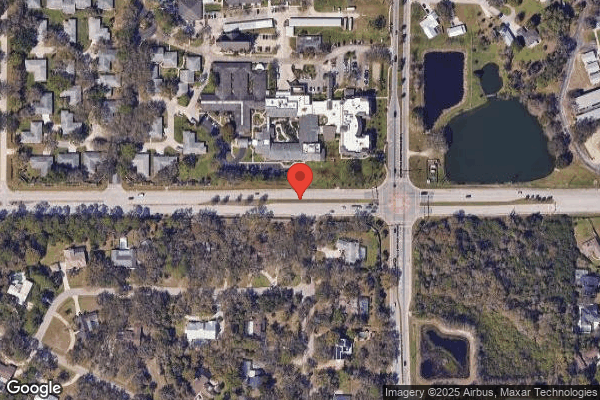
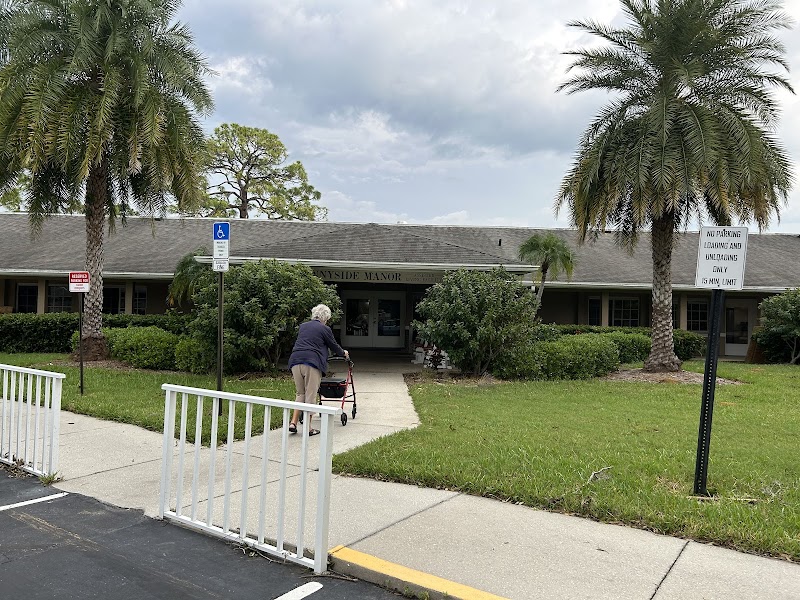
5201 BAHIA VISTA STREET, SARASOTA, FL 34232 (941) 371-2729
Non profit - Church related 60 Beds Independent Data: November 2025
Trust Grade
93/100
#123 of 690 in FL
Last Inspection: May 2025

Inspected within the last 6 months. Data reflects current conditions.

Overview

Sunnyside Nursing Home has an impressive Trust Grade of A, indicating that it is highly recommended and provides excellent care. It ranks #123 of 690 facilities in Florida, placing it in the top half, and #6 out of 30 in Sarasota County, meaning only five local options are better. The facility is stable, with the same number of issues reported in both 2021 and 2025. Staffing is a notable strength, boasting a perfect 5/5 star rating and a turnover rate of just 25%, well below the state average, ensuring that staff are familiar with residents. While there have been no fines, which is a positive sign, there are concerns regarding the failure to properly inform residents about arbitration agreements and the inadequate use of personal protective equipment for some residents, which could pose infection risks.

Trust Score
A
93/100
In Florida
#123/690
Top 17%
Safety Record
Low Risk
No red flags
Inspections
Holding Steady
2 → 2 violations
Staff Stability
✓ Good
25% annual turnover. Excellent stability, 23 points below Florida's 48% average. Staff who stay learn residents' needs.
Penalties
✓ Good
No fines on record. Clean compliance history, better than most Florida facilities.
Skilled Nurses
✓ Good
Each resident gets 72 minutes of Registered Nurse (RN) attention daily — more than 97% of Florida nursing homes. RNs are the most trained staff who catch health problems before they become serious.
Violations
✓ Good
Only 4 deficiencies on record. Cleaner than most facilities. Minor issues only.
★★★★★
5.0
Overall Rating
★★★★★
5.0
Staff Levels
★★★★★
5.0
Care Quality
★★★★☆
4.0
Inspection Score
Stable
2021: 2 issues
2025: 2 issues

The Good

  • 5-Star Staffing Rating · Excellent nurse staffing levels
  • 5-Star Quality Measures · Strong clinical quality outcomes
  • Low Staff Turnover (25%) · Staff stability means consistent care
  • Full Sprinkler Coverage · Fire safety systems throughout facility
  • No fines on record
  • Staff turnover is low (25%)

    23 points below Florida average of 48%

Facility shows strength in staffing levels, quality measures, staff retention, fire safety.

The Bad

No Significant Concerns Identified

This facility shows no red flags. Among Florida's 100 nursing homes, only 1% achieve this.

The Ugly 4 deficiencies on record

May 2025 2 deficiencies
CONCERN (D)

Potential for Harm - no one hurt, but risky conditions existed

Infection Control (Tag F0880)

Could have caused harm · This affected 1 resident

**NOTE- TERMS IN BRACKETS HAVE BEEN EDITED TO PROTECT CONFIDENTIALITY** Based on observation, staff interviews, medical record and policy review, the facility failed to ensure proper Personal Protecti...

Read full inspector narrative →
**NOTE- TERMS IN BRACKETS HAVE BEEN EDITED TO PROTECT CONFIDENTIALITY** Based on observation, staff interviews, medical record and policy review, the facility failed to ensure proper Personal Protective Equipment (PPE) was worn for 2 (Residents #32 and #40) of 5 residents observed for enhanced barrier precautions. Enhanced barrier precautions (EBP) are used to prevent the transmission of multi drug resistant organisms (MDRO) and protect vulnerable residents who are at a greater risk of infection transmission during high contact care. The findings included: Review of the facility policy # 4-400-17 titled, Enhanced Barrier Precautions, dated 4/9/24, implemented to enhance barrier precautions for the prevention of multi-resistant organisms. All staff receive training on enhanced barrier precautions upon hire and at least annually and are expected to comply with all designated precautions; An order for enhanced barrier precautions will be obtained for residents with any of the following: Wounds, and/or indwelling medical devices. Make gowns and gloves immediately near or outside of the resident's room. High-contact resident care activities include: Dressing, Bathing, Transferring, Providing hygiene, Changing linen, Changing briefs or assisting with toileting, Device care or use: central lines, urinary catheters, feeding tubes, tracheostomy/ventilator tubes, Wound care: any skin opening requiring a dressing. 1. Resident #32 was admitted to the facility on [DATE]. His primary admitting diagnosis was Displaced Intertrochanteric fracture of the right femur. His BIMS (Brief Interview for Mental Status) score was 15 which indicated cognitively intact. Physician orders included Enhanced Barrier Precautions every shift for right femur surgical incision with dressing; Gown and Glove with all hands-on care and bed/lines/towels handling. Order was initiated on 5/6/2025. Care Plan for Resident #32 initiated on 5/7/2025 with problem of right hip fracture related to fall implemented intervention of Enhanced Barrier Precautions as directed related to potential wound exposure. Sign posted at door. On 5/27/25 at 11:35 a.m. during an interview Staff C, Registered Nurse (RN) said the Sunflower signs on the residents' doors mean they are on Enhanced Barrier Precautions. On 5/27/2025 at 11:40 a.m., Occupational Therapist Staff A was observed interacting with Resident #32 who had a sign on his doorway identifying him as being on Enhanced Barrier Precautions. Activities observed included Staff A positioning the residents' legs as well as working with his upper body. Staff A did not wear the required infection Prevention equipment including gloves. In an interview Occupational Therapist Staff A stated she did participate in hands-on activities with the resident. Staff A said she was working with the resident to improve his upper body strength. She said she was aware of the Enhanced Barrier Precautions but said she did not need Personal Protection Equipment (PPE) because the resident's hip wound was covered. She said the PPE required for Enhanced Barrier Precautions depends on the diagnosis of the resident. On 5/27/2025 at 11:50 a.m. During an interview Licensed Practical Nurse (LPN) Staff B said she has worked at the facility for 5 years. She said the Enhanced Barrier Precaution signs meant precautions are used based on the resident's diagnosis (catheter; wound; etc.). On 5/27/2025 at 12:30 p.m., Observed Certified Nursing Assistant (CNA) Staff D enter Resident #32's room without donning PPE. She proceeded to the resident's bedside and assisted him out of bed and stabilizing his arm as he ambulated to the bathroom. She did not have on a gown or gloves. She was wearing gloves when she came out of the bathroom. Staff D admitted she did not donned gloves when she was supposed to but said she was not required to wear gowns. On 5/29/2025 at 1:20 p.m., in an interview with the Infection Preventionist, she said the goal of Enhanced Barrier Precautions was to reduce caregivers transmitting MDRO's from resident to resident. She said herself and nursing staff are in charge of monitoring residents on EBP. She said if the Enhanced Barrier Sign is on a resident's door there are no circumstances a staff member should provide care without following the requirements. She said PPE supplies are usually kept for Enhanced Barrier Precautions on the counter. On 5/29/2025 at 2:45 p.m., in an Interview the Director of Nursing (DON) said gowns should be on counters in the residents' rooms. She said all staff should follow the PPE requirements for EBP if the sign is on the door. The DON provided Annual CNA skills Event for March 2025. No education was documented as provided for any other staff. There was no documentation of spot checks as told by the IP. The DON said the IP just walks through and checks on things but doesn't keep records. 2. Review of medical record revealed Resident #40 had an admission date of 12/20/24 with a diagnosis including fracture of left femur, malnutrition, unspecified dementia, obstructive and reflux uropathy. Review of Minimum Data Set (MDS) Assessment with a target date of 4/2/25 revealed Resident #40 scored an 8 on the Brief Interview for Mental Status (BIMS), indicating impaired cognition. Review of Resident #40's care plan dated 12/23/24 with a revision date of 5/16/25 identified the resident had indwelling catheter related to obstructive uropathy. Interventions included enhanced barrier precautions as directed. Sign posted at door. Review of Resident #40 Physician order dated 4/4/24 documented enhanced barrier precautions every shift for Foley catheter. Review of Resident #40 Certified Nursing Assistant (CNA) Facility tasks dated 1/8/25 documented enhanced barrier precautions every shift for Foley catheter. On 5/29/25 at 9:23 a.m., in an interview with CNA Staff E said he bathed and dressed Resident #40, and did not wear a gown. He confirmed there were gowns in the room, but thought the precautions were discontinued. CNA Staff E said he emptied the Foley catheter bag for Resident #40 earlier that morning and said he did not need a gown to do that. On 5/29/25 at 10:00 a.m. in an interview with Licensed Practical Nurse (LPN) Staff F said Resident #40 was on enhanced barrier precautions which requires staff to wear a gown and gloves while performing care. LPN Staff F confirmed there was a sunflower sign on Resident's #40's door, indicating enhanced barrier precautions.
CONCERN (E)

Potential for Harm - no one hurt, but risky conditions existed

Deficiency F0847 (Tag F0847)

Could have caused harm · This affected multiple residents

**NOTE- TERMS IN BRACKETS HAVE BEEN EDITED TO PROTECT CONFIDENTIALITY** Based on resident record review, Health Care Representative and staff interviews, the facility failed to ensure the facility's b...

Read full inspector narrative →
**NOTE- TERMS IN BRACKETS HAVE BEEN EDITED TO PROTECT CONFIDENTIALITY** Based on resident record review, Health Care Representative and staff interviews, the facility failed to ensure the facility's binding arbitration agreement informed the resident or their representative they were not required to agree with arbitration agreement as part of the resident admission to the facility and they could rescind the arbitration agreement within 30 days of signing for 3 (Resident #8, #40 and #404) of 3 residents reviewed who had signed the facility binding arbitration agreement. The findings included: On 5/29/25 a review of the Agreement For Care contract signed by the resident or their representative prior to admission to the facility, #12 stated the arbitration clause is optional and if the parities to the agreement do not wish to include the following arbitration provision, are required to indicate so by marking an X through this clause. Any controversy or claim arising out of or relating to the Agreement, or the breach shall be settled by arbitration, with the provisions of the Florida Arbitration Code found at Chapter 682, Florida Statutes. Further review of the Agreement For Care contract revealed the Arbitration Clause noted it did not indicate the arbitration agreement was not required as part of the admission to the facility, and the arbitration agreement may be rescinded within 30 calendar days of signing. 1. Review of Resident #40's medical record revealed his initial admission to the facility was on 12/20/24. Resident #40's wife, signed by Resident #40's Agreement For Care contract on 12/20/24. The arbitration clause in section #12 of the Agreement For Care contract was not X out. On 5/29/25 at 9:51 a.m., in an interview with Resident #40's wife, she confirmed she had signed her husband's Agreement For Care contract on 12/20/24 as one of multiple documentation she was required to sign the day her husband (Resident #40) was admitted to the facility. She said she did not remember the Social Service Assistant explaining to her she was not required to agree with the arbitration clause in section #12 in the Agreement For Care contract and she was not informed she could rescind the arbitration agreement within 30 days of signing the Agreement For Care contract. 2. Review of Resident #404's medical record revealed she was admitted to the facility on [DATE]. Resident #404's Agreement For Care contract was signed by Resident #404 on 5/24/25. The arbitration clause in section #12 of the Agreement For Care contract was not X out. On 5/29/25 at 10:05 a.m. during an interview with Resident #404 said she was admitted a couple of days ago and she had not been informed that she didn't have to agree to the arbitration clause in the Agreement For Care contract nor did the staff explain to her that if she changed her mind, she could rescind the arbitration agreement within 30 days of admission. 3. Review of Resident #8's medical record revealed she was admitted to the facility on [DATE]. Resident #8's Agreement For Care contract was signed by Resident #8 on 4/20/25. The arbitration clause in section #12 of the Agreement For Care contract was not X out. On 5/29/25 at 10:20 a.m. during an interview with Resident #8 said she was admitted in April 2025, she stated she had not been informed that she didn't have to agree to the arbitration clause in the Agreement For Care contract nor did the staff explain to her that if she changed her mind, she could rescind the arbitration agreement within 30 days of admission. On 5/29/25 at 10:27 a.m., in an interview the Social Service Assistant (SSA) said as part of her job she was required to have the resident or their Health Care Representative sign multiple admission documentation to include the Agreement For Care contract. She said because she did not know all the components of the arbitration agreement, she was unaware the resident, or the Health Care Representative could rescind the arbitration clause within 30 days of signing the Agreement For Care contract therefore she did not provide information to residents or their Health Care Representative on how to rescind the arbitration clause if they had changed their mind after signing. On 5/29/25 at 11:40 a.m., in an interview with the Administrator, she said as part of a resident being admitted to the facility, they were required to sign the Agreement For Care contract. The Administrator stated that the SSA was the primary employee responsible for the completion of the admission forms which includes the Agreement For Care. She confirmed the Agreement For Care contract and/or other admission documentation did not explain to the resident or their Health Care Representative they were not required to sign the arbitration clause in Agreement For Care contract as part of their admission to the facility and did not explain that they could rescind the arbitration agreement within 30 days of signing.
May 2021 2 deficiencies
CONCERN (D)

Potential for Harm - no one hurt, but risky conditions existed

Deficiency F0688 (Tag F0688)

Could have caused harm · This affected 1 resident

**NOTE- TERMS IN BRACKETS HAVE BEEN EDITED TO PROTECT CONFIDENTIALITY** Based on observation, record review, review of facility policy and procedures, resident and staff interview, the facility failed...

Read full inspector narrative →
**NOTE- TERMS IN BRACKETS HAVE BEEN EDITED TO PROTECT CONFIDENTIALITY** Based on observation, record review, review of facility policy and procedures, resident and staff interview, the facility failed to implement necessary restorative care to prevent the decline in range of motion or mobility for 1 (Resident #17) of 3 residents reviewed with limited range of motion. The findings included: The facility policy,10-1140 (4/23/18) for Nursing Services Restorative/Maintenance Program specified, the facility shall have a Restorative/Maintenance Program for the purpose of restoring and maintaining optimum level of function for residents at risk. The policy specified the Restorative Care Coordinator shall attend weekly Minimum Data Set (MDS) (a clinical assessment of all residents to assess a resident's functional capabilities) meeting to maintain current communication relating to resident mobility or related problems. Maintain ongoing communication with the interdisciplinary team. Review of the clinical record revealed Resident #17 had a history of cerebral infarction (stroke) with hemiparesis (weakness) affecting the right side. The MDS (Minimum Data Set) admission assessment completed on 3/9/21 noted Resident #17 had functional limitation in range of motion of both upper extremities. Resident #17 required extensive physical assistance of 1 for activities of daily living. Review of the functional maintenance program dated 3/19/21 revealed instructions to provide range of motion (ROM) to bilateral upper and lower extremities during activities of daily living and to keep a rolled cloth in hand for skin integrity. The Certified Nursing Assistant (CNA) [NAME] (provides direction for care) noted to keep a rolled cloth in hand for skin integrity. On 5/17/21 at 2:18 p.m., 5/18/21 at 9:02 a.m., 5/18/21 at 1:42 p.m., and 5/19/21 at 1:42 p.m., Resident #17's right hand's fingers were observed curled toward his palm. Resident #17 did not have the rolled cloth in his hand. On 5/18/21 at 9:02 a.m., in an interview Resident #17 said he could not remember the last time anyone placed the rolled cloth in his hand. On 5/19/21 review of the daily charting revealed the CNAs placed their initials from 5/1/21 through 5/19/21 indicating the rolled cloth was in place in the resident's hand for skin integrity. On 5/19/21 at 3:00 p.m., Registered Nurse (RN) Staff A verified Resident #17 did not have a rolled cloth in his hand. She said the nurses and CNAs were responsible to place the rolled cloth in the resident's hand and she checked to ensure it was in place. RN Staff A said although she oversaw the restorative program, she did not have set meetings to review the residents' progress. She said she also participated in stand-up meetings in the morning but did not discuss or review residents on a restorative program.
CONCERN (D)

Potential for Harm - no one hurt, but risky conditions existed

Respiratory Care (Tag F0695)

Could have caused harm · This affected 1 resident

Based on observation, review of facility policy and procedure, resident and staff interview, the facility failed to store continuous positive airway pressure (CPAP) machines masks in a sanitary manner...

Read full inspector narrative →
Based on observation, review of facility policy and procedure, resident and staff interview, the facility failed to store continuous positive airway pressure (CPAP) machines masks in a sanitary manner for 1 (Resident #37) of 1 resident who use a CPAP machine (helps you breathe more easily when you sleep). This has the potential to cause respiratory infection. The findings included: A review of the clinical record documented a Physician order for the care of Resident #37's CPAP machine. The order specified, wash CPAP weekly with soap and water and obtain new storage bag every day shift every Tuesday for infection control. On 5/17/21 at 11:58 a.m., during an observation, Resident #37's CPAP mask and tubing were stored uncovered in the open drawer of the nightstand with other personal items. **Photographic Evidence Obtained** Observations on 5/18/21 at 9:00 a.m., and 5/19/21 at 9:07 a.m., Resident #37's CPAP mask remained uncovered in the opened nightstand drawer. **Photographic Evidence Obtained** On 5/19/21 at 10:12 a.m., in an interview, Licensed Practical Nurse (LPN) Staff B said the nurse was responsible to place the CPAP mask in a plastic bag when not in use. On 5/19/21 at 10:24 a.m., during an observation and interview, Registered Nurse (RN) Unit Manager Staff A confirmed the CPAP mask for Resident #37 was in the open nightstand drawer and was uncovered. RN Staff A verified the CPAP mask should be in a plastic bag and not in contact with other items in the drawer. On 5/19/21 at 11:12 a.m., in an interview, the Director of Nursing said the facility had no policy on the care of CPAP machines.
Understanding Severity Codes (click to expand)
Life-Threatening (Immediate Jeopardy)
J - Isolated K - Pattern L - Widespread
Actual Harm
G - Isolated H - Pattern I - Widespread
Potential for Harm
D - Isolated E - Pattern F - Widespread
No Harm (Minor)
A - Isolated B - Pattern C - Widespread

Questions to Ask on Your Visit

  • "Can I speak with families of current residents?"
  • "What's your RN coverage like on weekends and overnight?"

Our Honest Assessment

Strengths
  • • Grade A (93/100). Above average facility, better than most options in Florida.
  • • No major safety red flags. No abuse findings, life-threatening violations, or SFF status.
  • • No fines on record. Clean compliance history, better than most Florida facilities.
  • • Only 4 deficiencies on record. Cleaner than most facilities. Minor issues only.
Concerns
  • • No significant concerns identified. This facility shows no red flags across CMS ratings, staff turnover, or federal penalties.
Bottom line: Generally positive indicators. Standard due diligence and a personal visit recommended.

About This Facility

What is Sunnyside's CMS Rating?

CMS assigns SUNNYSIDE NURSING HOME an overall rating of 5 out of 5 stars, which is considered much above average nationally. Within Florida, this rating places the facility higher than 99% of the state's 100 nursing homes. This rating reflects solid performance across the metrics CMS uses to evaluate nursing home quality.
How is Sunnyside Staffed?

CMS rates SUNNYSIDE NURSING HOME's staffing level at 5 out of 5 stars, which is much above average compared to other nursing homes. Staff turnover is 25%, compared to the Florida average of 46%. This relatively stable workforce can support continuity of care.

What Have Inspectors Found at Sunnyside?

State health inspectors documented 4 deficiencies at SUNNYSIDE NURSING HOME during 2021 to 2025. These included: 4 with potential for harm.
Who Owns and Operates Sunnyside?

SUNNYSIDE NURSING HOME is owned by a non-profit organization. Non-profit facilities reinvest revenue into operations rather than distributing to shareholders. The facility operates independently rather than as part of a larger chain. With 60 certified beds and approximately 50 residents (about 83% occupancy), it is a smaller facility located in SARASOTA, Florida.
How Does Sunnyside Compare to Other Florida Nursing Homes?

Compared to the 100 nursing homes in Florida, SUNNYSIDE NURSING HOME's overall rating (5 stars) is above the state average of 3.2, staff turnover (25%) is significantly lower than the state average of 46%, and health inspection rating (4 stars) is above the national benchmark.

What Should Families Ask When Visiting Sunnyside?

Based on this facility's data, families visiting should ask: "Can I visit during a mealtime to observe dining assistance and food quality?" "How do you handle medical emergencies, and what is your hospital transfer rate?" "Can I speak with family members of current residents about their experience?"

Is Sunnyside Safe?

Based on CMS inspection data, SUNNYSIDE NURSING HOME has a clean safety record: no substantiated abuse findings (meaning no confirmed cases of resident harm), no Immediate Jeopardy citations (the most serious violation level indicating risk of serious injury or death), and is not on the Special Focus Facility watch list (a federal program monitoring the lowest-performing 1% of nursing homes). The facility has a 5-star overall rating and ranks #1 of 100 nursing homes in Florida. While no facility is perfect, families should still ask about staff-to-resident ratios and recent inspection results during their visit.

Do Nurses at Sunnyside Stick Around?

Staff at SUNNYSIDE NURSING HOME tend to stick around. With a turnover rate of 25%, the facility is 21 percentage points below the Florida average of 46%. Low turnover is a positive sign. It means caregivers have time to learn each resident's needs, medications, and personal preferences. Consistent staff also notice subtle changes in a resident's condition more quickly. Registered Nurse turnover is also low at 13%, meaning experienced RNs are available to handle complex medical needs.

Was Sunnyside Ever Fined?

SUNNYSIDE NURSING HOME has no federal fines on record. CMS issues fines when nursing homes fail to meet care standards or don't correct problems found during inspections. The absence of fines suggests the facility has either maintained compliance or corrected any issues before penalties were assessed. This is a positive indicator, though families should still review recent inspection reports for the full picture.

Is Sunnyside on Any Federal Watch List?

SUNNYSIDE NURSING HOME is not on any federal watch list. The most significant is the Special Focus Facility (SFF) program, which identifies the bottom 1% of nursing homes nationally based on persistent, serious quality problems. Not being on this list means the facility has avoided the pattern of deficiencies that triggers enhanced federal oversight. This is a positive indicator, though families should still review the facility's inspection history directly.