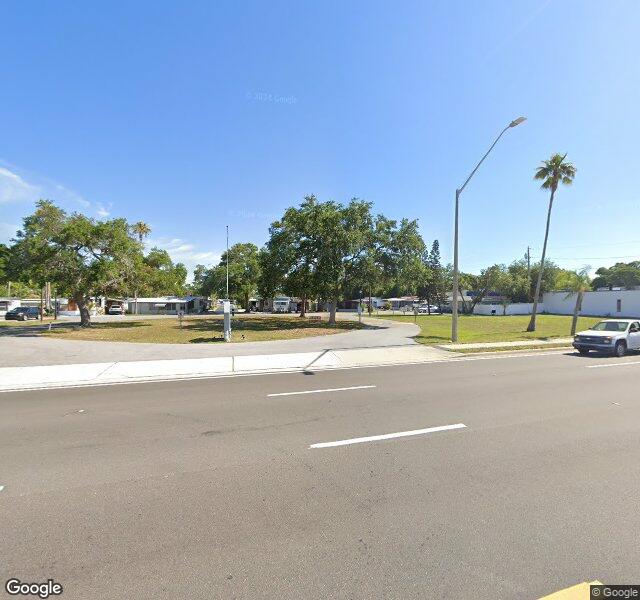
AVIATA AT SEMINOLE

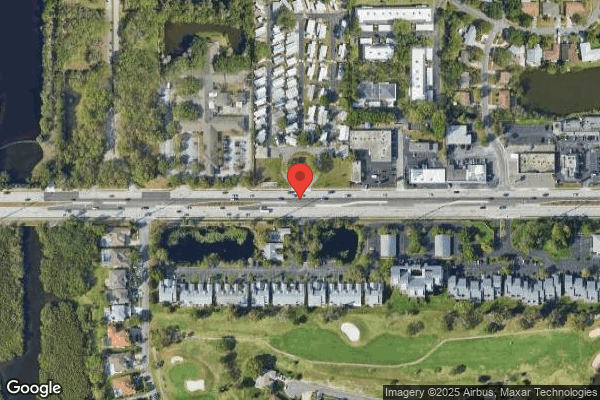
9393 PARK BLVD, SEMINOLE, FL 33777 (727) 391-2200
For profit - Limited Liability company 120 Beds AVIATA HEALTH GROUP Data: November 2025
Trust Grade
30/100
#607 of 690 in FL
Last Inspection: May 2024

Within standard 12-15 month inspection cycle. Federal law requires annual inspections.

Overview

Aviata at Seminole has received a Trust Grade of F, indicating poor performance with significant concerns. Ranking #607 out of 690 facilities in Florida places it in the bottom half, and #47 out of 64 in Pinellas County suggests limited local options are better. While the facility is trending slightly improving, with issues decreasing from 13 to 9 over the past year, it still recorded a high staff turnover rate of 67%, which is concerning compared to the state average. The facility has incurred fines totaling $35,944, higher than 77% of Florida facilities, indicating ongoing compliance problems. Specific incidents include failures to maintain sanitary kitchen conditions and reports of neglect and verbal abuse by staff towards residents, raising serious concerns about the quality of care provided.

Trust Score
F
30/100
In Florida
#607/690
Bottom 13%
Safety Record
Low Risk
No red flags
Inspections
Getting Better
13 → 9 violations
Staff Stability
⚠ Watch
67% turnover. Above average. Higher turnover means staff may not know residents' routines.
Penalties
○ Average
$35,944 in fines. Higher than 74% of Florida facilities. Some compliance issues.
Skilled Nurses
○ Average
Each resident gets 30 minutes of Registered Nurse (RN) attention daily — about average for Florida. RNs are the most trained staff who monitor for health changes.
Violations
⚠ Watch
31 deficiencies on record. Higher than average. Multiple issues found across inspections.
★☆☆☆☆
1.0
Overall Rating
★☆☆☆☆
1.0
Staff Levels
★★★★☆
4.0
Care Quality
★☆☆☆☆
1.0
Inspection Score
Stable
2024: 13 issues
2025: 9 issues

The Good

  • 4-Star Quality Measures · Strong clinical quality outcomes
  • Full Sprinkler Coverage · Fire safety systems throughout facility
  • No fines on record

Facility shows strength in quality measures, fire safety.

The Bad

1-Star Overall Rating

Below Florida average (3.2)

Significant quality concerns identified by CMS

Staff Turnover: 67%

20pts above Florida avg (46%)

Frequent staff changes - ask about care continuity

Federal Fines: $35,944

Above median ($33,413)

Moderate penalties - review what triggered them

Chain: AVIATA HEALTH GROUP

Part of a multi-facility chain

Ask about local staffing decisions and management

Staff turnover is elevated (67%)

19 points above Florida average of 48%

The Ugly 31 deficiencies on record

Jun 2025 3 deficiencies
CONCERN (D) 📢 Someone Reported This

A family member, employee, or ombudsman was alarmed enough to file a formal complaint

Potential for Harm - no one hurt, but risky conditions existed

Grievances (Tag F0585)

Could have caused harm · This affected 1 resident

**NOTE- TERMS IN BRACKETS HAVE BEEN EDITED TO PROTECT CONFIDENTIALITY** Based on observation, record review and interview, the facility failed to ensure a functioning grievance process for two residen...

Read full inspector narrative →
**NOTE- TERMS IN BRACKETS HAVE BEEN EDITED TO PROTECT CONFIDENTIALITY** Based on observation, record review and interview, the facility failed to ensure a functioning grievance process for two residents (#1 and #9 ) of ten residents sampled. Findings included: A review of a Complaint / Grievance Report, dated 05/22/2025, documented (Resident #1) communicated verbally to the Social Service Assistant (SSA) a concern: Resident #1 stated 2 CNA's (Certified Nursing Assistants) were having personal conversations when providing care. The form was signed by the Social Services Director (SSD) on 05/23/2025. The form had an area to document the concern type, treatment, Care, management of funds, behavior of other residents, missing items, violation of rights, and other. The latter area was blank. The form documented nursing was assigned the responsibility for the investigation. The findings of the investigation were documented: Staff were identified and were noted to have personal conversations while providing care to residents. The plan to resolve the complaint: Education to identified CNAs. Expected results of the actions taken: Verbal education provided to identified CNAs on not having personal conversations while providing care to residents. CNAs expressed understanding. The form was signed by (Staff F, Licensed Practical Nurse) ( LPN), Unit Manager (UM), 05/26/2025. The form documented the complaint was resolved. The form was blank to indicate if the resident was satisfied. The form documented the results and resolution steps were reported to the resident. A review of Resident #1's clinical chart showed an admission in 02/2023. Medical diagnoses included but not limited to hemiplegia and Hemiparesis following cerebral infarction affecting left non-dominant side; generalized anxiety disorder; and post-traumatic stress disorder. A review of the Minimum Data Set (MDS) dated [DATE] revealed a Brief Interview for Mental status (BIMS) score of 13, which indicated the resident was cognitively intact. A review of the facility Grievance log from 05/01/2025 through the 06/092025, listed two complaints filed by Resident #1, dated 05/22/2025 and 05/29/2025. An interview was conducted on 06/09/2025 at 11:01 a.m. with Staff F, licensed Practical Nurse (LPN)/ Unit Manager (UM). She stated regarding Resident #1's complaint dated 5/22/2025, I was not aware of that one coming to me directly. When I did become aware, I spoke to the resident. I did give a statement to the CNAs. If it is the same situation that I was thinking about, those two CNAs were put on suspension. She stated the SSD came to her about the concern. Staff F stated she left the building and came back on the following week. She stated she found out about the concern on 05/26 at the morning meeting. Staff F said, I spoke to her (the resident) on 05/26 about the concern. On 06/09/2025 at 12:35 p.m., an interview was conducted with the SSD. He stated the 05/22 grievance for Resident #1 was communicated to the SSA. On 06/09/2025 at approximately 12:40 p.m., an interview was conducted with the SSA with the Nursing Home Administrator (NHA) in the room. The SSA stated Resident #1 had reported regarding two staff members, she did not like the behavior; the conversations they were having, their likes and dislikes for the residents. The SSA stated she relayed the concern to the Administrator In Training (AIT). The AIT put it on the grievance form. The SSA said I did not personally investigate. During the interview, the NHA said, the grievance would have gone to the unit manager. On 06/09/2025 at 2:22 p.m., an interview was conducted with the NHA regarding Resident #1's grievance dated 5/22. A request for documentation pertaining to an investigation for the grievance revealed there was no documentation. He stated there was nothing further. He confirmed he was the Abuse Coordinator. He stated he was out of the building from 05/22 and came back on 05/27. He stated the AIT was the assigned Abuse Coordinator in his absence. An interview was conducted on 06/09/2025 at approximately 1:36 p.m. with the NHA regarding the reportable investigation he had conducted for the allegation reported by Resident #1 on 05/29. The NHA said, Resident #1 had reported on 05/29/2025 she had a care concern about Staff A, CNA and Staff B, CNA. (Resident #1) reported them talking about residents and staff by name. At the time, she wanted her brief changed and she found out she was on her period. They refused to wipe her. That was the initial complaint. Both staff were suspended. The NHA said we did interviews with other residents and staff. Other residents had identified same issues. We chose people in the same assignment. An interview was conducted on 06/09/2025 at approximately 2:30 p.m. with the AIT, she stated she did not interview (Resident #1), and she did not investigate. She stated she did not do anything about the complaint. Subsequently, at 3:58 p.m. the AIT stated she helped the SSA fill out the grievance form for resident #1 for the 05/22. She stated it looked like (Staff F, LPN, UM) did the investigation. On 06/09/2025 at 1:26 p.m., an observation was conducted of Resident #1. She confirmed she had submitted a grievance to complain about two aides on 05/22. She stated no one came and talked to her about the concern. She stated she had not received a response from the facility about her grievance submitted on 5/22. A review of a complaint/ Grievance Report dated 05/28/2025 by (Staff G, CNA), documented a concern for treatment and care for Resident #9 showing: CNA reports that resident was covered in feces and he had been sitting for a while before anyone came to change him. The staff member assigned responsibility for the investigation was Staff F, LPN, UM. The investigation: This resident was found to be covered in feces. The Aide assigned to resident was (Staff B, CNA). She was educated about the importance of providing prompt care. Expectation showed: aide will work endeavor to ensure proper care. Written teachable moment was provided to aide, signed as completed 06/03/2025. The section to be completed on whether the grievance was reportable to the state agency was not marked with either a yes or no indication. A review of Resident #9's clinical chart documented an admission of 05/2023. His diagnosis list included but not limited to Type 2 Diabetes Mellitus with Diabetic Polyneuropathy, Morbid obesity, and muscle weakness. A review of a Brief Interview for Mental status, dated 08/16/2024, documented a score of 13, with a comment Intact cognitive response. A review of Resident #9's clinical chart, the Care Plan, documented a focus area: Resident #9 has an ADL (Activity of Daily Living) self-care performance deficit and at risk for decline. Interventions included: Toilet Use: The resident is totally dependent on staff for toileting . incontinent to bowel, initiated 04/04/2023. A review of Staff B, Certified Nursing Assistant's (CNA) personnel file was conducted with the Human Resource Director (HRD). Present in the file was a document, Teachable Moment, dated 05/29/2025 for Staff B, CNA, which documented a description of action: (Resident #9) was found to be covered in feces. Good practice is we check and change residents every 2 hours. Resident states he had been asking to be changed all morning, and he had not been changed. When the 3-11 p.m. aide came on duty, you were already out of the building. She didn't get to do bedside round (receive report) and upon entering the resident's room, found resident covered in feces. The form was not signed by any person as presenting the document or receiving the document. During the review of the Teachable Moment with the HRD, she stated she did not know about the form. She stated, teachable moments are nursing documents. The HRD stated, I assume it was nursing that wrote it up with the expectation of presenting. I cannot tell you who wrote it up. An interview conducted was conducted with the NHA On 06/09/2025 at 6:33 p.m. He stated residents should be changed, At least every two hours. When asked, if a resident alleges, he had been sitting in a bowel movement (BM) since 12:00 p.m., and not changed until between 3:00 and 3:30 p.m., if it was appropriate care, he stated, I would say it is not. It has the potential to be neglect. He stated the incident was not reported. He said, I went and talked to the resident. And he said, he went to the bathroom in his brief. He said the girls were busy on the floor; he has a boisterous voice; (Staff G, CNA) thought he was yelling; and she went in and changed him. The NHA stated he asked the resident if he felt like he was neglected, and he said no, and he did not know why someone had reported it. He confirmed the staff member assigned to Resident #9 on 05/28/2025 during the 7:00 a.m. to 3:00 p.m. shift was Staff B, CNA. A review of the Complaint/ Grievance policies and procedures, last revised on 10/24/2022, documented the policy: The Center will support each resident's right to voice a complain/ grievance without fear of discrimination or reprisal. The center will make prompt efforts to resolve the complaint/ grievance and inform the resident of progress towards resolution. Grievances discovered to meet the definition of Abuse, Neglect, Exploitation or Misappropriation will be handled per the facility Abuse Policy. The resident should have reasonable expectations of care and services, and center should address those expectations in a timely reasonable and consistent manner.
CONCERN (D) 📢 Someone Reported This

A family member, employee, or ombudsman was alarmed enough to file a formal complaint

Potential for Harm - no one hurt, but risky conditions existed

Report Alleged Abuse (Tag F0609)

Could have caused harm · This affected 1 resident

Based on observation, record review and interviews, the facility failed to ensure an allegation of neglect was reported to the appropriate Agencies for one (#9) of ten sampled residents. Findings inc...

Read full inspector narrative →
Based on observation, record review and interviews, the facility failed to ensure an allegation of neglect was reported to the appropriate Agencies for one (#9) of ten sampled residents. Findings included: A review of Resident #9's clinical chart documented an admission of 05/2023. His diagnosis list included but not limited to Type 2 Diabetes Mellitus with Diabetic Polyneuropathy, Morbid obesity, and muscle weakness. A review of a Brief Interview for Mental status, dated 08/16/2024, documented a score of 13, with a comment Intact cognitive response. A review of Resident #9's clinical chart, the Care Plan, documented a focus area: Resident #9 has an ADL (Activity of Daily Living) self-care performance deficit and at risk for decline. Interventions included: Toilet Use: The resident is totally dependent on staff for toileting . incontinent to bowel, initiated 04/04/2023. A review of Staff B, Certified Nursing Assistant's (CNA) personnel file was conducted with the Human Resource Director (HRD). Present in the file was a document, Teachable Moment, dated 05/29/2025 for Staff B, CNA, which documented a description of action: (Resident #9) was found to be covered in feces. Good practice is we check and change residents every 2 hours. Resident states he had been asking to be changed all morning, and he had not been changed. When the 3-11 p.m. aide came on duty, you were already out of the building. She didn't get to do bedside round (receive report) and upon entering the resident's room, found resident covered in feces. The form was not signed by any person as presenting the document or receiving the document. During the review of the Teachable Moment with the HRD, she stated she did not know about the form. She stated, teachable moments are nursing documents. The HRD stated, I assume it was nursing that wrote it up with the expectation of presenting. I cannot tell you who wrote it up. An interview conducted on 06/09/2025 at 6:15 p.m. with the NHA, while reviewing the Teachable moment for Staff B, he stated teachable moment was invalid. It was not signed; it was a worthless piece of paper that should not have been in the file. He said he did not know who had filled it out; after reading it he said he should have been in on it. On 06/09/2025 at approximately 6:20 p.m., an interview was conducted with Staff G, CNA. She recalled the concern with how she had found Resident #9. She said, I came in at 3:00 p.m.; I was assigned (the back hall where Resident #9 resides). I heard someone yelling. I thought it was (Resident #9), so, I went in and checked on him. It was between 3:00 and 3:30 p.m., it was the first thing I heard. He was covered in feces from the waist, some of it was on his thighs, it was like diarrhea. He told me he had been like that since noon. Some of the feces was dried on, some of it was not, I had to scrub him. The sheets were covered in it too. I changed everything. She stated normally there is report given during shift change, but at the time, there was no one to provide the report. She stated she shared the information with the nurse, Staff C, LPN and she went and got the Unit Manager, Staff F, LPN. Staff G stated she wrote a statement and gave it to the Unit Manager, Staff F. A review of a complaint/ Grievance Report dated 05/28/2025 by (Staff G, CNA), documented a concern for treatment and care for Resident #9 showing: CNA reports that resident was covered in feces and he had been sitting for a while before anyone came to change him. The staff member assigned responsibility for the investigation was Staff F, LPN, UM. The investigation: This resident was found to be covered in feces. The Aide assigned to resident was (Staff B, CNA). She was educated about the importance of providing prompt care. Expectation showed: aide will work endeavor to ensure proper care. Written teachable moment was provided to aide, signed as completed 06/03/2025. The section to be completed on whether the grievance was reportable to the state agency was not marked with either a yes or no indication. An interview conducted was conducted with the NHA On 06/09/2025 at 6:33 p.m. He stated residents should be changed, At least every two hours. When asked, if a resident alleges, he had been sitting in a bowel movement (BM) since 12:00 p.m., and not changed until between 3:00 and 3:30 p.m., if it was appropriate care, he stated, I would say it is not. It has the potential to be neglect. He stated the incident was not reported. He said, I went and talked to the resident. And he said, he went to the bathroom in his brief. He said the girls were busy on the floor; he has a boisterous voice; (Staff G, CNA) thought he was yelling; and she went in and changed him. The NHA stated he asked the resident if he felt like he was neglected, and he said no, and he did not know why someone had reported it. He confirmed the staff member assigned to Resident #9 on 05/28/2025 during the 7:00 a.m. to 3:00 p.m. shift was Staff B, CNA. The NHA stated the process for reporting an allegation was, I report it to our clinical team and the Regional Nurse Consultant, who is their Risk Manager. Then, I write up my initial findings, submit on the AIRS (AHCA Incident Reporting System) system; notify the Department of Children and Families, police, and any other parties necessary, and then. begin the investigation. The NHA confirmed this incident was not reported. Review of the policy and procedure, N-1265 - Abuse, Neglect, Exploitation & Misappropriation, revised 11/16/2022, documented the policy: It is inherent in the nature and dignity of each resident at the center that he/she be afforded basic human rights, including the right to be free from abuse, neglect, mistreatment, exploitation and/or misappropriation of property. The management of the facility recognizes these rights and hereby establishes the following statements, policies, and procedures to protect these rights and to establish a disciplinary policy, which results in the fair and timely treatment of occurrences of resident abuse. Employees of the center are charged with a continuing obligation to treat residents, so they are free from abuse, neglect, mistreatment, and/or misappropriation of property. No employee may at any time commit an act of physical, psychological, or emotional abuse, neglect, mistreatment, and/or misappropriation of property against any resident. Violation of this standard will subject employees to disciplinary action, including dismissal, provided herein. 7. Reporting/ Response: Any employee or contracted service provider who witnesses or has knowledge of an act of abuse or an allegation of abuse, neglect, exploitation or mistreatment, including injuries of unknown source and misappropriation of resident property, to a resident, is obligated to report such information immediately, but no later than 2 hours after the allegation is made, if the events that cause the allegation involve abuse or result in serious bodily injury, or not later than 24 hours if the events that cause the allegation do not involve abuse and do not result in serious bodily injury, to the Administrator and to other officials in accordance with State law. In the absence of the Executive Director, the Director of Nursing is the designated abuse coordinator. Once an allegation of abuse is reported, the Executive Director, as the abuse coordinator, is responsible for ensuring that reporting is completed timely and appropriately to appropriate officials in accordance with Federal and State regulations, including notifications of Law Enforcement if a reasonable suspicion of crime has occurred.
CONCERN (E) 📢 Someone Reported This

A family member, employee, or ombudsman was alarmed enough to file a formal complaint

Potential for Harm - no one hurt, but risky conditions existed

Free from Abuse/Neglect (Tag F0600)

Could have caused harm · This affected multiple residents

**NOTE- TERMS IN BRACKETS HAVE BEEN EDITED TO PROTECT CONFIDENTIALITY** Based on observations, record reviews, and interviews the facility failed to protect residents from neglect and verbal abuse by ...

Read full inspector narrative →
**NOTE- TERMS IN BRACKETS HAVE BEEN EDITED TO PROTECT CONFIDENTIALITY** Based on observations, record reviews, and interviews the facility failed to protect residents from neglect and verbal abuse by two staff members (A & B) for eight residents (#1, #2, #3, #4, #5, #6, #8, and #9) out of eight sampled for abuse and neglect. Findings included: On 6/9/25 at 10:00 a.m. Resident #1 was observed lying in bed and covered with blankets. The resident reported abusive and neglectful behavior had occurred last week, had been on menstrual cycle, and was left saturated with blood all day. The resident stated having had problems several times with Staff A Certified Nursing Assistant (CNA) and Staff B CNA being disrespectful, calling names, had talked about this resident's children, and talked about other residents and staff all the time. Resident #1 stated the staff members spoke about how fat they (other residents) were and how difficult it was to roll them. The resident stated the staff members behavior had been reported before, did not remember when, and did not know what the facility response was to the report. Resident #1 stated the staff members worked with the resident every day and spoke of others every day all the time. Review of Resident #1's admission Record showed the resident was admitted on [DATE] with diagnoses including but not limited to cerebral infarction due to unspecified occlusion or stenosis of right medial cerebral artery, hemiplegia and hemiparesis following cerebral infarction affecting left non-dominant side, chronic post-traumatic stress disorder (PTSD), aphasia following cerebral infarction, and need for assistance with personal care. Review of Resident #1's Annual Minimum Data Set (MDS) dated [DATE] showed the resident scored 13 of 15 for a Brief Interview of Mental Status (BIMS) indicating an intact cognition. The MDS showed the resident was dependent upon staff for toileting hygiene, shower/bathing, upper and lower body dressing, personal hygiene, sit to lying, and toilet transfers. The resident required substantial/maximal assistance for rolling left to right. The resident was frequently incontinent of urine and always incontinent with bowel. Review of Resident #1's care plan revealed the following: Resident has PTSD. Trigger for PTSD may become easily agitated when staff not providing care timely (and) become anxious from loud yelling from others. An intervention dated 5/20/24 instructed Provide CNA care timely. Resident #1 has an Activities of Daily Living (ADL) self-care performance deficit related to Cerebrovascular accident (CVA) with (w/) hemi, impaired balance, history of left humerus fracture, aphasia, dysphagia, bipolar disorder, major depressive disorder, generalized anxiety disorder, chronic PTSD, behaviors, (and) insomnia. The interventions included: 2 staff in the room while providing any care as the resident is totally dependent on staff and requires extensive (ext.) total assistance by 1 staff with personal hygiene and oral care (revised 6/20/24). An interview was conducted with the Nursing Home Administrator (NHA) on 6/9/25 at 1:36 p.m. The NHA stated on 5/29/25 Resident #1 had asked the Staffing Coordinator to assist her to the NHA office where she reported an incident had occurred with Staff A and B. Resident #1 stated she had put the call light on to be changed. The resident reported during care Staff A and Staff B were talking about residents and staff by name. The resident had asked to have brief changed, found out she was on her menstrual period and the staff members refused to wipe her. The NHA stated during the investigation other residents and staff had voiced same (similar) issues. The NHA stated both staff members were suspended then terminated. The NHA reported other residents voiced the following concerns regarding Staff A and Staff B. An interview was conducted with the NHA on 6/9/25 at 7:03 p.m. the NHA stated an unidentified CNA who had showered Resident #1 after reporting the incident on 5/29/25, reported there was blood in the resident's brief. On 6/9/25 at 10:14 a.m. Resident #2 was observed lying in a bariatric bed. The resident stated staff some staff were unprofessional, they do talk about other people, a couple of staff members whom this resident had not seen recently. The resident stated they were disrespectful regarding other residents. Review of Resident #2's admission Record showed the resident was admitted on [DATE]. The record included diagnoses not limited to morbid (severe) obesity due to excess calories, unspecified chronic obstructive pulmonary disease, and unspecified affecting left nondominant side hemiplegia. Review of Resident #2's quarterly Minimum Data Set, dated [DATE] revealed a 7 of 15 BIMS score, indicating a severe cognitive impairment. Review of the resident's care plan showed the resident required maximum to total assistance for bed mobility, personal hygiene, and incontinent toilet use. On 6/9/25 at 10:35 a.m. Resident #3 had stated Staff A and Staff B are rude and do not clean area well when changing her. The resident reported commenting to the staff members about doing it right the first time and they responded with rude comments. Review of Resident #3's admission Record showed the resident was admitted on [DATE]. The record included diagnoses not limited to morbid (severe) obesity due to excess calories, need for assistance with personal care, not elsewhere classified lymphedema, and unspecified neuromuscular dysfunction of bladder. Review of Resident #3s quarterly Minimum Data Set, dated [DATE] revealed a 15 of 15 BIMS score indicating an intact cognition. Review of the resident's Kardex (a guide to patient care details), revealed the resident required a bariatric bed with a low air loss mattress, required 2 staff members for turn and repositioning, was dependent on 2 staff for incontinent toileting, and staff were to converse with the resident while providing care. On 6/9/25 at 1:36 p.m. the NHA stated Resident #4 had reported Staff A and Staff B would care for her together and if they changed her once, that was it. The resident stated they made her feel bad when she soiled self. On 06/09/2025 at 10:05 a.m., Resident #4 stated the facility got rid of the girls that were not talking appropriately. The resident was not descriptive about what happened, just that they were gone and they no longer worked at the facility. When asked if she had been abused or neglected, she said, neglected. Resident #4 said, they would only change me once. Review of Resident #4's Annual Minimum Data Set (MDS) dated [DATE] revealed the resident was admitted on [DATE] and scored 12 of 15 on the Brief Interview of Mental Status (BIMS) indicating an intact cognition. The comprehensive assessment revealed the resident was dependent on staff for toileting hygiene, bathing/showering, lower body dressing, and required substantial/maximum assistance for personal hygiene. The MDS revealed the resident was always incontinent of bowel and bladder. On 6/9/25 at 1:36 p.m. the NHA stated Resident #5 had reported Staff A and Staff B did not get her out of bed when requested and they did not put her back correctly. She stated the resident, a bariatric patient liked the bed set up in a way the resident felt comfortable and that the staff members had made her feel like a burden. On 6/9/2025 at 11:09 a.m. Resident #5 was observed lying in bed. The resident stated staff were disrespectful, not abusive, giving an example as they ignore you when the call light is on. The resident stated the staff spoke about other residents. Review of Resident #5's admission Record revealed the resident was admitted on [DATE]. The record included diagnoses not limited to morbid (severe) obesity due to excess calories, body mass index (BMI) 50.0 to 59.9 adult, need for assistance with personal care, and unspecified systemic lupus erythematosus. On 6/9/25 at 1:36 p.m. the NHA stated Resident #6 had reported Staff A and Staff B did not clean him well and would leave bowel movement on buttocks. The resident had recalled an incident when the staff members left him in the shower room alone and when asked to be changed, they made him feel like a burden. The NHA stated Resident #6 was a double above-knee amputee and should be supervised in the shower. Review of Resident #6's Quarterly MDS dated [DATE] showed the resident was admitted on [DATE]. The assessment revealed the resident had scored 12 of 15 on the BIMS indicating an intact cognition and required partial to moderate assistance for toileting hygiene, shower/bathing, and lower body dressing. The MDS showed the resident was an above the knee bilateral amputee. On 6/9/25 at 1:36 p.m. the NHA stated Resident #8 reported both Staff A and Staff B antagonized him and other residents when they asked for assistance. On 6/9/25 at approximately 4:30 p.m. Resident #8 was observed sitting in wheelchair dressed in seasonally appropriate clothing. The resident reported the ability to do a lot for self. He stated the facility had a problem with a couple of girls but understood they were gone. He did not explain what the problem was. Review of Resident #8s Annual Minimum Data Set (MDS) dated [DATE] revealed the resident was admitted on [DATE] and had scored 13 of 15 on BIMS, indicating an intact cognition. The assessment revealed the resident was independent with toileting and personal hygiene, requiring supervision with shower/bathing. The active diagnoses showed morbid (severe) obesity due to excess calories. On 6/9/25 at 1:36 p.m. the NHA stated Resident #9 reported Staff A and Staff B had left him soiled in brief and told him to wait for the next shift. The resident stated the two staff members would shut off the call light, was quick to change him when soiled, and would talk about others when caring for him making him feel like he was not even in the room. Review of Resident #9's Annual MDS dated [DATE] revealed the resident was admitted on [DATE] and had scored 12 of 15 on BIMS assessment indicating an intact cognition. The annual assessment revealed the resident had range of motion limitations to bilateral upper and lower extremities, was dependent upon staff for toileting hygiene, showering, and lower body dressing, and required substantial/maximum assistance with upper body dressing and personal hygiene. The MDS showed the resident had an indwelling catheter and was always incontinent of bowel. The active diagnoses for the resident included morbid (severe) obesity due to excess calories, paraplegia, and Parkinson's disease. Review of the resident census showed Resident #1, #2, #3, #4, #5, #6, #8, and #9 resided on the same unit and specifically on the 200 and 300 hallways of the unit. During the interview on 6/9/25 at 1:36 p.m. the NHA stated the facility had asked other staff members similar questions asked of the residents regarding Staff A and Staff B. The NHA stated the following written staff statements were submitted: - Staff C, Licensed Practical Nurse (LPN) reported both Staff A and Staff B talked to residents in an unprofessional way, resident meal trays were left in front of them for about 45 minutes and (they) speak to the residents crazy. - Staff D, CNA reported when Staff A and Staff B work together they are rude to residents and how they talk to some residents was verbally aggressive or rude unprofessional. - Staff E, Medical Records/CNA reported Staff B did not want to care for difficult residents and Staff A did not want to care (named) resident, would refuse to go into the room to pass trays. When (Staff E) was working the floor Staff A and Staff B would disappear during meal and care times, they would complain about caring for Resident #1, talk bad about the resident, complain about how hard it was to care for the resident. Staff E reported they were very verbal about it, and spoke openly in front of everyone usually around the nursing station. An interview was conducted with Staff E on 6/9/25 at 2:28 p.m. Staff E stated Staff A and Staff B would refuse to care for some residents. Staff B would intentionally make a (named unsampled) resident wait for hours before getting the resident up. The staff member reported not informing anyone, there wasn't really anything to report. Staff E reported informing Staff B the resident was ready, and Staff B would say she would get to him. The staff member stated she didn't know if this behavior was reportable. The staff member stated there was hostility between the nurses, the CNAs, and Staff A and B, when they were told to do something they didn't get done, and it went on for a while. The staff member reported Staff A and B would work together with all their assigned patients and went room to room doing patient care, they had issues with Resident #1, and Resident #1 had issues with them. Resident #1 did not like them to be assigned to her, but they continued to assigned to the resident. Staff E stated it was out of our (CNAs) hands once it was reported. The NHA, who was present during this interview responded by shaking head acknowledging he was aware. An interview was conducted with Staff C, LPN on 6/9/25 at 2:45 p.m. The staff member clarified crazy (in written statement) meant they were occasions she would hear Staff A and B speak rudely to patients. Staff C remembered one incident where a resident had told Staff B she was like a lap dog and Staff B had responded to not ask her for anything if I'm a lap dog. She stated she wrote a statement on Staff B being rude but no one followed up with her regarding the statement. Staff C stated it was always hard to talk to Staff A and B. She stated she did talk to management, but the facility has never had steady management but did not feel anything got done. An interview was conducted with the NHA on 6/9/25 at 3:05 p.m. The NHA reported switching assignments for Staff A and B. They had called the compliance hotline they were pissed about being separated. The NHA stated they were aware of the working environment between Staff A and B and the unit but did not know about the issues with the residents at the time. An interview was conducted on 6/9/25 at 4:06 p.m. with Staff F, LPN/Unit Manager (UM). The staff member reported getting a complaint at 3 p.m. regarding a resident being full of feces, and Staff B had left before doing rounds with oncoming shift. Staff F LPN/ UM reported receiving complaints from different shifts about things not being done by Staff A and B. She stated sometimes the staff members could not be found when call lights were going off (like a Christmas tree down there) and nurses would come to her regarding the staff members. Staff F reported having reported constantly to the current NHA, and have informed the Director of Nursing (DON) and HR. An interview was conducted on 6/9/25 at 5:25 p.m. with Human Resources (HR). HR reported getting lots of things under door but denied having received anything regarding Staff A and B. Review of the policy and procedure, N-1265 - Abuse, Neglect, Exploitation & Misappropriation, revised 11/16/2022, documented the policy: It is inherent in the nature and dignity of each resident at the center that he/she be afforded basic human rights, including the right to be free from abuse, neglect, mistreatment, exploitation and/or misappropriation of property. The management of the facility recognizes these rights and hereby establishes the following statements, policies, and procedures to protect these rights and to establish a disciplinary policy, which results in the fair and timely treatment of occurrences of resident abuse. Employees of the center are charged with a continuing obligation to treat residents, so they are free from abuse, neglect, mistreatment, and/or misappropriation of property. No employee may at any time commit an act of physical, psychological, or emotional abuse, neglect, mistreatment, and/or misappropriation of property against any resident. Violation of this standard will subject employees to disciplinary action, including dismissal, provided herein. The policy defined the following: - Mental Abuse is the use of verbal or nonverbal conduct which causes or has the potential to cause the resident to experience humiliation, intimidation, fear, shame, agitation or degradation. - Verbal Abuse may be considered a form of mental abuse. Verbal abuse includes the use of oral, written, or gestured communication, or sounds, to residents within hearing distance regardless of age ability to comprehend or disability. - Neglect is the failure of the center, its employees or service providers to provide goods and services to a resident that are necessary to avoid physical harm, pain, mental anguish or emotional distress. Examples include but are not limited to: - Failure to take precautionary measures to protect the health and safety of the resident. - Intentional lack of attention to physical needs including, but not limited to, toileting and bathing. Failure to provide services that result in harm to the resident, such as not turning a bedfast resident or leaving a resident in a soiled bed. - Failure or refusal to provide a service for the purpose of punishing or disciplining a resident, unless withholding of a service is being used as part of a documented integrated behavioral management program. Procedure: Acts of abuse directed against residents are absolutely prohibited. Such acts are cause for disciplinary action, including dismissal and possible criminal prosecution. Questions may arise as to what actions constitute abuse of a resident. Any action that may cause or causes actual physical, psychological or emotional harm, which is not caused by simple negligence, constitutes abuse.Acts such as teasing, humiliating, degrading, or intentionally ignoring a resident may constitute abuse and will be dealt with no less severely than acts causing physical harm. Non-action, which results in emotional, psychological, or physical injury, is viewed in the same manner as caused by improper or excessive action. All actions in which employees engage with residents must have their legitimate goal, the healthful, proper, and humane care and treatment of the resident. 2. Training: Employees of the center will receive education and training on Resident Rights, Resident Abuse, and abuse Reporting during orientation and annually thereafter. Additional education and training will be provided as deemed necessary. Employee obligation: All employees have a duty to respect the rights of all residents, to treat them with dignity and to prevent others from violating their rights. Any employee, who witnesses or has knowledge of an act of abuse or an allegation of abuse, neglect, exploitation, or mistreatment, including injuries of unknown source and misappropriation of resident property, to a resident, is obligated to report such information immediately, but no later than 2 hours after the allegation is made, if the events that cause the allegation involve abuse or result in serious bodily injury, or not later than 24 hours if the events that cause the allegation do not involve abuse and do not result in serious bodily injury, to the Administrator and to other officials in accordance with State law. In the absence of the Executive Director, the Director of Clinical Services is the designated abuse coordinator. 3. Prevention: The center is committed to the prevention of abuse, neglect, misappropriation of resident property, and exploitation. The following systems have been implemented: - Resident Council - Grievance/Concern program including posted information on the grievance official. - Sufficient numbers of staff to meet the needs of the residents. - Department Heads and supervisors that monitor staff to identify inappropriate behavior. - Monitoring of residents who may be at risk is the responsibility of all facility staff. This includes monitoring residents who are at risk or vulnerable for abuse, for indications of changes in behavior, changes in condition or other non-verbal indication of abuse. - Posted information on how to contact appropriate State agencies. 4. Identification: All reported events (bruises, skin tears, falls, inappropriate or abusive behaviors) will be investigated by the Director of Nursing/ designee. Patterns or trends will be identified that might constitute abuse. This information will be forwarded to the Executive Director, who will serve as the facility's Abuse Coordinator, and an abuse investigation will be conducted in the absence of the Executive Director, the Director of Nursing will serve as the Abuse Coordinator. 5. Investigation: The Abuse Coordinator or his/her designee shall investigate all reports or allegations of abuse, neglect, misappropriation and exploitation. A Social Service representative may be offered in the role of resident advocate during any questioning of or interviewing of residents. Investigations will be accomplished in the following manner Preliminary Investigation: - Immediately upon an allegation of abuse or neglect, the suspect9s) shall be segregated from residents pending the investigation of the resident allegation. - The nurse or Director of Nursing/ designee shall perform and document a thorough nursing evaluation and notify the attending physician. - An incident report shall be filed by the individual in charge who received the report in conjunction with the person who reported the abuse. This report should be filed as soon as possible in order to provide the most accurate information in a timely fashion, and submitted to the Abuse Coordinator. Investigation: The Abuse Coordinator and/or Director of Nursing shall take statements from the victim, the suspect9s) and all possible witnesses including all other employees in the vicinity of the alleged abuse. He/ she shall also secure physical evidence. Upon completion of the investigation, a detailed report shall be prepared. 6. Protection: Any suspect(s), who is an employee or contract service provider, once he/she has (have) been identified, will be suspended pending investigation. - The resident will be evaluated for any signs of injury, including a physical exam and/ or psychosocial assessment, as appropriate. - Increased supervision of the alleged victim and residents. - Room or staffing changes, if necessary, to protect the resdient9s) form (sic) the alleged perpetrator. - Protection from retaliation. - Provide the resident with emotional support and counseling during and after the investigation, if needed. 7. Reporting/ Response: Any employee or contracted service provider who witnesses or has knowledge of an act of abuse or an allegation of abuse, neglect, exploitation or mistreatment, including injuries of unknown source and misappropriation of resident property, to a resident, is obligated to report such information immediately, but no later than 2 hours after the allegation is made, if the events that cause the allegation involve abuse or result in serious bodily injury, or not later than 24 hours if the events that cause the allegation do not involve abuse and do not result in serious bodily injury, to the Administrator and to other officials in accordance with State law. In the absence of the Executive Director, the Director of Nursing is the designated abuse coordinator. Once an allegation of abuse is reported, the Executive Director, as the abuse coordinator, is responsible for ensuring that reporting is completed timely and appropriately to appropriate officials in accordance with Federal and State regulations, including notifications of Law Enforcement if a reasonable suspicion of crime has occurred.
Apr 2025 6 deficiencies
CONCERN (D) 📢 Someone Reported This

A family member, employee, or ombudsman was alarmed enough to file a formal complaint

Potential for Harm - no one hurt, but risky conditions existed

Transfer Notice (Tag F0623)

Could have caused harm · This affected 1 resident

**NOTE- TERMS IN BRACKETS HAVE BEEN EDITED TO PROTECT CONFIDENTIALITY** Based on record review and interview, the facility failed to ensure a transfer notice was provided to the resident and the resid...

Read full inspector narrative →
**NOTE- TERMS IN BRACKETS HAVE BEEN EDITED TO PROTECT CONFIDENTIALITY** Based on record review and interview, the facility failed to ensure a transfer notice was provided to the resident and the resident representative for one (Resident #3) of three residents sampled for emergency transfers. Findings included: Review of Resident #3's admission Record showed he was originally admitted to the facility on [DATE] and most recently readmitted on [DATE]. Review of paperwork dated 02/02/2025 at 2:38 PM showed the Psychiatric Advanced Registered Nurse Practitioner (ARNP) completed involuntary examination documents for Resident #3 for schizoaffective disorder, resident's inability to determine whether examination is necessary, and a substantial likelihood that without care or treatment the individual will cause serious bodily harm to self or others. The ARNP documented the patient presented with psychosis, significant agitation, aggression and threatening of staff. Resident threw his food tray at a staff member and smeared feces all over his room. Resident was refusing all care or any psychopharmacological interventions. At the time of this event, the facility was unable to meet the resident's needs and presented as a danger to self or others. Resident #3 required a higher level of care for stabilization and safety. Review of a Behavior Note dated 2/2/2025 at 2:47 PM showed Resident #3 was insulting staff, threw his tray with his plate on the floor, and almost injured a staff member. Review of a Situation, Background, Assessment, and Recommendation (SBAR) Summary for Providers dated 02/02/2025 at 4:29 PM showed the primary care provider recommended Resident #3 be transferred to the hospital for an involuntary examination. Review of the medical record showed no evidence of a written Nursing Home Transfer and Discharge Notice being provided to Resident # 3 and his representative for the emergency transfer on 02/02/2025. On 4/3/2025 at 10:43 AM, an interview was conducted with the Director of Nursing (DON). The DON stated their process for emergency transfers was to receive an order to send the resident out from the physician, complete a transfer form and change in condition, and notify the resident's responsible party about the transfer. The DON reported the resident's responsible party would also receive a copy of the transfer notice. The DON reviewed Resident #3's medical record and confirmed the written Transfer and Discharge Notice for the 02/02/2025 event could not be located. On 4/3/2025 at 11:05 AM, an interview was conducted with the Social Service Director (SSD). The SSD stated she started working at the facility on 2/18/2025, after the emergency transfer for Resident #3 on 02/02/2025. She stated when a resident was sent out to the hospital there should be a Transfer and Discharge Notice given, a physician order, and the resident responsible party should be notified. She stated the transfer/discharge forms were placed in her inbox, and she kept a record of the notices in a binder in her office. She stated when she looked in her binder, she did not have a Transfer and Discharge Notice for Resident #3. She confirmed Resident #3's Transfer and Discharge Notice could not be located.
CONCERN (E) 📢 Someone Reported This

A family member, employee, or ombudsman was alarmed enough to file a formal complaint

Potential for Harm - no one hurt, but risky conditions existed

Accident Prevention (Tag F0689)

Could have caused harm · This affected multiple residents

**NOTE- TERMS IN BRACKETS HAVE BEEN EDITED TO PROTECT CONFIDENTIALITY** Based on observation, interview and record review the facility failed to ensure residents who were assesed to need constatnt sup...

Read full inspector narrative →
**NOTE- TERMS IN BRACKETS HAVE BEEN EDITED TO PROTECT CONFIDENTIALITY** Based on observation, interview and record review the facility failed to ensure residents who were assesed to need constatnt supervision during smoking received adequate supervision for nine (#10, #13, #8, #12, #14, #9, #11, #15 and #26) of 27 sampled residents. Findings included: Review of the Smoking Agreement/Notice of Policy showed smoking is allowed by the center to accommodate those who wish to smoke. However, for the safety of all residents and staff the center has promulgated a safe smoking policy. All residents who wish to smoke at the center will abide by the center's smoking policy. Residents electing to smoke will be provided a safe smoking assessment to determine and evaluate each resident's ability to safely smoke. Because violations of the smoking policy can lead to catastrophic consequences, the smoking policy will be vigorously applied without exception. Violations of the policy will result in remedial action based upon the nature of the infraction. Remedial includes but is not limited to warning, revocation of smoking privileges, police intervention, and / or discharge. This agreement represents your acknowledgement that the center has provided you a copy of the center's smoking policy and your agreement to abide by the terms set forth in the policy. I, undersigned, understand that these safety rules apply to me and the safety of the other residents and violations may result in subsequent education, warnings, and other remedial actions at the discretion of the Executive Director. 1. During an observation on 04/02/2025 at 11:24 a.m. Resident #10 self-propelled herself in her wheelchair into the building from outside. A cigarette lighter was observed in her lap. Resident #10 was observed propelling herself through the building to her room and onward to the end of the 300 hallway. Resident #10 stated she goes outside to smoke. Resident #10 stated she has to sign out LOA to in order to smoke. Resident #10 stated she has to go out to the sidewalk on the busy road. Resident #10 stated, The road was not safe, the cars are so fast, it is dangerous. Resident #10 stated she was allowed to go outside to the sidewalk to smoke from 8 a.m. to 8 p.m. Resident #10 stated she signs out either at the nursing station or the front desk. Resident #10 stated they cannot smoke in the parking lot. Resident #10 stated they are supposed to give their cigarettes and lighter to them (the facility), but she forgot about her lighter today. Resident #10 stated there were about 10 of us who go outside to smoke. 2. An observation on 04/03/2025 at 9:00 a.m. revealed Resident #13 self-propelling himself down the sidewalk. He was observed by a second surveyor to be crossing 4 lanes of traffic at the corner of the facility's lot. Three other residents were observed sitting on the sidewalk in front of the building beside the 6 lanes of traffic smoking. The traffic appeared to be speeding, by travelling at approximately 40-45 mph (miles per hour). Record review of the admission Record showed Resident #13 was admitted to the facility on [DATE] and readmitted on [DATE] with diagnoses included but not limited to diabetes, absence of left and right leg above knee, muscle weakness, Chronic Obstructive Pulmonary Disease, Atrial fibrillation, hypertension, need for assistance for personal care, supraventricular tachycardia, and nicotine dependence. Review of the admission Minimum Data Set (MDS) dated [DATE] showed in Section J that the resident was a tobacco user. Review of the physician orders showed may go out on LOA on 12/11/2024. Review of the Smoking Evaluation for Resident #13 as of 02/27/2025 showed, the resident smoked. Resident was able to light cigarettes safely with a lighter. Resident smokes safely. Resident was determined to be a safe smoker. Constant supervision needed while smoking. Review of the Care plan showed Resident #13 was a smoker, initiated on 10/18/2024. Interventions included but not limited to: Instruct resident about the facility policy on smoking: locations, times, safety concerns as of 10/18/2024; The resident was able to: (light own cigarette), has LOA to go out front to smoke as of 10/18/24 and revised on 03/25/2025. Notify charge nurse immediately if it was suspected resident has violated facility smoking policy as of 11/08/2024. The resident requires a smoking apron while smoking as of 10/18/2024. Review of the Smoking Agreement/Notice of Policy showed smoking is allowed by the center to accommodate those who wish to smoke, and Resident #13 signed it on 10/18/2024. 3. During an observation on 04/02/2025 at 9:00 a.m. Resident #8 was observed exiting the building with his cigarettes in his lap. Review of Resident #8's admission Record showed the resident was admitted on [DATE] and readmitted on [DATE]. Diagnoses included but were not limited to Chronic Obstructive Pulmonary Disease, diabetes, nicotine dependence. Review of the admission Minimum Data Set (MDS) dated [DATE] showed in Section J the resident was a tobacco user. Review of the physician orders for Resident #8 showed, may go out on LOA (Leave of Absence) as of 12/11/2024. Review of the Smoking Evaluation for Resident #8 as of 03/09/2025 showed, the resident smoked. Resident was able to light cigarettes safely with a lighter. Resident smokes safely. Resident was determined to be a safe smoker. Constant supervision needed while smoking. Review of the Care plan for Resident #8 showed the resident was a smoker, initiated on 11/08/2024. Interventions included but not limited to: Instruct resident about the facility policy on smoking: locations, times, safety concerns as of 11/08/2024; The resident was able to: (light own cigarette), has LOA to go out front to smoke as of 11/08/24 and revised on 03/25/2025. Notify charge nurse immediately if it was suspected resident has violated facility smoking policy as of 11/08/2024. Review of the Smoking Agreement/Notice of Policy showed smoking is allowed by the center to accommodate those who wish to smoke, and Resident #8 signed it on 10/18/2024. 4. Record review of the admission Record showed Resident #12 was admitted to the facility on [DATE] and readmitted on [DATE] with diagnoses included but not limited to nondisplaced supracondylar fracture, paraplegia, cervical spinal stenosis, need for assistance with personal care. Review of the admission Minimum Data Set (MDS) dated [DATE] showed in Section J that the resident was a tobacco user. Review of the physician orders for Resident #12 showed, may go out on LOA on 12/11/2024. Review of the Smoking Evaluation for Resident #12 as of 02/27/2025 showed, the resident smoked. Resident was able to light cigarettes safely with a lighter. Resident smokes safely. Resident was determined to be a safe smoker. Constant supervision needed while smoking Review of the Care plan for Resident #12 showed the resident was a smoker, initiated on 07/10/2024. Interventions included but not limited to: Instruct resident about the facility policy on smoking: locations, times, safety concerns as of 07/10/2024; Notify charge nurse immediately if it was suspected resident has violated facility smoking policy as of 07/10/2024. Review of the record revealed Resident #12 had not signed the Smoking Agreement/Notice of Policy. The signed policy was requested and not provided. 5. Review of the admission Record showed Resident #14 was admitted to the facility on [DATE] with diagnoses included but not limited to Congestive Heart Failure, hypertension. Review of the admission Minimum Data Set (MDS) dated [DATE] showed in Section J that the resident was a tobacco user. Review of the physician orders for Resident #14 showed, may go out on LOA on 12/11/2024. Review of the Smoking Evaluation for Resident #14 as of 02/27/2025 showed, the resident smoked. Resident was able to light cigarettes safely with a lighter. Resident smokes safely. Resident was determined to be a safe smoker. Constant supervision needed while smoking. Review of the Care plan for Resident #14 showed the resident was a smoker, initiated on 05/01/2024. Interventions included but not limited to: Instruct resident about the facility policy on smoking: locations, times, safety concerns as of 05/01/2024; the resident requires supervision while smoking as of 05/01/2024. Review of the Smoking Agreement/Notice of Policy showed smoking is allowed by the center to accommodate those who wish to smoke, and Resident #14 signed it on 04/30/2024. 6. On 4/02/2025 at 11:38 a.m. and on 4/3/2025 at 12:30 p.m., Resident #9 was observed sitting outside the driveway smoking a cigarette in a high back wheelchair. She was observed located on the driveway leading out into a busy three-lane highway where cars were observed entering and leaving out of the driveway. Resident #9 stated the staff at the facility told her that she has to smoke outside where she is located, because she is not allowed to smoke on the premises. She stated no one had told her where she could safely smoke. Review of the admission Record showed Resident #9 was admitted to the facility on [DATE] with diagnoses to include but not limited to chronic obstructive pulmonary disease, unspecified, other abnormalities of gait and mobility, muscle weakness (generalized). Review of a Minimum Data Set, dated [DATE] Section C- Cognitive Patterns showed a Brief Interview for Mental Status (BIMS) score of 15 which indicated Resident #9 is cognitively intact. Review of Section J showed Resident #9 has shortness of breath or trouble breathing with exertion. Review of the Smoking Evaluation for Resident #9 as of 02/27/2025 showed, the resident smoked. Resident was able to light cigarettes safely with a lighter. Resident smokes safely. Resident was determined to be a safe smoker. Constant supervision needed while smoking. Review of the care plan for Resident #9 showed a focus showing Resident #9 is a smoker, date initiated,1/7/2025. The goals showed Resident #9 will not suffer injury from unsafe smoking practices through the review date, date initiated 1/7/2025. Interventions showed to instruct residents about the facility policy on smoking: locations, times, safety concerns, dated initiated 1/7/2025. Review of the admission Record for Resident #10 showed she was admitted to the facility on [DATE] with diagnoses to include but not limited to generalized muscle weakness, need for assistance with personal care, chronic obstructive pulmonary disease, unspecified, and other abnormalities of gait and mobility Review of the Smoking Evaluation for Resident #10 as of 02/27/2025 showed, the resident smoked. Resident was able to light cigarettes safely with a lighter. Resident smokes safely. Resident was determined to be a safe smoker. Constant supervision needed while smoking. Review of a care plan for Resident #10 showed a focus for smoking. Review of the care plan goals showed Resident #10 will not smoke without supervision through the review dated, date initiated 11/7/2024. Review of the intervention showed Resident #10 requires supervision while smoking. Date initiated 11/7/2024. 7. Review of the admission Record for Resident #11 showed he was admitted to the facility on [DATE] with diagnoses to include but not limited to chronic venous hypertension (Idiopathic) with ulcer of left lower extremity, history of falling, cerebral infarction, unspecified, wheezing. Review of the Smoking Evaluation for Resident #11 as of 02/27/2025 showed, the resident smoked. Resident was able to light cigarettes safely with a lighter. Resident smokes safely. Resident was determined to be a safe smoker. Constant supervision needed while smoking. Review of a care plan for Resident #11 showed a focus for smoking date initiated 3/25/2025. The goals showed Resident #11 will not suffer injury from unsafe smoking practices through the review date, date initiated 3/25/2025. interventions showed to instruct residents about the facility policy on smoking: locations, time, safety concerns. The resident can (light own cigarette) Has Leave of absence, LOA to go out front to smoke. 8. Review of the admission Record for Resident #15 showed she was admitted to the facility on [DATE] with diagnoses to include but not limited to encounter for orthopedic aftercare following surgical amputation, chronic obstructive pulmonary disease, unspecified, muscle weakness (generalized), other lack of coordination. Review of the Smoking Evaluation for Resident #15 as of 02/27/2025 showed, the resident smoked. Resident was able to light cigarettes safely with a lighter. Resident smokes safely. Resident was determined to be a safe smoker. Constant supervision needed while smoking. Review of a care plan for Resident #15 showed a focus for smoking date initiated 10/21/2024. The goals showed Resident # 15 will not smoke without supervision through the review date 10/21/2024. The interventions showed the resident requires supervision while smoking, date, initiated 11/27/2024. On 4/3/2025 at 2:00 p.m., an interview was conducted with Staff D, the Administrator in Training, AIT. Staff D, AIT stated she did not really know much about the smoking situation so she would have to get someone else to discuss smoking. Staff D stated she came from a non-smoking facility, and she can see that residents smoking in the front next to the road can be a concern. Staff D stated she knew Activities keep track of the list of residents who smoke, and nursing does the smoking assessments. She stated the residents who sign out leave of absence (LOA), are the residents who do not want to smoke within the facility's time frames. Staff D stated they even have a hard time getting the LOA cards back from the residents who go outside, and they have a hard time keeping track of their smoking materials. On 4/3/2025 at 2:45 p.m. an interview was conducted with Staff A, The Support Director of Nurses, DON. Staff A stated that when a resident is admitted to the facility and the resident is identified as a smoker, nursing takes them out to do an assessment to see if the resident is a safe smoker or not. After the nursing assessment is completed, nursing notifies the Activity Director so she can go over the smoking policy with the resident and have them sign it during that time. She stated after the residents are provided with the smoking policy, they are placed in a smoking group according to smoking times. Residents that go out to smoke in front of the building have a leave of absence, LOA, order to go out. Staff A stated if a resident had an order and signs out LOA, they can go in front of the building or wherever they want. She stated the residents observed outside have an LOA order and they can go outside in front of the building to smoke. Staff A stated the facility's times for smoking was only for residents who require supervision while smoking. She stated if a resident had an LOA order, they could go out on their own. She stated she had not spoken to the residents about the safety concerns when smoking near the road, which could be a safety issue. She stated she had not asked any of the residents if they had any concerns about smoking next to the road in front of the building. She stated the assessments that show the residents needed constant supervision were completed wrong. Staff A said, It was just human error, she was just clicking off on the quarterly assessment trying to get them all caught up on. She stated residents who smoke should have a smoking assessment, a care plan and a signed smoking policy. An observation was made on 04/02/2025 at 12:55 p.m. revealing an unidentified resident on her way back inside to the facility from smoking. Further observation revealed three other residents were observed outside smoking on the sidewalk in front of the facility's parking lot. Review of the Leave of Absence (LOA) sign-out sheet revealed two of the four residents observed outside had filled the sign-out sheet with their sign-out time. Further review of the LOA sign-out sheet revealed documentation of a sign in time pre-filled, but the residents were observed on the sidewalk smoking. Resident #13 had a sign out time of 11:25 a.m. and a return time of 11:45a.m., but was observed on the sidewalk smoking at 1:02 p.m. Resident #14 had a sign out time of 8:30 a.m. and a return time of 12:50p.m., but was observed on the sidewalk smoking at 1:05 p.m. 9. An interview was conducted on 04/03/2025 at 10:55 a.m. with Resident #26. She stated smoking had become an issue. She stated ever since residents moved from another facility, they went from not having many smokers to having a lot of smokers. Resident #26 stated, They really needed to get a designated smoking aide. She said aides are pulled from the floor and caused residents to not get help if needed during the smoking times. Resident #26 stated she had been told that her aide was overseeing the smoking breaks, and she would be assisted when the aide returned. Review of the admission Record showed Resident #26 was admitted to the facility on [DATE] with diagnoses of hemiplegia and hemiparesis following cerebral infarction affecting left dominant side, type 2 diabetes, and contracture left hand. A review of the quarterly MDS (Minimum Data Set) revealed Resident #26 had a BIMS (Brief interview Mental Status) score of 14, indicating intact mental cognition. Review of the facility's policy, Smoking-Supervised, revised 02/07/2020 showed The Center will provide a safe, designated smoking area for residents. For the safety of all residents the designated smoking area will be monitored by a staff member during authorized smoking times. Smoking is only allowed in designated areas and during designated times. The Center will have safety equipment available in designated smoking areas including: smoking aprons, a fire extinguisher and non-combustible self-closing ashtrays. Procedure: 1. Residents that wish to smoke will be evaluated on admission/re-admission, quarterly, and with a change in condition to determine if assistance or supervision is required for smoking. 2. If a resident is identified during the smoking evaluation to require assistance or supervision with smoking, the Center will include the appropriate information in the care plan. 3. The Center will establish and post designated smoking areas and times. 4. During designated smoking times staff will be assigned to assist or supervise residents whose care plans indicate assistance or supervision is required while smoking. 5. The Center will retain and store matches, lighters, etc. for all residents. 6.All residents who wish to smoke will sign an agreement attesting to abide by the smoking policies and procedures. 7. Residents will be advised upon admission that violations of the smoking policy may result in revocation of smoking privileges, discharge, and/or being reported to law enforcement. 9. Metal containers with self-closing cover devices into which ashtrays can be emptied shall be readily available to all areas where smoking is permitted.
CONCERN (E) 📢 Someone Reported This

A family member, employee, or ombudsman was alarmed enough to file a formal complaint

Potential for Harm - no one hurt, but risky conditions existed

Deficiency F0725 (Tag F0725)

Could have caused harm · This affected multiple residents

**NOTE- TERMS IN BRACKETS HAVE BEEN EDITED TO PROTECT CONFIDENTIALITY** On 4/2/25 at 3:05 p.m., an interview was conducted with the resident council president who stated, Evening shift aids disappear ...

Read full inspector narrative →
**NOTE- TERMS IN BRACKETS HAVE BEEN EDITED TO PROTECT CONFIDENTIALITY** On 4/2/25 at 3:05 p.m., an interview was conducted with the resident council president who stated, Evening shift aids disappear off the floor, except for a few of them. She stated that sometimes staff tell her there's only three nurses, and she needs to wait. She stated that sometimes there are three CNA's for the whole floor, when there's supposed to be more. The resident council president stated staff tell her they are short staffed. Regarding call light concerns, she felt, It's work ethic, not a staffing issue. She stated at the last resident council meeting, they were informed by the administrator that call light audits were being conducted. She stated the staff conducting call light audits told her, The longest wait was 30 minutes. The resident council president stated, Staff don't take anything we say seriously. It's like a joke. On 4/3/25 at 11:35 a.m., an interview was conducted with Staff D, Administrator in Training (AIT) about the manager on duty (MOD) program implemented on 3/22/25. She stated MOD is on weekends and they have a, To do list, to include call light audits. She stated room rounds are conducted Monday through Friday to include call light audits. She stated room rounds were something the facility was already doing but was updated around February 2025. She stated the expectation for call light audits during the week is 12 rooms and 10 rooms on the weekends. The AIT stated, Call light response has been pretty good. She stated if they take longer, It's because they were providing care to another resident. Staff D, AIT stated anyone can answer the call light and this has been discussed in town hall meetings. Staff D, AIT stated they don't have an expectation of how quickly staff should respond to call lights. She stated, Respond as timely as you can. She stated the if a staff member answered a call light and it's not within their scope, they should leave the call light on and get the appropriate person. She stated they are in their third week of call light audits. Staff D, AIT stated she's monitoring rounds and conducts follow-up with residents. She stated the resident council president told her the call light response is improving, and she's received the same feedback from other residents. A review of the facility's grievance log revealed two grievances related to call lights in January and March 2025. On 4/3/25 at 12:02 p.m., an interview was conducted with the Social Services Director (SSD). She stated currently upper management staff were conducting room rounds, to include call light response audits. The SSD stated these staff have assigned rooms. She stated call light responses are observed every morning during room rounds. The SSD stated the room rounds are conducted each shift. She stated room rounds have been helpful, so they are aware of the residents' issues. She stated they found responses to call lights varies, because of staff and shift. She stated room rounds and the MOD conducted call light audits for different rooms and times of day. She stated MOD audits on weekends have helped improve call light concerns. She said the room rounds conducted Monday through Friday have demonstrated improvements in call light concerns. The SSD stated she's received feedback from residents that the call light response has improved. On 4/3/25 at 12:17 p.m., an interview with the SSD revealed grievances are discussed during morning meetings. She stated concerns from resident council meetings are communicated by the activities director, or their assistant, at morning meetings. She stated any outstanding grievances are also discussed. The SSD stated recent concerns from the resident council meetings include the CNA's response to call lights. On 4/3/25 at 12:38 p.m., an interview was conducted with Staff E, Staffing Coordinator/CNA. She stated staffing is according to the patients per day (PPD). She stated the typical ratio is 10-12 residents for one CNA. She stated for nursing, it's two nurses per unit for a total of four nurses. She stated they don't exceed 40 residents for one nurse. Staff E, Staffing Coordinator/CNA stated one nurse typically has 25 to 31 residents. She stated if there was a staff call out, they send text messages first to see who can come in. Staff E, Staffing Coordinator/CNA, stated if no one can came in, and it's a nurse call out, then one of the unit managers, wound care nurse, Assistant Director of Nursing (ADON) or Director of Nursing (DON) will take over. She stated if it's a CNA call out, they have staff in other departments such as, restorative aid, activities staff, medical records, or central supply, that have their CNA certification. She stated for the staff, such as restorative aid or activities, that are covering as a CNA are not expected to complete both roles. Staff E, Staffing Coordinator/CNA stated she looked at the daily census to re-assess and adjust staffing. She stated she uses the bed board to determine how many residents a CNA and nurse will have. She confirmed she takes into consideration the residents' needs when determining the staffing ratio. She stated on weekends there are more CNAs on the floor, therefore they have less residents. She stated CNAs on weekends typically have 9-10 residents, instead of 12. She stated if there are staffing concerns from residents, those concerns would go to the SSD. She stated concerns directly from staff would come to her, then she would go to the Director of Nursing (DON) to adjust assignments or do room changes. She stated when she came to the facility in December 2024, she brought it to the DON's attention about adjusting assignments. She stated numbers are different now. Staff E, Staffing Coordinator/CNA, stated that CNAs now have a whole unit with a hall partner, instead of having room assignments in multiple units. Regarding resident smoke breaks, she stated everyone has special duties which is indicated on the daily assignment sheet. She stated staff assigned to resident smoke breaks are rotated daily. She stated it's typically a CNA, but anyone could do it. She stated when a CNA leaves the unit to go the resident smoke break, They work it out on the floor. She stated the CNA is expected to let their hall partner or someone know they are stepping off the floor. She stated smoke breaks are 25 minutes, with two smoke breaks per shift. On 4/3/25 at 3:22 p.m., Staff C, Registered Nurse (RN), Regional Director of Clinical Services stated the facility does not have a staffing policy. A review of the facility's policy titled, Complaint/Grievance, with an effective date of 11/30/2014 and a revision date of 10/24/2022, revealed the following, . The center will make prompt efforts to resolve the complaint/grievance and informed the resident of progress towards resolution. Further review of the grievance under procedure revealed the following, .8. The individual voicing the grievance will receive follow up communication with the resolution, a copy of the grievance resolution will be provided to the resident upon request. Based on observations, interviews, and facility record review, the facility failed to ensure sufficient staffing met the needs of the residents as evidenced by: 1. Resident interviews on untimely call light response for five residents (#5, #23, #24, #25 and #26) of six residents sampled, 2. Unresolved grievances related to call light response times for one resident (#5) of two residents reviewed for grievances. Findings Included: An interview was conducted on 04/02/2025 at 9:45 a.m. with Resident #23 and #24. Resident #24 stated that the staffing was often a problem. She stated staff often said they were Short-handed and didn't have time to assist her or she had to wait longer for assistance. Resident #24 stated she was often provided with incontinence care only one time during the first shift of the day. Resident #23 confirmed that she had brought up her concerns. He stated that he's an independent resident but had observed they took a long time to assist Resident #24. Record review revealed that Resident #23 was admitted to the facility on [DATE] with diagnoses of atherosclerotic heart disease of native coronary artery without angina pectoris, muscle weakness, and chronic pain syndrome. A review of Resident #23's quarterly MDS (Minimum Data Set) dated 02/21/2025 revealed the resident had a BIMS (Brief Interview for Mental Status) score of 11, indicating intact mental cognition. A record review for Resident #24 revealed the resident was admitted to the facility on [DATE] with diagnoses hemiplegia and hemiparesis following unspecified cerebrovascular infarction affecting left non-dominant side, muscle wasting and atrophy, non-pressure chronic ulcer of the left heel and midfoot, and polyneuropathy. A review of Resident #24's comprehensive MDS (minimum Data Set) dated 03/04/2025 revealed the resident had a BIMS score of 12, indicating intact mental cognition. An interview was conducted on 04/02/2025 at 10:15 a.m., with Staff I, Licensed Practical Nurse (LPN). She stated staffing was constantly an issue, usually had more than 30 residents. Staff I, LPN stated that shift she had 34 residents. She stated she felt like she was constantly rushing and in a hurry to get everything done. Staff I, LPN stated she often felt like they didn't have the help that they needed to be able to properly take care of all of their residents. An interview was conducted on 04/02/2025 at 10:25 a.m., with Resident #25. Resident #25 stated that she was often told by a Certified Nursing Assistant (CNA) that she didn't have time to help her. She stated the CNA told her they had too many residents and were short staffed. Resident #25 stated she recently had a situation where she sat in the hallway for two hours after asking her CNA to help her back to bed. She stated that she has brought up the lack of response and the poor attitude of aides when they've been asked to assist her to the administration. A record review of Resident #25 revealed that she was admitted to the facility on [DATE] with diagnoses of systemic lupus erythematosus, type 2 diabetes, morbid severe obesity, and polyosteoarthritis. A review of Resident #25's quarterly MDS dated [DATE] revealed the resident to have a BIMS score of 13, indicating intact mental cognition. An interview was conducted on 04/02/2025 at 10:35 a.m., with Staff H, CNA. She stated that she had been with the facility for many years and staffing, Had gotten really bad. Staff H, CNA stated they often only had 4 or 5 CNAs taking all of the residents. Staff H, CNA stated certain sections had a lot of heavy acuity residents where it could be impossible to get everything done. Staff H, CNA stated residents complained about not getting their showers or incontinent care in the time that they wanted. Staff H, CNA stated they could only do their best and couldn't possibly get to each resident quickly when they wanted it. An interview was conducted on 04/02/2025 at 11:15 a.m. with Staff F, LPN. She stated that staffing in the facility was really bad. Staff F, LPN stated she's heard residents complain about staff response, but she felt they tried their best. Staff F, LPN stated she always had between 30-34 residents and often felt overwhelmed with the number of residents she had. She stated she frequently had to stay an hour or more past her shift trying to finish her work. An interview was conducted on 04/02/2025 at 10:55a.m. with Resident #26. Resident #26 stated depending on who was working she got her call light answered in, Okay timing. and stated specifically on 3-11 p.m. shift the staffing seemed to be short because staff were always slower to answer the call lights. A record review revealed Resident #26 was admitted to the facility on [DATE] with diagnoses of hemiplegia and hemiparesis following cerebral infarction affecting left dominant side, type 2 diabetes, and contracture left hand. A review of the quarterly MDS dated [DATE] revealed that Resident #26 received a BIMS score of 14, indicating intact mental cognition. An observation was made on 04/02/2025 at 11:16 a.m. A bathroom alarm was on and it was observed that Staff K, unit manager, was sitting at the nurse's station. Further observations revealed Staff M, CNA, was walking down the other hallway, looked at the room with the call light on, and continued walking. Another staff member, on their way out the unit, asked Staff M CNA if it was her resident. Staff M, CNA, responded that it was not, but she would find the CNA who was assigned to that room. An interview was conducted on 04/03/2025 at 11:55am with Resident #5. Resident #5 revealed her grievance, about call lights had not been addressed and no one ever followed up with her. She felt there was still an issue with staff not answering the call light in a timely manner and receiving the care she needed when she used it. Resident #5 stated that day she returned from an appointment and asked the CNA to assist her back in to bed, as she had been in her wheelchair for a prolonged period of time. She stated the CNA told her she wouldn't assist her back into bed because the lunch trays were arriving soon. She stated she felt staffing had always been the same and believes there is a care issue. Resident #5 stated she's not sure if it's the number of staff or if it was specific aides that didn't want to do the work. A record review revealed Resident #5 was admitted to the facility on [DATE] with diagnoses of Parkinson's disease without dyskinesia, type 2 diabetes, and hemiplegia and hemiparesis following cerebral infarction affecting left dominant side. A review of Resident #5's quarterly MDS revealed the resident to have a BIMS score of 08, indicating moderately impaired cognition. An interview was conducted on 04/03/2025 at 2:06 p.m. with Staff J, CNA. She stated that staffing can be bad depending on the day. Staff J, CNA revealed the days when there were low staffing, it made it difficult to get all of her resident care done. She stated that staffing is especially difficult during the 3-11 shift. Staff J, CNA stated during the day if they were short staffed, they had the extra aides like restorative or central supply to help. She stated if the 3-11 shift is short staffed, they don't have, the extra hands. Staff J, CNA stated that if they have 1 or 2 call offs, they wouldn't have the extra hands to help if they need it. An Interview was conducted at 04/03/2025 at 2:39 p.m., with Staff D, Administrator in Training (AIT). The Staff D, AIT was aware of the issues with the call lights. She stated that the facility completed call light audits as well as educated the staff on anyone being able to answer the call light. Staff D, AIT stated call lights were still being looked at in the Quality Assurance Performance Improvement (QAPI) meetings. She stated they hadn't been doing audits long enough to do any tracking or trending. Staff D, AIT stated she was not aware of a staffing problem, as she felt they met the numbers. She stated they are actively trying to hire more staff, especially for the 3-11 shift where she knew they had needs. 2. On 4/2/25 at 9:58 a.m., an observation of the 300-hall revealed room [ROOM NUMBER] had an active call light. Staff G, Certified Nursing Assistant (CNA) was observed in the 300- hall while the call light was on. Staff F, Licensed Practical Nurse (LPN) were observed in the 300- hall while the call light was on. Further observations revealed a housekeeping staff at the door, across from the room with the call light on. At 10:05 a.m., Staff K, LPN/Unit Manager (UM) was observed sitting at the nurse's station and walked over to room [ROOM NUMBER] to answer the call light. Observations of the 300-hall revealed the three staff were still present in the area where the call light was on.
CONCERN (E) 📢 Someone Reported This

A family member, employee, or ombudsman was alarmed enough to file a formal complaint

Potential for Harm - no one hurt, but risky conditions existed

Pharmacy Services (Tag F0755)

Could have caused harm · This affected multiple residents

Based on observations, interviews, and record review, the facility failed to have a system in place to enable accurate reconciliation and accounting for all controlled medications for 4 out of 6 sampl...

Read full inspector narrative →
Based on observations, interviews, and record review, the facility failed to have a system in place to enable accurate reconciliation and accounting for all controlled medications for 4 out of 6 sampled medication carts. Findings included: An observation was conducted on 04/02/2025 at 10:20 a.m. with Staff L, Licensed Practical Nurse (LPN) for the 500 hallway medication cart. Staff L, LPN was observed placing one Medication Monitoring / Control Records log into the 500 hallway narcotic book. The Shift Change Controlled Substance Inventory Count Sheet showed there were 25 cards and 1 bottle of liquid in the narcotic drawer. Staff L counted the cards as well as the bottle of liquid controlled substance, and they matched the Shift Change Controlled Substance Inventory Count Sheet. The individual controlled drugs/cards were compared to the individual Medication Monitoring / Control Records log and they matched. The Shift Change Controlled Substance Inventory Count Sheet for the 500 hallway showed the following residents on 04/02/2025 had narcotics added to the medication cart, without a second nurse verifying the medications. Resident #22 had Temazepam added to the cart, Resident #21 had Oxycodone and Lyrica added to the cart, and Resident #20 had Percocet added to the cart. Each resident had a completed narcotics card and a second nurse signature was missing as verification. None of the narcotic cards revealed the strength of each medication. An observation was conducted on 04/02/2025 at 10:20 a.m. with Staff L, LPN for the 600 hallway medication cart. Staff L, LPN was observed placing three Medication Monitoring / Control Records logs and three individual controlled drug cards into the 600 hallway narcotic book and narcotic drawer. The Shift Change Controlled Substance Inventory Count Sheet showed there were 25 cards in the narcotic drawer. Staff L counted the cards and they matched the Shift Change Controlled Substance Inventory Count Sheet. The individual controlled drugs/cards were compared to the individual Medication Monitoring/Control Records logs and they matched. The Shift Change Controlled Substance Inventory Count Sheet for the 600 hallway showed on 04/02/2025 the following residents had narcotics added to the medication cart without a second nurse verifying the medications. Resident #19 had Zolpidem added to the cart, and Resident #18 had Morphine and Oxycodone added to the cart. None of the narcotic cards revealed the strength of each medication. Staff L, LPN stated she had education regarding narcotics/medication administration. Staff L stated the education included they were to have double signatures for the narcotic medications when the medications arrived from the pharmacy. Staff L stated when a narcotic was discontinued or the card was empty they were to have two nurses sign the sheet and the card, and the medication was to be taken to the Director of Nursing (DON) office. An observation was conducted on 04/02/2025 at 10:47 a.m. with Staff M, LPN for the 400 hallway medication cart. The Shift Change Controlled Substance Inventory Count Sheet showed there were 31 individual controlled drug cards in the 400 hallway cart. Staff M counted the cards and they matched the Shift Change Controlled Substance Inventory Count Sheet. The individual controlled drug cards were compared to the individual Medication Monitoring/Control Records log and they matched. The Shift Change Controlled Substance Inventory Count Sheet for the 400 hallway showed the following residents had narcotics added to the medication cart on 04/02/2025 without a second nurse verifying the medications. Resident #17 had Norco added to the cart. The medication strength was not documented for the medication. Staff M, LPN stated they had education on narcotic counts and counting the narcotic cards with two nurses at shift change. Staff M stated two nurse had to sign when medications come in (from the pharmacy). Staff M stated if a narcotic card was empty or discontinued two nurses had to sign off and the card goes to the DON's office. An observation was conducted on 04/02/2025 at 11:15 a.m. with Staff F, LPN for the 100 hallway medication cart. The Shift Change Controlled Substance Inventory Count Sheet showed there were 44 individual controlled drug cards in the 100 hallway cart. Staff I counted the cards and they matched the Shift Change Controlled Substance Inventory Count Sheet. The individual controlled drug cards were compared to the individual Medication Monitoring /Control Records log and they matched. The Shift Change Controlled Substance Inventory Count Sheet for the 100 hallway showed the following residents had narcotics added to the medication cart on 03/31/20255 without a second nurse verifying the medications. Resident #16 had Ativan added to the cart, Resident #11 had Morphine added to the cart, and Resident #7 had Oxycodone added to the cart. The medication strength for the narcotics was not documented on the card. Staff F stated she had education regarding narcotic administration which included two nurses verifying the medications from the pharmacy. She stated two nurses do the narcotic count at shift change. She stated two nurses have to sign and verify the discontinuation of medications. Review of the Education Sign In sheets for Receiving Narcotics and Documentation on 02/13/2025 and 02/18/2025 showed the following: All narcotics received must be received by two nurses. They are added to the narcotic flowsheet by resident names, medication, and how many cards. When giving prn (as needed) pain medication you sign out of narcotic book and in medical record software. If the narcotic order is changed in frequency, put order change sticker on the card. If the narcotic is discontinued bring to DON for destruction. The four nurses observed on 04/02/2025 were on the Education In-service attendance record for 02/13/25. An interview was conducted on 04/03/2025 at 9:56 a.m. with Staff C, Regional Registered Nurse (RRN), Staff A, support DON, and Staff B, Interim DON regarding narcotic administration education. Staff C stated due to an incident they started education on proper narcotic management and re-education. They identified opportunities within the program that the count sheets were not being filled out properly and they were hard to follow. They started re-education on shift-to-shift count, completion of the actual count forms (Medication Monitoring / Control Records), accepting medication (narcotics), taking discontinued medications and empty cards to the DON. Staff C stated they implemented audits to make sure the flow sheet Shift Change Controlled Substance Inventory Count Sheet was documented properly with adding narcotics (plus), deleting narcotics (minus), and second signatures documented. Staff C stated they implemented audits on documentation of delivery slips. Staff C stated they identified opportunities within the building which included documentation of prn's (medications), and low inventory. They were filling out the sheet Shift Change Controlled Substance Inventory Count Sheet daily instead of a continual flow. Prior administration changed it to a daily form, and did not see it as a possible problem. Staff C stated they did audits daily for 2 weeks, twice a week for 2 weeks and were to perform weekly for 4 weeks and monthly for 2 months. Staff A stated they reviewed the Shift Change Controlled Substance Inventory Count Sheet on the audits they were performing. Staff C verified the residents that were added to the Shift Change Controlled Substance Inventory Count Sheet did not have two nurse verification. Staff A stated the surveyors reviewed the Shift Change Controlled Substance Inventory Count Sheet on the off two-week audit. Staff B stated they educated the nurses when the narcotics come into the building from the pharmacy and the bags are sealed. The sealed container can be signed by one nurse and when the bag is opened, two nurses must sign and validate the contents. Staff B stated the nurses were educated to initial on both the individual narcotic Medication Monitoring / Control Records and delivery slip inside the bag. Staff B stated on the Shift Change Controlled Substance Inventory Count Sheet the nurse was to add the resident name and drug to the sheet including the quantity of the narcotics. The second nurse was to initial for validation of the medication. Staff B stated a second nurse was also to initial validation if a card was zero with the resident name, drug name, and then removed from the total number of cards found in the narcotic drawer. One nurse signs and the second nurse initials as a witness. Staff B stated the nursing staff was educated to follow this process. Staff A, Staff B, and Staff C verified the Shift Change Controlled Substance Inventory Count Sheet lacked the second signature. After interview with Staff A, Staff B, Staff C, an observation on 04/03/2025 at 10:30 a.m. was performed with Staff B, Interim DON of the narcotic books. The following number of Medication Monitoring / Control Records were not initialed /validated by a second nurse. 100 hallway 17 out of 35 or 49% 200 hallway 9 out of 25 or 36% 300 hallway 11 out of 22 or 50% 400 hallway 19 out of 29 or 66% 500 hallway 17 out of 22 or 77% 600 hallway 10 out of 22 or 45% During an interview on 04/03/25 at 10:47 a.m. with Staff C, RRN she stated they had an ADHOC meeting on 02/10/2025. Staff C stated they were not following the process for counting cards and comparing to the physical card count. Staff C stated they reviewed the current policies and procedures. Staff C stated they educated the nurses to follow policy and procedure. Staff C stated they also did a three day look back. They had a second ADHOC on 02/20/2025. Staff C stated the Unit Managers (UM) were given the task to perform weekly audits and the DON auditing was started. The UM's were auditing daily for 2 weeks, and then biweekly for 2 weeks they were to progress to weekly for 4 weeks and then monthly for 2 months. Staff C stated the UM's were supposed to be looking at the Shift Change Controlled Substance Inventory Count Sheet. Staff C stated the UM audits included Controlled substance count is correct? Documentation on the Medication Administration Record (MAR) reflects what is signed out on the Shift Change Controlled Substance Inventory Count Sheet. Staff C stated she did not know how many residents were sampled for the audits. Staff C stated they had an ADHOC on 02/27/2025 and reviewed the audits and the process was being followed. Staff C stated they had no issues or concerns noted in Quality Review. Updates were added to the new hire orientation for nurses. Staff C stated we will have to go back to ADHOC. Staff C stated we will have to look at the policies again and re-audit based on the policy. Staff C stated the QA process did not work. Staff C stated we will have an ADHOC today. Staff C stated they reviewed their policy and it does not say they are to have two nurses initial on the individual narcotic Medication Monitoring / Control Records. Staff C stated they over did it and did not follow the policy / procedure. Staff C stated they will re-educate the nurses. Review of the facility's policy, Acceptance of Controlled Drugs, revised on 02/17/2025 showed the following: To ensure controlled drugs are properly accounted for in accordance with federal regulations. Procedure: Controlled drugs will be delivered to the facility by the pharmacy in a sealed, tamper proof container. One nurse will electronically sign for the container. Receiving nurse should inspect integrity of the sealed container and not accept a container that may have been opened or tampered with. The container will remain sealed until second nurse is available to open and validate the contents. 2 nurses will open their controlled drug container and reconcile the pharmacy manifest to the controlled drugs sign the manifest. The manifest is placed in the medication room. Controlled medications are then placed into the medication carts by nurses. If discrepancies are found during reconciliation, notify the director of nursing immediately and the pharmacy within 24 hours. Discrepancies may include but are not limited to: missing controlled drugs, incorrect quantities, damaged containers or seals, tote is open or there is evidence of tampering. The Medication Monitoring Control Record from pharmacy will be placed in the Narcotic Book. The Shift Change Control Substance Inventory Control Sheet will identify the addition of the new control drug. It will be kept with the medication monitoring control record in the narcotic book. Review of the facility's policy, Controlled Drug Count, revised 02/19/2025, showed the following: This policy outlines the process for counting and documentation of controlled substances chain of custody from off going nurse to oncoming nurse and additional steps to take if a discrepancy is discovered. Procedure 3. The two nurses to count the number of Medication Monitoring Control Records and boxes / card / etc. A. verify that the number of individual boxes / card / etc. matches the number on the Shift Change Controlled Substance Inventory Count Sheet. Review of the facility's policy, Controlled Drug Disposal, revised 02/19/2025, showed the following: To ensure controlled drugs are disposed of and records maintained to Federal and State Laws and regulations to the director of nursing and the consultant pharmacist. Discontinued Controlled Drugs Discontinued controlled drugs are controlled drugs that have been discontinued, or resident has been discharged . Nurse to remove the control drug from the medication cart along with the Medication Monitoring Control Record. Controlled drug to be given to the director of nursing. Director of nursing to verify the controlled drug and that the amount remaining with a second nurse. Director of Nursing and a second nurse sign the Medication Monitoring Control Record to verify removal. Director of Nursing and a second nurse to document that controlled drug on the pharmacy Electronic Drug Destruction Log.
CONCERN (E) 📢 Someone Reported This

A family member, employee, or ombudsman was alarmed enough to file a formal complaint

Potential for Harm - no one hurt, but risky conditions existed

QAPI Program (Tag F0867)

Could have caused harm · This affected multiple residents

Based on observations, interviews, and record review, the facility failed to establish and implement a Quality Assurance and Performance Improvement Program (QAPI) that enabled accurate reconciliation...

Read full inspector narrative →
Based on observations, interviews, and record review, the facility failed to establish and implement a Quality Assurance and Performance Improvement Program (QAPI) that enabled accurate reconciliation and accounting for all controlled medications for 4 out of 6 sampled medication carts. Findings included: Review of the facility's policy, QAPI Goals, 2025 QAPI Plan, not dated, showed the following: At Aspire at Seminole we are committed to focusing on clinical care, quality of life and resident choice. On behalf of those we serve, we are committed to using QAPI to improve our performance and practices and to assure wee meet and exceed regulatory requirements and standards. Scope: Aspire at Seminole's QAPI program encompasses all areas that impact quality of care, quality of life, resident choice and care transition with participation from all disciplines. Patient-Driven Care: all patient care is patient-driven to ensure that residents are properly cared for and are a part of their care planning and drive their outcomes. Performance Improvement Projects (PIPs): The QAPI team will review data and benchmarks and determine if gaps or patterns exist in our systems that could result in quality problems or if there are any opportunities to make improvements. I'm seeking care Potential PIPs are identified by the QAPI committee. QAPI team along with the PIP lead is responsible for developing the PIP charter and for assembling the PIP team. The PIP team members will be identified based on the problem, including interdisciplinary members, residents or family members that can bring value and contribute for the opportunity to be assessed and represent staff across all three shifts if needed. PIP results, outcomes are status are reported by the project lead to the monthly Q API committee by submitting an updated performance improvement plan. Performance Improvement Plans will include goals, actions, responsible party, target dates and status / outcome. Completed Performance Improvement Plans will be filed in the QAPI notebook and will be monitored periodically to assure achievements are being sustained. If an issue arises within the center needs immediate attention, and Ad Hoc QAPI meeting will be put into place to review the concern and put immediate action into place to ensure proper quality of care for residents. Systematic Analysis: The PIP Team will analyze the problem area by conducting a root cause analysis, identify solutions and develop a performance improvement plan to be implemented. An observation was conducted on 04/02/2025 at 10:20 a.m. with Staff L, Licensed Practical Nurse (LPN) for the 500 hallway medication cart. Staff L, LPN was observed placing one Medication Monitoring / Control Records log into the 500 hallway narcotic book. The Shift Change Controlled Substance Inventory Count Sheet showed there were 25 cards and 1 bottle of liquid in the narcotic drawer. Staff L counted the cards as well as the bottle of liquid controlled substance, and they matched the Shift Change Controlled Substance Inventory Count Sheet. The individual controlled drugs/cards were compared to the individual Medication Monitoring / Control Records log and they matched. The Shift Change Controlled Substance Inventory Count Sheet for the 500 hallway showed the following residents on 04/02/2025 had narcotics added to the medication cart, without a second nurse verifying the medications. Resident #22 had Temazepam added to the cart, Resident #21 had Oxycodone and Lyrica added to the cart, and Resident #20 had Percocet added to the cart. Each resident had a completed narcotics card and a second nurse signature was missing as verification. None of the narcotic cards revealed the strength of each medication. An observation was conducted on 04/02/2025 at 10:20 a.m. with Staff L, LPN for the 600 hallway medication cart. Staff L, LPN was observed placing three Medication Monitoring / Control Records logs and three individual controlled drug cards into the 600 hallway narcotic book and narcotic drawer. The Shift Change Controlled Substance Inventory Count Sheet showed there were 25 cards in the narcotic drawer. Staff L counted the cards and they matched the Shift Change Controlled Substance Inventory Count Sheet. The individual controlled drugs/cards were compared to the individual Medication Monitoring/Control Records logs and they matched. The Shift Change Controlled Substance Inventory Count Sheet for the 600 hallway showed on 04/02/2025 the following residents had narcotics added to the medication cart without a second nurse verifying the medications. Resident #19 had Zolpidem added to the cart, and Resident #18 had Morphine and Oxycodone added to the cart. None of the narcotic cards revealed the strength of each medication. Staff L, LPN stated she had education regarding narcotics/medication administration. Staff L stated the education included they were to have double signatures for the narcotic medications when the medications arrived from the pharmacy. Staff L stated when a narcotic was discontinued or the card was empty they were to have two nurses sign the sheet and the card, and the medication was to be taken to the Director of Nursing (DON) office. An observation was conducted on 04/02/2025 at 10:47 a.m. with Staff M, LPN for the 400 hallway medication cart. The Shift Change Controlled Substance Inventory Count Sheet showed there were 31 individual controlled drug cards in the 400 hallway cart. Staff M counted the cards and they matched the Shift Change Controlled Substance Inventory Count Sheet. The individual controlled drug cards were compared to the individual Medication Monitoring/Control Records log and they matched. The Shift Change Controlled Substance Inventory Count Sheet for the 400 hallway showed the following residents had narcotics added to the medication cart on 04/02/2025 without a second nurse verifying the medications. Resident #17 had Norco added to the cart. The medication strength was not documented for the medication. Staff M, LPN stated they had education on narcotic counts and counting the narcotic cards with two nurses at shift change. Staff M stated two nurse had to sign when medications come in (from the pharmacy). Staff M stated if a narcotic card was empty or discontinued two nurses had to sign off and the card goes to the DON's office. An observation was conducted on 04/02/2025 at 11:15 a.m. with Staff F, LPN for the 100 hallway medication cart. The Shift Change Controlled Substance Inventory Count Sheet showed there were 44 individual controlled drug cards in the 100 hallway cart. Staff I counted the cards and they matched the Shift Change Controlled Substance Inventory Count Sheet. The individual controlled drug cards were compared to the individual Medication Monitoring /Control Records log and they matched. The Shift Change Controlled Substance Inventory Count Sheet for the 100 hallway showed the following residents had narcotics added to the medication cart on 03/31/20255 without a second nurse verifying the medications. Resident #16 had Ativan added to the cart, Resident #11 had Morphine added to the cart, and Resident #7 had Oxycodone added to the cart. The medication strength for the narcotics was not documented on the card. Staff F stated she had education regarding narcotic administration which included two nurses verifying the medications from the pharmacy. She stated two nurses do the narcotic count at shift change. She stated two nurses have to sign and verify the discontinuation of medications. Review of the Education Sign In sheets for Receiving Narcotics and Documentation on 02/13/2025 and 02/18/2025 showed the following: All narcotics received must be received by two nurses. They are added to the narcotic flowsheet by resident names, medication, and how many cards. When giving prn (as needed) pain medication you sign out of narcotic book and in medical record software. If the narcotic order is changed in frequency, put order change sticker on the card. If the narcotic is discontinued bring to DON for destruction. The four nurses observed on 04/02/2025 were on the Education In-service attendance record for 02/13/25. An interview was conducted on 04/03/2025 at 9:56 a.m. with Staff C, Regional Registered Nurse (RRN), Staff A, support DON, and Staff B, Interim DON regarding narcotic administration education. Staff C stated due to an incident they started education on proper narcotic management and re-education. They identified opportunities within the program that the count sheets were not being filled out properly and they were hard to follow. They started re-education on shift-to-shift count, completion of the actual count forms (Medication Monitoring / Control Records), accepting medication (narcotics), taking discontinued medications and empty cards to the DON. Staff C stated they implemented audits to make sure the flow sheet Shift Change Controlled Substance Inventory Count Sheet was documented properly with adding narcotics (plus), deleting narcotics (minus), and second signatures documented. Staff C stated they implemented audits on documentation of delivery slips. Staff C stated they identified opportunities within the building which included documentation of prn's (medications), and low inventory. They were filling out the sheet Shift Change Controlled Substance Inventory Count Sheet daily instead of a continual flow. Prior administration changed it to a daily form, and did not see it as a possible problem. Staff C stated they did audits daily for 2 weeks, twice a week for 2 weeks and were to perform weekly for 4 weeks and monthly for 2 months. Staff A stated they reviewed the Shift Change Controlled Substance Inventory Count Sheet on the audits they were performing. Staff C verified the residents that were added to the Shift Change Controlled Substance Inventory Count Sheet did not have two nurse verification. Staff A stated the surveyors reviewed the Shift Change Controlled Substance Inventory Count Sheet on the off two-week audit. Staff B stated they educated the nurses when the narcotics come into the building from the pharmacy and the bags are sealed. The sealed container can be signed by one nurse and when the bag is opened, two nurses must sign and validate the contents. Staff B stated the nurses were educated to initial on both the individual narcotic Medication Monitoring / Control Records and delivery slip inside the bag. Staff B stated on the Shift Change Controlled Substance Inventory Count Sheet the nurse was to add the resident name and drug to the sheet including the quantity of the narcotics. The second nurse was to initial for validation of the medication. Staff B stated a second nurse was also to initial validation if a card was zero with the resident name, drug name, and then removed from the total number of cards found in the narcotic drawer. One nurse signs and the second nurse initials as a witness. Staff B stated the nursing staff was educated to follow this process. Staff A, Staff B, and Staff C verified the Shift Change Controlled Substance Inventory Count Sheet lacked the second signature. After interview with Staff A, Staff B, Staff C, an observation on 04/03/2025 at 10:30 a.m. was performed with Staff B, Interim DON of the narcotic books. The following number of Medication Monitoring / Control Records were not initialed /validated by a second nurse. 100 hallway 17 out of 35 or 49% 200 hallway 9 out of 25 or 36% 300 hallway 11 out of 22 or 50% 400 hallway 19 out of 29 or 66% 500 hallway 17 out of 22 or 77% 600 hallway 10 out of 22 or 45% During an interview on 04/03/25 at 10:47 a.m. with Staff C, RRN she stated they had an ADHOC meeting on 02/10/2025. Staff C stated they were not following the process for counting cards and comparing to the physical card count. Staff C stated they reviewed the current policies and procedures. Staff C stated they educated the nurses to follow policy and procedure. Staff C stated they also did a three day look back. They had a second ADHOC on 02/20/2025. Staff C stated the Unit Managers (UM) were given the task to perform weekly audits and the DON auditing was started. The UM's were auditing daily for 2 weeks, and then biweekly for 2 weeks they were to progress to weekly for 4 weeks and then monthly for 2 months. Staff C stated the UM's were supposed to be looking at the Shift Change Controlled Substance Inventory Count Sheet. Staff C stated the UM audits included Controlled substance count is correct? Documentation on the Medication Administration Record (MAR) reflects what is signed out on the Shift Change Controlled Substance Inventory Count Sheet. Staff C stated she did not know how many residents were sampled for the audits. Staff C stated they had an ADHOC on 02/27/2025 and reviewed the audits and the process was being followed. Staff C stated they had no issues or concerns noted in Quality Review. Updates were added to the new hire orientation for nurses. Staff C stated we will have to go back to ADHOC. Staff C stated we will have to look at the policies again and re-audit based on the policy. Staff C stated the QA process did not work. Staff C stated we will have an ADHOC today. Staff C stated they reviewed their policy and it does not say they are to have two nurses initial on the individual narcotic Medication Monitoring / Control Records. Staff C stated they over did it and did not follow the policy / procedure. Staff C stated they will re-educate the nurses.
CONCERN (E) 📢 Someone Reported This

A family member, employee, or ombudsman was alarmed enough to file a formal complaint

Potential for Harm - no one hurt, but risky conditions existed

Smoking Policies (Tag F0926)

Could have caused harm · This affected multiple residents

**NOTE- TERMS IN BRACKETS HAVE BEEN EDITED TO PROTECT CONFIDENTIALITY** Based on observation, interview and record review the facility failed to abide by their smoking policy of ensuring residents are...

Read full inspector narrative →
**NOTE- TERMS IN BRACKETS HAVE BEEN EDITED TO PROTECT CONFIDENTIALITY** Based on observation, interview and record review the facility failed to abide by their smoking policy of ensuring residents are provided a safe, designated smoking area for nine (#10, #13, #8, #12, #14, #9, #11, #15 and #26) of 27 sampled residents. Findings included: Review of the facility's policy, Smoking-Supervised, revised 02/07/2020 showed the Center will provide a safe, designated smoking area for residents. For the safety of all residents the designated smoking area will be monitored by a staff member during authorized smoking times. Smoking is only allowed in designated areas and during designated times. The Center will have safety equipment available in designated smoking areas including: smoking aprons, a fire extinguisher and non-combustible self-closing ashtrays. Procedure: 1. Residents that wish to smoke will be evaluated on admission/re-admission, quarterly, and with a change in condition to determine if assistance or supervision is required for smoking. 2. If a resident is identified during the smoking evaluation to require assistance or supervision with smoking, the Center will include the appropriate information in the care plan. 3. The Center will establish and post designated smoking areas and times. 4. During designated smoking times staff will be assigned to assist or supervise residents whose care plans indicate assistance or supervision is required while smoking. 5. The Center will retain and store matches, lighters, etc. for all residents. 6.All residents who wish to smoke will sign an agreement attesting to abide by the smoking policies and procedures. 7. Residents will be advised upon admission that violations of the smoking policy may result in revocation of smoking privileges, discharge, and/or being reported to law enforcement. 9. Metal containers with self-closing cover devices into which ashtrays can be emptied shall be readily available to all areas where smoking is permitted. Review of the Smoking Agreement/Notice of Policy showed smoking is allowed by the center to accommodate those who wish to smoke. However, for the safety of all residents and staff the center has promulgated a safe smoking policy. All residents who wish to smoke at the center will abide by the center's smoking policy. Residents electing to smoke will be provided a safe smoking assessment to determine and evaluate each resident's ability to safely smoke. Because violations of the smoking policy can lead to catastrophic consequences, the smoking policy will be vigorously applied without exception. Violations of the policy will result in remedial action based upon the nature of the infraction. Remedial includes but is not limited to warning, revocation of smoking privileges, police intervention, and / or discharge. This agreement represents your acknowledgement that the center has provided you a copy of the center's smoking policy and your agreement to abide by the terms set forth in the policy. I, undersigned, understand that these safety rules apply to me and the safety of the other residents and violations may result in subsequent education, warnings, and other remedial actions at the discretion of the Executive Director. 1. During an observation on 04/02/2025 at 11:24 a.m. Resident #10 self-propelled herself in her wheelchair into the building from outside. A cigarette lighter was observed in her lap. Resident #10 was observed propelling herself through the building to her room and onward to the end of the 300 hallway. Resident #10 stated she goes outside to smoke. Resident #10 stated she has to sign out LOA to in order to smoke. Resident #10 stated she has to go out to the sidewalk on the busy road. Resident #10 stated, The road was not safe, the cars are so fast, it is dangerous. Resident #10 stated she was allowed to go outside to the sidewalk to smoke from 8 a.m. to 8 p.m. Resident #10 stated she signs out either at the nursing station or the front desk. Resident #10 stated they cannot smoke in the parking lot. Resident #10 stated they are supposed to give their cigarettes and lighter to them (the facility), but she forgot about her lighter today. Resident #10 stated there were about 10 of us who go outside to smoke. 2. An observation on 04/03/2025 at 9:00 a.m. revealed Resident #13 self-propelling himself down the sidewalk. He was observed by a second surveyor to be crossing 4 lanes of traffic at the corner of the facility's lot. Three other residents were observed sitting on the sidewalk in front of the building beside the 6 lanes of traffic smoking. The traffic appeared to be speeding, by travelling at approximately 40-45 mph (miles per hour). Record review of the admission Record showed Resident #13 was admitted to the facility on [DATE] and readmitted on [DATE] with diagnoses included but not limited to diabetes, absence of left and right leg above knee, muscle weakness, Chronic Obstructive Pulmonary Disease, Atrial fibrillation, hypertension, need for assistance for personal care, supraventricular tachycardia, and nicotine dependence. Review of the admission Minimum Data Set (MDS) dated [DATE] showed in Section J that the resident was a tobacco user. Review of the physician orders showed may go out on LOA on 12/11/2024. Review of the Smoking Evaluation for Resident #13 as of 02/27/2025 showed, the resident smoked. Resident was able to light cigarettes safely with a lighter. Resident smokes safely. Resident was determined to be a safe smoker. Constant supervision needed while smoking. Review of the Care plan showed Resident #13 was a smoker, initiated on 10/18/2024. Interventions included but not limited to: Instruct resident about the facility policy on smoking: locations, times, safety concerns as of 10/18/2024; The resident was able to: (light own cigarette), has LOA to go out front to smoke as of 10/18/24 and revised on 03/25/2025. Notify charge nurse immediately if it was suspected resident has violated facility smoking policy as of 11/08/2024. The resident requires a smoking apron while smoking as of 10/18/2024. Review of the Smoking Agreement/Notice of Policy showed smoking is allowed by the center to accommodate those who wish to smoke, and Resident #13 signed it on 10/18/2024. 3. During an observation on 04/02/2025 at 9:00 a.m. Resident #8 was observed exiting the building with his cigarettes in his lap. Review of Resident #8's admission Record showed the resident was admitted on [DATE] and readmitted on [DATE]. Diagnoses included but were not limited to Chronic Obstructive Pulmonary Disease, diabetes, nicotine dependence. Review of the admission Minimum Data Set (MDS) dated [DATE] showed in Section J the resident was a tobacco user. Review of the physician orders for Resident #8 showed, may go out on LOA (Leave of Absence) as of 12/11/2024. Review of the Smoking Evaluation for Resident #8 as of 03/09/2025 showed, the resident smoked. Resident was able to light cigarettes safely with a lighter. Resident smokes safely. Resident was determined to be a safe smoker. Constant supervision needed while smoking. Review of the Care plan for Resident #8 showed the resident was a smoker, initiated on 11/08/2024. Interventions included but not limited to: Instruct resident about the facility policy on smoking: locations, times, safety concerns as of 11/08/2024; The resident was able to: (light own cigarette), has LOA to go out front to smoke as of 11/08/24 and revised on 03/25/2025. Notify charge nurse immediately if it was suspected resident has violated facility smoking policy as of 11/08/2024. Review of the Smoking Agreement/Notice of Policy showed smoking is allowed by the center to accommodate those who wish to smoke, and Resident #8 signed it on 10/18/2024. 4. Record review of the admission Record showed Resident #12 was admitted to the facility on [DATE] and readmitted on [DATE] with diagnoses included but not limited to nondisplaced supracondylar fracture, paraplegia, cervical spinal stenosis, need for assistance with personal care. Review of the admission Minimum Data Set (MDS) dated [DATE] showed in Section J that the resident was a tobacco user. Review of the physician orders for Resident #12 showed, may go out on LOA on 12/11/2024. Review of the Smoking Evaluation for Resident #12 as of 02/27/2025 showed, the resident smoked. Resident was able to light cigarettes safely with a lighter. Resident smokes safely. Resident was determined to be a safe smoker. Constant supervision needed while smoking Review of the Care plan for Resident #12 showed the resident was a smoker, initiated on 07/10/2024. Interventions included but not limited to: Instruct resident about the facility policy on smoking: locations, times, safety concerns as of 07/10/2024; Notify charge nurse immediately if it was suspected resident has violated facility smoking policy as of 07/10/2024. Review of the record revealed Resident #12 had not signed the Smoking Agreement/Notice of Policy. The signed policy was requested and not provided. 5. Review of the admission Record showed Resident #14 was admitted to the facility on [DATE] with diagnoses included but not limited to Congestive Heart Failure, hypertension. Review of the admission Minimum Data Set (MDS) dated [DATE] showed in Section J that the resident was a tobacco user. Review of the physician orders for Resident #14 showed, may go out on LOA on 12/11/2024. Review of the Smoking Evaluation for Resident #14 as of 02/27/2025 showed, the resident smoked. Resident was able to light cigarettes safely with a lighter. Resident smokes safely. Resident was determined to be a safe smoker. Constant supervision needed while smoking. Review of the Care plan for Resident #14 showed the resident was a smoker, initiated on 05/01/2024. Interventions included but not limited to: Instruct resident about the facility policy on smoking: locations, times, safety concerns as of 05/01/2024; the resident requires supervision while smoking as of 05/01/2024. Review of the Smoking Agreement/Notice of Policy showed smoking is allowed by the center to accommodate those who wish to smoke, and Resident #14 signed it on 04/30/2024. 6. On 4/02/2025 at 11:38 a.m. and on 4/3/2025 at 12:30 p.m., Resident #9 was observed sitting outside the driveway smoking a cigarette in a high back wheelchair. She was observed located on the driveway leading out into a busy three-lane highway where cars were observed entering and leaving out of the driveway. Resident #9 stated the staff at the facility told her that she has to smoke outside where she is located, because she is not allowed to smoke on the premises. She stated no one had told her where she could safely smoke. Review of the admission Record showed Resident #9 was admitted to the facility on [DATE] with diagnoses to include but not limited to chronic obstructive pulmonary disease, unspecified, other abnormalities of gait and mobility, muscle weakness (generalized). Review of a Minimum Data Set, dated [DATE] Section C- Cognitive Patterns showed a Brief Interview for Mental Status (BIMS) score of 15 which indicated Resident #9 is cognitively intact. Review of Section J showed Resident #9 has shortness of breath or trouble breathing with exertion. Review of the Smoking Evaluation for Resident #9 as of 02/27/2025 showed, the resident smoked. Resident was able to light cigarettes safely with a lighter. Resident smokes safely. Resident was determined to be a safe smoker. Constant supervision needed while smoking. Review of the care plan for Resident #9 showed a focus showing Resident #9 is a smoker, date initiated,1/7/2025. The goals showed Resident #9 will not suffer injury from unsafe smoking practices through the review date, date initiated 1/7/2025. Interventions showed to instruct residents about the facility policy on smoking: locations, times, safety concerns, dated initiated 1/7/2025. Review of the admission Record for Resident #10 showed she was admitted to the facility on [DATE] with diagnoses to include but not limited to generalized muscle weakness, need for assistance with personal care, chronic obstructive pulmonary disease, unspecified, and other abnormalities of gait and mobility Review of the Smoking Evaluation for Resident #10 as of 02/27/2025 showed, the resident smoked. Resident was able to light cigarettes safely with a lighter. Resident smokes safely. Resident was determined to be a safe smoker. Constant supervision needed while smoking. Review of a care plan for Resident #10 showed a focus for smoking. Review of the care plan goals showed Resident #10 will not smoke without supervision through the review dated, date initiated 11/7/2024. Review of the intervention showed Resident #10 requires supervision while smoking. Date initiated 11/7/2024. 7. Review of the admission Record for Resident #11 showed he was admitted to the facility on [DATE] with diagnoses to include but not limited to chronic venous hypertension (Idiopathic) with ulcer of left lower extremity, history of falling, cerebral infarction, unspecified, wheezing. Review of the Smoking Evaluation for Resident #11 as of 02/27/2025 showed, the resident smoked. Resident was able to light cigarettes safely with a lighter. Resident smokes safely. Resident was determined to be a safe smoker. Constant supervision needed while smoking. Review of a care plan for Resident #11 showed a focus for smoking date initiated 3/25/2025. The goals showed Resident #11 will not suffer injury from unsafe smoking practices through the review date, date initiated 3/25/2025. interventions showed to instruct residents about the facility policy on smoking: locations, time, safety concerns. The resident can (light own cigarette) Has Leave of absence, LOA to go out front to smoke. 8. Review of the admission Record for Resident #15 showed she was admitted to the facility on [DATE] with diagnoses to include but not limited to encounter for orthopedic aftercare following surgical amputation, chronic obstructive pulmonary disease, unspecified, muscle weakness (generalized), other lack of coordination. Review of the Smoking Evaluation for Resident #15 as of 02/27/2025 showed, the resident smoked. Resident was able to light cigarettes safely with a lighter. Resident smokes safely. Resident was determined to be a safe smoker. Constant supervision needed while smoking. Review of a care plan for Resident #15 showed a focus for smoking date initiated 10/21/2024. The goals showed Resident # 15 will not smoke without supervision through the review date 10/21/2024. The interventions showed the resident requires supervision while smoking, date, initiated 11/27/2024. On 4/3/2025 at 2:00 p.m., an interview was conducted with Staff D, the Administrator in Training, AIT. Staff D, AIT stated she did not really know much about the smoking situation so she would have to get someone else to discuss smoking. Staff D stated she came from a non-smoking facility, and she can see that residents smoking in the front next to the road can be a concern. Staff D stated she knew Activities keep track of the list of residents who smoke, and nursing does the smoking assessments. She stated the residents who sign out leave of absence (LOA), are the residents who do not want to smoke within the facility's time frames. Staff D stated they even have a hard time getting the LOA cards back from the residents who go outside, and they have a hard time keeping track of their smoking materials. On 4/3/2025 at 2:45 p.m. an interview was conducted with Staff A, The Support Director of Nurses, DON. Staff A stated that when a resident is admitted to the facility and the resident is identified as a smoker, nursing takes them out to do an assessment to see if the resident is a safe smoker or not. After the nursing assessment is completed, nursing notifies the Activity Director so she can go over the smoking policy with the resident and have them sign it during that time. She stated after the residents are provided with the smoking policy, they are placed in a smoking group according to smoking times. Residents that go out to smoke in front of the building have a leave of absence, LOA, order to go out. Staff A stated if a resident had an order and signs out LOA, they can go in front of the building or wherever they want. She stated the residents observed outside have an LOA order and they can go outside in front of the building to smoke. Staff A stated the facility's times for smoking was only for residents who require supervision while smoking. She stated if a resident had an LOA order, they could go out on their own. She stated she had not spoken to the residents about the safety concerns when smoking near the road, which could be a safety issue. She stated she had not asked any of the residents if they had any concerns about smoking next to the road in front of the building. She stated the assessments that show the residents needed constant supervision were completed wrong. Staff A said, It was just human error, she was just clicking off on the quarterly assessment trying to get them all caught up on. She stated residents who smoke should have a smoking assessment, a care plan and a signed smoking policy. An observation was made on 04/02/2025 at 12:55 p.m. revealing an unidentified resident on her way back inside to the facility from smoking. Further observation revealed three other residents were observed outside smoking on the sidewalk in front of the facility's parking lot. Review of the Leave of Absence (LOA) sign-out sheet revealed two of the four residents observed outside had filled the sign-out sheet with their sign-out time. Further review of the LOA sign-out sheet revealed documentation of a sign in time pre-filled, but the residents were observed on the sidewalk smoking. Resident #13 had a sign out time of 11:25 a.m. and a return time of 11:45a.m., but was observed on the sidewalk smoking at 1:02 p.m. Resident #14 had a sign out time of 8:30 a.m. and a return time of 12:50p.m., but was observed on the sidewalk smoking at 1:05 p.m. 9. An interview was conducted on 04/03/2025 at 10:55 a.m. with Resident #26. She stated smoking had become an issue. She stated ever since residents moved from another facility, they went from not having many smokers to having a lot of smokers. Resident #26 stated, They really needed to get a designated smoking aide. She said aides are pulled from the floor and caused residents to not get help if needed during the smoking times. Resident #26 stated she had been told that her aide was overseeing the smoking breaks, and she would be assisted when the aide returned. Review of the admission Record showed Resident #26 was admitted to the facility on [DATE] with diagnoses of hemiplegia and hemiparesis following cerebral infarction affecting left dominant side, type 2 diabetes, and contracture left hand. A review of the quarterly MDS (Minimum Data Set) revealed Resident #26 had a BIMS (Brief interview Mental Status) score of 14, indicating intact mental cognition.
Nov 2024 2 deficiencies
CONCERN (D) 📢 Someone Reported This

A family member, employee, or ombudsman was alarmed enough to file a formal complaint

Potential for Harm - no one hurt, but risky conditions existed

Investigate Abuse (Tag F0610)

Could have caused harm · This affected 1 resident

**NOTE- TERMS IN BRACKETS HAVE BEEN EDITED TO PROTECT CONFIDENTIALITY** Based on interview and record review, the facility failed to investigate an injury of unknown origin that resulted in a transfer...

Read full inspector narrative →
**NOTE- TERMS IN BRACKETS HAVE BEEN EDITED TO PROTECT CONFIDENTIALITY** Based on interview and record review, the facility failed to investigate an injury of unknown origin that resulted in a transfer to a higher level of care for one (#1) of one resident out of ten residents reviewed. Findings Included: A review of Resident #1's admission Record showed an original admit date of [DATE] with a readmission date of [DATE] with the following diagnoses: Hemiplegia and hemiparesis following nontraumatic subarachnoid hemorrhage affecting right dominant side Other abnormal of gait and mobility Need for assistance with personal care Difficulty in walking, not elsewhere classified. Muscle weakness (generalized) Muscle wasting and atrophy, not elsewhere classified, unspecified site A review of Resident #1's care plan dated [DATE] showed a Focus area: ADL (Activity of Daily Living)/ self-care performance deficit related to hemiparesis, weakness, dementia, schizoaffective disorder- depressive type, major depressive disorder, insomnia, incontinence, muscle wasting and atrophy, lumbar spondylosis impaired mobility. Interventions include but are not limited to: Bed Mobility: The resident requires moderate to max assistance by one staff to turn and reposition in bed frequently and as necessary. (revised on [DATE]) Transfer: The resident requires total assistance by two staff to move between surfaces and as necessary. (revised on [DATE]) On [DATE] at 2:23 p.m., an interview was conducted with Staff H, Registered Nurse (RN). Staff H stated Resident #1 was assigned to her on [DATE]. Staff H stated Resident #1 told her he was dropped when getting out of bed earlier. Staff H stated the resident told her this information while his daughter was in the room. Staff H stated the resident told her he fell from his bed to the wheelchair. Staff H stated she was in shock because no one told her. Staff H stated she immediately interviewed the resident and did a full head to toe assessment with vital signs. Staff H stated she then talked to the two Certified Nursing Assistants (CNA) responsible for his transport from the bed to the wheelchair and both denied he fell. Staff H, RN could not name the two CNAs but would recognize their faces. Staff H stated she filled out an incident report and immediately notified the nurse practitioner and the Director of Nursing. Staff H stated the daughter was at his bedside the whole time and was witness to the resident's statement of the events. Staff H stated earlier Resident #1 requested to eat his dinner out of bed that evening. Staff H stated she requested the CNA assigned to the resident to assist with his request. Staff H stated she was finishing her medication administration when Resident #1's daughter approached her at the nurses' station and stated the resident wanted to return to bed due to pain. Staff H stated she did not see the daughter initially enter the facility. Staff H stated the resident was transferred to the wheelchair ten to fifteen minutes prior to his request to return back to bed. Staff H approached Resident #1 in the TV room and offered pain medication but stated he wanted to return to bed. Staff H stated she personally returned the resident back to his bed with his assigned CNA via a mechanical lift. Staff H stated the resident appeared more comfortable once he returned to his bed but was unable to straighten both his legs. Staff H stated she gave Resident #1 [Acetaminophen] and stated the resident had received stronger pain medication earlier and it was too soon to receive another dose. Staff H notified the nurse practitioner regarding the resident's increased pain and the daughter's concern to have the resident transferred to the hospital for further evaluation. On [DATE] at 3:03 p.m., an interview was conducted with the Director of Nursing (DON). The DON stated she received a call from Staff H on the night Resident #1 went to the hospital after his claim of a fall. The DON stated the nurse in her incident report stated the resident told her he fell while transferring to his wheelchair with two CNAs. The DON stated the CNAs were not interviewed by her but went by the incident report filled out by Staff H. The DON stated Resident #1 should be transferred via mechanical lift by two nursing staff. The DON could not state who the two CNAs were or confirm how the resident was transferred to the wheelchair. The DON stated the resident had a fall on [DATE] in which x-rays and pain medication were ordered. The DON stated the resident was normally confused and stated she thought the resident was confused on [DATE] as the fall he experienced was on [DATE]. The DON stated falls were discussed the following day during the interdisciplinary (IDT) team meeting. The DON stated the resident had expired at the hospital. On [DATE] at 3:45 p.m., an interview was conducted with Staff I, CNA. Staff I stated Staff H asked her to get Resident #1 out of bed into his wheelchair. Staff I stated she used a [sit to stand] to transfer the resident with the assistance of Staff J, CNA. Staff I stated Resident #1 acted scared of the sit and stand but did good transferring to wheelchair. Staff I stated she brought the resident to the TV room. Staff I stated she saw the resident's daughter with him. Staff I stated the resident was complaining of pain all day. Staff I stated he was out of bed for 10 minutes before Staff H asked for assistance to return the resident back to bed. Staff I stated the resident did not fall when she assisted resident initially out of bed. On [DATE] at 4:00 p.m., an interview was conducted with Staff J. She stated she did not assist getting Resident #1 out of bed but simply held the wheelchair steady while Staff I transferred the resident to the wheelchair from a standing position. Staff J stated the resident was able to weight bear and Staff IF stood the resident up and transferred him into the wheelchair in a stand and pivot motion. Staff J stated, all I know was he was in a lot of pain all day. On [DATE] at 4:14 p.m., an interview was conducted with Staff F, Director of Clinical Services (DCS), Staff E, Regional [NAME] President of Operations (VPO) and the DON. Staff F, DCS stated in a change of condition such as a fall, the priority is the resident. Staff F stated the resident should initially be assessed head to toe for any injuries. The physician and family representative should be notified. Staff F stated during morning IDT rounds, any incident(s) were reviewed. If there were any questions, we would potentially get more interviews to close the loop of the concern. Staff F stated if the resident went to a higher level of care, a root cause analysis would involve interviewing the staff. Staff E, VPO stated the Admissions department would follow up with a resident that was transferred to a higher level of care. Staff E was unable to state the outcome of Resident #1 but went to the Admissions department, returned, and stated Resident #1 had expired the following day. A review of Resident #1's hospital record dated [DATE] showed a history and physical of Resident #1: [AGE] year-old male presents today with apparent pain to bilateral lower extremities. It was noted today that patient does not want to extend either knee and seems agitated with any attempts to passively extend. Seems to complain of pain of lower extremities but patient has difficulty relating history due to history of dementia. A review of Resident #1's re-evaluation dated [DATE] and timed at 22:00 (10:00 a.m.) showed a reevaluation status notation: [AGE] year-old presents today with apparent pain to bilateral extremities their hematoma suggestive of possible injury. Reevaluation status: bilateral knee fractures. A review of Resident #1's radiological results of left and right knee showed the following: Left knee: Impacted proximal fibular metaphyseal fracture of indeterminate age. Left knee: Nondisplaced proximal tibial metaphyseal fracture of indeterminate age. Right knee: Acute comminuted proximal tibial metaphyseal fracture. Right knee: Age indeterminate proximal fibular metaphyseal fracture. A review of the facility's policy titled, Florida Adverse Incident Reporting, revised [DATE] showed the following policy statement: The Facility will be in compliance with State Adverse incident reporting requirements. The Administrator and/ or designated risk manager are responsible for the state reporting. Adverse incident reports will be submitted as required by state regulations for events meeting reporting criteria. The policy's procedure includes but is not limited to: 1. The facility will file an adverse incident report for events meeting reporting criteria. 2. The purposes of reporting to the agency under this requirement, the term adverse incident means: a) An event over which the facility personnel could exercise control and which is associated in whole or in part with the facilities intervention, rather than the condition for which such intervention occurred, and which results in one of the following: 1) Death 2) Brain or spinal damage 3) Permanent disfigurement 4) Fracture of dislocation of bones or joints 5) A limitation of neurological, physical, or sensory function 6) Any condition that required medical attention to which the resident has not given his or her consent, including failure to honor advanced directives 7) Any condition that requires the transfer of the resident, within or outside the facility, to a unit providing a more acute level of care due to the adverse incident, rather than the resident's condition prior to the adverse incident; or, 8) An event that is reported to law enforcement or its personnel for investigation
CONCERN (D) 📢 Someone Reported This

A family member, employee, or ombudsman was alarmed enough to file a formal complaint

Potential for Harm - no one hurt, but risky conditions existed

Quality of Care (Tag F0684)

Could have caused harm · This affected 1 resident

**NOTE- TERMS IN BRACKETS HAVE BEEN EDITED TO PROTECT CONFIDENTIALITY** Based on observations, interviews, and record review, the facility failed to 1. provide treatment and services in accordance wit...

Read full inspector narrative →
**NOTE- TERMS IN BRACKETS HAVE BEEN EDITED TO PROTECT CONFIDENTIALITY** Based on observations, interviews, and record review, the facility failed to 1. provide treatment and services in accordance with physician orders for one (#9) out of three residents reviewed; and 2. failed to ensure call lights were answered within a timely manner for four (#5, #6, #7, and #8) of ten sampled residents. Findings Included: 1. Review of the admission Record showed Resident #9 was admitted to the facility on [DATE] with diagnoses to include acute osteomyelitis, chronic ulcer of the right heel and midfoot, peripheral vascular disease, and type 2 diabetes mellitus with foot ulcer. Review of Resident #9's Medication Administration Record for November 2024 showed the following: -Cleanse left Achilles with [antimicrobial wound cleanser] 0.125% solution, apply nickel thick [topical enzyme medication] and cover with dry dressing every day shift for arterial wound, completion of wound care was not documented on 11/3, 11/4, 11/5, 11/6, and 11/9/2024. -Cleanse left anterior lower leg with [antimicrobial wound cleanser] 0.125%, apply nickel thick [topical enzyme medication] and cover with dry dressing every day shift for arterial wound, completion of wound was not documented on 11/3, 11/4, 11/5, 11/6 and 11/9/2024. - Cleanse left dorsal foot with [antimicrobial wound cleanser] 0.125%, cover with nickel thick [topical enzyme medication] and dry dressing every day shift for arterial wound, completion of wound care was not documented on 11/3, 11/5, 11/6 and 11/9/2024. -Cleanse left great toe with NS apply Betadine leave open to air (OTA) every day shift for arterial wound, completion of wound care was not documented on 11/3, 11/5, 11/6 and 11/9/2024. -Cleanse left temple with NS, pat dry apply silver sulfadiazine and leave OTA daily every night shift for wound care, completion of wound care was not documented on 11/14. -Silva sulfadiazine external cream 1% apply to left temple topically every night for infectious wound cleanse wound with [antimicrobial wound cleanser] leave OTA, completion of wound care was not documented on 11/14/2024. -Cleanse left great toe with NS apply Betadine leave OTA every day shift for arterial wound, completion of wound care was not documented on 11/22 and 11/24/2024. -Cleanse left Achilles with Normal Saline (NS), pat dry, apply nickel thick [topical enzyme medication], cover with silver (Ag+) alginate and cover with dry dressing every day shift for arterial wound, completion of wound care was not documented on 11/22 and 11/24/2024. On 11/25/24 at 1:20 P.M., Resident #9 was observed lying in bed, after obtaining permission, Staff K, Certified Nursing Assistant (CNA) assisted with exposing the dressing on his left lower extremity. The dressing was dated 7A-7P, 11/23. Review of Resident #9's care plan focus showed, diabetic ulcer on the left lateral foot, initiated 9/18/24, interventions included administer treatment as ordered. During an interview on 11/25/2024 at 3:30 P.M., the Director of Nursing said the facility's expectation was that dressings were to be dated and initialed by the nurse. Review of a facility's policy and procedure, titled Clinical Guideline Skin and Wound, effective date 4/1/2017 showed Overview: To provide a system for identifying skin at risk, implementing individual interventions including evaluation and monitoring as indicated to promote skin health, healing and decrease worsening of/ prevention of pressure injury. Process: .develop individualized goals and interventions Review of facility's policy and procedure, titled Physician Orders, effective date 11/30/2024 showed Policy: The center will ensure that physician orders are appropriately and timely documented in the medical record. 2. On 11/25/2024 during the 7-3 shift, the facility was toured and the following call light observations were made: On 11/25/2024 at 9:26 a.m., Resident #5's call light above the room door was observed on. There were various staff walking by the room to include Certified Nursing Assistants, Nurses, and Housekeeping staff. At 9:34 a.m., a staff member went into the room to answer the light. It was noted the call light was on for at least eight minutes without staff responding to it. On 11/25/2024 at 10:00 a.m., an interview with Resident #5 revealed call lights were routinely answered late and there were times it took over thirty minutes before someone answered. She also revealed there were times when staff came in just to turn off the light and would leave without finding out what she needed. She revealed this happened during the days, nights, and weekends. Review of the current Quarterly Minimum Data Set (MDS) assessment dated [DATE] showed, Cognition - Brief Interview for Mental Status (BIMS) score was 10 of 15 which indicated the resident had moderate cognitive impairment. On 11/25/2024 at 10:20 a.m., Resident #6's call light above the room door was observed on. There were various staff walking by the room to include Certified Nursing Assistants, Nurses, and Housekeeping staff. At 10:28 a.m., a staff member went into the room to answer the light. It was noted the call light was on for at least eight minutes without staff responding to it. On 11/25/2024 at 10:40 a.m. Resident #6 was interviewed with relation to call light response times. She confirmed her light was just answered untimely and it happened a lot. She revealed there were times when her call light was not answered for over twenty minutes. She had mentioned this to staff but there had not been any changes. Review of the current Quarterly MDS assessment dated [DATE] showed, Cognition - BIMS score - 12 of 15 which indicated the resident had moderate cognitive impairment. On 11/25/2024 at 12:20 p.m., Resident #7's call light above the room door was observed on. There were various staff walking by the room to include Certified Nursing Assistants, Nurses, and Housekeeping staff. At 12:32 p.m., a staff member went into the room to answer the light. It was noted the call light was on for at least twelve minutes without staff responding to it. On 11/25/2024 at 1:30 p.m., an interview with Resident #7 was attempted. She was noted with cognition deficits, but was able to answer simple questions related to her call light response times. She confirmed she used the call light and there were times staff do not answer the lights for over thirty minutes. She had reported this concern to staff (unnamed) in the past. Review of the current Quarterly MDS assessment dated [DATE] showed, Cognition - BIMS score was 9 of 15, which indicated the resident had moderate cognitive impairment. On 11/25/2024 at 11:50 a.m., Resident #8's call light above the room door was observed on. There were various staff walking by the room to include Certified Nursing Assistants, Nurses, and Housekeeping staff. At 12:06 p.m., a staff member went into the room to answer the light. It was noted the call light was on for at least sixteen minutes without staff responding to it. On 11/25/2024 at 1:00 p.m., an interview with Resident #8 revealed she had made complaints related to staff call light response times. She revealed there had been times the call light had not been answered for over one hour. She revealed this happened during the nights mostly, but there were times during the days when the call light had not been answered timely. Review of the current Annual MDS assessment dated [DATE] showed, Cognition - BIMS score was 11 of 15, which indicated the resident had moderate cognitive impairment. On 11/25/2024 at 12:00 p.m., an interview with the 100/200/300 Unit Manager confirmed that all residents, while they were in their room either in a chair or in bed, were to have the call light placed within their reach. She further revealed that all staff were qualified to answer a call light initially. The Unit Manager revealed the expectation was for staff to answer the call light as soon as possible. The Unit Manager was asked if answering call lights ranging from eight minutes to sixteen minutes was an expectation. She revealed that the lights should be answered in a manner that was more timely. On 11/25/2024 at 12:45 p.m. - 1:10 p.m., Staff A and Staff C, Certified Nursing Assistants (CNAs), and Staff B, Registered Nurse (RN) revealed all residents while in their rooms were placed with a call light within their reach. Staff A, C, and B revealed that call lights were to be answered as soon as they saw the light on and to be answered as soon as possible. Staff A and Staff C revealed when they answered call lights, they were to go in the room and find out what the resident needed and then to assist that resident, rather than just go in the room to turn off the light and leave the room. Staff A, B, and C also revealed sometimes during the shift, things could be busy and it could take some time to answer the light. However, they said any staff member could walk to the room to at least find out what was needed initially. On 11/25/2024 at 5:00 p.m., an interview with the Staff E, Regional [NAME] President of Operations, and Staff F, Director of Clinical Services revealed call lights were to be answered as soon as possible but there could be some parts of the day when they staff were busy like during meal pass, and lights could take a little longer to answer. Both Staff E and F confirmed call light response times ranging from eight minutes to sixteen minutes was not timely. Staff were routinely trained and inserviced on the importance of answering call lights right away. The Nursing Home Administrator of record was not available for interview during the time of the survey. Staff E revealed the facility did not have a specific policy and procedure related to call light response times.
Sept 2024 1 deficiency
CONCERN (D) 📢 Someone Reported This

A family member, employee, or ombudsman was alarmed enough to file a formal complaint

Potential for Harm - no one hurt, but risky conditions existed

ADL Care (Tag F0677)

Could have caused harm · This affected 1 resident

Based on observation, record review, and interviews, the facility failed to ensure adequate nail care and consistent shower services for one (Resident #1) of three residents sampled for Activity of Da...

Read full inspector narrative →
Based on observation, record review, and interviews, the facility failed to ensure adequate nail care and consistent shower services for one (Resident #1) of three residents sampled for Activity of Daily Living services. Findings included: A review of Resident #1's clinical chart, documented an initial admission of 05/2022; readmission of 03/2024. Medical Diagnoses included: Metabolic Encephalopathy; Hyperosmolality and Hyponatremia; Aphasia; chronic kidney disease; contracture of muscle right hand, diabetes insipidus . On 09/16/2024 at 1:08 p.m., a phone interview was conducted with Resident #1's family member. She stated she communicated with (Resident #1) daily by way of video chat. She stated his appearance was unclean at times and his fingernails are long and unclean. On 09/16/2024 at approximately 1:30 p.m., Resident #1 was observed in his room, sitting in his wheelchair at bedside. He agreed to answer questions. He showed the surveyor his hands. Resident #1 was observed to have a closed right hand, which he pulled open to show his nails. The skin on the right hand was observed to be dry and scaly in appearance. His fingernails were observed to be longer in length, approximately ¼ inch beyond the nail bed, darker yellowish discolor in appearance and uneven. When asked if he would like his nails to be cut, he nodded yes. On 09/16/2024 at approximately 1:40 p.m., Staff A, Licensed Practical Nurse (LPN) was interviewed. She said she was familiar with Resident #1, and stated, For nails, we have a podiatrist that comes in weekly. That is Social Services responsibility for scheduling the residents. I do not deal with the nails. Shower sheets are in the books. Certified Nursing Assistants (CNAs) fill them out. There is a shower schedule. A review of the shower schedule in the book reflected Resident #1's room to be scheduled for two times per week, Monday and Thursdays during the 7:00 a.m. to 3:00 p.m. shift. On 09/16/2024 at 1:59 p.m., the Social Service Director (SSD) was interviewed. She stated for male residents, the CNAs or Nurses would cut the residents fingernails. She said, for the toenails, the facility has a podiatrist group. For diabetic residents, the podiatrist would have to see the resident. She stated at this time, there had been a transition to a new podiatrist group, (name of company). She stated she had a list of residents that are to be seen by them. She stated she would put a resident on the list if she was told to by the CNAs or nursing staff. On 09/16/2024 at 2:25 p.m. the SSD was re-interviewed, she provided documentation of podiatrist visits for the facility. Resident #1 was documented to have been seen for his feet on 07/01/2024. She confirmed there was no documentation of the resident being seen for his fingernails. Review of the list of residents scheduled to be seen on 09/30/2024 by the podiatrist revealed no presence of Resident #1's name. The SSD stated the residents on the list were for foot care services. She stated the podiatrist service company had been changed. Services by the former company were completed in 07/2024. No podiatrist services in 08/2024 due to the transition, and the current list of persons were to receive care on 09/30/2024. When asked if the podiatrist provided fingernail cutting service to Resident #1, she stated she would have to review with the Director of Nursing (DON). An interview was conducted on 09/16/2024 at 2:34 with the DON. For Resident #1, she stated, we can clip them; nursing can clip them; CNAs can file them. He is a diabetic. They have to be very careful with him. The DON stated there was not specific place for documentation of the nail care. For the shower sheets for Resident #1, the DON said she did not see any shower sheets for the last 30 days for Resident #1, she said she knew the resident had got a shower the other day, she could not remember which day. She stated she knew the resident refused on occasion. She confirmed staff should document refusal of shower. The process, she confirmed that the aides are to fill out a shower sheet and then the nurses sign off to review if the resident had any new areas of skin conditions. A review of a blank shower sheet presented by the DON, titled, Skin Monitoring: Comprehensive CNA shower review, documented: Perform a visual assessment of resident's skin when giving the resident a shower. Report abnormal looking skin (as described below) to the charge nurse immediately. Forward any problems to your prospective unit managers for review. Use this form to show the exact location and description of the abnormality. Using the body chart below, describe and graph abnormalities by number. The form was observed to have a visual assessment area with a body diagram to show locations of abnormalities on the skin. Further review of the form reflected an area: Does the resident need fingernails/toenails cut? With a yes or no box to mark. The form had an area for the CNA to sign and the Charge nurse to sign, an area to document the Charge nurse's assessment, and interventions. A review of Resident #1's Care Plan, focus area: (Resident #1) has an ADL (activities of daily living) self-care performance deficit . initiated 08/31/2023. The goal of the plan: The resident will maintain current level of function in ADLs through the review date. The interventions included: Bathing/Showering: Check nail length and trim and clean on bath day and as necessary. Report any changes to the nurse, initiated 08/31/2023. Bathing/Showering: The resident requires supervision/ touching assistance by staff with bathing/ showering as scheduled and as necessary, initiated 08/31/2023. On 09/16/2024 at 2:50 p.m., Resident #1 was observed with the DON. Resident #1 allowed the DON to review his hands. The DON was observed to state, I am going to come down and cut those for you.
May 2024 10 deficiencies
CONCERN (D)

Potential for Harm - no one hurt, but risky conditions existed

Resident Rights (Tag F0550)

Could have caused harm · This affected 1 resident

**NOTE- TERMS IN BRACKETS HAVE BEEN EDITED TO PROTECT CONFIDENTIALITY** Based on observation, record review, and interview, the facility failed to ensure a dignified existence was provided to one resi...

Read full inspector narrative →
**NOTE- TERMS IN BRACKETS HAVE BEEN EDITED TO PROTECT CONFIDENTIALITY** Based on observation, record review, and interview, the facility failed to ensure a dignified existence was provided to one resident (#16) out of eight residents sampled. Findings included: During an observation made on 05/20/2024 at 2:51 p.m. Resident #16 was observed scooting around on the floor in her room with staff surrounding her. The resident scooted from her room into the middle of the hallway in front of other residents and staff. During an observation made on 05/22/2024 at 10:30 a.m., in the activities room, Resident #16 was observed in a corner separated from other residents in the activities room while an activities program was being conducted with other residents. She was observed sleeping with a blanket over her whole body, reclined back in the chair's lowest position and her feet positioned upward. Review of an admission Record, dated 05/23/2024, showed Resident #16 was admitted originally on 05/18/2022 and readmitted on [DATE] with diagnoses to include senile degeneration of brain, not elsewhere classified, chronic obstructive pulmonary disease, unspecified, bipolar disorder, current episode mixed, severe, with psychotic features. Review of a Minimum Data Set (MDS), Assessment Reference Date/Target Date 02/19/2024, showed a Brief Interview for Mental Status (BIMS) score of 03 which indicated Resident #16 was severely impaired. Review of Resident #16's care plan, initiated 05/19/2022 and revised on 05/202024, showed a focus area as the resident was dependent on staff for meeting emotional, intellectual, physical, and social needs r/t (related to) cognitive deficits, and the resident had a history of falls, dementia, bipolar disorder, anxiety disorder, cataracts. The care plan goals documented, [Resident #16] will maintain involvement in cognitive stimulation, social activities as desired through review date. Date initiated 05/19/2022 and revised on 10/30/2024. The target date for this goal was 06/02/2024. The interventions for this care plan included to ensure the activities the resident is attending are Compatible with physical and mental capabilities; Compatible with known interests and preferences; Adapted as needed (such as large print, holders if resident lacks hand strength; task segmentation), Compatible with individual needs and abilities; and Age appropriate. Date initiated: 05/19/2022. On 05/20/2024 at 3:00 p.m. an interview was conducted with Staff A, License Practical Nurse (LPN). She stated Resident #16 was care planned to put herself on the floor. She said she would assist the resident off the floor in a few minutes. On 05/22/2024 at 11:00 a.m. an interview was conducted with the Activities Director. She stated that she was used to Resident #16 being placed in the activity room so she could watch her during activities. She said the resident was sleeping. She was not able to recall who placed the resident in the activity room. On 05/22/2024 at 11:00 a.m. an interview was conducted with the Director of Nursing (DON). She stated Resident #16 should not have been left in the activity room the way she was. She would have expected her staff to put the resident back in her bed. She further stated staff should not allow the resident to scoot out in the hallway. Someone should have assisted her off the floor. On 05/22/2024 at 3:00 p.m. an interview was conducted with the Nursing Home Administrator (NHA). She stated the way Resident #16 was found in the activity room was unacceptable. She said someone should have put the resident in her bed if she was asleep.
CONCERN (D)

Potential for Harm - no one hurt, but risky conditions existed

Deficiency F0558 (Tag F0558)

Could have caused harm · This affected 1 resident

**NOTE- TERMS IN BRACKETS HAVE BEEN EDITED TO PROTECT CONFIDENTIALITY** Based on observation, record review and interview, the facility failed to ensure a reasonable accommodation of resident needs fo...

Read full inspector narrative →
**NOTE- TERMS IN BRACKETS HAVE BEEN EDITED TO PROTECT CONFIDENTIALITY** Based on observation, record review and interview, the facility failed to ensure a reasonable accommodation of resident needs for one resident (#44) out of eight sampled residents related to having an appropriate bed to sleep in. Finding included: During an observation made on 5/20/2024 at 12:00 pm. Resident #44 was observed lying down in bed with his feet hanging off the edge of the bed mattress. He was observed dressed in his night gown. He said his legs were too long for his bed and the staff at the facility had known about it for a long time, but had not done anything about it. During an observation on 5/22/2024 at 8:00 a.m. Resident #44 was observed lying down in bed with his head slightly elevated and his feet hanging off the edge of his bed. He said he would like to have another bed because he was not able to fit on his bed. Review of an admission Record, dated 5/22/2024, showed Resident #44 was originally admitted on [DATE] and readmitted on [DATE] with diagnoses to include but not limited to difficulty in walking, not elsewhere classified, schizoaffective disorder, depressive type, depression, unspecified. Review of a Minimum Date Set (MDS) with an Assessment Reference Date of 4/26/2024 showed a Brief Interview for Mental Status (BIMS) score of 06, which indicated the resident was severely cognitive impaired. During an interview on 5/20/2024 at 3:00 p.m. with Staff B, Certified Nursing Assistant (CNA), she stated she worked at the facility for six years. She said Resident #44 has had the air mattress he was on for a long time. The mattress was not a good fit for him because his legs were too long. He had complained about it, but nothing had been done. During an interview on 5/23/2024 at 8:11 am. with the Assisted Director of Nursing (ADON), she stated she worked as the ADON since February 26, 2024. She said she reviewed Resident #44's chart and noticed that he had a wound, but it was resolved. She stated she really did not know why he still had an air mattress because it should have been switched out for a regular mattress. She did not think the resident's mattress was a problem because she had not had anyone complain to her about it. During an interview on 5/23/2024 at 8:11 a.m. with the Director of Nursing (DON), she stated the facility process was on admission, if a resident had a wound, then the admission Coordinator would notify the interdisciplinary team that special equipment was needed for the resident, for example an air mattress. She stated, When I reviewed [Resident #44's] record he did not currently have a wound, so there is no purpose for him to have an air mattress at this time. We do not measure residents when providing them with a mattress. My expectation is that staff notify us if a resident bed is too small, or they can put the information on the maintenance log so we can review it there. We saw the resident's mattress today and we will remove it immediately and replace it with a mattress appropriate for him. She said I would have expected the CNA to report this information to her. During an interview on 5/23/2024 at 3:11 p.m. with the Regional Nurse Consultant, she said they did not have a policy regarding mattress sizing or accommodation of needs related residents' beds. This situation was a standard of care. The CNA should have notified their nurse, or the concern should have been logged in the maintenance logbook. They were always told to tell someone if they identify an issue with their residents. Photographic evidence obtained.
CONCERN (D)

Potential for Harm - no one hurt, but risky conditions existed

Deficiency F0645 (Tag F0645)

Could have caused harm · This affected 1 resident

**NOTE- TERMS IN BRACKETS HAVE BEEN EDITED TO PROTECT CONFIDENTIALITY** 2. Review of the admission Record showed Resident #68 had an admission date of 7/01/2022 with a primary diagnosis of panic disor...

Read full inspector narrative →
**NOTE- TERMS IN BRACKETS HAVE BEEN EDITED TO PROTECT CONFIDENTIALITY** 2. Review of the admission Record showed Resident #68 had an admission date of 7/01/2022 with a primary diagnosis of panic disorder [episodic paroxysmal anxiety] with secondary diagnoses of anxiety, insomnia, major depressive disorder, and unspecified psychosis not due to a substance abuse or known physiological condition. A review of the PASRR Level I for Resident #68, dated 7/12/2022, did not have items checked for mental illness/diagnoses. A review of the Minimum Data Set (MDS), dated [DATE] (Quarterly), Section I- Active Diagnoses documented Resident #68 with anxiety, depression (other than bipolar), psychotic disorder (other than schizophrenia), primary insomnia, and unspecified symptoms and signs with cognitive functions and awareness. A review of Resident #68's psychiatric notes, date of service 5/17/2024, discussed gradual dose reduction (GDR) as not a possibility due to resident may become more unstable. Resident #68 is noted to be on minimal effective dosages of psychotropic medications. A review of Resident #68's medical record revealed and emergency transfer on 3/07/2024 due to the likelihood without care or treatment the individual will cause serious bodily harm to self or others in the near future, as evidenced by recent behavior. On 5/22/24 at 5:00 p.m. an interview was conducted with the Nursing Home Administrator (NHA) regarding Resident #68. The NHA reviewed the PASRR and stated the Level I was not complete regarding diagnoses. 3. A review of Resident #6's admission Record showed an admission date of 8/18/2022 with a primary diagnosis of end stage renal disease with secondary diagnoses of bipolar disorder unspecified, unspecified mood [affective] disorder, unspecified depression, generalized anxiety, schizoaffective disorder bipolar type, and homicidal ideations. A review of the PASRR Level I for Resident #6, dated 8/19/2022, did not have items checked for mental illness/diagnoses. A review of the MDS, dated [DATE] (Quarterly), Section I- Active Diagnoses had Resident #6 with depression, bipolar disorder, schizophrenia, and other symptoms and signs involving appearance and behavior. On 5/22/24 at 5:00 p.m. an interview was conducted with the NHA regarding Resident #6. The NHA reviewed the PASRR and stated the Level One was not complete regarding diagnoses. The NHA stated, I did not see the homicidal ideations for a diagnosis. Based on record review, interview, and review of the facility's policy Preadmission Screening and Resident Review (PASRR), the facility failed to ensure residents received an accurate Level I Preadmission Screening and Resident Review (PASRR) for four residents (#6, #68, #36 and #43) of twenty-three sampled residents who were reviewed for PASRR screens. Findings included: 1. Review of the admission Record showed Resident #43 was admitted to the facility on [DATE] with diagnoses that included but not limited to undifferentiated schizophrenia, unspecified dementia, unspecified severity, without behavioral disturbance, psychotic disturbance, mood disturbance and anxiety, and major depressive disorder, recurrent. Review of the Aging Solution Form, dated 04/15/24, showed under the Diagnosis and Active Diagnoses section Resident #43 had a Primary Diagnosis Dementia; Secondary Diagnosis Traumatic Brain Injury. Review of the admission Minimum Data Set (MDS), dated [DATE], showed in Section C - Cognitive Patterns a Brief Interview for Mental Status (BIMS) score of 09 (moderate cognitive impaired). Under Section I - Active Diagnoses Non-Alzheimer's Dementia was marked Yes. Review of a psychological progress note, dated 04/25/24, showed Resident #43 had diagnoses (DX) of Unspecified Dementia without behavioral disturbance (active), Undifferentiated Schizophrenia (active), Major depressive disorder, recurrent (active) and Alcohol abuse, uncomplicated (active). A review of Resident #43's Level I PASRR assessment, dated 04/18/22,showed under the section titled Section II: Other indications for PASRR Screen Decision Making the checkboxes for the selections 5. Primary Diagnosis of Dementia, 6. Secondary diagnosis of Dementia and 7. Validating documentation to support dementia or related neurocognitive disorder were marked No in the check boxes. During an interview on 05/22/24 at 4:35 p.m. the Assistant Director of Nursing (ADON) stated both she and the Social Services Director (SSD) were responsible for updating and ensuring PASRRs were completed correctly upon residents' admission. The ADON stated, when a resident came into the facility, we updated the PASRR if there were any discrepancies with a resident's current diagnosis and what was marked on the PASRR. The ADON was asked, based on the information for Resident #43's diagnoses, if dementia should be noted on the PASRR. The ADON stated that she could not give an answer to that question and that she would have to discuss that with the SSD first because they do the PASRRs together. During an interview on 05/22/24 at 4:45 p.m. the Social Services Director (SSD) stated that she was also responsible for the accuracy of PASRRs. The SSD stated she reviewed all admission paperwork and the facility's facesheet to determine what was accurate for the PASRR. The SSD stated she would not mark dementia on Resident #43's PASRR because it was not his primary diagnosis on the facility's facesheet. The SSD stated she had training on PASRRs, but stated she forgot the details of the training and was not sure if dementia should be marked or not. The SSD stated, I am not clinical, I can only go with what clinical puts in. The SSD stated, if it did not say dementia as a primary diagnosis on the facesheet, I will mark no. During an interview on 05/23/24 at 4:42 p.m. the Nursing Home Administrator stated the Aging Solutions Form was received when Resident #43 was accepted into the facility at admission and was from Resident #43's State appointed legal guardian. 4. A review of the admission Record showed Resident #36 was initially admitted on [DATE] with diagnoses of bipolar disorder, major depressive disorder, unspecified dementia with psychotic disturbance, mood disturbance, and anxiety, and generalized anxiety disorder. Section I - Active Diagnoses of the Minimum Data Set (MDS), dated [DATE], showed Resident #36 had diagnoses of anxiety disorder and bipolar disorder. A review of the PASRR Level I Screen, dated 03/14/24, and completed by the Assistant Director of Nursing (ADON) showed Resident #36 only had a mental illness of bipolar disorder and major depressive disorder and revealed no Level II was required. There was no indication that the resident had diagnoses of unspecified dementia with psychotic disturbance, mood disturbance, anxiety, and generalized anxiety disorder. On 05/22/24 at 4:15 p.m. the ADON confirmed she completed the PASRR Level I Screen. She stated she was not sure if dementia should have been reflected on the PASRR. She did not put a check mark in the box for anxiety disorder because the resident was not taking any medications for anxiety. The policies and procedures provided by the facility titled, Preadmission Screening and Resident Review (PASRR) revised on 11/08/21 revealed the following: Policy: The center will assure that all Serious Mentally Ill (SMI) and Intellectually Disabled (ID) residents receive appropriate pre-admission screenings according to Federal/State guidelines. The purpose is to ensure that the residents with SMI or are ID receive the care and services they need in the most appropriate setting. Procedure: 1. It is the responsibility of the center to assess and assure that the appropriate preadmission screenings, either Level I or Level II, are conducted and results obtained prior to admission and placed in the appropriate section of the resident's medical record.
CONCERN (D)

Potential for Harm - no one hurt, but risky conditions existed

Comprehensive Care Plan (Tag F0656)

Could have caused harm · This affected 1 resident

**NOTE- TERMS IN BRACKETS HAVE BEEN EDITED TO PROTECT CONFIDENTIALITY** Based on interview, observation, and record review, the facility failed to develop and implement a person-centered care plan to ...

Read full inspector narrative →
**NOTE- TERMS IN BRACKETS HAVE BEEN EDITED TO PROTECT CONFIDENTIALITY** Based on interview, observation, and record review, the facility failed to develop and implement a person-centered care plan to meet the resident's communication needs for one (Resident #491) of one sampled resident and for one (Resident #87) of one resident sampled for Cardiopulmonary Resuscitation (CPR) status. Findings included: 1. On [DATE] at 1:17 p.m. Resident #491 was observed in her room laying down in bed. Resident #491's [family member], the resident's responsible party, was speaking in Spanish with her roommate, Resident #491's [family member] stated the resident did not speak English and asked for the interview to be conducted in Spanish. Both Resident #491's [family member] and her roommate stated the roommate would help communicate with staff, in Spanish, in the [family member's] absence. Resident #491's [family member] stated the nurse on shift during the day spoke Spanish. At 1:24 p.m. Staff F, Registered Nurse (RN) entered the room and asked the resident, in Spanish, if she was having any headaches, pain or dizziness. Resident #491 replied in Spanish. Resident #491's [family member] brought to Staff F's attention that the incision cite on her head was leaking and had discharge which was observed on her pillow. Staff F stated in Spanish that she would change the pillow and notify the medical provider. Review of Resident #491's admission Record revealed an admission date of [DATE]. Review of Resident #491's current plan revealed diagnoses to include: malignant neoplasm of frontal lobe, cognitive communication deficit, need for assistance with personal care, and encounter for surgical aftercare following surgery on the nervous system. Further review of Resident #491's current plan did not reveal a focus, goal or interventions related to communication. Review of Resident #491's electronic medical record under Review of Assessments, dated [DATE], revealed a Brief Interview for Mental Status (BIMS) score of 3, which indicated severe cognitive impairment. Review of Resident #491's Psychosocial Evaluation, with an effective date of [DATE], revealed the resident's preferred language was Spanish. Question number five on the evaluation included, Do you need or want an interpreter to communicate with a doctor or health care staff, the response indicated was, yes. The evaluation further showed, under the category Cognitive/Behavioral, that the resident was oriented to person, place, time, and situation. For communication ability, the psychosocial evaluation showed the resident read, wrote, made self understood, and responded to others. On [DATE] at 9:12 a.m. an interview with Staff F, RN revealed she spoke Spanish and communicated with Resident #491 in Spanish. She stated she heard other staff were supposed to use a translator if they did not speak the language the resident spoke. She stated sometimes the resident's roommate helped translate in Spanish. She stated due to her craniotomy surgery, Resident #491's communication response was slower. On [DATE] at 10:42 a.m. an interview with Staff G, Certified Nursing Assistant (CNA) stated she asked Resident #491's roommate to help with translating. She stated she always relied on Resident #491's roommate. She stated some staff speak Spanish and she could use them if needed. Staff G stated if the roommate was not available, she would try writing down what she wanted to ask Resident #491 and see if she could respond that way. She stated she asked the resident questions and she would shake her head yes or no. Staff G stated, I find a way to communicate with her. An interview on [DATE] at 12:55 p.m. with the Director of Nursing (DON) revealed the nursing station has information for the translator service. She stated the expectation was for staff to use the translator service when a staff member did not speak the same language as the resident. The DON stated it was okay to use staff members to assist with translating, but she was reluctant to use another resident. The DON stated it was not okay to use another resident to assist with translating if they were communicating about medical information. The DON stated she preferred the staff used the translator services. She stated the staff did not have to use clinical staff members to translate. She stated any staff was okay to use to assist with translating. The DON stated it was okay to use [vendor name] translate on the phone if necessary. An interview with the Social Services Director on [DATE] at 3:57 p.m. revealed she knew Resident #491's primary language was Spanish and she was Cuban. The Social Services Director stated she used the translator services to speak with Resident #491. She stated the [family member] was present and helped translate as well. The Social Services Director was asked about Resident's #491's MDS assessment and Psychosocial Evaluation. She stated she knew the resident understood the questions asked from the assessment and evaluation because the [family member] was present and assisted with translating in addition to the translator services. A review of the facility's policy titled, Language Access Plan, with an effective date of [DATE] revealed in the procedure: 4. Effective communication with LEP [limited English proficiency] individuals requires the Care Center to have language assistance services in place. The Care Center offers communication in the following forms: a. Oral communication: assistive service may come in the form of in-language communication (bilingual staff member communicating directly in an LEP person's language), or interpreting. b. Written communication: translation is the replacement of written text from one language to another; a translator must be qualified and trained in order to be recognized as appropriate. 2. A review of the admission Record showed Resident #87 was initially admitted to the facility on [DATE] with a primary diagnosis of respiratory failure. A review of the Order Listing Report with a date range of [DATE]-[DATE] showed an active Do Not Resuscitate (DNR) order. A review of the Care Plan with a last showed completed date of [DATE] showed no care plan was developed for Resident #87 related to code status. On [DATE] at 5:20 p.m., the Minimum Data Set (MDS) Coordinator stated a care plan should have been developed related to the code status for Resident #87 and she did not know why the care plan was not developed. The policy and procedures provided by the facility Plans of Care revised [DATE] showed the following: Policy: An individualized person-centered plan of care will be established by the interdisciplinary team (IDT) with the resident and/or resident representative(s) to the extent practicable and update in accordance with state and federal requirements.
CONCERN (D)

Potential for Harm - no one hurt, but risky conditions existed

Deficiency F0657 (Tag F0657)

Could have caused harm · This affected 1 resident

**NOTE- TERMS IN BRACKETS HAVE BEEN EDITED TO PROTECT CONFIDENTIALITY** Based on record review and interviews, the facility failed to review and revise the care plan for one resident (#87) out of the ...

Read full inspector narrative →
**NOTE- TERMS IN BRACKETS HAVE BEEN EDITED TO PROTECT CONFIDENTIALITY** Based on record review and interviews, the facility failed to review and revise the care plan for one resident (#87) out of the sampled thirty-nine residents. Findings included: On 05/20/24 at 11:28 a.m. Resident #87's room door was observed with signage that showed enhanced barrier precautions. A review of the admission Record revealed Resident #87 was initially admitted to the facility on [DATE] with diagnoses to include candidiasis and pneumonia. Section I - Active Diagnoses of the Minimum Data Set (MDS), dated [DATE], showed Resident #87 had an active diagnosis of pneumonia. The care plan with a focus area that showed Resident #87 had candida auris was initiated on 04/02/24. Interventions included but were not limited to contact isolation. The care plan with a focus area that showed Resident #87 was on antibiotic therapy related to sepsis and pneumonia was initiated on 04/23/24. Interventions included but were not limited to administer antibiotic medications as ordered by physician. A review of the Order Listing Report with an order date range of 03/01/24 to 05/31/24 revealed the following active orders: enhanced barrier precaution related to C. Auris, Fluconazole oral tablet 100 MG (milligram)- Give 1 tablet via gastrostomy tube (G-Tube) at bedtime for oral candidiasis for 13 days. There were no additional orders in place related to precautions or isolation and there were no orders in place for antibiotic therapy for sepsis and pneumonia. On 05/22/24 at 4:10 p.m. the Assistant Director of Nursing (ADON) stated if candida auris was active, the resident would be on contact precautions and if candida auris was colonized, then the resident would be on enhanced barrier precautions. All residents in the facility that had candida auris were colonized and were on enhanced barrier precautions. The ADON stated the care plan that indicated Resident #87 was on contact isolation for candida auris was developed when she was admitted to the facility. She was now colonized and on enhanced barrier precautions and had orders in place for enhanced barrier precautions. Resident #87 was no longer on antibiotics for pneumonia or sepsis, per the ADON. On 05/22/24 at 5:22 p.m. the MDS Coordinator stated the care plan should have been updated. Review of the policy and procedures provided by the facility titled, Plans of Care, revised 09/25/17, revealed the following: Policy: An individualized person-centered plan of care will be established by the interdisciplinary team (IDT) with the resident and/or resident representative(s) to the extent practicable and update in accordance with state and federal requirements. Review, update, and/or revise the comprehensive plan of care based on changing goals, preferences and needs of the resident and in response to current interventions after the completion of OBRA MDS assessment, and as needed.
CONCERN (D) 📢 Someone Reported This

A family member, employee, or ombudsman was alarmed enough to file a formal complaint

Potential for Harm - no one hurt, but risky conditions existed

Pressure Ulcer Prevention (Tag F0686)

Could have caused harm · This affected 1 resident

**NOTE- TERMS IN BRACKETS HAVE BEEN EDITED TO PROTECT CONFIDENTIALITY** Based on interview, observation, and record review, the facility failed to ensure the proper and timely interventions to prevent...

Read full inspector narrative →
**NOTE- TERMS IN BRACKETS HAVE BEEN EDITED TO PROTECT CONFIDENTIALITY** Based on interview, observation, and record review, the facility failed to ensure the proper and timely interventions to prevent pressure ulcers for one (Resident #290) out of three sampled residents. Findings include: On 5/20/24 at 9:30 a.m., an interview was conducted with the family of Resident #290. Resident #290's family member stated the resident had a pressure sore on her bottom and left ankle, stating, we aren't too surprised because she has been in a regular bed since she has been here. Resident #290 was sitting in bed slightly less than ninety degrees upright while her family member attempted to assist with a high protein yogurt brought from the family member's home. The family member stated, I know a diet high in protein will help heal her wounds. Resident #290 had both her legs drawn in close to her buttocks and incapable of naturally straightening her legs. A review of Resident #290's admission Record showed an admission date of 5/03/2024 with a primary diagnosis of urinary tract infection. Secondary diagnoses include but were not limited to metabolic encephalopathy, severe protein-calorie malnutrition, fall resulting in unspecified fracture of upper end of right humerus routine healing, congestive heart failure, generalized muscle weakness, dysphagia oropharyngeal phase, neuromuscular dysfunction of bladder, underweight, unspecified dementia and neuromuscular dysfunction of bladder. A review of Resident #290's Admission/readmission Data Collection dated 5/03/2024 on page 12 lists skin (sacrum/ 23) with excoriation and on page 13(feet) Concerns for Feet marked as No. Further review of the Admission/readmission Data Collection listed Resident #290 with an indwelling catheter secondary for a neurogenic bladder. On page 15, area number 5 for Heel Problems has the check box Mushy checked for bilateral heels. An observation was made on 5/22/24 at 2:00 p.m., of Resident #290's wound dressing changes. Staff D, Licensed Practical Nurse (LPN) and the Assistant Director of Nursing (ADON) were discussing the orders prior to assembling the materials needed for the dressing change. The Unit Manager was seen walking down the hallway to another treatment cart to retrieve [brand name] wound cleanser solution 0.125%. During the wound care, infection control and hand hygiene were observed. Resident #290 had a sacral open area of skin slightly right to the sacrum with minimal drainage. Exact measurements were not obtained but the length of the wound appeared to be palm size and the width appeared to be a thumb size wide and depth could not be determined. Resident #290 had an unsecured indwelling catheter leaving a deep groove in the resident's perineum/buttocks area. Resident #290's wound care continued to the left lateral malleolus area where a dime-sized open area was observed. Resident #290 was in a low air loss mattress and a soft boot was placed to left foot/ankle after wound care. A review of Resident #290's physician orders have the following orders: Low air loss mattress ordered on 5/20/24 with a start date of 5/21/24. Treatment: Sacrum, cleanse with [brand name] wound cleanser solution 0.125%, pat dry, apply nickel thick [brand name] ointment and cover with foam dressing every day shift for wound care and as needed for soiled /dislodged dressing ,ordered 5/22/24 with a start date of 5/23/24. Treatment: Left lateral malleolus, cleanse with [brand name] wound cleanser solution 0.125%, pat dry, apply [brand name] wound cleanser moistened gauze to wound bed and cover with foam dressing as needed for wound care soiled/dislodged, ordered 5/22/24. Weekly skin sweeps ordered on 5/05/24. Wound consult ordered on 5/20/24. Health shake put amount ordered PO (oral) in additional direction two times a day related to unspecified severe protein-calorie malnutrition to assist with meeting estimated nutrition needs, this will provide an additional 220 Kcal, 6 grams of protein per 4 oz serving ordered on 5/08/24. A record review of Resident #290 s Braden Scale for Prediction Pressure Sore Risk-CHC dated 5/03/24 effective 16:41 (4:41 p.m.) scored the resident with 15 at Risk. A record review of Resident #290 s Braden Scale for Prediction Pressure Sore Risk-CHC dated 5/10/24 effective 05:11 (5:11 a.m.) scored the resident with 13 Moderate Risk. A record review of Resident #290 s Braden Scale for Prediction Pressure Sore Risk-CHC dated 5/17/24 effective 05:13 (5:13 a.m.) scored the resident with 12 High Risk. A review of weekly skin sweeps dated 5/10/24 listed #48 as left ankle (outer) and #53 sacrum as current skin conditions. A review of Nutrition Form with MNA-V2 page 1 number 4 dated 5/08/24 had skin integrity checked in the box for intact. A review of [wound care physician service] consult dated 5/17/24 stated in subject line, I was asked to see this patient for my opinion on how to manage the patient's wound. Wound #1 left lateral malleolus is stage 4 pressure injury with initial measurements 1.5 cm length 1.5 cm width and 0.4 cm depth and 100% slough. Wound #2 sacrum with measurements 5 cm length, 6 cm width and no measurable depth and 50 % slough and 50% eschar. Plan of care recommendations were placed for wound management for Wound #1, left lateral malleolus, and wound #2, sacrum. Additional order recommendations were provided consisting of implementing pressure relieving measures and offloading as tolerated and registered dietitian consultation to implement nutritional plan to optimize nutrition and float heels, signed by [wound care physician service] consult on 5/22/24 at 5:32 p.m. A review of Resident #290 Minimal Data Set (MDS), dated [DATE] (Admission) for Category C-Cognitive Patterns has a Brief Interview for Mental Status of 2, which indicated severe cognitive impairment. Section GG-Functional Abilities and Goals had Resident #290 requiring substantial/maximal assistance with eating and oral hygiene and dependent for showering, incontinence care, lower and upper dressing, personal hygiene, roll side to side in bed, sit to lying position or lying to sitting position, transfers, and ambulation in wheelchair. Section M- Skin Conditions question C - clinical assessment has yes checked for the resident at risk for developing pressure ulcers/injuries and no checked for the resident have one or more unhealed pressure ulcers/injuries. A review of Resident #290's Care Plan dated 5/17/2024 has a Focus: Potential for pressure injury development related to impaired mobility, excoriation on coccyx on admission PU (pressure ulcer) on sacrum area UNS (unstageable)and PU stage 4 on left lateral leg ankle. Goal: the resident will have intact skin, free of redness, blisters or discoloration by/through review date. The resident's pressure injury on sacrum will show signs of healing and have minimal risk of infection by /through review date. The resident's pressure injury on left lateral leg will show signs of healing and have minimal risk of infection by/through review date. Interventions: Administer treatments as ordered and monitor for effectiveness. Educate the resident and resident representative as to the cause of skin breakdown. Follow facility policies and protocols for the prevention and treatment of skin breakdown. Inform the resident and resident representative of any new area of skin breakdown. Monitor nutritional status. Serve diet as ordered, monitor intake and record. Monitor document report as needed any changes in skin status. Obtain and monitor lab diagnostic work as ordered. Report results to MD and follow up as indicated. The resident requires low air low mattress on bed with bolsters. Treat pain as per orders prior to treating, turning etc to ensure the resident's comfort. Weekly treatment documentation to include measurements of each area of skin breakdowns with, length, depth, type of tissue and exudate. On 5/23/24 at 12:53 p.m., an interview was conducted with the Director of Nursing. (DON). Resident #290's electronic chart related to initial skin assessment upon admission and further skin assessments during resident's stay were reviewed. Resident #290's hospital transfer paperwork was reviewed. The DON stated, we need to do a better job related to skin assessment and stated education will start immediately. The DON agreed Resident #290 was a high risk for skin breakdown and stated, we could have started implementing prevention sooner. A review of the facility's policy and procedures titled, Admissions Assessment revised date of 8/22/2017, states, at the time of admission or readmission, the Nurse shall initiate the admission data collection form or its electronic equivalent. Pertinent information shall be collected by physical review, interview with resident and family and review of the resident's available medical records. The data collection form or its electronic equivalent will be completed within 24 hours. Initiate care plan. A review of the facility's policy and procedures titled, Skin Evaluation, revised 4/01/2017, states the following policy, A licensed Nurse will complete a total body evaluation on each resident weekly, and prior to a hospital or other facility transfer/ discharge, paying particular attention to any skin tears, bruises, stasis ulcers, rashes, pressure injury, lesions, abrasions, reddened areas and skin problems. Procedure: 1. A Licensed Nurse will complete a total body evaluation on each resident weekly and document the observation on the Skin Evaluation form. 2. The evaluating nurse must date & each review. 3. If a resident is assessed as having a skin problem, the evaluating nurse will initiate the appropriate form. For pressure areas complete the Pressure Injury Record. For all other skin conditions, complete the Non -Pressure Skin Condition Record. 4. A Licensed Nurse will complete a total body evaluation on each resident prior to a hospital or other facility transfer /discharge. 5. The Licensed Nurse will document the observations on the Skin evaluation form.
CONCERN (D)

Potential for Harm - no one hurt, but risky conditions existed

Tube Feeding (Tag F0693)

Could have caused harm · This affected 1 resident

**NOTE- TERMS IN BRACKETS HAVE BEEN EDITED TO PROTECT CONFIDENTIALITY** Based on observation, record review, and interview, the facility failed to ensure one (Resident #87) out of the sampled seven re...

Read full inspector narrative →
**NOTE- TERMS IN BRACKETS HAVE BEEN EDITED TO PROTECT CONFIDENTIALITY** Based on observation, record review, and interview, the facility failed to ensure one (Resident #87) out of the sampled seven residents, who was fed by enteral means, received appropriate treatment and services per physician orders. Findings included: On 05/22/24 at 10:23 a.m., Resident #87 was observed in bed sleeping. The enteral feeding pump was observed at 65 ml per hour and the total fed was 12,217 milliliters (ml). A review of the admission Record revealed Resident #87 was initially admitted to the facility on [DATE] with diagnoses to include dysphagia and pneumonia. Section C- Cognitive Patterns of the Minimum Data Set (MDS) showed Resident #87 was rarely/never understood. Section I- Active Diagnoses of the MDS showed Resident #87 had a diagnosis of dysphagia, oropharyngeal phase. Section K- Swallowing/ Nutritional Status showed the resident had a nutritional approach of feeding tube. A review of the Order Listing Report with a date range of 03/01/24-05/31/24 revealed the following active orders: Enteral feed order every 6 hours for hydration flush every 6 hours with 200 ccs of water for a total volume of 800 ml/day and Enteral feed order two times a day Glucerna 1.5 @ 65 ml/ hour (hr) x 18 hours or until total volume infused is 1200 ml, up at 1900 and down at 1300. The Medication Administration Record (MAR) dated 05/01/24 to 05/31/24 showed the total volume for the Glucerna was not infused to 1200 ml per day on 05/01 to 05/22 per physician's order. The MAR also showed the resident did not receive the hydration flush for a total volume of 800 ml per day per the physician's order. A review of the Weights and Vitals Summary revealed the following for the month of May: 05/20/24 170 pounds (lbs.) (Mechanical Lift) 05/07/24 160 lbs. (Mechanical Lift) The resident had a 10 lbs. weight gain in 13 days. The care plan with a focus area of tube feeding initiated on 04/02/24 showed interventions that included but were not limited to the resident needs total assistance with tube feeding and water flushes. On 05/22/24 at 1:12 p.m., Staff D, Licensed Practical Nurse (LPN) stated this morning she checked the resident and made sure she was ok and gave her medications. She turned the enteral feeding pump off to give her medications. Resident #87 received 65 ml per hour and the machine turned off at 1:00 p.m. She did not do anything with the enteral feeding pump but turned it off and made sure the placement was ok. Staff D reported she did not document anything related to how much the resident was fed. She stated, My boss never told me to document anything. She reported she was not trained on how to calibrate the machine and she did not know how to determine how much Glucerna the resident had by reading the enteral feeding pump machine. This writer and Staff D walked to Resident #87's room and the enteral feeding pump machine was set at 65 ml/hr and total fed was 12,388 ml (photographic evidence obtained). The Glucerna attached to the machine indicated it went up at 4:00 am and was at 550 ml. When asked how she knew if Resident #87 received the total volume for the day, she stated she did not know. Staff D, LPN, then stated she was getting ready to turn the machine off because it goes off at 1:00 p.m. On 05/22/24 at 1:36 p.m., an interview with Staff H, LPN/Unit Manager (UM) was conducted. She was shown a picture of the enteral feeding pump that read, total fed 12,388 ml. She stated staff were continuously hanging up the Glucerna and not clearing out the enteral feeding pump to start the process over. Staff H stated she did not know how to use the machine because she had only been employed at the facility for one month. She reported she did not bring this concern up to the Administrator or Director of Nursing (DON). A review of the Education In-Service Attendance Record dated 02/12/24 showed the training was related to gastrostomy tube (G-Tube) and documentation. Staff D, LPN, and Staff H, LPN/UM did not complete this training. On 5/22/24 at 1:20 p.m., an interview with the Regional Registered Dietitian (RD) was conducted. He looked at the resident's current orders for enteral nutrition. He was shown the picture of the enteral feeding pump that read, total fed 12,388 ml. He stated the current volume was equivalent to 8 days. He stated the staff was supposed to clear or reset the machine once the volume reached the amount that was indicated on the order. The current order was 65 ml per hour to reach 1,200 ml per day. The RD stated the staff should be documenting on the resident's MAR when they clear or reset the machine and what the volume was at that time. On 05/22/24 at 4:20 p.m., the Assistant Director of Nursing (ADON) reported she had conducted a training related to the enteral feeding pumps, but they had a lot of new staff that had been hired. On 05/22/24 at 5:34 p.m., the DON stated her expectations were that staff follow the order. If the order was for 1200 ml then the volume should not exceed or go below that number. She expected the staff to come to her or the ADON for assistance. The policies and procedures provided by the facility Medication-Administration Via Enteral Tube revised 03/06/19 revealed the following: Record the medication(s) on the resources MAR. Document on the Nurse's Notes any problems encountered and any measures taken.
CONCERN (D)

Potential for Harm - no one hurt, but risky conditions existed

Medication Errors (Tag F0758)

Could have caused harm · This affected 1 resident

**NOTE- TERMS IN BRACKETS HAVE BEEN EDITED TO PROTECT CONFIDENTIALITY** Based on record review, interview, and review of the facility's policy Medication Management-Psychotropic Medications, the facil...

Read full inspector narrative →
**NOTE- TERMS IN BRACKETS HAVE BEEN EDITED TO PROTECT CONFIDENTIALITY** Based on record review, interview, and review of the facility's policy Medication Management-Psychotropic Medications, the facility failed to ensure side effects monitoring was in place for one (Resident #8) out of five residents reviewed for unnecessary and psychotropic medication regimen review. Findings included: Review of the admission Record revealed Resident #8 was initially admitted to the facility 05/15/23 with diagnoses that included but not limited to Schizoaffective Disorder, Bipolar type, Parkinson's Disease without dyskinesia, Major depressive disorder, recurrent and anxiety disorder, unspecified. A review of the Order Summary Report showed the following psychotropic medication ordered: - A physician order dated 05/11/24 showed, Xtapaza ER Oral Capsule ER 12-hour abuse- deterrent 9 MG- Give 1 capsule by mouth two times a day for chronic pain. - A physician order dated 05/07/24 showed, Duloxetine HCI Oral capsule Delayed Release Particles 60 MG- Give 1 capsule by mouth for Major Depressive Disorder Mood. - A physician order dated 05/07/24 showed, Seroquel Oral Tablet 100 MG - Give 1 tablet by mouth related to schizoaffective disorder, bipolar type. - A physician order dated 05/06/24 showed, Oxycodone HCI Oral Tablet 10 MG- Give 1 tablet my mouth every 4 hours as needed for chronic severe pain 7-10 on pain scale. Review of the Quarterly Minimum Data Set (MDS) dated [DATE] showed in Section C-Cognitive Patterns Resident #8 has a Brief Interview for Mental Status (BIMS) of 12 which indicated moderate cognitive impairment. In Section I-Active Diagnoses the diagnoses of Anxiety disorder, Depression and Schizophrenia was marked Yes. In Section N-Medications the medications of Antipsychotic, Antidepressant, Antianxiety and Opioid was marked Yes. A review of Resident #8's care plan revealed the following areas: -Focus Resident uses antidepressants medication related to Depression and insomnia. The Goal was The Resident will be free from discomfort or adverse reaction related to antidepressant therapy through the next review. The Interventions included Administer Antidepressant medication as ordered by the physician. Monitor/document side effects and effectiveness Q-shift and Monitor/document/report PRN adverse reactions to Antidepressant therapy. -Focus Resident is on antipsychotic therapy related to schizophrenia bipolar type. The Goal was The resident will be/remain free from antipsychotic drug related complications. The Interventions included but not limited to Administer Antipsychotic medications as ordered by the physician. Monitor behavioral symptoms and side effects. -Focus The Resident uses anti-anxiety medications related to anxiety disorder. The Goal was The resident will be free from discomfort or adverse reactions related to anti-anxiety therapy through the review date. The Interventions included Administer Anti-Anxiety medication as ordered by the physician. Monitor/document side effects and effectiveness Q-shift and Monitor/document/report PRN adverse reactions to Anti-Anxiety therapy. A review of the May 2024 Medication Administration Report (MAR) revealed Side effects: 1) Tardive dyskinesia 2) hypotension 3) Sedation/drowsiness 4) increased falls/dizziness 5) headaches 6) Insomnia 7) Weakness 8) Visual Disturbance 9) gastrointestinal disturbances 10) Other .every shift for monitoring put in corresponding code with a start date of 10/30/23 and was discontinued on 05/05/24. The MAR showed Resident #8 received side effects monitoring on 05/01/24 with blanks on the MAR from 05/02/24-05/05/24 when discontinued. During an interview on 05/22/24 at 3:03 p.m., the Director of Nursing (DON) stated Resident #8 went out to the hospital on [DATE] and returned to the facility on [DATE]. The DON stated Resident #8's side effects monitoring order was discontinued during hospitalization and was not initiated again upon return to the facility on [DATE]. The DON confirmed Resident #8 had no side effects monitoring for psychotropic medications since being re-admitted to the facility on [DATE]. The DON stated the facility's policy was for any resident with a psychotropic medication regimen there should be side effects monitoring conducted. A review of the facility's policy Medication Management-Psychotropic Medications revised date 10/24/22 showed Procedure: 1. Residents receiving psychotropic medication should have specific condition documented indications in the medical record. 4. Monitor behavior and side effects every shift utilizing the Behavioral Monitoring Flow Record (BMFR) or electronic equivalent. 12. Monitor resident's response to medication, including the effectiveness of the medication and potential adverse consequences.
CONCERN (D) 📢 Someone Reported This

A family member, employee, or ombudsman was alarmed enough to file a formal complaint

Potential for Harm - no one hurt, but risky conditions existed

Unnecessary Medications (Tag F0759)

Could have caused harm · This affected 1 resident

Based on observation, interview, and record reviews, the facility failed to ensure the medication error rate was less than 5.00%. Twenty-six medication administration opportunities were observed and t...

Read full inspector narrative →
Based on observation, interview, and record reviews, the facility failed to ensure the medication error rate was less than 5.00%. Twenty-six medication administration opportunities were observed and three errors were identified for three residents (Residents #79, #22 and #6) of six residents observed. These errors constituted a 11.54% medication error rate. Findings Include: On 5/22/24 at 9:29 a.m., an observation was conducted during medication administration with Staff C, Licensed Practical Nurse (LPN) for Resident #79. Staff C dispensed the following medication: -Aspirin 81 milligrams (mg) chewable one tablet -Carvedilol 3.125 mg one tablet -Plavix 75 mg one tablet -Ezetimibe 10 mg one tablet one tablet -Sertraline 50 mg one tablet -Senna Plus one tablet A review of the physician orders dated 9/12/2023 for Resident #79 showed Telmisartan 20 mg one tablet by mouth once daily related to hypertension On 5/22/24 at 3:30 p.m., an observation was conducted during medication administration with Staff D, LPN for Resident #22. Staff D cleared the feeding pump total infused to zero and then programmed thirty-five milliliters (ml) per hour of Jevity 1.2 to be infused via Resident #22's percutaneous endoscopic gastrostomy (PEG) tube. Staff D, LPN, stated there was not a physician order for total amount of Jevity to be infused but rather to start at 2:00 p.m. and to disconnect from resident at 10:00 a.m. Staff D acknowledged hanging the enteral tube feeding late. A review of physician orders dated 5/08/2024, showed an enteral feed order of Jevity 1.2 at thirty-five ml per hour for twenty hours (on 2 pm and off 10 am). On 5/23/24 at 11:30 a.m., an observation was conducted during medication administration of Staff E, LPN performing an accu check and insulin coverage for Resident #6. Resident #6 accu check results were 176 milligrams per deciliter (mg/dl) requiring two units of Novolog 100 units/ml subcutaneous. Staff E, LPN failed to prime the insulin needle prior to injection of insulin. Per Novolog Flex pen manufacturer's PDF: For each injection: 1. Select a dose of 2 units 2. Take off the outer needle cap (save it) and inner needle cap (throw it away) 3. With the pen pointing up, tap the insulin to move the air bubbles to the top 4. Press the button all the way in and make sure insulin comes out of the needle Repeat up to two more times with the same needle if needed If insulin does not come out after three times, change the needle and try again If insulin still does not come out after changing the needle, the pen may be broken. [screen shot obtained] On 5/23/24 at 12:30 p.m., an interview was conducted with the Director of Nursing regarding medication administration observed during the survey. The DON was notified of the medication error rate of 11.54%. A review of the facility's policy titled, Administering medications, revised April 2019 states the policy statement, Medications are administered in a safe and timely manner, and as prescribed. . 4. Medications are administered in accordance with prescriber's orders, including any required time frame. . 6. Medication errors are documented, reported, and reviewed by the QAPI committee to inform process changes and or the need for additional staff training.
CONCERN (D)

Potential for Harm - no one hurt, but risky conditions existed

Infection Control (Tag F0880)

Could have caused harm · This affected 1 resident

Based on observation, interview, and record review, the facility failed to provide proper infection control practices for two (Residents #51 and #22) out of six residents observed during medication ad...

Read full inspector narrative →
Based on observation, interview, and record review, the facility failed to provide proper infection control practices for two (Residents #51 and #22) out of six residents observed during medication administration. Findings include: On 5/22/24 at 8:40 a.m., an observation was made of Staff A, Licensed Practical Nurse (LPN) administering eye drops to Resident #51. During administration, the tip of the dropper was observed touching the resident's eyelids from one eye to the next eye. Resident # 51 was sitting at an angle of ninety degrees with head tilted down. Resident #51 struggled to open eyes wide unassisted and closed when the eye dropper touched his lids. Staff A continued to administer the eye drops under the same circumstances for the next eye. The eye dropper medication was covered with its cap and returned to the box labeled with the resident's name and then returned to the medication cart. On 5/22/24 at 3:30 p.m., an observation was made of Staff D, LPN during medication administration of physician orders for Resident #22 's enteral feedings. Staff D demonstrated the process for checking for proper placement of a Percutaneous Endoscopic Gastrostomy (PEG) tube. Staff D lifted the resident's gown and pulled down the top part of the resident incontinence brief to expose her abdomen and then placed her stethoscope on the resident's abdomen auscultating in four different areas of the abdomen. Staff D then exposed the PEG tube to attach the tubing for enteral feeding to the PEG tube. Resident #22 is on Enhanced Barrier Precautions due to her PEG tube. Staff D was not wearing a gown during contact with the resident's PEG tube. On 5/23/24 at 12:30 p.m., an interview was conducted with the Director of Nursing regarding the breach of Infection Control during medication administration. The DON stated we have a young and inexperienced nursing staff but is confident with the proper education these issues will be resolved. A review of the facility's policy titled, Enhanced Barrier Precautions, August 2022, has the following policy statement: enhanced barrier precautions (EBPs) are utilized to prevent the spread of multidrug resistant organisms (MDROs) to residents. 1. Enhanced barrier precautions are used as an infection prevention and control intervention to reduce the spread of multi resistant organisms to residents 2. EBP's employ targeted gown and gloves used during high contact resident care activities when contact precautions do not otherwise apply a. Gloves and gowns are applied prior to performing the high contact resident care activity (as opposed to before entering the room). b. Personal protective equipment (PPE) is changed before caring for another resident. c. Face protection may be used if there is also a risk of splash or spray. 3. Examples of high -contact resident care activities requiring the use of gown and gloves for EBPs include: a. Dressing b. bathing /showering c. transferring d. providing hygiene e. changing linens f. changing briefs or assisting with toileting g. device care or use (central line, urinary catheter, feeding tube, tracheostomy/ventilator, etcetera) and h. wound care (any skin opening requiring a dressing). . 5. EBPs are indicated when contact precautions do not otherwise apply for residents with wounds and or indwelling medical devices regardless of MDRO colonization. . 9. Staff are trained prior to caring for residents on EBPs.
Jan 2022 7 deficiencies
CONCERN (D)

Potential for Harm - no one hurt, but risky conditions existed

Deficiency F0558 (Tag F0558)

Could have caused harm · This affected 1 resident

**NOTE- TERMS IN BRACKETS HAVE BEEN EDITED TO PROTECT CONFIDENTIALITY** Based on observations, interviews and record review the facility failed to provide services with reasonable accommodation of a r...

Read full inspector narrative →
**NOTE- TERMS IN BRACKETS HAVE BEEN EDITED TO PROTECT CONFIDENTIALITY** Based on observations, interviews and record review the facility failed to provide services with reasonable accommodation of a resident's need and preference related to smoking during the assigned smoking times for one resident (#59) of a total sample of 15 residents who smoked for four days (01/11/22, 01/12/22, 01/13/22 and 01/14/22) out of four days. Findings included: During a facility tour on 01/11/22 at 10:32 a.m., Resident #59 was observed in his room waiting to be assisted out of bed and to be dressed. Resident #59 stated, I want to get out and have my cigarette. I missed my 9:00 a.m. cigarette. On 01/12/22 at 9:10 a.m., Resident #59 was observed in his room, lying in bed. Resident #59 said, They won't let me go to smoke. I have to get dressed, and no one is assisting me. Resident #59 stated if he missed the smoke time at 9:00 a.m., he has to wait until 1:00 p.m. On 01/12/22 at 12:51 p.m., Resident #59 complained that he still had not had a cigarette. Resident #59 said, They said I missed it, because I was not up and dressed. Review of the admission Record for Resident #59 showed an admission date of 11/21/21 with a diagnoses to include of acute hematogenous osteomyelitis, right ankle, and foot, contracture of muscle, right and left thigh, and anxiety disorder. A review of Resident #59's Quarterly Minimum Data Set (MDS), dated [DATE], showed in Section C-Cognitive Patterns a Brief Interview for Mental Status (BIMS) score of 09, indicating moderate cognition. Section G - Functional Status showed Resident #59 required extensive assistance for activities of daily living (ADLs) including dressing. Resident #59 was totally dependent for transfers and had impairment on both sides for functional limitation in range of motion. A care plan for Resident #59, initiated on 02/04/20 and last revised on 02/25/21, showed a Focus for ADL self-care performance deficit due to impaired balance, limited mobility, musculoskeletal impairment, hx (history) of hip replacement and hip dislocation that was not repaired. The interventions indicated Resident #59 required assistance for bed mobility to turn and reposition. Resident #59 required staff assistance to dress, and required assistance by two staff with mechanical lift to move between surfaces. Another Focus initiated on 01/22/20 and revised on 02/18/21 was [Resident #59] . He is social with others and is willing to participate in out of room activities. He is a smoker and does smoke in designated area. In addition, a Focus listed as [Resident #59] is a smoker. Resident is non-compliant with facility smoking policy. A goal in the care plan showed Resident #59 will not smoke without staff supervision through the review date of 3/10/22. The interventions included: Instruct resident about the facility policy on smoking: locations, times, safety concerns, and the resident requires supervision while smoking. On 01/13/22 at 10:30 a.m., Resident #59 was observed in his room. Resident #59 stated he missed his 9:00 a.m. cigarette again this morning. Resident #59 said, I would like to have my cigarette. This happens all the time. An interview was conducted on 01/13/22 at 10:32 a.m. with Staff H, Certified Nursing Assistant (CNA). Staff H stated she has not been told anything about assisting Resident #59 to the smoke area; if he missed his 9:00 a.m. cigarette. Staff H said, I think there is a smoke aide, but I don't know who it is. Staff H stated [Resident #59] was not ready to go out at 9:00 a.m. for his smoke break. Staff H stated [Resident #59] missed his smoke time because she was assisting other residents. Staff H stated [Resident #59] required two staff to get out of bed, and she was waiting for assistance. An interview was conducted with Resident #59 on 01/13/22 at 11:00 a.m. Resident #59 stated the facility smoking schedule is four times a day. Resident #59 said, You can't smoke more than that. Resident #59 confirmed he had not been offered to go out since he missed his opportunity at 9:00 a.m. Resident #59 stated most mornings they [staff] do not get him up in time, and he ends up missing his cigarette, and/or they are late in getting him dressed. Resident #59 stated it upsets him because he is not allowed to go until the next appointed time, (approximately 4 hours later). Resident #59 stated he needs assistance to get out of bed, and he can wheel himself down there, but it takes him a long time. Review of an undated document titled, Smoking Times, showed the residents can smoke at 9:00 AM, 1:00 PM, 4:00 PM and 8:00 PM. On 01/13/22 at 12:33 p.m., residents were observed waiting to go outside to smoke, lined up in a hall outside the Social Services Director (SSD) office. An interview was conducted with the SSD. The SSD stated that facility smoke times are as scheduled at 9:00 a.m., 1:00 p.m., 4:00 p.m. and 8:00 p.m. The SSD stated that residents do not go outside of the smoke hours. The SSD confirmed that if they [residents] miss the scheduled time, they wait until the next smoke time. An interview was conducted on 01/13/22 at 12:35 p.m. with the Director of Rehabilitation (DOR). The DOR sated there has been no extra smoke breaks. The DOR said she wasn't sure why. The DOR stated if the residents miss their turn, or if they are not by the door during smoke hours, they don't get another chance. The DOR said, I don't think it is right. Maybe they should be accommodated. On 01/13/22 at 12:24 p.m. an interview was conducted with the Director of Nursing (DON). The DON stated that Resident #59 should be up by 9:00 a.m. so he can make it for his cigarette break, if he is able. The DON stated that if he [Resident #59] misses his smoke break, they should accommodate him. The DON said, It is not his fault. We should make sure he is dressed and ready. An interview was conducted on 01/13/22 at 2:25 p.m. with the Nursing Home Administrator (NHA). The NHA said, He [Resident #59] should be accommodated. If he is not up by 9:00 a.m. for whatever reason. The NHA stated they should still be able to honor his right to smoke. On 01/14/22 at 9:23 a.m., Resident #59's call light was noted on. Resident #59 was observed in bed, noted visibly upset with a frowned face. Resident#59 said, I am still in bed. I have missed my morning cigarette. This is not right. On 01/14/22 at 9:25 a.m., an interview was conducted with Staff N, CNA Agency. Staff N stated it was her second day at the facility. Staff N stated she knew Resident #59's light had been on probably 30 minutes. Staff N stated the residents in this hall need a lot of care. Staff N said, [Resident #59] is a two-staff assist. I'm waiting for help. At this time there was no other staff observed in the hall and Resident #59 missed his opportunity to smoke. A review of the policy and procedure titled, Smoking - Supervised, with a revision date of 02/07/20, showed the center will provide a safe, designated smoking area for residents. Smoking is only allowed in designated areas and during designated times. Review of a facility policy titled, Resident Rights, dated 11/30/2014, showed that it is the policy of The Company to 1.) Make residents and their legal representatives aware of resident's right, and 2.) Ensure that resident's rights are known to staff.
CONCERN (D)

Potential for Harm - no one hurt, but risky conditions existed

Incontinence Care (Tag F0690)

Could have caused harm · This affected 1 resident

**NOTE- TERMS IN BRACKETS HAVE BEEN EDITED TO PROTECT CONFIDENTIALITY** Based on observations, interviews and record review, the facility failed to ensure appropriate treatment and services of an indw...

Read full inspector narrative →
**NOTE- TERMS IN BRACKETS HAVE BEEN EDITED TO PROTECT CONFIDENTIALITY** Based on observations, interviews and record review, the facility failed to ensure appropriate treatment and services of an indwelling catheter for two residents (#11, and #71) of seven residents with indwelling catheters. Findings included: 1. On 01/11/22 at 12:10 p.m., Resident #11 was observed in his room during lunch. His catheter bag was observed on the floor and not covered by a privacy bag. Resident #11 was non-verbal. On 01/11/22 at 12:50 p.m., Resident #11 was wandering the halls dressed in a hospital gown, open in his back, exposing his brief. Resident #11 was carrying his catheter bag in his hand. The catheter bag was not covered with a privacy bag. Resident #11 was pointing to a full catheter bag asking if it could be emptied. On 01/12/22 at 9:05 a.m., Resident #11 was observed ambulating himself to the bathroom, holding his catheter bag in one hand, the tubing was dragging on floor. Resident #11 mumbled, Help me. At this time Staff J, CNA said to Resident #11, I will be right with you, and as of 9:26 a.m. Staff J had not returned to assist Resident #11 and Resident #11 proceeded to empty his own catheter bag. On 01/12/22 at 12:10 p.m., Resident #11 was observed in the hallway, ambulating with his catheter bag in one hand. Resident #11 was wearing a hospital gown, opened in the back. Resident #11 was trying to communicate. Resident #11's catheter bag was not covered with a privacy bag. His catheter tubing was noted kinked an obstructing urine flow. Resident #11 was observed not to be wearing a leg bag as he ambulated in the hallway. On 01/12/22 at 12:15 p.m., Staff L, Activities Director responded to Resident #11 as the resident ambulated in hallway holding his catheter bag up. Staff L said, I'm not sure what he needs. Staff L stated that CNAs and nurses empty catheters. Staff L said, I will let them know. On 01/13/22 at 9:36 a.m., Resident #11 was observed sitting on his bed. The catheter bag was placed on his bed. (Photographic Evidence Obtained) On 01/13/22 at 10:23 a.m., Resident #11 was observed ambulating in the hallway holding his catheter bag close to his chest area. The catheter was noted to be full and not covered by a privacy bag. On 01/14/22 at 8:52 a.m., Resident #11 was observed in his room sitting on the bed. Resident #11 did not have pants on. Resident #11 was wearing a white T-shirt. Resident #11's door was wide open, and his roommate was in his wheelchair in the middle of the room. Both residents were non-verbal. Resident #11's catheter bag was observed on his feet without a privacy bag and was full. On 01/14/22 at 9:12 a.m., an interview was conducted with Staff N, Agency CNA. Staff N was observed going room to room collecting trash. Staff N stated she was assigned to Resident #11. When asked if she had assisted him with getting dressed this morning, Staff N stated she was going there next. Staff N was notified that Resident #11 did not have pants on. Staff N said, I know, I will get to him. Staff N was asked if she had noticed his catheter was full. Staff N, CNA said, Yes, I will get to him. Review of the admission Record for Resident #11 showed an admission date of 09/30/21. Resident #11's diagnoses included autistic disorder, muscle weakness, unsteadiness on feet, cognitive communication deficit, adult failure to thrive, neuromuscular dysfunction of bladder and colostomy status. A MDS, dated [DATE], showed Resident #11 had a BIMS score of 05, indicating severe impairment. Section G-Functional Status showed Resident #11 was totally dependent on staff for toileting. The active physician orders for Resident #11 as of 01/13/22 showed the following: Catheter care every shift and as needed with a start date of 9/30/21, Catheter bag: change as needed with a start date of 9/30/21, Suprapubic Catheter 16fr (French size) with 10 cc (cubic centimeter) balloon dx (diagnosis) urine retention with a start date of 9/30/21, Monitor catheter for patency and drainage with a start date of 9/30/21, and Irrigate catheter for blockage / leakage with 5-10 cc of normal saline as needed with a start date of 9/30/21. A January 2022 Treatment Administration Record (TAR) for Resident #11 showed catheter care was not documented on the day shift for 1/4/22 and 1/10/22, and the night shift on 1/1/22, 1/2/22, and 1/8/22. The TAR showed monitoring the catheter for patency and drainage did not occur on the day shift for 1/4/22 and 1/10/22 and the night shift for 1/1/22, 1/2/22 and 1/8/22. The TAR showed monitor urine for s/s (signs/symptoms) and notify MD (medical doctor) every shift did not occur on the day shift of 1/4/22 and 1/10/22 and the night shift of 1/1/22, 1/2/22 and 1/8/22. There were no codes on the TAR for those missed timeframes to indicate the reason. The TAR indicated irrigation of the catheter PRN did not occur from January 1 to January 13, 2022 as of 2:16 p.m. An initial review of the care plan for Resident #11, showed an ADL self-care deficit, initiated on 10/08/21, related to confusion, impaired cognition due to autism. The intervention showed that Resident #11 requires staff assistance for toileting and dressing. This initial review of the resident's care plan showed no care plan for catheter, care, or maintenance. On 01/13/22 at 11:24 a.m., an interview was conducted with Staff K, RN. Staff K stated nurses and CNAs should make sure the catheter is emptied. Staff K said, No, a resident should not be emptying their own catheter. Staff K stated they should be assisting the residents with catheter care so that they can monitor for infections and document output amount. 2. On 01/11/22 at 11:23 a.m. Resident #71 was observed in his room and his catheter bag was visible from the hallway and full of blood. He stated he has been bleeding and he didn't think they were doing anything about it and reported he was feeling pain. He stated he asked to go to the ER (emergency room) and he had not seen a urologist. A review of an emergency room visit report, dated 01/08/22, revealed Resident #71 was seen for a UTI and malfunction of the [indwelling] catheter. An additional observation and interview on 01/11/22 at 12:47 p.m. revealed Resident #71 in his room and the catheter bag was not covered and on the floor. It was confirmed the nurse flushed his catheter today. On 01/12/22 at 2:37 p.m., an interview was conducted with Resident #71. Resident #71 stated he had pain in his lower abdomen and when he had this problem before, his catheter was clogged. Resident #71 stated he asked to go to the ER (emergency room) last week on January 8th, saying, They finally agreed and sure enough, my catheter was clogged. They changed it at the ER. On 01/13/22 at 9:53 a.m. Resident #71 was observed in his room and the catheter bag was not covered and contained amber colored urine. He stated he has been in pain in his lower abdomen. An admission Record printed on 01/13/22 showed Resident #71 was admitted to the facility on [DATE] with diagnoses to include: other lack of coordination, quadriplegia, severe sepsis with septic shock, neuromuscular dysfunction of bladder and urinary tract infection. Review of Resident #71's active physician orders as of 1/13/22 showed the following: Urology Appt (appointment) scheduled for follow up 1/13/22 at 10:30 a.m. with an order date of 12/29/21, Follow up with Urology in 1 month with an order date of 12/1/21, Keflex capsule 500 mg (milligram) by mouth every 6 hours for UTI (urinary tract infection) for 5 days, order date of 1/8/22, Catheter care every shift and as needed for neuromuscular dysfunction of bladder, with a start date of 1/13/21 with an original start date of 12/20/21, Catheter bag, change as needed with a start date of 1/12/21, and Change catheter as needed with a start date of 1/12/21, and [Indwelling Catheter] 14fr with 10cc balloon dx neurogenic bladder with an order date of 1/13/21. A January 2022 Treatment Administration Record (TAR) for Resident #71 showed catheter care was not documented on the day shift for 1/4/22 and 1/10/22, and the night shift on 1/1/22, 1/2/22, and 1/8/22. The TAR There were no codes on the TAR for those missed timeframes to indicate the reason. The TAR did not indicate if the catheter bag was changed as needed from 1/1/22 to 1/13/22 as of 1:36 p.m. The was a physician order on the January 2022 Medication Administration Record (MAR) that showed, Flush with 10cc of normal saline every shift and as needed every shift, with a start date of 12/20/21 and an end date of 1/4/22. There wasn't an active physician order noted on the MAR or TAR related to flushing the indwelling catheter. A Quarterly Minimum Data Set (MDS) for Resident #71, dated 12/21/21, showed under Section C-Cognitive Patterns a Brief Interview for Mental Status (BIMS) score of 15, indicating intact cognition. Section G-Functional Status showed Resident #71 was totally dependent for ADLs and required a one person physical assistance for toileting. A care plan for Resident #71, revised on 12/30/30 and last reviewed on 01/20/22, showed a Focus as [Resident #71] has an indwelling catheter with an intervention to provide catheter care as ordered and PRN (as needed), incontinence care as needed, monitor for s/sx (signs/symptoms) of discomfort on urination and frequency, monitor/document for pain/discomfort due to catheter and monitor/record/report to MD for s/sx UTI. Another Focus revealed [Resident #71] has an ADL self-care deficit with an intervention for toilet use as Resident #71 required staff assistance for toileting: Dependent. Review of a checklist titled, Indwelling Catheter Care Skills Competency Checklist, dated 08/23/21, showed #10: Ensure urinary drainage bag remains below the bladder. Review of the facility document titled, Catheter Care, Urinary, with a revision date of 09/05/17, showed a procedure to provide privacy and explain procedures. A follow- up was conducted on 01/13/22 at 12:20 p.m. with the DON. The DON stated ambulatory residents should be wearing a leg bag. The DON stated if a resident has a catheter the care plan should show the care that should be provided and by whom. The DON stated it [catheter bag] should be in a bag [privacy] to provide some dignity. The DON further stated catheters should be covered whether the resident is in bed or not. The DON stated [indwelling catheter] care should be completed every shift, including changing the [indwelling catheter] every shift or as needed. The DON stated the unit manager should make sure the nurses are following physician orders. The DON stated she would review the care plans to make sure catheter care is included. Following the interview with the DON, an additional review of the care plan showed a Focus for Resident #11 as: has a [indwelling] catheter with an initiated date of 1/13/22 with interventions to include: position catheter bag and tubing below the level of the bladder and away from entrance room door and check tubing for kinks. Review of an undated job description for a Clinical Nurse showed the primary purpose of the position is to provide direct nursing care to the residents . to ensure that the highest degree of quality care is maintained at all times. Review of a job description for a Nurse Tech 1 - Certified Nursing Assistant, dated November 1, 2006, showed the primary focus of the position is to provide each of your assigned residents with routine daily nursing care and services in accordance with the resident's assessment and care plan, and as may be directed by your supervisors. Review of a facility policy titled, Resident Rights, dated 11/30/2014, showed that it is the policy of the company to (1.) make residents and their legal representatives aware of resident's right. (2.) Ensure that resident's rights are known to staff. (Photographic Evidence Obtained)
CONCERN (D)

Potential for Harm - no one hurt, but risky conditions existed

Unnecessary Medications (Tag F0759)

Could have caused harm · This affected 1 resident

Based on observation, interview and record review, the facility failed to ensure the medication error rate was below 5.00%. A total of twenty-five medications were observed administered, and two error...

Read full inspector narrative →
Based on observation, interview and record review, the facility failed to ensure the medication error rate was below 5.00%. A total of twenty-five medications were observed administered, and two errors were identified for two (Resident #21 and #49) of three residents observed. These errors constituted a medication error rate of 8.00 percent. Findings included: On 1/13/22 at 08:30 a.m., an observation of medication administration with Staff A, Registered Nurse (RN), was conducted with Resident #21. Staff A, (RN) was observed administering Advair HFA Aerosol 115-21 MCG (microgram) ACT one (1) application inhale orally two times a day for diagnosis of Shortness of Breath. (SOB). After the medication was administered Resident #21 did not rinse her mouth and spit out with water after inhalation of the medication. An immediate interview with Staff A, (RN) was conducted and Staff A, (RN) stated I forgot, when she was asked why she did not follow pharmacy package directions on the medication. An interview was obtained at the same time with the resident who revealed that she often forgets she is supposed to rinse her mouth and spit out the contents after she takes the medication (photographic evidence was obtained). On 1/13/22 at 09:30 a.m., an observation of medication administration with Staff B, Licensed Practical Nurse (LPN), was conducted with Resident # 49. Staff B, (LPN) was observed administering Isosorbide Mononitrate Extended Release (ER) Tablet 24 Hour 30 MG (milligram), one (1) tablet by mouth once a day for Essential (Primary) Hypertension. Staff B, (LPN) crushed all the resident's medications and placed them in vanilla pudding. An immediate interview was conducted once Staff B, (LPN) exited Resident #49's room. During the interview Staff B, (LPN) revealed that she did not realize that the medication was ER and should never be crushed. WebMD uses for medication Isosorbide Mononitrate Extended Release (ER) Tablet 24 Hour 30 MG, Page 02, reads: Swallow this medication whole with a glass of water 4 ounces/120 milliliters) unless your doctor directs you otherwise. Do not crush or chew this medication. Doing so can release all of the dug at once, increasing the risk of side effects. Accessed at Https:///Isosorbide Mononitrate ER Oral: Uses, Side Effects, Interactions, Pictures, Warnings & Dosing - WebMD An interview was conducted on 1/13/22 at 3:30 p.m., with the Director of Nursing (DON), and the Regional Director of Clinical Services, who were both informed of the two (2) medication errors observed. The Regional Director of Clinical Services stated they (nursing staff) should be following instructions on the container of the medication, and ER medications should not be crushed. During an interview with facility's Pharmacy Consultant conducted on 1/14/22 at 12:48 p.m., she confirmed that both medications were administered incorrectly by nursing staff. She further indicated her expectation is nursing staff do not crush Extended Release (ER) medications, and that all nurses should be up to date on the instructions of the medications they are administering. Review of the facility's policy titled 6.0 General Dose Preparation and Medication Administration, with revision date 1/01/22, Page 02 of 03, was reviewed and read under 4.1 Facility staff should: 4.1.1 Verify each time a medication is administered that it is the correct medication, at the correct dose, at the correct route, at the correct rate, at the correct time, for the correct resident, as se t forth in the facility's medication administration schedule.
CONCERN (D)

Potential for Harm - no one hurt, but risky conditions existed

Deficiency F0761 (Tag F0761)

Could have caused harm · This affected 1 resident

Based on record review and interviews, the facility failed to ensure ordered medication was available to dispense on an as needed (PRN) basis for one resident (#61) of four residents reviewed for the ...

Read full inspector narrative →
Based on record review and interviews, the facility failed to ensure ordered medication was available to dispense on an as needed (PRN) basis for one resident (#61) of four residents reviewed for the provision of ordered medications. Findings included: Review of the face sheet in the admission record for Resident #61 revealed a diagnosis of pressure ulcer of right buttock, stage 3. A review of the Minimum Data Set (MDS) assessment, Section C, Cognitive Patterns, dated 12/11/21 reflected a Brief Interview for Mental Status (BIMS) score of 15, indicating her cognition was intact. Review of physician's orders in the medical record revealed an order dated 12/23/21 for cyclobenzaprine hcl 5 mg (milligram) every 8 hours as needed for muscle relaxer related to muscle weakness, generalized. On 1/11/22 at 11:35 AM an interview was conducted with Resident #35. She said a nurse told her the prescription for the muscle relaxer disappeared after it was delivered from the pharmacy, and said it took a week and a half to get them reordered and delivered. A review of the Proof of Delivery Shipment Summary showed 30 pills of cyclobenzaprine were delivered on 12/31/21 for Resident #61. An interview was conducted with Staff E, regional nurse consultant on 1/14/22 at 10:23 AM. Staff E said medication is delivered on the next run and it would never be more than a day or two. She reviewed the 12/31/21 invoice, and stated, It should never take that long. If the nurses see it's out, they should order it stat. We have already started inservicing them to check their medications and anything that is low or not going to make it to the next delivery, should be ordered stat. Review of the medication administration record (MAR) for Resident #35 for the month of December 2021 reflected the medication had been administered on December twenty-third and twenty-fourth. The next dose was not given until January fourth. On 1/14/22 at 11:26 AM an interview was conducted with Staff F, regional nurse consultant. Staff F said they might have pulled them from the EDK (emergency drug kit). A telephone interview was conducted with Staff G, pharmacy front end manager on 1/14/22 at 12:55 PM. Staff G said the order was originally entered on 12/23. The pharmacy dispensed it that day. It was sent on 12/24. It was requested again on the twenty-sixth, but insurance suspended it until the thirty-first. The quantity was 30 each time. Review of the Proof of Delivery Shipment Summary from the pharmacy showed 30 cyclobenzaprine pills were delivered on 12/24/21 for Resident #61. On 1/14/22 at 1:32 PM an interview was conducted with Staff F, regional nurse consultant. Staff F said they didn't know about it, stating there is no file for it. We are going to open an investigation. A follow up interview was conducted with Staff E, regional nurse consultant on 1/14/22 at 1:43 PM. She said they searched the medication carts to see if the cyclobenzaprine got mixed in with someone else's. She said it was not found.
CONCERN (E)

Potential for Harm - no one hurt, but risky conditions existed

Resident Rights (Tag F0550)

Could have caused harm · This affected multiple residents

**NOTE- TERMS IN BRACKETS HAVE BEEN EDITED TO PROTECT CONFIDENTIALITY** Based on observations, interviews and record review, the facility did not ensure dignity was maintained for four residents (#71,...

Read full inspector narrative →
**NOTE- TERMS IN BRACKETS HAVE BEEN EDITED TO PROTECT CONFIDENTIALITY** Based on observations, interviews and record review, the facility did not ensure dignity was maintained for four residents (#71, #23, #25 and #11) of four residents related to 1. three staff members (O, J, H) assisting two residents (#71, #23) with meals while standing, 2. not ensuring catheter bags for two residents (#71 and #11) were covered with privacy bags, and 3. not ensuring privacy during wound care for one resident (#25), for a total of three days (01/11/22, 01/12/22 and 01/13/22) of four days. Findings included: 1. During multiple facility tours on 01/11/22 at 12:45 p.m., 01/12/22 at 9:03 a.m., 01/12/22 at 12:19 p.m., and 01/13/22 at 12:41 p.m., observations were made of Staff O, Certified Nursing Assistant (CNA) standing while assisting Resident #71 with a meal. An admission Record printed on 01/13/22 showed Resident #71 was admitted to the facility on [DATE] with diagnoses to include: other lack of coordination, Type 2 diabetes, Dysphagia, facial weakness, sequelae of Guillain-Barre syndrome, quadriplegia, major depressive disorder, delusional disorders, aphasia following cerebral infarction, and anxiety disorder. A care plan for Resident #71 with a review date 01/02/22 showed a goal for activities for daily living (ADLs). Resident #71 had a self-care performance deficit and a risk of decline related to DM (diabetes mellitus) and Guillain Barre Syndrome (disorder causing muscle weakness and sometimes paralysis). Interventions stated under Eating that Resident #71 requires staff assistance and is dependent. A Quarterly Minimum Data Set (MDS) for Resident #71, dated 12/21/21, showed under Section C-Cognitive Patterns a Brief Interview for Mental Status (BIMS) score of 15, indicating intact cognition. Section G-Functional Status showed Resident #71 was totally dependent for ADLs and required one person assistance for eating. On 01/12/22 at 12:41 p.m., an interview was conducted with Staff O, CNA. Staff O stated that she never sits. Staff O stated she has been trained to sit. Staff O said, The expectation is to sit due to dignity . Staff O confirmed Resident # 71 has not asked her to stand during meal assistance. Staff O said, I know I should sit. On 01/13/22 at 12:41 p.m. an observation was made of Staff O, CNA standing while assisting Resident #71 with a meal. At this time during an interview Staff O stated she stands because there was no chair. Random observations on 01/12/22 at 9:00 a.m. and 11:35 a.m., were made of Staff J, CNA assisting Resident #23 with meals while standing. On 01/12/22 at 2:23 p.m., an interview was conducted with Staff J, CNA. Staff J stated she chooses to stand. Staff J said, It is my choice. I don't think the resident cares. It's my preference. Staff J stated she had not been trained. Staff J stated she did not think standing was a dignity concern. Staff J said, I don't think so. It is not a requirement that I sit. I always stand. On 01/13/22 at 12:08 p.m., an observation was made of Staff H, CNA assisting Resident #23 with a meal while standing. An immediate interview was conducted with Staff H and she stated that she knows she should sit, but there was no chair. Staff H said, I should be sited for dignity. Review of the admission Record showed Resident #23 was admitted to the facility on [DATE] with diagnoses to include other lack of coordination, dementia, and muscle weakness. A review of the Quarterly MDS for Resident #23, dated 11/03/21, Section C - Cognitive Patterns showed Resident #23 had a BIMS score of 03, indicating severe impairment. Section G - Functional Status showed Resident #23 required extensive assistance for ADLs and Resident #23 was totally dependent for meals with one person assist. A care plan for Resident #23, dated 11/05/21,showed a goal for ADL self-care performance deficit related to weakness, dementia, and anxiety. An intervention for eating showed Resident #23 required assistance with meals with one staff assist. On 01/13/22 at 12:15 p.m. an interview was conducted with the Director of Nursing (DON). The DON said, Staff should be sited. That is the expectation, this is a dignity issue taught in CNA schools. You sit at eye level. The DON stated this is a basic nursing concept. An interview was conducted on 01/13/22 at 12:44 p.m. with Staff K, Registered Nurse (RN). When asked if staff should sit or stand during meal assistance Staff K said, It depends on the resident, I think. I didn't think there is a policy. Staff K stated if a resident has a special plan of care, it will be documented in his or her care plan. A follow-up interview was conducted on 01/14/22 at12:40 p.m. with Staff E, Regional Nurse. Staff E said, Related to dignity with meals, the staff should be sitting. Staff E stated an audit has been started for all the rooms. Staff E confirmed staff stated they did not have chairs. 2. During multiple tours of the facility on 01/11/22 at 11:23 a.m., 01/11/22 at 12:47 p.m., 01/12/22 at 9:03 a.m., 01/12/22 at 11:48 a.m., and 01/13/22 at 9:53 a.m., Resident #71 was observed in his room and his catheter bag was observed not covered with a privacy bag and visible from the hallway. (Photographic Evidence Obtained) An additional review of Resident #71's admission Record showed diagnoses to include: severe sepsis with septic shock, neuromuscular dysfunction of bladder and urinary tract infection. Review of Resident #71's active physician orders as of 1/13/22 showed the following: Catheter care every shift and as needed for neuromuscular dysfunction of bladder, with a start date of 1/13/21, Catheter bag, change as needed with a start date of 1/12/21, and Change catheter as needed with a start date of 1/12/21, A care plan for Resident #71, revised on 12/30/30 and last reviewed on 01/20/22, showed a Focus as [Resident #71] has an indwelling catheter with an intervention to provide catheter care as ordered and PRN (as needed). Another Focus revealed [Resident #71] has an ADL self-care deficit with an intervention for toilet use as Resident #71 required staff assistance for toileting: Dependent. On 01/11/22 at 12:10 p.m., Resident #11 was observed in his room during lunch. His catheter bag was observed on the floor and not covered by a privacy bag. Resident #11 was non-verbal. On 01/11/22 at 12:50 p.m., Resident #11 was wandering the halls dressed in a hospital gown, open in his back, exposing his brief. Resident #11 was carrying his catheter bag in his hand. The catheter bag was not covered with a privacy bag. Resident #11 was pointing to a full catheter bag asking if it could be emptied. On 01/12/22 at 9:05 a.m., Resident #11 was observed ambulating himself to the bathroom, holding his catheter bag in one hand, the tubing was dragging on floor. Resident #11 mumbled, Help me. At this time Staff J, CNA said to Resident #11, I will be right with you, and as of 9:26 a.m. Staff J had not returned to assist Resident #11. On 01/12/22 at 12:10 p.m., Resident #11 was observed in the hallway, ambulating with his catheter bag in one hand. Resident #11 was wearing a hospital gown, opened in the back. Resident #11 was trying to communicate. Resident #11's catheter bag was not covered with a privacy bag. His catheter tubing was noted kinked an obstructing urine flow. On 01/12/22 at 12:15 p.m., Staff L, Activities Director responded to Resident #11 as the resident ambulated in hallway holding his catheter bag up. Staff L said, I'm not sure what he needs. Staff L stated that CNAs and nurses empty catheters. Staff L said, I will let them know. On 01/13/22 at 9:36 a.m., Resident #11 was observed sitting on his bed. The catheter bag was placed on his bed. (Photographic Evidence Obtained) On 01/13/22 at 10:23 a.m., Resident #11 was observed ambulating in the hallway holding his catheter bag close to his chest area. The catheter was noted to be full and not covered by a privacy bag. On 01/14/22 at 8:52 a.m., Resident #11 was observed in his room sitting on the bed. Resident #11 did not have pants on. Resident #11 was wearing a white T-shirt. Resident #11's door was wide open, and his roommate was in his wheelchair in the middle of the room. Both residents were non-verbal. Resident #11's catheter bag was observed on his feet without a privacy bag and was full. Resident #11's gown and soiled brief were noted on the TV stand. Resident #11 was not able to express his concerns. On 01/14/22 at 9:12 a.m., an interview was conducted with Staff N, Agency CNA. Staff N was observed going room to room collecting trash. Staff N stated she was assigned to Resident #11. When asked if she had assisted him with getting dressed this morning, Staff N stated she was going there next. Staff N was notified that Resident #11 did not have pants on. Staff N said, I know, I will get to him. Review of the admission Record for Resident #11 showed an admission date of 09/30/21. Resident #11's diagnoses included autistic disorder, muscle weakness, unsteadiness on feet, cognitive communication deficit, adult failure to thrive, neuromuscular dysfunction of bladder and colostomy status. A MDS, dated [DATE], showed Resident #11 had a BIMS score of 05, indicating severe impairment. Section G-Functional Status showed Resident #11 was totally dependent on staff for toileting. The active physician orders for Resident #11 as of 01/13/22 showed the following: Catheter care every shift and as needed with a start date of 9/30/21, and Catheter bag: change as needed with a start date of 9/30/21. A care plan for Resident #11, initiated on 10/08/21, showed an ADL self-care deficit related to confusion, impaired cognition due to autism. The intervention showed that Resident #11 requires staff assistance for toileting and dressing. An initial review of the Resident's care plan showed no care plan for catheter, care, or maintenance. An additional review showed a Focus for resident has a [indwelling] catheter with an initiated date of 1/13/22 with interventions to include: position catheter bag and tubing below the level of the bladder and away from entrance room door. On 01/13/22 at 11:24 a.m., an interview was conducted with Staff K, RN. Staff K stated nurses and CNAs should make sure the catheter is emptied. Staff K said, No, a resident should not be emptying their own catheter. Staff K stated they should be assisting the residents with catheter care so that they can monitor for infections and document output amount. A follow- up was conducted on 01/13/22 at 12:20 p.m. with the DON. The DON stated ambulatory residents should be wearing a leg bag. The DON stated it [catheter bag] should be in a bag [privacy] to provide some dignity. The DON further stated catheters should be covered whether the resident is in bed or not. Review of the facility document titled, Catheter Care, Urinary, with a revision date of 09/05/17, showed a procedure to provide privacy and explain procedures. Review of an undated document titled, Eating Support showed 12.) . Sit so you are at the same level as the resident. Review of a facility policy titled, Resident Rights, dated 11/30/2014, showed it is the policy of the company to 1.) make residents and their legal representatives aware of resident's right, and 2.) Ensure that resident's rights are known to staff. 3. Review of the admission Record for Resident #25 showed he was admitted to the facility with a diagnosis of a pressure ulcer of sacral region, stage 4. Review of the 11/9/21 MDS assessment in the medical record showed a BIMS score of 15, indicating his cognition was intact. Further review of the assessment under Section M, Skin Conditions, reflected a stage 4 pressure ulcer, present on admission. A review of active physician orders in the medical record reflected an order dated 1/12/22 of Cleanse wound to sacrum with NS (normal saline), pat dry. Appy Santyl (nickel thick to wound bed), alginate, cut to fit, and apply foam dressing change daily and prn (as needed) when PICO (single use negative pressure wound therapy) not functioning properly or not available as needed for malfunction. On 1/13/22 at 3:00 p.m. an observation was conducted during the dressing change for Resident #25, with Staff B, Licensed Practical Nurse (LPN) agency, and the DON. Staff B placed the treatment supplies on the paper towels and closed the door. Resident #25 pulled his pants down to his mid-thigh exposing the pressure ulcer on his sacral region. He bent over his bed in front of the door. The privacy curtain remained where it was next to his bed pushed against the wall. Staff B, agency LPN removed the dressing from Resident #25's sacral area above his buttocks. Staff B disposed of the dressing and the gloves in the trash receptacle. Staff B, agency LPN put on a new pair of gloves. At this time the DON removed her gown and gloves and opened the door in front of where Resident #25 was bent over his bed exposed with his pants down to his mid thighs. The DON did not tell the resident she was exiting the room. She did not pull the privacy curtain. She closed the door after exiting the room. Staff B, agency LPN continued to complete the dressing change. Staff B, agency LPN did not have a dressing for the pressure ulcer. Staff B removed her gloves and opened the door. She opened the treatment cart drawer and removed a dressing. Staff B returned to the room with the dressing after closing the door. Staff B, agency LPN also had not told Resident #25 she needed to open the door, nor did she pull the privacy curtain. Resident #25 was still bent over the bed in front of the door with his pants around his thighs. On 1/13/22 at 3:19 p.m. an interview was conducted with Staff B, LPN agency. Staff B said Resident #25 was exposed in the back and the treatment cart was in front of the door. An interview was conducted with the DON on 1/13/22 at 3:33 p.m The DON said no one could see inside the door the way she went out. She confirmed she had not asked his permission to exit the room while his pants were down.
CONCERN (E)

Potential for Harm - no one hurt, but risky conditions existed

QAPI Program (Tag F0867)

Could have caused harm · This affected multiple residents

Based on observations, record review, interviews, and the plan of correction review, the facility failed to ensure it had a functioning Quality Assurance system. The facility was actively involved in ...

Read full inspector narrative →
Based on observations, record review, interviews, and the plan of correction review, the facility failed to ensure it had a functioning Quality Assurance system. The facility was actively involved in the creation, implementation, and monitoring of an effective plan of correction for deficient practice identified during a recertification survey, conducted on 01/11/2022 to 01/14/2022, and cited at F812. The facility developed a plan of correction with a compliance date of 02/14/2022. During a revisit survey, conducted on 02/24/2022, deficient practice was again identified at F812 related to kitchen equipment and food storage. Findings included: The facility developed a plan of correction that included: -All soiled equipment was cleaned on 01/12/22. -Undated/unlabeled food items were disposed of by dietary manager. -Daily sanitation observations of the kitchen, walk in refrigerator/freezer and nourishment rooms will be conducted by the dietary manager and/or designee. -Dietary staff were reeducated on the cleaning and maintenance of kitchen equipment and labeling/dating of foods. -The Dietary Manager/designee will conduct daily kitchen sanitation audits to ensure appropriate practices are maintained for 4 weeks and then twice per week for 2 months. -The findings of these audits will be reported to the Quality Assurance Performance Improvement Committee until the committee determines substantial compliance has been met. During the revisit survey, a tour of the kitchen was conducted with the Dietary Manager (DM), the Account Manager, and the District Manager on 02/24/2022 starting at 9:10am. Observations included: -A tour of the dry good storage area revealed a bag of pasta opened and not dated and a container of cream icing not dated. -A meat slicer was observed on a shelf with food particles. The Manager reported it was used yesterday and should have been cleaned after use. The DM asked a staff member to clean the meat slicer. -A shelf above the meat slicer was noted with several spices. The following spices did not have dates of when the items were opened: rotisserie chicken seasonings and a ground cinnamon. A bottle of vanilla extract was also on the shelf and did not have a date of when the item was opened. The DM immediately started discarding the items. -A shelf storing clean food covers and lids was noted behind the three-compartment sink area. Next to the clean food covers and lids was a staff member's goggles. The DM removed the goggles from the shelf. -An observation of the main freezer was conducted. A box of opened biscuits was noted with the number 21 written on it. The DM stated the box was opened on the 21st of this month. He indicated that that was not the appropriate way to date the food products. A box of opened rolls was noted undated. A plastic Ziplock bag of meat was noted unlabeled and undated. The DM reported that the meat was chicken thighs. A box of opened beef patties was noted undated. This was confirmed by the DM. A review of the facility policy, last revised on 09/17, and titled Environment, showed all food preparation areas, food services areas, and dining areas will be maintained in a clean and sanitary condition. The section titled, Food Storage: Cold Foods, revealed: All Time/Temperature Control for Safety (TCS) food, frozen and refrigerated, will be appropriately stored in accordance with guidelines of the FDA (Food & Drug Administration) Food Code. The section titled, Food Storage: Dry Goods, showed #6. Storage areas will be neat, arranged for easy identification and date marked as appropriate. The section titled, Equipment, all foodservice equipment will be clean, sanitary and in proper working order. The section titled, Receiving, safe food handling procedures for time and temperature control will be practiced in . storage of all food times. #5. All food items will be appropriately labeled and dated either through manufacturer's packaging or staff notation. The Plan of Correction (POC) book provided by the facility revealed an In-Service Log that indicated staff were educated on dating of open products on shelves and in coolers on 01/11/22. An In-Service Log dated 01/12/22 noted staff were educated on cleaning of equipment. On 02/24/22 at 2:20 p.m., the DM reported he educated staff on proper dating when they open foods and if they make foods, and stated, They should label the foods with the open date, the date the food was made, and the date it would expire. All staff were educated. They failed to follow the procedure. The DM said he was going to reeducate and do another in-service.
CONCERN (F)

Potential for Harm - no one hurt, but risky conditions existed

Food Safety (Tag F0812)

Could have caused harm · This affected most or all residents

Based on observations, interviews and policy review the facility failed to ensure the kitchen equipment and area were maintained in a sanitary manner, and food was prepared, distributed and served in ...

Read full inspector narrative →
Based on observations, interviews and policy review the facility failed to ensure the kitchen equipment and area were maintained in a sanitary manner, and food was prepared, distributed and served in accordance with professional standards for food service safety, to include not ensuring the milk cooler maintained appropriate temperatures as evidenced by a temperature of 49 degrees Fahrenheit, and the facility failed to ensure the two nourishment rooms located on the 200 and 500 hall for residents were maintained and clean as well as have foods that were labeled properly, and foods were disposed of properly for three days (01/11/22, 01/12/22 and 01/13/22) of four days of survey. Findings included: On 01/11/22 between 9:28 a.m. and 10:40 a.m., an initial kitchen tour was initiated with the Dietary Manager (DM) and the observations included: *A ceiling vent above the food service area was noted with dirt and debris. The DM stated the maintenance department should be maintaining vents. *A water bottle was observed on top of the cart near the dish machine and noted with a pink solution. The solution was had foam resembling soap. Staff R, Dietary Aide stated the solution was soap. The DM confirmed soap should not be stored in an unlabeled water bottle. The DM said, no and proceeded to throw away the bottle. In addition, another bottle containing a [store-bought cleaning product] was observed next to the dish machine. The DM stated he did not have a SDS (safety data sheet) for the product. The DM stated an employee must have bought it and brought it in. *The dish machine had different types of food to include pasta and greens on the waste trap area. The DM confirmed pasta and greens were not served for breakfast and stated the food residue was from the day before. The DM stated they should be cleaning the washing machine daily. *A tour of the dry good storage area revealed a bag of pasta opened and not dated. A shelf in this area showed cereal-like food pieces spilled on surfaces and on the floor. *A ceiling vent above the stove area was noted with dark matter and with the appearance of bio-growth. *A fryer set on a table next to the stove was noted with dried up oil, fat and grease residue on a foil sheet placed on the bottom shelf, and underneath the foil was burnt food particles and black pieces of debris. *A shelf below the serving tray line was noted with dust, dirt and debris from food particles and remains. *A shelf storing clean food covers and lids was noted behind the food prep sink area. Next to the clean food covers and lids was two boxes of gloves, a staff member's goggles, and a roll of waste bags. The gloves and goggles were resting on a clean pan cover/lid. *A prep shelf next to the food covers, in the back of the kitchen, was noted with dirt, dust, and debris and next to spices and baking supplies. *A microwave on a shelf was noted with food residue and dirt. *Next to the microwave was a food temperature log titled, Service Line checklist. The checklist showed food temperatures were not documented as having been checked on 1/5/22, 1/6/22 and 1/7/22. An interview was conducted with the DM on 01/11/22 at 9:42 a.m. The DM stated food temperatures should be logged each time to ensure acceptable service temperatures. The DM said, Checking temperatures helps identify the danger zones. The DM further stated that if it is not logged, it did not happen. *Following the interview with the DM, a mixing blender and a meat slicer were observed on a shelf with dirt, dust, and grimy matter. The DM asked Staff S, [NAME] if he had used the equipment earlier. Staff S stated, No, it's been a while since I used those. The DM stated he would have the equipment cleaned and covered. *A shelf below the equipment was noted with three containers. A black undated, unlabeled container which had dirt and dust on the surface. The DM said the container stores thickener. The DM said, It should be labeled and dated. Another undated container next to the black container was noted labeled as flour. [NAME] matter was noted around the plastic paper in which the product was stored in. The DM confirmed the product in this container was flour. The DM said, It should be dated. A third container labeled sugar showed brown dirt, stains, and debris on the surface. When asked about the brown substance, the DM stated it must be debris falling from the cleaning of the shelf above. The DM said, These products should be stored in a sanitary manner. A shelf above the equipment was noted with several spice bottles. The bottles were noted opened and exposed to the elements. The containers were also noted without dates of when the items were opened. A container labeled flavored base was noted without a lid, and with dried up contents. An unlabeled, undated jar with cinnamon rolls were noted on the counter. An immediate interview was conducted with Staff S, [NAME] on 01/11/22 at 9:43 a.m. Staff S stated he did not know why the spice bottles were left open. Staff S stated that all food items should be labeled and dated per food safety rules. Staff S said, It is important to monitor expiration dates. *An observation at 9:45 a.m. of the walk-in cooler was conducted and revealed dirt, debris, and food particles on the floor of the cooler unit. Staff S, [NAME] stated they would clean it today. Staff S stated he usually cleans the kitchen. The shelves in the cooler showed food and dirt residue on a tray holding condiments. The door frame of the cooler showed black, dark matter. The DM said, It looks like bio-growth. I have tried to keep it clean. It keeps coming back. *An observation at 9:49 a.m. of the main freezer was conducted. The freezer showed excessive build-up of frost and icicles on boxes of food and along the shelves. The boxes were noted wet with condensation and moisture. The door frame was noted with bio-growth. A bag of cookies was noted on the freezer shelf and not closed or dated and the cookies were exposed to the elements. An opened tub of ice cream was noted undated. An immediate interview was conducted with DM and Regional Certified Dietary Manager (CDM). The CDM stated he did not know there was a problem of that magnitude. The DM stated they had a problem with condensation two to three weeks before, but it was repaired. The DM said, This is bad. I know. *In addition at 9:57 a.m., a red tub with water for cleaning was tested. The test showed the cleaning solution did not have enough sanitization and tested below 50 PPM (parts per million). An interview was conducted with Staff Q, Dietary Aide. Staff Q stated they should maintain sanitization levels to ensure clean surfaces. At 9:58 a.m., an observation of the filter in the beverage dispensing machine revealed the surface pores covered with dust, debris and build up matter. *At 10:00 a.m. the milk cooler was noted with a temperature above the cooling range and was tested, revealing a temperature of 49 degrees. The CDM and DM confirmed the observation. The CDM stated the milk should be below 41 degrees. The CDM said, 49 degrees is a danger zone. On 01/11/22 at 10:08 a.m., an immediate follow up interview was conducted with the administration related to significant concerns in the kitchen. The Maintenance Director, Staff E, Regional Executive, and Nursing Home Administrator (NHA) toured the kitchen. They were notified of the concerns with the milk above cooling temperatures that was to be served for lunch. The NHA said, This is not our standard. We will have someone out right away. We will not serve that milk. On 01/11/22 at 3:15 p.m., a brief second kitchen tour was conducted. The freezer was still noted with ice build-up, ceiling fans with dust and loose debris and the kitchen equipment including a can opener, blender, and meat slicer were noted with dirt, dust and grease build up. A kitchen tour was conducted on 01/12/22 at 11:26 a.m. A tray line service was observed, and food temperatures were conducted by Staff T, Cook. Staff T stated that when the food does not meet the right temperature readings, she puts it back in the stove or warmer. Staff T said, It is important to make sure food is at the right temperature, so we don't get people sick. On 01/12/22 at 11:31a.m., an observation revealed four vents with dust and debris, and a note on the milk cooler was observed stating, Do not use. The main freezer was noted defrosted, with no icicles or built-up frost and food boxes were noted wet from the condensation. On 01/13/22 at 1:51 p.m. a tour of the nutrition rooms on the 200 Hall and 500 Hall was conducted. Concerns were noted related to undated food items, staff items stored in the resident refrigerators, and a towel underneath the ice bucket noted with bio growth. The following was identified in the 200-Hall Nourishment Room: an open can of soda with a straw and cup over the straw with no name or date, a cup with a lid and liquid inside with no name or date, brown debris on the shelf inside the cabinet, an ice bucket ½ full of ice with no cover, a plastic bag with unknown contents and no label or date, and no thermometer in the freezer. The following was identified in the 500-Hall Nourishment Room: an open bag of pretzels in the cabinet, a frozen dinner with no name or date, an open box of a food item, a single pastry like food item in a plastic sleeve with no date or name, a bag of organic mango chunks and a bag of avocado chunks with no name or date. The filter in the ice machine was noted with dirt and debris and dark stains were observed on the face of the lower cabinets from an unknown substance. A sign on the refrigerator door showed, This Refrigerator is for Resident Items ONLY. It also showed all items must have the resident's name and the date of placement on it, all items will be discarded after three days or if expired or spoiled beforehand, there are to be no staff items in this refrigerator and all items without a resident's name and or date on them will be discarded. A follow-up interview was conducted on 01/13/22 at 2:00 p.m. with the DM and the DM stated the staff should be storing their food in the break room, not in the residents' refrigerators. The DM stated dietary staff were responsible for maintaining the nutrition rooms. The DM confirmed all food items should be clearly dated and labeled. The DM said, Any item that is opened must be dated. The DM stated the towel with bio-growth should be changed. The DM stated the filter in the ice machine should be cleaned. The DM stated that maintenance should do it. The DM said, I will take care of it now. A review of the facility policy, last revised on 09/17, and titled, Environment, showed all food preparation areas, food service areas and dining areas will be maintained in a clean and sanitary condition. The section titled, Food Storage: Cold Foods, revealed: All Time/Temperature Control for Safety (TCS) foods, frozen and refrigerated, will be appropriately stored in accordance with guidelines of the FDA (Food & Drug Administration) Food Code. Procedures included: #2. All perishable foods will be maintained at a temperature of 41 degrees or below. #5. All foods will be stored wrapped or in covered containers. The section titled, Food Storage: Dry Goods, showed #5. All packaged food items will be kept clean, dry, and properly sealed. #6. Storage areas will be neat, arranged for easy identification and date marked as appropriate. #7. Toxic materials will not be stored with food. The section titled, Equipment, all foodservice equipment will be clean, sanitary and in proper working order. #1. All equipment will be routinely cleaned and maintained in accordance with manufacturer's direction and training materials. The section titled, Receiving, safe food handling procedures for time and temperature control will be practiced in . storage of all food items. #5. All food items will be appropriately labeled and dated either through manufacturer's packaging or staff notation. The section titled, Safety, Staff follow safe operating practices. #4. Proper use of chemicals, including (a.) availability of safety data sheets (SDS). (b.) all chemicals are properly labeled. The section titled, Food Safe Handling for Foods from Visitors, residents will be assisted in properly storing and safely consuming food brought into the facility for residents by visitors. #4. When food items are intended for later consumption, the responsible staff member will: label foods with the resident name and the current date. (Photographic Evidence Obtained)
Oct 2020 2 deficiencies
CONCERN (D)

Potential for Harm - no one hurt, but risky conditions existed

Deficiency F0692 (Tag F0692)

Could have caused harm · This affected 1 resident

Based on observation, interview and record review the facility did not ensure nutritional parameters were addressed and maintained for one resident (#79), related to weight loss, for three residents r...

Read full inspector narrative →
Based on observation, interview and record review the facility did not ensure nutritional parameters were addressed and maintained for one resident (#79), related to weight loss, for three residents reviewed for nutritional care. Findings included: A review of the 10/8/20 Minimum Data Set (MDS) assessment revealed Resident #79 had a Brief Interview for Mental Status (BIMS) score of 10 (moderate cognitive impairment) and required supervision for eating with one person physical assistance. A review of the physician's orders in the medical record revealed a 9/22/20 order of regular diet dysphagia mechanical soft texture, regular/thin liquids consistency, regular, mechanical soft, thin liquids. A review of the care plan dated 10/20/20 revealed Resident #79 has a nutritional problem r/t (related to) suboptimal meal intake r/t receiving a mechanically altered diet. Diagnoses: dysphasia, diabetes, anemia, aphasia. He has a history of significant weight loss, and major depression. Eats meals with hands at times. Interventions included provide and serve supplements as ordered, RD (registered dietician) to evaluate and make diet change recommendations prn (as needed). A review of the weight record for the last six months reflected the following: May 2020 140 lbs. (pounds) 6/18/20 146 lbs. 7/18/20 145 lbs. 8/18/20 143 lbs. September 2020 (no specific day) 141 lbs. 10/7/20 129 lbs. 10/14/20 131 lbs 10/19/20 130 lbs. 10/26/20 126 lbs. The 10/7/20 weight of 129 lbs. included a note indicating this was an 11.6% weight loss since the 6/18/20 weight of 146 lbs. Review of the 10/16/20 dietary note indicated a weight of 132 lbs and significant weight loss > (greater than) 5% in 30 days, >7.5% in 90 days, and >10% in 180 days. The weight loss appears to be r/t suboptimal intake 25-50% intake of regular diet, dysphagia mechanical soft regular diet, dysphagia mechanical soft texture, regular/thin liquids texture, thin liquids. RD's interventions: add med pass 2.0, 60 ml's twice daily and f/u (follow up) as needed. Further review of the current physician's orders in the medical record revealed no evidence that the supplement of med pass 2.0 was ordered. Additional review of the dietary notes in the medical record reflected a note dated 10/27/20, CBW (current body weight) =126 lbs. Resident had a an additional weight loss of 3.6 lbs this week or 2.8% this week which appears to be r/t further reduction in oral intake for 26-50% to </= (less than or equal to) 25-50% of meals. Dysphasia mechanical soft regular diet, thin liquids. RD's interventions: increase med pass 2.0 to 60 ml's three times daily, add fortified foods at breakfast, and refer to MD (medical doctor) re: possible appetite enhancer. F/U prn. Additional review of the physician's orders revealed none of the RD interventions had been implemented. An observation on 10/27/20 at 12:01 p.m. was conducted during the lunch meal. Resident #79's lunch tray was on the bedside table, covered. Resident #79 was sleeping. A staff member from human resources (HR) woke the resident who stated he wasn't hungry. The HR staff member offered to set up his tray and assist him. Resident #79 said no. The HR staff member told him she would leave the tray in case he changed his mind. Resident #79 kept his eyes closed and expressed no interest in the meal. On 10/28/20 at 12:12 p.m., an observation was conducted during the lunch meal. Resident #79 was sitting up in his bed eating a mechanically altered lunch with his fingers. On 10/29/20 at 12:24 p.m., another observation was conducted. Resident #79 was sitting upright in his bed eating his mechanically altered lunch with his fingers. Observation on 10/29/20 at 1:03 p.m. of Resident #79's completed lunch meal revealed he ate his pumpkin pie, and none of the creamed corn, mashed potatoes with gravy, or mechanically altered Swedish meat balls. Resident #79 had consumed less than 25% of the meal. An interview was conducted with the Unit Manager on the unit where Resident #79 resided on 10/29/20 at 3:52 p.m. The Unit Manager said she just got the order for the med pass 2.0 supplement. She stated that the RD had just given her the dietary recommendations and prior to this they were going to management and not to her. On 10/29/20 at 4:07 p.m., the RD said she emailed her recommendation to the DON (Director of Nursing) and Unit Managers. The RD said she saw that Resident #79 was not eating and had a continued decline. She stated that she tracks the weights and since he went down, she saw him again. Since he wasn't eating, she recommended an appetite enhancer. The RD also said she will look at the med pass intake if she realizes it's not effective. At 4:19 p.m. the RD revealed she could not find any evidence of the recommendations in email. The RD stated, it doesn't look like, I am not finding the email. Follow up interview on 10/30/20 at 11:19 a.m. with the RD revealed she said she increased the supplement because Resident #79, continued to have a decreased po (by mouth) intake, not because she looked at his supplement intake.
CONCERN (D)

Potential for Harm - no one hurt, but risky conditions existed

Infection Control (Tag F0880)

Could have caused harm · This affected 1 resident

Based on observations, interviews, record review, and policy review the facility did not practice infection control procedures to avoid potential infection as evidenced by 1) failure to practice hand ...

Read full inspector narrative →
Based on observations, interviews, record review, and policy review the facility did not practice infection control procedures to avoid potential infection as evidenced by 1) failure to practice hand hygiene during medication administration by one (Staff A) of four nurses observed, and 2) failure to disinfect a glucometer for one (#73) of three residents observed for blood glucose monitoring during the medication administration task by one (Staff A) of four nurses observed. Findings included: 1. On 10/27/20 at 4:27 p.m., Staff A, Licensed Practical Nurse (LPN) was observed preparing to administer medication to Resident #63. Staff A knocked on the bedroom door. Staff A put on a pair of gloves, verified the resident's identification and checked her temperature. The resident refused the medication. Staff A exited the room still wearing a glove on her left hand. She removed the glove and disposed of it in a trash can on the medication cart. She removed keys from her pocket and opened the medication cart. Staff A, LPN, removed a bottle for wasting/disposing of medications. She poured the medication into it and returned the lid to the top. Staff A proceeded to check the electronic medical record on the laptop computer and then went down the hallway to the medication supply room. She entered the room without performing any hand hygiene. On 10/27/20 at 4:32 p.m., Staff A returned to the medication cart. The NHA (nursing home administrator) asked Staff A to adjust the mask on Resident #30's face. Staff A assisted Resident #30 with the mask and then opened her medication cart. Staff A did not perform any hand hygiene after assisting the resident with her mask. Staff A had a bottle of ibuprofen in her hand. Staff A placed the medication in a drawer in the medication cart. Next, Staff A went over to the phone behind the nurses' station, picked up the receiver and dialed. After making a phone call, Staff A logged back into the electronic medical record and removed 2 Tylenol 500 mg from a bottle which she poured into a medication cup and brought to Resident #63. After administering the Tylenol, Staff A washed her hands in the bathroom sink. 2. Resident #73 was admitted to the facility with a diagnosis of type two diabetes mellitus according to the face sheet in the admission record. On 10/27/20 at 4:50 p.m., observation was conducted during blood glucose monitoring for Resident #73 with Staff A, LPN. Staff A removed a blood glucose monitoring device from the top right drawer off the medication cart along with some lancets and a bottle of test strips, gauze, and alcohol preps. Staff A put on a pair of gloves after placing all of the supplies on Resident #73's bedside table. Staff A did not place a barrier on the table or clean the table prior to placing the clean supplies on it. Staff A opened an alcohol prep pad and cleansed Resident #73's right thumb. Staff A applied the lancet (needle) and poked Resident #73's thumb with it. Next, Staff A squeezed a drop of blood from the resident's thumb and wiped it away with a gauze. Staff A then squeezed another drop of blood from Resident #73's thumb and applied it to the test strip she had placed in the glucometer. She placed the glucometer back on the bed side table near the bottle of strips. After wiping Resident #73's thumb with another gauze, Staff A exited the resident's room with the supplies. She disposed of the needle (lancet) in the sharps container on her medication cart. Then she disposed of the remaining supplies in the trash can. Staff A placed the glucometer and the test strips on top of the medication cart. Staff A removed her gloves and placed them in the trash can on the medication cart. Staff A did not perform hand hygiene and proceeded to document the resident's blood glucose result on paper. Staff A checked the electronic medical record and then opened the top right drawer of the medication cart. She removed the glucometer and test strips from the top of the medication cart and placed them in the drawer and closed it. Staff A, LPN, did not disinfect the glucometer or the bottle of test strips she had placed on the resident's bed side table. Staff A reported she did not have any other blood sugar checks to do. Staff A then poured medications for Resident #73 into a medication cup. After locking her medication cart, Staff A returned to Resident #73's room and gave him the medications. Staff A then proceeded to wash her hands in the bathroom sink. On 10/29/20 at 2:16 p.m. an interview was conducted with Staff A, LPN. Staff A said she had infection control training about three weeks ago at another facility where she was employed. Staff A said she wasn't sure when she had glucometer cleaning or hand hygiene training. Staff A said she did clean her hands in the bathrooms and thought that maybe the surveyor didn't see her. Staff A said she couldn't clean the glucometer because there were no wipes in her cart on the day of the observation. On 10/29/20 at 5:25 p.m., an interview was conducted with the Director of Nursing (DON). She said Staff A told her she had washed her hands. The DON also reported that each resident had their own glucometers. The DON said they will remove that glucometer from the medication cart. The DON stated, of course they need to wash their hands. A review of the glucometer Competency Skills Checklist dated 1/9/20 for Staff A, LPN indicated next to number 14, Clean glucometer with disinfectant wipe per manufacturer's recommended wet time. Review of the Hand Hygiene Competency, dated 3/4/20, reflected Staff A, LPN had hand washing training. A review of the policy, Hand Hygiene, revised 5/10/19, reflected the following information: Overview: The Centers for Disease Control (CDC) defines hand hygiene as cleaning your hands by using either handwashing (washing with soap and water), antiseptic hand wash, or antiseptic hand rubs (i.e., alcohol-based sanitizer including foam or gel). Purpose: To reduce the spread of germs in the healthcare setting. Process: Hand hygiene should be performed. Before initiating a clean procedure. Before and after patient care. After contact with blood, body fluids, or excretions, mucous membranes, non-intact skin, or wound dressings. After contact with inanimate objects (including medical equipment) in the immediate patient vicinity. After glove removal. A review of the policy, Blood Glucose monitoring and Disinfection, dated 10/10/19, revealed the following: Procedure: (bullet 5) Perform hand hygiene Apply gloves Place barrier on surface (bullet 20) Remove gloves Perform hand hygiene Clean and disinfect the meter with disinfecting wipes (wet time per manufacturer's guidelines). Review of the User's Guide for the blood glucose monitoring system, page 46, revealed the following: The Brand Name meter should be cleaned and disinfected between each patient.
Understanding Severity Codes (click to expand)
Life-Threatening (Immediate Jeopardy)
J - Isolated K - Pattern L - Widespread
Actual Harm
G - Isolated H - Pattern I - Widespread
Potential for Harm
D - Isolated E - Pattern F - Widespread
No Harm (Minor)
A - Isolated B - Pattern C - Widespread

Questions to Ask on Your Visit

  • "Why is there high staff turnover? How do you retain staff?"
  • "Can I speak with families of current residents?"
  • "What's your RN coverage like on weekends and overnight?"

Our Honest Assessment

Strengths
  • • No major safety red flags. No abuse findings, life-threatening violations, or SFF status.
Concerns
  • • 31 deficiencies on record. Higher than average. Multiple issues found across inspections.
  • • $35,944 in fines. Higher than 94% of Florida facilities, suggesting repeated compliance issues.
  • • Grade F (30/100). Below average facility with significant concerns.
  • • 67% turnover. Above average. Higher turnover means staff may not know residents' routines.
Bottom line: Trust Score of 30/100 indicates significant concerns. Thoroughly evaluate alternatives.

About This Facility

What is Aviata At Seminole's CMS Rating?

CMS assigns AVIATA AT SEMINOLE an overall rating of 1 out of 5 stars, which is considered much below average nationally. Within Florida, this rating places the facility higher than 0% of the state's 100 nursing homes. A rating at this level reflects concerns identified through health inspections, staffing assessments, or quality measures that families should carefully consider.

How is Aviata At Seminole Staffed?

CMS rates AVIATA AT SEMINOLE's staffing level at 1 out of 5 stars, which is much below average compared to other nursing homes. Staff turnover is 67%, which is 20 percentage points above the Florida average of 46%. High turnover can affect care consistency as new staff learn residents' individual needs. RN turnover specifically is 78%, which is notably high. RNs provide skilled clinical oversight, so turnover in this role can affect medical care quality.

What Have Inspectors Found at Aviata At Seminole?

State health inspectors documented 31 deficiencies at AVIATA AT SEMINOLE during 2020 to 2025. These included: 31 with potential for harm.

Who Owns and Operates Aviata At Seminole?

AVIATA AT SEMINOLE is owned by a for-profit company. For-profit facilities operate as businesses with obligations to shareholders or private owners. The facility is operated by AVIATA HEALTH GROUP, a chain that manages multiple nursing homes. With 120 certified beds and approximately 111 residents (about 92% occupancy), it is a mid-sized facility located in SEMINOLE, Florida.

How Does Aviata At Seminole Compare to Other Florida Nursing Homes?

Compared to the 100 nursing homes in Florida, AVIATA AT SEMINOLE's overall rating (1 stars) is below the state average of 3.2, staff turnover (67%) is significantly higher than the state average of 46%, and health inspection rating (1 stars) is much below the national benchmark.

What Should Families Ask When Visiting Aviata At Seminole?

Based on this facility's data, families visiting should ask: "How do you ensure continuity of care given staff turnover, and what is your staff retention strategy?" "Can you walk me through typical staffing levels on day, evening, and night shifts?" "Can I visit during a mealtime to observe dining assistance and food quality?" "How do you handle medical emergencies, and what is your hospital transfer rate?" These questions are particularly relevant given the facility's high staff turnover rate and the below-average staffing rating.

Is Aviata At Seminole Safe?

Based on CMS inspection data, AVIATA AT SEMINOLE has a clean safety record: no substantiated abuse findings (meaning no confirmed cases of resident harm), no Immediate Jeopardy citations (the most serious violation level indicating risk of serious injury or death), and is not on the Special Focus Facility watch list (a federal program monitoring the lowest-performing 1% of nursing homes). The facility has a 1-star overall rating and ranks #100 of 100 nursing homes in Florida. While no facility is perfect, families should still ask about staff-to-resident ratios and recent inspection results during their visit.

Do Nurses at Aviata At Seminole Stick Around?

Staff turnover at AVIATA AT SEMINOLE is high. At 67%, the facility is 20 percentage points above the Florida average of 46%. Registered Nurse turnover is particularly concerning at 78%. RNs handle complex medical decisions and coordinate care — frequent RN changes can directly impact care quality. High turnover means new staff may not know residents' individual needs, medications, or preferences. It can also be disorienting for residents, especially those with dementia who rely on familiar faces. Families should ask: What is causing the turnover? What retention programs are in place? How do you ensure care continuity during staff transitions?

Was Aviata At Seminole Ever Fined?

AVIATA AT SEMINOLE has been fined $35,944 across 8 penalty actions. The Florida average is $33,438. While any fine indicates a compliance issue, fines under $50,000 are relatively common and typically reflect isolated problems that were subsequently corrected. Families should ask what specific issues led to these fines and confirm they've been resolved.

Is Aviata At Seminole on Any Federal Watch List?

AVIATA AT SEMINOLE is not on any federal watch list. The most significant is the Special Focus Facility (SFF) program, which identifies the bottom 1% of nursing homes nationally based on persistent, serious quality problems. Not being on this list means the facility has avoided the pattern of deficiencies that triggers enhanced federal oversight. This is a positive indicator, though families should still review the facility's inspection history directly.