FREEDOM SQUARE HEALTH CARE CENTER


10801 JOHNSON BLVD, SEMINOLE, FL 33772 (727) 398-0379
For profit - Corporation 116 Beds HEALTHPEAK PROPERTIES, INC. Data: November 2025
Trust Grade
75/100
#211 of 690 in FL
Last Inspection: February 2024

Within standard 12-15 month inspection cycle. Federal law requires annual inspections.

Overview

Freedom Square Health Care Center in Seminole, Florida, has a Trust Grade of B, indicating it is a good choice among nursing homes. It ranks #211 out of 690 facilities in Florida, placing it in the top half, and #7 out of 64 in Pinellas County, meaning only six local options are better. The facility is improving, with reported issues decreasing from seven in 2021 to five in 2024. Staffing is rated 4 out of 5 stars with a turnover rate of 42%, which is average for Florida, and no fines on record is a positive sign. However, there have been concerning incidents, including staff not properly wearing PPE during a COVID-19 outbreak and residents not receiving necessary medications and treatments, highlighting areas that need attention.

Trust Score
B
75/100
In Florida
#211/690
Top 30%
Safety Record
Low Risk
No red flags
Inspections
Getting Better
7 → 5 violations
Staff Stability
○ Average
42% turnover. Near Florida's 48% average. Typical for the industry.
Penalties
✓ Good
No fines on record. Clean compliance history, better than most Florida facilities.
Skilled Nurses
✓ Good
Each resident gets 58 minutes of Registered Nurse (RN) attention daily — more than average for Florida. RNs are trained to catch health problems early.
Violations
⚠ Watch
16 deficiencies on record. Higher than average. Multiple issues found across inspections.
★★★★☆
4.0
Overall Rating
★★★★☆
4.0
Staff Levels
★★★☆☆
3.0
Care Quality
★★★★☆
4.0
Inspection Score
Stable
2021: 7 issues
2024: 5 issues

The Good

  • 4-Star Staffing Rating · Above-average nurse staffing levels
  • Full Sprinkler Coverage · Fire safety systems throughout facility
  • No fines on record
  • Staff turnover below average (42%)

    6 points below Florida average of 48%

Facility shows strength in staffing levels, fire safety.

The Bad

Staff Turnover: 42%

Near Florida avg (46%)

Typical for the industry

Chain: HEALTHPEAK PROPERTIES, INC.

Part of a multi-facility chain

Ask about local staffing decisions and management

The Ugly 16 deficiencies on record

Feb 2024 5 deficiencies
CONCERN (D)

Potential for Harm - no one hurt, but risky conditions existed

Resident Rights (Tag F0550)

Could have caused harm · This affected 1 resident

**NOTE- TERMS IN BRACKETS HAVE BEEN EDITED TO PROTECT CONFIDENTIALITY** Based on observations, interviews, and record review, the facility failed to honor one resident's (#27) preference to take showe...

Read full inspector narrative →
**NOTE- TERMS IN BRACKETS HAVE BEEN EDITED TO PROTECT CONFIDENTIALITY** Based on observations, interviews, and record review, the facility failed to honor one resident's (#27) preference to take showers out of four residents sampled for choices Findings included: During an observation on 02/05/2024 at 10:00 a.m., Resident #27 was observed sitting in her wheelchair fully dressed. Resident #27 said she was very frustrated because she had a fall a couple of months of ago that has caused her to have to be put in a Hoyer lift. She stated she has not had a shower since the incident that happened 5 or 6 months ago. During an observation on 02/06/2024 at 12:00 p.m., Resident #27 was observed laying down in bed. Resident #27 restated she had not been able to have a shower since an incident she had 6 months ago. She said she reported her shower concerns to her nurse, certified nursing assistant, and the care plan staff during a care plan meeting. A review of an admission Record showed Resident #27 was originally admitted on [DATE], readmitted on [DATE] with diagnoses to include local infection of the skin and subcutaneous tissue, unspecified, End Stage, Renal Disease, and Type 2 Diabetes Mellitus with diabetic neuropathy, unspecified, A review of the quarterly Minimum Data Set, dated [DATE], showed the resident had a Brief Interview of Mental Status (BIMS) score of 14, which indicated the resident was cognitively intact. A review of the Documentation Survey Report, dated from 09/2023 to 02/2024 revealed Resident #27 only received bed baths. On 02/07/2024 at 1:02 PM., an interview was conducted with the Director of Nursing (DON). She said she was not aware Resident #27 was not receiving her showers. She stated her expectation was her staff would follow preferences and the resident's showers days. She stated If a resident was refusing to take showers, then it should be documented and reported to the nurse. She stated a grievance should be filed on the resident's behalf. A review of the facility policy, titled Resident Rights, revised December 2016, showed the following: Policy Statement: Employees shall treat all residents with kindness, respect, and dignity, Policy Interpretation and Implementation: 1. Federal and state laws guarantee certain basic rights to all residents of this facility. These rights include the resident's right to: U. Voice grievances to the facility, or other agency that hears grievances, without discrimination or reprisal and without fear of discrimination or reprisal; V. have the facility respond to his or her grievances.
CONCERN (D)

Potential for Harm - no one hurt, but risky conditions existed

Assessment Accuracy (Tag F0641)

Could have caused harm · This affected 1 resident

**NOTE- TERMS IN BRACKETS HAVE BEEN EDITED TO PROTECT CONFIDENTIALITY** Based on interviews and record review, the facility failed to accurately document for one resident (#107) on a discharge Minimum...

Read full inspector narrative →
**NOTE- TERMS IN BRACKETS HAVE BEEN EDITED TO PROTECT CONFIDENTIALITY** Based on interviews and record review, the facility failed to accurately document for one resident (#107) on a discharge Minimum Data Set (MDS) out of five residents reviewed for transfer and discharge. Findings included: A review of Resident #107's admission Record showed Resident #107 was admitted to the facility with diagnoses including pneumonia, low back pain, muscle weakness, and anxiety. A review of Resident #107's Physician order, dated 1/6/24, showed: Ok [okay] to discharge home on 1/6/24 with remaining medications and home health services. A review of a Care Plan Note, dated 10/26/23, showed the following: Focus: Resident #107 wishes to return home with spouse Goal: Discharge goals are to return home when therapy goals are met/medically appropriate for discharge. Interventions: Establish a pre-discharge plan with [Resident #107]/family/caregivers and evaluate progress and revise plan; Make arrangements with required community resources to support independence post discharge home care, PT (physical therapy), OT (occupational therapy), MD (medical doctor), wound nurse; Provide discharge teaching. A review of Resident #107's Transition of Care and Discharge summary, dated [DATE], showed the following: Section A, discharge to Home/ Community, and the reason for discharge, condition improved is selected. Section C, Contacts and Follow-up revealed Home Health Nursing and Therapy services have been arranged for Resident #107. During an interview on 2/8/24 at 10:49 a.m. the Social Services Director (SSD) said on 1/6/24 Resident #107 was discharged from the facility. During an interview on 2/8/24 at 12:17 p.m. the Minimum Data Set Director (MDSD) stated Resident #107 was discharged home. The MDSD reviewed Resident # 107's MDS, Discharge Return Not Anticipated, dated 1/6/24 and stated section A 2105 showed the resident was discharged to a Short-term General Hospital was incorrect. She stated the record would need to be amended. A review of the facility's policy, titled, Certifying Accuracy of Resident Assessment, version 1.1 showed the following: Policy Statement All personnel who complete any portion of the Resident Assessment (MDS) must sign and certify the accuracy of that portion of the assessment. Policy Interpretation and Implementation: Section #2 All personnel who complete any portion of the MDS assessment, tracking form, or correction request form must sign a hard copy of such assessment certifying the accuracy of the portion of the assessment.
CONCERN (D)

Potential for Harm - no one hurt, but risky conditions existed

Quality of Care (Tag F0684)

Could have caused harm · This affected 1 resident

**NOTE- TERMS IN BRACKETS HAVE BEEN EDITED TO PROTECT CONFIDENTIALITY** Based on interviews, observations, and record review the facility did not ensure pressure relieving interventions were ordered a...

Read full inspector narrative →
**NOTE- TERMS IN BRACKETS HAVE BEEN EDITED TO PROTECT CONFIDENTIALITY** Based on interviews, observations, and record review the facility did not ensure pressure relieving interventions were ordered and implemented for one resident (#67) out of three sampled residents. Findings included: A review of Resident #67's admission record showed the resident was admitted on [DATE] with diagnoses to include Fournier Gangrene, abscess of the penis, Diabetes Type II, Alzheimer's disease, and peripheral vascular disease. On 2/6/24 at 2:16 p.m. Resident #67 was observed lying on an air flowing parameter mattress, wearing a hospital gown and non-skid socks. A review of the Minimum Data Set (MDS), dated [DATE], showed in Section C: Cognitive Patterns a Brief Interview for Mental Status (BIMS) was not assessed, Short term memory OK revealed a score of 1, Cognitive Skills for Daily Decision Making score of 1 indicating Resident #67 had modified independence. A review of the care plan, dated 12/4/2023, revealed the following: Focus: Resident #67 had actual impairment to skin integrity r/t (related to) diabetic ulcer (wound) to left heel and left medial foot. Goal: Resident #67 will have no worsening skin alteration through review date. Interventions: (dated 12/4/24) to provide treatment per physician order; and follow up interventions; (dated 2/1/24) Resident # 67 to wear [heel protection boot] and to lay on a pressure reduction mattress. A review of Resident #67's Order Summary Report, dated 12/4/23, showed [sic] wound consult and for a pressure redistribution mattress. An order, dated 12/11/23, showed [pressure always relieving boot] on as tolerated every shift. A review of Resident #67's Medication Administration Record (MAR) for January 2024 revealed the use of pressure relieving boots were documented daily while the resident was in the facility. For 2/2/24-2/6/24 there was no documentation indicating pressure relieving boots were worn or refused by Resident #67. A review of Resident #67's wound evaluation and management summary, dated 1/23/24, revealed the following: At the request of Resident #67's doctor, a thorough wound assessment and evaluation was performed. Resident #67's review of systems (ROS) revealed skin support surfaces in use included Group 2 bed mattress (a type of pressure-reducing support surface used to treat or prevent skin tissue breakdown) and pressure relieving boot on the feet. A review of Resident #67's wound evaluation and management summary, dated 2/6/24, revealed Resident #67's review of systems (ROS) showed support surfaces of Group 2 bed mattress and pressure relieving boot. A review of a focused wound exam of the diabetic wound of the left heel, full thickness, dated 1/23/24, showed the wound size 0.3 cm Length (L), 0.5 cm Width (W), 0.1 cm Depth (D) and the wound surface area of 0.15 cm2. A review of a focused wound exam of the diabetic wound of the left heel, full thickness, dated 2/6/24, showed the wound size 0.6 cm Length, 0.4 cm Width, 0.1 cm Depth and the wound surface area of 0.16 cm2. Recommendations included an off-load boot for Resident #67. During an interview on 2/7/24 at 8:20 a.m. Staff E, Licensed Practical Nurse (LPN) said he had just change the dressing on Resident #67's left heel and confirmed the resident was not wearing a heel protection boot. Staff E was unable to locate a heel protection boot in Resident' 67's room and said he would check for orders regarding the heel protector. On 2/7/24 at 11:21 a.m. Resident # 67 was observed lying in bed with a heel protection boot on his left heel and a second boot was on top of the dresser at the foot of the resident's bed. On 2/7/24 at 3:49 p.m. an interview was conducted with Staff G, Licensed Practical Nurse, Unit Manager (LPN, UM). She said orders for a pressure reduction mattress and heel protection boots were ordered today (2/7/24). Staff G said staff is expected to document on Resident #67's Treatment Administration Record (TAR) when heel protection devices and the pressure reduction mattress are in use. A review of the facility policy titled Prevention of Pressure Ulcers, dated May 2018, reviewed and revised October 2019, revealed the following: -Purpose: The purpose of this procedure is to provide information regarding identification of pressure ulcer risk factor and interventions for specific risk factors. -Preparation: Review the resident's care plan to assess any special needs of the resident. - interventions and Preventative Measures, General: For a person in bed determine if the resident needs a special mattress. -Risk Factor-Immobility: When in bed, every attempt should be made to float heels (keep heels off of the bed) by placing a pillow from the knee to ankle or with other devices as recommended by clinical staff or by the physician.
CONCERN (D)

Potential for Harm - no one hurt, but risky conditions existed

Deficiency F0742 (Tag F0742)

Could have caused harm · This affected 1 resident

**NOTE- TERMS IN BRACKETS HAVE BEEN EDITED TO PROTECT CONFIDENTIALITY** Based on observations, interviews and record review, the facility failed to ensure one resident (#41) out of thirty-four sampled...

Read full inspector narrative →
**NOTE- TERMS IN BRACKETS HAVE BEEN EDITED TO PROTECT CONFIDENTIALITY** Based on observations, interviews and record review, the facility failed to ensure one resident (#41) out of thirty-four sampled residents, was provided with ordered psychiatric services; during two of three visits (11/30/2023 and 12/21/2023). Findings included: On 2/5/2024 at 10:03 a.m. Resident #41's room was observed to be on isolation precautions, with signage on the door and Personal Protective Equipment at door side. Resident #41 was overheard calling out multiple times, help, help. Staff responded to the resident and were able to calm the resident. The resident was overheard crying softly at 11:35 a.m. and 2:00 p.m. Staff responded to the room and intervened. On 2/6/2024 at 8:30 a.m. Resident #41 was observed in her room. The resident was overheard crying softly while lying in bed. Staff responded and intervened. This behavior was again overheard at 11:23 a.m. On 2/7/2024 at 7:50 a.m. Resident #41 was observed in her room and lying in bed. She was noted crying softly and calling out help. Staff were observed to respond and intervene. A review of the medical record revealed Resident #41 was admitted to the facility on [DATE] and readmitted on [DATE]. Review of the advance directives revealed Resident #41 had a Power of Attorney in place to make her medical and financial decisions. Review of the diagnosis sheet revealed diagnoses to include but not limited to: Dementia, and altered mental status. A review of the Minimum Data Set assessment (Medicare 5 day), dated 1/10/2024, revealed; Cognition: Brief Interview Mental Status score 3 of 15, indicating Resident #41 would not be able to be interviewed related to her care and services. A review of the Physician's order, dated 11/29/2023, revealed psychology services to eval and treat resident for placement in new environment. A review of the Symptom Checklist referral page to psychiatric services, dated 11/30/2023, revealed Resident #41 is to be seen for adjustment to new environment. A review of the Physician's order, dated 12/21/2023, revealed psychology service for sadness. A review of the Symptom Checklist referral page to psychology services, dated 12/21/2023, revealed Resident #41 to be seen for depressive symptoms to include sadness. A review of the nursing progress notes, revealed the following; (a.) 11/30/2023 13:01 Social Service note - Referral sent to [Psychiatric services provider] services. (b.) 12/9/2023 Nursing note - Increased confusion. (c.) 12/9/2023 Nurse narrative change of condition seems different than usual tired, weak confused, drowsy. Send to ER [Emergency Room] per MD [Medical Doctor]. (d.) 12/13/2023 Nurse Note 18:50 - Upon admission while attempting to examine skin for any abnormalities or open areas resident refused to let me assess back or buttocks for open areas. Resident smacked my arm x2 and kept screaming, 'no I don't want you to, when attempting to assess back and buttocks, was not able to see if there was any open areas due to this. Reattempted 2 hours later with different CNA [Certified Nursing Assistant], resident apologized upon entering room but when asked if we could look at buttocks, resident answer still no she stated the reason for being , they just did this (most likely referring to hospital skin check). Will attempt later in night. (e.) 12/13/2023 Nurse note 22:20 - Reattempted to assess residents skin on back and buttocks for the third time, resident still refused to let us look at skin. Resident kept shaking head and repeatedly saying NO when attempting. (f.) 12/14/2023 Nurse note 22:23 - Pt is considerably more confused than before she went to the hospital. Frequently calling out, patient is lonely. (g.) 12/15/2023 Nurse Note 09:20 - NP [Nurse Practitioner] and POA [Power of Attorney] notified related to increased confusion. Labs ordered. (h.) 12/21/2023 Social Services - Referral sent to [Psychiatric services provider] Services for sadness. (i.) 12/29/2023 SBAR Change in Condition, MD notified and ok to send to ER. (j.) 1/6/2024 Nurse note - RETURN FROM HOSPITAL. (k.) 1/9/2024 00:00 Encounter note/assessment - Psych note/visit. Assessment completed and notes indicated to follow up within one week or sooner if clinically indicated to evaluate mood and medication efficacy as pt. adjusts to loss of independence. (l.) 1/12/2024 11:15 Social Service note - Referral sent to [Psychiatric services provider] Services. (m.) 2/3/2024 20:44 Nursing Note - Went to retake BS [blood sugar] at 8pm resident refused and was combative, supervisor provided accu check. Resident refused to eat or drink dinner. MD made aware and unsuccessful attempt to call POA. (n.) 2/3/2024 22:01 SBAR - Change of Condition r/t Behavioral symptoms e.g. agitation, psychosis). (o.) 2/4/2024 07:40 Nurse note - Left message with psych to see resident for behaviors. On 2/8/2024 at 9:10 a.m. an interview with the Director Of Nursing (DON) and the Nursing Home Administrator (NHA) was conducted. The DON confirmed Resident #41 had several psychiatric referrals during her admission to include on 11/30/2023, 12/21/2023, and 1/12/2024. The DON explained if the referral is psychology or psychiatry, the timeframes for actual visits are a little different. The DON stated the 11/30/2024 referral was for a psychiatry visit and the visit actually happened on 12/6/2024. The DON stated the visit should have been conducted more timely than seven days. She was not sure as to why it took so long for the visit/assessment to be conducted. The DON verified a nurse progress note, dated 12/21/2023, was a psychiatric (psych) referral related to depressive symptoms of sadness. The DON provided the Symptom Checklist referral sheet, dated 12/21/2023, which was sent to psych. services. The DON could not confirm the referral was acted upon and completed from psych services. The DON stated per the psych services referral, dated 12/21/2023, the visit from psych services should have been conducted and completed prior to Resident #41's hospitalization on 12/29/2023. The DON and the NHA stated the visit had never been completed by psych services after the 12/21/2023 referral. The DON stated Resident #41 was again referred to psych services on 1/12/2024 with a visit from psych services conducted on 1/16/2024. On 2/8/2024 at 10:05 a.m. a follow up interview with the NHA was conducted. She stated she had reviewed Resident #41's medical record and found a referral for psych services, dated 12/21/2023. She stated the referral was sent to psych services but a visit to Resident #41 never occurred. The NHA stated she called psych services with reference to the referral and asked why this visit did not occur. The NHA stated she was told they received the referral but felt there was not criteria to meet a visit. The NHA stated they did not give her any further information as to why the psych visit was not conducted. She stated psych services did not communicate their decision back to the facility administration. She stated based on review of the medical record and the referral criteria; Resident #41 was presenting with behaviors of sadness, which would benefit from a psych service visit. On 2/8/2024 at 10:40 a.m. an interview with the Social Services Director (SSD) revealed when a resident is admitted , they will do a mini mental health evaluation, as well as look for behaviors and indicators that might require a psychiatric or psychological service visit. She stated once a resident is admitted , the resident is observed and evaluated daily, and if a resident presents with any behaviors that may require a psychiatry or psychological service visit she (social service department), or a unit nurse manager will evaluate the behaviors and then notify the resident's primary physician of the behaviors. She stated the primary physician will then order a referral to psych services, and have them come out for a visit/assessment. The SSD stated after psych services obtains the referral, it will generally take a couple days until the visit. The SSD confirmed she had put in to get an order and referral to Resident #41's primary care physician and psych services on 11/30/2023. She stated the referral and order was placed and sent to psych services, and the visit did not happen until 12/6/2023. The SSD did not know why it took a week to conduct the visit, but agreed a week was not considered a timely visit. The SSD confirmed she had put in to get an order and referral to Resident #41's primary care physician and psych services on 12/21/2023, with relation to increased sadness. She confirmed there had been progress notes, dated 12/13/2023, that identified Resident #41 screaming at and smacking staff, showing behaviors other than sadness. The SSD stated psych services did not come out, nor communicated to them the reason for the missed visit/evaluation. The SSD stated she did not follow up with psych services after the referral was sent to them on 12/21/2023, and she did not follow up with psych services as to why the visit did not occur. A review of the facility policy titled Telephone Orders, revised February 2014, revealed the following: Policy: Verbal telephone orders may be accepted from each resident's attending physician. 1. Verbal telephone orders may only be received by licensed personnel. Orders must be reduced to writing, by the person receiving the order, and recorded in the resident's medical record; 2. The entry must contain the instructions from the physician, date, time, and the signature and title of the person transcribing the information; 3. Telephone orders must be countersigned by the physician during his or her next visit; 4. Unless otherwise prohibited by law, verbal telephone orders for Scheduled II drugs will be permitted in accordance with facility policy. The facility did not have a specific policy and procedure related to obtaining orders and the implementation of timely services for outside facility therapy services.
CONCERN (E)

Potential for Harm - no one hurt, but risky conditions existed

Infection Control (Tag F0880)

Could have caused harm · This affected multiple residents

Based on observations and interview, the facility failed to properly wear Personal Protective Equipment (PPE) to mitigate the spread of COVID-19 for three residents (#7, #63, #10) out of 10 residents ...

Read full inspector narrative →
Based on observations and interview, the facility failed to properly wear Personal Protective Equipment (PPE) to mitigate the spread of COVID-19 for three residents (#7, #63, #10) out of 10 residents positive for COVID-19 in the facility during a COVID-19 outbreak. Findings Included: A review of the facility's Special Droplet/Contact Precautions isolation sign revealed the following: Everyone Must: including visitors, doctors and staff Clean hands when entering and leaving room Wear face mask Wear eye protection (face shield or goggles) Gown and glove at door . A review of Resident #63's Physician order, dated 1/28/24, revealed Isolation-Droplet COVID + every shift for isolation for 10 days. A review of Resident #7's Physician order, dated 1/30/24, revealed Special droplet/contact isolation every shift for COVID + 1/29 for 9 days. A review of Resident #10's Physician order, dated 1/30/24, revealed Special droplet/contact isolation every shift for COVID 19 + 1/20 for 9 days, An observation was conducted on 2/6/24 at 9:04 a.m. Staff B, Licensed Practical Nurse (LPN) was observed to don a gown, then a N95 mask over her surgical mask, she secured the top tie to the crown of her head and left the bottom tie hanging by her neck. She donned a face shield and put on gloves, picked up a medicine cup with pills in it and entered Resident #63's room with a Special Droplet/Contact Precautions sign posted on the door. She came out of the room and only had on a surgical mask. An observation was conducted on 2/6/24 at 9:12 a.m. Staff B, LPN was observed to don a gown, then a N95 mask over the same surgical mask, she secured the top tie to the crown of her head and left the bottom tie hanging by her neck. She donned a face shield, put on gloves, picked up a medicine cup from the PPE cart outside of the room and said, I need to give her this one pill, she entered into Resident #63's room again, with the Special Droplet/Contact Precautions sign posted on the door. When she came out of the room she only had on her surgical mask. A medication administration observation was conducted on 2/6/24 at 9:40 a.m. with Staff B, LPN. She was observed to don a gown, then a N95 mask over her surgical mask, she secured the top tie to the crown of her head and left the bottom tie hanging by her neck. She donned a face shield and put on gloves and entered into Resident #7's room with a Special Droplet/Contact Precautions sign posted on the door. During the medication administration Staff B, LPN was observed to pull both, the N95 mask and the surgical mask, down below her lips under the face shield, leaned towards Resident #7, and she spoke to the resident with both masks still below her lips. Staff B, LPN was observed to doff her gloves, gown, face shield, and N95 mask and exited the room with the same surgical mask on. An interview was conducted with Staff B, LPN on 2/6/24 at 10:05 AM she said she was educated not to wear her surgical mask under her N95 and to make sure both straps of the N95 mask were secured around her head. She said wearing the surgical mask under her N95 and not strapping the bottom strap of the N95 mask, It's just what I do. An observation was conducted on 2/6/24 at 9:51 a.m. of Staff C, Certified Nursing Assistant (CNA) coming out of Resident #7's room with a Special Droplet/Contact Precautions sign posted on the door, with her N95 mask and her face shield on. She was then observed to go to Resident #10's room which was observed to have a Special Droplet/Contact Precautions sign posted on the door. She was observed to don a gown, and gloves and entered the room with the same N95 and face shield on. An interview was conducted with the Director of Nursing (DON) on 2/6/24 at 10:25 a.m. she confirmed staff are not supposed to wear a surgical mask under their N95 masks and both straps are supposed to be secured around their head. She said staff should not be pulling their masks down in an isolation room which requires a mask to be worn. She also confirmed face shields and N95 masks are single use and should not be worn room to room. An interview was conducted on 2/8/24 at 9:38 a.m. with Staff D, Infection Preventionist and the DON. They said the facility has been in a COVID-19 outbreak since December 20th, 2023. A review of the facility policy titled Use Personal Protective Equipment (PPE) When Caring for Patients with Confirmed or Suspected COVID-19, undated, revealed the following: . Remember: PPE must be donned correctly before entering the patient area (e.g. isolation room, unit of cohorting). PPE must remain in place and be worn correctly for the duration of work in potentially contaminated areas. PPE should not be readjusted (e.g. retying gown, adjusting respirator/facemask) during patient care. PPE must be removed slowly and deliberately in a sequence that prevents self-contamination. A step-by-step process should be developed and used during training and patient care. Preferred PPE -Use N95 or Higher Respirator Face shield or goggles N95 or high respirator . One pair of clean, non-sterile gloves Isolation gown Donning (putting on the gear) 4. Put on NIOASH-approved N95 filtering facepiece respirator or higher . Facemask: Mask ties should be secured on crown of head (top tie) and base of neck bottom tie) . Doffing (taking off the gear): 5. Remove face shield or goggles. Carefully remove face shield or goggles by grabbing the strap and pulling upwards and away from head. Do not touch the front of face shield or goggles. 6. Remove and discard respirator (or facemask if used instead of respirator). Do not touch the front of the respirator or facemask.
Oct 2021 7 deficiencies
CONCERN (D)

Potential for Harm - no one hurt, but risky conditions existed

Grievances (Tag F0585)

Could have caused harm · This affected 1 resident

**NOTE- TERMS IN BRACKETS HAVE BEEN EDITED TO PROTECT CONFIDENTIALITY** Based on observation, interview, and record review the facility failed to ensure the prompt effort to resolve a grievance for on...

Read full inspector narrative →
**NOTE- TERMS IN BRACKETS HAVE BEEN EDITED TO PROTECT CONFIDENTIALITY** Based on observation, interview, and record review the facility failed to ensure the prompt effort to resolve a grievance for one resident (#33) of two residents sampled for missing items. The facility did not ensure a hearing evaluation was completed and followed-up on according to the agreed upon grievance resolution, for Resident #33 related to a missing hearing aid. Findings included: An interview on 10/20/21 at 8:57 a.m. with Resident #33's Power of Attorney (POA) revealed concerns related to missing personal items. The POA stated Resident #33 required hearing aids. Upon admission, Resident #33 had the left hearing aid in, and the right hearing aid was in a bag with extra batteries. The POA gave the bag with the right hearing aid and extra hearing aid batteries to the admitting nurse. Once he reported the missing right hearing aid, the facility stated they would file a grievance and submit a hearing evaluation but there has still not been a resolution to this grievance. As a result, the POA went ahead and ordered another hearing aid for Resident #33. An interview on 10/20/21 at 10:29 a.m. with Resident #33 revealed him to be alert and oriented. Resident #33 stated he has hearing problems and he . cannot really hear in the right ear . because his right hearing aid is missing, so, he is currently only wearing the left one. Resident #33's admission Record revealed an original admission date of 08/25/21 with medical diagnoses of unspecified dementia without behavioral disturbance and major depressive disorder. Resident #33's Medical Certification for Medicaid Long-Term Services and Patient Transfer Form, dated 08/25/21, revealed Resident #33 is hearing impaired and required a surrogate for decision making purposes. Resident #33's admission Minimum Data Set, dated [DATE], revealed Resident #33 has adequate hearing using a hearing aid or other hearing application. A nursing narrative progress note, dated 08/27/21, revealed . Resident [POA] reports not being able to locate resident's hearing aids, which [POA] reports as being in his ears last night, with R [right] hearing aid being removed and placed in the plastic bag with extra batteries, this writer searched room, unable to locate, unable to verify hearing aids existence at this time. Reported to next staff nurse. A record review of the August 2021 Monthly Grievance Log revealed a grievance filed on 8/31/21 for Resident #33 related to missing items. The resolution revealed referred to H [hearing] aide on campus. The date complainant was notified was 09/07/21. A review of Resident #33's Complaint/Grievance Report, dated 8/31/21 revealed Resident #33's POA communicated a verbal concern to the Social Services Coordinator of . lost R [right] hearing aid + [plus] batteries in resident room. Bag is missing. Resident came in with L [left] hearing aid in ear + R [hearing aid] + batteries in a [plastic bag]. The findings of the investigation revealed the hearing aid was not found and actions taken to resolve the grievance were to refer Resident #33 for a hearing evaluation. On 9/10/21 the grievance was signed as being resolved to the complainant's satisfaction. An interview with Staff D, Certified Nursing Assistant (CNA) on 10/21/21 at 9:27 a.m. revealed when a resident is admitted , an admission person completes an inventory log with what personal items the resident was admitted with. All items a resident has must be documented on the form, including how many hearing aids a resident has. So, admitting staff would document if the resident had one or two hearing aids on admission. Staff D, CNA stated Resident #33 has hearing problems and uses a hearing aid. Staff D stated Resident #33's POA assists with putting in the hearing aids in the morning. A record review of Resident #33's Checklist for CNA's to complete for each admission, dated 8/25/21, revealed complete resident belongings sheet . DIRECTIONS: [NAME] and list items brought for the personal use of the resident/patient. Please bring additional items to the Nurse's Station for proper handling. Under the section assistive devices revealed no information listed related to Resident #33's right or left hearing aid. An interview with the Social Services Coordinator (SSC) on 10/21/21 at 1:01 p.m. revealed the facility process for family/resident concerns is to complete a grievance form for proper concern follow-up. The grievance is assigned to the appropriate department, such as nursing or housekeeping. The grievance follow-up timeframe is usually about three days. A grievance is addressed right away, however; the resolution may take longer depending on the type of grievance, such as missing items. A grievance is considered resolved once it is to the satisfaction of the person who made the grievance. The SSC stated she was familiar with Resident #33's grievance filed on 8/31/21 related to a missing hearing aid. The SSC stated according to Resident #33's grievance, the facility searched for the missing hearing aid but could not locate it. Resident #33 was referred to a hearing clinic and should have been seen on 09/10/21. This evaluation would have been completed in the facility. The SSC reviewed Resident #33's online medical chart but was unable to locate the hearing evaluation. The SSC stated she would review Resident #33's hard medical chart for the hearing evaluation and if unable to find it, she would contact the hearing clinic provider to get the record. The SSC stated Resident #33 was sent to the hospital around 9/10/21 but . regardless of that he should have been seen for a hearing evaluation and the grievance followed-up with. A follow-up interview on 10/21/21 at 2:18 p.m. with the SSC revealed she followed up with the provider who conducts the hearing evaluations. The provider stated he arrived at the building on 9/10/21, however, during that time the facility was having a COVID-19 outbreak and therefore appropriate hearing evaluations could not be done due to the personal protective equipment requirements. So, he did not complete Resident # 33's, or the other resident on schedule that day, hearing evaluation on 9/10/21. The SSC stated the expectation is that someone would have notified her that Resident #33 did not have a hearing evaluation completed on 9/10/21 so another hearing appointment could be set up and the evaluation submitted to the Nursing Home Administrator (NHA) for appropriate grievance resolution. An interview on 10/21/21 at 3:00 p.m. with the NHA revealed herself and the SSC meet weekly to discuss grievances and resolve them as timely as possible. Some grievances may take longer to resolve depending on their nature. The NHA stated she was familiar with Resident #33's grievance related to a missing hearing aid. She was under the impression, that the facility was just waiting for the hearing evaluation to be completed for Resident #33 for the grievance resolution. The NHA confirmed the expectation was that if Resident #33 was not seen for his hearing evaluation appointment on 9/10/21, a follow-up appointment would have been made. A policy review of the Grievance Procedure, not dated, revealed A resident, his/her representative, family member, visitor or advocate may file a verbal or written comment, grievance or complaint concerning resident rights, treatment, abuse, neglect, harassment, medical care, behavior or other residents, theft of property, etc. without fear of treat or reprisal in any manner. Such grievance or complaint may be made anonymously . The Administrator, the Provider's Grievance Official, will review the Grievance/Complaint Form or verbal Grievance/Complaint and will Forward to the respective department for investigation and the initiation of the corrective action, as necessary . Generally, within seven (7) working days, the Grievance Official or designee will contact you and will inform you of the outcome of the Grievance/Complaint . Should you disagree with the findings, recommendations, or actions taken, you may meet with the Administrator or designee or contact one of the Resident Advocacy Organization listed below .
CONCERN (D)

Potential for Harm - no one hurt, but risky conditions existed

Incontinence Care (Tag F0690)

Could have caused harm · This affected 1 resident

Based on observation, interview, and record review the facility failed to ensure physician orders for the treatment and care of an indwelling catheter for one resident (#336) of five residents sampled...

Read full inspector narrative →
Based on observation, interview, and record review the facility failed to ensure physician orders for the treatment and care of an indwelling catheter for one resident (#336) of five residents sampled were implemented within a timely manner. Findings included: An observation on 10/19/21 at 10:31 a.m. revealed Resident #336 lying under the bed covers. A catheter bag and catheter tubing were observed by the resident's bedside. Red coloring was observed inside of the catheter tubing. The resident was not responsive to an attempted interview. Resident #336's admission Record revealed an admission date of 10/12/21 with medical diagnoses of retention of urine, unspecified dementia, muscle weakness, and major depressive disorder. Resident #336's [Hospital Name] Discharge Summary report, dated 10/10/21, revealed on page 1 . Patient was stable for discharge however she has some urinary retention. She had 400 cc [cubic centimeters] in her bladder. She has a history of UTIs [urinary tract infections]. A [catheter] was placed Recommend . continuing the [catheter]. Page 9 of the report revealed under discharge instructions to . voiding trials at SNF [skilled nursing facility], continue [catheter]. Resident #336's Medical Certification for Medicaid Long-Term Services and Patient Transfer Form revealed a [catheter] was inserted on 10/9/21 for urinary retention due to an unknown cause. An attempt was made to remove the [catheter] in the hospital; the voiding trial to verify [catheter] removal was not successful. A record review of Resident #336's Order Summary Report on 10/19/21 and 10/20/21 revealed no active orders for [catheter] care and treatments. An observation with Staff D, Certified Nursing Assistant (CNA) on 10/21/21 at 11:13 a.m. confirmed the presence of Resident #336's indwelling catheter. During an interview on 10/21/21 at 11:17 a.m. Staff E, Registered Nurse (RN), who was also acting as a Unit Manager, stated when a resident was admitted with an indwelling catheter, the admitting nurse must enter physician orders into the online medical system. Usually, the resident will not come with orders related to catheter care when admitted from the hospital, so it is the facility's responsibility to input them. The following day, after a resident is admitted , an interdisciplinary team meeting is held to create a focus care plan for the resident with an indwelling catheter. Staff E, RN reviewed Resident #336's online medical chart and confirmed the lack of physician orders related to treatment and care of the indwelling catheter. Staff E, RN said, . this was missed. Staff E, RN stated the purpose of having physician orders is to ensure appropriate treatments are being provided to a resident. A physician progress note dated 10/18/21 revealed . [Resident #336] was also found to have a UTI [urinary tract infection] and started on Cipro [antibiotic] today as per primary team . A nursing progress note dated 10/18/21 revealed . order for ABT [antibiotic] for E. Coli in the urine. An interview on 10/21/21 at 11:36 a.m. with the Director of Nursing revealed when a resident is admitted with an indwelling catheter, physician orders should be input into the online medical system for care of the catheter. The physician orders are verified and input upon the resident's admission. A review of the resident's online medical record confirmed physician orders related to Resident #336's catheter care and treatment was not input until 10/21/21. A policy review of admission Criteria, revised March 2019, revealed Our facility admits only residents whose medical and nursing care needs can be met . Prior to or at the time of admission, the resident's attending physician provides the facility with information needed for the immediate care of the resident, including orders covering at least . routine care orders to maintain or improve the resident's function until the physician and care planning team can conduct a comprehensive assessment and develop a more detailed interdisciplinary care plan. A policy review of Catheter Care, Urinary, revised September 2014, revealed The purpose of this procedure is to prevent catheter-associated urinary tract infections. Review the resident's care plan to assess for any special needs of the resident . Report other information in accordance with facility policy and professional standards of practice.
CONCERN (D)

Potential for Harm - no one hurt, but risky conditions existed

Pharmacy Services (Tag F0755)

Could have caused harm · This affected 1 resident

**NOTE- TERMS IN BRACKETS HAVE BEEN EDITED TO PROTECT CONFIDENTIALITY** Based on observation, interview and record review, the facility failed to ensure medications were available and provided for two...

Read full inspector narrative →
**NOTE- TERMS IN BRACKETS HAVE BEEN EDITED TO PROTECT CONFIDENTIALITY** Based on observation, interview and record review, the facility failed to ensure medications were available and provided for two residents (#11 and #188) of eight residents observed during medication administration. Findings included: 1. A review of the admission Record for Resident #11 reflected a diagnosis of COPD (chronic obstructive pulmonary disease). Review of the Minimum Data Set (MDS) assessment dated [DATE] revealed a Brief Interview for Mental Status (BIMS) score of 15, indicating Resident #11's cognition was intact. On 10/22/21 at 9:28 a.m. during the medication administration observation, an interview was conducted with Resident #11. She stated she has not been getting her Singulair as the facility ran out. Resident #11 said, This happens all the time, and she further said she does not get her Prednisone neither. An interview was conducted at the same time with Staff G, Licensed Practical Nurse (LPN). Staff G said he informed the unit manager, and she thought the Prednisone was on order. A review of the October 2021 physician orders revealed the following: -8/13/21 Deltasone (prednisone) give 10 milligrams (mg) by mouth one time a day for inflammation, -8/16/21 Singulair (montelukast Sodium) give 1 tablet by mouth at bedtime for COPD. A review of the Medication Administration Record (MAR) for October 2021 reflected the following: -Deltasone was signed every day from October 1st to October 22nd, indicating the medication was administered. On October 17th code 5 was documented, and review of the code key showed, Hold,/see nurses notes. On October 20th code 9 was documented, and review of the code key showed, Other/see nurses notes. A review of mediation administration notes for October 2021 revealed there was no note for the 17th or 20th. Further review of the MAR revealed the Singulair was also documented as administered from October 1st to October 22nd. On 10/22/21 at 10:17 a.m. an interview was conducted with Staff G, LPN. She said she reordered the Prednisone because she did not find it. On 10/22/21 at 10:58 a.m., an interview was conducted with Staff G, LPN. She confirmed she had signed for the Deltasone after reviewing the MAR but had not given it. She said, Oh sorry. I will change it. On 10/22/21 at 11:22 a.m. a telephone interview was conducted with the Consultant Pharmacy Technician. She stated, Fifteen tablets of Singulair were sent out on 10/15, and thirty tablets of Prednisone on 10/21. It should be there. It was delivered at 6:57 p.m. and signed for by a staff member. Additionally, the technician said fifteen tablets of Prednisone had been sent to the facility on 9/28. On 10/22/21 at 11:36 a.m. an observation was conducted with the Unit Manager Staff C, Registered Nurse (RN) of the Emergency Drug Kit (EDK). She pulled up the profile for Resident #11 and it revealed Singulair and Prednisone were not available. On 10/22/21 at 11:40 a.m. an interview was conducted with the Director of Nursing (DON). She said they can reorder medications on the MAR. On 10/22/21 at 12:31 p.m. in a follow up interview with the DON, she revealed the Prednisone had been delivered to another nursing unit. She confirmed there were eight days the Prednisone was not given but had been signed (documented as administered) on the MAR. A review of the inventory list for the EDK dated 10/22/21 showed both medications were available in the facility. 2. During an interview and observation on 10/19/21 at 1:17 p.m. with Resident #188, she stated nurses were not giving her cream on her legs at night even though she asks every day. The resident's legs were observed purple in color below the knees around the shin area. During a subsequent interview with Resident #188 on 10/21/21 at 9:00 a.m. she stated she still did not get any lotion applied to her legs and would really like it since the doctor ordered it. A Review of the October 2021 physician orders revealed: -Ammonium lactate cream 12% apply to bilateral lower extremity topically at bedtime for rash started 10/7/21. -Triamcinolone Acetonide cream 0.1% apply to affected area topically every 12 hours as needed for itching dated 10/7/21. A review of the MDS assessment dated [DATE] revealed a BIMS score of 15, indicating she was cognitively intact. During an observation of the treatment and medication carts with Staff H, LPN on 10/21/21 at 9:57 a.m. she confirmed the prescription ordered Ammonium lactate 12% and Triamcinolone Acetonide cream were not in the carts and would need to call the pharmacy to see when they were ordered and received. During a phone interview with the Consultant Pharmacy Technician on 10/21/21 at 10:27 a.m. the pharmacy representative stated the facility ordered the cream, but it was not sent, and confirmed the facility did not receive the Ammonium Lactate 12% or Triamcinolone. A review of the MAR for October 2021 revealed Ammonium lactate 12% was documented as applied to bilateral lower extremities, every night at 9:00 p.m. from 10/7/21 to 10/21/21. In an interview with the wound care Nurse Practitioner on 10/21/21 at 10:40 a.m. she stated the Ammonium Lactate 12% was necessary and advised the facility to continue with the cream. The Nurse Practitioner confirmed if it is ordered it should be applied or the physician should be notified. During an interview with the DON on 10/21/21 at 10:46 a.m. she stated any prescription ordered should be ordered and applied according to the physician order. She stated any cream ordered and not applied but checked off as applied would be considered a medication error and she would need to contact the physician, family and speak to the resident. Review of the policy, 5.1 Delivery and Receipt of Routine Deliveries, revised 1/1/13, showed the following: Applicability: The policy 5.1 sets forth procedures relating to the delivery and receipt of routine deliveries. Procedure: 2. Upon delivery by pharmacy, facility nurse or other authorized designee on behalf of facility should: 2.1 Sign the delivery manifest (may be electronic if permitted by applicable law), note the time of arrival, and take responsibility for the receipt, proper storage, and distribution of the delivered medications. Review of the policy, Charting Errors and/or Omissions, revised December 2006, revealed the following: Policy Statement Accurate medical records shall be maintained by this facility. Policy Interpretation and Implementation 2. If it is necessary to change or add information in the resident's medical record, it shall be completed by means of an addendum and signed and dated by the person making such change or addition. Review of the policy, Charting and Documentation, revised July 2017, reflected the following findings: Policy Statement All services provided to the resident, progress toward the care plan goals, or any changes in the resident's medical, physical, functional or psychosocial condition, shall be documented in the resident's medical record. The medical record should facilitate communication between the interdisciplinary team regarding the resident's condition and response to care. Policy Interpretation and Implementation 2. The following information is to be documented in the resident medical record: e. events, incidents., or accidents involving the care plan goals and objectives. 7. Documentation of procedures and treatments will include care-specific details, including: c. the assessment data and/or any unusual findings obtained during the procedure/treatment; f. Notification of family, physician, other staff, if indicated. A review of the policy, Medication and Treatment Orders, revised July 2016, revealed the following: Policy Statement Orders for medications and treatments will be consistent with principles of safe and effective order writing. Policy Interpretation and Implementation 11. Drugs and biologicals that are required to be refilled must be reordered from the issuing pharmacy not less than three (3) days prior to the last dosage being administered to ensure refills are readily available.
CONCERN (D)

Potential for Harm - no one hurt, but risky conditions existed

Drug Regimen Review (Tag F0756)

Could have caused harm · This affected 1 resident

**NOTE- TERMS IN BRACKETS HAVE BEEN EDITED TO PROTECT CONFIDENTIALITY** Based on interview and record review the facility did not ensure pharmacist recommendations for one resident (#2) of five reside...

Read full inspector narrative →
**NOTE- TERMS IN BRACKETS HAVE BEEN EDITED TO PROTECT CONFIDENTIALITY** Based on interview and record review the facility did not ensure pharmacist recommendations for one resident (#2) of five residents sampled were reviewed and implemented, or if rejected the facility failed to ensure a rationale was provided by the physician, within a timely manner. Findings included: Resident #2's admission Record revealed an initial admission date of 12/24/19, and an admission date of 10/18/21 with medical diagnoses of chronic atrial fibrillation, adult failure to thrive, acute respiratory failure, history of falling, and Alzheimer's disease. Resident #2's care plan revealed a focus area, revised on 01/15/21, of [Resident #2] has altered cardiovascular status. Interventions for this focus area included administering medications as ordered by the physician, monitor, document, and report signs/symptoms of anti-arrhythmia complications such as chest pain, vital signs as ordered and notify physician of any abnormal readings. A review of the Consultation Report, recommendation date of 09/01/21, revealed Comment: [Resident #2's] medication administration record (MAR) or prescriber order sheets (POS) includes items that need clarification . Please clarify the following items . 1. New Digoxin order needs a pulse prompt . Response Requested . The document did not have a physician response nor was the document signed or dated by the physician. Resident #2's MAR report for September 2021 revealed, Digoxin Tablet 125 MCG Give 1 tablet by mouth one time a day for heart failure . Start Date 08/31/2021 0900 . D/C (Discontinue) Date 10/15/2021. Further review revealed from 09/01/21 to 09/30/21 no pulse at the time of medication administration was recorded. The Order Summary Report as of 10/22/21 revealed Resident #2 was prescribed one daily Digoxin 125 MCG (microgram) tablet to be provided by mouth for dysrhythmia. This was ordered on 10/18/21. A review of the Consultation Report, recommendation date of 10/08/21, revealed Comment: [Resident #2's] medication administration record (MAR) or prescriber order sheets (POS) includes items that need clarification . Please clarify the following items . 1. New Digoxin order needs a pulse prompt . Response Requested . The document did not have a physician response. The document was had an illegible signature on the Unit Manager line with a date of 10/12/21. Resident #2's MAR report for September 2021 revealed Digoxin Tablet 125 MCG . Start Date 08/31/2021 0900 . D/C (Discontinue) Date 10/15/2021. Resident #2's pulse was recorded at the time of medication administration on 10/14/21 and 10/15/21. Further review revealed Digoxin Tablet 125 MCG . Start Date 10/19/021 0900. No pulse was recorded at the time of medication administration from 10/19/21 to 10/22/21. An interview on 10/22/21 at 9:36 a.m. with the Director of Nursing (DON) revealed recommendations from the pharmacist are reviewed immediately. The requests are either discussed with the doctor over the phone, or they are placed into their files for review once they come to the facility. The DON reviewed Resident #2's online medical record and confirmed a pulse was not recorded at the time of administration for Digoxin until 10/14/21. Resident #2 was sent to the hospital on [DATE] (for an unrelated event) and returned on 10/18/21. When a resident goes out to the hospital and returns, the medications and physician orders are reconciled to make ensure the continuality of care. Usually, the follow-up time frame for the recommendations is within 2 weeks. The DON confirmed it is the nursing standard of practice to measure a resident's pulse prior to administrating Digoxin. An interview on 10/22/21 at 9:54 a.m. with Staff A, Licensed Practical Nurse (LPN) revealed that prior to administering medication, a resident's vitals are taken including the pulse. Related to Digoxin, Staff A stated currently Resident #2 did not have pulse parameter physician orders for Digoxin administration. Staff A, LPN said, I would withhold it [Digoxin] if her pulse was below 50, or is it 60? Honestly, I would not give it if her pulse was below 50. A follow-up interview on 10/22/21 at 12:58 p.m. with the DON revealed the standard of practice is that Digoxin is not administered if a resident's pulse is less than 60. If the medication is administered with a pulse level less than 60, it can slow the heart further and cause complications. The DON confirmed the lack of pulse monitoring logged at the time of Digoxin medication administration and implementation of the pharmacist recommendation. A policy review of Medication Regimen Review [MRR], effective 12/01/07, revealed . The consultant Pharmacist will conduct MRRs if required under a Pharmacy Consultant Agreement . Facility should independently review each resident's medication regimen directly from the resident's medical chart and with the Interdisciplinary Care Team members, resident or Responsible Party, as needed . Facility should encourage Physician/Prescriber or other Responsible Parties receiving the MRR and the Director of Nursing to act upon the recommendations contained in the MRR Facility should encourage Physician/Prescriber to either (a) accept and act upon the recommendations contained within the MRR, or (b) reject all or some of the recommendations contained in the MRR and provide an explanation as to why the recommendation was rejected . Facility should provide the Medical Director with a copy of the MRRs and should alert the Medical Director where MRRs require follow-up . Facility should maintain copies of MRRs on file in Facility, either as part of the resident's permanent medical record or in a special file, in accordance with Applicable Law.
CONCERN (D)

Potential for Harm - no one hurt, but risky conditions existed

Deficiency F0757 (Tag F0757)

Could have caused harm · This affected 1 resident

**NOTE- TERMS IN BRACKETS HAVE BEEN EDITED TO PROTECT CONFIDENTIALITY** Based on observation, interview and record review, the facility did not ensure behavior and side effect monitoring for psychotro...

Read full inspector narrative →
**NOTE- TERMS IN BRACKETS HAVE BEEN EDITED TO PROTECT CONFIDENTIALITY** Based on observation, interview and record review, the facility did not ensure behavior and side effect monitoring for psychotropic medication was conducted for one resident (#29) of five residents sampled. Findings included: An observation on 10/20/21 at 3:13 p.m. revealed Resident #29 in bed in her night gown and stated she fell from bed the previous night as she attempted to go the restroom herself without waiting for staff to assist her. An additional observation on 10/21/21 at 12:38 p.m. revealed Resident #29 laying down in bed facing the window with the lunch tray untouched. An interview was attempted and Resident #29 did not respond. Review of Resident #29's admission Record revealed that Resident #29 was readmitted to the facility on [DATE] and with an original admission date of 8/4/21. Review of a 5-day Minimum Data Set (MDS) dated [DATE] revealed a Brief Interview for Mental Status (BIMS) score of 13, indicating intact cognition. Review of the physician orders as of 10/21/21 showed Resident #29 had an active order, with a start date of 08/23/21, for Mirtazapine 7.5 mg (milligrams.) Give 2 tablets by mouth at bedtime for depression. The orders did not include behavior and side effect monitoring for the anti- depressant. Review of the October 2021 Medication Administration Record (MAR) showed Mirtazapine 7.5 mg was administered as ordered and the facility was not monitoring behavior and side effects for the use of the anti-depressant. A psychological evaluation for Resident #29 dated 09/08/21showed Resident #29 was seen for adjustment disorder with depressed mood, other recurrent depressive disorders. The primary goal of the visit indicated Resident #29 has been sleeping more and is less talkative the last several visits. Review of a psychological note dated 10/04/21 showed Resident #29 was seen for a follow-up and psychotropic medication evaluation. Resident #29 had a history of depression and insomnia. The note revealed a care plan with recommendations to continue Mirtazapine 15mg at HS (hours of sleep) and to continue to monitor for mood, sedation, medication side effects and behaviors. A psychological progress note dated 10/06/21 identified a goal to continue follow-up on a bi-weekly basis to address treatment goals of reduced depressive and anxious symptoms and improve coping and interpersonal strategies through the use of motivational enhancement and cognitive behavioral therapies. On 10/22/21 at 9:56 a.m., an interview was conducted with the Director of Nursing (DON). The DON stated the expectation is for behavior and side effects monitoring to be completed for anti-depressant and anti-psychotic medications. The DON reviewed Resident #29's MAR for October 2021 and stated it [the monitoring] should have been put in. The DON said, There is no reason why we are not monitoring. The DON further stated they were monitoring before the resident went to the hospital and provided the MAR dated 08/01/21 - 08/31/21 showing monitoring stopped on 08/12/21. The DON said, When she returned on 08/16/21 orders were not restarted and no one caught it. We will start the orders today. The MAR dated 08/01/21 - 08/31/21 showed that Resident #29 was being monitored for depression with difficulty sleeping every shift for depression with insomnia. Monitor side effects to include 0=none, 1=nausea/vomiting, 2=constipation, 3=confusion, 4=anxiety, 5=diarrhea, 6=hypotension, 7=tremors, 10=weight loss /gain, 11=dry mouth, 12=blurred vision and 13=urinary retention. Start date 05/04/21 and D/C (discharge) date 08/12/21. An interview was conducted on 10/22/21 at 11:31a.m. with the facility's pharmacist. The Pharmacist stated she would expect monitoring for a resident taking any anti-depressant. The Pharmacist stated they should be monitoring for set parameters related to dose tolerance and effectiveness. On 10/22/21 at 1:58 p.m., an interview was conducted with Staff A, Licensed Practical Nurse (LPN). Staff A stated they conduct behavior monitoring, side effects monitoring and pain monitoring for all residents taking antipsychotic and antidepressant medications. Staff A stated the monitoring should be in the orders. Staff A said, [Resident #29] is on anti-depressant so we should be monitoring. Review of the facility's policy titled, Behavioral Assessment, Intervention and Monitoring, reviewed and revised in May 2018, Policy Statement #4 showed, The facility will comply with regulatory requirements related to the use of medications to manage behavioral changes. Under the Monitoring section it showed: 1. If the resident is being treated for altered behavior or mood, the IDT (interdisciplinary team) will seek and document any improvements or worsening in the individual's behavior, mood and function. 2. The IDT will monitor progress of individuals with impaired cognition and behavior until stable. New or emergent symptoms will be documented and reported. 3. Interventions will be adjusted based on the impact on behavior and other symptoms, including any adverse consequences related to treatment. 4. The nursing staff and the physician will monitor for side effects and complications related to psychoactive medications, for example, lethargy, abnormal involuntary movements, anorexia, or recurrent falling. 5. (a) The IDT will monitor side effects and complications related psychoactive medications.
CONCERN (D)

Potential for Harm - no one hurt, but risky conditions existed

Deficiency F0761 (Tag F0761)

Could have caused harm · This affected 1 resident

**NOTE- TERMS IN BRACKETS HAVE BEEN EDITED TO PROTECT CONFIDENTIALITY** Based on observations, interviews, and record reviews the facility did not ensure medications were secured for two residents (#4...

Read full inspector narrative →
**NOTE- TERMS IN BRACKETS HAVE BEEN EDITED TO PROTECT CONFIDENTIALITY** Based on observations, interviews, and record reviews the facility did not ensure medications were secured for two residents (#47 and #48) out of 29 residents. Findings included: 1. During a facility tour on 10/19/21 at 10:20 a.m., Resident #47 was observed sitting in her wheelchair positioned by her bedside. Resident #47 was noted sleeping and did not respond to the request for interview. An empty medicine cup and a yellow powdered substance were observed spilled on the floor to the left of Resident #47's bed. (Photographic Evidence Obtained) On 10/19/21 at 11:03 a.m., a second observation revealed the yellow powdered substance on the floor. An immediate interview was conducted on 10/19/21 at 11:03 a.m., with Staff B, Registered Nurse (RN). Staff B stated Resident #47 takes her medications crushed. Staff B stated that she had crushed Resident #47's medications and put them in apple sauce that morning. Staff B made the observation of the yellow powdered substance on the floor and said, It looks like medicine to me. It is not from this morning. It maybe 3:00 (p.m.) -11 (p.m.) shift. Staff B stated the only thing she could think of is the yellow powder was crushed baby aspirin which the resident takes. On 10/21/21 at 10:31 a.m., a brown pill was found on the floor inside the doorway of Resident #47's room. (Photographic Evidence Obtained) A review of the admission Record for Resident #47 revealed she was admitted to the facility on [DATE] with diagnoses to include metabolic encephalopathy, other seizures, cerebral infarction, unspecified chronic obstructive pulmonary disease, type 2 diabetes, atrial fibrillation, essential (primary) hypertension, hypertensive heart and chronic kidney disease, and dementia without behavioral disturbance. Review of the Quarterly Minimum Data Set (MDS) dated [DATE] Section C - Cognitive Patterns, showed Resident #47 had a Brief Interview for Mental Status (BIMS) score of 08, indicating moderate cognition impairment. 2. During a tour of Resident #48's room on 10/21/21 at 10:45 a.m., an observation was made of a small, round peach-colored pill on the floor. The pill was underneath a wheelchair positioned in the corner of the room to the left of the bed. (Photographic Evidence Obtained) On 10/21/21 at 11:19 a.m., the Director of Nursing (DON) conducted a tour of the rooms for Residents #47 and #48. The DON saw the pills on the floor and asked Staff C, RN to identify them. Staff C stated the small peach colored pill was Hydralazine for Resident #48. The DON stated the brown one was an over the counter (OTC) Senokot. The DON stated that it is a laxative and multiple residents take it as needed. The DON stated the crushed pills in Resident #47's room could not be immediately identified. The DON stated it might be a baby aspirin. Staff C said, She [Resident #47] does not take any yellow pills. The DON said, This is concerning. We will conduct further investigation. A review of the admission Record for Resident #48 revealed that she was admitted to the facility on [DATE] with diagnoses to include Alzheimer's disease unspecified, paroxysmal atrial fibrillation, and essential hypertension, Review of the Quarterly MDS dated [DATE] Section C - Cognitive Patterns, showed Resident #48 had a BIMS score of 10, indicating moderate cognition impairment. A review of physician's order for Resident #48 dated 10/21/21 confirmed an active order for Hydralazine HCL tablet 10 mg (milligrams), give one tablet by mouth every 8 hours for HTN (hypertension). On 10/21/21 at 1:08 p.m., an interview was conducted with Staff C, RN. Staff C stated that pills should not be found loose on the floor because another resident could take them. Staff C stated the pills could fall maybe when they [nurses] are popping from the blister. Staff C said, Either way they should find the pill that falls and dispose per protocol. Residents should be supervised during med administration. On 10/22/21 11:27 a.m., a follow - up interview was conducted with the DON. The DON said, Pills should not be on floor. The expectation is to supervise resident's during medication administration. Review of a facility policy titled, 5.3 Storage and Expiration of Medications, Biologicals, Syringes and Needles, revised 01/01/13, showed: 3.3 Facility should ensure that all medications and biologicals, including treatment items are securely stored in a locked cabinet / cart or locked medication room that is inaccessible to residents and visitors. A facility policy titled, 6.0 General Dose Preparation and Medication Administration, revision date 01/01/23, showed: 3.9 Facility should not leave medications or chemicals unattended. 5.9 Observe the resident's consumption of the medication(s).
CONCERN (D)

Potential for Harm - no one hurt, but risky conditions existed

Dental Services (Tag F0791)

Could have caused harm · This affected 1 resident

**NOTE- TERMS IN BRACKETS HAVE BEEN EDITED TO PROTECT CONFIDENTIALITY** Based on observation, interview, record review, and policy review the facility did not ensure dental services for treatment were...

Read full inspector narrative →
**NOTE- TERMS IN BRACKETS HAVE BEEN EDITED TO PROTECT CONFIDENTIALITY** Based on observation, interview, record review, and policy review the facility did not ensure dental services for treatment were provided to one resident (#20) of twenty-five sampled residents. Findings included: Resident #20 was originally admitted to the facility on [DATE] with diagnoses to include cerebral infarction, according to the admission Record. On 10/19/21 at 10:36 a.m. an interview and an observation were conducted with Resident #20. She had eight teeth that needed to be fixed; seven on the right and one on the left. Resident #20 had some missing teeth noted on the right upper side of her mouth. She stated she had never seen a dentist. On 10/20/21 at 3:45 p.m. an interview was conducted with Staff F, Social Services Coordinator. She said that usually the nurse, CNA (certified nursing assistant) or herself is informed of dental issues and she makes a referral unless it's an emergency. Dental services comes once a month. The facility just changed companies. Once a year they do an annual check. There is the standard cleaning and checkups. If they are not on the main list, and if they need service, we make a referral. We switched dental service companies in August (2021). On 10/20/21 at 3:58 p.m. a follow up interview was conducted with Staff F, Social Services Coordinator. Staff F said Resident #20 had a yearly assessment on February 24th (2021). She had a denture follow-up on March 23rd. She had partial dental impressions done on May 21st. She may have a partial. On 10/20/21 at 4:09 p.m. a follow up interview was conducted with Resident #20. She said she needed the hole on the right side of her upper mouth where she was missing some teeth, addressed. On 10/20/21 at 4:17 p.m. an interview was conducted with Staff J, CNA. Staff J said Resident #20 doesn't have dentures. A review of the dental visit made by the dental assistant dated 2/12/21 reflected an upper denture was recommended. A review of the dental visit made by the registered dental hygienist on 2/24/21 revealed Resident #20 had 6 missing maxillary teeth and 2 missing mandibular teeth and that Resident #20 had natural teeth without dentures. A review of the 5/21/21 dental services visit made by the dental assistant indicated Resident #20 was scheduled for impressions but complained of dental pain. Will need X-rays next visit and plan for symptomatic teeth. Review of the 6/24/21 dental services visit made by the dental assistant revealed Resident #20 wants extractions and partials made. Today is our last visit. Will need to seek treatment with a new dentist. Review of notice of termination with dental services provider reflected a termination date of 7/31/21. A review of the contract for the new dental services provider reflected a contract signature date of 5/27/21 by the facility representative. Review of the consent for services, including impressions and dentures, signed by Resident #20 revealed a date of 8/30/21. On 10/21/21 at 10:09 a.m. another interview was conducted with Staff F, Social Services Coordinator. Staff F said they changed companies. The new company just started coming. They had to get all the consents for the residents first. On 10/21/21 at 10:11 a.m. an interview was conducted with the Nursing Home Administrator (NHA). She said she thinks the new company has been coming out. They came out and were getting everybody signed up and ready to go. Resident #20 was signed up in August (2021). On 10/21/21 at 12:19 p.m. a follow up interview was conducted with the NHA. She said Resident #20 told the previous unit manager about her dental concerns and she didn't follow up. That unit manager is no longer here. We dropped the ball. We contacted the dental company already and they will be coming out to see her. Review of the policy, Dental Services, revised December 2016, revealed the following information: Policy Statement Routine and emergency dental services are available to meet the resident's oral health services in accordance with the resident's assessment and plan of care. Policy Interpretation and Implementation 1. Routine and 24-hour emergency dental services are provided to our residents through: a. a contract agreement with a licensed dentist that comes to the facility monthly. 6. Social services representatives will assist residents with appointments, transportation arrangements, and for reimbursement of dental services under the state plan, if eligible.
Feb 2020 4 deficiencies
CONCERN (D)

Potential for Harm - no one hurt, but risky conditions existed

Deficiency F0578 (Tag F0578)

Could have caused harm · This affected 1 resident

**NOTE- TERMS IN BRACKETS HAVE BEEN EDITED TO PROTECT CONFIDENTIALITY** Based on record review, interview, and policy review, the facility did not ensure the advanced directive wishes related to a do ...

Read full inspector narrative →
**NOTE- TERMS IN BRACKETS HAVE BEEN EDITED TO PROTECT CONFIDENTIALITY** Based on record review, interview, and policy review, the facility did not ensure the advanced directive wishes related to a do not resuscitate order (DNR) was accurately reflected in the medical record for two residents (#25 and #61) of 26 residents sampled for advanced directives. Findings included: 1. Review of Resident #61's admission record revealed she was admitted to the facility on [DATE]. A review of the Medical Certification for Medicaid Long-Term Care Services/Patient Transfer Form (3008 Form) dated [DATE] revealed Resident #61 had no advanced care planning during the hospitalization. A review of the pre-admission form dated [DATE] indicated the resident was a Full Code. A review of the social services progress note dated [DATE] revealed Resident #61 signed a DNR, after she and spouse discussed it together. The DNR was complete and in the chart. Care plan updated. A review of the yellow Florida DNRO in the medical record at the nurse's station revealed it had been signed by the physician on [DATE]. Review of the care plan dated [DATE] indicated Resident #61 was a DNR. Upon review of the electronic medical record, Full code was discovered on Resident #61's profile status bar. Further review of the current electronic physician orders reflected an order dated [DATE] that indicated Full Code. On [DATE] at 5:32 p.m., the Director of Nursing (DON) verified that the DNR was there, but there was no order. Resident #61 had a DNR paper, but she was a full code. The social services progress note said in December she had an advanced directive. The DON said she doesn't understand why the DNR was not in the physician orders. On [DATE] at 3:47 p.m., Staff E, Licensed Practical Nurse (LPN) said, we check the paper chart. It's in the front of the chart, on the first page in the chart. It lets us know if the patent is a full code or DNR. Its code status. If they are a DNR there will be a goldenrod or yellow paper on top stating it's a DNR patient. The surveyor asked if there was a discrepancy how would staff determine what the code status was. Staff E, LPN said I have never been in that situation. I would check the electronic record for code. I would look on the 3008 that they came to the facility with. On [DATE] at 3:54 p.m. an interview was conducted with Staff J, LPN. He said he would check the sheet for DNR or not. He could also check PCC (electronic medical record system) orders for DNR or not. If they are not a DNR I would call a code. I would go by the yellow slip. That is what the doctor has signed and the family or patient stating you don't want to be resuscitated. On [DATE] at 4:01 p.m. an interview was conducted with Staff C, LPN. Staff C, LPN said I would check in the physical chart for the DNR or status. It's in the chart near the front under advance directives. I am looking to see if they have a signed yellow DNR form or any advance directives in that section. We look in our orders and see what their code status is there in the electronic record and in the chart. It should already be clarified. The surveyor asked if there was a discrepancy how it would be handled. Staff C, LPN said I would have to call 911 and the family or doctor to clarify the code status. I would have someone help me. I wouldn't wait and try and make phone calls. On [DATE] at 4:06 p.m., Staff D, Registered Nurse (RN), said first you do an assessment. Check the chart for code status, check the computer for code status. If they are DNR you don't start resuscitations. You're going to check both places while someone stays with the patient. You call code blue first. Then you check the chart and the orders in the computer. I will check the doctors signature and the family signature. If there is a full code order and they change it, and they have signed the DNR, then we call the doctor and confirm that this was signed by them. Then you go to the chart and change the status. There is a sticker so everybody is aware they are a DNR. If they are not alert and oriented, then I would also ask the family. You would not resuscitate if the yellow legal document was signed, even if the order says full code. I would verify it with the unit manager, clarify it with the doctor. On [DATE] at 4:23 p.m. an interview was conducted with Staff E, LPN. Staff E, LPN confirmed the code status under Resident #61's name in the electronic medical record, was full code. The surveyor asked what she would do if the resident was found without a pulse or respirations. Staff E, LPN said oh, we are calling a code blue. When the surveyor showed Staff E, LPN the yellow Florida DNRO, Staff E, LPN said I like to check the paper chart. They say go to computer, but this (Florida DNRO) is going to over ride what's in the computer. This (order) was updated. The order was 12/14. The DNR is 12/19. That doesn't make me feel good. On [DATE] at 4:36 p.m. an interview was conducted with Staff F, RN/3 pm to 11 pm supervisor. She said yes, the code status is full code. Yes the order is full code. Our process here is we grab the chart and check it. She has a signed DNR. She is a DNR. We would follow this. Staff F, RN pointed to the yellow DNRO. On [DATE] at 10:15 a.m. an interview was conducted with the C wing unit manager, RN. The surveyor asked what the process was to identify the residents' code status. The C wing unit manager said, first its in PCC, and we ask for the chart. Identify the code status by paper, and if it's DNR we don't do CPR. If it's not we start CPR. We call it out and the front desk announces it over head. Someone remains (with the resident). Someone runs the call and gets the chart. The ADON (Assistant Director of Nursing) who was present during the interview said the policy is to confirm the status, either with the chart or PCC. It's in PCC in miscellaneous. The C wing unit manager said the yellow form is in miscellaneous. Staff confirm it with the chart. They look at the date. The latest date. We have to reconfirm the DNR. 2. Review of Resident #25's admission record revealed an original admission date in 2016 and a current admission date in early 2018. Further review of the medical record revealed a Medical Certification for Medicaid Long-Term Care Services/Patient Transfer Form (3008 Form) dated [DATE] which showed DNR under Advance Care Planning. A review of the yellow Florida DNR order in the medical record at the nurse's station, revealed Resident #25 and her representative signed the DNR form on [DATE]. The physician also signed the order on [DATE]. Review of the [DATE], [DATE], [DATE], and [DATE] social services progress notes all showed Resident #25 was a DNR. A review of the care plan dated [DATE] revealed Resident #25 had advanced directives and documentation in her medical record to include: LW (living will), POA (power of attorney), and DNR. The goal indicated Resident #25's wishes will be honored and maintained through next review date. Interventions included honor the resident's choice for code status. Upon review of the physician's orders in the electronic medical record, the code status under the profile was blank. There weren't any orders reflecting Resident #25's DNR wishes. *photographic evidence was obtained. On [DATE] at 3:14 p.m. an interview was conducted with the social worker. She said, We tell nursing staff. We put the original in the chart. We alert the nursing staff, and then they change it on PCC [the electronic medical record]. We also send emails if needed, if we can't see the staff. She indicated the emails were sent to the unit manager and supervisor, and they change the code status in the resident's electronic medical record. On [DATE] at 3:17 p.m., an interview was conducted with Staff F, RN, and 3 pm to 11 pm supervisor. She stated that on admission they check the 3008 form. If it's blank and the resident is alert and oriented, nursing staff ask the resident if they want to be full code or DNR. The order goes in the computer if they are full code. If they didn't come with the DNR and an established order, then staff have them sign the DNR with their name. Nursing staff would get an order from the physician for a 24 hour DNR. The physician has to sign it within 24 hours. The order would then get changed in the computer. Even if it's a 24 hour order it will be in the electronic medical record. It is also status under advanced directives in the chart. It is also under their name on the code status bar in the electronic medical record. A follow up interview was conducted with Staff F at 4:40 p.m. Staff F confirmed that Resident #25 did not have a code status in the current physician's order. She said if there is an order it would be under the code status. It pulls it up there automatically. She would have an order for full code if she was full code. Staff F, RN said she would pull the resident's chart. That would be where she would find the order. Upon review of the medical record kept at the nurse's station, Staff F, RN confirmed Resident #25 was a DNR. Staff F also said she would expect there to be a DNR order in the electronic record. On [DATE] at 5:33 p.m. an interview was conducted with the DON (Director of Nursing). She said the face sheet and the 3008 had the advance directive. The care plan also had the advance directive. She confirmed there wasn't an order for DNR in Resident #25's physician's orders. She said when Resident #25 came back from the hospital in [DATE] the order was dropped. When a resident comes with an advance directive they have to contact the doctor and obtain the order, especially a DNR. Other advance directives don't need an order. Only the DNR gets the order. Social services will explain the advance directive. If the resident doesn't choose to have an advance directive, fine. If they want an advance directive then social services explains it and helps them initiate one. Social services has the form. Then once the resident or POA signs it, we send the form to the doctor. Sometimes we call so the doctor gets informed. Then the doctor signs it. We put the order in the chart. Resident #25 went to the hospital and the DNR was dropped when she came back. The DON said yes there is a process where the nurse reviews the advance directive on readmission. They have to look at their bracelet, the order, and the yellow paper. If there is a question, they would not initiate CPR (cardiopulmonary resuscitation) if it says DNR. There was an action plan doing DNR codes and drills. There was an issue, and it used to be weekly. But we reduced it according to the QAPI (quality assurance performance improvement). A staff member will get the code cart. Another staff member will look at the chart. The nurses are to look at the yellow form. There is also a miscellaneous tab they can look at. They look not only at the order, but the actual paper itself. They're going to call the doctor right away and the family member to confirm it. That's why we have the drill. If there is a doubt we have to call the family and the doctor. It will delay the process, but we will do it as fast as we can. At least we will do something. We corrected the record right away. The 3 pm to 11 pm supervisor called the doctor and family right away. On [DATE] at 5:54 p.m., the NHA (Nursing Home Administrator) said the nurses would have followed the order that was in the chart. There were no issues identified. They do drills, just like they do elopement drills. The yellow form was signed and was always in the chart. A review of the policy revised on 12/2016 titled Advance Directives reflected the following information: Policy Overview On admission, the admissions department or designee will notify and provide information to each resident or resident representative, regarding his/her right to make an advance directive. Advance directives are a written method through which a resident or resident's legal representative may provide directions or wishes as to their medical care. Advance directives are used when a resident is unable to make or communicate his/her decisions about medical treatment. It is prepared before any condition or circumstance occurs which causes the resident to be unable to actively participate in decisions about his/her medical care. If a written advance directive does not exist and the resident or resident representative is unable to make a healthcare decision, the community will take such action as is consistent with applicable laws and the policies of the state in which the community is located. Policy Detail 1. On admission, the resident and/or legal representative should be provided with a copy of the residents' rights under state law to except or refuse treatment and to formulate an advance directive. 2. Each resident or resident representative should be asked at time of admission if he/she has executed an advance directive. If the resident or resident representative answers yes, a copy of the advanced directive should be obtained and placed in the resident's medical record. The resident's physician should be informed of the advanced directive so that appropriate orders can be obtained in the resident's medical plan of care. Obtain state specific out of hospital DNR as indicated. 3. Residents who are competent at the time of admission and who have not previously executed an advance directive should be asked if they would like one prepared. The social service department is responsible for assisting residents and/or their families in preparing advance directives. Social services should obtain a copy of the advance directive and place it in the resident's medical record. Social services should verify that there is an appropriate physician's order in the resident's medical record that complies with the resident's request . 6. The resident or the resident representative's decision not to resuscitate must be documented. The DNR decision must be accompanied by appropriate physician orders, physician progress notes and a signed, state approved informed consent form. Telephone consent can be obtained if verified by two witnesses. The medical rationale for a DNR decision should be consistent with excepted medical standards (e.g., CPR would not constitute beneficial medical treatment in view of the resident's physical condition). When the signed consent form is from a person other than the resident, include evidence in the medical records showing the decision is consistent with the resident's expressed desires while he/she was still competent. Alternatively, if the resident expressed no such desires and the decision is made in the best interests of the resident. A review of the policy Do Not Resuscitate (DNR), last revised 9/2017, demonstrated the following: Policy Overview Residents have the right to make choices about their care. They are encouraged to document their wishes and provide the appropriate directives to their family/legal representative, and physician/healthcare provider. Facility will honor do not resuscitate DNR orders, physician orders for life-sustaining treatment POLST, medical orders for life-sustaining treatment (MOLST), physician orders for scope of treatment (POST), and/or any state specific form in process (together DNR order/POLST). When there is a DNR order/POLST in effect, the community will not use cardio pulmonary resuscitation (CPR) to maintain life functions on a resident. Policy Detail Upon admission to the community or soon thereafter, the community admission coordinator or designee will obtain a copy of resident advance directives, when applicable. The community representative will verify and confirm the resident's/legal representative's desire for resident code status, obtain appropriate documentation, and identify resident's desire according to the community's procedure. B. DNR orders must be signed by the resident's healthcare provider on the physicians order summary maintained in the resident's medical record. All counter signatures for verbal physician phone orders shall be obtained in accordance with applicable state regulations. C. Advance directive information and a DNR order/POLST form if appropriate must be completed and signed by the licensed healthcare provider and resident or resident's legal representative, as permitted by state law and placed in the residence medical record. D. Social services or designee shall discuss and provide information regarding advance directives to the resident/legal representative shortly after admission, significant change of conditions and periodically for routine updating of care plans. F. A DNR order/POLST will remain in effect until the resident or legal representative provides the community with a verbal and/or written request to end the DNR order. I. The interdisciplinary care planning team will review advance directives with a resident or legal representative minimally, at the quarterly care planning conference to determine if the resident wishes to make changes. K. The community will provide an annual in-service on community specific identification process and documentation of resident code status to the associates. On [DATE] at 11:08 a.m. in an interview with the DON she said they do not have a policy that speaks to the process of determining the resident's code status during a code. Photographic evidence was obtained.
CONCERN (D)

Potential for Harm - no one hurt, but risky conditions existed

Deficiency F0761 (Tag F0761)

Could have caused harm · This affected 1 resident

Based on observation, interview, and record review, the facility failed to ensure that Schedule IV medications were stored in a permanently affixed compartment of the refrigerator in two (A-wing and C...

Read full inspector narrative →
Based on observation, interview, and record review, the facility failed to ensure that Schedule IV medications were stored in a permanently affixed compartment of the refrigerator in two (A-wing and C-wing) of two medication storage rooms, and the facility failed to ensure that medications were stored at the proper temperatures in one (C-wing) of two medication storage rooms. Findings Included: Observation on 1/23/20 at 10:20 a.m. with the Manager of Clinical Services/Staff N of the medication storage room on the A-Wing revealed a locked refrigerator with an attached freezer. The refrigerator was unlocked for inspection. Observation revealed an 8 ounce measuring cup, which contained a Ziploc bag with a dropper and a vial of Ativan (Lorazepam) 2 milligrams (mg)/milliliter (ml). The medication was labeled and belonged to a current resident. Staff N stated that it was a vial of Ativan, belonging to one of the residents, and that it was from his pharmacy. When asked if it was acceptable to store Ativan in this manner, Staff N said I believe it's okay. I mean, it's in a locked room, in a locked fridge. On 1/23/20 at 10:45 a.m., Staff N unlocked the medication room on the C-Wing. The refrigerator had the temperature log displayed on the front of the fridge. The log was titled Acceptable Temperature Ranges and revealed Fridge; 35-46 degrees Fahrenheit (F). (aim for 40). Take Immediate Corrective Action if the temperature is greater than or equal to 47 degrees F, or if it is less than/equal to 34 degrees F. The temperature reading at 6 a.m. was logged as 44 degrees F. After unlocking the refrigerator, the door was opened and revealed a thermometer on the left wall inside the fridge. The temperature on the thermometer read between 79-80 degrees F. Staff N confirmed the thermometer reading at almost 80 degrees. The refrigerator contained antibiotics, inhalants, and vials of insulin. There was also a plastic EDK kit (Emergency Drug Kit) on the middle shelf. The surveyor was able to lift out the EDK from the refrigerator. It had a green tie on it, indicating that the contents had not yet been removed. The label on the outside read E kit: Ativan Injection. 1 ml vial. Strength: 2 mg/ml. Quantity: 3. Staff N verified that the EDK kit had 3 vials of Ativan in it. The kit was returned to the refrigerator and locked. The surveyor asked Staff N if the Ativan should be stored in this manner. Staff N said Again, it's in a locked room, in a locked fridge, so I think it is stored correctly. At about 11:40 a.m., Staff N informed the surveyor that there was a second thermometer in the C-Wing refrigerator, which was the accurate thermometer in the fridge. It had fallen under some of the antibiotic bags and was not seen by the surveyor the first time. Approximately one half-hour later, at 12:10 p.m., Staff G, the Nursing Manager on the C-Wing unit, unlocked the C-wing medication room, unlocked the refrigerator, and a second observation of the temperature was conducted. Staff G pulled the accurate thermometer from the refrigerator and showed it to the surveyor. Staff G said, Yes, this was under the antibiotic bags, but it's the one we use for the temperature. The thermometer read 58 degrees Fahrenheit, and Staff G confirmed the reading. She returned the thermometer to the fridge, and the surveyor observed that all medications had been removed. Staff G said, Yes I know. It's still high. We pulled everything out. Those medications will not be used. An interview was conducted with the Director of Nursing (DON) on 1/24/20 at 7 a.m. The DON stated that she was not aware of any regulation requiring the storage of Schedule II to V Controlled Substances in a permanently affixed compartment. The DON stated I thought the controlled medications just had to be stored under 2 locks. The medication room is locked, and there is a lock on the refrigerator. Review of the facility's policy titled 5.3 Storage and Expiration of Medications, Biologicals, Syringes, and Needles revised on 1/1/13, revealed: Applicability: This Policy 5.3 sets forth the procedures relating to the storage and expiration dates of medications, biologicals, syringes, and needles. Procedure: 11. Facility should ensure that medications and biologicals are stored at their appropriate temperatures according to the United States Pharmacopoeia guidelines for temperature ranges. Facility staff should monitor the temperature of vaccines twice a day. 11.2. Refrigeration: 36-46 degrees Fahrenheit or 2-8 degrees Celsius. 12. Controlled Substances Storage: 12.2 After receiving controlled substances and adding to inventory, Facility should ensure that Schedule II-V controlled substances are immediately placed into a secured storage area .in all cases in accordance with Applicable Law.
CONCERN (D)

Potential for Harm - no one hurt, but risky conditions existed

Infection Control (Tag F0880)

Could have caused harm · This affected 1 resident

Based on observations, interviews, policy review and CDC guidelines, the facility did not ensure contact precautions were maintained during resident contact for one (#90) of two residents on contact p...

Read full inspector narrative →
Based on observations, interviews, policy review and CDC guidelines, the facility did not ensure contact precautions were maintained during resident contact for one (#90) of two residents on contact precautions. Findings included: Resident #90 was admitted to the facility with a diagnosis of Methicillin resistant Staphylococcus Aureus (MRSA) infection according to the face sheet in the admission record. On 1/21/20 at 9:21 a.m., Staff A, a Certified Nursing Assistant (CNA), was observed in Resident #90's room with gloves on. She was not wearing a gown. There was an isolation kit outside the door in the hallway. Staff A, CNA exited the room wearing the gloves, opened a drawer in the kit and removed a gown. Staff A, CNA put the gown on after removing the gloves. Then Staff A, CNA put on a new pair of gloves, and returned to Resident #90's room. There was also signage observed on top of the isolation kit indicating see nurse before entering. On 1/23/20 at 1:25 p.m., Staff B, an Occupational Therapist (OT) was observed in Resident #90's room, standing at the bedside wearing a pair of gloves. She was not wearing a gown. There was an isolation kit outside the door and signage indicating see nurse before entering. On 1/23/20 at 1:30 p.m., the Director of Nursing, stated the policy was staff must wear a gown and gloves if they are in the room. A review of the physician's orders in the medical record dated 1/1/20 showed an order for Vanco trough needed 30 minutes before 6 am dose. Please schedule lab collection at 5:30 am on 1/4/20. Fax results to MD and pharmacy ASAP one time only for MRSA until 1/4/20 06:00. Further review of the medical record for Resident #90 showed a physician's order dated 1/15/20 for Daptomycin Solution reconstituted use 400 mg intravenously (IV) one time a day for MRSA in prosthetic joint for 6 weeks. A review of the care plan dated 12/25/19 revealed Resident #90 has infection (MRSA in right hip incision). Interventions included contact isolation. Contact precautions: utilize appropriate personal protective equipment (PPE) as required to complete task. On 1/24/20 at 10:24 a.m., the C wing Unit Manager stated staff must wear a gown and gloves for every encounter. The policy, Isolation Precautions, revised 7/2015, revealed standard precautions shall be used when caring for residents at all times regardless of their suspected or confirmed infection status. Transmission based precautions shall be used when caring for residents requiring infection control measures above and beyond standard precautions, as deemed necessary by the infection control nurse or designee. The community will make every effort to use the least restrictive approach to managing individuals with a potential or active communicable disease, based upon the resident's clinical condition. Transmission based precautions shall only be used when transmission cannot be reasonably prevented by less restrictive measures. Policy Detail: A new or current resident suspected of, or identified as, having a communicable infectious disease will receive appropriate infection control precautions, based upon the resident's clinical signs and symptoms of infection, and as deemed necessary by the director of clinical services or designee, and the resident's healthcare provider as prescribed. A. Transmission-Based Precautions The centers for disease control (CDC) approach to reducing the risk of transmission of an infectious agent from documented (e.g., culture positive for an infectious agent) or suspected (e.g., culture result unknown or culture not taken) infection or colonization with a highly transmissible or epistemologically important infectious agent (e.g., MRSA, VRE, etc.). These precautions include three sub categories (1) contact precautions, (2) droplet precautions, and (3) airborne precautions. For some diseases (e.g., severe acute respiratory syndrome (SARS)), multiple routes of transmission have been identified and more than one category may be required (e.g.: contact plus airborne precautions). 1. Contact Precautions In addition to standard precautions, contact precautions, a CDC approach intended to prevent the transmission of infectious agents that are spread by direct or indirect contact with the resident or the resident's contaminated environment. Examples include MRSA wound drainage and Clostridium difficile-associated diarrhea. Items to consider for residents in contact precautions, in addition to standard precautions: provide dedicated non-critical resident care equipment (stethoscope, thermometer, blood pressure cuff, etc.) to a single resident room for residents on contact precautions related to Clostridium difficile-associated diarrhea. Otherwise, dedicating non-critical resident care equipment is not required as long as equipment is disinfected between each resident and counter. Gloves to be worn upon entering the resident room. Wear a gown for all the interactions that may involve contact with the resident or potentially contaminated items in the resident's environment. The following information was found at www.cdc.gov/hai/containment/PPE-Nursing-homes.html: Implementation of Personal Protective Equipment in Nursing Homes to Prevent Spread of Novel or Targeted Multidrug-resistant Organisms (MDROs) Implementation of Contact Precautions, as described in the CDC Guideline for Isolation Precautions (https://www.cdc.gov/infectioncontrol/guidelines/isolation/), is perceived to create challenges for nursing homes trying to balance the use of personal protective equipment (PPE) and room restriction to prevent MDRO transmission with residents' quality of life. Thus, current practice in many nursing homes is to implement Contact Precautions only when residents are infected with an MDRO and on treatment. Focusing only on residents with active infection fails to address the continued risk of transmission from residents with MDRO colonization, which can persist for long periods of time (e.g., months), and result in the silent spread of MDROs. With the need for an effective response to the detection of serious antibiotic resistance threats, there is growing evidence that current implementation of Contact Precautions in nursing homes is not adequate for prevention of MDRO transmission. This document is intended to provide guidance for PPE use and room restriction in nursing homes for preventing transmission of novel or targeted MDROs, including as part of a public health containment response (https://www.cdc.gov/hai/containment/index.html). This guidance introduces a new approach called Enhanced Barrier Precautions, which falls between Standard and Contact Precautions, and requires gown and glove use for certain residents during specific high-contact resident care activities, that have been found to increase risk for MDRO transmission. This document is not intended for use in acute care or long-term acute care hospitals and does not replace existing guidance regarding use of Contact Precautions for other pathogens (e.g., Clostridioides difficile, norovirus) in nursing homes. Contact Precautions is one type of Transmission-Based Precaution that are used when pathogen transmission is not completely interrupted by Standard Precautions alone. Contact Precautions are intended to prevent transmission of infectious agents, like MDROs, that are spread by direct or indirect contact with the resident or the resident's environment. Contact Precautions requires the use of gown and gloves on every entry into a resident's room. The resident is given dedicated equipment (e.g., stethoscope and blood pressure cuff) and is placed into a private room. When private rooms are not available, some residents (e.g., residents with the same pathogen) may be cohorted, or grouped together. Residents on Contact Precautions should be restricted to their rooms except for medically necessary care and restricted from participation in group activities. Because Contact Precautions require room restriction, they are generally intended to be time limited and, when implemented, should include a plan for discontinuation or de-escalation. Description of New Precautions: Enhanced Barrier Precautions expands the use of PPE beyond situations in which exposure to blood and body fluids is anticipated, refers to the use of gown and gloves during high-contact resident care activities that provide opportunities for transfer of MDROs to staff hands and clothing 2,3. Examples of high-contact resident care activities requiring gown and glove use for Enhanced Barrier Precautions include: o Dressing o Bathing/showering o Transferring o Providing hygiene o Changing linens o Changing briefs or assisting with toileting o Device care or use: central line, urinary catheter, feeding tube, tracheostomy/ventilator o Wound care: any skin opening requiring a dressing Gown and gloves would not be required for resident care activities other than those listed above, unless otherwise necessary for adherence to Standard Precautions. Residents are not restricted to their rooms or limited from participation in group activities. Implementation: When implementing Contact Precautions or Enhanced Barrier Precautions, it is critical to ensure that staff have awareness of the facility's expectations about hand hygiene and gown/glove use, initial and refresher training, and access to appropriate supplies. To accomplish this: o Post clear signage on the door or wall outside of the resident room indicating the type of Precautions and required PPE (e.g., gown and gloves). o For Enhanced Barrier Precautions, signage should also clearly indicate the high-contact resident care activities that require the use of gown and gloves. See Enhanced Barrier Precautions - Example Sign [PDF - 1 page] (https://www.cdc.gov/hai/pdfs/containment/enhanced-barrier-precautions-sign-P.pdf) o Make PPE, including gowns and gloves available immediately outside of the resident room o Ensure access to alcohol-based hand rub in every resident room (ideally both inside and outside of the room) o Position a trash can inside the resident room and near the exit for discarding PPE after removal, prior to exit of the room or before providing care for another resident in the same room o Incorporate periodic monitoring and assessment of adherence to determine the need for additional training and education o Provide education to residents and visitors Note: Prevention of MDRO transmission in nursing homes requires more than just proper use of PPE and room restriction. Guidance on implementing other recommended infection prevention practices (e.g., hand hygiene, environmental cleaning, proper handling of wounds, indwelling medical devices, and resident care equipment) are available in CDC's free online course - The Nursing Home Infection Preventionist Training (https://www.train.org/cdctrain/training_plan/3814). Nursing homes are encouraged to have staff review relevant modules and to use the resources provided in the training (e.g., policy and procedure templates, checklists) to assess and improve practices in their facility.
CONCERN (E)

Potential for Harm - no one hurt, but risky conditions existed

Quality of Care (Tag F0684)

Could have caused harm · This affected multiple residents

**NOTE- TERMS IN BRACKETS HAVE BEEN EDITED TO PROTECT CONFIDENTIALITY** Based on observation, interview, and record review, the facility did not ensure that three residents (#102, and #165), of 31 sam...

Read full inspector narrative →
**NOTE- TERMS IN BRACKETS HAVE BEEN EDITED TO PROTECT CONFIDENTIALITY** Based on observation, interview, and record review, the facility did not ensure that three residents (#102, and #165), of 31 sampled residents, received care and treatment in accordance with recognized practice standards. Resident #102, who was recovering from hip surgery and at higher risk for blood clots, was not given his anticoagulant for 7 days because the medication was unavailable. Resident #165, who was recovering from an infection in his shoulder, did not have the surgical dressing on his shoulder changed for 21 days after his admission, due to the facility's failure to obtain orders for dressing changes. Resident #1 did not have her wound dressing changed every 3 days as ordered. Findings Included: 1. Review of the admission Record for Resident #102 revealed that he was admitted to the facility on [DATE], with diagnoses that included: displaced fracture of the left femur, encounter for orthopedic aftercare, unilateral primary osteoarthritis of the right knee. Review of a physician progress note written on 1/3/20, Resident #102 was admitted to the facility following surgical repair of his left hip fracture, which he sustained during a motor vehicle accident. Review of his Minimum Data Set (MDS) assessment dated [DATE] revealed that the resident had a Brief Interview for Mental Status Score of 15, which indicated he had no cognitive impairment. Under the tab for medical diagnoses, hypertension and hyperlipidemia were checked. The MDS also indicated Resident #102 received an anticoagulant medication. A review of Resident 102's physician's orders included: Enoxaparin Sodium Solution 30 milligrams (mg)/0.3 ml (milliliters) Inject 30 mg subcutaneously one time a day to prevent blood clotting for 21 days. Hold for platelets < (less than) 100,000 (ordered: 12/31/19; start date 1/1/20; end date 1/20/20). Enoxaparin Sodium Solution 30 milligrams (mg)/0.3 ml (milliliters) Inject 30 mg subcutaneously in the morning to prevent blood clotting. Hold if platelets (PLT) <100,000 or Hemoglobin (HGB) <7 and notify Medical Doctor (MD). Continue while Non-Weight Bearing (NWB) (ordered: 1/20/20; start date 1/21/20). Compression stockings to left leg every shift. (order date 1/3/20; start date 1/4/20) Non weight bearing lower left extremity every shift, for fracture of left femur (start date: 12/31/19) A review of the Medication Administration Record (MAR) for Resident #102 revealed that the resident did not receive his Enoxaparin as ordered on the following dates: 1/2/20, and 1/12/20 through 1/17/20, for a total of seven missed doses. No initials or reason for the lack of administration was present on the MAR for 1/2/20 and a code 09 was entered on the MAR for 1/12/20 to 1/17/20, which meant to See Nurse's Notes. Review of the corresponding Nursing progress notes revealed the following: 1/12/20: Enoxaparin: reordered. 1/13/20: Enoxaparin: spoke with pharmacy and per pharmacy, medication is suspended. Order needs clarification from MD. 1/14/20: Enoxaparin: not available. 1/15/20: Enoxaparin: pending approval from MD. 1/16/20: Enoxaparin: medication reordered. Not available in med dispenser. Will arrive today. 1/17/20: Enoxaparin: pharmacy to deliver. An observation of Resident #102 was conducted on 1/21/20 at 10:45 a.m. He was lying in bed, dressed, with his left leg in an immobilizer brace. He appeared calm and alert. Resident #102 stated, I was in a car accident and fractured my left hip. I had to have surgery, and then I was sent here for rehab. I was pretty upset because my doctor told me that it was important to watch out for blood clots after my surgery. I have arthritis in my right leg, and my left leg has this immobilizer and I am not supposed to put weight on my leg. So, my doctor told me he put me on an anticoagulant to keep me from getting a blood clot. They gave me the injection in my stomach, you know, and then I didn't get it for almost a full week. When I asked the nurse why I wasn't getting it, the nurse told me that the facility didn't have it in stock. That is just unacceptable. A physician's progress note written on 1/20/20 revealed: Continue Lovenox (Brand name for Enoxaparin), while patient is non weight bearing on his lower left extremity. Check platelets weekly while on Lovenox, and if platelets are less than 100,000, stop Lovenox and call me. Lab results on 1/3/20, 1/4/20, 1/9/20 and 1/21/20 revealed all platelet values were well within the normal range. An interview was conducted with the Unit Manager, Staff G, on 1/24/20 at 11:10 a.m. Staff G reviewed the Medication Administration Record (MAR) for Resident #102. Staff G confirmed that the Enoxaparin was not administered to Resident #102 from 1/12/20-1/17/20. Staff G said There's an 09 in the box for each of those days, and that means that something was written in the nursing notes to explain why the medication was not given. Let me look at each date, and the note that goes with it. After reviewing the notes with the surveyor, Staff G said Well, the medication wasn't given for those dates, and the nurse kept documenting that the Enoxaparin wasn't available, or that the order had to be clarified. The nurse should have communicated this information to me or the DON (Director of Nursing), instead of just not giving him the medication for all those days. 2. Review of the admission Record revealed that Resident #165 was admitted on [DATE] with medical diagnoses that included: infection and inflammation reaction due to internal joint prosthesis, presence of right artificial shoulder joint. His physician's orders included: Ceftriaxone 1 gm at bedtime for shoulder infection (start date: 1/4/20, end date: 2/1/20) Dry dressing to surgical site right shoulder (front) as needed for soiling, dislodgement (start date: 1/21/20) Call ortho to clarify frequency of right shoulder dressing changes (order date: 1/21/20). An observation of Resident #165 was conducted on 1/23/20 at 11:40 a.m. He was lying in bed, dressed in a t-shirt and sweatpants, with an abductor pillow under his right arm. Resident #165 stated, I can't believe it. I was in the hospital for an infection in my shoulder joint. I came here to have antibiotics and rehab and get better. But these people didn't even touch my dressing or look under it. I am so worried about getting a worse infection because nobody even thought to look at it until you surveyors came. I mean, I've been sweating, and I'm not taking showers like usual. So, you think they would have changed the dressing by now. Just this week , after you all are here, they are getting the orders from the doctor. I haven't seen my Orthopedic doctor for follow-up yet, and I don't know when it will be scheduled. Review of Resident #165's Medication Administration Record (MAR) for January 2020 revealed the order to call the ortho to clarify frequency of right shoulder dressing changes was present with a start date of 1/22/20; however, the order was not clarified until 1/24/20. Review of Resident 165's care plan (initiated 1/3/20) revealed a focus of actual impairment to skin integrity of surgical incision to right shoulder. The goal initiated on 1/3/20 and revised on 1/6/20 was to have no worsening of skin alteration through review date. A second goad initiated 1/17/20 was for no complications related to right shoulder surgical incision . Interventions to assist in reaching these goals included: Assistance with turning and repositioning as needed (initiated 1/5/20); Evaluate skin condition on a daily and weekly basis (initiated 1/3/20); Keep skin clean and dry, use lotion on dry skin. Do not apply to area of skin breakdown, wound or between toes (initiated 1/5/20); Maintain right arm abduction pillow and sling (initiated 1/5/20); and Ortho follow up as ordered (initiated 1/17/20). Review of the resident's attending physician's History and Physical for a date of service of 1/9/20, revealed Chief Complaint/Nature of Presenting Problem: admitted after hospitalization for right shoulder hardware infection. History of present illness: .Patient was sent to Freedom Square Skilled Nursing Facility on 1/3/20, after being hospitalized at [name of local hospital] on 12/18/19, because of right shoulder pain. Patient was diagnosed with infected right shoulder prosthesis. Patient had a revised right shoulder arthroplasty, an antibiotic spacer was placed, and the patient will be on IV Ceftriaxone [antibiotic] for 6 weeks . Plan: .Ceftriaxone 1 gram IV at bedtime until 2/1/20. Weekly Complete Blood Count (CBC) with differential and Basic Metabolic Panel (BMP). A progress note by the resident's nurse practitioner on 1/7/20 and 1/13/20 revealed the plan included Follow-up with Ortho . However, a review of the physician's orders revealed this was not carried over to the orders. A review of the Weekly Wound Data Collection Flow Sheets for 1/8/20 and 1/15/20 revealed that Resident #165 had a right shoulder surgical wound present on admission [DATE]). Many of the fields on these forms were left blank to include the size of the wound, a description of the wound base, drainage/odor, undermining/tunneling, and wound pain. Both notes documented Summary: resident admitted with surgical site to R [right] shoulder, orders do not remove dressing and abductor pillow until seen by ortho. These notes were signed by the Assistant Director of Clinical Services, Staff H). No physician order could be located to not remove the dressing. Additionally, the wound flow sheets did not detail which physician prescribed that order, nor did it state when it was ordered. The Weekly Wound Date Flow Sheet on 1/22/20 was the first time an actual description of the wound was documented: Summary: Resident admitted with surgical site to right shoulder, 16 sutures present; incision is well approximated, no redness, swelling or signs/symptoms present. Orders for dry dressing PRN in progress, will continue to monitor. (signed by Staff H). An interview was conducted with the Unit Manager, Staff G, on 1/24/20 at 11 a.m. The Unit Manager reviewed the Medication Administration Record (MAR) for Resident #165 and confirmed that the resident's dressing had not been changed since admission (a period of 21 days). Staff G confirmed that there were no orders in place for a dressing change until 1/21/20, 18 days post admission, and the order to clarify the dressing change written on 1/21/20 had not been acted upon. As of 1/24/20 at 11 a.m., no clarification had been received. Staff G also verified that no follow-up was scheduled with the Orthopedic physician. Staff G stated, I would have expected one of the nurses to call the doctor and get orders for a dressing change soon after admission, especially since he already had an infected wound. I would have expected the nurses to find out/schedule when he would see his orthopedic surgeon for follow-up. An interview was conducted with the Director of Nursing (DON) on 1/24/20 at 1:00 p.m. The DON confirmed that Staff H did not enter an actual Physician's Order not to remove Resident 165's dressing. A review of the facility policy titled Physician Order Chart Audit, revised in July 2015, revealed: Policy Overview: The resident's physician order section of the medical record and electronic orders will be reviewed every twenty four hours for accuracy on a designated shift. Policy Detail: 2) In reviewing each order, the charge nurse will verify the following: a) Order has been written correctly. b) All medications are transcribed accurately to the Medication Administration Records (MAR). c) Documentation is completed in the medical record related to the new orders. 4) Notify health care provider as indicated for any discrepancies found in the orders. A review of the facility policy titled Procedure: Wound Care, revised in October 2010, revealed: Purpose: The purpose of this procedure is to provide guidelines for the care of wounds to promote healing. Procedure Guidelines: A) Verify that there is a Health Care Provider's order for this procedure. 3. On 2/7/2020 at 2:35 p.m., observation of Resident #1's right lower extremity surgical wound dressing was conducted. The dressing was clean, dry, and intact. The dressing was dated 2/3/2020 to indicate when the dressing had been changed. The resident's direct care Licensed Practical Nurse (LPN) and the Assistant Director of Nurses (ADON)/wound care nurse verified that the dressing was dated 2/3/2020. During an interview with the resident, she said the nurses changed the dressing, All the time. She could not remember how often the dressing was changed. A review of Resident #1's physician's order showed: Clean wound on Right Lower Extremity (RLE) with normal saline. Apply skin prep to peri wound, apply Adaptic to wound bed, cover with dry dressing every 3 days and as needed. A review of the Treatment Administration Record (TAR) for February 2020 revealed a nurse's initials to indicate that the dressing was last changed on 2/6/2019. On 02/07/20 at 2:45 p.m., the ADON/wound nurse verified that according to the discrepancies in the date on the physical dressing (02/03/20) and the date documented on the TAR (02/06/20), the dressing had not been changed as ordered.
Understanding Severity Codes (click to expand)
Life-Threatening (Immediate Jeopardy)
J - Isolated K - Pattern L - Widespread
Actual Harm
G - Isolated H - Pattern I - Widespread
Potential for Harm
D - Isolated E - Pattern F - Widespread
No Harm (Minor)
A - Isolated B - Pattern C - Widespread

Questions to Ask on Your Visit

  • "Can I speak with families of current residents?"
  • "What's your RN coverage like on weekends and overnight?"

Our Honest Assessment

Strengths
  • • No major safety red flags. No abuse findings, life-threatening violations, or SFF status.
  • • No fines on record. Clean compliance history, better than most Florida facilities.
  • • 42% turnover. Below Florida's 48% average. Good staff retention means consistent care.
Concerns
  • • 16 deficiencies on record. Higher than average. Multiple issues found across inspections.
Bottom line: Generally positive indicators. Standard due diligence and a personal visit recommended.

About This Facility

What is Freedom Square Health's CMS Rating?

CMS assigns FREEDOM SQUARE HEALTH CARE CENTER an overall rating of 4 out of 5 stars, which is considered above average nationally. Within Florida, this rating places the facility higher than 99% of the state's 100 nursing homes. This rating reflects solid performance across the metrics CMS uses to evaluate nursing home quality.

How is Freedom Square Health Staffed?

CMS rates FREEDOM SQUARE HEALTH CARE CENTER's staffing level at 4 out of 5 stars, which is above average compared to other nursing homes. Staff turnover is 42%, compared to the Florida average of 46%. This relatively stable workforce can support continuity of care.

What Have Inspectors Found at Freedom Square Health?

State health inspectors documented 16 deficiencies at FREEDOM SQUARE HEALTH CARE CENTER during 2020 to 2024. These included: 16 with potential for harm.

Who Owns and Operates Freedom Square Health?

FREEDOM SQUARE HEALTH CARE CENTER is owned by a for-profit company. For-profit facilities operate as businesses with obligations to shareholders or private owners. The facility is operated by HEALTHPEAK PROPERTIES, INC., a chain that manages multiple nursing homes. With 116 certified beds and approximately 97 residents (about 84% occupancy), it is a mid-sized facility located in SEMINOLE, Florida.
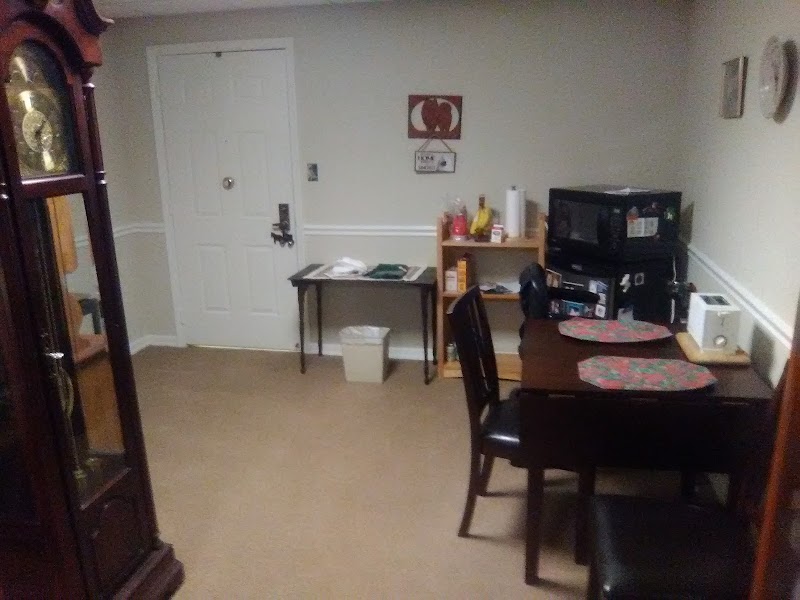
How Does Freedom Square Health Compare to Other Florida Nursing Homes?

Compared to the 100 nursing homes in Florida, FREEDOM SQUARE HEALTH CARE CENTER's overall rating (4 stars) is above the state average of 3.2, staff turnover (42%) is near the state average of 46%, and health inspection rating (4 stars) is above the national benchmark.

What Should Families Ask When Visiting Freedom Square Health?

Based on this facility's data, families visiting should ask: "Can I visit during a mealtime to observe dining assistance and food quality?" "How do you handle medical emergencies, and what is your hospital transfer rate?" "Can I speak with family members of current residents about their experience?"

Is Freedom Square Health Safe?

Based on CMS inspection data, FREEDOM SQUARE HEALTH CARE CENTER has a clean safety record: no substantiated abuse findings (meaning no confirmed cases of resident harm), no Immediate Jeopardy citations (the most serious violation level indicating risk of serious injury or death), and is not on the Special Focus Facility watch list (a federal program monitoring the lowest-performing 1% of nursing homes). The facility has a 4-star overall rating and ranks #1 of 100 nursing homes in Florida. While no facility is perfect, families should still ask about staff-to-resident ratios and recent inspection results during their visit.

Do Nurses at Freedom Square Health Stick Around?

FREEDOM SQUARE HEALTH CARE CENTER has a staff turnover rate of 42%, which is about average for Florida nursing homes (state average: 46%). Moderate turnover is common in nursing homes, but families should still ask about staff tenure and how the facility maintains care continuity when employees leave.

Was Freedom Square Health Ever Fined?

FREEDOM SQUARE HEALTH CARE CENTER has no federal fines on record. CMS issues fines when nursing homes fail to meet care standards or don't correct problems found during inspections. The absence of fines suggests the facility has either maintained compliance or corrected any issues before penalties were assessed. This is a positive indicator, though families should still review recent inspection reports for the full picture.

Is Freedom Square Health on Any Federal Watch List?

FREEDOM SQUARE HEALTH CARE CENTER is not on any federal watch list. The most significant is the Special Focus Facility (SFF) program, which identifies the bottom 1% of nursing homes nationally based on persistent, serious quality problems. Not being on this list means the facility has avoided the pattern of deficiencies that triggers enhanced federal oversight. This is a positive indicator, though families should still review the facility's inspection history directly.