AVIATA AT THE SEA - PASADENA
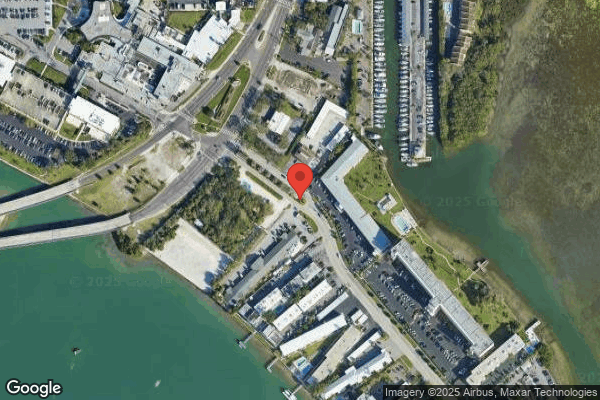

1820 SHORE DR S, SOUTH PASADENA, FL 33707 (727) 384-9300
For profit - Limited Liability company 58 Beds AVIATA HEALTH GROUP Data: November 2025
Trust Grade
40/100
#470 of 690 in FL
Last Inspection: February 2023

Over 2 years since last inspection. Current conditions may differ from available data.

Overview

Aviata at the Sea in South Pasadena has a Trust Grade of D, indicating below-average care with some concerning issues. They rank #470 out of 690 facilities in Florida, placing them in the bottom half, and #29 out of 64 in Pinellas County, meaning only 28 local options are better. The facility is worsening, with issues increasing from 8 in 2021 to 15 in 2023. Staffing is a concern, as they received 0 out of 5 stars, but they have a low turnover rate of 0%, which means the staff tends to stay. However, they have accumulated $79,797 in fines, which is higher than 92% of Florida facilities, indicating potential compliance problems. Specific incidents include a failure to properly document medication changes for a resident with dementia, which raises concerns about their care management. Additionally, there were issues with improper discharge notices lacking necessary explanations and physician signatures for multiple residents. Lastly, the facility did not provide required abuse and neglect training for staff, which is a significant oversight. Overall, while there are some strengths like low staff turnover, the facility has serious weaknesses that families should consider carefully.

Trust Score
D
40/100
In Florida
#470/690
Bottom 32%
Safety Record
Moderate
Needs review
Inspections
Getting Worse
8 → 15 violations
Staff Stability
○ Average
Turnover data not reported for this facility.
Penalties
✓ Good
$79,797 in fines. Lower than most Florida facilities. Relatively clean record.
Skilled Nurses
○ Average
RN staffing data not reported for this facility.
Violations
⚠ Watch
27 deficiencies on record. Higher than average. Multiple issues found across inspections.
★★☆☆☆
2.0
Overall Rating
☆☆☆☆☆
0.0
Staff Levels
★★★★☆
4.0
Care Quality
★★☆☆☆
2.0
Inspection Score
Stable
2021: 8 issues
2023: 15 issues

The Good

  • 4-Star Quality Measures · Strong clinical quality outcomes
  • Full Sprinkler Coverage · Fire safety systems throughout facility
  • No fines on record

Facility shows strength in quality measures, fire safety.

The Bad

2-Star Overall Rating

Below Florida average (3.2)

Below average - review inspection findings carefully

Federal Fines: $79,797

Well above median ($33,413)

Moderate penalties - review what triggered them

Chain: AVIATA HEALTH GROUP

Part of a multi-facility chain

Ask about local staffing decisions and management

The Ugly 27 deficiencies on record

May 2023 4 deficiencies
CONCERN (D) 📢 Someone Reported This

A family member, employee, or ombudsman was alarmed enough to file a formal complaint

Potential for Harm - no one hurt, but risky conditions existed

Grievances (Tag F0585)

Could have caused harm · This affected 1 resident

**NOTE- TERMS IN BRACKETS HAVE BEEN EDITED TO PROTECT CONFIDENTIALITY** Based on observation, record review, and interviews, the facility failed to ensure the rights of the resident were protected by ...

Read full inspector narrative →
**NOTE- TERMS IN BRACKETS HAVE BEEN EDITED TO PROTECT CONFIDENTIALITY** Based on observation, record review, and interviews, the facility failed to ensure the rights of the resident were protected by the failure to implement the grievance process for one (#6) of six sampled residents. Resident #6 had complained to the Nursing Home Administrator on 04/19/2023 that he was missing his passport. Resident #6 had complained on 04/28/2023 to the Nursing Home Administrator that he was missing money, passport, and dentures. Findings include: A review of Resident #6's clinical chart, resident census, documented the resident had resided in the facility as of 12/02/2022. On 05/15/2023 at 12:27 p.m., an interview was conducted with the Social Service Director (SSD). During the interview he indicated Resident #6 had submitted a grievance about missing items in March or April 2023. The SSD stated, the grievance was about his passport, it was lost. It was washed. It had been left in the resident's jacket and the jacket was put in the clothes receptacle to be washed. When the SSD was asked who put the jacket in the clothes receptacle, he stated, the jacket was gathered up with his other clothing. The SSD also indicated; the resident had reported his dentures lost. He confirmed the grievances were not on the grievance log. When asked if the latter issues were documented in Resident #6's clinical chart, he stated he would review for the information. The SSD said a dental referral had been made. A review of Resident #6's clinical chart reflected no documentation of the grievances or the efforts to resolve the grievances. On 05/15/2023 at 1:17 p.m., the Nursing Home Administrator (NHA) provided two complaint /Grievance Report documents for Resident #6. A review of one of the grievances documented the receipt of the grievance on 04/19/2023, the NHA confirmed she was the person who had received the grievance. The concern: Resident stated that he was missing his passport. The form documented the staff member assigned responsibility for the investigation was the SSD and facility will search for passport. The findings of the investigation: The passport was not found. Facility will assist resident in replacement of passport. Further review of the form reflected no further information was documented about the passport and the area to indicate if the grievance was resolved was blank. A review of the second grievance documented the receipt of the grievance on 04/28/2023. The concern: The resident stated that he was missing $500 [NAME] Kong=$63.7 USD [United States Dollars], $500 Maeou=$61.00 USD and 1,000 RMP=.50 cents USD / passport / dentures. The form had no indication of who had been assigned to conduct the investigation, but, the findings of the investigation were: Money has been misplaced for year. The dentures and passport not found. Facility is scheduling appointment for resident to receive new dentures. Facility will assist resident in obtaining a new passport. Resident stated he did not want foreign currency exchange just wanted dentures and passport replaced. The form indicated the concern was not reportable to the state agency. The form indicated the grievance was resolved. The form indicated the complainant was satisfied. On 05/15/2023 at 2:39 p.m., during an interview with the NHA, she confirmed Resident #6 had come to her directly with the concerns. She stated, I know the resident, I think you would be able to speak with him. He had a passport. We believe it went through laundry. We have yet to find it. We were going through the passport portal to answer the questions. Right now, we are at a standstill on getting the passport. We were unable to answer the questions on the site and no one, family or friends to answer on his behalf. He has a Medicaid case worker. We were going to pay for the passport. Do not think he is going to China anytime soon. When asked if the latter information was documented in the resident's clinical chart, she stated, it was not really clinical; she confirmed the information was not in the clinical chart. When the NHA was asked if the facility had reported the passport as missing to the issuing agency, she stated have not reported the passport missing. When the NHA was asked who the staff members were that had searched for the passport, she stated, Certified Nursing Assistants, and laundry. No names were provided. The NHA indicated the SSD was responsible for the search. When the NHA was asked about efforts to return the resident's money, she stated she had gone to the bank, she was going to replace the money. The money had gone missing in foreign currency. She stated when she approached the resident about the money, he had told her he did not want the money, only the passport and dentures. On 05/15/2023 at approximately 4:00 p.m., an attempt to interview Resident #6 was conducted. Resident #6 was observed in his room, lying on his bed in regular clothes with his eyes closed. A 2nd attempt was conducted, with the same results, at approximately 4:45 p.m. On 05/15/2023, the facility provided a Dental Services screening attempt document, dated 05/05/2023, which documented: Patient refused screening, will attempt at next visit. On 05/15/2023, the NHA provided a screen print of the U.S. Department of State Passport Application System, print date of 05/15/2023 at 3:50 p.m. Review of the document reflected no indication that the form had been filled out prior to the print date of 05/15/2023 or that the form had been formally submitted. A review of the facility's Complaint/Grievance policy and procedures, N-1042, last revised 10/24/2022, documented the policy: the Center will support each resident's right to voice a complaint/ Grievance without fear of discrimination or reprisal. The center will make prompt efforts to resolve the complaint/ grievance and informed (sic) the resident of progress towards resolution. Grievances will be reviewed by the Quality Assurance Performance Improvement Committee. Grievances discovered to meet the definition of Abuse, Neglect, Exploitation or Misappropriation will be handled per the facility's Abuse Policy. The resident should have reasonable expectations of care and services and the center should address those expectations in a timely, reasonable, and consistent manner. The Center will inform residents of the right to file a grievance orally and in writing, the right to file grievances anonymously, the contact information of the Grievance Officer, a reasonable time frame for completing the review of the grievance, the right to obtain a written decision regarding the grievance, and contact information of independent entities with whom grievances may be file (State Agency, Ombudsman, Quality Improvement Organizations). The Executive Director will designate a Grievance Officer at the facility. Procedure 1. An employee receiving a complaint/ grievance from a resident, family member and/ or visitor will initiate a Complaint/ Grievance Form . 2. Original grievance forms are then submitted to the Grievance Officer/ designee for further action. 3. The grievance Officer/ designee shall act on the grievance and begin follow-up of the concern or submit it to the appropriate department director for follow-up. 4. The grievance follow-up should be completed in a reasonable time frame; this should not exceed 14 days. 5. The findings of the grievance shall be recorded on the Complaint/ Grievance Form. 6. The results will be forwarded to the Executive Director for review and filing. 7. The Grievance Official will log complaints/ grievances in Monthly Grievance Log. 8. The individual voicing the grievance will receive follow up communication with the resolution, a copy of the grievance resolution will be provided to the resident upon request.
CONCERN (D) 📢 Someone Reported This

A family member, employee, or ombudsman was alarmed enough to file a formal complaint

Potential for Harm - no one hurt, but risky conditions existed

Investigate Abuse (Tag F0610)

Could have caused harm · This affected 1 resident

**NOTE- TERMS IN BRACKETS HAVE BEEN EDITED TO PROTECT CONFIDENTIALITY** Based on interviews and record review, the facility failed to complete a thorough investigation related to an allegation of sexu...

Read full inspector narrative →
**NOTE- TERMS IN BRACKETS HAVE BEEN EDITED TO PROTECT CONFIDENTIALITY** Based on interviews and record review, the facility failed to complete a thorough investigation related to an allegation of sexual abuse for one Resident (#2) out of 3 reportable incidents reviewed. Findings included. Review of Resident #2's admission record revealed she is a [AGE] year-old female resident with an initial admission date of 11/21/2022 and readmitted on [DATE] from an acute care hospital. She was admitted with medical diagnosis which include but are not limited to type 2 diabetes mellitus, muscle weakness, unsteadiness on feet, difficulty in walking, schizoaffective disorder, and bipolar disorder. Review of the facility's Reportable list revealed an allegation of neglect for Resident #2 on 4/27/23. An interview was conducted on 5/15/23 at 1:16 p.m. with the Nursing Home Administrator (NHA). The NHA said. [Resident #2] has been here since November and she is a Psych [Psychiatry] patient and 9 out of 10 times she has refused her medications. Psych is aware of that. She has ran Psych out the building once she thinks that it's poisoning her and government conspiracy she's all over the place honestly. On 4/27/23 we became aware when Law Enforcement was next door. The resident was hilarious [sic] very emotional, distraught she said her insides are falling out through her vagina that she had glass in her shoes and based on that we explained to Law Enforcement her history and they took her to [Hospital]; she came back I believe the same day because she refused treatment there. We attempted to [NAME] Act her that day and she came back the same day. She's functioning but she could definitely benefit from a psych facility. Her allegation included glass being in her food and someone rubbed her vaginal area too hard. The Director of Nursing (DON) interviewed [Resident #3] that was [Resident #2's] roommate and has since been moved to a different room. They changed her room because I think it may have been something she mentioned. The NHA looked through her report and said let me have the DON come and talk to you about [Resident #3] . On 5/15/23 at approximately 1:30 p.m. the DON said Law Enforcement was pulling on the door so I went to answer it and they said someone is being abused in here we need to get in so I let them in. I said who is this about and they told me the name. We went to the patients room, she wasn't in her room. I asked the CNA [Certified Nursing Assistant] and Nurses where the resident was and they said she went to the park. So myself and Law Enforcement went to the park that's right next to our [the facility's] parking lot. When we got to the park Law Enforcement and EMS [emergency medical services] were at the park she [Resident #2] didn't want staff around so I stepped back and I'm not sure what they said. Law Enforcement and EMS told me they were familiar with her because they get a lot of calls from her. When I got to the park she [Resident #2] was crying and tearful. I could hear a little bit of what she was saying. I heard her telling them there was glass in her food and it was causing bleeding in her vagina and she had been bleeding for a few days and it was because we were feeding her glass. Then [NHA] came out and I came back to the building and Law Enforcement said they were going to take her to the hospital and I asked if they could bring her [Resident #2] to a psych hospital and try to [NAME] Act her and get her back on her medications and stabilized so she would continue to take her medications but that did not happen. She came right back the same day. She is alert and oriented and her own person, so she came back. The NHA said The resident didn't want to speak with me and shooed me away. She would only talk to EMS and Law Enforcement. So, I backed up and let them work on her and then they told me they were going to take her to [Hospital] for the psych component of that facility. She was there for a few hours and she came back the same day.The DON said, Law Enforcement asked me 'is there something going on with her and her roommate. Can we change their rooms.' So, I interviewed [Resident #3] that morning on 4/2/23 and [Resident #3] said she did not know of anything that happened she just said that she thought [Resident #2] was talking to her and yelling at her but then she realized [Resident #2] was talking to people in her head. Not for that incidence, just overall I asked her how [Resident #2] was just in general. She also said she saw [Resident #2] at the park and she came from the building [facility] to the park crying. I talked to [Resident #2] when she came back from the hospital and she agreed to move rooms so [Resident #2] has a different room now. The NHA said . On 4/27/23, that morning, I reported it [to the state agencies] because of the vaginal rubbing. I asked my regional team if I should report it and they said yes to see if there was anything factual. She [Resident #2] came back, we did a skin assessment, and she was fine. I think it was more of an episode more than anything. Department of Children and Families [DCF] was notified on 4/27/23 they did not accept the case. Law Enforcement was on site already and they were aware. At the time of the interview the Social Services Director stated I a wrote a set of questions, do you feel safe in this building, have you felt threatened, if you have concerns do you feel like you're concerns are heard. I just picked random residents and staff. I picked 2 staff and 4 residents. There was no concerns. The NHA said the hospital records should have been provided. She confirmed Resident #2 came back from the hospital around 7 or 8 o'clock at night on the same day she went out. The DON said I think the note said 7:00p.m. The NHA said when I talked to the resident on 5/2/23 she said she had mumps and rubella so I had [Staff Z, Licensed Practical Nurse], the nurse, do a skin assessment and I'm surprised she didn't document that. The DON also confirmed there was no skin assessments documented for 5/2/23. The NHA said Psych also saw her and went over her history. Disorganized speech, delusion, aggravated factors, no history of physical or mental abuse or PTSD [Post Traumatic Stress Disorder]. General appearance is anxious. Intact speech, rate, rhythm, and tone. Schizophrenia bipolar type. Psych is recommending her to continue her psych meds and she's refusing to take those. This allegation was not substantiated based on medical record review, medical doctor, staff interviews, and patient history. The DON reviewed Resident #2's hospital records, located in her medical record, and said she confirmed she had not seen the hospital document that revealed reporting vaginal pain after roommate sexually assaulted her. Review of Resident #2's ED [emergency department] Rapid Triage dated 4/27/23 at 11:22a.m. revealed Reason for Visit Narrative: pt [patient] from [Nursing Home facility] via ems [sic] reporting vaginal pain after roommate sexually assaulted her . An interview was conducted with Resident #2 on 5/15/23 at 10:08 a.m. Resident #2 was observed to be outside of the building, in her wheelchair, dressed in day clothes, clean and well kept. She stated she is doing well . The resident stated the food is good and she enjoys it. She stated the staff at the facility are really nice and she has no concerns about the staff, and she feels safe in the facility. She stated she is not having any pain but she has redness on her thighs and the doctor ordered cream for it and the staff put that on her without any concerns. She stated sometimes she will have vaginal pain I had endometriosis a long time ago and I had surgery on it I don't know if I still have it or not. I'm not having any pain right now. A couple weeks ago I went to the hospital because they told me I can't take medications because of something with gluten they called it blade syndrome and sometimes the food makes me feel like my insides are being cut up by the blade. They also say I have diabetes, but I don't. I'm just real sensitive to medications and I'll get blisters all over me. She stated she has no concerns, and she really enjoys going outside and breathing in the fresh air because she has breathing problems sometimes and the fresh air helps . Review of Resident #2's medical record did not reveal a skin assessment conducted on 4/27/23, the day of the allegation or when Resident #2 returned back to the facility from the hospital on 4/27/23. Resident #2's medical record was reviewed and revealed a Weekly Skin Integrity Review dated 4/29/23, which revealed .2. Skin Intact: Yes. There were no other skin assessments completed after 4/29/23 in the medical record. Review of Resident #2's Nursing Progress Note dated 4/27/23 at 7:47 p.m. revealed Returned from hospital/ER [emergency room] at 7PM. Alert, verbal responsive. Denied pain. No s/s [signs/symptoms] of distress noted. Returned with script to start new medications. Review of Resident #2's Psychiatry Advanced Registered Nurse Practitioner note dated 5/3/23 revealed Review of Systems: Psychosis: Disorganized speech, Delusions (of: Persecution, Grandeur, Jealousy, Erotogenic) and Disorganized [sic] behaviors paranoia. Onset of symptoms: Gradual. Nature of symptoms: Chronic. Progression: Variable. Aggravating factors: Ongoing medical problems and life stressors and Being [sic] in the facility. relieving factors: Emotional support and Social [sic] support. Context: age, ongoing medical issues, loss of independence and changed role Trauma History: Abuse/Neglect: There is no known history of physical, sexual, emotional abuse, or emotional neglect. Post Traumatic Stress Disorder [PTSD]: Patient denies symptoms of PTSD. Denies experiencing traumatic events that involved actual or threatened death or serious injury . A combined interview with the DON and the NHA was conducted on 5/15/23 at 4:15 p.m. the DON stated Unit Managers are responsible for reviewing hospital records when residents come back from the hospital. The Unit Manager came to me and told me she [Resident #2] has a UTI [urinary tract infection] and new antibiotics. I was aware she [Resident #2] went to the hospital for an evaluation. I was aware she was having vaginal bleeding because we were feeding her glass, I don't know where the roommate allegation came from. I was only aware that her vagina was bleeding because we put glass in her food . The DON confirmed she was the Risk Manager and the NHA was the Abuse Coordinator. The DON also stated Hospital documentation are typically reviewed the next day at the clinical meeting. If I had known there was an allegation that someone inappropriately touched her. I would want an assessment done. When she came back, I was not aware of any allegation of sexual abuse. I was only made aware that she had a UTI with antibiotics. An immediate skin assessment should be done once an allegation of sexual abuse is made. The NHA confirmed she was the Abuse Coordinator, and she did the investigation for Resident #2's sexual abuse allegation. The NHA stated I did not see or review the hospital records for [Resident #2]. The DON confirmed the facility has had the hospital records since the day Resident #2 came back. The DON and the NHA both confirmed they would be part of the clinical meeting and confirmed there was a clinical meeting the next day after Resident #2's allegation. The DON stated, post event I have received abuse and neglect training by the NHA. The NHA said I have not had training I just review the policy [abuse and neglect policy] frequently. Review of the facility's Allegation of Abuse/Neglect Investigation and Documentation Checklist with a revision date of 2/23/22 revealed complete SBAR [situation, background, assessment, recommendation] with RN [Registered Nurse] Assessment. . identify other Patients/Residents potentially affected: Complete Abuse Quality Reviews on Resident's hallway. .initiate Psychosocial monitoring of Patient/Resident q [every] day x 72 hours minimum. Medical Record documentation of findings. Interviews- patient/Resident Roommate Staff; interviewable [sic] Patients/Residents; other individuals who may have been in vicinity when event occurred. 'witness Statement' documentation. .Root Cause Analysis . . Medical Record review with Corporate Leadership. Recent assessments (risk identified); IDT Progress notes; H&P [history and physical]; MARs [medication administration record]; TARs [treatment administration record]; Physician orders; Recent Labs; Activity Logs; Psych/Psycho Consults; Standards of Care/Risk Review of this Patient/Resident? .Review in Morning Clinical Meeting .
CONCERN (E) 📢 Someone Reported This

A family member, employee, or ombudsman was alarmed enough to file a formal complaint

Potential for Harm - no one hurt, but risky conditions existed

Transfer Notice (Tag F0623)

Could have caused harm · This affected multiple residents

**NOTE- TERMS IN BRACKETS HAVE BEEN EDITED TO PROTECT CONFIDENTIALITY** Based on observations, record review, and interviews, the facility failed to ensure a 30-day discharge notice contained an expla...

Read full inspector narrative →
**NOTE- TERMS IN BRACKETS HAVE BEEN EDITED TO PROTECT CONFIDENTIALITY** Based on observations, record review, and interviews, the facility failed to ensure a 30-day discharge notice contained an explanation to support the action, and a physician signature for three (Resident #1, #3, and #5) of three residents reviewed for discharge process. In addition, the facility failed to ensure a copy of the 30-day discharge notice was placed in the clinical chart of the residents for three (Resident #1, #3, and #5) of three sampled residents reviewed for discharge process. Findings include: 1. On 05/15/2023 at 10:18 a.m., an interview was conducted with Resident #1. Resident #1 was observed independently ambulating in her room, dressed in seasonally appropriate clothing, and she agreed to be interviewed. She confirmed she had received a 30-day notice from the facility. she indicated she thought the notice had been dismissed. She said her mom was looking for an apartment in (state name) for her. Resident #1 said, the facility told her she had a back bill, since December. She stated she was currently in the middle of applying for Medicaid. She said the facility had wanted to discharge her to a tent city. She did not like this plan. She said she was trying to get assistance from a local organization. (Local Organization) for housing. A review of Resident #1's clinical record, admission Record, documented an admission in 11/2022. Her diagnosis information included: Unsteadiness on feet, difficulty in walking, major depressive disorder, [NAME]-Chair Syndrome with Hydrocephalus, Hypokalemia, generalized anxiety disorder and bipolar disorder, unspecified. Record review of Resident #1's progress notes for 03/2023, and 04/2023, reflected documentation of the Social Service Director (SSD) attempting to assist the resident with placement outside of the facility with no results. Record review of Census information reflected the resident to be Medicaid pending from 12/03/2022 through the date of survey, 05/15/2023. Record review of [NAME] notes reflected initial conversations with the resident regarding an application with DCF [department of children and families] for LTC [long term care] Medicaid. Record review of Resident #1's clinical chart revealed no copy of the 30-day notice in the chart and no mention of the 30-day notice being provided to the resident. A review of a Nursing Home Transfer and Discharge Notice, dated as given to Resident #1 on 04/12/2023 with an effective date of 05/12/2023, documented the location to which the resident would be discharged to as (Shelter name) with address and phone number. The reason for the discharge was Your bill for services at this facility has not been paid after reasonable and appropriate notice to pay. And Your health has improved sufficiently so that you no longer need the services provided by this facility. The area for a brief explanation to support the action was blank. The notice was documented to be presented by the Nursing Home Administrator (NHA) on 04/12/2023 with a witness signature. The area for the physician signature was blank. The resident had been documented to have refused to provide a signature. The form had no documentation present on it to indicate the date the Local Long Term Care Ombudsman Council had been notified or the date the notice had been recorded in Resident #1's clinical record. 2. On 05/15/2023 at 9:55 a.m. an observation was conducted of Resident #3, in her room, dressed in seasonally appropriate clothing, and observed to independently ambulate across her bedroom floor. She agreed to be interviewed. She confirmed she had been issued a 30-day notice. She stated she needed to continue to reside at the facility. She had health issues. She said, they have not done anything but provide me a letter. No resources. No one has given a clearance for my foot. A review of Resident #3's clinical chart, admission Record, documented an admission in 11/2022. Her diagnosis information included: necrotizing fasciitis, other acute osteomyelitis, right ankle and foot, muscle weakness, difficulty in walking, and type 2 diabetes mellitus with diabetic polyneuropathy. A review of a Nursing Home Transfer and Discharge Notice, dated as given to Resident #3 on 04/24/2023 with an effective date of 05/24/2023, documented the location to which the resident would be discharged to as (Shelter name) with address and phone number. The reason for the discharge was Your bill for services at this facility has not been paid after reasonable and appropriate notice to pay. And Your health has improved sufficiently so that you no longer need the services provided by this facility. The area for a brief explanation to support the action was blank. The notice was documented to be presented by the NHA on 04/24/2023 with a witness signature. The area for the physician signature was blank. The resident had been documented to have refused to provide a signature. The form had no documentation present on it to indicate the date the Local Long Term Care Ombudsman Council had been notified or the date the notice had been recorded in Resident #3's clinical record. A review of Census information reflected the resident to be coded as private pay from 12/28/2022 through 03/31/2023, and as of 04/01/2023, the resident was coded to be Medicaid pending. A review of physician orders reflected an order dated 01/31/2023, which indicated the resident was ok to discharge home with her medications. A review of 04/2023 and 05/2023 progress notes reflected documentation of discussions pertaining to discharge back to the community and assistance from programs. A review of [NAME] notes reflected initial conversations with the resident regarding an application with a Medicaid specialist on 03/07/2023. Record review of Resident #3's clinical chart revealed no copy of the 30-day notice in the chart and no mention of the 30-day notice being provided to the resident. Billing notes documented the resident appealed a 30-day discharge notice on 03/07/2023. 3. An observation was conducted of Resident #5 in his room, in his bed. He agreed to an interview. He confirmed he had been provided a 30-day discharge notice. He stated, it was about the money. He confirmed he had Medicaid and that he was not paying the patient liability. He said, they say they have been trying to find me another Nursing Home. They want to discharge me to a homeless shelter. A review of Resident #5's clinical chart, admission Record, documented an admission in 04/2022. His diagnosis information included: Multiple Sclerosis, muscle weakness, Ataxia, spondylolisthesis, lumbar region, idiopathic peripheral autonomic neuropathy, repeated falls, and lack of coordination. A review of Resident #5's admission Record documented an admission of 04/13/2022. A review of a Nursing Home Transfer and Discharge Notice, dated as given to Resident #5 on 03/14/2023 with an effective date of 04/14/2023, documented the location to which the resident would be discharged to as (Shelter name) with address and phone number. The reason for the discharge was Your bill for services at this facility has not been paid after reasonable and appropriate notice to pay. The area for a brief explanation to support the action was blank. The notice was documented to be presented by the NHA on 03/14/2023 with a witness signature. The area for the physician signature was blank. The resident had been documented to have refused to provide a signature. The form had no documentation present on it to indicate the date the Local Long Term Care Ombudsman Council had been notified or the date the notice had been recorded in Resident #5's clinical record. A review of Resident #5's ACCESS eligibility profile, print date of 05/15/2023 reflected he was eligible for Nursing Home Medicaid with a patient liability of $1135.00 per month. A review of Census information reflected Resident #5 to be coded as Medicaid long term care, from 06/23/2022 on going. A review of physician orders reflected an order dated 04/23/2023, which indicated Resident #5 was ok to discharge home with his medications. A review of 04/2023 and 05/2023 progress notes reflected documentation of discussions pertaining to discharge back to the community, assistance from programs and placement suggestions. Record review of Resident #3's clinical chart revealed no copy of the 30-day notice in the chart. The record review of [NAME] notes reflected no documentation of Resident #5 being provided a 30-day notice. On 05/15/2023 at 12:27 p.m., an interview was conducted with the Social Service Director (SSD). He indicated he was not involved with the issuance of a 30-day discharge notice for the residents. He stated, that comes from the Nursing Home Administrator (NHA). He indicated he was not involved in notifying the local Ombudsman or representative of the 30-day notice. He stated he was not involved with the Long-Term Care Medicaid applications. He stated, Resident #1 was initially admitted to the facility as a skilled resident. Once her skilled days ran out, there was no reason for her to be here. She was basically homeless prior to coming to the facility. We tried seeking assistance from (community programs) for placement. The programs are full and closed. He stated the 30-day discharge notice for Resident #1 was still in effect and not rescinded by the facility. He stated the 30-day notice indicated that the resident would be transferred to a shelter. He stated he was still trying to follow up with programs for assistance. He stated, Resident #2, the reason she was issued the 30-day discharge notice was that she has no clinical reason to be here. For discharge placement, the location indicated was a shelter to help her transition back to the community. He stated, Resident #5, the reason he was issued the 30-day discharge notice was this was not the level of care he needs, and he refused to pay his co-pays. The discharge plan, the option is a shelter. The reason we are down to that option is he has refused an Assisted Living Facility (ALF). He said he was willing to go to another nursing home facility. It is hard to get another facility to accept a resident that is not paying their copayments. On 05/15/2023 at 2:39 p.m. an interview was conducted with the Nursing Home Administrator (NHA). The NHA indicated the 30-day discharge notice was provided to Resident #1 because the resident was not making payments to the facility. It is no longer medically necessary for her to be in the facility. The discharge location is a shelter. The NHA confirmed the physician had not signed the 30-day discharge notice, and she stated, for her that may have been an oversight. For the clinical chart, the NHA indicated, putting the discharge notice in the clinical chart was not something she had done; but, moving forward, she would do so. When asked if the 30-day notice had been rescinded by the facility for Resident #1, the NHA stated, no formal facility document had been issued that would indicate the facility has rescinded the 30-day notice. But we are working with the resident. The NHA indicated the 30-day discharge notice was provided to Resident #3 because it was no longer medically necessary for her to be in the facility. When the discharge notice was reviewed and the Ombudsman notification was verified to be blank, the NHA stated, everything has gone to the Ombudsman, and she said she would provide receipts. The NHA confirmed Resident #3 had an unpaid bill, approximately $50,000. The NHA confirmed the signature area for the physician was blank. The NHA indicated the 30-day discharge notice was provided to Resident #5 because he was not paying his portion of the bill. The NHA confirmed she had not obtained the physician signature for the discharge notice. For the blank area that would indicate notification to the Ombudsman office, she stated a copy goes to the local Ombudsman.
CONCERN (E) 📢 Someone Reported This

A family member, employee, or ombudsman was alarmed enough to file a formal complaint

Potential for Harm - no one hurt, but risky conditions existed

Deficiency F0943 (Tag F0943)

Could have caused harm · This affected multiple residents

Based on interview and employee file review, the facility failed to conduct abuse and neglect training for 5 out of 5 employee files reviewed. Findings included: On 5/15/23 at 3:00 p.m. a request was...

Read full inspector narrative →
Based on interview and employee file review, the facility failed to conduct abuse and neglect training for 5 out of 5 employee files reviewed. Findings included: On 5/15/23 at 3:00 p.m. a request was made to the facility's Director of Nursing (DON) and Nursing Home Administrator (NHA) for 5 employee files to include their abuse and neglect training. The NHA indicated she would obtain the employee files. On 5/15/23 at 5:00 p.m. the NHA provided 2 employee files and indicated the Human Resource Director was not at the facility and she was unable to obtain the other 3 employee files. All 5 of the employee files did not include abuse and neglect training and there was no evidence provided by the end of survey that the 5 employee's had received abuse and neglect training.
Feb 2023 11 deficiencies
CONCERN (D) 📢 Someone Reported This

A family member, employee, or ombudsman was alarmed enough to file a formal complaint

Potential for Harm - no one hurt, but risky conditions existed

Safe Environment (Tag F0584)

Could have caused harm · This affected 1 resident

**NOTE- TERMS IN BRACKETS HAVE BEEN EDITED TO PROTECT CONFIDENTIALITY** Based on observations, interviews, and record review, the facility failed to ensure resident spaces were clean, sanitary, and in...

Read full inspector narrative →
**NOTE- TERMS IN BRACKETS HAVE BEEN EDITED TO PROTECT CONFIDENTIALITY** Based on observations, interviews, and record review, the facility failed to ensure resident spaces were clean, sanitary, and in good repair for two (Rooms #29 and #31) of two resident rooms. Findings included: On 01/30/23 at 11:14 a.m., an observation was made in the bathroom between rooms [ROOM NUMBERS]. The bathroom had an offensive odor, the floor had dirty/mud present, there was something black splattered on the wall under the sink, and the toilet had a brown substance on the lid, seat, and rim of the toilet. On 01/31/23 at 11:38 a.m. the bathroom remained in the same condition. (Photographic evidence obtained.) On 1/30/23 at 11:16 a.m. an observation was made in room [ROOM NUMBER]. The closet door was off the track. The doors were observed to still be off track on 2/2/23 at 1:13 p.m. An interview was conducted with the Director of Nursing (DON) and the Regional Nurse on 2/2/23 at 12:20 p.m. They stated staff should be reporting maintenance concerns in resident rooms. They stated they needed to work on a better system. An interview was conducted with Staff J, housekeeper on 2/2/23 at 2:30 p.m. He stated he cleaned resident rooms every day. He said he was the only person doing all the cleaning. When asked about the bathroom between rooms [ROOM NUMBERS] he said he had not gotten to it today. An interview was conducted with the Nursing Home Administrator (NHA) on 2/2/23 at 3:12 p.m. She stated maintenance did rounds every day looking for issues that needed repair. An interview was conducted with the Director of Environmental Services at 2/2/23 at 3:25 p.m. He stated he walked the facility every day, but staff should be filling out maintenance requests in the book for issues they see in resident rooms. He said he was unaware of the closet doors being off the track in room [ROOM NUMBER] and he would fix them. A facility policy titled Resident Room Cleaning, dated 11/30/14 was reviewed. The policy stated the following: The comfort and good health of residents in a primary goal of the company. Keeping the resident's personal spaces clean and hygienic is part of that commitment. A facility policy titled Maintenance, dated 11/30/14 was reviewed. The policy stated the following: The facility's physical plant and equipment will be maintained through a program of preventive maintenance and prompt action to identify areas/items in need of repair. Procedure: The Director of Environmental Services will perform daily rounds of the building to ensure the plant is free of hazards and in proper physical condition. All employees will report physical plant areas or equipment in need of repair or service to their supervisor.
CONCERN (D)

Potential for Harm - no one hurt, but risky conditions existed

Grievances (Tag F0585)

Could have caused harm · This affected 1 resident

**NOTE- TERMS IN BRACKETS HAVE BEEN EDITED TO PROTECT CONFIDENTIALITY** Based on record review and interviews, the facility failed to file and resolve a grievance for one (Resident #32) of thirty-one ...

Read full inspector narrative →
**NOTE- TERMS IN BRACKETS HAVE BEEN EDITED TO PROTECT CONFIDENTIALITY** Based on record review and interviews, the facility failed to file and resolve a grievance for one (Resident #32) of thirty-one sampled residents. Findings included: A review of the Transfer/Discharge Report indicated Resident #32 was admitted into the facility on [DATE]. Section C Cognitive Patterns of the quarterly Minimum Data Set (MDS) dated [DATE] indicated the resident had a Brief Interview for Mental Status (BIMS) score of 15 out of 15 indicating intact cognition. On 01/30/23 at 9:55 a.m., Resident #32 reported Staff K, Certified Nursing Assistant (CNA), yelled at him and told him to mind his own [expletive] business because he told her his roommate had been sitting in a dirty brief for hours. He reported his roommate was eighty something years old and could not change himself and he was looking out for him. Resident #32 reported an agency nurse came in because they were screaming at each other so loud. The resident reported Staff K, CNA, would see his call light on and ignore it. According to the resident, this incident happened about one week ago, and he reported this to the Director of Nursing (DON). The DON stated to him that she would deal with it. A review of the Monthly Grievance Log for January 2023 did not reflect a grievance related to this incident. On 01/31/23 at 11:27 a.m., the DON stated Resident #32 reported the incident to her a week and a half ago. He came to her and told her that one of the CNAs was being rude to his roommate. The roommate had ALS (Amyotrophic Lateral Sclerosis). She interviewed the roommate, and he was not upset. Staff K, CNA, told Resident #32 she was taking care of his roommate and the resident reported to the DON she was being rude. The DON immediately interviewed both the resident and the CNA. On 01/31/23 at 11:29 a.m., Staff K, CNA, reported she went in the room because both residents had their call lights on. Resident #32 asked for a gown and his roommate wanted a brief change. She went to get a gown and came back to change the roommate's brief. She was explaining to the roommate that she was going to pull him up and that he needed to keep the bed steady. Resident #32 yelled and said don't talk to him like that, he was an eighty-year-old man. Another nurse then entered the room and stated she heard yelling. On 01/31/23 at 11:35 a.m., the DON said the roommate reported he did not have any issues. She explained to Staff K, CNA, that they must use customer service skills. The DON said Resident #32 did not report to her that Staff K, CNA, used profanity. He only stated that she was rude. On 01/31/23 at 11:40 a.m., Staff K, CNA, stated she did not use profanity when she spoke to the resident. She stated Resident #32 was being rude and was trying to tell her how to take care of his roommate. She reported he was always complaining about things. On 01/31/23 at 11:42 a.m., the DON reported she did not do a grievance. She only did verbal education with the CNA. She reported to the Administrator and said she would follow up with Resident #32. On 02/01/23 at 1:35 p.m., the Administrator reported she heard about the incident yesterday, 01/31/23. She was told by Resident #32 the CNA went to provide care to his roommate, he had concerns that he voiced to the CNA, and she said to mind his [expletive] business. The Administrator reported she submitted a one day report, got a statement from the CNA, and contacted law enforcement. The initial conversation about the incident did not include verbal abuse and it was not interpreted as verbal abuse. She said [Resident #32] made that comment yesterday, 01/31/23. She would expect to see some type of coaching, teachable moment, in-service, and a grievance. The policies and procedures provided by the facility Complaint/Grievances with an effective date of 11/30/2014 revealed the following: The residence shall ensure investigation and resolution of complaints. A log will be kept of all complaints and outcomes.
CONCERN (D) 📢 Someone Reported This

A family member, employee, or ombudsman was alarmed enough to file a formal complaint

Potential for Harm - no one hurt, but risky conditions existed

Investigate Abuse (Tag F0610)

Could have caused harm · This affected 1 resident

**NOTE- TERMS IN BRACKETS HAVE BEEN EDITED TO PROTECT CONFIDENTIALITY** Based on record review, interviews, facility documentation review and photographic evidence the facility failed to thoroughly an...

Read full inspector narrative →
**NOTE- TERMS IN BRACKETS HAVE BEEN EDITED TO PROTECT CONFIDENTIALITY** Based on record review, interviews, facility documentation review and photographic evidence the facility failed to thoroughly and accurately investigate an allegation of sexual abuse for one (Resident #33) of one sampled resident. Findings included: During an interview on 01/20/23 at 12:15 p.m., Resident #33 stated on 12/08/22 a physical therapist made her feel uncomfortable. Resident #33 stated that a grievance and witness statement was completed and turned into the Administrator. Resident #33 stated the Administrator gave back Resident #33's grievance and witness statement and stated the sexual abuse incident would be an internal matter only. The grievance dated 12/08/22 provided by Resident #33 showed no investigation or resolution was completed. Photographic evidence of the grievance and witness statement were obtained. A record review of Resident #33's medical record showed an admission date of 11/05/22. Resident #33 had a primary diagnosis of multiple sclerosis. A care plan revealed a focus of Resident #33's limited physical mobility with neurological deficits and weakness. A goal stated Resident #33 would remain free of complications related to immobility. Interventions included: Bed mobility, provide supportive care, assist with mobility with physical and occupational referrals as ordered. An admission minimum data set (MDS) dated [DATE], showed the resident needed limited assistance with a one (1) person assist for transfers, walking did not occur and had a brief interview for mental states (BIMS) of 15, which indicated intact cognition. A review of the grievance dated 12/08/22 stated, I'm very concerned about my physical therapist inappropriate behavior, physical touching, going threw[sic] my personal belongings and coming to me and my room. The grievance was signed and dated by Resident #33. There was no investigation or resolution completed for the grievance. Photographic evidence obtained. A review of the witness statement dated 12/09/22 stated, On Monday Therapist rubbed biofreeze on my legs and I felt it was inappropriately done. The witness statement also stated the Physical Therapy Assistant (PTA) went to Resident #33's room to find the foot pedal to the wheelchair and saw coffee cakes. He would not stop asking for one until Resident #33 gave him one. Resident #33 stated in the witness statement, I feel like he goes out of his way to find me and touches me (rubs back/arm) inappropriately. The witness statement was signed and dated by both the Resident #33 and a Registered Nurse (RN) on 12/09/22. Photographic evidence was obtained. A review of the reportable event documentation dated 12/09/22 revealed, Resident #33 stated that during therapy the PTA made a comment about the contents of her drawer and the coffee cakes. 'I love those coffee cakes.' She claims that while he was adjusting her gait belt that he was too close to her, and it made her uncomfortable. The allegation was not substantiated. During an interview on 02/02/23 at 9:15 a.m., the administrator stated she was familiar with the incident of sexual abuse regarding Resident #33 and stated a reportable was completed with an investigation. The administrator was shown the incomplete grievance dated 12/08/22. The administrator replied, I am the grievance offer and I have never seen that grievance before, and that grievance was never signed off by a nurse. The administrator stated grievance forms could be picked up by the front desk by anyone. The administrator stated Resident # 33 had a blue copy of the grievance which she should not have had. If the grievance had been turned in, Resident #33 would have received a yellow copy for her records. The administrator was shown a witness statement dated 12/09/22 with both a nurse and Resident #33's signatures. The administrator responded that the witness statement was from the investigation dated for 12/09/22, not a grievance that was never seen. The administrator was shown the witness statement written by Resident #33 that stated, PTA rubbed biofreeze on my legs and I felt it was inappropriately done. The investigation report indicated, she claims that while adjusting a gait belt that he was too close to her and it made her feel uncomfortable. The administrator was asked why the inappropriate touching statement was not documented on the investigation report from the witness statement. The administrator stated the PTA was asking for Resident #33's coffee cakes and was too close to Resident # 33 making her uncomfortable. The administrator was again asked why the inappropriate touching statement was not documented in the investigation report from the witness statement. The administrator stated, that was my bad and I can see how that would have been important to put on the reportable. The administrator was asked if the PTA was still working for the facility and administrator responded No. Administrator stated the investigation of the allegation of sexual abuse was not substantiated.
CONCERN (D)

Potential for Harm - no one hurt, but risky conditions existed

Deficiency F0655 (Tag F0655)

Could have caused harm · This affected 1 resident

**NOTE- TERMS IN BRACKETS HAVE BEEN EDITED TO PROTECT CONFIDENTIALITY** Based on record review and interview the facility failed to complete a baseline care plan upon admission for one (Resident #46) ...

Read full inspector narrative →
**NOTE- TERMS IN BRACKETS HAVE BEEN EDITED TO PROTECT CONFIDENTIALITY** Based on record review and interview the facility failed to complete a baseline care plan upon admission for one (Resident #46) of three sampled closed records. Findings included: A record review of Resident #46's medical record showed an admission date of 11/18/22. Resident #46 had diagnoses of Asthma, Hyperthyroid and Hypertension. A progress note dated 11/23/22 stated, Received new orders from physician to discharge back to [name of the facility]. PICC (Peripherally Inserted Central Catheter) removed per orders. Paperwork sent with resident. Daughter and receiving facility aware resident is on her way back to room [ROOM NUMBER]. Resident #46 had a discharge date of 11/23/22. No care plan was available in the medical record. During an interview on 02/01/23 at 9:45 a.m., Staff C, Regional Nurse stated there was no baseline care plan available for Resident #46.
CONCERN (D)

Potential for Harm - no one hurt, but risky conditions existed

Comprehensive Care Plan (Tag F0656)

Could have caused harm · This affected 1 resident

**NOTE- TERMS IN BRACKETS HAVE BEEN EDITED TO PROTECT CONFIDENTIALITY** Based on observations, staff and resident interviews, and medical record review, the facility failed to implement care plan inte...

Read full inspector narrative →
**NOTE- TERMS IN BRACKETS HAVE BEEN EDITED TO PROTECT CONFIDENTIALITY** Based on observations, staff and resident interviews, and medical record review, the facility failed to implement care plan interventions for safe smoking for three (Residents #99, #44, #42) of twenty-one sampled residents. Findings included: On 1/30/2023 at 8:55 a.m., prior to entering the building for the first day of survey, Resident #99 was observed at the fence line at the side of facility's parking lot and seated in a chair, along with three other residents next to her. She was observed smoking and had her own cigarettes and lighter on her person. She, along with the other residents revealed that the facility did not follow the smoking schedule and did not let them out on the back porch area where the designated smoking area was located. She said, the back porch entrance/exit doors were locked and staff had to let them in and out. Staff were not available to let them out in that area, especially during posted smoking times. Resident #99 revealed the back porch area was beautiful and they could sit and watch the water and the dolphins swimming by. She revealed she had only been at the facility for about three weeks and had not been able to go outside on the back porch, during smoking hours, for most of her days here. She revealed she had to resort to checking herself out Leave of Absence and walk over to the facility parking lot fence line, near the park to smoke. The area where the residents were smoking in the parking lot was on the facility side of the fence and not the side of the fence next to the park. Resident #99 and three others were smoking and seated on facility property. Photographic evidence was obtained. On 1/30/2023 at 8:55 a.m., prior to entering the building for first day of survey, Resident #44 was observed at the fence line at the side of facility's parking lot and standing up next to three other residents. She was observed smoking and had her own cigarettes and lighter on her person. She was smoking in the parking lot just at the fence line leading into the neighboring park. Resident #44 was interviewed and said staff did not honor the posted smoking times and the residents could not smoke on the facility's back porch designated smoking area due to no one assisting them. She further revealed that it was hard to find staff to let them outside onto the back porch area just to lounge and watch the water, sunset, and dolphins. She confirmed she and other residents who smoke, had to resort to checking themselves out of the facility to smoke. Resident #44 said the residents should have access to the back porch area whenever they wanted to go out there, even without smoking. Resident #44 and #99, who were near each other, said when they asked staff to let them out to the back porch, staff would tell them they did not have enough staff to go out and supervise them, even if they were not smoking. Resident #44 said she kept her own cigarettes and lighting devices because nobody would help her with those things if they had them locked up. Resident #44 and #99 did not remember being provided with a smoking policy and smoking rules for signature. There were no staff in the area, or outside in the parking lot, supervising the residents while they smoked. On 1/30/2023 at 3:10 p.m., Resident #42 was observed self propelling while in her wheelchair through the back dining room to the doors that lead to the back porch/patio area. She reached the doors where there was an electronic key pad and entered a code. She opened the doors and self propelled outside to the porch. She was observed to stay on either side of the ramps leading down and began to light her cigarette with her own personal lighter. There were no staff outside. Approximately ten minutes later, the resident self propelled herself to the key pad, entered a code, and opened the doors to let herself back inside. On 1/30/2023 at 3:30 p.m. an interview with the NHA and DON revealed residents who were assessed as safe smokers were allowed to keep their own packs of cigarettes, but were not allowed to keep their own lighting devices. The NHA revealed that many residents checked themselves out on Leave of Absence and sneak lighters back in the facility and she did not know how to catch or monitor that. The NHA and DON further confirmed the policy and normal practice for residents to smoke, were to check out a lighter at either the front desk for ask their nurse. Once the residents were done using the lighters they were to check the lighters back in. On 1/31/2023 at 6:04 a.m., Resident #42 and Resident #44 were observed on the front porch area just outside the main lobby doors. Resident #44 was standing up with a lit cigarette in her mouth. She was observed pressing the door bell to the front lobby doors several times and said, Nobody will answer the door and let me in. I have been trying to push the door bell for about fifteen minutes now. Resident #42 was seated on the front porch by the doors with Resident #44. Both residents revealed a staff member let them outside earlier so they could smoke. Both of them revealed they had their own cigarettes and own lighting devices and came outside in this non designated smoking area to smoke. Both residents said they could not go down to the parking lot to the fence line near the park to smoke because it was pitch black outside and they could not see. Both confirmed they were in a non-designated smoking area. Resident #44 said there was a designated smoking area out on the back porch area, that overlooked the water, but that area was never open and staff did not assist them during the scheduled smoking times. A review of the medical record for Resident #44 revealed she was admitted to the facility on [DATE]. Review of the advance directives revealed the resident was her own responsibility to make her care and medical decisions. A review of the current Physician's Order Sheet dated for the month 1/2023 revealed orders to include but not limited to: May go on LOA (Leave of Absence) with no further instruction. A review of the current admission MDS assessment, dated 11/25/2022, revealed the following(Cognition/BIMS score 15 of 15, which indicated intact cognition. A review of the most current smoking assessment, dated 11/18/2022 revealed the resident was a smoker and deemed/assessed as a safe smoker with no further notes. A review of the Smoking agreement/notice of policy was signed by the resident on 1/31/2023, one day after the smoking concern was brought to the attention to the Nursing Home Administrator and Director of Nursing. The Nursing Home Administrator confirmed there was no previous notice of smoking policies signed by the resident. Review of the current care plans with next review date 3/12/2023 revealed the following: (a.) Resident #44 is a smoker with interventions in place and to include: 1. Instruct resident about the facility policy on smoking: locations, times, safety concerns; 2. Notify charge nurse if it is suspected resident has violated facility smoking policy; 3. The resident requires SUPERVISION while smoking. A review of the medical record revealed Resident #42 was admitted at the facility on 11/12/2022 and readmitted on [DATE]. Review of the advance directives revealed resident was her own responsible party. A review of the current Physician's Order Sheet dated for month 1/2023 revealed an order to include but not limited to: May go out with responsible party. A review of the current admission MDS assessment, dated 11/19/2022 revealed: (Cognition/Brief Interview Mental Status or BIMS score 15 of 15, which indicated the resident was able to make her daily and medical decisions). A review of the most current smoking assessment, dated 11/12/2022 revealed the resident was deemed/assessed as a safe smoker and goes on smoke breaks with staff and other residents. A review of the Smoking agreement/notice of policy was signed by the resident on 2/1/2023, two day after the smoking concern was brought to the attention to the Nursing Home Administrator and Director of Nursing. The Nursing Home Administrator confirmed there was no previous notice of smoking policies signed by the resident. A review of the current care plans with next review date 2/8/2023 revealed the following but not limited areas: (a.) Resident #42 is a smoker with interventions in place to include: 1. Instruct resident about smoking risks and hazards and about smoking cessation aids that are available; 2. Instruct the resident about the facility policy on smoking: locations, times, safety concerns; 3. Observe clothing and skin for signs of cigarette burns; 4. The resident requires SUPERVISION while smoking. On 1/31/2023 at 9:45 a.m. and 2:00 p.m., an interview with Resident #99 revealed she would like to smoke out on the back porch where the designated smoking area was but staff never let them out there, especially during the scheduled smoking times. She revealed she had not seen anyone out in the smoking area, and therefore most of the residents who smoke, had to check themselves out and go out to the parking lot fence area. A review of the medical record for Resident #99 revealed she was admitted to the facility on [DATE]. She was her own responsible party related to her care and medical decisions. A review of the current Physician's Order Sheet dated for the month of 1/2023, revealed orders for: May go on LOA with no further instruction. A review of the current admission Minimum Data Set (MDS) assessment, dated 1/15/2023, revealed the following: Cognition/Brief Interview Mental Status or BIMS score of 14 of 15, which indicated intact cognition. A review of the most current smoking assessment, dated 1/9/2023, revealed Resident #99 was a smoker and was deemed/assessed as a safe smoker with no further notes. A review the Smoking agreement/notice of policy was signed by Resident #99 on 1/31/2023, one day after the smoking concern was brought to the attention of the Nursing Home Administrator and Director of Nursing. The Nursing Home Administrator confirmed there was no previous notice of smoking policies signed by the resident. A review of the current care plans with next review date 4/23/2023, revealed the following: (a.) Resident #99 is a smoker with interventions in place to include: 1. Instruct resident about smoking risks and hazards and about smoking cessation aids that are available; 2. Instruct resident about the facility policy on smoking with relation to locations, times, safety concerns; 3. Notify the charge nurse immediately if it is suspected resident has violated facility smoking policy; 4. Observe clothing and skin for signs of cigarette burns; 5. The resident requires SUPERVISION while smoking. An interview on 1/31/2023 at 1:00 p.m., with the Nursing Home Administrator revealed residents who were assessed as safe smokers, were to be supervised by staff when smoking. A visiting Nursing Home Administrator, Staff B indicated once the residents check themselves out by Leave of Absence, they [the facility] were no longer responsible for where the resident's smoke, as long as it was off the facility property. The Nursing Home Administrator and Staff B both confirmed the front lobby doors and front porch area, the fence line on the facility part of the parking lot, and all areas on the back porch minus the designated smoking area, were on facility property and residents should not be smoking in those areas. On 1/31/2022 at 10:00 a.m., during an interview with the NHA, Staff B, and Staff C, Regional Nurse Consultant, they revealed the facility had residents in the facility that were assessed as safe smokers. Staff B revealed the facility did have a designated smoking area, which was outside on the back enclosed porch, which overlooked the water. She said there were supervised smoking times and the smoking schedule was posted throughout the facility and on the doors that lead outside to the back porch, smoking area. Staff B and Staff C said they had to do a better job making sure staff were available to help residents go out on the back porch and to let them back in. She further revealed they likes to have supervision with all residents who go out in this area, whether they were their own responsible party or if they need supervision. A review of the Plans of Care policy and procedure with a revision date of 9/25/2017, revealed the following: The policy stated; An individualized person-centered plan of care will be established by the interdisciplinary team (IDT) with the resident and/or resident representative(s) to the extent practicable and updated in accordance with state and federal regulatory requirements. The Procedure section revealed the following but not limited areas: 1. Develop a comprehensive plan of care for each resident that includes measurable objectives and timetables to meet the resident's medical, nursing, and mental and psychosocial needs that are identified in the comprehensive assessment. 2. Develop and implement an individualized Person-Centered comprehensive plan of care by the interdisciplinary team that includes but is not limited to- the attending physician, a registered nurse with responsibility for the resident, a nurse aide with responsibility for the resident, a member of food and nutrition services staff, and other appropriate staff or professionals in disciplines as determined by the resident's needs or as requested by the resident, and , to the extent practicable, the participation of the resident and the resident's representative(s) within seven (7) days after completion of the comprehensive assessment (MDS). 3. The individualized Person Centered care plan may include but is not limited to the following: (a.) Individualized interventions that honor the resident's preference and promote achievement of the resident's goals. (b.) Interdisciplinary approaches that maintain and/or build upon resident abilities, strengths and desired outcomes.
CONCERN (D)

Potential for Harm - no one hurt, but risky conditions existed

Deficiency F0660 (Tag F0660)

Could have caused harm · This affected 1 resident

**NOTE- TERMS IN BRACKETS HAVE BEEN EDITED TO PROTECT CONFIDENTIALITY** Based on record review and interview, the facility failed to initiate the discharge planning process for one (Resident #32) of t...

Read full inspector narrative →
**NOTE- TERMS IN BRACKETS HAVE BEEN EDITED TO PROTECT CONFIDENTIALITY** Based on record review and interview, the facility failed to initiate the discharge planning process for one (Resident #32) of two sampled residents. Findings included: On 01/30/23 at 9:55 a.m., Resident #32 reported he wanted to discharge to an assisted living facility. He stated he mentioned this to administration but there had been a delay because the facility did not have a Social Services Director. A review of the Transfer/Discharge Report indicated Resident #32 was admitted into the facility on [DATE]. Section C Cognitive Patterns of the quarterly Minimum Data Set (MDS) dated [DATE] indicated the resident had a Brief Interview for Mental Status (BIMS) score of 15 out of 15 indicating intact cognition. A discharge care plan initiated on 12/20/21 indicated Resident #32 wished to discharge to an assisted living facility when able. On 02/01/23 at 1:35 p.m., the Administrator reported she did not have a full time Social Services Director, but she had a Social Services Director that worked in a sister facility that came to the facility on Wednesdays. The Administrator reported Resident #32 had verbalized wanting to leave about one month ago. The Social Services Director was working down the list but she had not made it to him yet.
CONCERN (D)

Potential for Harm - no one hurt, but risky conditions existed

Deficiency F0688 (Tag F0688)

Could have caused harm · This affected 1 resident

**NOTE- TERMS IN BRACKETS HAVE BEEN EDITED TO PROTECT CONFIDENTIALITY** Based on observations, record review, and interviews, the facility failed to ensure splints were applied per therapy discharge r...

Read full inspector narrative →
**NOTE- TERMS IN BRACKETS HAVE BEEN EDITED TO PROTECT CONFIDENTIALITY** Based on observations, record review, and interviews, the facility failed to ensure splints were applied per therapy discharge recommendations for one (Resident #32) of one sampled resident. Findings included: A review of the Transfer/Discharge Report indicated Resident #32 was admitted into the facility on [DATE] with a diagnosis that included but was not limited to hemiplegia and hemiparesis following non-traumatic intracerebral hemorrhage affecting the left non-dominant side. Section C Cognitive Patterns of the quarterly Minimum Data Set (MDS) dated [DATE] indicated the resident had a Brief Interview for Mental Status (BIMS) score of 15 out of 15 which indicated intact cognition. Section O Special Treatments, Procedures, and Programs of the MDS indicated Resident #32 did not have a splint or brace. The Order Summary Report with active orders as of 02/02/23 reflected the following order: May have restorative/maintenance programs as indicated, order date 10/15/21. The Occupational Therapy Discharge Summary revealed the following discharge recommendations: Splint/ brace and restorative nursing program, dated 9/23/2022. The resident did not have a care plan in place related to the use of a splint. On 01/30/23 at 9:55 a.m., Resident #32 reported there was not a restorative program due to staffing. He reported he had a splint but staff did not put it on and he should be wearing it. Resident #32 stated therapy told him the aides should be putting it on and the aides told him therapy should be putting it on. Resident #32 was observed not wearing a splint at this time and his left hand was severely contracted. On 02/01/23 at 3:30 p.m., Resident #32 was observed not wearing a splint on the severely contracted left hand. On 02/02/23 at 9:39 a.m., Resident #32 was observed not wearing a splint on the severely contracted left hand. The splint was observed on the resident's dresser. The resident stated there's no way he could put the splint on himself. On 02/02/23 at 9:35 a.m., Staff M, Certified Nursing Assistant (CNA), reported she was assigned to Resident #32. Staff M, CNA reported she did not apply the splint and she thought he applied it himself. She stated he could put the splint on himself and never asked her to put it on. Staff M, CNA, stated she cleaned under his arm, but he did most of his care himself. On 02/02/23 at 9:45 a.m., Staff O, Occupational Therapy Assistant (OTA), reported the resident was initially on his case load for splinting on the left hand. He was not currently on the case load. Staff O, OTA, reported Resident #32 should be wearing the splint and the aides should be putting it on. On 02/02/23 at 10:13 a.m., the Director of Nursing (DON) stated if therapy was not applying the splints, then nurses and CNAs should put them on.
CONCERN (D)

Potential for Harm - no one hurt, but risky conditions existed

Deficiency F0698 (Tag F0698)

Could have caused harm · This affected 1 resident

**NOTE- TERMS IN BRACKETS HAVE BEEN EDITED TO PROTECT CONFIDENTIALITY** Based on observations, interviews, and record review, the facility failed to ensure Dialysis Communication Sheets were completed...

Read full inspector narrative →
**NOTE- TERMS IN BRACKETS HAVE BEEN EDITED TO PROTECT CONFIDENTIALITY** Based on observations, interviews, and record review, the facility failed to ensure Dialysis Communication Sheets were completed for one (Resident #22) of two sampled residents. Findings included: On 01/30/23 at 09:44 a.m., Resident #22 was observed with her call light on asking for pain medication, Staff G, Licensed Practical Nurse (LPN) told Resident #22 she just given her a pain pill and it was not time for at least another 3 hours. Resident#22 stated she was forgetful at times and just returned from dialysis. Resident#22 stated she went to dialysis early because last time she went at 10:00 a.m. she did not return until 8:00 p.m. that night. On 02/02/23 at 09:26 a.m., in an interview with Staff L, Registered Nurse (RN), she stated Resident #22's dialysis process was to fill out the communication book, give snacks before Resident #22 left, document medications given, report the resident's condition on the dialysis communication sheet, ask the Dialysis Center for communication, and document vital signs/weights pre/post dialysis. Staff L also stated if communication was not available staff would call the Dialysis Center to fax over the form. A review of admission record revealed Resident#22 was admitted to the facility on [DATE] with diagnoses including but not limited to type 2 diabetes mellitus, Dependence on Dialysis, and End Stage Renal Disease (ESRD). A review of the DIALYSIS COMMUNICATION Record showed: 02/01/23-Dialysis Center's name and information missing, original date was not there originally but added to copy(photo was obtained prior), Dialysis Center's information and Facility information upon Resident #22's return not completed. 01/27/23-Dialysis Center information not written on top, and Facility's information upon Resident #22's return not completed. 01/20/23-Dialysis Center information not written on top of form and facility did not complete prior or return dialysis information. 01/16/23-Dialysis Center information not written on top; facility did not complete Resident #22's return information. 01/11/23-Dialysis Center facility did not complete their section and Facility did not complete their return information on Resident #22. 01/09/23- Dialysis Center facility did not complete their section and Facility did not complete their return information on Resident #22 01/06/23- Dialysis Center facility did not complete their section and Facility did not complete their return information on Resident #22 01/04/23- Dialysis Center facility did not complete their section and Facility did not complete their return information on Resident #22 01/02/23- Dialysis Center facility did not complete their section and Facility did not complete their return information on Resident #22 A review of Physician Orders showed the following: 01/30/23- send bagged lunch with resident. 01/30/23- hemodialysis assess site right inner thigh for bruising/bleeding/symptoms of infections. 1/30/23- Hemodialysis- medication not to be given on dialysis days prior to dialysis. 11/09/22- Dialysis appointment Monday, Wednesday, and Friday. Chair time 5:30 am, return time 9:15 am to [name and location of the dialysis center] 10/27/22- CCD NAS diet, regular texture, (avoid tomato, potato, OJ citrus and banana) A review of skilled nurses' note showed: 01/31/23-noted resident admitted on [DATE], and assessment is without any issues 01/26/23- resident presented with pain scale of 6 and was medicated with relief, right anterior thigh fistula is without sign and symptoms of infection. On 02/01/2023 Dietary note from Registered Dietitian stated resident is at nutritional risk due to multiple diagnosis including ESRD (End stage Renal disease) , diabetic and dialysis dependent. Weight on 1/30/23 was 134, BMI 23.8, weight is stable past 3 months and fluid management good. Provide- CCD NAS diet, phosphate binder, liquid protein, renal vitamin and give bag lunch on dialysis days. Meal plan adjusted as needed in consultation with dialysis. A review of the Care Plan showed on 01/18/23 resident has potential for fluid deficit/overload related to ESRD: monitor vital signs & lab work & weigh at same time each day, and resident has potential for nutritional problems related to ESRD: coordinate nutritional plan with HD (hemodialysis) Center, monitor labs. A review of the [NAME] as of 02/02/23 showed to monitor post HD treatment weight as available and report significant changes to RD (registered dietician) and Medical Doctor, no Blood pressures in right arm, * special consideration* resident goes to [name of dialysis center] Monday, Wednesday, and Friday with pick-up at 5:00 a.m. and resident to have dialysis book & assessment.
CONCERN (D) 📢 Someone Reported This

A family member, employee, or ombudsman was alarmed enough to file a formal complaint

Potential for Harm - no one hurt, but risky conditions existed

Deficiency F0925 (Tag F0925)

Could have caused harm · This affected 1 resident

**NOTE- TERMS IN BRACKETS HAVE BEEN EDITED TO PROTECT CONFIDENTIALITY** Based on observation, interviews and policy review the facility failed to ensure an effective pest program in two (Rooms #24 and...

Read full inspector narrative →
**NOTE- TERMS IN BRACKETS HAVE BEEN EDITED TO PROTECT CONFIDENTIALITY** Based on observation, interviews and policy review the facility failed to ensure an effective pest program in two (Rooms #24 and #26) of 33 rooms for one (Resident #3) of two residents reviewed for pest control. Findings included: An observation on 01/30/23 at 10:40 a.m., showed a bathroom that was shared by resident rooms #24 and #26. The bathroom contained many gnats flying around. The gnats were landing on the toilet, bathroom walls and flying in the air. Photographic evidence obtained. During an interview on 01/30/23 at 2:00 p.m., Resident #3 stated every time lunch or dinner came, the gnats also came and landed on food. Resident #3 stated, I had maintenance take care of these fruit flies and Maintenance said they are coming from the bathroom. The resident stated the gnats were bad for lunch today and they kept flying into my food. An observation on 01/30/23 at 2:03 p.m. showed multiple gnats flying around the bathroom and into room [ROOM NUMBER] when the bathroom door was open. Photographic evidence was obtained. During an interview on 01/31/23 at 1:50 p.m., Staff A, Environmental Services stated there were certainly a large amount of gnats in the bathroom and it appeared that it may be coming from a leaking toilet. During an interview on 01/31/23 at 1:55 PM, Staff B, visiting Nursing Home administrator stated, yes, there are lots of fruit flies in here, we will take care of them immediately. A policy review, titled Pest Control with effective date 11/30/2014 stated, The facility will maintain a pest control program, which includes inspection, reporting and prevention. Treatment will be rendered as required to control insects and vermin.
CONCERN (E)

Potential for Harm - no one hurt, but risky conditions existed

Accident Prevention (Tag F0689)

Could have caused harm · This affected multiple residents

**NOTE- TERMS IN BRACKETS HAVE BEEN EDITED TO PROTECT CONFIDENTIALITY** Based on observations, staff and resident interviews, and medical record review, the facility failed to 1. ensure safety and sup...

Read full inspector narrative →
**NOTE- TERMS IN BRACKETS HAVE BEEN EDITED TO PROTECT CONFIDENTIALITY** Based on observations, staff and resident interviews, and medical record review, the facility failed to 1. ensure safety and supervision for smoking for five (Residents (#42, #98, #44, #99, and #38) of twenty-one sampled residents and 2. failed to ensure fifteen minute checks were performed and a toileting program was implemented to prevent falls for one (Resident #6) of one sampled resident. Findings included: 1. On 1/30/2023 at 8:55 a.m. prior to entering the building for first day of survey, Resident #99 was observed on the fence line of the side parking lot and seated in a chair, along with three other residents next to her. She was observed smoking and had her own cigarettes and lighter on her person. She, along with the other residents, revealed the facility did not follow the smoking schedule and did not let them out on the back porch area where the designated smoking area was located. She said the back porch entrance/exit doors were locked and staff were never available to let them out in that area. She said it was beautiful and they could sit and watch the water and the dolphins swimming by. Resident #99 revealed she had to resort to checking herself out by Leave of Absence and walking over to the parking lot fence line to smoke. She confirmed she kept her lighter with her at all times. A review of Resident #99's medical record revealed she was admitted to the facility on [DATE] and her own responsible party. A review of the current Physician's Order Sheet dated for the month of 1/2023 revealed orders for: May go on LOA (Leave of Absence) with no further instruction. A review of the current admission Minimum Data set (MDS) assessment dated [DATE], revealed the following: Cognition/Brief Interview for Mental Status (BIMS) score 14 of 15, indicated intact cognition. A review of the most current smoking assessment, dated 1/9/2023 revealed the resident was a smoker and was deemed/assessed as a safe smoker with no further notes. A review of the Smoking agreement/notice of policy was signed by the resident on 1/31/2023, one day after this was brought to the attention to the NHA and DON. The policy was not provided to the resident upon her admission and during the time she was assessed as a smoker. Review of the current care plans with next review date 4/23/2023 revealed the following but not limited to areas: (a.) Resident is a smoker with interventions in place to include: 1. Instruct resident about smoking risks and hazards and about smoking cessation aids that are available; 2. Instruct resident about the facility policy on smoking: locations, times, safety concerns; 3. Notify the charge nurse immediately if it is suspected resident has violated facility smoking policy; 4. Observe clothing and skin for signs of cigarette burns; 5. The resident requires SUPERVISION while smoking. On 1/30/2023 at 2:00 p.m., Resident #98 was in his room when this surveyor walked by and heard the resident yell out for help. Upon entering his room, Resident #98 observed seating upright in his bed with over ten packs of cigarettes emptied on the bed. He said he smoked and the facility did not follow the smoking times as posted. He said he and other residents would go to the back doors that lead to the smoking porch and the porch right off the water during the posted smoking times. Staff never came to open the locked door for them. He said this had been an ongoing issue and there had been a lot of complaints from others as well. He said he had to resort to checking himself out by Leave of Absence and go on the side of the parking lot near the fence line to smoke. He said at times he would smoke on the front porch. He confirmed this was not a designated smoking area, but as far as he knew, the only designated smoking area was on the back porch, which the resident's could never get to. Further observations revealed back behind him on his bed was a blue plastic lighter. He said it was his and he kept it with him. He revealed he was unaware what the policy was for holding a lighter on his person. A review of the medical record revealed Resident #98 was admitted to the facility on [DATE]. He was his own responsible party to make his daily and medical decisions. A review of the current Physician's Order Sheet dated for month 1/2023 revealed an order for: May go out with responsible party. A review of the Admission/readmission data collection -INR assessment, dated 1/19/2023, revealed in Section B: Cognition - Resident #99 was alert to person, place and time and with OK memory. Section C. Communication - Hearing adequate, Vision adequate, Speech clear, makes self understood, and understands others. This assessment revealed that the resident was able to make his daily decisions. A review of the current smoking assessment, dated 1/20/2023 revealed the resident was not a smoker. The rest of the assessment was not completed as a result of being checked a Non smoker. Further review of the medical record did not contain a more current smoking assessment and did not contain an assessment to reflect the resident was currently a smoker. A review of the Smoking agreement/notice of policy revealed the agreement/notice was signed by the resident on 2/1/2023, two days after this was brought to the attention of the Nursing Home Administrator and Director of Nursing. There were no other smoking agreement policies prior to the 2/1/2023 notice. A review of the current care plans with next review date of 4/25/2023, and still in the completion process, did not indicate Resident #98 was a smoker. There were no interim care plans that focused on Resident #98 smoking since his admission date. On 2/1/2023 at 1:00 p.m. an interview with the Staff C, Regional Nurse Consultant confirmed the facility had not completed the care plans to reflect Resident #98 was a smoker. There were no smoking assessments to reflect if he was a safe or unsafe smoker. She confirmed the resident was a smoker via review of the Resident Smokers list that was provided by the Nursing Home Administrator on 1/30/2023. Staff C confirmed the facility should have completed a smoking assessment on this resident by now. On 1/30/2023 at 3:10 p.m., during an observation of Resident #42, she propelled her wheelchair to the back patio area door. She entered a security code to open the door. Once outside, she put a cigarette in her mouth, used a lighter to light the cigarette and began to smoke. She was in an area where there was no smoking receptacles. There was a smoking area with receptacles and smoking blankets, chairs, etc. about twenty feet away from where she was smoking. There were no staff at or around the area, she was smoking unsupervised. On 1/31/2023 at 6:04 a.m., before sunrise, Resident #42 and Resident #44 were on the front porch area just outside the main lobby doors. Resident #44 was observed standing up with a lit cigarette in her mouth. She was observed pressing the door bell to the front lobby doors several times and told this surveyor, nobody will answer the door and let me in. I have been pushing the door bell for about fifteen minutes now. Both residents revealed they had their own cigarettes and own lighting devices. Both said they could not go down to the parking lot to the fence line near the park to smoke because it was pitch black outside and they could not see. Both confirmed they were currently in a non-designated smoking area. Resident #42 was seated in her wheelchair holding a lit cigarette up to her mouth with her right hand. She was observed with a plastic lighter in her left hand. Resident #42 revealed she had the code to get outside on the back porch and she would smoke out there as well, but said staff did not follow the scheduled smoking times, as listed. Resident #42 confirmed she signed herself out of the facility or had staff open the front doors so she could smoke on the front porch area. She said if staff were not going to follow the smoking schedules, then she would continue to go out on her own to the front porch and back porch. Resident #42 confirmed the front porch area was not a designated smoking area. A review of Resident #42's medical record revealed she was admitted to the facility on [DATE], readmitted on [DATE] and was her own responsible party. A review of the Physician's Order Sheet dated for the month of 1/2023, revealed an order for: May go out with responsible party. A review of the current admission MDS assessment, dated 11/19/2022, revealed: Cognition/Brief Interview for Mental Status (BIMS) score 15 of 15, which indicated intact cognition. A review of the most current smoking assessment, dated 11/12/2022 revealed the resident was deemed/assessed as a safe smoker and goes on smoke breaks with staff and other residents. A review of the Smoking agreement/notice of policy was signed by the resident on 2/1/2023, two days after this was brought to the attention of the Nursing Home Administrator (NHA) and the Director of Nurses (DON). Review of the current care plans with next review date 2/8/2023 revealed the following: (a.) Resident #42 is a smoker with interventions in place to include but not limited to: 1. Instruct resident about smoking risks and hazards and about smoking cessation aids that are available; 2. Instruct the resident about the facility policy on smoking: locations, times, safety concerns; 3. Observe clothing and skin for signs of cigarette burns; 4. The resident requires SUPERVISION while smoking. A review of Resident #44's medical record revealed she was admitted to the facility on [DATE] and was her own responsible party. A review of the current Physician's Order Sheet dated for the month of 1/2023, revealed orders for : May go on LOA with no further instruction. A review of the current admission MDS assessment dated [DATE], revealed the following: Cognition/BIMS score 15 of 15, which indicated intact cognition. A review of the most current smoking assessment, dated 11/18/2022 revealed the resident was a smoker and deemed/assessed as a safe smoker with no further notes. A review of the Smoking agreement/notice of policy was signed by the resident on 1/31/2023, one day after this was brought to the attention to the NHA and DON. This policy was not provided to the resident upon her admission and during the time she was assessed as a smoker. Review of the current care plans with next review date 3/12/2023 revealed the following areas but not limited to: (a.) Resident is a smoker with interventions in place and to include: 1. Instruct resident about the facility policy on smoking: locations, times, safety concerns; 2. Notify charge nurse if it is suspected resident has violated facility smoking policy; 3. The resident requires SUPERVISION while smoking. On 1/30/2023 at 8:55 a.m., Resident #38 was observed smoking out in the facility parking lot fence line area next to the nearby park. He had his cigarette lighter and he indicated he kept it on his person and left it in his room when not using it. He explained the facility staff were never around to check out or check in his lighting devices. On 1/31/2023 at 10:00 a.m. Resident #38 was observed seated in a lounge chair out on the front lobby porch area, just next to the facility's entrance doors. He was noted with a cigarette in his hand and a lighting device on his lap. He confirmed again that he held his own cigarettes and lighters because if he let staff keep them, he would never be able to check them out when he wanted to smoke. He said staff did not follow the smoking schedules. He was told by the staff there were not enough staff to supervise out on back porch where the designated smoking area was located. He said instead he would check him self out by Leave of Absence and either smoke early in the morning on the front porch area or in the parking lot at the fence line. He was not sure if those areas were smoking areas, but did confirm those areas lacked any type of cigarette butt receptacle. A review of Resident #38's medical record revealed he was admitted to the facility on [DATE] and was his own responsible party. A review of the current Physician's Order Sheet for the month of 1/2023 revealed orders for : May go on LOA with meds with no further instruction. A review of the current quarterly MDS assessment dated [DATE] revealed the following: Cognition/BIMS score 15 of 15, which indicated intact cognition. A review of the smoking assessment, dated 10/13/2021 revealed the resident was a smoker and was deemed/assessed as a safe smoker with no further notes. A review of the most current smoking assessment dated [DATE], after the surveyor observed the resident smoking unsupervised on 1/30/2023 and informed administration, revealed the resident was a current smoker and deemed/assessed as a safe smoker and required supervision while on facility grounds. Review of the current care plans with next review dated 4/19/2023 revealed the following: (a.) Resident is a smoker with interventions in place to include: 1. Instruct the resident about smoking risks and hazards about smoking cessation aids that are available; 2. Instruct resident about the facility policy on smoking: locations, times, safety concerns; 3. Monitor oral hygiene; 4. Notify charge nurse immediately if it is suspected resident has violated facility smoking policy. On 1/30/2023 at 3:30 p.m. an interview with the Nursing Home Administrator (NHA) and the Director of Nursing (DON) both revealed residents who were assessed as safe smokers were allowed to keep their own packs of cigarettes, but were not allowed to keep their own lighting devices. The NHA revealed many residents check themselves out by Leave of Absence and they sneak lighters back in the facility. The NHA and DON further confirmed that the policy and normal practice for residents to smoke, was to check out a lighter at either the front desk for ask their nurses. Once the residents were done using the lighters and done smoking, they were to check the lighter back in. On 1/31/2023 at 9:20 a.m., during the scheduled smoking time from 9:00 a.m. to 9:30 p.m., an interview with Staff D, CNA, Staff E, CNA, and Staff F CNA was conducted. They were asked who was responsible to assist the residents who smoked with the current scheduled smoking time outside on the back porch. The CNAs said they were not assigned to do that task and did not know who was responsible for that. Staff D, E, and F revealed the residents just checked themselves out of the facility and go next door to the park and smoke. They were not aware as to why residents could not smoke out in the designated smoking area on the back porch during posted smoking times. They were not aware of who supervised the residents when they smoked or if they smoked on the back porch area. On 1/31/2023 at 10:00 a.m., an interview was conducted with the facility's Nursing Home Administrator, Staff B, a visiting Administrator, and Staff C, Regional Nurse Consultant. They revealed the facility had residents that were assessed as safe smokers. Staff B revealed most of the residents who smoked, checked themselves out by Leave of Absence and went off property to the park next door to smoke. Staff B revealed there were times they sat in the side parking lot at the fence line and smoked, but the residents were routinely educated that they could not smoke on the property. Staff B said the facility had a designated smoking area, which was outside on the back enclosed porch, which overlooked the water. The supervised smoking times and smoking schedule was posted throughout the facility to include near the nurse station, and on the doors that lead outside to the back porch, smoking area. Both Staff B and Staff C said they had to do a better job making sure there were staff available to help residents go out on the back porch area and to let them back in. Review of the facility's posted smoking times, which are posted next to the nursing station and at the door that leads to the back porch, revealed the following: SMOKING HOURS **STAFF MUST BE PRESENT 9:00 a.m. - 9:30 a.m.; 11:00 a.m. - 11:30 a.m.; 1:30 p.m. - 2:00 p.m.; 3:30 p.m. - 4:00 p.m.; 6:00 p.m. - 6:30 p.m.; and 9:30 p.m. to 10:00 p.m. On 2/2/2023 at 1:00 p.m. the Director of Nursing and the Nursing Home Administrator provided the Smoking - Supervised policy and procedure, with last revision date of 2/7/2020, for review. The policy stated; The center will provide a safe, designated smoking area for residents. For the safety of all residents the designated smoking area will be monitored by a staff member during authorized smoking times. Smoking is only allowed in designated areas and during designated times. Oxygen is not permitted in the designated smoking areas. The Center will have safety equipment available in designated smoking areas including: Smoking Blankets, Smoking Aprons, a Fire extinguisher, and Non-combustible self-closing ashtrays. The policy procedure section revealed the following but not limited areas: (3.) The center will establish and post designated smoking areas and times. (4.) During designated smoking times staff will be assigned to assist or supervise residents whose care plans indicate assistance or supervision is required while smoking. (5.) The Center will retain and store matches, lighters, etc. for all residents. (6.) All residents who wish to smoke will sign an agreement attesting to abide by the smoking policies and procedures. (7.) Residents will be advised upon admission that violations of the smoking policy may result in revocation of smoking privileges, discharge, and/or being reported to law enforcement. (9.) Metal contains with self closing cover devices into which ashtrays can be emptied shall be readily available to all areas where smoking is permitted. 2. On 1/30/23 at 11:33 a.m. Resident #6 was observed standing from his bed. His wheelchair was approximately 3 ½ feet away from him. With straight legs the resident fell forward and caught himself on the arms of the wheelchair. He retrieved an item from the chair, repositioned himself, stood up and with straight legs fell backwards on to the bed. When the resident was beginning to throw himself backwards on the bed, a Certified Nursing Assistant (CNA) walked into the room and was trying to tell him to wait. The resident had no fall mats in place and his door was observed to be closed all morning. A bedside commode was sitting beside his bed. The resident was non-interviewable. A review of records indicated Resident #6 was admitted on [DATE] and readmitted on [DATE] with diagnoses including Hallervorden-[NAME] Disease, history of falls, Parkinson's disease, muscle weakness, unsteadiness on feet, difficulty walking, and cognitive communication deficit. A review of orders revealed an active order for 15-minute checks every shift for safety, dated 1/14/23. A review of the facility's Incident Log indicated Resident #6 had a fall on 1/4/23 at 5:38 p.m. and on 11/7/22 at 3:10 p.m. A review of Resident #6 Minimum Data Set (MDS,) dated 1/17/23 section G (Functional Status) indicated the resident required extensive assistance and two + person physical assist with walking in his room, extensive assistance and one person physical assist with toilet use, and limited assistance with one person physical assist with transfers. A Fall Risk Eval-CHC completed after a fall on 11/7/22, indicated a score of 90, indicating a high risk for falls. The evaluation indicated the resident had a history of falls, had an impaired gait, overestimates/forgets limitations and gets up to go to the bathroom at night. A Fall Risk Eval-CHC completed on 1/16/23, indicated a score of 64, indicating a high risk for falls. The evaluation indicated the resident had a history of falls, had a weak gait, overestimates/forget limitations, and gets up to go to the bathroom at night. A review of Resident #6's care plan shows the following care plans: Impaired physical mobility related to neurological disorder with interventions including staff assist x 1 for safety with transfer, and ambulate with staff assist x 1 and use of a walker. Risk for falls related to history of frequent falls, decline in mobility/self-care, use of psychoactive medications, unaware of self-safety/limitations with interventions including anticipate and meet the resident's needs and assist resident to bathroom before going out to smoke as tolerated. A review of progress notes revealed the following after Resident #6 had a fall on 1/4/23: 1/4/23 at 4:30 p.m. Resident was found on the floor in the bathroom. No visible injuries noted, vital signs normal. Resident denies hitting head. States I hit my knees. Doctor made aware. Resident's son made aware. Resident remains on 15-minute checks. Neuro checks started. DON and administrator made aware. Resident sitting in hallway with nurse at this time. 1/5/23 at 10:28 a.m. the Director of Nursing (DON) wrote, On 1/4/23 at approximately 16:30( 4:30 p.m.) the laundry assistant observed Resident #6 had a fall while attempting to go to the restroom. Nurse completed a full assessment on resident, resident stated he fell to his knees and did not hit his head. Neuro and safety checks initiated. Dr and son notified. Interdisciplinary Team (IDT) met to discuss this incident and decided that resident would benefit from a scheduled toileting program at the hours of 7:00 a.m., 11:00 a.m., 3:00 p.m. and 8:00 p.m. On 1/31/23 at 9:20 a.m., the resident was observed in his room with the door closed. No one entered the resident's room to check on him until 9:53 a.m. when the resident's call light was activated. An interview as conducted with Staff D, Certified Nursing Assistant (CNA) on 2/1/23 at 12:44 p.m. Staff D, CNA confirmed she was assigned to Resident #6 regularly, including that day. She stated the resident used the bedside commode by himself when he needed to go and was not on a toileting schedule. She said, he ain't on no schedule, he just goes when he has to go. Staff D said Resident #6 was not on 15-minute checks anymore; he was after his fall. She said the CNAs just randomly check on him and his door stayed closed because he liked it that way. A review of the Nurse Aide [NAME] revealed the following: Safety: Monitor the resident at least every shift and PRN for safety. Observe resident intermittently for his whereabouts and safety. Toileting: Assist resident to toilet as needed. The resident requires staff assist x 1 for toileting. Transferring: Resident requires staff assist x 1 for safety with transfer. An interview was conducted with the DON on 2/2/23 at 1:36 p.m. She stated Resident #6 was not on 15-minute checks anymore. When told the order was still in place and not being completed she was surprised and said it should have been discontinued. She stated the resident could move around with support but sometimes got up on his own. She stated she put a toileting schedule in place as an intervention after his last fall. The DON confirmed the order for 15-minute checks was still in place and the [NAME] showed the resident was to be toileted as needed. The DON was unable to find any documentation that a toileting schedule had been implemented. On 2/2/23 at 1:40 p.m., the Regional Nurse stated Resident #6 needed to go back on 15-minute checks for 72 hours so staff could determine his toileting needs, then they would base a schedule on how often he needed to use the restroom. She said this would help prevent further falls. On 2/2/23 at 2:31 p.m. the DON confirmed Resident #6 was now getting checked every 15 minutes. An interview was conducted with the Director of Rehabilitation on 2/2/23 at 2:37 p.m. He confirmed he worked with Resident #6 for physical therapy. He said the resident needed assistance with transferring to his chair and the toilet. He said he had advocated at several morning meetings for Resident #6 to be 1:1 or have more frequent checks due to him being impulsive and getting up on his own. A facility policy titled Fall Management, dated 7/29/2019 was reviewed. The policy stated the following: Purpose is to identify residents at risk for falls and establish/modify interventions to decrease the risk of a future fall(s) and minimize the potential for a resulting injury. Process: B. Fall Mitigation Strategies: 1. Develop resident centered interventions based on resident risk factors. 2. Update the resident's care plan and the nurse aide [NAME] with interventions a. on admission/re-admission b. quarterly c. with a significant change in status C. Post Fall Strategies: 4. Re-evaluate fall risk utilizing post fall evaluation. 5. Update care plan and nurse aide [NAME] with intervention(s) 7. Interdisciplinary team to review fall documentation and complete root cause analysis 8. Update plan of care with new interventions as appropriate. Surveyor: [NAME], [NAME]
CONCERN (E)

Potential for Harm - no one hurt, but risky conditions existed

Deficiency F0761 (Tag F0761)

Could have caused harm · This affected multiple residents

**NOTE- TERMS IN BRACKETS HAVE BEEN EDITED TO PROTECT CONFIDENTIALITY** Based on observations, interviews, and policy reviews the facility failed to properly secure medication in one of two medication...

Read full inspector narrative →
**NOTE- TERMS IN BRACKETS HAVE BEEN EDITED TO PROTECT CONFIDENTIALITY** Based on observations, interviews, and policy reviews the facility failed to properly secure medication in one of two medication carts, in one of two treatment carts, in one of one medication refrigerator and for three (Residents #1, #10, and #21) of 31 sampled residents. Findings included: An observation was made upon entering the facility on 1/30/23 at 9:10 a.m. of a treatment cart in the south hallway. The cart was unlocked, and no nurses were in site of the cart. The cart contained prescription topical medications. (Photographic evidence obtained.) An observation was made in the room of Resident #1 on 1/30/23 at 10:34 a.m. of a bottle of Tums antacid sitting on the bedside table. The resident was out of the facility at the time and the door was open. The medication remained sitting on Resident #1's bedside table all four days of the survey, even after the resident returned to the facility. (Photographic evidence obtained.) A review of the medical records indicated Resident #1 was admitted on [DATE] with diagnoses including Diabetes Mellitus type II, Bipolar disorder, and Schizoaffective disorder. A review of the orders did not reveal an order for an antacid medication. An observation was made on 1/30/23 at 2:23 p.m. of an unlocked treatment cart in the south hallway. The treatment cart was sitting outside of a resident room facing the hallway to the side of the door. The nurse was in the room behind the curtain and no other nurse was in sight of the cart. Multiple residents were observed moving throughout the hallway past the cart. (Photographic evidence obtained.) On 2/1/23 at 12:36 p.m., an observation was completed of the medication storage refrigerator with the Director of Nursing (DON.) Inside the refrigerator there was one pitcher of ice water and one pitcher that contained an inch of juice. Neither pitcher was dated or labeled. (Photographic evidence obtained.) The DON stated there should be no drinks in the medication refrigerator and she did not know why they were there. She removed them immediately. On 2/1/23 at 12:51 p.m., an observation was made in the room of Resident #10. From the hallway a bottle of pink stomach relief medication, Bismuth Subsalicylate 525 mg, was observed sitting in the window sill. Resident #10 stated the bottle had been sitting there and she had not taken the medication in a while. She stated the lid was broken and the bottle would not close, and she did not know why it had been left there. (Photographic evidence obtained.) A review of the medical records indicated Resident #10 was re-admitted on [DATE] with diagnoses including irritable bowel syndrome and gastro-esophageal reflux disease. A review of the physician orders did not reveal any current orders for Bismuth Subsalicylate 525 mg. On 2/1/23 at 2:16 p.m., a medication cart observation was completed with Staff I, Registered Nurse (RN) of the north medication cart. In one drawer of the medication cart, 1 loose pill was found. In the narcotic box within the medication cart there was an envelope containing a resident's check book, a set of keys, and an airpod. Staff I, RN did not know why the items were in the cart. In another drawer of the cart Glucagen 1 mg for Resident #21 was found to be expired as of 10/2022. Glucagen is for emergency use of low blood sugar. The expired medication was the only Glucagen in the north or south medication cart for Resident #21. Staff I, RN stated they cleaned their carts daily, but a deep clean was done on night shift. A review of the medical records indicated Resident #21 was admitted on [DATE] and re-admitted on [DATE] with diagnoses including Type II Diabetes Mellitus. A review of orders did not reveal a current order for Glucagen 1 mg. At 2:20 p.m. on 2/1/23, the DON was called to the medication cart. She observed the person items in the narcotic box and stated the items should not be in a medication cart, they should be locked in the business office. She confirmed no loose or expired medication should be in the cart. The DON also stated no medications should be in resident rooms, including over-the-counter medication such as Tums or Bismuth Subsalicylate. She confirmed there were currently no residents cleared for self-administration of medication. A facility policy titled General Dose Preparation and Medication Administration, revised 1/1/22, was reviewed. The policy stated the following: 3.10 Facility staff should not leave medications or chemicals unattended. A facility policy titled Storage and Expiration Dating of Medications, Biologicals, revised 7/21/22, was reviewed. The policy stated the following: 3.3 Facility should ensure that all medications and biologicals, including treatment items, are securely stored in a locked cabinet/cart or locked medication room that is inaccessible by residents and visitors 3.6 Facility should ensure that food is not to be stored in the refrigerator, freezer, or general storage areas where medication and biologicals are stored. 4. Facility should ensure that medications and biologicals that: (1) have an expired date on the label; (2) have been retained longer than recommended by manufacturer or supplier guidelines; or (3) have been contaminated or deteriorated, are stored separate from other medications until destroyed or returned to the pharmacy or supplier. 8. Facility should ensure that resident medication and biological storage areas are locked and do not contain non-medication/biological items. 13. Bedside medication storage: 13.1 Facility should not administer/provide bedside medications or biologicals without a physician/prescriber order and approval by the Interdisciplinary Care Team and facility administration. 13.2 Facility should store bedside medications or biological in a locked compartment within the resident's room.
Jun 2021 8 deficiencies
CONCERN (D)

Potential for Harm - no one hurt, but risky conditions existed

Transfer Notice (Tag F0623)

Could have caused harm · This affected 1 resident

**NOTE- TERMS IN BRACKETS HAVE BEEN EDITED TO PROTECT CONFIDENTIALITY** Based on interviews and record reviews the facility failed to provide written notification of Transfer/Discharge to the resident...

Read full inspector narrative →
**NOTE- TERMS IN BRACKETS HAVE BEEN EDITED TO PROTECT CONFIDENTIALITY** Based on interviews and record reviews the facility failed to provide written notification of Transfer/Discharge to the resident representative for one resident (#3) of one resident sampled for hospitalizations. Findings included: On 6/20/21 at 11:01 a.m. an interview was conducted with the Power of Attorney (POA) for Resident #3. The POA stated she was responsible for all medical and financial decisions for the resident due to a stroke that had left the resident unable to speak and care for herself. A review of the admission Record for Resident #3 indicated the resident was admitted to the facility on [DATE] with diagnoses of non-traumatic intracerebral hemorrhage, monoplegia of upper limb affecting left nondominant side, speech and language deficits following cerebrovascular disease, and gastrostomy. A review of the nursing progress notes indicated on 4/27/2021 at 5:27 p.m. the nurse noted Resident #3 had a dislodged gastrostomy tube with the tip of the tube deflated and torn. The note indicated the resident was having discomfort and an 18 French, 10 milliliter Foley was inserted as a nursing intervention. The health care provider was notified, and the resident was sent to the hospital for care. The POA was notified by the nurse at the time. On 4/28/2021 at 12:27 a.m. the nursing note indicated Resident #3 returned to the facility with a gastrostomy tube in place. A review of the Nursing Home Transfer and Discharge Notice dated 4/27/21 indicated Resident #3 was sent out to the hospital due to needs not being able to be met due to a dislodged gastrostomy tube. The POA was listed as the Resident Representative on the first page of the form. On the second page of the form, in the Notice Received By section, written in the Resident/Representative line was verbal with POA and dated as 4/27/21 with no signature present on the signature line. On 6/23/21 at 3:06 p.m. an interview was conducted with Staff C, Social Services and Business Development Coordinator. The Coordinator stated the Discharge/Transfer Notice form is filled in at the time of the transfer by nursing. She stated nursing notifies the POA verbally by telephone at the time of the transfer. She stated a written copy of the form is not sent out to the POA. She stated the facility was implementing the process currently. She stated she had just heard a couple of weeks ago about the requirement to notify the POA in writing by mail. She stated the process had not been done at the facility prior to this time. The Coordinator stated she was going to be making sure the notices go out in writing because checking them and following up on transfers is her responsibility. On 6/23/21 at 3:30 p.m. a telephone message was left for the POA in an attempt to identify whether or not the written notifications had been received. No return phone calls were received. A review of the facility policy titled, Transfer/Discharge Notification and Right to Appeal, with an effective date of 9/23/2017 and a revision date of 3/26/2018, indicated the following: Policy: Transfer and discharges of residents, initiated by the center will be conducted according to Federal and/or State regulatory requirements. Procedure: Notice before Transfer: Before a center transfers or discharges a resident, the center must: Notify the resident and resident representative of the transfer or discharge and the reasons for the move in writing (in a language and manner they understand) Timing of the Notice: Notice of transfer or discharge must be made 30 days prior to resident is transferred or discharged except when: An immediate transfer or discharge is required by the resident's urgent medical needs. Notice must be made as soon as practicable before transfer or discharge.
CONCERN (D)

Potential for Harm - no one hurt, but risky conditions existed

Deficiency F0625 (Tag F0625)

Could have caused harm · This affected 1 resident

**NOTE- TERMS IN BRACKETS HAVE BEEN EDITED TO PROTECT CONFIDENTIALITY** Based on interviews and record reviews the facility failed to provide written notification of bed hold to the resident represent...

Read full inspector narrative →
**NOTE- TERMS IN BRACKETS HAVE BEEN EDITED TO PROTECT CONFIDENTIALITY** Based on interviews and record reviews the facility failed to provide written notification of bed hold to the resident representative for one resident (#3) of one sampled resident for hospitalizations. Findings included: A review of the admission Record for Resident #3 indicated the resident was admitted to the facility on [DATE] with diagnoses of non-traumatic intracerebral hemorrhage, monoplegia of upper limb affecting left nondominant side, speech and language deficits following cerebrovascular disease, and gastrostomy. A review of the nursing progress notes indicated on 4/27/2021 at 5:27 p.m. the nurse noted Resident #3 had a dislodged gastrostomy tube with the tip of the tube deflated and torn. The note indicated the resident was having discomfort and an 18 French, 10 milliliter Foley was inserted as a nursing intervention. The health care provider was notified, and the resident was sent to the hospital for care. The POA was notified by the nurse at the time. On 4/28/2021 at 12:27 a.m. the nursing note indicated Resident #3 returned to the facility with a gastrostomy tube in place. A review of the Bed Hold Authorization form dated 4/27/21 indicated the POA for Resident #3 was given a phone consent form and no signature for the POA was present on the form. On 6/20/21 at 11:01 a.m. an interview was conducted with the Power of Attorney (POA) for Resident #3. The POA stated she was responsible for all medical and financial decisions for the resident due to a stroke that had left the resident unable to speak and care for herself. On 6/23/21 at 3:06 p.m. an interview was conducted with Staff C, Social Services and Business Development Coordinator. The Coordinator stated the Bed Hold Policy form is filled in at the time of the transfer by nursing. She stated nursing notifies the POA verbally by telephone at the time of the transfer. She stated a written copy of the form is not sent out to the POA. She stated the facility was implementing the process currently. She stated she had just heard a couple of weeks ago about the requirement to notify the POA in writing by mail. She stated the process had not been done at the facility prior to this time. The Coordinator stated she was going to be making sure the notices go out in writing because checking them and following up on transfers is her responsibility. On 6/23/21 at 3:30 p.m. a telephone message was left for the POA in an attempt to identify whether or not the written notifications had been received. No return phone calls were received. A review of the facility policy titled, Transfer/Discharge Notification and Right to Appeal, with an effective date of 9/23/2017 and a revision date of 3/26/2018, indicated the following: Policy: Transfer and discharges of residents, initiated by the center will be conducted according to Federal and/or State regulatory requirements. Procedure: Notice before Transfer: Before a center transfers or discharges a resident, the center must: Notify the resident and resident representative of the transfer or discharge and the reasons for the move in writing (in a language and manner they understand) Timing of the Notice: Notice of transfer or discharge must be made 30 days prior to resident is transferred or discharged except when: An immediate transfer or discharge is required by the resident's urgent medical needs. Notice must be made as soon as practicable before transfer or discharge.
CONCERN (D)

Potential for Harm - no one hurt, but risky conditions existed

Comprehensive Care Plan (Tag F0656)

Could have caused harm · This affected 1 resident

**NOTE- TERMS IN BRACKETS HAVE BEEN EDITED TO PROTECT CONFIDENTIALITY** Based on observation, interview, and record review the facility failed to ensure implementation of the plan of care related to f...

Read full inspector narrative →
**NOTE- TERMS IN BRACKETS HAVE BEEN EDITED TO PROTECT CONFIDENTIALITY** Based on observation, interview, and record review the facility failed to ensure implementation of the plan of care related to fluid restriction for one resident (#24) out of 29 sampled residents. Findings included: On 06/22/21 at 11:00 a.m. a cup of water, 1/4 full was observed on Resident #24's bedside tray table. The resident was observed in bed. The cup was labeled with the resident's room number and the date of 06/22. (Photographic evidence obtained) Staff J, Certified Nursing Assistant (CNA) was interviewed immediately following the observation and said she was not assigned to the resident that day, but knew her and knew she was not supposed to have water. Staff K, CNA was interviewed, confirmed she was assigned to the resident that shift, and confirmed she (Resident #24) was not supposed to have water. Staff K, CNA, and Staff P, CNA went to Resident #24's room during the interview and confirmed there was a cup of water at her bedside. They said they had not put it there and that it must have been put there by the 11 p.m. to a.m. shift staff. Staff K confirmed that information about fluid restrictions should be in the resident's [NAME] so that any CNA caring for the resident would know not to provide water. Staff K revealed the [NAME] for Resident #24 which contained the following instruction: No water in room, fluids on tray not restricted, water with medication is allowed. An interview was conducted with Staff M, Licensed Practical Nurse (LPN) on 06/23/21 at 11:38 a.m. She confirmed she had been told that Resident #24 was not to have water at bedside. Review of Resident #24's medical record revealed an initial admission date of 07/03/29. Diagnoses included hypo-osmolality (lower than normal levels of electrolytes/protein/nutrients in the blood), hyponatremia (sodium levels in blood are too low), and dementia. Physician orders for June 2021 revealed fluid restriction: no fluids at bedside. Her care plan, initiated 4/12/21, revealed a focus area for fluid overload related to hypo-osmolality and hyponatremia which included the intervention, no water in room. Review of the facility policy titled, Plans of Care, revised 09/25/21, revealed that a comprehensive plan of care must be developed for each resident to meet their medical and nursing needs. The policy revealed that all care providers responsible for any area of a resident's care had responsibility to implement the plan of care.
CONCERN (D)

Potential for Harm - no one hurt, but risky conditions existed

ADL Care (Tag F0677)

Could have caused harm · This affected 1 resident

**NOTE- TERMS IN BRACKETS HAVE BEEN EDITED TO PROTECT CONFIDENTIALITY** 2. During multiple facility tours conducted on 06/20/21 at 9:35 a.m., and 3:29 p.m., 06/21/21 at 4:46 p.m. and 6/22/21 at 11:04 ...

Read full inspector narrative →
**NOTE- TERMS IN BRACKETS HAVE BEEN EDITED TO PROTECT CONFIDENTIALITY** 2. During multiple facility tours conducted on 06/20/21 at 9:35 a.m., and 3:29 p.m., 06/21/21 at 4:46 p.m. and 6/22/21 at 11:04 a.m., Resident #30 was observed with teeth noted to have food caked in after meals. Resident #30 reported that she has not had her teeth brushed in a while. Resident #30 was noted with long fingernails and stated she prefers them short. A review of the admission Record revealed that Resident #30 was re-admitted to the facility on [DATE] with diagnoses to include Parkinson's mononeuropathy, other polyneuropathies, multi degeneration of autonomic nervous system, other seizures, muscle weakness, joint pain, cognitive communication deficit, generalized anxiety disorder, and altered mental status. An annual MDS dated [DATE] revealed a BIMS score of 10, indicating moderate cognition impairment. Section F of the MDS under personal preferences, it showed that Resident #30 states it is very important to make ADL (activity of daily living) choices. In Section G, Functional status, Resident #30 was shown as totally dependent on staff for all ADLS due to impairment on both sides. Resident has upper extremities impairment on shoulder, wrists, and hand. It also showed that Resident #30 is totally dependent for personal hygiene including combing hair, brushing teeth, shaving, make up, wash face, drying and hand washing. On 06/22/21 at 11:07 a.m., an interview was conducted with Staff J, CNA related to oral care. Staff J stated that sometimes Resident #30 refuses care according to some staff. When asked if the refusals were care planned or documented, Staff J, CNA stated she did not know. When asked if Resident #30 had refused to get her teeth brushed or nails trimmed today, Staff J, CNA stated that Resident #30 had not refused. Staff J, CNA looked at Resident #30's teeth and noted that her teeth had not been brushed, and food remains were caked in her teeth. Staff J stated that she was assigned to Resident #30 today and will make sure she gets cleaned up. Staff J, CNA was asked if Resident #30 had a toothbrush. Staff J, CNA stated that Resident #30 still had her own teeth, and it was important they keep them clean. A review of an annual care plan dated 05/20/21 revealed that Resident #30 has an ADL self-care performance deficit related to limited use of upper and lower extremities due to spasticity related to Parkinson's disease. Resident #30 has impaired strength neuromuscular deficit to upper and lower extremities and tremors and requires extensive total assistance with ADLs. The interventions indicated to: Check nail length and trim and clean on bath day and as necessary. An oral care routine (AM, PM, HS [night time]- hours of sleep) brush teeth, clean gums with toothette, rinse mouth with wash. On personal hygiene and oral care, Resident #30 is totally dependent on one staff. The resident requires staff assistance for her personal hygiene needs. Focus: The resident has oral / dental health Assist with oral hygiene and mouth care potential for mouth pain. Goal, resident will be free from infection. Resident will comply with mouth care daily. Interventions included to coordinate arrangements for dental care, transportation as needed, diet as ordered. Provide mouth care as per ADL personal hygiene. Apply lip balm ointment as needed. On 06/22/21 at 3:11 p.m., an interview was conducted with Staff K, CNA. Staff K stated that she was an agency employee. When asked if she had taken care of Resident #30, Staff K, CNA stated that she had, a few times. When asked if she had noticed Resident #30's long nails, Staff K, CNA stated that she had not. When asked if she assists the residents with nail care, Staff K stated that she does not. When asked if she reviewed care plans for resident's ADL needs, Staff K, CNA stated she did not know about nail care. A follow up was conducted with Staff L, LPN on 06/22/21 at 3:25 p.m. Staff L, LPN stated that she was a regular employee and knows the residents well. Staff L, LPN stated that if a resident is diabetic, they do not trim their nails and that they wait for the podiatrist. Staff L, LPN confirmed that Resident #30 was not diabetic. She stated that Resident #30 had not asked for them (nails) to be trimmed. When asked if it was the expectation that residents should initiate care, Staff L, LPN said, Yes, if they are alert and oriented. For residents with moderate impairment or low cognition, Staff L, LPN stated she would understand why staff should initiate the care and ask for resident preferences. Staff L, LPN confirmed that the care plan should be followed. Staff L, LPN stated that activities staff or CNAs do it (nail care) and that CNAs should assist with oral care after meals. An interview was conducted with NHA and DON on 06/22/21 at 4:37 p.m. The DON stated that all staff, agency or not, should be familiar with resident's care needs. The DON confirmed that nursing staff should be completing all aspects of care, oral care, or nail care and emptying catheters as noted on the residents' care plans. When asked how staff should handle residents who refuse care, the DON stated that staff should let management know if there are any concerns. Based on observations, interviews, and record review the facility failed to ensure that activities of daily living related to nail care were provided for two residents (#36, #30), and failed to provide oral care for one resident (#30), out of four sampled residents. Findings included: 1. An observation of Resident #36 was conducted on 06/21/21 at 9:48 a.m. He was observed in bed, wearing a gown, and there was crust around his eyes, his neck had flaking skin and what appeared to be food crumbs, his fingernails were long past his fingertips with black matter under the nails, and his hands appeared unwashed and had food residue on them. The resident engaged freely and said his fingernails used to be worse and that they were still too long and caused him to scratch himself. An observation was conducted on 06/22/21 at 8:54 a.m. and Resident #36's nails were in the same state as previously observed on 6/21/21, long past his fingertips with black matter lodged underneath, and hands unwashed with food residue on them. On 06/22/21 at 11:08 a.m. the resident was observed in bed wearing a clean gown and said he had received a bed bath. His fingernails were observed still long past his fingertips with black matter under the nails, dried skin on backs of hands, and food residue on his fingers. He again confirmed he felt his nails were too long and said, I scratch myself with them. An interview was conducted with Staff P, Certified Nursing Assistant (CNA) on 06/22/21 at 11:15 a.m. She confirmed she had given the resident a full bath that morning and said he got one every day. She said she cleaned and cut his nails as part of care but said, he digs all day in his privates, and that was how his nails got dirty. Review of the medical record for Resident #36 revealed an original admission date of 8/27/20. Diagnoses included type 2 diabetes with complications, bilateral below knee amputations, cognitive communication deficit, and visual impairment. The Minimum Data Set (MDS) completed 05/27/21 revealed a Brief Interview for Mental Status (BIMS) score of 12 which meant the resident had moderate cognitive impairment. The MDS revealed the resident required extensive assistant for dressing, was dependent for toileting, and required extensive assistance for personal hygiene. His care plan revealed a focus area for self-care performance deficit, initiated on 8/28/20 and revised on 5/27/21 and included the intervention, Check nail length and trim and clean on bath day and as necessary. Report any changes to the nurse. The intervention was assigned to the positions of Certified Nursing Assistant (CNA), Licensed Practical Nurse (LPN), and Registered Nurse (RN). The CNA daily task list for Resident #36 included personal hygiene every day every shift and the directive to check nails on bath day and as necessary, perform trimming & cleaning, and report changes to the nurse. On 06/23/21 at 11:32 a.m. Resident #36's nails were observed still long past fingertips with black matter underneath nails. An interview was conducted on 06/23/21 at 11:36 a.m. with Staff M, LPN who confirmed she was the resident's nurse that day. She said she was from a staffing agency, and it was her first shift working in the facility. She said she did not know anything about the showering routine or nail care for residents and had not received any specific orientation from the facility. She said she had not done a head-to-toe observation of Resident #36 and had not noticed his nails. During the interview Staff M observed the resident's nails and said, Yes his nails are too long and dirty, should not be that way. An interview was conducted with Staff K, CNA on 06/23/21 at 11:51 a.m. She said she was from a staffing agency and had worked on and off in the facility for three months. She said she was not assigned to Resident #36 that day but said the general process for nail care was to perform as part of ADL (activities of daily living) care. She said there were no nail clippers in the facility, and she did not know if she could cut a resident's nails and said she thought it was the activities person who did that. Staff K said she had not received any training from the facility about nail care and said her practice was to use a washcloth to get dirt out from under fingernails. An interview was conducted with the facility Administrator (NHA) on 06/23/21 at 12:03 p.m. She said the expectation for nail care for residents was that they be kept trimmed and cleaned if a resident allowed it. She said that if nails were long and dirty the expectation was, they would be cleaned. She said for diabetic residents, a nurse was required to cut fingernails and a CNA should notify a nurse of the need. She said she expected that nurses would perform a head-to-toe assessment when providing care. An interview was conducted with the facility Director of Nursing (DON) on 06/23/21 at 1:07 p.m. She said the expectation for resident nail care was that they be kept trimmed and clean if the resident allowed it. Review of facility procedure titled, Care of Nails, revised 09/01/17 revealed the following: *Perform hand hygiene. *Explain procedure to resident and bring following equipment to the resident's bedside: basin, towel, emery board, orange stick, nail clippers. *Trim fingernails. *Clean nails .
CONCERN (D)

Potential for Harm - no one hurt, but risky conditions existed

Deficiency F0679 (Tag F0679)

Could have caused harm · This affected 1 resident

**NOTE- TERMS IN BRACKETS HAVE BEEN EDITED TO PROTECT CONFIDENTIALITY** Based on observations, interviews and record review, the facility failed to implement an on-going activities program consistentl...

Read full inspector narrative →
**NOTE- TERMS IN BRACKETS HAVE BEEN EDITED TO PROTECT CONFIDENTIALITY** Based on observations, interviews and record review, the facility failed to implement an on-going activities program consistently based on the comprehensive assessment and preferences of two residents (#193, and #6) out of 29 sampled residents to support the physical, mental and psychosocial well-being of each resident Findings included: 1. During multiple tours throughout the day on 06/20/21 and 06/21/21, Resident #193 was noted wandering the hallways and going in and out of the building to the courtyard throughout the day. Resident #193 was not observed interacting with staff with activity related activities. A review of the admission Record revealed that Resident #193 was originally admitted to the facility on [DATE] and readmitted on [DATE] with diagnoses to include diffuse TBI (traumatic brain injury) without loss of consciousness, unspecified TBI with loss of consciousness, greater than 24 hours, hemiplegia and hemiparesis, muscle weakness, cerebral infarction, contracture of muscle, intentional self-harm shot gun discharge, and generalized anxiety. An MDS, dated [DATE], revealed Resident #193 is rarely or never understood, and his BIMS could not be completed. Resident #193's care plan, initiated 1/14/21 and revised 4/15/21, revealed interventions to invite the resident to activity programs that encourage physical activity, physical mobility, such as exercise group, walking activities to promote mobility. On 06/21/21 at 10:05 a.m., an interview was conducted with Resident #193's representative who confirmed that Resident #193 used to enjoy fishing, but they have not taken him lately. Fishing was the only activity that calms him down. The Resident Representative confirmed that Resident #193's activities are not reviewed or discussed with her. Review of Resident #193's EMR (electronic medical record) did not show any documentation or attendance to activities of preference. The Activities Task Log was used to document group activities and or 1:1 activities attendance revealed no documentation of activities offered or participation thereof. An interview was conducted with Resident #193 on 06/22/21 at 4:06 p.m. He was asked if he enjoyed participating in activities. Resident smiled and showed a thumbs up sign. Resident #193 was asked what activities he enjoyed. He pointed to his phone. Resident #193 mumbled in an audible way stating, Yes, I do, when asked if he enjoyed music as noted on the MDS dated [DATE]. When asked if he enjoyed any outdoor activities, Resident #193 motioned fishing gestures and smoking. Resident was asked if he had gone fishing lately. Resident expressed no, by shaking his head and verbalizing no. On 06/21/21 at 4:57 p.m., an interview was conducted with Staff H, Certified Nursing Assistant (CNA). Staff H stated it had been a while since she saw residents in an activity. On 06/22/21 at 3:20 p.m. an interview was conducted with the Nursing Home Administrator (NHA) regarding Resident #193 and preferred activities. The NHA stated that the physician order for one to one activities is a PRN (as needed) order. It was put in place to assist him to calm down related to behavior monitoring. Staff should engage him in an activity of his choice when he is frustrated. In addition, the NHA stated that they did not have an activities director, but that the department heads were assisting with activities. On 06/21/21 at 4:40 p.m., an interview was conducted with Resident #19, the Resident Council President. Resident #19 stated that the facility offers bingo twice a week, and some other activity once a week like Waffles Wednesday. Resident #19 confirmed the activities director left at the end of May (2021) and that other staff take turns to facilitate activities including the Admissions Director. Resident #19 was asked about the blank calendar for June 2021 in her room and how she knows what activity to expect. Resident #19 stated that it is empty right now because there was no Activities Director. Resident #19 said there is no consistent activity scheduling at this time. On 06/21/21 at 4:47 p.m. an observation was made of the June 2021 activity calendars posted on the walls in the resident's rooms. All the calendars were noted blank in resident rooms #1 to #10. An interview was conducted on 06/22/21 at 10:15 a.m. with Staff I, CNA. Staff I stated she had been assisting with activities since the Activities Director left the end of May 2021. Staff I, CNA stated that she had been working as a central supply aide along with the activities aide. Staff I, CNA stated that she did not have any certification related to activities training but has experience from a previous job. Staff I, CNA said she had not received any training for this role at this facility. Staff I, CNA stated that various, department heads assist in providing activities at least two days a week. Staff I, CNA stated that she goes by the calendar to determine what activities to facilitate. Staff I, CNA confirmed she facilitated coffee club and bingo. Staff I, CNA stated that the Activity Director typically creates the calendar but at this time no one was in the position. Staff I, CNA said she had not completed any documentation related to tracking of activities attendance, but that there was a task log in the electronic medical record software for activities documentation. Staff I stated that there was a 1:1 activities book for residents who have designated 1:1 activities. Staff I, CNA said an activities calendar is supposed to be posted in the rooms (resident) and in the hallway by the dining room. A review of the handwritten June 2021 activities calendar posted outside of the dining area, revealed no activities scheduled for the weekends. The calendar also showed the following activities scheduled repetitively that consisted of: trivia, movies, music on the patio, arts and crafts, Waffle Wednesdays at 11 a.m., bingo at 2 p.m. and 1:1 visits every Thursday, and shopping every Friday. The activities scheduled for Monday 6/21/21 and Tuesday 6/22/21 at 11:00 a.m. for music on the patio and 2:00 p.m. for Arts & Crafts were not observed to occur on 06/21/21 or 06/22/21. An interview was conducted with the NHA on 06/23/21 at 3:00 p.m. The NHA stated that the Resident Council President assists in facilitating activities. The NHA stated that the facility did not have an Activities Director and that [Staff I, CNA], HR (human resources), Director of Social Services, and all department heads take turns. The NHA stated that the Activities Director's last day was 05/24/21. She stated that they use a census sheet to track attendance for the day. The NHA stated that the 1:1 activities are lacking. The NHA confirmed that the activities area is lacking since they lost the Director. The NHA stated that the Manager on Duty should facilitate activities on the weekends and evenings. A review of the facility's policy titled, Community Resources, with a revision date of 05/29/19, documented that the use of community resources will be utilized to enhance resident's ability to be involved in community activities and continue life-long practices. Procedure #2 states that the community life department will maintain a community contact file pertaining to education, entertainment, services, resources, spiritual contacts, and program leaders. A review of the facility's job description titled, Director of Therapeutic and Recreational services (Activity Director), last updated 01/2018, reveals a primary purpose to plan, organize, develop, and direct the overall activity department in accordance with current regulations . to ensure that an on-going program of activities is designed to meet in accordance with the comprehensive assessment, the interests and the physical, mental and psychosocial well-being of each resident. 2. Observations were made of Resident #6 from 06/21/21 - 06/22/21 in the morning hours and afternoon hours. Resident #6 was always observed in bed in his room and was often covered completely by a sheet including over his head and face. No stimulation was noted in his room, and no staff were noted providing stimulation to the resident. There was an audio book player observed in a plastic bag on the floor and a blank calendar posted on the wall. On 06/21/21 at 3:55 p.m. the resident was observed in bed with his head uncovered, eyes open and alert, no television on in room, no staff in room. On 6/22/21 at 9:02 a.m. the resident was observed asleep in bed, at 11:30 a.m. he was observed awake with eyes open in bed, at 4:00 p.m. he was observed asleep in bed. There was no stimulation observed in room, on television, or provided by staff during these observations. Review of Resident #6's medical record revealed an initial admission date of 04/02/19. Diagnoses included cerebral palsy and microcephaly (smaller head often due to abnormal brain development). The MDS completed on 06/12/21, revealed severe cognitive impairment, extensive assist required for bed mobility, and totally dependent for other mobility and self-care performance. The MDS revealed a staff assessment of daily activity preferences: listening to music and spending time outdoors were selected as interests. A psychosocial evaluation dated 04/08/21 revealed that the resident was non-verbal and the following preferences were reported by family: liked cartoons and was shy. No other interests or preferences were selected. His care plan revealed a focus area for dependence on staff for meeting emotional, intellectual, physical, and social needs. The care plan revealed that the resident enjoyed teddy bears, cartoons, certain movies, holding a washcloth, family visits and Motown music. The resident was care-planned for 1:1 visit 2-3 times per week. The daily task list report for Resident #6 revealed that one to one activities and group activities were to be provided as needed from 7:00 a.m. to 7:00 p.m. by Community Life Aide and Community Life Director. Review of the one-on-one activities binder provided by the facility revealed Resident #6 was listed to receive one-on one activity Monday, Wednesday, and Friday. There was no documentation in the binder of one-on-one visits completed for the resident. Residents #12, #9, and #19 were interviewed during a Resident Council meeting on 06/22/21 at 1:45 p.m. They confirmed that the Activities Director had resigned from the facility about a month ago and said that nobody had been doing the job since. They said that Staff I held bingo on Monday about two or three weeks ago, but no other activities were held. They said they used to have a variety of group activities including fishing and arts and crafts. They confirmed that blank activities calendars were posted in their rooms. An interview was conducted on 06/23/21 at 2:34 p.m. with Staff I. She confirmed she knew Resident #6 and said, He likes to watch tv (television) and the talking books .he likes cartoons .black and white films. Regarding the audio book player observed on the floor in a plastic bag she said, Someone probably bagged [it] up during a room check. Staff I confirmed that the Activities Director had resigned and said, Ever since [Activities Director] left it hasn't been any one person in activities .hasn't been any one set person. Regarding one-on-one activities with Resident #6 she said, Last time I did with him I don't even remember, but it was with talking book and watching cartoon. Staff I confirmed there was no documentation of the one-on-one activity with Resident #6. She said, I do sixteen hours a week activities, mix of one on one and group. She said if there were not enough floor staff for CNA duties then she got pulled from activities and the department heads were assigned to perform the activity programming.
CONCERN (D)

Potential for Harm - no one hurt, but risky conditions existed

Accident Prevention (Tag F0689)

Could have caused harm · This affected 1 resident

**NOTE- TERMS IN BRACKETS HAVE BEEN EDITED TO PROTECT CONFIDENTIALITY** Based on observations, interviews and record review, the facility did not ensure supervision was provided for one (#144) of two ...

Read full inspector narrative →
**NOTE- TERMS IN BRACKETS HAVE BEEN EDITED TO PROTECT CONFIDENTIALITY** Based on observations, interviews and record review, the facility did not ensure supervision was provided for one (#144) of two residents sampled for smoking. Findings included: On 06/21/21 at 09:33 a.m., an observation was made of Resident #144 lighting a cigarette off another resident. A review of the clinical record for Resident #144 showed admission to the facility on [DATE] with a diagnosis to include Hemiplegia and hemiparesis following a cerebral infarction affecting left non-dominant side. An initial Minimum Data Set (MDS) dated [DATE] revealed a BIMS (brief interview for mental status) score of 05, indicating severe mental impairment. A review of a care plan dated 06/20/21 revealed Resident #144 is a cigarette smoker who is not compliant with smoking restrictions. A goal revealed that Resident #144 will not smoke without supervision through the review date. Goal 2 states that the resident will not suffer injury from unsafe smoking practices through the review date. Interventions included to instruct resident about smoking hazards, the facility's policy on smoking, locations, times and safety concerns. Notify charge nurse of violations. Resident #144 requires smoking supervision. Resident #144's smoking supplies are stored. On 06/21/21 at 11:13 a.m., an interview was conducted with Staff Q, Human Resources (HR). Staff Q stated that she was providing supervision because the Patient Care Aide (PCA) who covers the smoking duty was not available. Staff Q stated that she knows the expectations when providing smoking supervision and said they usually lock up all cigarettes and lighters. Staff Q stated that residents are not allowed to hold their own cigarettes and lighters and further stated residents should be supervised, and they should not be lighting cigarettes off other residents. An observation was made of Resident #144 on 06/22/21 at 11:17 a.m. Resident #144 stood up from his wheelchair and pulled out cigarettes and lighters from his back pocket. Resident #144 was observed lighting his own cigarette and proceeded to smoke. Resident #144 was observed throwing his cigarette butt on the ground. An interview was conducted with Staff D, Certified Nursing Assistant (CNA) who was in the courtyard on 06/22/21 at 11.25 a.m. Staff D was observed on her cell phone sitting at the table by herself. Staff D was not interacting with the four residents observed in the courtyard area. Staff D confirmed she was providing smoking supervision at the time. Staff D confirmed she was agency staff and had not provided smoking supervision before, further stating her typical duty is to take care of residents. Staff D confirmed she had not received any training for this role, and she had not reviewed smoking assessments or resident's care plans; she further stated this was her first day at this facility. Staff D stated that Resident #144 was independent, and she was not providing smoking supervision to that resident. Staff D further stated Resident #144 refuses to surrender his cigarettes, and she had let the Nursing Home Administrator (NHA) know. Staff D stated she did not know which residents were allowed to hold their own cigarette and further stated she thought Resident #144 was allowed to keep his lighter. On 06/22/21 at 11:43 a.m., an interview with Director of Nursing (DON) was conducted. The DON stated that there is a binder that contains the smoking assessments in the black box where the cigarettes and lighters are locked up. The DON was notified that Staff D, CNA was not aware of the assessments or where to find them. On 06/22/21 04:43 p.m. Resident #144 was observed smoking unsupervised. No staff was observed in the courtyard. Resident #144 was observed throwing his cigarette butt on the ground after smoking. A follow up interview was conducted with the DON on 06/22/21 at 05:01 p.m. The DON confirmed that residents are not supposed to smoke without supervision and also stated residents should not be carrying lighters. On 06/23/21 08:49 a.m., Resident #144 was observed in the Courtyard smoking without staff supervision. A review of Resident #144 smoking evaluation dated 06/08/21 showed that resident the assessment was not updated following care plan updates on 06/20/21. The evaluation showed Resident #144 is not able to recall information and his decision-making skills are not reasonable and consistent. A summary of the evaluation revealed that Resident #144 needed constant supervision while smoking. Resident #144 should be supervised per facility policy. An interview with Minimum Data Set (MDS) nurse on 06/23/21 at 01:30 p.m. The MDS nurse stated care plans and smoking assessments should match and remain updated accordingly. The MDS nurse stated that these documents should always be accessible to the staff assigned smoking supervision. On 06/23/21 at 3:00 p.m., an interview was conducted with the NHA regarding smoking supervision. NHA confirmed that residents must always be supervised while smoking per their policy. A review of the facility's policy subject titled, smoking - supervised with a revision date, 02/07/20, states that the center will provide a safe designated smoking area for residents. For the safety of all residents the designated smoking area will be monitored by a staff member during authorized smoking times. Smoking is only allowed in designated areas and during designated times. (4) During designated smoking times staff will be assigned to assist or supervised residence whose care plans indicate assistance all supervision is required while smoking (5) The center will retain, and store matches and lighters for all residents. (6) All residents who wish to smoke will sign an agreement attesting to abide by the smoking policies and procedures.
CONCERN (D)

Potential for Harm - no one hurt, but risky conditions existed

Pharmacy Services (Tag F0755)

Could have caused harm · This affected 1 resident

**NOTE- TERMS IN BRACKETS HAVE BEEN EDITED TO PROTECT CONFIDENTIALITY** Based on observation, interview, and record review the facility failed to ensure medications were not left unattended by nursing...

Read full inspector narrative →
**NOTE- TERMS IN BRACKETS HAVE BEEN EDITED TO PROTECT CONFIDENTIALITY** Based on observation, interview, and record review the facility failed to ensure medications were not left unattended by nursing, at the bedside, during medication administration for one (Resident #29) of 29 sampled residents. Findings included: On 6/20/21 at 12:27 p.m., during an interview with Resident #29, two medications cups with pills in each cup were noted sitting on the overbed table in front of the resident. Resident #29 indicated he had been given the pills to take by the nurse a few minutes ago and the nurse usually leaves them for him to take. Resident #29 stated it took him a little while to take his pills because he has difficulty getting them all down at once. Resident #29 proceeded to take the two medicine cups of pills slowly. The nurse was not in the room at the time to witness the pills Resident #29 was taking. On 6/20/21 at 12:31 p.m. Staff B, Registered Nurse (RN) entered the room for Resident #29. Staff B, RN stated she had left the pills at the bedside for Resident #29 because he was alert and she had stepped out of the room to go and get insulin for the resident. Staff B, RN stated she was only gone for 30 seconds. Staff B, RN proceeded to give Resident #29 his insulin injection. A review of the admission Record for Resident #29 indicated an admission date of 8/18/2020 and a diagnosis of cerebrovascular disease, major depressive disorder, type 2 Diabetes Mellitus, alcoholic cirrhosis of liver, encephalopathy and altered mental status. A review of the Medication Administration Record (MAR) for Resident #29 revealed Staff B, RN had administered following medications: Humalog insulin 2 units subcutaneously before meals scheduled for 11:30 a.m., Tessalon [NAME] 200 milligrams scheduled for 1:00 p.m., Humalog insulin 6 units subcutaneously for sliding scale scheduled at 11:00 a.m., Guaifenesin 400 milligrams scheduled for 12:00 p.m., and Percocet 7.5/325 milligrams as needed for pain given at 12:22 p.m. On 6/20/2021 at 2:40 p.m. an interview was conducted with the Director of Nursing (DON). The DON stated the nurse should not leave a resident unattended to take their pulls at any time. The DON stated it was the expectation of the nurses to watch each resident take their pills regardless of their cognitive abilities. She stated the nurse would be counseled regarding the policy for medication administration. A review of the facility policy entitled General Dose Preparation and Medication Administration with an effective date of 12/02/2007 and a revision date of 01/011/2013 indicated the following: Applicability: This policy 6.0 sets forth the procedures relating to general dose preparation and medication administration. Facility staff should also refer to facility policy regarding medication administration and should comply with applicable law and the State Operations Manual when administering medications. Procedure: 1-Facility staff should comply with facility policy, applicable law and the State Operations Manual when administering medications. 3-Dose preparation: Facility should take all measures required by facility policy and applicable law, including, but not limited to the following: 3.9-Facility staff should not leave medications or chemicals unattended. 5-During medication administration, facility staff should take all measures required by facility policy and applicable law, including, but not limited to the following: 5.9-Observe the resident's consumption of the medications.
CONCERN (E)

Potential for Harm - no one hurt, but risky conditions existed

Deficiency F0688 (Tag F0688)

Could have caused harm · This affected multiple residents

**NOTE- TERMS IN BRACKETS HAVE BEEN EDITED TO PROTECT CONFIDENTIALITY** Based on observations, interviews, and record review, the facility failed to ensure that a restorative nursing program (RNP) was...

Read full inspector narrative →
**NOTE- TERMS IN BRACKETS HAVE BEEN EDITED TO PROTECT CONFIDENTIALITY** Based on observations, interviews, and record review, the facility failed to ensure that a restorative nursing program (RNP) was available as a service for 7 residents (#18, #34, #37, #13, #193, #22, #32) identified by facility personnel as candidates for RNP, out of a total sample of 29 residents. Due to the absence of an RNP program, residents who had been recommended for those services to prevent avoidable reduction of range of motion (ROM) or mobility, increase ROM or mobility status, or maintain or improve ROM or mobility, did not receive those services. Findings included: Review of the Facility Assessment Tool last updated 12/16/20 revealed the restorative nursing had been identified as a service and specific practice that the facility needed to offer based on their residents' needs. On 06/21/21 at 12:37 p.m., a resting hand splint was observed on Resident #18's bedside table underneath a pile of personal items. (Photographic Evidence Obtained) The resident's hands were observed contracted and the left hand was in a fisted position. Resident #18 confirmed that she had contractures and limited range of motion in both of her hands, was unable to use her left hand, and had significant difficulty using her right. An interview was conducted on 06/22/21 at 8:58 a.m. with Resident#18 and she said she had tried to feed herself oatmeal that morning because, I don't want to lose my abilities, and after her trial a staff member had to come and feed her. An interview was conducted on 06/22/21 at 11:15 a.m. with Staff P, Certified Nursing Assistant (CNA). She confirmed that Resident #18 had difficulty using her hands and at mealtimes she preferred to try feeding herself first and then get help to finish. Staff P did not have any information about the resting hand splint observed in Resident #18's room. She said the resident had one (a splint) with a therapist at one time, but it was too painful for the resident to wear it. She said she did not know anything about restorative services for Resident #18. A review of Resident #18's the admission Record revealed she was initially admitted to the facility on [DATE] and readmitted on [DATE], and the diagnoses included multiple sclerosis, osteoarthritis, lack of coordination, and contractures of both hands that were present on admission. The Minimum Data Set (MDS) completed 05/09/21 revealed a Brief Interview for Mental Status (BIMS) score of 15, which meant that the resident was not cognitively impaired. The MDS revealed an impaired range of motion for both upper and lower extremities (arms/legs/hands/feet). Her care plan, initiated on 2/10/21 and revised on 5/12/21, revealed, The resident has contractures of the upper and lower extremities. Occupational Therapy (OT) and Physical Therapy (PT) Discharge Summaries revealed that she had received treatment from OT from 04/21/21-06/18/21, and PT from 04/21/21-05/28/21. The PT Discharge Summary, signed on 5/28/21, revealed diagnoses that included multiple sclerosis, osteoarthritis, and generalized muscle weakness. The PT treatment goals had included working to increase ROM in both hips and knees. PT discharge recommendations included referred for RNP .continue ROM with nursing staff daily. The OT Discharge Summary, signed 6/18/21, revealed diagnoses that included multiple sclerosis, generalized weakness, contractures both hands, and unspecified lack of coordination. The OT treatment goals had included improved range of motion and motor control. The OT discharge recommendations included referred for RNP. An interview was conducted on 06/22/21 at 3:15 p.m. with the Director of Rehabilitation (DOR). He confirmed that Resident #18 had been treated by OT and discharged on 06/18/21. He reported that the resident was discharged until a custom splint could be ordered from a vendor. He said the resident would be picked up again by OT once the splint was received. He revealed the OT Discharge Summary documentation revealed, maximum potential achieved, referred for RNP/FMP (functional maintenance program). The DOR said he did not know if Resident #18 had received any restorative nursing services and did not know if the facility had an active RNP. An interview was conducted on 06/22/21 at 6:12 p.m. with Staff N, OT. He reported that the ring finger and pinky finger of Resident #18's right hand are a little too contracted for that resting hand splint; so rather than keep her on [caseload] while we figure that out, I want to bring someone in to assess for that for something more custom. He said that the resident's left hand was too contracted for a splint, but not contracted to the point of risking the palm, and therefore did not require a palm protector. He confirmed he had signed off on the OT Discharge Summary, that it had been written by the treating therapist who was a Certified Occupational Therapy Assist (COTA), and said she should have entered anticipate resumption rather than refer to RNP/FMP. Related to the facility's RNP he said, to the best of my knowledge there is no certified nurse's aide following through on a restorative program .I'm guessing it's due to staffing shortage. An interview was conducted on 06/23/21 at 12:18 p.m. with the facility Administrator (NHA). She said, When I first started [Staff J, CNA] was doing restorative .I don't think she does it every day .will have to check with [DON] or [DOR]. The NHA left the interview and returned along with Staff J and said, I was wrong .the DON had told me we had a restorative program. Staff J confirmed that she had been a restorative nursing aide and had carried out the RNP at the facility. Staff J confirmed the facility's RNP/services had ended in December 2020 because the facility needed more floor staff. Staff J said that in December I got pulled to be a floor CNA. She said, Floor staff don't do anything that would be considered restorative .if we notice that someone needs range of motion or shows a decline, we'll let the therapists know and they'll pick them up. An interview was conducted with the DOR on 06/23/21 at 12:45 p.m. He said the facility, used to have a great restorative program. He said he felt like everyone needed restorative services. A census list of the current facility residents was provided to him to identify who out of the current residents should be receiving restorative nursing services. He identified the following residents: Resident #18 for ROM Resident #34 for range of motion Resident #37 for ambulation and mobility Resident #13 for positioning Resident #193 for ROM Resident #22 for leg exercises Resident #32 for ROM and positioning The DOR said that as therapists, we can only recommend restorative but not tell them (the facility) they have to .that's the facility's responsibility. An interview was conducted on 06/23/21 at 12:59 p.m. with the DON. She said, I was hired into a decision that CNAs could provide range of motion and ambulation during regular care which would count as restorative. She could not provide any details or documentation on those services or how the CNAs had been trained to perform the service. She said that when she physically began as the DON in the facility on 12/3/20 her focus was on stabilizing basic nursing. The DON confirmed that there was a need for a restorative nursing program at the facility. She identified one of the current residents that should be receiving restorative nursing services as Resident #32. Medical record review was completed for the residents identified by the DOR and DON as needing the RNP services and revealed the following: A review of the admission Record for Resident #34 revealed the resident was admitted to the facility on [DATE] with diagnoses that included generalized muscle weakness, dementia, lack of coordination, difficulty walking, history of falling, and polyarthritis. The MDS completed 05/11/21 revealed that the resident required extensive assistance for bed mobility, transfers, dressing, toilet use, and personal hygiene. Her care plan revealed limitations in physical mobility. The PT Discharge Summary, signed on 4/15/21, revealed the most recent services were from 02/23/21-04/15/21 and the discharge recommendations included, referred for RNP. The OT Discharge Summary, signed 6/16/21, revealed that services had begun on 06/15/21 and included goals for improved range of motion and mobility. A review of the admission Record for Resident #37 revealed the resident was admitted to the facility on [DATE] and the diagnoses included incomplete paraplegia (incomplete paralysis of legs and lower body) and generalized muscle weakness. The MDS completed 05/24/21 revealed the resident required extensive assistance for transfers, dressing, toilet use, and personal hygiene. The PT Discharge Summary, signed 1/1/21, revealed the most recent services were from 12/01/20-12/31/20 and had included goals and interventions related to ROM and mobility. The discharge recommendations were for RNP .referred for RNP. The admission Record for Resident #13 revealed the resident was admitted to the facility on [DATE] and the d Diagnoses included stroke, contracture both hips and both knees, Alzheimer's disease, lack of coordination. The MDS completed 05/03/21 revealed impaired range of motion both lower extremities (hip/knee/ankle/foot). PT documentation revealed most recent services from 11/04/20-01/04/20, goals and interventions included ROM goals related to contractures, and discharge recommendations were for RNP. OT documentation revealed most recent services from 04/02/21-05/28/21 and discharge recommendations revealed, referred for RNP. A review of the admission Record for Resident #193 revealed the resident was admitted initially to the facility on [DATE], and the diagnoses included traumatic brain injury, stroke, hemiplegia (paralysis of one side of the body) affecting right dominant side, and contracture right hand. The MDS completed 4/5/21 revealed impaired range of motion upper and lower extremity on one side. His care plan, initiated on 1/14/21 and revised on 4/15/21, revealed a focus area for contractures. The OT Discharge Summary, signed on 5/19/21, revealed the most recent services from 03/24/21-05/19/21. The PT Discharge Summary, signed on 5/12/21, revealed the most recent services from 03/19/21-05/12/21 and the discharge recommendations were for referral to RNP. The admission Record for Resident #22 revealed the resident was initially admitted to the facility on [DATE], and the diagnoses included osteoarthritis, generalized muscle weakness, right hand contracture, and traumatic brain injury. The MDS completed 05/17/21 revealed range of motion impairment for both lower extremities (hip/knee/ankle/foot) that interfered with daily functions or placed the resident at risk of injury. Her care plan, initiated on 5/27/21 and revised on 6/7/21, revealed a self-care deficit related to the right-hand contracture. The OT Discharge Summary, signed 3/24/21, revealed the most recent services from 01/29/21-03/23/21 and the discharge recommendations were, referred for RNP. The PT Discharge Summary, signed on 3/31/21, revealed the most recent services from 02/17/21-03/31/21 and the discharge recommendations were, referred for RNP. The admission Record for Resident #32 revealed the resident was admitted to the facility on [DATE], and the diagnoses included Parkinson's disease, generalized muscle weakness, difficulty walking, and lack of coordination. The MDS completed on 05/23/21 revealed limitations in range of motion both upper and lower extremities (shoulder/elbow/hand/wrist/hip/knee/ankle/foot) that interfered with daily functions or placed resident at risk of injury. His care plan, initiated on 5/7/19 and revised on 3/25/21, revealed a focus area for stiffness of joints (dated 3/18/21), more difficult to move due to the progression of Parkinson's disease. The OT Discharge Summary, signed 5/17/21, revealed the most recent services from 03/05/21-05/17/21 with the discharge recommendation referred for RNP. The PT Discharge Summary, signed 5/21/21, revealed the most recent services from 03/29/21-05/21/21 with the discharge recommendation referred for RNP. The policies and/or procedures for the facility's restorative nursing program and services was requested but not provided by the exit of the survey on 6/23/21. Review of the facility's job description for the Restorative Nursing Aide revealed the duties and responsibilities that included the following: 1. Provide direct care to residents receiving restorative nursing to promote the resident's ability to attain and maintain their maximum function potential and minimize functional decline. 2. Provide direct restorative care; restorative dining, splints, ADL's (activities of daily living), bowel and bladder management, passive and active range of motion, ambulation and transfers. 4. Maintains documentation on each resident participating in Restorative Program: Daily Note Weekly Summary. 6. Maintains documentation of completion of residents specific/individualized Restorative Care. 9. Provides Restorative care/program as designated by the Restorative Nurse Manager (RNM) and therapy.
Sept 2019 4 deficiencies
CONCERN (D)

Potential for Harm - no one hurt, but risky conditions existed

Resident Rights (Tag F0550)

Could have caused harm · This affected 1 resident

Based on observation, and interview the facility failed to honor residents' rights to dignity during the dining experience for 4 of 31 (#11, #15, #30, and #18) sampled residents related to 1. staff st...

Read full inspector narrative →
Based on observation, and interview the facility failed to honor residents' rights to dignity during the dining experience for 4 of 31 (#11, #15, #30, and #18) sampled residents related to 1. staff standing over residents while feeding the residents, 2. multiple interruptions of a resident's dining and 3. use of bleached tablecloths. Findings included: 1. Observations of the main dining room on 9/24/19 at 12:25 p.m. revealed the midday meal was in progress. Observations during this dining revealed that Staff A, Certified Nursing Assistant (CNA) was noted to be standing over Resident #11 and feeding him his meal with a fork. It was noted that the resident's head was slightly pulled back to accommodate the feeding with the fork. Continued observations on 9/24/19 at 12:32 p.m. revealed that Resident #30 was noted to have his midday meal plated in a scoop plate. Staff B, CNA was observed to assist the resident by feeding him his meal while she stood over Resident #30. Observations on 9/24/19 at 12:46 p.m. of the resident hall closest to the dining room revealed that Resident #15 was seated in his wheelchair in his room. This observation revealed that Staff C, CNA was next to the resident's wheelchair, standing over him while she fed him his meal. An interview on 9/26/19 at 12:58 p.m. with the Assistant Director of Nursing (ADON) revealed that when there was a meal in the dining room, a nurse must be in the dining room supervising. She reported that the purpose of having a nurse supervise the dining room was to monitor residents, who are being assisted with dining, in case of issues with choking, or issues with feeding status. On 9/26/19 at 1:00 p.m. the Nursing Home Administrator (NHA), Director of Nursing (DON) and ADON reported that if the staff was not standing over the resident that it was ok to stand while feeding. The ADON demonstrated how to stand next to a wheelchair while feeding. However, they thought that the staff should be sitting beside the residents and would check and see if there was a policy. 2. Observations of the main dining room on 9/24/19 at 12:35 p.m. revealed that Resident #18 was seated at a table located directly to the right of the entryway of the dining room. The resident was seated with his back to the entryway and sat with two other residents. All were noted to be seated in their wheelchairs. Continued observations of the dining experience revealed that staff asked Resident #18 to move from the table three times while eating, to allow three other residents out of the dining room. It was noted that after the third request to move from his meal, Resident #18 left the dining room, leaving his dessert on his plate. An interview on 9/24/19 at 12:41 p.m. with Resident #18 and his roommate, who assisted with verbalizing Resident 18's gestures, revealed that the staff asked him to move sometimes. He reported that it was annoying, but that he was fine. 3. Observations of the midday meal in the main dining room on 9/24/19 at 12:25 p.m. revealed that four of six burgundy table cloths were noted to have multiple bleach stains. Observations of the main dining room midday meal on 9/26/19 at 12:39 p.m. revealed that there were 8 tables being used for dining. Each of the 8 tables were noted to be covered with burgundy or blue tablecloths. Closer observations revealed that 4 of 8 tablecloths were noted to have large bleach spots on the tablecloth. An interview on 9/26/19 at 1:02 p.m. with the Housekeeping Account Manager revealed that she was a part of a contracted agency providing housekeeping services. She reported that the facility was responsible for ordering table cloths. She reported that she told the NHA two months ago about ordering new table cloths, but that he accidentally ordered napkins. She reported that when the table cloths are bleached, she would just ask for new ones, but does not request them in writing. An interview on 9/26/19 at 1:15 p.m. with the NHA revealed that he was unaware that he had ordered napkins instead of tablecloths, and that no one had mentioned it to him. He reported that he has now ordered new tablecloths, because the staff should not be using the stained ones. A request was made of the NHA for a policy related to dignity during dining. On 9/26/19 at 1:15 p.m. the NHA reported that the facility did not have a policy related to dignity during dining.
CONCERN (E)

Potential for Harm - no one hurt, but risky conditions existed

Deficiency F0698 (Tag F0698)

Could have caused harm · This affected multiple residents

Based on observation, record review, and interviews the facility failed to provide dialysis services related to ensuring monitoring and ongoing assessments were conducted and documented on the Dialysi...

Read full inspector narrative →
Based on observation, record review, and interviews the facility failed to provide dialysis services related to ensuring monitoring and ongoing assessments were conducted and documented on the Dialysis Communication Records before and after dialysis, and failed to ensure a meal was provided to a resident for dialysis treatment for one resident (#12) out of one resident who received hemodialysis. Finding included: Review of the admission Record revealed that Resident #12 had a re-admission date of 8/3/19 and her diagnoses included end stage renal disease and Type I diabetes mellitus with ketoacidosis without coma. A review of the September 2019 physician orders for Resident #12 revealed an active physicians order dated 8/8/19 for, Dialysis [name of dialysis center] Tues (Tuesday), Thurs (Thursday) Sat (Saturday) pick up time 4:30 AM .Resident must have dialysis book and assessment before leaving and after arrival every shift for Assessment, and Fluid Restriction - 1000 cc (cubic centimeter)/day, 7-3 120ml (milliter), 3-11 120ml, 11-7 120ml every shift related to End Stage Renal Disease, with a date of 9/9/19, and Regular Diet Regular texture, Thin Liquids consistency, Regular RENAL Thin liquids, with a start date of 8/8/19, and Please make sure resident has a bagged lunch to be sent with her to Dialysis every Tues Thurs Sat @ 0430 every evening and night shift for Dialysis, with a start date of 8/8/19. On 9/25/19 at 1:14 p.m. an interview was with Staff F, Licensed Practical Nurse (LPN) related to the communication forms to be completed between the dialysis center and facility. Staff F stated Yes, we have a book, but she (Resident #12) left the book at the dialysis center. An interview with the Assistant Director of Nursing (ADON) on 9/25/19 1:29 p.m. revealed that she had not been informed that the book from Resident #12's scheduled dialysis treatment was not returned yesterday (9/24/19). At this time, she contacted the dialysis center via phone to access relevant information related to Resident #12's treatment on 9/24/19. She stated, The resident was 1.8 pounds over dry weight and will need an extra treatment. An interview at this time with Staff F revealed that she did write a nurse's note, however she did not call the dialysis center for any communication about Residents #12's treatment and stated, I wrote a note. No, I did not call the dialysis center. I guess I wouldn't know what to follow up on. An interview with the ADON, on 9/25/19 1:36 p.m. revealed that the expectation was for nurses to notify her if the communication book was left at the dialysis center, and to call for report, and document in the resident's medical record. A review of the Dialysis Communication Records for Resident #12 revealed the following: 9/26/19: The form did not include the resident's name, dialysis center name or the transport company name. The top section titled, Facility to Complete Prior to Dialysis, was not completed. It did not include information for vital signs, medications administered prior to dialysis as ordered by physician, shunt site information to include location, pain, any concerns, changes and lab information; and it was missing the nurse signature and the time that Resident #12 left for dialysis. The middle portion of the form titled, Dialysis Center to Complete for Facility, did not indicate the respirations, or time dialysis ended. It did include documentation related to an event that was checked off as No, however a note documented, Too much Fluid between TX (treatment). The middle section did indicate the resident did not have food or fluid at the time of dialysis. 9/24/19: The form was not available for review. 9/21/19: The form did not include the transport company name. The middle section titled, Dialysis Center to Complete for Facility, was not completed. It did not include information for vital signs, pre or post weights, new orders received and sent with patient, time dialysis started and ended, shunt site information, lab values, events, medications given while at dialysis, recommendations, food/fluid or a signature of the representative from the dialysis center. The middle section did not indicate if the resident had food or fluid at the time of dialysis. The bottom section titled, Facility to Complete upon Return From Dialysis, was not completed. It did not include the vital signs, if the resident had pain, if the access site was checked and if the bruit/thrill was present or not, if there was bleeding, nor the signature of the facility's nurse. 9/17/19: The form did not include the resident's name or the transport company name. The bottom section titled, Facility to Complete upon Return From Dialysis, was not completed. It did not include the vital signs, if the resident had pain, if the access site was checked and if the bruit/thrill was present or not, if there was bleeding, nor the signature of the facility's nurse. 9/7/19: The form did not include the resident's name or the dialysis center name or the transport company name. The top section titled, Facility to Complete Prior to Dialysis, was not completed. It did not include information for vital signs, medications administered prior to dialysis as ordered by physician, shunt site information to include location, pain, any concerns, changes and lab information; and it was missing the nurse signature and the time that Resident #12 left for dialysis. The middle section titled, Dialysis Center to Complete for Facility, did indicate the resident did not have food or fluid at the time of dialysis. The bottom section titled, Facility to Complete upon Return From Dialysis, was not completed. It did not include the vital signs, if the resident had pain, if the access site was checked and if the bruit/thrill was present or not, if there was bleeding, nor the signature of the facility's nurse. 9/6/19: The form did not include the transport company name. The middle section titled, Dialysis Center to Complete for Facility, section did not indicate if the resident had food or fluid at the time of dialysis. The bottom section titled, Facility to Complete upon Return From Dialysis, was not completed. It did not include the vital signs, if the resident had pain, if the access site was checked and if the bruit/thrill was present or not, if there was bleeding, nor the signature of the facility's nurse. 9/5/19: The form did not include the resident's name or the transport company name. The middle section titled, Dialysis Center to Complete for Facility, did indicate the resident did not have food or fluid at the time of dialysis. The bottom section titled, Facility to Complete upon Return From Dialysis, was not completed. It did not include the vital signs, if the resident had pain, if the access site was checked and if the bruit/thrill was present or not, if there was bleeding, nor the signature of the facility's nurse. Review of the facility policy titled, Coordination of Hemodialysis Services, Document Name N-1359, with an effective date of 11/30/14 and a revision date of 07/02/2019 revealed: a five-step procedure. The fourth and fifth steps were, 4. Upon the resident's return to the facility, nursing will review the Dialysis Communication form and information completed by the dialysis center OR the information sent by the dialysis center; communicate with the resident's physician and other ancillary departments as needed, implement interventions as appropriate, and 5. Nursing will complete the post dialysis information on the Dialysis Communication form and file the completed form in the Resident's Clinical record. An interview with Resident #12 on 9/24/19 at 10:30 a.m. revealed that she leaves for dialysis at 4:30 a.m. and she did not always get a breakfast bag. She reported that she had told the nurse during night shift and the dietary staff who told her the kitchen had a list of residents that received dialysis, and that food was prepared and sent to the nurse's station during the evening shift. The resident stated, I have had to buy my own lunch, by the time I get here I'm bout to pass out and they don't get me something to eat, until lunch. An interview with the Certified Dietary Manager (CDM) on 9/26/19 at 11:30 a.m. revealed she was aware there was one dialysis resident in the facility (Resident #12). She had prepared a ham and cheese sandwich for her. She reported that the evening staff oversees preparing the breakfast for this resident and, it was then taken to the nurse's station and kept in the refrigerator located on the unit. Confirmation of where the food was kept was conducted with the CDM and Staff H, LPN on 9/26/19 at 11:35 a.m. A clear plastic bag with a sandwich, drinks, snack and condiments were found in the nurse station refrigerator. Contents of bag were confirmed to be Resident #12's by Staff H and CDM. An interview with the Medical Records Coordinator on 9/27/19 at 1:00 p.m. revealed the facility did not have a policy for the provision of meals for residents receiving dialysis out of facility.
CONCERN (E)

Potential for Harm - no one hurt, but risky conditions existed

Deficiency F0761 (Tag F0761)

Could have caused harm · This affected multiple residents

Based on observation, interviews, and policy review, the facility failed to follow their policy to ensure controlled substances were stored in a permanently attached compartment in the refrigerator in...

Read full inspector narrative →
Based on observation, interviews, and policy review, the facility failed to follow their policy to ensure controlled substances were stored in a permanently attached compartment in the refrigerator in the medication storage room and did not appropriately secure medications in two of two medication carts. Findings included: A facility provided policy titled, 5.3 Storage and Expiration Dating of Medications, Biologicals, Syringes and Needles, with a revision date of 07/23/19, Page 01 of 03, was reviewed and revealed: 3. General Storage Procedures 3.1.1 Store all drugs and biologicals in locked compartments, including the storage of Schedule II-V medications in separately locked, permanently affixed compartments, permitting only authorized personnel to have access. On 9/26/19 at 8:13 a.m., an observation of one of one medication storage room for the facility was conducted. The refrigerator was locked, contained a locked black box which was observed to not be attached to the refrigerator unit. (Photographic Evidence Obtained.) The box was opened by the Assistant Director of Nursing (ADON), who confirmed the contents to be a box of Lorazepam (Ativan) 2MG (milligram)/ML(milliter) with two unopened vials in it. According to The United States Drug Enforcement Administration (DEA) drug scheduling alphabetical listing, https://www.deadiversion.usdoj.gov/schedules/orangebook/c_cs_alpha.pdf Page 10 of 17, Lorazepam (Ativan) DEA number 2885, is a Benzodiazepine, a Schedule IV medication and a considered a controlled substance. On 9/26/19 at 10:10 a.m., an observation of the medication cart located on the North Unit included, in the front of the first (top) drawer, three loose medications. Staff H, Licensed Practical Nurse (LPN) confirmed the presence of the one white tablet, one beige capsule and one brown capsule. (Photographic Evidence Obtained.) The back part of the drawer had four loose tablets. Staff H confirmed one large white tablet, a white pill, a small piece of a white tablet and a pink tablet. (Photographic Evidence Obtained.) Further observation in the second drawer revealed 1.5 loose tablets a pink and ½ of a white tablet. Staff H confirmed the presence of unsecured tablets in the drawer. (Photographic Evidence Obtained.) On 9/26/19 at 10:25 a.m., an observation of the medication cart on South Unit included, in the first top drawer, loose and unsecured tablets. Staff G, LPN confirmed the presence of three tablets, a yellow, a white and a blue tablet in the first (top) drawer. (Photographic Evidence Obtained.) An observation of the second drawer included 1.5 loose tablets. Staff G and the Assistant Director of Nursing (ADON) confirmed the presence of the unsecured tablets. Review of facility provided policy titled, 5.3 Storage and Expiration Dating of Medications, Biologicals, Syringes and Needles, with a revision date of 07/23/19, Pzge 02 of 03, under General Storage reads: 10. Facility should ensure that the medications and biologicals for each resident are stored in the containers in which they were originally received. On 9/26/19 at 10:40 a.m., an immediate interview with the ADON was conducted. She confirmed Staff H brought her a medication cup of 8.5 unsecured medications found in her cart. And she also confirmed through partial observation 4.5 unsecured medications in Staff G's medication cart. The ADON indicated all carts are to be cleaned weekly. She stated, My expectation is that every nurse cleans the carts on all shifts. On 9/27/19 at 9:08 a.m., a telephone interview was conducted with facility's Pharmacy Consultant. The pharmacist was informed of thirteen unsecured or loose pills that were found in both the North and South Unit medication carts. She stated, My expectation is that there are no loose pills in the medication carts, and I would expect the box to be chained to the refrigerator, as that is what I usually see.
CONCERN (F)

Potential for Harm - no one hurt, but risky conditions existed

Drug Regimen Review (Tag F0756)

Could have caused harm · This affected most or all residents

**NOTE- TERMS IN BRACKETS HAVE BEEN EDITED TO PROTECT CONFIDENTIALITY** 2. A record review for Resident #10 indicated she was admitted on [DATE] with multiple diagnoses that included dementia and majo...

Read full inspector narrative →
**NOTE- TERMS IN BRACKETS HAVE BEEN EDITED TO PROTECT CONFIDENTIALITY** 2. A record review for Resident #10 indicated she was admitted on [DATE] with multiple diagnoses that included dementia and major depressive disorder. A review of the active physician orders for September 2019 indicated Donepezil HCl (Aricept) Tablet 5 MG (milligrams) to be given at one time a day for altered mental status. A continued record review for Resident #10 revealed that the Consultant Pharmacist conducted a medication review on 09/10/19. Her recommendation indicated the resident had tolerated the dosage and medication for four weeks and asked for an increase in dosage of the medication to be Donepezil HCl (Aricept) Tablet 10 MG once daily in the evening prior to bedtime, which might provide additional benefits to the resident. There was no documentation in the medical record by the facility for the dose increase, and the attending physician had not responded to the consultant pharmacist. Based on record review and interview, the facility failed to ensure that irregularities found by the pharmacist during the monthly medication regimen review were reviewed by the attending physician; with documentation in the resident's medical record that the identified irregularity had been reviewed and what, if any, action had been taken to address the recommendation for 5 residents (#21, #10, #17, #36, and #40) of 5 residents sampled. Findings included: 1. Review of Resident #21's record revealed the Consultant Pharmacist conducted medication reviews on 5/6/19, and 7/9/19. On 5/6/19 the Consultant Pharmacist made a recommendation to consider clarifying parameters for use of lisinopril. Review of the the Order Summary Report for September 2019 revealed that the current order for Lisinopril did not have any parameters in place. On 7/9/19 the Consultant Pharmacist noted that at that time the resident was taking: 1. Buspirone HCL 10mg (milligrams) BID (two times a day), 2. Ambien 5mg QHS (every bedtime), 3. Cymbalta 30mg BID, 4. Lorazepam 0.5mg Q12H (every 12 hours). The Consultant Pharmacist recommended attempt a gradual dose reduction (GDR) to 1. Buspirone HCL 10mg QD (one a day), 2. Ambien 5mg QHS, reevaluate continued use, 3. Cymbalta 30mg QD, 4. Lorazepam 0.25mg Q12H. Review of the Order Summary Report and the Medication Administration Record for the month of September 2019 revealed that the resident had current orders and was currently receiving the following: 1. Buspirone HCI 10mg BID 2. Ambien 0.5mg QHS 3. Cymbalta 30mg QD & Cymbalta 60mg QHS 4. Lorazepam 0.5mg Q12H There was no documentation that would indicate that all the recommendations for GDR were conducted for each of the identified medications. Review of the identified consultant pharmacy recommendations revealed that there was no documentation or indication that would indicate that the attending physician had reviewed and responded to the consultant pharmacist recommendations. 3. During record review for Resident #17 it was determined that the consultant pharmacist conducted a medication review on 1/3/19 wherein she recommended a gradual dose reduction for the drug Celexa, a recommendation to discontinue an as needed order for an enema on 5/9/19, a recommendation to correct a diagnosis for Mirtazapine on 6/12/19, and a recommendation to correct a diagnosis to support the use of the drug Risperidone on 7/9/19. There was no documentation that the attending physician had responded to the consultant pharmacist recommendations from these dates. 4. During record review for Resident #36 it was determined that the consultant pharmacist conducted a medication review on 3/6/19 with the order for Percocet listed as needed as the only medication for pain. The pharmacist requested that Acetaminophen be ordered for mild/moderate pain before ordering Percocet, a recommendation on 4/9/19 to decrease or discontinue the drug Famotidine, a recommendation on 5/8/19 to consider a gradual dose reduction for the drug Cymbalta, a recommendation on 6/12/19 to discontinue Lorazepam due to no stop date, a repeat recommendation dated 6/12/19 to use Acetaminophen before Percocet, a recommendation on 7/15/19 to discontinue Lorazepam because of no stop date, a repeat recommendation on 7/22/19 to discontinue Lorazepam, a recommendation on 7/22/19 to conduct a renal function assessment, a repeat recommendation on 8/4/19 for a renal function assessment, a recommendation on 8/16/19 to consider discontinuing Lorazepam, a third request for a renal function assessment on 8/16/19, a recommendation on 8/29/19 to discontinue Linezoloid due to risks of side effects, and a request to conduct a CBC (complete blood count) within 7 days as required for duration of drug therapy, and a fourth request to conduct a renal assessment. There was no documentation available to review that the attending physician had reviewed and responded to the pharmacy recommendations 5. During record review for Resident #40 it was determined that the consultant pharmacist conducted a medication regimen review on 1/3/19 and recommended a gradual reduction review for the drug Bupropion, a repeat recommendation dated 1/4/19 for a stop date to a PRN (as needed) order for Temazepam, a recommendation dated 3/6/19 related to clarification of a PRN order for Tramadol, a recommendation dated 5/8/19 to evaluate the continued need for Omeprazole , a repeat recommendation dated 3/6/19 for a discontinuation of Temazepam, a repeat request on 5/8/19 for a gradual dose reduction for Bupropion, a recommendation dated 7/9/19 for documentation of non-pharmacological interventions before using the drugs Ramelteon and Trazadone. There was no documentation to review that the attending physician had reviewed and responded to the recommendations. An interview with the Director of Nursing (DON) and Nursing Home Administrator (NHA) on 9/26/19 at 10:32 a.m. confirmed that there was no written response from the attending physician regarding the pharmacist recommendations for Residents #10, #17, #21, #36 and ,#40 and it was their expectation that the facility would provide the attending physician the pharmacist reports for review and comment within 30 days, but no more than 60 days if the recommendation was not urgent. The Administrator also confirmed that they were not able to locate any documentation from the previous Director of Nursing that she had reviewed the pharmacist recommendations from the last several months and had forwarded to the attending physicians for follow up. A telephone interview with the Consultant Pharmacist on 9/26/19 at 11:10 a.m. confirmed that she was new to the position , was trying to get caught up and would expect that the physician would respond to her recommendations within 30 days, no more than 60 days from the date of her report. She also confirmed that she had received no response from the Facility Administrator, Director of Nursing or attending physicians regarding the recommendations for Residents #10, #17, #21, #36 and #40 for the last several months, and was focusing on the recent past to try and get the facility caught up. Record review of the current facility policy titled, Monthly Drug Regimen Review, revised 10/10/18, under the paragraph Consultant Reports revealed: * NON URGENT - Report provided to attending physician for timely response: Day 1-14 provide recommendation(s) to physician(s) for review and response Day 15-21 the DON/designee will contact the physician with any outstanding recommendations if no response from physician notify the Medical Director for further assistance *URGENT recommendations(s) communicated to the physician/ center at the time of the consultant pharmacist visit for a timely response. An interview with the administrator on 9/26/19 at 11:05 a.m. confirmed that the drug regimen review policy was current and should have been followed.
Understanding Severity Codes (click to expand)
Life-Threatening (Immediate Jeopardy)
J - Isolated K - Pattern L - Widespread
Actual Harm
G - Isolated H - Pattern I - Widespread
Potential for Harm
D - Isolated E - Pattern F - Widespread
No Harm (Minor)
A - Isolated B - Pattern C - Widespread

Questions to Ask on Your Visit

  • "Can I speak with families of current residents?"
  • "What's your RN coverage like on weekends and overnight?"

Our Honest Assessment

Strengths
  • • Licensed and certified facility. Meets minimum state requirements.
Concerns
  • • 27 deficiencies on record. Higher than average. Multiple issues found across inspections.
  • • $79,797 in fines. Extremely high, among the most fined facilities in Florida. Major compliance failures.
  • • Grade D (40/100). Below average facility with significant concerns.
Bottom line: Trust Score of 40/100 indicates significant concerns. Thoroughly evaluate alternatives.

About This Facility

What is Aviata At The Sea - Pasadena's CMS Rating?

CMS assigns AVIATA AT THE SEA - PASADENA an overall rating of 2 out of 5 stars, which is considered below average nationally. Within Florida, this rating places the facility higher than 0% of the state's 100 nursing homes. A rating at this level reflects concerns identified through health inspections, staffing assessments, or quality measures that families should carefully consider.

How is Aviata At The Sea - Pasadena Staffed?

Detailed staffing data for AVIATA AT THE SEA - PASADENA is not available in the current CMS dataset.

What Have Inspectors Found at Aviata At The Sea - Pasadena?

State health inspectors documented 27 deficiencies at AVIATA AT THE SEA - PASADENA during 2019 to 2023. These included: 27 with potential for harm.

Who Owns and Operates Aviata At The Sea - Pasadena?

AVIATA AT THE SEA - PASADENA is owned by a for-profit company. For-profit facilities operate as businesses with obligations to shareholders or private owners. The facility is operated by AVIATA HEALTH GROUP, a chain that manages multiple nursing homes. With 58 certified beds and approximately 0 residents (about 0% occupancy), it is a smaller facility located in SOUTH PASADENA, Florida.

How Does Aviata At The Sea - Pasadena Compare to Other Florida Nursing Homes?

Compared to the 100 nursing homes in Florida, AVIATA AT THE SEA - PASADENA's overall rating (2 stars) is below the state average of 3.2 and health inspection rating (2 stars) is below the national benchmark.

What Should Families Ask When Visiting Aviata At The Sea - Pasadena?

Based on this facility's data, families visiting should ask: "Can I visit during a mealtime to observe dining assistance and food quality?" "How do you handle medical emergencies, and what is your hospital transfer rate?" "Can I speak with family members of current residents about their experience?"

Is Aviata At The Sea - Pasadena Safe?

Based on CMS inspection data, AVIATA AT THE SEA - PASADENA has a clean safety record: no substantiated abuse findings (meaning no confirmed cases of resident harm), no Immediate Jeopardy citations (the most serious violation level indicating risk of serious injury or death), and is not on the Special Focus Facility watch list (a federal program monitoring the lowest-performing 1% of nursing homes). The facility has a 2-star overall rating and ranks #100 of 100 nursing homes in Florida. While no facility is perfect, families should still ask about staff-to-resident ratios and recent inspection results during their visit.

Do Nurses at Aviata At The Sea - Pasadena Stick Around?

AVIATA AT THE SEA - PASADENA has not reported staff turnover data to CMS. Staff turnover matters because consistent caregivers learn residents' individual needs, medications, and preferences. When staff frequently change, this institutional knowledge is lost. Families should ask the facility directly about their staff retention rates and average employee tenure.

Was Aviata At The Sea - Pasadena Ever Fined?

AVIATA AT THE SEA - PASADENA has been fined $79,797 across 15 penalty actions. This is above the Florida average of $33,877. Fines in this range indicate compliance issues significant enough for CMS to impose meaningful financial consequences. Common causes include delayed correction of deficiencies, repeat violations, or care failures affecting resident safety. Families should ask facility leadership what changes have been made since these penalties.

Is Aviata At The Sea - Pasadena on Any Federal Watch List?

AVIATA AT THE SEA - PASADENA is not on any federal watch list. The most significant is the Special Focus Facility (SFF) program, which identifies the bottom 1% of nursing homes nationally based on persistent, serious quality problems. Not being on this list means the facility has avoided the pattern of deficiencies that triggers enhanced federal oversight. This is a positive indicator, though families should still review the facility's inspection history directly.