SUNRISE HEALTH & REHABILITATION CENTER
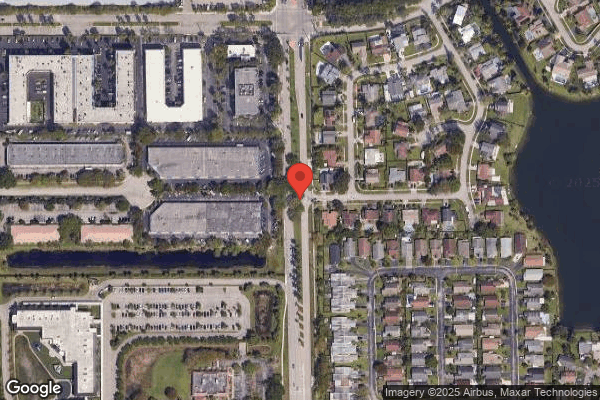

4800 N NOB HILL RD, SUNRISE, FL 33351 (954) 577-3600
For profit - Corporation 237 Beds MICHAEL FEIST Data: November 2025
Trust Grade
65/100
#287 of 690 in FL
Last Inspection: August 2024

Within standard 12-15 month inspection cycle. Federal law requires annual inspections.

Overview

Sunrise Health & Rehabilitation Center has a Trust Grade of C+, indicating it is slightly above average but not exceptional. It ranks #287 out of 690 facilities in Florida, placing it in the top half, and #16 out of 33 in Broward County, meaning only a few local options are better. The facility is improving, with issues decreasing from 16 in 2023 to 7 in 2024. Staffing is a strong point, with a rating of 4 out of 5 stars and a turnover rate of 36%, which is lower than the state average, suggesting that staff are experienced and familiar with residents. However, the facility has received $28,008 in fines, which is concerning as it indicates potential compliance issues, despite having good RN coverage that exceeds 81% of Florida facilities. Specific incidents noted include concerns about food safety, as spiced pears were stored at an improper temperature, and issues with alarms on exterior doors disturbing residents. Additionally, one resident was observed eating a meal that did not meet their dietary needs, as a large piece of hash brown was not cut into bite-sized pieces. While there are notable strengths in staffing and overall quality measures, families should be aware of these weaknesses when considering this facility.

Trust Score
C+
65/100
In Florida
#287/690
Top 41%
Safety Record
Low Risk
No red flags
Inspections
Getting Better
16 → 7 violations
Staff Stability
○ Average
36% turnover. Near Florida's 48% average. Typical for the industry.
Penalties
✓ Good
$28,008 in fines. Lower than most Florida facilities. Relatively clean record.
Skilled Nurses
✓ Good
Each resident gets 60 minutes of Registered Nurse (RN) attention daily — more than 97% of Florida nursing homes. RNs are the most trained staff who catch health problems before they become serious.
Violations
⚠ Watch
33 deficiencies on record. Higher than average. Multiple issues found across inspections.
★★★★☆
4.0
Overall Rating
★★★★☆
4.0
Staff Levels
★★★★★
5.0
Care Quality
★★★☆☆
3.0
Inspection Score
Stable
2023: 16 issues
2024: 7 issues

The Good

  • 4-Star Staffing Rating · Above-average nurse staffing levels
  • 5-Star Quality Measures · Strong clinical quality outcomes
  • Full Sprinkler Coverage · Fire safety systems throughout facility
  • No fines on record
  • Staff turnover below average (36%)

    12 points below Florida average of 48%

Facility shows strength in staffing levels, quality measures, fire safety.

The Bad

Staff Turnover: 36%

10pts below Florida avg (46%)

Typical for the industry

Federal Fines: $28,008

Below median ($33,413)

Moderate penalties - review what triggered them

Chain: MICHAEL FEIST

Part of a multi-facility chain

Ask about local staffing decisions and management

The Ugly 33 deficiencies on record

Aug 2024 7 deficiencies
CONCERN (D)

Potential for Harm - no one hurt, but risky conditions existed

Resident Rights (Tag F0550)

Could have caused harm · This affected 1 resident

**NOTE- TERMS IN BRACKETS HAVE BEEN EDITED TO PROTECT CONFIDENTIALITY** 5. Resident #135 was admitted to the facility on [DATE] with diagnoses of bilateral primary osteoarthritis of knees, acute kidne...

Read full inspector narrative →
**NOTE- TERMS IN BRACKETS HAVE BEEN EDITED TO PROTECT CONFIDENTIALITY** 5. Resident #135 was admitted to the facility on [DATE] with diagnoses of bilateral primary osteoarthritis of knees, acute kidney failure, hypertension, dysphagia, peripheral vascular disease, atrial fibrillation, asthma, respiratory disorders unspecified protein-calorie malnutrition, pleural effusion, and elevated white blood cell count. She was readmitted as hospice care on 06/14/2024. Review of MDS (Minimum Data Set) section C on 06/21/2024 showed an updated BIMS (Brief Interview for Mental Status) score of 11 indicating good cognitive function. Previous BIMS score of 9 was obtained on 06/08/2024 indicating less cognitive function. Section GG of MDS revealed the following: 1. Lower body dressing: The ability to dress and undress below the waist, including fasteners; does not include footwear- required substantial maximal assistance; 2. Shower/bathe self: The ability to bathe self, including washing, rinsing, and drying self (excludes washing of back and hair). Does not include transferring in/out of tub/shower showed -partial moderate assistance; 3. Toileting hygiene: The ability to maintain perineal hygiene, adjust clothes before and after voiding or having a bowel movement showed - partial moderate assistance. Record review of care plan's goals and interventions dated 06/13/2024 showed to maintain resident's dignity and comfort at the highest level; keep the environment quiet and calm, lighting low, and familiar objects near. Additional review of care plan and interventions revealed to monitor resident for signs and symptoms of respiratory distress and report to MD( Medical Doctor) prn ( as needed). In an interview with Resident # 135 on 08/05/2024 at 2:00 PM, she stated there were less Staff at night. She added only one nurse was available to take vitals signs. Resident #135 stressed that she sat on her feces and urine for eight hours, and they occured more than several times. When she pressed her call lights multiple times at night, a Staff wanted to get the call light away from her. She did not remember the name of the Staff, since Staff was a floater. Resident # 135 added that Staff are not respectful. She rememebered an incident when she pressed the call light because she was experiencing difficulty of breathing, when a floater Staff came and asked her What do you want?. This incident shocked her because of the disrespect from Staff's tone and attitude. In another interview with Resident # 135 on 08/05/0224 at 6:37 PM, she stated there was no Staff available to help her get to her wheelchair. She added Staff don't come back when I pressed the call light, and when I needed help to use my wheelchair, she was talking while pointing her finger to a Staff who came in to answer her call light. Staff T, a CNA (Certified Nursing Assistant) reminded Resident #135 that she helped her move from bed to wheelchair whenever the resident asked. Resident # 135 showed a frown on her face, mouth turned downwards and moved head side to side indicating disagreement from what she heard. Resident # 135 added that Facility Staff do not listen to her whenever she requests a different type of meal. She does not like to eat eggs morning, noon, and night, and no Staff told her or informed her why she cannot have another type of meal. She asked this surveyor, how is she able to eat a cucumber salad? In another interview with Resident # 135 on 08/08/2024 at 08:18 AM , she stated that she does not like that any Facility Staff enters her room and moves her stuff without asking her permission first. She added that she is losing her dignity and respect because Staff does not communicate with her. One Staff enters her room, gets objects like her expensive Pepto Bismol without asking permission from her first. She said that a Staff uses a rough paper to wipe her body and when she asked for a linen face cloth at night, Staff tells her residents are allowed one face cloth, one bath towel and one bed blanket. Resident #135 showed and let this surveyor feel a folded brownish paper ( similar to a rough kitchen paper towel) which she said Staff uses to wipe her back, chest, and bottom. During an interview with Staff E, a Registered Dietician on 08/06/2024 at 10 :00 AM, he stated that he listened to the dietary requests of Resident #135, and tried to accommodate her preferences and likes. In an interview with the Unit Manager of E Wing on 08/08/2024 at 11:00 AM, when asked his ways of showing respect and dignity to residents, he stated that he knocks on the door, and asks permission before going inside resident's room. He added that he did not remember taking any medication out of Resident #135's room. Based on observations, interviews and record review the facility failed to treat residents in a dignified manner during dining observations for 5 out of 44 sampled residents (Residents #176, #101, #412, #162 and #135). The findings included: Review of the facility's policy titled, Promoting/Maintaining Resident Dignity During Mealtimes with a revised date of 03/2023 included in part the following: 5. All staff will be seated, if possible, while feeding a resident. 8. Ensure the resident receives the proper tray. Review of the facility's policy titled, Promoting/Maintaining Resident Dignity with a revised date of 05/2023 included in part the following: 10. Speak respectfully to residents; avoid discussions about residents that may be overheard. 1. Record review for Resident #101 revealed the resident was admitted to the facility on [DATE] with diagnoses including Unspecified Dementia. Review of the Minimum Data Set (MDS) for Resident #101 dated 05/24/24 documented in Section C a Brief Interview of Mental Status (BIMS) score of 3 indicating severe cognitive impairment. Review of the Physician's Orders for Resident #101 revealed the resident was not currently on isolation. On 08/06/24 at 8:45 AM an observation was made of Resident #101 sitting in wheelchair and on the overbed table in her room was partially eaten breakfast that was served in a divided Styrofoam cover dish, with Styrofoam cups, and plastic utensils on a Styrofoam tray. On 08/06/24 at 12:33 PM an observation was made of Resident #101 in the Atrium dining room on G unit, the resident was served lunch in a Styrofoam container, with Styrofoam cup, plastic utensils on a Styrofoam tray. 2. Record review for Resident #176 revealed the resident was admitted to the facility on [DATE] with diagnoses including: Unspecified Protein-Calorie Malnutrition and Dementia. Review of the Minimum Data Set (MDS) dated [DATE] documented in Section C a Brief Interview of Mental Status (BIMS) score of 10 indicating moderate cognitive impairment. Review of the Physician's Orders for Resident #176 revealed an order dated 04/30/24 for Regular diet Regular texture, Regular/Thin consistency, PAPER PLATES. Review of the Physician's Orders for Resident #176 revealed the resident was not currently on isolation. On 08/06/24 at 8:35 AM an observation was made of Resident # 176 sitting up in bed eating breakfast that was served in a divided Styrofoam cover dish, with Styrofoam cups and plastic utensils on a Styrofoam tray. On 08/06/24 at 12:30 PM an observation was made of Resident # 176 in the Atrium dining room on G unit, the resident was served lunch in a Styrofoam container, with Styrofoam cup and plastic utensils on a Styrofoam tray. 3. Record review for Resident #412 revealed the resident was admitted to the facility on [DATE] with diagnoses including: Covid-19 and Dementia. Review of the Minimum Data Set (MDS) for Resident #412 dated 07/24/24 documented in Section C a Brief Interview of Mental Status (BIMS) score of 6 indicating severe cognitive impairment. Review of the Physician's Orders for Resident #412 revealed the resident was not currently on isolation. On 08/06/24 at 8:40 AM an observation was made of Resident #412 sitting on edge of bed eating breakfast that was served in a divided Styrofoam cover dish, with Styrofoam cups and plastic utensils on a Styrofoam tray. On 08/06/24 12:35 PM an observation was made of Resident # 412 in the Atrium dining room on G unit, the resident was served lunch in a Styrofoam container, with Styrofoam cup and plastic utensils on a Styrofoam tray. During an interview conducted on 08/06/24 at 9:50 AM with Staff M Certified Nursing Assistant (CNA) who stated she has worked at the facility for about 3 months. When asked why Residents #412, #101, and #176, were served breakfast on Styrofoam, she said they were on isolation, and I think the kitchen forgot to stop using the Styrofoam when they came off of isolation. When asked when the residents came off of isolation, she said she did not remember. During an interview conducted on 08/06/24 at 12:30 PM with Staff N, Certified Nursing Assistant (CNA), who stated she has worked at the facility for 15 years. When asked why some of the residents are served lunch with disposable items like Styrofoam container and cups and plastic utensils, she said the residents used to have Covid and probably the kitchen forgot to take them off. During an interview conducted on 08/06/24 at 12:43 PM with Staff O, Registered Nurse/Unit Manager (RN/UM), who stated she has worked at the facility for 8 years. When asked why some residents are served lunch in the dining room with disposable items like Styrofoam container and cups and plastic utensils, she said they were on Covid, and the kitchen forgot to take them off. When asked how long the residents in the dining room had been off of isolation for Covid, she said about a week. She said she will call the kitchen. 4. Resident #162 was admitted on [DATE] with diagnoses of protein-calorie malnutrition, Type 2 diabetes, and muscle weakness. The admission Minimum Data Set (MDS) dated [DATE] revealed a Brief Interview of Mental Status (BIMS) score of 02, which indicated severe cognitive impairment. In an observation conducted on 08/05/24 at 6:25 PM, Resident #162 received her dinner tray, which was placed at the side table. At 6:55 PM (30 minutes later), Staff C, Certified Nursing Assistant, was noted standing over the Resident feeding her the dinner soup. A chair was noted near Staff C, which had enough space to pull the chair near Resident #162's bed. Staff C stopped when this Surveyor walked into the room and said, She is a feeder, in front of Resident #162. In an interview conducted on 08/07/24 at 3:40 PM, Staff H, a Certified Nursing Assistant, stated that she was educated on treating the residents with dignity while assisting with dining. She needs to make sure that she sits near the residents at eye level while feeding them. Staff H further reported putting less food in the residents' mouths at one time and assisting the residents in eating their meals.
CONCERN (D)

Potential for Harm - no one hurt, but risky conditions existed

ADL Care (Tag F0677)

Could have caused harm · This affected 1 resident

**NOTE- TERMS IN BRACKETS HAVE BEEN EDITED TO PROTECT CONFIDENTIALITY** Based on observations, interviews, and record review, the facility failed to provide the necessary services to maintain good nut...

Read full inspector narrative →
**NOTE- TERMS IN BRACKETS HAVE BEEN EDITED TO PROTECT CONFIDENTIALITY** Based on observations, interviews, and record review, the facility failed to provide the necessary services to maintain good nutrition (assist with feeding) for a resident who is unable to carry out activities of daily living for 1 of 8 sampled residents reviewed for nutrition (Resident #121). The findings included: Resident #121 was admitted to the facility on [DATE] with diagnoses of Type 2 Diabetes, Heart Failure, and Muscle Wasting. The Significant Change Minimum Data Set (MDS) dated [DATE] revealed that Resident #121 has a Brief Interview of Mental Status (BIMS) score of 04, which is severe cognitive impairment. Section GG (eating) on the above MDS showed that Resident #121 needs set-up and clean-up assistance with her eating. The Care plan dated 07/19/24 showed Resident #121 has a self-care performance deficit related to impaired cognition. Resident #121 has impaired visual function related to blurred vision. In an observation conducted on 08/05/24 at 5:40 PM, Resident #121 was noted in her room with the dinner tray. The dinner tray was observed with two scoops of egg salad, 2 ounces of pureed bread, vegetable salad, and 4 ounces of juice. No staff was noted in the room at the time of this observation. The continued observation on 08/05/24 at 6:05 PM (25 minutes later) showed that Resident #121 did not eat anything on her tray and was noted as 100% untouched. At 6:10 PM, the tray was still untouched, which was 30 minutes later after the first observation. At 6:30 PM, the tray remained untouched, and no staff member came into the room from 5:40 PM to 6:30 PM. Staff K, a Certified Nursing Assistant, entered the room at 6:32 PM and sat near the Resident to feed her dinner. She left the room [ROOM NUMBER] minutes later with the tray. In an observation conducted on 08/06/24 at 11:50 AM, the lunch tray came into Resident #121 ' s room and was set up for the Resident. At 12:10 PM, no staff was noted in the room, and the lunch tray was 100% untouched. The observation continued at 12:15 PM, and the tray was still 100% untouched, with no staff in the room. Staff J, a Certified Nursing Assistant, came into the room at 12:17 PM and left the room with Resident #121 ' s lunch tray in her hands. A review of the Activities of Daily Living (ADL) task for eating (documented by the Certified Nursing Assistants) showed that from 07/08/24 to 08/06/24, Resident #121 needed the following assistance: 107 meals with total dependence and full staff performance, six meals with extensive assistance with staff providing weight-bearing support, four meals with limited assistance and staff providing non-weight bearing assistance, 16 meals with supervision and staff encouraging and cuing and 15 meals independently with no help from staff or oversight at any time. In an interview conducted on 08/06/24 at 3:10 PM with Staff B, Certified Nursing Assistants (CNA), who stated that Resident #121 needs assistance with all her meals. In an interview conducted on 08/06/24 at 3:20 PM with Staff A, the MDS Coordinator stated the following: for section GG, eatingm, a resident is coded by reviewing therapy evaluations, interviewing staff, and looking at the CNAs documentation under tasks for eating to see what type of assistance is needed for each meal. This is done by looking at the 7-day look-back period. Staff A said that she would also observe residents during dining times. Section GG for eating is coded depending on how often the same assistance is needed for each meal. When asked about Resident #121 ' s eating task, Staff A confirmed that she requires total assistance with most meals.
CONCERN (D) 📢 Someone Reported This

A family member, employee, or ombudsman was alarmed enough to file a formal complaint

Potential for Harm - no one hurt, but risky conditions existed

Pressure Ulcer Prevention (Tag F0686)

Could have caused harm · This affected 1 resident

**NOTE- TERMS IN BRACKETS HAVE BEEN EDITED TO PROTECT CONFIDENTIALITY** Based on review of policy and procedure, interview and record review, the facility failed to assess skin in a timely manner, to ...

Read full inspector narrative →
**NOTE- TERMS IN BRACKETS HAVE BEEN EDITED TO PROTECT CONFIDENTIALITY** Based on review of policy and procedure, interview and record review, the facility failed to assess skin in a timely manner, to identify a pressure ulcer for 1 of 7 sampled residents reviewed for facility acquired pressure ulcers, Resident #408. The findings included: Review of the facility policy and procedure on 08/08/24 at 3:10 PM titled Pressure Injury Prevention and Management provided by the Director of Nursing (DON) revised 10/2022 documented in the Policy Statement: This facility is committed to the prevention of avoidable pressure injuries .and to provide treatment and services to heal the pressure ulcer/injury, prevent infection and the development of additional pressure ulcers/injuries Policy Explanation and Compliance Guidelines: .2. The facility shall establish and utilize a systematic approach for pressure injury prevention and management, including prompt assessment and treatment; intervening to stabilize, reduce or remove underlying risk factors; monitoring the impact of the interventions; and modifying the interventions as appropriate. 3. Assessment of Pressure Injury Risk a. Licensed nurses will conduct a pressure injury assessment, using the Braden Scale, on all residents upon admission/re-admission, weekly x four (4) weeks, then quarterly or whenever the resident's condition changes significantly .c. Licensed nurses will conduct a full body skin assessment on all residents upon admission/re-admission, weekly, and after any newly identified pressure injury. Finding will be documented in the medical record. d. Assessments of pressure injuries will be performed by a licensed nurse, and documented in Point Click Care. The staging of pressure injuries will be clearly identified to ensure correct coding on the MDS. e. Nursing assistants will inspect skin during bath and will report any concerns to the resident's nurse immediately after the task .Monitoring a. The Unit Manager or designee, will review all relevant documentation regarding skin assessments, pressure injury risks, progression towards healing, and compliance at least weekly, and document a summary of findings in the medical record. b. The attending physician will be notified of: i. The presence of a new pressure injury upon identification. ii. The progression towards healing, or lack of healing, or any pressure injuries weekly .6. Modifications of Interventions a. Any changes to the facility's pressure injury prevention and management processes will be communicated to relevant staff in a timely manner. b. Interventions on a resident's plan of care will be modified as needed. Considerations for needed modifications include: .ii New onset or recurrent pressure injury development . Review of the facility policy and procedure on 08/08/24 at 3:15 PM titled Notification of Changes provided by the DON revised 11/29/22 documented in the Policy Statement: The purpose of this policy is to ensure the facility promptly informs the resident, consults the resident's physician; and notifies, consistent with his or her authority, the resident's representative when there is a change requiring notification .Compliance Guidelines: .Circumstances requiring notification include: .2. Significant change in the resident's physical, mental or psychosocial conditions such as deterioration in health, mental or psychosocial status iii. Exacerbation of a chronic condition. Resident #408 was admitted to the facility on [DATE] with diagnoses which included Unspecified Displaced Fracture of Seventh Cervical Vertebra, Paraplegia Incomplete, Spondylopathy, Muscle Wasting, Dysphagia, Neuromuscular Dysfunction of Bladder, Anemia, Depression, Adjustment Disorder, Quadriplegia Hypertension, Atherosclerotic Heart Disease, Gastroesophageal Reflux Disease, Ileus, Fusion of Spine and Edema. He had a Brief Interview Mental Status (BIM) score of 13 (cognitively intact). A telephone interview was conducted on 08/07/24 at 2:04 PM with Resident #408's family member, who is the Power of Attorney (POA). Resident #408's Niece stated that she was on her way, at the time, to visit her Uncle, who was currently in the Hospital again for the same wounds which are infected, in addition to being diagnosed with Pneumonia. Resident #408's Niece went on to say that the resident had to have another debridement for his level four (4) sacral wound; which she said that she had subsequently learned had actually been worse, than she was originally told to her by facility nursing staff members. She ended by saying that the resident has no history of any sacral wounds. On 05/30/24 the 3008 Agency for Healthcare Administration (AHCA) Medical Certification for Medicaid Long-Term Care Services and Patient Transfer Form did not document any pressure ulcers, lesions or wounds, at the time, for this resident. Record review revealed that on 05/30/24, Staff U, a Licensed Practical Nurse (LPN), documented in the following admission nursing progress note, Patient arrived at the facility on stretcher accompanied by two (2) attendants and family member. admitted to room B-26-B, alert and oriented able to make needs known to staff. Skin warm to touch, scar to the neck, open area to right shin, dried blister to left heel, swelling to bilateral feet. Patient has neck brace. Patient not able to move arms and legs, very immobile, fingers are stiff. Denies any pain. No acute distress noted. Vital signs 134/60, O2 sat 100%, T97.7 P74. Will continue to monitor; with no mention of the status of Resident #408's sacral skin region. Record review of Resident #408's Braden Scale for Predicting Pressure Ulcer Risk Evaluation dated 05/30/24 indicated that the resident had a score of 13 which indicated that he was at Moderate risk. An interview was conducted on 08/08/24 at 9:47 AM with Staff X, a Certified Nursing Assistant, (CNA), in which she stated that Resident #408 was totally dependent for care. She said that she fed him, washed and cleaned his entire body and dressed him, with staff member assistance. She stated that she worked with this resident on day shift for five (5) days from Tuesday 06/04/24 until Saturday 06/08/24. Staff X said that Resident #408 did not come into the facility with any open areas on his sacral/bottom area during this time, and she added that if she had seen any redness, open areas, abrasions, rash or anything of this kind, she would have reported it to the nurse. Staff X went on to say that she repositioned this resident every 2 hours on her shift, she said that she cleaned and checked the resident's sacral area on a daily basis and entered the information in the mounted computerized CNA tablet, located in the hallway of the B-wing, which documented how the resident ate, if he was continent or incontinent, if he had a bowel movement or not, the presence of a Foley catheter and the skin condition. Staff X stated and documented, that on Tuesday June 4th at 1:16 PM, she showered, Resident #408, while still in bed and on Thursday June 6th at 1:28 PM, Resident #408 had a small bowel movement, and she cleaned and changed him. Finally, Staff X stated that from Wednesday 06/05/24 until Tuesday 06/11/24 for two (2) hours daily, that both she and Staff Y, the facility Physical Therapist, who also corroborated this to the Surveyor on 08/08/24 at 11:25 AM, would get Resident #408 out of bed utilizing the Hoyer lift into a recliner wheelchair. According to record review of the CNA Task list form, Staff Z, documented, that she showered, Resident #408, while still in bed and on Friday June 7th at 10 PM it was also documented that the resident had a medium bowel movement, and she cleaned and changed him on that day. Staff W, a Licensed Practical Nurse (LPN) Wound Care Nurse, who recorded the Tuesday 06/11/24 Sacral Wound Physician treatment order, and who was primarily responsible for Resident #408's sacral wound care during his short, facility stay, was out of the facility and unavailable for telephone interview, during the survey. A subsequent side-by-side record review was conducted of the Wound Care Doctor's progress notes, completed by the Advanced Registered Nurse Practitioner (A.R.N.P.) along with the facility's current Wound Care Director on 08/08/24 at 11:24 AM in which it was noted that, The initial sacral Stage III wound measurements were: 10.0 x 10.0 x 0.1 cm and the surface area was 100.00 sq.cm. on 06/11/24; no tunneling or undermining, moderate amount of serosanguinous drainage with no odor, pain level 01/10, 60% granulation, 10% epithelization; no eschar present. The Physician's order for wound care were: Normal saline, skin prep, Hydrogel, bordered dressing daily and PRN. The sacral wound measurements vs. wound presentation were: 10.0 x 10.0 x 0.1 cm and the surface area was 100.00 cm. on: 06/18/24; no tunneling or undermining, moderate amount of serous drainage with no odor, pain level 01/10, 20% granulation, 0% epithelization; no eschar present with no change in wound progression. The Physician's order for wound care were: Normal saline, skin prep, Hydrogel, bordered dressing daily and PRN. Wound evaluation done by ReNew 6/25/24 shows sacral wound remains 'Un-stageable and measures 10 x 8 x 0.4, no significant change since last week, moderate serous exudate, 80% Slough, 20% Granular, mild odor, denies pain. The sacral wound measurements vs. wound presentation (Post-debridement) were: 10.0 x 8.0 x 3.8 cm and the surface area was 80.00 cm. on: 06/25/24; no tunneling or undermining, moderate amount of serous drainage with no odor, pain level 01/10, 20% granulation, 0% epithelization; no eschar present with no change in wound progression. The Physician's order for wound care: treatment changed to 1/4 strength Dakin's moistened gauze packing and cover with bordered dressing daily and PRN; family and attending physician made aware. For the month of May and June 2024, the Medication Administration Record (MAR) documented a physician's order for a blood thinner medication for Resident #408: Enoxaparin Sodium Solution 40 mg/0.4ml Inject 40 mg subcutaneously (SQ) every twelve (12) hours for blood clotting prevention for ten (10) Days that were initialed by licensed nursing staff as being provided to this resident, and for Aspirin Enteric Coated (EC) Tablet Delayed Release 325 MG (Aspirin) Give one (1) tablet by mouth one (1) time a day for Coronary Artery Disease (CAD) with breakfast. For the month of May and June 2024, the Treatment Administration Record (TAR) documented two (2) physician's orders, beginning prior to Tuesday 06/11/24 for the following: 1) Cleanse right and left buttocks with soap and water. Apply Lantiseptic cream after each brief change every shift for prophylaxis - start date Thursday 06/06/24, and 2) Turn and re position frequently as tolerated every shift for preventative measure - start date Wednesday 06/05/24. During an interview conducted on 08/08/24 at 10:22 AM with Staff AA, RN, she stated that she was part of the nursing staff who cared, for this resident, at bedside, prior to Tuesday June 11th on the following seven (7) days: Friday 05/31/24, Tuesday June 4th, Wednesday June 5th, Friday June 7th , Saturday June 8th, Sunday June 9th and Monday June 10th , for the entire week on day shift. Staff AA stated that on: Friday 05/31/24, she noticed immediately upon entering Resident #408's room, that he was, sweaty, smelling badly with his beard looking overgrown and unkempt. As a result, Staff AA stated that she asked Resident #408 if he was ok, with her giving him a shave, a good, full entire bath and nail trimming; which he agreed. Staff AA stated that on that same day, she and another aide proceeded to provide this care for him, but Staff AA also said that she saw no open skin areas on his sacrum. Staff AA added that she had not gone back at any other time during that week to see Resident #408's sacral area. Staff AA also became emotional and tearful, during the interview, indicating that when she had learned later about the resident's wound being found on his sacral, she added that, when she saw the Resident #408's skin it was just shiny and black to her, and she added that she, felt so bad about it once she was aware of and realized what had happened. On 08/08/24 at 12:25 PM an interview was conducted with, the Advanced Registered Nurse Practitioner (A.R.N.P.) for Wound Care working with Renew Wound Care Consultants, regarding the on-set of Resident #408's facility-acquired sacral wound. The A.R.N.P. stated that she had not seen Resident #408 prior to Tuesday June 11th. She said that she did not see or assess the resident until Tuesday June 11th and she saw him again one (1) week later on Tuesday June 18th and again on Tuesday June 25th. She acknowledged that all necessary preventative skin measures/interventions, should have been put into place, for this resident, to maintain skin integrity, beginning upon admission to the facility. On 08/08/24 at 1:06 PM a telephone interview was conducted with, Resident #408's Primary Care Physician (PCP)'s regarding the on-set of the resident's facility-acquired sacral wound. Resident #408's PCP stated and documented that either he or his A.R.N.P., had been in the facility to see this resident on Friday 05/31/24, Tuesday 06/04/24 and again Friday Tuesday 06/07/24. The Doctor stated that he believed that Resident #408 developed a Deep Tissue Injury (DTI) to that area, and he had very dark skin hyperpigmentation making it almost impossible to detect changes in his skin in addition to his other co-morbidities and he stated that, it would have happened anyway. Resident #408's PCP said that he personally saw and assessed Resident #408's sacral skin area with his A.R.N.P. He added that he was not aware of Resident #408's current status or condition. Resident #408's PCP also acknowledged that all necessary preventative skin measures/interventions, should have been put into place, for this resident, to maintain skin integrity, beginning upon admission to the facility. Record review of Resident # 408's CNA ADL (Activities of Daily Living) Task Flowsheet Record dated Thursday 05/30/24 thru Tuesday 06/11/24 revealed that for at least three (3) of the facility's CNA staff working with this resident on both the day and evening shifts documented that they had actually provided the following (ADL)'s of: Bathing support, Shower in bed, and Bowel elimination for the resident. Record review of Resident #408's Baseline care plan dated Friday 05/31/24 indicated that the resident was alert and cognitively intact and required extensive assistance for bed mobility, dressing, hygiene and bathing. He was also totally dependent for transfers, locomotion and toileting. Resident #408's only skin tegrity issues, at that time, were Cellulitis and Edema to leg. Resident #408's subsequent Care plans initiated on 05/31/24 for ADL self-care performance deficit and on 06/02/24 for potential and actual impairment to skin integrity was relative to the resident's disease process, impaired balance/mobility and fragile skin. The following interventions were listed: resident is totally dependent on two (2) staff to provide bath/shower resident is totally dependent on one (1) staff for personal hygiene and oral care follow facility protocols for treatment of injury, keep skin clean and dry, weekly treatment documentation to include measurements of each area of skin breakdown's width, length, depth, type of tissue and exudate and any other notable changes or observations. The goals noted for Resident #408 were to improve current level of functioning through the review date and to maintain or develop clean and intact skin by the review date. A side-by-side record review was also conducted with the DON of the facility's progress notes, at that time, of the resident's skin status. However, the documentation reviewed in the progress notes, weekly Skin Only Evaluation and in the daily Skilled Evaluations forms dated Friday 05/31/24 up until Tuesday 06/11/24) only documented the general condition or status of the resident's skin area as: warm and dry, skin color within normal limits (wnl) and Turgor is normal, no edema or pitting edema present to lower extremities, and turgor normal, warm to touch, circulation check; extremities are warm and pink, Capillary Refill: Brisk < 3 seconds, skin negative for rash or bruising, no skin lesions or rashes appreciated in exposed bilateral upper extremities or bilateral lower extremities., patient has high risk for developing .ulcers and for skin breakdown which can progress to sepsis ., but with no documentation to specifically describe the resident's sacral area, as having been assessed by facility staff. In Summary, Resident #408 had been residing in the facility, seen and cared for by several different nursing staff members, for eleven (11) days, before the resident's sacral wound was discovered at a stage III; with subsequent treatment then being initiated by facility nursing staff, with no timely notification made to the resident's representative of such. The DON recognized and acknowledged during interview on 08/08/24 at 3:47 PM, that Resident #408's sacral skin wound was not discovered, identified nor documented on by the facility's nursing staff until Tuesday 06/11/24; eleven (11) days after admission to the facility.
CONCERN (D)

Potential for Harm - no one hurt, but risky conditions existed

Deficiency F0692 (Tag F0692)

Could have caused harm · This affected 1 resident

**NOTE- TERMS IN BRACKETS HAVE BEEN EDITED TO PROTECT CONFIDENTIALITY** 2. Record review for Resident #98 revealed the resident was admitted to the facility on [DATE] with diagnoses including: Unspeci...

Read full inspector narrative →
**NOTE- TERMS IN BRACKETS HAVE BEEN EDITED TO PROTECT CONFIDENTIALITY** 2. Record review for Resident #98 revealed the resident was admitted to the facility on [DATE] with diagnoses including: Unspecified Protein-Calorie Malnutrition and Unspecified Dementia. Review of the Minimum Data Set (MDS) for Resident #98 dated 06/30/24 documented in Section C a Brief Interview of Mental Status score of 3 indicating severe cognitive impairment. Review of the weights for Resident #98 revealed the following: On 6/26/2024 the resident weighed 196.0 pounds From 06/30/24 to 07/06/24 there was no weight documented for the resident. From 07/07/24 to 07/13/24 there was no weight documented for the resident. From 07/14/24 to 07/20/24 there was no weight documented for the resident. From 07/21/24 to 07/27/24 there was no weight documented for the resident. On 7/31/2024 the resident weighed 170.0 pounds This indicated the resident had lost 26 pounds (13.27%) in 1 month which is a significant weight loss after 4 weeks of no weights. Review of the Physician's Orders for Resident #98 revealed an order dated 06/26/24 to weigh weekly one time a day every Wednesday. Review of the Physician's Orders for Resident #98 revealed an order dated 06/27/24 NAS (No Added Salt) diet Regular texture, Regular/Thin consistency. Review of the Physician's Orders for Resident #98 revealed an order dated 08/02/24 House Nutritional Supplement one time a day for nutrition support 120 ml (milliliters) document % consumed. Review of the Nutrition/Dietary Note for Resident #98 dated 08/05/24 documented the following: Weight Review: Weight taken 7/31 of 170 pounds with a BMI (Body Mass Index) of 30.1, indicative of obesity. Weight is down 26 pounds/15% in comparison to admission weight of 196 lbs. She has a hx (history) diuretic use, weight/fluid shifts anticipated. Estimated needs remain consistent to admission assessment based on adjusted BW (Body Weight). On a NAS diet with intake of 0-50%. NP notified of weight loss and suboptimal intake. Mirtazapine and Eldertonic were ordered as well as House supplement QD (daily). Pt has a history of behavioral disturbances, she has refused to be weighed at times. Attempted to contact her Emergency contact however, unavailable. Will continue on weekly weights to further assess weight trends and adjust POC (plan of care) as needed. Review of the Care Plan for Resident #98 dated 06/27/24 with a focus on the resident is at nutritional risk r/t comorbidities, advanced age, hx edema, dentures, obesity, hx PU (pressure ulcer), and therapeutic diet with supplements as ordered. Refuses weights at times. The goal was for the resident to maintain adequate nutritional status as evidenced by maintaining weight, no s/sx of malnutrition, and consuming meals daily through review date. The interventions included: Administer medications as ordered. Monitor/Document for side effects and effectiveness. Monitor/document/report PRN any s/sx of dysphagia: Pocketing, Choking, Coughing, Drooling, Holding food in mouth, Several attempts at swallowing, Refusing to eat, Appears concerned during meals. Monitor/record/report to MD PRN s/sx of malnutrition: Emaciation (Cachexia), muscle wasting, significant weight loss: 3lbs in 1 week, >5% in 1 month, >7.5% in 3 months, >10% in 6 months. Obtain and monitor lab/diagnostic work as ordered. Report results to MD and follow up as indicated. Provide and serve diet as ordered. Provide, serve diet as ordered. Monitor intake and record q meal. RD to evaluate and make diet change recommendations PRN. The resident needs a calm, quiet setting at meal times with adequate eating time. Encourage the resident's socialization and interaction with table mates during meals. Weigh per facility protocol During an interview conducted on 08/07/24 at 9:15 AM with Staff E Registered Dietitian (RD) who stated he has worked at the facility since June 2023. When asked how often residents are weighed, he said on admission, then weekly for 4 weeks, if weight is stable then monthly. He said if the resident has a significant weight loss they would be on weekly weights and the duration of time would be determined by the RD. When asked what is considered a significant weight loss, he stated it would be 5% or greater in 30 days, 7.5% or greater in 90 days, and 10% or greater in 180 days. When asked if the significant weight loss and interventions are entered into the resident's care plan he said yes. During an interview conducted on 08/07/24 at 10:15 AM with Staff F Registered Dietitian (RD) who stated she has worked at the facility for over 1 year. When asked about Resident #98, she said she is following the resident. When asked if the resident had significant weight loss, she said the resident lost 26 pounds (15%) in 30 days from 6/26/24 to 7/31/24. When asked if the resident was weighed weekly following admission on [DATE], she said no, the resident had refused, or nursing never gave her the weights. When asked if there was any documentation of resident refusing weights, she said she put it in her notes on 08/05/24. When asked if she addressed the no weights or resident refusing weights with nursing, she said yes but could not provide name of who she spoke to. She said she just did not document the resident refusing the weights until 8/05/24. She acknowledged the significant weight loss was not addressed timely. When asked about the care plan for the resident she acknowledged she did not update the care plan until 08/05/24. Based on observations, interviews, and record review, the facility failed to monitor weights, provide appropriate nutritional interventions, and ensure that dietary interventions were followed as ordered for 2 of 8 sampled residents for nutrition (Resident #162 and Resident #98). The findings included: A review of the facility's policy titled Nutritional Management, revised on 09/2022, revealed the following: A systematic approach is used to optimize each Resident's nutritional status: a. Identifying and assessing each Resident's nutritional status and risk factors. b. Evaluating/analyzing the assessment information. c. Developing and consistently implementing pertinent approaches. d. Monitoring the effectiveness of interventions and revising them as necessary. A review of the facility's policy titled Weight Monitoring: revised on 09/01/2022 revealed the following: Based on the Resident's comprehensive assessment, the Center will ensure that all residents maintain acceptable parameters of nutritional statuses, such as usual body weight or desirable body weight range and electrolyte balance unless the Resident's clinical condition demonstrates that this is not possible or resident preferences indicate otherwise. Compliance Guidelines: Weight can be a helpful indicator of nutritional status. Significant unintended changes in weight (loss or gain) or insidious weight loss (gradual unintended loss over a period) may indicate a nutritional problem. 1. Resident #162 was admitted on [DATE] with diagnoses of protein-calorie malnutrition, Type 2 diabetes, and muscle weakness. The admission Minimum Data Set (MDS) dated [DATE] revealed a Brief Interview of Mental Status (BIMS) score of 02, which indicates severe cognitive impairment. In an observation conducted on 08/06/24 at 12:21 PM, Resident #162's lunch tray arrived in the room. At 12:25 PM, Staff I, a Speech-Language Pathologist, noted near the Resident helping her with the lunch meal. She stated that Resident #162 initially needed total assistance with her meals, but at this point, she needs supervision. Some days, she needs more than supervision and encouragement, depending on her mood. In an observation conducted on 08/07/24 at 8:00 AM, Resident #162 was noted in her bed, with Staff D, an Occupational Therapist, sitting near her assisting her with the breakfast meal. Staff D said that at times, Resident #162 can eat on her own, and at other times, she needs more assistance and encouragement. According to Staff D, Resident #162 eats between 75% and 100%, and some days, she eats less than that. A review of the weight log showed the following weights for Resident #162: 130 pounds on 06/14/24, 123 pounds on 07/01/24, 122.5 pounds on 07/5/24, and 122.5 pounds on 08/01/24. This showed a significant weight loss of 5.7% from 06/14/24 to 08/01/24. A new weight requested by this Surveyor on 08/06/24 revealed Resident #162 at 119.5 lbs, which showed an additional weight loss of 3 pounds in 5 days. A review of the physician's orders showed an order for House Nutritional Supplement as needed for poor meal intake, to pour 6 ounces and encourage intake if less than 50% of meals were consumed, dated 05/19/24. A review of the Medication Administration Records for July 2024 showed Resident #162 did not receive any House Nutritional Supplements for the entire month. The Nutrition Assessment completed on 05/15/24 revealed Resident #162 was at a moderate nutritional risk, meal intake between 51% to 75%, 128.2 pounds admission weight, and no height documented on Resident #162. In this assessment, Staff E, the Registered Dietitian, needed to document the estimated calories and estimated protein needs for Resident #162. The nutrition progress note dated 05/17/24 documented a height of 64 inches on Resident #162 and a Body Max Index (BMI) greater than 21 and less than 23 (within normal ranges). In this note, Staff E stated that Resident #162 was coded as malnourished. In the nutrition progress note dated 07/10/24 (9 days after the identified significant weight loss), Staff E documented that Resident #162 is experiencing sudden weight loss despite reports of good meal intake. The Resident appeared to have lost a significant amount of weight, and this is her usual appearance. In this note, Staff E did not make any additional nutritional recommendations or changes despite the significant weight loss noted. The nutrition care plan revealed that Resident #162 will maintain adequate nutritional status, as evidenced by maintaining weight within 3-5% of 128.2 pounds. It further showed that the individual weight loss of 3 pounds in one week or over 5% of weight loss in one month should be monitored. In an interview conducted on 08/07/24 at 8:30 AM with Staff E, he stated that a weight loss of 5% or more in one month will trigger in the electronic system and notify him of any significant weight loss. He will run a daily weight report to identify residents with significant weight changes. Staff E will intervene when the weight loss is noted and reevaluate the resident ' s nutritional status. When asked about the House Supplements ordered for Resident #162, Staff E said it is either Boost (nutritional supplement) or Ensure (nutritional supplement). He validated that Resident #162 had a severe weight loss in one month from 06/14/24 to 08/01/24. Staff E said that because Resident #162 ate between 75% and 100% of her meals, there was no indication that she would need additional calories for her daily meals. He said a significant weight loss paired with documented poor intake for an extended period would indicate a criterion for diagnosing malnutrition. Staff E stated that he could not calculate the estimated caloric and protein needs for Resident #162 on her initial nutrition assessment because he did not have the height of Resident #162. According to Staff E, a current weight of 119.5 showed that Resident #162 ' s BMI dropped from 21.9 to 20.4, placing her at borderline underweight.
CONCERN (D)

Potential for Harm - no one hurt, but risky conditions existed

Deficiency F0697 (Tag F0697)

Could have caused harm · This affected 1 resident

**NOTE- TERMS IN BRACKETS HAVE BEEN EDITED TO PROTECT CONFIDENTIALITY** Based on observations, interviews and record review, the facility failed to ensure that pain management is provided to residents...

Read full inspector narrative →
**NOTE- TERMS IN BRACKETS HAVE BEEN EDITED TO PROTECT CONFIDENTIALITY** Based on observations, interviews and record review, the facility failed to ensure that pain management is provided to residents who require such services, consistent with professional standards of practice for 1 of 1 resident reviewed for pain (Resident #358). The findings included: A review of the facility's policy titled Pain Management, revised on 09/01/2022, revealed the following: facility staff will observe for nonverbal indications that may indicate the presence of pain. These indicators include but are not limited to, the impact of pain on quality of life (sleeping, appetite, and mood), currently prescribed pain medications, dosage and frequency, and the resident's goals for pain management and satisfaction with the current level of pain control. Resident #358 was admitted on [DATE] with diagnoses of Muscle Wasting, Type 2 Diabetes, and Muscle Weakness. The 5-day Minimum Data Set, dated [DATE] revealed that Resident #358 had a Brief Interview of Mental Status (BIMS) score of 15, which is cognitively intact. A review of the Physician's orders showed the following: Oxycodone (pain medication) oral tablet, 10 milligrams to give one tablet by mouth every 12 hours for chronic pain, which was discontinued on 08/5/24. Oxycodone (pain medication) oral tablet, 10 milligrams to give one tablet by mouth every 8 hours for chronic pain dated 08/5/24. In an interview conducted on 08/05/24 at 11:00 AM, Resident #358 stated that he spoke to the facility's Social Worker two days ago regarding the issue with his pain medication not being given on time. He said that his pain medications are given later, and at times, it is 2-3 hours past the scheduled medication time. Resident #358 reported that he asked for his pain medication this morning at 7:30 AM, which was only given to him around 10:00 AM this morning. In an interview conducted on 08/07/24 at 11:00 AM, Resident #358 stated that he could not sleep well last night because he was in pain, and Staff are still not giving him his pain medication on time. In an interview with Staff G, a Registered Nurse (RN), on 08/07/24 at 11:10 AM, the RN stated that Resident #358 is getting his pain medication every 8 hours. He received his pain medication this morning at 6:00 AM, and his next one is due at 2:00 PM today. A review of the Care Plan for Pain showed that Resident #358 has the potential for acute/chronic pain and that he is on routine pain medication. Anticipate the resident's need for pain relief, respond immediately to any complaint of pain, and administer pain medication as per orders. A review of the medication administration audit report showed the following: On 08/02/24, Oxycodone was scheduled for 8:00 AM and was given at 9:20 AM, an hour and a half later. On 08/03/24, Oxycodone was scheduled for 8:00 AM and was actually presented at 10:49 AM, which was almost 3 hours later; on 08/05/24, Oxycodone was scheduled for 8:00 AM and was actually given at 10:47 AM, which was nearly 3 hours later, and on 08/05/24, Oxycodone was scheduled for 10:00 PM and was actually given at 11:50 PM which was almost 2 hours later. In an interview conducted on 08/07/24 at 3:30 PM with the Director of Nursing, she stated that pain medication is usually given either an hour before or an hour after the scheduled medication time.
CONCERN (D)

Potential for Harm - no one hurt, but risky conditions existed

Deficiency F0806 (Tag F0806)

Could have caused harm · This affected 1 resident

**NOTE- TERMS IN BRACKETS HAVE BEEN EDITED TO PROTECT CONFIDENTIALITY** 2. Resident #172 was re-admitted to the facility on [DATE] with diagnoses of Muscle Weakness, Type 2 Diabetes Mellitus, Anemia, ...

Read full inspector narrative →
**NOTE- TERMS IN BRACKETS HAVE BEEN EDITED TO PROTECT CONFIDENTIALITY** 2. Resident #172 was re-admitted to the facility on [DATE] with diagnoses of Muscle Weakness, Type 2 Diabetes Mellitus, Anemia, Chronic Kidney Disease, Intermittent Claudication bilateral legs, Renal Disease, Kidney Transplant Failure, and unspecified Protein-Calorie Malnutrition. His initial admission was on 01/27/2024 with diagnoses of Muscle wasting, Acute Respiratory Distress Syndrome, Pleural Effusion, Atherosclerotic Heart Disease, and Dependence on Renal Dialysis. Record review of MDS (Minimum Data Set) Section C revealed a BIMS (Brief Interview for Mental Status ) score of 12 indicating good cognitive function. Resident #172 speaks Spanish. He does not read English but has minimal understanding of spoken English. Review of Facility's Policy titled Communicating with Persons with LEP (Limited English Proficiency) copyrighted in 2022, states that facility is to take reasonable steps to ensure that persons with LEP have meaningful access and an equal opportunity to participate in facility's services. Policy explanation and Compliance Guidelines # 1 states that facility staff will identify the language and communication needs of the LEP person during the pre-screening and admission process; #4 states that notification of the availability of language assistance services will also be provided through one or more of the following : outreach documents, telephone voice mail menu, and/ or the facility's website. Nutrition and Dietary Progress Notes record review dated 07/30/2024, and 06/30/2024, showed Staff F, a Registered Dietitian reviewed the menu with Resident # 172. In an observation on 08/05 2026 at 5:30 PM, a meal tray was seen on top of a table with a meal ticket written in English. The meal ticket showed the following: Resident #172's name , ticket #404, date= 08/05/2024, meal period -week 3 Mon Lunch, P 11. Additional notes included large servings, fluid restriction 1000 ml, 1 (one) juice (116 ml); Expo items showed 1 Rice, 1 Fruit Salad (1/2 cup), 1 Cranberry Juice ( 4 fluid oz {ounces}); Hot showed 1 stuffed green pepper, 1 California blend (SHC)( 4 oz); Diet: regular texture, RG7, renal, fluids-thin; DR -eats in room. During another observation on 08/06/2024 at 4:45 PM, Resident #172 was not in his room, but a meal tray was observed on top of a table. The meal ticket was written in English. The meal ticket revealed the following: Resident#172's name, ticket #332 , date-08/06/2024, meal period -week 3 Tuesday lunch , P11; notes-large servings, fluid restrictions 1000ml, and one juice (116 ml); expo items- 1 French style green beans (1/2 cup), 1 sherbet (1/2 cup), 1 cranberry juice ( 4 fluid oz); hot-1 roast turkey ( 3 oz), 1 cornbread stuffing ( 4 oz), 1 dinner ( 1 each with margarine); diet - regular texture RG7, renal, fluids-thin. Above the meal table was a calendar of activities written in English. During interview and observation of Resident # 172 on 08/06/2024 at 4:00 PM, he stated that he did not like the food offered to him at lunch time today and at other mealtimes, because they were not his food preferences. He was offered American style dishes, but he likes Hispanic dishes. When asked if any Staff spoke with him regarding his food preferences , choices, likes and dislikes, he stated No When asked if someone explained the menu to him, he added that the facility Staff must have told him, but he does not understand English. When asked about a menu for the week, he pointed to the activity calendar posted on the wall. In an interview with the Staff F, a Registered Dietitian on 08/06/ 2024 at 4:19 PM, she stated that when a resident is admitted or readmitted , she will go over diets, likes and dislikes and any food preferences based on the MD's ( Medical Doctor's) orders as well. Staff F stated that the food preferences and likes are sometimes documented in the nutrition assessment if there are any that are reported by the residents. It may also be documented under the dietary profile. The choices and preferences are then updated in the nutrition management system for the main kitchen. When asked if she went over preferences and menus with Resident #172, she said she did not think so. When asked about the nutrition assessment, she said that it is limited to the sections and did not have a section for food preferences. She added that she speaks Spanish and can communicate effectively with Resident #172. When asked if she talked to this resident regarding his preferences for Hispanic foods, she stated No, I do not think so. She added Resident #172 is on dialysis which makes selection of food very limited, and she has not heard Resident #172 complained about his food. In another interview with Staff S on 08/08/2024 at 12:20 PM, she stated Resident #172 ate 10 % of his lunch. She added that she asked if he wanted a sandwich instead, to which Resident #172 refused. She added that she will tell the Nurse. During an interview with the DON on 08/08/2024 at 3:30 PM the above information was shared. Based on observations, interviews, and record review, the facility failed to provide food that accommodates resident preferences and appealing options of similar nutritive value to residents who choose not to eat food that is initially served or who request a different meal choice for 2 of 8 residents sampled for nutrition (Resident #88 and Resident #172). The findings included: A review of the facility ' s policy titled Nutritional Management, revised on 09/2022, revealed the following: Interviewing the Resident and Resident representative to determine if their personal goals and preferences are being met. ii. Directly observing the Resident. iii. Interviewing the direct care staff to gain information about the Resident, the interventions currently in place, their responsibilities for reporting on these interventions, and possible suggestions for changes if necessary. 1. A record review revealed that Resident #88 was admitted to the facility on [DATE] with diagnoses of Underweight, Muscle Wasting, and Depression. A review of the Minimum Data Set (MDS) dated [DATE] revealed a Brief Interview of Mental Status (BIMS) score of 11, which was normal to low cognitive impairment. In an observation conducted on 08/05/24 at 4:45 PM, Resident #88 received her dinner tray in her room. The dinner tray consisted of navy bean soup, egg salad with two slices of bread, cucumber tomato salad, apple crisp, and apple juice. In this observation, Resident #88 was heard saying, I don't want to eat this; every day, it is an egg salad. When asked by this Surveyor, Resident #88 said, I don't like the food on this dinner tray, and refused to answer any more questions. In an observation conducted on 08/06/24 at 12:35 PM, Staff were setting up Resident #88's lunch tray in her room. Resident #88 meal tray consisted of: roast turkey, stuffing and green beans. Resident #88 did not want to eat the choices on her lunch plate and asked for a tuna sandwich and fruit instead. Continued observations showed that Resident #88 ate the tuna sandwich and the grapes which she requested instead of the regular food items that were served for the lunch meal. The initial nutrition assessment dated [DATE] revealed that Resident #88 was at nutritional risk related to poor appetite and intake of meals. Patient reports poor appetite with an average meal intake of 25% to 50% of meals. In an interview conducted on 08/07/24 at 11:00 AM with Staff F, Registered Dietitian, she stated that she assessed Resident #88 when she was admitted on [DATE], and Resident #88 only reported that she did not like eggs. Staff F attempted to call Resident #88's husband to obtain food likes and preferences but was not able to speak to Resident #88's husband. When asked regarding the menu choices that were provided to Resident #88, Staff F said the Resident was not picking her menu choices but was provided with options for the day that were provided on the menu. Staff F reported that Resident #88 was confused when she tried to obtain food choices and preferences in the past. Staff did not tell her anything about Resident #88's disliking the food choices she was receiving. The findings were to explained to her in an interview with the nursing home administrator on 08/08/24 at 2:30 PM.
CONCERN (D)

Potential for Harm - no one hurt, but risky conditions existed

Deficiency F0808 (Tag F0808)

Could have caused harm · This affected 1 resident

**NOTE- TERMS IN BRACKETS HAVE BEEN EDITED TO PROTECT CONFIDENTIALITY** Based on interview, observation, and record review the facility failed to effectively communicate, and educate Staff regarding f...

Read full inspector narrative →
**NOTE- TERMS IN BRACKETS HAVE BEEN EDITED TO PROTECT CONFIDENTIALITY** Based on interview, observation, and record review the facility failed to effectively communicate, and educate Staff regarding fluid restriction, failed to ensure supervision, communication, and education of a resident about the allowable amount of liquids for fluid restriction, and failed to document the amount of provided liquid per shift based on the guidelines of a medically prescribed order for fluid restriction for 1 of 1 sampled resident (Resident # 172). The Findings included: Resident #172 was re-admitted to the facility on [DATE] with the diagnoses of Type 2 Diabetes Mellitus, End Stage Renal Disease, Kidney Transplant Failure, Unspecified Protein-Calorie Malnutrition and Acute Pulmonary Edema. His initial admission was on 01/27/2024 with diagnoses of Muscle wasting, Acute Respiratory Distress Syndrome, Pleural Effusion, Atherosclerotic Heart Disease, and Dependence on Renal Dialysis. Record review of MDS (Minimum Data Set) Section C revealed a BIMS (Brief Interview of Mental Status ) score of 12 indicating good cognitive function. Resident #172 speaks Spanish. He does not read English but has minimal understanding of spoken English. Review of orders dated 05/26/2204 showed fluid restriction of 1000 ml (milliliters) for 24 hours for Resident #172. It elaborated that Nursing Staff must provide 360 ml for 24 hours to be divided as follows: 150 ml for the 7 AM to 3 PM shift; 150 ml for the 3 PM to 11 PM shift; and 60 ml for the 11 PM to 7 AM shift. In addition, dietary fluid allowance is 640 ml for 24 hours. Record review of facility's Fluid Restriction Policy, reviewed on 04/2023, showed facility ensures that fluid restrictions will be followed in accordance with physician's orders. This policy's compliance guidelines # 4 states that water will not be provided at the bedside unless calculated into the daily total fluid restriction; #5 states that risks and benefits of the fluid restriction will be explained to the resident and or representative. A review of a paper titled Diet Type Report provided by Staff Q , Director of Activities, showed that Resident #172 has the following data: Diet Type is Renal, Diet Texture is Regular, Fluid Consistency is Regular/Thin, with blank spaces under Diet Supplements and Additional Directions columns. There were no comments or notes regarding fluid restrictions. Further record review of Physician's Quarterly Progress Notes dated 08/07/2024 section J revealed Resident #172 is on moderate nutritional risk related to comorbidities, advanced age, dependence to hemodialysis, history of fluid overload, status post ( after) thoracentesis ( a surgical procedure of draining extra fluids from the pulmonary system), therapeutic diet and 1 (one )Liter fluid restriction per hemodialysis. Additional comments on section K showed to continue 1 (one) Liter Fluid Restriction per hemodialysis. Additional record review of Dietary Notes dated 07/30/2024, 06/30/2024, 05/31/2024, and 03/29/2024 revealed Resident #172 was to remain on a fluid restriction of 1000 ml per day. Further Dietary Notes record review dated 03/04/2024 showed notes by Staff F suggesting Resident #172 to have fluid restriction of 1000 ml daily- 640ml by dietary, and 360 ml from nursing, distributed as follows: 7 AM to 3 PM shift to give 150 ml, 3 PM to 11 PM shift to give 150 ml, and 11 PM to 7 AM to give 60 ml. Review of Facility's Policy titled Communicating with Persons with Limited English Proficiency stated that facility staff will identify the language and communication needs of the LEP ( Limited English Proficiency)person during the pre-screening and admission process. Further record review of fluid restriction on the MAR (Medication Administration Record) and TAR ( Treatment Administration Record) during the whole month of July 2024 (totaling 31 days) , and the beginning dates of August 2024 ( 8 days), revealed X symbols under all dated columns, with no Nurses initials or recorded amount of fluid provided to Resident # 172 per shift. Additional record review of a paper titled Nursing Point Click Care Emar dated 3/22, stated that the symbol X on e-mar means that the day selected was prior to the start date of the order start date, this can be due to a new order, and it was not started until a certain effective date. PCC ( Point Click Care ) automatically populates with an X for all dates that have passed from the start of a new order. In an observation conducted on 08/05/24 at 5:49 PM, Resident #172 was not in the room. The dinner tray was noted on the side table with the following:2 pieces of stuffed green peppers, fruit salad, 4 ounces of juice, mashed potatoes, and blended veggies. The meal ticket revealed the following: Regular texture renal diet, large servings, fluid restrictions 1000ml, and one serving of 4 ounces juice. Closer observation revealed 12 ounces of water in a Styrofoam cup, 4 ounces of bottled water and 4 ounces can of coke (which showed a total of 20 ounces of liquids, equals 600ml of fluids). In another observation conducted on 08/06/24 at 10:00 AM, 4 ounces can of coke and 4 ounces of juice noted at the bed side (which showed a total of 8 ounces, equals 240ml of fluids). During an interview conducted on 08/06/24 at 12:30 PM with Resident #172, he stated that he was not educated on fluid restrictions and did not know how much liquids he is allowed daily. Additional interview and observation on 08/06/2024 at 3:50 PM, showed Resident# 172 was filling up a cup with red colored liquid from a jug at the front entrance of the facility. This surveyor observed him throwing the empty container after drinking the total amount ( 4 ounces or 120 ml of fluids). In an interview with Resident # 172 on 08/06/2024 at 4:00 PM, he stated no Staff had informed him of any fluid restrictions. When asked if somebody communicated to him the allowable amount of fluids to drink during each shift, he seemed confused and said, I only drink from this cup while pointing at a plastic container ( 8 ounces or 240 ml ) during mealtimes. He added that the facility Staff must have told him, but he does not understand English. When asked about a menu for the week, he pointed at the activity calendar on the wall. An hour later, this surveyor observed Resident #172 had an opened can of coke ( 4 ounces or 120 ml of fluids) on his table. In an interview with Staff F, an RD (Registered Dietitian) on 08/06/ 2024 at 4:19 PM, she stated that when a resident is admitted or readmitted , she will go over diets, likes and dislikes and any food preferences based on the MD's( Medical Doctor's) orders as well. Staff F added that the food preferences and likes are sometimes documented in the nutrition assessment if there are any that are reported by the residents. It may also be documented under the dietary profile. The choices and preferences are then updated in the nutrition management system for the main kitchen. When asked if she went over preferences and menus with the Resident, she said she did not think so. When asked about the nutrition assessment she said that it is limited to the sections and did not have a section for food preferences. She added that she speaks Spanish and can effectively communicate with Resident #172. When asked if she spoke to the Resident regarding fluid restrictions or educated the Resident on fluid restrictions, she said No. During an observation and an interview with Staff S, a CNA ( Certified Nursing Assistant), who clarified to this surveyor that she speaks Spanish on 08/08/2024 at 08:28 AM, she stated that Resident #172 does not have any fluid restrictions. She asked Resident # 172 if he wishes to fill up his empty cup on the meal tray with more water. Resident #172 refused, and Staff S left the room. During an interview with the DON (Director of Nursing) on 08/08/2024 at 10:20 AM, when this surveyor pointed out that Fluid restriction column was marked with several X's on July 2024 ( 31 days), and August 2024 (8 days), she stated that all the X's on Resident #172's MAR and TAR mean that the order has not yet started. In an interview with Staff R, a CNA, on 08/08/2024 at 11:50 AM she stated that Resident #172 can get extra water to drink from his bathroom. When asked if Staff R tells the Nurse the amount of fluids Resident # 172 consumes , she replied No She was not aware that Resident # 172 is on fluid restrictions. She picked up and read Resident #172's meal card , stepped out of the room and talked to the Nurse outside. During another interview with Staff S, a CNA, on 08/08/2024 at 11:53 AM , she stated Resident #172 takes water from the bathroom sink to fill up his empty cup. During this interview, Resident # 172 was observed with 2 cups( 8 ounces each) of water about ¾ full next to his lunch tray on the table. When asked if Resident # 172 is allowed to drink all the liquids inside the meal tray and the 2 cups next to the meal tray, Staff S stated, It is fine. In an interview with Staff P, an Activities Assistant on 08/08/2024 at 11:00 AM, she stated that she does not know Resident #172 is on Fluid Restriction. When asked if she provides fluids to Resident #172 during activities, she stated she gives him coffee. She added that she ensures the correct diets and preferences are provided to the residents based on a dietary paper. When asked to show this surveyor the dietary paper where she checks Resident #172's prescribed diet and preferences, she stated she will copy it. An hour later, she came back with Staff Q, and both stated that they give a maximum amount of 4 ounces of fluids everytime Resident #172 asks for refreshments or drinks. When asked if they can show this surveyor where they documented the amount of liquids given to Resident #172, they stated they did not document anything. During an interview with the Staff Q, Director of Activities on 08/08/2024 at 12:00 PM, she stated that she does not know Resident # 172 is on fluid restriction, since she provides morning coffee pass to all residents who attended activities, or when she performs room visits, and no Nurse told her about fluid restriction order for Resident #172. She verifies diet information from a paper titled Dietary Notes, where she checks Facility residents' prescribed diet, preferences, and other dietary comments. Resident # 172 does not have fluid restriction notes under the additional directions column of the Dietary Notes according to her. In another interview with the new Clinical Educator on 08/08/2024 at 11:15 AM, when asked about the fluid restriction order on the MAR and TAR, he explained that the X symbols signified the task has not started. He added that fluid restriction was not a Physician order, so Nurses do not need to put their initial on the dated columns. When asked how would Staff communicate the acknowledgement of fluid restriction and the total amount of fluids provided to Resident # 172 for each shift according to the prescribed fluid restriction guidelines, he stressed that fluid restriction for Resident #172 was not a Physician order, so Nurses do not need to document the exact amount of fluids per shift or put their initials. In an interview with the DON on 08/08/2024 at 3:30 PM, the above information was shared.
May 2023 12 deficiencies
CONCERN (D) 📢 Someone Reported This

A family member, employee, or ombudsman was alarmed enough to file a formal complaint

Potential for Harm - no one hurt, but risky conditions existed

Resident Rights (Tag F0550)

Could have caused harm · This affected 1 resident

**NOTE- TERMS IN BRACKETS HAVE BEEN EDITED TO PROTECT CONFIDENTIALITY** Based on observations, interviews, and record reviews, the facility failed to provide dining in a dignified manner during multip...

Read full inspector narrative →
**NOTE- TERMS IN BRACKETS HAVE BEEN EDITED TO PROTECT CONFIDENTIALITY** Based on observations, interviews, and record reviews, the facility failed to provide dining in a dignified manner during multiple observations conducted on Unit G (lockdown unit). The findings included: In an observation conducted on 05/14/23 at 1:50 PM, in Unit G (lockdown), in the Atrium,15 residents were sitting waiting on their lunch trays. The first table had 4 residents with 1 resident eating; the second table had 4 residents with only 1 resident eating, the third table had 4 residents with 2 residents eating, and the fourth table had 3 residents with 3 residents eating. At 2:02 PM (12 minutes later), the first table had 3 residents waiting on their lunch trays, the second had 2 residents still waiting on their lunch meal, and the third had 3 residents still waiting on their lunch meal. Continued observation at 2:10 PM, 20 minutes later, showed that the first table had 3 residents still waiting on their lunch meal, the second table had 1 resident eating and 2 residents waiting on their lunch meal. The third table had 2 residents eating and 1 waiting for their lunch. In an observation conducted on 05/15/23 at 9:30 AM on Unit G, 14 residents were seated in the Dining room waiting on their breakfast trays. There were 5 tables with the following residents: table 1 had 2 residents, table 2 had 4 residents, table 3 had 3 residents, table 4 had 2 residents and table 5 had 2 residents. One resident in table 2 received their breakfast meal at 9:38 AM; the second resident received their breakfast tray at 9:48 AM; the 3rd resident received their breakfast tray at 9:50 AM, 12 minutes after the first resident received their breakfast tray. Continued observation at 9:55 AM showed that Resident #165 (4th resident at table 2) still needs their breakfast tray. In this observation, Resident #165 turned around and said to Surveyor, I am so hungry and still waiting for my breakfast tray. A record review showed Resident #165 was readmitted to the facility on [DATE]. The most recent Quarterly Minimum Data Set (MDS) dated [DATE] showed that Resident #165 Brief Interview of Mental Status (BIMS) score is severely impaired. In an interview conducted on 05/17/23 at 8:53 AM with Staff G, Licensed Practical Nurse (LPN), it was stated that when she passes the meal trays during dining on the G unit, she will reach for the trays in the meal cart and will grab whichever tray she has and place it in front of the resident. It is not done in any specific order. She further said that she knows that she is supposed to provide the trays to residents one table at a time, but it is not done. In an interview conducted on 05/17/23 at 9:00 AM, Staff B, Nurse Manager, reported that she knows that the meal trays need to be passed out one table at a time but that it is not done. She further said that the trays on the meal cart arrive sporadically with no specific order. In an interview conducted on 05/17/23 at 3:30 PM, with the facility's Director of Nursing, she was informed of the findings.
CONCERN (D) 📢 Someone Reported This

A family member, employee, or ombudsman was alarmed enough to file a formal complaint

Potential for Harm - no one hurt, but risky conditions existed

Deficiency F0583 (Tag F0583)

Could have caused harm · This affected 1 resident

**NOTE- TERMS IN BRACKETS HAVE BEEN EDITED TO PROTECT CONFIDENTIALITY** Based on observations, interviews and record review, the facility failed to secure residents' records for 3 of 45 sampled reside...

Read full inspector narrative →
**NOTE- TERMS IN BRACKETS HAVE BEEN EDITED TO PROTECT CONFIDENTIALITY** Based on observations, interviews and record review, the facility failed to secure residents' records for 3 of 45 sampled residents (Residents #9, #34, and #83). The findings included: Review of the facility's policy titled Confidentiality of Personal and Medical Records with no date implemented, no date revised, included the following: This facility honors the resident's right to secure and confidential personal and medical records. This includes the right to confidentiality of all information contained in a resident's records, regardless of the form of storage or location of the record. Personal and medical records include all types of records the facility might keep on a resident, whether they are medical, social, fund accounts, automated, or other. Keep confidential is defined as safeguarding the content of information including written documentation, video, audio, or other computer stored information from unauthorized disclosure without the consent of the individual. Paper notes or reminders with resident's personal or medical information shall not be left unattended or viewable by unauthorized persons. 1. Record review for Resident #83 revealed the resident was admitted to the facility on [DATE] with diagnoses that included: Diabetes Mellitus, Bipolar Disorder, Dementia. Review of the Minimum Data Set (MDS) for Resident #83 dated 03/10/23 revealed in Section C the resident had a Brief Interview of Mental Status score of 10, indicating the resident had moderate cognitive impairment. On 05/15/23 at 1:20 PM an observation was made of a Controlled Drug Declining Inventory Sheet for Resident #83 located face up on the wooden desk adjacent to the D-wing nursing station. 2. Record review for Resident #9 revealed the resident was admitted to the facility on [DATE] with the most recent readmission date being 10/20/22 with diagnoses that included: Multiple Sclerosis, Chronic Pain Syndrome. Review of the Minimum Data Set (MDS) for Resident #9 dated 03/03/23 revealed in Section C the resident had a Brief Interview of Mental Status score of 15, indicating the resident had an intact cognitive response. On 05/16/23 at 8:12 AM an observation was made of a Physician's Standard Written Order for a urinary catheter for Resident #9 which was vertical in a horizontal folder on top of a wooden desk located adjacent to the E-wing nursing station (Photographic Evidence Obtained). 3. Record review for Resident #34 revealed the resident was admitted to the facility on [DATE] with the most recent readmission date being 03/22/23 with diagnoses that included: Chronic Obstructive Pulmonary Disease, Diabetes Mellitus, Dysphagia, Depression, Generalized Anxiety Disorder, and Hemiplegia and Hemiparesis Affecting Right Dominant Side. Review of the Minimum Data Set (MDS) for Resident #34 dated 05/14/23 revealed in Section C the resident had a Brief Interview of Mental Status score of 15, indicating the resident had an intact cognitive response. On 05/16/23 at 8:10 AM an observation was made of an admission Record Face Sheet for Resident #34 located face up on the wooden desk adjacent to the E-wing nursing station (Photographic Evidence Obtained). During an interview conducted on 05/16/23 at 9:00 AM with Staff M, Licensed Practical Nurse (LPN) Unit Manager, who was standing next to the wooden desk, he then turned over the admission Record Face Sheet for Resident #34. When asked why he turned the resident's admission Record Face Sheet face down, he stated it is just a reflex.
CONCERN (D) 📢 Someone Reported This

A family member, employee, or ombudsman was alarmed enough to file a formal complaint

Potential for Harm - no one hurt, but risky conditions existed

Deficiency F0676 (Tag F0676)

Could have caused harm · This affected 1 resident

**NOTE- TERMS IN BRACKETS HAVE BEEN EDITED TO PROTECT CONFIDENTIALITY** Based on observation, interview, and record review, it was determined based on their comprehensive assessment that the facility ...

Read full inspector narrative →
**NOTE- TERMS IN BRACKETS HAVE BEEN EDITED TO PROTECT CONFIDENTIALITY** Based on observation, interview, and record review, it was determined based on their comprehensive assessment that the facility failed to provide necessary care, services and adaptive eating equipment to maintain independence in self feeding for 2 (Resident' #75, and #83) of 11 residents sampled for nutrition review. The findings included: 1) During the observation of the lunch meal on 5/14/23 and 05/16/23 it was noted Resident #75 was being totally fed by CNA (Certified Nursing Assistant) Staff. Observation of the resident noted that she was awake and answering question with some cognitive deficit. The CNA designated the resident as a total feed. A review of the resident's meal tray ticket documented: Soft & Bite Sized Diet - Plate Guard & Right Curved Utensil. The CNA further stated that the adaptive eating equipment is not being used for the resident. The issues was brought to the attention of the Director of Skilled Therapy who stated that the resident would be assessed for the use of adaptive eating equipment. Review of clinical record of Resident #75 noted: Date of admission: [DATE] Diagnoses: Parkinson's Disease , Spastic Paraplegia, Dementia. Current Physician Orders: 3/31/23 - Soft & Bite-Sized (SB6) Diet, Plate Guard, Right Curved Utensil. This diet order and adaptive equipment was revised on 5/16/23. 10/25/22 - MVI with Min QD. 10/25/22- Vitamin C 500 mg QD. MDS: 3/21/23 Sec B: Usually Understood/Understands Sec C: BIMS =5 ( Some Cog Deficit) Sec D: Insomnia, Sec G: Eat = Extensive Assist- One Person Assist Sec K: 62 inches / 148 pounds Therapeutic Diet During a second interview with the Director of Skilled Therapy on 5/17/23, she stated the resident was rescreened on 05/16/23 by the Occupational Therapist. The screening revealed that the resident is able to feed self with the use of Plate Guard and Curved Utensil. She further stated that both a Right handed Spoon and Fork should have been sent and that the resident should not be fed by staff but be assisted with the use of the adaptive eating equipment. The Director summitted a copy of the 05/16/23 Therapy Screening. It was further dicussed that the resident's ability to self-feed was being diminished by the staff totally feeding meals without participation of Resident #75. Weight History: 5/4/23 = 141 4/19/23 = 145.9 2/8/23 = 147 Height = 62 BMI= 25.9 Nutrition Progress Notes: 5/10/23 - NO documentation concerning self feeding or use of adaptive eating equipment. 3/19/23 - Requires feeding assistance. Care Plan Review: dated 3/17/23 * Moderate Nutritional Risk < NO documented intervention of use of adaptive eating equipment use with meals. * Self Care Deficit < Requires assistance with eating and requires use of Plate Guard and Built-Up & curved utensils. 2) During the observation of the breakfast meal on 05/16/23 at 8 AM, it was noted the tray was served to the room of Resident #83. A review of the resident meal tray card documented: Pureed, Diabetic, Honey Thick Liquids, and Sippy Cup. It was also documented that all Blenderized Food be provided in Mugs. Further observation of the breakfast tray noted that a Sippy Cup was not on the meal tray and the resident was fed by staff. The blenderized food was in bowls that would not allow the resident to drink from mugs that should have been provided. A second breakfast observation conducted on 5/17/23 at 8:30 AM again noted the tray was served to the room of Resident #83. Observation of the tray noted that only one Sippy cup was provided for 2 tray beverages (Honey Thick OJ and Milk). It was noted that the Thickened OJ was poured into the one Sippy Cup for the resident to drink however, the resident drank the thickened milk from the carton with a straw. The Charge Nurse was informed by the surveyor that a Sippy Cup must be provided for each tray beverage for drinking, and blenderized foods in mugs for the resident to self feed. The nurse confirmed with the surveyor that the Dietary Department provided only one Sippy Cup for 2 tray beverages. The issue of the lack of Sippy Cups and blenderized foods not being provided on meal trays was discussed with the Corporate Dietitian on 05/17/23 at 9 AM. Photographic evidence was provided to the Dietitian and it was discussed that the Sippy Cups and Food in mugs were assessed for the resident to maintain independent eating ability. The Dietitian confirmed the surveyors findings. During an interview conducted with the Director of Skilled Therapy on 05/16/23 and 05/17/23, it was revealed by the Director that the resident had some ablity to self feed however staff were feeding the resident for all meals, and the resident was losing the ability to participate in self feeding. Review of the clinical record of Resident #83 on 05/17/23 noted the following: Date of admission: [DATE] Diagnoses: Muscle Wasting Atrophy, Hemiplegia/Hemiparesis, Dysphagia. Current Physician orders: 3/31/23: Pureed Diet, Honey Thick Consistency,Blend Foods to Nectar and place in Mugs, Sippy Cup for Beverages MDS: 3/10/23 Sec B: Understood/Understands Sec C: BIMS=10 Sec D: Mood Issues Sec G: * Supervision / Set Up1 Staff Sec K: 69 inches / 171 pounds Mechanically Altered Diet Weight History: 5/5/23 = 170 2/1/23 = 171 1/6/23 = 175 Height = 69 BMI= 25.2 Nutrition Progress Notes: NO updated note from physician order dated 3/31/23 for the resident to receive Sippy Cup with beverages and blenderized foods in mugs. Care Plan : 3/13/23 * Risk for Nutritional Decline < NO update for Sippy Cups and Blenderized Foods in Mugs. * Self Care Deficit - Asssit With Eating - NO update for Sippy Cups and Blenderized Foods in Mugs.
CONCERN (D) 📢 Someone Reported This

A family member, employee, or ombudsman was alarmed enough to file a formal complaint

Potential for Harm - no one hurt, but risky conditions existed

ADL Care (Tag F0677)

Could have caused harm · This affected 1 resident

**NOTE- TERMS IN BRACKETS HAVE BEEN EDITED TO PROTECT CONFIDENTIALITY** Based on observation, interview, and record review, the facility failed to assist during dining for 2 of the 2 sampled residents...

Read full inspector narrative →
**NOTE- TERMS IN BRACKETS HAVE BEEN EDITED TO PROTECT CONFIDENTIALITY** Based on observation, interview, and record review, the facility failed to assist during dining for 2 of the 2 sampled residents reviewed for Activities of Daily Living (ADLs) (Resident #68 and Resident #142). The findings included: 1. In an observation conducted on 05/16/23 at 9:10 AM, Resident #68 was noted in her room. Closer observation showed Staff E, Certified Nursing Assistant (CNA), setting up the tray and cutting the food into smaller pieces for Resident #68. In this observation, Staff E stated that Resident #68 could eat independently. Continued observation at 10:30 AM showed that Resident #68 did not eat any of her breakfast tray. No staff was noted in the room. (Photographic evidence obtained). In an observation conducted on 05/17/23 at 9:10 AM, Resident #68 was noted in bed with the breakfast tray in front of her. Staff D, Certified Nursing Assistant, was observed cutting and setting up the breakfast tray for Resident #68. In this observation, Staff D stated that Resident #68 is blind and needs help with her meals. Continued observation at 9:20 AM showed that Resident #68 did not eat any of her breakfast tray, and no staff was noted in the room. (Photographic evidence obtained). A record review showed Resident #68 was admitted on [DATE] with diagnoses of Heart Failure, Dysphagia, and Chronic Pulmonary Edema. The Quarterly Minimum Data Set (MDS) dated [DATE] showed that Resident #68 has a Brief Interview of Mental Status (BIMS) score of 05, which is moderate to severe cognitively impaired. Section G of the MDS for eating showed that Resident #68 needed extensive assistance with one person assists for eating. The care plan, initiated on 01/17/23, showed that Resident #68 is at high nutritional risk due to poor intake, feeding assistance, and a recent weight decline. A review of the weight log showed that Resident #68 was 96 pounds on 03/07/23 and dropped to 91 pounds on 05/04/23. 2. Resident #142 was admitted to the facility on [DATE] with diagnoses of Dehydration, Acute Renal Failure, and Muscle Weakness. The Quarterly MDS dated [DATE] showed that Resident #142 has a BIMS score of 04 which is severe cognitive impairment. Section G, for eating, showed that he needs extensive assistance with one person assist. In an interview conducted on 05/14/23 at 1:00 PM, Resident #142's wife stated that she is concerned about her husband, who is always asleep and is not awake enough to eat or drink. She further said he has a Urinary Tract Infection and was told he is on Contact Isolation. In an observation conducted on 05/14/23 at 1:40 PM, the Resident was noted asleep in the room. In this observation, Resident #142's wife stated that Resident #142 lost 6 pounds recently. She further said she keeps asking the staff to bring him his meals. In an observation conducted on 05/15/23 at 9:35 AM, Resident #142 was noted in his room asleep. At 10:00 AM, no breakfast tray was brought into the room, and the Resident was noted asleep. At 10:30 AM, the Resident was still sleeping, and no breakfast tray was brought into the room. Continued observation showed that breakfast was completed in the G Unit, and all trays were passed out. Reviewing the weights log showed that Resident #142 was 132 pounds on 04/19/23 and dropped to 124.6 pounds on 05/16/23. That is 5.6% significant weight loss in one month noted. A progress note dated 5/11/2023 showed that Resident #142 noted food falling out of the mouth, poor lip closure, and drooling. He requires continuous reminder cues to swallow and that Nursing will remain supportive and assist with feeding. The Care plan initiated on 03/28/23 showed that Resident #142 is at moderate risk nutritionally, with a reported 25 percent to 50 percent of meal completion. In an interview conducted on 05/17/23 at 3:30 PM, with the facility's Director of Nursing, she was informed of the findings.
CONCERN (D)

Potential for Harm - no one hurt, but risky conditions existed

Quality of Care (Tag F0684)

Could have caused harm · This affected 1 resident

**NOTE- TERMS IN BRACKETS HAVE BEEN EDITED TO PROTECT CONFIDENTIALITY** Based on interview, record review and facility policy review, the facility failed to follow through with physician's order for b...

Read full inspector narrative →
**NOTE- TERMS IN BRACKETS HAVE BEEN EDITED TO PROTECT CONFIDENTIALITY** Based on interview, record review and facility policy review, the facility failed to follow through with physician's order for blood sugar monitoring for 1 of 1 resident reviewed (Resident #162), and facility failed to provide wound care as ordered for 1 of 2 residents reviewed for wound care (Resident #167). The findings included: 1. The facility's policy, titled 'Residents' Rights Regarding Treatment and Advance Directives', implemented on 05/09/23, documented the following: 11. Should the resident refuse treatment of any kind, the facility will document the following in the resident's chart: a. What the resident refused. b. The reason for the refusal. c. The advice given to the resident about the consequences of refusing. d. The offering of alternative treatments. e. The continuation of providing all other services. 12. Any servics that would be otherwise required, but are refused, will be documented in the resident's comprehensive care plan. Resident #162 was admitted to the facility on [DATE]. According to the resident's most recent assessment, a Significant Change Minimum Data Set (MDS), dated [DATE], Resident #162 had a Brief Interview for Mental Status score of 15, indicating 'cognitively intact'. Resident #162's diagnoses at the time of the assessment included: Hypertension, Peripheral Vascular Disease, Diabetes Mellitus, Arthritis, Osteomyelitis, Cellulitis of left toe, Candidal Stomatitis, Abnormalities of gait and motility. Documentation by facility nursing staff described Resident #162 as alert and oriented times three. Resident #162's orders included: Metformin HCI Tablet 1000 Mg - give one tablet by mouth two times a day for Diabetes - 12/23/22. Insulin Glargine Solution - Inject 20 units subcutaneously at bedtime for Diabetes related to Type 2 Diabetes Mellitus with foot ulcer - 12/24/22. Humulin R Solution 100 unit/Ml (Insulin Regular Human) - inject per sliding scale subcutaneously one time a day for Diabetes related to Type 2 Diabetes Mellitus with diabetic neuropathy - 04/25/23. Humulin R Solution 100 unit/ml (Insulin Regular Human) - inject per sliding scale before meals and at bedtime - 12/22/22 with an end date of 04/24/23. Resident #162's care plan, initiated on 12/23/22, documented, (Resident) has Diabetes Mellitus. The goals of the care plan included: * Resident will be free from any s/sx of hyperglycemia through the review date - with a target date of 06/30/23. * Resident will have no complications related to diabetes through the review date - with a target date of 06/30/23. * Resident will be free from any s/sx of hypoglycemia through the review date - with a target date of 06/30/23. Interventions to the care plan included: * Diabetes medication as ordered by doctor. Monitor/document for side effects and effectiveness. * Dietary consult for nutritional regimen and ongoing monitoring. * Educate regarding medications and importance of compliance. Have resident verbally state an understanding. * Fasting Serum Blood Sugar as ordered by doctor. * If infection is present, consult doctor regarding any changes in diabetic medications. A review of Resident #162's Mediation Administration Record (MAR) for the month of April, 2023, showed that staff documented that resident refused to have blood sugar measurements taken via Accucheck (fingerstick method) every morning since the order was written to start on 04/25/23. Review of Progress Notes beginning on 04/25/23 revealed the following: On 04/26/23 at 06:38, Resident is AAOX3 (alert and oriented times 3), refused to have blood sugar check at this time stated he is going to have his DR stop AM BS. Resident #162 had a blood glucose reading of 100 on 05/09/23. The Medication Administration Record showed on that day that the resident refused to have blood sugar checked. During an interview, on 05/16/23 at 11:10 AM with Staff J, LPN, when asked what is done when a resident's vital signs are taken, Staff J replied, temperature, respiration, bp (blood pressure) pulse, pain level and oxygen, accucheck for diabetic residents When asked about monitoring blood sugars for Resident #162, Staff J replied, With him, I don't check on my shift I don't have an order on my shift to check it. He refused his accuchecks when on my shift and would say that his level are always fine. I spoke with the doctor, and he decreased the times that we were doing the accucheck. When he refuses, it should be in a progress note. During an interview, on 05/16/23 at 2:37 PM, with Staff O, LPN, when asked about taking residents' vital signs, Staff N replied, BP, (blood pressure) pulse, respirations, temperature, O2. Staff N further stated that taking vital signs does not include blood sugars unless there is an order. During an interview, on 05/17/23 at 7:51 AM, with Staff K, LPN, when asked about monitoring Resident #162's blood sugar, Staff K replied, he refuses blood sugars, he is alert and oriented time 3. He says that he doesn't want to do the morning one. When he came, he was low around 96 to 98. In the daytime he has it done when he eats. During an interview, on 05/17/23 at 8:30 AM, with Staff N, LPN, when asked about the protocol for residents refuse to have vitals and blood sugars checked, Staff M stated that she would document it in the residents' record. Staff M further stated that she would reapproach the resident and try again and document it in the residents' record. During a follow up interview with Resident #162, on 05/17/23 at 9:10 AM, when asked about refusing accuchecks, Resident #162 replied, I was told that they were going to stop doing the Accuchecks because my fingers were turning black. When asked who had told him they were going to stop, Resident #162 replied, by one of the nurses, I don't recall who, around April early (first couple of weeks in April) I don't get insulin before breakfast, I get metformin after breakfast, and they did an A1C blood test this morning. It has always been a little on the high side, but not exceptionally high. Resident #162 further stated that the nurses do not offer or attempt to take blood sugars and that he had never refused vitals and/or accuchecks. There was no documentation of staff attempting to educate the resident on the risk of refusing vital signs and blood sugar levels and no documentation of staff attempting to reapproach the resident after refusing. 2. Resident #167 was admitted to the facility on [DATE]. A comprehensive assessment dated [DATE] documented the resident was cognitively intact and required extensive 1-2 person assist with activities of daily living. Record review revealed Resident #167 was readmitted to the facility post hospitalization on 04/25/23. A progress note dated 04/26/23 by the wound care nurse (WCN) documented: Post admission skin check of female admitted from acute care hospital with primary diagnosis of AFTERCARE JOINT REPLACEMENT reveals, IV (intravenous) access to right upper arm, indwelling Foley catheter, drain to left knee with frank blood, Negative Pressure [PREVENA - disposable wound vac] Wound Vac Therapy to left knee at 125mmhg draining serous exudate in moderate amount and canister is now half full and is projected to fill up prior to appointment with surgeon on Monday, ace wrap to left leg from above knee to just above toes. A progress note dated 04/27/23 by WCN documented: Negative Pressure Wound therapy in progress on left knee alone with suction drainage disc, ace wrap intact and functioning within normal limits, brace/splint in place. A review of Resident #167's physician orders revealed an order dated 05/02/23 documented: Cleanse surgical incision to left knee with normal saline, pat dry, and apply Granufoam and connect to NEGATIVE PRESSURE THERAPY with wound vac at 125mmhg continuously, change dressing Mondays and Thursdays and PRN (as needed) every day shift for Surgical incision/wound AND as needed for Surgical incision/wound. A review of Resident #167's medication administration record (MAR) revealed the wound vac was documented as not completed by Staff P, a registered nurse on due dates of 05/04/23, 05/08/23, 05/11//23, until the order was discontinued on 05/15/23. A review of Resident #167's physician orders revealed an order dated 05/11/23 for dry dressing changes every day until incision dry every day shift. A review of Resident #167's MAR revealed that the dressing changes were documented as not completed on 05/11/23 and 05/12/23 by Staff P. An interview was conducted with the WCN on 05/17/23 at 10:00 AM. The WCN stated she assessed Resident #167's wound vac after the resident's return to the facility on [DATE], and again on 04/27/23 after the wound vac was changed by the surgeon. The WCN further stated she did not recall doing any dressing changes with the resident's wound vac, and verified there was no correlating documentation. An interview was conducted with Staff P on 05/17/23 at 10:15 AM. Staff P confirmed she documented wound care/dressing changes as not completed. Staff P further stated she did not recall if the wound care/dressing changes were done as ordered for Resident #167. Staff P further confirmed there was no correlating documentation.
CONCERN (D) 📢 Someone Reported This

A family member, employee, or ombudsman was alarmed enough to file a formal complaint

Potential for Harm - no one hurt, but risky conditions existed

Deficiency F0712 (Tag F0712)

Could have caused harm · This affected 1 resident

**NOTE- TERMS IN BRACKETS HAVE BEEN EDITED TO PROTECT CONFIDENTIALITY** Based on interview and record review the facility failed to ensure that residents are seen by a physician at least every 60 days...

Read full inspector narrative →
**NOTE- TERMS IN BRACKETS HAVE BEEN EDITED TO PROTECT CONFIDENTIALITY** Based on interview and record review the facility failed to ensure that residents are seen by a physician at least every 60 days for 2 residents reviewed for physician's services (Resident #69 and #145). The findings included: 1. Record review for Resident #69 revealed the resident was admitted to the facility on [DATE] with diagnoses that included: Ulcerative Colitis, Anxiety Disorder, Bipolar Disorder, Major Depressive Disorder, Generalized Anxiety Disorder, Insomnia, Acute Pain Due to Trauma, and Dysphagia. Review of the Minimum Data Set (MDS) for Resident #69, dated 04/27/23 revealed in Section C a Brief Interview of Mental Status (BIMS) score of 13 indicating the resident had an intact cognitive response. Record review for Resident #69 revealed the resident was not seen by a physician, physician assistant, nurse practitioner, or clinical nurse specialist from 01/11/23 to 04/24/23 (greater than 60 days). 2. Record review for Resident #145 revealed the resident was admitted to the facility on [DATE] with diagnoses that included: Cerebral Infarction, Unspecified Psychosis Convulsions, Diabetes, Anorexia, Major Depressive Disorder, Dysphagia, Dementia, Generalized Anxiety Disorder, and Pain. Review of the Minimum Data Set (MDS) for Resident #145, dated 03/09/23 revealed in Section C a Brief Interview of Mental Status (BIMS) could not be performed due to the resident is rarely/never understood. Record review for Resident #145 revealed the resident was not seen by a physician, physician assistant, nurse practitioner, or clinical nurse specialist from 11/26/22 to 03/06/23 (greater than 60 days). During an interview conducted on 05/16/23 at 1:20 PM with the Director of Nursing (DON) who stated she has been with the facility since 2/13/23. When asked how often a resident is required to be seen by the Physician or Nurse Practitioner, she stated the resident needs to be seen for a visit at least once a month by the physician or nurse practitioner. When asked about the physician for Resident #69 and #145 (same physician for both residents), she stated he is in the facility at least twice a week. She went on to say if the attending physician for any resident is not seeing the resident at least once a month, they try to contact the physician to inform them that the resident needs to be seen. If they are unable to contact the attending physician, the Medical Director will be notified, and the Medical Director could take over and visit the resident.
CONCERN (D) 📢 Someone Reported This

A family member, employee, or ombudsman was alarmed enough to file a formal complaint

Potential for Harm - no one hurt, but risky conditions existed

Deficiency F0761 (Tag F0761)

Could have caused harm · This affected 1 resident

**NOTE- TERMS IN BRACKETS HAVE BEEN EDITED TO PROTECT CONFIDENTIALITY** Based on observation, interview, record and policy review, the facility failed to store and dispose of medication in a secure ma...

Read full inspector narrative →
**NOTE- TERMS IN BRACKETS HAVE BEEN EDITED TO PROTECT CONFIDENTIALITY** Based on observation, interview, record and policy review, the facility failed to store and dispose of medication in a secure manner affecting 2 of 7 residents observed during medication administration (Residents #46 and #116). The findings included: The facility's policy titled Storage of Medications and Biological Products dated 3/22 stated All medications and biological products will be stored in locked compartments under proper temperature controls. The facility's policy titled Destruction of Expire or Discontinued Medications dated 7/21 and revised 3/22 stated Wasted single doses of medication for disposal should be disposed of in a manner that limits access to them by unauthorized personnel or residents. On 05/14/23 at 9:53 AM, Staff A, Registered Nurse (RN) was observed during a medication administration pass. As Staff A was preparing medication for Resident #116, a Lasix 20 milligram (mg) pill popped out of the bingo card and fell onto the top of medication cart. Staff A picked up the Lasix pill and placed it in the garbage can attached to the cart. Lasix is a diuretic and packaged in a card called a bingo card. This surveyor asked Staff A if that was the policy of the facility to place wasted pills in the garbage can and she replied that it was not. She stated that it was supposed to be put in a plastic bag and destroyed with a chemical to dissolve the pill. On 05/14/23 at 9:59 AM, Staff A prepared medication for Resident #46. While preparing the medications, Staff A left her cart, did not lock it, and walked into the resident's room. There was a housekeeper in the hallway at that time. Staff A came out of the room [ROOM NUMBER] seconds later and finished preparing Resident #46's medication. She went in the room again to administer the medications. She placed the medication that was in separate paper souffle cups on the resident's bedside table which was in front of him while he was in bed. She walked away to sanitize her hands for 15 seconds and did not look at the pills which were in front of the resident. Also in the room were the resident's roommate and a visitor. At 10:25 AM, this surveyor asked Staff A to look again at the order for Gabapentin which said to give two pills. She stated that she gave one instead of two and walked back into the resident's room to give another Gabapentin. She left the keys to the medication cart in the cart lock when she walked into the resident's room to give the other Gabapentin. Discussed with Staff A if she should have left her keys in the cart and unlocked and she responded that she was not supposed to. Discussed with the Director of Nurses on 05/15/23 at 1:50 PM. She stated that Staff A should not have left her cart unlocked, she should not have left medication unattended in front of a resident, and should not have thrown medication in a garbage can.
CONCERN (D) 📢 Someone Reported This

A family member, employee, or ombudsman was alarmed enough to file a formal complaint

Potential for Harm - no one hurt, but risky conditions existed

Deficiency F0804 (Tag F0804)

Could have caused harm · This affected 1 resident

Based on observation, interview, and record review, it was determined that the facility failed to prepare pureed foods by methods that conserve nutritive value, flavor, and appearance that potentially...

Read full inspector narrative →
Based on observation, interview, and record review, it was determined that the facility failed to prepare pureed foods by methods that conserve nutritive value, flavor, and appearance that potentially affected 7 of 31 residents with physician ordered Pureed Diet (Residents #83, #110, #114, #120, #132, 135, and #248). The findings included: During the initial kitchen/food service conducted on 05/14/23 at 8:45 AM accompanied with the [NAME] (Staff H), it was noted numerous pans of cooked left over foods were in Reach-in refrigerator #1 that included: Third Pan Pureed Vegetables: 30 portions : Soupy Consistency (Dated 05/14/23). Half Pan of Cooked Spaghetti- 30 portions (Dated 05/11/23). Half Pan Cooked Chicken Legs - 20 portions (No date). Half Pan of Cooked French Toast - 20 portions (Dated 05/14/23). Half Pan Cooked Scrambled Eggs - 25-30 portions (Dated 05/14/23). Half Pan Cooked Hamburger Patties: 20 portions (Dated 05/12/23). 1) Further observation and interview with Staff H noted the pan of vegetables to be slightly warm. Staff H stated that the pan consisted of Pureed Broccoli (25 portions) that was thoroughly cooked at approximately 6 AM, then pureed, then placed into the reach-in refrigerator. Staff H proceeded to state at approximately 10 AM the pan of pureed Broccoli is then reheated, and then placed on the hot steam table until lunch meal service at approximately 11:30 - 12 PM. Further interview with Staff H revealed that he was unaware that prolonged cooking and heating of vegetables would result in vitamin, mineral, nutrient loss and as well as appearance , taste ,and palpability. Staff H stated that he has never been trained or in-serviced concerning the proper techniques of cooking vegetables to maintain nutrient level, taste, and appearance. He stated that pureed vegetables are prepared the same way on a daily basis. * On 05/14/23 at 12 PM the surveyor requested to taste the pureed Broccoli on the steam table that was intended for the lunch meal. The vegetable were of a thin soup consistency and were off green in color. The taste test noted no flavor of a broccoli vegetable. Staff H declined to taste the pureed Broccoli with the surveyor at his request. A meeting was held to review the pureed vegetable with the Consultant Dietitian on 05/15/23. The Dietitian stated that staff cooks have been in-service on proper preparation of regular and pureed vegetables but refuse to change their food preparation habits . 2) During the continued interview with Staff H on 05/14/23 at 9 AM, it was revealed the left over cooked French Toast, would be pureed, re-cooked, and reserved to purred diets on 05/15/23. The surveyor requested that the leftovers be discarded and fresh food be prepared and served to residents with physician ordered Pureed Diets. 3) During the continued interview with Staff H on 05/14/23 at 9 AM, it was revealed the leftover chicken , beef, scrambled eggs, and beef patties would be pureed, re-cooked, and reserved to residents with physician ordered pureed diet during the week on 05/14/23. The surveyor requested that the leftovers be discarded and fresh food be prepared and served to physician ordered Pureed Diets. A review of the facility Diet Census for 05/15/23 noted that there were currently 31 residents with a physician ordered pureed diet of which many were assessed to be at nutritional risk that included sampled Residents #83, ##110, ##114, #120, #132, #135, and #248. * Photographic evidence was obtained of all left over foods noted on 05/14/23.
CONCERN (D) 📢 Someone Reported This

A family member, employee, or ombudsman was alarmed enough to file a formal complaint

Potential for Harm - no one hurt, but risky conditions existed

Deficiency F0808 (Tag F0808)

Could have caused harm · This affected 1 resident

**NOTE- TERMS IN BRACKETS HAVE BEEN EDITED TO PROTECT CONFIDENTIALITY** Based on observation, interview, and record review, it was determined that the facility failed to follow physician orders for 2 ...

Read full inspector narrative →
**NOTE- TERMS IN BRACKETS HAVE BEEN EDITED TO PROTECT CONFIDENTIALITY** Based on observation, interview, and record review, it was determined that the facility failed to follow physician orders for 2 (Resident's 147 and #248) of 2 residents with physician ordered Fluid Restriction diets (Residents #142 and #248). The findings included: 1) Observation of the breakfast meal on 5/16/23 at 8 AM, noted the meal tray served to the room of Resident #147. Review of the meal tray ticket at the time of the observation noted Renal/Diabetic Diet. Further observation noted that the tray was to include Apple Juice (4 ounces) and Whole Milk (8 ounces), however the fluids were not included on the tray and no water was noted to be at bedside. Further review noted that the meal tray ticket did not document a physician ordered Fluid Restriction. Interview with the Certified Nursing Assistant in the room stated the resident received dialysis and the fluids were taken off the tray. The issues was discussed with the D Wing Charge Nurse who stated she was unaware that the tray fluids were being removed from the resident meal tray. Review of clinical record of Resident #147 noted the following: DOA: 5/1/23 Diagnoses: Diabetes, Pulmonary Disease, Fluid Overload, Altered Mental Status, and Chronic Kidney Disease Current Physician Orders: 5/2/23 ; Renal Diet, Diabetic Diet, 5/3/23 : Dialysis -M/W/F 5/2/23 : 1000 ml Fluid Restriction Nursing = 540 ml Dietary = 460 ml Current MDS: 5/4/23 Section C; BIMS Score=9 Section G: Supervision with Eating Sec K: 66/152# Therapeutic Diet Assessment : 5/10/23 - dehydration: 5/2/23 - Nutrition: Nutritional Risk - Fluid Rest/therapeutic diet * No Breakdown of Fluid Restriction for dietary meals. 5/16/23 : Maintain Fluid Rest - Fiction Nursing: 540 (240/240/60) Dietary : 460 ML * No Breakdown of fluid restriction of dietary meals. Interview with the facility's Registered Dietitian and Registered Diet Technician on 5/16/23 noted the dietary allotment of 460 ml /day was not broken down for the amount the resident was to receive for the Breakfast, Lunch and Dinner meals. Further stated that the resident selects and receives own desired fluids amounts and it is unknown how much fluids the resident is being server on the meal trays. 2) During the observation of the breakfast meal on 05/16/23 at 8:30 AM, it was noted that the meal tray was served to the room of Resident #248 . Further observation noted the resident's meal tray ticket to document 1200 ml Fluid Restriction - 8 oz. Further review of the ticket noted: 8 ounces (240 ml) 2% Nectar Milk 4 ounces Nectar (120 ml) Apple Juice 8 ounces (240 ml) Nectar Whole Milk Total amount of fluids documented on the meal tray card and fluids served on the breakfast meal tray were 600 ml. Interview with the facility's Dietitian and DTR following the observation noted to state the the fluids documented on the resident's meal tray card were incorrect and have not been properly documented as per the amount of fluids to be served with the B/L/D meals. It was also discussed that an incorrect amount of fluids was served for the breakfast meal as 240 ml was to be served and 600 ml was actually served. Reviews of the clinical record of Resident #248 noted the following: Date Of admission: [DATE] (readmission) Diagnoses: Diabetes, Protein-Calorie Malnutrition, and Dependence of Renal Dialysis. Current MD Orders: 5/16/23 - Nepro 240 ml BID - Nutritional Support No documentation that the 480 ml of Nepro was part of the 1200 ml Fluid Restriction 5/12/23 - Diabetic/Pureed 5/13/23: Proheal 30 ml QD NO documentation of the 30 ml was part of the 1200 ml Fluid Restriction 5/12/23 - Dialysis - M/W/F 5/13/23 - Renal-Vite (B and Folic ) Q-Nutrition Supplement Current MDS : 4/22/23 - Discharge/return Sec C: BIMS=14 Sec G: Supervision when eating * Staff state resident must be fed by staff Sec K: 68 inches / 204 pounds Therapeutic Diet Nutrition Assessment : 5/15/23 Diet : Pureed /Diabetic, Nectar * NO Documentation of Fluid Restriction - NO Dietary/Nursing Allotment of the 1200 ml Fluid Restriction. NO documentation of how much fluid was to be provided on the breakfast, lunch, and dinner meal trays. Current Care Plan: * Nutritional Risk : 4/12/23 Updated 5/15/23 - No documentation of the physician ordered Fluid Restriction. * ESRD No documentation of the physician ordered Fluid Restriction.
CONCERN (E) 📢 Someone Reported This

A family member, employee, or ombudsman was alarmed enough to file a formal complaint

Potential for Harm - no one hurt, but risky conditions existed

Safe Environment (Tag F0584)

Could have caused harm · This affected multiple residents

**NOTE- TERMS IN BRACKETS HAVE BEEN EDITED TO PROTECT CONFIDENTIALITY** 2. Record review for Resident #96 revealed the resident was admitted to the facility on [DATE] with diagnoses that included: Dia...

Read full inspector narrative →
**NOTE- TERMS IN BRACKETS HAVE BEEN EDITED TO PROTECT CONFIDENTIALITY** 2. Record review for Resident #96 revealed the resident was admitted to the facility on [DATE] with diagnoses that included: Diabetes, Major Depressive Disorder, and Anxiety Disorder. Review of the Minimum Data Set (MDS) for Resident #96 dated 05/06/23 revealed in Section C the resident had a Brief Interview of Mental Status (BIMS) score of 15 indicated the resident had an intact cognitive response. During an observation conducted on 05/14/23 between 11:00 AM to 1:00 PM the exterior door located at the East end of E-wing unit was opened 15 times with a very loud alarm sounding each time the door was opened. An interview was conducted on 05/14/23 at 12:59 PM with Resident #96 who was awake and lying in her bed. When asked if the East E-wing exterior door alarm disturbs her, she said sometimes it does at night. It happens so often that I do not jump every time it goes off like I used to. 3. Record review for Resident #2 revealed the resident was admitted to the facility on [DATE] with diagnoses that included: Insomnia, Hemiplegia and Hemiparesis Following Cerebral Infarction Affecting Right Dominant Side, Diabetes and Major Depressive Disorder. Review of the Minimum Data Set (MDS) for Resident #2 dated 03/10/23 revealed in Section C the resident had a Brief Interview of Mental Status (BIMS) score of 14 indicated the resident had an intact cognitive response. An interview was conducted on 05/14/23 at 1:06 PM with Resident #2, who was sitting in her wheelchair in her room. When asked if the East E-wing exterior door alarm disturbs her, she stated yes it goes off all the time. When asked if it goes off during the night, she stated it is all through the day and several times in the night, it even wakes her up in the middle of the night. An interview was conducted on 05/17/23 at 8:10 AM with the Administrator who stated she has been with the facility for 3 years. When asked which staff enter the building through the East E-wing exterior door, she stated it is only the staff from the maintenance department, the housekeeping department and the laundry department who enter through the East E-wing exterior door. When asked how often those staff members enter through the East E-wing exterior door, she stated all through the day and sometimes at night. When asked if the loud alarm sound that goes off when entering the East exterior E-wing door disturb the residents, she stated, We have to have the alarm to keep the residents safe so they cannot get out. When asked again if the East E-wing exterior door alarm disturbed any of the residents, she did not answer the question. Based on observation, interview, and record review, it was determined that the facility failed to provide housekeeping and maintenance services necessary to maintain a sanitary, orderly and comfortable interior for 2 of 4 residential wings (D and E Wing), and maintain comfortable sound levels (Resident #2, and #96). The findings included: 1) During the environmental tours conducted during resident screenings on 05/14/23 and environment tour on 05/15/23 at 1:30 PM accompanied with the Director of Maintenance, the following were noted: D- Wing: D#1: The bathroom floor grout and tiles were heavily stained and in disrepair, razor located on bathroom sink, room floors soiled and stained, and bathroom door exterior in disrepair. D#2: Room floors soiled with areas of black stains , and numerous black scuff marks to room walls. D#3: Bathroom floor grout and tiles heavily stained, room baseboards exterior were soiled and in disrepair, and room couch exterior has several stained areas. D#6: Bathroom floor grout and tiles heavily stained, overbed light cord missing (B Bed), and window blinds were in disrepair. D#7: Entry door exterior in disrepair, room baseboards in disrepair and stained, and room walls in disrepair and peeling paint. D#8: Bathroom floor grout and tiles were heavily stained. D#11: Room base boards were cracked and in disrepair. D#13: Bathroom floor grout and tiles heavily stained, and exterior of over-bed table (Bed A) was cracked and rusted. D#14: Bathroom floor grout and tiles were heavily stained, room base boards in disrepair, and exteriors of overbed tables (X 2) were rusted and in disrepair. D#18: Bathroom floor grout and tiles were heavily stained. D#22: Bathroom floor grout and tiles were heavily stained. Soiled Utility Room: The exterior of the entry door was heavily worn and peeling paint. Kitchen Pantry: The room floor was stained and heavily soiled. E Wing: E#14: Bathroom toilet continuously running. E#19: Bathroom floor grout and tiles heavily stained and worn, room dresser missing drawer handles. E#20: Bathroom floor grout and tiles heavily stained and worn. Over-bed table exterior disrepair with sharp edges. E#21: Bathroom floor grout and tiles heavily stained and worn. E#22: Bathroom floor grout and tiles heavily stained and worn. Hallway Handrails: The wall hand rail next to room [ROOM NUMBER] was loose and separating from the wall. Following the enviroment tour the findings were confimed with the Director of Mainteance who stated the issues would be discussed with the administration team.
CONCERN (E) 📢 Someone Reported This

A family member, employee, or ombudsman was alarmed enough to file a formal complaint

Potential for Harm - no one hurt, but risky conditions existed

Deficiency F0805 (Tag F0805)

Could have caused harm · This affected multiple residents

**NOTE- TERMS IN BRACKETS HAVE BEEN EDITED TO PROTECT CONFIDENTIALITY** 3. A record review showed that Resident #149 was admitted to the facility on [DATE] with diagnoses of Dementia, Anxiety, and Obs...

Read full inspector narrative →
**NOTE- TERMS IN BRACKETS HAVE BEEN EDITED TO PROTECT CONFIDENTIALITY** 3. A record review showed that Resident #149 was admitted to the facility on [DATE] with diagnoses of Dementia, Anxiety, and Obstructive Pulmonary Disease. The Quarterly Minimum Data Set (MDS) dated [DATE] showed that Resident #149 is severely cognitively impaired. Section G for eating showed supervision with set up only. A diet order was noted for Soft & Bite-Sized SB6 texture, Regular/Thin consistency, dated 03/31/23. In an observation conducted on 05/15/23 at 9:52 AM, Resident #149 was in Unit G's dining room, eating her breakfast tray independently. Closer observation showed a meal tray with scrambled eggs, a cut-up bite-size biscuit, and a large piece of hashbrown that was not cut into bite-size pieces. 4) A record review showed that Resident #144 was readmitted to the facility on [DATE] with diagnoses of Pulmonary Disease and Diabetes. The annual MDS dated [DATE] showed that Resident #144 has a Brief Interview of Mental Status (BIMS) score of 03, which is severe cognitive impaired. Section G for the MDS showed for eating, Resident #144 is with supervison and set up only. A diet order was noted for Soft & Bite-Sized SB6 texture, Regular/Thin consistency, dated 03/31/23. In an observation conducted on 05/15/23 at 9:38 AM, Resident #144 was in Unit G's dining room, eating her breakfast tray independently. Closer observation showed a meal tray with scrambled eggs, a cut-up bite-size biscuit, and a large piece of hashbrown that was not cut into bite-size pieces. In an interview conducted on 05/17/23 at 10:09 AM with Staff C, Speech Language pathologist, she was asked by the Surveyor to explain the Soft & Bite-Sized SB6 texture, Regular diet. She stated that this is a level 6 diet that has a soft bite-size consistency. Everything on the plate needs to be cut up to bite size pieces. Staff C reported that the meals should come out of the kitchen cut up already, especially the bread and the vegetables. In an interview conducted on 05/17/23 at 3:30 PM, with the facility's Director of Nursing, she was informed of the findings. Based on observation, interview, and record review, it was determined that the facility failed to prepare pureed foods in a safe and proper form for 7 of 31 sampled residents on puree diets (Residents #83, #110, #114, #120, #132, 135, and #248) and failed to provided thickened liquids as per physician order for Resident #120. The findings included: 1) Observation of the approved menu for the lunch meal of 05/16/23 noted Pureed Diet (PU4) were to receive 4 oz Pureed [NAME] (PU4) and 4 oz of Pureed Vegetables (PU4) . During the observation of the lunch meal in the main kitchen on 5/16/23 at 11:45 AM , it was noted that the Pureed [NAME] and Pureed Vegetable to be sticky, grainy, and to have pieces of food that were visible to the naked eye. At the request of the surveyor the pureed rice and vegetables were tasted to ensure a smooth consistency. The test revealed that there were large pieces of the rice grain and vegetables in the pureed mixture. Interview with key staff noted that the cook (Staff H) failed to taste pureed foods on a daily basis to ensure that the pureed mixture was smooth and free of piece of foods. Further interview with Staff H on 05/16/23 noted that he was unaware that the all pureed foods are required to be smooth in consistency for residents with diagnoses of Dysphagia. Further stated no training on the preparation of pureed foods. The surveyor requested that the Pureed [NAME] and vegetables be further pureed until the proper consistency was obtained prior to serving. Following the observation the surveyor requested a copy of the Pureed PU4 Diet from the facility's approved diet manual from the Director of Skilled Therapy and the Speech Therapist. On 05/17/23 the Director of Skilled Therapy submitted a copy of the Pureed Level 4 Diet form the Eat Right -Nutrition Care Manual that had been designated for use by the facility. A review of the Pureed Level 4 Diet noted documentation that the diet is prescribed for residents with chewing or swallowing of food. The diet requires a texture of foods that are smooth and lump free and should not be firm or sticky. A review of the Food Group - Grains, documented that [NAME] is not recommended for Pureed PU4 Diet. Further interview with the Director noted that she and the Speech Therapist was unaware that pureed rice was being served to residents with physician ordered Pureed PU4 Diet. A review of the facility's Diet Census for 05/16/23 noted that there were currently 31 residents with physician ordered Pureed PU4 Diet. Of the 31 residents it was noted that it included Sampled Residents #83, #110, #114, #120 , #132, #135 , and #248. 2) During the observation of the breakfast meal on 05/16/23 at 8:45 AM, it was noted that the meal tray was delivered to the room of Resident #120. A review of the resident's meal tray ticket at the time of the observation noted : Pureed Diet (PU4), Honey Thickened Liquids. Observation of the meal noted regular orange juice (4 ounces) , whole milk (8 ounces) , and coffee (8 ounces). Continued observation noted that none of the fluids were thickened to Honey consistency and the CNA in the room stated that the fluids are required to come from dietary pre-thickened except for the coffee. The CNA stated that she will have to thicken the liquids with powdered packaged thickener. Further observation noted that the resident thickened the 3 beverages with 2 packages of the powdered thickener. A review of the Thick & Easy Beverage Thickening Powder noted directions that a whole package of thickener needs to be added to 4 ounces of liquid. Following the observation it was discussed with the D Wing Charge Nurse that an insufficient amount of thickener was used for the beverages of Resident #120. It was discussed that a total of 5 packets of the thickener need to be used that included; juice (1 packet), milk (2 packets), and coffee (2 packets). The Charge Nurse stated that all beverages on meal tray were to come from dietary department pre-thickened to their respective thickening order. It was also discussed that the resident's personal refrigerator contained 4 -8 ounce containers of juice that were not thickened to Honey consistency. During a meeting with the facility's Registered Dietitian, Diet Technician, and Corporate Food Manager on 05/16/23 at 11 AM, it was noted that all beverages should have been purchased pre-thickened and powdered thickener should not be utilized. A review of the facility's policy for Thickened Liquids (Implemented, 10/15/22 and Revised 03/10/23) noted the following: Policy - The facility provides commercially-prepared thickened liquids , as prescribed, to residents who require them. #7 (a) - Do not thicken liquids in the facility, even with products designed for this purpose. Use only pre-thickened commercially prepared liquids in the desired consistency. Interview with the Director of Skilled Therapy on 05/15/23 noted that she was unaware that nursing staff was thickening liquids within the facility and further stated that the facility requires only the use of commercially prepared thickened liquids. Review of clinical record of Resident #120 on 05/16/23 noted the following: Date of admission : re-admission [DATE] Diagnoses: Dysphagia, Alzheimer's Disease Current Physician Orders: 3/31/23: Pureed Diet - Honey Thick Consistency 10/25/22 - Resource 2. 0 120 ml TID 11/11/22 - Health Shake BID 3/13/23 - Fortified Foods Q Monday/Wed/Fri 3/12/23 - Fortified Cereal Every Day * Review of resident's breakfast meal tray card on 05/16/23 noted no documentation of the Fortified Cereal and was not included on the resident's meal tray. Current MDS: 2/21/23 Sec B: Sometimes Understood/Understands Sec C: NO BIMS-resident does not understand Sec K: 69/102 #-Weight Loss - not prescribed Mechanically Altered Diet Weight History: 5/5/23 = 107 4/5/23 = 107 2/28/23 = 105 2/7/23 = 108 BMI= 15.9 Height = 69 Nutrition Note : 3/11/23: Progressive decline. Pureed diet with Honey Thick Liquids and Fortified Cereal every morning. Review of Current Care Plan * High Risk for Nutritional Decline > Provided as order liquids to Honey < Fortified Cereal Every Day
CONCERN (E) 📢 Someone Reported This

A family member, employee, or ombudsman was alarmed enough to file a formal complaint

Potential for Harm - no one hurt, but risky conditions existed

Infection Control (Tag F0880)

Could have caused harm · This affected multiple residents

Based on interview and record review the facility failed to conduct appropriate infection surveillance testing of staff for Covid-19 in accordance with national standards and facility's policy during ...

Read full inspector narrative →
Based on interview and record review the facility failed to conduct appropriate infection surveillance testing of staff for Covid-19 in accordance with national standards and facility's policy during current outbreak of Covid-19. The findings included: Review of the facility's policy titled Coronavirus Testing with a revised date of 03/06/23 included the following: The facility will implement testing of facility residents and staff, including individuals providing services under arrangement and volunteers, for Covid-19. Individuals with signs and symptoms of Covid-19 should be prioritized first when tested, then perform testing triggered by an outbreak investigation as follows: Testing Trigger - Newly identified Covid-19 positive staff or resident in a facility that is unable to identify close contacts. Staff - Test all staff, regardless of vaccination status, facility wide or at a group level if staff are assigned to a specific location where the new case occurred (e.g., unit, floor, or other specific area(s) of the facility). Under the heading of Testing of Staff and Residents in Response to an Outbreak Investigation , it included: Upon identification of a single new case of Covid-19 infection in any staff or residents, testing will begin immediately (but not earlier than 24 hours after the exposure, if known). Outbreak testing will be performed either through contact tracing or broad-based (e.g., facility-wide) testing. The facility may choose to conduct focused testing based on known close contacts if they can identify close contacts of the individual with Covid-19, but if the facility does not have the expertise, resources, or ability to identify all close contacts, the facility should investigate the outbreak at a facility-wide or group-level. If an expanded testing approach is taken and testing identifies additional infections, testing should be expanded more broadly. If possible, testing should be repeated every 3-7 days until no new cases are identified for at least 14 days. Review of the Covid Testing Sign In Sheets for the week of 05/07/23 to 05/17/23 revealed 163 out of 339 employees were tested, and of the 163 employees tested on ly 35 were tested twice. During an interview conducted on 05/17/23 at 9:25 AM with the Director of Nursing/Infection Preventionist (DON/IP) and the Staff Developer/Infection Preventionist in Training (SD/IP in training), they stated they both work full-time. The SD/IP in training stated they are currently in an outbreak of Covid-19 status as of 05/04/23 when a resident had symptoms of fever and aches and tested positive for Covid, and the roommate also tested positive for Covid on 05/04/22 as well. The DON/IP stated that on 05/04/23 they tested the entire F-wing (where the 2 positive residents were) and they notified the Epidemiologist at the Department of Health, who agreed with their plan to test all staff/residents for Covid twice a week. On 05/05/23, all staff and all residents in the facility were supposed to be tested. The DON/IP stated they conduct Covid testing per guidelines, and outbreak mode includes testing all residents and testing all staff members twice a week (Sunday to Saturday) and the testing continues until there is no positive residents/staff members for 14 days. Each staff member is supposed to be tested twice a week (Tuesdays and Thursdays). The night shift tests themselves and have been trained to do so. The DON/IP stated that sometimes we do not test all staff, some are PRN (as needed) or on vacation, and then they need to show a negative test result before returning to work. The DON/IP also stated the staff members who have not been tested are tested by the unit managers who have been trained on how to perform covid test. When asked how they ensure that all staff members are tested twice a week, they both stated we have the assignment sheet for the day of testing, and we test all those staff members. When asked again how they ensure they are testing all staff members twice a week the SD/IP in training stated they could compare the assignment sheets to the employee roster. When asked if they think the system they are using is working effectively, the DON/IP stated it could be a little more precise to ensure they capture all the staff including the PRN and staff who may be out for various reasons. She then went on to say we have a large building and a lot of staff. When asked who is responsible for making sure all the staff are tested twice a week during outbreak testing, she said she is the DON/IP and ultimately, she is responsible.
Apr 2023 4 deficiencies
CONCERN (D) 📢 Someone Reported This

A family member, employee, or ombudsman was alarmed enough to file a formal complaint

Potential for Harm - no one hurt, but risky conditions existed

Free from Abuse/Neglect (Tag F0600)

Could have caused harm · This affected 1 resident

**NOTE- TERMS IN BRACKETS HAVE BEEN EDITED TO PROTECT CONFIDENTIALITY** Based on interviews, record review and policy review, the facility failed to provide adequate monitoring and supervision to prev...

Read full inspector narrative →
**NOTE- TERMS IN BRACKETS HAVE BEEN EDITED TO PROTECT CONFIDENTIALITY** Based on interviews, record review and policy review, the facility failed to provide adequate monitoring and supervision to prevent alleged physical abuse for 1 of 3 sampled residents reviewed for abuse (Resident #4). The findings included: The facility's policy, titled, Abuse, Neglect and Exploitation implemented 06/01/21 and revised 12/11/22, documented, in part, The facility will implement policies and procedures to prevent and prohibit all types of abuse, neglect, misappropriation of resident property, . and .The identification, ongoing assessment, care planning for appropriate interventions, and monitoring of residents with needs and behaviors which might lead to conflict or neglect .Ensuring the health and safety of each resident with regard to visitors such as family members or resident representatives, friends, or other individuals subject to the resident's right to deny or withdraw consent at any time and to reasonable clinical and safety restrictions . Resident #4 was admitted to the facility on [DATE] from an acute care facility, with admission diagnoses that included Chronic Obstructive Pulmonary Disease, Paroxysmal Atrial Fibrillation and Cardiomegaly. Review of the admission Minimum Data Set (MDS) with an assessment reference date of 03/05/23, documented a Brief Interview for Mental Status (BIMS) score of 15 indicating the resident was cognitively intact. Review of a nursing health status note, dated 02/28/23, revealed Resident is alert with some difficulty hearing and has oxygen at 2 L/M [liters per minute] via nasal cannula and with SOB [shortness of breath] sitting at edge of bed. Life vest attached to chest and functioning. Instructed not to take a shower in life vest or get it wet. When HOB [head of bed] was lowered to flat lying position, resident stated, 'I cannot breathe when lying that flat, get me up' and had shortness of breath and became more anxious. A cardiac life vest will send electrical pulses to the heart to attempt to start it after cardiac arrest. On 03/05/23, a nursing alert note was written in the progress notes which documented Received resident and son asleep in bed for the second consecutive night, Son was redirected to visit resident in common areas so as to facilitate rest and privacy in shared room arrangement. Review of a social service note, dated 03/06/23, revealed the resident and her son were living together and were evicted from the mobile home that they had been living in. The facility social service worker was helping them to find new housing. A social service note, dated 03/07/23, revealed the resident and son were not welcome to live in the property that the social service person found for them since the property owner stated the resident and her son ' lived at one of her properties prior . that son is a drug addict and is not allowed back.' Review of a progress note written on 03/17/23 by the social service worker revealed social service and admissions' staff met with the resident's brother and niece. They brought concerns to the family about the son being at the facility at all hours, eating the resident's food, smoking on campus, and leaving the facility with the resident. The family verbalized understanding and expressed concerns as well with son interfering with the resident's care. The son verbalized understanding and agreed to adhere to facility policy. Review of the psychiatric evaluation completed on 03/20/23 for Resident #4 revealed the resident was anxious with excessive worry. The treatment plan included Monitor anxiety .Monitor level of interaction with staff and other residents. Review of the resident's physician orders, medication and treatment administration records revealed no monitoring was being charted for interaction with staff and other residents. Review of the resident's care plan revealed no focus or interventions related to interactions with Resident #4 and her son. Review of the nursing progress note, regarding an incident, revealed that on 03/27/23 at 1:30 AM, the floor nurse documented the resident and roommate were alone in room during the nurse's rounds at 11:30 PM. Resident #4's Son appeared at 1:30 AM in room. He was sitting in the chair wiping off face. It was explained to him that visiting hours were over. He became agitated and stated, 'This is my mother and I am not leaving here, Do what you have to do and call the authorities! He appeared to be under the influence. Diaphoretic, glazed look in his eyes and uncooperative. The writer documented 'left the room to call the DON [Director of Nursing] and overheard the resident yell 'Stop, you are choking me! Get out of here' and hurriedly locked herself in the bathroom, as the staff was running in. Resident observed with redness to throat area and redness to right arm. Denies pain. Son left the building and gave the nurses the middle finger and yelling. Police Officers x 3 spoke with resident. [Resident] stated that 'she was half asleep and could not remember what happened' The Officer evaluated the resident and medical care was refused. Review of nursing progress note, dated 03/27/23, revealed the resident went to acute care hospital to be evaluated. Resident had the incident with son and stated she did not feel well. On 03/27/23, a social service note revealed the resident would be' transferred to another hospital for her to be evaluated by a Cardiologist . there were hand impressions around neck.' An interview was conducted with the DON on 04/11/23 at 10:30 AM regarding the monitoring of the relationship between the resident and her son. She stated he had been in the building, he would be in the room at night; the staff told him he needed to leave, and he would leave the inside of the building then would go and sleep on the patio on the outside; He was never aggressive. Every night, and the staff would go to check the doors to the building which would lock around 10:00-11:00 PM. The DON stated When the nurse checked the room at 11:30 PM on the night of the incident, the nurse did not see him in the building. The DON continued to say, at 1:30 AM, she (nurse) did see him in the room and asked him to leave. She called me for directions on what to do. While she [nurse] was on the phone with me [DON], I heard the resident yelling that he [son] was trying to choke her and this was the first time I was aware of this. The DON said, When she (resident) screamed everyone rushed into the room and he left through the door, and they called the police to report it. The police came and said if he were to come back to call the police. He (son) showed up again at 7:00 AM and entered the building. The police were called, and he (son) may have heard the police being called because he left through the window in the resident's room. The DON stated they did see marks on the resident's neck, and sent her to the hospital at 9:55 AM for evaluation. The resident has not returned to the facility. The DON stated she was not aware of the condition of the resident at this time. An interview was conducted with Staff A, social service worker, on 04/11/23 at 11:01 AM. She stated she was speaking with the resident and her son about placement, that the resident needed placement after rehab (rehabilitation). She discussed the Medicaid process with them and discussed with him that he can't be sleeping with his mother in the facility. He was upset that his uncle and niece were involved. He became aggressive but was able to calm down and understood that they were trying to help. Staff A stated he (son) would become agitated with his mother because she was hard of hearing. She saw no signs that she was under the influence of drugs or alcohol. An additional interview was conducted with Staff A on 04/11/23 at 12:50 PM. She stated that he (son) was told his time in the facility was limited from 1:00 PM-3:00 PM and as far as she knew he adhered to the times. She was unaware that he was sleeping outside, he had a bike there and as far as she knew he was leaving with his bike. Interview with Administrator and DON on 04/11/23 at 1:05 PM revealed the resident's son would not adhere to the limited times of 1:00-3:00 PM. He would sleep outside of his mother's room. The mother would ask for him and she is the responsible party. He had never shown aggression and had asked for her son to be in bed with her. She always wanted him and asked for him, so they did not enforce the time limitation. An interview was conducted with the roommate (Resident #6) of Resident #4. Resident #6 was interviewed on 04/11/23 at 12:40 PM but did not remember Resident #4 or anything about her son being in the room. Resident #6 had a documented BIMS of 2, indicating she was cognitively impaired. On the 11 PM - 7 AM shift, the night of the incident, the census was 40. There were 2 nurses working plus a supervisor nurse. There were 2 certified nursing assistants (CNAs). The DON stated that she interviewed all of the staff present on the wing where Resident #4 was and no one saw the son between 11:00 PM and 1:30 AM.
CONCERN (D) 📢 Someone Reported This

A family member, employee, or ombudsman was alarmed enough to file a formal complaint

Potential for Harm - no one hurt, but risky conditions existed

Report Alleged Abuse (Tag F0609)

Could have caused harm · This affected 1 resident

**NOTE- TERMS IN BRACKETS HAVE BEEN EDITED TO PROTECT CONFIDENTIALITY** 2. The facility's policy, titled, Abuse, Neglect and Exploitation implemented 06/01/21 and revised 12/11/22, stated Reporting of...

Read full inspector narrative →
**NOTE- TERMS IN BRACKETS HAVE BEEN EDITED TO PROTECT CONFIDENTIALITY** 2. The facility's policy, titled, Abuse, Neglect and Exploitation implemented 06/01/21 and revised 12/11/22, stated Reporting of all alleged violations to the Administrator, state agency, adult protective service and to all required agencies .within specified timeframes: a. Immediately, but not later than 2 hours after the allegation is made, if the events that cause the allegation involve abuse or result in serious bodily injury Resident #4 was admitted to the facility on [DATE] from an acute care facility, with admission diagnoses that included Chronic Obstructive Pulmonary Disease, Paroxysmal Atrial Fibrillation and Cardiomegaly. Review of the admission Minimum Data Set (MDS), with an assessment reference date (ARD) of 03/05/23, documented a Brief Interview for Mental Status (BIMS) score of 15 indicating cognition was intact. Review of the nursing progress note regarding an incident revealed that on 03/27/23 at 1:30 AM, the floor nurse stated the resident and roommate were alone in room on rounds at 11:30 PM. Resident's son appeared at 1:30 AM in room. He was sitting in the chair wiping off face. It was explained to him that visiting hours were over. He became agitated and stated, 'This is my mother and I am not leaving here, Do what you have to do and call the authorities!' He appeared to be under the influence. Diaphoretic, glazed look in his eyes and uncooperative. Writer left room to call DON and overheard Resident 'yell, Stop, you are choking me! Get out of here' and hurriedly locked herself in the bathroom as the staff was running in. Resident observed with redness to throat area and redness to right arm. Denies pain. Son left the building and gave the Nurses the middle finger and yelling. Police Officers x3 spoke with resident. Resident stated that she 'was half asleep and could not remember what happened'. Officer evaluated the resident and medical care was refused. Review of nursing progress note dated 03/27/23 revealed Resident #4 went to acute care hospital to be evaluated, as the resident had incident with son and stated she did not feel well. On 03/27/23, a social service note revealed the resident will be transferred to another hospital for her to be evaluated by a Cardiologist . there were head impressions around . neck. Review of the Nursing Homes Reporting Log for the facility revealed the Federal Immediate Report for this incident was created on 03/30/23 at 3:03 PM for an alleged abuse occurrence on 03/27/23. An interview was conducted with the Director of Nurses (DON) and Administrator on 04/11/23 at 1:05 PM regarding the late reporting of the alleged abuse allegations. The DON confirmed the reports were submitted late. Based on observation, interview, and record review, the facility failed to ensure that all alleged violations of abuse and injuries of unknown origin were reported immediately, but no later than 24 hours, and failed to report the results of all investigations to the State Agency within 5 working days for 2 of 3 sampled resident's (Residents #2 and #4). The findings included: 1a. Resident #2 was admitted to the facility on [DATE], with diagnoses that included Ortho Aftercare, Chronic Obstructive Pulmonary Disease, fracture femur and Artificial Hip. The Minimum Data Set (MDS), dated [DATE], documented a Brief Interview for Mental Status (BIMS) score of 3, indicating severe cognitive impairment. During the review of the clinical record of Resident #2 on 04/11-12/23, it was noted on the Progress Note, dated 02/03/23 at approximately 7:06 [AM], that during rounds the nurse documented entering Resident #2's room and heard the resident state, I'm in trouble. The nurse turned the light on and observed a small amount of blood on the sheet and coming from the resident's elbow. The resident mentioned she had fallen but could not state where. The nurse documented a full body assessment was conducted and noted no other injuries. The resident was able to move all extremities and denied pain or discomfort. The wound to the resident's elbow was cleaned and covered, and the physician and the resident's family were notified. No other directives were given to the clinical team at that time. 1b. Further review of resident #2's record noted that on 02/03/23 at 12:17 [PM], a full assessment was conducted on the resident. The fall was documented as 'unwitnessed' and the location was unknown'. On 02/03/23, a physician's order was noted for x-ray to the hip. The x-ray results showed a right acute sub-capital fracture identified to the right hip. Further review noted documentation that on 02/03/23 of an order to transfer the resident to the hospital for treatment and evaluation was obtained. The resident's son was made aware of the transfer. On 04/11/23, the surveyor requested documentation of a thorough incident investigation and evidence of the Federal (Immediate and Five Day) reporting of the incident. The administrative staff including Director of Nursing (DON) and Administrator stated that an investigation into the incident including reporting could not be located and the incident was not reported to the State Agency.
CONCERN (E) 📢 Someone Reported This

A family member, employee, or ombudsman was alarmed enough to file a formal complaint

Potential for Harm - no one hurt, but risky conditions existed

Menu Adequacy (Tag F0803)

Could have caused harm · This affected multiple residents

Based on observation, interview, and record review, the facility failed to follow the approved menu for 93 facility resident's that included 1 of 1 sampled resident, (Resident #1). The census at the t...

Read full inspector narrative →
Based on observation, interview, and record review, the facility failed to follow the approved menu for 93 facility resident's that included 1 of 1 sampled resident, (Resident #1). The census at the time of the survey was 198. The findings included: During the review of the approved menu for the lunch meal of 04/11/23, it was noted that a 3 ounce edible portion of Cubed Beef Steak was to be served to residents with a physician ordered Regular Diet. During the observation of the lunch meal in the main kitchen on 04/11/23 at 11:30 AM, the surveyor requested that a standard serving of Cube Beef Steak that was being served to the residents be weighed utilizing the facility's calibrated portion scale. The weighing was performed by the facility's Registered Dietitian (RD) and was noted to be weighed on 2 cooked ounces of the entree. It was discussed with the Consultant Dietitian that the approved menu documented a minimum 3 ounce portion of the Cube Beef Steak entrée who informed the staff that 1 ½ portion of the cubed beef steak entree be served to ensure a 3 ounce entrée portion. Following the observation and interview, the surveyor requested a copy Standardized Recipe for the Cubed Beef Steak entrée. The review conducted by the surveyor revealed the recipe lacked a portion size and did not contain documentation of preparation for the facility's usual census of 200 residents. Interview with the Dietary Manager (DM) at the time of the recipe review revealed the ingredients listed were not followed during the preparation. At the request of the surveyor, the packaging box of the Cubed Beef Steak was reviewed. The review noted that a 3 ounce raw beef cubed steak had been purchased. It was discussed with the DM that a 4-ounce raw Cubed Beef Steak should have been purchased to ensure a cooked 3 ounce portion of the entrée was being served. A review of the facility's Diet Census for 04/11/23 noted there were 93 residents with a physician ordered Regular Diet. During the review, it was noted that Resident #1 was included with the 93 residents.
CONCERN (E) 📢 Someone Reported This

A family member, employee, or ombudsman was alarmed enough to file a formal complaint

Potential for Harm - no one hurt, but risky conditions existed

Food Safety (Tag F0812)

Could have caused harm · This affected multiple residents

Based on observation and interview, the facility failed to store, prepare, distribute and served food in accordance with profession standards for food safety that included potentially 182 of the facil...

Read full inspector narrative →
Based on observation and interview, the facility failed to store, prepare, distribute and served food in accordance with profession standards for food safety that included potentially 182 of the facility's 198 residents. The findings included: During the initial Kitchen / Food Service tour conducted on 04/11/23 at 9:30 AM, and accompanied with the Dietary Manager (DM) and Consultant Dietitian, the following was noted: (a) Observation of walk-in refrigerator #1 noted the floor and walls to be rust laden. The exterior cover of the refrigerator fan was noted to be soiled and mold laden. (b) Observation of walk-in refrigerator #2 was noted the floor to be heavily soiled and foods were being stored on rusted (6) shelving. The entry door gasket was noted to be torn. (c) The door gaskets of Reach-in refrigerator #1 were noted to be mold laden. (d) Observation of the food preparation sink noted that chicken was being thawed. Further observation noted that approximately 30 pounds of raw chicken was being thawed by a slow stream of water that was not coming into contact with all the chicken within the sink. The water stream was warm to the touch and a temperature test of the water stream was recorded by the use of the facility's calibrated food thermometer at 82 degrees Fahrenheit (F). The raw chicken was recorded at 70 degrees F. The surveyor requested to the DM that the chicken internal temperature was not kept at the regulatory temperature of 41 degrees F or below. It was also discussed that the thawing method was also not being conducted according to regulation to included: full cold-water stream / spray and ensure the water is covering all of the chicken being thawed. The surveyor requested that the chicken be discarded, however, the DM placed all the chicken in a large pan and tuned water on the chicken to complete the thawing process. (e) The light fixture located above the convection oven was noted to be in disrepair and had large cracks throughout the light cover. It was discussed with the DM that there was the potential for falling plastic debris from the light cover onto foods. (f) The ceiling mounted air conditioning vents located above the convection oven (1) and over the steam table line were noted to be dust and mold laden. (G) Observation of the food preparation table noted there was a 1/3 sized steam table pan that contained approximately 30 portions of Cube Steak. Interview with the lunch cook (Staff A) revealed the steaks were intended to be pureed for the lunch meal of 04/11/23. The temperature of the steak were taken with the facility's calibrated food thermometer and were recorded at 85 degrees F. The surveyor informed the DM that the internal temperature was out of the regulatory requirement of 41 degrees F or below or 135 degrees F or above. The surveyor requested that the steaks be discarded and not served to the residents for the lunch meal of 04/11/23. (h) Observation of the cleaning rag buckets (#1 and #2) noted that the Quaternary chemical level of the water was not within the regulatory level of minimum 200 PPM. The test strips indicated no chemical level present in the 2 buckets. (i) Observation of the 3-compartment sink noted the Quaternary chemical level was not within the regulatory level of 200 PPM. The test strip indicated no presence of chemical level with the sink. The surveyor requested that the proper chemical levels be added and to re-sanitize all food preparation equipment. (k) Observation of the dish machine noted the wash temperature was not within the regulatory temperature of 150-165 degrees F. The wash temperature was recorded at the maximum of 140 degrees F. The DM was informed by the surveyor that the wash temperature issue required repair before continued use. (l) Observation of the internal storage container commercial ice machine noted there were areas of a black mold type substance that was coming into contact with fresh made ice. The surveyor requested that the ice and ice machine not be used for residents until properly cleaned and sanitized. (m) Observation of the dish machine room noted that there was a ceiling mounted air-conditioning vent located directly over the middle of the room. Further observation noted that the exterior of the vent was full of condensation and dripping down onto clean resident dishware and staff working within the room. An interview with the DM and the Director of Maintenance at the time of the observation. The surveyor stated that the dishes and staff were being contaminated by the dripping condensation. The surveyor requested the dish room not be utilized until the vent issues was repaired and additionally requested the resident dishes be rewashed and sanitized.
Feb 2022 10 deficiencies
CONCERN (D)

Potential for Harm - no one hurt, but risky conditions existed

Deficiency F0578 (Tag F0578)

Could have caused harm · This affected 1 resident

**NOTE- TERMS IN BRACKETS HAVE BEEN EDITED TO PROTECT CONFIDENTIALITY** Based on observation, interview and record review, the facility failed to ensure that Do Not Resuscitate Orders (DNR) were compl...

Read full inspector narrative →
**NOTE- TERMS IN BRACKETS HAVE BEEN EDITED TO PROTECT CONFIDENTIALITY** Based on observation, interview and record review, the facility failed to ensure that Do Not Resuscitate Orders (DNR) were complete and accurate for 2 of 34 sampled residents, Residents #17 and #42. The findings included: 1. Resident #17 was admitted on [DATE]. Review of the resident's most recent completed assessment, an admission Minimum Data Set (MDS), dated [DATE], revealed Resident #17 had a Brief Interview for Mental Status (BIMS) score of 06, indicating 'severe cognitive impairment'. In the section of Resident #17's face sheet, titled, 'Advanced Directives', it documented, There are no Advanced Directives Selected for this resident. In the section of an AHCA form 5000-3008 (Medical Certification for Medicaid Long-Term Care Services and Patient Transfer Form), dated [DATE], that was in the resident's paper-based health record, in the section, titled, 'Advance Care Planning', the transfer form documented that Resident #17 did not have a Do Not Resuscitate (DNR). Review of Resident #17's care plan, created on [DATE] and most recently revised on [DATE], documented, Do Not Resuscitate. The goals of the care plan were documented as: * I would like my Advance Directives honored within legal/ethical guidelines * I do NOT wish to be resuscitated Interventions to the care plan were documented as: * Two copies of Advance Directives are maintained in the medical record for quick and easy reference * Interdisciplinary Team will be aware of resident's wishes when providing care and treatment * Review Advance Directives with resident/representative upon readmission, quarterly, and as needed. * Do NOT initiate CPR * Review Advance Directives prior to medical decisions being made in order to ensure that resident's wishes are followed and the proper representative is making decisions for the resident. A review of the resident's paper-based health record and electronic health record revealed that there was no physician's order for a DNR and no documentation regarding the resident's Advance Directive that would be sent with the resident upon transfer from the facility. 2. Record review revealed Resident #42 was initially admitted on [DATE] and readmitted for current stay on [DATE], According to Resident #42's most recent complete assessment, a Quarterly MDS, dated [DATE], Resident #42 was not assessed for cognition due to 'Resident is rarely / never understood'. Resident #42's care plan, dated [DATE], documented, I do not have Advance Directive at this time. The goal of the care plan was documented as, I wish to be resuscitated Interventions to the care plan were documented as: *Review Advance Directives with resident / representative quarterly and as needed. *Interdisciplinary Team will be aware of resident's wishes when providing care and treatment *Treat resident as a FULL CODE and Initiate CPR as needed. A review of Resident #42's paper-based health record revealed an Advanced Directive, dated [DATE]. In the section of Resident #42's face sheet, titled, 'Advanced Directives', it documented, there are no Advanced Directives selected for this resident. On the resident's form AHCA 5002-3008 in the section for Advance Care Planning, there is no indication of the resident or representative choosing any Advance Directive. Resident #42's records documented that the resident's [family member] is 'Emergency contact and Power of Attorney. Further review of the resident's paper-based and electronic health records revealed that the resident did not have a Physician order for 'DNR'. A Social Services progress note, dated [DATE], documented, At this time resident remains full code. A Social Services progress note, dated [DATE], documented, Writer receive DNR for resident and DNR is add to resident file. During an interview, on [DATE] at 8:01 AM with the MDS Coordinator, when asked about the Resident #17 Advance Directive, the MDS Coordinator replied, If you would collapse right here (pointing at the floor in front of the nurse's station), I can look over there (pointing at the charts) or have somebody grab the chart and there will be a red dot on the outside of the chart that means that the resident is a DNR. The MDS Coordinator looked in the resident's paper-based chart and confirmed that there was no DNR for Resident #17. The MDS coordinator said, Social Services are the ones that make sure that everything is in place. They do the care plans for the resident and set up the packets that would go to the hospital. During the interview, the MDS Coordinator confirmed that there were no physician's orders for Resident #42 to have a DNR. On [DATE] at 9:35 AM, and again on [DATE] at 4:21 PM, this surveyor atttempted to reach out to Resident #42's representative, was unsuccessful and unable to leave a message.
CONCERN (D)

Potential for Harm - no one hurt, but risky conditions existed

Safe Environment (Tag F0584)

Could have caused harm · This affected 1 resident

Based on observations and interviews, the facility failed to maintain a safe, clean, comfortable, and homelike environment in residents rooms. The findings included: Review of facility policy, title...

Read full inspector narrative →
Based on observations and interviews, the facility failed to maintain a safe, clean, comfortable, and homelike environment in residents rooms. The findings included: Review of facility policy, titled, Maintenance, with a revised date of 11/15/21, revealed maintenance work orders shall be completed in order to establish a priority of maintenance services. In order to establish a priority of Maintenance services, work orders must be filled out and forwarded to the Maintenance Director. Work order request should be placed in the appropriate file basket at the nurses' station. Work orders are picked up daily. Emergency requests will be given priority in making necessary repairs. If maintenance unable to repair, vendor will be called. 1. On 01/30/22 at 9:47 AM, an observation was made of Resident #408's floor by her bed. There was a thick dark substance (where the grout would be) around the square tiles. Photographic evidence obtained. 2. On 01/30/22 at 12:02 PM, an observation was made in Resident #67's room. The floor had a thick dark colored substance (where grout would be) around some of the square tiles. Photographic evidence obtained. 3. On 01/30/22 at 9:51 AM, an observation was made in Resident #80's room of the baseboard next to the air conditioning unit and the wall above the air conditioning unit showed they were in disrepair. Photographic evidence obtained. 4. On 01/30/22 at 11:30 AM, an observation was made in Resident #107's room. The wall behind the headboard of the bed has many black marks, and the trim on her nightstand was half off the nightstand. Photographic evidence obtained. During a tour of facility on 02/02/22 at 11:47 AM with Maintenance Director, he agreed with the findings, and stated that the dark lines on floor were glue from when the flooring had been replaced. He stated they will start to get these items corrected. During an interview conducted on 02/02/22 at 12:03 PM with Maintenance Director when asked what the process was when a resident or staff member identify concerns that require maintenance, he stated that the staff member fills out a work order sheet and puts it in the maintenance book at the nursing station (there is a maintenance book at each nursing station), maintenance department makes rounds every day to check the maintenance request. They have 5 staff members in the maintenance department, and they can handle most concerns immediately. If they are not able to handle the concern, they call a vendor.
CONCERN (D)

Potential for Harm - no one hurt, but risky conditions existed

Deficiency F0688 (Tag F0688)

Could have caused harm · This affected 1 resident

**NOTE- TERMS IN BRACKETS HAVE BEEN EDITED TO PROTECT CONFIDENTIALITY** Based on observations, interviews and record review, the facility failed to ensure 1 of 3 sampled residents, Resident #123, revi...

Read full inspector narrative →
**NOTE- TERMS IN BRACKETS HAVE BEEN EDITED TO PROTECT CONFIDENTIALITY** Based on observations, interviews and record review, the facility failed to ensure 1 of 3 sampled residents, Resident #123, reviewed for positioning and mobility with contractures, was provided with splints to prevent further decrease in range of motion. The findings included: A review of the facility's policy titled, Rehabilitation Splinting, dated 1010/21, showed that prolonged immobility from splinting or positioning could produce limitations in joint Range of Motions and, ultimately, joint stiffness and immobility. Record review showed that Resident #123 was admitted on [DATE] with a diagnosis to include Parkinson's Disease. Record review showed a physician's order, dated 11/18/21, for Resident #123 to always utilize the right-hand palm protector and remove it for hygiene and reapply. An Occupational Therapy evaluation, dated 01/18/22, showed that Resident #123 needed a right-hand protector to prevent loss of range of motion, skin breakdown, and contracture. In an observation conducted on 01/30/22 at 9:35 AM, Resident #123 was noted in bed. Closer observation showed that he was asleep with no staff in the room. He was not wearing a right-hand palm splint as ordered. In an observation conducted on 01/30/22 at 10:30 AM, Resident #123 was noted in bed. Closer observation showed that he was asleep with no staff in the room. He was not wearing a right-hand palm protector as ordered. In an observation conducted on 01/30/22 at 12:01 PM, Resident #123 was noted in bed. Closer observation showed that he was awake with no staff in the room. He was not wearing a right-hand palm protector as ordered. In an observation conducted on 01/30/22 at 2:55 PM, Resident #123 was noted in bed. Closer observation showed that he was awake with no staff in the room. He was not wearing a right-hand palm protector as ordered. In an observation conducted on 01/31/22 at 8:35 AM, Resident #123 was noted in bed. Closer observation showed that he was awake and not wearing a right-hand palm protector as ordered. In an interview conducted on 02/01/22 at 9:18 AM, Staff A, Registered Nurse (RN), stated that Resident #123 has been wearing his hand splints daily and that she is responsible for making sure that he has them on every day. She further stated that restorative would also help place the splints on the residents when she cannot. When asked if Resident #123 had them on this morning, she said 'no'. Staff A-RN also stated that she did not go over the resident's treatments yet, so she did not place the splint on Resident #123. In an interview conducted on 02/01/22 at 9:30 AM, Staff B, Certified Nursing Assistant (CNA), stated that Resident #123 has an order for a splint. It is the responsibility of the nurses, restorative, as well as her, to make sure that the splints are placed on the residents. When asked if Resident #123 had his splint on this morning, she said 'no'. She further stated that since Resident #123 did not get washed this morning, she did not place the splint on him. Staff B-CNA further stated that she would put the splint on Resident #123 after she cleaned him.
CONCERN (D)

Potential for Harm - no one hurt, but risky conditions existed

Deficiency F0692 (Tag F0692)

Could have caused harm · This affected 1 resident

**NOTE- TERMS IN BRACKETS HAVE BEEN EDITED TO PROTECT CONFIDENTIALITY** Based on observations, interviews and record review, the facility failed to accurately assess nutritional status and provide a n...

Read full inspector narrative →
**NOTE- TERMS IN BRACKETS HAVE BEEN EDITED TO PROTECT CONFIDENTIALITY** Based on observations, interviews and record review, the facility failed to accurately assess nutritional status and provide a nutritional supplement for 2 of 10 sampled residents reviewed for nutrition, Resident #88 and Resident #49. The finding included: 1. Record review showed that Resident #88 was readmitted on [DATE] with diagnoses to include Heart Failure and Dementia. Review of the Minimum Data Set (MDS) dated [DATE] showed a Brief Interview of Mental Status (BIMS) score of 05, indicating severe cognitive impairment. Section G of the MDS for eating showed that the resident required supervision with setup only. The nutrition care plan, initiated on 04/23/21, showed that Resident #88 is at risk for altered nutrition related to requiring a therapeutic diet. It further showed that weight would be maintained. In an observation conducted on 01/30/22, at 10:10 AM, Resident #88 was noted in her bed. Closer observation showed no nutritional supplement at the bedside. In an observation conducted on 01/30/22 at 12:35 PM, Resident #88 was in the room eating her lunch. Closer observation showed that she only ate 20% of her lunch meal. There were no nutritional supplements noted on the tray or bedside. In an observation conducted on 01/31/22, at 10:10 AM, Resident #88 was noted in her bed. Closer observation showed no nutritional supplement at the bedside. In an observation conducted on 02/01/22 at 7:55 AM, Resident #88 was observed eating independently. At 8:10 AM, Resident #88 ate about 50% of her breakfast meal. In an observation conducted on 02/01/22 at 12:01 PM, Resident #88 was observed in her room, eating her lunch meal with no assistance from staff. Closer observation showed no nutritional supplements on the tray. At 12:22 PM, Resident #88 had eaten 25% of her lunch meal. Continued observation showed Staff C, Restorative Certified Nursing Assistants (RCNA), in the room feeding Resident #88 her lunch meal. In the observation, Staff C-RCNA stated that she sometimes helps Resident #88 with her meals and that she needs help and encouragement with her meals. At 12:33 PM, Resident #88 had eaten 50% of her lunch meal and seemed to be very accepting of Staff C-RCNA assisting her with her meal. Review of the 'Weight book' at the nurse's station showed that Resident #88 was 154 pounds in June 2021; and in September 2021, the resident had dropped to 139 pounds. This showed a 15 pounds (#) weight loss in 4 months. A review of the Medication Administration Record (MAR), for the month of December 2021 and January 2022, showed no physician order for any nutritional supplements (such as, House Shakes). A follow-up nutritional progress note, dated 12/08/21, three months after Resident #88's weight loss, showed the following: Staff H, Clinical Dietitian (CD), reported that Resident #88 was eating 50 percent (%) to 75 % of her meals. She further recommended a House Shake twice a day, a nutritional supplement for additional weight and protein support for Resident #88. In an interview conducted on 02/02/22 at 9:50 AM, with Staff H-CD, she reported that she placed the House shake supplements for Resident #88 in the meal tracker, which is the foodservice system that the kitchen uses. When asked as to why the House shake supplements are not part of Resident #88's orders, she did not know. Staff H-CD reported that she was supposed to place the House Shake as an order in the Sigma electronic system which she did not. When asked as to why she did not order the House shake twice a day as recommended on her latest follow-up note on 12/08/21, she did not know. She then said to the surveyor should I order it now. 2. Record review showed that Resident #49 was admitted on [DATE] with diagnoses that included Nutrition Deficiency, Anorexia and Dementia. The MDS, dated [DATE], showed that Resident #49 has a BIMS score of 02, indicating severe cognitive impairment. A review of the Physician's orders, dated 09/23/20, showed an order for House shakes 4 ounces 3 times a day. It further revealed that the resident was on a Dysphagia Pureed diet. A review of the monthly weight log at the nurse's station showed that Resident #49's weight was 128 pounds in April 2021, and in August 2021, the weight had dropped to 109 pounds. A Medical Nutrition Therapy Assessment, dated 08/13/21, showed that Resident #49 was eating 25 percent to 50 percent of her meals. It further showed that her weight had dropped to 109 pounds with a 13 percent loss. Staff H-CD provided no additional nutritional supplements. Progress notes, dated 09/21/21 by the Clinical Dietitian, due to a dietary consultation, showed that Resident #49 had a poor appetite and was eating 50 percent of her meals but liked to drink more. In this note, the Dietitian recommended an extra nutritional supplement of Resource 2.0 twice a day since Resident #49 was drinking more than eating. A review of the MAR showed a physician order, dated 09/21/21, for Resource 2.0 twice a day, which was a month after the weight loss was identified for Resident #49. In an interview conducted on 02/01/22 at 11:01 AM, Staff A, Registered Nurse (RN), stated that Resident #49 likes the Resource 2.0 supplements and will drink 100% of them daily. She further noted that Resident #49 likes to drink more than eat her meals. A review of the MAR for January 2022 showed that Resident #49 drank almost 100 percent of the Resource 2.0 nutritional supplements daily. In an interview conducted on 02/02/22 at 11:50 AM, with Staff H-CD, she did not know why the additional supplements were ordered a month after for Resident #49's weight loss. In an interview with the facility's Administrator on 02/02/22 at 12:30 PM, she acknowledged all findings.
CONCERN (D)

Potential for Harm - no one hurt, but risky conditions existed

Tube Feeding (Tag F0693)

Could have caused harm · This affected 1 resident

**NOTE- TERMS IN BRACKETS HAVE BEEN EDITED TO PROTECT CONFIDENTIALITY** Based on observations, interviews and record review, the facility failed to follow physician orders and provide tube feedings fo...

Read full inspector narrative →
**NOTE- TERMS IN BRACKETS HAVE BEEN EDITED TO PROTECT CONFIDENTIALITY** Based on observations, interviews and record review, the facility failed to follow physician orders and provide tube feedings for 1 of 3 sampled resident, Resident #14, reviewed for tube feeding. The findings included: Record review showed that Resident #14 was re-admitted to the facility on [DATE] with diagnoses that included: Dysphagia, Gastroesophageal Reflux Disease, Type 2 Diabetes Mellitus, Hypertension, Altered Mental Status and Alzheimer's Disease. Review of Section C of the Minimum Data Set (MDS), dated [DATE], documented that Resident #14 had a Brief Interview for Mental Status score of 05, which indicated that he was severely cognitively impaired. Review of Section K of the MDS, dated [DATE], documented that Resident #14 was on a tube feeding while a resident in the facility. Review of the Physician's orders, dated 01/14/22, documented Resident #14 was to receive Nutren 2.0 at 65 milliliters (ml) per hour for 16 hours with a start time of 4:00 PM and an end time of 8:00 AM. Review of the Care Plan, dated 12/22/21, documented Resident #14 had altered nutrition / hydration related to dependence on percutaneous endoscopic gastrostomy (PEG) for nutrition / hydration needs. Interventions on the care plan included: to provide tube feeding as ordered. During an observation conducted on 01/31/22 at 7:11 AM, Resident #14 was observed lying awake in his bed. Resident #14's tube feeding was running at 65 ml per hour with a bag of Nutren 2.0 which was dated 01/30/22. Closer observation showed that there was about 250 ml out of 1000 ml of formula remaining in the bag. This showed that about 750 ml of formula had been infused and that Resident #14 had only received 750 ml (1,500 calories) out of 975 ml (1,950 calories) from his physician ordered tube feeding regimen. During a subsequent observation conducted on 01/31/22 at 8:35 AM, Resident #14's tube feeding pump was off and his bag of tube feeding formula had been removed from the tube feeding pole. During an observation conducted on 02/01/22 at 7:12 AM, Resident #14 was sleeping in his bed. Resident #14's tube feeding was running at 65 ml per hour with a bag of Nutren 2.0 which was dated 01/31/22 at 4:00 PM. Closer observation showed that there was about 350 ml out of 1000 ml of formula remaining in the bag. This showed that about 650 ml of formula had been infused and that Resident #14 had only received 650 ml (1,300 calories) out of 975 ml (1,950 calories) from his Physician ordered tube feeding regimen. During a subsequent observation conducted on 02/01/22 at 8:33 AM, Resident #14's tube feeding pump was off and his bag of tube feeding formula had been removed from the tube feeding pole. During an interview conducted on 02/01/22 at 12:22 PM, Staff W, Licensed Practical Nurse (LPN), stated that nurses were responsible for hanging, starting, and stopping tube feedings. Staff W-LPN stated the facility did not reuse the same bags of tube feeding formula and residents on tube feeding would get a new bag of formula each day. When asked about Resident #14, Staff W-LPN stated that the resident gets Nutren 2.0 at 65 ml per hour for 16 hours with his tube feeding starting at 4:00 PM and ending at 8:00 AM. She further stated that the resident tolerated his tube feeding well. Staff W-LPN stated that Resident #14's tube feeding went up yesterday at 4:00 PM and was removed by her this morning at 8:00 AM. She further stated that she normally follows the physician's orders and takes Resident #14's tube feeding down at 8:00 AM. During an interview conducted on 02/02/22 at 11:48 AM, Staff H, Registered Dietitian (RD), stated that Resident #14 was to receive Nutren 2.0 at 65 ml per hour for 16 hours with his tube feeding starting at 4:00 PM and ending at 8:00 AM. Staff H-RD stated Resident #14 tolerated his tube feeding well. The surveyor informed Staff H-RD that Resident #14's tube feeding was not being provided as per the physician's orders. Staff H-RD acknowledged the surveyor's findings. At the request of the surveyor, a weight was taken for Resident #14. Staff H-RD stated that Resident #14's weight was taken today with a Hoyer lift and that he weighed 128 pounds (lbs.). A review of weights was conducted with Staff H-RD, which showed that Resident #14 weighed 139 lbs on 01/11/22, and 128 lbs on 02/02/22. This showed that Resident #14 experienced a 7.9% weight loss within a 3-week timeframe.
CONCERN (D)

Potential for Harm - no one hurt, but risky conditions existed

Respiratory Care (Tag F0695)

Could have caused harm · This affected 1 resident

**NOTE- TERMS IN BRACKETS HAVE BEEN EDITED TO PROTECT CONFIDENTIALITY** 3. Record review showed Resident #146 was admitted to the facility on [DATE]. Review of the physician orders showed that on 01/2...

Read full inspector narrative →
**NOTE- TERMS IN BRACKETS HAVE BEEN EDITED TO PROTECT CONFIDENTIALITY** 3. Record review showed Resident #146 was admitted to the facility on [DATE]. Review of the physician orders showed that on 01/20/22, oxygen was ordered to run at 2 liters per minute via nasal cannula (the tubing that delivers oxygen into the resident's nose) for shortness of breath PRN (as needed). There was also an order to change the oxygen tubing every Sunday on the 11:00 PM-7:00 AM shift. An observation was conducted on 01/30/22 at 10:00 AM of Resident #146 in his room in bed with the oxygen on and the tubing without a label indicating when it was last changed or needed to be changed. 4. Record review showed Resident #512 was admitted to the facility on [DATE]. Review of the physician orders showed that on 01/18/22, oxygen was ordered to run at 2L/min via nasal cannula for shortness of breath, and also an order to change the oxygen tubing every Sunday on the 11:00 PM-7:00 AM shift. An observation was conducted on 01/30/22 at 9:45 AM of Resident #512 in her room in the chair with the oxygen on and the tubing without a label indicating when it was last changed or needed to be changed. 5. Record review showed Resident #508 was admitted to the facility on [DATE]. Review of the physician orders showed that on 01/27/22, oxygen was ordered to run at 2L/min continuously for shortness of breath. There was also an order to change oxygen tubing every Sunday on the 11:00 PM-7:00 AM shift. An observation was conducted on 01/30/22 at 9:30 AM of Resident #508 in his room in bed with the oxygen on and the tubing without a label indicating when it was last changed or needed to be changed. 6. Record review showed Resident #510 was admitted to the facility on [DATE]. Review of the physician orders showed that on 01/31/22, oxygen was ordered to run at 2L/min via nasal cannula PRN for shortness of breath. There was also an order to change the oxygen tubing every Sunday on the 11:00 PM-7:00 AM shift. An observation was made on 01/30/22 at 09:15 AM of Resident #510 in his room in bed with the oxygen on and the tubing was without a label indicating when it was last changed or when it needed to be changed. Based on observations, interviews, record review and policy review, the facility failed to label oxygen tubing per the facility policy for 5 of 5 sampled residents reviewed for respiratory care, Residents #153, #508, #510, #512 and #146; and failed to follow physician's orders to provide oxygen therapy for Resident #153. The findings included: A review of the Policy titled, Care of Oxygen Equipment, dated 08/03 and revised 08/04 and 08/19 documented that the oxygen tubing shall be labeled with the resident's name, date and nurse's initials. Additional review of the facility policy titled, Care of Oxygen Equipment, revised in August of 2019, showed the following: Routine oxygen equipment, which is used continuously or as necessary and which includes the supply tubing, mask, and cannula shall be changed every Sunday during the 11-7 shift. The policy also states that the oxygen tubing shall be labeled with residents name, date, and nurse's initials. 1. During observation on 01/30/22 at 1:12 PM for Resident #153, the resident was lying in her bed resting with oxygen on 2 liters/nasal cannula. Observation of the tubing revealed no label indicating when the tubing was changed or needed to be changed. 2. Record review showed Resident #153 was admitted to the facility on [DATE] with diagnoses that included Hypertension, Type 2 Diabetes and Anxiety Disorder. Review of the quarterly Minimum Data Set (MDS) assessment, dated 09/07/21, showed the resident had a Brief Interview of Mental Status (BIMS) of 3, which indicated severe cognitive impairment. Record review revealed Resident #153 had a physician order, dated 11/04/21 for 'Oxygen 2 Liters Continuous'. On 01/31/22 at 10:15 AM, observation revealed Resident #153 in the E-wing hallway across from the nurse's desk in a wheelchair. The resident stated that she couldn't breathe. Resident #153 was observed with no oxygen on and no oxygen canister next to her. This surveyor notified staff that the resident was stating that she could not breathe. Staff Q, Registered Nurse (RN), took the resident back to her room to apply oxygen. On 02/01/22 at 9:35 AM, another observation was made of the resident in her room without oxygen while she was in her wheelchair. On 02/02/22 at 10:00 AM, an interview was conducted with the Unit Manager of the E-wing regarding Resident #153 not having oxygen tubing labeled on 01/30/22 and not having oxygen applied on 01/31/22 and 02/01/22. The Unit Manager stated that the order for continuous oxygen was discontinued. The order was then reviewed with the Unit Manager and it revealed the physician's order for continuous oxygen had been discontinued on 02/01/22 at 12:06 PM after the observations were made.
CONCERN (D)

Potential for Harm - no one hurt, but risky conditions existed

Deficiency F0761 (Tag F0761)

Could have caused harm · This affected 1 resident

Based upon observation, interview, and record review, the facility failed to ensure medication and treatment carts were locked and attended by licensed staff; and failed to secure medications which we...

Read full inspector narrative →
Based upon observation, interview, and record review, the facility failed to ensure medication and treatment carts were locked and attended by licensed staff; and failed to secure medications which were left unattended by licensed staff on top of a medication cart. The findings included: Review of facility policy titled, 5.3 Storage and Expiration Dating of Medications, Biologicals, with a revision date of 01/01/22. Procedure 3.3, revealed the facility should ensure that all medications and biologicals, including treatment items, are securely stored in a locked cabinet/cart or locked medication room that is inaccessible by residents and visitors. 1. During a tour of facility on 01/30/22 at 8:59 AM, an observation was made of the E-wing west medication cart. On top of the medication cart, there was a medicine cup filled with what appeared to be applesauce and crushed medications covered with a drinking cup unattended. Photographic evidence obtained. During an interview conducted on 01/30/22 at 9:05 AM with Staff R, Licensed Practical Nurse (LPN) and Night Supervisor Relief, was asked about the cup on top of the cart. She stated it looked like applesauce and maybe some crushed medications. She said it should not be there, but that she did not have anything to do with it, but it was Staff S-RN. During an interview conducted on 01/30/22 at 9:07 AM with Staff S-RN, when she was asked if the cup was filled with applesauce and crushed medications, she stated 'yes'. She stated she had forgotten and left them there (on the medication cart). 2. During a tour of facility on 01/30/22 at 9:09 AM, an observation was made of the treatment cart. The cart was unlocked and unattended on the E-wing by licensed staff. The cart contained Diclofenac Sodium Topical Gel, Silver sulfadiazine cream that had no cap, and a pair of scissors. During an interview conducted on 01/30/22 at 09:12 AM with Staff T-RN when asked if the treatment cart is normally left unlocked, she stated 'no'. When asked why it was left unlocked and unattended, she stated she was not sure, maybe somebody forgot to lock it. 3. On 01/31/22 at 2:40 PM, an observation of the E-wing medication cart revealed it was left unlocked and unattended. A resident was observed nearby the cart. During an interview conducted on 01/31/22 at 2:42 PM with Staff U-LPN, he confirmed that he left the cart unlocked. He stated he must have forgot to lock it because a resident was calling for help and he rushed to the resident and just forgot to lock the cart. 4. On 02/02/22 at 8:45 AM, an observation was made of treatment cart on E-wing. The cart was left unlocked and unattended for the second time during this survey. The treatment cart was left unlocked and unattended for 7 minutes while several staff members walked past the cart, until the RN-MDS (Registered Nurse - Minimum Data Set) Coordinator asked surveyor if she needed something. Photographic evidence obtained. During an interview conducted on 02/02/22 at 8:52 AM with Staff V-RN / MDS Coordinator, when asked about the lock protruding from the E-wing treatment cart, she stated it looked unlocked. She opened a drawer which confirmed that it was unlocked. Inside the treatment cart there was Ciclopirox 8% Solution, 2 Diclofenac Sodium topical gel 1%, Ketoconazole 2% cream, and Clotrimazole and Betamethasone cream. During an interview conducted on 02/02/22 at 9:54 AM with the Assistant Director of Nursing (ADON), when asked about medication treatment carts and medication carts, she stated they should be always locked when unattended. Additionally, she stated that medications should never be left on the medication cart unattended.
CONCERN (D)

Potential for Harm - no one hurt, but risky conditions existed

Medical Records (Tag F0842)

Could have caused harm · This affected 1 resident

**NOTE- TERMS IN BRACKETS HAVE BEEN EDITED TO PROTECT CONFIDENTIALITY** Based on observations, record review, and interviews, the facility failed to correctly document the necessary care and services ...

Read full inspector narrative →
**NOTE- TERMS IN BRACKETS HAVE BEEN EDITED TO PROTECT CONFIDENTIALITY** Based on observations, record review, and interviews, the facility failed to correctly document the necessary care and services to 1 of 34 sampled residents, Resident #157, as evidenced by lack of communication between facility staff that ensured physician orders were correctly documented related to application of TED hose for the resident. The findings included: Record review revealed Resident #157 was admitted to the facility on [DATE] with diagnoses that included Peripheral Vascular Disease, Diabetes Type 2 and Hypertension. Further review, revealed a physician's order, dated 01/07/20, to apply knee high TED hose bilateral to lower extremities on in the AM (morning) and off at night. Review of care plan for Resident #157, dated 01/13/22, and titled, Potential for increased skin breakdown, revealed an intervention for 'Knee high TED hose bilateral lower extremities on in the AM and off at night'. TED hose are stockings that help prevent blood clots and swelling in legs. TED hose are a type of compression hose. Observations conducted on 01/30/22 at 11:36 AM; 01/31/22 at 10:43 AM; and on 02/01/22 at 9:53 AM of Resident # 157 revealed him to be lying in his bed with no compression hose on. An interview conducted with the alert and oriented resident on 02/01/22 at 9:55 AM revealed he will wear them, but he can't get them on. It was explained to the resident that the Certified Nursing Assistant (CNA) / staff could put them on for him. Staff P- CNA (Certified Nursing assistant), who was present in the room at the time of the interview, stated they are in the top drawer, but he refuses. This surveyor asked the resident if he would wear the TED hose and he replied that he would and said to the CNA that she could put them on now. Observation of the resident at this time revealed Resident #157 was already dressed and ready to transfer into the chair and it would be difficult to apply the TED hose at this time, so they were not applied. Staff P-CNA was asked if she was informing the nurse that Resident #157 is not wearing the compression hose. She stated that she is not informing the nurse and does not know if the nurse is aware that she is not applying the TED hose. Review of the Treatment Administration Record (TAR) for 01/30/22 and 01/31/22 revealed the nurses were documenting that the resident was wearing the support hose. An interview was conducted on 02/01/22 at 9:48 AM with Resident #157's physician regarding the support hose for the resident. The physician stated that the resident is wearing the support hose for edema and is able to take them off, he is aware that he refuses to wear them, but he was not going to discontinue the order for TEDS hose at this time.
CONCERN (E)

Potential for Harm - no one hurt, but risky conditions existed

Deficiency F0657 (Tag F0657)

Could have caused harm · This affected multiple residents

**NOTE- TERMS IN BRACKETS HAVE BEEN EDITED TO PROTECT CONFIDENTIALITY** 7. Record review of the Interdisciplinary Team (IDT) Care Plan Conference Summary for Resident #16, dated 11/11/21, documented a...

Read full inspector narrative →
**NOTE- TERMS IN BRACKETS HAVE BEEN EDITED TO PROTECT CONFIDENTIALITY** 7. Record review of the Interdisciplinary Team (IDT) Care Plan Conference Summary for Resident #16, dated 11/11/21, documented attendees via signature of staff who attended the conference, that included the Registered Dietitian, Unit Manager, Activities Assistant and Social Services Coordinator. There was no point of care staff, that included a Nurse responsible for direct resident's care and a direct care Certified Nursing Assistant (CNA), documented as having attended or who provided input to the development of the resident's care plan. 8. Record review of the IDT Care Plan conference Summary for Resident #94, dated 12/14/21, documented attendees via signatures of the staff who attended the conference that included the Registered Dietitian, a Minimum Data Set (MDS) Coordinator, Activities Assistant and Social Services Coordinator. There were no other point of care staff, including a Nurse responsible for direct resident's care and a direct care CNA, documented as having attended or who provided input to the development of the resident's care plan. 9. Record review of the IDT Care Plan conference Summary for Resident #153, dated 12/14/21, documented attendees via signatures of the staff who attended the conference that included the Unit Manager, a Minimum Data Set (MDS) Coordinator and Social Services Coordinator. There were no other point of care staff, including a Nurse responsible for direct resident's care and a direct care CNA, documented as having attended or who provided input to the development of the resident's care plan. 10. Record review of the IDT Care Plan conference Summary for Resident #157, dated 01/18/22, documented attendees via signatures of the staff who attended the conference that included the Minimum Data Set (MDS) Coordinator and Dietician. There were no other point of care staff, including a Nurse responsible for direct resident's care and a direct care CNA, documented as having attended or who provided input to the development of the resident's care plan. Based on interview and record review, the facility failed to include point of care nursing staff in the care planning process for 10 of 34 sampled residents, Residents #17, #96, #42, #38, #86, #43 and #94, reviewed for care plans. The findings included: During an interview, on 02/01/22 at 8:01 AM, with the MDS (Minimum Data Set) Coordinator, when asked about point of care staff's participation in the care plan meetings and care planning process, the MDS Coordinator replied, I can't just take an aide or a nurse off of the floor for a care plan meeting. 1. Review of Resident #17's 'Interdisciplinary Care Plan Meeting Record' for the resident's admission MDS, dated [DATE], revealed that the documented staff attendees included; Social Services, Physical Therapy Assistant, the Registered Dietitian (RD/LD) and Activities. It was noted that there were no point of care staff documented as being in attendance or having participated in the care planning process or meeting. 2. Review of Resident #96's 'Interdisciplinary Care Plan Meeting Record' for the resident's Quarterly care plan, dated 09/09/21, as well as the resident's Quarterly care plan, dated 12/09/21, revealed that the documented staff attendees included: Social Services, Actvities and RD/LD. It was noted that there were no point of care staff documented as being in attendance or having participated in teh care plannning process or meeting. 3. Review of Resident #42,s 'Interdisciplinary Care Plan Meeting Record' for the resident's Quarterly care plan, dated 12/09/21, revealed that the documented staff atendees included: Social Services, Activities and RD/LD. It was noted that there were no point of care staff documented as being in attendance or having participated in the care planning process or meeting. 4. Review of Resident #38's 'Interdisciplinary Care Plan Meeting Record' for the resident's Quarterly care plan, dated 09/09/21, as well as the resident's Quarterly care plan, dated 12/09/21, revealed that the documented staff attendees included: Social Services, RD/LD, Activities, and a representative from Vitas Hospice. It was noted that there were no point of care staff documented as being in attendance or having participated in the care planning process or meeting. 5. Review of Resient #86's 'Interdisciplinary Care Plan Meeting Record' for the resident's Annual Reassessment, dated 04/08/21, revealed that the documented attendees included: Social Services, Activities, RD/LD, and a Unit Manager. The record documented that the attendees for the resident's Quarterly Care Plan meeting included: Activities and RD/LD. The record documented the attendees for the resident's Quarterly Care Plan Meeting that the attendees included: Social Services, Activities, a Unit Manager and RD/LD. It was noted that there were no point of care staff documented as being in attendance or having participated in teh care planning process or meeting. 6. Review of Resident #43's 'Interdisciplinary Care Plan Meeting Record' for the resident's Quarterly care plan, dated 03/15/21, revealed that the documneted attendees included: RD/LD, Social Services and Activities. The record documented the attendees for the resident's Annual Reassessment included: RD/LD, Social Services, Activities and a Unit Manager. The record documented the attendees for the Resident's Quarterly Care Plan included: social Services, RD/LD Activities and a Unit Manager. It was noted that there were no point of care staff documented as being in attendance or having participated in the care planning process or meetings.
CONCERN (F)

Potential for Harm - no one hurt, but risky conditions existed

Food Safety (Tag F0812)

Could have caused harm · This affected most or all residents

2. During an observation of the lunch tray line conducted on 02/01/22 at 11:14 AM, the Food Service Director (FSD) calibrated the facility's digital thermometer to check the temperatures of the items ...

Read full inspector narrative →
2. During an observation of the lunch tray line conducted on 02/01/22 at 11:14 AM, the Food Service Director (FSD) calibrated the facility's digital thermometer to check the temperatures of the items on the tray line. The temperature test revealed that the temperature of the spiced pears was 72 degrees Fahrenheit (F). It was noted that the spiced pears were stored in individual bowls on a sheet pan rack cart. The FSD acknowledged that the temperature of the spiced pears were not at the regulatory temperature of 41 degrees F or below or 135 degrees F or above and stated that the spiced pears were to be served at room temperature. When asked about the cooking process, the FSD stated that the spiced pears take 15-30 minutes to prepare. Staff M-Cook, stated that she finished cooking the spiced pears around 5:00 AM - 5:30 AM and that since then, they had been kept in dry storage at room temperature. Review of the recipe titled, Pears, Spiced, documented the following procedures: (1) Drain fruit. (2) Combine brown sugar, margarine, lemon juice, and cinnamon. (3) [NAME] and stir over medium heat until mixture is bubbly. (4) Add pears to sugar mixture. [NAME] uncovered until pears are hot. Stir occasionally. Serve warm or chilled. In an interview conducted on 02/01/22 around 11:30 AM, the FSD and District Manager stated that the spiced pears recipe instructed to serve the pears at room temperature. The surveyor informed the FSD and District Manager that the recipe instructed to serve the spiced pears warm or chilled. When asked, the FSD and District Manager stated that 'serve warm' meant that the spiced pears could be served at room temperature. The District Manager further stated that if the spiced pears were to be served hot, the recipe would say to serve hot and would also specify the temperature (in degrees) that they needed to be served at. The surveyor informed the FSD that the spiced pears needed to be served at the regulatory temperature of 135 degrees F or above or 41 degrees F or below. The FSD asked why and then asked the surveyor to speak with the District Manager. The surveyor then informed the District Manager that the spiced pears needed to be served at the regulatory temperature of 135 degrees F or above or 41 degrees F or below. The District Manager acknowledged the surveyor's findings and stated that the spiced pears needed to be switched out. Based on observation, interview and record review, the facility failed to prepare, store and handle foods in a sanitary manner to prevent foodborne illness and in accordance with professional standards. The findings included: The facility's policy for Proper recording and notification of walk-in temperatures, documented, When recording the temperature of the walk-i or reach-in coolers if the temperature is above 41 degrees corrective action must be taken which includes immediately notifying the account manager or the assistant manager as well as notifying maintenance. Food items cannot be used until it's determined that they are still within the proper temperature range and not in the danger zone. If in the danger zone food items may have to be discarded. 1. During the initial kitchen tour, on 01/30/22 at 8:56 AM, accompanied by the District Manager (DM), the Account Manager / Certified Dietary Manager (CDM), and Staff I-Cook, the following were noted: a) Cleaned and sanitized utensils were stored in a drip container with the 'food and mouth contact surfaces' not inverted to prevent staff from contact with those surfaces. b) A metal wire shelf, used for storing cleaned and sanitized wares, according to Staff J-Cook, was noted to be rusty. c) The concentration of the quaternary ammonia used as a chemical sanitizer that was in the sanitizing compartment of the four compartment sink for manual ware washing, was less than the required 200 parts per million (PPM). The compartment was drained and re-filled and tested again and again the concentration was less than the required 200 ppm. The compartment was drained again and refilled again and the concentration of the sanitizer was tested and was at 200 PPM. d) The concentration of quaternary ammonia in a red bucket on a shelf in the food service / processing area was less than the required 200 ppm. e) The coving at the floor / wall juncture behind the four compartment ware-washing sink was not sealed to the wall, creating an area that is uncleanable, and with the potential to harbor pests. f) The blade of the bench-mounted manual can opener was noted to have some rust and was encrusted with food residues. g) The underside of an industrial stand mixer was noted to be encrusted with food residues h) The interior of the fryer cabinet in the food service area was noted to be encrusted with oil / grease / residue. i) There was a pool of oil / grease / residue on the floor under the fryer and oven / range. j) Cutting boards that were stored on a shelf with cleaned and sanitized wares were noted to be heavily scored and stained. k) Inside of the ice machine, there was an accumulation of a black mold-like substance. l) The door handles, the temperature control nob and the time control nob on the convection oven were encrusted with food residue m) The bulk sugar container had a crack in the top of the container, creating an uncleanable area. n) A 22 quart bulk container that was labeled Split pea contained a thickener, according to Staff I-cook. o) A 2-cup measuring cup used for scooping the thickener out of the bulk container of, according to Staff I-cook, was encrusted with residues. p) The handles of the Continental reach in cooler were noted to be encrusted with food residues. q) The exterior walls and doors and interior of the doors of the walk-in cooler, walk in freezer and walk in dairy cooler were noted to be pitted and damaged as well as the handles being encrusted. r) The temperature of the walk-in cooler, according the thermometer inside of the cooler, was 55 degrees Fahrenheit (F) s) The internal temperature of beef that was sliced and placed in a 2-inch-deep full sized hotel pan in the walk-in cooler and dated 01/29/22 was 48 degrees F. Staff I-cook reported that the sliced beef was for the meal to be served at lunch on this day. The internal temperature of a commercially processed and approximately 5-pound piece of ham was 55 degrees F. The internal temperature of a commercially processed and approximately 5-pound piece of turkey was 55 degrees F. The internal temperature of turkey sandwiches that were dated 01/29/22 was 52 degrees F. The internal temperature of bone-in chicken that was in a 2-inch-deep full sized hotel pan marinating and to be cooked and used to make this day's lunch, was 58 degrees F. The internal temperature of an approximately 7-pound piece of raw pork that was in original wrapping was 58 degrees F. The internal temperature of 5-pound packages of raw pork sausage was 57 degrees F. The internal temperature of a half of a sliced watermelon was 58 degrees F. t) There was an accumulation of dust on the fan guards of the cooling unit and the ceiling inside of the walk in cooler and the walk in dairy cooler. u) The temperature of the water during the wash cycle in the mechanical ware washing machine was 120 degrees F. The data plate that is attached to the machine documented that the water temperature should be 140 degrees F. At the conclusion of the tour, the Account Manager / CDM and the District Manager stated understanding of the concerns. During an interview with the Maintenance Director, on 01/31/22 at approximately 10:00 AM, the Maintenance Director reported that the cooling unit on the outside of the facility that controls the walk-in cooler temperature had stopped working sometime over the night before, due to the cold. During a follow up interview with the Account Manager / CDM and the District Manager (DM), on 02/02/22 at 10:14 AM, when asked what staff should do when that temperature of the walk-in cooler is elevated, the Account Manager/CDM replied, He called maintenance and he said that nobody was here. Usually they get here between 8:30 and 9:00. When asked of the daily routine for the staff that do the line checks and document the temperatures of the walk-in cooler, the Account Manager/CDM replied, When they come in in the morning, they go in the cooler and look at the thermometer and record the temperature on the log. When asked if the cooler temperature was reported to them after being documented by Staff I-cook, the Account Manager/CDM and the DM replied that it had not been reported.
Understanding Severity Codes (click to expand)
Life-Threatening (Immediate Jeopardy)
J - Isolated K - Pattern L - Widespread
Actual Harm
G - Isolated H - Pattern I - Widespread
Potential for Harm
D - Isolated E - Pattern F - Widespread
No Harm (Minor)
A - Isolated B - Pattern C - Widespread

Questions to Ask on Your Visit

  • "Can I speak with families of current residents?"
  • "What's your RN coverage like on weekends and overnight?"

Our Honest Assessment

Strengths
  • • No major safety red flags. No abuse findings, life-threatening violations, or SFF status.
  • • 36% turnover. Below Florida's 48% average. Good staff retention means consistent care.
Concerns
  • • 33 deficiencies on record. Higher than average. Multiple issues found across inspections.
  • • $28,008 in fines. Higher than 94% of Florida facilities, suggesting repeated compliance issues.
Bottom line: Mixed indicators with Trust Score of 65/100. Visit in person and ask pointed questions.

About This Facility

What is Sunrise Health & Rehabilitation Center's CMS Rating?

CMS assigns SUNRISE HEALTH & REHABILITATION CENTER an overall rating of 4 out of 5 stars, which is considered above average nationally. Within Florida, this rating places the facility higher than 99% of the state's 100 nursing homes. This rating reflects solid performance across the metrics CMS uses to evaluate nursing home quality.

How is Sunrise Health & Rehabilitation Center Staffed?

CMS rates SUNRISE HEALTH & REHABILITATION CENTER's staffing level at 4 out of 5 stars, which is above average compared to other nursing homes. Staff turnover is 36%, compared to the Florida average of 46%. This relatively stable workforce can support continuity of care.

What Have Inspectors Found at Sunrise Health & Rehabilitation Center?

State health inspectors documented 33 deficiencies at SUNRISE HEALTH & REHABILITATION CENTER during 2022 to 2024. These included: 33 with potential for harm.

Who Owns and Operates Sunrise Health & Rehabilitation Center?

SUNRISE HEALTH & REHABILITATION CENTER is owned by a for-profit company. For-profit facilities operate as businesses with obligations to shareholders or private owners. The facility is operated by MICHAEL FEIST, a chain that manages multiple nursing homes. With 237 certified beds and approximately 218 residents (about 92% occupancy), it is a large facility located in SUNRISE, Florida.
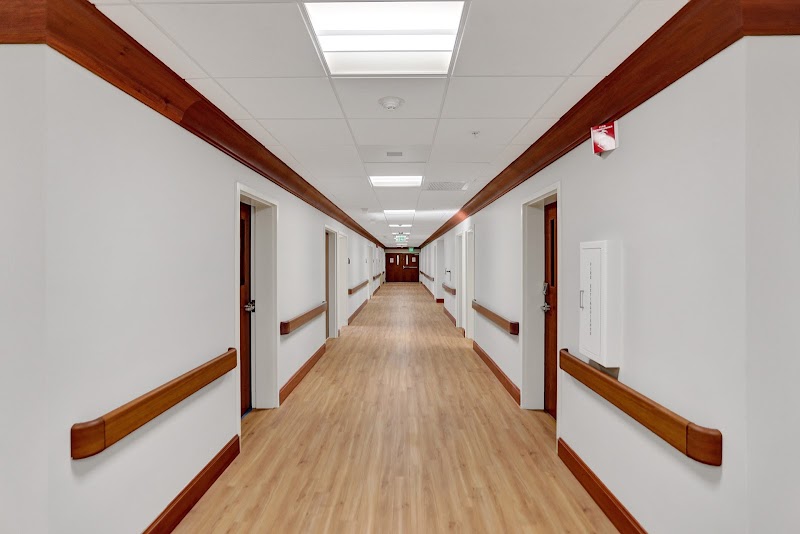
How Does Sunrise Health & Rehabilitation Center Compare to Other Florida Nursing Homes?

Compared to the 100 nursing homes in Florida, SUNRISE HEALTH & REHABILITATION CENTER's overall rating (4 stars) is above the state average of 3.2, staff turnover (36%) is significantly lower than the state average of 46%, and health inspection rating (3 stars) is at the national benchmark.

What Should Families Ask When Visiting Sunrise Health & Rehabilitation Center?

Based on this facility's data, families visiting should ask: "Can I visit during a mealtime to observe dining assistance and food quality?" "How do you handle medical emergencies, and what is your hospital transfer rate?" "Can I speak with family members of current residents about their experience?"

Is Sunrise Health & Rehabilitation Center Safe?

Based on CMS inspection data, SUNRISE HEALTH & REHABILITATION CENTER has a clean safety record: no substantiated abuse findings (meaning no confirmed cases of resident harm), no Immediate Jeopardy citations (the most serious violation level indicating risk of serious injury or death), and is not on the Special Focus Facility watch list (a federal program monitoring the lowest-performing 1% of nursing homes). The facility has a 4-star overall rating and ranks #1 of 100 nursing homes in Florida. While no facility is perfect, families should still ask about staff-to-resident ratios and recent inspection results during their visit.

Do Nurses at Sunrise Health & Rehabilitation Center Stick Around?

SUNRISE HEALTH & REHABILITATION CENTER has a staff turnover rate of 36%, which is about average for Florida nursing homes (state average: 46%). Moderate turnover is common in nursing homes, but families should still ask about staff tenure and how the facility maintains care continuity when employees leave.

Was Sunrise Health & Rehabilitation Center Ever Fined?

SUNRISE HEALTH & REHABILITATION CENTER has been fined $28,008 across 1 penalty action. This is below the Florida average of $33,359. While any fine indicates a compliance issue, fines under $50,000 are relatively common and typically reflect isolated problems that were subsequently corrected. Families should ask what specific issues led to these fines and confirm they've been resolved.

Is Sunrise Health & Rehabilitation Center on Any Federal Watch List?

SUNRISE HEALTH & REHABILITATION CENTER is not on any federal watch list. The most significant is the Special Focus Facility (SFF) program, which identifies the bottom 1% of nursing homes nationally based on persistent, serious quality problems. Not being on this list means the facility has avoided the pattern of deficiencies that triggers enhanced federal oversight. This is a positive indicator, though families should still review the facility's inspection history directly.