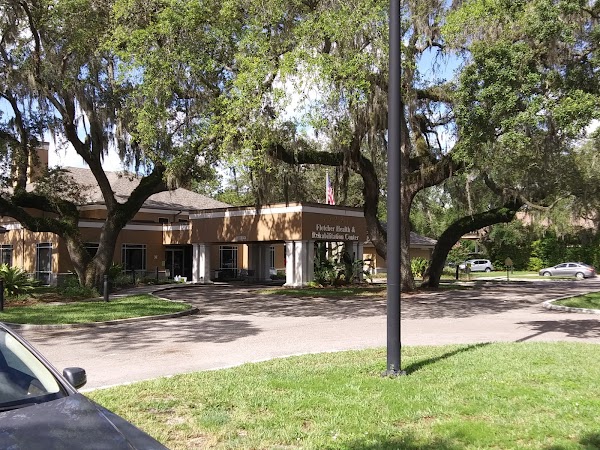
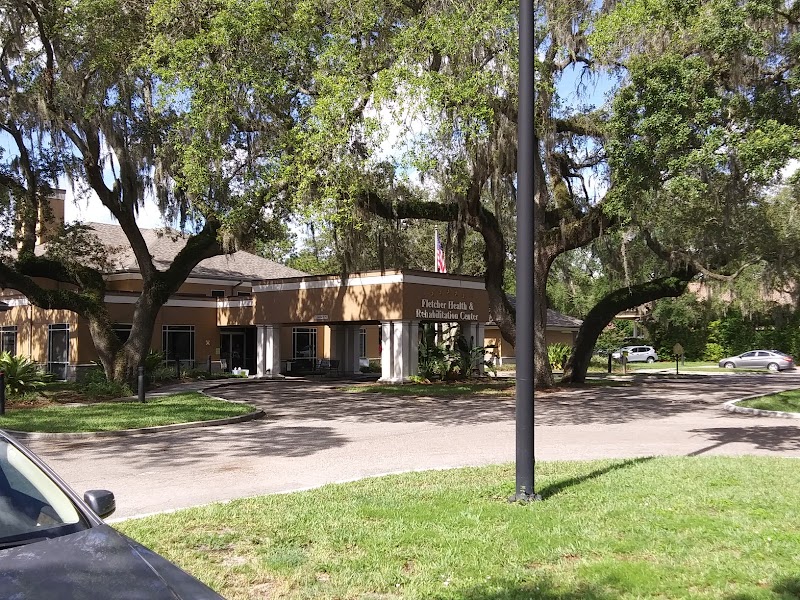
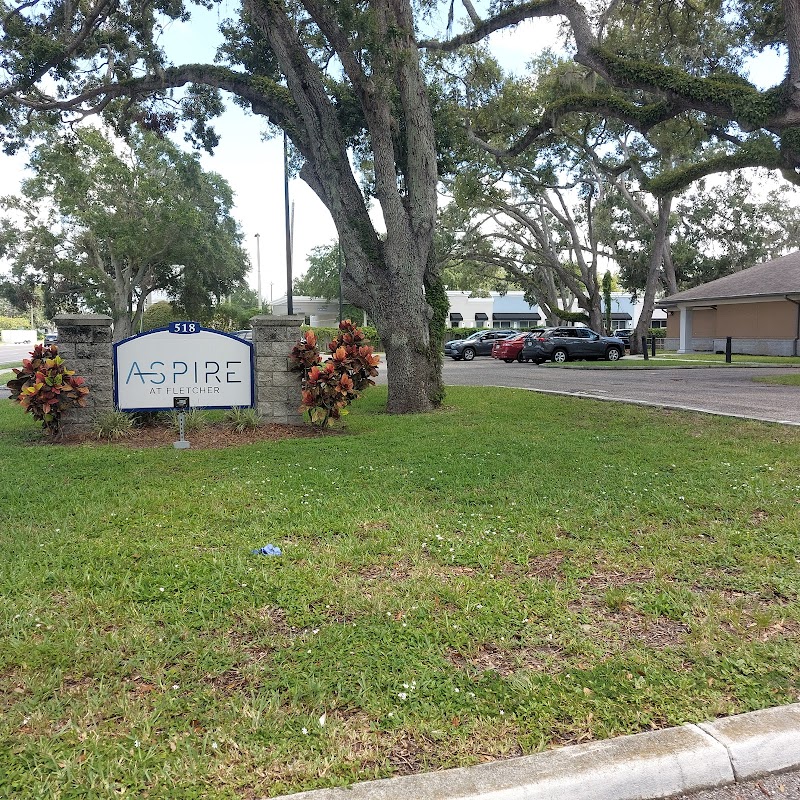
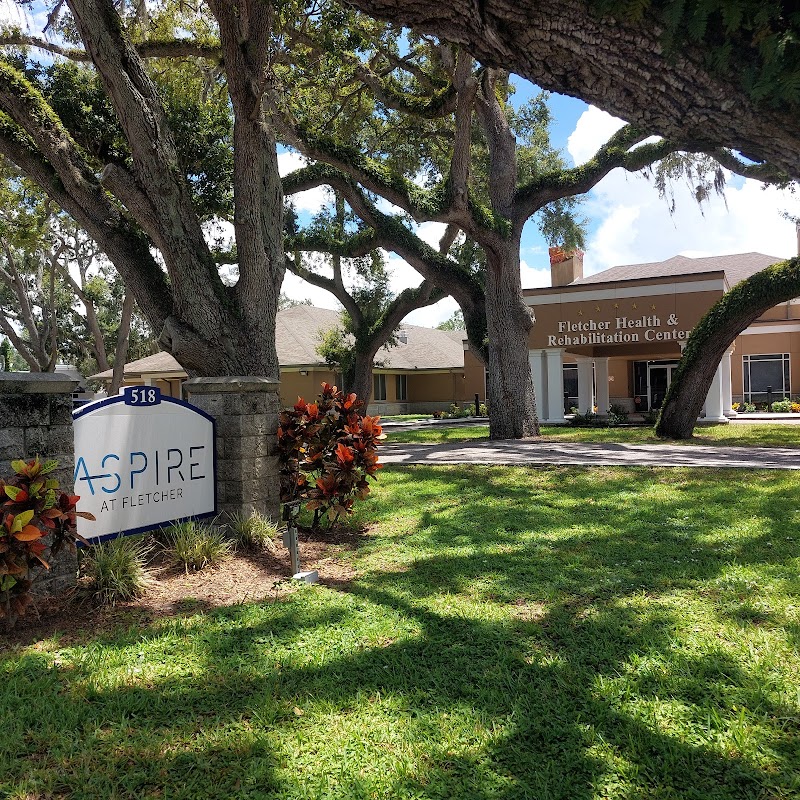
AVIATA AT FLETCHER

518 W FLETCHER AVE, TAMPA, FL 33612 (813) 265-1600
For profit - Individual 120 Beds AVIATA HEALTH GROUP Data: November 2025 2 Immediate Jeopardy citations
Trust Grade
16/100
#459 of 690 in FL
Last Inspection: July 2024

Within standard 12-15 month inspection cycle. Federal law requires annual inspections.

Overview

Aviata at Fletcher has received a Trust Grade of F, indicating significant concerns about the quality of care provided. Ranking #459 out of 690 facilities in Florida places it in the bottom half, and it's #19 of 28 in Hillsborough County, suggesting limited local options for better care. The trend is worsening, with issues increasing from 4 in 2023 to 18 in 2024. While staffing has a decent rating of 3 out of 5 stars and a turnover rate of 39% is below the state average, the facility has concerning fines totaling $57,962, which is higher than 83% of Florida facilities. Notably, critical incidents have occurred, such as failing to perform CPR as per a resident's advance directive, leading to a tragic death, and regular failures to provide meals as per residents’ orders, highlighting serious operational issues alongside some strengths in employee retention.

Trust Score
F
16/100
In Florida
#459/690
Bottom 34%
Safety Record
High Risk
Review needed
Inspections
Getting Worse
4 → 18 violations
Staff Stability
○ Average
39% turnover. Near Florida's 48% average. Typical for the industry.
Penalties
○ Average
$57,962 in fines. Higher than 50% of Florida facilities. Some compliance issues.
Skilled Nurses
✓ Good
Each resident gets 43 minutes of Registered Nurse (RN) attention daily — more than average for Florida. RNs are trained to catch health problems early.
Violations
⚠ Watch
33 deficiencies on record. Higher than average. Multiple issues found across inspections.
★★☆☆☆
2.0
Overall Rating
★★★☆☆
3.0
Staff Levels
★★★★★
5.0
Care Quality
★☆☆☆☆
1.0
Inspection Score
Stable
2023: 4 issues
2024: 18 issues

The Good

  • 5-Star Quality Measures · Strong clinical quality outcomes
  • Full Sprinkler Coverage · Fire safety systems throughout facility
  • No fines on record
  • Staff turnover below average (39%)

    9 points below Florida average of 48%

Facility shows strength in quality measures, fire safety.

The Bad

2-Star Overall Rating

Below Florida average (3.2)

Below average - review inspection findings carefully

Staff Turnover: 39%

Near Florida avg (46%)

Typical for the industry

Federal Fines: $57,962

Above median ($33,413)

Moderate penalties - review what triggered them

Chain: AVIATA HEALTH GROUP

Part of a multi-facility chain

Ask about local staffing decisions and management

The Ugly 33 deficiencies on record

2 life-threatening
Dec 2024 3 deficiencies
CONCERN (D) 📢 Someone Reported This

A family member, employee, or ombudsman was alarmed enough to file a formal complaint

Potential for Harm - no one hurt, but risky conditions existed

Abuse Prevention Policies (Tag F0607)

Could have caused harm · This affected 1 resident

**NOTE- TERMS IN BRACKETS HAVE BEEN EDITED TO PROTECT CONFIDENTIALITY** Based on observation, record review, and interview, the facility failed to implement their Abuse, Neglect, Exploitation, & Misap...

Read full inspector narrative →
**NOTE- TERMS IN BRACKETS HAVE BEEN EDITED TO PROTECT CONFIDENTIALITY** Based on observation, record review, and interview, the facility failed to implement their Abuse, Neglect, Exploitation, & Misappropriation Policies and Procedures regarding a failure to attempt to verify information from former employers prior to hire for one (Staff A, Certified Nursing Assistant) of four sampled staff members. Findings Included: Review of the facility's Abuse, Neglect, Exploitation, & Misappropriation policies and procedures, Document Name N-1265, effective 11/30/2024, last reviewed 11/16/2022, documented in Policy: It is inherent in the nature and dignity of each resident at the center that he/she be afforded basic human rights, including the right to be free from abuse, neglect, mistreatment, exploitation and/or misappropriation of property. The management of the facility recognizes these rights and hereby establishes the following statements, polices, and procedures to protect these rights and to establish a disciplinary policy, which results in the fair and timely treatment of occurrences of resident abuse. Included in the Procedure: 1. Screening: Persons applying for employment with the center will be screened for history of abuse, neglect, exploitation, or misappropriation of resident property. This includes but not limited to: - Employment history. - Criminal background check. - Abuse check with appropriate licensing board and registries, prior to hire. - Sworn disclosure statement prior to hire. - Licensure or registration verification prior to hire. - Documentation of status of any disciplinary actions form (sic) licensing or registration boards and other registries. - Information from former employers. The center will ensure that all prospective consultants, contractors, volunteers, caregivers, and students are pre-screened as required by law. A phone interview was conducted on 12/9/2024 at 1:14 p.m. with the Director of Nursing (DON) regarding an allegation of sexual abuse for Resident #8, and Resident #9. The DON stated the Assistant Director of Nursing (ADON) was notified by Staff H, Certified Nursing Assistant (CNA), Resident #8 had stated Staff A, CNA touched his genitals inappropriately and kissed his hands. The police were called. The DON stated Staff A, CNA, was home at the time they learned of the allegation on 11/22/2024 and was suspended. The DON also stated Staff A, CNA worked 3 p.m. to 11 p.m. on 11/21/2024 and it was the next shift where Staff H, CNA became aware of the allegation. The DON stated local police came to the facility interviewed Resident #8. The police turned to ask Resident #9 if he saw anything and that was when Resident #9 said Staff A, CNA, inserted his finger into his rectum for about 10 seconds. The DON said, After that was done, DCF (Department of Children and Families) was notified. They came out and questioned both residents. Both the residents' stories were consistent. I did a quality assurance questionnaire. That was when [Resident #6] said, he slapped my butt when I was getting care. When asked if there was anything that could have been done different, the DON stated, no, we educate on abuse and neglect; we do a great job for education. A review of Resident #6's clinical chart documented an admission on [DATE]. Her diagnosis list included but not limited to cerebral infarction due to thrombosis of right middle cerebral artery; need for assistance with personal care and muscle weakness (generalized). A review of Resident #6's Minimum Data Set (MDS) quarterly assessment, dated 9/19/2024, documented under Section C - Cognitive Patterns, a Brief Interview for Mental Status (BIMS) score of 13, which indicated the resident is cognitively intact. On 12/9/2024 at 9:45 a.m., an observation was conducted of Resident #8, dressed in seasonally appropriate clothing, clean, groomed, self-propelling in wheelchair. He declined to speak about the incident with Staff A, CNA and stated he had told others the information. A review of Resident #8's clinical chart revealed the resident was admitted to the facility on [DATE]. His diagnosis list included but not limited to hemiplegia and hemiparesis following cerebral infarction and muscle weakness (generalized). A review of Resident #8's MDS Quarterly assessment dated [DATE] revealed under Section C - Cognitive Patterns a BIMS score of 15, which indicated the resident is cognitively intact. On 12/9/2024 at 9:50 a.m., an observation was conducted of Resident #9 in bed head watching television and an interview was conducted with the consent of the resident. The resident was hard to understand, paused between sentences, but able to answer questions. When asked if he had been abused or neglected, he stated not since the aid, but did not disclose the particulars of the event. A review of Resident #9's clinical chart revealed he readmitted to the facility on [DATE]. His diagnosis list included but not limited to other sequelae following unspecified cerebrovascular disease and muscle weakness (generalized). A review of Resident #9's MDS quarterly assessment, dated 11/2/2024, documented under Section C - Cognitive Patterns, a BIMS score of 11, which indicated Resident #9 has moderate cognitive impairment. An interview was conducted on 12/9/2024 at 11:08 a.m. with the Human Resource Generalist (HRG). When asked if she had a protocol for new hires, she provided an untitled one-page document which included seven sections titled Exhibit X. She stated the form was basically the check list for the employee to be hired. She stated the first two sections were to be completed before the new employee would start. During the interview, a review of the form Exhibit X was conducted and revealed the following in the first section of the document: Signed offer letter Employment Application Resume 1st Reference 2nd Reference Direct Deposit W4 form The HRG stated there should be a first and a second reference documented by the employee on the employment application and/or the Applicant Reference Check form. The HRG also stated, We typically call the reference and ask how the person was as an employee. Review of the Applicant Reference Check form, effective 5/2014, reflected a single page document with the following four sections: Section 1: To be completed by Applicant. Section 2: Reference Responses. Section 3: Telephone Reference only-to be completed by company representative. Section 4: Written Reference-to be completed by reference source. A review of Staff A, CNA's personnel file was conducted. The Level II background screening with an eligibility date of 4/23/2021, print date of 6/07/2024, reflected the employment history of seven providers. Further review of Staff A, CNA's personnel file revealed no documentation of an effort by the hiring facility to verify employment history with any of the providers listed on the Level II Background screening Clearinghouse. Review of Staff A, CNA's employment application revealed the listing of two private employers. The personnel file reflected no documentation of an effort to verify Staff A, CNA's employment with the two private employers. Further review of Staff A's employment application revealed a box to list three professional references of individuals who are not related to you. The form documented three people's names with the relationship of daughter, wife, and cousin. No documentation was present in the file to indicate an attempt to contact the references. In addition, no other references were listed that were not related to Staff A, CNA. A follow up interview was conducted on 12/9/2024 at 2:18 p.m. with HRG. She was able to show the application for employment Staff A, CNA and confirmed the application listed three relatives of Staff A, CNA as the professional references. She confirmed she did not locate the form to verify the references. No further evidence was provided by the HRG to indicate an attempt to verify employment history or verification of references had been conducted. She confirmed part of the hiring process was to verify references. She said, the form (Exhibit X) was a newer form, but she did not state when the form had been initiated by the facility.
CONCERN (D) 📢 Someone Reported This

A family member, employee, or ombudsman was alarmed enough to file a formal complaint

Potential for Harm - no one hurt, but risky conditions existed

Deficiency F0697 (Tag F0697)

Could have caused harm · This affected 1 resident

**NOTE- TERMS IN BRACKETS HAVE BEEN EDITED TO PROTECT CONFIDENTIALITY** Based on observations, interviews, and record review, the facility failed to ensure treatment and care for management of pain wa...

Read full inspector narrative →
**NOTE- TERMS IN BRACKETS HAVE BEEN EDITED TO PROTECT CONFIDENTIALITY** Based on observations, interviews, and record review, the facility failed to ensure treatment and care for management of pain was provided in accordance with professional standards of practice for one resident (Resident #7) of three residents sampled for pain management. Findings included: Review of Resident #7's admission Record revealed an admission date of 11/3/2009 and a readmission date of 7/1/2023. Resident #7 was admitted to the facility with diagnoses of spinal stenosis, morbid severe obesity, chronic pain syndrome, and intervertebral disc disorders, lumbar region. Review of Resident #7's Quarterly Minimum Data Set (MDS) assessment dated [DATE] revealed under Section H - Health Conditions, Resident #7 was on a scheduled pain medication regimen and received PRN (as needed) pain medications within the five day assessment period. Section H of the Assessment also revealed Resident #7 experienced pain almost constantly, which occasionally affected her sleep and day-to-day activities. Review of Resident #7's physician orders revealed the following orders: - An order dated 3/12/2024 for Percocet (Oxycodone with Acetaminophen) 5 mg (milligrams)-325 mg give one tablet by mouth every eight hours as needed for moderate pain. - An order dated 3/12/2024 for Percocet (Oxycodone with Acetaminophen) 5 mg-325 mg give two tablets by mouth every eight hours as needed for severe pain. An observation on 12/9/2024 at 12:50 p.m., of the [NAME] Side medication cart revealed Resident #7 did not have Percocet 5 mg-325 mg in the medication cart. Further review of the Narcotic Logbook revealed there was not a log for Percocet 5 mg-325 mg. During an interview on 12/9/2024 at 12:40 p.m., Staff I, Registered Nurse (RN), stated if a resident is receiving a narcotic medication, the medication should be in the medication cart and there should be a narcotic log for it. During an interview on 12/9/2024 at 2:49 p.m., Staff K, RN stated generally she gets a count of narcotic medications in the morning, gets a signature, wipes down the cart, look at the census, and starts passing medications. Staff K, RN also stated she looks at the orders and then checks her carts. If a medication has run out, she will reorder the medication from the pharmacy and checks the emergency drug kit (EDK) to see if they have the medication so she can dispense it. She stated she has a few residents who take narcotics, and she checks to see when they were last given to confirm if she can dispense the pain medication. Staff K, RN stated she cross references the narcotics book, documents the administration in the narcotics book, dispenses the medication, and then subtracts one pill from the current count before watching the resident take the medication and documenting the administration in the resident's medication administration record. During an interview on 12/9/2024 at 3:30 p.m., the Assisted Director of Nursing (ADON) stated Resident #7 is seen by pain management and was not able to explain why Resident #7 did not have Percocet in the medication cart. Her expectation would be for the nurses to follow the physician's order and Resident #7 has an order for Percocet, so it should be in the medication cart. During an interview on 12/9/2024 at 4:52 p.m., Staff J, RN, stated Resident #7's Percocet should have been reordered. Staff J, RN also stated Resident #7's pain management team comes to the facility on Tuesday and Thursdays and when she notices a resident is out of pain medication, she texts the physician who will then place the order for more.
CONCERN (D) 📢 Someone Reported This

A family member, employee, or ombudsman was alarmed enough to file a formal complaint

Potential for Harm - no one hurt, but risky conditions existed

Medical Records (Tag F0842)

Could have caused harm · This affected 1 resident

**NOTE- TERMS IN BRACKETS HAVE BEEN EDITED TO PROTECT CONFIDENTIALITY** Based on observations, interviews, and record review, the facility failed to ensure accuracy of the medical record by failing to...

Read full inspector narrative →
**NOTE- TERMS IN BRACKETS HAVE BEEN EDITED TO PROTECT CONFIDENTIALITY** Based on observations, interviews, and record review, the facility failed to ensure accuracy of the medical record by failing to document administration of medications for one resident (Resident #7) of three residents sampled for pain management. Findings Included: During an interview on 12/9/2024 at 9:30 a.m., Resident #7 stated she was recently admitted to the hospital because during morning medication pass, her face turned blue. She stated on 11/23/2024, in the morning, she had just removed her oxygen mask when the nurse came into provide her with her medication. Resident #7 stated she took the medication and immediately her face turned blue, and the nurse had to call other staff members into the room. She stated she remembers the Director of Nursing (DON) coming in and calling the physician so they could send her to the emergency room (ER), and she remembers being in an ambulance with Emergency Medical Services (EMS) staff trying to keep her awake. Resident #7 stated when she got to the ER, they took for a CT (computed tomography) scan and the physician came in to see her. She stated she was told by the ER physician that she had overdosed. Review of Resident #7's admission Record revealed an admission date of 11/3/2009 and a readmission date of 7/1/2023. Resident #7 was admitted to the facility with diagnoses of spinal stenosis, morbid severe obesity, anxiety disorder, chronic pain syndrome, and intervertebral disc disorders, lumbar region. Review of Resident #7's Quarterly Minimum Data Set (MDS) assessment dated [DATE] revealed under Section C - Cognitive Patterns, A Brief Interview for Mental Status (BIMS) score of 15 out of 15, showing Intact cognition. The MDS Assessment also revealed under Section N - Medications, Resident #7 received antidepressant and opioid medications during the assessment period. Review of Resident #7's Order Summary Report, active as of 11/30/2024, revealed the following orders: - An order dated 3/12/2024 for Percocet (Oxycodone with Acetaminophen) 5 mg (milligrams)-325 mg give one tablet by mouth every eight hours as needed for moderate pain. - An order dated 3/12/2024 for Percocet (Oxycodone with Acetaminophen) 5 mg-325 mg give two tablets by mouth every eight hours as needed for severe pain. - An order dated 4/23/2024 for clonazepam 1 mg by mouth every 12 hours for anxiety disorder. - An order dated 11/17/2024 for fentanyl transdermal patch 72 hour 50 mcg (micrograms) per hour, apply one patch transdermally every 72 hours for pain, remove from skin every 3rd day and remove per schedule. - An order dated 4/13/2024 for Naloxone HCl (hydrochloride) injection solution 0.4 mg per mL, inject 1 mL intramuscularly as needed for opioid toxicity. May give an additional 1 mL in 3 minutes if resident is still unresponsive. During an interview on 12/9/2024 at 2:49 p.m., Staff K, RN stated she was assigned to Resident #7 on 11/23/2024 and she was at lunch when she came down the hallway and noticed other staff members in Resident #7's room. She stated the resident was sweaty, and the DON (Director of Nursing), and another nurse were in the resident's room. Staff K, RN stated the DON told her Naloxone HCl was administered to the resident. She stated she was in charge of Resident #7's medication pass that morning and she did not give her any pain medications that day. During an interview on 12/9/2024 at 2:50 p.m., the DON, stated on 11/23/2024 the CNA assigned to Resident #7 came and got her due to Resident #7's face being bright red and lips being blue. She stated when she went into Resident#7's room her oxygen was on, and she was not at her baseline. She called the nurse and the physician, and the physician authorized for her to give Naloxone HCl and Zofran IM (intramuscularly). The DON also took Resident #7's fentanyl patch off, and the resident became more responsive. She stated Resident #7's oxygen level was low, and she administered oxygen via a non-rebreather. The DON stated when EMS arrived, they confirmed the resident's fentanyl patch was off. The DON also stated while Resident #7 was at the hospital, no labs were drawn, but they gave her a diagnosis of an overdose, which she thinks is because Naloxone HCl was administered to the resident prior to going to the hospital. The DON stated the Naloxone HCl administration should be found on the resident's MAR (Medication Administration Record) and there should be documentation of the event from the nurse. Review of Resident #7's Medication Administration Record (MAR), for the month of November 2024 did not show Naloxone HCl was administered. During an interview on 12/9/2024 at 6:00 p.m., Regional of Clinical Services stated if a resident was given Naloxone HCl, she would expect it to be on the resident's MAR. She also stated she was not able to find any documentation regarding Resident #7 needing to be administered Naloxone HCl and being sent to the ER.
Oct 2024 4 deficiencies
CONCERN (D) 📢 Someone Reported This

A family member, employee, or ombudsman was alarmed enough to file a formal complaint

Potential for Harm - no one hurt, but risky conditions existed

Deficiency F0554 (Tag F0554)

Could have caused harm · This affected 1 resident

**NOTE- TERMS IN BRACKETS HAVE BEEN EDITED TO PROTECT CONFIDENTIALITY** Based on observation, interview and record review, the facility failed to assess and determine it was safe for a resident to sel...

Read full inspector narrative →
**NOTE- TERMS IN BRACKETS HAVE BEEN EDITED TO PROTECT CONFIDENTIALITY** Based on observation, interview and record review, the facility failed to assess and determine it was safe for a resident to self-administer medications for one (#2) of three sampled residents related to nebulizer treatments. Findings included. During interview and observation on 10/24/2024 at 9:15 a.m., Resident #2 was sitting at the bedside in a wheelchair eating. She was dressed and groomed for the day. Her call light was within reach. Observed a nebulizer with medication in the cup sitting on the resident's bed. She stated she did her own nebulizer treatments. She stated the nurse brought in the medication and put it into the cup. Resident #2 stated when she finished eating, she would do her treatment. She finished eating, placed the mask on her face and turned on the machine. The resident's nurse was not in the room. A staff member walked in and asked the resident if she was alright. Resident #2 answered yes. The staff member exited the room. Resident #2 was admitted on [DATE] and readmitted on [DATE]. admission record showed diagnoses included but not limited to Cerebral Infarction due to embolism, aphasia, and hypertension. Review of the Minimum Data Set, dated [DATE], showed a Brief Interview for Mental Status (BIMS) score of 15 (cognitively intact). Section GG Functional Abilities and Goals showed substantial assistance for toileting and bathing. Review of the physician order dated 4/23/2024, showed Ipratropium-Albuterol Inhalation Solution 0.5-2.5 (3) MG (milligram) / 3 ml (milliliter) give 3 ml inhale orally every 8 hours as needed for Shortness of Breath Review of the October 2024 Medication Administration Record (MAR) showed Ipratropium-Albuterol Inhalation Solution 0.5-2.5 (3) MG (milligram) / 3 ml (milliliter) give 3 ml inhale orally every 8 hours as needed for Shortness of Breath was administered at 6:18 a.m. and was effective. Review of the Quarterly Data Collection dated 10/08/2024 showed N. Medication Review: 1. Does the resident wish to self-administer medication. No. Review of the care plans showed a lack of self-administration of medication care plan. During an interview on 10/24/2024 at 2:20 p.m., the DON (Director of Nursing) stated Resident #2 had not been assessed to perform her own medication administration. The DON stated the process for self-medication included performing an assessment and following-up with the physician. If the physician was okay with the self-medication, an order would be written. They would assess and educate the resident on understanding the times the medications were to be given. It would be care planned. The DON verified Resident #2 did not have a self-administration of medication evaluation or physician orders. Review of the facility's policy, Self-Administration of Medication at Bedside, revised 08/22/2017 showed the resident may request to keep medications at bedside for self-administration in accordance with Resident Rights. Criteria must be met to determine if a resident is both mentally and physically capable of self-administrating medication and to keep accurate documentation of these actions. Procedure: Verify physician's order in the resident's chart for self-administration of specific medications under consideration. Complete Self-administration of Medications Evaluation. The Interdisciplinary Team will review the evaluation and will document Section III. Approval granted must be checked Yes or No. Interdisciplinary team member sign the evaluation section. If approval is not granted, a statement must be written as to reason for denial. Complete the care plan for approved self-administered drugs. Self-administration of meds is reviewed by the Care Plan Team with each quarterly review, and when and change in status is noted. The MAR must identify meds that are self-administered, and the medication nurse will need to follow-up with resident as to documentation and storage of medication during each med pass. If kept at bedside, the medication must be kept in a locked drawer. When a resident is unable to self-administer medications, they will be given by nursing staff until the resident can be reevaluated by the Interdisciplinary Team.
CONCERN (D) 📢 Someone Reported This

A family member, employee, or ombudsman was alarmed enough to file a formal complaint

Potential for Harm - no one hurt, but risky conditions existed

Infection Control (Tag F0880)

Could have caused harm · This affected 1 resident

**NOTE- TERMS IN BRACKETS HAVE BEEN EDITED TO PROTECT CONFIDENTIALITY** Based on observation, interview and record review, the facility failed to follow standard and enhanced barrier precautions when ...

Read full inspector narrative →
**NOTE- TERMS IN BRACKETS HAVE BEEN EDITED TO PROTECT CONFIDENTIALITY** Based on observation, interview and record review, the facility failed to follow standard and enhanced barrier precautions when performing urinary catheter care and services for one (#3) of three sampled residents Findings included During an observation on 10/24/2024 at 1:45 p.m., Resident #3 was lying in bed. His urinary catheter bag was lying on the floor. Yellow urine was observed in the bag. No ants noted. During observation and interview with Staff A, Licensed Practical Nurse (LPN) she entered the room and moved the urinary catheter bag from the floor. She attached it to the bed. She entered the bathroom and washed her hands. During an interview, Staff A stated the resident went to the bathroom by himself and must have left the bag on the floor. She stated the catheter bag needed to be off the floor. She reviewed the Enhanced Barrier sign on the door and stated he was on enhanced precautions due to his catheter. Staff A stated she did not put on gloves nor a gown to move his catheter bag. She stated enhanced barrier precautions means to use gowns, gloves and hand sanitize when giving care. She stated she should have put on a gown and gloves to provide care. Resident #3 was admitted on [DATE]. Review of the admission Record showed diagnoses included but not limited to heart failure, cirrhosis of liver, hypertension, and Benign Prostatic Hyperplasia (BPH). Review of the Medical Certification for Medicaid Long-Term Care Services and Patient Form showed Resident #3 had a urinary catheter that was inserted on 10/18/2024. Review of the physician orders showed change catheter as needed, catheter care every shift, catheter bag to be changed as needed, monitor catheter for patency and drainage every shift, all as of 10/23/2024. Review of the care plans showed Resident #3 had a indwelling catheter, initiated 10/24/2024. Interventions include but not limited to check tubing for kinks each shift. Review of the admission / readmission Data Collection dated 10/23/2024 Section K. Genitourinary: Bladder always continent. 2a. Catheter used was blank. 2c. Catheter used, specify type was blank. During an interview on 10/24/2024 at 2:20 p.m., the Director of Nursing (DON) stated Resident #3 was on Enhanced Barrier Precautions due to having a urinary catheter. She stated the nurse should have put on gowns and gloves to touch the bag. The staff was to be fully dressed if doing care. She stated the urinary drainage bag was not to be laid on the floor. She stated that some of the negative outcomes could be an infection issue, pooling of the urine and leaking of urine. She stated the staff was supposed to follow the Enhanced Barrier Precautions with urinary catheter. Review of the facility's policy, Enhanced Barrier Precautions, dated August 2022 showed Enhanced Barrier Precautions (EBPs) are utilized to prevent the spread of multi-drug resistant organisms (MDRSs) to residents. Policy interpretation and implementation 2. EBP's employ targeted gown and glove use during high contact resident care activities when contact precautions do not otherwise apply. A. Gloves and gown are applied prior to performing the high contact resident care activity (as opposed to before entering the room). b. Personal protective equipment (PPE) is changed before caring for another resident. 3. Examples of high-contact resident care activities requiring the use of gown and gloves for EBP's include g. Device care or use (central line, urinary catheter, feeding tube, tracheostomy / ventilator, etc.). 5. EBP's are indicated when contact precautions do not otherwise apply for residents with wounds and or indwelling medical devices regardless of MDRO colonization. 6. EBP's remain in place for the duration of the resident's stay or until resolution of the wound or discontinuation of the indwelling medical device that places them at increased risk.
CONCERN (E) 📢 Someone Reported This

A family member, employee, or ombudsman was alarmed enough to file a formal complaint

Potential for Harm - no one hurt, but risky conditions existed

Deficiency F0565 (Tag F0565)

Could have caused harm · This affected multiple residents

Based on observation, interview and record review, the facility failed to follow food menus for two (#4 and #5) of two sampled residents and failed to act upon the grievances of the Resident Council C...

Read full inspector narrative →
Based on observation, interview and record review, the facility failed to follow food menus for two (#4 and #5) of two sampled residents and failed to act upon the grievances of the Resident Council Committee related to food menus. Findings included: During an interview and observation on 10/24/2024 at 9:15 a.m., Resident #5 was sitting in her bed looking at her breakfast in a Styrofoam container. Resident #5 stated she did not get on her tray what was on the menu slip. The slip with her name on it showed Thursday Breakfast 10/24/2024: Double Protein, buttermilk pancakes - 4 each; Margarine - 2 each; Syrup - 2 each; Bacon - 2 slices; Hot Cereal - 6 oz; milk - 8 oz; orange juice - 4 oz; coffee or hot tea-6 oz. Resident #5 stated and on observation she had scrambled eggs, and an untoasted English muffin and oatmeal. Resident #5 stated she got her juice and no milk. She did not get any meat; she was supposed to get bacon. She stated this happened often, what was on the slip was not what she got. Resident #4, Resident #5's roommate, stated she also did not get what was on her menu slip. Her slip with her name on it showed Thursday Breakfast 10/24/2024: Pureed buttermilk pancakes - #8 scp; Margarine - 1 each; Syrup - 1 each; ground sausage patty - #16 scp; Pureed Hot Cereal - #6 scp; milk - 8 oz; orange juice - 4 oz; coffee or hot tea-6 oz; house shake - 1 srv. Resident #4 stated, I ate my eggs. Resident #4 stated she did not get her sausage, she liked sausage. On observation Resident #5 had pureed English muffin and oatmeal. (Photographic evidence) During an interview on 10/24/2024 at 9:45 a.m., the Certified Dietary Manager (CDM) stated he had just arrived and did not know why the menu had been changed. He stated he would have to ask the cook. The cook stated he had to swap the menu with Friday's due to not having enough bacon for today (Thursday). The CDM stated the scrambled eggs today was their protein, they had an English muffin and oatmeal. The CDM stated the bacon would be here on Sunday with the next order. Review of the Week-At-A-Glance showed Thursday the menu for breakfast was Buttermilk pancakes, margarine, syrup and bacon. Friday the menu showed, scrambled eggs, English muffin, margarine and jelly. Review of the Resident Council Minutes dated 09/06/2024 showed food is terrible, no follow up with dietary getting other food besides what is on the ticket. Action taken was blank as well as person responsible. Review of the Resident Council Minutes dated 10/07/2024 showed in Old Business: food is terrible, no follow up with dietary getting other food besides what is on the ticket. During an interview on 10/25/2024 at 3:09 p.m., the Nursing Home Administrator (NHA) stated he spoke with the CDM. The NHA said he would talk to the cook regarding when he (the cook) switched the menu it needed to be communicated to the staff and residents. The NHA stated the education would be provided by the end of next week. He stated he was going to get bacon when the survey was completed (for tomorrow's breakfast). The NHA stated the CDM just told him the bacon did not come in with their Monday order. During an interview on 10/25/2024 at 4:11 p.m., the Traveling Social Worker (SW) verified the complaint of food is terrible and no follow-up with tray getting other food besides what is on the ticket was on the 09/06/2024 Resident Council Minutes. She stated she would go check on the education provided to the dietary staff regarding the concern and follow-up. During an interview on 10/25/2024 at 4:15 p.m. the Traveling SW and the Director of Nursing (DON) stated they were unable to locate any documentation the kitchen staff was educated regarding changing the menus and informing staff, NHA, and the dietician. During an interview on 10/25/2024 at 4:46 p.m., the Dietician stated she expected the kitchen staff to follow the plan. She stated, If they can't follow it they need to create a substitution log and let me know what changes they have planned. I did not get a call this morning. She stated, In the last month they have not informed me of any changes in the menu except for swapping of a vegetable or something. She stated they had not informed her of swapping a whole menu. Observed dietician texting CDM about the changes and the dietician was awaiting a response. The Dietician stated they were to report menu changes to her and the facility. The Dietician, stated, I have had conversations with the CDM about this in the past, to let me know, do not remember when. I know I have said it but will put in writing next time. Review of the facility's policy, Menus, revised 9/2017 showed menus will be planned in advance to meet the nutritional needs of the residents / patients in accordance with established national guidelines. Menus will be developed to meet the criteria through the use of an approved menu planning guide. Procedures: 1. Menu cycles will be developed and tailored to the needs and requirements of the facility. 2. Menus will be periodically presented for resident review, including the resident council, menu review meetings, or other review board as indicated by the center. The menu will identify the primary meal, the alternative meal, and any always offered food and beverage items. 6. Menus will be served as written, unless a substitution is provided in response to preference, unavailability of an item, or a special meal. 7. A menu substitution log will be maintained on file. 8. Menus will be posted in the Dining Services department, dining rooms, and resident/patient care areas. Review of the facility's policy, Resident Council Meeting, dated 11/01/2021 showed residents will be provided the opportunity to meet together at least monthly in an organized group setting to discuss current issues/topics of their choice. Thes topics may include events, activities, resident rights, care as service and concerns. In addition, a review of old business, problem resolution, and development of action plans may be discussed. Procedure: 5. Utilize the Resident Council Minutes - for any issues requiring a follow-up response. Resident Council will review this section each meeting to determine if Concern was resolved, not resolved, or partially resolved. Unresolved or partially resolved concerns are brought forward to the next set of minutes for Resident Council Review. 6. Review Resident Council information at the Quality Assurance Performance Improvement meeting monthly for opportunities for improvement and to address any concerns/grievances. Review of the facility's policy, Complaint/Grievance, revised on 10/24/2022 showed the Center will support each resident's right to voice a complaint/grievance without fear of discrimination or reprisal. The center will make prompt efforts to resolve the complaint/ grievance and informed the resident of progress towards resolution. Procedure: 3. The Grievance Officer / designee shall act on the grievance and begin follow up on the concern or submit it to the appropriate department director for follow-up. 4. The grievance follow-up should be completed in a reasonable time frame; this should not exceed 14 days. 8. The individual voicing the grievance will receive a follow-up communication with the resolution .
CONCERN (E) 📢 Someone Reported This

A family member, employee, or ombudsman was alarmed enough to file a formal complaint

Potential for Harm - no one hurt, but risky conditions existed

QAPI Program (Tag F0867)

Could have caused harm · This affected multiple residents

Based on observation, interview and record review, the facility failed to establish and implement a Quality Assurance and Performance Improvement (QAPI) Program that demonstrated identification, monit...

Read full inspector narrative →
Based on observation, interview and record review, the facility failed to establish and implement a Quality Assurance and Performance Improvement (QAPI) Program that demonstrated identification, monitoring and implementation of an effective action plan to correct citations related to failing to follow food menus for four residents (Resident #4, Resident #14, Resident #15, and Resident #16) of five sampled residents, failing to act upon the grievances of the Resident Council Committee related to food menus, and failing to collaborate with the Registered Dietician related to menu substitutions (F565) during the revisit survey conducted on 12/9/2024. Finding included: Review of the facility's policy titled Quality Assurance and Performance Improvement, revised 10/24/2022, showed the Center and organization has a comprehensive, data-driven Quality Assurance Performance Improvement Program that focuses on indicators of the outcomes of care and quality of care and quality of life. Procedure: Program Design and Scope: 1. The Center's QAPI program is on-going comprehensive review of care and services provided to residents. Including but not limited to e. Dining Services. 2. Important functional areas may include but are not limited to: e. Quality of life. 3. Review of activities may include but not be limited to: c. Resident/family complaints/satisfaction. Leadership: the Center Executive Director is accountable for the overall implementation and functioning of the QAPI program. This includes but is not limited to a) implementation; b) identify priorities; d) ensures performance indicators, resident and staff input and other information is used to prioritize problems and opportunities; e) ensure corrective actions are implemented to address identified problems in systems; f) evaluates the effectiveness of actions. 4. The program is a coordinated effort among departments and services within the organization that involves leadership working with input from Center staff, residents and families. Feedback: the center will obtain feedback to assist in identifying problems and areas of opportunity feedback may be obtained including but not limited to the following sources: c) residents d) resident representatives. 7. The Center may choose multiple processes to obtain feedback, including but not limited to: c. Resident Council. Data Collection System and Monitoring the center will collect and monitor data form different departments reflecting its performance. 8. The center will identify data sources and timeframe for collection. Data sources may include but are not limited to a. grievance logs. Systematic Analysis and Action: the center will ensure systems and actions are in place to improve performance. 11. The center will establish and utilize a systematic approach to identify underlying causes of problems, including but not limited to: a. root cause analysis; b. failure mode effect analysis. 12. The center will develop corrective actions based on the information gathered and review effectiveness of the actions. Identifying Quality Deficiencies and Corrective Action: The center will monitor department performance systems to identify issues or adverse events. 14. The center will review department system data. Performance Improvement Projects: the center utilizes performance improvement projects to improve a systemic problem or improve quality in absence of a problem. Performance Improvement Projects (PIPs) are based on the centers services and resources identified in the Facility Assessment During an interview on 12/9/2024 at 9:25 a.m. Resident #4 stated, it is a hit or miss regarding getting food on the menus. They are doing better. During an interview on 12/9/2024 at 9:38 a.m. Resident #16 stated, sometimes the meals are a surprise. They will change the dessert or vegetable, not usually the whole plate. During an interview on 12/9/2024 at 10:45 a.m. Resident #14, who was the previous Resident Council President, stated the food was a little bit better. She stated, What is on the ticket is not what they receive all the time. The problem is not completely resolved. She stated on Thanksgiving they had deli turkey instead of real turkey, no mashed potatoes, stuffing, or cranberry sauce. Resident #14 stated Staff G, Kitchen Manager (KM) came last week and spoke to them at the food meeting, for the first time. Resident 14 stated, [Staff G, KM] told us he ordered too late to get real turkey, they were out of the product. Resident #14 stated, Last night we were supposed to get tomato soup, we did not get any soup. During an interview on 12/9/2024 at 11:00 a.m. Resident #16, current Resident Council President, stated they were still having problems with meals. She stated they had Styrofoam plates since yesterday and the food was not warm. Resident #16 stated, They did not give us tomato soup last night even though it was on the menu. I was supposed to get two grilled cheese sandwiches and only got one. It had some type of white cheese not American cheese in it. For Thanksgiving we did not get real turkey, it was deli. We did not get mashed potatoes or stuffing, and I don't remember about the sweet potatoes. I was supposed to get French fries last night and got mashed potatoes instead. I wanted French fries because we always get mashed potatoes. We are still not getting what is on the ticket, not every time. Review of the purchase order dated 11/26/2024 showed condensed cream of mushroom soup out of stock and substituted with cream of potato soup; fancy cut yams out of stock and substituted with 85 count of fresh sweet potatoes; skinless turkey breast (Staff E, District Dietary Manager, verified was deli sliced turkey). Review of the Menu Substitution Log showed: 11/21/2024, dinner, food item substituted was apple crisp; food item omitted was gelatin; RD (Registered Dietician) initials. 11/27/2024, dinner, food item substituted was baked ziti with meat sauce; food item omitted was lasagna; RD initials. 11/28/2024, lunch, food item substituted was Thanksgiving meal; food item omitted was entire lunch menu; RD initials. 11/28/2024, dinner, food item substituted was entire lunch menu; food item omitted was entire dinner menu; RD initials. 12/2/2024, dinner, food item substituted was French fries, food item omitted was tater tots, RD initials. Review of the Week-At-A-Glance menus for 12/8/2024 showed grilled two cheese sandwich, French fries, tomato soup. Review of the purchase order dated 12/4/2024 and 12/6/2024 showed no tomato soup ordered. Review of the Meal Substitution Daily Audit 12/8/2024 showed breakfast, lunch, and dinner meals matched the daily menu (no mention of lack of tomato soup). Review of the Resident Council Minutes dated 10/7/2024 showed under Old Business, food is terrible, no follow up with dietary getting other food besides what's is on the ticket. Review of the Resident Council Minutes dated 11/5/2024 showed under New or Old Business, nothing regarding food issues or resolution. Review of the Resident Council Minutes dated 12/5/2024 showed under New or Old Business, nothing regarding food issues or resolution Review of a dated 12/4/2024 at 1:30 p.m., yellow lined paper given to surveyor by the Nursing Home Administrator (NHA) on 12/9/2024 at approximately 5:45 p.m. showed, Food Committee will be held once a week on Wed. The kitchen manager came in and spoke a little about the food and what he was going to do different. The yellow lined paper was not signed. Review of the Education In-Service Attendance Record dated 10/31/2024 performed by Staff G, KM showed meeting preferences on tickets are a must, not providing items that the resident requested on the ticket is abuse. Signed by 6 of 13 Dietary staff members. Review of the Education In-Service Attendance Record dated 10/31/2024 performed by Staff G, KM showed missing items are a bit no, nutritional value is compromised, every item is necessary. Signed by 7 of 13 Dietary staff members. Review of the Education In-Service Attendance Record dated 10/31/2024 performed by Staff G, KM showed preferences must be keep and provided to ensure resident satisfaction. Signed by 6 of 13 Dietary staff members. During an interview on 12/9/2024 at 10:50 a.m. Staff G, KM, stated the dish machine was not working as of last night, he had called an outside company, and they were coming this afternoon. They were using Styrofoam plates as of last night. Staff G, KM reviewed the substitution log, and it was not documented as the tomato soup was substituted. The kitchen pantry was observed, and no cans of tomato soup were on the shelves. Staff G, KM stated he did not know why the tomato soup was not served, maybe they (the grocer company) substituted it for the potato soup, they (the grocer company) have been substituting a lot. When asked about the serving of deli turkey instead of a baked turkey, Staff G, KM stated, I have been too busy, I don't remember when I have had a day off, I ordered it late, and they (grocer company) were out of turkey. During an interview on 12/9/2024 at 12:20 p.m. with Staff G, KM and Staff E, Dietary District Manager (DDM) from another area, verified the turkey that was ordered was the deli type not the raw turkey needing to be cooked. Staff E, DDM stated his expectation was to get a raw turkey and cook it for Thanksgiving dinner; cook it and carve it. Staff G, KM was reminded he had told the Resident Council last week they were out of turkey which was why they had deli turkey. Staff E, DDM stated he meant they were out of the ingredients for green bean casserole, not the turkey. Staff G, KM stated ordering the deli turkey was a mis-order. Staff G, KM stated, They have food committee meetings with the Resident Council Meetings. and he had been to the food committee meeting, not that long ago. Staff G, KM stated the food committee meetings used to be monthly but now they are weekly. Staff G, KM stated he does not do any documentation regarding the food committee meetings, and he takes his laptop to the meetings but does not have any documentation. Staff G, KM stated they have had a meeting for the last three months but cannot provide any documentation or sign in sheet. Staff E, DDM stated they do our half (food committee) after the Resident Council Meetings. Staff G, KM stated he had no documentation of participation to verify a food committee meeting. Staff G, KM also stated they ask Resident Council if there are any concerns, but it does not appear there is any documentation that they are concerned. Staff E, DDM stated there was a standard list of questions asked at a food committee meeting. Staff G, KM stated regarding the Plan of Correction for the deficiencies, stated they were to post menus and make sure all the menu items are here. If a substitution was needed, he was to speak with the dietician. Staff G, KM stated again he was not aware of the tomato soup not being served and verified it was not on the substitution log. Staff G, KM stated he was here at lunch (Sunday) but not here for dinner. Staff G, KM stated he thought he checked the menu for Sunday night (for menu items) but must not have. Staff E, DDM and Staff G, KM stated the menu generates a shopper list to order the food from the outside grocer. The shopping list tells you what is needed to make the menu items. Staff E, DDM stated Staff E, KM was to take the shopper list and check the pantry and was to order them whatever items were needed from the outside grocer. They order on Tuesdays and Fridays by 2 p.m. Tuesday orders come in on Wednesdays and Friday orders comes in on Saturdays. Staff E, DDM stated by the end of the day the outside grocer emails Staff G, KM showing substitutions for out-of-stock items. Staff E, DDM also stated it was the responsibility of Staff G, KM to see the email and act accordingly. Staff E, DDM and Staff G, KM verified there was no tomato soup ordered either Tuesday or Friday for Sunday's dinner menu. During an interview on 12/9/2024 at 12:53 p.m. the facility's Registered Dietician (RD) stated she had educated Staff G, KM on the substitution log. She stated she was at the facility 5 days a week. The RD stated her expectation was to be called prior to the substitution for an okay. The RD also stated, They do not call before. One time they have asked in advance. The RD stated her expectation was if tomato soup was on the menu, to give them (the residents) tomato soup. The RD stated she had not been made aware at the present time regarding the lack of tomato soup with the dinner meal and she was at the facility on Wednesday before Thanksgiving and had not been told of any needs for substitutions. The RD stated Staff G, KM reviewed the Thanksgiving menu with her, of green bean casserole, turkey, pumpkin pie for dessert, sweet potato, and stuffing. The RD stated Staff G, KM reviewed the Thanksgiving menu with her the week before and she expected a cooked turkey versus deli turkey for a Thanksgiving dinner. The RD also stated Staff G, KM told her he was talking to different residents about what they wanted for Thanksgiving. The RD asked Staff G, KM how it (Thanksgiving dinner) went, and he was supposed to show her a picture of the meal but never sent it. The RD verified the green bean casserole was not on the substitution list for Thanksgiving. The RD stated she was planning on going to the Food Committee Meeting on Wednesday and she had not been to any of the Food Committee Meetings but planned to start going weekly. The RD stated, The food could be better. and the purpose of the Food Committee Meetings was to listen to the residents. The RD also stated the residents had been complaining about the grits being dry and hard and she talked to Staff G, KM, who had a new cook to make sure they are looser, so they didn't harden by the time they got to the floor. The RD stated the kitchen staff keeps logs on the food temperature, but she does not monitor them. The RD also stated the food temperature for breakfast was the biggest concern and they have warming plates in the kitchen, but one staff member was not using them. Staff G, KM was told that staff member was not using the warming plates, and to talk to them. The RD stated she did not personally see the education (regarding the use of the warmers) but has seen an improvement. During an interview on 12/9/2024 at 1:46 p.m. with Staff G, KM and Staff F, DDM of the area verified Staff G, KM's picture of the Thanksgiving menu showed yams, a slice of turkey with gravy, green beans, roll and pumpkin pie. Staff F, DDM stated the menu goes to the tracker, the tracker generates the order guide based on the menu, resident diets, and how many meals are needed. Staff F, DDM also stated if they have the food on the shelf and Staff G, KM has three cans of yams and needs six cans of yams, Staff G, KM will order the three cans only. Staff F, DDM stated one truck will deliver for four days and one truck will deliver for three days, and the Friday order would include the Sunday meal. Staff F, DDM stated Staff G, KM should have double checked what was on the shelf and what was needed to be ordered. Staff G, KM stated the expectation was to check the day before for the menu items needed for the next day's meals. Staff G, KM also stated one of the dietary aides puts up the food product and makes sure all the food for the menu was there. Staff G, KM stated the dietary aide verifies on Saturday and the dietary aide would let him know if anything was missing. Staff G, KM stated the missing tomato soup was not told to him until the surveyor brought it up and the dietary aide should have called him to let him know they had no (tomato) soup. Staff G, KM also stated they should have called the dietician, and he had to ask the dietician beforehand for substitutions. Staff G verified gelatin was substituted with apple crisp on 11/21/2024 (switched days of dessert); and French fries was substituted for tater tots on 12/2/2024. Staff E, DDM stated they needed more education, and they needed to use the food report weekly at the Food Committee Meeting. During an interview on 12/9/2024 at 3:30 p.m. the Human Resource Director (HR) provided the job descriptions for Staff G, KM and the Registered Dietician. The HR Director also stated both the employees were contracted employees. Review of the Clinical Dietician Job Description showed under Responsibilities and Duties: Monitor food service operations to ensure adherence to nutritional standards, sanitation, safety, and quality requirements in accordance with all applicable state and federal regulations. Review of the Dining Services Director/Account Manager Job Description, signed by Staff G, KM on 5/26/2024, showed the Dining Services Director/Account Manager provides leadership, support and guidance to ensure that food quality standards, inventory levels, food safety guidelines and customer service expectations are met and makes sure the facility has sufficient supplies. Training, quality control and in-servicing staff to standards is an essential part of the Manager's responsibility and includes touring kitchen several times per day to assess work quality. Customer Service: responds to customer preferences and industry trends to plan menus; insuring food is prepared by methods that conserve nutritive value, is palatable and attractive to residents, and of a quality that is acceptable to and meets the needs of residents. During an interview on 12/9/2024 at 4:59 p.m. the Nursing Home Administrator (NHA) and the Regional [NAME] President of Operations (RVPO) verified the education provided to the kitchen staff was not 100% of the staff. They stated 6 or 7 staff members educated out of 13 was not acceptable. They stated they expected to see all dietary employees to be documented as to attending the education. They reviewed the Menu Substitution Log and verified the tomato soup substitution for 12/8/2024 was not on the log. They verified there were Menu Substitution Daily Audits performed from 11/15/24 to 12/8/2024 and The Menu Substitution Daily Audit dated 12/8/2024 showed no substitutions, and no documentation of tomato soup. The NHA and the RVPO stated the dietary aide was to check in the supplies, not check the supplies to the menus. The RVPO stated the other facilities were able to obtain the appropriate food for the Thanksgiving meal. The RVPO also stated the prior NHA had educated Staff G, KM and provided a copy of the October 2024 QAPI as education for Staff G, KM. The NHA and the RVPO stated the expectation was for Staff G, KM to be informed about the lack of tomato soup on Sunday (the day of the omission). The NHA and the RVPO stated the expectation was for the menus to be followed unless the RD has approved prior for a substitution. The NHA stated they were going to have a Food Committee Meeting weekly separate from the Resident Council Meeting for the next three or four months and they were going to check the progress bi-weekly. The NHA and RVPO stated they had a QAPI meeting on 11/26/2024 with the current NHA in attendance and found more problems and are addressing them. The RVPO stated, They were going to have to go back and add some things.
Aug 2024 2 deficiencies 2 IJ
CRITICAL (J) 📢 Someone Reported This

A family member, employee, or ombudsman was alarmed enough to file a formal complaint

Immediate Jeopardy (IJ) - the most serious Medicare violation

Free from Abuse/Neglect (Tag F0600)

Someone could have died · This affected 1 resident

**NOTE- TERMS IN BRACKETS HAVE BEEN EDITED TO PROTECT CONFIDENTIALITY** Based on interviews and record review, the facility failed to protect the resident's right to be free from deprivation of goods ...

Read full inspector narrative →
**NOTE- TERMS IN BRACKETS HAVE BEEN EDITED TO PROTECT CONFIDENTIALITY** Based on interviews and record review, the facility failed to protect the resident's right to be free from deprivation of goods and services, by staff failing to provide one resident (#1) with Cardiopulmonary Resuscitation (CPR) per the resident's wishes out of eight residents sampled for advance directives. On [DATE] at approximately 3:00 a.m., Resident #1 became unresponsive during routine care. Nursing staff assessed Resident #1 and Emergency Medical Services (EMS) was called to the facility. Prior to EMS arrival, nursing staff reviewed the medical record and determined Resident #1 had a Do Not Resuscitate (DNR) order. Nursing staff provided oxygen at a high concentration via mask, and sternal rubs were intermittently applied with no response from the resident. The EMS team arrived and conducted an initial assessment. Resident #1 was noted with no heart rate and no respirations and was pronounced deceased at 3:29 a.m. At 3:40 a.m., nursing discovered the DNR order in Resident #1's chart belonged to Resident #11, and Resident #1 had an order for Full Resuscitation. This failure created a situation that resulted in a worsened condition and the likelihood for serious injury and or death to Resident #1 and resulted in the determination of Immediate Jeopardy on [DATE]. The findings of Immediate Jeopardy were determined to be removed on [DATE] and the severity and scope was reduced to a D after verification of removal of immediacy of harm. Findings Included: A review of the medical record revealed Resident #1 was admitted on [DATE] with diagnoses including encounter for orthopedic aftercare following surgical amputation, Type I Diabetes Mellitus without complications, dysuria, muscle weakness, dysphagia following unspecified cerebrovascular disease, sleep apnea unspecified, obstructive and reflux uropathy unspecified, acquired absence of other right toe(s), and major depressive disorder single episode in full remission. A review of physician orders for Resident #1 showed an order for Full Code, dated [DATE]. A review of Resident #1's care plan, dated [DATE], showed a focus area of advanced directives FULL CODE with an initiated date of [DATE] by the Social Services Director (SSD) and an intervention for this focus area to include: discuss advance directives with resident and or resident's representative. A review of Resident #1's Minimum Data Set (MDS), dated [DATE], Section C- Cognitive Patterns showed a Brief Interview for Mental Status (BIMS) score of 15 indicating cognitively intact. A review of Section GG-Functional Abilities and Goals Section GG0130-Self-Care showed Resident #1 dependent for toileting and hygiene. A review of Resident #1's 3008/ Medical Certification for Medicaid Long-Term Care Services and Patient Transfer Form, dated [DATE], Section H: Advance Care Planning had the following areas checked as NO: Do not Resuscitate, Do Not Intubate, Do Not Hospitalize, No Artificial Feeding and Hospice. A review of Resident #1's medical progress notes, dated [DATE], showed the following: Code Status: Full Code. A review of Resident #11's chart showed an admission date on [DATE], with a discharge date of [DATE]. DNR paperwork was scanned in Resident #11's chart on [DATE]. On [DATE] at 5:00pm., a phone interview was conducted with Staff E, Licensed Practical Nurse (LPN). Staff E, LPN stated, she was working on the east wing on a new admission when she heard a Certified Nursing Assistant (CNA) screaming from the west side needing help. Staff E, LPN along with Staff F, Registered Nurse, (RN) went running over. Staff E, LPN stated two separate blood sugar checks (accucheck) were done with results Around 112 and 117. Staff E, LPN stated, Resident #1 was lying in bed and breathing but Light more SOB [shortness of breath], no suction was required. Staff E, LPN stated, she placed a NRM (non-rebreather mask) on him, and his pulse ox (oximetry) was in the 80's with a heart rate of 77, stating, I remember that. Staff E, LPN stated the resident's nurse (Staff D, LPN) had called 911 and got the paperwork needed to go the hospital, stating, I'm just assuming because she was not in his room. It's normal for the nurse to get the paperwork ready. Staff E, LPN stated, While waiting we were standing by the bedside, pulse ox on right hand, manual blood pressure taken by CNA, but I can't remember who took the blood pressure or what it was. Staff E, LPN stated, Staff G, CNA brought the hard chart and Staff D, LPN looked into the chart. Staff E, LPN stated EMT (Emergency Medical Technicians) arrived 6 minutes later and took over. Staff E, LPN stated the EMT's stated, We can't do CPR if he's breathing, and hooked him up to the machine. Staff E, LPN stated she did not know what the machine showed. Staff E, LPN, stated, Staff D, LPN, said he was a DNR. Staff E, LPN stated, EMT stated, there was nothing they could do. Staff E, LPN stated a discussion was made between the staff and the EMT's regarding transporting the resident to the hospital. Staff E, LPN stated the resident had a peripherally inserted central catheter (PICC), So I figured he must have been treated. Staff E, LPN stated Staff D, LPN was talking to the EMT about being a DNR. Staff E, LPN state Staff D, LPN asked the EMT team why Resident #1 could not go to the emergency room. Staff E, LPN, stated, I felt they were giving us roundabout answers, so I left and ten minutes later I let the EMT team out the door without the resident, no communication from them as what the outcome was. On [DATE] at 6:17 a.m., an interview was conducted with Staff A, CNA. Staff A, CNA stated on [DATE] she made her rounds to check on her residents and at approximately 12:30 to 12:45 a.m. She stated she changed Resident #1 for incontinence of urine. Staff A, CNA stated, the resident was talking to her. Staff A, CNA stated, she took her lunch break at 2:00 a.m. and clocked back in at 2:30 a.m. and went to room [ROOM NUMBER] to answer the call light and changed both residents in there. Staff A, CNA stated she continued with her rounds and went into Resident #1's room. She stated, He was a little groggy but talking to me. Staff A, stated she rolled Resident #1 to his right, He was talking to me but when I rolled him back onto his back, I noticed something different with him. Staff A stated Resident #1 was not responding to her. She stated she went out and yelled code blue three times. Staff A stated, Staff G, CNA brought the crash cart and went to get the chart. She stated, I was trying to distract his roommate who was waking up. Staff A stated she was not sure who opened the chart but heard someone say Resident #1 was a DNR. She stated, He was breathing though, and someone put a mask on him, and a pulse ox [oximeter] on his finger. I know someone did a sternal rub. I think one of the nurses may have taken his blood pressure but I'm not sure. Staff A, CNA stated she was in the room attending to the roommate but would look over the curtain. Staff A, CNA stated the resident coughed when they did the sternal rub. When the paramedics arrived, she said He stopped breathing. Staff A, stated, the resident's [family member] asked for her to come in when the priest showed up. She stated, It was hard because all my residents are like family to me. On [DATE] at 6:34 a.m., an interview was conducted with Staff B, CNA with Staff C, RN utilized as an interpreter. Staff B, CNA stated, she was working on the west hall when she heard yelling for help from the other hallway. Staff B, CNA stated she ran into the room and there were three nurses in the Resident #1's room (Staff D, LPN, Staff E, LPN and Staff F, RN). Staff B, CNA stated the resident looked pale and witnessed a nurse, Staff F, RN, place a pulse oximeter on the resident's finger and a CNA brought in the crash cart. Staff B, CNA stated, someone put oxygen on the resident and Staff E, LPN squeezed the bag. Staff B, CNA stated the mask had a bag on his chest. Staff C could not recall who called 911. Staff B stated the resident was breathing and had a pulse before the paramedics arrived. Staff B, CNA stated she stayed to see if they needed assistance and when the crash cart arrived, the resident was placed on a back board. On [DATE] at 6:45 a.m., an interview was conducted with Staff G, CNA. Staff G, CNA confirmed she was working [DATE]. Staff G stated on [DATE] at approximately 3:05 a.m., I heard a CNA yell Code Blue. Staff G, CNA stated, she immediately grabbed the code cart and ran it to Resident #1's room. When Staff G, CNA, arrived Staff E, LPN, Staff D, LPN, Staff, F, RN and Staff A, CNA were in the room. Staff G, CNA stated, she pushed the code cart in and went to get the resident's chart. She pulled the chart and started back down the hallway when Staff D, LPN took the chart from her and Staff D, LPN told everyone in the room he was a DNR. When Staff G, CNA got back to the room Staff E, LPN, was doing a sternal rub on the patient. Staff G then left to wait at the door for the EMT's but could not recall when they were called. On [DATE] at 7:11 a.m., an interview was conducted with Staff H, CNA with the assistance of Staff I, RN for interpretation. Staff H, CNA stated she had worked the evening of [DATE] into [DATE] shift, stating she was working in a resident's room on the east wing, when she heard the code blue. I ran to help the staff. Staff H, CNA stated a nurse had asked her to get the Accu-Check machine. Staff H stated, I don't know names but there were three nurses in the resident's room and one CNA. Staff H, CNA stated, all the staff were taking care of him so I could not really see how he was doing. I went to the door to wait for the EMT to arrive. On [DATE] at 7:29 a.m., an interview was conducted with Staff J, LPN/Unit Manager. (UM). Staff J, LPN/UM stated, she was not here during the event but was on her way to work early. Staff J, LPN/UM stated while on her way, there was a management group text chat which stated Resident #1 had expired. I was like wow. When Staff J arrived at work, the Director of Nursing (DON) was talking to Staff D, LPN, Resident #1's nurse, and the other nursing staff. That's when everything started to come together. Staff J, LPN/UM was told Resident #1 was fine during the cleaning but when Staff A, CNA turned to him onto his back, he wasn't breathing. Staff J stated, EMS was called, and they couldn't revive him. Staff J, LPN/UM stated the family member had been in the facility and had left before she arrived. Staff J, LPN/UM stated the family member called her later in the morning on her cellphone. Staff J, LPN/UM stated, She was like [Staff J] I don't know what happened, I can't believe he's gone. The family member asked me, Can you do me a favor? Staff J, LPN/UM stated the family member asked if she could get a copy of the DNR signed by the resident. Staff J, LPN/UM stated she explained to the family member, she could not do obtain the DNR paperwork but Staff K in social services could assist her. Staff J, LPN/UM stated his family member had stated something was wrong and stated, Staff D, LPN, told me they started CPR and then they stopped because he's a DNR. Staff J, LPN/UM stated the family member had said, Resident #1 and I never signed that paperwork. Staff J, LPN/UM stated when the family member was in the facility, she was looking through the resident's chart and noticed the DNR was of a different resident's name. Staff J, LPN/UM stated, she immediately informed the DON to listen to the remainder of the conversation on her cell phone. The family member wanted a copy of the DNR. Staff J, LPN/UM stated, she told her to come in and talk to the DON and medical records. The DON then took Staff J's cell phone to continue the conversation with the family member. Staff J, LPN/UM stated the family member was asking about the DNR and stated, Maybe [he] signed without my knowledge, but I know [he] would not sign it, he would not even let them take his leg. Staff J stated, once the family member told the DON about this, the DON went to the hard chart and saw the wrong DNR name in the chart. Staff J, LPN/UM stated, I've heard different stories on whether CPR was done. Only one staff member stated CPR was done but must of the staff interviewed stated CPR was not initiated. Staff J, LPN/UM stated, Once you start compressions regardless of DNR status on paper, you must continue with CPR. On [DATE] at 10:10 a.m., an interview was conducted with Staff J, LPN/UM. Staff J stated, on a newly admitted resident, the nurse will place the resident in the computer as active. After the resident is active, the nurse will assess the resident and input all orders, allergies, code status etc. The nurse will contact the physician and verify the medications. The nurse will let the physician know if the resident decides they want to be a DNR. We will contact the physician and the Social Services Director regarding the resident's code status. Social Services Director is the one who will place the proper paperwork in the chart stating, he's the only one. If the resident comes in with their DNR paperwork it will get uploaded into the chart and placed in front of the hard chart. Staff J, LPN/UM stated, multiple copies are always available in chart. If not, we will get yellow paper from Social Services and make copies. Social Services will come to us with yellow paper if resident is new to DNR and we will place the order in his chart. Staff J, LPN/UM, stated she does not know his process, only what the nursing staff responsibilities. Staff J, LPN/UM stated if a resident states their code status to the staff, the nurse will contact, inform and obtain an order for the Code Status and the nurse will write a note of the conversation with the physician in the progress note. From there, the resident would sign the form if they chose to be a DNR and this form will be faxed or emailed to the physician to sign. Once signed by the physician, the form is faxed or emailed back and social services will place into the hard chart; however, the order was placed in the electronic chart. There may be a short time lapse of twenty-four to forty-eight hours before social services place the yellow DNR paperwork in chart, especially over the weekend, but the staff will have the physician orders to go by. Staff J stated when a resident leaves the facility with plans to return, a bed hold is initiated for seven days, and the hard chart will be saved as is until the resident returns. Staff J stated usually after ten to fourteen days, medical records will take the hard chart of the resident, and a new hard chart would be started upon the resident's return to the facility. On [DATE] at 11:10 a.m., a telephone interview was conducted with Staff A, CNA. She stated, Resident #1 was a diabetic so she thought his sugar may be low, but they did do an accucheck, and it was fine. Staff A, CNA could not recall the time the resident's family member showed up. Staff A, CNA told the family member she did not know what happened. Staff A, CNA told the family member, He was fine when I changed him the first time. Staff A talked to the family member and told her the care provided throughout the night for the resident. Staff A, CNA was answering a call light for another resident, when Staff D, Licensed Practical Nurse (LPN), went and got her after talking to his family member in his room and the family member was requesting to speak with Staff A. Staff A, stated, I don't know what Staff D, LPN and his family member talked about. On [DATE] at 12:10 p.m., an interview was conducted with the Social Service Director (SSD). The SSD stated he was the Gate keeper and he makes sure the code status regarding medical records is accurate. The SSD stated weekly audits are completed to ensure code status for the residents. The SSD stated, if the resident comes in with a DNR, he will ensure it is legally correct (signatures) and validate with the resident, their desires, etc. On new residents, he would discuss code status. If needed, he would explain in detail what this entails. If the resident would like to become a DNR, he would use a white form of the state Florida 'golden rod' form, have the resident sign and have MD [medical doctor] sign and when completed, copy on to yellow paper. The SSD stated, Then I upload the white form into the electronic medical chart, enter code status into electronic medical record and notify the nursing for transcription of the order into electronic medical record, then I update the Care Plan. The SSD stated, I then place the resident on the ongoing audit form for Advance Directives. The SSD stated the audits are completed weekly, stating, I review the care plan for advance directives, I look for the physical order in the computer and if a DNR is on the chart. The SSD stated, on the morning of [DATE], he noted a white DNR on the chart of Resident #1, and stated, If I put this on the chart it would have been yellow, this was a white form, so I did not do this. The SSD stated, I still have no idea on how the form was in the chart. On [DATE] at 12:15 p.m., a second phone interview was conducted with Staff E, LPN. Staff E, LPN stated Staff D, LPN came into room and stated Resident #1 was a DNR, but I did not see the actual form. Staff E, LPN stated for the EMT to state the resident was a DNR means the DNR form had to have been on yellow paper. Staff E, LPN stated the ambu bag and backboard were out but We never had to use it. Staff E, LPN stated, I assume Staff D. LPN, looked into the electronic medical chart because she had to print the paperwork needed for the EMT team. Staff E stated, the EMT team kept telling us he's a DNR and not to be hospitalized . Staff E, LPN stated, I could not understand that. On [DATE] at 12:45 p.m., an interview was conducted with the Director of Nursing (DON). The DON stated, she received a text between 5:00 or 6:00 in the morning from Staff D, LPN, stating, Resident #1 expired. The DON stated she texted her to ask if he was a DNR but Staff D, LPN did not respond back. When she arrived, Staff J, LPN/ UM was in her office on her cell phone. The DON stated she talked to the family member and the family member was inquiring about the DNR stating he was not a DNR. The DON stated the family member said, this was new to me. The DON stated, she would get back with her. The DON then called the Nursing Home Administrator (NHA), to inform the conversation with the family member and Resident #1 was not a DNR. The DON found Staff D, LPN and brought her into my room for an interview. The DON stated Staff D, LPN said the resident died and she had the hard chart with her. The DON stated, she looked and saw a DNR for another resident on white paper in Resident #1's hard chart. The DON stated, At that time I saw the error, we talked about the incident. The DON stated, during my interview with Staff D, LPN, she said the resident was fine during medication administration earlier on her shift until his CNA screamed for help. During her interview, Staff D, LPN, stated to the DON, Staff E, LPN and Staff F, RN were the first to arrive. A glucometer was used by Staff F, LPN and Staff E, LPN put on pulse ox. The DON stated, Staff D, LPN stated, Staff G, CNA brought the crash cart and chart. The DON stated, Staff D, LPN went to get paperwork, and she called 911. A NRM (non-rebreather mask) was placed because of low O2 (oxygen) sat's. The DON stated Staff D, LPN, checked his carotid and said it was in the 70's. Staff D, LPN told the DON, Staff E, LPN gave report to EMT and left, and then Staff D, LPN, gave the paperwork to the EMT's. EMT ran an EKG, stating No mechanical activity. The DON stated, Staff D, LPN, inquired why the EMT would not take him to the hospital because he still has an IV (intravenous) for treatment. Staff D, LPN stated EMT took the paperwork with them. The DON denied seeing a golden rod in the chart/paper. The DON stated Staff L, CNA stated Staff E, LPN handed yellow/brown paper to EMT. The DON stated she suspects the social service assistant uploaded the DNR form into medical records of Resident #11 and then refiled it into the hard chart of Resident #1. The DON stated audits initially were desk reviews but now They have to physically go to each resident's chart. On [DATE] at 2:55 p.m., a phone interview was conducted with the Medical Director (MD) who was Resident #1's primary physician. The MD stated he was contacted on [DATE] at 4:00 a.m., regarding the passing of Resident #1. The MD stated at that time he was unable to recall the code status of the resident but was informed by the caller the resident was a DNR. The MD stated he was informed later Resident #1's chart had the wrong DNR paperwork from another resident with a similar last name. The MD stated resident wishes should be honored and validated. On [DATE] at 4:45 p.m., a telephone interview was conducted with Staff D, LPN. Staff D, LPN confirmed she worked on [DATE] on the 11 p.m. to 7 p.m. shift and was assigned to Resident #1. She stated around 1:30 a.m., when completing rounds, Resident #1 was sleeping and breathing, no concerns. She stated around 3:00 a.m., as she was exiting another resident's room, Staff A, CNA was out in the hallway by Resident #1's room calling out for help stating Resident #1 was unresponsive. She stated code blue was called, and staff were responding. She stated Resident #1 was diabetic, Staff E, LPN checked his blood sugar, but it was normal. Staff D, LPN stated she checked his vital signs, and he was breathing. Resident #1's oxygen saturation was in the 70%'s and heart rate 74. She stated Staff E, LPN, put a non-rebreather mask on Resident #1 and his oxygen saturation increased to 87% and his heart rate remained in the 70's. She stated Resident #1 kept breathing but would not verbally respond to staff. She stated she called 911 around 3:02-3:05 a.m. She stated she printed his face sheet and physician orders to give to EMS, while Staff E, LPN and the other nurse stayed in the room with Resident #1. She stated Staff G, CNA had retrieved Resident #1 hard chart and gave to Staff E, LPN, It was sitting on the crash cart. She stated Staff G, CNA grabbed the DNR from hard chart. She stated when she saw the yellow paper (DNR form) she didn't confirm the name was Resident #1. She stated EMS arrived 3:10-3:15 a.m. and the nurse relayed the situation. She stated Staff E, LPN, gave EMS the yellow paper. She stated that she told EMS that Resident #1 was still breathing and had a pulse, but states EMS said, But he is a DNR and declined to take him to the hospital. Staff D, LPN, stated, in general when you look into the electronic medical record to determine the code status of a resident, is not available. A review of the facility's Policy and Procedure titled Abuse, Neglect, Exploitation and Misappropriation, with a revision date of [DATE], showed the following: Policy statement: It is inherent in the nature and dignity of each resident at the center that he/she be afforded basic human rights, including the right to be free from abuse, neglect, mistreatment, exploitation and misappropriation of property. . Neglect is the failure of the center, its employees or service providers to provide goods and services to a resident that are necessary to avoid physical harm, pain, mental anguish or emotional distress. . ° failure to take precautionary measures to protect the health and safety of the resident. Procedure: . Any action that may cause or causes actual physical, psychological or emotional harm, which is not caused by simple negligence, constitutes abuse. . Non-action, which results in emotional, psychological, or physical injury is viewed in the same manner as that caused by improper or excessive action. 1. Screening: The center will ensure that all prospective consultants, contractors, volunteers, caregivers and students are pre-screened as required by law. 2. Training: Employees of the center will receive education and training on Resident Rights, Resident Abuse, and Abuse Reporting during orientation and annually thereafter. Additional education and training will be provided as deemed necessary. 3. Prevention: The center is committed to the prevention of abuse, neglect, misappropriation of resident property, and exploitation. The following systems have been implemented: . ° Monitoring of residents who may be at risk is the responsibility of all facility staff. This includes monitoring residents who are at risk or vulnerable for abuse, for indications of changes in behavior, changes in condition or other nonverbal indication of abuse. A review of the facility's Policy and Procedures titled Resident and Patient Rights, with a revision date of [DATE], showed the following: Policy statement: It is the policy of The Company that all employees will conduct themselves in a professional manner at all times, respecting the rights of each resident or patient to privacy, personal care, self-respect and confidentiality. Procedure: Employees will abide by the requirements for resident rights set forth in federal and state laws and regulations and the company policy and procedure, including the right to a dignified existence, and to be free from verbal, sexual, physical or mental abuse. A review of the facility's Policy and Procedures titled Physician Orders, with a revision date of [DATE], showed the following: Policy: the center will ensure the physician orders are appropriately and timely documented in the medical record. Procedure: admission Orders: Information received from the referring facility or agency to be reviewed, verified with the physician and transcribed to the electronic medical record. The attending physician will review and confirm orders. Confirmation of admission orders requires that the physician sign and date the order during, or as soon as practicable after it is provided, to maintain an accurate medical record. Routine Orders: A nurse may accept a telephone order from the physician, physician assistant (PA) or nurse practitioner (ARNP) as permitted by state law. The order will be repeated back to the physician, PA or ARNP for his/her verbal confirmation. The order is transcribed to all appropriate areas of the electronic health record (eMAR or eTAR). The ordering physician or physician extender will review and confirm orders. Confirmation of routine orders requires that the physician sign and date the order as soon as practicable after it is provided to maintain an accurate medical record. Facility immediate actions to correct deficient practice included: o From [DATE] to [DATE], the licensed nurses involved received training regarding verifying resident code status, honoring advanced directives & CPR policy by the Director of Clinical Services (DCS)/Designee o [DATE] Assigned licensed nurse(s) suspended pending investigation. o On [DATE] an AD HOC Quality Improvement Performance Committee meeting was held to review the recommendation made from the root cause analysis. The following team members were in attendance: Medical Director (via telephone), Executive Director, Regional Director of Clinical Services, MDS Coordinator, Unit Manager, Business Development Coordinator, Central Supply, Business Office Manager, Maintenance Director, Activities Director, and Director of Rehab Services. o On [DATE] a full house advance directive audit complete with one isolated finding. o On 08/ 13/24 The social services department was educated how to properly complete advance directive audits. o On [DATE] education completed with Interdisciplinary team (IDT) on ensuring accurate filing within the medical record. o On [DATE] an addendum to AD HOC Quality Improvement Performance Committee was held to review additional findings from investigation as well as implement further education and audits complete. The following team members were in attendance: Medical Director (via telephone), Executive Director, Regional Director of Clinical Services, MDS Coordinator, Unit Manager, Business Development Coordinator, Central Supply, Business Office Manager, Maintenance Director, Activities Director, and Director of Rehab Services. o On [DATE] The AD HOC QAPI Committee approved the recommendations. o Code Drills were completed 3 times a day on [DATE] [DATE],[DATE],[DATE], 1 completed [DATE], 3 completed on [DATE], 2 completed on [DATE], 2 were completed on [DATE], 1 completed on [DATE] and ongoing. o On [DATE] education provided to Social Services Department on how to properly complete an Advance Directive Audit. o On 08/ 13/24-[DATE] all staff (I 00%) received education on Abuse/Neglect/Exploitation and Misappropriation CPR Policy, and Procedures to include drills, Paging System, and Resident Right. o On [DATE] IDT team was educated on filing of Medical Records. o On [DATE] of 29 licensed nurses received education on Nurse Practice Act and Following Physician Orders. Verification of the facility's removal plan was conducted by the survey team on [DATE] and included the following: A review of education provided to staff included: -Advance Directive dated [DATE] with 100% attendance verification nursing and department heads. -Following Physician Orders, dated [DATE] with 100% attendance verification licensed nursing staff. -Nurse Practice Act Florida dated [DATE] with 100% attendance licensed nursing staff. -Following Care Plans, dated [DATE] with 100% attendance verification all staff. -Paging System dated [DATE] with 100% attendance verification all staff. -Code Blue dated [DATE] with 100% attendance verification all staff. -Resident Rights dated [DATE] with 100% attendance verification all staff. -Abuse, Neglect, Exploitation dated [DATE] with 100% attendance verification all staff. -Clinical Records dated [DATE] with 100% attendance verification from social services. -Advance Directives Audits, DNR, Advance Directive Care Plan dated [DATE] with 100% verification from social services. -Code Blue mock drills immediately initiated on [DATE] to [DATE] and ongoing. -Staff D- investigatory suspension pending determination. -Review of Advance Directives audits [DATE] of the east wing showed 100% compliance and on [DATE] of the west wing showed 100% compliance with identified areas of non-compliance with DNR on yellow form. -On [DATE] at 4:30 p.m., interviews were conducted with 40 staff members individually and in groups on education. Staff members included RN's, LPN's, CNA's, and Social Services and represented multiple shifts. Staff members were able to state education received on Abuse, Neglect and Exploitation (ANE), reporting ANE, Code Status verification, Code Blue/CPR and Resident Rights. Staff members actively participated in the question session. Based on verification of the facility's Immediate Jeopardy removal plan, the immediate jeopardy was determined to be removed on [DATE] at 5:00 p.m. and the non-compliance was reduced to a scope and severity of D.
CRITICAL (J) 📢 Someone Reported This

A family member, employee, or ombudsman was alarmed enough to file a formal complaint

Immediate Jeopardy (IJ) - the most serious Medicare violation

Deficiency F0678 (Tag F0678)

Someone could have died · This affected 1 resident

**NOTE- TERMS IN BRACKETS HAVE BEEN EDITED TO PROTECT CONFIDENTIALITY** Based on interviews and record reviews, the facility failed to ensure cardiopulmonary resuscitation (CPR) was performed accordin...

Read full inspector narrative →
**NOTE- TERMS IN BRACKETS HAVE BEEN EDITED TO PROTECT CONFIDENTIALITY** Based on interviews and record reviews, the facility failed to ensure cardiopulmonary resuscitation (CPR) was performed according to the resident's expressed Advance Directive to honor their rights and professional standards for one resident (#1) out of eight residents reviewed for advance directives. On [DATE] at approximately 3:00 a.m., Resident #1 became unresponsive during routine care. Nursing staff assessed Resident #1 and Emergency Medical Services (EMS) was called to the facility. Prior to EMS arrival, nursing staff reviewed the medical record and determined Resident #1 had a Do Not Resuscitate (DNR) order. Nursing staff provided oxygen at a high concentration via mask, and sternal rubs were intermittently applied with no response from the resident. The EMS team arrived and conducted an initial assessment. Resident #1 was noted with no heart rate and no respirations and was pronounced deceased at 3:29 a.m. At 3:40 a.m., nursing discovered the DNR order in Resident #1's chart belonged to Resident #11, and Resident #1 had an order for Full Resuscitation. This failure created a situation that resulted in a worsened condition and the likelihood for serious injury and or death to Resident #1 and resulted in the determination of Immediate Jeopardy on [DATE]. The findings of Immediate Jeopardy were determined to be removed on [DATE] and the severity and scope was reduced to a D after verification of removal of immediacy of harm. Findings Included: A review of the medical record revealed Resident #1 was admitted on [DATE] with diagnoses including encounter for orthopedic aftercare following surgical amputation, Type I Diabetes Mellitus without complications, dysuria, muscle weakness, dysphagia following unspecified cerebrovascular disease, sleep apnea unspecified, obstructive and reflux uropathy unspecified, acquired absence of other right toe(s), and major depressive disorder single episode in full remission. A review of physician orders for Resident #1 showed an order for Full Code, dated [DATE]. A review of Resident #1's care plan, dated [DATE], showed a focus area of advanced directives FULL CODE with an initiated date of [DATE] by the Social Services Director (SSD) and an intervention for this focus area to include: discuss advance directives with resident and or resident's representative. A review of Resident #1's Minimum Data Set (MDS), dated [DATE], Section C- Cognitive Patterns showed a Brief Interview for Mental Status (BIMS) score of 15 indicating cognitively intact. A review of Section GG-Functional Abilities and Goals Section GG0130-Self-Care showed Resident #1 dependent for toileting and hygiene. A review of Resident #1's 3008/ Medical Certification for Medicaid Long-Term Care Services and Patient Transfer Form, dated [DATE], Section H: Advance Care Planning had the following areas checked as NO: Do not Resuscitate, Do Not Intubate, Do Not Hospitalize, No Artificial Feeding and Hospice. A review of Resident #1's medical progress notes, dated [DATE], showed the following: Code Status: Full Code. A review of Resident #11's chart showed an admission date on [DATE], with a discharge date of [DATE]. DNR paperwork was scanned in Resident #11's chart on [DATE]. On [DATE] at 5:00p.m., a phone interview was conducted with Staff E, Licensed Practical Nurse (LPN). Staff E, LPN stated, she was working on the east wing on a new admission when she heard a Certified Nursing Assistant (CNA) screaming from the west side needing help. Staff E, LPN along with Staff F, Registered Nurse, (RN) went running over. Staff E, LPN stated two separate blood sugar checks (accucheck) were done with results Around 112 and 117. Staff E, LPN stated, Resident #1 was lying in bed and breathing but Light more SOB [shortness of breath], no suction was required. Staff E, LPN stated, she placed a NRM (non-rebreather mask) on him, and his pulse ox (oximetry) was in the 80's with a heart rate of 77, stating, I remember that. Staff E, LPN stated the resident's nurse (Staff D, LPN) had called 911 and got the paperwork needed to go the hospital, stating, I'm just assuming because she was not in his room. It's normal for the nurse to get the paperwork ready. Staff E, LPN stated, While waiting we were standing by the bedside, pulse ox on right hand, manual blood pressure taken by CNA, but I can't remember who took the blood pressure or what it was. Staff E, LPN stated, Staff G, CNA brought the hard chart and Staff D, LPN looked into the chart. Staff E, LPN stated EMT (Emergency Medical Technicians) arrived 6 minutes later and took over. Staff E, LPN stated the EMT's stated, We can't do CPR if he's breathing, and hooked him up to the machine. Staff E, LPN stated she did not know what the machine showed. Staff E, LPN, stated, Staff D, LPN, said he was a DNR. Staff E, LPN stated, EMT stated, there was nothing they could do. Staff E, LPN stated a discussion was made between the staff and the EMT's regarding transporting the resident to the hospital. Staff E, LPN stated the resident had a peripherally inserted central catheter (PICC), So I figured he must have been treated. Staff E, LPN stated Staff D, LPN was talking to the EMT about being a DNR. Staff E, LPN state Staff D, LPN asked the EMT team why Resident #1 could not go to the emergency room. Staff E, LPN, stated, I felt they were giving us roundabout answers, so I left and ten minutes later I let the EMT team out the door without the resident, no communication from them as what the outcome was. On [DATE] at 6:17 a.m., an interview was conducted with Staff A, CNA. Staff A, CNA stated on [DATE] she made her rounds to check on her residents and at approximately 12:30 to 12:45 a.m. She stated she changed Resident #1 for incontinence of urine. Staff A, CNA stated, the resident was talking to her. Staff A, CNA stated, she took her lunch break at 2:00 a.m. and clocked back in at 2:30 a.m. and went to room [ROOM NUMBER] to answer the call light and changed both residents in there. Staff A, CNA stated she continued with her rounds and went into Resident #1's room. She stated, He was a little groggy but talking to me. Staff A, stated she rolled Resident #1 to his right, He was talking to me but when I rolled him back onto his back, I noticed something different with him. Staff A stated Resident #1 was not responding to her. She stated she went out and yelled code blue three times. Staff A stated, Staff G, CNA brought the crash cart and went to get the chart. She stated, I was trying to distract his roommate who was waking up. Staff A stated she was not sure who opened the chart but heard someone say Resident #1 was a DNR. She stated, He was breathing though, and someone put a mask on him, and a pulse ox [oximeter] on his finger. I know someone did a sternal rub. I think one of the nurses may have taken his blood pressure but I'm not sure. Staff A, CNA stated she was in the room attending to the roommate but would look over the curtain. Staff A, CNA stated the resident coughed when they did the sternal rub. When the paramedics arrived, she said He stopped breathing. Staff A, stated, the resident's [family member] asked for her to come in when the priest showed up. She stated, It was hard because all my residents are like family to me. On [DATE] at 6:34 a.m., an interview was conducted with Staff B, CNA with Staff C, RN utilized as an interpreter. Staff B, CNA stated, she was working on the west hall when she heard yelling for help from the other hallway. Staff B, CNA stated she ran into the room and there were three nurses in the Resident #1's room (Staff D, LPN, Staff E, LPN and Staff F, RN). Staff B, CNA stated the resident looked pale and witnessed a nurse, Staff F, RN, place a pulse oximeter on the resident's finger and a CNA brought in the crash cart. Staff B, CNA stated, someone put oxygen on the resident and Staff E, LPN squeezed the bag. Staff B, CNA stated the mask had a bag on his chest. Staff C could not recall who called 911. Staff B stated the resident was breathing and had a pulse before the paramedics arrived. Staff B, CNA stated she stayed to see if they needed assistance and when the crash cart arrived, the resident was placed on a back board. On [DATE] at 6:45 a.m., an interview was conducted with Staff G, CNA. Staff G, CNA confirmed she was working [DATE]. Staff G stated on [DATE] at approximately 3:05 a.m., I heard a CNA yell Code Blue. Staff G, CNA stated, she immediately grabbed the code cart and ran it to Resident #1's room. When Staff G, CNA, arrived Staff E, LPN, Staff D, LPN, Staff, F, RN and Staff A, CNA were in the room. Staff G, CNA stated, she pushed the code cart in and went to get the resident's chart. She pulled the chart and started back down the hallway when Staff D, LPN took the chart from her and Staff D, LPN told everyone in the room he was a DNR. When Staff G, CNA got back to the room Staff E, LPN, was doing a sternal rub on the patient. Staff G then left to wait at the door for the EMT's but could not recall when they were called. On [DATE] at 7:11 a.m., an interview was conducted with Staff H, CNA with the assistance of Staff I, RN for interpretation. Staff H, CNA stated she had worked the evening of [DATE] into [DATE] shift, stating she was working in a resident's room on the east wing, when she heard the code blue. I ran to help the staff. Staff H, CNA stated a nurse had asked her to get the Accu-Check machine. Staff H stated, I don't know names but there were three nurses in the resident's room and one CNA. Staff H, CNA stated, all the staff were taking care of him so I could not really see how he was doing. I went to the door to wait for the EMT to arrive. On [DATE] at 7:29 a.m., an interview was conducted with Staff J, LPN/Unit Manager. (UM). Staff J, LPN/UM stated, she was not here during the event but was on her way to work early. Staff J, LPN/UM stated while on her way, there was a management group text chat which stated Resident #1 had expired. I was like wow. When Staff J arrived at work, the Director of Nursing (DON) was talking to Staff D, LPN, Resident #1's nurse, and the other nursing staff. That's when everything started to come together. Staff J, LPN/UM was told Resident #1 was fine during the cleaning but when Staff A, CNA turned to him onto his back, he wasn't breathing. Staff J stated, EMS was called, and they couldn't revive him. Staff J, LPN/UM stated the family member had been in the facility and had left before she arrived. Staff J, LPN/UM stated the family member called her later in the morning on her cellphone. Staff J, LPN/UM stated, She was like [Staff J] I don't know what happened, I can't believe he's gone. The family member asked me, Can you do me a favor? Staff J, LPN/UM stated the family member asked if she could get a copy of the DNR signed by the resident. Staff J, LPN/UM stated she explained to the family member, she could not do obtain the DNR paperwork but Staff K in social services could assist her. Staff J, LPN/UM stated his family member had stated something was wrong and stated, Staff D, LPN, told me they started CPR and then they stopped because he's a DNR. Staff J, LPN/UM stated the family member had said, Resident #1 and I never signed that paperwork. Staff J, LPN/UM stated when the family member was in the facility, she was looking through the resident's chart and noticed the DNR was of a different resident's name. Staff J, LPN/UM stated, she immediately informed the DON to listen to the remainder of the conversation on her cell phone. The family member wanted a copy of the DNR. Staff J, LPN/UM stated, she told her to come in and talk to the DON and medical records. The DON then took Staff J's cell phone to continue the conversation with the family member. Staff J, LPN/UM stated the family member was asking about the DNR and stated, Maybe [he] signed without my knowledge, but I know [he] would not sign it, he would not even let them take his leg. Staff J stated, once the family member told the DON about this, the DON went to the hard chart and saw the wrong DNR name in the chart. Staff J, LPN/UM stated, I've heard different stories on whether CPR was done. Only one staff member stated CPR was done but must of the staff interviewed stated CPR was not initiated. Staff J, LPN/UM stated, Once you start compressions regardless of DNR status on paper, you must continue with CPR. On [DATE] at 10:10 a.m., an interview was conducted with Staff J, LPN/UM. Staff J stated, on a new admitted resident, the nurse will place the resident in the computer as active. After the resident is active, the nurse will assess the resident and input all orders, allergies, code status etc. The nurse will contact the physician and verify the medications. The nurse will let the physician know if the resident decides they want to be a DNR. We will contact the physician and the Social Services Director regarding the resident's code status. Social Services Director is the one who will place the proper paperwork in the chart stating, he's the only one. If the resident comes in with their DNR paperwork it will get uploaded into the chart and placed in front of the hard chart. Staff J, LPN/UM stated, multiple copies are always available in chart. If not, we will get yellow paper from Social Services and make copies. Social Services will come to us with yellow paper if resident is new to DNR and we will place the order in his chart. Staff J, LPN/UM, stated she does not know his process, only what the nursing staff responsibilities. Staff J, LPN/UM stated if a resident states their code status to the staff, the nurse will contact, inform and obtain an order for the Code Status and the nurse will write a note of the conversation with the physician in the progress note. From there, the resident would sign the form if they chose to be a DNR and this form will be faxed or emailed to the physician to sign. Once signed by the physician, the form is faxed or emailed back and social services will place into the hard chart; however, the order was placed in the electronic chart. There may be a short time lapse of twenty-four to forty-eight hours before social services place the yellow DNR paperwork in chart, especially over the weekend, but the staff will have the physician orders to go by. Staff J stated when a resident leaves the facility with plans to return, a bed hold is initiated for seven days, and the hard chart will be saved as is until the resident returns. Staff J stated usually after ten to fourteen days, medical records will take the hard chart of the resident, and a new hard chart would be started upon the resident's return to the facility. On [DATE] at 11:10 a.m., a telephone interview was conducted with Staff A, CNA. She stated, Resident #1 was a diabetic so she thought his sugar may be low, but they did do an accucheck, and it was fine. Staff A, CNA could not recall the time the resident's family member showed up. Staff A, CNA told the family member she did not know what happened. Staff A, CNA told the family member, He was fine when I changed him the first time. Staff A talked to the family member and told her the care provided throughout the night for the resident. Staff A, CNA was answering a call light for another resident, when Staff D, Licensed Practical Nurse (LPN), went and got her after talking to his family member in his room and the family member was requesting to speak with Staff A. Staff A, stated, I don't know what Staff D, LPN and his family member talked about. On [DATE] at 12:10 p.m., an interview was conducted with the Social Service Director (SSD). The SSD stated he was the Gate keeper and he makes sure the code status regarding medical records is accurate. The SSD stated weekly audits are completed to ensure code status for the residents. The SSD stated, if the resident comes in with a DNR, he will ensure it is legally correct (signatures) and validate with the resident, their desires, etc. On new residents, he would discuss code status. If needed, he would explain in detail what this entails. If the resident would like to become a DNR, he would use a white form of the state Florida 'golden rod' form, have the resident sign and have MD [medical doctor] sign and when completed, copy on to yellow paper. The SSD stated, Then I upload the white form into the electronic medical chart, enter code status into electronic medical record and notify the nursing for transcription of the order into electronic medical record, then I update the Care Plan. The SSD stated, I then place the resident on the ongoing audit form for Advance Directives. The SSD stated the audits are completed weekly, stating, I review the care plan for advance directives, I look for the physical order in the computer and if a DNR is on the chart. The SSD stated, on the morning of [DATE], he noted a white DNR on the chart of Resident #1, and stated, If I put this on the chart it would have been yellow, this was a white form, so I did not do this. The SSD stated, I still have no idea on how the form was in the chart. On [DATE] at 12:15 p.m., a second phone interview was conducted with Staff E, LPN. Staff E, LPN stated Staff D, LPN came into room and stated Resident #1 was a DNR, but I did not see the actual form. Staff E, LPN stated for the EMT to state the resident was a DNR means the DNR form had to have been on yellow paper. Staff E, LPN stated the ambu bag and backboard were out but We never had to use it. Staff E, LPN stated, I assume Staff D. LPN, looked into the electronic medical chart because she had to print the paperwork needed for the EMT team. Staff E stated, the EMT team kept telling us he's a DNR and not to be hospitalized . Staff E, LPN stated, I could not understand that. On [DATE] at 12:45 p.m., an interview was conducted with the Director of Nursing (DON). The DON stated, she received a text between 5:00 or 6:00 in the morning from Staff D, LPN, stating, Resident #1 expired. The DON stated she texted her to ask if he was a DNR but Staff D, LPN did not respond back. When she arrived, Staff J, LPN/ UM was in her office on her cell phone. The DON stated she talked to the family member and the family member was inquiring about the DNR stating He was not a DNR. The DON stated the family member said, This was new to me. The DON stated, she would get back with her. The DON then called the Nursing Home Administrator (NHA), to inform the conversation with the family member and Resident #1 was not a DNR. The DON found Staff D, LPN and brought her into my room for an interview. The DON stated Staff D, LPN said the resident died and she had the hard chart with her. The DON stated, she looked and saw a DNR for another resident on white paper in Resident #1's hard chart. The DON stated, At that time I saw the error, we talked about the incident. The DON stated, during my interview with Staff D, LPN, she said the resident was fine during medication administration earlier on her shift until his CNA screamed for help. During her interview, Staff D, LPN, stated to the DON, Staff E, LPN and Staff F, RN were the first to arrive. A glucometer was used by Staff F, LPN and Staff E, LPN put on pulse ox. The DON stated, Staff D, LPN stated, Staff G, CNA brought the crash cart and chart. The DON stated, Staff D, LPN went to get paperwork, and she called 911. A NRM (non-rebreather mask) was placed because of low O2 (oxygen) sat's. The DON stated Staff D, LPN, checked his carotid and said it was in the 70's. Staff D, LPN told the DON, Staff E, LPN gave report to EMT and left, and then Staff D, LPN, gave the paperwork to the EMT's. EMT ran an EKG, stating No mechanical activity. The DON stated, Staff D, LPN, inquired why the EMT would not take him to the hospital because he still has an IV (intravenous) for treatment. Staff D, LPN stated EMT took the paperwork with them. The DON denied seeing a golden rod in the chart/paper. The DON stated Staff L, CNA stated Staff E, LPN handed yellow/brown paper to EMT. The DON stated she suspects the social service assistant uploaded the DNR form into medical records of Resident #11 and then refiled it into the hard chart of Resident #1. The DON stated audits initially were desk reviews but now They have to physically go to each resident's chart. On [DATE] at 2:55 p.m., a phone interview was conducted with the Medical Director (MD) who was also Resident #1's primary physician. The MD stated he was contacted on [DATE] at 4:00 a.m., regarding the passing of Resident #1. The MD stated at that time he was unable to recall the code status of the resident but was informed by the caller the resident was a DNR. The MD stated he was informed later Resident #1's chart had the wrong DNR paperwork from another resident with a similar last name. The MD stated resident wishes should be honored and validated. On [DATE] at 4:45 p.m., a telephone interview was conducted with Staff D, LPN. Staff D, LPN confirmed she worked on [DATE] on the 11 p.m. to 7 p.m. shift and was assigned to Resident #1. She stated around 1:30 a.m., when completing rounds, Resident #1 was sleeping and breathing, no concerns. She stated around 3:00 a.m., as she was exiting another resident's room, Staff A, CNA was out in the hallway by Resident #1's room calling out for help stating Resident #1 was unresponsive. She stated code blue was called, and staff were responding. She stated Resident #1 was diabetic, Staff E, LPN checked his blood sugar, but it was normal. Staff D, LPN stated she checked his vital signs, and he was breathing. Resident #1's oxygen saturation was in the 70%'s and heart rate 74. She stated Staff E, LPN, put a non-rebreather mask on Resident #1 and his oxygen saturation increased to 87% and his heart rate remained in the 70's. She stated Resident #1 kept breathing but would not verbally respond to staff. She stated she called 911 around 3:02-3:05 a.m. She stated she printed his face sheet and physician orders to give to EMS, while Staff E, LPN and the other nurse stayed in the room with Resident #1. She stated Staff G, CNA had retrieved Resident #1 hard chart and gave to Staff E, LPN, It was sitting on the crash cart. She stated Staff G, CNA grabbed the DNR from hard chart. She stated when she saw the yellow paper (DNR form) she didn't confirm the name was Resident #1. She stated EMS arrived 3:10-3:15 a.m. and the nurse relayed the situation. She stated Staff E, LPN, gave EMS the yellow paper. She stated that she told EMS that Resident #1 was still breathing and had a pulse, but states EMS said, But he is a DNR and declined to take him to the hospital. Staff D, LPN, stated, in general when you look into the electronic medical record to determine the code status of a resident, is not available. A review of the emergency fire rescue run report, dated [DATE], shows the following: Received 911 alert at 3:13:54 a.m. EMS arrived on [DATE] at 3:20 a.m. Patient contact at 3:22 a.m. Initial assessment of the resident has skin cold, capillary nail bed refill more than 4 seconds, pale with eye bilateral non-reactive and mental status unresponsive. At 3:24 a.m., EKG (electrocardiogram) in 4 leads was in PEA (pulseless electrical activity) which transitioned to asystole (the absence of ventricular contractions leading to imminent cardiac death). Nursing staff reports the patient has a valid DNR, which was requested and has at bedside. Signed and confirmed to be valid per State of Florida with MD (medical doctor) signature. Staff. Patient is unresponsive and has no palpable pulses currently. Patient placed on monitor via cardiac pads, found to be in an idioventricular rhythm with the rate less than 10. A 4-lead EKG monitoring is also placed currently with same findings and EMS crew confirms there is no mechanical pulse currently. Oxygen saturation pulse oximetry on and explain is with no arterial waveform noted. Patient was cool to touch, pale and has no capillary refill noted. Patient is apneic with a non-rebreather mask on high flow oxygen currently. Patient has no visible chest rise. Shortly after patient is placed on monitor rhythm is noted to be asystole with no electrical or mechanical cardiac activity. Discussion is had with staff members that the patient initially had an idioventricular PEA with no signs compatible with life, to which he is now asystole. Staff confirms that the DNR is active, and patient's wishes are to be granted at this time A yellow copy of valid DNR orders attached to chart. On [DATE] at 3:29 a.m., resident was declared dead. A review of the facility's Policy and Procedure titled Florida Cardiopulmonary Resuscitation (CPR), with a revision date of [DATE], showed the following: Policy statement: cardiopulmonary resuscitation (CPR) will be provided to all residents who are identified to be in cardiac arrest unless such resident has a fully executed Florida do not resuscitate (DNR) order. Procedure: 1. In the event of cardiac arrest, immediately call for assistance. 2. Two licensed nurses are to verify: resident identification Fully executed Florida do not resuscitate order (DH1896), located in the advanced directive section of the medical record 3. Use the paging system and call Code Blue to room number or location of the event three times. 4. In the absence of a fully executed Florida Do Not Resuscitate order (DH1896) the facility will immediately begin CPR. 5. Center staff will continue performing CPR until Emergency Medical Technicians assume responsibility for CPR, or it may be discontinued if: The resident responds. 6. Notify the physician and resident representative/legal representative. 7. Document in the medical record. A review of the facility's Policy and Procedure titled Advance Directives, with a revision date of [DATE], showed the following: Policy statement: The center will abide by state and federal laws regarding advance directives. The center will honor all properly executed advance directives that have been provided by their resident and/or resident representative. Process: 1. Upon admission, Social Service Director or Business Development/designee will: a.) Communicate to resident and/or resident representative his or her right to make choices concerning health care and treatments, including life sustaining treatments. b.) Determine whether the resident has an advanced directive and, if not, determine whether the resident wishes to establish an advance directive. c.) Document in the residence record via the Advanced Discussion Form that the resident and/or resident representative has been apprised of his or her right to formulate an advanced directive. 2. Social services and or business development coordinator designee will assist the resident/ resident representative to complete the advanced directives discussion document. If an advance directive exists the Social Services and/or Business Development Coordinator/designee will obtain a copy and place it in the resident's medical record. 3. If the resident has not executed an advance directive but wishes to establish an advance directive, the Social Service will assist the resident/resident representative with obtaining the state approved advance directive documents formulating an advanced directive is the choice of the resident and is not required. No center employee shall act as a witness or notary for advance directive forms, but staff can assist in ensuring documentation is properly executed period. 4. Upon completion of advanced directives discussion document, social services or nurse will notify the physician of their residence wishes and procure a state approved do not resuscitate order if necessary. Notification will be documented in the medical record. 5. Advanced directives will be reviewed Quarterly Hospice administration Additional times as needed or requested by the resident/resident representative Reviews are designed to: Identify and clarify the content and intent of the existing care instructions, and whether the resident wishes to change or continue these instructions. Identify situations where health care decision-making is needed. Review the resident's condition, mental capacity to make health care decisions, and existing choices and continue to modify approaches. Any changes to advanced directives will require a new Advanced Directive Discussion Document to be completed and placed in the medical record. The previous document to be filed in the thinned record. 6. Upon notification from resident and/or resident representative of the desire to change or revoke an advance directive, or any issue concerning the capacity, the physician will be notified, and the medical record will be modified accordingly. Facility immediate actions to correct deficient practice included: o From [DATE] to [DATE], the licensed nurses involved received training regarding verifying resident code status, honoring advanced directives & CPR policy by the Director of Clinical Services (DCS)/Designee o [DATE] Assigned licensed nurse(s) suspended pending investigation. o On [DATE] an AD HOC Quality Improvement Performance Committee meeting was held to review the recommendation made from the root cause analysis. The following team members were in attendance: Medical Director (via telephone), Executive Director, Regional Director of Clinical Services, MDS Coordinator, Unit Manager, Business Development Coordinator, Central Supply, Business Office Manager, Maintenance Director, Activities Director, and Director of Rehab Services. o On [DATE] a full house advance directive audit complete with one isolated finding. o
Jul 2024 9 deficiencies
CONCERN (D)

Potential for Harm - no one hurt, but risky conditions existed

Report Alleged Abuse (Tag F0609)

Could have caused harm · This affected 1 resident

**NOTE- TERMS IN BRACKETS HAVE BEEN EDITED TO PROTECT CONFIDENTIALITY** Based on interview and record review, the facility failed to identify and report an allegation of physical abuse by a staff memb...

Read full inspector narrative →
**NOTE- TERMS IN BRACKETS HAVE BEEN EDITED TO PROTECT CONFIDENTIALITY** Based on interview and record review, the facility failed to identify and report an allegation of physical abuse by a staff member for one (#314) of three residents reviewed for abuse. Findings Included: A review of the admission Record showed Resident #314 was most recently admitted to the facility on [DATE] with diagnoses to include cerebrovascular Accident (CVA), aphasia, hemiplegia, depression, and legal blindness. Review of the quarterly Minimum Data Set (MDS) assessment dated [DATE] revealed Resident #314 had a Brief Interview Status (BIMS) score of 14 out of 15, indicating intact cognition. Resident #314 needed maximum assistance with one-person physical assistance with bed mobility, dressing, toilet use, and personal hygiene, and extensive assistance with two plus persons physical assistance with transfers. During an interview on 7/8/2024 at 9:17 AM, Resident #314 reported a concern regarding not being able to get up into a wheelchair. Review of the grievance log, from April 2024 to current, revealed a grievance for Resident #314 dated 4/13/2024. Review of the grievance for Resident #314, written by the Nursing Home Administrator (NHA), revealed Resident #314 reported to Staff I, Licensed Practical Nurse (LPN) that the resident was uncomfortable when the Certified Nursing Assistant (CNA) was providing care. Attached to the grievance form was an In-Service Attendance record, with two pages of nursing staff signatures of attendance for the topic Customer Service, Summary our number one goal is to provide friendly and timely customer service with respect. When dealing with a resident, please ensure you are not rude or making a resident feel there is an issue. While providing Activities of Daily Living (ADL) care, CNA's must talk through every step with courtesy. If the resident/family asks something of you that you either don't have the answer to or can't perform, be sure to notify the immediate supervisor. Also attached to the grievance was the document titled Skills Competency Assessment: Positioning a Resident, dated 4/19/24 by Staff K, Certified Nursing Assistant (CNA) and the evaluator's signature. During an interview on 7/11/2024 at 9:10 AM Staff I, LPN stated the CNA let me know Resident #314 complained about something. Staff I, LPN stated she could not recall much other than informing the Nursing Home Administrator (NHA). Staff I LPN said the complaint could have gone in any direction (regarding abuse or not). During an interview on 7/11/2024 at 9:19 AM Staff K, CNA recalled the incident on 4/13/2024. Staff K, CNA stated Resident #314 told Staff I, LPN, I had hit him when providing care. Staff K, CNA continued to state the NHA had not spoken to her regarding the incident. Staff K, CNA said she only spoke to Staff E, LPN/West Unit Manager. Staff E, LPN/West Unit Manager changed my resident assignment so I was no longer caring for Resident #314. Staff K, CNA said she went back to Resident #314 and told stated, you can't say things that aren't true, you will get me in trouble. On 7/11/2024 at 9:31 AM, Staff E, LPN/West Unit Manager could not recall the incident that occurred in April 2024 involving Resident #314. Staff K, CNA was asked to join the interview with Staff E, LPN/West Unit Manager. Staff K, CNA recalled the event of Resident #314 alleging that she hit him. Staff E, LPN/West Unit Manager recalled Resident #314 hitting Staff K, CNA not Staff K, CNA hitting the resident. Staff E, LPN/West Unit Manager stated If the resident did say he was hit, we would have suspended Staff K, CNA until an investigation was completed as this would be reportable. On 7/11/2024 at 10:05 AM, the NHA stated not recalling the incident. Review of the Reportable Log dated April 2024 revealed no abuse report being completed for Resident #314. Review of the facility's policy and procedures with the subject: Abuse, Neglect, Exploitation and Misappropriation with a revision date of 11/16/2022 revealed: Policy: it is inherent in the nature and dignity of each resident at the center that he/she be afforded basic human rights, including the right to be free from abuse, neglect, mistreatment, exploitation and/or misappropriation of property. Procedure: 7. Reporting/Response: any employee or contracted service provider who witnesses or has knowledge of an act of abuse or an allegation of abuse, neglect, exploitation or mistreatment, including injuries of unknown source and misappropriation of resident property, to a resident is obliged to report such information immediately, but no later than two hours after the allegation is made, if the events that caused the allegation involve abuse or result in bodily injury, or not later than 24 hours if the events that caused the allegation do not involve abuse and do not result in serious bodily injury to the administrator and to other officials in accordance with state law. In the absence of the executive director, the director of nursing is the designated abuse coordinator. Once an allegation of abuse is reported, the executive director, as the abuse coordinator, is responsible for ensuring the reporting is completed timely and appropriately to the appropriate officials in accordance with federal and state regulations, including notification of law enforcement if a reasonable suspicion of crime has occurred.
CONCERN (D)

Potential for Harm - no one hurt, but risky conditions existed

Assessment Accuracy (Tag F0641)

Could have caused harm · This affected 1 resident

**NOTE- TERMS IN BRACKETS HAVE BEEN EDITED TO PROTECT CONFIDENTIALITY** Based on observations, record review, and interview the facility failed to complete an accurate Minimum Data Set (MDS) assessmen...

Read full inspector narrative →
**NOTE- TERMS IN BRACKETS HAVE BEEN EDITED TO PROTECT CONFIDENTIALITY** Based on observations, record review, and interview the facility failed to complete an accurate Minimum Data Set (MDS) assessment that accurately reflected the dental status for one (#21) of 48 sampled residents. Findings Included: Interview with Resident #21 on 07/08/24 at 3:38 PM revealed he has had some toothache pain recently and that the facility puts cream on it. He reported that the cream does not always work and that he has not seen a dentist. On 07/10/24 at 12:40 PM, the resident reported that he has a few teeth left and that one on the bottom has a hole and that one on top was cracked. The resident reported that other than his usual body pain he constantly has mouth pain. The resident reported that he has trouble eating and has to cut everything up small. The resident reported that his dental pain is at a level of 7 to 8 and that all staff give him a cream to rub on his teeth that does not work. The resident reported that the medication he takes for his general pain does not work for his mouth pain. Review of Resident #21's admission Record revealed the most recent admission date was 5/28/24 with diagnoses to include Ataxia, Chronic Obstructive Pulmonary Disease and Hyperlipidemia. Review of the admission Minimum Data Set (MDS) assessment dated [DATE] revealed a Brief Interview for Mental Status (BIMS) score of 13, indicating cognitively intact. Review of the dental section revealed resident was marked as having none of the above issues to include obvious or likely cavity or broken natural teeth, inflamed or bleeding gums or loose natural teeth, and mouth or facial pain, discomfort or difficulty chewing. Review of the Social Service Progress Note dated 7/2/24 10:38 revealed Short Term resident is complaining of tooth pain, a referral has been sent to an outside provider. Review of the Social Service Progress Note dated 7/3/24 08:07 revealed the following: F/U [follow up] from dentist. Hi there, thank you for your email we are happy to see the patient. We accept cash or credit. We do not take Medicaid though. Thank You. Social Service Director (SSD) spoke with resident who expressed having no money, just cancel. This writer called leaving voice message for spouse, awaiting call back. Social Services will continue to assist. Interview on 07/10/24 at 1:15 PM with the SSD revealed the resident was not on a list for dental services. He reported that the resident had 3 teeth. The SSD reported that due to insurance concerns he scheduled an appointment for the resident at a dentist located down the road, but the resident did not go to the appointment because he would have to pay for the services. Interview on 07/11/24 at 9:33 AM with the MDS Coordinator/Licensed Practical Nurse (LPN) revealed the resident should have been coded differently as the coding was not accurate. She reported when doing the assessment, she actually takes a look at the resident's mouth and was aware of the broken teeth from the resident interview. She reported that every time the resident has an admission to the facility, the resident wants the facility to treat his dental concerns. A request was made of the facility to provide a policy related to accurate assessments. The facility did not provide the policy.
CONCERN (D)

Potential for Harm - no one hurt, but risky conditions existed

Comprehensive Care Plan (Tag F0656)

Could have caused harm · This affected 1 resident

**NOTE- TERMS IN BRACKETS HAVE BEEN EDITED TO PROTECT CONFIDENTIALITY** Based on observation, staff and resident interviews, and record review, the facility failed to implement care plan interventions...

Read full inspector narrative →
**NOTE- TERMS IN BRACKETS HAVE BEEN EDITED TO PROTECT CONFIDENTIALITY** Based on observation, staff and resident interviews, and record review, the facility failed to implement care plan interventions for one (#96) of 48 sampled residents, during four of four days (7/8/2024, 7/9/2024, 7/10/2024, and 7/11/2024). Findings included: Review of Resident #96's care plan revealed: The resident has an activity of daily living (ADL) self-care performance deficit related to disease process, impaired balance and limited mobility (date initiated: 10/8/23, date revised: 3/2/24). An intervention for this area included a heel protective boot to bilateral feet while in bed. May remove for ADL care (date initiated: 5/2/2024). The resident has potential for pressure injury development related to immobility (date initiated: 1/25/2024, date revised: 3/2/24). An intervention for this area included follow facility policies/protocols for the prevention/treatment of skin breakdown (date initiated 1/25/2024). The resident has peripheral vascular disease (PVD) related to diabetes and heart disease (date initiated and revised: 10/08/2023). An intervention for this area included elevate legs when sitting or sleeping (date initiated 10/08/2023). On 7/8/2024 at 10:45 a.m., Resident #96 was observed in his room asleep in bed. Observation of the box shelf on the wall above the television revealed two large protective heel boots. Resident #96 was noted not wearing these boots on either of his feet. Both feet were under bed linen and did not appear to be propped up on any type of pillow/device and no other splints, braces, or protective footwear were present on his feet. On 7/9/2024 at 7:45 a.m., 10:00 a.m., 1:45 p.m., and 3:10 p.m. Resident #96 was observed in bed, under the bed linen. The resident's protective soft boots were observed stored on the box shelf above the television during all observations. On 7/10/2024 at 8:04 a.m., Resident #96 was observed lying in bed. Resident #96 was not wearing the soft protective foot boots on his feet. The boots were still observed in place on the box shelving just above the television. Resident #96 was non-verbal but was able to respond to yes and no questions by shaking his head. Interview with Resident #96 confirmed he was supposed to wear his soft boots on his feet when in bed and did not have them on. No staff have offered to put the boots on for him. He would wear them if offered and does not refuse to wear the boots. He indicated staff do not help him put the boots on. The resident understood that the boots were to be worn to prevent pressure sores on his feet. The resident expressed having pain in his feet at the time of the interview, and the resident gave permission for the surveyor to view his feet. Observation of Resident #96's feet revealed they were bare and positioned on the bed mattress alone with no splints, pillows, or floating devices in place. On 7/10/2024 at 8:45 a.m., 10:15 a.m., 11:45 a.m., 1:00 p.m. and 2:15 p.m., Resident #96 was in bed with his entire body length under the bed linen. At 2:15 p.m., Resident #96 allowed this surveyor to lift the sheets from his feet to make an observation. He was again observed not wearing any socks and both feet had no boots, pillows, or other devices to prop his feet on. Resident #96 confirmed he had not had any help putting his boots on today. He was asked if anyone attempted to assist him with the boots or offered the boots, and he shook his head in a no manner. Each observed time listed, the soft assistive heel boots were still on the wall shelf placed above the television and appeared to be undisturbed from the first observation made on 7/8/2024. On 7/11/2024 at 7:28 a.m., the resident could be seen in bed with the bed linen pulled up to his neck. Further observations revealed he was not wearing either of his soft protective boots while in bed. The boots were observed in the shelf area, directly on the wall above the television. On 7/11/2024 at 7:30 a.m., Staff I, Licensed Practical Nurse (LPN) said she was going to hang the resident's tube feeding and find out about the boots. On 7/11/2024 at 8:30 a.m., Resident #96 was observed in bed with his eyes open. The resident was wearing both protective heel boots. The resident expressed that staff assisted with placement of the boots. On 7/11/2024 at 9:45 a.m. an interview with Staff C, Certified Nursing Assistant (CNA) revealed she was a floating CNA but had the resident on her assignment many times before. She revealed that she provides activities of daily living (ADL) care, while he was usually receiving his tube feeding supplement. Staff C was asked if the resident utilized any splints or positioning devices and she revealed that he did not. She was asked if he wore any soft positioning boots and then she remembered that he did. Staff C revealed that it was usually direct care staff's responsibility as well as the restorative nurse to place the boots on when he was in bed. She did confirm at the beginning of the shift the boots were not on and that they were now. Staff C said Resident #96 had refused or taken the boots off and threw them on the floor in the past. She revealed if that happens during her shift, she reported it to the nurse. Staff C was unsure if the resident was care planned for behaviors of taking off or refusing use of the boots. On 7/11/2024 at 10:00 a.m., an interview with Staff D, LPN/Restorative Nurse revealed she was familiar with the resident. She verbalized Resident #96's orders for exercises and use of weights for range of motion (ROM) exercises and also confirmed he uses soft protective boots to wear at all times when he is in bed. She revealed it was the responsibility of all direct care staff to put the boots on, and not just restorative nursing staff. Staff D confirmed she put the boots on herself at around 8:15 a.m. today as he was not wearing them. Staff D confirmed she would have expected the boots would have been put on already, as he was in bed. She was not aware the boots had not been on the previous three days when observed in the bed. She revealed staff should know but there was no indication in the CNA [NAME] plan of care documentation of when to place the boots on. She also revealed that Resident #96 had at times refused, but she could not verify this though documentation. Staff D revealed she would need to talk to the nurse and care planning team each time he refused, in order for the team to come up with other interventions in order to make sure the boots are placed on while he was in bed. On 7/11/2024 at 10:20 a.m. an interview with Staff E, [NAME] Unit Manager confirmed Resident #96 utilized protective soft boots when in bed. She was unaware the boots were not offered and put on when observations were made on 7/8/2024, 7/9/2024, and 7/10/2024. She also revealed it was the direct care staff's responsibility to put the boots on when he is in bed. Staff E revealed that the boots were sometimes refused by the resident, but there was no documentation to support that. Review of the current Physician's Order Sheet dated July 2024 revealed an order for protective boots to bilateral feet while in bed. May remove for ADL care each shift (original order date 5/2/2024). Review of the Medication Administration Record (MAR) and Treatment Administration Record (TAR) for July 2024 revealed: protective boots to bilateral feet while in bed. May remove for ADL care every shift. (Start date 5/2/2024) - MAR/TAR documented for all ten days in July the resident had the protective boots on during the day and evening. Review of the quarterly Minimum Data Set (MDS) assessment, dated 6/4/2024, revealed a Brief Interview of Mental Status (BIMS) score of 11, indicating moderately impaired cognition, The resident was not documented as having any mood or behavior problems, and was marked as a yes for risk of pressure injury. Review of the nurse progress notes from 5/1/2024 - 7/11/2024 did not reveal any documentation indicating Resident #96 had ever refused or had a history of refusing to wear the protective boots while in bed. There were no notes that mentioned use of boots at all during this same timeframe reviewed. It was noted the current care plans did not have any problem areas, goals and interventions that reflect any type of behaviors of removing, resisting, or refusing the use of protective soft assistive boots prior to discussing with facility staff on 7/11/2024. Photographic evidence was obtained of the boots on the shelf.
CONCERN (D)

Potential for Harm - no one hurt, but risky conditions existed

Deficiency F0694 (Tag F0694)

Could have caused harm · This affected 1 resident

**NOTE- TERMS IN BRACKETS HAVE BEEN EDITED TO PROTECT CONFIDENTIALITY** Based on observations, interviews, and record review the facility failed to provide care according to standards of practice rela...

Read full inspector narrative →
**NOTE- TERMS IN BRACKETS HAVE BEEN EDITED TO PROTECT CONFIDENTIALITY** Based on observations, interviews, and record review the facility failed to provide care according to standards of practice related to an intravenous (IV) line, related to labeling of an IV line and accurate identification of the type of IV line for one resident (#264) out of one resident sampled for IV antibiotics. Findings included: Review of Resident #264's admission Record revealed he was admitted to the facility on [DATE] from an acute care hospital with diagnoses to include urinary tract infection (UTI), artificial openings of urinary tract status, and sepsis due to Escherichia Coli (E. Coli). An interview and observation were conducted on 07/08/24 at 12:45 PM with Resident #264. Resident #264 was observed to be sitting on the side of the bed, clean, dressed in day clothes, without odors. Resident #264 was observed to have an intravenous (IV) pump in his room next to his bed. He said he has an IV in his right upper arm. He held his arm out and there was no date on the IV dressing and blood in the IV line. He said the last time the dressing was changed was Thursday (7/4/24) at the hospital. He said he was admitted to the facility on Friday (7/5/24). Review of Resident #264's BIMS [brief interview for mental status] Evaluation dated 7/8/24 revealed a BIMS score of 15 out of 15 indicating Resident #264 was cognitively intact. An observation and interview were conducted on 07/10/24 at 09:33 AM with Resident #264. He was observed to be walking with a cane around the facility. His IV line was observed to be in his right upper arm. The dressing was not intact. There was a piece of tape on his IV dressing dated 7/9/24 Resident #264 said they just put the tape with the writing on it this morning. Resident #264 stated they did not change the bandage. An interview and observation were conducted on 07/10/24 at 10:38 AM with Staff F, Registered Nurse (RN). She said when a resident was admitted to the facility with an IV, she looked at the label on the dressing to determine when the last time the dressings was changed. If the dressing was not changed the day the resident came to the facility, then the dressing is changed on admission. If the dressing was changed the day the resident was admitted to the facility, then the dressing gets changed every Sunday. Staff F, RN observed Resident #264's IV line dressing. The dressing was intact, and she confirmed it was dated 7/9/24 and signed by Staff G, RN, East Unit Manager (UM). An interview was conducted on 07/10/24 at 10:40 AM with Staff G, RN, East UM. She said she changed Resident #264's IV dressing, but she could not remember when she changed it and confirmed she did not document the dressing change. Review of Resident #264's Transfer Form from the Hospital to the Long Term Care Facility (Form 5000-3008) dated 7/2/24 revealed Section V. Treatment Devices: IV/PICC/Portacath Access-Date inserted: Type: Peripheral 7/2/24. Review of Resident #264's physician orders revealed an order with a start date of 7/5/24 and an end date of 7/11/24 for meropenem Intravenous Solution Reconstituted 1GM [gram], Use 1 gram intravenously every 8 hours for UTI for 5 days. Review of physician orders with a start date of 7/5/24 and no end date for IVs: Type of Access midline, IVs: Flush Mid Line [sic] with 10ml [milliliters] of normal saline every shift and as needed, IVs: Evaluate site for leakage/bleeding/signs of infection every shift. Further physician order reviews did not reveal an order to change Resident #264's midline IV dressing. Review of Resident #264's Admission/readmission Data Collection dated 7/6/24 revealed Resident admitted to the facility s/p [status post] hospitalization for an UTI. Resident is alert and oriented, ambulatory without assistance. Resident has a right nephrostomy tube draining clear amber urine, on IV antibiotics until 7/12/24. IV line clear and patent. Will continue to monitor. Review of Resident #264's July medication administration record (MAR) revealed Resident #264's physician order with a start date of 7/5/24 and no end date for IVs: Flush Mid Line [sic] with 10ml [milliliters] revealed no documentation on 7/8/24 for the 12 hour day shift. Resident #264's physician order with a start date of 7/6/24 for meropenem Intravenous solution reconstituted 1GM, use 1 gram intravenously every 8 hours for UTI for 5 days. Revealed the medication was given three times a day from 7/6/24 through 7/10/24. Review of Resident #264's care plans revealed a care plan created on 7/8/24 for [Resident #264] is on antibiotic therapy r/t [related to] infection. The goal revealed [Resident #264] will be free of any discomfort or adverse side effects of antibiotic therapy through the review date. The interventions included Administer antibiotic medications as ordered by physician. Monitor/document side effects and effectiveness Q-shift [every shift]. Monitor/document/report PRN [as needed] adverse reactions to antibiotic therapy: diarrhea, nausea, vomiting, anorexia, and hypersensitivity/allergic reactions (rashes, welts, hives, swelling face/throat). Monitor/document/report PRN s/sx [signs/symptoms] of secondary infection r//t [sic] antibiotic therapy: oral thrush (white coating in mouth, tongue). Persistent diarrhea, and vaginitis/itchy perineum/whitish discharge/coating of the vulva/anus. Report pertinent lab results to MD [medical doctor]. An interview was conducted on 07/10/24 at 12:05 PM with the Director of Nursing (DON). She said her expectation is IV dressings are to be clean, intact, and labeled with a date, time, and signature. She said IV dressing are to be changed weekly. She said when a resident is admitted , the IV dressing should be labeled and that is how the nurse can tell if the dressing was changed within the week. She said there should be physician orders in place to change a residents IV dressing. The DON reviewed the photographic evidence and confirmed the dressing was not labeled and she questioned if the IV was even a midline IV and she would have dug into that a little more. An interview was conducted on 07/10/24 at 01:34 PM with the DON. She said, she observed Resident #264's IV line, and she said the IV line was a peripheral line, not a midline, and if a resident was going to have antibiotics for longer than 3 days, she would have the peripheral line changed out for a midline. She said peripheral lines would still need dressing changes and confirmed there were no orders related to dressing changes. Review of the facility's Overview of IV Therapy policy revised 5/4/2020 revealed Infusion Equipment and Supplies: Labels - These may be preprinted with date, time, gauge, initials or can simply be a piece of tape that contains the same information. All tubing and dressings must have a label or they are considered to be out of date and should be changed. Photographic evidence was obtained.
CONCERN (D)

Potential for Harm - no one hurt, but risky conditions existed

Deficiency F0790 (Tag F0790)

Could have caused harm · This affected 1 resident

**NOTE- TERMS IN BRACKETS HAVE BEEN EDITED TO PROTECT CONFIDENTIALITY** Based on observations, record review, and interview the facility failed to provide dental services in a timely manner for 1 of 4...

Read full inspector narrative →
**NOTE- TERMS IN BRACKETS HAVE BEEN EDITED TO PROTECT CONFIDENTIALITY** Based on observations, record review, and interview the facility failed to provide dental services in a timely manner for 1 of 48 (#21) sampled residents. Findings Included: Review of Resident #21's record revealed this resident was re-admitted to the facility on [DATE] with diagnoses to include Ataxia, Chronic Obstructive Pulmonary Disease and Hyperlipidemia. Review of the admission Minimum Data Set (MDS) assessment dated [DATE] revealed a Brief Interview for Mental Status (BIMS) score of 13, indicating cognitively intact. Interview with Resident #21 on 07/08/24 at 03:38 PM revealed that he has had some toothache pain recently and that the facility puts cream on it. He reported that the cream does not always work and that he has not seen a dentist. During an interview with Resident #21 on 07/10/24 at 12:40 PM the resident reported that he has a few teeth left and one on the bottom has a hole and one on top was cracked. The resident reported that other than his usual body pain he constantly has mouth pain. The resident reported that he had trouble eating and had to cut everything up small. The resident reported that his dental pain was at a level of 7 to 8 (on a pain scale of 0-10), and staff give him a cream to rub on his teeth that does not work. The resident reported that the only other medication he receives for pain was for his general body pain does not work for mouth pain. Observations of the resident on 07/10/24 at 01:06 PM revealed that the resident received his mid-day meal tray which consisted of pork loin, lima beans, diced potatoes, dinner roll, and juice. The resident reported that he will dice his meat and potatoes very small, and he proceeded to do that. (Photographic evidence obtained) Review of the resident's physician orders revealed the following orders related to dental: Orajel 3 times a day for toothache & Gum mouth/throat gel 20-0.26, 1 application every 6 hours as needed for dental pain. Start date of 6/17/24. Oral Pain Relief Max St Gel 20% place and dissolve 1 application buccally [related to or located near the cheek or mouth cavity] every 8 hours as needed for mouth pain for 7 days. Start date was 6/24/24, and the end date was 7/1/24. Acetaminophen 325 mg (milligrams) 2 tabs every 6 hours as needed for mild pain. Do not exceed 3000 mg in 24 hours. Start date of 5/28/24. Dental as needed. Start date of 5/28/24. Review of Resident #21's care plan dated 1/22/24 revealed a focus care area related to oral/dental health problems related to poor oral hygiene with interventions that included monitor/document/report as needed any signs or symptoms of oral/dental problems needing attention (initiated 1/22/24). Review of section L (Oral/Dental Status) of the admission MDS dated [DATE] revealed that sub-section D Obvious or likely cavity or broken natural teeth was left blank; sub-section E Inflamed or bleeding gums or loose natural teeth was left blank; sub-section F Mouth or facial pain, discomfort or difficulty chewing was left blank; and sub-section Z None of the above were present to indicate no dental concerns was checked. Review of the Social Service Progress Note dated 7/2/24 at 10:38 AM revealed Short Term resident is complaining of tooth pain, a referral has been sent to an outside provider. Review of the Social Service Progress Note dated 7/3/24 at 8:07 AM revealed the following: Follow-up from dentist. Hi there, thank you for your email we are happy to see the patient. We accept cash or credit. We do not take Medicaid though. Thank You. The Social Services Director (SSD) spoke with the resident who expressed having no money and told the SSD to cancel any appointment. This writer called leaving a voice message for spouse, awaiting call back. Social Services (SS) will continue to assist. Interview on 07/10/24 at 1:15 PM with the SSD revealed the resident is not on a list for dental. He reported that the resident had 3 teeth. The SSD reported due to insurance concerns, he scheduled an appointment for the resident at a dentist located down the road, but the resident did not go to the appointment because he would have to pay for the services. Interview on 07/11/24 at 9:16 AM with the SSD revealed that he was not aware of the resident's dental needs until 7/2/24 when the resident approached the SSD for dental care due to the resident seeing a dental vendor doing rounds in the building. He reported that typically residents are put on the dental list to be seen when they become Long Term Care (LTC) residents. Interview on 07/11/24 at 9:33 AM with the Licensed Practical Nurse (LPN)/MDS Coordinator revealed the resident's MDS was coded inaccurately and was aware of the broken teeth from interview with Resident #21. She reported that every time the resident had an admission to the facility, he wanted the facility to treat his dental concerns. Interview on 07/11/24 at 9:51 AM with Staff G, Registered Nurse (RN)/East Unit Manager revealed that she was familiar with Resident #21 and was told in June by the resident that he had toothache pain. She reported that she communicated this to the SSD to have the resident placed on the list to see the dentist but did not document the resident's toothache pain or communication to other departments. She reported that all new medications are reviewed at the morning meetings and the addition of the Orajel on 6/17/24 and the Benzocaine on 6/24/24 was discussed. She reported that she requested the resident be seen by the new dental vendor as no one was being seen by the previous vendor. She reported that the typical process was to talk to the primary physician to see if the resident can get some type of medication to ease the pain until he gets an appointment with the dental vendor. There was no documentation between 6/3/24 and 7/2/24 that would indicate the resident was provided with dental care from a dental vendor to address his dental concerns. Review of the facility policy titled Dentist Services with an effective date of 11/30/2014 and a revision date of 11/27/2017 revealed the following: If any resident of the facility is unable to pay for needed dental services, the facility will attempt to find alternative funding sources or alternative service delivery systems to ensure the resident maintains his/her highest practicable level of well-being.
CONCERN (D)

Potential for Harm - no one hurt, but risky conditions existed

Infection Control (Tag F0880)

Could have caused harm · This affected 1 resident

Based on observation, interview, and record review the facility failed to administer medications in a clean and sanitary manner to prevent the spread of infection related to touching resident medicati...

Read full inspector narrative →
Based on observation, interview, and record review the facility failed to administer medications in a clean and sanitary manner to prevent the spread of infection related to touching resident medications with bare hands for one resident (#36) out of six residents observed during the medication administration task. Findings included: Review of Resident #36's physician orders revealed an order with a start date of 12/19/2018 and no end date for carbidopa-levodopa 25-100 milligram (mg), give one tablet by mouth five times a day for Parkinson's. A start date of 12/19/2018 and no end date for carbidopa-levodopa 50-200-200 mg give one tablet by mouth at bedtime for Parkinsons. A start date of 12/19/2018 and no end date for amlodipine besylate 5 mg, give 1 tablet by mouth one time a day for hypertension. A start date of 3/7/2019 and no end date for furosemide 20 mg, give one tablet by mouth one time a day every other day for fluid retention. A start date of 6/29/24 and no end date for multivitamin, give one tablet by mouth daily for supplement. A start date of 5/16/24 and no end date for clonazepam 0.5 mg, give one tablet by mouth two times a day for anxiety. A start date of 12/19/2018 and no end date for docusate sodium 100 mg, give one tablet by mouth two times a day for constipation. A medication administration observation was conducted on 07/11/24 at 11:47 AM for Resident #36 with Staff H, Registered Nurse (RN). She said this was her first day off orientation, but she has been a nurse at other facilities. She was observed to dispense the following medications in a medication cup. one tablet of carbidopa-levodopa 50-200-200 mg (milligram) one tablet of furosemide 20 mg one tablet of amlodipine besylate 5 mg Staff H, RN recognized she put the wrong dose tablet of carbidopa-levodopa in the medication cup so she removed the tablet out of the medication cup with her bare hands touching the other medication tablets with her hand and placed the tablet into the trash can attached to her medication cart. She then dispensed one tablet of carbidopa-levodopa 25-100 mg into the medication cup. She dispensed one tablet of multivitamin, one tablet of docusate sodium 100 mg, and one tablet of clonazepam 0.5 mg. Staff H, RN said the amlodipine pill broke in half. Half of the pill was observed to be on the medication cart and the other half was observed to be in the medication cup with the other tablets. Staff H, RN picked the piece of amlodipine tablet off her medication cart and then reached into the medication cup with her bare hands and removed the other piece, touching other medication tablets in the medication cup. She then discarded the medication into the trash can attached to the medication cart and dispensed a new 5 mg amlodipine tablet into the same medication cup. Staff H, RN entered into Resident #36's room and administered the medications to the resident. An interview was conducted immediately after the medication administration observation and Staff H, RN said she should not have used her bare fingers to remove the tablets from the medication cup. She also said she was told to trash the pills and not to put them down the toilet. On 7/11/24 at 1:30 p.m., the Director of Nursing (DON) said staff should not use their hands to remove pills from a medication cup, and staff should dispose of pills in the drug buster located in the medication room. An interview was conducted on 07/11/24 at 1:43 PM with the DON. She said the facility does not have a policy related to disposing of medications. Review of the facility's Policies and Practices-Infection Control policy revised October 2018 revealed Policy Statement This facility's infection control policies and practices are intended to facilitate maintaining a safe, sanitary and comfortable environment and to help prevent and manage transmission of diseases and infections. Policy Interpretation and Implementation . 4. All personnel will be trained on our infection control policies and practices upon hire and periodically thereafter, including where and how to find and use pertinent procedures and equipment related to infection control. The depth of employee training shall be appropriate to the degree of direct resident contact and job responsibilities . Review of the Centers for Disease Control and Prevention (CDC) guideline CDC's Core Infection Prevention and Control Practices for Safe Healthcare Delivery in All Settings dated 4/12/2024 revealed Introduction Adherence to infection prevention and control practices is essential to providing safe and high quality patient care across all settings where healthcare is delivered. .Core Practices Table .5c. Injection and Medication Safety References and Resources . 2. Use aseptic technique when preparing and administering medications.
CONCERN (E) 📢 Someone Reported This

A family member, employee, or ombudsman was alarmed enough to file a formal complaint

Potential for Harm - no one hurt, but risky conditions existed

Deficiency F0561 (Tag F0561)

Could have caused harm · This affected multiple residents

**NOTE- TERMS IN BRACKETS HAVE BEEN EDITED TO PROTECT CONFIDENTIALITY** Based on record review and interview the facility failed to provide and honor the resident rights for choice related to health i...

Read full inspector narrative →
**NOTE- TERMS IN BRACKETS HAVE BEEN EDITED TO PROTECT CONFIDENTIALITY** Based on record review and interview the facility failed to provide and honor the resident rights for choice related to health insurance for 3 of 3 (#21, #26, #50) residents reviewed for payer source changes. Findings included: 1. Review of the facility policy titled Resident Rights with an effective date of 11/30/24 revealed it is the policy of the company to provide on-going training on residents rights to staff members as required by state and/or federal regulations. Interview with the Business Office Manager (BOM) on 07/10/24 at 9:23 AM revealed that if a resident was admitted with straight Medicare their stay would be covered 100% for the first 20 days and at Day 21 the resident will have a deductible unless they have a secondary insurance. She reported that straight Medicare and a Medicare HMO (Health Maintenance Organization) are similar but with the HMO, the facility would have to report to a case manager every week. The BOM reported that when approaching the 20-day mark, the resident was encouraged to disenroll from the Medicare HMO and be placed on straight Medicare based on the residents clinical needs. She reported that the facility does encourage the switch to straight Medicare based on clinical needs; however, residents are not forced to disenroll from their Medicare HMO. 2. Review of Resident #21's Census page of his electronic medical record revealed he was admitted to the facility on [DATE] with a primary payer source of MCR LEVEL-[Company Name] Medicare Levels (Medicare HMO). On 6/1/24, the resident's primary payer source was changed to MCA-Medicare A (straight Medicare). Review of the resident's admission Minimum Data Set (MDS) assessment dated [DATE] indicates a Brief Interview For Mental Status (BIMS) score of 13, indicating cognitively intact. Review of the Attestation of Resident or Legal Representative signed 5/29/24 by Resident #21 revealed the resident's signature. Additional review of the form revealed a section on the bottom of the form noting: By signing below, I am attesting that I witnessed the Resident/Legal Representative sign said attestation and in addition to signing the attestation that the Resident/Legal Representative had the opportunities to ask questions and fully understand the document he/she was signing. This section was blank and contained no signature, printed name, or date by the Administrator or Designee. Interview with Resident #21 on 07/10/24 at 10:48 AM confirmed the signature on 5/29/2024 was his, but he does not remember signing it. He reported that his Old Lady (significant other) told him that he changed his insurance form from a Medicare HMO and wanted to know why. He reported that it did not make sense to change because he had just started the HMO and there was no need to change it. He reported that he does not see the benefit of the new insurance. He stated he was familiar with the HMO and would not have wanted to change from it. During an interview with the BOM on 07/10/24 at 11:58 AM, she reported that the Assistant Business Office Manager (ABOM) communicated to the resident what was on the form and that they sign that they understand. She confirmed that the facility designee date and signature was not completed. 3. Review of Resident#26's Census page of the electronic medical record revealed he was admitted to the facility on [DATE] with a payer source of MCR LEVEL-[Company Name] Medicare Levels (Medicare HMO). On 5/1/24, the resident's primary payer source was changed to MCA-Medicare A (straight Medicare). Review of the MDS 5-day assessment dated [DATE] revealed the BIMS could not be completed, and the resident had long and short-term memory problems, no recall of season/location of room/staff names and faces, and had severely impaired cognitive skills for decision making. Review of Resident #26's record revealed a Certificate of Incapacity dated 4/15/24 Review of the Attestation of Resident or Legal Representative dated 4/16/24 revealed it had a resident signature dated 4/16/24. Additional review of the form revealed a section on the bottom of the form for the Administrator/Designee's signature, printed name, and date to attest to the resident's signature and that the resident/legal representative had the opportunity to ask questions and fully understood the document he/she was signing. This section was blank. On 07/10/24 at 11:49 AM, the BOM reported she communicated with the resident's ex-wife and informed her about other insurance options, and the ability to disenroll the resident and have him go on straight Medicare. She reported that this was all explained to the ex-wife in Spanish and that she understood the whole process. She reported that she explained to the ex-wife she needed to have the resident sign the disenrollment form. She reported she was not aware the resident was deemed incapacitated the day prior to signing. She confirmed the facility Administrator/designee section was also incomplete. Interview on 07/10/24 at 1:26 PM with the NHA and BOM revealed the resident's ex-wife was aware of the change in insurance and was agreeable to the change. The NHA and BOM reported they felt that the ex-wife signed the form but was unwilling to admit it. The NHA and BOM could not verbalize why the ex-spouse would not have signed her own name and why a facility representative did not witness/sign the attestation portion of the form. 4. Review of Resident #50's Census page of his electronic medical record revealed he was admitted to the facility on [DATE] with a primary payer source of MCR LEVEL-[Company Name] (Medicare HMO). On 6/1/24, the resident's primary payer source was changed to MCA-Medicare A (straight Medicare). Review of the resident's admission MDS assessment dated [DATE] revealed a BIMS score of 13, indicating cognitively intact. Review of the Attestation of Resident or Legal Representative revealed a resident signature dated 5/29/24. Additional review of the bottom of the form revealed the Administrator/Designee's signature, printed name, and date to attest to the resident's signature and that the resident/legal representative had the opportunity to ask questions and fully understood the document he/she was signing was blank. Interview on 07/10/24 at 10:36 AM with Resident #50 confirmed that the signature on the document was his, but when he was initially presented with the form he declined to sign it until he consulted with his sister and then he and his sister spoke to the facility. Resident #50 stated he was told if he stayed on his HMO the insurance would not cover his bills for his stay in the facility, but if he disenrolled and went on straight Medicare it would cover his stay. The resident was told he could change back to the Medicare HMO when he went back to the community. During an interview on 07/10/24 at 11:54 AM with the BOM, she reported speaking to Resident #50. She confirmed the resident initially declined and needed to speak to family before getting back to the BOM. She reported that the BOM and ABOM explained to the resident that he could change back to his previous insurance when he went back into the community. She confirmed the facility's Administrator/Designee signature, printed name, and date to attest to the resident's signature and that the resident/legal representative had the opportunity to ask questions and fully understood the document he/she was signing was blank.
CONCERN (E)

Potential for Harm - no one hurt, but risky conditions existed

Food Safety (Tag F0812)

Could have caused harm · This affected multiple residents

Based on observations, staff interviews and review of records, the facility failed to ensure one (dining room) of two ice makers used for residents was free from bio-growth. Findings included: On 7/8...

Read full inspector narrative →
Based on observations, staff interviews and review of records, the facility failed to ensure one (dining room) of two ice makers used for residents was free from bio-growth. Findings included: On 7/8/2024 at 12:30 p.m. and at 3:20 p.m. the main dining room was observed during the lunch meal dining service. The back wall area near the door leading to the kitchen was observed with a walled space containing a counter space, equipment storage area and a large ice maker. Observations revealed staff taking ice from the machine with an ice scoop. Further observations of the machine revealed heavy oxidation, calcification on the outside metal cover. When the ice machine door was opened, it was observed full with ice. Observations on the inner plastic ice chute revealed heavy black discoloration to include bio-growth spotting. It was determined this ice machine was used to serve ice to residents for consumption. On 7/9/2024 at 11:00 a.m., 2:00 p.m., 7/10/2024 at 7:30 a.m., 11:30 a.m., and 1:07 p.m., the dining room ice machine was again observed with black bio-growth in and surrounding the internal ice chute. On 7/11/2024 at 11:30 a.m., the Dietary Manager observed the dining room ice machine and confirmed the ice chute had black bio-growth spotted on it. The Dietary Manager was not sure who was responsible for cleaning this ice machine. Review of the policy titled Environment, with a revision date of 9/2017, revealed: All food preparation areas, food service areas, and dining areas will be maintained in a clean and sanitary condition. The procedure section showed:: 1. The Dining Service Director will ensure the kitchen is maintained in a clean and sanitary manner, including floors, walls, ceilings, lighting, and ventilation. 2. The Dining Services Director will ensure that all employees are knowledgeable in the proper procedures for cleaning and sanitizing of all food service equipment and surfaces. 3. All food contact surfaces will be cleaned and sanitized after each use. 4. The Dining Service Director will ensure that a routine cleaning schedule is in place for all cooking equipment, food storage areas, and surfaces. Photographic evidence was taken.
CONCERN (E)

Potential for Harm - no one hurt, but risky conditions existed

Smoking Policies (Tag F0926)

Could have caused harm · This affected multiple residents

**NOTE- TERMS IN BRACKETS HAVE BEEN EDITED TO PROTECT CONFIDENTIALITY** Based on observation, interview and record review, the facility failed to establish a policy to ensure a safe smoking area where...

Read full inspector narrative →
**NOTE- TERMS IN BRACKETS HAVE BEEN EDITED TO PROTECT CONFIDENTIALITY** Based on observation, interview and record review, the facility failed to establish a policy to ensure a safe smoking area where protection from excessive heat and access to hydration was provided to nine of nine ( #13, #108, #30, #106, #165, #98, #19, #317, #166) residents identified as smokers. Findings included: On 7/8/2024 the facility provided a Resident Smoking List which included Resident #13, #108, #30, #106, #165, #98, #19, and #166. Observations of the smoking patio from 7/8/2024 through 7/11/2024 revealed Resident #166 was also a smoker but was not included on the original list provided. Observations on 07/08/24 at 2:28 PM revealed approximately eight residents on the smoking patio. The smoking patio was noted to have no covered area to provide shade for the residents, who were observed to be lined up against the right side of the patio to get relief from the sun from the approximate 12 inches of shade created by the height of the building. Additional observations revealed there was no fluids to provide hydration. An interview was conducted at this time with Staff K, Certified Nursing Assistant (CNA). Staff K reported that she monitors the smoking patio. She reported that she brings out the cart with everyone's cigarettes, lighter and smoking aprons for those who need it. She reported that she brings nothing else out with her. During an interview with Resident #108 on 7/8/24 at 2:28 PM, the resident was observed against the right side of the wall smoking. Resident #108 stated liquids are not provided for residents on the smoking patio, but if they want to bring their own drink out; then they can. The resident reported he forgot his iced tea in his room and will have to drink it when he goes back in. The resident reported staff hold the cigarettes and the lighter and light the cigarettes for them. He reported that smoking times are six times a day and there is a two cigarettes max each time. Resident #108 reported they used to have umbrellas over the table, but over the years they got destroyed and were never replaced. Review of Resident #108's BIMS Evaluation, dated 5/9/24 revealed a score of 14, indicating cognitively intact. An observation of Resident #165 on 7/8/24 at 2:28 PM revealed the resident was actively smoking on the smoking patio against the right side of the wall under approximately one foot of shade provided by the height of the building. There was no other shade noted. Review of Resident #165's BIMS Evaluation, dated 6/21/24, revealed a score of 15, indicating cognitively intact. Review of [NAME], Florida weather history, at www.wunderground.com/history/daily/KTPA/date/2024-7-8, revealed on 7/8/24 at approximately 2:30 PM the temperature was 91 degrees Fahrenheit. During an interview on 7/9/24 at 9:14 AM the Activities Director revealed that each cigarette break is 15 minutes long and each resident gets a maximum of two cigarettes for each smoking session. She reported that she brings out the cart with the red boxes that contain each resident's cigarettes, one lighter and smoking aprons for those care planned to need the apron. She reported drinks are not provided on the patio, and the only shade provided was what the building makes. She reported there is no fan or other cooling devices used for the smoking patio. An observation on 7/9/24 at 10:27 AM revealed that smoking was in progress with approximately six residents on the patio. It was noted there was no shaded area and no fluids to provide hydration. Review of [NAME], Florida weather history, at www.wunderground.com/history/daily/KTPA/date/2024-7-9, revealed on 7/9/24 at approximately 10:30 AM the temperature was 85 degrees Fahrenheit. An observation on 7/9/24 at 12:20 PM revealed that smoking was in progress with approximately six residents on the patio. It was noted there was no shaded area and no fluids to provide hydration. Resident #106, on 07/09/24 at 12:28 PM, was observed sitting along the right wall with approximately a foot of shade created by the height of the building. Continued observations revealed fluids were not offered to provide residents with hydration. During an interview with Resident #106 at this time, she reported liquids were not provided and that she finds shade wherever she can. Review of Resident #106's Brief Interview for Mental Status (BIMS) Evaluation, dated 6/20/24, revealed a score of 15, indicating cognitively intact. An observation of Resident #166 on 7/9/24 at 12:28 PM revealed the resident was on the smoking patio actively smoking. It was noted that there was no shade, and no fluids in the area. During an interview with Resident #166 at this time, Resident #166 stated liquids were not provided and there was no shade. Review of Resident #166's BIMS Evaluation, dated 7/9/24, revealed a score of 14, indicating cognitively intact. Review of [NAME], Florida weather history, at www.wunderground.com/history/daily/KTPA/date/2024-7-9, revealed on 7/9/24 at approximately 12:30 PM the temperature was 87 degrees Fahrenheit. An observation on 7/10/24 at 10:32 AM revealed approximately six residents on the smoking patio with smoking in progress. No fluids were observed on the patio to provide hydration, and the only shade present was approximately two feet of shade created from the height of the building on the left side of the courtyard. The residents were noted to be lined up against the left wall in order to be shaded from the sun. Review of [NAME], Florida weather history, at www.wunderground.com/history/daily/KTPA/date/2024-7-10, revealed on 7/10/24 at approximately 10:30 AM the temperature was 89 degrees Fahrenheit. An observation on 7/10/24 at 2:26 PM revealed approximately six residents on the smoking patio. The smoking patio was noted to have no covered area to provide shade and the residents were observed to be lined up against the right side of the patio to get relief from the sun from approximately 12 inches of shade created by the height of the building. Review of [NAME], Florida weather history, at www.wunderground.com/history/daily/KTPA/date/2024-7-10, revealed on 7/10/24 at approximately 2:30 PM the temperature was 92 degrees Fahrenheit. An observation on 7/10/24 at 4:04 PM of the smoking patio revealed approximately five residents outside who were about to start smoking. The patio was noted to have no shade, and the sky was alternating between overcast and sunny. Continued observations revealed no fluids on the patio to encourage hydration. Review of [NAME], Florida weather history, at www.wunderground.com/history/daily/KTPA/date/2024-7-10, revealed on 7/10/24 at approximately 4:00 PM the temperature was 91 degrees Fahrenheit. During an interview on 7/10/24 at 4:10 PM with the Nursing Home Administrator (NHA), Director of Nursing (DON), and the Assistant Director of Nursing (ADON), the NHA confirmed there was no shade on the smoking patio. She reported Activities provides fluids if residents want it. The NHA, DON, and ADON could not verbalize how the residents would know they can get fluids while outside. An observation on 7/11/24 at 10:36 AM of the smoking patio revealed approximately five residents sitting under a small overhang by the door of the smoking patio with rain currently falling. Continued observations at this time revealed two maintenance staff members building a portable tent. While observing this, Resident #106, Resident #165, and Resident #166 were observed to come back inside from the smoking patio. Resident #106 said if it rains there is no smoking, and they never have water to drink on the patio, no fan, and no shade when it's hot. Resident #165 stated, This is crazy that there is no shade or fans for when it's hot. The resident reported if it rains they can't smoke. Resident #165 reported that if he wants something to drink while out in the heat smoking, he had to bring his own drink. Resident #166 stated if it rains there is no smoking, and usually there is no water on the patio, no fan and no shade. Review of [NAME], Florida weather history, at www.wunderground.com/history/daily/KTPA/date/2024-7-11, revealed on 7/11/24 at approximately 10:30 AM the temperature was 77 degrees Fahrenheit and raining.
Oct 2023 1 deficiency
CONCERN (D) 📢 Someone Reported This

A family member, employee, or ombudsman was alarmed enough to file a formal complaint

Potential for Harm - no one hurt, but risky conditions existed

Report Alleged Abuse (Tag F0609)

Could have caused harm · This affected 1 resident

Based on record review and interview, the facility failed to ensure one of three immediate reports reviewed for allegations of neglect was reported within the required 24 hour timeframe. Findings inc...

Read full inspector narrative →
Based on record review and interview, the facility failed to ensure one of three immediate reports reviewed for allegations of neglect was reported within the required 24 hour timeframe. Findings included: A review of a facility's Immediate Report with [report number] showed an incident of neglect. The Immediate Report showed the facility allowed Staff A, Certified Nursing Assistant (CNA) to work as a Licensed Practical Nurse (LPN) on the dates of 07/27/23, 07/28/23, 07/29/23 and 08/01/23 without prior nursing licensure verification. The facility discovered the incident of neglect on 08/09/23. A review of the Nursing Home Reporting- Federal 5 Day Report Manager showed the immediate report [number] was initially submitted by the Administrator on 08/11/23 at 8:29 p.m. During an interview on 10/30/23 at 3:50 p.m., the Nursing Home Administrator (NHA) stated report [number] was not reported in the 24-hour timeframe because it was a huge one. The NHA stated normally the required timeframe for reporting an allegation of abuse was within a two hour timeframe and reporting an allegation of neglect was within a 24 hour timeframe. The NHA stated report [number] was unique and I couldn't just submit a reportable without information. The NHA stated There was no way I could have reported this incident within the 24-hour timeframe, it was not possible. Review of the facility's policy Abuse, Neglect, Exploitation and Misappropriation revised date 11/28/2017 showed, 7. Reporting/Response- Any employee or contracted service provider who witnesses or has knowledge of an act of abuse or an allegation of abuse, neglect, exploitation or mistreatment, including injuries of unknown source and misappropriation of resident property, to a resident is obligated to report such information immediately, but not later than 2 hours after the allegation is made, if the events that cause the allegation involve abuse or result in serious bodily injury, or not later than 24 hours if the events that cause the allegation do not involve abuse and do not result in serious bodily injury, to the administrator and other officials in accordance with state law. Once an allegation of abuse is reported, the Executive Director, as the abuse coordinator, is responsible for ensuring that reporting is completed timely and appropriately to appropriate officials in accordance with Federal and State regulations.
Jun 2023 2 deficiencies
CONCERN (D) 📢 Someone Reported This

A family member, employee, or ombudsman was alarmed enough to file a formal complaint

Potential for Harm - no one hurt, but risky conditions existed

Assessment Accuracy (Tag F0641)

Could have caused harm · This affected 1 resident

**NOTE- TERMS IN BRACKETS HAVE BEEN EDITED TO PROTECT CONFIDENTIALITY** Based on observation, record review, and interview, the facility failed to accurately complete one (#3) out of nine sampled resi...

Read full inspector narrative →
**NOTE- TERMS IN BRACKETS HAVE BEEN EDITED TO PROTECT CONFIDENTIALITY** Based on observation, record review, and interview, the facility failed to accurately complete one (#3) out of nine sampled residents' comprehensive assessment as evidence by the quarterly cognitive patterns, mood, and behaviors documented as not assessed. Findings included: The admission Record for Resident #3 showed the resident was originally admitted on [DATE] and readmitted on [DATE]. The record included diagnoses not limited to unspecified severity (of) vascular dementia without behavioral disturbance, psychotic disturbance, mood disturbance, and anxiety and unspecified single episode (of) major depressive disorder. Resident #3 was observed on 6/19/23 at 9:44 a.m. lying on top of his bed with a blanket over his head, neither the resident or roommate acknowledged the knock on door or calling of the residents' name. On 6/19/23 at approximately 11:52 a.m., the resident was observed lying on top of the bed, uncovered by blanket, eyes closed, and without distress. The resident did not respond to calling of his name or knock on door. A review of Resident #3's quarterly comprehensive assessment Minimum Data Set (MDS)), dated 5/18/23, showed the resident was not assessed for Section C - Cognitive Patterns, Section D - Mood, and Section E - Behaviors. The MDS Coordinator (traveling) signed the sections on Friday June 2, 2023. The MDS indicated the resident had received 7 days of an antidepressant during the assessment period. The May and June 2023 Medication Administration Records (MAR) for Resident #3 showed the resident received 10 milligrams (mg) of Escitalopram Oxalate every night shift related to major depressive disorder single episode unspecified. The MAR indicated staff were monitoring the resident for behaviors, side effects, and outcome of the medication on each day and night shift and did not identify that the resident exhibited any behaviors. The review of Resident #3's previous quarterly comprehensive assessment, dated 2/15/23, indicated that sections C, D, and E had been completed with results of a Brief Interview of Mental Status score of 4 out of 15, which indicated severe cognitive impairment. The resident's mood symptoms included trouble falling or staying asleep, or sleeping too much and nearly every day, had a poor appetite or overeating, and that no behaviors had been exhibited. Resident #3's care plan included focuses that showed the following: - Uses antidepressant medication related to (r/t) depression. - Resident has behaviors crawling on floor. The Traveling MDS Coordinator stated on 6/19/23 at 2:42 p.m., the all sections except for section F would completed during the quarterly comprehensive assessment and Social Services were responsible for completing sections C, D, and E. The coordinator reported if those sections were not completed, they were supposed to dash them out or indicate they were not completed. The Social Service department (at facility) would receive a schedule (for MDS's) and reminders by either email or verbally or both that assessments needed to be done. The Social Service Director (SSD) stated on 6/19/23 at 2:52 p.m., Social Services was responsible for completing sections C, D, E, and Q of the comprehensive assessments. The facility did not have a MDS Coordinator in the building, and confirmed getting reminders from the Traveling MDS Coordinator that assessments needed to be done. The SSD stated the facility had not had a Social Worker for 4 months prior to April 2023, and the department had gotten behind, Getting there, trying to catch up. The SSD reviewed Resident #3's quarterly assessment and confirmed that sections C, D and E were not completed and did not recall it being dashed out. The document (#N-1025) titled MDS, effective 11/30/2014 and revised 09/25/2017, indicated, The center conducts initial an periodic standardized, comprehensive, and reproducible assessments no less than every three months for each resident including, but not limited to, the collection of data regarding functional status, strengths, weaknesses, and preferences using the federal and/or state required RAI. The procedure included but was not limited to: - Specified sections of the RAI process are completed by the center designated interdisciplinary Team Members. - Each person completing a section or portion of a section of the MDS signs the Attestation Statement indicating its accuracy. - A Registered Nurse signs and certifies that the assessment is complete.
CONCERN (D) 📢 Someone Reported This

A family member, employee, or ombudsman was alarmed enough to file a formal complaint

Potential for Harm - no one hurt, but risky conditions existed

Deficiency F0726 (Tag F0726)

Could have caused harm · This affected 1 resident

Based on record review and interview, the facility failed to provide appropriate competencies and skill sets to one (Staff C) Personal Care Attendant (PCA) out of three PCA's reviewed for training. Th...

Read full inspector narrative →
Based on record review and interview, the facility failed to provide appropriate competencies and skill sets to one (Staff C) Personal Care Attendant (PCA) out of three PCA's reviewed for training. The facility failed to ensure two (Staff C and Staff D) PCA's out of four PCA's work schedules reviewed were tested upon completion of the PCA Training Program to continue resident care at the facility. Findings included: 1. A review of the facility's Personal Care Attendant Program revised on May 2022 stated, The Training Program must consist of a minimum of sixteen (16) hours of education. The 16 hours of required education and eight (8) hours of simulation must be completed before the PCA has any direct contact with a resident. The Program also showed, Completion of all training and documentation requirements for PCA candidates is the ultimate responsibility of the hiring facility. During an interview on 06/19/23 at 1:15 p.m., Staff A, Staffing Coordinator (SC) stated there was only one PCA currently working on the schedule and was identified as Staff C. A review of Staff C's PCA's training record showed no identified PCA training courses were taken within the facility based training system. Continued review of Staff C's PCA training record showed no completion of the 16 hours of PCA required training from the facility's Personal Care Attendant Program. During an interview on 06/19/23 at 3:15 p.m., Staff B, Human Resources Director (HR) stated Staff C had no documented PCA training like the other two PCA's education reviewed. Staff B HR stated after looking there was no documentation of Staff C's PCA training in the facility's training system or on paper form from the facility's PCA Training Program. During an additional interview on 06/19/23 at 4:20 p.m., Staff B confirmed Staff C's missing PCA required training documentation was mandatory and the 16 hour training must be completed as part of the facility's Personal Care Attendant Program. 2. A review of Staff C's PCA training records showed no completion of the 16 hour required PCA training mandated to be completed prior to any direct contact with residents in the facility. Review of the facility's April 2023, May 2023 and June 2023 staff schedules showed Staff C worked 46 days out of 68 days since hired date. Staff C worked the following days without completion of the required mandated training for PCA employment: 04/15/23 - 04/16/23, 04/18 - 04/22/23, 04/25 - 4/28/23, 04/30 - 05/01/23, 05/03/23, 05/04/23, 05/05/23 - 05/06/23, 05/09/23, 05/11/23 and 05/12/23, 05/14/23, 05/17/23 - 05/20/23, 05/23/23 - 05/26/23, 05/28/23 and 05/29/23, 05/31/23 - 06/03/23, 06/06/23 - 06/09/23, 06/11/23 and 06/12/23, 06/14/23 - 06/17/23, and 06/19/23. A review of the of the facility's Personal Care Attendant Program revised on May 2022 stated, persons who are enrolled in or have completed a state-approved nursing assistant program to be employed by a nursing facility for a single consecutive period of 4 months. During an interview on 06/19/23 at 1:40 p.m., Staff B stated, an employee in the facility's PCA training program had 120 days (4 months) from date of hire until they would be required to test to become a certified nursing assistant (CNA). A review of Staff D PCA's employee record showed, the 120 day PCA Training Program completion date from date of hire was 05/30/23. Review of the facility's May 2023 and June 2023 staff schedules showed Staff D PCA worked four days out of compliance with the facility's PCA 120 day Training Program requirements. Staff D PCA worked the following days past the 120 day PCA Program without testing: - 05/31/23 - 06/03/23 - 06/04/23 - 06/05/23 During an interview on 06/19/23 at 3:15 p.m., Staff B stated that Staff D PCA only worked on the schedule until 06/05/23. Staff B stated he was unsure if Staff D had quit or was just waiting to take the CNA test to come back to work. Staff B stated it was discovered today that Staff D PCA was out of compliance with the 120-day PCA training program. Staff B stated he would contact Staff D PCA tomorrow to be reassigned to a non-resident care position until the required CNA testing was completed. During an interview on 06/19/23 at 4:05 p.m., the Administrator stated that she would ensure Staff D was off the schedule until Staff D had completed the required CNA testing.
Mar 2023 1 deficiency
CONCERN (D) 📢 Someone Reported This

A family member, employee, or ombudsman was alarmed enough to file a formal complaint

Potential for Harm - no one hurt, but risky conditions existed

Deficiency F0635 (Tag F0635)

Could have caused harm · This affected 1 resident

**NOTE- TERMS IN BRACKETS HAVE BEEN EDITED TO PROTECT CONFIDENTIALITY** Based on observation, interview, and record review, the facility failed to provide three (Residents #3, #4 and #5 ) of three res...

Read full inspector narrative →
**NOTE- TERMS IN BRACKETS HAVE BEEN EDITED TO PROTECT CONFIDENTIALITY** Based on observation, interview, and record review, the facility failed to provide three (Residents #3, #4 and #5 ) of three residents sampled for new admissions were provided Physician ordered medications in a timely manner. Findings Included: A review of the facility provided Grievance Report, revealed a concern for Resident #3 dated 01/17/2023; Describe concern in detail: she did not get her medications on time. The Plan to resolve complaint/grievance: in service with nurses. On 3/23/2023 at 1:21 p.m., an interview was conducted with the Director of Nursing (DON) that recalled Resident # 3 was alert, sweet, and able to answer questions appropriately. The DON was asked about the Grievance Report. She confirmed she had written the report and said, I think something was going on with her meds, something on time. I wrote what she said. When asked about the Plan to resolve the complaint she stated, the nurses were in serviced. A review of Resident #3's admission Record form revealed she was admitted to the facility for short term rehabilitation. The diagnosis information listed other spondylosis, cervical region, cervical, type two diabetes mellitus with hyperglycemia, hyperkalemia, and hypothyroidism. Review of hospital Medication list dated 01/11/2023 at 3:25 p.m. (15:25) reflected the following medications: Bacillus coagulans-insulin probiotic formula 1 capsule by mouth once a day Citalopram 10 mg 1 tablet by mouth one time a day Insulin glargine (Lantus Solostar Pen 100 units/ml subcutaneous solution) 34 units subcutaneous once a day. Levothyroxine 75 mcg 1 tablet by mouth once a day Melatonin 5 mg 1 capsule by mouth one time a day(at bedtime) Menaquinone (vitamin K2 100 mcg) 1 tablet by mouth one time a day. Trazodone (Desyrel 50 mg ) 1 tablet by mouth once (at day at bedtime) Sennoside-docusate 2 tablets by mouth once a day (at bedtime) Zinc sulfate (zinc sulfate 220 mg) 1 tablet by mouth twice a day Lactulose (generlac 10g/15 ml oral syrup) 30 milliliters by mouth twice a day. Pantoprazole 40 mg oral delayed release tablet 1 tablet by mouth twice a day. Rifaximin (Xifaxan 550 mg) 1 tablet by mouth twice a day. Insulin lispro (Humalog 100 units/ml injectable solution 4 units + sliding scale <=200; 4 units, 200-250; 8 units, 250-300; 12 units, 300-350; 16 units, 350-400; 20 units. A review of the Medication Administration record (MAR), admit date [DATE]; Reflected the Bacillus coagulans-insulin probiotic was scheduled to be administered on 01/14/2023 was omitted, Citalopram 10 mg was scheduled to administered on 01/14/2023 was omitted, Insulin glargine (Lantus Solostar Pen 100 units/ml subcutaneous solution) 34 units was scheduled to be administered on 01/14/2023 was omitted, Levothyroxine 75 mcg was not administered until 01/15/2023, Melatonin 5 mg 1 capsule the first dose was not administered until 01/15/2023, Menaquinone (vitamin K2 100 mcg) was not administered until 01/16/2023, Trazodone (Desyrel 50 mg ) was not administered until 01/14/2023, Sennoside-docusate 2 tablets was not administered until 01/15/2023, Zinc sulfate (zinc sulfate 220 mg) was not administered until 01/15/2023, Lactulose 30 milliliters twice a day was not administered until 01/14/2023 at 5:00 p.m. (1700), Pantoprazole 40 mg oral twice a day was not administered until 01/14/2023 at 5:00 p.m., Rifaximin (Xifaxan 550 mg) twice a day was not administered until 01/14/2023 at 5:00 p.m., Insulin lispro (Humalog 100 units/ml injectable solution 4 units + sliding scale <=200; 4 units, 200-250; 8 units, 250-300; 12 units, 300-350; 16 units, 350-400; 20 units was not followed until 01/14/2023 at 11:00 p.m., that reflected Resident # 3's blood sugar registered at 384. 2. On 03/23/2023 at 10:50 a.m. Resident # 4 was observed sitting up in his wheelchair and was receptive to an interview. He appeared comfortable and smiled as he answered questions appropriately. Resident #4 denied he had received his nighttime and morning medications. He stated, they haven't given me any of my medications yet. He confirmed he took medications daily and denied anyone had spoken to him about his medications not being administered in a timely manner. A medical record review of Resident #4's admission Record form revealed his diagnosis information that listed hemiplegia and hemiparesis following cerebral infarction affecting left non-dominate side, hypertension, and chronic atrial fibrillation A review of the Agency for Health Care Administration (AHCA) form 5000-3008 L, revealed Time Sensitive Condition Specific Information: indicated he was on an Anticoagulant. A review of progress note dated 03/22/2023 at 3:33 p.m. (15:33) Resident arrived to the facility in wheelchair accompanied by one transporter. Resident appears alert and oriented at this time. Denies pain at this time. Resident accompanied with 3008 and PASSR. No med list upon arrival. Awaiting response from hospital. No further concerns at this time. signed by Assistant Director of Nursing (ADON). On 03/23/2023 at 1105 a.m., the Unit Manager (UM) assisted in reviewing Resident #4's admission orders. He stated, he doesn't have any medications transcribed into the medication administration record (MAR). Further review of Resident #4's admission paperwork revealed a History and Physical (H and P) printed on 3/21/2023 at 4:50 p.m. The paperwork contained a list of Current home Medications: Apixaban (Eliquis) 5 mg take 1 tablet by mouth in the morning and 1 tablet before bedtime, Atorvastatin (Lipitor) 40 mg take one by mouth one time a day, Clopidogrel (Plavix) 75 mg take 1 tablet by mouth one time a day and Metoprolol succinate 25 mg capsule extended release 24 hour sprinkle take 25 mg by mouth in the morning and before bedtime. After reviewing the current home medication list the Unit Manger confirmed those were his medications orders. On 3/23/2023 at 1:00 p.m., an interview was conducted with the Assistant Director of Nursing (ADON). She said Resident #4 did not have admission medications when he arrived. When asked about the H and P notes, she stated, We usually we get a sheet with the list of medications on it. He did not have that sheet when he was admitted . A second review was conducted of Resident #4's MAR that reflected Physician orders for apixaban (Eliquis) 5 mg by mouth two times a day (BID) the first dose was scheduled on 03/23/2023 in the evening (EVE) which indicated the omission of two doses, Atorvastatin (Lipitor) 40 mg by mouth nightly the first dose to be administered on 03/23/2023, Clopidogrel (Plavix) 75 mg take by mouth daily with the first dose to be administered on 03/23/2023, and Metoprolol succinate 25 mg capsule by mouth BID that reflected in the MAR to be given only one time a day in the morning (MORN) with the first dose scheduled on 03/24/2023. ELIQUIS is a factor X-inhibitor indicated- to reduce the risk of stroke and systemic embolism in patients with nonvalvular atrial. https://packageinserts.bms.com/pi/pi_eliquis.pdf. On 03/2023 at 1:30 p.m., an interview was conducted with the Director of Nursing (DON). She confirmed she was informed Resident #4 was admitted without a medication list. She stated I reached out six different times to get the list. When asked about the recent transcription in the resident MAR, she confirmed they had received the hospital orders for Resident # 4, and they were scanned into his medical record. The DON provided a copy of Resident #4's Discharge Medications which read, Medications to Continue: apixaban 5 mg 2 times daily, atorvastatin 40 mg oral daily, Clopidogrel 75 mg, oral, daily, and Metoprolol succinate 25 mg capsule oral, 2 times daily. The discharge medication list was dated 03/22/2023 at 3:38 p.m. Resident # 5 was a long term resident of the facility, with a readmission from the hospital dated 03/07/2023 at approximately 9:45 p.m. Resident #5's diagnoses included a Cerebral Infarction due to an embolism of the left middle cerebral artery and Hypertension. Discharge Instructions provided by the hospital included a list of her medications with the last time she took them. The instructions included the dose and how often the medication should be taken. A review of the hospital Discharge Instructions with comparison to the facility's Medication Administration Record (MAR) revealed the resident did not receive her medications according to the physician orders for the first few days of her readmission. Four ordered medications were to be given twice a day and the hospital discharge instructions indicated the medications had been given in the morning on 03/07/2023. These four medications - apixaban 5 mg twice a day (BID), guaifenesin 600 mg BID, Metoprolol tartrate 25 mg BID, and polyethylene glycol 17 gram BID - were documented by the facility as not given until the evening shift (7:00 p.m. to 7:00 a.m.) on 03/08/2023. The resident missed two doses of each of these medications - the evening dose on 03/07/23 and the morning dose on 03/08/2023. Medications ordered by the Physician to be taken once a day included Oxcarbazepine 150 mg tablet which was documented as having been administered to Resident #5 at 9:14 a.m. on 03/07/2023. Documentation on the facility's MAR indicated the medication was given in the morning on 03/09/2023. The resident missed the morning dose on 03/08/2023. The medication Lipitor was ordered for 40 mg tablets, take two tablets at night. The hospital indicated the resident received two tablets of Lipitor at 9:06 p.m. on 03/06/2023. The facility's MAR indicated the resident received two tablets of Lipitor during the 7:00 p.m. to 7:00 a.m. shift on 03/09/2023. The resident missed two doses of Lipitor. An order was noted for sodium chloride 1000 mg, two tablets three times a day, which was documented as given at the hospital on [DATE] at 9:39 a.m. The facility's MAR documented the sodium chloride as not given until the evening dose on 03/08/2023, indicating the resident missed two doses on 03/07/2023 and two doses on 03/08/2023. In an interview with the Director of Nurses on 03/23/2023 beginning at 3:50 p.m., it was confirmed that she would expect ordered medications to be available by the morning following a resident's admission which occurred the night before.
Apr 2022 8 deficiencies
CONCERN (D)

Potential for Harm - no one hurt, but risky conditions existed

Comprehensive Care Plan (Tag F0656)

Could have caused harm · This affected 1 resident

Based on interview and record review, the facility failed to develop a care plan for one (Resident #450) of one resident in the facility on Transmission Based Precautions (TBP). Findings included: Rev...

Read full inspector narrative →
Based on interview and record review, the facility failed to develop a care plan for one (Resident #450) of one resident in the facility on Transmission Based Precautions (TBP). Findings included: Review of the clinical record for Resident #450 revealed an admission date of 04/05/2022, with diagnoses that included Malignant neoplasm and Antineoplastic Chemotherapy Induced Pancytopenia. Review of the Physician's Orders showed an order for Reverse Isolation related to malignant Neoplasm of unspecified site of left female breast, dated 04/08/2022. The care plan for Resident #450 was reviewed and did not include a focus, goals, or interventions related to Transmission Based Precautions. On 04/19/2022 at 10:01 a.m., an interview was conducted with Staff A, Licensed Practical Nurse (LPN). The LPN confirmed the resident was on TBP, stating, it is 'reverse isolation' as she is neutropenic. An interview was conducted with the Director of Nursing (DON) on 04/21/2022 at 9:11 a.m The DON confirmed it was his expectation the TBP, along with goals and interventions, would be on the resident's care plan. A review of a facility-provided policy titled 'Plans of Care' dated 11/30/2014 and revised 09/25/2017 revealed: -An individualized person-centered plan of care will be established by the interdisciplinary team (IDT) with the resident and/or resident representative(s) to the extent practicable and updated in accordance with state and federal regulatory requirements. -Develop and implement an individualized person-centered baseline plan of care within 48 hours of admission that includes, but not limited to, initial goals based on admission orders, physician orders, dietary orders, therapy orders . to provide effective care of the resident that meets professional standards of care to ensure that the resident's needs are met appropriately .
CONCERN (D)

Potential for Harm - no one hurt, but risky conditions existed

Deficiency F0657 (Tag F0657)

Could have caused harm · This affected 1 resident

**NOTE- TERMS IN BRACKETS HAVE BEEN EDITED TO PROTECT CONFIDENTIALITY** The facility failed to reassess care plan problem areas and interventions for one (Resident #10) of forty sampled residents rela...

Read full inspector narrative →
**NOTE- TERMS IN BRACKETS HAVE BEEN EDITED TO PROTECT CONFIDENTIALITY** The facility failed to reassess care plan problem areas and interventions for one (Resident #10) of forty sampled residents related to accuracy of care plans. Findings included: On 4/18/2022 at 10:00 a.m., and 1:23 p.m. Resident #10 was observed in his room and lying in bed at its lowest position and with the call light placed within his reach. Resident #10 was not able to communicate or be interviewed with relation to his care and services. Further observations revealed he had arm and leg contractures. Both elbows and both knees were observed without any type of splints or braces. On 4/19/2022 at 7:45 a.m., 10:00 a.m., 12:45 p.m., 1:25 p.m., and 2:20 p.m., Resident #10 was observed lying in bed with the call light placed within his reach. He was noted with his eyes closed and not presenting with any behaviors, pain or discomfort. Resident #10 was observed with both of his elbows and both of his knees without any type of braces or splints. On 4/20/2022 at 7:50 a.m., 8:40 a.m., and 12:45 p.m., Resident #10 was again observed in his room and lying in bed and with the call light placed within his reach. His eyes were observed closed and he was resting comfortably. Further observations revealed both his knees and elbows were without any splints or braces. On 4/21/2022 a 7:45 a.m. and 10:00 a.m. Resident #10 was observed in his room and lying flat in bed with his head over bed approximately 40 degrees. Further observations revealed both his knees and elbows were free from any type of splints or braces. On 4/20/2022 at 8:38 a.m. during observation and interview, Resident #10 was in his room and being assisted with his breakfast by Staff F, Certified Nursing Assistant (CNA). In an interview with Staff F, she said, He [Resident #10]should have splints on if he has contractures. But, I don't remember if he has to have splints on or not. Staff F then stood up from the chair, walked over to Resident #10's closet, and opened the doors. She confirmed there were no elbow or knee splints in the closet. She looked in the bedside drawers and found no splints or braces. Staff F could not remember the last time Resident #10 was wearing braces or splints on his knees and said she did not have the resident on her assignment often. On 4/20/2022 at 11:00 a.m. an interview with the restorative aide, Staff K revealed she remembered Resident #10 was on her restorative program and had contractures and use of splints on both his knees and elbows, but did not believe Resident #10 was on her restorative program any longer. She could not remember the last time she had him on her case load. She said Resident #10 had refused the use of the splints and the restorative program. Staff K was unaware the current care plans reflected Resident #10 was to be in a Restorative Program for his contractures and was unaware of interventions to include use of splints on both his elbows and knees. After review of the care plan, Staff K confirmed Resident #10 was still care planned for Restorative and the use of splints. She said the care plan was not current and should have been discontinued. A review of Resident #10's medical record revealed he was admitted to the facility on [DATE] and readmitted on [DATE]. Review of the diagnosis sheet revealed diagnoses to include but not limited to: Contracture Right hand, Anoxic brain damage, Convulsions, Dementia, Legal Blindness. A review of the current Minimum Data Set (MDS) quarterly assessment, dated 1/15/2022 revealed: Cognition/Brief Interview Mental Status or BIMS score - 6 of 15, which indicated Resident #10 was not cognitively able to answer questions related to his care and services; Behaviors - Physical towards others every day; Verbal behavior towards others every day; Hitting/scratching, vocal symptoms every day; Rejection of care every 4-6 days; Activities of Daily Living or ADL - Total dependence on staff for most to all ADLs including Dressing, Personal Hygiene and Transfers. Review of the current Physician's Order Sheet (POS) for the month of 4/2022, did not reveal any orders to include splint or brace use. Review of the following nurse progress notes revealed: 1. 12/23/2021 13:54 (1:54 p.m.) - Resident continues to refuse to have splints placed. Gets very upset with staff. Pulling away. 2. 1/20/2022 16:22 (4:22 p.m.) - Resident continues to refuse to wear splints. Will not allow for staff to put on. Will kick and swing arms at staff. Gets very upset. On 4/21/2022 at 10:00 a.m., the Director of Nursing provided a Therapy Communication Restorative Nursing Program assessment, dated 12/16/2019 for review. The communication/assessment revealed: Recommendations - Donning/Doffing of bilateral multipodus boots and Right knee splint for 6-8 hours daily; with passive Range of Motion to RUE elbow/wrist/hand/digits in prep for RUE elbow splint and wrist/hand/digit splint. Precautions are to: Check RUE elbow/wrist/hand/digit redness/irritation. This communication assessment was signed by a therapist on 12/16/2019. On 4/21/20922 at 10:24 a.m., an interview was conducted with the care plan/Minimum Data Set (MDS) coordinator. She reviewed the care plans and indicated that she had been notified with a list of all residents who had contractures and developed care plan problem areas with goals and interventions based from that. She confirmed a care plan area showed Resident #10 was to have a Restorative nursing program for his contractures and use for splints and braces. She said she was not familiar with Resident #10 and would need to look to see if the resident was still on the Restorative Nursing program and if he was still using splints/braces. On 4/21/20922 at 10:54 a.m. the care plan coordinator confirmed the restorative program was dropped and the resident no longer utilized the braces/splints due to his continued refusal. She confirmed he had been off of restorative program for over two months, since 1/2022. She revealed the care plans should have been revised and updated approximately a week after the order was discontinued. The electronic record did not contain an order to discontinue Restorative Nursing program or use of splints/braces. On 4/21/2022 at 10:30 a.m. and 11:45 a.m. interviews were conducted with Staff K, Restorative Aide, Staff I , Floor nurse, and the 100/300 Unit Manager. All were unaware of the Therapy Communication Restorative Nursing Program assessment, dated 12/16/2019, and further were not able to indicate if this assessment was still active or when it was discontinued. They also could not find any assessment related to current splint use for the knees and elbows. They could not provide any current contracture assessments or orders related to Resident #10's knees or elbows. Review of Resident #10's current care plans with a next review date 1/22/2022, revealed the following but not limited to areas: - Has an ADL self care performance deficit r/t anoxic brain damage, weakness, incontinence, contractures, legally blind, AEB unable to bath, groom, propel, feed, ambulate, toilet, self without assistance, can be non-compliant with showering, has foot cradle on broad chair with back board, can become verbally nasty, with interventions in place as reviewed to include but not limited to: Contractures - The resident has contractures of the RUE provide skin care to keep clean and prevent skin breakdown, Eating - Resident is totally dependent on staff for eating, NURSING REHAB RESTORATIVE: Splints/Brace program : [NAME] Right WHFO (Wrist, Hand, Finger Orthosis) and right elbow splint 6-8 hours per day. Donning/doffing Bilateral multi podus splints and right knee splints for 6 hours (supine on bed) 3-5 days a week, with a start date 3/21/2019. - Has bx. problem r/t impaired cognition, mood disorder, refuses meds, refuses care, yells out, self injurious behavior, with interventions in place On 4/21/2022 at 11:00 a.m. the Director of Nursing provided the Plans of Care policy and procedure with a revision date 9/25/2017. The policy indicated; An individualized person-centered plan of care will be established by the interdisciplinary team (IDT) with the resident and/or resident representative to the extent practicable and updated in accordance with state and federal regulatory requirements. The procedure section of the policy revealed; Review, update and/or revise the comprehensive plan of care based on changing goals, preferences, and needs of the resident and in response to current interventions after the completion of each OBRA MDS assessment (except discharge assessment), and as needed. The interdisciplinary team shall ensure the plan of care addresses any resident needs and that the plan is oriented toward attaining or maintaining the highest practicable physical, mental and psychosocial well-being.
CONCERN (D)

Potential for Harm - no one hurt, but risky conditions existed

Pressure Ulcer Prevention (Tag F0686)

Could have caused harm · This affected 1 resident

Based on record review and interview, the facility failed to ensure wound care was completed and documented according to Physician's Orders and professional standards on three (04/14/2022, 04/15/2022 ...

Read full inspector narrative →
Based on record review and interview, the facility failed to ensure wound care was completed and documented according to Physician's Orders and professional standards on three (04/14/2022, 04/15/2022 and 04/16/2022) of thirteen days reviewed, and for one (Resident #494) of thirteen residents with pressure wounds. Findings included: Review of the clinical record for Resident #494 showed an admission date of 04/08/2022, with diagnoses that included Necrotizing Fasciitis, Osteomyelitis and Pressure Ulcers. Continued review of the record revealed the following pressure wounds: -Unstageable Deep Tissue Injury (DTI) to Left Heel - 3 centimeters (cm) x 3.5cm x unable to determine depth (utd) -Unstageable DTI to Right posterior heel - 4.2cm x 1.8cm x utd -Unstageable DTI to Right posterior Calf - 5.1cm x 1.6cm x utd -Stage 4 to Sacrum - 15cm x 13.8cm x 0.5cm -Unstageable Pressure Ulcer due to necrosis on Right buttock - 6cm x 4.6cm x utd Review of the Physician's Orders revealed: -Apply betadine to left heel wound daily and leave open to air, dated 04/11/2022 -Apply betadine to right posterior calf daily and leave open to air, dated 04/11/2022 -Apply betadine to right posterior heel daily and leave open to air, dated 04/11/2022 -Cleanse right hip incision site with NSS [Normal Saline Solution], pat dry and apply calcium alginate to open area. Cover with dry dressing daily, dated 04/08/2022 -Dakin's Solution ¼ strength - apply to sacrum topically every day shift for wound care. Cleanse area with NSS, pat dry, apply 4x4 gauze moist in Dakin's solution, then cover with dressing daily and PRN [as needed], dated 04/11/2022 -Santyl ointment - apply to R [right] medial buttock topically every day shift for wound care. Cleanse with NSS, apply Santyl and alginate calcium, then cover with dressing daily, dated 04/11/2022 -Cleanse are top of left foot with NSS, pat dry, apply skin prep and leave open to air every shift, dated 04/08/2022 A review of the Treatment Administration Record (TAR) for April 2022 revealed: -no documentation left heel wound care was completed on 04/15/2022 and 04/16/2022 -no documentation right posterior calf wound care was completed on 04/15/2022 and 04/16/2022 -no documentation right hip incision wound care was completed on 04/14/2022, 04/15/2022 and 04/16/2022 -no documentation sacral wound care was completed on 04/14/2022 and 04/15/2022 -no documentation right buttock wound care was completed on 04/14/2022 and 04/15/2022 Review of the Progress Notes and the Assessments section of the clinical record did not reveal any additional wound care documentation for the dates listed above. On 04/20/2022 at 9:55 a.m., an interview was conducted with Staff B, Licensed Practical Nurse (LPN). The LPN confirmed she was the designated wound care nurse for the facility, and said when she was off, or assigned other duties, it was the responsibility of the resident's nurse to complete and document wound care. Staff B confirmed wound care was documented on the TAR. During an interview conducted on 04/20/2022 at 10:52 a.m. with Staff C, Registered Nurse (RN), Unit Manager (UM), he confirmed wound care was documented on the TAR. The RN/UM said if it was not documented, he could not confirm wound care was completed as ordered on those dates. The UM reviewed the TAR, and confirmed wound care was not documented as completed on 04/14/2022, 04/15/2022 or 04/16/2022 A facility-provided policy titled 'Clinical Guideline Skin & Wound' dated 04/01/2017 was reviewed; it did not address documentation of wound care.
CONCERN (D)

Potential for Harm - no one hurt, but risky conditions existed

Deficiency F0692 (Tag F0692)

Could have caused harm · This affected 1 resident

**NOTE- TERMS IN BRACKETS HAVE BEEN EDITED TO PROTECT CONFIDENTIALITY** Based on observations, interviews, and record review, the facility did not follow the Registered Dietician's recommendations and...

Read full inspector narrative →
**NOTE- TERMS IN BRACKETS HAVE BEEN EDITED TO PROTECT CONFIDENTIALITY** Based on observations, interviews, and record review, the facility did not follow the Registered Dietician's recommendations and maintain acceptable parameters of nutritional status for one (Resident #45) of forty sampled residents. Findings Included: An observation and interview were conducted for Resident #45 on 4/18/22 at 12:00 p.m. Resident #45 was lying in bed with her roommate sitting at her bedside. The resident appeared small and frail. She stated her biggest concern was the food, she did not like it. A review of the admission records indicated Resident #45 was admitted on [DATE] with diagnoses including cerebral infarction, diabetes mellitus type II, major depressive disorder, peripheral vascular disease, gastroesophageal reflux disease (GERD,) and dysphagia. A review of Resident #45's care plans indicated care plans in place for activities of daily living (ADL) self-care performance deficit, peripheral vascular disease (PVD,) and risk for a potential nutrition problem or malnutrition. The care plan for ADL self-care performance deficit included interventions stating, the resident is able to self-feed after set up. The care plan for risk for a potential nutrition deficit included interventions stating, monitor/record/report to MD PRN (as needed) signs and symptoms of malnutrition: emaciation, muscle waiting, significant weight loss > 5% in 1 month, >7.5% in 3 months, >10% in 6 months. The care plan for PVD states, encourage good nutrition and hydration. A review of Resident #45's Weights and Vitals Summary indicated Resident had a 9.96% weight loss from 2/1/22 to 3/7/22. From 3/7/22 to 4/4/22 the resident continued to lose weight, losing 1.32% of her body weight. A review of resident's progress notes indicated a dietary note dated 3/10/22. Staff T, Registered Dietitian (RD) noted a significant weight loss of 10% since 10/1/21. Resident is receiving a no added salt (NAS) diet with 76-100% meal portions documented over the last 14 days. Recommending weekly weights, multivitamin injection (mvi), fortified foods, liberalization of diet to regular and med pass 120 milliliter (ml.) Will continue to monitor weekly at Standards of Care (SOC) meeting. Staff T, RD documented an additional dietary progress note on 4/7/22. The RD noted, Resident continued with weight loss, recommendations placed but not noted in orders. Will also recommend an appetite stimulate given by mouth (po.) Intake approximately 50% at this time. Also recommending weekly weights, mvi, fortified foods, liberalization of diet to regular and med pass 120ml twice a day (BID.) Will continue to monitor weekly at SOC meeting and provide additional recommendations as indicated. A review of Resident #45's electronic medication administration record (eMAR) and electronic treatment administration record (eTAR) did not indicate orders for weekly weights. Progress notes did not indicate the physician was notified of resident's weight loss per care plan interventions. An interview was conducted with Staff T, RD on 4/20/22 at 11:30 a.m. Staff T stated when he noticed a weight loss, he filled out a Nutrition Recommendation Form and gave the form to the Director of Nursing (DON) the same day. He stated he also added the resident to his list to discuss at the weekly SOC meeting. Staff T stated, at the weekly SOC meeting, residents were discussed, and the interdisciplinary team went over recommendations they felt were most appropriate. He confirmed orders could be entered at the meeting and a physician order was not needed to implement weekly weights. Staff T was unable to recall if Resident #45 had been discussed at weekly SOC meetings. He confirmed weekly weights should have been performed beginning 3/10/22. He stated nurses did resident weights and track them. Staff T also stated residents would be discussed at the weekly SOC meeting if recommendations were not being followed or the resident was not showing improvement. Staff T reviewed his dietary progress notes from 3/10/22 and 4/7/22 and stated he would have filled out a second Nutrition Recommendation From when he noticed the orders were not in the resident's record. Staff T reviewed Resident #45's electronic medical record and confirmed weekly weights had not been ordered or performed. He also stated he did not see any progress notes showing the resident was discussed at the SOC meetings, he confirmed those should be in the progress notes. An interview was conducted with the DON on 4/20/22 at 12:24 p.m. The DON stated the process for RD recommendations were as follows; the RD gave the recommendations to him, he then put the orders in the computer, then the restorative nurse followed up and did the resident's weights. The DON confirmed orders should have been entered for Resident #45 based on the RD's recommendations. He also confirmed Resident #45 should have been discussed at each weekly SOC meeting. DON stated he was unable to find any documentation the resident had been discussed or recommendations reviewed. An interview was conducted with Resident #45 on 4/1/22 at 9:09 a.m. The resident stated she only ate the oatmeal from the breakfast tray today, she did not like the rest. She stated she felt like she was losing weight because she was not eating much. She stated no one had ever asked her about her dietary preferences or discussed which foods she liked or disliked. An interview was conducted with the restorative nurse, Staff B, Licensed Practical Nurse (LPN) on 4/21/22 at 9:18 a.m. She stated if a resident needed weekly weights the orders were put in the computer by the DON, then her or her restorative aide did the weights and tracked the patient. She confirmed she had not been weighing Resident #45, but her aide did the evening before when the orders were entered. On 4/21/22 at 9:30 a.m. the DON provided the Nutritional Monitoring Sheet from 3/10/22 and 4/7/22 with the RD's recommendations. He stated Resident #45 had not been discussed at any weekly SOC meetings during March or April. Resident #45 was weighed on 4/20/22. Her weight at that time was 101.4 pounds (lbs), indicating a 2.87% weight loss since 4/4/22. On 2/1/22 the resident weighed 117.5 lbs and on 4/20/22 she weighed 101.4 pounds. This is a weight loss of 13/7% in less than 90 days. A review of the Resident's Weights and Vital Summary show weights were taken on 2/1, 3/7, 4/4, and 4/20/22. The facility stated they have no policy for following dietary recommendations.
CONCERN (D)

Potential for Harm - no one hurt, but risky conditions existed

Medication Errors (Tag F0758)

Could have caused harm · This affected 1 resident

**NOTE- TERMS IN BRACKETS HAVE BEEN EDITED TO PROTECT CONFIDENTIALITY** Based on interviews and record review, the facility failed to ensure behavior monitoring was in place for one (Resident #444) of...

Read full inspector narrative →
**NOTE- TERMS IN BRACKETS HAVE BEEN EDITED TO PROTECT CONFIDENTIALITY** Based on interviews and record review, the facility failed to ensure behavior monitoring was in place for one (Resident #444) of five sampled residents on psychotropic medications. Findings included: A review of admission records indicated Resident #444 was admitted on [DATE] with diagnoses including acute pain due to trauma, major depressive disorder, and schizophrenia. A review of orders revealed the following: Donepezil HCL Tablet 10 milligrams (mg). Give 10mg by mouth at bedtime for Alzheimer related Alzheimer's disease. Start date: 4/9/22 Quetiapine Fumarate Tablet 25mg. Give 25mg by mouth one times a day related to schizophrenia. Start date: 4/12/22 Escitalopram Oxalate tablet 5mg. Give 5mg by mouth one time a day for depression. Start date: 4/9/22 Quetiapine Fumarate Tablet 50mg. Give 50mg by mouth at bedtime related to schizophrenia. Start date: 4/9/22 Trazodone HCL Tablet 50mg. Give 50mg by mouth one time a day for depression/insomnia. Start date: 4/9/22 Sertraline HCL tablet 50mg. Give 50mg by mouth one time a day for depression. Start date: 4/9/22 Hydrocodone-Acetaminophen tablet 10-325mg. Give 1 tablet by mouth every 4 hours as needed for pain. Start date: 4/9/22 A review of the electronic medical records indicated no care plans were currently in place for behavior monitoring or use of psychotropic medication. The electronic Medication Administration Record (eMAR) and electronic Treatment Administration Record (eTAR) did not include any behavior or side effects monitoring for psychotropic medications. Resident #444's Minimum Data Set (MDS) dated [DATE], was reviewed. Section N (Medications) of the MDS indicated Yes-Antipsychotics were received on a routine basis only. An interview was conducted on 4/19/22 at 3:10 p.m. with Staff S, Licensed Practical Nurse (LPN.) Staff S stated residents with psychotropic medications should have behavior monitoring orders. Staff S reviewed Resident #444's electronic medical record and confirmed there was no behavior or side effect monitoring in place. Nurse stated it should be on her eMAR and it isn't there. Staff S confirmed Resident #444 should have behavior monitoring with the medications she was currently taking. Staff S stated she would enter the orders to begin behavior and side effect monitoring. An interview was conducted on 4/20/22 at 3:05 p.m. with Staff C, Registered Nurse (RN,) Unit Manger. Staff C stated there should have been behavior and side effects monitoring in the orders for Resident #444. Staff C confirmed there was no behavior monitoring in place prior to the nurse entering orders on 4/19/22. An interview was conducted on 4/21/22 at 10:36 a.m. with the Director of Nursing (DON.) The DON stated residents on antidepressants and/or psychotropic medications should have orders for behavior and side effect monitoring. He stated monitoring should begin upon admission or when medications are ordered for the resident. The DON provided a facility policy titled Medication Management-Psychotropic Medications, revised 3/23/18. The policy and procedure stated: 4. Monitor behavior and side effects every shift utilizing the Behavior Monitoring Flow Record or electronic equivalent. 12. Monitor resident's response to medication and progress towards goals. 13. Monitoring should also include evaluation of the effectiveness of non-pharmacological approaches.
CONCERN (E)

Potential for Harm - no one hurt, but risky conditions existed

Deficiency F0558 (Tag F0558)

Could have caused harm · This affected multiple residents

**NOTE- TERMS IN BRACKETS HAVE BEEN EDITED TO PROTECT CONFIDENTIALITY** 2. A review of the admission Record for Resident #3 revealed she was initially admitted into the facility on [DATE] with diagnos...

Read full inspector narrative →
**NOTE- TERMS IN BRACKETS HAVE BEEN EDITED TO PROTECT CONFIDENTIALITY** 2. A review of the admission Record for Resident #3 revealed she was initially admitted into the facility on [DATE] with diagnoses that included but was not limited to Obesity. Section C Cognitive Patterns of the quarterly Minimum Data Set (MDS) dated [DATE], revealed Resident #3 had a Brief Interview for Mental Status (BIMS) score of 15 out of 15 which indicated intact cognition. On 04/18/22 at 11:32 a.m., Resident #3 reported she was told the Assistant Director of Nursing (ADON) went home with the key to access briefs over the weekend, so she had on a brief that was too small. She had to wear a small brief the entire weekend. She stated the brief she had on could not close properly. On 04/19/22 at 9:40 a.m., Resident #3 reported she was told larger briefs would be in today. She stated she was the [NAME] President of the Resident Council and running out of the larger briefs had been an issue for months. A review of the Monthly Grievance Log for March 2022 revealed a grievance filed on 03/31/22 by the Resident Council related to customer service and patient care. On 04/20/22 at 11:39 a.m., the Social Service Director reported the grievance filed on 03/31/22 by the Resident Council was related to staffing concerns, food, and running out of briefs. He stated the concern related to the brief was resolved during the resident council meeting, so no grievance form was completed, and the resolution was not noted. 3. A review of the admission Record for Resident #244 revealed that she was initially admitted into the facility on [DATE] with a primary diagnosis of Methicillin Resistant Staphylococcus Aureus (MRSA). Section C Cognitive Patterns of the admission MDS dated [DATE] revealed that Resident #244 had a BIMS score of 15 out of 15 which indicated intact cognition. On 04/19/22 at 9:55 a.m., Resident #244 reported she had on a brief that was too small and it was about to come off. Based on observations, interview, and record review, the facility failed to accommodate the needs of three (Residents #3, #23, and #244) of four residents sampled for the provision of appropriate incontinent briefs. Findings included: 1. Review of Resident #23's record revealed that this resident was admitted to the facility on [DATE], with diagnoses that included Morbid Obesity and had a Brief Interview for Mental Status (BIMS) dated 2/11/22 with a score of 09 (Moderate Cognitive Impairment). A review of the quarterly Minimum Data Set (MDS) dated [DATE], revealed the resident required extensive assist of two people for bed mobility, dressing, and toilet use, required extensive assist of one person for personal hygiene and was totally dependent on two staff for bathing. An observations of Resident #23 on 04/19/22 at 10:00 a.m. revealed the resident lying in her bed. During an interview with the resident, she reported the facility never had her size adult disposable briefs, the staff always put small briefs on her. At this time, Staff M, Licensed Practical Nurse (LPN), Unit Manager entered the resident's room, went to the closet, opened it, and said, That is not true and while pulling a disposable brief out of the closet she said, These are her briefs. The resident responded and said, Those aren't mine those can't fit me I wear a size 2X. The nurse reported the adult disposable briefs in the closet were the resident's briefs. An interview on 4/19/22 at 11:42 p.m. with Staff U, Certified Nursing Assistant (CNA)/Central Supply staff revealed she was waiting on a shipment of supplies due to arrive today, 4/19/22. She reported she placed an order on 4/13/22 and another order prior to 4/13/22. She reported the process was for her to place the order, then get approval from the Nursing Home Administrator (NHA) due to the budget, who then had to get approval from the corporate office. Inspection of the brief storage area with Staff U present revealed the only briefs present were small, medium, and XL pullups. There were no briefs larger than the extra large. She reported there were no other briefs in the facility and they were waiting for delivery. She reported she made a full order two times weekly based on the current inventory. She reported she had been waiting for this order since 4/13/22. A review of the Resident Council minutes dated 3/31/22, revealed, CNA's say that they can't access briefs. Residents have to hide briefs because CNA's don't have access to briefs. CNA's go into personal drawers to take briefs for other residents. A review of the purchase order dated 4/13/22, revealed Staff U submitted a supply order on 4/13/22 at 11:25 a.m., which was approved by the NHA on 4/13/22 at 11:28 a.m. A review of the order revealed the order included Brief XX-Large; Brief Adult Bariatric 3X-L; 360 brief size 3X-Large. Closer observation of the order form revealed that each of these items had a note indicating Backordered. Est Shipping 4/19/2022 A review of the purchase order dated 4/11/22, revealed that Staff U submitted a supply order on 4/11/22 at 12:16 p.m., and was approved by the NHA on 4/13/22 at 11:29 a.m. Review of the order revealed this order included Brief XX-Large; Brief Adult Bariatric 3X-L; and 360 brief size 3X-Large. Closer observation of the order form revealed that each of these items had a note indicating Backordered. Est Shipping 4/19/2022 An interview on 04/19/22 at 3:43 p.m., with the NHA revealed the facility submitted orders a couple of times a week; but, the facility was back ordered on all briefs. He reported during a shortage they would borrow from sister facilities. He reported if that did not work then they would go to local supplier. The NHA reported they were waiting on the truck to arrive and had sent Staff U to the local supplier to obtain bariatric briefs. An interview on 04/19/22 at 4:02 p.m., with Staff M, LPN/ Unit manager with the NHA present, revealed the adult briefs identified in the resident's room earlier today were too small for the resident. On 04/19/22 at 4:04 p.m., in an interview with Staff V, CNA, she said she had just provided care to the resident and placed a new adult brief on her. Staff V reported the adult brief that was available was too small for the resident, so she was only able to cover the resident's groin area and close the sticky tab on the edge of the diaper. She said the resident complained of discomfort due to the size of the brief. Staff V said she checked the resident's skin and there were no skin concerns. An interview on 04/19/22 at 4:17 p.m. with the NHA, revealed staff were to let him know by 4:00 p.m. each day if there were issues with adult briefs which would give him enough time to obtain briefs from a sister facility or a local supplier. He reported staff should let the central supply person know if there were no briefs available so she could notify him.
CONCERN (E)

Potential for Harm - no one hurt, but risky conditions existed

Deficiency F0691 (Tag F0691)

Could have caused harm · This affected multiple residents

**NOTE- TERMS IN BRACKETS HAVE BEEN EDITED TO PROTECT CONFIDENTIALITY** Based on observation, interviews, and record review, the facility failed to provide colostomy care consistent with profession st...

Read full inspector narrative →
**NOTE- TERMS IN BRACKETS HAVE BEEN EDITED TO PROTECT CONFIDENTIALITY** Based on observation, interviews, and record review, the facility failed to provide colostomy care consistent with profession standards of practice for one (Resident #449) of two sampled residents with a colostomy. Findings included: An observation was made for Resident #449 on 4/18/22 at 11:29 a.m. The resident was resting in his bed with his head elevated. The resident was a quadriplegic. An indwelling catheter and colostomy bag were observed. A review of the admission record indicated Resident #449 was admitted on [DATE] with diagnoses that included unspecified displaced fracture of fifth cervical vertebra, quadriplegia, polyneuropathy, neuromuscular dysfunction of the bladder, colostomy status and neurogenic bowel. A review was conducted of Resident #449's Medical Certification for Medicaid Long-Term Care Services and Patient Transfer Form, dated 4/11/22. The from noted the resident had an ostomy upon transfer. An interview was conducted with Resident #449 on 4/20/22 at 10:04 a.m. The resident stated the night shift staff changed his ostomy for the first time the night before (4/19/22.) He said it started to leak because it was full. He stated it was the first time anyone had done any care for his colostomy since he was admitted . A review of orders indicated the following: Catheter bag change as needed. Every 24 hours. Start date 4/14/22 Catheter care every shift and as needed. Every 12 hours. Start date 4/14/22 Monitor urine for signs and symptoms of infection. Every shift. Start date 4/14/22 Monitor catheter for patency and drainage. every shift12 hours. Start date 4/14/22 Apply dressing to suprapubic site for drainage/leakage as needed. Every shift. Start date 4/14/22 Irrigate catheter for blockage/leakage with 5-10cc of normal saline as needed. Start date 4/14/22 Monitor catheter for patency and drain. Every shift. Start date 4/14/22 A review of Resident #449's orders, on 4/18/22 at 11:29 a.m., did not indicate any orders for colostomy care or monitoring. An attempt was made to review Resident #449's care plan. The facility confirmed a base line care plan was not completed for Resident #449. An interview was conducted with Staff J, Registered Nurse (RN) on 4/20/22 at 12:00 p.m. Staff J reviewed Resident #449's medical record and confirmed no orders were present for colostomy care. The RN was aware the resident had a colostomy due to report from night shift nurse. An interview was conducted with Staff C, RN, Unit Manager (UM) on 4/20/22 at 12:10 p.m. The UM reviewed Resident #449's electronic medical record and confirmed there were no colostomy care orders or documentation/progress notes showing colostomy care had been performed. Staff C confirmed with the resident the colostomy bag had been changed last night and it was the first-time staff had performed any care. The UM stated he would have expected staff to perform the care, but they should have gotten orders when they discovered there were none. The UM entered orders for colostomy care and monitoring at this time. An interview was conducted with the Director of Nursing (DON) on 4/20/22 at 12:20 p.m. The DON stated a resident who came in with a colostomy should immediately have orders for colostomy care. He stated care should be completed at a minimum daily and PRN. He confirmed if care was completed, orders were needed, and the provider should have been called. He stated, I would expect a prudent nurse to get orders when they saw there weren't any. A review of the facility policy titled Colostomy/Ileostomy Care, revised 10/2010, was reviewed. The policy included the following: Purpose The purpose of this procedure is to provide guidelines that will aid in preventing exposure of the resident's skin to fecal matter. Documentation. The follow information should be recorded in the resident's medical record: 1. The date and time of colostomy/ileostomy care was provided. 2. The name and title of the individual who provided the colostomy/ileostomy care. 3. Any breaks in the resident's skin, signs of infection, or excoriation of skin. 4. How the resident tolerated the procedure 5. If the resident refused the procedure, the reason why and the intervention taken. 6. The signature and title of the person recording the data. Reporting 1. Notify the supervisor if the resident refuses the colostomy/ileostomy care.
CONCERN (E)

Potential for Harm - no one hurt, but risky conditions existed

Food Safety (Tag F0812)

Could have caused harm · This affected multiple residents

Based on observations, staff interview, and facility record review, the facility failed to ensure one of one kitchen dish washing machine was running at the required specifications during two of four ...

Read full inspector narrative →
Based on observations, staff interview, and facility record review, the facility failed to ensure one of one kitchen dish washing machine was running at the required specifications during two of four days observed, (4/18/2022 and 4/19/2022). Findings included: On 4/18/2021 at 9:18 a.m., an initial tour of the kitchen was conducted with the facility's Kitchen Manager. The Kitchen Manager revealed they had a dish washing machine and it was a High temp (temperature) machine. However, observations of the front metal cover revealed a bright yellow sticker that revealed, Notice: This machine is currently in chemical sanitizing mode. There was a clear plastic container placed on top of the machine with approximately five to six tubes of chemical sanitizer test strips, and approximately five to six slide out chemical sanitizer test strips. Also, the wall behind the dish machine was observed with a container with a hose leading from it down to the machine. The container was full with a blue/green liquid and the label indicated, [Company name] Rinse Max II, Electronic solid rinse additive manager. The bottom of the container appeared with the fluid turning solid and congealing. Photographic evidence was taken. On 4/18/22 at 9:21 a.m., a dietary aide was observed in the process of placing soiled dishes (plastic cups) on a crate, in preparation to run through the dish washing machine. Dietary aide, Staff E was asked if she knew what type of machine she was operating. Staff E could not answer. She was asked if she logged the dish machine temperatures and she pointed over to the wall. She was not able to provide any information as to what the wash and rinse temperatures should reach, nor was she able to indicate how to effectively use the sanitizer test strips. On 4/18/22 at 9:22 a.m., the Kitchen Manager confirmed the machine temperatures should be as follows. Wash should reach at least 150 degrees Fahrenheit (F), and the Rinse should reach at least 180 degrees Fahrenheit. He then ran a crate full of red plastic cups through the machine. The following was observed: First demonstration: On 4/18/2021 at 9:23 a.m., the machine was demonstrated with the wash cycle temperature reaching 138 degrees F.; and the rinse cycle revealed the rinse cycle gauge needle did not move at all and stayed on 115 degrees F. The Kitchen Manager revealed last night, 4/17/22, the gauge worked for both the wash and rinse. After the wash/rinse cycle and the crate of cups came out, he tested with a sanitizer strip by placing it on pooled water on top of a cup. After he tested the strip, he placed it on the color legend on the bottle and the color of the strip was from bright white to an off white. Per the requirement on the sanitizer test strip bottle, the sanitizer strip should read 50 - 100 ppm and with a color of dark grey to dark blue in color. The Kitchen Manager also confirmed the Rinse temperature gauge was obviously not working and there was no way of knowing what the Rinse temperature was during the run cycle. Photographic evidence taken Second demonstration: On 4/18/2021 at 9:26 a.m., a second wash/rinse cycle demonstration was conducted with the wash temperature reaching 154 degrees F, and during the rinse cycle the temperature gauge needle did not move at all and stayed on 115 degrees F. When the crate of dishes came out of the machine, the Kitchen Manager again tested the sanitizer with a new test strip. He held the strip on pooled water on one of the cups for over ten seconds and then brought the strip to the sanitizer test strip bottle color legend. Again, the color of the strip went from bright white to off white in color. It was determined through observation and confirmation from the Kitchen Manager, the sanitizer was not at the required 50 - 100 ppm. The Kitchen Manager also confirmed the Rinse temperature gauge was obviously not working and there was no way of knowing what the Rinse temperature was during the run cycle. Third demonstration: On 4/18/2021 at 9:50 a.m., a third demonstration of the machine was observed and the wash temperature reached 156 degrees F; and rinse cycle revealed the rinse cycle gauge needle did not move at all and stayed on 115 degrees F. When the crate of dishes came out of the machine, the Kitchen Manager again tested the sanitizer with a new test strip. He held the strip on pooled water on one of the cups for over ten seconds and then brought the strip to the sanitizer test strip bottle color legend. Again, the color of the strip went from bright white to off white in color. The Kitchen Manager confirmed the sanitizer was not at 50 - 100 ppm. The Kitchen Manager also confirmed the Rinse temperature gauge was obviously not working and there was no way of knowing what the Rinse temperature was during the run cycle. The Kitchen Manager revealed that he would need to call [Company name], the dish washing machine maintenance/repair company to come out and take a look at the machine temperatures and sanitizer flow rate. He revealed he and his staff would need to now wash all the dishes by hand via the three compartment sink. The Kitchen Manager confirmed the machine had been working appropriately prior to this morning, 4/18/2022, on and he and his staff logged the wash and rinse temperatures and the sanitizer PPM for each meal service. He provided the log for the months of 3/2022 and 4/2022 for review: The log revealed documentation for wash, rinse, and sanitizer for each meal service to include breakfast, lunch, and dinner. It was documented the wash, rinse, and sanitizer reached required specifications through to 4/17/2022. The Kitchen Manager indicated they had not had any temperature issues or sanitizer flow issues the past few months. He also confirmed that repair/maintenance company did not come out on a routine basis as they should. He confirmed they had not been out at the facility for over one to almost two months. On 4/19/2022 at 7:45 a.m., an interview with the Kitchen Manager revealed the machine was still not operating appropriately and a [Company name] repair/maintenance person was out to assess the machine the day before on 4/18/2022. He revealed the repair person needed to get a part and would finish the repair job on 4/19/2022. On 4/19/2022 at 2:00 p.m., the Nursing Home Administrator provided the [Company name] maintenance repair work order/invoice for review. The work order revealed; Date: 4/19/2022, 10:45 a.m. Work order request: Rinse arm gasket was blown, Replace rinse arm gasket replace squeeze tube for sanitizer and cleaned out rinse dish. Machine is temping out for a low temperature machine. Review of the work order did not indicate the Rinse temperature gauge was replaced. However, an interview with the [Company name] maintenance representative did confirm the Rinse gauge was not working and he replaced it. On 4/21/2022 at 9:30 a.m. an interview with the Nursing Home Administrator revealed the facility did not have a specific policy with relation to the kitchen dish washing machine. He confirmed they should be following the manufacturer's specifications regarding use and maintenance.
Feb 2021 3 deficiencies
CONCERN (D)

Potential for Harm - no one hurt, but risky conditions existed

Comprehensive Care Plan (Tag F0656)

Could have caused harm · This affected 1 resident

Based on observation, interview, and record review the facility failed to implement care plan interventions for one (Resident #49) of two residents sampled for accidents related to ensuring floor mats...

Read full inspector narrative →
Based on observation, interview, and record review the facility failed to implement care plan interventions for one (Resident #49) of two residents sampled for accidents related to ensuring floor mats were in place for a high fall risk resident. Findings included: A review of Resident #49's admission Record revealed an admission date of 01/06/21 with medical diagnoses of dysphagia, severe protein-calorie malnutrition, major depressive disorder, and malignant neoplasm of the bladder and nasopharynx. His Minimum Data Set (MDS), dated 1/13/21, Section C: Cognitive Patterns revealed the Resident had a Brief Interview for Mental Status score of 02, indicating impaired cognition. Under Section G: Functional Status it was revealed Resident #49 required extensive assistance with two people for bed mobility and personal hygiene and was total dependence for transfers. A review of Resident #49's Fall Risk Eval [Evaluation] ., dated 01/06/21, revealed a score of 95, indicating the Resident was at high risk for falling due to overestimating/forgetting limitations, having an impaired gait, and a history of falling. According to Section G: Score, a high fall risk score required high fall risk prevention interventions to be implemented. A review of Resident #49's Care Plan, revealed a focus area of [Resident #49] has had an actual fall with no injury, unsteady gait, weakness x [times] 2 on 1/11/21, initiated on 01/12/21. Interventions and tasks for this focus area included: Floor mats in place when [Resident #49] is in bed. A review of Resident #49's active physician orders, dated 1/12/21, revealed an order for Mats to both sides of bed when in bed. A review of the task sheet for Floor mats in place when [Resident #49] is in bed, from 02/20/21 to 02/24/21, revealed No was selected three times, Not Applicable was selected once, and Yes was selected twice. During an observation and attempted interview on 02/24/21 at 7:46 a.m. and at 3:09 p.m., Resident #49 was lying in bed under the covers with his eyes closed and no response to attempted conversations. During both observations, Resident #49 was turning restlessly. During both observations no floor mats were in place by the Resident's bedside. During an interview with Staff G, Certified Nursing Assistant (CNA) on 2/25/21 at 1:53 p.m. inside of Resident #49's room, the Resident was observed lying in bed with his eyes closed and even breathing. Staff G stated the Resident was considered a fall risk and stated that he did not have floor mats. Staff G stated the resident did not have floor mats because he had calmed down over time and had been less active. An observation around the Resident's room revealed no floor mats available. During an interview on 02/25/21 at 2:11 p.m. with the Risk Manager and the Director of Nursing (DON), the DON stated Resident #49 was considered a fall risk and is frail. The DON confirmed that the expectation was that a resident's care plan interventions be implemented. During an interview on 02/25/21 at 2:52 p.m., the DON stated they were currently in the process of finding the Resident's floor mats to put into place. A policy review of Plans of Care, revised 09/25/2017, revealed . An individualized person-centered plan of care will be established by the interdisciplinary team (IDT) with the resident and/or resident representative(s) to the extent practicable and updated . Procedure: Develop a comprehensive plan of care for each resident that includes measurable objectives and timetables to meet the resident's medical, nursing, mental and psychosocial needs that are identified in the comprehensive assessment Develop and implement an Individualized Person-Centered comprehensive plan of care by the Interdisciplinary Team . The individualized Person-Centered plan of care may include but is not limited to . Resident's strengths and needs . Services to attain or maintain the resident's highest practicable physical, mental, and psychosocial well-being as required by state and federal regulatory requirements .
CONCERN (D)

Potential for Harm - no one hurt, but risky conditions existed

Incontinence Care (Tag F0690)

Could have caused harm · This affected 1 resident

Based on observation, interview, and record review the facility failed to provide indwelling catheter care related to creating physician orders, creating an individualized care plan with interventions...

Read full inspector narrative →
Based on observation, interview, and record review the facility failed to provide indwelling catheter care related to creating physician orders, creating an individualized care plan with interventions, and monitoring and reporting signs and symptoms of infection for one (Resident #67) of five residents with an indwelling catheter. Findings included: A review of Resident #67's admission Record revealed an admission date of 01/26/2021 with medical diagnoses of unstageable pressure ulcers to the left and right heel, acute kidney failure, adult failure to thrive, and stiff-man syndrome. A review of Resident #67's Medical Certification for Medicaid Long-Term Care Service and Patient Transfer Form (3008) form, dated 1/26/21, revealed in Section P: Patient Health Status that the Resident has urinary retention related to a neurogenic bladder and requires a catheter. Under Section S: Physical Function it is indicated that the Resident is not ambulatory with no weight bearing abilities on either the left or right side. A review of the Minimum Data Set (MDS), Section C: Cognition Patterns, dated 01/30/21, revealed Resident #67 has a Brief Interview for Mental Status Score of 14; indicating intact mental cognition. Section G: Functional Status revealed Resident #67 requires extensive assistance from two people for bed mobility, transfers, and toilet use. Section H: Bladder and Bowel, revealed question A: Indwelling catheter was selected as yes. During an observation and interview on 02/23/21 at 11:00 a.m., Resident #67 was lying in bed with an indwelling catheter in place. Urine was observed inside of the catheter bag. The urine was dark in color with red hues. Red hues of color were also observed inside the catheter tubing connected to the catheter bag. Resident #67 stated staff will clean around it [the catheter] sometimes, but so far he hasn't had a urinary tract infection. A review on 02/24/21 of Resident #67's active physician orders revealed no active physician orders or treatments in place related to catheter care or symptom monitoring. Further review of Resident #57's medical record revealed a lack of an individualized care plan with interventions related to an indwelling catheter. A review of Resident #67's Admission/readmission Data Collection-CHC V2, dated 01/26/21, Section K: Genitourinary, Bladder, always continent was selected. Further review of Section K revealed no information was entered, or selected, related to a catheter or urine status. A review of Resident #67's Medication Administration Record and Treatment Administration Record, for the months of January 2021 and February 2021, revealed no monitoring or treatment administration for catheter care. A review of Resident #67's Progress Notes, revealed a skilled note, dated 2/22/21, by a Licensed Practical Nurse stating Level of consciousness noted as oriented to person oriented to place oriented to time . Bladder issue is not noted. Catheter is not noted . During an interview on 02/25/21 at 9:56 a.m., Staff A, Certified Nursing Assistant (CNA) stated the only duties a CNA had related to an indwelling catheter was to empty the urine bag into the toilet, make sure to wash hands prior to touching catheter site with soap and water, and report any signs or symptoms of infection to the nurse on duty. Staff A stated the catheter must be cleaned every two hours. An observation of Resident #67's catheter urine bag was obtained with the CNA. The urine was dark in color with red hues in the bag and tubing. The CNA was unsure if the urine color was normal for the Resident. During an interview and observation with Staff B LPN on 02/25/21 at 10:11 a.m., it was revealed this was her first shift working with the resident. Staff B stated she was unsure if Resident #67 had an indwelling catheter or not. Staff B logged onto the online medical chart to verify Resident #67's physician orders and said, I don't see any orders, so I'll need to look at [the Resident]. Staff B stated if a resident had an indwelling catheter, the expectation would be to have physician orders in place related to catheter care and treatments. The catheter must be monitored for signs and symptoms of infection. On 02/25/21 at 10:22 a.m. Staff B entered Resident #67's room to observe the catheter bag, urine, and tubing. Staff B confirmed the presence of an indwelling catheter and confirmed Resident #67 had blood in the urine and catheter tubing. Staff B stated that the presence of blood could mean the catheter was dislodged, or, the resident had another infection such as a urinary tract infection. Staff B stated the expectation would be for CNA's and other direct care staff to immediately report the blood so appropriate action could be taken. Staff B stated the procedure once the blood had been identified was to notify the medical director for additional orders. During an interview on 02/25/21 at 10:29 a.m., the Director of Nursing (DON) stated the facility process for a resident admitted with an indwelling catheter was to determine why the catheter was placed, conduct a catheter assessment, discuss the possibility of removing the catheter, and review pertinent diagnoses related to the use of the catheter. The DON stated that active physician orders should be in place for care and treatments of the catheter along with a comprehensive care plan which would include care interventions. During the interview on 02/25/21, the DON reviewed the online medical record for Resident #67 and confirmed a lack of physician orders and care plan focus area with interventions for the indwelling catheter. She stated the expectation for CNAs and other direct care staff was to immediately notify the overseeing nurse if there was blood or other signs of infection in the catheter bag, tubing, or at the catheter insertion site so the doctor could be notified of a change in condition. Part of the education provided to nurses and CNAs was to observe and document for any signs and symptoms of infection for a resident with an indwelling catheter, . however they wouldn't do that with a lack of [physician] order. On 02/25/21 at 10:50 a.m., the direct care indwelling catheter competencies and indwelling catheter care and assessment procedures were requested from the DON. A policy titled Catheter Care, Urinary and Indwelling Catheter Care Skills Competency Checklist, were provided. Review of the documents revealed no procedures related to symptom monitoring or documenting. A policy review of Catheter Care, Urinary, revised 9/5/2017, revealed Procedure: Identify resident . Provide privacy and explain procedures . Clean catheter tubing with soap and water, starting close to urinary meatus, cleaning in circular motion along its length for about 4 inches, moving away from the body. Rinse well using the same motion . Perform hand hygiene . A review of Indwelling Catheter Care Skills Competency Checklist, no date, revealed Instructions: 1) complete with each C.N.A 2) Complete upon hire/annually & [and] or as indicated Competency Criteria: . 26. Report skin alterations immediately to the nurse .
CONCERN (E)

Potential for Harm - no one hurt, but risky conditions existed

Safe Environment (Tag F0584)

Could have caused harm · This affected multiple residents

**NOTE- TERMS IN BRACKETS HAVE BEEN EDITED TO PROTECT CONFIDENTIALITY** Based on observation, staff interview, and maintenance record review, the facility failed to maintain a safe, clean, comfortable...

Read full inspector narrative →
**NOTE- TERMS IN BRACKETS HAVE BEEN EDITED TO PROTECT CONFIDENTIALITY** Based on observation, staff interview, and maintenance record review, the facility failed to maintain a safe, clean, comfortable and homelike environment on two (East and West) of two units, as evidenced by damage and holes in the walls of resident rooms, common area handrails with missing end bumpers exposing internal components and frayed plastic wall bumpers with sharp edges exposed, an unsanitary shower room with floor and wall tiles missing, and a broken bed footboard exposing unsanitary and unsafe composite rough edges. The findings included: On 02/24/21 at 9:57 a.m., an observation of room [ROOM NUMBER] revealed a hole in the wall behind the headboard of the bed. The occupying resident stated the hole had been there for as long as she had been its occupant for the last several weeks. On 2/24/21 at 11:04 a.m., an observation in room [ROOM NUMBER] revealed damage to the walls behind the beds and nightstands. The bathroom wall was observed to have a large area of damage. Photographic evidence was obtained. On 2/24/21 at 11:20 a.m., an observation in room [ROOM NUMBER] revealed the walls behind the beds to be damaged with a visible hole and scrapes on the walls. Photographic evidence obtained. During an interview with the resident of room [ROOM NUMBER] conducted on 02/24/21 at 4:35 p.m., the resident explained that the foot of his bed was broken and he was fearful of its rough edges. rooms [ROOM NUMBER] were found to have bare plaster exposed and gouges or holes at the head of the beds (photographic evidence was obtained). An observation on 02/25/21 at 10:00 a.m. in the door side of room [ROOM NUMBER], revealed a broken top hinge on the closet door that caused the door to tilt outward in an unsafe manner. On 2/25/21 at 1:14 p.m., an observation revealed a loose baseboard by the foot of the bed that had pieces of adhesive tape used in an attempt to secure it to the wall. During a walk through of the facility's hallways conducted on 02/26/21 at 8:35 a.m., photographic evidence was obtained of eight handrails that were missing the end-caps leaving rough edges and the internal components exposed, four plastic bumpers with frayed and exposing rough edges, and one shower room in the 200 hall missing tiles leaving un-cleanable surfaces exposed. On 02/26/21 at 9:10 a.m., an interview with Staff D, Certified Nursing Assistant (CNA), was conducted. During the interview Staff D confirmed that the staff was instructed to report or attend to situations that may be considered hazardous for the residents related to the facility environment. He stated, We look for anything that could potentially cause harm on the floor, walls, or ceiling. Staff D continued, If something is hazardous and needs to be repaired immediately, then I would call the maintenance person, and anything else goes in the maintenance logbook at each wings' nurse's stations. During an interview with Staff E, Director of Housekeeping on 02/26/21 at 09:45 a.m., the director was asked about the process for monitoring the general facility upkeep. Staff E stated that he looked around when he was in the facility to see if anything was broken or out of place. If something was spotted that needed repaired he would report it to the administrator or Director of Nursing (DON) or document it in the request book. An interview with Staff F, was conducted on 02/26/21 at 10:34 a.m. He revealed that the actual Director of Maintenance had been on leave starting February 8, 2021 and was still on leave at the time of the survey. He stated that he was the maintenance point of contact for the surveyors. A review of the maintenance log revealed requests related to resident rooms. Staff F confirmed there were no identified concerns in the maintenance book for the East or [NAME] units related to common areas like the hallways or the shower room. Staff F confirmed an entry he had made related to holes in the wall reported by the resident of room [ROOM NUMBER] on 01/21/21. Staff F stated, Repairs like these should take a couple of weeks. Staff F could not explain why the repair had not been completed. An interview with the Nursing Home Administrator (NHA) at 1:45 p.m. on 02/26/21 revealed that the maintenance man was not coming back and that he would be hiring someone as soon as possible. He stated that Staff F has two jobs as it is, and is not able to take on more responsibility. The Nursing Home Administrator (NHA) stated that he was already aware of some of the maintenance issues that were found during the survey, but not all of them, he stated that the department had been short-handed for about 3 weeks now. A review of the facility's Policies and Procedures for Maintenance indicated that The facility's physical plant and equipment will be maintained through a program of preventative maintenance and prompt action to identify areas/items in need of repair. Furthermore, The Director of Environmental Services will perform daily rounds of the building to ensure the plant is free of hazards and in proper physical condition. Continuing from the policy, If unable to complete the request in a reasonable period of time, the originator will be notified as to the current status and future resolution.
Understanding Severity Codes (click to expand)
Life-Threatening (Immediate Jeopardy)
J - Isolated K - Pattern L - Widespread
Actual Harm
G - Isolated H - Pattern I - Widespread
Potential for Harm
D - Isolated E - Pattern F - Widespread
No Harm (Minor)
A - Isolated B - Pattern C - Widespread

Questions to Ask on Your Visit

  • "What changes have you made since the serious inspection findings?"
  • "Can I speak with families of current residents?"
  • "What's your RN coverage like on weekends and overnight?"

Our Honest Assessment

Strengths
  • • 39% turnover. Below Florida's 48% average. Good staff retention means consistent care.
Concerns
  • • Multiple safety concerns identified: 2 life-threatening violation(s), $57,962 in fines. Review inspection reports carefully.
  • • 33 deficiencies on record, including 2 critical (life-threatening) violations. These warrant careful review before choosing this facility.
  • • $57,962 in fines. Extremely high, among the most fined facilities in Florida. Major compliance failures.
  • • Grade F (16/100). Below average facility with significant concerns.
Bottom line: Trust Score of 16/100 indicates significant concerns. Thoroughly evaluate alternatives.

About This Facility

What is Aviata At Fletcher's CMS Rating?

CMS assigns AVIATA AT FLETCHER an overall rating of 2 out of 5 stars, which is considered below average nationally. Within Florida, this rating places the facility higher than 0% of the state's 100 nursing homes. A rating at this level reflects concerns identified through health inspections, staffing assessments, or quality measures that families should carefully consider.

How is Aviata At Fletcher Staffed?

CMS rates AVIATA AT FLETCHER's staffing level at 3 out of 5 stars, which is average compared to other nursing homes. Staff turnover is 39%, compared to the Florida average of 46%. This relatively stable workforce can support continuity of care.

What Have Inspectors Found at Aviata At Fletcher?

State health inspectors documented 33 deficiencies at AVIATA AT FLETCHER during 2021 to 2024. These included: 2 Immediate Jeopardy (the most serious level, indicating potential for serious harm or death) and 31 with potential for harm. Immediate Jeopardy findings are rare and represent the most serious regulatory concerns. They require immediate corrective action.

Who Owns and Operates Aviata At Fletcher?

AVIATA AT FLETCHER is owned by a for-profit company. For-profit facilities operate as businesses with obligations to shareholders or private owners. The facility is operated by AVIATA HEALTH GROUP, a chain that manages multiple nursing homes. With 120 certified beds and approximately 111 residents (about 92% occupancy), it is a mid-sized facility located in TAMPA, Florida.

How Does Aviata At Fletcher Compare to Other Florida Nursing Homes?

Compared to the 100 nursing homes in Florida, AVIATA AT FLETCHER's overall rating (2 stars) is below the state average of 3.2, staff turnover (39%) is near the state average of 46%, and health inspection rating (1 stars) is much below the national benchmark.

What Should Families Ask When Visiting Aviata At Fletcher?

Based on this facility's data, families visiting should ask: "What changes have been made since the serious inspection findings, and how are you preventing similar issues?" "Can I visit during a mealtime to observe dining assistance and food quality?" "How do you handle medical emergencies, and what is your hospital transfer rate?" "Can I speak with family members of current residents about their experience?" These questions are particularly relevant given the facility's Immediate Jeopardy citations.

Is Aviata At Fletcher Safe?

Based on CMS inspection data, AVIATA AT FLETCHER has documented safety concerns. Inspectors have issued 2 Immediate Jeopardy citations (the most serious violation level indicating risk of serious injury or death). The facility has a 2-star overall rating and ranks #100 of 100 nursing homes in Florida. Families considering this facility should ask detailed questions about what corrective actions have been taken since these incidents.

Do Nurses at Aviata At Fletcher Stick Around?

AVIATA AT FLETCHER has a staff turnover rate of 39%, which is about average for Florida nursing homes (state average: 46%). Moderate turnover is common in nursing homes, but families should still ask about staff tenure and how the facility maintains care continuity when employees leave.

Was Aviata At Fletcher Ever Fined?

AVIATA AT FLETCHER has been fined $57,962 across 2 penalty actions. This is above the Florida average of $33,658. Fines in this range indicate compliance issues significant enough for CMS to impose meaningful financial consequences. Common causes include delayed correction of deficiencies, repeat violations, or care failures affecting resident safety. Families should ask facility leadership what changes have been made since these penalties.

Is Aviata At Fletcher on Any Federal Watch List?

AVIATA AT FLETCHER is not on any federal watch list. The most significant is the Special Focus Facility (SFF) program, which identifies the bottom 1% of nursing homes nationally based on persistent, serious quality problems. Not being on this list means the facility has avoided the pattern of deficiencies that triggers enhanced federal oversight. This is a positive indicator, though families should still review the facility's inspection history directly.