CONCERN
(D)
📢 Someone Reported This
A family member, employee, or ombudsman was alarmed enough to file a formal complaint
Potential for Harm - no one hurt, but risky conditions existed
Safe Environment
(Tag F0584)
Could have caused harm · This affected 1 resident
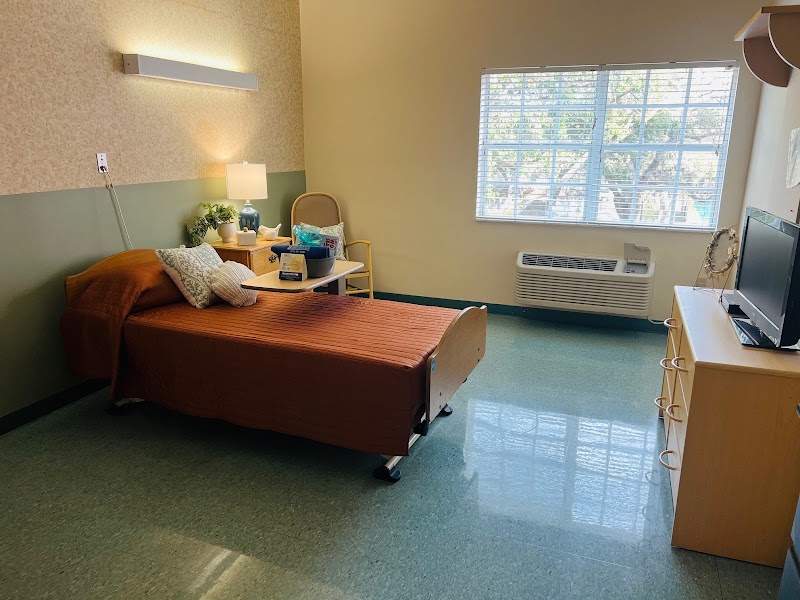
**NOTE- TERMS IN BRACKETS HAVE BEEN EDITED TO PROTECT CONFIDENTIALITY** Based on observations, interviews, and record review, the facility failed to ensure two resident rooms (203 and 207) were mainta...
Read full inspector narrative →
**NOTE- TERMS IN BRACKETS HAVE BEEN EDITED TO PROTECT CONFIDENTIALITY** Based on observations, interviews, and record review, the facility failed to ensure two resident rooms (203 and 207) were maintained in a sanitary manner in one hall (Hall 200) of two halls observed.
Findings included:
On 09/09/24 at 10:35 a.m. a tour of Hall 200 was conducted. room [ROOM NUMBER] was observed with brown and yellow stains on the walls and ceilings. The floor was observed with a slimy yellow substance in the corner. A white foam cup was observed on the floor next to the slimy yellow substance. Small flying insects were observed above the wall and on the resident's cup. The floors were observed with dirt and debris. The privacy curtain was observed with brown stains. The resident stated she reported to staff this morning that her room was not cleaned over the weekend.
Additionally, room [ROOM NUMBER] on 09/09/24 10:44 a.m., was observed with lose bathroom tiles and stained ceiling tiles. A family member stated the room had been like that since the resident moved in.
On 09/10/24 at 2:20 p.m. room [ROOM NUMBER] was observed with the same concerns related to the stained floors, walls, ceiling and privacy curtain.
On 09/10/24 at 3:02 p.m. room [ROOM NUMBER] was observed with the same concerns as observed the day before.
On 09/10/24 at 2:53 p.m. an observation was made of Staff C, Housekeeping Aide cleaning rooms in Hall 200. An interview with Staff C was attempted. She stated she did not speak English. Staff C could not answer any questions.
On 09/12/24 at 10:30 a.m., a second interview was attempted with Staff C, Housekeeping Aide. While utilizing a language translation on her phone, Staff C stated the brown stains on the walls and ceiling were from a soda accident. She stated she did not know how long the soda stain had been there. She said, It has been a long time. Staff C stated she saw the stains on the walls before. She stated she would notify her supervisor.
On 09/12/24 at 10:45 a.m. an interview was conducted with the Housekeeping Manager. She stated from what she had observed, the stains on the walls and ceilings could have been soda. She said, We had cleaned it before. It might be stained again. I don't know how long it has been there. She stated a maintenance staff member cleaned a similar spillage 4 to 5 months prior. She stated resident rooms should be cleaned daily. She stated she did not know why the rooms had stains on the floors. The Housekeeping Manager stated the housekeeper should clean the rooms daily and if there was a problem, they should let her know. The Housekeeping Manager said, It does not look good. We will clean it.
On 09/12/24 at 10:56 a.m. an interview was conducted with the Director of Maintenance (DOM). He stated he was not aware there were stains on the walls and ceilings in rooms [ROOM NUMBERS]. He said, They may have notified someone else and not me. Staff should put in a work order if a room has repair needs. I will take care of it. He reviewed the photographic evidence and stated it was not homelike.
On 09/12/24 at 12:04 p.m. an interview was conducted with the Nursing Home Administrator (NHA). The NHA reviewed the photographic evidence and stated they clean all resident's rooms daily. She stated some residents were non-compliant. She said, They do not allow us to clean. The resident in room [ROOM NUMBER] can be non-compliant. She spills soda in her room. staff will clean it up if she allows them. The NHA stated the building was showing wear and tear. She stated the room had a water leak that was repaired recently. She stated it should be painted over. She stated the guardian angel should have reported the stained walls and ceilings over and over until the issue was resolved.
Review of a facility policy titled, 5-Step Daily Patient Room Cleaning,dated 1/1/2000, showed the purpose is to show housekeeping employees the proper cleaning method to sanitize a patient's room or any area in a healthcare facility. (3.) Spot clean walls. Vertical surfaces . must be spot cleaned daily. (4.) The entire floor must be dust mopped. (5.) The most important area of a patient's room to disinfect is the floor. This is where most airborne bacteria will settle so it needs to be sanitized daily.
(Photographic Evidence Obtained)
CONCERN
(D)
Potential for Harm - no one hurt, but risky conditions existed
Deficiency F0688
(Tag F0688)
Could have caused harm · This affected 1 resident
**NOTE- TERMS IN BRACKETS HAVE BEEN EDITED TO PROTECT CONFIDENTIALITY** Based on observations, record reviews, and interviews the facility failed to provide appropriate assistance for a resident (#52)...
Read full inspector narrative →
**NOTE- TERMS IN BRACKETS HAVE BEEN EDITED TO PROTECT CONFIDENTIALITY** Based on observations, record reviews, and interviews the facility failed to provide appropriate assistance for a resident (#52) of six residents sampled for limited range of motion (ROM) related to the application of physician ordered orthotic devices.
Findings included:
On 9/9/24 at 12:31 p.m., Resident #52 was observed lying in bed, and not wearing a splint on either hand. The observation revealed a splint appeared to be inside a plastic personal belonging bag on top of the bedside dresser.
On 9/9/24 at 2:50 p.m. Resident #52 was not wearing a splint on either hand, and what appeared to be a splint continued to be in the personal belonging bag on top of the dresser.
An interview was conducted with Staff D, Licensed Practical Nurse (LPN) on 9/10/24 at 10:27 a.m. The staff member reviewed the orders and stated the resident wore a left hand splint.
On 9/10/24 at 10:36 a.m. Resident #52 was observed in conjunction with Staff D, LPN. The resident was lying in bed and the staff member confirmed the resident was not wearing a hand splint.
On 9/11/24 at 8:49 a.m. Resident #52 was observed lying in bed wearing bilateral hand splints.
An interview was conducted with the Director of Rehab (DOR) on 9/10/24 at 4:20 p.m. The DOR stated Resident #52 had a left grip splint. The DOR stated the resident came from a different facility with the splint and it had been carried over. The DOR reported nursing and restorative apply splints. The DOR confirmed seeing the resident wearing the splint and usually staff will let therapy know if the resident consistently refuses it.
An interview was conducted with Staff G, Certified Nursing Assistant (CNA) on 9/11/24 at 9:08 a.m. The CNA confirmed being assigned to care for Resident #52. The staff member reported not putting splints on the resident and the restorative aide applies the splints. Staff G stated they went to the laundry and he had to get them.
An interview was conducted with Staff I, Restorative Nursing Assistant (RNA) on 9/11/24 at 1:48 p.m. Staff I reported the splints were off this morning and she found the splints in a personal property bag on top of the bedside dresser. The staff member reported applying the splints would have been up to the assigned CNA.
Review of Resident #52's admission Record showed the resident was admitted on [DATE] and 9/3/24 with diagnoses including unspecified severity unspecified dementia without behavioral disturbance, psychotic disturbance, mood disturbance, and anxiety, hemiplegia and hemiparesis following cerebral infarction affecting left non-dominant side, other reduced mobility, and unspecified site unspecified osteoarthritis.
Review of Resident #52's Order Summary Report, active as of 9/12/24, showed the resident was to wear Left (L) hand grip splint at all times, as tolerated. Remove for skin check and hygiene to be removed or deferred by patient.
Review of Resident #52's September Medication and Treatment Administration Records (MAR/TAR) did not show nursing staff documented whether or not the resident's left hand grip splint had been applied.
Review of Resident #52's CNA Tasks revealed the application of the resident's Left hand grip splint was not included in the documentation.
Review of Resident #52's Comprehensive Minimum Data Set (MDS), dated [DATE], revealed the resident had a 00 Brief Interview for Mental Status (BIMS) score out of 15, indicating severe cognitive impairment. The Functional Abilities and Goals assessment showed the resident had ROM impairment on both sides of the upper and lower extremities.
Review of Resident #52's care plan showed the resident required a Splint/Brace Nursing Restorative Program created on 7/24/24, initiated and revised on 7/31/24 by the Director of Nursing (DON). The goal was for the resident to maintain current level of function by next review date. The interventions revealed the resident:
- to wear Right ® resting hand splint when in bed as tolerated. Patient to wear left grip splint at all times as tolerated. Remove for skin checks and hygiene to be removed or deferred by resident, initiated and created by DON on 7/24/24.
- Splint/Brace - Patient to utilize L hand grip splint at all times as tolerated, removed to skin checks and hygiene. To be removed or deferred by patient created on 7/31/24 and system generated revision on 9/3/24.
Review of the physician order summary did not reveal a physician order for the observed or care planned Right hand splint.
An interview was conducted with the DON on 9/12/24 at 1:07 p.m. The DON stated primarily restorative (applies splints) but an aide can do it, whether restorative is there or not. She reported tasks (are) for restorative and CNAs so they can see it on the Plan of Care (POC) and staff are aware by the first (portion) of shift if there is restorative or not.
The facility reported on 9/12/24 at 3:22 p.m. they did not have a policy for splints/braces or restorative program.
(Photographic evidence was obtained)
CONCERN
(D)
Potential for Harm - no one hurt, but risky conditions existed
Deficiency F0698
(Tag F0698)
Could have caused harm · This affected 1 resident
Based on interviews, observations, and record review the facility did not ensure a post dialysis assessment was completed for one resident (#40) out of one sampled resident.
Findings included:
On 9/1...
Read full inspector narrative →
Based on interviews, observations, and record review the facility did not ensure a post dialysis assessment was completed for one resident (#40) out of one sampled resident.
Findings included:
On 9/10/2024 at 2:20 p.m. an observation was made of a certified nursing assistant (CNA) exiting Resident #40's room. The CNA stated the resident returned from dialysis, post vital signs were done and the resident was resting.
On 9/10/2024 at 2:25 p.m. an interview was conducted with Staff B, Registered Nurse/Unit Manager (RN/UM). Staff B provided the dialysis communication binder for Resident #40. The communication sheet for today's dialysis was in the binder with pre- vital signs and assessment complete and the dialysis center information was complete. A review of the Dialysis Communication sheet did not have an area for the facility's post assessment of the dialysis site or vital signs. Staff B, RN/UM stated post dialysis information such as vital signs and assessments are placed in the resident's electronic chart. In Resident #40's Dialysis Communication binder, no further post dialysis communication sheets were present. Upon request, Staff B, RN/UM provided the post dialysis communication sheets for Resident #40 for the month of September and the last week of August. Staff B stated the sheets will be scanned into the resident's electronic chart. Staff B, RN/UM stated post dialysis assessments are completed in the electronic chart by the receiving nurse and it includes vital signs and assessment of dialysis access.
A record review of Resident #40's medical record revealed no past dialysis communication sheets scanned into the electronic chart except for March 28, 2024. A review of the electronic chart on 9/10/24 showed an entry for Post Dialysis Assessment in which the receiving nurse placed a note in the chart of her assessment upon Resident #40's return from dialysis. A review of the electronic chart entries did not have assessments post dialysis documented in the chart throughout the month of July through 9/9/24.
A record review of Resident #40's admission Record shows an admit date of 3/11/2024 with diagnoses of cardiomyopathy, chronic kidney disease stage IV and dependence on renal dialysis.
A review of Resident #40's current physician orders revealed: dialysis days: Tue (Tuesday), Sat (Saturday) Dialysis Center: [Name of Dialysis Center and address]. Chair time: 10am. pick up time: 8:45am. Transport company: [Name of company and phone number] every day shift every Tue, Thu, Sat (start date of 4/6/24); apply dry dressing to dialysis site (right chest dialysis port) as needed for bleeding /leakage, if excess, document and notify MD (physician); dialysis vitals post dialysis in the evening every Tuesday and Saturday for monitoring (start date of 6/1/25); and monitor dialysis site to right chest for signs and symptoms of infection, drainage or bleeding every shift, if present document and notify provider every shift; and complete dialysis communication sheet prior to dialysis in the morning every Tue, Sat (start date of 7/6/24).
A review of Resident #40's care plan revealed a Focus Area as, [Resident #40] is receiving Dialysis Therapy hemo r/t [related to] End Stage Renal Failure, initiated on 4/2/24. The goal showed, Resident will have decreased risk of complications, r/t dialysis through the review date. Interventions included to observe access site prior to leaving and upon return to facility from dialysis, observe for s/s (signs and symptoms) hypovolemia or hypervolemia. Observe for shortness of breath, edema, chest pain, elevated B/P (blood pressure), nausea, vomiting, decreased output, fluid volume, bleeding, infection, alteration in skin integrity, effect of dialysis on medication therapy, and send dialysis communication form with resident and be sure to retrieve information from resident on return.
On 9/10/2024 at 3:00 p.m. an interview was conducted with the Director of Nursing. The DON stated there is an order for every shift for the assessment of dialysis site. The DON confirmed the assessment post dialysis upon arrival was not well-documented.
A review of the facility's policy titled: Dialysis, revised 6/2024, showed under Resident Access, Section B Catheters .
Monitor site for bleeding, signs and symptoms of infection-if bleeding present - apply pressure and notify physician. If signs and symptoms of infection present notify physician.
Further review of the facility's revealed it was silent of information regarding post assessment of the dialysis access/port.
CONCERN
(D)
Potential for Harm - no one hurt, but risky conditions existed
Deficiency F0761
(Tag F0761)
Could have caused harm · This affected 1 resident
**NOTE- TERMS IN BRACKETS HAVE BEEN EDITED TO PROTECT CONFIDENTIALITY** 2. An observation and interview with Resident #9 on 09/11/24 at 10:10 a.m. revealed unsecured medications on Resident #9's bedsi...
Read full inspector narrative →
**NOTE- TERMS IN BRACKETS HAVE BEEN EDITED TO PROTECT CONFIDENTIALITY** 2. An observation and interview with Resident #9 on 09/11/24 at 10:10 a.m. revealed unsecured medications on Resident #9's bedside furniture including Neosporin and sore throat spray. She stated she uses it from time to time.
A review of Resident #9's most recent Quarterly Minimum Data Set, dated [DATE], in Section C-Cognitive Patterns, showed a Brief Interview for Mental Status score of 15 indicating she is cognitively intact.
A review of Resident #9's September 2024 physician orders revealed there was no order for throat spray or Neosporin and was silent for an order of self-administration of medication.
A review of Resident #9 active care plans revealed no care plan indicating self-administration of medication was in place.
An interview was conducted with Staff E, LPN on 09/11/24 at 10:20 a.m. She said if she found medications at the bedside, she would tell the resident we need an order from the doctor to have that medication. If it was a medication such as sore throat spray, or Neosporin, she would call the doctor for an order and would store the medication on her medication cart for the resident. Staff E, LPN said she would report it to the manager and DON. Staff E stated she is not sure if there is a policy if residents can give themselves medications or have them, but they should not have them at their bedside.
An interview with the DON was conducted on 09/12/24 at 9:44 a.m. She stated, The residents are not allowed to have medications at their bedside without an assessment. If the residents want to have it, we can store it for them in their room in a bag or a box. We can also store it in our medication room or in the medication cart. The DON said if staff were to find a medication at the bedside, they would report it to her or a supervisor; the resident would need an evaluation to administer the medication themselves and they would need to contact the doctor for an order.
A review of policy titled, Self-Administration of Medication, updated on 06/28/2024, revealed the following: Policy: The resident has right to self-administer medications if the interdisciplinary team has determined that this practice is clinically appropriate. A resident may only self-administer medications after the Interdisciplinary team (IDT) has determined which medications may be self-administered .The nurse will obtain a physician's order for each resident conducting self-administration of medications. Storage of self-administered medications will comply with state and federal requirements for medication storage.
A review of policy titled, Storage and Expiration Dating of Medications and Biologicals, revised on 08/01/2024, revealed the following: Policy: Facility should ensure that all medications and biologicals, including treatment items, are securely stored in a locked cabinet/cart or locked medication room that is inaccessible by residents and visitors .Facility should not administer/provide bedside medications or biologicals without a Physician/Prescriber order and approval by the Interdisciplinary Care Team and facility administration. Facility should store bedside medications or biologicals in a locked compartment within the resident's room.
Based on observations, interviews and record review, the facility did not ensure medications were stored safely, securely, and inaccessible to unauthorized staff, residents, and visitors for four residents (#74, #86, #18 and #9) of 53 residents sampled.
Findings included:
1. On 09/09/24 during a facility tour at 10:51 a.m. an oval shaped peach colored tablet, imprinted U-S 250 was observed on the floor besides a floor mat in Resident #86's room.
During the facility tour conducted on 09/09/24 at 10:52 a.m. an oval shaped peach colored tablet was observed in the hallway between Resident #74's and Resident #50's rooms.
On 09/09/24 at 11:36 a.m. a round, yellow colored tablet was observed on the floor in Resident #18's room.
On 09/09/24 at 10:53 a.m. an interview was conducted with Staff A, Licensed Practical Nurse (LPN). Staff A observed the three tablets on the floor. She said, I crushed Resident #86's medications. I don't know why there is a whole tablet on the floor. She stated the loose tablets must have been from previous shifts.
On 09/12/24 at 10:35 a.m. a follow-up interview was conducted with Staff A, LPN. She stated she reviewed the tablets found on the floor and identified them. She stated the tablet observed between Resident #74's and Resident #50's rooms belonged to Resident #74. She stated it was Eliquis 5 mg (milligram). She stated Resident #74 takes his medications crushed. She stated the tablet should not have been outside the room. She stated she did not know what happened. Staff A, LPN stated the tablet observed in Resident 86's room was Divalproex Sodium 250 mg. She stated this resident's medications should be crushed. Staff A, LPN stated Resident #86 did not receive medications whole. Staff A, LPN stated the tablet in Resident #18's room was Zofran (Ondansetron) 4 mg. She stated the resident took his meds whole. Staff A, LPN said, Nurses should supervise the resident. The nurse should stay with resident.
Review of the admission Record showed Resident #74 was admitted to the facility on [DATE] with a primary diagnosis of non-traumatic intracerebral hemorrhage.
Review of the September 2024 physician orders for Resident #74 showed the resident was prescribed Eliquis oral tablet 5mg (Apixaban), give 1 tablet by mouth every 12 hours for CVA (cerebrovascular accident).
Review of the admission Record showed Resident #86 was readmitted to the facility on [DATE] with a primary diagnosis of Parkinson's disease without dyskinesia.
Review of the September 2024 physician orders for Resident #86 showed the resident was prescribed Divalproex Sodium oral tablet delayed release 250mg, give 1 tablet by mouth two times a day for mood.
Review of the admission Record showed Resident #18 was readmitted to the facility on [DATE] with a primary diagnosis of unspecified dementia.
Review of the September 2024 physician orders for Resident #18 showed the resident was prescribed Ondansetron HCI tablet 4mg Give 1 tablet by mouth every 6 hours as needed for nausea and vomiting.
An interview was conducted with Staff B, Registered Nurse/Unit Manager (RN/UM). She stated the nurses should supervise the residents during medication intake. She stated the nurse should stay with the resident to make sure the resident takes the medication. She said, Medications should not be on the floor.
On 09/10/24 at 12:14 p.m. an interview was conducted with the Director of Nursing (DON). She stated she was notified of the loose tablets found on the floor. She stated all staff should look for tablets on the floor and notify the nurse if any observations were made. The DON said, Medications should not be on the floors. The nurse should make sure they swallow before they walk away.
CONCERN
(D)
Potential for Harm - no one hurt, but risky conditions existed
Deficiency F0773
(Tag F0773)
Could have caused harm · This affected 1 resident
**NOTE- TERMS IN BRACKETS HAVE BEEN EDITED TO PROTECT CONFIDENTIALITY** Based on observations, interviews and record review the facility did not ensure the physician was promptly notified of a positiv...
Read full inspector narrative →
**NOTE- TERMS IN BRACKETS HAVE BEEN EDITED TO PROTECT CONFIDENTIALITY** Based on observations, interviews and record review the facility did not ensure the physician was promptly notified of a positive lab result for an infection for one resident (#101) out of eight residents sampled.
Findings included:
On 9/11/2024 at 11:38 a.m. an observation was made of Resident #101 sitting in her wheelchair (WC) with her catheter bag hanging underneath the WC in a privacy bag with a portion of the indwelling tubing touching the ground. An observation was made of a rusty colored, heavy sediment in the tubing.
On 9/11/2024 at 5:45 p.m. an observation was made of Resident #101 in her room sitting in her WC. An observation of the urine in the indwelling tubing revealed a darker rusty color than previously observed.
A review of Resident #101's admission Record showed an admission date of 8/21/2024. The resident's diagnoses included acute kidney failure unspecified, malignant neoplasm of bladder, elevated white blood cell count unspecified, urinary tract infection, retention of urine unspecified, and unspecified dementia unspecified severity without behavioral, psychotic mood or anxiety disturbances.
A review of Resident #101's Minimum Data Set (MDS), dated [DATE], Section C-Cognitive Patterns showed a Brief Interview for Mental Status (BIMS) of 00, severe cognitive impairment.
A review of Resident #101's current physician orders showed:
*Diagnosis for Indwelling Catheter: obstructive uropathy,
*Change drainage bag w/catheter change as needed
*Change drainage bag w/catheter change every night shift every 28 days(s)
*Secure catheter tubing using anchoring device to prevent movement and urethral traction every shift.
A review of Resident #101's lab results for a Urinalysis with Microscopy Only (No Reflex)/Urine PCR (polymerase chain reaction) obtained on 9/05/2024 and resulted on 9/06/2024 showed a positive culture for Escherichia Coli and Enterococcus Faecalis.
A review of Resident #101's care plan, dated 9/07/2024, showed the following Focus areas:
*[Resident #101] has an indwelling catheter related to bladder cancer. The goal was to have decreased risk of signs and symptoms of a urinary tract infection (UTI) and other complications related to catheter through next review. Interventions included to ensure proper positioning of drainage tube at all times, keep drainage bag below waist level at all times observe for signs and symptoms of infection: pain, burning, blood tinged urine, cloudiness, no output, deepening of urine color, increase pulse, increase temperature, urinary frequency, foul smelling urine, fever, chills, altered mental status, change in behavior, change and eating patterns.
*[Resident #101] has an infection abnormal UA (urinalysis), date initiated 9/05/2024. No identifiable goals were documented for this focus area. Interventions included to observe for symptoms of weakness, dehydration, fever, nausea and vomiting and blood in stool and observe for signs and symptoms of delirium including changes in behavior, altered mental status, wide variation in cognitive function throughout the day, communication decline, disorientation, periods of lethargy, restlessness and agitation, altered sleep cycle.
On 9/11/2024 at 4:40 p.m. an interview was conducted with Staff B, RN/UM. Staff B stated once a lab order is received the order will be acknowledged by the nurse. From there, the evening shift nurse will fill out a requisition for the lab(s) the following morning. The lab will come in early in the morning to collect the specimen. If a lab was ordered as a STAT (immediate), the lab would come in at any time to collect. Staff B stated, They are available 24/7. Staff B, RN/UM stated the lab results are available in the resident's electronic medical records for anyone to see. Staff B, RN/UM stated cultures may take a few days for sensitivity. A review of the lab results for Resident #101's urine culture, dated 9/06/2024, was conducted with Staff B, RN/UM. Staff B stated the results were incomplete because it takes three days to get the final results for a culture and sensitivity and the positive results reviewed were the PCR and not the final culture and sensitivity.
0n 9/11/24 5:23 p.m. an interview was conducted with the Director of Nursing (DON). The DON confirmed the lab has a process to report lab results through their electronic chart. The DON stated the ordering physician started Resident #101 on Keflex 500 milligrams for three days based on the UA (urinalysis). The DON reviewed the lab results from 9/06/2024 and confirmed it showed positive culture findings. The DON stated the staff should have notified the doctor, changed out the indwelling catheter, and placed the resident on isolation if warranted.
On 9/11/2024 at 5:47 p.m. an interview was conducted with the Director of Infection Prevention and Control (IP). The Director of IP confirmed the positive culture findings for Resident #101. The Director of IP stated the order for the Keflex would not cover the organism currently detected in the culture results.
A review of the MedlinePlus website located at https://medlineplus.gov/lab-tests/pcr-tests/#:~:text=PCR%20(polymerase%20chain%20reaction)%20tests,abnormal%20cells%20in%20a%20sample showed a PCR shows the efficiency, faster and highly accurate way to diagnose certain infectious diseases.
An additional review of Resident #101's physician orders, dated 9/12/2024, included midline placement and Invanz injection solution reconstituted one gram one a day for ESBL (extended spectrum beta-lactamase) for 7 days.
The facility did not provide policy and procedures for collection and reporting of labs.
CONCERN
(D)
Potential for Harm - no one hurt, but risky conditions existed
Dental Services
(Tag F0791)
Could have caused harm · This affected 1 resident
**NOTE- TERMS IN BRACKETS HAVE BEEN EDITED TO PROTECT CONFIDENTIALITY** Based on observations, interviews and record review the facility failed to ensure dental services were provided for one resident...
Read full inspector narrative →
**NOTE- TERMS IN BRACKETS HAVE BEEN EDITED TO PROTECT CONFIDENTIALITY** Based on observations, interviews and record review the facility failed to ensure dental services were provided for one resident (#77) of one sampled resident.
Findings included:
On 09/09/24 at10:37 a.m. an observation and interview was conducted with Resident #77. Resident #77 was observed with missing teeth. She said, I am missing teeth, I do not eat very well. The bread is hard.
On 09/10/24 at 9:09 a.m. an observation and interview was conducted with Resident #77. She stated she was served a sausage patty and it was dry and not chewable.
On 09/10/24 at 4:00 p.m. an interview was conducted with Resident #77. She stated she asked to see a dentist. She said, Some doctor came to see me a long time ago. He said somebody will be back on a Monday. I don't know when this was. They never came back. Resident #77 stated she would like to see a dentist.
Review of the admission Record showed Resident #77 was admitted to the facility on [DATE] with a primary diagnosis of malignant neoplasm of endometrium.
Review of the September 2024 physician orders for Resident #77 showed the resident received a regular texture, regular consistency, fortified foods with meals for nutrition.
Review of Resident #77's care plan, dated 05/30/24, showed the resident is at risk for oral/ dental health problems related to advanced age, cancer, and receiving chemotherapy. The goal showed Resident #77 will be able to eat and drink free of pain through the next review date. Interventions included coordinate arrangements for dental care, transportation as needed/as ordered. Monitor for signs/symptoms of oral/dental problems including pain (gums, toothache, palate), abscess, debris in mouth, lips cracked or bleeding, teeth missing, loose, broken, eroded, decayed, tongue (black, coated, inflamed, white, smooth), ulcers in mouth, and lesions. Provide mouth care as per ADL (Activities of Daly Living) personal hygiene.
During an observation and interview on 09/11/24 at 8:45 a.m. Resident #77 was observed in her room. She stated she does not know what was served for dinner the night before. She said, It was hard to chew. It happens all the time. Especially morning breakfast. The sausage is like rubber or tires. I can't eat that.
On 09/11/24 at 10:52 a.m. an interview was conducted with the Social Services Director (SSD). The SSD stated Resident #77 refuses dental services. She said, On 09/14/23 she had an appointment. They tried to come and see her, and they said she refused. The SSD reviewed the resident's electronic medical record (EMR) and confirmed there were no documented refusals. The review confirmed all social services notes did not show dental appointments were scheduled or refused.
Review of an external provider's document provided by the SSD titled, Oral Assessment (Schedule L), conducted on 09/14/23 , showed Resident #77 was assessed for dental services. The note showed, Pt [patient] has 3 teeth and 3 root tips on the upper and 10 lower. Pt states she has discomfort on remaining tips and requested to see [sic] by a dentist. The patient needs a follow-up with a dentist at earliest possible convenience.
Review of an external provider's document titled, Notice of Declined Dental Services, dated 11/08/23, showed Resident #77 had declined participation in this provider's dental services program.
On 09/11/24 at 11:10 a.m. an interview was conducted with the Assistant SSD. She stated Resident #77 was sent up to see the dentist a while ago. She said, They wanted to have her go and get dental work done but at the time she was going through chemotherapy. She said she did not want to go at the time. I did not document. Review of the record confirmed there was no documented follow -up with Resident #77 since September 2023. The Assistant SSD stated the facility had an external provider who came to the facility. She stated they give the provider the names of residents who need dental services, and the provider schedules the appointment. The Assistant SSD stated social services coordinated the services and scheduled any follow -up appointments. She stated they had not scheduled any appointments for Resident #77.
Review of a facility policy titled, Dental Services, dated 08/2023, showed, the center provides each resident with access to dental services. Residents will be referred to a dentist based on assessed need. The center will obtain services of a qualified dental provider. Basic services will be provided in house. Center staff will assess dental status through the interdisciplinary resident assessment process and daily provision of care. The physician, resident and family/responsible party may request dental services at any time. Social services designee will be responsible for coordinating dental services in the center.
CONCERN
(E)
Potential for Harm - no one hurt, but risky conditions existed
Deficiency F0645
(Tag F0645)
Could have caused harm · This affected multiple residents
**NOTE- TERMS IN BRACKETS HAVE BEEN EDITED TO PROTECT CONFIDENTIALITY** Based on observations, interviews and record reviews, the facility failed to ensure Preadmission Screening and Resident Review (...
Read full inspector narrative →
**NOTE- TERMS IN BRACKETS HAVE BEEN EDITED TO PROTECT CONFIDENTIALITY** Based on observations, interviews and record reviews, the facility failed to ensure Preadmission Screening and Resident Review (PASRR) assessments were updated to include current diagnoses for eight residents (#28, #1, #46, #33, #57, #47, #40, and #506) out of 22 sampled residents.
Findings included:
1. During an observation on 09/09/24 at 10:31 a.m. Resident #28 was in her room lying in bed under a blanket. During an attempt to interview Resident #28, she was not able to answer questions regarding her care or stay.
Review of Resident #28's admission Record showed Resident #28 was admitted to the facility on [DATE] with a primary diagnosis of Alzheimer's disease with a date of 06/17/2022. Other diagnoses include unspecified dementia, generalized anxiety disorder and major depressive disorder.
Review of the Level I PASSR, dated 06/24/2024 showed in Section II: Other Indications for PASRR Screen Decision-Making, questions 1 through 7 were marked No. A level II PASRR evaluation must be completed if the individual has a primary or secondary diagnosis of dementia or related neurocognitive disorder (including Alzheimer's disease). Section IV: PASRR Screen Completion, Individual may be admitted to a Nursing Facility (check one of the following): No diagnosis or suspicion of Serious Mental Illness or Intellectual Disability indicated. Level II PASRR evaluation not required was marked.
6. A review of Resident #47's admission Record revealed an admission date of 1/24/24. Further review of Resident #47's admission Record revealed diagnoses to include: major depressive disorder (onset date of 7/9/24), and adjustment disorder with mixed anxiety and depressed mood (onset date of 5/6/24).
A review of Resident #47's active physician orders, as of 9/11/24, revealed medication to include:
Bupropion HCI (hydrochloride) ER (extended release) (XL) Oral Tablet Extended Release 24 Hour, 150 mg (milligrams) for depression. Start date 8/1/23.
A review of Resident #47's current care plan revealed a focus to include the following, [Resident name] {is at risk for} a mood problem r/t [related to] Depression. Further review of the current care plan revealed another focus to include the following, [Resident name] uses Psychotropic Medication Therapy r/t depression. Goals related to the Psychotropic Medication Therapy care plan include the following, Resident will have decreased risk of discomfort or adverse reactions related to psychotropic therapy through the review date.
A review of Resident #47's Quarterly MDS, Section I - Active Diagnoses, dated 7/24/24, revealed the following under Psychiatric/Mood Disorder: Depression. Further review of the Quarterly MDS, Section I - Active Diagnoses revealed the following, Additional active diagnoses . ADJUSTMENT DISORDER WITH MIXED ANXIETY AND DEPRESSED MOOD.
A review of Resident #47's Level I PASRR, dated 6/17/24, revealed no documentation of the diagnosis of depression.
A review of Resident #47's electronic medical record revealed no evidence of an updated Level 1 PASRR, to include the qualifying mental health diagnosis of depression.
On 9/10/24 at 4:53 p.m. an interview with the Regional Registered Nurse (RN) who revealed there is a QAPI for PASRRs. She stated they educated staff on reviewing what's coming in from the hospital and making sure the qualifying diagnoses, to include mental illness or intellectual disability, are present on the PASSR. The Regional RN stated another part of the education was making sure the PASRRs are fully completed. She stated they instructed staff on resubmitting them, if needed. The Regional RN stated on 6/21/24 a whole facility audit was conducted. She stated, Multiple residents' PASRRs were reviewed and updated. The Regional RN revealed there is no PASRR policy. A review of the QAPI plan related to PASRRs revealed the following objective, At the end of this presentation the staff will be able to: Review PASRR prior to admission and change of condition to ensure it reflect the resident accurately.
On 9/11/24 at 3:57 p.m. an interview with the Director of Nursing (DON) revealed there was a whole house audit for PASRRs on 6/5/24. She stated this was conducted because the hospital would send PASRRs but would not include updated diagnoses. The DON stated if the resident acquired depression or anxiety, and the diagnoses are not on the original PASRR, then it should be updated. She stated, The audit continues. The DON stated she does a weekly audit and, Look back. She stated she goes by the Order listing, and looks back a week, therefore, within a week she tries to catch PASRRs that needed an update. She stated if the resident has a new diagnoses or medication, she expected the PASRR to be updated. A review of Resident #47's recent PASRR with the DON revealed she confirmed the PASRR should have been updated with the diagnosis of depression. She confirmed the diagnosis for depression was added on 7/9/24.
7. A record review of Resident #40's admission Record showed an admission date of 3/11/24 with diagnoses to include adjustment disorder with mixed anxiety and depressed mood.
A review of Resident #40's Level I PASRR, dated 02/27/2024, Section I: PASRR Screen Decision-Making showed no areas checked in Section A. for Mental Illness (MI) or suspected MI.
A review of Resident #40's current physician orders showed an order dated 3/13/2024 for a referral to [vendor name] for psychology services due to depression.
8. A record review of Resident #506's admission Record showed an admission date of 8/26/24 with diagnoses to include major depressive disorder, bipolar disorder, and generalized anxiety disorder.
A review of Resident #506's Level I PASRR, dated 8/22/2024, Section I: PASRR Screen Decision-Making showed areas checked in Section A. for Mental Illness (MI) or suspected MI with bipolar not checked.
A review of Resident #506's current physician orders show an order dated 8/27/2024 to monitor for side effects adverse reactions related to use of psychoactive medications. An order for Diazepam tablet 5 milligrams to give one tablet by mouth every day and evening shift for anxiety dated 9/5/2024; and an order for Sertraline HCL tablet 100 milligrams to give 200 milligrams by mouth one time a day for depression.
A review of Resident #506's care plan, dated 8/26/2024, revealed a Focus area of psychotropic medication therapy related to anxiety, depression, bipolar with a goal to reduce the use of psychotropic medication will be provided to resident over the next 6 months. Interventions included to observe for side effects and adverse reactions of psychotropic medications, observe ongoing signs and symptoms of depression and consult with pharmacy to provide dosage reduction when clinically appropriate.
2. Review of Resident #1's admission Record revealed the resident was admitted on [DATE] and 4/26/23. The record showed the resident's primary diagnosis was unspecified severity unspecified dementia with other behavioral disturbance (onset 5/31/23) and included diagnoses of cognitive communication deficit, psychotic disorder with delusions due to known physiological condition, and moderate recurrent major depressive disorder.
Review of Resident #1's Level I PASRR, dated 6/11/24, included the mental illness (MI) or suspected MI (SMI) of depressive disorder and psychotic disorder. The PASRR did not reveal the resident had a primary diagnosis of dementia and that a Level II PASARR evaluation was required.
An interview was conducted with the Director of Nursing (DON) on 9/11/24 at 4:12 p.m. The DON reviewed Resident #1's PASRR and stated the PASRR would need to be updated due to the primary diagnosis of dementia. The DON reported the resident was part of the full house audit of PASRR's in June (2024).
3. Review of Resident #46's Level I PASRR, dated 6/11/24, revealed the resident had no MI or SMI per documented history.
Review of Resident #46's Quarterly Minimum Data Set (MDS), dated [DATE], showed the resident had an additional active diagnosis with International Classification of Diseases (ICD) code of F48.2. Review of the website, https://www.aapc.com/codes/icd-10-codes, the ICD code of F48.2 was for Pseudobulbar Affect, listed as a mental, behavioral, and neurodevelopmental disorder.
During an interview on 9/11/24 at 3:57 p.m., the DON stated since the facility's Quality Assurance and Performance Improvement (QAPI), started on 6/5/24; if residents come in with depression or anxiety, the facility updates the PASRR. The DON stated the audits continue and she is looking back at PASRRs. The DON reviewed Resident #46's PASRR and diagnoses and stated it should have been updated as the resident was involved in the June audit.
4. Review of Resident #33's Level I PASRR, dated 6/24/24, revealed the resident had mental illness diagnoses of depressive disorder and unspecified psychosis not due to a substance or known physiological condition. The PASRR revealed a Level II PASRR evaluation was not required. The PASRR did not include the resident's diagnosis of anxiety.
Review of Resident #33's Quarterly Minimum Data Set (MDS), dated [DATE], revealed the resident was admitted on [DATE]. The Section I - Active Diagnoses revealed the resident had diagnoses of dementia, anxiety disorder, depression, and psychotic disorder.
5. Review of Resident #57's Level I PASRR, dated 6/22/22, revealed the resident did not have any MI or SMI and did have a primary diagnosis of dementia. The PASRR showed a Level II evaluation was not required.
Review of Resident #57's admission MDS, dated [DATE], showed the resident was admitted on [DATE]. Section I - Active Diagnoses revealed the resident had diagnoses of non-Alzheimer's dementia, anxiety, and depression.
CONCERN
(E)
Potential for Harm - no one hurt, but risky conditions existed
Pressure Ulcer Prevention
(Tag F0686)
Could have caused harm · This affected multiple residents
Based on observations, interviews and record review, the facility did not ensure timely identification of a facility acquired pressure ulcer for one resident (#67) out of two residents sampled.
Findi...
Read full inspector narrative →
Based on observations, interviews and record review, the facility did not ensure timely identification of a facility acquired pressure ulcer for one resident (#67) out of two residents sampled.
Findings included:
On 9/10/2024 at 2:39 p.m. an observation was made of Resident # 67 in his wheelchair with a dressing to his left foot labeled 9/09/2024. Across the hallway from Resident #67 was Staff J, Registered Nurse (RN)/wound nurse. Staff J stated dressings are changed in the evening shift. Staff J, RN stated Resident #67's wound had a foul smell a few days ago and confirmed an order for a culture of the wound was given by the wound therapy physician, but results were still pending.
On 9/12/2024 at 12:14 p.m. an interview was conducted with the Dietician Technician Registered (DTR) The DTR stated she reviews all new admits, tube feedings and change of condition reports prompted by a report she runs. The DTR stated a change of condition report on 8/20/2024 prompted her to look into Resident #67 for a pressure ulcer. Since the discovery of his pressure area, the DTR stated orders were placed to increase Resident #67's dietary supplemental intake to optimize skin healing.
A review of Resident # 67's admission Record showed an admission date of 7/26/2024. Diagnoses included unsteadiness on feet, repeated falls, altered mental status and pressure ulcer of left buttock, unspecified staging.
On 9/12/2024 at 1:00 p.m. an interview was conducted with Staff B, RN/Unit Manager (UM). Staff B stated Resident #67 arrived at the facility with a pressure area to his left buttocks and a consult was placed for the wound therapy physician. Staff B, RN/UM stated the wound physician communicated after the consult that he did not need to follow this wound and gave orders for topical medication and to re-consult if needed. Staff B, RN/UM stated Resident #67, upon admission, would refuse to get out of bed stating the resident's family member was notified of the resident's refusal at times. Staff B, RN/UM stated on 8/15/2024, Resident 67's assigned nurse asked her to look at Resident #67's left heel. Staff B, RN/UM assessed the black necrotic heel findings immediately to his physician and notified his family. A consult was placed for the wound therapy physician for evaluation. Staff B, RN/UM stated the resident has an order for skin checks to be done weekly. Staff B, RN/UM stated the last skin check was dated 8/05/2024 and confirmed the evaluation for the next skin check was greater than a week. Staff B, RN/UM could not elaborate on the 8/05/2024 skin check assessment with one check mark stating no skin concerns. She stated she would have filled out a more extensive skin assessment. Staff B, RN/UM stated the resident now has a specially ordered pillow to off-load pressure on his heels as well. Staff B, RN/UM stated before the discovery of his necrotic heel, the resident should have had his heels off loaded by a pillow.
A review of Resident #67's physician orders showed orders for the following: arterial ultrasound of left lower extremity dated 8/28/2024, fortified foods with meals for nutritional support dated 8/8/2024, House Stock protein supplement one time a day for wound healing give 30 milliliters orally every day dated 8/19/2024, Med Pass 2.0/ Ready Care one time a day dated 8/20/24 enhanced barrier precaution for wound dated 8/26/2024, vascular consult dated 9/6/2024, weekly skin checks every day shift every Monday dated 8/4/2024, Santyl external ointment 250 units per gram apply to left heel topically as needed for pressure wound cleanse left heel with sterile saline, pat dry, apply nickel thick Santyl to wound bed and calcium alginate, wrap with [gauze wrap] and secure with tape dated 9/4/2024, vitamin C tablet 500 milligram one tablet by mouth one time a day for wound healing dated 8/19/2024, zinc oral tablet 50 milligrams give one tablet by mouth one day for wound healing and Cipro 250 milligrams to give one tablet by mouth two times a day for wound infection for 10 days dated 9/10/2024.
On 9/11/2024 at 5:47 p.m. an interview was conducted the Director of Infection and Control (IP). The lab results for Resident 67's wound culture from this morning's results were confirmed with the Director of IP. She confirmed the positive findings and antibiotic coverage was warranted.
On 9/12/2024 at 1:00 p.m., an interview was conducted with Staff B, RN/UM regarding the Vascular consult order dated 9/06/2024. Staff B, RN/UM stated she and any of the nurses taking care of the resident can arrange for the consult. Staff B, RN/UM stated she has not had the time to make any arrangements. Staff B stated it is a process to find a vascular surgeon and then deal with the insurance company for approval.
A review of the initial wound therapy physician consult notes, dated 8/20/2024, showed an unstageable due to necrosis of the left heel full thickness. The etiology of the wound is pressure related and measuring (L x W x D) 4.0cm (centimeters) x 5.0 cm x 0.1 cm for a total surface area of 20.00 cm squared, moderate serous exudate, 90% thick adherent black necrotic tissue (eschar) and 10% slough. On 8/26/2024 the Wound Evaluation & Management Summary showed under the Focused Wound Exam that Resident #67 had a Stage 4 Pressure Wound of the left heel full thickness for the duration of greater than 11 days and the resident underwent a sharp debridement of the left heel. On 8/30/2024, wound therapy physician progress notes under the section Investigations: Recommended and /or Reviewed: a recommendation for vascular surgery referral for further evaluation and recommendations was documented by the wound therapy physician.
Review of the Wound Evaluation & Management Summary, dated 9/06/2024, showed the wound under additional wound detail a notation of odor concerning for infection and re-educated nursing staff on dressings and cultures were obtained with a recommendation to start empiric antibiotic consider Bactrim DS 800/160 milligrams twice a day for 10 days or other course per PCP (primary care physician) preference and to adjust per culture and sensitivity results. Vascular surgery referral continued to be a request per the wound therapy physician.
On 9/12/2024 at 4:00 p.m. an interview was conducted with the Director of Nursing (DON) regarding the acquired pressure ulcer to Resident #67's left heel. The DON stated skin checks are to be done weekly and confirmed the time frame from one skin check to the next skin check for Resident #67 was longer than seven days. The DON stated the skin check for the week of 8/05/2024 may have been vague but if there were no concerns for his skin checking NO would have not prompted the nurse to further document. The DON stated the order for the vascular consult really should have defaulted to a cardiology consult and not vascular but could not state why the order was not completed. The DON stated the cardiology consult would have determined if a vascular consult was truly warranted. The DON stated she was aware of Resident #67's positive culture after a discussion with the IP and orders have been placed for an antibiotic.
The facility did not provide a policy and/or procedure for skin checks or assessments prior by the last date of survey.
CONCERN
(E)
Potential for Harm - no one hurt, but risky conditions existed
Tube Feeding
(Tag F0693)
Could have caused harm · This affected multiple residents
**NOTE- TERMS IN BRACKETS HAVE BEEN EDITED TO PROTECT CONFIDENTIALITY** 3. On 9/9/24 at 11:28 a.m. an observation of Resident #14 revealed Staff E, LPN and Staff F, LPN/Unit Manager (UM) entered the r...
Read full inspector narrative →
**NOTE- TERMS IN BRACKETS HAVE BEEN EDITED TO PROTECT CONFIDENTIALITY** 3. On 9/9/24 at 11:28 a.m. an observation of Resident #14 revealed Staff E, LPN and Staff F, LPN/Unit Manager (UM) entered the room to observe the resident. Resident #14 had feces on his face, arms, and bed linens. Observations revealed Staff E, LPN put on PPE to assist with cleaning and changing the resident. Staff F, LPN/UM left the room to retrieve clean linens. Prior to the staff closing the door, to provide privacy while changing the resident, an observation revealed a pole and pump for the tube feeding, however, there was no formula hanging, (Photographic Evidence Obtained). At the time of the observation, Staff E, LPN stated the resident has a gastrostomy (G-tube) tube.
On 9/9/24 at 2:39 p.m. an observation of Resident #14 revealed a bottle of Glucerna 1.5 was hanging and running at 72 milliliters per hour (ml/hr). An observation of the bottle of Glucerna 1.5 revealed it was started at 2:00 p.m. The resident's head of bed appeared to be at a 45-degree angle. (Photographic Evidence Obtained)
A review of Resident #14's admission Record revealed an original admission date of 9/23/18 and an admission date of 9/4/24. Further review of the admission Record revealed diagnoses to include: dysphagia following cerebral infarction, unspecified dementia, severe, with mood disturbance, chronic kidney disease, unspecified, aphasia, diaphragmatic hernia with obstruction, without gangrene, eosinophilic colitis, Ileus, unspecified, gastrostomy status, hyperosmolality and hypernatremia, dysphagia, and oropharyngeal phase.
A review of Resident #14's care plan revealed the following under focus, [Resident name] has a PEG [percutaneous endoscopic gastrostomy] tube r/t [related to] Dysphagia Date Initiated: 11/18/2020 Created on: 11/18/2020 Created by: [Staff member] Revision on: 01/23/2022 Revision by: [Staff member].
A review of Resident #14's progress notes revealed a Nurses Progress Note, on 9/9/24, to include the following, In bed awake and alert non-verbal with confusion, abdomen with (+) bs [positive bowel sounds]. incontinent of bowel, suprapubic cath [catheter]/nephrostomy tube intact draining amber urine in mod. [moderate] amount, g-tube patent, placement verified no residual noted, tolerating Jevity 1.5 via pump at 72cc [cubic centimeters also known as mL]/hr .
A review of Resident #14's Active Orders was conducted on 9/9/24 and 9/10/24. A review of Enteral Feed orders, on 9/9/24 and 9/10/24, revealed no documentation regarding the recommended rate of the Enteral Feed.
A review of Resident #14's miscellaneous documents revealed a hospital 3008 form. Based on record review, Resident #14 was hospitalized from [DATE] to 9/4/24. A review of the hospital 3008 form revealed a different enteral feeding regimen compared to the order the resident had at the facility. The recommendation from the hospital included the following, Jevity 1.2 @ [at] 65ml/hr - water, fluids @65mL/q4h [every four hours].
On 9/11/24 at 9:59 a.m. an interview with Staff E, LPN revealed she goes by doctor's orders for the tube feeding order. She stated changes would also be in the doctor's orders. She stated in the event of a change to a tube feeding order, The RN [Registered Nurse] might also communicate it to you. She stated if she doesn't see an order, then she calls the doctor herself. Staff E, LPN stated she will also verify orders with the doctor. She stated if the resident was in the hospital and came back to the facility with a different enteral feeding order, then she would communicate with the Registered Dietitian (RD). Staff E, LPN stated in the event the facility did not have the same formula as the resident was receiving in the hospital, then she would call the doctor and RD to see if the formula could be switched.
On 9/11/24 at 12:46 p.m. an observation of Resident #14 revealed he was laying down in bed. The head of the bed appeared to be at a 45-degree angle. At the time of the observation, the tube feeding was on and the formula, Jevity 1.5, was running at 72 ml/hr. (Photographic Evidence Obtained)
A second review of Resident #14's progress notes, conducted on 9/11/24, revealed a, Nurses Progress Note, on 9/11/24, to include the following, Resident returned from [Local Hospital] via wheelchair, awake and alert, non-verbal, skin d/w [dry/warm] to touch afebrile, resp. [respiratory] unlabored lungs sound clear, g-tube patent flushing without difficulty Jevity 1.2 restarted per flushing without difficulty, no residual noted, placement verified, suprapubic cath patent draining mod. amount of clear yellow urine, no distress noted, nephrostomy tube out.
On 9/11/24 at 1:36 p.m. an interview with Staff F, LPN/UM revealed she had a verbal order from the facility RD for Jevity 1.5 72ml x 20/hr and indicated, May start upon return. She stated herself and Staff E, LPN got the verbal order from the facility RD, which is how Staff E, LPN knew the rate for the enteral feed. A review of current orders for Resident #14 was conducted with the LPN/UM. She confirmed there was no rate specified for the enteral feeding. An observation at approximately 1:46 p.m. revealed the LPN/UM added the rate for the enteral feeding. Regarding the proposed change to the enteral feeding from the hospital, the UM/LPN stated she doesn't recall seeing that. The UM/LPN stated documents from the hospital, to include new orders, are reviewed in morning meetings. A review of progress notes, conducted with the UM/LPN, revealed there was no evidence of documentation regarding the recommendations on the 3008 form from the hospital and why the formula wasn't being provided on 9/9/24 at the time of the initial observation.
A review of Resident #14's Medication/Treatment Administration Record (MAR/TAR) for September 2024 revealed the following:
Enteral Feed Order in the morning for enteral for 1 Day Jevity 1.5, Start Date 9/11/24, Discontinue (D/C) Date 9/11/24.
Enteral Feed Order in the morning for enteral for 1 Day until total amount of 1440ml is delivered @ 72ml/hr, Start Date 9/11/24.
Enteral Feed Order in the morning for enteral for 1 Day until total amount of 1440ml is delivered, Start Date 9/12/24, D/C Date 9/11/24.
Enteral Feed Order everyday related to DYSPHAGIA FOLLOWING CEREBRAL INFARCTION (I69.391);APHASIA (R47.01) Jevity 1.5 @ 72 ml/hr for a total of 1440ml, Start Date 6/07/2024, D/C Date 9/03/24.
A review of Resident #14's Discontinued Orders revealed the following, Enteral Feed Order in the morning for enteral for 1 Day until total amount of 1440ml is delivered. An observation of the discontinued order revealed it was revised on 9/11/24. A review of Resident #14's Active Orders revealed the following, Enteral Feed Order in the morning for enteral for 1 Day until total amount of 1440 ml is delivered @ 72ml/hr. An observation of the active order revealed it was revised on 9/11/24.
On 9/11/24 at 4:38 p.m. an interview with the Director of Nursing (DON) revealed she spoke with Staff E, LPN who said she has worked with Resident #14 for three years. The DON stated Staff E, LPN said she knows the order by memory and gave Resident #14 the rate he normally has. The DON stated she reviewed the hospital paperwork and didn't see the recommendation from the hospital of Jevity 1.2 @ 65 ml/hr. She stated the RD may have reviewed the paperwork, but confirmed there's no documentation that it was reviewed by the RD.
On 9/12/24 at 9:44 a.m. an interview with the DON and Staff N, Nurse Practitioner (NP) revealed she looked into the orders from the hospital that suggested a new order for the tube feeding. Staff N, NP said she's one of the providers for Resident #14. She confirmed she looked at the hospital records, but didn't agree with the recommendations. Staff N, NP said she did not include that in her note, upon his return from the hospital, that she did not consider the change to the enteral feed. She said Resident #14 had a history of weight loss, but had been stable, therefore, she kept the tube feeding order at the same rate/volume from prior to the hospitalization.
A review of the facility's policy titled, Enteral Nutrition, revised 6/2024, revealed the following under procedure:
. 7. The nurse obtains a physician's order for placement of an enteral feeding tube. Feeding tube orders include the following information:
The product to be used.
The rate and/or timing of administration.
Total volume to be given per 24-hour period.
Total calories provided per 24-hour period.
Route of delivery (i.e., NG [nasogastric], gastrostomy, ileostomy, etc.)
Method of administration (i.e., pump, gravity drip, bolus)
Volume of water given as water flush, and before and after medications.
. 9. The nurse administers the enteral feeding regimen according to formula, system type, and method of delivery ordered by the physician . 20. The nurse contacts the physician to discuss and receive orders when complications from or intolerance to enteral feeding and/or inadequate progress towards goals is identified.
2. On 9/09/24 at 10:16 a.m. Resident #101 was observed sitting in her wheelchair in her room. Behind the resident was an enteral feeding pump attached to an IV (intravenous) pole and currently no infusion of enteral feedings were observed for the resident.
On 9/11/24 at 11:38 a.m., an observation was made of Resident #101 in the common area. No enteral feedings were observed.
On 9/11/24 at 3:40 p.m. an observation was made of Resident #101 in the common area. In Resident #101's room was a container of Jevity 1.5 labeled 2:00 p.m. [photographic evidence obtained]
A review of Resident 101's current physician orders showed an order dated 8/27/2024 for enteral feed order one time a day Jevity 1.5 @ 50 milliliters /hour (ml/hr) for twenty hours for a total of 1000 ml, down at 10:00 a.m., and up at 2:00 p.m. An enteral feed order to flush 150 ml of water (H2O) every six hours.
On 9/11/24 at 3:48 p.m. an interview was conducted with Staff K, Registered Nurse (RN). Staff K, RN stated she was waiting for the oncoming staff to get the resident in her room and once the resident was in her room, she would connect the tube feedings to start. Staff K, RN was aware of the delay in the start of the resident's enteral feedings but stated she is back tomorrow so she will make sure the resident gets the full amount of the feedings stating she never calls out.
On 9/11/24 at 5:45 p.m. an observation was made of Resident #101 sitting in her wheelchair in her room with family. The enteral feedings were not connected to the resident.
Based on observations, record reviews, and interviews the facility failed to provide enteral nutrition per physician orders for three residents (#52, #101, and #14) out of six residents with gastrostomy tubes.
Findings included:
1. On 9/9/24 at 10:13 a.m. Resident #52 was observed lying in bed with no response to verbal stimulus. The resident appeared to be cachectic, and lips were dry and flaky. The observation did not reveal any bottle of enteral nutrition hanging from the nutrition pole.
On 9/9/24 at 12:31 p.m. Resident #52 was observed lying in bed, with no bottle of enteral nutrition hanging from the nutrition pole located next to the resident's bed.
On 9/9/24 at 2:59 p.m. Resident #52 was observed lying in bed, with no bottle of enteral nutrition hanging from the nutrition pole next to the resident's bed.
Review of Resident #52's September 2024 Medication Administration Record (MAR) revealed the following orders:
- Start date 9/5/24: Enteral Feed Order every day for nutrition management (brand name of enteral nutrition) 1.5, stop enteral feed @ 2pm with a total volume of 1000 mLs (milliliters). This order was held on 9/4/24 and discontinued on 9/10/24 at 2:16 p.m.
The MAR revealed on 9/8/24 at 6 p.m. (1800) the enteral nutrition was administered and on 9/9/24 at 2 p.m. the enteral nutrition order was administered. The MAR did not have documentation showing whether the nutrition was stopped at 2 p.m. or started at 6 p.m.
- Start date 9/4/24: Enteral Feed Order every day (brand name of enteral nutrition) 1.5 at 50 mL/hr (hour) at 6 p.m. The order was held on 9/4/24 and discontinued on 9/10/24 at 2:17 p.m.
The MAR revealed on 9/8/24 at 6 p.m. (1800) the enteral nutrition was administered and on 9/9/24 at 2 p.m. the enteral nutrition was administered. The MAR did not have documentation showing whether the nutrition was stopped at 2 p.m. or started at 6 p.m.
- Start date 9/4/24: Enteral Feed Order every 4 hours for nutrition management flush peg tube with 150 mL H2O (water) (total volume 900 mL every 24 hours (Q24hr). The order showed the hydration was held on 9/4/24 and discontinued on 9/10/24 at 2:17 p.m.
The MAR documentation revealed the resident received hydration on 9/8/24 at 8 p.m., 9/9 at 0000 (midnight), 9/9 at 4:00 a.m., 9/9/24 at 8:00 a.m., and 9/9/24 at 12:00 p.m. (noon). The hydration was documented during the time Resident #52 was to be receiving nutrition.
Review of Resident #52's progress notes, dated 9/9/24, did not include an explanation as to why the resident was not observed receiving nutrition on 9/9/24 from 10:13 a.m. to 12:31 p.m.
On 9/10/24 at 9:13 a.m. Resident #52 was observed lying in bed with enteral nutrition running at 50 mL/hr and the pump showed 622 mLs had been delivered. According to the rate of 50 mL/hr and physician order for nutrition to be started at 6 p.m. (15 hours prior to the observation) the resident should have received 900 mLs (15 hours x 50 mL/hr = 900 mLs).
An interview was conducted with Staff D, Licensed Practical Nurse (LPN) on 9/10/24 at 10:27 a.m. The staff member stated Resident #52's enteral feed order was for the nutrition to come down at 2 p.m. and up at 6 p.m. The staff member stated Staff G, Certified Nursing Assistant (CNA) informed her, right before lunch on 9/9/24, that the nutrition for the resident was not running; so she had reconnected it. Staff D reported taking the nutrition down around 2 p.m. (on 9/9/24), that it had been running overnight, and according to the machine when it was taken down 550 mLs had been delivered. The staff member stated someone must have reset the machine (pump). Staff D reported there was a bottle of nutrition hanging for Resident #52 (on 9/9/24) at noonish The staff member stated her normal routine before getting started for the day was to check on the resident, and it (the nutrition) gets shut down during care.
On 9/10/24 at 10:36 a.m. Resident #52 was observed with Staff D. The observation revealed the (brand name nutrition) bottle was dated 9/9/24 at 5:35 p.m. and the nutrition pump showed 655 mLs of nutrition had been delivered. The staff member stated, We are doing the best we can with what we got.
An interview was conducted with Staff D,LPN, Staff F, Licensed Practical Nurse/Unit Manager, (LPN/UM), and Director of Nursing (DON) on 9/10/24 at 11:53 a.m. Staff D stated there had been an oversight yesterday regarding Resident #52's tube feeding. Staff D reported the physician and family member had been notified and confirmed it was an oversight.
Review of Resident #52's progress notes revealed:
- Effective 9/10/24 at 10:45 a.m. Staff D documented: Residents family and MD aware that due to care being given, resident missed an hour of Gtube feeding. Resident had no signs/symptoms (s/s) of distress and feeding was applied at 6 p.m. on 9/9/24 as ordered. Resident's gtube was patent and flushed as ordered.
- Effective 9/10/24 at 10:57 a.m. Staff D documented: Nurse Practitioner (NP) aware and no new orders given, will continue (cont) plan of care.
- Effective 9/10/24 at 11:38 a.m. the Dietician documented Rt (resident) had 2 hours of extra down time on 9/9/24 due to care. Will make up by incorporating 100 mL bolus at 4 p.m. on 9/10/24, in middle of regular down time.
- The DON documented a late entry Situation, Background, Assessment and Review (SBAR), effective 9/10/24 at 1:15 p.m. revealed an other change in condition. The SBAR revealed nursing observations, evaluation, and recommendations are: Enteral feed was turned off at 10 a.m. order in (electronic record) is to turn feeding pump off at 2 p.m. Resident assessed and noted without distress, MD made aware, no new orders (NNO), Registered Dietician (RD) notified and ordered (brand name liquid nutrition) 1.5 100 mL bolus one time to be administered, labs ordered results within normal limits (WNL).
Review of the Nutrition Comprehensive Evaluation/Risk Screen, effective 9/10/24 at 1:39 p.m. revealed Resident #52's most recent weight was 90.6 pounds (#) and a body mass index of 16.0. The resident's diet was nothing by mouth (NPO). The evaluation showed the current enteral nutrition was 50 mL/hr x 20 hours for total volume of 1000 mL's, flush q 4 hrs with 150 mL's of water (total volume 900 mL's, total 1660 mL's plus med flushes. The summary showed TF (tube feeding) regiment not meeting needs . Rt may be at risk for malnutrition due to (d/t) advanced age, medical diagnosis/history (dx/hx). The nutrition summary revealed the recommendation was (brand name of liquid nutrition) at 60 mL/hr x 20 hours, up at 6 p.m. until 1200 mL total volume reached.
Review of Resident #52's MAR revealed the resident's enteral nutrition had been increased on 9/10/24:
-Enteral Feed Order in the evening (brand name of liquid nutrition) 1.5 at 60 mL/hr x 20 hours. Up 6 p.m. until 1200 mL total volume reached. Started on 9/11/24 at 6:00 p.m.
On 9/11/24 at 8:49 a.m. an observation revealed a bottle of enteral nutrition hanging for Resident #52. The 1000 mL bottle was dated 9/10/24 at 6:00 p.m. and the pump showed 60 mL/hr was being delivered. The pump revealed 23 mL volume had been delivered and the bottle contained approximately the original amount of 1000 mL's. The observation showed Resident #52's head of bed was raised approximately 30 degrees, and the resident was positioned almost flat as the resident laid in a loose fetal position. According to the time the bottle was hung and the observation showed a total of 14.75 hours at 60mL/hr = 885 mLs should have been delivered and the bottle should have contained approximately 115 mL's. The resident's lips continued to be dry and flaky.
Review of Resident #52's MAR revealed two orders related to the raising of the head of bed:
-Enteral Feed Order every shift, elevate head of bed 30-45 degrees at all times during feeding and at least 30-60 minutes after feeding is stopped. The order was to start on 9/9/24 at 3:00 p.m.
-Enteral Feed Order every shift, elevate head of bed (HOB) at least 45 degrees at all times. The order was started on 9/9/24 at 3:00 p.m.
An interview was conducted with Staff G, CNA on 9/11/24 at 9:08 a.m. Staff G reported Resident #52 did not have a bottle of nutrition hanging on Monday (9/9/24) and does not know what degree the resident's head of bed should be raised to during nutrition.
On 9/11/24 at 9:45 a.m. Staff D, LPN was interviewed. The staff member reported not hanging any nutrition on 9/11/24 for the resident. Staff D observed the bottle of nutrition and the pump reading and confirmed the amount of nutrition that should have been delivered had not and thinking 500 mL's should have been delivered. Staff D stated she had notified the Unit Manager (Staff F) and the Director of Nursing (DON). The staff member confirmed Resident #52's head of bed should have been raised to 45 degrees and it was not.
An interview was conducted with Staff F, LPN/UM on 9/11/24 at 9:45 a.m. The staff member stated Resident #52's tube feeding was turned off for care around noon (on 9/9/24), care was given, and the nutrition was turned back on. Staff F stated the facility realized the next day an error was made (9/10/24) so they contacted the physician who gave no new orders and had reached out to the nutritionist and was given an order for a 100 mL bolus. Staff F confirmed if the facility shut off the nutrition on 9/9/24 for care the bottle of nutrition would have been hanging. The staff member stated the resident had an agency nurse last night and the facility had started education regarding to not zero out the pump until the total volume had been delivered.
Review of the time sheet, dated 9/10/24 for the agency nurse, who the facility revealed worked with Resident #52 showed an in-time of 11 p.m. and out time of 7:20 a.m. The observation of Resident #52's nutrition on 9/11/24 at 8:49 a.m. revealed a delivered volume of 23 mLs, per the physician order of 60 mLs per hour the resident should have received 89 mLs during the 1 hour and 29 minutes between the time the agency nurse left and the observation.
The observation, previously noted on 9/11/24 at 8:49 a.m., showed Resident #52 was receiving 60 mL/hr of liquid nutrition and the pump showed 23 mLs of volume had been delivered. The pump had been running 1 hr and 29 minutes after the agency nurse clocked out of the facility. The volume that should have been delivered between the time the agency nurse clocked out and the observation would be 89 mLs. (60 mL/hr x 1 hour 29 minutes = 89 mLs)
An interview was conducted with the Director of Nursing (DON) on 9/11/24 at 11:32 a.m. The DON stated the investigation into the incident involving Resident #52 revealed the Staff Development Coordinator (SDC) disconnected the feeding at 10 a.m. because the pump was beeping and said the volume of 1000 mLs had been delivered. The DON stated the issue was with taking the nutrition up and down. The DON confirmed 800 mLs would have been delivered between 6 p.m. (time nutrition was to be connected to resident) and 10:00 a.m. (time reported SDC had disconnected the nutrition).
An interview was conducted with the SDC on 9/11/24 at 12:58 p.m. The SDC reported asking Staff D if they wanted Resident #52's nutrition disconnected. The SDC reported Staff D, LPN was told they disconnected the nutrition. The staff member stated she didn't think the bottle (nutrition) was empty, but disconnected because the pump was beeping, and it said it was complete.
Review of Resident #52's admission Record showed the resident was admitted on [DATE] and 9/3/24. The record included diagnoses of unspecified severity unspecified dementia without behavioral disturbance, psychotic disturbance, mood disturbance, and anxiety, pneumonitis due to inhalation of food and vomit, unspecified severe protein-calorie malnutrition, unspecified Alzheimer's disease, and gastronomy status.
Review of Resident #52's care plan included the following:
-Resident requires a feeding tube related to (r/t) dysphagia, NPO (nothing by mouth), severe protein malnutrition, initiated 7/10/24. The interventions included: Keep HOB elevated during and after tube feeds (min 45 degrees) (and) NPO as ordered.
-Resident is at risk for decreased nutritional status & dehydration r/t advanced age, limited mobility, need for enteral nutrition to meet needs, NPO status, (and) impaired skin integrity. The interventions included Diet: NPO, Encourage PO fluids, initiated 9/4/24, observe PO intakes, initiated 9/4/24, Provide food preferences & substitutions, initiated 7/11/24 and revised 9/4/24.
Review of Resident #52's Minimum Data Set (MDS), dated [DATE], revealed the resident had a Brief Interview for Mental Status (BIMS) score of 00 out of 15. The Functional Abilities and Goals showed the resident was dependent on eating and hygiene. The resident's Swallowing/Nutritional status showed the resident had a feeding tube, received 51% or more of total calories and 501 cubic centimeters (cc)/day or more from the artificial route.
CONCERN
(E)
Potential for Harm - no one hurt, but risky conditions existed
Deficiency F0726
(Tag F0726)
Could have caused harm · This affected multiple residents
**NOTE- TERMS IN BRACKETS HAVE BEEN EDITED TO PROTECT CONFIDENTIALITY** 2. On 9/9/24 at 11:28 a.m. an observation of Resident #14 revealed Staff E, LPN and Staff F, LPN/Unit Manager (UM) entered the r...
Read full inspector narrative →
**NOTE- TERMS IN BRACKETS HAVE BEEN EDITED TO PROTECT CONFIDENTIALITY** 2. On 9/9/24 at 11:28 a.m. an observation of Resident #14 revealed Staff E, LPN and Staff F, LPN/Unit Manager (UM) entered the room to observe the resident. Resident #14 had feces on his face, arms, and bed linens. Observations revealed Staff E, LPN put on PPE to assist with cleaning and changing the resident. Staff F, LPN/UM left the room to retrieve clean linens. Prior to the staff closing the door, to provide privacy while changing the resident, an observation revealed a pole and pump for the tube feeding, however, there was no formula hanging, (Photographic Evidence Obtained). At the time of the observation, Staff E, LPN stated the resident has a gastrostomy (G-tube) tube.
On 9/9/24 at 2:39 p.m. an observation of Resident #14 revealed a bottle of Glucerna 1.5 was hanging and running at 72 milliliters per hour (ml/hr). An observation of the bottle of Glucerna 1.5 revealed it was started at 2:00 p.m. The resident's head of bed appeared to be at a 45-degree angle. (Photographic Evidence Obtained)
A review of Resident #14's admission Record revealed an original admission date of 9/23/18 and an admission date of 9/4/24. Further review of the admission Record revealed diagnoses to include: dysphagia following cerebral infarction, unspecified dementia, severe, with mood disturbance, chronic kidney disease, unspecified, aphasia, diaphragmatic hernia with obstruction, without gangrene, eosinophilic colitis, Ileus, unspecified, gastrostomy status, hyperosmolality and hypernatremia, dysphagia, and oropharyngeal phase.
A review of Resident #14's care plan revealed the following under focus, [Resident name] has a PEG [percutaneous endoscopic gastrostomy] tube r/t [related to] Dysphagia Date Initiated: 11/18/2020 Created on: 11/18/2020 Created by: [Staff member] Revision on: 01/23/2022 Revision by: [Staff member].
A review of Resident #14's progress notes revealed a Nurses Progress Note, on 9/9/24, to include the following, In bed awake and alert non-verbal with confusion, abdomen with (+) bs [positive bowel sounds]. incontinent of bowel, suprapubic cath [catheter]/nephrostomy tube intact draining amber urine in mod. [moderate] amount, g-tube patent, placement verified no residual noted, tolerating Jevity 1.5 via pump at 72cc [cubic centimeters also known as mL]/hr .
A review of Resident #14's Active Orders was conducted on 9/9/24 and 9/10/24. A review of Enteral Feed orders, on 9/9/24 and 9/10/24, revealed no documentation regarding the recommended rate of the Enteral Feed.
A review of Resident #14's miscellaneous documents revealed a hospital 3008 form. Based on record review, Resident #14 was hospitalized from [DATE] to 9/4/24. A review of the hospital 3008 form revealed a different enteral feeding regimen compared to the order the resident had at the facility. The recommendation from the hospital included the following, Jevity 1.2 @ [at] 65ml/hr - water, fluids @65mL/q4h [every four hours].
On 9/11/24 at 9:59 a.m. an interview with Staff E, LPN revealed she goes by doctor's orders for the tube feeding order. She stated changes would also be in the doctor's orders. She stated in the event of a change to a tube feeding order, The RN [Registered Nurse] might also communicate it to you. She stated that if she doesn't see an order, then she calls the doctor herself. Staff E, LPN stated she will also verify orders with the doctor. She stated if the resident was in the hospital and came back to the facility with a different enteral feeding order, then she would communicate with the Registered Dietitian (RD). Staff E, LPN stated in the event the facility did not have the same formula as the resident was receiving in the hospital, then she would call the doctor and RD to see if the formula could be switched.
On 9/11/24 at 12:46 p.m. an observation of Resident #14 revealed he was laying down in bed. The head of the bed appeared to be at a 45-degree angle. At the time of the observation, the tube feeding was on and the formula, Jevity 1.5, was running at 72 ml/hr. (Photographic Evidence Obtained)
A second review of Resident #14's progress notes, conducted on 9/11/24, revealed a Nurses Progress Note, on 9/11/24, to include the following, Resident returned from [Local Hospital] via wheelchair, awake and alert, non-verbal, skin d/w [dry/warm] to touch afebrile, resp. [respiratory] unlabored lungs sound clear, g-tube patent flushing without difficulty Jevity 1.2 restarted per flushing without difficulty, no residual noted, placement verified, suprapubic cath patent draining mod. amount of clear yellow urine, no distress noted, nephrostomy tube out.
On 9/11/24 at 1:36 p.m. an interview with Staff F, LPN/UM revealed she had a verbal order from the facility RD for Jevity 1.5 72ml x 20/hr and indicated, May start upon return. She stated herself and Staff E, LPN got the verbal order from the facility RD, which is how Staff E, LPN knew the rate for the enteral feed. A review of current orders for Resident #14 was conducted with the LPN/UM. She confirmed there was no rate specified for the enteral feeding. An observation at approximately 1:46 p.m. revealed the LPN/UM added the rate for the enteral feeding. Regarding the proposed change to the enteral feeding from the hospital, the UM/LPN stated she doesn't recall seeing that. The UM/LPN stated documents from the hospital, to include new orders, are reviewed in morning meetings. A review of progress notes, conducted with the UM/LPN, revealed there was no evidence of documentation regarding the recommendations on the 3008 form from the hospital and why the formula wasn't being provided on 9/9/24 at the time of the initial observation.
A review of Resident #14's Medication/Treatment Administration Record (MAR/TAR) for September 2024 revealed the following:
Enteral Feed Order in the morning for enteral for 1 Day Jevity 1.5, Start Date 9/11/24, Discontinue (D/C) Date 9/11/24.
Enteral Feed Order in the morning for enteral for 1 Day until total amount of 1440ml is delivered @ 72ml/hr, Start Date 9/11/24.
Enteral Feed Order in the morning for enteral for 1 Day until total amount of 1440ml is delivered, Start Date 9/12/24, D/C Date 9/11/24.
Enteral Feed Order everyday related to DYSPHAGIA FOLLOWING CEREBRAL INFARCTION (I69.391);APHASIA (R47.01) Jevity 1.5 @ 72 ml/hr for a total of 1440ml, Start Date 6/07/2024, D/C Date 9/03/24.
A review of Resident #14's Discontinued Orders revealed the following, Enteral Feed Order in the morning for enteral for 1 Day until total amount of 1440ml is delivered. An observation of the discontinued order revealed it was revised on 9/11/24. A review of Resident #14's Active Orders revealed the following, Enteral Feed Order in the morning for enteral for 1 Day until total amount of 1440 ml is delivered @ 72ml/hr. An observation of the active order revealed it was revised on 9/11/24.
On 9/11/24 at 4:38 p.m. an interview with the Director of Nursing (DON) revealed she spoke with Staff E, LPN who said she has worked with Resident #14 for three years. The DON stated Staff E, LPN said she knows the order by memory and gave Resident #14 the rate he normally has. The DON stated she reviewed the hospital paperwork and didn't see the recommendation from the hospital of Jevity 1.2 @ 65 ml/hr. She stated the RD may have reviewed the paperwork, but confirmed there's no documentation that it was reviewed by the RD.
On 9/12/24 at 9:44 a.m. an interview with the DON and Staff N, Nurse Practitioner (NP) revealed she looked into the orders from the hospital that suggested a new order for the tube feeding. Staff N, NP said she's one of the providers for Resident #14. She confirmed she looked at the hospital records, but didn't agree with the recommendations. Staff N, NP said she did not include that in her note, upon his return from the hospital, that she did not consider the change to the enteral feed. She said Resident #14 had a history of weight loss, but had been stable, therefore, she kept the tube feeding order at the same rate/volume from prior to the hospitalization.
A review of the facility's policy titled, Enteral Nutrition, revised 6/2024, revealed the following under procedure:
. 7. The nurse obtains a physician's order for placement of an enteral feeding tube. Feeding tube orders include the following information:
The product to be used.
The rate and/or timing of administration.
Total volume to be given per 24-hour period.
Total calories provided per 24-hour period.
Route of delivery (i.e., NG [nasogastric], gastrostomy, ileostomy, etc.)
Method of administration (i.e., pump, gravity drip, bolus)
Volume of water given as water flush, and before and after medications.
. 9. The nurse administers the enteral feeding regimen according to formula, system type, and method of delivery ordered by the physician . 20. The nurse contacts the physician to discuss and receive orders when complications from or intolerance to enteral feeding and/or inadequate progress towards goals is identified.
3. On 9/12/2024 at 8:40 a.m. an observation was conducted with the DON during medication administration with Staff D, LPN for Resident #52. Staff D, LPN dispensed the following medication:
-Aspirin 81 mg one tablet
- Esomeprazole magnesium 40 mg one packet
- Ferrous 325 mg one tablet
- Acidophilus one capsule
- Vit C 500 mg one tablet
- MVI one tablet
- D3 2000 IU (international unit) one tablet
- Folic acid one mg one tablet.
All medication to be administered via gastrostomy tube.
A review of the medication administration reconciliation, revealed Amlodipine 5 mg was documented as given but not witnessed during actual medication administration for Resident # 52.
On 9/12/2024 at 10:07 a.m. an interview was conducted with Staff D, LPN regarding the Amlodipine 5 mg medication. Staff D, LPN stated she gave the medication. A review of the medication administration showed Amlodipine 5 mg administered at 10:03 a.m. Initially, Staff D, LPN stated she pulled one medication out of the medication cart for Resident #52 which was identified as Folic Acid one mg. Staff D, LPN then stated the night nurse gave the Amlodipine prior to her leaving her shift. Staff D, LPN stated the night nurse was in the resident's room and gave the medication but it was charted under Staff D because she was out of the room in the hallway and had the chart opened under her (Staff D) name. Staff D, LPN stated she had the record opened and asked the night shift nurse if she gave it. Staff D, LPN was unaware of the resident's blood pressure parameters. Staff D, LPN reviewed the vital signs for Resident #52 and stated, Now that I can remember, I did not give that. Staff D, LPN stated she will contact the nurse practitioner down the hallway and inform her the medication was not given. Staff D found the nurse practitioner and informed her the medication, Amlodipine, was charted as given but was not given and will strike out the medication as given.
On 9/12/2024 at 10:25 a.m. an interview was conducted with the DON. The DON pulled the medication administration for the resident and saw Amlodipine was given but then there was a strike through the documentation. The DON was aware of the low blood pressures documented on three separate entries prior to the Amlodipine alleged administration. The DON stated Staff D's, documentation and account of the administration of the Amlodipine was not adding up. The DON stated she will have Resident #52 monitored for repeat vital signs and to ensure tube feedings were running according to physician orders.
A review of the physician orders for Resident #52 showed and order for Amlodipine 5 mg oral tablet to give one tablet via gastrostomy tube every twelve hours, hold if systolic blood pressure less than 110. A record review of 9/12/2024 vital signs documented for Resident #52 had the last recorded blood pressure of 109/61 mmHg (millimeters of Mercury). Further review of Resident #52's vital signs showed on 9/12/2024 at 6:55 a.m. a blood pressure of 96/60 mmHg and on 9/12/24 at 6:56 a.m. a repeat blood pressure of 109/60 mmHg. A blood pressure in the systolic 130s was documented after the interview with the DON.
A record review of the facility's policy and procedures titled, Medication Pass and Med Pass with Medication Cart, updated 8/14/2024, showed the purpose statement as follows: to assure the most complete and accurate implementation of physicians' medication orders and to optimize drug therapy for each resident by providing for administration of drugs in an accurate, safe, timely, and sanitary manner. To systematically distribute medications to residents in accordance with state and federal guidelines. The nursing staff uses the medication cart to systematically distribute physician ordered medications to residents.
Guidance Steps in the Procedure: .
2. Verify the medication label against the medication sheet for accuracy of drug frequency, duration, strength, and route .
6. If applicable and/ or prescribed, take vital signs or tests prior to administration of the drugs, e.g., pulse with digitalis, blood pressure with antihypertensives .
7. Administer medications per Person-Centered Medication Administration Schedule. Medications may be administered one hour before to one hour after the prescribed time. Upon Rising (UR) 6am-10am .
Based on observations, record reviews, and interviews the facility failed to provide nursing and related services to assure two residents (#52 and #14) attained and maintained the highest practicable physical, mental, and psychosocial well-being related to 1) not managing the correct administration of enteral nutrition for two residents (#52 and #14) of six residents with gastrostomy tubes and 2) not ensuring certified nursing assistants were applying an orthotic device for one resident (#52) of six sampled residents, and failed to ensure administration and documentation of a physician ordered medication were without error for one resident (#52) of five residents observed for medication administration.
Findings included:
1. Review of the Facility Assessment, effective 8/1/24, revealed the type of care the facility's resident population required and provided included: Mobility and fall/fall with injury prevention with specific care and practices of transfers, ambulation, restorative nursing, contracture prevention/ care; supporting resident independence and doing as much of these activities by himself/ herself. The assessment showed the pertinent facts or descriptions of the resident population that must be considered when determining staffing and resource needs included: ADL ability, transfer and mobility, medical and mental needs are all taken into consideration when scheduling staff - to ensure each resident's needs are met. The staff training/education and competencies portion of the assessment revealed center has an SDC that completes various forms of education that includes but not limited to lectures, videos, observations. Competencies are completed by SDC or designee to ensure compliance. At orientation competency are completed as well, then minimally annually, or as needed.
Review of the Director of Nursing Job Description, 2/20/18 revealed, Responsible for the overall direction, coordination and evaluation of nursing care and services provided to the residents. The essential duties and responsibilities included the following:
- Ensures nursing staff is providing quality and appropriate resident/ patient care that meets or exceeds company and regulatory standards.
- Schedules and performs resident/ patient rounds to monitor and evaluate the quality and appropriateness of nursing care.
- Maintains administrative authority, responsibility and accountability for the proper charting and documentation of care and of medications and treatments.
- Responsible for overseeing the infection control surveillance, outbreak control, staff education on infection prevention/ control, staff skills checks/ demonstration competencies, process measures, resident/ employee health (i.e. Vaccinations, TB skin tests) you coordinate with central supply doesn't need to ensure facility management and availability of supplies for staff.
Review of the Licensed Practical Nurse (LPN) Job Description, revised 9/25/07, revealed A licensed practical nurse (LPN) provides care and treatment in accordance with physician orders. Works in a team environment and will scope of practice as defined by state. The LPN works under the direction of physicians and registered nurses (RNs). The duties and responsibilities of an LPN included the following:
- Administers and documents medications and treatments.
- Supervises LPNs and certified nursing assistance with appropriate supervisory LPN training.
- Documents observations and care and compliance with standards of care in company policy.
- Completes required forms and documents in accordance with company policy and state and/or federal regulations.
On 9/9/24 at 10:13 a.m. Resident #52 was observed lying in bed with no response to verbal stimulus. The resident appeared to be cachectic, and lips were dry and flaky. The observation did not reveal any bottle of enteral nutrition hanging from the nutrition pole.
On 9/9/24 at 2:50 p.m., Resident #52 was not wearing a splint on either hand and what appeared to be a splint continued to be in the personal belonging bag on top of the dresser.
On 9/9/24 at 12:31 p.m. Resident #52 was observed lying in bed, with no bottle of enteral nutrition hanging from the nutrition pole located next to the resident's bed. Resident #52 was observed not wearing a splint on either hand. The observation revealed a splint appeared to be inside a plastic personal belonging bag on top of the bedside dresser.
Review of Resident #52's Order Summary Report, active as of 9/12/24, showed the resident was to wear Left (L) hand grip splint at all times, as tolerated. Remove for skin check and hygiene to be removed or deferred by patient.
On 9/9/24 at 2:59 p.m. Resident #52 was observed lying in bed, with no bottle of enteral nutrition hanging from the nutrition pole next to the resident's bed.
Review of Resident #52's September 2024 Medication Administration Record (MAR) revealed the following orders:
- Start date 9/5/24: Enteral Feed Order every day for nutrition management (brand name of enteral nutrition) 1.5, stop enteral feed @ 2pm with a total volume of 1000 mLs (milliliters). This order was held on 9/4/24 and discontinued on 9/10/24 at 2:16 p.m.
The MAR revealed on 9/8/24 at 6 p.m. (1800) the enteral nutrition was administered and on 9/9/24 at 2 p.m. the enteral nutrition order was administered. The MAR did not have documentation showing whether the nutrition was stopped at 2 p.m. or started at 6 p.m.
- Start date 9/4/24: Enteral Feed Order every day (brand name of enteral nutrition) 1.5 at 50 mL/hr (hour) at 6 p.m. The order was held on 9/4/24 and discontinued on 9/10/24 at 2:17 p.m.
The MAR revealed on 9/8/24 at 6 p.m. (1800) the enteral nutrition was administered and on 9/9/24 at 2 p.m. the enteral nutrition was administered. The MAR did not have documentation showing whether the nutrition was stopped at 2 p.m. or started at 6 p.m.
- Start date 9/4/24: Enteral Feed Order every 4 hours for nutrition management flush peg tube with 150 mL H2O (water) (total volume 900 mL every 24 hours (Q24hr). The order showed the hydration was held on 9/4/24 and discontinued on 9/10/24 at 2:17 p.m.
The MAR documentation revealed the resident received hydration on 9/8/24 at 8 p.m., 9/9 at 0000 (midnight), 9/9 at 4:00 a.m., 9/9/24 at 8:00 a.m., and 9/9/24 at 12:00 p.m. (noon). The hydration was documented during the time Resident #52 was to be receiving nutrition.
Review of Resident #52's September Medication and Treatment Administration Records (MAR/TAR) did not show nursing staff documented whether or not the resident's left hand grip splint had been applied.
Review of Resident #52's CNA Tasks revealed the application of the resident's Left hand grip splint was not included in the documentation.
On 9/10/24 at 9:13 a.m. Resident #52 was observed lying in bed with enteral nutrition running at 50 mL/hr and the pump showed 622 mLs had been delivered. According to the rate of 50 mL/hr and physician order for nutrition to be started at 6 p.m. (15 hours prior to the observation) the resident should have received 900 mLs (15 hours x 50 mL/hr = 900 mLs).
An interview was conducted with Staff D, Licensed Practical Nurse (LPN) on 9/10/24 at 10:27 a.m. The staff member stated Resident #52's enteral feed order was for the nutrition to come down at 2 p.m. and up at 6 p.m. The staff member stated Staff G, Certified Nursing Assistant (CNA) informed her, right before lunch on 9/9/24, that the nutrition for the resident was not running; so she had reconnected it. Staff D reported taking the nutrition down around 2 p.m. (on 9/9/24), that it had been running overnight, and according to the machine when it was taken down 550 mLs had been delivered. The staff member stated someone must have reset the machine (pump). Staff D reported there was a bottle of nutrition hanging for Resident #52 (on 9/9/24) at noonish The staff member stated her normal routine before getting started for the day was to check on the resident, and it (the nutrition) gets shut down during care. The staff member reviewed the orders and stated the resident wore a left hand splint. Resident #52 was observed in conjunction with Staff D. The resident was lying in bed and the staff member confirmed the resident was not wearing a hand splint.
On 9/10/24 at 10:36 a.m. Resident #52 was observed with Staff D. The observation revealed the (brand name nutrition) bottle was dated 9/9/24 at 5:35 p.m. and the nutrition pump showed 655 mLs of nutrition had been delivered. Resident #52 was observed lying in bed and the staff member confirmed the resident was not wearing a hand splint. The staff member stated, We are doing the best we can with what we got.
An interview was conducted with Staff D,LPN, Staff F, Licensed Practical Nurse/Unit Manager, (LPN/UM), and Director of Nursing (DON) on 9/10/24 at 11:53 a.m. Staff D stated there had been an oversight yesterday regarding Resident #52's tube feeding. Staff D reported the physician and family member had been notified and confirmed it was an oversight. The DON stated the nutritionist had added a 100 mL bolus of liquid nutrition today and education had been started (due to the oversight).
Review of Resident #52's progress notes revealed:
- Effective 9/10/24 at 10:45 a.m. Staff D documented: Residents family and MD aware that due to care being given, resident missed an hour of Gtube feeding. Resident had no signs/symptoms (s/s) of distress and feeding was applied at 6 p.m. on 9/9/24 as ordered. Resident's gtube was patent and flushed as ordered.
- Effective 9/10/24 at 10:57 a.m. Staff D documented: Nurse Practitioner (NP) aware and no new orders given, will continue (cont) plan of care.
- Effective 9/10/24 at 11:38 a.m. the Dietician documented Rt (resident) had 2 hours of extra down time on 9/9/24 due to care. Will make up by incorporating 100 mL bolus at 4 p.m. on 9/10/24, in middle of regular down time.
- The DON documented a late entry Situation, Background, Assessment and Review (SBAR), effective 9/10/24 at 1:15 p.m. revealed an other change in condition. The SBAR revealed nursing observations, evaluation, and recommendations are: Enteral feed was turned off at 10 a.m. order in (electronic record) is to turn feeding pump off at 2 p.m. Resident assessed and noted without distress, MD made aware, no new orders (NNO), Registered Dietician (RD) notified and ordered (brand name liquid nutrition) 1.5 100 mL bolus one time to be administered, labs ordered results within normal limits (WNL).
Review of Resident #52's MAR revealed the resident's enteral nutrition had been increased on 9/10/24 and the water flushes had been decreased:
-Enteral Feed Order in the evening (brand name of liquid nutrition) 1.5 at 60 mL/hr x 20 hours. Up 6 p.m. until 1200 mL total volume reached. Started on 9/11/24 at 6:00 p.m.
- Enteral Feed Order every 6 hours flush with 200 mL's water (H2O) for total 800 mL's of water, to start on 9/10/24 at 6:00 p.m.
Review of the Nutrition Comprehensive Evaluation/Risk Screen, effective 9/10/24 at 1:39 p.m. revealed Resident #52's most recent weight was 90.6 pounds (#) and a body mass index of 16.0. The resident's diet was nothing by mouth (NPO). The evaluation showed the current enteral nutrition was 50 mL/hr x 20 hours for total volume of 1000 mL's, flush q 4 hrs with 150 mL's of water (total volume 900 mL's, total 1660 mL's plus med flushes. The summary showed TF (tube feeding) regiment not meeting needs . Rt may be at risk for malnutrition due to (d/t) advanced age, medical diagnosis/history (dx/hx). The nutrition summary revealed the recommendation was (brand name of liquid nutrition) at 60 mL/hr x 20 hours, up at 6 p.m. until 1200 mL total volume reached.
An interview was conducted with the Director of Rehab (DOR) on 9/10/24 at 4:20 p.m. The DOR stated Resident #52 had a left grip splint. The DOR stated the resident came from a different facility with the splint and it had been carried over. The DOR reported nursing and restorative apply splints. The DOR confirmed seeing the resident wearing the splint and usually staff will let therapy know if the resident consistently refuses it.
On 9/11/24 at 8:49 a.m. an observation revealed a bottle of enteral nutrition hanging for Resident #52. The 1000 mL bottle was dated 9/10/24 at 6:00 p.m. and the pump showed 60 mL/hr was being delivered. The pump revealed 23 mL volume had been delivered and the bottle contained approximately the original amount of 1000 mL's. The observation showed Resident #52's head of bed was raised approximately 30 degrees, and the resident was positioned almost flat as the resident laid in a loose fetal position. According to the time the bottle was hung and the observation showed a total of 14.75 hours at 60mL/hr = 885 mLs should have been delivered and the bottle should have contained approximately 115 mL's. The resident's lips continued to be dry and flaky.
An interview was conducted with Staff G, CNA on 9/11/24 at 9:08 a.m. Staff G reported Resident #52 did not have a bottle of nutrition hanging on Monday (9/9/24) and does not know what degree the resident's head of bed should be raised to during nutrition. The CNA confirmed being assigned to care for Resident #52. The staff member reported not putting splints on the resident and the restorative aide applies the splints. Staff G stated they went to the laundry and he had to get them.
On 9/11/24 at 9:45 a.m. Staff D, LPN was interviewed. The staff member reported not hanging any nutrition on 9/11/24 for the resident. Staff D observed the bottle of nutrition and the pump reading and confirmed the amount of nutrition that should have been delivered had not and thinking 500 mL's should have been delivered. Staff D stated she had notified the Unit Manager (Staff F) and the Director of Nursing (DON). The staff member confirmed Resident #52's head of bed should have been raised to 45 degrees and it was not.
Review of Resident #52's MAR revealed two orders related to the raising of the head of bed:
-Enteral Feed Order every shift, elevate head of bed 30-45 degrees at all times during feeding and at least 30-60 minutes after feeding is stopped. The order was to start on 9/9/24 at 3:00 p.m.
-Enteral Feed Order every shift, elevate head of bed (HOB) at least 45 degrees at all times. The order was started on 9/9/24 at 3:00 p.m.
An interview was conducted with Staff F, LPN/UM on 9/11/24 at 9:45 a.m. The staff member stated Resident #52's tube feeding was turned off for care around noon (on 9/9/24), care was given, and the nutrition was turned back on. Staff F stated the facility realized the next day an error was made (9/10/24) so they contacted the physician who gave no new orders and had reached out to the nutritionist and was given an order for a 100 mL bolus. Staff F confirmed if the facility shut off the nutrition on 9/9/24 for care the bottle of nutrition would have been hanging. The staff member stated the resident had an agency nurse last night and the facility had started education regarding to not zero out the pump until the total volume had been delivered.
Review of the time sheet, dated 9/10/24 for the agency nurse, who the facility revealed worked with Resident #52 showed an in-time of 11 p.m. and out time of 7:20 a.m. The observation of Resident #52's nutrition on 9/11/24 at 8:49 a.m. revealed a delivered volume of 23 mLs, per the physician order of 60 mLs per hour the resident should have received 89 mLs during the 1 hour and 29 minutes between the time the agency nurse left and the observation.
An interview was conducted with the Director of Nursing (DON) on 9/11/24 at 11:32 a.m. The DON stated the investigation into the incident involving Resident #52 revealed the Staff Development Coordinator (SDC) disconnected the feeding at 10 a.m. because the pump was beeping and said the volume of 1000 mLs had been delivered. The DON stated the issue was with taking the nutrition up and down. The DON confirmed 800 mLs would have been delivered between 6 p.m. (time nutrition was to be connected to resident) and 10:00 a.m. (time reported SDC had disconnected the nutrition).
An interview was conducted with the SDC on 9/11/24 at 12:58 p.m. The SDC reported asking Staff D if they wanted Resident #52's nutrition disconnected. The SDC reported Staff D, LPN was told they disconnected the nutrition. The staff member stated she didn't think the bottle (nutrition) was empty, but disconnected because the pump was beeping, and it said it was complete.
An interview was conducted with Staff I, Restorative Nursing Assistant (RNA) on 9/11/24 at 1:48 p.m. Staff I reported the splints were off this morning and she found the splints in a personal property bag on top of the bedside dresser. The staff member reported applying the splints would have been up to the assigned CNA. A review of the splint assistance CNA documentation showed on 9/10/24 at 12:27 p.m. staff spent 5 minutes applying the splints.
Review of Resident #52's admission Record showed the resident was admitted on [DATE] and 9/3/24. The record included diagnoses of unspecified severity unspecified dementia without behavioral disturbance, psychotic disturbance, mood disturbance, and anxiety, pneumonitis due to inhalation of food and vomit, unspecified severe protein-calorie malnutrition, unspecified Alzheimer's disease, gastronomy status, hemiplegia and hemiparesis following cerebral infarction affecting left non-dominant side, other reduced mobility, and unspecified site unspecified osteoarthritis.
Review of Resident #52's Minimum Data Set (MDS), dated [DATE], revealed the resident had a Brief Interview for Mental Status (BIMS) score of 00 out of 15, indicating severe cognitive impairment. The Functional Abilities and Goals showed the resident was dependent on eating and hygiene. The resident's Swallowing/Nutritional status showed the resident had a feeding tube, received 51% or more of total calories and 501 cubic centimeters (cc)/day or more from the artificial route. The Functional Abilities and Goals assessment showed the resident had ROM impairment on both s[TRUNCATED]
CONCERN
(E)
Potential for Harm - no one hurt, but risky conditions existed
Food Safety
(Tag F0812)
Could have caused harm · This affected multiple residents
Based on observations, interviews and record review, the facility did not ensure: 1. food was properly stored to include labeling and dating, 2. food was handled appropriately to include glove use; an...
Read full inspector narrative →
Based on observations, interviews and record review, the facility did not ensure: 1. food was properly stored to include labeling and dating, 2. food was handled appropriately to include glove use; and 3. clean kitchen and beverage items were free from possible contamination, in accordance with professional standards for food service in one of one kitchen.
Findings included:
On 9/9/24 at 9:19 a.m. a tour of the facility's kitchen was conducted with the Certified Dietary Manager (CDM). An observation at 9:21 a.m. revealed a vent that had multiple droplets of water, from what appeared to be condensation. The vent was directly over a rack of items to include plastic jugs and other cookware/kitchen items, (Photographic Evidence Obtained). During the observation, it appeared a few droplets of water fell on one of the jugs/rack. The CDM confirmed the items on the rack are clean. Further observations during the kitchen tour revealed one of three refrigerators, identified as Unit One, contained a large plastic jar of pickles. The jar of pickles had an opened date labeled July 2024, however, there was no expiration date observed. The CDM stated they were fine to use, and they go through them quickly. She discarded the jar of pickles after reviewing the jar and not being able to find an expiration date. She stated whoever is assigned to clean that unit is expected to check/review the items to make sure they are properly labeled and dated. Further observations during the kitchen tour revealed in one refrigerator, identified as Unit Two, a box of nectar thick apple juice and two bottles of thickened water that were not labeled properly, (Photographic Evidence Obtained). The box of nectar thick apple juice did not have a received date labeled. The two bottles of thickened water appeared to be open, but there was no label or date to indicate when they were opened. The CDM stated she checks Unit Two every day and confirmed the beverages should have been labeled and dated.
On 9/11/24 at 11:52 a.m. an observation of Staff O, Dietary Aide revealed she wore the same pair of gloves in multiple areas of the kitchen to include touching multiple surfaces, adjusting her glasses, touching her face, reaching into her pockets for a highlighter, and using the highlighter on a paper ticket. Further observation of Staff O, Dietary Aide revealed she began prepping multiple resident lunch trays to include placing dessert and beverages with the same gloves.
On 9/11/24 at 11:58 a.m. an observation of Staff P, Dietary Aide revealed he was getting ready for the tray line to start. He was observed standing by the area with utensils and trays. Staff P, Dietary Aide took his cellphone out and proceeded to use it. Staff P was finished using his phone and then put on gloves and touched utensils and trays on the tray line without performing hand hygiene.
On 9/11/24 at 12:05 p.m. an observation of the ceiling vent revealed it had small beads of condensation. (Photographic Evidence Obtained) The CDM stated maintenance is responsible for maintaining and cleaning the ceiling tiles/vents. She stated she thinks it's on maintenance's monthly schedule to clean the vents/tiles.
On 9/11/24 at 12:12 p.m. an interview with the CDM revealed cellphones should not be used in the kitchen. She stated she is okay with staff listening to music, but the phone should be away. The CDM stated if staff are caught with a cellphone, the consequence would be disciplinary action. She stated staff know they should not be using their cell phones.
On 9/12/24 at 10:56 a.m. an interview with the Director of Maintenance revealed the air conditioning company was coming today to attempt to stop the condensation. He said the air conditioning unit is two years old. He stated the hot and cold temperatures are most likely causing a buildup of moisture.
On 9/12/24 at 12:25 p.m. an interview with the CDM regarding the water droplets on the vent revealed whenever dietary staff observe the condensation, they cleaned it, or maintenance cleaned it off. She stated the condensation is a result of the humidity.
A review of the facility's policy titled, Food Storage Principles, revised 8/2023 revealed the following under procedure: . 3. Label each package, box, can, etc. with date of receipt, and when the item was stored after preparation. a. Discard foods that have exceeded their expiration date. b. Discard leftover foods that have not been used within 72 hours of preparation. 5. Label opened Food items with Date Opened.
A review of the facility's policy titled, Handwashing and Glove Usage in Food Service, revealed the following, When Food Handlers must wash their hands: . After touching hair, face, or body . After touching clothing or aprons . After touching anything else such as dirty equipment, work surfaces or cloths.
CONCERN
(E)
Potential for Harm - no one hurt, but risky conditions existed
Infection Control
(Tag F0880)
Could have caused harm · This affected multiple residents
2. An observation of the lunch meal service on 09/09/24 at 12:44 p.m. was conducted in the 3rd floor dining/activities room and outside of Resident #87's room.
On 09/09/24 at 12:45 p.m. Staff E, Licen...
Read full inspector narrative →
2. An observation of the lunch meal service on 09/09/24 at 12:44 p.m. was conducted in the 3rd floor dining/activities room and outside of Resident #87's room.
On 09/09/24 at 12:45 p.m. Staff E, Licensed Practical Nurse/Unit Manager (LPN/UM) was observed serving Resident #20 a lunch tray. Staff E did not offer Resident #20 hand hygiene prior to eating.
An additional observation was conducted on 09/09/24 at 1:00 p.m. outside of the 3rd floor dining/activities room and Resident #20 was eating ice cream with her fingers.
An observation was conducted on 09/09/24 at 12:55 p.m. outside of Resident #87's room. Resident #87 was observed at her bedside sitting in a chair with tray table in front of her. Staff E, LPN/UM entered the room and placed Resident #87's lunch tray on her table. Staff E, LPN/UM did not offer Resident #87 hand hygiene prior to eating.
3. On 9/9/24 at 11:05 a.m. an observation of Resident #7's door revealed a contact precaution sign with PPE hanging on the door. Staff E, LPN/UM was observed in the hall checking on residents assigned to her. She stated the contact precaution order included residents who have extended-spectrum beta-lactamases (ESBL), a suprapubic catheter, or a gastrostomy tube (G-tube). An interview with Staff E, LPN/UM revealed the contact precaution signage is for Resident #7. She stated PPE does not need to be put on if the individual is not providing direct care or touching the resident.
On 9/9/24 at 3:49 p.m. an observation of Resident #7's door revealed contact precaution signage with PPE hanging from the door, (Photographic Evidence Obtained). Further observation of Resident #7, from the hallway, revealed the Social Services Assistant was assisting her by adjusting the wedge on the right side of the bed. It appeared the Social Services Assistant was attempting to assist Resident #7 with positioning. Further observation of the interaction between the Social Services Assistant and Resident #7, revealed she was close to the resident's face when speaking to her. Further observations revealed the Social Services Assistant was touching the resident's bedside table and standing between the beds, where the privacy screen was. Throughout the observation, the Social Services Assistant was not wearing PPE, to include gloves and a gown.
On 9/9/24 at 3:58 p.m. an interview with the Social Services Assistant revealed she was in Resident #7's room and confirmed the resident was on contact precautions. She stated she had to put on PPE if she was doing care. The contact precaution signage was reviewed with the Social Services Assistant, which indicated to apply gloves and gown prior to entry. She stated she should have been dressed in PPE. The Social Services Assistant confirmed she was moving Resident #7's bed wedges.
A review of Resident #7's admission Record revealed an original admission date of 10/27/12 and an admission date of 4/22/24. Diagnoses included urinary tract infection, site not specified; onset Date 8/10/23; classified upon admission; retention of urine, unspecified; onset Date 9/7/22; classified during stay.
A review of Resident #7's Active Orders revealed the following, Precaution: Enhanced Barrier (Urinary Catheter HX [history] of VRE [Vancomycin-resistant Enterococci]/ESBL) every shift for Urinary catheter care and Hx of VRE and ESBL in urine Indefinitely, with an order date of 8/22/24 and start date of 8/28/24.
A review of Resident #7's progress notes revealed a note on 8/7/24 titled, ABT [Antibiotic] Stewardship] which included the following, . Notification to Resident Representative: Placed on contact isolation due to ESBL . Further review of progress notes revealed an ABT Stewardship note on 8/20/24, which did not contain any information related to transmission-based precaution recommendations. Further review of Resident #7's progress notes revealed an ABT Stewardship note on 9/3/24, which did not contain any information related to transmission-based precaution recommendations. A review of Resident #7's progress notes from 8/8/24 to current, revealed no information regarding transmission-based precaution recommendations.
A review of Resident #7's Medication/Treatment Administration Record (MAR/TAR) for August 2024 revealed the following order, Contact Precautions every shift for ESBL Urine until 8/10/24 23:59, with a start date of 8/7/24. A review of Resident #7's MAR/TAR for September 2024 revealed the following order, Precaution: Enhanced Barrier (Urinary Catheter HX of VRE/ESBL) every shift for Urinary catheter care and Hx of VRE and ESBL in urine indefinitely, with a start date of 8/28/24.
A review of Resident #7's current care plan revealed the following under focus, [Resident #7] has a Superpubic Catheter: r/t [related to] Neurogenic Bladder, with an initiated date of 6/19/15, created on 4/01/2015, and revised on 6/26/24. Interventions under that specific focus revealed the following, Precaution: Enhanced Barrier (Urinary Catheter), with an initiated/created date of 4/1/24 and revised on 4/24/24. Further review of Resident #7's current care plan revealed the following under focus, [Resident #7] is at increased risk for infection r/t Personal Hx/Colonization of VRE/ESBL in the urine, with an initiated/created date of 4/23/24. Interventions under that specific focus revealed the following, Precaution: Enhanced Barrier (VRE/ESBL), with a date initiated/created on 4/23/24. Further review of Resident #7's current care plan revealed the following under focus, [RESIDENT PREFERRED NAME] has an infection UTI with ESBL, with a date initiated/created on 8/22/24. Interventions under that specific focus include the following, Isolation precautions as ordered Contact ESBL urine, with a date initiated/created/revised on 8/22/24.
On 9/10/24 at 9:23 a.m. an observation of Resident #7's door revealed a contact precaution sign with PPE hanging on the door. (Photographic Evidence Obtained)
On 9/10/24 at 2:08 p.m. an observation of Resident #7's door revealed an enhanced barrier precaution (EBP) sign. (Photographic Evidence Obtained)
Based on observations, interviews, and record review, the facility failed to maintain an effective infection control program, related to not ensuring staff were donning personal protective equipment (PPE) before entering the rooms of residents with contact precaution signage on the door, for one (#7) of five residents sampled on transmission-based precautions. The facility did not offer hand hygiene to residents prior to lunch service for two (9/09 and 9/11/2024) out of two days observed on the second floor and third floor main dining. The facility did not ensure appropriate contact isolation was initiated for one resident (#84) while awaiting Clostridium difficile (CDiff) results, and the facility did not ensure appropriate hand hygiene during medication administration for one resident (#87) out of five residents observed.
Findings included:
1. On 9/09/24 at 12:14 p.m. an observation was made of residents either self-propelling themselves or assisted via wheelchair into the second-floor main dining area. Eleven residents were observed. Initial hydration was offered with soup followed by main entre. Hand hygiene was not offered to the residents.
On 9/11/24 at 11:50 a.m., an observation was made of residents in the second-floor main dining area awaiting lunch service. Staff were bringing residents in while other staff members were providing hydration options. Hand hygiene was not offered to the residents.
On 9/10/24 at 2:03 p.m. an observation was made outside Resident #84's room. A sign was posted for Enhanced Barrier Precaution.
A review of Resident #84's physician orders showed an order, dated 9/09/24 at 4:30 p.m., for c-diff (Clostridium Difficile) toxin for diarrhea. A physician order, dated 8/28/24, for Enhanced Barrier Precaution secondary to a diagnosis of candida aureus.
On 9/10/24 at 2:10 p.m. an interview was conducted with Staff B, Registered Nurse/Unit Manager. Staff B, RN/UM stated she was not aware of Resident #84 having loose stools and stated she will call the primary physician to have the order discontinued. A review of the lab results showed the specimen was collected on 9/10/24 at 6:00 a.m., received at 2:48 p.m. and results negative were reported at 5:16 p.m.
On 9/12/24 11:20 a.m. an interview was conducted with the Director of Infection and Control. The Director of Infection and Control provided a bowel audit of Resident #84 for the past two weeks. The Director of Infection and Control stated, Resident #84 did have some loose stools documented but not enough consistently to warrant a C -diff order; however, with this current order for this resident, the order for C. diff would warrant proper signage for contact Isolation until the results are reported.
On 9/11/24 at 8:48 a.m. on observation was made of Staff D, Licensed Practical Nurse (LPN) during medication administration for Resident #87. Staff D, LPN was observed using her ungloved finger to pull a tablet from the medication card stock and pick up a loose pill that fell on top of the medication cart. Both medications were provided to the resident.