CONCERN
(D)
Potential for Harm - no one hurt, but risky conditions existed
Resident Rights
(Tag F0550)
Could have caused harm · This affected 1 resident
**NOTE- TERMS IN BRACKETS HAVE BEEN EDITED TO PROTECT CONFIDENTIALITY** Based on observations, interviews, and record review, the facility failed to provide access to activities for one resident (#74)...
Read full inspector narrative →
**NOTE- TERMS IN BRACKETS HAVE BEEN EDITED TO PROTECT CONFIDENTIALITY** Based on observations, interviews, and record review, the facility failed to provide access to activities for one resident (#74) out of one resident sampled for activities.
Findings included:
On 11/13/2023 at 8:25 AM, Resident #74 was observed sleeping in bed. Floor mats were observed on each side of the bed.
On 11/13/2023 at 11:45 AM, Resident #74 was observed in bed. The roommates television (TV) was on.
On 11/13/2023 at 2:30 PM, Resident #74 was observed in bed. The resident was observed with the head of the bed slightly raised, utilizing the left hand, and tapping on the overbed table. Resident #74's TV was not on, but the roommate's TV could be heard.
On 11/14/2023 at 9:05 AM, Resident #74 was observed in bed, with the head of the bed at a 90-degree angle, being assisted with breakfast. Resident #74 stated breakfast was good. Resident was utilizing left hand to tap on the over bed table.
On 11/15/2023 at 3:30 PM, Resident #74 was observed in bed with the head of the bed raised. Resident #74's TV was on, and was facing bed A, not toward the resident.
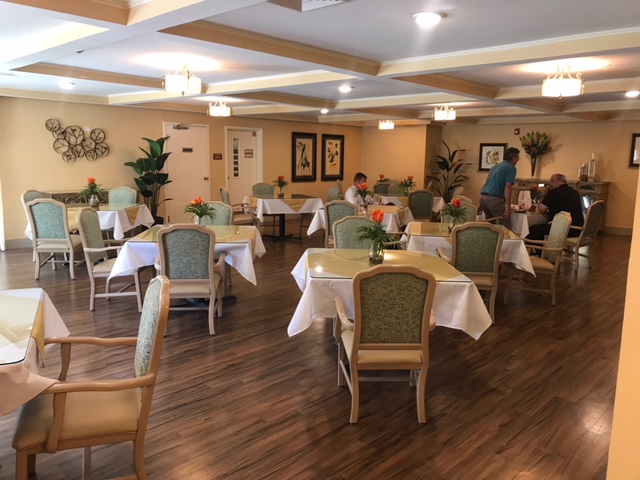
An interview was conducted with Resident #74's family member on 11/14/2023 at 10:30 AM. The family member stated she insisted the facility get Resident #74 up for lunch. She stated she took the resident to the dining room across from the nurses' station, and was told the area was not really a dining room, so she could not assist the resident to eat in the area. She stated, I was very perplexed as other residents are permitted to eat in the room. I was told [Resident #74] would be getting up for lunch and going to the dining room on the other side of the facility, which was fine with me. The facility got [Resident #74] up for one or two days and then stopped. I had to insist they get [Resident #74] up so we can go outside. The facility told me [Resident #74] was only permitted to be up for two hours due to her wound, of course I don't want anything to impede healing. The rest of the time [Resident #74] just lays in the bed looking at the walls. [Resident #74] has a TV but needs to get out of the room or have something in the room to do. Every time I come [Resident #74] says, 'bored'. [Resident #74] has started a habit of tapping on the over bed table. I think [Resident #74[ started this behavior due to boredom and anxiety, with nothing to do. The only activities offered are the ones I offer her. No one from activities comes to the room to offer something different to do.
An interview was conducted with Staff B, Licensed Practical Nurse (LPN) on 11/15/23 at 9:50 AM. Staff B, LPN stated Resident #74 does not get up for breakfast and does not normally get up for lunch until recently, as the family member comes to assist the resident.
An interview was conducted with Staff A, Certified Nursing Assistant (CNA) on 11/15/23 at 10:00 AM. Staff A, CNA stated regularly working with Resident #74. Staff A, CNA stated the resident is assisted to eat in her bed for breakfast and only recently gets up for lunch. She stated, I don't see anyone doing anything with Resident #74, only the [family member]. I only provide care not activities.
An interview was conducted with Staff G, Registered Nurse (RN) on 11/15/23 at 3:45 PM. Staff G, RN stated Resident #74 does not get up for dinner.
An interview was conducted with Staff R, CNA on 11/15/23 at 4:05 PM. Staff R, CNA stated Resident #74 does not get up for dinner.
An interview was conducted with the Activity Director (AD) on 11/16/2023 at 8:11 AM. The AD stated the activities department goes room to room and asks residents if they would like to attend the activities for the day. She stated they try to go back and bring the residents to the group activities. The AD stated the facility does complete 1:1 visits with some of the residents who cannot get out of their rooms. The AD stated Resident #74 was not one of those residents. The AD stated residents on the rehabilitation side do not usually want to go to activities and they do not really have to provide much support to the rehabilitation side.
An interview was conducted with the Registered Dietitian (RD) and the Nursing Home Administrator (NHA) on 11/16/2023 at 9:35 AM. The NHA stated Resident #74 was admitted with numerous wounds and poor nutritional status with protein deficiency. They stated they had been working with the family member on providing a dining experience that would reduce the distractions for the resident, and permit Resident #74 to focus on eating. They stated they had assigned Resident #74 to sit in a smaller dining room to accomplish this goal for the last two weeks. They stated, the staff know to get Resident #74 up for lunch and dinner and to take Resident #74 to the smaller dining room on the other side of the building. They stated they verbally told the nurse on floor, the Unit Manager (UM), the evening supervisor, and the weekend supervisor.
A review of Resident #74's admission Record showed Resident #74 was admitted on [DATE] with the following diagnoses: Pressure Ulcer of sacral region, stage 4; atrial fibrillation; necrotizing fasciitis; dementia, anxiety plus other co-morbidities.
A review of Resident #74's admission Minimum Data Set (MDS), dated [DATE], revealed a Brief Interview for Mental Status (BIMS) of 6 out of 15, indicating severe cognitive impairment. Section G: Functional Abilities revealed the resident was dependent on the facility staff for bed mobility, toileting, showering, eating, and dressing.
A review of Resident #74's PG Life Enrichment Assessment - V 2, dated 9/30/2023, revealed the following:
4. Daily routine-prefers to spend free time in room, prefers to participate in leisure activities mostly in morning, and preferred activity setting in own room.
5. Leisure interest-several interests marked very important included computer/games, clothes/fashion, crafts, exercise, music, gardening/plants, snacking, pet therapy, spiritual and family/visitors. Interests marked somewhat important included reading, TV, talking/conversation, and group activities.
A review of Resident #74's Care Plan, dated 10/17/2023, revealed the following:
Focus: Resident #74 prefers being involved in self-directed activities, no interest in group activities. Listen to Music, spend time outside weather permitting, spend time with visitors, watching/listening to TV.
Goal: Resident #74 will show no signs and symptoms of social isolation/sadness through next review. As evidenced by: no longer engages in self-directed activities of expressed interest, increased refusal for care or therapy, not engaging with visitors and staff.
Interventions: Address Resident by preferred name, encourage Resident #74 to be active daily, give pastoral visits for opportunities for Resident #74 to exercise her spirituality, invite and escort to activities as resident elects/chooses of choice, provide daily meet and greet visits and give Resident the daily chronicle with the activities for the day listed, and provide materials needed for in-room activities as needed.
A review of the policy titled Live Enrichment Manual, dated 11/22, revealed the following:
-Life enrichment programming can enhance quality of life for guests/residents by integrating meaningful and enjoyable activities into daily experiences. Facility team members plans, coordinates, encourages, and supports a variety of recreational and therapeutic activities for all guests/residents based on individually identified needs, interests, culture, and background.
-Life enrichment programs are developed and implemented to meet the individualized physical, mental, spiritual, and psychosocial/emotional needs of the guest/resident as well as promoting self-expression and choice. Activities refer to an endeavor, other than routine activities of daily living, in which a guest/resident participates in activities that enhances his/her sense of well-being and that promotes or enhances physical, cognitive, and emotional health.
-Guest/residents are encouraged, but not required, to attend and participate in recreational and therapeutic activities in a group setting, one-on-one, or self-directed activities.
. Procedure: 3. Share with guest/resident and family the center schedule of life enrichment activities and assist in identifying areas programs of interest *If there are no scheduled programs of interest to the guest/resident, discuss plan to schedule desired activities. 10. Assist and support other life enrichment programs as needed.
CONCERN
(D)
Potential for Harm - no one hurt, but risky conditions existed
Deficiency F0561
(Tag F0561)
Could have caused harm · This affected 1 resident
**NOTE- TERMS IN BRACKETS HAVE BEEN EDITED TO PROTECT CONFIDENTIALITY**
2. On 11/13/2023 at 7:30 a.m. Resident #62 was observed sitting at his bedside getting ready for breakfast. He stated that he w...
Read full inspector narrative →
**NOTE- TERMS IN BRACKETS HAVE BEEN EDITED TO PROTECT CONFIDENTIALITY**
2. On 11/13/2023 at 7:30 a.m. Resident #62 was observed sitting at his bedside getting ready for breakfast. He stated that he was concerned regarding his refrigerator being taken away without notice, and he wanted to have it back in his room.
On 11/13/2023 at 11:00 a.m. review of the medical record revealed Resident #62 was admitted to the facility on [DATE], with diagnoses to include Type II Diabetes Mellitus, obesity, adult failure to thrive, hypertension and insomnia.
Review of the admission Minimum Data Set, October 2022, revealed in Section C-Cognitive Patterns a Brief Interview for Mental Status (BIMS) score of 15/15, indicating intact cognition.
An interview with Resident #62 on 11/15/2023 at 11:45 a.m. confirmed he had a refrigerator, and it was removed several months ago. He stated the Nursing Home Administrator (NHA) was removing all the refrigerators because residents were not following the facility policy to keep them clean. Resident # 62 stated he asked the NHA to look at his refrigerator and she stated to him she wished hers was as clean at her home. Resident #62 stated at no time was he informed he did not follow facility policy for the care of the refrigerator. Resident #62 stated he keeps his extra milk from dietary in the refrigerator, he keeps his soda his family brings to him in the refrigerator as well. He stated using the refrigerators on the nursing unit is an inconvenience and he has to get someone to unlock the door to the nourishment room.
Review of the care plan, dated 11/2/2022, revealed the following:
Focus: Resident will remain in long term care at the facility, and the goal will be to adjust to facility living without difficulties, and the intervention will be to provide services in an effort to enhance well-being.
Focus: Resident prefers self-directed activities with a goal of being involved in activities of his choosing, and an intervention of in room activities of his choice.
Focus: Resident is at risk for malnutrition related to adult failure to thrive, a goal of no weight loss and with an intervention of honoring preferences and diet as ordered.
Review of a progress note dated 7/18/2023, and signed by the facility psychiatric service provider, revealed, [Resident #62] is being seen for depression and insomnia follow-up. Resident is in good spirits he reports his appetite is fair and that depends on the food. He admits that he orders take out with other residents.
During an interview on 11/16/2023 at 9:50 a.m., with the Nursing Home Administrator (NHA) and the Dietician, the NHA stated a meeting was held with the resident regarding his request for a refrigerator in his room. The meeting was held with the resident and his family member. The NHA stated the resident's family member stated she does not feel Resident #62 is capable of following the facility policy to maintain the refrigerator and she is not able to help Resident #62 maintain the refrigerator. The NHA stated facility notes went out to the residents with refrigerators on August 21, 2023, regarding the removal of refrigerators, and on August 26, 2023, regarding storage of any refrigerators.
Review of a progress note dated 5/31/2023, by the NHA revealed the meeting with the resident and family member acknowledged and agreed to the facility terms to have a personal refrigerator within the resident's room. Resident #62 and family member agreed to clean the refrigerator, temperature check the refrigerator, and keep the refrigerator in good repair for the resident's and facility's safety. There were no further progress notes related to denial of Resident #62 having a refrigerator in his room and no notes related to him not following facility policy for maintaining the refrigerator.
During an interview with Resident # 62 on 11/16/2023 at 11:45 a.m. the resident stated the NHA told him the refrigerator had to be removed as there were other residents that did not keep their refrigerators clean and so all of the refrigerators in the facility had to be removed. He stated he was not given any letter regarding the removal. He stated that his family members help him with whatever he needs, and they bring him any items that he needs. He stated that his family members visit him weekly. He stated that when the NHA came to see him about the refrigerator and told him it was because residents are not keeping the refrigerators as per facility policy, he asked her to look at his and he stated that she told him she wished hers at home was as clean as his was. Resident #62 stated that he has not received any written notices and that no one spoke with a family member as far as he knows regarding care of the refrigerator.
Interview with Staff K, Certified Nursing Assistant/Unit Clerk/Transport Driver (CNA/UC/TD) stated Resident #62's family members visit several times a week and they come in the evenings as they work during the day.
Review of a facility memo, dated August 21, 2023, revealed the following:
As of today, Palm Garden of [NAME] will no longer permit use of personal refrigerators in resident/guest rooms due to health and safety concerns. All personal refrigerators need to be removed by the end of day on August 24, 2023. If you are unable to arrange for the removal, the facility will place the refrigerator in resident/guest storage for a short period of time while arrangements are made for picking up the personal item. Please call [phone number] if you have any questions. The facility has nourishment rooms on each unit for storage of food items. We ask that your personal items be labeled for identification purposes.
Review of the policy titled, Culinary Services - Resident Personal Food, December 2018, revealed the following:
Policy:
All residents have the right for family members and visitors to provide preferred or requested foods and fluids from outside of the facility, except where the health and safety of the individual or other residents would be endangered. Items brought into the facility will be stored under sanitary conditions.
Procedure:
Personal refrigerators will be allowed in resident rooms at the discretion of the Executive Director. Resident or designee will be responsible for monitoring and maintaining the refrigerator in accordance with standards of food safety.
Review of the policy titled, Resident [NAME] of Rights - A Guide To Your Rights As A Resident, revised July 2021, revealed the following:
B. Notes of Rights and Services: The center must inform the resident, both orally and in writing, in a language that the resident understands of his or her rights and all the rules and regulations governing resident conduct and responsibilities during the stay in the center. The center must also provide the resident with notice (if any) of the state plan developed under section 1919 (e)6 of the act such notification must be made prior to or upon admission, and as appropriate during the resident stay, and when the centers rules change. The resident has the right to be informed of his/her rights and of all rules and regulations governing resident conduct and responsibilities during his/her stay in the center, anytime state or federal laws relating to the residents right or center rules change during the resident stay in the center he/she must be promptly informed of those changes
N. Personal Property: The right to retain and use personal possessions including some furnishings, and appropriate clothing as space permits, unless to do so would infringe upon the rights or health and safety of other residents. The center shall exercise reasonable care for the protection of the resident's property from loss or theft.
Based on observations, interviews, and record reviews, the facility failed to allow two residents (#64 and #62) out of 40 sampled residents to exercise their autonomy related to the individual preference of having a personal refrigerator in their room.
Findings included:
1) The review of Resident #64's admission Record identified the resident was originally admitted on [DATE] and re-admitted on [DATE]. The record included diagnoses not limited to cervical spina bifida with hydrocephalus, moderate protein-calorie malnutrition, and unspecified paraplegia.
On 11/14/23 at 9:24 a.m., Resident #64 reported having a personal refrigerator and the facility had removed it about 3-4 weeks before his birthday in June. The resident stated the facility informed him the removal was due to health and safety. The resident reported being able to maintain the refrigerator and it had contained cans of soda. Resident #64 reported it was a new refrigerator bought by a family member. During the interview, a refrigerator was not observed in the resident's room.
On 11/15/23 at 3:25 p.m., Resident #64 stopped writer in hallway and again reported the facility had removed a personal refrigerator from his room. The resident reported being informed of the removal right before they took it, it had a 6 pack of cola in it, and he could clean it by himself. The resident stated the Nursing Home Administrator (NHA) informed him the refrigerator was in storage.
An observation, on 11/16/23 at 1:36 p.m., identified Resident #64 propelling self in wheelchair in the hallway and was able to maintain control of it using both hands.
Review of Resident #64's Quarterly Minimum Data Set (MDS), dated [DATE], revealed a Brief Interview of Mental Status (BIMS) score of 14, indicating an intact cognition. The MDS revealed the resident required extensive assistance from one person for bed mobility, dressing, and toileting, was independent with locomotion on and off unit, and required limited assistance from one person for personal hygiene.
On 11/15/23 at 1:52 p.m., Staff N, Certified Nursing Assistant (CNA), stated Resident #64 had a refrigerator and about 2-3 months ago they (management) came around and took them all out saying it was because of health and safety issues.
The Executive Director (ED) provided, on 11/16/23, a copy of a handwritten list of thirteen resident names, which included Resident #64's. The list was dated June 2023, Resident #64's name had a X next to name with Sat - Birthday. Resident #64 was the only name with a X next to it, others had notations with bullet points in front of the name. A handwritten list of refrigerators, dated July 2023, did not include Resident #64's name and included 11 other resident names. The resident names had x after the name, with no indication of what x meant. A handwritten list of Refrigerators, dated 8/15/23, included 10 resident names - 3 with ok, 1 identified I did, 6 noted no. Additional information listed was two additional resident names, one of which was Resident #64's, dated 8/21/23, both of the names were followed by no. The list for August 2023 did not identify what no, ok, or I did meant. The lists provided by the ED did not identify the staff member or members who had noted the refrigerators, revealing multiple staff had been involved.
On 11/16/23 at 3:15 p.m., the ED stated residents were assessed on their ability to clean the personal refrigerators and maintain temperature logs, and as a team the personal refrigerators were determined to be a safety issue as well. The ED reported residents were notified by memo and representatives received a robo-call to inform them of the removal.
On 11/16/23 at 3:34 p.m., the ED stated Resident #64's refrigerator had not been managed appropriately and no resident and/or representative had been able to maintain the personal refrigerators so all had to be removed. The NHA stated during a resident council meeting the residents were notified that they or their representatives would have to maintain the refrigerators. She reported there were nutrition refrigerators on the units that residents could use. The NHA was unable to provide documentation that determined Resident #64 had not maintained his personal refrigerator. She reported she had the documentation in sooooo many areas, not knowing she would have to have access to it, and sent the Director of Nursing (DON) to the unit to look for the documentation. The NHA stated the Ombudsman was notified of the refrigerators removal and did not have an issue with the decision.
A review of the Resident Council meeting notes from May 2023 identified the council was informed on 5/10/23 that all residents having refrigerators in their rooms must be able to maintain/clean them and no coffee machines were allowed in resident rooms. The meeting notes, from 5/10/23, revealed Resident #64 had not attended the meeting.
The review of Resident #64's progress notes did not reveal the resident was notified of the need to maintain or had been educated on maintaining the personal refrigerator in accordance with the standards of food safety.
A letter provided by the ED and addressed to Resident #64, dated October 26, 2023, identified the facility was storing the residents refrigerator and it needed to be removed from our center to a permanent location.
CONCERN
(D)
Potential for Harm - no one hurt, but risky conditions existed
Notification of Changes
(Tag F0580)
Could have caused harm · This affected 1 resident
**NOTE- TERMS IN BRACKETS HAVE BEEN EDITED TO PROTECT CONFIDENTIALITY** Based on observations, interviews and record review, the facility failed to inform the resident/resident representative of a cha...
Read full inspector narrative →
**NOTE- TERMS IN BRACKETS HAVE BEEN EDITED TO PROTECT CONFIDENTIALITY** Based on observations, interviews and record review, the facility failed to inform the resident/resident representative of a change in status and change in medication for two residents (#99 and #314) of two residents sampled for change of status.
Findings included:
1) Review of the admission Record revealed Resident #99 was admitted to the facility on [DATE], with diagnoses to include surgical aftercare following surgery on the digestive system, difficulty in walking, malignant neoplasm of the pancreas, and other co-morbidities. An admission Minimum Data Set (MDS), dated [DATE], for Resident #99 showed a Brief Interview for Mental Status (BIMS) score of 15, indicating intact cognition.
During an interview on 11/13/2023 at 8:18 AM, Resident #99 stated, My discharge medication list from the hospital and my surgeon showed Lovenox to be given to prevent thrombosis, which I have had in the past. I received two injections from here, then the nurses stopped administering. I wasn't receiving the medication. I kept asking the nurses for it. I know how important this medication is to prevent me from having a stroke. I did not hear anything from them, they just said I was being difficult. I even showed them the discharge paperwork the hospital had given to me. The paperwork clearly indicates continue the Lovenox. I had to get my family involved. When my family checked, they were told, the Advanced Practice Registered Nurse (APRN) from the facility discontinued the Lovenox. No one discussed this change with me or my surgeon. My surgeon called and the medication was restarted. This should not have occurred without my knowledge or my surgeons.
Review of the Medication Administration Record (MAR) for the month of October 2023, showed Resident #99 received Enoxaparin Sodium Injection Solution Prefilled Syringe 40 MG (milligram)/0.4 ml (milliliter) (Enoxaparin Sodium) generic for Lovenox, inject 0.4 ml subcutaneously in the evening for prophylaxis, on 10/14/2023 and 10/15/2023. The order was discontinued on 10/16/2023 at 1636. An order was started on 10/18/2023 for Enoxaparin Sodium Injection Solution Prefilled Syringe 40 MG/0.4 ml (Enoxaparin Sodium) generic for Lovenox, inject 0.4 ml subcutaneously in the evening for Deep Vein Thrombosis (DVT) upper extremity and was given for the remainder of Resident #99's stay.
2) Review of the admission Record revealed Resident #314 was admitted to the facility on [DATE], with diagnoses to include Rhabdomyolysis (skeletal muscle breaks down rapidly), centrilobular emphysema, history of falls and other co-morbidities. On the admission Record under contacts the resident is listed as responsible party. Resident #314's Clinical admission Assessment marked the resident as alert & oriented x 3, communicated verbally, speech is clear, can understand and be understood when speaking.
During an interview on 11/13/23 8:13 AM, with Resident #314 and a family member, who is his health care surrogate and primary care giver, the family member stated, I guess he fell the other day; they did not call me when the fall occurred. They told me when I got here today.
Review of Resident #314's Progress Notes with an effective date of 11/12/2023, 7:41 AM showed the following: Resident was observed on the ground by the CNA. CNA reported the incident to the nurse. Comprehensive assessment completed and no abnormal findings and will continue to monitor for any pertinent changes.
Review of Resident #314's Therapy Screen Form - V4 with an effective date of 11/12/2023 at 5:06 PM. showed the following:
Resident #314 was referred to therapy due to a fall on 11/12/2023. A Physical Therapy Assistant denied completing the screen as Resident #314 was already being seen by physical and occupational therapy.
An interview was conducted with the Director of Nurses (DON) on 11/15/2023 at 3:51 PM. The DON stated he was not aware of Resident #314's fall and would have to ask the Unit Manager. The DON stated the expectation for notification of changes would be shortly after the incident or changes to the medications.
Review of a facility policy titled, Nursing - Change in Residents Condition or Status, effective date: October 2014, showed the following:
Policy: The facility shall promptly notify the resident, his or her attending physician, and representative of changes in the resident's medical/mental condition and/or status (e.g., changes in level of care, billing/payments, resident rights, etc.). Procedure: . 3. Unless otherwise instructed by the resident, the nurse supervisor/charge nurse/designee will notify the resident's family or representative when: * The resident is involved in any accident or incident that may or may not have resulted in an injury, including injuries of an unknown source; *There is a significant change in the resident's physical, mental, or psychosocial status; . 4. Regardless of the resident's current mental or physical condition, the nursing supervisor/charge nurse will inform the resident of any changes in his/her medical care or nursing treatments. 5. The nurse supervisor/charge nurse will record in the resident's medical record information relative to changes in the resident's medical/mental condition or status.
CONCERN
(D)
📢 Someone Reported This
A family member, employee, or ombudsman was alarmed enough to file a formal complaint
Potential for Harm - no one hurt, but risky conditions existed
Quality of Care
(Tag F0684)
Could have caused harm · This affected 1 resident
**NOTE- TERMS IN BRACKETS HAVE BEEN EDITED TO PROTECT CONFIDENTIALITY** Based on observations, interviews, and record review, the facility failed to provide treatment and care according to physician o...
Read full inspector narrative →
**NOTE- TERMS IN BRACKETS HAVE BEEN EDITED TO PROTECT CONFIDENTIALITY** Based on observations, interviews, and record review, the facility failed to provide treatment and care according to physician orders for non-pressure related skin conditions for two residents (#314 and #316) of two residents sampled for skin conditions.
Findings included:
1) On 11/13/23 at 08:13 AM, Resident #314 was observed laying in the bed, sheet up to waist with arms on top of the sheet. Resident had a soiled dressing, with dried blood visible to his left forearm dated 11/12/2023. Directly above the left forearm was a soiled folded gauze with medical tape wrapped around the arm, undated. A soiled dressing to left elbow, the dressing was peeling off and undated. The dressing to the right elbow was soiled with red and brown bloody drainage and starting to peel off the skin dated 11/12/2023. (Photographic Evidence Obtained).
During an interview on 11/13/23 at 12:00 PM, the family member of Resident #314 stated the resident had several skin areas that needed bandages, the ones you can see on his arms and on both of his legs. The family member stated the bandages on his legs look just as bad as the ones on his arms. The family member stated you should have seen the bandages yesterday, all the bandages were so saturated the bed was wet from the leakage. The family member stated, I kept asking for someone to come and change them. I could not get anyone to come change the bandages until I stood in front of them. Resident #314 confirmed this was an issue.
Review of the admission Record revealed Resident #314 was admitted to the facility on [DATE], with diagnoses to include Rhabdomyolysis (skeletal muscle breaks down rapidly), centrilobular emphysema, history of falls and other co-morbidities. On the admission Record under contacts the resident was listed as responsible party. Resident #314's Clinical admission Assessment marked the resident as alert & oriented x 3, communicated verbally, speech is clear, can understand and be understood when speaking.
Review of Resident #314's N Adv - Clinical admission evaluation, dated 11/10/2023 at 7:53 PM, revealed the resident was admitted with skin impairments to the right and left anterior elbow, the right lower leg, and right knee.
Review of Resident #314's hospital history and physical revealed the resident had dressings on in the hospital and an order to change dressings daily.
Review of Resident #314's Physician Order Summary Report showed no orders for treatments to the left elbow, left wrist, right elbow, and right knee until 11/13/2023 at 2:44 PM.
Review of Resident #314's Physician Order Summary Report showed an order dated 11/13/2023 at 2:44 PM Cleanse Left elbow with normal saline, pat dry, apply Xeroform, cover with abdominal pad then wrap with Kerlix every two days and as needed (PRN) if soilage or dislodgment. Order was discontinued on 11/15/2023.
A review of the Treatment Administration Record (TAR) for November 2023 revealed treatment was provided on 11/14/2023.
Review of Resident #314's Physician Order Summary Report showed an order dated 11/13/2023 at 2:44 PM Cleanse Left wrist with normal saline, pat dry, apply Xeroform, cover with abdominal pad then wrap with Kerlix every two days and PRN if soilage or dislodgment.
A review of the Treatment Administration Record (TAR) for November 2023 revealed treatment was provided on 11/14/2023 and 11/16/2023.
Review of Resident #314's Physician Order Summary Report showed an order dated 11/13/2023 at 2:40 PM Cleanse Right elbow with normal saline, pat dry, apply Xeroform, cover with abdominal pad then wrap with Kerlix every two days and PRN if soilage or dislodgment.
A review of the Treatment Administration Record (TAR) for November 2023 revealed treatment was provided on 11/14/2023, 11/15/2023 and 11/16/2023.
Review of Resident #314's Physician Order Summary Report showed an order dated 11/13/2023 at 2:44 PM Cleanse Right knee with normal saline, pat dry, apply Xeroform, cover with bordered gauze island dressing every two days and PRN if soilage or dislodgment. As needed for skin tear. Order discontinued on 11/15/2023.
A review of the Treatment Administration Record (TAR) for November 2023 revealed treatment was not provided.
During an interview on 11/13/2023 at 3:00 PM, Staff B, Licensed Practical Nurse (LPN) confirmed the resident did not have orders for treatments until 11/13/2023. Staff B, LPN stated orders should have been requested at the time of admission.
2) On 11/13/23 at 08:18 AM, Resident #316 was observed, dressed, and lying on top of the bed. Resident's left foot was observed with a bandage that was not secured to itself or the resident. The bandage was barely covering the resident's recent surgical incision (amputation of the toes). The bandage was loosely wrapped from the top of the foot to the heel and around the ankle. The bandage had no visualized drainage or discoloration. The incision site had no discoloration, ointments, or cream observed. (Photographic Evidence Obtained).
During an interview on 11/13/23 at 8:18 AM, Resident #316 stated she had requested all weekend for the nurses to fix the bandage as it was falling off. No one would listen or help. The resident stated knowledge of the treatment needed, and said there should be an orange medicine applied to the incision and this not being done. Resident #316 stated the physician had said to keep the incision clean and not to put pressure on it.
Review of the admission Record revealed Resident #316 was admitted to the facility on [DATE], with diagnoses to include dehiscence of amputation stump; left foot amputation partial, open wound to the left foot, Peripheral Vascular Disease, muscle weakness, dysphagia, cognition, need for assistance, hypertension, and other co-morbidities. On the admission Record under contacts the resident was listed as responsible party.
Review of Resident #316's Brief Interview for Mental Status (BIMS) reveals a score of 13 out of 15, indicating the resident is cognitively intact.
Review of Resident #316's Physician Order Summary Report showed an order dated 10/30/2023. Cleanse left lower extremity with normal saline, pat dry, apply Betadine then wrap with Kerlix daily and as needed (PRN) if soilage or dislodgment.
A review of the Treatment Administration Record (TAR) for November 2023 revealed treatment was document completed from November 1st to 15th.
Review of Resident #316's Physician Order Summary Report showed an order dated 10/30/2023. Cleanse left foot with normal saline, pat dry, apply Betadine then wrap with Kerlix daily and as needed (PRN) if soilage or dislodgment.
A review of the Treatment Administration Record (TAR) for November 2023 revealed treatment was document completed from November 1st to 15th.
Review of Resident #316's Physician Order Summary Report showed an order dated 10/30/2023. Cleanse left heel with normal saline, pat dry, apply Betadine then wrap with Kerlix daily and as needed (PRN) if soilage or dislodgment.
A review of the Treatment Administration Record (TAR) for November 2023 revealed treatment was document completed from November 1st to 15th.
During an interview on 11/16/2023 at 8:00 AM with Staff H, LPN, a review of the photographs of Resident #314's left and right arms was conducted. Staff H, LPN stated a recollection of 11/13/2023 when a family member requested dressing changes, and confirmed the dressings should have been changed when soiled and dated when completed. Reviewed the photographs of Resident #316's bandage on 11/13/2023. Staff H, LPN stated a recollection of that dressing as well and confirmed the bandage should have been changed, secured with tape and dated. Staff H, LPN stated the bandage did not appear to have the Betadine applied but Staff H, LPN was not here and could not confirm.
During an interview on 11/16/23 at 1:26 PM with the Director of Nursing (DON) a review of the photographs for Resident #314 and #316's bandages was conducted. The DON stated the bandages should have been changed. The DON stated the expectation is for the physician's order to be followed and the bandages should be dated when placed.
Review of the Policy and Procedure titled, NURSING PROCEDURE MANUAL Clean Dressing Change (Wound/Surgical Site), dated 07/2023 showed:
Purpose: * To prevent contamination of the wound. * To protect adjacent skin surfaces from irritation due to wound drainage. *To promote wound healing. Procedure: 1. Verify physician's order for dressing change and pain medication. 4. Identify a guest/resident, explain procedure, and provide privacy. 8. Observe the amount, color, and odor of drainage and condition of wound bed or incision. 18. Document date, time dressing changed, and initials on a piece of tape and place on dressing. 23. Document the following in the electronic medical record: Date and time of dressing change; Amount of drainage, color, and odor; Any unusual appearance of wound or peri-wound area; Complaints of pain or discomfort; Guest/resident response to procedure
CONCERN
(D)
Potential for Harm - no one hurt, but risky conditions existed
Unnecessary Medications
(Tag F0759)
Could have caused harm · This affected 1 resident
Based on observations, interviews, and record review the facility failed to ensure the medication error rate was less than 5.00%. Thirty-seven medication administration opportunities were observed and...
Read full inspector narrative →
Based on observations, interviews, and record review the facility failed to ensure the medication error rate was less than 5.00%. Thirty-seven medication administration opportunities were observed and nine errors were identified for two residents (#211 and #25) of four residents observed. These errors constituted a 24.32% medication error rate.
Findings included:
1) On 11/15/23 at 7:46 a.m., an observation of medication administration with Staff D, Registered Nurse (RN), was conducted with Resident #211. The staff member dispensed the following medications:
- Levofloxacin 500 milligram (mg) tablet
- Lisinopril 10 mg tablet
- Mucinex DM 600 mg Guaifenesin/30 mg Dextromethopran over-the-counter (otc) tablet
- Aspirin 81 mg chewable otc tablet
- Nifedipine Extended Release (ER) XL 60 mg tablet
- Polyethylene glycol 3350 - 17 grams (gm), mixed with 4 ounce (oz) of water
- Vitamin D 25 microgram (mcg) - 2 otc tablets
Staff D confirmed 7 tablets and one liquid medication. The staff member administered oral medications and identified the resident was to receive short and long-acting insulin. Staff D obtained a blood glucose level of 91 from the resident. The staff member stated and documented the dosage of Insulin Lispro (short-acting) would not be administered due to glucose level of 91. An unknown Certified Nursing Assistant (CNA) informed Staff D the breakfast trays were on the unit and the nurse left the area, returning with a breakfast tray placing it in front of the resident, and reported being told by a doctor to ensure a resident ate before administering insulin.
Staff D returned to the medication cart, dialed a Insulin Glargine pen to 2 units, pressing the dosage selector to it reached zero, then applied a needle to the pen, dialed it to 25 units, entered the resident room and injected the insulin into the right upper arm of Resident #211.
A review of Resident #211's physician orders included the following:
- Guaifenesin ER 12 hour 600 mg tablet - Give one tablet by mouth two times a day for indigestion for 14 days, dated 11/10/23.
- Insulin Lispro 100 unit/milliliter (mL) - Give 6 unit sublingually three times a day for Diabetes Mellitus (DM).
- Insulin Glargine 100 unit/3 mL - Inject 25 unit subcutaneously two times a day for DM.
The review of Resident #211's physician orders did not identify the resident was to receive Mucinex DM that is a combination medication containing 600 mg of Guaifenesin and 30 mg of Dextromethopran and the morning dose of Insulin Lispro did not include parameters to hold.
The manufacturer instructions for Lantus (Insulin Glargine), located at https://products.sanofi.us/Lantus/Lantus.html., included the following education for insulin pen users:
Step 2. Attach the needle
Do not re-use needles. Always use a new sterile needle for each injection. This helps prevent contamination and potential needle blocks.
A. Wipe the Rubber Seal with alcohol.
B. Remove the protective seal from a new needle.
C. Line up the needle with the pen, and keep it straight as you attach it (screw or push on, depending on the needle type).
-
If the needle is not kept straight while you attach it, it can damage the rubber seal and cause
leakage, or break the needle.
Step 3. Perform a Safety test.
Always perform the safety test before each injection. Performing the safety test ensures that you get an accurate dose by:
-
ensuring that pen and needle work properly
-
removing air bubbles
A. Select a dose of 2 units by turning the dosage selector.
B. Take off the outer needle cap and keep it to remove the used needle after injection. Take off the inner needle cap and discard it.
C. Hold the pen with the needle pointing upwards.
D. Tap the insulin reservoir so that any air bubbles rise up towards the needle.
E. Press the injection button all the way in. Check if insulin comes out of the needle tip.
-
You may have to perform the safety test several times before insulin is seen.
-
If no insulin comes out, check for air bubbles and repeat the safety test two more times to remove
them.
-
If still no insulin comes out, the needle may be blocked. Change the needle and try again.
-
If no insulin comes out after changing the needle, your SoloStar may be damaged. Do not use this
SoloStar.
2) On 11/15/23 at 9:20 a.m., an observation of medication administration with Staff P, Licensed Practical Nurse (LPN), was conducted with Resident #25. Staff P obtained a blood pressure of 105/78 from the resident and dispensed the following medications:
- Thiamine Vitamin B1 100 milligram (mg) over-the-counter (otc) tablet
- Cetirizine 10 mg otc tablet
- Artificial tears eye drops
- Creon Delayed Release (DR) 6000 unit capsule
- Dicyclomine 10 mg capsule
- Folic Acid 400 microgram (mcg) otc tablet
- Gabapentin 300 mg capsule
- Mesalamine ER 500 mg capsule
- Senna 8.6 mg otc tablet
- Vitamin D3 125 mcg otc tablet
- Klor-Con 10 milliequivalents (meq) tablet
- Polyethylene glycol 17 gram (gm) - mixed with 4 ounces (oz) of water
- Aspercreme with 4% Lidocaine Max Strength topical patch
Staff P confirmed dispensing 10 tablets/capsules, acknowledging the resident was scheduled to receive Lactulose but it had to be re-ordered, and was holding Amlodipine due to the blood pressure parameters. The staff member crushed tablets together and added to applesauce. The staff member administered the medications and placed the topical patch to the lower- mid back of the resident.
The physician orders for Resident #25 included an order reading May crush medications unless contraindicated, the orders were further reviewed and the following issues were observed:
- Lidocaine 5% patch - apply topically daily, apply in a.m. and remove at bedtime (hs) for chronic pain. Staff P applied a topical patch of Aspercreme with 4% Lidocaine.
- Amlodipine Besylate 5 mg tablet by mouth in the morning for hypertension (HTN). The order did not include blood pressure parameters to hold.
- Lactulose solution 10 gm/15 milliliter (mL) - give 15 mL by mouth one time a day for constipation. The medication was not administered due to unavailability of it for the resident and the medication profile was colored red revealing the medication was late. The Medication Administration Record (MAR) identified the medication was scheduled for 8:00 a.m.
- Thiamine B1 was scheduled for 8:00 a.m., medication profile colored red revealing the medication was late.
- Creon DR 6000 unit capsule - observation identified the breakfast trays on the unit have been removed from resident rooms. No meal tray was observed in Resident #25's room. According to creoninfo.com, Creon needs to be taken with every meal and snack to work as expected. The digestive enzymes in Creon need to mix with food and enter the stomach and the small intestine at the same time.
- Klor-Con 10 milliequivalent (meq) tablet - crushed with other oral medications. Physician order - Potassium Chloride Extended Release 10 meq - Give 1 tablet by mouth in the morning for hypokalemia. Do Not Crush. The website, mayoclinic.org identified Potassium Supplement, Do not crush or chew the capsule. Swallow the capsule whole with a full (8-ounce) glass of water. Some capsules may be opened and the contents sprinkled on applesauce or other soft food.
On 11/5/23 at 9:48 a.m., Staff P confirmed crushing Potassium, We need to change that.
A request was made to the Director of Nursing (DON), on 11/15/23 at 4:46 p.m. for a Do Not Crush medication list. The DON reported This is about the potassium. On 11/15/23 at 5:25 p.m., the DON stated the facility does not have a Do Not Crush medication list.
An interview was conducted on 11/16/23 at 11:22 a.m. with the Consultant Pharmacist. The issues observed during medication administration were reviewed and discussed with the consultant. In regards to Staff D not applying a needle when priming the Insulin Glargine pen for Resident #211, he stated How did it get out? and the facility should have followed the orders for Insulin Lispro. The pharmacist reported Klor-Con was extended release and should not be crushed, Creon Dr should be administered with meals, there was no reason for Thiamine and Lactulose to scheduled at a different time than the other observed medications, and Mucinex DM was not the same as Guaifenesin ER as it contained the additional medication Dextromethopran. The consultant agreed with the findings and stated it looked like the facilty would need extensive education with medication administration.
During an interview on 11/16/23 at 2:50 p.m., the Director of Nursing (DON) stated he had spoken with the Consultant Pharmacist regarding the findings during medication administration and did not have any questions.
The policy - Medication Administration, dated 7/2023, included the following instructions:
- Compare the medication with the Medication Administration Record (MAR).
- Verify physician's order to crush medication.
- Verify medication can be crushed. Examples of medication that should not be crushed includes, but are not limited to: enteric coated tablets, sustained or extended-release tablets, effervescent tablets, (and) sublingual or buccal tablets.
The policy regarding Insulin Injection did not instruct the use of an insulin pen.
CONCERN
(E)
Potential for Harm - no one hurt, but risky conditions existed
Grievances
(Tag F0585)
Could have caused harm · This affected multiple residents
**NOTE- TERMS IN BRACKETS HAVE BEEN EDITED TO PROTECT CONFIDENTIALITY** Based on observations, interviews, and record reviews the facility failed to resolve grievances related to dietary concerns in a...
Read full inspector narrative →
**NOTE- TERMS IN BRACKETS HAVE BEEN EDITED TO PROTECT CONFIDENTIALITY** Based on observations, interviews, and record reviews the facility failed to resolve grievances related to dietary concerns in a timely manner for two residents (#4 and #85) out of the two sampled residents for grievances.
Findings included:
1. On 11/14/23 at 10:12 a.m., Resident #4 reported he was the Resident Council President. He stated the number one concern in the facility was food. The food was cold, did not taste good, and was always late. He reported these concerns have been voiced over and over during the Resident Council Meetings and nothing changes. The response from staff related to the food concerns was always something about the budget. If they are served hotdogs, then they probably won't get mustard and ketchup. Administration took away cokes and they are only served ginger ale and diet ginger ale. They were told this was for nutritional reasons. The administration took away vending machines for residents. They have one in the staff break room but if they want something they have to ask a staff member to get it. Resident #4 stated, For some of them, food is the only thing they have to look forward to. He stated the concerns have been discussed with the Administration and they always say they will look into it.
A review of the admission Record for Resident #4 showed he was initially admitted to the facility on [DATE] with a primary diagnosis of atherosclerotic heart disease of native coronary artery without angina pectoris.
A review of the quarterly Minimum Data Set (MDS), dated [DATE], showed Resident #4 had a Brief Interview for Mental Status (BIMS) score of 15, indicating cognitively intact.
Review of the Food Committee Meeting Minutes, dated 05/10/23, revealed there would be cutbacks on certain drinks due to cost. There were eighteen residents in attendance.
Review of the Resident Council Meeting Minutes, dated 08/09/23, revealed during food council, the council voiced concerns regarding dissatisfaction about the meals. There were ten residents in attendance. There was new business discussed about the facility providing a survey for food times likes/dislikes, dinner starts promptly at 4:45 p.m., and the menu for the week including alternatives would be at the nurses' station.
Review of the Food Committee Meeting Minutes, dated 08/09/23, showed the council voiced concerns regarding dissatisfaction with meals. The facility would provide a survey for food items likes and dislikes. Menus for the week, including alternatives, will be at the nurses' station.
Review of the Food Committee Notes, dated 11/09/23, indicated guests requested to get regular sodas back. Soda will be ordered as available through the vendor.
A review of the Grievance/Complaint Log from July 2023 to November 2023 did not show any grievances for the dietary concerns voiced by the resident council.
On 11/16/23 at 11:11 a.m., the Life Enrichment Manager reported she assisted with putting together the Resident Council Meetings. She stated the residents complained mostly about food. She stated, One time the whole meeting was about food. She stated, the residents complained about running out of syrup and other small items that they should not have run out of, and the residents were upset about not being able to have sodas. The Life Enrichment Manager stated anytime they have a concern, she writes a grievance and puts it on the grievance log.
On 11/15/23 at 11:15 a.m., the Registered Dietitian (RD) stated they only have ginger ale or diet ginger ale available, and she was not sure why they stopped ordering cokes.
On 11/16/23 at 12:26 p.m., an interview with the Administrator and the RD was conducted. The Administrator reported about fifty residents completed surveys related to food to get an idea of what were the concerns the residents had.
On 11/16/23 at 10:12 a.m., the Administrator reported she attended the Food Committee Meetings. At the time a new menu was rolling out and she wanted to see if any additional concerns would come up. The residents spoke about preferences through the dietitian and the Certified Dietary Manager (CDM). The Administrator stated they have not found a particular pattern for any specific items. The residents are aware that alternatives are available. The Administrator stated soda was removed, but they have ginger ale and diet ginger ale. They are readdressing the concern with the sodas. Some of the residents have family members bringing sodas to them.
On 11/16/23 at 11:19 a.m., the Social Services Director (SSD) stated a grievance was usually resolved within three days after she receives it. She confirmed she did not see any grievances from the Resident Council and the Grievance/Complaint Log.
2) On 11/13/23 at 9:39 a.m., Resident #85 reported, Food is terrible, chicken looked like it was dragged across the floor, the food tastes terrible. The resident stated the kitchen was not very efficient and reported telling the kitchen manager if working in a public restaurant Would be closed in a week.
A review of Resident #85's Minimum Data Set (MDS), dated [DATE], identified a Brief Interview of Mental Status (BIMS) score of 14, indicating an intact cognition.
Review of a grievance filed by Resident #85 on 11/7/23 included the following concerns voiced by the resident:
- Chicken looks like its been drug on floor;
- Quality of food is not good;
- Chicken still pink on plate;
- Chicken rib cage on plate;
- Quiche is burnt and terrible;
- Oatmeal is like clay, too thick.
The grievance revealed the resident desired Manager to be more efficient and pay attention to what goes on and for efficiency and quality. The steps taken to investigate the grievance included the resident showing photos of food that the investigator identified as Most of the meals were dated months to even a year ago. The food in the pictures also looked fully cooked. The investigators findings revealed Resident #85 had been spoken with and Tried my best to resolve his concerns and explained to him that we temp and document our food before serving it. I followed up to the cook that cooked the quiche on the 23 rd of October. That cook has been spoken with on numerous occasions about food quality and preparation. The corrective action revealed the investigator had Verbally expressed the concerns and needs of how the food is to be cooked and prepared. Also will follow up with a written in-service on food temps. The grievance identified the resident was notified and the response was Satisfied/understood on 11/7/23.
On 11/15/23 at 3:31 p.m., Resident #85 reported sending a note on his food tray two days ago (11/13/23) then the Certified Dietary Manager (CDM) came to speak with him. The resident reported sending a note yesterday and the CDM came to speak with him again. Resident #85 stated after filing a grievance last week the Certified Dietary Manager (CDM) spoke with him 2 days ago. The resident reported after speaking with the CDM felt the grievance had been taking care (7 days after the grievance was resolved) of satisfactorily and would continue to send notes.
The policy provided by the facility Grievance Policy and Procedures, undated, revealed the following:
This facility will assist residents and their representatives in filing grievances when such requests are made and/or complaints are voiced. The facility will promptly and responsibly investigate these grievances to initiate timely resolution and determine if the facility has areas that need corrections to achieve our desire or providing quality care and a safe environment.
Procedure
5. The Social Service Director will make every attempt to resolve the grievance in a timely manner and will keep the resident and their representative aware of the progress towards resolution.
6. The Social Service Director will keep a summary log of all grievances, which will be brought to the monthly QAPI meeting for review and further action, if necessary. The log will be signed by the Medical Director.
CONCERN
(E)
Potential for Harm - no one hurt, but risky conditions existed
Deficiency F0700
(Tag F0700)
Could have caused harm · This affected multiple residents
**NOTE- TERMS IN BRACKETS HAVE BEEN EDITED TO PROTECT CONFIDENTIALITY** Based on observations, interviews, and record review, the facility failed to reassess the need for an appropriate use of bed rai...
Read full inspector narrative →
**NOTE- TERMS IN BRACKETS HAVE BEEN EDITED TO PROTECT CONFIDENTIALITY** Based on observations, interviews, and record review, the facility failed to reassess the need for an appropriate use of bed rails for one resident (#80) of three residents sampled for bed rails.
Findings included:
On 11/15/23 at 4:09 p.m. Resident #80 stated the facility just came in and took the rails off the bed. The resident reported using the rail/enabler to assist with getting into bed and moving up in the bed. The resident stated he knew what a trapeze was and had not been assessed for one. The observation revealed Resident #80 had a left upper arm contracture which was held in front of the chest. An observation of the resident bed revealed no assistance devices were attached to the bed.
The Quarterly Minimum Data Set (MDS), dated [DATE], identified Resident #80 had a Brief Interview of Mental Status score of 13, indicative of an intact cognition. Section GG of the MDS identified the resident had Range of Motion limitations on one side of the upper and lower extremities. The MDS revealed the resident required substantial/maximal assistance with toileting hygiene, bathing, and lower body dressing, and required partial/moderate assistance with sit to stand, chair/bed-to-chair transfer, toilet transfer, and tub/shower transfer. The assessment identified the resident was independent with rolling left to right, sit to lying, and lying to sitting on side of bed.
Review of Resident #80's admission Record revealed the resident was admitted on [DATE] and was the responsible party. The record included the diagnoses of unspecified encephalopathy, hemiplegia and hemiparesis following cerebral infarction affecting left dominant side, generalized muscle weakness, other abnormalities of gait and mobility, and Type 2 Diabetes Mellitus without complications.
The clinical record for Resident #80 included an Adaptive Rails Informed Consent and Release form signed by Resident #80 on 4/7/23. The consent revealed the resident had been informed of the benefits and risks associated with the use of adaptive rails, including possible entrapment and accidental skin bruising, cuts, or scrapes. The consent identified the benefits to using the adaptive rails were:
1. Improved mobility in bed: I will be able to reposition myself or assist my caregivers to reposition me.
2. Improved mobility getting in and out of bed. I will be able to transfer myself into and out of bed or to assist my caregivers with transferring me into and out of bed.
I understand that the adaptive rails are to be used as a mobility aid and not as a physical restraint. I can withdraw this consent at any time. If I become unable to use the adaptive rails, the adaptive rails will be removed from my bed, so they are not an unintended physical restraint or possible entrapment hazard. Included with the consent was a description of adaptive rails approved by the center: quarter-length adaptive rail and an adaptive transfer bar.
A review of Resident #80's care plan identified the resident was at risk for falls related to impaired mobility, balance, status post (s/p) Cardiovascular accident (CVA) with left (lt) hemiplegia (hemi), atrial fibilation (Afib), hypertension (HTN), Diabetes Mellitus (DM), (and) need for assistance with transfer. The interventions included but not limited to Keep adaptive equipment within reach. The care plan identified the resident had the need for setup to complete assistance from staff with Activities of Daily Living (ADL) self-care and/or mobility deficit with potential for further decline due to diagnosis. The interventions instructed staff to encourage and assist to turn and reposition, shifting weight to enhance circulation.
During an interview on 11/13/23 at 1:34 p.m., Staff O, Licensed Practical Nurse (LPN) reported a couple of months ago the facility removed side rails and enablers due to the new state law. The staff member stated if residents insisted on having side rails they have to be evaluated for them.
An interview on 11/15/23 at 12:24 p.m., was conducted with Staff O, LPN. The staff member reported side rails were taken out in stages and if a resident or family requested side rails or if she felt the resident needed them for safety, a therapy request would be initiated who would assess for a trapeze and if the resident continued to want rails, she would have to ask again for them and have a consent signed.
Review of Resident #80's Adaptive Rail Screen revealed it was completed on 4/11/23. The screening identified the use of adaptive rail(s) were being considered due to Resident requested for safety/security and the resident had requested rails states it provides a sense of security. The screening revealed adaptive rails will assist the resident in turning side to side/holding self to one side or up and down in bed, pulling self from laying to a sitting position, will assist the resident in improving balance or trunk control, assist in supporting self, and assist the resident in entering/exiting (the) bed or transferring more easily. The documentation revealed the use of adaptive rails would not create a possible accidental hazard or barrier to the resident or have any negative physical or psychosocial outcomes, and no prior interventions such as a low bed, restorative care, frequent staff monitoring, assisted toileting, or reminders to use call bell had been implemented. The recommendation identified adaptive rails on both sides were recommended due to resident request and the risks, benefits and alternatives had been discussed with the resident.
The therapy screens for Resident #80 included:
- 6/8/23 Quarterly evaluation identified Physical therapy (PT) was indicated without occupational therapy (OT). The evaluation did not reveal the resident was screened for the discontinuation of adaptive rails or the evaluation of alternatives.
- 6/23/23 Referral evaluation indicated no PT, OT, or speech therapy (ST) was indicated. Patient (Pt) currently on caseload for PT.
- 7/31/23 Referral evaluation identified PT was indicated as resident had decline in lower extremity (LE) strength and was no longer ambulatory. The screening did not address the discontinuation of adaptive rails or the evaluation of alternatives.
- 9/8/23 Quarterly speech therapy evaluation revealed no change or concerns and speech therapy was not indicated at that time.
- 9/12/23 Quarterly evaluation for PT and OT revealed neither was indicated at that time. The screening did not address the discontinuation of adaptive rails or the evaluation of alternatives. The evaluation did identify the resident was recently discharged from PT services.
- 9/19/23 Referral for speech therapy to assess swallowing function.
- 10/24/23 Referral to OT for assessment of left hand contracture development.
Review of Resident #80's PT Discharge Summary for the date of services of 6/16/23 through 7/10/23 identified the short-term goal of Patient will safely perform bed mobility task with standby assistance without use of side rails and 5% verbal cues for safety awareness, for proper sequencing, for task segmentation, for correct hand/foot placement, and for initiation/termination of tasks in order to decrease risk for skin breakdown, participate in EOB activities, get in/out of bed, participate in activities of daily living, enhance safe functional mobility, and reduce risk for falls. The summary identified the resident's baseline on 6/16/23 for this goal was contact guard assist (CGA) and was unchanged at the time of discharge on [DATE]. A long-term goal for the resident was Patient will safely perform bed mobility tasks with Supervised (A) without use of side rails and 5% verbal cues for safety awareness, for proper sequencing, for task segmentation, for correct hand/foot placement, and for initiation/termination of tasks in order to decrease risk for skin breakdown, participate in EOB activities, get in/out of bed, participate in activities of daily living, enhance safe functional mobility, and reduce risk for falls. The summary identified the resident's baseline (6/16/23) and discharge (7/10/23) was contact guard assist (CGA) for bed mobility. The summary revealed the patient demonstrated fair progress and had plateau' d and the recommendation to continue with restorative nursing program (RNP).
A review of the facility admission Agreement identified The resident has a right to a dignified existence, self-determination, and communication with and access to persons and services inside and outside the facility, including those specified in this section. The facility must treat each resident with respect and dignity and care for each resident in a manner and in an environment that promotes maintenance or enhancement of his or her quality of life, recognizing each resident's individuality. The facility must protect and promote the rights of the resident.
The facility provided a letter dated 2/7/23 (2 months prior to Resident #80's admission) sent to families and residents. The letter identified the facility would be working to eliminate the use of all adaptive rails/mobility bars unless they are proven to be medically necessary for each individual guest/resident. The letter revealed as part of an ongoing performance improvement program each individual guest/resident would be assessed for the use of adaptive rails/mobility bars with the input from the interdisciplinary team and all recommendations would be reviewed with the individual guest/resident and/or responsible party.
A facility letter, dated 5/30/23, revealed the facility was working towards eliminating the use of all adaptive rails/mobility bars unless proven medically necessary. The assessment for the use of rails/bars would include input from the interdisciplinary team (IDT) and the recommendations would be reviewed with the individual guest/resident and/or responsible party. The continued use would be routinely monitored and the IDT would make recommendations if a guest's/resident's circumstances changed.
The facility plan for removal of adaptive rails, dated 6/18/23, identified Adaptive rails to only be utilized when the center has tried alternatives, IDT (includes therapy) assessment recommends one or tow for mobility and transfer and physician's order has been obtained, family/resident consents, and is care planned.
- 1. letter to sent to all families/residents two weeks prior to removal explaining regulation and new protocols.
- 2. center will obtain and have a par level of concave/perimeter mattresses, fall mats, motion sensor lights, and night lights, identify facility bed frames that are able to extend to wider beds with wider mattresses available.
- 3. all adaptive rails and bed rails will be removed from all beds and stored in an inaccessible storage area for anyone but maintenance/environmental services to ensure that none make it back to the floor without the process being followed.
- 4. Alternatives to adaptive rails will be attempted and documented. Should multiple alternatives fail, an adaptive rail review will be performed, and a therapy referral will be made. Therapy interventions, i.c. slide boards will be utilized. Should the therapy alternatives fail, the IDT will discuss and if need be, the possible use of one or two adaptive rails for transfers, the IDT recommendations will be discussed physician and resident/family. Should a recommendation be made for one or two adaptive rails and physician and family/resident agree, a consent would be obtained, scanned into the medical record, and care planned. The adaptive rail review will be performed quarterly and as needed with change of condition (COC).
During an interview on 11/16/23 at 2:56 p.m., the Director of Nursing (DON) reported the facility looked at adaptive rails in June and removed them. He stated when someone requests an adaptive rail the facility asks for an alterative such as a scoop mattresses, trapeze, or furniture placement, therapy would screen them, nursing would meet, a side rail evaluation, physician order, consent and the rails would be added to the care plan. The DON stated the facility looked at the rails, explained to residents, sent out letters to residents and family members, and met in resident council in June or July. The facility also held a team talk with staff. He reported all residents were informed the facility was to try something different and all residents were screened.
The policy - Siderails/Adaptive Rails Guideline, revised January 2023, identified It is the standard of the center to attempt to use alternatives prior to installing an adaptive rail (bed mobility assistive device). If an adaptive rail(s) is used the center will ensure correct installation, use and maintenance of the adaptive rail. The center only utilizes adaptive rails to aid with bed mobility. The center only utilizes adaptive rails based on individual guest/resident assessment - no full side rails, half rails or quarter rails will be installed.
1. Adaptive rails are used to assist with mobility and transfer of guests/residents.
2. Prior to the use of adaptive rails, alternatives will be attempted and documented.
3. Alternatives to be considered prior to installing adaptive rail include but are not limited to
- a. Low bed
- b. Concave mattress
- c. Furniture placement
- d. mechanical lift
- e. therapy recommended bed mobility devices such as slide boards
- f. One adaptive rail instead of two for guests/residents with limitations related to medical conditions
on a specific side of their body.
- g. fall mats
- h. Overbed trapezes
- i. motion sensor lights
- j. night lights
- k. Other resident specific interventions with supporting documentation.
11. If guest/resident condition improves and adaptive side rail use is no longer indicated the adaptive rails will be reviewed by the interdisciplinary team and discontinued after reviewing with guest/resident and/or responsible party.
CONCERN
(E)
Potential for Harm - no one hurt, but risky conditions existed
Deficiency F0761
(Tag F0761)
Could have caused harm · This affected multiple residents
**NOTE- TERMS IN BRACKETS HAVE BEEN EDITED TO PROTECT CONFIDENTIALITY** Based on observations, interviews, and record reviews the facility failed to ensure medications were stored in a safe manner in ...
Read full inspector narrative →
**NOTE- TERMS IN BRACKETS HAVE BEEN EDITED TO PROTECT CONFIDENTIALITY** Based on observations, interviews, and record reviews the facility failed to ensure medications were stored in a safe manner in regards to 1) leaving one of two treatment carts unlocked while unattended (C-wing), 2) unopened eye drops requiring refrigeration stored in one (100-hall team #2) out of six medication carts, 3) one (C-wing team #3) out of six medication carts held medication tablets in a medication cup and a loose tablet, 4) three (C-wing, A-wing team #2, C-wing team #1) out of six medications carts left unlocked while unattended, 5) medications left on top of two unattended medication carts (100 team #2 and A-wing) out of 6 carts, 6) allowing a visitor unattended access to an unlocked medication cart (A-wing team #2 and C-wing team #1) out of six carts, and 7) allowed one resident (#85) to have a prescribed Albuterol inhaler at bedside.
Findings included:
1.
On 11/13/23 at 7:27 a.m., an observation was made of an unlocked treatment cart parked inside the C-wing nursing station. The observation identified a intravenous (IV) bag of normal saline with IV supplies on top of the treatment cart. The cart contained wound care supplies including creams/ointments. An unknown housekeeper was observed in the office next to the unlocked treatment cart. Staff B, Licensed Practical Nurse (LPN), arrived to the station and stated the cart should be locked at all times. The staff member locked the treatment cart leaving the IV bag and supplies sitting on top of the cart. The nursing station did not have a door prohibiting entrance into the area behind the desk. (Photographic evidence was obtained)
2.
On 11/15/23 at 7:18 a.m., the review of the 100-hall, team #2 medication cart was conducted with Staff Q, LPN, identified an unopened bottle of Latanoprost ophthalmic drops. The bottle was labeled to refrigerate. The staff member walked away from the open medication cart to the nursing station while writer was inspecting the cart and the bottle of Latanoprost was sitting on top of it, which was parked across from the station. Staff Q was observed speaking with Staff P, LPN, behind the nursing station and not looking in direction of the medication cart. The staff member returned to cart and agreed this writer was not authorized to have unattended access to the medication cart, I guess not. The staff member confirmed the bottle of Latanoprost was unopened, should be refrigerated, and stated the medication had not been delivered from pharmacy during the shift of 11 p.m. to 7 a.m.
(Photographic evidence was obtained)
3.
On 11/15/23 at 7:37 a.m., an observation was conducted with Staff B, LPN, of team #3 medication cart. The staff member opened the top drawer of the cart and removed a medication cup with 3 tablets, 2 white and 1 blue, in it. Staff B identified one of the tablets as an antidepressant. The staff member stated the tablets were not morning medications, had taken over the cart so did not know the resident they were prescribed. One round white tablet was found in the bottom of the second drawer which Staff B identified as an antihypertensive.
4.
During an observation of medication administration for Resident #211 on C-wing, on 11/15/23 at 7:46 a.m., the medication cart was parked slightly to the side of a resident's door and in the hallway allowing people to pass in between the door and cart. Staff D, Registered Nurse (RN), left the cart unlocked and out of vision when administering medications to a resident.
5.
During an observation of medication administration, on 11/15/23 at 9:20 a.m., of Resident #25, medication blister-packaging cards were left on top of an unlocked med cart. The nurse was observed standing behind the resident's privacy curtain administering the medication. On 11/15/23 at 9:39 a.m., the Director of Nursing (DON) walked in between the cart and rooms door, leaving medications on top of it and unlocked. Immediately following the medication administration, on 11/15/23 at 9:48 a.m., Staff P confirmed 5 blister-packaging medication cards containing tablets/capsules were left on top of the cart and the cart was unlocked.
(Photographic evidence was obtained)
6.
An observation was conducted with Staff O, LPN, on 11/16/23 at 1:36 p.m. of C-wing team #1 medication cart. The medication cart was parked between room [ROOM NUMBER] and 203, approximately halfway down the hallway and around the corner from the nursing station. Staff O unlocked the cart and as this writer opened the top drawer of the cart the staff member walked away standing at the nursing station then disappeared from sight. The observation identified the Director of Education (DOE) was seen standing at the nursing station and after a few minutes the DOE arrived to the cart and confirmed Staff O should not have unlocked the cart and walked away. The DOE went to the nursing station and returned with the staff member. Staff O confirmed being responsible for the medication cart and was watching from afar.
(Photographic evidence was obtained)
7.
An observation was made, on 11/13/23 at 9:38 a.m., of a handheld red/gray inhaler in a manufacturer box on Resident #85's over-bed table. The inhaler was dated 9/22. Resident #85 reported, on 11/13/23 at 9:59 a.m., of using the inhaler twice a day, 2 puffs in the morning and 2 at night, They trust me with it.
An interview was conducted on 11/14/23 at 8:30 a.m., with the Director of Nursing (DON). The DON reported no resident in the facility was self-administering medications and stated hope that doesn't mean you found meds at bedside.
During an observation and interview on 11/15/23 at 12:24 p.m. with Staff O, LPN, and Resident #85. The resident stated to the staff member that he was not upset that she had taken the inhaler but he was able to take it (administer) it by himself. The staff member reported she had taken the inhaler from the resident today after informing him that it would be easier to reorder it.
During an interview, on 11/16/23 at 2:53 p.m., the DON did not ask any questions or commented on findings.
The policy - Storage and Expiration Dating of Medications, Biologicals, last revised 7/21/22, revealed, This Policy 5.3 sets forth the procedures relating to the storage and expiration dates of medications, biologicals, syringes, and needles. The policy included the following:
- Facility should ensure that only authorized facility staff, as defined by facility, should have possession of the keys, access cards, electronic codes, or combinations which open medication storage areas. Authorized staff may include nursing supervisors, charge nurses, licensed nurses, and other personnel authorized to administer medications in compliance with applicable law.
- Store all drugs and biologicals in locked compartments, including the storage of schedule II-V medications in separately locked, permanently affixed compartments, permitting only authorized personnel to have access.
- Facility should ensure that all medications and biologicals, including treatment items, are securely stored in a locked cabinet/cart or locked medication room that is inaccessible by residents and visitors.
- Facility should ensure that medications of biologicals are stored at their appropriate temperatures according to the United States Pharmacopeia guidelines for temperature ranges.
- Facilities should store bedside medications or biologicals in a locked compartment within the resident's room.
CONCERN
(F)
Potential for Harm - no one hurt, but risky conditions existed
Deficiency F0925
(Tag F0925)
Could have caused harm · This affected most or all residents
Based on observations, interviews, and record review, the facility failed to maintain an effective pest control program as evidenced by small gnat like flies observed in the kitchen at the hand washin...
Read full inspector narrative →
Based on observations, interviews, and record review, the facility failed to maintain an effective pest control program as evidenced by small gnat like flies observed in the kitchen at the hand washing station, inside the dry storage area, inside the freezer, the dish cleaning area, around a cart outside of the freezer, and flies were observed over the tray/cook line for two days (11/13/23 and 11/15/23) out of four days of survey.
Findings included:
On 11/13/2023 at 7:20 a.m. during the initial kitchen tour the trash can at the hand washing station was observed to be overflowing with trash and the entire area had gnat like flies flying around. In addition, inside the dry storage area dead gnat like flies were observed on several plates. An observation of the inside of the freezer revealed dead gnat like flies in the corner on the floor behind milk crates. Outside of the freezer gnat like flies were observed flying around a cart that had several containers with tops that appeared dirty and smeared with a brown pasty substance. Also observed during this time was the dish cleaning area which had a stack of dirty dishes on the shelf with gnat like flies flying around. The catch tray/drain pan under the dishwasher had old food present and observed gnat like flies in this area (Photographic Evidence Obtained)
During an interview on 11/13/2023 at 7:20 a.m. the Assistant Certified Dietary Manager (ACDM) stated the dishes from the night before are cleaned up by the staff that come in the next morning, they also clean the catch tray/drain pan.
On 11/13/2023 at 9:30 a.m. a second tour of the kitchen was conducted, and the trash can in the hand washing area was observed to not have a trash bag and was full of gnat like flies when opened. A staff member was cleaning a food cart lying on its side in the middle of the kitchen and gnat like flies could be seen flying around the area.
During an interview on 11/13/2023 at 9 30 a.m. the Certified Dietary Manager (CDM) stated the cart was being cleaned as a plate had broken inside. The CDM stated he pours bleach down the drains for the gnat like flies weekly. He stated he put a work order in the Electronic work order system two weeks ago. The food buildup was observed in the drain pain under the dish machine, and gnat like flies were observed flying throughout the kitchen area.
On 11/15/2023 at 11:45 a.m. an observation of the tray/cook line for lunch revealed gnat like flies in the kitchen area and larger flies over the tray/cook line during the food service.
During an interview on 11/16/2023 at 9:50 a.m. with the Nursing Home Administrator (NHA) and Dietician photographic evidence was shared regarding the gnat like flies observed in the kitchen. The NHA stated a bug zapper was installed in the kitchen. A request was made to have a copy of the work order for the bug zapper.
On 11/16/2023 at approximately 1:00 p.m. an observation of the kitchen revealed no bug zapper was seen. Interview with the ACDM at this time confirmed he was not aware of a bug zapper.
Review of the pest control company's service report revealed:
1. Dated 10/10/2023 - revealed the areas serviced for pests were exterior, courtyards, dumpster areas, rodent bait stations, Rm #161, and nurse's station. No kitchen areas were serviced.
2. Dated 10/17/2023 - revealed areas serviced for pests included dietary kitchen, dry storage, juice station, tray line/cook line, and dish room.
3. Dated 11/3/2023 - revealed the areas serviced for pests were exterior, court yards, dumpster area, rodent bait stations and maintenance building. No kitchen areas were serviced.
4. Dated 11/14/2023 - revealed areas serviced for pests included dry storage, kitchen, tray line/cook line, and the dish washing room.
Review of the policy titled, Maintenance-Pest (Insect) Control, revised October 11, 2022, revealed:
Policy: The facility will maintain an ongoing pest control program. Pest control services are provided by a licensed pest exterminator on a no less than monthly basis and as needed. The contracted Pest Control Services will include both interior and exterior pest control.
Procedure:
1. Food items in resident rooms should be kept in air-tight containers.
2. Garbage and trash are to be removed from the facility daily.
3. Staff will report any evidence of insects in resident's rooms or common areas to the maintenance/housekeeping staff. During regular hours, the report can be logged into the maintenance request log and/or the log provided by the pest control company, if applicable.
4. Live insects in resident rooms or care areas should be reported as soon as possible to the maintenance or housekeeping supervisor and the administrator.
5. Maintenance/housekeeping will investigate any reports of insects and will ensure adequate control measures are provided. Maintenance/housekeeping will notify the licensed pest exterminator.
6. Residents will be removed from the area where live insects are noted until control measures are provided. Only pest control measures that are approved by the licensed pest exterminator will be used.
7. If insects are detected on a resident, the resident will be assessed by nursing staff and the resident's physician will be notified of any insect bites. The Director of Nursing and resident's family will also be notified.
A work order for the bug zapper was not provided to the survey team as of the survey teams exit on 11/16/2023.