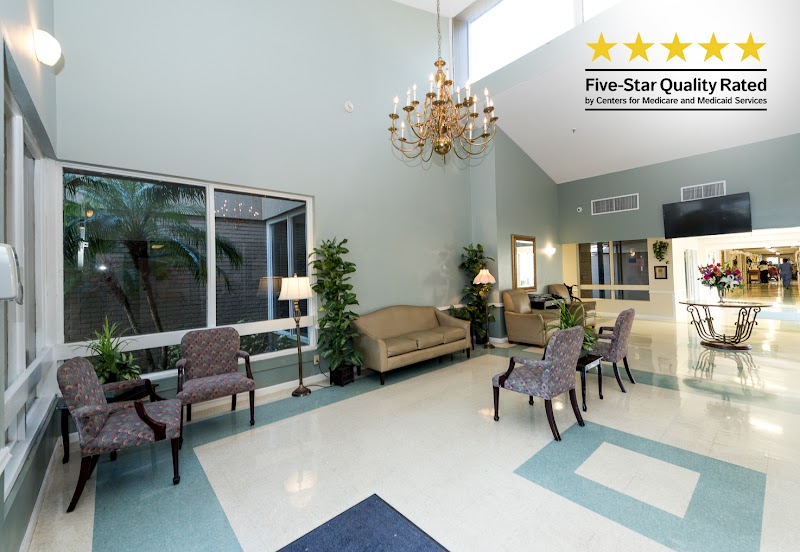
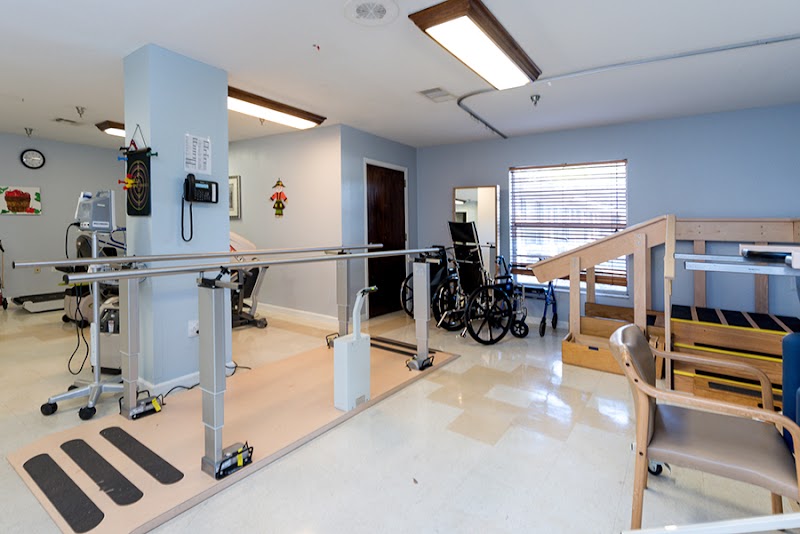
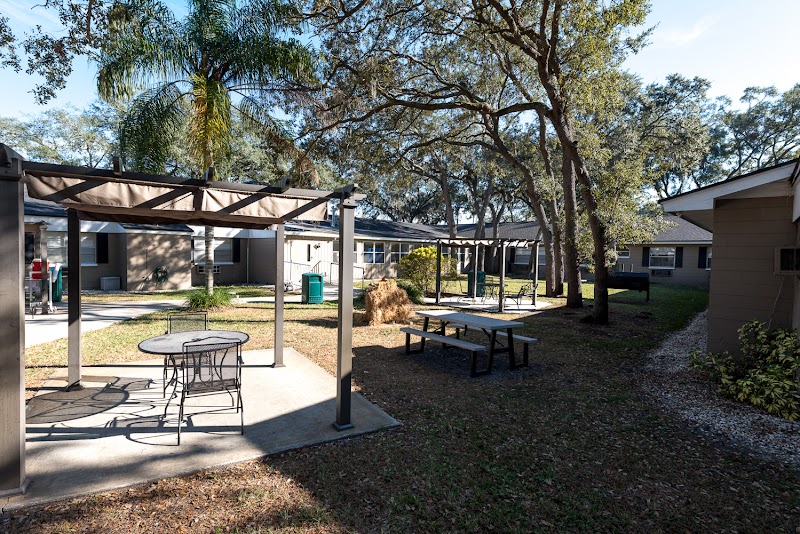
THE BRISTOL CARE CENTER

1818 E FLETCHER AVE, TAMPA, FL 33612 (813) 971-2383
For profit - Individual 266 Beds Independent Data: November 2025 4 Immediate Jeopardy citations
Trust Grade
0/100
Last Inspection: June 2025

Inspected within the last 6 months. Data reflects current conditions.

Overview

The Bristol Care Center has received a Trust Grade of F, indicating significant concerns about the facility's quality of care. It currently ranks poorly among nursing homes in Florida and Hillsborough County, with no positive rankings. Although the facility's trend shows improvement, reducing issues from 31 in 2023 to 23 in 2025, it still faces serious challenges, including a high staff turnover rate of 60%, which is above the state average. Additionally, fines totaling $173,416 are concerning, as they exceed those of 86% of other Florida facilities, raising questions about compliance. Specific incidents include a resident smoking in an unauthorized area and causing a fire, as well as failures to ensure proper smoking safety precautions for multiple residents, highlighting critical safety risks. Overall, while the facility is making some progress, families should weigh these serious weaknesses against any potential strengths when considering care for their loved ones.

Trust Score
F
0/100
In Florida
#112/223
Top 50%
Safety Record
High Risk
Review needed
Inspections
Getting Better
31 → 23 violations
Staff Stability
⚠ Watch
60% turnover. Above average. Higher turnover means staff may not know residents' routines.
Penalties
✓ Good
$173,416 in fines. Lower than most Florida facilities. Relatively clean record.
Skilled Nurses
○ Average
Each resident gets 35 minutes of Registered Nurse (RN) attention daily — about average for Florida. RNs are the most trained staff who monitor for health changes.
Violations
⚠ Watch
54 deficiencies on record. Higher than average. Multiple issues found across inspections.
☆☆☆☆☆
0.0
Overall Rating
☆☆☆☆☆
0.0
Staff Levels
☆☆☆☆☆
0.0
Care Quality
☆☆☆☆☆
0.0
Inspection Score
Stable
2023: 31 issues
2025: 23 issues

The Good

  • Full Sprinkler Coverage · Fire safety systems throughout facility
  • No fines on record

Facility shows strength in fire safety.

The Bad

Staff Turnover: 60%

14pts above Florida avg (46%)

Frequent staff changes - ask about care continuity

Federal Fines: $173,416

Well above median ($33,413)

Significant penalties indicating serious issues

Staff turnover is elevated (60%)

12 points above Florida average of 48%

The Ugly 54 deficiencies on record

4 life-threatening 2 actual harm
Jun 2025 9 deficiencies
CONCERN (D)

Potential for Harm - no one hurt, but risky conditions existed

Resident Rights (Tag F0550)

Could have caused harm · This affected 1 resident

**NOTE- TERMS IN BRACKETS HAVE BEEN EDITED TO PROTECT CONFIDENTIALITY** 3. An observation on 06/23/2025 at 1:07 p.m. revealed Resident #55 was lying in his bed on the right side in his room. Both the ...

Read full inspector narrative →
**NOTE- TERMS IN BRACKETS HAVE BEEN EDITED TO PROTECT CONFIDENTIALITY** 3. An observation on 06/23/2025 at 1:07 p.m. revealed Resident #55 was lying in his bed on the right side in his room. Both the door and the curtain were open. The sheet was not covering his backside, and his buttocks were exposed to the hallway. The APRN (Advanced Practice Registered Nurse) and Staff A, Licensed Practical Nurse (LPN) the wound care nurse were observed providing wound care to the resident. Resident #55's bottom was able to be observed from the room across the hall, as well as by anyone walking down the hallway. Review of the admission Record revealed Resident #55 was admitted on [DATE] and readmitted on [DATE] with diagnoses included but not limited to osteoarthritis of left and right knee, Chronic Obstructive Pulmonary Disease (COPD), chronic venous hypertension with ulcer of right lower extremity, non-pressure chronic ulcer of right lower leg, and chronic venous hypertension with ulcer of left lower extremity among other diagnoses. Review of the Annual Minimum Data Set (MDS) for Resident #55 dated 05/10/2025 showed a Brief Interview for Mental Status (BIMS) score of 15, meaning the resident was cognitively intact. Section GG showed the resident was dependent for showers. Review of the physician orders showed cleanse left posterior thigh with normal saline, pat dry, apply silver alginate and border gauze daily. Review of skin and wound note by Advanced Practice Registered Nurse (APRN) progress notes dated 6/23/2025 showed patient was evaluated today for evaluated of LLE (Left Lower Extremity) at request of nurses due to patient complaints of drainage. Patient remains on palliative care. Left Lower extremity rolled gauze wrap noted to be urine soaked with strong ammonia malodor to dressing. Patient has skin tear to left posterior thigh, patient endorses difficulty with bed mobility and frequently sliding to maneuver. and refuses to wear pants or clothing to protect lower limbs. No other complaints per nursing staff. During an interview on 06/25/2025 at 10:16 a.m. Resident #55 stated they [staff] normally close the door and curtain during care. Resident #55 stated the ARNP was standing in the door at the time of my care. Resident #55 stated, It is upsetting that they did not shut the door. Resident #55 stated he expected the staff to close the door and curtain. Resident stated, I don't' want to moon anybody. During an interview on 06/25/2025 at 12:46 p.m. the Director of Nursing (DON) stated she expected the staff to knock on the door, introduce themselves, inform the resident of services to be rendered. The DON stated she expected the staff to close the curtain and the door before providing care. The DON stated not closing the curtain and door was a breach in privacy and a dignity issue. Review of the facility's policy, Resident Rights, revised February 2011 showed Employees shall treat all residents with kindness, respect, and dignity. Policy and Interpretation and Implementation: 1. Federal and state laws guarantee certain basic rights to all residents of this facility. These rights include the resident's right to: a. a dignified existence; b. be treated with respect, kindness and dignity. Based on observation, interview, and record review the facility failed to ensure dignity was maintained for residents requiring meal assistance for two residents (#141 and #204) out of 36 sampled residents and did not ensure dignity was maintained during care for one resident (#55) out of 36 residents sampled. Findings included: 1. An observation was conducted on 06/23/25 at 11:58 a.m. in the Central Unit dining room with a table of three residents and a table of four residents. Two Certified Nursing Assistants (CNAs) and a Speech Language Pathologist (SLP) were present. Resident #141 was observed sitting at the table with two other residents. Resident #141 was observed utilizing their fingers dipping into a bowl of pudding. Resident #141 returned fingers to their mouth, the pudding dropped from their fingers on the way to their mouth. The SLP stated to Resident #141, Eating with your fingers is ok as long as you are eating. No other staff members were observed to assist or encourage Resident #141 with their meal. Review of admission Record showed Resident #141 was admitted on [DATE] and readmitted on [DATE] with diagnoses including dementia, need for assistance with personal care, adult failure to thrive and anxiety. Review of Resident #141's Minimum Data Set (MDS), dated [DATE], Section C, Cognitive Patterns, showed her Brief Interview for Mental Status (BIMS) score is 99, indicating impaired cognition. Review of Resident #141's Activities of Daily Living (ADL) care plan, revised 07/11/22, showed resident exhibits behavior of eating with hands instead of using utensils and the interventions listed included: Staff to anticipate care needs and provide them before resident becomes overly stressed, approach resident in a calm manner and explain actions, and provide positive reinforcement for successful interactions/efforts. 2. An observation was conducted on 06/24/25 at 11:45 a.m. in the Central Unit dining room. Two tables of four residents each were in the dining room. Two residents (141 and 204) were observed sitting at a table with two other residents between each resident. Three staff members were present (two CNAs and one nurse). Resident #141 was observed to pick up a hot dog bun with chopped meat, the meat fell onto the resident's plate. Staff G, CNA started to assist Resident #141 with the remainder of the meal. Resident #204 was observed at the table with a plate, bowl, cup and silverware placed just to the lower right of the plate. Resident #204 was observed to pick up the bowl, brought the bowl to their mouth and started licking the contents from the bowl. The resident next to Resident #204's right side, kept telling Resident #204 to stop. The resident to Resident #204's right started to reach out and push Resident #204's forearm to the table, while saying, don't do that. The resident next to Resident #204 reached for Resident #204's pudding bowl and started to take the pudding away from Resident #204. Staff G, CNA who was assisting Resident #141 stood up and took the bowl from the resident and placed the bowl in the middle of the table, out of the reach of all the residents. Resident #204 cried out. Resident #204 then reached for the hot dog bun with chopped meat, which was on their plate. Resident #204 picked up the bun and the chopped meat fell off into their lap and plate. Resident #204 sighed heavily and put the bun back down on the plate, then proceeded to pick up the entire plate, brought the plate to their mouth and tried to eat the bun with chopped meat from the plate. Resident #204 was struggling while doing this and the resident to the right continued to discourage Resident #204. No staff member encouraged or assisted Resident #204 to try to utilize utensils or assisted the resident with the meal. Review of admission Record showed Resident #204 was admitted on [DATE] with diagnoses including dementia with agitation, adult failure to thrive, anxiety and need for assistance with personal care. Review of Resident #204's Minimum Data Set (MDS), dated [DATE], Section C, Cognitive Patterns, showed her Brief Interview for Mental Status (BIMS) score is 00, indicating impaired cognition. Review of Resident #204's Activities of Daily Living (ADL) care plan, revised 12/05/24, showed Resident #204 has a self-care deficit with . eating, . related to: impaired mobility, fracture of humerus, generalized weakness, has dx (diagnosis) of failure to thrive, Demetia, requires staff assistance with ADL'S. Staff interventions included: Cue/encourage resident to participate in ADL tasks, allow resident ample time to attempt/complete ADL tasks before intervening, staff to anticipate resident's needs with ADLs. During an interview on 06/24/25 at 02:25 p.m. Staff G, CNA confirmed Resident #141 and #204 were eating with their fingers during lunch. Staff G, CNA confirmed the resident next to Resident #204 took the pudding away. Staff G, CNA stated not being sure what to do with Resident #204 behavior as the nurse did not intervene and while they were assisting Resident #141. Staff G, CNA stated the staff should have encouraged Resident #204 to use the utensils or assisted Resident #204 sooner. During an interview on 06/26/25 at 09:46 a.m. the Director of Nursing (DON) stated the staff should have intervened and encouraged the residents to utilize utensils or assisted the residents if needed.
CONCERN (D)

Potential for Harm - no one hurt, but risky conditions existed

Deficiency F0552 (Tag F0552)

Could have caused harm · This affected 1 resident

**NOTE- TERMS IN BRACKETS HAVE BEEN EDITED TO PROTECT CONFIDENTIALITY** Based on observation, interviews and record review the facility failed to provide language assistance to a resident with limited...

Read full inspector narrative →
**NOTE- TERMS IN BRACKETS HAVE BEEN EDITED TO PROTECT CONFIDENTIALITY** Based on observation, interviews and record review the facility failed to provide language assistance to a resident with limited English proficiency for one resident (#210) of 65 sampled residents. Findings included: An observation on 06/23/2025 at 12:40 p.m. revealed Resident #210 sitting at bedside in a wheelchair eating her lunch. The resident was only able to speak Spanish. Surveyor went to the nursing station to find a bilingual staff member to assist with the interview. The resident's aide came down and stated she was unable to speak Spanish. The aide stated she was able to understand if the resident had pain or not. The aide went to get Staff B, Registered Nurse (RN) and told her the resident was in pain. The surveyor went to the conference room to get another surveyor who speaks Spanish. The resident was saying in Spanish, Oh my God I'm in a lot of pain, help me please, they don't understand me. The resident appeared to be tearful and visibly in pain. The resident was observed speaking Spanish to her family member on the phone. The family member said in Spanish, They don't speak Spanish and they don't understand her. The nurse (Staff B) walked in shortly after observation and provided medication to the resident. The resident was telling the nurse in Spanish she is in a lot of pain. The nurse looked at surveyor and asked, what is the resident saying. The nurse went to get another staff member, a second aide, who assisted resident with getting into bed. A follow-up interview with resident once she was in bed revealed she primarily speaks Spanish and stated the staff don't understand her and she does not understand them. Review of the admission Record showed Resident #210 was admitted to the facility on [DATE]. The diagnoses included but not limited to disorder of brain, benign neoplasm of cerebra meninges, Diabetes with neuropathy, muscle spasm, polyneuropathy, major depressive recurrent, hypertension, repeated falls, generalized anxiety disorder, bipolar disorder, schizophrenia cervicalgia. Review of the progress note dated 06/13/2025 showed, Social Determinants of Health: Resident is [NAME] Rican. Language: Spanish Resident does need or want an interpreter to communicate with a doctor or health care staff. Lack of transportation has not kept Resident from medical appointments, meetings, work or from getting things needed for daily living. How often do you need to have someone help you when you read instructions, pamphlets, or other written material from your doctor or pharmacy: Sometimes. How often do you feel lonely or isolated from those around you: Never. Review of the care plans showed Resident #210 has an alteration in communication ability related to language barrier. She does not speak English; primary language is Spanish. She understands some English speaking and able to voice some needs in English. Spanish speaking staff is available to assist with translation as needed as of 03/19/2025. Interventions included but not limited to repeat/rephrase messages as needed if resident misses part of intended message; speak to resident in simple, direct terms; ask resident yes/no questions; provide interpreter prn; ask family to interpret as able; keep call light within reach; respond to communicated needs prn. During an interview on 06/25/2025 at 12:46 p.m. the Director of Nursing (DON) stated depending on the language, they have someone who can interpret. The DON stated we have some Spanish speaking residents and try to place them on the station with the Spanish speaking staff. The DON stated the needs will depend on their cognition. The DON stated we can provide communication boards. The DON stated they do not have a list of staff members who are bilingual. The DON stated, We kind of know. She stated the SSD (Social Services Director) is bilingual, therapy staff is bilingual, nursing and aide staff. The DON stated she thought Resident #210 had a communication board. The DON stated we have therapy and one of our nurses' who floats over there (400 Hallway) on the 3-11 shift. The DON stated the resident calls her loved one to interpret also. Review of the facility's policy, Policy and Procedure: Right to Communication with Privacy, dated 1/2019 showed: 5. The resident has the right to have interpretive assistance for communication in another language. Facility will provide communication boards, staff interpreters or other means of communication as needed.
CONCERN (D)

Potential for Harm - no one hurt, but risky conditions existed

Deficiency F0558 (Tag F0558)

Could have caused harm · This affected 1 resident

**NOTE- TERMS IN BRACKETS HAVE BEEN EDITED TO PROTECT CONFIDENTIALITY** Based on observations, record review and interviews, the facility failed to accommodate residents needs related to 1.) Not havin...

Read full inspector narrative →
**NOTE- TERMS IN BRACKETS HAVE BEEN EDITED TO PROTECT CONFIDENTIALITY** Based on observations, record review and interviews, the facility failed to accommodate residents needs related to 1.) Not having call light buttons placed within reach when in bed for five residents (#135, #79, #208, #15 and #25) out of sixty-five sampled residents and 2.) Not providing a wheelchair in order for resident (#135) to get up out from bed and out of her room per the resident's preference. Findings included: 1. On 6/25/2025 at 6:35 a.m., and 8:45 a.m. on Resident #208 was observed in bed lying under the covers. Further observations revealed the call light cord wrapped around the left upper bed rail, with the call button hanging down towards the floor. The cord and button were out of the resident's reach. On 6/26/2025 at 7:40 a.m. and 8:30 a.m. Resident #208 was observed in bed, her call light button was hanging below the bed mattress on the right side of the bed. The call light cord and button was in a position out from her reach. Review of Resident #208's medical record revealed she was admitted to the facility on [DATE]. 2. On 6/25/2025 at 6:45 a.m. Resident #15 was noted in bed with the call light button not placed within his reach. The call button and cord were lying on the floor back and behind the resident. On 6/25/2025 at 8:3 a.m. Resident #15's was noted in the same position in bed and the call light button was observed still on the floor, back behind his bed and out from his reach. On 6/26/2025 at 7:45 a.m. Resident #15's was observed in bed, the call light button and cord were positioned on the back of the bed and hanging down over the head of the bed, and out from his reach. Review of Resident #15's medical record revealed he was admitted to the facility on [DATE] and readmitted on [DATE]. 3.On 6/25/2025 at 6:45 a.m. Resident #25 was observed in bed with the call light button not placed within his reach. The call button and cord were lying on the floor back and behind the resident. On 6/25/2025 at 8:30 a.m. Resident #25 was observed in bed, the call light button was observed still on the floor, back behind his bed and out from his reach. On 6/26/2025 at 7:45 a.m. Resident #25 was observed in bed with the call light button and cord positioned on the back of the bed and hanging down over the head of the bed, and out from his reach. Review of Resident #25's medical record revealed he was admitted to the facility on [DATE] and readmitted on [DATE]. Review of the current care plans with next review date 8/19/2025 revealed the following areas: Resident #25 is at risk for falls and fall related injuries with interventions to include but not limited to: Keep call light within reach. On 6/26/2025 at 10:00 a.m. an interview with Staff X Licensed Practical Nurse (LPN)/ Unit Manager (UM) revealed she was not aware the call light cords/buttons were not within the resident's reach. She stated the call light button should always be within the resident's when they are in bed and that staff are to observe for proper placement during each visit, every two hours. The Unit Manager revealed even if the resident does not routinely use the call light button, or rarely uses it, it still needs to be placed within his/her reach. 4. On 6/24/2025 at 10:00 a.m. an interview was conducted with Resident #135 which revealed she was having issues with the facility not getting her a wheelchair since her admission on [DATE]. She revealed she is at the facility for short term rehabilitation services, and she does receive therapy, and the facility has not provided her with any wheelchair in order to get out from bed and to go out from her room or to attend activities. Resident #135 revealed she had asked the facility staff about one month ago to include various nurses, the social service person and the Nursing Home Administrator (NHA). She revealed they came to her with a wheelchair during the first week or so of her admission and it did not fit her. She stated she needed a larger one to help her feel more comfortable in the seat. She revealed nobody ever responded back up until about a month ago, when she requested for a wheelchair again. She stated she has yet to receive one. Resident #135 confirmed had she had a wheelchair, she would get up out from bed. On 6/26/2025 at 9:30 a.m. an interview was conducted with Resident #135. She confirmed she had yet to get a wheelchair to be transferred into. She revealed she had not received any follow -up from the NHA and the Social Service Department (SSD). She revealed she had spoken with an unknown therapy staff member, and they too did not provide her with a wheelchair to use. Resident #135 revealed her aides tell her every day they did not have any wheelchairs that fit her, and she would just have to wait until they get one. Review of the medical record revealed Resident #135 was admitted to the facility on [DATE] with diagnoses to include Obesity, Adult failure to thrive, and Major depression, Anxiety. Review of the current Quarterly MDS assessment for Resident #135 dated 6/1/2025, revealed; Cognition/Brief Interview Mental Status score of 15 of 15, which indicated the resident was able to be interviewed related to her medical care and services. ADL - No impairment on both lower and upper extremities- toileting, requires substantial/Maximal assistance and was dependent for transfers. The assessment showed it was checked Yes for wheelchair as mobility device. Review of the current care plans for Resident #135 with a next review date 8/30/2025 revealed - Risk for falls and/or fall related injury related to generalized weakness, is non ambulatory, uses wheelchair as primary mode of locomotion, receives psych. meds, narcotics, with interventions in place to include but not limited to: Assist to wheel to destinations. On 6/26/2025 at 10:00 a.m. an interview was conducted with Staff X LPN/UM. She revealed the resident was assessed for a wheelchair during the first part of her admission and found that the resident did not want that wheelchair because she preferred a larger one. The Unit Manager revealed she believed Therapy had ordered another one but was not sure. The Unit Manager confirmed there was no documentation in the record to support the resident ever refused the wheelchair. On 6/26/2025 at 10:40 a.m. an interview with the Rehabilitation Director Staff Q revealed the resident was assessed and provided with a wheelchair when she was first admitted but she had heard the resident refused it and wanted another one. Staff Q revealed it was only brought to her attention yesterday (6/25/2025). She revealed the resident will be assessed and provided with a wheelchair that fits her. Staff Q could not provide any documentation to support a wheelchair was provided to the resident upon her admission, nor did she have any documentation to support the resident refused said wheelchair. Review of a facility policy titled, Call System, Resident revised September 2022 showed, the policy heading showed - Residents are provided with a means to call staff for assistance through a communication system that directly calls a staff member or a centralized workstation. The policy further revealed 1.) Each resident is provided with a means to call staff directly for assistance from his/her bed, from toileting/bathing facilities and from the floor.
CONCERN (D)

Potential for Harm - no one hurt, but risky conditions existed

Notification of Changes (Tag F0580)

Could have caused harm · This affected 1 resident

**NOTE- TERMS IN BRACKETS HAVE BEEN EDITED TO PROTECT CONFIDENTIALITY** Based on interviews and record reviews the facility failed to notify the physician and/or family of changes in condition (CIC) a...

Read full inspector narrative →
**NOTE- TERMS IN BRACKETS HAVE BEEN EDITED TO PROTECT CONFIDENTIALITY** Based on interviews and record reviews the facility failed to notify the physician and/or family of changes in condition (CIC) and treatment and care changes for three residents (#50 #18, #5) of 65 sampled residents. Findings included: 1. Resident #50 was admitted on [DATE]. Review of the admission showed diagnoses included but not limited to fibromyalgia, muscle weakness, emphysema, acute myocardium Infarction, pulmonary hypertension, Chronic Obstructive Pulmonary Disease, chronic respiratory failure with hypercapnia, asthma, chronic bronchitis, generalized anxiety disorder, opioid dependence, major depressive disorder recurrent, hypertension. Review of the quarterly, Minimum Data Set (MDS) dated [DATE] showed a Brief Interview for Mental Status (BIMS) score of 15 (cognitively intact). Review of the physician orders for Resident #50 showed Triamterene-HCTZ Capsule 37.5-25 MG (milligram) give 0.5 mg daily for edema as of 06/22/2025 and discontinued on 6/25/25 and triamterene-HCTZ Capsule 37.5-25 MG give 0.5 mg daily for edema as of 06/25/2025 Review of the June 2025 Medication Administration Record (MAR) for Resident #50 showed Triamterene-HCTZ Capsule 37.5-25 MG (milligram) give 0.5 mg daily for edema had not been administered as of 06/25/2026. Review of the progress notes for Resident #50 showed the following: On 06/25/2025 at 4:05 p.m. Unit Manager (UM) placed a call to pharmacy to check status of medication. Pharmacy stated the prescription form was put in incorrectly and needed a new order. UM placed call to MD to advise medication form was incorrect and the delay of medication delivery. MD provided new order. UM called pharmacy and have order being sent stat to facility and MD okay new administration date. On 6/25/25, 1539, Change in Condition for edema (new or worsening), Recommendations: Triamterene 37.5/25 mg tab to take 0.5 daily. On 06/25/2025, Triamterene-HCTZ Capsule 37.5-25 MG, Give 0.5 tablet by mouth one time a day for edema half tab daily, on order. will call pharmacy to follow up. On 06/24/2025, Triamterene-HCTZ Capsule 37.5-25 MG, Give 0.5 tablet by mouth one time a day for edema half tab daily, on order. On 06/23/2025, Triamterene-HCTZ Capsule 37.5-25 MG, Give 0.5 tablet by mouth one time a day for edema half tab daily, Ordered. On 06/19/2025, MD note, late entry, scanned in on 6/25/25, reason for appointment edema. complains of LLE radicular pain, improved on muscle relaxants. Complains of edema. She has Coronary Artery Disease (CAD). she does not have Congestive Heart Failure (CHF). No dyspnea, orthopnea. Localized edema. Review of the care plans for Resident #50 showed - Resident #50 has potential for complications related to an alteration in cardiac function related to hypertension, and Coronary Artery Disease as of 01/29/2025. Interventions included but not limited to administer medications as ordered, observe for effectiveness and for side effects. Observe for new presences of or increase in edema; notify physician if noted. During an interview on 06/25/2025 at 2:45 p.m. the Director of Nursing (DON) stated she would look into why Triamterene-HCTZ had not been given to the resident and why the Medical Doctor (MD) was not informed. During an interview on 06/26/2025 at 9:18 a.m. Staff U, Licensed Practical Nurse (LPN)/ Unit Manager (UM) stated the physician inputted the Triamterene-HCTZ Capsule 37.5-25 mg. give 0.5 tablet by mouth. The UM stated the original order was placed on 06/23/2025 at 2:23 a.m. and the nurse confirmed it on 06/23/2025 at 3:09 p.m. The UM stated because it was written as a capsule, it could not be cut in half per the order. The UM stated she called the pharmacy on 06/25/2025 and the pharmacy informed her of above. The UM then called the MD, and he put in another order for tablets not capsules. The UM stated she put it in as a stat order. She stated the medication came in this morning for administration. The UM stated the procedure was to call the MD if a medication was not administered as per orders. The UM verified there was no documentation the nurses had informed the MD the medication had not been given for three days on 06/23/25, 06/24,25, 06/25/25. The UM stated she expected to see the MD notification. 2. During an interview on 06/23/25 at 02:45 p.m. the Responsible Party (RP) for Resident #5 stated the facility is terrible about notifying me of anything. The RP explained being contacted at 2:00 a.m. once and notified Resident #5 was back safely. The RP stated no one contacted me to let me know Resident #18 needed to go out to the hospital. The RP stated, didn't even know Resident #5 was gone. The RP stated not knowing Resident #5 had pneumonia or was being treated with antibiotics before one of the hospitalizations. The RP stated they didn't know she went to the hospital. They stated they were was aware of a hospitalization but was left to believe it was due to a feeding tube placement. Review of Resident #5's face sheet revealed the resident was admitted on [DATE] and readmitted on [DATE]. Review of the admission showed diagnoses included but not limited to pneumonitis due to inhalation of food and vomit; severe sepsis, dysphagia, muscle weakness, type 2 diabetes mellitus, chronic obstructive pulmonary disease. Review of the quarterly, Minimum Data Set (MDS) dated [DATE] showed a Brief Interview for Mental Status (BIMS) score of 00 severe cognitive deficit. Review of Resident #5's physician orders revealed resident received Amoxicillin-Pot Clavulanate Oral Tablet 875-236 MG by G-tube two times a day for aspiration pneumonia for 7 days dated 05/06/25. Review of the progress notes for May 2025 did not reveal the RP was notified. During an interview on 06/25/25 at 11:37 a.m. Staff K, Registered Nurse (RN) stated the family, or RP should be notified when anything out of the ordinary occurs with the resident. The RP/family should definitely be contacted if a resident has an infection or has to go to the hospital. During an interview on 06/25/25 at 01:00 p.m. the Director of Nursing (DON) stated the expectation is for family/RP notifications to occur with a medication and transfer to the hospital. 3. Review of Resident #18's face sheet revealed resident admitted on [DATE] with diagnoses including but not limited to protein-calorie malnutrition, cirrhosis of the liver, muscle weakness, Chronic Obstructive Pulmonary Disease, anxiety disorder, major depressive disorder recurrent, hypertension, type 2 diabetes mellitus, need for assistance with personal care and schizoaffective disorder. Review of the quarterly, Minimum Data Set (MDS) dated [DATE] showed a Brief Interview for Mental Status (BIMS) score of 13 (cognitively intact). Review of the Resident #18's weight log revealed: On 05/08/2025, the resident weighed 200 lbs. On 06/18/2025, the resident weighed 182 pounds which is a -9.00 % Loss. On 03/06/2025, the resident weighed 192 lbs. On 06/18/2025, the resident weighed 182 pounds which is a -5.21 % Loss. On 01/03/2025, the resident weighed 203 lbs. On 06/18/2025, the resident weighed 182 pounds which is a -10.34 % Loss. Review of Resident #18's Registered Dietitian (RD) Nutrition Risk Evaluation dated 6/22/25 revealed: Risk score 9, meaning at risk for malnutrition and weight warning: Value: 182.4, Vital Date: 2025-06-11 10:40:00.0 -10.5% , 21.4# [pound] x 2 days. -11% , 22.6# x 7 days. -8.8% , 17.6# x 34 days. -10.1% , 20.6# x 5 1/3 months. Erratic wt. [weight] changes, unknown etiology except different scales, no change in diuretic doses. Review of Resident #18's Registered Dietitian (RD) Nutrition Risk Evaluation dated 3/21/25 revealed: weight warning: Value: 192.6, Vital Date: 2025-03-06 09:47:00.0 -7.5% change [ 9.3% , 19.8# ] x 3 months. -10% change [ 10.4% , 22.3# ] x 6 months. Wt. stabilizing. The record did not reveal the physician had been notified of the weight loss for Resident #18. Review of the physician documentation available at the time of the survey did not reveal a documentation showing notification of Resident #18's weight loss status. During an interview on 06/25/25 at 01:33 p.m. Staff F, Licensed Practical Nurse (LPN) stated nurses don't notify the physician of weight loss. Staff F stated she thinks the dietary department does. During an interview on 06/26/25 at 09:31 a.m. the DON confirmed the physician should have been notified of the resident's weight loss and would need to investigate why there was no documentation. Review of the facility's policy and procedure titled Notification of Changes dated 10/2024 revealed: Policy: The purpose of this policy is to ensure the facility promptly informs the resident, consults the resident's physician; and notifies, consistent with his or her authority, the resident's representative when there is a change requiring notification. Compliance Guidelines: The facility must inform the resident, consult with the resident's physician and /or notify the resident's family member or legal representative when there is a change requiring such notification. Examples for notification include: 1. Accidents. a. Resulting in injury. b. Potential to require physician intervention. 2. Significant change in the resident's physical, mental or psychosocial condition such as deterioration in health, mental or psychosocial status. This may include: a. Life-threatening conditions, or b. Clinical complications. 3. Circumstances that require a need to alter treatment. This may include: a. New treatment. b. Discontinuation of current treatment due to: i. Adverse consequences. ii. Acute condition. iii. Exacerbation of a chronic condition. 4. A transfer or discharge of the resident from the facility. 5. A change of room or roommate assignment. 6. A change in resident rights. Review of an undated facility policy and procedure titled, Change of Condition Process revealed: intent: The purpose of this policy is to ensure the facility promptly informs the resident, consults the resident's physician; and notify, consistent with his or her authority, resident's representative when there is a change requiring notification. Procedure: The facility must inform the resident, consult with the resident's physician and /or notify the resident's family member or legal representative when there is a change requiring such notification. Situations requiring notification include: 1. An accident involving the resident which: a. Resulting in injury. b. Potential to require physician intervention. 2. A significant change in the resident's physical, mental, or psychosocial status that is, a deterioration in health, mental, or psychosocial status in either life-threatening conditions or clinical complications. This may include: a. life-threatening conditions, or b. Clinical complications. 3. A need to alter treatment significantly; that is, a need to discontinue an existing form of treatment due to adverse consequences, or to commence a new form of treatment. This may include: a. A new infection or wound. b. Discontinuing a treatment or changing a medication due to: . 4. A decision to transfer or discharge the resident from the facility. 5. The facility must also promptly notify the resident and the resident representative, if any, when there is: a. A change in room or roommate assignment, or b. A change in resident rights under Federal or State law or regulations. 4. Upon the identification of a change in condition in a resident the Nurse will complete an evaluation of the resident's status, and document findings on the SBER Change in Condition in the resident's electronic medical record.
CONCERN (D)

Potential for Harm - no one hurt, but risky conditions existed

Deficiency F0692 (Tag F0692)

Could have caused harm · This affected 1 resident

**NOTE- TERMS IN BRACKETS HAVE BEEN EDITED TO PROTECT CONFIDENTIALITY** Based on observations, interviews and record review the facility failed to provide enteral nutrition according to physician orde...

Read full inspector narrative →
**NOTE- TERMS IN BRACKETS HAVE BEEN EDITED TO PROTECT CONFIDENTIALITY** Based on observations, interviews and record review the facility failed to provide enteral nutrition according to physician orders for one resident (#79) out of fourteen residents sampled. Finding included: On 6/24/2025 at 7:09 a.m. Resident #79 was observed in her room and lying in bed with her head over bed approximately thirty-five to forty degrees. The observations revealed she was receiving nourishment via tube feeding system with the pump on and bottle hung. The label on the bottle read Jevity 1.5 hang date 6/24/2025, hang time 6:00 a.m., run time 40 ml/hr (milliliter/hour), and with the resident's name. The bottle was observed with approximately 800 ml of nourishment. On 6/24/2025 at 3:00 p.m. Resident #79 was observed in her room with the tube feeding bottle still hung but the system/pump was turned off. The tube line was hanging/draped over the bottle. The bottle was labeled/dated as earlier. During this observation, there was 500 ml of nourishment left in the bottle. On 6/25/2025 at 8:00 a.m., 2:00 p.m., and 3:00 p.m. Resident #79 was observed with the same bottle from 6/24/2025 and still with 500 ml of nourishment left. The observation revealed the resident had not received nourishment since 3:00 p.m. the previous day, on 6/24/2025. On 6/26/2025 at 7:10 a.m. and 9:00 a.m. Resident #79 was observed with the tube feeding system pole at bedside, with the same bottle of nourishment from 6/24/2025 (two days prior). The tubing/line was observed draped over the bottle and it was determined there still 500 ml of nourishment left in the bottle. The observation revealed the resident had not received nourishment for two days, since 3:00 p.m. on 6/24/2025. On 06/26/2025 at 8:16 a.m. an interview was conducted with Staff Y, Licensed Practical Nurse (LPN). Staff Y. When asked about the resident's tube nutrition bottle, Staff Y stated the date listed on the nutrition bottle was 06/25/2025. When she went into the room to check the nutrition bottle date and time, an observation was made in which the nutrition bottle had been thrown in the trash bin. Staff Y, LPN then stated she saw the bottle showed 6/24/2025, during the interview. She stated there may have been a mistake when entering the date on the nutrition bottle. She pulled the nutrition bottle out of the trash bin. She stated the tube nutrition bottle should be used within twenty-four hours of being hung and used. She stated if the twenty- four hours are exceeded, a new feed bottle must be hung. She stated that the resident was on the feed throughout the night. Review of Resident #79's medical record reveled she was admitted to the facility on [DATE] and readmitted on [DATE] with diagnoses to include but not limited to Depression, Dysphagia, GERD, Cognition Communication deficit. Review of the current Minimum Data Set (MDS) Quarterly assessment dated [DATE] revealed Section C- Cognition/Brief Interview Mental Status or BIMS score of 2 of 15, which indicated the resident was not interviewable related to her medical care and services. The ADL section showed the resident was dependent with most ADLs. The Nutrition was checked, Yes showing she receives tube feeding. Review of the current Physician's Order Sheet (POS) for the month of 6/2025 revealed orders: Enteral feed ever shift for enteral support; Start Jevity 1.5: To run at 40ml/hr. May hold for services and care. Flush feeding tube with 100ml of water every 4 hrs. and every shift for enteral support verify Jevity 1.5 tube feeding is running at 40ml hr. Flush feeding tube with 100 ml of water every 4 hrs. Order date: 6/11/2025. Review of the current care plan with next review date 9/9/2025 revealed Resident #79 was at risk for altered nutrition/hydration and unavoidable weight fluctuation/loss Dx/HX (diagnosis/history), CVA (cerebrovascular accident), R (right) hemiplegia/contracture, Aphasia, Dysphagia, Missing some dentition, Altered Consciousness, Cognitive Communication deficit, Depression, HTN (hypertension), Diuretic, Self feeding difficulty, History. Significant weight loss followed by gain, with interventions in place to include: Administer enteral feeding and flushes as ordered, observe for tolerance; Encourage adequate intake at meals. - Resident is at risk for complications associated with enteral feedings; also receiving po (by mouth) diet, at risk for aspiration, at risk for skin impairment to site, GI (gastrointestinal) distress related to tolerance of enteral formula, with interventions in place to include: Verify tube feeding placement as ordered, Check enteral feeding residuals as ordered, Administer enteral feeding and flushes as ordered, observe for tolerance, Keep Head Over Bed (HOB) elevated while feeding in process. On 6/26/2025 at 10:00 a.m. an interview with the Northeast Unit Manager, Staff X, LPN who confirmed Resident #79 was ordered for Tube Feed nourishment and also eats regular food by mouth. The Unit Manager revealed Resident #79's weights had fluctuated up and down and the dietician has been monitoring her weights and nourishment parameters. The Unit Manager was not aware the Jevity nourishment bottle was hanging in the room on the pole for 48 hours and had not been changed. She revealed once a bottle is hung and started, it should not be on the pole greater than 24 hours. She was not sure why the bottle was there and not being used. The Unit Manager was notified the bottle was hung and started on 6/24/2025 at 6:00 a.m. and left for forty-eight hours. The Unit Manager confirmed it should not have been opened, used and kept on the pole for more than twenty-four hours. Staff X, LPN was not sure why the MAR (Medication Administration) /TAR (Treatment Administration Record) were documented as Tube Feeding nourishment having been provided for the day of 6/26/2025. On 6/26/2025 at 1:00 p.m. the Nursing Home Administrator (NHA) and Director of Nursing provided the Enteral Nutrition policy and procedure with a revised date of 2018 for review. The Policy Statement revealed; Adequate Nutritional support through enteral nutrition is provided to residents as ordered. The Policy Interpretation and Implementation section revealed: 4 . Enteral nutrition is ordered by the provider based on the recommendations of the dietitian. If a feeding tube is ordered, the provider and interdisciplinary team document why enteral nutrition is medically necessary. 8 . The dietitian monitors residents who are receiving enteral nutrition and makes appropriate recommendations for interventions to enhance tolerance and nutritional adequacy of enteral feedings. 10 . Enteral feeding s are scheduled to try to optimize resident independence whenever possible (e.g., at night or during hours that do not interfere with the resident's ability to participate in facility activities). 11 . The nurse confirms that orders for enteral nutrition are complete. Complete orders include: a. The enteral nutrition product. b. Delivery sit (tip placement). c. The specific enteral access device (nasogastric, gastric, jejunostomy tube, etc. d. Administration method (continuous, bolus, intermittent). e. Volume and rate of administration. f. The volume/rate goals and recommendations for advancement towards these; and g. Instructions for flushing (solution, volume, frequency, timing and 24-hour volume).
CONCERN (D)

Potential for Harm - no one hurt, but risky conditions existed

Infection Control (Tag F0880)

Could have caused harm · This affected 1 resident

Based on observations, interviews and record review the facility failed to follow infection control standards related to hand sanitizing during medication administration and use of gloves when cleanin...

Read full inspector narrative →
Based on observations, interviews and record review the facility failed to follow infection control standards related to hand sanitizing during medication administration and use of gloves when cleaning equipment for five residents (#52, #63, #58, #31, and #219) out of sixty-five residents sampled. Findings included: During an observation on 06/23/2025 at 9:05 a.m., Staff B, Registered Nurse (RN) was administering medications to Resident #52. Staff B stated she had already washed her hands. She opened her computer, then the medication drawer and removed the Dorzolamide HCL solution 2% eye drops inside a baggie. She removed the eye drop bottle from the baggie and placed it on a plate/barrier. Staff B applied gloves and entered the resident's room. She gave the resident a tissue. She placed a drop of eye medicine into each eye. She placed the eye drop medication back on a plate/barrier. She took the tissue from the resident and threw it away. Staff B, RN removed her gloves and threw them away, she did not perform hand hygiene. Staff B, RN exited the room to the medication cart. She inputted the information into the computer. Staff B removed the disinfectant wipe from the bottom drawer and wiped the eye drop bottle off (without applying gloves). She replaced the eye drop bottle into the baggie and placed in the medication drawer. She inputted into the computer. On 06/23/2025 at 9:10 a.m. Staff B, RN poured supplement for Resident #63. She entered Resident #63's room and handed the supplement to the resident. She did not hand sanitize before or after medication administration. Staff B, RN moved the medication cart to the next room. On 06/23/2025 at 9:15 a.m. Staff B stated Resident #58 had his other oral medications but needed his Nitroglycerin patch 0.1 mg/hour. Staff B applied gloves without hand sanitizing and opened the medication cart and removed the Nitro patch. Staff B entered the resident's room. She overlooked the resident's body for the old patch. She removed the Nitro patch and rolled it into one of the gloves and removed the second glove and threw them into the trash. Staff B reapplied gloves without hand sanitizing. She removed the Nitro patch from the packet and placed it on Resident #58's right chest area. Staff B removed her gloves and washed her hands. On 06/23/2025 at 9:20 a.m., a medication administration observation was conducted for Resident #31. Staff B, RN gathered all medications for administration. Staff B put the pills and nasal sprays onto a plate/barrier and set them on the overbed table. The nasal sprays were administered first. Staff B applied gloves without hand sanitizing and examined Resident #31's right knee. Staff B removed her gloves and reapplied gloves after hand sanitizing. Staff B applied the pain patch to the right knee. Staff B removed her gloves and reapplied her gloves without hand sanitizing. Staff B repositioned the resident's knee, brace and pillow. Staff B removed the privacy bag from the urinary drainage bag and observed the urine and replaced the privacy bag. Staff B removed her gloves, touched her clothes and hand sanitized. Staff B threw the resident's tissue away. Staff B removed the plate/barrier with the nasal sprays on it and exited the room. Staff B opened the medication cart, wiped the nasal sprays with disinfectant wipes with no gloves on. Staff B replaced the nasal sprays into the medication cart. Staff B placed the plate/barrier into the trash and inputted into the computer. At the beginning of medication administration it was noted the medication cart did not have Simethoane 80 mg (milligrams) which the resident was prescribed. Another staff member brought the medication to the medication cart. Without hand sanitizing, Staff B poured the medication into a medication cup and re-entered Resident #31's room to administer the medication. Staff B exited the room and without hand sanitizing started the administration process for the next resident. During an observation on 06/24/2025 at 11:07 a.m. Staff F, Licensed Practical Nurse (LPN) was administering medications to Resident #219. Staff F hand sanitized. She placed the blood glucose monitoring machine, two lancets, two alcohol wipes and a container of strips on a plate/barrier. She entered the room and placed the plate/barrier onto the overbed table. Staff F applied her gloves and wiped the left pointer finger off with alcohol. Staff F then used the lancet. She placed the blood glucose monitoring machine with the strip in place on the drop of blood. The glucose results were 134. She placed a tissue on the resident's finger. Staff F placed the blood glucose monitoring machine on the plate/barrier. Staff F removed her gloves and reapplied gloves with hand sanitizing. Staff F took the plate/barrier to the medication cart. Staff F removed disinfectant wipes from the medication cart and wiped the blood glucose monitoring machine and placed it covered with a wipe into a cup on the medication cart. Staff F removed her gloves and did not hand sanitize. She threw away the lancet. She placed the bottle of strips, which had not been cleaned back into a baggie. Staff F then hand sanitized. Staff F stated she was supposed to leave the blood glucose monitoring machine in the wipe for 30 seconds to 1 minute. Staff F applied one glove onto her left hand and wiped the blood glucose monitoring machine. She then removed the wipe and placed the blood glucose monitoring machine on a clean plate/barrier to dry. Staff F removed the left glove with no hand sanitizing and replaced the blood glucose monitoring machine into a baggie with the bottle of strips that had not been cleaned. Staff F placed the baggie into the medication cart drawer. Staff F went to the nursing station desk to see if there were paper Medication Administration Records (MARS) due to the internet being down. Staff F also checked the nursing station desk to see if that computer was working. The internet came back up and Staff F reviewed the insulin order for Resident #219. Staff F stated Resident #219 will receive Apidra 3 units as ordered before meals but none for the sliding scale. Staff F returned to the medication cart and put on gloves with no hand sanitizing. Staff F primed the Apidra insulin pen with 2 units and then loaded the 3 units. Staff F entered Resident #219's room and injected the insulin into her right upper extremity. Staff F removed her gloves and exited the room. Staff F removed the needle from the insulin pen, replaced the insulin pen into the baggie and replaced the baggie into the medication cart. Staff F then hand sanitized. During an interview on 06/25/2025 at 12:46 p.m. the Director of Nursing (DON) stated her expectation was for the staff to hand sanitize before and after care, between residents, between glove changes, when moving from one resident room to another, before and after medication administration. The DON stated the blood glucose monitoring machine was to stay wet from 1 to 3 minutes. The DON stated the nurse should have gloves on while cleaning with wipes. Review of the facility's policy, Hand Hygiene, accessed May 2025 showed all staff will perform proper hand hygiene procedures to prevent the spread of infection to other personnel, residents and visitors. This applies to all staff working in all locations within the facility. Policy and Explanation and Compliance Guidelines showed: 1. Staff will perform hand hygiene when indicated, using proper technique consistent with accepted standards of practice. 2. Hand hygiene is indicated and will be performed under the conditions listed in, but not limited to, the attached hand hygiene table. Hand Hygiene Table showed: Between resident contacts Before performing invasive procedures Before applying and after removing personal protective equipment (PPE), including gloves Before preparing or handling medication Before performing resident care procedures After handling items potentially contaminated with blood, body fluids, secretions, or excretions 6. Additional considerations: a. the use of gloves does not replace hand hygiene if you task requires gloves, perform hand hygiene prior to donning gloves, and immediately after removing gloves. Review of the facility's policy, Administrating Medications, reviewed March 2023 showed 19. Staff follows established facility infection control procedures (e.g., hand washing, antiseptic technique, gloves, isolation precautions, etc.) for the administration of medications, as applicable. Review of the facility's policy, Glucometer Disinfection, April 2025 showed the purpose of this procedure is to provide guidelines for the disinfection of capillary-blood glucose sampling devices to prevent transmission of blood borne diseases to residents and employees. Policy Explanation and Compliance Guidelines. 1. The facility will ensure blood glucometers will be cleaned and disinfected after each use. 2. The glucometers will be disinfected with a wipe pre-saturated with an EPA registered healthcare disinfectant. 3. Glucometers will be cleaned and disinfected after each use and according to the disinfectant manufacturer's instructions regardless of whether they are intended for single resident or multiple resident use. 4. Procedure: b. wash hands. E. put on gloves. i. using first wipe, clean first to remove heavy soil, blood and/or other contaminants left on the surface of the glucometer j. after cleaning, use second wipe to disinfect the glucometer thoroughly with the disinfectant wipe, following the manufacturer's instructions. Allow the glucometer to dry. L. perform hand hygiene.
CONCERN (D)

Potential for Harm - no one hurt, but risky conditions existed

Room Equipment (Tag F0908)

Could have caused harm · This affected 1 resident

Based on interviews and record review, the facility failed to ensure patient care equipment to include mechanical lifts were maintained in a safe operating condition for one resident (#142) of 65 samp...

Read full inspector narrative →
Based on interviews and record review, the facility failed to ensure patient care equipment to include mechanical lifts were maintained in a safe operating condition for one resident (#142) of 65 sampled.Findings included: On 6/23/25 at 3:52 p.m., an interview was conducted with Resident #142. She was observed sitting up in bed, watching television. She stated she had an incident about a month and a half ago. Resident #142 said she fell from the Hoyer lift. She stated, The Hoyer locked, and the certified nursing assistant (CNA) didn't realize it. She said she went to hospital as a result of the fall as she was in a lot of pain. Resident #142 confirmed the Director of Nursing (DON) said the Hoyer needed to be removed, but it was not. She said the same Hoyer that was used during the incident was being used currently. She said the CNAs complained to her about that Hoyer lift. Resident #142 stated, It's happened where it's locked, they have to kick the wheel to align it. It [Hoyer lift] has jerked before, but this was a hard jerk. A review of Resident #142's admission record revealed an initial admission date of 3/18/24 and re-admission date of 5/24/25. Further review of the admission record revealed diagnoses to include unspecified fracture of left patella subsequent encounter for closed fracture with routine healing (onset date of 5/4/25), unspecified fracture of left femur, subsequent encounter for closed fracture with routine healing (onset date 3/18/24), pain in left hip, other specified disorders of bone density and structure, multiple sites, quadriplegia, unspecified, periprosthetic fracture around internal prosthetic left hip joint, subsequent encounter, other fracture of lower end of right femur subsequent encounter for closed fracture with routine healing (onset date of 3/18/24), pain in unspecified knee, and chronic pain syndrome. A review of Resident #142's quarterly Minimum Data Set (MDS), Section C - Cognitive Patterns, dated 5/20/25, revealed a Brief Interview for Mental Status (BIMS) of 15, which means cognitively intact. On 6/23/25 at 4:33 p.m., an interview was conducted with Staff M, Risk Manager (RM)/ Assistant Director of Nursing (ADON) and the Director of Nursing (DON) regarding Resident #142's fall on 4/28/25. Staff M, RM/ADON stated Resident #142 was, Assisted to the ground, she didn't fall. Staff M, RM/ADON said two CNAs had assisted Resident #142 using a Hoyer lift. She said one CNA was in the front while the other staff member was guiding the sling and pushing the lift. Staff M, RM/ADON said the Hoyer was hard to push, the resident shifted in the sling then slid, and both CNA's grabbed the resident underneath her arms while assisting her to the floor. The DON confirmed as part of the investigation, the staff completed a return demonstration. The DON said she was told by the staff the legs of the Hoyer were initially open when the CNA went to push the lift. She stated, They were pushing with the legs straight to put her in bed. The Hoyer was stuck, jerked, and she ended up repositioning. The DON said the Hoyer and sling was removed from the unit. The DON said the maintenance staff cleaned out debris from the wheels because they thought the wheel got stuck during the transfer. On 6/24/25 at 3:33 p.m., a phone interview was conducted with Staff P, CNA regarding the fall incident that occurred on 4/28/25 involving Resident #142. Staff P, CNA said she was at the bottom steering the lift and Staff O, CNA, was at the top. She said the lift was facing the sink initially and Staff O, CNAs back was towards the A bed. She said the feet of the lift were starting to go under Resident #142's bed with the legs closed. Staff P, CNA said when turning the Hoyer to the bed, it became stiff and hard to maneuver. She stated, I can't understand what happened. She said they couldn't prevent Resident #142 from falling, therefore, they held her under her arms to make her fall, Slower. She said the nurse and Staff M, RM/ADON came shortly after the incident where they demonstrated what happened. She said the lift was removed and she's not sure if it's currently in use. She stated she thinks the lift is the issue. She said, It worked fine putting her in the shower chair. She said she always tells the nurse to put the issue with the lift in the work order system. She stated, The CNAs biggest problem is the lift. During an interview on 6/24/25 at 4:26 p.m., Staff J, CNA said the Hoyer lifts don't frequently work. She said sometimes it's a battery issue, that they aren't charged, but sometimes the lifts are hard to push. On 6/24/25 at 4:39 p.m., an interview with Staff H, CNA was conducted. She stated, The lifts make the job very difficult, we have to search sometimes when we cannot find one, then they are hard to handle.On 6/24/25 at 4:42 p.m., an interview was conducted with Staff S, CNA. She said sometimes the legs of the Hoyer lift get stiff. She said she had to use a lot of strength to turn the lift. She stated, It's not good for us and the residents. On 6/25/25 at 8:55 a.m., an interview was conducted with Staff T, Maintenance Assistant. He said he checked the Hoyer lifts monthly. He said his inspection included checking the wheels to see if they are dirty, if the remote is functioning, if the batteries held a charge, and if the lift needed to be re-serviced. Staff T, Maintenance Assistant said they are not licensed to service the lifts. He said the maintenance staff would take the lift to inspect if there was something wrong, it would stay out of commission, and the vendor takes care of repairing the issue. He confirmed the last time the vendor came to inspect the lifts was January 10, 2025. He stated the results of the inspection revealed the vendor did not find any issues with the lifts. Staff T, Maintenance Assistant confirmed he inspected the lift that was used in the fall incident involving Resident #142. He stated he cleaned the wheels, and he recalled the wheels were dirty. He stated, There was a lot of stuff in it. The facility did not provide a policy on lift maintenance.
CONCERN (E)

Potential for Harm - no one hurt, but risky conditions existed

Safe Environment (Tag F0584)

Could have caused harm · This affected multiple residents

**NOTE- TERMS IN BRACKETS HAVE BEEN EDITED TO PROTECT CONFIDENTIALITY** Based on observations, interviews and record review, the facility failed to ensure resident rooms, common areas, equipment and f...

Read full inspector narrative →
**NOTE- TERMS IN BRACKETS HAVE BEEN EDITED TO PROTECT CONFIDENTIALITY** Based on observations, interviews and record review, the facility failed to ensure resident rooms, common areas, equipment and furnishings were maintained in a clean, safe and sanitary manner in four units (Northeast, Southwest, Southeast and Central) out of five units during four days (6/23/25, 6/24/25, 6/25/25, and 6/26/25) out of four days observed. Findings included: On 6/23/2025 at 10:20 a.m., 6/24/2025 at 7:50 a.m., 1:00 p.m., 6/25/2025 at 8:00 a.m. and 12:30 p.m., and on 6/26/2025 at 1:00 p.m. the following observations were made: 1.The following was observed in the North East Unit: Resident room [ROOM NUMBER] room air conditioner unit was observed with filters that were heavily caked with dust and debris. Resident room [ROOM NUMBER] was observed with the left air conditioning filter missing from the unit. The Community shower room was observed with insufficient lighting with one ceiling light not working. The lower left side and right-side walls of the shower stall were observed in disrepair with holes. There was black bio growth on the lower wall base tiles and grout. Resident room [ROOM NUMBER] was observed with several blind slats cut away measuring approximately four inches by four inches. Room air conditioner unit was observed with filters that were heavily caked with dust and debris. Resident room [ROOM NUMBER] room sink area was observed with the sink lip missing caulking and leaving an exposed space that was not cleanable. The room air conditioner unit was observed with filters that were heavily caked with dust and debris. The bed frame for bed was observed with heavily rusted surface leaving a non-cleanable space. Resident room [ROOM NUMBER] window was observed with blinds in disrepair Resident rooms 302, 301, 305, 306, 307, 308, 309, 315, 316, 319, 322, and 325 room air conditioner units were observed with filters that were heavily caked with dust and debris. Resident room [ROOM NUMBER] Call light system in the bathroom was observed torn off the wall with exposed wiring. The bed - A metal frame was observed with heavy rusting leaving a non-cleanable surface, a metal over-the-commode device was observed with grey paint peeled up leaving heavy rusting. This was an uncleanable surface. Resident room [ROOM NUMBER] bathroom was observed with a call light box off the wall, leaving exposed wires. Resident room [ROOM NUMBER] was observed with a wall in disrepair leaving a hole near the B-bed, a large red dresser was observed positioned in a manner to block the bathroom door and leaving it inaccessible. The over-the-commode device was observed with grey paint peeled up leaving heavy rusting and uncleanable surface. The blinds were observed soiled. Resident room [ROOM NUMBER] was missing a call light system in the private bathroom, three floor tiles under the room sink area were observed with heavy water damage and were not affixed to the floor. 2. In the South [NAME] Unit, the following was observed: Resident room [ROOM NUMBER]-bathroom metal over-the-commode device was observed with grey paint peeled and rusted, leaving a non-cleanable surface. Resident rooms 210, 214, 216, 218, and 219 air conditioner units were observed with filters that were heavily caked with dust and debris. The community shower room was observed with one of two stalls with black bio growth on floor tiles and lower will tiles and grouting. Resident room [ROOM NUMBER] shared bathroom was observed with a toilet paper holder missing the roll holder and there was no toilet paper observed in the bathroom. 3. In the South East Unit, the following was observed: In Resident room [ROOM NUMBER] the bathroom was blocked by furniture. Resident rooms 101, 102, 108, and 117 room air conditioner units were observed with filters that were heavily caked with dust and debris. Resident room [ROOM NUMBER] the room area sink was observed with missing caulking between the sink bowl and counter, leaving an exposed area that was non cleanable. Resident room [ROOM NUMBER] had three broken window blind slats and the bathroom door scrapped, making it hard to pull open. Resident room [ROOM NUMBER], room area vanity counter was observed to be in disrepair, along with the bathroom toilet paper holder. On 6/26/2025 at 2:09 p.m. an interview was conducted with the Maintenance Director who revealed there are two maintenance workers to include himself and the facility is very large in size accommodating two hundred and fifty plus beds. The Maintenance Director revealed he operates with work orders through an electronic record base system. He revealed if there are any issues with resident rooms, equipment, etc. He stated staff are to go into the electronic work order system and he will receive those orders. He revealed he does look at the orders to decide what things need to be fixed or repaired on a priority level. The Maintenance Director stated the residents' rooms have two air filters and they are to be changed approximately every month, per the facility's electronic maintenance system. He confirmed he and his staff have not been able to get to the air conditioner filters on monthly basis and confirmed the filters were caked with dust and debris. On 06/26/2025 at 02:23 p.m., an interview was conducted with the Director of Housekeeping. She stated housekeeping in rooms and spaces are performed daily. She stated showers and floors are cleaned by hand and with a machine. She stated maintenance vacuums the vents to clean them. She stated that she and her staff reports maintenance issues via the electronic maintenance system. (Photographic Evidence Obtained) 4. During a facility tour on 06/23/25 at 09:27 a.m. to 02:03 p.m., the following was observations were made in the central unit: room [ROOM NUMBER]'s bathroom toilet was dripping water from the pipe, at the back of the toilet connecting into the wall, down to the floor, a puddle was formed at the toilet base. The toilet bowl had an orange ring in the bowl. room [ROOM NUMBER]'s bathroom had two screws protruding from the tile next to the toilet, where the toilet paper holder should have been. The bathroom emergency call cord was on the floor and ran through a rusty screw. room [ROOM NUMBER]'s toilet bowl had multiple black rings inside. room [ROOM NUMBER]'s in room sink counter was cracked, resulting in an unfinished sharp edge and the sink bowl was not grouted to the counter, creating an uncleanable surface. In the southeast unit at the back hallway was an unlocked breaker box. room [ROOM NUMBER]'s toilet bowl had multiple black rings inside. The Central unit's day room Packaged Terminal Air Conditioning (PTAC) unit was separating from the wall and the section of wall between the unit and the window had black bio growth, white spots and the paint was peeling. room [ROOM NUMBER]'s blinds were bent, cracked, and pieces were missing. The wall by the toilet had a black bio growth. room [ROOM NUMBER]'s bathroom door handle was missing. During an interview on 06/24/25 at 08:15 a.m. Staff C, Certified Nursing Assistant (CNA) stated the floor was wet and the water appeared to be coming from the bathroom. Staff C confirmed water was slowly dripping from the toilet pipe. Staff C stated when an issue is noted a note would be made into the electronic maintenance system for repair. During an interview on 06/24/25 at 02:15 p.m. the Maintenance Director confirmed the electric panel should be locked at all times and the toilet would need repair. During an interview on 06/24/25 at 02:15 p.m. Staff E, Housekeeping Aide (HA) stated when cleaning in the rooms if they note an issue they should place the report in the electronic maintenance system. During an interview on 06/24/25 at 08:05 a.m. the Housekeeping Director (HD) confirmed the black rings in the toilets. The HD stated there was nothing that could be done about the rings. The HD confirmed the toilet paper holder was missing in room [ROOM NUMBER]. On 06/26/2025 at 02:00 P. M., the NHA and DON provided the Cleaning and Disinfecting Residents' Rooms policy and procedure, with a revision date of August 2013, revealing the purpose of this procedure is to provide guidelines for cleaning and disinfecting residents' rooms. The guidelines revealed: 1. Housekeeping surfaces (e.g., floors, tabletops) will be cleaned on a regular basis, when spills occur, and when these surfaces are visibly soiled. 2. Environmental surfaces will be disinfected (or cleaned) on a regular basis (e.g., daily, three times per week) and when surfaces are visibly soiled. 4. Walls, blinds, and window curtains in resident areas will be cleaned when these surfaces are visibly contaminated or soiled. Steps in the procedure, resident room cleaning. 6. Clean horizontal surfaces (e.g., bedside tables, overbed tables, and chairs) daily with a cloth moistened with disinfectant solution. Do not use feather dusters. 7. Clean personal use items (e.g., lights, phones, call bells, bedrails, etc.) with disinfectant solution at least twice weekly. 11. Clean curtains, window blinds, and walls when they are visibly soiled or dusty. On 06/26/2025 at 02:00 P. M., the NHA and DON provided the Resident Rights - Safe/Clean/Comfortable/ Homelike Environment policy and procedure, with no last review date. The intent showed it is the policy of the facility to provide a safe, clean, comfortable homelike environment such a manner to acknowledge and respect resident rights. The procedure revealed: 1. The resident has a right to a safe, clean, comfortable and home-like environment, including but not limited to receiving treatment and supports for daily living safely. 2. The facility must provide a safe, clean, comfortable, and home-like environment, allowing the resident to use his or her personal belongings to the extent possible. a. This includes ensuring that the resident can receive care and services safely and that the physical layout of the facility maximizes resident independence and does not pose a safety risk. 3. Housekeeping and maintenance services necessary to maintain a sanitary, orderly, and comfortable interior. (Photographic Evidence Obtained)
CONCERN (E)

Potential for Harm - no one hurt, but risky conditions existed

Deficiency F0711 (Tag F0711)

Could have caused harm · This affected multiple residents

4. A review of Resident #50's admission record revealed an initial admission date of 01/29/2025with diagnoses included but not limited to fibromyalgia, muscle weakness, emphysema, acute myocardium Inf...

Read full inspector narrative →
4. A review of Resident #50's admission record revealed an initial admission date of 01/29/2025with diagnoses included but not limited to fibromyalgia, muscle weakness, emphysema, acute myocardium Infarction, pulmonary hypertension, Chronic Obstructive Pulmonary Disease (COPD), chronic respiratory failure with hypercapnia, asthma, chronic bronchitis, generalized anxiety disorder, opioid dependence, major depressive disorder recurrent, hypertension. Review of a progress note for Resident #50 dated 06/19/2025, showed MD (Medical Doctor) note, marked [late entry] scanned in on 06/25/25, reason for appointment . A second progress note dated 06/12/2025, MD note, marked [ate entry], scanned in on 6/25/25, showed, Reason for Appointment . During an interview on 06/26/2025 at 9:18 a.m. with Staff U, Licensed Practical Nurse (LPN), Unit Manager (UM) stated the MD usually comes in weekly and he has 2 or 3 ARNPs (Advanced Registered Nurse Practitioners) who come in frequently. The UM stated they come most days, but their notes are not in the system timely. During an interview on 06/25/2025 at 2:45 p.m. the Director of Nursing (DON) stated she would look in medical records for the MD notes. The DON was aware the MD notes were not in the chart and available for nursing. Review of the undated facility's policy titled Physician Services showed:11. The Physician will: (a.) Review the resident's total program of care, including medications and treatments, at each visit; (b.) Write, sign, and date progress notes at each visit. 2. A review of Resident #5's admission record revealed an initial admission date of 03/05/2018 and a re-admission date of 6/19/2025 with diagnoses included but not limited to pneumonitis due to inhalation of food and vomit; severe sepsis, dysphagia, muscle weakness, type 2 diabetes mellitus, chronic obstructive pulmonary disease. Review of Resident #5's medical record from 05/01/25 to 06/24/25 did not reveal any physician documentation. 3. A review of Resident #18's admission record revealed an admission date of 09/08/2021 with diagnoses included but not limited to protein-calorie malnutrition, cirrhosis of the liver, muscle weakness, Chronic Obstructive Pulmonary Disease, anxiety disorder, major depressive disorder recurrent, hypertension, type 2 diabetes mellitus, need for assistance with personal care and schizoaffective disorder. Review of Resident #18's medical record from 05/01/25 to 06/24/25 did not reveal any physician documentation. During an interview on 06/25/25 at 3:00 p.m. the Director of Nursing (DON) confirmed the physician documentation was not in the medical record for Resident #5 and #18. Based on record review and interviews, the facility did not ensure physician notes were available to the facility in a timely manner for four residents (#142, #5, #18, and #50) of thirty-six residents reviewed. Findings included: 1. A review of Resident #142's admission record revealed an initial admission date of 03/18/24 and re-admission date of 05/24/25 with diagnoses to include unspecified fracture of left patella subsequent encounter for closed fracture with routine healing, unspecified fracture of left femur, subsequent encounter for closed fracture with routine healing, pain in left hip, other specified disorders of bone density and structure, multiple sites, quadriplegia, unspecified, periprosthetic fracture around internal prosthetic left hip joint, subsequent encounter, other fracture of lower end of right femur subsequent encounter for closed fracture with routine healing, pain in unspecified knee, and chronic pain syndrome. An attempt to review Resident #142's physician notes from 04/2025 to 06/2025 was conducted on 6/23/25 and 6/24/25. There were no physician records available for record review. On 6/25/25 at 5:32 p.m., an interview was conducted with the Director of Nursing (DON). She stated Resident #142's physician's notes were uploaded to the progress notes section today, (6/25/25). The DON confirmed the physician notes were previously not in the medical record.
May 2025 2 deficiencies
CONCERN (D) 📢 Someone Reported This

A family member, employee, or ombudsman was alarmed enough to file a formal complaint

Potential for Harm - no one hurt, but risky conditions existed

Quality of Care (Tag F0684)

Could have caused harm · This affected 1 resident

**NOTE- TERMS IN BRACKETS HAVE BEEN EDITED TO PROTECT CONFIDENTIALITY** Based on record review and interviews, the facility failed to ensure one resident (#1) out of three residents sampled were asses...

Read full inspector narrative →
**NOTE- TERMS IN BRACKETS HAVE BEEN EDITED TO PROTECT CONFIDENTIALITY** Based on record review and interviews, the facility failed to ensure one resident (#1) out of three residents sampled were assessed immediately by a nurse after being found on the floor by facility staff. Findings included: Review of an admission Record dated 5/6/2025 showed Resident #1 was originally admitted to the facility on [DATE] with diagnoses to include but not limited to nontraumatic intracerebral, hemorrhage in hemisphere, subcortical, and flaccid hemiplegia affecting right dominant side. Review of a Nurse Progress note dated 4/22/2025, authored by Staff A, Registered Nurse (RN), showed The [Certified Nursing Assistant,] CNA found the resident lying in the resident restroom. The CNA stated that two CNA placed the resident on the toilet as resident requested and 5 min[utes] later they found the resident on the floor in the resident restroom. It was noted when the nurse entered the resident's room, she observed the CNA lifting the resident to bed. The nurse assessed Resident #1 for pain or injuries after the resident was placed in bed. During an interview on 5/6/2025 at 12:40 p.m., with Staff A, RN, Staff A, RN stated on the day Resident #1 fell she was in another room administering medication. When she was coming out of the room, someone told her Resident #1 was on the floor. When she went to the room, two CNAs were in the bathroom picking Resident #1 up from the floor and placed him in his wheelchair. Staff A, RN stated she assessed Resident #1 after the CNAs placed him back in his chair, she did an incident report, and notified the resident's daughter. Staff A, RN stated whenever a resident has a fall, the nurse is supposed to assess the resident before a CNA can move the resident. During an interview on 5/5/2025 at 1:30 p.m., with Staff B, CNA, Staff B, CNA stated she assisted Resident #1 to the bathroom on the day of his fall. Staff B, CNA stated her and the orientee placed Resident # 1 on the toilet and left him in the bathroom because he asked for privacy. She stated she left his room because she overheard another resident screaming in another room. When she got to the other room she had to assist the other resident on the toilet. She stated when she was headed back to Resident #1's room, a housekeeper told her Resident #1 was on the floor in the bathroom. Staff B, CNA stated her and the orientee assisted Resident #1 off the floor and placed him in his wheelchair. The nurse assessed him before they assisted him back to his bed. Staff B, CNA stated the nurse was standing in the room while they were picking the resident up off the floor. During an interview on 5/5/2025 at 1:27 p.m. with Staff C, License Practical Nurse/ Unit Manager (LPN UM), Staff C, LPN UM stated on 4/22/2025, Resident #1 wanted to use the bathroom and two CNA staff placed him on the toilet and gave him his call light. She stated Resident #1 had fallen off the toilet, but she was not present on the unit when he fell. Staff C, LPN UM stated the protocol is if the nurse is not present, the CNAs are supposed to notify the nurse, the nurse does her assessment on the resident, and they notify the doctor and the family. The CNAs are not allowed to move the patient and they must wait until the nurse assesses the resident. During an interview on 5/5/2025 at 3:00 p.m. with the Director of Nursing (DON), the DON stated when a resident falls, the CNAs notify the nurse, the nurse conducts an assessment and completes an incident report, they notify the primary care provider and the family, and Emergency Services if needed depending on the situation. The DON stated CNAs are not allowed to move a resident after a fall until the nurse assesses the resident. Review of the facility in-service titled Reporting Falls dated 4/21/2025 showed under Objective, anytime a resident is observed on the floor, witnessed falling to the floor, or assisted to the floor by staff, it is a facility requirement that a Fall Protocol is followed. 1. While on the ground, assess resident for injuries; Range of Motion (ROM), pain, vitals with blood sugar, and skin. 4. Notify the unit manager/supervisor, or nurse leadership present in the building at the time of the incident and the risk manager.
CONCERN (D) 📢 Someone Reported This

A family member, employee, or ombudsman was alarmed enough to file a formal complaint

Potential for Harm - no one hurt, but risky conditions existed

Pharmacy Services (Tag F0755)

Could have caused harm · This affected 1 resident

**NOTE- TERMS IN BRACKETS HAVE BEEN EDITED TO PROTECT CONFIDENTIALITY** Based on interview and record review, the facility failed to provide physician ordered medication for one resident (#1) out of t...

Read full inspector narrative →
**NOTE- TERMS IN BRACKETS HAVE BEEN EDITED TO PROTECT CONFIDENTIALITY** Based on interview and record review, the facility failed to provide physician ordered medication for one resident (#1) out of three residents reviewed. Findings included: Review of Resident #1's admission Record revealed he was admitted to the facility on [DATE] and discharged on 4/23/25. His medical diagnoses included nontraumatic intracerebral hemorrhage in hemisphere, subcortical and flaccid hemiplegia affecting the right dominant side. Review of Resident #1's hospital discharge medication list revealed Pregabalin 75 mg [milligrams] oral capsule three times a day. Next dose: 4/21/25 at 8:00 PM. Review of Resident #1's April 2025 physician orders revealed an order with a start date of 4/22/25 and an end date of 4/23/25 for Pregabalin Oral Capsule 75 MG (Pregabalin) Give 1 capsule by mouth three times a day for neurogenic pain due to central nervous system. Review of Resident #1's April Medication Administration Record revealed in five out five medication administration opportunities, Resident #1 did not receive the ordered Pregabalin 75 milligrams three times a day from 4/21/25 through his discharge on [DATE]. All five medication administration opportunities were documented as 9. Review of the chart codes revealed 9=Other/See Nurse's Notes. Review of Resident #1's electronic medication administration record (eMAR)-Administration Note dated 4/22/25 at 6:43 AM revealed Pregabalin Oral Capsule 75 MG Give 1 capsule by mouth three times a day for Neurogenic pain due to central nervous system. New admit [admission]. Awaiting script [prescription]. MD [Medical Doctor] made aware. Review of Resident #1's eMAR-Administration Note dated 4/22/25 at 1:35 PM written by Staff A, Agency Registered Nurse (RN) revealed Pregabalin Oral Capsule 75 MG Give 1 capsule by mouth three times a day for neurogenic pain due to central nervous system. I called the pharmacy and the customer services stated: They don't have script for lyrica. MD should be notified. Review of Resident #1's eMAR-Administration note dated 4/22/25 at 9:00 PM. revealed Pregabalin Oral Capsule 75 MG Give 1 capsule by mouth three times a day for neurogenic pain due to central nervous system. on order Review of Resident #1's eMAR-Administration note dated 4/22/25 at 5:08 AM revealed Pregabalin Oral Capsule 75 MG. Give 1 capsule by mouth three times a day for Neurogenic pain due to central nervous system. There was no documentation for this dose. Review of Resident #1's eMAR-Administration note dated 4/23/25 at 1:40 PM revealed Pregabalin Oral Capsule 75 MG. Give 1 capsule by mouth three times a day for Neurogenic pain due to central nervous system. medication [sic] not on hand med [medication] not available in ekit [emergency medication kit] pharm [pharmacy] called md [sic] notified. Review of the facility's emergency medication drug list revealed pregabalin 25 mg was available in the emergency drug kit. An interview was conducted on 5/5/25 at 1:00 PM with Staff A, Agency RN. She said Resident #1 was a new admission when she was assigned to him, within his first 24 hours. She said when resident's medications are not in the medication cart, she calls the pharmacy to see where the medication is. She said she called the pharmacy about Resident #1's missing pregabalin medication and the pharmacy said they did not have the prescription, but she does not remember if she called the physician to get a prescription. An interview was conducted on 5/5/25 at 1:22 PM with Staff C, Licensed Practical Nurse (LPN), Unit Manager. She said when there is a new admission the medications are put into the electronic record and sent to the pharmacy. Paper prescriptions for controlled medications are faxed to the pharmacy and the medications should be administered according to when the hospital recommends when the next dose is supposed to be given. If the pharmacy has not delivered the medications by the time it is due the medication should be pulled from the emergency drug kit and if the medication is not in the emergency drug kit, the physician should be notified and there should be documentation the physician was notified, and the pharmacy should be contacted. She said Resident #1 did not receive his pregabalin because a prescription was not sent to the pharmacy but the physician was notified about it on 4/23/25 per the documentation. An interview was conducted on 5/5/25 at 2:18 PM with the Director of Nursing (DON). She said for new admissions the nurses get the medication list from the hospital and it is transcribed into the electronic record and sent to the pharmacy electronically. If the medication is a controlled medication and the nurse has the paper prescription the paper prescription is faxed to the pharmacy. If the nurse does not have a paper prescription for a controlled medication the physician is notified and the physician will call the pharmacy and order the medication. The nurse should document the notification to the physician that a prescription was needed for a controlled medication. The DON confirmed pregabalin is a controlled medication and required a prescription. She said if medications are not onsite the nurses will see if the emergency drug kit has the medication. Any controlled medication the nurse would have to get a code from the pharmacy to pull the medication. If the medication is not in the emergency drug kit the physician should be notified and there should be documentation the physician was notified and any orders they may give. An interview was conducted on 5/5/25 at 3:11 PM with the DON. She said she spoke with the pharmacy and during the weekdays the medication cut off time to put in physician medication order is 12:00 AM. If the medication is ordered by 12:00 AM the pharmacy will try to get the medications delivered by 4:00 PM the next day. If it is not on the 4:00 PM delivery the medication should be on the 3:00 AM delivery. The DON said she called the pharmacy and they confirmed they did not get a prescription for the pregabalin, therefore, the medication was not delivered to the facility, and the nurses could not pull it out of the emergency drug kit because there was no prescription at the pharmacy. She said Resident #1 should have received his pregabalin medication and the nurses should have kept calling the physician until the medication was delivered. Review of the facility's Administering Medications policy, reviewed March 2023, revealed: Policy Statement: Medications are administered in a safe and timely manner, and as prescribed. Policy Interpretation and Implementation: . 2. The director of nursing [sic] services supervises and directs all personnel who administer medications and/or have related functions. . 4. Medications are administered in accordance with prescriber orders, including any required time frame. 5. Medication administration times are determined by resident need and benefit, not staff convenience. Factors that are considered include: a. enhancing optimal therapeutic effect of the medication; b. preventing potential medication or food interactions; and c. honoring resident choice and preferences, consistent with his or her care plan .
Jan 2025 12 deficiencies
CONCERN (D)

Potential for Harm - no one hurt, but risky conditions existed

Deficiency F0567 (Tag F0567)

Could have caused harm · This affected 1 resident

**NOTE- TERMS IN BRACKETS HAVE BEEN EDITED TO PROTECT CONFIDENTIALITY** Based on interviews and record review, the facility failed to obtain consent prior to utilizing funds for one resident (#46) of ...

Read full inspector narrative →
**NOTE- TERMS IN BRACKETS HAVE BEEN EDITED TO PROTECT CONFIDENTIALITY** Based on interviews and record review, the facility failed to obtain consent prior to utilizing funds for one resident (#46) of two reviewed. Findings included: During a telephone interview on 01/27/25 at 2:05 p.m., Resident #46's Responsible Party (RP) and POA (Power of Attorney) stated he was upset. He said, The facility owed her [Resident #46] $3000. They bought her a new chair without consent. The RP stated the resident was incapacitated and she did not move, she was in bed 24 hours a day, 7 days a week and does not utilize the new chair. He stated, the facility had to spend her money, for whatever reason and thought they could decide on their own. The RP stated he was the designated RP. He stated the facility did not ask if they could purchase the chair. The RP stated he wanted the facility to reimburse the account because that was not a wise use of Resident #46's money, as she was recently enrolled in hospice. The POA said, I did not authorize the purchase. He stated he had spoken with the Business Office Manager (BOM). Review of the admission record confirmed the resident had a designated resident - representative, for medical decisions, care conference person, emergency contact #1, Health care proxy and the responsible party. Review of a notarized Florida Durable Power of Attorney form dated 8/19/24 showed Resident #46 had a designated POA. Review of the admission record revealed Resident #46 was originally admitted to the facility on [DATE], and readmitted on [DATE] with diagnoses to include seizures, unspecified dementia, and unspecified sequelae cerebrovascular disease. Review of a quarterly Minimum Data Set (MDS) dated [DATE] showed in section C1000 the resident was severely impaired and never/rarely makes decisions. Review of a grievance filed on 01/24/25 showed- concern: Questions about RMFS -Resident Fund Management System Under Resolution the form showed Business office showed/Therapy. Action take not resolve: Therapy discussed chair usage (spend down). Review of a document titled, Withdrawal Record - Name of facility, dated 12/23/24 showed, credit petty cash account $2,924 for medical equipment. The unsigned document was created by the BOM. Review of a document titled, Quotation dated 12/12/24 showed description of item, [brand name of chair] 20'' tilt/recline with full Trendelenburg. On 01/29/25 at 1:18 p.m., an interview was conducted with the BOM and the Director of Rehabilitation (DOR). The BOM stated she had received a grievance that the POA was concerned about the purchase of a chair that was purchased on 12/24/24 because of a Medicaid spend down. She stated the chair was worth approximately $3000. The BOM stated the facility was her payee at the time. The BOM stated she had spoken to the DOR to see if there was something Resident #46 could use therapeutically that could help the resident. The DOR said they did an Occupational Therapy (OT) evaluation. She said Resident #46 was dependent and was usually in bed, all the time. The chair was purchased on 12/12/24, she was assessed for positioning. The DOR stated they had the resident on case load previously for contraction management and caregiver training. She stated resident was not trialed for the new purchase because she was bed-bound before that and had not been in a chair. The BOM said, The goal was to spend down the money. During this interview, the BOM and DOR confirmed they did not try to contact Resident #46's family or POA regarding the purchase of a $3000 chair for the resident who could not consent. On 01/29/25 at 2:35 p.m., an observation and interview was attempted with Resident #46. The resident did not speak. An immediate interview was conducted with Resident #46's roommate who was alert and oriented. She stated prior to the chair purchase, Resident #46 never got out of bed, but sometime mid-December they got her a chair. She confirmed her roommate could not speak for herself and that the staff got her out of bed every now and then. On 01/29/25 at 03:26 p.m., an interview was conducted with Resident #46's Occupational Therapist. She stated she had conducted an assessment on 12/12/24 to assess sitting position and determined the resident needed a chair. She stated they trialed it at least 3 times. She stated she did not notify the POA/family because, it was my understanding the BOM was going to do so. Resident #46's OT stated they did not notify the family of the change in care plan. The OT stated they should have consulted with the family. She said, We felt we were doing the right thing. During an interview on 01/29/25 at 4:19 p.m., the Director of Nursing (DON) stated she did not know Resident #46 was no longer on therapy case load. The DON could not confirm how often Resident #46 had been up in the chair and who was assisting her. She stated she thought caregiver training was still on-going. The DON stated she could not speak of the consent as she was not directly involved. On 01/30/25 at 3:36 p.m., the Nursing Home Administrator (NHA) stated Resident #46's POA had reached out. He was uncomfortable with how the money was spent. The NHA stated to his knowledge the resident had used the [brand name of chair], and his plan was to follow up with the POA and discuss how they were going to handle the issue going forward. Review of a facility policy titled, Management of Resident' Personal Funds, dated March 2021, showed under policy implementation - #5. The resident is informed in advance of any charges imposed to his or her personal funds.
CONCERN (D) 📢 Someone Reported This

A family member, employee, or ombudsman was alarmed enough to file a formal complaint

Potential for Harm - no one hurt, but risky conditions existed

Grievances (Tag F0585)

Could have caused harm · This affected 1 resident

**NOTE- TERMS IN BRACKETS HAVE BEEN EDITED TO PROTECT CONFIDENTIALITY** Based on interviews and record review, the facility failed to act upon a resident's concerns and grievances for one (#102) of fo...

Read full inspector narrative →
**NOTE- TERMS IN BRACKETS HAVE BEEN EDITED TO PROTECT CONFIDENTIALITY** Based on interviews and record review, the facility failed to act upon a resident's concerns and grievances for one (#102) of four residents reviewed. Findings included: During a facility tour on 01/27/25 at 10:11 a.m., Resident #102 stated she was missing some clothes. The resident said she had a closet full of clothes and was missing a couple pairs of pants and undershirts. Resident #102 said, They are gone. I told the laundry lady. The resident stated it had been a while ago, may be three weeks or so. 01/28/25 at 2:23 p.m., Resident #102 stated her clothes were still missing. She stated the family had brought them in. Review of the admission record showed Resident #102 was admitted to the facility on [DATE] with a primary diagnosis of unspecified fracture of right femur. Review of a quarterly Minimum Data Set (MDS) dated [DATE], showed Resident #102 had a Brief Interview for Mental Status (BIMS) Score of 11, which indicated moderate impairment. On 01/29/25 at 4:30 p.m., an interview was conducted with the Social Services Director (SSD). She stated she had not received any grievances from this resident or from any staff filing on her behalf. She confirmed the grievance log did not show any entries for this resident. An interview was conducted on 01/30/25 at 9:47 a.m. with the Housekeeping and Laundry Supervisor and her Assistant. The laundry supervisor stated if a resident's laundry was missing, they reviewed the inventory sheet and then checked the Lost and Found . She stated she asked the resident how long the clothing had been missing. She stated if they could not find the items, they initiated a grievance for the resident. The laundry supervisor stated the expectation was to return to the resident with a response within three days. On 01/30/25 at 9:54 a.m., an interview was conducted with the assistant laundry supervisor. The assistant confirmed this resident had told her she was missing her clothes. The assistant supervisor said, She was saying that someone brought her some clothes maybe a week ago or so. I can't remember specifically. She stated the resident reported family had brought the clothes, some pants and shirts. The assistant laundry supervisor said, I could not find her specific clothes. I gave her some other clothes from the donations pile. I should have initiated a grievance. On 01/30/25 at 10:22 a.m., an interview was conducted with the Director of Nursing who stated if the resident had reported to staff her laundry was missing, she would have expected a grievance to be initiated. Review of a facility policy titled, Grievances/Complaints, Filing revised April 2017 showed Residents, and their representatives have the right to file grievances, either orally or in writing, to the facility staff or to the agency designated to hear grievances (e.g., the State Ombudsman).The administrator and staff will make prompt efforts to resolve grievances to the satisfaction of the resident and/or representative.
CONCERN (D) 📢 Someone Reported This

A family member, employee, or ombudsman was alarmed enough to file a formal complaint

Potential for Harm - no one hurt, but risky conditions existed

Investigate Abuse (Tag F0610)

Could have caused harm · This affected 1 resident

**NOTE- TERMS IN BRACKETS HAVE BEEN EDITED TO PROTECT CONFIDENTIALITY** Based on observations, review of reported incidents, and interviews, the facility failed to ensure a thorough investigation was ...

Read full inspector narrative →
**NOTE- TERMS IN BRACKETS HAVE BEEN EDITED TO PROTECT CONFIDENTIALITY** Based on observations, review of reported incidents, and interviews, the facility failed to ensure a thorough investigation was conducted for one (#188) of four allegations of abuse related to a staff member allegedly slapping the resident. Findings included: On 1/27/25 at 9:48 a.m. Resident #188 was observed lying in bed, on a long-term care unit, with a blanket over her head and body, one foot was observed outside of the blanket. On 1/27/25 at 1:59 p.m., Resident #188 was observed and interviewed in her room with her significant other at the bedside and roommate lying in the next bed. The resident voiced nobody had hit or talked bad to her. The resident's significant other left room and the resident covered her head with a blanket, allowing for the interview to continue. The resident reported no concerns with care as the significant other returned. Review of a facility reported incident (Nursing Home Federal Report Form v1.0), showed on 12/2/24 at 3:52 p.m. Resident #72 (the roommate of Resident #188) informed the Social Service Director (SSD) of an incident that had occurred between Resident #188 and Staff I, Registered Nurse (RN) on 12/2/24 at 6 a.m. The roommate stated Staff I was doing med pass with Resident #188 and the nurse did not have water so the resident pushed the staff member away resulting in the nurse slapping the resident on the hand. The roommate did not witness the slap but saw the nurse leaving the room. The report showed Staff I had been suspended, a skin evaluation had been completed on Resident #188 without any new impairments, and the physician was notified. A psychologist consult was placed and widespread abuse, neglect, and misappropriation in-service initiated with staff. The report revealed Resident #188 was admitted to the facility on [DATE] and the latest Brief Interview of Mental Status (BIMS) score was 15, which indicated intact cognition. The residents' diagnoses included congestive heart failure, major depressive disorder, bipolar disorder, generalized anxiety disorder, and morbid obesity. The roommate's (Resident #72) latest BIMS score was 15. A facility-conducted interview with Resident #188 revealed over the weekend of the second (12/2/24), Staff I had attempted to give medications by putting them in the resident's mouth and the resident pushed the nurse's hand away. The resident stated, the Nurse popped [Resident #188] in the hand lightly and said to [Resident #188], we don't do that. The facility conducted an interview with Staff I. Staff I alleged the resident was awaken to take requested as needed medications and the resident slapped Staff I's hand. Staff I attempted to block the resident's hit as she was trained to do. Staff I reported not slapping or hitting the resident in retaliation. Staff I reported the slap Resident #72, the roommate, heard was Resident #188 hitting the nurse. Staff I immediately exited the room to separate herself from the situation. The report showed Staff J, Assistant Administrator (AA) interviewed Resident #72 on 12/9/24. The resident stated Staff I tried to force [Resident #188's] medications in her mouth when she was not ready for them. Resident #72 acknowledged not witnessing the slap but heard a slap and noted the nurse leaving the room. An interview was conducted with Staff J on 1/29/25 at 12:44 p.m. Staff J stated Resident #72 had informed the SSD that Staff I was doing med pass with Resident #188 and Resident #188 pushed the nurse's hand away so the nurse slapped the resident's hand. Staff J reported Resident #188 had informed the roommate, Resident #72, [Staff I] had slapped her hand. The facility suspended Staff I pending the investigation and reported the incident to officials on 12/2/24 following the report by the SSD. Staff J reported statements were obtained from Resident #188 and #72 and Staff I. Staff J reported the slap heard (by Resident #72) was probably from Resident #188 hitting Staff I. Staff J stated only the 3 people involved (the residents' and Staff I) were interviewed and written statements had been obtained on 12/5 and 12/6 from the three Certified Nursing Assistants (CNA) on the unit at the time, who did not witness the incident. An interview was conducted with Staff J on 1/29/25 at 2:52 p.m. The staff member stated no other residents on the unit had been interviewed. A continued interview was conducted with Staff J on 12/29/25 at 3:14 p.m. The staff member stated the 7 days between the incident and Resident #188 and #72's interviews were within the 5-day window but did not know why it took 7 days to get their statements, normally does them right away but sometimes things come up. Review of undated - Abuse Investigation Guidelines revealed: 1. The individual conducting the investigation will, as a minimum: h. Interview other residents to whom the accused employee provides care or services; and i. Review all events leading up to the alleged incident. Review of the policy - Abuse, Neglect, Exploitation, and Misappropriation Prevention Program, revised April 2021, revealed Residents have the right to be free from abuse, neglect, misappropriation of resident property and exploitation. This includes but is not limited to freedom from corporal punishment, involuntary seclusion, verbal, mental, sexual or physical abuse, and physical or chemical restraint not required to treat the resident's symptoms. The interpretation and implementation of the policy revealed the resident abuse, neglect and exploitation prevention program consists of a facility wide commitment and resource allocation to support the following objectives: 1. protect residents from abuse, neglect, exploitation or misappropriation of property by anyone including, but not necessarily limited to facility staff: a. facility staff; b. other residents; c. consultants; d. volunteers; e. staff from other agencies; f. family members; g. legal representative; h. friends; i. visitors; and/ or j. Any other individual. 2. Develop and implement policies and protocols to prevent and identify: a. abuse or mistreatment of residents; b. neglect of residence; and/ or c. theft, exploitation or misappropriation of resident property. 3. Ensure adequate staffing and oversight/ support to prevent burnout, stressful working situations and high turnover rates. 5. Establish and maintain a culture of compassion and caring for all residents and particularly those with behavioral, cognitive or emotional problems. 8. Identify and investigate all possible incidents of abuse, neglect, mistreatment, or misappropriation of resident property. 9. Investigate and report any allegations within time frames required by federal requirements. 10. Protect residents from any further harm during the investigation. 11. Establish and implement a QAPI review and analysis of reports, allegations or findings of abuse, neglect mistreatment or misappropriation of property.
CONCERN (D)

Potential for Harm - no one hurt, but risky conditions existed

Deficiency F0638 (Tag F0638)

Could have caused harm · This affected 1 resident

**NOTE- TERMS IN BRACKETS HAVE BEEN EDITED TO PROTECT CONFIDENTIALITY** Based on record review and interview, the facility failed to assess a resident within the three months required for one (#196) o...

Read full inspector narrative →
**NOTE- TERMS IN BRACKETS HAVE BEEN EDITED TO PROTECT CONFIDENTIALITY** Based on record review and interview, the facility failed to assess a resident within the three months required for one (#196) of three residents reviewed for submission of the quarterly Minimum Data Set (MDS). Findings included: Review of the admission Record showed Resident #196 was admitted to the facility on [DATE] with diagnoses that included but not limited to cerebral infarction, confusional arousals, white matter disease, cognitive communication deficit and major depressive disorder, recurrent mild. Review of the Quarterly Minimum Data Set (MDS) dated [DATE] showed a completion date of 01/03/25. During an interview on 01/29/25 at 5:44 p.m., Staff A Registered Nurse (RN) Minimum Data Set (MDS) Coordinator stated Resident #196's quarterly MDS dated [DATE] was closed late. Staff A stated there was a certain date that the MDS had to be closed by and if it was closed even one second past midnight, it was considered late. Staff A stated the Quarterly MDS dated [DATE] was closed on 01/03/25 and then not submitted until 01/07/25. Staff A stated she did not know when the actual due date was for Resident #196's quarterly MDS, but it looked like it could have been due on 01/02/25. Staff A stated even one minute past the due date it is considered late.
CONCERN (D)

Potential for Harm - no one hurt, but risky conditions existed

PASARR Coordination (Tag F0644)

Could have caused harm · This affected 1 resident

Based on observations, record reviews, and interviews, the facility failed to submit one (#188) of forty-one initially sampled residents for a Level II Pre-admission Screening and Resident Review (PAS...

Read full inspector narrative →
Based on observations, record reviews, and interviews, the facility failed to submit one (#188) of forty-one initially sampled residents for a Level II Pre-admission Screening and Resident Review (PASRR). Findings included: On 1/27/25 at 1:59 p.m., Resident #188 was observed lying in bed with significant other at bedside. The resident allowed an interview regarding an abuse allegation and when the significant other left the room, the resident covered up her head with a blanket. Review of Resident #188's admission comprehensive assessment, dated 6/18/24 revealed the resident had not been evaluated for a Level II PASRR and determined to have a serious mental illness and/or mental retardation or a related condition. The assessment revealed active psychiatric/mood admission diagnoses of depression other than bipolar and manic depression (bipolar disease). Review of Resident #188's Level I PASRR, dated 12/15/23 uploaded into clinical documents showed the resident had been requesting admission to another non-local facility. The PASRR had been completed by the requested non-local facility. The diagnoses showed mental illnesses of bipolar disorder and depressive disorder. The PASRR revealed the individual did not have a diagnosis or suspicion of Serious Mental Illness or Intellectual Disability indicated, Level II PASRR evaluation not required. Review of Resident #188's Level II PASRR Determination Summary Report, dated 9/23/24 revealed mental health diagnoses included Major Depressive Disorder Recurrent Moderate, Bipolar Disorder Current Episode Mixed Moderate, and Primary Insomnia. The report revealed the Resident Review Evaluation Report completed on 9/11/24 showed the patient had a decline in status stated as behavioral, psychiatric or mood related symptoms that have not responded adequately to ongoing treatment. The determination revealed Resident #188 was considered to have a Serious Mental Illness based on categories of diagnosis, level of impairment and recent treatment and Specifically , without continued treatment or intervention, this individual is likely to have a significant disruption to the normal living situation, due to mental illness. Should there be a significant change in mental status, it is recommended that an additional Level II review be conducted. Review of Resident #188's Level I PASRR screening, dated 1/7/25 revealed the resident had diagnoses of Anxiety disorder, Bipolar disorder, and Depressive disorder, was receiving services for Mental Illness (MI) based on documented history and medications. The resident did not have any disorder resulting in functional limitations, no issue with interpersonal functioning, concentration, persistence, and pace, or adaptation to change. The completion showed Resident #188 had no diagnosis or suspicion of Serious Mental Illness or Intellectual Disability and no Level II PASRR was required. Review of the psychiatric meeting dated 1/22/25 for Resident #188 showed the resident was started on Prozac for depression during the last visit on 12/26/24 and increased Zoloft on 12/18/24. The documentation revealed Bolded diagnoses are Serious Mental Illness requiring PASRR II while nonbolded need PASRR I. The document showed the resident's diagnoses of Major Depressive Disorder without Psychotic features and Bipolar disorder was bolded. The form revealed additional diagnoses of general anxiety disorder (GAD) and insomnia. The psychiatric meeting form, provided by the facility, included a handwritten note update PASSR crossed out and L2 review circled. An interview was conducted on 1/29/25 at 3:51 p.m. with the Social Service Director (SSD). The SSD stated the facility had started a process to update PASRR's by unit after review with the Interdisciplinary Team (IDT) psych meetings. The staff member stated then they decide if a Level II needed to be done. The SSD stated the facility did not have to resubmit Resident #188 for a Level II after adding the diagnosis of anxiety due to the resident already having one but she could ask for a review. Review of the policy, Pre-admission Screening and Resident Review, revised March 2019, revealed the following: 1. All new admissions and readmissions are screened for mental disorders (MD), intellectual disabilities (ID) or related disorders (RD) per the Medicaid Pre-admission Screening and Resident Review (PASARR) process. a. The facility reviews all new admission Level I PASARR screenings with input from psych services for all potential/new admissions, regardless of payer source, to determine if the individual meets the criteria for a MD, ID, or RD. b. If the Level I screen indicates that the individual may meet the criteria for a MD, ID, or RD, he or she is referred to the state PASARR representative for the Level II (evaluation and determination) screening process. (1) The admitting nurse notifies the social services department when a resident is identified as having a possible (or evident) MD, ID, or RD. (2) The social worker is responsible for making referrals to the appropriate state-designated authority. c. Upon completion of the Level II evaluation, the state PASARR representative determines if the individual has a physical or mental condition, what specialized or rehabilitative services he or she needs, and whether placement in the facility is appropriate.
CONCERN (D) 📢 Someone Reported This

A family member, employee, or ombudsman was alarmed enough to file a formal complaint

Potential for Harm - no one hurt, but risky conditions existed

ADL Care (Tag F0677)

Could have caused harm · This affected 1 resident

**NOTE- TERMS IN BRACKETS HAVE BEEN EDITED TO PROTECT CONFIDENTIALITY** Based on observations, record reviews, and interviews, the facility failed to ensure two dependent residents (#123 and #283) of ...

Read full inspector narrative →
**NOTE- TERMS IN BRACKETS HAVE BEEN EDITED TO PROTECT CONFIDENTIALITY** Based on observations, record reviews, and interviews, the facility failed to ensure two dependent residents (#123 and #283) of four sampled for Activities of Daily Living received showers per plan of care and choice. Findings included: 1. On 1/27/25 at 10:24 a.m., Resident #123 was observed lying in bed. The resident reported wanting a shower, as bed baths don't get it. The resident stated his last shower was before transferring to his current room and he stopped asking why he could not have a shower. Review of Resident #123's admission Record showed the resident was admitted on [DATE]. The record included diagnoses not limited to hemiplegia and hemiparesis following cerebral infarction affecting left dominant side, unspecified rheumatoid arthritis, and unspecified osteoarthritis unspecified site. Review of Resident #123's quarterly Minimum Data Set (MDS) dated [DATE], revealed a Brief Interview of Mental Status (BIMS) score of 15 of 15, which indicated intact cognition. The functional ability of the resident showed the resident had range of movement impairment to one upper extremity and to bilateral lower extremities. The assessment revealed the resident was dependent upon staff for oral, toileting, and personal hygiene, shower/bathing, and dressing. Review of Resident #123's annual MDS, dated [DATE] revealed the resident's preference to choose between a tub bath, shower, bed bath, or sponge bath was very important. Review of Resident #123's Certified Nursing Assistant (CNA) [NAME] revealed the resident was to receive showers every Tuesday and Friday during the 3:00 p.m. - 11:00 p.m. shift. Review of the shower schedule for the unit where Resident #123 resided revealed the resident was assigned to receive a shower during the 3:00 p.m. - 11:00 p.m. shift on Tuesday and Fridays. Review of Resident #123's Skin Monitoring Comprehensive CNA Shower Review instructed staff to Perform a visual assessment of a resident's skin when giving the resident a shower. The facility provided 3 of these forms, dated 1/7, 1/10, and 1/24 for the last 30 days. The forms did not reveal the type of bathing the resident had received. Review of Resident #123's CNA Task documentation for January 2025 showed CNA's had documented the resident had received a shower on Friday 1/3 at 2:15 p.m., Tuesday 1/7 at 2:21 p.m., Tuesday 1/14 at 2:39 p.m., Friday 1/17 at 2:25 p.m., Tuesday 1/21 at 2:59 p.m., Friday 1/24 at 2:59 p.m., and Tuesday 1/28 at 2:18 p.m. and at 10:49 p.m. The documentation did not reveal the type of bathing the resident had received and the resident had not received a shower on Friday 1/10/25. The task revealed staff had bathed the resident within the last hour of the 7:00 a.m. - 3:00 p.m. shift and had received an unknown type of bath one time in January during the assigned shift of 3:00 p.m. - 11:00 p.m. The review of CNA documentation did not reveal if the resident received a shower per voiced preference. Review of Resident #123's Comprehensive CNA Shower Review and the CNA documentation revealed staff had not completed Comprehensive Shower reviews for the documented bathing on 1/3, 1/14, 1/17, 1/21, and 1/28/25. An interview was conducted on 1/29/25 at 11:06 a.m. with Staff K, CNA. The staff member reported she always gave showers and documented the level of assistance and if the resident did not receive a shower documented NA, not applicable. An interview was conducted on 1/29/25 at 11:30 a.m. with Staff Q, CNA. The staff member reported not normally working the Northeast Hall. The staff member reported filling out a shower form on paper and also in the computer. Staff Q reported documenting how much assistance a resident needed (with bathing) and if a shower was given, documentation was done in two places. An interview was conducted on 1/29/25 at 12:30 p.m. with Staff M, CNA. Staff M stated staff completed a shower sheet on paper when a bath was given. Staff M reviewed the computer and stated Section GG (MDS) showed how much assistance the resident needed. Staff M reviewed the CNA electronic documentation and showed a tab that allowed staff to document if the resident received either a shower or a bed bath. Staff M she said she would chart on this to indicate what type of bathing occurred. An interview was conducted on 1/30/25 at 8:08 a.m. with Staff L, CNA. Staff L stated Resident #123 got out of bed sometimes if asked. Staff L reported documenting on shower sheets, amount of assistance required with the task, if not the resident's shower day, documented NA. The staff member stated there were three places staff documented bathing: paper (Comprehensive Shower Review), electronically Section GG - assistance needed, and type of shower (resident received). 2. Review of Resident #283's admission Record showed the resident was admitted on [DATE] and 9/17/23. The record included diagnoses not limited to unspecified hypotension, Non-ST elevation (NSTEMI) myocardial infarction, unspecified neuromuscular dysfunction of bladder, and need for assistance with personal care. Review of Resident #283's Discharge Minimum Data Set (MDS) dated [DATE] showed at the time of discharge the resident was dependent on staff for showering/bathing, sit to standing, chair/bed to chair transfer, and tub/shower transfer. Review of Resident #283's Annual MDS dated [DATE] revealed it was somewhat important to choose between a tub bath, shower, bed bath, or sponge bath. Review of a grievance filed on 6/27/24 by Resident #283's family member showed the resident had been lying in bed for 3 weeks. The facility response was to implement a get-up schedule for the resident. On 1/28/25 on 2:03 p.m., the Director of Nursing (DON) reviewed Resident #283's CNA documentation of the section GG - functional ability for shower/bathe self. The documentation revealed Shower/bathe self: The ability to bathe self, including washing, rinsing, and drying self (excludes washing of back and hair). Does not include transferring in/out of tub/shower. The documentation revealed staff were to document every shift (7:00 a.m. - 3:00 p.m., 3:00 p.m. - 11:00 p.m., and 11:00 p.m. - 700 a.m.) the resident's ability to shower/bathe self. The CNA's documentation revealed the resident was dependent on staff for bathing 40 times, required substantial/maximum assistance 14 times, partial/moderate assist twice, assistance was not applicable 13 times, and no documentation seven times out of 69 opportunities. The task did not reveal the type of bathing the resident had received. The DON confirmed the task did not reveal if the resident received a shower or bath. She said if staff documented the resident was dependent with bathing it meant the resident had received bathing on that day and yes if the staff documented three times a day the resident received bathing three times a day. She said if staff documented NA it meant the resident did not receive a bath/shower. The DON reported only keeping the paper shower forms for 30 days. Review of Resident #283's clinical record revealed on 7/26/24 at 5:44 a.m., the resident had a change of condition and at 6:11 a.m. was transported to an acute care facility. Review of Resident #283's CNA documentation of section GG: shower/bathe self (ability) revealed per the DON interview the resident had received a type of bathing on 7/26/24 at 4:52 p.m. (approximately 10.5 hours after being transferred to the acute care facility), and on 7/29/24 at 4:30 p.m., 82.25 hours after transferring from the facility and sequentially being discharged without returning. The facility did not provide Resident #283's documentation showing the resident did receive bathing services and the type received during the month of July 2024 prior to discharge. Review of the policy - Supporting Activities of Daily Living (ADLs), undated, revealed Residents will be provided with care, treatment and services as appropriate to maintain or improve their ability to carry out activities of daily living (ADLs). Residents who are unable to carry out activities of daily living independently will receive the services necessary to maintain good nutrition, grooming and personal in oral hygiene. 1. Residents will be provided with care, treatment and services to ensure that their activities of daily living (ADLs) do not diminish unless the circumstances of their clinical condition(s) demonstrate that diminishing ADL's are unavoidable. a. Unavoidable decline may occur if he or she: (1) has a debilitating disease with known functional decline; (2) has suffered the unset [NAME] acute episode that caused physical or mental disability and is receiving care to restore or maintain functional ability; and/ or (3) refuses care and treatment to restore or maintain functional abilities and: a) the resident representative has been informed of risk and benefits of the proposed care of treatment; and b) he or she has offered alternative interventions to minimize future decline; and c) the refusal and information are documented in the resident's clinical record. 2. Appropriate care and services will be provided for residents who are unable to carry out ADL's independently, with the consent of the resident and in accordance with the plan of care, including appropriate support and assistance with: a. Hygiene (bathing, dressing, grooming, and oral care); b. Mobility (transferring the ambulation, including walking); c. Elimination (toileting); d. Dining (meals and snacks); and e. Communication (speech, language, and any functional communication systems). 5. A resident's ability to perform ADL's will be measured using clinical tools, including the MDS. Functional decline or improvement will be evaluated in reference to the assessment reference date (ARD) and MDS definitions: f. Interventions to improve or minimize a resident's functional abilities will be in accordance with the resident's assessed needs, preferences, stated goals and recognized standards of practice.
CONCERN (D)

Potential for Harm - no one hurt, but risky conditions existed

Incontinence Care (Tag F0690)

Could have caused harm · This affected 1 resident

**NOTE- TERMS IN BRACKETS HAVE BEEN EDITED TO PROTECT CONFIDENTIALITY** Based on observations, record reviews, and interviews, the facility failed to ensure urinary drainage bags and tubing for two (#...

Read full inspector narrative →
**NOTE- TERMS IN BRACKETS HAVE BEEN EDITED TO PROTECT CONFIDENTIALITY** Based on observations, record reviews, and interviews, the facility failed to ensure urinary drainage bags and tubing for two (#91 and #18) of 16 residents with urinary catheters were stored in a manner to prevent infections. Findings included: 1. On 1/27/25 at 1:46 p.m., Resident #91 was observed sitting in a wheelchair in the unit's common area. The resident's urinary drainage bag was hanging from the wheelchair frame under the seat with the catheter tubing lying on the floor. Staff O, Registered Nurse (RN) confirmed the tubing was dragging on the floor as the staff member began to assist the resident into the unit's shower room to adjust the tubing. Review of Resident #91's admission Record revealed the resident was admitted on [DATE] and included diagnoses not limited to presence of urogenital implants and other retention on urine. Review of Resident #91's January Treatment Administration Record (TAR) revealed staff were to ensure the resident had a securing device for urinary catheter, were to perform urinary catheter care with soap and water every shift, and to change urinary catheter bag and tubing as needed for blockage or signs of infection. 2. On 1/28/25 at 8:58 a.m., Resident #18's was observed lying in bed. The observation revealed the resident's urinary drainage bag was on the floor and under the over-bed table. Staff R, Certified Nursing Assistant (CNA) entered the room at the time of the observation and stated no ma'am the bag is supposed to be below the bladder but not on the floor. The staff member hung the bag from the bed frame and reiterated the bag was not to be on the floor. Review of Resident #18's admission Record revealed the resident was admitted on [DATE] and readmitted on [DATE] and 1/4/25. The record included diagnoses not limited to infection and inflammatory reaction due to indwelling urethral catheter subsequent encounter, other obstructive and reflux uropathy, and unspecified hematuria. Review of Resident #18's January Treatment Administration Record revealed staff were to ensure the resident had a securing device for urinary catheter every shift, perform urinary catheter care with soap and water every shift, and to change urinary catheter bag and tubing as needed for blockage or signs of infection. During an interview on 1/30/25 at 4:54 p.m., the Director of Nursing/Infection Preventionist stated urinary bags should not be on the floor. Review of the policy - Urinary Catheter Care, undated revealed The purpose of this procedure is to prevent urinary catheter-associated complications, including urinary tract infections. The policy did not reveal how the drainage bag should be stored however instructed staff to main infection control standards.
CONCERN (D)

Potential for Harm - no one hurt, but risky conditions existed

Respiratory Care (Tag F0695)

Could have caused harm · This affected 1 resident

**NOTE- TERMS IN BRACKETS HAVE BEEN EDITED TO PROTECT CONFIDENTIALITY** Based on observation, record review and interview, the facility failed to ensure a physician order was available prior to provid...

Read full inspector narrative →
**NOTE- TERMS IN BRACKETS HAVE BEEN EDITED TO PROTECT CONFIDENTIALITY** Based on observation, record review and interview, the facility failed to ensure a physician order was available prior to providing oxygen administration for one resident (#150) of three residents reviewed for oxygen administration. Findings included: An observation on 01/27/25 at 11:00 a.m., revealed an oxygen concentrator with nasal cannula hanging from the concentrator located at Resident #150's bedside. Review of the admission Record showed Resident #150 was admitted to the facility on [DATE] with diagnoses that included but not limited to Chronic Obstructive Pulmonary Disease (COPD), unspecified, ataxia, heart failure and major depressive disorder, recurrent, moderate. Review of the physician orders showed no current physician order for oxygen administration. Review of the care plan showed Focus- [Resident #150] has a potential for complications of respiratory distress related to dx (diagnosis) of: COPD and [head of bed] HOB elevated becomes shortness of breath while lying flat. Goal: - Resident will be able to maintain patent airway and will not exhibit signs of respiratory distress daily thru next review Interventions: - Administer medications as ordered; observe for effectiveness and for [side effects] SEs. - Nebulizer/inhaler treatments as ordered; observe for effectiveness - [oxygen] O2 sats (saturations) as ordered. Administer O2 as ordered. - Perform lung sounds / respiratory assessment as needed - Elevate [head of bed] HOB >30 degrees to minimize SOB - Observe for [sign and symptoms] sx/sx of respiratory infection; update physician if noted. - Observe for [sign and symptoms] sx/sx of respiratory distress; update physician if noted. Review of a Nurses Note dated 01/06/25 showed, [immediate check x-ray] STAT CXR 2 view ordered in shift for residents noted to have congestion with coughing and low grade fever noted. Skin is hot to touch. Resident did have Nebulizer Albuterol treatments in shift as needed with good effect as resident states able to breathe better after each treatment completed. Sleeping in bed at this time. Oxygen tank placed in room as needed for saturation levels below 89%. During an interview on 01/28/25 at 11:50 a.m., Resident #150 stated he was just recently started on oxygen, about a couple weeks ago. Resident #150 stated he obtained oxygen therapy through the nasal cannula at night. Resident #150 stated no one else touched his oxygen concentrator and that he put his oxygen via nasal cannula on at night and took it off himself in the mornings. During an interview on 01/29/25 09:43 a.m., the Director of Nursing (DON) stated there should always be a physician order prior to administering residents' oxygen. The DON stated the physician order was what informed staff how many liters of oxygen the concentrator should be set on, the frequency in which the resident should receive oxygen and in what form the oxygen should be obtained such as nasal cannula or mask. The DON confirmed there was no physician order for Resident #150 to receive oxygen therapy even though Resident #150 was provided with oxygen therapy that started on 01/06/25 as noted in the Nurses Note dated 01/06/25. Review of the facility's policy Oxygen Administration not dated showed, Preparation 1. Verify that there is a physician's order for this procedure. Review the physician's orders or facility protocol for oxygen administration.
CONCERN (E)

Potential for Harm - no one hurt, but risky conditions existed

Deficiency F0645 (Tag F0645)

Could have caused harm · This affected multiple residents

**NOTE- TERMS IN BRACKETS HAVE BEEN EDITED TO PROTECT CONFIDENTIALITY** 4. On 1/27/25 at 10:40 a.m., Resident #25 was observed in the hallway, propelling self in wheelchair. During the survey the resi...

Read full inspector narrative →
**NOTE- TERMS IN BRACKETS HAVE BEEN EDITED TO PROTECT CONFIDENTIALITY** 4. On 1/27/25 at 10:40 a.m., Resident #25 was observed in the hallway, propelling self in wheelchair. During the survey the resident was observed on the patio with other residents and had moved to another unit. Review of Resident #25's admission Record revealed the [AGE] year old resident was admitted to the facility on [DATE] and recently readmitted on [DATE] following a short acute care stay. The record included diagnoses not limited to brief psychotic disorder, major depressive disorder recurrent moderate (MDD), uncomplicated sedative, hypnotic or anxiolytic abuse, unspecified single episode major depressive disorder, generalized anxiety disorder, unspecified post-traumatic stress disorder (PTSD), unspecified not intractable epilepsy without status epilepticus, and cognitive communications deficit. Review of Resident #25's Pre-admission Screening and Resident Review (PASRR) dated 12/23/24, included the resident's mental illness diagnoses of anxiety disorder, depressive disorder, psychotic disorder, substance abuse, PTSD, and the related intellectual disorder (ID) condition of epilepsy. The screening showed the functional criteria was likely to continue indefinitely and resulted in substantial functional limitations in three or more major life activities: capacity for independent living, mobility, and self-care. The review of section II of the screening's decision-making revealed there was no indication the individual had or might have had a disorder resulting in functional limitations in major life activities that would otherwise be appropriate for the individual's developmental stage, did not have an issue with interpersonal functioning, concentration, persistence and/or pace, or adaptation to change in a continuing or intermittent basis. The screening did not reveal the resident had a recent history of more intensive psychiatric treatment than outpatient care or had experienced an episode of significant disruption to the normal living situation. The PASRR revealed the resident did not have a diagnosis or suspicion of Serious Mental Illness or Intellectual Disability and a Level II PASRR evaluation was not required. Review of Resident #25's Interdisciplinary Team (IDT) Psych meeting form showed Bolded diagnoses are Serious Mental Illness requiring PASRR II while nonbolded need PASRR I. The IDT psych form for Resident #25, dated 11/6/24, included the bolded diagnosis of PTSD. The plan was to change the indication of alprazolam and hydroxyzine to generalized anxiety disorder (GAD), for gradual dose reduction (GDR) decrease quetiapine to 25 milligrams (mg) every bedtime (qhs) and to increase trazodone to 100 mg qhs. Review of Resident #25's IDT Psych meeting form, dated 12/4/24 continued to include the bolded diagnosis of PTSD. The form instructed Bolded diagnoses are Serious Mental Illness requiring PASRR II while nonbolded need PASRR I. The IDT team received instructions to discontinue hydroxyzine for a GDR and to increase trazodone to 25 mg twice daily (BID) (and) 100 mg q hs. During an interview on 1/30/25 at 9:08 a.m., the Social Service Director (SSD) reviewed Resident #25's PASRR and IDT psych notes then stated the resident would be reviewed again. 5. On 1/27/25 at 1:54 p.m., Resident #60 was observed lying in bed, yelling, restless, and pulling at his shirt. The door to the resident's room was shut. Staff L, Certified Nursing Assistant (CNA) reported this was a behavior of the resident and the aide had already dressed the resident multiple times. The staff member reported not having enough time to go to the laundry to get a mechanical lift pad to get the resident out of bed. On 1/27/25 at 4:11 p.m. the resident continued to be yelling out from his room. Review of Resident #60's admission Minimum Data Set (MDS) revealed the resident was admitted on [DATE]. The MDS revealed the resident did not require a Level II PASRR at the time of admission. The comprehensive assessment did not include any mental illnesses or intellectual disabilities, however did include the diagnosis of non-Alzheimer's dementia. Review of Resident #60's Quarterly MDS, dated [DATE], revealed the resident continued with the diagnosis of non-Alzheimer's dementia and depression other than bipolar. The MDS revealed the resident was receiving antipsychotic and antidepressant medication(s). Review of the IDT Psych form, dated 1/22/25, showed Resident #60 had the diagnoses of major depressive disorder (MDD), unspecified severity dementia with other behavioral disturbance, and brief psychotic disorder. The note showed on 12/18/24 the resident had a gradual dose reduction (GDR) to decrease quetiapine to 50 mg qhs (every bedtime) and increase Trazodone to 25 (mg) BID and 125 mg qhs. Review of Resident #60's PASRR dated 1/8/25, revealed mental illness diagnoses of depressive disorder, psychotic disorder, and unspecified mood disorder. The screening showed the resident had a primary diagnosis of dementia with validating documentation to support the diagnosis. The decision-making box revealed A Level II PASRR evaluation must be completed if the individual has a primary or secondary diagnosis of dementia or related neurocognitive disorder, and a suspicion or diagnosis and serious mental illness, intellectual disability, or both. A Level II PASRR may only be terminated by the level II PASRR evaluator in accordance with 42 CFR 483.128(m)(2)(i) or 42 CFR 483.128(m)(2)(ii). The PASRR completion box showed the individual did not have a diagnosis or suspicion of Serious Mental Illness or Intellectual Disability indicated. Level II PASRR evaluation not required. Review of Resident #60's psych Nurse Practitioner (PMHNPN) note, dated 7/24/24 the resident had a chief complaint of depression and dementia. The reason for the evaluation was for the psychiatric evaluation and treatment of depressed mood and disorganized and confused thinking. Review of Resident #60's psych Nurse Practitioner note, dated 12/26/24 showed the resident had a past psychiatric history of depression, dementia, and psychosis. The note revealed during the last visit the resident was combative and uncooperative with care for staff report and the resident was started on Depakote twice daily for mood, increased Trazodone to 25 mg twice daily (BID) and 125 mg every bedtime (QHS) and decreased quetiapine to 50 mg QHS. The practitioner revealed during the visit on 12/26/24 the resident had no worsening mood with the decrease of quetiapine and was cooperative and compliant with care. An interview was conducted on 1/30/25 at 9:08 a.m. with the Social Service Director (SSD). The SSD reported reviewing PASRR's when residents were admitted and reviewed new diagnoses twice a month at the psych meeting. The SSD stated the system would notify her if a Level II PASRR was to be done and should be done anytime there was an update. She confirmed Resident #60's diagnoses of depressive disorder, psychotic disorder, unspecified mood disorder, and a primary diagnosis of dementia. The SSD stated the resident did not need a Level II because the system did not tell them the resident needed one. Review of the policy, Pre-admission Screening and Resident Review, revised March 2019, revealed the following: 1. All new admissions and readmissions are screened for mental disorders (MD), intellectual disabilities (ID), or related disorders (RD) per of the Medicaid Pre- admission Screening and Resident Review (PASARR) process. a. The facility reviews all new admission Level I PASARR screenings with input from psych services for all potential/ new admissions, regardless of payer source, to determine with the individual meets the criteria for a MD, ID, or RD. b. If the Level I screen indicates that the individual may meet the criteria for a MD, ID, or RD, he or she is referred to the state PASARR representative for the level II (evaluation and determination) screening process. (1) The admitting nurse notifies the social services department when a resident is identified as having a possible (or evident) MD, ID or RD. (2) The social worker is responsible for making referrals to the appropriate state-designated authority. c. Upon completion of the Level II evaluation, the state PASSAR representative determines if the individual has a physical or mental condition, what specialized or rehabilitative services he or she needs, and whether placement in their facility is appropriate. d. The state PASARR representative provides a copy of the report to the facility. e. The interdisciplinary team determines whether the facility is capable of meeting the needs and services of the potential resident that are outlined in the evaluation. f. Once a decision is made, the state PASARR representative, the potential resident and his or her representative are notified. F Based on record review and staff interviews, the facility failed to complete/update the Pre-admission Screening and Resident Reviews (PASRRs) for residents with a mental disorder and individuals with intellectual disability following qualifying mental health diagnoses for five (#228, #145, #163, #25 and #60) of eight residents reviewed for PASRRs. Findings included: 1. Review of Resident #228's admission record revealed an admission date of 12/23/24 with the following diagnoses: Generalized anxiety disorder, upon admission dated 12/23/24 Bipolar disorder diagnosis upon admission dated 12/23/24. Depression diagnosis upon admission dated 12/23/24. New diagnosis of brief psychotic disorder was added on 01/22/25. The review showed the level I PASRR was not updated, and a level II was not submitted for consideration. On 01/28/25 at 3:38 p.m., an interview was conducted with the Social Services Director (SSD). She stated the expectation was to review PASRRs upon admission, and update when the resident has a new diagnosis. The SSD stated she sent information to psych and during the IDT (Interdisciplinary team) meeting they determine if PASRRs should be updated. She stated they had reviewed resident #228 on 1/22/25. The SSD stated there was a timing issue. She said, The PASRR should have been reviewed and updated sooner. 2. Review of the admission Record showed Resident #145 was admitted to the facility on [DATE] with diagnoses which included major depressive disorder and anxiety. Review of Resident #145's Level 1 PASRR screening revealed the date of the PASRR was 03/10/2022 and was the admission PASRR from another facility. The resident was admitted to the current facility in 2024 and the PASRR was not updated for the current admission. During an interview on 01/30/2025 at 9:08 a.m., the Social Services Director said she reviewed the PASRR when the resident was admitted . She was not aware that the PASRR for Resident #145 was not updated when the resident was admitted . 3. Review of the admission Record showed Resident #163 was originally admitted to the facility on [DATE] with a subsequent admission date of 12/16/2024. Admitting diagnoses included dementia with other behavioral disturbance, Alzheimer's disease, anxiety disorder, major depressive disorder recurrent, encephalopathy. Review of the PASRR dated 04/03/2024 for Resident #163, Section 1: PASRR Screen Decision-Making Part A. revealed the qualifying diagnoses of anxiety disorder and major depressive disorder were not marked.
CONCERN (E)

Potential for Harm - no one hurt, but risky conditions existed

Quality of Care (Tag F0684)

Could have caused harm · This affected multiple residents

**NOTE- TERMS IN BRACKETS HAVE BEEN EDITED TO PROTECT CONFIDENTIALITY** Based on observation, record review, and interview, the facility failed to provide needed care and services for one resident (#2...

Read full inspector narrative →
**NOTE- TERMS IN BRACKETS HAVE BEEN EDITED TO PROTECT CONFIDENTIALITY** Based on observation, record review, and interview, the facility failed to provide needed care and services for one resident (#200) of three residents reviewed with an immune deficiency syndrome, one resident (#170) of two residents reviewed for therapy services, and one resident (#60) of two residents reviewed for maintaining routine lab work. Findings included: 1. During an interview on 01/27/25 at 10:37 a.m., Resident #200 stated, the last time the doctor was at the facility, I had to beg the doctor to order blood work to see if my antiretroviral therapy medication was working for my [immune deficiency syndrome]. The facility completed my blood work, but I still have not heard any results yet. Review of the admission Record showed Resident #200 was admitted to the facility on [DATE] with diagnoses that included but not limited to unspecified cirrhosis of liver, severe protein-calorie malnutrition, immune deficiency syndrome, pancytopenia, acute kidney failure and candidal stomatitis. Review of the Medication Discharge Report showed Medications to continue taking that have changed: Start Taking: bictegravir/emtricitabine/tenofovir (Biktarvy 50 mg [milligrams]-200 mg-25 mg oral tablet) 1 tablet (s) by mouth once a day. Refills 0. Review of the Medical Certification for Medicaid Long-Term Care Services and Patient Transfer Form showed Section C. Decision Making Capacity marked Resident #200 was capable to make his own healthcare decisions. Review of the Care Plan showed Resident #200 was at risk for decline in mental or physical condition related to diagnosis of [immune deficiency syndrome] and the disease process. The goal included Resident will remain free of avoidable complications [related to] r/t [immune deficiency syndrome] process, Cirrhosis of the Liver. The interventions included: - Administer medications as ordered; observe for effectiveness and for SEs - Provide diet as ordered. Offer alternatives as needed. Weights as ordered - Obtain labs as ordered; report results to physician - Provide emotional support as needed - Psych consult/treatment as ordered - Observe for new onset of sx/sx [sign and symptoms] of disease progression and for complications related to disease progression; update physician if noted. Review of the Quarterly Minimum Data Set (MDS) dated [DATE] showed Section C-Cognitive Patterns Brief Interview for Mental Status (BIMS) score of 15 (cognitively intact). Review of active physician orders showed: - A physician order dated 04/25/24 showed Biktarvy Oral Tablet 50-200-25 MG (Bictegravir-Emtricitabine-Tenofovir Alafenamide Fumarate)- Give 1 tablet by mouth one time a day for [immune deficiency syndrome]. - A physician order dated 01/16/25 showed, Infectious disease consult for [immune deficiency syndrome] follow-up. - A physician order dated 06/11/24 showed, [Appointment] Appt December 11 at 1215 pm with Dr [name] MD at [address]. - A physician order dated 06/06/24 showed, [Name, Address and phone number of Community Health] on 07/02/24 at 1:30 p.m. - A physician order dated 06/06/24 showed, FL Health Department [address and phone number] on 06/11/24 at 8:00 a.m. Review of the completed physician orders showed: - A physician order dated 05/07/24 showed, [Cluster of Differentiation 4]CD4/[Cluster of Differentiation 8]CD8 Ratio (Lymphocyte Subset Panel 4) | HIV-1 DNA, Qualitative, PCR- one time only related to [immune deficiency syndrome]. - A physician order dated 01/17/25 showed, CD4/CD8 Ratio (Lymphocyte Subset Panel 4)- one time only related to [immune deficiency syndrome]. - A physician order dated 05/08/24 showed, Infectious Disease appointment with Florida Department of Health [address and phone number] every day and night for anti-viral meds for 1 day. - A physician order dated 05/10/24 showed, Infectious Disease [name of clinic} June 10 at 1:00 p.m. [address and phone number] one time only until 06/10/24. Review of the Lab Results Reports showed the following: - A review of the Lab Results Report showed the CD4/CD8 Ratio (Lymphocyte Subset Panel 4) results were collected on 05/08/24, received on 05/10/24 and reported on 05/13/24. The CD4 showed a L (low) result score of 7 with a reference range of 30-61. The Absolute CD4+ Cells showed a L (low) result score of 65 with reference range of [PHONE NUMBER]. The CD8 showed a H (high) result score of 80 with reference range of 12-42. The Absolute CD8 + Cells showed a score of 784 with reference range of [PHONE NUMBER]. - A review of the Lab Results Report showed the CD4/CD8 Ratio (Lymphocyte Subset Panel 4) results were collected on 01/17/25, received on 01/19/25 and reported on 01/21/25. The CD4 showed a L (low) result score of 13 with a reference range of 30-61. The Absolute CD4+ Cells showed a L (low) result score of 119 with reference range of [PHONE NUMBER]. The CD8 showed a H (high) result score of 64 with reference range of 12-42. The Absolute CD8 + Cells showed a score of 595 with reference range of [PHONE NUMBER]. During an interview on 01/29/25 at 12:22 p.m., the Director of Nursing (DON) stated she was the one who was responsible for everything including immunodeficiency medications and lab work to ensure the antireoviral therapy medication (ART) being administered was effective for residents with a immune deficiency syndrome. The DON stated Resident #200 was not being treated for an immune deficiency syndrome. The State Agency (SA) surveyor reviewed Resident # 200's physician orders and lab work with the DON who then stated, Oh I guess he is. The DON stated that she did not follow up timely lab work for residents with immune deficiency syndrome as the lab work was prescribed by the physician and when lab work was due the physician would order it. The DON stated, as lab work results are received by the facility the nurse would contact the physician if any lab results were flagged or abnormal. The DON stated that the nurse who would be responsible for Resident #200 lab work results was identified as Licensed Practical Nurse (LPN) Unit Manager East (UME). During an interview on 01/29/25 at 12:30 p.m., Staff B, Licensed Practical Nurse (LPN) Unit Manager East (UME) stated any flagged or abnormal labs would be called in by the nurse on duty and then I would be the nurse's second set of eyes to ensure the lab results were called and the physician was notified. Staff B LPN, UME stated she reviewed Resident #200's lab work physically on the computer on 01/22/24 however it appeared that the nurse had already spoken with the Nurse Practitioner on 01/20/24. During an interview on 01/29/25 at 12:41 p.m. Staff C, Nurse Practitioner (NP) stated she was notified of Resident #200's abnormal lab work by the nurse and was also notified that Resident #200 tested positive for detection of an immune deficiency syndrome. Staff C stated that the physician had ordered antireoviral therapy medication (ART) however Resident #200 had refused to take the medications all the time and refused consultations set up for him for Infectious Disease (ID) Consults. Staff C stated the physician had set up Infectious Disease (ID) before in the past and he refused to go. Staff C stated as far as the required lab work testing goes the general blood work testing for residents with immune deficiency syndrome labs should be every 6 months. Staff C stated, Once the lab results are received, the facility will notify myself or the physician of any irregularity and it is the responsibility of the physician if they want to order anything new. During an interview on 01/29/25 at 12:55 p.m., the DON stated Resident #200 had a long history of refusing his medications and going to the Infectious Disease Doctor (ID) at the local health department. The DON reiterated, We set things up for him and then he refuses to go. During an additional interview on 01/29/25 at 2:18 p.m., the DON stated Resident #200 will tell you he does not like to go sit at the Health Department. The DON stated that when Resident #200 first came to the facility there was no antireoviral therapy medication being administered to Resident #200. During an interview on 01/29/25 at 2:23 p.m., Resident #200 stated that he was in the process of being transferred to an assisted living facility soon. Resident #200 stated he would not have to beg for blood work to see if the antireoviral therapy medications were working there. Resident #200 stated, I do not refuse my medications or any appointments. A review of the Medication Administration Records (MAR) showed the following: May 2024 MAR - Biktarvy Oral Tablet 50-200-25 MG (Bictegravir-Emtricitabine-Tenofovir Alafenamide Fumarate)- Give 1 tablet by mouth one time a day for [immune deficiency syndrome]. Resident #200 received this medication daily per physician orders except for the dates of 05/15/24 and 05/16/24 documented with the number 1 (Medication Refused). June 2024 MAR - Biktarvy Oral Tablet 50-200-25 MG (Bictegravir-Emtricitabine-Tenofovir Alafenamide Fumarate)- Give 1 tablet by mouth one time a day for [immune deficiency syndrome] . Resident #200 received this medication daily per physician orders. No refusals noted. July 2024 MAR - Biktarvy Oral Tablet 50-200-25 MG (Bictegravir-Emtricitabine-Tenofovir Alafenamide Fumarate)- Give 1 tablet by mouth one time a day for [immune deficiency syndrome]. Resident #200 received this medication daily per physician orders. No refusals noted. August 2024 MAR - Biktarvy Oral Tablet 50-200-25 MG (Bictegravir-Emtricitabine-Tenofovir Alafenamide Fumarate)- Give 1 tablet by mouth one time a day for [ immune deficiency syndrome]. Resident #200 received this medication daily per physician orders. No refusals noted. [DATE] MAR - Biktarvy Oral Tablet 50-200-25 MG (Bictegravir-Emtricitabine-Tenofovir Alafenamide Fumarate)- Give 1 tablet by mouth one time a day for [immune deficiency syndrome]. Resident #200 received this medication daily per physician orders. No refusals noted. October 2024 MAR - Biktarvy Oral Tablet 50-200-25 MG (Bictegravir-Emtricitabine-Tenofovir Alafenamide Fumarate)- Give 1 tablet by mouth one time a day for [immune deficiency syndrome]. Resident #200 received this medication daily per physician orders. No refusals noted. - November 2024 MAR - Biktarvy Oral Tablet 50-200-25 MG (Bictegravir-Emtricitabine-Tenofovir Alafenamide Fumarate)- Give 1 tablet by mouth one time a day for [ immune deficiency syndrome]. Resident #200 received this medication daily per physician orders. No refusals noted. December 2024 MAR - Biktarvy Oral Tablet 50-200-25 MG (Bictegravir-Emtricitabine-Tenofovir Alafenamide Fumarate)- Give 1 tablet by mouth one time a day for [ immune deficiency syndrome]. Resident #200 received this medication daily per physician orders. No refusals noted. January 2025 MAR - Biktarvy Oral Tablet 50-200-25 MG (Bictegravir-Emtricitabine-Tenofovir Alafenamide Fumarate)- Give 1 tablet by mouth one time a day for [ immune deficiency syndrome]. Resident #200 received this medication daily per physician orders. No refusals noted. A review of the Treatment Administration Record (TAR) showed the following: May 2024 TAR - Infectious Disease appointment with Florida Department of Health on 05/10/24 at 8:00 a.m. [address and phone number] every day and night for anti-viral meds for 1 day. The TAR showed a y for yes revealing Resident #200 went to the appointment on 05/09/24 Night and on 05/10/24 Day shifts. June 2024 TAR - Infectious Disease [name of clinic} June 10 at 1:00 p.m. [address and phone number] one time only until 06/10/24. The TAR had a blank spot in the space for the date of 06/10/24. - FL Health Department [address and phone number] on 06/11/24 at 8:00 a.m. The TAR showed X in the space for the date of 06/11/24. July 2024 TAR - [Name, Address and phone number of Community Health] on 07/02/24 at 1:30 p.m. The TAR showed X in the space for the date of 07/02/24. August 2024 TAR - No appointments scheduled for the month of August 2024 September 2024 TAR - No appointments scheduled for the month of September 2024 October 2024 TAR - No appointments scheduled for the month of October 2024 November 2024 TAR - No appointments scheduled for the month of December 2024 December 2024 TAR - [Appointment] Appt December 11 at 1215 pm with [name of physician] MD at Florida [address]. The TAR showed X in the space for the date of 12/11/24. January 2025 TAR - Infectious disease consults for [immune deficiency syndrome] follow-up. The TAR showed no date or time for the follow-up with X in the space for all days in the Month of January 2025. In a further interview on 01/29/25 at 3:18 p.m., Resident #200 stated that the facility provided only one appointment when he was taken to the Health Department (HD). Resident #200 stated this appointment occurred when he was first admitted to the facility. Resident #200 stated he was in a lot of pain as he waited for over an hour at the HD and told the driver he was in pain and wanted to go back to the facility. Resident #200 stated the driver refused to take him back to the facility. Resident #200 stated after two more hours of waiting he made a big scene in the lobby and the driver finally drove him back to the facility missing the HD appointment. Resident #200 stated he was never re-scheduled for another outside appointment again because no one had ever discussed any appointments with him again until today. Resident #200 stated he figured after the HD episode when he first came in, he figured it was like a one and done thing, so the facility never scheduled him for an appointment again. Resident #200 stated he was approached by the DON today and was informed of his abnormal lab work results that showed his antireoviral therapy medication (ART) was not working as he figured it was not. Resident #200 stated he was off ART for about a year until he went into the hospital back in February 2024 or March of 2024. Resident #200 stated he had such a bad experience with the HD that he did not want to go back but would like to go to a local Community Health facility. Resident #200 stated he had made a new appointment with the local Community Health facility for 02/18/25 at 1:00 p.m. for his immune deficiency syndrome needs. Resident #200 stated that he should be in the assisted living facility by then and he will be sure to go to his self-scheduled appointment. During an interview on 01/29/25 at 3:36 p.m., the DON stated that she did not discuss any lab work with Resident #200 and would never tell him his medications were not working. The DON stated, I would never discuss lab work with a resident. The DON stated she spoke with Resident #200 today and asked him if he was ready to go back to the health department again. The DON stated Resident #200 responded don't push it. During an interview on 01/30/25 at 10:00 a.m., the DON stated if the MAR had an order documented on it but there was an X in all boxes that meant the order was not active for those days. The DON stated if the MAR had an order documented on it but there were holes for those days, that meant the staff forgot to document. The DON stated if a resident refused medications or treatment that refusal would be documented on the MAR or TAR by a number usually 1 meaning medication refused or in a progress note. During an interview on 01/30/25 at 10:31 a.m., the Social Services Director (SSD) stated the social services department was responsible for scheduling transportation for residents outside appointments. The SSD stated she would look to see if Resident #200 had any scheduled outside appointments in the last six months but stated, I don't think so. During an additional interview on 01/30/25 at 11:03 a.m., the SSD stated Resident #200 had no scheduled outside appointments in the last six months, so no transportation was needed to be scheduled. Review of Progress Notes showed the following: - A Behavior Note dated 5/10/2024 showed, Pt LOA to Health Department appt. for Biktarvy drug assistance. Calls received from this facility's staff escort stating resident refused appt and requested to be returned to facility. Added that resident became loud and aggressive and threw items on the floor. Writer spoke with resident via phone reminding resident of the purpose of appointment for ADAP and the importance of medication compliance per our previous educational conversation. Resident verbalized understanding of teaching but Health Department staff called shortly after stating resident could not be be seen due to refusal of appt. Psych ARNP made aware. - A Palliative Care Note dated 07/06/24 showed, Palliative care follow up visit for comfort measures and chronic disease symptom management of [immune deficiency syndrome], liver cirrhosis, debility and chronic pain. On 06/12/24 discussion with patient due to refusing [immune deficiency syndrome] medications and infectious disease appointments. Patient reports he would like to follow up with [Name of Community Health] and ensure he had his anxiety medications prior to appointment. Patient has capacity to make his own medical decisions. - A review of all progress notes for June 2024, July 2024 and December 2024 showed with no progress notes that revealed Resident #200 refused any medications or appointments. During an interview on 01/30/25 at 8:56 a.m., Resident #200's Attending Physician (AP) stated Resident #200 was a resident who had an immune deficiency syndrome, however, as his AP he follows this resident but does not monitor Resident #200's immune deficiency syndrome progress or antireoviral therapy medications (ART). Resident #200's AP stated Resident #200 should have an Infectious Disease (ID) doctor that would monitor and order Resident #200's ART and lab work as none of that was in his scope of practice as Resident #200's AP. Resident #200's AP stated that he had never ordered Resident #200's ART. Resident #200's AP did not know who Resident's Infectious Disease doctor (ID) was. Resident #200's AP stated that the lab work results came back abnormal, it was probably because Resident #200 refused his medications. Resident #200's AP stated according to the DON and nursing staff, Resident #200 refused to take his medications and refused to go to appointments all the time. The AP stated that in general all residents who have an immune deficiency syndrome should have blood work every three to six months. The AP stated Resident #200's lab work completed 8 months apart (one collected on 05/08/24 and the second collected on 01/17/25) could be because Resident #200 refused. Resident #200 AP stated if the lab work results showed abnormal then it would be up to Resident #200's Infectious Disease Doctor to make changes in his ART. An additional review of the physician order dated 04/25/24 showed Biktarvy Oral Tablet 50-200-25 MG (Bictegravir-Emtricitabine-Tenofovir Alafenamide Fumarate)- Give 1 tablet by mouth one time a day for [immune deficiency syndrome]. The medication was ordered by Resident #200's Attending Physician with an end date of indefinite. Review of Resident #200's Census Page showed no Infectious Disease Doctor (ID) identified. During an interview on 01/30/25 at 9:22 a.m., Staff B LPN, UME stated she did not believe Resident # 200 had an ID at this time, as he was just followed by the Attending Physician. During an interview on 01/30/25 at 9:28 a.m., the DON stated that Resident #200 was not established with an ID because he would not go to the Health Department. The DON stated the facility did not have an ID who came to the facility. The DON stated, she did think Resident #200 was established with an ID in the community. The DON stated, I think he has an appointment with them, but he will not tell me who it is. During an interview on 01/29/25 at 1:38 p.m., the DON stated, We have no policy on immune deficiency syndrome Management. During an interview on 01/30/25 at 3:00 p.m., the DON stated We have no policy on Quality of Care. Review of the facility's policy Resident Rights revised date February 2021 showed 1. Federal and state laws guarantee certain basic rights to all residents of this facility. These rights include the resident's right to: h. be supported by the facility in exercising his or her rights; i. exercise his or her rights as a resident without interference, coercion, discrimination or reprisal from the facility; o. be notified of his or her medical condition and of any changes in his or her medical condition; s. choose an attending physician and participate in decision-making regarding his or her care. Review of the facility's policy Administering Medications/Physician Orders revised date April 2019 showed, Policy and Implementation 18. If medication is withheld, refused or administered outside the scheduled time, the person giving the medication must document this in the medical record. Review of the facility's [NAME] of Rights showed, Residents of nursing homes shall not be deprived of any rights, benefits or privilege's guaranteed by law and the Florida and United States Constitutions. You, as a long-term care resident, have the right to: Receive adequate and appropriate health care; choose your own physician and pharmacy; be informed of your medical condition and treatment including the right to make an informed decision to refuse treatment. Review of the facility's Residents' Rights 101 showed: Right to Self-Determination - Choice of activities, schedules, health care and providers, including attending physician. - Request, refuse and/or discontinue treatment. Right to be fully informed of: -The type of care to be provided, and risks and benefits of proposed treatments -Changes to the plan of care, or in medical or health status -Rules and Regulations, including the long-term care ombudsman program and the state survey agency 2. On 1/27/25 at 10:40 a.m., an observation of Resident #170 revealed she was sitting up in bed, watching television, with a blanket over her legs up to her waist, and glasses on her lap. An interview with the resident revealed she had resided at the facility for approximately seven months. When asked about nutrition/dietary concerns, she stated she has restrictions related to food but did not feel she needed those restrictions anymore. She denied issues with chewing/swallowing. A plastic box with dentures was observed on the bedside table, to the left of Resident #170. She stated she had no issues with the dentures. On 1/28/25 at 12:20 p.m., an observation of Resident #170 revealed she was sitting up in bed, with the bedside table in front of her, and a meal tray on top. An observation of the plate revealed the resident consumed approximately 75% of the meal. With Resident #170's permission, a review of the lunch meal ticket revealed a mechanical soft diet. She stated she was previously working with speech therapy, and that was why she had an order for a mechanical diet. Resident #170 stated she did need a mechanical diet anymore and would like a regular diet. She stated she had discussed with staff about wanting to upgrade the diet to regular. Resident #170 stated there had been no follow-up since she mentioned it. Photographic Evidence Obtained. A review of Resident #170's admission Record revealed an original admission date of 7/12/24 and a re-admission date of 8/3/24. The admission Record revealed diagnoses to include: cerebral infarction, unspecified, mild protein-calorie malnutrition, unspecified dementia, unspecified severity, without behavioral disturbance, psychotic disturbance, mood disturbance, and anxiety, aphasia following cerebral infarction, hemiplegia and hemiparesis following cerebral infarction affecting right dominant side, dysphagia following cerebral infarction, dysphagia, oropharyngeal phase, and cognitive communication deficit. A review of Resident #170's Quarterly Minimum Data Set (MDS) Section C - Cognitive Patterns, dated 12/3/24, revealed a Brief Interview for Mental Status (BIMS) of 15, which indicated the resident was cognitively intact. A review of Resident 170's Active Orders revealed the following under Dietary, Regular diet Mechanical Soft texture, Thin consistency, Magic Cup with lunch/dinner. May substitute mighty shake PRN [as needed], with a start date 9/30/24 and revision on 1/27/25. A review of Resident #170's progress notes revealed a nutrition note, dated 12/7/24, to include the following, . Diet Orders: Regular Diet-Mech Soft-Thin Liquids, Magic Cup BID [twice a day] with lunch/dinner, Snacks as offered . Resident remains on a regular diet, appropriate r/t [related to] medical condition. Dx [diagnoses] dysphagia, edentulous, does not wear her dentures (has upper dentures), requires mech soft textures, tolerating well. Independent diner w/ [with] set up/assist prn. Resident is at risk for altered nutrition/hydration/malnutrition and unavoidable weight fluctuation/loss r/t Dx/Hx [history] of CVA [cerebrovascular accident], R [right] Hemiparesis, . Dementia, Depression, Cognitive-Communication Deficit, Aphasia, Dysphagia, Altered Consistencies, . Edentulism, Altered Consistencies, Anxiety, . Self-Feeding Difficulties at times, Decreased PO [by mouth] on occasion. Further review of Resident #170's progress notes revealed a palliative care note, dated 1/6/25, to include the following . Patient is seen in room laying in bed watching television . Alert and oriented x 4. Patient also reports loss of appetite because her diet has not advanced from mechanical soft texture. She is hoping to speak with dietary about this. Assessment and Plan: Recommend discontinuing multivitamin tablet once patient addresses diet with Dietary and appetite improves. Patient agreeable to discontinue multivitamin once oral intake improves to reduce pill burden . A review of Resident #170's evaluations revealed a note titled, LCSV [unknown abbreviation] IDT [interdisciplinary team] Referral to Therapy, dated 12/11/24, which included the following documentation, . Therapy Referral . Date of referral: 12/11/24 . IDT Evaluation: . Resident and family requesting diet upgrade . referred to therapy . Therapy response . SLP [Speech Language Pathology] Evaluation & Treatment . Response to Referral Completed by: . DOR [Director of Rehab] Date of Response: 12/11/24. A review of Resident #170's speech therapy notes revealed certification periods of 8/31/24 - 9/29/24, and 9/30/24 - 10/29/24. A review of the speech therapy Discharge summary, dated [DATE], revealed the following documentation, Baseline (8/1/2024) mod cues to use css [communication severity scales] and aspiration precaution mech soft/nectar . Previous (10/7/2024) Mechanical soft solid, thin liquids diet-Mild . Discharge (10/16/2024) Mechanical soft solid, thin liquid diet-Mild . Further review of the speech therapy discharge summary revealed the following documentation, D/C [discharge] destination: Long term care setting, D/C reason: Exhausted benefits, patient/RSP [unknown abbreviation] declines treatment . Diet/Liquids Diet Recs - Solids = Mechanical Soft textures Diet Recs - Liquids = Thing liquids . On 1/29/25 at 11:20 a.m., an interview was conducted with Staff D, Registered Dietitian (RD) who stated Resident #170's current diet order is, Regular mechanical soft, thin liquids. She stated the original order date was on 9/30/24, with a revision on 1/27/25. Staff D, RD stated if she received a consult for diet advancement she would refer to speech therapy. On 1/29/25 at 12:15 p.m., an interview was conducted with Staff E, SLP. She stated she's been working at the facility for three months. A review of the speech therapy evaluations was conducted with Staff E, SLP. She stated Resident #170 had an evaluation, dated 8/1/2024, which revealed severely impaired swallowing, eating unsafe amounts and decreased safety awareness. As a result of the evaluation, the previous SLP recommended the following diet for Resident #170, Mechanical soft and nectar thick liquid diet, with goals to advance that diet. Staff E, SLP stated Resident #170's last speech evaluation was 8/1/24, and she was last screened on 8/14/24. She stated Resident #170, Will be coming up on her quarterly evaluation soon. Staff E, SLP stated there are no recent orders for speech therapy. She stated she could not confirm what happened with the referral on 12/11/24. Staff E, SLP stated the DOR receives the referral and puts the evaluation on their calendar. On 1/29/25 at 12:35 p.m., an interview with the DOR revealed the last time Resident #170 was on the speech therapy caseload was on 10/16/24. She stated she is not sure what happened with the therapy referral dated 12/11/24. The DOR confirmed she marked on the referral for speech therapy to evaluate Resident #170. She stated the resident will be screened today by Staff E, SLP. The facility confirmed they do not have a policy related to coordinating care with therapy, to include referrals to therapy. 3. On 1/27/25 at 1:54 p.m. Resident #60 was heard yelling out and pulling at his shirt appearing to be trying to remove it. Staff L, Certified Nursing Assistant (CNA) stated this (trying to remove clothing) was a behavior and had already dressed the resident multiple times.
CONCERN (E)

Potential for Harm - no one hurt, but risky conditions existed

Deficiency F0688 (Tag F0688)

Could have caused harm · This affected multiple residents

**NOTE- TERMS IN BRACKETS HAVE BEEN EDITED TO PROTECT CONFIDENTIALITY** Based on observations, record reviews, and interviews, the facility failed to screen one (#123) resident for orthotic use and fa...

Read full inspector narrative →
**NOTE- TERMS IN BRACKETS HAVE BEEN EDITED TO PROTECT CONFIDENTIALITY** Based on observations, record reviews, and interviews, the facility failed to screen one (#123) resident for orthotic use and failed to apply orthotics for two (#14 and #31) of 23 residents. Findings included: 1. On 1/27/25 at 10:22 a.m., Resident #123 was observed lying in bed with the head of the bed raised. The observation showed a left-hand brace/splint lying on the bedside dresser out of reach of the resident. The resident reported previously wearing the orthotic device when on therapy. The resident stated nobody puts it on now, don't have anyone to put it on me, and reported his niece put it on him last Thursday. On 1/28/25 at 8:55 a.m., Resident #123 was observed lying in bed with orthotic on bedside dresser. Review of Resident #123's admission Record revealed the resident was admitted on [DATE] with diagnoses that included but not limited to hemiplegia and hemiparesis following cerebral infarction affecting left dominant side, unspecified rheumatoid arthritis, and unspecified site unspecified osteoarthritis. Review of Resident #123's quarterly Minimum Data Set (MDS) dated [DATE] revealed a Brief Interview of Mental Status (BIMS) score of 15 of 15, which indicated intact cognition. The functional ability assessment of the resident revealed a range of motion impairment of one upper extremity and bilateral lower extremities. Review of Resident #123's Certified Nursing Assistant (CNA) [Brand name for a desktop file system] did not reveal staff were to apply the observed left hand orthotic. Review of Resident #123's Physical/Occupational Therapy Screening form, effective 9/27/23 at 12:57 p.m., revealed there was no change in condition, would not benefit from skilled services at that time, and the resident was performing at prior level. Review of Resident #123's Range of Motion: Functional Limitation Screen, effective 9/27/23 at 12:51 p.m., revealed the resident had moderate limitation in range of motion (ROM) of the left shoulder and slight ROM limitation in the left wrist. The comment revealed the resident operated at prior level of function since discharge (d/c) from caseload. Review of Resident #123's care plan did not reveal the observed orthotic was to be applied to the resident left upper extremity. An interview was conducted on 1/29/25 at 11:15 a.m. with Staff F, Licensed Practical Nurse (LPN). The staff member stated therapy put Resident #123's orthotic on, don't quote me on that. Staff F stated the resident did not wear it daily but believed therapy had worked with the resident at one point of time. An interview was conducted on 1/29/25 at 1:52 p.m. with the Director of Rehabilitation (DoR). The DoR reported the resident did not have a contracture, had trialed a splint but did not require it anymore. The staff member stated therapy had received a referral today at 11:54 p.m. The DoR stated the resident felt the need for the splint. She said therapy waited for a referral or a quarterly screen, screened 9/27/23 and not sure why the resident had not had a quarterly screen since April. 2. On 1/27/25 at 2:07 p.m. Resident #14 was observed lying in bed, with bilateral hands with contractures and was not wearing orthotic devices. On 1/29/25 at 11:39 a.m. Resident #14 was observed wearing a right-hand palm protector. Staff N, Certified Nursing Assistant (CNA) observed and stated the resident had been a resident at the facility for a long time and the staff member did not normally work this hall. Staff N attempted to open the left hand that did not have a palm guard. On 1/30/25 at 7:57 a.m. Resident #14 was observed with Staff O, Registered Nurse (RN). The staff member confirmed the resident was not wearing either bilateral elbow braces or a left- hand palm guard. Review of Resident #14's admission Record revealed the resident was admitted on [DATE] and readmitted on [DATE]. The record included diagnoses not limited to hemiplegia and hemiparesis following cerebral infarction affecting left non-dominant side, functional quadriplegia, right and left foot contractures, and right ankle contracture. Review of Resident #14's Order Summary Report revealed the following orders: - Patient (Pt) to wear bilateral elbow orthotics for up to 2 hours (hrs) daily to reduce skin breakdown in between elbow crease. Order date: 4/22/2024 Review of Resident #14's care plan revealed the following focuses and interventions: - Potential for alteration in comfort-pain related to (r/t) decreased mobility and limited movement of multiple joints. The interventions included instructed nursing to use pillows to support in position of comfort for the resident. - (Resident) has a potential for complication r/t contractures of bilateral hands and bilateral elbows - bilateral palm guards and bilateral elbow splints. The interventions instructed CNAs and nursing to Apply/remove splint/brace for joint protection as ordered. - (Resident) has contractures to upper extremities and bilateral foot drop r/t an old Cerebral vascular Accident (CVA). The interventions included: (Resident) has a left elbow extension, may wear this up to 6 hours daily as tolerated. Remove for hygiene and check skin integrity. an B palm guards, B elbow splints. Patient to wear left hand roll splint and left elbow extension splint up to 6 hours daily. Review of Resident #14's CNA [Brand name for a desktop file system] revealed the resident to wear bilateral palm guards on right (R) and left (L) hand to reduce skin breakdown at all times except when bathing. Check skin integrity. Review of Resident #14's Treatment Administration Record (TAR) revealed the order to wear bilateral palm guards on R and L hands at all times was ordered 6/12/24 and discontinued 1/22/25. The administration line for this order had X's for all days of January and did not reveal if nursing staff had applied the palm guards prior to discontinuation. Review of the Splint Audit Form revealed Resident #14 was to have bilateral palm guards At all times except when bathing and bilateral elbow splints up to 2 hours. The audit forms received revealed the following: - Wednesday 1/22: did not reveal the bilateral pal guards or bilateral elbow splints had been applied. - Thursday 1/23: revealed the bilateral palm guards had been applied, and bilateral elbow splints had been applied. The form did not reveal a time the splints had been applied or when they had been removed. - Friday 1/24: revealed the bilateral palm guards had been applied, and bilateral elbow splints had been applied. The form did not reveal a time the splints had been applied or when they had been removed. - Monday 1/27: revealed bilateral palm guards had been applied. The form did not show the resident's bilateral elbow splints had been applied. - Tuesday 1/28: revealed bilateral palm guards had been applied. The form did not show the resident's bilateral elbow splints had been applied. The audit did not reveal a time the bilateral elbow splints had been applied or taken off. The request for CNA documentation for the task of bilateral palm guards was not provided. The facility provided a Task List Report which instructed nursing that Pt was to wear bilateral palm guards on R and L had to reduce skin breakdown at all times except when bathing. The task was initiated on 6/12/24 and did not show a resolved/canceled date. The task report did not reveal if nursing had applied Resident #14's bilateral elbow splints or palm guards on Saturdays or Sundays when Staff P was not working. An interview was conducted on 1/29/25 at 2:03 p.m. with the Director of Rehabilitation (DoR). The DoR stated Resident #14 wears bilateral elbow splints and bilateral palm guards which the Rehab tech put on. The DoR reported the left palm guard was missing, and the CNA yesterday had informed her of throwing it away because it was soiled. The DoR reported the palm guards are washable. An interview was conducted on 1/29/25 at 5:18 p.m. with the DoR and Staff P, Rehab Tech. The DoR stated the facility was working on the process on who applied the splints on the weekends. Staff P reported she worked Monday through Friday. The DoR stated the process was for the CNAs to apply them on the weekends and sometimes they still do. 3. On 1/27/25 at 10:15 a.m., Resident #31 was observed asleep in bed, wearing a right elbow orthotic and another brace/splint was observed lying on bedside dresser. On 1/28/25 at 8:53 a.m. Resident #31 was observed lying in bed with orthotic sitting on top of bedside dresser. On 1/29/25 at 11:10 a.m. Resident #31 was observed lying in bed with orthotic on bedside dresser. On 1/29/25 at 11:28 am. Resident #31 was observed not wearing brace/splint on right hand and orthotic (previously seen on dresser) was not observed on dresser. An observation of Resident #31 was conducted on 1/29/25 at 11:30 a.m. with Staff Q, Certified Nursing Assistant (CNA). Staff Q reported not normally working this hallway. On 1/29/25 at 11:37 a.m. Staff Q removed brace/splint from a drawer of the bedside dresser. Staff Q stated she would put the brace on the resident when she got to the resident if it [Brand name for a desktop file system] told her to. On 1/30/25 at 8:04 a.m. Resident #31 was observed lying in bed and was not wearing right-hand orthotic and the device was not observed on bedside dresser. Review of Resident #31's admission Record revealed the resident was admitted on [DATE] and readmitted on [DATE]. The record included diagnoses not limited to hemiplegia and hemiparesis following cerebral infarction affecting left non-dominant side, other seizures, and type 2 diabetes mellitus with hyperglycemia. Review of Resident #31's Order Summary Report included an order active as of 7/18/24, Occupational Therapy (OT) skilled intervention: Continue with OT treatment (tx) 5 times(x)/week for 30 days for tx codes M24.541, M24.521,(and) R29.3. TX may include therapeutic exercise (there ex), there activities (act), self care, NRME, orthotic management/training (mgmt), manual there, (and) wheelchair (wc) mgmt. Review of Resident #31's CNA [Brand name for a desktop file system] instructed: - Maintenance Program - Splint/Brace program: Patient (Pt) to wear right (R) elbow orthotic for up to 4 hours daily or as tolerated. Check skin integrity. - Maintenance Program - Splint/Brace program: Pt to wear R resting skin splint for up to 4 hours daily or as tolerated. Check skin integrity. Review of the Resident #31's Splint Audit Form revealed Staff P had documented the following: - Wednesday 1/22/25 R elbow splint, scheduled for 4 hours was applied without a time on and did not reveal a time the splint was removed. - Wednesday 1/22/25 R hand splint, scheduled for 4 hours was not applied. - Thursday 1/23/25 R elbow splint and R hand splint scheduled for 4 hours had been applied however the audit did not reveal when the splints had been applied or when they were removed, did not document if resident was able to tolerate up to 4 hours. - Friday 1/24/25 R elbow splint and R hand splint scheduled for 4 hours had been applied however the audit did not reveal when the splints had been applied or when they were removed, did not document if resident was able to tolerate up to 4 hours. - No audit for Saturday 1/25 or Sunday 1/26/25 was provided. - Monday 1/27/25 R elbow splint, scheduled for 4 hours was applied without time on and did not reveal the time splint was removed. - Monday 1/27/25 R hand splint, scheduled for 4 hours was not applied. - Tuesday 1/28/25 R elbow splint, Staff P documented nurse will remove. The audit did not reveal a time the splint was applied or taken off. - Tuesday 1/28/25 R hand splint, scheduled for 4 hours was not applied. Review of Resident #31's CNA daily task revealed staff were to document q (every) shift the Maintenance Program - Splint/Brace program: Patient (Pt) to wear right (R) elbow orthotic for up to 4 hours daily or as tolerated. Check skin integrity and the Maintenance Program - Splint/Brace program: Pt to wear R resting skin splint for up to 4 hours daily or as tolerated. Check skin integrity. The documentation showed CNA's were documenting once per day, did not document the time splints/braces were applied or taken off. The CNAs documented the splint/brace program at approximately the same time documentation was completed for the resident's ability for oral hygiene, to position from lying to sitting on side of bed and of bathe/shower evening shift Tuesday and Friday, shower every Tuesday and Friday 3-11 (p.m.) shift (which CNA's were instructed to chart as completed every day every shift). The CNAs did not document the time of splint/brace application or removal and did not document the application of the right-hand splint on 1/22/25. An interview was conducted on 1/29/25 at 1:57 p.m. with the Director of Rehabilitation (DoR). The DoR stated Resident #31 did wear an elbow and hand splint, and the rehab department was working on a process, the rehab tech puts on splints daily for all residents. She stated the facility had started the process for the rehab tech a week or two ago. The DoR stated the tech took them off at 4 hours that way they are put on and off at the right times and did not have a scheduled time braces were put on, the tech documented on paper, had issue with (computer) access but was fixed yesterday. Review of the policy - Range of Motion, undated, showed The purpose of this procedure is to exercise the resident's joints and muscles. 1. Verify that there is a physician's order for this procedure. If there is no order for treatment, contact attending physician to obtain treatment orders. (Note: Document the receipt of telephone orders in the resident's medical record.) 2. Review the resident's care plan to assess for any special needs of the resident. The policy instructed staff to Report other information in accordance with facility policy and professional standards of practice. Review of the policy - Specialized Rehabilitative Services, revised December 2009, showed Our facility will provide rehabilitative services to residents as indicated by the Minimum Data Set (MDS). 1. In addition to rehabilitative nursing care, the facility provides specialized rehabilitative services by qualified professional personnel. 2. Specialized rehabilitative services include the following: a. Physical therapy; b. Speech pathology/audiology; c. Occupational/activity therapy; 3. Therapeutic services are provided only upon written order of the resident's attending physician. 4. Only licensed or certified personnel who are registered to provide specialized therapy or rehabilitative services will be permitted to perform such services. 5. Once a resident has met his/ her care goals, a licensed professional can either discontinue treatment or initiate a maintenance program which either nursing or certified nurses' aides will implement to ensure that the resident maintains his/ her functional and physical status.
CONCERN (E)

Potential for Harm - no one hurt, but risky conditions existed

Unnecessary Medications (Tag F0759)

Could have caused harm · This affected multiple residents

Based on observations, interviews and record review, the facility failed to ensure the medication error rate was less than five percent. Twenty-nine medication administration opportunities were observ...

Read full inspector narrative →
Based on observations, interviews and record review, the facility failed to ensure the medication error rate was less than five percent. Twenty-nine medication administration opportunities were observed, and four errors were identified for two residents (#135 and #220) out of five residents observed. These errors constituted a 13.79% medication error rate. Findings included: 1. On 01/29/25 at 9:15 a.m., an observation was made of Staff G, Licensed Practical Nurse, (LPN). Staff G dispensed the following medication for Resident #135: - Calcium Carbonate 750 milligram (mg) chew tablet Upon entering the resident room, Resident #135 was alert. Staff G administered the medication, performed hand hygiene, and exited the room. Review of Resident #135's Active orders revealed the following order related to the observed administration of medications: - Calcium Carbonate Oral Tablet 600 mg (Calcium Carbonate) Give 1 tablet by mouth one time a day for supplement On 01/30/25 10:50 a.m., an interview with the Director of Nursing (DON) was conducted. She stated during medication administration, nurses utilized the Medication Administration Record (MAR) to compare and made sure medications being pulled and given matched what the order was on the MAR. It would not be appropriate to sign off on medications showing that they were administered when they were not given. 2. An observation was conducted on 1/28/25 at 9:37 a.m. of medication administration with Staff F, LPN. Staff F was observed preparing the following medications for Resident #220: -Fluoxetine 60 mg x 1 tablet -Fluoxetine 10 mg x 1 tablet -Bupropion HCL SR 150 mg x 1 tablet -Amlodipine 10 mg x 1 tablet -Docusate Sodium 100 mg x 1 tablet -Loratadine 10 mg x 1 tablet -Fluticasone Propionate and Salmeterol 250 mcg/50 mcg x 1 puff. -Flonase 2 sprays each nostril Review of Resident #220's MAR showed Staff F, LPN also signed off Metoprolol 50 mg, Omeprazole 20 mg, and Metformin HCL 100 mg as given during medication administration, however, those medications were not observed. Review of Resident #220's physician orders showed Fluoxetine 60 mg x 1 tablet, Fluoxetine 10 mg x 1 tablet, Bupropion HCL SR 150 mg x 1 tablet, Amlodipine 10 mg x 1 tablet, Docusate Sodium 100 mg x 1 tablet, Loratadine 10 mg x 1 tablet, Fluticasone Propionate and Salmeterol 250 mcg/50 mcg x 1 puff, Flonase 2 sprays each nostril, Metoprolol 50 mg x 1 tablet, Omeprazole DR 20 mg x 1 tablet, and Metformin HCL 1000 mg x 1 tablet were all scheduled to be given at 9:00 a.m. An interview was conducted on 1/28/25 at 12:25 p.m. with Staff F, LPN. She reviewed Resident #220's medication orders and said the Metoprolol, Omeprazole, and Metformin were the last three medications listed, and they showed up on a different screen. Staff F said I didn't go over and click on the next screen and I didn't do that. Oh no. Staff F said she went back later and gave those three medications. When told the times would be verified on the Medication Admin Audit Report, Staff F then said oh they may show up at the same time. I clicked on them and just didn't give them. I went back and gave them. When asked to clarify what she said previously about not going to the last screen and not seeing those three medications during the medication administration that was observed, Staff F said, Oh I don't know. Review of Resident #220's Medication Admin Audit Report for 1/28/25 showed all the medications listed above, including the three that were not administered were signed off as given at 10:06 a.m. on 1/28/25 during the observed medication administration. Review of a facility policy titled Administering Medications, revised April 2019, showed: Policy Statement Medications are administered in a safe and timely manner, and as prescribed. Policy Interpretation and Implementation 4. Medications are administered in accordance with prescriber orders, including and required time frame. 5. Medication administration times are determined by resident need and benefit, not staff convenience. 6. Medications can be administered within one (1) hour before or after their prescribed time, unless otherwise specified. 10. The individual administer the medication checks the label THREE (3) times to verify the right resident, right medication, right dosage, right time and right method (route) of administration before giving the medication. 18. If a medication is withheld, refused, or administered outside the scheduled time, the person giving the medication must document this in the medical record.
Dec 2023 21 deficiencies 3 IJ (3 facility-wide)
CRITICAL (L)

Immediate Jeopardy (IJ) - the most serious Medicare violation

Accident Prevention (Tag F0689)

Someone could have died · This affected most or all residents

⚠️ Facility-wide issue

**NOTE- TERMS IN BRACKETS HAVE BEEN EDITED TO PROTECT CONFIDENTIALITY** Based on observations, interviews, and record review, the facility failed to prevent accidents and hazards related to smoking sa...

Read full inspector narrative →
**NOTE- TERMS IN BRACKETS HAVE BEEN EDITED TO PROTECT CONFIDENTIALITY** Based on observations, interviews, and record review, the facility failed to prevent accidents and hazards related to smoking safety precautions, for 14 residents (#114, #96, #102, #198, #131, #188, #324, #162, #184, #191, #113, #57, #68, and #61) out of 14 residents sampled for smoking safety out of a 44 residents on the facility residents who smoke list. The facility failed to ensure the safety of all 229 residents in the facility as a result of the failure. On 9/22/23 at 5:11 p.m. Resident #61 was found smoking (alleged) marijuana in an unauthorized smoking area by the Nursing Home Administrator. On 10/21/23 at 4:03 a.m. the facility's fire alarm was triggered when Resident #102, while smoking in her room unsupervised, caused her mattress, privacy curtain, and oxygen concentrator to catch on fire. Staff extinguished the fire, the fire department and emergency medical services (EMS) were called, and residents on the same hallway as Resident #102 were evacuated. Resident #102 sustained a 1st degree burn to her left forearm and shortness of breath due to smoke inhalation. On 10/21/23 Resident #102 was transferred to the hospital for evaluation and treatment. On 10/24/23 at 4:59 p.m. Resident #61 was found by the Nursing Home Administrator smoking in a non-smoking area with his oxygen tank on his wheelchair. Observations conducted on 11/27/23, 11/28/23, and 11/29/23 revealed residents had unsecured smoking materials on their person, were seen lighting other residents' cigarettes on the smoking patio in front of the facility staff and were smoking in non-smoking areas on the facility property. The facility had no effective process in place to ensure residents received smoking safety devices. The facility lacked a functioning process for supervised smoking times. The likelihood of serious physical harm or death to all 229 residents in the facility as a result of the facility's failure to ensure the safety, supervision, and prevention of accidents and hazards resulted in findings of Ongoing Immediate Jeopardy as of 9/22/23. Findings included: On 11/28/23 from 8:56 a.m. to 9:47 a.m. smoking observations were conducted on the main smoking patio of the facility. Staff O, Certified Nursing Assistant (CNA), was present for the observations. A total of nine residents were observed entering and leaving the main smoking patio during the observations. Staff O, CNA, stated he was the smoking aide but he was not the usual smoking aide. The following observations were noted: At 8:56 a.m. Resident #114 pulled a pack of cigarettes and a lighter out of his pant pocket and lit his cigarette. At 9:10 a.m. he left the smoking area and did not turn in his cigarettes or lighter to the smoking aide. At 8:59 a.m. Resident #96 pulled a cigar pack and a lighter out of his shirt pocket and lit his cigar and placed the package and lighter back in his shirt pocket. At 9:00 a.m. Resident #162 pulled a pack of cigarettes and a lighter out of his pant pocket and lit his cigarette. At 9:08 a.m. he left the smoking patio and did not turn in his cigarettes and lighter. At 9:16 a.m. Resident #102 asked Resident #61 (another resident on the smoking patio) if he could light her cigarette; he said yes, self-propelled his wheelchair closer to Resident #102 and lit her cigarette. Staff O, CNA, was on the smoking patio at this time. At 9:17 a.m. Resident #61 left the main smoking patio with his lighter in his hand. At 9:07 a.m. Resident #198 pulled a pack of cigarettes and lighter out of his shirt pocket, lit his cigarette, and placed them back in his shirt pocket. At 9:14 a.m. he pulled out an electronic cigarette and held it in his hand. At 9:37 a.m. he put his electronic cigarette back in his shirt pocket and left the main smoking patio. Staff O, CNA, held the door open for the resident to exit smoking patio. Resident #198 did not return his smoking materials prior to exiting the smoking patio. At 9:03 a.m. Resident #131 pulled a pack of cigarettes and a lighter out of her pocket and lit her cigarette. At 9:11 a.m. she left the smoking patio and did not turn in her cigarettes or lighter. At 9:17 a.m. she returned to the main smoking patio and pulled out a pack of cigarettes and a lighter out of her jacket pocket and lit her cigarette. At 9:20 a.m. Resident #131 was observed to have lit Resident #188's cigarette with Staff O, CNA, present in the main smoking patio. Resident #188 returned to his chair on the smoking patio. Resident #188 was observed to have black and orange stains on his right pointer finger, right middle finger, and right thumb. Resident #188 said he had those stains from smoking: it's nicotine. The resident was observed to be smoking his cigarette without an apron on and the ash tray in his lap. At 9:30 a.m. Resident #188 left the smoking area. At 9:34 a.m. Staff O, CNA, held the smoking patio door open as Resident #131 left the main smoking patio and she did not turn in her smoking materials. At 9:18 a.m. Resident #324 pulled out a pack of cigarettes and a lighter from his pants pocket and lit his cigarette. At 9:24 a.m. he left the smoking area and did not turn in his cigarettes or lighter to Staff O, CNA. The resident was assisted out of the main smoking patio door by Staff O, CNA. At 9:23 a.m. Resident #162 returned to the main smoking patio and pulled a cigarette pack and a lighter out of his pants pocket and lit his cigarette in front of Staff O, CNA, and put his lighter and cigarettes back in his pocket. At 9:33 a.m. Resident #162 left the main smoking patio pushing Resident #102 in her wheelchair. Staff O, CNA, opened the main smoking patio door to escort them out. Resident #162 did not turn in his smoking materials. At 9:27 a.m. Resident #184 pulled a cigarette pack and a lighter out of his jacket pocket and lit his own cigarette. At 9:47 a.m. he left the smoking patio and did not turn in his smoking materials. An interview was conducted on 11/28/23 at 9:41 a.m. with Staff O, CNA. He said, this is where we store 'some' of the cigarettes, he opened the smoking cart, and there was a total of 20 boxes with names and numbers on them. (Photographic evidence obtained). Review of the facility's Resident Smokers List, undated, revealed there were 44 residents in the facility who smoke. On 11/28/23 at 9:45 a.m. an interview was conducted with Staff K, Activities Director (AD) and Staff O, CNA. Staff K, AD, came to the smoking patio and stated the process for obtaining and stocking the cigarettes in the smoking cart was activity staff's responsibility. Staff K, AD, and Staff O, CNA said residents were supposed to ask for their cigarettes, and get their cigarettes from the locked smoking cart from their personal drawer. They stated, they are supposed to light the residents' cigarettes for them. Staff K, AD said all the residents who smoke were recently educated on the smoking policy. Maybe last month. We can ask them [the residents who smoke] for their smoking materials and some of them will give them up, but most of them will not and we can't force them to give it to us. On 11/28/23 at 8:58 a.m. through 11/28/23 at 9:47 a.m. Staff O, CNA did not attempt to ask residents for their smoking materials prior to exiting the main smoking patio. Staff O, CNA did not attempt to intervene when residents were lighting other residents' cigarettes. Throughout the observation it was observed there were 2 smoking aprons hanging up in the middle of the main smoking patio not in use. The aprons were white and well kept. A resident council meeting was held on 11/28/23 at 10:00 am with eight members of the resident council including the Resident Council President. During the meeting the residents expressed the facility has not done anything about residents smoking in their rooms. The residents said at least eight to nine residents are smoking in their rooms and the facility is not doing anything about it. The residents said they can't go to the courtyard (non-smoking area) because of the residents who smoke. They stated about three weeks ago a resident caught on fire. They stated the facility does nothing about it and the Administrator is aware. The members stated the AD and staff try very hard, but the issue is the residents that go to the store on their own and hide the smoking materials. They stated the floor staff need to do a better job. They stated they would like to go to the courtyard. They said one resident smokes weed so they took his oxygen away. They stated residents smoke reefer in front of other residents and there is no respect for others. The residents said there was a designated area outside for the residents who smoke and a separate area outside for the residents who don't smoke, but the smoking residents take over all areas. On 11/29/23 at 9:59 a.m. an interview was conducted with Staff O, CNA. He said, We had two people who needed a smoking apron on yesterday [11/28/23], one of them you met yesterday, [Resident #188], I asked him if he can put on his apron, and he told me 'No, I don't need it' so that's why I was keeping close to him. After that, the Activities Director talked to him, and he wore his apron the rest of the day. I knew he needed an apron because the Activities Director told me. He and another guy needed them. We can go to the Activities Director if we need something or have a question, because I don't normally do the smoking. An interview was conducted on 11/29/23 at 9:14 a.m. with Staff DD, Activities Assistant. She said, normally she was the one who comes and does the smoking during the smoking times but since the state surveyors were here, the AD had her out on the smoking patio for eight hours a day and administration said she has to do this until the state surveyors leave. During the interview Resident #188 was observed to have a smoking apron on with his ash tray in his lap and ashes on his apron. Staff DD, Activities Assistant said, I know [Resident #188] needs an apron because you see his fingers are brown because he smokes his cigarettes till the end, and he shakes so he needs the apron. I just know what the residents need by looking at them and I am familiar with them because I used to be their CNA. We do not have a book or anything that says what the residents need during smoking, you can just tell. An interview was conducted on 11/29/23 at 4:55 p.m. with Staff DD, Activities Assistant. She said, I used to do just half hour increments for smoking, not all eight hours. At 4:00 p.m. today I had 35 smokers. This is the only smoke area for residents. Those who LOA [leave of absence] don't need supervision. If cigarette and lighter drawer storage is empty the resident is keeping their lighters and cigarettes. An interview was conducted on 11/29/23 at 5:29 p.m. with the Nursing Home Administrator (NHA). He said, The smoking times are posted on the door. You may have noticed that I have had someone out there all day. We have a lot of residents here that are non-compliant, and the smokers are saying that they are smoking in non-smoking areas because no one is out there for them to smoke during the smoking times, which is not true. So, I am trying something new for them, starting mid last week, a staff member stays out there instead of coming just for the smoke times. At first there was a CNA from each unit doing the smoking times but then I noticed that the CNAs will be busy during that time or the CNAs have to leave the floor to go do the smoking times so I incorporated the activities staff in it but then I noticed that the activities staff will just get done with an activity and it will take them two to three minutes to get to the smoking patio and the residents' excuse was staff weren't there on time and that is why they are going to the courtyard to smoke. So, now I have someone scheduled at the smoking patio from 9:00 a.m. to 7:00 p.m. and it should be an activities staff member on the smoking patio. The NHA provided the facility's Designated Smoke Times posted on the door of the smoking patio and said The posting is wrong. From 6:30 p.m. to 7:00 p.m. a CNA from South [NAME] unit is not scheduled to be on the smoking patio, the activities staff are still scheduled to be out on the smoking patio. Then from 9:00 p.m. to 9:30 p.m. a Northwest unit CNA is scheduled to be on the smoke patio and 11:00 p.m.-11:30 p.m. a Central unit CNA is scheduled to be on the smoke patio. The 3:00 p.m.-11:00 p.m. nurse assigns a CNA to the smoking patio, and it is put on the assignment board. Review of the Designated Smoke Times ALL UNITS posting provided by the NHA from the main smoking patio door revealed the following: 9:00AM-9:30AM (ACT) [Activities] 11:00AM-11:30AM (ACT) 1:00PM-1:30PM (ACT) 4:00PM-4:30PM (ACT) 6:30PM-7:00PM (SW) [Southwest] 9:00PM-9:30pm (NW) [Northwest] 11:00PM-11:30PM (CN) [Central] **All Resident Must Comply with Designated Smoking Times and Locations. ** All Residents Must Leave Smoking Materials in Designated Smoke Locker. *All assigned Units/Activities are responsible for taking residents to designated smoking area and monitoring during smoke times. An observation was conducted on 11/29/23 at 5:00 p.m. The AD locked the door of the smoking area and stated the smoking area will be open during the scheduled hours per the designated smoke times posting. On 11/29/23 at 5:48 p.m. the NHA contradicted his previous statement that staff were assigned to be out on the smoking porch continually from 9:00 a.m. to 7:00 p.m. by saying I just reminded everyone of their scheduled times to make sure everyone remembers. He said no one is on the smoking patio now because it's 5:48 . The NHA stopped midsentence, turned around and walked away. On 11/29/23 at 5:52 p.m. the smoking area remained locked. An interview was conducted on 11/29/23 at 5:40 p.m. with Staff FF, CNA. He stated he had done smoking before. He said he knew the residents well and had a good rapport with them. He said Some residents take their cigarettes and lighters to their rooms and others leave them in the box. An interview was conducted on 11/29/23 at 6:00 p.m. with Staff W, CNA. He stated he had done smoking breaks before. He stated I don't know about any aprons; I just go out, they smoke, and I come back in. He also said there had been a couple fires in the building; he just doesn't know which residents they were. 1. A review of the admission Record showed Resident #61 was initially admitted to the facility on [DATE] with diagnoses to include burn of unspecified degree of multiple sites of head, face, and neck, COPD [chronic obstructive pulmonary disease], respiratory failure, major depressive disorder, anxiety disorder, muscle weakness, and lack of coordination. Review of Section C Cognitive Patterns of the Quarterly Minimum Data Set (MDS) dated [DATE] reflected a Brief Interview of Mental Status (BIMS) score of 15 out of 15 indicating cognitively intact. Section J, Health Conditions showed Resident #61 had shortness of breath or trouble breathing when lying flat. A review of the Order Summary Report with active orders as of 12/01/23 revealed the following orders: (10/24/23) oxygen 2 liters per minute per nasal cannula as needed for shortness of breath and/or to keep oxygen sats above 92% (concentrator only; no portable oxygen tanks)- every shift for shortness of breath/decreased oxygen saturation related to respiratory failure, unspecified whether with hypoxia or hypercapnia, COPD with acute lower respiratory infection, and no tanks in the smoking courtyard and (06/12/23) may go LOA without a responsible party. The Treatment Administration Record for October 2023 showed oxygen 2 liters per minute per nasal cannula as needed for shortness of breath with a start date of 10/24/23. Oxygen was administered each day and every shift. The Treatment Administration Record also showed oxygen 2 liters per minute via nasal cannula as needed for shortness of breath with a start date of 10/21/23 and discontinued on 10/24/23. Oxygen was administered each day and every shift. The Treatment Administration Record for October 2023 showed an order for oxygen 2 liters per minute every shift with a start date of 06/23/23 and discontinued on 10/13/23. Oxygen was administered each day and every shift. The Weights and Vitals Summary for oxygen saturations showed the last oxygen saturation was checked on 09/13/23 while the resident was on oxygen via nasal cannula. Review of a Progress Note dated 10/24/23 revealed Resident #61 was witnessed smoking in a non-smoking area with oxygen tank on wheelchair. The resident had a history of noncompliance with smoking. He was to only use a concentrator for Oxygen supplementation. No more portable oxygen tanks to be given for safety purposes due to resident's noncompliance. Review of a Progress Note dated 09/22/23 revealed the Reesident #61 was smoking (alleged) marijuana in an unauthorized area of the facility. The resident was informed of the facility smoking policy and told if he does it again, he will have to transfer to another facility. The Smoking Evaluation dated 10/21/23 showed Resident #61 used tobacco/nicotine products. He smoked cigarettes. The resident had the cognitive ability to smoke safely, physical dexterity to smoke safely, visual ability to smoke safely, and had the physical ability to smoke safely. The evaluation showed Resident #61 was able to light a cigarette safely with a lighter, he smokes safely, he utilizes ashtrays safely and properly. The resident was able to extinguish the cigarette safely and completely when finished smoking, communicate the reason oxygen must always be shut off prior to lighter use, and communicate the risks associated with smoking per the evaluation. Based on the evaluation, Resident #61 must be supervised by staff, volunteer, or family member at all times when smoking. The statement resident need for safe smoking aide was left blank. The resident must request smoking materials from staff. Intervention had been reviewed. Resident/ resident representative / family have been informed of smoking policies/procedures and Care plan has been reviewed/updated were checked. The form was completed by Staff C, Assistant Director of Nursing. The care plan related to smoking initiated 09/22/23 revealed a focus area to include Resident #61 desires to smoke. He had been assessed as able to smoke with supervision. The goal showed the resident will adhere to the smoking policy daily and will demonstrate safe smoking practices through the next review date of 12/14/23. Interventions included accompany resident to designated smoking area and provide supervision. On 12/01/23 at 11:26 a.m., the Director of Nursing (DON) stated Resident #61 was admitted into the facility with burns from smoking while using oxygen. He had COPD and respiration evaluations were done upon admission and oxygen saturations should be monitored one time per day or every shift. The doctor changed the orders for oxygen from scheduled to as needed because Resident #61 goes outside and smokes while wearing the nasal cannula with the oxygen tank on the wheelchair. The staff would have to go out and get him and take him back to his room because he would be noncompliant with smoking. When the doctor changed the order to as needed for the oxygen, she would expect to see oxygen saturations being monitored at least every shift. There should be ongoing monitoring because Resident #61 had an order for oxygen as needed, and he smokes. The DON stated he had an order to monitor oxygen saturations. She confirmed the last oxygen saturation was checked in September. The DON stated that was not her expectation and there could be some negative effects because he was not being monitored as he should be for oxygen saturations. On 12/01/23 at 2:08 p.m., Staff BB, Resident #61's Physician, stated the resident does not want to hear anything you have to say. She last saw him on 10/30/23 and she talked to him about smoking issues. They were concerned about the time he spent on the smoking patio wearing the oxygen with the portable oxygen tank on the wheelchair. She said she discontinued the continuous oxygen but Resident #61 would just put himself on the oxygen when he came back from smoking. 2) Review of Resident #102's admission Record revealed she was initially admitted to the facility on [DATE] and readmitted on [DATE]. Her medical diagnoses include but are not limited to, tobacco use, acute respiratory failure with hypoxia, pneumonia, chronic obstructive pulmonary disease with (acute) exacerbation, personal history of pulmonary embolism, emphysema, need for assistance with personal care, muscle weakness, essential tremor, metabolic encephalopathy, pleural effusion, cognitive communication deficit, dysphagia, oropharyngeal phase, other specified arthritis, unspecified abnormalities of gait and mobility, chronic pulmonary embolism, anxiety disorder, and major depressive disorder. Review of Resident #102's Quarterly MDS dated [DATE], Section C, Cognitive Patterns, revealed a BIMS score of 15 out of 15 indicating no cognitive impairments. An interview was conducted with Resident #102 on 11/27/23 at 9:59 a.m. The Resident was observed to be in her room, sitting in her wheelchair on 3 liters of oxygen via nasal cannula. The resident was observed to have a small circular hole with black edges on her upper right thigh of her pants. The resident said her pants came that way. The resident said the staff keep her smoking materials and they stick to the smoking schedule. She said she takes off her oxygen when she smokes, and she does not use an apron when she smokes. Review of Resident #102's Smoking Evaluation dated 10/21/23, completed by Staff C, ADON, revealed the resident smokes tobacco products, has the cognitive ability to smoke safely, has the visual ability to smoke safely, does not have the physical dexterity to smoke safely, and has the physical ability to smoke safely. The resident is not able to light a cigarette safely with a lighter, the resident does not smoke safely (Does not allow ashes or lit material to fall while smoking, inhaling, or holding item. Remains alert and aware while smoking. Does not forget he/she is smoking or fall asleep holding item. Does not endanger self or others while smoking. Does not burn furniture, clothing, skin, self, or others. Turns oxygen off prior to lighting cigarette. Smokes only in designated areas). The resident utilizes ashtray safely and properly. (Gets ashes into ashtray. Does not cause/allow sparks or lit tobacco to fall anywhere but into ashtray.) Resident is able to extinguish a cigarette safely and completely when finished smoking. (If using an ashtray, crushes lit material out completely. If using a self-extinguishing ashtray, deposits lit material correctly). Resident is able to communicate reason oxygen must always be shut off prior to lighting cigarette. And the resident is able to communicate the risks associated with smoking. Summary review: Based on resident evaluation, indicate need for assist with smoking: Resident must be supervised by staff, volunteer, or family member at all times when smoking. Indicate resident need for safety smoking aides: resident must wear smoking apron at all times. Maintenance of smoking materials: Resident must request smoking materials from staff . Additional Comments: Resident refused smoking apron. Review of Resident #102's Resident/Family Tool dated 10/21/23, completed by Staff C, ADON, revealed the identified learner was the Resident. She understands basic information. Her readiness to learn is accepting. There are no barriers to learning. Education Needs safety and smoking policy. Education Record: Resident informed that they are not permitted to store any smoking paraphernalia in their rooms (cigarettes, Lighters[sic] and or vape pens). Documentation of Topic, Instruction, and Additional information: Resident educated to the facility smoking policy. Resident informed that they are not permitted to store any smoking paraphernalia in their rooms (e.g., cigarettes, lighters). Resident cannot smoke near any combustible items such as oxygen tanks & concentrators. Informed resident that per smoking evaluation, she meets the requirements for wearing a smoking apron s/t[sic] incident resulting in a fire after she dropped a cigarette. Resident informed that if smoking policy is violated again, she will be subject to discharge. Resident verbalized understanding & agreement with everything, except smoking apron. Resident stated she will only smoke in designated area, but she doesn't want an apron. Resident verbalized understanding of personal safety risks r/t [related to] wearing apron during smoking breaks. Review of Resident #102's physician orders revealed an order with a start date of 8/13/2023 and no end date of Oxygen at 2 liters/minute via- Nasal cannula every night shift for Respiratory Distress. An order started on 11/10/23 without an end date to Cleanse BURN TO LEFT ARM with normal saline--Gently pat dry--Apply Xeroform to wound--Wrap with kerlix--Secure with tape. Change daily on 3-11 shift. Review of Resident #102's November treatment administration record (TAR) revealed the order was completed as ordered. Review of Resident #102's Narrative Nurses note dated 10/21/23 at 2:01 p.m. revealed, At around 0403 [4:03 a.m.] Smoke alarm sounded. Writer [sic] witnessed smoke and fire in resident's room. Resident was evacuated along with others while code red and 911 were called. Fire was put out with fire extinguisher. Police and fire department arrive [sic] and assisted staff member to evacuate the wing. Per nurse, Resident has burn to her left upper extremity and complaining of difficulty breathing s/p [status post] smoke inhalation. Resident left the facility with O2 [oxygen] via non-re-breather mask with 911. Resident reported to 911 that she was smoking in the room. Assigned nurse to call MD [Medical doctor] and Family member for notification. Review of Resident #102's change in condition dated 10/21/23 revealed At the time of evaluation resident/patient vital signs, weight and blood sugar were: Blood Pressure: BP 110/64, 10/21/2023 05:03 a.m. Position: Sitting l (left)/arm Pulse: P 88, 10/21/2023 4:05 p.m. Pulse Type: Irregular, chronic RR: R 32, 10/21/2023 5:06 a.m. Temp: T 97.6, 10/21/2023 5:05 a.m. Route: Forehead (non-contact) Weight: W 97.0 lb., 10/5/2023 10:27 a.m. Scale: Mechanical Lift Pulse Oximetry: O2 94 %, 10/21/2023 5:05 a.m. Method: Oxygen via Nasal Cannula .Nursing observations, evaluation, and recommendations are Resident was assess for burns due to her mattress burning . A Narrative Nursing note dated 10/21/23 at 5:54 p.m. revealed PT [patient] returned from hospital with new order for Keflex 500 mg daily. On 10/21/23 at 6:00 p.m. the Narrative Nursing note revealed Resident returned to facility from ER [emergency room] at 1738 [5:38 p.m.]. Resident sent out for burns and dyspnea [difficulty breathing] s/p [status post] smoke inhalation from fire incident earlier today. Resident violated smoking policy by smoking in her room w/ [with] oxygen concentrator present, later resulting in a fire. Resident now returning w/ pressure dressing to left forearm and gauze dressing to right posterior forearm. New skin tear noted under the latter dressing. VSS [vital signs stable], but resident was noted to still have some respiratory discomfort. HOB [head of bed] elevated and Nasal Canula [sic] on 2 LPM [liters per minute], which helped alleviate shortness of breath. During Auscultation, breath sounds were noted to be diminished. Apical pulse normal and regular. Resident did verbalize having some pain. Pain medication given by nurse on duty after assessment to ensure safety of narcotic administration. Resident was then educated on smoking policy and the importance of adhering to it. Resident was apologetic and verbalized agreement and consent w/ complying to smoking policy going forward. Informed resident that smoking re-evaluation resulted in her qualifying for a smoking apron during smoking breaks for safety purposes. Resident stated her refusal to wear apron, as she does not agree with its necessity. Resident educated on the benefits of wearing apron while smoking. Resident verbalized understanding of personal safety risks if she does not wear apron but still stated that she will not wear it. Psychology/Psychiatry consult placed for follow up s/p [status post] incident. On call physician notified of resident's return, present status/condition, new dressing to burn, and new order for prophylactic Keflex s/t [sic] to right forearm burns. Resident comfortable and sleeping in her bed at this time. Review of Resident #102's admission Nursing Comprehensive Eval dated 8/4/23 revealed a smoking evaluation to include, the resident uses tobacco/nicotine products, she uses cigarettes (non-electronic), the resident has the cognitive ability to smoke safely, has the visual ability to smoke safely, physical dexterity to smoke safely, and the physical ability to smoke safely. 02b. Resident Observation She is not able to light a cigarette safely with a lighter. She smokes safely, she utilizes the ash tray safely and properly. She is able to extinguish a cigarette safely and completely when finished smoking. The resident is able to communicate the reason oxygen must always be shut off prior to lighter use and the resident is able to communicate the risks associated with smoking. She has the cognitive ability revealed the resident may smoke independently or with set up. The resident was assessed not to need smoking aides such as aprons or a cigarette holder. There was no indication on the smoking evaluation if the resident may or may not maintain her own smoking materials. Review of Resident #102's care plan initiated on 8/17/23 revealed [Resident #102] desires to smoke. Resident has been assessed as able to smoke with supervision. Her goal included Resident will demonstrate safe smoking practices thru the next review date. Interventions included Maintain smoking materials in designated area. Provide assistance with lighting cigarette. Apply/remove smoking apron. Observe for decline in hand dexterity; assist to hold cigarette as needed. And Inform resident of smoking cessation options upon resident request prn [as needed]. The care plan dated 10/21/23 revealed [Resident #102] exhibits the following behaviors AEB [as evidenced by] smoking inside the facility in the room. [Resident #102] aware of the smoking policy and chose to deviated [sic] from it. The goal included, [Resident #102] will followed [sic] the facility smoking through the next review date. Interventions included Approach resident in a calm manner and explain actions. Intervene as needed to protect the rights and safety of resident and others: remove from situation as able. Provide positive reinforcement for successful interactions/efforts. Request psychiatric consult as needed. Update physician of increase in presence or severity of behaviors as indicated. The care plan dated 10/27/23 revealed Resident Choices: Resident has made the following choice(s) regarding his/her care: She uses oxygen and still prefers to smoke, She do [sic] not follow the smoking policy and refuses to wear smoking apron, which puts her at an increased risk for self-arm [sic]. Resident refuses to keep nasal canula in designated oxygen tubing bag. The goal included, Resident will verbalize understanding of potential risks and benefits associated with his/her choices. The interventions included, Continue to encourage resident to wear smoking apron for smoking safety. Honor resident choices. Monitor resident for changes in condition r[TRUNCATED]
CRITICAL (L)

Immediate Jeopardy (IJ) - the most serious Medicare violation

QAPI Program (Tag F0867)

Someone could have died · This affected most or all residents

⚠️ Facility-wide issue

**NOTE- TERMS IN BRACKETS HAVE BEEN EDITED TO PROTECT CONFIDENTIALITY** Based on observations, interviews, and record review, the facility failed to utilize the Quality Assessment and Performance Impr...

Read full inspector narrative →
**NOTE- TERMS IN BRACKETS HAVE BEEN EDITED TO PROTECT CONFIDENTIALITY** Based on observations, interviews, and record review, the facility failed to utilize the Quality Assessment and Performance Improvement (QAPI) process to investigate, develop, and implement an effective Performance Improvement Plan (PIP) to prevent continued accidents and hazards related to smoking safety precautions, for 14 residents (#114, #96, #102, #198, #131, #188, #324, #162, #184, #191, #113, #57, #68, and #61) out of 14 residents sampled for smoking safety out of 44 residents on the facility residents who smoke list. The facility failed to ensure the safety of all 229 residents in the facility as a result of the failure. On 9/22/23 at 5:11 p.m. Resident #61 was found smoking (alleged) marijuana in an unauthorized smoking area by the Nursing Home Administrator. On 10/21/23 at 4:03 a.m. the facility's fire alarm was triggered when Resident #102 was able to smoke in her room, unsupervised, causing her mattress, privacy curtain, and oxygen concentrator to catch on fire. Staff extinguished the fire, the fire department, and Emergency Medical Services (EMS) were called, residents on the same hallway as Resident #102 were evacuated. Resident #102 sustained a 1st degree burn to her left forearm and shortness of breath due to smoke inhalation. On 10/21/23 Resident #102 was transferred to the hospital for evaluation and treatment. On 10/24/23 at 4:59 p.m. Resident #61 was found by the Nursing Home Administrator smoking in a non-smoking area with his oxygen tank on his wheelchair. Observations conducted on 11/27/23, 11/28/23, and 11/29/23 revealed residents had unsecured smoking materials on their person, were seen lighting other resident's cigarettes on the smoking patio in front of the facility staff and were smoking in non-smoking areas on the facility property. The facility had no effective process in place to ensure residents received smoking safety devices. The facility lacked a functioning process for supervised smoking times. The likelihood of serious physical harm or death to all 229 residents in the facility as a result of the facility's failure to ensure the improvement in safety after life threatening smoking events occurred resulted in the in findings of Ongoing Immediate Jeopardy as of 9/22/23. Findings included: An interview was conducted on 12/1/23 at 3:48 p.m. with Staff R, Assistant Nursing Home Administrator/Risk Manager, and the DON (Director of Nurses). The DON stated the only Performance Improvement PLan (PIP) the facility had in place was the smoking PIP. She stated the quality indicators were education, care plans, residents with oxygen have care plans, and all smoking supplies stored appropriately. The DON stated the PIP started in October 2023. Staff R and the DON stated the PIP had not been successful in ensuring safe smoking and the monitoring of smoking. The DON said the facility was holding daily Ad Hoc meetings to review the audits, but they were unable to find the sign in sheets. The DON stated the facility had not had another QAPI meeting to review the smoking PIP and the meeting was supposed to be on Tuesday, 11/28/23. The DON confirmed the last QAPI meeting was held in October 2023. 1. A review of the admission Record showed Resident #61 was initially admitted to the facility on [DATE] with diagnoses to include burn of unspecified degree of multiple sites of head, face, and neck, COPD [chronic obstructive pulmonary disease], respiratory failure, major depressive disorder, anxiety disorder, muscle weakness, and lack of coordination. Review of Section C Cognitive Patterns of the Quarterly Minimum Data Set (MDS) dated [DATE] reflected a Brief Interview of Mental Status (BIMS) score of 15 out of 15 indicating cognitively intact. Section J, Health Conditions showed Resident #61 had shortness of breath or trouble breathing when lying flat. A review of the Order Summary Report with active orders as of 12/01/23 revealed the following orders: (10/24/23) oxygen 2 liters per minute per nasal cannula as needed for shortness of breath and/or to keep oxygen sats above 92% (concentrator only; no portable oxygen tanks)- every shift for shortness of breath/decreased oxygen saturation related to respiratory failure, unspecified whether with hypoxia or hypercapnia, COPD with acute lower respiratory infection, and no tanks in the smoking courtyard and (06/12/23) may go LOA without a responsible party. The Treatment Administration Record for October 2023 showed oxygen 2 liters per minute per nasal cannula as needed for shortness of breath with a start date of 10/24/23. Oxygen was administered each day and every shift. The Treatment Administration Record also showed oxygen 2 liters per minute via nasal cannula as needed for shortness of breath with a start date of 10/21/23 and discontinued on 10/24/23. Oxygen was administered each day and every shift. The Treatment Administration Record for October 2023 showed an order for oxygen 2 liters per minute every shift with a start date of 06/23/23 and discontinued on 10/13/23. Oxygen was administered each day and every shift. The Weights and Vitals Summary for oxygen saturations showed the last oxygen saturation was checked on 09/13/23 while the resident was on oxygen via nasal cannula. Review of a Progress Note dated 10/24/23 revealed Resident #61 was witnessed smoking in a non-smoking area with oxygen tank on wheelchair. The resident had a history of noncompliance with smoking. He was to only use a concentrator for Oxygen supplementation. No more portable oxygen tanks to be given for safety purposes due to resident's noncompliance. Review of a Progress Note dated 09/22/23 revealed the resident was smoking (alleged) marijuana in an unauthorized area of the facility. The resident was informed of the facility smoking policy and told if he does it again, he will have to transfer to another facility. The Smoking Evaluation dated 10/21/23 showed Resident #61 used tobacco/nicotine products. He smoked cigarettes. The resident had the cognitive ability to smoke safely, physical dexterity to smoke safely, visual ability to smoke safely, and had the physical ability to smoke safely. The evaluation showed Resident #61 was able to light a cigarette safely with a lighter, he smokes safely, he utilizes ashtrays safely and properly. The resident was able to extinguish the cigarette safely and completely when finished smoking, communicate the reason oxygen must always be shut off prior to lighter use, and communicate the risks associated with smoking per the evaluation. Based on the evaluation, Resident #61 must be supervised by staff, volunteer, or family member at all times when smoking. The statement resident need for safe smoking aide was left blank. The resident must request smoking materials from staff. Intervention had been reviewed. Resident/ resident representative / family have been informed of smoking policies/procedures and Care plan has been reviewed/updated were checked. The form was completed by Staff C, Assistant Director of Nursing. The care plan related to smoking initiated 09/22/23 revealed a focus area to include Resident #61 desires to smoke. He had been assessed as able to smoke with supervision. The goal showed the resident will adhere to the smoking policy daily and will demonstrate safe smoking practices through the next review date of 12/14/23. Interventions included accompany resident to designated smoking area and provide supervision. On 12/01/23 at 11:26 a.m., the Director of Nursing (DON) stated Resident #61 was admitted into the facility with burns from smoking while using oxygen. He had COPD and respiration evaluations were done upon admission and oxygen saturations should be monitored one time per day or every shift. The doctor changed the orders for oxygen from scheduled to as needed because Resident #61 goes outside and smokes while wearing the nasal cannula with the oxygen tank on the wheelchair. The staff would have to go out and get him and take him back to his room because he would be noncompliant with smoking. When the doctor changed the order to as needed for the oxygen, she would expect to see oxygen saturations being monitored at least every shift. There should be ongoing monitoring because Resident #61 had an order for oxygen as needed, and he smokes. The DON stated he had an order to monitor oxygen saturations. She confirmed the last oxygen saturation was checked in September. The DON stated that was not her expectation and there could be some negative effects because he was not being monitored as he should be for oxygen saturations. On 12/01/23 at 2:08 p.m., Staff BB, Resident #61's Physician, stated the resident does not want to hear anything you have to say. She last saw him on 10/30/23 and she talked to him about smoking issues. They were concerned about the time he spent on the smoking patio wearing the oxygen with the portable oxygen tank on the wheelchair. She said she discontinued the continuous oxygen but Resident #61 would just put himself on the oxygen when he came back from smoking. 2) Review of Resident #102's admission Record revealed she was initially admitted to the facility on [DATE] and readmitted on [DATE]. Her medical diagnoses include but are not limited to, tobacco use, acute respiratory failure with hypoxia, pneumonia, chronic obstructive pulmonary disease with (acute) exacerbation, personal history of pulmonary embolism, emphysema, need for assistance with personal care, muscle weakness, essential tremor, metabolic encephalopathy, pleural effusion, cognitive communication deficit, dysphagia, oropharyngeal phase, other specified arthritis, unspecified abnormalities of gait and mobility, chronic pulmonary embolism, anxiety disorder, and major depressive disorder. Review of Resident #102's Quarterly MDS dated [DATE], Section C, Cognitive Patterns, revealed a BIMS score of 15 out of 15 indicating no cognitive impairments. An interview was conducted with Resident #102 on 11/27/23 at 9:59 a.m. The Resident was observed to be in her room, sitting in her wheelchair on 3 liters of oxygen via nasal cannula. The resident was observed to have a small circular hole with black edges on her upper right thigh of her pants. The resident said her pants came that way. The resident said the staff keep her smoking materials and they stick to the smoking schedule. She said she takes off her oxygen when she smokes, and she does not use an apron when she smokes. Review of Resident #102's Smoking Evaluation dated 10/21/23, completed by Staff C, ADON, revealed the resident smokes tobacco products, has the cognitive ability to smoke safely, has the visual ability to smoke safely, does not have the physical dexterity to smoke safely, and has the physical ability to smoke safely. The resident is not able to light a cigarette safely with a lighter, the resident does not smoke safely (Does not allow ashes or lit material to fall while smoking, inhaling, or holding item. Remains alert and aware while smoking. Does not forget he/she is smoking or fall asleep holding item. Does not endanger self or others while smoking. Does not burn furniture, clothing, skin, self, or others. Turns oxygen off prior to lighting cigarette. Smokes only in designated areas). The resident utilizes ashtray safely and properly. (Gets ashes into ashtray. Does not cause/allow sparks or lit tobacco to fall anywhere but into ashtray.) Resident is able to extinguish a cigarette safely and completely when finished smoking. (If using an ashtray, crushes lit material out completely. If using a self-extinguishing ashtray, deposits lit material correctly). Resident is able to communicate reason oxygen must always be shut off prior to lighting cigarette. And the resident is able to communicate the risks associated with smoking. Summary review: Based on resident evaluation, indicate need for assist with smoking: Resident must be supervised by staff, volunteer, or family member at all times when smoking. Indicate resident need for safety smoking aides: resident must wear smoking apron at all times. Maintenance of smoking materials: Resident must request smoking materials from staff . Additional Comments: Resident refused smoking apron. Review of Resident #102's Resident/Family Tool dated 10/21/23, completed by Staff C, ADON, revealed the identified learner was the Resident. She understands basic information. Her readiness to learn is accepting. There are no barriers to learning. Education Needs safety and smoking policy. Education Record: Resident informed that they are not permitted to store any smoking paraphernalia in their rooms (cigarettes, Lighters[sic] and or vape pens). Documentation of Topic, Instruction, and Additional information: Resident educated to the facility smoking policy. Resident informed that they are not permitted to store any smoking paraphernalia in their rooms (e.g., cigarettes, lighters). Resident cannot smoke near any combustible items such as oxygen tanks & concentrators. Informed resident that per smoking evaluation, she meets the requirements for wearing a smoking apron s/t[sic] incident resulting in a fire after she dropped a cigarette. Resident informed that if smoking policy is violated again, she will be subject to discharge. Resident verbalized understanding & agreement with everything, except smoking apron. Resident stated she will only smoke in designated area, but she doesn't want an apron. Resident verbalized understanding of personal safety risks r/t [related to] wearing apron during smoking breaks. Review of Resident #102's physician orders revealed an order with a start date of 8/13/2023 and no end date of Oxygen at 2 liters/minute via- Nasal cannula every night shift for Respiratory Distress. An order started on 11/10/23 without an end date to Cleanse BURN TO LEFT ARM with normal saline--Gently pat dry--Apply Xeroform to wound--Wrap with kerlix--Secure with tape. Change daily on 3-11 shift. Review of Resident #102's November treatment administration record (TAR) revealed the order was completed as ordered. Review of Resident #102's Narrative Nurses note dated 10/21/23 at 2:01 p.m. revealed, At around 0403 [4:03 a.m.] Smoke alarm sounded. Writer [sic] witnessed smoke and fire in resident's room. Resident was evacuated along with others while code red and 911 were called. Fire was put out with fire extinguisher. Police and fire department arrive [sic] and assisted staff member to evacuate the wing. Per nurse, Resident has burn to her left upper extremity and complaining of difficulty breathing s/p [status post] smoke inhalation. Resident left the facility with O2 [oxygen] via non-re-breather mask with 911. Resident reported to 911 that she was smoking in the room. Assigned nurse to call MD [Medical doctor] and Family member for notification. Review of Resident #102's change in condition dated 10/21/23 revealed At the time of evaluation resident/patient vital signs, weight and blood sugar were: Blood Pressure: BP 110/64, 10/21/2023 05:03 a.m. Position: Sitting l (left)/arm Pulse: P 88, 10/21/2023 4:05 p.m. Pulse Type: Irregular, chronic RR: R 32, 10/21/2023 5:06 a.m. Temp: T 97.6, 10/21/2023 5:05 a.m. Route: Forehead (non-contact) Weight: W 97.0 lb., 10/5/2023 10:27 a.m. Scale: Mechanical Lift Pulse Oximetry: O2 94 %, 10/21/2023 5:05 a.m. Method: Oxygen via Nasal Cannula .Nursing observations, evaluation, and recommendations are Resident was assess for burns due to her mattress burning . A Narrative Nursing note dated 10/21/23 at 5:54 p.m. revealed PT [patient] returned from hospital with new order for Keflex 500 mg daily. On 10/21/23 at 6:00 p.m. the Narrative Nursing note revealed Resident returned to facility from ER [emergency room] at 1738 [5:38 p.m.]. Resident sent out for burns and dyspnea [difficulty breathing] s/p [status post] smoke inhalation from fire incident earlier today. Resident violated smoking policy by smoking in her room w/ [with] oxygen concentrator present, later resulting in a fire. Resident now returning w/ pressure dressing to left forearm and gauze dressing to right posterior forearm. New skin tear noted under the latter dressing. VSS [vital signs stable], but resident was noted to still have some respiratory discomfort. HOB [head of bed] elevated and Nasal Canula [sic] on 2 LPM [liters per minute], which helped alleviate shortness of breath. During Auscultation, breath sounds were noted to be diminished. Apical pulse normal and regular. Resident did verbalize having some pain. Pain medication given by nurse on duty after assessment to ensure safety of narcotic administration. Resident was then educated on smoking policy and the importance of adhering to it. Resident was apologetic and verbalized agreement and consent w/ complying to smoking policy going forward. Informed resident that smoking re-evaluation resulted in her qualifying for a smoking apron during smoking breaks for safety purposes. Resident stated her refusal to wear apron, as she does not agree with its necessity. Resident educated on the benefits of wearing apron while smoking. Resident verbalized understanding of personal safety risks if she does not wear apron but still stated that she will not wear it. Psychology/Psychiatry consult placed for follow up s/p [status post] incident. On call physician notified of resident's return, present status/condition, new dressing to burn, and new order for prophylactic Keflex s/t [sic] to right forearm burns. Resident comfortable and sleeping in her bed at this time. Review of Resident #102's admission Nursing Comprehensive Eval dated 8/4/23 revealed a smoking evaluation to include, the resident uses tobacco/nicotine products, she uses cigarettes (non-electronic), the resident has the cognitive ability to smoke safely, has the visual ability to smoke safely, physical dexterity to smoke safely, and the physical ability to smoke safely. 02b. Resident Observation She is not able to light a cigarette safely with a lighter. She smokes safely, she utilizes the ash tray safely and properly. She is able to extinguish a cigarette safely and completely when finished smoking. The resident is able to communicate the reason oxygen must always be shut off prior to lighter use and the resident is able to communicate the risks associated with smoking. She has the cognitive ability revealed the resident may smoke independently or with set up. The resident was assessed not to need smoking aides such as aprons or a cigarette holder. There was no indication on the smoking evaluation if the resident may or may not maintain her own smoking materials. Review of Resident #102's care plan initiated on 8/17/23 revealed [Resident #102] desires to smoke. Resident has been assessed as able to smoke with supervision. Her goal included Resident will demonstrate safe smoking practices thru the next review date. Interventions included Maintain smoking materials in designated area. Provide assistance with lighting cigarette. Apply/remove smoking apron. Observe for decline in hand dexterity; assist to hold cigarette as needed. And Inform resident of smoking cessation options upon resident request prn [as needed]. The care plan dated 10/21/23 revealed [Resident #102] exhibits the following behaviors AEB [as evidenced by] smoking inside the facility in the room. [Resident #102] aware of the smoking policy and chose to deviated [sic] from it. The goal included, [Resident #102] will followed [sic] the facility smoking through the next review date. Interventions included Approach resident in a calm manner and explain actions. Intervene as needed to protect the rights and safety of resident and others: remove from situation as able. Provide positive reinforcement for successful interactions/efforts. Request psychiatric consult as needed. Update physician of increase in presence or severity of behaviors as indicated. The care plan dated 10/27/23 revealed Resident Choices: Resident has made the following choice(s) regarding his/her care: She uses oxygen and still prefers to smoke, She do [sic] not follow the smoking policy and refuses to wear smoking apron, which puts her at an increased risk for self-arm [sic]. Resident refuses to keep nasal canula in designated oxygen tubing bag. The goal included, Resident will verbalize understanding of potential risks and benefits associated with his/her choices. The interventions included, Continue to encourage resident to wear smoking apron for smoking safety. Honor resident choices. Monitor resident for changes in condition related to choices. Notify physician of resident choices that are contrary to physician orders. Provide education to resident/responsible party related to choices that are not congruent with physician orders, industry standards or acceptable practices in the skilled nursing facility and the risks involved with their choices. Staff to continue to remind [Resident #102] of the facility smoking policy and redirect her as needed. A phone interview was conducted with Resident #102's Advanced Registered Nurse Practitioner (ARNP) on 12/1/23 at 3:05 p.m. She said she was made aware the resident smoked in her room and caused a fire in the building. She said the resident went to the hospital and returned so quickly that they sent her back to the hospital for monitoring because they were still cleaning everything up. It was a mess. The ARNP said Resident #102 had a 1st degree burn to her left arm that was getting better. She was being seen by wound care and having treatments. When she went to the hospital, they dressed her burn and gave her antibiotics which she continued when she came back to the facility. I was not aware that she needs a smoking apron and refuses it but I know she refuses everything including pharmacological treatment. The day after the fire I did offer smoking cessation options, but she declined it and I continue to offer it to her . 3) Review of Resident #131's admission Record revealed she was admitted on [DATE]. Review of her medical diagnosis included but are not limited paraplegia, major depressive disorder, schizoaffective disorder, and muscle weakness (generalized). Review of Resident #131's Quarterly Minimum Data Set (MDS) dated [DATE], Section C, Cognitive Patterns, revealed a Brief Interview for Mental Status (BIMS) score of 15 out of 15 indicating no cognitive impairments. An interview was conducted with Resident #131 on 11/28/23 at 7:50 a.m. The resident said she kept her cigarettes and lighter on her, but she may start turning them in at 4:00 p.m. so they know she wasn't sleeping with them. Sometimes when cigarettes are kept in the box [secured smoking cart], they get stolen but if people want some of my cigarettes that's fine, they can have them. So, I should start turning them in at night. Review of Resident #131's Smoking Evaluation dated 10/21/2023, completed by Staff C, Assistant Director of Nursing (ADON) revealed the resident smokes tobacco products, has the cognitive ability to smoke safely, has the visual ability to smoke safely, Has the physical dexterity to smoke safely, and has the physical ability to smoke safely. The resident is able to light cigarette safely with a lighter, the Resident smokes safely. (Does not allow ashes or lit material to fall while smoking, inhaling, or holding item. Remains alert and aware while smoking. Does not forget he/she is smoking or fall asleep holding item. Does not endanger self or others while smoking. Does not burn furniture, clothing, skin, self or others. Turns oxygen off prior to lighting cigarette. Smokes only in designated areas). Residents utilizes ashtray safely and properly. (Gets ashes into ashtray. Does not cause/allow sparks or lit tobacco to fall anywhere but into ashtray.) Resident is able to extinguish cigarette safely and completely when finished smoking. (If using an ashtray, crushes lit material out completely. If using a self-extinguishing ashtray, deposits lit material correctly). Resident is able to communicate reason oxygen must always be shut off prior to lighting cigarette. And the Resident is able to communicate the risks associated with smoking. Summary review: Based on resident evaluation, indicate need for assist with smoking: Resident must be supervised by staff, volunteer, or family member at all times when smoking. Maintence of smoking materials: Resident must request smoking materials from staff. Review of Resident #131's Resident/Family Education Tool V2 dated 10/21/23 revealed the identified learner was the Resident . Outcome of Education Session verbalizes understanding. Documentation of Topic, Instruction, and Additional information: Resident educated to the facility smoking policy. Resident informed that they are not permitted to store any smoking paraphernalia in their rooms (cigarettes, Lighters and or vape pens). Resident cannot smoke near any combustible such as oxygen tanks and concentrators. Review of Resident #131's care plan dated 8/3/23 revealed [Resident #131] desires to smoke. Resident has been assessed as able to smoke with supervision. Resident prefer [sic] not to follow the smoking policy AEB [as evidenced by]: She[sic] is smoking in non-smoking courtyard. The goals included Resident will demonstrate safe smoking practices thru the next review date and Resident will adhere to the smoking policy daily thru the next review date. Intervention included Remind and encourage resident to follow smoking policy. Maintain smoking materials in designated area. Accompany resident to designated smoking area and provide supervision. 4) Review of Resident #324's admission Record revealed he was admitted to the facility on [DATE]. His medical diagnoses included but are not limited to, hemiplegia and hemiparesis following cerebral infarction affecting right dominant side, aphasia, major depressive disorder, weakness, and homelessness. Review of Resident #324's admission MDS dated [DATE], Section C, Cognitive Patterns, revealed a BIMS score of 15 out of 15 indicating the resident is cognitively intact. Review of Resident #324's admission Nursing Comprehensive Eval dated 11/8/23 revealed the resident smokes tobacco products, has the cognitive ability to smoke safely, has the visual ability to smoke safely, has the physical dexterity to smoke safely, and has the physical ability to smoke safely. The resident is able to light cigarette safely with a lighter, the Resident smokes safely. (Does not allow ashes or lit material to fall while smoking, inhaling, or holding item. Remains alert and aware while smoking. Does not forget he/she is smoking or fall asleep holding item. Does not endanger self or others while smoking. Does not burn furniture, clothing, skin, self, or others. Turns oxygen off prior to lighting cigarette. Smokes only in designated areas). Resident utilizes ashtray safely and properly. (Gets ashes into ashtray. Does not cause/allow sparks or lit tobacco to fall anywhere but into ashtray.) Resident is able to extinguish cigarette safely and completely when finished smoking. (If using an ashtray, crushes lit material out completely. If using a self-extinguishing ashtray, deposits lit material correctly). Resident is able to communicate reason oxygen must always be shut off prior to lighting cigarette. And the Resident is able to communicate the risks associated with smoking. Summary of Review: Resident must be supervised by staff, volunteer, or family member at all times when smoking. And the resident must request smoking materials from staff. Resident/resident representative/family have been informed of smoking policies/procedures . Review of Resident #324's care plan dated 11/9/23 revealed [Resident #324] desires to smoke. Resident has been assessed as able to smoke per facility policy with supervision. The goal included Resident will adhere to the smoking policy daily thru the next review date. The interventions included Maintain smoking materials in designated area. Accompany resident to designated smoking area and provide supervision. Provide redirection if resident is observed in any unsafe smoking practices. Seek the assistance of managers/supervisors if needed. An interview was conducted on 12/1/23 at 3:26 p.m. with the Director of Nursing (DON). She said residents sign a smoking policy upon admission because it is part of the admission packet. She confirmed Resident #324 did not have a signed smoking policy upon admission but he does now. 5) Review of Resident #184's admission Record revealed he was admitted to the facility on [DATE]. His medical diagnoses include but are not limited to hemiplegia and hemiparesis following cerebral infarction affecting right dominant side, alcohol abuse, tobacco use, cellulitis, personal history of methicillin resistant staphylococcus aureus [MRSA] infection, muscle weakness (generalized), need for assistance with personal care, other dysphagia, and other speech disturbances. Review of Resident #184's Quarterly MDS dated [DATE], Section C, Cognitive Patterns, revealed a BIMS score of 6 out of 15 indicating severe cognitive impairment. Review of Resident #184's Smoking Evaluation dated 10/21/23, completed by Staff C, ADON, revealed the resident smokes tobacco products, has the cognitive ability to smoke safely, has the visual ability to smoke safely, has the physical dexterity to smoke safely, and has the physical ability to smoke safely. The resident is able to light cigarette safely with a lighter, the Resident smokes safely. (Does not allow ashes or lit material to fall while smoking, inhaling, or holding item. Remains alert and aware while smoking. Does not forget he/she is smoking or fall asleep holding item. Does not endanger self or others while smoking. Does not burn furniture, clothing, skin, self, or others. Turns oxygen off prior to lighting cigarette. Smokes only in designated areas). Resident utilizes ashtray safely and properly. (Gets ashes into ashtray. Does not cause/allow sparks or lit tobacco to fall anywhere but into ashtray.) Resident is able to extinguish cigarette safely and completely when finished smoking. (If using an ashtray, crushes lit material out completely. If using a self-extinguishing ashtray, deposits lit material correctly). Resident is able to communicate reason oxygen must always be shut off prior to lighting cigarette. And the Resident is able to communicate the risks associated with smoking. Summary of Review A. Based on resident evaluation, indicate need for assist with smoking: Resident must be supervised by staff, volunteer, or family member at all times when smoking. And the Resident must request smoking materials from staff. Review of Resident #184's Resident/Family Education Tool V2 dated 10/21/23 revealed the identified learner was the Resident. Understands basic information. Readiness to learn is accepting. There are no barriers to learning. Education Needs safety and smoking policy. Education Record: Resident educated to the smoking policy. Resident informed that they are not permitted to store any smoking paraphernalia in their rooms (cigarettes, Lighters [sic] and or vape pens). Resident cannot smoke near any combustible such as oxygen tanks and concentrators. Review of Resident #184's care plan initiated on 5/2/23 revealed [Resident #184] desires to smoke. Resident has been assessed as able to smoke with supervision. His goal included Resident will demonstrate safe smoking practices thru the next review date. His interventions included Maintain
CRITICAL (L)

Immediate Jeopardy (IJ) - the most serious Medicare violation

Smoking Policies (Tag F0926)

Someone could have died · This affected most or all residents

⚠️ Facility-wide issue

**NOTE- TERMS IN BRACKETS HAVE BEEN EDITED TO PROTECT CONFIDENTIALITY** Based on observations, record review, and interview, the facility failed to develop and implement an effective policy and proced...

Read full inspector narrative →
**NOTE- TERMS IN BRACKETS HAVE BEEN EDITED TO PROTECT CONFIDENTIALITY** Based on observations, record review, and interview, the facility failed to develop and implement an effective policy and procedure to address smoking safety and fire hazards for 14 residents (#114, #96, #102, #198, #131, #188, #324, #162, #184, #191, #113, #57, #68, and #61) out of 14 residents sampled for smoking safety out of 44 residents on the facility residents who smoke list. On 9/22/23 at 5:11 p.m. Resident #61 was found by the Nursing Home Administrator smoking (alleged) marijuana in an unauthorized smoking area of the facility. On 10/21/23 at 4:03 a.m. Resident #102, who was on oxygen, was permitted to keep smoking materials at the bedside and as a result Resident #102 was harmed when she smoked in bed on 10/21/23 and started a fire inside the facility. Resident #102 burned herself on her left arm and suffered shortness of breath due to smoke inhalation and was transferred to the hospital for evaluation and treatment. The event endangered all residents in the facility. On 10/24/23 at 4:59 p.m. Resident #61 was found by the Nursing Home Administrator smoking in a non-smoking area with his oxygen tank on his wheelchair. Observations conducted on 11/27/23, 11/28/23, and 11/29/23 revealed residents had unsecured smoking materials on their persons, were seen lighting other resident's cigarettes on the smoking patio in front of the facility staff and were smoking in non-smoking areas on the facility property. The likelihood of serious physical harm or death to all 229 residents in the facility as a result of the facility's failure to develop, implement, and enforce a smoking safety policy resulted in the findings of Ongoing Immediate Jeopardy as of 9/22/23. Findings included: On 11/28/23 from 8:56 a.m. to 9:47 a.m. smoking observations were conducted on the main smoking patio of the facility. Staff O, Certified Nursing Assistant (CNA), was present for the observations. A total of nine residents were observed entering and leaving the main smoking patio during the observations. Staff O, CNA, stated he was the smoking aide but he was not the usual smoking aide. The following observations were noted: At 8:56 a.m. Resident #114 pulled a pack of cigarettes and a lighter out of his pant pocket and lit his cigarette. At 9:10 a.m. he left the smoking area and did not turn in his cigarettes or lighter to the smoking aide. At 8:59 a.m. Resident #96 pulled a cigar pack and a lighter out of his shirt pocket and lit his cigar and placed the package and lighter back in his shirt pocket. At 9:00 a.m. Resident #162 pulled a pack of cigarettes and a lighter out of his pant pocket and lit his cigarette. At 9:08 a.m. he left the smoking patio and did not turn in his cigarettes and lighter. At 9:16 a.m. Resident #102 asked Resident #61 (another resident on the smoking patio) if he could light her cigarette; he said yes, self-propelled his wheelchair closer to Resident #102 and lit her cigarette. Staff O, CNA, was on the smoking patio at this time. At 9:17 a.m. Resident #61 left the main smoking patio with his lighter in his hand. At 9:07 a.m. Resident #198 pulled a pack of cigarettes and lighter out of his shirt pocket, lit his cigarette, and placed them back in his shirt pocket. At 9:14 a.m. he pulled out an electronic cigarette and held it in his hand. At 9:37 a.m. he put his electronic cigarette back in his shirt pocket and left the main smoking patio. Staff O, CNA, held the door open for the resident to exit smoking patio. Resident #198 did not return his smoking materials prior to exiting the smoking patio. At 9:03 a.m. Resident #131 pulled a pack of cigarettes and a lighter out of her pocket and lit her cigarette. At 9:11 a.m. she left the smoking patio and did not turn in her cigarettes or lighter. At 9:17 a.m. she returned to the main smoking patio and pulled out a pack of cigarettes and a lighter out of her jacket pocket and lit her cigarette. At 9:20 a.m. Resident #131 was observed to have lit Resident #188's cigarette with Staff O, CNA, present in the main smoking patio. Resident #188 returned to his chair on the smoking patio. Resident #188 was observed to have black and orange stains on his right pointer finger, right middle finger, and right thumb. Resident #188 said he had those stains from smoking: it's nicotine. The resident was observed to be smoking his cigarette without an apron on and the ash tray in his lap. At 9:30 a.m. Resident #188 left the smoking area. At 9:34 a.m. Staff O, CNA, held the smoking patio door open as Resident #131 left the main smoking patio and she did not turn in her smoking materials. At 9:18 a.m. Resident #324 pulled out a pack of cigarettes and a lighter from his pants pocket and lit his cigarette. At 9:24 a.m. he left the smoking area and did not turn in his cigarettes or lighter to Staff O, CNA. The resident was assisted out of the main smoking patio door by Staff O, CNA. At 9:23 a.m. Resident #162 returned to the main smoking patio and pulled a cigarette pack and a lighter out of his pants pocket and lit his cigarette in front of Staff O, CNA, and put his lighter and cigarettes back in his pocket. At 9:33 a.m. Resident #162 left the main smoking patio pushing Resident #102 in her wheelchair. Staff O, CNA, opened the main smoking patio door to escort them out. Resident #162 did not turn in his smoking materials. At 9:27 a.m. Resident #184 pulled a cigarette pack and a lighter out of his jacket pocket and lit his own cigarette. At 9:47 a.m. he left the smoking patio and did not turn in his smoking materials. An interview was conducted on 11/28/23 at 9:41 a.m. with Staff O, CNA. He said, this is where we store 'some' of the cigarettes, he opened the smoking cart, and there was a total of 20 boxes with names and numbers on them. (Photographic evidence obtained). Review of the facility's Resident Smokers List, undated, revealed there were 44 residents in the facility who smoke. On 11/28/23 at 9:45 a.m. an interview was conducted with Staff K, Activities Director (AD) and Staff O, CNA. Staff K, AD, came to the smoking patio and stated the process for obtaining and stocking the cigarettes in the smoking cart was activity staff's responsibility. Staff K, AD, and Staff O, CNA said residents were supposed to ask for their cigarettes, and get their cigarettes from the locked smoking cart from their personal drawer. They stated, they are supposed to light the residents' cigarettes for them. Staff K, AD said all the residents who smoke were recently educated on the smoking policy. Maybe last month. We can ask them [the residents who smoke] for their smoking materials and some of them will give them up, but most of them will not and we can't force them to give it to us. On 11/28/23 at 8:58 a.m. through 11/28/23 at 9:47 a.m. Staff O, CNA did not attempt to ask residents for their smoking materials prior to exiting the main smoking patio. Staff O, CNA did not attempt to intervene when residents were lighting other residents' cigarettes. Throughout the observation it was observed there were 2 smoking aprons hanging up in the middle of the main smoking patio not in use. The aprons were white and well kept. A resident council meeting was held on 11/28/23 at 10:00 am with eight members of the resident council including the Resident Council President. During the meeting the residents expressed the facility has not done anything about residents smoking in their rooms. The residents said at least eight to nine residents are smoking in their rooms and the facility is not doing anything about it. The residents said they can't go to the courtyard (non-smoking area) because of the residents who smoke. They stated about three weeks ago a resident caught on fire. They stated the facility does nothing about it and the Administrator is aware. The members stated the AD and staff try very hard, but the issue is the residents that go to the store on their own and hide the smoking materials. They stated the floor staff need to do a better job. They stated they would like to go to the courtyard. They said one resident smokes weed so they took his oxygen away. They stated residents smoke reefer in front of other residents and there is no respect for others. The residents said there was a designated area outside for the residents who smoke and a separate area outside for the residents who don't smoke, but the smoking residents take over all areas. On 11/29/23 at 9:59 a.m. an interview was conducted with Staff O, CNA. He said, We had two people who needed a smoking apron on yesterday [11/28/23], one of them you met yesterday, [Resident #188], I asked him if he can put on his apron, and he told me 'No, I don't need it' so that's why I was keeping close to him. After that, the Activities Director talked to him, and he wore his apron the rest of the day. I knew he needed an apron because the Activities Director told me. He and another guy needed them. We can go to the Activities Director if we need something or have a question, because I don't normally do the smoking. An interview was conducted on 11/29/23 at 9:14 a.m. with Staff DD, Activities Assistant. She said, normally she was the one who comes and does the smoking during the smoking times but since the state surveyors were here, the AD had her out on the smoking patio for eight hours a day and administration said she has to do this until the state surveyors leave. During the interview Resident #188 was observed to have a smoking apron on with his ash tray in his lap and ashes on his apron. Staff DD, Activities Assistant said, I know [Resident #188] needs an apron because you see his fingers are brown because he smokes his cigarettes till the end, and he shakes so he needs the apron. I just know what the residents need by looking at them and I am familiar with them because I used to be their CNA. We do not have a book or anything that says what the residents need during smoking, you can just tell. An interview was conducted on 11/29/23 at 4:55 p.m. with Staff DD, Activities Assistant. She said, I used to do just half hour increments for smoking, not all eight hours. At 4:00 p.m. today I had 35 smokers. This is the only smoke area for residents. Those who LOA [leave of absence] don't need supervision. If cigarette and lighter drawer storage is empty the resident is keeping their lighters and cigarettes. An interview was conducted on 11/29/23 at 5:29 p.m. with the Nursing Home Administrator (NHA). He said, The smoking times are posted on the door. You may have noticed that I have had someone out there all day. We have a lot of residents here that are non-compliant, and the smokers are saying that they are smoking in non-smoking areas because no one is out there for them to smoke during the smoking times, which is not true. So, I am trying something new for them, starting mid last week, a staff member stays out there instead of coming just for the smoke times. At first there was a CNA from each unit doing the smoking times but then I noticed that the CNAs will be busy during that time or the CNAs have to leave the floor to go do the smoking times so I incorporated the activities staff in it but then I noticed that the activities staff will just get done with an activity and it will take them two to three minutes to get to the smoking patio and the residents' excuse was staff weren't there on time and that is why they are going to the courtyard to smoke. So, now I have someone scheduled at the smoking patio from 9:00 a.m. to 7:00 p.m. and it should be an activities staff member on the smoking patio. The NHA provided the facility's Designated Smoke Times posted on the door of the smoking patio and said The posting is wrong. From 6:30 p.m. to 7:00 p.m. a CNA from South [NAME] unit is not scheduled to be on the smoking patio, the activities staff are still scheduled to be out on the smoking patio. Then from 9:00 p.m. to 9:30 p.m. a Northwest unit CNA is scheduled to be on the smoke patio and 11:00 p.m.-11:30 p.m. a Central unit CNA is scheduled to be on the smoke patio. The 3:00 p.m.-11:00 p.m. nurse assigns a CNA to the smoking patio, and it is put on the assignment board. Review of the Designated Smoke Times ALL UNITS posting provided by the NHA from the main smoking patio door revealed the following: 9:00AM-9:30AM (ACT) [Activities] 11:00AM-11:30AM (ACT) 1:00PM-1:30PM (ACT) 4:00PM-4:30PM (ACT) 6:30PM-7:00PM (SW) [Southwest] 9:00PM-9:30pm (NW) [Northwest] 11:00PM-11:30PM (CN) [Central] **All Resident Must Comply with Designated Smoking Times and Locations. ** All Residents Must Leave Smoking Materials in Designated Smoke Locker. *All assigned Units/Activities are responsible for taking residents to designated smoking area and monitoring during smoke times. An observation was conducted on 11/29/23 at 5:00 p.m. The AD locked the door of the smoking area and stated the smoking area will be open during the scheduled hours per the designated smoke times posting. On 11/29/23 at 5:48 p.m. the NHA contradicted his previous statement that staff were assigned to be out on the smoking porch continually from 9:00 a.m. to 7:00 p.m. by saying I just reminded everyone of their scheduled times to make sure everyone remembers. He said no one is on the smoking patio now because it's 5:48 . The NHA stopped midsentence, turned around and walked away. On 11/29/23 at 5:52 p.m. the smoking area remained locked. An interview was conducted on 11/29/23 at 5:40 p.m. with Staff FF, CNA. He stated he had done smoking before. He said he knew the residents well and had a good rapport with them. He said Some residents take their cigarettes and lighters to their rooms and others leave them in the box. An interview was conducted on 11/29/23 at 6:00 p.m. with Staff W, CNA. He stated he had done smoking breaks before. He stated I don't know about any aprons; I just go out, they smoke, and I come back in. He also said there had been a couple fires in the building; he just doesn't know which residents they were. An interview was conducted on 11/30/23 at 10:19 a.m. with the Nursing Home Administrator (NHA). He said, There are two resident designated smoking areas, one off the secured unit for the secured unit residents, and one right off of the central unit for all the other residents who smoke. A staff member should be on the secured unit smoking area at all times with the residents. A staff member brings them out to smoke. On the secured unit, that is a little different; the residents will ask you to smoke and that's when they will take them out. There are scheduled times but the residents don't like to follow those times so they will take them out whenever they ask. On October 21st I got a call around 4am I was told [Resident #102] was smoking in her room and the concentrator caught on fire and the fire department had to come out. But the fire was already put out by the time they [fire department] came because it was just the concentrator and the mattress that caught on fire. The resident said she smoked in her room because she felt anxious. So, she was sent out to the hospital. She has a small burn mark on her arm, and she was also on a concentrator [oxygen concentrator] so we sent her to the hospital so they can do an assessment on her to make sure she was all right. The hospital sent her back probably about 30 minutes later. I sent her back to the hospital so I can get the situation taken care of, we were still cleaning up. One of her diagnoses was acute respiratory failure so I felt she should have been there just a little bit longer. She was having difficulty breathing when she was first sent to the hospital. I did not see her when she was first sent to the hospital, I saw her when she came back, and she did not have any soot or burns on her face. We removed the resident from the room, and they removed all the residents in the immediate area, the whole strip of residents on her hallway leading to the nurses station were removed from their rooms and we put them on different units because of the smoke smell. The fire alarms did go off, but the sprinklers did not. Code red was initiated, and they called the fire department. One of the nurses came with the fire extinguisher because there was smoke coming from the oxygen concentrator at that point. The fire department came and checked out everything, EMT [emergency medical team] came to take the resident to the hospital. Then I arrived and we started to clean and open the windows. The equipment that was burned such as the mattress and the concentrator were taken out . Approximately 5 percent of the mattress was burned. The resident was lying on the mattress, and she was wearing her nasal cannula which was attached to the oxygen concentrator and the oxygen concentrator was on. The resident was smoking in her bed with her oxygen on and she dropped her cigarette. The concentrator was not in flames, but it was burning, it was starting to melt. Where the tubing was connected to the concentrator there was a fist-size melted area. The mattress was melted, everyone was saying that it was melted but no flames that I know of. The piece of the nasal cannula that was connected to the concentrator was melted and midway down the nasal cannula from her face was melted together. It was as if she was lying in bed and the piece of the nasal cannula that was by her hand melted together. After the clean-up was done, we offered psych services to all the residents in the immediate area. None of them needed it, they were more upset that I was talking to them waking them up. Later that day I asked them if they were okay, do they know what happened, is there someone they would like to speak with. Of the people I talked to only one person said she knew there was a fire, the other ones didn't know anything. After that we notified the family . of [Resident #102], the [family] lives [out of state], we asked her [the family] how she [Resident #102] got the lighter and she [the family] said she did not know but [Resident #102] has friends down there, so we figured it was one of the other residents because when we asked [Resident #102] who her friends were she was just naming other residents. At that point none of the residents had a change in condition. We started reeducation for all the residents on the smoking policy. That education was started on 10/21/23 and completed 10/21/23. All the smoking residents, we had them sign the smoking policy again because they sign it at admission. The staff were educated on the smoking policy as well as supervision, just supervision, the nurse said she was right there when everything happened but just supervision on the residents at all times as much as possible. The staff member was sitting right in the day room and [Resident #102's] door is the second door from the day room and as soon as she heard the fire alarm, she [NAME] into action . She had just finished her rounds checking all the residents, answering all the call lights and she had just sat down. We also reeducated everyone on the code red drill. Audited resident care plans related to smoking. We added to our daily room audits, which management does, to observed for smoking materials and to notify management. We had all the smoking residents sign an agreement saying they understand they will receive a 30-day discharge notice if they don't remain compliant with the policies. We updated smoking evals for all smoking residents. We have a smoking list of all residents who smoke. Upon admission we ask them if they like to smoke, and we add them to the list. And then for any residents who start to smoke after admission, they [residents] will notify us that they like to smoke, and we will add them to the smoking list. They will usually notify activities because they are the ones who purchase the cigarettes and lighters . [Resident #102] returned with a burn, so she returned with orders to care for her burn. She told me she wasn't in any pain, and she apologized about it. So now [Resident #162] takes her down to the smoking patio to make sure she goes there to smoke. Through the audits we found that residents were going to the courtyard to smoke and that is not a smoking area. We would see them and tell them you know you can't smoke out here, let's go to the smoking patio and they would flick the cigarette out and go to the smoking patio. There is no ash tray or smoking receptacles on the courtyard. Then they would tell me the door wasn't open to the smoking patio and it would be just a couple minutes that the door wasn't open during the smoking time. So as of last night [11/29/23] I have converted 2 staff to be designated smoking aides. The first staff comes in at 9:00 a.m. and leaves at 4:00p.m. and the second one comes at 4:00 p.m. and leaves at 11:30 p.m. On the weekends activity aides will be out there from 9:00a.m.-4:00p.m. then from 4:00p.m.-11:30p.m. the aide who normally does 4:00p.m.-11:30p.m. will cover that until I hire someone. She said she needs the extra hours by working 7 days a week. If she calls out, then we will staff an extra aide to cover. The staff are being educated today [11/30/23] on what each smoking resident needs and what. The smoking safety materials are documented in the care plan, on the Kardex, and I would have to look up exactly where that information is. So, I can tell you [Resident #96] and [Resident #191] and sometimes [Resident #57], I think that's his name, they go out front of the building and smoke. We tell them a million times hey you can't smoke up here, please don't smoke here and they will say oh my bad and they will throw out their butts and go off the property. We tell them every single day when you sign out LOA [leave of absence] that means you are leaving the property. Those guys are signing out LOA telling us they are leaving .I told them please feel free to use the employee smoking area . [Resident #61] is non-compliant with the smoking policy as well. He is one of the residents I caught on the courtyard. I don't think he was smoking a cigarette, by the time you get there close up to him he had something in his hand, but it wasn't lit. I assumed it wasn't a cigarette unless he rolls his own cigarettes. I suspect that has happened two separate times but by the time you get close to him he isn't smoking. The first time I saw him he was on the nonsmoking courtyard. He had the oxygen tank on the back of his wheelchair, the nasal cannula wasn't connected to it and the oxygen tank was not on. I can't recall the date, it could've been a few months ago, it's blending in with all the dates. It was noted that [Resident #61] didn't need a portable oxygen tank so his oxygen was discharged , he was educated, he was asked if we could search his room and he denied. He was issued a 30-day notice for non-compliance of the smoking policy because he was one of the smokers who signed the agreement that he would follow the smoking policy or else he would receive a 30-day notice . He said he wasn't going anywhere, and he wasn't smoking. To my knowledge he was not noncompliant since. We did close the non-smoking courtyard for a couple weeks until we figured out a plan. We opened it back up on 11/21/23 and it was closed down for 3 weeks prior to that. We have issued 30-day notices to 5 or 6 people, and they all refused to leave, and they all refused to sign it as well. We gave them a couple different SNF [Skilled Nursing Facility] options and some ALF's [Assisted Living Facility]. So now we are trying to cater to the situation to make it more welcoming to the smokers. My plan now is to alleviate all excuses they will say why they aren't going to comply to it. My next steps is to see if my regional people can take them to court. I just think the residents are just non-compliant and resistant to the rules. The only feedback I have gotten why they won't smoke on the smoking patio is that the staff are taking too long to get there. When we opened the courtyard back up the effective plan was that activities could stay out on the smoking patio all the time. I feel it is effective except for the residents who sign out and smoke out front. There have been no complaints from the resident; we actually got a thank you from the resident for having it open all the time. The NHA confirmed residents have paraphernalia on them and he confirmed it has the potential to affect all the residents in the facility including residents who do not smoke. The NHA said none of the residents who smoke have any other behaviors except maybe one but she is compliant with her behavior. An interview was conducted on 12/01/23 at 9:11 a.m. with Staff L, Social Services Assistant. She said, I am part of angel rounds. We do it [angel rounds] every day. We ask if there are any issues, check the rooms for trash bags, gloves, anything that needs to be labeled in bags, maintenance of the room check to see if anything needs to be checked up or fixed, check to make sure their call lights are in place. There is a check off sheet we fill out every day. When I do my angel round rooms, I don't think a lot of my residents smoke, but I don't recall seeing smoking materials out. I do see residents in the halls with their smoking materials going to the smoke porch. Review of Bristol Care Center ANGEL ROUNDS form, undated, revealed Daily Check List the sheet did not reveal a section related to smoking materials. An interview was conducted on 11/30/23 at 9:52 a.m. with Staff CC, Receptionist/Accounts Payable. She said, Before residents leave, they have to sign out at the nurse's station first because they have to check their charts to see if they have an LOA order and they call me from the nurses station and let me know. Then the residents have to sign out at my desk as well. [Resident #191] goes out front and smokes. They are supposed to be closer to the end of the road if they smoke. I don't know where [Resident #191] goes when he smokes. I have had education. I just know they are not supposed to be right here [pointed to the front door], they are supposed to be closer to the road .the ones I know who go out to smoke I don't look to see if they have left the property. I just know they have to smoke farther down, by the road; I don't know if that is off the property or not. I have only been here since April. An interview was conducted with the NHA on 11/30/23 at 3:53 p.m. He said he doesn't know how long the smoking issues had been going on. He excused himself from the interview. An interview was conducted with the Director of Nursing (DON) on 11/30/23 at 4:00 p.m. She said, We [facility staff] are not allowed to touch the residents' things and they tell us [facility staff] no when we ask to search their rooms . When the residents are in the hallway with their smoking materials on them, we ask can we have them and they give it up to us, but then the process happens again whether the family brings it to them, or they go on leave and they get it. This has been going on since I have been here in July [2023] that I have seen residents with their smoking materials on them. 1. A review of the admission Record showed Resident #61 was initially admitted to the facility on [DATE] with diagnoses to include burn of unspecified degree of multiple sites of head, face, and neck, COPD [chronic obstructive pulmonary disease], respiratory failure, major depressive disorder, anxiety disorder, muscle weakness, and lack of coordination. Review of Section C Cognitive Patterns of the Quarterly Minimum Data Set (MDS) dated [DATE] reflected a Brief Interview of Mental Status (BIMS) score of 15 out of 15 indicating cognitively intact. Section J, Health Conditions showed Resident #61 had shortness of breath or trouble breathing when lying flat. A review of the Order Summary Report with active orders as of 12/01/23 revealed the following orders: (10/24/23) oxygen 2 liters per minute per nasal cannula as needed for shortness of breath and/or to keep oxygen sats above 92% (concentrator only; no portable oxygen tanks)- every shift for shortness of breath/decreased oxygen saturation related to respiratory failure, unspecified whether with hypoxia or hypercapnia, COPD with acute lower respiratory infection, and no tanks in the smoking courtyard and (06/12/23) may go LOA without a responsible party. The Treatment Administration Record for October 2023 showed oxygen 2 liters per minute per nasal cannula as needed for shortness of breath with a start date of 10/24/23. Oxygen was administered each day and every shift. The Treatment Administration Record also showed oxygen 2 liters per minute via nasal cannula as needed for shortness of breath with a start date of 10/21/23 and discontinued on 10/24/23. Oxygen was administered each day and every shift. The Treatment Administration Record for October 2023 showed an order for oxygen 2 liters per minute every shift with a start date of 06/23/23 and discontinued on 10/13/23. Oxygen was administered each day and every shift. The Weights and Vitals Summary for oxygen saturations showed the last oxygen saturation was checked on 09/13/23 while the resident was on oxygen via nasal cannula. Review of a Progress Note dated 10/24/23 revealed Resident #61 was witnessed smoking in a non-smoking area with oxygen tank on wheelchair. The resident had a history of noncompliance with smoking. He was to only use a concentrator for Oxygen supplementation. No more portable oxygen tanks to be given for safety purposes due to resident's noncompliance. Review of a Progress Note dated 09/22/23 revealed the resident was smoking (alleged) marijuana in an unauthorized area of the facility. The resident was informed of the facility smoking policy and told if he does it again, he will have to transfer to another facility. The Smoking Evaluation dated 10/21/23 showed Resident #61 used tobacco/nicotine products. He smoked cigarettes. The resident had the cognitive ability to smoke safely, physical dexterity to smoke safely, visual ability to smoke safely, and had the physical ability to smoke safely. The evaluation showed Resident #61 was able to light a cigarette safely with a lighter, he smokes safely, he utilizes ashtrays safely and properly. The resident was able to extinguish the cigarette safely and completely when finished smoking, communicate the reason oxygen must always be shut off prior to lighter use, and communicate the risks associated with smoking per the evaluation. Based on the evaluation, Resident #61 must be supervised by staff, volunteer, or family member at all times when smoking. The statement resident need for safe smoking aide was left blank. The resident must request smoking materials from staff. Intervention had been reviewed. Resident/ resident representative / family have been informed of smoking policies/procedures and Care plan has been reviewed/updated were checked. The form was completed by Staff C, Assistant Director of Nursing. The care plan related to smoking initiated 09/22/23 revealed a focus area to include Resident #61 desires to smoke. He had been assessed as able to smoke with supervision. The goal showed the resident will adhere to the smoking policy daily and will demonstrate safe smoking practices through the next review date of 12/14/23. Interventions included accompany resident to designated smoking area and provide supervision. On 12/01/23 at 11:26 a.m., the Director of Nursing (DON) stated Resident #61 was admitted into the facility with burns from smoking while using oxygen. He had COPD and respiration evaluations were done upon admission and oxygen saturations should be monitored one time per day or every shift. The doctor changed the orders for oxygen from scheduled to as needed because Resident #61 goes outside and smokes while wearing the nasal cannula with the oxygen tank on the wheelchair. The staff would have to go out and get him and take him back to his room because he would be noncompliant with smoking. When the doctor changed the order to as needed for the oxygen, she[TRUNCATED]
SERIOUS (G) 📢 Someone Reported This

A family member, employee, or ombudsman was alarmed enough to file a formal complaint

Actual Harm - a resident was hurt due to facility failures

Free from Abuse/Neglect (Tag F0600)

A resident was harmed · This affected 1 resident

**NOTE- TERMS IN BRACKETS HAVE BEEN EDITED TO PROTECT CONFIDENTIALITY** Based on observation, record review and interview the facility failed to protect the resident's right to be free from abuse by n...

Read full inspector narrative →
**NOTE- TERMS IN BRACKETS HAVE BEEN EDITED TO PROTECT CONFIDENTIALITY** Based on observation, record review and interview the facility failed to protect the resident's right to be free from abuse by not ensuring one resident (#30) out of two residents reviewed was free from restraints which caused physical harm (bruising and skin tear). Findings included: Review of the facility's November 2023 Reporting log showed one entry dated 11/19/23 with an allegation of abuse. The entry included Resident 30's name, the report number and the allegation of abuse was unsubstantiated. During an interview on 11/27/23 at 10:40 a.m. the Risk Manager (RM) stated she was notified by Staff C, Registered Nurse (RN)/Assistant Director of Nursing (ADON) on 11/19/23 around 2:01 p.m. that a certified nursing assistant was transferring Resident #30 from bed to a wheelchair and caused Resident #30's hands to bruise and caused a skin tear. The RM stated, following the chain of command she notified the Administrator/Abuse Coordinator immediately. The RM stated Staff S, Certified Nursing Assistant (CNA) admitted to restraining Resident #30's hands down and caused the skin tear. The RM said, I immediately educated him on not restraining residents. The RM stated the incident occurred on 11/19/23 around 5:00 a.m.; however, I was not notified until 2:01 p.m. However, the staff know they are supposed to report to me immediately within 2 hours. The RM stated she spoke with Resident #30 who alleged Staff S, CNA came into his room and bruised his hands, all because he did not want to get up. The RM stated another resident called the police on behalf of Resident #30 and said she followed up with the police while they were here. The RM stated Staff S, CNA did work until the end of the shift on 11/19/23 due the incident not being reported to staff until the end of day shift around 2:45 p.m. Review of Staff S's, CNA witness statement, dated 11/20/23, showed, 530 AM second to last person I take care of. Usually I leave him until last because he don't like to be changed. Came in room with stuff to change him. He was sleeping and I turned on the lights [Resident #30] eyes open and repositioned himself he yelled at me turn lights off. I went to the sink he turned light off. I told him I need to change you. I turned the light back on I pulled the sheet off and he pulled it on, I pulled it back off again I explained his bed was wet and he need to be changed. He said [explicative] I want to sleep. I explained I can't leave you like this. I opened his brief. He was ok but when I tried to turn him like normally do, he punched me 10 times from a supine position. I grabbed right shoulder and turned him quickly while he was punching me. He tried to get up and still cussing me out after a while he gave up I changed his brief and gown I am not sure I successfully changed him and removed fitted sheet. He punched again and again I grabbed his hand and tore his skin on hand. I only grabbed the hand that tore. I do hold his hand down when your replacing he tried to wipe his blood on me. I then told the nurse his hand was torn when I grabbed his hand from his punches. He was still cursing me out and I grabbed the wheelchair to help him in the bed, but he transferred himself back to bed. He call me the N word lots of time. I am sorry about grabbing his arms I didn't mean to hurt his hand. During an interview on 11/27/23 at 10:50 a.m. the RM stated Staff S, CNA should have introduced himself and left Resident #30 alone as he asked. The RM stated Staff S, CNA did not respect or show dignity to Resident #30 by restraining him and opening his brief. The RM stated she started education on abuse with the entire building, but only educated Staff S, CNA on not restraining residents. The RM stated no respect or dignity training was provided to staff. The RM stated Staff S, CNA was terminated because of a substantiated allegation of abuse. Review of Staff T's, Registered Nurse (RN) witness statement dated 11/19/23 at 5:30 p.m. showed, Called to the room this morning 11/19/23 at 6:00 a.m. by Nursing Assistant. Reported patient with skin tear to right hand. Small amount of bleeding noted. Area cleaned bandaged applied. Nursing Assistant was changing linen. Cause unknown. Review of Resident #88's witness statement dated 11/19/23 at 2:28 p.m. showed, Resident states she call the [County] Sheriff Department to report that [Resident #30] got jumped on. Resident states [Resident #30] told her CNA rough with him. Review of Resident #30's witness statement dated 11/19/23 at 2:25 p.m. showed, Resident states around 6 am guy come in and grab his night shirt and stated he has to get you up. Grabs my hands to sit me up and I stated, look at what your doing you stupid Nurse then he left I transferred to wheelchair. My hand bleeding and bruise. Review of Staff U's, Licensed Practical Nurse (LPN) witness statement dated 11/19/23 at 3:50 p.m. showed, This nurse arrived this AM. Was given report by an off going LPN (nightshift). She stated resident received a skin tear and then she cleaned it up and applied a [adhesive bandage]. No further details were given. Review of the facility's five-day reportable showed the 11/19/23 allegation of abuse was not substantiated. Review of Staff S's, CNA employee record revealed a Notice of Disciplinary Action dated 11/20/23 and showed, 11-19-23 Alleged Abuse pending investigation. 11-20-23 12:43 p.m. Alleged abuse upon investigation was found to be substantiated. Investigation performed, Abuse found to be substantiated . CNA terminated. During an interview on 11/27/23 at 11:15 a.m. the RM stated there was a discrepancy between the five-day reportable results and Staff S's, CNA employee file. The RM stated Staff S, CNA was terminated due to the abuse of Resident #30. The RM stated the Administrator/Abuse Coordinator was responsible for making the final decision as to whether an abuse investigation was substantiated or not. During an interview on 11/29/23 at 11:30 a.m. the Administrator/Abuse Coordinator stated, I went by the definition of abuse when I answered No to the allegation being substantiated. The Administrator/ Abuse Coordinator stated abuse was defined as a willful act to cause harm. The Administrator/ Abuse Coordinator stated he believed that Staff S, CNA did not go into Resident #30's room and willfully set out to hurt Resident #30. The Administrator/Abuse Coordinator stated Staff S, CNA was wrong for holding Resident #30 down, and confirmed Staff S's actions caused harm resulting in a skin tear. Continuing, he stated but Staff S, CNA did not willfully mean to harm [Resident #30]. The Administrator/Abuse Coordinator stated Staff S, CNA was terminated because he restrained Resident #30 and should not have acted this way. The Administrator/Abuse Coordinator stated that Staff S's employee record was wrong because the abuse was not substantiated. The Administrator/Abuse Coordinator was asked why was Staff S terminated if abuse was not substantiated? The Administrator/Abuse Coordinator stated Staff S was terminated because he should have left Resident #30's room when he was asked to, but he chose to stay. The Administrator/Abuse Coordinator was asked for any reasonable person who stated No to another person's actions and it is not respected wouldn't that be considered intentional actions? The Administrator/Abuse Coordinator stated, To me, he did not set out to willfully hurt the resident. I know the resident and I know the employee and I know there was no willful act to cause harm, but because he did not walk away he was termed because his actions resulted in harm. Review of the admission Record showed Resident #30 was admitted to the facility on [DATE] with diagnoses to include to urinary tract infection, site not specified, paroxysmal atrial fibrillation, muscle weakness generalized, adult failure to thrive and schizoaffective disorder, bipolar type. Review of Resident #30's current care plan, initiated on 12/2/21, showed, Focus: [Resident #30] prefers to deviate from plan of care with refusing psych services. Interventions: Accept resident's right to refuse and show respect for resident's decisions. The goal, with a target date of 12/28/23, showed: Resident will remain free from complications related to deviation from plan of care thru next review date. Review of the Quarterly Minimum Data Set (MDS), dated [DATE], showed Resident #30 had a Brief Interview for Mental Status (BIMS) of 14 (cognitively intact). Review of a progress noted dated 11/19/2023 at 6:27 a.m. showed, Patient noted with skin tear to right low hand. Small amount of bleeding noted. Area cleaned and dry bandage applied. An additional progress note dated 11/19/2023 at 3:27 p.m. showed, Resident called 911 they arrived. MOD [Manager on Duty] notified resident making allegations. Risk manager notified. Spoke with ARNP [Advance Registered Nurse Practitioner] for [Doctor's Name] to notify them of the incident. Residents [family member] called no message left voicemail full. Skin assessment completed. Review of Resident #30's skin assessment dated [DATE] at 3:34 p.m. showed, B. NEW skin conditions: Right hand (back) skin tear, Left hand (back) discoloration noted and other (specify) discoloration right arm above wrist. During an interview on 11/30/23 at 8:50 a.m. Resident #30 stated the morning that [Staff S, CNA] woke me up it was about 6:00 a.m. and [Staff S] told me I had to get up. I do not like to get up until about 8:30 a.m. Resident #30 stated, when I told [Staff S] No, [Staff S] proceeded to pull me up by my arms bruising me. Resident #30 stated he continued to tell Staff S he did not want to get up however Staff S CNA did not listen and pulled him by his arms to a seated position on his bed. Resident #30 stated, I feel like I was abused. An observation on 11/30/23 at 8:50 a.m. showed Resident #30 had bruising on his left arm above the wrist and a skin tear on his right hand. Photographic Evidence was obtained with the resident's permission. During an interview on 11/30/23 at 2:00 p.m. Staff U, Licensed Practical Nurse (LPN) stated when she came on shift about 6:45 a.m. the day of 11/19/23 she was given report by the morning nurse who stated Resident # 30 had a new skin tear that was cleaned up and a bandage was put on it. She said there was no mention of abuse and she did not think to ask about abuse. Staff U, LPN stated, I was the nurse who completed the skin assessment on 11/19/23. Review of the facility's policy titled, Abuse, Neglect, Exploitations and Misappropriation Prevention Program, revised date April 2021 showed, Residents have the right to be free from abuse, neglect, misappropriation of resident property and exploitation. This includes but is not limited to freedom from corporal punishment, involuntary seclusion, verbal, mental, sexual or physical abuse and physical or chemical restraint not required to treat the resident's symptoms. 5. Establish and maintain a culture of compassion and caring for all residents and particularly those with behavioral, cognitive and emotional problems.
SERIOUS (G) 📢 Someone Reported This

A family member, employee, or ombudsman was alarmed enough to file a formal complaint

Actual Harm - a resident was hurt due to facility failures

Report Alleged Abuse (Tag F0609)

A resident was harmed · This affected 1 resident

**NOTE- TERMS IN BRACKETS HAVE BEEN EDITED TO PROTECT CONFIDENTIALITY** Based on observation, record review and interview the facility failed to ensure all allegations of abuse and injuries of unknown...

Read full inspector narrative →
**NOTE- TERMS IN BRACKETS HAVE BEEN EDITED TO PROTECT CONFIDENTIALITY** Based on observation, record review and interview the facility failed to ensure all allegations of abuse and injuries of unknown source were reported within the required two hour time frame for two residents (#30 and #137) out of two residents reviewed for reporting allegations of abuse. Findings included: 1. Review of the facility's November 2023 Reporting log showed one entry dated 11/19/23 with an allegation of abuse. The entry included Resident 30's name, report number and the allegation of abuse was unsubstantiated. During an interview on 11/27/23 at 10:40 a.m. Staff R, Risk Manager (RM) stated she was notified by Staff C, Registered Nurse (RN)/Assistant Director of Nursing (ADON) on 11/19/23 around 2:01 p.m. that a certified nursing assistant was transferring Resident #30 from bed to a wheelchair and caused Resident #30's hands to bruise and caused a skin tear. The RM stated, following the chain of command she notified the Administrator/Abuse Coordinator immediately. The RM stated that Staff S, Certified Nursing Assistant (CNA) admitted to restraining Resident #30's hands down and caused the skin tear. The RM stated, I immediately educated him on not restraining Residents. The RM stated the incident occurred on 11/19/23 around 5:00 a.m. however I was not notified until 2:01 p.m. The RM stated the staff know they are supposed to report to me immediately within two hours. The RM stated the facility reported the allegation of abuse a little later than the two hours required. The RM stated when the allegation was reported to her at 2:01 p.m. on 11/19/23 she believed the allegation was not reported until around 5:00 p.m. on 11/19/23, missing the mandatory two hour reportable time. The RM was asked for a copy of the Nursing Home Reporting Federal Five Day Report Manager Status Log for the reported incident. Review of the Nursing Home Reporting Federal Five Day Report Manager Status Log showed Resident #30's immediate report [number] was initially submitted to the State Agency on 11/19/23 at 6:13 p.m. Review of Staff S's, CNA witness statement, dated 11/20/23 showed, 530 AM second to last person I take care of. Usually I leave him until last because he don't like to be changed. Came in room with stuff to change him. He was sleeping and I turned on the lights [Resident #30] eyes open and repositioned himself he yelled at me turn lights off. I went to the sink he turned light off. I told him I need to change you. I turned the light back on I pulled the sheet off and he pulled it on, I pulled it back off again I explained his bed was wet and he need to be changed. He said [explicative] I want to sleep. I explained I can't leave you like this. I opened his brief. He was ok but when I tried to turn him like normally do, he punched me 10 times from a supine position. I grabbed right shoulder and turned him quickly while he was punching me. He tried to get up and still cussing me out after a while he gave up I changed his brief and gown I am not sure I successfully changed him and removed fitted sheet. He punched again and again I grabbed his hand and tore his skin on hand. I only grabbed the hand that tore. I do hold his hand down when your replacing he tried to wipe his blood on me. I then told the nurse his hand was torn when I grabbed his hand from his punches. He was still cursing me out and I grabbed the wheelchair to help him in the bed, but he transferred himself back to bed. He call me the N word lots of time. I am sorry about grabbing his arms I didn't mean to hurt his hand. During an interview on 11/27/23 at 10:50 a.m. the RM stated Staff S should have introduced himself and left Resident #30 alone as he asked. The RM stated Staff S certainly did not respect or show dignity to Resident #30 by restraining him and opening his brief. The RM stated Staff S, CNA was terminated because of a substantiated allegation of abuse. Review of Staff T's, Registered Nurse (RN) witness statement dated 11/19/23 at 5:30 p.m. showed, Called to the room this morning 11/19/23 at 6:00 a.m. by Nursing Assistant. Reported patient with skin tear to right hand. Small amount of bleeding noted. Area cleaned bandaged applied. Nursing Assistant was changing linen. Cause unknown. Review of Resident #88's witness statement dated 11/19/23 at 2:28 p.m. showed, Resident states she call the [County] Sheriff Department to report that [Resident #30] got jumped on. Resident states [Resident #30] told her CNA rough with him. Review of Resident #30's witness statement dated 11/19/23 at 2:25 p.m. showed, Resident states around 6 am guy come in and grab his night shirt and stated he has to get you up. Grabs my hands to sit me up and I stated look at what your doing you stupid Nurse then he left I transferred to wheelchair. My hand bleeding and bruise. Review of Staff U's, Licensed Practical Nurse (LPN) witness statement dated 11/19/23 at 3:50 p.m. showed, This nurse arrived this AM. Was given report by an off going LPN (nightshift). She stated the resident received a skin tear and then she cleaned it up and applied a band-aid. No further details were given. Review of the facility's five-day reportable showed the 11/19/23 allegation of abuse was not substantiated. Review of Staff S's, CNA employee record revealed a Notice of Disciplinary Action dated 11/20/23 and showed, 11-19-23 Alleged Abuse pending investigation. 11-20-23 12:43 p.m. Alleged abuse upon investigation was found to be substantiated. Investigation performed, Abuse found to be substantiated. CNA terminated. During an interview on 11/27/23 at 11:15 a.m. the RM stated there was a discrepancy between the five-day reportable results and Staff S's, CNA employee file. The RM stated Staff S, CNA was terminated due to the abuse of Resident #30. The RM stated the Administrator/Abuse Coordinator was responsible for making the final decision as to whether an abuse investigation was substantiated or not. During an interview on 11/29/23 at 11:30 a.m. the Administrator/Abuse Coordinator stated, I went by the definition of abuse when I answered No to the allegation being substantiated. The Administrator/ Abuse Coordinator stated abuse was defined as a willful act to cause harm. The Administrator/ Abuse Coordinator stated he believed that Staff S, CNA did not go into Resident #30's room and willfully set out to hurt Resident #30. The Administrator/Abuse Coordinator stated Staff S, CNA was wrong for holding Resident #30 down, and confirmed Staff S's actions caused harm resulting in a skin tear. Continuing, he stated but Staff S, CNA did not willfully mean to harm Resident #30. The Administrator/Abuse Coordinator stated Staff S, CNA was terminated because he restrained Resident #30 and should not have acted this way. The Administrator/Abuse Coordinator stated that Staff S's employee record was wrong because the abuse was not substantiated. The Administrator/Abuse Coordinator was asked why was Staff S terminated if abuse was not substantiated? The Administrator/Abuse Coordinator stated Staff S was terminated because he should have left Resident #30's room when he was asked to, but he chose to stay. The Administrator/Abuse Coordinator was asked for any reasonable person who stated No to another person's actions and it is not respected wouldn't that be considered intentional actions? The Administrator/Abuse Coordinator stated, To me, he did not set out to willfully hurt the resident. I know the resident and I know the employee and I know there was no willful act to cause harm, but because he did not walk away he was termed because his actions resulted in harm. Review of the admission Record showed Resident #30 was admitted to the facility on [DATE] with diagnoses to include urinary tract infection, site not specified, paroxysmal atrial fibrillation, muscle weakness generalized, adult failure to thrive and schizoaffective disorder, bipolar type. Review of Resident #30's current care plan, initiated on 12/2/21, showed, Focus: [Resident #30] prefers to deviate from plan of care with refusing psych services. Interventions: Accept resident's right to refuse and show respect for resident's decisions. The goal, with a target date of 12/28/23, showed: Resident will remain free from complications related to deviation from plan of care thru next review date. Review of the Quarterly Minimum Data Set (MDS), dated [DATE], showed Resident #30 had a Brief Interview for Mental Status (BIMS) of 14 (cognitively intact). Review of a progress noted dated 11/19/2023 at 6:27 a.m. showed, Patient noted with skin tear to right low hand. Small amount of bleeding noted. Area cleaned and dry bandage applied. An additional progress note dated 11/19/2023 at 3:27 p.m. showed, Resident called 911 they arrived. MOD [Manager on Duty] notified resident making allegations. Risk manager notified. Spoke with ARNP [Advance Registered Nurse Practitioner] for [Doctor's Name] to notify them of the incident. Residents [family member] called no message left voicemail full. Skin assessment completed. Review of Resident #30's skin assessment dated [DATE] at 3:34 p.m. showed, B. NEW skin conditions: Right hand (back) skin tear, Left hand (back) discoloration noted and other (specify) discoloration right arm above wrist. During an interview on 11/30/23 at 8:50 a.m. Resident #30 stated the morning that [Staff S, CNA] woke me up it was about 6:00 a.m. and [Staff S] told me I had to get up. I do not like to get up until about 8:30 a.m. Resident #30 stated, when I told [Staff S] No, [Staff S] proceeded to pull me up by my arms bruising me. Resident #30 stated he continued to tell Staff S he did not want to get up however Staff S CNA did not listen and pulled him by his arms to a seated position on his bed. Resident #30 stated, I feel like I was abused. An observation on 11/30/23 at 8:50 a.m. showed Resident #30 had bruising on his left arm above the wrist and a skin tear on his right hand. Photographic Evidence was obtained with the resident's permission. During an interview on 11/30/23 at 2:00 p.m. Staff U, Licensed Practical Nurse (LPN) stated when she came on shift about 6:45 a.m. the day of 11/19/23 she was given report by the morning nurse who stated Resident # 30 had a new skin tear that was cleaned up and a bandage was put on it. She said there was no mention of abuse and she did not think to ask about abuse. Staff U, LPN stated, I was the nurse who completed the skin assessment on 11/19/23. 2. During an interview on 11/27/23 at 10:15 a.m. Resident #137 stated Staff V, Registered Nurse (RN) came in my room on Tuesday (11/21/23) and deliberately caused a verbal fight with her. Resident #137 stated she asked Staff V, RN to come in twice a shift but Staff V only came in once at 7:30 p.m. Resident #137 stated, all other nurses come in twice a shift except for Staff V and she had never checked my blood sugar, gave me insulin or checked my blood pressure. Resident #137 stated, when Staff V, RN was asked to come to my room twice a shift she (Staff V) said, Don't tell me how to do my job. I asked for the other nurse on shift to come give me my medications because I did not trust Staff V, RN to give them to me, but the other nurse never came. Resident #137 stated on Thursday (11/23/23) I did not get my insulin or blood pressure medication again. Resident #137 stated on Friday (11/24/23) Staff V, RN came to my room and started another fight with me and said to me, I am here today so you don't want your medication again. Resident #137 stated she told Staff V, RN no that I would like for the other nurse to give my meds to me, and that was when Staff V responded the other nurse was not going to give the meds to you. Resident #137 stated Staff V told her that she (Resident #137) had a problem with everyone. Resident #137 stated, I said no, I just don't want my meds given to me by you. Resident #137 stated she waited a while and didn't get her meds so she called the non- emergency sheriff's department line on Friday (11/23/23) when Staff V, RN would not give her medications to her again. Resident #137 stated an officer from the [County] Sheriff's department came and talked with me. I informed the officer that I don't trust Staff V, RN because she has never given me my medication or checked my blood sugar, not once. Resident #137 stated the police officer got the other nurse to give her medications but the other nurse stated Staff V, RN never told her Resident #137 requested her for medication administration. Resident #137 stated, I told staff I wanted to file a grievance about this but no one came in to have me file one yet. Review of the Facility's Grievance Log from September 2023 to November 2023 showed no grievances related to medication administration concerns. During an interview on 11/27/23 at 11:17 a.m. the Administrator/Abuse Coordinator stated police were called to the facility last week, but it was not about Resident #137. The Administrator/Abuse Coordinator stated he had not heard of any incidents related to Resident #137 last week. The Administrator/Abuse Coordinator stated if there was an incident the Unit Manager should have informed the Risk Manager who would have then informed him. The Administrator/Abuse Coordinator stated he was only present in the facility on 11/24/23 for about four hours that day. When informed Resident #137 called the police on Friday and they responded to a concern that Staff V, RN was not providing medication to Resident #137, the Administrator/Abuse Coordinator stated no reporting had been completed on this allegation from 11/24/23. He stated no one had notified him of this incident until now. The Administrator/Abuse Coordinator stated, They should report to the Risk Manager and then to me so that we can ensure timely reporting. This was not done. The Administrator/Abuse Coordinator stated anytime the police were in the facility it should be reported to him. During an interview on 11/27/23 at 12:32 p.m. Staff J, LPN/UM (Licensed Practical Nurse/Unit Manager) stated she did have a conversation with Staff V, RN about giving her medications. Staff J, LPN/UM stated Resident #137 did not want Staff V, RN to give her medications. Staff J, LPN/UM stated she called Staff C, Registered Nurse (RN)/Assistant Director of Nursing (ADON), who advised if Resident #137 wanted to refuse medications have Staff V, RN with two other staff as witnesses to offer medications to Resident #137. During an interview on 11/27/23 at 3:00 p.m. Staff W, Certified Nursing Assistant (CNA) stated Resident #137 never refused care from him. Staff W, CNA stated Resident #137 asked for another nurse to give her medications on Friday and then the next thing the police came. Staff W, CNA stated he witnessed Resident #137 refusal for Staff V, RN's attempt to administer medications. Resident #137 asked for another nurse to give her medications and then Staff Y, Licensed Practical Nurse (LPN) administered Resident #137's medications after the police left. During an interview on 11/27/23 at 3:15 p.m. Staff Y, LPN stated on 11/24/23, 11/25/23 and 11/26/23 she administered medications to Resident #137. Staff Y, LPN stated Staff V, RN would come get her to administer Resident #137's medications when it was time. Staff Y, LPN stated that it does not happen very often that she would have to give medications for another nurse, but she did on 11/24/23, 11/25/23 and 11/26/23. Staff Y, LPN stated Resident #137 was alert and oriented and had the right to request she administer her medications. Review of the admission Record showed Resident #137 was admitted to the facility on [DATE] with diagnoses to include unspecified diastolic (congestive) heart failure, type 2 diabetes without complications, major depressive disorder, single episode, moderate and chronic migraine without aura. Review of the care plan revealed it was updated on 11/24/23 with a new focus that showed, [Resident #137] exhibits the following behaviors: combative with care, refusing medications, anxiousness, etc- refusing nursing care, speaker music extremely loud. The interventions included: Anticipate care needs and provide them before resident becomes overly stressed, Approach resident in a calm manner and explain actions, reappproach resident if agitation is noted, request psychiatric consult if needed and update the physician of increased presence or severity of behaviors. Review of the Quarterly Minimum Data Set (MDS), dated [DATE], showed Resident #137 had a Brief Interview for Mental Status (BIMS) score of 15 out of 15 (cognitively intact). During an interview on 11/29/23 at 10:50 a.m. the Risk Manager (RM) stated she was first made aware of the incident involving Resident #137 on 11/24/23 by the Agency for Health Care Administration (AHCA) surveyor who reported the allegation on 11/27/23 to the Administrator. The RM stated she reviewed Resident #137's medication administration record for November 2023 and Resident #137 did miss her medications on 11/22/23 and 11/23/23. The RM stated the one date showed medication was refused. The RM stated any resident had the right to be provided medication by another nurse. The RM stated Staff V, RN had been suspended as of today pending investigation. The RM stated knowing the conflict between Staff V, RN and Resident #137, If I have anything to do with it [Staff V RN] would not be assigned to [Resident #137] again. Continuing she said, I plan to go through to see if any grievances for medication look at refusals. The RM stated law enforcement was notified of the incident on 11/24/23 by Resident #137 and Resident #137's representative and Abuse Registry were notified on 11/27/23 after the AHCA Surveyor reported the incident to the facility. During an interview on 11/29/23 at 1:20 p.m. the Administrator/Abuse Coordinator stated, We are currently investigating so, I don't feel comfortable talking about this case until we fully investigate this. During a telephone interview on 11/29/23 at 2:55 p.m. Staff V, RN stated Resident #137 never had a problem until the facility put a roommate in Resident #137's room that she did not like. Staff V, RN stated she had known Resident #137 for a long time. Staff V stated that she explained to Resident #137 she did not have a private room, so a roommate was placed in her room. Staff V stated Resident #137 started saying, I don't like you. Staff V, RN stated Resident #137 accused her of giving her the wrong pill and told me I do what I want. Staff V stated Resident #137 does not like when staff go in her room, and with a roommate staff have to go in the room. Staff V stated after that Resident #137 started saying I was not to administer her medications anymore. I did notify Staff J, LPN/UM that Resident #137 called the police and refused for me to administer her medications. I did work 11/25/23 and 11/26/23 on Resident #137's unit after the incident on 11/24/23, but I never took care of [Resident #137] again. I never went back into [Resident #137's] room again. Staff V, RN stated, Right now I am suspended pending investigation. During an interview on 11/30/23 at 2:55 p.m. Staff J, LPN/UM stated Staff V, RN did report to me and informed me the police were at the facility on 11/24/23. Staff J LPN/UM stated she was informed that Resident #137 called the police regarding medication refusal. Staff J, LPN/UM stated that she made sure that she reported the police presence in the facility to the Risk Manager on 11/24/23. During an interview on 11/30/23 at 3:00 p.m. the Risk Manager (RM) stated she did not recall getting any notice on 11/24/23 from Staff J, LPN/UM. The RM proceeded to take out two phones and showed there were no emails or texts on 11/24/23 from Staff J, LPN/UM. The RM stated the first time she heard about the police being in the facility for Resident #137 was when the State Surveyor reported it. Review of the facility's policy titled, Abuse, Neglect, Exploitations and Misappropriation - Reporting and Investigating, revised September 2022, showed: 1. If resident abuse, neglect, exploitation, misappropriation of resident property or injury of unknown source is suspected, the suspicion must be reported immediately to the administrator and to other officials according to law. 3. Immediately is defined as within two hours of an allegation involving abuse or result in serious bodily injury.
CONCERN (D) 📢 Someone Reported This

A family member, employee, or ombudsman was alarmed enough to file a formal complaint

Potential for Harm - no one hurt, but risky conditions existed

Resident Rights (Tag F0550)

Could have caused harm · This affected 1 resident

**NOTE- TERMS IN BRACKETS HAVE BEEN EDITED TO PROTECT CONFIDENTIALITY** Based on record review and interview the facility failed to ensure two residents (#30 and #203) were treated with respect and di...

Read full inspector narrative →
**NOTE- TERMS IN BRACKETS HAVE BEEN EDITED TO PROTECT CONFIDENTIALITY** Based on record review and interview the facility failed to ensure two residents (#30 and #203) were treated with respect and dignity out of fifty eight residents sampled. Findings included: 1. During an interview on 11/30/23 at 8:50 a.m. Resident #30 stated, Staff S, Certified Nursing Assistant (CNA) woke him up at about 6:00 a.m. Staff S told me I had to get up. Resident #30 stated, I do not like to get up until about 8:30 a.m. Resident #30 reported telling Staff S No, Resident #30 stated he continued to tell Staff S he did not want to get up; however, Staff S ignored his requests and pulled him by his arms to a seated position on his bed causing bruising. Review of Staff S's, CNA witness statement, dated 11/20/23, showed, 530 AM second to last person I take care of. Usually I leave him until last because he don't like to be changed. Came in room with stuff to change him. He was sleeping and I turned on the lights [Resident #30] eyes open and repositioned himself he yelled at me turn lights off. I went to the sink he turned light off. I told him I need to change you. I turned the light back on I pulled the sheet off and he pulled it on, I pulled it back off again I explained his bed was wet and he need to be changed. He said [explicative] I want to sleep. I explained I can't leave you like this. I opened his brief. He was ok but when I tried to turn him like normally do, he punched me 10 times from a supine position. I grabbed right shoulder and turned him quickly while he was punching me. He tried to get up and still cussing me out after a while he gave up I changed his brief and gown I am not sure I successfully changed him and removed fitted sheet. He punched again and again I grabbed his hand and tore his skin on hand. I only grabbed the hand that tore. I do hold his hand down when your replacing he tried to wipe his blood on me. I then told the nurse his hand was torn when I grabbed his hand from his punches. He was still cursing me out and I grabbed the wheelchair to help him in the bed, but he transferred himself back to bed. He call me the N word lots of time. I am sorry about grabbing his arms I didn't mean to hurt his hand. During an interview on 11/27/23 at 10:50 a.m. the Risk Manager (RM) stated Staff S, CNA should have introduced himself and left Resident #30 alone as the resident had requested. The RM stated the actions by Staff S, CNA did not respect or show dignity to Resident #30. The RM stated no respect or dignity training was ever provided to staff. Review of the admission Record showed Resident #30 was admitted to the facility on [DATE] with diagnoses to include urinary tract infection, site not specified, paroxysmal atrial fibrillation, muscle weakness generalized, adult failure to thrive and schizoaffective disorder, bipolar type. Review of Resident #30's current care plan, initiated on 12/2/21, showed, Focus: [Resident #30] prefers to deviate from plan of care with refusing psych services. Interventions: Accept resident's right to refuse and show respect for resident's decisions. The goal, with a target date of 12/28/23, showed: Resident will remain free from complications related to deviation from plan of care thru next review date. Review of the Quarterly Minimum Data Set (MDS), dated [DATE], showed Resident #30 had a Brief Interview for Mental Status (BIMS) of 14 out of 15 (cognitively intact). 2. During an interview on 11/27/23 at 5:51 p.m. Resident #203 stated, My name is wrong on the door. Resident #203 spelled her first name which did not match the spelling of her first name on Resident #203's name plate on the door. Resident #203 stated she told staff about her name being misspelled but staff told her it was alright because her name was right in her medical record so it was not really a problem. (Photographic Evidence Obtained) A review of the admission Record showed Resident #203 was admitted to the facility on [DATE] with diagnoses to include major depressive disorder, recurrent. Review of the current care plan showed Resident #203's name was misspelled multiple times throughout the care plan. Review of the Five-Day Minimum Data Set (MDS), dated [DATE], showed Resident #203 had a BIMS score of 14 out of 15 (cognitively intact). Review of Resident #203's Durable Power of Attorney showed Resident #203's name was spelled the way Resident #203 spelt it during the interview on 11/27/23 at 5:51 p.m. The Patient Information Form sent to the facility from [Local Hospital] for Resident #203's admission on [DATE] showed Resident #203's spelling of her first name matched the Durable Power of Attorney documents and matched the correct spelling given by Resident #203 during the interview on 11/27/23 at 5:51 p.m. During an interview on 11/30/23 at 3:20 p.m. Staff B, Licensed Practical Nurse (LPN) stated she was Resident #203's consistent nurse, but Resident #203 had never mentioned that her name was spelled wrong on her door. Staff B, LPN stated had Resident #203 mentioned her name being misspelled she would have ensured it was spelled correctly. Staff B, LPN stated Resident #203's name not being spelled right on her door was a dignity issue since Resident #203 mentioned it and it must have bothered her. During an interview on 11/30/23 at 3:30 p.m. Staff J, LPN/Unit Manager (UM) stated she was not aware there was an issue with Resident #203's name on her door or in the electronic medical record. Staff J, LPN/UM stated it could be fixed but the Admissions Department are the ones who put the names of residents in the electronic medical records when residents are newly admitted . During an interview on 11/30/23 at 3:35 p.m. the Admissions Director (AD) stated the Admissions Department copied all new resident names off the hospital records that accompanied each resident to the facility. The AD reviewed Resident #203's hospital records and compared Resident #203's name to the facility's admission Record. The AD stated, That must have been a typo, and confirmed Resident #203's name was spelled wrong in the facility's electronic medical record and on Resident #203's name plate on the door. Review of the facility's policy titled, Dignity, revised February 2021, showed: Each resident shall be cared for in a manner that promotes and enhances his or her sense of well-being level of satisfaction with life, and feeling of self-worth and self-esteem. 1. Residents will be treated with dignity and respect at all times. 2. The facility culture supports dignity and respect for residents by honoring resident goals, choices, preferences, values and beliefs. This begins with the initial admission and continues throughout the resident's facility stay. 5. When assisting with care, residents are supported in exercising their rights. For example, residents are: d. allowed to choose when to sleep, eat and conduct activities of daily living.
CONCERN (D)

Potential for Harm - no one hurt, but risky conditions existed

Safe Environment (Tag F0584)

Could have caused harm · This affected 1 resident

**NOTE- TERMS IN BRACKETS HAVE BEEN EDITED TO PROTECT CONFIDENTIALITY** Based on observations and interviews the facility failed to ensure housekeeping and maintenance services maintained a safe and s...

Read full inspector narrative →
**NOTE- TERMS IN BRACKETS HAVE BEEN EDITED TO PROTECT CONFIDENTIALITY** Based on observations and interviews the facility failed to ensure housekeeping and maintenance services maintained a safe and sanitary homelike environment related to a one resident's (#149) toilet with a rust like substance and ceilings in disrepair (Southwest Wing) in a resident occupied area in one of five wings. Findings included: An observation was conducted on 11/27/23 at 10:42 a.m. of Resident #149's toilet. On the top back portion of toilet where the pipe meets the toilet there was a rust-colored substance on the toilet. The screws on the bottom of the toilet also had a rust-colored substance. Resident #149 said, I've taken pictures of it and reported it and I've had the nurses and the Unit Manager look at it. They say they're going to tell someone, and nothing happens. The resident confirmed she uses the toilet. (Photographic Evidence Obtained) Review of Resident #149's Minimum Data Set (MDS), dated [DATE], Section C - Cognitive Patterns revealed a Brief Interview for Mental Status (BIMS) score of 15 out of 15 indicating the resident has no cognitive impairments. Review of Resident #149's medical record revealed she is continent of bladder, continent of bowel, and independent with toileting. An observation was conducted on 11/27/23 at 12:55 p.m. of the ceiling in the Southwest Wing, next to the ceiling light revealed peeling paint, a brownish tan staining, cracked ceiling pieces that were hanging down. (Photographic Evidence Obtained) On 12/01/23 at 12:29 p.m. an interview was conducted with Staff II, Registered Nurse (RN)/Unit Manager (UM) he said he doesn't know about Resident #149's toilet. He said When something is wrong or needs to be fixed the process is to notify maintenance through an [electronic notification system] but I like to personally tell them because I don't know if they got it in [electronic notification system], but I know they know about if I talked to them personally. He went into Resident #149's bathroom and confirmed she uses the toilet and confirmed there was rust on the back of the toilet seat and at the bottom of the toilet by the screws. On 12/01/23 at 12:32 p.m. an interview was conducted with Staff II, RN/UM and he observed the peeled, stained, cracked ceiling in the resident hallway between the nurses' station and the residents' common room of the 200 hallway. He said the ceiling has been that way since he started working at the facility, in July (2023). He said he told maintenance about it and they have worked on it because it used to leak and they had to keep a bucket under it. On 12/01/23 at 12:38 p.m. an interview was conducted with the Maintenance Director and he said, We have [electronic notification system] that is an electronic device and that is how work orders are created. Every time a work order opens the maintenance department gets a notification. They can also call me on my cell phone. The Maintenance Director confirmed he knows about the ceiling in the Southwest Wing. He stated, what happened was we got a new AC (air condition) unit and the drain leaked, and once I have a leak I have to wait about 24 hours before I can repair it so the drywall is dry. I have made one repair on it already and put a patch over it but the last leak we had was about 3 days ago so I can repair it now that it's been long enough .He said the leaks have been happening on and off for about three weeks. He reviewed Resident #149's picture evidence and confirmed there was rust on the toilet where the plumbing meets the toilet. He also confirmed there was rust on the screws at the bottom of the toilet. He said rust happens because there is a leak and the water sits there and causes rust. He said the rust is probably on the screws because the water has leaked onto the screws and sat on the metal screws. Review of the facility's Homelike Environment policy, revised February 2021, revealed the following: Policy Statement Residents are provided with a safe, clean, comfortable and homelike environment an encouraged to use their personal belongings to the extent possible. Policy Interpretation and Implementation .2. The facility staff and management maximizes, to the extent possible, the characteristics of the facility that reflect a personalized, homelike setting. these Characteristics include: a. clean, sanitary and orderly environment .
CONCERN (D) 📢 Someone Reported This

A family member, employee, or ombudsman was alarmed enough to file a formal complaint

Potential for Harm - no one hurt, but risky conditions existed

Grievances (Tag F0585)

Could have caused harm · This affected 1 resident

**NOTE- TERMS IN BRACKETS HAVE BEEN EDITED TO PROTECT CONFIDENTIALITY** Based on record review and interview the facility failed to ensure a prompt effort was made to resolve a grievance voiced by one...

Read full inspector narrative →
**NOTE- TERMS IN BRACKETS HAVE BEEN EDITED TO PROTECT CONFIDENTIALITY** Based on record review and interview the facility failed to ensure a prompt effort was made to resolve a grievance voiced by one resident (#137) out of one resident reviewed for grievances related to care and treatment. Findings included: During an interview on 11/27/23 at 10:12 a.m. Resident #137 stated, My family brings me diapers, but there have been times I go to sleep and they get taken. Resident #137 stated when she was in need of a brief, the ones she bought were gone, so someone must have taken them from her room while she was asleep. Resident #137 stated she had informed staff of this multiple times but no one had done anything about it. Review of the Facility's Grievance Logs from September 2023 to November 2023 showed no grievances related to Resident #137's missing briefs. Review of the admission Record showed Resident #137 was admitted to the facility on [DATE] with diagnoses to include major depressive disorder, single episode, moderate. Review of the active care plans for Resident #137 revealed: Focus, initiated on 9/23/21, showed:[Resident #137] exhibits the following behaviors: confabulates/fabricates stories AEB [as evidenced by]: Refuses therapy at times. C/o (complains) with every roommate/resident to make it difficult and have them want to move. Refusing medications. She often calls police when daily routine does't (sic) go her way. The interventions included; Approach resident in a calm manner and explain actions, provide positive reinforcement for successful interactions/efforts, and update physician of increase in presence or severity of behaviors. Focus, initiated on 1/8/22, showed: [Resident #137] has an alteration in elimination AEB: is incontinent of bowel and bladder, impaired mobility, is at risk for constipation. The goals included: Resident will be clean, dry, and odor free daily thru the next review date. Target Date: 11/30/23 Review of the Quarterly Minimum Data Set (MDS), dated [DATE], showed Resident #137 had a Brief Interview for Mental Status (BIMS) score of 15 out of 15 (cognitively intact). During an interview on 12/01/23 at 11:30 a.m. Staff J, Licensed Practical Nurse (LPN)/Unit Manager (UM) stated, Resident #137 does not have family that comes to visit. Staff J LPN/UM stated Resident #137 did not have visitors. Staff J LPN/UM stated, Resident #137 did order food from outside and briefs from online and did get packages all the time. Staff J LPN/UM stated, I have not heard about [Resident #137] having any concerns related to briefs being taken. Staff J LPN/UM stated, My staff haven't reported it. During an interview on 12/01/23 at 11:45 a.m. Staff X, Certified Nursing Assistant (CNA) stated Resident #137 did have her own briefs however she used the facility briefs on Resident #137. Staff X, CNA stated Resident #137 did complain of her personal briefs being stolen on a weekly basis however Staff X, CNA had not done any grievances or told anyone about it because she used facility briefs on Resident #137 and those specific briefs were not Resident #137's personal property, it was the facility's property, so there was nothing to grievance. Staff X, CNA stated when Resident #137 would complain of the briefs being stolen she would acknowledge and agree with Resident #137 to keep her happy but did not address this concern with anyone else. During an interview on 12/01/23 at 11:50 p.m., Staff J, LPN/UM stated staff did use facility briefs first, however any complaint or concern a resident addresses to staff should be on a grievance form. Staff J, LPN/UM stated when Resident #137 had concerns about the briefs the assigned CNA should have informed the nurse on duty and Resident #137's concerns should have been documented on a grievance. During an interview on 12/01/23 at 11:59 a.m. the Director of Nursing (DON) stated, it was the responsibility of the staff member the resident told about their concern, to ensure a grievance form was completed. Review of the facility's policy titled, Grievance/Complaints, Filing Policy, revised April 2017, showed: 1. Any resident, family member, or appointed resident representative may file a grievance or complaint concerning care, treatment, behavior of other residents, staff members, theft of property, or any other concerns regarding his or her stay at the facility. Grievances also may be voiced or filed regarding care that has not been furbished. 3. All grievances, complaints or recommendation stemming from resident or family groups concerning issues of resident care in the facility will be considered. Actions on such issues will be responded to in writing, including a rationale for the response.
CONCERN (D)

Potential for Harm - no one hurt, but risky conditions existed

Deficiency F0660 (Tag F0660)

Could have caused harm · This affected 1 resident

**NOTE- TERMS IN BRACKETS HAVE BEEN EDITED TO PROTECT CONFIDENTIALITY** Based on record reviews and interviews, the facility failed to develop and implement an effective discharge plan to meet the nee...

Read full inspector narrative →
**NOTE- TERMS IN BRACKETS HAVE BEEN EDITED TO PROTECT CONFIDENTIALITY** Based on record reviews and interviews, the facility failed to develop and implement an effective discharge plan to meet the needs and goals for one resident (#190) out of the sampled four residents. Findings included: On 11/27/23 at 12:20 p.m., Resident #190 reported he wanted to leave the facility. He stated staff were looking for an Assisted Living Facility (ALF) to transfer him to, but he does not want to go to an ALF. The resident asked, Why can't I just walk out of the door? Resident #190 stated he can work and wants to work. He was working prior to coming to the facility and he was very good with his hands. Review of the admission Record showed Resident #190 was initially admitted to the facility on [DATE] with diagnoses to include hypertensive urgency and inadequate housing. Review of Section C - Cognitive Patterns of the Quarterly Minimum Data Set (MDS), dated [DATE], revealed Resident #190 had a Brief Interview for Mental Status (BIMS) score of 14 out of 15 indicating cognitively intact. A progress note, dated 08/04/23, revealed social services received a call from the resident's family member. He was asking about the resident and was looking to take the resident home to live with him out of state. Social Services will assist with this process. Further review of the progress notes did not reflect follow up notes assisting with the discharge. A review of the active care plans, with a target date of 2/13/24, for Resident #190 did not show a care plan focus related to discharge. On 12/01/23 at 9:08 a.m. Staff L, Social Services Assistant (SSA) reported Resident #190 was homeless prior to being admitted to the facility and he never mentioned anything to her about wanting to leave. On 12/01/23 at 9:26 a.m. Staff L, SSA reported she spoke to the Social Services Director via phone, and he reported the family member did not call back and he had not heard anything from him. Staff L, SSA reported they do the initial discharge care plans for both short term and long-term residents. The care plans are updated and reviewed quarterly. She stated Resident #190 should have had a care plan related to discharge.
CONCERN (D)

Potential for Harm - no one hurt, but risky conditions existed

Deficiency F0678 (Tag F0678)

Could have caused harm · This affected 1 resident

**NOTE- TERMS IN BRACKETS HAVE BEEN EDITED TO PROTECT CONFIDENTIALITY** Based on interview and record review the facility failed to ensure the code status accurately reflected the Advance Directive wi...

Read full inspector narrative →
**NOTE- TERMS IN BRACKETS HAVE BEEN EDITED TO PROTECT CONFIDENTIALITY** Based on interview and record review the facility failed to ensure the code status accurately reflected the Advance Directive wish for one resident (#219) out of 58 sampled residents. Findings included: Review of Resident #219's admission Record revealed he was admitted to the facility on [DATE]. His medical diagnoses included metabolic encephalopathy, dementia, major depressive disorder, hypertension, and urinary tract infection. Review of Resident #219's active physician orders revealed an order, started on 11/8/23 and without an end date, for FULL CODE (full resuscitative measure). Review of Resident #219's care plan, with an initiation date of 11/9/23, revealed [Resident #219] has expressed the following wishes regarding code status and has the following advance directives in place: is DNR [do not resuscitate], HCS [health care surrogate], DPOA [Durable Power of Attorney], HIPPA [health insurance portability and accountability act] and LW [living will]. The goal revealed, resident wishes regarding code status and advanced directives will be followed by staff. The interventions included, Discuss Advanced Directives with resident and/or appointed health care representative. Honor resident's wishes regarding Advanced Directives/ DNR status. Review of Resident #219's Social Services Note dated 11/9/23 at 1:55 p.m. revealed, .Advanced directives reviewed: DNR, DPOA, LW & HCS on chart . Review of Resident #219's Medical Certification for Medicaid Long-Term Care Services and Patient Transfer Form (AHCA Form 5000-3008), dated 11/8/23, revealed the following: Section H. Advanced Care Planning Advanced Directive: Yes Living Will: Yes Do Not Resuscitate (DNR): No Review of Resident #219's medical record revealed he had a DPOA form on file and his Do Not Resuscitate Order, dated 9/12/22, was signed by the DPOA and the physician. An interview was conducted on 11/28/23 at 1:58 p.m. with Staff JJ, Licensed Practical Nurse (LPN) she confirmed she was Resident #219's nurse. She said, [Resident #219] is a full code. If someone is unresponsive, I check the resident's chart and I look at the main screen under their picture and it says their code status. An interview was conducted on 11/28/23 at 1:59 p.m. with Staff II, Registered Nurse (RN)/Unit Manager (UM). He reviewed the advanced directive book located at the nurse's station and confirmed Resident #219's code status is not in the advanced directive book. Staff II, RN/UM reviewed Resident #219's advanced directive care plan and said, I see two different things for the same day. I see on 11/9/23 he is care planned for a full code but then on 11/9/23 I also see he is care planned for DNR, HCS, DPOA, HIPPA, and LW. But according to his physician order he is a full code. Staff II, RN/UM reviewed the documents section in the electronic medical record and confirmed the resident has a State of Florida DO NOT RESUCITATE ORDER in his electronic chart dated 9/12/2022. Staff II, RN/UM said this [points to the state of Florida Do Not Resuscitate Order] tells me he is a DNR. So, I need to follow up with Social Services to see what he is because I have conflicting information. An interview was conducted on 11/28/23 at 2:13 p.m. with the Director of Nursing (DON). She reviewed Resident #219's physician orders, care plans, and Do Not Resuscitate order, dated 9/12/22. The DON said Social Services is responsible for advance directives and she will go get her. An interview was conducted on 11/28/23 at 2:25 p.m. with Staff I, Social Services Assistant (SSA). She said Resident #219 is fairly new. As a Social Worker, for a new admission, we check advance directives by looking at what we've been sent from the hospital, we ask the families and request copies if we don't have copies. Once we get the copies we will upload it into the [Electronic Medical Record]. She said if there is a discrepancy between what documents are in the electronic record and what the doctor's order says we will notify the Unit Manager and have the order updated because Social Services cannot change physician orders. Staff I, SSA said, When he [Resident #219] came in he had a DNR uploaded, and the care plan was updated that he is a DNR. I am not sure if he is his own responsible party or not. I don't remember where his DNR form came from. Before the nurse can put the order in, we have to have the yellow DNR form in our hand. But he is leaving in a couple days. Staff II, RN/UM asked Staff I, SSA if Resident #219 was a DNR or not. Staff I, SSA said, He has a DNR in his chart and he is care planned to be a DNR, so he is a DNR. Review of the facility's policy titled, Advance Directives, revised September 2022, revealed the following: Policy Statement The resident has the right to formulate an advance directive, including the right to accept or refuse medical or surgical treatment. Advanced directives are honored in accordance with state law and facility policy. .Determining Existence of Advanced Directive. 1. Prior to or upon admission of a resident, the social services director or designee inquires the resident, his/her family members and/or his or her legal representative, about the existence of any written advance directive. .If the Resident Has an Advance Directive 1. If the resident or the resident representative has executed one or more advance directive(s), or executes one upon admission, copies of these documents are obtained and maintained in the same section of the resident's medical record and are readily retrievable by any facility staff. 2. The director of nursing services (DNS) or designee notified the attending physician of advanced directives (or changed in advance directives) so that appropriate orders can be documented in the residents medical record and plan of care .
CONCERN (D)

Potential for Harm - no one hurt, but risky conditions existed

Respiratory Care (Tag F0695)

Could have caused harm · This affected 1 resident

**NOTE- TERMS IN BRACKETS HAVE BEEN EDITED TO PROTECT CONFIDENTIALITY** 2. Review of Resident #322's admission Record revealed she was admitted to the facility on [DATE] from an acute care hospital. H...

Read full inspector narrative →
**NOTE- TERMS IN BRACKETS HAVE BEEN EDITED TO PROTECT CONFIDENTIALITY** 2. Review of Resident #322's admission Record revealed she was admitted to the facility on [DATE] from an acute care hospital. Her medical diagnoses included chronic obstructive pulmonary disease (COPD), cerebral infarction, type 2 diabetes, muscle weakness and Bell's Palsy. An observation was conducted on 11/27/23 at 9:43 a.m. Resident #322's bilevel positive airway pressure (bipap) respiratory mask was placed on the nightstand next to her bed. The bipap mask was not in a labeled bag. (Photographic Evidence Obtained) An observation was conducted on 11/28/23 at 8:28 a.m. Resident #322's bipap mask was observed to be in the drawer of her nightstand not in a labeled bag. (Photographic Evidence Obtained) An interview was conducted with Resident #322 on 12/1/23 at 11:35 a.m. The resident was in her room, sitting in her wheelchair, with her bags packed. She stated she wears a bipap at night and she puts it on herself. She said her family brought in the bipap machine and she was not aware it needed to be in a bag. She said she uses it because she has sleep apnea. Review of Resident #322's physician orders as of 12/1/23 did not reveal any orders related to the use of a bipap. Review of Resident #322's active care plans did not reveal a care plan related to the use of a bipap with goals and interventions in place. An interview was conducted on 12/01/23 at 11:41 a.m. with Staff JJ, Licensed Practical Nurse (LPN). She confirmed she is Resident #322's nurse and said, I don't believe she [Resident #322] has a bipap. Staff JJ, LPN reviewed Resident #322's physician orders and confirmed there were no orders for a bipap. Staff JJ, LPN said, typically for bipap's we keep the mask in a labeled bag and we notify respiratory about it. An interview was conducted on 12/01/23 at 1:59 a.m. with the Director of Nursing (DON) and she said Resident #322 brought her bipap from home. The DON confirmed there were no physician's orders or anything related to the resident having a bipap in her medical record. 3. Review of Resident #102's admission Record revealed she was initially admitted to the facility on [DATE] and readmitted on [DATE]. Her medical diagnoses included acute respiratory failure with hypoxia, pneumonia, chronic obstructive pulmonary disease with (acute) exacerbation, personally history of pulmonary embolism, emphysema, pleural effusion, and chronic pulmonary embolism. On 11/27/23 at 9:59 a.m. Resident #102 was observed to be receiving 3.5 liters per minute (LPM) oxygen via a nasal cannula. The resident said she is supposed to be on 3LPM. (Photographic Evidence Obtained) Review of a physician's order revealed a start date of 8/13/23 and no end date for oxygen 2 liters/minute via nasal cannula every night shift for respiratory distress. An observation was conducted on 11/27/23 at 5:18 p.m. and Resident #102 was observed to be receiving 3LPM of oxygen via a nasal cannula. An observation was conducted on 11/28/23 at 11:15 a.m. Resident #102 was in her room receiving 3LPM of oxygen via nasal cannula. The resident said she is supposed to have her oxygen on at night, but she will put it on during the day. An observation was made on 12/1/23 at 12:08 p.m. of Resident #102 in her room receiving 3.5LPM of oxygen via a nasal cannula. The resident said she is supposed to be on 3LPM of oxygen all the time except when she is smoking. An interview was conducted on 12/01/23 at 12:09 p.m. with Staff JJ, Licensed Practical Nurse (LPN) and she confirmed Resident #102 was on 3.5LPM of oxygen. Staff JJ, LPN said the physician order says she (Resident #102) is supposed to be on 2L at night but she thought the resident was supposed to be on 3LPM and she will clarify the order with the resident's Nurse Practitioner. Review of Resident #102's November 2023 Treatment Administration Record (TAR) revealed Resident #102 received oxygen at 2liters/minute via-nasal cannula every night shift for Respiratory distress from November 1st through November 30th. Review of Resident #102's care plan, with an initiated date of 4/18/23, revealed [Resident #102] has a potential for complications of respiratory distress r/t [related to] dx [diagnosis] of: COPD, acute respiratory failure, emphysema, and 10/21/23 SOB [shortness of breath] while laying flat. The goal revealed, Resident will be able to maintain patent airway and will not exhibit signs of respiratory distress daily thru next review. The interventions included, Administer medications as ordered; observe for effectiveness and for SEs [side effects] . Administer oxygen as ordered . Based on observations, record reviews, and interviews, the facility failed to ensure the provision of respiratory care was in accordance with professional standards of practice for three residents (#61, #322, and #102) of the three sampled residents receiving oxygen therapy. Findings included: 1. A review of the admission Record showed Resident #61 was initially admitted to the facility on [DATE] with diagnoses to include burn of unspecified degree of multiple sites of head, face, and neck, COPD (chronic obstructive pulmonary disease), respiratory failure, major depressive disorder, anxiety disorder, muscle weakness, and lack of coordination. Review of Section C - Cognitive Patterns of the Quarterly MDS, dated [DATE], reflected a Brief Interview for Mental Status (BIMS) score of 15 out of 15 indicating cognitively intact. Section J - Health Conditions showed Resident #61 had shortness of breath or trouble breathing when lying flat. A review of the Order Summary Report with active orders as of 12/01/23 revealed the following orders: - oxygen 2 liters per minute per nasal cannula as needed for shortness of breath and/or to keep oxygen sats (saturations) above 92% (concentrator only; no portable oxygen tanks)- every shift for shortness of breath/decreased oxygen saturation related to respiratory failure, unspecified whether with hypoxia or hypercapnia, COPD with acute lower respiratory infection, and no tanks in the smoking courtyard, start date 10/24/23. -Albuterol Sulfate Inhalation Nebulization Solution via nebulizer four times a day for shortness of breath. The Treatment Administration Records for November and October 2023 showed: - Oxygen 2 liters per minute per nasal cannula as needed for shortness of breath with a start date of 10/24/23. Oxygen was administered each day and every shift. - Oxygen 2 liters per minute via nasal cannula as needed for shortness of breath with a start date of 10/21/23 and discontinued on 10/24/23. Oxygen was administered each day and every shift. -Oxygen 2 liters per minute every shift with a start date of 06/23/23 and discontinued on 10/13/23. Oxygen was administered each day and every shift. The Weights and Vitals Summary for oxygen saturations showed the last oxygen saturation was checked on 09/13/23 while the resident was on oxygen via nasal cannula. There was no evidence that the oxygen saturations were checked without the resident using oxygen. A Progress Note on 10/24/23 indicated Resident #61 was to only use a concentrator for oxygen supplementation. No more portable oxygen tanks to be given for safety purposes due to resident's noncompliance with smoking. The care plan related to respiratory distress, initiated on 06/12/23, revealed a focus area of a potential for complications of respiratory distress related to a diagnosis of chronic obstructive pulmonary disease (COPD). The goal showed Resident #61 would be able to maintain patent airway and will not exhibit signs of respiratory distress daily through the next review date of 12/14/23. Interventions included administer medications as ordered, observe for effectiveness and for side effects, nebulizer treatments as ordered and observe for effectiveness, oxygen saturations as ordered, administer oxygen as ordered, vital signs as ordered and as needed, perform lung sounds / respiratory assessment as needed, elevate head of bed >30 degrees to minimize shortness of breath, store respiratory equipment in infection control bag when not in use and change every week and as needed, and observe for signs and symptoms of respiratory infection and distress and update physician if noted. On 11/27/23 at 11:01 a.m., the nebulizer mask was observed unbagged and attached to the siderail on the bed in the resident's room. (Photographic Evidence Obtained) On 11/28/23 at 9:05 a.m., the nebulizer mask was observed unbagged and attached to the siderail on the bed in the resident's room. No progress notes from September 2023 to present about the resident being noncompliant with storing nebulizer mask in a bag. On 12/01/23 at 11:26 a.m. the Director of Nursing (DON) stated Resident #61 was admitted into the facility with burns from smoking while using oxygen. He has COPD and respiration evaluations are done upon admission and oxygen saturations should be monitored one time per day or every shift. The doctor changed the orders for oxygen from scheduled to as needed because Resident #61 goes outside and smokes while wearing the nasal cannula with the oxygen tank on the wheelchair. The staff would have to go out and get him and take him back to his room because he would be noncompliant with smoking. When the doctor changed the order to as needed for the oxygen, she would expect to see oxygen saturations being monitored at least every shift. There should be ongoing monitoring because Resident #61 has an order for oxygen as needed, and he smokes. The DON stated he had an order to monitor oxygen saturations. She confirmed the last oxygen saturation was checked in September (2023). The DON stated that was not her expectation and there could be some negative effects because he was not being monitored as he should be for oxygen saturations. The Director of Nursing (DON) confirmed nebulizer masks should be stored in a plastic bag.
CONCERN (D)

Potential for Harm - no one hurt, but risky conditions existed

Deficiency F0757 (Tag F0757)

Could have caused harm · This affected 1 resident

**NOTE- TERMS IN BRACKETS HAVE BEEN EDITED TO PROTECT CONFIDENTIALITY** Based on record reviews and interviews, the facility failed to monitor medication parameters for two residents (#73 and #27) out...

Read full inspector narrative →
**NOTE- TERMS IN BRACKETS HAVE BEEN EDITED TO PROTECT CONFIDENTIALITY** Based on record reviews and interviews, the facility failed to monitor medication parameters for two residents (#73 and #27) out of the sampled eight residents. Findings included: 1. A review of the admission Record showed Resident #73 was initially admitted into the facility on [DATE] with diagnoses to include hemiplegia and hemiparesis following cerebral infarction affecting right dominant side, hyperlipidemia, chronic pain syndrome, and hypertension. A review of the Order Summary Report indicated the following active order as of 11/30/23: Diltiazem HCl Oral Tablet 120 MG (milligram)- Give 1 tablet by mouth two times a day for hypertension. Hold for heart rate less than 65. A review of the Medication Administration Record (MAR) and Treatment Administration Record (TAR) for November 2023 showed parameters were not monitored prior to or at the time the medication was administered. There was no documentation related to the heart rate prior to or at the time the medication was administered at 6:30 a.m. and 4:30 p.m. A review of the Weights and Vitals Summary for pulse showed the heart rate was not monitored around the time the medication was administered at 6:30 a.m. and 4:30 p.m. The care plan, initiated on 11/06/23, related to the potential for complications related to an alteration in cardiac function due to diagnosis of hypertension showed interventions to include but not limited to administer medications as ordered, vital signs as ordered and as needed, and apical pulse as ordered. On 12/01/23 at 11:45 a.m. the Director of Nursing (DON) confirmed the heart rate was not monitored per the MAR or the Weights and Vitals Summary around the time the medication was administered. She stated there are negative effects related to staff not monitoring the heart rate and this could cause a lot of problems. 2. A review of the admission Record showed Resident #27 was initially admitted into the facility on [DATE] with diagnoses to include encephalopathy, type 2 diabetes, atherosclerotic heart disease of native coronary artery with angina pectoris with documented spasm, hyperlipidemia, and hypertension. A review of the Order Summary Report indicated the following active orders as of 12/01/23: - Gabapentin capsule 100 MG- Give 2 capsules by mouth every 12 hours for diabetic neuropathy. Observe for adverse effects. Indicate n- if not observed or y- if it was observed. If observed, notify the physician. - Isosorbide mononitrate extended release 24-hour 60 MG- Give 60 mg by mouth one time a day. Hold for systolic blood pressure less than 100 and heart rate below 60 related to hypertension. - Midodrine HCL Tablet 10 MG- Give 1 tablet by mouth three times a day for hypotension. Hold for systolic blood pressure greater than 140. - Propranolol HCl Tablet 20 MG- Give 20 mg by mouth one time a day. Hold for systolic blood pressure less than 100, and heart rate less than 60 related to hypertension. A review of the MARs for October and November 2023 showed parameters were not monitored prior to or at the time the medications were administered. There was no documentation related to the blood pressure, heart rate, and monitoring for adverse effects prior to or at the time the medications were administered. A review of the Weights and Vitals Summary for pulse showed the heart rate was not monitored around the time the medications were administered at 9:00 a.m. The systolic blood pressure was not monitored around the time the medications were administered at 6:30 a.m., 9:00 a.m., 11:30 a.m., and 4:30 p.m. The care plan, initiated on 12/08/22, related to the potential for complications related to an alteration in cardiac function due to diagnosis of hypertension showed interventions to include but not limited to administer medications as ordered and vital signs as ordered and as needed. The care plan, initiated on 12/29/19, related to nutrition risk due to diabetes showed interventions to include but not limited to medications as ordered and monitor/document for side effects and effectiveness. On 12/01/23 at 11:51 a.m. the DON confirmed the heart rate and systolic pressure was not monitored per the MAR or the Weights and Vitals Summary around the time the medication was administered. She stated there are negative effects related to staff not monitoring the heart rate and blood pressure and this could cause a lot of problems.
CONCERN (D)

Potential for Harm - no one hurt, but risky conditions existed

Deficiency F0761 (Tag F0761)

Could have caused harm · This affected 1 resident

Based on observation, interview and record review the facility failed to ensure medications were stored in a locked medication cart and not left at bedside for one resident (#103) of six sampled resid...

Read full inspector narrative →
Based on observation, interview and record review the facility failed to ensure medications were stored in a locked medication cart and not left at bedside for one resident (#103) of six sampled residents for medication administration observations. Findings included: On 11/29/2023 at 8:45 a.m. Staff D, Licensed Practical Nurse (LPN) was observed administering medications to Resident #103. Staff D placed the cup filled with oral medications, the nebulizer medication as well as the Serevent diskus on Resident #103's overbed table without a barrier or cleansing of the table. After administering the medications, Staff D removed her gloves, left the room and returned to the medication cart without hand sanitizing. Further observation showed Staff D had left the Serevent diskus on Resident #103's overbed table after leaving the room. On interview Staff D stated she was not supposed to leave the medication in the resident's room. Staff D stated, So, sorry. Staff D re-entered the resident's room and removed the Serevent diskus and replaced it in the medication cart, without cleansing it. During an interview on 11/30/23 at 3:00 p.m. the Director of Nursing (DON) stated the staff was not to leave medication at the bedside. Review of the facility's policy titled, Medication Labeling and Storage, revised February 2023, showed the facility stores all medications and biologicals in locked compartments under proper temperature, humidity and light controls. Only authorized personnel have access to keys. Policy Interpretation and Implementation, Medication Storage: 5. Medication are stored in an orderly manner in cabinets, drawers, carts or automatic dispensing systems. Each resident's medications are assigned to an individual cubical, drawer, or other holding area to prevent the possibility of missing medications of several residents.
CONCERN (D) 📢 Someone Reported This

A family member, employee, or ombudsman was alarmed enough to file a formal complaint

Potential for Harm - no one hurt, but risky conditions existed

Medical Records (Tag F0842)

Could have caused harm · This affected 1 resident

Based on observation, interview and record review the facility failed to ensure professional standards and practices were followed related to accurate documentation on a Medication Administration Reco...

Read full inspector narrative →
Based on observation, interview and record review the facility failed to ensure professional standards and practices were followed related to accurate documentation on a Medication Administration Record (MAR) for one resident (#137) of 58 sampled residents. Findings included: On 11/29/23 at 10:40 a.m. Staff G, Licensed Practical Nurse (LPN) was observed performing glucose monitoring for Resident #137. Staff G, LPN cleaned Resident #137's right middle finger with alcohol and pricked the area with a glucometer. The blood glucose level was 174. Staff G walked down the hallway to the other medication cart (Cart 2) to obtain the insulin needed for blood glucose coverage for Resident #137. Staff B, LPN applied gloves and removed the insulin pen from medication Cart 2 and placed it on a barrier. Staff B primed the insulin pen and drew up the ordered 2 units for coverage. Staff G, LPN returned to Resident #137's room with the insulin pen and administered the insulin into Resident #137's left arm. Staff G then walked down the hall to Staff B and medication Cart 2. The insulin was returned to the cart by Staff B, LPN. Staff B, LPN documented in the electronic November Medication Administration Record (MAR) her initials as having been the nurse to administer the insulin to Resident #137. During an interview on 11/30/23 at 2:50 p.m. Staff B, LPN, stated I told them I am uncomfortable with this. I told them they need to put it (the MAR), on the other nurse's MAR. She (Resident #137) doesn't get the interaction that my other patients get. I told them this was a problem. They (the other staff) come and ask me about her (Resident #137), and I don't have her. Staff B stated that [Staff J, LPN/Unit Manager (UM)] asked her (Resident #137) if she wanted me back. They did not ask me if I wanted her (Resident #137) back. Yes, when the other nurse (Staff G, LPN) gives [Resident #137] her medications, I sign off that the medication was given. The other nurse (Staff G, LPN) does not sign off on the MAR on her cart. The other nurse (Staff G, LPN) should be signing off the medication administration under her name not mine. During an interview on 12/01/23 at 9:00 a.m. Staff J, LPN/UM stated Resident #137 only wanted certain nurses and aides. Staff B, LPN was assigned to the resident even though she cannot care for the resident. Staff J stated Staff G, LPN was giving Resident #137 her medications, even though the resident was assigned to Staff B, LPN. The assessments of Resident #137 were to be done by Staff G, even though the resident was not assigned to her. Staff J, LPN/UM stated, The resident will also ask for her (Staff J), that the resident knows her name, and she will assist with [Resident #137]. [Staff G] gives the meds and tells [Staff B] she gave them. Staff J, LPN/UM verified Staff G had given the medications (on 11/30/23) and they were signed as being performed by Staff B. Staff J stated, My ADON (Assistant Director of Nursing) stated another nurse can give the medications for another nurse. I was taught if I did not give the medication I don't sign as I gave the medication. During an interview on 12/01/23 at 9:10 a.m. the Director of Nursing (DON) stated she was aware [Resident #137's] electronic MAR was in medication Cart 2 (Staff B, LPN's cart). The DON stated, We don't want to move the medications from Cart 2 to Cart 1. This would confuse the agency nurses we have working at times. The DON reviewed Resident #137's MAR and verified the medications were being signed out by Staff B, LPN even though she was not administering the medications. The DON stated they will add Resident #137 to Staff G's, LPN/UM medication Cart 1 and assignment. The DON stated, As a nurse it was not acceptable to sign you have given a medication when you were not the one administering the medications. The DON stated, [Resident #137] was not assigned to Staff G on the board but the resident does have her. Review of the facility's policy titled, Charting and Documentation, revised July 2017, showed all services provided to the resident, progress toward the care plan goals, or any changes in the resident's medical, physical, functional or psychosocial condition, shall be documented in the resident's medical record. The medical record should facilitate communication between the interdisciplinary team regarding the resident's condition and response to care. Policy Interpretation and Implementation: 4. Entries may only be recorded in the resident's clinical record by licensed personnel in accordance with state law and facility policy. 7. Documentation of procedures and treatments will include care-specific details, including: a. the date and time the procedure/treatment was provided; b. the name and title of the individual (s) who provided the care. Review of the facility's policy titled, Administering Medications, revised on April 2019, showed medications are administered in a safe and timely manner, and as prescribed. Policy Interpretation and Implementation: 22. The individual administering the medication initials the resident's MAR on the appropriate line after giving each medication and before administering the next ones. 23. As required or indicated for medication, the individual administering the medication records in the resident's medical record: a. the date and time the medication was administered; g. the signature and title of the person administering the drug. 23. Staff follows established facility infection control procedures (e.g. hand washing, antiseptic technique, gloves, isolation precautions, etc.) for the administration of medications, as applicable.
CONCERN (D)

Potential for Harm - no one hurt, but risky conditions existed

Deficiency F0849 (Tag F0849)

Could have caused harm · This affected 1 resident

**NOTE- TERMS IN BRACKETS HAVE BEEN EDITED TO PROTECT CONFIDENTIALITY** Based on record review and interviews, the facility failed to ensure hospice services were being provided in accordance with acc...

Read full inspector narrative →
**NOTE- TERMS IN BRACKETS HAVE BEEN EDITED TO PROTECT CONFIDENTIALITY** Based on record review and interviews, the facility failed to ensure hospice services were being provided in accordance with accepted professional standards and principles due to a lack of communication and documentation in the medical record for one resident (#191) of one resident reviewed for hospice. Findings included: On 12/01/23 at 9:24 a.m. Resident #191 stated he had no concerns with hospice and two ladies came to visit him recently from hospice. A medical record review was conducted for Resident #191 for hospice services. A review of the admission Record showed Resident #191 was initially admitted to the facility on [DATE] with diagnoses to include malignant neoplasm of unspecified part of left bronchus or lung. Review of Section C - Cognitive Patterns of the Quarterly Minimum Data Set (MDS), dated [DATE], reflected a Brief Interview for Mental Status (BIMS) score of 13 out of 15 indicating cognitively intact. Review of Section O - Special Treatment, Procedures, and Programs showed Resident #191 was on hospice. The medical record revealed no documented evidence of communication between the facility and the hospice service provider. A care plan related to hospice, dated 07/28/23, showed the resident was diagnosed with a terminal condition or an end stage condition and was at risk for loss of dignity during dying process and for unavoidable significant declines related to cancer malignant neoplasm of Left bronchus. The interventions showed the resident was receiving hospice services. On 12/01/23 at 1:57 p.m. a Certified Nursing Assistant (CNA) was sitting at the nursing station and was asked if they had a hospice notebook for the residents. She stated each resident had a notebook for hospice and proceeded to look through the notebooks at the nursing station. She stated, I see one for everyone except for him (Resident #191). On 12/01/23 at 2:00 p.m., Staff GG, Licensed Practical Nurse (LPN) confirmed hospice came in to the see Resident #191. On 12/01/23 at 9:30 a.m. the hospice contract and hospice notes for Resident #191 were requested from the Director of Nursing (DON). She stated the Administrator would have the contract. On 12/01/23 at 2:10 p.m. the hospice contract and hospice notes for Resident #191 were requested from the Director of Nursing (DON) and were not provided. The hospice contract and hospice notes were not provided for Resident #191 to the survey team at the time of exit on 12/1/23 at 6:45 p.m.
CONCERN (E)

Potential for Harm - no one hurt, but risky conditions existed

Deficiency F0565 (Tag F0565)

Could have caused harm · This affected multiple residents

Based on interview and record review, the facility failed to follow-up on concerns, complaints and/or grievances identified during three Resident Council meetings (September 2023, October 2023, and No...

Read full inspector narrative →
Based on interview and record review, the facility failed to follow-up on concerns, complaints and/or grievances identified during three Resident Council meetings (September 2023, October 2023, and November 2023) of five Resident Council meeting minutes reviewed. Findings included: During a Resident Council meeting conducted on 11/28/2023 from 10:00 a.m. to 11:00 a.m. with Residents #83, #88, #166, #6, #133, #155, #53, and #30, the residents said when a grievance or concern is identified at a Resident Council meeting, the facility does not follow-up. Review of the Resident Council meeting minutes revealed the following: -September 2023: Resident expressed her tray was missing an item - she was encouraged to notify the CNA [certified nursing assistant] or Nurse. Resident expressed concern with room furniture. -October 2023: Resident expressed missing belongings from her room. Resident was advised to put in a grievance. -November 2023: Resident expressed concern for lost cell phone. Resident advised to put in a grievance. Resident expressed missing a piece of clothing. Resident was advised to put in a grievance. Review of the Grievance Logs for September 2023, October 2023, and November 2023 did not reveal any filed grievances originating from the Resident Council, or Director of Activities. During an interview on 11/30/2023 at 2:25 p.m. the Activities Director (AD) stated she is usually present for all Resident Council meetings and assists the residents to coordinate. The AD stated if a resident expresses a concern or grievance, she will advise them to complete a grievance, and said she would inform the social worker. The AD said she does not file the grievance for the resident. An interview was conducted with Staff L, Social Services Assistant (SSA) and Staff I, SSA on 11/30/2023 at 2:35 p.m. Both SSAs stated anyone can file a grievance and if the resident tells a staff member; they should file the grievance. Staff I said if a resident at Resident Council expresses a concern, the staff member present should file the grievance, not just tell one of them. Both Staff L and Staff I said they complete the grievance investigation and provide feedback on resolution to the resident to ensure it is acceptable to them. They stated their goal is to complete this within 2-3 days. During an interview with the Director of Nursing (DON) on 12/01/2023 at 12:06 p.m., she stated it is the responsibility of the staff person, to whom the concern is reported, to complete the grievance and follow up. She said if a grievance is voiced at Resident Council, the staff member present should submit the grievance on the resident's behalf. Review of a facility-provided policy titled, Grievances/Complaints, Filing, dated April 2017 showed: 3. All grievances, complaints or recommendations stemming from resident or family groups concerning issues of resident care in the facility will be considered. Actions on issues will be responded to in writing including a rationale for the response.
CONCERN (E)

Potential for Harm - no one hurt, but risky conditions existed

PASARR Coordination (Tag F0644)

Could have caused harm · This affected multiple residents

**NOTE- TERMS IN BRACKETS HAVE BEEN EDITED TO PROTECT CONFIDENTIALITY** Based on interview, record review and review of the facility's policy, the facility failed to complete the Preadmission Screenin...

Read full inspector narrative →
**NOTE- TERMS IN BRACKETS HAVE BEEN EDITED TO PROTECT CONFIDENTIALITY** Based on interview, record review and review of the facility's policy, the facility failed to complete the Preadmission Screening and Resident Review (PASRR) Level II upon a new qualifying mental health diagnosis and/or ensure the accuracy of a PASRR Level I for eight residents (#27, #48, #68, #92, #140, #154, #188, #200) of 10 sampled residents with mental health diagnoses. Findings included: 1. Review of the admission Record revealed Resident #68 was admitted to the facility on [DATE] and with a readmission on [DATE] with a primary diagnosis of orthopedic aftercare following surgical amputation. Further review of the admission Record revealed subsequent diagnoses that included recurrent major depressive disorder as of 04/24/2023 and bipolar disorder as of 04/18/2023. Review of the admission Minimum Data Set (MDS), dated [DATE], for Resident #68 under Section I - Diagnoses showed diagnoses of depression and bipolar disorder; and Section N - Medications revealed antidepressant medications were received during the seven of the past seven days. Review of the Psychiatry Note, dated 09/14/2023, showed diagnoses of bipolar disorder and depression. Review of the care plans initiated on 09/12/2023 showed the resident had the potential for adverse side effects related to the use of psychotropic medications: antidepressant for treatment of depression and antipsychotic for bipolar disorder and depression. Review of the PASRR Level I, dated 04/17/2023, revealed Section 1A MI (mental illness) or suspected MI (check all that apply) was blank. All of Section II (Other Indications for PASRR [preadmission screening and resident review] Screen Decision-Making) was marked no. Section III (PASRR Screen Provisional admission or Hospital Discharge Exemption) was marked not a provisional admission; Section IV (PASRR Screen Completion) was marked no diagnosis or suspicion of Serous Mental Illness or Intellectual Disability indicated. Level II PASRR evaluation not required. 2. Review of the admission Record revealed Resident #92 was admitted [DATE] with a primary diagnosis of anoxic brain damage. Further review of the admission Record revealed subsequent diagnoses that included recurrent major depressive disorder as of 12/22/2022, unspecified dementia as of 12/22/2022, schizophrenia as of 12/22/2022 and cognitive communication deficit as of 12/22/2022. Review of the Quarterly MDS, dated [DATE], for Resident #92 under Section I - Diagnoses showed diagnoses that included non-Alzheimer's dementia, depression, schizophrenia, cognitive communication deficit and anoxic brain damage; and under Section N - Medications showed antipsychotic, antianxiety, antidepressant medications were received during seven of the past seven days. Review of the Psychiatry Note, dated 09/06/2023, showed diagnoses included depression, insomnia, dementia, and schizophrenia. Review of the care plans, initiated on 12/23/2023, showed the resident had the potential for adverse side effects related to the use of psychotropic medications: antidepressant for treatment of depression, antipsychotic for treatment of schizophrenia and anticonvulsant for anxiety as of 08/16/2023. Review of the PASRR Level I, dated 12/21/2022, revealed Section 1A marked depressive disorder. All of Section II was checked no. Section III was checked not a provisional admission. Section IV was checked no diagnosis or suspicion of Serious Mental Illness or Intellectual Disability indicated. Level II PASRR evaluation not required. 3. Review of admission Record revealed Resident #200 was admitted to the facility on [DATE], with a primary diagnosis of old myocardial infarction. Further review of the admission Record revealed subsequent diagnoses that included schizophrenia, recurrent major depressive disorder, and suicidal ideations all as of 11/02/2023. Review of the admission MDS, dated [DATE], for Resident #200 revealed Section I - Diagnoses showed diagnoses of anxiety disorder, depression, schizophrenia and under Section N - Medications showed antipsychotic, antianxiety, and antidepressant were received during seven of the past seven days . Review of the care plans, initiated on 11/15/2023, showed the resident had the potential for adverse side effects related to the use of psychotropic medications: antidepressant for treatment of depression, antipsychotic for treatment of schizophrenia. Review of the PASRR Level I, dated 11/01/2023, revealed Section 1A was blank. All of Section II was marked no. Section III was marked not a provisional admission; Section IV was marked no diagnosis or suspicion of Serous Mental Illness or Intellectual Disability indicated. Level II PASRR evaluation not required. 4. Review of admission Record revealed Resident #154 was admitted to the facility on [DATE], with a readmission on [DATE] and with a primary diagnosis of acute osteomyelitis of left ankle and foot as of 08/23/2023. Further review of the admission Record revealed subsequent diagnoses that included schizophrenia as of 12/17/2022, recurrent major depressive disorder as of 12/19/2022 and anxiety disorder as of 07/05/2023. Review of the Quarterly MDS, dated [DATE], for Resident #154 under Section I - Diagnoses showed diagnoses of anxiety disorder, depression, schizophrenia. Review of the Psychiatry Note, dated 09/06/2023, showed diagnoses that included depression, schizophrenia, and neurocognitive deficit. Review of the care plans, initiated on 07/06/2023, showed the resident had the potential for adverse side effect related to the use of psychotropic medications: antidepressant for treatment of depression, antianxiety for anxiety, antipsychotic for treatment of schizophrenia. Review of the PASRR Level I, dated 07/04/2023, revealed Section 1A included anxiety disorder and depressive disorder. All of Section II was marked no. Section III was marked not a provisional admission; Section IV was marked no diagnosis or suspicion of Serous Mental Illness or Intellectual Disability indicated. Level II PASRR evaluation not required. 5. Review of the admission Record revealed Resident #27 was admitted to the facility on [DATE] with a readmission on [DATE], and with a primary diagnosis of encephalopathy. Further review of the admission Record revealed subsequent diagnoses that included Parkinsonism as of 10/27/2023; altered mental status as of 10/27/2023; psychotic disorder with delusions due to known physiological condition as of 03/25/2021; recurrent major depressive disorder as of 06/25/2020; unspecified mood affective disorder as of 06/25/2020; unspecified dementia without behavioral disturbance, psychotic disturbance, mood disturbance, and anxiety as of 12/19/2019. Review of the 5-day MDS, dated [DATE], for Resident #27 revealed Section I Diagnoses showed diagnoses that included other neurologic conditions, non-Alzheimer's dementia, Parkinson's disease, depression, psychotic disorder, altered mental status, and Section N - Medications showed antipsychotic, antidepressant medications were received during seven of the past seven days. Review of Psychiatry Note, dated 11/08/2023, showed diagnoses that included Parkinson psychosis, dementia, depression, and insomnia. Review of the care plans, initiated on 12/08/2022, showed the resident had the potential for adverse side effects related to the use of psychotropic medications: antidepressant for treatment of insomnia. Review of the PASRR Level I dated 12/20/2019 revealed Section 1A included mood disorder. All of Section II was marked no. Section III was marked not a provisional admission; Section IV was marked no diagnosis or suspicion of Serous Mental Illness or Intellectual Disability indicated. Level II PASRR evaluation not required. 6. Review of the admission Record revealed Resident #48 was admitted to the facility on [DATE] with a primary diagnosis of fibromyalgia. Further review of the admission Record revealed subsequent diagnoses that included unspecified dementia without behavioral disturbance, recurrent major depressive disorder, and mood affective disorder all as of 08/29/2023. Review of the admission MDS, dated [DATE], for Resident #48 revealed Section I - Diagnoses showed diagnoses that included non-Alzheimer's dementia, depression, unspecified mood affective disorder; and Section N - Medications showed antipsychotic, and antidepressant medications were received six of the past seven days. Review of the Psychiatry Note, dated 09/20/2023, showed diagnoses that included depression and dementia disorder. Review of the care plans, initiated on 08/30/2023, showed the resident had the potential for adverse side effects related to the use of psychotropic medications: antidepressant for treatment of depression, antipsychotic for treatment of mood disorder. Review of the PASRR Level I dated 08/28/2023 revealed Section 1A was blank. All of Section II was marked no. Section III was marked not a provisional admission; Section IV was marked no diagnosis or suspicion of Serous Mental Illness or Intellectual Disability indicated. Level II PASRR evaluation not required. 7. Review of the admission Record revealed Resident #140 was admitted to the facility on [DATE], with a readmission on [DATE], and with a primary diagnosis of chronic embolism and thrombosis of other specified veins as of 12/02/2018. Further review of the admission Record revealed subsequent diagnoses that included Parkinson's disease as of 12/02/2018, recurrent moderate major depressive disorder as of 05/06/2019, psychotic disorder with delusions due to known physiological condition as of 05/31/2019, generalized anxiety disorder as of 05/31/2019, delusional disorder as of 01/17/2020. Review of the Quarterly MDS, dated [DATE], for Resident #140 revealed Section I - Diagnoses showed diagnoses that included Parkinson's disease, anxiety disorder depression, psychotic disorder; and Section N - Medications showed antipsychotic, medications received seven of the past seven days. Review of Psychiatry Note, dated 10/04/2023, showed diagnoses that included Parkinson psychosis, insomnia, and anxiety. Review of the care plans, initiated on 11/30/2023, showed the resident had the potential for adverse side effects related to the use of psychotropic medications: medications use for the treatment of Parkinson's related psychosis. Review of the PASRR Level I dated 12/02/2018 revealed Section 1A was blank. All of Section II was marked no. Section III was marked not a provisional admission; Section IV was marked no diagnosis or suspicion of Serous Mental Illness or Intellectual Disability indicated. Level II PASRR evaluation not required. 8. Review of the admission Record revealed Resident #188 was admitted to the facility on [DATE], with a readmission on [DATE], and with a primary diagnosis of displaced of gastrointestinal prosthetic devices as of 06/05/2023. Further review of the admission Record revealed subsequent diagnoses that included schizophrenia as of 04/06/2023, Parkinson's disease as of 05/03/2023, moderate recurrent major depressive order as of 06/05/2023, and dementia with moderate agitation as of 06/05/2023, Review of the Quarterly MDS, dated [DATE], for Resident #188 revealed Section I - Diagnoses showed diagnoses that included non-Alzheimer's dementia, Parkinson's disease, schizophrenia; and Section N - Medications showed antipsychotic and antidepressants were received seven of the past seven days. Review of the Psychiatry Note, dated 10/04/023, showed diagnoses that included anxiety, moderate major depressive disorder, and schizophrenia. Review of the care plans, initiated on 04/06/2023, showed the resident had the potential for adverse side effects related to the use of psychotropic medications: antidepressant for treatment of depression, antipsychotic for treatment of schizophrenia, anticonvulsant for mood disorder and as of 06/07/2023 antianxiety for anxiety. Review of the PASRR Level I dated 03/29/2023 revealed Section 1A was blank. All of Section II was marked no. Section III was marked not a provisional admission; Section IV was marked no diagnosis or suspicion of Serous Mental Illness or Intellectual Disability indicated. Level II PASRR evaluation not required. An interview was conducted on 11/30/23 at 3:06 p.m. with the Director of Nursing (DON) and Staff I, Social Services Assistant (SSA). They stated Resident #200's PASRR was dated 11/01/2023 and the diagnoses section (Section I) was blank. They stated Resident #200's mental health diagnoses were added to the resident's facility chart on 11/02/2023 (after the PASRR date). Staff I stated since the dates of the mental health diagnoses were dated after the PASRR date, they did not have to do anything else. The DON stated she checks the (PASRR) site because she was the only one able to look in the site. The DON stated she started reviewing the PASRRs and they were also being reviewed in the Start of Care meetings. The DON stated she was hired in July of 2023 and knew it was an issue and they needed updating and started reviewing all of them. Staff I, SSA stated she called the (PASRR) site and they told her if the resident was not having behavior issues, they did not have to perform an updated PASRR. The DON verified Resident #200 was admitted on [DATE] and the PASRR was completed on 11/01/2023 and had not been updated as of 11/30/2023. During the continued interview with the DON and Staff I, SSA on 11/30/2023 at 3:25 p.m., Staff I stated she was unaware it was required to update the PASRR if a qualifying diagnosis was added after the fact. Staff I was unaware of the Level I having to be redone to see if a Level II was needed. They verified eight out of the ten sampled residents had incorrect PASRRs. Review of the facility's policy titled, admission Criteria, revised March 2019, showed our facility admits only residents whose medical and nursing care needs can be met. 9. All new admissions and readmissions are screened for mental disorders (MD), intellectual disabilities (ID) or related disorders (RD) per the Medicaid Pre-admission Screening and Resident Review (PASRR) process. a. The facility conducts a Level I PASRR screen for all-potential admissions, regardless of payer source, to determine if the individual meets the criteria for a MD, ID, or RD. b. if the Level I screen indicates that the individual may meet the criteria for a MD, ID, or RD, he or she is referred to the state PASRR representative for the Level II (evaluation and determination) screening process. (1) the admission nurse notifies the social services department when a resident is identified as having a possible (or evident) MD, ID, or RD. (2) the social worker is responsible for making referrals to the appropriate state-designated authority. c. upon completion of the Level II evaluation, the state PASRR representative determines if the individual has a physical or mental condition, what specialized or rehabilitative services he or she needs, and whether placement in the facility is appropriate. d. the state PASRR representative provides a copy of the report to the facility. e. The interdisciplinary team determines whether the facility is capable of meeting the needs and services of the potential resident that are outlines in the evaluation. f. once a decision is made, the state PASRR representative, the potential resident and is or her representative are notified.
CONCERN (E)

Potential for Harm - no one hurt, but risky conditions existed

Comprehensive Care Plan (Tag F0656)

Could have caused harm · This affected multiple residents

**NOTE- TERMS IN BRACKETS HAVE BEEN EDITED TO PROTECT CONFIDENTIALITY** Review of admission Record showed Resident #57 was initially admitted to the facility on [DATE] with diagnoses including but not...

Read full inspector narrative →
**NOTE- TERMS IN BRACKETS HAVE BEEN EDITED TO PROTECT CONFIDENTIALITY** Review of admission Record showed Resident #57 was initially admitted to the facility on [DATE] with diagnoses including but not limited to Chronic Embolism and Thrombosis of other specified veins, Difficulty walking, not elsewhere classified, Chronic Obstructive Pulmonary Disease, Insomnia and Parkinson's Disease. A physician order dated 04/07/21 showed, Oxygen 2 L/min per nasal cannula as needed to keep oxygen sats above 92% A second physician order dated 04/14/23 showed May leave on LOA [leave of absence] independently. The Quarterly Minimum Data Set (MDS) showed a brief interview for mental status (BIMS) score of 11 (moderate cognitive impairment). Review of Resident #57's care plan showed a focus of [Resident #57] has a history of smoking in the community and wants to continue smoking while at the facility. Smoking with supervision. The goal showed, [Resident #57] will safely smoke in designated areas at scheduled times through next review date. The interventions included: Assist him with lighting his cigarette as needed, Observe safety with smoking material (i.e.: using ash trays/ash disposal receptacle), Intervene promptly when smoking is unsafe manner, Complete smoking risk form quarterly and prn [as needed]Educate/review with and offer smoking cessation options prn [as needed], Observe for changes in [Resident #57] ability to physically hold the cigarette while smoking, Observe for need for smoking apron and provide if needed, Place smoking material (Cigarettes and lighter) in designated area for storage, Smoking apron as needed, Smoking policy reviewed with [Resident #57]/family/rep upon admission. Review/re-educate prn about smoking guidelines/policy and designated smoking areas. Instruct [Resident #57]/family/rep/visitors prn [as needed] about not sharing a lit cigarette, lighter, or other smoking material with other residents and Supervision with smoking. Review of Resident #57's Smoking Evaluation dated 10/21/23 showed, Cognitive Ability: Has the cognition ability to smoke safely. Dexterity: Has physical dexterity to smoke safety. 3. A. Based on Resident evaluation, indicate need for assist with smoking: Resident must be supervised by staff, volunteer, or family member at all times when smoking. C. Maintenance of smoking materials: Resident must request smoking materials from staff. During an interview on 11/27/23 at 5:30 p.m. Resident #57 stated, I sign myself out to smoke and keep my cigarettes on me. An observation on 11/27/23 at 5:30 p.m. showed Resident #57 had cigarettes in his shirt pocket while sitting in his room. An observation on 11/29/23 at 4:55 p.m., showed Resident #57 was smoking out on the designated smoking patio. An observation showed Resident #57 put the cigarette out in designated area, placed the pack of cigarettes in his shirt pocket and then entered the facility. Review of admission Record showed Resident #96 was originally admitted to the facility on [DATE] with diagnoses including but not limited to Other specified diabetes mellitus with diabetic polyneuropathy, paraplegia, unspecified, muscle weakness (generalized) and anxiety disorder. A physician order dated 05/27/23 showed, O2 [Oxygen] @ 2 lpm [liters per minute] n/c [nasal cannula] prn [as needed] sats [saturation] <90%- as needed for shortness of breath/ o2 sat < 90% A second physician order dated 05/02/22 showed, Resident may go on unsupervised LOA [leave of absence]. The annual Minimum Data Set (MDS) dated [DATE] showed Resident #96 had a brief interview for mental status (BIMS) score of 15 out of 15 indicating the resident was cognitively intact. Review of Resident #96's care plan showed a focus [Resident #96] desires to smoke. Resident has been assessed as able to smoke with supervision d/t:, Resident / responsible party have been informed of the facility smoking policy. The goal showed, Resident will demonstrate safe smoking practices thru the next review date. Resident will adhere to the smoking policy daily thru the next review date. The interventions included: Maintain smoking materials in designated area, accompany resident to designated smoking area and provide supervision, Provide assistance with lighting cigarette, Provide redirection if resident is observed in any unsafe smoking practices. Seek the assistance of managers/supervisors if needed and Inform resident of smoking cessation options upon resident request prn [as needed]. Review of Resident #96's Smoking Evaluation dated 10/21/23 showed, Cognitive Ability: Has the cognition ability to smoke safely. Dexterity: Has physical dexterity to smoke safety [sic]. 3. A. Based on Resident evaluation, indicate need for assist with smoking: Resident must be supervised by staff, volunteer, or family member at all times when smoking. C. Maintenance of smoking materials: Resident must request smoking materials from staff. During an interview on 11/27/23 at 5:24 p.m., Resident #96 stated, I have to sign out at the desk and at the front to go smoke. Resident #96 stated, I keep my cigarettes and lighter in my drawer always in my possession, otherwise if I leave them where I am supposed to, they will go missing. Resident #96 stated, I am a grown [expletive] man and no one need to take my lighter and cigarettes away from me. On 11/27/23 at 5:24 p.m. Resident #96 was observed opening the nightstand drawer beside bed which contained a lighter, cigarettes and a box of cigars. Review of the admission Record showed Resident #113 was initially admitted to the facility on [DATE] with diagnoses including but not limited to Anemia, Repeated falls, Gastro-esophgeal reflux disease without esophagitis, Encephalopathy and Hemoptysis. A physician order dated 10/19/22 showed, May go LOA [leave of absence] with responsible party. The quarterly Minimum Data Set (MDS) dated [DATE] showed Resident #113 had a brief interview for mental status (BIMS) score of 09 (moderate cognitive impairment). Review of Resident #113's care plan showed a focus [Resident #113] desires to smoke. Resident has been assessed as able to smoke with supervision. The goal Resident will demonstrate safe smoking practices thru the next review date. The interventions included: Maintain smoking materials in designated area activities, Accompany resident to designated smoking area and provide supervision C.N.A., Provide redirection if resident is observed in any unsafe smoking practices. Seek the assistance of managers/supervisors if needed, Observe for decline in hand dexterity; assist to hold cigarette as needed. C.N.A and Inform resident of smoking cessation options upon resident request prn [as needed]. Review of Resident #113's Smoking Evaluation, dated 10/21/23 showed, Cognitive Ability: Has the cognition ability to smoke safely. Dexterity: Has physical dexterity to smoke safety. 3. A. Based on Resident evaluation, indicate need for assist with smoking: Resident must be supervised by staff, volunteer, or family member at all times when smoking. C. Maintenance of smoking materials: Resident must request smoking materials from staff. During an interview on 11/27/23 at 2:33 p.m., Resident #113 stated, I am a smoker and I do keep my cigarettes and lighter until the last smoke break of the day then I give them to the staff for storage. An observation on 11/27/23 at 2:33 p.m., showed a pack of cigarettes and lighter laid on bedside table. Photographic evidence obtained. An observation on 11/28/23 at 8:33 a.m. showed Resident #113 had cigarettes and a lighter stored on the top of nightstand beside bed. Photographic evidence obtained. An observation on 11/29/23 at 6:00 p.m. showed cigarettes on the nightstand beside Resident #113's bed. (Photographic Evidence Obtained) Based on observations, interviews, and record review the facility failed to develop, revise, and implement care plans related to: 1. resident preferences for two residents (#35 and #322), and 2. smoking interventions and evaluations for ten residents (#102, #131, #324, #68, #61, #188, #191, #57, #96, and #113) of fifty eight sampled residents. Findings included: Review of the facility's policy titled, Care Planning -Interdisciplinary Team, revised March of 2022, revealed the following: Policy Statement The Interdisciplinary team is responsible for the development of resident care plans. Policy Interpretation and Implementation .2. Comprehensive, person-centered care plans are based on resident assessments and developed by an interdisciplinary team (IDT) . Review of Resident #35's admission Record revealed she was initially admitted to the facility on [DATE] and readmitted on [DATE] with diagnoses to include need for assistance with personal care, history of falling, seizures, thoracogenic scoliosis (spinal curvature), Parkinson's disease, and pain in unspecified joint. An observation and interview was conducted on 11/27/23 at 12:46 p.m. Resident #35 was observed with a black soft neck collar on her neck. Resident #35 said she has the collar because her[family member] lifted her up by her feet and banged her head on the ground over and over again and she broke her spine. An observation was conducted on 11/28/23 at 7:23 a.m. Resident #35 was observed self-propelling on the unit with the same soft neck collar on her neck. An observation was conducted on 11/29/23 at 12:27 p.m. Resident #35 was observed in her room eating her lunch. She was observed to have on the same soft neck collar on. Review of Resident #35's active care plans revealed no care plan or intervention related to the use of the soft neck collar. Review of Resident #35's active physician orders as of 12/1/23 revealed no order related to the use of the soft neck collar. An interview was conducted on 11/29/23 at 1:18 p.m. with Resident #35. She said Staff NN, Activities Assistant brought me to therapy so they could measure my neck and I paid for the neck collar. If I don't have it; my neck pain is not like anything you would believe. An interview was conducted on 11/29/23 at 12:32 p.m. with Staff KK, Licensed Practical Nurse (LPN) and he said Resident #35 used to have a hard neck collar, but she wanted a soft one off of [website]. Staff KK said, I asked one of the nurses who has been here longer than me, but it is to prevent her from hurting herself because she has a lot of jerky movements. Staff KK, LPN confirmed Resident #35 wears the soft neck collar all the time. An interview was conducted on 11/29/23 at 12:48 p.m. with Staff LL, Physical Therapist Assistant (PTA) and Staff MM, Physical Therapist. They stated it's not a cervical collar it's a neck cushion. She has incontrollable neck movements so it's for safety to prevent whip lash. It's a preventable measure. That's not something we have an assessment for or something we are involved in. Her neck movements have improved . An interview was conducted on 11/29/23 at 1:29 p.m. with Staff NN, Activities Assistant. She said, We got it from [website] because she used to have a white one, but it got really dirty. So, we ordered her one from [website] because at the time her neck was really incontrollable, so we talked to the nurse and the nurse talked to the doctor and the doctor said it was okay. Her neck movements are doing a lot better. An interview was conducted on 12/01/23 at 9:23 a.m. with the Director of Nursing (DON). She said, The resident ordered the soft neck off of [website]. When I talked to the Therapy Director it is her [Resident #35] preference to have that and there is not a physician's order for it to my knowledge because she ordered this before I came. But it is her preference to wear it, so it should be on the care plan. Review of Resident #322's admission Record revealed she was admitted to the facility on [DATE] from an acute care hospital. Her medical diagnoses included chronic obstructive pulmonary disease (COPD), cerebral infarction, type 2 diabetes, muscle weakness and Bell's Palsy. An observation was conducted on 11/27/23 at 9:43 a.m. Resident #322's bilevel positive airway pressure (bipap) respiratory mask was placed on the nightstand next to her bed. (Photographic Evidence Obtained) An observation was conducted on 11/28/23 at 8:28 a.m. Resident #322's bipap mask was observed to be in the drawer of her nightstand. (Photographic Evidence Obtained) An interview was conducted with Resident #322 on 12/1/23 at 11:35 a.m. The resident was in her room, sitting in her wheelchair, with her bags packed. She stated she wears a bipap at night and she puts it on herself. She said her family brought in the bipap machine and she uses it because she has sleep apnea. Review of Resident #322's physician orders as of 12/1/23 did not reveal any orders related to the use of a bipap. Review of Resident #322's active care plans did not reveal a care plan related to the use of a bipap with goals and interventions in place. An interview was conducted on 12/01/23 at 11:41 a.m. with Staff JJ, Licensed Practical Nurse (LPN). She confirmed she is Resident #322's nurse and said, I don't believe she [Resident #322] has a bipap. Staff JJ, LPN reviewed Resident #322's physician orders and confirmed there were no orders for a bipap. Staff JJ, LPN said, typically for bipap's we keep the mask in a labeled bag and we notify respiratory about it. An interview was conducted on 12/01/23 at 1:59 p.m. with the Director of Nursing (DON) and she said Resident #322 brought her bipap from home. The DON confirmed there were no physician's orders or anything related to the resident having a bipap in her medical record. 2. On 11/28/23 from 8:56 a.m. to 9:47 a.m. smoking observations were conducted on the main smoking patio of the facility. Staff O, Certified Nursing Assistant (CNA), was present for the observations. A total of nine residents were observed entering and leaving the main smoking patio during the observations. Staff O, CNA, stated he was the smoking aide but he was not the usual smoking aide. The following observations were noted: At 8:56 a.m. Resident #114 pulled a pack of cigarettes and a lighter out of his pant pocket and lit his cigarette. At 9:10 a.m. he left the smoking area and did not turn in his cigarettes or lighter to the smoking aide. At 8:59 a.m. Resident #96 pulled a cigar pack and a lighter out of his shirt pocket and lit his cigar and placed the package and lighter back in his shirt pocket. At 9:00 a.m. Resident #162 pulled a pack of cigarettes and a lighter out of his pant pocket and lit his cigarette. At 9:08 a.m. he left the smoking patio and did not turn in his cigarettes and lighter. At 9:16 a.m. Resident #102 asked Resident #61 (another resident on the smoking patio) if he could light her cigarette; he said yes, self-propelled his wheelchair closer to Resident #102 and lit her cigarette. Staff O, CNA, was on the smoking patio at this time. At 9:17 a.m. Resident #61 left the main smoking patio with his lighter in his hand. At 9:07 a.m. Resident #198 pulled a pack of cigarettes and lighter out of his shirt pocket, lit his cigarette, and placed them back in his shirt pocket. At 9:14 a.m. he pulled out an electronic cigarette and held it in his hand. At 9:37 a.m. he put his electronic cigarette back in his shirt pocket and left the main smoking patio. Staff O, CNA, held the door open for the resident to exit smoking patio. Resident #198 did not return his smoking materials prior to exiting the smoking patio. At 9:03 a.m. Resident #131 pulled a pack of cigarettes and a lighter out of her pocket and lit her cigarette. At 9:11 a.m. she left the smoking patio and did not turn in her cigarettes or lighter. At 9:17 a.m. she returned to the main smoking patio and pulled out a pack of cigarettes and a lighter out of her jacket pocket and lit her cigarette. At 9:20 a.m. Resident #131 was observed to have lit Resident #188's cigarette with Staff O, CNA, present in the main smoking patio. Resident #188 returned to his chair on the smoking patio. Resident #188 was observed to have black and orange stains on his right pointer finger, right middle finger, and right thumb. Resident #188 said he had those stains from smoking: it's nicotine. The resident was observed to be smoking his cigarette without an apron on and the ash tray in his lap. At 9:30 a.m. Resident #188 left the smoking area. At 9:34 a.m. Staff O, CNA, held the smoking patio door open as Resident #131 left the main smoking patio and she did not turn in her smoking materials. At 9:18 a.m. Resident #324 pulled out a pack of cigarettes and a lighter from his pants pocket and lit his cigarette. At 9:24 a.m. he left the smoking area and did not turn in his cigarettes or lighter to Staff O, CNA. The resident was assisted out of the main smoking patio door by Staff O, CNA. At 9:23 a.m. Resident #162 returned to the main smoking patio and pulled a cigarette pack and a lighter out of his pants pocket and lit his cigarette in front of Staff O, CNA, and put his lighter and cigarettes back in his pocket. At 9:33 a.m. Resident #162 left the main smoking patio pushing Resident #102 in her wheelchair. Staff O, CNA, opened the main smoking patio door to escort them out. Resident #162 did not turn in his smoking materials. At 9:27 a.m. Resident #184 pulled a cigarette pack and a lighter out of his jacket pocket and lit his own cigarette. At 9:47 a.m. he left the smoking patio and did not turn in his smoking materials. Review of Resident #102's admission Record revealed she was initially admitted to the facility on [DATE] and readmitted on [DATE]. Her medical diagnoses include but are not limited to, tobacco use, acute respiratory failure with hypoxia, pneumonia, chronic obstructive pulmonary disease with (acute) exacerbation, personal history of pulmonary embolism, emphysema, need for assistance with personal care, muscle weakness, essential tremor, metabolic encephalopathy, pleural effusion, cognitive communication deficit, dysphagia, oropharyngeal phase, other specified arthritis, unspecified abnormalities of gait and mobility, chronic pulmonary embolism, anxiety disorder, and major depressive disorder. Review of Resident #102's Quarterly MDS dated [DATE], Section C, Cognitive Patterns, revealed a BIMS score of 15 out of 15 indicating no cognitive impairments. Review of Resident #102's care plan, initiated on 8/17/23, revealed: [Resident #102] desires to smoke. Resident has been assessed as able to smoke with supervision. Her goal included Resident will demonstrate safe smoking practices thru the next review date. Interventions included Maintain smoking materials in designated area. Provide assistance with lighting cigarette. Apply/remove smoking apron. Observe for decline in hand dexterity; assist to hold cigarette as needed. And Inform resident of smoking cessation options upon resident request prn [as needed]. The care plan dated 10/21/23 revealed [Resident #102] exhibits the following behaviors AEB [as evidenced by] smoking inside the facility in the room. [Resident #102] aware of the smoking policy and chose to deviated [sic] from it. The goal included, [Resident #102] will followed [sic] the facility smoking through the next review date. Interventions included Approach resident in a calm manner and explain actions. Intervene as needed to protect the rights and safety of resident and others: remove from situation as able. Provide positive reinforcement for successful interactions/efforts. Request psychiatric consult as needed. Update physician of increase in presence or severity of behaviors as indicated. The care plan dated 10/27/23 revealed Resident Choices: Resident has made the following choice(s) regarding his/her care: She uses oxygen and still prefers to smoke, She do [sic] not follow the smoking policy and refuses to wear smoking apron, which puts her at an increased risk for self-arm [sic]. Resident refuses to keep nasal canula in designated oxygen tubing bag. The goal included, Resident will verbalize understanding of potential risks and benefits associated with his/her choices. The interventions included, Continue to encourage resident to wear smoking apron for smoking safety. Honor resident choices. Monitor resident for changes in condition related to choices. Notify physician of resident choices that are contrary to physician orders. Provide education to resident/responsible party related to choices that are not congruent with physician orders, industry standards or acceptable practices in the skilled nursing facility and the risks involved with their choices. Staff to continue to remind [Resident #102] of the facility smoking policy and redirect her as needed. Review of Resident #102's Smoking Evaluation dated 10/21/23, completed by Staff C, Registered Nurse (RN)/Assistant Director of Nursing (ADON), revealed the resident smokes tobacco products, has the cognitive ability to smoke safely, has the visual ability to smoke safely, does not have the physical dexterity to smoke safely, and has the physical ability to smoke safely. The resident is not able to light a cigarette safely with a lighter, the resident does not smoke safely (Does not allow ashes or lit material to fall while smoking, inhaling, or holding item. Remains alert and aware while smoking. Does not forget he/she is smoking or fall asleep holding item. Does not endanger self or others while smoking. Does not burn furniture, clothing, skin, self, or others. Turns oxygen off prior to lighting cigarette. Smokes only in designated areas). The resident utilizes ashtray safely and properly. (Gets ashes into ashtray. Does not cause/allow sparks or lit tobacco to fall anywhere but into ashtray.) Resident is able to extinguish a cigarette safely and completely when finished smoking. (If using an ashtray, crushes lit material out completely. If using a self-extinguishing ashtray, deposits lit material correctly). Resident is able to communicate reason oxygen must always be shut off prior to lighting cigarette. And the resident is able to communicate the risks associated with smoking. Summary review: Based on resident evaluation, indicate need for assist with smoking: Resident must be supervised by staff, volunteer, or family member at all times when smoking. Indicate resident need for safety smoking aides: resident must wear smoking apron at all times. Maintenance of smoking materials: Resident must request smoking materials from staff . Additional Comments: Resident refused smoking apron. An interview was conducted with Resident #102 on 11/27/23 at 9:59 a.m. The resident was observed to be in her room, sitting in her wheelchair on 3 liters of oxygen via nasal cannula. The resident was observed to have a small circular hole with black edges on her upper right thigh of her pants. The resident said her pants came that way. The resident said the staff keep her smoking materials and they stick to the smoking schedule. She said she takes off her oxygen when she smokes, and she does not use an apron when she smokes. Review of Resident #131's admission Record revealed she was admitted on [DATE]. Review of her medical diagnosis included but are not limited paraplegia, major depressive disorder, schizoaffective disorder, and muscle weakness (generalized). Review of Resident #131's Quarterly Minimum Data Set (MDS) dated [DATE], Section C, Cognitive Patterns, revealed a Brief Interview for Mental Status (BIMS) score of 15 out of 15 indicating no cognitive impairments. Review of Resident #131's care plan dated 8/3/23 revealed [Resident #131] desires to smoke. Resident has been assessed as able to smoke with supervision. Resident prefer [sic] not to follow the smoking policy AEB [as evidenced by]: She[sic] is smoking in non-smoking courtyard. The goals included Resident will demonstrate safe smoking practices thru the next review date and Resident will adhere to the smoking policy daily thru the next review date. Intervention included Remind and encourage resident to follow smoking policy. Maintain smoking materials in designated area. Accompany resident to designated smoking area and provide supervision. Review of Resident #131's Smoking Evaluation dated 10/21/2023, completed by Staff C, Assistant Director of Nursing (ADON) revealed the resident smokes tobacco products, has the cognitive ability to smoke safely, has the visual ability to smoke safely, Has the physical dexterity to smoke safely, and has the physical ability to smoke safely. The resident is able to light cigarette safely with a lighter, the Resident smokes safely. (Does not allow ashes or lit material to fall while smoking, inhaling, or holding item. Remains alert and aware while smoking. Does not forget he/she is smoking or fall asleep holding item. Does not endanger self or others while smoking. Does not burn furniture, clothing, skin, self or others. Turns oxygen off prior to lighting cigarette. Smokes only in designated areas). Residents utilizes ashtray safely and properly. (Gets ashes into ashtray. Does not cause/allow sparks or lit tobacco to fall anywhere but into ashtray.) Resident is able to extinguish cigarette safely and completely when finished smoking. (If using an ashtray, crushes lit material out completely. If using a self-extinguishing ashtray, deposits lit material correctly). Resident is able to communicate reason oxygen must always be shut off prior to lighting cigarette. And the Resident is able to communicate the risks associated with smoking. Summary review: Based on resident evaluation, indicate need for assist with smoking: Resident must be supervised by staff, volunteer, or family member at all times when smoking. Maintence of smoking materials: Resident must request smoking materials from staff. Review of Resident #131's Resident/Family Education Tool V2 dated 10/21/23 revealed the identified learner was the Resident . Outcome of Education Session verbalizes understanding. Documentation of Topic, Instruction, and Additional information: Resident educated to the facility smoking policy. Resident informed that they are not permitted to store any smoking paraphernalia in their rooms (cigarettes, Lighters and or vape pens). Resident cannot smoke near any combustible such as oxygen tanks and concentrators. An interview was conducted with Resident #131 on 11/28/23 at 7:50 a.m. The resident said she kept her cigarettes and lighter on her, but she may start turning them in at 4:00 p.m. so they know she wasn't sleeping with them. Sometimes when cigarettes are kept in the box [secured smoking cart], they get stolen but if people want some of my cigarettes that's fine, they can have them. So, I should start turning them in at night. Review of Resident #324's admission Record revealed he was admitted to the facility on [DATE]. His medical diagnoses included but are not limited to, hemiplegia and hemiparesis following cerebral infarction affecting right dominant side, aphasia, major depressive disorder, weakness, and homelessness. Review of Resident #324's admission MDS dated [DATE], Section C, Cognitive Patterns, revealed a BIMS score of 15 out of 15 indicating the resident is cognitively intact. Review of Resident #324's admission Nursing Comprehensive Eval dated 11/8/23 revealed the resident smokes tobacco products, has the cognitive ability to smoke safely, has the visual ability to smoke safely, has the physical dexterity to smoke safely, and has the physical ability to smoke safely. The resident is able to light cigarette safely with a lighter, the Resident smokes safely. (Does not allow ashes or lit material to fall while smoking, inhaling, or holding item. Remains alert and aware while smoking. Does not forget he/she is smoking or fall asleep holding item. Does not endanger self or others while smoking. Does not burn furniture, clothing, skin, self, or others. Turns oxygen off prior to lighting cigarette. Smokes only in designated areas). Resident utilizes ashtray safely and properly. (Gets ashes into ashtray. Does not cause/allow sparks or lit tobacco to fall anywhere but into ashtray.) Resident is able to extinguish cigarette safely and completely when finished smoking. (If using an ashtray, crushes lit material out completely. If using a self-extinguishing ashtray, deposits lit material correctly). Resident is able to communicate reason oxygen must always be shut off prior to lighting cigarette. And the Resident is able to communicate the risks associated with smoking. Summary of Review: Resident must be supervised by staff, volunteer, or family member at all times when smoking. And the resident must request smoking materials from staff. Resident/resident representative/family have been informed of smoking policies/procedures . Review of Resident #324's care plan dated 11/9/23 revealed [Resident #324] desires to smoke. Resident has been assessed as able to smoke per facility policy with supervision. The goal included Resident will adhere to the smoking policy daily thru the next review date. The interventions included Maintain smoking materials in designated area. Accompany resident to designated smoking area and provide supervision. Provide redirection if resident is observed in any unsafe smoking practices. Seek the assistance of managers/supervisors if needed. Review of Resident #184's admission Record revealed he was admitted to the facility on [DATE]. His medical diagnoses included hemiplegia and hemiparesis following cerebral infarction affecting right dominant side, alcohol abuse, tobacco use, cellulitis, personal history of methicillin resistant staphylococcus aureus [MRSA] infection, muscle weakness (generalized), need for assistance with personal care, other dysphagia, and other speech disturbances. Review of Resident #184's Quarterly MDS dated [DATE], Section C, Cognitive Patterns revealed a BIMS score of 6 out of 15 indicating severe cognitive impairment. Review of Resident #184's Smoking Evaluation, dated 10/21/23, completed by Staff C, RN/ADON, revealed the resident smokes tobacco products, has the cognitive ability to smoke safely, has the visual ability to smoke safely, has the physical dexterity to smoke safely, and has the physical ability to smoke safely. The resident is able to light cigarette safely with a lighter, the Resident smokes safely. (Does not allow ashes or lit material to fall while smoking, inhaling, or holding item. Remains alert and aware while smoking. Does not forget he/she is smoking or fall asleep holding item. Does not endanger self or others while smoking. Does not burn furniture, clothing, skin, self, or others. Turns oxygen off prior to lighting cigarette. Smokes only in designated areas). Resident utilizes ashtray safely and properly. (Gets ashes into ashtray. Does not cause/allow sparks or lit tobacco to fall anywhere but into ashtray.) Resident is able to extinguish cigarette safely and completely when finished smoking. (If using an ashtray, crushes lit material out completely. If using a self-extinguishing ashtray, deposits lit material correctly). Resident is able to communicate reason oxygen must always be shut off prior to lighting cigarette. And the Resident is able to communicate the risks associated with smoking. Summary of Review A. Based on resident evaluation, indicate need for assist with smoking: Resident must be supervised by staff, volunteer, or family member at all times when smoking. And the &qu[TRUNCATED]
CONCERN (E)

Potential for Harm - no one hurt, but risky conditions existed

Medication Errors (Tag F0758)

Could have caused harm · This affected multiple residents

**NOTE- TERMS IN BRACKETS HAVE BEEN EDITED TO PROTECT CONFIDENTIALITY** 7. Review of the admission Record for Resident #48 showed an admission to the facility on 8/29/23 with diagnoses to include unsp...

Read full inspector narrative →
**NOTE- TERMS IN BRACKETS HAVE BEEN EDITED TO PROTECT CONFIDENTIALITY** 7. Review of the admission Record for Resident #48 showed an admission to the facility on 8/29/23 with diagnoses to include unspecified dementia, unspecified severity without behavioral disturbance, major depressive disorder, and unspecified mood (affective) disorder. Review of the Minimum Data Set (MDS), dated [DATE], Section C - Cognitive Patterns revealed a Brief Interview for Mental Status (BIMS) score of 00 out of 15 indicating severe cognitive impairment and or nonsensical verbal response. Review of Resident #48's active physician orders as of 11/30/23 revealed: - an order with a start date of 8/29/23 for Donepezil HCL 10 milligrams (mg) with the following instructions: Give one tablet by mouth at bedtime for dementia. - an order dated 8/30/23 for Duloxetine HCL delayed release particles 60 mg with the following instructions: Give two tablets by mouth one time a day for depression. - an order dated 9/29/23 for Seroquel 100 mg tablet with the following instructions: Give 100 mg by mouth two times a day for psychosis. A review of Resident #48's medical record did not indicate behavior or side effect monitoring for the ordered psychotropic medications. The Behavior Monitoring Flow Sheet for 10/1/23 - 10/31/23 was blank. A review of Resident #48's October and November 2023 MARs and showed Resident #48 was administered all psychotropic medications as ordered. A review of Resident #48's care plan, initiated on 8/29/23, revealed a focus as [Resident #48] has the potential for adverse side effects related to the use of psychotropic medications: antidepressant for treatment of depression, antipsychotic for treatment of mood disorder. The goal indicated the resident will remain free from adverse side effects related to the use of psychotropic medications thru the next review date. The interventions included to observe for effectiveness of psychotropic medications, observe for adverse side effects related to psychotropic medication use and report to physician if noted and observe for changes in mood/behavior and report to physician if noted. An interview was conducted with Staff M, Certified Nursing Assistant (CNA) on 12/01/23 at 12:31 p.m. Staff M, CNA stated the resident tends to keep to herself in her room and tends to refuse showers and care of her colostomy. Staff M stated the resident has shown signs of increased agitation lately in comparison to her admission. Staff M stated the resident will come to the nurses' station if she needs anything, mainly for incontinent briefs. An interview was conducted with Staff N, Licensed Practical Nurse (LPN) on 12/01/23 at 12:47 p.m. Staff N stated Resident #48 tends to stay in her room and will sleep with her head where her feet should be. Staff N has seen the resident delusional by talking to herself with some episodes of paranoia. Staff N stated she hasn't seen Resident #48 escalate, So, I don't document because she is the same as long as I have known her. Staff N stated if she has anything out of the ordinary, she will document it in the Treatment Administration Record (TAR). 8. A review of the admission Record for Resident #30 showed an initial admission to the facility of 02/22/2019 and a readmit date of 12/19/22, with diagnoses to include urinary tract infection, schizoaffective disorder bipolar type, unspecified mood (affective) disorder, narcissistic personality disorder, and alcohol abuse uncomplicated. A review of Resident #30's active physician orders as of 11/30/23 revealed the following: -an order with a start date of 4/25/23 for Risperidone (Risperdal) tablet 0.25 mg: Give one tablet by mouth two times a day for schizoaffective bipolar. -an order dated 8/31/21 for Target Behavior monitoring for Risperdal monitoring for the following behavior: agitation, compulsive, pacing, delusions, paranoia every shift for need of medication monitoring indicate # (number) of times behavior observed; number code for intervention used; outcome of interventions and if adverse effects noted (if yes, complete progress note and call physician.) A review of the October 2023 MAR showed Resident #30 was administered all psychotropic medications as ordered. Further review of the MAR revealed no entries were made related to the order for target behavior/monitoring adverse side effects for the medication Risperdal. A review of the Behavior Monitoring Flow Sheet for 10/1/23 - 10/31/23 revealed it was blank. A review of Resident #30's care plan, dated 12/19/22, revealed a focus as: [Resident #30] has the potential for adverse side effects related to the use of psychotropic medications: antipsychotic for treatment of schizophrenia antidepressant for treatment of appetite stimulant. The goal indicated the resident will remain free from adverse side effects related to the use of psychotropic medications through the next review date and the resident will receive the lowest effective dose of psychotropic medication to ensure maximum functional ability through the next review date. The interventions included to observe for effectiveness of psychotropic medications, observe for adverse side effects related to psychotropic medication use and report to the physician if noted and observe for changes in mood/ behavior and report to the physician if noted. An interview was conducted on 12/01/23 at 9:22 a.m. with the Director of Nursing (DON). The DON stated it was the expectation that residents with orders for psychotropic medications should have behavioral monitoring and potential adverse side effect monitoring documented per shift. The DON was under the impression the proper documentation was being conducted currently but confirmed monitoring of behavioral and potential adverse side effects was not done. A telephone interview was conducted on 12/01/23 at 1:05 p.m. with the Consultant Pharmacist. The Consultant Pharmacist stated he conducts monthly medication regimen review of all residents on psychotropic medications and confirmed residents should be monitored for behavioral and potential adverse side effects. A review of the facility's policy titled, Psychotropic Medication Use, dated July 2, 2022, revealed the following: .2. Drugs in the following categories are considered psychotropic medications and are subject to prescribing, monitoring, and review requirements specific to psychotropic medications: a) Anti-psychotics b) Anti-depressants c) Anti-anxiety medications d) Hypnotics 3. Residents, families and/ or the representative are involved in the medication management process. Psychotropic medication management includes: a) indication for use b) dose (including duplicate therapy) c) duration d) adequate monitoring for efficacy and adverse consequences e) preventing, identifying, and responding to adverse consequences. 6. Review of Resident #131's admission Record revealed she was admitted on [DATE] with diagnoses to include major depressive disorder and schizoaffective disorder. Review of Resident #131's physician orders revealed the following: - An order with a start date of 10/18/23 with no end date revealed Fluphenazine hydrochloride (HCL) Oral Tablet 5milligrams (MG). Give 1 tablet by mouth every 12 hours related to schizoaffective disorder. - An order with a start date of 9/27/23 with no end date revealed Olanzapine oral tablet 15mg. Give 15 mg by mouth at bedtime for schizoaffective disorder. - An order with a start date of 4/1/23 with no end date revealed divalproex sodium Oral Tablet Delayed Release. 250 mg. Give 1 tablet by mouth every 8 hours for schizoaffective disorder. - An order with a start date of 4/2/23 with no end date revealed citalopram hydrobromide Tablet 40mg. Give 1 tablet by mouth one time a day for Depression. - An order with a start date of 4/2/23 with no end date revealed Wellbutrin oral tablet extended release. Give 300 mg by mouth one time a day for depression. Review of Resident #131's September, October, and November 2023 MARs revealed she was administered the medications as ordered. Review of Resident #131's medical record did not reveal side effect monitoring or behavior monitoring was performed for the months of September 2023, October 2023, November 2023. Review of Resident #131's care plan, revised on 4/3/23, revealed: [Resident #131] has the potential for adverse side effects related to the use of psychotropic medications: antidepressant for tx [treatment] of depression, antipsychotic/anticonvulsant for tx of schizophrenia. The goal included: Resident will remain free from adverse side effects r/t [related to] use of psychotropic medications thru the next review date. The interventions included: Observe for effectiveness of psychotropic medications. Observe for adverse side effects r/t psychotropic med use; report to physician if noted. Observe for changes in mood/behavior; report to physician if noted. 4. A review of the admission Record showed Resident #73 was initially admitted into the facility on [DATE] with diagnoses to include schizoaffective disorder, unspecified dementia, unspecified severity with mood disturbance, major depressive disorder, unspecified mood disorder, anxiety disorder, and altered mental status. Review of Section N-Medications of the admission Minimum Data Set (MDS), dated [DATE], showed the resident was taking antipsychotic medications, antianxiety medications, and antidepressant medications. A review of the Order Summary Report indicated the following active orders as of 11/30/23: - bupropion HCl Oral Tablet Extended Release 12 Hour- Give 100 mg by mouth two times a day for depression. - buspirone HCl Oral Tablet 10 MG- Give 10 mg by mouth two times a day for anxiety. - lorazepam oral tablet 1 MG- Give 1 mg by mouth every 8 hours as needed for agitation for 14 Days. - olanzapine oral tablet 10 MG- Give 1 tablet by mouth at bedtime related to unspecified mood disorder. A review of the MAR and TAR for November 2023 showed there was no side effect monitoring for olanzapine oral tablet 10 MG, no behavior and side effect monitoring for bupropion HCl Oral Tablet Extended Release 12 Hour, and no side effect monitoring for lorazepam. The care plan, initiated on 11/06/23, revealed a focus area as: [Resident #73] had the potential for adverse side effects related to the use of psychotropic medications: antidepressant for treatment of depression and antianxiety for treatment of anxiety. Interventions included but were not limited to administer medication as prescribed by the physician, observe for effectiveness of psychotropic medications, observe for adverse side effects related to psychotropic medication use, and observe for changes in mood/behavior. 5. A review of the admission Record showed Resident #27 was initially admitted into the facility on [DATE] with diagnoses to include altered mental status, psychotic disorder, major depressive disorder, mood disorder, unspecified dementia, unspecified severity, without behavioral disturbance, psychotic disturbance, mood disturbance, and anxiety. Review of Section N-Medications of the MDS, dated [DATE], showed the resident was taking antipsychotic medications and antidepressant medications. A review of the Order Summary Report indicated the following active order as of 12/01/23: - trazodone HCl Tablet 50 MG- Give 1 tablet by mouth at bedtime related to sleep apnea. - side effect monitoring related to psychotropic medication use. - target behavior monitoring for trazodone. A review of the MARs and TARs for October and November 2023 showed there was no behavior monitoring for trazodone. The care plan initiated on 12/08/22 revealed a focus area as: [Resident #27] had the potential for adverse side effects related to the use of psychotropic medications: antidepressant for treatment of insomnia. Interventions included but were not limited to administer medication as ordered, observe for effectiveness of psychotropic medications, observe for adverse side effects related to psychotropic medication use, and observe for changes in mood/behavior. Based on interviews and record review the facility failed to ensure behavioral and side effect monitoring related to the administration of psychotropic medications were completed for eight residents (#6, #34, #188, #73, #27, #131 #48, and #30) out of eight residents reviewed. Findings included: 1. Review of the admission Record for Resident #6 showed an admission to the facility on [DATE] with diagnoses to include but not limited to mood disorder, major depressive disorder, and anxiety. Review of the Medication Administration Record (MAR) for November 2023 showed: -Venlafaxine 150 milligram (mg) - give 1 tablet by mouth one time per day for mood disorder, started 09/27/2023. -Depakote 125 mg - give 2 tablets two times a day by mouth for mood disorder, started 07/26/2023 and stopped 11/22/2023. -Depakote 125 mg - give 2 tablets three times a day by mouth for mood disorder, started 11/22/2023. -Lorazepam 1 mg - give 1 tablet three times a day for anxiety, started 10/27/2023. Review of the Treatment Administration Record (TAR) for November 2023 showed: -Target behavior monitoring for Lorazepam - behavior monitoring for 11/09/2023, 11/14/2023, 11/15/2023 and 11/16/2023 for the 7 (a.m.) -3 (p.m.) shift and on 11/04/2023 and 11/10/2023 for the 3 (p.m.) -11 (p.m.) shift were blank (not documented). -Target behavior monitoring for Venlafaxine - behavior monitoring for 11/09/2023, 11/14/2023, 11/15/2023 and 11/16/2023 for the 7-3 shift and on 11/04/2023 and 11/10/2023 for the 3-11 shift were blank (not documented). Review of the Behavior Monitoring Flowsheet for November 2023 showed: -Side Effect monitoring related to psychotropic medication use - all documentation was blank (not documented). Review of the Care Plan revealed: -Focus: [Resident #6] uses anti-anxiety medications r/t [related to] anxiety. Interventions included monitor/document side effects and effectiveness and monitor/record occurrence of target behavior symptoms and document. Initiated 12/18/2019. -Focus: [resident] uses antidepressant medications r/t [related to] depression and adjustment disorder with mixed anxiety and depressive mood. Interventions included monitor/document side effects and effectiveness. Initiated 12/18/2019. 2. Review of the admission Record for Resident #34 showed an admission to the facility on [DATE] with diagnoses to include pseudobulbar affect and anxiety. Review of the MAR for November 2023 showed: -Alprazolam 0.25 mg - give 1 tablet two times a day via G-Tube [gastric tube] for anxiety, started 07/14/2023. Review of the TAR for November 2023 showed: -Target behavior monitoring for Alprazolam - behavior monitoring for 11/16/2023 for the 7-3 shift was blank (not documented). Review of the Behavior Monitoring Flowsheet for November 2023 showed: -Side Effect monitoring related to psychotropic medication use - all documentation was blank (not documented). Review of the Care Plan revealed: -Focus: [Resident #34] has the potential for side effects/adverse side effects of psychotropic medication use to manage anxiety and pseudobulbar affect. Interventions included observe for adverse side effects r/t [related to] psychotropic med [medication] use and observe for effectiveness of psychotropic medications. Initiated 12/22/2022. 3. Review of the admission Record for Resident #188 showed an admission to the facility on [DATE] with diagnoses to include major depressive disorder and schizophrenia. Review of the MAR for November 2023 showed: -Quetiapine 300 mg - give 1 tablet at bedtime by mouth for psychosis related to schizophrenia, started 06/05/2023. -Trazadone 150 mg - give 1 tablet by mouth at bedtime for depression, started 06/05/2023. -Divalproex 250 mg - give 1 tablet by mouth every 8 hours for mood disorder, started 06/05/2023. -Lorazepam 0.5 mg - give 0.5 mg by mouth every 6 hours as needed for anxiety for 14 days, started 10/26/2023 and stopped 11/08/2023 (administered twice). -Lorazepam 0.5 mg - give 0.5 mg by mouth every 6 hours as needed for anxiety for 14 days, started 11/08/2023 and stopped 11/23/2023 (administered four times). Review of the TAR for November 2023 did not reveal any target behavior or side-effect monitoring documentation. Review of the Behavior Monitoring Flowsheet for November 2023 showed: -Side Effect monitoring related to psychotropic medication use - all documentation was blank (not documented). -Target behavior monitoring for Depakote [divalproex] - all documentation was blank (not documented). -Target behavior monitoring for Lorazepam - all documentation was blank (not documented). -Target behavior monitoring for Quetiapine - all documentation was blank (not documented). -Target behavior monitoring for Trazadone - all documentation was blank (not documented). Review of the Care Plan revealed: -Focus: [Resident #188] has the potential for side effects related to the use of psychotropic medications: antidepressant for tx [treatment] of depression, antipsychotic for tx of schizophrenia, anticonvulsant for mood disorder, antianxiety for anxiety. Interventions included observe for adverse side effects r/t [related to] psychotropic med [medication] use and observe for effectiveness of psychotropic medications. Initiated 04/06/2023.
CONCERN (E)

Potential for Harm - no one hurt, but risky conditions existed

Infection Control (Tag F0880)

Could have caused harm · This affected multiple residents

2. A dining observation was conducted on 11/27/23 from 12:00 p.m. to 12:21 p.m. on the secured unit. Staff did not offer to perform hand hygiene for residents before their meals. A dining observation...

Read full inspector narrative →
2. A dining observation was conducted on 11/27/23 from 12:00 p.m. to 12:21 p.m. on the secured unit. Staff did not offer to perform hand hygiene for residents before their meals. A dining observation was conducted on 11/28/23 from 7:57 a.m. to 8:03 a.m. on the secured unit. There were 13 residents observed in the common dining area and all 13 residents were not offered hand hygiene before their meals. A dining observation was conducted on 11/29/23 at 12:07 p.m. There were 19 residents observed in the common dining area on the secured unit. All 19 residents were not offered hand hygiene before their meals. An interview was conducted on 11/29/23 at 12:23 p.m. with Staff HH, Certified Nursing Assistant (CNA). She said it is not part of their normal practice to provide hand hygiene to the residents before meals. She confirmed there has not been education related to offering hand hygiene to the residents. An interview was conducted on 12/01/23 at 9:05 a.m. with the DON. She said the staff should offer the residents hand hygiene with their meals. Review of the facility's policy, Handwashing / Hand Hygiene, revised August 2019, showed this facility considers hand hygiene the primary means to prevent the spread of infections. Policy Interpretation and Implementation: 1. All personnel shall be trained and regularly in-serviced on the importance of hand hygiene in preventing the transmission of healthcare-associated infections. 2. All personnel shall follow the handwashing/hand hygiene procedures to help prevent the spread of infections to other personnel, residents, and visitors. 7. Use an alcohol-based hand rub containing at least 62% alcohol; b. before and after direct contract with residents; c. before preparing or handling medications; e. before and after handling an invasive devices (e.g., urinary catheters, access sites); f. before donning sterile gloves; m. after removing gloves; 8. Hand hygiene is the final step after removing and disposing of personal protective equipment. 9. The use of gloves does not replace hand washing/hand hygiene. Integration of glove use along with routine hand hygiene is recognized as the best practice for preventing healthcare-associated infections. 10. Single-use disposable gloves should be used: c. when in contact with a resident, or the equipment or environment of a resident, who is on contact precautions. 11. Wearing artificial fingernails is strongly discouraged among staff members with direct resident - care responsibilities, and is prohibited among those caring for severely ill or immunocompromised residents. The infection preventionist maintains the right to request the removal of artificial fingernails at any time if he or she determines that they present an unusual infection control risk. Procedure: Applying and removing Gloves: 1. Perform hand hygiene before applying non-sterile gloves. Review of the facility's policy titled, Infection Prevention and Control Program, revised October 2018, revealed the Policy Statement as: An infection prevention and control program (IPCP) is established and maintained to provide a safe, sanitary and comfortable environment and to help prevent the development and transmission of communicable diseases and infections. Based on observations, interviews and record reviews the facility failed to implement and maintain an infection prevention and control program related to medication administration by four staff members (D, E, G and H) for five residents (#73, #93, #96, #103, #137) of six sampled residents; cleaning and disinfecting of a glucose monitoring machine for one resident (#137) of one sampled resident of six sampled residents; and staff failed to offer hand hygiene to residents before meals in one of one secured unit for three days (11/27/23, 11/28/23 and 11/29/23) of three days observed. Findings included: 1. On 11/29/2023 at 8:45 a.m. Staff D, Licensed Practical Nurse (LPN) was observed administering medications to Resident #103. Staff D removed the blood pressure cuff from the medication cart without cleansing it prior to or post its use. Staff D placed the cup filled with oral medications, the nebulizer medication as well as the Serevent diskus on Resident #103's overbed table without a barrier or cleansing of the table. After administering the medications, Staff D removed her gloves, left the room and returned to the medication cart without hand sanitizing. Further observation showed Staff D had left the Serevent diskus on Resident #103's overbed table after leaving the room. On interview Staff D stated she was not supposed to leave the medication in the resident's room. So, sorry. Staff D re-entered the resident's room and removed the Serevent diskus and replaced it in the medication cart, without cleansing it. Staff D did not perform hand hygiene before going to the next medication administration. On 11/29/2023 at 9:15 a.m. Staff E, LPN was observed administering medication to Resident #73. Staff E entered the resident's room and placed a blood pressure cuff on his left arm, touched the resident's bed and then placed the blood pressure cuff onto the resident's right arm. Staff E exited the room with the blood pressure cuff and without cleaning it; replaced it into the blood pressure cuff case that was sitting on top of the medication cart. Staff E inputted into the laptop. Staff E then hand sanitized her hands and proceeded with the medication administration process. On 11/29/23 at 10:40 a.m. Staff G, LPN was observed performing glucose monitoring for Resident #137. Staff G, LPN without hand sanitizing, removed and placed the glucometer on top of medication Cart 1 (without a barrier or cleaning) as well as a lancet. Staff G picked up the supplies and entered the resident's room. Staff G laid a paper towel on the overbed table. She placed the glucometer and lancet on the paper towel. She then cleaned the right middle finger with alcohol and pricked the area. Staff G removed her right glove and exited the room holding the glucometer in her left gloved hand. She laid the used glucometer on top of medication Cart 1. She then removed her left glove. Without gloves she removed the bleach wipe container from the bottom drawer of medication Cart 1. She did not clean or disinfect the machine but covered the machine with the bleach wipe and while covered with the wipe placed it in a plastic cup and placed it in the drawer of medication Cart 1. She still had not hand sanitized. Staff G walked down the hallway to the other medication cart (Cart 2) to obtain the insulin needed for blood glucose coverage for Resident #137. Staff B, LPN applied gloves and removed the insulin pen from medication Cart 2 and placed it on a barrier. Staff B primed the insulin pen and drew up the ordered 2 units for coverage. Staff G, LPN returned to Resident #137's room with the insulin pen and applied gloves without hand sanitizing and administered the insulin into Resident #137's left arm. Staff G removed her left glove and exited the room. Staff G then removed the right glove and without hand sanitizing walked down the hall to Staff B and medication Cart 2. The insulin was returned to the cart by Staff B, LPN. On 11/29/2023 at 1:06 p.m. Staff D, LPN was observed administering medications for Resident #93 via a gastrostomy tube. Staff D returned to the medication cart from the nursing station and did not perform hand sanitizing. She applied gloves to open the capsule of medication into the medication cup. She added water to the cup and then removed her gloves, without hand sanitizing. Staff D obtained a pair of gloves from the glove box. She entered Resident #93's room and placed paper towels on the overbed table as a barrier for the supplies. She applied her gloves without hand sanitizing. She proceeded to perform the medication administration. Staff D removed her gloves and washed her hands. During an interview post the observation, Staff D stated, We are to hand sanitize between patients and gloves. We are supposed to hand sanitize between glove changes. On 11/30/23 at 9:47 a.m. Staff H, Registered Nurse/Assistant Director of Nursing (RN/ADON) was observed administering Intravenous antibiotic medications to Resident #96. Staff H placed the supplies for the medication administration on the top of the treatment cart without a barrier. She then entered the resident's room with the supplies and laid them on the resident's blanket on his bedside table (without a barrier). It was noted that Staff H had extra-long, artificial, painted nails. Staff H washed her hands and applied gloves. Resident #96 had an intravenous (IV) line in his upper left inner arm. Staff H placed the medication into the normal saline bag. She primed the tubing into the sink. She touched the IV machine while hanging the medication. She pushed the machine over to the resident's bedside. She did not remove her gloves, hand sanitize, or apply new gloves. She opened an alcohol wipe and cleaned the IV access. She flushed the access with saline. She attached the IV tubing to the IV access. The tubing was curled and tied and she unattached the tubing from the IV access and twisted it, etc. Staff H, RN/ADON reattached the tubing to the IV access without re-cleaning the IV access or the tubing. She turned the machine on. She assisted the resident to get comfortable. She then removed her gloves and walked to the laptop and started charting without hand hygiene. During an interview on 11/30/23 at 3:00 p.m. the Director of Nursing (DON) stated hand sanitizing was to be performed between residents, when they assist the residents, after the use of the bathroom, and after transporting meal trays. The DON confirmed they were to hand sanitize between glove changes. The DON stated they should perform hand hygiene during medication pass, including IVs. The staff should not have fake nails, they should not be long. At this time the DON's nails were observed and she stated, My nails are real but are probably too long. The DON confirmed the staff was to use a barrier when they perform inhalers, nebulizers, and for IV supplies. The medications and supplies were not to be laid on the resident's tables. During an interview on 12/01/2023 at 1:30 p.m. Staff C, Assistant Director of Nursing/Infection Preventionist (ADON) stated hand sanitizing was to be performed for activities of daily living care, before entering the resident's room, before leaving the resident's room, and during medication pass. The staff should go straight to the hand sanitizer before going to the next resident and between residents. It should be performed in the room between roommate's care. The staff should not leave the resident's room without hand sanitizing. Hand sanitizing should be performed between passing of meal trays. The staff should offer the residents hand sanitizing before they eat. If the resident had C.diff (Clostridioides difficile) they specifically have to hand wash only, not just hand sanitize. It was expected for hand hygiene to be performed at glove changes. A medication such as a Serevent Diskus should be placed on a barrier or a cleaned overbed table and removed upon exiting the room. IV items should be placed on a clean table and or a barrier. The table should be cleansed with bleach wipes or alcohol, or purple top container wipes. After cleaning the tabletop, you can place supplies on the table as long as the area is a sanitized surface, not on a resident's blanket. During an IV infusing, the staff has to clean the IV access and tubing before reattaching to the IV access. Staff should not leave the resident's room with gloves on. The glucose monitoring machine should be cleaned before entering a room and again after use, between residents. If a bleach wipe was used it should be kept wet for 3 minutes and if alcohol was used. it should be kept wet for 1 minute. When staff were hired, they were educated at the start on hand hygiene. It was in the orientation binder. If a staff member was noted to not be performing hand hygiene, there was a correction made, and education provided in the moment. Review of the facility's policy, Administering Medications by IV Push, revised on March 2022, showed the purpose of this procedure is to provide guidelines for the safe and aseptic administration of a medication bolus directly into the venous system through a vascular access device. Steps in the Procedure: 1. Perform hand antisepsis. Apply non-sterile gloves. To administer medication directly through an IV catheter: 1. Disinfect needleless connection device; w. attach saline-filled syringe and flush the catheter; w. administer medication; 5. Discard used supplies in appropriate receptacle; and 7 perform hand antisepsis. Review of the facility's policy, Dress Code and Personal Hygiene, revised May 2019, showed Policy Interpretation and Implementation: 2. d. keeping fingernails clean and trimmed. Review of the Assure Prism User Instruction Manual, revised 04/2021, showed Cleaning and Disinfecting: the meter should be cleaned and disinfected after use on each patient. We have validated Bleach Germicidal Wipes Hospital Cleaner Disinfectant Towels with Bleach, [Product Name] Germicidal Disposable Wipe for disinfecting the multi-meter. It has been shown to be safe for use with the meter. Cleaning: Wear appropriate protective gear such as disposable gloves. Open the cap of the disinfectant container and pull out 1 towelette and close the cap. Wipe the entire surface of the meter 3 times horizontally and 3 times vertically using one towelette to clean blood and other body fluids. Dispose of the used towelette in a trash bin. The meter should be cleaned prior to each disinfection step. Disinfecting: Pull out 1 new towelette and wipe surface of the meter 3 times horizontally and 3 times vertically using a new towelette to remove blood-borne pathogens. Dispose of the used towelette in a trash bin. Allow exteriors to remain wet for the corresponding contact time for each disinfectant. After disinfection, the user's gloves should be removed to be thrown away and hands washed before proceeding to the next patient. Bleach wipes should have a wet contact time of 1 minute. [Product Name] should have a wet contact time of 2 minutes.
CONCERN (F)

Potential for Harm - no one hurt, but risky conditions existed

Food Safety (Tag F0812)

Could have caused harm · This affected most or all residents

Based on observations, policy review, and interviews, the facility failed to ensure dishes and utensils were air dried and food trays were in good condition in one of one kitchen. Findings included: ...

Read full inspector narrative →
Based on observations, policy review, and interviews, the facility failed to ensure dishes and utensils were air dried and food trays were in good condition in one of one kitchen. Findings included: On 11/27/23 at 9:25 a.m. an initial tour of the kitchen was conducted. There were four black food trays (two each stacked on top of one another) and on each food tray there were 8 oz cups with visible water spots sitting on the food preparation table across from the steam table. Underneath the food preparation table was a stack of worn black and blue food trays. The middle of the sides and lips of the trays were observed to have a cream and brown caked corrosive type substance on them. (Photographic Evidence Obtained) Staff A, Cook, stated the trays were used for desserts. On 11/29/23 at 11:10 a.m. a staff member was observed placing utensils (forks, spoons, and knives) with visible water spots on food trays during lunch. The utensils (forks, spoons, and knives) were observed on a gray cart in individual compartments, and they were all wet. The Certified Dietary Manager (CDM) confirmed all utensils were wet and removed them from the gray cart. On 11/30/23 at 4:18 p.m. the CDM stated the utensils should be air dried. The CDM was shown the photograph of the worn black and blue food trays obtained on 11/27/23 at 9:25 a.m. and she reported the trays would be replaced. The policy provided by the facility titled, Sanitization, revised November 2022, revealed the following: 2. All utensils, counters, shelves, and equipment are kept clean, maintained in good repair and are free from breaks, corrosions, open seams, cracks and chipped areas that may affect their use of proper cleaning. 7. Food preparation equipment and utensils that are manually washed are allowed to air dry whenever practicable.
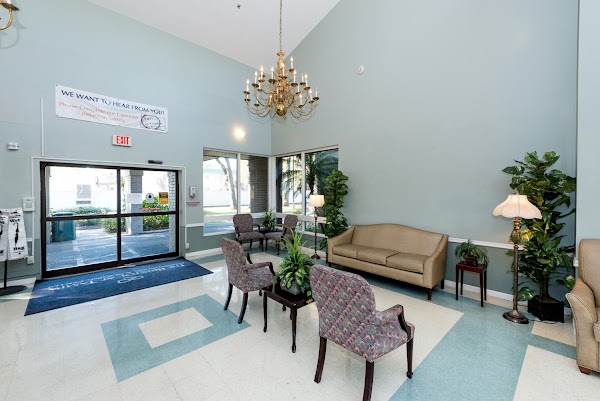
Jun 2023 1 deficiency
CONCERN (D) 📢 Someone Reported This

A family member, employee, or ombudsman was alarmed enough to file a formal complaint

Potential for Harm - no one hurt, but risky conditions existed

ADL Care (Tag F0677)

Could have caused harm · This affected 1 resident

**NOTE- TERMS IN BRACKETS HAVE BEEN EDITED TO PROTECT CONFIDENTIALITY** Based on observation, interview, and record review, the facility failed to ensure two (#20 and #24) of six sampled residents rev...

Read full inspector narrative →
**NOTE- TERMS IN BRACKETS HAVE BEEN EDITED TO PROTECT CONFIDENTIALITY** Based on observation, interview, and record review, the facility failed to ensure two (#20 and #24) of six sampled residents reviewed for Activities of Daily Living were provided with personal hygiene care as per their choice during at least three of three days observed on 6/26/2023, 6/27/2023, and 6/28/2023. Findings included: 1. On 6/26/2023 at 9:35 a.m., Resident #20 was observed in his room and in his bed. The call light was placed within his reach and he was lying under the covers with the head of his bed at approximately 40 degrees. The over the bed table was positioned over his lower chest area, over the bed. Resident #20 was pleasant to speak with, but had some cognitive impairment. He was able to answer some simple questions about his day when asked. He was wearing glasses and his television was on during the time of the interview. Further observations revealed Resident #20's face was not cleanly shaven. His cheeks, chin, neck all were observed with more than overnight stubble. The facial hair was observed between one quarter inch to one half inch in length. Resident #20 was asked if he normally liked to be shaven, and he replied, nobody really helps me with shaving every day. He continued, I get shaved maybe one time a week. The resident confirmed he did not like stubble, facial hair, or beards, liked to be cleanly shaven every day; as that was what he had done in the past. He started to scratch his neck line and all ten of his finger nails were observed elongated and with what appeared to be brown/black colored debris under all the nails. The nails were observed to be at length with some nails one quarter to one half inch over the end of the fingers. Resident #20 was asked about his finger nails and if staff ever clipped them. He looked at both his hands and stated, they are long, I don't like them long. He revealed he was supposed to receive help with his nail maintenance but did not remember the last time staff had clipped his nails. He also did not know when the last time staff helped him clean debris from under his nails. The resident did not like the current state of his nails and did not like not being shaven. On 6/26/2023 at 11:56 a.m., the resident was visited while in his room again. He was observed cheerful and still lying in bed. The call light was placed within his reach and there was an aide in the room bagging soiled sheets/clothing. The Certified Nursing Assistant (CNA) Staff B left the room. The resident was observed with a cleanly shaven face and he confirmed the staff (could not provide name) was just in the room and shaved him. He stated, I feel better. He also was observed with both the left and right hand (all ten fingers) with completed nail care. All nails were clipped to the end of his finger tips. He was asked how his hands and fingers felt, and he replied, She just clipped, I like it this way. Resident #20 confirmed he was not shaved or provided nail care on a daily basis. On 6/27/2023 at 7:40 a.m., an interview Staff D, CNA revealed she worked with Resident #20 a lot and knew him. She revealed he liked to stay in his room, talk with his roommate, and watch television. Staff D said the resident was invited but did not like to go to group activities much. Staff D the had a shower/bathing schedule and for him the schedule was during the 3-11 shift. She said is was expected that the staff who provided him with bathing/showering, would shave him and provide nail care. Staff D said Resident #20 could make his daily needs known. She said the resident liked to be cleanly shaven and with his nails clipped. She said, as far as she knew, he did not refuse care and services to include personal hygiene care. On 6/27/2023 at 7:45 a.m., an interview with North [NAME] floor nurse Staff A revealed she worked the same unit mostly and had Resident #20 on her assignment. She remembered yesterday, 6/26/2023, Resident #20 had not been shaved and had long nails. She said on 6/26/2023, the 7-3 shift Staff C, CNA clipped his nails and shaved his face after lunch time. She confirmed the resident was pleasantly confused but able to make his daily needs known. As far as she knew he did not refuse showers/bathing and/or personal hygiene care. She said if that were the case, it would be documented in the chart and the aides would the nurse know. On 6/27/2023 at 7:50 a.m., an interview with Staff C, CNA revealed she did not have Resident #20 on her assignment today, but did him routinely and knew him. She said he was pleasantly confused but was able to make his daily routine decisions. She revealed she had him on her assignment yesterday, 6/26/2023, and in the afternoon she realized he needed to be shaved. She confirmed it appeared he had not been shaven for a few days. She also looked at his finger nails and saw those too needed to be cleaned and clipped as they were very long. She revealed that the resident normally has his showers/bathing during the 3-11 shift but sometimes she would provide shower/bathing during the 7-3 shift. Staff C did not know why the resident was not shaved or why his fingernails were so long. She said the resident did not typically refuse personal hygiene care. Review of Resident #20's medical record revealed he was admitted to the facility on [DATE]. Review of the advance directives revealed the resident was his own responsible party. He had family members listed as emergency contact only. Further review of the record revealed no indication of an incapacity statement. Review of the diagnosis sheet revealed diagnoses to include but not limited to: Abnormal posture, Dementia, Muscle weakness, Cognition deficit. Review of the current care plans with next review date 8/20/2023 revealed the following but not limited to areas: - Has self care deficit with dressing, grooming, bathing r/t generalized weakness and confusion, with interventions to include: Cue/encourage resident to participate in ADL tasks, Allow resident ample time to attempt ADL, Encourage and remind to ask for assistance with dressing, grooming, bathing, Use calm approach, explain actions during care, Therapy screen as indicated. Per review of the entire medical record to include nurse progress notes, nursing assessments, Minimum Data Set assessments, and Care Plans, all did not have any documentation to support the resident ever refusing bathing, shaving, and or nail care. 2. On 6/26/2023 at 9:40 a.m., the North East lounge/dining room, located across from the North East Unit station revealed several residents either seated in wheelchairs or seated/reclined in Geri chairs. The television was on and there were no staff in the room. However, there were staff seated at the unit station and they could see the residents from their seated position. Observations revealed Resident #24 in the lounge area and reclined next to a window, while in her reclining chair. She was noted with a blanket over her but was shaking. She was not interviewable and could not answer any questions about her day. She was noted with her hands shaking and her hands were placed up near her neck line. Further observations revealed all ten fingernails were observed elongated and with what appeared to be a dark colored debris under her nails. Some nails appeared one quarter inch to one half inch in length. Resident #24 was not able to answer if she liked her nails like that or not. At 10:30 a.m. and at 11:40 a.m. Resident #24 was observed in the same place in the lounge area and seated next to the window. At 11:50 a.m. staff were noted assisting her with her lunch meal. On 6/27/2023 at 7:00 a.m., Resident #24 was noted reclined in her reclining chair in the North East lounge/dining area. She was noted with a blanket over her and she was positioned at the window. Resident #24 was observed with her eyes open and she was moving her hands and head back and forth. Resident #24 was not otherwise presenting with any behaviors, pain or discomfort. Resident #24's hands were still observed with all ten fingernails elongated and with dark brown/black debris under her nails. Resident #24 was not able to make her needs known nor able to speak related to her daily care and services. On 6/27/2023 at 8:00 a.m., Resident #24 was being assisted with her breakfast meal by Staff E, CNA. Staff E confirmed the resident's fingernails were long and they had debris under them. She revealed she did not have the resident on her assignment the past few days and did not know why staff during the previous days have not provided nail care. Staff E said the resident did not refuse personal hygiene care when she had her on her assignment. On 6/28/2023 at 8:00 a.m., Resident #24 was seated in her reclining chair in the 300 unit lounge/dining room. Staff F, CNA was asked to lift up the blanket so the residents fingers and hands could be observed. She lifted the blanket after awaking the resident and both the left and right hand fingernails appeared elongated and soiled with black and brown debris under most of her fingernails. Staff F confirmed the nails were long and soiled. A review of Resident #24's medical record revealed she was admitted to the facility on [DATE] and readmitted on [DATE]. A review of the diagnosis sheet revealed diagnoses to include: Dementia, Depression, Anxiety, History of falls. A review of the current Quarterly Minimum Data Set (MDS) assessment, dated 3/18/2023 revealed: Activities of Daily Living or ADL - PERSONAL HYGIENE = Total dependent on staff with One person assist, BATHING = Total dependent on staff with one person assist. There were no indication or documentation reflective that the resident ever refused ADL care and service. There was no documentation that reflected Resident #24 ever refused showers/bathing. A review of the CNA [ brand name of a desktop file system that gives a brief overview of each patient /resident] interventions revealed the following: Personal Hygiene - 5/29/2023 - current 6/27/2023 indicated resident total dependent on staff for this task. No specific task to include fingernail care. Review of the current care plans with next review date 9/16/2023 revealed the following but not limited problem areas: - Risk for decreased social interaction/activity participation r/t: Cognitive impairment d/c advanced dementia. She will sit in her wheelchair in the dayroom. She will tolerate at times sitting in with a group of residents. She does verbally communicate her needs/wants, staff must anticipate needs/wants, with interventions in place. (nothing to include ADL fingernail care) - Has self care deficit with dressing toileting, bathing r/t cognitive deficit r/t impaired mobility r/t generalized weakness, with interventions in pace to include but not limited to: Provide total staff assistance with dressing, grooming, bathing. Note: There was nothing listed related to fingernail care. - Has visual alteration and dx. of dementia making it difficult to accurately assess visual ability, with interventions in place to include but not limited to: Provide assistance with ADL tasks as need. Note: There was nothing listed related to fingernail care. On 6/28/2023 at 2:00 p.m., an interview with Staff G, North East and North [NAME] Unit Manager was conducted. Staff G said when residents were bathed and showered, the CNA would check for fingernail length cleanliness. He was not sure how this was documented in the chart to show if this task was completed or not. Staff G also indicated the resident care plans should also reflect if the resident should have fingernail care. Staff G said heard Resident #24's nails were long. He did not know why the resident's nails were not clipped in a more timely manner. On 6/28/2023 at 9:00 a.m. the Nursing Home Administrator provided the facility's Fingernails/Toenails, Care of Policy and Procedure with a revised date 2018, for review. The Purpose of the policy revealed; The purpose of this procedure are to clean the nail bed, to keep nails trimmed, and to prevent infection. The General Guidelines indicated; (1) Nail care includes cleaning and regular trimming. (2) Proper nail care can aide in prevention of skin problems around the nail bed. (4) Trimmed and smooth nails prevent the resident from accidentally scratching and injuring his or her skin. The Documentation section of the policy revealed; The following information should be record in the resident's medical record: (1) The date and time that nail care was given. (2) The name and title of the individual(s) who administered the nail care. (6) If the resident refused the treatment, the reason(s) why and the intervention taken. (7) The signature and title of the person recording the data. The Reporting section of the policy revealed; (1) Notify the supervisor if the resident refuses the care.
May 2023 9 deficiencies 1 IJ
CRITICAL (J) 📢 Someone Reported This

A family member, employee, or ombudsman was alarmed enough to file a formal complaint

Immediate Jeopardy (IJ) - the most serious Medicare violation

Deficiency F0678 (Tag F0678)

Someone could have died · This affected 1 resident

**NOTE- TERMS IN BRACKETS HAVE BEEN EDITED TO PROTECT CONFIDENTIALITY** Based on record review, interview, facility documentation review and policy review the facility failed to accurately identify a ...

Read full inspector narrative →
**NOTE- TERMS IN BRACKETS HAVE BEEN EDITED TO PROTECT CONFIDENTIALITY** Based on record review, interview, facility documentation review and policy review the facility failed to accurately identify a resident, follow facility policy, and accurately identify a code status of one resident (#1) out of six residents reviewed for advance directives. Resident #1, had physician orders and care plan showing her wishes were for a Full Code (meaning all resuscitation procedures will be provided to keep her alive if found without a pulse and/or respirations). On [DATE] when Resident #1 was found to be unresponsive without pulse and respirations, resuscitation efforts were begun, and then stopped due to a mistake in identifying the correct medical record. Resuscitation efforts were started again after Resident #1's actual medical record was found and a nurse realized the error. The resident was not successfully revived and was pronounced dead by Emergency Medical Service (EMS) staff. This failure created a situation that resulted the likelihood for serious injury and or death and resulted in the determination of Immediate Jeopardy on [DATE]. The findings of Immediate Jeopardy were determined to be removed on [DATE] and the severity and scope was reduced to a D. Findings included: A review of Resident #1's medical record showed an admission date of [DATE] with admitting diagnoses of Type II Diabetes Mellitus without Complications, History of Falling, Anemia, unspecified, Vascular Dementia with behavioral disturbance, Dizziness, and giddiness, Generalized edema, Acute kidney failure unspecified and other osteoporosis with current fracture to right humorous, subsequent encounter for fracture with routine healing. A physician order dated [DATE] showed Full Code. The comprehensive care plan showed a focus of Resident has an HCP [Healthcare Proxy] and incapacity and is a full code. With initiated date of [DATE]. A goal of Resident #1's designated representative will be educated regarding Advance Directive options through the target date of [DATE]. Intervention showed Full Code. Resident #1's facesheet showed full code. Review of a progress note, written by Staff A, Registered Nurse (RN), dated [DATE] at 10:03 AM showed, At 1045 [p.m. on [DATE]] I went, and the resident refused the medication, which is crush, she did not want to open her mouth to take to take it. I continued with my rounds and at 1258 the CNA (Certified Nursing Assistant) came to tell me that the resident was not responding. I went to the room to see and confirm that she was not breathing active code [NAME] [Spanish word for blue] and I put the Cardiopulmonary Resuscitation (CPR) table[tablet] on the oxygen tank, and I started CPR when I went for the third cycle. The nurse and the supervisor tell me to stop not touching it, its Do Not Resuscitate (DNR), we stopped the CPR. I picked up the equipment when I come to the computer to make the report, I realized that was an error by the nurse and the supervisor because it is a full code, and I activated the blue code [generally used to indicate a patient requiring resuscitation or otherwise in need of immediate medical attention, most often as the result of a respiratory or cardiac arrest], and I ran to the room. I told the CNAs to activate the blue code by intercom and CPR continued until 911 arrived and relieved us. Review of Resident #1's medical record showed a minimum data set (MDS) dated [DATE] with Death in the Facility. Review of the facility's documentation, the listing of all discharges for [DATE], showed Resident #1 had expired on [DATE]. A review of the facility's documentation Adverse Incident Tracker for the month [DATE] showed a [DATE] incident identifying Resident #1 with a description of CPR incident and report date of [DATE]. During an interview on [DATE] at 10:38 a.m., the Director of Nursing (DON) stated that she was notified of a Code Blue on [DATE] around 5:00 a.m. The DON stated she was told that the police were notified and already in the facility. DON remembered that around 8:00 a.m. on [DATE] RN Staff B informed the DON that a code blue was called on Resident #1. DON stated that the way she understood the code blue incident the morning of [DATE] was a CNA found Resident #1 and called for the Nurse (identified as RN Staff A). The DON stated that RN Staff A called a Code Blue and started CPR. The DON stated that LPN (Licensed Practical Nurse) Staff C obtained the wrong chart to verify code status and RN Staff B then informed RN Staff A that Resident #1 was a DNR and not to touch Resident #1 as it was verified that she was a DNR. The DON stated that upon investigation once RN Staff A quit CPR and went to the computer to document it was found that Resident #1 was a full code, so a code blue was called again, and CPR was resumed until EMS arrived. The DON stated that the incident was recorded as an adverse situation with neglect and reported within 24 hours of the incident. The DON stated that the incident occurred on [DATE] and the incident was reported on [DATE]. The DON stated that as of right now RN staff A and RN staff B were suspended but LPN Staff C was back to work already. The DON stated that LPN Staff C was cleared on the CPR incident already because the only involvement LPN Staff C had was pulling a Resident hard copy chart and giving the chart to the supervisor. A review of Resident #1's medical record showed a Code Blue Form dated [DATE]. The Code Blue Form showed chain of events dates that included: Time of Respiratory/Cardiac Arrest: [DATE] at 12:58 a.m. Code Blue Called: [DATE] at 12:59 a.m. Code Status Verified: [DATE] at 1:05 a.m. 911 Called: [DATE] at 12:59 a.m. CPR Initiated: [DATE] at 12:59 a.m. EMS Arrived: [DATE] at 1:35 a.m. Physician Notification: [DATE] at 2:00 a.m. Responsible Party Notified: [DATE] at 2:10 a.m. DON Notification: [DATE] at 1:45 a.m. Additional Comments: 10:45 (p.m.) the resident refused the acetaminophen and then the CNA at 1258 reported that the patient did not respond CPR was started and then they ordered to stop and not touch the patient because it was DNR when I returned to my computer to make the report I realized that is was an error full code and activate the blue and ran code for the room and we started CPR until the paramedics arrived. During an interview on [DATE] at 2:30 p.m., LPN Staff C stated that when code blue was called, everyone went running to the code blue unit. LPN Staff C stated that she pulled a medical chart by room number and handed it to RN Staff B who verified code status in the computer. LPN Staff C stated after handing the chart over to the supervisor she then went back to the assigned unit to check on all the residents on her assigned unit. LPN Staff C stated, I verified the Resident who coded based on room number. LPN Staff C was asked if Resident #1 was in a private room? LPN staff C stated no, Resident #1 had three to four people in the room she was assigned to. LPN Staff C stated that there was training on code blue and rapid response protocol prior (on [DATE]) to the incident on [DATE] and the protocol was followed but the issue was the wrong chart was pulled. LPN Staff C verified the chart that was pulled was Resident #7's chart the roommate of Resident #1. A review of Resident #7's medical record showed an admission date of [DATE] with admitting diagnoses of Multiple Sclerosis, other malignant neoplasm of skin of nose, hyperlipemia, Unspecified Dementia, Depression and Anxiety. A State of Florida Do Not Resuscitate Order was in place with a date of [DATE]. A physician order dated [DATE] showed DNR. The Comprehensive Care plan showed Resident #7 has expressed the following wishes regarding code status and has the following advance directives in place: DNR with initiated date of [DATE]. During an interview on [DATE] at 2:40 p.m., RN Staff B stated when code blue was called on [DATE] everyone responded. Staff B came from Southwest Hall to assist with the code on Northwest Hall. RN Staff B remembered going right to the computer to verify code status. RN Staff B stated the name of the Resident was given and the code status on point click care was matched with the name in the physical chart with a matching code status of do not resuscitate (DNR). RN Staff B explained that the name of the Resident that was given for code status verification was not correct, the name given for code verification was Resident #7's (Resident #1's roommate) information that stated DNR instead of Resident #1. Both nurses confirmed DNR status for Resident #7 and then we both yelled down she is DNR do not touch her. After cardiopulmonary resuscitation (CPR) was discontinued RN Staff B and LPN Staff C went to the room and called time of death. RN Staff B stated all nurses went back to their assigned units and began working again. RN Staff B stated maybe 10 to 15 minutes later a Certified Nursing Assistant (CNA) came running down the hall stating, it was the wrong the chart. RN Staff B remembered a second code blue was called and CPR was initiated again until the EMS arrived. RN Staff B stated that when looking for Resident #1's chart no one could find it at first as the medical chart was not located on the same unit where Resident #1 resided, but someone eventually found the chart on another unit. On [DATE] at 6:00 p.m., an interview was attempted with RN Staff A. The nurse's phone number was called and Staff A answered by saying what do you want? Staff A was told the call was to discuss an incident regarding a resident at the facility. Staff A RN said do you speak Spanish? and then said I only speak Spanish and call back when you can speak Spanish and the phone was disconnected. Review of the facility's documentation Risk Management Witness Statement written by RN Staff A dated [DATE] showed, At 1045 (p.m.) I went to the room and the patient refused the medicine and I continued with rounds. At 12:58 AM the CNA [CNA Staff E] tell me that the patient was not breathing. I went to the room with the crash cart and the oxygen when I get there the patient was not breathing and I started CPR and told [CNA Staff F and CNA Staff D] to activate code blue and to look the medical record but when I was in the middle of the CPR the [LPN Staff C] grab a book and says she was a DNR and the supervisor says stop CPR and when I went come back to the computer I look other record figured out that she was a full code and the nurse [LPN Staff C] did a mistake so I called [CNA Staff D] and tell her to activate the code blue for the second time so I went to the room and start CPR until the paramedics was here. Review of the facility's documentation showed an In-service was conducted on [DATE] on the topics of Code Blue, Rapid Response, documentation, signs and symptoms of hyper and hypo glycemic and fall monitoring. During an interview on [DATE] at 5:00 p.m., RN Staff B stated that she was told Resident #7's name instead of Resident #1's name to verify code status. RN Staff B stated it was a communication error. RN Staff B stated that when the code blue was called around 12:55 a.m. on [DATE] she went to assist. RN Staff B stated that RN Staff A was asked to identify the Resident who coded, and Staff A stood there looking at her like a deer in headlights frowned, and then shrugged. RN Staff B stated that RN Staff A began looking around for Certified Nursing Assistant (CNA) Staff D to translate for him because he did not understand what RN Staff B asked. RN Staff B again asked RN Staff A who coded and RN Staff A identified the Resident as Resident #7. RN Staff B stated that was when LPN Staff C pulled the medical chart and handed the medical chart to RN Staff B for verification of code status in the electronic medical record. RN Staff B stated the code status matched as a DNR so they yelled to RN Staff A to in the room performing CPR to stop CPR it had been verified she was DNR. RN Staff B stated that both she and LPN Staff C went to the room and called the time of death about 1:05 a.m. RN Staff B stated Resident #1 was clearly dead there was no pulse and no respirations. RN Staff B stated that both she and LPN Staff C went back to their assigned unit to care for their assigned residents. RN Staff B stated that lack of communication in English was the cause of the mix-up as RN Staff A could not understand the questions RN Staff B asked during the code blue. RN Staff B stated that was when she realized that RN Staff A was not bilingual in English and was solely Spanish speaking which was a barrier and safety issue during an emergency like a code blue. RN Staff B stated that it took her three times to write out her witness statement because the DON continued not to accept it and said the state would not accept the witness statements. RN Staff B stated after the third witness statement was written the DON approved it and accepted it. RN Staff B stated that once returning to the unit she was assigned to about 10 to 15 minutes later CNA Staff D came running down the hall and said, that was not the right person that Resident #1 was a full code. RN Staff B said she called the second code blue and asked for Resident #1's medical record to verify. RN Staff B stated that was when they discovered the hard copy medical record was missing. RN Staff B stated she asked everyone to go throughout the facility and look for Resident #1's hard copy medical record. RN Staff B stated it was CNA Staff D who eventually found Resident #1's hard copy chart on another unit. RN Staff B stated Resident #1's hard copy medical record and electronic medical record showed in fact that Resident #1 was a full code. RN Staff B stated that the code blue was called and so was 911 per facility protocol. RN Staff B stated that as a supervisor she felt RN Staff A's inability to understand the English language was more of a concern during the code blue as RN Staff A did not understand nor could answer questions quickly or accurately in a time of emergency. RN Staff B explained that CNA Staff D would come to her at the beginning of a shift, and request to be reassigned to work with RN Staff A. She said CNA Staff D would tell her it was because CNA Staff D needed to work on the same hallway as RN Staff A in order to translate English language to Spanish language. RN Staff B stated that as a new supervisor she wanted to make sure staff were where they needed to be, so she always honored CNA Staff D request to work on the unit with RN Staff A. RN Staff B stated that she knew CNA Staff D assisted RN Staff A with some translation but had no idea that the translation assistance was full time throughout the shift. RN Staff B stated that she reported this concern to the DON, and had a conversation with the DON about the lack of communication and miscommunication during the [DATE] code blue incident. RN Staff B stated she informed the DON that RN Staff A's English language barrier was very concerning that night when he did not understand her. RN Staff B stated she had experience and training in CPR and Advanced Cardiovascular Life Support (ACLS) and believed the communication and the lack of understanding without a translator for RN Staff A caused the mix-up during the first code blue process. During an interview on [DATE] at 9:50 a.m., the DON stated that RN Staff A could speak English and that sometimes RN Staff A would have delayed thinking about what was being discussed but then RN Staff A could answer. The DON stated that RN Staff A did know the English language and could communicate with English speaking residents and staff. The DON was asked about any accommodations RN Staff A may have needed related to a language barrier. The DON stated RN Staff A had no accommodations because he could communicate in English just as well as speaking in Spanish. During an interview on [DATE] at 11:20 a.m., CNA Staff E stated that when doing rounds the morning of [DATE] Resident #1 when you touched her she was able to verbalize. CNA Staff E stated that when she touched Resident #1 later that morning, she was ice cold and did not move and was not breathing. CNA Staff E stated that she went to the door and yelled for RN Staff A to come. CNA Staff E stated when RN Staff A got to the door, she led RN Staff A to Resident #1 where he began to assess Resident #1. CNA Staff E stated that she knew Resident #1 but did not identify Resident #1 with RN Staff A, as she just led RN Staff A to Resident #1 when RN Staff A walked in. CNA Staff E stated that she knew Resident #1 prior to the code blue incident as CNA Staff E worked with Resident #1 over on the Southeast Unit. CNA Staff E was asked if RN Staff A was able to communicate well with staff and residents. CNA Staff E responded that RN Staff A did not speak English well, but everyone who worked with him helped him when he was working. CNA Staff E stated that RN Staff A would answer questions very slowly and it took time for RN Staff A to respond as he had to have time to think about what is being asked. CNA Staff E stated that she did not speak Spanish, so she was never much help to RN Staff A. CNA Staff E stated that the morning of [DATE] there were two staff members who could speak Spanish that night, so they helped him through that 11-7 shift. CNA Staff E stated that for instance, CNA Staff E watched RN Staff A write up his witness statement all in Spanish first and then the other staff helped him translate his statement over to English. CNA Staff E stated that RN Staff A was asking about words in Spanish and the staff would tell RN Staff A what the word was in English. During an interview on [DATE] at 12:09 p.m., the DON reviewed Resident #1's medical record with the survey team. The medical record showed Resident #1's census page. Resident #1's census page showed Resident #1 was moved off Southeast Unit on [DATE] to the Northwest unit. The DON was asked if Resident #1's medical record was placed back on the Southeast unit by accident or if the chart was left on the Southeast unit when Resident #1 was transferred to Northwest unit on [DATE]. The DON said that she just didn't know, there was no way of knowing that but confirmed the medical record was not on the correct unit when Resident #1 stopped responding on [DATE]. During an interview on [DATE] at 1:15 p.m., LPN Staff G stated that when receiving report from RN Staff A, he was a little hard to understand. LPN Staff G stated that RN Staff A did speak English, but it was very thick English. LPN Staff G stated that staff would have to listen very carefully. LPN Staff G stated that he did think RN Staff A knew what was talking about but was just a little difficult to understand. During an interview on [DATE] at 1:26 p.m., RN Staff H stated that RN Staff A did have broken English. RN Staff H stated that he could understand RN Staff A but when RN Staff A spoke English it was not always spoken in the correct form. RN Staff H stated a lot of the times, staff had to listen to what RN Staff A said and then try to figure out what RN Staff A meant. RN Staff H stated that he only knew of one complaint from a Nurse (identified as LPN Staff I) who had stated that she could not understand what RN Staff A was saying. RN Staff H stated that LPN Staff I had discussed the communication barrier with him. RN Staff H stated he did feel that RN Staff A's English skills were a little bit of a communication barrier. During an interview on [DATE] at 3:09 p.m., LPN Staff I stated, RN Staff A, was a little hard to understand, especially during shift change and report. LPN Staff I stated that RN Staff A had some broken English and there was a language barrier there. During an interview on [DATE] at 6:48 p.m., CNA Staff F and CNA Staff D were interviewed. CNA Staff D stated that the morning of [DATE] she was not Resident #1's assigned CNA. CNA Staff D identified CNA Staff E as the assigned CNA for Resident #1. CNA Staff D stated that CNA Staff E yelled that Resident #1 was not responding and was cold, so RN Staff A ran into the room with the crash cart. RN Staff A assessed Resident #1 and said no pulse or respirations and said activate a code blue and go find the chart. CNA Staff D stated that I went to look for the hard copy chart and was looking for room (Resident #1's room and bed). CNA Staff D stated the chart was missing and she could only find the charts for the other 3 residents in room (Resident #1's room). At this time, CNA Staff F stated, I wasn't even looking for the name. CNA Staff D stated that LPN Staff C came to the unit and pushed us CNAs out of the way, took one of the charts and said here is the chart. CNA Staff D stated that LPN Staff C opened the (wrong) chart and said she (Resident #1) is a DNR. CNA Staff D stated that RN Staff B took the chart from LPN Staff C and then opened the electronic medical record and said yes, they match she is a DNR. CNA Staff D stated that was when both LPN Staff C and RN Staff B yelled into the room not to touch her, she was a DNR. CNA Staff D stated that when RN Staff A got back to the nurses' station RN Staff B was making a list of what RN Staff needed to do next such as call the family, doctor, and DON. CNA Staff D stated that RN Staff A did not always understand a lot of things when people spoke in English, so I was always there to translate for him. CNA Staff D explained that was why she always made sure she was scheduled on that unit with RN Staff A every time he worked. CNA Staff D stated that RN Staff B made the to do list because of the communication barrier. When RN Staff A had the hard copy medical record in his hand and sat down at the computer to document RN Staff A stated, this is not the right Resident, Resident #1 is a full code. CNA Staff D stated that she remembered that Resident #1 had been on the Southeast Unit prior to being moved to the Northwest Unit two to three weeks prior. CNA Staff D stated that was where Resident #1's chart was found, it appeared the hard copy chart was never moved with the Resident #1 when transferred to Northwest unit. CNA Staff D stated by the time Resident #1's chart was found the paramedics were there. The paramedics were concerned that there could have been a delay in treatment and called the police to the facility. CNA Staff D stated that the police then decided to question each staff member one on one. CNA Staff D stated that she offered to help translate for RN Staff A when the police asked questions, but the police ended up getting their own officer who spoke Spanish to speak with RN Staff A. CNA Staff D stated that after the Resident #1 incident on [DATE] CNA Staff D was called in to speak with the Regional Nurse who asked CNA Staff D to come in and talk and make a witness statement regarding the incident. CNA Staff D stated the Regional Nurse asked her to write that Resident #1 was dead prior to the first code blue being called. CNA Staff D stated that she could not write that on the witness statement because as a CNA she could not assess or call a death. During an interview on [DATE] at 5:00 p.m., the Administrator stated that he had spoken with RN Staff A regarding the code blue incident and RN Staff A was able to tell the Administrator that he had started CPR on Resident #1 because RN Staff A knew Resident #1 was a full code and only stopped CPR because the Nurse Supervisor advised him to stop. A review of the facility's policy titled, Cardiopulmonary Resuscitation (CPR) not dated showed, Policy: It is the policy of the center to initiate CPR if the resident is without pulse or respirations and is a full code. Procedure: 1.Resident identified with lack of breathing and pulse. 2. Responder calls for assistance (doesn't leave resident alone) 3. Team responds and brings medical record and code chart. 4. Vital signs taken. 5. Code status is verified from the medical record. 6. 911 (EMS) is called by staff members 7. Code chart is stocked with needed, easily accessible items. 8. Physician is notified. 9. Family is notified. 10. CPR is not stopped unless EMS arrives and takes over. 11. History/Paperwork is provided to EMS upon arrival. 12. Code procedure turned over to EMS as appropriate. 13. Appropriate transfer forms completed and give to EMS. Facility immediate actions to remove the Immediate Jeopardy included: On [DATE]th 2023, DON was informed that a resident had coded and CPR was ceased and restarted prior to EMS arrival. The Center has taken the following steps to ensure the safety of our residents who are at risk for Advance directive related to CPR and Code status compliance. Resident family was notified of outcome of CPR attempt at approximately 1:15 am on [DATE]th 2023 Physician notified of incident - At approximately 1:15 am on [DATE]th 2023 Administrator, DON, Nurse manager notified of incident and reported to facility on [DATE]th 2023 All residents in facility were audited for advance directives preferences to ensure accuracy, 100% on [DATE]th 2023 Facility-initiated code blue drill on [DATE]th 2023 All chart locations were audited to ensure in proper location on [DATE]th 2023 100% complete. CPR competency plus competency quiz and proper identification of code status for resident via chart, and EHR (Electronic Health Record) and resident photo in EHR for all staff initiated on [DATE]. [DATE] - 75% complete [DATE] - 90% complete [DATE] - 95% complete [DATE] -100% complete No employee will be permitted to work until they have completed in-services and competencies(nursing). Staff contacted via phone on [DATE] to contact facility for training prior to returning to work. DON or designee will be completing work on completion of training with competencies. This issue was taken to Quality Assurance Performance Improvement (QAPI) at an ad-hoc (when necessary) meeting on [DATE] to discuss the event and necessary adequate follow up. QAPI meeting discussed CPR Policy & Procedures, Education, Chart locations and disaster drills. Daily review of new admissions for code status and any code status change request will be completed by Nurse Management and Social Services for any concerns so that corrective actions can be identified/implemented as appropriate. CPR Drills completed at facility on [DATE] and will be on-going weekly for 1 month and biweekly for 1 month, then quarterly on all shifts. This Administrator is responsible for oversight of this plan. Verification of the facility's removal plan was conducted by the survey team on [DATE]. The Regional Nurse and the Administrator provided the State Survey team with documentation showing records of the facility actions to remove the immediacy: Bristol CPR Incident [DATE] Timeline included witness statements and five-day follow-up Audit conducted of all Resident code statuses, matching care plan and charts. Nurse CPR Certification Audit with all active CPR cards available CPR Policy QAPI Ad Hoc Meeting Minutes with CPR Policy In-Service Attendance Record with CPR Competency Quizzes Interviews were conducted with 47 Staff, 16 licensed nurses, 23 CNAs and 8 other staff. The staff members were able to state that they had been trained and were knowledgeable about the facility CPR policy. Based on verification of the facility's removal plan the immediate jeopardy was determined to be removed on [DATE] and the non-compliance was reduced to a scope and severity of D.
CONCERN (D) 📢 Someone Reported This

A family member, employee, or ombudsman was alarmed enough to file a formal complaint

Potential for Harm - no one hurt, but risky conditions existed

Report Alleged Abuse (Tag F0609)

Could have caused harm · This affected 1 resident

**NOTE- TERMS IN BRACKETS HAVE BEEN EDITED TO PROTECT CONFIDENTIALITY** A facility policy titled Abuse Investigating and reporting revised [DATE], was reviewed. The policy stated the following: Policy...

Read full inspector narrative →
**NOTE- TERMS IN BRACKETS HAVE BEEN EDITED TO PROTECT CONFIDENTIALITY** A facility policy titled Abuse Investigating and reporting revised [DATE], was reviewed. The policy stated the following: Policy Statement, All reports of resident abuse, neglect, exploitation, misappropriation of resident property, mistreatment and/or injuries of unknown source shall be properly reported to local, state, and federal agencies and thoroughly investigated by facility management. Findings of abuse investigations will also be reported. Based on record review, interview, facility documentation review and policy review the facility failed to report one of one incident that resulted in serious bodily harm within the appropriate timeframe. Findings included: A review of Resident #1's medical record showed an admission date of 06/ 01/2020 with admitting diagnosis of Type II Diabetes Mellitus without Complications, History of Falling, Anemia, unspecified, Vascular Dementia with behavioral disturbance, Dizziness, and giddiness, Generalized edema, Acute kidney failure unspecified and other osteoporosis with current fracture to right humorous, subsequent encounter for fracture with routine healing. A physician order dated [DATE] showed Full Code meaning all resuscitation efforts would be utilized to keep the Resident alive. The comprehensive care plan showed a focus of Resident has an HCP [Healthcare Proxy] and incapacity and is a full code. With initiated date of [DATE]. A goal of Resident #1's designated representative will be educated regarding Advance Directive options through the target date of [DATE]. Intervention showed Full Code. Resident #1's facesheet showed full code. Review of a progress note, written by Staff A, Registered Nurse (RN), dated [DATE] at 10:03 AM showed, At 1045 [p.m. on [DATE]] I went, and the resident refused the medication, which is crush, she did not want to open her mouth to take to take it. I continued with my rounds and at 1258 the CNA [certified nursing assistant] came to tell me that the resident was not responding. I went to the room to see and confirm that she was not breathing active code [NAME] [blue] and I put the Cardiopulmonary Resuscitation (CPR) table[tablet] on the oxygen tank, and I started CPR when I went for the third cycle. The nurse and the supervisor tell me to stop not touching it, its Do Not Resuscitate (DNR), we stopped the CPR. I picked up the equipment when I come to the computer to make the report, I realized that was an error by the nurse and the supervisor because it is a full code, and I activated the blue code, and I ran to the room. I told the CNAs to activate the blue code by intercom and CPR continued until 911 arrived and relieved us. A review of Resident #1's medical record showed a Code Blue Form dated [DATE]. The Code Blue Form showed chain of events dates that included: Time of Respiratory/Cardiac Arrest: [DATE] at 12:58 a.m. Code Blue Called: [DATE] at 12:59 a.m. Code Status Verified: [DATE] at 1:05 a.m. 911 Called: [DATE] at 12:59 a.m. CPR Initiated: [DATE] at 12:59 a.m. EMS Arrived: [DATE] at 1:35 a.m. Physician Notification: [DATE] at 2:00 a.m. Responsible Party Notified: [DATE] at 2:10 a.m. DON Notification: [DATE] at 1:45 a.m. Additional Comments: 10-45 [p.m.] the resident refused the acetaminophen and then the CNA at 1258 reported that the patient did not respond CPR was started and then they ordered to stop and not touch the patient because it was DNR when I returned to my computer to make the report I realized that is was an error full code and activate the blue and ran code for the room and we started CPR until the paramedics arrived. A review of the facility's documentation, Adverse Incident Tracker for the month [DATE] showed a [DATE] incident identifying Resident #1 with a type of description as CPR incident. A report date of [DATE] was noted. A review of the Federal Immediate Report Manager showed an immediate report was created on [DATE] at 10:22:58 PM by the Director of Nursing (DON). During an interview on [DATE] at 10:38 a.m., the Director of Nursing (DON) stated that she was notified of a Code Blue on [DATE] around 5:00 a.m. The DON stated she was told that the police were notified and already in the facility. DON remembered that around 8:00 a.m. on [DATE] Registered Nurse (RN) Staff B informed the DON that a code blue was called on Resident #1. DON stated that the morning of [DATE] a Certified Nursing Assistant (CNA) found Resident #1 and called for the Nurse (identified as RN Staff A). The DON stated that Staff A, RN called a Code Blue and started CPR. DON stated that Staff C, Licensed Practical Nurse (LPN) obtained the wrong chart to verify code status and RN Staff B then informed RN Staff A that Resident #1 was a DNR and not to touch Resident #1. The DON stated that upon investigation once RN Staff A quit CPR and went to the computer to document it was found that Resident #1 was a full code, so a code blue was called again, and CPR was resumed until EMS arrived. The DON stated that the incident was recorded as an adverse situation with neglect and reported within 24 hours of the incident. The DON stated that the incident occurred on [DATE] and the incident was reported on [DATE]. The DON stated that as of right now RN staff A and RN staff B were suspended but LPN Staff C was back to work already. The DON stated that LPN Staff C was cleared on the CPR incident already because the only involvement LPN Staff C had was pulling a Resident hard copy chart and giving the chart to the supervisor. The DON was asked when reporting an adverse situation or a case of neglect what was the timeframe for reporting? The DON stated that the facility only reports cases of abuse, neglect or exploitation in two hours, everything else is 24 hours. The DON stated that the incident would have been reported on [DATE] within two hours of the incident however, the state survey team came into the facility to survey, and this caused a delay because she was busy getting all the information needed for the survey team. The DON stated that she could not report the adverse situation until after the state survey team left the first day of survey until after 7:00 p.m. on [DATE]. A review of the facility's policy, Abuse Prevention Program revised date [DATE] showed, Our residents have the right to be free from abuse, neglect, misappropriation of resident property and exploitation. 6. Identify and assess all possible incidents of abuse. 7. Investigate and report any allegation of abuse within timeframes as required by federal requirements.
CONCERN (D) 📢 Someone Reported This

A family member, employee, or ombudsman was alarmed enough to file a formal complaint

Potential for Harm - no one hurt, but risky conditions existed

Assessment Accuracy (Tag F0641)

Could have caused harm · This affected 1 resident

**NOTE- TERMS IN BRACKETS HAVE BEEN EDITED TO PROTECT CONFIDENTIALITY** Based on record review and interview the facility failed to ensure the comprehensive Minimum Data Set (MDS) assessment was accur...

Read full inspector narrative →
**NOTE- TERMS IN BRACKETS HAVE BEEN EDITED TO PROTECT CONFIDENTIALITY** Based on record review and interview the facility failed to ensure the comprehensive Minimum Data Set (MDS) assessment was accurately coded for one (Resident #8) of three discharge records reviewed. Findings included: A review of Resident #8's medical record showed Resident #8 was admitted to the facility on [DATE] with diagnoses of Acute and Chronic Respiratory Failure,Chronic Obstructive Pulmonary Disease (COPD), and Unspecified Acute and Chronic heart failure. A progress note dated 02/17/23 at 12:30 a.m. showed, Resident was admitted to room [ROOM NUMBER]-A and left [against medical advice] AMA at 12:30 AM. Resident requested to be 911 to the VA. A discharge without physician's approval form was obtained. And [Medical Doctor] MD was notified. Review of the Entry minimal data set (MDS) showed an admitted date of 02/16/23. A second MDS Discharge return not anticipated dated 02/17/23 was marked in section A as discharged to the community. During an interview on 04/27/23 at 10:30 a.m., Staff V, Registered Nurse (RN) stated that resident information used to code the discharge return not anticipated MDS was retrieved from hospital clinicals, on the floor interviews, therapy evaluations, physician orders and progress notes. RN Staff V reviewed the 02/17/23 progress note that stated Resident was admitted to room [ROOM NUMBER]-A and left [against medical advice] AMA at 12:30 AM. Resident requested to be 911 to the VA. A discharge without physician's approval form was obtained. And [Medical Doctor] MD was notified. RN Staff V stated based on the progress note dated 02/17/23 at 12:30 a.m. the Resident should have been coded on the Discharge Return not Anticipated MDS dated [DATE] with a discharge to an acute hospital not the community. RN Staff V stated that usually when a Resident leaves AMA they go to the community so that may have been why the MDS was marked in error.
CONCERN (E) 📢 Someone Reported This

A family member, employee, or ombudsman was alarmed enough to file a formal complaint

Potential for Harm - no one hurt, but risky conditions existed

Quality of Care (Tag F0684)

Could have caused harm · This affected multiple residents

**NOTE- TERMS IN BRACKETS HAVE BEEN EDITED TO PROTECT CONFIDENTIALITY** Based on observation, interviews, and record review the facility did not ensure proper diabetes management for three residents (...

Read full inspector narrative →
**NOTE- TERMS IN BRACKETS HAVE BEEN EDITED TO PROTECT CONFIDENTIALITY** Based on observation, interviews, and record review the facility did not ensure proper diabetes management for three residents (#5, #6) out of four residents reviewed for diabetes care. Findings included: 1. Resident #6 was admitted to the facility on [DATE] with diagnoses that included Type 2 Diabetes Mellitus without complications. A review of the resident's physician orders revealed an order for the blood test Hemoglobin A1C every three months on the 15th of the month with the start date of 02/15/2023. The resident's medications for her diagnosis of diabetes included: Bydureon Pen-Injector 2 mg subcutaneously once a day every Friday; Trulicity solution pen-injector 1.5 mg/0.5 ml, inject 1.5 mg subcutaneously one time a day every Thursday; Humalog solution 100 unit/ml, inject as per sliding scale, with the instruction to notify the doctor if the blood glucose was over 450; and insulin glargine 100 unit/ml, inject 35 units subcutaneously two times a day. A review of the Medication Administration Record (MAR) for April revealed the order for the Hemoglobin A1c had been noted on the MAR, however there were no results for the test found in the resident's medical record. A review of labs for Resident #6 revealed the last test for Hemoglobin A1c was on 10/10/2022 and the result was 11.9. According to the Mayo Clinic the Hemoglobin A1c test is a common blood test used to diagnose type 1 and type 2 diabetes. The test is used to monitor how well blood sugar levels are being managed. A Hemoglobin A1C level of less than 7% is a common treatment target with results of greater than 7% indicating poor blood sugar management. A review of the MAR for blood glucose values obtained three times a day (prior to meals) revealed 11 blood glucose tests were over 400 but under 451 so the physician did not need to be notified, according to the physician's order. The resident's blood glucose results before breakfast in April ranged from 128 to 450; her results before lunch in April ranged from 179 to 450; and her results before dinner in April ranged from 119 to 446. An interview was conducted with the Assistant Director of Nurses on 05/03/2023 beginning at 3:30 p.m. When reviewing the blood glucose values documented prior to the resident's meals, she confirmed that the values were high. She also confirmed that there were no results for the hemoglobin A1c noted in the MAR and she would have to look into why the test was not obtained. An interview was conducted with the resident's physician on 05/02/2023 beginning at 11:50 a.m. The physician confirmed that the goal for a resident with diabetes is to control their blood glucose. The physician confirmed after looking at the resident's medical record that she had two injectables ordered and two additional orders for insulin, one based on an accucheck and sliding scale. After reviewing the resident's blood glucose values, he concluded that her blood glucose was not in control. He reviewed the labs and didn't find a recent hemoglobin A1c. He confirmed he wrote an order for the hemoglobin A1c to be done every three months with the start date of 02/15/2023. The care plan for Resident #6 was reviewed and noted to include a Focus area for diabetes with the potential for hypo/hyperglycemic reactions, dated 10/13/2014. The Goal had a target date of 06/19/2023 and the plan was to minimize the risks of the resident's hypo/hyperglycemic episodes. Interventions included accuchecks as ordered/indicated; administer medications/insulin as ordered; labs/diagnostics per order, notify MD of results as indicated; observe blood glucose/accu checks as ordered. 2. Resident # 5 was admitted to the facility on [DATE] with diagnoses that included Type 2 Diabetes Mellitus with diabetic peripheral angiopathy without gangrene, left below knee amputation, amputation of right forefoot and a right medial ankle ulcer, stage 4. A review of the resident's medications revealed several medications for the treatment of diabetes: Insulin Glargine Subcutaneous Solution 100 unit/ml, inject 45 units subcutaneously at bedtime for DM2 (Diabetes mellitus type 2); Januvia oral tablet 50 mg, give 50 mg by mouth one time a day related to diabetes mellitus; novolog flexpen subcutaneously solution pen-injector 100 unit/ml, inject 22 units subcutaneously before meals related to diabetes mellitus due to underlying condition with diabetic neuropathy, hold for blood sugar less than 150. A Review of the April Medication Administration Record (MAR) revealed the order for the Novolog, 20 units before meals, hold for blood sugar less than 150 was not followed for 5 of the 90 opportunities. Five of the 30 results of the resident's blood glucose obtained at 6:30 a.m. were less than 150, with only one following the physician's order of holding the insulin. On 04/11/2023, the 6:30 a.m. the resident's blood glucose was 144 and the nurse initialed that the insulin was given. On 04/15/2023 at 6:30 a.m. the resident's blood glucose was 141 and the nurse initialed giving the insulin. On 04/17/2023 at 6:30 a.m. the resident's blood glucose was 146. On 04/18/23 at 6:30 a.m. the resident's blood glucose was 142 and the nurse initialed that the insulin was given. One nurse's note documented the insulin was held at 5:11 a.m. on 04/2/23 due to the blood glucose falling below 150. A review of the resident's care plan revealed Focus area of the risk for complications related to the diagnosis of diabetes mellitus with an intervention to administer oral medications and/or insulin per the physician's orders. An interview was conducted with Resident #5 on 05/01/2023 beginning at 2:10 p.m. in his room. He reported he was ok, but his right foot hurt, and he was concerned that what happened to his left leg may happen to his right leg.
CONCERN (E) 📢 Someone Reported This

A family member, employee, or ombudsman was alarmed enough to file a formal complaint

Potential for Harm - no one hurt, but risky conditions existed

Accident Prevention (Tag F0689)

Could have caused harm · This affected multiple residents

**NOTE- TERMS IN BRACKETS HAVE BEEN EDITED TO PROTECT CONFIDENTIALITY** Based on observations, interviews, and record reviews the facility did not ensure follow up neurological checks were completed a...

Read full inspector narrative →
**NOTE- TERMS IN BRACKETS HAVE BEEN EDITED TO PROTECT CONFIDENTIALITY** Based on observations, interviews, and record reviews the facility did not ensure follow up neurological checks were completed after falls for nine (#2, #4, #11, #12, #13, #14, #15, #16, #18) out of eleven residents sampled for falls in the month of April. Findings included: A review of the facility's Neurological Evaluation form showed the following instructions: This form should be completed for any unwitnessed fall or other accident/injury with possible head trauma, or when indicated by the resident's condition. The physician should be notified of any neurological change that requires further evaluation. This evaluation should be completed every 15 minutes x 4, then every 30 minutes x 4, then every 1 hour x 4, then every 4 hours x 4, then every 8 hours x 4. This totals 20 neurological (neuro) checks over three days post fall. 1. A review of admission records showed Resident #2 was admitted on [DATE]. A review of Resident #2's Minimum Data Set (MDS), dated [DATE], Section C, Cognitive Patterns, showed a Brief Interview for Mental Status (BIMS) score of 13, showing she was cognitively intact. Section G, Functional Status, showed she ate independently with set-up help only and for locomotion she needed limited assistance/one-person physical assist. A review of medical records for Resident #2 showed the following progress note, dated 4/13/23 at 4:00 a.m., written by Staff J, LPN: This writer called to room [#] observed resident sitting on the floor next to her bed, resident stated that she thinks she slipped out of bed but is unsure, resident denies pain, observed for injuries none noted. Resident vital signs stable able to move all extremities staff assisted resident back to bed, left message for daughter. Awaiting call back from MD. An interview was conducted with Staff J, Licensed Practical Nurse (LPN) on 5/2/23 at 2:23 p.m. She stated she had Resident #2 on 4/13/23 at 4:00 a.m. when she had her fall. She said at 4:00 a.m. the resident was found sitting at her bedside. She said the resident was trying to get a drink and told them she was thirsty. She said she called the supervisor, Staff B, Registered Nurse (RN), over to look at the resident since she was very familiar with her. Staff J, LPN said the resident denied any pain. She said Resident #2 did have a ginger ale and Gatorade and drank some of those. She also had yogurt or apple sauce. A review of Resident #2's Neurological Evaluation form showed the resident was assessed from 4:00 a.m. until 7:00 a.m. per instructions. The resident's neurological check was not completed at 8:00 a.m. as needed. At 9:00 a.m. the resident was sent out to the hospital for a low blood glucose reading. 2. A review of medical records for Resident #4 showed she was admitted on [DATE] and was care planned for being at risk for falls and/or fall related injury related to generalized weakness. A progress note, dated 2/17/23 at 7:01 a.m., revealed Resident #4 was observed on the floor in her room near the bathroom. A progress note, dated 2/17/23 at 9:16 a.m., showed the Interdisciplinary Team reviewed the fall. The resident told them she was going to the bathroom and lost her balance. The resident told them she had pain in both knees and her right him. X-rays were ordered. A review of the Neurological Evaluation form, dated 2/17/23 at 1:45 a.m., showed neuro check #11 due on 2/17/23 at 7:30 a.m. through neuro check #16 due on 2/18/23 at 12:30 a.m. were all signed off by the ADON. This covered a 17-hour spread. Neuro check #18, due on 2/18/23 at 8:30 a.m., through neuro check #20, due at 2/19/23 at 12:30 a.m., were also signed of by the ADON. This covered a 16-hour spread. Neuro checks #11-#20 were not signed off until 2/27/23. 3. A review of medical records for Resident #11 showed she was admitted on [DATE] and was care planned for being at risk for falls and/or fall related injury related to generalized weakness. A progress note, dated 4/7/23 at 4:32 a.m., revealed Resident #11 was found sitting on the floor at 3:00 a.m. Her body and head was leaning outside the bathroom door, her legs were stretched out with both hands on top of her lap. No complaints or signs of pain. A review of the Neurological Evaluation form, dated 4/7/23 at 4:16 a.m., showed neuro checks #10-20 were all signed off on 4/9/23 by the same staff member, Staff H, Registered Nurse (RN)/UM. The first neuro check Staff H signed off was for 4/7/23 at 7:45 a.m. and the last neuro check Staff H signed off was on 4/9/23 at 9:45 a.m., a 50-hour time frame. An interview was conducted on 5/3/23 at 12:45 p.m. with Staff H, RN/UM. He confirmed he did not work for 48 hours straight on 4/7-4/9/23. He said he was told by the Assistant Director of Nursing (ADON) and the DON to close up the evaluations. When asked what closing them up entails, he said it means he had to do the documentation even though he wasn't there. Staff H, RN/UM stated he felt pressured from his supervisors and felt like he had to do what he was told. 4. A review of medical records for Resident #12 showed she was admitted on [DATE] and was care planned for being at risk for falls and/or fall related injury related to generalized weakness and a history of falls. A progress note dated 4/23/23 at 9:49 a.m. revealed Resident #12 was found on the mat in her room at approximately 9:15 a.m. She was discovered on the right side of the bed with her back against the bed and buttocks on the mat. A review of the Neurological Evaluation form, dated 4/23/23, showed neuro checks were completed on 4/23 and 4/24/23. No checks were completed on 4/25/23 as needed per the evaluation form instructions. A change of condition for Resident #12 was documented on 4/28/23 related to a fall. The note showed the resident was lying supine (face up) on floor mat and floor. She was assessed to have an abrasion on her lower leg. She was assisted back to bed and neuro checks were started. A review of the Neurological Evaluation, dated 4/28/23, showed only 16 out of 20 neuro checks were completed. 5. A review of medical records for Resident #13 showed he was admitted on [DATE] and was care planned for being at risk for falls and/or fall related injury related to diagnosis of Parkinson's, and generalized weakness. The care plan showed the resident had falls on 4/4 and 4/27/23. The Neurological Evaluation form, dated 4/27/23 at 6:40 p.m., was reviewed. The form showed no neuro checks were signed off on 4/27/23 and 16 neuro checks were all signed off on 4/28/23. No neuro checks were signed off as completed on 4/27/23 or 4/29/23. Only 16 out of 20 neuro checks were completed. 6. A review of medical records for Resident #14 showed she was admitted on [DATE] and was care planned for being at risk for falls and/or fall related injury related to generalized weakness with a previous fall on 3/5/23. A progress note, dated 4/13/23, revealed the resident was observed sitting on the floor of her room with her back to the bed. The resident was unable to recall how she got to the floor but was able to verbalize that she had no pain. No injuries were noted, resident was assisted back to bed. A review of the Neurological Evaluation form, dated 4/13/23, showed neuro checks were completed for the first 7 hours. A total of 12 out of 20 neuro checks were completed. 7. A review of medical records for Resident #15 showed she was admitted on [DATE] and was care planned for being at risk for falls and/or fall related injury related to generalized weakness and history of falls. A progress note, dated 4/15/23, revealed the resident sat in a dining room chair and the chair went backwards and she fell on the floor. No injuries were noted. A review of the Neurological Evaluation form, dated 4/13/23, showed neuro checks were completed for the first six hours on 4/15/23. The next three neuro checks were signed off by Staff O, LPN/UM four days later on 4/19/23. Only 14 out of 20 neuro checks were signed off in total. A progress note on 4/27/23 showed Resident #15 slid out of her chair while trying to move the chair. The resident did not show any signs of pain. A review of the Neurological Evaluation from, dated 4/27/23, showed neuro checks were completed for the first seven hours on 4/27/23. No further neuro checks were signed off. A total of 12 out of 20 neuro checks were completed. 8. A review of medical records for Resident #16 showed he was admitted on [DATE] and was care planned for begin at risk for falls and/or fall related injury related to generalized weakness and a history of falls on 4/22 and 4/26/23. A progress note, dated 4/29/23 at 2:57 p.m., revealed the CNA altered the nurse that the resident was found on the floor. When the nurse arrived the resident was in bed and had a reopened abrasion on his right lower extremity. Resident was assessed for further injury and first aid was administered. Neurological checks were initiated. A review of the Neurological Evaluation form, dated 4/29/23, showed the first neuro check was done at 3:02 p.m. and no further neuro checks were signed off. A total of 1 out of 20 neuro checks were completed. 9. A review of medical records for Resident #18 showed he was admitted on [DATE] and was care planned for being at risk for falls and/or fall related injury related to generalized weakness. A progress note, dated 4/28/23, revealed the resident was observed on the floor by another resident. A head to toe evaluation was done with no injuries noted. Neuro checks were started. The Neurological Evaluation form, dated 4/28/23, showed neuro checks were completed for the first seven hours on 4/29/23 and no further neuro checks were signed off. A total of 12 out of 20 neuro checks were completed. An interview was conducted on 5/3/23 at 2:51 p.m. with Staff O, LPN/UM. She stated neuro checks are completed for 3 days after a resident has a fall. Staff O, LPN/UM stated notes or assessments should be locked when they are done and if they are unlocked staff are asked to go back and lock them or the managers will lock them. An interview was conducted on 5/3/23 at 3:20 p.m. with the ADON. She stated any fall that is unwitnessed or a fall when a resident hits their head is cause for automatic neuro checks. The ADON said neuro checks continue for 72 hours after a fall. She said falls are reviewed every day at the morning meeting and the unit managers make sure neuro checks are being done. The ADON said she had not noticed any issues with neuro checks being completed. She said she only signs off things for her residents that she has done. A facility policy titled Falls-Clinical Protocol, revised March 2018, was reviewed. The policy showed the following: Monitoring and Follow-Up 1. The staff, with the physician's guidance, will follow up on any fall with associated injury until the resident is stable and delayed complications such as late fracture or subdural hematoma have been ruled out or resolved. a. Delayed complications such as late fractures and major bruising may occur hours or days after a fall, while signs of subdural hematoma or other intracranial bleeding could occur up to several weeks after a fall.
CONCERN (E) 📢 Someone Reported This

A family member, employee, or ombudsman was alarmed enough to file a formal complaint

Potential for Harm - no one hurt, but risky conditions existed

Staffing Information (Tag F0732)

Could have caused harm · This affected multiple residents

Based on observation and interview the facility failed to post an updated daily nurse staffing data form for one day (05/01/23) of five days observed. The posting observed was dated 4/27/23. Findings ...

Read full inspector narrative →
Based on observation and interview the facility failed to post an updated daily nurse staffing data form for one day (05/01/23) of five days observed. The posting observed was dated 4/27/23. Findings included: An observation on 05/01/23 at 9:00 a.m., showed the facility's Daily Nurse Staffing Posting Form titled, Report of Nursing Staff Directly Responsible for Patient Care was displayed at the front desk area and dated 04/27/23. Photogenic evidence obtained. An observation on 05/01/23 at 11:00 a.m. showed the facility's Daily Nurse Staffing Posting Form titled, Report of Nursing Staff Directly Responsible for Patient Care was displayed at the front desk area and dated 04/27/23. An additional observation on 05/01/23 at 12:20 p.m. showed the facility's Daily Nurse Staffing Posting Form titled, Report of Nursing Staff Directly Responsible for Patient Care displayed at the front desk area, was dated Thursday 04/27/23. During an interview, on 05/01/23 at 12:20 PM, Regional Registered Nurse (RN) confirmed the facility's daily nurse staffing posting form was outdated and took the posting down to have it updated.
CONCERN (E) 📢 Someone Reported This

A family member, employee, or ombudsman was alarmed enough to file a formal complaint

Potential for Harm - no one hurt, but risky conditions existed

Deficiency F0761 (Tag F0761)

Could have caused harm · This affected multiple residents

Based on observations, interviews and policy review the facility did not ensure medications were stored properly in four out of five medication carts audited, three treatment carts, and three out of f...

Read full inspector narrative →
Based on observations, interviews and policy review the facility did not ensure medications were stored properly in four out of five medication carts audited, three treatment carts, and three out of five medication storage rooms. Findings included: An observation was conducted on 4/26/23 at 10:30 a.m. of a medication storage room on the Southwest Unit. The storage room was unlocked with medications inside including Aspirin, Vancomycin, Miralax, stool softener, and 0.9% Sodium Chloride fluid bags. The medication refrigerator had no lock and contained Veltassa, three insulin pens, and Trulicity injections. The narcotic box was not attached to the refrigerator but contained no narcotics at that time. This medication storage room remained unlocked at 12:00 p.m. on 4/26/23. (Photographic evidence obtained.) An observation was conducted on 4/26/23 at 10:32 a.m. of a treatment cart on the Southwest Unit that was unlocked with prescription medication inside. No nursing staff were in sight of the cart. (Photographic evidence obtained.) The Southeast Unit medication storage room was audited with Staff P, Licensed Practical Nurse (LPN) on 4/26/23 at 11:59 a.m. The narcotic box inside the refrigerator was unlocked with narcotics inside. Staff P, LPN said the box should be locked and usually is, but sometimes the lock gets too cold and doesn't work right. (Photographic evidence obtained.) The Central Unit medication storage room was audited with Staff Q, LPN on 4/26/23 at 12:36 p.m. The refrigerator contained Hydrocortisone Acetate 25mg suppositories that expired February 2023. Staff Q, LPN confirmed the medication was expired and said the rooms are often cleaned out of expired medications. (Photographic evidence obtained.) An interview was conducted on 4/26/23 at 12:21 p.m. with the Director of Nursing (DON.) The DON stated the medication storage room should always be locked. She said the unit managers should be going through the medication rooms and taking out expired medication at least once a week. She stated she was going to see why the medication storage room had been unlocked. An interview was conducted on 4/26/23 at 12:36 p.m. with Staff O, LPN/Unit Manager (UM.) Staff O, LPN/UM confirmed she is the UM for the Southwest Unit. She said the medication storage room is usually locked but she thinks someone on night shift unlocked the door from the back, so they didn't have to put the code in. She said no one had been in the medication storage room yet today but she usually checks to make sure it is locked. An observation was conducted on 4/26/23 at 1:25 p.m. on the Northeast Unit. There was a treatment cart sitting in the corner of the common area, unlocked with prescription medication inside. Five residents were nearby. On 4/27/23 at 11:02 a.m. this same cart was observed to be unlocked again. (Photographic evidence obtained.) On 4/26/23 at 1:35 p.m. an audit was completed of a medication cart on the Northeast Unit. The cart contained a bottle Vitamin E that expired 3/2023. The drawers of the cart had debris in them. There were a total of 14 loose pills found in the drawers of the medication cart. (Photographic evidence obtained.) An interview was conducted with Staff L, LPN. On 4/26/23 at 1:40 p.m. He stated medication carts are cleaned on night shift. On 4/26/23 at 1:49 p.m. an audit was completed of a medication cart on the Northwest Unit. The cart contained a lighter, jewelry, nail clippers, a key, a pen, a cell phone, and cigarettes being stored with resident medications. The bottom drawer had a sticky substance that had spilled under the medication bottles. There was a total of 19 loose pills in the drawers of the medication cart. (Photographic evidence obtained.) On 4/26/23 at 2:08 p.m. an audit was completed of a medication cart on the Southeast Unit. The cart contained a screwdriver, a pencil, a screw, a lighter, a hearing aid, and a plastic bag with money being stored with resident medications. There was a total of 6 loose pills in the drawers of the medication cart. (Photographic evidence obtained.) An interview was conducted with Staff P, LPN on 4/26/23 at 2:10 p.m. She stated she did not know why the miscellaneous items were in the medication cart on the Southeast Unit. She said there should not be any loose pills in the cart. On 4/26/23 at 2:17 p.m. an audit was completed of a medication cart on the Southwest Unit. There were a total of 4 loose pills in the drawers of the medication cart. (Photographic evidence obtained.) On 5/3/23 at 12:40 p.m. an observation was made on the Northwest Unit. A treatment cart in the hall was unlocked with prescription medication inside. Residents were in the hallway and no nursing staff were in sight. (Photographic evidence obtained.) A follow-up interview was conducted on 5/5/23 at 4:00 p.m. with the DON. She confirmed all medication carts, treatment carts, and medication storage rooms should be locked when a nurse is not using them. She said there should not be loose pills in the medication carts. The DON said they just got new medication carts a couple of months ago. A facility policy titled Storage of Medications, revised November 2020, was reviewed. The policy stated the following: The facility stores all drugs and biologicals in a safe, secure, and orderly manner. 1. Drugs and biologicals used in the facility are stored in locked area, under proper temperature, light and humidity controls. Only persons authorized to order, store, manage, prepare and administer medications have access to locked medications. 3. The nursing staff is responsible for maintaining medication storage and preparation areas in a clean, safe, and sanitary manner. 4. Drug containers that have missing, incomplete, improper, or incorrect labels are returned to the pharmacy for proper labeling before storing. Over the Counter medications or supplies handled by authorized facility personnel are discontinued, outdated, or deteriorated drugs or biologicals are returned to the dispensing pharmacy, or source or destroy. 6. Compartments (including, but not limited to, drawers, cabinets, rooms, refrigerators, carts, and boxes) containing drugs and biologicals are locked when not in use. Unlocked medication carts are not left unattended. 8. Schedule II-V controlled medications are stored in a separately locked, permanently affixed compartments. Access to controlled medications is separate from access to non-controlled medications.
CONCERN (E) 📢 Someone Reported This

A family member, employee, or ombudsman was alarmed enough to file a formal complaint

Potential for Harm - no one hurt, but risky conditions existed

Medical Records (Tag F0842)

Could have caused harm · This affected multiple residents

**NOTE- TERMS IN BRACKETS HAVE BEEN EDITED TO PROTECT CONFIDENTIALITY** Based on record review, interviews, and policy review facility failed to maintain complete and accurate documentation for four r...

Read full inspector narrative →
**NOTE- TERMS IN BRACKETS HAVE BEEN EDITED TO PROTECT CONFIDENTIALITY** Based on record review, interviews, and policy review facility failed to maintain complete and accurate documentation for four residents ( #4, #11, #15, #10) out of eighteen sampled residents. Findings included: 1. A review of medical records for Resident #4 showed she was admitted on [DATE] and was care planned for being at risk for falls and/or fall related injury related to generalized weakness. A progress note, dated 2/17/23 at 7:01 a.m., revealed Resident #4 was observed on the floor in her room near the bathroom. A progress note, dated 2/17/23 at 9:16 a.m., showed the Interdisciplinary Team reviewed the fall. The resident told them she was going to the bathroom and lost her balance. The resident told them she had pain in both knees and her right hip. X-rays were ordered. A review of Resident #4's Neurological (neuro) Evaluation form, dated 2/17/23 at 1:45 a.m., showed neuro check #11 due on 2/17/23 at 7:30 a.m. through neuro check #16 due on 2/18/23 at 12:30 a.m. were all signed off by the Assistant Director of Nursing (ADON.) This covered a 17-hour period. Neuro check #18, due on 2/18/23 at 8:30 a.m., through neuro check #20, due at 2/19/23 at 12:30 a.m., were also signed of by the ADON. This covered a 16 hour spread. Neuro checks #11-#20 were not signed off until 2/27/23. An interview was conducted on 5/3/23 at 3:20 p.m. with the ADON. When asked about signing off neuro checks for Resident #4 for 17 hours straight then again for 16 hours straight she said, I think I just signed and locked it, it was already done. The ADON later added, I only sign off for ones that I have if I work the cart. She confirmed she did not work all of the hours during the times the neuro checks were signed off. 2. A review of medical records for Resident #11 showed she was admitted on [DATE] and was care planned for being at risk for falls and/or fall related injury related to generalized weakness. A progress note, dated 4/7/23 at 4:32 a.m., revealed Resident #11 was found sitting on the floor at 3:00 a.m. Her body and head were leaning outside the bathroom door, her legs were stretched out with both hands on top of her lap. No complaints or signs of pain. A review of the Neurological Evaluation form, dated 4/7/23 at 4:16 a.m., showed neuro checks #10-20 were all signed off on 4/9/23 by the same staff member, Staff H, Registered Nurse (RN)/UM. The first neuro check Staff H signed off was for 4/7/23 at 7:45 a.m. and the last neuro check Staff H signed off was on 4/9/23 at 9:45 a.m., a 50-hour time frame. An interview was conducted on 5/3/23 at 12:45 p.m. with Staff H, RN/UM. He confirmed he did not work for 48-50 hours straight on 4/7-4/9/23. He said he was told by the ADON and DON to close up the evaluations. When asked what closing them up entailed, he said it means he had to do the documentation even though he wasn't there. Staff H, RN/UM stated he felt pressured from his supervisors and felt like he had to do what he was told. 3. A review of medical records for Resident #15 showed she was admitted on [DATE] and was care planned for being at risk for falls and/or fall related injury related to generalized weakness and history of falls. A progress note, dated 4/15/23, revealed the resident sat in a dining room chair and the chair went backwards and she fell on the floor. No injuries were noted. A review of the Neurological Evaluation form, dated 4/13/23, showed neuro checks were completed for the first six hours on 4/15/23. The next three neuro checks were signed off by Staff O, LPN/UM four days later on 4/19/23. Only 14 out of 20 neuro checks were signed off in total. A progress note on 4/27/23 showed Resident #15 slid out of her chair while trying to move the chair. The resident did not show any signs of pain. A review of the Neurological Evaluation from, dated 4/27/23, showed neuro checks were completed for the first seven hours on 4/27/23. No further neuro checks were signed off. A total of 12 out of 20 neuro checks were completed. An interview was conducted with Staff M, LPN on 4/26/23 at 1:05 p.m. She stated she was a Unit Manger at the facility recently. She said she was not allowed to write true to form. She said the DON would have staff put notes in as drafts and she would read them and tell you to change them if she didn't like what you wrote. Staff M, LPN said the DON and ADON would tell unit managers to sign off documentation that they did not do or where not in the building for, like neurological checks or other assessments. She said she left because she was not going to risk her license and she told them she would not sign off things she did not do. An interview was conducted with the DON on 5/5/23 at 3:55 p.m. She stated the expectation is documentation should be completed each shift. She said she reviews documentation and records daily. The DON said she had not noticed any issues with things being signed off at times a staff member was not working. She said you can not sign something you weren't working for. The DON said she has never asked anyone to sign off something they didn't do. An interview was conducted on 5/5/23 at 4:02 p.m. with the Nursing Home Administrator (NHA.) He stated he would expect staff to be signing off on documentation on the shift they work, and they should not sign off for things they didn't do. He said he had not heard any issues with this happening. 4. Resident #10 was admitted to the facility on [DATE] with diagnoses that included Hemiplegia and Hemiparesis. The resident had a colostomy present upon admission. A review of a PRN (as needed) Skin Check form with the effective date of 04/13/2023 revealed the presence of the colostomy at the right iliac crest (front). The document was signed on 04/13/2023 by the nurse. The form included no other information about the colostomy or the appearance of the resident's skin. Continued record review revealed a Weekly Skin Check assessment with the effective date of 04/14/2023. The Skin Check documented under #2. Skin Check Observations, A1 Does the resident have NEW skin impairments that have not been previously noted? The answer was Yes, with the site identified as Abdomen and the Description: redness to abdomen with ostomy in place, present on admission. The document was signed by the nurse on 04/24/2023. A Progress note written by an Advanced Practice Registered Nurse (APRN), dated 04/19/2023, identified the visit reason as Comprehensive skin and wound evaluation for new admission to facility. A ROS (review of systems) included Skin with the comment, Patient reports no rashes or known dermatologic conditions at the time of the exam. Under the section Wounds, the documentation showed: There are no open wounds on today's comprehensive skin examination. Fungal rash to bilateral buttocks. Thick toenails. Neither the assessment nor the plan of care addressed the reddened area at the colostomy site. The resident was sent to the hospital on [DATE] after sustaining a fall at the facility. During the hospital stay, the facility was notified of the hospital's concern related to a reddened area on the resident's abdomen around the colostomy site. An interview was conducted on 05/04/2023 beginning at 1:50 p.m. with the APRN who had conducted the new admission assessment of Resident #10 on 04/19/2023. During the interview, the APRN reported that she assesses the skin of all new admissions but the assessment is based on information the facility provides. She reported that she had not been made aware on 04/19/2023 of the resident's reddened skin around his colostomy site and had not observed the area. An interview was conducted with the resident and his nurse on 05/03/2023 at 1:05 p.m. When asked about the colostomy site, the resident reported that the reddened area had been present for awhile and it wasn't painful to him. He agreed to an observation of his abdomen and the colostomy site. The area was a rectangle approximately 6 long and 4 wide with his colostomy dressing and site in the middle of the rectangle. The area was red, with rough-looking skin, but without any open or weeping areas. The nurse who was present reported that the area was present on admission, that he reported it wasn't painful, and he was not able to say how it had gotten so red. An admission Minimum Data Assessment was completed on 04/19/2023 which identified the resident's Brief Interview for Mental Status (BIMS) as a 6, indicating the resident's cognition as severely impaired. A facility policy titled Charting and Documentation, revised July 2017, was reviewed. The policy stated the following: Policy statement Services provided to the resident, progress toward the care plan goals, or changes in the resident's medical, physical, or psychosocial condition, shall be documented in the resident's medical record. The medical record should facilitate communication between the interdisciplinary team regarding the resident's condition and response of care. Policy Interpretation and Implementation 1. Documentation in the medical record may be electronic, manual, and or a combination. 2. The following information is to be documented in the resident medical record: a. Objective observations b. Medication Administration c. Treatments or services provided d. Changes in the resident's condition e. Events, incidents or accidents involving the resident f. Progress toward or changes in the care plan goals and objectives. 3. Documentation in the medical record will be objective (not opinionated or speculative), complete, and accurate.
CONCERN (E) 📢 Someone Reported This

A family member, employee, or ombudsman was alarmed enough to file a formal complaint

Potential for Harm - no one hurt, but risky conditions existed

QAPI Program (Tag F0867)

Could have caused harm · This affected multiple residents

**NOTE- TERMS IN BRACKETS HAVE BEEN EDITED TO PROTECT CONFIDENTIALITY** Based on observation, record review, and interviews and the facility policy review, and the Plan of Correction review, the facil...

Read full inspector narrative →
**NOTE- TERMS IN BRACKETS HAVE BEEN EDITED TO PROTECT CONFIDENTIALITY** Based on observation, record review, and interviews and the facility policy review, and the Plan of Correction review, the facility failed to ensure that it had a functioning Quality Assurance Committee. The facility was actively involved in the effective creation, implementation and monitoring of the plan of correction for deficient practice during a complaint survey that was conducted 4/26/23 thru 5/5/23 and was cited F684 and F761. From 6/26/23 thru 6/28/23 a revisit survey was conducted, and the facility was recited F684 and F761. The facility had developed a Plan of Correction with a completion date of 6/5/23. Findings included: The facility developed a plan of correction that included: Unit Manager and or designee audited facility resident records with a diagnoses of type II diabetes mellitus to ensure physician orders are followed according to facility policy for Diabetes Management. The facility developed a plan of correction that included: DON and or designee to review this process during the facility clinical management meeting to ensure proper diabetes management. DON and or designee to perform weekly audits of resident records with diagnosis of type 2 diabetes to ensure proper management of diabetes and physician orders are followed for 4 weeks and monthly thereafter. Results of the audit to be presented to the facility monthly QAPI committee meeting for review and for continued compliance. During the revisit survey conducted 6/26/23 thru 6/28/23 the facility failed to ensure that three (#116, #5, and #6) of three residents sampled for Diabetes Management received diabetic medications as ordered by the physician. An interview was conducted on 6/26/23 at 11:59 a.m. with Staff N, Licensed Practical Nurse (LPN) on the Northwest wing. Staff N reported not knowing if any blood glucose levels were to be done or not, I didn't prioritize them for that and added that 9:00 a.m. medications were still being administered. The staff member reported having 30 residents and that going fast caused mistakes. A review of Resident #116's admission Record identified an admission date of 5/12/23 and included diagnoses of unspecified Type 2 Diabetes mellitus with diabetic neuropathy, end stage renal disease, dependence on renal dialysis, and unspecified hypoglycemia. Staff N stated, on 6/26/23 at 12:54 p.m., that Resident #116 was supposed to get insulin at 11:30 a.m. but had not gotten 9:00 a.m. medications either. An observation was made on 6/26/23 at 1:00 p.m. with Staff N, Licensed Practical Nurse (LPN) of a lunch tray sitting on the over bed table of Resident #116. The resident was not in the room. The staff member confirmed that a couple bites of the meat and the entire cup of mixed fruit had been eaten. The review of Resident #116's Order Summary Report indicated that the resident was to be administered Novolog (Insulin Aspart) per a sliding scale before meals related to unspecified Type 2 Diabetes mellitus with diabetic neuropathy. The Medication Administration Record for the resident identified a blood glucose level of 229 and had received 4 unit of Novolog. The MAR indicated that the residents before lunch blood glucose level was below 200, 16 times out of 20 opportunities. During an interview on 6/27/23 at 4:40 p.m. the Regional Nurse Consultant (RNC) reviewed the times that Resident #116 had received the 11:30 a.m. dose of Novolog and stated that it had been given at 1:38 p.m. The admission Record for Resident #5 indicated a recent admission date of 2/7/23 and included diagnoses not limited to Type 2 diabetes mellitus with diabetic peripheral angiopathy without gangrene, acquired absence of other right toe(s), and acquired absence of left leg below knee. Resident #5 was observed at 10:41 a.m. on 6/27/23 lying in bed with eyes closed. A review of Resident #5's June 2023 Medication Administration Record (MAR), the Blood Sugar summary, and progress notes, identified the following medications and related to the resident's diagnosis of Type 2 diabetes mellitus (DM): - Novolog FlexPen subcutaneous solution pen-injector 100 unit/mL - Inject 25 unit subcutaneously before meals related to DM due to underlying condition with unspecified diabetic neuropathy, *** Hold if blood sugar less than 140**. The order was dated 6/3/23 and discontinued on 6/8/23. The MAR indicated that staff had administered insulin on 6/6/23 for a BG (Blood Glucose) level of 121. - Novolog FlexPen subcutaneous solution pen-injector 100 unit/mL. Inject 25 unit subcutaneously two times a day related to DM due to underlying condition with unspecified diabetic neuropathy, **Before breakfast and lunch, *** HOLD for blood sugar less than 140***, started 6/8 and discontinued on 6/15/23. The MAR identified that insulin was administered however no blood glucose levels were documented. The Blood Sugar summary for the period between 6/8 to 6/15/23 did not include blood glucose levels for the period of breakfast and lunch. - Novolog FlexPen subcutaneous solution pen-injector 100 unit/mL - Inject 28 unit subcutaneously one time a day related to DM due to underlying condition with unspecified diabetic neuropathy, ** Before dinner *** Hold if blood sugar less than 140**, ordered 6/8/23 and discontinued 6/15/23. The MAR indicated that insulin was administered (except for 6/11) and did not identify any BG levels. The Blood Sugar summary did not include before dinner blood glucose levels. - Novolog FlexPen subcutaneous solution pen-injector 100 unit/mL - Inject 28 unit subcutaneously two times a day related to DM due to underlying condition with unspecified diabetic neuropathy, ***Before breakfast and lunch, *** Hold if blood sugar less than 140**. The MAR indicated staff had administered insulin for a blood glucose (BG) of 88 at 8:00 a.m. on 6/16/23, a BG level of 85 on 6/16/23 at 12:30 p.m., a BG level of 127 on 6/18/23, and for a BG level of 131 on 6/24/23. - Novolog FlexPen subcutaneous solution pen-injector 100 unit/mL - Inject 30 unit subcutaneously one time a day related to DM due to underlying condition with unspecified diabetic neuropathy, ** Before dinner *** Hold if blood sugar less than 140**, ordered 6/15/23. The MAR indicated staff administered insulin for a BG level of 133 on 6/20/2023, a level of 139 on 6/22/2023, and 131 on 6/25/23. - Ozempic (0.25 or 0.5 mg/dose) subcutaneous solution pen-injector 2 mg/1.5 mL - inject 0.25 mg subcutaneously one time a day every Thursday (Thu) related to DM due to underlying condition with unspecified diabetic neuropathy. The MAR indicated this medication was not administered on 6/13 or 6/22/23. A progress note dated 6/1/23, indicated the medication was on order and a note dated 6/22/23 indicated that a new pen ordered but did not reveal that the physician had been notified that the medication was not available. On 6/26/23 at 4:40 p.m., during an interview with the Regional Nurse Consultant (RNC), she said facility had done (staff) education regarding watching the parameters when doing diabetic medications. The admission Record for Resident #6 indicated that the resident was admitted on [DATE] and included a diagnosis not limited to Type 2 Diabetes mellitus without complications. The June 2023 Medication Administration Record (MAR) for Resident #6 included an order for Bydureon Pen-injector 2 mg (Exenatide Extended Release (ER) - Inject 2 mg subcutaneously one time a day every Friday (Fri) related to Type 2 Diabetes mellitus without complications. The order was dated 6/5/20. The MAR indicated the medication was not administered on 6/16 or 6/23/23. The progress notes dated 6/16 and 6/23/23, did not include the reason Resident #6 did not receive the medication, Bydureon, nor that the physician was notified the medication was not administered. During an interview at 4:40 p.m. on 6/27/23 the Regional Nurse Consultant stated that if a medication was not available, staff were to call the physician and get an order, call the physician to ask to hold (the medication) till it arrived or to give something else. On 6/27/23 at 4:40 p.m., the Regional Nurse Consultant reported the facility had done education regarding watching the parameters when doing diabetic medications, that residents (with diagnosis of Diabetes) had labs for A1C, and the RNC did an audit regarding parameters for Glucagon. The RNC stated if a medication was not available, staff were to call the physician and get an order to hold till the medication arrived or something else. The RNC reported giving a list to the interim Director of Nursing (DON) to look at and make sure that parameters were in the orders. A review of audits included with the Plan of Correction identified that Resident #6 was audited the week of 6/5/23. The facility developed a plan of correction that included: On 4/26/23 facility medication carts and treatments carts checked by DON and medications were properly stored and secured. On 4/26/23 Unit Manger and or designee performed an audit of the facility medication storage areas to ensure medications were properly stored and secured. Unit Mangers and or designee to review to this process during facility clinical management meeting to ensure proper storage of drugs and biologicals. The Assistant Director of Nurses (ADON) and/or designee educated facility licensed nurses as it related to the facility policy for Storage of Medications; education to be completed by 6/5/23. DON and or designee to perform random weekly audits of facility medication storage rooms and carts to ensure compliance for 4 weeks and monthly thereafter Results of the audit to be presented to the facility monthly QAPI committee meeting for review and for continued compliance. During the revisit survey conducted 6/26/23 through 6/28/23 the facility failed to ensure that medications and biologicals were stored in an orderly and appropriate manner in five out of seven sampled medication carts and in one of three observed medication rooms. An observation was conducted at 11:02 a.m. on 6/28/23 with Staff F, LPN/Unit Manager, of the refrigerator in the medication room of the NW unit. The refrigerator was cluttered with labeled and unlabeled packages of medications. The medication inside the refrigerator was not organized. The staff member confirmed the findings. On 6/28/23 at 10:36 a.m., a review of the NE Team 1 medication cart was conducted with Staff I, Licensed Practical Nurse (LPN). An opened vial of Lantus was in an orange medication bottle, neither the bottle or vial were labeled with an open date. Both the bottle and vial had areas to document the Date opened. Staff I confirmed the findings. On 6/28/23 at 10:42 a.m., an observation was conducted with Staff J, LPN, of the NW Team 1 medication cart. The observation identified 3 pharmacy labeled bags containing one insulin pen each were rubber banded together, neither the bags or the pens were dated as opened, the labels were very worn and each of bags were labeled to refrigerate. The staff member stated that the 3 pens were not opened. The cart contained another insulin pen that was identified as unopened and was labeled to refrigerate. An unopened bottle of Humalog was observed in the cart, the medication bottle instructed to REFRIGERATE. A vial of Levemir was dated as opened on 5/30/23 and the plastic medication bottle that it was contained in indicated that EXPIRATION DATE 5/28/23. The bottom drawer contained a container of bleach wipes and a bottle of hand sanitizer stored in the same compartment with a bottle of liquid medication, another container of bleach wipes was stored in the same compartment with inhalation and oral medications. Staff J reported not working that hall and the girl keeps them like that (rubber banded together) must have been night shift. On 6/28/23 at 11:12 a.m., a review was conducted of the SW Team 1 & 3 medication cart with Staff K, LPN. The review identified one white capsule with a black stripe and a white tablet in the bottom of the second drawer. Staff K removed them from the cart. An observation was conducted on 6/28/23 at 11:18 a.m., of the SW Team 2 & 3 medication cart with Staff L, Registered Nurse (RN). An opened bottle of Citrus flavored ProStat (liquid protein) was not labeled with an open date. The manufacturer of the ProStat identified to Discard the bottle 3 months after opening. On 6/28/23 at 11:30 a.m., an observation was conducted with Staff M, RN, of the SE Team 2 medication cart. The cart contained an opened bottle, dated 3/22/23, of Vanilla flavored ProStat liquid protein. The manufacturer labeled the bottle to discard 3 months after opening. The staff member confirmed the finding. During an interview on 6/28/23 at approximately 2:00 p.m. with the Nursing Home Administrator stated on 6/28/23 at approximately 2:00 p.m. that during a recent Quality Assurance meeting the issue with medication storage was discussed and if an issue was observed staff would fix it immediately. The Administrator agreed that a cluttered packed refrigerator, as seen on NW unit, would not keep proper temperature. The NHA reported that no follow up Quality Assurance meeting had been held, was supposed to be held the week that the revisit was conducted. The policy - Storage of Medications, revised November 2020, indicated that The facility stores all drugs and biologicals in a safe, secure, and orderly manner. The interpretation and implementation portion of the policy described the following: 1. Drugs and biologicals used in the facility are stored in locked compartments under proper temperature, light, and humidity controls. 2. Drugs and biologicals are stored in the packaging, containers or other dispensing systems in which they are received. Only the issuing pharmacy is authorized to transfer medications between containers. 3. The nursing staff is responsible for maintaining medication storage and preparation areas in a clean, safe, and sanitary manner.
Understanding Severity Codes (click to expand)
Life-Threatening (Immediate Jeopardy)
J - Isolated K - Pattern L - Widespread
Actual Harm
G - Isolated H - Pattern I - Widespread
Potential for Harm
D - Isolated E - Pattern F - Widespread
No Harm (Minor)
A - Isolated B - Pattern C - Widespread

Questions to Ask on Your Visit

  • "What changes have you made since the serious inspection findings?"
  • "Why is there high staff turnover? How do you retain staff?"
  • "Can I speak with families of current residents?"
  • "What's your RN coverage like on weekends and overnight?"

Our Honest Assessment

Strengths
  • • Licensed and certified facility. Meets minimum state requirements.
Concerns
  • • Multiple safety concerns identified: 4 life-threatening violation(s), Special Focus Facility, 2 harm violation(s), $173,416 in fines. Review inspection reports carefully.
  • • 54 deficiencies on record, including 4 critical (life-threatening) violations. These warrant careful review before choosing this facility.
  • • $173,416 in fines. Extremely high, among the most fined facilities in Florida. Major compliance failures.
  • • Grade F (0/100). Below average facility with significant concerns.
Bottom line: This facility is on CMS's Special Focus list for poor performance. Consider alternatives strongly.

About This Facility

What is The Bristol's CMS Rating?

THE BRISTOL CARE CENTER does not currently have a CMS star rating on record.

How is The Bristol Staffed?

Staff turnover is 60%, which is 14 percentage points above the Florida average of 46%. High turnover can affect care consistency as new staff learn residents' individual needs. RN turnover specifically is 72%, which is notably high. RNs provide skilled clinical oversight, so turnover in this role can affect medical care quality.

What Have Inspectors Found at The Bristol?

State health inspectors documented 54 deficiencies at THE BRISTOL CARE CENTER during 2023 to 2025. These included: 4 Immediate Jeopardy (the most serious level, indicating potential for serious harm or death), 2 that caused actual resident harm, and 48 with potential for harm. Immediate Jeopardy findings are rare and represent the most serious regulatory concerns. They require immediate corrective action.

Who Owns and Operates The Bristol?

THE BRISTOL CARE CENTER is owned by a for-profit company. For-profit facilities operate as businesses with obligations to shareholders or private owners. The facility operates independently rather than as part of a larger chain. With 266 certified beds and approximately 228 residents (about 86% occupancy), it is a large facility located in TAMPA, Florida.

How Does The Bristol Compare to Other Florida Nursing Homes?

Compared to the 100 nursing homes in Florida, THE BRISTOL CARE CENTER's staff turnover (60%) is significantly higher than the state average of 46%.

What Should Families Ask When Visiting The Bristol?

Based on this facility's data, families visiting should ask: "What changes have been made since the serious inspection findings, and how are you preventing similar issues?" "How do you ensure continuity of care given staff turnover, and what is your staff retention strategy?" "Can I visit during a mealtime to observe dining assistance and food quality?" "How do you handle medical emergencies, and what is your hospital transfer rate?" These questions are particularly relevant given the facility's Immediate Jeopardy citations and the facility's high staff turnover rate.

Is The Bristol Safe?

Based on CMS inspection data, THE BRISTOL CARE CENTER has documented safety concerns. Inspectors have issued 4 Immediate Jeopardy citations (the most serious violation level indicating risk of serious injury or death). The facility is currently on the Special Focus Facility watch list (a federal program monitoring the lowest-performing 1% of nursing homes nationwide). The facility has a 0-star overall rating and ranks #100 of 100 nursing homes in Florida. Families considering this facility should ask detailed questions about what corrective actions have been taken since these incidents.

Do Nurses at The Bristol Stick Around?

Staff turnover at THE BRISTOL CARE CENTER is high. At 60%, the facility is 14 percentage points above the Florida average of 46%. Registered Nurse turnover is particularly concerning at 72%. RNs handle complex medical decisions and coordinate care — frequent RN changes can directly impact care quality. High turnover means new staff may not know residents' individual needs, medications, or preferences. It can also be disorienting for residents, especially those with dementia who rely on familiar faces. Families should ask: What is causing the turnover? What retention programs are in place? How do you ensure care continuity during staff transitions?

Was The Bristol Ever Fined?

THE BRISTOL CARE CENTER has been fined $173,416 across 7 penalty actions. This is 5.0x the Florida average of $34,813. Fines at this level are uncommon and typically indicate a pattern of serious deficiencies, repeated violations, or failure to correct problems promptly. CMS reserves penalties of this magnitude for facilities that pose significant, documented risk to resident health or safety. Families should request specific documentation of what issues led to these fines and what systemic changes have been implemented.

Is The Bristol on Any Federal Watch List?

THE BRISTOL CARE CENTER is currently on the Special Focus Facility (SFF) watch list. This federal program identifies the roughly 1% of nursing homes nationally with the most serious and persistent quality problems. SFF facilities receive inspections roughly twice as often as typical nursing homes. Factors in this facility's record include 4 Immediate Jeopardy findings and $173,416 in federal fines. Facilities that fail to improve face escalating consequences, potentially including termination from Medicare and Medicaid. Families considering this facility should ask for documentation of recent improvements and what specific changes have been made since the designation.