MAYFLOWER HEALTHCARE CENTER
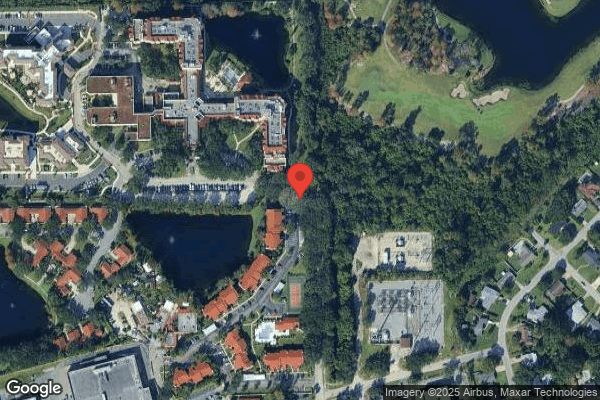
1850 MAYFLOWER COURT, WINTER PARK, FL 32792 (407) 672-1620
Non profit - Corporation 60 Beds Independent Data: November 2025
Trust Grade
90/100
#79 of 690 in FL
Last Inspection: February 2025

Within standard 12-15 month inspection cycle. Federal law requires annual inspections.

Overview

Mayflower Healthcare Center has an excellent Trust Grade of A, indicating that it is highly recommended and performs well compared to other facilities. It ranks #79 out of 690 nursing homes in Florida, placing it in the top half, and is the best option among 37 facilities in Orange County. The facility's performance is stable, with 2 concerns noted in both 2024 and 2025. Staffing is a strong point, with a perfect 5-star rating and a turnover rate of 34%, which is lower than the state average, indicating that staff are familiar with the residents' needs. Although there have been no fines, which is a positive sign, there are some areas of concern such as failing to conduct proper assessments for medication administration safety, not following physician orders for blood pressure medication, and not notifying family members about significant weight loss in a resident. Overall, while there are some weaknesses to address, the facility's strengths in staffing and overall care quality make it a solid choice.

Trust Score
A
90/100
In Florida
#79/690
Top 11%
Safety Record
Low Risk
No red flags
Inspections
Holding Steady
2 → 2 violations
Staff Stability
○ Average
34% turnover. Near Florida's 48% average. Typical for the industry.
Penalties
✓ Good
No fines on record. Clean compliance history, better than most Florida facilities.
Skilled Nurses
✓ Good
Each resident gets 91 minutes of Registered Nurse (RN) attention daily — more than 97% of Florida nursing homes. RNs are the most trained staff who catch health problems before they become serious.
Violations
✓ Good
Only 4 deficiencies on record. Cleaner than most facilities. Minor issues only.
★★★★★
5.0
Overall Rating
★★★★★
5.0
Staff Levels
★★★★★
5.0
Care Quality
★★★★★
5.0
Inspection Score
Stable
2024: 2 issues
2025: 2 issues

The Good

  • 5-Star Staffing Rating · Excellent nurse staffing levels
  • 5-Star Quality Measures · Strong clinical quality outcomes
  • Full Sprinkler Coverage · Fire safety systems throughout facility
  • No fines on record
  • Staff turnover below average (34%)

    14 points below Florida average of 48%

Facility shows strength in staffing levels, quality measures, fire safety.

The Bad

Staff Turnover: 34%

12pts below Florida avg (46%)

Typical for the industry

The Ugly 4 deficiencies on record

Feb 2025 2 deficiencies
CONCERN (D)

Potential for Harm - no one hurt, but risky conditions existed

Deficiency F0554 (Tag F0554)

Could have caused harm · This affected 1 resident

**NOTE- TERMS IN BRACKETS HAVE BEEN EDITED TO PROTECT CONFIDENTIALITY** Based on observation, interview, and record review, the facility failed to conduct medication self-administration assessment to ...

Read full inspector narrative →
**NOTE- TERMS IN BRACKETS HAVE BEEN EDITED TO PROTECT CONFIDENTIALITY** Based on observation, interview, and record review, the facility failed to conduct medication self-administration assessment to ensure safety for 1 of 1 residents reviewed for self-administration of medications, of a total sample of 28 residents, (#42). Findings: Resident #42 was admitted to the facility on [DATE] with diagnoses which included encounter for surgical aftercare following surgery on the digestive system, Parkinson's Disease, anemia, major depressive disorder, generalized anxiety disorder, presence of left artificial hip joint and dementia. Review of the Minimum Data Set annual assessment with assessment reference date of 12/11/24 revealed resident # 42 had a Brief Interview for Mental Status score of 15 out of 15 which indicated she was cognitively intact. On 2/17/25 at 12:58 PM, resident #42 was observed in her wheelchair watching television with her bedside tray table directly in front of her. Towards the right side of the tray table a small red pill was observed on a white tissue that had times written on it. When asked about the times written on the tissue, she explained that it was written down so that she could be reminded of when to take her eye vitamin. Resident #42 mentioned her daughter bought the vitamins for her because the eye doctor told her it was okay to take them and that they were very expensive. She stated the nurses knew she had been taking the medication on her own twice daily. A review of resident #42's medical record indicated no physician orders for eye vitamins or self administration of medication, no care plan for self-administration of medication and no assessments completed for resident #42 regarding self-administration of medications. On 2/17/25 at 2:07 PM, the assigned nurse Registered Nurse (RN) A observed and verified the red pill on a piece of tissue on resident #42's tray table in her room. With the resident's permission, RN A then retrieved the bottle of pills from an uncovered white plastic container on the resident's tray table and confirmed the pill bottle was labeled PreserVision AREDS 2. Resident #42 explained she had been taking it a long time and it was very expensive. RN A told the resident she was not allowed to have the medication at the bedside and assured her that the facility had medications in stock which could be provided. On 2/18/25 at approximately 10:00 AM, resident #42 stated she was not aware she could not take her own medication. She explained she did not know of any assessments which should be completed by nurses prior to her self-administering medication. She said that the nurse took the medication from her, and they would administer it. On 2/19/25 at 10:06 AM, assigned Certified Nursing Assistant (CNA) B said she had seen the medication on the resident's tray table previously and confirmed the resident had marked the times on the tissue to remind herself when to take it. CNA B stated she thought the residents were allowed to have over the counter medications at their bedside but now understood why that might not be okay. On 2/19/25 at 11:46 AM, the Assistant Director of Nursing (ADON), acknowledged she did not really know what happened in regards to resident #42's medication at her bedside. She explained if a resident requested to use their own medications and self-administer, they would first have to be assessed for self-administration of medications by nursing. The ADON said that a physician order for the PreserVision was now in the computer and the resident wanted to receive her own medication but preferred the nurses to administer it. On 2/19/25 at 12:14 PM, assigned Licensed Practical Nurse (LPN) C said she was not sure if residents could have medications at the bedside and explained, if residents wanted to administer their own medications, the supervisor would handle it. LPN C explained she was not aware resident #42 was taking her own eye vitamins and had not seen any medication on the resident's tray table. On 2/19/25 at 12:29 PM, the Director of Nursing (DON) said he was made aware of the medication on resident #42's tray table on Monday. He continued that, sometimes residents have a way of bringing stuff in the facility which in this case, was unfortunately missed. The DON went on to explain that the Interdisciplinary Team ultimately decided if it was appropriate for residents to take their own medications based on the assessment for self-administration of medications and the management of a lock box provided. Review of the undated facility policy regarding Self-Administration of Medications revealed Residents may self-administer their own medications only if the Physician, in conjunction with the Interdisciplinary Care Planning Team, has determined that they have the decision -making capacity to do so safely.
CONCERN (D)

Potential for Harm - no one hurt, but risky conditions existed

Quality of Care (Tag F0684)

Could have caused harm · This affected 1 resident

**NOTE- TERMS IN BRACKETS HAVE BEEN EDITED TO PROTECT CONFIDENTIALITY** Based on interview, and record review, the facility failed to ensure nurses followed physician orders regarding administration o...

Read full inspector narrative →
**NOTE- TERMS IN BRACKETS HAVE BEEN EDITED TO PROTECT CONFIDENTIALITY** Based on interview, and record review, the facility failed to ensure nurses followed physician orders regarding administration of blood pressure medication per parameters set by the physician, for 1 of 5 residents reviewed for unnecessary medications, of a total sample of 28 residents, (#44). Findings: A review of the medical record revealed resident #44 was admitted to the facility on [DATE] with diagnoses including malignant neoplasm of pancreas, benign neoplasm of colon, anxiety disorders, chronic pain, major depressive disorder and essential (Primary) Hypertension. The medical record revealed resident #44 had an active physician order for Clonidine HCL tablet 0.1 milligrams (mg) tablet that directed staff to give 1 tablet by mouth two times a day for hypertension. The order included a parameter to hold the medication if the resident's systolic blood pressure (SBP) was less than 170 millimeters of mercury (mm Hg) or diastolic blood pressure (DBP) was less than 90 mm HG. Clonidine is prescribed to treat high blood pressure (hypertension) by decreasing the levels of certain chemicals in your blood. This allows your blood vessels to relax and your heart to beat more slowly and easily, (retrieved on 2/23/25 from www.drugs.com/clonidine.html). Review of resident #44's Medication Administration Record (MAR) for January 2025 and February 2025 revealed Clonidine HCL 0.1 mg was scheduled twice a day at 10:00 AM and 9:00 PM. The document showed the medication was either administered (indicated by a check mark) or not administered (indicated by the number 4-Vitals outside of parameters; 5-Hold/see progress notes; 9-Other/see progress notes). Review of the January 2025 MAR revealed Clonidine HCL 0.1 mg was administered once at 10:00 AM on 1/27/25 for a blood pressure of 153/70, under the parameters of the physician order. The MAR also revealed the medication was checked as administered several times at 9:00 PM when it should have been held according to the physician order. On 1/06/25 when the resident's blood pressure was 157/65; on 1/07/25 when the resident's blood pressure was 129/57; on 1/11/25 when the resident's blood pressure was 141/67 and on 1/17/25 when the resident's blood pressure was 123/63. For the month of February 2025, resident #44's MAR indicated on 2/15/25 at 10:00 AM Clonidine HCL 0.1 mg was checked as administered even though the documented blood pressure was 149/67, less than the parameters set by the physician order. On 2/08/25 at 9:00 PM the medication was also checked as administered for a documented blood pressure of 112/65 and again on 2/18/25 at 9:00 PM for a blood pressure of 104/59. On 2/20/25 at 10:43 AM, the Director of Nursing (DON) verified the administration of Clonidine HCL 0.1 mg for resident #44 and confirmed the check marks on the MAR for January and February of 2025 indicated the medication was given by the nurse. He acknowledged the medication should have been held instead of given per the parameters set in the physician order. A review of the facility's undated Policy on Administering Medications indicated, Medications shall be administered from a unit dose system in a safe and timely manner, and as prescribed.
Feb 2024 2 deficiencies
CONCERN (D)

Potential for Harm - no one hurt, but risky conditions existed

Notification of Changes (Tag F0580)

Could have caused harm · This affected 1 resident

**NOTE- TERMS IN BRACKETS HAVE BEEN EDITED TO PROTECT CONFIDENTIALITY** Based on interview, and record review, the facility failed to notify the resident representative of significant weight loss for ...

Read full inspector narrative →
**NOTE- TERMS IN BRACKETS HAVE BEEN EDITED TO PROTECT CONFIDENTIALITY** Based on interview, and record review, the facility failed to notify the resident representative of significant weight loss for 1 of 1 resident reviewed for notification of change in condition, out of a total sample of 33 residents, (#9). Findings: Resident #9 was admitted to the facility on [DATE] with diagnoses of unspecified dementia, Alzheimer's disease, major depressive disorder and anemia. Review of the Minimum Data Set (MDS) quarterly assessment with assessment reference date of 12/11/23 revealed resident #9 had a Brief Interview for Mental Status score of 1 out of 15 which indicated she had severe cognitive impairment. The document noted the resident had weight loss of 5% or more in the last month or loss of 10% or more in the last 6 months and was not on a prescribed weight-loss regimen. A care plan for nutritional risk was initiated 11/05/21 and revised 11/03/23. The care plan indicated resident #9 was identified with significant weight loss on 7/13/23 and 11/03/23. The facility implemented interventions, but resident continued to lose weight. Review of resident #9's electronic medical record (EMR) demographic information revealed the resident's son was listed as the authorized Emergency Contact #1 and as her Power of Attorney for care. Review of documented weights for resident #9 revealed she weighed 150.3 pounds in April 2023 and began losing weight every month with a weight of 125.3 pounds recorded on 2/01/24. The Weights and Vitals Summary report identified resident #9 had a 10% change over 180 days on 10/04/23, 11/01/23, 11/30/23, 12/06/23, 12/13/23, 1/25/23 and 2/01/23. Review of resident #9's EMR revealed care plan meeting documentation dated 12/20/23 which read, Dietary: Resident is eating well. No changes in her diet. The form did not contain any documentation of resident representative being notified of resident's significant weight loss. On 2/08/24 at 9:25 AM, in a telephone interview with resident #9's son, he stated she had never been a fast eater, would eat dessert first and ate small bites. The resident's son stated the facility usually alerted him of any concerns but did not recall having a conversation about his mother's weight loss. He stated that was something he would definitely want to know about. On 2/08/24 at 11:29 AM, the Registered Dietician (RD) stated she was familiar with resident #9 and her weight loss. The RD stated she reviewed resident #9's status and her weight loss was discussed at weekly Risk Meetings. The RD acknowledged she had not notified the resident's representative of resident #9's significant weight loss. She explained she did not know who was responsible for notifying the resident's representative. On 2/08/24 at 12:17 PM, the Director of Nursing (DON) confirmed Risk Meetings were held weekly and weight loss was one of the areas discussed in the meeting. The DON stated resident #9's representative should have been contacted regarding the weight loss prior to the Risk Meeting. He acknowledged he had not contacted the family and suggested the RD may have notified the resident representative. The DON explained the resident's weight loss may have been discussed during the care plan meeting. He reviewed resident #9's EMR and could not provide any documentation of the resident's representative being notified. The DON stated a Change of Condition form should have been completed for a significant weight loss but was unable to locate one in the resident's medical record. The DON acknowledged the facility needed to contact the family to discuss resident #9's significant weight loss, interventions in place and possible alternatives. On 2/08/24 at 12:31 PM, the Risk Manager/MDS Coordinator reviewed resident #9's medical record. He acknowledged he was unable to locate any documentation where the resident's representative had been notified of her significant weight loss. The facility's policy and procedure for Change in a Resident's Condition or Status read, The [Center] shall promptly notify the resident, his or her Physician, and representative (sponsor) of changes in the resident's medical/mental condition and/or status.
CONCERN (D)

Potential for Harm - no one hurt, but risky conditions existed

Grievances (Tag F0585)

Could have caused harm · This affected 1 resident

**NOTE- TERMS IN BRACKETS HAVE BEEN EDITED TO PROTECT CONFIDENTIALITY** Based on interview, and record review, the facility failed to ensure resident grievance was promptly investigated and duly resol...

Read full inspector narrative →
**NOTE- TERMS IN BRACKETS HAVE BEEN EDITED TO PROTECT CONFIDENTIALITY** Based on interview, and record review, the facility failed to ensure resident grievance was promptly investigated and duly resolved for 1 of 1 resident reviewed for grievances, of a total sample of 33 residents, (#22). Findings: Resident #22, a [AGE] year-old female, was admitted to the facility on [DATE] with diagnoses that included right leg fracture with surgical repair, difficulty in walking, unspecified falls, anxiety disorder and osteoarthritis of the left hand. Review of the Minimum Data Set admission assessment dated [DATE] revealed resident #22 was cognitively intact, with no behaviors toward herself or others. The assessment indicated resident #22 required maximum assistance for showers, application and removal of footwear and toileting. On 2/06/24 at 10:09 AM, resident #22 was noted to be alert and oriented to person, place and time. She was seated in a chair in her room and explained she had a concern with night shift Certified Nursing Assistant (CNA) A this past weekend for several issues. Resident #22 explained that while she used the toilet, CNA A spoke on her cell phone then left the room without cleaning up and was unhelpful. Resident #22 stated she informed the nurse and a supervisor, who came to see her about the concerns. She said the supervisor assured her CNA A would no longer be assigned to take care of her, so she felt the issue had been resolved at that time. Review of the facility Grievance Log for December 2023, January 2024 and February 2024 revealed only one grievance for resident #22 on 12/23/23 for a call light not working. That grievance was documented as resolved on 12/29/23. There were not other grievances documented for resident #22 for that time period. On 2/08/24 at 10:08 AM, resident #22 was seated in a chair in her room. She stated CNA A was assigned as her aide again overnight. Resident #22 spoke about being upset with problems with care or lack of care from CNA A. She reiterated she had been told by the supervisor on the weekend that CNA A would not be assigned to care for her again. She did not understand why CNA A was assigned to care for her the past night. On 2/08/24 at 10:27 AM, the Social Services Director confirmed resident #22 had only one grievance on the log from December 2023 which was resolved the same day. She acknowledged she was not aware of any concerns or a grievance from resident #22 concerning CNA A's care and service from the past weekend. A few minutes later at 10:32 AM, the Director of Nursing (DON) joined the conversation and said he was not aware of a grievance from resident #22 about CNA A. He said if it occurred over the weekend, the Weekend Supervisor would attempt to initiate and resolve the grievance. He confirmed CNA A was assigned to resident #22 the previous evening. The DON acknowledged staff should not be using a personal cell phone when in a resident's room or in care areas. In interviews on 2/08/24 at 10:45 AM and 11:03 AM, the Unit Manager (UM) stated she was aware resident #22 had filed a grievance over the weekend about a staff member. She indicated resident #22 was concerned CNA A did not tidy the room as she was rushed and ready to go home and used her cell phone in her room. The UM said she received a phone call from the Weekend Supervisor over the weekend about the grievance and said she was going to have a conversation with CNA A but was not informed that CNA A should not care for resident #22 again. The UM said she also received an email from the Weekend Supervisor which described a different CNA had been assigned to resident #22 on Saturday night and the resident was pleased. She confirmed the email did not mention CNA A should not be assigned to resident #22. The UM was unaware of where the actual grievance was located or why it had not been documented in the log. In a telephone interview on 2/08/24 at 10:55 AM, the Weekend Supervisor stated resident #22 had asked to speak to a supervisor over the weekend about her concerns with CNA A. She noted she offered her a grievance form which she completed. The Weekend Supervisor said resident #22 requested that CNA A not care for her again and after speaking with the resident and CNA A she re-assigned the CNA for Saturday night to a different assignment. She indicated she told CNA A that she should not care for resident #22 again. The Weekend Supervisor explained she sent an email to both the DON and UM in regard to the grievance and left the actual form in the DON's office. The Weekend Supervisor was unable to say where she left the grievance form. She thought she left it on the DON's desk or slipped it under his door as there was no designated box or place to put the forms for review by the Social Service Director. The Weekend Supervisor could not explain why the grievance was not documented on the grievance log, or why CNA A was assigned to care for resident #22 again on 2/07/24. On 2/08/24 at 11:11 AM, the DON reiterated he was not aware of resident #22's grievance, or an email from the Weekend Supervisor. He said he did not see a grievance form in his office or on his desk. He said the offices were locked on the weekend and confirmed there was no box or designated place for the weekend staff to submit grievance forms. He said some of the staff slipped them under the door if the door was locked. A short time later at 11:25 AM, the DON stated he found the grievance form on his desk. Review of the Grievance Form completed by resident #22 dated 2/03/24 revealed the statement of grievances included concerns about CNA A being, Late every morning, leaves without getting me ready, room a mess for the next aide, leaves you without a call buzzer. She continued, Talking loudly in Spanish on phone while I'm on toilet right next to me. Didn't show up at all today. I made some dangerous move to finally get up. Just stands watching me, making me ask for my shoes or anything I need- when it should be obvious, throws bedding sloppily when I'm trying to get settled for the night. Short of help because of her. The resolution/interventions taken indicated that on 1/03/24 CNA A was removed as her caregiver. On 2/08/24 at 12:03 PM, in a telephone call CNA A stated she was aware of the grievance concerning resident #22 and had been told by the Weekend Supervisor to not care for her again. She said when she came to work on Wednesday evening, 2/07/24 she was again assigned to resident #22, but did not explain why she did not tell anyone that she was not supposed to care for resident #22. On 2/08/24 at 3:47 PM, Licensed Practical Nurse C stated she did not know of a box or place to put the grievance forms if the Social Service Department was gone for the day. She said she would give it to a Supervisor on duty. On 2/08/24 at 2:32 PM, the DON confirmed neither he nor the Social Service Director were aware of resident #22' s concerns from the grievance she filed on 2/03/24 and no follow up was implemented to ensure CNA A did not care for resident #22 again nor to determine if there was any further need for education. He acknowledged there needed to be a designated central location for grievances to be placed when the Social Service Director or himself were not there and the offices were locked. The DON explained the process should be the Weekend Supervisor would note the grievance, attempt to resolve and investigate as warranted. He added the grievance would then be submitted to the Social Service Director who would ensure the grievance was filed and resolved promptly. The DON acknowledged it was a concern that he and the Social Service Director were unaware of resident #22's grievance and the form had not been found until requested by the surveyor. He said it had never been a problem before, but noted the grievance should go to one central location where the Social Service Department could ensure prompt and accurate follow up. The Problem Solving: Concern, Complaint, and Grievance Policy dated 07/08 declared each resident has the right to voice concerns, complaints or grievances and the facility would actively seek resolution of the concern or grievance and would keep the resident apprised of the progress toward the resolution. The document indicated staff would complete the Record of Concern form where a brief statement of the issue was documented with any interventions taken and or results/outcomes along with a record of dates, times and names of those involved. The procedure described that the information was to be forwarded to the Complaint Coordinator who would review the matter to see if the concerns were addressed. The procedure section also described the DON and Director of Health Services would be involved in the resolution process and would review all Record of Concern forms, then record of each Grievance were maintained and presented to the Quality Assurance Committee.
Understanding Severity Codes (click to expand)
Life-Threatening (Immediate Jeopardy)
J - Isolated K - Pattern L - Widespread
Actual Harm
G - Isolated H - Pattern I - Widespread
Potential for Harm
D - Isolated E - Pattern F - Widespread
No Harm (Minor)
A - Isolated B - Pattern C - Widespread

Questions to Ask on Your Visit

  • "Can I speak with families of current residents?"
  • "What's your RN coverage like on weekends and overnight?"

Our Honest Assessment

Strengths
  • • Grade A (90/100). Above average facility, better than most options in Florida.
  • • No major safety red flags. No abuse findings, life-threatening violations, or SFF status.
  • • No fines on record. Clean compliance history, better than most Florida facilities.
  • • Only 4 deficiencies on record. Cleaner than most facilities. Minor issues only.
Concerns
  • • No significant concerns identified. This facility shows no red flags across CMS ratings, staff turnover, or federal penalties.
Bottom line: Generally positive indicators. Standard due diligence and a personal visit recommended.

About This Facility

What is Mayflower Healthcare Center's CMS Rating?

CMS assigns MAYFLOWER HEALTHCARE CENTER an overall rating of 5 out of 5 stars, which is considered much above average nationally. Within Florida, this rating places the facility higher than 99% of the state's 100 nursing homes. This rating reflects solid performance across the metrics CMS uses to evaluate nursing home quality.

How is Mayflower Healthcare Center Staffed?

CMS rates MAYFLOWER HEALTHCARE CENTER's staffing level at 5 out of 5 stars, which is much above average compared to other nursing homes. Staff turnover is 34%, compared to the Florida average of 46%. This relatively stable workforce can support continuity of care.

What Have Inspectors Found at Mayflower Healthcare Center?

State health inspectors documented 4 deficiencies at MAYFLOWER HEALTHCARE CENTER during 2024 to 2025. These included: 4 with potential for harm.

Who Owns and Operates Mayflower Healthcare Center?

MAYFLOWER HEALTHCARE CENTER is owned by a non-profit organization. Non-profit facilities reinvest revenue into operations rather than distributing to shareholders. The facility operates independently rather than as part of a larger chain. With 60 certified beds and approximately 55 residents (about 92% occupancy), it is a smaller facility located in WINTER PARK, Florida.

How Does Mayflower Healthcare Center Compare to Other Florida Nursing Homes?

Compared to the 100 nursing homes in Florida, MAYFLOWER HEALTHCARE CENTER's overall rating (5 stars) is above the state average of 3.2, staff turnover (34%) is significantly lower than the state average of 46%, and health inspection rating (5 stars) is much above the national benchmark.

What Should Families Ask When Visiting Mayflower Healthcare Center?

Based on this facility's data, families visiting should ask: "Can I visit during a mealtime to observe dining assistance and food quality?" "How do you handle medical emergencies, and what is your hospital transfer rate?" "Can I speak with family members of current residents about their experience?"

Is Mayflower Healthcare Center Safe?

Based on CMS inspection data, MAYFLOWER HEALTHCARE CENTER has a clean safety record: no substantiated abuse findings (meaning no confirmed cases of resident harm), no Immediate Jeopardy citations (the most serious violation level indicating risk of serious injury or death), and is not on the Special Focus Facility watch list (a federal program monitoring the lowest-performing 1% of nursing homes). The facility has a 5-star overall rating and ranks #1 of 100 nursing homes in Florida. While no facility is perfect, families should still ask about staff-to-resident ratios and recent inspection results during their visit.

Do Nurses at Mayflower Healthcare Center Stick Around?

MAYFLOWER HEALTHCARE CENTER has a staff turnover rate of 34%, which is about average for Florida nursing homes (state average: 46%). Moderate turnover is common in nursing homes, but families should still ask about staff tenure and how the facility maintains care continuity when employees leave.

Was Mayflower Healthcare Center Ever Fined?

MAYFLOWER HEALTHCARE CENTER has no federal fines on record. CMS issues fines when nursing homes fail to meet care standards or don't correct problems found during inspections. The absence of fines suggests the facility has either maintained compliance or corrected any issues before penalties were assessed. This is a positive indicator, though families should still review recent inspection reports for the full picture.

Is Mayflower Healthcare Center on Any Federal Watch List?

MAYFLOWER HEALTHCARE CENTER is not on any federal watch list. The most significant is the Special Focus Facility (SFF) program, which identifies the bottom 1% of nursing homes nationally based on persistent, serious quality problems. Not being on this list means the facility has avoided the pattern of deficiencies that triggers enhanced federal oversight. This is a positive indicator, though families should still review the facility's inspection history directly.