PRUITTHEALTH - AUGUSTA HILLS

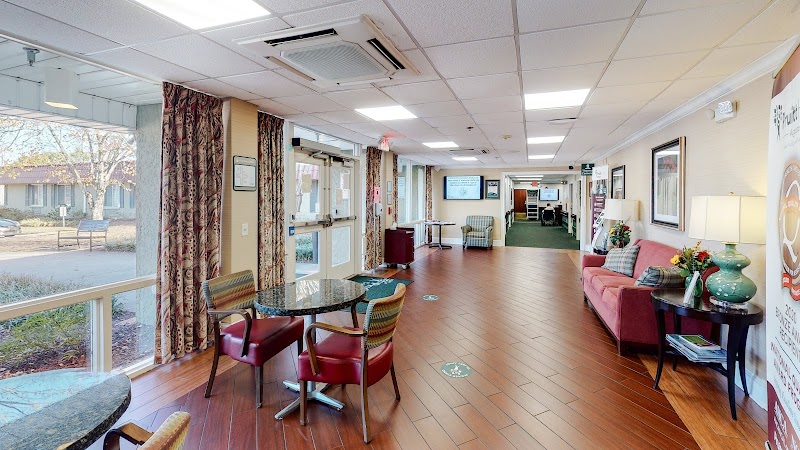
2122 CUMMING ROAD, AUGUSTA, GA 30904 (706) 737-8258
For profit - Corporation 126 Beds PRUITTHEALTH Data: November 2025
Trust Grade
88/100
#27 of 353 in GA
Last Inspection: February 2025

Within standard 12-15 month inspection cycle. Federal law requires annual inspections.

Overview

PruittHealth - Augusta Hills has a Trust Grade of B+, which means it is above average and recommended for families seeking care. The facility ranks #27 out of 353 nursing homes in Georgia, placing it in the top half, and #2 out of 11 in Richmond County, indicating that it is one of the better local options. However, the trend is worsening, as the number of issues identified increased from 2 in 2023 to 4 in 2025. Staffing is a concern, with a rating of 2 out of 5 stars and a turnover rate of 45%, which is slightly below the state average. Notably, the facility has been fined $6,201, which is average compared to other facilities, but it has had issues maintaining cleanliness, such as failing to regularly clean the kitchen and not properly assessing residents for safe self-administration of medications. Additionally, there have been concerns about inadequate cleaning of air conditioning units, which can affect the residents' living environment.

Trust Score
B+
88/100
In Georgia
#27/353
Top 7%
Safety Record
Low Risk
No red flags
Inspections
Getting Worse
2 → 4 violations
Staff Stability
○ Average
45% turnover. Near Georgia's 48% average. Typical for the industry.
Penalties
⚠ Watch
$6,201 in fines. Higher than 82% of Georgia facilities, suggesting repeated compliance issues.
Skilled Nurses
⚠ Watch
Each resident gets only 25 minutes of Registered Nurse (RN) attention daily — below average for Georgia. Fewer RN minutes means fewer trained eyes watching for problems.
Violations
○ Average
6 deficiencies on record. Average for a facility this size. Mostly minor or procedural issues.
★★★★★
5.0
Overall Rating
★★☆☆☆
2.0
Staff Levels
★★★★★
5.0
Care Quality
★★★★☆
4.0
Inspection Score
Stable
2023: 2 issues
2025: 4 issues

The Good

  • 5-Star Quality Measures · Strong clinical quality outcomes
  • Full Sprinkler Coverage · Fire safety systems throughout facility
  • No fines on record
  • Staff turnover below average (45%)

    3 points below Georgia average of 48%

Facility shows strength in quality measures, fire safety.

The Bad

Staff Turnover: 45%

Near Georgia avg (46%)

Typical for the industry

Federal Fines: $6,201

Below median ($33,413)

Minor penalties assessed

Chain: PRUITTHEALTH

Part of a multi-facility chain

Ask about local staffing decisions and management

The Ugly 6 deficiencies on record

Feb 2025 4 deficiencies
CONCERN (D) 📢 Someone Reported This

A family member, employee, or ombudsman was alarmed enough to file a formal complaint

Potential for Harm - no one hurt, but risky conditions existed

Deficiency F0554 (Tag F0554)

Could have caused harm · This affected 1 resident

**NOTE- TERMS IN BRACKETS HAVE BEEN EDITED TO PROTECT CONFIDENTIALITY** Based on observations, record review, staff interviews, and review of the policy titled, Self-Administration of Medications by P...

Read full inspector narrative →
**NOTE- TERMS IN BRACKETS HAVE BEEN EDITED TO PROTECT CONFIDENTIALITY** Based on observations, record review, staff interviews, and review of the policy titled, Self-Administration of Medications by Patients/Residents, the facility failed to assess and determine if one of 34 sampled residents (R) R732 was assessed to safely self-administer medications. Findings include: A review of the facility policy titled, Self-Administration of Medications by Patients/Residents, revised 1/28/2020, revealed the Policy Statement is that each patient/resident who desires self-administered medication is permitted to do so if the healthcare center's Licensed Nurse and Physician have determined that the practice would be safe for the patient/resident and other patients/residents of the healthcare center. Mediation self-administration also applies to family members who wish to administer medication. Review of the electronic medical record (EMR) revealed R732 was admitted to the facility on [DATE] with diagnoses including irritant contact dermatitis due to friction or contact with body fluids, and other complications of gastrostomy - leaking around PEG (Percutaneous Endoscopic Gastrostomy). Review of the February 2025 Physician Orders revealed an order to apply barrier cream to g-tube stoma daily. There is no order to apply Triad hydrophilic dressing to g-tube stoma site. Further review of the EMR revealed no evidence that R732 was assessed to self-administer wound care medications/treatments; and there was no physicians Order to self-administer the treatment. Review of R732's care plan initiated 2/24/2024 revealed no evidence that resident was assessed to self-administer wound care treatments/medications to g-tube site. Observation on 2/26/2025 at 9:40 am revealed in room [ROOM NUMBER], boxes with sterile Accu-sorb Gauze Sponge wound dressing supplies and barrier cream at bedside. R732 was in the bed, applying wound dressing around g-tube stoma site. During an observation and interview on 2/26/2025 at 3:35 pm, in room [ROOM NUMBER], revealed Triad (hydrophilic wound dressing) and several boxes of sterile Accu-sorb Gauze Sponges on the resident's bedside table. R732 stated she takes care of the skin around her gastrostomy tube (g-tube) opening 5-6 times per day because it takes the nurses a while to come and do her skin treatment. During further interview, she stated that the nurses did the treatments the first few days, and then they brought these supplies for her to apply to the g-tube area daily. Observation on 2/27/2025 at 9:05 am revealed in room [ROOM NUMBER], the Triad wound dressing and Accu-sorb Gauze Sponges remain on R732 bedside table. Interview on 2/27/2025 at 2:45 pm, the Administrator and DHS (Director of Health Services) revealed that skin treatment around g-tub stoma should be done by facility nurses. During further interview, they confirmed that R732 should not have wound dressing and sterile Accu-sorb Gauze Sponges at her bedside. The DHS confirmed that R732 was not assessed for using wound cream and Accu-sorb Gauze Sponges by herself, and stated these supplies will be confiscated immediately.
CONCERN (D) 📢 Someone Reported This

A family member, employee, or ombudsman was alarmed enough to file a formal complaint

Potential for Harm - no one hurt, but risky conditions existed

Safe Environment (Tag F0584)

Could have caused harm · This affected 1 resident

**NOTE- TERMS IN BRACKETS HAVE BEEN EDITED TO PROTECT CONFIDENTIALITY** Based on observations, staff interviews, record review, review of the facility policy titled, Daily Occupied Resident Room Clean...

Read full inspector narrative →
**NOTE- TERMS IN BRACKETS HAVE BEEN EDITED TO PROTECT CONFIDENTIALITY** Based on observations, staff interviews, record review, review of the facility policy titled, Daily Occupied Resident Room Cleaning, and review of the facility document Clean Air Filters, the facility failed to maintain clean 'Packaged Terminal Air Conditioner' (PTAC) units filters, and the facility also failed to ensure a clean home-like environment on one of three halls (100 Hall) for Rooms (Rm) (Rm115, Rm116, and Rm117). Findings Include: A review of the facility's document titled, Clean Air Filters, revealed the Instructions Number 2. Remove air filter and inspect for cleanliness. If filter is dirty either wash or replace depending on type of filter. If clean, reinstall filter. Number 4. Clean Grill on cover. Number 6. At minimum, air filters are to be replaced or thoroughly cleaned depending on type of filter every three months. Number 7. Clean evaporator coils if lint build-up is present. A review of the facility's policy titled, Daily Occupied Resident Room Cleaning, dated 10/2020, revealed under the Procedure: Number 7. Spray vertical surfaces (door handles, light switches, spot walls, etc.) with [product name] Peroxide Multi-Surface Disinfectant and let dwell (3-minute dwell time). Number 8. Spray restroom (door handle, light switch, sink, toilet, mirror, dispensers, shower/tub, etc.) with [product name] Multi-Surface Disinfectant and let dwell (3-minute dwell time). Number 9. In the same order that you sprayed each surface, and after the [product name] Multi-Surface Disinfectant has dwelled for at least three minutes, wipe down each surface in the same order that you sprayed Number 13. Inspect your work to make sure that the room has been properly cleaned.WEEKLY DETAIL CLEANING: Each of the following items should be completed during detailed cleaning one time per week in each resident room. Number 4. Wall Washing & Windows. An observation conducted on 2/25/2025 at 10:33 am and 2/26/2025 at 3:33 pm revealed in room [ROOM NUMBER], brown stains on both the bathroom door and the adjacent wall. An observation on 2/25/2025 at 10:20 am and 2/26/2025 at 3:35 pm revealed in room [ROOM NUMBER], a black discolored substance on the PTAC unit grill. An observation on 2/25/2025 at 10:27 am and 2/26/2025 at 3:32 pm revealed in room [ROOM NUMBER], a PTAC filter with grey, fuzzy debris. In interviews conducted on 2/27/2025 at 9:05 am, 2/27/2025 at 9:09 am and 2/27/2025 at 9:13 am, Maintenance Director (MD) stated that the filters are cleaned monthly, with each filter being removed and thoroughly cleaned. Additionally, the entire unit is cleaned annually, with the unit being taken outside for a detailed cleaning. The MD noted that if they encounter any debris while cleaning the filters, they address it immediately. During further interview, the MD confirmed that he needs to clean the black substance from the PTAC unit in room [ROOM NUMBER] that had accumulated dirt, and stated over time, it might blow debris into the resident's room. The MD stated that he had not yet attended to the filter in room [ROOM NUMBER], but confirmed the presence of grey, fuzzy debris. He stated that he plans to clean the filter at the end of the month. The MD also noted a potential negative outcome of dirty PTAC filters is if filters are not cleaned regularly, it could cause respiratory issues for the residents. In an interview on 2/27/2025 at 9:02 am, the Housekeeping Director explained the responsibilities of housekeeping, include the daily cleaning of resident rooms, bathrooms, and ensuring that handrails and surfaces are properly cleaned and disinfected to maintain a safe environment for both residents and staff. After being shown a photo of the bathroom door and wall in room [ROOM NUMBER], the staff member stated that she had been delayed in attending to this room and emphasized that her expectation is for aides to take responsibility for the cleanliness of the rooms, treating them as if they were their own or for their loved ones. In an interview on 2/27/2025 at 9:39 am, the Administrator stated the filters should be cleaned monthly as part of routine housekeeping duties. The Administrator stated during extreme temperatures (either hot or cold); filters should be cleaned twice a month. During further interview, the Administrator revealed a negative outcome from failure to maintain cleanliness of the environment that is not only unappealing, but there could also be issues with air quality, which may put residents at risk for respiratory issues.
CONCERN (D) 📢 Someone Reported This

A family member, employee, or ombudsman was alarmed enough to file a formal complaint

Potential for Harm - no one hurt, but risky conditions existed

ADL Care (Tag F0677)

Could have caused harm · This affected 1 resident

**NOTE- TERMS IN BRACKETS HAVE BEEN EDITED TO PROTECT CONFIDENTIALITY** Based on observations, staff and resident interviews, and record review, the facility failed to ensure activities of daily livin...

Read full inspector narrative →
**NOTE- TERMS IN BRACKETS HAVE BEEN EDITED TO PROTECT CONFIDENTIALITY** Based on observations, staff and resident interviews, and record review, the facility failed to ensure activities of daily living (ADL) care was provided for one of 4 residents (R) (R44) related to showers and facial hair. This deficient practice had the potential to create skin care issues and lack of self-confidence. Findings include: Review of the EMR revealed R44 was admitted to the facility on [DATE] with diagnoses including but not limited to unsteadiness on feet, muscle weakness, abnormal posture, dysphagia, heart disease, abnormalities of gait and mobility, and chronic atrial fibrillation. Review of annual MDS assessment dated [DATE] revealed R44's had a BIMS of 10, which indicated moderate cognitive impairment. Section GG, functional status, revealed R44 required moderate to partial assistance with ADL care. Review of the care plan dated 2/10/2022 indicated that the resident prefers showers during the day and the goal listed as residence preferences will be honored through the next three months. Review of facility's document titled Shower Schedule, undated, revealed that R44 was scheduled every Wednesday and Saturday to obtain a shower. The facility's document titled Shower/Body Audit revealed there was no documentation R44 received a bath or shower for 15 days from 1/28/2025 thru 2/13/2025 and 13 days from 2/13/2025 thru 2/26/2025. Initial screening observation on 2/25/2025 at 10:15 am revealed R44 sitting on the side of the bed with unkept head of hair and large amount of unshaven facial hair on his cheeks and chin. Interview on 2/25/2025 at 10:57 am with R44 stated he had not been given a shower in over 11 days and asked, Can you do something about that? R44's family member requested Please speak to someone as I had been to the administration and complained. I have visited my father and at times he smelled bad and had not been given a bath for many days. Interview on 2/26/2025 at 11:53 am with Licensed Practical Nurse (LPN) UU verified the missing documentation and stated, I will look for more documentation. Interview on 2/27/2025 at 1:36 pm with the Administrator and Director of Nursing (DON) stated they have weekly schedule documentation of how showers are performed for each resident and a notebook with shower audits filed weekly and signed by a nurse. Administrator stated, facility did not follow through with any documentation audits, and stated we will be working on audit follow ups.
CONCERN (D) 📢 Someone Reported This

A family member, employee, or ombudsman was alarmed enough to file a formal complaint

Potential for Harm - no one hurt, but risky conditions existed

Deficiency F0692 (Tag F0692)

Could have caused harm · This affected 1 resident

**NOTE- TERMS IN BRACKETS HAVE BEEN EDITED TO PROTECT CONFIDENTIALITY** Based on observations, staff and resident interviews, record review, and review of the facility policy titled, Weight Monitoring...

Read full inspector narrative →
**NOTE- TERMS IN BRACKETS HAVE BEEN EDITED TO PROTECT CONFIDENTIALITY** Based on observations, staff and resident interviews, record review, and review of the facility policy titled, Weight Monitoring Program, the facility failed to conduct weekly weights as recommended by the Registered Dietician for one of four residents (R) R74. Specifically, R74 experienced a 13.4 % weight loss in a 30-day period. This deficient practice had the potential to cause significant decline in the physical and nutritional health for R74. Findings include: Review of the facility policy titled Weight Monitoring Program, revised 6/2/2023, documented the Procedure: Overview revealed patients/residents placed on the weight monitoring program will be weighed weekly. Procedure: Weight Frequency, number 2. New admissions will be weighed weekly times four weeks and/or until weight is stable. Procedure: Weight Frequency, number 4. patients/residents with a Significant Weight Loss (SWL) will be weighed weekly and reviewed for a minimum of four weeks until weight is stable or increasing. Procedure: Significant Weight Changes, number 1. A significant weight change is defined as 5% weight loss or gain in one month, 7.5% weight loss or gain in three months, and 10% weight loss or gain in six months. Procedure: Communication revealed all disciplines should be aware of all patients/residents who are on the Weight Monitoring Program. Review of the electronic medical record (EMR) revealed R74 was admitted to the facility on [DATE] with pertinent diagnoses including but not limited to dysphagia and gastro-esophageal reflux disease (GERD) without esophagitis. A diagnosis of moderate protein-calorie malnutrition was added on 2/25/2025. Review of the admission Minimum Data Set (MDS) assessment dated [DATE] revealed a Brief Interview for Mental Status (BIMS) of five, which indicated R74 had severe cognitive impairment. Section GG, Functional Abilities and Goals, documented resident was dependent on eating and oral hygiene. Section K, Swallowing and Nutritional Status, revealed she was on a mechanically altered diet and had not experienced any weight loss in the last month or six months. Review of the care plan dated 12/30/2024 documented resident is at nutrition and/or hydration risk as evidenced by consuming less than 75% of food and/or fluids at most meals. Interventions to care include provide diet as ordered and weigh and monitor results on admission weekly. Review of Progress Note dated 1/3/2025 written at 8:19 am documented Weight PAR Note: R74 is a new admit to facility. She's alert and oriented with some confusion. Currently tolerating a puree diet with no noted concerns. Preferences noted. Meal intake varies. Receives ensure 237 milliliters (ml) two times per day (bid). Accepts well with no noted concerns. admission weight 98.4 pounds (lbs). Will continue to monitor on weekly weights x 3 weeks and fu poc {sic}. Review of Progress Note dated 1/10/2025 written at 8:19 am documented WEIGHT PAR NOTE: R74 is currently tolerating a puree diet with no noted concerns. Preferences noted. Meal intake varies. Receives Ensure 237 ml bid. Accepts well with no noted concerns. admission weight 100.0 lbs. Will continue to monitor on weekly weights x 3 weeks and fu poc {sic}. Review of Progress Note dated 2/20/2025 at 10:07 am documented reviewed weight 86.6# on 2/6/2025 BMI 15.34=underweight IBW range 105-134# Lost 13.4% past 30 days. Receives pureed meal plan with ensure bid (adds 250 cal and 9 gm protein per serving). Intake 0-75%. Pt does take the ensure so RCmd {sic} increasing to three times daily (tid). Continue fu {sic} and plan of care. Review of R74's EMR revealed the following documented weights: 12/30/2024 = 98 pounds 1/2/2025 = 98.4 pounds 1/7/2025 = 100 pounds 2/6/2025 = 86.6 pounds 2/26/2025 = 85.8 pounds There are no other recorded weight entries for R74. The significant weight loss of occurred between 1/7/2025 and 2/6/2025. Observation on 2/26/2025 at 12:40 pm, Certified Nursing Assistant (CNA) RR delivered R74's food tray with a puree diet, raised the head of the bed, set up with a lid and straw, and spoon. CNA RR then left the room to deliver other meal trays. Observation on 2/26/2025 at 12:53 pm, Licensed Practical Nurse (LPN) SS assisted R74's roommate with eating. LPN SS then walked over to R74 and spoke to her saying Wake up and eat. She did not attempt to assist R74 with eating her meal. Observation on 2/26/2025 at 12:59 pm, LPN SS entered room [ROOM NUMBER] and removed the meal tray from R74's roommate. She returned to the room to encourage R74 to eat. LPN SS did not assist R74 with eating her meal. Observation on 2/26/2025 at 1:06 pm, LPN SS removed R74's food tray from her room and placed it back on the cart. LPN SS stated that R74 ate approximately 25% of the lunch meal. Interview on 2/26/2025 at 1:09 pm, LPN TT stated that R74 did not flag as a resident requiring weekly weights. Interview on 2/26/2025 at 1:34 pm, CNA PP revealed that she is on the restorative team and stated that the restorative team is responsible for obtaining weights for the residents. She stated that she was not aware that R74 was to have weekly weights taken. Interview on 2/27/2025 at 9:31 am, LPN SS confirmed that R74 is on the weight monitoring program, which entails the nutritionist review, suggest supplements, and weekly weights. She further stated that R74 requires setup assistance with eating. She stated that R74 ate less than 10% of her breakfast in the morning and about 25% of her lunch on 2/26/2025. Interview on 2/27/2025 at 10:04 am, CNA RR stated she doesn't assist R74 with her meals unless she notices that she has not started eating. CNA RR further stated that she was not aware of any weight loss for R74. Phone interview on 2/27/2025 at 10:49 am, the Registered Dietician (RD) stated that she communicates recommendations to the nursing department in writing via email, including the Director of Health Services (DHS), Assistant Director of Health Services (ADHS), and Minimum Data Set (MDS) staff. During further interview, she confirmed that R74 had a significant weight loss of 13.4% in 30 days and recommended increased oral supplements from two to three times per day and weekly weights. She stated that she relies on nursing staff to implement her written recommendations. Interview on 2/27/2025 at 2:20 pm, the DHS confirmed that R74 had triggered significant weight loss and that her weight continues to trend downwards with weight of 85.5 obtained on 2/26/2025. He stated that resident is on the patients at risk (PAR) list for weight loss. The DHS confirmed that all the weights for R74 were listed in the EMR and not located anywhere else, revealing there is a gap in weight measurements between 1/7/2025 and 2/6/2025. He stated that R74 is not currently being weighed weekly, as recommended by the RD. He revealed the reason the weights were not obtained was due to RA CNA PP being pulled off the floor. He stated CNA PP is responsible for obtaining the weekly weights.
Jun 2023 2 deficiencies
CONCERN (D) 📢 Someone Reported This

A family member, employee, or ombudsman was alarmed enough to file a formal complaint

Potential for Harm - no one hurt, but risky conditions existed

Unnecessary Medications (Tag F0759)

Could have caused harm · This affected 1 resident

Based on observations, staff interviews, record review, and review of the facility's procedure titled, Eye Drops, the facility failed to ensure the medication error rate was 5% or less. A total of two...

Read full inspector narrative →
Based on observations, staff interviews, record review, and review of the facility's procedure titled, Eye Drops, the facility failed to ensure the medication error rate was 5% or less. A total of two errors with 31 opportunities were observed for one of three Residents (R) (R#28), for a total error rate of 6.45%. Findings include: Review of the undated facility's procedure titled, Eye Drops revealed that step six is to gently pull the lower lid down and away from the nose. A critical objective when administering eye drops is that the eye drop, but not the dropper, must make full contact when the resident closes the eyelid. Resident R#28 was admitted with diagnoses that included but were not limited to peripheral vascular disease, essential (primary) hypertension, unspecified glaucoma, type 2 diabetes mellitus with diabetic nephropathy, and visual hallucinations. Review of the quarterly Minimum Data Set (MDS) assessment for R#28 dated 3/23/2023 revealed a Brief Interview for Mental Status (BIMS) score of 12, indicating R#28 had moderate cognitive impairment. Review of medications ordered for R#28 revealed that he is to receive two eye drops during the morning medication administration. Orders: administer dorzol/timol 22.3-6.8 %, 1 drop in each eye, and after ten minutes, administer brimonidine solution 0.15%, 1 drop in each eye. Observation of medication administration 6/14/2023 at 9:07 a.m. with Licensed Practical Nurse (LPN) DD, she was observed administering scheduled eye drops for R#28. LPN DD washed her hands, applied gloves, and administered brimonidine eye drops by pulling up the top eye lid and instilled one drop in each eye. After administration, R#28 stated, You didn't even get any in my eye. R#28 was administered the rest of his scheduled medications by mouth. LPN DD, after washing hands and applying clean gloves, administered dorzol/timol eye drops, one drop in each eye by pulling up the top eye lid. The administration time was 9:17 a.m. Interview on 6/14/2023 at 9:35 a.m. with LPN DD, she indicated the proper way to administer eye drops was to pull the top eye lid up to expose the eye. Interview on 6/14/2023 at 9:50 a.m. with the Director of Health Services revealed the proper way to administer eye drops was to instill one drop in the conjunctival space by pulling down on the lower eye lid. It was his expectation that nurses administer the eye drops the correct way and per pharmacy recommendations between eye drops.
CONCERN (F) 📢 Someone Reported This

A family member, employee, or ombudsman was alarmed enough to file a formal complaint

Potential for Harm - no one hurt, but risky conditions existed

Food Safety (Tag F0812)

Could have caused harm · This affected most or all residents

Based on observations, staff interviews, and review of the facility policy titled, Cleaning Procedures: Kitchen Area, the facility failed to ensure the main kitchen was kept clean and sanitary. Specif...

Read full inspector narrative →
Based on observations, staff interviews, and review of the facility policy titled, Cleaning Procedures: Kitchen Area, the facility failed to ensure the main kitchen was kept clean and sanitary. Specifically, the facility failed to ensure routine cleaning of the ceiling, stainless steel surfaces, and refrigerators were conducted consistently in the main kitchen. The deficient practice had the potential to affect 73 of 81 residents receiving an oral diet. Findings include: Review of the facility policy titled, Cleaning Procedures: Kitchen area, dated September 2001, under Policy revealed: The policy applies to all dietary staff, housekeeping, and maintenance partners scheduled to assist in cleaning /sanitizing procedures. Walls, Ceilings, Floors, and Vents: Ceramic tile, stainless steel, and other surfaces-clean according to the manufacturer's instructions. Monthly: Wash the walls, ceilings, doors, and vents with hot water and detergent. Walk-in Refrigerator and Walk-in Freezer: Daily: Wash and sanitize as needed. Weekly: Sweep and mop floors of walk-in refrigerators and more frequently, if needed. Monthly: 1. Clean fans and fan guards in all refrigerator and freezer units. Fans and fan guards must be free of dust and dirt at all times. 2. Remove all items from shelves of reach-in refrigerators and freezers. Wash and sanitize all shelving units. Replace items. Quarterly: 1. Contact the Maintenance Department to clean drainpipes in the walk-in refrigerators and freezers and to clean motors mounted on top of reach-in refrigerators and freezers. Initial walk through on 6/12/2023 at 11:35 a.m. of the kitchen with the Dietary Manager revealed the ceiling was rusty and had a small build up of dust hanging over the puree and oven areas. The dietary manager revealed the Maintenance Department was responsible for cleaning the ceiling. A follow up walk through on 6/13/2023 at 9:00 a.m. of the main kitchen revealed a refrigerator and storage racks in the refrigerator were rusted. Fruit juices, nectar, fruit cups and hot dog/or sausage meat were stored in this refrigerator. [NAME] and white stains were observed on a stainless-steel prep table/cabinet close to the puree area and the oven. [NAME] and brown stains were also observed behind the ovens. Interview on 6/13/2023 at 9:30 a.m. with Dietary Manager she acknowledged that the refrigerator racks were rusty, the ceiling was rusty, and had a small amount of dust hanging over the puree and oven areas. Interview on 6/14/2023 at 9:30 a.m. with Dietary Manager she acknowledged that the stainless-steel prep table/cabinet and the back of the oven had white and brown stains and revealed it was the responsibility of the kitchen staff to clean the refrigerator and the stainless-steel prep table. Interview on 6/14/2023 at 10:40 a.m. with the Administrator he acknowledged that the ceiling had a small amount of dust hanging over the puree and oven areas. He also acknowledged the stainless-steel prep table/cabinet and the back of the oven had white and brown stains. He revealed the dietary staff was responsible for keeping the kitchen environment clean and sanitary.
Understanding Severity Codes (click to expand)
Life-Threatening (Immediate Jeopardy)
J - Isolated K - Pattern L - Widespread
Actual Harm
G - Isolated H - Pattern I - Widespread
Potential for Harm
D - Isolated E - Pattern F - Widespread
No Harm (Minor)
A - Isolated B - Pattern C - Widespread

Questions to Ask on Your Visit

  • "Can I speak with families of current residents?"
  • "What's your RN coverage like on weekends and overnight?"

Our Honest Assessment

Strengths
  • • Grade B+ (88/100). Above average facility, better than most options in Georgia.
  • • No major safety red flags. No abuse findings, life-threatening violations, or SFF status.
  • • 45% turnover. Below Georgia's 48% average. Good staff retention means consistent care.
Concerns
  • • No significant concerns identified. This facility shows no red flags across CMS ratings, staff turnover, or federal penalties.
Bottom line: Generally positive indicators. Standard due diligence and a personal visit recommended.

About This Facility

What is Pruitthealth - Augusta Hills's CMS Rating?

CMS assigns PRUITTHEALTH - AUGUSTA HILLS an overall rating of 5 out of 5 stars, which is considered much above average nationally. Within Georgia, this rating places the facility higher than 99% of the state's 100 nursing homes. This rating reflects solid performance across the metrics CMS uses to evaluate nursing home quality.
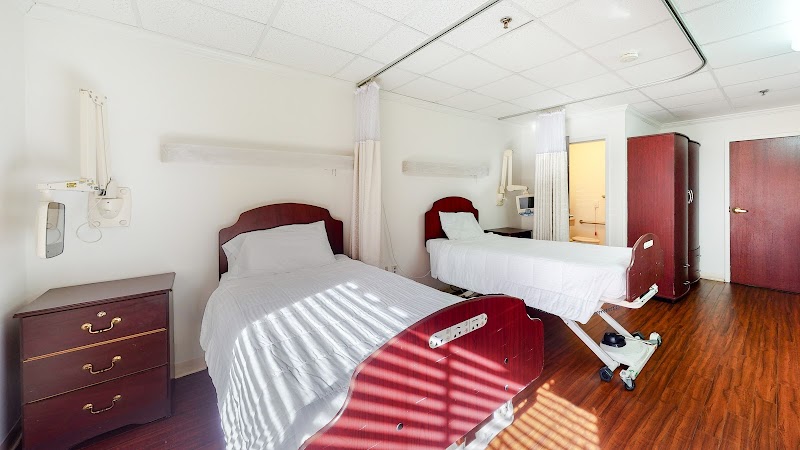
How is Pruitthealth - Augusta Hills Staffed?

CMS rates PRUITTHEALTH - AUGUSTA HILLS's staffing level at 2 out of 5 stars, which is below average compared to other nursing homes. Staff turnover is 45%, compared to the Georgia average of 46%. This relatively stable workforce can support continuity of care.

What Have Inspectors Found at Pruitthealth - Augusta Hills?

State health inspectors documented 6 deficiencies at PRUITTHEALTH - AUGUSTA HILLS during 2023 to 2025. These included: 6 with potential for harm.
Who Owns and Operates Pruitthealth - Augusta Hills?

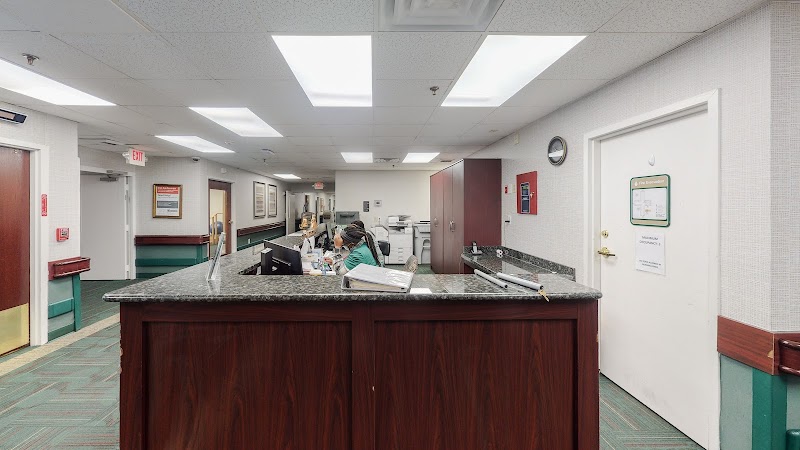
PRUITTHEALTH - AUGUSTA HILLS is owned by a for-profit company. For-profit facilities operate as businesses with obligations to shareholders or private owners. The facility is operated by PRUITTHEALTH, a chain that manages multiple nursing homes. With 126 certified beds and approximately 83 residents (about 66% occupancy), it is a mid-sized facility located in AUGUSTA, Georgia.
How Does Pruitthealth - Augusta Hills Compare to Other Georgia Nursing Homes?

Compared to the 100 nursing homes in Georgia, PRUITTHEALTH - AUGUSTA HILLS's overall rating (5 stars) is above the state average of 2.6, staff turnover (45%) is near the state average of 46%, and health inspection rating (4 stars) is above the national benchmark.

What Should Families Ask When Visiting Pruitthealth - Augusta Hills?

Based on this facility's data, families visiting should ask: "Can you walk me through typical staffing levels on day, evening, and night shifts?" "Can I visit during a mealtime to observe dining assistance and food quality?" "How do you handle medical emergencies, and what is your hospital transfer rate?" "Can I speak with family members of current residents about their experience?" These questions are particularly relevant given the below-average staffing rating.

Is Pruitthealth - Augusta Hills Safe?

Based on CMS inspection data, PRUITTHEALTH - AUGUSTA HILLS has a clean safety record: no substantiated abuse findings (meaning no confirmed cases of resident harm), no Immediate Jeopardy citations (the most serious violation level indicating risk of serious injury or death), and is not on the Special Focus Facility watch list (a federal program monitoring the lowest-performing 1% of nursing homes). The facility has a 5-star overall rating and ranks #1 of 100 nursing homes in Georgia. While no facility is perfect, families should still ask about staff-to-resident ratios and recent inspection results during their visit.

Do Nurses at Pruitthealth - Augusta Hills Stick Around?

PRUITTHEALTH - AUGUSTA HILLS has a staff turnover rate of 45%, which is about average for Georgia nursing homes (state average: 46%). Moderate turnover is common in nursing homes, but families should still ask about staff tenure and how the facility maintains care continuity when employees leave.

Was Pruitthealth - Augusta Hills Ever Fined?

PRUITTHEALTH - AUGUSTA HILLS has been fined $6,201 across 1 penalty action. This is below the Georgia average of $33,141. While any fine indicates a compliance issue, fines under $50,000 are relatively common and typically reflect isolated problems that were subsequently corrected. Families should ask what specific issues led to these fines and confirm they've been resolved.

Is Pruitthealth - Augusta Hills on Any Federal Watch List?

PRUITTHEALTH - AUGUSTA HILLS is not on any federal watch list. The most significant is the Special Focus Facility (SFF) program, which identifies the bottom 1% of nursing homes nationally based on persistent, serious quality problems. Not being on this list means the facility has avoided the pattern of deficiencies that triggers enhanced federal oversight. This is a positive indicator, though families should still review the facility's inspection history directly.