PRUITTHEALTH - LANIER


2451 PEACHTREE INDUSTRIAL BLVD, BUFORD, GA 30518 (770) 614-2800
For profit - Corporation 117 Beds PRUITTHEALTH Data: November 2025
Trust Grade
61/100
#154 of 353 in GA
Last Inspection: May 2025

Inspected within the last 6 months. Data reflects current conditions.

Overview

PruittHealth - Lanier in Buford, Georgia, has a Trust Grade of C+, which means it is slightly above average but not exceptional. It ranks #154 out of 353 facilities in Georgia, placing it in the top half statewide, and #4 out of 11 in Gwinnett County, indicating there are only three local options that are better. Unfortunately, the facility is worsening, with the number of issues identified increasing from 3 in 2024 to 8 in 2025. Staffing is a relative strength, with a turnover rate of 27%, significantly lower than the state average of 47%, but RN coverage is rated average. However, there are concerning incidents, such as failing to maintain safe handrails with sharp edges, improper food safety practices that could affect residents’ diets, and not maintaining cleanliness in resident rooms, which could lead to an unsafe living environment. Overall, while there are strengths in staffing stability, the facility has significant areas that need improvement.

Trust Score
C+
61/100
In Georgia
#154/353
Top 43%
Safety Record
Low Risk
No red flags
Inspections
Getting Worse
3 → 8 violations
Staff Stability
✓ Good
27% annual turnover. Excellent stability, 21 points below Georgia's 48% average. Staff who stay learn residents' needs.
Penalties
○ Average
$3,728 in fines. Higher than 67% of Georgia facilities. Some compliance issues.
Skilled Nurses
○ Average
Each resident gets 32 minutes of Registered Nurse (RN) attention daily — about average for Georgia. RNs are the most trained staff who monitor for health changes.
Violations
⚠ Watch
22 deficiencies on record. Higher than average. Multiple issues found across inspections.
★★★☆☆
3.0
Overall Rating
★★★☆☆
3.0
Staff Levels
★★★☆☆
3.0
Care Quality
★★★☆☆
3.0
Inspection Score
Stable
2024: 3 issues
2025: 8 issues

The Good

  • Low Staff Turnover (27%) · Staff stability means consistent care
  • Full Sprinkler Coverage · Fire safety systems throughout facility
  • No fines on record
  • Staff turnover is low (27%)

    21 points below Georgia average of 48%

Facility shows strength in staff retention, fire safety.

The Bad

3-Star Overall Rating

Near Georgia average (2.6)

Meets federal standards, typical of most facilities

Federal Fines: $3,728

Below median ($33,413)

Minor penalties assessed

Chain: PRUITTHEALTH

Part of a multi-facility chain

Ask about local staffing decisions and management

The Ugly 22 deficiencies on record

May 2025 8 deficiencies
CONCERN (D) 📢 Someone Reported This

A family member, employee, or ombudsman was alarmed enough to file a formal complaint

Potential for Harm - no one hurt, but risky conditions existed

Deficiency F0558 (Tag F0558)

Could have caused harm · This affected 1 resident

**NOTE- TERMS IN BRACKETS HAVE BEEN EDITED TO PROTECT CONFIDENTIALITY** Based on observations, interviews, and record reviews, the facility failed to ensure reasonable accommodation of need related to...

Read full inspector narrative →
**NOTE- TERMS IN BRACKETS HAVE BEEN EDITED TO PROTECT CONFIDENTIALITY** Based on observations, interviews, and record reviews, the facility failed to ensure reasonable accommodation of need related to keeping the call light within reach while in bed to call for staff assistance for two out of 45 sampled residents (R) (R31 and R37). Findings include: 1.Review of electronic health records (EHR) revealed, R31 admitted to the facility with diagnoses that included but not limited to liver cell carcinoma, unspecified dementia, unspecified severity, without behavioral disturbance, psychotic disturbance, mood disturbance ,and anxiety, dysphagia, oropharyngeal phase, encounter for palliative care, pain, unspecified, and fracture of unspecified part of neck of right femur. Review of R31's Quarterly Minimum Data Set (MDS) dated [DATE] revealed Section C (Cognitive Patterns), a Brief interview of Mental Status (BIMS) score of 00 indicating severely impaired cognitive skills; Section GG (Functional Abilities and Goals) indicated R31 required substantial/maximal assistance from staff with activities of daily living (ADLs), used wheelchair and required supervision or touching with mobility. 2. Review of EHR revealed R37 admitted to the facility with diagnoses that included but not limited to heart failure, chronic obstructive pulmonary disease, muscle weakness (generalized), difficulty in walking, and osteoarthritis. Review of R37's Quarterly MDS dated [DATE] revealed Section C (Cognitive Patterns), a BIMS score of 15 indicating that resident's cognitive skills were intact. Section D did not indicate any depression or mood disorders; Section GG (Functional Abilities and Goals) indicated R37 required partial/moderate assistance from staff with ADLs and mobility. An observation on 5/6/2025 at 10:47 am revealed the call light cords for R31 and R37 were tied up and hanging by the wall with the call box. Both R31 nor R37 were lying in bed and could not reach their call light. An observation on 5/7/2025 at 8:04 am revealed the call light cords for R31 and R37 were still tied up and hanging by the wall with the call box. Both R31 and R37 were lying in bed and could not reach their call light. An interview on 5/6/2025 at 10:58 am with R37 revealed that if they (R37 and R31) need help he would have to ambulate to the door and holler for someone to come and help. He revealed that he help take care of his roommate, R31. An interview on 5/8/2025 at 2:34 pm with Certified Nursing Assistant (CNA) NN revealed that all the residents should always have their call lights within reach while they were in bed.
CONCERN (D) 📢 Someone Reported This

A family member, employee, or ombudsman was alarmed enough to file a formal complaint

Potential for Harm - no one hurt, but risky conditions existed

MDS Data Transmission (Tag F0640)

Could have caused harm · This affected 1 resident

**NOTE- TERMS IN BRACKETS HAVE BEEN EDITED TO PROTECT CONFIDENTIALITY** Based on record review and staff interview, the facility failed to ensure that the Minimum Data Set (MDS) assessment was transmi...

Read full inspector narrative →
**NOTE- TERMS IN BRACKETS HAVE BEEN EDITED TO PROTECT CONFIDENTIALITY** Based on record review and staff interview, the facility failed to ensure that the Minimum Data Set (MDS) assessment was transmitted within 14 days of completion to the Centers for Medicare and Medicaid Services (CMS) Quality Improvement Evaluation System (QIES) Assessment Submission and Processing (ASAP) system for one of 45 sampled residents (R) (R25). Findings include: Review of the MDS Discharge assessment dated [DATE] for Section A (Identification Information) revealed, R25 readmitted into the facility on 1/1/2025 was discharged home on 1/3/2025. Further review revealed that the discharge assessment had not been transmitted. During an observation and interview on 5/9/2025 at 3:45 pm, R25 MDS discharge assessment dated [DATE] was reviewed with the MDS Coordinator. The MDS Coordinator verified the assessment showed as completed in the facility record keeping system. When asked why the assessment stated complete, and CMS data showed it had not been transmitted, the MDS Coordinator stated that surveyor would need to speak with Clinical Reimbursement Consultant KK who may be able to clarify. Interview on 5/9/2025 at 4:00 pm with Clinical Reimbursement Consultant KK, confirmed R25's discharge assessment should have been done within 14 days and transmitted. She stated, I can't explain it except, that it was human error.
CONCERN (D) 📢 Someone Reported This

A family member, employee, or ombudsman was alarmed enough to file a formal complaint

Potential for Harm - no one hurt, but risky conditions existed

Assessment Accuracy (Tag F0641)

Could have caused harm · This affected 1 resident

Based on staff interviews, records review, and review of the facility's policy titled, MDS Assessment Accuracy, the facility failed to ensure an accurate Minimum Data Set (MDS) assessment was complete...

Read full inspector narrative →
Based on staff interviews, records review, and review of the facility's policy titled, MDS Assessment Accuracy, the facility failed to ensure an accurate Minimum Data Set (MDS) assessment was completed for one of 45 sampled residents (R) (R52). Specifically, the facility failed to accurately code the use of a wander/elopement alarm for R32. This failure placed the resident at risk for medical complications and unmet needs. Findings include: Review of the facility's policy titled, MDS Assessment Accuracy, dated 12/6/2022, Policy Statement revealed the following: It is the policy of this healthcare center that each Minimum Data Set (MDS) reflects the acuity and the medical status of each patient/resident in accordance with acceptable professional standards and practices. Review of R32's electronic medical record (EMR) revealed R32 was admitted to the facility with diagnoses that included but not limited to, schizophrenia, dementia, major depressive disorder, and unspecified psychosis. Review of R32's Quarterly MDS assessment with an Assessment Reference Date (ARD) of 3/28/2025 for Section P (Restraints) revealed a wander/elopement alarm was not used. Review of R32's physician orders revealed orders that included but not limited to, wander guard worn on necklace holder with start date of 11/15/2024. Review of R32's care plan with last reviewed/revised date of 11/15/2024 revealed Problem: risk for elopement as evidenced by exit seeking behavior. Wander guard work on necklace holder per resident's preference. Approaches included but not limited to: Check wander guard device for proper functioning and placement per facility protocol or manufacture's recommendations. Review of R32's progress notes from 3/30/2025 revealed Resident noted wearing wander necklace. No attempts made to exit the building. Interview with MDS Coordinator on 5/9/2025 at 10:35 am revealed that R32 wears a wander guard necklace because R32 did not like arm or ankle bracelet. MDS Coordinator confirmed that Section P of the most recent quarterly MDS assessment was incorrect, and that she would submit a modification for that assessment.
CONCERN (D) 📢 Someone Reported This

A family member, employee, or ombudsman was alarmed enough to file a formal complaint

Potential for Harm - no one hurt, but risky conditions existed

ADL Care (Tag F0677)

Could have caused harm · This affected 1 resident

**NOTE- TERMS IN BRACKETS HAVE BEEN EDITED TO PROTECT CONFIDENTIALITY** Based on observations, record review, resident and staff interviews, the facility failed to provide Activities of Daily Living (...

Read full inspector narrative →
**NOTE- TERMS IN BRACKETS HAVE BEEN EDITED TO PROTECT CONFIDENTIALITY** Based on observations, record review, resident and staff interviews, the facility failed to provide Activities of Daily Living (ADL's) for one of 45 sampled residents (R) (R5). Specifically, the facility failed to provide nail care for R5. This failure had the potential to affect the resident's comfort, body image and increase the risk for infections. Findings include: Review of the electronic health record (EHR) revealed R5 was admitted with diagnoses that included but not limited to altered mental status, difficulty in walking, and cerebral infarction. Review of R5's Quarterly Minimum Data Set (MDS) dated [DATE] for Section C (Cognitive Patterns) revealed, a Brief Interview for Mental Status (BIMS) of 12, indicating the resident was cognitively intact; Section GG (Functional Abilities and Goals) revealed, R5 had impairment to the lower extremities and required maximal assistance with showers, upper and lower body dressing. Review of R5's care plan with a revised date of 12/28/2024 revealed R5 was care planned for ADL decline related to (r/t) sepsis, acute renal failure, acute metabolic encephalopathy and atrial fibrillation. The care plan revealed R5 ADL needs will be met and independence potential maximized within constraints of disease through next review. Review of R5's physician orders dated 12/27/2024 revealed R5 may have podiatry care as needed. In an interview and observation conducted on 5/6/2025 at 11:32 am, R5 revealed his toenails were long and that he was unable to put on his shoes. He revealed he had never gotten his toenails cut since he had been in the facility and stated that he had told the staff members several times. R5 further revealed that the last time the podiatrist was in the building, he was told he was not on the list. Observation of R5's toenails revealed they were long, yellow, and thick. In an interview conducted on 5/7/2025 at 11:01 am with CNA BB confirmed that R5's toenails were long but explained that CNAs were not permitted to cut toenails, as this was the responsibility of a podiatrist. She stated that when a CNA notices long toenails, the expectation was to report it to the nurse, who then makes the necessary appointment. However, CNA BB admitted she had not reported it, due to being busy and forgetting. In an interview conducted on 5/7/2025 at 11:07 am with Licensed Practical Nurse (LPN) CC (100 Hall Floor Nurse) revealed, she does not know how often the podiatrist visits and has never seen the podiatrist during her shifts. LPN CC explained that the need for podiatry care depends on the structure and condition of the toenails. She stated that normally she informs the charge nurse when a resident needs a podiatry appointment, but in this case, she did not make a direct report regarding R5. LPN CC also recalled that the resident recently asked her to cut his toenails, but she told him she could not due to his condition. She acknowledged that she should have reported the concern to the charge nurse but intended to speak directly to the podiatrist on the next visit. In an interview conducted on 5/9/2025 at 10:30 am with the Regional Nurse Consultant (RNC) revealed, that when staff observe a resident with long toenails, the expectation was to refer the concern to the social worker, who ensures the resident was added to the podiatry list. She emphasized the importance of timely referrals, noting that delays could lead to negative outcomes, such as ingrown toenails and continued overgrowth. In an interview conducted on 5/9/2025 at 10:31 am with the Interim Administrator (IA) confirmed that staff were expected to notify Social Services when a resident was identified as needing toenail care, so that they could be added to the podiatry appointment list. She stated that failing to do so may result in longer toenails and the development of ingrown toenails.
CONCERN (D) 📢 Someone Reported This

A family member, employee, or ombudsman was alarmed enough to file a formal complaint

Potential for Harm - no one hurt, but risky conditions existed

Quality of Care (Tag F0684)

Could have caused harm · This affected 1 resident

**NOTE- TERMS IN BRACKETS HAVE BEEN EDITED TO PROTECT CONFIDENTIALITY** Based on observations, record review, resident and staff interviews, the facility failed to follow physician orders for one of 4...

Read full inspector narrative →
**NOTE- TERMS IN BRACKETS HAVE BEEN EDITED TO PROTECT CONFIDENTIALITY** Based on observations, record review, resident and staff interviews, the facility failed to follow physician orders for one of 45 sampled residents (R) (R7) related to (r/t) behavior monitoring. This deficient practice had the potential to cause undetected changes in the resident's mental status and/or behavior. Findings include: A review of the electronic health record (EHR) for R7 revealed he was admitted with the following diagnosis that included but not limited to vascular dementia, unspecified severity, without behavioral disturbance, psychotic disturbance, mood disturbance, anxiety and unspecified dementia, and unspecified severity, with agitation. A review of R7's admission Minimum Data Set (MDS) dated [DATE] for Section C (Cognitive Patterns) revealed, a Brief Interview for Mental Status (BIMS) of 13, indicating he was cognitively intact. A review of R7's care plan with a start date of 1/20/2025 revealed a care plan for psychotropic drug use (r/t) dementia with behavioral disturbance and anxiety disorder. The care plan indicated R7 would benefit from medication use without side effects through the next review. A review of R7's physician orders revealed a prescription for olanzapine 5 milligrams (mg) (antipsychotic). The medication was prescribed for unspecified dementia, unspecified severity, with psychotic disturbance, and is to be administered once daily at night. Additionally, R7 had a prescription for memantine 5 mg (N-AMETHYL-D-aspartate (NMDA) receptor antagonist /cognitive enhancer), to be taken orally twice a day. This medication was prescribed for unspecified dementia, unspecified severity, with agitation, and was ordered on 1/17/2025 Further review of R7's physician orders dated 1/18/2025 revealed, R7 required behavior monitoring to be documented every shift (days and nights); Behavior monitoring instructions direct staff to chart observed behaviors using the following scale: 0 = None Observed,1 = Sad Mood/Tearful, 2 = Anxious Mood/Attention Seeking, 3 = Insomnia, 4 = Cursing/Screaming, 5 = Threatening, 6 = Physical Aggression (Hits/Scratches), 7 = Sexually Inappropriate, 8 = Wanders, 9 = Spits, 10 = Refuses Treatment/ADLs, 11 = Destroys Property, 12 = Disrobes Inappropriately, 13 = Delusions, 14 = Hallucinations, 15 = Disorganized Speech, 16 = Disorganized Behavior, 17 = Flat Affect, and 18 = Other - Describe in Progress Notes. Record review of R7's Medication Administration Record (MAR) for February, March and April 2025 revealed the following days with no charting of behavior monitoring: on 3/8/2025 for day shift, on 2/8/2025 for day shift, on 2/9/2025 for night shift, and on 4/26/2025 for day shift. In an interview conducted on 5/8/2025 at 10:24 am, with Certified Nursing Assistant (CNA) NN revealed, that if she noticed any changes in a resident, she would report it to the nurse and check back on the resident in a little bit. CNA NN reported that there was no designated place for CNAs to document this information. She added that if she observes unusual behavior, such as a resident being itchy or agitated, she informs the nurse. In an interview conducted on 5/8/2025 at 10:40 am with Licensed Practical Nurse (LPN) CC, revealed R7 has had some recent issues and noticed that she's been having more outburst crying more often. LPN CC stated the resident also verbalized I don't want to be here, and usually she's in great spirits. LPN CC stated she contacted the nurse practitioner twice to let her know R7's behavior. LPN has seen R7 today and confirmed she was fretful, anxious, and seems confused. In an interview conducted on 5/8/2025 at 10:54 am with Director of Nursing (DON) revealed, that her expectation was for staff to report all resident changes and for nurses to contact the provider for direction and document in SBAR (Situation, Background, Assessment, Recommendation) format. The DON emphasized that nurses were expected to know the indications for medications and monitor for side effects, while CNAs were expected to report any changes or unusual behaviors. She added that all staff should monitor residents during daily care activities. In an interview conducted on 5/9/2025 at 10:27 am with Regional Nurse Consultant (RNC) revealed, her expectation was that appropriate documentation to be maintained. She added that failure to document or address behaviors could result in worsening behavior. In an interview conducted on 5/9/2025 at 10:29 am with the Interim Administrator (IA) revealed, her expectation was that documentation be completed daily and to follow physician orders. She noted that failure to follow up could result in behavioral deterioration.
CONCERN (D) 📢 Someone Reported This

A family member, employee, or ombudsman was alarmed enough to file a formal complaint

Potential for Harm - no one hurt, but risky conditions existed

Accident Prevention (Tag F0689)

Could have caused harm · This affected 1 resident

**NOTE- TERMS IN BRACKETS HAVE BEEN EDITED TO PROTECT CONFIDENTIALITY** 2. Observations on 5/6/2025 from 12:43 pm to 12:47 pm for water temperature checks in rooms located on the 200 Hall with the Mai...

Read full inspector narrative →
**NOTE- TERMS IN BRACKETS HAVE BEEN EDITED TO PROTECT CONFIDENTIALITY** 2. Observations on 5/6/2025 from 12:43 pm to 12:47 pm for water temperature checks in rooms located on the 200 Hall with the Maintenance Director (MD), using the facility's digital thermometer revealed water temperature measurements in the following: rooms [ROOM NUMBERS] at 126 degrees °F, rooms [ROOM NUMBERS] at 127 degrees °F, rooms [ROOM NUMBERS] at 127 degrees °F. Follow-up Observation on 5/6/2025 from 6:00 pm to 6:05 pm with the MD using the facility's digital thermometer revealed water temperature measurements in the following: rooms [ROOM NUMBERS] at 107 degrees °F, rooms [ROOM NUMBERS] at 107 degrees °F, rooms [ROOM NUMBERS] at 108 degrees °F. In an interview conducted on 5/6/2025 at 5:41 pm, the MD revealed that he had made several adjustments to various valves and two water tanks to regulate water temperatures. He also stated that a plumber had been contacted to assist with the issue. Interview on 5/6/2025 at 5:50 pm with the Maintenance Director (MD) confirmed that when he went to adjust the water temperature, the water heater thermostat was showing 130 degrees Fahrenheit. The MD revealed that he had conducted a weekly check of the thermostat to ensure the water temperature remained under 110 degrees, however he was unsure why the temperature had gone up. In an interview conducted on 5/9/2025 at 10:32 am, the Regional Nurse Consultant (RNC) revealed that water temperatures was expected to be maintained between 100°F and 110°F. The RNC also revealed, that the Maintenance staff were responsible for checking water temperatures on a weekly basis. She emphasized that maintaining temperatures within this range was essential to prevent negative outcomes, such as residents being burned. In an interview conducted on 5/9/2025 at 10:34 am, the Interim Administrator confirmed the expectation that water temperatures were to be checked and maintained weekly, and should consistently remain between 100°F and 110°F. She also noted that a potential negative outcome of noncompliance was that residents could get burned. In a follow-up interview on 5/9/2025 at 1:59 pm, the MD confirmed that the expectation was to maintain water temperatures within the regulatory range of 100°F to 110°F. He acknowledged that failure to maintain proper temperatures could result in negative outcomes, including the risk of residents being burned. Review of the facility's records revealed that no residents sustained burns injuries related to hot water temperatures. Based on observations, staff interviews, record review and review of facility's policy Test Water Temperatures, the facility failed to keep residents free of accident hazards as evidenced by water temperatures above 110 degrees Fahrenheit (°F) in 16 out of 48 resident rooms (102, 104, 103, 105, 106, 108, 110, 112, 114, 116, 201, 203, 210, 212, 213, and 215). The deficient practices had the potential to cause injury to residents residing in these rooms. Findings include: Review of the facility's provided document titled, Test Water Temperatures revealed, 1. For burn prevention, federal guidelines advise that you keep domestic water temperatures below 120 degrees Fahrenheit, although this temperature can still cause burns if exposure reaches five minutes. Many states have even stricter standards that set maximum temperatures lower than 120 degrees Fahrenheit, although 100 degrees Fahrenheit is considered a safe water temperature for bathing. 2. Test temperatures in shower areas 1.Observations on 5/6/2025 from 12:22 pm to 12:47 pm for water temperature checks in rooms located on the100 Hall with the Maintenance Director (MD) using the facility's digital thermometer revealed water temperature measurements in the following: rooms [ROOM NUMBERS] at 125 degrees °F, rooms [ROOM NUMBERS] at 126 degrees °F, rooms [ROOM NUMBERS] at 130 degrees °F, rooms [ROOM NUMBERS] at 130 degrees °F, rooms [ROOM NUMBERS] at 129 degrees °F, In an interview conducted on 5/6/2025 at 12:15 pm and 12:36 pm, the MD revealed that water temperatures were supposed to be over 100°F but no higher than 110°F. He reported that he conducted water temperature testing once a week, selecting random rooms from each hall as well as the shower rooms. According to him, testing was completed the previous week, and at that time, he did not observe any rooms with elevated water temperatures. The MD confirmed that the water temperatures were currently reading high. He stated that when checking water temperatures, he typically allows the water to run for 5-10 seconds before taking a reading. Follow-up Observation on 5/6/2025 at 5:41 pm with the MD of water temperature checks revealed water temperature measurements in the following: room [ROOM NUMBER]-104 at 102.3°F, room [ROOM NUMBER]-105 at 102.1°F room [ROOM NUMBER]-108 at: 102.0°F room [ROOM NUMBER]-112 at 101.9°F room [ROOM NUMBER]-116 at 102.1°F
CONCERN (D) 📢 Someone Reported This

A family member, employee, or ombudsman was alarmed enough to file a formal complaint

Potential for Harm - no one hurt, but risky conditions existed

Deficiency F0804 (Tag F0804)

Could have caused harm · This affected 1 resident

Based on observations, staff interviews, record review, and review of the facility's policy titled How to Purée Foods, the facility failed to ensure that dietary staff followed recipes for prep...

Read full inspector narrative →
Based on observations, staff interviews, record review, and review of the facility's policy titled How to Purée Foods, the facility failed to ensure that dietary staff followed recipes for preparing puree food items to avoid compromising the nutritive value and flavor for eight of 88 residents receiving a pureed diet. Findings include: A review of an undated facility's policy titled How to Purée Foods under the section titled What is the correct pureed texture revealed, Puréed foods should be soft and moist, cohesive (holds together, not runny), smooth (without lumps) and spoon-thick (does not flow or drip continuously through fork prongs). Properly puréed foods should be 'swallow ready' and not require chewing. Under the section titled Preparation Steps revealed,1. Depending on the resident's dietary restrictions, follow the proper recipe. 5. If required, gradually add a small amount of liquid (2-3 tablespoons) while continuing to process to form a very smooth puree (moist mashed potato consistency); Do not add water. (a.) Add a small amount of hot liquid for hot foods, such as gravy, sauce, or cooking liquid, to the cooked hot foods. (b.) Add a small amount of cold liquid for cold food, such as milk or fruit juice. Review of the undated recipe titled Wild [NAME] - ½ Cup revealed notes for pureed: Measure desired #of servings into food processor. Blend until smooth. Add liquid if product needs thinning. Add commercial thickener if product needs thickening. Review of the undated recipe titled Baked Ham - 3 Oz revealed notes for pureed: Measure desired # (number) of servings into food processor. Blend until smooth. Add broth or grave if product needs thinning. Add Commercial thickener if product needs thickening. During the preparation of puree rice on 5/7/2025 at 10:50 am, Dietary [NAME] MM was observed placing 10 heaping spoonful of cooked rice into a standard blender bowl. She then added an unmeasured amount of water and then began to puree the rice. Once the desired consistency was achieved, she placed the rice into a steam table pan. During the preparation of puree food items on 5/7/2025 at 10:55 am, Dietary [NAME] MM was observed preparing puree baked ham. She placed an unmeasured amount of sliced baked ham with chipotle peach glaze into a standard blender bowl and began to puree. Dietary [NAME] MM stopped the blender and added an unmeasured amount of water and continued the puree process. Once the puree baked ham was at a desired consistency, Dietary [NAME] MM placed the ham into a steam table pan. Interview with Dietary [NAME] MM on 5/8/2025 at 2:45 pm revealed that sometimes she adds water when she prepares rice or meat to make it smooth. Interview with Dietary Manager on 5/8/2025 at 2:50 pm confirmed that Dietary [NAME] MM should not be using water to prepare puree. She stated that Dietary [NAME] MM will be re-educated over the puree process.
CONCERN (D) 📢 Someone Reported This

A family member, employee, or ombudsman was alarmed enough to file a formal complaint

Potential for Harm - no one hurt, but risky conditions existed

Deficiency F0914 (Tag F0914)

Could have caused harm · This affected 1 resident

**NOTE- TERMS IN BRACKETS HAVE BEEN EDITED TO PROTECT CONFIDENTIALITY** Based on observation and staff interviews, the facility failed to replace a missing privacy curtain and to ensure full visual pr...

Read full inspector narrative →
**NOTE- TERMS IN BRACKETS HAVE BEEN EDITED TO PROTECT CONFIDENTIALITY** Based on observation and staff interviews, the facility failed to replace a missing privacy curtain and to ensure full visual privacy for one of 48 rooms (room [ROOM NUMBER]). The facility census was 88 residents. Findings include: A review of the facility' Resident Council Minutes Report dated 4/30/2025 revealed, residents had a concern about privacy which stated, Make sure drapes are being closed even if door is closed. An observation on 5/6/2025 at 9:55 am revealed that the privacy curtain for 308-A bed was missing preventing full visual privacy. An interview on 5/6/2025 at 9:57 am with Licensed Practical Nurse (LPN) LL confirmed that she was aware that the privacy curtain was missing for 308-A bed and that it prevented full visual privacy. An observation on 5/8/2025 at 9:37 am revealed the privacy curtain was still missing for 308 A-bed preventing full visual privacy. An interview on 5/8/2025 at 2:30 pm with the Housekeeping Supervisor revealed that he was unaware that there was a privacy curtain missing and he would correct it. Observation and interview on 5/9/2025 at 2:45 pm with the Housekeeping Supervisor revealed he was not aware of the privacy curtain missing in room [ROOM NUMBER] and understood that it did not ensure full visual privacy for the residents during patient care. He stated it was the Maintenance Director's responsibility to install the curtains.
Jun 2024 3 deficiencies
CONCERN (D) 📢 Someone Reported This

A family member, employee, or ombudsman was alarmed enough to file a formal complaint

Potential for Harm - no one hurt, but risky conditions existed

Deficiency F0658 (Tag F0658)

Could have caused harm · This affected 1 resident

Based on observations, interviews, record reviews, and review of facility policy titled, Medication Administration: Enteral Tubes, the facility failed to ensure that care and services were provided ac...

Read full inspector narrative →
Based on observations, interviews, record reviews, and review of facility policy titled, Medication Administration: Enteral Tubes, the facility failed to ensure that care and services were provided according to accepted standards of practice for two of seven residents (R) (R6 and R9) reviewed for medication administration. Specifically, the facility failed to administer R6 medications in a timely manner; and failed to follow procedure for enteral medication administration for R9. Findings include: Review of the facility policy titled, Medication Administration: Enteral Tubes dated revised 1/12/2024 revealed, Procedure & [and] Key Points: 8. Flush the tube with 15 ml [milliliters] water or per physician's order. 9. Remix the medication. Place the first medication into the syringe. After medication has been given, flush with 5 [five] ml of water or per physician orders then place the next medication into the syringe (then repeat for each medication given). 10. Allow medication to flow down the tube via gravity. Give gentle boosts with the plunger (approximately 1 [one] inch down) if the medication will not flow by gravity. Repeat if necessary. Do not push medications through the tube. 1. Review of the closed record of R6 revealed an admission date of 12/2/2022 at 6:38 pm from the hospital with diagnoses which included, malignant neoplasm of brain, glioblastoma multiforme, insomnia, hypercholesterolemia, major depressive disorder, gastro esophageal disorder, and history of hepatitis B. Review of Resident R6's physician orders included the following medication orders: Dabigatran etexilate (treat and prevent blood clots), 150 milligrams (mg) two times a day scheduled for 9:00 am and 5:00 pm, Dexamethasone (steroid) two mg two times a day scheduled for 9:00 am and 5:00 pm, Famotidine (used to treat acid in the stomach) 20 mg two times a day scheduled for 9:00 am and 9:00 pm, levetiracetam, (used to prevent seizures) 500 mg every 12 hours scheduled for 9:00 am, and 9:00 pm, Mirtazapine (antidepressant) 15 mg at bedtime scheduled for 9:00 pm, Trazodone (antidepressant, helps with sleep) 100 mg at bedtime scheduled for 9:00 pm. Review of R6's Medication Administration Record (MAR) for 12/2022 revealed the resident did not receive their dexamethasone until 12/3/2024 at 5:00 pm, did not receive the famotidine, levetiracetam, mirtazapine or trazodone until 12/3/2024 at 9:00 pm, and did not receive the dabigatran etexilate until 12/4/2024 at 9:00 am. In an interview with Unit Manager GG on 6/18/2024 at 9:30 am, she stated the staff enter the medication orders in the computer and they directly go to the pharmacy to be filled. The pharmacy delivered every evening, and they utilized an on-call pharmacy to get medications from also. The nurses could also obtain medications from the Emergency Medication Cabinet System. Review of the facility provided list of contents of the Emergency Medication Cabinet, put in place on 12/2022, revealed the cabinet contained: famotidine, levetiracetam, mirtazapine, and trazodone, all medications R6 was prescribed. Further review revealed staff did not utilize the Emergency Medication Cabinet to administer the residents' medications ordered by the physician. In an interview with the Director of Health Services (DHS) on 6/18/2024 at 1:31 pm, she stated the nurses could enter medication orders into the computer up to 5:30 pm and still receive the medication from the pharmacy that same evening. DHS stated if the medication was not delivered the staff could then use the emergency supply of medications until the resident's medication came in. 2. Review of R9's Physician Orders revealed the order dated 3/13/2024 for baclofen (muscle relaxant) 10 mg via the gastroesophageal (g-tube) three per day. Further review of the Physician orders revealed an order dated 3/13/2024 to flush the g-tube with 15 milliliters (mls) of water before and after medications and five mls between each medication. Observation during the medication pass on 6/18/2024 at 12:12 pm for R9 revealed Registered Nurse (RN) NN crushed Baclofen, 10 mg and added five ml of water. RN NN turned off the g-tube feeding. She then checked placement by instilling five ml of air and listening to the abdomen and then checked for residual. RN NN poured the Baclofen into the syringe, without flushing the tubing with the ordered water first. The Baclofen did not flow down the tubing and the RN NN used the piston of the syringe to push the medication down the tubing. RN NN followed with a 15 ml water flush. During an interview with RN NN on 6/18/2024 at 12:19 pm, she stated the nurse should flush with 15 ml of water prior to giving medication through the g-tube and confirmed she did not flush the g-tube prior to giving the medication.
CONCERN (D) 📢 Someone Reported This

A family member, employee, or ombudsman was alarmed enough to file a formal complaint

Potential for Harm - no one hurt, but risky conditions existed

Infection Control (Tag F0880)

Could have caused harm · This affected 1 resident

**NOTE- TERMS IN BRACKETS HAVE BEEN EDITED TO PROTECT CONFIDENTIALITY** Based on observations, staff interviews, record review, and review of facility policy titled Enhanced Barrier Precaution (EBP), ...

Read full inspector narrative →
**NOTE- TERMS IN BRACKETS HAVE BEEN EDITED TO PROTECT CONFIDENTIALITY** Based on observations, staff interviews, record review, and review of facility policy titled Enhanced Barrier Precaution (EBP), the facility failed to follow infection control practices during direct contact care for one of 11 residents (R) (R9) on Enhanced Barrier Precautions (EBP) during incontinent care and the administration of medications through a gastrostomy tube (G-tube) (a tube surgically inserted through the skin into the stomach to deliver nutrition, hydration, and medication). These failures had the potential to expose residents to infections due to cross-contamination. Findings included: Review of the facility policy title, Enhanced Barrier Precaution (EBP), dated 4/30/2024, revealed 3. Implementation of Enhanced Barrier Precautions: a. Make gowns and gloves available immediately near or outside of the resident's room. Note: face protection may also be needed if performing activity with risk of splash or spray (i.e., wound irrigation, tracheostomy care). b. PPE [personal protection equipment] is only necessary when performing high-contact care activities and may not need to be donned prior to entering the resident's room. The policy further stated, 4. High-contact resident care activities include: a. Dressing b. Bathing c. Transferring d. Providing hygiene e. Changing linens f. Changing briefs or assisting with toileting g. Device care or use: central lines, urinary catheters, feeding tubes, tracheostomy/ventilator tubes h. Wound care: any skin opening requiring a dressing. Review of R9's clinical record revealed diagnoses included pneumonia, vascular dementia, quadriplegia, cerebral infarction, and major depressive disorder. Review of R9's quarterly Minimum Data Set (MDS), dated [DATE], revealed section GG (Functional Abilities and Goals) documented R9 was dependent on staff for ADLs, section H (Bowel and Bladder) documented R9 was always incontinent of bowel and bladder, section K (Swallowing/Nutritional Status) documented R9 had a feeding tube and received 51 percent or more of total calorie intake and 501 cubic centimeter or more per day by the feeding tube. Review of the care plan dated 4/11/2024 revealed the resident was on EBP due to having a G-tube, with an intervention to wear a gown and gloves during close-contact care. The care plan further revealed the resident had urinary incontinence, with an intervention for staff to anticipate and provide incontinence care as needed. Review of the Physician's Orders dated 4/9/2024 revealed an order for enhanced barrier precautions, with special instructions to wear a gown in addition to gloves during close contact care. Observation on 6/18/2024 at 9:54 am. revealed Certified Nursing Assistant (CNA) PP provided incontinence care for R9 while providing a bed bath. Observation revealed the resident was lying on her back and the CNA unfastened the brief and used a cloth with soap and water to clean between the legs and the frontal area. Further observation revealed that CNA PP did not change the position of the wipe with each swipe. CNA PP then turned the resident to their left side and cleaned between the buttocks without changing the position of the wipe with each swipe. Additional observation revealed CNA PP wore a mask and gloves but did not wear a gown. Observation during G-tube medication administration for R9 on 6/18/2024 at 12:12 pm revealed Registered Nurse (RN) HH wore a mask and gloves but did not wear a gown. In an interview with RN HH on 6/18/2024 at 12:19 pm, she stated she should have worn a gown when administering G-tube medications. In an interview with the Director of Health Services (DHS) on 6/18/2024 at 1:31 pm, she stated the staff should wear a gown and gloves when working with a resident on EBP and should change the position of the cloth with each wipe during incontinence care. In an interview with CNA RR on 6/19/2024 at 9:53 am, she stated when providing incontinence care the staff should clean front to back and change the position of the wipe/cloth with each swipe.
CONCERN (E) 📢 Someone Reported This

A family member, employee, or ombudsman was alarmed enough to file a formal complaint

Potential for Harm - no one hurt, but risky conditions existed

Safe Environment (Tag F0584)

Could have caused harm · This affected multiple residents

**NOTE- TERMS IN BRACKETS HAVE BEEN EDITED TO PROTECT CONFIDENTIALITY** Based on observations, staff interviews, and review of the facility policy titled, Infection Control - Housekeeping Services, th...

Read full inspector narrative →
**NOTE- TERMS IN BRACKETS HAVE BEEN EDITED TO PROTECT CONFIDENTIALITY** Based on observations, staff interviews, and review of the facility policy titled, Infection Control - Housekeeping Services, the facility failed to maintain a clean and homelike environment for residents in 12 of 49 resident rooms (room [ROOM NUMBER], room [ROOM NUMBER], room [ROOM NUMBER], room [ROOM NUMBER], room [ROOM NUMBER], room [ROOM NUMBER], room [ROOM NUMBER], room [ROOM NUMBER], room [ROOM NUMBER], room [ROOM NUMBER], room [ROOM NUMBER], and room [ROOM NUMBER]). This deficient practice had the potential to place residents at risk for living in an unsanitary and unsafe living environment and a potential for diminished quality of life. Findings include: Review of the facility policy titled, Infection Control - Housekeeping Services, revised 10/16/2023, revealed Policy Statement: It is the policy of this facility to ensure housekeeping services will be performed on a routine and consistent basis to ensure an orderly, sanitary, and comfortable environment. The section titled Routine Cleaning of Horizontal Surfaces stated 1. In patient/resident care areas, cleaning of non-carpeted floors and other horizontal surfaces will be performed daily and more frequently if spillage or visible soiling occurs. Observations on 6/17/2024 from 10:50 am to 11:59 am revealed the following: room [ROOM NUMBER] - The window screen had holes in it, the window blind was broken, trash was on the floor, the bathroom door had scrapes, and a small painted panel on the door. room [ROOM NUMBER] - There was a basin under the sink filled with approximately two inches of water and pipes dripped slowly under the sink into the basin, there were scrapes on the bathroom door with a small painted panel on the door, the bathroom door frame had gouges into the wood and was missing paint. room [ROOM NUMBER] - A cable outlet box was pulled out from the wall one-fourth to one-half an inch, gray duct tape held a sponge-like material on the window edges, the bathroom door had scrapes and rusted areas, and paint was peeling off the wall by the sink. room [ROOM NUMBER] - The window screen was pulled away from the window, two unlabeled urinals were hanging from the handrail by the commode, which was a bathroom used by residents from two rooms, the bathroom door had scrapes and dents in it, and paint was peeling on the wall by the sink. room [ROOM NUMBER] - Dirt and debris were observed behind the entry door and along the floor edges in the bathroom, the wall had scrapes, only one of two lightbulbs worked in the bathroom, and scrapes were seen on the bathroom doors. room [ROOM NUMBER] - Dirt was observed along the edges of the floor, the walls had scrapes, the front part of the air conditioner had dirt on it and was pulled loose from the right side, trash was on the floor, the bathroom door had scrapes, and the wall/floor molding was separating from the wall. room [ROOM NUMBER] - A dark brown substance was observed on the closet drawers, there was dirt on the floor along the wall edges, red color stains were observed on the air conditioner's wood-encased box, different floor patterns/color tiles were in the room, the bathroom had a brown substance on the seat of the stool riser down the stool, and large area of brown discoloration was observed on the floor by the stool, caulking was missing from around the stool, a brown substance was on the toilet paper roll, and the sink was loose from the wall. room [ROOM NUMBER] - The bathroom had trash on the floor, only one of two lightbulbs worked in the bathroom, the bathroom was missing flooring and the flooring was rolled and raised, three boards were observed stacked on top of each other along the bathroom wall, and the trash can had a three by four inch piece missing. room [ROOM NUMBER] - The vinyl molding was separated from the wall, the bathroom door frame was scraped and the paint was peeling, the privacy curtain was pulled together and held in place with disposable gloves, no window screen was on the window, tile was missing from the windowsill, lights were not working in the bathroom, and there was a buildup of a brown/rust colored debris along the bathroom door frame. room [ROOM NUMBER] - The air conditioner edges had a brown color on them, there were different patterns/color tiles on the floor, chipped and missing floor tiles were observed, a buildup of dirt was along the edges of the wall, the paint had peeled and was hanging down in the bathroom, there was no toilet paper holder, the wall paint had peeled and was missing around the sink, only one of two light bulbs worked in the bathroom and white tape held up the black television cords. room [ROOM NUMBER] - The bathroom door had gouges and missing paint, wood was missing along the door edges, four different floor tiles were in the room, only one of two bathroom lights worked, and the light on the ceiling in the middle of the room had missing paint around it. room [ROOM NUMBER] - The bathroom doors had gouges and missing facing, the bathroom door frame was missing wood and had scrapes, dirt and debris were seen on the floor behind the room door, caulking was missing around the toilet, no toilet paper holder was in place, the bathroom ceiling paint had peeled and was hanging down, and different patterns/color floor tiles were observed in the room. During an interview with Housekeeper OO, the housekeeper in charge while the Housekeeping Director was on vacation, on 6/18/2024 at 12:41 pm, she stated each housekeeper had their own hall that they were responsible for. Housekeeper OO stated at the present time, they only had two housekeeping carts so they shared with each other.
May 2023 1 deficiency
CONCERN (D) 📢 Someone Reported This

A family member, employee, or ombudsman was alarmed enough to file a formal complaint

Potential for Harm - no one hurt, but risky conditions existed

Deficiency F0698 (Tag F0698)

Could have caused harm · This affected 1 resident

**NOTE- TERMS IN BRACKETS HAVE BEEN EDITED TO PROTECT CONFIDENTIALITY** Based on observation, record review, interviews, and review of the SNF Outpatient Dialysis Services Agreement, the facility fail...

Read full inspector narrative →
**NOTE- TERMS IN BRACKETS HAVE BEEN EDITED TO PROTECT CONFIDENTIALITY** Based on observation, record review, interviews, and review of the SNF Outpatient Dialysis Services Agreement, the facility failed to ensure that transportation services were consistently provided for one resident (R) (R#404) of three residents reviewed for dialysis transportation services. Findings include: Review of the SNF Outpatient Dialysis Services Agreement dated February 18, 2015, revealed Obligations of the Nursing Facility Number 4. Transport and Referral of ESRD Residents: Letter A. the nursing facility shall be responsible for arranging for suitable and timely transportation if the end stage renal disease (ESRD) resident to and from the ESRD Dialysis Unit, including the selection of the mode of transportation, equipment associated with this type of transfer, and all costs or transportation expenses associated with such transfer. Review of the clinical record revealed resident was admitted to the facility on [DATE] with diagnoses including metabolic encephalopathy, end stage renal disease (ESRD), anemia in chronic kidney disease (CD), hypertension (HTN), chronic obstructive pulmonary disease (COPD), anxiety disorder, and depression. The resident's most recent quarterly Minimum Data Set (MDS) dated [DATE], revealed a Brief Interview for Mental Status (BIMS) was coded as 10, which indicates moderate cognitive impairment. Section O revealed the resident was receiving Dialysis. Review of the care plan revised 4/27/2023 revealed resident has potential for complications related to hemodialysis for diagnosis of ESRD. Interventions to care include dialysis three times per week, on Tuesday, Thursday, and Saturday with chair time 11:15 a.m. Review of the Physician's Orders (PO) for the month of May 2023 revealed an order dated 5/16/2023 for dialysis three times per week at 10:00 a.m. on Tuesday-Thursday-Saturday (T/TH/S) and dialysis transportation [provider name] three times per week Tuesday/Thursday/Saturday pickup 10:15 a.m. Review of the facility Grievance Logs dated 3/24/2023 through 5/20/2023 revealed R#404 missed his dialysis appointments on the following days; 3/25/2023, 3/27/2023, 4/15/23, 5/4/23, 5/6/23, and 5/20/23. Further review revealed the reason for the missed dialysis appointments was due to transportation not showing up to pick up the resident. Review of the Grievance Log date 5/8/2023 indicated R#404 was sent to the hospital due to systemic swelling/edema as a result of missed dialysis appointments. The Hospital admission diagnosis was Non-adherence to Medical Treatment. Review of the Progress Note dated 3/25/2023 at 2:50 p.m. revealed resident did not go for dialysis due to transportation. Dialysis center made aware. Review of the Progress Note dated 3/27/2023 at 7:07 p.m. indicated resident missing his appointment at dialysis on Saturday. Transportation representative stated they would try to get transportation sometime for resident today if they could. Review of the Progress Note dated 4/15/2023 at 6:28 p.m. revealed resident did not go to dialysis today. Nurse Practitioner (NP) made aware. Review of the Progress Note dated 4/23/2023 at 6:22 p.m. revealed resident did not go to dialysis due to transportation. Review of the Progress Note dated 4/28/2023 at 11:29 a.m. indicated patient continues to dialyze on T/TH/S. SW (Social Worker) at facility attempting to switch schedule to M/W/F due to two missed sessions on Saturdays due to transportation. Review of the Progress Note dated 5/4/2023 at 2:45 p.m. indicated patient continues to dialyze on T/TH/S. Patient missed Wednesday session due to transportation. Will continue to advocate for patients' continuity and consistency in transportation to dialysis. Review of the Progress Note dated 5/4/2023 at 2:58 p.m. revealed resident unable to go to dialysis today due to transportation problems. Resident rescheduled for Saturday 5/6/2023 per staff member. NP notified. Review of the Progress Note dated 5/6/2023 at 4:02 p.m. revealed resident did not go for dialysis today due to transportation. NP notified, new order to send resident to the ER to be dialysate [sic]. Review of the Progress Note dated 5/6/2023 at 7:15 p.m. indicated resident came back from hospital. Resident did not do dialysate [sic], just do some labs done [sic]. Review of the Progress Note dated 5/8/2023 at 2:30 p.m. revealed resident missed hemodialysis on 5/4 and 5/6 systemic swelling/edema noted. Resident denies SOB (shortness of breath) Weks [sic] NP notified with new order to transfer to ER (emergency room)for eval and tx (treatment). Brother made aware. Review of the Progress Note dated 5/16/2023 at 7:04 p.m. recorded as a late entry on 5/17/2023 at 3:09 a.m. indicated resident was admitted with diagnosis of nonadherence to medical treatment, ESRD on dialysis. Dialysis 3 X 1 week, left arm with a fistula, bruit and thrill present. Interview on 5/24/2023 at 10:00 a.m., Licensed Practical Nurse (LPN) EE revealed the facility Nurse Navigator sets up transportation for residents outside appointments. She stated the facility has a van with designated drivers that can be used for transporting residents to appointments. She stated R#404 is scheduled to go to dialysis on Tuesday, Thursday, and Saturday of each week, and revealed he has missed a few of his appointments due to transportation not picking him up at times. During further interview, she stated that if resident misses his dialysis, she informs the physician and will monitor resident for shortness of breath. Interview on 5/24/2023 at 10:15 a.m. with Registered Nurse (RN) HH revealed she will assist with the transportation process by reviewing the doctor's order and then makes the transportation appointment. During further interview, she stated the resident must be able to sit in a wheelchair and/or be physically able to get in the van, in order to use the facility van as the mode of transportation. She stated the facility must have a designated driver for the van available in order to take residents to appointments. and the driver must be available and not on another run. Interview on 5/24/2023 at 10:45 a.m. Human Resources (HR) II stated if the transportation company did not pick up residents for scheduled appointments, the facility would communicate with the dialysis center about the transportation concern. She stated residents must be able to sit up in a wheelchair in order to be transported in the facility van. Interview on 5/24/2023 at 10:55 a.m. Assistant Maintenance Director revealed he can drive the van and will take residents to appointments if needed. He stated he checks daily to see if he has any transportation trips to run. During further interview, he stated he has taken residents to various appointments including dialysis but has not taken R#404 to any dialysis appointments. He stated the van drivers can also work on Saturdays, if needed. Interview on 5/24/2023 at 12:30 p.m. Administrator revealed the facility van can be used to transport residents to appointments. She stated the maintenance staff do not work on the weekend but has implemented a policy to rotate drivers to be on call for Saturday appointments.
Mar 2023 7 deficiencies
CONCERN (D) 📢 Someone Reported This

A family member, employee, or ombudsman was alarmed enough to file a formal complaint

Potential for Harm - no one hurt, but risky conditions existed

Deficiency F0554 (Tag F0554)

Could have caused harm · This affected 1 resident

**NOTE- TERMS IN BRACKETS HAVE BEEN EDITED TO PROTECT CONFIDENTIALITY** Based on observations, interviews, record review, and review of the policies titled Self-Administration of Medications by Patien...

Read full inspector narrative →
**NOTE- TERMS IN BRACKETS HAVE BEEN EDITED TO PROTECT CONFIDENTIALITY** Based on observations, interviews, record review, and review of the policies titled Self-Administration of Medications by Patients/Residents and Medication Administration: General Guidelines, the facility failed to assess one of 39 residents (R) (R#16) for the ability to self-administer medications prior to leaving medications at the bedside. Specifically, the facility failed to ensure R#16 was assessed to self-administer TUMS and antifungal ointment that were stored at residents' bedside. Findings include: Review of the policy titled Self-Administration of Medications by Patients/Residents dated 4/1/1998 and revised 1/28/2020 revealed the policy statement of: Each patient/resident who desires to self-administer medication is permitted to do so if the healthcare center's Licensed Nurse and physician have determined that the practice would be safe for the patient/resident and other patients/residents of the healthcare center. The procedure section revealed lines numbered 2. If the patient/resident desires to self-administer medications, an assessment is conducted by the Licensed Nurse to assess the individual's cognitive, physical, and visual ability to carry out this responsibility. 3. If the licensed nurse determines the patient/resident to be capable of self-administration of medications, the attending physician must write an order to that effect that includes specific medications based off of the Self-Administration Medication Observation. Review of the policy titled Medication Administration: General Guidelines dated 4/1/1998 and revised 4/10/2019 revealed procedure line numbered 3. Patients/residents are allowed to self-administer medications when specifically authorized by the attending physician and in accordance with procedures for self-administration of medications. Observation on 3/28/2023 at 10:00 a.m. of resident #16 revealed one open tube of Medline Remedy Antifungal Ointment (a medication used to treat skin fungus) 2.5oz (ounce) container and one open container of TUMS (a medication used to treat upset stomach and heartburn) 72 count sitting on the overbed table. On 3/28/2023 at 12:16 p.m. and on 3/29/2023 at 8:45 a.m., observation of R#16 revealed one TUMS 72 count bottle and one Medline Remedy Antifungal Ointment 2.5oz. tube sitting on the over bed table. Review of the physician's orders revealed there was not a physician's order for TUMS, antifungal cream, or for self-administration of medications. Review of the medication administration record (MARS) dated 1/2023, 2/2023, and 3/2023 did not include TUMS or antifungal ointment. Record review for R#16 revealed resident was admitted to the facility with diagnoses of dementia, Alzheimer's disease, and major depressive disorder. Review of the Annual Minimum Data Set (MDS) dated [DATE] revealed R#16 had a Brief Interview for Mental Status (BIMS) score of 13 indicating resident was cognitively intact. Review of the care plan revealed there was not a care planned intervention for self-administration of medications. Continued record review did not reveal an assessment completed for R#16 to self-administer medications. Interview on 3/28/2023 at 10:00 a.m. with R#16 revealed that she took the TUMS and used the ointment as she felt she needed to. Further interview also revealed that her daughter brought the TUMS to her, and resident was unsure where the ointment came from. Interview on 3/29/2023 at 8:50 a.m. with Licensed Practical Nurse (LPN) AA revealed she was unaware of residents self-administering medications and that medications should not be in resident rooms. She revealed the requirements for a resident to keep medications in the room and self-administer were to have a physician's order, an assessment for self-administration, resident education, and proper storage of the medication. At 8:53 a.m. observation of R#16 room with LPN AA verified one open tube of Medline Remedy Antifungal Ointment 2.5oz and one open container of TUMS 72 count sitting on the overbed table. Interview on 3/30/2023 at 1:45 p.m. with the Director of Health Services (DHS) revealed her expectations were for medications to not be left in the resident rooms except with a physician's order, a completed self-medication administration assessment, and the resident was educated on safe self-medication administration. She revealed medications should be secured in the locked medication cart or medication storage room.
CONCERN (D) 📢 Someone Reported This

A family member, employee, or ombudsman was alarmed enough to file a formal complaint

Potential for Harm - no one hurt, but risky conditions existed

Deficiency F0561 (Tag F0561)

Could have caused harm · This affected 1 resident

**NOTE- TERMS IN BRACKETS HAVE BEEN EDITED TO PROTECT CONFIDENTIALITY** Based on observations, interviews, record review, and review of the facility document titled Your Rights as a Patient, the facil...

Read full inspector narrative →
**NOTE- TERMS IN BRACKETS HAVE BEEN EDITED TO PROTECT CONFIDENTIALITY** Based on observations, interviews, record review, and review of the facility document titled Your Rights as a Patient, the facility failed to ensure that one of 39 residents (R#55) was provided showers according to his preferences. Findings include: Review of the undated document titled Your Rights as a Patient provided by the facility, revealed page 30, Self Determination: You have the right to self-determination, including but not limited ot the following rights: b. To make choices about aspects of your life in the center that are significant to you. Observation on 3/28/2023 at 10:30 a.m., 3/28/2023 at 2:15 p.m., and 3/29/2023 at 9:50 a.m. revealed R#55 was lying in bed, dressed in a stained and wrinkled hospital type gown, and residents' fingernails were dirty, long, and jagged. Interview on 3/28/2023 at 10:30 a.m. with R#55 revealed he had not had a shower in six weeks and would like to have a shower at least once per week. He revealed he had asked staff for a shower and was informed he would be provided with one when there was time. Record review for R#55 revealed resident was admitted to the facility with diagnoses of right knee osteoarthritis, muscle weakness, difficulty in walking, and depression. Review of the admission minimum data set (MDS) dated [DATE] revealed: section C ( Cognitive Pattern) revealed a brief interview for mental status (BIMS) was coded as 10 (indicating moderately impaired cognition); section F (Preferences for customary Routine and activities) indicated the choice of a tub bath, shower, bed bath, or sponge bath was somewhat important to R#55; section G (Functional Status) indicated R#55 was coded as total dependent for bathing. Review of the care plan revealed a goal of resident's activities of daily living (ADL) needs will be met and independence potential maximized within constraints of disease through next review. Review of the nurse's progress dated 1/12/2023 through 3/27/2023 did not reveal documented refusal of ADL care or showers. Review of the electronic medical record (EMR) point of care (POC) documentation revealed R#55 received a shower on 1/19/2023 and 3/22/2023; and received a bed bath on 1/24/2023, 1/25/2023,1/27/2023, 2/5/2023, 2/22/2023, 2/23/2023, 2/25/2023, 3/1/2023, 3/2/2023, 3/7/2023, 3/10/2023, 3/17/2023, 3/18/2023. Interview on 3/29/2023 at 9:20 a.m. with Certified Nurse's Assistant (CNA) DD revealed if a resident declines care, she informs the nurse and re-attempts later. She further revealed she reported changes in mood or behavior to the nurse. She revealed CNAs are given assignments daily and include bath/shower schedule. Further interview also revealed she documented ADLs that included baths/showers in the EMR and on a paper document that is given to the nurse at the end of the shift. She revealed nail care was included in ADL care. She revealed she was unsure when R#55 had a shower or nail care. Interview on 3/29/2023 at 9:30 a.m. with Licensed Practical Nurse (LPN) EE revealed the CNAs were responsible for providing shower/baths. She revealed the bath/shower schedule is assigned based on resident preference and the schedule is in the shower logbook for the CNAs to view. She revealed all baths/showers and refusal of care should be documented. She further revealed she was unsure when R#55 had a shower or if he had refused showers. Interview on 3/29/2023 at 11:30 a.m. with Senior Nurse Consultant (SNC) Registered Nurse (RN) FF revealed residents should receive baths/showers as they desire. Observation of R#55 with SNC/RN FF verified resident had jagged, dirty fingernails. Interview with R#55 revealed he had not had a shower in a few weeks and would like a shower, would like one every Sunday, would like his fingernails trimmed and cleaned, and would like his face to be shaven. Interview on 3/30/2023 at 1:15 p.m. with the Director of health Services (DHS) revealed her expectations were for residents to receive baths/showers per the resident's preference, and that nail care would be included in bath/shower care. She revealed the facility did not have an ADL or bath/shower policy.
CONCERN (D) 📢 Someone Reported This

A family member, employee, or ombudsman was alarmed enough to file a formal complaint

Potential for Harm - no one hurt, but risky conditions existed

Deficiency F0688 (Tag F0688)

Could have caused harm · This affected 1 resident

**NOTE- TERMS IN BRACKETS HAVE BEEN EDITED TO PROTECT CONFIDENTIALITY** Based on observations, staff interviews, record review, and review of the facility policy titled, Restorative Nursing Program, t...

Read full inspector narrative →
**NOTE- TERMS IN BRACKETS HAVE BEEN EDITED TO PROTECT CONFIDENTIALITY** Based on observations, staff interviews, record review, and review of the facility policy titled, Restorative Nursing Program, the facility failed to ensure brace/splint was applied for one of 11 residents (R) #29. Specifically, the facility failed to ensure R#29 splint was applied to residents left hand as ordered by the physician. Findings: Review of a policy titled Restorative Nursing Program with a revision date of 11/4/2021, revealed that it is the policy of the healthcare center to provide restorative nursing which actively focuses on achieving and maintain optimal physical, mental, and psychological functioning and well being of the resident. The scope of the policy applies to all PruittHealth-affiliated healthcare centers that provide a Restorative program. Observation on 3/28/2023 at 10:10 a.m. revealed R# 29 was noted to be resting in the bed no braces were noted to his left upper extremity. Observation on 3/28/2023 at 1:05 p.m. revealed the resident was noted to be laying in the bed with eyes closed, and no brace on his left upper extremity. Observation on 3/29/2023 at 11:15 a.m. R#29 was noted laying in the bed with no brace on his left upper extremity. Review of the electronic medical record for resident R #29, revealed that he was admitted to the facility with diagnoses that included but were not limited to acute kidney failure, hemiplegia, type 2 diabetes, developmental disorder, anxiety, contracture of left wrist and hand, aphasia, dysphagia, and depression. Review of the Quarterly Minimum Data Set (MDS) dated [DATE], revealed in Section C (Cognitive Pattern) a Brief Interview for Mental Status (BIMS) score of three (3) indicating severe cognitive impairment. Review of Section G (Functional Status) revealed resident requires extensive assistance with bed mobility, dressing, toilet use, and personal hygiene. Interview on 3/30/2023 at 1:35 p.m. with the Director of Health Services (DHS) revealed that the restorative program was not working due to staffing issues and the program needed to be changed. Interview on 3/30/2023 at 1:45 p.m. with the Regional Nurse Consultant, revealed that the restorative program was broken, and she was in the process of revamping the whole program. She stated that the revision of the program was going to start with the nurses. She stated that the day shift nurses were to be responsible for placing braces on the residents and the night shift nurses would remove them. She stated that prior to Monday 3/26/2023, there was no way of documenting splint applying and removal. Since Monday, there is a form for documentation, and it is on each of the medication carts. during the day shift and then remove later during the shift. She stated that it had just started back up last week, Monday, 3/20/2023.
CONCERN (D) 📢 Someone Reported This

A family member, employee, or ombudsman was alarmed enough to file a formal complaint

Potential for Harm - no one hurt, but risky conditions existed

Respiratory Care (Tag F0695)

Could have caused harm · This affected 1 resident

Based on observations, record review, staff interview, and review of the facility policy titled, Respiratory Equipment Changeouts, the facility failed ensure that the oxygen (02) tubing was changed ac...

Read full inspector narrative →
Based on observations, record review, staff interview, and review of the facility policy titled, Respiratory Equipment Changeouts, the facility failed ensure that the oxygen (02) tubing was changed according to the physician's order for one of 11 Residents (R) (R#215). The deficient practice had the potential to affect R#215 respiratory status by increasing the potential of a respiratory infection. Findings include: Review of the facility policy titled, Respiratory Equipment Changeouts dated 6/1/2009 with a revised date of 1/25/2022, revealed under Policy statement: To provide guidelines to help prevent infections associated with respiratory equipment and to prevent transmission of such infections to patients/residents and staff. Under: Oxygen Therapy Equipment, Nasal Cannula (low flow) and tubing shall be changed weekly. Observation on 3/28/2023 at 11:32 a.m. of R#215 revealed resident was up in wheelchair in room with oxygen on at 1 liter. Oxygen tubing appeared cloudy and brown tinged. Further inspection of the tubing revealed a discolored piece of taping on the tubing that was with a faded ink dated 3/2/2023. Observation on 3/29/2023 at 10:35 a.m. of R#215 revealed resident with oxygen tubing on which was dated 3/2/2023. Record review revealed resident was admitted to the facility with the diagnoses to include congested heart failure (CHF), atrial fibrillation, pulmonary hypertension, and pleural effusion. Review of the Physician Orders dated 3/24/2023 revealed change respiratory supplies weekly once a day on Monday and as needed. Interview on 3/30/2023 at 2:36 p.m. with Director of Health Services (DHS), revealed that the oxygen tubing is expected to be changed as ordered by the physician and to be logged on the Medication administration record once tubing has been changed.
CONCERN (D) 📢 Someone Reported This

A family member, employee, or ombudsman was alarmed enough to file a formal complaint

Potential for Harm - no one hurt, but risky conditions existed

Deficiency F0761 (Tag F0761)

Could have caused harm · This affected 1 resident

Based on observation, interviews, and review of the facility policies titled, Storage of Pharmaceuticals, Enteral Products and Supplies and Medication Administration: General Guidelines, the facility ...

Read full inspector narrative →
Based on observation, interviews, and review of the facility policies titled, Storage of Pharmaceuticals, Enteral Products and Supplies and Medication Administration: General Guidelines, the facility failed to ensure that one of three medication carts (200 Hall cart) was locked and secured when the cart was out of view of the nurse. Specifically, the facility failed to ensure the medication cart on the 200 was locked and medications secured when not in use. Findings include: Review of the policy titled Storage of Pharmaceuticals, Enteral Products and Supplies dated 8/1/2008 and revised 6/1/2017 revealed the policy statement of: All pharmaceuticals and enteral products are stored under proper conditions with regard to sanitation, temperature, light, moisture, ventilation, safety, and security. Review of the policy titled Medication Administration: General Guidelines dated 4/1/1998 and revised 4/10/2019 revealed procedure section line numbered 16: During routine administration of medications, the medication cart is kept in the doorway of the patient/resident's room, with open drawers facing inward and all other sides closed and locked. No medications are kept on top of the cart, and all outward sides must be inaccessible to patients/residents or others passing by. Observation on 3/28/2023 at 10:45 a.m. of medication cart located on the 200 Hall and between rooms 211/213 with the compartment openings facing the hallway revealed the cart to be unlocked, unattended and to have one 30ml (milliliter) medication cup containing seven tablets/capsules and one Wixela oral inhaler (a medication used to treat asthma) sitting on top of the cart. There was not a nurse observed in the hallway or in the area. During the observation one resident was noted ambulating in the hallway by the medication cart. At 10:49 a.m. Registered Nurse (RN) CC approached the cart and identified she was responsible for the medication cart and confirmed the cart was unlocked, unattended and that the medications were sitting on top of the cart. Interview on 3/28/2023 at 10:49 a.m. with RN CC revealed the medications that were left unattended on top of the medication care were Flomax two capsules (a medication used to treat urinary retention), Hydralazine one tablet (a medication used to treat high blood pressure), Lexapro one tablet (a medication used to treat depression and anxiety), Eliquis 1 tablet (a medication used to treat blood clots and strokes), and Zoloft one tablet (a medication used to treat depression, anxiety, post traumatic stress disorder). Further interview confirmed that the medications were within view of and easily accessible to residents and others. She revealed she should have secured the medications in the locked cart and should have locked the cart before leaving it. Interview on 3/30/2023 at 12:00 p.m. with the Director of Health Services (DHS) revealed her expectations were for the medication carts to be locked and secured when out of the eyesight of a nurse and medications should not be left unsecured.
CONCERN (D) 📢 Someone Reported This

A family member, employee, or ombudsman was alarmed enough to file a formal complaint

Potential for Harm - no one hurt, but risky conditions existed

Food Safety (Tag F0812)

Could have caused harm · This affected 1 resident

Based on observations, staff interviews, and review of the facility policy titled, Cleaning Schedules the facility failed to ensure that the main kitchen was kept clean and sanitary. Specifically, the...

Read full inspector narrative →
Based on observations, staff interviews, and review of the facility policy titled, Cleaning Schedules the facility failed to ensure that the main kitchen was kept clean and sanitary. Specifically, the facility failed to ensure routine cleaning of the hood vent and the kitchen floor were conducted consistently in the main kitchen. Findings include: Initial walk through on 3/28/2023 at 8:45 a.m. of the kitchen with the Dietary manager revealed the hood over the main stove in the kitchen had streaks of grease streaming from the top of the hood down to the bottom lip of the hood. There was a build up of dirt and debris noted on the top of the hood that extended from the top crease at the connection site of the ceiling to the outer ledge of the hood on all three sides. Continued observation also revealed a moderate amount of a black greasy substance on the floor between the portable oven and the stove with a thick buildup of dust and debris noted on the oven and stove connections. Review of the hood cleaning schedule revealed the last professional cleaning was scheduled for 4/23/2023. A follow up walk through on 3/29/2023 at 9:00 a.m. of the main kitchen revealed all previous observations of the hood over the main stove had streaks of grease streaming from the top of the hood down to the bottom lip of the hood. There was a buildup of dirt and debris noted on the top of the hood that extended from the top crease at the connection site of the ceiling to the outer ledge of the hood on all three sides. Continued observation also revealed a moderate amount of a black greasy substance on the floor between the portable oven and the stove with a thick buildup of dust and debris noted on the oven and stove connections. All observations were confirmed with the Dietary Manger during the walk through. A review of the facility policy titled, Cleaning Schedules, dated September 2001, Under Policy revealed It is the Dietary manager's responsibility to develop and enforce the cleaning schedules and to monitor the completion of assigned cleaning tasks to promote a sanitary environment . Under Guidelines number 4. The Dietary Manger will conduct routine sanitation checks and maintains a file of completed checks. Interview on 3/29/2023 at 4:17 p.m. with Dietary manager revealed her expectation of the dietary staff is to conduct daily routine cleaning of the kitchen and surface areas. Further interview also revealed that there is currently not a cleaning schedule in place for the kitchen. Interview on 3/29/2023 at 4:27 p.m. with the Administrator revealed her expectation of the dietary staff is to keep the kitchen environment clean and sanitary.
CONCERN (F) 📢 Someone Reported This

A family member, employee, or ombudsman was alarmed enough to file a formal complaint

Potential for Harm - no one hurt, but risky conditions existed

Deficiency F0924 (Tag F0924)

Could have caused harm · This affected most or all residents

Based on observations and staff interviews, the facility failed to ensure that ten hollow plastic handrails were maintained for safe use on two of the three halls (200 Hall and 300 Hall). The deficien...

Read full inspector narrative →
Based on observations and staff interviews, the facility failed to ensure that ten hollow plastic handrails were maintained for safe use on two of the three halls (200 Hall and 300 Hall). The deficient practice had the potential to affect residents and visitors utilizing rails for assistance with ambulation. Findings include: Observation on 3/28/2023 at 9:00 a.m. revealed six handrails on the 300 halls, that had busted and cracked areas with sharp points sticking out and holes that had jagged, sharp edges. The rails were located between the soiled utility room and medication room, as well as between residents' rooms 304-306, 306-308, 310-312, 312-314, and 314-316. Observation on 3/28/2023 at 10:20 a.m. revealed four handrails on the 200 hall that had cracked areas with jagged, sharp edges, located between resident rooms 208/210, 211/213, 209/211, and 216. A walk-through tour was conducted on 3/30/2023 at 11:30 a.m. with the Director of Maintenance which confirmed the cracked, jagged, and sharp areas on the 200 and 300 halls. Interview on 3/30/2023 at 11:30 a.m. with the Director of Maintenance revealed he had not noticed the cracked areas or holes and there were no work orders pending for the repair of the rails to his knowledge. The Director of Maintenance placed tape over each unsafe area on the 200 hall and 300 halls after the walk-through tour was completed.
Oct 2021 3 deficiencies
CONCERN (D)

Potential for Harm - no one hurt, but risky conditions existed

Comprehensive Care Plan (Tag F0656)

Could have caused harm · This affected 1 resident

**NOTE- TERMS IN BRACKETS HAVE BEEN EDITED TO PROTECT CONFIDENTIALITY** Based on record review, observation and interview, the facility failed to implement the comprehensive care plan as related to on...

Read full inspector narrative →
**NOTE- TERMS IN BRACKETS HAVE BEEN EDITED TO PROTECT CONFIDENTIALITY** Based on record review, observation and interview, the facility failed to implement the comprehensive care plan as related to ongoing communication and collaboration with the dialysis facility regarding dialysis care and services for 1 of 1 residents [Resident (R) #47] reviewed for dialysis. Findings include: Review of Resident (R) #47 clinical record revealed he was admitted to the facility on [DATE] with diagnoses including but not limited to end stage renal disease (ESRD), heart failure, schizoaffective disorder, chronic obstructive pulmonary disease, chronic pulmonary edema, dependence on renal dialysis, hypertension and anemia in chronic kidney disease. Review of the Physicians Orders for R#47 revealed the following dialysis related orders dated 3/12/21: dialysis three times per week at (named provider) on Tuesday, Thursday and Saturday, monitor and record blood pressure and pulse before and after dialysis, no blood pressure or venipuncture to left arm and snack sent with resident to dialysis. Review of Quarterly Minimum Data Set (MDS) dated [DATE] revealed R#47 was assessed with a Brief Interview for Mental Status (BIMS) of 11, indicating moderate cognitive impairment. R#47's Mood assessment was 05 and Behavior of hallucinations documented. Under Function, R#47 was assessed as requiring supervision for bed mobility and transfers and physical help with bathing. The care plan for R#47 updated 6/21/21 included a care area stating R#47's potential for complications related to diagnosis of ESRD. The stated goal for R#47 to not develop complications related to hemodialysis through next 30 days. Interventions included: After returning from dialysis, check for bruit and thrill 2x per shift, then daily. Also, communicate with dialysis center regarding medication, diet and lab results. Coordinate care with dialysis center. Monitor and record blood pressure and pulse before and after dialysis. Review of the dialysis communication book revealed no completed communication forms since 8/17/21. Observation on 9/30/21 at 10:14 a.m. revealed R#47 being prepared for transport to dialysis by transportation provider. Resident was alert and oriented and showed no signs or symptoms of distress Interview with Medical Records Clerk II on 9/30/21 at 11:00 a.m. revealed she could only locate additional dialysis communication sheets for R#47 for the dates of 8/24, 8/28 and 8/31/21. She stated no other sheets were waiting to be scanned into the electronic record. Interview with Nurse Consultant JJ, the Director of Health Services (NHS) and the Administrator on 9/30/21 at 11:37 a.m. revealed that nursing staff is responsible for completing the dialysis communication sheets before and after R#47's dialysis appointments but nursing has not been doing this consistently. Stated they will be educating staff to make sure communication document is sent to dialysis center and returned to facility completed. In interview on 10/01/21 at 9:56 a.m., Registered Nurse DD confirmed being the nurse on duty when R#47 went to dialysis on 9/30/21. She stated she did send the dialysis communication sheet on that date but could not recall if that happened all the time. She provided R#47's communication book which had a completed sheet for 9/30/21. Cross refer to F698
CONCERN (D)

Potential for Harm - no one hurt, but risky conditions existed

Deficiency F0698 (Tag F0698)

Could have caused harm · This affected 1 resident

**NOTE- TERMS IN BRACKETS HAVE BEEN EDITED TO PROTECT CONFIDENTIALITY** Based on record review, interview and review of facility policy, the facility failed to maintain ongoing assessment and oversigh...

Read full inspector narrative →
**NOTE- TERMS IN BRACKETS HAVE BEEN EDITED TO PROTECT CONFIDENTIALITY** Based on record review, interview and review of facility policy, the facility failed to maintain ongoing assessment and oversight of the resident before and after dialysis treatments and ongoing communication and collaboration with the dialysis facility regarding dialysis care and services for 1 of 1 residents [Resident (R) #47] reviewed for dialysis. Findings include: Review of the Lippincott procedures - Dialysis Care - Pre and Post Dialysis dated 5/25/18 revealed Documentation Tools: Dialysis Center Communication Form *Maintain Dialysis Communication Form in patient/resident's chart. Vital Sign Sheet Nurses Note Pre-Dialysis: Take and record patient/resident blood pressure and pulse, and observe shunt access [AV (arteriovenous) shunt or Permacath] prior to patient/resident transport to dialysis. Post Dialysis: Upon return from dialysis, take and record patient/resident blood pressure, pulse and observations of the dressing at the access site. Special Consideration: Monitor, record and report signs of fluid excess: edema, hypertension, crackles (rales), tachycardia, distended neck veins, and/or shortness of breath. Notify physician. Review of Resident (R) #47 clinical record revealed he was admitted to the facility on [DATE] with diagnoses including but not limited to end stage renal disease (ESRD), heart failure, schizoaffective disorder, chronic obstructive pulmonary disease, chronic pulmonary edema, dependence on renal dialysis, hypertension and anemia in chronic kidney disease. Review of the Physicians Orders for R#47 revealed the following dialysis related orders dated 3/12/21: dialysis three times per week at (named provider) on Tuesday, Thursday and Saturday, monitor and record blood pressure and pulse before and after dialysis, no blood pressure or venipuncture to left arm and snack sent with resident to dialysis. Review of Quarterly Minimum Data Set (MDS) dated [DATE] revealed R#47 was assessed with a Brief Interview for Mental Status (BIMS) of 11, indicating moderate cognitive impairment. R#47's Mood assessment was 05 and behavior of hallucinations documented. Under Function, R#47 was assessed as requiring supervision for bed mobility and transfers and physical help with bathing. The care plan for R#47 updated 6/21/21 included a care area for R#47's potential for complications related to diagnosis of ESRD. The stated goal for resident to not develop complications related to hemodialysis through next 30 days. Interventions included: After returning from dialysis, check for bruit and thrill 2x per shift, then daily. Also, communicate with dialysis center regarding medication, diet and lab results. Coordinate care with dialysis center. Monitor and record blood pressure and pulse before and after dialysis. Review of the dialysis communication book revealed no completed communication forms since 8/17/21. Observation on 9/30/21 at 10:14 a.m. revealed R#47 being prepared for transport to dialysis by transportation provider. Resident was alert and oriented and showed no signs or symptoms of distress. Interview with Medical Records Clerk II on 9/30/21 at 11:00 a.m. revealed she could only locate additional dialysis communication sheets for R#47 for the dates of 8/24, 8/28 and 8/31/21. She stated no other sheets were waiting to be scanned into the electronic record. Interview with Nurse Consultant JJ, the Director of Health Services (DHS) and the Administrator on 9/30/21 at 11:37 a.m. revealed that nursing staff is responsible for completing the dialysis communication sheets before and after R#47's dialysis appointments but nursing staff has not been doing this consistently. Stated they will be educating staff to make sure communication document is sent to dialysis center and returned to facility completed. In interview on 10/01/21 at 9:56 a.m., Registered Nurse DD confirmed being the nurse on duty when R#47 went to dialysis on 9/30/21. She stated she did send the dialysis communication sheet on that date but could not recall if that happened all the time. She provided R#47's communication book which had a completed sheet for 9/30/21.
CONCERN (F)

Potential for Harm - no one hurt, but risky conditions existed

Food Safety (Tag F0812)

Could have caused harm · This affected most or all residents

**NOTE- TERMS IN BRACKETS HAVE BEEN EDITED TO PROTECT CONFIDENTIALITY** Based on observations, interviews, and policy review, the facility failed to ensure to label opened items in the dry storage are...

Read full inspector narrative →
**NOTE- TERMS IN BRACKETS HAVE BEEN EDITED TO PROTECT CONFIDENTIALITY** Based on observations, interviews, and policy review, the facility failed to ensure to label opened items in the dry storage area; failed to discard food in the walk-in refrigerator by the use by date; failed to refrigerate after opening items requiring refrigeration; failed to discard prepared snacks in the nourishment kitchen by the use by date. This deficient practice had the potential to effect 60 of the 62 residents receiving an oral diet. Findings include: Review of the facility policy titled Labeling, Dating and Storage, Revised 10/18/17, revealed, it is the policy of [NAME] Health for all partners who assist in handling, preparing, serving and storing food and beverage items to follow the proper procedures for labeling, dating and storage to ensure proper food safety. Procedure: 1. Food and/or beverage items will be properly labeled with the name of the item, and a use by date. 2. Foods will be stored in their original containers or in an approved container or wrapped tightly with film, foil, etc. and clearly labeled with the name of the item and the use by date. 3. Prepared food and/or beverage items will be discarded according to the USDA (United States Department of Agriculture) Quick Reference Shelf Life List. 4. Those items that require refrigeration and/or require refrigeration once they have been opened will be labeled with a use by date based on the USDA Quick Reference Shelf Life List. 5. All items sent to the floors and taken out of original containers, will have a use by date based on the USDA Quick Reference Shelf Life List. 6. Frozen items such as health shakes will have a use by date. During initial kitchen tour, observation on 9/28/21 between 11:00 a.m.- 11:50 a.m. revealed the following concerns: 1.) In the walk-in refrigerator, there were three gallon-sized storage bags with deli meats that were dated 8/25 and 8/27. 2.) In the walk-in refrigerator, there was a nine pound package of deli ham with a use or freeze by date of 9/26/21. 3.) In the walk-in refrigerator, there was an opened package of deli turkey with no labeling. 4.) In the dry storage room, there was a 46-ounce container of thickened cranberry cocktail with a use by date of 5/25/21. 5.) In the dry food storage room, there were five open bags of pasta with no labeling, including spaghetti noodles that were exposed due to the plastic film not being secure. Also, there was an open container of cornbread mix with no label. 6.) In the kitchen area on the bottom shelf of the main preparation table and also on the shelf with the other seasonings were two separate open 32-ounce bottles of lemon juice concentrate with labels that read Refrigerate after opening. A third bottle was observed stored on the shelf of the preparation table during a follow up visit to the kitchen on 10/1/21. During interview with the Certified Dietary Manager (CDM) on 9/28/21, he revealed that all open items in the kitchen should be labeled upon when opened and expired items should be discarded timely. Further interview revealed that items labeled Refrigerate after opening should be stored in the refrigerator. Observation of the refrigerator in the nourishment kitchen on 10/1/21 at 12:05 p.m., revealed four deli meat sandwiches dated 9/24/21 and one deli meat sandwich dated 9/25/21, a store bought Black Forest Cake with no resident name or date. In a follow up observation with the CDM, he stated that the sandwiches should have been discarded three days after preparation and food brought in from the outside should be labeled with the resident's name and a date when placed into the refrigerator.
Understanding Severity Codes (click to expand)
Life-Threatening (Immediate Jeopardy)
J - Isolated K - Pattern L - Widespread
Actual Harm
G - Isolated H - Pattern I - Widespread
Potential for Harm
D - Isolated E - Pattern F - Widespread
No Harm (Minor)
A - Isolated B - Pattern C - Widespread

Questions to Ask on Your Visit

  • "Can I speak with families of current residents?"
  • "What's your RN coverage like on weekends and overnight?"

Our Honest Assessment

Strengths
  • • No major safety red flags. No abuse findings, life-threatening violations, or SFF status.
  • • $3,728 in fines. Lower than most Georgia facilities. Relatively clean record.
  • • 27% annual turnover. Excellent stability, 21 points below Georgia's 48% average. Staff who stay learn residents' needs.
Concerns
  • • 22 deficiencies on record. Higher than average. Multiple issues found across inspections.
Bottom line: Mixed indicators with Trust Score of 61/100. Visit in person and ask pointed questions.

About This Facility

What is Pruitthealth - Lanier's CMS Rating?

CMS assigns PRUITTHEALTH - LANIER an overall rating of 3 out of 5 stars, which is considered average nationally. Within Georgia, this rating places the facility higher than 99% of the state's 100 nursing homes. This mid-range rating indicates the facility meets federal standards but may have areas for improvement.
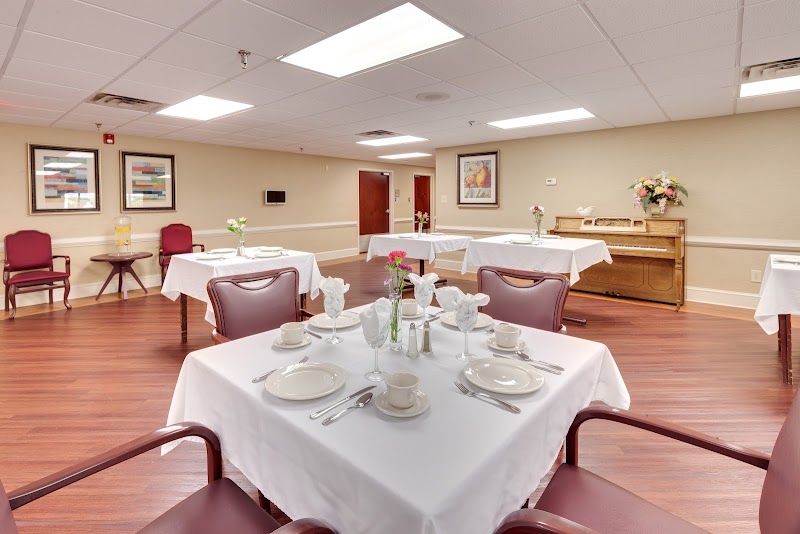
How is Pruitthealth - Lanier Staffed?

CMS rates PRUITTHEALTH - LANIER's staffing level at 3 out of 5 stars, which is average compared to other nursing homes. Staff turnover is 27%, compared to the Georgia average of 46%. This relatively stable workforce can support continuity of care.

What Have Inspectors Found at Pruitthealth - Lanier?

State health inspectors documented 22 deficiencies at PRUITTHEALTH - LANIER during 2021 to 2025. These included: 22 with potential for harm.
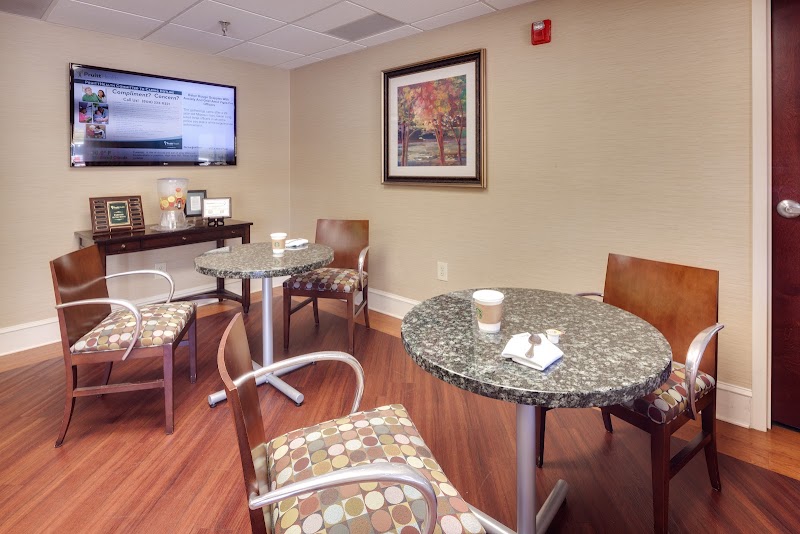
Who Owns and Operates Pruitthealth - Lanier?

PRUITTHEALTH - LANIER is owned by a for-profit company. For-profit facilities operate as businesses with obligations to shareholders or private owners. The facility is operated by PRUITTHEALTH, a chain that manages multiple nursing homes. With 117 certified beds and approximately 89 residents (about 76% occupancy), it is a mid-sized facility located in BUFORD, Georgia.
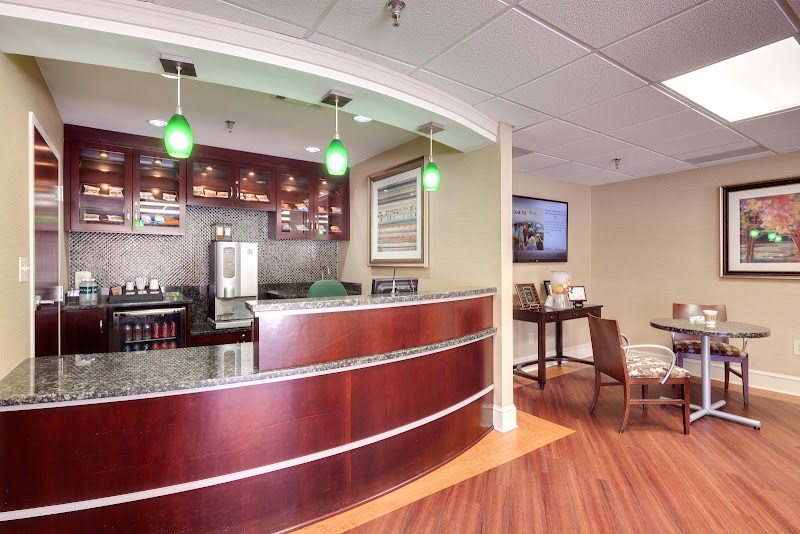
How Does Pruitthealth - Lanier Compare to Other Georgia Nursing Homes?

Compared to the 100 nursing homes in Georgia, PRUITTHEALTH - LANIER's overall rating (3 stars) is above the state average of 2.6, staff turnover (27%) is significantly lower than the state average of 46%, and health inspection rating (3 stars) is at the national benchmark.

What Should Families Ask When Visiting Pruitthealth - Lanier?

Based on this facility's data, families visiting should ask: "Can I visit during a mealtime to observe dining assistance and food quality?" "How do you handle medical emergencies, and what is your hospital transfer rate?" "Can I speak with family members of current residents about their experience?"

Is Pruitthealth - Lanier Safe?

Based on CMS inspection data, PRUITTHEALTH - LANIER has a clean safety record: no substantiated abuse findings (meaning no confirmed cases of resident harm), no Immediate Jeopardy citations (the most serious violation level indicating risk of serious injury or death), and is not on the Special Focus Facility watch list (a federal program monitoring the lowest-performing 1% of nursing homes). The facility has a 3-star overall rating and ranks #1 of 100 nursing homes in Georgia. While no facility is perfect, families should still ask about staff-to-resident ratios and recent inspection results during their visit.

Do Nurses at Pruitthealth - Lanier Stick Around?

Staff at PRUITTHEALTH - LANIER tend to stick around. With a turnover rate of 27%, the facility is 18 percentage points below the Georgia average of 46%. Low turnover is a positive sign. It means caregivers have time to learn each resident's needs, medications, and personal preferences. Consistent staff also notice subtle changes in a resident's condition more quickly. Registered Nurse turnover is also low at 29%, meaning experienced RNs are available to handle complex medical needs.

Was Pruitthealth - Lanier Ever Fined?

PRUITTHEALTH - LANIER has been fined $3,728 across 1 penalty action. This is below the Georgia average of $33,116. While any fine indicates a compliance issue, fines under $50,000 are relatively common and typically reflect isolated problems that were subsequently corrected. Families should ask what specific issues led to these fines and confirm they've been resolved.

Is Pruitthealth - Lanier on Any Federal Watch List?

PRUITTHEALTH - LANIER is not on any federal watch list. The most significant is the Special Focus Facility (SFF) program, which identifies the bottom 1% of nursing homes nationally based on persistent, serious quality problems. Not being on this list means the facility has avoided the pattern of deficiencies that triggers enhanced federal oversight. This is a positive indicator, though families should still review the facility's inspection history directly.