RIDGECREST REHAB & SKILLED NURSING CENTER
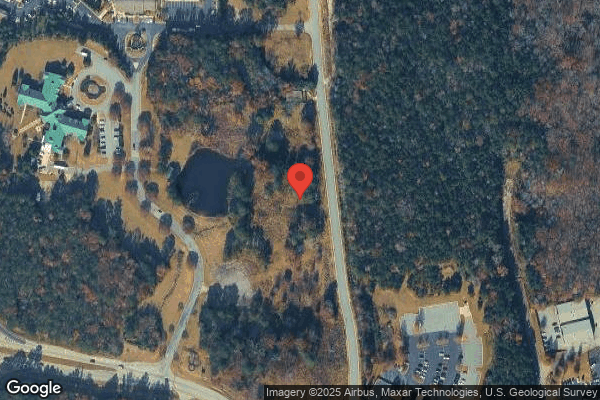
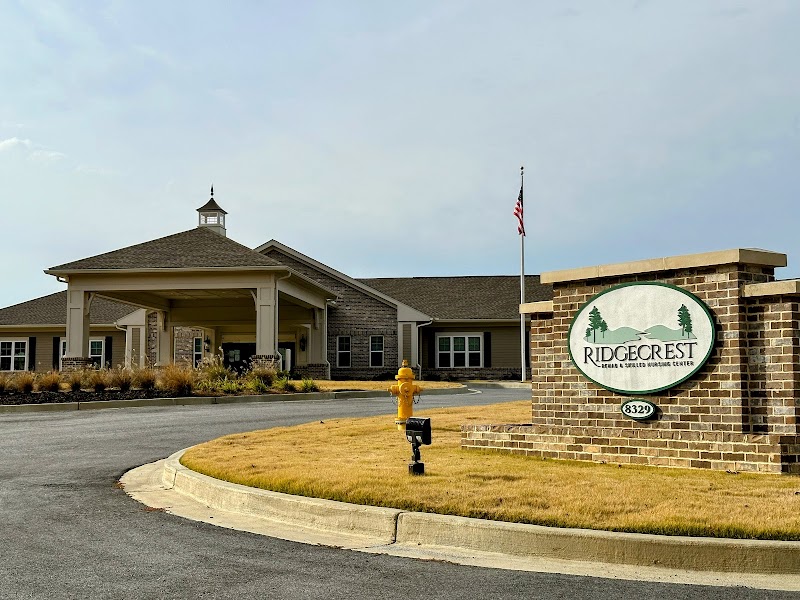
8329 STEVENS LANE, COLUMBUS, GA 31909 (706) 330-5650
Government - City/county 84 Beds Independent Data: November 2025
Trust Grade
70/100
#164 of 353 in GA
Last Inspection: December 2024

Within standard 12-15 month inspection cycle. Federal law requires annual inspections.

Overview

Ridgecrest Rehab & Skilled Nursing Center has a Trust Grade of B, indicating it is a good choice, reflecting a solid performance among nursing homes. It ranks #164 out of 353 facilities in Georgia, placing it in the top half, and #4 out of 7 in Muscogee County, meaning only three local options are better. The facility's trend is stable, with 12 concerns noted in both 2023 and 2024, though none were life-threatening or serious. Staffing is a strength with a 4 out of 5-star rating and a turnover rate of 40%, which is below the state average, suggesting that staff are familiar with the residents. However, there have been some concerns, including improper food labeling which could lead to foodborne illnesses and inadequate storage of oxygen equipment for residents requiring respiratory care, both of which raise potential health risks. Overall, while Ridgecrest has strengths in staffing and no fines, families should be aware of the noted deficiencies.

Trust Score
B
70/100
In Georgia
#164/353
Top 46%
Safety Record
Low Risk
No red flags
Inspections
Holding Steady
5 → 5 violations
Staff Stability
○ Average
40% turnover. Near Georgia's 48% average. Typical for the industry.
Penalties
✓ Good
No fines on record. Clean compliance history, better than most Georgia facilities.
Skilled Nurses
⚠ Watch
Each resident gets only 25 minutes of Registered Nurse (RN) attention daily — below average for Georgia. Fewer RN minutes means fewer trained eyes watching for problems.
Violations
⚠ Watch
12 deficiencies on record. Higher than average. Multiple issues found across inspections.
★★★☆☆
3.0
Overall Rating
★★★★☆
4.0
Staff Levels
★☆☆☆☆
1.0
Care Quality
★★★★☆
4.0
Inspection Score
Stable
2023: 5 issues
2024: 5 issues

The Good

  • 4-Star Staffing Rating · Above-average nurse staffing levels
  • Full Sprinkler Coverage · Fire safety systems throughout facility
  • No fines on record
  • Staff turnover below average (40%)

    8 points below Georgia average of 48%

Facility shows strength in staffing levels, fire safety.

The Bad

3-Star Overall Rating

Near Georgia average (2.6)

Meets federal standards, typical of most facilities

Staff Turnover: 40%

Near Georgia avg (46%)

Typical for the industry

The Ugly 12 deficiencies on record

Dec 2024 5 deficiencies
CONCERN (D)

Potential for Harm - no one hurt, but risky conditions existed

Deficiency F0554 (Tag F0554)

Could have caused harm · This affected 1 resident

**NOTE- TERMS IN BRACKETS HAVE BEEN EDITED TO PROTECT CONFIDENTIALITY** Based on observations, staff interviews, record review, and review of the facility's policy titled, Self-Administered Medication...

Read full inspector narrative →
**NOTE- TERMS IN BRACKETS HAVE BEEN EDITED TO PROTECT CONFIDENTIALITY** Based on observations, staff interviews, record review, and review of the facility's policy titled, Self-Administered Medications, Treatments, the facility failed to ensure one of 27 sampled residents (R) (R438) was assessed to determine if the practice of self-administration of medications would be safe, that physician's orders were obtained, and that medications were safely secured. The deficient practice had the potential to result in medication errors and to allow access to medications otherwise not prescribed by a physician to other residents. Findings included: Review of the facility's policy titled, Self-Administered Medications, Treatments dated October 2020, revealed under the policy statement, Self-administered medications and treatments must be carefully monitored and recorded in the Medication Administration Record (MAR) and Treatment Administration Record (TAR). Self-administration of medications or treatments by residents is permitted by a physician order that includes dosage, route, and any special instructions. All medications and treatments will be kept with the resident or in a locked drawer in the resident's room. 1. The RN Manager assesses resident competency to self-administer mediations and documents the resident's wishes in the nursing note with consideration of the following: a. Ability to receive information from the surrounding environment. b. Capacity to remember information received. c. Ability to make a decision and give reason for it. d. Ability to use relevant information in making decisions. e. Ability to appropriately asses relevant information. 2. A decision to permit self-administration is made by the Interdisciplinary Team Members in convert with the resident. 3. Obtain an order from the physician. Record in MAR and nursing notes. 4. Explain the procedure to the resident. 10. Update Resident Care Plan as needed. Record review revealed R438 was admitted to the facility on [DATE] with diagnoses of but not limited to spondylosis with myelopathy cervical region, type two diabetes mellitus with diabetic chronic kidney disease, and dysthymic disorder. Record review revealed a Minimum Data Set (MDS) assessment was not completed due to resident was a new admit. Review of R438's active orders dated December 3, 2024, lacked orders for medications of any kind to be self-administered. Review of progress notes and documents in the electronic record lacked documented evidence that R438 was evaluated for self-administration of medications. Review of R438's care plan with a start date of 11/26/2024 lacked documented evidence of interventions for self-administration of medications. Observation and interview on 12/4/2024 at 9:27 am revealed R438 sitting on the bedside doing a word search. A medication cup was on the bedside table filled with pills. R438 revealed they were her morning medications. Observation and interview on 12/4/2024 at 10:10 am with Licensed Practical Nurse (LPN) AA revealed that she watched R438 swallow her morning medications. LPN AA then observed and acknowledged the pills sitting in the disposable medication cup and said she left the pills with R438 because R438 asked for syrup, and LPN AA got distracted. LPN AA revealed it was not normal practice to leave medications at the bedside and the risk would be R438 missing her medication. Interview on 12/4/2024 at 10:17 am with the Director of Nursing (DON) revealed that LPN AA notified her that LPN AA had left medications at the bedside. The DON stated that she felt LPN AA was distracted and that she would have normally watched R438 take the medications or would have taken the medication with her. DON revealed it was her expectation that nurses watch the resident swallow the medications or if an issue arises, the nurse should take the medications and not leave them with the resident.
CONCERN (D)

Potential for Harm - no one hurt, but risky conditions existed

Deficiency F0578 (Tag F0578)

Could have caused harm · This affected 1 resident

**NOTE- TERMS IN BRACKETS HAVE BEEN EDITED TO PROTECT CONFIDENTIALITY** Based on resident and staff interviews, record review, review of the facility's admission Packet, and review of the facility's p...

Read full inspector narrative →
**NOTE- TERMS IN BRACKETS HAVE BEEN EDITED TO PROTECT CONFIDENTIALITY** Based on resident and staff interviews, record review, review of the facility's admission Packet, and review of the facility's policy titled, Advance Directive Policy, the facility failed to provide residents and/or their representatives written information with options regarding the right to accept or refuse medical or surgical treatment for three of 33 residents (R) (R437, R438, and R25). This failure denied the residents and/or representatives the opportunity to have choices and preferences with their health care decisions and formulating an Advance Directive. Findings included: Review of the facility's policy titled, Advance Directive Policy dated 1/1/2017, revealed under policy statement, Each resident with decision-making capacity has the right to make their own decisions related to his/her medical care. An integral component of self-determination is the right to make choices pertaining to one's health, including the right to refuse or alter treatment plans, to accept or refuse medical or surgical treatment, refuse to participate in experimental research and to formulate advance directives. Further review revealed under section titled Informing resident and/or representative of rights/options: 4. The Advance Directive Checklist form (Appendix B) will be completed and filed on the resident's Chart. This form documents that written information was provided. Review of the facility's admission Packet revealed it did not contain language that pertained to the facility's provision of written information about the resident/representative's right to accept or refuse medical or surgical treatment. 1. Review of the medical record revealed R437 was admitted to the facility on [DATE] with diagnoses of but not limited to chronic respiratory failure whether with hypoxia or hypercapnia, chronic diastolic (congestive) heart failure, paroxysmal atrial fibrillation, dependence on supplemental oxygen. Review of the admission Minimum Data Set (MDS) assessment revealed it was not completed due to the resident being newly admitted on [DATE]. Interview on 12/3/2024 at 11:16 am with R437 revealed that she had an advanced directive but didn't remember the facility discussing or providing her anything in writing regarding her right to either accept or deny consent for medical or surgical treatment. 2. Record review revealed R438 was admitted to the facility on [DATE] with diagnoses of but not limited to spondylosis with myelopathy cervical region, type two diabetes mellitus with diabetic chronic kidney disease, and dysthymic disorder. Review of the admission MDS assessment revealed it was not completed due to the resident being newly admitted on [DATE]. Interview on 12/4/2024 at 9:27 am with R438 revealed she was not provided anything in writing regarding her right to either accept or refuse medical and surgical treatment. 3. R25 was admitted to the facility on [DATE] with diagnoses of but not limited to dementia with behavioral disturbance, mood (affective) disorder, major depressive disorder, recurrent severe with psychotic symptoms, and anxiety. Review of the Significant Change MDS assessment dated [DATE] assessed a Brief Interview for Mental Status (BIMS) score of 11 which indicated moderate cognitive impairment. Interview on 12/4/2024 at 1:57 pm with R25 revealed she was not given anything in writing about her right to either refuse or accept medical or surgical treatment. Interview on 12/4/2024 at 10:40 am with the Social Services Director (SSD) revealed she was responsible for providing information to residents about advanced directives. The SSD revealed that she had never heard of a consent for either the acceptance or denial for medical and surgical treatment.
CONCERN (D)

Potential for Harm - no one hurt, but risky conditions existed

Comprehensive Care Plan (Tag F0656)

Could have caused harm · This affected 1 resident

**NOTE- TERMS IN BRACKETS HAVE BEEN EDITED TO PROTECT CONFIDENTIALITY** 2. Review of the electronic record revealed R28 was admitted with diagnoses and a history of chronic respiratory failure and con...

Read full inspector narrative →
**NOTE- TERMS IN BRACKETS HAVE BEEN EDITED TO PROTECT CONFIDENTIALITY** 2. Review of the electronic record revealed R28 was admitted with diagnoses and a history of chronic respiratory failure and congestive heart failure. Review of the admission Minimum Data Set (MDS) assessment dated on 11/26/2024 assessed a Brief Interview for Mental Status (BIMS) score of 15 indicating little to no cognitive impairment. Record review of R28's electronic records revealed there were no Physician orders for oxygen to be administered. Observation on 12/3/2024 at 9:47 am revealed R28 with oxygen being administered at a rate of 2/LPM via N/C. Interview on 12/5/2024 at 9:48 am with the MDS Coordinator revealed that she was contracted to complete care plans for the facility. She revealed that each department was responsible for completing their section. She revealed that she was responsible for the nursing section and was working on making the care plans more individualized. She revealed that a resident's care plan would not include specific oxygen rates (LPM), rather it would be generic stating oxygen as ordered because she doesn't have time to update the care plan every time the order was changed. She revealed all nurses were responsible for looking at the care plan and assuring all interventions were implemented. Interview on 12/5/2024 at 11:35 am the DON confirmed that orders, care plan, and MDS did not sync for the care of R28. She also confirmed that the care plan was not specific to R28. Based on observations, staff interviews, record review, and review of the facility's policy titled, Care Plans, the facility failed to follow the care plan for oxygen therapy for two of eight residents (R) (R437 and R28). Specifically, the facility failed to follow the care plan for R437 and R28 to ensure the oxygen flow rate was set based on the physician order. The deficient practice had the potential to place the residents at risk for medical complications and a diminished quality of life. Findings included: Review of the facility policy titled, Care Plan, dated 10/20/2020, revealed 10. The care plan team will include participation by CNA's (Certified Nursing Assistant)'s, Licensed Charge Nurses, Registered Nurse Supervisors (including the Director of Nursing), Social Services Worker, Activities Staff Member, and a Dietary Representative as deemed appropriate for the conference being held that day. These staff members will be invited to assure a comprehensive review of the resident's current status and needs. 1. Review of the medical record revealed R437 was admitted to the facility on [DATE] with diagnoses of but not limited to chronic respiratory failure, chronic diastolic (congestive) heart failure, paroxysmal atrial fibrillation, dependence on supplemental oxygen. Record review revealed the admission Minimum Data Set (MDS) assessment was not completed due to the resident being newly admitted on [DATE]. Review of active orders included an order for oxygen dated 11/26/2024, Oxygen at 2/LPM (liters per minute) via (by) nasal cannula (NC) to keep O2 sat (saturation) greater than 90% (percent) as needed. Review of the care plan initiated on 11/26/2024, revealed, [R437] has diagnosis of chronic respiratory failure. Oxygen setting O2 via NC as ordered by provider and as indicated. Observation on 12/3/2024 at 9:43 am revealed R437 with oxygen being administered at a rate of 3/LPM via N/C. Observations on 12/4/2024 at 10:05 am and 1:45 pm revealed R437 with oxygen being administered at a rate of 2.5/LPM via N/C. Interview and observation on 12/4/2024 at 2:17 pm with the Director of Nursing (DON) confirmed photos of oxygen captured during observations not set at prescribed rate. The DON revealed that when nurses came on duty, they should check residents on oxygen and check the rate to ensure it was set at rate the physician ordered.
CONCERN (D)

Potential for Harm - no one hurt, but risky conditions existed

Respiratory Care (Tag F0695)

Could have caused harm · This affected 1 resident

**NOTE- TERMS IN BRACKETS HAVE BEEN EDITED TO PROTECT CONFIDENTIALITY** Based on observations, staff interviews, record review, and review of the facility's policy titled, Oxygen Therapy Guidelines, t...

Read full inspector narrative →
**NOTE- TERMS IN BRACKETS HAVE BEEN EDITED TO PROTECT CONFIDENTIALITY** Based on observations, staff interviews, record review, and review of the facility's policy titled, Oxygen Therapy Guidelines, the facility failed to ensure oxygen (O2) was administered according to the physician order for two of eight residents (R) (R28 and R437) receiving oxygen. The deficit practice had the potential to place R28 and R437 at risk for medical complications and a diminished quality of life. Findings included: Review of the facility's policy Oxygen Therapy Guidelines with review/revision date of 6/21/2023, under Clinical Responsibilities revealed, Changes in O2 therapy may be adjusted by RRT (Registered Respiratory Therapist) or nurse, while maintaining SPO2 >88 (oxygen saturation above 88 percent) (oxygen saturation is a measurement of how much oxygen your blood is carrying as a percentage) or as ordered by physician . Pulse oximetry will be checked every shift. MAR (Medication Administration Record) documentation must include whether or not oxygen is in use (on/off), liter flow, delivery device, (i.e. 2 liters nasal cannula), and the patient's SpO2 reading. 1. Review of the electronic record revealed R28 was admitted on [DATE] with diagnoses of but not limited to chronic respiratory failure and congestive heart failure. Review of R28's active orders revealed there were no physician order documented for oxygen (O2) to be administered. Review of the admission Minimum Data Set (MDS) assessment dated on 11/26/2024 for R28 assessed a Brief Interview for Mental Status (BIMS) score of 15 indicating little to no cognitive impairment. Observation on 12/3/2024 at 9:47 am revealed R28 with oxygen being administered at 2 LPM (liters per minute) via (by) nasal cannula (N/C). Interview on 12/5/2024 at 11:35 am the Director of Nursing (DON) revealed that all standing orders for oxygen was 2/LPM. If it was continuous, it required a provider order and check vital signs every shift. The DON confirmed there were no specified orders for oxygen. 2. Review of the medical record revealed R437 was admitted to the facility on [DATE] with diagnoses of but not limited to chronic respiratory failure, chronic diastolic (congestive) heart failure, paroxysmal atrial fibrillation, and dependence on supplemental oxygen. Record review revealed there was not a completed MDS assessment due to the resident being newly admitted . Review of the active orders included an order for oxygen dated 11/26/2024, oxygen at 2 LPM via NC to keep O2 sat (saturation) greater than 90% as needed. Review of the care plan initiated on 11/26/2024, revealed, [R437] has diagnosis of chronic respiratory failure. Oxygen setting O2 via NC as ordered by provider and as indicated. Observation on 12/3/2024 at 9:43 am revealed R437 with oxygen running at a rate of 3/LPM via N/C. Observations on 12/4/2024 at 10:05 am and 1:45 pm revealed R437 with oxygen running at a rate of 2.5/LPM via N/C. Interview on 12/4/2024 at 2:17 pm with the DON, she observed photos of R437's oxygen being administered at flow rates of 2.5 and 3/LPM, and confirmed the flow rates were incorrect. The DON revealed that when nurses come on duty, they should check residents on oxygen and check the rate to ensure it was set at the rate the physician ordered. The DON confirmed the oxygen order was not increased. The DON revealed she was unsure why the rate would be set on the incorrect rate. Interview on 12/4/2024 at 2:38 pm with Licensed Practical Nurse (LPN) AA revealed she had not called the doctor or anyone else regarding R437's oxygen. Interview on 12/4/2024 at 2:46 pm with the DON revealed that she spoke with LPN AA and she had contacted the physician this morning about R437's oxygen and he advised to increase it. The DON revealed that LPN AA had not had time to document. Interview on 12/5/2024 at 12:10 pm with the Respiratory Therapist revealed he expected all oxygen orders, PRN (as needed) and continuous, to be followed to ensure oxygen saturation levels were within defined limits. Providers/nurses input orders to be followed.
CONCERN (D)

Potential for Harm - no one hurt, but risky conditions existed

Medication Errors (Tag F0758)

Could have caused harm · This affected 1 resident

**NOTE- TERMS IN BRACKETS HAVE BEEN EDITED TO PROTECT CONFIDENTIALITY** Based on staff interviews, record review, and review of the facility's policy titled, Use of Psychotropic Medication, the facili...

Read full inspector narrative →
**NOTE- TERMS IN BRACKETS HAVE BEEN EDITED TO PROTECT CONFIDENTIALITY** Based on staff interviews, record review, and review of the facility's policy titled, Use of Psychotropic Medication, the facility failed to ensure that psychotropic medications were not ordered as needed (PRN) beyond 14 days, and/or failed to indicate a stop date for the extension for psychotropic medication for one of 27 sampled residents (R) (R25). Findings included: Review of the policy titled Psychotropic Medications with a reviewed/revised date of October 2017 under Procedural Guideline revealed, D. PRN (as needed) orders for psychotropic drugs are limited to 14 days. 1. If the attending physician or prescribing practitioner believes that it is appropriate for the PRN order to be extended beyond 14 days, he or she should document their rationale in the patient's medical record and indicate the duration for the PRN order. Review of the clinical record revealed R25 was admitted to the facility with diagnoses of but not limited to dementia with behavioral disturbance mood (affective) disorder, major depressive disorder, recurrent, severe with psychotic symptoms, and anxiety. Review of the Significant Change Minimum Data Set (MDS) assessment dated [DATE] assessed a Brief Interview for Mental Status (BIMS) score of 11 indicating moderately impaired cognition. Section N (medications) reported the resident was receiving antipsychotics, antidepressants, and antianxiety medications. Review of the electronic medical record (EMR) revealed physician's orders for R25 included but was not limited to lorazepam oral tablet, a medication used to relieve anxiety. The dosage ordered was 0.5 milligram (mg) give one tablet by mouth every two hours as needed for anxiety; agitation or restlessness. The last ordered date was 10/10/2024, and end date was indefinite. Interview on 12/4/2024 at 3:52 pm with Licensed Practical Nurse (LPN) AA revealed since R25 was on hospice she did not require a stop date for the antianxiety medication. Interview on 12/4/2024 at 3:53 pm with the Director of Nursing (DON) revealed that all residents whether they are on hospice or not, required a stop or end date for PRN psychotropic medications including antianxiety medications. The DON confirmed there was no stop or end date for the lorazepam order. Interview on 12/4/2024 at 3:55 pm with Registered Nurse (RN) BB revealed that hospice entered orders, but the facility went in and approved the hospice orders. She revealed that the order for the antianxiety medication should have had an end or stop date and confirmed R25 did not have a stop or end date for the prescribed lorazepam.
Jul 2023 5 deficiencies
CONCERN (D)

Potential for Harm - no one hurt, but risky conditions existed

Deficiency F0655 (Tag F0655)

Could have caused harm · This affected 1 resident

**NOTE- TERMS IN BRACKETS HAVE BEEN EDITED TO PROTECT CONFIDENTIALITY** Based on observations, interviews, and record review, and reveiw of the facility policy titled, Skin Assessment and Documentatio...

Read full inspector narrative →
**NOTE- TERMS IN BRACKETS HAVE BEEN EDITED TO PROTECT CONFIDENTIALITY** Based on observations, interviews, and record review, and reveiw of the facility policy titled, Skin Assessment and Documentation, the facility failed to create a baseline care plan that included the minimum healthcare information necessary to properly care for one of 22 sampled residents (R) (R#134) related to assessing and monitoring for a Peripheral Intravenous (PIV) Infiltration that caused a hematoma on the residents left forearm. Findings included: A review of the facility policy titled Skin Assessment and Documentation dated October 2020 revealed that it is the facilities policy to provide complete assessment of all resident's skin every seven days (including measurement, color, drainage, and odor) and to document any unusual findings. The procedure for assuring timely review of skin issues or lack of response to treatment is as follows: A Licensed Nurse is responsible for doing a detailed assessment of each resident's skin every seven days and for documenting this on the resident's medical record; it is the responsibility of the Unit Manager to complete weekly wound rounds; it is the responsibility of the Treatment Nurse to complete a weekly Skin Audit Report Form; if the skin issues are identified and have not improved in fourteen days or at any time the condition has worsened, it is the responsibility of the Licensed Nurse to notify the physician for any further intervention and to document the notification any subsequent change in orders; and it is the responsibility of the Licensed Nurse to communicate with the RN Manager or Supervisory on duty or the Assistant Director of Nursing regarding lack of progress of the condition and the need for any further physician notification. A review of the Electronic Medical Record (EMR) revealed that R#134 was admitted to the facility on [DATE] with diagnosis of, but was not limited to, anemia, coronary artery disease, deep venous thrombosis, heart failure, hypertension, gastroesophageal reflux disease, chronic obstructive pulmonary disease (COPD), and respiratory failure. A review of the admission Minimum Data Set (MDS) assessment dated [DATE] revealed that R#134 presented with a Brief Interview for Mental Status (BIMS) score of 14, indicating that the that the resident was cognitively intact. A review of the Baseline Care Plan and progress notes revealed no notes as to the PIV injury and no documentation that the area had been monitored or reported to the physician or wound care doctor. On 7/28/2023 at 9:58 a.m., R#134 was observed in bed with her left arm resting on a pillow. There was a raised bruised and swollen lump approximately three to four inches on her left forearm. The resident was alert and oriented to time and day. She stated while in hospital, the hospital staff inserted an IV (intervenous) and it blew. She stated, It hurts something awful. She stated that the facility staff gave her some Tylenol and that has taken the edge off. On 7/29/2023 at 3:49 p.m. an interview was conducted with Register Nurse (RN) CC, who was responsible for assisting the Wound Care Physician, over the Infection Control Prevention Program, and the Unit Manger. RN CC stated that R#134 was admitted with the PIV injury to her left forearm. She stated that when R#134 was in the hospital, they infused her arm with iodine, causing the injury. She stated that she was told that the area was assessed while in the hospital by the surgeon and that when the resident was admitted to the facility, they were directed to do nothing for the area and let it go away on its own. When asked if there was any documentation of assessing or monitoring of the area, she stated that they do not monitor the area because they have no orders to do anything for the hematoma. She was asked how would nursing and or the direct care staff know how to handle or care for her if there is no documentation of the area, and she stated that the admission notes were to do nothing, so they were doing nothing. The admission notes and any documentation pertaining to the injured area were requested at that time. On 7/29/2023 at 3:53 p.m. Licensed Practical Nurse (LPN) DD, assigned to care for R#134, was interviewed and stated that she had seen the bruised area on R#134's arm earlier in the day and she checked for orders but there were no orders to monitor or do anything for the area. Interview on 7/29/2023 at 4:23 p.m. with Registered Nurse (RN) CC revealed that she had spoken to hospital and R#134's family. She stated that the family told her that the resident was to follow up with family physician. She said that on 7/19/2023, she told the Wound Care Doctor about the injury, and he told her there was nothing for them to do and did not look at the resident because he did not need to see it. She confirmed again that they had not been monitoring or assessments of the PIV injury, the wound care doctor was not seeing the resident for the PIV injury, there were no progress notes related to the PIV injury, and no measuring was ever done of the area since the resident was admitted to the facility. She said, We were told to leave it alone. She further confirmed that she has not mentioned the area to R#134's physician. Observationon 7/29/2023 at 4:43 p.m. of R#134's PIV hematoma injury was conducted with the Director of Nursing (DON). When she touched the residents arm, the resident flinched and pulled away with wide eyes. She told the DON that the area was tender multiple times during this observation. As the DON was assessing the area, the resident stated that when the incident first happened, a physician told her that they could lance the area and drain it, but she refused. The DON agreed that the PIV area should be monitored, and the monitoring and assessments should be documented. She further stated that any conversation had with the wound care nurse and the wound care doctor related to the PIV injury should be documented in the residents medical record. Interview on 7/29/2023 at 4:57 p.m. an was conducted with RN CC. She stated that she had just spoke to the wound care doctor and he does not remember any conversation with her related to R#134's arm. When asked why she had not documented the initial conversations in R#134's progress notes, she stated, I don't have an answer for this situation. He stated that he doesn't recall the conversation. He told me there was someone on his list that he did not see but he couldn't remember who. She stated that she does rounds with the wound care doctor and she had not documented who the resident was that was not seen by the wound care doctor so she could not verify if it was R#134.
CONCERN (D)

Potential for Harm - no one hurt, but risky conditions existed

Quality of Care (Tag F0684)

Could have caused harm · This affected 1 resident

**NOTE- TERMS IN BRACKETS HAVE BEEN EDITED TO PROTECT CONFIDENTIALITY** Based on observation, interviews and record review, the facility failed to provided treatment and care in accordance with profes...

Read full inspector narrative →
**NOTE- TERMS IN BRACKETS HAVE BEEN EDITED TO PROTECT CONFIDENTIALITY** Based on observation, interviews and record review, the facility failed to provided treatment and care in accordance with professional standards for two of 22 sampled residents (R) (R#134 and 131) related to (1) failed to assess and monitor a Peripheral Intravenous (PIV) Infiltration that cause a hematoma on the resident left forearm for R#134, and (2) and failed to follow physician orders related to weekly skin assessments to monitor for signs and symptoms of an adverse reaction for a resident receiving anticoagulant therapy. Findings included: A review of the facility policy titled Skin Assessment and Documentation dated October 2020 revealed that it is the facilities policy to provide complete assessment of all resident's skin every seven days (including measurement, color, drainage, and odor) and to document any unusual findings. The procedure for assuring timely review of skin issues or lack of response to treatment is as follows: A Licensed Nurse is responsible for doing a detailed assessment of each resident's skin every seven (7) days and for documenting this on the resident's medical record; it is the responsibility of the Unit Manager to complete weekly wound rounds; it is the responsibility of the Treatment Nurse to complete a weekly Skin Audit Report Form; if the skin issues are identified and have not improved in fourteen (14) days or at any time the condition has worsened, it is the responsibility of the Licensed Nurse to notify the physician for any further intervention and to document the notification any subsequent change in orders; and it is the responsibility of the Licensed Nurse to communicate with the RN Manager or Supervisory on duty or the Assistant Director of Nursing regarding lack of progress of the condition and the need for any further physician notification. 1. A review of the Electronic Medical Record (EMR) revealed that R#134 was admitted to the facility on [DATE] with diagnosis of, but was not limited to, Anemia, Coronary Artery Disease, Deep Venous Thrombosis, Heart Failure, Hypertension, Gastroesophageal Chronic Obstructive Pulmonary Disease, Reflux Disease, COPD, and Respiratory Failure. A review of the admission Minimum Data Set (MDS) assessment dated [DATE] revealed that R#134 presented with a Brief Interview for Mental Status (BIMS) score of 14, indicating that the that the resident was cognitively intact. A review of the Baseline Care Plan and progress notes revealed no notes as to the PIV injury and no documentation that the area had been monitored or reported to the physician or wound care doctor. On 7/28/2023 at 9:58 a.m., R#134 was observed in bed with her left arm resting on a pillow. There was a raised bruised and swollen lump approximately three to four inches on her left forearm. The resident was alert and oriented to time and day. She stated while in hospital, the hospital staff inserted an IV (intervenous) and it blew. She stated, It hurts something awful. She stated that the facility staff gave her some Tylenol and that has taken the edge off. On 7/29/2023 at 9:29 a.m. R#134 was again observed in bed with her left arm resting on a pillow. She stated that her arm feels better than it did yesterday but still hurts. The area was observed to have no visual change. On 7/29/2023 at 3:49 p.m. an interview was conducted with Register Nurse (RN) CC, who was responsible for assisting the Wound Care Physician, over the Infection Control Prevention Program, and the Unit Manger. RN CC stated that R#134 was admitted with the PIV injury to her left forearm. She stated that when R#134 was in the hospital, they infused her arm with iodine, causing the injury. She stated that she was told that the area was assessed while in the hospital by the surgeon and that when the resident was admitted to the facility, they were directed to do nothing for the area and let it go away on its own. When asked if there was any documentation of assessing or monitoring of the area, she stated that they do not monitor the area because they have no orders to do anything for the hematoma. She was asked how would nursing and or the direct care staff know how to handle or care for her if there is no documentation of the area, and she stated that the admission notes were to do nothing, so they were doing nothing. The admission notes and any documentation pertaining to the injured area were requested at that time. On 7/29/2023 at 3:53 p.m. Licensed Practical Nurse (LPN) DD, assigned to care for R#134, was interviewed and stated that she had seen the bruised area on R#134's arm earlier in the day and she checked for orders but there were no orders to monitor or do anything for the area. An observation on 7/29/2023 at 4:20 p.m. revealed R#134 lying in bed with her left arm resting on a pillow. The residents left arm presented with a large, raised, and discolored hematoma. She described the area as tender and painful to touch and appeared to be guarding the left arm. She stated that she can use her fingers on the left hand but sometimes it hurts. On 7/29/2023 at 4:23 p.m. RN CC stated that she had spoken to hospital and R#134's family. She stated that the family told her that the resident was to follow up with family physician. She said that on 7/19/2023, she told the Wound Care Doctor about the injury, and he told her there was nothing for them to do and did not look at the resident because he did not need to see it. She confirmed again that they had not been monitoring or assessments of the PIV injury, the wound care doctor was not seeing the resident for the PIV injury, there were no progress notes related to the PIV injury, and no measuring was ever done of the area since the resident was admitted to the facility. She said, We were told to leave it alone. She further confirmed that she has not mentioned the area to R#134's physician. On 7/29/2023 at 4:43 p.m. observation of R#134's PIV hematoma injury was conducted with the Director of Nursing (DON). When she touched the residents arm, the resident flinched and pulled away with wide eyes. She told the DON that the area was tender multiple times during this observation. As the DON was assessing the area, the resident stated that when the incident first happened, a physician told her that they could lance the area and drain it, but she refused. The DON agreed that the PIV area should be monitored, and the monitoring and assessments should be documented. She further stated that any conversation had with the wound care nurse and the wound care doctor related to the PIV injury should be documented in the residents medical record. On 7/29/2023 at 4:57 p.m. an interview was conducted with RN CC. She stated that she had just spoke to the wound care doctor and he does not remember any conversation with her related to R#134's arm. When asked why she had not documented the initial conversations in R#134's progress notes, she stated, I don't have an answer for this situation. He stated that he doesn't recall the conversation. He told me there was someone on his list that he did not see but he couldn't remember who. She stated that she does rounds with the wound care doctor and she had not documented who the resident was that was not seen by the wound care doctor so she could not verify if it was R#134. 2. On 7/28/2023 at 9:39 a.m. R#131 was observed in bed. A large, dark purple colored bruise the size of a softball was observed on her upper right arm. The resident was alert but confused. A review of the EMR revealed that R#131 was admitted to the facility on [DATE] with diagnoses of, but was not limited to, Sepsis, Chronic Kidney Disease Stage III, Dementia, Hydroureter, Wedge Compression Fracture Of T9-T10 Vertebra, Paroxysmal Atrial Fibrillation, Chronic Systolic (Congestive) Heart Failure, Age-Related Osteoporosis Without Current Pathological Fracture, Cognitive Communication Deficit, Acidosis, Metabolic Encephalopathy, Atelectasis, Acute Kidney Failure, Bacteremia, Hypertension, Elevation Of Levels Of Liver Transaminase Levels, Disorder Of Bilirubin Metabolism, Hypokalemia, Anemia, Malignant Neoplasm, Kyphosis, and Long Term (Current) Use Of Anticoagulants. A review of the Physician Orders dated July 2023 revealed that R#131 was ordered: Eliquis Oral Tablet 2.5 MG (Apixaban) one tablet by mouth two times a day related to Paroxysmal Atrial Fibrillation; long term(current) use of anticoagulants monitor for (signs and symptoms) of bleeding; Weekly Skin Check due every Monday 7 (a.m.) - 7 (p.m.) one time a day every (Monday) for weekly skin assessment. A review of the skin assessments for R#131 revealed that on 7/20/2023 a skin assessment was conducted but no bruising was noted to be identified. There were no other documented skin assessments in the EMR. A review of the Baseline Care Plan dated 7/20/2023 revealed that R#131 was receiving anticoagulant therapy and that there were no skin integrity concerns. A review to the [NAME], with 14-day lookback period, noted no impaired skin for R#131. A review of the progress notes dated 7/27/2023 at 12:22 p.m. revealed R#131 had no changes to skin integrity noted during the shift. An interview on 7/30/2023 at 11:25 a.m. with the DON and RN CC, who was also the Unit Manager, The DON confirmed that there were no skin assessments for R#131 on 7/24/2023. RN CC stated that she does not do the skin assessments for residents who have orders for monitoring, but that the charge nurses are supposed to chart the skin assessments each shift. If there are any bruises, it is expected that the nurse document that in the EMR when they conduct their rounds. She confirmed that the progress note related to R#131's skin on 7/27/2023 noted no skin concerns. She stated that if there was bruising on the skin, it should be documented and that the nurse should monitor for bruising each shift. She confirmed that there was no documentation that R#131 had any bruising on 7/28/2023, 7/29/2023, and/or 7/30/2023 and she had not been informed that R#131 had any bruises. Observation on 7/30/2023 at 11:35 a.m. of R#131 was conducted with RN CC revealed the nurse looked at the residents arms and stated that she did not have any bruising. When asked if she could look further up the residents right arm, under the cotton shirt, the nurse was observed to lift the shirt closer to the residents shoulder and there was a dark, purple bruise the size of a softball. RN CC exclaimed and asked the resident, Oh, how did that happen? The resident stated she did not know. Certified Nursing Assistant (CNA) EE was in the room, making the residents bed at this time. CNA EE stated that she did see the bruise on R#131 earlier but had not reported it to the nurse because it was not new. She stated that she worked last Thursday (7/27/2023) and the bruise was there. She stated that she reported it to the nurse then but could not remember who that nurse was. RN CC stated that she should have been informed of the bruise and confirmed that she had not been made aware that R#131 had the bruise.
CONCERN (D)

Potential for Harm - no one hurt, but risky conditions existed

Infection Control (Tag F0880)

Could have caused harm · This affected 1 resident

**NOTE- TERMS IN BRACKETS HAVE BEEN EDITED TO PROTECT CONFIDENTIALITY** Based on observations, staff interviews, and a review of the facility policy titled, Infection Control Manual, the facility fail...

Read full inspector narrative →
**NOTE- TERMS IN BRACKETS HAVE BEEN EDITED TO PROTECT CONFIDENTIALITY** Based on observations, staff interviews, and a review of the facility policy titled, Infection Control Manual, the facility failed to ensure infection control practices were maintained for one of three Residents (R) (#11) diagnosed with Clostridium Difficile. This failure had the potential of exposing patients to infections due to cross contamination. Findings included: A review of the facility policy titled, Infection Control Manual reviewed 7/21/2023, revealed that it is the policy of the facility to maintain and provide an on-going basis a well-established policy of Infection Prevention and Control Program designed to prevent, identify, and control to the maximum extent possible the on-set and any subsequent spread of infection. VII Transmission Based Precautions: C-2. When a resident is placed on transmission-based precautions, the staff should implement the following: b) Place signage in a conspicuous place outside the resident's room such as the door or on the wall next to the doorway identifying the CDC category of transmission-based precautions, instructions for use of PPE, and/or instructions to see the nurse before entering. Guidelines for Isolation Precautions: Preventing Transmission of Infectious Agents in Healthcare Setting (2007). Infection/Condition: Clostridium difficile (C-Diff), Type of Isolation: Contact + Standard, Duration of Precautions: Duration of Illness. A review of the clinical record revealed R#11 was diagnosed on [DATE] with Clostridium difficile. A Lab Results Report with a collection date of 7/12/2023 and a report date of 7/14/2023 revealed a positive result for C-Diff (GDH) AG and C-Diff Toxin A/B. A review of the most recent Quarterly Minimum Data Set MDS for R#11 dated 6/7/2023 revealed resident was always continent of bowel and bladder. A review of the Order Summary Report with active orders as of 7/28/2023 there was not an order for isolation. Review of the Medication Administration Record for July 2023 revealed R#11 received Vancomycin oral capsule 250 Milligrams (mg) 1 capsule by mouth three times a day and Metronidazole 500 mg 1 tablet by mouth three times a day for C-diff for 10 days, start day 7/14/2023. Last date of administration was 7/24/2023 with the 9 a.m. dose. Record review revealed a progress noted dated 7/13/2023 at 9:58 p.m. late entry for 7/12/2023resident had several episodes of diarrhea during the shift. Noted to be foul smelling, grainy and yellow in color. Record review revealed a progress noted dated 7/26/2023 at 12:56 p.m. that reads: Resident continue on contact isolation for C-Diff. She has completed ABT therapy but continues to have yellow mucous loose stools. Record review revealed a progress noted dated 7/28/2023 at 2:20 p.m. that reads: Patient is resting well this morning. Still weak and sleepy continues on loose stools. On IV NS @30cc/hr on gravity flow for 3 days. Tolerating well no distress noted. Started yesterday 7/27/23. Completed her ABT but continues on isolation precautions. Observation on 7/28/2023 at 10:16 a.m. R#11 was lying in bed. There is a red isolation box and barrel located outside of resident's room. No signage for isolation or type of isolation located in or near resident's room. Observation at 12:58 p.m. revealed a staff member donning PPE and entering R#11's room with lunch meal on Styrofoam dinnerware. Still no signage on the room door. Observation on 7/29/2023 at 8:16 a.m. Resident room door is closed, there is no signage on or near resident's room related to Isolation. Staff members enter room with meal tray breakfast on Styrofoam. Observation at 12:38 p.m. revealed residents lunch meal being delivered on regular dinnerware. During an interview on 7/29/2023 at 1:07 p.m. with Certified Nurse Aide (CNA) GG, he stated that he was told today by Registered Nurse (RN) CC that R#11 is not currently on isolation. CNA GG stated R#11 continues to have loose foul-smelling stools. CNA GG further stated that R#11 had had 3 episodes of loose foul-smelling stools today. During an interview on 7/29/2023 at 1:28 p.m. with RN CC, she stated R#11 is not currently on isolation it was discontinued on 7/25/2023 because the antibiotic therapy was completed. RN CC stated that once the medication for C-Diff was complete the isolation was discontinued even though resident continued to have loose foul stools. RN CC further stated the signage on the door was removed at that time as well. RN CC reviewed resident's record and stated that there was never an order for isolation written when resident was diagnosed with C-Diff. RN CC stated she did not ask physician if the isolation needed to be continued due to R#11 continued to be symptomatic. During an interview on 7/29/2023 at 1:41 p.m. with Director of Nursing (DON) verified that there is not an order for isolation and there is no documented evidence in the record that the physician had been notified after treatment was completed that resident continued to be symptomatic. During an interview on 7/29/2023 at 2:21 p.m. with Licensed Practical Nurse (LPN) FF, she stated R#11 continued to have loose foul-smelling stools and it was her understanding that resident is still on isolation/contact precaution. LPN FF further stated that no one had informed her that isolation had been discontinued. During an interview on 7/30/2023 at 8:31 a.m. with Dietary Manager (DM), she stated she was not sure why R#11 was on isolation but probably because she had some type of bacteria. DM further stated that when she returned to work, she did not ask any questions, she followed the process, and sent resident's trays out on Styrofoam. DM informed surveyor she was informed by the DON om 7/29/2023 that resident was not on isolation, so she began sending regular dinnerware. DM stated this morning the CNAs are telling her R#11 is on isolation, so at this point she is confused as to what to do. During an observation and interview on 7/30/2023 at 8:36 a.m. with CNA HH revealed CNA HH was at the kitchenette window informing DM that R#11's food should be on a Styrofoam tray because she is currently on isolation precautions. CNA HH stated that she worked Friday (7/28/2023) and at the time resident was still on isolation and no one had told her anything differently. During a follow-up interview 7/30/2023 at 8:39 a.m. with DON, DON stated we stayed last night and called the physician and updated him on resident's condition. DON further stated the facility did not follow the process with R#11 because there was not an order for isolation when resident was first diagnosed with C-Diff and the staff was not educated on the process. DON further stated that after the antibiotic treatment was completed and resident was still symptomatic, the physician should have been notified at that time and the isolation should not have ended.
CONCERN (E)

Potential for Harm - no one hurt, but risky conditions existed

Respiratory Care (Tag F0695)

Could have caused harm · This affected multiple residents

**NOTE- TERMS IN BRACKETS HAVE BEEN EDITED TO PROTECT CONFIDENTIALITY** Based on observations, staff interviews, record review, and review of the facility's policy titled, CPAP/BIPAP Cleaning/Infectio...

Read full inspector narrative →
**NOTE- TERMS IN BRACKETS HAVE BEEN EDITED TO PROTECT CONFIDENTIALITY** Based on observations, staff interviews, record review, and review of the facility's policy titled, CPAP/BIPAP Cleaning/Infection Control, the facility failed to ensure oxygen equipment was properly stored while not in use for two of three Residents (R)#3 and (R#135) receiving Continuous Positive Airway Pressure (CPAP) respiratory treatment and failed to have a current physician order for one of three residents (R#3) with usage of CPAP. The facility also failed to ensure that oxygen equipment was dated and properly stored for one of three residents R#8. The deficient practice had the potential to increase the probability of respiratory complications for the residents receiving respiratory care and treatment. Findings include: Review of policy titled, CPAP/BIPAP Cleaning/Infection Control not dated, CPAP and BIPAPS are to be cleaned on a regular basis, this includes masks, tubing, humidifier chambers, filters, and wiping down the unit itself: 2. Masks should be stored in clear plastic bags when not in use. 4. Humidifiers need to be rinsed, and air dried. 1.Review of the clinical record for R#3 revealed admitting diagnosis included, but not limited to, acute respiratory failure with hypoxia, heart failure, chronic obstructive pulmonary disease, and dependence on supplemental oxygen. Review of R#3's current care plan initiated 5/17/2023 revealed resident is at risk for acute shortness of breath (SOB)/upper respiratory infection (URI) secondary to sleep apnea. CPAP set-up in room at bedside for use at night during sleeping hours, but resident repeatedly declines to utilize. Interventions: Apply CPAP at night during residents sleeping hours (resident has normal habit of staying up late at night); encourage use and assist needed to apply CPAP at residents' bedtime. Record review of the July 2023 Order Summary Report for R#3 revealed an order dated 7/18/2023 for Oxygen (O2) at four liters per minute (LPM) via nasal cannula every shift and an order dated 7/19/2023 for O2 via nasal cannula to keep saturation 90% or greater every shift. Further review of the physician orders revealed there was not a current physicians order for the CPAP which resident had at bedside. Record review of R#3's Medication Administration Record (MAR) from 5/1/2023 through 5/31/2023 and 6/1/2023 through 6/30/2023 and 7/1/2023 through 7/30/2023 revealed there was not a physician's order for the CPAP. Observation on 7/28/2023 at 10:08 a.m. and at 2:28 p.m. of R#3's room revealed a CPAP on the bedside dresser with the mask lying on the table not properly bagged. The reservoir was closed and filled past the full line with a clear liquid while not in use. During an interview on 7/29/2023 at 1:07 p.m. with Certified Nurse Aide (CNA) GG, revealed that the resident usually wears the nasal cannula to receive her oxygen. CNA GG further stated that he had witnessed the resident wearing the CPAP in the past. During an interview on 7/29/2023 at 2:21 p.m. with Licensed Practical Nurse (LPN) FF revealed the staff attempted to put the CPAP on while in bed. LPN FF further stated that she had been told in shift report that resident refuses to wear the CPAP at night and was not sure if resident had current orders to have it or not. During an interview on 7/29/2023 at 2:46 p.m. with Registered Nurse (RN) AA revealed that she was working the medication cart yesterday (7/28/2023) and noticed the CPAP in resident room. She stated she removed the machine because R#3 did not have a current order for the machine. RN AA further stated that resident once had an order for the CPAP, but when the facility changed to electronic records, the order did not come over. RN AA further stated that she searched the records and could not find an order to discontinue the CPAP. RN AA verified resident did not have orders for the CPAP, the mask unbagged, and the reservoir filled with a clear liquid while not in use. During an interview on 7/29/2023 at 3:03 p.m. with Director of Nursing (DON), she verified R#3 did not have an order for the CPAP. She stated that it is her expectation that the nurses follow through and transcribe the orders in the electronic record correctly. She stated that unless the order was discontinued there should be a current order. DON further stated that CPAP mask should be cleaned and stored in a plastic bag while not in use and the reservoir should be emptied and allowed to air dry. During a follow-up interview on 7/30/2023 at 9:07 a.m. with RN AA revealed that she searched resident record and was not able to locate an order where the CPAP had been discontinued. RN AA stated that she located an order on a paper physician order sheet dated 4/29/2022 for CPAP at night as tolerated. 2. A review of the Electronic Medical Record (EMR) revealed that R#8 was admitted to the facility on [DATE] with diagnosis of altered cardiac status related to Hypertension, Edema Bilateral Lower Extremities, and Pericardial Effusion. A review of the admission Minimum Data Set (MDS) assessment dated [DATE] noted that R#8 had oxygen therapy while she had been a resident at this facility and that she presented with a Brief Interview for Mental Status (BIMS) of 15, indicating that she was cognitively intact. A review of the Baseline Care Plan dated 6/16/2023 noted (oxygen) therapy for R#8. A review of the care plan for R#8 dated June 2023 revealed that R#8 would have no preventable crisis through next review. Medications/labs as ordered. Monitor for (signs and symptoms) of decreased cardiac output, heart rate, slow, weak or diminished pulse, hypo/hypertension, dizziness, syncope, dyspnea, chest pain, fatigue, restlessness, cyanosis, altered mental status, congestion, and (shortness of breath). Interventions included to notify (physician) (as needed) with any changes; (oxygen) stats (as needed); and (oxygen therapy) (as needed). A review of the nursing progress note dated 6/29/2023 revealed that R#8 was receiving oxygen therapy via nasal canula at 2 litters. On 7/28/2023 at 2:10 p.m. R#8 was observed with an oxygen concentrator and unbagged nasal canula in her room beside the bed. She stated that she had not used it for a while but the staff just left it in the room. She confirmed that the nasal canula had not ever been placed in a bag. On 7/29/2023 at 12:45 p.m. R#8's room was observed with an oxygen concentrator and unbagged nasal canula still in her room beside the bed. During an interview with the Director of Nursing (DON) on 7/29/2023 at 12:55 p.m. she confirmed that the nasal canulas should be bagged and dated when not in use. During an observation on 7/29/2023 at 1:02 p.m. with Register Nurse (RN) CC, also the Unit Manager and Infection Control Preventionist, she confirmed that the nasal canula in R#8's room was not bagged and dated and stated that it should have been. She was observed to remove it from the residents room. 3. A review of the EMR revealed that R#135 was admitted to the facility on [DATE]. A review of the admission MDS assessment dated [DATE] revealed that R#135 presented with a BIMS score of 13, indicating that the resident is cognitively intact. On 7/28/2023 at 9:53 a.m. R#135 was observed sitting in her room in her wheelchair. She was alert and oriented. On the nightstand, next to the bed, was a CPAP machine. The nasal canula was observed unbagged and resting on the table surface. During an interview with resident, she stated that she brought it from home and the staff does fill it with water for her, so they were aware it was there. On 7/29/2023 at 12:50 p.m. the nasal canula of the CPAP machine was observed still unbagged and resting on the table surface in R#135's room. On 7/29/2023 at 1:08 p.m. RN CC confirmed that the CPAP in R#135's room was sitting on the nightstand and the nasal canula was unbagged with no labeling. She confirmed that it should be in a bag. A review of the Respiratory Therapy note for R#135 dated 7/6/2023 revealed: CPAP at night ordered resident brought home unit in .set up at bedside .nasal mask, hose in place .reservoir filled with distilled water .resident is very familiar with placing mask on .straps adjusted for fit .placed on resident for a few minutes working properly with no complaints .nursing staff instructed on set up and use .will continue to monitor .saturation done on room air with CPAP in use measured 98%.
CONCERN (F)

Potential for Harm - no one hurt, but risky conditions existed

Food Safety (Tag F0812)

Could have caused harm · This affected most or all residents

Based on observations, staff interviews, and review of the facility policy titled, Receiving & Storing Perishable, Non-Perishable Foods, Dry Storage, the facility failed to label, and date opened food...

Read full inspector narrative →
Based on observations, staff interviews, and review of the facility policy titled, Receiving & Storing Perishable, Non-Perishable Foods, Dry Storage, the facility failed to label, and date opened food items and properly thaw frozen foods. The deficient practice had the potential to promote foodborne illnesses associated with bacterial growth for 27 of 28 residents consuming an oral diet. Findings include: Review of the undated policy titled, Receiving & Storing Perishable, Non-Perishable Foods, Dry Storage revealed products requiring thawing will be handled in the following manner, frozen meats may also be submerged under cold running water to thaw. Products will be labeled the day they are received, and stock will be rotated. FIFO (First in, First out). Each item will be labeled with the month, day, and year. Observation on 7/28/2023 at 8:33 a.m. of the reach-in refrigerator by the smoker revealed a cooked sweet potato wrapped in plastic wrap with no label or date. During an interview on 7/28/2023 at 8:33 a.m. with the Dietary [NAME] II (DC II) confirmed that the cooked sweet potato wrapped in plastic wrap did not have a label or date. DC II revealed that staff are to date items for refrigeration but did not label/date the sweet potatoes because it was going to be used today at lunch. Observation on 7/28/2023 at 8:37 a.m. of the reach-in freezer near the fryer revealed open bags of tater tots, french fries, breaded patties, and bread fish squares with no open date. Observation on 7/28/2023 at 8:40 a.m. of a rolling storage bin containing panko breadcrumbs, flour, and corn meal revealed the bins were labeled but no open dates or date when product was placed in the bins. Continued observation revealed a large white storage bin on wheels containing sugar with no open date. Observation on 7/28/2023 at 8:45 a.m. of the food prep sink revealed frozen fish filets in a colander with running water from the faucet. The fish filets were not submerged in water and the water from the faucet was only making direct contact with a few fish filets. Observation on 7/28/2023 at 8:46 a.m. of the walk-in refrigerator revealed a sign posted outside by the door that stated, Do not put anything in the cooler or freezer without proper date. Continued observation of a shelf containing produce items revealed an opened bag of cut celery wrapped in plastic wrap with no label or date, open bag of broccoli pieces wrapped in plastic wrap with no label or date, and a peeled onion wrapped in plastic wrap with no label or date. On a shelf near the door revealed an opened five-pound bag of shredded mozzarella cheese with no open date, an opened five-pound bag of shredded cheddar cheese with no open date, a five-pound container of cottage cheese with no open date, a five-pound container of pimento cheese spread with no open date, and a five-pound container of egg salad with no open date. During an interview on 7/28/2023 at 8:55 a.m. with DC II confirmed that the frozen fish filets were being thawed in the sink and not submerged in water. DC II revealed that having the running water over the fish filets was enough since he had been stirring the filets while the faucet water was running. DC II stated that he would sometimes completely submerge frozen food items in water to thaw. During an interview on 7/28/2023 at 9:05 a.m. the Dietary Manager (DM) confirmed that the shredded cheese, cottage cheese, and pimento cheese spread had been opened and had no date. The DM stated that staff are to date any refrigerated food item after it has been opened. Observation on 7/28/2023 at 9:10 a.m. of the dry storage area revealed a large bag of bow tie pasta that had been opened with no date. During an interview on 7/28/2023 at 9:10 a.m. with the DM revealed that staff do not need to date opened dry food storage items. The DM stated that dry food items do not spoil and did not need an open date. The DM stated for dry storage items they refer to the manufacture's expiration date labeled on the box. A continued interview with the DM regarding the storage bins containing bulk food items revealed that she did not expect staff to date when the food product was opened and placed in bins. The DM stated that staff are to use the expiration date that is on product package. The DM confirmed that none of the bins had any dates. Further interview also revealed when using the sink to thaw food items she expects staff to completely submerge the frozen item(s) in water and have the faucet run water over the top. Observation on 7/29/2023 at 10:05 a.m. of the reach-in freezer near the fryer revealed the open bags of tater tots, french fries, bread patties, and bread fish squares continued to have no open date. During an interview on 7/29/2023 at 10:05 a.m. the DM revealed that open frozen items do not need a label or date. The DM stated that for frozen food items, dietary staff are to use the expiration date that is on the box. The DM confirmed that staff had not placed any date on the opened bags.
Nov 2021 2 deficiencies
CONCERN (D)

Potential for Harm - no one hurt, but risky conditions existed

Deficiency F0678 (Tag F0678)

Could have caused harm · This affected 1 resident

**NOTE- TERMS IN BRACKETS HAVE BEEN EDITED TO PROTECT CONFIDENTIALITY** Based on family and staff interviews, clinical record review, and review of the facility policy titled, Cardiopulmonary Resuscit...

Read full inspector narrative →
**NOTE- TERMS IN BRACKETS HAVE BEEN EDITED TO PROTECT CONFIDENTIALITY** Based on family and staff interviews, clinical record review, and review of the facility policy titled, Cardiopulmonary Resuscitation the facility failed to accurately document the code status (the type of emergency treatment provided in the event of cardiac or respiratory arrest) for one of four sampled residents (R#16). Findings include: Review of the policy titled Cardiopulmonary Resuscitation, initiated [DATE], did not address documentation of a resident's code status. Record review revealed that R#16 was a [AGE] year-old male admitted to the facility on [DATE] with diagnoses to include cerebral vascular accident (CVA), dementia with episodic agitations, chronic kidney disease (CKD), congestive heart failure (CHF), rheumatoid arthritis (RA), and benign prostatic hyperplasia (BPH). He expired in the facility on [DATE]. Review of the Physician Orders dated [DATE] documented the code status for R#16 as Full Code, calling for cardiopulmonary resuscitation (CPR) if his heart stopped beating or he stopped breathing. Review of the Report Sheet for R#16 which documented communication between the hospital and the facility before transfer, documented the code status as Full Code. Review of the POLST (Physician's Orders for Life-Sustaining Treatment) form, dated [DATE], documented the code status as Allow Natural Death. Review of the Ridgecrest Advanced Directive Checklist dated [DATE], documented R#16 had no advance directive . and was signed by R#16's son. Review of the Ridgecrest Advance Directive and Other ACP Documents Face Sheet, undated/ unsigned, documented the code status as Do Not Resuscitation (DNR). Review of the Nurse's Notes, dated [DATE], revealed CPR was not performed when R#16 was found unresponsive, without pulse or blood pressure (BP), and warm to touch. Review of the Interdisciplinary Discharge summary, dated [DATE], documented the discharge as Expired. During a telephone interview with R#16's daughter/Responsible Party (RP) on [DATE] at 3:48 p.m., she stated her mother, and the rest of the family were in agreement they did not want R#16 to have CPR in the event of cardiopulmonary arrest. In an interview with the Medical Director (MD) on [DATE] at 4:15 p.m., he stated he recalled R#16 being a resident at the facility for a short time. He stated the resident's family did not want R#16 to receive CPR in the event of cardiopulmonary arrest and asked for his status to indicate DNR. When he reviewed the verbal Physician Order he initialed on admission, dated [DATE], which read, Code Status: Full Code, the MD stated the pre-printed Physician Orders included that order, but he did not intend to make R#16 a full code; he simply did not read the orders thoroughly before he initialed them. He stated the facility practice had been to have the resident or RP complete as much paperwork as possible prior to admission including the POLST. He stated the POLST dated [DATE] which indicated Allow Natural Death, was signed by R#16's son at the hospital prior to transfer but was intended for admission to this facility. He stated he thought the signed POLST followed the resident through transfer to other facilities and did not need to be re-addressed. He stated he understood how the POLST and Physician Orders indicating two (2) different processes could cause confusion during a cardiopulmonary crisis. He stated he would prefer the code status be addressed once the resident was admitted to the facility and the code status be removed from the pre-printed admission Physician Orders. In an interview with the Social Services Director (SSD)/admission Coordinator on [DATE]at 4:43 p.m., she stated the Clinical Liaison coordinated the pre-admission evaluation and paperwork with the potential resident/RP and would have addressed the code status prior to admission. She stated she understood how addressing the code status prior to admission with paperwork dated before admission might cause confusion at the receiving facility.
CONCERN (F)

Potential for Harm - no one hurt, but risky conditions existed

Food Safety (Tag F0812)

Could have caused harm · This affected most or all residents

Based on observations, record review, staff interview, and review of the facility documents titled, Receiving and Storing Perishable, Non-Perishable Foods, Dry storage and Personal Hygiene the facilit...

Read full inspector narrative →
Based on observations, record review, staff interview, and review of the facility documents titled, Receiving and Storing Perishable, Non-Perishable Foods, Dry storage and Personal Hygiene the facility failed to label dry food items on the date they were received; and the Dietary Manager failed to wear a hair net on three of three survey days. This deficient practice had the potential to affect all 18 residents receiving an oral diet. Findings include: 1. Review of the undated facility document titled, Receiving and Storing Perishable, Non-Perishable Foods, Dry storage revealed products will be labeled the day they are received, and stock will be rotated. Each item will be labeled with the month, day, and year. During the initial walk-through of the kitchen with the cook AA, on 11/16/21 at 8:40 a.m. the following concerns were observed: in the dry storage area on the lower shelf next to the emergency supply, five large bags of opened dry pasta noodles without labels to show date opened and use by date; seven opened spice containers, including lemon pepper, two bottles of ground ginger, poultry seasoning, ground sage, celery salt and jerk seasoning, with no open date or use by date. 2. Review of the undated facility document titled, Personal Hygiene revealed a hair restraint such as hair nets, soft ball caps (with covered top), disposable paper hats will be worn whenever performing task in production areas and throughout the prep and kitchen areas. Observation during the initial walk-through of the kitchen, on 11/16/21 at 8:40 a.m. revealed standing in the kitchen near the doorway of the dry storage pantry the Dietary Manager (DM), was observed without a hairnet covering her shoulder length straight hair. Observation on 11/17/21 at 11:50 a.m. the DM directed surveyor to the ice machine in the kitchen. Dietary Manager was observed not wearing a hair net. Observation on 11/18/21 at 10:00 a.m. with DM was observed not wearing a hairnet with her hair flowing as she directed me through the kitchen area to the dishwashing room. During interview with DM on 11/18/21 at 10:15 a.m., she stated she did not need to wear a hairnet unless she is prepping or handling food. During further interview with the DM, she stated that because seasonings do not expire there is not a need to date them when they are opened, and the delivery date is applied to all seasonings on the date of delivery.
Understanding Severity Codes (click to expand)
Life-Threatening (Immediate Jeopardy)
J - Isolated K - Pattern L - Widespread
Actual Harm
G - Isolated H - Pattern I - Widespread
Potential for Harm
D - Isolated E - Pattern F - Widespread
No Harm (Minor)
A - Isolated B - Pattern C - Widespread

Questions to Ask on Your Visit

  • "Can I speak with families of current residents?"
  • "What's your RN coverage like on weekends and overnight?"

Our Honest Assessment

Strengths
  • • No major safety red flags. No abuse findings, life-threatening violations, or SFF status.
  • • No fines on record. Clean compliance history, better than most Georgia facilities.
  • • 40% turnover. Below Georgia's 48% average. Good staff retention means consistent care.
Concerns
  • • 12 deficiencies on record. Higher than average. Multiple issues found across inspections.
Bottom line: Mixed indicators with Trust Score of 70/100. Visit in person and ask pointed questions.

About This Facility

What is Ridgecrest Rehab & Skilled Nursing Center's CMS Rating?

CMS assigns RIDGECREST REHAB & SKILLED NURSING CENTER an overall rating of 3 out of 5 stars, which is considered average nationally. Within Georgia, this rating places the facility higher than 99% of the state's 100 nursing homes. This mid-range rating indicates the facility meets federal standards but may have areas for improvement.

How is Ridgecrest Rehab & Skilled Nursing Center Staffed?

CMS rates RIDGECREST REHAB & SKILLED NURSING CENTER's staffing level at 4 out of 5 stars, which is above average compared to other nursing homes. Staff turnover is 40%, compared to the Georgia average of 46%. This relatively stable workforce can support continuity of care.

What Have Inspectors Found at Ridgecrest Rehab & Skilled Nursing Center?

State health inspectors documented 12 deficiencies at RIDGECREST REHAB & SKILLED NURSING CENTER during 2021 to 2024. These included: 12 with potential for harm.

Who Owns and Operates Ridgecrest Rehab & Skilled Nursing Center?

RIDGECREST REHAB & SKILLED NURSING CENTER is owned by a government entity. Government-operated facilities are typically run by state, county, or municipal agencies. The facility operates independently rather than as part of a larger chain. With 84 certified beds and approximately 42 residents (about 50% occupancy), it is a smaller facility located in COLUMBUS, Georgia.

How Does Ridgecrest Rehab & Skilled Nursing Center Compare to Other Georgia Nursing Homes?

Compared to the 100 nursing homes in Georgia, RIDGECREST REHAB & SKILLED NURSING CENTER's overall rating (3 stars) is above the state average of 2.6, staff turnover (40%) is near the state average of 46%, and health inspection rating (4 stars) is above the national benchmark.

What Should Families Ask When Visiting Ridgecrest Rehab & Skilled Nursing Center?

Based on this facility's data, families visiting should ask: "Can I visit during a mealtime to observe dining assistance and food quality?" "How do you handle medical emergencies, and what is your hospital transfer rate?" "Can I speak with family members of current residents about their experience?"

Is Ridgecrest Rehab & Skilled Nursing Center Safe?

Based on CMS inspection data, RIDGECREST REHAB & SKILLED NURSING CENTER has a clean safety record: no substantiated abuse findings (meaning no confirmed cases of resident harm), no Immediate Jeopardy citations (the most serious violation level indicating risk of serious injury or death), and is not on the Special Focus Facility watch list (a federal program monitoring the lowest-performing 1% of nursing homes). The facility has a 3-star overall rating and ranks #1 of 100 nursing homes in Georgia. While no facility is perfect, families should still ask about staff-to-resident ratios and recent inspection results during their visit.

Do Nurses at Ridgecrest Rehab & Skilled Nursing Center Stick Around?

RIDGECREST REHAB & SKILLED NURSING CENTER has a staff turnover rate of 40%, which is about average for Georgia nursing homes (state average: 46%). Moderate turnover is common in nursing homes, but families should still ask about staff tenure and how the facility maintains care continuity when employees leave.

Was Ridgecrest Rehab & Skilled Nursing Center Ever Fined?

RIDGECREST REHAB & SKILLED NURSING CENTER has no federal fines on record. CMS issues fines when nursing homes fail to meet care standards or don't correct problems found during inspections. The absence of fines suggests the facility has either maintained compliance or corrected any issues before penalties were assessed. This is a positive indicator, though families should still review recent inspection reports for the full picture.

Is Ridgecrest Rehab & Skilled Nursing Center on Any Federal Watch List?

RIDGECREST REHAB & SKILLED NURSING CENTER is not on any federal watch list. The most significant is the Special Focus Facility (SFF) program, which identifies the bottom 1% of nursing homes nationally based on persistent, serious quality problems. Not being on this list means the facility has avoided the pattern of deficiencies that triggers enhanced federal oversight. This is a positive indicator, though families should still review the facility's inspection history directly.