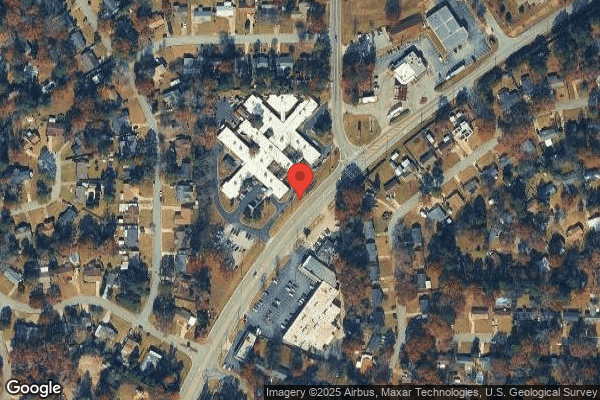
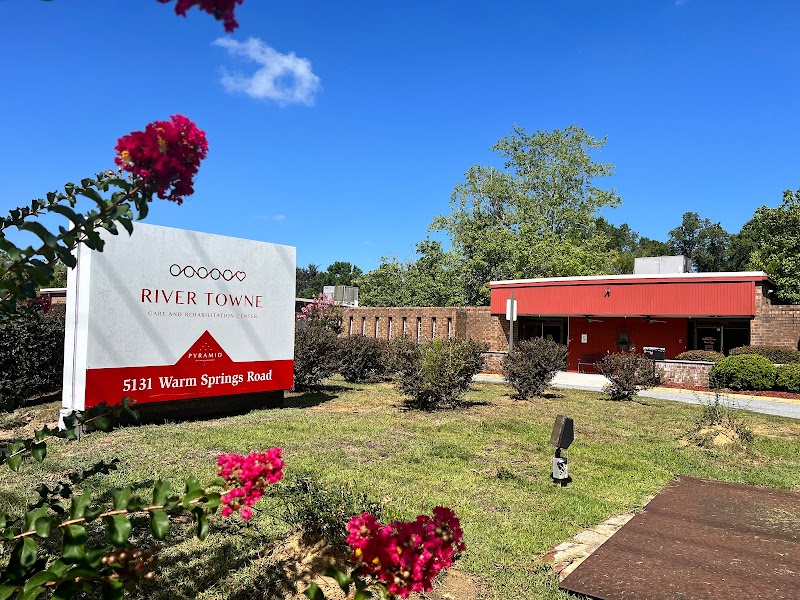
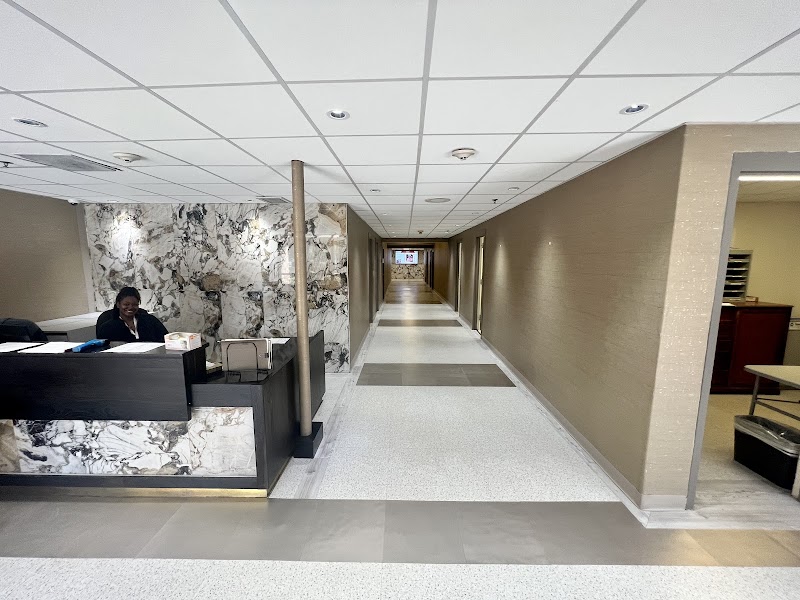

RIVER TOWNE CENTER

5131 WARM SPRINGS RD, COLUMBUS, GA 31909 (706) 561-1371
For profit - Corporation 210 Beds Independent Data: November 2025 2 Immediate Jeopardy citations
Trust Grade
6/100
#325 of 353 in GA
Last Inspection: April 2025

Within standard 12-15 month inspection cycle. Federal law requires annual inspections.

Overview

River Towne Center in Columbus, Georgia, has received a Trust Grade of F, which indicates significant concerns about the quality of care provided. Ranking #325 out of 353 facilities in Georgia places it in the bottom half, and it is the lowest-ranked facility in Muscogee County. The facility's situation appears to be worsening, with the number of reported issues increasing from 3 in 2024 to 7 in 2025. Staffing is a major concern, with a low rating of 1 out of 5 stars and a high turnover rate of 69%, significantly above the state average of 47%. While there is good RN coverage, exceeding 91% of facilities in Georgia, recent inspections revealed critical issues such as failing to implement adequate infection control measures during COVID-19, resulting in multiple infections among residents and staff. Additionally, there were concerns about food safety, as expired food items were found in the kitchen, posing a risk for foodborne illnesses. Overall, families should weigh these serious concerns against the few strengths the facility may have.

Trust Score
F
6/100
In Georgia
#325/353
Bottom 8%
Safety Record
High Risk
Review needed
Inspections
Getting Worse
3 → 7 violations
Staff Stability
⚠ Watch
69% turnover. Above average. Higher turnover means staff may not know residents' routines.
Penalties
○ Average
$42,707 in fines. Higher than 60% of Georgia facilities. Some compliance issues.
Skilled Nurses
✓ Good
Each resident gets 50 minutes of Registered Nurse (RN) attention daily — more than average for Georgia. RNs are trained to catch health problems early.
Violations
⚠ Watch
31 deficiencies on record. Higher than average. Multiple issues found across inspections.
★☆☆☆☆
1.0
Overall Rating
★☆☆☆☆
1.0
Staff Levels
★★★☆☆
3.0
Care Quality
★★☆☆☆
2.0
Inspection Score
Stable
2024: 3 issues
2025: 7 issues

The Good

  • Full Sprinkler Coverage · Fire safety systems throughout facility
  • No fines on record

Facility shows strength in fire safety.

The Bad

1-Star Overall Rating

Below Georgia average (2.6)

Significant quality concerns identified by CMS

Staff Turnover: 69%

23pts above Georgia avg (46%)

Frequent staff changes - ask about care continuity

Federal Fines: $42,707

Above median ($33,413)

Moderate penalties - review what triggered them

Staff turnover is elevated (69%)

21 points above Georgia average of 48%

The Ugly 31 deficiencies on record

2 life-threatening
Apr 2025 7 deficiencies
CONCERN (D) 📢 Someone Reported This

A family member, employee, or ombudsman was alarmed enough to file a formal complaint

Potential for Harm - no one hurt, but risky conditions existed

Comprehensive Care Plan (Tag F0656)

Could have caused harm · This affected 1 resident

**NOTE- TERMS IN BRACKETS HAVE BEEN EDITED TO PROTECT CONFIDENTIALITY** Based on record review, observations, staff and family interviews, and review of the facility policy titled Care Plans, Comprehe...

Read full inspector narrative →
**NOTE- TERMS IN BRACKETS HAVE BEEN EDITED TO PROTECT CONFIDENTIALITY** Based on record review, observations, staff and family interviews, and review of the facility policy titled Care Plans, Comprehensive Person-Centered, the facility failed to develop a comprehensive, person-centered care plan for two of 49 sampled residents (R) (R70 and R385). This deficient practice had the potential to place R70 and R385 at risk of unmet needs, medical complications, and a diminished quality of life. Findings include: Review of the facility policy titled Care Plans, Comprehensive Person-Centered, revised March 2022, revealed the Policy Statement stated A comprehensive, person-centered care plan that includes measurable objectives and timetables to meet the resident's physical, psychosocial, and functional needs is developed and implemented for each resident. The Policy Interpretation and Implementation section included, . 2. The comprehensive, person-centered care plan is developed within seven (7) days of the completion of the required MDS assessment . 7. The comprehensive, person-centered care plan: 1. includes measurable objectives and timeframes; 2. describes the services that are to be furnished to attain or maintain the resident's highest practicable physical, mental, and psychosocial well-being, including: 1. services that would otherwise be provided for the above, but are not provided due to the resident exercising his or her rights, including the right to refuse treatment; . 3. which professional services are responsible for each element of care. 1. Review of R1's admission Record revealed diagnoses, including but not limited to pneumonia and chronic obstructive pulmonary disease (COPD). Review of R1's Quarterly Minimum Data Set (MDS), dated [DATE], revealed that Section J documented that R1 had shortness of breath when lying flat and with exertion. Review of R1's Order Summary Report revealed an order dated 1/16/2025 for ipratropium-albuterol inhalation solution (a medication used to treat wheezing, shortness of breath, and coughing), 3 milliliters (ml) inhaled orally every six hours as needed for shortness of breath. Review of the resident's comprehensive care plan dated 3/7/2024 revealed no care plan interventions addressing nebulizer use or shortness of breath management. In an interview on 4/24/2025 at 2:58 pm, MDS DD verified that R1's respiratory needs were not included in the care plan. MDS DD confirmed that nebulizer use for shortness of breath should have been assessed and incorporated into the care plan to guide staff interventions. In an interview on 4/23/2025 at 6:13 pm, the Director of Nursing (DON) stated that specific resident needs, such as nebulizer treatments, should be included in the resident's care plan to ensure appropriate respiratory care and monitoring. 2. Review of R385's admission Minimum Data Set (MDS), dated [DATE], revealed Section J (Health Conditions) documented R385 received as-needed (PRN) pain medication, pain frequency was occasional, pain interfered with sleep occasionally, and the pain intensity score was three (indicating severe pain). Review of R385's admission Record revealed the resident was admitted to the facility on [DATE] from an acute care hospital with diagnoses including, but not limited to, encounter for other orthopedic aftercare, muscle weakness, and spinal stenosis, cervical region. Review of R385's Physician's Orders revealed an order dated 12/11/2024 for oxycodone-acetaminophen tablet (a medication used to treat moderate to severe pain) 7.5-325 milligrams (mg) one tablet every six hours as needed for pain. Review of R385's Care Plan Report revealed there were no focus areas or interventions addressing pain. In an interview on 4/24/2025 at 10:52 am, MDS DD confirmed R358's comprehensive care plan did not address pain. She stated the care plan was completed using information in the MDS assessments and should address pain. In an interview on 4/24/2025 at 6:00 pm, the DON stated her expectation was for care plans to accurately reflect the resident's needs. She further stated she expected collaboration with the MDS Coordinator and the nursing staff to identify problems that need to be addressed in the care plans. Cross-Reference F697
CONCERN (D) 📢 Someone Reported This

A family member, employee, or ombudsman was alarmed enough to file a formal complaint

Potential for Harm - no one hurt, but risky conditions existed

ADL Care (Tag F0677)

Could have caused harm · This affected 1 resident

Based on observations, resident interviews, staff interviews, record review, and review of the facility policy titled Activities of Daily Living (ADL), Supporting, the facility failed to ensure that t...

Read full inspector narrative →
Based on observations, resident interviews, staff interviews, record review, and review of the facility policy titled Activities of Daily Living (ADL), Supporting, the facility failed to ensure that two of 49 sampled residents (R) (R12 and R43) received activities of daily living (ADL) care related to receiving scheduled showers to maintain good personal hygiene. This deficient practice had the potential to place R12 and R43 at risk of being unclean and feeling insecure about their appearance. Findings include: Review of the facility policy titled Activities of Daily Living (ADL), Supporting, revised 3/2018, revealed the Policy Statement stated, Residents will be provided with care, treatment, and services as appropriate to maintain or improve their ability to carry out activities of daily living (ADLs). Residents who are unable to carry out activities of daily living independently will receive the services necessary to maintain good nutrition, grooming, and personal and oral hygiene. The Policy Interpretation and Implementation section included, . 2. Appropriate care and services will be provided for residents who are unable to carry out ADLs independently, with the consent of the residents and in accordance with the care plan, including appropriate support and assistance with: a. hygiene (bathing, dressing, grooming, and oral care). 1. Review of R12's admission Record revealed diagnoses including, but not limited to, type 2 diabetes mellitus with diabetic neuropathy, end-stage renal disease, muscle weakness, morbid obesity, depression, and anxiety. Review of R12's Quarterly Minimum Data Set (MDS) assessment, dated 4/11/2025, revealed Section C (Cognitive Patterns) documented a Brief Interview for Mental Status (BIMS) of 15 (indicating little to no cognitive impairment). Section GG (Functional Abilities and Goals) documented upper extremity impairment on both sides, lower impairment on one side, and required substantial to maximum assistance with showering or bathing. Section O (Special Treatments, Procedures, and Programs) documented that R12 received dialysis. Review of R12's Care Plan Report, dated 11/29/2022, revealed a Focus area, dated 11/29/2022, of ADL self-care performance deficit related to decreased mobility. Interventions included assisting the resident with hygiene and grooming. Review of R12's Bath Skin Assessment Forms for April 2025 revealed forms dated 4/1/2025, 4/8/2025, 4/15/2025, and 4/23/2025. Documentation revealed R12 refused on 4/1/2025 and 4/15/2025. There was no documentation of baths or showers for any other dates in April 2025. In an interview on 4/22/2025 at 11:47 am, R12 revealed she was in and out of the facility for dialysis and was not offered showers. R12 stated she has not received a bed bath or shower for about a month. She stated she had asked staff for a shower and was informed her scheduled shower days were on Monday, Wednesday, and Friday. R12 stated she was out of the facility for dialysis on her scheduled shower days. In an interview on 4/23/2025 at 11:03 am, Certified Nursing Assistant (CNA) UU stated R12 received a shower on Monday and Friday and a bed bath on other days and the showers or baths were documented on the shower sheets. 2. Review of R43's admission Record revealed diagnoses including, but not limited to, legal blindness, muscle weakness, glaucoma, and schizophrenia. Review of R43's Quarterly MDS assessment, dated 3/6/2025, revealed Section C (Cognitive Patterns) documented a BIMS of 14 (indicating little to no cognitive impairment). Section GG (Functional Abilities and Goals) documented R43 required partial to moderate assistance with showering or bathing. Review of R43's Care Plan Report revealed a Focus area, initiated 11/6/2018, of ADL self-care performance deficit related to confusion, impaired balance, visual impairment of being legally blind, and glaucoma. Interventions include requiring the assistance of one person with ADLs and providing a sponge bath when a full bath or shower cannot be tolerated. Review of R43's Bath Skin Assessment Forms for one month revealed forms dated 3/31/2025, 4/4/2025, 4/7/2025, and 4/11/2025. There was no documentation of baths or showers for any other dates in April 2025. In an interview on 4/22/2025 at 11:47 am, R43 stated she did not receive showers as scheduled. In an interview on 4/23/2025 at 10:36 am, R43 stated her shower days were Monday and Friday, and she did not receive showers as scheduled. Observation revealed R43 wearing the same pants as on 4/22/2025. In an interview on 4/23/2025 at 11:03 am, CNA UU stated R43 was provided a shower on Monday and Friday and a bed bath on the other days. CNA UU stated R43 did not refuse showers and the showers or baths were documented on the shower sheets. In an interview on 4/23/2025 at 11:12 am, Licensed Practical Nurse (LPN) LL stated that residents should receive showers as scheduled. In an interview on 4/24/2025 at 6:13 pm, the Director of Nursing (DON) stated that showers should be provided as scheduled. She further stated that if a resident refused, staff should inform the nurse and reattempt. In an interview on 4/24/2025 at 6:30 pm, the Administrator stated residents should receive showers as scheduled.
CONCERN (D) 📢 Someone Reported This

A family member, employee, or ombudsman was alarmed enough to file a formal complaint

Potential for Harm - no one hurt, but risky conditions existed

Accident Prevention (Tag F0689)

Could have caused harm · This affected 1 resident

Based on observations, resident interviews, and staff interviews, the facility failed to ensure an environment free from accident hazards on one of seven medication carts and in three of 49 sampled re...

Read full inspector narrative →
Based on observations, resident interviews, and staff interviews, the facility failed to ensure an environment free from accident hazards on one of seven medication carts and in three of 49 sampled residents' (R) (R12, R87, and R36) rooms. This deficient practice had the potential to place the residents at risk of accident hazards. Findings include: 1. Observation 4/22/2025 9:37 am of the medication cart located on the 200 Hall revealed an unpackaged three cubic centimeter (cc) syringe, with an uncapped needle attached, lying on top of a biohazard container attached to the medication cart. In a concurrent observation and interview on 4/22/2025 at 9:46 am, Registered Nurse (RN) MM verified the syringe location. She stated the syringe should have been placed completely in the biohazard container. She further stated there was a potential for a resident to pick up the syringe with the attached needle and have an adverse outcome. In an interview on 4/22/2025 at 9:50 am, Unit Manager (UM) CC revealed that syringes and needles should be disposed of by placing them completely inside the biohazard containers. UM CC stated he expected all syringes and needles to be disposed of properly. In an interview on 4/22/2025 at 9:53 am, the Director of Nursing (DON) revealed that opened syringes and needles should not be sticking out of the biohazard container. The DON revealed that the syringe should be in the biohazard container and the top should be closed. In an interview on 4/22/2025 at 9:55 am, the Administrator stated that syringes and needles should be disposed of by ensuring they were completely in the biohazard container to avoid injuries. 2. a. Observation on 4/22/2025 at 11:47 am revealed a container of an aerosol disinfecting spray sitting on R12's bedside table, within easy reach of a resident. During an observation and interview on 4/22/2025 at 12:25 pm, RN TT confirmed that aerosol disinfecting spray should not be left at the resident's bedside. In an interview on 4/23/2025 at 6:13 pm, the DON confirmed that hazardous chemicals, including aerosol disinfecting spray, should not be accessible to residents. In an interview on 4/24/2025 at 6:30 pm, the Administrator stated that cleaning products or aerosol items, such as household cleaners, should not be in resident rooms. b. Observation on 4/22/2025 at 9:52 am in R87's room revealed a multi-purpose cleanser sitting on top of the toilet tissue dispenser in the bathroom. In an interview on 4/22/2025 at 12:49 pm, Certified Nursing Assistant (CNA) HH verified that the multi-purpose cleanser was sitting on the toilet tissue dispenser. She stated that R87's family member brings in cleaner to clean R87's bedroom. In an interview on 4/22/2025 at 12:59 pm, RN ZZ stated she knew that the chemical was not supposed to be there, but the family member brought it in. During a concurrent observation and interview on 4/22/2025 at 1:07 pm, LPN JJ stated that staff were supposed to remove the chemicals from resident rooms, and she was unaware of any chemicals in R87's room. In an interview on 4/22/2025 at 1:15 pm, the DON stated she was unaware that the family member was bringing the chemical in. c. Observation on 4/22/2025 at 10:20 am, in R36's room, revealed a container of disinfecting cleaner under the sink in the bathroom. In an observation and interview on 4/22/2025, the DON verified that the container of disinfecting cleaner was under the sink and that it should not be there. She stated R36's family had brought it in.
CONCERN (D) 📢 Someone Reported This

A family member, employee, or ombudsman was alarmed enough to file a formal complaint

Potential for Harm - no one hurt, but risky conditions existed

Deficiency F0697 (Tag F0697)

Could have caused harm · This affected 1 resident

**NOTE- TERMS IN BRACKETS HAVE BEEN EDITED TO PROTECT CONFIDENTIALITY** Based on staff interviews, resident family interviews, record review, and review of the facility policy titled Pain Assessment a...

Read full inspector narrative →
**NOTE- TERMS IN BRACKETS HAVE BEEN EDITED TO PROTECT CONFIDENTIALITY** Based on staff interviews, resident family interviews, record review, and review of the facility policy titled Pain Assessment and Management, the facility failed to provide pain management for one of 49 sampled residents (R) (R385). Findings include: Review of the facility's policy titled Pain Assessment and Management, revised 10/2022, revealed the General Guidelines section included, 1. The pain management program is based on a facility-wide commitment to appropriate assessment and treatment of pain, based on professional standards of practice, the comprehensive care plan, and the resident's choices related to pain management. 5. Acute pain (or significant worsening of chronic pain) should be assessed every 30 to 60 minutes after the onset and reassessed as indicated until relief is obtained. The Steps in the Procedure section included, Assessing Pain 1. Assess the resident at admission and during ongoing assessments to help identify the resident who is experiencing pain or for whom pain may be anticipated during specific procedures, care, or treatment. and Monitoring and Modifying Approaches . 5. Contact the prescriber immediately if the resident's pain or medication side effects are not adequately controlled. Review of R385's admission Minimum Data Set (MDS), dated [DATE], revealed Section J (Health Conditions) documented R385 received PRN (as-needed) pain medication, pain frequency was occasional, pain interfered with sleep occasionally, and the pain intensity score was three (indicating severe pain). Review of R385's admission Record revealed the resident was admitted to the facility on [DATE] from an acute care hospital with diagnoses including, but not limited to, encounter for other orthopedic aftercare, muscle weakness, and spinal stenosis, cervical region. Review of R385's Nursing admission Screening/History assessment, dated 12/11/2024, revealed the reason for admission was neck surgery, the resident had pain, and pain was assessed at a level of five on a scale of one to ten. Review of R385's Physician's Orders revealed an order dated 12/11/2024 at 1:57 pm for oxycodone-acetaminophen tablet (a medication used to treat moderate to severe pain) 7.5-325 milligrams (mg) one tablet every six hours as needed for pain. Review of R385's Medication Administration Record (MARS) dated 12/2024 revealed a physician's order dated 12/11/2024 at 1:57 pm for oxycodone-acetaminophen tablet 7.5-325 mg one tablet every six hours as needed for pain. Review revealed R385 did not receive the medication on 12/11/2025. Further review revealed R385 did not receive the medication on 12/12/2024 at 2:22 pm. In a telephone interview on 4/24/2025 at 7:59 am, R385's family member stated R385 had complained of pain all night after her admission to the facility and did not receive any pain medication. R385's family member stated the nurse had informed her that the order for the pain medication was not sent to the facility from the hospital, and the physician was not notified. In an interview at 4/24/2025 5:45 pm, Admissions Director RR and Registered Nurse (RN)/Hospital Liaison SS stated that the process for opiod pain medication was for the hospital to send a hard copy of the prescription with the resident, the nurse receiving the resident should fax the hard copy of the prescription to the pharmacy, and the pharmacy should send the nurse a code to access the emergency medication supply and obtain the ordered medication. In an interview on 4/24/2025 at 6:00 pm, the Director of Nursing (DON) reviewed R385's electronic medical record (EMR) and stated she was unable to locate the hard copy of the prescription for R358's pain medication in the scanned documents. She stated the hard copy of the prescription was not received upon the resident's admission, and the receiving nurse did not call the physician to obtain an order for overnight pain relief. The DON confirmed that the facility's normal process for narcotic pain medication was for the hospital to send over a hard copy of the prescription so the receiving nurse could fax it to the pharmacy and then receive a code from the pharmacy to be able to pull the narcotic out of the emergency stock until the pharmacy delivered the residents medication.
CONCERN (D) 📢 Someone Reported This

A family member, employee, or ombudsman was alarmed enough to file a formal complaint

Potential for Harm - no one hurt, but risky conditions existed

Deficiency F0761 (Tag F0761)

Could have caused harm · This affected 1 resident

Based on observations, staff interviews, and review of the facility policy titled Medication Labeling and Storage, the facility failed to ensure expired medications were discarded after the expiration...

Read full inspector narrative →
Based on observations, staff interviews, and review of the facility policy titled Medication Labeling and Storage, the facility failed to ensure expired medications were discarded after the expiration date in one of two medication rooms. This deficient practice had the potential to place residents at risk of receiving medications with altered effectiveness. Findings include: Review of the facility policy titled Medication Labeling and Storage, revised February 2023, revealed the Policy Interpretation and Implementation Medication Storage section included, . 3. If the facility has discontinued, outdated, or deteriorated medications or biologicals, the dispensing pharmacy is contacted for instructions regarding returning or destroying these items. Observations on 4/23/2025 at 4:53 pm in the [NAME] Side Medication Storage Room revealed three boxes of bisacodyl suppositories expired 1/2025, one opened container of Tylenol 325 milligrams (mg) expired 11/25/2024, and three containers of Renavite expired 10/2023 were stored with other unexpired medications on the storage shelves. In an interview on 4/23/2025 at 5:20 pm, Registered Nurse (RN) CC verified the findings and stated that discontinued medications should be placed in a box in the medication room and picked up by the pharmacy to be destroyed monthly. In an interview on 4/24/2025 at 10:14 am, the Director of Nursing (DON) stated that expired and discontinued medications should be removed from the shelves and placed in a box in the medication storage room for the pharmacy to destroy.
CONCERN (D) 📢 Someone Reported This

A family member, employee, or ombudsman was alarmed enough to file a formal complaint

Potential for Harm - no one hurt, but risky conditions existed

Infection Control (Tag F0880)

Could have caused harm · This affected 1 resident

**NOTE- TERMS IN BRACKETS HAVE BEEN EDITED TO PROTECT CONFIDENTIALITY** Based on record review, observations, staff interviews, and review of the facility's policy titled Departmental (Respiratory The...

Read full inspector narrative →
**NOTE- TERMS IN BRACKETS HAVE BEEN EDITED TO PROTECT CONFIDENTIALITY** Based on record review, observations, staff interviews, and review of the facility's policy titled Departmental (Respiratory Therapy) -Prevention of Infection Level I the facility failed to ensure the safe handling, labeling, and storage of nebulizer equipment to prevent contamination for one Resident(R)(R1) of 23 sampled residents. This deficient practice had the potential to contribute to the spread of infection and respiratory illness. Findings include: A review of the facility's policy titled Departmental (Respiratory Therapy) -Prevention of Infection Level I Purpose-The purpose of this procedure is to guide prevention of infection associated with respiratory therapy tasks and equipment, including ventilators, among residents and staff. Infection Control Considerations Related to Medication Nebulizers/Continuous Aerosol: 2.Take care not to contaminate internal nebulizer tubes. 3.Wipe the mouthpiece with damp paper towel or gauze sponge. 4.Store the circuit in plastic bag, marked with date and residents. Review of R1's medical record revealed she was admission on [DATE] with diagnoses including chronic obstructive pulmonary disease (COPD), HIV disease, dementia, schizophrenia, and muscle weakness. Review of the most recent quarterly Minimum Data Set (MDS) dated [DATE] revealed a Brief Interview for Mental Status (BIMS) score of 9, indicating moderate cognitive impairment. Section J documented shortness of breath when lying flat and with exertion. Review of physician orders dated 1/16/2025 revealed an active order for Ipratropium-Albuterol inhalation solution, 3ml inhaled orally every 6 hours as needed for shortness of breath. Observation on 4/22/2025 at 2:04 pm revealed R1's nebulizer mask sitting on the nightstand unbagged and unlabeled. Observation on 4/23/2025 at 10:15 am revealed R1's nebulizer mask again sitting on the nightstand unbagged and unlabeled. Observation /interview on 4/23/2025 at 11:03 am with Certified Nursing Assistant (CNA), CNA UU, confirmed that R1's nebulizer mask was not bagged or labeled. CNA UU stated she was unsure if it was required. Interview and observation on 4/23/2025 at 3:25 pm with Licensed Practical Nurse, ( LPN) LL, LPN LL confirmed that the nebulizer mask was not bagged or labeled. LPN LL stated that, according to infection control procedures, the mask should have been properly bagged and labeled. Interview on 4/23/2025 at 6:13 pm with the Director of Nursing (DON) confirmed that nebulizer masks should be bagged after use to prevent contamination and comply with infection control standards. XXXXXXXXXXX Based on observations, resident interviews, staff interviews, record review, and review of the facility policies titled Departmental (Respiratory Therapy) Prevention of Infection and Gastrostomy/Jejunostomy Site Care, the facility failed to ensure that respiratory masks were stored in a sanitary manner for two of five residents (R) (R1 and R70) reviewed for respiratory care. In addition, the facility failed to ensure dressing changes were performed as ordered for one of 31 R (R23) with a feeding tube. These deficient practices had the potential to place R1, R70, and R23 at risk of avoidable infections due to cross-contamination. Findings include: Review of the facility policy titled Departmental (Respiratory Therapy)Prevention of Infection, revised 11/2011, revealed the Purpose section stated, The purpose of this procedure is to guide prevention of infection associated with respiratory therapy tasks and equipment, including ventilators, among residents and staff. The Steps in the Procedure section included, Infection Control Considerations Related to Medication Nebulizers/Continuous Aerosol: . 7. Store the circuit in a plastic bag, marked with date and resident's name, between uses. Review of the facility policy titled Gastrostomy/Jejunostomy Site Care, revised 10/2011, revealed the Purpose section stated, The purposes of this procedure are to promote cleanliness and to protect the gastrostomy or jejunostomy site from irritation, breakdown and infection. 1. Review of R1's admission Record revealed diagnoses, including but not limited to pneumonia and chronic obstructive pulmonary disease (COPD). Review of R1's Quarterly Minimum Data Set (MDS), dated [DATE], revealed that Section J documented that R1 had shortness of breath when lying flat and with exertion. Review of R1's Order Summary Report revealed an order dated 1/16/2025 for ipratropium-albuterol inhalation solution (a medication used to treat wheezing, shortness of breath, and coughing), 3 milliliters (ml) inhaled orally every six hours as needed for shortness of breath. Observation on 4/22/2025 at 2:04 pm and 4/23/2025 at 10:15 am revealed R1's nebulizer mask lying on the nightstand, unbagged and exposed to the environment. In a concurrent observation and interview on 4/23/2025 at 11:03 am, Certified Nursing Assistant (CNA) UU confirmed that R1's nebulizer mask was not stored in a protective bag. CNA UU stated she was unsure if the mask was required to be stored in a protective bag. In a concurrent observation and interview on 4/23/2025 at 3:25 pm, Licensed Practical Nurse (LPN) LL confirmed that the nebulizer mask was exposed to the environment and not in a protective bag. LPN LL stated that, according to infection control procedures, the mask should have been properly stored in a protective bag. In an interview on 4/23/2025 at 6:13 pm, the Director of Nursing (DON) stated that nebulizer masks should be placed in a protective bag after use to prevent contamination and comply with infection control standards. 2. Review of R70's admission Record revealed diagnoses including, but not limited to, pneumonia, chronic pulmonary edema, cardiomegaly, chronic respiratory failure, tracheostomy status, COPD, and acute pulmonary edema. Review of R70's Annual MDS assessment dated [DATE] revealed Section C (Cognitive Patterns) documented a Brief Interview for Mental Status (BIMS) of 15 (indicating little to no cognitive impairment). Section O (Special Treatments, Procedures, and Programs) documented R70 received oxygen therapy, suctioning, tracheostomy care, and non-invasive mechanical ventilator while a resident. Review of R70's Physicians' Orders revealed an order dated 2/16/2025 to clean BiPAP (Bilevel Positive Airway Pressure [a medical device that assists with breathing]) wash, tubing, and reservoir with soap and water, rinse with sterile water, and allow to dry. Observations on 4/22/2025 at 10:03 am and 4/23/2025 at 7:47 am and 10:29 am, in R70's room, revealed a BiPAP mask lying on the bedside table, unbagged and exposed to the environment. In an interview on 4/22/2025 at 10:00 am, R70 stated the BiPAP equipment was washed two days prior. In an interview on 4/23/2025 at 10:44 am, R70 stated that staff often allowed the BiPAP mask to fall on the floor and that staff do not place the mask in a protective bag. In an interview on 4/23/2025 at 10:52 am, LPN AA confirmed that the BiPAP mask was not in a protective bag and was exposed to the environment. In an interview on 4/24/2025 at 9:57 am, the DON stated that BiPAP tubing and masks should be stored in a protective bag when not in use. 3. Review of R23's admission Record revealed diagnoses including, but not limited to, gastrostomy status. Review of R23's Physicians' Orders revealed an order dated 4/14/2025 for PEG Tube (percutaneous endoscopic gastrostomy [a feeding tube placed into the stomach through the abdominal wall]) site care and dressing change every shift. Observation on 4/22/2025 at 9:42 am revealed R23's PEG tube site dressing was discolored with dark brown drainage and was dated 4/16/2025. In a concurrent observation and interview on 4/22/2025 at 10:07 am, LPN AA confirmed R23's PEG tube site dressing was soiled and dated 4/16/2025. In an interview on 4/24/2025 at 9:52 am, the DON stated that her expectation was for PEG tube site dressings to be changed daily. She stated nursing staff was responsible for PEG site dressing changes.
CONCERN (F) 📢 Someone Reported This

A family member, employee, or ombudsman was alarmed enough to file a formal complaint

Potential for Harm - no one hurt, but risky conditions existed

Food Safety (Tag F0812)

Could have caused harm · This affected most or all residents

Based on observations, staff interviews, and review of the facility policy titled Food Receiving and Storage, the facility failed to ensure food items were discarded upon expiration. This deficient pr...

Read full inspector narrative →
Based on observations, staff interviews, and review of the facility policy titled Food Receiving and Storage, the facility failed to ensure food items were discarded upon expiration. This deficient practice had the potential to promote foodborne illnesses in the 110 residents receiving an oral diet from the kitchen. Findings include: Review of the facility's policy titled Food Receiving and Storage, dated November 2022, revealed that the Policy Statement stated, Foods shall be received and stored in a manner that complies with safe food handling practices. During a tour of the kitchen on 4/22/2025, beginning at 9:50 am with the Dietary Manager (DM), observations revealed: One container of ground allspice seasoning with an expiration date of 7/19/2024. One container of ground ginger seasoning with an expiration date of 8/31/2023. One box of French-style dressing packets with an expiration date of 2/24/2025. One box of gelatin expired 9/5/2024. Observations of the walk-in cooler with the DM revealed: Two boxes of cabbage with expiration dates of 3/18/2025 and 4/17/2025. One container of cream cheese with an expiration date of 1/6/2025. One container of cottage cheese with an expiration date of 3/27/2025. One container of ricotta cheese with an expiration date of 4/19/2025. In an interview on 4/22/2025 at 10:15 am, the DM confirmed the findings in the kitchen. The DM stated that inventory checks were conducted, and expired food items should be discarded. In an interview on 4/24/2025 at 12:30 pm, the Administrator stated that his expectation for the kitchen staff was to ensure all expired food items were discarded.
Feb 2024 3 deficiencies
CONCERN (D) 📢 Someone Reported This

A family member, employee, or ombudsman was alarmed enough to file a formal complaint

Potential for Harm - no one hurt, but risky conditions existed

Comprehensive Care Plan (Tag F0656)

Could have caused harm · This affected 1 resident

**NOTE- TERMS IN BRACKETS HAVE BEEN EDITED TO PROTECT CONFIDENTIALITY** Based on staff interview and record review, the facility failed to implement care plan interventions for pressure ulcer treatmen...

Read full inspector narrative →
**NOTE- TERMS IN BRACKETS HAVE BEEN EDITED TO PROTECT CONFIDENTIALITY** Based on staff interview and record review, the facility failed to implement care plan interventions for pressure ulcer treatments as ordered and provide descriptive wound documentation for two of 12 sampled Residents (R) (R2 and R6). These failures increased the potential for the residents not to receive treatment and/or care according to their needs. Findings include: 1. Review of R2's care plan dated on 12/13/2023 revealed the resident had a care plan for a declining unstageable pressure wound to the sacrum with interventions for weekly treatment documentation to include measurements of each area skin breakdown's width, length, depth, type of tissue and exudate. Review of medical records revealed R2 was admitted to the facility on [DATE] with a Stage two (2) pressure ulcer to the sacrum. Review of the Wound Summary report revealed the pressure ulcer to the resident's sacrum was not assessed until 12/6/2023 and noted the wound was a Stage four (4) that measured 7.1 centimeters(cm) x 8.5 cm x 0.1cm. Review of Physician Assistant (PA) wound consult note dated 12/6/2023 documented the sacrum as Stage 2 pressure ulcer, not a Stage 4. The PA noted the pressure ulcer measured 7.1cm x 8.5cm x 0.1cm and the wound bed had granulation, 50% epithelialization with no slough or eschar present. Review of the December 2023 Treatment Administration Record (TAR) revealed no documentation that treatment had been done to the sacrum until 12/10/2023. Review of the Progress Note Details dated 12/13/2023 revealed the sacrum had deteriorated to an unstageable pressure ulcer with 60% slough, 10% granulation and 30% epithelialization and measured 12.6cm x 11.2cm x 0.1cm. Review Progress Note Details dated 12/20/2023 revealed wound orders to cleanse with Dakin's 1/4 strength, skin prep to peri wound, apply Gentamicin and cover with foam dressing every day and as needed. However, review of the 12/2023 TAR revealed the treatment was not started until 12/25/2023. 2. Review of R6's care plan dated 2/6/2024 revealed the resident had a care plan for an unstageable pressure ulcer to the sacrum with interventions to administer treatments as ordered and to assess, record, monitor wound healing. Measure length, width, and depth where possible. Assess and document status of wound perimeter, wound bed, and healing progress. Review of the Wound Summary report indicated the resident was admitted with a Stage 2 pressure ulcer to the sacrum. However, there was no descriptive documentation of the pressure ulcer until 1/11/2024 documenting the wound as a Stage 2 measuring 0.4cm x 0.5cmx 0.1cm. Review of the January 2024 TAR revealed there was no documentation that treatment was done to the sacrum until 1/26/2024 when a physician's order was obtained to clean the sacrum with normal saline, apply skin prep to peri skin, collagen, and zinc barrier, cover with dry dressing every Monday, Wednesday, and Friday. Review of medical records revealed on 2/9/2024 the order was changed to clean the sacrum with normal saline, apply zinc to peri wound, collagen, cover with dry dressing every day. However, review of the February TAR revealed there was no documentation that treatment was done on 2/10/2024 and 2/11/2024. During an interview with the Treatment Nurse on 2/13/2024 at 3:45 pm, revealed that the facility failed to provide descriptive wound documentation and failed to provide treatment records that supported the treatment was provided per R2 and R6 care plans. Cross Reference F686
CONCERN (D) 📢 Someone Reported This

A family member, employee, or ombudsman was alarmed enough to file a formal complaint

Potential for Harm - no one hurt, but risky conditions existed

Quality of Care (Tag F0684)

Could have caused harm · This affected 1 resident

**NOTE- TERMS IN BRACKETS HAVE BEEN EDITED TO PROTECT CONFIDENTIALITY** Based on staff interview and record review, the facility failed to provide treatment timely for one of 12 sampled Residents (R) ...

Read full inspector narrative →
**NOTE- TERMS IN BRACKETS HAVE BEEN EDITED TO PROTECT CONFIDENTIALITY** Based on staff interview and record review, the facility failed to provide treatment timely for one of 12 sampled Residents (R) (R10) with a venous stasis ulcer. Findings include: Review of medical records revealed R10 was admitted to the facility on [DATE] with a venous stasis ulcer to the right rear knee. There was no documentation of treatment being initiated until 2/5/2024 when orders were obtained to clean with normal saline, apply collagen and cover with dry dressing every Monday, Wednesday, and Friday. Review of R10's physician's order dated 2/8/2024 revealed orders were changed to clean with normal saline, apply Santyl to slough and dry protective dressing every day. Review of the 2/2024 Treatment Administration Record (TAR) revealed there was no documentation that the treatment was done as ordered on 2/10/2024 and 2/11/2024. During an interview with the Treatment nurse on 2/14/2024 at 3:25 pm, she stated it must have been an oversight pertaining to the lack of documentation for treatment until 2/5/2024 because she knew she did the treatments.
CONCERN (D) 📢 Someone Reported This

A family member, employee, or ombudsman was alarmed enough to file a formal complaint

Potential for Harm - no one hurt, but risky conditions existed

Pressure Ulcer Prevention (Tag F0686)

Could have caused harm · This affected 1 resident

**NOTE- TERMS IN BRACKETS HAVE BEEN EDITED TO PROTECT CONFIDENTIALITY** Based on staff interviews, record review and review of the facility's policy titled Pressure Ulcers/Skin Breakdown - Clinical Pr...

Read full inspector narrative →
**NOTE- TERMS IN BRACKETS HAVE BEEN EDITED TO PROTECT CONFIDENTIALITY** Based on staff interviews, record review and review of the facility's policy titled Pressure Ulcers/Skin Breakdown - Clinical Protocol, the facility failed to assess pressure ulcers and initiate pressure ulcer treatments timely for three of 12 sampled Residents (R) (R2, R6 and R10). Findings include: Review of the facility's policy titled Pressure Ulcers/Skin Breakdown - Clinical Protocol dated March 2014 under the section titled Assessment and Recognition revealed, 2. In addition, the nurse shall describe and document/report the following: a. Full assessment of pressure sore including location, stage, length, width and depth, presence of exudates or necrotic tissue; 3. The staff will examine the skin of a new admission for ulcerations or alterations in skin. 1. Review of medical records revealed R2 was admitted to the facility on [DATE] with a Stage two (2) pressure ulcer to the sacrum. Review of the Wound Summary report revealed the pressure ulcer to the resident's sacrum was not assessed until 12/6/2023 and noted the wound was a Stage four (4) that measured 7.1 centimeters(cm) x 8.5 cm x 0.1cm. However, review of the 12/6/2023 Physician Assistant (PA) wound consult note documented the sacrum as Stage 2 pressure ulcer, not a Stage 4. The PA noted the pressure ulcer measured 7.1cm x 8.5cm x 0.1cm and the wound bed had granulation, 50% epithelialization with no slough or eschar present. Review of the December 2023 Treatment Administration Record (TAR) revealed there was no documentation treatment was done to the sacrum until 12/10/2023. Review of R2's Nurse Progress Note dated 12/10/2023 stated, Called to the room by Certified Nursing Assistant (CNA) stating the resident needed wound care for his sacrum. The area was cleaned with normal saline, Santyl and collagen applied, covered with calcium alginate and a foam dressing. Reviewed the resident's chart but unable to locate an order. Nurse does state the wound care was being done for that area. The Nurse Practitioner was notified and received new orders. Review of the Progress Note Details dated 12/13/2023 revealed the sacrum had deteriorated to an unstageable pressure ulcer with 60% slough, 10% granulation and 30% epithelialization and measured 12.6cm x 11.2cm x 0.1cm. Review of Progress Note Details dated 12/20/2023 revealed wound order to cleanse the wound with Dakin's one-fourth (1/4) strength, skin prep to peri wound, apply Gentamicin and cover with foam dressing every day and as needed. However, review of the 12/2023 TAR revealed the treatment was not started until 12/25/2023. 2. Review of medical records revealed R6 was admitted to the facility on [DATE]. Review of the Wound Summary report indicated the resident was admitted with a Stage 2 pressure ulcer to the sacrum. However, there was no descriptive documentation of the pressure ulcer until 1/11/2024 documenting the wound as a Stage 2 measuring 0.4cm x 0.5cmx 0.1cm. Review of the January 2024 TAR revealed there was no documentation treatment was done to the sacrum until 1/26/2024 when a physician's order was obtained to clean the sacrum with normal saline, apply skin prep to peri skin, collagen, and zinc barrier, cover with dry dressing every Monday, Wednesday, and Friday. Review of medical records revealed on 2/9/2024 the order was changed to clean the sacrum with normal saline, apply zinc to peri wound, collagen, cover with dry dressing every day. However, review of the February TAR revealed there was no documentation treatment was done on 2/10/2024 and 2/11/2024. During an interview with the Treatment Nurse on 2/13/2024 at 3:45 pm, she could not explain why there was lack of documentation of treatment from 1/11/2024 to 1/26/2024. She also stated she did provide treatment to the sacrum although the documentation does not reflect that. 3. Review of medical records revealed R10 was admitted to the facility on [DATE] with a Stage 4 pressure ulcer to the left ischial tuberosity and an unstageable pressure ulcer to the sacrum. However, review of the February 2024 TAR revealed there was no documentation of treatment to the two wounds until 2/5/2024 when a physician's order was obtained to clean the wounds with Dakins, apply Dakins moistened gauze and cover with a dry dressing every Monday, Wednesday, and Friday. Review of medical records revealed on 2/9/2024 a new physician's order was obtained to clean the sacrum and the left ischial tuberosity with 0.25% Dakins, apply collagen and cover with a dry protective dressing every day. However, review of the February 2024 TAR revealed there was no documentation treatment was done on 2/10/2024 and 2/11/2024 as ordered. During an interview with the Administrator on 2/14/2024 at 11:45 am, he stated that the past weekend on 2/10/2024 and 2/11/2024, they did not have a treatment nurse scheduled to work because the nurse who usually did treatments on the weekends was off and the staffing coordinator did not schedule anyone to cover for her. He stated it would have been the floor nurse's responsibility to do the treatments. Cross Reference F656
Oct 2023 10 deficiencies 2 IJ
CRITICAL (J) 📢 Someone Reported This

A family member, employee, or ombudsman was alarmed enough to file a formal complaint

Immediate Jeopardy (IJ) - the most serious Medicare violation

Administration (Tag F0835)

Someone could have died · This affected 1 resident

**NOTE- TERMS IN BRACKETS HAVE BEEN EDITED TO PROTECT CONFIDENTIALITY** Based on record review, staff interviews, review of the Centers for Disease Control and Prevention (CDC) Interim Infection Preve...

Read full inspector narrative →
**NOTE- TERMS IN BRACKETS HAVE BEEN EDITED TO PROTECT CONFIDENTIALITY** Based on record review, staff interviews, review of the Centers for Disease Control and Prevention (CDC) Interim Infection Prevention and Control Recommendations for Healthcare Personnel (HCP) During the Coronavirus Disease 2019 (COVID-19) Pandemic, and review of the job description for the Administrator, the facility Administration failed to ensure the health and safety of the residents by not maintaining an effective Infection Prevention Control Program (IPCP) that would identify and investigate an infection outbreak to prevent or reduce the spread of Covid-19 by not following current guidelines for resident and staff testing (contact tracing or broad based testing). This failure resulted in a total of five residents and two staff members who tested positive for COVID-19. The facility census was 131. On 10/4/2023, a determination was made that a situation in which the facilities noncompliance with one or more requirements of participation had caused, or had the likelihood to cause, serious injury, serious harm, impairment, or death to residents. The Administrator, the Director of Nurses, and the Regional [NAME] President were notified on 10/4/2023 at 6:20 pm of the Immediate Jeopardy (IJ). The noncompliance related to the IJ was identified to have existed on 9/18/2023. An Acceptable IJ Removal Plan was received on 10/6/2023. Based on observation, record reviews, review of facility policies as outlined in the Removal Plan, and staff interviews, it was validated that the corrective plans and the immediacy of the deficient practice was removed on 10/6/2023. Findings included: Review of the Administrator's job description revealed that the responsibility of the Administrator is to assist the Infection Control Coordinator and/or committee in identifying, evaluating, and classifying routine and job-related functions to ensure that tasks involving potential exposure to blood/body fluids are properly identified and resolved. They are to also consult with departmental directors concerning the operation of their departments to assist in eliminating / correcting problem areas, and /or improvement of services. Review of the Interim Infection Prevention and Control Recommendations for Healthcare Personnel During the Coronavirus Disease 2019 (COVID-19) Pandemic, updated on May 8, 2023, recommends source control for individuals in healthcare settings who: have suspected or confirmed COVID -19 infection or had close contact with someone who has COVID-19 infection , for 10 days after exposure. It also recommends that patients be placed in a single-person room. The door should be kept closed. If co-horting, only residents with the same respiratory pathogen should be housed in the same room. Testing is recommended immediately, usually day 1, 3 and 5. They also recommend a process to make everyone entering the facility aware of recommended actions to prevent transmission to others. Interview on 10/4/2023 at 3:10 pm with the Assistant Director of Nurses/Infection Preventionist (ADON/IP) it was reported that staff and residents were tested on [DATE] but he confirmed that outbreak testing had not been done. He further reported that CDC does not recommend routine testing. He reported that he had not reached out to the Department of Community Health (DPH) or any other agency for guidance related to the facility's COVID-19 status. Lastly, it was reported that COVID-19 positive and COVID-19 negative residents had not been moved because there were no empty rooms to move them to. Interview on 10/5/2023 at 11:00 am with the Administrator who revealed that he believed that the facility had some issues to work out, but he did not believe the problems rose to the IJ level. He reported that residents and staff were tested after the initial outbreak but acknowledged that the facility was not testing consistently until there were no other positives. It was reported that the residents in the Transmission Based Precautions (TBP) rooms could request that their doors be opened but he did not provide any documentation to confirm the doors being open were the residents' choice. The Administrator reported that staff and visitors were to be screened on entry to the facility and he was not aware of the inconsistency in the screenings. Interview on 10/5/2023 at 11:17 am with ADON/IP revealed that the nurse managers are responsible for educating staff about residents COVID status. ADON/IP responded that he was not sure why all staff and all residents had not been tested. He reported that he completed rounds for the residents in rooms with TBP, but he was unsure as to why residents on TBP doors were left open. It was reported that whoever becomes aware of the COVID-19 outbreak is responsible for putting signage at the front entrance to alert staff and visitors of the facility's outbreak status. Interview on 10/12/2023 at 8:15 am with the Administrator who reported that he thought the ADON/IP was doing his job, but he was not. It was further reported that he had to let the ADON/IP go, because he did not like sloppy work. The Administrator stated that he had his certificate for IP and would be doing the infection control aspect for the facility until he was able to hire someone new. The facility implemented the following actions to remove the IJ: 1. R#94 tested positive for COVID-19 on 09/18/23 and came off precautions on 09/28/23, R#89 tested positive for COVID-19 on 09/21/23 and came off precautions on 10/01/23, R#15 tested positive for COVID-19 on 09/24/23 and came off precautions on 10/04/23, R#111 tested positive for COVID-19 on 09/25/23 and came off precautions on 10/05/23, and R#433 tested positive for COVID-19 on 09/25/23 and came off precautions on 10/05/23. R#94, R#89, R15, R#111, and R#433 were identified in the deficient practice. The status of each resident (R#94, R#89, R15, R#111, and R#433) is that they are all off COVID precautions and asymptomatic. 2. All staff and residents were tested for COVID-19 on 10/04/23 and 10/05/23 by facility Nursing staff. 119 residents were tested, 7 residents refused to be tested and will be monitored for signs and symptoms of cough, shortness of breath or fever. 95 staff members have been tested. No new positive residents and 1 new positive staff member. Outbreak total positive residents is 5 and total positive staff is 1. 3. Following testing results, cohorting of current residents was reviewed by Administrator, DON and ADON and room assignments meet recommendations via CDC COVID-19 Infection Control Guidelines. 4. Review of the following job descriptions was completed by the Administrator, DON, ADON/Infection Preventionist and each employee acknowledged their responsibilities. 5. Education was provided to Administrator by Regional [NAME] President on responsibilities related to ensuring the safety of all residents in the facility, current guidelines related to COVID-19 for resident and staff testing, infection control, monitoring and documenting COVID-19 symptoms for residents during an outbreak on 10/04/2023. 6. Education was provided by Administrator to Infection Preventionist and DON on COVID-19 Infection Control Guidelines to include outbreak testing procedure and notification, cohorting of COVID-19 positive and COVID-19 negative residents, use of Transmission Based Precautions, performing contact tracing, screening of staff and visitors during an outbreak and properly informing staff, visitors and family on 10/04/2023. 7. The facility COVID-19 Infection Control Guidelines policy was reviewed by Administrator and Regional [NAME] President on 10/04/2023. No revisions were made but review was noted. 8. On 10/04/23, staff, residents and family were notified via mass messaging system, signage at front entrance, time clock and nurses' stations of COVID-19 outbreak, recommended actions to prevent COVID-19 spread, and source control to help prevent the spread of COVID-19. 234 family members were notified, and 106 staff members were notified. 9. Education on COVID-19 Infection Control Guidelines to include outbreak testing procedure and notification, cohorting of COVID-19 positive and COVID-19 negative residents, use of Transmission Based Precautions, performing contact tracing, screening of staff and visitors during an outbreak and properly informing staff, visitors and family was initiated on 10/04/23 and will be completed on 10/05/23. 8 of 8 RN's, 26 of 27 LPN's, 27 of 34 CNA's, 17 of 17 Therapists (PT/OT/ST/PTA/OTA), 10 of 10 Respiratory Therapists, 7 of 7 Housekeeping, 2 of 2 Maintenance, 5 of 5 Dietary, 2 of 2 Social Workers, 2 of 2 MDS Nurses, 2 of 2 Business Office Staff, 1 of 1 Receptionist, and 3 of 3 Administration Staff have been in-serviced. 106 of 120 total stall members or 88% have been in-serviced. 10. No staff member shall work until they have completed in-service education. Staff members will be educated on COVID-19 Infection Control Guidelines to include outbreak testing procedure and notification, cohorting of COVID-19 positive and COVID-19 negative residents, use of Transmission Based Precautions, performing contact tracing, screening of staff and visitors during an outbreak and properly informing staff, visitors and family by the DON and/or ADON prior to being allowed to work. 11. Newly hired staff will be in-serviced during orientation upon hire by the DON and/or ADON on COVID-19 Infection Control Guidelines to include outbreak testing procedure and notification, cohorting of COVID-19 positive and COVID-19 negative residents, use of Transmission Based Precautions, performing contact tracing, screening of staff and visitors during an outbreak and properly informing staff, visitors and family. Newly hired staff members will not work until they have received COVID-19 education. 12. Facility implemented interventions of testing all residents and staff, review of the cohorting of resident room assignments and education on COVID-19 Infection Control guidelines. Documentation included consists of testing results for all residents and staff, copy of the COVID-19 Infection Control Guideline, copies of education and sign in sheets conducted with staff members. 13. Audits will be completed for outbreak testing procedures, notification and screening of staff and visitors, cohorting of residents, use of TBP, and contact tracing daily during a COVID-19 outbreak and will be monitored by the Administrator daily using a COVID-19 Guideline Tracking Tool to ensure the deficient practice does not reoccur. If a problem is identified it will be addressed via corrective action and education with the staff member(s). 14. An Ad Hoc QAPI Meeting was conducted on 10/05/2023 with the Administrator, DON, ADON/Infection Preventionist, Medical Director, Unit Managers, and Social Worker to discuss jeopardy findings and plan of removal and correction. The Medical Director was informed of the Immediate Jeopardy on 10/05/2023. A RCA (Root Cause Analysis) was conducted on 10/05/2023 to identify causes and prevent them from reoccurring. Infection Preventionist education, staff education and oversight and auditing by the Administrator and DON were deemed as root causes. Administrator completed an audit using a COVID-19 Guideline Tracking Tool on 10/05/2023 to ensure testing frequency and results followed CDC COVID-10 Infection Control Guidelines. Administrator contacted DPH and Alliant Quality for assistance with educational materials, handouts and in-servicing for following COVID-19 Infection Control Guidelines. 15. The tracking form will be brought to QAPI and reviewed by the Administrator. 16. All corrective actions were completed on 10/5/2023. The facility alleges that the Immediate Jeopardy is removed on 10/06/2023. The State Survey Agency (SSA) validated the facility's written IJ Removal Plan as follows: 1. Review of the documentation confirmed COVID-19 status for R#94, R#89, R15, R#111, and R#433. All resident's isolation status was discontinued by 10/4/2023. 2. Review of COVID-19 Rapid Antigen Testing confirmed the testing of 119 residents and testing of 95 staff persons. 3. Review of Line List for COVID-19 Outbreaks in Long Term Care Facilities included each resident's COVID status and room number. 4. Confirmation of review of job descriptions for the Administrator, DON, ADON/Infection Preventionist all completed on 10/5/2023 as evidenced by signature of each respective job description. 5. Education to the Administrator was confirmed via in-service sign in sheet dated 10/4/2023 with the education provided by the Regional [NAME] President. 6. Education to the DON and ADON was confirmed via in-service sign in sheet dated 10/4/2023 with education provided by the Administrator. 7. Review of COVID-19 policy by the Administrator and Regional [NAME] President as evidenced by sign in sheet date 10/4/2023. 8. An email dated 10/4/2023 reviewed confirming notification of a blast email to resident family members/responsible parties and staff members notifying of COVID outbreak status. Interview on 10/10/2023 at 12:40 pm with the family member of R19 revealed information had been received from the facility about the current outbreak status. 9. Verification of staff education beginning on 10/4/2023 included the following topics: COVID-19 Infection Control Guidelines, outbreak testing, cohorting of positive and negative patients, contact tracing, transmission based precautions, screening of staff and visitors, informing staff and visitors, and personal protective equipment. During an interview on 10/10/2023 at 8:45 am with LPN FF; at 8:48 am with Agency LPN GGG; at 8:53 am with LPN HHH; at 9:11 am with LPN/MDS Coordinator JJJ; at 9:14 am with LPN/MDS Coordinator KKKK; at 9:20 am with Restorative CNA BB; at 9:26 am with Restorative CNA LLL; at 10 am with LPN CC; at 10:06 am with LPN MMM; at 10:10 am with Housekeeping Aide DD; at 10:16 am with CNA HH; at 10:20 am with Respiratory Therapist EE; at 10:27 am with CNA OOO; at 10:30 am with Respiratory Therapist FF; at 10:50 am CNA HH; at 11 am CNA II; at 11:20 am Agency CNA; at 5:19 pm via telephone with CNA LLLL; at 6:30 pm via telephone with CNA VVVV; at 6:45 pm with LPN WWWW with all staff confirming education related to outbreak testing procedure and notification, cohorting of COVID-19 positive and COVID-19 negative residents, use of Transmission Based Precautions, performing contact tracing, and screening of staff and visitors during an outbreak. 10. Verification of staff education confirmed via interviews with staff and review of signed education sheet. 11. There were no new staff identified. 12. Testing confirmed via review of testing results of residents and staff beginning on 10/4/2023. 13. Confirmed daily tracking via use of COVID-19 GUIDELINE TRACKING TOOL with start date of 10/5/2023. 14. Quality Assurance Process Improvement (QAPI) Committee document dated 10/5/2023 confirmed QAPI meeting with Administrator, DON, and Medical Director present, related to IJ related to infection control. The root cause analysis completion was verified by review of Root Cause Analysis Report Form. Confirmed daily tracking via use of COVID-19 GUIDELINE TRACKING TOOL with start date of 10/5/2023. Review of email dated 10/5/2023 confirmed Administrator request for resources and response from vendors. 15. Confirmed daily tracking via use of COVID-19 GUIDELINE TRACKING TOOL with start date of 10/5/2023 and QAPI held on 10/5/2023. 16. It was verified that all corrective actions were completed by 10/5/2023 and the Immediate Jeopardy was removed on 10/6/2023.
CRITICAL (J) 📢 Someone Reported This

A family member, employee, or ombudsman was alarmed enough to file a formal complaint

Immediate Jeopardy (IJ) - the most serious Medicare violation

Infection Control (Tag F0880)

Someone could have died · This affected 1 resident

**NOTE- TERMS IN BRACKETS HAVE BEEN EDITED TO PROTECT CONFIDENTIALITY** Based on record review, staff interviews, review of the Centers for Disease Control and Prevention (CDC) Interim Infection Preve...

Read full inspector narrative →
**NOTE- TERMS IN BRACKETS HAVE BEEN EDITED TO PROTECT CONFIDENTIALITY** Based on record review, staff interviews, review of the Centers for Disease Control and Prevention (CDC) Interim Infection Prevention and Control Recommendations for Health Care Personnel During the Coronavirus Disease 2019 (COVID-19) Pandemic, and review of the facility's COVID -19 Response, the facility failed to implement initial and ongoing testing of residents and staff as recommended by the CDC to lessen the exposure of COVID-19 during an outbreak, failed to ensure source control was used during outbreak, ensure the safety of all residents in the facility by not following current guidelines related to COVID-19 for resident and staff testing, infection control, monitoring and documenting COVID-19 symptoms for residents, notification of staff and family of outbreak status during an outbreak and source control that resulted in five residents (R)(R15, R89, R94, R111, and R433) and two staff testing positive for COVID-19. On 10/4/2023, a determination was made that a situation in which the facilities noncompliance with one or more requirements of participation had caused, or had the likelihood to cause, serious injury, serious harm, impairment, or death to residents. The Administrator, the Director of Nurses, and the Regional [NAME] President were notified on 10/4/2023 at 6:20 pm of the Immediate Jeopardy (IJ). The noncompliance related to the IJ was identified to have existed on 9/18/2023. An Acceptable IJ Removal Plan was received on 10/6/2023. Based on observation, record reviews, review of facility policies as outlined in the Removal Plan, and staff interviews, it was validated that the corrective plans and the immediacy of the deficient practice was removed on 10/6/2023. Findings included: Review of the Centers for Disease Control and Prevention (CDC) Interim Infection Prevention and Control Recommendations for Health Care Personnel During the Coronavirus Disease 2019 (COVID-19) Pandemic, that was updated on 5/8/2023, recommends the following: Patient Placement - Place a patient with suspected or confirmed SARS-CoV-2 infection in a single-person room. The door should be kept closed (if safe to do so). Ideally, the patient should have a dedicated bathroom. If limited single rooms are available, residents should remain in their current location. Review of the COVID-19 Response, undated, revealed the following: Procedural guidelines that were listed included but were not limited to: 8). Each skilled nursing facility shall maintain room(s) or units set up for transmission-based precautions. Reporting 5. The facility shall post notification of an outbreak and ongoing testing at all points of entry into the facility. Residents 1. all residents shall be screened for fever and respiratory symptoms once per shift. This screening includes but is not limited to: A. Assessing signs and symptoms of COVID-19/respiratory symptoms. B. Temperature. C. Oxygen saturation by pulse oximetry as indicated by respiratory symptoms. Outbreak Testing Residents: 1. Resident tested should be initiated within 24 hours of the positive test being reported and be completed as soon as possible. 5. All residents who test negative must be tested every 3 to 7 days until no new cases for at least 14 days since the most recent positive result, regardless of their vaccination status. Employees 3. All employees who test negative must be tested every 3 to 7 days until no new cases for at least 14 days since the most recent positive result, regardless of their vaccination status. The following residents were positive for COVID-19 and reviewed related to the outbreak in the facility: 1.On 9/18/2023 R94 was noted to have symptoms that included a cough. R94 was tested for COVID-19 and had a positive test result. R94 was the roommate to R89 in room [ROOM NUMBER]. 2. On 9/18/2023 R89 was moved from room [ROOM NUMBER] with R94 once R94 tested positive for COVID-19. R89 was then placed into room [ROOM NUMBER] with R15. R89 tested positive for COVID-19 on 9/20/2023 and was then moved back into her original room with R94. 3.On 9/24/2023 R15 tested positive for COVID-19. 4. On 9/25/2023 R111 tested positive for COVID-19. R90 remained the roommate of R111 and was COVID-19 negative when tested. There is no evidence that R90 was monitored for COVID symptoms. 5. On 9/25/2023 R433 tested positive for COVID-19. R119 remained the roommate of R433 and was COVID-19 negative when tested. There is no evidence that R119 was monitored for COVID symptoms. The testing schedule for residents revealed two residents were tested on [DATE] and both were COVID-19 positive. There were 89 residents tested on [DATE] resulting in one positive resident. On 9/20/2023 there were 18 residents tested and they were all negative. On 9/24/2023 one resident was tested and was COVID-19 positive. There were 18 residents tested on [DATE] resulting in two residents being COVID-19 positive. Other resident testing dates included 9/27/2023 and 9/28/2023 of which one resident was tested each day resulting in a COVID-19 negative status. Review of the staff testing scheduled revealed 49 staff were tested for COVID-19 on 9/19/2023 and there was no evidence of any other outbreak staff testing until 10/4/2023. During the initial entrance into the facility on [DATE] at 10:45 am the receptionist at the front desk was unable to confirm if there were any COVID-19 positive cases in the facility. There were screening sheets on the counter but there was no thermometer to check temperature. The Administrator then reported that there were three residents that were COVID-19 positive and on transmission-based precautions (TBP). It was noted that there was no signage at the front to inform visitors of any positive COVID cases, or to inform visitors of the proper use of source control. Observation on 10/3/2023 at 11:30 am revealed the door to room [ROOM NUMBER] was open. The door had signage and PPE on the door, that alerted staff and visitors that the residents in the room were on aerosol contact precautions. Observation on 10/3/2023 at 12:02 pm revealed signage and PPE on the door to room [ROOM NUMBER]. The signage on the door alerted that the resident (R15) was in Aerosol Contact Precautions and that proper PPE was needed that included N-95 mask. The signage also alerted staff that the door was to remain closed. The door was observed to be open. Observation on 10/3/2023 at 1:17 pm revealed the door to room [ROOM NUMBER] had signage indicating aerosol contact precautions and PPE. The door was open and there were two residents in the room and the privacy curtain was not pulled. R90 was COVID-19 negative and R111 was COVID-19 positive. Observation on 10/3/2023 at 1:24 pm revealed the door to room [ROOM NUMBER] remained open. Observation on 10/3/2023 at 3:45 pm revealed that the doors were open for rooms [ROOM NUMBER]. It was also noted that room [ROOM NUMBER] and room [ROOM NUMBER] each had two residents in each and the privacy curtain was not pulled. On 10/3/2023 at 4:30 pm a visitor for R90 expressed that he/she was not notified why his/her family member was requiring isolation. Observation on 10/4/2023 at 7:45 am revealed the receptionist at the front desk without a mask on. There was a thermometer on the counter, but the receptionist reported that she did not know how to work it. The receptionist denied any knowledge of the facility's COVID-19 status. There also was no signage alerting staff or visitors that the facility was in outbreak status. Interview on 10/4/2023 at 2:30 pm with the Assistant Director of Nurses (ADON)/Infection Preventionist (IP) who revealed that he was doing contact tracing for the current outbreak. It was reported that the initial COVID-19 positive resident probably contracted it from family and the other positive residents are likely from the original resident. ADON/IP explained that R94 had symptoms that included a cough and tested positive for COVID-19 ON 9/18/2023. R94's roommate, R89, was then moved into the room with R15. R89 tested positive for COVID-19 on 9/20/2023 and was then moved back into the room with R94. On 9/24/2023 R15 tested positive for COVID-19. It was further reported that more residents on 800 hall were tested out of caution which resulted in R111 and R433 testing positive. The roommate for R111 was R90 and the roommate for R433 was R119. R90 and R119 both were COVID-19 negative when tested. ADON/IP further reported that the cart nurse is responsible for testing the residents and the cart nurse had the responsibility of setting up the transmission-based precautions and moving residents once they tested positive for COVID-19. The ADON/IP reported that on 9/22/2023 an agency nurse was working her shift when she tested positive for COVID-19 and was sent home after noon on that day. He could not initially recall which hall the nurse worked on but later said she worked on 400 hall. Lastly, it was reported that a mass message is sent to residents and families related to COVID-19 status in the facility. He also reported that the receptionist should offer a mask to visitors as they enter the facility. During a subsequent interview on 10/4/2023 at 3:10 pm with the ADON/IP it was reported that staff and residents were tested on [DATE] but he confirmed that outbreak testing had not been done. He further reported that CDC does not recommend routine testing. He reported that he had not reached out to the Department of Community Health (DPH) or any other agency for guidance related to the facility's COVID-19 status. Lastly, it was reported that COVID-19 positive and COVID-19 negative residents had not been moved because there were no empty rooms to move them to. Observation on 10/4/2023 at 3:35 pm revealed the door to room [ROOM NUMBER] was half open and the door to room [ROOM NUMBER] was fully open and the privacy curtains were not pulled between the residents residing in those rooms. The resident that resided in room [ROOM NUMBER] and had a COVID-19 positive status. There were two residents that resided in room [ROOM NUMBER] with one being COVID-19 negative and one being COVID-19 positive. Interview on 10/4/2023 at 4:20 pm with CNA ZZZ revealed that both residents in room [ROOM NUMBER] were COVID-19 positive. Interview on 10/4/2023 at 4:25 pm with CNA AAAAA revealed that one of the residents in room [ROOM NUMBER] was COVID-19 negative and the other was COVID-19 positive. She reported that she would provide care to the resident that was COVID-19 negative first and care to the COVID-19 positive resident last. Interview on 10/5/2023 at 11:17 am with ADON/IP revealed that the nurse managers are responsible for educating staff about residents COVID status. ADON/IP responded that he was not sure why all staff and all residents had not been tested. He reported that he completed rounds for the residents in rooms with TBP but he was unsure as to why residents on TBP doors were left open. It was reported that whoever becomes aware of the COVID-19 outbreak is responsible for putting signage at the front entrance to alert staff and visitors of the facility's outbreak status. Interview on 10/5/2023 at 11:45 am with Licensed Practical Nurse (LPN) SSS revealed that the cart nurses are responsible for completing the resident testing. She revealed that the residents were scheduled to be COVID tested on [DATE] because they were in outbreak. LPN SSS was observed not wearing a mask, but she revealed that she was not told that she needed to wear a mask. Interview on 10/5/2023 at 12:25 pm with Agency CNA II who was not wearing a mask, revealed that she was not told that she needed to wear a mask. She also acknowledged that she was aware that the door to the isolation rooms were supposed to be closed. Interview on 10/5/2023 at 12:29 pm with CNA ZZZ who revealed that she knew that the door was supposed to be closed and had no excuse for the door to the isolation room to be open. She also revealed that she was not told that she needed to wear a mask. Interview on 10/5/2023 at 1:15 pm with Receptionist BBBBB who reported that she was not aware that the facility was in outbreak status until she received a call from a family member on 10/4/2023 stating that they had received a text message from the facility. Receptionist BBBBB also reported that she was never informed to offer visitors a mask. Interview on 10/5/2023 at 1:28 pm with the Medical Director revealed that it was his desire to keep the residents on the East side of the facility separate from the [NAME] side residents, due to the severity of the disease processes of the residents on 200 hall. He also revealed that he was not aware that there were no available beds to move COVID-19 negative residents out of the room from their COVID-19 positive roommates. Interview on 10/12/2023 at 8:15 am with the Administrator who reported that he thought the ADON/IP was doing his job but he was not. It was further reported that he had to let the ADON/IP go, because he did not like sloppy work. The Administrator stated that he had his certificate for IP and would be doing the infection control aspect for the facility until he was able to hire someone new. The facility implemented the following actions to remove the IJ: 1. R#94 tested positive for COVID-19 on 09/18/23 and came off precautions on 09/28/23, R#89 tested positive for COVID-19 on 09/21/23 and came off precautions on 10/01/23, R#15 tested positive for COVID-19 on 09/24/23 and came off precautions on 10/04/23, R#111 tested positive for COVID-19 on 09/25/23 and came off precautions on 10/05/23, and R#433 tested positive for COVID-19 on 09/25/23 and came off precautions on 10/05/23. R#94, R#89, R15, R#111, and R#433 were identified in the deficient practice. The status of each resident (R#94, R#89, R15, R#111, and R#433) is that they are all off COVID precautions and asymptomatic. 2. All staff and residents were tested for COVID-19 on 10/04/23 and 10/05/23 by facility Nursing staff. 119 residents were tested, 7 residents refused to be tested and will be monitored for signs and symptoms of cough, shortness of breath or fever. 95 staff members have been tested. No new positive residents and 1 new positive staff member. Outbreak total positive residents is 5 and total positive staff is 1. 3. Following testing results, cohorting of current residents was reviewed by Administrator, DON and ADON and room assignments meet recommendations via CDC COVID-19 Infection Control Guidelines. 4. The facility COVID-19 Infection Control Guidelines policy was reviewed by Administrator and Regional [NAME] President on 10/04/2023. No revisions were made but review was noted. 5. On 10/04/23, staff, residents and family were notified via mass messaging system, signage at front entrance, time clock and nurses' stations of COVID-19 outbreak, recommended actions to prevent COVID-19 spread, and source control to help prevent the spread of COVID-19. 234 family members were notified, and 106 staff members were notified. 6. Education on COVID-19 Infection Control Guidelines to include outbreak testing procedure and notification, cohorting of COVID-19 positive and COVID-19 negative residents, use of Transmission Based Precautions, performing contact tracing, screening of staff and visitors during an outbreak and properly informing staff, visitors and family was initiated on 10/04/23 and will be completed on 10/05/23. 8 of 8 RN's, 26 of 27 LPN's, 27 of 34 CNA's, 17 of 17 Therapists (PT/OT/ST/PTA/OTA), 10 of 10 Respiratory Therapists, 7 of 7 Housekeeping, 2 of 2 Maintenance, 5 of 5 Dietary, 2 of 2 Social Workers, 2 of 2 MDS Nurses, 2 of 2 Business Office Staff, 1 of 1 Receptionist, and 3 of 3 Administration Staff have been in-serviced. 106 of 120 total stall members or 88% have been in-serviced. 7. No staff member shall work until they have completed in-service education. Staff members will be educated on COVID-19 Infection Control Guidelines to include outbreak testing procedure and notification, cohorting of COVID-19 positive and COVID-19 negative residents, use of Transmission Based Precautions, performing contact tracing, screening of staff and visitors during an outbreak and properly informing staff, visitors and family by the DON and/or ADON prior to being allowed to work. 8. Newly hired staff will be in-serviced during orientation upon hire by the DON and/or ADON on COVID-19 Infection Control Guidelines to include outbreak testing procedure and notification, cohorting of COVID-19 positive and COVID-19 negative residents, use of Transmission Based Precautions, performing contact tracing, screening of staff and visitors during an outbreak and properly informing staff, visitors and family. Newly hired staff members will not work until they have received COVID-19 education. 9. Facility implemented interventions of testing all residents and staff initially on 10/04/23 and every 7 days thereafter until no new positive cases are identified for 14 days, review of the cohorting of resident room assignments and education on COVID-19 Infection Control guidelines. Documentation included consists of testing results for all residents and staff, copy of the COVID-19 Infection Control Guideline, copies of education and sign in sheets conducted with staff members. 10. Audits will be completed for outbreak testing procedures, notification and screening of staff and visitors, cohorting of residents, use of TBP, and contact tracing daily during a COVID-19 outbreak and will be monitored by the Administrator daily using a COVID-19 Guideline Tracking Tool to ensure the deficient practice does not reoccur. If a problem is identified it will be addressed via corrective action and education with the staff member(s). 11. An Ad Hoc QAPI Meeting was conducted on 10/05/2023 with the Administrator, DON, ADON/Infection Preventionist, Medical Director, Unit Managers, and Social Worker to discuss jeopardy findings and plan of removal and correction. The Medical Director was informed of the Immediate Jeopardy on 10/05/2023. A RCA (Root Cause Analysis) was conducted on 10/05/2023 to identify causes and prevent them from reoccurring. Infection Preventionist education, staff education and oversight and auditing by the Administrator and DON were deemed as root causes. Administrator completed an audit using a COVID-19 Guideline Tracking Tool on 10/05/2023 to ensure testing frequency and results followed CDC COVID-10 Infection Control Guidelines. Administrator contacted DPH and Alliant Quality for assistance with educational materials, handouts and in-servicing for following COVID-19 Infection Control Guidelines. 12. The tracking form will be brought to QAPI and reviewed by the Administrator. 13. All corrective actions were completed on 10/5/2023. The facility alleges that the Immediate Jeopardy is removed on 10/06/2023. The State Survey Agency (SSA) validated the facility's written IJ Removal Plan as follows: 1. Review of the documentation confirmed COVID-19 status for R#94, R#89, R15, R#111, and R#433. All resident's isolation status was discontinued by 10/4/2023. 2. Review of COVID-19 Rapid Antigen Testing confirmed the testing of 119 residents and testing of 95 staff persons. 3. Review of Line List for COVID-19 Outbreaks in Long Term Care Facilities included each resident's COVID status and room number. 4. Review of COVID-19 policy by the Administrator, Director of Nursing (DON), and the Medical Director verified by signature on policy with no changes in policy indicated. 5. An email dated 10/4/2023 reviewed confirming notification a blast email to resident family members/responsible parties and staff members notifying of COVID outbreak status. Interview on 10/10/2023 at 12:40 pm with the family member of R19 revealed information had been received from the facility about the current outbreak status. 6. Confirmation of education to staff as evidenced by staff sign in sheets beginning 10/4/2023. Staff education included COVID-19 Infection Control Guidelines, outbreak testing, cohorting of positive and negative patients, contact tracing, transmission based precautions, screening of staff and visitors, informing staff and visitors, and personal protective equipment. During an interview on 10/10/2023 at 8:45 am with LPN FF; at 8:48 am with Agency LPN GGG; at 8:53 am with LPN HHH; at 9:11 am with LPN/MDS Coordinator JJJ; at 9:14 am with LPN/MDS Coordinator KKKK; at 9:20 am with Restorative CNA BB; at 9:26 am with Restorative CNA LLL; at 10 am with LPN CC; at 10:06 am with LPN MMM; at 10:10 am with Housekeeping Aide DD; at 10:16 am with CNA HH; at 10:20 am with Respiratory Therapist EE; at 10:27 am with CNA OOO; at 10:30 am with Respiratory Therapist FF; at 10:50 am CNA HH; at 11 am CNA II; at 11:20 am Agency CNA; at 5:19 pm via telephone with CNA LLLL; at 6:30 pm via telephone with CNA VVVV; at 6:45 pm with LPN WWWW with all staff confirming education related to outbreak testing procedure and notification, cohorting of COVID-19 positive and COVID-19 negative residents, use of Transmission Based Precautions, performing contact tracing, and screening of staff and visitors during an outbreak. 7. Verification of staff education confirmed via interviews with staff and review of signed education sheet. During an interview on 10/10/2023 at 11:30 am with Housekeeper AA; at 11:55 am with CNA UU; at 12:10 pm with Physical Therapy Assistant (PTA) XX; at 12:15 pm with Supply Manager WW; at 12:20 pm with Occupational Therapist (OT) ZZ; 12:30 pm with Dietary Aide AAA; at 12:45 pm with CNA YYY; at 12:50 pm with CNA AAAA; at 12:55 pm with CNA ZZZ; at 1:10 pm with Floor Tech EEE; at 2:10 pm with Dietary Manager; at 2:15 pm Dietary Aide CCCC; at 2:25 pm with Maintenance Director; at 2:35 pm with Maintenance Director Assistant; at 2:50 pm with Occupational Therapy Assistant (OTA) PPPP; at 2:55 pm with Speech Language Pathologist (SLP) QQQQ; at 3:35 pm with Rehab Director who confirmed receiving education. 8. There were no new staff identified. 9. Testing confirmed via review of testing results of residents and staff beginning on 10/4/2023. 10. Confirmed daily tracking via use of COVID-19 GUIDELINE TRACKING TOOL with start date of 10/5/2023. 11. Quality Assurance Process Improvement (QAPI) Committee document dated 10/5/2023 confirmed QAPI meeting with Administrator, DON, and Medical Director present, related to IJ related to infection control. The root cause analysis completion was verified by review of Root Cause Analysis Report Form. Confirmed daily tracking via use of COVID-19 GUIDELINE TRACKING TOOL with start date of 10/5/2023. 12. It was verified that all corrective actions were completed by 10/5/2023 and the Immediate Jeopardy was removed on 10/6/2023.
CONCERN (D) 📢 Someone Reported This

A family member, employee, or ombudsman was alarmed enough to file a formal complaint

Potential for Harm - no one hurt, but risky conditions existed

Deficiency F0557 (Tag F0557)

Could have caused harm · This affected 1 resident

**NOTE- TERMS IN BRACKETS HAVE BEEN EDITED TO PROTECT CONFIDENTIALITY** Based on observations, resident and staff interviews, record reviews, and the review of the facility policy titled Resident Righ...

Read full inspector narrative →
**NOTE- TERMS IN BRACKETS HAVE BEEN EDITED TO PROTECT CONFIDENTIALITY** Based on observations, resident and staff interviews, record reviews, and the review of the facility policy titled Resident Rights, the facility failed to provide care in a manner that maintained or enhanced a resident's dignity for one resident (R) (R11) of 59 sampled residents. Findings include: A review of the facility policy titled Resident Rights, last revised February 2021, revealed Policy Interpretation and Implementation 1., a. A dignified existence and b., be treated with respect kindness and dignity. Record review revealed R11 admitted to the facility on [DATE]. R11 has diagnoses that include but are not limited to major depressive disorder, generalized muscle weakness, and unspecified dementia, without behavioral disturbance, psychotic disturbance, mood disturbance, and anxiety. Review of the quarterly Minimum Data Set (MDS) assessment dated [DATE] revealed a Brief Interview for Mental Status (BIMS) score of 10 which indicated moderately impaired cognition. R11 is also noted as being dependent on staff for chair/bed to chair transfer, toileting, and shower/bathe self. During an observation on 10/12/23 at 10:32 am Certified Nurse Aid (CNA) IIII was observed using a mechanical lift to transfer R11 from the bed in his room into his wheelchair in the hallway. An interview with CNA IIII on 10/12/23 at 10:34 am revealed she used the mechanical lift to place him in the wheelchair in the hallway because there was not enough room in his room to complete this task. An interview with R11 on 10/12/23 at 10:52 am revealed this was the first time he had been placed in the chair with a lift in the hallway. He stated that he did not understand why the CNA had done that because they usually do this in his room. He stated that it really hurt his feelings being placed in his chair in the hallway. An interview with the Director of Nursing on 10/12/2023 at 1:18 pm revealed R11 may have been being cared for by someone new and did not know there was enough space for the procedure to be completed in his room. She also confirmed transferring residents from their beds to the shower stretcher located in the hallway with a mechanical lift was commonly practiced.
CONCERN (D) 📢 Someone Reported This

A family member, employee, or ombudsman was alarmed enough to file a formal complaint

Potential for Harm - no one hurt, but risky conditions existed

Deficiency F0561 (Tag F0561)

Could have caused harm · This affected 1 resident

**NOTE- TERMS IN BRACKETS HAVE BEEN EDITED TO PROTECT CONFIDENTIALITY** Based on observation, resident and staff interviews, record reviews, and review of the policy titled Residents Rights, the facil...

Read full inspector narrative →
**NOTE- TERMS IN BRACKETS HAVE BEEN EDITED TO PROTECT CONFIDENTIALITY** Based on observation, resident and staff interviews, record reviews, and review of the policy titled Residents Rights, the facility failed to allow four residents (R) (75, 86, 105, and 125) of 59 sampled residents the choice to take showers instead of bed baths. Findings include: Based on the facility's policy Residents Rights last revised February 2021, Policy Interpretation and Implementation 1., e. Federal and state laws guarantee certain basic rights to all residents of this facility. These rights include the resident's right to self-determination. 1.Record review revealed that R125 admitted to the facility on [DATE]. Review of the Minimum Data Set (MDS) with a completion date of 9/15/2023 revealed a Brief Interview of Mental Status (BIMS) score of 15 which indicated an intact cognition. The facility's shower list revealed that all residents in even room numbers on the 400 hall were scheduled to receive a shower or bed bath every Monday. Further review of the medical record revealed R125 had been receiving a bath on a regular basis for the past 30 days. During an interview on 10/3/2023 at 1:26 pm with R125 it was revealed that she had been asking for a shower but had not received one for almost two and a half weeks. An interview with Certified Nurse Aid (CNA)/Unit Secretary III on 10/5/2023 at 9:00 am revealed that due to short staffing, they were not able to have a bath team. She confirmed that residents were not able to get showers like they should have been. She stated that there used to be enough staff, but for about three months, they just didn't have the staff. It was further reported that a CNA had been hired as a full-time bath CNA but due to health issues the CNA is unable to work at this time. Lastly, it was reported that most of the residents were getting bed baths now since they didn't have the help to give them a shower. An interview on 10/5/2023 at 1:07 pm with R125 revealed she still had not had a shower for two and a half weeks. She reported that she had received a couple of bed baths, and they have used a shower cap to clean her hair, but she expressed that she wanted to have a real shower with soap and water. R125 revealed that her skin is starting to itch, her hair feels greasy and not clean and that she just needs a real bath. On 10/5/2023 at 1:30 pm Registered Nurse (RN) SSSS was notified of R125's request to take a shower and indicated she would get the Certified Nurse Assistant (CNA) to assist R125 with a shower. An interview with RN/Unit Manager NNNN on 10/5/2023 at 1:35 pm revealed the facility no longer uses a bath or shower log to document when the residents receive their baths. She revealed that everything is now documented in the electronic medical record. She also revealed there was not a way to specify what type of bath the resident had received, so it was not possible to know if the resident had a shower or bed bath. She revealed residents are supposed to be bathed according to the bath/shower schedule, and able to get a shower any time they wanted one, all they had to do is ask. She also stated, A bath is a bath. An interview on 10/6/23 at 9:30 am with R125 revealed she had been given a real shower and was able to wash her hair. An interview with the Director of Nursing (DON) on 10/11/2023 at 3:00 pm revealed that all residents are on the shower/bath schedule and can choose what type of bath they receive. DON further reported that if residents wanted a shower or bath anytime between their scheduled bath or shower, they would be assisted to receive one. She also stated that there was a bath team, and all residents were given the choice of how they wanted to be bathed. 2. Record review revealed that R86 admitted to the facility on [DATE]. Review of the Quarterly MDS dated [DATE] revealed a BIMS score of 15 which indicated an intact cognition. R86 has resided in her current room since 4/5/2022. The facility's shower list revealed that all residents in even room numbers on the 300 hall were scheduled to receive a shower or bed bath every Friday. An interview on 10/3/2023 at 3:14 pm with R86 revealed she hadn't had a shower in about two weeks. R86 stated that she had asked for a shower several times but had not received one yet. An interview on 10/5/2023 at 9:40 am with R86 revealed that she had received a bed bath today but would have preferred a shower. She revealed that she was told that they were short staffed, so they could not assist her with a shower today. An interview on 10/10/23 at 3:00 pm with R86 revealed that she wanted to take a shower. She revealed she had a bed bath last week, but her hair needed to be washed because it was oily. She revealed she had mentioned her request for a shower to the CNA and nurse but had not received one yet. 3. Review of the ADL (activities of daily living)/Bathing Task in the electronic medical record (EMR) for R75 revealed she was totally dependent on staff for bathing. There was no distinction for the type of bath given. In an observation/interview with R75, in her room, on 10/4/2023 at 2:00 pm, she was alert and oriented. She stated she couldn't remember the last time she had a shower, but she would like to have one more often. 4. Review of the ADL/Bathing Task for R105 dated 9/14/2023 through 10/8/2023 revealed he required partial help in part of bathing to total dependence for bathing. There was no distinction for the type of bath given. Observation and interview with R105 in his room on 10/4/2023 at 2:20 pm, revealed that he was alert and oriented with a tracheostomy (trach) and speaking valve on room air. He stated last week was the first shower he had since his admission in December 2022. He stated he was satisfied with the frequency of his bed baths but sometimes he needed to feel soap and water running all over his whole body. Review of the Shower List revealed R75 and R105 were scheduled for showers on Tuesdays; boats and Hoyer lifts require two people and can only be done on the 200 Hall (vent unit) with the help of a respiratory therapist (RT). During an interview with Certified Nursing Assistant CNA SS on 10/12/2023 at 2:50 pm, she stated R75 had not had a shower since sometime in July 2023. CNA SS further stated, during the same interview, that R105 had showers since his admission but she confirmed he did not receive his showers as scheduled. She stated she gave her residents bed baths every day but residents with trach tubes must have three people to give showers including an RT. In an interview with Licensed Practical Nurse (LPN) CC on 10/12/2023 at 3:00 pm, she confirmed R75 and R105 did not receive their showers as scheduled and further stated both residents would require three or more staff to provide a shower including an RT because they both had tracheostomies. She stated there was no shower team for that unit, but residents received bed baths daily and as needed.
CONCERN (D) 📢 Someone Reported This

A family member, employee, or ombudsman was alarmed enough to file a formal complaint

Potential for Harm - no one hurt, but risky conditions existed

Deficiency F0655 (Tag F0655)

Could have caused harm · This affected 1 resident

**NOTE- TERMS IN BRACKETS HAVE BEEN EDITED TO PROTECT CONFIDENTIALITY** Based on record review, staff interviews, and review of facility policy titled Care Plans - Baseline revealed the facility faile...

Read full inspector narrative →
**NOTE- TERMS IN BRACKETS HAVE BEEN EDITED TO PROTECT CONFIDENTIALITY** Based on record review, staff interviews, and review of facility policy titled Care Plans - Baseline revealed the facility failed to ensure the baseline care plan for one resident (R) (R98) of 59 sampled residents was completed to include goals and interventions for fall risk. Findings include: Review of the facility policy titled Care Plans-Baseline last revised December 2016 revealed Policy Interpretation and Implementation (1.) To ensure that the resident's immediate care needs are met and maintained, a baseline care plan will be developed within forty-eight (48) hours of the resident's admission. (2.) The Interdisciplinary Team will review the health care practitioner's orders and implement a baseline care plan to meet the resident's immediate care needs. Review of hospital records for her hospital stay from 6/10/2023 -6/22/2023 revealed R98 had fallen out of the bed during the night on 6/16/2023. Further review of the medical record revealed that R98 was admitted to the facility on [DATE]. R98 was hospitalized and had a readmission on [DATE]. Review of the admission History & Physical Examination dated 6/22/2023 completed by the facility Medical Director upon admission revealed R98's functional capacity: fully dependent, fall risk and needs help. The initial baseline care plans were dated 6/27/2023 and 7/21/2023 respectively and did not include a fall risk care plan. Record review revealed the Morse Fall Scale had been completed by the facility on 6/22/2023 with a calculated score of 40 indicating a moderate fall risk. An interview on 10/10/2023 at 4:06 pm with Licensed Practical Nurse (LPN)/Minimum Data Set (MDS) Coordinator JJJ revealed Morse Fall Scale assessments were completed for R98 upon the admissions dated 6/22/2023 and 7/20/2023. She confirmed R98 was scored as a moderate fall risk on both occasions, and a fall risk base line care plan was not initiated, but a fall care plan should have been initiated. A fall care plan was initiated on 8/9/23, after R98 sustained a fall.
CONCERN (D) 📢 Someone Reported This

A family member, employee, or ombudsman was alarmed enough to file a formal complaint

Potential for Harm - no one hurt, but risky conditions existed

ADL Care (Tag F0677)

Could have caused harm · This affected 1 resident

**NOTE- TERMS IN BRACKETS HAVE BEEN EDITED TO PROTECT CONFIDENTIALITY** Based on observations, record reviews, resident and staff interviews, and review of facility policy titled Shower/Tub Bath, the ...

Read full inspector narrative →
**NOTE- TERMS IN BRACKETS HAVE BEEN EDITED TO PROTECT CONFIDENTIALITY** Based on observations, record reviews, resident and staff interviews, and review of facility policy titled Shower/Tub Bath, the facility failed to ensure Activities of Daily Living (ADL) was provided related to bathing for one resident, (R) (R80), of 59 sampled residents. Findings include: Review of the facility policy titled Shower/Tub Bath last revised October 2010, The purposes of this procedure are to promote cleanliness, provide comfort to the resident and to observe the condition of the resident's skin. Record review revealed R80 had resided in room [ROOM NUMBER]A since her admission to the facility on 9/13/2023. The facility's Shower List revealed all residents in even room numbers on the 400 hall were scheduled to receive a shower or bed bath every Monday. The admission Minimum Data Set (MDS) dated [DATE] indicated a Brief Interview for Mental status (BIMS) score of 99, which indicated the assessment was unable to be completed due to cognitive impairment. It further indicated that R80 is dependent on staff for dressing, toileting, and bathing. Record review from Task: ADL-Bathing with documentation answering the question BATHING: SELF PERFORMANCE - How resident takes full-body bath/shower, sponge bath, and transfers in/out of tub/shower (excludes washing of back and hair) revealed that R80 has had one bath with required physical help in part of bathing activity on 9/20/2023 at 5:28 pm. Record review reveals that on 9/15/2023 at 1:36 pm, 9/17/2023 at 1:15 pm and 9/21/2023 at 6:37 pm bathing was marked as not applicable No further documentation was present since 9/21/2023 indicating R80 had been bathed. Record review from Task-Personal Hygiene question 1 with documentation answering the question PERSONAL HYGIENE: SELF PERFORMANCE - How resident maintains personal hygiene, including combing hair, brushing teeth, shaving, applying makeup, washing/drying face and hands (excludes baths and showers) revealed the resident had personal hygiene once a day from 9/13/2023 through 10/6/2023 with the exception of 9/15/2023 and 9/17/2023 which were marked Not applicable and no documentation for 9/30/2023. During an observation and interview on 10/3/2023 at 2:08 pm R80 was lying in her bed in her room and a foul odor was noted coming from the room. R80 was unable to verbalize if she needed to be changed at the current time. During an observation and interview on 10/4/2023 at 3:45 pm R80 was lying in bed with the head of bed nearly flat. She appeared drowsy, and a foul odor was noted in the room. R80 was unable to verbalize if she needed her brief changed. An interview on 10/5/23 at 12:35 pm with the Director of Nursing (DON) confirmed there was not any additional documentation available to verify additional baths or showers had been given from 9/15/2023 through 10/5/2023. She also revealed that all residents could request and get assistance with a bath or shower anytime they wanted one. An interview with Registered Nurse/Unit Manager NNNN on 10/5/2023 at 1:35 pm revealed the facility no longer used a bath or shower logs to document when the residents receive their baths. It was reported that everything is now documented in the electronic record. She also revealed there was not a way to specify what type of bath the resident had received, so it was not possible to know if the resident had a shower or bed bath. She revealed residents are supposed to be bathed according to the bath/shower schedule but were able to get a shower any time they wanted one, all they had to do is ask. She also stated, A bath is a bath. An observation on 10/10/2023 at 1:45 pm revealed R80 lying in bed supine, with urine smell noted in room. An observation on 10/10/23 at 3:10 pm revealed R80 lying in her bed and a urine odor present. An interview on 10/10/2023 at 3:24 pm with the DON revealed that she had spoken to R80, but R80 was unable to tell her if she had a bath recently. The DON stated that the nurse assigned to R80 today stated R80 had different clothes on than she had on yesterday.
CONCERN (D) 📢 Someone Reported This

A family member, employee, or ombudsman was alarmed enough to file a formal complaint

Potential for Harm - no one hurt, but risky conditions existed

Quality of Care (Tag F0684)

Could have caused harm · This affected 1 resident

**NOTE- TERMS IN BRACKETS HAVE BEEN EDITED TO PROTECT CONFIDENTIALITY** 2. Review of the policy titled Administering Medication dated 12/2012 revealed the Policy Interpretation and Implementation 3. M...

Read full inspector narrative →
**NOTE- TERMS IN BRACKETS HAVE BEEN EDITED TO PROTECT CONFIDENTIALITY** 2. Review of the policy titled Administering Medication dated 12/2012 revealed the Policy Interpretation and Implementation 3. Medications must be administered in accordance with the orders, including any required time frame. Review of R86's Quarterly Minimum Data Set (MDS) dated [DATE] revealed: section C documented a Brief Interview for Mental Status (BIMS) of 15 indicating no cognitive deficit; section I revealed no documented diagnosis of neuropathy, however, the Medication Administration Record (MAR) did list neuropathy as the rationale for administering the gabapentin as ordered. Review of the physicians' orders revealed an order dated 8/31/2023 for gabapentin (a medication used to treat neuropathy) capsule 300 milligrams (mg), two capsules by mouth three times a day for neuropathy. Review of the Medication Administration Record (MAR) for R86 dated 10/1/2023 through 10/31/2023 revealed gabapentin 300 mg two capsules by mouth three times per day was scheduled to be given at 9:00 am, 1:00 pm, and 9:00 pm every day. Observation of the MAR revealed entries for 10/1/2023 documented a number nine with initials on the 9:00 am and 9:00 pm sections. The legend on the MAR indicated a number nine meant the medication was unavailable. During an interview on 10/12/23 at 10:45 am with R86 it was revealed she had lived at the facility for two years. R86 stated that she had recently begun taking gabapentin for pain management. She said for the last couple of days she had gone without the gabapentin because the night nurse said she did not have any. Interview on 10/12/2023 at 10:20 am with Registered Nurse (RN) MMMM on the 300 Hall verified a number nine on the MARS indicated the medication was unavailable. Observation of R86's MAR with RN MMMM verified the 10/1/2023 9:00 am and 9:00 pm doses of gabapentin were documented as the medication was unavailable. She stated the nurse was probably an agency nurse and did not have access to the automated medication dispensing system. She stated the nurse could have called the Supervisor, the Pharmacy or checked with another nurse on another unit to access the automated medication dispensing system to get the medication for the resident. Interview on 10/12/2023 at 10:56 am with the Director of Nursing (DON) confirmed R86 missed two doses of gabapentin on Sunday 10/1/2023. The DON revealed gabapentin was available in the electronic medication dispensing device if the medication was not readily available in the residents' medication bin, and there was no reason that R#86 should have missed those doses. Based on observations, interviews, review of facility documentation, and review of facility policies titled Medication Administration,, the facility failed to administer medication as ordered by the Physician for two residents (R) (R105 and R86) of 59 sampled residents. Specifically, the facility failed to treat diabetes and weight management for resident R105 and failed to have neuropathy medication available for R86. Findings include: 1. Review of the facility policy titled, Medication Administration, revised December 2012 revealed the following: a. Policy Statement: Medications shall be administered in a safe and timely manner, and as prescribed. b. Policy Interpretation and Implementation #9: The expiration/beyond use date on the medication label must be checked prior to administering. When opening a multi-dose container, the date opened shall be recorded on the container. In an observation and interview with R105 in his room on 10/4/2023 at 2:20 pm, he was alert and oriented with a tracheostomy (trach) tube and speaking valve on room air. He stated he had a physician's order for Ozempic, an injectable medication used to treat type II diabetes, but he had missed the last two weekly doses because the multi-dose pen was thrown out because it was not signed or dated. He stated the nurse asked him to pay for a replacement pen which cost $1000 because his insurance would not cover the replacement and the facility would not replace it. He stated he was very upset because it was no fault of his own and he could not afford it. He stated the doctor ordered it to treat his diabetes and help him lose weight. Review of the Physician's Orders revealed an order for Ozempic, dated 8/24/23, inject 0.5 mg subcutaneously one time a day every Thursday for Pre DM (diabetes mellitus), obesity. Please check the refrigerator for med. Please check the dosage being given. Review of the Medication Administration Record (MAR) for September 2023 revealed the dates of 9/14/2023, 9/21/2023, and 9/28/2023 were initialed by Licensed Practical Nurse (LPN) CC with code #9-Other/See Progress Notes. Review of the Progress Notes on those dates for Administration did not clarify the reason the medication was not given. In an interview with LPN CC on 10/4/23 at 10:30 am, she confirmed her initials on the three dates and code #9 on the MAR, indicating she did not give the Ozempic injection. She stated she was told the Pharmacist threw out the Ozempic pen because it was not dated and signed. She stated each pen contained eight doses. She stated the Unit Manager told R105 his medicine was not available and asked him to pay the $1000 for a replacement pen, which he vehemently refused. She stated R105 would have a replacement pen by the next dose due on 10/5/23. An observation and interview with LPN CC on 10/5/2023 at 9:10 am, revealed her opening a new Ozempic pen and dating and signing it before administering a dose to R105. In an interview with LPN QQ/Unit Manager (UM) on 10/5/2023 at 9:32 am, she confirmed R105 missed three doses of Ozempic because the pharmacist discarded the unlabeled/unsigned multi-dose pen. She stated the Ozempic pen could not be replaced due to the cost. She did not clarify whose decision it was not to cover the cost of replacement. She stated when she told the resident the facility would not cover the cost of replacement, he got very angry and threatened her. She stated the procedure when a medication is not available is to notify the Physician or Nurse Practitioner (NP), the Director of Nursing (DON), and the pharmacy to possibly send a replacement dose with approval from the DON. She stated the pharmacy would not replace the pen before the next pen was due to be sent to the facility. In an interview with the Medical Director on 10/05/2023 at 1:26 pm, he stated he was notified about the missed doses of Ozempic due to the payor source being interrupted, however he was not sure exactly when. He stated he was not aware R105 would miss three doses but thought the facility would reconcile it between the payor source and the pharmacy. He stated R105 did not complain to him about it. In an interview with the DON on 10/6/2023 at 11:50 am, she stated she was told there was no Ozempic pen available for R105 after the second dose was missed. She stated the floor nurse told her the facility would not cover the replacement pen and she did not pursue it any further. In a telephone interview with the Pharmacy Consultant (PC) on 10/11/2023 at 12:20 pm, she stated the first time she was in the facility was on or about September 20th and another consultant wrote the notes during that review. She stated she did not recall an unlabeled and undated Ozempic pen. She stated she would not discard any medication without first notifying the nurse that the medication needed to be written up before discarding. In an interview with the Administrator on 10/11/2023 at 4:31 pm, he stated he did not refuse to replace the Ozempic pen, however, the medication was not covered by R105's current insurance and was covered by the facility. He stated the facility staff should have contacted the Physician to discontinue the medication or change to a less expensive alternative. He confirmed R105 did miss doses due to the medication being discarded.
CONCERN (D) 📢 Someone Reported This

A family member, employee, or ombudsman was alarmed enough to file a formal complaint

Potential for Harm - no one hurt, but risky conditions existed

Respiratory Care (Tag F0695)

Could have caused harm · This affected 1 resident

**NOTE- TERMS IN BRACKETS HAVE BEEN EDITED TO PROTECT CONFIDENTIALITY** Based on observations, staff interviews, record review, the facility failed to provide oxygen therapy as ordered for one residen...

Read full inspector narrative →
**NOTE- TERMS IN BRACKETS HAVE BEEN EDITED TO PROTECT CONFIDENTIALITY** Based on observations, staff interviews, record review, the facility failed to provide oxygen therapy as ordered for one resident (R) (R27) of 14 residents who were on oxygen therapy and failed to contain BiPAP tubing in a clean plastic bag when not in use for one resident (R27) out of four residents. Findings include: During a review of the medical record for R27 it was revealed that the medical diagnosis included sleep apnea, chronic respiratory failure with hypoxia, chronic obstructive pulmonary disease, personal history of transient ischemia attach and cerebral infarction, and insomnia. Review of the Annual Minimum Data Set (MDS) assessment dated [DATE] indicated R27 had a Brief Interview for Mental Status (BIMS) score of 15, indicating no cognitive impairment. Review orders for R27 included oxygen at 2 liters(L)/minute (min) via nasal cannula with a start date of 2/23/2023. There also was an order to check oxygen flow at eye level and document accordingly, one time a day. There was an order with a start date of 4/30/2023 for BiPAP mask tubing and reservoir cleaned weekly with soap and rinsed with sterile water. During an observation on 10/3/2023 at 11:30 am R27 was observed sitting up in bed with oxygen tubing and mask lying across the top of the bed. Her mask was not contained in a bag. During an observation and interview with R27 on 10/4/2023 at 9:00 am she was sitting up in bed with no respiratory distress noted, mask and tubing used for BiPAP lying on the top of the bed not contained in bag. R27 reported that she uses BiPAP at night but did not use it last night. During an observation on 10/5/2023 at 9:40 am R27 was observed lying in bed with oxygen at 3L via nasal cannula. The BIPAP tubing and mask were laying across the head of bed and not bagged. During an observation on 10/6/2023 at 8:40 am R27 was lying in bed with oxygen at 3L. The BiPAP tubing and mask were found on top of the bed unbagged. It is also noted that an empty plastic bag was hanging at the bedside. During an interview on 10/6/2023 at 8:50 am with LPN HHHH it was revealed nurses manage respiratory treatments which included monitoring oxygen therapy and giving treatments. LPN HHHH observed the oxygen for R27 was at 3L and confirmed it should have been at 2L. She took the BiPAP tubing off the top of the bed and put it in the bag that was hanging on the bed. She had difficulty removing the tubing from the bed because the tubing was stuck under the mattress. During an interview on 10/6/2023 at 9:30 am with LPN SSS, Unit Manager reported that nurses manage respiratory treatments, including oxygen, which is checked every shift. It was further reported that respiratory supplies are changed every Sunday. During an interview on 10/6/2023 at 3:15 pm with RRT EE; she stated the Respiratory Therapist will check BiPAP twice a week for the floors, excluding the 200 hall; nurses monitor oxygen therapy on all floors except the 200 hall. During an interview with the Administrator on 10/11/2023 at 4:35 pm it was reported that the nurses are responsible for managing oxygen therapy on all halls except the vent unit. The Administrator further reported that the oxygen tubing is changed weekly, and respiratory supplies should be stored in a plastic bag when not in use.
CONCERN (D) 📢 Someone Reported This

A family member, employee, or ombudsman was alarmed enough to file a formal complaint

Potential for Harm - no one hurt, but risky conditions existed

Pharmacy Services (Tag F0755)

Could have caused harm · This affected 1 resident

Based on observations, staff interviews, and review of the policy titled Storage of Medications, the facility failed to discard discontinued and outdated supplements, tube feedings, and Covid-19 test ...

Read full inspector narrative →
Based on observations, staff interviews, and review of the policy titled Storage of Medications, the facility failed to discard discontinued and outdated supplements, tube feedings, and Covid-19 test stored in one of two medication storage areas. Findings include: Review of the policy titled Storage of Medication, dated February/2007, revealed the Policy Interpretation and Implementation 2. The nursing staff shall be responsible for maintaining medication storage and preparation areas in a clean, safe, and sanitary manner. 4. The facility shall not use discontinued, outdated, or deteriorated drugs or biologicals. All such drugs shall be returned to the dispensing pharmacy or destroyed. Observation on 10/6/2023 at 11:25 am with Licensed Practical Nurse (LPN) CC during tour of the [NAME] Unit medication storage room revealed one container of Osmolite 1.5 calories per 8 ounces supplement with an expiration date of 9/2023, three bags of Nutren 1.5 Kilo calories per cubic centimeter (Kcal/cc), 1000 milliliter (ml) in each bag, with a use by date of 8/29/2023, and one box of partially used COVID-19 Binax test with an expiration date of 9/29/2023. During an interview on 10/6/2023 at 11:25 am with LPN CC it was revealed that after medication, tube feedings, and supplements administration were finished on her hall (200 West), she takes them to the storage room and puts them in a box to be discarded. She stated that the Unit Manager (UM)/Night Supervisor seals and boxes them up for the night carrier from the pharmacy to transport them to the location to be destroyed. She stated that the UM/Night Supervisor must notify the pharmacy of the pick-up. She further stated when the nurse removes the supplement or medication from the storage room it is her/his responsibility to check the expiration date at that time. During an interview on 10/10/2023 at 6:10 pm with the Director of Nursing (DON) it was revealed there was a new supply person that does not look at the expiration dates on the supplies. She stated that the nurses were to follow the supply person for proper disposal of expired medication and supplements. She stated the UM conducted medication cart reviews and checked refrigerator temperatures in the medication storage rooms and the resident's rooms, and she had recently hired a new UM. She stated that the Pharmacist comes once per month, provided education, watched the medication pass, and pulled expired medications from the mediation carts. She further stated that she expected the UM to have a clinical meeting at 8:30 am regarding the refrigerator, resident admit days, antibiotics prescribed, and pending cultures. The DON revealed she did not have a plan in place for UM to check for expired supplements while reviewing the medication storage room. She stated she would add it to the sheet for monitoring in the future.
CONCERN (D) 📢 Someone Reported This

A family member, employee, or ombudsman was alarmed enough to file a formal complaint

Potential for Harm - no one hurt, but risky conditions existed

Laboratory Services (Tag F0770)

Could have caused harm · This affected 1 resident

**NOTE- TERMS IN BRACKETS HAVE BEEN EDITED TO PROTECT CONFIDENTIALITY** Based on observations, interviews, review of facility documentation, failed to get labs administer treatment for infection in a ...

Read full inspector narrative →
**NOTE- TERMS IN BRACKETS HAVE BEEN EDITED TO PROTECT CONFIDENTIALITY** Based on observations, interviews, review of facility documentation, failed to get labs administer treatment for infection in a timely manner for one resident (R) (R102) of 59 sampled residents. Review of the electronic medical record of resident R102, revealed that he was admitted to the facility on [DATE]. R102 admission diagnoses included but are not limited to cerebral infarction, gastrostomy status, tracheostomy status, obstructive and reflex uropathy with chronic use of indwelling catheter, and dependence on respirator status. Review of Section G of the quarterly minimum data set (MDS), dated [DATE], revealed that R102 is total dependence with all activities of daily living. Section H revealed that the resident was admitted with and still has a foley catheter. Review of the electronic medical record that included progress notes from the Nurse Practitioner, revealed that the resident had abnormal urine and ordered for staff to collect urine and blood work on 6/7/2023. The blood work never resulted and per the lab report the blood sample was not collected. The blood work resulted on 6/13/2023 and showed an increased white blood cell count of 17.2, which the physician diagnosed as leukocytosis. The physician then prescribed for the resident a broad-spectrum antibiotic for the leukocytosis until the results were received. Review of the nurse practitioner notes dated 6/20/2023, revealed that urine was never collected and noted that she would reorder. Review of the nurses notes revealed that there were no notes written that revealed that the urine was collected and sent off. Review of the lab results for urine that was collected on 6/7/2023, the lab stated that the urinalysis was not completed due to the sample was rejected because staff did not write first name on the sample. The nurses note did not reflect that information or that the urine was recollected. The urinalysis results dated on 6/24/2023, reflected that the resident had greater than 100,000 CFU/ml (colony forming unit/milliliters) of Carbapenea Resistant Enterobacteriaceae (CRE). CFU's are an indication of the number of cells that remain viable enough to proliferate and form small colonies. The CRE was resistant to ertapenem, imipenem, and meropenem. The organism that was growing in the sample after 48 hours was Klebsiella pneumoniae and was extended spectrum beta-lactamase(ESBL) producing. ESBL are enzymes that are produced by some bacteria that make them resistant to some antibiotics. This multidrug resistant infection is very hard to treat. At that time, the Rocephin that was ordered by the physician was discontinued and the resident was started on gentamicin to be given intramuscularly for 7 days. Review of the medical record for R102 revealed a letter to the facility from the Department of Public Health (DPH). The letter alerted the staff of the facility to use contact precautions due to the severity of the situation and the difficulty in treating this infection. An interview was conducted with licensed practical nurse/unit manager QQ on 10/5/2023 at 2:55 pm. She revealed that it is the responsibility of the nurse taking the phone call from the lab to notify the physician and/or nurse practitioner of any abnormal results and to get treatment orders. She also revealed that the lab kept rejecting the urine that was collected and the staff kept reordering the urine and resending it. She also revealed that the nurse herself should have documented that they kept sending the sample and the lab kept rejecting the sample. She stated that the facility does not have the resources to keep up with the blood work and urine orders. An interview with the Medical Director on 10/5/2023 at 4:45 pm, revealed that he is not placing blame on anyone, but the facility does have difficulties with the lab. He also revealed that he was not sure what had happened, but he stated that they will always order a broad-spectrum antibiotics for the resident until the culture and sensitivity is resulted. An interview with the DON was conducted on 10/11/2023 at 4:35 pm. It revealed that she expects her nurses to follow through with the orders that they receive from the providers and then to make sure that they follow up with the orders and make sure they are collected and resulted in a timely manner.
Mar 2023 2 deficiencies
CONCERN (D) 📢 Someone Reported This

A family member, employee, or ombudsman was alarmed enough to file a formal complaint

Potential for Harm - no one hurt, but risky conditions existed

Deficiency F0602 (Tag F0602)

Could have caused harm · This affected 1 resident

Based on staff interviews, record reviews, and review of the facility policy titled, Controlled Substances, the facility failed to ensure that one resident's (R) (R#306) narcotic pain medication (Tram...

Read full inspector narrative →
Based on staff interviews, record reviews, and review of the facility policy titled, Controlled Substances, the facility failed to ensure that one resident's (R) (R#306) narcotic pain medication (Tramadol) was free from diversion for one of three residents. Findings include: Review of the policy titled Controlled Substances, revised December 2012, revealed: Policy Interpretation and Implementation 9. Nursing staff must count controlled medications at the end of each shift. The nurse coming on duty and the nurse going off duty must make the count together. They must document and report any discrepancies to the Director of Nursing Services. 10. The Director of Nursing shall investigate any discrepancies in narcotics reconciliation to determine the cause and identify responsible parties and shall give the Administrator a written report of such findings. Review of the medical record revealed medical diagnosis for R#306 that included Acute and chronic Respiratory Failure, Congestive Heart Failure, Peripheral Vascular Disease, Carcinoma of Bladder, Chronic Pain Syndrome, Acute Kidney Failures, Paranoid Schizophrenia, Parkinson's Disease. Review of the care plan revealed R#306 has pain related to history of chronic pain. Record review of the Medication Administration Record revealed R#306 received Tramadol on 3/14/23 and 3/15/23. Review of Physician Orders revealed an order for Tramadol tablet 50 milligrams (mg) to give 1 tablet by mouth every 12 hours as needed for pain. Review of the Risk Reporter document, revealed the report was completed on 3/14/23 at 9:00 a.m. and the Director of Nursing (DON) conducted drug screens on the last ten nurses who worked the hall. The report indicated that none of the nurses tested positive for opiod medications, but one nurse tested positive for another drug and was terminated. R#306 was assessed for pain and it was determined the drug was effective in managing pain; Resident states she has received pain medication each time she has requested. During an interview with the Director of Nursing (DON) on 3/27/23 at 2:00 p.m. it was revealed there was a medication discrepancy about two weeks ago. DON explained that one Tramadol pill was missing for R#306 and all nurses were drug tested as a result. It was further reported that one nurse was terminated for testing positive for another drug. The DON reported that the resident has received medication as requested despite some of her medications being missing. It was explained that up until two weeks ago there had not been any issues reported with the medications and they are reviewed monthly by a pharmacist. The facility was unable to determine what happened to the missing medication. During an interview on 3/30/23 at 2 p.m. R#306 revealed that things were going well, and she confirmed that she receives her medication on time, and this included her pain medication.
CONCERN (F) 📢 Someone Reported This

A family member, employee, or ombudsman was alarmed enough to file a formal complaint

Potential for Harm - no one hurt, but risky conditions existed

Pharmacy Services (Tag F0755)

Could have caused harm · This affected most or all residents

Based on staff interviews, record reviews, and the facility policy titled Controlled Substances the facility failed to maintain accurate records on controlled substances on six of six medication carts...

Read full inspector narrative →
Based on staff interviews, record reviews, and the facility policy titled Controlled Substances the facility failed to maintain accurate records on controlled substances on six of six medication carts. Findings include: Review of the policy Controlled Substances, revised December 2012, it was revealed: Nursing staff must count controlled medications at the end of each shift. The nurse coming on duty and the nurse going off duty must make the count together. They must document and report any discrepancies to the Director of Nursing Services. The Director of Nursing shall investigate any discrepancies in narcotics reconciliation to determine the cause and identify responsible parties and shall give the Administrator a written report of such findings. Review of Controlled Drug Shift Audit Report from 1/27/2023 through 3/29/2023 for the 200 hall medication cart revealed the following: 1. There was a medication total missing on 3/21/23 and 3/29/23. 2. On 2/24/23 there were 15 medications indicated at the beginning of the shift but zero were indicated at the end of the shift. 3. There was only one shift indicated on 2/6/23, 2/7/23, 2/11/23, 3/8/23, 3/12/23, 3/14/23, 3/16/23, and 3/27/23. 4. There were no shifts indicated for 3/21/23 through 3/26/23. Review of Controlled Drug Shift Audit Report from 1/20/2023 through 3/26/2023 for the 300 hall medication cart revealed the following: 1. There was a medication total missing on 1/30/23, 2/28/23, and 3/7/23. 2. There was only one shift indicated on 1/26/23, 2/1/23, 2/3/23, 2/8/23, 2/13/23, 2/14/23, 2/15/23, 2/17/23, 2/19/23, 2/20/23, 2/22/23, 2/28/23, 3/1/23, 3/4/23, 3/6/23, 3/7/23, 3/11/23, 3/13/23, 3/15/23, and 3/16/23. 3. There were no shifts indicated for 1/23/23, 1/24/23, 2/2/23, 2/3/23, 2/6/23, 2/7/23, 2/21/23, and 3/27/23 - 3/29/23. 4. There was a missing signature on 1/21/23, 1/25/23, 1/27/23, 1/28/23 - 1/30/23, 1/31/23, 2/3/23, 2/5/23, 2/8/23, 2/9/23, 2/10/23, 2/11/23, 2/13/23 - 2/15/23, 2/18/23, 2/27/23, 2/28/23, 3/1/23, 3/3/23, 3/5/23, 3/6/23, 3/9/23, 3/10/23, 3/11/23, 3/14/23, 3/14/23, 3/18/23, 3/19/23, 3/22/23, and 3/26/23. Review of Controlled Drug Shift Audit Report from 1/28/2023 through 3/26/2023 for the 400 hall medication cart revealed the following: 1. There was a medication total missing on 3/4/2023. 2. There was only one shift indicated on 1/28/23, 1/29/23, 2/3/23, 2/4/23, 2/6/23, 2/8/23, 2/9/23, 2/10/23, 2/25/23, 2/26/23, 3/6/23, 3/16/23, 3/20/23, 3/23/23, 3/25/23, and 3/26/23. 3. There were no shifts indicated for 2/11/23 - 2/19/23, 2/22/23 - 2/24/23, 3/5/23, 3/14/23, and 3/27/23 - 3/29/23. 4. There was a missing signature on 2/4/23, 2/5/23, 2/7/23 - 2/9/23, 2/20/23, 2/21/23, 2/25/23, 2/26/23, 2/27/23, 2/28/23, 3/2/23, 3/4/23, 3/6/23, 3/7/23, 3/9/23, 3/10/23, 3/11/23 - 3/13/23, 3/15/23 - 3/17/23, 3/18/23, 3/20/23, 3/21/23, 3/21/23 - 3/24/23, 3/25/23, and 3/26/23. Review of Controlled Drug Shift Audit Report from 2/5/23 through 3/27/23 for the 600 hall medication cart revealed the following: 1. There was a medication total missing on 2/18/23, 2/19/23, and 2/28/23. 2. There was only one shift indicated with signatures on 2/5/23, 2/6/23, 2/10/23, 2/17/23, 2/19/23, 2/20/23, 2/26/23, 3/1/23, 3/4/23, 3/6/23, and 3/10/23. 3. There was a missing signature on 2/9/23, 2/12/23 - 2/14/23, 2/21/23, 2/27/23, 2/27/23 - 3/1/23, 3/3/23 - 3/7/23, 3/9/23 - 3/11/23, 3/12/23, 3/13/23, 3/14/23, 3/18/23, 3/21/23, 3/22/23, 3/23/23, and 3/27/23. Review of Controlled Drug Shift Audit Report from 2/19/2023 through 3/26/2023 for the 700 hall medication cart revealed the following: 1. There was a medication total missing on 2/28/23, 3/4/23, 3/8/23, 3/12/23, 3/18/23, 3/22/23, and 3/23/23. 2. There was only one shift indicated with signatures on 2/24/23, 2/27/23, 3/6/23, 3/10/23, 3/14/23, and 3/26/23. 3. There were no shifts indicated for 2/19/23 - 2/21/23, 3/7/23, and 3/13/23. 4. There was a missing signature on 3/1/23, 3/2/23, 3/5/23, 3/6/23, 3/8/23, 3/12/23, 3/14/23, 3/17/23, 3/19/23, 3/23/23, and 3/24/23. Review of Controlled Drug Shift Audit Report from 2/7/23 through 3/27/23 for the 700-800 hall medication cart revealed the following: 1. There was a Total at shift end missing on 2/14/23, 2/17/23, 2/18/23, 3/5/23, 3/11/23, 3/12/23, and 3/19/23. 2. There was only one shift indicated on 2/7/23, 2/8/23, 2/10/23, 2/15/23, 3/6/23, 3/10/23, 3/20/23, and 3/26/23. 3. There were no shifts indicated for 2/19/23 - 2/21/23, 2/23/23 - 2/27/23, and 3/7/23. 4. There was a missing signature on 2/11/23, 2/14/23, 2/16/23, 2/17/23, 2/18/23, 2/28/23, 3/1/23, 3/2/23, 3/3/23, 3/4/23, 3/5/23, 3/6/23, 3/8/23, 3/9/23, 3/10/23, 3/11/23, 3/12/23, 3/14/23, 3/15/23, 3/16/23, 3/17/23, 3/18/23, 3/19/23, 3/20/23, 3/21/23, and 3/23/23 - 3/26/23. During an interview on 3/27/23 at 1:45 p.m. with Licensed Practical Nurse (LPN) AA it was revealed that after the medication pass the nurse should count the cart alone to make sure that everything is in place and the medications are counted again when the oncoming nurse comes on shift. The oncoming nurse takes possession of the cart keys and if there is a discrepancy with the medication count the DON would then be notified. The off going nurse would be required to stay until the situation is worked out and then nursing staff would be drug tested. During an interview on 3/27/23 at 1:30 p.m. with LPN BB she revealed that two nurses are required to count the medication cart each shift. During an interview on 3/29/23 at 3:00 p.m. with the Director of Nursing (DON) it was reported that Pharmacy reviews the medications each month and reviews each medication cart, but no problems had been identified.
Mar 2022 9 deficiencies
CONCERN (D)

Potential for Harm - no one hurt, but risky conditions existed

Deficiency F0554 (Tag F0554)

Could have caused harm · This affected 1 resident

**NOTE- TERMS IN BRACKETS HAVE BEEN EDITED TO PROTECT CONFIDENTIALITY** Based on record review, observations, staff interview, and review of facility policy the facility failed to ensure that two of t...

Read full inspector narrative →
**NOTE- TERMS IN BRACKETS HAVE BEEN EDITED TO PROTECT CONFIDENTIALITY** Based on record review, observations, staff interview, and review of facility policy the facility failed to ensure that two of two residents (R42 and R86) reviewed for self-administration of medication did not self-administer unless the facility had assessed them for the practice and determined that it was clinically appropriate. Licensed staff failed to remain with R42 and allowed the resident to self-administer medication via nebulizer treatment. R86 had eye drops at bedside for self-administration. This failure creates the potential for medication errors with residents either receiving too much, or not enough, of needed medications. Findings include: Review of the facility policy titled, Self-Administration of Medications, dated December 2016 revealed that, Residents have the right to self-administer medications if the interdisciplinary team has determined that it is clinically appropriate and safe for the resident to do so . as part of their overall evaluation, the staff and practitioner will assess each resident mental and physical abilities to determine whether self-administrating medications is clinically appropriate for the resident. 1. Review of the Clinical tab, under the Profile heading in the electronic medical record (EMR) revealed R42 was admitted to the facility (re-entry) on 12/27/21. The Med Diag[nosis] tab revealed multiple diagnoses, including chronic obstructive pulmonary disease and COVID-19 Pulmonary. Review of the Order tab revealed the resident had a physician's order for ipratropium-Albuterol Solution 0.5-2.5 3MG [milligrams]/3ML [milliliters] 1 vial inhale orally four times a day for SOB [shortness of breath] dated 01/10/22. The Order tab revealed no information or physician's order for self-administration of medication for R42. Review of R42's current Care Plan tab revealed instructions to Administer nebulizer tx [treatment] as ordered/indicated. Date Initiated: 07/20/2018. R42's care plan did not include information regarding R42's ability to self-administer medications, including nebulizer treatment. Review of R42's clinical record revealed no evidence that the resident had been assessed by an interdisciplinary team (IDT) for the ability to self-administer medications. Observation on 03/15/22 at 4:00 p.m. revealed R42 was self-administering medication via a nebulizer treatment. No staff was present in the room, as the survey team, accompanied by the Unit Manager (UM), entered R42's room. The oxygen concentrator by the door of R42's room was set on 5 liters flow rate and turned on. The oxygen concentrator was connected to the nebulizer on R42's bedside table and the resident was self-administering inhalation medication by oxygen mask. Interview on 03/15/22 at 4:00 p.m. with the UM confirmed that the concentrator was connected to the nebulizer on R42's bedside table, that R42 was wearing a nasal cannula and face mask, and that the resident was receiving inhalation respiratory treatment via the oxygen mask. The UM stated [R42] was self-administering his nebulizer treatment, confirming that there was no nurse in R42's room to administer the respiratory treatment/medication. The UM stated, I do not know if R42 had a physician order to self-administer his own medications. The UM stated, I am not sure why the LPN [Licensed Practical Nurse] did not stay in the room to administer inhalation medication to [R42]. The UM confirmed that facility staff are required to stay with the resident throughout their medication administration/respiratory treatment to monitor the resident for possible adverse side effects, and this failure had the potential to result in R42's encountering difficultly with breathing. A brief interview and review of R42's EMR, under the Orders tab was conducted on 03/15/22 at 4:12 PM with UM who confirmed that R42's EMR did not contain a physician order to self-administer his own medication including his respiratory treatment (nebulizer). An interview and record review were conducted on 03/16/22 03:00 PM with the Assistant Director of Nursing (ADON), who confirmed R42's EMR did not contain a physician's order for self-administration of medication of his nebulizer treatment. The ADON also confirmed R42's care plan did not have information regarding self-administration of medication, including nebulizer treatments. The ADON stated the facility's nurses were required to observe administration of nebulizer treatment to residents and to remain with resident until treatment was complete. The ADON confirmed that, after a review of R42's EMR, there was no evidence that the resident had ever been assessed by the facility for the ability to self-administer medications, including nebulizer treatments. 2. Observation of R86's room on 03/14/22 at 10:57 a.m. revealed one bottle of Systane gel eye drops one-third fluid ounce and one bottle of timolol maleate 5 ml eye drops at bedside. During this observation, R86 stated that her family brought the eye drops in for her because she had dry eyes and that she assumed the facility knew about them because they have been on the table for over two weeks. Observation of R86 on 03/15/22 at 2:17 PM and 03/16/22 at 3:35 PM revealed that there were two bottles of eyedrops located on R86's bedside table. Review of R86's admission Record found in the EMR under the Profile tab indicated R86 was admitted on [DATE] with diagnoses that included respiratory failure and diabetes mellitus. Review of R86's clinical record revealed no evidence that an evaluation for self-administration of medication was completed. Review of R86's current Orders found in the EMR under the Orders tab revealed that R86 did not have orders for the eyedrops. During an interview on 03/16/22 at 2:14 p.m., the Medical Director stated that all medications needed an order and a self-administration evaluation prior to anyone having medications at bedside. At this time, the Medical Director stated that he did not believe that R86 had an order for eye drops and the resident had never been assessed to self-administer medications. During an interview on 03/16/22 at 4:15 p.m., the Director of Nursing (DON) indicated that a doctor's order was needed for all medications and a self-assessment evaluation was needed for a resident to have medications at bedside. At 5:00 p.m. on 03/16/22, the DON confirmed that R86 had two eye drop bottles at bedside and an evaluation for self-administration of medication had not been completed. He further indicated that nursing staff removed the two bottles of eye drops from the bedside table, and that R86 was informed that a doctor's order would have to be obtained and a self eval would need to be completed for her to have meds at bedside.
CONCERN (D)

Potential for Harm - no one hurt, but risky conditions existed

Transfer Notice (Tag F0623)

Could have caused harm · This affected 1 resident

**NOTE- TERMS IN BRACKETS HAVE BEEN EDITED TO PROTECT CONFIDENTIALITY** Based on record review and staff interviews the facility failed to provide required transfer notices for two of three residents ...

Read full inspector narrative →
**NOTE- TERMS IN BRACKETS HAVE BEEN EDITED TO PROTECT CONFIDENTIALITY** Based on record review and staff interviews the facility failed to provide required transfer notices for two of three residents (R6, R124) reviewed for hospitalization in a total sample of 29 residents. The facility failed to provide the resident and/or their representative a written notice at the time the resident was transferred to the hospital and failed to send a copy of the notice to the Ombudsman. Findings include: 1. Review of the Profile tab in the electronic medical record (EMR) revealed an admission Record for R124 that indicated an admission into the facility on [DATE]. Further review of R124's admission Record revealed R124 was admitted with the diagnosis of sepsis [a life- threatening complication of an infection. Review of R124's EMR under the Progress Notes tab revealed a progress note dated 01/22/22 which revealed the resident was found by facility staff having rapid, labored breathing. The physician was notified, and orders were received to transfer R124 to the hospital for evaluation. Although the family was verbally notified that the resident was sent to the hospital, review of the clinical record revealed no evidence that the resident or their responsible party received a written transfer notice either before or after the resident was sent to the hospital. There was also no documentation in the EMR that written notification regarding R124's transfer was sent to the Ombudsman. During an interview on 03/17/22 at 3:14 p.m., the Administrator stated he was not aware of the regulatory requirement that transfer notification were sent to the Ombudsman. The Administrator stated, The Ombudsman comes into the facility, and nothing has been said to us about providing notification of transfer for resident that transfer out to the hospital. We do not have any policy about notification to the Ombudsman. 2. Review of the admission Record located in the Profile tab of the EMR revealed R6 was admitted to the facility on [DATE]. The admission Record included diagnoses of acute myocardial infarction, acute and chronic obstructive respiratory failure, tracheostomy, and dependence on respirator (ventilator). Review of the Progress Notes located in the Progress Notes tab of the EMR revealed R6 was sent to the hospital on [DATE] and 12/18/21. The facility notified the physician, and the responsible party was notified by telephone of R6's condition and transfer to the emergency room. (ER.) However, review of R6's clinical record revealed no evidence that either the resident or their representative received a written transfer notice when the resident was sent to the hospital either before or after the resident was sent to the hospital. Further review of R6's record revealed no evidence that the facility sent a copy of a written transfer notice to the Ombudsman. An interview with R6 was attempted multiple times during the survey; however she was not able to communicate. Interview with the Business Office Manager (BOM) on 03/17/21 at 1:55 p.m. revealed the facility did not notify the Ombudsman when a resident was transferred to the hospital. She stated, We take everyone back. She stated she was not aware the regulations required notification to the Ombudsman to be made when residents were sent to the hospital or ER. Interview with the Administrator on 03/17/22 at 3:54 p.m. revealed that in addition to not notifying the Ombudsman, the facility was not providing a written transfer notice to the resident and/or their representative when a resident was sent out to the hospital.
CONCERN (D)

Potential for Harm - no one hurt, but risky conditions existed

Deficiency F0625 (Tag F0625)

Could have caused harm · This affected 1 resident

**NOTE- TERMS IN BRACKETS HAVE BEEN EDITED TO PROTECT CONFIDENTIALITY** Based on record review, staff interviews, and review of the facility's admission packet, the facility failed to ensure two of th...

Read full inspector narrative →
**NOTE- TERMS IN BRACKETS HAVE BEEN EDITED TO PROTECT CONFIDENTIALITY** Based on record review, staff interviews, and review of the facility's admission packet, the facility failed to ensure two of three residents (R6, R124) reviewed for Hospitalization were given a written copy of a bed hold notice prior to or within 24-hours of emergency transfer to the hospital. This failure creates the potential for residents and responsible parties to not have the information needed to safeguard their return to the facility. Findings include: 1. Review of the admission Record located on the Profile tab of the electronic medical record (EMR) revealed R6 was admitted to the facility on [DATE]. Review of the Progress Notes located in the Progress Notes tab of the EMR revealed R6 was sent to the hospital on both 12/05/2021 and 12/18/2021. Review of R6's entire record revealed no evidence that the facility issued a bed hold notice to R6 and/or their responsible party at the time of the transfer or the day after for either of the resident's two transfers to the hospital. An interview with R6 was attempted multiple times during the survey; however she was not able to communicate. Interview with the Business Office Manager (BOM) on 03/17/21 at 1:55 p.m. revealed the facility did not issue written bed hold notices for residents sent to the emergency room (ER), saying, We take everyone back. She stated she was not aware the regulations required a bed hold notice to be issued when residents were transferred to the ER and/or hospital. During an interview with the Administrator on 03/17/22 at 3:54 p.m. he stated the facility has never issued bed hold notices because they take everyone back. Review of the facility's admission Packet revealed a section titled, Discharge and Transfer that stated, During a Resident's temporary leave from the Facility to a hospital or any other facility. Facility agrees as follows: . Medicaid: Reserve the Resident's accommodations for ten (10) days starting on the day of discharge in accordance with the Medicaid guidelines. 2. Review of the Profile tab in the EMR revealed an admission Record for R124 that indicated an admission into the facility on [DATE]. Review of R124's Progress Notes tab in the EMR revealed a progress note dated 01/22/22 which revealed the resident was found by facility staff having rapid, labored breathing. The physician was notified, and orders were received to transfer R124 to the hospital for evaluation. There was no evidence in the EMR that either R124 or their representative was provided with written notice of the facility's bed hold policy at the time of this transfer. During an interview on 03/17/22 at 3:14 p.m., the Administrator confirmed there was no written notice of bed hold presented to the responsible party or the resident at the time of the transfer to the hospital. The Administrator stated, The responsible party or the resident sign the bed hold with the admission paperwork; that is the only notice they have been given.
CONCERN (D)

Potential for Harm - no one hurt, but risky conditions existed

Deficiency F0657 (Tag F0657)

Could have caused harm · This affected 1 resident

**NOTE- TERMS IN BRACKETS HAVE BEEN EDITED TO PROTECT CONFIDENTIALITY** Based on observation, interview, record review, and facility policy review, the facility failed to revise a care plan for one of...

Read full inspector narrative →
**NOTE- TERMS IN BRACKETS HAVE BEEN EDITED TO PROTECT CONFIDENTIALITY** Based on observation, interview, record review, and facility policy review, the facility failed to revise a care plan for one of 29 sampled residents (Resident (R) 95). The facility failed to update R29's care plan when the resident had an indwelling catheter removed. Findings include: Review of a facility policy titled, Goals and Objectives, Care Plans, dated April 2019, revealed, When goals and objectives are not achieved, the resident's clinical record will be documented as to why the results were not achieved and what new goals and objectives have been established. Care plans will be modified accordingly. Review of R95's undated admission Record, found in the Electronic Medical Record (EMR) under the Profile Tab, revealed that R95 was admitted to the facility on [DATE] with diagnoses that included Lou GehrigsDisease [ALS - a progressive neurogenerative disorder], quadriplegia, neurogenic bladder, and a sacral pressure wound. Review of R95's quarterly Minimum Data Set (MDS), with an Assessment Reference Date (ARD) of 02/02/22, located in the EMR under the MDS tab, revealed that R95 had a Brief Interview for Mental Status (BIMS) score of 15/15 indicating that she was cognitively intact. Per the MDS, the resident was dependent on staff for all her care needs and had catheterization. Review of R95's Orders found in the EMR under the Orders tab reveled an order, dated 06/15/21, for a 22 FR Foley catheter with 30 cc balloon related to unstageable sacral wound. Further review of the Orders tab revealed an order was obtained to discontinue the Foley catheter on 01/16/22. Review of R95's Care Plan found in the EMR under the Care Plan tab revealed a care plan originally initiated on 04/19/21, and updated on 11/09/21 that stated, The resident has (Specify: Indwelling) Foley Catheter: 20F 10cc [cubic centimeter] r/t [related to] dx [diagnosis] Neurogenic bladder: skin breakdown. Goal: The resident will be/remain free from catheter related trauma thought review date. Further review of R95's care plan revealed it was not updated to reflect the Foley catheter discontinuation which was ordered on 01/16/22. Observations of R95 from 03/14/22 at 10:16 a.m., 03/15/22 at 9:41 a.m., and 03/16/22 at 9:47 a.m., revealed that R95 did not have a Foley catheter in place. During an interview on 03/17/22 at 2:00 p.m., Certified Nursing Assistant (CNA) 4 stated R95 did not currently have a Foley catheter in place. During an interview on 01/17/22 at 2:10 p.m., Licensed Practical Nurse (LPN) 6 confirmed that R95 does not have a Foley catheter and has not for a while. Interview on 03/17/22 at 2:28 p.m. with the Director of Nursing (DON) revealed that it was the MDS Coordinator 's responsibility to update the resident's care plans. The DON stated that the MDS Coordinator that was responsible for R95's care plan updates was no longer working at the facility. At this time, the DON confirmed that R95 did not currently have a Foley catheter and that her care plan was not updated in response to this change. Interview on 03/17/22 at 2:45 p.m. with the MDS Coordinator stated that normally she would be responsible for updating care plans on a quarterly and as needed basis; however, she was not in this position at the time of R95's Foley catheter removal.
CONCERN (D)

Potential for Harm - no one hurt, but risky conditions existed

ADL Care (Tag F0677)

Could have caused harm · This affected 1 resident

**NOTE- TERMS IN BRACKETS HAVE BEEN EDITED TO PROTECT CONFIDENTIALITY** Based on observations, Resident and Staff interviews, record review, and review of facility policy, the facility failed to provi...

Read full inspector narrative →
**NOTE- TERMS IN BRACKETS HAVE BEEN EDITED TO PROTECT CONFIDENTIALITY** Based on observations, Resident and Staff interviews, record review, and review of facility policy, the facility failed to provide good oral care/hygiene as needed for dependent residents for one of six residents (R95) reviewed for Activities of Daily Living (ADL) ADL care. The failure to provide good oral care places the resident at risk for discomfort, as well as decline in teeth and gum condition Findings include: Review of a facility policy titled, Teeth Brushing dated October 2010 revealed The purposes of this procedure are to clean and freshen the resident's mouth, to prevent infections of the mouth, to maintain the teeth and gums in a healthy condition, to stimulate the gums, and to remove food particles from between the teeth. Review of R95's undated admission Record found in the Electronic Medical Record (EMR) under the Profile Tab revealed that R95 was admitted to the facility on [DATE] with diagnoses that included Lou GehrigsDisease (ALS - a progressive neurogenerative disorder) anxiety, and quadriplegia. R95 is dependent on a ventilator to breathe. Review of R95's quarterly Minimum Data Set (MDS) found in the EMR under the MDS tab revealed that R95 had a Brief Interview for Mental Status (BIMS) score of 15/15 indicating that she is cognitively intact. Per the MDS, R95 was dependent for all care needs. R95 does not eat food by mouth and gets her nutrition through a feeding tube. During observations of R95 on 03/14/22 at 11:37 a.m. and at 3:27 p.m., there were white particles noted at the base of, and in between her teeth. During observation on 03/15/22 at 10:30 a.m., R95 again had visible white particles in between her teeth. During this observation, R95 was asked if anyone had attempted to clean her teeth this morning. R95 stated No, they just came to use the suction. She then indicated that it bothered her to have dirty teeth. Review of R95's Care Plan found in the Electronic Medical Record (EMR) under the Care Plan tab, revealed that the care plan, dated 08/11/21, indicated the resident is ventilator dependent r/t [related to] ALS . provide oral care 2x [two times] a day. Review of R95's Treatment Administration Record found in the EMR under the Orders tab revealed staff documented that R95 received mouth care on 03/14/22 and 03/15/22, the two days on which the resident's teeth were observed to not be clean. During an interview on 03/15/22 at 10:11 a.m., Certified Nursing Assistant (CNA) 6 indicated that R95 should have her teeth cleaned on a daily basis and confirmed that her teeth had white particles in between them. CNA6 also confirmed that respiratory staff had already been in the room to provide care. During an interview on 03/16/22 at 9:03 a.m., the Respiratory Therapist Lead (RT) indicated that mouth care for residents on ventilators was done by the by the respiratory department in the morning during rounds which starts at 7:45 a.m. until 10 a.m. and oral care kits with suction were used to clean the mouth and along the teeth. During an interview on 03/16/22 at 2:02 p.m., the Medical Director stated that his expectation was that mouth care for residents on ventilators should be done at least twice a day by nursing and twice a day by respiratory. During an interview on 03/16/22 at 4:11 p.m., the Director of Nursing (DON) stated that the respiratory department does mouthcare for residents on ventilators and it was expected that residents' mouths were clean.
CONCERN (D)

Potential for Harm - no one hurt, but risky conditions existed

Medical Records (Tag F0842)

Could have caused harm · This affected 1 resident

Based on record review, staff interviews, review of the facility policy titled, Administrating Medications, the facility failed to ensure that clinical records were complete and contained accurate doc...

Read full inspector narrative →
Based on record review, staff interviews, review of the facility policy titled, Administrating Medications, the facility failed to ensure that clinical records were complete and contained accurate documentation for one of 29 sampled residents (R95). The facility failed to assure that R95's Medication and Treatment records contained complete, accurate documentation of the services provided by the facility. Findings include: Review of the facility polity titled, Administrating Medications, dated 12/2012, revealed, The individual administering the medication must initial the resident's MAR [Medication Administration Record] on the appropriate line after giving each medication and before administering the next ones .Topical medications and treatments must be recorded on the resident's treatment record. a. Review of the March 2022 for R95 Treatment Administration Record (TAR) found in the Electronic Medical Record (EMR) under the Orders tab revealed an order a with start date of 07/12/2021 for bacterial vent filter changed every Monday Night in the evening every Mon related to acute respiratory failure with hypoxia. Review of the March 2022 TAR revealed no evidence that this ordered service was completed on 03/07/22 and 03/14/22. b. Review of the March 2022 MAR for R95 found in the EMR under the Orders tab revealed an order with a start date of 04/20/21 for Bisacodyl Suppository 10 mg [milligrams]. Insert 10 mg rectally one time a day for constipation. The MAR was not signed off to show the medication was administered on 03/02/22. c. Review of the March 2022 MAR for R95 revealed an order with start date of 08/9/21 for contact precautions, gown, mask, and gloves, every shift for C.R.A.B [carbapenem-resistant Acinetobacter baumannii- a type of bacteria found in the environment]. Review of the MAR revealed this order was not signed off as complete on 03/05/22. d. Review of the March 2022 MAR for R95 revealed an order with start date of 03/02/22 for Midodrine HCL [hydrochloride] Tablet 5 mg give 1 tablet via PEG-Tube [percutaneous endoscopic gastrostomy] three times a day for hypotension. The order was not signed off as administered on 3/02/22. e. Review of the March 2022 MAR for R95 revealed an order with a start date of 07/10/21 for Carafate suspension 1 mg. Give 1 gm/[gram]10 ml [milliliter](Sucralfate) Give 1 gram via PEG-Tube every 6 hours for Gastritis. Review of the MAR revealed no evidence this was administered on 03/02/22 at 6:00 AM or on 03/05/22 at 6:00 PM. During an interview on 3/17/2022 at 2:50 PM, the Director of Nursing (DON) confirmed that filter changes were not signed off for R95, stating it was the respiratory department's responsibility to complete this. The DON further confirmed that all R95's medications were not documented as administered, adding that the nurses were responsible for documenting in the MAR immediately upon administration or refusal of each medication. During an interview on 3/17/2022 at 2:55 PM, the Respiratory Therapist Lead (RT) stated that it was the Respiratory Department's responsibility to change the filters and document it in the MAR. At 3:02 PM on 3/17/2022, the RT confirmed that the filter changes were not documented on 3/07/22 and 3/14/22. The RT added that she checked R95's filter and it was dated 3/15/2022. During an interview on 3/17/2022 at 3:21 PM, Licensed Practical Nurse (LPN) 6 confirmed that all medications and treatments should be signed off as administered or refused immediately after leaving the room.
CONCERN (E)

Potential for Harm - no one hurt, but risky conditions existed

Deficiency F0578 (Tag F0578)

Could have caused harm · This affected multiple residents

**NOTE- TERMS IN BRACKETS HAVE BEEN EDITED TO PROTECT CONFIDENTIALITY** Based on interviews and records reviews, the facility failed to ensure that four of ten residents (Resident (R)77, R42, R95 and ...

Read full inspector narrative →
**NOTE- TERMS IN BRACKETS HAVE BEEN EDITED TO PROTECT CONFIDENTIALITY** Based on interviews and records reviews, the facility failed to ensure that four of ten residents (Resident (R)77, R42, R95 and R2) reviewed for advance directives received assistance in formulating advanced directives and/or had their wishes for cardiopulmonary resuscitation (CPR) code status determined. The deficient practice had the potential for staff to respond inappropriately and/or against the wishes of the resident the event of an emergent situation. Findings include: The facility's policies for advance directives and/or code statuses were requested from the Administrator and Director of Nursing (DON) multiple times throughout the survey process, including on [DATE] at 11:30 a.m., [DATE] at 3:25 p.m., [DATE] at 4:15 p.m., and [DATE] at 3:20 p.m. No advance directive or code status policies were provided as of the end of the survey process on [DATE]. 1. Review of R77's Electronic Medical Record (EMR) revealed an admission date to the facility of [DATE]. Review of the Med Diag[noses] tab revealed multiple diagnoses, including type 2 diabetes and paraplegia. R77's undated Face Sheet under the heading titled, Advance Directive, revealed no information for R77's code status. Review of the current physician's Orders, located in the Orders tab also revealed no code status or advance directives information. Review of the current Care Plan located in the Care Plan tab revealed no information regarding the resident's code status, wishes or desires. Review of the Quarterly Minimum Data Set (MDS), an Assessment Review Date (ARD) of [DATE], located under the MDS tab, revealed the resident had a Brief Interview for Mental Status (BIMS) score of 15/15, indicating R77 was cognitively intact. An interview was conducted on [DATE] at 3:37 PM with R77, who stated, I want the facility to perform CPR. The facility was aware, and my daughter was aware too. An interview and review of R77's EMR was conducted on [DATE] at 2:06 PM with Unit Manager [NAME] Hall (Unt Mgr-W), who confirmed staff should verify the resident's code status or advance directives under the profile tab of the resident's EMR. Unt Mgr-W confirmed R77 did not have a code status listed on her profile tab in the EMR, on her physician orders under the Orders tab, or on her care plan regarding code status or advance directives. An interview and review of R77's EMR was conducted on [DATE] at 2:44 PM with the Assistant Director of Nursing (ADON). The ADON confirmed the residents should have a physician order for their code status wishes and desires; however, after a review of the record, the ADON verified R77 did not have a physician order for her code status in her EMR, and no code status was listed under the profile in the EMR. The ADON stated all residents should have their code status indicated throughout their medical record to ensure the staff were aware of the resident's wishes and desires, and this was an important part of the standard admission order set for healthcare facilities. 2. Review of R42's EMR revealed a re-entry admission date to the facility of [DATE]. R42's Face Sheet, under the heading Advance Directive, revealed no information as to the resident's wishes. Review of the current physician's Orders, located in the Orders tab revealed no code status or advance directives information. An interview and record review were conducted on [DATE] at 2:20 p.m. with Unt Mgr-W, who confirmed R42's code status was not documented on the profile page in the EMR or under the Advance Directive tab on R42's face sheet. Unt Mgr-W also verified that under the Orders tab, R42 did not have a physician's order for his code status. An interview and record review were conducted on [DATE] at 2:52 p.m. with the ADON, who verified and confirmed R42's EMR did not have information regarding the resident's code status. The ADON stated, I do not know why [R42]'s EMR does not have his code status included. and confirmed the resident's code status should be documented throughout the EMR. 3. Review of R95's undated admission Record found in the EMR under the Profile Tab revealed that R95 was admitted to the facility on [DATE] with diagnoses that included Lou GehrigsDisease (ALS - a progressive neurogenerative disorder) anxiety, and quadriplegia. R95 is dependent on a ventilator to breathe. Review of R95's quarterly MDS found in the EMR under the MDS tab revealed that R95 had a BIMS score of 15/15, indicating that she is cognitively intact. Per the MDS, R95 was dependent on staff for all her care needs. Review of R95's undated Healthcare Decision Making form found in the EMR under the Misc. tab revealed no evidence that R95 was asked if she had an Advanced Directive or was offered help to complete one. During an interview on [DATE] at 8:15 a.m., the Admissions Coordinator confirmed that R95's clinical record lacked evidence that R95 or her family were offered assistance to complete one. During an interview on [DATE] at 1:46 p.m., the Medical Director (MD) stated that everyone should be asked if they have an advanced directive and if they do not have one, they should be offered help to fill one out at admission. The Medical Director indicated it was important to be clear on what a resident's wishes for life sustaining treatment were before something happens. Interview on [DATE] at 3:12 p.m. with R95 confirmed that no one asked her for an advanced directive or offered to help her fill one out. 4. Review of R2's undated admission Record, located in R2's EMR under the Profile tab revealed R2 was admitted to the facility on [DATE]. Review of the EMR revealed a quarterly MDS located under the MDS tab, with an ARD of [DATE], which documented R2 had a BIMS score of 0/15, indicating severe impaired cognition. Further review of the EMR revealed no evidence of an advance directive or education on advance directives for R2. On [DATE] at approximately 5:30 p.m. an interview with the Director of Nursing (DON) was conducted. The DON stated, R2 had a POLST [Physicians Order for Life Sustaining Treatment - a portable medical record form that is not an advanced directive], but I'm not aware of any other documentation. A request was made for additional documentation; however, no additional documentation regarding an advance directive was provided during the survey. During an interview on [DATE] at 8:15 a.m. the Admissions Coordinator stated it was his responsibility to go over advance directives with residents or families on admission and, if one was in place, they obtain a copy and scan it into their chart. The Admissions Coordinator stated that if they don't have one, they are asked if they would like social services to assist them in filling one out. He also indicated that this offer for assistance should also be noted in the chart.
CONCERN (E)

Potential for Harm - no one hurt, but risky conditions existed

Respiratory Care (Tag F0695)

Could have caused harm · This affected multiple residents

**NOTE- TERMS IN BRACKETS HAVE BEEN EDITED TO PROTECT CONFIDENTIALITY** Based on observation, interview, record review and review of facility policy, the facility failed to ensure respiratory services...

Read full inspector narrative →
**NOTE- TERMS IN BRACKETS HAVE BEEN EDITED TO PROTECT CONFIDENTIALITY** Based on observation, interview, record review and review of facility policy, the facility failed to ensure respiratory services were provided as needed for six (Resident (R)67, R42, R47, R90, R176, and R174) of six residents sampled for respiratory care. Oxygen therapy was not provided at the rate ordered by the physician. Oxygen saturation levels were not consistently monitored to determine the resident's oxygen needs. Equipment, including oxygen concentrators filters, oxygen tubing, and/or masks, were not changed as needed and stored in a manner to avoid exposure to germs. The facility's deficient practice had the potential to affect 31 residents who received respiratory treatment, out of the current census of 146 residents, as it increased the residents' risk for not receiving oxygen therapy as ordered, as well as risk for respiratory infections (exposure to germs) and/or respiratory distress. Findings include: Review of the CMS 672 completed by the facility on 03/14/22 revealed that 31 of 146 current residents received respiratory treatment. Review of the undated facility protocol titled, Oxygen Control: Oxygen Concentrators & Tubing, revealed All residents on oxygen therapy must have an active Physician's Order specifying the amount, route, and frequency . All residents on oxygen therapy must have an additional nursing intervention order for the oxygen tubing to be replaced and concentrator filters to be cleaned with soap and water .Every Sunday Night: Oxygen tubing must be replaced and include date & initial on tubing Concentrator Filters must be cleaned w/[with] soap and water to remove any dust/lint. 1. Review of R67's Electronic Medical Record (EMR) revealed a re-entry admission date to the facility on [DATE]. Review of the current physician's Orders, located in the Orders tab revealed the resident was to receive Oxygen 1-2 LPM [liters per minute] per NC [nasal cannula] to maintain SAO2 [oxygen saturation] >90 Verbal Active 01/08/2021 and Oxygen 2 L [liters] nc as needed for oxygen saturation less than 90% Written Active 03/22/2021. The physician's orders did not include directives for frequency of monitoring R67's oxygen saturation. In addition, review of physician's Orders located in the Orders tab revealed staff were to, Change oxygen tubing weekly on Sunday at bedtime.(order dated 08/07/21); Nebulizer and setup bag changed weekly on Sunday (order dated 07/10/21); and Oxygen concentrator filter cleaned weekly with dawn/vinegar cleaner (order dated 04/13/21). Review of R67's current Care Plan under the Care Plan tab revealed the resident was to receive, O2 [oxygen] via nasal cannula with no information as to the prescribed flow rate, with a revision date of 12/23/20. The care plan also called for staff to Monitor .pulse oximetry; however, no frequency for the monitoring was indicated. R67's care plan did not include information regarding changing or storing the oxygen tubing, cleaning the oxygen concentrator filter, or changing the oxygen water bottle. Review of R67's 03/2022 Medication Administration Record (MAR) under the Orders tab, revealed no information on R67's MAR for oxygen administration therapy, including flow rate and monitoring oxygen saturation. Review of R67's Oxygen Sats [Saturation] Summary under the Wts [Weights]/Vitals tab revealed only one entry for the month of March 2022 (03/14/22 with a Value of 98%.) There was no monitoring for the month of February 2022, and only one entry for the month of 01/2022 (01/09/22 with a Value of 96%.) Further review of the MAR for the month of March 2022 revealed that there were no initials for the task of Oxygen concentrator filter cleaned weekly with dawn/vinegar cleaner to indicate the task was performed for 03/01/22 through 03/16/22. Observation on 03/14/22 at 11:21 a.m. revealed R67 was in bed and was not receiving oxygen therapy as ordered. The oxygen concentrator was turned off. R67's nasal cannula oxygen tubing was wrapped around the left upper bedrail along with multiple cords. There was no date on the oxygen tubing. There was a water bottle on the concentrator with a date of change listed as 10/11/21. There was oxygen tubing connected to the water bottle on one end and not connected to anything on the other. The tubing was hanging down a few inches from the floor. Observation on 03/15/22 03:46 p.m. of R67 again revealed no oxygen therapy was being administered to R67, who was in bed. There was an oxygen concentrator at his bedside. The oxygen concentrator was turned off. There was a water bottle on the concentrator that was half full of clear liquid. The date on the water bottle read 10/11/21. The nasal cannula oxygen tubing was wrapped around R67's left upper bedrail. There was no date on the oxygen tubing, indicating date of change. A third observation was conducted on 03/15/22 at 4:40 p.m. with the Unit Manager (UM), who verified R67's oxygen tubing (nasal cannula) was wrapped around R67's left upper bedrail. The UM confirmed that the resident had both routine and PRN (as needed) oxygen orders and was not receiving oxygen therapy as ordered. During this observation, the UM stated the resident's nasal cannula tubing should be stored in a bag and have a date of change on it. The UM verified the water bottle change date of change was listed as 10/11/21, over five months earlier. The UM verified the concentrator had a cover over the filter, which obstructed the view of the filter, which she was not able to remove. The UM stated the vents on the cover were not clean and covered in dust, indicating this could cause R67 to be exposed to respiratory germs and/or respiratory infections. 2. Review of R42's EMR revealed a re-entry admission date to the facility of 12/27/21. Review of the physician's Orders, located in the Orders tab revealed an order for O2 at 3L via NC Continuous (dated 12/28/21) and ipratropium-Albuterol Solution 0.5-2.5 (3) MG/3ML [milligrams/milliliters] 1 vial inhale orally four times a day for SOB [shortness of breath], dated 01/10/22. There was no physician order related to oxygen tubing changes, oxygen concentrator filter cleaning, changing the oxygen water bottle, or checking R42's oxygen saturation with a pulse oximeter, including frequency of monitoring. Review of R42's Care Plan, with a revision date of 03/29/21, under the Care Plan tab revealed, Administer oxygen as ordered with no information as to prescribed flow rate. The care plan also called for staff to Monitor .pulse oximetry with no frequency indicated. R42's care plan did not include information for changing or storing the oxygen tubing, cleaning the oxygen concentrator filter, or changing the oxygen water bottle. Review of R42's 03/2022 MAR revealed there was no information provide on R42's MAR, dated 03/01/22-03/30/22, to indicate staff were monitoring oxygen saturation, changing oxygen tubing, cleaning the oxygen concentrator filter, or changing the oxygen water bottle. Review of R42's Oxygen Sats Summary under the Wts/Vitals tab revealed no evidence of oxygen monitoring for the months of 02/22 or 03/22. There was one entry for the month of January on 01/09/22 with a Value of 98%. Observation on 03/14/22 at 2:55 p.m. revealed oxygen was administered to R42 by nasal cannula, from an oxygen tank on his wheelchair. The oxygen tank was set on a flow rate of 3 liters. An oxygen mask was connected to a nebulizer on his bedside table. The oxygen mask was not stored in a bag and was exposed to the environment. The mask did not have a date of change on it. There was nasal cannula oxygen tubing laying on the resident's bedside table. The oxygen tube was not stored in a bag, and there was no date of change on it. A second observation was conducted on 03/15/22 at 3:36 p.m. of R42's oxygen therapy. R42 had nasal cannula prongs in his nose. The tubing was connected to an oxygen tank, in a holder, on the back of his wheelchair. There was no date on the oxygen tubing. The tank was set at a flow rate of 4 liters. There was a nebulizer on R42's bedside table, and an oxygen mask with oxygen tubing for the nebulizer on the bedside table. The oxygen mask was not stored in a bag. There was no date of change on the mask. The mask had multiple white spots on the inner side of it. There was an oxygen concentrator in the hallway beside R42's door. The concentrator had oxygen tubing connected to it. There was a water bottle connected to tubing and concentrator containing a half bottle of clear substance. There was no date of change on the oxygen tubing. The tubing had a long clear cylinder chamber on it, which was also not dated. The cylinder was laying exposed on top of the concentrator. The housing for the filter was secured in place with a screw behind a plastic vent covering. The oxygen concentrator filter was not visible; however the vent covering the filter was not clean and had a moderate amount of dust on it. A third observation and brief interview were conducted on 03/15/22 at 4:00 p.m. with the UM. During this observation, the UM verified the oxygen tubing was connected to the nebulizer on R42's bedside table and inhalation medication was being administer to R42 by oxygen mask. During this observation, the concentrator by the door of R42's room was set on 5 liters flow rate and turned on. The UM verified that R42's current physician orders were for O2 at 3L per minute, and that the rate was incorrectly set on the oxygen concentrator at a rate of 5 liters. Further observation revealed that while the resident self-administered the nebulizer treatment, there was no staff present. The UM verified there was no nurse was in R42's room to administer the respiratory treatment and stated she did not know if R42 had a physician order to self-administer his own medications. (Refer to F554.) The UM confirmed the nurse should remain with R42 to administer his respiratory treatment, saying, I am not sure why the LPN [Licensed Practical Nurse] did not stay in the room to administer inhalation medication to [R42]. The UM stated receiving respiratory treatment without staff remaining with him could result with R42's having difficulty breathing and confirmed the facility's staff were required to stay with residents throughout their medication administration/respiratory treatment to monitor the resident. During the observation on 03/15/22 at 4:00 p.m., the UM also confirmed there was no change date on R42's oxygen tubing, and that the vent covering on the concentrator, which covered the filter, had dust on it and was secured with a screw and not easily accessible for cleaning purposes. Review of a facility-provided policy titled, Administering Medication through a Small Volume (Handheld) Nebulizer dated 10/2010 revealed, The purpose of this procedure is to safely and aseptically administer aerosolized particles of medication into the resident's airway .Review the resident's care plan .remain with the resident for the treatment .when equipment is completely dry, store in a plastic bag with the resident's name and the date on it .Change equipment and tubing every seven days. 3. Review of R47's EMR revealed an admission date to the facility of 04/09/13. Review of the physician's Orders, located in the Orders tab revealed an order for Oxygen as needed 2 Liters per minute via NC as needed related to respiratory failure, dated 08/06/21, and an order to Clean Oxygen equipment and change and date tubing every night shift every Sun for infection control, dated 08/26/18. The physician's orders did not include directives for frequency of monitoring R47's oxygen saturation or change of oxygen water bottle. Review of R47's Care Plan under the Care Plan tab revealed, Administer oxygen as ordered with no information for prescribed flow rate, with a revision date of 03/29/21. The care plan also called for staff to Monitor .pulse oximetry with no frequency indicated. R42's care plan did not include information for changing oxygen tubing, storing oxygen tubing, cleaning oxygen concentrator filter, or changing oxygen water bottle. Review of R47's 03/2022 MAR under the Orders tab, revealed an order to Clean Oxygen equipment and change and date tubing every night shift every Sunday for infection control dated 08/22/20. R47's MAR dated 03/01/22 through 03/30/22 revealed no evidence of changing the oxygen water bottle. In addition, there was no evidence of monitoring of the resident's oxygen saturation (to determine if oxygen was needed.) Review of R47's Oxygen Sats Summary under the Wts/Vitals tab revealed no entries or evidence of monitoring for the months of February and March 2022. The last entry was entry was on 01/20/22 with a Value of 96%. An observation was conducted on 3/14/22 at 2:35 p.m. of R47's administration of oxygen by nasal cannula. R47's nasal cannula oxygen tubing had no date of change on it. The oxygen tubing had a small cylinder attached to it. R47 stated, That was a water trap. The oxygen tubing was connected to an undated water bottle. The oxygen tubing was connected to a concentrator, which was on and set at a flow rate of 3 liters per minute, rather than 2 liters per minute, as ordered by the physician. During this observation, R47 stated, You have to ask for water for oxygen machine. The same bottle will be on there for a month before they will change it. A second observation was conducted on 03/15/22 at 3:03 p.m. of R47's administration of oxygen therapy by nasal cannula. R47 had nasal prongs in his nose. The oxygen tubing was connected to a small clear cylinder attached to it. The tubing was connected to a water bottle that was sitting on the floor. The oxygen tubing and water bottle were both undated. The water bottle was half full of a greenish-colored liquid. The concentrator was turned on and again set at a flow rate of 3 liters. The filter on the back of the concentrator was not clean or visible due to accumulation of dust on it. A third observation and interview were conducted on 03/15/22 at 4:25 p.m. with the UM, who verified R47 was being administered oxygen by nasal cannula from an oxygen concentrator set at a flow rate of 3 liters. The UM verified R47's water bottle, which was connected to his oxygen, was undated and stated the bottle should have a date on it. The UM confirmed the liquid in the water bottle was murky and cloudy. The UM stated that the water bottles do not come prefilled, but instead, were filled by facility's staff with distilled water and should be changed weekly. The UM confirmed the filter on the concentrator was covered in dust and not clean, saying it should be cleaned weekly. The UM also stated the oxygen tubing should be changed weekly and confirmed R47's nasal cannula oxygen tubing was not dated to indicate when it was last changed. A brief interview was conducted on 03/15/22 04:38 p.m. with R47 with the UM present. R47 stated, My oxygen tubing had not been changed in a month. The staff open the water bottle and pour water in it. A record review was conducted on 03/15/22 at 04:40 p.m. with the UM, who verified R47's physician's order was for oxygen to be administered at a flow rate of 2 liters and confirmed that R47's oxygen concentrator was set incorrectly at a flow rate of 3 liters. 4. Review of R90's EMR revealed an admission date to the facility of 08/20/21. Review of the physician's Orders. located in the Orders tab revealed O2 at 2L via nasal cannula for SOB Oxygen, dated 08/22/21. The physician's orders did not include directives for frequency of monitoring R90's oxygen saturation, cleaning oxygen concentrator filters, changing oxygen tubing or change of oxygen water bottle. Review of R90's Care Plan under the Care Plan tab revealed, Oxygen therapy for SOB with no information for prescribed flow rate, with a revision date of 10/19/21. The care plan also called for staff to Monitor .pulse oximetry with no frequency indicated. R90's care plan did not include information for changing the oxygen tubing, storing the oxygen tubing, cleaning the oxygen concentrator filter, or changing the oxygen water bottle. Review of R90's 03/2022 MAR under the Orders tab, revealed no information, for monitoring oxygen saturation, cleaning oxygen concentrator filters, changing nasal cannula oxygen tubing or changing oxygen water bottle. Review of R90's Oxygen Sats Summary under the Wts/Vitals tab revealed no entries for the month of 03/2022. The only entry for the previous month was entered on 02/28/22 with a Value of 98%. Observation on 03/15/22 at 3:55 p.m. revealed R90 was in bed in her room. Oxygen was being administered to R90 by nasal cannula. The oxygen tubing was connected to an oxygen concentrator. The oxygen concentrator was turned on and set at 1 liter flow rate. There was no water bottle connected to the oxygen tubing or the oxygen concentrator. There was a filter on the back of the concentrator. The filter had a moderate amount of accumulated dust and was not visible because of the buildup of dust. A second observation and brief interview were conducted on 03/15/22 at 4:53 p.m. with the UM, who verified R90 was being administered oxygen by nasal cannula at a flow rate below one liter, from an oxygen concentrator. The UM confirmed the filter was not clean and was covered in dust, and that the nasal cannula oxygen tubing was not dated. A brief interview and record review were conducted on 03/15/22 at 4:55 p.m. with UM of R90's EMR. The UM confirmed that the facility was not following physician's order for oxygen administration flow rate of 2 liters. An interview was conducted on 03/16/22 02:28 p.m. with Unit Manager W (Unt Mgr-W), who confirmed that resident's oxygen tubing, (including nasal cannulas) was supposed to be changed every week by the facility staff. Unt Mgr-W confirmed the oxygen tubing should be dated to show its date of change. Unt Mgr-W stated resident's oxygen masks were required by the facility to be stored in a clear bag with a date of change on it. Unt Mgr-W stated, There should always be a physician's order for any resident receiving oxygen therapy with the resident's flow rate. Unt Mgr-W stated that staff were required to obtain a physician order to titrate (change) the resident's flow rate for oxygen. Unt Mgr-W also stated the facility staff were required to monitor the resident's oxygen saturation every shift for residents receiving oxygen therapy and document the results in the EMR under the vitals tab. 5. Review of the undated admission Record, located under the Profile tab in the EMR, revealed R174 was admitted to the facility on [DATE] with diagnoses which included syncope and collapse (fainting or a loss of consciousness) and long QT syndrome (a heart rhythm disorder that can cause fast heartbeats). Review of R174's EMR under the Orders tab revealed the following physician's order: O2 via nasal canula at 3L/min continuous for hypoxia [low oxygen in the tissues] dated 03/03/22. During an observation on 03/14/22 at 12:05 PM, R174's concentrator was observed with one filter on the side of the machine. The filter had a thick coating of dust. 6. Review of the undated admission Record, located under the Profile tab in the EMR, revealed R176 was admitted to the facility on [DATE] with diagnoses which included acute and chronic respiratory failure and obstructive sleep apnea. Review of R176's EMR under the Orders tab revealed the following physician's order: Oxygen to keep sats greater 90%. Check oxygen saturation every shift related to acute and chronic respiratory failure, dated 03/16/22. During an observation on 03/14/22 at 2:18 PM, R176's concentrator was observed to have no filter in place. During an interview on 03/16/22 at 5:23 AM, the Respiratory Therapist Lead (RT) stated respiratory therapists were responsible for the concentrators on the west side of the building. RT confirmed that both R174 and R176's rooms were on the west side of the building. When RT was shown the filter on R174's concentrator, she stated, It should not look like this. They should be cleaned weekly. RT was shown R176's concentrator without the filter. RT confirmed that, There should be a filter in place, explaining, The filters help to keep germs and environmental contaminants out of the oxygen. During an interview on 03/16/22 at 6:45 AM, the Director of Nursing (DON) was asked who was responsible for the filters on the concentrators. The DON stated it was the responsibility of the nurses, adding, The nurse on night shift on Sunday should be cleaning the filters and changing the oxygen tubing. The DON further stated the facility had no policy for cleaning filters on the concentrators. Review of Page 7 of the manufacturers' recommendations for the facility's oxygen concentrators revealed that, under Cleaning the Air Intake Gross Particle Filter . must clean this filter weekly . 1. Remove the dirty air intake gross particle filter . and install a clean filter . 2. Wash the dirty filter in warm soapy water, and rinse. 3. Use a soft absorbent towel to remove excess water. 4. Keep the clean, dry filter readily available for next use.
CONCERN (E)

Potential for Harm - no one hurt, but risky conditions existed

Deficiency F0761 (Tag F0761)

Could have caused harm · This affected multiple residents

**NOTE- TERMS IN BRACKETS HAVE BEEN EDITED TO PROTECT CONFIDENTIALITY** Based on observations, staff interviews, and facility policy, the facility failed to ensure four of six medication carts (includ...

Read full inspector narrative →
**NOTE- TERMS IN BRACKETS HAVE BEEN EDITED TO PROTECT CONFIDENTIALITY** Based on observations, staff interviews, and facility policy, the facility failed to ensure four of six medication carts (including the same cart on two separate observations) and one treatment cart were locked, attended (by licensed staff) and inaccessible to others. The deficient practice had the potential to allow unauthorized persons, including residents and visitors, to access medications. Findings include: Review of a facility policy titled, Storage of Medications dated April 2007, revealed The facility shall store all drugs and biologicals in a safe, secure, and orderly manner .carts .containing drugs and biologicals shall be locked when not in use .shall not be left unattended if open or otherwise potentially available to others. Observation upon entrance to the facility on [DATE] at 09:00 a.m. revealed two medication carts and one treatment cart were unlocked and unattended on the 200 hallway, accessible to others. No staff was at or near the unlocked carts, providing visual supervision. The facility secretary, who was escorting the survey team during this observation on 03/14/22 at 09:00 a.m., confirmed there were no staff attending/supervising the unlocked medication carts and unlocked treatment cart. Observation on 3/16/22 for five minutes at 4:30 a.m. near the 200/300 hall medication cart, revealed an open/unlocked cart with the keys to the medication cart lying on top of the cart. The cart was unattended and there was no staff visible on the hall. The unlocked cart was turned so the drawers were facing traffic in the hallway. When the survey team found staff to ask who was responsible for the cart, Licensed Practical Nurse (LPN) 3 came to the unlocked cart and opened the drawer, showing that it contained multiple medications. LPN3 locked the cart and took the keys off the top of the cart, stating the cart was used by a nurse down the hall in a resident's room. LPN3 confirmed the cart should not have been unlocked or left with the keys on the top. Observation on 03/16/22 at 10:30 a.m. revealed that the medication cart labeled 6, which was located on the 600 hallway, was unlocked, unattended, and accessible to others. Interview with the Maintenance Assistant, who was present during this observation on 03/16/22 at 10:30 a.m. confirmed that the cart was unlocked and unattended. Further observation on 03/16/22 at 10:35 a.m. revealed Licensed Practical Nurse (LPN) 8 entered the area (600 hall) and came to the unlocked medication cart. LPN8 stated, I pushed the button to lock the cart. It did not lock, confirming that she left the medication cart, which contained residents' medications, unlocked, unattended, and accessible to others. In an interview with the Director of Nursing (DON) on 03/16/22 at 2:10 PM he stated he was told about the medication cart being unlocked and unattended when the survey team entered on 03/14/22 at 9:20 a.m. and again at 4:30 a.m. on 03/16/22. The DON stated he did not think the facility had a policy that spoke directly to that but keeping medication carts locked so passersbys did not have access to medications was a standard of practice and his expectation of the nursing staff.
Understanding Severity Codes (click to expand)
Life-Threatening (Immediate Jeopardy)
J - Isolated K - Pattern L - Widespread
Actual Harm
G - Isolated H - Pattern I - Widespread
Potential for Harm
D - Isolated E - Pattern F - Widespread
No Harm (Minor)
A - Isolated B - Pattern C - Widespread

Questions to Ask on Your Visit

  • "What changes have you made since the serious inspection findings?"
  • "Why is there high staff turnover? How do you retain staff?"
  • "Can I speak with families of current residents?"
  • "What's your RN coverage like on weekends and overnight?"

Our Honest Assessment

Strengths
  • • Licensed and certified facility. Meets minimum state requirements.
Concerns
  • • Multiple safety concerns identified: 2 life-threatening violation(s), $42,707 in fines. Review inspection reports carefully.
  • • 31 deficiencies on record, including 2 critical (life-threatening) violations. These warrant careful review before choosing this facility.
  • • $42,707 in fines. Higher than 94% of Georgia facilities, suggesting repeated compliance issues.
  • • Grade F (6/100). Below average facility with significant concerns.
Bottom line: Trust Score of 6/100 indicates significant concerns. Thoroughly evaluate alternatives.

About This Facility

What is River Towne Center's CMS Rating?

CMS assigns RIVER TOWNE CENTER an overall rating of 1 out of 5 stars, which is considered much below average nationally. Within Georgia, this rating places the facility higher than 0% of the state's 100 nursing homes. A rating at this level reflects concerns identified through health inspections, staffing assessments, or quality measures that families should carefully consider.

How is River Towne Center Staffed?

CMS rates RIVER TOWNE CENTER's staffing level at 1 out of 5 stars, which is much below average compared to other nursing homes. Staff turnover is 69%, which is 23 percentage points above the Georgia average of 46%. High turnover can affect care consistency as new staff learn residents' individual needs. RN turnover specifically is 63%, which is notably high. RNs provide skilled clinical oversight, so turnover in this role can affect medical care quality.

What Have Inspectors Found at River Towne Center?

State health inspectors documented 31 deficiencies at RIVER TOWNE CENTER during 2022 to 2025. These included: 2 Immediate Jeopardy (the most serious level, indicating potential for serious harm or death) and 29 with potential for harm. Immediate Jeopardy findings are rare and represent the most serious regulatory concerns. They require immediate corrective action.

Who Owns and Operates River Towne Center?

RIVER TOWNE CENTER is owned by a for-profit company. For-profit facilities operate as businesses with obligations to shareholders or private owners. The facility operates independently rather than as part of a larger chain. With 210 certified beds and approximately 134 residents (about 64% occupancy), it is a large facility located in COLUMBUS, Georgia.

How Does River Towne Center Compare to Other Georgia Nursing Homes?

Compared to the 100 nursing homes in Georgia, RIVER TOWNE CENTER's overall rating (1 stars) is below the state average of 2.6, staff turnover (69%) is significantly higher than the state average of 46%, and health inspection rating (2 stars) is below the national benchmark.

What Should Families Ask When Visiting River Towne Center?

Based on this facility's data, families visiting should ask: "What changes have been made since the serious inspection findings, and how are you preventing similar issues?" "How do you ensure continuity of care given staff turnover, and what is your staff retention strategy?" "Can you walk me through typical staffing levels on day, evening, and night shifts?" "Can I visit during a mealtime to observe dining assistance and food quality?" These questions are particularly relevant given the facility's Immediate Jeopardy citations, the facility's high staff turnover rate, and the below-average staffing rating.

Is River Towne Center Safe?

Based on CMS inspection data, RIVER TOWNE CENTER has documented safety concerns. Inspectors have issued 2 Immediate Jeopardy citations (the most serious violation level indicating risk of serious injury or death). The facility has a 1-star overall rating and ranks #100 of 100 nursing homes in Georgia. Families considering this facility should ask detailed questions about what corrective actions have been taken since these incidents.

Do Nurses at River Towne Center Stick Around?

Staff turnover at RIVER TOWNE CENTER is high. At 69%, the facility is 23 percentage points above the Georgia average of 46%. Registered Nurse turnover is particularly concerning at 63%. RNs handle complex medical decisions and coordinate care — frequent RN changes can directly impact care quality. High turnover means new staff may not know residents' individual needs, medications, or preferences. It can also be disorienting for residents, especially those with dementia who rely on familiar faces. Families should ask: What is causing the turnover? What retention programs are in place? How do you ensure care continuity during staff transitions?

Was River Towne Center Ever Fined?

RIVER TOWNE CENTER has been fined $42,707 across 5 penalty actions. The Georgia average is $33,506. While any fine indicates a compliance issue, fines under $50,000 are relatively common and typically reflect isolated problems that were subsequently corrected. Families should ask what specific issues led to these fines and confirm they've been resolved.

Is River Towne Center on Any Federal Watch List?

RIVER TOWNE CENTER is not on any federal watch list. The most significant is the Special Focus Facility (SFF) program, which identifies the bottom 1% of nursing homes nationally based on persistent, serious quality problems. Not being on this list means the facility has avoided the pattern of deficiencies that triggers enhanced federal oversight. This is a positive indicator, though families should still review the facility's inspection history directly.