CHELSEY PARK HEALTH AND REHABILITATION

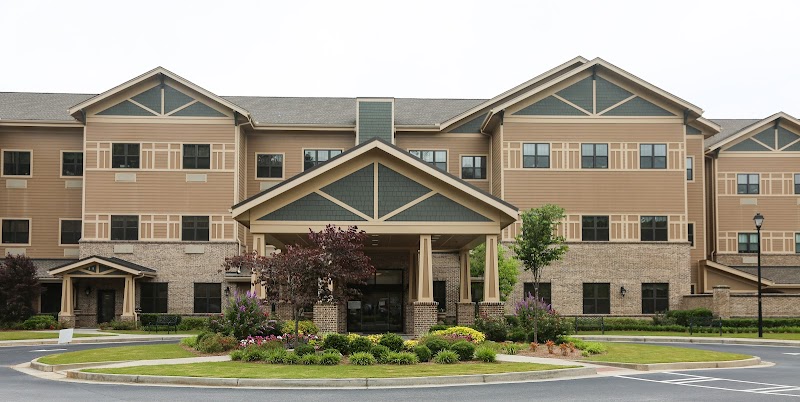
200 MOUNTAIN PARK DRIVE, DAHLONEGA, GA 30533 (706) 482-3000
Non profit - Other 60 Beds CLINICAL SERVICES, INC. Data: November 2025
Trust Grade
75/100
#53 of 353 in GA
Last Inspection: March 2025

Within standard 12-15 month inspection cycle. Federal law requires annual inspections.

Overview

Chelsey Park Health and Rehabilitation has a Trust Grade of B, indicating it is a good facility and a solid choice for care. It ranks #53 out of 353 nursing homes in Georgia, placing it in the top half, and #1 of 2 in Lumpkin County, meaning it is the best option in the local area. The facility is improving, having reduced issues from four in 2023 to zero by 2025, which is a positive trend. Staffing is rated average with a turnover rate of 65%, which is concerning, as it is higher than the state average of 47%. There have been no fines, which is a good sign, and the facility has higher RN coverage than 91% of Georgia facilities, ensuring better oversight of patient care. However, there are some weaknesses to consider. Recent inspections found concerns with infection control during laundry transport and lack of proper positioning care for residents, which could potentially harm residents’ health. Additionally, there were concerns about medication management for one resident, indicating that some protocols may not be consistently followed. Overall, while Chelsey Park has strengths in quality oversight and no fines, prospective families should be aware of specific areas needing improvement.

Trust Score
B
75/100
In Georgia
#53/353
Top 15%
Safety Record
Low Risk
No red flags
Inspections
Getting Better
4 → 0 violations
Staff Stability
⚠ Watch
65% turnover. Above average. Higher turnover means staff may not know residents' routines.
Penalties
✓ Good
No fines on record. Clean compliance history, better than most Georgia facilities.
Skilled Nurses
✓ Good
Each resident gets 44 minutes of Registered Nurse (RN) attention daily — more than average for Georgia. RNs are trained to catch health problems early.
Violations
✓ Good
Only 5 deficiencies on record. Cleaner than most facilities. Minor issues only.
★★★★☆
4.0
Overall Rating
★★★☆☆
3.0
Staff Levels
★☆☆☆☆
1.0
Care Quality
★★★★★
5.0
Inspection Score
Stable
2023: 4 issues
2025: 0 issues

The Good

  • Full Sprinkler Coverage · Fire safety systems throughout facility
  • No fines on record

Facility shows strength in fire safety.

The Bad

Staff Turnover: 65%

19pts above Georgia avg (46%)

Frequent staff changes - ask about care continuity

Chain: CLINICAL SERVICES, INC.

Part of a multi-facility chain

Ask about local staffing decisions and management

Staff turnover is elevated (65%)

17 points above Georgia average of 48%

The Ugly 5 deficiencies on record

Mar 2023 4 deficiencies
CONCERN (D) 📢 Someone Reported This

A family member, employee, or ombudsman was alarmed enough to file a formal complaint

Potential for Harm - no one hurt, but risky conditions existed

Quality of Care (Tag F0684)

Could have caused harm · This affected 1 resident

**NOTE- TERMS IN BRACKETS HAVE BEEN EDITED TO PROTECT CONFIDENTIALITY** Based on observation, interviews, record review, and review of the policy titled Skilled Nursing Services Restorative, the facil...

Read full inspector narrative →
**NOTE- TERMS IN BRACKETS HAVE BEEN EDITED TO PROTECT CONFIDENTIALITY** Based on observation, interviews, record review, and review of the policy titled Skilled Nursing Services Restorative, the facility failed to provide treatment and care to address the positioning needs in accordance with professional standards of practice for one of 31 sampled residents (R) (R#8) related to contracture management. Findings included: A review of the policy titled Skilled Nursing Services Restorative dated 2020 with last review date of 12/30/22 revealed the following: to establish a communication system between nursing and skilled therapy to assure continuity of care between disciplines. This center promotes nursing interventions that assist the patient in his/her ability to adapt and adjust to living as independently and as safely as possible. On 3/10/23 at 11:14 a.m. R#8 was observed in her room lying in bed. She was observed with left hand and arm contracture and right-hand contracture. The resident did not have on any splints during this observation. There was a rolled pair of socks in the residents left hand. She stated that she is not able to use her left hand at all so she puts the sock in it but can still somewhat use her right hand. She stated that there may be splints in the drawer, but she hasn't used them for a long time. She does not know why. On 3/11/23 at 9:39 a.m. R#8 was observed in her room lying in bed. The resident did not have on any splints during this observation. Again, there was the same rolled pair of socks in the residents left hand. She stated that it's been such a long time since they applied the splints or provided exercises for her with her contractures, but she would be receptive to having the staff work with her with exercises and splints. She stated that they use to, but she doesn't know why they stopped. She stated that she did not have any pain in her hands at this time. A review of the clinical record revealed that the resident was admitted to the facility on [DATE] with diagnosis of Multiple Sclerosis (MS), Osteoarthritis, Polyneuropathy Disease, Age Related Osteoporosis, Contracture of Left Hand, and Functional Quadriplegia. A review of the quarterly Minimum Data Set (MDS) assessment dated [DATE] revealed that R#8 has a Brief Interview for Mental Status (BIMS) score 15, indicating that the resident is cognitively intact. The assessment further revealed that the resident has diagnosis of MS and has impairments on both sides with limited range of motion in upper and lower extremities. A review of the Care Plan (onset date of 6/6/18) revealed R#8 has limited mobility; is dependent for her care needs; needs assistance with functional ADL's (Activities of Daily Living) as evidenced by unsteady gait; needs assistance moving from sitting to lying in bed; needs assistance with toileting transfers; needs assistance moving from sitting to standing (from chair, w/c, or side of bed); needs assistance moving from lying to sitting position on the side of the bed; needs assistance with transfers from bed to chair (or wheelchair); decreased ROM (Range of Motion) contracture(s) and to refer to therapy as indicated. A review of the restorative plan dated 10/27/2017 revealed that the goals for R#8 were that the resident would maintain / improve current level of function and reduce risk for further limitations to her extremities. The intervention was all extremities (upper and lower) gentle stretching and PROM (Passive Range of Motion) for 10 reps / 3 sets. There was a review of the therapy tab for any notes within the last two years and there was nothing related to R#8 contracture management. During an interview with the Director of Nursing (DON) on 3/11/23 at 11:59 a.m., she stated that they do not have designated Certified Nursing Assistants (CNA's) for the restorative program. She stated that the CNA's caring for the residents are responsible for providing services when giving care. She stated that she does not know how it is documented and she does not recall seeing any splinting. She does know that they assist with ambulation and eating. she has a list of residents that get assistance with eating transferring walking dressing however R#8 was not on that list. She stated that if there is an abnormality with residents with contractures, the nursing will report. She has only been in the building as the Interim DON since February 2023, and she has not had anyone identified with new contractures. She confirmed that she completed the form on 3/10/23, indicating there were 21 residents with contracture and four were admitted with contracture. She again confirmed that there is no splinting being done in the facility that she is aware of. If therapy makes the recommendation, then they will get splinting, but she cannot say as to why there is currently no splinting being done. She has not done anything with the contractures like assessments or measurements. She stated that therapy may do measurement, but she has not delt with any contracture management since she has been at the facility. She confirmed that R#8 was not on the list for restorative and that she was not aware that R#8 had contracture. During an interview with the Therapy Director Physical Therapist on 3/11/23 at 12:22 p.m., she stated that residents with contractures should have an annual assessment/screening. There is a referral process that nursing use to refer residents to therapy if they notice contractures. She does not do any contracture management such as measurements. They only ask about pain, function, skin care, and positioning during the assessment. During an interview with the DON on 3/11/23 at 3:04 p.m. she stated that there is no way of knowing why they discharged R#8 from the restorative program. She was asked to provide any documentation as to the reason for discharge. During an interview with the DON on 3/11/23 at 3:55 p.m., she provided documents that stated R#8 was discharged from restorative program in 2018. She further stated that the last time R#8 was receiving restorative services, it was for only one hand. She isn't sure if both hands were contracted at that time. During an interview with the Therapy Director on 3/12/23 at 9:10 a.m., she stated that they have no written process or policy related to contracture management and that R#8 was admitted with left hand contracture. In 2018, her right hand started contracting. They were doing splinting as tolerated with the restorative program. She has not been on restorative case load since 2018. She stated that the resident would tolerate the splint sometimes. She stated that the resident does receive care from the aides, but she is not and has not been on any official restorative program since 2018. She was asked again to provide any documentation related to contracture assessments. During an interview with the Therapy Director on 3/12/23 at 10:32 a.m., she confirmed that there was no documentation that R#8 had any annual assessments or contracture management since 2018.
CONCERN (D) 📢 Someone Reported This

A family member, employee, or ombudsman was alarmed enough to file a formal complaint

Potential for Harm - no one hurt, but risky conditions existed

Medication Errors (Tag F0758)

Could have caused harm · This affected 1 resident

**NOTE- TERMS IN BRACKETS HAVE BEEN EDITED TO PROTECT CONFIDENTIALITY** 2. Review of the clinical record for R#198 revealed he was admitted to the facility on [DATE] with diagnoses including but not l...

Read full inspector narrative →
**NOTE- TERMS IN BRACKETS HAVE BEEN EDITED TO PROTECT CONFIDENTIALITY** 2. Review of the clinical record for R#198 revealed he was admitted to the facility on [DATE] with diagnoses including but not limited to Parkinson's disease, stage 4 pressure ulcer of sacral region, diabetes, anxiety disorder, major depressive disorder, peripheral vascular disease, and hypertension. The resident's most recent quarterly Minimum Data Set (MDS) dated [DATE], revealed a Brief Interview for Mental Status (BIMS) was coded as 12, indicating moderate cognitive impairment. Review of Summary Report dated 5/1/2022 through 8/13/2022 for R#198, revealed an order dated 5/5/22 for lorazepam (a medication used to treat anxiety) one (1) milligram (mg) every six hours as needed (PRN) agitation. There is no evidence of a 14 day stop date or a rationale from the physician for the extension past 14 days. Review of the Medication Administration Records (MARs) for May 2022, revealed as needed lorazepam was administered 16 times; 32 times in June 2022; 32 times in July 2022, and nine times in August 2022. Interview on 3/12/2023 at 2:43 p.m. with Licensed Practical Nurse (LPN) AA sated that she tries to use diversional tactics for residents who have behaviors, before administering psychotropic medications. She stated that if a resident's as needed psychotropic medication is discontinued, she will notify physician for re-order. She stated that she thought that when the psychotropic medications were entered into the electronic medical record, that the system automatically applied a stop date for the medications that are ordered on an as needed basis. She confirmed that she administered R#198 as needed lorazepam when he was a resident at the facility but stated she did not notice that the order did not have a stop date. Based on record review, staff interview, and review of the facility policy titled Automatic Stop Orders, the facility failed to ensure a stop date was implemented, not to exceed 14 days for psychotropic medications for two residents (R) (R#26, R#198) of six residents reviewed for unnecessary medications. Specifically, the facility failed to ensure a stop date was implemented for antianxiety medication ordered as needed (PRN) for R#26 and R#198. Findings are: A review of the facility policy, Automatic Stop Orders, dated 2019, revealed PRN order for psychotropic medications would require the prescriber to specify a duration over 14 days with a clinical rationale. Per the policy, psychotropic orders would require a set duration time and could not be renewed for longer than 14 days without a direct evaluation of the patient by the prescriber. A review of the medical record revealed R#26 was admitted to the facility on [DATE] with a past medical history of Arthritis/OA, glaucoma (blind left eye), significant hearing deficit (able to hear minimal and left ear), TIA, aphasia, dementia, and frequent falls. A review of the Physician's orders dated 2/6/2023 revealed the Physician ordered lorazepam 0.5 mg by mouth every four hours as needed for anxiety. The order had a start date of 2/6/2023, but the order had no stop date. A medical record review revealed the facility's Psychoactive Medication Consent Form, dated 2/10/2023. The form indicated family gave consent to administer 0.5 milligrams of lorazepam for six months, by mouth, for anxiety. A facility nurse also signed the document. During an interview with the Interim Director of Nursing (DON) on 3/11/2023 at 11:05 a.m., she acknowledged R#26's as needed (PRN) order for lorazepam had no end date. She explained that the 12/31/9998 end date documented in the Physician's orders reflected no end date for the medication. The DON stated she was not aware an end date for psychotropic drugs was required for hospice patients.
CONCERN (D) 📢 Someone Reported This

A family member, employee, or ombudsman was alarmed enough to file a formal complaint

Potential for Harm - no one hurt, but risky conditions existed

Deficiency F0761 (Tag F0761)

Could have caused harm · This affected 1 resident

Based on observation, staff interviews, and policy review titled Medication Storage in the Care Center, the facility failed to ensure the medication cart and treatment cart on the second floor were lo...

Read full inspector narrative →
Based on observation, staff interviews, and policy review titled Medication Storage in the Care Center, the facility failed to ensure the medication cart and treatment cart on the second floor were locked and secured, when not in use. The facility census was 49 residents. Findings include: Review of the facility policy titled Medication Storage in the Care Center copyright 2023, revealed the intent is to ensure medications and biologicals are stored safely, securely, and properly following manufacturer's recommendations or those of the supplier. The guideline indicated medication rooms, carts, and medication supplies are locked or attended by persons with authorized access. Observation on 3/11/2023 at 7:47 a.m. revealed on the second floor, the medication cart directly across from the nurse's station was noted to be unlocked. The treatment cart, along the wall to the left of the nurse's station, was also noted to be unlocked. There was no nursing staff near the nurse's station at the time of this observation. There were two residents sitting in the small dining room, adjacent to the nurse's station. Surveyor observed both carts for approximately four minutes before staff member exited elevator and walked up to the medication cart. Interview on 3/11/2023 at 7: 53 a.m. with Licensed Practical Nurse (LPN) AA, stated she was not aware that the medication cart was unlocked. She stated she had to switch out the computers for medication pass because it was dead, and she must have forgotten to lock the medication cart when she left the floor. She stated that she had not used the treatment cart since she started her shift today and stated the night shift nurse must have left it unlocked. Interview on 3/12/2023 at 12:00 p.m. with Interim Director of Nursing (DON), stated it is her expectation that all medication and treatment carts be locked at all times, when not in the use by the nursing staff.
CONCERN (E) 📢 Someone Reported This

A family member, employee, or ombudsman was alarmed enough to file a formal complaint

Potential for Harm - no one hurt, but risky conditions existed

Infection Control (Tag F0880)

Could have caused harm · This affected multiple residents

**NOTE- TERMS IN BRACKETS HAVE BEEN EDITED TO PROTECT CONFIDENTIALITY** Based on observations, staff interview and review of facility policy titled Laundry Services, the facility failed to maintain in...

Read full inspector narrative →
**NOTE- TERMS IN BRACKETS HAVE BEEN EDITED TO PROTECT CONFIDENTIALITY** Based on observations, staff interview and review of facility policy titled Laundry Services, the facility failed to maintain infection control during the transport of clean linens and resident's clothing. The facility census was 49. Findings include: Review of facility policy titled Laundry Services reviewed 12/30/2022 revealed the intent of the policy is to protect associates who handle and process the laundry while facilitating an adequate supply of linens. The policy does not document information related to covering the cart when transporting clean linen or resident's clothing. Observation on 3/11/2023 at 9:19 a.m. revealed the clean linen cart was rolled off the elevator and down the 300 hall with one side uncovered. Observation on 3/11/2023 at 9:27 a.m. and 10:11 a.m. revealed the clean linen cart was rolled off the elevator and down the 200 hall with one side uncovered. Observation on 3/12/2023 at 8:21 a.m. revealed the laundry cart with resident's clean clothing was uncovered and being rolled down the 300 hall from room [ROOM NUMBER] and stopping in front of room [ROOM NUMBER]. Interview on 3/12/2023 at 10:48 a.m. with the Laundry Supervisor DD revealed they are transporting the cart to the halls to restock the linen closet on the units. The carts should always be covered until they start unloading. They should only uncover once they arrive to restock the closet. Interview with the interim Director of Nurses (DON) on 3/12/2023 at 3:25 p.m. revealed she expects staff to keep the clean linen covered at all times while moving through the facility.
Jun 2021 1 deficiency
MINOR (C)

Minor Issue - procedural, no safety impact

Staffing Information (Tag F0732)

Minor procedural issue · This affected most or all residents

Based on observation and staff interviews the facility failed to have an up to date staffing information posted on 6/13/ 2021, 6/14/2021, 6/15/2021, and 6/16/2021. In addition, the facility failed to ...

Read full inspector narrative →
Based on observation and staff interviews the facility failed to have an up to date staffing information posted on 6/13/ 2021, 6/14/2021, 6/15/2021, and 6/16/2021. In addition, the facility failed to maintain the posted daily nurse staffing data for a minimum of 18 months. Findings include: An observation on 6/13/2021 at 1:15 p.m. upon enterance the facility the staffing information was not posted in a prominent place readily accessible to residents and visitors. An observation of staffing posting on 6/13/2021 at 6:30 p.m. staffing information posted at the receptionist desk with a date of 6/13/2021, census 42, Licensed staff, and unlicensed staff listed. No Registered Nurse (RN) hours documented on the posting. An observation on 6/14/2021 at 8:45 a.m. staffing information was not posted. An observation on 6/15/2021 at 8:30 a.m. staffing information was not posted. An observation on 6/16/2021 at 9:00 a.m. staffing information was not posted. An interview was conducted on 6/16/2021 at 9:15 a.m. with the Assistant Director of Nursing (ADON) revealed that it is her responsibility to post the daily staffing information. The ADON stated she did not post the staffing information for the past three days although she cannot explain why she did not post the staffing. She further revealed that she does not keep the staffing data for the required 18 months. An interview was conducted on 6/16/2021 at 9:20 a.m. with the Director of Nursing (DON) revealed that she posted the staffing information on Sunday 6/13/2021 upon her arrival to the facility. The DON revealed that there was a RN in the facility but she failed to add the RN hours to the staffing information on 6/13/2021. An interview with the Administrator on 6/16/2021 at 10:45 a.m. revealed that the facility has not maintained the posted daily nurse staffing data for a minimum of 18 months.
Understanding Severity Codes (click to expand)
Life-Threatening (Immediate Jeopardy)
J - Isolated K - Pattern L - Widespread
Actual Harm
G - Isolated H - Pattern I - Widespread
Potential for Harm
D - Isolated E - Pattern F - Widespread
No Harm (Minor)
A - Isolated B - Pattern C - Widespread

Questions to Ask on Your Visit

  • "Why is there high staff turnover? How do you retain staff?"
  • "Can I speak with families of current residents?"
  • "What's your RN coverage like on weekends and overnight?"

Our Honest Assessment

Strengths
  • • No major safety red flags. No abuse findings, life-threatening violations, or SFF status.
  • • No fines on record. Clean compliance history, better than most Georgia facilities.
  • • Only 5 deficiencies on record. Cleaner than most facilities. Minor issues only.
Concerns
  • • 65% turnover. Above average. Higher turnover means staff may not know residents' routines.
Bottom line: Generally positive indicators. Standard due diligence and a personal visit recommended.

About This Facility

What is Chelsey Park's CMS Rating?

CMS assigns CHELSEY PARK HEALTH AND REHABILITATION an overall rating of 4 out of 5 stars, which is considered above average nationally. Within Georgia, this rating places the facility higher than 99% of the state's 100 nursing homes. This rating reflects solid performance across the metrics CMS uses to evaluate nursing home quality.
How is Chelsey Park Staffed?

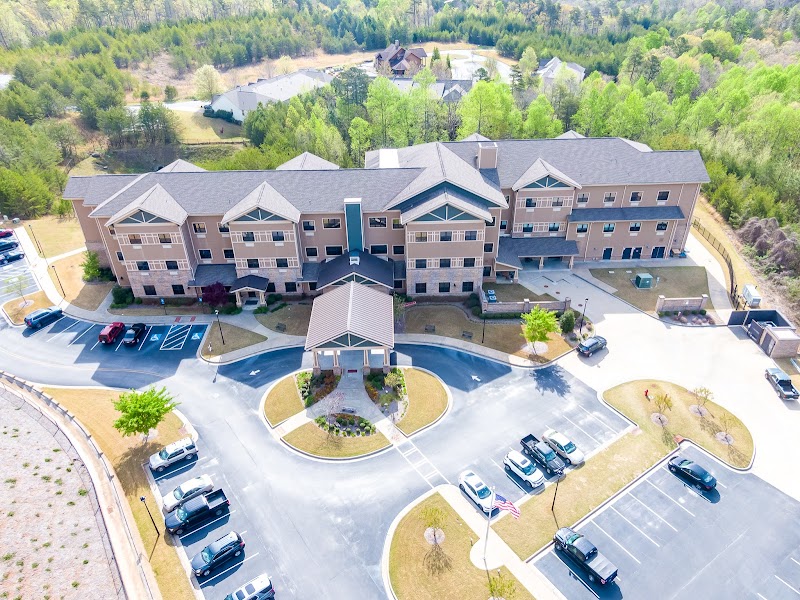
CMS rates CHELSEY PARK HEALTH AND REHABILITATION's staffing level at 3 out of 5 stars, which is average compared to other nursing homes. Staff turnover is 65%, which is 19 percentage points above the Georgia average of 46%. High turnover can affect care consistency as new staff learn residents' individual needs.

What Have Inspectors Found at Chelsey Park?

State health inspectors documented 5 deficiencies at CHELSEY PARK HEALTH AND REHABILITATION during 2021 to 2023. These included: 4 with potential for harm and 1 minor or isolated issues.
Who Owns and Operates Chelsey Park?

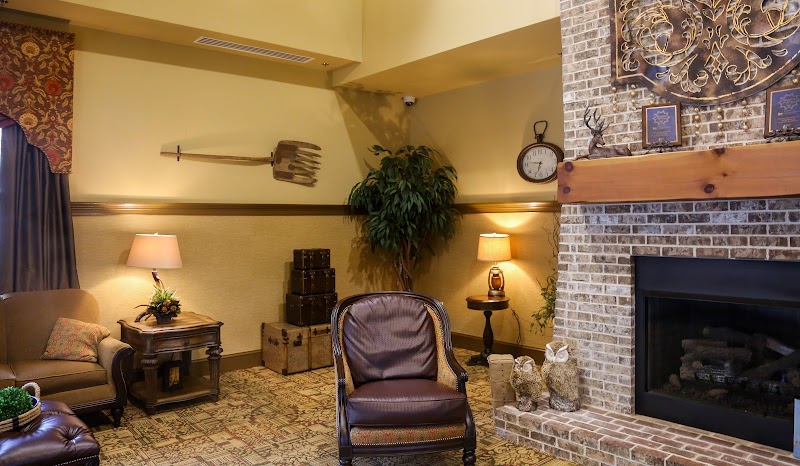
CHELSEY PARK HEALTH AND REHABILITATION is owned by a non-profit organization. Non-profit facilities reinvest revenue into operations rather than distributing to shareholders. The facility is operated by CLINICAL SERVICES, INC., a chain that manages multiple nursing homes. With 60 certified beds and approximately 58 residents (about 97% occupancy), it is a smaller facility located in DAHLONEGA, Georgia.
How Does Chelsey Park Compare to Other Georgia Nursing Homes?

Compared to the 100 nursing homes in Georgia, CHELSEY PARK HEALTH AND REHABILITATION's overall rating (4 stars) is above the state average of 2.6, staff turnover (65%) is significantly higher than the state average of 46%, and health inspection rating (5 stars) is much above the national benchmark.

What Should Families Ask When Visiting Chelsey Park?

Based on this facility's data, families visiting should ask: "How do you ensure continuity of care given staff turnover, and what is your staff retention strategy?" "Can I visit during a mealtime to observe dining assistance and food quality?" "How do you handle medical emergencies, and what is your hospital transfer rate?" "Can I speak with family members of current residents about their experience?" These questions are particularly relevant given the facility's high staff turnover rate.

Is Chelsey Park Safe?

Based on CMS inspection data, CHELSEY PARK HEALTH AND REHABILITATION has a clean safety record: no substantiated abuse findings (meaning no confirmed cases of resident harm), no Immediate Jeopardy citations (the most serious violation level indicating risk of serious injury or death), and is not on the Special Focus Facility watch list (a federal program monitoring the lowest-performing 1% of nursing homes). The facility has a 4-star overall rating and ranks #1 of 100 nursing homes in Georgia. While no facility is perfect, families should still ask about staff-to-resident ratios and recent inspection results during their visit.

Do Nurses at Chelsey Park Stick Around?

Staff turnover at CHELSEY PARK HEALTH AND REHABILITATION is high. At 65%, the facility is 19 percentage points above the Georgia average of 46%. High turnover means new staff may not know residents' individual needs, medications, or preferences. It can also be disorienting for residents, especially those with dementia who rely on familiar faces. Families should ask: What is causing the turnover? What retention programs are in place? How do you ensure care continuity during staff transitions?

Was Chelsey Park Ever Fined?

CHELSEY PARK HEALTH AND REHABILITATION has no federal fines on record. CMS issues fines when nursing homes fail to meet care standards or don't correct problems found during inspections. The absence of fines suggests the facility has either maintained compliance or corrected any issues before penalties were assessed. This is a positive indicator, though families should still review recent inspection reports for the full picture.

Is Chelsey Park on Any Federal Watch List?

CHELSEY PARK HEALTH AND REHABILITATION is not on any federal watch list. The most significant is the Special Focus Facility (SFF) program, which identifies the bottom 1% of nursing homes nationally based on persistent, serious quality problems. Not being on this list means the facility has avoided the pattern of deficiencies that triggers enhanced federal oversight. This is a positive indicator, though families should still review the facility's inspection history directly.