PRUITTHEALTH - FAIRBURN

7560 BUTNER ROAD, FAIRBURN, GA 30213 (770) 306-7878
For profit - Corporation 82 Beds PRUITTHEALTH Data: November 2025
Trust Grade
50/100
#217 of 353 in GA
Last Inspection: May 2025

Inspected within the last 6 months. Data reflects current conditions.

Overview

PruittHealth - Fairburn has received a Trust Grade of C, which means it is average compared to other nursing homes. It ranks #217 out of 353 facilities in Georgia, placing it in the bottom half, and #7 out of 18 in Fulton County, indicating that only six local options are better. The facility's trend is concerning as it has worsened, increasing from 5 issues in 2023 to 9 in 2025. Staffing is average, with a 3 out of 5-star rating and a turnover rate of 52%, which is about the state average. Although there have been no fines, which is a positive aspect, there are significant health and safety concerns, including improper food storage practices that could risk residents' health and failure to ensure proper IV antibiotic therapy for a resident, potentially putting them at risk for severe complications.

Trust Score
C
50/100
In Georgia
#217/353
Bottom 39%
Safety Record
Low Risk
No red flags
Inspections
Getting Worse
5 → 9 violations
Staff Stability
⚠ Watch
52% turnover. Above average. Higher turnover means staff may not know residents' routines.
Penalties
✓ Good
No fines on record. Clean compliance history, better than most Georgia facilities.
Skilled Nurses
○ Average
Each resident gets 38 minutes of Registered Nurse (RN) attention daily — about average for Georgia. RNs are the most trained staff who monitor for health changes.
Violations
⚠ Watch
22 deficiencies on record. Higher than average. Multiple issues found across inspections.
★★☆☆☆
2.0
Overall Rating
★★★☆☆
3.0
Staff Levels
★★★☆☆
3.0
Care Quality
★★☆☆☆
2.0
Inspection Score
Stable
2023: 5 issues
2025: 9 issues

The Good

  • Full Sprinkler Coverage · Fire safety systems throughout facility
  • No fines on record

Facility shows strength in fire safety.

The Bad

2-Star Overall Rating

Below Georgia average (2.6)

Below average - review inspection findings carefully

Staff Turnover: 52%

Near Georgia avg (46%)

Higher turnover may affect care consistency

Chain: PRUITTHEALTH

Part of a multi-facility chain

Ask about local staffing decisions and management

The Ugly 22 deficiencies on record

May 2025 9 deficiencies
CONCERN (D) 📢 Someone Reported This

A family member, employee, or ombudsman was alarmed enough to file a formal complaint

Potential for Harm - no one hurt, but risky conditions existed

Deficiency F0559 (Tag F0559)

Could have caused harm · This affected 1 resident

**NOTE- TERMS IN BRACKETS HAVE BEEN EDITED TO PROTECT CONFIDENTIALITY** Based on resident, family and staff interviews, and record review, the facility failed to provide written notification to the re...

Read full inspector narrative →
**NOTE- TERMS IN BRACKETS HAVE BEEN EDITED TO PROTECT CONFIDENTIALITY** Based on resident, family and staff interviews, and record review, the facility failed to provide written notification to the resident and the resident representative (RP) with an explanation of why the move to a new room was required for one of 36 samples resident (R) (R275). Findings include: Review of the electronic medical record (EMR) revealed R275 was admitted to the with a diagnosis of but not limited to acute embolism and thrombosis of unspecified deep veins of right proximal lower extremity (blood clot in deep vein). Review of the admission Minimum Data Set (MDS) assessment dated [DATE] revealed a Brief Interview for Mental Status (BIMS) score of 15, indicating intact cognition. During an interview on 5/20/2025 at 10:52 am with R275 revealed she was originally in room [ROOM NUMBER] which was a private room, was sent out to the emergency department (ED), and when she returned to the facility, she was in a semi-private room. During a telephone interview on 5/22/2025 at 12:42 pm with the family member of R275 revealed her mother was sent out to the ED and was gone for approximately eight hours and when she returned to the facility the staff informed her of the room change. During an interview on 5/21/2025 at 1:55 pm with the admission Director (AD) revealed R275 came into a facility in a private room because they did not have a semi-private room available. She stated when she left and went to the hospital, they had an admission who needed a private room, and the bed was not being held for R275, because they only held beds for Medicaid residents and not all insurances. During an interview on 5/21/2025 at 4:52 pm with Licensed Practical Nurse (LPN) PP stated while R275 was at the hospital she was told by the AD to move R275 out of room [ROOM NUMBER] because she was not paying for a private room. She continued to state the family member of R275 came back into the facility and that was when they informed her she was no longer in room [ROOM NUMBER] and had been switched to room [ROOM NUMBER]. During an interview on 5/21/2025 at 5:03 pm with the AD revealed she sent an email to the Housekeeping Manager to inform them to deep clean R275's room. She stated she would confirm information with the nursing department before making a decision, but she was under the impression based on the resident not wanting to be here and the private room being a courtesy, she decided to switch her room. When R275's family member arrived, that was when they informed her of the room change. During an interview on 5/21/2025 at 5:22 pm with the Administrator revealed these decisions were an interdisciplinary (IDT) approach and the family needed to be notified.
CONCERN (D) 📢 Someone Reported This

A family member, employee, or ombudsman was alarmed enough to file a formal complaint

Potential for Harm - no one hurt, but risky conditions existed

Quality of Care (Tag F0684)

Could have caused harm · This affected 1 resident

**NOTE- TERMS IN BRACKETS HAVE BEEN EDITED TO PROTECT CONFIDENTIALITY** Based on observations, record review, and staff interviews, the facility failed to ensure the safe and sanitary storage of dentu...

Read full inspector narrative →
**NOTE- TERMS IN BRACKETS HAVE BEEN EDITED TO PROTECT CONFIDENTIALITY** Based on observations, record review, and staff interviews, the facility failed to ensure the safe and sanitary storage of dentures for one of 36 sampled residents (R) (R224). Specifically, dentures were not stored in a labeled denture cup and the upper denture was found on an unclean surface rather than in a designated labeled container. The deficient practice had the potential to cause contamination, misplacement or damage of R224's denture. Findings include: The facility's dental policy was not available from the facility upon request. Review of the facility's document titled Clinical Procedure: Denture Care dated 2024 documented: Procedure Cleaning the Dentures: . If the dentures are not being worn immediately, place them in a clean denture cup filled with water or a denture-soaking solution to keep them moist. Review of the facility's Electronic Medical Record (EMR) revealed R224 was admitted with diagnoses including but not limited to Alzheimer's disease with late onset and dementia. Review of the admission Minimum Data Set (MDS) dated [DATE] documented in Section C (Cognition) a Brief Interview of Mental Status (BIMS) score of 3, which indicated resident had severely impaired cognition, Section GG (Functional Abilities) R224 requires set-up for oral hygiene and supervision for personal hygiene. Review of a care plan dated 4/22/2025 documented to include but not limited to cognitive loss / dementia, R224 has intermittent confusion, memory loss related to diagnosis of dementia. Observation on 5/20/2025 at 10:29 am revealed one upper denture on the surface of the bedside table in front of R224. Observation on 5/20/2025 at 11:00 am revealed one upper denture on the surface of the bedside table in front of R224. Observation and interview on 5/20/2025 11:10 am revealed one upper denture on the surface of the bedside table in front of R224. Licensed Practical Nurse (LPN) AA confirmed and validated there was one upper denture on the surface of the bedside table in front of R224. She told R224 to put it back in her mouth. LPN AA stated the dentures should not be on the surface of the bedside table, they should be in a denture cup because R224 could have bacteria build up in her mouth and get an infection. Interview on 5/21/2025 at 4:59 pm with the Director of Health Services (DHS) revealed her expectations were for the staff to make sure the dentures were placed in a denture cup when not in use near bedside and accessible to the resident. She stated a negative outcome would be damage to the dentures and when the dentures were lying around on the bedside table, they were not clean and it would be an infection control issue because bacteria can be transferred to the resident and this could make the resident sick and have infection. Interview on 5/22/2025 at 9:47 am with Certified Nursing Assistant (CNA) BB dentures were to be kept in a denture cup with a denture tablet when the residents were not using them. She further stated the dentures were to be cleaned before they were placed back into the resident's mouth. She stated dentures were not to be on the surface of a bedside table because the resident could get germs and the dentures could get lost or broken. Interview on 5/22/2025 at 9:55 am with the Assistant Director of Health Services (ADHS) revealed she stated her expectations were for dentures to be cleaned, mouth care provided, and when not in use, dentures should be placed in a denture cup with denture cleaner. She stated dentures should not ne on a bedside table because they could be lost, broken, and contaminated if not in a denture cup/container. The ADHS further stated the resident could develop mouth sores, have bad mouth odors and could get ill.
CONCERN (D) 📢 Someone Reported This

A family member, employee, or ombudsman was alarmed enough to file a formal complaint

Potential for Harm - no one hurt, but risky conditions existed

Accident Prevention (Tag F0689)

Could have caused harm · This affected 1 resident

**NOTE- TERMS IN BRACKETS HAVE BEEN EDITED TO PROTECT CONFIDENTIALITY** Based on observation, record review, staff interviews, and review of the facility's policy titled, Medication Administration: Ge...

Read full inspector narrative →
**NOTE- TERMS IN BRACKETS HAVE BEEN EDITED TO PROTECT CONFIDENTIALITY** Based on observation, record review, staff interviews, and review of the facility's policy titled, Medication Administration: General Guidelines, the facility failed to ensure that all medications were taken and not left unattended on the bedside table for one of 36 sampled residents (R) (R224). The deficient practice had the potential to increase the residents risk of adverse health outcomes related to incorrect medication dosage. Findings include: Review of the facility's policy titled Medication Administration: General Guidelines reviewed 7/22/2024 documented under Policy Statement: Medications are administered as prescribed, in accordance with good nursing principles and practices and only by persons legally authorized to do so. Review of the facility's electronic Medical Records (EMR) revealed R224 was admitted with diagnoses including but not limited to vitamin D deficiency, Alzheimer's disease with late onset, and dementia. Review of the admission Minimum Data Set (MDS) dated [DATE] documented Section C (Cognition) a Brief Interview for Mental Status (BIMS) score of 3, which indicated R224 had severe cognitive impairment. Review of care plan dated 4/22/2025 included but not limited to Cognitive Loss / Dementia. R224 has confusion, memory loss related to diagnosis of dementia. Review of the Physician's Orders dated 4/21/2025 included but not limited to: Cholecalciferol (vitamin D3) 25 microgram (mcg) (1,000 unit) tablet, 2 tablets once a day. Observation on 5/20/2025 at 10:29 am revealed one white tablet in a cup of water on the bedside table in front of R224. Observation on 5/20/2025 at 11:00 am revealed one white tablet in a cup of water on the bedside table in front of R224. Observation and interview on 5/20/2025 11:10 am revealed Licensed Practical Nurse (LPN) AA confirmed there was one white tablet in a cup of water on the bedside table in front of R224. She stated it should not be there because if a resident did not get the full dose of the medication, it could affect the resident negatively. Review of the Nurses' Progress Notes dated 5/20/2025 revealed LPN AA documented Resident had spit her Vitamin D3 into her cup of water, that was found later and then replaced, left Msg [message] with [NAME] NP (Nurse Practitioner) . Interview on 5/21/2025 at 4:59 pm with the Director of Health Services (DHS) revealed her expectations were that nurses should ensure residents swallow the medications before they leave the resident's rooms. She stated the nurses should stay with the residents to ensure all medications were taken. She stated a negative outcome would be the resident could receive an incorrect dose if the medication was not taken. The DHS further stated if the resident took the medication in the water close to the time of the next dose, the resident could get too much of the medication which would lead to overdose and cause harm to the resident. Interview on 5/22/2025 at 9:55 am with the Assistant Director of Health Services (ADHS) revealed her expectations were that no pill should be left at the residents' bedside. She stated the nurses should ensure all pills were swallowed by the resident because the nurse may not know which pill was not swallowed. The ADHS further stated the resident may not get the full dose of the medication and get sick.
CONCERN (D) 📢 Someone Reported This

A family member, employee, or ombudsman was alarmed enough to file a formal complaint

Potential for Harm - no one hurt, but risky conditions existed

Respiratory Care (Tag F0695)

Could have caused harm · This affected 1 resident

**NOTE- TERMS IN BRACKETS HAVE BEEN EDITED TO PROTECT CONFIDENTIALITY** Based on observations, record review, resident and staff interviews, and review of the facility's policy titled, Oxygen Administ...

Read full inspector narrative →
**NOTE- TERMS IN BRACKETS HAVE BEEN EDITED TO PROTECT CONFIDENTIALITY** Based on observations, record review, resident and staff interviews, and review of the facility's policy titled, Oxygen Administration, the facility failed to have a physician's order for oxygen (O2) administration and failed to provide the correct O2 liter flow per physician's order for two of 15 residents (R) (R64 and R5) receiving oxygen therapy. The defieicent practice had the potential for R64 and R5 to have respiratory issues with O2 set at the incorrect level. Findings include: Review of the facility's electronic medical record (EMR) revealed R64 was with a diagnosis including but not limited to wheezing. Review of the Quarterly Minimum Data Set (MDS) dated [DATE] documented in Section C (Cognition) a Brief Interview for Mental Status (BIMS) score of 14, which indicated resident had intact cognition. Section O (Special Treatments) revealed R64 receives Respiratory Treatments- Oxygen therapy, Section I (Active Diagnosis) revealed diagnoses of asthma, chronic obstructive pulmonary disease (COPD). Review of a care plan dated 3/9/2025 documented but not limited to R64 has abnormal vital signs (low O2 saturation). Goal: R64 will have no signs and symptoms of abnormal vital signs through the next review date, transfer to hospital for evaluation. Review of the Physician's Orders revealed no evidence of physician's order for O2 administration. Observation and interview on 5/20/2025 at 10:53 am revealed R64 in bed in her room. She had 4 liters per minute (LPM) O2 therapy in progress via nasal cannula (NC). R64 stated she received O2 therapy for shortness of breath (SOB), and she had been receiving O2 every day for months. She stated the nurses have put on the NC and turned on the O2 flow on the O2 concentrator every day for months. Observation on 5/20/2025 at 11:42 am revealed R64 in bed in her room. O2 therapy at 4 LPM in progress via NC. Review of a Hospital Discharge Summary dated 3/13/2025, page 3, Discharge Instructions, documented Use 2 liter oxygen via nasal canula continuously. Interview on 5/21/2025 at 5:46 PM revealed the Assistant Director of Health Services (ADHS) confirmed and verified R64 was receiving O2 therapy and there was no physician's order. She stated R64 was receiving O2 therapy before her hospitalization on 3/9/2025 and continued to receive O2 after her readmission to the facility on 3/13/2025. The ADHS stated if there were no order for R64 to receive O2 therapy a negative outcome would be that the resident would receive the wrong amount of O2 or the resident may receive O2 continuously when they should be receiving it intermittently or if the resident was ordered to receive O2 intermittently, the resident could receive it continuously because there was no order to follow. She stated that if the resident received the wrong dose of O2 or did not receive O2 at all when they should, they could become ill or have a bad outcome and be affected negatively. She stated that the nurse who admitted the resident was responsible for putting in orders and should transcribe the orders from the hospital to the facility orders. She stated that the nurse who admitted the residents was responsible for calling the doctor or the nurse practitioner and informing them that the resident was admitted and there were orders to be made. She stated that if the nurse who admitted R64 did not put the orders in their system and the clinical team was responsible for double checking and confirming the orders. She stated the clinical team included the Director of Health Services (DHS) and herself and they were responsible for double checking the orders and ensured the orders were entered in the EMR for each admitted resident. She confirmed that the orders were not put in and she did not check to ensure it was transcribed from the hospital discharge summary to the facility's EMR. Interview on 5/21/2025 at 5:56 pm with the DHS revealed she confirmed and validated R64 was receiving O2 therapy. She stated she was a member of the clinical team and confirmed she was responsible for double checking that the orders were transcribed from the hospital discharge summary to the facility's EMR, and she did not. The DHS confirmed R64 had been without a doctor's order since 3/13/2025 after she was readmitted to the facility. She confirmed that the discharge orders from the hospital on 3/13/2025 stated that the resident was to be maintained on 2 LPM of O2 via NC continuously. The DHS stated that since R64 was receiving O2 therapy without a doctor's order, a negative outcome would be the R64 could get a reduced amount of O2 or too much O2 if there was no physician's order to follow or the resident could receive O2 intermittently or continuously which could be the opposite of the physician's order. She stated this would be detrimental to R64. Interview on 5/22/2025 at 1:40 pm with Registered Nurse (RN) CC revealed she stated R64 was receiving O2 therapy and there needed to be an order for the O2 administration. She stated the nurses needed to check that there was a physician's order for the liter flow of O2 before administering the O2. She stated the nurse should check the physician's order if it was to be given as needed or continuously before the O2 can be given. She stated the nurse was to put the order in the EMR and the MAR (medication administration record) so that the nurse could sign that it was administered. She stated if there was no order, the nurse should not administer the O2. She stated R64 could get the wrong amount of O2 and they could also get it on and off instead of continuously and this could cause R64 to have worsening of her medical condition. 2. Review of the EMR revealed R5 was admitted to the facility with diagnoses including but not limited to chronic obstructive pulmonary disease (COPD), unspecified; acute and chronic respiratory failure with hypoxia; pleural effusion; hemiplegia and hemiparesis following cerebral infarction affecting left non-dominant side; cerebral infarction, unspecified; other seizure; upper respiratory infection; 2019-nCoV acute respiratory disease; shortness of breath; wheezing; cough. Review of the annual MDS dated [DATE] revealed a BIMS score of 14, which indicates R5 was cognitively intact. Section GG, functional status, revealed R5 required two-person physical assistance for functional mobility, including changing positions in bed, transfers, and ambulation. Section O, special treatments, R5 was receiving oxygen therapy. Review of R5 care plan dated 3/28/2024 identified a problem related to oxygen use secondary to COPD and respiratory failure. Goals included but not limited to maintaining optimal breathing and oxygen level within the constraints of terminal diagnosis. Review of the Physician's Orders for R5 included but was not limited to: Order for oxygen at three liters per minute (LPM) via nasal cannula continuously for diagnosis of COPD with frequency of every shift (days and evenings). Observation and interview with R5 on 5/20/2025 at 11:46 am revealed that he reported being prescribed 3 LPM of O2. However, upon closer examination of the O2 concentrator, the flow meter was observed to be set at 4 LPM, which was inconsistent with the resident's report. Observation with R5 on 5/21/2025 at 4:30 pm revealed the O2 flow between 2 and 3 LPM but not aligned with the 3 LPM marker. Observation with R5 on 5/22/2025 at 8:44 am revealed the O2 flow continued to be set at between 2 and 3 LPM but not aligned with the 3 LPM marker. Review of the MAR confirmed a physician order for 3 LPM of O2. Review of staff education records for the past year revealed no documented training or in-service on O2 administration or O2 concentrator use. Interview on 5/22/2025 at 9:01 am with Licensed Practical Nurse (LPN) AA in R5's room while observing the O2 concentrator together, revealed she acknowledged the O2 was incorrectly set and that she failed to verify the flow meter at eye level, as she typically did not bend down to set the flow or check the reading. Interview on 5/22/2025 at 2:11 pm with the DHS confirmed that registered nurses (RNs) and licensed practical nurses (LPNs) receive training on O2 concentrator use through online modules but was unable to confirm when the last return demonstration or O2 competencies were conducted. The DON acknowledged that incorrect O2 administration was considered a medication error and requires documentation, as well as notification of the physician and resident family. She also described that staff were expected to verify O2 settings at eye level, and this expectation was included in their training.
CONCERN (D) 📢 Someone Reported This

A family member, employee, or ombudsman was alarmed enough to file a formal complaint

Potential for Harm - no one hurt, but risky conditions existed

Deficiency F0761 (Tag F0761)

Could have caused harm · This affected 1 resident

Based on observations, record review, staff interviews, and review of the facility's policy titled, Controlled Substances for Healthcare Center, the facility failed to ensure that controlled substance...

Read full inspector narrative →
Based on observations, record review, staff interviews, and review of the facility's policy titled, Controlled Substances for Healthcare Center, the facility failed to ensure that controlled substances were documented immediately after administration for three of 36 sampled residents (R) (R32), (R17) and (R275), in accordance with accepted standards of nursing practice. This deficient practice had the potential to cause medication errors, including overdoses. Findings include: Review of the facility's policy titled Controlled Substances for Healthcare Center reviewed 4/1/2025 documented: Records: 1. The pharmacy will provide a Controlled Drug Record forms (proof of use sheet). This record shall be accurately maintained and shall include: o Name of patient/resident. o Name of the prescriber. o Prescription number Name, strength and dosage form of medication. o Date and time of administration. o Signature of the person administering the medication (after the medication is actually administered). Review of physician's orders for R17 dated 3/13/2025 documented included but not limited to: hydrocodone-acetaminophen tablet; 5-325 mg, 1 tablet two times a day for moderate- severe pain scale 4-6. Twice A Day 9:00 am, 5:00 pm. Review of physician's orders for R32 dated 7/30/2024 documented included but not limited to: pregabalin 100 mg; 1 capsule; oral three times a day 9:00 am, 1:00 pm, 5:00 pm. Review of physician's orders for R275 dated 5/12/2025 documented included but not limited to: pregabalin 50 mg1 capsule three times a day 9:00 am, 5:00 pm, 10:00 pm. Observation on 5/21/2025 at 12:54 pm during a medication cart review, Registered Nurse (RN) CC stated in the presence of the Director of Nursing (DON) that she did not sign the narcotics proof-of-use record for narcotic medications she had already administered earlier that morning. Review of the facility's narcotic book revealed the following omissions were confirmed: pregabalin 100 milligram (mg) capsule was administered to R32 at 11:00 am, hydrocodone/APAP 5-325mg tablet was administered to R17 at 9:00 am and Alprazolam 0.25mg tablet was administered to R275 at 11:00 am. Interview on 5/21/2025 at 12:55 pm with RN CC revealed she confirmed she did not sign the narcotics proof-of-use record for narcotic medications she had already administered earlier that morning. She stated she should have signed the narcotics book immediately after administration because this could cause the resident to get a double dose of the medication and get an overdose which could lead to adverse reactions. Interview on 5/21/2025 at 4:59 pm with the Director of Health Services (DHS) revealed she stated her expectations were that nurses must sign the narcotic book immediately after giving the medication. She explained that failure to do so could result in another nurse unknowingly administering a second dose, which could be detrimental and lead to serious harm or overdose for the resident. Interview on 5/22/2025 at 9:55 am with the Assistant Director of Health Services (ADHS) revealed her expectation was that the narcotic book should be signed as soon as the medication was administered. If not, staff could forget to sign it, or another nurse could come afterwards and give the narcotic again. She stated this would be a duplicate dose given to the resident and this could cause a bad outcome for the resident.
CONCERN (D) 📢 Someone Reported This

A family member, employee, or ombudsman was alarmed enough to file a formal complaint

Potential for Harm - no one hurt, but risky conditions existed

Infection Control (Tag F0880)

Could have caused harm · This affected 1 resident

**NOTE- TERMS IN BRACKETS HAVE BEEN EDITED TO PROTECT CONFIDENTIALITY** Based on observations, interviews, and record reviews, and review of the facility policies titled, Infection Prevention and Cont...

Read full inspector narrative →
**NOTE- TERMS IN BRACKETS HAVE BEEN EDITED TO PROTECT CONFIDENTIALITY** Based on observations, interviews, and record reviews, and review of the facility policies titled, Infection Prevention and Control Plan and Infection Prevention Control and Surveillance, the facility failed to ensure appropriate infection control practices were implemented by staff to prevent the spread of infection for one of 36 sampled residents (R) (R40). Specifically, staff failed to perform hand hygiene when entering and exiting rooms on contact precautions, and properly clean and disinfect reusable medical equipment. The deficient practices had the potential to contribute to the transmission of communicable diseases and place residents at risk for infection. Findings include: Review of the policy titled Infection Prevention and Control Plan, revised 6/21/2024, revealed the purpose of the infection prevention and control program is to decrease morbidity and mortality attributable to infections in residents; prevent and control outbreaks of infection in residents; prevent acquisition of infection by staff members; maintain resident functional status; and maintain an optimal social environment for residents. Review of facility policy titled Infection Prevention Control and Surveillance revised 11/23/2024 revealed that the Infection Preventionist (IP) provides education on standard based precautions and conducts surveillance on all residents. 1. Observation made on 5/20/2025 at 1:34 pm, it was revealed that the signage for a resident room was incorrect; the resident had a diagnosis of conjunctivitis, which required Standard Precautions, not Enteric Contact Precautions. Observation made on 5/22/2025 at 9:20 am, Licensed Practical Nurse (LPN) CC exited a resident room, under Contact Precautions, with a blood pressure machine and covered it with a clear plastic bag without disinfecting it, then left the equipment in the hallway before continuing medication administration. Interview with LPN CC on 5/22/2025 at 09:38 AM revealed she did not clean and disinfect the blood pressure machine, despite disinfection wipes being available on the cart. She acknowledged knowing the machine should have been disinfected but failed to do so. LPN CC also reported being unaware of the purpose of the clear plastic bag placed over the equipment, stating that staff had been instructed to cover the equipment with a bag, but no explanation was provided regarding its intended use. 2. Review of the most recent significant change in status Minimal Data Set (MDS) assessment dated [DATE] revealed that R40 has a Brief Interview for Mental Status (BIMS) score of 4, indicating severe cognitive impairment. Section I, Active Diagnoses, revealed diagnoses of but not all-inclusive cerebral vascular disease (CVD), chronic kidney disease (CKD), dysphagia, and sacral pressure ulcer. Section GG, Functional Goals and Abilities, revealed that R40 was totally dependent on staff for activities of daily living. Review of a care plan dated 4/24/2025 revealed that R40 was to be monitored for pressure ulcers/injuries. R40 was to be monitored for signs of infection to the sacral wound. Review of Physician orders revealed that R40's dressing to be changed daily. R40 had an order for offloading (getting weight off wound). R40 had an order for magnetic resonance imaging (MRI). Review of the EMR revealed that R40 had a pressure ulcer to the sacrum since February 2025 by a wound care provider. Documentation dated 5/17/2025 that wound care provider worked R40 up for suspicion for osteomyelitis. Observation and interview on 5/21/2025 at 9:01 am revealed Registered Nurse (RN) FF performed wound care on for R40. RN FF was observed wearing a mask and gloves. RN FF placed the treatment cart outside of the resident's room. She cleaned the bedside table with a disinfectant wipe, then covered the table with trash bags. RN FF opened sterile gauze with ungloved hands. She cut some tape. She opened sterile water and poured into a cup of gauze. She then poured Dakin's (wound treatment) into a cup of gauze as well. RN FF removed the dressing by peeling back the dressing slowly. Then R40 experienced pain. RN FF stopped the dressing change to obtain pain medication. After the procedure was aborted, RN FF stated, What is enhanced barrier precaution (EBP)? She admitted that she was wearing gloves and mask and did not wear a gown. She admitted that the wound had some drainage. Upon returning to the room to continue dressing change observation, the resident was under enhanced barrier precautions. An interview on 5/21/2025 at 11:13 am with interim Infection Perfectionist (IP) RN NN and training IP MM revealed that staff received hand hygiene and enhanced barrier precautions training on hire (competency), quarterly, weekly, and as needed. Staff received enhanced barrier and transmission precautions checkoffs were quarterly and during a period of outbreak.
CONCERN (E) 📢 Someone Reported This

A family member, employee, or ombudsman was alarmed enough to file a formal complaint

Potential for Harm - no one hurt, but risky conditions existed

Deficiency F0658 (Tag F0658)

Could have caused harm · This affected multiple residents

Based on observations, staff interviews, record review and review of the facility policy titled, Intravenous (IV) Antibiotic Therapy, the facility failed to provide care that met professional standard...

Read full inspector narrative →
Based on observations, staff interviews, record review and review of the facility policy titled, Intravenous (IV) Antibiotic Therapy, the facility failed to provide care that met professional standards for one of two residents (R) (R124) receiving intravenous (IV) antibiotics therapy. The deficient practice has the potential to place R124 at risk for lack of healing of infection, clotting of IV line, and sepsis. Findings include: Review of facility policy titled Intravenous Antibiotic Therapy reviewed 7/2/2024 revealed under Procedure: .10. Policy and procedures for the specific infusion access device will be followed unless specific physician orders are present.14. At the end of each antibiotic dose, the nurse will place a new sterile cap/cover over the end of the tubing to maintain sterility then flush the infusion access device per protocol. Review of the care plan dated 5/19/2025 reflected that R124 will be free from signs and symptoms of sepsis and bacteremia through next review date. Review of Physician orders revealed that R124 was to receive five milliliters (ml) of 0.9% (percent) normal saline (NS) in a 10 ml syringe every shift. R124 had an order for ceftriaxone two grams daily through peripherally inserted central catheter (PICC). Review of the electronic medical record (EMR) revealed the Medication Administration Record (MAR) revealed that R124 should receive 5 ml of 0.9% NS in a 10 ml syringe every shift through PICC. An observation of R124 on 5/20/2025 at 12:56 pm revealed that her PICC line was not clamped but had an antiseptic cap in place. During an observation and interview on 5/21/2025 at 2:06 pm, Registered Nurse (RN) CC administer ceftriaxone to R124. She mixed medication, labeled medication, and applied gown, gloves and a face mask. After cleaning the access site, RN CC flushed PICC line with 10 ml of 0.9% NS in a 10 ml syringe. She did not draw back blood to confirm patency (line inserted correctly), then connected the IV antibiotic to the PICC line. RN CC confirmed that she flushed the access with 10 ml of NS and not the ordered 5 ml. An observation of R124 on 5/22/2025 at 9:14 am that the PICC line did not have an antiseptic cap, but the line was clamped. An interview on 5/22/2025 at 2:09 pm with interim Infection Preventionist (IP) (RN) NN revealed that the facility has protocols for the management of PICC lines in the computer. She stated PICC lines were to have an antiseptic cap at the end of the luer-lock (connection at the end of IV tubing). The nurse should draw blood back before administering medication to confirm patency, RN NN revealed that flushing would be before and after each antibiotic. The nurse would disinfect the luer-lock with alcohol and then apply a new antiseptic cap. She stated that dressing changes were weekly, usually every Monday. Registered nurses completed dressing changes, but Licensed Practical Nurses (LPN) can hang medications with monitoring by an RN. An interview on 05/22/2025 at 2:24 pm with the Director of Nursing (DON) revealed an RN would flush and assess the PICC every shift. PICC care was an order set in the computer. RNs received training at hire and as needed through in-services and computer training.
CONCERN (E) 📢 Someone Reported This

A family member, employee, or ombudsman was alarmed enough to file a formal complaint

Potential for Harm - no one hurt, but risky conditions existed

Deficiency F0804 (Tag F0804)

Could have caused harm · This affected multiple residents

Based on observations, staff interviews, and review of the facility's policies, How to Puree Food and Puree Vegetable Blend - 4 ounces (oz), the facility failed to follow a recipe and use measurement ...

Read full inspector narrative →
Based on observations, staff interviews, and review of the facility's policies, How to Puree Food and Puree Vegetable Blend - 4 ounces (oz), the facility failed to follow a recipe and use measurement devices when preparing puree food for three of seven residents receiving a puree diet. The deficient practice had the potential to result in inconsistent texture modification, nutritional imbalance, and increased risk of aspiration. Findings include: Review of the undated facility's policy titled How to Puree Food documented under the section Preparation Steps: 1. depending on the resident's dietary restrictions follow the proper recipe and . 5. if required, for hot foods as a small amount of hot liquid, such as gravy, sauce, or cooking liquid, to be cooked with hot food. For cold food, cold liquid such as milk or fruit juice - Do not add water. Under section Common Mistakes: .3. not following recipes. Under section Simple Solutions: .3. follow proper recipe for restrictions. Review of the undated facility policy titled Puree Vegetable blend - 4oz documented under Procedures: 1. Drain the vegetable blend, measure according to the recipe and place in the food processor. 2. Process the vegetable blend by pulsing until the consistency of applesauce. 3. Reheat the puree vegetable to 165 degrees fahrenheit (F) for a minimum of 15 seconds. 4. Hold at a minimum temperature of 140-degree F for higher or per center policy. 5. Serve a ½ cup or 4 oz (ounce) using 8 scoops. Under the section Note: .2. For pureed: measure desired number of servings into food processor. Blend until smooth. Add broth or gravy if the product needs thinning. Add commercial thickener if product needs thickening. During an observation on 5/21/2025 at 11:03 am with Dietary Aide OO revealed there was no recipe in sight during the puree process. Dietary Aide OO had mixed vegetables steaming on the stove and removed the food item and poured the liquid out. She continued to grab vegetable seasoning and traditional seasoning salt from the racks and sprinkled it onto the mixed vegetables. From there, she scooped out vegetables into a container, filled a container with water and proceeded to blend the mixed vegetables and added water as needed. During an interview on 5/21/2025 at 11:27 am with Dietary Aide PP revealed everyone had the same diet and they do not have a specific mixed vegetables recipe for puree. She continued to state she followed the guidelines and that was the recipe for all puree and if she needed to keep the nutritive value, she would add extra meat or vegetables. During an interview on 5/21/2025 at 11:50 am with the Dietary Manager (DM) confirmed the guideline was not the recipe and she expected the staff to follow the recipes.
CONCERN (F) 📢 Someone Reported This

A family member, employee, or ombudsman was alarmed enough to file a formal complaint

Potential for Harm - no one hurt, but risky conditions existed

Food Safety (Tag F0812)

Could have caused harm · This affected most or all residents

Based on observations and staff interviews, the facility failed to ensure food items were properly dated, labeled, and stored; failed to ensure an ice machine was free from a black spotted substance; ...

Read full inspector narrative →
Based on observations and staff interviews, the facility failed to ensure food items were properly dated, labeled, and stored; failed to ensure an ice machine was free from a black spotted substance; and failed to perform proper hand hygiene while handling food to prevent contamination. The deficient practice had the potential to affect 68 of 68 residents that received an oral diet. Findings include: During the initial walk-through observation and interview on 5/20/2025 at 9:00 am with the Dietary Manager (DM) revealed the seasonings were not dated, items such as lemon juice and imitation vanilla extract were not properly stored, the sugar bin was not labeled or dated, and two flour bins had expired dates. Continued with the interview, the DM confirmed the black spotted substance inside the ice machine bin and stated it should be cleaned out once a week. She confirmed the seasonings items on the racks did not have the used by dates or expiration dates, confirmed the items that require refrigeration were not properly stored, and confirmed the sugar and flour bin labels were expired and needed to be cleaned out every two weeks. During an observation on 5/21/2025 at 11:03 am at with Dietary Aide OO revealed while preparing puree food with gloves on, she touched seasonings items from the rack, went back to handling food, turned on the sink and rinsed her right hand with the glove on underneath the running water, and continued with handling and preparation of the food. During an interview on 5/21/2025 at 11:10 am with Dietary Aide OO stated she didn't know she was supposed to change her gloves and said she put her glove underneath the water and asked was she supposed to change gloves in that moment. During an interview on 5/21/2025 at 11:50 am with the DM revealed there was zero tolerance for cross contamination and we need to make sure we are doing things right and education would be provided. During an interview on 5/21/2025 at 11:57 am with the Administrator stated all staff were expected to follow guidelines and proper procedures.
Oct 2023 5 deficiencies
CONCERN (D)

Potential for Harm - no one hurt, but risky conditions existed

Infection Control (Tag F0880)

Could have caused harm · This affected 1 resident

Based on observations, staff interviews, and review of the facility policy titled, Infection Prevention-Hand Hygiene, the facility failed to ensure that hand hygiene was performed during medication ad...

Read full inspector narrative →
Based on observations, staff interviews, and review of the facility policy titled, Infection Prevention-Hand Hygiene, the facility failed to ensure that hand hygiene was performed during medication administration for two of five residents (Residents(R)55 and R56) observed during the medication administration task. The deficient practice had the potential to spread infection. Findings include: Review of the facility's policy titled, Infection Prevention-Hand Hygiene, dated 8/15/2023, revealed, .indications requiring hand wash or hand rub 1. Before and after contact with the resident, 2. Before donning gloves, including sterile gloves .7. Immediately after removal of personal protective equipment (e.g., gloves, gowns, facemasks). During medication administration observations along with Unit Manager (UM)1, Registered Nurse (RN)2 did not sanitize his hands prior to the preparation of R56's medications on 10/04/2023 at 10:14 AM. RN2 was unable to administer R56's medications and secured the medications. At 10:21 AM, RN2 proceeded to prepare and administer R55's medications. RN2 administered R56's medications without sanitizing his hands prior to donning gloves and doffing gloves, until UM1 told RN2 to make sure he washed his hands. During an interview on 10/04/2023 at 10:35 AM, UM1 confirmed she had also observed RN2 had not performed hand hygiene during the medication administration observation. UM1 confirmed RN2 should have sanitized his hands and that is why she said something to him. During an interview on 10/04/2023 at 11:14 AM Clinical Nurse Consultant (CNC)1 stated it is an expectation that the nurses perform hand hygiene during the medication pass. During an interview on 10/04/2023 at 11:28 AM the Director of Nursing (DON) stated she expects staff to follow hand hygiene during medication administration.
CONCERN (E)

Potential for Harm - no one hurt, but risky conditions existed

Deficiency F0565 (Tag F0565)

Could have caused harm · This affected multiple residents

Based on resident and staff interviews, record review, and review of the facility policy titled, Grievance: Healthcare Center, the facility failed to act to resolve resident council grievances regardi...

Read full inspector narrative →
Based on resident and staff interviews, record review, and review of the facility policy titled, Grievance: Healthcare Center, the facility failed to act to resolve resident council grievances regarding the facility failing to serve food that was palatable and hot at meals for 13 of 18 sampled residents (Resident (R)12, R21, R64, R41, R32, R33, R7, R30, R9, R55, R3, R11 and R20) who attended the monthly Resident Council meetings. Findings Include: Review of the facility policy titled, Grievance: Healthcare Center, revision date 11/21/2022, specified, The Administrator of each healthcare center serves as its grievance official and is responsible for the following: overseeing the grievance process; receiving and tracking grievances through to the conclusion; leading necessary investigations; maintaining confidentiality of all information associated with grievances (for example, the identity of the patient for those grievances submitted anonymously); issuing written grievance decisions to the person who filed the grievance (if known); and coordinating with state and federal agencies as necessary in light of specific allegations. A grievance includes, but is not limited to, complaints with respect to care and treatment that has been furnished to a patient, as well as that which has not been furnished, the behavior of staff and of other patients, and other concerns regarding the patient's facility stay. Review of the monthly Resident Council Meeting Minutes for 9/11/2023, 8/10/2023, 7/13/2023, 6/28/2023, (No meeting minutes were provided March 2023-May 2023), 2/13/2023, and 1/26/2023 revealed in every meeting there were concerns voiced about the meals. Concerns were the food being cold, the same meals week after week, and no flavor to the meals. A group interview meeting was conducted on 10/03/2023 at 3:00 PM with 13 residents whom the facility identified as reliable historians, cognitively intact and attended monthly Resident Council meetings. The residents confirmed they have monthly meetings, and the Activities Director (AD) normally takes the meeting minutes. The President of the Resident Council (R21) indicated taking meeting minutes notes as well. The residents revealed the food did not taste good and was not hot when served at mealtimes. The residents indicated this was an ongoing issue. The residents revealed the trays were covered with plastic wrap, so when the food was initially hot and then cooled off, it made the food sweat, so if you would get food that was soggy. Residents that attended the resident council meeting made the following statements: On 10/02/2023 at 1:53 PM, R12 stated, The food is trash; it is cold, tasteless. On 10/02/2023 at 10:57 AM R17 stated, The food is terrible and never hot, always at room temperature. The resident stated the food tasted like nothing and that he was on a renal (kidney) diet. The resident stated, Whatever they cook, that's what you get. On 10/03/2023 at 1:50 PM, R7 stated that, The food is just not good. On 10/03/2023 at 2:21 PM, R37 stated that residents complained the food tasted bad. Interview on 10/04/2023 at 3:30 PM with the AD revealed there are a lot of complaints in the meeting about food. The information was passed on to the Administrator, to be made aware of the issues. Residents do complain about the temperature of the food as well as the variety. Interview on 10/05/2023 at 1:27 PM with the Administrator revealed residents have complained about the different specific food issues, like the grilled cheese sandwiches being sweaty in the plastic and meals being cold. With trays having to be covered in plastic wrap, we have been trying to implement all hands-on deck to get residents trays to them faster. Cross refer to F804.
CONCERN (E)

Potential for Harm - no one hurt, but risky conditions existed

Deficiency F0658 (Tag F0658)

Could have caused harm · This affected multiple residents

Based on observations, staff interviews, record review, and review of the facility policy titled, Medication Administration: General Guidelines, the facility failed to ensure that two of five resident...

Read full inspector narrative →
Based on observations, staff interviews, record review, and review of the facility policy titled, Medication Administration: General Guidelines, the facility failed to ensure that two of five residents (Residents(R)27 and R55) observed during medication administration, received their medications within either the hour before or the hour after the physician ordered administration time. The deficient practice could result in a resident not maintaining a therapeutic level of the prescribed medications. Findings include: Review of the facility policy titled, Medication Administration: General Guidelines, dated 5/31/2023, revealed, Medications are administered as prescribed, in accordance with good nursing principles, and practices .medications are administered in accordance with written orders of the attending physician .Medications are administered within 60 minutes before or after scheduled time .Unless otherwise specified by the physician, routine medications are administered according to the established medication administration schedule for the healthcare center. Review of the undated Medication Pass document provided by the facility, in the survey book, revealed the facility's medication pass times listed as 9am, 1pm, 5pm, 9pm. 1. During medication administration observation conducted on 10/04/2023 at 10:21 AM, RN2 administered R55's fluticasone propion-salmeterol inhaler (treatment for chronic obstructive pulmonary disease) scheduled for 9:00AM. Additionally, RN2 was observed administering R56's following medications at 10:27AM, that were scheduled for 9:00AM: Eliquis (blood thinner), folic acid, MiraLAX (laxative), senekot (laxative), dorzol/timol (glaucoma) given at 10:29 AM, and carboxymethylcellulose sodium (eye lubricant) at 10:32 AM. The resident refused both laxatives. During an interview conducted on 10/04/2023 at 10:35 AM with Unit Manager (UM)1, who had been present during the observation as a resource for RN1, confirmed the medications for R55 and R56 were administered late. UM1 added that medications are considered late if not within the one hour before and after ordered time. 2. During medication administration observation conducted on 10/04/2023 at 10:57 AM, Licensed Practical Nurse (LPN)1 was observed administering R27's following medications scheduled for 9:00 AM: Decub-O-Vit [multi-vit-folic acid-zinc-vit c], Lisinopril [blood pressure], polyvinyl alcohol-povidon (eye lubricant), and Liquid Protein supplement (wound healing). LPN1 confirmed during the medication administration observation that the medications were being given late. During an interview conducted on 10/04/23 at 11:14 AM with the Clinical Nurse Consultant (CNC)1, CNC1 stated the nurses are supposed to administer the medications as ordered. When Medication Administration Record (MAR) audits were requested, CNC1 provided copies and stated the actual administration times don't show up on the MARs, only if the medication is omitted. During an interview conducted on 10/04/23 at 11:28 AM with the Director of Nursing (DON), the DON stated she expects staff to follow the administration policy, ensuring medications are administered within the one hour before/after the ordered times.
CONCERN (E)

Potential for Harm - no one hurt, but risky conditions existed

Deficiency F0804 (Tag F0804)

Could have caused harm · This affected multiple residents

Based on observations, staff interviews, and review of the facility policy titled, Meal Delivery, the facility failed to serve food that was palatable and hot to 4 of 18 sampled residents (Resident (R...

Read full inspector narrative →
Based on observations, staff interviews, and review of the facility policy titled, Meal Delivery, the facility failed to serve food that was palatable and hot to 4 of 18 sampled residents (Resident (R)12, R7, R17, and R37) interviewed for food palatability. Findings include: Review of the facility policy titled, Meal Delivery, revised 4/11/2016 on section for Hall l Meal Service number one and two stated: 1. All foods leaving the kitchen to be served to residents/patients in their rooms will be covered. 2. Hot items will be served with insulated domes/bases and lids to maintain the heat or served with another system designed to maintain temperature during transportation . Hot food will be delivered and held at or above 135 degrees Fahrenheit. Observation of meal service on Hall 2 on 10/02/2023 at 11:45 AM revealed meals served from plastic covered tray cart. All meals served were covered only with plastic wrap with no temperature control. During an interview on 10/02/2023 at 3:45 PM the Dietary Manager revealed that for several months the enclosed food carts have not been used because of broken wheels and broken doors. The Dietary Manager also stated that the plastic covered carts would not accommodate domed food plates (The two-piece domed, double walled, and insulated product that is used to encompass a serving plate (top and bottom) to retain heat and cold foods served to residents.). On 10/03/2023 at 11:00 AM a request was made to provide any work orders and/or ordered parts for repair of food carts to accommodate domed lids on meals served. Interview on 10/03/23 at 11:30 AM, the Dietary Manager stated that the invoices for the ordered parts were unavailable in the computer and that she was not sure if the parts were ever ordered. No work orders for repairing the food carts were provided. During an interview on 10/03/2023 at 11:50 AM with the Administrator, she said that she thought the previous administrator may have ordered the parts, but she could not find a record of orders or invoices. The previous administrator has not worked in the facility since November of 2022. The Administrator also said, we were told that the open carts would be acceptable. She stated she was not aware that the carts being used would not accommodate the domed lids. On 10/03/2023 at 12:16 PM a test tray from last hall cart was served in the conference room by the Dietary Manager. The food tray contained a plate with a domed lid and was barely warm when the domed lid was removed. The appearance of the food was appetizing, but the flavor was very bland. The cauliflower texture looked to be mushy and overcooked. The mashed sweet potatoes were very bland with little flavor. The fried chicken was well cooked with little seasoning. Observation of the tray line on 10/04/2023 at 11:50 AM revealed the following temperatures: Hamburger Meat patties-165.70 Degrees Fahrenheit (F) Alternate sliced turkey-155.50 F Pureed meat-200.1 F Puree starch-164.9 F Chopped meat-183.9 F. On 10/04/2023 at 12:48 PM a test tray from the last cart on Hall 1 served to surveyors revealed the food temperature was barely warm. The Dietary Manager was asked to check the temperatures of the served trays. The hamburger was served at 97 F. The alternate food choice was sliced turkey and was served at 98 F. The Dietary Manager tasted the food on the test tray. The Dietary Manager stated that she thought the food tasted okay since they do not add seasoning because of the varied physician ordered diets with no salt.
CONCERN (F)

Potential for Harm - no one hurt, but risky conditions existed

Deficiency F0847 (Tag F0847)

Could have caused harm · This affected most or all residents

**NOTE- TERMS IN BRACKETS HAVE BEEN EDITED TO PROTECT CONFIDENTIALITY** Based on resident, resident representative, and staff interviews, record review, and review of the facility's arbitration agreem...

Read full inspector narrative →
**NOTE- TERMS IN BRACKETS HAVE BEEN EDITED TO PROTECT CONFIDENTIALITY** Based on resident, resident representative, and staff interviews, record review, and review of the facility's arbitration agreement, the facility failed to inform three of three sampled residents (Resident (R) 64, R30 and R9) and/or their resident representatives reviewed for arbitration agreements that signed arbitration agreements, that the provisions of this agreement shall remain in effect after any other agreements between the parties have been terminated, and this agreement shall survive the death of a patient. Findings Include: Review of a blank copy of the facility's Arbitration Agreement, provided by the facility, indicated, . Scope of Agreement. Any and all disputes between the Patient and the Center shall be submitted to binding arbitration, except claims that may be brought in the applicable State small claims court. This includes any disputes arising out of or in any way relating to the enforceability of this Agreement, the admission Agreement, or any of the Patient's stays at the Center, whether existing or arising in the future, whether for statutory, compensatory or punitive damages, and irrespective of the legal theories upon which the claim is asserted. This Agreement shall not apply to involuntary discharge from the Center, which shall be resolved through the administrative appeals procedure. This Agreement shall not limit the Patient's right to file a grievance with the Center, the long-term care ombudsman, or any state or federal agency. If any provision of this Agreement is determined by a court of competent jurisdiction to be invalid or unenforceable, in whole or in part, the remaining provisions shall nevertheless be binding and valid and enforceable. The provisions of this Agreement shall remain in effect after any other agreements between the parties have been terminated. This Agreement shall survive the death of patient. 1. Review of R64's admission Packet, located under the Resident Documents tab of the electronic medical record (EMR) revealed R64 was admitted on [DATE], and the Arbitration Agreement was signed between R64's resident representative and the facility representative, Former admission Coordinator (FAC), on 6/26/2023. 2. Review of R30's admission Packet, located under the Resident Documents tab of the EMR revealed R30 was admitted on [DATE], and the Arbitration Agreement had a notation that indicated the resident refused to the Arbitration Agreement on 5/26/2023. Review of R30's quarterly Minimum Date Set (MDS) with an Assessment Reference Date (ARD) of 8/27/2023 revealed a Brief Interview for Mental Status (BIMS) score of 15 out of 15 which indicated the resident was cognitively intact. 3. Review of R9's admission Packet, located under the Resident Documents tab of the EMR revealed R9 was admitted on [DATE], and the Arbitration Agreement was signed between R9's and the FAC, on 6/27/2023. R9's quarterly MDS assessment completed on 7/28/2023 indicated the resident has a BIMS score of nine out of 15, indicating R50 was moderately cognitively impaired. During an interview on 10/05/2023 at 9:42 AM the Regional admission Director (RAD), revealed, The signing of the Arbitration Agreement is stating that both parties are waving their right to a jury trial and will meet with each other to come to a common ground. It is not a forced document; they don't have to sign, and they can rescind the document in 30 days. When asked specifically about, This includes any disputes arising out of or in any way relating to the enforceability of this Agreement, the admission Agreement, or any of the Patient's stays at the Center, whether existing or arising in the future, whether for statutory, compensatory or punitive damages, and irrespective of the legal theories upon which the claim is asserted. The provisions of this Agreement shall remain in effect after any other agreements between the parties have been terminated. This Agreement shall survive the death of patient. The RAD was unable to provide any type of answer and said this was something they would have to look into. During an interview on 10/05/2023 at 10:13 AM with the FAC, revealed that they were the person that explained the Arbitration Agreement to the residents and resident representatives. When asked to explain the statement, This includes any disputes arising out of or in any way relating to the enforceability of this Agreement, the admission Agreement, or any of the Patient's stays at the Center, whether existing or arising in the future, whether for statutory, compensatory or punitive damages, and irrespective of the legal theories upon which the claim is asserted. The provisions of this Agreement shall remain in effect after any other agreements between the parties have been terminated. This Agreement shall survive the death of patient. The FAC revealed that was something that would have been passed onto the RAD and that they were not familiar with that statement. During an interview on 10/05/2023 at 10:37 AM the resident representative of R64 revealed no one explained or talked with them about the Arbitration Agreement. The representative stated the packet was emailed to me and I was told I needed to sign the packet and send it back to them. I have signed Arbitrations before but this part about, shall survive the death of the patient is very different. During an interview on 10/05/2023 at 10:49 AM, it was revealed that R9 signed the Arbitration Agreement themselves. R9 indicated not being aware of the Arbitration Agreement. During an interview on 10/05/2023 at 11:07 AM revealed R30 refused to sign the Arbitration Agreement. R30 revealed not signing the agreement because they could not explain what was being signed.
Mar 2022 8 deficiencies
CONCERN (D)

Potential for Harm - no one hurt, but risky conditions existed

Comprehensive Care Plan (Tag F0656)

Could have caused harm · This affected 1 resident

**NOTE- TERMS IN BRACKETS HAVE BEEN EDITED TO PROTECT CONFIDENTIALITY** Based on observation, interview, record review, and facility policy review, the facility failed to ensure comprehensive care pla...

Read full inspector narrative →
**NOTE- TERMS IN BRACKETS HAVE BEEN EDITED TO PROTECT CONFIDENTIALITY** Based on observation, interview, record review, and facility policy review, the facility failed to ensure comprehensive care plans were developed to reflect residents care needs for two residents (R) (R#217 and R#5) of 22 sampled residents related to oxygen therapy for R#217 and treatment to prevent further decline of contractures for R#5. Findings include: Review of facility policy titled, Care Plans, dated 12/31/96, revealed, .each patient/resident to have a person-centered .comprehensive care plan developed .to meet a patient/resident's medical, nursing, and psychosocial needs, the services that are to be furnished to attain and maintain the residents .needs . 1. Review of R#217's undated Face Sheet located in the resident's electronic medical record (EMR) under the Face Sheet tab revealed R#217 was admitted to the facility on [DATE] with diagnoses which included pulmonary embolism. Review of R#217's Physician Orders, located in the resident's EMR under the Orders tab revealed, a physician order for, .Oxygen at 2 LPM [liters per minute] via nasal cannula continuous ., dated 3/2/22. An observation was conducted on 3/8/22 at 12:04 p.m. of R#217 with oxygen administration by nasal cannula at a rate of 0.5 liters. A second observation was conducted 3/9/22 at 5:57 a.m. of R#217 with administration of oxygen by nasal cannula at a flow rate of 0.5 liters. A third observation and brief interview were conducted on 3/9/22 at 6:09 a.m. with RN1 who confirmed and verified R#217 was not being administered oxygen per the physician's order. RN1 confirmed the resident was not being administered the correct oxygen flow rate. Review of R#217's Comprehensive Care Plan located in the resident's EMR under the Care Plan tab revealed R#217's care plan (with a revision date of 3/7/22) contained no information regarding oxygen administration or changing oxygen tubing. An interview and record review were conducted on 3/9/22 at 1:22 p.m. with Director of Nursing (DON) who verified and confirmed, R#217's care plan was not person-centered and did not include oxygen administration (physician's orders) and R#217's care plan should include oxygen flow rate and be person-centered. 2. Review of the electronic medical record (EMR), under the tab Face Sheet revealed R#5 was admitted to the facility on [DATE]. The Diagnosis heading revealed R#5 multiple diagnoses to include left hemiplegia. The Care Plan tab revealed no information regarding left hand contracture or ROM exercises. The Orders tab revealed, .Physical Therapy evaluation and treat . dated 10/6/21. There was no physician order for splints to any limbs or hands or range of motion exercise for left hand. An observation and brief interview were conducted on 3/7/22 at 10:39 a.m. with R#5 revealing limited range of motion to left hand. R#5 was unable to open her left hand completely. R#5 stated, it [her left] hand has been that way for about a year. I cannot pick up anything with it. I cannot open it all the way. R#5 confirmed she did not have a splint or brace for her left hand provided by the facility, and she was not receiving any ROM exercises. An interview was conducted on 3/10/22 at 10:17 a.m. with Therapy Outcomes Coordinator (TOC) who confirmed, hand splints would benefit facility's residents with muscle tightness to their hand and were used to prevent contractures. The TOC confirmed, R#5 was referred to occupation therapy in the past; however, she was not currently receiving therapy services. The TOC confirmed R#5's care plan did not address the resident's contracture and stated ROM exercises should be on R#5's care plan as part of restorative for R#5's left hand.
CONCERN (D)

Potential for Harm - no one hurt, but risky conditions existed

Deficiency F0661 (Tag F0661)

Could have caused harm · This affected 1 resident

**NOTE- TERMS IN BRACKETS HAVE BEEN EDITED TO PROTECT CONFIDENTIALITY** Based on closed record review, and interview, the facility failed to complete a recapitulation of stay for one resident (R) (R#4...

Read full inspector narrative →
**NOTE- TERMS IN BRACKETS HAVE BEEN EDITED TO PROTECT CONFIDENTIALITY** Based on closed record review, and interview, the facility failed to complete a recapitulation of stay for one resident (R) (R#47) of three residents reviewed for discharge. Findings include: Review of R#47's undated Face Sheet located in the resident's electronic medical record (EMR) under the Face Sheet tab revealed the resident was admitted to the facility on [DATE] with diagnoses which included respiratory failure related to COVID-19. Continued review of the face sheet revealed R#47 was discharged home and/or to the community on 2/4/22. Review of R#47's entire closed medical record revealed no documented evidence a recapitulation of the resident's stay was completed. During an interview with the Minimum Data Set Coordinator (MDSC) on 3/10/22 at 2:30 p.m., the MDSC stated she was not aware that a recapitulation of stay was required and verified no recapitulation of stay was documented or completed for R#47. Interview with the Director of Nursing (DON) on 3/10/22 at 3:10 p.m. revealed she thought the document (recapitulation of stay) had been completed or the facility was in compliance. A policy related to discharge recapitulation was requested from the DON; however, it was never received.
CONCERN (D)

Potential for Harm - no one hurt, but risky conditions existed

Quality of Care (Tag F0684)

Could have caused harm · This affected 1 resident

**NOTE- TERMS IN BRACKETS HAVE BEEN EDITED TO PROTECT CONFIDENTIALITY** Based on observation, interview and record review the facility failed to ensure residents centered care and services, were in ac...

Read full inspector narrative →
**NOTE- TERMS IN BRACKETS HAVE BEEN EDITED TO PROTECT CONFIDENTIALITY** Based on observation, interview and record review the facility failed to ensure residents centered care and services, were in accordance with the goals for care and professional standards of practice were provided for two residents (R) (R#8 and R#21) of seven residents reviewed for medication administration. Specifically, Licensed Practical Nurse (LPN)1 did not prepare and deliver R#8 and R#21 medications for administration simultaneously. Findings include: Review of facility-provided policy titled Medication Administration: General Guidelines dated 3/23/21 revealed .Medications are administered.with good nursing principles and practices . only one patient/resident's medication are prepared and administered at a time. 1. Review of R#8's undated Face Sheet tab located in the electronic medical record (EMR) revealed R#8 was admitted to the facility on [DATE]. Review of R#8's Orders tab located in the EMR revealed the following the current physician orders: Acetaminophen 325 milligrams (mg) tab orally 2 tablets once a day ordered on 1/6/21 Aspirin 81 mg tablet delayed release one tablet by mouth daily ordered on 1/6/21 Cinacalet (a calcium reducing medication) 30 mg tablet orally once a day ordered on 8/24/21 Clonidine HCL (a blood pressure medication) 0.1 mg tablet orally twice a day ordered on 2/2/22 Colace (a stool softener) 100 mg orally once a day ordered on 10/5/21 Eliquis (an anticoagulant medication) 2.5 mg orally every 12 hours ordered on 1/6/21 Fish Oil 1000 mg capsule orally twice a day ordered on 1/8/21 Hydralazine (a blood pressure medication) 100 mg orally three times a day ordered on 2/14/21 Miralax (a laxative) 17 gm/dose orally once a day ordered on 9/22/21 Nepro-Vite Rx (a multivitamin) tablet orally once a day ordered on 1/6/21 Lisinopril (a blood pressure medication) 20 mg tablet one a day ordered on 3/1/22 Omeprazole (a heartburn medication) 20 mg tablet by mouth once a day ordered on 1/18/22 Thiamine Mononitrate Vit B 100 one tablet a day by mouth ordered on 1/7/21 Vitamin C 500 mg two tablets one time a day by mouth ordered on 1/6/21 2. Review of R#21's Face Sheet tab located in the EMR revealed R#21 was admitted to the facility on [DATE]. Review of R#21's Orders tab located in the EMR revealed the following the current physician orders: Aspirin 81 mg chewable tablet every day ordered on 11/30/21 Cinacalet 30 mg tablet one a day ordered on 11/30/21 Docusate Sodium (a laxative) 100 mg one capsule oral twice a day ordered on 11/30/21 Plavix (a blood thinner) 75 mg tablet orally once a day ordered on 11/30/21 Renal Vit (B complex) 0.8 mg tablet orally once a day ordered on 2/3/22 Nepro 1 nutritional shake by mouth twice a day ordered on 2/27/22 Prostat (protein supplement) 30 ml by mouth once a day ordered on 2/27/22 Attempted to observe medication pass, approached LPN1 on 3/10/22 on 9:52 p.m. on hallway 100 at medication cart. LPN1 had two clear cups on top of the medication cart with multiple pills in each cup. There were no names or other identifying information on the cups. LPN1 had an ear bud/microphone in her right ear. LPN1 confirmed the ear bud was connected to her personal cell phone. LPN1 stated, when I finish these meds, you can observe me passing medication. LPN1 confirmed the two clear cup of pills were for two separate residents, residing in the same room. Observed LPN1 holding both clear cups of medication in her right hand, one cup was stacked inside the second cup. LPN1 was observed to enter R#8 and R#21's room. LPN1 stated, there was probably 10 or more pills in this cup. LPN1 placed one clear cup of medications, on R#8's bedside table. R#8 was sitting on the side of the bed. There was a curtain closed in the middle of the room, separating the two residents from view. LPN1 left the clear cup of pills on R#8's bedside table (out of LPN1's line of vision) and went to the right side of R#21's bed. LPN1 administered the second clear cup of medications containing (6 pills according to LPN1). LPN1 then returned to R#8's side of the room, on the other side of the curtain, to R#8's bedside and stated, I have to watch you take your pills. R#8 picked up the clear cup of medications and poured it into her mouth. LPN1 exited R#8 and R#21's room and returned to the medication cart in the hallway. LPN1 logged onto the computer at the medication cart. LPN1 was observed to document in R#8's EMR under the MAR tab R#8's medications. LPN1 signed the MAR under tab Prepped and Administered as follows: Acetaminophen 325 mg tab orally 2 tablets once a day Aspirin 81 mg tablet delayed release one tablet by mouth daily Cinacalet 30 mg tablet orally once a day Clonidine HCL 0.1 mg tablet orally twice a day Colace 100 mg orally once a day Eliquis 2.5 mg orally every 12 hours Fish Oil 1000 mg capsule orally twice a day Hydralazine 100 mg orally three times a day Miralax 17 gm/dose orally once a day Nepro-Vite Rx tablet orally once a day Lisinopril 20 mg tablet one a day Omeprazole 20 mg tablet by mouth once a day Thiamine Mononitrate Vit B 100 one tablet a day by mouth Vitamin C 500 mg two tablets one time a day by mouth LPN1 then documented in R#21's EMR, under heading MAR the below listed medications under prepped and administered. Aspirin 81 mg chewable tablet every day. Cinacalet 30 mg tablet one a day Docusate Sodium 100 mg one capsule oral twice a day Plavix 75 mg tablet orally once a day Renal Vit (B complex) 0.8 mg tablet orally once a day Nepro 1 nutritional shake by mouth twice a day Prostat 30 ml by mouth once a day. LPN1 was immediately interviewed and verified/confirmed R#21's aspirin was administered by the wrong route. LPN1 stated (R#21) swallowed her aspirin and did not chew it. LPN1 stated, I did not ask (R#21) to chew the aspirin. LPN1 stated, (R#21) was difficult to administer medication to and sometimes refuses her medication. During an interview on 3/10/22 at 7:22 p.m., the Director of Nursing (DON) confirmed a nurse should prepare only one resident's medication at a time. The DON stated a nurse should not prepare and administer medications for multiple residents at the same time. The DON confirmed administering and preparing two residents' medications increased the potential risk of the nurse administering the wrong medication to the wrong patient. The DON confirmed the nurse should watch residents take their medications. The DON stated the nurse should stand and watch the resident take or swallow the medication before walking away. The DON stated, the nurse should watch resident take the medication for safety reasons. The DON stated, the nurse should administer chewable medication as chewable and separated from the rest of the medication.
CONCERN (D)

Potential for Harm - no one hurt, but risky conditions existed

Deficiency F0688 (Tag F0688)

Could have caused harm · This affected 1 resident

**NOTE- TERMS IN BRACKETS HAVE BEEN EDITED TO PROTECT CONFIDENTIALITY** Based on observations, interviews, record review, and facility policy review, the facility failed to provide treatment/services,...

Read full inspector narrative →
**NOTE- TERMS IN BRACKETS HAVE BEEN EDITED TO PROTECT CONFIDENTIALITY** Based on observations, interviews, record review, and facility policy review, the facility failed to provide treatment/services, equipment, supplies and/or assistance to maintain or improve ROM (range of motion)]/mobility for one resident (R) (R#5) out of two residents sampled for ROM. Finding Include: Review of facility-provided policy titled, Therapy Patient/Resident Referral, dated 5/20/21 revealed, It is our policy for a therapy referral form to be completed within Matrix .Nursing should complete an interdisciplinary referral form in the Matrix if a patient has shown changes in condition or has new impairments that should be assessed by therapy .The therapist(s) will review the Interdisciplinary form in the Matrix and verify therapy orders are written for an evaluation . Review of facility-provided policy titled, Restorative Nursing Program, dated 11/4/21 revealed .healthcare center to provide restorative nursing which actively focuses on achieving and maintain optimal physical .functioning and wellbeing of the patient/resident .nursing interventions that promote the resident's ability to adapt and adjust to living as independently and safely as possible .Passive Range of Motion .movements in order to maintain flexibility and useful motion in the joints of the body .Develop a care plan for each restorative service .Document in resident's care plan . Review of R#5's undated Face Sheet located in the resident's electronic medical record (EMR), under the Face Sheet tab revealed R#5 was admitted to the facility on [DATE] with diagnoses which included left hemiplegia. Review of R#5's quarterly Minimum Data Set (MDS) with an assessment reference date (ARD) of 11/5/21 revealed the facility assessed the resident to have a Brief Interview of Mental Status (BIMS) score of 12 out of 15 which indicated the resident was moderately cognitively impaired. The facility assessed R#5 to have impairments to both lower and upper extremities. Review of R#5's Comprehensive Care Plan located in the resident's EMR under the Care Plan tab revealed no information regarding left hand contracture, splint, or ROM exercise. Review of R#5's Physician Orders located in the resident's EMR under the Orders tab revealed, .Physical Therapy evaluation and treat . dated 10/6/21. There was no physician order for splints to any limbs or hands or range of motion exercise for left hand. Review of R#5's Physical Therapy progress notes located in the resident's EMR under the Resident Document tab revealed a note from physical therapy dated 8/21/21. Continued review of the progress note revealed no information addressing R#5's left hand or left arm. There was no evaluation note from therapy department on 10/6/21 or after that date. Continued review of the therapy progress notes revealed no documented evidence R#5's ROM was addressed. An observation and brief interview were conducted on 3/7/22 at 10:39 a.m. with R#5 revealing limited range of motion to left hand. R#5 was unable to open her left hand completely. R#5 stated, it [her left hand] has been that way for about a year. I cannot pick up anything with it. I cannot open it all the way. R#5 confirmed she did not have a splint or brace for her left hand provided by the facility. R#5 stated she had not been offered ROM exercises for her left hand. An interview was conducted on 3/10/22 at 10:17 a.m. with Therapy Outcomes Coordinator (TOC) who confirmed, hand splints would benefit facility's residents with muscle tightness to their hand and were used to prevent contractures. The TOC confirmed that R#5 was referred to occupation therapy in the past and that (the most recent referral) the therapy department was aware of the referral for R#5 was physical therapy from a fracture hip. TOC stated, ROM exercises should be on R#5's care plan as part of restorative for R#5's left hand. TOC confirmed and verified (record review) R#5 was last seen by occupation therapy department, in April 2021. TOC confirmed R#5's range of motion was evaluated. TOC confirmed and verified, R#5's left arm had limited range of motion and there was no mention (documentation) regarding R#5's left hand (limited range of motion or contracture). TOC confirmed, the facility should have provided ROM exercises for R#5's left upper extremity. TOC confirmed, the facility's care plan should include ROM exercises to left upper extremity and left hand. TOC confirmed, the facility's therapy department failed to provide recommendation for ROM exercises for R#5's left upper extremity (upon discharge from occupational therapy department). TOC confirmed and verified, occupational therapy recommendation for at R#5's (upon discharge from department) did not include ROM exercise or left-hand splint. An observation, record review and brief interview were conducted on 3/10/22 at 10:48 a.m. with regarding R#5's left hand (limited range of motion). TOC confirmed and verified, R#5 could have benefited from splint to and ROM exercise for her left hand. after observation of R#5's left hand, TOC stated, R#5 had tightness to her left hand and would benefit from a splint and ROM exercise to the left hand. TOC stated, I am not sure why R#5 was not recommended for a left-hand splint upon discharged from occupational therapy (4/21/21). TOC confirmed and verified R#5 was sent to therapy department (OT) with a history of stroke and our focus was on her recent hip fracture. TOC verified and confirmed, restorative department's focus for resident were on walking and ambulation and were not on her left-hand contracture. TOC verified and confirmed, the facility had a referral process in the matrix for therapy department. TOC confirmed and verified, R#5's EMR contained a physician order for occupational and physical therapy dated 10/21/21. TOC confirmed and verified, R#5's physician's order, dated 10/21/21 were not followed by the facility (referral for therapy). TOC confirmed there was a failure with communication regarding the physician order for R#5. TOC, stated, it appears the nurse who signed the physician order off for R#5's occupational and physical therapy did not communicate the referral to our department. TOC stated, we will address R#5 orders and limitations now that we are aware of the physician order.
CONCERN (D)

Potential for Harm - no one hurt, but risky conditions existed

Respiratory Care (Tag F0695)

Could have caused harm · This affected 1 resident

**NOTE- TERMS IN BRACKETS HAVE BEEN EDITED TO PROTECT CONFIDENTIALITY** Based on observations, interviews, record reviews, and facility policy reviews, the facility failed to ensure residents' respira...

Read full inspector narrative →
**NOTE- TERMS IN BRACKETS HAVE BEEN EDITED TO PROTECT CONFIDENTIALITY** Based on observations, interviews, record reviews, and facility policy reviews, the facility failed to ensure residents' respiratory equipment was properly stored when not in use; and failed to follow physician's orders (oxygen flow rate) for two residents (R) (R#216 and R#217) of two residents reviewed for oxygen therapy. R#216's nebulizer masked was not stored properly allowing the mask to be exposed to environmental germs. Additionally, R#216 and R#217's physician order for oxygen flow rate was not followed which could lead to possible respiratory distress and their oxygen tubing was not dated to indicate when it was last changed. Finding include: Review of facility-provided policy titled Oxygen Safety and Storage, revealed .assure that oxygen is administered and stored safely . dated 11/5/15. Review of facility-provided policy titled Procedure: Oxygen Administration, revealed .Verify orders .adjust device to ordered level . and .document procedure per facility policy/protocol . dated 2019. Review of facility-provided policy titled Jet Nebulizer Treatments revealed .to deposit medication into the respiratory tract in the form of an aerosol .label the patient/resident set up bag with name .equipment .place in plastic bag .and leave in patient's room .to maintain equipment function and to prevent contamination of equipment .change nebulizer equipment weekly or when visibly soiled .all treatments will be documented in the patient/resident's medical record . dated September 2011. Review of facility-provided policy titled Respiratory Equipment Changeouts revealed .guidelines to help prevent infections associated with respiratory equipment and to prevent transmission of such infections to patients/residents and staff .medication nebulizer equipment shall be changed weekly .documentation shall be maintained in the patient/resident's medical record . dated 1/25/22. 1. Review of R#216's undated Face Sheet located in the resident's electronic medical record (EMR) under the Face Sheet tab revealed R#216 was admitted to the facility on [DATE] with diagnoses which included asthma, respiratory failure, and chronic obstructive pulmonary disease (COPD). Review of R#216's Physician Orders located in the resident's EMR under the Orders tab revealed, a physician order for, .Oxygen at 2 LPM [liters per minute] via nasal cannula continuous . and .Change respiratory circuit/supplies weekly, and .albuterol sulfate solution for nebulization ., dated 2/15/22. Review of R#216's Comprehensive Care Plan located in the resident's EMR under the Care Plan tab revealed Problem Start Date: 2/15/22 Oxygen Use/ Nebulizer treatments related to congestive heart failure and Acute Respiratory Failure .Approach Start Date: 3/7/22 .Administer nebulizer treatments as ordered. Monitor effectiveness .Approach Start Date: 3/6/22 .Change supplemental O2 tubing per protocol . Start Date: 3/6/22 .Approach Start Date: 2/15/22 .Oxygen as ordered. Observe Oxygen precautions . Review of R#216's Medication Administration Record (MAR) located in the resident's EMR under the Reports tab revealed .Oxygen at 2 LPM nasal cannula continuous . revealed no documentation (missing nurse initials) for the dates of 3/1/23 (7-3 shift), 3/2/22 (7-3 shift), 3/3/22 (7-3 shift) and 3/5/22 (3-11 shift), to validate oxygen therapy was being administered. Review of R#216's Vitals tab revealed, the facility staff documented .Oxygen use: No .for multiple days including the following 3/7/22 (4:45 a.m.), 3/7/22 (2:37 p.m.), and 3/10/22 (4:44 a.m.). During an observation on 3/7/22 at 11:20 a.m., R#216 had oxygen administered by nasal cannula at 1.5 liters flow rate (incorrect ordered flow rate). There was no date on the nasal cannula tubing, (indicating the date of change of tubing). The concentrator was turned on. A second observation was conducted on 3/7/22 at 3:10 p.m. R#216 was being administered oxygen by nasal cannula at 1.5 liters flow rate (incorrect flow rate). The nasal cannula tubing had no date, (indicating the date of change of tubing). Observation was conducted on 3/8/22 at 12:06 p.m. of R#216's nebulizer equipment located on R#216's nightstand. The face mask (oxygen tubing) was lying on R#216's nightstand uncovered and exposed to air. A second observation was conducted on 3/9/22 at 5:54 a.m. which revealed there was nebulizer equipment located on R#216's nightstand. The face mask (oxygen tubing) was laying on R#216's nightstand (exposed). The oxygen face mask was not stored in a bag and no time, date, or resident' s name was on the oxygen tubing (indicating the date of change). An observation and brief interview and were conducted on 3/9/22 at 6:06 a.m. with Registered Nurse (RN) 1, who confirmed and verified the oxygen mask for the nebulizer was located on R#216's nightstand. RN1 confirmed and verified R#216's face mask was not stored properly. RN1 confirmed the face mask should be stored in a clear bag, according to the facility's policy, to avoid contamination of germs. A record review and interview were conducted on 3/9/22 at 1:32 p.m. with the Director of Nursing (DON), who verified R#216's physician order directed R#216's oxygen flow rate to be set at 2 liters per minutes. The DON confirmed, administering oxygen therapy at a decreased flow rate of 1.5 liters revealed the facility was not following physician orders for R#216. The DON stated the facility's deficient practice had potential to cause harm to R#216 (not administering the physician ordered flow rate). DON confirmed residents could suffer respiratory distress with inadequate oxygen supply. 2. Review of R#217's undated Face Sheet located in the resident's EMR under the Face Sheet tab revealed R#217 was admitted to the facility on [DATE] with diagnoses which included pulmonary embolism. Review of R#217's Physician Orders located in the resident's EMR under the Orders tab revealed, a physician order dated 3/2/22 for, .Oxygen at 2 LPM [liters per minute] via nasal cannula continuous . Review of R#217's Comprehensive Care Plan located in the resident's EMR under the Care Plan tab revealed R#217's care plan (with a revision date of 3/7/22) contained no information regarding oxygen administration or changing oxygen tubing. The Reports tab under Medication Administration Record, dated 3/1/22-3/8/22, under heading Oxygen at 2 LPM via nasal cannula revealed no documented entry for the following dates 3/3/22 (Days and O2 Saturation), 3/5/22 and 3/7/22 (Evening and O2 Saturation) and under heading Oxygen: Change respiratory circuit/supplies as needed . included no documentation entry for dates 3/1/22-3/8/22. Review of R#217's EMR, Vitals tab revealed, the facility staff documented multiple days .Oxygen use: No ., including the following 3/4/22 (4:22 a.m.), 3/6/22 (12:15 a.m.), 3/6/22 (1:06 p.m.), 3/7/22 (4:54 a.m., 2:29 p.m., 2:40 p.m.), 3/8/22 (2:32 a.m. and 12:12 p.m.), 3/9/22 (2:52 a.m.) and 3/10/22 (2:09 a.m. and 4:41 a.m.). An observation was conducted on 3/8/22 at 12:04 p.m. of R#217 with oxygen administration by nasal cannula at a rate of 0.5 liters. The oxygen tubing had no date on it (indicating date of change). The oxygen tubing was connected to the concentrator. A second observation was conducted 3/9/22 at 5:57 a.m. of R#217 with administration of oxygen by nasal cannula at a flow rate of 0.5 liters. The oxygen tubing was connected to concentrator. There was no date on the oxygen tubing (indicating date of change). A third observation and brief interview were conducted on 3/9/22 at 6:09 a.m. with RN1 who confirmed and verified R#217 was not being administered oxygen per the physician's order. RN1 confirmed and verified R#217's physician's order (located in her EMR) for oxygen admiration at a flow rate of 2 liters by nasal cannula. RN1 confirmed and verified there was no date of change on the oxygen tubing. RN1 confirmed there should be a date of change on the oxygen tubing. An interview was conducted on 3/9/22 at 1:22 p.m. with the DON who confirmed facility's' resident's oxygen tubing should be changed weekly. The DON confirmed resident's oxygen mask should be stored in a plastic bag to avoid germs and stay clean. The DON also confirmed residents' oxygen flow rate was determined by the physician's orders. The DON confirmed, the residents' oxygen flow rate not administered per the physician's order and should have been. The DON confirmed, the facility's nursing staff, were expected to monitor the resident's oxygen flow rate every shift and when staff enter the resident's room. The DON verified the physician's order (for R#217) was oxygen administration with a flow rate of 2 liters per minute and verified R#217's physician order did not allow staff to titrate R#217's oxygen flow rate.
CONCERN (D)

Potential for Harm - no one hurt, but risky conditions existed

Pharmacy Services (Tag F0755)

Could have caused harm · This affected 1 resident

**NOTE- TERMS IN BRACKETS HAVE BEEN EDITED TO PROTECT CONFIDENTIALITY** Based on observations, record reviews, staff interviews, and policy review, the facility failed to ensure controlled medications...

Read full inspector narrative →
**NOTE- TERMS IN BRACKETS HAVE BEEN EDITED TO PROTECT CONFIDENTIALITY** Based on observations, record reviews, staff interviews, and policy review, the facility failed to ensure controlled medications records were maintained and accounted for one (300 Hall Medication Cart) of three medication carts. A narcotic count of R#26's Tramadol (an opiate, controlled substance that was subject to abuse) on 3/10/22 did not reconcile with the resident's controlled medication record. Findings include: Review of facility-provided policy titled, Medication Administration: General Guidelines, dated 3/23/21 revealed Medications are administered . in accordance with good nursing principles and practices . Review of Mosby's Pocket Guide to Nursing Skills and Procedures-E-Book, Ninth Edition, by [NAME] and [NAME], page 501 of 1150 under heading Oral Medications revealed .Controlled substance laws require nurses to carefully monitor and count dispensed narcotics. Review of R#26's undated Face Sheet located in the resident's electronic medical record (EMR) under the Face Sheet tab revealed R#26 was admitted to the facility on [DATE] with multiple diagnoses to include pain and contractures. Review of the Orders tab located in R#26's EMR revealed a physician's order dated 2/2/22 for .Tramadol 50 mg [milligrams] . 2 tabs [tablets]; gastric tube Every 8 Hours 6:00 a.m., 02:00 p.m., 10:00 p.m. Review of R#26's Reports tab located in the EMR under the heading Medication Administration Record revealed the 2:00 p.m. dose of Tramadol 50 mg two tablets on 3/10/22 was signed as administered by the Assistant Director of Nursing (ADON). During an observation of the 300-hallway medication cart on 3/10/22 at 1:56 p.m., the ADON unlocked the narcotics drawer and counted 23 tablets of Tramadol 50 mg on a card labeled with R#26's name. Review of R#26's CONTROLLED MEDICATION RECORD with the ADON revealed .TRAMADOL HCL TAB 50MG . date received 2/15/22, under heading Left the number 24 was handwritten in the column next to the date 3/9/22 at 10:00 p.m., the signature was not legible. The ADON confirmed and verified R#26's Tramadol card had one less tablet than the number recorded on R#26's CONTROLLED MEDICATION RECORD. The ADON confirmed she removed the medication and administered to R#26 and did not record the administration on R#26's-controlled medication record. During an interview on 3/10/22 at 5:37 p.m., Licensed Practical Nurse (LPN) 6 confirmed narcotic medication removal should be accounted for on the controlled medication record as the time the medication was removed from narcotic drawer and the medication card. During an interview on 3/10/22 at 7:08 p.m., the Director of Nursing (DON) confirmed resident's medication narcotic sheets should be signed by the nurse, at the time the nurse removed the medication from the medication cart. DON confirmed, failure for nurse to record/sign out the medication on the narcotic sheet could potentially allow resident's narcotic to be diverted.
CONCERN (D)

Potential for Harm - no one hurt, but risky conditions existed

Deficiency F0761 (Tag F0761)

Could have caused harm · This affected 1 resident

**NOTE- TERMS IN BRACKETS HAVE BEEN EDITED TO PROTECT CONFIDENTIALITY** Based on observation, interview, and record review the facility failed to ensure medications were secure for one of three medica...

Read full inspector narrative →
**NOTE- TERMS IN BRACKETS HAVE BEEN EDITED TO PROTECT CONFIDENTIALITY** Based on observation, interview, and record review the facility failed to ensure medications were secure for one of three medication carts. The medication cart contained loose and unidentified medications. Additionally, the facility failed to ensure four residents (R) (R#10, R#50, R#42, and R#215) of 22 resident's medications were stored securely in the medication cart. Findings include: Review of facility-provided policy titled, Medication Storage in the Healthcare Centers, dated 9/15/17 revealed Medications . are stored safely, securely . The medication supply is accessible only to licensed nursing personnel . Medication . carts are locked or attended by persons with authorized access . The provider pharmacy dispenses medication in containers that meet legal requirements . Medications are kept and stored in these containers . medications . containers . without secure closures are immediately removed from stock, disposed. Review of facility-provide policy titled, Medication Administration: General Guidelines dated 3/23/21 revealed .During routine administration of medications, the medication cart is kept in the doorway of the patient/resident's room, with open drawers facing inward and all other sides closed and locked . inaccessible to patients/residents or others passing by . 1. During an observation on 3/7/22 at 9:58 a.m., a medication cart on the 300-hall was unlocked and unattended. During an interview on 3/7/22 at 9:59 a.m., Licensed Practical Nurse (LPN) 4 confirmed and verified she left the medication cart unlocked and unattended on the facility's 300-hall. LPN4 stated, I forgot to lock the medication cart. I should have locked the medication cart. During an observation on 3/9/22 at 8:55 a.m., the medication cart on the 300-hall was unlocked and unattended. Registered Nurse (RN) 1 entered the area and was immediately interviewed. RN1 verified and confirmed medication cart was left unlock and unattended. During an interview on 3/9/22 at 8:56 a.m., LPN5 confirmed she left the medication cart unlocked and unattended. LPN5 stated, I went to the 200-hall to check on another patient. LPN5 continued We are short staffed, and I am split between the two halls. I knew I was coming right back. I did know, I left the cart unlocked and parked at the end of hallway 300 between rooms [ROOM NUMBERS]. During a follow-up interview on 3/9/22 at 9:36 a.m., LPN5 stated, I have thirty residents assigned to my care today to administered medication to, that was why I left medication cart unlocked. I felt rushed to check on my other residents. The facility called me in to work. I arrived at the facility after the shift started. I got here at 8:30 a.m During an interview on 3/10/22 at 7:08 p.m., the Director of Nursing (DON) confirmed the facility policy was that the medication cart should always be locked. The DON stated, the nurse should not walk away from the medication cart and leave it on the resident's hallway unlocked and unattended. The DON stated, the nurse should not leave medication cart unlocked and unattended because medication should be always secured. The DON confirmed the residents' medications on the medication cart, could be accessed by someone it was not intended for and could cause harm. 2. An observation on 3/10/22 at 1:56 p.m. of the medication cart for the 300-hall with Assistant Director of Nursing (ADON), revealed seven and a half unidentified loose pills (tablets/medications) in five of the drawers of the medication cart. The ADON verified and confirmed there were seven and a half unidentified loose pills (tablets/medications) in five of the drawers on the medication cart. During an interview on 03/10/22 at 7:31 p.m., the DON confirmed unidentified loose pills (tablets/medications) should not be stored in the drawers of medication cart. The DON confirmed loose pills should not be stored on the medication carts. The DON confirmed pills on the medication cart should be in a plastic package/container and labeled. The DON stated this practice had potential to cause a negative outcome for residents. The DON confirmed the practice allowed the opportunity for the pill (tablet/medication) to fall out of medication cart and be self-administered by a resident. 3. Observation on 3/9/22 at 5:53 a.m. revealed three zip lock baggies on the nurses' station desk. The bags contained medication delivered by the pharmacy. The bags held the following: a. One Novolog Mix 70/30 FlexPen for R215. Review of R#215's undated Face Sheet, located in the resident's electronic medical record (EMR) under the Face Sheet tab revealed R#215 was most recently admitted on [DATE]. His admitting diagnoses included Type 2 Diabetes Mellitus. Review of R#215's Physician Orders located in the resident's EMR under the Orders tab of the EMR revealed the resident was ordered a Novolog Flexpen (insulin used to treat Diabetes) with eight units every 12 hours. b. Two Novolog FlexPens for R#50. Review of R#50's undated Face Sheet located in the resident's EMR under the Face Sheet tab revealed R#50 was readmitted to the facility on [DATE] from the hospital. Review of R#50's Physician Order located in the resident's EMR under the Orders tab revealed an order for Novolog sliding scale. c. Two vials of Novolog 70/30 insulin for R#10. Review of R#10's undated Face Sheet located in the resident's EMR under the Face Sheet tab revealed R#10 was most recently readmitted on [DATE]. Review of R#10's Physician Orders located in the resident's EMR under the Orders tab revealed he received 78 units of insulin every 12 hours. During an interview at 6:00 a.m. on 3/9/22, LPN2 confirmed the medications should not have been left unattended on the nurses' station. 4. A continuous observation was performed on 3/9/22 from 1:30 p.m. to 1:40 p.m. of the medication cart on the 100-hall located outside room [ROOM NUMBER]. The top of the cart had a single FlexPen of Novolog left unattended on the top of the cart belonging to R#42. Review of R#42's undated Face Sheet located in the resident's EMR under the Face Sheet tab revealed R#42 was most recently admitted on [DATE] from the hospital with diagnoses which included type 2 diabetes mellitus. During an interview with LPN1 at 1:42 p.m. on 3/9/22, LPN1 confirmed she should not have left the medication unattended on top of the medication cart. During an interview with the DON on 3/10/22 she confirmed medication should not have been left on the nurses' station or the top of the medication carts unattended. She stated all medication should be locked in the medication cart.
CONCERN (E)

Potential for Harm - no one hurt, but risky conditions existed

Food Safety (Tag F0812)

Could have caused harm · This affected multiple residents

Based on observations, interview, and review of the facility policy, the facility failed to serve food in the kitchen under sanitary conditions. This problem can affect 53 of 60 residents that take fo...

Read full inspector narrative →
Based on observations, interview, and review of the facility policy, the facility failed to serve food in the kitchen under sanitary conditions. This problem can affect 53 of 60 residents that take food by mouth. Findings include: A tour of the kitchen on 03/08/22 at 10:30 a.m. to 10:55 a.m. revealed the following concerns: The kitchen floor was observed with black tile grout, to be very greasy and dirty with large amounts of food debris and dust. Two, four-foot sections of grout were missing causing large caverns under the tile for food and debris to collect. Two floor mats near the stove were observed with large amounts of dust build up and food debris within the open sections of the floor mat. An uncovered meat slicer on the counter near the stove in the kitchen was observed to have large amounts of dust and food debris on the cutting surface and blade. The kitchen ceiling near the steam table was observed with large white dried splashes in an approximate 10-foot section. The wall near the food puree device was observed with splashes of white, brown, and red substances on the wall directly behind the device. Below the device was a large sugar container with a lid, full of food splashes of white, red, and brown substances. A doorbell device used to notify kitchen staff of an employee entrance to the kitchen was plugged into the wall and covered in dirt, dust, and food debris behind the puree device. Observations of the kitchen refrigerator used for drinks and desserts revealed an approximate three-foot section of white splashes from the bottom of the refrigerator side up on one side. Observations of the white surface at the base of the exit door leading into the dining room revealed large amounts of food splashes in red, white, and brown color all over the surface on the kitchen side of the door. Observations of the stainless-steel wall behind the fryer near the oven revealed food splashes on the wall in an approximate five-foot-wide section. Observations of an orange large two-foot diameter floor fan revealed each side of the fan grill were large amounts of dust build up coupled with grease and dirt on the outside of the fan. The fan is used to blow air through the kitchen area after mopping floors or to keep the air in the room moving and cool. Observations of the walk-in freezer revealed large amounts of paper and plastic build up coupled with food debris on the floor. Package wrappers in paper and plastic and ice cream lids were also found on the floor under the freezer shelves. Review of the facility policy on cleaning procedures for the main kitchen and food service areas titled Cleaning Schedule Policy revised 03/22/16 revealed in a policy statement that the DM will prepare a list of all cleaning tasks and post them in the dietary department. It's the DM's responsibility to develop and enforce the cleaning schedule and to monitor the completion of assigned cleaning tasks to promote a sanitary environment. Cleaning schedules for daily, weekly and monthly lists all cleaning tasks, specifics, frequencies and position responsible for completion of the task. Completed, daily, weekly and monthly cleaning schedules should be kept on file for six months. Interview with the Dietary Manager (DM) on 3/8/22 at 3:30 p.m. revealed each night the kitchen staff swept the floor in the kitchen and wipe down the counters. The DM stated, with COVID-19 we have been short staffed and not always cleaning as needed. Further interview revealed the DM had no cleaning schedule and no documentation of any cleaning in the kitchen in the past or present. In addition, there was no cleaning scheduled posted anywhere in the kitchen at the time of this interview. All findings were confirmed with the DM at the time of this interview. Interview with the Maintenance Director (MD) on 3/8/22 at 3:40 p.m. revealed we have a power wash cleaning process for the floors that occurs every six months coinciding with the kitchen hood inspections. Both the power wash and kitchen hood system maintenance are done at the same time on night shift. He indicated the last power wash was in January 2022. Interview with the Administrator on 3/8/22 at 3:45 p.m. indicated her expectations are that the kitchen be cleaned more often or on a regular basis and not be in its current condition. All findings were verified with the Administrator at the time of this interview.
Understanding Severity Codes (click to expand)
Life-Threatening (Immediate Jeopardy)
J - Isolated K - Pattern L - Widespread
Actual Harm
G - Isolated H - Pattern I - Widespread
Potential for Harm
D - Isolated E - Pattern F - Widespread
No Harm (Minor)
A - Isolated B - Pattern C - Widespread

Questions to Ask on Your Visit

  • "Can I speak with families of current residents?"
  • "What's your RN coverage like on weekends and overnight?"

Our Honest Assessment

Strengths
  • • No major safety red flags. No abuse findings, life-threatening violations, or SFF status.
  • • No fines on record. Clean compliance history, better than most Georgia facilities.
Concerns
  • • 22 deficiencies on record. Higher than average. Multiple issues found across inspections.
  • • Grade C (50/100). Below average facility with significant concerns.
Bottom line: Mixed indicators with Trust Score of 50/100. Visit in person and ask pointed questions.

About This Facility

What is Pruitthealth - Fairburn's CMS Rating?

CMS assigns PRUITTHEALTH - FAIRBURN an overall rating of 2 out of 5 stars, which is considered below average nationally. Within Georgia, this rating places the facility higher than 0% of the state's 100 nursing homes. A rating at this level reflects concerns identified through health inspections, staffing assessments, or quality measures that families should carefully consider.
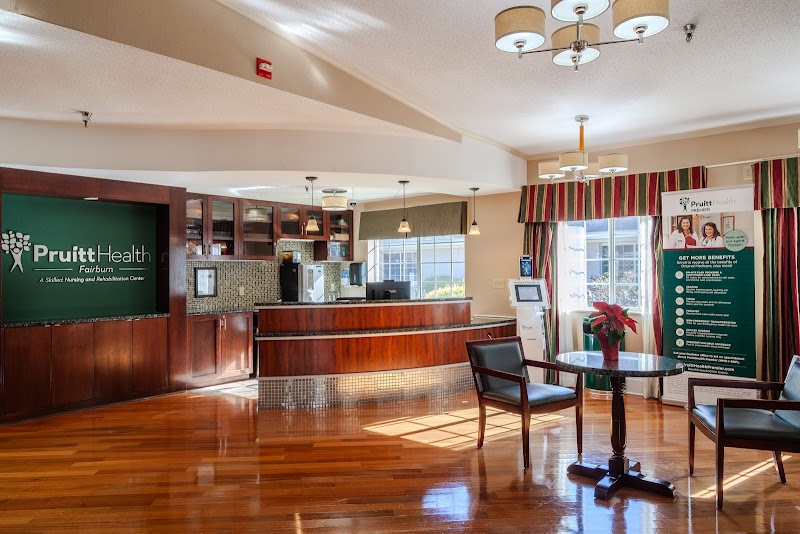
How is Pruitthealth - Fairburn Staffed?

CMS rates PRUITTHEALTH - FAIRBURN's staffing level at 3 out of 5 stars, which is average compared to other nursing homes. Staff turnover is 52%, compared to the Georgia average of 46%.

What Have Inspectors Found at Pruitthealth - Fairburn?

State health inspectors documented 22 deficiencies at PRUITTHEALTH - FAIRBURN during 2022 to 2025. These included: 22 with potential for harm.

Who Owns and Operates Pruitthealth - Fairburn?

PRUITTHEALTH - FAIRBURN is owned by a for-profit company. For-profit facilities operate as businesses with obligations to shareholders or private owners. The facility is operated by PRUITTHEALTH, a chain that manages multiple nursing homes. With 82 certified beds and approximately 73 residents (about 89% occupancy), it is a smaller facility located in FAIRBURN, Georgia.

How Does Pruitthealth - Fairburn Compare to Other Georgia Nursing Homes?

Compared to the 100 nursing homes in Georgia, PRUITTHEALTH - FAIRBURN's overall rating (2 stars) is below the state average of 2.6, staff turnover (52%) is near the state average of 46%, and health inspection rating (2 stars) is below the national benchmark.

What Should Families Ask When Visiting Pruitthealth - Fairburn?

Based on this facility's data, families visiting should ask: "Can I visit during a mealtime to observe dining assistance and food quality?" "How do you handle medical emergencies, and what is your hospital transfer rate?" "Can I speak with family members of current residents about their experience?"

Is Pruitthealth - Fairburn Safe?

Based on CMS inspection data, PRUITTHEALTH - FAIRBURN has a clean safety record: no substantiated abuse findings (meaning no confirmed cases of resident harm), no Immediate Jeopardy citations (the most serious violation level indicating risk of serious injury or death), and is not on the Special Focus Facility watch list (a federal program monitoring the lowest-performing 1% of nursing homes). The facility has a 2-star overall rating and ranks #100 of 100 nursing homes in Georgia. While no facility is perfect, families should still ask about staff-to-resident ratios and recent inspection results during their visit.

Do Nurses at Pruitthealth - Fairburn Stick Around?

PRUITTHEALTH - FAIRBURN has a staff turnover rate of 52%, which is 6 percentage points above the Georgia average of 46%. Moderate turnover is common in nursing homes, but families should still ask about staff tenure and how the facility maintains care continuity when employees leave.

Was Pruitthealth - Fairburn Ever Fined?

PRUITTHEALTH - FAIRBURN has no federal fines on record. CMS issues fines when nursing homes fail to meet care standards or don't correct problems found during inspections. The absence of fines suggests the facility has either maintained compliance or corrected any issues before penalties were assessed. This is a positive indicator, though families should still review recent inspection reports for the full picture.

Is Pruitthealth - Fairburn on Any Federal Watch List?

PRUITTHEALTH - FAIRBURN is not on any federal watch list. The most significant is the Special Focus Facility (SFF) program, which identifies the bottom 1% of nursing homes nationally based on persistent, serious quality problems. Not being on this list means the facility has avoided the pattern of deficiencies that triggers enhanced federal oversight. This is a positive indicator, though families should still review the facility's inspection history directly.