PRUITTHEALTH - LILBURN
788 INDIAN TRAIL ROAD, LILBURN, GA 30047 (770) 923-2020
For profit - Limited Liability company 152 Beds PRUITTHEALTH Data: November 2025 3 Immediate Jeopardy citations
Trust Grade
0/100
#316 of 353 in GA
Last Inspection: May 2025

Inspected within the last 6 months. Data reflects current conditions.

Overview

PruittHealth - Lilburn received a Trust Grade of F, indicating a poor standard of care with significant concerns. It ranks #316 out of 353 nursing homes in Georgia, placing it in the bottom half, and is the lowest-ranked facility in Gwinnett County. The facility's performance is worsening, with issues increasing from 5 in 2024 to 7 in 2025. Staffing is a notable weakness with a low rating of 1 out of 5 and a turnover rate of 58%, which is above the state average. Additionally, the facility has been fined $59,423, which is concerning and indicates compliance problems, while RN coverage is good, exceeding that of 81% of Georgia facilities. Specific incidents include failures to prevent abuse, with multiple residents experiencing both sexual and physical abuse, highlighting serious safety concerns. Families should carefully consider these factors before making a decision.

Trust Score
F
0/100
In Georgia
#316/353
Bottom 11%
Safety Record
High Risk
Review needed
Inspections
Getting Worse
5 → 7 violations
Staff Stability
⚠ Watch
58% turnover. Above average. Higher turnover means staff may not know residents' routines.
Penalties
✓ Good
$59,423 in fines. Lower than most Georgia facilities. Relatively clean record.
Skilled Nurses
○ Average
Each resident gets 32 minutes of Registered Nurse (RN) attention daily — about average for Georgia. RNs are the most trained staff who monitor for health changes.
Violations
⚠ Watch
24 deficiencies on record. Higher than average. Multiple issues found across inspections.
★☆☆☆☆
1.0
Overall Rating
★☆☆☆☆
1.0
Staff Levels
★★☆☆☆
2.0
Care Quality
★☆☆☆☆
1.0
Inspection Score
Stable
2024: 5 issues
2025: 7 issues

The Good

  • Full Sprinkler Coverage · Fire safety systems throughout facility
  • No fines on record

Facility shows strength in fire safety.

The Bad

1-Star Overall Rating

Below Georgia average (2.6)

Significant quality concerns identified by CMS

Staff Turnover: 58%

12pts above Georgia avg (46%)

Frequent staff changes - ask about care continuity

Federal Fines: $59,423

Above median ($33,413)

Moderate penalties - review what triggered them

Chain: PRUITTHEALTH

Part of a multi-facility chain

Ask about local staffing decisions and management

Staff turnover is elevated (58%)

10 points above Georgia average of 48%

The Ugly 24 deficiencies on record

3 life-threatening
May 2025 7 deficiencies
CONCERN (D) 📢 Someone Reported This

A family member, employee, or ombudsman was alarmed enough to file a formal complaint

Potential for Harm - no one hurt, but risky conditions existed

Safe Environment (Tag F0584)

Could have caused harm · This affected 1 resident

**NOTE- TERMS IN BRACKETS HAVE BEEN EDITED TO PROTECT CONFIDENTIALITY** Based on observations, record review, staff interviews, and review of the facility policy, titled, Clean air filters, the facili...

Read full inspector narrative →
**NOTE- TERMS IN BRACKETS HAVE BEEN EDITED TO PROTECT CONFIDENTIALITY** Based on observations, record review, staff interviews, and review of the facility policy, titled, Clean air filters, the facility failed to maintain clean Packaged Terminal Air Conditioner (PTAC) filters for one room [ROOM NUMBER] out of 18 rooms in B Hall. This deficient practice had the potential to compromise the health and safety of the residents by increasing the risk of infections. Findings Include: 1. A review of the facility's policy, titled Clean air filters, revealed the Steps section was, 2. Remove air filter and inspect for cleanliness. If filter is dirty either wash or replace depending on type of filter. If clean, reinstall filter. An observation on 5/12/2025 at 3:04 pm and 5/14/2025 at 4:42 pm, observed in room [ROOM NUMBER], PTAC filters with grey, fuzzy debris. Interview walking rounds on 5/15/2025 at 9:45 am with the Maintenance Director (MD) confirmed dirty PTAC unit. MD revealed the maintenance staff clean the filters monthly and they keep a log of this; however, they didn't get a chance due to other areas that needed his attention. MD stated his expectation was for environmental issues to be taken care of as soon as possible. He stated the staff report issues to maintenance via the maintenance logbook located at each nursing desk and they now have TELS system that the staff are becoming acclimated in its use. MD stated he was not aware of any Maintenance policy. The Administrator confirmed the facility does not have a Maintenance or Environmental policy. The Administrator asked the MD to immediately correct and address the area of concern. An interview conducted on 5/15/2025 at 3:43 pm, the Administrator stated the Maintenance Director and Housekeeping Director oversee cleaning the PTAC filters. She stated her expectations are for PTAC filters to be clean. The Administrator stated a possible negative outcome could be a resident could have an allergic reaction.
CONCERN (D) 📢 Someone Reported This

A family member, employee, or ombudsman was alarmed enough to file a formal complaint

Potential for Harm - no one hurt, but risky conditions existed

Deficiency F0605 (Tag F0605)

Could have caused harm · This affected 1 resident

**NOTE- TERMS IN BRACKETS HAVE BEEN EDITED TO PROTECT CONFIDENTIALITY** Based on observations, record review, and staff interviews the facility failed to document behavior monitoring for two resident(...

Read full inspector narrative →
**NOTE- TERMS IN BRACKETS HAVE BEEN EDITED TO PROTECT CONFIDENTIALITY** Based on observations, record review, and staff interviews the facility failed to document behavior monitoring for two resident(s) (R) (R10 and R56) of 63 sampled residents who required behavior monitoring for psychotropic medication use. Findings include: 1. admission Date: 10/28/2016 with the following pertinent diagnoses: primary generalized (osteo)arthritis, type 2 diabetes mellitus without complications, essential (primary) hypertension, depression, unspecified, anxiety disorder, unspecified, active acute embolism and thrombosis of unspecified deep veins of left lower extremity, other idiopathic peripheral autonomic neuropathy, insomnia, unspecified, pain in left knee, pain in left hand, pain in unspecified knee, pain in left wrist, abrasion, left knee, sequela, and rheumatoid arthritis, unspecified. A review of the quarterly minimum data set (MDS) dated [DATE] revealed Section C - Brief Interview of Mental Status (BIMS) 12, indicating mild cognitive impairment. Section D: indicating mild depressive symptoms. Section E: No potential indicators for psychosis and no behaviors exhibited. A review of the Physician Orders for R10 documented: 1. Xanax (alprazolam) - Schedule IV tablet; 0.25mg; amt: 1 tablet; Quantity: 30; oral [DX: Anxiety disorder, unspecified] Once a Day - PRN; PRN 1 Side Effects: Falls, dizziness, or headaches; Subdued, sedated, lethargic, or withdrawn; Muscle/nonspecific pain or unexplained abnormal movement; Decline in physical functioning (e.g., mobility or activities of daily living (ADLs) Psychomotor agitation (restlessness, pacing, hand wringing); Psychomotor retardation (slowed speech, thinking, movement) 2. Zoloft (sertraline) tablet; 50 mg; amt: 3 tablet; oral [DX: Depression, unspecified] Once A Day; 09:00 am Trazodone tablet; 150 mg; amt: 1/2 tablet; oral 3. Buspirone tablet; 5 mg; amt: 1; oral [DX: Depression, unspecified] Three Times A Day; 9:00 am, 1:00 pm, 5:00 pm Side Effects: Subdued, sedated, lethargic, or withdrawn; Mental Status Changes Order Description: Monitor resident for s/s of Behaviors and Mood related to depression, anxiety and chronic pain secondary to rheumatoid arthritis Frequency: Every Shift Review of Behavior Monitoring revealed that the following dates have not been recorded: May-5/5(am), 5/10-5/12(pm), April-4/3(pm), 4/13(pm), 4/17(pm), 4/23(pm), 4/26(am+pm), 4/30(pm), 3/5(pm), 3/6(pm), 3/11(pm), 3/25(pm), Feb-2/5(pm), 2/11(pm), 2/16(pm), 2/18(pm), 2/19(pm), Jan-1/2(pm), 1/11(pm), 1/12(pm), 1/13(pm), 1/17(pm), 1/19(pm), 1/22(pm), 1/23(am+pm). Observation and interview on 5/15/2025 at 3:32 pm R10 was awake and alert watching television in her room. R10 revealed her pain gets bad sometimes, and she would like to take more pain medication, but she is fine right now and does not want any changes. R10 confirms that she does suffer from insomnia, and the pain interferes with her sleep at times, but is fine right now. 2.A review of the Electronic Health Record (EHR) for R56 revealed she was admitted on [DATE] and has the following diagnosis but not limited to schizophrenia, post-traumatic stress syndrome (PTSD), bipolar disorder and depression. A review of R56's admission Minimum Data Set (MDS) dated [DATE] documented in section C (Cognitive Patterns) a Brief Interview for Mental Status (BIMS) of 12, indicating cognitively intact. A record review of R56's care plan with a start date of 2/19/2021 revealed R56 to be care planned for medications and behaviors (r/t) PTSD, major depressive disorder and mild anxiety disorder. The care plan stated R56's interventions are to report changes in mood and behaviors to nurse, physician, social worker, treat as per orders (every shift; days, evenings and nights). A record review of R56's physician orders revealed a prescription for five (5) milligrams (mg) of Abilify (atypical antipsychotic). The medication was prescribed for schizophrenia, psychotic disturbance, bipolar disorder and depression and is to be administered twice a day with a start date of 9/11/2024. Furthermore, a record review of R56's physician orders dated 11/18/2023, requires behavior monitoring to be documented every shift (days and nights). Behavior monitoring instructions to direct staff to chart on observed behaviors that include but not limited to sad mood/tearful, anxious mood/attention seeking, insomnia, physical aggression, sexually inappropriate, wanders and/or destroys property. Record review of R56's Medication Administration Record (MAR) for March, April, and May 2025 revealed the following days with no charting of behavior monitoring. Record review of R56's Medication Administration Record (MAR) for March, April, and May 2025 revealed the following days with no charting of behavior monitoring. March 2025 - behavior monitoring was not documented on the day shift for March 2, 5, 10, 13, 14, 18, 19, 24, and 28. On the night shift, documentation was missing for March 14, 18, 24, and 25. April 2025 - behavior monitoring was not documented on the day shift for April 2; April 7 through 11; April 13 and 14; April 16 through 18; April 21 through 24; and April 30. It appears April 16 was listed twice. On the night shift, documentation was missing for April 1, 9, 12, 21, and 23. May 2025 - behavior monitoring was not documented on the day shift for May 2 and from May 5 through May 7. An interview conducted on 5/15/2025 at 11:13 am, Licensed Practical Nurse (LPN) JJ explained it is the responsibility of the nurse assigned to each hall to complete behavior monitoring documentation for residents on their shift. LPN JJ reported having multiple residents with behavior monitoring orders that require documentation every shift. She revealed she knows the orders are present because they appear on the Medication Administration Record (MAR) and emphasized that there is no reason they should be missed. LPN JJ acknowledged that the expectation is for the nurse to document any behaviors observed during their shift. Interview on 5/15/2025 at 12:08 pm with the Director of Health Services (DHS) revealed the nurse scheduled for a shift is responsible for completing behavior monitoring documentation during that shift. The DHS stated that behavior monitoring is a physician's order and must be followed. She explained that failure to complete the required documentation may result in communication breakdowns and a lack of necessary follow-up and without proper documentation, staff are unable to respond effectively to resident needs. Interview on 5/15/2025 at 3:47 pm with the Administrator revealed that without proper monitoring and documentation, a resident who requires behavior oversight could be involved in an incident, could sustain injuries, could pose a risk to themselves or others.
CONCERN (D) 📢 Someone Reported This

A family member, employee, or ombudsman was alarmed enough to file a formal complaint

Potential for Harm - no one hurt, but risky conditions existed

Comprehensive Care Plan (Tag F0656)

Could have caused harm · This affected 1 resident

**NOTE- TERMS IN BRACKETS HAVE BEEN EDITED TO PROTECT CONFIDENTIALITY** Based on observations, staff interviews, record review, and a review of the facility's policy titled, Care Plans, the facility f...

Read full inspector narrative →
**NOTE- TERMS IN BRACKETS HAVE BEEN EDITED TO PROTECT CONFIDENTIALITY** Based on observations, staff interviews, record review, and a review of the facility's policy titled, Care Plans, the facility failed to follow care plan related to (r/t) allergy restrictions concerning chocolate for one resident (R) (R56) out of 63 sample residents. This failure had the potential to result in an adverse allergic reaction. Findings included: Review of the policy titled, Care Plans, dated 2022, indicated, admission Comprehensive Plan of Care - 3. The comprehensive person -centered care plan is developed to include measurable goals and time frames to meet a patient/resident's medical, nursing and psychosocial needs the services that are to be furnished to attain or maintain the resident's highest practicable physical, mental and psychosocial needs that are identified in the comprehensive assessment. A review of the Electronic Health Record (EHR) for R56 revealed she was admitted on [DATE] and has the following diagnosis but not limited to schizophrenia, dementia, post-traumatic stress syndrome (PTSD), bipolar disorder and depression. Furthermore, R56's EHR documented a food allergy to chocolate dated 12/8/2020. A review of R56's admission Minimum Data Set (MDS) dated [DATE] documented in section C (Cognitive Patterns) a Brief Interview for Mental Status (BIMS) of 12, indicating cognitively intact. A record review of R56's care plan with a start date of 9/22/2023 revealed R56 to be care planned to have a food allergy to chocolate. The care plan documented that R56 will not receive food with allergy ingredients. An observation and interview conducted on 5/14/2025 at 12:59 pm, R56's bedside tray was observed to contain a wrapped piece of chocolate cake, untouched. Upon verifying the meal tray slip, it was documented twice that R56 had an allergy to chocolate, and it listed the chocolate cake as Black Forest Cake. When asked, R56 confirmed that she did not eat the cake because she is allergic to chocolate. An interview was conducted on 5/14/2025 at 1:02 pm, Registered Nurse (RN) DD explained that when staff retrieve trays from the cart, they are required to verify the tray slip to ensure accuracy and alignment with the resident's dietary needs, including allergies. She confirmed that R56 is known to have a chocolate allergy and should not have been served chocolate cake. RN DD emphasized that the expectation is for all staff to check the tray ticket for the correct name, food, and allergy information to prevent potential harm such as an anaphylactic reaction. An interview was conducted on 5/14/2025 at 1:05 pm, Certified Nursing Assistant (CNA) EE stated she has been employed at the facility for about five months and regularly passes meal trays on the hall where room [ROOM NUMBER] (R56) is located. She confirmed she checked the resident's name, informed them of the items on the tray, and assisted with setup. She stated she verifies that residents are not receiving incorrect food and confirmed that R56 is allergic to chocolate. She recognized the cake on the tray as chocolate but admitted she was unsure what Black Forest Cake meant and did not realize it contained chocolate. An interview was conducted on 5/14/2025 at 1:28 pm, Dietary Aide (DA) FF stated she has worked in the facility for six years. She was on the tray line and said she follows the tray ticket instructions for portions and items to be included. DA FF acknowledged the possibility that she may have unintentionally placed an incorrect item on a tray. An interview was conducted on 5/14/2025 at 1:31 pm, Dietary Aide (DA) GG stated she has been working in the facility for nearly three years. Her role involves checking tray tickets and verifying that the correct meal components are included. She confirmed she added the chocolate cake to tray's and stated that if a resident has a chocolate allergy, they are typically given fruit instead. An interview was conducted on 5/14/2025 at 1:35 pm, Dietary Aide (DA) HH confirmed her responsibility was to add drinks, desserts, condiments, and silverware on the day in question. She stated she ensures the tray slip matches the items included but emphasized that DA GG was the last person verifying the trays before they were placed on the cart. An interview was conducted on 5/14/2025 at 1:39 pm, Dietary Aide (DA) II stated she had been employed at the facility for about a week. On the day in question, she stated she was stationed in the middle of the tray line serving beverages and desserts, including the cake. She confirmed that DA GG was responsible for final verification. DA II stated she checks the tray tickets but did not notice any residents listed with a chocolate allergy. An interview was conducted on 5/14/2025 at 1:43 pm, Dietary Kitchen Manager (DKM), who has served in her role for two years, explained the process: cooks plate the food per the tray ticket, and dietary aides add beverages, condiments, and desserts. She stated that dietary staff are trained to review tray slips, which include residents' allergies at the top and bottom. DKM confirmed that if a resident is allergic to chocolate, it should be visibly indicated, and substitutions such as fruit are expected. Observations and interviews were conducted on 5/14/2025 at 1:52 pm, in R56's room, DKM, DA FF, DA GG, DA HH observed and confirmed R56's tray to contain a piece of chocolate cake. DA GG stated she was sure she had removed the chocolate cake, but she could not confirm if another staff member placed it back. She mentioned she was aware that R56 is allergic to chocolate. Staff present collectively acknowledged that R56 is allergic to chocolate and should not have served it. The DKM stated her expectation is for all dietary staff to follow tray tickets carefully and the failure to adhere to these protocols has the potential to result in an allergic reaction and resident dissatisfaction. An interview was conducted on 5/15/2025 at 3:47 pm, The Administrator emphasized that the care plan must be followed consistently by all staff involved in meal service. Failure to do so may result in a resident receiving a food item they are allergic to, which could lead to a lot of medical issues.
CONCERN (D) 📢 Someone Reported This

A family member, employee, or ombudsman was alarmed enough to file a formal complaint

Potential for Harm - no one hurt, but risky conditions existed

Deficiency F0657 (Tag F0657)

Could have caused harm · This affected 1 resident

**NOTE- TERMS IN BRACKETS HAVE BEEN EDITED TO PROTECT CONFIDENTIALITY** Based on record reviews, staff interviews, and a review of the facility's policy titled, Care Plan the facility failed to update...

Read full inspector narrative →
**NOTE- TERMS IN BRACKETS HAVE BEEN EDITED TO PROTECT CONFIDENTIALITY** Based on record reviews, staff interviews, and a review of the facility's policy titled, Care Plan the facility failed to update the care plan for resident (R) R30 to accurately reflect the resident's code status for one of 63 sampled residents. This failure had the potential to result in the provision of care that was not aligned with the resident's end-of-life wishes, potentially causing physical and emotional harm. Findings include: Review of the facility policy titled Care Plans, updated 7/27/2023 reveals under Policy .section 7 .Update care plan electronically. When applicable, write a new goal, discontinue approaches and /or add approaches Care Plan Review and Update: 1 .Care plan updates/reviews will be performed within 7 days of each quarterly assessment, each acute change in condition, and as needed following each hospital stay. 2. Discontinued problems, goals, or approaches should be indicated directly on the care plan .Updates to the care plans should be made with any changes in condition at the time of change in condition occurred . A review of Resident's (R)30 electronic records revealed she was admitted on [DATE] with the following diagnoses: cerebrovascular accident (CVA), hemiplegia and hemiparesis following nontraumatic intracerebral hemorrhage affecting the right side, bedbound status, chronic obstructive pulmonary disease (COPD), heart failure, type 2 diabetes mellitus, essential hypertension, atherosclerotic heart disease, peripheral vascular disease, chronic kidney disease stage 3, thromboembolism, anemia, respiratory failure with hypoxia, neoplasms of soft tissue and skin, and localized swelling/mass/lump of the right upper limb. Review of the Quarterly Minimum Data Set (MDS) dated [DATE] revealed a Brief Interview for Mental Status (BIMS) score of 10, indicating moderate cognitive impairment. Review of physician orders showed: 6/11/2024: Code status-DNR (Do Not Resuscitate). 3/19/2025: Do not hospitalize or send out for appointments per resident choice. 3/19/2025: Referral to [Named Hospice Company] for evaluation and treatment. Review of the POLST (Physician Orders for Life-Sustaining Treatment), signed on 8/19/2024 by the physician and the resident, indicated that R30 elected to allow natural death (DNR). Review of the care plan for R30 showed a problem initiated on 7/27/2023 and last reviewed on 3/11/2025, which incorrectly documented the resident as a full code. In an interview conducted with Licensed Practical Nurse (LPN BB) on 5/14/2025 at 9:30 am, she stated that to verify a resident's code status, she can check multiple sources. In the computer system she would check the physician orders, the banner in the electronic record, and the resident's care plan. They also have the Advance Directive and Code Status Report on the crash cart and in the narcotic book on each medication. When the surveyor requested to review R30's care plan, LPN BB acknowledged that the advance directive was not correct and stated she would notify the Social Worker to fix it. She added that while nurses can make certain updates to care plans, advance directive changes are handled by either the Social Worker or MDS Coordinator. In an interview with the Social Work (SW) Director on 5/14/2025 at 9:40 am, she explained that upon admission, discussions regarding code status are conducted with the resident and/or responsible party, and the necessary documentation is completed. The POLST form is scanned into the system, and the code status is reviewed during the care plan meetings. She confirmed that resident R30 initially had full code status, which was later changed to DNR and hospice. She acknowledged that the care plan was inaccurate regarding the resident's current code status and should have been updated promptly at the time of the change to reflect this. The Social Work Director admitted she was unsure how the update was missed.
CONCERN (D)

Potential for Harm - no one hurt, but risky conditions existed

Quality of Care (Tag F0684)

Could have caused harm · This affected 1 resident

**NOTE- TERMS IN BRACKETS HAVE BEEN EDITED TO PROTECT CONFIDENTIALITY** Based on observations, staff and resident interviews, record reviews, and review of the facility's policy titled, Medication Adm...

Read full inspector narrative →
**NOTE- TERMS IN BRACKETS HAVE BEEN EDITED TO PROTECT CONFIDENTIALITY** Based on observations, staff and resident interviews, record reviews, and review of the facility's policy titled, Medication Administration: General Guidelines, the facility failed to administer medications as per physician's orders for two residents of 63 sampled residents. This deficient practice may result in residents not receiving necessary treatment, posing a risk to their health and safety. Findings include: Review of the facility's policy titled: Medication Administration: General Guideline, reveals the Policy statement, Medications are administered as prescribed, in accordance with good nursing principles and practices an only by persons legally authorized to do so .Procedure: .2. Medications are administered in accordance with written orders of the attending physician .9 . The individual records the administration on the patient/resident's MAR at the time the medication is given. At the end of each medication pass, the person administering the medications review the paper MAR or the electronic version of e-MAR to ascertain that all necessary doses were administered, and all administered doses were documented. In no case should the individual who administered the medications report off-duty without first recording the administration of any medications .13. If a dose of regularly scheduled medication is withheld, refused, or given at other than the scheduled time .that dosage administration is initiated and circled and for facilities utilizing the e-MAR system for not administering medication at scheduled time. An explanatory note is entered on the reverse side of the record provided for PRN indication and general medication notes and for e-MAR the note can be typed into the appropriate space provided within the electronic system. If more than two consecutive doses of the vital medication are withheld or revised, the physician is notified. 1). A review of Resident's (R)57 admission Record revealed that R57 was admitted to the facility in 2021 with diagnoses including, but not limited to, Chronic Obstructive Pulmonary Disease ( COPD), malignant neoplasm of the prostate, degenerative joint disease (DJD), venous insufficiency with deep vein thrombosis (DVT), anemia, Gastroesophageal Reflux disease ) GERD), chronic hepatitis C, peritoneal abscess, diverticulosis of the large intestine, and a history of alcohol dependence. Review of his most recent quarterly MDS indicates a BIMS score of 15, indicating intact cognition. On 3/5/2024, the resident was diagnosed with herpes zoster (shingles-viral disease characterized by a painful skin rash with blisters). Review of the physician orders reveals the following orders to treat shingles: Acyclovir cream 5%, to be applied twice daily to the rash on the right thigh, right lower leg, and right buttock from 3/7/2024 through 3/15/2024, and Acyclovir 400 mg tablets, to be taken orally five times per day for 10 days, starting 3/5/2024. The first oral dose on 3/5/2024 was not administered due to the medication being unavailable, as documented in the Medication Administration Record (MAR). The medication became available on 3/6/2024 and was administered as ordered by the physician, five times daily from 3/6/2024 through 3/16/2024, at 12:00 AM, 8:00 AM, 12:00 PM, 4:00 PM, and 8:00 PM. Out of the 50 scheduled doses during this period, three were not signed as administered. R57 wrote a complaint to the state stating that staff not giving his shingles medications like the doctor scheduled for him to take them. In an interview with R57 on 5/12/2025 at 12:35 pm in his room, the surveyor conducted an in-depth interview with the resident regarding his complaint. The resident presented a personally created table documenting dates and times he believed he received the prescribed medication. On the resident-created medication table, several blanks were noted, suggesting missed doses. However, upon comparison of the resident-created table with the Medication Administration Record (MAR), the surveyor was able to verify that R57 was receiving medications consistently, with the exception of three instances: 3/6/2024 at 8:00 am; 3/10/2024 at 8:00 am; and 3/10/2024 at 9:00 am. In an interview conducted on 5/14/2025 at 2:00 pm., the Infection Control Nurse (IP) admitted that it is hard to determine whether the medication was actually given or simply not documented in those three instances where it was not checked off in the MAR. She further stated that during medication administration, nurses are not allowed to leave any blanks on the MAR In an interview with the Director of Health Services (DHS) on 5/14/2025 at 2:15 pm, she stated that her expectation is for staff to document all administered medications. If a medication is not given, it should still be signed off with a reason noted, such as medication not available or resident refused. 2. Review of Resident's 326 electronic medical record (EMR) revealed he was admitted to the facility on [DATE] post left fourth and fifth toes amputation and discharged against medical advice (AMA) on 7/21/2024 at 11:56 am. Review of the hospital rehabilitation physical therapy (PT) assessment dated [DATE] revealed that the patient demonstrated a high level of motivation and good cognitive function, orientation: oriented x4. Review of R 326 Physician Orders revealed the following orders: 7/20/2024 ceftazidime (ceftazidime 2 g/50 mL-D5% intravenous solution) every 8 hours (6 am, 2:00pm, 10:00 pm. Infusion Therapy FLUSH: 3mL 0.9% Normal Saline (NS) intravenous ( IV) before, between and after each infusion and 3 mL 0.9% NS IV every 8 hours to maintain patency. A complaint was submitted to the State Agency, alleging that the resident was admitted on the evening of Friday, July 19, 2024 for a six-week course of IV antibiotics to be administered every 8 hours via a Periferrally Inserted Central Cathether (PICC) line. However, the resident was not receiving any IV medications as ordered. Review of the hospital discharge documentation revealed a medication list indicating the medications the resident was to receive, including the date and time of the next scheduled dose. It was documented that the new medication, Ceftazidime 2 g/50 mL in D5% intravenous solution, was to be administered every 8 hours, with the next dose scheduled for 7/19/2024 at 6:00 pm. Review of the Medication Administration Record (MAR) revealed that the first dose of IV antibiotic Ceftazidime 2 g/50 mL was administered on 7/20/2024 at 10:00 pm, indicating that the resident was without the IV medication-ordered to be given every eight hours-for approximately 28 hours. The second dose of the antibiotic was administered on 7/21/2024 at 6:00 am. Shortly thereafter, the resident's family took the resident home against medical advice. During a medication pass observation conducted on 5/12/2025, from 8:00 am to 10:00 am, the surveyor observed RN AA administering medications. No blanks were noted on the MAR. When asked about proper documentation of medication administration, RN AA stated that nurses are not permitted to leave blanks and that he always documents the appropriate response, depending on the situation. In an interview with the DHS on 5/14/2025 at 2:15 PM, she stated that her expectation is for staff to document all administered medications. If a medication is not given, it must still be documented with a reason noted, such as medication not available or resident refused. She further explained that if the medication was not available from the pharmacy, staff have access to CUBE X or PYXIS, where emergency medications are stored, and could have obtained it from there. If the medication was not available in CUBE X, the nurse should have contacted the physician to inform them of the situation and request an alternative antibiotic that was available, to prevent a gap in essential treatment for the resident.
CONCERN (D) 📢 Someone Reported This

A family member, employee, or ombudsman was alarmed enough to file a formal complaint

Potential for Harm - no one hurt, but risky conditions existed

Deficiency F0806 (Tag F0806)

Could have caused harm · This affected 1 resident

**NOTE- TERMS IN BRACKETS HAVE BEEN EDITED TO PROTECT CONFIDENTIALITY** Based on observations, record review, and interviews with residents and staff, the facility failed to adhere to documented food ...

Read full inspector narrative →
**NOTE- TERMS IN BRACKETS HAVE BEEN EDITED TO PROTECT CONFIDENTIALITY** Based on observations, record review, and interviews with residents and staff, the facility failed to adhere to documented food preferences and allergy-related restrictions concerning chocolate for one resident (R56) out of 63 sample residents. The facility census was 86. This failure had the potential to result in an adverse allergic reaction, decline in the residents' trust in the facility's ability to meet their dietary needs, thereby impacting overall quality of care and resident safety Findings Include: The facility did not provide a policy related to (r/t) adhering to food preferences and allergy-related restrictions. A review of the Electronic Health Record (EHR) for R56 revealed she was admitted on [DATE] and has the following diagnosis but not limited to schizophrenia, dementia, post-traumatic stress syndrome (PTSD), bipolar disorder and depression. Furthermore, R56's EHR documented a food allergy to chocolate dated 12/8/2020. A review of R56's admission Minimum Data Set (MDS) dated [DATE] documented in section C (Cognitive Patterns) a Brief Interview for Mental Status (BIMS) of 12, indicating cognitively intact. A record review of R56's care plan with a start date of 12/8/2020 revealed R56 to be care planned to have a food allergy to chocolate with a start date of 9/22/2023. The care plan documented that R56 will not receive food with allergy ingredients. An observation and interview conducted on 5/12/2025 at 12:42 pm, R56's meal tray slip listed spaghetti with meat sauce; however, it was observed she received broccoli chicken rice casserole instead. R56's broccoli chicken rice casserole was observed untouched and when asked why she had not eaten her food she stated she disliked rice and that she sometimes receives the wrong meal. Furthermore, it was observed that rice was listed as dislikes on her food slip. Certified Nursing Assistant (CNA) CC confirmed that the meal was not spaghetti with sauce. An observation and interview conducted on 5/14/2025 at 12:59 am, R56's bedside tray was observed to contain a wrapped piece of chocolate cake, untouched. Upon verifying the meal tray slip, it was documented twice that R56 had an allergy to chocolate, and it listed the chocolate cake as Black Forest Cake. When asked, R56 confirmed that she did not eat the cake because she is allergic to chocolate. An interview was conducted on 5/14/2025 at 1:02 pm, Registered Nurse (RN) DD explained that when staff retrieve trays from the cart, they are required to verify the tray slip to ensure accuracy and alignment with the resident's dietary needs, including allergies. She confirmed that R56 is known to have a chocolate allergy and should not have been served chocolate cake. RN DD emphasized that the expectation is for all staff to check the tray ticket for the correct name, food, and allergy information to prevent potential harm such as an anaphylactic reaction. An interview was conducted on 05/14/2025 at 1:05 pm, Certified Nursing Assistant (CNA) EE stated she has been employed at the facility for about five months and regularly passes meal trays on the hall where R56 is located. She confirmed she checked the resident's name, informed them of the items on the tray, and assisted with setup. She stated she verifies that residents are not receiving incorrect food and confirmed that R56 is allergic to chocolate. She recognized the cake on the tray as chocolate but admitted she was unsure what Black Forest Cake meant and did not realize it contained chocolate. An interview was conducted on 5/14/2025 at 1:28 pm, Dietary Aide (DA) FF stated she has worked in the facility for six years. She was on the tray line and said she follows the tray ticket instructions for portions and items to be included. DA FF acknowledged the possibility that she may have unintentionally placed an incorrect item on a tray. An interview was conducted on 5/14/2025 at 1:31 PM, Dietary Aide (DA) GG stated she has been working in the facility for nearly three years. Her role involves checking tray tickets and verifying that the correct meal components are included. She confirmed she added the chocolate cake to tray's and stated that if a resident has a chocolate allergy, they are typically given fruit instead. An interview was conducted on 5/14/2025 at 1:35 pm, Dietary Aide (DA) HH confirmed her responsibility was to add drinks, desserts, condiments, and silverware on the day in question. She stated she ensures the tray slip matches the items included but emphasized that DA GG was the last person verifying the trays before they were placed on the cart. An interview was conducted on 5/14/2025 at 1:39 pm, Dietary Aide (DA) II stated she had been employed at the facility for about a week. On the day in question, she stated she was stationed in the middle of the tray line serving beverages and desserts, including the cake. She confirmed that DA GG was responsible for final verification. DA II stated she checks the tray tickets but did not notice any residents listed with a chocolate allergy. An interview was conducted on 5/14/2025 at 1:43 pm, Dietary Kitchen Manager (DKM), who has served in her role for two years, explained the process: cooks plate the food per the tray ticket, and dietary aides add beverages, condiments, and desserts. She stated that dietary staff are trained to review tray slips, which include residents' allergies at the top and bottom. DKM confirmed that if a resident is allergic to chocolate, it should be visibly indicated, and substitutions such as fruit are expected. Observations and interviews were conducted on 5/14/2025 at 1:52 pm, in R56's room, DKM, DA FF, DA GG, DA HH observed and confirmed R56's tray to contain a piece of chocolate cake. DA GG stated she was sure she had removed the chocolate cake, but she could not confirm if another staff member placed it back. She mentioned she was aware that R56 is allergic to chocolate. The DKM further confirmed that R56 is also not supposed to have rice, and this preference was not followed. Staff present collectively acknowledged that R56 does not like rice and is allergic to chocolate and should not have been served. The DKM stated her expectation is for all dietary staff to follow tray tickets carefully and the failure to adhere to these protocols has the potential to result in an allergic reaction and resident dissatisfaction. An interview was conducted on 5/15/2025 at 3:47 pm, the Administrator stated that the expectation is for dietary staff to follow tray slips carefully, especially regarding resident allergies and food preferences. Additionally, CNAs are expected to verify the tray slip before serving the tray to the resident, ensuring that the correct meal is provided. Failure to do so may result in a resident receiving a food item they are allergic to, which could lead to serious medical complications.
CONCERN (E) 📢 Someone Reported This

A family member, employee, or ombudsman was alarmed enough to file a formal complaint

Potential for Harm - no one hurt, but risky conditions existed

Infection Control (Tag F0880)

Could have caused harm · This affected multiple residents

Based on observations, staff interviews, record review, and review of the facility's policies titled, Infection Prevention-Hand Hygiene, Infection Control: Glucometer Cleaning and Disinfecting, and In...

Read full inspector narrative →
Based on observations, staff interviews, record review, and review of the facility's policies titled, Infection Prevention-Hand Hygiene, Infection Control: Glucometer Cleaning and Disinfecting, and Infection Control Prevention and Control Activities, the facility failed to perform hand hygiene and sanitize shared medical equipment while providing care to four residents during medication pass. The facility sample was 63 residents. This failure had the potential to increase the risk of infection transmission among residents and staff. Findings include: Review of the facility's policy titled, Infection Prevention-Hand Hygiene, updated 10/15/2024 revealed the Policy section included D. Indications Requiring Hand Wash or Hand Rub. 1. Before and after contact with the resident. 2. Before donning gloves, including sterile gloves 4. After contact with a resident's intact skin, (i.e., taking blood pressure, pulse, and lifting/turning a resident) .7. Immediately after removal of personal protective equipment (e.g., gloves, gown, facemasks). Review of the facility's policy titled Infection Control: Glucometer Cleaning and Disinfecting, updated 8/15/2024 revealed the Policy section included C 4. Glucometers that are shared must be cleaned and disinfected between each patient/resident use. D. Hand Hygiene and Gloves. 1. Perform hand hygiene immediately before donning gloves .4. Perform hand hygiene immediately after removing of gloves and before and before touching medical supplies intended for use on other patients/residents. E. Cleaning and Disinfection. Note: The Glucose Meter must be cleaned and disinfected after each patient/resident use to minimize the risk of transmission of blood-borne pathogens between patients/residents and healthcare professionals 4. Clean and disinfect the meter by using the EPA approved wipes Germicidal and Disinfectant Wipes. Wipe all external areas of the meter including both the front and back surfaces until visibly clean . Review of the facility's policy titled Infection Control Prevention and Control Activities, revised 2/1/2018 revealed the Policy section included Hand Washing. 1. Hands should be washed often. 2 Hands will be washed immediately after gloves are removed, between patient contact, equipment handling and when otherwise indicated to wash hands between tasks . Gloves: 1. Wash hands immediately to avoid transfer of microorganisms to other environments 4 .Hand washing, as per policy, is mandatory after glove removal .Occupational Health If applicable, tools are cleaned as outlined above when soiled and prior to leaving testing area. An observation on 5/13/2025 at 8:15 am revealed Registered Nurse (RN) AA performing a medication pass for Resident (R) 65. The RN pulled the medication cart to the room and began preparing medications without performing hand hygiene. In the middle of the task, he realized one medication was missing and went to the medication room to retrieve it. Upon returning, he resumed the task without performing any hand hygiene. RN AA was then interrupted by another staff member and briefly stepped into an adjacent resident's room after securing the medication cart. He returned shortly thereafter and resumed the medication pass, again without performing hand hygiene. He retrieved all prepared medications and entered the resident's room without sanitizing his hands. When administering eye drops, he donned gloves but did not perform hand hygiene before or after removing the gloves, or upon exiting the room. RN AA checked the resident's blood pressure, then returned the BP machine to the cart without cleaning it and proceeded to the next resident. He did not sanitize his hands upon leaving the room or before moving to the next resident. At the following resident's room, RN AA began preparing medications for R55 without sanitizing his hands. He also brought the previously used, uncleaned BP machine into the room, checked the resident's blood pressure, and administered medications. The RN neither sanitized the BP machine after use nor performed hand hygiene before proceeding to the third resident. Then RN AA rolled his cart to the third resident, R48. The RN failed to perform hand hygiene before starting the medication pass, as well as upon entering and exiting the third resident's room. Next, RN AA rolled his medication cart to the fourth resident, R426. RN AA failed to perform hand hygiene again before initiating the medication pass or upon entering the fourth resident's room. The RN proceeded to check the resident's blood pressure and blood glucose levels before administering medications. After completing the task, he returned the blood pressure cuff and glucometer to the medication cart and was observed sanitizing only the glucometer using a few small, square alcohol prep pads. He then sanitized his hands with hand sanitizer. When asked by the surveyor whether the blood pressure cuff should have been sanitized after being used on different residents, the RN responded that he did not believe it was necessary, as there was no risk of blood exposure, unlike with a glucometer. When further questioned about hand hygiene between residents during the med pass, the RN acknowledged that he should have sanitized his hands but failed to do so. Later that day, on 5/13/2025 at 3:00 pm, RN AA approached the surveyor and admitted he was mistaken and should have sanitized the blood pressure cuff between each resident's use. An interview with the Infection Control Nurse (IC) on 5/14/2025 at 2:05 pm revealed that her expectation is for staff to always sanitize their hands prior to entering a resident's room and before providing care. Using alcohol-based hand rub is appropriate if hands are not visibly soiled, but after three consecutive uses, hand washing is required. If providing care to more than one resident, hands must be sanitized between residents. Regarding cleaning of shared equipment, the IC nurse stated that it must be cleaned between each resident's use using Micro-Kill wipes. In an interview with the Director of Health Services (DHS) on 5/14/2025 at 2:15 pm, she stated that staff are expected to practice frequent hand hygiene, especially when providing resident care. She emphasized that staff must sanitize their hands prior to starting a med pass, upon entering a room, before administering medications, and upon leaving the room. Regarding shared equipment, the DHS stated that staff are expected to properly clean all shared equipment between resident use by using disinfectant wipes and allowing the equipment to completely dry. She noted that using small, square alcohol prep pads is not acceptable for cleaning shared equipment.
Jan 2024 5 deficiencies
CONCERN (D)

Potential for Harm - no one hurt, but risky conditions existed

PASARR Coordination (Tag F0644)

Could have caused harm · This affected 1 resident

**NOTE- TERMS IN BRACKETS HAVE BEEN EDITED TO PROTECT CONFIDENTIALITY** Based on staff interviews and record reviews, the facility failed to refer a Level II PASRR (Preadmission Screening and Resident...

Read full inspector narrative →
**NOTE- TERMS IN BRACKETS HAVE BEEN EDITED TO PROTECT CONFIDENTIALITY** Based on staff interviews and record reviews, the facility failed to refer a Level II PASRR (Preadmission Screening and Resident Review) to the appropriate state-designated authority for evaluation and determination of specialized services for one of 43 sampled Residents (R) (R47) reviewed with serious mental illness. This deficient practice has the potential to delay specialized care and treatment for the resident. Findings include: Review of R47's Georgia Department of Medical Assistance PASRR Level 1 Application (DMA-613) Resident Identification Screening Instrument dated 6/3/2022 revealed, the resident did not have a primary diagnosis of Dementia, Serious Mental Illness, or Mental Disorder. Review of R47's Quarterly Minimum Data Set (MDS) assessment dated [DATE] revealed, for Section A: Identification Information, indicated the resident admitted on [DATE], Section C: Cognitive Patterns, a Brief Interview for Mental Status (BIMS) score of nine, which indicated moderate cognitive impairment, Section N: Medications, indicated use of antipsychotics. Review of R47's medical records revealed diagnoses that included cerebral infarction and alcohol dependence with other alcohol-induced disorder, psychotic disorder with delusions due to known physiological condition (added 9/8/2022), anxiety disorder due to known physiological condition (added 12/18/2022), Major Depressive Disorder MDD (added 8/10/2022). Review of R47's Physician Orders included buspirone tablet 7.5 milligrams (mg) dated 12/18/2022, Depakote (divalproex) tablet, delayed release 250 mg; amount three tabs oral at bedtime dated 6/3/2022, risperidone tablet three mg one tablet oral once a day and behavior monitoring every shift dated 6/6/2022. Review of R47's care plan indicated he received psychotropic medications including antipsychotic and antianxiety related to Traumatic Brain Injury (TBI), Major Depressive Disorder, Bipolar, paranoia, and anxiety; the resident had impaired cognition related to short term memory loss and was at risk for further decline related to the history of Subarachnoid Hemorrhage (SAH)/TBI, CVA (Cerebral Vascular Accident). During an interview with Social Worker AA on 1/19/2024 at 11:30 am revealed a Level II had not been submitted for R47. She revealed the criteria for mental health diagnosis that could trigger a Level II include, schizophrenia, major depressive disorder, and mood disorder. She revealed if a resident had one of these diagnoses she would submit a PASRR Level I application to see if that would trigger a Level II. During an interview with the Admissions Director (AD) on 1/19/2024 at 11:45 am revealed the hospital completed the PASRR Level I application before the resident was admitted . The AD revealed if the primary diagnosis required a Level II the facility would submit the information to the authorized state agency. During an interview with the Administrator on 1/19/2024 at 11:45 am revealed the resident came to the facility with a Level I and if a Level II was needed the Social Worker would complete the form and send it to authorized state agency. She revealed if a resident during their stay was diagnosed with a qualifying diagnosis, a Level I should have been submitted that would trigger a Level II. During an interview with the Administrator on 1/19/2024 at 2:30 pm, she reported that [NAME] Health did not have a policy for PASRRs.
CONCERN (D)

Potential for Harm - no one hurt, but risky conditions existed

Deficiency F0685 (Tag F0685)

Could have caused harm · This affected 1 resident

**NOTE- TERMS IN BRACKETS HAVE BEEN EDITED TO PROTECT CONFIDENTIALITY** Based on observations, staff and resident interviews, record review, and review of the facility's policy and procedures titled S...

Read full inspector narrative →
**NOTE- TERMS IN BRACKETS HAVE BEEN EDITED TO PROTECT CONFIDENTIALITY** Based on observations, staff and resident interviews, record review, and review of the facility's policy and procedures titled Specialty [NAME]: Dental Services, Vision Services, Podiatry Services, Hearing Services, and Mental Health, the facility failed to assist one of 43 sampled Residents (R) (R101) in gaining access to vision services by making an appointment and arranging transportation. Findings include: Review of the facility's policy titled Specialty [NAME]: Dental Services, Vision Services, Podiatry Services, Hearing Services, and Mental Health dated 12/6/2022, Policy Statement revealed, It shall be the responsibility of this healthcare center to obtain regular and emergency specialty services for each patient/resident to ensure the highest well-being of the residents. The healthcare center has specialty service providers who provides consultation, participates in in-service education, and is available in case of emergency. Interview on 1/16/2024 at 3:54 pm with R101 revealed that he had reported to staff in the facility that his vision had declined in his right eye on multiple occasions. He stated he had told a nurse and the physician about this. He reported the last time he spoke to anyone about his vision was about two weeks ago but was unable to identify who he had spoken with. Interview on 1/17/2024 at 1:40 pm with R101 revealed that he had experienced vision problems in the past. He revealed he had surgery on both eyes in 2021 and had to have a second surgery on his right eye in 2021. R101 could not articulate the type of surgery he had, nor could he remember what the physician told him about his vision at that time. Review of the Electronic Medical Record (EMR) revealed R101 was admitted to the facility with diagnoses listed but not limited to low vision, one eye, unspecified eye and transient visual loss, left eye. Review of R101's Quarterly Minimum Data Set (MDS) assessment dated [DATE] revealed in Section B - Hearing, Speech, and Vision, R101 vision was assessed as adequate - sees fine detail, including regular print in newspaper/books and corrective lenses (contacts, glasses, or magnifying glass) were used. Section C - Cognitive Patterns revealed a Brief Interview for Mental Status (BIMS) of 13, which indicated R101 was cognitively intact. Review of R101's care plan dated 12/29/2023 revealed there were no interventions noted for visual needs. Review of nursing admission observation dated 8/18/2023 under section titled Eyes, Ears Nose, and Throat indicated R101 had no decrease in peripheral vision, no visual disturbances, both left and right eyes were clear, the sclera white, and conjunctiva was normal. Review of the EMR revealed physician's orders for R101 dated 8/18/2023 documented may have podiatry/dental/ophthalmic care as needed and on 11/26/2023 Ophthalmology consult special instructions included - second request, patient needs to see ophthalmology for decreased vision. Review of the EMR revealed progress note entered by the physician on 10/2/2023 and documented in his note that the patient informs of decreased vision to left eye, informs it comes and goes for some time and is chronic in nature. New orders for ophthalmology, consult earliest available. Review of the EMR revealed on 11/21/203 the physician documented in his progress note the patient informs he would like to see ophthalmology for decreased visual acuity. New orders written for ophthalmology consult and social worker notified. Review of EMR revealed an office note from a retina medical practice dated 8/26/2021 documented a post-operative visit check of repaired cataract (lens) fragments in eye following cataract surgery right eye. The history of present illness indicated blurred vision in right eye of moderate severity located in central vision with a hazy quality. Other diagnoses listed were mile non-proliferative diabetic retinopathy both eyes and diabetes type two with ocular complications. Interview with Social Worker AA on 1/17/2024 at 1:40 pm she verified and confirmed that the physician documented on a progress note on 10/2/2023 and 11/21/2023 the resident requested to see an ophthalmology and documented he ordered ophthalmology consult on both notes and noted on 11/21/2023 he spoke with the social worker. She verified and confirmed that the physician entered an order in the EMR on 11/26/2023 for an ophthalmology appointment with second request documented as part of the order. She stated she would have to look at her emails from the time these orders were documented to verify R101 was placed on the schedule for the contracted physician specialty group to see an ophthalmologist, she stated she would update the surveyor of her findings. She revealed the ophthalmologist only comes to the facility about once every six months and she was unsure of when their last visit was. (Social Work AA did not update the surveyor on her findings). Interview with the Assistant Director of Health Services (ADHS) on 1/17/2024 at 3:25 pm revealed she was familiar with R101. She verified and confirmed the physician documented on a progress note on 10/2/2023 and 11/21/2023 the resident requested to see an ophthalmology and documented he ordered ophthalmology consult on both notes and noted on 11/21/2023 he spoke with the social worker. She verified and confirmed that the physician entered an order in the EMR on 11/26/2023 for an ophthalmology appointment with second request documented as part of the order. She stated if R101 had an appointment it would be in the appointment schedule book. She reviewed the schedule books for January 2024 and December 2023, but the resident did not have an appointment in the books. Interview with the Administrator on 1/17/2024 at 3:55 pm revealed that since she had been in the facility, they have made a lot of changes. She stated they had identified getting referrals scheduled as a problem. She stated she was rebuilding the entire team in this facility. She stated they were working to get R101 an appointment to have his eyes checked tomorrow. Interview with the Director of Health Services (DHS) on 1/17/2024 at 4:07 pm revealed she was familiar with R101 and was not aware that he had requested a referral to see an ophthalmologist. She stated she knew he had a history of diabetes mellites type two and with that could mean he may have a history of diabetic retinopathy. She stated that since working in this facility they had noticed there was a problem with the process of scheduling referral appointments, and they had been working to improve this process starting with the initial appointment referral through scheduling follow up appointments.
CONCERN (D)

Potential for Harm - no one hurt, but risky conditions existed

Infection Control (Tag F0880)

Could have caused harm · This affected 1 resident

**NOTE- TERMS IN BRACKETS HAVE BEEN EDITED TO PROTECT CONFIDENTIALITY** Based on observations, staff interviews, record review, and review of the facility's procedure titled Small Volume Nebulizer, th...

Read full inspector narrative →
**NOTE- TERMS IN BRACKETS HAVE BEEN EDITED TO PROTECT CONFIDENTIALITY** Based on observations, staff interviews, record review, and review of the facility's procedure titled Small Volume Nebulizer, the facility failed to follow infection control measures during the storage of nebulizer equipment for one of two Residents (R) (R9) who receive nebulized medications. Findings include: Review of the facility's procedure titled Small Volume Nebulizer dated 2019 revealed under the section titled, Supplies listed a plastic bag for storing the mouthpiece and tubing when not in use. Under the section titled, Procedure revealed, .17. Dissemble and rinse the SVN (small volume nebulizer) and mouthpiece, shaking out excess moisture. Store the setup in the bag at the bedside. Change the nebulizer cup and tubing according to the facility policy. Observation on 1/16/2024 at 11:40 am of nebulizer set up/mask not in use on R9's nightstand uncovered and unbagged. Observation on 1/16/2024 at 2:08 pm of nebulizer set up/mask not in use on R9's nightstand uncovered and unbagged. Observation on 11/17/2024 at 11:08 am of nebulizer set up/mask not in use on R9's nightstand uncovered and unbagged. Review of the Electronic Medical Record (EMR) revealed R9 was admitted to the facility with diagnoses listed but not limited to unspecified asthma, history of acute respiratory failure with hypoxia, and history of viral pneumonia. Review of R9's admission Minimum Data Set (MDS) assessment dated [DATE] revealed a Brief Interview for Mental Status (BIMS) of 15, which indicated she was cognitively intact. Review of R9's care plan dated 11/21/2022 indicated she required oxygen use related to asthma, shortness of breath, hypoxia. Goals included but not limited to will maintain optimal breathing and oxygen level within constraints of diagnoses. Intervention included but not limited to nebulizer treatment as per orders. Review of R9's EMR revealed physician orders dated 3/17/2023 included but was not limited to albuterol sulfate solution for nebulization; 2.5 milligrams (mg)/ 3 (three) milliliters (ml) (0.083%), amount 3 ml; inhalation twice a day at 9:00 am and 9:00 pm; and on 4/27/2023 Oxygen: Change respiratory circuit/supplies weekly. Once a day on Sunday's. Interview with Certified Nursing Assistant (CNA) EE on 1/17/2024 at 1:27 pm revealed when oxygen tubing / nebulizer set ups should be stored inside a clear plastic bag when not in use. Interview with Registered Nurse (RN) DD on 1/17/2024 at 1:55 pm revealed nebulizer tubing and mask should be stored in a clear plastic bag when not in use. Interview with Licensed Practical Nurse (LPN) FF on 1/17/2024 at 2:26 pm, she verified and confirmed the nebulizer mask was sitting on R9's nightstand and was not covered or inside a clear plastic bag. She stated the mask should be stored inside a clear plastic bag when not in use and the tubing and mask are changed weekly on Sunday by nursing. She stated she would obtain new tubing/mask for R9 and a bag to store them in for R9. Interview with the Director of Health Services on 1/17/2024 at 4:07 pm revealed the process of caring for nebulizer tubing/mask was the nurse should administer the medication via nebulizer as ordered by the physician, then after the nebulizer was complete the nurse should clean the mask with soap and water and allow to air dry, then once the mask was dry it should be stored in a clear plastic bag. She stated she expected nursing to follow this process on every occasion when the nebulizer was used.
CONCERN (D)

Potential for Harm - no one hurt, but risky conditions existed

Deficiency F0883 (Tag F0883)

Could have caused harm · This affected 1 resident

Deficiency Text Not Available

Read full inspector narrative →
Deficiency Text Not Available
CONCERN (E)

Potential for Harm - no one hurt, but risky conditions existed

Deficiency F0947 (Tag F0947)

Could have caused harm · This affected multiple residents

Based on staff interviews, record review, and review of the facility's policy and procedures titled Required Training - Partner Education and Tracking and the Alliant Health Solutions Staff developmen...

Read full inspector narrative →
Based on staff interviews, record review, and review of the facility's policy and procedures titled Required Training - Partner Education and Tracking and the Alliant Health Solutions Staff development, the facility failed to ensure seven out of 37 Certified Nursing Assistants (CNA) completed the required 12 hours of annual in-service training. Findings include: Review of the facility's policy titled Required Training - Partner Education and Tracking dated 7/15/2016 under section titled, Curriculum(s) and sub-section title Annual revealed, based on job roles, all partners are assigned an annual training curriculum designed to meet federal standards and company expectations. Review of the Alliant CNA Annual Report dated 12/18/2023 for review period 8/1/2022 - 7/31/2023 revealed a staff development review was conducted on 12/18/2023 and problems identified were seven full time Certified Nursing Assistants (CNA) without the required 12 in-service hours per the code of Federal Regulations (42CFR483.35/483.95). Recommendations included, please submit a plan of correction on how the facility will monitor CNA staff for required in-service hours in the future. Comments included the facility may want to include more in-service on Alzheimer's, dementia, and cognitively impaired. The letter listed each CNA who did not meet the Federal in-service requirements with their certification date, certification number, certification expiration date, and total of in-service hours completed during the review period. During the review period CNA KK completed seven and sixty-five hundredths 7.65 hours, CNA LL completed four and one quarter (4.25) hours, CNA MM completed nine and four tenths (9.40) hours, CNA JJ completed two and seven tenths (2.70) hours, CNA NN completed zero (0) hours, CNA OO completed two and eight tenths (2.80) hours, and CNA PP completed one and fifteen hundredths (1.15) hours. Review of the course completion history dated 8/1/2023 - 1/18/2024 for the CNA's who were deficient during the review period revealed that they had completed computer modules during the current review period. The document revealed CNA JJ had completed 25.48 hours, CNA KK had completed one and seventy-five hundredths (1.75) hours, CNA LL had completed 12.95 hours, CNA II had completed three and five tenths (3.5) hours, CNA MM had completed seven and five tenths (7.50) hours, CNA NN had completed 11.88 hours, and CNA OO had completed one and seventy-two hundredths (1.72) hours during this period. Interview with the Clinical Competency Coordinator on 1/18/2024 at 2:04 pm revealed that she had been in this position since February of 2023 and she was not able to locate documentation of the previous Clinical Competency Coordinators in-person in-services conducted, therefore she could only confirm in-services she had conducted since February 2023 through the end of the audit period of staff who had completed computer modules which was submitted to Alliant. She stated she spoke with a representative from Alliant who instructed her there was no way to correct the compliance from the last review period but suggested for her to develop a plan of correction to prevent this from happening during the current review period and in the future. She revealed as the clinical competency coordinator her expectation of staff was to complete their computerized modules each month as they are assigned. She stated there was no excuse for staff not to complete them and if they had completed the monthly assigned modules, they would have easily met the 12-hour educational requirement for CNA's. Interview with the Director of Health Services (DHS) on 1/18/2024 at 2:25 pm revealed she expected the entire clinical staff including the CNAs to complete their monthly assigned computer modules. She stated if this was done, they would have easily met the 12-hour requirement. She stated that she expects this to be followed to keep the staff on track with their education requirements. Interview with CNA II on 1/18/2024 at 2:35 pm, confirmed she did not meet the 12-hour education requirement during the facilities audit period and planned to make education a priority going forward. She stated that she did not think her work duties prevented her from completing the modules in a timely manner. Interview with the Administrator on 1/18/2024 at 4:22 pm revealed that her expectation that all CNA's complete their education hours and they have 12 months to complete them as they are assigned new modules monthly. She stated the Clinical Competency Coordinator was speaking with staff individually to determine barriers for completing the education modules in a timely manner.
Sept 2023 8 deficiencies 3 IJ (3 affecting multiple)
CRITICAL (K) 📢 Someone Reported This

A family member, employee, or ombudsman was alarmed enough to file a formal complaint

Immediate Jeopardy (IJ) - the most serious Medicare violation

Free from Abuse/Neglect (Tag F0600)

Someone could have died · This affected multiple residents

**NOTE- TERMS IN BRACKETS HAVE BEEN EDITED TO PROTECT CONFIDENTIALITY** Based on interviews, record review, and review of the facility policy, the facility failed to ensure residents were free from ab...

Read full inspector narrative →
**NOTE- TERMS IN BRACKETS HAVE BEEN EDITED TO PROTECT CONFIDENTIALITY** Based on interviews, record review, and review of the facility policy, the facility failed to ensure residents were free from abuse. Specifically, the facility failed to ensure four residents (R) (residents (R9, R14, R25, and one unknown resident) were free from sexual abuse by R10; and eight residents (R15, R11, R19, R20, R16, R17, and R18) were free from physical abuse in a sample of 35 residents. On 9/13/2023 a determination was made that a situation in which the facility's noncompliance with one or more requirements of participation had the likelihood to cause serious injury, harm, impairment, or death to residents. Facility Administrator was informed of the Immediate Jeopardy (IJ) on 9/13/2023 at 10:32 a.m. The noncompliance related to the Immediate Jeopardy was identified to have existed on 4/23/2022. At the time of exit on 9/18/2023, an acceptable Immediate Jeopardy Removal Plan had not been received therefore the IJ remained ongoing. Findings include: Review of the facility policy titled Prevention of Patient Abuse, Neglect, Exploitation, Mistreatment, and Misappropriation of Property revised 10/27/2020 revealed: It is the policy of PruittHealth and its affiliated entities (collectively, the Organization) to actively preserve each patient's right to be free from verbal, sexual, physical, and mental abuse, corporal punishment, involuntary seclusion, neglect, exploitation, mistreatment, and misappropriation of patient property, (referred to collectively in this policy as abuse, neglect, mistreatment, and exploitation). The Organization and its partners should assure that best efforts are made to prevent any occurrences of any form of abuse, neglect, and exploitation. Sexual abuse incidents: 1. Review of the Annual Minimum Data Set (MDS) dated [DATE] revealed R10 with a Brief Interview of Mental (BIMS) score of seven, indicating severely impaired cognition. Resident was documented as having no behaviors. He required one person supervision with walking in room and corridor, and independent with no setup help needed for locomotion on and off the unit. He had diagnoses including but not limited to Dementia and Psychotic Disorder. a. Review of the Quarterly MDS dated [DATE] revealed R9 with a BIMS score of four, indicating severe cognitive impairment. R9 requires one-person limited assistance with walking in room and locomotion on the unit. Resident required one-person extensive assistance with walking in the corridor and locomotion off the unit. Resident had diagnoses including but not limited to Cerebral Vascular Accident (CVA) and Dementia. No behaviors were documented. Review of Facility Reported Incident (FRI) dated 5/29/2023 revealed R10 walked up to R9 with his penis out and touched R9's head/neck area and pulled her head downwards towards him. Family of R9 called the police and R10 was arrested for this incident. R10 did not return to the facility. Review of the police report dated 5/29/2023 revealed R10 was arrested for an offense of sodomy, aggravated sodomy and charged with criminal intent and public indecency During an interview on 9/18/2023 at 10:24 a.m., Licensed Practical Nurse (LPN) AA stated she was charting at the nurses' station and two certified nursing assistants (CNAs) brought the incident between R9 and R10 to her attention. LPN AA stated she observed R9 seated in a chair and R10 standing to the left of R9 with his penis protruding from his pants. LPN AA stated she removed both residents from the area and reported the incident. During an interview on 9/18/2023 at 11:01 a.m., LPN EE stated she was charting at the nurses' station and CNAs brought the incident between R9 and R10 to her attention. LPN EE stated she saw R10's penis in his hand and was standing near R9, who was seated in a Geri chair. LPN EE stated they reported the incident and called the family. b. Review of the Annual MDS assessment dated [DATE] revealed R14 with a BIMS score of three, indicating severe cognitive impairment. No behaviors were documented. The resident required one-person extensive assistance with walking in the room, and no setup/ independent locomotion on and off the unit. R14 had a diagnosis including but not limited to Alzheimer's Disease. Review of FRI dated 9/12/2022 revealed R14 informed staff she had consensual sex with R10. There was no documented evidence the facility put interventions in place related to the incident. During an interview on 9/12/2023 at 4:00 PM, the Administrator stated she viewed this incident with R14 and R10 as consensual sex. Due to the Administrator's view, no interventions were implemented related to the incident. During an interview on 9/18/2023 at 10:24 a.m., LPN AA further revealed R14 stated she had sex with another resident and was able to identify R10. LPN AA stated she also reported this incident. 2. Review of R10's Progress Note dated 7/29/2022, revealed, Resident asked another female resident for sexual favor. Facility staff was unable to identify the female resident in this incident. Review of R10's Progress Note dated 4/23/2022, revealed, Resident observed going in and out of female resident's room. One female resident reported that Resident asked her to perform a sex act. That female resident was visibly shaken when reporting the problem. Facility staff were able to identify this resident as R25 (BIMS of 11, indicating moderate cognitive impairment and no behaviors documented). During an interview on 9/12/2023 at 4:00 PM, the Administrator stated she was unaware of these incidents occurring on 7/29/2022 and 4/23/2022, therefore no interventions were implemented. During an interview on 9/18/2023 at 11:15 a.m., the Social Services Director (SSD) stated she was aware of the 4/23/2022 incident where R10 asked R25 for a sexual favor. The SSD stated she did not do anything about this incident. The SSD stated that she should have put R10 on a behavioral management program immediately but did not do so until 5/26/2022. Physical Abuse incidents: 3. Review of the Quarterly MDS assessment dated [DATE] revealed R19 with a BIMS of 15, indicating cognitively intact. Resident required one-person supervision with locomotion on and off the unit. The resident uses a wheelchair. No behaviors documented. Review of the Quarterly MDS Assessment also dated 8/10/2023 revealed R20 with a BIMS of 10, indicating moderate cognitive impairment. Resident required one person supervision with locomotion on and off the unit. The resident uses a wheelchair. R20 had a diagnosis of Alzheimer's Disease. Review of FRI dated 8/29/2023, R19 alleged R20 hit her and pulled her hair and R19 threw water in R20's face. R19 stated R20 and Family of R20 dragged R19 to the ground. Staff heard the incident and observed R19 on the floor. There was no documented evidence the facility put interventions in place related to the incident. 4. Review of the Quarterly MDS assessment dated [DATE] revealed R16 with a BIMS score of 12, indicating moderate cognitive impairment. No behaviors documented and resident required one person supervision with locomotion on and off the unit. The resident used a wheelchair. R16 had diagnoses including but not limited to CVA with hemiplegia or hemiparesis and Depression. Review of the admission MDS assessment dated [DATE] revealed R17 with a BIMS of three, indicating severe cognitive impairment, wandering behavior one to three days, used a wheelchair and required one-person limited assistance with locomotion on the unit. Review of FRI dated 8/24/2023 revealed R16 and R17 got into a physical altercation and R17 scratched R16 in his face. Review of R16's Progress Note dated 8/24/2023 revealed, [R17] hit [R16] and he was bleeding from the nose. The writer cleaned resident nose with normal saline and also take care of the nose from bleeding upon assessment. 5. Review of the admission MDS dated [DATE] revealed R15 with a BIMS of 15, no behaviors documented, and required one-person extensive assistance with walking in room and locomotion on and off the unit. The resident used a wheelchair. The resident was discharged on 5/30/2023. Review of the Quarterly MDS assessment dated [DATE] revealed R11 with a BIMS of 15, no behaviors documented and required no setup/ independent with all Activities of Daily Living (ADLs). Review of FRI dated 4/23/2023 revealed R15 and R11 got into a physical altercation. R11 sustained scratches and bruises. 6. Review of the Annual MDs assessment dated [DATE] revealed R18 with a BIMS score of 8, indicating moderate cognitive impairment. No behaviors were documented. The resident required one person supervision with walking and locomotion, used a wheelchair and walker. The resident had diagnoses including but not limited to CVA with hemiparesis or hemiplegia, Dementia, and Depression. Review of FRI dated 12/16/2022 revealed R18 received a scratch on right arm from [R10] after words exchanged. During an interview on 9/12/2023 at 4:00 PM, the Administrator confirmed she was the Abuse Coordinator for the facility. The Administrator stated although she reported the physical altercations above, she did not put interventions in place to prevent the incidents from recurring.
CRITICAL (K) 📢 Someone Reported This

A family member, employee, or ombudsman was alarmed enough to file a formal complaint

Immediate Jeopardy (IJ) - the most serious Medicare violation

Investigate Abuse (Tag F0610)

Someone could have died · This affected multiple residents

**NOTE- TERMS IN BRACKETS HAVE BEEN EDITED TO PROTECT CONFIDENTIALITY** Based on interviews, record reviews, and review of the facility policy, the facility failed to thoroughly report and investigate...

Read full inspector narrative →
**NOTE- TERMS IN BRACKETS HAVE BEEN EDITED TO PROTECT CONFIDENTIALITY** Based on interviews, record reviews, and review of the facility policy, the facility failed to thoroughly report and investigate incidents of abuse. Specifically, the facility failed to report and/or thoroughly investigate incidents of sexual abuse for four residents (R) (residents (R9, R14, R25, and one unknown resident); and of physical abuse for eight residents (R15, R11, R19, R20, R16, R17, R10, R18) in a sample of 35 residents. On 9/13/2023 a determination was made that a situation in which the facility's noncompliance with one or more requirements of participation had the likelihood to cause serious injury, harm, impairment, or death to residents. Facility Administrator was informed of the Immediate Jeopardy (IJ) on 9/13/2023 at 10:32 a.m. The noncompliance related to the Immediate Jeopardy was identified to have existed on 4/23/2022. At the time of exit on 9/18/2023, an acceptable Immediate Jeopardy Removal Plan had not been received therefore the IJ remained ongoing. Findings include: Review of the facility policy titled Investigation of Patient Abuse, Neglect, Exploitation, Mistreatment, and Misappropriation of Property revised 10/9/2020 revealed It is the policy of PruittHealth and its affiliated provider entities (collectively, the Organization) to investigate allegations and occurrences of patient abuse, neglect, exploitation, mistreatment, and misappropriation of patient property. Documentation of the investigation should include, but not be limited to, the following: * Date and time of alleged occurrence. * Patient's full name and room number (or address, if at home). * Names of accused and any witnesses. * Names of PruittHealth partners staff who investigated the allegation. * Any physical evidence and description of emotional state of patient(s). * Details of the alleged incident and injury. * Signed statements from pertinent parties; * Cognitive status of victim(s) and patient(s) who are witnesses (e.g., whether they are alert, oriented, and able to answer questions appropriately, which could help in determining whether the witness is credible and able to testify); * Information gathered from the investigation. * Action taken by provider (e.g., safeguarding the patient and preventing a reoccurrence); * The conclusions reached by the investigator; * Name, address, and phone number of the responsible party and relatives of the Victim(s); and * Any other police or ombudsman reports or other documentation related to the investigation. Sexual abuse incidents: 1. Review of the Annual Minimum Data Set (MDS) dated [DATE] revealed R10 with a Brief Interview of Mental (BIMS) score of seven, indicating severely impaired cognition. a. Review of the Quarterly MDS dated [DATE] revealed R9 with a BIMS score of four, indicating severe cognitive impairment. Review of Facility Reported Incident (FRI) dated 5/29/2023 revealed R10 walked up to R9 with his penis out and touched R9's head/neck area and pulled her head downwards towards him. Review of the facilities records revealed no evidence that the facility thoroughly investigated the incident and did not report the incident to the police. Family of R9 called the police and R10 was arrested for this incident. During an interview on 9/18/2023 at 10:24 a.m., Licensed Practical Nurse (LPN) AA stated she observed R9 seated in a chair and R10 standing to the left of R9 with his penis protruding from his pants. LPN AA stated she removed both residents from the area and reported the incident. During an interview on 9/18/2023 at 11:01 a.m., LPN EE stated she saw R10's penis in his hand and was standing near R9, who was seated in a Geri chair. LPN EE stated they reported the incident and called the family. b. Review of the Annual MDS dated [DATE] revealed R14 with a BIMS score of 3, indicating severe cognitive impairment. Review of FRI dated 9/12/2022 revealed R14 informed staff she had consensual sex with R10. There is no documented evidence that this incident was thoroughly investigated. During an interview on 9/12/2023 at 4:00 PM, the Administrator stated she viewed this incident with R14 and R10 as consensual sex. Due to the Administrator's view, this incident was not thoroughly investigated. During an interview on 9/18/2023 at 10:24 a.m., LPN AA further stated R14 stated she had sex with another resident and was able to identify R10. LPN AA stated she also reported this incident. 2. Review of R10's Progress Note dated 7/29/2022, revealed, Resident asked another female resident for sexual favor. Facility staff was unable to identify the female resident in this incident. Review of R10's Progress Note dated 4/23/2022, revealed, Resident observed going in and out of female resident's room. One female resident reported that Resident asked her to perform a sex act. That female resident was visibly shaken when reporting the problem. Facility staff was able to identify this resident as R25. (BIMS of 11, indicating moderate cognitive impairment). There is no documented evidence that the incidents were thoroughly investigated. During an interview on 9/12/2023 at 4:00 PM, the Administrator stated she was unaware of these incidents, and they were never reported or investigated. During an interview on 9/18/2023 at 11:15 a.m., the Social Services Director (SSD) stated she was aware of the 4/23/2022 incident where R10 asked R25 for a sexual favor. The SSD stated she did not do anything about this incident. Physical Abuse incidents: 3. Review of the Quarterly MDS assessment dated [DATE] revealed R19 with a BIMS of 15, indicating cognitively intact. Review of the Quarterly MDS Assessment also dated 8/10/2023 revealed R20 with a BIMS of 10, indicating moderate cognitive impairment. Review of FRI dated 8/29/2023, R19 alleged R20 hit her and pulled her hair and R19 threw water in R20's face. R19 stated R20 and Family of R20 dragged R19 to the ground. Staff heard the incident and observed R19 on the floor. 4. Review of the Quarterly MDS assessment dated [DATE] revealed R16 with a BIMS score of 12, indicating moderate cognitive impairment. Review of the admission MDS assessment dated [DATE] revealed R17 with a BIMS of three, indicating severe cognitive impairment. Review of FRI dated 8/24/2023 revealed R16 and R17 got into a physical altercation and R17 scratched R1 in his face. Review of R16's Progress Note dated 8/24/2023 revealed, [R17] hit [R16] and he was bleeding from the nose. The writer cleaned resident nose with normal saline and also take care of the nose from bleeding upon assessment. 5. Review of the admission MDS dated [DATE] revealed R15 with a BIMS of 15. Review of the Quarterly MDS assessment dated [DATE] revealed R11 with a BIMS of 15. Review of FRI dated 4/23/2023 revealed R15 and R11 got into a physical altercation. R11 sustained scratches and bruises. 6. Review of the Annual MDs assessment dated [DATE] revealed R18 with a BIMS score of 8, indicating moderate cognitive impairment. Review of FRI dated 12/16/2022 revealed R18 received a scratch on right arm from [R10] after words exchanged. There is no documented evidence that the incidents of physical abuse were thoroughly investigated. During an interview on 9/12/2023 at 4:00 PM, the Administrator confirmed she was the Abuse Coordinator for the facility. The Administrator stated although she reported the physical altercations above, she did not thoroughly investigate the incidents. The Administrator stated she did not substantiate the incidents as abuse.
CRITICAL (K) 📢 Someone Reported This

A family member, employee, or ombudsman was alarmed enough to file a formal complaint

Immediate Jeopardy (IJ) - the most serious Medicare violation

Administration (Tag F0835)

Someone could have died · This affected multiple residents

Based on interviews, record review, and review of the Administrator position description, facility Administration failed to effectively oversee an abuse prevention program to promote, foster and maint...

Read full inspector narrative →
Based on interviews, record review, and review of the Administrator position description, facility Administration failed to effectively oversee an abuse prevention program to promote, foster and maintain an abuse free environment. The facility census was 113. On 9/13/2023 a determination was made that a situation in which the facility's noncompliance with one or more requirements of participation had the likelihood to cause serious injury, harm, impairment, or death to residents. Facility Administrator was informed of the Immediate Jeopardy (IJ) on 9/13/2023 at 10:32 a.m. The noncompliance related to the Immediate Jeopardy was identified to have existed on 4/23/2022. At the time of exit on 9/18/2023, an acceptable Immediate Jeopardy Removal Plan had not been received therefore the IJ remained ongoing. Findings include: Review of the Administrator's position description signed by the Administrator on 2/6/2022 revealed the job purpose is to direct the day-day functions of the nursing center in accordance with federal, state, and local regulations that govern long-term care centers . Key responsibilities include current knowledge of state and federal laws governing the operation of nursing facilities .Demonstrates knowledge of and respect for the rights, dignity and individuality of each patient/resident in all interactions. Demonstrates competency in the protection and promotion of resident rights. The Administration failed to demonstrate competency consistently and effectively in the protection and promotion of residents' rights to be free from abuse that were included in the Administrator's job description. 1. Administration failed to maintain an environment free from sexual abuse for four residents (R9, R14, R25, and one unknown resident) all perpetuated by R10; and failed to maintain an environment free from physical abuse for eight residents (R#15, R#11, R#19, R#20, R#16, R#17, R#10, R#18) Cross refer to F600. 2. Administration failed to ensure that incidents of sexual abuse of four residents (R#9, R#14, R#25, and one unknown resident) and of physical abuse of eight residents (R#15, R#11, R#19, R#20, R#16, R#17, R#10, R#18) were thoroughly investigated, and corrective actions implemented, including protection of the residents, in a timely manner. Cross refer to F610. During an interview on 9/12/2023 at 4:00 PM, the Administrator stated that she was the Abuse Coordinator. She stated that she did not substantiate the above incidents as abuse. The Administrator stated and she considered an incident to be abuse only if the resident states he/she feels abused. During an interview on 9/13/2023 at 11:45 a.m., Regional Nurse Consultant (RNC) NN, stated she was unaware of many of the incidents of physical and sexual abuse that had occurred at the facility. RNC NN stated she had told the Administrator over and over to reach out to me when these types of things happen.
CONCERN (D) 📢 Someone Reported This

A family member, employee, or ombudsman was alarmed enough to file a formal complaint

Potential for Harm - no one hurt, but risky conditions existed

Notification of Changes (Tag F0580)

Could have caused harm · This affected 1 resident

**NOTE- TERMS IN BRACKETS HAVE BEEN EDITED TO PROTECT CONFIDENTIALITY** Based on record review, family interview, and staff interview, the facility failed to notify the resident's representative timel...

Read full inspector narrative →
**NOTE- TERMS IN BRACKETS HAVE BEEN EDITED TO PROTECT CONFIDENTIALITY** Based on record review, family interview, and staff interview, the facility failed to notify the resident's representative timely of a fall with injury and hospitalization for one resident (R) (9) of three residents reviewed for change in condition. Findings include: R9 was admitted to the facility on [DATE] with the following diagnoses: vascular dementia, dysphagia, aphasia, and adult failure to thrive. Review of the 4/28/2023 admission Minimum Data Set (MDS) Assessment revealed a Brief Interview for Mental Status (BIMS) score of four indicating severe cognitive impairment. Review of the 4/29/2023 Progress Note revealed, Resident was found on the floor away from her room and was observed with swelling and blood on her mouth. Prior to the fall, resident was observed wandering on the hall. NP (Nurse Practitioner) .was called and ordered for resident to be sent to the hospital. Resident was transferred to the hospital. No contact listed on the face sheet to be notified. During an interview on 9/12/2023 at 4:19 p.m., Family of R9 stated he came to visit R9 and her lip was swollen, and she had stitches in her lip. I was shocked because I wasn't called and didn't know anything had happened to her. Review of R9's electronic medical record (EMR) revealed R9's admission Packet and hospital referral forms, which contained Family of R9's contact information, was uploaded into the EMR on 4/27/2023. During an interview on 9/18/2023 at 1:11 p.m., the Admissions Coordinator (AC) stated, If the resident representative's number is not listed on the face sheet, the staff can look on the hospital face sheet or elsewhere in the medical record. During an interview on 9/18/2023 at 6:47 p.m., Licensed Practical Nurse (LPN) FF stated she wrote the 4/29/2023 progress note. LPN FF stated she did not contact the (Family of R9) because there was no number on the face sheet. LPN FF additionally stated that she did not check other locations in R9's medical record. LPN FF stated that Family of R9 was upset the next day when he came to the facility, and no one had contacted him. During an interview on 9/18/2023 at 3:28 p.m., the Administrator stated family should be notified regarding any change in condition. The Administrator stated staff should have checked the entire medical record for contact information and had not done so for R9 fall and hospitalization.
CONCERN (D) 📢 Someone Reported This

A family member, employee, or ombudsman was alarmed enough to file a formal complaint

Potential for Harm - no one hurt, but risky conditions existed

Comprehensive Care Plan (Tag F0656)

Could have caused harm · This affected 1 resident

**NOTE- TERMS IN BRACKETS HAVE BEEN EDITED TO PROTECT CONFIDENTIALITY** Based on record review, interview, and facility policy review, the facility failed to develop a care plan for two residents (R) ...

Read full inspector narrative →
**NOTE- TERMS IN BRACKETS HAVE BEEN EDITED TO PROTECT CONFIDENTIALITY** Based on record review, interview, and facility policy review, the facility failed to develop a care plan for two residents (R) (R9 and R10) from a total sample of 35 residents. Specifically, the facility failed to develop a care plan that addressed R9 and R10's wandering behavior that led to elopements from the facility. Findings include: Review of facility policy titled, Elopement Prevention, revised 6/2/2017, revealed, Prior to or at the admission each resident shall be assessed for risk factors for unsafe wandering. An appropriate care plan shall be implemented to address each resident's needs. 1. R9 was admitted to the facility on [DATE] with the following diagnoses: vascular dementia, dysphagia, aphasia, and adult failure to thrive. Review of Progress Notes dated 5/29/2023 and 6/22/2023 revealed R9 had eloped from the facility on these dates. Review of R9's Elopement Risk Observation dated 5/12/2023 revealed an elopement score of 15, indicating high risk for elopement. Review of R9's clinical record revealed a plan of care for wandering was not developed until 7/10/2023. An interview on 9/18/2023 at 12:19 p.m., the Director of Nursing (DON) stated that the unit manager is responsible for developing and updating care plans related to nursing. The DON stated since R9 had a risk for elopement, a care plan should have been developed prior to her eloping but was not developed. The DON stated MDSC (Minimum Data Set Coordinator) and the unit managers should have worked together to develop a plan of care. The DON confirmed the wandering care plan was not developed until 7/10/2023 after R9 had eloped twice. 2. R10 resided at the facility from 4/4/2022 through 6/1/2023 with the following diagnoses: cerebral infarction and dementia. Review of a Progress Note dated 6/25/2022 revealed R10 had eloped from the facility and was located in a nearby neighborhood. Review of a Progress Note dated 7/27/2022 revealed, Resident was observed outside building on sidewalk. Staff redirected resident back inside building. There was no care plan in the clinical record related to R10's wandering and elopement behavior. An interview on 9/18/2023 at 12:19 p.m., the DON confirmed R10 did not have a care plan for wandering or elopement. During an interview on 9/18/2023 at 1:28 p.m., MDSC LL and MDSC MM confirmed there was no wandering care plan for R10 and a wandering care plan had not been developed for R9 until after two elopements. MDSC LL and MDSC MM stated the unit managers were responsible for developing the wandering care plans. MDSC LL and MDSC MM both stated when a resident elopes or wanders, it should be captured on admission or immediately after it happens. Cross refer to F689.
CONCERN (D) 📢 Someone Reported This

A family member, employee, or ombudsman was alarmed enough to file a formal complaint

Potential for Harm - no one hurt, but risky conditions existed

Quality of Care (Tag F0684)

Could have caused harm · This affected 1 resident

**NOTE- TERMS IN BRACKETS HAVE BEEN EDITED TO PROTECT CONFIDENTIALITY** Based on record review and interview, the facility failed to ensure that audiology orders were implemented, as ordered by the ph...

Read full inspector narrative →
**NOTE- TERMS IN BRACKETS HAVE BEEN EDITED TO PROTECT CONFIDENTIALITY** Based on record review and interview, the facility failed to ensure that audiology orders were implemented, as ordered by the physician, for one resident (R7) from a total sample of 35 residents. Findings include: R7 was admitted to the facility on [DATE] with the following diagnoses: Parkinson's disease and adult failure to thrive. Review of the quarterly Minimum Data Set (MDS) assessment dated [DATE] revealed a Brief Interview for Mental Status (BIMS) score of 15 indicating R7 was cognitively intact. During an interview on 9/11/2023 at 12:31 p.m., R7 stated, I can't hear because of all the wax in my ear. They got it out one ear but not the other. R7 indicated the facility was supposed to follow up with a different physician but had not. Review of audiology report dated 5/31/2023 revealed, Cerumen was successfully removed from the right ear canal, however, cerumen in the left ear canal could not be removed completely. Recommend Debrox drops and follow up with ENT (ear, nose, throat) physician to remove cerumen in left ear canal. Review of R7's electronic medical record (EMR) revealed the last order for Debrox drops was 3/24/2023 - 3/28/2023. There were no additional orders following the 5/31/2023 audiology appointment. The EMR also revealed no documented follow up with an ENT physician. During an interview on 9/18/2023 at 12:19 p.m., the Director of Nursing (DON) stated the charge nurse should update orders in the system upon the resident's return from an appointment. The DON stated, These orders should have been followed up on but were not. During an interview on 9/18/2023 at 6:58 p.m., the Nurse Practitioner (NP) stated, I have told the staff that if residents go to any outside appointments, they should notify me of the orders and to make a copy and put them in my folder so that I can know what is going on.
CONCERN (D) 📢 Someone Reported This

A family member, employee, or ombudsman was alarmed enough to file a formal complaint

Potential for Harm - no one hurt, but risky conditions existed

Accident Prevention (Tag F0689)

Could have caused harm · This affected 1 resident

**NOTE- TERMS IN BRACKETS HAVE BEEN EDITED TO PROTECT CONFIDENTIALITY** Based on record review and interview, the facility failed to ensure adequate supervision for two residents (R) (R9 and R10) from...

Read full inspector narrative →
**NOTE- TERMS IN BRACKETS HAVE BEEN EDITED TO PROTECT CONFIDENTIALITY** Based on record review and interview, the facility failed to ensure adequate supervision for two residents (R) (R9 and R10) from a total sample of 35 residents. Specifically, R9 eloped twice from the facility and R10 eloped twice from the facility and was once found in a neighborhood near the facility. Findings include: 1. R9 was admitted to the facility on [DATE] with the following diagnoses: vascular dementia, dysphagia, aphasia, and adult failure to thrive. Review of an admission Minimum Data Set (MDS) assessment dated [DATE] revealed a Brief Interview for Mental Status (BIMS) score of four indicating severe cognitive impairment. During an interview on 9/12/2023 at 4:19 p.m., Family of R9 stated R9 had eloped from the facility in May 2023. Review of R9's Elopement Risk Observation dated 5/12/2023, revealed an elopement score of 15, indicating high risk for elopement. Review of the 5/29/2023 Progress Note revealed, Resident was noted wandering outside of the back door of the A Hall, wander guard in place. The Maintenance Supervisor was informed and responsible party. Resident continues to wander in hallway. We will continue to observe. Review of the 6/22/2023 Progress Note revealed, Resident was noted wandering from hall to hall then exited through the A Hall door. Resident was brought back inside by facility staff. No distress noted. NP (nurse practitioner) and RP (responsible party) were notified. Resident remained in bed for the remaining shift. During an interview on 9/18/2023 at 9:55 a.m., Certified Nursing Assistant (CNA) JJ stated she was aware of both of R9's elopements. CNA JJ stated, She had on her wander guard but don't know why the door opened. She was only out for a second and they got her. She does push on the door at times we redirect her and if she sees it locked, she will just sit back down. During an interview on 9/18/2023 at 10:24 a.m., Licensed Practical Nurse (LPN) AA stated, There was once that we couldn't find her. Then someone said they saw her outside of the A hall door. I alerted maintenance because the door should have been locked. During an interview on 9/18/2023 at 11:01 a.m., LPN EE stated, Once she got out of my hall, which was A hall. She was wandering down the hall and didn't think much about it when I saw her wandering the hall because I thought the door was locked. When she got out, I was able to quickly get her back in because I was at my medication cart. The second time, she got out the same door. Kitchen staff saw her outside and alerted nursing staff. An interview on 9/18/2023 at 12:19 p.m., the Director of Nursing (DON) stated she was aware of one elopement. The DON stated, The A hall door had a problem and was fixed by maintenance. An interview on 9/18/2023 at 3:28 p.m., the Administrator stated, With our wander guard system, front doors lock when a resident with a wander guard gets close to the door. The other doors are already locked and coded. The A hall door malfunctioned, and they came out twice to fix it. The Administrator confirmed R9 eloped twice from the same door within thirty days. 2. R10 was admitted to the facility on [DATE] with the following diagnoses: cerebral infarction and dementia. Review of the admission MDS assessment dated [DATE] revealed a BIMS score of nine indicating R10 was mildly cognitively impaired. Review of the 6/25/2022 Progress Note revealed, Resident was observed to be missing at 9.30 p.m. and the building/outside the building were searched by the staff but unable to locate resident immediately. 911 was notified and the management staff were equally notified. Resident was later found by one of the staff in a building close to the facility with a pack of cigarette and a lighter in resident's pocket. Review of 7/27/2022 Progress Note revealed, Resident was observed outside building on sidewalk. Staff redirected resident back inside building. Review of R10's electronic medical record (EMR) revealed, and order dated 4/5/2022, Check Left Wrist Wander guard placement. During an interview on 9/18/2023 at 9:40 a.m., the Maintenance Assistant (MA) stated R10 eloped from the facility and was in a building in a neighborhood next to the facility. During an interview on 9/18/2023 at 3:28 p.m., the Administrator stated R10 was found sitting on the curb in the neighborhood next door around 10:00 p.m. The Administrator was unable to state the amount of time R10 had been out of the facility. The Administrator stated that R10 eloped from the facility by following a pharmacist out the door. The Administrator was unable to state the time that the pharmacist had left the facility. During an interview on 9/18/2023 at 6:47 p.m., LPN FF stated she wrote the 6/25/2022 progress note. LPN FF stated, He was sitting in dayroom watching tv. When I went to give him his medicine, I couldn't find him. I looked in his room and then alerted others, looking all through the facility. I think they found him in a house close to the facility. At the time of the survey, there were no concerns with the exit doors being secured or the functionality of the wander guard system.
CONCERN (D) 📢 Someone Reported This

A family member, employee, or ombudsman was alarmed enough to file a formal complaint

Potential for Harm - no one hurt, but risky conditions existed

Incontinence Care (Tag F0690)

Could have caused harm · This affected 1 resident

Based on observations, staff interviews and record review, it was determined that the facility staff failed to maintain infection control during incontinence care for two residents (R29 and R31) of th...

Read full inspector narrative →
Based on observations, staff interviews and record review, it was determined that the facility staff failed to maintain infection control during incontinence care for two residents (R29 and R31) of the 35 sampled residents. Findings include: 1. Observation on 9/12/2023 at 6:09 am revealed incontinence care being provided for R31. Certified Nursing Assistant (CNA) HH wiped R31's peri area with the wipes and cleansed the area. CNA HH did not clean the resident from front to back. CNA HH cleaned the front of the peri area in circular motions and cleaned the buttock up and down. The surveyor confirmed with CNA HH the failure to provide incontinent care properly. 2. Observation on 9/11/2023 at 1:32 pm revealed incontinence care being provided for R29. CNA II failed to properly provide incontinent care to R29. Surveyor observed CNA II cleanse the resident with soiled brief. CNA II failed to wash her hands after handling soiled briefs. An interview with CNA II revealed she had not realized she had forgotten to cleanse hands between dirty and clean care. An interview on 9/18/2023 at 9:50 am with Infection Preventionist revealed the facility failed to provide safe incontinent care per the facility's policy, dated 2019 Relias LLC. The policy titled Perineal Care revealed, .17. Gently wash, rinse, and dry the rectal area and buttocks, wiping from the base of the labia downward over rectal area until entire area is clean, soap-free, and dry. Do not wipe back over urethral area An interview on 9/18/2023 at 10:25 am with Unit Manager PP revealed when incontinent care was given, the back to front technique was used. UM stated the staff would cleanse the resident from the front, extending to the back.
Apr 2022 4 deficiencies
CONCERN (D)

Potential for Harm - no one hurt, but risky conditions existed

Transfer Notice (Tag F0623)

Could have caused harm · This affected 1 resident

**NOTE- TERMS IN BRACKETS HAVE BEEN EDITED TO PROTECT CONFIDENTIALITY** Based on record review, interviews, and review of the policy titled, Transfer Policy dated 10/3/19, the facility failed to ensur...

Read full inspector narrative →
**NOTE- TERMS IN BRACKETS HAVE BEEN EDITED TO PROTECT CONFIDENTIALITY** Based on record review, interviews, and review of the policy titled, Transfer Policy dated 10/3/19, the facility failed to ensure that the resident, resident representative, and the Ombudsman were provided written notification of transfer for one of two residents (R) (#97) reviewed for hospital transfers. Findings include: Review of the facility policy titled Transfer Policy, dated 10/3/19, revealed the policy did not specify hospital transfers. The policy did not address providing written notification to the resident and/or a resident's legal representative, or the Ombudsman of a transfer or discharge. Review the undated Resident Face Sheet, (resident demographic information), located in the electronic medical record (EMR) revealed that R#97 was admitted to the facility on [DATE] with diagnoses to include poly-osteoarthritis, unspecified acute lower respiratory infection, type 2 diabetes mellitus, muscle weakness, lack of coordination, difficulty walking, pneumonia due to coronavirus disease 2019, COVID-19, unspecified dementia without behavioral disturbance, urinary tract infection, other specified arthritis multiple sites, and asthma. Review of the EMR Progress Notes for R#97, revealed a nurse's note, dated 2/24/22, which stated, order received for send the resident to the hospital for AMS [altered mental status], O2 Sat [sic] 89 % [oxygen saturation [oxygen level in the blood]] still inreacheable [sic] our goals. Resident noted resting but uncooperative with staff members. Nurse at the bedside all the time for safety and support. 911 arrived. Resident transferred to [hospital]. NP [nurse practitioner] notified. All safety precautions maintained as per facility protocol. During an interview on 4/1/22 at 2:25 p.m., the Registered Nurse Supervisor (RNS) stated the resident was sent to the hospital after two days in the facility. No written notification was given to her or her representative, we only call the family. No written notification is provided to residents or their families when they are sent to the hospital. During an interview on 4/1/22 at 2:45 p.m., the Social Services Director (SSD) stated, There was no written notification provided to the Ombudsman of the transfer to the hospital. We don't notify the Ombudsman of transfers to the hospital.
CONCERN (D)

Potential for Harm - no one hurt, but risky conditions existed

Deficiency F0625 (Tag F0625)

Could have caused harm · This affected 1 resident

**NOTE- TERMS IN BRACKETS HAVE BEEN EDITED TO PROTECT CONFIDENTIALITY** Based on record review, interview and review of the facility policy titled, Bed Hold Acknowledgement Form: Georgia dated 4/23/18...

Read full inspector narrative →
**NOTE- TERMS IN BRACKETS HAVE BEEN EDITED TO PROTECT CONFIDENTIALITY** Based on record review, interview and review of the facility policy titled, Bed Hold Acknowledgement Form: Georgia dated 4/23/18, the facility failed to provide one of two residents (R) # 97 a written copy of bed hold notices prior to or within 24-hours of transfer to the hospital. Findings include: Review of the facility policy titled Bed Hold Acknowledgment Form: Georgia dated 4/23/18 revealed, Policy: Bed Holds. Any patient/resident who is transferred or discharged from the healthcare center to be readmitted , in accordance with applicable regulations, including determining that there are no medical care issues that the medical staff believes the healthcare center will be unable to treat. Two notices related to the healthcare center's bed hold policy will be issued. The first notice of bed hold policies is given during this admission, which is well in advance of any transfer. The second notice, which specifies the duration of the bed hold policy, will be issued at the time of any transfer. ln cases of emergency transfer, notice 'at the time of transfer' means that the family and/or undersigned parties, not to include the healthcare center, is provided with written notification within 24 hours of the transfer. The requirement is met if the patient/resident's copy of the notice is sent with other papers accompanying the patient/resident to the hospital. Review of the undated Resident Face Sheet, revealed that R#97 was admitted to the facility on [DATE] with diagnoses to include poly-osteoarthritis, acute lower respiratory infection, type 2 diabetes mellitus, muscle weakness, lack of coordination, difficulty walking, pneumonia due to coronavirus disease 2019, COVID-19, unspecified dementia without behavioral disturbance, urinary tract infection, and asthma. Review of Progress Notes, for R#97, revealed a note dated 2/24/22, documented R#97 was sent to the hospital on 2/24/22. Review of the electronic medical record (EMR) failed to provide evidence that the facility issued written notification of a bed hold notice to R#97 and/or her responsible party within 24 hours of the transfer. During an interview on 4/1/22 at 2:45 p.m., the Social Services Director (SSD) stated, R#97 was not given a bed hold notice when she was sent to the hospital.
CONCERN (E)

Potential for Harm - no one hurt, but risky conditions existed

Deficiency F0761 (Tag F0761)

Could have caused harm · This affected multiple residents

**NOTE- TERMS IN BRACKETS HAVE BEEN EDITED TO PROTECT CONFIDENTIALITY** Based on observations, interviews, and the manufacturer's recommendations, the facility failed to ensure the proper storage and ...

Read full inspector narrative →
**NOTE- TERMS IN BRACKETS HAVE BEEN EDITED TO PROTECT CONFIDENTIALITY** Based on observations, interviews, and the manufacturer's recommendations, the facility failed to ensure the proper storage and labeling of four containers of blood glucometer testing strips on four of four medication carts on four of four hallways. The census was 100. Findings include: Review of the manufacturer's recommendations for the Even Care G2 Blood Glucose Test Strips revised 11/2018, revealed under storage and handling, the test strips should be used within six months after opening the container. During an observation of a glucometer check on [DATE] at 8:30 a.m., for R#13 by Licensed Practical Nurse (LPN) AA, the bottle of Even Care G3 blood glucose test strips (Lot 16821093002, Expiration Date [DATE]) on the D hallway medication cart had not been dated or labeled when initially opened, to determine when to discard. Observation of the medication cart on the B hallway on [DATE] at 8:45 a.m., revealed the bottle of Even Care G3 blood glucose strips (Lot 16821128006, Expiration [DATE]) had not been dated or labeled when initially opened, to determine when to discard. Observation of the medication cart on the A hallway on [DATE] at 9:05 a.m. revealed the bottle of Even Care G3 blood glucose strips (Lot 16821128006, Expiration [DATE]) had not been dated or labeled when initially opened, to determine when to discard. Observation of the medication cart on the C hallway on [DATE] at 8:25 a.m. revealed the bottle of Even Care G3 blood glucose strips bottle (Lot 16821093002, Expiration [DATE]) had not been dated or labeled when initially opened, to determine when to discard Interview on [DATE] at 10:15 a.m. with the Pharmacist, who supervised the medications and biologicals in the facility, revealed it was his expectation that the blood glucometer strips be labeled and initialed when opened, and the manufacturer's recommendations should be followed regarding the expiration of the strips within six months. Interview on [DATE] at 8:30 a.m. with LPN AA revealed she had not noticed that the bottle of glucose monitoring test strip used for R#13 glucose check had not been dated or labeled when opened. She also revealed that she had not opened that bottle of test strips. During further interview, she stated that the bottle should be initialed and dated when opened to make sure the glucometer testing strips were not expired and provided the correct blood sugar test result for the resident. During an interview on [DATE] at 9:40 a.m., the Registered Nurse (RN) Nursing Supervisor revealed the blood glucose monitor strips and should be dated and initialed when initially opened. She revealed she did not know why the glucometer testing strips had not been labeled when initially opened.
MINOR (C)

Minor Issue - procedural, no safety impact

Staffing Information (Tag F0732)

Minor procedural issue · This affected most or all residents

Based on observations and interviews, the facility failed to ensure that staffing information was posted daily and assessable to residents and visitors for two days during the survey 3/29/22 and 3/30/...

Read full inspector narrative →
Based on observations and interviews, the facility failed to ensure that staffing information was posted daily and assessable to residents and visitors for two days during the survey 3/29/22 and 3/30/22. The census was 100. Findings include: Observation on 3/29/22 at 1:54 p.m. revealed a plastic holder on the wall at the nurses' station, which held the daily staffing information was empty. Interview conducted on 3/29/22 at 1:54 p.m. with the Human Resources Coordinator (HRC) revealed that she is responsible for posting the daily nurses staffing information but had not had time to complete it today due to providing orientation to new employees. Observation on 3/30/22 at 8:33 a.m. revealed the same plastic holder on the wall at the nurses' station was empty revealing the staffing information was not posted. Interview on 4/1/22 at 2:15 p.m. with the Administrator revealed the HRC had worked in the position for a couple of months and did not know the importance of posting the nurse staffing information daily. The Administrator stated the facility did not have a policy on posting the staffing information. During further interview, she stated that the importance of posting the daily nurse staffing was so that the residents and families knew how many staff were taking care of them. Interview on 4/1/22 at 5:49 p.m. with the HRC, revealed she posted the daily staffing after the morning meeting and after all the staff call outs. She stated it was important to post the staffing daily so that family members would know the facility had adequate staff in the building.
Understanding Severity Codes (click to expand)
Life-Threatening (Immediate Jeopardy)
J - Isolated K - Pattern L - Widespread
Actual Harm
G - Isolated H - Pattern I - Widespread
Potential for Harm
D - Isolated E - Pattern F - Widespread
No Harm (Minor)
A - Isolated B - Pattern C - Widespread

Questions to Ask on Your Visit

  • "What changes have you made since the serious inspection findings?"
  • "Why is there high staff turnover? How do you retain staff?"
  • "Can I speak with families of current residents?"
  • "What's your RN coverage like on weekends and overnight?"

Our Honest Assessment

Strengths
  • • Licensed and certified facility. Meets minimum state requirements.
Concerns
  • • Multiple safety concerns identified: 3 life-threatening violation(s), $59,423 in fines, Payment denial on record. Review inspection reports carefully.
  • • 24 deficiencies on record, including 3 critical (life-threatening) violations. These warrant careful review before choosing this facility.
  • • $59,423 in fines. Extremely high, among the most fined facilities in Georgia. Major compliance failures.
  • • Grade F (0/100). Below average facility with significant concerns.
Bottom line: This facility has 3 Immediate Jeopardy findings. Serious concerns require careful evaluation.

About This Facility

What is Pruitthealth - Lilburn's CMS Rating?

CMS assigns PRUITTHEALTH - LILBURN an overall rating of 1 out of 5 stars, which is considered much below average nationally. Within Georgia, this rating places the facility higher than 0% of the state's 100 nursing homes. A rating at this level reflects concerns identified through health inspections, staffing assessments, or quality measures that families should carefully consider.
How is Pruitthealth - Lilburn Staffed?

CMS rates PRUITTHEALTH - LILBURN's staffing level at 1 out of 5 stars, which is much below average compared to other nursing homes. Staff turnover is 58%, which is 12 percentage points above the Georgia average of 46%. High turnover can affect care consistency as new staff learn residents' individual needs. RN turnover specifically is 68%, which is notably high. RNs provide skilled clinical oversight, so turnover in this role can affect medical care quality.

What Have Inspectors Found at Pruitthealth - Lilburn?

State health inspectors documented 24 deficiencies at PRUITTHEALTH - LILBURN during 2022 to 2025. These included: 3 Immediate Jeopardy (the most serious level, indicating potential for serious harm or death), 20 with potential for harm, and 1 minor or isolated issues. Immediate Jeopardy findings are rare and represent the most serious regulatory concerns. They require immediate corrective action.

Who Owns and Operates Pruitthealth - Lilburn?

PRUITTHEALTH - LILBURN is owned by a for-profit company. For-profit facilities operate as businesses with obligations to shareholders or private owners. The facility is operated by PRUITTHEALTH, a chain that manages multiple nursing homes. With 152 certified beds and approximately 120 residents (about 79% occupancy), it is a mid-sized facility located in LILBURN, Georgia.
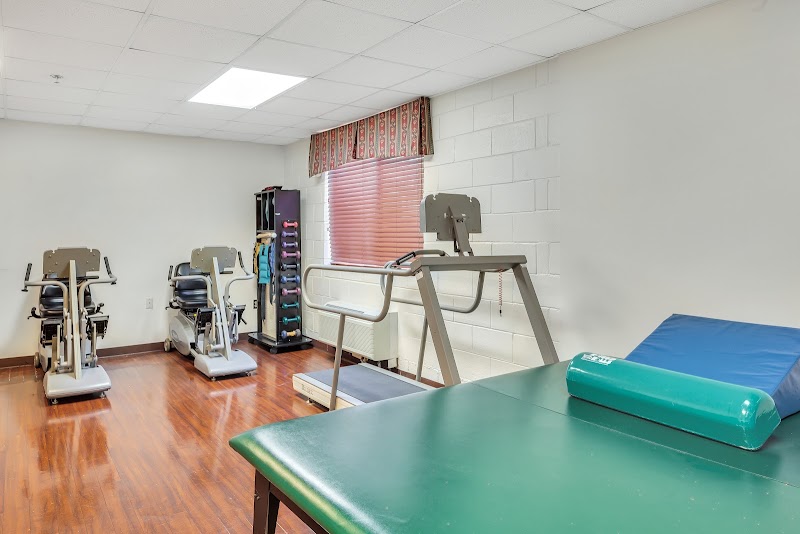
How Does Pruitthealth - Lilburn Compare to Other Georgia Nursing Homes?

Compared to the 100 nursing homes in Georgia, PRUITTHEALTH - LILBURN's overall rating (1 stars) is below the state average of 2.6, staff turnover (58%) is significantly higher than the state average of 46%, and health inspection rating (1 stars) is much below the national benchmark.

What Should Families Ask When Visiting Pruitthealth - Lilburn?

Based on this facility's data, families visiting should ask: "What changes have been made since the serious inspection findings, and how are you preventing similar issues?" "How do you ensure continuity of care given staff turnover, and what is your staff retention strategy?" "Can you walk me through typical staffing levels on day, evening, and night shifts?" "Can I visit during a mealtime to observe dining assistance and food quality?" These questions are particularly relevant given the facility's Immediate Jeopardy citations, the facility's high staff turnover rate, and the below-average staffing rating.

Is Pruitthealth - Lilburn Safe?

Based on CMS inspection data, PRUITTHEALTH - LILBURN has documented safety concerns. Inspectors have issued 3 Immediate Jeopardy citations (the most serious violation level indicating risk of serious injury or death). The facility has a 1-star overall rating and ranks #100 of 100 nursing homes in Georgia. Families considering this facility should ask detailed questions about what corrective actions have been taken since these incidents.

Do Nurses at Pruitthealth - Lilburn Stick Around?

Staff turnover at PRUITTHEALTH - LILBURN is high. At 58%, the facility is 12 percentage points above the Georgia average of 46%. Registered Nurse turnover is particularly concerning at 68%. RNs handle complex medical decisions and coordinate care — frequent RN changes can directly impact care quality. High turnover means new staff may not know residents' individual needs, medications, or preferences. It can also be disorienting for residents, especially those with dementia who rely on familiar faces. Families should ask: What is causing the turnover? What retention programs are in place? How do you ensure care continuity during staff transitions?

Was Pruitthealth - Lilburn Ever Fined?

PRUITTHEALTH - LILBURN has been fined $59,423 across 1 penalty action. This is above the Georgia average of $33,673. Fines in this range indicate compliance issues significant enough for CMS to impose meaningful financial consequences. Common causes include delayed correction of deficiencies, repeat violations, or care failures affecting resident safety. Families should ask facility leadership what changes have been made since these penalties.

Is Pruitthealth - Lilburn on Any Federal Watch List?

PRUITTHEALTH - LILBURN is not on any federal watch list. The most significant is the Special Focus Facility (SFF) program, which identifies the bottom 1% of nursing homes nationally based on persistent, serious quality problems. Not being on this list means the facility has avoided the pattern of deficiencies that triggers enhanced federal oversight. This is a positive indicator, though families should still review the facility's inspection history directly.