MARIETTA CENTER FOR NURSING AND HEALING
811 KENNESAW AVENUE, MARIETTA, GA 30060 (770) 422-2451
For profit - Limited Liability company 154 Beds EMPIRE CARE CENTERS Data: November 2025
Trust Grade
23/100
#294 of 353 in GA
Last Inspection: June 2025

Inspected within the last 6 months. Data reflects current conditions.

Overview

Marietta Center for Nursing and Healing has received an F grade, indicating poor performance with significant concerns about resident care. Ranking #294 out of 353 facilities in Georgia places it in the bottom half, and #10 out of 13 in Cobb County means there are only a few local options that are better. Although the facility is showing an improving trend, reducing issues from 10 to 4, it still has serious shortcomings, including reports of staff failing to provide appropriate personal care, which led to feelings of humiliation among residents. The staffing rating is concerning, with only 1 out of 5 stars and less RN coverage than 88% of facilities in Georgia, indicating potential gaps in care. Additionally, there are 31 identified issues, including serious cases of residents being denied dignity in their daily activities and incidents of misappropriation of personal property by staff, highlighting the need for families to carefully consider this facility for their loved ones.

Trust Score
F
23/100
In Georgia
#294/353
Bottom 17%
Safety Record
High Risk
Review needed
Inspections
Getting Better
10 → 4 violations
Staff Stability
⚠ Watch
46% turnover. Above average. Higher turnover means staff may not know residents' routines.
Penalties
✓ Good
$7,901 in fines. Lower than most Georgia facilities. Relatively clean record.
Skilled Nurses
⚠ Watch
Each resident gets only 15 minutes of Registered Nurse (RN) attention daily — below average for Georgia. Fewer RN minutes means fewer trained eyes watching for problems.
Violations
⚠ Watch
31 deficiencies on record. Higher than average. Multiple issues found across inspections.
★☆☆☆☆
1.0
Overall Rating
★☆☆☆☆
1.0
Staff Levels
★★☆☆☆
2.0
Care Quality
★★☆☆☆
2.0
Inspection Score
Stable
2024: 10 issues
2025: 4 issues

The Good

  • Full Sprinkler Coverage · Fire safety systems throughout facility
  • No fines on record

Facility shows strength in fire safety.

The Bad

1-Star Overall Rating

Below Georgia average (2.6)

Significant quality concerns identified by CMS

Staff Turnover: 46%

Near Georgia avg (46%)

Higher turnover may affect care consistency

Federal Fines: $7,901

Below median ($33,413)

Minor penalties assessed

Chain: EMPIRE CARE CENTERS

Part of a multi-facility chain

Ask about local staffing decisions and management

The Ugly 31 deficiencies on record

3 actual harm
Jun 2025 4 deficiencies
CONCERN (D) 📢 Someone Reported This

A family member, employee, or ombudsman was alarmed enough to file a formal complaint

Potential for Harm - no one hurt, but risky conditions existed

Accident Prevention (Tag F0689)

Could have caused harm · This affected 1 resident

Based on observations, staff interviews, and record review, the facility failed to maintain safe water temperatures to ensure residents were free from potential accident hazards, as evidenced by water...

Read full inspector narrative →
Based on observations, staff interviews, and record review, the facility failed to maintain safe water temperatures to ensure residents were free from potential accident hazards, as evidenced by water temperatures exceeding 120 degrees Fahrenheit (F) in one of five shower rooms (South Hall Shower Room). The deficient practice had the potential to place residents who use the shower at increased risk of burns. Findings include: Review of a facility-provided document titled Instructions Testing and Logging Water Temperatures revealed the document included instructions of 1. For burn prevention, federal guidelines advise that you keep domestic water temperatures below 120 degrees Fahrenheit, although this temperature can still cause burns if exposure reaches five minutes. Many states have even stricter standards that set maximum temperatures lower than 120 degrees Fahrenheit. Although 100 degrees Fahrenheit is considered a safe water temperature for bathing. Observation and interview with the Maintenance Director on 6/14/2025 at 9:12 am revealed that the water in the South Hall Shower measured 122 degrees F with the facility's calibrated thermometer. A sink tested at 9:10 am, in the same location, measured 126 degrees F. The Maintenance Director revealed he usually attempted to maintain water temperatures between 106 and 108 degrees F. The Maintenance Director stated that when checking temperatures, he allowed the water to run until it reached what he considered the proper temperature. He explained it took time to recirculate. He stated that the issue with temperature fluctuation may be due to the proximity of each hall to the water heaters. The Maintenance Director stated he would immediately adjust the water temperatures and confirmed the South Hall shower room would be taken out of order while temperature adjustments were made. The Maintenance Director stated he was not aware of any accidents due to hot water temperatures. Interview on 6/14/2025 at 2:54 pm with the [NAME] President of Property Management (VP) stated they had a runaway mixing valve which required readjustment. He reported the water heater had been changed approximately two months ago. The VP stated the facility preferred to maintain water temperatures between 100 and 106 degrees F, and the water temperatures were monitored weekly. He confirmed that staff checked nearby rooms to ensure the temperatures were not more than 110 degrees F. Observation on 6/14/2025 at 3:00 pm in the South Hall shower room revealed a water temperature reading of 108 degrees F for both the shower and sink. Observation on 6/15/2025 at 9:05 am and 9:07 am in the South Hall revealed water temperature readings of 106 degrees F at the sink and 102.6 degrees F in the shower, respectively. A Resident Council meeting was held on 6/15/2025 and revealed that no residents had concerns with hot water temperatures. A review of the grievance logs revealed no grievances related to hot water temperatures. Interview on 6/15/2025 at 12:14 pm with the Administrator revealed the expectation was that water temperatures be maintained between 100 and 110 degrees F. The Administrator reported that staff monitors temperatures daily through spot checks rather than checking every fixture. He confirmed adjustments were made when discrepancies were identified. He acknowledged the potential for a negative outcome, including the risk that residents could get burned.
CONCERN (D) 📢 Someone Reported This

A family member, employee, or ombudsman was alarmed enough to file a formal complaint

Potential for Harm - no one hurt, but risky conditions existed

Infection Control (Tag F0880)

Could have caused harm · This affected 1 resident

Based on observations, staff interviews, record review, and review of facility policies titled Personal Protective Equipment and Transmission-Based (Isolation) Precautions, the facility failed to prot...

Read full inspector narrative →
Based on observations, staff interviews, record review, and review of facility policies titled Personal Protective Equipment and Transmission-Based (Isolation) Precautions, the facility failed to protect residents from infection by not wearing personal protective equipment (PPE), when providing care to one of two residents (R) (R328) on Contact Precautions. The deficient practice had the potential to cause the spread of infections to other residents, staff, and visitors. Findings include: Review of the facility policy titled Personal Protective Equipment, revised January 2025, revealed under Policy: The facility promotes appropriate use of personal protective equipment to prevent the transmission of pathogens to residents, visitors, and other staff. Under Policy Explanation and Compliance Guidelines: All staff who have contact with residents and their environments must wear personal protective equipment as appropriate during resident care activities and at other times in which exposure to blood, body fluids, or potentially infectious materials is likely. Review of the facility policy titled Transmission-Based (Isolation) Precautions, revised 9/12/2024, revealed under Policy: It is the policy of the facility to take appropriate precautions to prevent transmission of pathogens, based on the pathogens' modes of transmission. Under Policy Explanation and Compliance Guidelines: .8. Contact Precautions- .c. When caring for residents on contact precautions, staff should wear a gown and gloves for all interactions that may involve contact with the residents or potentially contaminated areas in the residents' environment. Review of R328's electronic medical record (EMR) revealed that he was admitted to the facility with a diagnosis that included, but was not limited to, unspecified acute conjunctivitis (infection of the conjunctivae) of the right eye. Review of R328's admission Minimum Data Set (MDS) assessment revealed that the assessment was in progress. Review of R328's Clinical Physician's Orders revealed an order dated 6/14/2025 for ciprofloxacin HCL [hydrochloride] ophthalmic 0.3 percent (an antibiotic medication), instill 2 drop in the right eye four times a day. Further review revealed an order dated 6/13/2025 for Infection Precautions - contact, every shift. Review of R328's medication administration record (MAR) revealed the ophthalmic drops were documented as administered as ordered. An observation on 6/14/2025 at 8:54 am revealed that Licensed Practical Nurse (LPN) BB entered the room of R328 without putting on PPE. At that time, it was noted that the resident was on contact isolation. An observation on 6/14/2025 at 8:59 am revealed that LPN BB entered the room of R328 without putting on PPE. An interview on 6/14/2025 at 9:05 am outside R328's room, LPN BB stated that Contact Precautions meant that if he was going to be providing care, especially if the antibiotic eye drops were to be administered, he would need to be using PPE. He then stated that he did not need to use PPE every time he went into the room. An interview on 6/14/2025 at 1:14 pm with the Infection Preventionist (IP) revealed that it is her expectation that any staff caring for a resident in Contact Precautions needed to apply the appropriate PPE required for that isolation. An interview on 6/14/2025 at 1:16 pm with the Director of Nursing revealed that it was her expectation that staff wear appropriate PPE when providing care for any resident in Contact Precautions.
CONCERN (F)

Potential for Harm - no one hurt, but risky conditions existed

Food Safety (Tag F0812)

Could have caused harm · This affected most or all residents

Based on observations, staff interviews, and review of the facility policies titled Food Receiving and Storage and Refrigeration and Freezers, the facility failed to ensure opened food items in the dr...

Read full inspector narrative →
Based on observations, staff interviews, and review of the facility policies titled Food Receiving and Storage and Refrigeration and Freezers, the facility failed to ensure opened food items in the dry storage area and walk-in refrigerator were labeled and dated, and failed to remove a dented can from the food storage rack to prevent usage. The deficient practices had the potential to place 117 residents who received an oral diet from the kitchen at risk of contracting a foodborne illness. Findings include: Review of the facility policy titled Food Receiving and Storage, issued April 2024, revealed at bullet point seven, All foods stored in the refrigerator or freezer will be covered, labeled, and dated. Review of the facility policy titled Refrigeration and Freezers, issued April 2024. revealed at bullet point seven, Use by or open dates will be labeled on food items once opened. Observation on 6/13/2025 at 8:24 am of the dry storage area revealed an open five-pound bag of egg noodles being stored with no open date. Continued observation of the dry storage area revealed a food storage rack with canned foods. A large can of Northern Beans was observed with a dent on the bottom seal. Observation on 6/13/2025 at 8:27 am of the walk-in refrigerator revealed an open packet of ham slices with no label or date, a clear plastic container with chopped lettuce with no label or date, and an opened bag of parsley with no open date. Observation on 6/13/2025 at 8:39 am of a large rectangular clear plastic bin under the food preparation table revealed that inside the bin were an open box of instant mashed potatoes, two open five-pound bags of grits, and an open package of gravy mix. None of these food items had an open date. During an interview on 6/13/2025 at 8:50 am, the Director of Dietary (DD) confirmed that the bag of egg noodles had no open date. He stated that the noodles were used for a meal last night, and the cook did not place an open date. The DD stated that dietary staff are to date food items after they have been opened. The DD confirmed that the can of Northern Beans was stored in the food storage rack and had a dent on the bottom seal. The DD stated that the delivery driver uses the can to prop open the door to the kitchen to make it easier to deliver items. The DD stated that the delivery driver slammed the door into the can, causing the dent. The DD stated that once the delivery driver is done propping open the door, the can is returned to the rack. The DD revealed that the can should not have been returned to the rack with the dent. During an interview on 6/13/2025 at 8:55 am, the DD confirmed that the packet of sliced ham did not have a label or date. The DD stated the sliced ham was not labeled or dated due to the staff using it to make sandwiches. At the time of observation and interview, all staff were assembling breakfast meal trays, and no one was in the process of making sandwiches. The DD confirmed that the container containing chopped lettuce had no label or date and that the label likely fell off. There was no label found on the floor or on the food storage rack. The DD confirmed that the bag of parsley had been opened and was not labeled with an open date. During an interview on 6/13/2025 at 9:00 am, the DD revealed that he does not expect staff to date open food items stored in the clear plastic bin under the food preparation table. The DD stated that the entire bin is dated and, therefore, individual items do not need to be dated. The DD confirmed that there was no label on the bin with a date. The DD revealed that the cook likely removed the label from the food storage bin. During an interview on 6/13/2025 at 9:00 am, Dietary [NAME] AA revealed that he did not remove any stickers from the bin and did not notice any stickers on the food storage bin.
CONCERN (F)

Potential for Harm - no one hurt, but risky conditions existed

Garbage Disposal (Tag F0814)

Could have caused harm · This affected most or all residents

Based on observations, staff interviews, and review of the facility policy titled Disposal of Garbage and Refuse, the facility failed to ensure two of two dumpster's side doors were closed and failed ...

Read full inspector narrative →
Based on observations, staff interviews, and review of the facility policy titled Disposal of Garbage and Refuse, the facility failed to ensure two of two dumpster's side doors were closed and failed to ensure the ground surrounding the dumpsters was free from trash debris. The deficient practice had the potential to promote the harboring of pests, insects, and other organisms and create the potential for disease transmission by pests and rodents. The facility census was 124 residents. Findings include: Review of the facility policy titled Disposal of Garbage and Refuse, revised April 2024, revealed at bullet point seven that refuse containers and dumpsters kept outside the facility shall be designed and constructed to have tightly fitting lids, doors, or covers. Containers and dumpsters shall be kept covered when not being loaded. Surrounding area shall be kept clean so that the accumulation of debris and insect/rodent attractions are minimized. Observation on 6/13/2025 at 9:10 am of the dumpster area revealed the facility had two medium-sized dumpsters for general trash. Observation of the dumpster on the right-hand side revealed that the side door on the right side was open, exposing trash inside. Continued observation revealed the ground surrounding both dumpsters had trash debris such as plastic water bottles, plastic gloves, plastic cups, paper, and plastic silverware. During an interview on 6/13/2025 at 9:10 am, the Director of Dietary (DD) confirmed that the side door to the dumpster was open. The DD confirmed that there was trash debris on the ground surrounding the dumpsters. Continued interview with the DD revealed that he observed the dumpsters/dumpster area at least once a day, but often more, to ensure the dumpster top lids are closed, side doors are closed, and bottom drainage plugs are in place. The DD stated that all departments use dumpsters, and all staff are responsible for ensuring that dumpster doors are closed and that there is no trash on the ground. Observation on 6/14/2025 at 9:20 am of the dumpster area revealed that the dumpster on the right-hand side had the left side door open. Observation on 6/15/2025 at 11:10 am of the dumpster area revealed that both dumpsters had all side doors open, and trash bags were spilling out. During an interview on 6/15/2025 at 11:10 am, the Director of Maintenance (DM) confirmed that the side doors to both dumpsters were open and confirmed that trash bags were spilling out. The DM revealed that all staff were to assist with ensuring dumpster side doors were closed and all trash was contained inside. The DM revealed that housekeeping was responsible for keeping the ground surrounding the dumpster area clean. During an interview on 6/15/2025 at 11:10 am, the DD confirmed that all of the side doors to both dumpsters were open, and trash bags were spilling out. The DM confirmed that there was trash on the ground surrounding the dumpsters. During an interview on 6/15/25 at 11:15 am, the Lead Housekeeper (LH) revealed that housekeeping staff were to make sure the dumpster side doors were closed after use. The LH confirmed that the side doors to both dumpsters were open, with trash spilling out. The LH stated that housekeeping staff were responsible for keeping the ground surrounding the dumpsters free from trash and was not sure when the task was last completed.
Feb 2024 10 deficiencies
CONCERN (D) 📢 Someone Reported This

A family member, employee, or ombudsman was alarmed enough to file a formal complaint

Potential for Harm - no one hurt, but risky conditions existed

Resident Rights (Tag F0550)

Could have caused harm · This affected 1 resident

**NOTE- TERMS IN BRACKETS HAVE BEEN EDITED TO PROTECT CONFIDENTIALITY** Based on observations, record review, and review of the facility policy titled, Activities of Daily Living (ADL), the facility f...

Read full inspector narrative →
**NOTE- TERMS IN BRACKETS HAVE BEEN EDITED TO PROTECT CONFIDENTIALITY** Based on observations, record review, and review of the facility policy titled, Activities of Daily Living (ADL), the facility failed to give a dependent resident the appropriate assistance with eating meals and to ensure meals in their room in a timely manner for one of 41 sampled residents (R) (R25). The deficient practice had the potiential to cause weight loss for R25. Findings include: Review of the undated facility policy titled Activities of Daily Living revealed under Policy: Based on the comprehensive assessment of a patient and consistent with the patient's needs and choices, the Center must provide the necessary care and services to ensure that a patient's abilities in activities of daily living do not diminish unless circumstances of the individual's clinical condition demonstrates that such diminution was unavoidable. Activities of daily living (ADLs) include: Hygiene-bathing, dressing, grooming, and oral care; Mobility-transfer and ambulation, including walking; Elimination-toileting; Dining-eating, including meals and snacks; Communication-including speech, language, and other functional communication systems. Practice Standards: 1.2. A patient who is unable to carry out activities of daily living (ADLs) receives the necessary services to maintain good nutrition, grooming, and personal and oral hygiene. Review of the electronic medical record (EMR) for R25 revealed diagnoses including but not limited to Todd's paralysis (postictal paralysis), aphasia, need for assistance with personal care, other lack of coordination, muscle weakness (generalized), need for assistance with personal care, other lack of coordination. Review of the most recent quarterly Minimum Data Set (MDS) dated [DATE] for R25 revealed a Brief Interview for Mental Status (BIMS) score of 99, which indicates R25 was not able complete the interview-resident is rarely or never understood. Section GG (Functional Abilities and Goals) indicated full dependence on staff with ADL's, including eating. Review of the care plan for R25 revealed interventions to monitor, document, and report PRN (as needed) any of dysphagia: pocketing, choking, coughing, drooling, holding food in mouth, several attempts at swallowing, refusing to eat, appears concerned during meals. The resident has potential nutritional problem r/t [related to] texture modified diet, use PEG [percutaneous endoscopic gastrostomy] tube. R25 has an ADL self-care performance deficit r/t activity intolerance, disease process 2/28/2023. Observation on 2/14/2024 at 9:35 am of R25 being feed by a Certified Nurse Assistant (CNA). Breakfast consists of eggs, grits, and milk. Resident was eating very good with assistance. Observation on 2/15/24 at 9:37 am of R25 with a breakfast tray to the left side of her bed. It appeared that she was set up prepared to eat. Food was all over her clothes, face, and hands. It appeared as though she was trying to feed herself. I observed resident (R) R25 silverware was still in the napkin wrapped up and the milk was unopened.
CONCERN (D)

Potential for Harm - no one hurt, but risky conditions existed

Comprehensive Care Plan (Tag F0656)

Could have caused harm · This affected 1 resident

Based on record review, staff interview, and review of the facility policy titled, Comprehensive Care Plans, the facility failed to follow a care plan for one of 41 sampled residents (R) (R42) related...

Read full inspector narrative →
Based on record review, staff interview, and review of the facility policy titled, Comprehensive Care Plans, the facility failed to follow a care plan for one of 41 sampled residents (R) (R42) related to wound care. The deficient practice had the potential to cause R42 to not receive treatment and/or care according to their needs. Findings include: Review of the facility policy titled Comprehensive Care Plans with a review date of 9/12/2022 revealed under Policy Explanation and Compliance Guidelines: The comprehensive care plan will include measurable objectives and timeframes to meet the resident's needs as identified in the resident's comprehensive assessment. The objectives will be utilized to monitor the resident's progress. Alternative interventions will be documented as needed. Qualified staff responsible for carrying out interventions specified in the care plan will be notified of their roles and responsibilities for carrying out the interventions, initially and when changes are made. Review of R42's electronic medical record (EMR) revealed that he had diagnoses including non-pressure chronic ulcer of left thigh and punctate keratitis. Review of the most recent quarterly Minimum Data Set (MDS) for R42 dated 1/2/2024 revealed R42 had a surgical wound. Review of R42's Physician's Orders revealed that he was receiving treatment to the left inner thigh: Cleanse wound with wound cleanser. Pat dry. Apply Calcium Ag. [algonate] Cover with ABD [abdominal] pad. Change daily and as needed (PRN) two times a day AND as needed. Review of the care plan for R42 revealed a care plan for surgical wound to the left thigh was initiated on 10/22/2022. The care plan listed individualized interventions to include treatment as ordered. Review of the treatment administration record (TAR) for December 2023 for R42 revealed daily treatment to residents left inner thigh was not documented as completed on 12/3/2023, 12/6/2023, 12/9/2023, 12/10/2023, 12/13/2023 - 12/17/2023, and 12/21/2023 through 12/28/2023. The order changed to twice daily on 12/28/2023. The treatment to the surgical wound was not documented as completed on 12/29/2023 and 12/31/2023 at 9 am and 9 pm. In addition, the treatment was not documented as completed on 12/30/2023 at 9 pm. Review of the TAR for January 2024 revealed the twice daily treatment to R42's inner thigh was not documented as completed on 1/1/2024, 1/4/2024, 1/5/2024, 1/7/2024, 1/8/2024, 1/14/2024 through 1/17/2024, 1/21/2024, 1/22/2024, 1/27/2024 - 1/29/2024, 1/2/2024, 1/6/2024, 1/18/2024 through 1/20/2024, 1/23/2024, 1/26/2024 at 9:00 am, and 1/30/2024 at 9:00 pm. Review of the TAR for February 2024 revealed the twice daily treatment to R42's inner thigh was not documented as completed on 2/1/2024 through 2/3/2024, 2/7/2024, 2/13/2024, 2/4/2024 and 2/11/2024 at 9:00 am, and 2/10/2024, 2/11/2024 and 2/14/2024 at 9:00 pm. Interview 2/15/2024 at 10:19 am with the RN MDS Coordinator revealed R42's wound care plan was updated 10/9/2023. The RN MDS Coordinator verified that if the staff were not abiding by the physician's orders for wound care, the plan of care was not being followed.
CONCERN (D) 📢 Someone Reported This

A family member, employee, or ombudsman was alarmed enough to file a formal complaint

Potential for Harm - no one hurt, but risky conditions existed

Quality of Care (Tag F0684)

Could have caused harm · This affected 1 resident

**NOTE- TERMS IN BRACKETS HAVE BEEN EDITED TO PROTECT CONFIDENTIALITY** 2. Observation of wound care for R81's sacral wound with LPN Wound Care Nurse GG and the Wound Care Nurse Practitioner (NP) reve...

Read full inspector narrative →
**NOTE- TERMS IN BRACKETS HAVE BEEN EDITED TO PROTECT CONFIDENTIALITY** 2. Observation of wound care for R81's sacral wound with LPN Wound Care Nurse GG and the Wound Care Nurse Practitioner (NP) revealed LPN Wound Nurse GG consulted the wound care orders, assessed the resident's pain, assembled supplies, cleaned the overbed table with facility approved disinfectant, allowed proper wet time, then she utilized a barrier for the table which she placed her supplies for the wound treatment. She performed hand hygiene utilizing soap and water before starting and throughout the treatment at each glove change and upon exiting the room. She assisted R81 onto his right side. She removed the old dressing, discarded all soiled dressings into a biohazard bag, doffed (took off) gloves, performed hand hygiene, then donned (put on) clean gloves. The Wound Care NP, after performing hand hygiene with hand sanitizer, donned clean gloves and measured the wound, after which she doffed her gloves, performed hand hygiene with hand sanitizer, then donned clean gloves and assisted LPN Wound Nurse GG with positioning of the resident. LPN Wound Nurse GG cleansed the wound as directed in the physician orders, doffed gloves, performed hand hygiene, then donned clean gloves. She then provided the wound treatment as directed in the physician orders, covered the wound with a dressing and labeled the dressing with the date and her initials. She doffed her gloves, performed hand hygiene, and donned clean gloves. She gathered the biohazard bag and discarded all dressing wrappings and the barrier from the table. She cleaned the table again with facility approved disinfectant, then removed the biohazard trash from the room. She reassessed the residents pain level before leaving the resident. Review of R81's physician orders included but not limited to sacrum pressure stage IV (four) cleanse with ¼ strength Dakin's solution (wound cleanser), pat dry, apply no sting skin prep to peri (around)-wound, apply calcium algenate -AG, cover with bordered gauze, every day. Start date 12/13/2023. Review of R81's care plan revealed a focus of R81 has a pressure ulcer stage four (4) to sacrum related to history of ulcers, bowel incontinence, and immobility (date initiated 9/13/2023, created by MDS coordinator, Revision on 12/13/2023 by reimbursement specialist). Goal was R81's pressure ulcer will show signs of healing and remain free from infection by/through review date (date initiated 9/13/2023 by MDS coordinator; revision of 9/28/2023 by reimbursement specialist). Interventions included but not limited to administer treatments as ordered and monitor for effectiveness (date initiated/created 9/13/2023 by MDS Coordinator) Review of R81's TAR for the sacral wound in December 2023 revealed daily wound care orders were started on 12/13/2023. Review of the TAR revealed there were only three dressing changes documented for the sacral wound between 12/13/2023 through 12/31/2023, on 12/13/2023, 12/28/2023, and 12/30/2023. Review of R81's TAR for January 2024 revealed daily wound care to the sacral wound ordered and there were eight dressing changes documented for the entire month of January. Dressing changes were documented as completed only on 1/2/2024, 1/16/2024, 1/18/2024, 1/19/2024, 1/20/2024, 1/24/2024, 1/29/2024, and 1/30/2024. Review of R81's TAR for February 2024 revealed daily wound care to the sacral wound, and between 2/1/2024 and 2/14/2024 there were six dressing changes documented as completed. Dressing changes were documented as completed on 2/2/2024, 2/3/2024, 2/5/2024, 2/6/2024, 2/12/2024, and 2/14/2024. Interview on 2/15/2023 at 11:43 am with LPN HH revealed that the charge nurse completes wound care as ordered when the wound care nurse is not working and documents the care given on the TAR. She stated she does not have any trouble finding time to complete the care assigned to her. She stated if she feels she needs assistance with a task she asks the unit manager for assistance. Interview with LPN NN on 2/15/2024 at 11:49 am revealed the wound care nurse works five days a week, Monday through Friday. She stated the wound care nurse completes all the wound care on the days she is working. She stated on Saturday and Sunday it is the responsibility of the LPN -Charge Nurse to complete and document the wound care completed on the TAR. She stated she has not had trouble completing wound care for residents when working without a wound care nurse. Interview with the DON on 2/15/2024 at 12:14 pm, he confirmed and verified R81's December TAR between 12/13/2023 through 12/31/2023 the nurses documented only three dressing changes for R81's daily sacrum wound dressing changes, January TAR between 1/1/2024 through 1/31/2024 the nurses documented only eight dressing changes, and the February TAR between 2/1/2024 through 2/14/2024 the nurses documented only six dressing changes. He revealed his expectation was that wound care be performed as ordered by the physician and documented on the TAR. He stated he expected the nurse performing the wound care should follow through with the orders and document care and wound care given to the resident in the EMR. He stated he thinks the nurses have been prioritizing patient care over documentation, therefore not documenting the care they have given. Based on observations, resident and staff interviews, record review, and review of the facility policies titled, Wound Treatment Management and Charting and Documentation, the facility failed to provided treatment and care in accordance with professional standards for two of 41 sampled residents (R) (R42 and R81) related to failure to document wound care was performed as ordered by the physician. The deficient practice had the potential to cause further decline and possible infection of wounds. Findings included: Review of the facility policy titled Wound Treatment Management dated August 2023 revealed under Policy Statement: To promote wound healing of various types of wounds, it is the policy of the facility to provide evidence-based treatments in accordance with current standards of practice and physician orders. Policy Explanation and compliance Guidelines: 1. Wound treatments will be provided in accordance with physician orders, including the cleansing method, type of dressing, and frequency of dressing changes. 6. c. The facility will follow specific physician orders for providing wound care. 7. Treatments will be documented on the Treatment Administration Record (TAR) or in the electronic health record. Review of the facility policy titled Charting and Documentation revised July 2017 revealed in the Policy Statement: All services provided to the resident, progress toward the care plan goals, or any changes in the resident's medical, physical, functional, or psychosocial condition, shall be documented in the resident's medical record. The medial record should facilitate communication between the interdisciplinary team regarding the resident's condition and response to care. Under the section Policy Interpretation and Implementation: 2. The following information is to be documented in the resident's medical record, C - treatments or services performed. 7. Documentation of procedures and treatments will include: a. care-specific details, including: a. the date and time the procedure/treatment was provided, b. the name and title of the individual(s) who provided the care; c. the assessment data and/or any unusual findings obtained during the procedure/treatment; d. how the resident tolerated the procedure/treatment; e. whether the resident refused the procedure/treatment; f. notification of family, physician, or other staff, if indicated, and; g. the signature and title of the individual documenting. 1. Review of the Electronic Medical Record (EMR) revealed that R42 had a diagnosis of but not limited to non-pressure chronic ulcer of left thigh, rosacea, lack of coordination, morbid (severe) obesity due to excess calories, local infection of the skin and subcutaneous tissue, punctate keratitis, bilateral, and need for assistance with personal care. Review of the quarterly Minimum Data Set (MDS) dated [DATE] revealed in Section C - Cognitive Patterns: Brief interview for Mental Status (BIMS) score of 15, indicating no cognitive impairment. Section M - Skin Condition revealed R42 had a surgical wound. R42 had a care plan related to surgical wound with an initial date of 8/24/2023. Review of the current physician orders in the EMR revealed R42 had an order for the Left inner Thigh: Cleanse wound with wound cleanser. Pat dry. Apply Calcium Ag. [alginate] Cover with ABD [abdominal] Pad. Change daily and as needed (PRN) two times a day. Start date 12/28/2023. Review of the Treatment Administration Record (TAR) for December 2023 revealed daily treatment to R42's left inner thigh was not documented as completed on 12/3/2023, 12/6/2023, 12/9/2023, 12/10/2023, 12/13/2023 through 12/17/2023, and 12/21/2023 through 12/28/2023. The order changed to twice daily on 12/28/2023. The treatment to the surgical wound was not documented as completed on 12/29/2023 and 12/31/2023 at 9:00 am and 9:00 pm. In addition, the treatment was not documented as completed on 12/30/2023 at 9:00 pm. Review of the TAR for January 2024 revealed the twice daily treatment to R42's inner thigh was not documented as completed on 1/1/2024, 1/4/2024, 1/5/2024, 1/7/2024, 1/8/2024, 1/14/2024 through 1/17/2024, 1/21/2024, 1/22/2024, 1/27/2024 through 1/29/2024, 1/2/2024, 1/6/2024, 1/18/2024 through 1/20/2024, 1/23/2024, and 1/26/2024 at 9:00 am, and 1/3/2024 at 9:00 pm. Review of the TAR for February 2024 revealed the twice daily treatment to R42's inner thigh was not documented as completed on 2/1/2024 through 2/4/2024, 2/7/2024, 2/13/2024, 2/11/2024 at 9:00 am, and 2/4/2024, 2/10/2024, 2/11/2024 and 2/14/2024 at 9:00 pm. Wound observation 2/14/2024 at 9:27 am revealed R42's wound observation with LPN wound nurse GG. Wound Nurse GG explained the procedure to R42. Supplies were gathered, provided privacy, resident repositioned, and was assessed for pain. Hand hygiene was performed, the wound was assessed, the wound was cleansed, and application of medications and dressings as ordered by the physician was performed. R42 was assessed for pain and repositioned. R42 tolerated the procedure well and was appreciative of the dressing change. Hand hygiene was performed within standard practice throughout the procedure. Interview on 2/13/2024 at 10:52 am with R42 revealed the facility had finally hired a wound nurse to do his dressing changes. R42 further stated the previous wound nurse left a couple of months ago, so the care of his wound was not being treated consistently. He stated that the wound care was sometimes done by the hall nurses and at other times he had to care for his own wound, despite it being on his backside. Interview on 2/14/2024 at 9:19 am with the Wound Nurse Practitioner revealed R42's wound was a chronic wound that he has had for 4 years. She further stated that R42 cannot reposition himself, so the goal for him was to reduce the risks of the wound getting infected. Interview on 2/14/2024 at 9:21 am with LPN Wound Nurse GG revealed she just started as the wound nurse approximately 2 weeks ago. LPN GG stated prior to her being promoted to the wound nurse position, the facility did not have a wound nurse, so the nurses assigned to the residents with wounds were responsible to do wound care. LPN GG further stated nurses are required to document the wound care was complete in the EMR. Interview on 2/14/2024 at 3:54 pm with the Director of Nursing (DON) revealed the last wound nurse did leave in November 2023. The DON further stated at that time the former DON was overseeing the wound program and the nurses assigned to the residents with wounds were responsible for ensuring residents wound care was done. The DON further stated that the new wound nurse started the position about 2 weeks ago. The DON stated that when the wound treatments are performed it should be documented in the EMR on the TAR. The DON stated during that time the facility utilized a lot of agency nurses, so accountability was hard. During a follow-up interview on 2/15/2024 at 9:18 am with the DON, he verified the treatments for R42 and R81 were not documented as completed as ordered by the physician. The DON also stated the wound nurse was responsible for treatment on Mondays, Wednesdays, and Fridays and the hall nurses are responsible for treatment on all other days. The DON further stated the nursing administration staff are new to their perspective roles so the audits for compliance are not being done yet.
CONCERN (D)

Potential for Harm - no one hurt, but risky conditions existed

Accident Prevention (Tag F0689)

Could have caused harm · This affected 1 resident

Based on observation, record review, resident and staff interview, and review of the facility's policy titled, Electrical Safety for Residents, the facility failed to ensure the environment was free f...

Read full inspector narrative →
Based on observation, record review, resident and staff interview, and review of the facility's policy titled, Electrical Safety for Residents, the facility failed to ensure the environment was free from potential accident hazards by ensuring one of 41 sampled residents (R) (R111) was not exposed to a heating device. The deficient practice had the potential to cause skin damage not limited to but including burns specifically due to the use of an electrical blanket. Findings include: Review of facility's policy titled Electrical Safety for Residents dated February 2024 revealed Policy Statement: The resident will be protected from injury associated with the use of electric devices including electrocution, burns and fire. Policy Interpretation and Implementation: 11. The use of electric blankets and electric heating pads is discouraged. 12. When electric blankets are used, the following precautions must be taken to prevent thermal injury and fires: a. Follow manufacturer's instructions for use, b. Do not allow residents to sleep with electric blankets or heating pads turned on, c. Do not tuck electric blankets into the residents' bedding, d. Do not allow the blanket or pad to be squeezed or become constricted, e. Encourage residents to report redness, pain, or burning sensation on or near the areas exposed to heat, and f. Inspect residents' skin often for signs of thermal injury. Severe burns can result from prolonged exposure to one area of the body, even at low temperatures. Review of R111's electronic medical record (EMR) revealed resident was admitted with diagnoses of cerebral infarction, syncope and collapse, and wedge compression fracture of unspecified lumbar vertebra. Review of R111's EMR revealed a hospital discharge summary that revealed R111 had vertebral fractures, likely orthostatic. CT (computerized tomography) of the spine shows degenerative disease and age indeterminant but chronic appearing fractures of C5, T11, and L1 (spinal vertebrae). MRI of Lumbar spine: Numerous compression fractures in the lower thoracic and lumbar spine of varying ages. Observation on 2/13/2024 at 10:36 am revealed an electric blanket on R111's bed. The blanket was plugged into the outlet and the red light was illuminated indicating the blanket was on. The blanket was warm to touch. Observation on 2/14/2024 at 3:50 pm revealed R111 out of bed and up in a wheelchair. The blanket was made up on the resident's bed. The electric blanket control was positioned on the floor with the red indicator light illuminated, indicating the blanket was on. The blanket was warm at the time of this observation. Observation and interview on 2/14/2024 at 3:58 pm with R111 revealed resident was out of bed in a wheelchair. The blanket was made up on the resident's bed. The electric blanket control was positioned on the floor with the red indicator light illuminated, indicating the blanket was on. R111 informed surveyor that a family member brought the blanket for him, and he uses it during the night. R111 further stated that he was not sure how hot the blanket gets because he has little feeling from his mid-calf down to his feet due to compression fractures. Interview 2/14/2024 at 5:17 pm with CNA FF revealed she was responsible for caring for R111 on 2/13/23 and today. CNA FF further stated that she made R111's bed and placed the electric blanket on the bed when she made it. CNA FF further stated that she was not aware that R111 was not supposed to have the electric blanket, or that she needed to inform the nurse that R111 was using the electric blanket. Interview and walking rounds on 2/14/2024 at 5:29 pm with the Director of Nursing (DON), the DON verified the electric blanket on R111's bed and asked the resident who brought it in to him. The DON stated that R111 was not supposed to have an electric blanket due to the potential hazard for burns. Interview on 2/14/2024 at 5:50 pm with the Administrator revealed that she was not sure of the policy related to heating devices in resident's rooms and she would have to check the policy.
CONCERN (D) 📢 Someone Reported This

A family member, employee, or ombudsman was alarmed enough to file a formal complaint

Potential for Harm - no one hurt, but risky conditions existed

Medication Errors (Tag F0758)

Could have caused harm · This affected 1 resident

Based on observations, staff interviews, record review, and review of the facility policy titled, Use of Psychotropic Medication, the facility failed to indicate a 14 day stop date for psychotropic me...

Read full inspector narrative →
Based on observations, staff interviews, record review, and review of the facility policy titled, Use of Psychotropic Medication, the facility failed to indicate a 14 day stop date for psychotropic medication for one of 41 sampled residents (R) (R35) and failed to ensure one of 41 sampled residents (R22) was evaluated for use of as needed (PRN) psychiatric medications beyond 14 days. Findings include: Review of the facility policy titled Use of Psychotropic Medication date reviewed/revised August 2023, revealed under Policy: Residents are not given psychotropic drugs unless the medication is necessary to treat a specific condition, as diagnosed and documented in the clinical record, and the medication is beneficial to the resident as demonstrated by monitoring and documentation of the resident's response to the medication(s). Under the subheading titled Policy explanation and Compliance Guidelines revealed under: PRN orders for all psychotropic drugs shall be used only when the medication is necessary to treat a diagnosed specific condition that is documented in the clinical record, and for a limited duration (i.e. 14 days). Number 9 a revealed: If the attending physician or prescribing practitioner believes that it is appropriate for the PRN order to be extended beyond 14 days, he or she shall document their rationale in the resident's medical record and indicate the duration for the PRN order. Review of the electronic medical record (EMR) revealed R35 was admitted to the facility with diagnoses listed but not limited to Alzheimer's disease and dementia. 1. Review of R35's Quarterly Minimum Data Set (MDS) with an Assessment Reference Date (ARD) of 1/3/2024 revealed she had short- and long-term memory problems and her cognitive skills for daily decision making was severely impaired. Section J (health and conditions) revealed she received pain management and had a condition or chronic disease that may result in a life expectancy of less than six months. Section N (Medications) revealed she was receiving antipsychotics and antidepressants. Review of R35's care plan indicated a focus of a diagnosis of a major neurocognitive disorder and is experiencing disturbed thought processes secondary to grief, sleep, appetite and anxiety initiated on (10/20/2022 by the MDS coordinator). The goals included but not limited to the indication of the resident will demonstrate decreased signs and symptoms such as sadness, tearfulness, hopelessness, anger, loss of interest, in preferred activities, sleep disturbance overwhelming fatigue, increased/decreased appetite, increased complaints of pain (initiated on 10/20/2022 by the MDS coordinator). Interventions included but were not limited to administering medications as ordered. Monitor/document the side effects and effectiveness (date initiated 10/20/2022 by the MDS Coordinator). Review of the Electronic Medical Record (EMR) revealed physician's orders for R35 included but was not limited to Ativan (lorazepam) oral tablet, a medication used to relieve anxiety. The dosage ordered was one milligram (mg) every four hours as needed (PRN) for anxiety. The start date was documented as 2/7/2024 at 1:15 pm. The stop date was documented as indefinite. Interview on 2/15/2024 at 10:39 am with the Director of Nursing (DON), he confirmed and verified the order dated 2/7/2024 at 1:15 pm for Ativan one mg every four hours as needed was started on 2/7/2024 and the stop date was documented in the orders as indefinite, indicating no stop date. He stated unless the nurse knows that antipsychotics should have a stop date of 14 days, they will not know to question the physician. He stated he suspected the order was written with an indefinite stop date because the resident was on hospice. 2. Review of the EMR for R22 revealed the resident had a diagnosis including but not limited to anxiety disorder, depression, and repeated falls. Review of R22's discharge orders from the hospital revealed an order for alprazolam oral tablet 0.25 milligram (mg), give one tablet by mouth two times a day as needed for anxiety up to five days. Review of the Physician orders for R22 revealed a medical doctor's (MD) order for alprazolam 0.25 milligram (mg) by mouth every 12 hours as needed for anxiety. The order had a start date of 1/29/2024, but the order had no stop date. Review of a practitioner progress note dated 2/1/2024 revealed a list of R22's current medications to include Alprazolam Oral Tablet 0.25 MG, give 1 tablet by mouth every 12 hours as needed for ANXIETY, 0.25MG, ACTIVE, 1/29/2024 to. (This sentence in the progress note was incomplete to contain a stop date). Interview on 2/14/2024 at 10:12 am with Licensed Practical Nurse (LPN) BB revealed R22 does not have a current order for alprazolam because the doctor did not renew the order, the last she heard. LPB BB opened the locked box on the medication cart, removed the blister pack of alprazolam and stated the medication is here, it came in. Observation on 2/14/2024 at 10:14 am of the medication cart revealed R22 had a blister pack containing 27 tabs of alprazolam dispensed from the pharmacy on 2/13/2024. One tablet had been removed from the blister pack. Review of the Narcotic Control Sheet on the medication cart revealed 28 tablets were received on 2/13/2024. On 2/14/2024 at 1:00 am, one tab was documented on the narcotic log as administered with 27 tablets remaining. Interview on 2/14/2024 at 12:02 pm with Unit Manager LPN AA revealed she was not aware that PRN psychotropic medications could only be ordered for 14 days and were required to be re-evaluated by the physician and reordered if it was still needed. LPN AA verified R22 did not have documentation in the record related to continuing the alprazolam past the 14-day duration. Interview on 2/14/2024 at 12:28 pm with Director of Nursing (DON) revealed that PRN psychotropic medications are ordered for 14 days. The DON further stated the physicians, and the Nurse Practitioner (NP) are responsible for making sure those orders are addressed. The DON further stated that nurses don't do anything related to the PRN psychotropic medication orders. The DON confirmed that there was Haldol, and the original lorazepam order had been onboard for longer than 14 days without sufficient documentation regarding a rationale and duration for continued use of the medication. In addition, the DON stated LPN AA probably would not be aware of the policy related to PRN psychotropic drug usage. Interview 2/14/2024 at 1:00 pm with Medical Director revealed he is aware that PRN psychotropic medications are prescribed for up to 14 days and after that time he or the NP are responsible to re-evaluate the resident to see if continued use is warranted for the medication. If continued use is warranted, a new order is written with a duration and the reason for the continuation of the medication. The MD further stated that the nurse should inform him when a resident needs to be re-evaluated for psychotropic medications.
CONCERN (E) 📢 Someone Reported This

A family member, employee, or ombudsman was alarmed enough to file a formal complaint

Potential for Harm - no one hurt, but risky conditions existed

Deficiency F0554 (Tag F0554)

Could have caused harm · This affected multiple residents

**NOTE- TERMS IN BRACKETS HAVE BEEN EDITED TO PROTECT CONFIDENTIALITY** Based on observations, resident and staff interviews, record review, and review of the facility policies titled, Resident Self-A...

Read full inspector narrative →
**NOTE- TERMS IN BRACKETS HAVE BEEN EDITED TO PROTECT CONFIDENTIALITY** Based on observations, resident and staff interviews, record review, and review of the facility policies titled, Resident Self-Administration of Medications and Medication Administration, the facility failed to ensure five of 41 sampled residents (R) (R22, R39, R90, R81, and R1) reviewed for self-administration of medications did not have medications stored at the bedside. This deficient practice had the potential to allow residents to administer the medications in an unsafe manner. Findings include: A review of the facility's undated policy titled Resident Self-Administration of Medication, revealed the Policy Statement: A resident may only self-administer medications after the facility's interdisciplinary team has determined which medications may be self-administered safely. 4. The results of the interdisciplinary team assessment are recorded on the Medication Self-Administration Assessment Form, which is placed in the resident's medical record. 7. Bedside medication storage is permitted only when it does not present a risk to confused residents who wander into the other resident's rooms or to confused roommates of the resident who self-administers medication. The following conditions are met for bedside storage to occur: a. The manner of storage prevents access by other residents. Lockable drawers or cabinets are required only if locked storage is ineffective. b. The medications provided to the resident for bedside storage are kept in the containers dispensed by the provider pharmacy. 8. All nurses and aides are required to report to the charge nurse on duty any medication found at the bedside not authorized for bedside storage, Unauthorized medications are given to the charge nurse for return to the family or responsible party. 13. The care plan must reflect resident self-administration and storage arrangements for such medications. A review of the facility's undated policy titled Medication Administration, revealed Policy: A licensed nurse, Med Tech, or medication aide, per state regulations will administer medications to patients. 8. Administer medications. 8.2: Remain with patient until administration is complete. Do not leave medications at the patient's bedside. 1. Review of R22's record revealed resident was admitted to the facility 1/29/2024 with diagnosis to include but not limited to diabetes mellitus, anxiety disorder, depression, and cerebral infarction. A review of the admission Minimum Data Set (MDS) dated [DATE] revealed in section C - Cognitive Patterns: Brief interview for Mental Status (BIMS) score of 14, indicating no cognitive impairment. Observations on 2/13/2024 at 10:27 am, and at 12:50 pm revealed multiple medications at R22's bedside on the dresser to include a bottle of 8-Hour Arthritis Pain Relief 650 mg (milligram) tablets, a tube of zinc oxide ointment, a box of Hydroxcut weight loss electrolytes drink mix, a tube of Triple Action Relief Foot Cream, a bottle of loperamide hydrochloride (anti-diarrheal) oral solution, a box of effervescent antacid, and a bottle of nasal spray. R22 informed the surveyor his wife brought the medications to him, and he uses the medications. Review of R22's electronic medical record (EMR) under the Order tab revealed that R22 did not have a current order for the medications at the bedside. Review of R22's care plan revealed there was nothing implemented in the plan of care allowing resident to self-administer or store medications at the bedside, Further review of the EMR revealed that R22 did not have an assessment to self-administer medications or keep medications at the bedside. Interview and walking rounds on 2/13/2024 at 12:53 pm with LPN Unit Manager AA revealed that R22 should not have any medications at the bedside. LPN AA verified all medications at the bedside, and with R22's permission, removed the medications. LPN AA verified R22 did not have current orders, self-administration assessment, or care plan for the medications retrieved from his room. Interview on 2/13/2024 at 1:10 pm with RN DD revealed upon arrival to work, she peeked in on R22. RN DD further stated, she later went into R22's room to administer his am medications but did not notice the medications on his bedside table. RN DD stated that she was aware residents are not supposed to have medications in the room but are required to be locked up. Review of the EMR revealed R39 was admitted to the facility with diagnosis to include but not limited to diabetes mellitus, depression disorder, and hemiplegia and hemiparesis following cerebral infarction affecting left non-dominant side. Review of the quarterly Minimum Data Set (MDS) dated [DATE] revealed in Section C - Cognitive Patterns: Brief interview for Mental Status (BIMS) score of 15, indicating no cognitive impairment. Section GG - Functional Abilities and Goals revealed R39 had an impairment on one side of his upper extremity. Observations on 2/13/2024 at 9:44 am and at 12:24 pm revealed a bottle of fluticasone propionate nasal spray and two Stiolto Respimat Aerosol (breathing medication) on R39's bedside table within resident's reach. Review of R39's EMR under the Order tab revealed R39 did have orders for fluticasone propionate nasal suspension 50 MCG/ACT [micrograms per actuation] (Fluticasone Propionate (Nasal Spray) 1 spray in each nostril one time a day for nasal congestion and Stiolto Respimat 2.5-2.5 MCG/ACT Aerosol, solution 2 puff inhale orally one time a day for COPD [chronic obstructive pulmonary disease]. However, the order did not indicate whether R39 may self- administer medications or if medications could be stored at R39's bedside. Review of R39's care plan revealed there was nothing implemented in the plan of care allowing resident to self-administer or store medications at the bedside, Further review of R39's EMR revealed a Medication Self-Administration Screen dated 5/29/2023 which indicated R39 was allowed to self-administer albuterol sulfate inhalation nebulization solution (2.5mg/3 ml (milliliter) 0.083%. Staff will continue to store and administer medications. Interview on 2/13/2024 at 9:50 am with R39 revealed he had always been allowed to keep his inhalers and nasal spray at the bedside to administer himself as he needed it. R39 stated the staff was aware that he had the medications, and the nurse reorders the medications and brings it to his room when the pharmacy delivers it to the facility. Interview and walking rounds on 2/13/2024 at 12:57 pm with LPN Unit Manager AA revealed R39 should not have any medications at the bedside. LPN AA verified all medications at the bedside and with R39's permission, removed the medications. LPN looked at the current orders and verified R39 did have orders for the medications, but not to be kept at bedside for self-administration. LPN AA also verified R39's care plan did not allow the resident to keep medications at the bedside. LPN AA also verified R39 had a self-administration assessment in the record to self-medicate nebulizer solution only, not inhalers or nasal spray. Interview on 2/13/2024 at 1:22 pm with LPN BB revealed she was aware R39 had the inhalers and nasal spray on his bedside table. LPN BB further stated she had informed the administrative staff, and they did not put an order in for R39 to keep the medications at bedside, nor did they remove the medications from the room. LPN BB further stated R39 keeps the medications himself to administer because he refuses to allow the nurses to administer the inhaler and nasal spray. Review of R90's EMR revealed resident was admitted to the facility with diagnosis to include but not limited to diabetes mellitus, muscle weakness, need for assistance with personal care, and Guillain-Barre Syndrome. Review of the quarterly Minimum Data Set (MDS) dated [DATE] revealed in Section C - Cognitive Patterns: Brief interview for Mental Status (BIMS) score of 15, indicating no cognitive impairment. Observations on 2/13/2024 at 10:51 am upon entering R90's room, resident had a plastic cup of medications on the table in front of him. R90 stated the nurse gave him the medications and left. Resident further stated he had not taken the medications because the nurse did not give him the ibuprofen he requested. Further observations revealed RN DD down the hall administering medications, she confirmed she left the medications at R90's bedside and stated the resident told her she did not have to watch him take his medications. At 11:06 am RN DD was observed back in R90's room asking him to take the medications she had previously left with him. Interview on 2/13/2024 at 1:36 pm with the Director of Nursing (DON) revealed nurses are expected to stay with residents to ensure medications are swallowed prior to leaving the room. The DON further stated that residents should not have medications at their bedside if they have not been assessed and have an order and a care plan indicating they are safe to self-medicate. RN DD confessed to the DON that she had given R90 his medications and walked away prior to ensuring R90 had consumed the medications. The DON also stated residents are not allowed to have medications at the bedside to self-administer unless they have been assessed by the nurse and deemed safe to do so. The DON further stated in this case, there would be an assessment, an order, and a care plan indicating resident was safe to self-medicate. 2. Observation on 2/13/2024 at 11:21 am revealed the following medication within visual sight on the bedside nightstand and in an open cart in R1's room: A prescription bottle of amoxicillin (labeled with the res ident's name and identified information), an unidentified bottle of white pills with the prescription labeled removed, a bottle of over the counter (OTC) eye drops, a bottle of pure moist [NAME] hydraclyde eye drops, three bottles of allergy eye drops, a bottle of Tylenol pills, a bottle of nose spray, and a container of calcium tablets. At the time of observation on 2/13/2024 at 11:21 am, R1 revealed that she received the antibiotic (Amoxicillin) and the unlabeled prescription bottle of pills that she identified as Tylenol/pain medication from her dentist. R1 reported that a family member provided transportation to the dentist last month. She reported having extractions of her bottom teeth. She reported not telling the facility staff about the medications. She stated that all the OTC meds were from her daughter. R1 reported taking the medication without staff supervision. Review of R1 's EMR revealed the following diagnoses but not limited to cardiac pacemaker, congestive heart failure, chronic pulmonary heart disease, and respiratory failure with hypoxia. Review of R1's quarterly MDS dated [DATE] revealed a BIMS score of 14, indicating intact cognition. R1 was assessed for partial assistance to supervision assistance with the majority of her Activities of Daily Living (ADL). Review of R1's January 2024 physician orders revealed no physician order for self-administration of medications. Continued review of the physician orders revealed the following active medications but not limited to oxycodone HCl (hydrochloride) 30 mg, take every six hours for pain (start date 7/28/2023), Narcan nasal liquid 4mg/4ml (milliliter) one application every twenty four hours as needed for opiate overdose, Xtampza ER oral capsule ER 12 hours abuse deterrent 18 mg (oxycodone) give one capsule by mouth two times a day for pain, levalbuterol tartrate inhalation aerosol 45 mcg two puffs, cetirizine HCl oral tablet 10 mg give one tablet by mouth one time a day for seasonal allergies, and digoxin 125 mcg daily. A later review of the physician order revealed that a new order for amoxicillin 500 mg (three times a day) was added on 2/13/2024 due to staff removing the resident's personal prescription bottle of amoxicillin from her room. Review of R1's assessment's records revealed that no self-administration assessment evaluation was initiated by the facility staff to indicate the resident competency level to self-administer medications. Review of the care plans in R1's clinical record revealed an omission of a plan of care to self-administrate medications. Interview on 2/13/2024 at 11:45 am with the Administrator, Licensed Practical Nurse (LPN) HH, and Unit Manager LPN JJ, conducted at the time of the observation of R1's bedside medications revealed that all the medications were confirmed and verified by all the mentioned staff. Unit Manager JJ reported that the unidentified medication in the unlabeled prescription bottle could not be determined. LPN HH and Unit Manager LPN JJ reported being unaware of medications at the bedside. LPN HH confirmed that R1 was not approved for self-administration of medications. LPN HH stated that R1 was not capable of taking her medications without supervision. The Administrator reported her expectation was that staff should have been aware of residents having unauthorized medications in their room. Interview on 2/15/2024 at 11:22 am with the Social Worker revealed having no record of R1's dental visit. Observation on 2/13/2024 at 11:24 am revealed R81 lying in bed and a small bottle of eye drops dry eye relief 1 FL OZ /30 ml (one fluid ounce/30 milliliter) sitting on the bedside within visual sight. Review of R81's EMR revealed the following diagnoses but not limited to chronic atrial fibrillation, acute kidney failure, and pleural effusion not yet classified. The quarterly MDS dated [DATE] assessed a BIMS score of 13, which indicates cognition intact with no cognitive impairments. R81 was assessed for partial to substantial assistance with upper body Activities of Daily Living Skills. Range of Motion (ROM) assessed for no impairment for upper/lower body. Review of R81's February 2024 physician orders documented the following medications but not limited to Norco oral tablet 10-325 mg (hydrocodone-acetaminophen)-give 1 tablet by mouth four times a day for pain, acetaminophen oral tablet 500 mg give two tablet by mouth every six hours as needed for pain, Eliquis (blood thinner) 5 mg give 1 tablet by mouth two times a day, tamsulosin HCl (for urine flow issues) 0.4 mg give 1 capsule by mouth one time a day. Review of R81's physician orders revealed no order for self-administration of medications. Review of R81 care plans revealed no plan of care to self-administer medications. R81 had a Self-Administration Medication Assessment evaluation form in his record dated 9/28/2023 that stated, refresh eye drops/bedside with resident and resident to self-administrate medications with supervision. An interview and observation on 2/13/2024 at 11:15 am of the observation of R81's bedside medications with the Administrator, Licensed Practical Nurse (LPN) HH, and Unit Manager LPN JJ. The medications were confirmed and verified by the above-mentioned staff. LPN HH and Unit Manager LPN JJ reported being unaware of medication (eye drop) at the bedside. LPN HH confirmed that R81 was not approved for self-administration of medications. She only had one resident on A Hall who was approved to self-administer medication. Unit Manager LPN JJ removed the medication (eye drop) from the room. The Administrator reported her expectation as that staff should have been aware of residents having unauthorized medications in their room. Interview on 2/13/2024 at 11:24 am with the Administrator, Licensed Practical Nurse (LPN) HH, and Unit Manager LPN JJ, R81 stated to Unit Manager LPN JJ he was using the eye drops every 12 hours and that the nurse (unidentified nurse) gave it to him. He reported that he did not have anyone watching him (supervising him taking the eyedrops). Interview on 2/15/2024 at 11:10 am with the DON, he reported that his expectation was that staff should conduct routine room audit checks. He identified the problem area as a system failure due to long-term residents having the right to order their own stuff online. This makes it hard for nursing staff to track and check residents' personal packages. When inquired if certified nursing assistant staff have a role in monitoring for unauthorized medication and products, he stated that all staff are educated on room monitoring. However, Certified Nursing Assistants (CNAs) are trained on safety and not trained to know medications and bottles. He stated that the CNAs would receive extra hands-on training. The DON stated that R1 received antibiotic medication from the dentist. He had no comment on the unidentified, unlabeled pain medication. He explained the facility's process for self-administration of medications approval depends on an assessment and a discussion of the resident by the Interdisciplinary Team (IDT). The IDT team would meet to discuss the resident.
CONCERN (E) 📢 Someone Reported This

A family member, employee, or ombudsman was alarmed enough to file a formal complaint

Potential for Harm - no one hurt, but risky conditions existed

Respiratory Care (Tag F0695)

Could have caused harm · This affected multiple residents

**NOTE- TERMS IN BRACKETS HAVE BEEN EDITED TO PROTECT CONFIDENTIALITY** Based on observations, resident and staff interviews, record review, and review of the facility policy titled, Oxygen (O2) Admin...

Read full inspector narrative →
**NOTE- TERMS IN BRACKETS HAVE BEEN EDITED TO PROTECT CONFIDENTIALITY** Based on observations, resident and staff interviews, record review, and review of the facility policy titled, Oxygen (O2) Administration, the facility failed to change and date O2 tubing weekly for three of 41 sampled residents (R) (R36, R84, R54), to clean O2 and CPAP (continuous positive airway pressure device) filters for two of 41 sampled residents (R36 and R61), and to have orders for CPAP use for one of 41 sampled residents (R50). Findings include: Review of the facility policy titled Oxygen Administration date reviewed/revised December 2022, revealed under Policy: Oxygen is administered to residents who need it, consistent with professional standards of practice, the comprehensive person-centered care plan and the residents' goals and preferences. Under the subsection titled Policy Explanation and Compliance Guidelines revealed under number one: oxygen is administered under orders of a physician, except in the case of an emergency. In such case, oxygen is administered and orders for oxygen are obtained as soon as possible when the situation is under control. Section number five revealed under subsection b: staff change oxygen tubing and mask/cannula weekly and as needed if it becomes soiled or contaminated. Subsection five, c revealed: Staff change the humidifier bottle when empty, every 72 hours or per facility policy, or as recommended by the manufacturer. Subsection five, e revealed: Staff keep delivery devices covered in a plastic bag when not in use. Number seven revealed: The cleaning and care of equipment shall be in accordance with the facility policies for such equipment. 1. Review of the electronic medical record (EMR) revealed R36 was admitted to the facility with diagnoses listed but not limited to chronic respiratory failure with hypercapnia. Review of R36's annual Minimum Data Set (MDS) with an Assessment Reference Date (ARD) of 1/5/2024 revealed a Brief Interview for Mental Status (BIMS) score of 14, which indicates R36 was cognitively intact. Review of R36's care plan indicated a focus of oxygen therapy related to chronic respiratory failure (date initiated on 10/11/2023, created on 12/20/2022 by MDS Coordinator, revised on 10/12/2023 by MDS Coordinator). Goals included but not limited to R36 will have no signs or symptoms of poor oxygen absorption (date initiated 10/22/2023, created 12/20/2022 by MDS coordinator; revision on 1/16/2024 by MDS Coordinator). Interventions included but not limited to administer CPAP/BiPAP setting as ordered at hour of sleep (initiated 10/12/2023), Oxygen setting - Oxygen via nasal cannula (NC) as ordered, humidified (initiated 10/11/2023), and monitor for signs/symptoms of respiratory distress and report to physician as needed: respirations, pulse oximetry, increased heart rate, restlessness, diaphoresis, headaches, lethargy, confusion, atelectasis, hemoptysis, cough, pleuritic pain, accessory muscle usage, skin color (date initiated 10/11/2023). Review of the EMR revealed physician's orders for R36 included but was not limited to Cleanse CPAP mask and tubing with warm soapy water and dry daily one time a day for obstructive sleep apnea, CPAP maintenance cleanse start date 12/15/2023, CPAP or BiPAP (breathing device with inspiratory and expiratory pressures) 12/8, Oxygen liter flow (for bleed in): four liters per minute (LPM), apply at hour of sleep and remove in morning. Interface type: nasal pillows/mask/full face mask humidification (if appropriate) heated or cool fill humidifier with sterile or distilled water; Oxygen at 4.5 liters per minute via nasal cannula, check oxygen saturation every shift. Observations on 2/13/2024 at 3:43 pm of R36 wearing CPAP, observed the vent on back of the CPAP machine where the filter was located was covered with a grey fuzzy substance, and O2 tubing for humidifier bottle was dated 12/7 and only connected to the humidifier bottle but not the concentrator. The NC tubing was not dated. Observations on 2/14/2024 at 10:42 am of R36 while out of the facility for an appointment, observed CPAP mask stored on top of a dresser behind a fan with a stuffed animal on top of it with the vent on the back of the CPAP machine covered with a grey fuzzy substance, the O2 concentrator (oxygen machine) was on, the NC tubing was missing, and the tubing from the humidification bottle was labeled 12/7. Interview on 2/13/2024 at 3:42 pm with R36 revealed that she had not noticed any staff member cleaning her CPAP mask CPAP machine or changing the tubing for her O2. Interview and observations made on 2/14/2024 at 11:30 am with Unit Manager JJ, he verified and confirmed the vent on back of R36's CPAP machine was covered with a grey fuzzy substance. He verified and confirmed the tubing from the humidifier bottle was dated 12/7. He verified and confirmed the CPAP mask was left on top of R36's dresser behind a fan with a stuff animal on top of it. He stated he was not sure who was responsible for cleaning filters for the CPAP machines. He stated the O2 tubing should be changed every week and labeled with the current date. He revealed the date on the humidifier bottle tubing was the date tubing was changed. He stated the CPAP should be stored inside a clear bag, not on top of the dresser. Review of EMR revealed R84 who was admitted to the facility with diagnoses listed but not limited to acute and chronic respiratory failure, pneumonia, and asthma. Review of R84 quarterly MDS with an ARD of 1/2/2024 revealed a BIMS score of 15, which indicates R84 was cognitively intact. Section O (special treatments, procedures, and programs) revealed she received respiratory therapy seven days during the look back period. Review of R84's care plan indicated a focus of risk for respiratory deficit related to asthma/chronic respiratory failure (initiated 10/19/2022) and oxygen therapy related to ineffective gas exchange (initiated 9/27/2023). The goals included but were not limited to R84 will have no signs or symptoms of poor oxygen absorption (initiated 10/19/2022 & 9/27/2023). Interventions included but were not limited to monitor for signs/symptoms of respiratory distress and report the physician as needed, oxygen settings: oxygen via nasal cannula per physician orders (initiated 9/27/2023) and elevate head of bed (initiated 10/19/2022). Review of the EMR revealed physician's orders for R84 included but was not limited to oxygen tubing change weekly, label each component with date and initials every night shift every Wednesday. Oxygen at three liters per minute via nasal cannula, check oxygen saturation every shift for oxygen use / breathing. Observations on 2/13/2024 at 3:30 pm of R84's O2 tubing not being labeled. Observations on 2/14/2024 at 10:29 am of R84's NC not being labeled. Observations and interview on 2/14/2024 at 11:30 am with Unit Manager JJ, he verified and confirmed the O2 tubing on the O2 concentrator which R84 uses was not labeled with the date it was changed. He stated NC tubing should be changed weekly and dated. Review of the EMR revealed R54 was admitted to the facility with diagnoses listed but not limited to chronic obstructive pulmonary disease (COPD) and asthma. Review of R54 quarterly MDS with an ARD of 12/20/2024 revealed a BIMS score of 15, which indicates R54 was cognitively intact. Section I (active diagnoses) revealed cardiorespiratory conditions and chronic obstructive pulmonary disease (COPD). Section O (special treatments, procedures, and programs) revealed R54 received oxygen therapy. Review of R54's care plan indicated a focus of COPD related to impaired oxygenation (initiated 10/19/2022). Goals included but not limited to R54 will be free of signs / symptoms of respiratory infections. Interventions included but are not limited to monitoring signs / symptoms of acute respiratory insufficiency, monitor and document anxiety, monitor document report signs / symptoms of respiratory infection. Review of the EMR revealed physician's orders for R54 included but not limited to oxygen tubing change weekly, label each component with date and initials, every night shift every Wednesday, oxygen at two liters per minute to keep oxygen saturation greater than 92 percent as needed for breathing (start date 10/2/2022). Observations on 2/13/2024 at 2:55 pm of R54's O2 tubing dated 1/2/2024. Observations on 2/14/2024 at 10:17 am of R54's O2 tubing dated 1/2/2024. Interview and observations made on 2/14/2024 at 11:52 am with Unit Manager JJ, he verified and confirmed the O2 tubing for R54 was dated 1/2/2024 and stated O2 tubing should be changed and dated each week. Interview on 2/15/2024 at 12:14 pm with the Director of Nursing (DON) revealed O2 tubing should be changed weekly and dated, and all respiratory supplies should be stored inside a plastic bag, including but not limited to CPAP, BiPAP masks/tubing's, NCs, and aerosol generating devices. He stated filters for CPAP, BiPAP, and O2 concentrators should be cleaned weekly for dust, grime, and sponge filters should be air dried after cleaning. He stated he expected the nursing staff to adhere to the policies and procedures of the facility. He stated he expected the nursing staff to change and date all respiratory supplies weekly, when they are not in use store in a plastic bag, and clean filters and equipment weekly allowing sponge filters to air dry. 2. A review of the EMR for R61 revealed he was admitted to the facility with diagnoses including but not limited to chronic obstructive pulmonary disease (COPD), acute and chronic respiratory failure with hypercapnia, acute and chronic respiratory failure with hypoxia, heart failure, and acute on chronic diastolic (congestive) heart failure. A review of the most recent quarterly MDS assessment dated [DATE], revealed R61 had a BIMS score of 15, which indicated resident was cognitively intact. Section O (Special Treatments and Programs) revealed resident received oxygen therapy. A review of a care plan dated 2/13/2024 revealed R61 had a diagnosis of congestive heart failure and respiratory illness and required continuous oxygen therapy. Observations on 2/13/2024 at 10:14 am, during initial screening and at 2:17 p.m. revealed R61 observed out of bed to wheelchair, O2 NC attached to the concentrator lying on the residents bed. The O2 concentrator was on with the flow settings at 2 LPM. The filter on the O2 concentrator had a white/light grey, fuzzy substance over the vent covering the filter, and the humidifier bottle was empty. There was also an O2 cylinder on the back of R61's wheelchair; the NC attached was not properly stored while not in use. Observation 2/14/2024 at 8:26 am revealed R61 out of bed to wheelchair. The O2 cylinder on the back of the wheelchair with tubing hanging was not properly stored while not in use. Further observation revealed R61 wearing O2, and the concentrator was on. The humidifier bottle was now dated 2/13/2024. The vent covering the filter of the O2 concentrator continues to have a white/light grey, fuzzy substance. Observation 2/14/2024 at 10:59 am revealed R61 out of bed to wheelchair. R61 was not wearing O2 at the time of this observation. The O2 concentrator was on, and the attached NC was lying on the floor not properly stored. The O2 cylinder on the back of the resident's wheelchair had a NC attached but was not properly stored while not in use. Observation on 11/4/2023 at 8:56 am revealed the O2 NC tubing was now dated 11/3/2023, the humidifier bottle remained empty, and the O2 concentrator's filter continues to have a white/light grey, fuzzy substance on the entire filter. Interview and walking rounds 12/14/2024 at 11:07 am with LPN Unit Manager AA revealed she was not sure who was responsible for changing or washing the filters on the O2 concentrators, but she would find out. LPN Unit Manager AA further stated that the NCs and all other respiratory tubing should be changed and dated weekly and stored in a clear drawstring plastic bag when not in use. LPN Unit Manager AA verified the fuzzy substance on the vent cover of the filter on the O2 concentrator and the NC were not properly stored while not in use. Interview 2/14/2024 at 12:28 pm with the DON revealed the Certified Nursing Assistants (CNA's) and Nurses are responsible for ensuring the respiratory tubing is stored in a plastic bag when not in use. The DON further stated that the tubing is changed and dated weekly. The DON further stated that the filters are also changed and washed weekly on the night shift. Observation and interview 2/14/2024 at 2:31 pm with R61 revealed the tubing on the O2 concentrator was now bagged in a plastic bag. The filter cover continued to have a white/light grey, fuzzy substance. The tubing on the O2 cylinder on the back of resident's wheelchair was still not bagged while not in use. R61 stated the tubing on the back of the chair was old tubing and it had not been changed in months. R61 further stated that the tubing to the concentrator was changed and placed in the plastic bag today. R61 further stated that he had not witnessed staff cleaning or washing the concentrator filter and she was not aware that the concentrator had a filter. Interview 12/15/2024 at 8:35 am with CNA CC revealed that she was aware that the respiratory tubing should be stored in a plastic bag. She stated that the night shift was responsible. CNA CC stated she had witnessed tubing not in bag while not in use, but she was busy and honestly forgot to do it. A review of the EMR for R50 revealed he was admitted to the facility with diagnoses including but not limited to anxiety disorder and heart failure. A review of an admission MDS assessment dated [DATE], revealed R50 had a BIMS score of 15, which indicated resident was cognitively intact. The initial tour of the facility on 2/13/2024 at 10:13 am revealed a CPAP machine on R50's dresser along the side of his bed. R50 stated he wore the CPAP at night and removed it upon waking each morning. R50 stated he has had the machine since admission to the facility.
CONCERN (E) 📢 Someone Reported This

A family member, employee, or ombudsman was alarmed enough to file a formal complaint

Potential for Harm - no one hurt, but risky conditions existed

Infection Control (Tag F0880)

Could have caused harm · This affected multiple residents

Based on observations, staff interviews, record review, and review of the facility policies titled, Hand Hygiene, PPE Source Control, Standard Precautions Infection Control, and Infection Prevention a...

Read full inspector narrative →
Based on observations, staff interviews, record review, and review of the facility policies titled, Hand Hygiene, PPE Source Control, Standard Precautions Infection Control, and Infection Prevention and Control Program, the facility failed to utilize personal protective equipment (PPE) properly in an isolation room for one of one resident (R) (R95) on transmission based precautions and failed to perform hand hygiene between residents when delivering resident meals to resident rooms for seven of eight residents on the East-C hall. The deficient practice had the potential to spread infection to other residents and staff. The facility census was 127 residents. Findings include: Review of the facility policy titled Hand Hygiene date reviewed/revised June 2023 revealed under Policy: All staff will perform proper hand hygiene procedures to prevent the spread of infection to other personnel, residents, and visitors. This applies to all staff working in all locations within the facility. Under the section titled Policy Explanation and Compliance Guidelines number one revealed staff will perform hand hygiene when clinically indicated, using proper technique consistent with acceptable standards of practice. Number three revealed alcohol-based hand rub with 60 - 95 percent alcohol is the preferred method for cleaning hands in most clinical situations. Wash hands with soap and water whenever they are visibly dirty, before eating, and after using the restroom. Review of the facility policy titled PPE Source Control date reviewed/revised December 2022 revealed under Policy: The facility promotes appropriate use of personal protective equipment (PPE) to prevent the transmission of pathogens to residents, visitors, and other staff. Review of the facility policy titled Standard Precautions Infection Control date reviewed/revised 9/12/2022 revealed: All staff are to assume that all residents are potentially infected or colonized with an organism that could be transmitted during the course of providing resident care services. Therefore, all staff shall adhere to Standard Precautions to prevent the spread of infection to residents, staff and visitors. Under the subheading Policy Explanation and Compliance Guidelines revealed number two (a): Using personal protective equipment (PPE) revealed all staff who have contact with residents and or their environments must wear PPE as appropriate during resident care activities and at other times in which exposure to blood, body fluids, or potentially infectious materials is likely. Number two (b) revealed: Multiple factors determine the appropriate selection of PPE for a particular task. Refer to the facilities Personal Protective Equipment Policy for indications and considerations for use of PPE. Review of the facility policy titled Infection Prevention and Control Program date reviewed/revised May 2023 revealed under Policy: The facility has established and maintains an infection prevention and control program designed to provide a safe, sanitary, and comfortable environment and to help prevent the development and transmission of communicable diseases and infections as per accepted national standards and guidelines. Under the sub-heading titled Policy Explanation and Compliance Guidelines, number two revealed: All staff are responsible for following all policies and procedures related to the program. Number five: isolation protocol (transmission-based precautions) revealed: A resident with an infection or communicable disease shall be placed on transmission-based precautions as recommended by the current CDC [Centers for Disease Control and Prevention] guidelines. 1. Observation on 2/14/2024 at 1:17 pm of Certified Nursing Assistant (CNA) PP performed hand hygiene prior to delivering and setting up the first tray for residents on the East-C Hall. She then delivered trays to another seven of eight residents on the hall but did not perform hand hygiene between each tray that was delivered to the residents. Interview with CNA PP on 2/14/2024 at 1:22 pm, she stated she utilized hand sanitizer once prior to delivering the first tray on the East-C Hall. She stated she did not use hand sanitizer, nor did she wash hands with soap and water between delivering each tray. She stated she was the only staff passing trays and she had to get them to the residents as soon as possible. She stated the dietary staff had delivered trays to the unit she was assigned to (East-B Hall) and she had to go so she could deliver trays to residents on the East-B Hall. Interview on 2/14/2024 at 2:00 pm with Unit Manager JJ revealed that staff should perform hand hygiene between delivering and setting up each resident's meal tray. He stated he expected the CNAs to perform hand hygiene either utilizing soap and water or hand sanitizer between delivering each tray to a resident. Interview on 2/15/2024 at 12:14 pm with the Director of Nursing (DON) revealed that staff should perform hand hygiene before delivering and between each tray delivered utilizing hand sanitizer if they choose or soap and water, but they should use soap and water every third time they need to perform hand hygiene. He stated his expectation was that they perform hand hygiene before delivering meal trays and between each meal tray delivered to residents. 2. Observation on 2/13/2024 at 12:58 pm on hall E revealed CNA FF went into room E2 without PPE for droplet/contact precautions. Supplies were available for staff located on the door which included face mask, gowns, and gloves. Face shields were not available at the time that CNA FF entered the room. The procedure for wearing PPE was on the front door including how to enter and exit the room. CNA FF entered the room to deliver lunch to R95. CNA FF did not put on a gown, gloves or face shield. She did not remove the face mask once she exited the resident's room. She sanitized her hands. She entered other residents' rooms to deliver lunch with the same face mask on. Interview on 2/13/2024 at 1:05 pm on Hall E, CNA FF revealed that she never puts on PPE when entering resident R95's room to deliver lunch. Interview on 2/13/2024 at 1:15 pm with the DON revealed that all staff had been trained on using PPE equipment for droplets/ contact precautions.
CONCERN (F)

Potential for Harm - no one hurt, but risky conditions existed

Food Safety (Tag F0812)

Could have caused harm · This affected most or all residents

Based on observations, staff interviews, and review of the facility's policy titled, Use By Dating Guidelines, the facility failed to ensure food items were properly stored, labeled, and dated, and ex...

Read full inspector narrative →
Based on observations, staff interviews, and review of the facility's policy titled, Use By Dating Guidelines, the facility failed to ensure food items were properly stored, labeled, and dated, and expired food items were disposed of in a timely manner. In addition, the facility failed to ensure the kitchen areas (tile and ceiling) were maintained in a sanitary condition free from debris, grease, and dirt build-up. The deficient practice had the potential to affect 123 residents receiving an oral diet. Findings include: Review of the undated facility policy titled Use By Dating Guidelines documented . In Dry Storage Areas all unopened items must be labeled with a receiving or delivery date. Once item opened, it must be dated with the open date and use by date. Refrigerate open items per guidelines. The tour of the facility kitchen on 2/13/2024 at 9:15 am with Dietary Manager (DM) KK revealed the following observations: Observation of the following items in the reach-in-refrigerator revealed a bag of French toast (cooked) dated 1/2/2024, a bag of garlic bread (uncooked removed from the original container wrapped in plastic wrap) with an open date of 2/2/2024 and no expiration date, and a bag of cornbread in a plastic zipper bag dated 2/7/2024. Observation of the facility walk-in-cooler revealed roast beef (cooked) in a plastic bag dated 2/2/2024, a pan of chicken pieces (cooked) no date, Italian sausage (cooked) inserted in a freezer bag dated 2/10/2024, and coleslaw that was prepared in a small plastic container dated 2/7/2024. Observation of the facility panty revealed corn flake cereal and oat o's cereal (removed from the original container and stored in plastic container) not labeled with an expiration date, a large container of peanut butter marked in large black numbers 1-17 (review of manufacture date revealed an expiration date of 4/5/2017). Observation of toasted bread (sliced toast) in a bin under the food preparation counter in a large plastic container with a date of 2/1/2024. DM KK stated the bread was cooked on 2/1/2024 and was being used for puree ingredients. She confirmed that the toast should have been refrigerated, not stored at room temperature, and discarded. Observation of the kitchen floor revealed a buildup of dark, sticky substances coating the tile near the stove area directly under the oven and counter directly below the hood. Dark greyish substances and dark brown, speckled substances were observed covering the tile around the ceiling vent. Interview at the time of all observations on 2/13/2024 at 10:20 am, DM KK stated that the food items should include an expiration date or used by date. She confirmed that her staff was only writing open dates and failing to include used by date/expiration date. DM KK confirmed that dry food items or any food items taken out of the original bag should be stored with a label that tracks the expiration date from the original product. DM KK identified substances on the kitchen tiles as oil, grease, and dirt build-up. DM KK was unable to recall the last time the kitchen floor was deep cleaned. She stated that her staff was responsible for the deep cleaning of the kitchen flooring. The DM KK stated that she felt the substance on the ceiling could possibly be mold substances.
CONCERN (F)

Potential for Harm - no one hurt, but risky conditions existed

Garbage Disposal (Tag F0814)

Could have caused harm · This affected most or all residents

Based on observations and staff interviews, the facility failed to ensure that the dumpster area was maintained in sanitary condition as it relates to dumpster lids being secured tightly and fitted at...

Read full inspector narrative →
Based on observations and staff interviews, the facility failed to ensure that the dumpster area was maintained in sanitary condition as it relates to dumpster lids being secured tightly and fitted at all times The deficient practice had the potential to promote the harboring of pests, insects, and other organisms that could affect all residents in the facility. Findings include: Observation and interview on 2/13/2024 at 10:20 am of the facility dumpster with Dietary Manager (DM) KK revealed three of three dumpsters in the dumpster area were filled with trash to capacity. A closer observation of the dumpster lids revealed that each dumpster consists of two lids (a left lid and a right lid). All the lids were badly damaged, allowing trash exposure and preventing the trash from being securely contained. Three of three of the dumpsters had lids (either the right or left lid) that were folded downward/sunken into the dumpster resulting in large bags of trash and boxes piled high and resting on top of the lids. Three of three of the dumpster lids (either the right or left lid) were badly dented causing the lid to lift up, leaving large gaps preventing a tight, secure fit. DM KK confirmed the condition of the dumpsters. She reported that the lid should be closed at all times in order to contain the trash. She confirmed that the dietary and housekeeping staff are trained to ensure dumpster lids are closed and to report any damage to the dumpsters. DM KK reported being unaware of the dumpster condition. DM KK could not recall the last time that she visited the dumpster to determine how long the problem existed. Observation and interview on 2/14/2024 at 7:55 am of the facility dumpster area revealed no changes in the condition of the dumpster area from the previous day. The Administrator confirmed the condition of the badly damaged lids. She reported being unaware of the condition of the facility garbage/refuse area. She could not recall the last time she visited the dumpster area. She stated that the maintenance department was responsible for the upkeep and maintenance of the dumpster. The Administrator stated, my plan is to have the dumpster lids replaced or to get new dumpsters. Interview on 2/14/2024 at 12:55 pm with Maintenance Director LL, he reported being unaware of the condition of the dumpsters. He could not recall the last time that he visited the dumpster to determine how long the problem existed. He confirmed being in charge of the upkeep of the maintenance condition of the facility garbage/refuse area. He reported that the importance of having the lids tightly secured and fitted was to prevent access to rodents, pests, and water.
Oct 2023 5 deficiencies 3 Harm
SERIOUS (G) 📢 Someone Reported This

A family member, employee, or ombudsman was alarmed enough to file a formal complaint

Actual Harm - a resident was hurt due to facility failures

Deficiency F0557 (Tag F0557)

A resident was harmed · This affected 1 resident

**NOTE- TERMS IN BRACKETS HAVE BEEN EDITED TO PROTECT CONFIDENTIALITY** Based on observations, interviews, and record review, the facility failed to ensure that three of 43 sampled residents (R) (R30,...

Read full inspector narrative →
**NOTE- TERMS IN BRACKETS HAVE BEEN EDITED TO PROTECT CONFIDENTIALITY** Based on observations, interviews, and record review, the facility failed to ensure that three of 43 sampled residents (R) (R30, R24, and R4) were treated with dignity related to providing Activities of Daily Living (ADL) care. Psychosocial harm was identified for R30 related to her becoming tearful and expressing feelings of humiliation when she was ignored, and staff refused the resident incontinence care. Findings included: A review of the facility policy last updated December 2022 titled, Quality of Life-Dignity, documented each resident shall be cared for in a manner that promotes and enhances quality of life, dignity, respect, and individuality. Residents shall be always treated with dignity and respect. Treated with dignity means the resident will be assisted in maintaining and enhancing his or her self-esteem and self-worth. Staff shall always speak respectfully to residents. Demeaning practices and standards of care that compromise dignity is prohibited. Staff shall promote dignity and assist residents as needed by, promptly responding to the residents' request for toileting assistance. 1. A review of R30's comprehensive care plan (CCP) initiated on 12/7/2022, staff documented R30 had self-care performance deficit related to weakness. The care plan directed staff to assist with toileting, dressing and personal hygiene. A review of R30's quarterly Minimum Data Set (MDS) assessment dated [DATE] revealed that the resident presented with a Brief Interview for Mental Status (BIMS) score of 15 out 15, indicating R30 was cognitively intact. It was further documented that R30 required one person assistance with toileting and personal hygiene. During an observation on 10/11/2023 at 9:52 am, R30 was sitting in her wheelchair, her waist area was partially exposed, and gown untied. R30 explained with a tearful voice to Medical Records Staff NN, I need help. Medical Records Staff NN was observed to tell the resident, Calm down. R30 stated staff had been ignoring her calls for incontinent care for more than two hours. Medical Records Staff NN said to the resident, Don't talk to me like that. Two LPNs sat at the nurse's station facing R30, Licensed Practical Nurse (LPN) JJ and LPN SS. During an interview on 10/11/2023 at 10:05 am, R30 stated at 7:45 am she started feeling sick with diarrhea and had a bowel movement (BM), while she sat on her wheelchair, reached the call light and no one answered. R30 attempted to clean herself and was unsuccessful. She stated that at 8:05 am, she wheeled to the nurse's station and informed LPN JJ she needed assistance. LPN JJ said staff were busy passing trays and she told R30 she will not be assisted until staff finished passing trays and to go back to her room. R30 waited another thirty to forty-five minutes and asked LPN JJ for assistance the second time. LPN JJ said R30 was impatient and will have to wait until Certified Nursing Assistant (CNA) MM is done passing trays. LPN JJ said, You know we don't assist residents with incontinent care when passing out trays. CNA MM brought her breakfast while she sat on her soiled brief and left the room and continued passing trays. R30 said she felt humiliated, ashamed, and embarrassed. R30 stated at 10:20 am, MM cleaned her up. R30 concluded, it was unfair to be served breakfast while she sat in a soiled brief. During an interview on 10/11/2023 at 11:02 am, LPN JJ revealed staff started serving breakfast at 7:35 am. R30 called for assistance with incontinent care at approximately 7:50 am, LPN JJ told the resident to stay in her room. At approximately 8:10 am, LPN JJ notified CNA MM to assist R30 with incontinent care. At that time CNA MM had started passing food trays. R30 was visibly upset and said she had a BM and needed assistance, since 7:45 am. LPN JJ stated she had four CNA's working on her assigned hall. LPN JJ stated management instructed staff to refrain from assisting residents with incontinent care when staff are passing out trays due to cross contamination. During an interview on 10/11/2023 at 11:15 am, R30 revealed it was the second time she sat on her BM for several hours. R30 stated, in August 2023, at approximately 3:30 pm, she sat on her BM for over four hours. R30 stated, she screamed for an hour and half. R30 eventually called a friend and her friend called 911. Emergency Medical Services (EMS) arrived at 8:00 pm that night and R30 went to hospital. During an interview on 10/11/2023 at 11:12 am, CNA LLL revealed she clocked in at approximately 7:00 am. CNA LLL stated when a resident requires incontinent care during meal serve, they will continue serving breakfast until completely done and then assist the resident. CNA LLL stated she was passing trays when the R30 requested incontinent care and stated that the nurses do not assist with incontinent care. During an interview on 10/11/2023 at 11:45 am, LPN LL revealed she started her shift at 7:00 am, and at approximately 8:45 am, R30 asked her for assistance with incontinent care. She stated that at the time, she was passing medications and CNA MM was assisting other residents. Approximately ten minutes later, R30 returned and needed assistance with incontinent care. LPN LL stated that she told R30 staff were busy at the time. LPN LL stated she was not aware R30 had a BM and said, It's never appropriate for staff to serve a resident a meal while they sat on their BM. All residents should be treated with dignity and respect. During an interview on 10/11/2023 at 11:54 am, CNA MM revealed at approximately 8:45 am, R30 asked for assistance with incontinent care, and she told R30 to go back to her room. CNA MM stated, at that time, she was busy passing out trays and that the staff were given directions to not provide incontinent care while passing out trays due to cross contamination. During an interview on 10/11/2023 at 12:14 pm, Medical Records Staff NN stated she knew R30 was seated on her own BM and needed assistance but that she tried to explain to R30 staff were not expected to assist residents with incontinent care during meal serve due to cross contamination. 2. A review of R24's CCP initiated on 12/2/2022 staff documented, R24 had self-care performance deficit related to Hemiplegia (a severe form of complete paralysis of half of the body) and impaired balance. The care plan directed staff to assist with toileting, dressing, undressing and personal hygiene. A review of R24's quarterly MDS assessment dated [DATE], revealed that R24 presented with a BIMS score of 15 out 15 meaning, indicating the R24 was cognitively intact. It was further documented that R24 required one-person assistance with toileting and personal hygiene. During observation and interview on 9/27/2023 at 11:14 am, R24 was sitting in his wheelchair in the hallway reading a book. R24's thighs and genital area partially uncovered by a sheet, R24 wore a diaper without pants and was fully exposed from the thigh up to the genital area. R24 opened his closet and stated he did not have any pants to wear. Two shirts were in R24's closet. There were no plants in R24's closet. R24 stated it takes over two weeks and several days to get his personal clothes back from the laundry. R24 stated, staff do not care and concluded, he feels embarrassed and disrespected. During an interview on 10/2/2023 at 10:20 am Registered Nurse (RN) QQ revealed all residents must be fully dressed when they are up in bed, stated all staff are expected to monitor and to make sure all residents are treated with dignity and respect. Staff should make sure residents are fully clothed when residents are out of bed. During an interview on 10/2/2023 at 1:20 pm, R24 revealed on 10/27/2023 he spent the whole day without pants. R24 stated he was frustrated and embarrassed. Observation revealed four pairs of pants and four shirts in R24's closet. 3. A review of R4's CCP initiated on 10/19/2022 staff documented, R4 had baseline ADL functions. The care plan directed staff to assist with toileting, dressing and personal hygiene. A review of R4's quarterly MDS assessment dated [DATE] revealed that R4 presented with a BIMS score of 15 out 15, indicating that R4 was cognitively intact. It was further documented that R4 required one-person assistance with toileting and personal hygiene. During an observation and interview on 10/3/2023 at 8:15 am R4, revealed on 9/14/2023, she had a bowel movement, waited for assistance from staff for at least four hours. R4 eventually called her daughter for assistance before the staff came to her aide. During an interview on 10/11/2023 at 11:30 am with resident R4 revealed the staff would not provide incontinent care for over two hours. R4 stated that last Wednesday evening, 10/4/2023, dinner was served late around 7:15 pm. R4 stated she experienced a bowel movement with the first bite of food. R4 stated she turned on the call light and the certified nursing assistant stated incontinent care would be done after the trays were served. R4 stated she thought it would be around 15 to 20 minutes, but it turned out to be two hours of sitting in soiled-bowel movement brief. R4 stated she could not eat the meal because of the humiliation she had felt. During an interview on 10/11/2023 at 3:30 pm, CNA OO stated she was instructed to continue passing trays when a resident required incontinent care during meal serve. CNA OO stated she was not expected to provide incontinent care according to facility policy during meal service and this has been a long-standing facility policy. During an interview on 10/11/2023 at 1:30 pm, the Director of Nursing, (DON) revealed, when a resident requests incontinent care while staff were passing out trays, she expected another staff member to assist the resident. As soon as a resident requested assistance with incontinent care the normal wait time should be approximately five to ten minutes. A period of one or two hours waited time for incontinent care is considered excessive and a delay in care. Serving food when a resident is seated on their BM is not a facility policy. The DON stated any of the nursing staff should have assisted R30 with incontinent care. The DON stated all residents to be treated with dignity and respect.
SERIOUS (G) 📢 Someone Reported This

A family member, employee, or ombudsman was alarmed enough to file a formal complaint

Actual Harm - a resident was hurt due to facility failures

Deficiency F0602 (Tag F0602)

A resident was harmed · This affected 1 resident

**NOTE- TERMS IN BRACKETS HAVE BEEN EDITED TO PROTECT CONFIDENTIALITY** Based on record review, and staff interview, the facility failed to ensure that one of five residents (R) (R16) reviewed for mis...

Read full inspector narrative →
**NOTE- TERMS IN BRACKETS HAVE BEEN EDITED TO PROTECT CONFIDENTIALITY** Based on record review, and staff interview, the facility failed to ensure that one of five residents (R) (R16) reviewed for misappropriation was free from misappropriation of their personal property. Psychosocial harm was identified when R16 revealed facility staff took her keys and went to her house without her permission causing her fear of retaliation if reported. Findings included: A review of R16's quarterly Minimum Data Set (MDS) assessment dated [DATE] revealed that R16 presented with a Brief Interview for Mental Status (BIMS) score of 14 out 15, indicating that R16 was cognitively intact. A review of the facility policy, titled, Abuse and Neglect and Exploitation procedure Policy and last revised [DATE], documented, Misappropriation of Resident Property means the deliberate misplacement, exploitation, or wrongful temporary, or permanent, use of resident's belongings or money without the resident's consent. Exploitation means taking advantage of a resident for personal gain using manipulation. The facility will implement policies and procedures to prevent and prohibit all types of abuse, neglect, misappropriation of resident property and exploitation. The policies to include, identifying, correcting, and intervening is situations in which abuse, neglect, exploitation, and/or misappropriation of resident property is more likely to occur with the deployment of trained and qualified registered license residents and staff in sufficient numbers to meet the needs of the residents, and assure that stuff assigned have knowledge of the individual residents' care needs and behavioral symptoms. During an interview on [DATE] at 11:52 am, Certified Nursing Assistant (CNA) DD revealed she worked in Central Supply and had not performed CNA duties for over a year. She was familiar with R16 and called R16 grandmother. She confirmed that on several occasions, she took money from the resident, including a time in [DATE]. She stated that R16 wrote a check in the amount of $40.00 in her name, and she deposited the check in her own account. CNA DD stated that she took the money and bought a phone for the resident. She further confirmed that she did not inform anyone at the facility, including the administrator. CNA DD stated that she went to R16's house a few times. She stated that in [DATE], R16 gave CNA DD two personal checks which CNA DD deposited in R16's account and that R16 received personal checks every month. She stated that she and R16 had a personal relationship, but they are not related. During an interview on [DATE] at 12:30 pm, R16 revealed CNA DD and Psychotherapist GG took her keys and went to her house without her permission. She stated that she was afraid of what they would do to her and so she told her friend what was going on. She was afraid to make a report to the administrator due to retaliation. R16 stated that she is not related to CNA DD or Psychotherapist GG. She stated that CNA DD was overly friendly and called R16 her adopted grandmother. R16 stated that she did not give CNA DD and Psychotherapist GG keys to her house and that she felt it was strange for a staff member to call her adopted grandmother. She stated that CNA DD was unprofessional and that on multiple occasions, CNA DD she went to her house and entered through the back door. She stated that she was unaware if some of her valuables are missing but knows that CNA DD took checks from her purse and insisted she would deposit the checks. She stated that CNA DD deposited her deceased husband retirement checks into her account for five months from February 2023 to [DATE], but the checks have since been stopped. During an interview on [DATE] at 3:06 pm, Social Services Director (SSD) EE revealed R16 no longer has a family. She was not aware that CNA DD was making numerous trips to R16's house. She stated that resident keys are considered resident property and taking the resident's keys without permission is misappropriation. During an interview on [DATE] at 3:31 pm, Business Manager RR revealed all residents' checks are deposited in the resident trust funds. She stated that meddling with residents' funds, taking gifts, and making unauthorized deposits or withdrawals into the resident account without facility knowledge is not allowed. During an interview on [DATE] at 3:52 pm with a friend of R16, she stated that they had been friends for over thirty years. Prior to the resident's admission at the facility, she assisted R16 the resident with chores including trips to the bank. She was aware, for the past eight months, CNA DD had been going to R16's house without the resident's permission. She was very concerned about R16's wellbeing. CNA DD said her husband wanted the resident's car, took R16's keys and went to the resident house with Psychotherapist GG without R16's permission. R16, said CNA DD asked her where her wedding rings were in her house. In [DATE], CNA DD said she would be depositing the resident checks. Resident was afraid to report to the administrator due to fear of retaliation. R16 said she was afraid of CNA DD and Psychotherapist GG. In [DATE], the resident was very concerned and stressed out, and eventually got admitted in hospital. At the hospital the resident told the physician, facility staff were taking advantage of her and said she was afraid of retaliation. In [DATE], R37 went to the resident's bank to verify the deposits and was informed R16 had a zero balance in her account. During an interview on [DATE] at 4:50 pm, Administrator BB was notified of the allegations regarding misappropriation and revealed, the business office handles all residents' funds. Staff were not allowed to take gifts or money from residents. During an interview on [DATE] at 11:07 am Psychotherapist GG revealed he was contracted by the facility and is a Psychotherapist. He had conversations with R16. R16 revealed CNA DD had previous knowledge about the location and condition of her house. He understood CNA DD was aware of the location and condition of R16's house and R16 had no family. He discussed with CNA DD about the condition of the resident's house. He believed it was suspicious CNA DD had been inside the resident's house without facility knowledge. Did not report to the administrator or his supervisor regarding his suspicions. Was not aware of anything in writing granting CNA DD or himself permission to gain access to R16's personnel property. CNA DD knew intimate details about R16's house. During an interview on [DATE] at 2:19 pm the facility Regional Director, (RD) AA, revealed facility staff are not permitted to visit residents' homes without facility knowledge. Facility staff should not be involved in the disposition of resident's property. Facility staff were not supposed to gain access to R16's property. During an interview on [DATE] at 11:20 am CNA HHH revealed she has been working at the facility for over four years. She stated that some residents are afraid to report allegations due to retaliation. Residents are afraid to come forward. Some staff use intimidation tactics to silence the residents from speaking up. During an interview on [DATE] at 1:04 pm Psychotherapist GG revealed he wanted to clarify certain information. On [DATE], CNA DD said she went to R16's house. CNA DD said she had been inside R16's house before. On [DATE], he took the resident keys from the resident' room. Drove to the resident's house without facility knowledge and did not inform the administrator or his supervisor. He believed it was okay to go to the resident's house, since CNA DD had a relationship with the resident. The resident offered him the keys. He saw three vehicles at the resident's house. He did not enter the residence. During an interview on [DATE] at 3:41 pm [NAME] President (VP) EEE, revealed her company provides therapy services at the facility. Psychotherapist GG was assigned to provide therapy services only at the facility. Psychotherapist GG was not permitted to visit any residential home. Was not aware Psychotherapist GG was going to R16's house. That was outside the scope of the services the company provides. During an interview on [DATE] at 8:21 am Licensed Practical Nurse, (LPN) JJ, revealed she was the Unit Manager and worked with CNA DD. On numerous occasions, CNA DD took cash from the resident purse and would say she was purchasing items for the resident. LPN JJ never saw any items purchased for the resident. CNA DD said the R16 was her grandmother. Did not report to the administrator and did not verify their relationship on the resident's Face Sheet (a medical summary used by staff which includes next of kin and patient information). During an interview on [DATE] at 1:30 pm the Director of Nursing revealed all staff received in-service training regarding abuse, neglect, and misappropriation reporting. Unit managers were considered part of management and they also received training. Unit managers understand the roles and responsibilities of management and that taking a resident property without permission is misappropriation of resident property. During an interview on [DATE] at 1:07 pm the facility Regional Director AA revealed that residents' keys are considered resident property. Taking resident keys without permission is considered misappropriation of resident property.
SERIOUS (G) 📢 Someone Reported This

A family member, employee, or ombudsman was alarmed enough to file a formal complaint

Actual Harm - a resident was hurt due to facility failures

ADL Care (Tag F0677)

A resident was harmed · This affected 1 resident

**NOTE- TERMS IN BRACKETS HAVE BEEN EDITED TO PROTECT CONFIDENTIALITY** Based on observations, interviews, and record review, the facility failed to ensure that five of 43 sampled residents (R) (R30, ...

Read full inspector narrative →
**NOTE- TERMS IN BRACKETS HAVE BEEN EDITED TO PROTECT CONFIDENTIALITY** Based on observations, interviews, and record review, the facility failed to ensure that five of 43 sampled residents (R) (R30, R24, R4, R25, and R31) were provided Activities of Daily Living (ADL) care. Psychosocial harm was identified for R30 related to her becoming tearful and expressing feelings of humiliation when she was ignored, and staff refused the resident incontinence care. Findings included: A review of the facility policy last updated December 2022 titled, Quality of Life-Dignity, documented each resident shall be cared for in a manner that promotes and enhances quality of life, dignity, respect, and individuality. Residents shall be always treated with dignity and respect. Treated with dignity means the resident will be assisted in maintaining and enhancing his or her self-esteem and self-worth. Staff shall always speak respectfully to residents. Demeaning practices and standards of care that compromise dignity is prohibited. Staff shall promote dignity and assist residents as needed by, promptly responding to the residents' request for toileting assistance. A review of the facility policy titled Incontinence, and last updated January 2022, documented the following: Based on a comprehensive assessment all residents that are incontinent will receive appropriate treatment and services. Residents that are incontinent of bladder and bowel will receive appropriate treatment to prevent infections and to restore continence to the extent possible. 1. A review of R30's comprehensive care plan (CCP) initiated on 12/7/2022, staff documented R30 had self-care performance deficit related to weakness. The care plan directed staff to assist with toileting, dressing and personal hygiene. A review of R30's quarterly Minimum Data Set (MDS) assessment dated [DATE] revealed that the resident presented with a Brief Interview for Mental Status (BIMS) score of 15 out 15, indicating R30 was cognitively intact. It was further documented that R30 required one person assistance with toileting and personal hygiene. During an observation on 10/11/2023 at 9:52 am, R30 was sitting in her wheelchair, her waist area was partially exposed, and gown untied. R30 explained with a tearful voice to Medical Records Staff NN, I need help. Medical Records Staff NN was observed to tell the resident, Calm down. R30 stated staff had been ignoring her calls for incontinent care for more than two hours. Medical Records Staff NN said to the resident, Don't talk to me like that. Two LPNs sat at the nurse's station facing R30, Licensed Practical Nurse (LPN) JJ and LPN SS. During an interview on 10/11/2023 at 10:05 am, R30 stated at 7:45 am she started feeling sick with diarrhea and had a bowel movement (BM), while she sat on her wheelchair, reached the call light and no one answered. R30 attempted to clean herself and was unsuccessful. She stated that at 8:05 am, she wheeled to the nurse's station and informed LPN JJ she needed assistance. LPN JJ said staff were busy passing trays and she told R30 she will not be assisted until staff finished passing trays and to go back to her room. R30 waited another thirty to forty-five minutes and asked LPN JJ for assistance the second time. LPN JJ said R30 was impatient and will have to wait until Certified Nursing Assistant (CNA) MM is done passing trays. LPN JJ said, You know we don't assist residents with incontinent care when passing out trays. CNA MM brought her breakfast while she sat on her soiled brief and left the room and continued passing trays. R30 said she felt humiliated, ashamed, and embarrassed. R30 stated at 10:20 am, MM cleaned her up. R30 concluded, it was unfair to be served breakfast while she sat in a soiled brief. During an interview on 10/11/2023 at 11:02 am, LPN JJ revealed staff started serving breakfast at 7:35 am. R30 called for assistance with incontinent care at approximately 7:50 am, LPN JJ told the resident to stay in her room. At approximately 8:10 am, LPN JJ notified CNA MM to assist R30 with incontinent care. At that time CNA MM had started passing food trays. R30 was visibly upset and said she had a BM and needed assistance, since 7:45 am. LPN JJ stated she had four CNA's working on her assigned hall. LPN JJ stated management instructed staff to refrain from assisting residents with incontinent care when staff are passing out trays due to cross contamination. During an interview on 10/11/2023 at 11:15 am, R30 revealed it was the second time she sat on her BM for several hours. R30 stated, in August 2023, at approximately 3:30 pm, she sat on her BM for over four hours. R30 stated, she screamed for an hour and half. R30 eventually called a friend and her friend called 911. Emergency Medical Services (EMS) arrived at 8:00 pm that night and R30 went to hospital. During an interview on 10/11/2023 at 11:12 am, CNA LLL revealed she clocked in at approximately 7:00 am. CNA LLL stated when a resident requires incontinent care during meal serve, they will continue serving breakfast until completely done and then assist the resident. CNA LLL stated she was passing trays when the R30 requested incontinent care and stated that the nurses do not assist with incontinent care. During an interview on 10/11/2023 at 11:45 am, LPN LL revealed she started her shift at 7:00 am, and at approximately 8:45 am, R30 asked her for assistance with incontinent care. She stated that at the time, she was passing medications and CNA MM was assisting other residents. Approximately ten minutes later, R30 returned and needed assistance with incontinent care. LPN LL stated that she told R30 staff were busy at the time. LPN LL stated she was not aware R30 had a BM and said, It's never appropriate for staff to serve a resident a meal while they sat on their BM. All residents should be treated with dignity and respect. During an interview on 10/11/2023 at 11:54 am, CNA MM revealed at approximately 8:45 am, R30 asked for assistance with incontinent care, and she told R30 to go back to her room. CNA MM stated, at that time, she was busy passing out trays and that the staff were given directions to not provide incontinent care while passing out trays due to cross contamination. During an interview on 10/11/2023 at 12:14 pm, Medical Records Staff NN stated she knew R30 was seated on her own BM and needed assistance but that she tried to explain to R30 staff were not expected to assist residents with incontinent care during meal serve due to cross contamination. 2. A review of R24's CCP initiated on 12/2/2022 staff documented, R24 had self-care performance deficit related to Hemiplegia (a severe form of complete paralysis of half of the body) and impaired balance. The care plan directed staff to assist with toileting, dressing, undressing and personal hygiene. A review of R24's quarterly MDS assessment dated [DATE], revealed that R24 presented with a BIMS score of 15 out 15 meaning, indicating the R24 was cognitively intact. It was further documented that R24 required one-person assistance with toileting and personal hygiene. During observation and interview on 9/27/2023 at 11:14 am, R24 was sitting in his wheelchair in the hallway reading a book. R24's thighs and genital area partially uncovered by a sheet, R24 wore a diaper without pants and was fully exposed from the thigh up to the genital area. R24 opened his closet and stated he did not have any pants to wear. Two shirts were in R24's closet. There were no plants in R24's closet. R24 stated it takes over two weeks and several days to get his personal clothes back from the laundry. R24 stated, staff do not care and concluded, he feels embarrassed and disrespected. During an interview on 9/27/2023 at 11:20 am. LPN III, revealed R24 was alert and oriented and enjoys reading. LPN III stated she was not aware R24 was not wearing pants and that it is up to the CNA's to make sure residents are dressed. During an interview on 10/2/2023 at 10:20 am Registered Nurse (RN) QQ revealed all residents must be fully dressed when they are up in bed, stated all staff are expected to monitor and to make sure all residents are treated with dignity and respect. Staff should make sure residents are fully clothed when residents are out of bed. During an interview on 10/2/2023 at 1:20 pm, R24 revealed on 10/27/2023 he spent the whole day without pants. R24 stated he was frustrated and embarrassed. Observation revealed four pairs of pants and four shirts in R24's closet. 3. A review of R4's CCP initiated on 10/19/2022 staff documented, R4 had baseline ADL functions. The care plan directed staff to assist with toileting, dressing and personal hygiene. A review of R4's quarterly MDS assessment dated [DATE] revealed that R4 presented with a BIMS score of 15 out 15, indicating that R4 was cognitively intact. It was further documented that R4 required one-person assistance with toileting and personal hygiene. During an observation and interview on 10/3/2023 at 8:15 am R4, revealed on 9/14/2023, she had a bowel movement, waited for assistance from staff for at least four hours. R4 eventually called her daughter for assistance before the staff came to her aide. During an interview on 10/11/2023 at 11:30 am with resident R4 revealed the staff would not provide incontinent care for over two hours. R4 stated that last Wednesday evening, 10/4/2023, dinner was served late around 7:15 pm. R4 stated she experienced a bowel movement with the first bite of food. R4 stated she turned on the call light and the certified nursing assistant stated incontinent care would be done after the trays were served. R4 stated she thought it would be around 15 to 20 minutes, but it turned out to be two hours of sitting in soiled-bowel movement brief. R4 stated she could not eat the meal because of the humiliation she had felt. R4 stated the smell of the bowel movement had caused a loss of appetite. R4 stated the CNA stated she could not provide incontinent care while the trays were out. 4. A review of R25's annual MDS assessment dated [DATE] revealed that R25 presented with a BIMS score of 13 out 15, indicating that R25 was cognitively intact. It was further documented that R25 required one-person assistance with toileting and personal hygiene. A review of R25's CCP initiated on 10/6/2022 staff documented, R25 had self-care performance deficit related to dementia and depression. The care plan directed staff to allow sufficient time for toileting, dressing and personal hygiene. During an observation and interview on 10/3/2023 at 9:01 am, R25 was observed lying in his bed. R25 revealed in June 2023, he laid in bed with soiled clothes for over an hour. According to R25 staff stated they were busy passing out trays. 5. A review of R31's CCP initiated on 10/18/2022 staff documented R31 had related baseline functions on admissions. The care plan directed staff to assist with toileting, dressing and personal hygiene. A review of R31's quarterly MDS assessment dated [DATE] revealed that R31 presented with a BIMS score of 15 out 15, indicating R31 was cognitively intact. It was further documented that R31 required one-person assistance with toileting and personal hygiene. During an observation and interview on 10/3/2023 at 9:15 am, R31 was observed lying in his bed and revealed in July 2023, staff did not assist him with incontinent care, when he soiled his diaper from 3:15 pm to 8:30 pm and served him supper while he sat in a soiled diaper and linen. A review of the Grievance Report, on 10/3/2023 at 10:30 a.m., revealed Ombudsman CCC had reported the residents complained of not receiving incontinent care. The Grievance Report listed two complaints, dated 8/21/2023 and 9/15/2023, of residents not receiving timely incontinent care. The Grievance Report also revealed the complaint on 8/21/2023 had concerned incontinent care not being performed during mealtimes. A review of the Grievance Report, on 10/3/2023 at 11:00 a.m., revealed the grievance dated 8/21/2023's resolution stated incontinent care was not to be given during mealtimes. During an interview on 9/27/2023 at 2:51 pm, Ombudsman CCC revealed he received numerous reports from residents. Ombudsman CCC stated residents reported to him they were discouraged and intimidated when they insisted on reporting complaints to the State or the Ombudsman. Ombudsman CCC revealed he received multiple complaints, regarding residents who were left soiled for several hours. An interview on 10/2/2023 at 12:52 pm, with LPN UU revealed stated incontinent care was not performed while the trays were out. LPN UU stated this would be cross-contamination. During an interview on 10/2/2023 at 12:54 pm, LPN LL revealed incontinent care would be given after the trays were passed out. LPN LL had not been sure if this was the facility's policy or if it had been something they had always done. During an interview on 10/2/2023 at 12:57 pm, LPN JJ stated incontinent care was given after the meal trays were served and that the staff did not perform incontinent care while the trays were out. During an interview on 10/10/2023 at 6:00 am, CNA YY stated incontinent care could not be performed while the meal trays were out on the floor. During an interview on 10/11/2023 at 3:30 pm, CNA OO stated she was instructed to continue passing trays when a resident required incontinent care during meal serve. CNA OO stated she was not expected to provide incontinent care according to facility policy during meal service and this has been a long-standing facility policy. During an interview on 10/11/2023 at 1:30 pm, the Director of Nursing, (DON) revealed, when a resident requests incontinent care while staff were passing out trays, she expected another staff member to assist the resident. As soon as a resident requested assistance with incontinent care the normal wait time should be approximately five to ten minutes. A period of one or two hours waited time for incontinent care is considered excessive and a delay in care. Serving food when a resident is seated on their BM is not a facility policy. The DON stated any of the nursing staff should have assisted R30 with incontinent care.
CONCERN (D) 📢 Someone Reported This

A family member, employee, or ombudsman was alarmed enough to file a formal complaint

Potential for Harm - no one hurt, but risky conditions existed

Report Alleged Abuse (Tag F0609)

Could have caused harm · This affected 1 resident

**NOTE- TERMS IN BRACKETS HAVE BEEN EDITED TO PROTECT CONFIDENTIALITY** Based on interviews, record review, the facility failed to ensure that all alleged violations involving misappropriation of resi...

Read full inspector narrative →
**NOTE- TERMS IN BRACKETS HAVE BEEN EDITED TO PROTECT CONFIDENTIALITY** Based on interviews, record review, the facility failed to ensure that all alleged violations involving misappropriation of resident property were reported immediately to the administrator of the facility and to other agencies for one of five residents (R) (R16) reviewed for misappropriation of resident property. Findings included: During an interview on [DATE] at 11:52 am, Certified Nursing Assistant (CNA) DD revealed she worked in Central Supply and had not performed CNA duties for over a year. She was familiar with R16 and called R16 grandmother. She confirmed that on several occasions, she took money from the resident, including a time in [DATE]. She stated that R16 wrote a check in the amount of $40.00 in her name, and she deposited the check in her own account. CNA DD stated that she took the money and bought a phone for the resident. She further confirmed that she did not inform anyone at the facility, including the administrator. CNA DD stated that she went to R16's house a few times. She stated that in [DATE], R16 gave CNA DD two personal checks which CNA DD deposited in R16's account and that R16 received personal checks every month. She stated that she and R16 had a personal relationship, but they are not related. A review of R16's quarterly Minimum Data Set (MDS) assessment dated [DATE] revealed that R16 presented with a Brief Interview for Mental Status (BIMS) score of 14 out 15, indicating that R16 was cognitively intact. During an interview on [DATE] at 12:30 pm, R16 revealed CNA DD and Psychotherapist GG took her keys and went to her house without her permission. She stated that she was afraid of what they would do to her and so she told her friend what was going on. She was afraid to make a report to the administrator due to retaliation. R16 stated that she is not related to CNA DD or Psychotherapist GG. She stated that CNA DD was overly friendly and called R16 her adopted grandmother. R16 stated that she did not give CNA DD and Psychotherapist GG keys to her house and that she felt it was strange for a staff member to call her adopted grandmother. She stated that CNA DD was unprofessional and that on multiple occasions, CNA DD went to her house and entered through the back door. She stated that she was unaware if some of her valuables were missing but knew that CNA DD took checks from her purse and insisted she would deposit the checks. She stated that CNA DD deposited her deceased husband retirement checks into her account for five months from February to [DATE], but the checks have since been stopped. During an interview on [DATE] at 3:52 pm with a friend of R16, she stated that they had been friends for over thirty years. Prior to the resident's admission at the facility, she assisted R16 the resident with chores including trips to the bank. She was aware, for the past eight months, CNA DD had been going to R16's house without the resident's permission. She was very concerned about R16's wellbeing. CNA DD said her husband wanted the resident's car, took R16's keys and went to the resident house with Psychotherapist GG without R16's permission. R16, said CNA DD asked her where her wedding rings were in her house. In [DATE], CNA DD said she would be depositing the resident checks. Resident was afraid to report to the administrator due to fear of retaliation. R16 said she was afraid of CNA DD and Psychotherapist GG. In [DATE], the resident was very concerned and stressed out, and eventually got admitted in hospital. At the hospital the resident told the physician, facility staff were taking advantage of her and said she was afraid of retaliation. In [DATE], R37 went to the resident's bank to verify the deposits and was informed R16 had a zero balance in her account. During an interview on [DATE] at 11:07 am Psychotherapist GG revealed he was contracted by the facility and is a Psychotherapist. He had conversations with R16. R16 revealed CNA DD had previous knowledge about the location and condition of her house. He understood CNA DD was aware of the location and condition of R16's house and R16 had no family. He discussed with CNA DD about the condition of the resident's house. He believed it was suspicious CNA DD had been inside the resident's house without facility knowledge. Did not report to the administrator or his supervisor regarding his suspicions. Was not aware of anything in writing granting CNA DD or himself permission to gain access to R16's personnel property. CNA DD knew intimate details about R16's house. During a subsequent interview on [DATE] at 1:04 pm Psychotherapist GG revealed he wanted to clarify certain information. On [DATE], CNA DD said she went to R16's house. CNA DD said she had been inside R16's house before. On [DATE], he took the resident keys from the resident' room. Drove to the resident's house without facility knowledge and did not inform the administrator or his supervisor. He believed it was okay to go to the resident's house, since CNA DD had a relationship with the resident. The resident offered him the keys. He saw three vehicles at the resident's house. He did not enter the residence. During an interview on [DATE] at 8:21 am Licensed Practical Nurse, (LPN) JJ, revealed she was the Unit Manager and worked with CNA DD. On numerous occasions, CNA DD took cash from the resident purse and would say she was purchasing items for the resident. LPN JJ never saw any items purchased for the resident. CNA DD said the R16 was her grandmother. Did not report to the administrator and did not verify their relationship on the resident's Face Sheet (a medical summary used by staff which includes next of kin and patient information). During an interview on [DATE] at 1:30 pm the Director of Nursing revealed all staff received in-service training regarding misappropriation reporting. She stated that taking a resident property without permission is a misappropriation of resident property and should be reported. During an interview on [DATE] at 1:07 pm the facility Regional Director AA revealed that residents' keys are considered resident property and that the Unit Managers are mandated reporters and should report all suspicions of crime. A review of the undated facility policy, titled, Abuse and Neglect and Exploitation procedure Policy and last revised [DATE], documented, Misappropriation of Resident Property means the deliberate misplacement, exploitation, or wrongful temporary, or permanent, use of resident's belongings or money without the resident's consent. The facility will implement policies and procedures to prevent and prohibit all types of abuse, neglect, misappropriation of resident property and exploitation. An immediate investigation is warranted when suspicion of abuse, neglect, or exploitation, or reports of abuse, neglect or exploitation occur. The facility will have written procedures that include reporting alleged violations to the administrator, state agency, adult protective services and to all other agencies within specified time frames.
CONCERN (E) 📢 Someone Reported This

A family member, employee, or ombudsman was alarmed enough to file a formal complaint

Potential for Harm - no one hurt, but risky conditions existed

Grievances (Tag F0585)

Could have caused harm · This affected multiple residents

Based on resident and staff interviews, record review, and review of the facility policy and the Grievances Logs from June 2023 to September 2023 the facility failed to take appropriate corrective act...

Read full inspector narrative →
Based on resident and staff interviews, record review, and review of the facility policy and the Grievances Logs from June 2023 to September 2023 the facility failed to take appropriate corrective action and failed to document and to make follow up resolutions for five of nine residents (R) (R21, R40, R41, R42, and R45) grievances reviewed per the facilities grievance policy titled, Resident and Family Grievances. Findings include: A review of the policy titled Resident and Family Grievances included it is the facility policy to support each resident and Family member's right to voice a grievance without discrimination or fear of reprisal. As the facility will make Prompt efforts to resolve which includes the facility's acknowledged of a complaint or grievance and to actively work towards its resolution. The facility will designate a Grievance Official who is responsible carryout overseeing the grievance process to include: Receipt and tracking the filed grievance through its conclusion; Leading any necessary investigation by the facility; Maintaining confidentiality; Issuing a written decision to the resident or responsible representative; Coordination with state and federal agencies when necessary. A resident or family member may allege a grievance in respect to any care that was provided or not provided. A resident can request to be given a copy of the Grievance Policy. to be included in the policy available information for the timeframe a resident can anticipate the investigations completion and to be provided a written decision of their filed grievance. The Procedures include: The Grievance Official or designee will take steps to resolve the grievance, keep records, and the actions taken on the grievance form. The Grievance Official will keep residents apprised of progress toward the grievance resolution. In accordance with Resident Rights, to obtain a written decision regarding their grievance, the Grievance Official will issue a written decision to the resident or resident's representative at the conclusion of the investigation to include at a minimum. The date the grievance was received. Steps taken in the investigation. Summary pertinent findings or conclusion regarding the concerns. Render a statement to whether the Grievance was confirmed or not confirmed. Any corrective action taken or to be taken. The date of written decision was issued. The facility will make prompt efforts to resolve Grievances. A review of the sampled Grievances R21's grievance was submitted by the State Ombudsman's Office for August 2023 on 8/21/2023, to grieve his Concerns for Personal Care, the Social Services Director (SSD) EE documented on the grievance form that she educated resident on how care is not to be given during mealtimes (and she documented that R21) Resident understood. There was no other documentation to show there was an investigation of the original concern for the issue related to his personal care. The facility failed to acknowledge the grievance was regarding that R21 required care assistance that he was having to sit on a bedpan for more than two hours on 8/21/2023 from approximately between the hours of 7:00 am and 10:00 am waiting to be changed due to, because breakfast was being served and it was the change of shift. The facility failed to acknowledge that it's a Care and Services problem failing to meet a resident's basic needs whether its mealtime or at the change of shift, not that it's the resident or R21's problem having had accomplish a normal acceptable Activities of Daily Living (ADL) care basic need for toileting and was forced to sit two hours on a bedpan. The grievance form titled: Grievance /Concern Form submitted by Ombudsman DDD on behalf of R21's concern revealed that the resolution date chose by the SSD / Grievance Official (SSD GO) is dated 8/23/2023. Described actions to be taken to investigate the grievance / concern is left blank. The recommended corrective action is documented: SSD to educate the resident . The information at the bottom of form for Resolution of Grievance / Concern has no documentation to indicate the following omissions: 1. if the grievance or concern was or was not resolved, 2. to whether a Written Notification letter was sent as was not dated, 3. if additional methods could have been used and, 4. if the facility SSD/GO EE had contacted the resident or resident's representative by telephone or was a face to face contact as boxes were not checked, 5. No staff member had signed the grievance/concern form as to been investigated or actions were carried out. There was no written investigation per the Grievance Policy to determine why staff were not providing ADL assistance other than the facility policy is no care can be provided at mealtime until all the trays have been passed. and there was no follow-up to ensure that the resident did not have additional care issues. This practice has the probability to cause a resident/s psycho-social interference or harm leading to feelings of worthlessness and inferiority which can lead to depression and social withdraw. A review of R21's admission Record, located in the Profile tab of the electronic medical record (EMR), revealed he was admitted to the facility with diagnoses including Acute and Chronic Respiratory Failure, Ventral Hernia with Obstruction, Congestive Heart Failure (CHF), Chronic Obstructive Pulmonary Disease (COPD), chronic kidney disease (CKD), A review of R21's quarterly Minimum Data Set (MDS) assessment, with an assessment reference date (ARD) of 8/21/2023, revealed he scored 15 out of 15 on the Brief Interview for Mental Status (BIMS), indicating intact cognition. He was able to make himself understood and understand others. R21 required extensive assistance with bed mobility, transfers, personal hygiene, and toilet use. A review of R21's 9/30/2023 Care Plan, located in the Care Plan tab of the Electronic Medical Record (EMR), revealed, R21is at risk for a fall related to: Poor Balance, Unsteady gait. (Resident is non-compliant with asking for assistance, believes he can do more but is physically unable to without assistance). The resident has Functional Mixed bladder incontinence. R21 requires assistance with transfers, ambulation, mobility as evidenced by poor balance. R21 has suffered multiple recent falls per Care Plan documentation on 6/17/2023 revealed R21 had slid out of bed onto the floor in an attempt to reach for an item. That 7/31/2023 revealed R21 was to have been sitting on the edge of the bed when he fell from the bed to the floor. The approaches included, to provide assistance as needed with transfer and wheelchair usage, to assure proper use of footwear. The staff continue to encourage him to call for assistance. Re-educate R21 to call for assistance with transfers to and from bed. An interview with R21 on 10/11/2023 at 11:55 am revealed that he remembers meeting with the SSD/GO EE on 8/21/2023 and called her by name. That this was demeaning to him and made him feel bad having to bother them, but because it was at shift change at breakfast time he was left sitting on a bedpan until they could get to him to change him, and it was uncomfortable and smelled for over two hours because it was shift change. An interview with the SSD/GO EE on 10/19/2023 at 12:40 pm revealed that residents are involved in the resolve of grievances, but they do not sign-off if they agree to the resolution or if they disagreed with the resolution. When discussed resident R21 being educated to no care being provided to resident during mealtimes, she said, he R21 said he could wait, he didn't mind waiting until after to be changed. That somebody from another hall could assist. A review of the Grievance / Concern forms that were completed and interview with the facility's SSD/GO EE revealed as stated that the resident/s do not acknowledge their agreement nor disagreement to the resolution drawn up by the facility staff. An interview with the Director of Nurses (DON) on 10/11/2023 at 1:45 pm revealed that everyone will provide ADL care, if they are not licensed, they can inform a Certified Nursing Assistant (CNA) or Nurse to provide the ADL care. If a resident has a need for ADL care during mealtimes, they continue to serve the meals. The resident should expect to give the staff about (5 to 10) minutes to be changed, that the waiting for an hour would be considered excessive. A resident need to be changed within (10 to 15) minutes of them turning their call light on to request assistance. Further review of the Grievance Log revealed that residents R40 and R41 on 9/15/2023 were assisted by the Ombudsman's Office Assistant DDD to help with their concerns regarding call light assistance. A review of R40's admission Record, located in the Profile tab of the EMR, revealed he was admitted to the facility with diagnoses including Hemiplegia and Hemiparesis following Cerebral Infarction, Retention of Urine, Muscle Weakness, Lack of Coordination, Need for assistance with personal care, Type II Diabetes Mellitus with other Diabetic Neurological. A review of R40's quarterly MDS assessment, with an ARD of 9/5/2023, revealed he scored 15 out of 15 on the BIMS, indicating intact cognition. He was able to make himself understood and understand others. R40 required extensive assistance with one - two assistants for bed mobility, transfers, personal hygiene, and toilet use. A review of R40's 9/11/2023 Care Plan, located in the Care Plan tab of the EMR, revealed, R40 has an ADL self-care performance deficit r/t [related to] Hemiplegia, Impaired balance and has risk for complications r/t incontinence r/t Impaired Mobility. Approaches to encourage R40 to use the call light to call for assistance. A review of R41's admission Record, located in the Profile tab of the EMR, revealed he was admitted to the facility with diagnoses including Malignant Neoplasm of Prostate, Hemiplegia and Hemiparesis following Cerebral Infarction, Type II Diabetes Mellitus. A review of R41's quarterly MDS assessment, with an ARD of 9/12/2023, revealed he scored 14 out of 15 on the BIMS, indicating intact cognition. He was able to make himself understood and understand others. R21 required extensive assistance with one assistant for bed mobility, transfers, personal hygiene, and toilet use. A review of R41's 9/12/2023 Care Plan, located in the Care Plan tab of the EMR, revealed, R41 is at risk for a fall related to: Poor Balance and unsteady gait. Approaches include Resident educated on not reaching for items on the floor, to ask the staff to pick up any items that may dropped on the floor. Further review of sampled grievances revealed R42 on 6/26/2023 had concerns that her call light wasn't being answered timely. And that resident R45 also on 6/24/2023 revealed that his call light wasn't being answered timely by the same two CNAs. The resolution rendered on 6/26/2023, that the nursing staff would be educated on to answer lights even if issue cannot be resolved at the current time. There was no documentation to demonstrate that the two CNAs received the training. A review of R42's admission Record, located in the Profile tab of the EMR revealed she was admitted to the facility with diagnoses including Sepsis, Chronic Obstructive Pulmonary Disease, Type II Diabetes Mellitus, Cerebral Infarction. A review of R42's quarterly MDS assessment, with an ARD of 7/5/2023, revealed she scored 15 out of 15 on the BIMS, indicating intact cognition. She was able to make herself understood and understand others. R42 required extensive assistance for bed mobility, transfers, personal hygiene, and toilet use. A review of R45's admission Record, located in the Profile tab of the EMR, revealed he was admitted to the facility with diagnoses including Type II Diabetes Mellitus with Diabetic Neuropathic Arthropathy, Diabetic Polyneuropathy, with foot ulcer, traumatic Amputation at level between knee and ankle, Lower Leg, Sepsis. A review of R45's quarterly MDS assessment, with an ARD of 7/13/2023, revealed he scored 15 out of 15 on the BIMS indicating intact cognition. He was able to make himself understood and understand others. R45 required extensive assistance for bed mobility, transfers, personal hygiene, and toilet use. A review of R45's 6/24/2023 Care Plan, located in the Care Plan tab of the EMR, revealed, R45 is at risk for has bladder/bowels incontinence r/t Impaired Mobility and weakness. Approach is to ensure he has an unobstructed path to the bathroom. During an interview on 10/11/2023 at 3:30 pm. CNA, OO revealed she was instructed to continue passing trays when a resident required incontinent care during meal serve. CNA OO stated she was not expected to provide incontinent care according to facility policy during meal service. CNA OO stated, the direction had been a long-standing facility policy. During an interview on 10/11/2023 at 1:30 pm the DON revealed, when a resident requests incontinent care while staff were passing out trays, she expected another staff member to assist the resident. As soon as a resident requested assistance with incontinent care the normal wait time should be approximately five to ten minutes. A period of one or two hours waited time for incontinent care is considered excessive and a delay in care. Serving food when a resident is seated on their bowel movement (BM) is not a facility policy. The DON stated any of the nursing staff should have assisted R30 with incontinent care. During an interview on 10/19/2023 at 11:33 am Licensed Practical Nurse (LPN) HH revealed when a resident experience BM, during meal serve staff expected to wait until meal service has ended. The facility wide policy explained assisting residents with incontinent care during meal service causes cross contamination.
Mar 2022 12 deficiencies
CONCERN (D)

Potential for Harm - no one hurt, but risky conditions existed

Deficiency F0578 (Tag F0578)

Could have caused harm · This affected 1 resident

**NOTE- TERMS IN BRACKETS HAVE BEEN EDITED TO PROTECT CONFIDENTIALITY** Based on observation, interview, record review and policy review, the facility failed to ensure advanced directives included a s...

Read full inspector narrative →
**NOTE- TERMS IN BRACKETS HAVE BEEN EDITED TO PROTECT CONFIDENTIALITY** Based on observation, interview, record review and policy review, the facility failed to ensure advanced directives included a signature by the resident or her health care Power of Attorney (POA) for one of one resident (R) (R#64) out of a total sample of 27 residents reviewed for advance directives. Findings include: Review of the facility policy titled Advance Directives - Guidelines paper copy last revised on [DATE] and provided by the facility, revealed Upon admission to the facility, the Admitting department shall inform the resident that he/she has the right to accept or refuse medical treatment and the right to formulate an advance directive . The Clinical Staff (Licensed Nurse) will review the discharge summary/transfer sheet and review the code status with resident/legal representative to validate and document discussion . Clinical Staff will complete the admission documentation in the EMR .Note: Stakeholders may NOT sign advanced directives. Review of R#64's undated Resident Face Sheet located in the electronic medical record (EMR) under the Resident tab revealed R#64 was admitted to the facility on [DATE]. Diagnoses/conditions included: pleural effusion, sepsis, urinary tract infection (UTI), need for assistance with personal care, muscle weakness, atrial fibrillation, anxiety, insomnia, disorder of urea cycle metabolism, bladder disorder, left hip fracture ([DATE]) and cancer. The Resident Face Sheet revealed, Do Not Resuscitate (DNR) . Do Not Intubate (DNI) was documented. The emergency contact for R#64 was her family (F) member, F#64, who was also her primary financial contact. The Resident Face Sheet did not indicate R#64 had a Power of Attorney (POA) in place. Review of R#64's Medical POA form dated [DATE] located in the EMR under the Resident tab, revealed F#64's medical POA. The form revealed, Even after you sign this document, you will still be able to make your health care decisions assuming you are still considered mentally competent. Your agent cannot act on your behalf until your physician has determined that you are no longer physically or mentally able to make medical decisions unless otherwise stated in this document. Review of R#64's initial Care Conference sheet dated [DATE] in the EMR and under the Resident Assessment Instrument (RAI) tab revealed a discussion about advanced directives was held with the resident and F#64, which indicated R#64 was to be a DNR. The facility requested advanced directives documents be provided by the family. Review of the social service Resident Progress Notes dated [DATE] in the EMR and under the Resident tab revealed R64 was admitted to the facility from the hospital and her daughter was her POA. No information regarding R64's advanced directives was documented. Review of social service Resident Progress Notes from admission on [DATE] - [DATE] revealed no documentation specific to advanced directives. Review of R#64's quarterly Minimum Data Set (MDS) with an assessment reference date (ARD) of [DATE] in the EMR and under the RAI tab, revealed R#64 was moderately impaired in cognition with a Brief Interview for Mental Status (BIMS) score of 10 out of a total of 15 (score of 8 - 12 indicates moderate cognitive impairment). Review of the quarterly MDS with an ARD of [DATE] in the EMR and under the RAI tab, revealed R#64 was unimpaired in cognition with a BIMS score of 15 out of 15 (score of 13 - 15 indicates cognition is intact). Review of R#64's Care Plan with an initiation date of [DATE] and in the EMR under the RAI tab, revealed at the top of each page of the Care Plan, DNR/DNI was documented. The problem statement for the advanced directives care plan was incomplete. There were lines to identify pertinent advanced directives such as DNR/DNI . Health Care Surrogate . Guardianship . Health Care Proxy . Organ & tissue donor . Durable POA . Living will . Other . The care plan goals were for the advanced directives to be in effect and the wishes and directions of the resident/family to be carried out in accordance with the advanced directives. Approaches included in pertinent part, advising the resident or representative to provide copies of advanced directives, allowing the resident to discuss feelings regarding advanced directives, the ability to change or revoke the advanced directives if the resident or representative changed their mind, and the appointed health care representative would make all health care decisions if the resident was incapacitated. Review of the Medical Partners progress note dated [DATE] and written by the Nurse Practitioner (NP) in the EMR under the Resident tab, revealed a physician order was in place for DNR. Review of the Physician Orders For Life-Sustaining Treatment (POLST) form dated [DATE] and in the EMR under the Resident tab revealed, Cardiopulmonary resuscitation (CPR): Patient has no pulse and is not breathing . Allow natural death (and) do not attempt resuscitation . Signature of a concurring physician is needed for this section to be valid if this form is signed by an Authorized Person who is not he Health Care Agent. The form was signed by the Physician on [DATE] and was signed by the Concurring Physician on [DATE]. Under the heading of Patient or Authorized Person Name: . (Authorized person may NOT sign if patient has decision making capacity) were the signatures of two nurses (Licensed Practical Nurse (LPN) and Registered Nurse (RN)) employed by the facility, dated [DATE]. There was no documentation indicating why neither R#64 nor F#64 signed document as directed in the instructions. There was no documentation indicating R#64 or F#64 had been consulted at this time regarding R#64's wishes for CPR. During an interview on [DATE] at 9:53 a.m., the Social Service Director (SSD) stated she was not sure what the process was regarding advanced directives. The SSD stated nursing staff was responsible to get the POLST document signed. The SSD and surveyor reviewed R#64's POLST form, and she stated she was not sure why neither R#64 nor F#64 had not signed the document. The SSD stated, She (R#64) could have signed it indicating R#64's could make medical decisions. The SSD stated the staff had probably called F#64 because she was very involved in R#64's care and was the medical POA. The SSD reviewed the POLST form and stated it did not look like R#64 or F#64 were involved regarding completion of the POLST form, adding their participation should have been documented by nursing staff. The SSD stated nursing staff would need training regarding documenting in progress notes conversations with residents and families related to advance directives. During an interview on [DATE] at 10:37 a.m., LPN#1 verified he was the LPN who signed R#64's POLST form dated [DATE] with another nurse in lieu of the resident. He stated he did not remember signing the form or the circumstances precipitating him signing it. He stated he did not know why neither the resident nor POA had signed the document. He stated the staff had most likely asked them (R#64 or F#64) what their wishes were regarding code status at the time the form was completed. He stated the conversation with R#64 or F#64 should be documented in progress notes. Progress notes (nursing and social service) were reviewed with LPN#1, and he verified there were no notes pertaining to the POLST form or conversations with either R#64 or F#64. During an interview on [DATE] at 10:11 a.m., R#64 stated she did not want to be resuscitated in the event she stopped breathing or her heart stopped beating. She stated, I never talked with them (facility staff). They have not asked me (what her wishes were).
CONCERN (D)

Potential for Harm - no one hurt, but risky conditions existed

Investigate Abuse (Tag F0610)

Could have caused harm · This affected 1 resident

**NOTE- TERMS IN BRACKETS HAVE BEEN EDITED TO PROTECT CONFIDENTIALITY** Based on interview, record review, and policy review, the facility failed to conduct a thorough investigation for one resident (...

Read full inspector narrative →
**NOTE- TERMS IN BRACKETS HAVE BEEN EDITED TO PROTECT CONFIDENTIALITY** Based on interview, record review, and policy review, the facility failed to conduct a thorough investigation for one resident (R) (R#361) of two residents reviewed for abuse. R#361 alleged staff to resident abuse; however, the facility failed to obtain statements from staff who may have had knowledge of the incident. Findings include: Review of the facility' policy titled, Abuse, Neglect and Misappropriation of Property dated 5/8/19 and provided by the facility revealed, It is the organization's intention to prevent the occurrence of abuse . and to assure that all alleged violations of federal or State laws which involve abuse . are investigated, and . in accordance with Federal and State law . The Facility Administrator will investigate all allegations, reports, grievances, and incidents that potentially could constitute allegations of abuse The investigation should include interviews of persons who may have knowledge of the alleged incident. Review of R#361's undated Resident Face Sheet located in the electronic medical record (EMR) and under the Resident tab revealed R#361 was admitted to the facility on [DATE] with diagnoses including displaced fracture of the left foot, acute kidney failure, bipolar disorder in remission, chronic pain syndrome, and nicotine dependence. Review of R#361's admission Minimum Data Set (MDS) with an assessment reference date (ARD) of 11/16/21 in the electronic medical record (EMR) and under the RAI tab, revealed R#361 was admitted to the facility from the hospital. R#361 was unimpaired in cognition with a Brief Interview for Mental Status Score (BIMS) of 15 out of 15 (score of 13 - 15 indicates intact cognition). R#361 exhibited no behaviors or mood indicators. R#361 required limited assistance with some activities of daily living (ADLs) such as bed mobility, walking in the room, dressing, and personal hygiene. Review of R#361's Nursing Progress Note dated 12/7/21 in the EMR under the Resident tab revealed R#361 was discharged home on this date. R#361 was alert and oriented and able to voice her needs. She left the facility with a friend in a car. Review of Progress Notes from 11/9/21 - 12/7/21 revealed R#361 did not exhibit any behaviors or mood concerns during her stay. R#361's closed record was reviewed. Review of the facility's investigatory file revealed a Facsimile Transmission made by R#361's insurance provider to the Director of Social Services dated 12/17/21, provided by the facility to the surveyor. The Facsimile Transmission read, We are writing this letter to inform you that a verbal grievance was submitted by (R#361) towards (facility) . Grievance Details: Member calling wants to file a grievance about rehab facility. She was at Signature Healthcare ., toward the end of stay she made a complaint to her day nurse about the night nurse, a couple days later people started calling her names and saying mean things to her. People threatening to kick her a** . Review of the facility's investigatory file related to R#361's allegation of abuse revealed the incident was initially reported to the State Survey agency on 12/17/21 (email on 12/17/21 to the State of Georgia from the administrator). The Five-Day investigation was submitted on 12/23/21, meeting the timeframes for reporting requirements. Review of the facility's investigatory file related to R#361's allegation of abuse revealed a letter with the facility's conclusion was sent to the State Survey Agency. Review of the letter from the facility to the Georgia Department of Regulatory Compliance dated 12/19/21 and provided by the facility, revealed the facility received a grievance from R#361's insurance provider on 12/17/21. The letter revealed, The grievance alleges that toward the end of her stay she made a complaint to her day nurse about the night nurse, a couple of days later people started calling her names and saying mean things to her, people threatening to kick her a** . Response: A review of her clinical record was completed. (R#361) has a care plan for the category mood dated 11/24/21 which indicates (R#361) has a diagnosis of psychosis/bipolar and has experienced disturbed thought process as evidenced by confusion, disorientation, delusions, hallucinations, impulsivity, inappropriate social behavior, obsessions, phobias, suspiciousness, and ritual behaviors. A review of the grievances between 11/9/21 and 12/7/21 did not include any grievance reported by (R#361). Staff interviewed were not aware of any grievances or reports (R#361) made. Conclusion: Based on the findings of the investigation, the facility is unable to substantiate the allegation of verbal abuse. Review of the facility's investigatory file related to R#361's allegation of abuse revealed there were a total of four staff who were interviewed (three certified nursing assistants (CNA's) and one licensed practical nurse (LPN)) as part of the investigation. All four individuals were asked the same five questions. The questions were as follows: 1. Did any resident show agitation during your shift? 2. Did you wetness (sic) any verbal confrontation with any resident during your shift? 3. Did you meet resident needs timely during your shift? 4. Has any resident voice any concerns during your shift? 5. Do you always treat resident with respect and dignity? The staff responded to the questions with a yes or no. All the responses indicated no concerns. There were no written statements. The five questions the staff answered did not address the specific allegation made to the day shift nurse about the night nurse and staff saying mean things and threatening R#361 after she made the allegation. The facility interviewed only one nurse, LPN#1. Review of the Medication Administration History:12/01/21 - 12/31/21 report for 12/01/21 - 12/31/21 in the EMR under the Resident tab, revealed there were seven nurses who passed medications to R#361 the last week of her stay working day or evening shifts. None of these nurses were interviewed as part of the investigation. During an interview on 3/23/22 at 4:27 p.m., the Social Service Director (SSD) stated she was not aware of any concerns related to treatment/abuse by R#361 and stated she was not involved in the investigation. The initial letter to the facility from R#361's insurance provider was addressed to the SSD. The SSD stated R361 was pleasant, young, complimented staff on fashion, was looking forward to going home and had expressed no concerns during her stay. The SSD stated R#361 was admitted for therapy after falling and sustaining a fracture at home. The SSD stated R#361 did not exhibit any behavioral problems during her stay. During an interview on 3/24/22 at 8:34 a.m., the Administrator stated she had conducted the abuse investigation to address R#361's allegation. The Administrator stated she tried to call R#361 but could not get ahold of her (this was not documented in the investigatory file). The Administrator stated she did not know which day the incident occurred, or which staff were involved. The Administrator stated she interviewed four staff and the staff answered the questions (noted above) with a yes or no response. The Administrator stated she interviewed three CNA's and one nurse (LPN#1) who worked the cart. Review of the Medication Administration History:12/1/21 - 12/31/21 report for 12/1/21 - 12/31/21 in the EMR under the Resident tab did not show LPN#1 had passed medications to R#361 during the last week of her stay. The Administrator stated the abuse policy directed the interview of staff; it was not specific as to who should be interviewed. During an interview on 3/24/22 at 10:37 a.m., LPN#1 stated it was his signature on the bottom of the form with the questions he was asked as part of the investigation of R#361's concerns. He stated, I have no memory of the interview. I do not work over there very often. LPN#1 stated he had no knowledge of what R#361's concerns were.
CONCERN (D)

Potential for Harm - no one hurt, but risky conditions existed

Transfer Notice (Tag F0623)

Could have caused harm · This affected 1 resident

**NOTE- TERMS IN BRACKETS HAVE BEEN EDITED TO PROTECT CONFIDENTIALITY** Based on interview, record review, and policy review, the facility failed to provide written notification to the resident, the r...

Read full inspector narrative →
**NOTE- TERMS IN BRACKETS HAVE BEEN EDITED TO PROTECT CONFIDENTIALITY** Based on interview, record review, and policy review, the facility failed to provide written notification to the resident, the resident representative and/or state ombudsman of facility-initiated transfers/discharges to the hospital for two residents (R) (R#60 and R#80) of two sampled residents who were transferred to the hospital. The failure to notify resulted in the ombudsman not having the opportunity to review the appropriateness of these transfers. Findings include: 1. Review of the R#60's undated Resident Face Sheet located in the Electronic Medical Record (EMR) under the Resident tab revealed the resident was admitted to the facility on [DATE] with a diagnosis that included peripheral vascular disease. Review of R#60's annual Minimum Data Set (MDS) with an Assessment Reference Date (ARD) of 2/6/22 located in the EMR under the RAI [Resident Assessment Instrument] tab revealed the resident had a Brief Interview for Mental Statis (BIMS) of 15 out of 15 which indicated no cognitive impairment. Interview with R#60 on 3/20/22 at 8:50 p.m. revealed he was admitted to the hospital recently. Review of the resident's Progress Note, located in the resident's EMR under the Progress Note tab, revealed on 1/31/22 R#60 was sent to the hospital for an evaluation. 2. Review of R#80's undated Resident Face Sheet located in the EMR under the Resident tab revealed the resident was admitted to the facility on [DATE] with a diagnosis that included malignant neoplasm of left kidney, type 2 diabetes mellitus with hyperglycemia, and adult failure to thrive. Review of R#80's Progress Note, located in the EMR under the Progress Notes tab revealed the resident was sent to the hospital after a fall on February 3, 2022. Review of the residents Admit/Discharge List revealed 24 residents were discharged for January and February 2022. R#80 and R#60 was listed on this list. Interview with Social Services Director (SSD) on 3/24/22 at 10:26 a.m. revealed the facility submitted the notice to the ombudsman every time the resident was sent to the hospital. In the being COVID (April 2020) the ombudsman notified the facility to only send the form for these parameters and presented a document. The SSD stated during January and February 2022 she was away from the facility, so the form was not sent in. Review of the facility undated document provided by the SSD titled, Notice of Transfer and Discharge indicated, This form needs to be completed for all residents who is transferred or discharged out of the facility, and a copy needs to be given to the resident and/or responsible party. If it is a facility-initiated discharge (i.e., facility 30-day notice, resident not in agreement with d/c, etc.), a copy of this form needs to be faxed to your local Ombudsman the day the notification is made to the resident/Rp.
CONCERN (D)

Potential for Harm - no one hurt, but risky conditions existed

Comprehensive Care Plan (Tag F0656)

Could have caused harm · This affected 1 resident

**NOTE- TERMS IN BRACKETS HAVE BEEN EDITED TO PROTECT CONFIDENTIALITY** Based on record reviews, interviews, and facility policy review, the facility failed to develop a care plan for one of two resid...

Read full inspector narrative →
**NOTE- TERMS IN BRACKETS HAVE BEEN EDITED TO PROTECT CONFIDENTIALITY** Based on record reviews, interviews, and facility policy review, the facility failed to develop a care plan for one of two residents (R)(R#48) reviewed for receiving hospice services. Findings include: Review of R#48's undated Resident Face Sheet found in the Electronic Medical Record (EMR) under the Resident tab revealed the resident was admitted to the facility on [DATE] with a diagnosis that included senile degeneration of the brain, vascular dementia with behavioral disturbance, and major depressive disorder. Review of R#48's Physician Order found under the Orders tab of the EMR revealed the resident was admitted to hospice on 1/21/22. Review of R#48's significant change Minimum Data Set (MDS) with an Assessment Reference Date (ARD) of 02/28/22 located in the resident's EMR under the RAI tab revealed the resident was assessed as receiving hospice services. Review of R#48's Hospice care plan found under the RAI tab of the EMR found the resident care plan was created on 3/21/22 which indicated the care plan was not developed timely. Interview with the MDS Director on 3/23/22 at 11:18 a.m. confirmed the care plan related to Hospice for R#48 was missed. The MDS Director stated it is the expectation for the care plan to be completed within 14 days of the significant change MDS. Review of the facility's policy titled, Comprehensive Care Plan reviewed 4/14/21, indicated, A person-centered Comprehensive Care Plan that includes measurable objectives and timetables to meet the resident's medical, nursing, mental and psychological needs is developed for each resident. The care plan will include how the facility will assist the resident to meet their needs, goals and preferences.
CONCERN (D)

Potential for Harm - no one hurt, but risky conditions existed

Deficiency F0657 (Tag F0657)

Could have caused harm · This affected 1 resident

**NOTE- TERMS IN BRACKETS HAVE BEEN EDITED TO PROTECT CONFIDENTIALITY** Based on interview, record review, and policy review, the facility failed to ensure one of 27 sampled residents (R) (R#43) parti...

Read full inspector narrative →
**NOTE- TERMS IN BRACKETS HAVE BEEN EDITED TO PROTECT CONFIDENTIALITY** Based on interview, record review, and policy review, the facility failed to ensure one of 27 sampled residents (R) (R#43) participated in the care plan meeting. Findings include: Review of R#43's undated Resident Face Sheet located in the electronic medical record (EMR) under the Resident tab revealed the resident was admitted to the facility on [DATE] with diagnoses that included encephalopathy, chronic kidney disease, morbid obesity due to excess calories, muscle weakness, unsteady on feet, need for assistance with personal care. Review of the most recent quarterly Minimum Data Set (MDS) with an Assessment Reference Date (ARD) of 1/18/22 indicated the resident had a Brief Interview for Mental Status (BIMS) score of 15 out of 15 which indicated no cognitive impairment. During an interview with R#43 on 3/21/22 at 11:36 a.m., the resident stated, I have not had a care plan meeting since I was admitted . I had to request one. The meeting is scheduled for Thursday of this week. Review of R#43's Care Conference Report found under the RAI tab of the EMR revealed the last care conference was held on 9/21/21 which R#43 attended. However, there was no other documentation of any other care conferences found in R#43's the medical record Interview with the Social Services Director on 3/23/22 at 12:25 p.m. confirmed the facility had not had care plan meetings for the last six months but they working to get them completed now. Review of the facility's care plan titled, Comprehensive Care Plans last reviewed 04/14/21, indicated, 1 . The Comprehensive Care Plan will be developed with participation from the resident and residents' family, or resident representatives indicated .3. Each resident has the right to participate in choose treating options that will be given the opportunity to participate in the development, review, and revision of their care plan.
CONCERN (D)

Potential for Harm - no one hurt, but risky conditions existed

Deficiency F0679 (Tag F0679)

Could have caused harm · This affected 1 resident

Deficiency Text Not Available

Read full inspector narrative →
Deficiency Text Not Available
CONCERN (D)

Potential for Harm - no one hurt, but risky conditions existed

Quality of Care (Tag F0684)

Could have caused harm · This affected 1 resident

**NOTE- TERMS IN BRACKETS HAVE BEEN EDITED TO PROTECT CONFIDENTIALITY** Based on observation, interview, record review, and policy review, the facility failed to ensure medications and dressings were ...

Read full inspector narrative →
**NOTE- TERMS IN BRACKETS HAVE BEEN EDITED TO PROTECT CONFIDENTIALITY** Based on observation, interview, record review, and policy review, the facility failed to ensure medications and dressings were changed in accordance with physician's orders for one of five residents (R) (R#44) reviewed for wounds of a total sample of 27 residents. R#44's topical antibiotic ointment and wound dressings were not consistently changed on the weekends; R#44's left knee surgical site became infected during her stay in the facility. Findings include: Review of the facility's policy titled Administering Medications dated April 2019 and provided by the facility revealed, Medications are administered in a safe and timely manner, and as prescribed . Medications are administered in accordance with prescriber orders, including any required time frame . Topical medications used in treatments are recorded on the resident's treatment record (TAR). Review of R#44's undated Resident Face Sheet in the EMR under the Resident tab revealed R#44 was admitted to the facility on [DATE]. Diagnoses included fracture of left lower leg, fracture of shaft of left tibia, fracture of unspecified lumbar vertebra, fracture of one rib, anxiety, muscle weakness, peripheral vascular disease (PVD), gout, and diabetes mellitus. During an interview on 3/21/22 at 3:25 p.m., R#44 showed the surveyor three bandages, two on her left ankle, and one to her left knee. R#44 stated she got in a motor vehicle accident and sustained significant injuries and had come to the facility for rehab following hospitalization. R#44 stated she was down to three wounds that currently required daily dressing changes and she still had pain associated with the injuries. All three dressings were observed to be dated 3/21/22. R#44 stated the Wound Nurse was wonderful and changed her dressings regularly; however, when she was off it could be any nurse. R#44 reported when the Wound Nurse was not working, the dressings did not always get changed. She stated there was one Saturday in March 2022 and the weekend of 3/6/22, when the dressings did not get changed due to staffing problems. Review of R#44's admission MDS assessment with an ARD of 1/27/22 in the EMR and under the RAI tab, revealed R#44 was admitted to the facility from the hospital and was unimpaired in cognition with a BIMS score of 15 out of 15 (score of 13 - 15 indicates no cognitive impairment). R#44 exhibited no behavioral indicators including refusal of care. R#44 required extensive assistance from one or two persons for most activities of daily living (ADLs) such as bed mobility, transfers, dressing, toilet use, and hygiene. R#44 was dependent on one person for bathing. Review of R#44's Care Plan dated 1/21/22 in the EMR and under the RAI tab, revealed R#44, has an active infection to left knee surgical site . The goal was for R#44's, signs and symptoms of active infection will resolve with treatment . Intervention in pertinent part included, Administer antibiotic/anti-infective as ordered. Review of R#44's physician's Orders for March 2022 in the EMR under the Resident tab revealed wound care orders for: Gentamicin ointment 0.1% (antibiotic ointment), fill wound bed left knee surgical wound once a day; remove old dressing, clean with Dakin's (antiseptic solution for cleaning wounds), pat dry, fill wound bed with Gentamycin, cover with gauze and dry dressing. Change daily and as needed (start date 01/29/22 and end date of 03/16/22). Review of R#44's Treatments Administration History: 1/1/22 - 3/22/22 in the EMR under the Resident tab revealed the treatment was not completed on 3/12/22 on a Saturday, due to the resident refusing. During an interview with the Wound Nurse on 03/24/22 at 3:22 PM, she stated the TAR for March 2022 indicated staff charted the dressing change was done for the weekend of 3/5/21 and 3/6/21. The Wound Nurse stated, It was charted it was done. I was not here. The Wound Nurse stated R#44 had not refused treatments when she worked with her. The Wound Nurse stated R#44 expressed concern to her about other nurses not getting the dressing changed. The Wound Nurse stated, she did the wound treatments for R#44 on the days she worked (five days a week). The Wound Nurse stated she made sure there were enough supplies on the nurses' carts during her days off. The Wound Nurse stated she kept two tubes of the ointment on each cart. The Wound Nurse stated, I have seen where it [dressing change for R#44] was not done per the date on the dressing. Yes, I have reported it. It has been more than once. That is why I pick up Sundays. The Wound Nurse stated it was not regular staff who completed wound care in her absence, she stated it could be anyone. Each nurse was responsible for their patients. The Wound Nurse stated she had reported the concern of the dressings not being changed to the Director of Nursing (DON). She had reported to more than one DON. The Wound Nurse stated R#44's sutures had migrated out contributing to or causing the wound infection. The Wound Nurse stated Gentamycin and oral Bactrim (antibiotic) had been prescribed to address the wound infection.
CONCERN (D)

Potential for Harm - no one hurt, but risky conditions existed

Deficiency F0740 (Tag F0740)

Could have caused harm · This affected 1 resident

**NOTE- TERMS IN BRACKETS HAVE BEEN EDITED TO PROTECT CONFIDENTIALITY** Based on record review and interview, the facility failed to provide follow-up Psychiatric services for one of one resident (R) ...

Read full inspector narrative →
**NOTE- TERMS IN BRACKETS HAVE BEEN EDITED TO PROTECT CONFIDENTIALITY** Based on record review and interview, the facility failed to provide follow-up Psychiatric services for one of one resident (R) (R#84) reviewed for depression in the sample of 27. The failure to provide follow-up behavior health services, specifically Psychiatric services, had the potential to affect the resident psychosocial wellbeing. Findings include: Interview on 3/21/22 at 4:26 p.m., R#84 stated that he wanted to see a Minister or a Psychiatrist for his depression. R#84 stated that he had lost so much with having many strokes, friends dying, and that his life has changed so much. Review of R#84's Electronic Medical Record (EMR) revealed the undated Face Sheet under the Resident tab indicated R84 was admitted on [DATE]. Review of the Progress notes under the Resident tab revealed R#84 tested positive for COVID on 3/7/22 and was transferred to the COVID unit on 3/7/22. Review of R#84's admission Minimum Data Set (MDS) with Assessment Reference Date (ARD) of 3/2/22, located in the resident's EMR under the RAI [resident assessment instrument] tab indicated that R#84 had a Brief Interview for Mental Status (BIMS) score of 13 out of 15 which indicated R#84 was cognitively intact. Review of R#84's Care plan under the RAI tab indicated R#84 had a problem with depression and one of the care plan interventions was for R#84 to receive Psychiatric services. Interview with Social Worker (SW) on 3/24/22 at 10:40a.m., revealed that R#84 had been seen by the Psychiatrist and that he was also seen by a Chaplain. The SW stated that she does not go into the COVID unit but calls the resident and his sister to check on the resident. The SW later returned and stated that she had no notes that the Chaplain had seen the resident. Interview with the Psychiatrist on 3/24/22 at 10:57a.m., the Psychiatrist stated that the Nurse Practitioner (NP) saw R#84 and referred R84 to be assessed by herself. She stated that she assessed R#84 on March 1, 2022, and because he went to COVID unit, she has not seen him since. The Psychiatrist stated that during her time with R#84 on March 1, 2022, R#84 stated that he was having trouble sleeping. The Psychiatrist stated that she discontinued the Prozac (antidepression medication) and started R#84 on Remeron (antidepression medication) 15 milligrams (mg). She stated that she thought the Remeron would help with his appetite, his insomnia and depression. She stated that she usually sees acute care residents like R#84 one week later, but he was on the COVID unit. The Psychiatrist stated that she does not go to the COVID unit because she goes to many facilities and would not want to expose other residents to COVID. She stated that she usually sets up telehealth visits but had not done this with R#84. Review of the document titled Initial Psychiatric Evaluation: dated 3/1/22 in the EMR under the RAI tab completed by the Psychiatrist indicated Assessment and Recommendation .Neurocognitive disorder, late onset related to stroke, depression, and adjustment issues. DC [discontinue] Prozac. Started Remeron 15 mg .Follow-Up visit/plan: in 1-2 weeks/earlier if needed. Interview with the NP on 3/4/22 at 11:02 a.m., the NP stated that she saw R#84 in February and referred him to the Psychiatrist, who saw him on March 1, 2022. The NP stated that because the resident did not indicate his depression during her visits after she went to see R#84 on the COVID unit and that she did not know the Psychiatrist had made changes to his medications, she did not evaluate R#84 for the effectiveness of the medication changes. The NP confirmed that during her visits on the COVID unit, she did not assess whether the discontinuation of Prozac and the starting of Remeron was helping R#84 with his insomnia, his appetite, or his depression. The NP stated that once a resident sees the Psychiatrist, the Psychiatric continues to review and make the changes to the resident's medication regime and only if the resident talks of depression, then she would contact the psychiatrist and share what she learned.
CONCERN (D)

Potential for Harm - no one hurt, but risky conditions existed

Deficiency F0745 (Tag F0745)

Could have caused harm · This affected 1 resident

Deficiency Text Not Available

Read full inspector narrative →
Deficiency Text Not Available
CONCERN (D)

Potential for Harm - no one hurt, but risky conditions existed

Deficiency F0825 (Tag F0825)

Could have caused harm · This affected 1 resident

**NOTE- TERMS IN BRACKETS HAVE BEEN EDITED TO PROTECT CONFIDENTIALITY** Based on record review and interview, the facility failed to provide one of three residents (R) (R#84) reviewed for rehabilitati...

Read full inspector narrative →
**NOTE- TERMS IN BRACKETS HAVE BEEN EDITED TO PROTECT CONFIDENTIALITY** Based on record review and interview, the facility failed to provide one of three residents (R) (R#84) reviewed for rehabilitation services, physician ordered Speech Therapy (ST) once the resident tested positive for COVID and was transferred to the COVID unit. This deficient practice has the potential to affect the resident's ability to swallow foods and liquids. Findings include: During an interview on 03/21/22 at 04:24 p.m., R#84 and his sister both stated that [R#84] was seen by ST until the resident was moved to the COVID unit. Review of R#84's Electronic Medical Record (EMR) revealed the undated Face Sheet under the Resident tab indicated R#84 was admitted on [DATE]. Review of the Progress notes under the Resident tab revealed R#84 tested positive for COVID on 03/07/22 and was transferred to the COVID unit on 03/07/22. Review of R#84's admission Minimum Data Set (MDS) with Assessment Reference Date (ARD) of 03/02/22, located in the resident's EMR under the RAI [resident assessment instrument tab indicated that R#84 had a Brief Interview for Mental Status (BIMS) score of 13 out of 15 which indicated R#84 was cognitively intact. Review of R#84's Physician Orders under the Resident tab of the EMR reviewed an order dated 02/24/22 for ST 5x [times] per week x 4 weeks. Review of the document titled Speech Therapy, SLP Evaluation and Plan of Treatment dated 02/24/22 provided by the Speech Therapist indicated ST would be provided from 02/24/22 through 03/25/22. During an interview with the Speech Therapist on 03/23/22 at 12:10 p.m., the Speech Therapist confirmed the ST evaluation was completed on 02/24/22 and that R84 received ST services from 02/24/22 through 03/07/22, which was the day the resident tested positive for COVID and was transferred to the COVID unit. The Speech Therapist confirmed that the resident had not received ST since 03/07/22, that the physician was never notified that ST was not being provided and confirmed that the order was for ST 5x per week x 4 weeks. During an interview with the Acting Rehabilitation Service Manager (RSM) on 03/23/22 at 12:15 p.m., he stated that the Speech Therapist does not go to the COVID unit, but that Physical Therapist and Occupational Therapist did go to the COVID unit and provide services to the residents. The Acting RSM stated that R#84's ST should have either been discontinued or placed on medical hold until R#84 was transferred off of the COVID unit. During an interview with the Administrator on 03/23/22 at 12:25 p.m., the Administrator stated that she was not aware that the Speech Therapist was not going to the COVID unit and that R#84's physician had not been notified Interview with the Administrator and Regional Director of Operations on 03/24/22 at 5:00 p.m., both confirmed that R#84 was receiving a regular mechanically altered diet and honey thickened liquids. Review of the EMR Vital document under the Resident tab revealed R#84's weight on 03/03/22, 159.8 pounds (lbs.), 03/14/22 weight of 157 lbs., and 03/17/22 weight of 156.6 lbs. Review of R#84's EMR Food consumption record under the RAI tab revealed that for March 2022, resident consumed 50-75% of each meal.
CONCERN (E)

Potential for Harm - no one hurt, but risky conditions existed

ADL Care (Tag F0677)

Could have caused harm · This affected multiple residents

**NOTE- TERMS IN BRACKETS HAVE BEEN EDITED TO PROTECT CONFIDENTIALITY** Based on observation, record review and interview, the facility failed to provide showers as scheduled and Activities of Daily L...

Read full inspector narrative →
**NOTE- TERMS IN BRACKETS HAVE BEEN EDITED TO PROTECT CONFIDENTIALITY** Based on observation, record review and interview, the facility failed to provide showers as scheduled and Activities of Daily Living (ADL) care according to the Plan of Care for seven residents (R) (R#44, R#50, R#84, R#57, R#209, R#90 and R#78) of 27 sampled residents. Findings include: 1.During an observation and interview on 3/22/22 at 12:40 p.m., R#50 stated that he has not had a shower since July until last week he had a shower. Observation of resident revealed half inch of facial hair. R#50 stated that he wants to shave once per week. Review of R#50's Electronic Medical Record (EMR) revealed the undated Face Sheet under the Resident tab indicated R#50 was admitted on [DATE]. Review of R#50's admission Minimum Data Set (MDS) with Assessment Reference Date (ARD) of 1/21/22, located in the resident's EMR under the RAI [resident assessment instrument] tab indicated that R#50 had a Brief Interview for Mental Status (BIMS) score of 15 out of 15 which indicated he was cognitively intact. Review of R#50's Care Plan located in the resident's EMR under the RAI tab indicated a problem with limited mobility, personal hygiene and bathing with intervention assist with all ADL needs. Review of the South Unit Shower Schedule revealed R#50 should be offered showers on Tuesday, Thursday, and Saturday on the evening shift. Review of the Point of Care ADL Report dated 2/6/22 partial bed bath; 3/3/22, 3/6/22 and 3/7/22 partial bed baths; showers on 3/9/22 and 3/21/22. Review of R#50's CNA Skin Care Alert document dated 3/14/22 indicated hair shampooed and shaved yesterday; 3/16/22 refused care; 3/21/22 hair shampooed but not shaved; and 3/23/22 refused care. 2. Interview on 3/21/22 at 4:26 p.m., R#84 stated that he has not had a shower or bed bath. He stated that his family provided him with an electric razor. He stated that he liked to be shaved every day. Observation at this time revealed facial hair approximately half inch long. Review of R#84's EMR revealed the undated Face Sheet under the Resident tab indicated R#84 was admitted on [DATE]. Review of the Progress notes under the Resident tab revealed R#84 tested positive for COVID on 3/7/22 and was transferred to the COVID unit on 3/7/22. Review of R#84's admission MDS with ARD of 3/2/22 indicated that R#84 had a BIMS score of 13 out of 15 which indicated R#84 was cognitively intact. Review of R#84's Care plan under the RAI tab indicated R#84 had a self-care deficit with intervention provide ADL care to ensure daily needs are met. 3. Review of R#57's EMR revealed the undated Face Sheet under the Resident tab indicated R#57 was admitted on [DATE]. Interview with R#57 on 3/20/22 at 8:35 p.m., R#57 stated that he requested a shower today but was told that they don't do showers on the weekends. Review of R#57's MDS with an ARD date of 2/8/22 revealed that R#57 had a BIMS score of 15 out of 15 which indicated R#57 was cognitively intact, was extensive assist of one nurse aide for personal hygiene and supervision for bathing. Review of the Point of Care ADL Report dated 2/2/22 to 2/28/22 revealed R#57 received a partial bed bath on 2/6/22 and 2/27/22. Review of the Point of Care ADL Report dated 3/1/22 through 3/24/22 indicated partial bed baths on 3/1/22, 3/3/22, 3/6/22 and 3/7/22. There was no documentation for February 2022 or March 2022 that R#57 received a shower. Review of R#57's CNA Skin Care Alert document dated 3/5/22 refused care; 3/8/22 refused care; 3/10/22 refused care; 3/11/22, no documentation of care provided on the form; 3/17/22 shampooed hair, no nail care, no shaving; 3/19/22 refused care; 3/22/22 no documentation of care provided. Review of R#57's Care plan under the RAI tab indicated R#57 had a self-care deficit with intervention provide ADL care to ensure daily needs are met. Review of the South Unit Shower Schedule revealed R#50 should be offered showers on Tuesday, Thursday, and Saturday on the evening shift. 4. Interview on 3/21/22 at 12:09 p.m., R#90 stated that she has not had a shower since she was admitted to the facility. R90 also stated she had not had a bed bath since she been at the facility. R#90 further stated, I even tell the Physical Therapist that I hope I don't stink because I have not had a bath. Review of R#90's EMR revealed the undated Face Sheet under the Resident tab indicated R#90 was admitted on [DATE]. Review of R#90's admission MDS with ARD of 3/3/22 located in the resident's EMR under the RAI tab indicated that R#90 had a BIMS score of 15 out of 15 which indicated R#90 was cognitively intact. Review of R#90's Care plan located in the resident's EMR under the RAI tab revealed a problem that R#90 fell at home and sustained a right periprosthetic femur fracture. Intervention for the problem depression and is experiencing disturbed thought processes secondary to grief, new environment and medical condition with intervention allow for adequate time for activities of daily living. Review of R#90's Point of Care ADL Report dated 2/24/22 to 2/28/22 revealed R#90 received no showers or bed baths. Review of the Point of Care ADL Report dated 3/1/22 through 3/24/22 indicated R#90 received a partial bed bath on 03/12/22. There was no documentation for February 2022 or March 2022 that R#90 received a shower. Review of the South Unit Shower Schedule revealed R#90 should be offered showers on Tuesday, Thursday, and Saturday on the evening shift. Review of R#90's CNA Skin Care Alert document dated 2/26/22 no documentation on the form; 3/1/22 no documentation on the form; 3/5/22 no documentation of care on the form; 3/8/22 refused bed bath; 3/10/22 no documentation of care provided on the form and documented bed bath; 3/15/22 refused care; two forms for 3/17/22- one form had no documentation on the form and the other 3/17/22 indicated resident refused care; no documentation of care on the form, 3/11/22, no documentation of care provided on the form, 3/17/22 shampoo hair, no nail care no shaving; 3/19/22 refused care; 3/22/22 no documentation of care provided, the form indicated bed bath. 5. Interview on 3/24/22 at 9:15a.m. with R#209's Family Member (F#209) revealed that R#209 had not receive baths or showers during his stay at the facility from 1/21/22 through 2/8/22. F#209 stated that R#209's family provided the bed bath for R#209. Review of R#209's EMR revealed the undated Face Sheet under the Resident tab indicated R#209 was admitted on [DATE]. Review of R#209's admission MDS with an ARD of 1/28/22 indicated that R#209 had a BIMS score of 14 out of 15 which indicated R#209 was cognitively intact. The MDS indicated that R#209 required extensive assistance for personal hygiene with the assistance of one staff and that R#209 could provide partial assistance with bathing. Review of R#209's Point of Care ADL Report dated 1/21/22 to 2/20/22 revealed R#209 did not receive any showers. The document indicated R#209 received bed baths on 1/22/22, 1/24/22, 1/25/22, 1/27/22, 1/28/22, 2/3/22, 2/5/22 and 2/8/22. 6. Review of R#44's undated Resident Face Sheet in the EMR under the Resident tab revealed R#44 was admitted to the facility on [DATE]. Diagnoses included fracture of left lower leg, fracture of shaft of left tibia, fracture of unspecified lumbar vertebra, fracture of one rib, anxiety, muscle weakness, peripheral vascular disease (PVD), gout, and diabetes mellitus. During an interview on 3/21/22 at 3:25 PM, R#44 stated she was not provided with showers according to the shower schedule (Tuesdays, Thursdays, and Saturdays). Review of the admission MDS assessment with an ARD of 1/27/22 in the EMR and under the RAI tab, revealed R#44 was admitted to the facility from the hospital and was unimpaired in cognition with a BIMS score of 15 out of 15 (score of 13 - 15 indicates no cognitive impairment). R#44 exhibited no behavioral indicators. R#44 required extensive assistance from one or two persons for most activities of daily living (ADLs) such as bed mobility, transfers, dressing, toilet use, and hygiene. R#44 was dependent on one person for bathing. Review of the Care Plan dated 1/20/22 in the EMR and under the RAI tab, revealed R#44 had, ADL Functional/Rehabilitation Potential. The goal was, Resident will have reduced risk regarding complications related to decreased mobility and will be appropriately groomed and dressed. The pertinent care plan intervention was, Provide ADL care to ensure daily needs are met. The specific level of care needed for specific ADLs was not documented. The provision of showers and the resident's need for assistance was not documented on the care plan. Review of the West Wing Shower Schedule undated and provided by the facility revealed R#44 should be showered on Tuesdays, Thursdays, and Saturdays. The shower schedule was designated by room number. Review of the CNA (certified nurse assistant) Skin Care Alert sheets provided by the facility included documentation for a total of seven days: 2/8/22, 3/2/22, 3/8/22, 3/10/22, 3/12/22, 3/15/22, and 0/22/22. According to the West Wing Shower Schedule, R#44 should have been offered or given 24 showers from the date of admission through 3/22/22 and there should have been 24 CNA Skin Care Alert records. The CNA Skin Care Alert record dated 3/2/22 documented a refusal on 3/2/22 due to the resident wanting a shower in the morning. The CNA Skin Care Alert record dated 3/10/22 documented a refusal due to wanting a shower on Saturday or Monday. The CNA Skin Care Alert record dated 3/12/22 documented the resident wanting to wait until Monday prior to a doctor's appointment. The CNA Skin Care Alert record dated 3/15/22 documented the resident refused her shower. The remaining four CNA Skin Care Alert records dated 2/8/22, 3/8/22, and 3/22/22 did not document refusals or document that baths were given. During an interview on 3/24/22 at 2:25 p.m., the [NAME] Clerk/Staffing Coordinator (who was a CNA) stated residents' baths were completed by CNA's on their scheduled shifts; there were no bath aides or regular staff to give showers. The Staffing Coordinator stated residents were bathed three times a week unless they asked for something else. The Staffing Coordinator stated there were agency CNAs working every day and residents had different CNA providing baths. The Staffing Coordinator stated there were call ins and agency staff did not always arrive and work their scheduled shifts. During an interview on 3/24/22 at 3:03 p.m., the MDS Coordinator stated residents should receive three baths per week unless they had a preference different than that. The MDS Coordinator verified preferences were not documented and there was no formal process to obtain this information. The MDS Coordinator stated she was not aware showers were not getting completed per the schedule. The MDS Coordinator and surveyor reviewed the computerized shower records together for R#44; the MDS Coordinator stated R#44 had received showers three times since admission: on 1/22/22, on 2/19/22, and on 3/22/22. The MDS Coordinator stated it was possible R#44 was not to receive showers. The MDS Coordinator further stated if R#44 should not have a shower, it would be included in the physician's orders. The MDS Coordinator reviewed the physician's orders and there was no documentation that showers should not be given. The MDS Coordinator stated the facility did not provide tub baths; residents were showered. 7. Review of R#78's undated Resident Face Sheet in the EMR under the Resident tab, revealed R#78 was admitted to the facility on [DATE]. Diagnoses included: abscess of the lung, hydronephrosis, pleural effusion, end stage renal disease, dependence on renal dialysis, hypertension, anemia, muscle weakness, and difficulty walking. During an interview on 3/23/22 at 11:14 a.m., R#78 stated he was admitted to the facility for rehabilitation and the plan was for him to go home next week. R#78 stated he received his first shower today since admission. R#78 stated he cleaned himself during his stay with some sponge things from the hospital that he put in the microwave to heat up. R#78 stated he could not remember whether he asked for staff to take him to be showered. Review of the admission MDS assessment with an ARD of 2/23/22 in the EMR and under the RAI tab, revealed R#78 was admitted to the facility from the hospital and was unimpaired in cognition with a BIMS score of 15 out of 15. R#78 did not exhibit any behaviors. R#78 required limited assistance of one person for dressing, toilet use, personal hygiene, and bathing. Review of the Care Plan dated 2/17/22 in the EMR and under the RAI tab, revealed R#78 was at risk for self-care deficit as evidenced by weakness, difficulty in walking and need for assistance with personal care. The goal was for R#78 to have reduced risk regarding complications related to decreased mobility and will be appropriately groomed and dressed. The pertinent care plan intervention was, Provide ADL care to ensure daily needs are met. The specific level of care needed for specific ADL's was not documented. The provision of showers and the resident's need for assistance was not documented on the care plan. Review of the West Wing Shower Schedule undated and provided by the facility revealed R#78 should be showered on Mondays, Wednesdays, and Fridays. Review of the R#78's paper CNA (certified nurse assistant) Skin Care Alert sheets dated 2/18/22, 2/21/22, 2/23/22, 2/25/22, 2/28/22, 3/2/22, 3/4/22, 3/7/22, 3/9/22, 3/11/22, 3/14/22, 3/16/22, and 3/18/22 provided by the facility failed to document the resident had received a shower. Review of the paper Point of Care ADL Report dated 2/16/22 - 3/24/22 and provided by the facility revealed R#78 had not taken any showers since admission. During an interview on 3/24/22 at 3:03 p.m., the MDS Coordinator and surveyor reviewed R#78's shower records in the computer. The MDS Coordinator stated there was no documentation of any showers being given to R#78 since admission. Interview on 3/24/22 at 10:12a.m. with the Regional Director of Operations, when questioned as to what the plan for was when residents were to receive their showers, he stated that nurse aides were to follow the Unit's Shower Schedule. He stated that if a resident wanted showers on a different day or more often, then the nurse aide should tell the charge nurse and they would revise the days in the Plan of Care (POC) on the nurse aides' tablets. The Regional Director of Operations indicated that the facility did not have a policy which provided nursing staff guidance regarding the frequency of residents' shower or bed baths. During an interview with the Director of Nursing (DON) on 3/24/22 at 2:41 p.m., the DON stated residents should get showers whenever they want them.
CONCERN (E)

Potential for Harm - no one hurt, but risky conditions existed

Deficiency F0725 (Tag F0725)

Could have caused harm · This affected multiple residents

**NOTE- TERMS IN BRACKETS HAVE BEEN EDITED TO PROTECT CONFIDENTIALITY** Based on observation, interview, record review, review of Resident Council Minutes, and policy review, the facility failed to ha...

Read full inspector narrative →
**NOTE- TERMS IN BRACKETS HAVE BEEN EDITED TO PROTECT CONFIDENTIALITY** Based on observation, interview, record review, review of Resident Council Minutes, and policy review, the facility failed to have sufficient nursing staff to provide seven residents (R) (R#44, R#50, R#84, R#57, R#209, R#90 and R#78) and two supplemental residents (R#210 and R#211) with bed baths or showers as scheduled, failed to provide one of one resident (R#212) medications and Accu check timely, failed to provide sufficient nursing staff to ensure one of one resident (R#44)'s treatments and dressings were changed as ordered by the physician and failed to provide sufficient nursing staff to answer residents' call lights and provide the care the residents' requested for R#360, R#44, R#93,R#60, R#78, and R#6. Findings include: 1. On Sunday, 3/20/22 at 7:45 p.m., the surveyors entered the facility. During an interview on 3/20/22 at 8:35 p.m., R#57 stated that he was admitted to the facility on [DATE], and that there was no nursing staff when he puts on his call light. R#57 stated that he asked for a shower today and was told that they did not do showers on weekend. On 3/20/22 at 8:40 p.m., interview with R#210 who indicated that she was admitted on Wednesday, March 16th and that she felt nursing needed more help, that her medications were given late and that included her pain medication, and that there was no one on weekends to pass medications to the residents. On 3/20/22 at 8:52 p.m., R#211 stated that she was at the facility because she had a stroke and was receiving therapy. She did not think there was enough staff on the weekends. R#211 stated that she could tell the difference of the number of nursing staff from weekdays to weekends. R#211 also stated that she had not been offered a shower or bed bath. On 3/20/22 at 9:00 p.m., R#47 stated that she had been at the facility since July 2021 and that staffing on weekends was bad as well as the night shift during the week. She stated that the night shift during the week was bad regarding receiving her pain medication. I have to wait one to two hours to get pain medication. R#47 stated her last shower was two to three weeks ago, and her last bed bath was Saturday. She stated, you have to ask the night shift for water. 2. The facility failed to provide residents their showers as scheduled according to the facility's Unit Shower Sheet or according to the Plan of Care (POC) Activities of Daily Living (ADLs) on the nurse aides' tablet. (Refer to F677 for specific details regarding seven residents, R#44, R#50, R#84, R#57, R#209, R#90 and R#78, not receiving showers or bed baths.) During an interview on 3/24/22 at 3:03 p.m., the MDS Coordinator stated residents should receive three baths per week. The MDS Coordinator stated she was not aware showers were not getting completed per the schedule. The MDS Coordinator and surveyor reviewed the shower records together in the computer for R#44; the MDS Coordinator stated R#44 had received showers three times on 1/22/22, on 2/19/22, and on 3/22/22 since she was admitted two months ago. During an interview on 3/24/22 at 2:25 p.m., the [NAME] Clerk/Staffing Coordinator (who was a CNA) stated residents' showers were completed by CNAs on their scheduled shifts; there were no bath aides or regular staff to give showers. The Staffing Coordinator stated there were agency CNAs working every day. The Staffing Coordinator stated there were call ins and agency staff did not always arrive and work their scheduled shifts. The Staffing Coordinator stated, At times they [agency staff] call out after accepting the shift. If we knew earlier, we try to find someone. 3. Observation on 3/22/22 at 10:55 a.m., revealed Registered Nurse (RN) 1 arrived at the facility. She stated that she had been called in to pass medications for residents on the [NAME] Wing F [medication] Cart. RN1 stated that she worked at a sister facility. Interview at 11:00 a.m., Licensed Practical Nurse (LPN) 4 stated that there was no nurse to pass medications to the residents on the [NAME] Wing F cart. LPN4 stated that the agency nurse called off. RN1 was observed to pass the first resident's medications (R#212) at 11:45a.m. Review of the Medication Administration Record (MAR) and interview with RN1 revealed that the oral medications were scheduled for 7:00 a.m. to 11:00 a.m. RN1 performed R#212's Accu check at 11:45 a.m. Review of the MAR and interview with RN1 revealed the Accu check was scheduled for 7:00a.m. to 11:00 a.m. During an interview with the [NAME] Clerk/Staffing Coordinator on 3/24/22 at 8:34 a.m., she stated that she was aware that the Agency nurse did not come to the facility for her 7:00 a.m. to 7:00 p.m. shift on 3/22/22. She stated that she was aware that there wasn't a nurse to pass medication for the [NAME] Wing F medication cart. 4. Review of R#44's undated Resident Face Sheet in the EMR under the Resident tab revealed R#44 was admitted to the facility on [DATE]. Diagnoses included fracture of left lower leg, fracture of shaft of left tibia, fracture of unspecified lumbar vertebra, and fracture of one rib. During an interview on 3/21/22 at 3:25 p.m., R#44 stated the Wound Nurse was wonderful and changed her dressings regularly; however, when she was off the dressings did not always get changed. R#44 stated there was one Saturday in March 2022 and the weekend of March 6th, 2022, when the dressings did not get changed due to staffing problems. Review of the admission MDS assessment with an ARD of 1/27/22 in the EMR and under the RAI tab, revealed R#44 was unimpaired in cognition with a BIMS score of 15 out of 15 (score of 13 - 15 indicates no cognitive impairment). Review of the Treatments Administration History: 1/1/22 - 3/22/22 in the EMR under the Resident tab revealed the treatment was not completed on 3/12/22 on a Saturday, due to the resident refusing. During an interview on 3/24/22 at 3:22 p.m., the Wound Nurse stated R#44 expressed concern to her about other nurses not getting the dressing changed. The Wound Nurse stated, she did the wound treatments for R#44 on the days she worked (five days a week). The Wound Nurse stated, I have seen where it [dressing change] was not done per the date on the dressing. Yes, I have reported it. It has been more than once. That is why I pick up Sundays. 5. During an interview on 3/22/22 at 10:35 a.m., R#360 stated when he put his call light on it took a lot of time for staff to get to his room. R#360 stated that sometimes the facility was short of staff, and he had waited an hour to get his to incontinence brief changed. R#360 stated when the facility was short of staff, it was a problem. During an interview on 3/21/22 at 4:38 p.m., R#44 stated staffing was not sufficient on weekends. R#44 stated she needed help to get changed, to get into her bed, or have the blinds closed. R#44 stated she waited two hours to be changed when soiled. Record review of R#93's undated Face Sheet found in the EMR under the Resident tab revealed the resident was admitted to the facility on [DATE] with a diagnosis that included muscular dystrophy and hypokalemia. Review of R#93's annual MDS with an ARD of 3/1/22 revealed a BIMS score of 15 out of 15 which indicated no cognitive impairment. Interview with R#93 on 3/20/22 at 8:44 p.m. revealed there was not enough staff if very little. R#93 stated at times she had to wait a long time for the call bell due to lack of staff. A lot of the time we are short staff on the weekend. Review of the R#60's undated Face Sheet located in the EMR under the Resident tab revealed the resident was admitted to the facility on [DATE] with a diagnosis that included peripheral vascular disease. Review of R#60's annual MDS with an ARD of 2/6/22 revealed the resident had a BIMS score of 15 out of 15 which indicated no cognitive impairment. Interview on 3/20/22 at 8:50 p.m. with R#60, who was currently the Resident Council President, revealed staffing was terrible especially on nights and weekends. R#60 stated, Too often we have one nurse and one Certified Nursing Assistant (CNA) for the wing. R#60 also stated staff would call from one wing to the other to try and get coverage and the facility used a lot of agency staff. The biggest issue the aides not showing up. Interview with LPN2 on 3/24/22 at 3:55 p.m., LPN2 stated, I have been working here for a twice a week for a month. I wish night staff would come on time. We hardly get relief on time so they will have to pull another nurse from another hall. During the day the facility is adequately staffed it's just at night. Interview with LPN3 on 3/24/22 at 4:01 p.m., LPN3 stated, some days there is no staff on evening. When asked to go into details LPN3 responded that she only did paperwork while working in the facility. Review of the Resident Council Meeting minutes for March 2022 revealed the following concerns: .Nursing: 1. sated he feels like he has been receiving medicine late . During an interview on 3/23/22 at 11:14 a.m., R#78 stated it was hard to get people to do things for him at times. R#78 stated he heard other residents crying and screaming at night. He stated there might be only one nurse taking care of all the residents on the unit. R#78 stated nights were bad, and reported, I waited an hour and a half one night to get cleaned up [after putting the call light on] because I could not get to the toilet . If they do not bring the bed pan, it is not [NAME]. During an interview on 3/23/22 9:28 a.m., R#6 stated he sat wet for an extended period wearing an adult incontinence brief. R#6 stated when he called for assistance during the day, the staff came, but in the evening and night it was a problem. R#6 stated he had used his cell phone to call the office when he needed help. R#6 further stated he had not received his morning medications yet and the medications were late due to a nurse that was scheduled failed to show up. During an interview on 3/24/22 at 2:36 p.m., the [NAME] Clerk/Staffing Coordinator stated she did the scheduling for nurses and aides. She stated she tried as hard as possible to get the shifts covered and use a lot of agency staff. The Staffing Coordinator stated the facility had conducted open houses to hire people. The Staffing Coordinator stated the facility had been closed to applicants with COVID but now people could come and apply for jobs face to face. The Staffing Coordinator stated the facility had a CNA school that came to the facility offering training to prospective aides. The Staffing Coordinator stated the facility ran ads in the paper posting positions. She further stated the facility utilized a talent agent that called recruiters and contacted them to address staffing needs. The Staffing Coordinator stated the facility just started sign on bonuses. They had put out flyers everywhere to find job applicants; she stated they had Face Book page and used the website Indeed for recruiting. The Staffing Coordinator stated the corporation had their own agency pool staff share between four local facilities to fill open positions. Review of the facility's policy titled, Scheduling dated 1/1/21 indicated, It is the policy of the Company to establish consistent work shift scheduling practices to allow for efficient business operations and continuity of resident care .Procedure: 1. Each facility will establish a master schedule . based on the facility's staffing needs and requirements . 9. It is the responsibility of the Department Manager to ensure that . schedules are balance on and in parallel with resident care needs .
Understanding Severity Codes (click to expand)
Life-Threatening (Immediate Jeopardy)
J - Isolated K - Pattern L - Widespread
Actual Harm
G - Isolated H - Pattern I - Widespread
Potential for Harm
D - Isolated E - Pattern F - Widespread
No Harm (Minor)
A - Isolated B - Pattern C - Widespread

Questions to Ask on Your Visit

  • "Can I speak with families of current residents?"
  • "What's your RN coverage like on weekends and overnight?"

Our Honest Assessment

Strengths
  • • Licensed and certified facility. Meets minimum state requirements.
Concerns
  • • Multiple safety concerns identified: 3 harm violation(s). Review inspection reports carefully.
  • • 31 deficiencies on record, including 3 serious (caused harm) violations. Ask about corrective actions taken.
  • • Grade F (23/100). Below average facility with significant concerns.
Bottom line: Trust Score of 23/100 indicates significant concerns. Thoroughly evaluate alternatives.

About This Facility

What is Marietta Center For Nursing And Healing's CMS Rating?

CMS assigns MARIETTA CENTER FOR NURSING AND HEALING an overall rating of 1 out of 5 stars, which is considered much below average nationally. Within Georgia, this rating places the facility higher than 0% of the state's 100 nursing homes. A rating at this level reflects concerns identified through health inspections, staffing assessments, or quality measures that families should carefully consider.
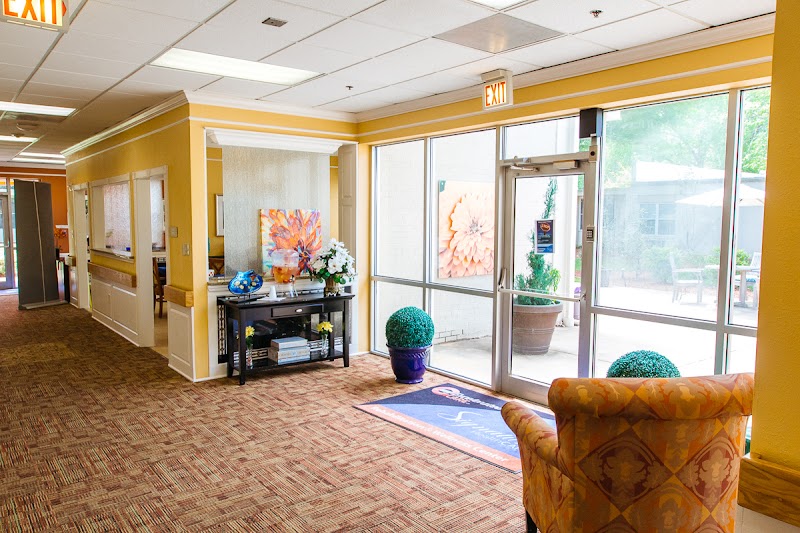
How is Marietta Center For Nursing And Healing Staffed?

CMS rates MARIETTA CENTER FOR NURSING AND HEALING's staffing level at 1 out of 5 stars, which is much below average compared to other nursing homes. Staff turnover is 46%, compared to the Georgia average of 46%. RN turnover specifically is 60%, which is notably high. RNs provide skilled clinical oversight, so turnover in this role can affect medical care quality.

What Have Inspectors Found at Marietta Center For Nursing And Healing?

State health inspectors documented 31 deficiencies at MARIETTA CENTER FOR NURSING AND HEALING during 2022 to 2025. These included: 3 that caused actual resident harm and 28 with potential for harm. Deficiencies causing actual harm indicate documented cases where residents experienced negative health consequences.
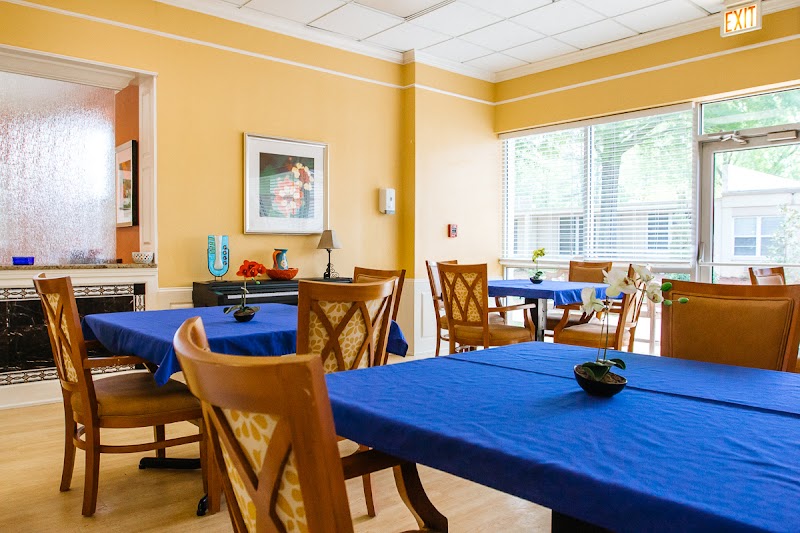
Who Owns and Operates Marietta Center For Nursing And Healing?

MARIETTA CENTER FOR NURSING AND HEALING is owned by a for-profit company. For-profit facilities operate as businesses with obligations to shareholders or private owners. The facility is operated by EMPIRE CARE CENTERS, a chain that manages multiple nursing homes. With 154 certified beds and approximately 125 residents (about 81% occupancy), it is a mid-sized facility located in MARIETTA, Georgia.
How Does Marietta Center For Nursing And Healing Compare to Other Georgia Nursing Homes?

Compared to the 100 nursing homes in Georgia, MARIETTA CENTER FOR NURSING AND HEALING's overall rating (1 stars) is below the state average of 2.6, staff turnover (46%) is near the state average of 46%, and health inspection rating (2 stars) is below the national benchmark.

What Should Families Ask When Visiting Marietta Center For Nursing And Healing?

Based on this facility's data, families visiting should ask: "Can you walk me through typical staffing levels on day, evening, and night shifts?" "Can I visit during a mealtime to observe dining assistance and food quality?" "How do you handle medical emergencies, and what is your hospital transfer rate?" "Can I speak with family members of current residents about their experience?" These questions are particularly relevant given the below-average staffing rating.

Is Marietta Center For Nursing And Healing Safe?

Based on CMS inspection data, MARIETTA CENTER FOR NURSING AND HEALING has a clean safety record: no substantiated abuse findings (meaning no confirmed cases of resident harm), no Immediate Jeopardy citations (the most serious violation level indicating risk of serious injury or death), and is not on the Special Focus Facility watch list (a federal program monitoring the lowest-performing 1% of nursing homes). The facility has a 1-star overall rating and ranks #100 of 100 nursing homes in Georgia. While no facility is perfect, families should still ask about staff-to-resident ratios and recent inspection results during their visit.

Do Nurses at Marietta Center For Nursing And Healing Stick Around?

MARIETTA CENTER FOR NURSING AND HEALING has a staff turnover rate of 46%, which is about average for Georgia nursing homes (state average: 46%). Moderate turnover is common in nursing homes, but families should still ask about staff tenure and how the facility maintains care continuity when employees leave.

Was Marietta Center For Nursing And Healing Ever Fined?

MARIETTA CENTER FOR NURSING AND HEALING has been fined $7,901 across 2 penalty actions. This is below the Georgia average of $33,158. While any fine indicates a compliance issue, fines under $50,000 are relatively common and typically reflect isolated problems that were subsequently corrected. Families should ask what specific issues led to these fines and confirm they've been resolved.

Is Marietta Center For Nursing And Healing on Any Federal Watch List?

MARIETTA CENTER FOR NURSING AND HEALING is not on any federal watch list. The most significant is the Special Focus Facility (SFF) program, which identifies the bottom 1% of nursing homes nationally based on persistent, serious quality problems. Not being on this list means the facility has avoided the pattern of deficiencies that triggers enhanced federal oversight. This is a positive indicator, though families should still review the facility's inspection history directly.