PRUITTHEALTH - SEASIDE
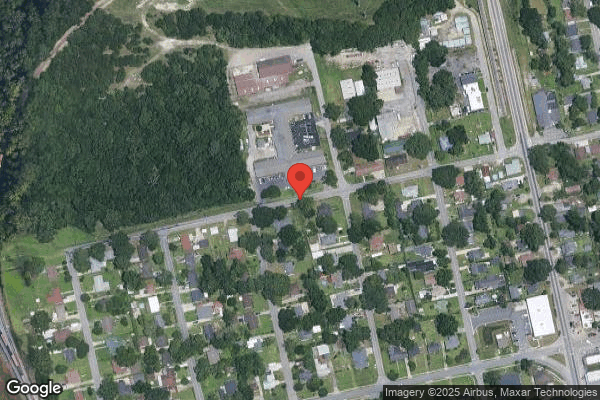
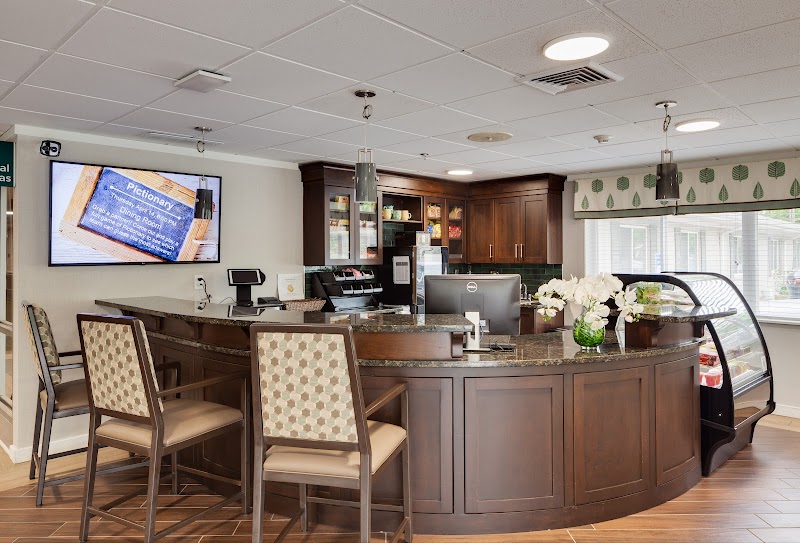
1000 DORSET ROAD, PORT WENTWORTH, GA 31407 (912) 964-1515
For profit - Limited Liability company 101 Beds PRUITTHEALTH Data: November 2025
Trust Grade
75/100
#94 of 353 in GA
Last Inspection: January 2024

Within standard 12-15 month inspection cycle. Federal law requires annual inspections.

Overview

PruittHealth - Seaside has a Trust Grade of B, indicating it is a good choice for families seeking care options. With a state rank of #94 out of 353 facilities, they are in the top half of Georgia, and locally, they rank #2 out of 12 in Chatham County, meaning only one facility is rated better. The facility’s trend is stable, with one issue reported in both 2024 and 2025. Staffing is a relative strength, with a 3 out of 5 star rating and a turnover rate of 45%, which is below the Georgia average. While there have been no fines, which is a positive sign, there are concerns highlighted in the recent inspections. For instance, there were issues with securing catheter tubing for two residents, which could lead to discomfort or complications. Additionally, there were lapses in wearing appropriate personal protective equipment in the COVID-19 isolation unit, raising potential safety risks. Overall, while PruittHealth - Seaside has solid strengths, families should be aware of these concerns when considering care for their loved ones.

Trust Score
B
75/100
In Georgia
#94/353
Top 26%
Safety Record
Low Risk
No red flags
Inspections
Holding Steady
1 → 1 violations
Staff Stability
⚠ Watch
45% turnover. Above average. Higher turnover means staff may not know residents' routines.
Penalties
✓ Good
No fines on record. Clean compliance history, better than most Georgia facilities.
Skilled Nurses
✓ Good
Each resident gets 43 minutes of Registered Nurse (RN) attention daily — more than average for Georgia. RNs are trained to catch health problems early.
Violations
⚠ Watch
15 deficiencies on record. Higher than average. Multiple issues found across inspections.
★★★★☆
4.0
Overall Rating
★★★☆☆
3.0
Staff Levels
★★★☆☆
3.0
Care Quality
★★★★☆
4.0
Inspection Score
Stable
2024: 1 issues
2025: 1 issues

The Good

  • Full Sprinkler Coverage · Fire safety systems throughout facility
  • No fines on record

Facility shows strength in fire safety.

The Bad

Staff Turnover: 45%

Near Georgia avg (46%)

Higher turnover may affect care consistency

Chain: PRUITTHEALTH

Part of a multi-facility chain

Ask about local staffing decisions and management

The Ugly 15 deficiencies on record

Jun 2025 1 deficiency
CONCERN (D) 📢 Someone Reported This

A family member, employee, or ombudsman was alarmed enough to file a formal complaint

Potential for Harm - no one hurt, but risky conditions existed

Safe Environment (Tag F0921)

Could have caused harm · This affected 1 resident

Based on observations, resident and staff interviews, and review of the facility's temperature logs, the facility failed to ensure that heat/air-conditioning systems located throughout the facility we...

Read full inspector narrative →
Based on observations, resident and staff interviews, and review of the facility's temperature logs, the facility failed to ensure that heat/air-conditioning systems located throughout the facility were in working order and in good repair. The deficient practice had the potential to affect the safety, functional, and comfortable conditions for all residents in the facility. Findings include: Observations upon entrance to the facility on 5/22/2025 at 9:00 am revealed several portable Air Conditioning (AC) units located throughout the facility. There was one portable AC unit in the front lobby/main entrance, three portable AC units on the 100, 400, and 500 Halls, two portable AC units on the 200 Hall, one portable AC unit in the dining room, sitting area, activity room, and one portable AC unit outside the kitchen near the Director of Health Services (DHS) office. The temperatures on the portable AC units ranged between 70 and 77 degrees Fahrenheit (F), and the hallway temperatures ranged between 75 and 81 degrees F. Interviews conducted during the survey with residents with a Brief Interview for Mental Status (BIMS) score of 12 (indicating little to no cognitive impairment) or higher revealed that there were no residents who complained of high temperatures. Observations of residents revealed that some residents were observed in their rooms with blankets over them, and some residents were observed with personal fans. Residents stated that the temperatures were fine, and they were not hot. Review of the March 2025 Resident Council minutes revealed that the residents asked if the AC would be working during the summer. Review of temperature logs provided by the Maintenance Director revealed the following dates with temperatures over 81 degrees F: 5/22/2025 at 9:00 pm temperature 81.3 to 85.6 degrees F. 5/23/2025 at 12:00 am temperature 81.2 to 82.5 degrees F. 5/24/2025 at 8:00 am 84 degrees F. In an interview on 5/22/2025 at 9:15 am, the Administrator stated that she was notified of the high temperatures in the building on 5/16/2025. She stated that she contacted the corporate office, and she was waiting for approval for new AC units. She stated that a family member had complained of high temperatures, and no residents had complained about the temperature. The Administrator stated that there had been no hospital admissions related to high temperatures in the facility. She stated that they had moved one resident to another room until the temperature in the room was back within regulatory range. In an interview on 5/22/2025 at 9:53 am, the Maintenance Director stated that the facility was waiting on parts and new AC units. He stated that he checked the temperatures in the rooms and down the halls throughout the day, and the night shift nurses were responsible for checking the temperatures at night. He further stated that he had provided an in-service to the staff on how to use the thermometer and properly check the temperatures in the rooms and halls. In an interview on 5/22/2025 at 12:00 pm, the Ombudsman revealed she discussed the AC not working properly with the former Administrator two summers ago. She stated that residents had informed her they were upset and tired of the heat every summer. She stated that the facility had portable AC units last summer. The Ombudsman further stated she was in the facility on 5/16/2025, and the temperature in the building felt hot to her. In an interview on 5/27/2025 at 9:30 am, the Administrator stated that the facility was providing extra hydration to residents. She stated that no resident had complained of being hot. She further stated that residents' temperatures were taken daily. The Administrator stated that she had received approval from the corporate office to replace two Heating, Ventilation, and Air Conditioning (HVAC) units and received a quote on 5/27/2025, and it would take about two weeks for the units to arrive. In an interview on 5/29/2025 at 2:55 pm, a representative from the local Department of Public Health Emergency Management stated the facility's Administrator had reached out to him and informed him of the issues with the AC unit at the facility, and had not asked for assistance In an interview on 5/29/2025 at 3:30 pm, the Administrator stated that she rented portable AC units in April 2025 to try to stay ahead, just in case they were needed. She stated that once the temperatures went up, she had to rent additional units. In an interview on 6/4/2025 at 1:15 pm, the Director of Health Services (DHS) stated that there were new issues with the AC every year. She stated that they would fix the issues, and the next summer, there would be another issue.
Jan 2024 1 deficiency
CONCERN (D) 📢 Someone Reported This

A family member, employee, or ombudsman was alarmed enough to file a formal complaint

Potential for Harm - no one hurt, but risky conditions existed

Quality of Care (Tag F0684)

Could have caused harm · This affected 1 resident

Based on staff interviews, record review, and review of the facility policy titled Physician Orders, the facility failed to ensure a telephone order for one of 25 sampled residents (R) (R72) was trans...

Read full inspector narrative →
Based on staff interviews, record review, and review of the facility policy titled Physician Orders, the facility failed to ensure a telephone order for one of 25 sampled residents (R) (R72) was transcribed into the Electronic Medical Record (EMR) system. This failure had the potential to not identify and provide needed care and services that are resident centered, in accordance with the resident's preferences, goals for care and professional standards of practice that would meet the resident's physical, mental, and psychosocial needs. Findings include: Review of the facility policy titled Physician Orders dated 7/19/2023, revealed the Policy Statement of: Physician orders must be complete and legible when written by the physician, physician extender or transcribed by the licensed professional. Written orders for medications may be transcribed by a licensed professional nurse or licensed pharmacist. Faxed orders are considered to be original physician's order. The Procedures section titled Verbal and Telephone Orders revealed line numbered 1 stated: All verbal and telephone orders will be immediately transcribed in the medical record by the licensed professional taking the order. Review of R72's Face Sheet, located in the EMR, revealed diagnoses that included constipation, dementia, spondylosis, and other reduced mobility. Review of R72's Progress Note, located in the EMR, dated 11/2/2023 at 8:28 am revealed [Resident Name] KUB (Kidney, Ureter, and Bladder) shows moderate distention and diffuse fecal retention suggesting constipation and lumbar spine x-ray demonstrate mild to moderate degenerative changes of lumbar spine and compression fractures to L (lumbar)1 and L3 of uncertain age. [name of provider], NP (Nurse Practitioner) notified and new order received for Lactulose 15ML (milliliter) PO (by mouth) QD (everyday) for constipation with no additional orders received. Order transcribed and family notified. Review of R72's Resident Census revealed she was discharged from the facility on 11/2/2023 at 11:32 am. Review of the R72's Order History, located in the EMR, from 10/19/2023 through 11/2/2023 revealed no current or discontinued orders for Lactulose 15 ml PO QD. Interview conducted on 1/7/2024 at 8:05 am with Unit Manager (UM) AA stated she had worked at the facility for seven years. She stated she was not the UM for R72 while at the facility. UM stated the nurse who received the order for Lactulose and wrote the progress note no longer worked at the facility. She stated the process for receiving orders would be to write the orders as prescribed and notify the family. UM AA acknowledged the progress note written on 11/2/2023 indicated Lactulose had been transcribed. The Director of Health Services (DHS) joined the interview at 8:08 am and acknowledged the progress note indicated Lactulose had been transcribed. Both the UM AA and DHS confirmed there was not an order in the EMR for the Lactulose. DHS stated she was not sure why the order had not been completed and that R72 had no additional records that needed to be scanned into the EMR system. She stated if it was not there, it was not done. DHS stated her expectation of nurses was for them to transcribe orders when received, put them in the EMR system and implement the orders as indicated.
Apr 2022 5 deficiencies
CONCERN (D)

Potential for Harm - no one hurt, but risky conditions existed

Safe Transfer (Tag F0626)

Could have caused harm · This affected 1 resident

Based on record review and staff interviews, the facility failed to ensure one resident (R) (R#66) that transferred to the hospital was permitted to return to the facility of three residents reviewed ...

Read full inspector narrative →
Based on record review and staff interviews, the facility failed to ensure one resident (R) (R#66) that transferred to the hospital was permitted to return to the facility of three residents reviewed for transfer and/or discharge. Findings include: Review of R66's medical record revealed an admission date of 3/30/22 at 4:23 p.m. with medical diagnoses that included schizophreniform disorder and major depressive disorder. The resident was sent back to the hospital on 3/30/22 at 10:00 p.m. The resident was admitted with the following medications: Divalproex 250 mg 1 tablet by mouth twice daily for mood stabilization and Olanzapine 5 mg 1 tablet by mouth twice daily for schizophrenia. Review of an admission Progress Note dated 3/30/22 at 4:46 p.m. revealed that resident was agitated and expressing extreme paranoia and says she hears voices. Review of R66's Progress Note dated 3/30/22 at 8:02 p.m. revealed R#66 was transferred to the hospital after the nurse went into resident's room to perform tuberculin skin test and R#66 became very agitated very quickly and began yelling and cursing. R#66 said, Ain't nobody fucking sticking me. Nurse tried to calm resident down, but she became increasingly more agitated. R#66 yelled at nurse and then spit in her face. Nurse went and got another nurse for assistance and R#66 continued to be combative. Two more nurses came into room to assist, and R#66 continued to scream and curse at staff. DON gave order to 1013 resident (to receive mental health treatment in an emergency). Resident said, Call the damn police and get me the hell out of here. I want to go home. Called Central EMS (emergency medical services) for pickup and to take her to (hospital) for psych evaluation. Record review revealed that nurse from the hospital called the facility on 3/31/22 at 12:00 a.m. stating that R#66 was being sent back to facility and that the emergency room (ER) Physician did not have a reason to admit R#66 into the hospital. Facility nurse informed ER nurse that the Administrator stated that facility is not equipped to handle the residents needs and R#66 could not return to facility. Further review of the clinical record for R66 revealed no valid basis for discharge, which shows why the facility can no longer care for the resident. Interview with Social Service Director (SSD) 4/21/22 at 8:43 a.m. revealed she did not play an active role in the discharge of the resident. SSD stated that she did not call the hospital to check the status of the resident when she learned of the resident's discharge back to the hospital and she had no idea as to if the resident was admitted to the hospital or discharged someplace else. Interview with Administrator on 4/21/22 at 8:48 a.m. revealed the staff reported to her that the resident was spitting, kicking, and screaming at staff and that the staff was not able to redirect resident. At this point the resident was sent back to the hospital because she did not feel the facility could meet the needs of the resident. Administrator also stated that she had heard that R#66 family did not want her to return to their home. She further stated that R#66 was her own responsible party, so the facility did not have to notify family of the transfer. Telephone interview with Regional Nurse Liaison (RNL) on 4/21/22 at 8:56 a.m. revealed that when she spoke with the case manager at the hospital, R#66 did not exhibit any behaviors while there prior to discharge or upon return. She further stated that she is not sure where R#66 was discharged to after leaving the hospital.
CONCERN (D)

Potential for Harm - no one hurt, but risky conditions existed

Assessment Accuracy (Tag F0641)

Could have caused harm · This affected 1 resident

**NOTE- TERMS IN BRACKETS HAVE BEEN EDITED TO PROTECT CONFIDENTIALITY** Based on record review and staff interview, the facility failed to accurately code the Minimum Data Set (MDS) to reflect Preadmi...

Read full inspector narrative →
**NOTE- TERMS IN BRACKETS HAVE BEEN EDITED TO PROTECT CONFIDENTIALITY** Based on record review and staff interview, the facility failed to accurately code the Minimum Data Set (MDS) to reflect Preadmission Screening and Resident Review (PASRR) Level II status for two residents (R) (#44 and #46) of 32 sampled residents. Findings include: 1. A review R# 44's Annual MDS assessment dated [DATE] documented that R#44 did not have a serious mental illness with no PASSAR level II documented on the MDS. A review of diagnoses for R#44 revealed the following diagnoses including, but not limited to major depressive disorder and anxiety disorder. The PASSAR level II for R#44 revealed an assessment date of 3/4/22 and that the end date for services would be 12/31/2299 (sic). There were documented recommendations for behavioral health assessment, ongoing psychiatric care, and individual counseling. A review of the Physician Orders revealed an order for psychiatric and psychology services to evaluate and treat as needed. 2. A review of R#49's Annual MDS assessment dated [DATE] documented that R#49 did not have a serious mental illness with no PASSAR level II documented on the MDS. A review of R#49's revealed the following diagnoses including but not limited to schizophrenia and depression. The PASSAR level II for R#49 revealed and assessment date of 4/28/20 and that the end date for services would be 12/31/2299 (sic). There were documented recommendations for behavioral health assessment, ongoing psychiatric care, and individual counseling. A review of the Physician Orders revealed an order for psychiatric and psychology services to evaluate and treat as needed. During interview on 4/20/22 at 2:10 p.m. with the Social Services Director she confirmed both residents had a PASARR Level II and received psychotherapy monthly. Further review revealed she does not fill out section A of the MDS. She stated the MDS Coordinator fills out that section. Interview on 4/21/22 at 8:33 a.m. with the MDS Coordinator revealed she was aware R#49 had a PASSAR level II but was unaware of R#44's PASSAR status. She confirmed both MDS assessments were coded in error.
CONCERN (D)

Potential for Harm - no one hurt, but risky conditions existed

Dental Services (Tag F0791)

Could have caused harm · This affected 1 resident

**NOTE- TERMS IN BRACKETS HAVE BEEN EDITED TO PROTECT CONFIDENTIALITY** Based on observation, record reviews, staff interviews, and policy review, the facility failed to assist one resident (R) (R#19)...

Read full inspector narrative →
**NOTE- TERMS IN BRACKETS HAVE BEEN EDITED TO PROTECT CONFIDENTIALITY** Based on observation, record reviews, staff interviews, and policy review, the facility failed to assist one resident (R) (R#19) with necessary arrangements to obtain routine dental services of 32 sampled residents. Findings include: Observation on 4/21/22 at 8:15 a.m. revealed R#19 sitting up in bed with breakfast in front of him not eating. Surveyor asked if he was going to eat, R#19 shook his head no and pointed to his mouth and responded my teeth hurt. Resident #19 opened his mouth at this time, surveyor observed resident to have several teeth on the right side of his mouth broken off to the gumline. Gums appears red and swollen. Surveyor asked R#19 had he reported his mouth pain to anyone, he shook his head no. Approximately 20% of meal had been eaten at this time. Record review revealed R#19 was admitted to the facility on [DATE]. The resident had the following diagnoses: Epileptic seizures related to external causes, not intractable, without status epilepticus, cognitive communication deficit, systemic lupus erythematosus, hypotension, anemia, Type 2 diabetes mellitus without complications, End stage renal disease, dysphagia, oropharyngeal phase, and mild protein-calorie malnutrition. Review of the current Physician Orders for R#19 revealed the following medications: Acetaminophen 325 milligrams (mg) 2 tablets (650 mg) by mouth every 6 hours as needed for pain, Oxycodone 5 mg 1 tablet by mouth every 6 hours as needed for pain, and mechanical soft diet with chopped meats. Further review of the clinical record revealed that on 4/13/22 at 1:48 p.m. R#19 met with Minimum Data Set (MDS) Coordinator, Activities Director, Social Service Director (SSD), and R#19's sister (via phone) for a care plan meeting. R#19's sister stated that one of her biggest concerns were that R#19's dental issues be addressed. Interview 4/21/22 at 8:36 a.m. with SSD revealed that R#19's sister met with her and discussed her concerns about dental care and wanted him to be seen by a dentist. SSD further stated that R#19's sister did not want to pay a copay for him to be seen by the provider that comes to the facility. SSD stated she later learned that R#19 in the past had received dental care at (name). SSD further stated that scheduling the appointment is on her radar, but she has not gotten around to scheduling the appointment. SSD also stated that she was aware that R#19 was experiencing mouth pain and that it was her responsibility to schedule the dental appointment. Interview 4/21/22 at 9:50 a.m. with the Administrator revealed that it is her expectation that the SSD will call a provider and schedule dental appointments for residents in need of dental care. She further stated that the appointments are scheduled based on availability and the resident's source of income. Review of facility's policy titled Specialty Services: Dental Services, Vision Services, Podiatry Services, Hearing Services, and Mental Health revised 11/21/16 revealed that It shall be the responsibility of this healthcare center to obtain regular and emergency specialty services for each patient/resident to ensure the highest well-being of the residents.
CONCERN (E)

Potential for Harm - no one hurt, but risky conditions existed

Incontinence Care (Tag F0690)

Could have caused harm · This affected multiple residents

**NOTE- TERMS IN BRACKETS HAVE BEEN EDITED TO PROTECT CONFIDENTIALITY** Based on observation, record review, resident and staff interview, and review of the facility policy titled Procedure: Indwellin...

Read full inspector narrative →
**NOTE- TERMS IN BRACKETS HAVE BEEN EDITED TO PROTECT CONFIDENTIALITY** Based on observation, record review, resident and staff interview, and review of the facility policy titled Procedure: Indwelling Urinary Catheter, the facility failed to secure the catheter tubing to prevent tension on the urethra for two residents (R#34 and R#17), failed to obtain a Physician's Order to flush the catheter for one resident (R#34); failed to follow the Physician's Order for a follow up appointment with a Urologist and failed to have a diagnosis for the use of the catheter for one resident (R#17) of three residents reviewed with indwelling urinary catheters. Findings include: 1. Review of R #34's clinical record revealed diagnoses including bladder dysfunction with chronic indwelling Foley catheter. Review of the Quarterly Minimum Data Set (MDS) dated [DATE] revealed a Brief Interview for Mental Status (BIMS) score of 15 (a BIMS score of 15 indicates no cognitive impairment), and an indwelling catheter. Observation and interview on 4/19/22 at 11:48 a.m. revealed R#34 has had a catheter since September. Resident #34 stated that the catheter is uncomfortable, and it hurts his penis. He stated pain killers get rid of his pain quick. The resident pulled back covers to show surveyor his catheter tubing. The catheter tubing was not secured to his leg. Observation on 4/19/22 at 3:29 p.m. revealed R#34 lying in bed with right leg exposed. The resident did not have a catheter strap in place. During an observation and interview on 4/19/22 at 3:43 p.m., Certified Nursing Assistant (CNA) AA confirmed R#34 did not have a securing device in place for the catheter tubing. CNA AA stated she worked with him Saturday (4/16/22) and Sunday (4/17/22) and she does not remember seeing a securing device in place. During an observation and interview on 4/20/22 at 9:22 a.m. Licensed Practical Nurse (LPN) II verified that R#34 did not have a leg strap or securing device in place to secure the catheter to reduce tension on the ureteral meatus. LPN II stated that she is aware that residents with Foley catheters are supposed to have a securing device in place to secure the catheter. LPN II stated that she had placed a securing device on R#34 when she worked Monday 4/18/22. Review of Progress Note dated 4/2/22 at 4:54 p.m. revealed R#34 complained of abdominal pain and bladder was distended. Attempted to flush Foley x2 (twice) but was unable to do so. Changed to 16F (16 French) Foley. Tolerated well. Draining clear, yellow urine. Responsible Party and Physician were notified. Further review of the clinical record revealed no evidence of that an order was obtained to flush Foley catheter or that the physician was notified prior to flushing the catheter. Review of clinical record revealed R#34 did not have an order for catheter care until 4/20/22. Interview with the Regional Senior Nurse Consultant (RSNC) on 4/20/22 at 10:04 a.m. revealed the facility does not have a policy for flushing Foley catheters, but the nurses should obtain a physician's order prior to flushing a catheter or sometimes the physician will just give orders to change the catheter. RSNC CC further stated that the facility's nursing staff received education on indwelling catheter care and maintenance of the catheter on 11/30/2021 through a training video and at the Annual Skills Fair which was conducted for nurses and CNA's on 2/17/22, 3/30/22, 4/01/22, 4/14/22, and 4/15/22. 2. Observation on 4/20/22 at 9:27 with the Director of Health Services (DHS) and CNA FF performing ADL care for R#17 revealed the resident had a Foley catheter with the catheter tubing not secured. Resident #17 stated that she does not ever remember the catheter being secured with tape, strap, or securing devices. CNA FF and DHS verified that the catheter is not secured. Interview with DHS at this time revealed that nurses and CNAs are aware that Foley catheters must be secured with a leg strap or securing device. Review of facility policy titled Procedure: Indwelling Urinary Catheter dated 2019 under #21 revealed: secure with catheter securement device if available -tape the catheter, use an adhesive catheter holder, or apply a Velcro leg strap to secure the catheter - Do not leave the room until the catheter is secured. The mechanical irritation caused by a catheter can cause complications. 3. Resident #17 was admitted to the facility on [DATE] with diagnoses that included but not limited to COVID-19, pneumonia, acute and chronic respiratory failure with hypoxia, cellulitis of trunk, morbid (severe) obesity due to excess calories, depressive and anxiety disorder. There was not a diagnosis for urinary retention or other urinary concerns. Review of R#17's Quarterly Minimum Data Set (MDS) dated [DATE] indicated Section C-Cognition: Brief Interview of Mental Status (BIMS) score of 15 indicating no cognitive loss; Section G-Functional Status-resident required extensive assistance with bed mobility, dressing, toileting, and personal hygiene; Section H-Bowel and Bladder: resident had a urinary indwelling catheter. Review of R#17's Physicians Progress Note dated 12/1/21 revealed recommendation to obtain a urology follow-up for removal of catheter. Review of R#17's Nurses Notes/Progress Notes dated between 11/24/21 and 4/20/22 did not indicate any attempt to arrange for a follow-up appointment with a Urologist. Observation and interview with R#17 on 4/19/22 at 11:30 a.m. revealed the resident had an indwelling catheter and the resident indicated she did not know why she still has the catheter. An observation of R#17 on 4/20/22 at 8:00 a.m. revealed resident in her bed, sitting up, eating breakfast. She had a catheter, attached to leg by a catheter strap and was attached to side of bed in a privacy bag below the level of her bladder. She indicated again she was not sure why she has the catheter. An observation of R#17 on 4/21/22 at 7:56 a.m. revealed resident still had the catheter. An interview on 4/20/22 at 1:34 p.m. with the DHS revealed the resident had a diagnosis of urinary retention. The diagnosis of urinary retention was dated 4/20/22. She verified a follow-up appointment with the urologist was not made. She indicated it was due to COVID and doctors not taking appointments. The DHS indicated she found no documentation related to making an appointment with the Urologist. Review of the catheter order with the DHS revealed the catheter order did not include a diagnosis for the use of an indwelling urinary catheter. An interview on 4/21/22 at 2:00 p.m. with the Licensed Practical Nurse (LPN) Unit Manager (UM) LPN/UM II revealed the resident has a catheter, they had attempted to get her an appointment with a Urologist a few months ago but was unable do to get an appointment due to COVID. She indicated they have not tried a trial removal of the catheter. They change the catheter monthly and as needed. She indicated she did not see any documentation indicating the attempt to make an appointment. An interview on 4/21/22 at 9:31 a.m. with the Administrator revealed she would expect a resident who has a catheter should have a proper diagnosis for it. She verified R#17 did not have a diagnosis for the catheter.
CONCERN (E)

Potential for Harm - no one hurt, but risky conditions existed

Infection Control (Tag F0880)

Could have caused harm · This affected multiple residents

Based on observations, staff interview and the review of the facility policy titled COVID -19 Isolation and Cohorting Process the facility failed to appropriately wear and doff personal protective equ...

Read full inspector narrative →
Based on observations, staff interview and the review of the facility policy titled COVID -19 Isolation and Cohorting Process the facility failed to appropriately wear and doff personal protective equipment (PPE) on the COVID-19 isolation unit. The deficient practice had the potential to spread of COVID-19 virus to other residents in the facility. The census was 65. Findings include: Observation on 4/19/22 at 8:30 a.m. of the COVID-19 isolation unit revealed no biohazard container available at the door before exiting the COVID-19 isolation unit. There were nine residents inside the COVID-19 isolation unit including two with active symptoms. Biohazard containers were observed only outside of rooms 206, 207, 209, and 210. During an interview on 4/19/22 at 8:45 am about the doffing container, Licensed Practical Nurse (LPN) DD said, I don't know and kept on doing his work. There was also no shoe protector available for the staff. Observation on 4/20/22 at 10:30 a.m. of the COVID-19 isolation unit revealed no biohazard container available at the door before exiting the COVID-19 isolation unit. There was a trash can with a broken lid available for doffing outside the COVID-19 unit very near the donning station with clean personal protective equipment (PPE) outside the door. During an observation on 4/20/22 at 2:00 p.m. Certified Nursing Assistant (CNA) HH took her used PPE off inside a resident's room in the COVID-19 isolation unit. Her mask was on her chin not covering the nose or mouth. She was also missing the face shield/ goggles inside the COVID- 19 isolation unit while caring for the positive residents. During an interview on 4/21/22 at 9:54 a.m., COVID-19 Isolation Unit Manager LPN II confirmed there was no biohazard container available at the exit door of the isolation unit since it was set up. She stated it was the infection control nurse's responsibility and that nurse is on leave. A biohazard contained was placed on 4/21/22 when the medical director made an inquiry. Interview on 4/21/22 at 9:30 a.m. with Director of Health Services (DHS) revealed that staff should discard the used gown and mask inside the isolation unit by doffing it in the biohazard container before exiting the door, but she wasn't aware there was no container. She stated that unit manager from isolation unit should have checked it as a part of her job duty. The DHS expected the staff to follow the facility policy and procedure for appropriate donning/doffing of PPE. Interview on 4/21/22 at 10:00 a.m. with Administrator revealed that her expectations are to prevent infection to all residents who are at the facility under her care. She was dependent on her Infection Preventionist who was out on leave. She expected the staff to follow Center for Disease Control's (CDC) guidelines. She also expected the staff to follow the policies for wearing PPE on the isolation unit. Review of the facility Policy titled COVID -19 Isolation and Cohorting Process with a reviewed date of 2/9/22 under Level I Positive COVID-19 Isolation Unit #4 on page 6 #5 documented that PPE to be used by all partners on the unit to include: KN95 mask in contingent or crisis capacity and eye protection (face shield, googles, etc.)
Dec 2018 8 deficiencies
CONCERN (D)

Potential for Harm - no one hurt, but risky conditions existed

Deficiency F0582 (Tag F0582)

Could have caused harm · This affected 1 resident

Based on record review and staff interview, the facility failed to provide the Skilled Nursing Facility Advance Beneficiary Notice (SNFABN) (Form CMS 10055) to one (1) resident (R) R#235 who were disc...

Read full inspector narrative →
Based on record review and staff interview, the facility failed to provide the Skilled Nursing Facility Advance Beneficiary Notice (SNFABN) (Form CMS 10055) to one (1) resident (R) R#235 who were discharge from Medicare Part A Services within the last (6) months. Findings include: Record review reavealed that R#235 was discharged from Medicare Part A services on 7/19/18 and discharged on 7/20/18 from the facility to home. However, no proof of documentation to verified that the resident was provided with the Notice of Non-Medicare Coverage (NOMNC) Form (CMS 10123). There was no evidence that the facility had issued SNFABN (Form CMS-10055) to her responsible party, providing the opportunity to continue with skilled services at cost if Medicare services did not reimburse. During an interview on 12/6/18 at 8:50 a.m., the Financial Counselor (FC) stated that Advance Beneficiary Notices were obtained on R#235 at the time Medicare A services ended. However, R#235 and other residents' financial charts were removed by the previous facility coporate owners when the change of ownership took place on October 1. 2018. She further stated that signed copies of the signed documents cannot be produced at this time and she could not verifed/recall without a hard copy of the documents if resident actually received notice. On December 6, 2018 at 3:20 p.m., the Administrator confirmed that he was not aware that R#235 and other residents ABN notices were not available for review until FC staff brought this to his attention, today.
CONCERN (D)

Potential for Harm - no one hurt, but risky conditions existed

Deficiency F0583 (Tag F0583)

Could have caused harm · This affected 1 resident

Based on observations and interviews, the facility failed to provide privacy during the provision of personal care for one resident (R) R#231 out of a sample of 34 residents. Findings include: Record ...

Read full inspector narrative →
Based on observations and interviews, the facility failed to provide privacy during the provision of personal care for one resident (R) R#231 out of a sample of 34 residents. Findings include: Record review revealed that R#231 was admitted to the facility with diagnoses including but not limited to advanced dementia, severe protein calorie malnutrition, hypertension, diabetes mellitus and visual impairment (blind in right eye). Based on a review of the Minimum Data Set, a resident assessment instrument with an assessment reference date of 11/6/18, R#231 has a cognitive deficit with a Brief Interview for Mental Status (BIMS) score of 8 out of 15. She is also noted on the MDS as requiring extensive assistance of one staff member for all activities of daily living (ADLs) except eating. She requires supervision with eating after set up of her meal tray. A review of progress notes dated 11/2/18 reveal R#231 is incontinent of bowel and bladder and that both physical and occupation therapy were treating her for rehabilitative care. She is oriented to person only but able to make her needs known. A review of a progress note dated 11/3/18 notes R#231 was shown how to use her call light and she was able to return demonstrate use of same. The document also notes that R#231 has had a weight loss prior to admission to the facility, lived alone and received no services at home. During an observation conducted on 12/4/18 at 9:03 a.m., the resident room door was closed. After knocking on the door and receiving no response, the surveyor opened the door to find R#231 lying in the bed without clothing rolled onto her left side facing the door and receiving care from a Certified Nursing Assistant (CNA) II. The privacy curtain was not pulled and the resident was in full view of the surveyor or anyone else entering the room door. Also, the resident's roommate was in full view of her person. The roommate's privacy curtain was not pulled. The room blinds were open. During an interview conducted on 12/5/18 at 11:26 a.m. with Licensed Practical Nurse (LPN), FF, she stated she expected staff to provide privacy to a resident when providing care. She said she would expect the CNA would close the door and pull the privacy curtains if there is another resident in the room; also, she stated she would expect staff would close the window blinds to assure no one can see into the room from outside.
CONCERN (D)

Potential for Harm - no one hurt, but risky conditions existed

Deficiency F0660 (Tag F0660)

Could have caused harm · This affected 1 resident

**NOTE- TERMS IN BRACKETS HAVE BEEN EDITED TO PROTECT CONFIDENTIALITY** Based on record review and staff interview and the facility policy titled Discharge Planning, the facility failed to develop a d...

Read full inspector narrative →
**NOTE- TERMS IN BRACKETS HAVE BEEN EDITED TO PROTECT CONFIDENTIALITY** Based on record review and staff interview and the facility policy titled Discharge Planning, the facility failed to develop a discharge plan of care for one resident (R), R#80. Findings include: Review of medical record revealed that R#80 was admitted to the facility with a diagnosis of multiple fractures from a motor vehicle accident(MVA) listed as severe traumatic brain injury traumatic subarachnoid hemorrhage with loss of consciousness of unspecified duration, cognitive communication deficit, multiple fractures of pelvis without disruption of pelvic ring, non displaced fracture of medial malleolus of right tibia, encounter for close fracture with routine healing, on displaced fracture of shaft of left clavicle, . Further review of the record revealed that R#80 was discharged after receiving a period of routine care that included continuous therapy care (speech therapy(ST), occupational therapy (OT) and physical therapy (PT). Reviewed Physician Discharge Order dated 10/29/18 read Resident to discharge -home on [DATE] with Skilled Nursing to included PT/OT/ST to evaluate and treat as indicated with home health agency. Review of Minimum Data Set(MDS) under Section Q Participation in Assessment and Goal Setting revealed R# had participated in discharge but no overall expectation for discharge was documented nor was there an active discharge plan in place, Review of R# 's care plan dated 10/6/18 (revised on 10;13;18) revealed no active discharge plan in place listing interventions to assist resident with meeting her goals. Interview with [NAME], LPN on 12/5/18 at 4:48 p.m., reported that R#80 was non weight bearing use wheelchair for transfer, continent of bowel and bladder, limited to total care ,able to make her needs known, did not refuse care, Interview on 11/6/18 2:40p.m. with the Director of Nursing (DON) stated that her expectation is that staff complete a comprehensive care plan on the resident. She stated that she was unaware that care plan was completed on R#80. Interview on 11/6/18 at 3:35 p.m. with the Administrator reported that his expectation is that staff complete a comprehensive Planning care plan on the resident Interview with the Director of Nursing (DON), revealed that IDT team did meet and discussed resident wishes to return home. but no care plan was put in place. DON stated that she was not aware that a plan of care that relates to resident discharge was not in place. She stated that her expectation is that her staff follow the facility policy. She further stated that she and [NAME] , Case Mix Director (CMD) took on the responsiblity on 10/23/18 during the absent of the facility Social Service Director (SSD)the was taking on the responsibility of implementing discharge plans for resident. However the MDS staff are responsible for ensuring care plan is put in place. Reviewed Discharge Planning Policy titled Discharge Planning revised 10/29/18 listed forms as Post Discharge Plan of Care as a part of the package. Policy Statement The post discharge plan of care is developed with the participation of the patient /resident and /or the patient /resident's representative with the patient/resident 's consent. The discharge plan will be monitored and revised as necessary throughout the patient /resident stay. 1. Discharge and care plan goals will be established with the IDT , patient /resident and patient resident representative at the time of admission based on the patient /resident discharge goals and treatment preferences in conjunction with needs as identified by the IDT. 2. Discharge care plans will be updated after the Post admission Care Conference, reviewed quarterly prior to the anticipated discharge date , and as needed. . . .
CONCERN (D)

Potential for Harm - no one hurt, but risky conditions existed

Respiratory Care (Tag F0695)

Could have caused harm · This affected 1 resident

**NOTE- TERMS IN BRACKETS HAVE BEEN EDITED TO PROTECT CONFIDENTIALITY** Based on observations, interviews and review of a facilty policy entitled Oxygen Safety and Storage and a procedure entitled Oxy...

Read full inspector narrative →
**NOTE- TERMS IN BRACKETS HAVE BEEN EDITED TO PROTECT CONFIDENTIALITY** Based on observations, interviews and review of a facilty policy entitled Oxygen Safety and Storage and a procedure entitled Oxygen administration long-term care, the facility failed to provide respiratory services consistent with professional standards of practice for one resident (R) R#229 out of a sample of 33 residents. Findings include: Record review revealed that R#229 was admitted [DATE] following a lengthy acute care hospitalization with diagnoses including but not limited to hypertensive heart disease, acute respiratory failure with hypoxia requiring mechanical ventilation with tracheostomy while hospitalized ), acute kidney failure with tubular necrosis requiring acute kidney dialysis (while hospitalized ), diabetes, generalized muscle weakness, morbid obesity and obstructive sleep apnea. A review of a progress note dated 11/29/18 notes R#229 was alert and oriented X 3 (to person, place and time/date). Additional progress notes dated 12/1/18 documented R#229 was able to verbalize his needs to staff, was noncompliant with his medications, required assistance with activities of daily living and could feed himself. A progress note dated 12/2/18 documents R#229 with edema of his lower legs and the need to elevate his legs. The note also states he was noncompliant with keeping his legs elevated even after the nurse provided education. A review of the physician's orders reveals an order dated 11/30/18 for oxygen at two (2) liters per nasal cannula PRN (as needed) to keep oxygen saturation above 92%. An observation conducted on 12/4/18 at 10:45 a.m. notes R#229's oxygen nasal cannula and tubing was connected to the oxygen concentrator and laying on the floor extending halfway down the length of the bed. The nasal prongs were touching the floor. The concentrator was turned on and set at a two liter flow rate. R#229 was lying in the bed and stated that he does not use the oxygen continually but only when he is experiencing shortness of breath or difficulty breathing. No shortness of breath was noted. There was an open plastic bag laying on tope of the oxygen concentrator with a date of 11/30 written on the exterior of the bag. An observation conducted on 12/4/18 at 12:12 p.m. notes R#229's oxygen nasal cannula and tubing connected to the oxygen concentrator and laying on the floor next to the concentrator which was turned off. The tubing was not extended but lying coiled in a disorganized manner. The nasal prongs were touching the floor. There was an open plastic bag laying on tope of the oxygen concentrator with a date of 11/30 written on the exterior of the bag. R#229 was not in the room. An observation conducted on 12/5/18 at 8:45 a.m. noted R#229's oxygen nasal cannula and tubing draped over the top of the oxygen concentrator. There was an open plastic bag laying on tope of the oxygen concentrator with a date of 11/30 written on the exterior of the bag. R#229 was laying in the bed with no shortness of breath noted. The oxygen concentrator was turned off. R#229 was not aware if staff had changed the nasal cannula or tubing in the previous 24 hours. During an interview conducted on 12/5/18 at 11:26 a.m. with a Licensed Practical Nurse (LPN), FF she stated that the staff change the nasal cannulas, oxygen tubing and the humidifier bottles weekly; they provide a bag to put the cannulas in if the resident is not using it continuously and they label the cannula, the bag and the humidifier bottle with the date. FF also stated that she would change the oxygen tubing and cannula if it was dirty or if it was dropped on the floor. She was not sure of when R#229's oxygen supplies were changed. Review of a facility policy entitled Oxygen Safety and Storage dated 11/5/15 and an undated Lippincott procedure entitled Oxygen administration, long-term care provided by the Director of Nursing (DON) do not provide any guidance related to the storage or changing of oxygen administration devices including nasal cannulas and oxygen tubing or the storage of oxygen supplies if the resident is not using them continuously.
CONCERN (E)

Potential for Harm - no one hurt, but risky conditions existed

Deficiency F0565 (Tag F0565)

Could have caused harm · This affected multiple residents

Based on the policy titled Patient/Resident Council reviewed 10/19/2018 and resident and staff interviews, and observations, it was determined the facility failed to ensure the Resident Council Meetin...

Read full inspector narrative →
Based on the policy titled Patient/Resident Council reviewed 10/19/2018 and resident and staff interviews, and observations, it was determined the facility failed to ensure the Resident Council Meetings remained free of staff interruptions, held in a private location and ensured resident grievances were addressed monthly. The facility census was 83 residents. Findings include: Review of the policy titled Patient/Resident Council dated reviewed 10/19/2018 revealed the Council will meet in a private place. The Minutes of the Council will contain an accurate and complete record of all Council activities and discussion to include, but not limited to: kind of meeting, name of presiding member, members present, others in attendance and for what purpose, date, time and place of meeting, a complete record of items of business (old and new) discussed with the suggested actions, who will do what, and any other pertinent information relating to appropriate follow through, signed and dated by the presiding officer of the council and the recorder. Minutes will be documented using Patient/Resident Council Minutes Report Form. The Patient/Resident Council Minutes/Report Form, complaints, and responses to the complaints will be maintained in a notebook, using tabs to indicate the months, and will be maintained for one year. After a year, the old minutes will be kept in a separate binder or notebook for a period of five years. An interview held on 12/04/2018 at 8:58 a.m. with the Activity Director (AD) revealed she was unable to locate the resident council meeting notebook with the meetings minutes and attendance sheets. She stated the previous company, Health Management, took the notebook. She does not know if copies were made prior to the previous company leaving and the new company began services. Further interview held on 12/06/2018 at 9:48 a.m. with the Activity Director revealed she has been at this facility eight days. She has not had an official resident counsel meeting with the residents. She revealed the Resident Council usually meet in the dining room. The dining room does not have a door to close off the room. An interview held on 12/4/2018 at 8:58 a.m. with the Administrator confirmed the resident council meeting notebook with the meetings minutes and attendance sheets is no longer in the facility and was taken by the prior company. Further interview held on 12/06/2018 at 8:00 a.m. with the facility Administrator revealed they have been without a Social Worker (SW) since 10/24/2018. The Administrator, the Business Office Manager (BOM) and Director of Nursing (DON) have been fulfilling the duties of the SW. The Administrator has hired a new SW that is due to start at the first of the year. A temporary SW is starting next week. Further interview with the Administrator on 12/06/2018 at 11:48 a.m. revealed the Resident Council usually meets in the Dining Room, he agrees it is not private and does not have a door. The Resident Council President, Resident (R) R#13, has hand written notes on sheets of paper from some of the previous meetings and the AD took the notes and typed them up according to her notes. The Resident Council President did not keep an attendance sheet. An observation made on 12/06/2018 at 10:22 a.m. of dining room revealed the room had an open entry way without a door. A Resident Council meeting was held on 12/4/2018 at 11:00 a.m. The meeting was held in an open area located at the end of the hall. The area did not have a door and was not private. The Resident Council President R#13 was in attendance along with eight other residents. The council had the following concerns: 1. No SW is available at this time. They like it when there is a SW so they can bring concerns to them. 2. Staffing 3. Residents are concerned they can not get coffee or tea when ever they want. They are told by the kitchen staff they have to ask a nurse to get it for them. 4. Residents stated they know how to file a grievance but they are not usually acted upon in a timely manner, if at all. 5. They are concerned they are not able to go out for activities because they do not have a van any more. They had a van with the prior company but do not have the van any more. 6. Have to wait a long time for care. 8. One of the shower rooms doesn't have any heat so they can't use it. (C-Hall) 9. Snacks are offered but tends to be all bread and not much meat. They do get peanut butter and jelly or pimento cheese sandwiches that are more substantial. 10. Concern anyone can come into the building at anytime of the night. 11. Concerned their checks come in but don't get to see it or sign it.
CONCERN (E)

Potential for Harm - no one hurt, but risky conditions existed

Deficiency F0655 (Tag F0655)

Could have caused harm · This affected multiple residents

**NOTE- TERMS IN BRACKETS HAVE BEEN EDITED TO PROTECT CONFIDENTIALITY** 3. Resident #72 was admitted to the facility on [DATE]. She entered the facility after a hospital stay for an acute exacerbation...

Read full inspector narrative →
**NOTE- TERMS IN BRACKETS HAVE BEEN EDITED TO PROTECT CONFIDENTIALITY** 3. Resident #72 was admitted to the facility on [DATE]. She entered the facility after a hospital stay for an acute exacerbation of congestive heart failure, sepsis and pulmonary hypertension. She presented with diagnoses of diabetes mellitus, dysphagia, narcolepsy, history of right mastectomy with lymphedema of the right upper extremity, muscle weakness and deconditioning. R#72 is alert and oriented to person, place, time and situation. She makes her own decisions and is able to make her needs known. Review of the nursing notes and care plan documentation revealed no documentation to indicate the resident or the family representative received a copy of the Baseline Care Plan (dated 11/8/18) after admission to the facility. Review of the facility policy, Care Plans revealed under Scope, Baseline Care Plan - Must include the minimum healthcare information necessary to properly care for each patient/resident immediately upon their admission, which would address specific health and safety concerns to prevent decline or injury, and would identify needs for supervision, behavioral interventions and assistance with activities of daily living, as necessary. Under Procedure: New admission Baseline Plan of Care, Number one (1) .a baseline care plan will be developed by the admitting nurse/nurses in conjunction with other IDT, the patient/resident and/or patient/resident representative. Number three (3), .A copy of the Baseline Care Plan form and admission Physician Order form will be given to the patient and representative. During an interview with R#72 conducted on 12/4/18 at 8:49 a.m., stated the staff did not discuss her goals or plan of care with her at the time of admission nor did they provide her a copy of the care plan. During an interview with the Unit Manager on 12/5/18 at 1:10 p.m., she revealed that a baseline care plan was created for R#72, but the resident and or the resident representative did not receive a copy of that information. She stated that since October 2018 staff are working on a new computer system and that there was not a place for that information in the new system. She stated they have not been giving a copy of the baseline care plan to the resident and/or resident representative since the new system came into being. An interview with the DON on 12/6/18 at 8:30 a.m. confirmed that she expects the staff to complete and initial care plan for the resident within 48 hours. She also stated that the resident and/or family should be involved and they should sign the care plan as well. She also stated that the responsibility for the completion of the care plan was delegated to the MDS Coordinator and the Social Worker, but that the position is currently vacant. 4. Resident #229 was admitted to the facility on [DATE] after a lengthy hospitalization from 9/6/18 through 11/29/18. He was admitted from the community to the hospital in acute respiratory failure, was on a ventilator with a tracheostomy ; he developed a community acquired pneumonia and had comorbidities of congestive heart failure and morbid obesity. R#229 reports he lost over 100 pounds during his hospital stay. He was unable to ambulate due to muscle weakness and deconditioning and required rehabilitative therapy to aid in his eventual return to home. R#229 is alert and oriented to person, place, time and situation. He makes his own decisions and is able to make his needs known. Review of the nursing notes and care plan documentation revealed no documentation to indicate the resident received a copy of the Baseline Care Plan (dated 11/30/18) after admission to the facility. Review of the facility policy, Care Plans revealed under Scope, Baseline Care Plan - Must include the minimum healthcare information necessary to properly care for each patient/resident immediately upon their admission, which would address specific health and safety concerns to prevent decline or injury, and would identify needs for supervision, behavioral interventions and assistance with activities of daily living, as necessary. Under Procedure: New admission Baseline Plan of Care, Number one (1) .a baseline care plan will be developed by the admitting nurse/nurses in conjunction with other IDT, the patient/resident and/or patient/resident representative. Number three (3), .A copy of the Baseline Care Plan form and admission Physician Order form will be given to the patient and representative. During an interview with the Unit Manager on 12/5/18 at 1:10 p.m., she revealed that a baseline care plan was created for R#229, but the resident and or the resident representative did not receive a copy of that information. She stated that since October 2018 staff are working on a new computer system and that there was not a place for that information in the new system. She stated they have not been giving a copy of the baseline care plan to the resident and/or resident representative since the new system came into being. An interview with the DON on 12/6/18 at 8:30 a.m., confirmed that she expects the staff to complete and initial care plan for the resident within 48 hours. She also stated that the resident and/or family should be involved and they should sign the care plan as well. She also stated that the responsibility for the completion of the care plan was delegated to the MDS Coordinator and the Social Worker, but that the position is currently vacant. Based on record review, and review of the policy, Care Plans as well as interviews the facility failed to ensure the resident and/or the family representative received a copy of the Baseline Care Plan that includes instructions needed to provide effective and person-centered care of the resident, and to meet professional standards of quality of care. This system failure affected residents, Resident #73 (R#73), R#61, R# 72 and R#229 out of a sample of 34 residents. The census was 83. Findings include: 1. Resident #73 was admitted to the facility on [DATE]. He entered the facility after an amputation of his left foot. He presented with diagnosis of peripheral vascular disease, and diabetes along with other comorbidities. Review of the nursing notes and care plan documentation revealed no documentation to indicate the family or the family representative received a copy of the Baseline Care Plan after admission to the facility. Review of the facility policy, Care Plans revealed under Scope, Baseline Care Plan - Must include the minimum healthcare information necessary to properly care for each patient/resident immediately upon their admission, which would address specific health and safety concerns to prevent decline or injury, and would identify needs for supervision, behavioral interventions and assistance with activities of daily living, as necessary. Under Procedure: New admission Baseline Plan of Care, Number one (1) .a baseline care plan will be developed by the admitting nurse/nurses in conjunction with other IDT, the patient/resident and/or patient/resident representative. Number three (3), .A copy of the Baseline Care Plan form and admission Physician Order form will be given to the patient and representative. During an interview with the Case Mix Director on 12/4/18 at 11:09 a.m., she revealed the Unit Managers are responsible for the Baseline Care Plan and ensuring the resident and/or the family representative receive a copy of that information. During an interview with the Unit Manager BB on 12/4/18 at 11:14 a.m., she revealed that a baseline care plan was created for this resident but the resident and/or the resident representative did not receive a copy of that information. She stated that since October 2018 staff are working on a new computer system and that there was not a place for that information in the new system. She stated they have not been giving a copy of the baseline care plan to the resident and/or resident representative since the new system came into being. During an interview with the Director of Nursing (DON) on 12/6/18 at 8:38 a.m., she stated that she expected the Baseline Care Plan to be complete within 48 hours, and when the nurse signs and completes it they conduct a Five (5) Day Meeting with the interdisciplinary team (IDT), family and resident to discuss all the care concerns for the resident. There is a sign-in sheet and if the family is unable to attend they will be called and that information will be documented. 2. Resident (R)#61 was admitted to the facility with the following diagnosis of chronic heart failure (CHF), vascular dementia, and diabetes mellitus, type 2. Further review of the facility nursing notes and care plan documentation for R#61 revealed no documentation to indicate the resident or the family representative received a copy of the Baseline Care Plan (dated 11/8/18) after admission to the facility. Interview with the Case Mix Director on 12/4/18 at 11:01 a.m., revealed that R#61 and other admission residents within the last 30 days was not provided with a copy of the baseline care plan. Interview on 12/5/18 at 10:03 a.m. with the Family Member of R#61, revealed her relationship as Power of Attorney (POA) for R#61. POA verified not receiving a copy of the baseline care plan and that also that another relative who was also listed as a Responsible Party and contact person for R#61 did not received a copy of baseline care plan. POA further stated that she and the responsible party visited the nursing home daily and had several contacts with the Director of Nursing(DON) and other administrative staff daily. POA stated being unaware about the type of medical care R#61 was receiving on a daily basis and this was confusion and disturbing. She stated that she had informed the DON that she was the POA at the time of R#61 admission to the facility. She stated that the DON was often rude during telephone contact whenever she called or inquired about R#61 's plan of care.
CONCERN (E)

Potential for Harm - no one hurt, but risky conditions existed

Food Safety (Tag F0812)

Could have caused harm · This affected multiple residents

Based on observation, interview and review of a facility policy entitled Labeling, Dating, and Storage dated 10/18/17, the facility failed to store pre-poured thickened beverages in the cooler with a ...

Read full inspector narrative →
Based on observation, interview and review of a facility policy entitled Labeling, Dating, and Storage dated 10/18/17, the facility failed to store pre-poured thickened beverages in the cooler with a use by date and failed to dispose of an expired spice in the kitchen. The pre-poured thickened beverages had the potential to affect five of five residents with physician's orders for thickened beverages and the expired spice had the potential to affect x of x residents. Findings include: During the initial tour of the kitchen conducted on 12/3/18 at 11:10 a.m., a tray containing six glasses of ready to drink thickened liquids were noted in the cooler with lids on them and the date of 12/1 marked on the lids. Also, during the initial tour of the kitchen conducted on 12/3/18 at 11:10 a.m., a plastic container of ginger (spice) was noted as labeled with date opened 6/17 and date expires 7/1/17. The container was sitting on a shelf above a food prep area with other spices within easy reach of staff. During an interview with the Food Service Director (FSD) conducted on 12/3/18 during the initial tour at 11:10 a.m., she stated that the date of 12/1 noted on the lids of the thickened liquids was the date the liquids were poured into the glasses and placed in the cooler. She stated they are good for 48 hours; the FSD disposed of the six glasses of beverages. The FSD confirmed the container of ginger (spice) should have been discarded by the expiration date listed on the label, 7/1/17; she disposed of the container Review of a facility policy entitled Labeling, Dating, and Storage dated 10/18/17 provided by the FSD, states: 1. Food and/or beverage items will be properly labeled with the name of the item, and a use by date. 2. Foods will be stored in their original containers or in an approved container or wrapped tightly with film, foil, etc and clearly labeled with the name of the item and the use by date. Review of product information listed on the label of Lyons Ready Care (nectar thickened lemon flavored water), notes the following: Shelf Life: 7 months from date of manufacture. Refrigerate after opening and use within 7 days. The product label does not provide any guidance regarding expiration date of the product once it is poured out of the manufacturer's container.
CONCERN (F)

Potential for Harm - no one hurt, but risky conditions existed

Medical Records (Tag F0842)

Could have caused harm · This affected most or all residents

**NOTE- TERMS IN BRACKETS HAVE BEEN EDITED TO PROTECT CONFIDENTIALITY** Interview with the Activity Director on 12/04/2018 at 8:58 a.m. revealed she was unable to locate any of the resident council me...

Read full inspector narrative →
**NOTE- TERMS IN BRACKETS HAVE BEEN EDITED TO PROTECT CONFIDENTIALITY** Interview with the Activity Director on 12/04/2018 at 8:58 a.m. revealed she was unable to locate any of the resident council meeting notes. She stated the previous company, Health Management, took the notes. She does not know if copies were made prior to the previous company leaving. Interview with the Administrator on 12/4/2018 at 8:58 a.m. confirmed the resident counsel meeting notes were taken by the prior company, Health Management, and no copies were available for review. Review of the policy titled Patient/Resident Council dated reviewed 10/19/18 revealed the Minutes of the Council will contain an accurate and complete record of all Council activities and discussion to include, but not limited to: kind of meeting, name of presiding member, members present, others in attendance and for what purpose, date, time and place of meeting, a complete record of items of business (old and new) discussed with the suggested actions, who will do what, and any other pertinent information relating to appropriate follow through, signed and dated by the presiding officer of the council and the recorder. Minutes will be documented using Patient/Resident Council Minutes Report Form. The Patient/Resident Council Minutes/Report Form, complaints, and responses to the complaints will be maintained in a notebook, using tabs to indicate the months, and will be maintained for one year. After a year, the old minutes will be kept in a separate binder or notebook for a period of five years. Based on record review, staff interview, and the facility policy titled Maintenance of Medical Record the facility failed to have access and availability from the former operator the previous medical records for continuity of care for active remaining facility Residents(R) who were residents prior to October 1, 2018, and two (2) closed record for discharged residents, (R) R#235's Advance Beneficiary Notice (ABN) documents and R#79 's record files. Other missing files included Grievance Logs and Resident Council Meeting Minutes prior to October 1, 2018 . The sample size was 34 and the facility census was 83 residents. Findings include: 1. Review of the medical record for active resident revealed that all active residents admitted prior to October 2018 who remained the facility were affected by the non-availability of their previous medical records. Thereby, the continuity of care was flawed by the incomplete records. 2. Record review of Advance Beneficiary Notice for R#235, revealed that R#235 had been discharged from the facility on under Medicare part A. on 7/20/18. There was no closed record to review. R#235 was discharged from services on 7/20/18 and was discharged home last date 7/19/18 and no record to show resident received notifications Form CMS -10055 SNFABN (Skilled Nursing Facility Advance Beneficiary Notice of Non-coverage) missing 3. Record review of Discharge Record for R#79 revealed that R#79 had been discharged from the facility on. There was no hard copy closed record to review nor electronic file record readily accessible to facility staff and the surveyor. Interview on 12/23/18 at 12:55 p.m., the Administrator (ADM) stated that the previous owners/operator of the facility had removed all residents upon their departure. Reported that new Corporate office/owners and himself were aware that certain pertain information was missing from the resident 's complete record. He further stated the facility staff did not have access to pertinent resident 's records files that were in the former electronic filing system (Point Click Care) used by the facility staff prior to October 1, 2018. Interview on 12/3/18 at 2:33 p.m., with the Director of Nursing (DON) verified that all nursing notes and other pertinent resident information were in Point Click Care, and her nursing staff no longer have access to this electronic filing system. She verified that this was a previous identified problem prior to the survey as it relates to active enrolled residents who remained in the facility and the corporate office was aware of the problem. She further stated that all only had resident hard copy medical record information in the facility that was after 10/1/18. Interview on 12/4/18 at 10:21 a.m., the Administrator (ADM) revealed that Health Management took the minutes for the Resident Council Minutes. Later the next day, Resident Council President was able to provide some of her written notes but the facility did not still have an actual attendance sheet for the meetings and actual minutes that captures all the actual events and reviews of each meeting. Interview on 12/4/18 at 4:58 p.m., with the DON revealed that she did not have a chart R#79 for a closed record to provide for a review. Interview on 12/6/18 at 8:50 a.m. with the Financial Counselor revealed that Advance Beneficiary Notice was obtained on [NAME] at the time Medicare A services ended. However, the financial charts were not kept in the facility when change of ownership took place October 1. 2018 so copies of the signed documents cannot be produced at this time. Review of policy titled Maintenance of Medical Record the Policy Statement stated the following It is the policy of [NAME] Health and its affiliated entities (collectively, the Organization :) to maintain a medical record for each patient /resident in the healthcare center/agency that is to be accurate, complete and systematically organized. 11. All active medical records will be maintained at a designated location and readily accessible to all authorized personnel. Purpose: Since it is a requirement that a medical record will be maintained for each patient /resident in the healthcare center/agency, preventive measures must be in place to assure the safekeeping of all medical records to protect them against theft, loss or destruction.
Understanding Severity Codes (click to expand)
Life-Threatening (Immediate Jeopardy)
J - Isolated K - Pattern L - Widespread
Actual Harm
G - Isolated H - Pattern I - Widespread
Potential for Harm
D - Isolated E - Pattern F - Widespread
No Harm (Minor)
A - Isolated B - Pattern C - Widespread

Questions to Ask on Your Visit

  • "Can I speak with families of current residents?"
  • "What's your RN coverage like on weekends and overnight?"

Our Honest Assessment

Strengths
  • • No major safety red flags. No abuse findings, life-threatening violations, or SFF status.
  • • No fines on record. Clean compliance history, better than most Georgia facilities.
Concerns
  • • 15 deficiencies on record. Higher than average. Multiple issues found across inspections.
Bottom line: Generally positive indicators. Standard due diligence and a personal visit recommended.

About This Facility

What is Pruitthealth - Seaside's CMS Rating?

CMS assigns PRUITTHEALTH - SEASIDE an overall rating of 4 out of 5 stars, which is considered above average nationally. Within Georgia, this rating places the facility higher than 99% of the state's 100 nursing homes. This rating reflects solid performance across the metrics CMS uses to evaluate nursing home quality.

How is Pruitthealth - Seaside Staffed?

CMS rates PRUITTHEALTH - SEASIDE's staffing level at 3 out of 5 stars, which is average compared to other nursing homes. Staff turnover is 45%, compared to the Georgia average of 46%. This relatively stable workforce can support continuity of care.

What Have Inspectors Found at Pruitthealth - Seaside?

State health inspectors documented 15 deficiencies at PRUITTHEALTH - SEASIDE during 2018 to 2025. These included: 15 with potential for harm.

Who Owns and Operates Pruitthealth - Seaside?

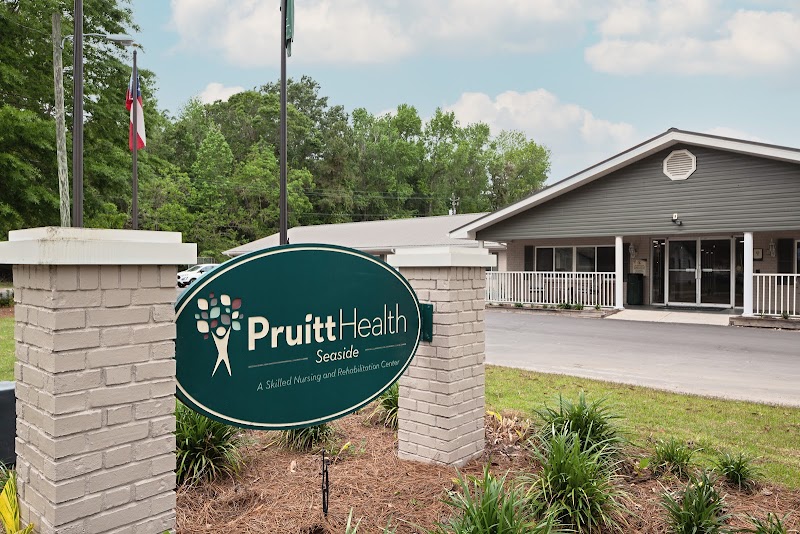
PRUITTHEALTH - SEASIDE is owned by a for-profit company. For-profit facilities operate as businesses with obligations to shareholders or private owners. The facility is operated by PRUITTHEALTH, a chain that manages multiple nursing homes. With 101 certified beds and approximately 71 residents (about 70% occupancy), it is a mid-sized facility located in PORT WENTWORTH, Georgia.
How Does Pruitthealth - Seaside Compare to Other Georgia Nursing Homes?

Compared to the 100 nursing homes in Georgia, PRUITTHEALTH - SEASIDE's overall rating (4 stars) is above the state average of 2.6, staff turnover (45%) is near the state average of 46%, and health inspection rating (4 stars) is above the national benchmark.

What Should Families Ask When Visiting Pruitthealth - Seaside?

Based on this facility's data, families visiting should ask: "Can I visit during a mealtime to observe dining assistance and food quality?" "How do you handle medical emergencies, and what is your hospital transfer rate?" "Can I speak with family members of current residents about their experience?"

Is Pruitthealth - Seaside Safe?

Based on CMS inspection data, PRUITTHEALTH - SEASIDE has a clean safety record: no substantiated abuse findings (meaning no confirmed cases of resident harm), no Immediate Jeopardy citations (the most serious violation level indicating risk of serious injury or death), and is not on the Special Focus Facility watch list (a federal program monitoring the lowest-performing 1% of nursing homes). The facility has a 4-star overall rating and ranks #1 of 100 nursing homes in Georgia. While no facility is perfect, families should still ask about staff-to-resident ratios and recent inspection results during their visit.

Do Nurses at Pruitthealth - Seaside Stick Around?

PRUITTHEALTH - SEASIDE has a staff turnover rate of 45%, which is about average for Georgia nursing homes (state average: 46%). Moderate turnover is common in nursing homes, but families should still ask about staff tenure and how the facility maintains care continuity when employees leave.

Was Pruitthealth - Seaside Ever Fined?

PRUITTHEALTH - SEASIDE has no federal fines on record. CMS issues fines when nursing homes fail to meet care standards or don't correct problems found during inspections. The absence of fines suggests the facility has either maintained compliance or corrected any issues before penalties were assessed. This is a positive indicator, though families should still review recent inspection reports for the full picture.

Is Pruitthealth - Seaside on Any Federal Watch List?

PRUITTHEALTH - SEASIDE is not on any federal watch list. The most significant is the Special Focus Facility (SFF) program, which identifies the bottom 1% of nursing homes nationally based on persistent, serious quality problems. Not being on this list means the facility has avoided the pattern of deficiencies that triggers enhanced federal oversight. This is a positive indicator, though families should still review the facility's inspection history directly.