CANDLER SKILLED NURSING UNIT
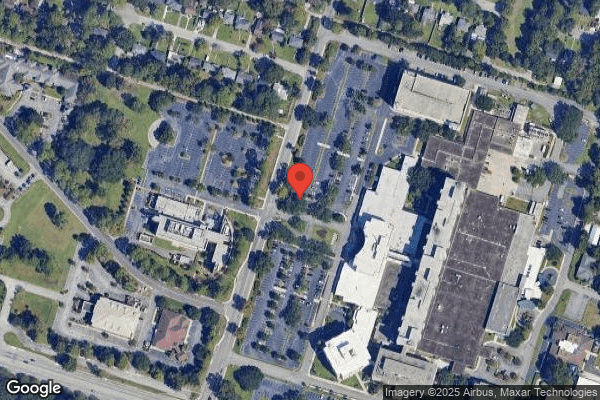

5353 REYNOLDS STREET, SAVANNAH, GA 31405 (912) 819-6262
Non profit - Corporation 22 Beds Independent Data: November 2025
Trust Grade
90/100
#6 of 353 in GA
Last Inspection: March 2025

Within standard 12-15 month inspection cycle. Federal law requires annual inspections.

Overview

Candler Skilled Nursing Unit in Savannah, Georgia has received an impressive Trust Grade of A, indicating it is highly recommended and performs excellently compared to other facilities. It ranks #6 out of 353 in Georgia and #1 out of 12 in Chatham County, placing it among the top options in the area. The facility is improving, with issues decreasing from 3 in 2023 to 1 in 2025, showcasing progress in care quality. Staffing is a strong point, with a perfect 5-star rating and a low turnover rate of 31%, significantly better than the state average. However, there are some concerns; recent inspections found issues with food safety practices, including unclean kitchen areas and improper handling of food by staff not wearing required facial hair coverings.

Trust Score
A
90/100
In Georgia
#6/353
Top 1%
Safety Record
Low Risk
No red flags
Inspections
Getting Better
3 → 1 violations
Staff Stability
○ Average
31% turnover. Near Georgia's 48% average. Typical for the industry.
Penalties
✓ Good
No fines on record. Clean compliance history, better than most Georgia facilities.
Skilled Nurses
✓ Good
Each resident gets 99 minutes of Registered Nurse (RN) attention daily — more than 97% of Georgia nursing homes. RNs are the most trained staff who catch health problems before they become serious.
Violations
✓ Good
Only 5 deficiencies on record. Cleaner than most facilities. Minor issues only.
★★★★★
5.0
Overall Rating
★★★★★
5.0
Staff Levels
★★★★☆
4.0
Care Quality
★★★★☆
4.0
Inspection Score
Stable
2023: 3 issues
2025: 1 issues

The Good

  • 5-Star Staffing Rating · Excellent nurse staffing levels
  • 4-Star Quality Measures · Strong clinical quality outcomes
  • Full Sprinkler Coverage · Fire safety systems throughout facility
  • No fines on record
  • Staff turnover below average (31%)

    17 points below Georgia average of 48%

Facility shows strength in staffing levels, quality measures, fire safety.

The Bad

Staff Turnover: 31%

15pts below Georgia avg (46%)

Typical for the industry

The Ugly 5 deficiencies on record

Mar 2025 1 deficiency
CONCERN (F)

Potential for Harm - no one hurt, but risky conditions existed

Food Safety (Tag F0812)

Could have caused harm · This affected most or all residents

**NOTE- TERMS IN BRACKETS HAVE BEEN EDITED TO PROTECT CONFIDENTIALITY** Based on observations, interviews, record review, and review of the facility's policies titled Sanitation Inspection and Checkli...

Read full inspector narrative →
**NOTE- TERMS IN BRACKETS HAVE BEEN EDITED TO PROTECT CONFIDENTIALITY** Based on observations, interviews, record review, and review of the facility's policies titled Sanitation Inspection and Checklist, Area and Equipment Cleaning, and Cutting Boards, the facility failed to store, prepare, distribute, and serve food in accordance with professional standards for food service safety. Specifically, the facility failed to clean the hand washing sinks, kitchen floors, preparation tables, shelves and drawers, stove, the grill, grill area, ovens, sides and front of the deep fat fryer, refrigerators, the steamer/convection ovens, [NAME], three food warmers, blast chiller, four double ovens, tilt kettle to include the pipes and six carts and replace cutting boards when scarred and discolored. The deficient practice had the potential to place residents receiving an oral diet from the kitchen at risk for foodborne illness. The facility census was 14 residents. Findings include: Review of the facility's policy, titled Sanitation Inspection and Checklist, dated 1/2025, read in part: Policy: A basic sanitation inspection is conducted at least once per month to ensure that established procedures are being followed and that sanitation standards are maintained. The Compass Safety Assessment-Dining is conducted quarterly . Review of the facility's policy, titled Area and Equipment Cleaning, dated 1/2025, read in part: Policies: Written procedures are available, detailing daily, weekly (as needed) cleaning for all areas and equipment in the department. Procedures: Director - Develops a reference manual on cleaning areas and equipment in the Food and Nutrition Services. Includes the Master Cleaning Schedule -Cleaning Frequency form. Trains associates on cleaning procedures and use of reference manual; training is documented. Manual is kept where it is accessible by all associates .which includes cleaning procedures for most equipment, chemicals to use, and PPE to wear. File and retain records for 3 months (Equipment Cleaning Log). Management/Supervisory Personnel - Assigns weekly and special cleaning to be completed each day. Review of the facility's policy, titled Cutting Boards, dated 1/2024, read in part: Policies: .Replace all cutting boards with grooves and pits 1/8-inch or deeper that cannot be cleaned and sanitized using routine cleaning and sanitizing procedures. Review of the cleaning schedules from September 2024 to February 2025 revealed the kitchen tasks were completed (marked with a checkmark), supervisors daily verification was checked, and managers weekly verification was initialed. Review of the contracted company invoices revealed the most recent quarterly cleaning dates of service were 1/27/2025, 1/29/2025,1/30/2025, 2/5/2025, and 2/6/2025, which included cleaning the char broilers, fryers, ovens, tilt skillet, steamers, hotbox warmers, serving equipment, dish machine, floor cleaning, gas, and electric lines. On 3/4/2025 at 11:56 am, the initial tour was conducted with the Nursing Home Administrator (NHA), the Chef, the Dietary Manager (DM) employed in the position as of 3/4/2025, and the Nutritional Clinical Manager (NCM) present. Observations revealed the hand-washing sinks were grey in color; the original color was white. There were three green cutting boards in use by dietary staff that were discolored, greyish/white, and had deep scars. There was a red cutting board in use by dietary staff that was discolored, greyish/white with deep cut scars. The kitchen equipment had food debris, food dripped in front and sides, doors, handles, and crevices, and the inside had built up burnt food on the bottom and was greasy to the touch. The ice machine's front and bottom sections had splatter and debris. The shelves under the prep tables had dried liquids and food crumbs. The coffee station prep table had dried liquid (coffee) stains. The carts were stained, grey in color, and had food debris. The clean dish racks had food debris and were discolored. The floors throughout the kitchen had food debris/grease and black/grey discoloration up to the baseboards and under all the equipment. The equipment observed was, preparation tables, shelves and drawers, stove, the grill, grill area, ovens, sides and front of the deep fat fryer, refrigerators, the steamer/convection ovens, [NAME], three (food warmers, blast chiller, four double ovens, tilt kettle to include the pipes, six carts), and kitchen floors. On 3/06/2025 at 10:21 am, a second observation and tour was made of the kitchen with the DM, Chef, and NCM. The DM had to serve meals and was unavailable to complete the observation and tour. The Chef and NCM completed the tour. Interviews were conducted with the Chef and NCM during the second tour. The NCM stated that she did not enter the kitchen often, only when she needed something for a resident, such as a special cup or utensils. The Chef stated he/ had been employed at the facility for three months, had not replaced cutting boards, and did not know the last time they were replaced. He stated they should be replaced every six months or quarterly. The Chef stated the floors were swept and mopped two times a day, and the carts were supposed to be wiped down daily. He said a company was contracted to clean all of the equipment quarterly. The Chef stated he was not aware of daily cleaning logs. A request was made by the surveyor to review the daily cleaning logs. The NCM stated that she would try to locate them, if they had them, as well as the invoices for the contracted cleaning company. She stated the previous DM had left a month ago, and she did not know how to locate the logs or invoices. The Chef and the NCM acknowledged the food debris and grease on the equipment and the floors. The Chef stated the DM, himself, and the Sous Chef were responsible for ensuring the kitchen was kept clean. The Chef stated that it was his expectation to have a clean kitchen at all times. He said it was important to keep the kitchen clean for safety and sanitation.
Dec 2023 3 deficiencies
CONCERN (D)

Potential for Harm - no one hurt, but risky conditions existed

Infection Control (Tag F0880)

Could have caused harm · This affected 1 resident

**NOTE- TERMS IN BRACKETS HAVE BEEN EDITED TO PROTECT CONFIDENTIALITY** Based on observations, interviews, and review of policy titled Infection Control Guidelines the facility failed to ensure infect...

Read full inspector narrative →
**NOTE- TERMS IN BRACKETS HAVE BEEN EDITED TO PROTECT CONFIDENTIALITY** Based on observations, interviews, and review of policy titled Infection Control Guidelines the facility failed to ensure infection control practices to prevent cross contamination related to entering/exiting a resident room without use of proper personal protection equipment (PPE) and failing to discard trash in a trash receptacle. This deficient practice affected one room (room [ROOM NUMBER]) of 21 rooms with residents. Findings: Review of policy titled Infection Control Guidelines, dated 9/6/2022, revealed the following: III. Control Measures - The maintenance of uniform transmission-based precautions within the hospital is essential to protect patients and those responsible for their care from cross-infection. Signage on door to room [ROOM NUMBER] revealed the following: STOP: Airborne Contact EYE AC E Process: Clean hands when entering and leaving patient room Wear a mask while in patient room N95 for any Aerosolizing Procedures Wear eye protection while in patient room (face shield/goggles) Wear a gown while in patient room (remove when visibly soiled or when leaving the unit) When going in room to room - When leaving the room remove gloves and sanitize hands and gown Put on fresh gloves while going to next room Review of an unnamed document with the breakdown of all precautions and how staff should dress and the daily cleaning schedule revealed that for airborne precautions staff should wear gown, gloves, N95 mask, and eye protection. The daily cleaning included clean room daily with disinfectant. Keep room door closed. 1.During an observation on 12/2/2023 at 9:12 am Physician BB entered into room [ROOM NUMBER] (Airborne Contact signage on door) with a face mask on. Physician BB is noted to have left the room door open while visiting with the resident in the room. Physician BB exited the room at 9:15 am. 2. During an observation on 12/2/2023 at 9:19 am Physician BB was observed to enter room [ROOM NUMBER] again and wearing only his face mask upon entry into the room and the door remained open while in the room with the resident. Physician BB was in the process of rounding but agreed to speak with surveyor before leaving for the day. However, Physician BB did not return for interview. 3. During an observation on 12/2/2023 at 1:32 pm Environmental Tech CC was observed with housekeeping cart outside of room [ROOM NUMBER]. Environmental Tech CC applied PPE which included N95 mask, gloves, and gown prior to entering room [ROOM NUMBER]. Environmental Tech CC entered the room at 1:35 p.m. and closed the door behind her. At 1:38 pm Environmental Tech CC opened the room door and tossed a bag of trash containing gloves and gowns on the floor in the hallway. The bag of trash was not closed, and gloves were hanging out of the bag. She also put used green rags in a container on the housekeeping car and then went back into the room. At 1:43 pm Environmental Tech CC exited the room in full PPE, put the trash in a trash can, and then removed her PPE in the hallway. The area where the trash had been tossed on the floor was not cleaned prior to Environmental Tech CC leaving the area. During an interview on 12/2/2023 at 1:45 p.m. with Environmental Tech CC she acknowledged that she did drop the trash from isolation room [ROOM NUMBER] on the floor prior to placing it in the trashcan but stated it should have been placed directly in the trash can. During interview and observation with the Nurse Manager and Administrator on 12/3/2023 at 10:53 am the Nurse Manager reported that anyone entering room [ROOM NUMBER] should wear PPE per the guidance on the door. This included gloves, gowns, face shield/goggles, and an N95 mask. Interview on 12/3/2023 at 11:14 am with the Coordinator for Environmental Services DD who reported that prior to Environmental Techs entering an isolation room they should put on face shield, N95 mask, gown, and gloves. It was further reported that everything should be carried in to the room to start the cleaning process so that there is no back and forth from the room to the cart with supplies. It was reported that PPE would be taken off once out of the room. Coordinator for Environmental Services DD reported it is not proper protocol to drop the trash bag outside of the isolation room and then go back into the isolation room. Upon review of the picture of trash in hallway, Environmental Services DD reported that this was not the appropriate protocol.
CONCERN (E)

Potential for Harm - no one hurt, but risky conditions existed

Respiratory Care (Tag F0695)

Could have caused harm · This affected multiple residents

**NOTE- TERMS IN BRACKETS HAVE BEEN EDITED TO PROTECT CONFIDENTIALITY** Based on observations, interviews, and review of the facility policy titled Oxygen Therapy the facility failed to provide postin...

Read full inspector narrative →
**NOTE- TERMS IN BRACKETS HAVE BEEN EDITED TO PROTECT CONFIDENTIALITY** Based on observations, interviews, and review of the facility policy titled Oxygen Therapy the facility failed to provide posting of cautionary and safety signs indicating the use of oxygen for three of seven rooms (530, 538, and 548) with residents utilizing oxygen. Review of policy titled Oxygen Therapy, dated 10/20/2020, did not indicate that signage was needed on doors for residents receiving oxygen therapy. During an interview with (Director of Nursing) DON on 12/2/2023 at 8:35 am who reported that R119 receives trach care BID PRN (twice a day/as needed) however he covers his trach to talk and only requires suctioning as need. It was further reported that R119 receives oxygen as needed but was breathing on room air. Observations on 12/2/2023 at 10:39 and 12/3/2023 at 10:12 am revealed no signage noted on door or surrounding area to indicate oxygen by resident in room [ROOM NUMBER]. Observation of room [ROOM NUMBER] on 12/3/2023 at 10:14 am the door partially opened and the resident in the room wearing oxygen but there was no signage posted indicating the use of oxygen. During a tour with Nurse Manager and Administrator on 12/3/2023 at 10:50 am rooms [ROOM NUMBER] observed to not have signage on door indicating oxygen use by the residents in each room. It was confirmed that the residents in each room were utilizing oxygen, but it was reported that they did not typically put any signage on the room doors. During a subsequent interview on 12/3/2023 at 11:08 am with the Nurse Manager and the Administrator it was reported that oxygen usage signage is located in each room where the oxygen is received for the resident. During a tour of the unit on 12/3/2023 at 12:47 pm there was no signage noted on any room doors or entry/exit doors of the unit to indicate oxygen usage. Each room is noted to have a notch indicating where oxygen can be received from in each room. There was no signage posted on the door prior to entry into the rooms or on the walls in the room indicating oxygen usage.
CONCERN (F)

Potential for Harm - no one hurt, but risky conditions existed

Food Safety (Tag F0812)

Could have caused harm · This affected most or all residents

Based on observation, interviews, and review of the facility policy titled Uniform Dress Code the facility failed to ensure that dietary staff wore covering for facial hair and failed to ensure items ...

Read full inspector narrative →
Based on observation, interviews, and review of the facility policy titled Uniform Dress Code the facility failed to ensure that dietary staff wore covering for facial hair and failed to ensure items in the dry storage area was labeled with expiration dates. This deficient practice had the potential to affect 21 of 21 residents receiving an oral diet. Findings: Review of policy revealed the following: Section: Orientation and Education Subject: Uniform Dress Code Date Issued: 5/1995 Date Revised: 1/2023 Procedures: Associates Working with Food - Restrain all facial hair with a beard net/restraint. During an initial kitchen tour on 12/1/2023 at 8:21 am with the Nurse Manager, Patient Services Nutritional Manager, Director of Food Services, and the Executive Chief revealed the following: 1. Patient Services Nutritional Manager is noted to have a beard but is not wearing a beard guard. 2. Director of Food Services is noted to have a beard but not wearing a beard guard. During a kitchen visit and interview on 12/1/2023 at 12:40 pm the Patient Services Nutritional Manager facilitated obtaining food temperatures for food on the steam table. He was noted to not be wearing a beard guard. During an interview with Patient Services Manager regarding his beard he reported that as long as his beard is less than 1/4 inch in length, he did not have to wear a beard guard. He denied that his beard was longer than 1/4 inch and if it was his supervisor would make him wear a beard guard. The final tour of kitchen and interview began at 11:43 am and ended at 12:03 pm on 12/3/2023. Present for the tour were the Administrator, Nurse Manager, Director of Food Services, and Patient Services Nutritional Manager. At 11:47 am tour of dry storage revealed the following: 1. There was a six pound can of carrots that did not have an in date or expiration date. 2. There was a can of spaghetti sauce with no expiration date. 3. There was a can of marinara sauce with no expiration date. 4. There were two 25# (pound) bags of corn meal without an expiration date. 5. There were 3 boxes of unopened and 1 partially used box of graham crackers without an expiration date. Interview with the Director of Food Services while in the dry storage area revealed that canned items have a long shelf life. He reported that any item that gets opened gets an orange label that details the name of the item, date opened, and the expiration date. He reported that inventory is turned over every 7 days so nothing should expire. He acknowledged that there was no way to identify the expiration date of the identified items. It is noted that supplies in the dry food storage had items for both the hospital and nursing home residents, but this tour focused on the items specific for the nursing home residents. Interview on 12/3/2023 at 12:02 pm with the Director of Food Services regarding use of the beard guard today but not on previous days. The Director of Food Services reported that they were wearing beard guards today because the surveyor had previously questioned the Patient Services Manager about the beard guard usage. It was reported that they typically did not wear them because management is not typically in the kitchen around the food. He was informed that the Patient Services Manager facilitated food temps on the food at the steam table. The Director of Food Services reviewed the facility policy and acknowledged that he was not aware that the policy said to restrain all facial hair.
Sept 2022 1 deficiency
CONCERN (D)

Potential for Harm - no one hurt, but risky conditions existed

Accident Prevention (Tag F0689)

Could have caused harm · This affected 1 resident

**NOTE- TERMS IN BRACKETS HAVE BEEN EDITED TO PROTECT CONFIDENTIALITY** Based on observations, record review, review of policy titled Medication Administration, and staff interviews, the facility fail...

Read full inspector narrative →
**NOTE- TERMS IN BRACKETS HAVE BEEN EDITED TO PROTECT CONFIDENTIALITY** Based on observations, record review, review of policy titled Medication Administration, and staff interviews, the facility failed to provide an environment that was free from potential accidents and hazards for one of 22 residents (R) (R#20). Specifically, the facility failed to properly store medications and a needle syringe left in R#20's room. Findings include: An observation conducted on 9/23/22 at 10:35 a.m. revealed medications (bottle of antacids, nasal spray, and an inhaler) on the counter and needle syringe on bi-pap machine at bedside. An observation on 9/24/22 at 11:19 a.m. revealed (bottle of antacids, nasal spray, an inhaler) on the counter and needle syringe on bi-pap machine at bedside. Further observation on 9/24/22 at 12:40 p.m. revealed the same medications as previously mentioned in addition to Nystatin-Hydrocortisone/Zinc Oxide cream, Novolog Flex pen which were all on the counter and needle syringe on bi-pap machine bedside. An interview with R#20 was conducted during this time. She revealed her daughter brought the nasal spray and Antacids from home last week. Review of Records revealed R#20 admitted on [DATE] with diagnoses but not limited to Chronic Obstructive Pulmonary Disease (COPD), and Chronic Respiratory Failure. Review of the admission Minimum Data Set (MDS) assessment dated [DATE] revealed that the resident had a Brief Interview for Mental Status (BIMS)score of 13, indicating that the resident is cognitively intact. Review of Physician Orders dated September 2022 revealed, active orders for BiPAP, Nasal Spray, inhaler, Calcium Carbonate, Nystatin-Hydrocortisone/Zinc Oxide Cream and an inactive order for Novolog flex pen. No records of order indicating may use home medication were noted. Review of the undated facility policy titled Medication Administration Policy Statement revealed General Procedures for all Medication Administration: 5(d) Do not leave drugs unattended or unlabeled. 7(b) Use of patient supplied home medications requires order form the Licensed Independent Practitioner (LIP)indication may use home medication in addition to medication name, does, route, and frequency. During an interview on 9/24/22 at 12:45 p.m. with Licensed Practical Nurse (LPN) AA, she verified medications and needle syringe were in room and confirmed that they should not have been left in room or at bedside. LPN AA revealed needle syringe was an Arterial Blood sampling kit that was left on the bi-pap machine at bedside. She revealed the facility did not carry the brands for Antacids or Nasal spray, but the other medications were dispensed by the facility. During an interview on 9/24/22 at 1:07 p.m. with the Nurse Manager, she confirmed that it is her expectations for staff to properly store medications and needle syringes in a secure location under nurse's supervision and they should not be openly available.
Understanding Severity Codes (click to expand)
Life-Threatening (Immediate Jeopardy)
J - Isolated K - Pattern L - Widespread
Actual Harm
G - Isolated H - Pattern I - Widespread
Potential for Harm
D - Isolated E - Pattern F - Widespread
No Harm (Minor)
A - Isolated B - Pattern C - Widespread

Questions to Ask on Your Visit

  • "Can I speak with families of current residents?"
  • "What's your RN coverage like on weekends and overnight?"

Our Honest Assessment

Strengths
  • • Grade A (90/100). Above average facility, better than most options in Georgia.
  • • No major safety red flags. No abuse findings, life-threatening violations, or SFF status.
  • • No fines on record. Clean compliance history, better than most Georgia facilities.
  • • Only 5 deficiencies on record. Cleaner than most facilities. Minor issues only.
Concerns
  • • No significant concerns identified. This facility shows no red flags across CMS ratings, staff turnover, or federal penalties.
Bottom line: Generally positive indicators. Standard due diligence and a personal visit recommended.

About This Facility

What is Candler Skilled Nursing Unit's CMS Rating?

CMS assigns CANDLER SKILLED NURSING UNIT an overall rating of 5 out of 5 stars, which is considered much above average nationally. Within Georgia, this rating places the facility higher than 99% of the state's 100 nursing homes. This rating reflects solid performance across the metrics CMS uses to evaluate nursing home quality.
How is Candler Skilled Nursing Unit Staffed?

CMS rates CANDLER SKILLED NURSING UNIT's staffing level at 5 out of 5 stars, which is much above average compared to other nursing homes. Staff turnover is 31%, compared to the Georgia average of 46%. This relatively stable workforce can support continuity of care.

What Have Inspectors Found at Candler Skilled Nursing Unit?

State health inspectors documented 5 deficiencies at CANDLER SKILLED NURSING UNIT during 2022 to 2025. These included: 5 with potential for harm.
Who Owns and Operates Candler Skilled Nursing Unit?

CANDLER SKILLED NURSING UNIT is owned by a non-profit organization. Non-profit facilities reinvest revenue into operations rather than distributing to shareholders. The facility operates independently rather than as part of a larger chain. With 22 certified beds and approximately 19 residents (about 86% occupancy), it is a smaller facility located in SAVANNAH, Georgia.
How Does Candler Skilled Nursing Unit Compare to Other Georgia Nursing Homes?

Compared to the 100 nursing homes in Georgia, CANDLER SKILLED NURSING UNIT's overall rating (5 stars) is above the state average of 2.6, staff turnover (31%) is significantly lower than the state average of 46%, and health inspection rating (4 stars) is above the national benchmark.

What Should Families Ask When Visiting Candler Skilled Nursing Unit?

Based on this facility's data, families visiting should ask: "Can I visit during a mealtime to observe dining assistance and food quality?" "How do you handle medical emergencies, and what is your hospital transfer rate?" "Can I speak with family members of current residents about their experience?"

Is Candler Skilled Nursing Unit Safe?

Based on CMS inspection data, CANDLER SKILLED NURSING UNIT has a clean safety record: no substantiated abuse findings (meaning no confirmed cases of resident harm), no Immediate Jeopardy citations (the most serious violation level indicating risk of serious injury or death), and is not on the Special Focus Facility watch list (a federal program monitoring the lowest-performing 1% of nursing homes). The facility has a 5-star overall rating and ranks #1 of 100 nursing homes in Georgia. While no facility is perfect, families should still ask about staff-to-resident ratios and recent inspection results during their visit.

Do Nurses at Candler Skilled Nursing Unit Stick Around?

CANDLER SKILLED NURSING UNIT has a staff turnover rate of 31%, which is about average for Georgia nursing homes (state average: 46%). Moderate turnover is common in nursing homes, but families should still ask about staff tenure and how the facility maintains care continuity when employees leave.

Was Candler Skilled Nursing Unit Ever Fined?

CANDLER SKILLED NURSING UNIT has no federal fines on record. CMS issues fines when nursing homes fail to meet care standards or don't correct problems found during inspections. The absence of fines suggests the facility has either maintained compliance or corrected any issues before penalties were assessed. This is a positive indicator, though families should still review recent inspection reports for the full picture.

Is Candler Skilled Nursing Unit on Any Federal Watch List?

CANDLER SKILLED NURSING UNIT is not on any federal watch list. The most significant is the Special Focus Facility (SFF) program, which identifies the bottom 1% of nursing homes nationally based on persistent, serious quality problems. Not being on this list means the facility has avoided the pattern of deficiencies that triggers enhanced federal oversight. This is a positive indicator, though families should still review the facility's inspection history directly.