MAGNOLIA PLACE NURSING AND REHABILITATION
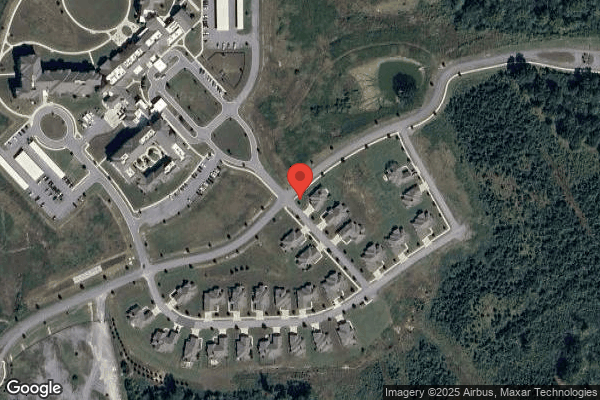
500 EAGLE LAKE TRAIL, ROME, GA 30165 (706) 728-3600
Non profit - Corporation 34 Beds Independent Data: November 2025
Trust Grade
90/100
#21 of 353 in GA
Last Inspection: September 2024

Within standard 12-15 month inspection cycle. Federal law requires annual inspections.

Overview

Magnolia Place Nursing and Rehabilitation has received a Trust Grade of A, indicating it is an excellent facility that is highly recommended. It ranks #21 out of 353 nursing homes in Georgia, placing it in the top half of the state, and is the best option among 8 facilities in Floyd County. The facility is improving, having reduced its issues from 5 in 2023 to none in 2024, and it boasts a perfect staffing rating of 5 out of 5 stars, with a turnover rate that matches the state average at 47%. Notably, there have been no fines reported, which is a positive sign, and it has more RN coverage than 94% of Georgia facilities, ensuring better care. However, some concerns were identified during inspections, such as the failure to implement an Antibiotic Stewardship Program and not properly labeling opened food items, which could pose risks to residents' health and safety. Additionally, there was a lapse in developing a baseline care plan for a resident with PTSD, which could affect their continuity of care. Overall, while there are strengths in staffing and care quality, families should be aware of these specific concerns.

Trust Score
A
90/100
In Georgia
#21/353
Top 5%
Safety Record
Low Risk
No red flags
Inspections
Getting Better
5 → 0 violations
Staff Stability
⚠ Watch
47% turnover. Above average. Higher turnover means staff may not know residents' routines.
Penalties
✓ Good
No fines on record. Clean compliance history, better than most Georgia facilities.
Skilled Nurses
✓ Good
Each resident gets 78 minutes of Registered Nurse (RN) attention daily — more than 97% of Georgia nursing homes. RNs are the most trained staff who catch health problems before they become serious.
Violations
✓ Good
Only 5 deficiencies on record. Cleaner than most facilities. Minor issues only.
★★★★★
5.0
Overall Rating
★★★★★
5.0
Staff Levels
★★★★★
5.0
Care Quality
★★★★☆
4.0
Inspection Score
Stable
2023: 5 issues
2024: 0 issues

The Good

  • 5-Star Staffing Rating · Excellent nurse staffing levels
  • 5-Star Quality Measures · Strong clinical quality outcomes
  • Full Sprinkler Coverage · Fire safety systems throughout facility
  • No fines on record

Facility shows strength in staffing levels, quality measures, fire safety.

The Bad

Staff Turnover: 47%

Near Georgia avg (46%)

Higher turnover may affect care consistency

The Ugly 5 deficiencies on record

Jan 2023 5 deficiencies
CONCERN (D)

Potential for Harm - no one hurt, but risky conditions existed

Deficiency F0655 (Tag F0655)

Could have caused harm · This affected 1 resident

**NOTE- TERMS IN BRACKETS HAVE BEEN EDITED TO PROTECT CONFIDENTIALITY** Based on record review, staff interviews, and the facility policy titled, Baseline Care Plan, the facility failed to develop a b...

Read full inspector narrative →
**NOTE- TERMS IN BRACKETS HAVE BEEN EDITED TO PROTECT CONFIDENTIALITY** Based on record review, staff interviews, and the facility policy titled, Baseline Care Plan, the facility failed to develop a baseline care plan for Post-Traumatic-Stress-Disorder (PTSD) for one of seven resident (R) (#78). Specifically, failure to develop a baseline care plan has the potential to impede continuity of care, communication among nursing home staff, resident safety, safeguards against adverse events, and that residents and their representatives are informed of the initial plan for delivery of care. Findings include: A review of the facility policy titled, Baseline Care Plan, implemented on 9/1/2020, revealed the facility would develop and implement a baseline care plan within 48 hours of admission. The plan would include initial goals based on admission orders, physician orders, dietary orders, therapy services, social services, and PASSAR recommendations. Additionally, a supervising nurse would verify within 48 hours that a baseline care plan had been developed. Record review revealed that R#78 was admitted to the facility on [DATE] with a past medical history of arthritis, prostate cancer, hyperlipidemia, left hip replacement, chronic fecal and urinary incontinence, anxiety, chronic nausea and vomiting, seborrheic dermatitis, and post-traumatic stress disorder (PSTD). A review of the Medical Doctor (MD) Orders dated 1/12/2023 revealed an order for a psychiatric and psychological evaluation and treatment for R#78. Additionally, an order on 1/14/2023 revealed Sertraline HCl [hydrochloride] Tablet 25 mg [milligrams], one tablet by mouth per day, was prescribed for PTSD unspecified. A review of the person-centered care plan for R#78 revealed they were not care planned for PTSD. A review of the Social Service Notes dated 1/12/2023 at 2:46 p.m., revealed the family of R#78 requested an application for mental health services. A review of the History and Physical dated 1/13/2023 revealed R#78 suffered from PTSD and related nightmares. During an interview on 1/14/23 at 9:02 a.m. with the minimum data set (MDS) Coordinator, she explained that when she established a care plan for a new resident, she utilized the resident's history and physical, orders, and assessments. She would also talk to the resident, staff, and family. She explained that she typically started a baseline/admission care plan within 72 hours. She stated she began R#78's care plan on 1/13/2023, and she was in the process of completing it. During an interview on 1/14/2023 at 9:56 a.m. with the Director of Nursing (DON), she stated her expectation was for each resident to have a baseline care plan created within 24 hours. She noted that the baseline care plan acted as the initial tool used to develop the comprehensive care plan, and the baseline care plan should include any resident's major care areas. She stated that she planned to re-educate the MDS Coordinator regarding baseline/admission care plans. The DON acknowledged R#78 did not have an admission care plan developed for PTSD. During a follow-up interview on 1/15/2023 at 8:50 a.m. with the MDS Coordinator, she explained that she had still not added a PTSD care area to R#78's care plan because it slipped her mind. However, she said she knew R#78 had PTSD because she recalled the diagnosis during the chart review, and she would update the care plan immediately.
CONCERN (D)

Potential for Harm - no one hurt, but risky conditions existed

Comprehensive Care Plan (Tag F0656)

Could have caused harm · This affected 1 resident

**NOTE- TERMS IN BRACKETS HAVE BEEN EDITED TO PROTECT CONFIDENTIALITY** Based on record review, staff interviews, and review of facility policy titled, Comprehensive Care Plans, the facility failed to...

Read full inspector narrative →
**NOTE- TERMS IN BRACKETS HAVE BEEN EDITED TO PROTECT CONFIDENTIALITY** Based on record review, staff interviews, and review of facility policy titled, Comprehensive Care Plans, the facility failed to develop a person-centered care plan related to behaviors for one of 19 residents (R)(R#6) sampled. Failure to develop a person-centered care plan has the potential for the preferences, goals, and physical, mental, and psychosocial needs for R#6 not to be addressed. Findings include: Review of facility policy titled, Comprehensive Care Plans implemented 9/1/2020 revealed Policy: It is the policy of this facility to develop and implement a comprehensive person-centered care plan for each resident, consistent with resident rights, that includes measurable objectives and timeframes to meet a resident's medical, nursing, and mental and psychosocial needs that are identified in the resident's comprehensive assessment. R#6 was admitted to the facility 11/4/2022 with diagnoses including Alzheimer's disease, anxiety, and dementia. Review of the admission Minimum Data Set (MDS) dated [DATE] revealed a Brief Interview for Mental Status (BIMS) score of three out of 15, indicating severe cognitive decline. During an interview on 1/15/2023 at 9:30 a.m. with Licensed Practical Nurse (LPN) AA and Certified Nursing Assistant (CNA) BB revealed that R#6 wanders into other resident's rooms, is confused, and exhibits exiting seeking behaviors. It was further revealed that R#6 is difficult to redirect at times. They stated R#6 is pleasant most of the time but does become verbally aggressive at times toward staff when he is being redirected. LPN AA stated R#6's medications were changed on 12/28/2022, then increased on 1/11/2023, related to his increase in behaviors. During interview on 1/15/2023 at 9:37 a.m. with the minimum data set (MDS) Coordinator it was confirmed that R#6 does not have a care plan related to behaviors. During an interview on 1/15/2023 at 9:53 a.m. with the Director of Nursing she revealed her expectation is for R#6 to have a behavior care plan.
CONCERN (D)

Potential for Harm - no one hurt, but risky conditions existed

Medication Errors (Tag F0758)

Could have caused harm · This affected 1 resident

**NOTE- TERMS IN BRACKETS HAVE BEEN EDITED TO PROTECT CONFIDENTIALITY** Based on record review, staff interviews, and review of facility policy titled, Use of Psychotropic Drugs, the facility failed t...

Read full inspector narrative →
**NOTE- TERMS IN BRACKETS HAVE BEEN EDITED TO PROTECT CONFIDENTIALITY** Based on record review, staff interviews, and review of facility policy titled, Use of Psychotropic Drugs, the facility failed to ensure that psychotropic medications including antipsychotic, antidepressant, and antianxiety medication was not ordered as needed (PRN) for more than 14 days unless clinically indicated for two of five residents (R) (R#6 and R#22) reviewed for unnecessary medication. Findings include: Review of the facility policy titled; Use of Psychotropic Drugs implemented 9/1/2020 revealed 8. PRN orders for psychotropic drugs shall be used only when the medication is necessary to treat a diagnosed specific condition that is documented in the clinical record, and for a limited duration (i.e., 14 days). a. If the attending physician or prescribing practitioner believes that it is appropriate for the PRN order to be extended beyond 14 days, he or she shall document their rationale in the resident's medical record and indicate the duration for the PRN order. b. PRN orders for antipsychotic drugs are limited to 14 days and cannot be renewed unless the attending physician or prescribing practitioner evaluates the resident for the appropriateness of that medication. 1. R#6 was admitted to the facility 11/4/2022 with diagnoses including Alzheimer's disease, anxiety, and dementia. Review of the admission Minimum Data Set (MDS) dated [DATE] revealed a Brief Interview for Mental Status (BIMS) score of three out of 15, indicating severe cognitive decline. Section N-Medications revealed resident received antidepressant and antipsychotic medications. Review of the Medication Administration Record (MAR) dated January 2023 for R#6 revealed an order for trazodone 50 milligrams (mg) every eight hours as needed for anxiety/agitation. Further review revealed medication was started 12/22/2022 with no stop date. During an interview on 1/15/2023 at 9:54 a.m. with the Director of Nursing (DON), it was revealed that PRN psychotropic meds should have a 14 stop day. She further revealed they try not to have PRN usage, if resident needs medications regularly ordered. She stated she runs a report for psychotropic medications to make sure they have 14 day stop date. The DON confirmed that R#6's trazodone did not have a 14 day stop date. 2. Review of the clinical record for R#22 revealed he was admitted to the facility on [DATE] with diagnoses including but not limited to pain, fractured left femur, aortic stenosis, hypertension (HTN), depression, and anxiety. The resident's most recent quarterly Minimum Data Set (MDS) dated [DATE], revealed a Brief Interview for Mental Status (BIMS) was coded as 6, indicating severe cognitive impairment. Review of the December 2022 Physician Orders (PO) for R#22 revealed an order dated 1/6/2023 for Haldol (a medication used to treat schizophrenia) one milligram (mg) every four hours as needed (PRN) anxiety; order dated 1/6/2023 for lorazepam (a medication used to treat anxiety) one mg every four hours PRN; order dated 11/27/2022 for Trazadone (a medication used to treat depression and anxiety) 50 mg every six hours PRN. Further review of the PO's did not indicate that the use of the PRN medications had been re-evaluated by the physician, for continued use, past 14 days. Review of the December 2022 Medication Administration Record (MAR) revealed R#22 received Trazadone 50 mg 10 times during the month. Review of the January 2023 MAR revealed the resident received Haldol one mg on 1/10/2023 and he received Trazadone 50 mg on 1/7/2023. During an interview on 1/15/2023 at 8:14 a.m. with Certified Nursing Assistant (CNA) BB, she stated that if residents exhibit behaviors out of their normal, she will report them to the nurse taking care of the resident. She stated that she doesn't recall R#22 having any problems with agitation or refusal of care. During an interview on 1/15/2023 at 8:19 a.m. with Licensed Practical Nurse (LPN) AA, she stated that she does behavior monitoring at the end of the shift. She stated that if residents have behaviors, then she will try to redirect them, before giving them PRN medications. During an interview on 1/15/2023 at 9:54 a.m. with the Director of Nursing (DON), she stated that the facility tries not to use PRN psychotropic medications, but if they are used, she stated they should have a 14 day stop order. During further interview, she stated she can run a report to check psychotropic medication orders to make sure there are stop order dates for PRN psychotropic medications.
CONCERN (E)

Potential for Harm - no one hurt, but risky conditions existed

Food Safety (Tag F0812)

Could have caused harm · This affected multiple residents

**NOTE- TERMS IN BRACKETS HAVE BEEN EDITED TO PROTECT CONFIDENTIALITY** Based on observations, staff interviews, and review of the facility policy titled, Dating, Labeling Foods & Discarding Food, the...

Read full inspector narrative →
**NOTE- TERMS IN BRACKETS HAVE BEEN EDITED TO PROTECT CONFIDENTIALITY** Based on observations, staff interviews, and review of the facility policy titled, Dating, Labeling Foods & Discarding Food, the facility failed to ensure that opened food items were labeled and dated. The facility census was 24, with 23 residents receiving an oral diet. Findings include: A review of facility policy titled, Dating, Labeling Foods & Discarding Food, revised January of 2023 revealed: dry storage items would be labeled with the date they were opened. A further review revealed that staff would label all bins containing flour, sugar, cornmeal, and thickener with the date. An observation on 1/13/2023 at 8:23 a.m. of the dry storage area revealed an opened 12-ounce bag of Jet Puffed Marshmallows, an opened 24-ounce container of lemon gelatin, an opened container of parmesan crackers without a weight, an opened 16-ounce container of [NAME] Choice Ham Liquid Smoke, and a five-pound bin of opened flour, which were not labeled with the date they were opened. An observation on 1/13/2023 at 8:40 a.m. of the spice rack outside of the dry storage area revealed an opened 24-ounce jar of thyme leaf, an opened 16-ounce jar of whole nutmeg, an opened 11-ounce jar of whole juniper berries, an opened 16-ounce jar of ground cloves, an opened 16-ounce jar of black peppercorns, an opened container of garlic powder without a weight, and an opened unknown spice without a weight, which were not labeled with the date they were opened. During an interview on 1/13/2023 at 8:50 a.m., the facility Administrator confirmed the unlabeled items in the dry goods area and on the spice rack. The Administrator stated he expected the kitchen and dietary staff to follow policies and regulations related to food storage. During an interview on 1/15/2023 at 8:02 a.m. with the Dietary Manager, she acknowledged the items in the dry storage area and spice rack were not labeled after they were opened. However, she explained that she expected the staff to label all items after opening them.
CONCERN (F)

Potential for Harm - no one hurt, but risky conditions existed

Antibiotic Stewardship (Tag F0881)

Could have caused harm · This affected most or all residents

Based on record review, staff interviews, and review of the facility policy titled, Antibiotic Stewardship Program, the facility failed to develop and implement an Antibiotic Stewardship Program (ASP)...

Read full inspector narrative →
Based on record review, staff interviews, and review of the facility policy titled, Antibiotic Stewardship Program, the facility failed to develop and implement an Antibiotic Stewardship Program (ASP) to include antibiotic use protocols and a system to monitor antibiotic usage for the past 12 months. The census was 24. Findings include: Review of the undated policy titled, Antibiotic Stewardship Program revealed the policy is to implement and Antibiotic Stewardship Program as part of the facility's overall infection prevention and control program. The purpose of the program is to optimize the treatment of infections while reducing the adverse events associated with antibiotic use. Policy Explanation and Compliance Guidelines: 1.a. The Infection Preventionist coordinates all antibiotic stewardship activities, maintains documentation, and serves as a resource for all clinical staff. 4.a.i. Nursing staff shall assess residents who are suspected to have an infection and complete a change of condition form prior to notifying the physician. ii. Laboratory testing shall be in accordance with current standards of practice. iii. The facility uses the CDC's NHSN Surveillance Definitions to define infections. iv. The McGreer's Criteria are used to determine whether the symptoms meet the criteria to consider them to be an infection that may require antibiotics. v. All prescriptions for antibiotics shall specify the dose, duration, and indication for use. vi. Reassessment of empiric antibiotics is conducted after 203 days for appropriateness and necessity, factoring in results of diagnostic tests, laboratory reports, and/or changes in the clinical status of the resident. vii. Whenever possible, narrow-spectrum antibiotics that are appropriate for the condition being treated shall be utilized. 9. Documentation related to the program is maintained by the Infection Preventionist, including, but not limited to: a. Action plans and/or work plans associated with the program. b. Assessment forms. c. Antibiotic use protocols/algorithms. d. Data collection forms for antibiotic use, process, and outcome measures. e. Antibiotic stewardship meeting minutes. f. Feedback reports. g. Records related to education of physicians, staff, residents, and families. h. Annual reports. Review of the Infection Control Program (ICP) documents revealed there was no documentation of an ASP that antibiotic use was being tracked, resistance to antibiotics was being communicated to relevant clinicians and nursing staff, or of any education on antibiotic use. During an interview on 1/15/2023 at 10:07 a.m. with the Infection Preventionist, she stated she has been responsible for the ICP since October 2022, when the previous Director of Nursing (DON) left in September 2022. She stated that she started putting the infection control surveillance data together but could not complete the last three months, due to missing data. During further interview, she stated that the facility does not have an ASP. She stated she was not able to locate any information or documents related to the ASP. During an interview on 1/15/2023 at 10:10 a.m. with the current DON, she stated she has been employed at the facility for two weeks. She stated that the previous DON was responsible for overseeing the infection control program but had not been doing the job adequately. She confirmed there was no evidence that tracking and trending of antibiotic use was documented. She stated that she and the current ICP and Assistant Director of Nursing will work together to get an ASP going as soon as possible.
Understanding Severity Codes (click to expand)
Life-Threatening (Immediate Jeopardy)
J - Isolated K - Pattern L - Widespread
Actual Harm
G - Isolated H - Pattern I - Widespread
Potential for Harm
D - Isolated E - Pattern F - Widespread
No Harm (Minor)
A - Isolated B - Pattern C - Widespread

Questions to Ask on Your Visit

  • "Can I speak with families of current residents?"
  • "What's your RN coverage like on weekends and overnight?"

Our Honest Assessment

Strengths
  • • Grade A (90/100). Above average facility, better than most options in Georgia.
  • • No major safety red flags. No abuse findings, life-threatening violations, or SFF status.
  • • No fines on record. Clean compliance history, better than most Georgia facilities.
  • • Only 5 deficiencies on record. Cleaner than most facilities. Minor issues only.
Concerns
  • • No significant concerns identified. This facility shows no red flags across CMS ratings, staff turnover, or federal penalties.
Bottom line: Generally positive indicators. Standard due diligence and a personal visit recommended.

About This Facility

What is Magnolia Place Nursing And Rehabilitation's CMS Rating?

CMS assigns MAGNOLIA PLACE NURSING AND REHABILITATION an overall rating of 5 out of 5 stars, which is considered much above average nationally. Within Georgia, this rating places the facility higher than 99% of the state's 100 nursing homes. This rating reflects solid performance across the metrics CMS uses to evaluate nursing home quality.

How is Magnolia Place Nursing And Rehabilitation Staffed?

CMS rates MAGNOLIA PLACE NURSING AND REHABILITATION's staffing level at 5 out of 5 stars, which is much above average compared to other nursing homes. Staff turnover is 47%, compared to the Georgia average of 46%.

What Have Inspectors Found at Magnolia Place Nursing And Rehabilitation?

State health inspectors documented 5 deficiencies at MAGNOLIA PLACE NURSING AND REHABILITATION during 2023. These included: 5 with potential for harm.

Who Owns and Operates Magnolia Place Nursing And Rehabilitation?

MAGNOLIA PLACE NURSING AND REHABILITATION is owned by a non-profit organization. Non-profit facilities reinvest revenue into operations rather than distributing to shareholders. The facility operates independently rather than as part of a larger chain. With 34 certified beds and approximately 28 residents (about 82% occupancy), it is a smaller facility located in ROME, Georgia.

How Does Magnolia Place Nursing And Rehabilitation Compare to Other Georgia Nursing Homes?

Compared to the 100 nursing homes in Georgia, MAGNOLIA PLACE NURSING AND REHABILITATION's overall rating (5 stars) is above the state average of 2.6, staff turnover (47%) is near the state average of 46%, and health inspection rating (4 stars) is above the national benchmark.

What Should Families Ask When Visiting Magnolia Place Nursing And Rehabilitation?

Based on this facility's data, families visiting should ask: "Can I visit during a mealtime to observe dining assistance and food quality?" "How do you handle medical emergencies, and what is your hospital transfer rate?" "Can I speak with family members of current residents about their experience?"

Is Magnolia Place Nursing And Rehabilitation Safe?

Based on CMS inspection data, MAGNOLIA PLACE NURSING AND REHABILITATION has a clean safety record: no substantiated abuse findings (meaning no confirmed cases of resident harm), no Immediate Jeopardy citations (the most serious violation level indicating risk of serious injury or death), and is not on the Special Focus Facility watch list (a federal program monitoring the lowest-performing 1% of nursing homes). The facility has a 5-star overall rating and ranks #1 of 100 nursing homes in Georgia. While no facility is perfect, families should still ask about staff-to-resident ratios and recent inspection results during their visit.

Do Nurses at Magnolia Place Nursing And Rehabilitation Stick Around?

MAGNOLIA PLACE NURSING AND REHABILITATION has a staff turnover rate of 47%, which is about average for Georgia nursing homes (state average: 46%). Moderate turnover is common in nursing homes, but families should still ask about staff tenure and how the facility maintains care continuity when employees leave.

Was Magnolia Place Nursing And Rehabilitation Ever Fined?

MAGNOLIA PLACE NURSING AND REHABILITATION has no federal fines on record. CMS issues fines when nursing homes fail to meet care standards or don't correct problems found during inspections. The absence of fines suggests the facility has either maintained compliance or corrected any issues before penalties were assessed. This is a positive indicator, though families should still review recent inspection reports for the full picture.

Is Magnolia Place Nursing And Rehabilitation on Any Federal Watch List?

MAGNOLIA PLACE NURSING AND REHABILITATION is not on any federal watch list. The most significant is the Special Focus Facility (SFF) program, which identifies the bottom 1% of nursing homes nationally based on persistent, serious quality problems. Not being on this list means the facility has avoided the pattern of deficiencies that triggers enhanced federal oversight. This is a positive indicator, though families should still review the facility's inspection history directly.