HARBORVIEW THOMASVILLE
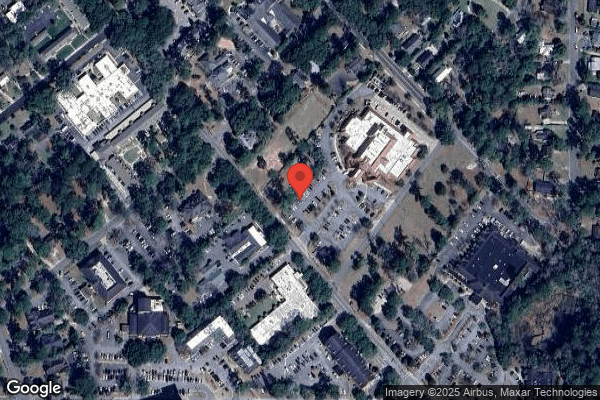
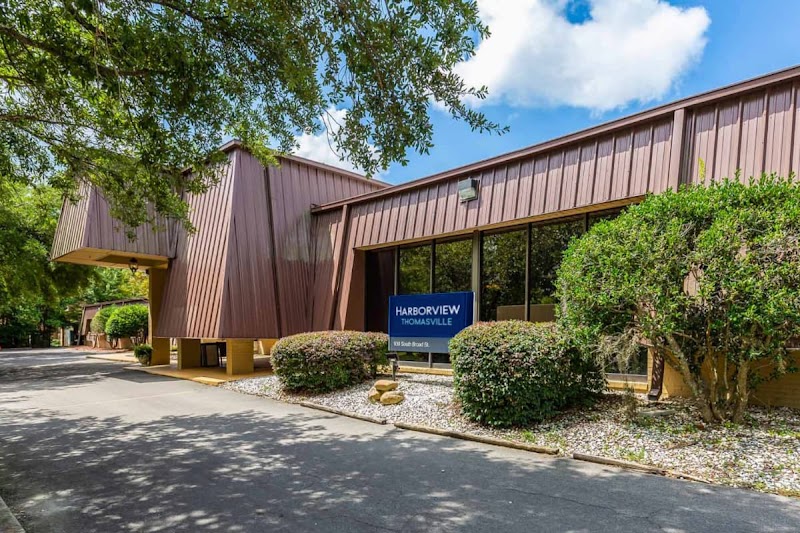
930 SOUTH BROAD ST., THOMASVILLE, GA 31792 (229) 226-9322
For profit - Corporation 68 Beds HARBORVIEW HEALTH SYSTEMS Data: November 2025 5 Immediate Jeopardy citations
Trust Grade
0/100
#285 of 353 in GA
Last Inspection: June 2025

Inspected within the last 6 months. Data reflects current conditions.

Overview

Harborview Thomasville has received a Trust Grade of F, indicating significant concerns about the quality of care provided. In Georgia, it ranks #285 out of 353 facilities, placing it in the bottom half, and #3 out of 4 in Thomas County, meaning there is only one local option that performs better. The facility's condition is worsening, with the number of reported issues increasing from 9 in 2024 to 12 in 2025. Staffing is rated at 2 out of 5 stars, which is below average, and the turnover rate is 42%, slightly better than the state average but still concerning. The facility has accumulated fines of $23,074, higher than 89% of Georgia facilities, suggesting ongoing compliance issues. However, it does provide average RN coverage, which is important for catching potential problems early. There have been critical incidents, including a failure to monitor a resident with suicidal ideations, leading to a situation where the resident attempted to harm himself using a call light cord. This indicates serious safety lapses in the care provided to vulnerable residents. Overall, while there are some strengths in staffing retention and RN coverage, the critical issues and poor ratings raise significant red flags for families considering this facility.

Trust Score
F
0/100
In Georgia
#285/353
Bottom 20%
Safety Record
High Risk
Review needed
Inspections
Getting Worse
9 → 12 violations
Staff Stability
○ Average
42% turnover. Near Georgia's 48% average. Typical for the industry.
Penalties
✓ Good
$23,074 in fines. Lower than most Georgia facilities. Relatively clean record.
Skilled Nurses
⚠ Watch
Each resident gets only 20 minutes of Registered Nurse (RN) attention daily — below average for Georgia. Fewer RN minutes means fewer trained eyes watching for problems.
Violations
⚠ Watch
27 deficiencies on record. Higher than average. Multiple issues found across inspections.
★☆☆☆☆
1.0
Overall Rating
★★☆☆☆
2.0
Staff Levels
★★☆☆☆
2.0
Care Quality
★☆☆☆☆
1.0
Inspection Score
Stable
2024: 9 issues
2025: 12 issues

The Good

  • Full Sprinkler Coverage · Fire safety systems throughout facility
  • No fines on record
  • Staff turnover below average (42%)

    6 points below Georgia average of 48%

Facility shows strength in fire safety.

The Bad

1-Star Overall Rating

Below Georgia average (2.6)

Significant quality concerns identified by CMS

Staff Turnover: 42%

Near Georgia avg (46%)

Typical for the industry

Federal Fines: $23,074

Below median ($33,413)

Minor penalties assessed

Chain: HARBORVIEW HEALTH SYSTEMS

Part of a multi-facility chain

Ask about local staffing decisions and management

The Ugly 27 deficiencies on record

5 life-threatening
Jun 2025 12 deficiencies
CONCERN (D)

Potential for Harm - no one hurt, but risky conditions existed

Free from Abuse/Neglect (Tag F0600)

Could have caused harm · This affected 1 resident

**NOTE- TERMS IN BRACKETS HAVE BEEN EDITED TO PROTECT CONFIDENTIALITY** Based on interviews, record reviews, and review of the facility's and policy titled Abuse, Neglect and Exploitation, the facilit...

Read full inspector narrative →
**NOTE- TERMS IN BRACKETS HAVE BEEN EDITED TO PROTECT CONFIDENTIALITY** Based on interviews, record reviews, and review of the facility's and policy titled Abuse, Neglect and Exploitation, the facility failed to ensure one out of 31 sampled residents (R) (R35) was free from abuse. Specifically, R35 was hit with by R60 on two different incidents. Findings include: Review of the facility's policy titled, Abuse, Neglect and Exploitation dated 7/1/2024 under the Policy statement revealed, It is the policy of the facility to provide protection for the health, welfare and rights of each resident by developing and implementing written policies and procedures that prohibit and prevent abuse, neglect, exploitation and misappropriation of resident property. Physical Abuse includes but not limited to hitting, slapping, punching, biting, and kicking. It also includes controlling behavior through corporal punishment. Verbal abuse means that use of oral, written or gestured communication or sounds that willfully includes this guarding and derogatory terms to residents or their families or within their hearing distance regardless of their age ability to comprehend or disability. Review of the electronic health records (EHR) for R60 and R35 revealed that they both had a diagnosis of dementia. Further review of the EHR revealed, R35's Quarterly MDS assessment dated [DATE] documented a Brief Interview for Mental Status (BIMS) score of four and R60's Quarterly MDS assessment dated [DATE] documented, a BIMS score of five which indicated they both were cognitively impaired. Review of the undated document addressed to Long-Term Care Section, Complaint Unit Office of Regulatory Services revealed, on the evening of 5/26/2025 at approximately 9:30 pm, R60 was observed hitting R35 with her cane. Residents were in the activities room at the time of the incident. Residents were separated and a head-to-toe assessment was completed on both residents with no injuries noted, continued monitoring per the Licensed Practical Nurse (LPN). Residents had been sitting in the activities room since the evening medication passes. LPN stated R35 had been up and walking around in the dining room periodically and would come back and sit at the table next to R60. She reports hearing R60 tell R35 to go on and let me be when she heard these two comments, she came around the corner to see what was happening and observed R60 using her walking cane to hit R35. She reports seeing one contact of the cane with R35's leg. R35 was then escorted to her room and a full skin assessment was completed. No injuries were noted. The resident remained separated from the remainder of the evening with R60 being seated at the nurses' station for close monitoring. Review of the document dated 6/11/2025 addressed to Long-Term Care Section, Complaint Unit Office of Regulatory Services revealed, two female residents (R35 and R60) were sitting in the dining/activities room. R60 asked R35 to go on and leave me alone. R35 called R60 a bitch and R60 proceeded to grab a broom from the corner of the room and struck R35 causing her to fall to the ground. R35 was sent to the ER for evaluation. R60 was also assessed following the incident and no injuries were noted. Interview on 6/25/2025 at 11:30 pm with the DON revealed that residents were being kept separated from each other and that staff had been trained on abuse. The DON confirmed law enforcement was not contacted because of the residents' diagnosis of dementia and in prior experiences the police cannot do anything about the abuse. She also verified that R60 did hit the same resident (R35) a couple weeks later with a broom. She explained that staff try to keep them separated however they do not always remember that they do not get along. Interview on 6/26/2025 at 1:15 pm with the Administrator revealed that residents should always be free of abuse. He revealed he will be re-educating staff on abuse and reporting abuse. The Administrator confirmed that the police should have been called about both incidents with the broom and cane stating the DON will be the first to be re-educated. He revealed he will now ensure this by reviewing all reports of abuse incidents. The Administrator revealed he was not aware that the police was not called, and it do not matter if residents have a diagnosis of dementia.
CONCERN (D)

Potential for Harm - no one hurt, but risky conditions existed

Report Alleged Abuse (Tag F0609)

Could have caused harm · This affected 1 resident

**NOTE- TERMS IN BRACKETS HAVE BEEN EDITED TO PROTECT CONFIDENTIALITY** Based on observations, interviews, record reviews, and review of the facility's policy titled, Reporting Reasonable Suspicion of...

Read full inspector narrative →
**NOTE- TERMS IN BRACKETS HAVE BEEN EDITED TO PROTECT CONFIDENTIALITY** Based on observations, interviews, record reviews, and review of the facility's policy titled, Reporting Reasonable Suspicion of a crime, the facility failed to report abuse to Law Enforcement after one Resident (R) (R60) struck (R35) on two different incidents. The sample size was 31 residents. Findings include: Review of the facility's policy titled, Reporting Reasonable Suspicion of a crime revealed, It is the policy of the facility to pursuit to section 1150 B of the Social Security act, to report any reasonable suspicion of a crime committed against a resident of this facility. Under the Policy explanation in compliance guidelines section revealed, the facility will coordinate with state and local law enforcement entities to determine what actions are considered crimes in the facility's political subdivision and will work with the law enforcement annually to determine which crimes are reported example of situations that would be considered crimes in all subdivisions include but are not limited to: (d.) assault and battery . 7. The administrator or the designee will then assist with covered individuals with reporting requirements and ensure specified timelines are met accordingly for both the initial and follow-up investigation reports and any other state level required reporting. 12. To ensure all covered individuals are familiar with reporting requirements. The facility will: (a.) Provide orientation for new and temporary/ agency, contractors staff to the reporting requirements; (b.) Assure that covered individuals can identify what is reportable as a reasonable suspicion of a crime, with competency testing or knowledge checks; (c.) Provide in service training when covered individual indicate that they do not understand the reporting responsibilities; and (d.) Provide periodic drills across all levels of staff across all shifts to ensure that covered individuals understand the reporting requirements. Review of the electronic health records (EHR) for R60 and R35 revealed they both had a diagnosis of dementia. Review of R35's Quarterly MDS assessment dated [DATE] revealed a Brief Interview for Mental Status (BIMS) score of four and R60's Quarterly MDS assessment dated [DATE] revealed, a BIMS score of five which indicated they both were cognitively impaired. Review of the undated document addressed to Long-Term Care Section, Complaint Unit Office of Regulatory Services revealed, on the evening of 5/26/2025 at approximately 9:30 pm, R60 was observed hitting resident R35 with her cane. Residents were in the activities room at the time of the incident. Residents were separated and head-to-toe assessments were completed on both residents with no injuries noted and continued monitoring per the Licensed Practical Nurse (LPN). Further review of the document under the Conclusion revealed, Both responsible parties were notified of the incident. Doctors were notified of incidents and no new orders were received. Both will be monitored for any future incident however, there was no indication that law enforcement had been notified. Review of the document dated 6/11/2025 addressed to Long-Term Care Section, Complaint Unit Office of Regulatory Services revealed, two female residents (R35 and R60) were sitting in the dining/activities room. R60 asked R35 to go on and leave me alone R35 called R60 a bitch and R60 proceeded to grab a broom from the corner of the room and struck R35 causing her to fall to the ground. Further review of the document under the Conclusion revealed, Both families were notified of the incident, with this being the second altercation between these residents. No suggestions for future determent provided by the families. No new orders provided by the physician and there was no indication that law enforcement had been notified. Review of progress notes for R35 dated 6/11/2025 revealed documentation of the incident that had occurred and that the Director of Nursing (DON), Doctor, and family members were all notified however there was no indication that law enforcement had been notified. Interview on 6/25/2025 at 11:30 pm with the DON verified that R60 did hit the same resident (R35) a couple weeks later with her broom. She confirmed law enforcement was not contacted because of the residents' diagnosis of dementia and in prior experiences the police cannot do anything about the abuse. Interview on 6/26/2025 at 1:15 pm with the Administrator revealed that residents should always be free of abuse. He revealed he will be re-educating staff on abuse and reporting abuse. The Administrator confirmed that the police should have been called about both incidents with the broom and cane stating the DON will be the first to be re-educated. He revealed he will now ensure this by reviewing all reports of abuse incidents. The Administrator revealed he was not aware that the police was not called, and it do not matter if residents have a diagnosis of dementia.
CONCERN (D) 📢 Someone Reported This

A family member, employee, or ombudsman was alarmed enough to file a formal complaint

Potential for Harm - no one hurt, but risky conditions existed

PASARR Coordination (Tag F0644)

Could have caused harm · This affected 1 resident

**NOTE- TERMS IN BRACKETS HAVE BEEN EDITED TO PROTECT CONFIDENTIALITY** Based on staff interviews, record review, and review of the facility's policy titled Resident Assessment-Coordination with PASAR...

Read full inspector narrative →
**NOTE- TERMS IN BRACKETS HAVE BEEN EDITED TO PROTECT CONFIDENTIALITY** Based on staff interviews, record review, and review of the facility's policy titled Resident Assessment-Coordination with PASARR Program, the facility failed to ensure a Preadmission Screening and Resident Review (PASSAR) Level I assessment was accurately completed for one out of six residents (R) R14 with a PASSAR Level II. Findings include: Review of the facility's policy titled, Resident Assessment-Coordination with PASARR Program revised on 3/1/2025 revealed, This facility coordinates assessments with preadmission screening and resident review (PASARR) program under Medicaid to ensure that individual with a mental disorder, intellectual disability, or a related condition receives care and services in the most integrated setting appropriate to their needs. Under the Policy Explanation and Compliance Guidelines section revealed, 1. All applicants to this facility will be screened for serious mental disorders or intellectual disabilities and related conditions in accordance with the State's Medicaid rules for screening. Policy explanation and guideline revealed the following: (a.) PASARR Level I - initial pre-screening that is completed prior to admission. (i.) Negative Level I Screen - permits admission to proceed and ends the PASARR process unless a possible serious mental disorder or intellectual disability arises later. (ii.) Positive Level I Screen - necessitates a PASARR Level II evaluation prior to admission. (b.) PASARR Level II - a comprehensive evaluation by the appropriate state-designated authority (cannot be completed by the facility) that determines whether the individual has MD, ID, or related condition, determines the appropriate setting for the individual, and recommends any specialized services and/or rehabilitative services the individual needs. Review of electronic medical record (EMR) admitted on [DATE] revealed R14 was admitted with the following diagnoses that included but not limited to unspecified mental disorder due to known physiological condition and hallucinations, unspecified. Review of R14's Quarterly Minimum Data Set (MDS) dated [DATE] Section C (Cognitive Patterns) revealed a Brief Interview For Mental Status (BIMS) of 12 which indicated he was moderately impaired. Review of R14's PASARR Level I Application dated 4/17/2025 revealed no mental health diagnoses were marked or listed. Review of R14's physician order revealed, Seroquel (quetiapine fumarate) oral tablet 25 mg (milligram) with start date: 4/30/2025, give one tablet by mouth one time a day related to unspecified mental disorder due to known physiological condition after breakfast; antipsychotic- monitor for Side Effects new or worsening symptoms including muscle rigidity, decreased balance, tremors, muscle constriction, decline in cognition, confusion or hallucinations or ADL function, increased movement of tongue/mouth/jaw, increased blinking, grimacing, or new other abnormal body movements. Document: 'Y' if any of the side effects listed above were observed, notify the MD, and document the findings in the progress note. 'N' if none of the side effects were observed. An interview on 6/26/2025 at 11:30 am with the Director of Admissions (DOA) revealed that when a resident comes from another facility, the sending facility does PASARR. DOA further revealed, if the resident is admitted from home, then the director of admission or the social worker will complete it. The DOA pulled up R14's records and confirmed that the resident had a diagnosis of mental disorder, unspecified, and that the resident is taking an antipsychotic which could potentially qualify the resident for a PASARR Level II. She then stated that she will get with the primary doctor/medical director to complete the PASARR form. Once the form is completed she would send it back to (Name of healthcare service) along with the medical records to complete the PASARR process.
CONCERN (D) 📢 Someone Reported This

A family member, employee, or ombudsman was alarmed enough to file a formal complaint

Potential for Harm - no one hurt, but risky conditions existed

Comprehensive Care Plan (Tag F0656)

Could have caused harm · This affected 1 resident

**NOTE- TERMS IN BRACKETS HAVE BEEN EDITED TO PROTECT CONFIDENTIALITY** 2. Review of R17's electronic health record (EHR) revealed the following diagnoses but not limited to dementia acquired absence ...

Read full inspector narrative →
**NOTE- TERMS IN BRACKETS HAVE BEEN EDITED TO PROTECT CONFIDENTIALITY** 2. Review of R17's electronic health record (EHR) revealed the following diagnoses but not limited to dementia acquired absence of right leg above knee and contracture of right hand Review of R17's Annual MDS dated [DATE] revealed a BIMS score of seven for moderate cognitive impairment. The resident functional level was assessed as nonambulatory with a physical impairment on one side for upper extremities for range of motion (ROM) and requiring substantial maximum assist for bed mobility. Observation of R17 's room on 6/24/2025 at 12:10 pm to 3:32 pm and 6/25/2025 at 8:01 am to 10:00 am revealed R17 lying in bed awake with head of bed elevated at the highest level. Continued observation revealed quarter bed rails raised in an upward position and bed mat on one side of the bed. Review of R17 's Activities of Daily Living (ADL) care plan (revised 11/13/2024) listed an intervention bed in lowest position. R17 Fall care plan listed a focus area/intervention for safety precaution which stated, Bed in lowest position while in bed and Bed enablers to assist with bed mobility and positioning. During an observation of R17's room on 6/35/2025 at 10:30 am with the Director of Nursing (DON), Assistant Director of Nursing(ADON) , and Registered Nurse (RN) Supervisor, RN AA, all supervisory staff confirmed R17's bed raised in the highest position and lack of staff supervision. The DON reported that R17 was at risk of fall and lowered the resident bed to a safe position. She confirmed that R17's care plan stated that R17's bed was to be placed in the lowest position 3.Review of R42's EHR record revealed the following diagnoses but not limited to unspecified glaucoma, pulmonary embolism, and vascular dementia with other behavioral disturbances Review of R42's Annual MDS dated [DATE] assessed a BIMS score of 99 which indicated severe cognitive impairments (indicates poor cognition and awareness). R42's Activities of Daily Living (ADL)'s functional level was assessed as substantial maximum assist for bed mobility care. Observation from 6/25/2025 beginning at 9:25 am to 10:34 am revealed R42 lying in bed and bed in high position rail raised, rails on the bed observed loose. Review of R42's Fall comprehensive care plan (last revised 4/24/2025) listed a focus area/intervention which stated, bed in lowest position while in bed. During an observation of R42 's room on 6/25/2025 at 10:30 am, the DON confirmed that R42 was lying in bed with the bed raised in the highest position. She confirmed that this was a deficient practiced and a fall risk. The DON lowered the resident bed in the lowest position She confirmed that care plan states that R42's bed be place in the lowest position for safety precautions. During an interview with Certified Nursing Assistant (CNA) JJ on 6/25/2025 at 11:57 am, CNA JJ verified providing incontinent care to both R17 and R42 and forgetting to lower the bed prior to exiting the room. She confirmed that both R17 and R42 were capable of having some type of movement. She described the movement as squirming in bed from side to side. She stated that R42 is capable of more movement but refuses care most of the time and refuse staff contact. She verified raising R42 and R17 bed rails to prevent the resident from falling out of bed. She verified receiving being in-serviced on resident safety regarding the positioning of the bed to prevent accidents and falls. Interview with MDS Coordinator on 6/26/2025 at 11:30 am revealed, her expectation is for staff to follow the care plan for R17 and R42 for positioning of the bed for safety to prevent falls. She stated the care plan is for the residents safety. Based on observations, staff and resident interviews, record reviews, and the facility policy titled Comprehensive Care Plans, the facility failed to follow the plan of care for three out of 31 sampled residents (R) (R14, R17, and R42) reviewed for care plans. Specially, the facility failed to ensure and provide R14 with assistance and/or cueing during meals as care planned. In addition, the failed to ensure R17 and R42's bed was positioned in the lowest position while in lying in bed as care planned to prevent potential fall risks. Findings include: Review of the policy titled Comprehensive Care Plans, revised 3/1/2025 revealed, It is the policy of this facility to develop and implement a comprehensive person-centered care plan for each resident, consistent with resident rights, that includes measurable objectives and timeframes to meet a resident's medical, nursing, and mental and psychosocial needs and ALL services that are identified in the resident's comprehensive assessment and meet professional standards of quality. The Policy Explanation and Guidelines revealed, 8. Qualified staff responsible for carrying out interventions specified in the care plan will be notified of their roles and responsibilities for carrying out the interventions, initially and when changes are made. 1. Review of electronic medical record (EMR) revealed R14 was admitted with the following diagnoses that included but not limited to: chronic obstructive pulmonary disease, unspecified, unspecified glaucoma, hemiplegia and hemiparesis following cerebral infarction affecting left dominant side, contracture, left elbow, contracture, left hand, and need for assistance with personal care. Review of R14's Quarterly Minimum Data Set (MDS) dated [DATE] Section C (Cognitive Patterns) revealed a Brief Interview For Mental Status (BIMS) of 12 which indicated he was moderately impaired; Section GG (Functional Abilities and Goals) revealed impairment to left upper extremity. It also revealed the ability to use suitable utensils to bring food and/or liquid to the mouth and swallow food and/or liquid once the meal is placed before the resident requires substantial/maximal assistance. Review of R14's care plan dated 5/7/2025 revealed, At risk for Impaired vision r/t: Glaucoma, legally blind right eye and partially in left, wears glasses. Goal is resident will be safe in the environment daily through review date. An intervention is provide set up and cueing as necessary. Further review of care plan date 6/13/2025 revealed, R14 is at risk for alteration in nutritional status and dehydration . Interventions included Set up each meal tray, assist as needed. Review of physician orders revealed, R14 to have a divided plate with all meals with start date of 4/30/2025. Review of grievance book revealed grievance dated 6/3/2025 noting R14 stated he overheard staff saying they were not going to help him. No one assisted resident with breakfast. Observation on 6/24/2025 at 12:56 pm revealed R14 sitting in dayroom with staff and other residents present. A tray with half of a sandwich was on the table in front of the resident with no cueing assistance by staff observed. Observation and interview on 6/25/2025 at 8:28 am revealed R14 lying in bed. R14 states, breakfast was good. It was hot for a change. I had to feed myself with my hand and my hand has cramps and I can't hold nothing small. I asked the aide to help me, and they didn't do it. They give me a little plastic white spoon, and I cannot hold it because I cannot see. I had a stroke, but I still have to feed myself. I have told the boss man how they treat me. Observation on 6/25/2025 at 5:27 pm revealed, R14 sitting up in bed with tray on table. Resident does not have a divided tray as ordered. The resident is only able to use right hand because of left side hemiparesis related to a cerebrovascular accident (CVA). R14 was trying to eat but was unable to see where the food was and needed to be cueing where the food was located. R14 placed plastic white spoon in ice cream. The ice cream dropped on his clothing and the blanket. R14 then used his hand to grab the ice cream to eat. R14 then requested a towel to clean himself up. R14 stated they always bring his tray in and set it up and leave and he has complained about it. Surveyor exited the door and observed from the hall while R14 proceeded to feel around the plate for food items and eat the food with his hand. Observation and interview on 6/25/2025 at 5:48 pm with the Director of Nursing (DON), Unit Manager AA, certified nursing assistant (CNA) EE, CNA FF of R14 in bed who was observed attempting to eat a meal. While at the bedside, CNA EE confirmed that some days speech therapist assists him with meals. An interview with the DON confirmed that he should have a divided plate and that he should have a weighted spoon to assist with eating. DON also confirmed that she was aware of the grievance. Observation and interview on 6/26/2025 at 11:41 am with the occupational therapy confirmed that R14 requires 1:1 assistance during meals. She confirmed that she recommended that he do as much as he can on his own so that he will not decline, but he still requires assistance with meals to include verbal cues. She confirmed that the resident should be using a divided tray as ordered. She stated that she thinks the inconsistency is a result of the turnover rate with the dietary manager. She confirmed that a list of residents that required divided trays were given to the dietary manager this morning.
CONCERN (D)

Potential for Harm - no one hurt, but risky conditions existed

Deficiency F0676 (Tag F0676)

Could have caused harm · This affected 1 resident

**NOTE- TERMS IN BRACKETS HAVE BEEN EDITED TO PROTECT CONFIDENTIALITY** Based on observations, staff and resident interviews, record review, and review of the facility's policy titled Activities of Da...

Read full inspector narrative →
**NOTE- TERMS IN BRACKETS HAVE BEEN EDITED TO PROTECT CONFIDENTIALITY** Based on observations, staff and resident interviews, record review, and review of the facility's policy titled Activities of Daily Living (ADLs), the facility failed to provide the resident who was unable to carry out ADLs the necessary services to maintain good nutrition for one out of 31 sampled residents (R) (R14). Specifically, R14 who is legally blind and has left side hemiparesis was not assisted with meals and was eating food with his hands. Findings include: Review of the policy titled Activities of Daily Living (ADLs) , revised 3/1/2025, revealed, The facility will, based on the resident's comprehensive assessment and consistent with the resident's needs and choices, ensure a resident's abilities in ADLs do not deteriorate unless deterioration is unavoidable. Care and services will be provided for the following activities of daily living: I. Bathing, dressing, grooming and oral care; 1. Transfer and ambulation. 2. Toileting. 3. Eating to include meals and snacks; and 4. Using speech, language or other functional communication systems. A resident who is unable to carry out activities of daily living will receive the necessary services to maintain good nutrition, grooming, and personal and oral hygiene. Review of electronic medical record (EMR) revealed R14 was admitted with the following diagnoses that included but not limited to: chronic obstructive pulmonary disease, unspecified, unspecified glaucoma, hemiplegia and hemiparesis following cerebral infarction affecting left dominant side, contracture, left elbow, contracture, left hand, and need for assistance with personal care. Review of R14's Quarterly Minimum Data Set (MDS) dated [DATE] Section C (Cognitive Patterns) revealed a Brief Interview For Mental Status (BIMS) of 12 which indicated he was moderately impaired; Section GG (Functional Abilities and Goals) revealed impairment to left upper extremity. It also revealed the ability to use suitable utensils to bring food and/or liquid to the mouth and swallow food and/or liquid once the meal is placed before the resident requires substantial/maximal assistance. Review of R14's care plan dated 5/7/2025 revealed, At risk for Impaired vision r/t: Glaucoma, legally blind right eye and partially in left, wears glasses. Goal is resident will be safe in the environment daily through review date. An intervention is provide set up and cueing as necessary. Further review of care plan date 6/13/2025 revealed, R14 is at risk for alteration in nutritional status and dehydration . Interventions included Set up each meal tray, assist as needed. Review of physician order revealed, R14 to have a divided plate with all meals with start date of 4/30/2025. Review of grievance book revealed grievance dated 6/3/2025 noting R14 stated he overheard staff saying they were not going to help him. No one assisted resident with breakfast. Observation on 6/24/2025 at 12:56 pm revealed R14 sitting in dayroom with staff and other residents present. A tray with half of a sandwich was on the table in front of the resident with no cueing assistance by staff observed. Observation and interview on 6/25/2025 at 8:28 am revealed R14 lying in bed. R14 states, breakfast was good. It was hot for a change. I had to feed myself with my hand and my hand has cramps and I can't hold nothing small. I asked the aide to help me, and they didn't do it. They give me a little plastic white spoon, and I cannot hold it because I cannot see. I had a stroke, but I still have to feed myself. I have told the boss man how they treat me. Observation on 6/25/2025 at 5:27 pm revealed, R14 sitting up in bed with tray on table. Resident does not have a divided tray as ordered. The resident is only able to use right hand because of left side hemiparesis related to a cerebrovascular accident (CVA). R14 was trying to eat but was unable to see where the food was and needed to be cueing where the food was located. R14 placed plastic white spoon in ice cream. The ice cream dropped on his clothing and the blanket. R14 then used his hand to grab the ice cream to eat. R14 then requested a towel to clean himself up. R14 stated they always bring his tray in and set it up and leave and he has complained about it. Surveyor exited the door and observed from the hall while R14 proceeded to feel around the plate for food items and eat the food with his hand. Observation and interview on 6/25/2025 at 5:48 pm with the Director of Nursing (DON), Unit Manager AA, certified nursing assistant (CNA) EE, CNA FF of R14 in bed who was observed attempting to eat a meal. While at the bedside, CNA EE confirmed that some days speech therapist assists him with meals. An interview with the DON confirmed that he should have a divided plate and that he should have a weighted spoon to assist with eating. DON also confirmed that she was aware of the grievance. Observation and interview on 6/26/2025 at 11:41 am with the occupational therapy confirmed that R14 requires 1:1 assistance during meals. She confirmed that she recommended that he do as much as he can on his own so that he will not decline, but he still requires assistance with meals to include verbal cues. She confirmed that the resident should be using a divided tray as ordered. She stated that she thinks the inconsistency is a result of the turnover rate with the dietary manager. She confirmed that a list of residents that required divided trays were given to the dietary manager this morning.
CONCERN (D)

Potential for Harm - no one hurt, but risky conditions existed

Accident Prevention (Tag F0689)

Could have caused harm · This affected 1 resident

**NOTE- TERMS IN BRACKETS HAVE BEEN EDITED TO PROTECT CONFIDENTIALITY** 2. Review of R17's electronic health records (EHR) revealed the following diagnoses but not limited to dementia, anxiety disorde...

Read full inspector narrative →
**NOTE- TERMS IN BRACKETS HAVE BEEN EDITED TO PROTECT CONFIDENTIALITY** 2. Review of R17's electronic health records (EHR) revealed the following diagnoses but not limited to dementia, anxiety disorder, psychotic disorder and mood disorder, hearing loss, acquired absence of right leg above knee and contracture of right hand. Review of R17's Annual MDS dated [DATE] revealed a BIMS score of seven for moderate cognitive impairment. The resident functional level was assessed as nonambulatory with a physical impairment on one side for upper extremities for range of motion (ROM) and requiring substantial maximum assist for bed mobility. Observation of R17 's room on 6/24/2025 at 12:10 pm to 3:32 pm and 6/25/2025 at 8:01 am to 10:00 am revealed R17 lying in bed awake with head of bed elevated at the highest level. Review of R17 's Activities of Daily Living (ADL) care plan (revised 11/13/2024) listed an intervention bed in lowest position. R17 Fall care plan listed a focus area/intervention for safety precaution which stated, Bed in lowest position while in bed and Bed enablers to assist with bed mobility and positioning. An observation was conducted on 6/25/2025 at 10:30 am with the Director of Nursing (DON), Assistant Director of Nursing(ADON), and Registered Nurse (RN) Supervisor, RN AA revealed R17's bed elevated and left unattended. During the observation, all of the above-mentioned supervisory staff verified R17's bed raised in the highest position and lack of staff supervision. The DON reported that R17's bed should have been in the lowest position whenever the resident was in bed and not receiving care services. DON further stated that the certified nursing assistants (CNA) usually raised the bed to providing bathing or incontinent care services to residents. She confirmed that R17's care plan states that R17's bed was to be placed in the lowest position while in bed. The DON lowered R17 bed to the lowest position prior to exiting the room. She reported that R17 was at risk of falls due to unexpected bed movement She reported that all staff have been in-serviced on the positioning of residents bed when the resident was in bed. 3. Review of R42's EHR record revealed the following diagnoses but not limited to unspecified glaucoma, pulmonary embolism, and vascular dementia with other behavioral disturbances. Review of R42's Annual MDS dated [DATE] assessed a BIMS score of 99 which indicated severe cognitive impairments (indicates poor cognition and awareness). R42's Activities of Daily Living (ADL)'s functional level was assessed as substantial maximum assist for bed mobility care, no impairment for upper and lower extremities for range of motions and nonambulatory due to resident refusal to sit and stand. During an observation of R42's room on 6/25/2025 beginning at 9:25 am and ending at 10:34 am revealed R42 lying in bed with the bed positioned at the highest height (level). Record review of 42's ADL care plan (revision 1/9/2025 ) listed the following interventions Bed enablers to assist with bed mobility and positioning and Bed mobility assistance: requires assistance from (1-2) staff assistance d/t (due to) behaviors and refusal for bed mobility. Record review of R42's Fall comprehensive care plan (last revised 4/24/2025) listed a focus area/intervention which stated, bed in lowest position while in bed. Record review of R42's Fall Risk Assessment documented a total score of nine and assessed the following risk as impaired vision, poor balance and trunk control, difficulty with orthostatic hypotension, and on medication that would require increased safety precautions. During an observation of R42 's room on 6/25/2025 at 10:30 am, the DON and Nurse Supervisor RN AA, all above mentioned supervisory staff confirmed that R42 was lying in bed with the bed raised in the highest position. She confirmed that this was a deficient practice and that the resident was at risk for falls based the height of the resident's bed. RN AA and DON confirmed that resident was capable of independent movement in bed but was assessed and care planned for staff assistance with transfer and bed mobility. The DON lowered the resident bed in the lowest position. The DON confirmed that the care plan stated that R42's bed should be placed in the lowest position for safety precautions. During an interview with Certified Nursing Assistant (CNA) JJ on 6/25/2025 at 11:57 am, CNA JJ verified providing incontinent care to both residents (R17 and R42) and forgetting to lower the bed prior to exiting the room. She confirmed that both R17 and R42 are capable of having some type of movement in bed. She described the movement as squirming in bed from side to side. She stated that R42 is capable of more movement but refuses care most of the time and refuse staff contact. She verified receiving being in-serviced on resident safety regarding the positioning of the bed to prevent accidents and falls. Based on observation, interviews, record reviews and review of the facility's policy titled, Accidents and Supervision, the facility failed to ensure the environment was free of accident hazards for four out of 31 sampled residents (R) (R60, R35, R17, and R42). In addition, the facility failed to ensure three of three housekeeping carts observed that contained cleaning equipment and cleaning chemicals were not left unattended. Specifically, the facility failed provide adequate supervision as evidenced by R35 was struck by R60 with a broom and failed to ensure beds were in the lowest position when left unattended for R17 and R42. Findings Include: Review of the facility's policy titled, Accidents and Supervision dated 3/1/2023 revealed, The resident environment will remain as free of accidents hazards as is possible. Each resident will receive adequate supervision and assistive devices to prevent accidents. This includes 1.Identifying hazard(s) and risk(s); 2.Evaluating and analyzing hazard(s) and risk(s); 3. Implementing interventions to reduce hazard(s) and risk(s); 4. Monitoring for effectiveness and modifying interventions as necessary. 1. A record review of diagnosis revealed that both residents R60 and R35 have a diagnosis of dementia. A review of R35 Quarterly MDS assessment dated [DATE] revealed a Brief Interview for Mental Status (BIMS) score of four. A review of R60 Quarterly MDS assessment dated [DATE] revealed, BIMS score of five. Both residents were documented as cognitively impaired. Record Review of Incident Report dated 6/11/2025 revealed R60 was having a verbal argument with resident R35. Both residents have dementia diagnoses and wander around the facility independently. Residents were in the dining/ activities room. R60 asked R35 to go on and Leave me alone. R35 replied by calling her a bitch and R60 grabbed a broom and struck R35 with the broom causing her to fall on to the floor. Observation on 6/25/2025 at 9:46 am revealed, one unsupervised housekeeping cart was seen accessible to residents on the west wing. The cart had the following supplies: with brooms, mops and other cleaning equipment. Observation on 6/25/2025 at 2:54 pm revealed, one unsupervised housekeeping cart was seen on South wing three doors from room R60. The cart had the following supplies: brooms, mops and other cleaning equipment accessible to residents. Observation on 6/25/2025 at 2:51 pm revealed, one unsupervised housekeeping cart was seen unlocked on west wing accessible to residents. The cart had the following supplies: brooms, mops, plastic bags and chemicals. Interview on 6/25/2025 at 3:16 pm with the DON confirmed that the carts should not be unattended, and they should be locked. The DON confirmed that cart on [NAME] wing was unlocked with chemicals on the cart with a broom, mop and other supplies that could be a hazard for residents, especially the dementia residents. She then educated the housekeeper that was in the resident's room [ROOM NUMBER] doors down from his cart. Interview on 6/25/2025 at 3:21 pm with Infection Preventionist (IP) Coordinator confirmed that all three carts should not be unattended, and that they should be locked because there are chemicals behind the doors that can cause harm and cleaning equipment as well. IP Coordinator acknowledged that a resident was hit with a broom previously.
CONCERN (D)

Potential for Harm - no one hurt, but risky conditions existed

Deficiency F0700 (Tag F0700)

Could have caused harm · This affected 1 resident

**NOTE- TERMS IN BRACKETS HAVE BEEN EDITED TO PROTECT CONFIDENTIALITY** Based on observations, staff interviews, record review, and review of the facility's titled Preventative Maintenance Program, th...

Read full inspector narrative →
**NOTE- TERMS IN BRACKETS HAVE BEEN EDITED TO PROTECT CONFIDENTIALITY** Based on observations, staff interviews, record review, and review of the facility's titled Preventative Maintenance Program, the facility failed to ensure one of 10 residents (R) (R42) reviewed for safety of bed rails, that the bed rails were maintained in a safe and operable manner to ensure a secure tight fit to prevent risk of falls and injury. Finding include: Review of the facility's policy titled Preventative Maintenance Program dated 6/1/2024 revealed, the Maintenance Director was responsible for developing and maintaining a schedule of maintenance services to ensure that the buildings, grounds, and equipment is maintained in a safe and operable manner. Record review of R42's electronic health record (EHR) revealed the following diagnoses included but not limited to anxiety disorder, vascular dementia with other behavioral disturbances, and unspecified glaucoma. Record review of R42's Annual Minimum Data Set (MDS) dated [DATE] revealed Section C (Cognitive Patterns) a Brief Interview Mental Status (BIMS) score of 99 which indicated severe cognitive impairments with little to noncognitive awareness and confusion; Section GG (Functional Abilities and Goals) revealed, no impairment for upper and lower extremities. Observation on 6/25/2025 from 9:25 am to 10:34 am revealed R42 lying in bed with attached bilateral bed rails. Continued observations revealed, the bed rails raised on both side of the bed could easily bend outward due to an unsecure loose fit. During an observation on 6/25/2025 at 10:30 am with the Director of Nursing (DON), the DON confirmed R42's bilateral bed rails were raised and very loose preventing a secure tight fit. The DON reported that rails were not half rails but assistive rails. She stated that the certified nursing assistant (CNA) who were assigned to the resident care today, was responsible for reporting the loose rails. The DON revealed that work orders were placed in TELS (the facility maintenance system). The DON reported that the last time, she was in the resident room that she did not check the bed rails due to bed rails being in a downward position and not raised. She reported that the Maintenance Supervisor was responsible for checking all residents bed rails. She reported that resident was at risk of falling due to unexpected bed movement. During an interview on 6/25/2025 at 10:46 am with the Administrator and Maintenance Director (MD) the Administrator and Maintenance Supervisor reported being unaware of R42's bed rails were loose. The Administrator reported that bedrails were normally checked monthly by the maintenance MD who reported that he last checked the bedrails in May 2025 and his assessment revealed no problem with bilateral rail for R42 's bed. The MD confirmed that the knobs on the rails were loose and required tightening due to loose screw.
CONCERN (D)

Potential for Harm - no one hurt, but risky conditions existed

Unnecessary Medications (Tag F0759)

Could have caused harm · This affected 1 resident

Based on observation, staff interview, record review and review of the facility's policy titled Medication Administration, the facility failed to ensure that the medication error rate was less than fi...

Read full inspector narrative →
Based on observation, staff interview, record review and review of the facility's policy titled Medication Administration, the facility failed to ensure that the medication error rate was less than five percent. 38 opportunities were observed for five residents (R) with two errors noted resulting in an error rate of 5.26 percent. Findings include: Review of policy titled, Medication Administration revised on 6/1/2024 revealed Medications are administered by licensed nurses, or other staff who are legally authorized to do so in this state, as ordered by the physician and in accordance with professional standards of practice, in a manner to prevent contamination or infection. Section 16 revealed that management of a resident's insulin pump by nursing, as indicated, will be in compliance with the practitioner's orders for basal rates and/or bolus doses, blood glucose checks, and as per manufacture instructions for changing of infusion sets/tubing, cartridges, reservoirs, syringes for the insulin. Changes in glucose readings, skin changes at the insertion site or pain at the delivery site will be communicated to the practitioner as indicated or ordered. Review of the Medication Administration Record (MAR) revealed the following orders: 1. Insulin Aspart Flex Pen 100 UNIT/ML(milliliters) solution pen-injector, Inject as per sliding scale: 2. Basaglar Kwik Pen Subcutaneous Solution Pen-injector 100 UNIT/ML(Insulin Glargine), Inject 20 unit subcutaneous 3. Insulin Aspart Flex Pen Subcutaneous Solution, Inject 5 unit subcutaneous Observation on 6/26/2025 at 8:25 am of the medication administration on the [NAME] hall with Licensed Practical Nurse (LPN) GG administering insulin aspart nine units (four units sliding scale and five units scheduled) as well as Basaglar (a long-acting insulin) 20 units to R53 using two separate insulin pens. LPN GG dialed up the insulin aspart to 9 units. She cleaned an area to the right upper abdomen with an alcohol pad, injected the insulin and removed it immediately. LPN GG then dialed up the Basaglar 20 units. She cleansed the left upper abdomen with an alcohol pad, injected the insulin and removed it immediately. LPN GG did not prime the needles prior to dialing up the insulin nor did she hold the pen to the abdomen for ten seconds after injecting the insulin to ensure the resident received all the insulin. Interview on 6/26/2025 at 8:40 am with LPN GG revealed when asked what the correct process was for using an insulin pen. LPN GG stated the process for giving insulin was to check the blood sugar, dial the insulin up according to what they need, clean the area and give the insulin. She confirmed that she was not aware that she had to prime the needle or hold the pen against the abdomen for ten seconds after injecting the insulin. An interview on 6/26/2025 at 8:47 am with the Director of Nursing (DON) and the Assistant Director of Nursing (ADON) regarding administration of insulin using an insulin pen was conducted. The DON confirmed that staff should check the blood sugar, apply the needle, draw up insulin, clean the site on resident and administer the insulin. The ADON agreed with DON and added the disposal of the needle in the sharps when done. The DON and the ADON both confirmed that they were unaware that the insulin pen needed priming.
CONCERN (D) 📢 Someone Reported This

A family member, employee, or ombudsman was alarmed enough to file a formal complaint

Potential for Harm - no one hurt, but risky conditions existed

Infection Control (Tag F0880)

Could have caused harm · This affected 1 resident

**NOTE- TERMS IN BRACKETS HAVE BEEN EDITED TO PROTECT CONFIDENTIALITY** Based on observations, staff interviews, and review of the facility's policy titled, Disinfection of and storage of non-critical...

Read full inspector narrative →
**NOTE- TERMS IN BRACKETS HAVE BEEN EDITED TO PROTECT CONFIDENTIALITY** Based on observations, staff interviews, and review of the facility's policy titled, Disinfection of and storage of non-critical resident care items, the facility failed to ensure resident's personal care items were stored in a manner to prevent cross-contamination in four of 31 bathrooms (Wing S in rooms [ROOM NUMBERS], and Wing W in room [ROOM NUMBER] and 2). The deficient practice had the potential to increase the probability of the spread of infection in the resident's living area. Findings include: A review of facility policy titled Disinfection and storage of non-critical resident care items, dated 3/1/2022 revealed the following: Bedpans and urinals are for single resident use only. [NAME] with the resident's name and discard upon discharge. Store bedpans and urinals in the resident's bedside cabinet. Observations on 6/24/2025 at 10:38 am and at 3:28 pm revealed, personal care items, specifically urinals, not labeled or bagged in the bathrooms on Wing S in rooms [ROOM NUMBERS], and Wing W in room [ROOM NUMBER]. There was also three bath basins not labeled or bagged on Wing W in room [ROOM NUMBER]. Observation on 6/25/2025 at 9:20 am revealed personal care items, specifically urinals, not labeled or bagged in the bathrooms on Wing S in rooms [ROOM NUMBERS], and Wing W in room [ROOM NUMBER]. There was also three bath basins not labeled or bagged on Wing W in room [ROOM NUMBER]. Observation and rounding on 6/25/2025 at 9:37 am with the Director of Nursing (DON) confirmed personal care items, specifically urinals, were not labeled or bagged in the bathrooms of Wing S rooms [ROOM NUMBERS], and Wing W room [ROOM NUMBER] nor was the three bath basins labeled or bagged in Wing W room [ROOM NUMBER]. The DON revealed that all urinals and bath basins should be bagged and labeled with the resident's room number. Interview on 6/25/2025 at 3:41 pm with Certified Nurse Assistant (CNA) BB revealed she and other CNA's were to clean urinals and bath basins after each use, bag and label them.
CONCERN (E)

Potential for Harm - no one hurt, but risky conditions existed

Deficiency F0761 (Tag F0761)

Could have caused harm · This affected multiple residents

**NOTE- TERMS IN BRACKETS HAVE BEEN EDITED TO PROTECT CONFIDENTIALITY** Based on observation, interviews, and review of the facility's policy titled, Medication Storage, the facility failed to ensure ...

Read full inspector narrative →
**NOTE- TERMS IN BRACKETS HAVE BEEN EDITED TO PROTECT CONFIDENTIALITY** Based on observation, interviews, and review of the facility's policy titled, Medication Storage, the facility failed to ensure that medications, biologicals and supplies was stored properly following manufacturers recommendations or those of the supplier including expiration dates for one of one medication storage room. Findings include: Review of policy titled, Medication Storage revised on [DATE] revealed, It is the policy of this facility to ensure all medications housed on our premises will be stored in the pharmacy and/or medication rooms according to the manufacturer's recommendations and sufficient to ensure proper sanitation, temperature, light, ventilation, moisture control, segregation, and security. Under Section eight revealed, Unused Medications: The pharmacy and all medication rooms are routinely inspected by the consultant pharmacist for (discontinued, outdated, defective, or deteriorated medications with worn, illegible, or missing labels. These medications are destroyed in accordance with our Destruction of Unused Drugs Policy. Observation on [DATE] at 8:34 am of the medication storage room behind the nurse's station was checked with Registered Nurse (RN) HH revealed, medications stored on the counter. RN HH revealed that the medications on the counter were to be sent back to the pharmacy because the resident had been discharged . RN HH stated that the DON will package them up in a pharmacy return bag and the pharmacy will pick them up when they deliver the meds. She stated that she was not sure if there was a system or log that was used to keep up with the discharged /discontinued meds because the DON usually takes care of that. If it's a narcotic we must leave it in a locked box and then give it directly to the DON when she is at the facility. During the room inspection expired biologicals/supplies were found and the dates were confirmed with RN HH. There were several urethral catheter trays and foley trays opened with items removed. RN HH confirmed that once the trays were open, they should have been discarded. Expired swab cap covers for IVs with expiration date [DATE] and feeding tube bags with expiration date [DATE] also confirmed by RN. RN confirmed that the consequences of using expired items and use items could cause risk of infection and patient safety. An interview conducted on [DATE] at 11:12 am with the Assistant Director of Nursing (ADON) confirmed that the person over purchasing helps keep the room stored but everyone was expected to check for expiration dates. An interview conducted on [DATE] at 11:14 am with the Director of Nursing (DON) confirmed that purchasing was responsible for checking for expired labels.
CONCERN (E) 📢 Someone Reported This

A family member, employee, or ombudsman was alarmed enough to file a formal complaint

Potential for Harm - no one hurt, but risky conditions existed

Deficiency F0914 (Tag F0914)

Could have caused harm · This affected multiple residents

**NOTE- TERMS IN BRACKETS HAVE BEEN EDITED TO PROTECT CONFIDENTIALITY** 3. Observations on 6/23/2025 at 10:01 am, 6/24/2025 at 12:26 pm, and 6/26/2025 at 4:01 pm of room [ROOM NUMBER] on Wing W reveal...

Read full inspector narrative →
**NOTE- TERMS IN BRACKETS HAVE BEEN EDITED TO PROTECT CONFIDENTIALITY** 3. Observations on 6/23/2025 at 10:01 am, 6/24/2025 at 12:26 pm, and 6/26/2025 at 4:01 pm of room [ROOM NUMBER] on Wing W revealed short privacy curtains for Bed A , Bed C and Bed D which prevented the residents from receiving full visual privacy during patient care services. An interview was conducted on 6/26/2025 at 4:05 pm with R5 (who resided in room [ROOM NUMBER] Bed C on Wing W), the DON and Registered Nurse (RN) Supervisor regarding the short privacy curtains. R5 reported that curtain was too short. Residents in Bed A and Bed D was non interviewable. Both the DON and RN Supervisor reported being unaware of the condition of the short privacy curtains which prevented full visual privacy. Based on observations, staff interviews, record review, and review of the facility's policy titled Promoting/maintaining resident dignity, the facility failed to maintain and protect the privacy for one of 31 sampled residents (R) (R21) reviewed for dignity. Specifically, the facility failed to provide R21 full visual privacy by not providing a privacy curtain. In addition, the facility failed to ensure resident rooms (20-A, 20-C, 20-D, 2B, and 4) on two of two halls (Wing W and Wing S) were provided with privacy curtains that ensured full visual privacy. Findings include: Review of the facility's policy titled, Promoting/maintaining resident dignity, reviewed on 4/1/2024 revealed under Compliance Guidelines: 11. Maintain resident privacy. 1. Review of R21's electronic health record (EHR) revealed diagnoses including, but not limited to, chronic obstructive pulmonary disease unspecified, type 2 diabetes mellitus, vascular dementia, unspecified severity, with other behavioral disturbances. Review of R21's quarterly Minimum Data Set (MDS) assessment, dated 4/10/2025, revealed Section C (Cognitive Patterns) documented a Brief Mental Status Score (BIMS) score of 99 indicating interview was unable to be completed. Section GG (Functional Abilities and Goals) documented that the residents required moderate assistance with activities of daily living (ADLs). Observation on 6/25/2025 at 9:37 am revealed R21's room door open. The surveyor was in the hallway and observed R21 sitting in her wheelchair without a shirt exposing her breasts. There were maintenance men walking up and down the hallway doing repairs. Other residents were observed in the halls. There was no privacy curtain pulled because the resident did not have one. Interview and rounding on 6/25/2025 at 9:40 am with Regional Nurse Consultant revealed R21 should have a privacy curtain and that she was contacting housekeeping to install one. She confirmed that R21 was visible from the hallway for anyone to observe her topless. Interview on 6/25/2025 at 10:23 am with the Director of Nursing (DON) revealed although R21 has dementia, she is a very modest woman, and dignity is important to the resident. The DON advised she would ensure a privacy curtain was installed immediately. 2. Observations on 6/24/2025 at 10:29 am and 6/25/2025 at 9:31 am revealed a privacy curtain in room [ROOM NUMBER]B on Wing W not fully functional as evidenced by the curtain not being able to be pulled due to extra hooks in the track preventing it from being pulled. Observation on 6/24/2025 at 10:28 am and 6/25/2025 at 11:16 am revealed the privacy curtains in room [ROOM NUMBER] on Wing S for both residents were not fully functional as evidenced by the curtain not being able to be pulled due to extra hooks in the track blocking it from being pulled. Interview and rounding on 6/25/2025 at 2:45 pm with the Administrator and the Maintenance Director confirmed the privacy curtains were unable to be pulled due to extra hooks blocking the functionality of the curtain track. The Maintenance Director told housekeeping to remove the extra hooks immediately so that the privacy curtain could be fully functional. The Administrator revealed privacy was a priority for our residents.
CONCERN (F)

Potential for Harm - no one hurt, but risky conditions existed

Food Safety (Tag F0812)

Could have caused harm · This affected most or all residents

Based on observations, staff interviews, and review of the facility's policies titled Date marking for food safety, Food safety requirements, and Dietary sanitation, the facility failed to ensure that...

Read full inspector narrative →
Based on observations, staff interviews, and review of the facility's policies titled Date marking for food safety, Food safety requirements, and Dietary sanitation, the facility failed to ensure that food was properly labeled, stored, and prepared in a sanitary condition to prevent foodborne illness, and failed to ensure the cleaning of appliances (ovens, griddles, fryers), countertops, food preparation areas, floors, ceiling tiles, vents, and fans. The deficient practice had the potential to affect 59 out of 61 residents receiving an oral diet. Findings include: Review of the facility's policy titled, Date marking for food safety, last reviewed on 10/1/2024, revealed under Policy: The facility adheres to date marking system to ensure the safety of ready-to-eat, time/temperature control for safety food. Under, Policy Explanation and Compliance Guidelines for Staffing revealed, 2. The food shall be marked to indicate the date or by which the food shall be consumed or discarded. 3. The individual opening or preparing a food shall be responsible for date marking the food at the time the food is opened or prepared. 4. The marking system shall consist of a color-coded label, the day/date of opening, and the day/date the item must be consumed or discarded. 6. The head cook, or designee, shall be responsible for checking the refrigerator daily for food items that are expiring, and shall discard accordingly. 7. The Dietary Manager or designee shall spot-check refrigerators weekly for compliance and document accordingly. Corrective action shall be taken as needed. Review of the facility's policy titled, Food safety requirements, under Policy Explanation and Compliance Guidelines revealed, 6. All equipment used in the handling of food shall be cleaned and sanitized and handled in a manner to prevent contamination. Review of the facility's policy titled, Dietary sanitation last reviewed on 6/1/2024 revealed under Policy Explanation and Compliance Guidelines revealed, 1. All food service areas shall be kept clean, sanitary, free from litter, rubbish and protected from rodents, flies, and other insects. Tour of the kitchen on 6/24/2025 at 9:00 am with the Dietary Manager (DM) revealed the following concerns: 1. Observation of the stand-up cooler revealed a container of thickened juice concentrate with an open date of 1/31/2025 and an expiration date of June 18, 2025. 2. Observation of the stand-up freezer revealed a plastic bag of frozen chicken with an open date of 6/9/2025 and an expiration date of 6/15/2025. 3. Observation of the dry pantry revealed five loaves of bread with an expiration date of 6/22/2025, five 6.75-pound cans of corned beef hash with expiration dates of 6/13/2025, a bag of cornbread stuffing mix with no received or expiration date, 14 boxes of snack cakes with no received or expiration date, a plastic zipped lock bag with breadcrumbs with an open date of 6/22/2025 and no expiration date. 4. Observation of the dry pantry revealed dead insects in cobwebs on or under the last shelf. In a corner of the dry pantry revealed piles of dirt, dust, and possibly rodent feces that needed to be discarded. 5. Observation of a fan that was blowing toward the three compartment sink that was covered in dust and dirt. 6. Observation of a vent that had thick dust and dirt. 7. Observation of a shelf above the three-compartment sink was cluttered with unidentified objects, dirt, dust, and grime. 8. Observation of appliances such as the microwave, griddle, and ovens needing cleaned. Both interior oven doors were covered in a black substance. The inside of the microwave door covered in what appeared to be splattered food. The griddle consisting of a brown substance and in the corners a thick black built up of dirt and particles. 9. Observation of a breaker box on the wall next to the broken steamer was open. The breakers were covered in some type of brown substance. 10. Observation of the ceiling tiles having possible water stains and the floor throughout the kitchen consisting of a black substance, dirt, particles, cracked or broken tiles. The stainless-steel structure storing the dish crates covered in a white substance. The white pipes beneath the dishwasher covered in a brown and black substance. Interview during the tour of the kitchen on 6/24/2025 with the Dietary Manager confirmed all of the surveyor's concerns. She immediately discarded all of the expired items and the items that were not labeled or dated. She revealed she was responsible for ensuring expired items were discarded and to ensure all items had a received/open date and expiration date. She acknowledged the cobwebs and dead insects along with the dirt and possible rodent feces in the dry pantry, stating that there were no rodents but that she and her staff need to do better with cleaning. She confirmed the dirty fan and vent, the exposed breaker box, the condition of the floor and ceiling. The DM stated the shelf above the three-compartment sink needed to be thoroughly cleaned and stated she didn't know what the items were. The DM admitted all appliances needed to be cleaned on the exterior and interior. She revealed that the condition of the kitchen was poor and since she was new to the position her priority was to improve the conditions. Interview on 6/25/2025 at 3:00 pm with the Administrator revealed his expectations were that the kitchen be clean and sanitary to eliminate the risk for sickness. He explained that he had been unable to keep a DM and that staff had not done well with maintaining a clean environment. He revealed the ovens were three to four months old and should not be in the condition they were in. The Administrator revealed that it is his expectation that the new DM enforce the daily cleaning list, discard all expired food items, and label and date items. He advised there have not been any rodents in the facility that the pile of dirt/debris and possible rodent feces in the dry storage area was old. He revealed that the surveyor's concerns would be handled.
Nov 2024 6 deficiencies 5 IJ
CRITICAL (J) 📢 Someone Reported This

A family member, employee, or ombudsman was alarmed enough to file a formal complaint

Immediate Jeopardy (IJ) - the most serious Medicare violation

Report Alleged Abuse (Tag F0609)

Someone could have died · This affected 1 resident

**NOTE- TERMS IN BRACKETS HAVE BEEN EDITED TO PROTECT CONFIDENTIALITY** Based on the record review, staff interviews, and the facility policy Abuse, Neglect and Exploitation, the facility failed to re...

Read full inspector narrative →
**NOTE- TERMS IN BRACKETS HAVE BEEN EDITED TO PROTECT CONFIDENTIALITY** Based on the record review, staff interviews, and the facility policy Abuse, Neglect and Exploitation, the facility failed to report that one resident (R2) with suicidal ideations of seven sample residents used a call light cord and/or a bed remote cord in an attempt to harm himself. On 11/18/2024 a determination was made that the facility's noncompliance with one or more requirements of participation had caused, or was likely to cause, serious injury, harm, impairment, or death to residents. The Regional Director of Operation, Administrator, and Director of Nursing (DON) were informed of the Immediate Jeopardy (IJ) on 11/18/2024 at 10:07 am. The noncompliance related to the IJ was identified to have existed on 9/27/2024 when R2 was found with the call light cord wrapped around his neck. The IJ is outlined as follows: R2 was admitted to the facility with a diagnosis of major depressive disorder. He also had a history prior to his admission of suicide attempts. On 9/19/2024, R2 requested to be sent to an inpatient psychiatric facility. R2 returned to the facility on 9/23/2024. He was seen on 9/24/2024 by the facility's geriatric psychologist consultant. The recommendation was to monitor R2's mood and behaviors. Three days later, on 9/27/2024, R2 was lying in bed with the call light cord around his neck. He was sent to the emergency room for suicidal ideations, however, R2 required medical care for his acute change in condition. His medical condition was stabilized, and R2 returned to the nursing facility. There was no evidence that R2 received psychiatric services or contact their behavioral consultant. On 10/2/2024, R2 was lying in bed with the bed control cord around his neck, and he attempted to swing his legs off the opposite side of the bed. There was no evidence of psychiatric services provided to R2. A cowbell had been purchased in place of the call light. However, R2 was given his call light with a cord after removing the cowbell. On 10/26/2024, R2 was lying in bed with a bed remote cord wrapped around his neck. R2 was sent to the hospital and was discharged from the facility. The facility did not ensure choking hazards were removed from R2's reach. The IJ was related to the facility's noncompliance with the program requirements as follows: C.F.R. 483.12(c)(1)(4) Reporting of Alleged Violations (F 609 S/S: J) C.F.R. 483.21(b)(1) Develop/implement Comprehensive Care Plan (F 656 S/S: J) C.F.R. 483.25(d)(1)(2) Free of Accident Hazards/Supervision/Devices (F 689 S/S: J) C.F.R. 483.40 Behavioral Health Services (F 740 S/S: J) C.F.R. 483.70 Administration (F 835 S/S: J) Additionally, Substandard Quality of Care was identified with the requirements at C.F.R. 483.12(c)(1)(4) Reporting of Alleged Violations (F 609 S/S: J); C.F.R. 483.25(d)(1)(2) Free of Accident Hazards/Supervision/Devices (F 689 S/S: J). An acceptable Removal Plan was received on 11/20/2024. Based on the validation of the Removal Plan, the State Survey Agency determined that the corrective plans and the immediacy of the deficient practice was removed on 11/20/2024. The facility remained out of compliance while the facility continued management level staff oversight as well as develops and implements a Plan of Correction (POC). This oversight process includes the analysis of facility staff's conformance with the facility's policies and procedures. In-service materials and records were reviewed. Interviews were conducted with staff to ensure they demonstrated knowledge of facility Policies and Procedures related to accident hazards and the behavioral health needs of residents. Findings include: Review of the facility policy Abuse, Neglect and Exploitation dated 3/1/2022, revised 7/1/2024. VII. Reporting/Response. A. The facility will have written procedures that include: 1. Reporting of all alleged violations to the Administrator, state agency, adult protective services and to all other required agencies (e.g., law enforcement when applicable) within specified time frames: a. Immediately, but not later than 2 hours after the allegation is made, if the events that cause that allegation involve abuse or result in serious bodily injury, or b. Not later than 24 hours if the events that cause the allegation do not involve abuse and do not result in serious bodily injury. Review of the medical record revealed that R2 was admitted on [DATE] and readmitted on [DATE] with the following diagnoses that include but not limited to nontraumatic subdural hemorrhage, major depressive disorder with severe psychotic symptoms, and suicidal ideations. Review of the progress notes dated 7/9/2024 through 10/30/2024 revealed entry dated 9/27/2024 R2 was transferred to the emergency room for wrapping call light wrapped around his neck. An entry dated 10/2/2024 revealed resident called 911 and stated he was going to kill himself by hanging from the bed control cord. When law enforcement arrived, the resident attempted to swing his legs off the side of the bed opposite the bed control cord to give himself leverage to hang himself from the cord wrapped around his throat. R2 made two attempts in front of staff and law enforcement. R2 continued to tell staff that he was going to commit suicide. R2 was taken to the hospital by Emergency Services (EMS). An entry dated 10/26/2024 revealed that R2 was observed with a bed remote cord wrapped around his neck. It is noted that R2 stated he wanted to die. R2 was transported via EMS to the hospital. There was no evidence that these three attempts to harm himself were reported to the state agency. An interview on 11/13/2024 at 4:03 pm, the Director of Nursing (DON) revealed that she was told by the Regional LLLL that attempted suicide was not reportable. The DON stated that she is responsible for the reportable. An interview on 11/13/2024 at 4:46 pm, the Administrator revealed that when R2's incident happened, he had the DON to find out if this was reportable. The DON stated that Regional LLLL told her that there were no injuries and no harm, and it was not reportable. The facility implemented the following actions to remove the IJ: 1. The facility failed to report that resident #2 with suicidal ideation used the call light and/or the bed remote cord in an attempt to self harm. On 10/27/2024 Resident #2 was transferred to the hospital and then discharged from the facility on 10/30/2024 and never returned. 2. The Chief Compliance Officer on 11/18/2024 in-serviced the Administrator, Director of Nursing Assistant Director of Nursing, Minimum Data Set nurse and Social Worker on the Abuse Neglect and Exploitation Policy, Comprehensive Care Plans Policy, Behavioral Health Policy and Accidents and Supervision Policy, and the importance of ensuring that Suicidal ideations with self harm are reported to HFRD. On 11/19/2024 the Chief Compliance officer reviewed the 24hr report from the last 14 days to audit for any instances of Suicidal ideations or self harm. No new instances were identified to report. 3. On 11/18/2024 the Chief Compliance Officer, Director of Nursing, Assistant Director of Nursing and/or Regional MDS began in-servicing all staff on the Abuse Neglect and Exploitation Policy and the importance of reporting to their supervisor, Director of Nursing or Administrator anytime a resident voices that they wish to harm themselves and if they witness a resident attempting to harm themselves that they first provide for the residents safety then report as instructed. All staff will be educated prior to working their next shift by the Director of Nursing, Assistant Director of Nursing or Administrator. (4 of 6 Registered Nurses, 12 of 13 Licensed Practical Nurses, 23 of 26 Certified Nursing Assistants, 8 of 10 Housekeeping, 6 of 7 Dietary, 7of 8 Administrative, 1 of 1 Maintenance, 8 of 9 Therapy, 1 of 1 Social Services) 70 of 81 staff (85%) have been educated. 4. On 11/18/2024 the Social worker and Director of Nursing began interviewing all residents with a BIMS above 8 (38 of a total of 60 residents) to determine if any of the residents have intentions to harm themselves or Suicidal Ideations. This resident audit was completed 11/19/2024. No new incidents were identified. Skin assessments were completed on all residents with BIMS 8 or below (22 of a total of 60 residents) starting 11/18/2024 by the Director of Nursing and Floor Nurses to assess for new bruising or other injuries that may be indicators of self harm. This was completed 11/19/2024 with no new signs of any self harm identified. 5. We have no agency staff currently. 6. AD Hoc QAPI meeting was completed on 11/18/2024 for policy review and root cause analysis was determined staffing education was needed. No policy changes were needed. Attendance to the meeting was Regional Director of Operations, Chief Compliance Officer, Director of Nursing, Assistant Director of Nursing, Director of Rehab, Social Worker, and Administrator. The Medical Director was notified by phone. The State Survey Agency (SSA) validated the facility's written IJ Removal Plan as follows: 1. Review of medical records revealed R2 was sent to hospital on [DATE] and did not return. 2. Review of the in-service form dated 11/18/2024 revealed that the Director of Nursing, Assistant Director of Nursing, Social Services, Administrator and the MDS Coordinator were educated on appropriate interventions for residents with suicidal ideations 3. All staff will be educated before working their next shift by the Director of Nursing, Assistant Director of Nursing, or the Administrator. RN: 4 of 6 One RN out on medical leave LPN: 9 of 13 C.N.A: 15 of 26 Rehab: 8 of 9 - Interviewed 2 full time Rehab and 6 PRN Housekeeping: 8 of 10 Interviewed Dietary: 6 of 7 Interviewed Social Services: 1 of 1 -Interviewed 1 of 1 Social Worker Maintenance: 1 of 1 - Interview 1 of 1 Maintenance Director Administration: 7 of 8 - Interviewed 8 of 8 Human Resources, Medical Record Clerk, Activity Director, Business Office Manager, DON, ADON Verified the above education via the following staff interviews on 11/21/2024 at 5:15 pm, Licensed Practical Nurse (LPN) AAA, 11/21/2024 at 5:18 pm, LPN SS, 11/21/2024 at 5:20 pm, LPN TT, 11/21/2024 at 5:23 pm Certified Nurse Aide (CNA) UU, 11/21/2024 at 5:27 pm, CNA VV, 11/21/2024 at 5:29 pm, CNA WW, 11/21/2024 at 5:33 pm, CNA XX, 11/21/2024 at 5:35 pm, CNA YY, 11/21/2024 at 5:36 pm, LPN EE, 11/21/2024 at 5:39 pm, CNA ZZ, 11/21/2024 at 5:42 pm, LPN BB, 11/21/2024 at 5:51 pm, CNA BBB, 11/21/2024 at 6:01 pm, LPN CCC, 11/21/2024 at 6:03 pm, CNA GG,11/21/2024 at 6:06 pm, LPN OO, 11/21/2024 at 6:09 pm, CNA DDD, 11/21/2024 at 6:11 pm, CNA EEE, 11/22/2024 at 9:24 am, Restorative CNA, 11/22/2024 at 9:26 am, RN KK, 11/22/2024 at 9:30 am, LPN LL, 11/22/2024 at 9:57 am, CNA GGG, 11/22/2024 at 10:01 am, CNA HHH, 11/22/2024 at 10:04 am, CNA III, 11/22/2024 at 10:08 am, CNA JJJ, 11/22/2024 at 10:10 am, LPN CC, 11/22/2024 at 10:14 am, Social Worker KKK, 11/22/2024 at 10:19 am, Maintenance Director LLL, 11/22/2024 at 10:22 am, Dietary aide MMM, 11/22/2024 at 10:24 am, HR/Payroll OOO, 11/22/2024 at 10:26 am, Dietary Assistance NNN, 11/22/2024 at 10:30 am, Dietary Aide/Cook PPP, 11/22/2024 at 10:37 am, Dietary Manager QQQ, 11/22/2024 at 10:45 am, OT RRR, 11/22/2024 at 11:43 am, COTA SSS, 11/22/2024 at 11:46 am, Housekeeping Supervisor TTT, 11/22/2024 at 11:48 am, Housekeeping UUU, 11/22/2024 at 11:49 am, Housekeeping VVV, 11/22/2024 at 11:51 am, Housekeeping WWW, 11/22/2024 at 11:53 am, Floor Tech XXX, 11/22/2024 at 11:54 am, Admission/Marketing, 11/22/2024 at 11:58 am, Medical Record Clerk/ Purchasing, 11/22/2024 at 12:02 pm, Activity Director, 11/22/2024 at 12:06 pm, Business Office Manager (BOM) ZZZ, 11/22/2024 at 12:09 pm, PTA AAAA, 11/22/2024 at 2:53 pm RN BBBB. Residents with BIMS above 8 (38 of a total of 60 residents) Skin assessment on residents with BIMS 8 or below (22 of a total of 60 residents) total 60 of 100. 4. Review Interviewable Residents checklist dated 11/18/2024, conducted by the Social Worker, revealed residents responded no to thoughts about hurting themselves. Residents were interviewed by the surveyor, and time and response were listed by name. 5. Facility have no agency staff. 6. Reviewed AD Hoc QAPI meeting minutes dated 11/18/2024 revealed the root cause was lack of staff education. All corrective actions will be completed 11/19/2024. The immediate jeopardy will be removed on 11/20/2024.
CRITICAL (J) 📢 Someone Reported This

A family member, employee, or ombudsman was alarmed enough to file a formal complaint

Immediate Jeopardy (IJ) - the most serious Medicare violation

Comprehensive Care Plan (Tag F0656)

Someone could have died · This affected 1 resident

**NOTE- TERMS IN BRACKETS HAVE BEEN EDITED TO PROTECT CONFIDENTIALITY** Based on record review, staff interviews, and review of the facility policy titled Comprehensive Care Plans and the Care Plans, ...

Read full inspector narrative →
**NOTE- TERMS IN BRACKETS HAVE BEEN EDITED TO PROTECT CONFIDENTIALITY** Based on record review, staff interviews, and review of the facility policy titled Comprehensive Care Plans and the Care Plans, Comprehensive Person-Centered policy, the facility failed to implement care plan interventions to monitor the safety of one of seven sampled residents (R2), who had wrapped his call light and/or bed remote cord around his neck. Findings include: On 11/18/2024 a determination was made that the facility's noncompliance with one or more requirements of participation had caused, or was likely to cause, serious injury, harm, impairment, or death to residents. The Regional Director of Operation, Administrator, and Director of Nursing (DON) were informed of the Immediate Jeopardy (IJ) on 11/18/2024 at 10:07 am. The noncompliance related to the IJ was identified to have existed on 9/27/2024 when R2 was found with the call light cord wrapped around his neck. The IJ is outlined as follows: R2 was admitted to the facility with a diagnosis of major depressive disorder. He also had a history prior to his admission of suicide attempts. And on 9/19/2024, R2 requested to be sent to an inpatient psychiatric facility. R2 returned back to the facility on 9/23/2024. He was seen on 9/24/2024 by the facility's geriatric psychologist consultant. The recommendation was to monitor R2's mood and behaviors. Three days later, on 9/27/2024, R2 was lying in bed with the call light cord around his neck. He was sent to the emergency room for suicidal ideations, however, R2 required medical care for his acute change in condition. His medical condition was stabilized, and R2 returned to the nursing facility. There was no evidence that R2 received psychiatric services or contact their behavioral consultant. On 10/2/2024, R2 was lying in bed with the bed control cord around his neck, and he attempted to swing his legs off the opposite side of the bed. There was no evidence of psychiatric services provided. A cowbell had been purchased in place of the call light. However, R2 was given his call light with a cord after removing the cowbell. On 10/26/2024, R2 was lying in bed with a bed remote cord wrapped around his neck. R2 was sent to the hospital and was discharged from the facility. The facility did not ensure that choking hazards were removed from his reach. The IJ was related to the facility's noncompliance with the program requirements as follows: C.F.R. 483.12(c)(1)(4) Reporting of Alleged Violations (F 609 S/S: J) C.F.R. 483.21(b)(1) Develop/implement Comprehensive Care Plan (F 656 S/S: J) C.F.R. 483.25(d)(1)(2) Free of Accident Hazards/Supervision/Devices (F 689 S/S: J) C.F.R. 483.40 Behavioral Health Services (F 740 S/S: J) C.F.R. 483.70 Administration (F 835 S/S: J) Additionally, Substandard Quality of Care was identified with the requirements at C.F.R. 483.12(c)(1)(4) Reporting of Alleged Violations (F 609 S/S: J); C.F.R. 483.25(d)(1)(2) Free of Accident Hazards/Supervision/Devices (F 689 S/S: J). An acceptable Removal Plan was received on 11/20/2024. Based on the validation of the Removal Plan, the State Survey Agency determined that the corrective plans and the immediacy of the deficient practice was removed on 11/20/2024. The facility remained out of compliance while the facility continued management level staff oversight as well as develops and implements a Plan of Correction (POC). This oversight process includes the analysis of facility staff's conformance with the facility's policies and procedures. In-service materials and records were reviewed. Interviews were conducted with staff to ensure they demonstrated knowledge of facility Policies and Procedures related to accident hazards and behavioral health needs of residents. Findings include: Review of the Comprehensive Care Plans dated 3/1/2022, revised 1/1/2023. Policy: IT is the policy of this facility to develop and implement a comprehensive person-centered care plan for each resident, consistent with resident rights, that includes measurable objectives and timeframes to meet a resident's medical, nursing and mental and psychosocial needs that are identified in the resident's comprehensive assessment. Policy Explanation and Compliance Guidelines: 3. g. Individualized interventions for trauma survivors that recognizes the interrelations between trauma and symptoms of trauma, as indicated. Trigger-specific interventions will be used to identify ways to decrease the resident 's exposure to trigger which re-traumatize the resident, as well as identify ways to mitigate or decrease the effect of the trigger on the resident. 6. The comprehensive care plan will include measurable objectives and timeframes to meet the resident's needs as identified in the resident's comprehensive assessment. The objectives will be utilized to monitor the resident's progress. Alternative interventions will be documented as needed. Review of the Care Plans, Comprehensive Person-Centered policy. Policy Statement. A comprehensive, person-centered care plan that includes measurable objectives and timetables to meet the resident's physical, psychosocial and functional needs is developed and implemented for each resident. Policy Interpretation and Implementation. 8b. Describe the services that are to be furnished to attain or maintain the resident's highest practicable physical, mental, and psychosocial well-being: 10. Identifying problem areas and their causes and developing interventions that are targeted and meaningful to the resident are the endpoint of an interdisciplinary process. 1. Review of the medical record revealed that R2 was admitted on [DATE] and readmitted on [DATE] with the following diagnoses that include but not limited to nontraumatic subdural hemorrhage, major depressive disorder with severe psychotic symptoms, and suicidal ideations. A review of the care plan dated 7/16/2024 revealed that R2 displayed behaviors, which included calling the staff names and constantly ringing the light all night every five to 10 minutes to say that he had forgotten what he wanted. R2 was caught wrapping the call light cord around his neck and was sent to a behavior unit for evaluation for suicidal ideations. The initial interventions listed on 7/16/2024 include referring the resident to a psychologist/psychiatrist as needed and administering medications as ordered. There was no evidence that the care plan was updated to reflect safety interventions after R2 attempted to harm himself using the call light on 9/27/2024. R2 continued to have access to call light cord and/or bed remote cord in which he attempted again to hang himself on 10/2/2024 and 10/26/2024. The facility implemented the following actions to remove the IJ: 1. The facility failed to develop a comprehensive person-centered care plan for R2 that addressed suicidal ideations and safety measures. On 10/27/2024 R2 was transferred to the hospital and then discharged from the facility on 10/30/2024 and never returned. 2. The Chief Compliance Officer on 11/18/2024 in-serviced the Administrator, Director of Nursing Assistant Director of Nursing, Minimum Data Set (MDS) nurse and Social Worker on the Comprehensive Care Plans Policy, Behavioral Health Policy and Accidents and Supervision Policy , ensuring that Behavioral and Suicidal Ideation care plans are followed and completed timely. 3. Chief Clinical Officer on 11/18/2024 in-serviced the MDS nurse on reviewing for complete and accurate comprehensive person-centered Behavioral Health/Suicidal Ideation care plans for all residents who display these behaviors. The MDS nurse along with the Regional MDS Nurse will audit all residents identified to have suicidal ideations and ensure their care plan addresses this issue appropriately and interventions are in place. The MDS Nurse will be responsible for ensuring this happens. The Audit will be completed by 11/19/2024. 4. On 11/18/2024 the Social worker and Director of Nursing began interviewing all residents with a BIMS above 8 (38 of a total of 60 residents) to determine if any of the residents have intentions to harm themselves or Suicidal Ideations. A care plan will be created for any resident found to have suicidal ideations or evidence of self harm. This resident audit was completed 11/19/2024. No new incidents were identified. Skin assessments were completed on all residents with BIMS 8 or below (22 of a total of 60 residents) starting 11/18/2024 by the Director of Nursing and Floor Nurses to assess for new bruising or other injuries that may be indicators of self harm. This was completed 11/19/2024 with no new signs of any self harm identified. 5. On 11/18/2024 the MDS Coordinator and Regional MDS began auditing care plans of any residents with behaviors related to Suicidal ideations to ensure all have interventions in place. This will be completed by 11/19/2024. 6. On 11/18/2024 the Chief Compliance Officer, Director of Nursing, Assistant Director of Nursing and/or Regional MDS began in-servicing all nursing staff (Registered Nurses, Licensed Practical Nurses, and Certified Nursing Assistants) on the Comprehensive Care Plan policy and ensuring all interventions are in place and residents kept safe who have suicidal ideations and/or attempts. All staff will be educated prior to working their next shift by the Director of Nursing, Assistant Director of Nursing or the Administrator. (4 of 6 Registered Nurses, 12 of 13 Licensed Practical Nurses, 23 of 26 Certified Nursing Assistants) 39 of 45 (86%) of nursing staff educated. 7. We have no agency staff currently. 8. AD Hoc QAPI meeting was completed on 11/18/2024 for policy review and root cause analysis was determined staffing education was needed. No policy changes were needed. Attendance to the meeting was Regional Director of Operations, Chief Compliance Officer, Director of Nursing, Assistant Director of Nursing, Director of Rehab, Social Worker, and Administrator. The Medical Director was notified by phone. The State Survey Agency (SSA) validated the facility's written IJ Removal Plan as follows: 1. A review of medical records revealed that R2 was sent to the hospital on [DATE] and did not return. 2. A review of the in-service form dated 11/18/2024 revealed that the Director of Nursing, Assistant Director of Nursing, Social Services, Administrator, and the MDS Coordinator were educated on appropriate interventions for residents with suicidal ideations. A review of the in-service form dated 11/18/2024 revealed that the Director of Nursing, Assistant Director of Nursing, Social Services, Administrator, and the MDS Coordinator were educated on appropriate interventions for residents with suicidal ideations 3. Review of the inservice of the MDS coordinator review of care plans related to behavioral health, suicidal ideations for interventions to address these issues. Reviewed audit care plans of residents with behavioral and psychotropic medications. 4. Review Interviewable Residents checklist dated 11/18/2024, conducted by the Social Worker, revealed residents responded no to thoughts about hurting themselves. Residents were interviewed by the surveyor, time and responses were listed by name 5. Review of the audit care plan revealed an audit date of 11/18/2024 with updated interventions for target behavior. And residents receiving CHE services. PASRR level 2. PCC pharmacy list of residents on psychotropic medications 6. All staff will be educated prior to working their next shift by the Director of Nursing, Assistant Director of Nursing or the Administrator. RN: 4 of 6 One RN out on medical leave LPN: 9 of 13 C.N.A: 15 of 26 Rehab: 8 of 9 - Interviewed 2 full time Rehab and 6 PRN Housekeeping: 8 of 10 Interviewed Dietary: 6 of 7 Interviewed Social Services: 1 of 1 -Interviewed 1 of 1 Social Worker Maintenance: 1 of 1 - Interview 1 of 1 Maintenance Director Administration: 7 of 8 - Interviewed 8 of 8 Human Resource, Medical Record Clerk, Activity Director, Business Office Manager, DON, ADON Residents with BIMS above 8 (38 of a total of 60 residents) Verified the above education via the following staff interviews on 11/21/2024 at 5:15 pm, Licensed Practical Nurse (LPN) AAA, 11/21/2024 at 5:18 pm, LPN SS, 11/21/2024 at 5:20 pm, LPN TT, 11/21/2024 at 5:23 pm Certified Nurse Aide (CNA) UU, 11/21/2024 at 5:27 pm, CNA VV, 11/21/2024 at 5:29 pm, CNA WW, 11/21/2024 at 5:33 pm, CNA XX, 11/21/2024 at 5:35 pm, CNA YY, 11/21/2024 at 5:36 pm, LPN EE, 11/21/2024 at 5:39 pm, CNA ZZ, 11/21/2024 at 5:42 pm, LPN BB, 11/21/2024 at 5:51 pm, CNA BBB, 11/21/2024 at 6:01 pm, LPN CCC, 11/21/2024 at 6:03 pm, CNA GG,11/21/2024 at 6:06 pm, LPN OO, 11/21/2024 at 6:09 pm, CNA DDD, 11/21/2024 at 6:11 pm, CNA EEE, 11/22/2024 at 9:24 am, Restorative CNA, 11/22/2024 at 9:26 am, RN KK, 11/22/2024 at 9:30 am, LPN LL, 11/22/2024 at 9:57 am, CNA GGG, 11/22/2024 at 10:01 am, CNA HHH, 11/22/2024 at 10:04 am, CNA III, 11/22/2024 at 10:08 am, CNA JJJ, 11/22/2024 at 10:10 am, LPN CC, 11/22/2024 at 10:14 am, Social Worker KKK, 11/22/2024 at 10:19 am, Maintenance Director LLL, 11/22/2024 at 10:22 am, Dietary aide MMM, 11/22/2024 at 10:24 am, HR/Payroll OOO, 11/22/2024 at 10:26 am, Dietary Assistance NNN, 11/22/2024 at 10:30 am, Dietary Aide/Cook PPP, 11/22/2024 at 10:37 am, Dietary Manager QQQ, 11/22/2024 at 10:45 am, OT RRR, 11/22/2024 at 11:43 am, COTA SSS, 11/22/2024 at 11:46 am, Housekeeping Supervisor TTT, 11/22/2024 at 11:48 am, Housekeeping UUU, 11/22/2024 at 11:49 am, Housekeeping VVV, 11/22/2024 at 11:51 am, Housekeeping WWW, 11/22/2024 at 11:53 am, Floor Tech XXX, 11/22/2024 at 11:54 am, Admission/Marketing, 11/22/2024 at 11:58 am, Medical Record Clerk/ Purchasing, 11/22/2024 at 12:02 pm, Activity Director, 11/22/2024 at 12:06 pm, Business Office Manager (BOM) ZZZ, 11/22/2024 at 12:09 pm, PTA AAAA, 11/22/2024 at 2:53 pm RN BBBB. Skin assessment on resident with BIMS 8 or below (22 of a total of 60 residents) Total 60 of 100 7. The facility has no agency staff. 8. Reviewed AD Hoc QAPI meeting minutes dated 11/18/2024 revealed the root cause was lack of staff education. All corrective actions will be completed 11/19/2024. The immediate jeopardy will be removed on 11/20/2024. Cross Reference: F689
CRITICAL (J) 📢 Someone Reported This

A family member, employee, or ombudsman was alarmed enough to file a formal complaint

Immediate Jeopardy (IJ) - the most serious Medicare violation

Accident Prevention (Tag F0689)

Someone could have died · This affected 1 resident

**NOTE- TERMS IN BRACKETS HAVE BEEN EDITED TO PROTECT CONFIDENTIALITY** Based on record review and staff interviews, and the facility's policy Accidents and Supervision, the facility failed to ensure ...

Read full inspector narrative →
**NOTE- TERMS IN BRACKETS HAVE BEEN EDITED TO PROTECT CONFIDENTIALITY** Based on record review and staff interviews, and the facility's policy Accidents and Supervision, the facility failed to ensure a safe environment for one Resident (R2) of seven sampled residents. Specifically, the facility failed to remove the call light cord and/or bed remote cord from the resident's room and failed to adequately supervise the resident with a history of suicide attempts/ideations. Findings include: On 11/18/2024 a determination was made that the facility's noncompliance with one or more requirements of participation had caused, or was likely to cause, serious injury, harm, impairment, or death to residents. The Regional Director of Operation, Administrator, and Director of Nursing (DON) were informed of the Immediate Jeopardy (IJ) on 11/18/2024 at 10:07 am. The noncompliance related to the IJ was identified to have existed on 9/27/2024 when R2 was found with the call light cord wrapped around his neck. The IJ is outlined as follows: R2 was admitted to the facility with a diagnosis of major depressive disorder. He also had a history prior to his admission of suicide attempts. And on 9/19/2024, R2 requested to be sent to an inpatient psychiatric facility. R2 returned back to the facility on 9/23/2024. He was seen on 9/24/2024 by the facility's geriatric psychologist consultant. The recommendation was to monitor R2's mood and behaviors. Three days later, on 9/27/2024, R2 was lying in bed with the call light cord around his neck. He was sent to the emergency room for suicidal ideations, however, R2 required medical care for his acute change in condition. His medical condition was stabilized, and R2 returned to the nursing facility. There was no evidence that R2 received psychiatric services or contact their behavioral consultant. On 10/2/2024, R2 was lying in bed with the bed control cord around his neck, and he attempted to swing his legs off the opposite side of the bed. There was no evidence of psychiatric services provided. A cowbell had been purchased in place of the call light. However, R2 was given his call light with a cord after removing the cowbell. On 10/26/2024, R2 was lying in bed with a bed remote cord wrapped around his neck. R2 was sent to the hospital and was discharged from the facility. The facility did not ensure choking hazards were removed from within his reach. The IJ was related to the facility's noncompliance with the program requirements as follows: C.F.R. 483.12(c)(1)(4) Reporting of Alleged Violations (F 609 S/S: J) C.F.R. 483.21(b)(1) Develop/implement Comprehensive Care Plan (F 656 S/S: J) C.F.R. 483.25(d)(1)(2) Free of Accident Hazards/Supervision/Devices (F 689 S/S: J) C.F.R. 483.40 Behavioral Health Services (F 740 S/S: J) C.F.R. 483.70 Administration (F 835 S/S: J) Additionally, Substandard Quality of Care was identified with the requirements at C.F.R. 483.12(c)(1)(4) Reporting of Alleged Violations (F 609 S/S: J); C.F.R. 483.25(d)(1)(2) Free of Accident Hazards/Supervision/Devices (F 689 S/S: J). An acceptable Removal Plan was received on 11/20/2024. Based on the validation of the Removal Plan, the State Survey Agency determined that the corrective plans and the immediacy of the deficient practice was removed on 11/20/2024. The facility remained out of compliance while the facility continued management level staff oversight as well as develops and implements a Plan of Correction (POC). This oversight process includes the analysis of facility staff's conformance with the facility's policies and procedures. In-service materials and records were reviewed. Interviews were conducted with staff to ensure they demonstrated knowledge of facility Policies and Procedures related to accident hazards and the behavioral health needs of residents. Findings include: Review of the Accidents and Supervision dated 3/1/2022. Policy: The resident environment will remain as free of accident hazards as is possible. Each resident will receive adequate supervision and assistive devices to prevent accidents. This includes: 1. Identifying hazards(s) and risk(s). 2. Evaluating and analyzing hazards and risk(s). 3. Implementing interventions to reduce hazard (s) and risk(s). 4. Monitoring for effectiveness and modifying interventions when necessary. . Review of the medical record revealed R2 was admitted on [DATE] and readmitted on [DATE] with the following diagnoses that include but not limited to nontraumatic subdural hemorrhage, major depressive disorder with severe psychotic symptoms, and suicidal ideations. Review of the Quarterly Minimum Data Set (MDS) dated [DATE] revealed a Brief Interview for Mental Status (BIMS) score of 15 indicating he is cognitively intact. R2 was coded as having moods and feeling down and depressed. It was checked yes that the resident was feeling bad about himself; thoughts that he would be better off dead; or hurting himself. Review of the facility progress notes dated 7/9/2024 through 10/30/2024 revealed an entry dated 9/17/2024 noted that R2 stayed on his call light from 6:28 pm to 2:21 am the next morning. R2 requested to be sent out for evaluation and on 9/19/2024, R2 was transported to an inpatient behavior unit for evaluation and treatment. He returned to the facility from the inpatient behavior unit on 9/23/2024. Review of the inpatient behavior unit Discharge summary dated [DATE] revealed that R2 primary diagnosis was depression. It was noted that R2 has chronic anxiety and depression, and this was reportedly getting worse. R2 was to have his follow-up at the nursing home. On 9/24/2024, R2 was seen by the facility behavioral consultant, and the plan and recommendation were to monitor his mood and behavior, increase his Seroquel to 75 mg at night for mood, and a follow-up care plan for Remeron, Effexor, and Seroquel. R2 was scheduled to be seen again on 10/22/2024. There was no evidence of any visit from the behavior consultant for 9/25/2024 through 10/26/2024, nor had the facility contacted their behavior consultant for the three episodes of suicidal ideations. There was no evidence on the Medication Administration Record (MAR) that the facility had monitored his mood and behavior daily. There was exception charting for his behaviors in the progress notes. Review of the facility progress notes, an entry dated 9/27/2024 revealed R2 had a change in condition. R2 was threatening suicide. Licensed Practical Nurse (LPN) OO noted that upon entrance into R2's room, she observed R2 with the call light cord wrapped around his neck. The resident was transferred to the local hospital emergency. A review of the hospital emergency room report dated 9/27/2024 revealed R2 had Suicidal Ideations (SI) with no plan. R2 was transferred on 9/28/2024 to a geriatric inpatient unit. He returned to the facility on 9/30/2024 without receiving any behavior adjustment services. A review of the facility progress note dated 10/2/2024 revealed that R2 had called 911 and stated he was going to kill himself by hanging himself with the bed remote control cord. When the police arrived, R2 attempted to swing his legs off the side of the bed opposite the bed remote control cord to give him leverage to hang himself. The cord was wrapped around his throat. R2 attempted twice in front of staff and the police. R2 was transported to the hospital. A review of the hospital report dated 10/2/2024 revealed that in the emergency department, R2 had originally been evaluated to determine if he needed to be sent back to a mental health facility. However, he appears to be more medically ill and admitted that he wants help with his breathing and to be evaluated to get the urinary catheter out. R2 had a urinary tract infection along with acute exacerbation of chronic obstructive pulmonary disease (COPD). He was admitted for medical stabilization. R2 was discharged from the hospital and back to the nursing facility on 10/5/2024. The hospital Discharge summary dated [DATE] revealed R2 was placed on suicide precaution, and on day two, the patient denied suicidal ideations. In the discharge plan, it was also noted that the resident denies suicidal ideations and is to continue with the sitter this am. The resident is on suicide precautions. A review of the facility progress note dated 10/5/2024 at 6:33 pm revealed that R2 was calling out to tell staff that he was going to call 911 if he couldn't get his call light. LPN EE monitors R2 every 15 minutes. On 10/7/2024, it was noted that R2's cord continues to be kept away from him at this time. And on 10/9/2024, R2 was given a 30-day notice for discharge. However, the facility purchased a cowbell for R2 instead of the call light. The investigation revealed that R2's cowbell was taken away from him two hours later by the Director of Nursing (DON). R2 was not given anything else in place of the cowbell. There were multiple entries related to R2 calling law enforcement from his personal cell phone. A review of the facility progress notes entry dated 10/25/2024 revealed that R2 was transferred to an outpatient facility for psychiatric evaluation. R2 had not been medically cleared. A family member brought him back to the facility. A review of the progress notes entry dated 10/26/2024 revealed that R2 called 911 and the emergency room (ER). R2 had the bed remote cord wrapped around his neck. He threatened to throw himself out of bed and wanted to die. A review of the hospital history and physical dated 10/26/2024 revealed that R2 was admitted to the hospital for his chronic atrial fibrillation with an elevated heart rate. A sitter was ordered for this visit and will consult with social services for psychiatric placement. The behavioral health consultation dated 10/28/204 revealed that R2 continues to express ideas of not wanting to live. There was no evidence that the facility contacted their behavior consultant after R2 returned to the facility after the episodes of suicidal ideations. The facility did not ensure that R2's environment was free of all choke hazards. An interview on 11/12/2024 at 5:29 pm, the Social Worker revealed that on 9/27/2024, LPN BB called her at home and told her that R2's family member had called and said that the resident was trying to hang himself. LPN BB stated that she had called 911. The police and ambulance came. R2 told police that he wanted to kill himself. The Emergency Medical Services (EMS) took the resident to the emergency room at the local hospital. The facility bought a cowbell and never gave it to the resident. The resident was given his call light back. The Social Worker stated on 10/2/2024, she was not called when he tried to use the cord again. He was found with the cord around his neck. He was sent out. An interview on 11/12/2024 at 6:14 pm, LPN FF revealed that on 10/2/2024, the resident came back from the hospital a couple of days before. Certified Nursing Assistant (CNA) DDD came to get her and stated that the resident had already called 911 and that he was going to hang himself. CNA DDD observed the resident wrapping the cord around his neck and came to get her. CNA DDD had taken the cord from the R2. When law enforcement arrived, she heard the resident state that he wanted to kill himself. The resident was sent out to the hospital. An interview on 11/12/2024 at 6:29 pm, the LPN BB unit manager clarified that on 10/25/2024, the resident was denied at the inpatient facility because he was not medically stable enough based on lab results. And the brother brought him back. An interview on 11/13/2024 at 9:57 am, LPN LL revealed that she was aware of the cowbell being purchased. She never knew if he got the cowbell, nor did she hear him use a cowbell. An interview on 11/13/2024 at 10:22 am, LPN JJ revealed that in the previous two incidents with a cord, LPN FF sent him out and that she sent him out one time. On 10/25/2024, she stated she walked into the room and saw the cord around the resident neck. We (CNA NN) got the cord from around his neck. She made a phone call to the DON, the physician and 911. She called one of his contacts. She never saw a cowbell, and the resident never used a cowbell. An interview on 11/13/2024 at 2:45 pm, LPN OO revealed the first time the cord was observed around R2's neck was on 9/27/2024. She stated that she was standing at the medication cart. A family member of R2 called and told her that R2 was trying to kill himself. When she walked into the room and observed the resident, she saw the call light cord wrapped about two to three times tightly around his neck. The cord was still plugged into the wall panel. R2 stated that he was going to kill himself. He started taking the cord from his neck and allowed her to remove the call light cord completely. In an interview on 11/13/2024 at 4:03 pm, the DON revealed she reviewed the resident's admission referral, and there was nothing stated that he was suicidal. On 9/19/2024, the resident requested to go specifically to an inpatient psychiatric facility. He remained there until 9/23/2024. The resident was seen by the facility behavioral consultant on 9/24/2024 on a scheduled visit to the facility. The DON stated she had spoken to the behavioral consultant. And that R2's mood and behaviors are monitored on the MAR. She continued to state that there is a physician's order to monitor R2. She stated that she is responsible for ensuring that monitoring his mood and behaviors was on the MAR. She could not state why this had not been done. After R2 wrapped the cord around his throat on 10/2/2024, the DON revealed that she personally gave the resident the cowbell. He was steadily shaking and making noise with the cowbell and two hours later, she took away the cowbell and R2 was given his call light back. An interview on 11/13/2024 at 4:46 pm, the Administrator also revealed that he sent the Maintenance Director and that he gave the cowbell to the DON to put in place for R2. The Administrator also revealed that the facility was not able to meet the needs of R2 and R2 was given a 30-day notice which was signed by a family member. An interview on 11/18/2024 at 8:21 am, LPN FF clarified that on 9/27/2024 and 10/2/2024, the resident used the call light cord to wrap around his neck. An interview on 11/18/2024 at 12:04 pm, LPN JJ clarified that the resident used the bed remote cord to wrap around his neck. The facility implemented the following actions to remove the IJ: 1. The facility failed to address a safe environment for Resident #2. The facility failed to remove the call cord and/or the bed remote cord from the resident's room and failed to adequately supervise the resident with known history of wrapping the call light cord around his neck. On 10/27/2024 Resident #2 was transferred to the hospital and then discharged from the facility on 10/30/2024 and never returned. 2. The Chief Compliance Officer on 11/18/2024 in-serviced the Administrator, Director of Nursing, Assistant Director of Nursing, Minimum Data Set nurse and Social Worker on the Comprehensive Care Plans Policy, Behavioral Health Policy and Accidents and Supervision Policy, and to ensure that interventions are implemented and carried out that provides for the safety of residents who are identified to have suicidal ideations and/or attempts to harm themselves. 3. On 11/18/2024 the Chief Compliance Officer, Director of Nursing, Assistant Director of Nursing, and/or Regional Minimum Data Set Nurse began in-servicing all nursing staff (Registered Nurses, Licensed Practical Nurses, and Certified Nursing Assistants) on the Comprehensive Care Plan policy and ensuring all interventions are in place and residents kept safe. All staff will be educated prior to working their next shift by the Director of Nursing, Assistant Director of Nursing, or the Administrator. (4 of 6 Registered Nurses, 12 of 13 Licensed Practical Nurses, 23 of 26 Certified Nursing Assistants, 8 of 10 Housekeeping, 6 of 7 Dietary, 7 of 8 Administrative, 1 of 1 Maintenance, 8 of 9 Therapy, 1 of 1 Social Services) 39 of 45 (86%) of nursing staff educated. 4. On 11/18/2024, the Social worker and Director of Nursing began interviewing all residents with a BIMS above 8 (38 of a total of 60 residents) to determine if any of the residents have intentions to harm themselves or Suicidal Ideations. A care plan will be created for any resident found to have suicidal ideations or evidence of self harm. This resident audit was completed on 11/19/2024. No new incidents were identified. Skin assessments were completed on all residents with BIMS 8 or below (22 of a total of 60 residents) starting 11/18/2024 by the Director of Nursing and Floor Nurses to assess for new bruising or other injuries that may be indicators of self harm. This was completed 11/19/2024 with no new signs of any self harm identified. 5. We have no agency staff currently. 6. AD Hoc QAPI meeting was completed on 11/18/2024 for policy review and root cause analysis was determined staffing education was needed. No policy changes were needed. Attendance to the meeting was Regional Director of Operations, Chief Compliance Officer, Director of Nursing, Assistant Director of Nursing, Director of Rehab, Social Worker, and Administrator. The Medical Director was notified by phone. The State Survey Agency (SSA) validated the facility's written IJ Removal Plan as follows: 1. Review of medical records revealed R2 was sent to hospital on [DATE] and did not return. 2. Review of the in-service form dated 11/18/2024 revealed that the Director of Nursing, Assistant Director of Nursing, Social Services, Administrator and the MDS Coordinator were educated on appropriate interventions for resident with suicidal ideations 3. All staff will be educated prior to working their next shift by the Director of Nursing, Assistant Director of Nursing or the Administrator. RN: 4 of 6 One RN out on medical leave LPN: 9 of 13 C.N.A: 15 of 26 Rehab: 8 of 9 - Interviewed 2 full time Rehab and 6 PRN Housekeeping: 8 of 10 Interviewed Dietary: 6 of 7 Interviewed Social Services: 1 of 1 -Interviewed 1 of 1 Social Worker Maintenance: 1 of 1 - Interview 1 of 1 Maintenance Director Administration: 7 of 8 - Interviewed 8 of 8 Human Resource, Medical Record Clerk, Activity Director, Business Office Manager, DON, ADON Verified the above education via the following staff interviews on 11/21/2024 at 5:15 pm, Licensed Practical Nurse (LPN) AAA, 11/21/2024 at 5:18 pm, LPN SS, 11/21/2024 at 5:20 pm, LPN TT, 11/21/2024 at 5:23 pm Certified Nurse Aide (CNA) UU, 11/21/2024 at 5:27 pm, CNA VV, 11/21/2024 at 5:29 pm, CNA WW, 11/21/2024 at 5:33 pm, CNA XX, 11/21/2024 at 5:35 pm, CNA YY, 11/21/2024 at 5:36 pm, LPN EE, 11/21/2024 at 5:39 pm, CNA ZZ, 11/21/2024 at 5:42 pm, LPN BB, 11/21/2024 at 5:51 pm, CNA BBB, 11/21/2024 at 6:01 pm, LPN CCC, 11/21/2024 at 6:03 pm, CNA GG,11/21/2024 at 6:06 pm, LPN OO, 11/21/2024 at 6:09 pm, CNA DDD, 11/21/2024 at 6:11 pm, CNA EEE, 11/22/2024 at 9:24 am, Restorative CNA, 11/22/2024 at 9:26 am, RN KK, 11/22/2024 at 9:30 am, LPN LL, 11/22/2024 at 9:57 am, CNA GGG, 11/22/2024 at 10:01 am, CNA HHH, 11/22/2024 at 10:04 am, CNA III, 11/22/2024 at 10:08 am, CNA JJJ, 11/22/2024 at 10:10 am, LPN CC, 11/22/2024 at 10:14 am, Social Worker KKK, 11/22/2024 at 10:19 am, Maintenance Director LLL, 11/22/2024 at 10:22 am, Dietary aide MMM, 11/22/2024 at 10:24 am, HR/Payroll OOO, 11/22/2024 at 10:26 am, Dietary Assistance NNN, 11/22/2024 at 10:30 am, Dietary Aide/Cook PPP, 11/22/2024 at 10:37 am, Dietary Manager QQQ, 11/22/2024 at 10:45 am, OT RRR, 11/22/2024 at 11:43 am, COTA SSS, 11/22/2024 at 11:46 am, Housekeeping Supervisor TTT, 11/22/2024 at 11:48 am, Housekeeping UUU, 11/22/2024 at 11:49 am, Housekeeping VVV, 11/22/2024 at 11:51 am, Housekeeping WWW, 11/22/2024 at 11:53 am, Floor Tech XXX, 11/22/2024 at 11:54 am, Admission/Marketing, 11/22/2024 at 11:58 am, Medical Record Clerk/ Purchasing, 11/22/2024 at 12:02 pm, Activity Director, 11/22/2024 at 12:06 pm, Business Office Manager (BOM) ZZZ, 11/22/2024 at 12:09 pm, PTA AAAA, 11/22/2024 at 2:53 pm RN BBBB. Resident with BIMS above 8 (38 of a total of 60 residents) Skin assessment on resident with BIMS 8 or below (22 of a total of 60 residents) Total 60 of 100. 4. Review Interviewable Residents checklist dated 11/18/2024, conducted by the Social Worker, revealed residents responded no to thoughts about hurting themselves. Residents were interviewed by the surveyor, time and responses were listed by name. 5. The facility has no agency staff present. 6. Reviewed AD Hoc QAPI meeting minutes dated 11/18/2024 revealed the root cause was lack of staff education. All corrective actions will be completed 11/19/2024. The immediate jeopardy will be removed on 11/20/2024.
CRITICAL (J) 📢 Someone Reported This

A family member, employee, or ombudsman was alarmed enough to file a formal complaint

Immediate Jeopardy (IJ) - the most serious Medicare violation

Deficiency F0740 (Tag F0740)

Someone could have died · This affected 1 resident

**NOTE- TERMS IN BRACKETS HAVE BEEN EDITED TO PROTECT CONFIDENTIALITY** Based on record review, staff interview, and review of the facility policy titled Behavioral Health Services, the facility faile...

Read full inspector narrative →
**NOTE- TERMS IN BRACKETS HAVE BEEN EDITED TO PROTECT CONFIDENTIALITY** Based on record review, staff interview, and review of the facility policy titled Behavioral Health Services, the facility failed to ensure one resident (R2) of seven residents received necessary behavior health services to address significant worsening behaviors that include safety concerns with call light cord and/or bed remote cord wrapped around his neck. On 11/18/2024 a determination was made that the facility's noncompliance with one or more requirements of participation had caused, or was likely to cause, serious injury, harm, impairment, or death to residents. The Regional Director of Operation, Administrator, and Director of Nursing (DON) were informed of the Immediate Jeopardy (IJ) on 11/18/2024 at 10:07 am. The noncompliance related to the IJ was identified to have existed on 9/27/2024 when R2 was found with the call light cord wrapped around his neck. The IJ is outlined as follows: R2 was admitted to the facility with a diagnosis of major depressive disorder. He also had a history prior to his admission of suicide attempts. And on 9/19/2024, R2 requested to be sent to an inpatient psychiatric facility. R2 returned to the facility on 9/23/2024. He was seen on 9/24/2024 by the facility's geriatric psychologist consultant. The recommendation was to monitor R2's mood and behaviors. Three days later, on 9/27/2024, R2 was lying in bed with the call light cord around his neck. He was sent to the emergency room for suicidal ideations, however, R2 required medical care for his acute change in condition. His medical condition was stabilized, and R2 returned to the nursing facility. There was no evidence that R2 received psychiatric services or contact their behavioral consultant. On 10/2/2024, R2 was lying in bed with the bed control cord around his neck, and he attempted to swing his legs off the opposite side of the bed. There was no evidence of psychiatric services provided. A cowbell had been purchased in place of the call light. However, R2 was given his call light with a cord after removing the cowbell. On 10/26/2024, R2 was lying in bed with a bed remote cord wrapped around his neck. R2 was sent to the hospital and was discharged from the facility. The facility did not ensure choking hazards were removed from his reach. The IJ was related to the facility's noncompliance with the program requirements as follows: C.F.R. 483.12(c)(1)(4) Reporting of Alleged Violations (F 609 S/S: J) C.F.R. 483.21(b)(1) Develop/implement Comprehensive Care Plan (F 656 S/S: J) C.F.R. 483.25(d)(1)(2) Free of Accident Hazards/Supervision/Devices (F 689 S/S: J) C.F.R. 483.40 Behavioral Health Services (F 740 S/S: J) C.F.R. 483.70 Administration (F 835 S/S: J) Additionally, Substandard Quality of Care was identified with the requirements at C.F.R. 483.12(c)(1)(4) Reporting of Alleged Violations (F 609 S/S: J); C.F.R. 483.25(d)(1)(2) Free of Accident Hazards/Supervision/Devices (F 689 S/S: J). An acceptable Removal Plan was received on 11/20/2024. Based on the validation of the Removal Plan, the State Survey Agency determined that the corrective plans and the immediacy of the deficient practice was removed on 11/20/2024. The facility remained out of compliance while the facility continued management level staff oversight as well as develops and implements a Plan of Correction (POC). This oversight process includes the analysis of facility staff's conformance with the facility's policies and procedures. In-service materials and records were reviewed. Interviews were conducted with staff to ensure they demonstrated knowledge of facility Policies and Procedures related to accident hazards and the behavioral health needs of residents. Findings include Review of the policy Behavioral Health Services dated 3/1/2024, revised 3/1/2023. Policy: It is the policy of this facility to ensure all residents receive necessary behavioral health services to assist them in reaching and maintaining their highest level of mental and psychosocial functioning. Policy Explantation and Compliance Guidelines: 3. The facility will ensure that necessary behavioral health care services are person-centered and reflect the resident's goals for care while maximizing the resident's dignity, autonomy, privacy, socialization, independence, choice, and safety. 12. The Social Services Director shall serve as the facility's contact person for questions regarding behavioral services provided by the facility and outside sources such as physicians, psychiatrists, or neurologists. Findings include: Review of the medical record revealed that R2 was admitted on [DATE] and readmitted on [DATE] with the following diagnoses include but not limited to nontraumatic subdural hemorrhage, major depressive disorder with severe psychotic symptoms, and suicidal ideations. Review of the Quarterly Minimum Data Set (MDS) dated [DATE] revealed a Brief Interview for Mental Status (BIMS) score of 15, indicating he is cognitively intact. R2 was coded as having moods and feeling down and depressed. It was checked yes that the resident was feeling bad about himself and thoughts that he would be better off dead or hurting himself. Review of the care plan dated 10/22/2024 revealed R2 has a level 2 PASRR related to serious mental illness (SMI), intellectual disability (ID), or developmental disability (DD). Other mental disorders include trauma brain injury, alcohol abuse, suicidal ideations, and depression. His interventions were to administer medications as ordered; monitor for adverse effects and report to the physician; and observe for triggering conditions, minimize and divert as able. R2 had a care plan dated 7/16/2024 that revealed resident has displayed behaviors which include calling the staff names, and constantly rings the light all night every five to 10 minutes. Resident was caught wrapping the call light cord around his neck- sent to behavior unit for evaluation for suicidal ideations. One of his interventions is to refer resident to a psychologist/psychiatric as needed. Review of the PASRR level 2 dated 6/25/2024 revealed that, at this time, specialized services for serious mental illness are not indicated. The Skill Nursing Facility (SNF) physicians can prescribe psychiatric medications as indicated and monitor for efficacy and side effects. The facility should submit a change of status to evaluate the need for adding such services to the treatment plan. On 9/24/2024, R2 was seen by the facility behavioral consultant, and included in the plan the recommendation was to monitor his mood and behavior. R2 was seen from 9/25/2024 through 10/26/2024. There was no evidence that R2 was seen when he returned from the hospital or for any of the episodes of suicidal ideation. An interview on 11/13/2024 at 4:03 pm, the Director of Nursing (DON) revealed that on 9/19/2024, R2 requested to specifically go to the inpatient (named) mental health treatment center. He remained there until 9/23/2024. The DON continued to state that the resident was seen by the behavioral consultant on 9/24/2024 on a scheduled visit to the facility. On 9/27/2024, DON revealed that the resident did not go to the inpatient mental health treatment center. R2 was sent tot he hospital and admitted for medical reasons and to her knowledge R2 did not receive any psychiatric services. The facility implemented the following actions to remove the IJ: 1. The facility failed to ensure that resident #2 received psychiatric/psychological services for worsening behaviors including attempts to self-harm himself with the care light/and or bed remote cord. On 10/27/2024 Resident #2 was transferred to the hospital and then discharged from the facility on 10/30/2024 and never returned. 2. The Chief Compliance Officer on 11/18/2024 in-serviced the Administrator, Director of Nursing Assistant Director of Nursing, Minimum Data Set nurse, and Social Worker on the Comprehensive Care Plans Policy, Behavioral Health Policy, and Accidents and Supervision Policy, ensuring that Behavioral and Suicidal Ideation care plans are followed and completed timely. 3. On 11/19/2024, the Chief Clinical Officer met with the Geri Psych provider, Director of Nursing, Assistant Director of Nursing, Social Worker, and Administrator to inservice on and discussed the importance of ensuring that any residents with suicidal ideations and/or attempts have interventions in place immediately to maintain their safety. Any residents in the facility who have been identified to fall in this category will be discussed and ensured to have interventions in place immediately. Moving forward, when any resident is identified to fall into this category the Director of Nursing and/or Assistant Director of Nursing will immediately notify the Geri Psych provider, and a discussion and implementation of appropriate interventions will take place at that time. The Director of Nursing will be responsible for ensuring that interventions are implemented. 4. AD Hoc QAPI meeting was completed on 11/18/2024 for policy review and root cause analysis was determined staffing education was needed. No policy changes were needed. Attendance to the meeting was Regional Director of Operations, Chief Compliance Officer, Director of Nursing, Assistant Director of Nursing, Director of Rehab, Social Worker, and Administrator. The Medical Director was notified by phone. The State Survey Agency (SSA) validated the facility's written IJ Removal Plan as follows: 1. A review of medical records revealed that R2 was sent to the hospital on [DATE] and did not return. 2. A review of the in-service form dated 11/19/2024 revealed that the Behavioral Consultant, Director of Nursing, Assistant Director of Nursing, Social Services, Administrator, and the MDS Coordinator were educated on appropriate interventions for residents with suicidal ideations. Verified the above education via the following staff interviews on 11/22/2024 at 10:14 am, Social Worker KKK, 11/22/2024 at 3:35 pm, Assistant Director of Nurse EEEE, 11/22/2024 at 3:38 pm, Director of Nursing, 11/22/2024 at 3:42 pm, the Administrator. 3. An interview with the DON revealed that she is responsible for follow up with the geriatric psych provider. 4. Reviewed AD Hoc QAPI meeting minutes dated 11/18/2024 revealed the root cause was lack of staff education. All corrective actions will be completed on 11/19/2024. The immediate jeopardy will be removed on 11/20/2024.
CRITICAL (J) 📢 Someone Reported This

A family member, employee, or ombudsman was alarmed enough to file a formal complaint

Immediate Jeopardy (IJ) - the most serious Medicare violation

Administration (Tag F0835)

Someone could have died · This affected 1 resident

**NOTE- TERMS IN BRACKETS HAVE BEEN EDITED TO PROTECT CONFIDENTIALITY** Based on record review, staff interview, and the facility job description for the Administrator and Director of Nursing, the fac...

Read full inspector narrative →
**NOTE- TERMS IN BRACKETS HAVE BEEN EDITED TO PROTECT CONFIDENTIALITY** Based on record review, staff interview, and the facility job description for the Administrator and Director of Nursing, the facility failed to provide supervision and oversight of one resident (R2) with suicidal ideations behaviors to ensure R2's environment was free of choke hazards; failed to ensure interventions were put in place to maintain the safety of the resident. On 11/18/2024 a determination was made that the facility's noncompliance with one or more requirements of participation had caused, or was likely to cause, serious injury, harm, impairment, or death to residents. The Regional Director of Operation, Administrator, and Director of Nursing (DON) were informed of the Immediate Jeopardy (IJ) on 11/18/2024 at 10:07 am. The noncompliance related to the IJ was identified to have existed on 9/27/2024 when R2 was found with the call light cord wrapped around his neck. The IJ is outlined as follows: Resident 2 was admitted to the facility with a diagnosis of major depressive disorder. He also had a history prior to his admission of suicide attempts. And on 9/19/2024, R2 requested to be sent to an inpatient psychiatric facility. Resident 2 returned back to the facility on 9/23/2024. He was seen on 9/24/2024 by the facility's geriatric psychologist consultant. The recommendation was to monitor R2's mood and behaviors. Three days later, on 9/27/2024, R2 was lying in bed with the call light cord around his neck. He was sent to the emergency room for suicidal ideations, however, R2 required medical care for his acute change in condition. His medical condition was stabilized, and R2 returned to the nursing facility. There was no evidence that R2 received psychiatric services or contact their behavioral consultant. On 10/2/2024, R2 was lying in bed with the bed control cord around his neck, and he attempted to swing his legs off the opposite side of the bed. There was no evidence of psychiatric services provided. A cowbell had been purchased in place of the call light. However, R2 was given his call light with a cord after removing the cowbell. On 10/26/2024, R2 was lying in bed with a bed remote cord wrapped around his neck. R2 was sent to the hospital and was discharged from the facility. The facility did not ensure choking hazards were removed from his reach. The IJ was related to the facility's noncompliance with the program requirements as follows: C.F.R. 483.12(c)(1)(4) Reporting of Alleged Violations (F 609 S/S: J) C.F.R. 483.21(b)(1) Develop/implement Comprehensive Care Plan (F 656 S/S: J) C.F.R. 483.25(d)(1)(2) Free of Accident Hazards/Supervision/Devices (F 689 S/S: J) C.F.R. 483.40 Behavioral Health Services (F 740 S/S: J) C.F.R. 483.70 Administration (F 835 S/S: J) Additionally, Substandard Quality of Care was identified with the requirements at C.F.R. 483.12(c)(1)(4) Reporting of Alleged Violations (F 609 S/S: J); C.F.R. 483.25(d)(1)(2) Free of Accident Hazards/Supervision/Devices (F 689 S/S: J). An acceptable Removal Plan was received on 11/20/2024. Based on the validation of the Removal Plan, the State Survey Agency determined that the corrective plans and the immediacy of the deficient practice was removed on 11/20/2024. The facility remained out of compliance while the facility continued management level staff oversight as well as develops and implements a Plan of Correction (POC). This oversight process includes the analysis of facility staff's conformance with the facility's policies and procedures. In-service materials and records were reviewed. Interviews were conducted with staff to ensure they demonstrated knowledge of facility Policies and Procedures related to accident hazards and the behavioral health needs of residents. Findings include: Review of the Administrator job description. Major Duties and Responsibilities; Ensure resident incidents and concerns that rise to a reportable event such as alleged abuse, neglect, mistreatment, misappropriation, etc . Are reported to the correct entity within the stated regulatory requirement. Review of the Administrator Administrative Services form, Duties and Responsibilities. Ensure the facility and resident environment remain as free of accidents as possible and that each resident receive adequate supervision and assistive devices to prevent accidents, include identifying and analyzing hazard and risks, implement interventions and monitoring the effectiveness of those interventions when necessary. Review of the Director of Nursing job description. Major Duties and Responsibilities. Participate in all daily or weekly management team meetings to discuss census changes, resident change in status, complaints or concerns. Review of the Director of Nursing - Nursing and Medial Services form. Duties and Responsibilities. Oversees the staff development program to ensure nursing team members have the tools, training, and resources to properly care for residents in accordance with facility policies and the resident assessment. Review of the medical record revealed R2 was admitted on [DATE] and readmitted on [DATE] with the following diagnoses that include but not limited to nontraumatic subdural hemorrhage, major depressive disorder with severe psychotic symptoms, and suicidal ideations. Review of the Quarterly Minimum Data Set (MDS) dated [DATE] revealed a Brief Interview for Mental Status (BIMS) score of 15 indicating he is cognitively intact. R2 was coded as having moods and feeling down and depressed. It was checked yes that the resident was feeling bad about himself; thoughts that he would be better off dead; or hurting himself. Review of the care plan dated 10/22/2024 revealed R2 has a level 2 PASRR related to serious mental illness (SMI), intellectual disability (ID), or developmental disability (DD). Other mental disorders include trauma brain injury, alcohol abuse, suicidal ideations, and depression. His interventions were to administer medications as ordered; monitor for adverse effects and report to the physician; and observe for triggering conditions, minimize and divert as able. R2 had a care plan dated 7/16/2024 that revealed resident has displayed behaviors which include calling the staff names, and constantly rings the light all night every five to 10 minutes. Resident was caught wrapping the call light cord around his neck- sent to behavior unit for evaluation for suicidal ideations. One of his interventions is to refer resident to a psychologist/psychiatric as needed. On 9/24/2024, R2 was seen by the facility behavioral consultant, and the plan and recommendation were to monitor his mood and behavior. R2 was scheduled to be seen again on 10/22/2024. There was no evidence that the behavioral consultant had been contacted or seen R2 by the behavioral consultant after 9/24/2024. R2, on 9/27/2024 and 10/2/2024, wrapped the call light cord around his neck in an attempt to self-harm. On 10/26/2024, the resident wrapped the bed remote cord around his neck with threats of self-harm. An interview on 11/13/2024 at 4:03 pm, the DON revealed she reviewed the resident's admission referral, and there was nothing stated that he was suicidal. R2 had physician orders to monitor his mood and behaviors and that is was on the MAR. The DON continued to state that she is responsible for ensuring that monitoring of his mood and behaviors was documented on the MAR. The DON further stated after LPN EE did the initial 15 minute monitor on 10/1/2024, the facility could not provide 1:1 and had to contact the family member to get a sitter. An interview on 11/13/2024 at 4:46 pm, the Administrator revealed that he had spoken with the DON and his suggestion was to place R2 on 1:1 after the first attempt. The administrator stated that R2 had to have something in place of the call light. The Administrator stated he sent the Maintenance Director to the store to puchase a cowbell and also at this time the administrator stated the facility was not able to meet R2s needs and R2 was given a 30-day notice which the family member signed. The facility implemented the following actions to remove the IJ: 1. The facility failed to address: A.The facility failed provide a safe environment and failed to report that resident #2 with suicidal ideation used the call light and/or the bed remote cord in an attempt to self harm. On 10/27/2024 Resident #2 was transferred to the hospital and then discharged from the facility on 10/30/2024 and never returned. B. The facility failed to develop a comprehensive person-centered care plan for resident #2 that addressed suicidal ideations and safety measures. C. The facility failed to ensure that resident #2 received psychiatric/psychological services for worsening behaviors including attempts to self-harm himself with the care light/and or bed remote cord. 2. On 11/18/2024 the Social worker and Director of Nursing began interviewing all residents with a BIMS above 8 (38 of a total of 60 residents) to determine if any of the residents have intentions to harm themselves or Suicidal Ideations. A careplan will be created for any resident found to have suicidal ideations or evidence of self harm. This resident audit was completed 11/19/2024. No new incidents were identified. Skin assessments were completed on all residents with BIMS 8 or below (22 of a total of 60 residents) starting 11/18/2024 by the Director of Nursing and Floor Nurses to assess for new bruising or other injuries that may be indicators of self harm. This was completed 11/19/2024 with no new signs of any self harm identified. 3. On 11/18/2024 the MDS Coordinator and Regional MDS began auditing care plans of any residents with behaviors related to Suicidal ideations to ensure all have interventions in place. This was completed 11/19/2024. 4. On 11/19/2024 the Director of Nursing and Social Worker will compile a list of any residents who require Geri psych services for Suicidal Ideations and review with Geri psych and the Administrator to ensure they have been assessed appropriately and all interventions are care planed and implemented to ensure resident safety. 5. The Chief Compliance Officer on 11/18/2024 in-serviced the Administrator, Director of Nursing, Assistant Director of Nursing, Minimum Data Set nurse and Social Worker on the Abuse, Neglect and Exploitation Policy, Comprehensive Care Plans Policy, Behavioral Health Policy and Accidents and Supervision Policy, and to ensure that Care Plan interventions are implemented and carried out that provides for the safety of residents who are identified to have suicidal ideations and/or attempts to harm themselves, Geri Psych Services are provided for residents with suicidal ideations and resident safety and supervision is ensured for residents with suicidal ideations and/or attempts. Also, any resident with suicidal ideations that attempts to self harm is reported to HFRD as appropriate. 6. On 11/18/2024 the Chief Compliance Officer, Director of Nursing, Assistant Director of Nursing and/or Regional MDS began in-servicing all nursing staff (Registered Nurses, Licensed Practical Nurses, and Certified Nursing Assistants) on the Comprehensive Care Plan policy and Accidents and Supervision Policy and ensuring all interventions are in place and residents kept safe with supervision who have suicidal ideations and/or attempts. All staff who will be educated prior to working their next shift by the Director of Nursing, Assistant Director of Nursing or the Administrator. (4 of 6 Registered Nurses, 12 of 13 Licensed Practical Nurses, 23 of 26 Certified Nursing Assistants) 39 of 45 (86%) of nursing staff educated. 7. On 11/18/2024 the Chief Compliance Officer, Director of Nursing, Assistant Director of Nursing and/or Regional MDS began in-servicing all staff on the Abuse Neglect and Exploitation Policy and the importance of reporting to their supervisor, Director of Nursing or Administrator anytime a resident voices that they wish to harm themselves and if they witness a resident attempting to harm themselves that they first provide for the residents safety then report as instructed. These incidents of attempted Self Harm must be reported to HFRD. All staff will be educated prior to working their next shift by the Director of Nursing, Assistant Director of Nursing or the Administrator. (4 of 6 Registered Nurses, 12 of 13 Licensed Practical Nurses, 23 of 26 Certified Nursing Assistants, 8 of 10 Housekeeping, 6 of 7 Dietary, 7of 8 Administrative, 1 of 1 Maintenance, 8 of 9 Therapy, 1 of 1 Social Services) 70 of 81 staff (85%) have been educated. 8. On 11/19/2024 Job descriptions of Director of Nursing and Administrator were reviewed by the Regional Operations and Chief Compliance Officer. Director of Nursing and Administrator were educated and voiced understanding of responsibilities and job duties. 9. We have no agency staff currently. 10. AD Hoc QAPI meeting was completed on 11/18/2024 for policy review and root cause analysis was determined staffing education was needed. No changes to the policies were needed. Attendance to the meeting was Regional Director of Operations, Chief Compliance Officer, Director of Nursing, Assistant Director of Nursing, Director of Rehab, Social Worker, and Administrator. The Medical Director was notified by phone. The State Survey Agency (SSA) validated the facility's written IJ Removal Plan as follows: 1. Review of medical records revealed R2 was sent to hospital on [DATE] and did not return. 2. Review skin audits dated 11/19/2024 and the social worker interviewable resident response dated 11/18/2024 of the in-service form dated 11/19/2024 revealed that the Director of Nursing, Assistant Director of Nursing, Social Services, Administrator and the MDS Coordinator were educated on appropriate interventions for resident with suicidal ideations. Verified the above education via the following staff interviews on 11/22/2024 at 10:14 am, Social Worker KKK, 11/22/2024 at 3:35 pm, Assistant Director of Nurse EEEE, 11/22/2024 at 3:38 pm, Director of Nursing, 11/22/2024 at 3:42 pm, the Administrator 3. Review 30 residents care plan that was revised with updated interventions dated 11/18/2024. An interview with the DON revealed that she is responsible for follow up with the geriatric psych provider. 4. Reviewed AD Hoc QAPI meeting minutes dated 11/18/2024 revealed root cause was lack of staff education. All corrective actions will be completed 11/19/2024. The immediate jeopardy will be removed on 11/20/2024.
CONCERN (D) 📢 Someone Reported This

A family member, employee, or ombudsman was alarmed enough to file a formal complaint

Potential for Harm - no one hurt, but risky conditions existed

Deficiency F0919 (Tag F0919)

Could have caused harm · This affected 1 resident

**NOTE- TERMS IN BRACKETS HAVE BEEN EDITED TO PROTECT CONFIDENTIALITY** Based on observations and staff interviews, the facility failed to ensure that two Residents (R4 and R5) of seven sampled Reside...

Read full inspector narrative →
**NOTE- TERMS IN BRACKETS HAVE BEEN EDITED TO PROTECT CONFIDENTIALITY** Based on observations and staff interviews, the facility failed to ensure that two Residents (R4 and R5) of seven sampled Residents' call lights were within reach while in bed or in their room. Findings include: 1. A review of the admission Record revealed R4 was admitted to the facility on [DATE] with a readmit on 7/25/2024 with the following diagnoses that include but are not limited to hemiplegia and hemiparesis following cerebral infarction affecting the left dominant side, cerebral infarction due to thrombosis of a right posterior cerebral artery, contracture left Wertis. An observation on 11/6/2024 at 1:42 pm, R4 call light is lying on the floor on the left side of the bed. The resident is sitting on the right side of the bed. He is requesting to be put back in his bed. An observation on 11/14/2024 at 3:02 pm, R4 was lying in a low position bed. His call light button is not within reach and is lying near the floor on the left side of the bed. A review of the care plan dated 3/23/2024 revealed that R4 is at risk for falls related to a history of falls, mobility impairment, and anti-depressant medications. One of these interventions is to have call light within reach. 2. A review of the admission Record revealed R5 was admitted to the facility on [DATE] with the following diagnoses, including but not limited to type 2 diabetes mellitus, hypertension, Alzheimer's disease, acquired absence of left leg above the knee, and chronic ischemic heart disease. An observation on 11/6/2024 at 1:44 pm, R5 was lying in bed, and his call light is lying on the floor next to the bed on the left side as standing at the foot of the bed. An observation on 11/6/2024 at 3:47 pm, R5 was lying in bed watching television in his room, call light on the floor on the left side of the bed. An observation on 11/7/2024 at 4:58 pm, R5 was lying in bed with his eyes closed. His call light is on the left side of the floor as standing at the foot of the bed. An observation on 11/12/2024 at 9:55 am, R5 was lying in bed and his call light is lying on the left side of the bed on the floor. On observation on 11/14/2024 at 3:00 pm, R5 was lying in bed, and his call light on the bed was out of reach. The call button light is hanging close to the floor. A review of the care plan dated 6/25/2024 revealed that R5 is at risk for falls related to generalized weakness, mobility impairment, poor safety awareness, and unsteady gait. His interventions include but are not inclusive of the bed in the lowest position while in bed, call light within reach, and reminders to use it. During an interview on 11/14/2024 at 3:12 pm, the Director of Nursing (DON), after observing call lights not in reach of residents, revealed that she would reeducate staff on call light placement.
Oct 2024 1 deficiency
CONCERN (D) 📢 Someone Reported This

A family member, employee, or ombudsman was alarmed enough to file a formal complaint

Potential for Harm - no one hurt, but risky conditions existed

Safe Environment (Tag F0584)

Could have caused harm · This affected 1 resident

Based on observations, and staff interviews, the facility failed to maintain a clean and homelike environment for seven of 33 rooms (W2, W4, W6, W7, W9, W10, and W11). Specifically, the facility faile...

Read full inspector narrative →
Based on observations, and staff interviews, the facility failed to maintain a clean and homelike environment for seven of 33 rooms (W2, W4, W6, W7, W9, W10, and W11). Specifically, the facility failed to ensure residents rooms were free from cracking wall molding, missing floor tiles, broken or missing toilet paper holders, missing ceiling tile pieces, holes in walls, black scuff marks on the walls, and a dirty pillowcase. Findings include Observation on 10/2/2024 at 10:44 am, the ceiling tile in room W2 above the first closet was missing a corner portion of the tile and the 2nd tile next to it had a bubble that left an open space from the ceiling, there was also tile missing at the bathroom doorway entrance. Second observation on 10/3/2024 at 8:54 am, revealed no changes. Observation on 10/2/2024 at 10:46 am revealed in room W4, next to Bed A the four-drawer dresser had debris and trash noted behind it. There was a yellow extension cord that was hanging from one of the ceiling tiles next to bed A that was plugged into the socket. The bathroom had rust around the base of the toilet, and the toilet tissue holder was missing the left side of the frame. Second observation on 10/3/2024 at 8:55 am, revealed no changes. Observation on 10/2/2024 at 10:52 am of the bathroom in room W6 revealed the commode was clogged, the towel rack is missing the bar. And the toilet paper holder was missing. Second observation on 10/3/2024 at 8:54 am, revealed no changes. Observation on 10/2/2024 at 10:56 am revealed the wooden molding above Bed B in room W10 was cracked, first closet door on the right, door hinge was broken and not attached, the bathroom towel rack was missing the towel bar, and the toilet paper holder was missing. Second observation on 10/3/2024 at 4:29 pm revealed no changes. Observation on 10/2/2024 at 11:01 am revealed the tile under the air conditioner in room W7 was loose and the air conditioner unit's frame molding was loose and/or missing. The wall behind the head of Bed B had a large hole, the floor tiles between Bed A and Bed B were chipped, the wall on the right as standing in the doorway had black scoff marks, and the commode in the bathroom had missing Kalking. Second observation on 10/3/2024 at 9:03 am revealed no changes. Observation on 10/2/2024 at 11:07 am revealed black scuff marks on the left side of the wall in room W9. The resident in bed A was laying on a dirty and stained pillowcase. Second observation on 10/3/2024 at 9:05 am revealed no changes. Observation on 10/2/2024 at 4:26 pm revealed in room W11 the four-drawer dresser on the right side of Bed A bottom drawer was broken and sitting on top of the dresser. Second observation on 10/3/2024 at 9:06 am revealed no changes. The observations observed on 10/3/2024 were confirmed with the Maintenance Director and Housekeeping Supervisor. During an interview on 10/3/2024 at 9:09 am, the Maintenance Director revealed the department manager are assigned to rooms and are to check the rooms on their compliance rounds. If the manager finds something wrong, they are to give the report to the Administrator. The manager who found the problem is supposed to put work order in the TELs. During an interview on 10/3/2024 at 10:07 am, the Director of Nursing (DON) revealed that changing bed linen means clean linen on the bed to include the pillowcase.
Jul 2024 2 deficiencies
CONCERN (D) 📢 Someone Reported This

A family member, employee, or ombudsman was alarmed enough to file a formal complaint

Potential for Harm - no one hurt, but risky conditions existed

Deficiency F0568 (Tag F0568)

Could have caused harm · This affected 1 resident

**NOTE- TERMS IN BRACKETS HAVE BEEN EDITED TO PROTECT CONFIDENTIALITY** Based on staff interview, record review, and review of the facility's policy titled, Resident Personal Funds, the facility faile...

Read full inspector narrative →
**NOTE- TERMS IN BRACKETS HAVE BEEN EDITED TO PROTECT CONFIDENTIALITY** Based on staff interview, record review, and review of the facility's policy titled, Resident Personal Funds, the facility failed to ensure that two Residents (R) R4, R8 of five whose accounts were reviewed, were paid their final refund for account reconciliation within 30 days after discharge from the facility. Findings include 1. Review of the policy titled Resident Personal Funds revised date 3/1/2024 stated, Conveyance upon Discharge, Eviction, or Death. 1. Upon the discharge, eviction, or death of a resident with a personal fund deposited with the facility, the facility will convey within 30 days the resident's fund and a final account of those funds to the resident, or in the case of death, the individual or probate jurisdiction administering the resident's estate, in accordance with State law. Review of the admission Record revealed R4 was initially admitted to the facility on [DATE] and readmitted on [DATE] with diagnoses that include but not limited to, Alzheimer's disease, chronic obstructive pulmonary disease, unsteadiness on feet, epilepsy, seizures, hypertension, and dementia. Review of the patient liability record for 3/1/2023 through 12/31/2023 revealed liability for March 2023 through December 2023 for $1,550.00 dollars. The resident was a hospice resident. Review of the facility's Credit Card Authorization Form, and transaction receipts, dated of 8/3/2023, 9/5/2023, 10/4/2023, 11/6/2023, 12/7/2023 and 1/3/2024 revealed a payment of $1,550.00 dollars from the responsible party each month. Review of form titled, Nursing Facility Notification of Hospice admission and Notification of Change dated 2/28/2023 documented, Please make appropriate changes in billing: [NAME] family for room and board. Review of payments received in January 2024 from hospice, and the responsible party, revealed R4 was entitled to a refund. Review of check number 11258 dated 7/26/2024, with payee to the responsible party in care of R4, in the amount of $68.80 dollars, confirmed R4 was due refund and was paid six months after his discharge from the facility. R4 was discharged on 1/15/2024. Interview on 7/25/2024 at 1:23 pm, the Receivable Account (AR) manager revealed that R4's responsible party was paying $1,550.00 dollars, and hospice was paying the remainder of care cost. R4 was due a refund from hospice. 2. Review of the admission Record revealed R8 was admitted to the facility on [DATE]with diagnoses that include but not limited to, type 2 diabetes mellitus, hypothyroidism, and diverticulosis of intestine. Review of patient liability dated 8/1/2023 through 1/31/2024 revealed a liability of $2,114.00 dollars. Review of the Resident Statement Landscape dated 10/3/2024 through 3/22/2024 revealed on 10/4/2024 resident received her $70.00 dollars. There was no evidence that resident received her monthly $70.00 dollars for November 2023, December 2023 or January 2024. Review of documentation confirmed Credit Card Authorization Form and transaction receipt, dated 8/31//2023 for $1,200.00 dollars, Credit Card Authorization Form and transaction receipt, dated 9/20/2023 for $1,525.00 dollars, Credit Card Authorization Form and transaction receipt dated 9/20/2023 for $2,500.00 dollars. Review of check number 11257 dated 7/26/2024 confirmed a refund for $210.00 dollars was due and paid six months after R8 discharged . Resident was discharged on 1/11/2024. Interview on 7/25/2024 at 1:23 pm, Receivable and Accountant (AR) manager revealed that the facility was taking $70.00 dollars from R8 for an outstanding balance for the past three months. The responsible party did not authorize the withholding of the $70.00 dollars for debt and the resident will receive a refund.
CONCERN (D) 📢 Someone Reported This

A family member, employee, or ombudsman was alarmed enough to file a formal complaint

Potential for Harm - no one hurt, but risky conditions existed

Transfer Notice (Tag F0623)

Could have caused harm · This affected 1 resident

**NOTE- TERMS IN BRACKETS HAVE BEEN EDITED TO PROTECT CONFIDENTIALITY** Based on staff interview, record review, and review of the facility policy titled, Transfer and Discharge (including AMA), the f...

Read full inspector narrative →
**NOTE- TERMS IN BRACKETS HAVE BEEN EDITED TO PROTECT CONFIDENTIALITY** Based on staff interview, record review, and review of the facility policy titled, Transfer and Discharge (including AMA), the facility failed to ensure that a facility-initiated transfer or discharge for one resident (R) R4 of 10 sampled residents, who did not receive a 30-day notice discharge. The facility census was 63 residents. Findings include The facility policy titled Transfer and Discharge (including AMA), dated [DATE] stated: Policy: It is the policy of this facility to permit each resident to remain in the facility, and not initiate transfer or discharge for the resident from the facility, except in limited circumstances. Facility-initiated transfer or discharge is a transfer or discharge which the resident objects to, or did not originate through a resident 's verbal or written request, and/or is not in alignment with the resident's stated goals for care and preference. Review of the admission Record revealed R4 was initially admitted to the facility on [DATE] and readmitted on [DATE] with diagnoses that include but not limited to, Alzheimer's disease, chronic obstructive pulmonary disease, unsteadiness on feet, epilepsy, seizures, hypertension, and dementia. Review of the care plan dated [DATE] revealed R4 wished to receive Long Term Care (LTC) services. His interventions included, but not all-inclusive, to have his responsible party participate actively in creating his discharge plan; talk with R4 often about his discharge plan so that he would know what was happening and when it would happen. Review of progress notes dated [DATE] to [DATE] revealed an entry dated [DATE] that documented the responsible party was notified about R4 being transferred to emergency room (ER) and from the ER, R4 was to go to an inpatient behavior facility for a psychiatric evaluation. A second entry dated [DATE] revealed R4 returned to the facility the same day. An entry dated [DATE] revealed R4 was transported by the nursing home to a behavior facility for evaluation. On [DATE], it is noted that the nursing home called the behavioral facility and the responsible party and informed them that the nursing home was not taking R4 back. Resident was discharged on [DATE]. Review of the physician letter dated [DATE] revealed a recommendation that R4 be placed in a memory unit for his and other patients' safety. Record review revelaed there were multiple entries in the medical record of R4 behaviors and concerns for safety of other residents prior to the coffee incident on [DATE], where a female resident had coffee thrown on her. There was no negative adverse outcome as the coffee was noted to be cool. There was no evidence that the facility had any intentions of allowing R4 to return to the facility once he was accepted and completed his stay at the behavioral facility, or that a 30-day notice was provided to the responsible party. R4 expired on [DATE] at another skilled nursing facility. Interview on [DATE] at 4:00 pm, Corporate Regional Director of Operation revealed that R4 had behaviors in the past and can't answer why a 30-day notice was not issued. If R4 was a harm to himself or others, he should have received a 30-day notice to be discharged . She also revealed that she was part of the decision to not accept R4 back into the facility. Interview on [DATE] at 10:48 am, Social Worker revealed that a corporate person made the decision to not accept R4 back to the facility. The previous Administrator was going to take him back to see if he was stable after treatment. The corporate person refused to allow R4 to return, stated he was a danger.
Jul 2023 4 deficiencies
CONCERN (D) 📢 Someone Reported This

A family member, employee, or ombudsman was alarmed enough to file a formal complaint

Potential for Harm - no one hurt, but risky conditions existed

Assessment Accuracy (Tag F0641)

Could have caused harm · This affected 1 resident

**NOTE- TERMS IN BRACKETS HAVE BEEN EDITED TO PROTECT CONFIDENTIALITY** Based on staff interviews, record review, and a review of the facility's policy titled, Certifying Accuracy of the Resident Asse...

Read full inspector narrative →
**NOTE- TERMS IN BRACKETS HAVE BEEN EDITED TO PROTECT CONFIDENTIALITY** Based on staff interviews, record review, and a review of the facility's policy titled, Certifying Accuracy of the Resident Assessment, the facility failed to ensure resident's received an accurate assessment that reflected the resident's status at the time of the assessment for two of 27 sampled residents (R) (#49 and R#32) reviewed for accuracy of assessments related to Pre-admission Screening and Resident Review (PASRR). This failure had the potential to cause the resident's medical record to reflect inaccurate data related to disposition. Findings Include: A review of the policy titled, Certifying Accuracy of the Resident Assessment with revised date November 2019 revealed: Policy statement: Any person completing a portion of the Minimum Data Set/MDS (Resident Assessment Instrument) must sign and certify the accuracy of that portion of the assessment. 1. Record review of the Electronic Medical Record (EMR) for R#49 revealed that the resident had a diagnosis but was not limited to bipolar and related disorders and depressive disorder. Further record review for R#49 revealed a Georgia PASRR Level II assessment dated [DATE] indicating evidence of serious mental illness (SMI) and does not need specialized services for SMI. Record review of the most recent Significant Change Minimum Data Set (MDS) for R#49 dated 5/2/2023 documented: No, on the PASRR section indicating that R#49 had not been reviewed for Level II PASRR. 2. Record review of the EMR for R#32 revealed that the resident had a diagnosis but was not limited to bipolar disorder, and unspecified major depressive disorder. Further record review for R#32 revealed a Georgia PASRR Level II assessment dated [DATE] indicating evidence of serious mental illness (SMI) and does not need specialized services for SMI. Record review of the most recent Annual Minimum Data Set (MDS) for R#32 dated 6/21/2023 documented: No, on the PASRR section indicating that R#32 had not been reviewed for Level II PASRR. Interview on 7/27/2023 at 8:40 a.m. with the Minimum Data Set (MDS) director, revealed that R#32 and R#49 had a Level II PASRR. The MDS director confirmed a coding error was made on R#32 6/21/2023 Annual MDS assessment and R#49 5/2/2023 Significant Change MDS assessment. She reported that she would make the correction. Interview on 7/27/2023 at 8:48 a.m. with the Director of Nursing (DON) revealed her expectations of staff to complete the MDS assessment accurately based on the supporting documentation in their medical records.
CONCERN (D) 📢 Someone Reported This

A family member, employee, or ombudsman was alarmed enough to file a formal complaint

Potential for Harm - no one hurt, but risky conditions existed

ADL Care (Tag F0677)

Could have caused harm · This affected 1 resident

Based on observations, staff and resident interviews, and record review, the facility failed to ensure that a resident's nails were trimmed for one of 27 sampled residents (R) (#53). This failure had ...

Read full inspector narrative →
Based on observations, staff and resident interviews, and record review, the facility failed to ensure that a resident's nails were trimmed for one of 27 sampled residents (R) (#53). This failure had the potential to negatively impact resident's quality of life and decrease functional status. Findings include: Observations on 7/24/2023 at 1:04 p.m., 7/25/2023 at 9:22 a.m., and 7/26/2023 at 9:00 a.m. revealed R#53's nails to right hand were long and curved around to fingertips, nails to bilateral feet were long and untrimmed. An interview conducted on 7/25/2023 at 9:22 a.m. revealed that R#53 reported that staff gave her a bath but did not offer to trim her nails. Record review of the Electronic Medical Record (EMR) for R#53 revealed that the resident had a diagnosis but was not limited to muscle weakness, need for assistance with personal care, lack of coordination, malaise, and pain. Record review of the most recent Minimum Data Set (MDS) Significant Change for R#53 dated 4/30/2023 documented that R#53 required extensive one person assistance with activities of daily living (ADL). Record review of the care plan last revised on 6/25/2023 revealed R#53 needs assistance with grooming, bathing, and personal hygiene related to muscle weakness and deconditioning with interventions to include but not limited to providing nail care as needed. Interview on 7/26/2023 at 1:20 p.m. with Director of Nursing (DON) reported that residents are assigned shower days. She reported that on shower days, they are offered nail care, and the men are offered to be shaved and haircuts. She reported that if they are diabetic, they will notify the nurse for nail care. She reported that a Podiatrist visits the facility quarterly to provide services to residents with diabetes. Record Review of Documentation Survey Report May 2023- July 2023 revealed no evidence of refusal for ADL bathing or personal hygiene related to nail care. Record Review of the Podiatrist Preliminary Final Appointment listings for the last six months revealed a Podiatrist service visited the facility on 6/5/2023. There was no evidence of R#53 listed or had been seen by the podiatrist. During observation and interview conducted with DON on 7/26/2023 at 1:30 p.m. revealed that R#53 nails to her right middle and ring finger were long, untrimmed, and curved around to her fingertips. DON pulled the covers back and observed R#53 nails to bilateral feet long and untrimmed. The interview conducted with DON confirmed R#53 did not have a diagnosis of Diabetes. She reported that Certified Nursing Assistants (CNA)s were responsible for providing nail care to residents who are not diabetics. Her expectations of staff were to offer nail care on bath days and as needed. The DON reported that if she had refused or they were uncomfortable with cutting R#53 nails, they should have notified the nurse. She reported that her nails should not have gotten to this point.
CONCERN (F) 📢 Someone Reported This

A family member, employee, or ombudsman was alarmed enough to file a formal complaint

Potential for Harm - no one hurt, but risky conditions existed

Food Safety (Tag F0812)

Could have caused harm · This affected most or all residents

Based on observations, staff interviews, and a review of the facility's policy titled Food Receiving and Storage, the facility failed to ensure that opened food items were properly dated and labeled i...

Read full inspector narrative →
Based on observations, staff interviews, and a review of the facility's policy titled Food Receiving and Storage, the facility failed to ensure that opened food items were properly dated and labeled in the cooler, freezer, and dry food pantry. In addition, the facility failed to ensure that the oven and fan were clean. This deficient practice had the potential to affect 61 of the 63 residents who were served food from the kitchen. Findings include: A review of the policy Food Receiving and Storage revised October 2017 it was revealed that dry foods that are stored in bins will be removed from original packaging, labeled, and dated (use by date). Such foods will be rotated using a first in - first out system. All foods stored in the refrigerator or freezer will be covered, labeled, and dated (use by date). Beverages must be dated when opened and discarded after twenty-four (24) hours. Other opened containers must be dated and sealed or covered during storage. Observation and initial tour of the kitchen with the Dietary Manager (DM) on 7/24/2023 at 11:45 a.m.; the following foods were found opened with no dates; chicken and rice, noodles, tea, lemonade, ham, French fries, chicken, chicken tenders, beef, bread, fish, green beans, toast, cake, and French toast. These food items were found in the freezer, cooler, and dry storage. All food items that were found without an open date were confirmed by the DM and [NAME] CC. Interview and observation on 7/24/2023 at 11:45 a.m. in the kitchen with the DM revealed a fan was running in the kitchen that was bolted to the wall and blowing towards the stove and steam table. The fan had dust on the blades and the case of the fan. The DM stated that it is bolted to the wall, and the Maintenance Director (MD) will have to clean it. The DM stated she did not have a Maintenance schedule for cleaning the fan. Interview and observation on 7/27/2023 at 1:30 p.m. with MD confirmed that the fan in the kitchen had dust on the blades and the case of the fan. The MD removed the top of the fan and stated to the DM that she could now clean it. The MD stated he would come back and put the top back on the fan once it was cleaned. Interview on 7/27/2023 at 3:15 p.m. with Administrator revealed she expects the staff to monitor foods and not have unlabeled foods in the kitchen; the Administrator states she does a weekly walk-through of the kitchen, looking at the food and the dates; this includes monitoring the equipment.
CONCERN (F) 📢 Someone Reported This

A family member, employee, or ombudsman was alarmed enough to file a formal complaint

Potential for Harm - no one hurt, but risky conditions existed

Infection Control (Tag F0880)

Could have caused harm · This affected most or all residents

Based on observations, staff interviews, and a review of the facility's policies titled, Department Environmental Services: Laundry, and Infection Prevention and Control Program, the facility failed t...

Read full inspector narrative →
Based on observations, staff interviews, and a review of the facility's policies titled, Department Environmental Services: Laundry, and Infection Prevention and Control Program, the facility failed to ensure infection control policies were followed for handling, storage, and processing of linens, cleaning of lint traps, and food along with personal items in the clean storage laundry. These deficient practices had the potential to spread infection. Findings include: Review of the facility policy Department Environmental Services: Laundry policy dated January 2014, General Guidelines, including Standard Precautions include Separate soiled and clean linen at all times Keep soiled and clean linen, and their respective hampers and laundry carts, separate at all times. Clean linen will remain hygienically clean (free from pathogens in sufficient numbers to cause human illness) through measures designed to protect it from environmental contamination, such as covering clean linen carts. Follow manufacturer's instructions for all laundry processing materials (equipment, detergents, rinses, etc.) and label items on clothing and linen. Review of the facility policy Infection Prevention and Control Program policy initiated on May 23, 2023, Laundry and direct care staff shall handle, store, process, and transport linens to prevent spread of infection. Clean linen shall be separated from soiled linen at all times. Observation on 7/25/2023 at 1:13 p.m. revealed an uncovered cart with clean resident clothing items stored in the narrow hallway leading to the soiled linen area. Clean clothing on hangers was observed rubbing against a fully soiled laundry hamper being delivered to the washer area in the laundry room. Laundry Staff BB and the Housekeeping/Laundry Supervisor were notified and immediately covered the personal laundry cart. Interview on 7/25/2023 at 1:15 p.m. with Laundry Staff BB revealed the process of receiving soiled linen takes the soiled linen past the residents' uncovered clean personal laundry cart into the dirty side where the washers are located. Observation on 7/25/2023 at 1:15 p.m. revealed clean folded linen on a table on the clean side of the laundry uncovered; stained, damaged, and missing ceiling tiles in the laundry area; and one tile with a hole above a table where the clean linen was lying. Interview on 7/25/2023 at 1:20 p.m. with Laundry Staff BB revealed that the dryer vents are cleaned every hour but was unable to recall the last time the dryer vents were cleaned. She stated that there wasn't a log to document when the dryer vents were cleaned. Observation On 7/25/2023 at 1:24 p.m., revealed that personal items, snack, and staff handbag, was being stored with clean resident items in the clean area of the laundry. The Housekeeping/Laundry Supervisor confirmed this finding. Observation on 7/25/2023 at 1:30 p.m. revealed that Laundry Staff BB removed the covers of both dryers and revealed a significant amount of lint present. Interview on 7/25/2023 at 1:43 p.m. with the Housekeeping/Laundry Supervisor revealed that the dryer filters are to be cleaned daily. Neither the Laundry Staff BB nor the Housekeeping/Laundry Supervisor were aware of any written policy regarding dryer vent cleaning and confirmed that there was no log documentation verifying when the dryer vents were cleaned. The Housekeeping/Laundry Supervisor later provided the manufacturer recommendations to clean the lint filter to maintain proper airflow and avoid overheating but was unable to verify if this had been done. Interview on 7/25/2023 at 1:45 p.m. with Housekeeping/Laundry Supervisor revealed that all new employees working in the laundry department are educated on the chemicals used in the laundry and how to program the washers for the different types of loads. He was unable to verify how to determine what the wash and rinse cycle temperatures were on the washers.
Jan 2022 2 deficiencies
CONCERN (D)

Potential for Harm - no one hurt, but risky conditions existed

Deficiency F0578 (Tag F0578)

Could have caused harm · This affected 1 resident

**NOTE- TERMS IN BRACKETS HAVE BEEN EDITED TO PROTECT CONFIDENTIALITY** Based on resident and staff interviews, record review, and review of the policy titled, Advanced Directives, the facility failed...

Read full inspector narrative →
**NOTE- TERMS IN BRACKETS HAVE BEEN EDITED TO PROTECT CONFIDENTIALITY** Based on resident and staff interviews, record review, and review of the policy titled, Advanced Directives, the facility failed to ensure a Physician's Order was received to implement resident's Do Not Resuscitate (DNR) code status and failed to clarify the code status for one of 27 sampled residents (R#46). Findings include: Review of the policy, Advance Directives with a revision date February 2017, revealed The resident has a right to accept or refuse medical treatment and to formulate an advance directive in accordance with state and federal law. The facility uses its best efforts to comply with the wishes of a resident as expressed in an advance directive. 2. The facility will inquire at the time of admission whether the resident has previously executed an advance directive. 3. If a resident has executed an advance directive the facility must obtain a copy from the resident or the legal representative which is stored in the resident's medical record file. Nursing notifies the physician of the resident's or the legal representative's wishes, obtains orders as appropriate, and enters the information in the Electronic Health Record. 7. The facility's copy of the advanced directive must be filed in the clinical record. Review of the clinical record revealed R#46 was a [AGE] year-old female who admitted to the facility on [DATE] for rehabilitation. Diagnoses included but not limited to, urinary tract infection site not specified, malignant neoplasm of unspecified kidney except renal pelvis, acquired absence of kidney, fluid overload, hereditary and idiopathic neuropathy unspecified. Review of the Minimum Data Set (MDS) admission assessment dated [DATE] revealed a Brief Mental Status Score (BIMS) of 15 which indicated intact cognition and no active diagnosis of dementia. Review of an admission progress note dated [DATE] at 4:26 p.m. indicated the resident arrived at the facility with Full code status. Review on [DATE] of R#46's physical/hard chart revealed no code status documented. Review of the electronic medical record (EMR), on [DATE] and [DATE] revealed the profile page in EMR revealed there was no code status documented under the resident's information and picture, where code status is documented on other residents. Review of the demographics page documented R#46 was marked as a Do Not Resuscitate (DNR) code status. Further review of current and discontinued physician orders, from [DATE] to present, revealed there was no order for a code status, advanced directive, or Physician's Orders for Life-Sustaining Treatment (POLST) for R#46 indicating DNR. Review on [DATE] of uploaded documents under the Misc tab in EMR revealed a copy of an Advance Directive for DNR for R#46 that was dated [DATE]. Interview on [DATE] at 1:19 p.m. with R#46, who revealed her wish was for a DNR code status, and that the facility knew what her wishes were, and was supposed to have a copy of her Advanced Directive and Power of Attorney (POA). Interview on [DATE] at 11:05 a.m. with LPN DD confirmed that the care plan should agree with the Physician's Order and the resident's wishes. Interview on [DATE] at 11:20 a.m. with the Director of Nursing (DON), the Regional Nurse Consultant, and the Assistant Director of Nursing (ADON) was conducted. The DON confirmed staff should know what to do if they find a resident not breathing because code status is in the electronic record and on the physical chart. Interview revealed each physical chart at the nurse's station has a sticker for code status. A red sticker is for DNR, and green sticker for full code and they would proceed/provide CPR. Part of orientation education and training is to know where the code status is, so staff know where to look for code status. The admissions coordinator asks if the resident has an advanced directive during the admission process, if they have an Advanced Directive, POLST, durable power of attorney, etc. she asks for a copy of it. If they are a DNR we get the POLST, make sure it's signed, and get the physician to sign it. Review of the electronic record with the DON and ADON confirmed no code status was on the profile page and there was no Physician's Orders. A follow-up interview on [DATE] at 3:45 p.m. with the DON confirmed the code status should be under orders and should be what the resident's wishes are. The DON revealed she has multiple staff checking behind orders, and MDS checked care plans, to make sure they were correct, as a way of catching errors. Her expectation was that any error in the medical record would be caught and corrected so resident's wishes and Physician's Orders would be carried out in the event of a code situation. Cross refer F656
CONCERN (D)

Potential for Harm - no one hurt, but risky conditions existed

Comprehensive Care Plan (Tag F0656)

Could have caused harm · This affected 1 resident

**NOTE- TERMS IN BRACKETS HAVE BEEN EDITED TO PROTECT CONFIDENTIALITY** Based on resident and staff interview, record review, and review of the policy titled, Comprehensive Care Plan, the facility fai...

Read full inspector narrative →
**NOTE- TERMS IN BRACKETS HAVE BEEN EDITED TO PROTECT CONFIDENTIALITY** Based on resident and staff interview, record review, and review of the policy titled, Comprehensive Care Plan, the facility failed to develop a person-centered care plan with interventions for Do Not Resuscitate (DNR) that agreed with resident's wishes for code status for one of 27 sampled residents (R#46). Findings include: Review of the policy, Comprehensive Care Plan with a revision date February 2017, revealed The facility will develop a comprehensive person-centered care plan that identifies each resident's medical, nursing, mental, and psychosocial needs within 7 days after completion of the comprehensive (minimum data set (MDS)) assessment, and interventions must meet both short- and long-term goals. The resident and/or representative is informed they have the right to participate in development of the comprehensive care plan, and is developed with the resident and reflects goals, wishes and preferences. Review of the clinical record revealed R#46 was a [AGE] year-old female who admitted to the facility on [DATE] for rehabilitation, with diagnoses that included but not limited to, urinary tract infection site not specified, malignant neoplasm of unspecified kidney except renal pelvis, acquired absence of kidney, fluid overload, hereditary and idiopathic neuropathy unspecified. Review of the Minimum Data Set (MDS) admission assessment dated [DATE] revealed R#46 with a Brief Mental Status Score (BIMS) of 15 which indicated intact cognition. Review of care plan initiated and updated on [DATE] with a focus of I choose to die with dignity and my wish is to be kept free from any artificial interventions that would prolong my life including CPR, tube feeding, and IVs and a goal of having all wishes and advanced directives honored. Interventions included Please provide CPR which was initiated on [DATE]. Interview on [DATE] at 1:19 p.m. with R#46, who revealed her wish was for a DNR code status and the facility knew what her wishes were. R#46 further reported that the facility should have a copy of her Advanced Directive and Power of Attorney (POA). Interview on [DATE] at 11:05 a.m. with LPN DD who confirmed the care plan should agree with the Physician's Order and the resident's wishes. Interview on [DATE] at 11:20 a.m. with the Director of Nursing (DON), the Regional Nurse Consultant, and the Assistant Director of Nursing (ADON) was conducted in the DON's office. The DON revealed the minimum data set (MDS) coordinator was out sick and not available for interview. She confirmed staff should know what to do if they find a resident not breathing because code status is in the electronic record and on the physical chart. Review of the care plan with the DON and ADON, who confirmed the care plan related to code status for R#46 was not correct. A follow-up interview on [DATE] at 3:45 p.m. with the DON confirmed the code status should be under orders and should be what the resident wishes are. The DON revealed she has multiple staff checking behind orders, and MDS checked care plans, to make sure they were correct, as a way of catching errors. Her expectation was that any error in the medical record would be caught and corrected so resident's wishes and Physician's Orders would be carried out in the event of a code situation. Cross refer F578
Understanding Severity Codes (click to expand)
Life-Threatening (Immediate Jeopardy)
J - Isolated K - Pattern L - Widespread
Actual Harm
G - Isolated H - Pattern I - Widespread
Potential for Harm
D - Isolated E - Pattern F - Widespread
No Harm (Minor)
A - Isolated B - Pattern C - Widespread

Questions to Ask on Your Visit

  • "What changes have you made since the serious inspection findings?"
  • "Can I speak with families of current residents?"
  • "What's your RN coverage like on weekends and overnight?"

Our Honest Assessment

Strengths
  • • 42% turnover. Below Georgia's 48% average. Good staff retention means consistent care.
Concerns
  • • Multiple safety concerns identified: 5 life-threatening violation(s). Review inspection reports carefully.
  • • 27 deficiencies on record, including 5 critical (life-threatening) violations. These warrant careful review before choosing this facility.
  • • $23,074 in fines. Higher than 94% of Georgia facilities, suggesting repeated compliance issues.
  • • Grade F (0/100). Below average facility with significant concerns.
Bottom line: This facility has 5 Immediate Jeopardy findings. Serious concerns require careful evaluation.

About This Facility

What is Harborview Thomasville's CMS Rating?

CMS assigns HARBORVIEW THOMASVILLE an overall rating of 1 out of 5 stars, which is considered much below average nationally. Within Georgia, this rating places the facility higher than 0% of the state's 100 nursing homes. A rating at this level reflects concerns identified through health inspections, staffing assessments, or quality measures that families should carefully consider.
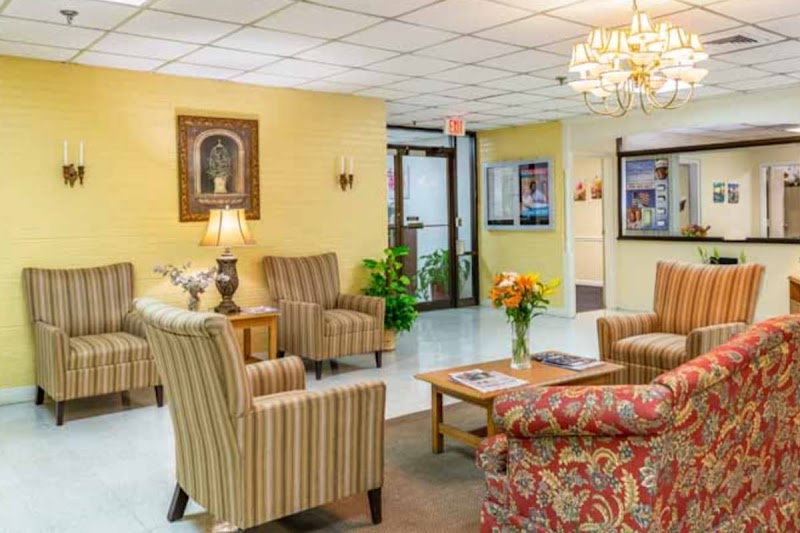
How is Harborview Thomasville Staffed?

CMS rates HARBORVIEW THOMASVILLE's staffing level at 2 out of 5 stars, which is below average compared to other nursing homes. Staff turnover is 42%, compared to the Georgia average of 46%. This relatively stable workforce can support continuity of care.

What Have Inspectors Found at Harborview Thomasville?

State health inspectors documented 27 deficiencies at HARBORVIEW THOMASVILLE during 2022 to 2025. These included: 5 Immediate Jeopardy (the most serious level, indicating potential for serious harm or death) and 22 with potential for harm. Immediate Jeopardy findings are rare and represent the most serious regulatory concerns. They require immediate corrective action.
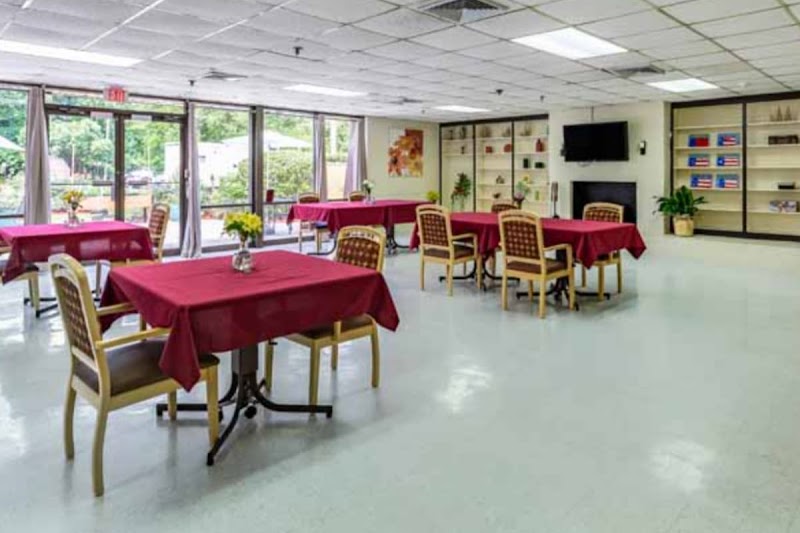
Who Owns and Operates Harborview Thomasville?

HARBORVIEW THOMASVILLE is owned by a for-profit company. For-profit facilities operate as businesses with obligations to shareholders or private owners. The facility is operated by HARBORVIEW HEALTH SYSTEMS, a chain that manages multiple nursing homes. With 68 certified beds and approximately 61 residents (about 90% occupancy), it is a smaller facility located in THOMASVILLE, Georgia.
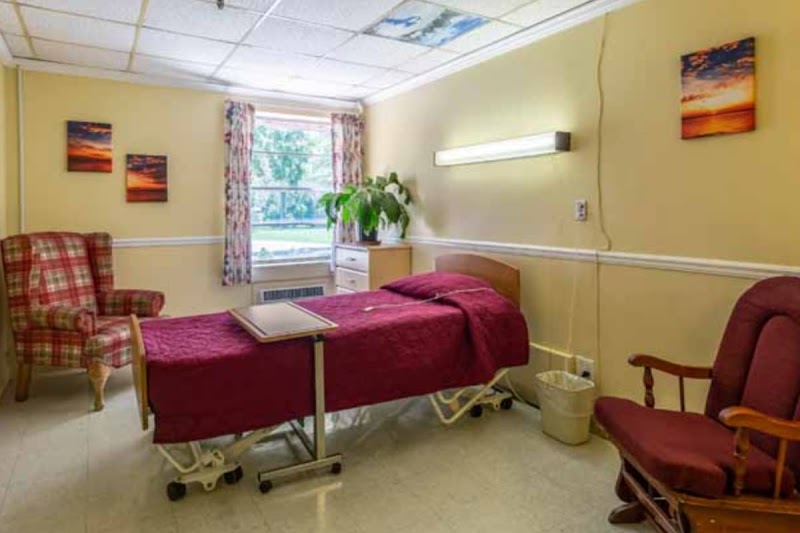
How Does Harborview Thomasville Compare to Other Georgia Nursing Homes?

Compared to the 100 nursing homes in Georgia, HARBORVIEW THOMASVILLE's overall rating (1 stars) is below the state average of 2.6, staff turnover (42%) is near the state average of 46%, and health inspection rating (1 stars) is much below the national benchmark.

What Should Families Ask When Visiting Harborview Thomasville?

Based on this facility's data, families visiting should ask: "What changes have been made since the serious inspection findings, and how are you preventing similar issues?" "Can you walk me through typical staffing levels on day, evening, and night shifts?" "Can I visit during a mealtime to observe dining assistance and food quality?" "How do you handle medical emergencies, and what is your hospital transfer rate?" These questions are particularly relevant given the facility's Immediate Jeopardy citations and the below-average staffing rating.

Is Harborview Thomasville Safe?

Based on CMS inspection data, HARBORVIEW THOMASVILLE has documented safety concerns. Inspectors have issued 5 Immediate Jeopardy citations (the most serious violation level indicating risk of serious injury or death). The facility has a 1-star overall rating and ranks #100 of 100 nursing homes in Georgia. Families considering this facility should ask detailed questions about what corrective actions have been taken since these incidents.

Do Nurses at Harborview Thomasville Stick Around?

HARBORVIEW THOMASVILLE has a staff turnover rate of 42%, which is about average for Georgia nursing homes (state average: 46%). Moderate turnover is common in nursing homes, but families should still ask about staff tenure and how the facility maintains care continuity when employees leave.

Was Harborview Thomasville Ever Fined?

HARBORVIEW THOMASVILLE has been fined $23,074 across 3 penalty actions. This is below the Georgia average of $33,310. While any fine indicates a compliance issue, fines under $50,000 are relatively common and typically reflect isolated problems that were subsequently corrected. Families should ask what specific issues led to these fines and confirm they've been resolved.

Is Harborview Thomasville on Any Federal Watch List?

HARBORVIEW THOMASVILLE is not on any federal watch list. The most significant is the Special Focus Facility (SFF) program, which identifies the bottom 1% of nursing homes nationally based on persistent, serious quality problems. Not being on this list means the facility has avoided the pattern of deficiencies that triggers enhanced federal oversight. This is a positive indicator, though families should still review the facility's inspection history directly.