THOMASVILLE CARE CENTER LLC
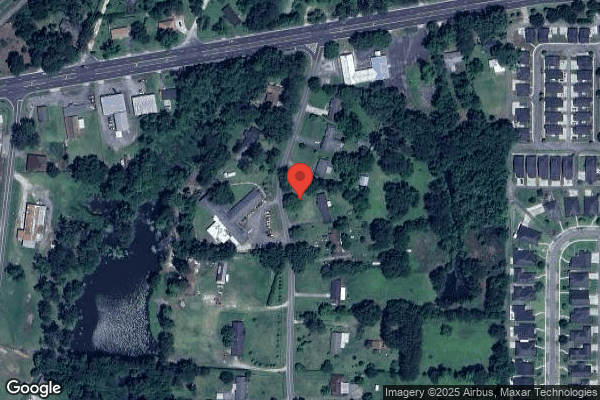

120 SKYLINE DRIVE, THOMASVILLE, GA 31757 (229) 225-1049
For profit - Limited Liability company 52 Beds PEACH HEALTH GROUP Data: November 2025
Trust Grade
28/100
#341 of 353 in GA
Last Inspection: August 2024

Within standard 12-15 month inspection cycle. Federal law requires annual inspections.

Overview

Thomasville Care Center LLC has received a Trust Grade of F, indicating significant concerns about the quality of care provided. With a state rank of #341 out of 353 Georgia nursing homes, they fall in the bottom half, and they are last in their county of Thomas County, ranking #4 out of 4. Although the facility is showing an improving trend, having reduced issues from 17 in 2024 to just 2 in 2025, the staffing rating is only 2 out of 5 stars, and staff turnover is average at 57%. They have been fined a total of $10,730, which is concerning as it is higher than 83% of Georgia facilities, suggesting ongoing compliance problems. There are serious incidents that raise red flags, including a failure to obtain necessary laboratory tests for a resident, which led to that resident needing a blood transfusion after being admitted to the hospital. Additionally, the facility lacked registered nurse coverage for several days, which is critical for ensuring proper care. There were also concerns about the nutritional value of food served to residents on pureed diets, as the proper serving sizes and recipes were not followed. While there are some improvements noted, these weaknesses present significant challenges for families considering this nursing home for their loved ones.

Trust Score
F
28/100
In Georgia
#341/353
Bottom 4%
Safety Record
Moderate
Needs review
Inspections
Getting Better
17 → 2 violations
Staff Stability
⚠ Watch
57% turnover. Above average. Higher turnover means staff may not know residents' routines.
Penalties
✓ Good
$10,730 in fines. Lower than most Georgia facilities. Relatively clean record.
Skilled Nurses
○ Average
Each resident gets 33 minutes of Registered Nurse (RN) attention daily — about average for Georgia. RNs are the most trained staff who monitor for health changes.
Violations
⚠ Watch
34 deficiencies on record. Higher than average. Multiple issues found across inspections.
★☆☆☆☆
1.0
Overall Rating
★★☆☆☆
2.0
Staff Levels
★★★☆☆
3.0
Care Quality
★☆☆☆☆
1.0
Inspection Score
Stable
2024: 17 issues
2025: 2 issues

The Good

  • Full Sprinkler Coverage · Fire safety systems throughout facility
  • No fines on record

Facility shows strength in fire safety.

The Bad

1-Star Overall Rating

Below Georgia average (2.6)

Significant quality concerns identified by CMS

Staff Turnover: 57%

11pts above Georgia avg (46%)

Frequent staff changes - ask about care continuity

Federal Fines: $10,730

Below median ($33,413)

Minor penalties assessed

Chain: PEACH HEALTH GROUP

Part of a multi-facility chain

Ask about local staffing decisions and management

Staff turnover is elevated (57%)

9 points above Georgia average of 48%

The Ugly 34 deficiencies on record

1 actual harm
Mar 2025 2 deficiencies
CONCERN (D) 📢 Someone Reported This

A family member, employee, or ombudsman was alarmed enough to file a formal complaint

Potential for Harm - no one hurt, but risky conditions existed

Deficiency F0806 (Tag F0806)

Could have caused harm · This affected 1 resident

Based on resident interviews, staff interviews, and record review, the facility failed to ensure two of 11 sampled residents (R) (R4 and R5) were not served identified food allergens. The deficient pr...

Read full inspector narrative →
Based on resident interviews, staff interviews, and record review, the facility failed to ensure two of 11 sampled residents (R) (R4 and R5) were not served identified food allergens. The deficient practice had the potential to place R4 and R5 at risk for medical complications, unmet needs, and a diminished quality of life. Findings include: 1. Review of R4's admission Record revealed diagnoses that included, but were not limited to, gastro-esophageal reflux disease and vitamin deficiency. The admission Record revealed shellfish products listed in the allergies section. Review of R4's quarterly Minimum Data Set (MDS) assessment, dated 3/6/2025, revealed Section C (Cognitive Patterns) documented a Brief Interview for Mental Status (BIMS) of 15 (indicating little to no cognitive impairment). Review of R4's Order Summary Report active orders as of 12/1/2024 revealed an allergy to shellfish products. Review of R4's Progress Notes revealed an entry dated 12/10/2024 that the resident did not have any reactions or issues during this shift. An entry dated 12/11/2024 noted that R4 had no shortness of breath or edema. Review of a Facility Incident Report Form dated 12/10/2024 revealed a Certified Nursing Assistant (CNA) reported R4 received seafood from the dietary department, and the resident took one bite and refused to eat more. The report documented that the physician, family member, and dietary manager were notified. The resident was assessed and showed no signs of allergic reaction throughout a shift. Review of the monthly menu revealed that fish products were served once a week. During an interview on 3/26/2025 at 3:58 pm, R4 revealed that she had been served fish and had asked the CNA what it was. R4 stated that the CNA told her that she didn't know what it was. R4 stated that she took one bite and realized it was a crab cake. She stated that she spit out the fish and rinsed her mouth with water. She stated she was allergic to fish, shellfish, clams, and oysters. During an interview on 3/31/2025 at 9:44 am, the Certified Dietary Manager (CDM) confirmed R4 had been served a crab cake on a meal tray. The CDM stated that the nurses and CNAs determined that the resident had received the wrong tray, and the resident was served an alternate meal after the discovery. During an interview on 3/31/2025 at 12:28 pm, Licensed Practical Nurse (LPN) II revealed that everyone had received an in-service to check the resident meal tickets. LPN II stated that CNAs, nurses, and dietary staff were responsible for checking food allergens. 2. Review of R5's admission Record revealed diagnoses that include, but are not limited to, adult failure to thrive. The admission Record revealed fish was listed in the allergies section. Review of R5's admission MDS assessment, dated 1/23/2025, revealed Section C (Cognitive Patterns) documented a BIMS of 13 (indicating little to no cognitive impairment). Review of R5's Order Summary report dated 2/1/2025 through 3/31/2025 revealed fish allergy was listed in the allergies section. During an interview on 3/24/2025 at 2:42 pm, R5 revealed that he received fish every time it was on the menu and he sent it back. During an interview on 3/31/2025 at 2:56 pm, CNA KK revealed that R5 told her he was allergic to fish, and she saw it on his meal card. She stated that R5 had been served a meal with fish and that she took the entire tray back to dietary and obtained another tray for the resident. During an interview on 3/31/2025 at 9:44 am, the CDM revealed that the Dietary [NAME] was to ensure that residents with food allergies were not served the food allergens and that the nursing staff should check the meal trays as well. During an interview on 3/31/2025 at 3:29 pm, the Director of Nursing (DON) revealed that the staff was responsible for checking meal trays for allergens and that residents should not be served foods they were allergic to.
CONCERN (D) 📢 Someone Reported This

A family member, employee, or ombudsman was alarmed enough to file a formal complaint

Potential for Harm - no one hurt, but risky conditions existed

Infection Control (Tag F0880)

Could have caused harm · This affected 1 resident

Based on observations, staff interviews, record review, and review of the facility policy titled, Enhanced Barrier Precautions, the facility failed to ensure staff followed infection control processes...

Read full inspector narrative →
Based on observations, staff interviews, record review, and review of the facility policy titled, Enhanced Barrier Precautions, the facility failed to ensure staff followed infection control processes during wound care for one of one residents (R) (R3) observed for wound care from a sample of 11 residents. The deficient practice increased the risk of staff spreading infection to other residents in the facility. Findings include: Review of the facility policy titled, Enhanced Barrier Precautions, dated 4/1/2024, revealed the Policy section included, It is the policy of this facility to implement enhanced barrier precautions for the prevention of transmission of multidrug-resistant organisms. 3. Implementation of Enhanced Barrier Precautions: 3a. Make gowns and gloves available immediately near or outside of the resident's room. Noted: face protection may also be needed if performing activity with risk of splash or spray (i.e., wound irrigation, tracheostomy care). 3b. PPE for enhanced barrier precautions is only necessary when performing high-contact care activities and my not need to bed donned prior to entering their resident's room. 4. High-contact resident care activities include: a. Dressing b Bathing c. Transferring d. Providing hygiene e. Changing linens f. changing briefs or assisting with toileting g. device care or use: central lines, urinary catheters, feeding tubes, tracheostomy/ventilator tubes h. Wound care: any skin opening requiring a dressing. Review of R3's Quarterly Minimum Data Set (MDS) assessment, dated 2/27/2025, revealed Section M (Skin Condition) documented the resident had one unstageable pressure ulcer. An observation on 3/24/2025 at 3:10 pm in R3's room revealed Certified Nursing Aide (CNA) AA providing perineal care to R3. Observation revealed CNA AA providing direct care to remove the dirty incontinent brief and was not wearing a protective barrier gown. An observation on 3/24/2025 at 3:31 pm revealed Licensed Practical Nurse (LPN) BB provided wound care to R3's right heel. Observations during the wound care procedure revealed that LPN BB did not wear a gown during the procedure. Further observations revealed LPN BB placed the wound care supplies on a bedside table without sanitizing the surface of the table or placing a barrier on the table. During an interview on 3/31/2025 at 10:46 am, CNA EE stated that the facility had not had any gowns available for the past month. She further stated that gowns should be worn when providing care to residents with urinary catheters, infections, bloody urine, and feces when the facility had gowns. During an interview on 3/31/2025 at 11:48 am, Registered Nurse (RN) HH/Infection Preventionist (IP) stated that staff should wear a barrier gown when providing care to residents who were on enhanced barrier precautions (EBP) and further stated she was unsure why staff were not wearing gowns. Observation on 3/31/2025 at 12:03 pm with RN HH IP revealed a supply of protective gowns in the supply room on 300 Hall.
Aug 2024 13 deficiencies 1 Harm
SERIOUS (G)

Actual Harm - a resident was hurt due to facility failures

Laboratory Services (Tag F0770)

A resident was harmed · This affected 1 resident

**NOTE- TERMS IN BRACKETS HAVE BEEN EDITED TO PROTECT CONFIDENTIALITY** Based on staff interviews and record review, the facility failed to ensure laboratory orders were obtained as ordered by the phy...

Read full inspector narrative →
**NOTE- TERMS IN BRACKETS HAVE BEEN EDITED TO PROTECT CONFIDENTIALITY** Based on staff interviews and record review, the facility failed to ensure laboratory orders were obtained as ordered by the physician for one of 13 residents (R) (R21). This failure resulted in actual harm on 9/19/2023 when R21 was admitted to the local hospital and required a blood transfusion after the facility failed to obtain ordered labs for March 2023 and June 2023 facility received lab results on September 19, 2023, indicating R21 had a hemoglobin level of 5.9 g/dl (grams per deciliter) normal range was 13.5 - 17.5 g/dl. Findings: Record review revealed R21 was admitted to the facility with the diagnosis of but not limited to, Idiopathic gout, cerebral infarction, aphasia, hemiplegia, Diabetes mellitus, chronic systolic congestive heart failure, hypertensive heart disease, hypercholesterolemia, angina pectoris, major depressive disorder, and epilepsy. Physician order dated 3/7/2023 indicated to collect labs CBC (complete blood count) w (with) diff Q (every) three months March/June/September/December. There was no indication the ordered labs were obtained for March 2023 and June 2023. Review of the laboratory results dated [DATE] revealed a CBC was obtained with a result of Hemoglobin (HGB) 5.9 g/dl. Review of R21 progress notes dated 9/19/2023 revealed resident has a critical lab with a hemoglobin of 5.9 (--) on call for Medical Director (MD) wanted to send to emergency room (ER) notified family member and called report to ER was transported by Emergency Medical Service (EMS). Interview on 8/10/2024 at 2:37 pm with Unit Manager revealed that R21 received the diagnosis of Iron Deficiency anemia after he was admitted to the hospital and received two units of blood for a hemoglobin of 5.9. The order to collect the CBC was a routine blood draw that the facility physician would order for all residents. The results for the CBC that was ordered for March 2023 and June 2023 were not completed, and results were unable to be located in the electronic Laboratory system or in the R21 medical record.
CONCERN (D)

Potential for Harm - no one hurt, but risky conditions existed

Assessment Accuracy (Tag F0641)

Could have caused harm · This affected 1 resident

**NOTE- TERMS IN BRACKETS HAVE BEEN EDITED TO PROTECT CONFIDENTIALITY** Based on staff interviews, record review, and review of the facility policies titled, Assessment Frequency/Timelines and Dischar...

Read full inspector narrative →
**NOTE- TERMS IN BRACKETS HAVE BEEN EDITED TO PROTECT CONFIDENTIALITY** Based on staff interviews, record review, and review of the facility policies titled, Assessment Frequency/Timelines and Discharge Planning Process, the facility failed to ensure a discharge Minimum Data Set (MDS) assessment was completed and transmitted within 14 days of discharge for one Resident (R) (R37). Review of the facility's undated policy titled, Assessment Frequency/Timelines revealed under Policy: The purpose of this policy is to provide a system to complete standardized assessments in a timely manner, according to the current RAI Manual. Under Policy Explanation and Compliance Guidelines: 6. A OBRA discharge assessment will be completed within 14 days of the discharge. Review of the undated facility policy titled Discharge Planning Process under Procedure: number 11. The evaluation of the resident's discharge needs and discharge plan will be completely documented on a timely basis in the clinical record. Record review for R37 revealed the resident was admitted to the facility on [DATE] and discharged on [DATE] with the diagnosis of lipoprotein deficiency, essential hypertension, low back pain, dementia, major depressive order, and altered mental status. Interview on [DATE] at 2:33 pm with the Unit Manager revealed R37 was admitted to the facility in February of 2024 and expired in March of 2024 after the resident's family took resident out of the facility against medical advice. During the interview it was also disclosed that there was not a discharge assessment that was completed after the resident discharged from the facility, nor was there any documentation of the residents stay in the facility's medical record system. Interview on [DATE] at 9:13 am with the Minimum Data Set (MDS) Coordinator revealed there was no information in the facility system in reference to R37. Continued interview also revealed that when a resident is discharged from the facility, the discharge assessment is implemented and should be completed and transmitted within 14 days. Further interview confirmed there was no indication that a discharge Assessment had been completed for R37.
CONCERN (D)

Potential for Harm - no one hurt, but risky conditions existed

Comprehensive Care Plan (Tag F0656)

Could have caused harm · This affected 1 resident

Based on observations, record review, staff interviews, and review of the facility's policy titled, Comprehensive Care Plans, the facility failed to follow the care plan for one of 26 sampled resident...

Read full inspector narrative →
Based on observations, record review, staff interviews, and review of the facility's policy titled, Comprehensive Care Plans, the facility failed to follow the care plan for one of 26 sampled residents (R) (R31). Specifically, the facility failed to follow the care plan for R31's hemodialysis. Findings include: Review of the facility's undated policy titled Comprehensive Care Plans under the section titled, Policy revealed, It is the policy of this facility to develop and implement a comprehensive person-centered care plan for each resident, consistent with resident rights, that includes measurable objective and timeframes to meet a resident 's medical ,nursing , and mental and psychosocial needs that are identified in the resident 's comprehensive assessment. Under the section titled Policy Explanation and Compliance Guidelines revealed, (2). The comprehensive care plan will be developed within 7 days after the completion of the comprehensive MDS assessment. (3) a. The services that are to be furnished to attain or maintain the resident 's highest practicable physical, mental, and psychosocial well-being. (8). Qualified staff responsible for carrying out interventions specified in the care plan will be notified of their roles and responsibilities for carrying out the interventions, initially and when changes are made. 1. Review of the Face Sheet for R31 revealed, diagnoses that included but not limited to type 2 diabetes mellitus with other diabetic kidney complication, end stage renal disease, and anemia in chronic kidney disease. Review of the Quarterly Minimum Data Set (MDS) assessment for R31 dated 6/14/2024 revealed, Section O (Special Treatments and Programs) documented that R31 received hemodialysis while a resident. Review of the Electronic Medical Record (EMR) for R31 revealed, a physician's order dated 9/5/2023 that revealed R31 received dialysis on Monday, Wednesday, and Fridays. Review of care plan dated 6/12/2024 for R31 revealed, under Focus indicated the resident needed hemodialysis related to end stage renal disease. The interventions included but not limited to, Assess AV (arteriovenous) shunt for bruit and thrill every shift. maintain communication with dialysis center, monitor/document/report to md (medical doctor) prn (as needed) any s/sx (signs and symptoms) of infection to access site: redness, swelling, warmth or drainage, monitor/document/report to md prn for s/sx of renal insufficiency: changes in level of consciousness, changes in skin turgor, oral mucosa, changes in heart and lung sounds. Review of the Administration Record dated 8/1/2024 - 8/31/2024 for R31' revealed, there were no orders or documentation for ongoing monitoring and treatment for R31's dialysis access site. Review of the R31's Progress Notes from 9/5/2023 through 8/9/2024 revealed, the lack of consistent documentation and proof of ongoing monitoring for R31's dialysis access site and communication with the dialysis center. During an interview on 8/10/2024 at 11:18 am with MDS, Licensed Practical Nurse (LPN) LL revealed, she was responsible for developing care plans for residents and that R31 had a care plan to address his hemodialysis needs and that staff should follow it. During an interview on 8/11/2024 at 8:30 am with Registered Nurse (RN) BB, a record review of the Dialysis Communication Sheets for R31 that was kept in book at the nurses station revealed, missing and incomplete dialysis communication sheets ranging from 9/11/2023-8/2/2024. RN BB confirmed some of the dialysis communication sheets were missing or incomplete nor were there documentation or proof of ongoing monitoring and treatment for R31's dialysis access site and communication with the dialysis center found in the progress notes. During an interview on 8/11/2024 at 9:07 am with LPN Unit Manager (UM), CC revealed, her expectations of nurses were to follow the care plans for residents. Cross Reference F698
CONCERN (D)

Potential for Harm - no one hurt, but risky conditions existed

Accident Prevention (Tag F0689)

Could have caused harm · This affected 1 resident

Based on observation, staff interviews, record review, and the facility policy titled, Oxygen Concentrator, the facility failed to ensure an environment free from potential accident hazard by failing ...

Read full inspector narrative →
Based on observation, staff interviews, record review, and the facility policy titled, Oxygen Concentrator, the facility failed to ensure an environment free from potential accident hazard by failing to ensure an oxygen cylinder was secure in a cylinder holder for one resident (R), R20 out of ten residents receiving oxygen therapy. Findings include: Record review of the facility policy titled Oxygen Concentrator stated 2. Oxygen is administered under orders of the attending physicians, except in the case of an emergency. 6. Oxygen warning signs must be placed on the door of the resident 's room where oxygen is in use. 8. Storage of oxygen shall be in accordance with the facility Oxygen Safety Policy. Observation on 8/9/2024 at 9:33 am pm revealed an unsecured oxygen cylinder sitting on the floor of R20's room in front of an adjoining bathroom door. If the bathroom door was open the oxygen cylinder tank could have easily been tipped over. At the time of the observation, R20 was observed lying in bed in his room and receiving oxygen via a nasal cannula. Record review of R20's medical record revealed the following diagnoses but not limited to acute hypoxemic respiratory failure. Record review of R20's Physician Order Form (POF) revealed an order dated 7/14/2024 which stated 02 via N/C (oxygen by nasal cannula) Simple Mask @ 2-4 LPM PRN (at 2-4 liter per minute as needed) for 02 Sat < than 90% or SOB (less than 90 percent short of breathe) every 2 hours as needed. Interview with Housekeeper Supervisor on 8/9/2024 at 9:33 am, she reported entering the resident room to clean the room and observing the oxygen cylinder tank on the floor.HK Supervisor reported not considering free standing oxygen as a risk. Interview at the time of observation on 8/9/2024 at 9:34 am with Licensed Practical Nurse (LPN), LPN II confirmed that the oxygen cylinder was sitting on the floor. She removed the cylinder from the room immediately. LPN II confirmed that this is considered a hazardous situation, because if tipped over (referring to the oxygen cylinder) it could result in an explosion injuring residents and others. She reported that oxygen cylinder was placed in the resident's room on Monday by the Hospice Nurse, due to expected inclement weather from an upcoming storm in the area. She reported entering the resident's room earlier this morning with the nightshift nurse at the change of shift. LPN II reported that she did not observe the cylinder in the room at that time. Interview on 8/9/2024 at 9:36 am, Certified Nursing Assistant (CNA) FF reported feeding the resident breakfast and providing Activities of Daily Living Care (ADL) to R20. She reported observing the O2 tank sitting in the room. She reported being unaware of the danger of not having the oxygen cylinder tank freely standing and not in a cylinder holder. Interview on 8/9/2024 at 2:01 pm with Registered Nurse (RN) BB who reported being unaware of the oxygen cylinder being left free standing by staff. She reported that her expectation is that all CNAs remove any unused oxygen cylinder out of the resident room. She further stated that any oxygen cylinder tank in resident room for resident use should be placed in a holder.
CONCERN (D)

Potential for Harm - no one hurt, but risky conditions existed

Incontinence Care (Tag F0690)

Could have caused harm · This affected 1 resident

**NOTE- TERMS IN BRACKETS HAVE BEEN EDITED TO PROTECT CONFIDENTIALITY** Based on observations, staff interviews, record review, the facility failed to have a Physician's order for one resident (R,) R2...

Read full inspector narrative →
**NOTE- TERMS IN BRACKETS HAVE BEEN EDITED TO PROTECT CONFIDENTIALITY** Based on observations, staff interviews, record review, the facility failed to have a Physician's order for one resident (R,) R20, of eight residents with indwelling catheters. In addition, the facility failed to ensure that R20's catheter tubing was not coiled and correctly position to prevent obstruction of urinary flow. Findings include: Record review of R20's medical record revealed the following diagnoses but not limited to retention of urine unspecified and chronic kidney disease. Record review revealed that resident has a history of urinary tract infections and sepsis. Record review did not reveal an active order for an indwelling catheter. Record review of Significant Change Minimum Data Set (MDS) dated [DATE] revealed a Brief Interview Mental Status Score (BIMS) that indicated severe cognitive impairment. Section H revealed an assessment for catheter use. Observation on 8/9/2024 at 8:10 am revealed R20 lying in bed with catheter attachment and tubing touching the floor. During a secondary observation on 8/9/2024 at 2:44 pm R20's tubing was coiled and the catheter bag was hanging on the arm rest of the chair obstructing urine flow. Observation on 8/10/2024 at 9:50 am revealed R20 sitting in a geriatric chair with catheter attachment. R20 was observed sitting on the tubing and tubing positioned on the arm rest of the chair (above waist). Continued review revealed no flow of urine in a downward position (obstruction of urine flow). Interview on 8/10/2024 at 9:11 am, with Registered Nurse (RN) DD revealed confirmed no order for the catheter. She reported that resident was re-admitted to the facility after a hospital stay with the catheter. Interview on 8/10/2024 at 9:15 am, Licensed Practical Nurse (LPN) II confirmed no active order for catheter. She reported that the catheter order per record review was put in place on 7/9/2024 and discontinue by error on 7/10/2024. She reported that the positioning of the tubing is important to prevent the risk for possibility of urinary tract infection and sepsis. 8/10/2024 at 9:59 am R20 was observed sitting in his Geri chair and tubing on the floor and cord underneath the Geri Chair, wheel of the chair on the cord. RN DD repositioned the tubing by removing the tubing. RN DD reported that the risk is that the tubing can dislodge from the resident. She reported that she would re-educate the assigned certified nursing assistant (CNA) about the correct positioning of the tubing. Surveyor returned to resident room at 8/10/2024 at 2:00 pm and 3:00 pm, each time the resident was observed with the catheter hanging on the arm rest of the chair and sitting on the tubing. The MDS Coordinator was summoned to the room by the surveyor to observe the deficient practice. The MDS Coordinator repositioned the catheter and repositioned the resident to prevent the resident from sitting on the tubing. Observation of R20 with RN BB and Unit Manager LPN CC on 8/11/2024 at 9:01 am, both staff observed R20 sitting in an upright position in his geriatric chair with the catheter tubing cord hanging on the arm rest of the chair. Continued observation revealed R20 sitting on the catheter tubing. LPN CC reported being upset about the positioning of the resident. LPN CC stated that the CNA was informed not to do this anymore. Both staff immediately began to reposition the resident. Interview with 8/11/2024 at 10:01 am, CNA FF confirmed receiving inservice about the positioning of the catheter and the tubing. However, she reported being unaware that hanging the catheter tubing on the arm rest of the chair could obstruct urine flow. She reported failing to observe R20 sitting on the catheter tubing. Interview on 8/11/2024 at 10:03 am, RN BB revealed that her expectation is for the licensed nurse to review the hospital record at the time of the resident's admission and contact the physician if there is not order for a catheter. She reported being unaware of R20 not having an order for a catheter.
CONCERN (D)

Potential for Harm - no one hurt, but risky conditions existed

Respiratory Care (Tag F0695)

Could have caused harm · This affected 1 resident

**NOTE- TERMS IN BRACKETS HAVE BEEN EDITED TO PROTECT CONFIDENTIALITY** Based on observations, staff and resident interviews, record review, and review of the facility policy titled, Oxygen Concentrat...

Read full inspector narrative →
**NOTE- TERMS IN BRACKETS HAVE BEEN EDITED TO PROTECT CONFIDENTIALITY** Based on observations, staff and resident interviews, record review, and review of the facility policy titled, Oxygen Concentrator, the facility failed to ensure oxygen (O2) was administered in accordance with the physician order for one of eight residents (R) R20 receiving oxygen therapy. In addition, the facility failed to ensure that oxygen signage was placed on the resident 's door. The deficient practice had the potential for respiratory difficulty for R20. Findings include: Record review of the facility policy titled Oxygen Concentrator stated 2. Oxygen is administered under orders of the attending physicians, except in the case of an emergency. 4. Use of the Concentrator (a). The nurse shall verify physician 's orders for the rate of flow and route of administration of oxygen (mask, nasal cannula). 6. Oxygen warning signs must be placed on the door of the resident 's room where oxygen is in use. 8. Storage of oxygen shall be in accordance with the facility Oxygen Safety Policy. Record review of R20's medical record revealed the following diagnoses but not limited to acute respiratory hypoxemic. The Significant Change Minimum Data Set (MDS) dated [DATE] assessed a Brief Interview Mental Status Score of unable to tract. A score of 0 out of 15 indicates severe cognitive impairment. Section O assessed oxygen therapy. Review of orders listed an active order dated 7/14/2024 for O2 via for N/C/Simple Mask @ 2-4 LPM PRN for O2 Sat < than 90% or SOB every 2 hours as needed (oxygen by nasal cannula with simple mask at two to four liters per minute as needed for O2-oxygen saturation less than 90 % every two hours or shortness of breath). Observation on 8/9/2024 at 8:10 am revealed R20 lying in bed receiving oxygen by oxygen concentrator and via nasal cannula at 1.5 LPM (liters per minute). Resident stated that he is not feeling well. No signage on door indicating oxygen usage. Observation on 8/9/2024 12:48 pm, revealed R20 lying in bed and being fed by Certified Nursing Assistant (CNA) LL. Surveyor observed R20 receiving oxygen by via nasal cannula at 1.5 at LPM while being assisted with his meal. Interview at the time of observation on 8/9/2024 at 12:51 pm with Licensed Practical Nurse (LPN), LPN II. LPN II reviewed record with surveyor and confirmed that O2 should be set at 2-4 LPM. She reported that she was prn nurse and was not aware until brought to her attention by the surveyor. She adjusted the O2 Sat Observation on 8/10/2024 at 8:19 am and 10:36 am, revealed R20 lying in bed receiving oxygen by oxygen concentrator and via nasal cannula at 2 LPM. No signage on door indicating oxygen usage. During an interview at the time of observation on 8/10/2024 at 10:36 am with Register Nurse (RN), RN DD no signage on door to indicate oxygen usage was confirmed. She reported being unaware of this deficient practice until brought to her attention by the surveyor. She reported that she would now instruct the Maintenance Director to put a sign on the door. RN DD reported that the importance and purpose of the oxygen sign is to prevent risk of visitors smoking in the room while the resident is using oxygen.
CONCERN (E)

Potential for Harm - no one hurt, but risky conditions existed

Resident Rights (Tag F0550)

Could have caused harm · This affected multiple residents

**NOTE- TERMS IN BRACKETS HAVE BEEN EDITED TO PROTECT CONFIDENTIALITY** Based on observations, staff interviews, record review, and review of the facility's policy titled, Promoting/Maintaining Reside...

Read full inspector narrative →
**NOTE- TERMS IN BRACKETS HAVE BEEN EDITED TO PROTECT CONFIDENTIALITY** Based on observations, staff interviews, record review, and review of the facility's policy titled, Promoting/Maintaining Resident Dignity, the facility failed to promote, maintain, and protect residents' dignity for two of three residents (R11, R20) with an indwelling urinary catheter. Findings include: Review of the facility's undated policy titled, Promoting/Maintaining Resident Dignity under the section titled Policy revealed, It is the practice of this facility to protect and promote residents rights and treat each resident with respect and dignity as well as care for each resident in a manner and in an environment, that maintains or enhances resident's quality of life by recognizing each resident's individuality. 1. Review of R11's Face Sheet revealed diagnoses that included but not limited to, cerebral infarction, hemiplegia and hemiparesis following cerebral infarction affecting left non-dominant, retention of urine, disorders of urinary system, and obstructive and reflux uropathy. Review of R11's Quarterly Minimum Data Set (MDS) dated [DATE] revealed Section C-Cognition: Brief Interview of Mental Status (BIMS) score of 11 indicating moderate cognitive impairment; Section GG-Functional Status: resident requires total assistance with all Activities of Daily Living (ADL's); Section H-Bowel and Bladder: resident had indwelling urinary catheter and was always incontinent of bowel; Section M-Skin: resident is at risk for pressure ulcers and had an diabetic foot ulcer. Review of R11's Physician's orders included but not limited to an order dated 8/10/2024 for [Name of catheter] catheter care every shift every eight hours and an order dated 1/19/2024 to change [Name of catheter] cath #20 French on the 19th of each month in the morning starting on the 19th and ending on the 19th every month. Review of R11's Care Plans revealed, a plan in place dated 6/14/2024 that indicated [R1 Name] has a urinary catheter and is at risk for urinary tract infections and injury. Urinary catheter related to obstructive uropathy with urine retention. An observation of R11 on 8/9/2024 at 8:20 am revealed, the resident had an indwelling urinary catheter attached to a urinary catheter bag with yellow urine noted inside. The catheter bag was not covered and was visible from the door. An observation of R11 on 8/9/2024 at 9:26 am revealed the resident had an indwelling urinary catheter attached to a urinary catheter bag with yellow urine noted inside. The catheter bag was not covered and was visible from the door. An observation and interview on 8/10/2024 at 8:38 am with Registered Nurse (RN) BB in R11's room revealed, the resident had an indwelling urinary catheter attached to a urinary catheter bag with yellow urine noted inside. The catheter bag was not covered and was visible from the door. RN BB immediately pulled the dignity bag over the catheter bag down and confirmed the catheter bag should have been covered because it was a dignity issue. An interview on 8/10/2024 at 10:57 am with Licensed Practical Nurse, Unit Manager CC stated her expectations of staff was to ensure catheter bags were covered and not visible at all times. She stated the Certified Nursing Assistants should be doing this when rounding and as needed. 2. Record review of R20's medical record revealed the following diagnoses but not limited to chronic kidney disease Stage 3, and diabetes. Record review revealed a physician order dated 8/10/2024 for [Name of catheter] catheter care every shift every 8 hours. There was no active order for an indwelling catheter. The Significant Change MDS date 7/24/2024 assessed a BIMS score of unable to detect (which indicates severe cognition impairments) and an assessment for indwelling catheter use. Record review of the care plan created on 7/12/2024 stated that R20 has a urinary catheter and is at risk for urinary tract infections. Urinary catheter related to neurogenic bladder with urine retention and open wounds. The following intervention listed stated: Provide urinary catheter care per facility practice. An observation on 8/9/2024 revealed R20 lying in bed with the room door open. Continue observation revealed an indwelling catheter attached to a urinary catheter bag with yellow color urine noted inside. The catheter bag was not covered and was visible from the door. An observation on 8/9/2024 at 2:44 pm revealed R20 sitting upright in a Geriatric chair in his room with an indwelling catheter attached to a urinary catheter bag with yellow color urine noted inside. The catheter bag was not covered and was visible from the door. An observation on 8/10/2024 at 9:50 am revealed that R20 had an indwelling catheter attached to a urinary catheter bag with yellow color urine noted inside. R20 was observed lying in bed in his room with the room door open. The catheter bag was not covered. Interview on 8/10/2024 at 9:59 am, RN DD confirmed that the catheter bag was not covered with a dignity bag. She confirmed that this was a dignity issue for the resident. Interview on 8/10/2024 at 9:59 am, RN DD confirmed that the catheter bag was not covered with a dignity bag. She confirmed that this was a dignity issue for the resident.
CONCERN (E)

Potential for Harm - no one hurt, but risky conditions existed

Deficiency F0578 (Tag F0578)

Could have caused harm · This affected multiple residents

**NOTE- TERMS IN BRACKETS HAVE BEEN EDITED TO PROTECT CONFIDENTIALITY** Based on record review and staff interviews, the facility failed to obtain a concurring Physician's signature on a Do Not Resusc...

Read full inspector narrative →
**NOTE- TERMS IN BRACKETS HAVE BEEN EDITED TO PROTECT CONFIDENTIALITY** Based on record review and staff interviews, the facility failed to obtain a concurring Physician's signature on a Do Not Resuscitate (DNR) order for one resident (R) (R29) of two residents reviewed for DNR. Findings include: Record review of R29's medical record revealed the following diagnoses but not limited to Alzheimer 's Disease, paranoid schizophrenia, and hyperlipidemia. Record review revealed that R29's original admission date to the facility was 5/4/2022 and re-admission date was 11/22/2023. R29's face sheet and medical record revealed that resident did not have a Power of Attorney (POA) or Legal Guardian listed. The Quarterly Minimum Data Set (MDS) dated [DATE] revealed a Brief Interview Mental Status Score (BIMS) of four which indicated severe cognitive impairment. The most recent Annual MDS assessment dated [DATE] indicated a BIMS score of two which also indicated severe cognitive impairment. Review of copy of Do Not Resuscitate Order (DNR) indicated the signature of an Authorized Person was a guardian over R29. This document was signed on 5/4/2022 by the Authorized Person and signed by one Physician on 5/7/2022. Further review of the medical record did not indicate any documentation that anyone served as Guardian, Power of Attorney (POA), or any other type of healthcare agent for R29. Interview on 8/10/2024 at 10:53 am with Family Member A of R29's, revealed that neither herself nor any other member of the family of R29 had legal guardianship or had been appointed as POA. She stated R29 's preference would be to remain a DNR. Interview on 8/10/2024 at 11:01 am with Unit Manager Registered Nurse (RN) BB and Unit Manager Licensed Practical Nurse (LPN) CC who confirmed that there was no evidence that R29 had a healthcare agent and R29's code status was changed to Full Code. Surveyor was unable to reach Family Member B of R29 to determine her POA or Guardianship status for R29.
CONCERN (E)

Potential for Harm - no one hurt, but risky conditions existed

Safe Environment (Tag F0584)

Could have caused harm · This affected multiple residents

**NOTE- TERMS IN BRACKETS HAVE BEEN EDITED TO PROTECT CONFIDENTIALITY** Based on observations and staff interviews, the facility failed to ensure a consistent home-like environment free from missing f...

Read full inspector narrative →
**NOTE- TERMS IN BRACKETS HAVE BEEN EDITED TO PROTECT CONFIDENTIALITY** Based on observations and staff interviews, the facility failed to ensure a consistent home-like environment free from missing floor tiles, peeling paint on walls, rust on resident equipment (raise toilet seats), and an odor-free environment in which odors were consistently present where residents resided on one of two halls (room [ROOM NUMBER], room [ROOM NUMBER], room [ROOM NUMBER], and shower room on 300 hall) . Findings include: 1.Observation of room [ROOM NUMBER]'s bathroom on 8/9/2024 at 8:26 am and 2:00 pm and 8/10/2024 at 8:13 am and 2:00 pm revealed the frame of a raised toilet seat coated with dark brown substances. 2. Observation of room [ROOM NUMBER]'s bathroom on 8/9/2024 at 8:27 am and 8/10/2024 at 8:14 am revealed the frame of a raised toilet seat coated with dark brown substances. Continued observation revealed missing shower fixture (missing shower head) protruding from the wall with ragged edges, stained tiles covered with dark sticky brown substances on the tile around the commode. A strong urine odor was observed in bathroom and the smell overflowed into the resident room. 3. Observation of room [ROOM NUMBER] on 8/9/2024 at 8:26 am and 8/10/2024 at 8:12 am revealed peeling paint on the wall above Bed A. 4. Observation of room [ROOM NUMBER] on 8/10/2024 at 8:14 am revealed dark grayish and brown color substances on the ceiling tile above Bed A. 5. Observation of room [ROOM NUMBER]'s bathroom on 8/9/2024 at 8:33 am and 3:10 pm, 8/10/2024 at 8:16 am and 2:11 pm, and 8/11/2024 at 9:37 am revealed a strong urine odor, stained tiles, missing paint on the ceiling and walls, and light fixture cover coated with dark yellowish and dark grayish colors. 6. Observation of one of two shower rooms on 8/9/2024 at 9:30 am, 8/10/2024 at 11:00 am, and 8/11/2024 at 10:23 am revealed missing tiles on the floor by the shower bed revealing an overlayer of dark brownish substances on the floor. There was a shower chair with a hard white substance coating, buildup of dirt, and brown substances coating the frame and the back rest of the shower chair. The environmental tour began on 8/11/2024 at 9:36 am on the 300 hall with the Registered Nurse Supervisor (RN) BB, the Maintenance Director, and Housekeeper Supervisor. All staff acknowledged the odor and identified odor as urine. RN Supervisor BB reported that the urine smell in the bathroom and resident rooms were offensive to residents and visitors. She stated that no residents should have to smell a strong urine odor. The Maintenance Supervisor and Housekeeper Supervisor confirmed that odor was embedded in the bathroom tiles and the tiles should be replaced. The Maintenance Supervisor reported any needed repairs should be completed on a maintenance repair form and the forms are located at the nurse stations. He stated that he was unaware of the needed repairs with the bathroom tiles. RN Supervisor BB confirmed the bath shower chair was covered with dirt and had calcium buildup. She stated that the chair should be replaced. All staff confirmed the brown substances on the raised toilet seat frame and shower chair as rust. Maintenance Director reported that he would try to remove the rust off of the resident equipment.
CONCERN (E)

Potential for Harm - no one hurt, but risky conditions existed

Deficiency F0698 (Tag F0698)

Could have caused harm · This affected multiple residents

**NOTE- TERMS IN BRACKETS HAVE BEEN EDITED TO PROTECT CONFIDENTIALITY** Based on observations, record review, staff interviews, and review of the facility's policy titled, Hemodialysis, the facility f...

Read full inspector narrative →
**NOTE- TERMS IN BRACKETS HAVE BEEN EDITED TO PROTECT CONFIDENTIALITY** Based on observations, record review, staff interviews, and review of the facility's policy titled, Hemodialysis, the facility failed to provide evidence of ongoing monitoring and care of a dialysis access site and failed to ensure ongoing communication and collaboration with the dialysis center for one of one resident (R) (R31) reviewed for dialysis services. This deficient practice had the potential to place R31 at risk for medical complications, unmet needs, and a diminished quality of life. Findings include: A review of the facility's policy titled Hemodialysis, dated 2/12/2022, under the section titled Policy revealed, This facility will provide the necessary care and treatment, consistent with professional standards of practice, physician orders, the comprehensive person-centered care plan, and the resident's goals and preferences, to meet the special medical, nursing, mental and psychosocial needs of residents receiving hemodialysis. Under the section titled Purpose revealed, The facility will assure that each resident receives care and services for the provision of hemodialysis consistent with professional standards of practice. This will include: The ongoing assessment of the resident's condition and monitoring for complications before and after dialysis treatments received at a certified dialysis facility Ongoing communication and collaboration with the dialysis facility regarding dialysis care and services. Under the section titled Compliance Guidelines revealed, number 8. The nurse will monitor and document the status of the resident's access site(s) upon return from the dialysis treatment to observe for bleeding or other complications. Review of R31's Face Sheet revealed diagnoses that included but not limited to type two diabetes mellitus with other diabetic kidney complication, end stage renal disease, and anemia in chronic kidney disease. Review of R31's quarterly Minimum Data Set (MDS) dated [DATE] revealed Section O (Special Treatments and Programs) documented that R31 received hemodialysis while a resident. Review of R31's Electronic Medical Record (EMR) revealed a physician's order dated 9/5/2023 that read, Resident will have dialysis with [Name of dialysis facility] M/W/F (Monday, Wednesday, and Friday). Further review of physician orders revealed there were no orders for ongoing monitoring and care for R31's dialysis access site. Review of R31's Administration Record dated 8/1/2024 - 8/31/2024 revealed, there were no orders for ongoing monitoring and care for R31's dialysis access site. Review of the R31's Progress Notes from 9/5/2023 through 8/9/2024 revealed, the lack of consistent documentation and proof of ongoing monitoring for R31's dialysis access site in addition to not communicating and collaborating with the dialysis center on the resident's scheduled dialysis days. During an interview on 8/10/2024 at 8:31 am with Registered Nurse (RN) DD and Licensed Practical Nurse (LPN) EE R31's medical records were reviewed, which revealed there were no physician orders that addressed the monitoring and care for the resident's dialysis access site. RN DD revealed that she and the charge nurses were responsible for monitoring the dialysis site each shift ensuring that it remained dry and intact. LPN EE revealed the dialysis staff access R31's dialysis port, and should the facility nurses need to do anything with it they would call the doctor and get an order. During an interview on 8/10/2024 at 8:36 am with RN BB, R31's medical records were reviewed. RN BB verified there were no orders that addressed nursing care and monitoring for the resident's dialysis port. RN BB stated that it was the responsibility of the nurses at the facility to ensure the dressing at the dialysis access site was dry and intact every shift and as needed. Observation on 8/10/2024 at 8:40 am with RN BB of R31 revealed the resident had a dialysis port that was intact to the right chest wall with a dry dressing covering it. RN BB confirmed there should have been dialysis orders written to address monitoring and care for the dialysis port. Interview on 8/10/2024 at 10:58 am with LPN Unit Manager (UM), CC revealed that her expectations of nurses were to make sure orders were in place for dressing changes and to monitor dialysis access sites for residents on dialysis. During an interview on 8/11/2024 at 8:30 am with RN BB, a record review of the Dialysis Communication Sheets for R31 that was kept in the book at the nurses' station revealed missing and incomplete dialysis communication sheets ranging from 9/11/2023-8/2/2024. RN BB confirmed some of the dialysis communication sheets were missing and/or were not completed. She revealed that the facility nurses were to complete the pre-dialysis information and send the form with R31 to dialysis and that the dialysis staff were to complete the post dialysis information and send it back with the resident, but they had not been sending this information back. She reported that most of the time, the facility nurse would call the dialysis center to get a report on the resident. When questioned why the post dialysis information reported from the dialysis center was not documented, she stated she was not sure why. She reported receiving training on dialysis care and understands the importance of communication and collaboration between the facility and dialysis staff. Interview on 8/11/2024 at 9:07 am with LPN Unit Manager (UM), CC stated her expectations of nurses were to complete the dialysis communications sheet and to make sure that R31 returned with the dialysis communication sheet with the post dialysis information completed. She revealed if the post-dialysis sheet was not returned or completed, they were to call and get a report and document this on the communication sheet and/or nurse notes.
CONCERN (F)

Potential for Harm - no one hurt, but risky conditions existed

Deficiency F0727 (Tag F0727)

Could have caused harm · This affected most or all residents

Based on record review, staff interviews, and review of the Payroll-Based Journal (PBJ) Staffing Data Report [NAME] Report 1705D Fiscal Year (FY) Quarter 2 2024 (January 1 - March 31), the facility fa...

Read full inspector narrative →
Based on record review, staff interviews, and review of the Payroll-Based Journal (PBJ) Staffing Data Report [NAME] Report 1705D Fiscal Year (FY) Quarter 2 2024 (January 1 - March 31), the facility failed to provide Registered Nurse (RN) coverage for 8 hours within a 24-hour period on 1/7/2024, 1/21/2024, 2/4/2024, 2/18/2024, 3/3/2024, 3/17/2024 and 3/31/2024. The facility census was 40 residents. Findings include: Review of the most recent PBJ Staffing Data Report CASPER Report 1705D FY Quarter 2 2024 (January 1 - March 31) revealed the facility triggered for No RN Hours which indicated four or more days within the Quarter with no RN hours for the following dates: 1/7/2024, 1/21/2024, 2/4/2024, 2/18/2024, 3/3/2024, 3/17/2024 and 3/31/2024. Review of the form titled, [Facility Name] Daily Nursing Sheet, dated 1/7/2024 revealed, there was not a registered nurse scheduled on the 1st, 2nd, or 3rd shifts. Further review revealed on 1/21/2024, 2/4/2024, 2/18/2024, 3/3/2024, 3/17/2024, and 3/31/2024 there was RN coverage eight hours on 1st shift. Review of the form titled, Daily Staffing Schedule dated 1/7/2024, 1/21/2024, 2/4/2024, 2/18/2024, 3/3/2024, 3/17/2024 and 3/31/2024 revealed, RN HH was scheduled to work on 1st shift. Review of the payroll Timecard Report for RN HH revealed, the total number of hours worked on 1/7/2024 (7.67 hours),1/21/2024 (8.22 hours), 2/4/2024 (7.55 hours), 2/18/2024 (7.47 hours), 3/3/2024 (7.80 hours), 3/17/2024 (7.43 hours) and 3/31/2024 (7.68 hours). Interview on 8/10/2024 at 10:05 am with the Business Office Manager (BOM) revealed, she was responsible for human resources and payroll. She confirmed there was no RN coverage for eight full hours for the following dates (1/7/2024, 1/21/2024, 2/4/2024, 2/18/2024, 3/3/2024, 3/17/2024 and 3/31/2024) indicated on the PBJ report. The BOM revealed they had RN coverage scheduled on those days however the time clock system automatically deducted 30 minutes for lunch. She stated they were aware that RN HH who worked on those dates did not work the full eight hours and that this had been addressed with the Administrator. She reported they try to staff at least two RNs daily to meet the requirements. Interview on 8/10/2024 at 2:00 pm with the Administrator revealed, she was aware of the discrepancy with the RN hours indicated on the PBJ report. She revealed that she knew it would potentially trigger the report. She revealed the facility staff are required to take 30 minute lunch breaks and two 15 minute breaks during an eight hour period. She revealed she had discussed this with corporate so that they could produce a resolution. She reported she was aware that there should be RN coverage a full eight hours within a 24 hour period. Interview on 8/10/2024 at 3:22 pm with Licensed Practical Nurse (LPN) Unit Manager revealed, that she was responsible for staffing RN coverage for eight hours per day. She reported that the new time clock system automatically clocks them out regardless of whether the nurse took the lunch or not. LPN Unit Manager stated her expectations of the RNs was to work at least 8.5 hours to ensure a full eight hours daily as required.
CONCERN (F)

Potential for Harm - no one hurt, but risky conditions existed

Deficiency F0804 (Tag F0804)

Could have caused harm · This affected most or all residents

Based on observation, staff interviews, and review of facility documents, the facility failed to ensure recipe for puree carrots and chicken were followed to preserve nutritional value of food for res...

Read full inspector narrative →
Based on observation, staff interviews, and review of facility documents, the facility failed to ensure recipe for puree carrots and chicken were followed to preserve nutritional value of food for residents receiving a pureed diet. The facility also failed to ensure residents consuming a puree diet were served the recommended three ounces (oz) of protein during meal service. Findings: Review of the untiled document submitted by the Dietary Manager with scoop number, diameter capacity (in ounces) and color (color of scoop handle) revealed the number 16 scoop that was used to measure the puree foods had the following: Number 16 -Diameter 2 1/4 inches/5.72 cm (Centimeters), Capacity - 2 3/4 0z. The number 16 scoop did not provide the needed three ounces of protein per resident. Review of the document titled, Quantified Recipe (Recipe #220) for baked chicken revealed the following: portion size: number 8 scoop, serving utensil #8 scoop, baked chicken 30z SCR. 1. Prepare according to ground recipe. Stock Chicken/soup base for thinning. Recipe #249 Seasoned carrots, portion size #16 scoop (1/2 cup), serving utensil #16 scoop.1. Prepare according to regular recipe. There was no indication to add any type of liquids during the puree process Puree observation on 8/10/2024 at 10:45 am revealed [NAME] AA poured measured carrots into food processor and began blending food. During blending staff member went over to the vegetable sink next to blending station and retrieved tap water from the sink faucet and proceeded to add to the carrots during the mixing process. This step was repeated one more time until desired consistency was met. After carrots were completed [NAME] AA proceeded to prepare the diced chicken for the puree residents in the same manner of adding water to the mixture until desired consistency was met. Interview on 8/10/2024 at 11:00 am with [NAME] AA revealed that the facility currently had three residents that were on puree diets. It was reported that the recipe for pureeing foods is in the menu book that is kept on the shelf above the milk cooler. During the interview staff member was asked how many ounces (oz) of protein should each resident on a puree diet receive and staff member was unable to verbalize the amount needed for each resident to receive to ensure the appropriate nutritional value was met. [NAME] AA stated, The puree residents have a divided plate and I just make sure that one of the squares is full when I scoop the food into the plate, and sometimes I will put a little more in it. Further interview also revealed that [NAME] AA stated that she uses the number 16 scoop to measure the portions before pureeing the food but was unable to verbalize what the measurement of the scoop used was. Interview on 8/10/2024 at 11:30 am with the Dietary Manager revealed that there are recipes that are to be followed that are located in the kitchen, but the staff that is currently working in the kitchen have been there for a while and are aware of which scoop to use for measuring foods to ensure nutritional value is met. During interview, the Dietary Manager was asked how the staff know which scoop to use and she stated that the scoops are color coded and there use to be a guide posted on the wall in the kitchen that indicates the amount in ounces of each scoop by the color of the handle. Further interview also revealed that sometimes during the puree process the cooks will add water or milk to ensure the right consistency is obtained. Dietary Manager confirmed the scoop used by [NAME] AA was not the correct scoop to obtain the recommended three ounces of vegetables and protein for residents consuming a puree diet.
CONCERN (F)

Potential for Harm - no one hurt, but risky conditions existed

Food Safety (Tag F0812)

Could have caused harm · This affected most or all residents

Based on observations, staff interviews, and review of the facility policy titled, Used By Dating Guideline, the facility failed to ensure food items were properly labeled and dated, failed to discard...

Read full inspector narrative →
Based on observations, staff interviews, and review of the facility policy titled, Used By Dating Guideline, the facility failed to ensure food items were properly labeled and dated, failed to discard expired foods by expiration date, and failed to ensure ice machine was kept clean and free of lime and calcium buildup. The deficient practice had the potential to affect 36 of 40 residents receiving an oral diet. Findings: Review of the facility policy titled, Used By Dating Guideline Dated 5/1/2011 revealed under Section 1: foods that have been mixed with other ingredients, prepared in any way, or portioned out include, but are not limited to juices, thickened beverages, canned fruit, unused portions, prepared salads, cut fruits/vegetables, roasted/sliced meats use by date-three days after preparation. Observation on 8/9/2024 at 7:50 am revealed in the reach in cooler located to the right of the main kitchen a small steamtable pan of tuna salad that was unlabeled and dated, a bag of cooked macaroni noodles that were not label or dated, 16 oz (ounce) bottle of opened Zesty Italian dressing that was not labeled or dated, 22 oz bottle of opened strawberry syrup not labeled or dated. Observation on 8/9/2024 at 7:51 am revealed on the steel table at the back of the main kitchen in a large gray plastic container was an opened half bag of brown sugar that was not labeled or dated, a bag of unknown substance that was wrapped in plastic wrap unlabeled and undated, a opened half bag of fried onions with a use by date of 8/2/2024. Observation on 8/9/2024 at 7:53 am revealed in the reach in cooler located to the left of the kitchen by the steam table a large chef salad unlabeled with no expiration date, chef salad in a small white bowl unlabeled and not dated, medium size steamtable pan of macaroni salad with the expiration date of 8/5/2024, half a bag of shredded white cheese not labeled or dated, half a bag of opened cheese cubes unlabeled and undated. Observation on 8/9/2024 at 11:10 am revealed the facility ice machine located in the staff break area there were white chalky streaks noted streaming down the back, front and side of the machine, there was also a thick layer of white chalky substance that was noted in right upper crevices on the front side of the machine. Observation on the inside of the ice machine also revealed a thin layer of black substance on the plastic white panel on the inside of the machine. Interview on 8/9/2024 at 11:15 am with the Administrator revealed the ice machine should be cleaned by the dietary staff daily and maintenance cleans the filter and the motor parts quarterly. A further interview also revealed that the expectation is that the machine is cleaned at least monthly. Interview on 8/9/2024 at 11:25 am with Dietary Manager revealed that she will wipe down the ice machine daily but has been on vacation for the last week. Maintenance is responsible for cleaning the inside of the machine to include the white plastic panel on the inside of the machine. Further interview also revealed that all foods should be labeled and dated when put in the cooler and any leftover food should be discarded after three days. The Dietary Manager also confirmed all unlabeled and expired foods as well as the ice machine that were observed during the initial tour. Interview on 8/9/2024 at 11:57 am with the Maintenance Director revealed that he was responsible for cleaning the ice machine quarterly and the last time it was cleaned was in March 2023. A further interview revealed that the last quarter's cleaning was not completed, and the machine is currently being cleaned. During the interview it was also revealed that when the machine is cleaned the ice bin is emptied, the filters are cleaned, and the outside of the machine is de limed.
Apr 2024 4 deficiencies
CONCERN (D) 📢 Someone Reported This

A family member, employee, or ombudsman was alarmed enough to file a formal complaint

Potential for Harm - no one hurt, but risky conditions existed

Deficiency F0605 (Tag F0605)

Could have caused harm · This affected 1 resident

Based on record review and staff interview the facility failed to ensure that one of 10 sampled residents (R1) was free from chemical restraints, related to not using other interventions to manage beh...

Read full inspector narrative →
Based on record review and staff interview the facility failed to ensure that one of 10 sampled residents (R1) was free from chemical restraints, related to not using other interventions to manage behaviors prior to using Haloperidol. Findings include Review of the medical record revealed R1 was admitted to the facility with the following diagnoses that include but not limited to chronic obstructive pulmonary disease, hypertension, gastro-esophageal reflux disease, deaf nonspeaking, mood disorder, post-traumatic stress disorder, type 2 diabetes mellitus, and anxiety disorder. Review of the Electronic Medication Administration Record (MAR) for February 2024 R1 was administered a one-time dose of Haldol injection solution 5 MG/ML on 2/8/2024 and a one-time dose of Haloperidol Lactate Injection Solution 1 mg intramuscularly one time only on 2/13/2024. Haloperidol Lactate Injection Solution inject 5 mg intramuscularly every 6 hours as needed for agitation on 2/20/2024 and Haloperidol Lactate Injection Solution inject 5 mg intramuscularly every 6 hours as needed on 6/28/2024. Review of the medical record revealed that on 2/13/2024 R1 was agitated and threw his trash can, slammed door, and was yelling out. Haldol 1 milligram (mg) was administrated in right arm deltoid. There was no evidence of any other interventions attempted prior to the administration of the Haldol. Review of Progress Notes dated 2/20/2024, revealed Haldol 5 mg was administered for yelling at intervals during the shift. The Haldol effectiveness was noted as being ineffective R1 threw a cup into the hallway. There was no evidence of any other interventions prior to the administration of the Haldol. Review of Progress Notes (Patients at Risk - PAR) dated 2/29/2024 revealed the Director of Nursing (DON) noted that R1 was seen by a behavioral consultant. The Nurse Practitioner (NP) made recommendation for Ativan 0.5 mg twice a day as needed for agitation and the Haldol as needed intramuscular for increased agitation. It was noted that the physician and family were made aware of the recommendations. Review of the MAR for March 2024 revealed R1 was not administered any Haloperidol Lactate Injection Solution inject 5 mg intramuscularly every 6 hours as needed. Review of Progress Note titled Behavior Note entry dated 3/7/2024 revealed resident was combative and beating on a staff door. Resident was given prn medication (Haldol) and transported to the hospital for a mental assessment. The hospital sent the resident back to the facility. It is noted that there were no interventions documented as used prior to the Haldol shot. An interview was conducted on 3/14/2024 at 10:42 am with R1 through use of an interpreter. Interpreter EE revealed that R1 was angry, and he revealed that the nurses were acting crazy and, on an occasion, there were three nurses that came into his room and was holding him down. R1 reported that he kept saying no, but they did not stop until they gave him a shot. R1 further reported that the shot made him feel funny. R1 went on to report that he feels that they (facility staff) are giving him too much medicine. An interview on 3/18/2024 at 1:40 pm, LPN MM revealed that when R1 admitted to the facility he came in on a stretcher and was being combative and aggressive. R1 was reported to be swinging and kicking at the two female EMTs and he would not allow them to get him off the stretcher. One of the female EMTs came up to the nursing station and asked for help. In the resident's room were the two female EMTs, Staff ZZ, LPN CC, and the former maintenance assistant came because the two female EMTs said that they needed manpower. It was further reported that on 2/29/2024 the DON was observed as holding R1 down, with R1's legs between her legs and her hands were on R1's thighs as she held his hands down on his thighs. The resident was calm and not yelling. It was reported that R1 wanted to talk to the Administrator and DON because the DON had taken his vape pen. An interview on 3/18/2024 at 4:22 pm with Certified Nursing Assistant (CNA) PP revealed that R1 uses body language. It was reported that the DON, Licensed Practical Nurse (LPN) CC and herself were in the room of R1 a couple of days after R1 was admitted to the facility (2/13/2024) and it was explained that LPN CC and LPN DD held down R1's arms as he received a shot of Haldol. CNA PP stated that she was standing nearby and wondered why R1 was being held down when he was not acting out. An interview on 3/26/2024 at 1:31 pm, NP HH revealed that he had discussed Ativan recommendation with the DON and advised her that she would need to get the order for the medication from the physician. However, there is no evidence to show that the order was ever initiated as an alternative to the Haldol.
CONCERN (D) 📢 Someone Reported This

A family member, employee, or ombudsman was alarmed enough to file a formal complaint

Potential for Harm - no one hurt, but risky conditions existed

Report Alleged Abuse (Tag F0609)

Could have caused harm · This affected 1 resident

Based on record review, staff interviews and the facility policy Abuse, Mistreatment, Neglect, Exploitation, Misappropriation of Resident Property Policy, the facility failed to ensure that staff repo...

Read full inspector narrative →
Based on record review, staff interviews and the facility policy Abuse, Mistreatment, Neglect, Exploitation, Misappropriation of Resident Property Policy, the facility failed to ensure that staff reported an allegation of restraining one resident (R1) of 10 sampled residents. Finding include Review of the facility policy titled, Abuse, Mistreatment, Neglect, Exploitation, Misappropriation of Resident Property Policy, dated 9/2012, revised 11/2022. D. Protect the Resident. 1. Assess the Involved Resident (s). a. Staff should report all incidents/allegations immediately to the Administrator or designee. Review of the medical record revealed R1 was admitted to the facility with the following diagnoses that include but not limited to chronic obstructive pulmonary disease, hypertension, gastro-esophageal reflux disease, deaf, nonspeaking, mood disorder, post-traumatic stress disorder, type 2 diabetes mellitus, and anxiety disorder. Review of the progress notes (nursing) revealed on 2/13/2024 that R1 appears agitated at this time. Resident threw the trash can, slammed door, and yelled out. Licensed Practical Nurse (LPN) CC notified the physician to obtain a new order. She received an order for Haldol 1 milligram (mg) and administered in R1 right deltoid and will continue to monitor. An interview on 3/18/2024 at 4:22 pm, Certified Nurse Aide (CNA) PP revealed the Director of Nursing (DON), LPN CC, and herself was in the room a couple of days after R1 was admitted to the facility (referring to 2/13/2024). CNA PP stated that she was standing nearby, and she wondered why he needed to be held down when he was not acting out. The DON is reported to have asked LPN UU to give the Haldol and LPN UU refused, stating that resident didn't need it. LPN CC was initially going to give him the shot, but she was too jittery, so the DON took the syringe, and LPN CC and LPN DD held R1 down while receiving the shot from the DON. When the DON stuck him with the needle, R1 started kicking with his legs. An interview on 4/8/2024 at 12:53 pm, LPN MM revealed that on 2/29/2024, she observed LPN DD take the needle and syringe of Haldol from LPN TT. The DON was observed holding R1 down. She had his legs between her legs and her hands were on his thighs and she held his hands down on his thighs. The resident was calm and not yelling. He had wanted to talk to the Administrator and DON because DON had taken his vape pen. LPN TT reported that she did not call the State Agency because she was not familiar with how to call the State Agency. She stated that she did try to call an advocate for the resident but did not get an answer and she did not leave a voice message. Approximately 10 minutes later it is reported that the DON was in the R1's face saying that she had taken his vape pen. It is reported that R1 gave DON the sign that he was angry, and the DON thought he wanted to fight. The resident made the sign that the vape pen cost him money. An interview on 4/9/2024 at 11:18 am and at 2:49 pm, the Administrator revealed that she was not initially aware of R1 being held down by staff on 2/13/2024 when administered Haldol. However, she reported that she has since spoken with DON and DON denied restraining the resident when administering the Haldol.
CONCERN (D) 📢 Someone Reported This

A family member, employee, or ombudsman was alarmed enough to file a formal complaint

Potential for Harm - no one hurt, but risky conditions existed

Medication Errors (Tag F0758)

Could have caused harm · This affected 1 resident

Based on record review and interviews the facility failed to ensure antipsychotic medications were not ordered as needed (PRN) beyond 14 days, failed to document the rationale in the resident's medica...

Read full inspector narrative →
Based on record review and interviews the facility failed to ensure antipsychotic medications were not ordered as needed (PRN) beyond 14 days, failed to document the rationale in the resident's medical record and indicate the duration for the PRN order for one of ten sampled residents (R) R1. Findings include: The policy related to antipsychotic drug usage was requested but the facility was unable to provide the policy prior to exit. Review of the medical records revealed that R1 was sent to the emergency room (ER) on 2/14/2025 and returned on 2/16/2024. He return from the hospital to the facility with medications orders that included the prn Haldol. The prn Haldol was entered into the electronic medical record on 2/16/2024 as indefinitely. This order would have an end date of 3/2/2024. However, on 2/26/2024, Licensed Practical Nurse (LPN) DD entered a new order for the prn Haldol with an end date of 3/10/2024. Thus, a face-to-face re-evaluation and rationale for use was required by the physician in order to continue the prn Haldol till 3/10/2024. The medical records revealed that R1 received a prn Haldol dose on 3/7/2024 which exceed the 14-day evaluation. Review of Progress Notes dated 2/29/2024 (PAR) revealed R1 was seen by a behavioral consultant. The Nurse Practitioner (NP) made recommendation for Ativan 0.5 mg twice a day as needed for agitation. And the Haldol as needed intramuscular for increased agitation. It was noted that the physician and family were made aware of the recommendations. However, the medical record did not reflect any documentation from the Physician indicating that R1 had been seen and a continued need for the PRN medication identified. An interview on 3/19/2024 at 2:00 pm with the Physician revealed that he did not do a progress note for the Haldol prn renewal.
CONCERN (D) 📢 Someone Reported This

A family member, employee, or ombudsman was alarmed enough to file a formal complaint

Potential for Harm - no one hurt, but risky conditions existed

Deficiency F0825 (Tag F0825)

Could have caused harm · This affected 1 resident

Based on record review, and staff interviews, the facility failed to provide restorative services for one Resident (R1) of 10 sampled residents. Findings include: Policy related to restorative servic...

Read full inspector narrative →
Based on record review, and staff interviews, the facility failed to provide restorative services for one Resident (R1) of 10 sampled residents. Findings include: Policy related to restorative services were requested but not received by the time of exit. Review of the medical record revealed R1 was admitted to the facility with the following diagnoses that include but not limited to chronic obstructive pulmonary disease, hypertension, gastro-esophageal reflux disease, deaf nonspeaking, mood disorder, post-traumatic stress disorder, type 2 diabetes mellitus, and anxiety disorder. Review of Physical Therapy PT Discharge Summary dated 2/19/2024 through 3/15/2024 revealed R1 was discharged from skilled physical therapy with recommendation for Restorative Program. R1 had restorative for ambulation on the parallel bar; range of motion (ROM) seated bilateral lower extremity times two; transfer to wheelchair; and bed mobility up in chair in the morning. R1 was discharged from skilled physical therapy with recommendation for restorative service. The facility census is 38 residents. Review of the medical records revealed no evidence of the restorative recommendations being implemented prior to 4/1/2024. Review of Restorative Nursing Communication Tool dated 3/15/2024 revealed the goal was to increase ambulation, ROM, and transfer six days per week; minutes per day 15. Ambulation in parallel bars with emphasis on balance. The form was received by the restorative nurse on 3/27/2024. Review of Task form dated April 2024 revealed restorative for ambulation started 4/1/2024. An interview on 3/26/2024 at 12:01 pm, the Physical Therapy Assistant (PTA) revealed that he communicated with R1 by hand gestures and being close to his faces so that he can read his lips. Continued to state that resident was discharged from skill therapy about two weeks ago and he had not given the form for the order to be written for restorative services. An interview on 4/8/2024 at 12:53 pm, Licensed Practical Nurse (LPN) MM revealed that she did not receive any communication from therapy department that R1 was on restorative for ambulation until 3/27/2024. She stated that the PTA was new to the management position, and he was responsible for providing the communication form for the restorative services. the. An interview on 4/8/2024 at 4:11 pm, the Director of Nursing (DON) revealed that she did not know why R1 did not receive restorative services and it sounded like therapy dropped the ball by not communicating with the restorative nurse. An interview on 4/9/2024 at 11:18 am, the Administrator revealed that she will audit other residents record and will do a correction plan.
Aug 2022 9 deficiencies
CONCERN (D)

Potential for Harm - no one hurt, but risky conditions existed

Comprehensive Care Plan (Tag F0656)

Could have caused harm · This affected 1 resident

**NOTE- TERMS IN BRACKETS HAVE BEEN EDITED TO PROTECT CONFIDENTIALITY** Based on resident and staff interview, observation, record review, and review of policy titled Comprehensive Resident Centered C...

Read full inspector narrative →
**NOTE- TERMS IN BRACKETS HAVE BEEN EDITED TO PROTECT CONFIDENTIALITY** Based on resident and staff interview, observation, record review, and review of policy titled Comprehensive Resident Centered Care Plans the facility failed to develop the care plan related to caring for one resident (R) R#19) related to contractures of left hand of 23 residents sampled for care plans. Findings include: Review of the facility policy titled Comprehensive Resident Centered Care Plans (undated) indicated that it is the policy of the facility to promote seamless interdisciplinary care for our residents by utilizing the interdisciplinary plan of care based on assessment, planning, treatment, service, and intervention. It is the purpose to ensure that each resident is provided with individualized, goal directed care, which is reasonable, measurable, and based on resident needs. A resident's care should be the appropriate intervention and provide a means of interdisciplinary communication to ensure continuity in resident care. 1.Observation 8/6/22 at 1:10 p.m. revealed R#19 lying in the bed with left hand closed. She stated that no one has been in the room to perform Range of Motion exercised or apply the splint to her left hand. She pointed to the hand splint on a shelf in her room and stated, there it is, they don't put it on. I don't think they know how. Review of R#19's clinical record revealed that she was admitted to the facility on [DATE]. Review of the Quarterly Minimum Data Set (MDS) dated [DATE] revealed she had a Brief Interview of Mental Status (BIMS) score of 15 out of 15. (A BIMS score of 15 indicates a resident is cognitively intact). Section G of this assessment is coded resident has no limitation in Range of Motion on upper and lower extremities. During an interview with MDS Coordinator on 8/7/22 at 11:30 a.m. she stated that a care plan for R #19 contractures/limited range of motion to left hand and left leg was not developed. She had just started in the MDS position 2 weeks prior and before the MDS and care plan process for the facility as being conducted virtually. During an interview with the DON on 11:50 a.m. she stated she thought R#19 was receiving a restorative plan of care. DON verified on the electronic record that resident does not have a restorative plan of care for Passive Range of Motion (PROM) or splinting to left side. DON also verified that R#19 does not have a care plan on the electronic record related to the contractures. 2. Review of R#24's clinical record revealed that he was admitted to the facility with diagnoses including, but not limited to hemiplegia following unspecified cerebrovascular disease affecting unspecified side and contracture of left knee. Review of R#24's Quarterly Minimum Data Set (MDS) assessment dated [DATE] revealed he has functional limitation in range of motion of the upper and lower extremities on one side. Further review of record revealed, there is not a plan of care related to residents limited range of motion on the left side due to the hemiparesis. Record review reveals that resident has diagnosis for Hemiplegia following unspecified cerebrovascular disease affecting unspecified side. Contracture of left knee, Care plan states resident has contractures to left upper and lower extremities. Apply gentle ROM as residents will allow. Do not force on stiff or frozen joints. Encourage resident to participate in ROM activities as much as possible. During an interview on 8/06/22 at12:23 p.m. with the Restorative aide (RA) CC revealed the R#19 is not on the restorative case load. RA CC stated that she is aware that R#19 had a stroke prior to admission to the facility and she can barely use the left side of her body. R#19 further stated that therapy informed the staff that R#19 needs ROM and splinting to the left hand for at least 3 hours per day. RA CC further stated that she has not seen the R#19 wearing the left-hand splint and since R#19 is not on restorative than she is not sure who is responsible for performing the ROM exercises and donning and doffing the left-hand splint. RA CC, she stated that R#24 is on the restorative case load for Range of Motion on his legs, but he refuse care. RA CC further stated that she did not work in restorative 8/5/22 or today (8/6/22) so R#24 did not receive ROM exercises today or yesterday (8/5/22). RA CC informed surveyor that whenever she is pulled from restorative to work the floor that no one does the restorative plan of care. Review of record revealed that RA CC documented the restorative services had been performed on 8//5/22 and 8/6/22 even though she stated that she did not perform or offer the service to the R#24.
CONCERN (D)

Potential for Harm - no one hurt, but risky conditions existed

Deficiency F0679 (Tag F0679)

Could have caused harm · This affected 1 resident

Based on observations, record review, and staff interviews the facility failed to ensure that activities were provided to residents as scheduled. The facility census was 38 residents. Findings include...

Read full inspector narrative →
Based on observations, record review, and staff interviews the facility failed to ensure that activities were provided to residents as scheduled. The facility census was 38 residents. Findings include: Review of the activity calendar revealed that there were activities scheduled on 8/6/22 and 8/7/22 at 10:30 a.m. Observation on 8/6/22 at 11:00 a.m., revealed 9 residents sitting in wheelchairs around the entrance of the dining room awaiting someone to arrive and perform an activity which was scheduled to begin at 10:30 a.m. There were no staff observed providing activities to residents. Observation on 8/7/22 at 11:00 a.m., revealed 12 residents sitting in wheelchairs around the entrance of the dining room awaiting someone to arrive and perform the religious activity which was scheduled to begin at 10:30 a.m. There were no staff observed providing activities to residents. Observation on 8/7/22 at 11:30 a.m., revealed 12 residents sitting in wheelchairs around the entrance of the dining room awaiting someone to arrive and perform the religious activity which was scheduled to begin at 10:30 a.m. No staff arrived to provide the scheduled activity and the residents were then moved to the dining room to begin lunch. An interview with the Activities Director on 8/7/22 at 12:07 p.m. revealed that there are activities scheduled for the residents during the week as well as the weekend. When she is not there, she reported that she asks someone else to facilitate the activities for the residents. Activities Director acknowledged that she generally does not check to see if the activities were carried out. She also revealed she has no way to ensure that the residents are being provided activities in her absence.
CONCERN (D)

Potential for Harm - no one hurt, but risky conditions existed

Deficiency F0688 (Tag F0688)

Could have caused harm · This affected 1 resident

**NOTE- TERMS IN BRACKETS HAVE BEEN EDITED TO PROTECT CONFIDENTIALITY** Based on observation, record review, and staff interview, the facility failed to follow an Occupational Therapy (OT) Restorative...

Read full inspector narrative →
**NOTE- TERMS IN BRACKETS HAVE BEEN EDITED TO PROTECT CONFIDENTIALITY** Based on observation, record review, and staff interview, the facility failed to follow an Occupational Therapy (OT) Restorative Nursing Program (RNP) recommendation for range of motion (ROM) and orthotic application for two residents (R) (R#19) and (R) (R#24) reviewed for ROM and mobility. The sample size was 23 residents. Findings include: 1. Observation on 8/6/22 at 8:24 a.m., revealed R#19 sitting up in the bed eating breakfast using her right hand. R#19's left hand is positioned in body alignment, fingers on left hand are clinched closed into a fist. R#19 informed surveyor that no one has performed range of motion exercises on her left hand today or yesterday. Observation on 8/6/22 at 1:10 p.m. revealed R#19 lying in the bed with her left hand clinched closed. R#19 stated that no one has been in the room to perform Range of Motion exercised or apply the splint to her left hand. R#19 pointed to a blue and white hand splint on a shelf in her room and stated, there it is, they don't put it on. I don' think they know how. Review of R#19's clinical record revealed that she was admitted to the facility on [DATE] with diagnoses including, but not limited to hemiplegia following cerebral infraction affecting left nondominant side. Review of R#19's Quarterly Minimum Data Set (MDS) assessment dated [DATE] revealed she did not have any functional limitation in range of motion on both sides of the upper and lower extremities. Further review of record revealed, there is not a plan of care related to residents limited range of motion on the left side due to the hemiparesis. Review of record revealed R# 19 does not have orders or a plan of care indicating she is receiving skilled or restorative nursing services for contracture management. Record review of R#19's Occupational Therapy Discharge Summary for dates of service 3/21/22 through 3/30/22 revealed that R#19 and caregiver training was provided for splinting/orthotic schedule and self-care/ skin checks in order to prevent decline from the current level of skill performance with100% carryover demonstrated by primary caregivers. Caregiver educated on donning and doffing left hand splint and wear schedule, patient and caregiver demonstrated good understanding. The goals at the time of discharge from were met these goals included Resident/caregiver will apply hand splint to left hand/ fingers with minimum assistance in order to reduce the risks of contractures resident will safely wear finger separators and a resting hand splint on left hand and left fingers for up to 7 hours with minimal [NAME]/symptoms of redness, swelling, discomfort or pain. During an interview with R#19 on 8/5/22 at 9:40 a.m., she reported that she had a stroke and was admitted to the facility for therapy services. R#19 further stated that the left side of her body was affected with the stroke, and she cannot move her left hand by herself. R#19 stated that she is not receiving any exercises to the left side of her body at this time. It was further reported that her fingers on the left hand are stiff. Observation revealed R#19's left hand clinched closed. 2. Review of R#24's clinical record revealed that he was admitted to the facility with diagnoses including, but not limited to hemiplegia following unspecified cerebrovascular disease affecting unspecified side and contracture of left knee. Further review of the medical record revealed R#24's Quarterly Minimum Data Set (MDS) assessment dated [DATE] which indicated functional limitation in range of motion of the upper and lower extremities on one side. During an interview and observation on 8/5/22 at 9:20 a.m. R#24 revealed he has contracture to the left knee. R#24 stated that he does not receive treatment for contracture management. During an interview on 8/6/22 at 9:32 a.m. with the facility's Therapy Manager it was revealed that R#19 received skilled therapy services from 3/21/22 through 3/30/22. The therapy manager further stated R#19 was discharged form skilled therapy to restorative nursing for splinting/orthotic and range of motion to the left upper extremity. During the interview, therapy manager also reported that R#24 was on the physical therapy caseload from 1/11/19 through 2/06/19. R#24 was discharged from skilled services to restorative nursing. Caregiver education provided with applying left lower extremity (LLE) knee extension soft splint to remain on for at least 3.5 hours two times daily. She further stated that the facility's nursing staff is responsible for monitoring the time, splint schedule, and skin integrity for R#24. Observation and interview on 8/6/22 at 10:27 a.m. revealed R#24 lying in bed. R#24 reported that no one has been in to perform exercises on his legs and arms or asked to apply the brace to his leg. During an interview on 8/6/22 at12:23 p.m. with Restorative aide (RA) CC it was revealed the R#19 is not on the restorative case load. RA CC stated that she is aware that R#19 had a stroke prior to admission to the facility and she can barely use the left side of her body. R#19 further stated that therapy informed the staff that R#19 needs Range of Motion (ROM) and splinting to the left hand for at least 3 hours per day. RA CC further stated that she has not seen R#19 wearing the left-hand splint and since R#19 is not on restorative that she is not sure who is responsible for performing the ROM exercises and donning and doffing the left-hand splint. RA CC stated that R#24 is on the restorative case load for Range of Motion on his legs, but he refused care. RA CC further stated that she did not work in restorative 8/5/22 or 8/6/22 so R#24 did not receive ROM exercises today or yesterday (8/5/22). RA CC reported that whenever she is pulled from restorative to work the floor that no one does the restorative plan of care. Review of record revealed that RA CC documented the restorative services had been performed on 8/5/22 and 8/6/22 even though she stated that she did not perform or offer the service to R#24. During an interview on 8/6/22 at 1:37 p.m. with the MDS Coordinator, she stated that she currently oversees the restorative nursing program. She further stated that she has returned to the facility for a couple of weeks and has not had the opportunity to look at individual restorative plan of care for R#19 and R#24. MDS Coordinator verified that R#19 does not have a current restorative plan of care for contracture management. MDS Coordinator also verified that R#24 is currently on the restorative nursing caseload and should be receiving Passive Range of Motion (PROM) to bilateral upper extremities as tolerate by resident and slow gentle PROM for application of left knee splint and cushion supports with lower extremities. An observation and interview on 8/06/22 at 3:18 p.m. with R#24 revealed R#24 in bed. R#24 stated that no one has been in to perform exercises on his legs and arms nor has anyone asked to apply the brace to his leg. He further stated that the staff does not do what they are supposed to do. During an interview on 8/7/22 at 8:54 a.m. with RA CC revealed that she was pulled to the hall again this morning. She further stated that she is the only restorative aide at the facility. She also stated that R#24 does not have a brace for his leg and has not had one for quite some time now but she but a pillow between his knees during care. During an interview on 8/7/22 at 11:50 a.m. with the DON, she stated that she thought R#19 was receiving restorative for contracture management. DON verified after reviewing the record that R#19 does not have a restorative plan of care for PROM or splinting to left side, R#19 was discharged from skilled OT to 3/31/22 to restorative nursing and that there is not a care plan on the record related to the contractures. DON stated that currently there is only 1 restorative aide because one is out on medical leave. She further stated that she has no idea as to why the restorative aide would document care that she stated that she did not provide for R#24.
CONCERN (D)

Potential for Harm - no one hurt, but risky conditions existed

Accident Prevention (Tag F0689)

Could have caused harm · This affected 1 resident

Based on interviews, record review and review of the facility policy titled Falls and Fall Risk, Managing the facility failed to re-evaluate the effectiveness of current fall measures and failed to pu...

Read full inspector narrative →
Based on interviews, record review and review of the facility policy titled Falls and Fall Risk, Managing the facility failed to re-evaluate the effectiveness of current fall measures and failed to put new measures in place to prevent additional falls for one Resident (R) (R#4) of 23 sampled residents. Findings include: Review of the facility's policy titled Falls and Fall Risk, Managing (revised December 2007) states based on previous evaluations and current data, the staff will identify interventions related to the resident's specific risks and causes to try to prevent the resident from falling and to try to minimize complications from falling. Observation on 8/6/22 at 3:11 p.m. revealed R#4 lying in bed. The bed is in the lowest position and the fall mat is not along the right side of the bed but is observed folded alongside of the wall. Record review revealed R#4 was admitted to the facility with diagnoses including, but not limited to dementia without behavioral disturbances, restlessness and agitation and anxiety disorder due to known physiological condition. A Brief Interview of Mental Status (BIMS) was conducted on 3/25/22 and revealed that R#4 was severely cognitively impaired. Review of record revealed that R#4 had a fall on 2/15/22 at 5:26 a.m. - Fall no head Injury - No apparent Injury. The intervention on the care plan for this fall is re-oriented to facility to help prevent fall. Review of record revealed that resident also had falls on 2/21/22, 2/24/22, and 3/10/22 but no interventions were found to indicate that something was put in place to reduce the risk of another fall. On 8/7/22 at 11:22 a.m. during an interview with MDS Coordinator and DON. MDS Coordinator verified that this intervention of re-orienting resident to the facility was not an appropriate intervention for R#4 due to her cognitive status. MDS Coordinator further stated that R#4 had a BIMS of 3 on the 2/8/22 5-day MDS. DON stated that R#4 cannot be reoriented therefore the intervention is not appropriate. MDS Coordinator and DON verified that there was not an intervention put in place for fall on 2/24/22. However, there was an intervention on the fall care plan dated 2/25/22 with an intervention listed as medication change. DON verified that R#4 did not have any new orders entered into the electronic record or paper chart on 2/25/22. MDS Coordinator and DON verified that there were not any interventions listed for falls on 2/21/22 and 3/10/22. During continued interview with MDS Coordinator on 8/7/22 at 11:22 a.m. in which she stated that generally she is responsible for updating the care plan with the fall intervention. She explained that during the morning meeting at 10 a.m. everything that happened the previous day is discussed, and interventions are put in place and the interventions are updated. She further stated that she has only worked at the facility for 2 weeks and the facility didn't have a MDS coordinator prior to her beginning. MDS Coordinator further stated that the DON would have been responsible for updating the care plan with interventions during that time. An interview was conducted on 8/7/22 at 11:50 a.m. with the DON who stated that residents are assessed after each fall. The physician and families are notified and fall interventions are started with the MDS coordinator who initiate the fall interventions. DON further stated that if the MDS Coordinator is not at the facility, the charge nurses are responsible for initiating a fall intervention to reduce the risk of the resident falling again.
CONCERN (D)

Potential for Harm - no one hurt, but risky conditions existed

Deficiency F0698 (Tag F0698)

Could have caused harm · This affected 1 resident

Based on record review and staff interviews, the facility failed to obtain an order to receive dialysis services for one resident (R) R#29) of two residents receiving dialysis. Findings: Review of m...

Read full inspector narrative →
Based on record review and staff interviews, the facility failed to obtain an order to receive dialysis services for one resident (R) R#29) of two residents receiving dialysis. Findings: Review of medical record for R#29 revealed diagnoses that included but not limited to bacterial infection of unspecified site, Diabetes due to underlying condition, and chronic kidney disease. Review of Physician Orders revealed orders for Levemir 100 Unit/ milliliter (ml) 35 units SQ daily, Humulin R 100Unit/ml sliding scale, and monitor dialysis access for signs of infection. However, there were no orders found for dialysis treatment. Review of care plan for R#29 dated 2/26/19 revealed problems/needs: 1. Problem: I require renal dialysis with dialysis on Monday, Wednesday, and Friday. An interview was conducted on 8/5/22 at 11:41 a.m. with R#29 who confirmed that she receives dialysis services three days per week. During an interview on 8/7/22 at 10:11 a.m. with the DON it was revealed that it is her expectation that orders be obtained for any and all treatments provided to the residents of this facility. The DON also acknowledged that an order was not obtained for R#29 to have dialysis three times per week although R# 29 is care planned for dialysis three times per week.
CONCERN (D)

Potential for Harm - no one hurt, but risky conditions existed

Medication Errors (Tag F0758)

Could have caused harm · This affected 1 resident

**NOTE- TERMS IN BRACKETS HAVE BEEN EDITED TO PROTECT CONFIDENTIALITY** Based on record review, staff interview, review of facility policy titled Medication Monitoring the facility failed to document ...

Read full inspector narrative →
**NOTE- TERMS IN BRACKETS HAVE BEEN EDITED TO PROTECT CONFIDENTIALITY** Based on record review, staff interview, review of facility policy titled Medication Monitoring the facility failed to document the intended duration of therapy for one resident (R) (#4), that had an as needed order (PRN) for PRN antianxiety and antipsychotic medications beyond 14 days, of five residents reviewed for unnecessary medications. Findings include: Review of the policy titled Medication Monitoring, revealed that PRN orders for psychotropic drugs are limited to 14 days. If the attending physician or prescribing practitioner believes that it appropriate for the PRN order to be extended beyond 14 days, he or she should document their rationale in the resident's medical record and indicate the duration for the PRN. PRN orders for antipsychotic drugs are limited to 14 days and cannot be renewed unless the attending physician or prescribing practitioner evaluates the resident for appropriateness of that medication. CMS 483.45(e)(4) regulations state that a PRN orders for psychotropic drugs are limited to 14 days. Except as provided in §483.45(e)(5), if the attending physician or prescribing practitioner believes that it is appropriate for the PRN order to be extended beyond 14 days, he or she should document their rationale in the resident ' s medical record and indicate the duration for the PRN order. Psychotropic medication order should be limited to 14 days unless the attending physician or prescribing practitioner documents their clinical rationale in the medical record and indicates the duration for the PRN order. Review of the clinical record for R #4 revealed she was admitted to the facility on [DATE] with diagnoses including but not limited to dementia without behavioral disturbances, restlessness and agitation, anxiety disorder due to known physiological condition, Unspecified. The resident's most recent Minimum Data Set (MDS) dated [DATE], revealed a Brief Interview for Mental Status (BIMS) was coded as 03, which indicated severe cognitive impairment. Review of the Physician orders for R #4 for August 2022 revealed the following medications: Haloperidol Lac 2 milligrams (mg)/1 milliliter (ml)CONC, give 1 mg every 6 hours as needed, with an order start date of 3/17/22. No indication for use was noted on the Physician orders. There was also an order for Ativan 0.5 mg, give 1 tablet by mouth every 6 hours as needed for agitation, with an order date of 2/14/22. Review of the electronic Medication Administration Record (eMAR) revealed R#4 received the PRN Haloperidol on 2/3/22, 3/17/22, 3/19/22, 3/22/22, 3/25/22, 4/22/22, and 5/7/22. Review of the eMAR revealed R#4 received the PRN Ativan on 3/3/22, 3/8/22, 3/10/22, 3/20/22, 3/24/22, 4/5/22, 4/8/22, 4/10/22, 4/15/22, 4/19/22, 4/21/22, 4/22/22, 5/6/2, 5/8/22, 5/17/22, 5/22/22, 5/23/22, 6/16/22, 6/21/22, 6/23/22 ,7/18/22, 7/19/22, 7/20/22, 7/23/22, 7/25/22, 8/3/22, 8/6/22, and 8/7/22. Review of the pharmacy recommendations revealed that the pharmacist provided the facility with recommendations to address the PRN Ativan during visits in February 2022, March 2022, May 2022, June 2022, and July 2022. The pharmacist also provided the facility with recommendations to address the PRN Haldol during visits in May 2022, June 2022 and July 2022. The recommendations Titled Consultant Pharmacist Communication to the Physician. reads; CMS Regulatory limit of 14 days on PRN antipsychotic Drugs. Hospice not excluded from this CMS regulation. During an interview on 8/7/22 at 11:04 a.m. the ADON revealed that R#4's Physician recently signed a Gradual Dose Reduction (GDR) to keep the PRN Ativan and Haldol because she is currently on Hospice Services. ADON further stated that a new order for the continued use of PRN Haldol and Ativan was not written with a rationale or duration for continued use. ADON stated that she is responsible for tracking the pharmacy recommendations for the facility and was not aware that hospice was not an indicated use for a resident to continue PRN antipsychotic medications. During an interview on 8/7/22 at 11:50 a.m. the DON revealed that the ADON is responsible for following up on the recommendations left by the pharmacist. DON stated that she is aware that the PRN psychotropic drug use is for 14 days only unless the primary care provider provides further documentation for the continue use to include a rationale and duration to continue the medication. DON stated that the medications should have been changed to a scheduled dose. DON further stated that she did not know the physician gave hospice as an indication for continued use for the Ativan and Haldol. She was unable to locate anything in the medical record to indicate that the physician reordered the medication every 14 days or gave a rational or duration for its prolonged use.
CONCERN (D)

Potential for Harm - no one hurt, but risky conditions existed

Deficiency F0886 (Tag F0886)

Could have caused harm · This affected 1 resident

**NOTE- TERMS IN BRACKETS HAVE BEEN EDITED TO PROTECT CONFIDENTIALITY** Based on interviews and record reviews the facility failed to ensure that one resident (R#39) of five sampled residents was offe...

Read full inspector narrative →
**NOTE- TERMS IN BRACKETS HAVE BEEN EDITED TO PROTECT CONFIDENTIALITY** Based on interviews and record reviews the facility failed to ensure that one resident (R#39) of five sampled residents was offered, received, and had documentation related to the COVID-19 vaccine. Findings include: Resident (R#39) was admitted to the facility on [DATE]. Record review revealed there is no documentation of COVID-19 vaccines or COVID-19 vaccination status. Interview with the Director of Nursing (DON) on 8/7/22 at 9:25 a.m. revealed she was not aware that R#39 had not received COVID-19 vaccines. DON stated that she is the Infection Preventionist (IP) for the facility, and she stated that she is responsible for the infection control program. DON stated that the Social Services Director (SSD) is responsible for getting the permissions from family or guardian for consent. DON stated the SSD gives her the consent forms. DON stated after she receives the consent forms, she screens the residents and then she administers the vaccine. DON confirmed that it's been almost a year and R#39 have no documented record of receiving or refusing the COVID-19 vaccine. DON again stated that she was not aware that R#39 was not vaccinated. Further interview with the DON revealed DON stated she spoke to R#39's brother today and he stated it was ok for R#39 to have the COVID-19 vaccine, but he was not sure if he already had it and told her to call his daughter and ask his daughter if he already had the COVID vaccine. DON stated she called R#39's daughter yesterday, but she did not get an answer. DON stated that she will administer the COVID-19 vaccine to R#39 once she receives a call back from his daughter and consent. DON stated had the surveyor not asked her about R#39 vaccination status she would not have known what his vaccination status was. Interview with Social Services Director (SSD) on 8/7/22 at 9:54 a.m. revealed the former Administrator kept up with the vaccination cards and consent forms. SSD stated that R#39 did not refuse vaccines. SSD stated she called the other facilities that he came from and that the other facilities were not sure if he had received COVID vaccines or not. Vaccination policy requested but not received.
CONCERN (E)

Potential for Harm - no one hurt, but risky conditions existed

Deficiency F0570 (Tag F0570)

Could have caused harm · This affected multiple residents

**NOTE- TERMS IN BRACKETS HAVE BEEN EDITED TO PROTECT CONFIDENTIALITY** Based on record review and staff interview, the facility failed to maintain a surety bond sufficient to cover the current total ...

Read full inspector narrative →
**NOTE- TERMS IN BRACKETS HAVE BEEN EDITED TO PROTECT CONFIDENTIALITY** Based on record review and staff interview, the facility failed to maintain a surety bond sufficient to cover the current total funds in the resident trust account. This deficient practice had the potential to affect all residents with a trust fund account managed by the facility. The facility census was 38 residents. Findings include: Review of the facility's Surety Bond Continuation Certificate revealed a bond in the amount of $60,000.00 issued by the Ohio Insurance Company. Further review of the Surety Bond Continuation Certificate certifies that the Bond is continued in full force and effect until the 1st day of [DATE], subject to all covenant and conditions of said Bond. During an interview on [DATE] at 10:58 a.m. with the Business Office Manager (BOM) it was confirmed the surety bond amount for the current policy expired on [DATE]. BOM explained that when she discovered that the Bond was expired, she immediately notified the corporate office and informed them of this matter. The BOM then revealed that the owners of the facility later told her the account was being established as of [DATE]. No Surety Bond was in place on [DATE]. The BOM revealed that no Surety Bond Policy was available for review. An interview was conducted on [DATE] at 11:07 a.m. with the Interim Administrator who also revealed that although he had been informed by the cooperate office that a Surety Bond was being created, it was not ready during this survey.
CONCERN (F)

Potential for Harm - no one hurt, but risky conditions existed

Deficiency F0882 (Tag F0882)

Could have caused harm · This affected most or all residents

Based on record review and staff interview the facility failed to ensure evidence that a qualified Infection Preventionist (IP) was serving in the position at the facility. This deficient practice had...

Read full inspector narrative →
Based on record review and staff interview the facility failed to ensure evidence that a qualified Infection Preventionist (IP) was serving in the position at the facility. This deficient practice had the potential for creating an ineffective infection prevention program that may contribute to the spread of COVID-19 for all residents in the facility. The census was 38 residents. Findings include: Interview on 8/7/22 at 11:25 a.m. with Director of Nursing (DON) revealed she is the IP for the facility. DON stated that she used to have her infection control certificate hanging on her wall prior to leaving the facility to work elsewhere for about six weeks. DON stated that she does not know where her certificate is and she reported that she has been unable to get access to another copy. DON acknowledged that she is unable to provide proof of a certificate confirming completion of specialized training as an Infection Preventionist.
Aug 2019 6 deficiencies
CONCERN (D)

Potential for Harm - no one hurt, but risky conditions existed

Resident Rights (Tag F0550)

Could have caused harm · This affected 1 resident

**NOTE- TERMS IN BRACKETS HAVE BEEN EDITED TO PROTECT CONFIDENTIALITY** Based on observations, staff interview, record review, and review of the facility policy titled Quality of Life-Dignity the faci...

Read full inspector narrative →
**NOTE- TERMS IN BRACKETS HAVE BEEN EDITED TO PROTECT CONFIDENTIALITY** Based on observations, staff interview, record review, and review of the facility policy titled Quality of Life-Dignity the facility failed to promote dignity for one of 15 residents (R)16 related to exposure to others during a bed bath. Finding include: During an observation on 7/29/19 at 2:28 p.m., the surveyor knocked on the door of R#16 and was invited into the room by Hospice Certified Nursing Assistants (CNA) CC and DD. Upon entering room, the resident was observed lying in bed B uncovered with soap suds all over his entire body. The privacy curtains were not pulled to provide full privacy for the resident. A later observation on 7/29/19 at 2:29 p.m. revealed the the Activity Director (AD) and surveyor knocked on R#16's room door and was invited into the room by Hospice CNAs CC and DD. Upon entering the room, the resident was again observed in the same position, uncovered with privacy curtains not pulled to provide full privacy to the resident. Review of the facility policy titled Quality of Life -Dignity dated 2018 stated, Each resident shall be cared for in a manner that promotes and enhances quality of life, dignity, respect, and individuality. Residents shall be treated with dignity and respect at all times. Treated with dignity means the resident will be assisted in maintaining and enhancing his or her self-esteem and self-worth. Staff shall promote, maintain and protect resident privacy, including bodily privacy during assistance with personal care and during treatment procedures. Review of the Minimum Data Set (MDS) assessment dated [DATE] revealed a Brief Interview Mental Status (BIMS) score of 3 which indicated severe cognitive impaired and inability to communicate rational decisions and basic needs. Section G (Activities of Daily Living -ADL) of the assessment revealed the resident required extensive assistant with transfers and bed mobility. The assessment further revealed R#16 required total care with a bed bath with the assistance of one person. During an interview on 7/29/19 at 2: 51 p.m., CNA CC revealed she received training on Resident's Rights, Privacy and Dignity. CNA CC stated she failed to pull the privacy curtain to provide full visual privacy for R#16 while providing his bed bath. She further stated she understood the failure to pull the curtain when providing care could cause feelings of embarrassment. An interview on 7/29/19 at 2:52 p.m. , with CNA DD revealed she received training on Resident's Rights, Privacy and Dignity. CNA DD stated she failed to pull the privacy curtain during the resident's care. She acknowledged that if she were a resident, she would prefer others to provide care with dignity and privacy. During an interview on 7/31/19 AT 5:08 p.m., the Administrator stated her expectations are for all staff to provide care in a manner that provides dignity for all residents. She revealed that Hospice is responsible for providing training to all CNAs who are assigned to work with at the facility. She further stated that training on Resident Rights and Resident Care/Privacy/Dignity are provided at the time of orientation. She further stated that training updates are given throughout the year for her staff.
CONCERN (D)

Potential for Harm - no one hurt, but risky conditions existed

Deficiency F0583 (Tag F0583)

Could have caused harm · This affected 1 resident

Based on observation, staff interview, record review and review of the facility policy titled Quality of Life-Dignity the facility failed to assure visual privacy for one resident (R) #16 from a total...

Read full inspector narrative →
Based on observation, staff interview, record review and review of the facility policy titled Quality of Life-Dignity the facility failed to assure visual privacy for one resident (R) #16 from a total of 15 residents receiving care. Findings include: Review of the facility policy titled Quality of Life-Dignity dated 2018 read: staff shall promote, maintain and protect resident privacy , including bodily privacy during assistance with personal care and during treatment procedures. Observation on 7/29/19 at 2:28 p.m. revealed R#16 in lying in bed B unclothed and exposed receiving a bed bath from Hospice Certified Nursing Assistants ( CNA) CC and DD. Further observation revealed that the privacy curtains were not pulled allowing anyone entering the room to have full body view of the resident. During an interview on 7/29/19 at 2: 51 p.m., CNA CC revealed that she has received training on pulling the privacy curtains during resident care to assure resident privacy. She confirmed that she failed to pull the privacy curtain during patient care. She further stated that R#16 is a total care resident and required two people to assist with bathing. During an Interview on 7/29/19 at 2:52 p.m., CNA DD acknowledged that she failed to pull the privacy curtain during patient care. She revealed she received in-service education on privacy curtains and providing care in a manner to protect resident privacy during their bed bath. During a interview on 8/1/19 at 1:52 pm. , the Director Of Nursing (DON) revealed that Hospice CNAs are suppose to notify the facility nurses upon their arrival in the building. The DON further stated she did not have any specific policy in regard to monitoring Hospice CNAs job performance. However, the facility nurses are trained and instructed to monitor the Hospice CNAs patient care services provided to the residents. In addition, she stated the primary nurse who is assigned to that resident should monitor the CNAs. The DON stated that her expectation is for the hospice staff and along with the facility staff to provide privacy to residents during care.
CONCERN (D)

Potential for Harm - no one hurt, but risky conditions existed

Comprehensive Care Plan (Tag F0656)

Could have caused harm · This affected 1 resident

Based on observation, staff interview, and record review the facility failed to implement interventions in the comprehensive care plan for five of 15 residents (R) (#16, #30, #33, #45, and #46) review...

Read full inspector narrative →
Based on observation, staff interview, and record review the facility failed to implement interventions in the comprehensive care plan for five of 15 residents (R) (#16, #30, #33, #45, and #46) reviewed. Resident #16 was not provided privacy during care and residents #33, #45, and #46 did not have medications given as directed in the care plan and R#30 received a medication the care plan indicated she had an allergy to. Findings include: 1. Record review of R#16 's medical record revealed a diagnosis of Parkinson 's Disease, fracture of unspecified parts of lumbosacral spine and pelvis, muscle weakness, Stage 2 pressure ulcer of right buttock, Stage 4 pressure ulcer of right heel and osteomyelitis. Review of comprehensive care plan dated 1/21/19 titled Resident is at risk for pain (last reviewed 3/6/19) listed an intervention to provide privacy. An observation on 7/29/19 at 2:28 p.m. revealed R#16 in lying in bed B receiving a bed bath from Certified Nursing Assistants (CNA) CC and DD. The resident was unclothed and exposed with no privacy curtain pulled. The observation further revealed any resident, staff, or visitor entering the room would have a full view of the resident. An interview with the Director of Nursing(DON) on 7/31/19 at 1:55 p.m. revealed that the CNAs did not follow the care plan to pull the privacy curtain to ensure R#16's privacy. She stated that it was her expectation for the privacy curtains to be pulled during the provision of resident care. 2. Review of medical record for R#33 revealed a diagnosis of anxiety disorder and major depressive disorder. Further review revealed a new physician order dated 6/21/19 for Ativan (an anti-anxiety medication) 0.5 milligrams (mg) BID (twice daily) due to the resident's diagnosis of anxiety. Further review revealed the resident had an order for Ativan 0.5 mg bid PRN (as needed) prior to the new order. Review of the comprehensive care plan dated 12/8/16 revealed Resident is at risk for side effects from anti-anxiety, antidepressant, and hypnotic medication use with an intervention listed to administer resident 's medication as ordered by physician. A review of R#33 's Medication Administration Record (MAR) for the month of June 2019 and July 2019, revealed the MAR continued to reflect and list the PRN order for Ativan 0.5 mg to be given as a PRN medication bid. There was no evidence the MAR was updated to reflect the new order which required the Ativan to be given as a scheduled medication bid. There were dates listed where the medication was only given one time a day instead of bid on a scheduled routine dosage. During a review of R33's Physician Order Form (POF), the medication order listed on the July 2019 POF displayed an electronic listing of the medications. Ativan 0.5 mg bid was listed as a PRN medication. During an interview on 7/31/19 at 2:01 p.m., the Director of Nursing (DON) revealed that R#33 was not receiving his Ativan per the new physician order and his care plan. She revealed that her expectation were for the nursing staff to follow the care plan based on each resident needs. The DON further reported having no care plan policy that provided specifics about following the care plan. 3. Resident (R) #45 had a diagnosis of pressure ulcer of the left and right heel and sacral region, and diabetes. Resident #45's care plans included the potential for pain related to left heel wound that included an approach to give pain medication as ordered by the physician and observe for any adverse effects of the medication. A review of R#45's Physician's Telephone Order dated 5/5/19 at 10:15 a.m. revealed an order for Tramadol 50 milligrams (MG) every (Q) eight (8) hours for pain as needed (PRN) by mouth. The order was signed by the physician on 5/10/19. Review of R#45's Physician Orders for May 2019, June 2019 and July 2019 indicated an order for Tramadol 50 mg tablet for acquired absence of left leg below the knee. The order did not include the right dose, right route, or the right time. Review of R#45's Medication Administration Record (MAR) for May 2019, June 2019 and July 2019 revealed an order for Tramadol 50 mg. The order did not include the right dose, right route, or the right time. The Tramadol was administered nine times in May 2019, ten times in June 2019 and 26 times in July 2019. An interview held on 8/01/19 at 11:31 a.m. with the Minimum Data Set (MDS) Coordinator revealed R#45 has a care plan for pain medications and would expect the nurses to follow the residents care plan to give the pain medication as ordered. An interview held on 8/01/19 at 11:42 a.m. with the Administrator revealed the original telephone physicians order had the correct directions on it but was not sure why on the MAR did not include the route, amount and times to give the medication. She stated the nurses should have noticed it and corrected it. An interview held on 8/01/19 at 3:33 p.m. with the Director of Nursing (DON) revealed she would expect the residents Tramadol order to be put in correctly and the nurses should have noted the incorrect order and corrected it. The DON reported having no care plan policy that provide specifics about following the care plan. 4. Resident (R) R#46 has a diagnosis of, not limited to, chronic pain, major depression and anxiety disorder due to known physiological condition. A Review of R#46's care plans included: Resident at risk for side effects from antipsychotic drug use. Resident currently takes antidepressants and antianxiety medications with an approach that includes to administer the medication as ordered by the physician. Review of R#46's Physician's Telephone Order dated 6/12/19 at 1500 hour revealed an order to change Xanax 0.5 milligrams (MG) by mouth (PO) every (Q) eight hours as needed (PRN) to scheduled Xanax 0.5 mg po two times (BID) a day due to patient receiving BID daily for anxiety. The order was signed by the physician on 6/25/19. Review of R#46's Physician Orders for June 2019 and July 2019 indicated an order for alprazolam (Xanax) 0.5 mg tablet one-tab Q eight hours PRN for anxiety disorder due to known physiological condition. The order for scheduled Xanax 0.5 mg po two times (BID) a day was not on the Physician's Orders. Review of R#46's Medication Administration Record (MAR) for June 2019 and July 2019 revealed an order for alprazolam (Xanax) 0.5 mg tablet one-tab Q eight hours PRN for anxiety disorder due to known physiological condition. The alprazolam (Xanax) was administered zero times in June 2019 and 45 times in July 2019. An interview held on 8/01/19 at 11:31 a.m. with the Minimum Data Set (MDS) Coordinator revealed R#46 has a care plan for antipsychotic medications and would expect the nurses to follow the residents care plan to give the antianxiety medication as ordered. An interview held on 8/01/19 at 11:42 a.m. with the Administrator revealed she would expect the nurses to take the telephone orders and put it in the computer system as soon as they get the order. An interview held on 8/01/19 at 4:00 p.m. with the Director of Nursing (DON) revealed when physician's order is received and written on a Physician's Telephone Order, the order should be put in the computer as soon as the order is received. The DON reported having no care plan policy that provide specifics about following the care plan. 5. A record review of R#30's History and Physical dated 6/3/19 listed one of her allergies as Macrobid (an antibiotic that fights bacteria in the body). A review of the physician's orders dated 7/14/19 and 7/28/19 revealed R#30 was ordered Macrobid (Nitrofurantoin) a medication that her medical record revealed she is allergic to. A record review of the nursing notes dated 7/15/19 at 9:22 a.m. revealed R#30 refused the antibiotic saying she is allergic to Macrobid. Last time I took Macrobid it like to killed me and I was sick all last night I felt really bad from the Macrobid, I can't take that. A review of the care plan dated 5/31/19 revealed the following: Allergies: to Macrobid, PCN (Penicillin) drugs, prednisone and Tetanus. Ensure that I do not receive these as I an [sic] allergic to these, notify other agencies, as appropriate of my allergies. A record review of the nursing notes dated 7/23/19 at 11:40 a.m. revealed R#30 complained of itching on her back. A record review of the nursing notes dated 7/28/19 at 6:41 p.m. revealed the physician was called due to discovering R#30 has a Macrobid allergy. A record review of the nursing notes dated 7/28/19 at 8:50 p.m. revealed a visiting family member was informed of UTI and plan of care. No return call from M.D. (Medical Doctor) about med (medication) status for UTI at this time.
CONCERN (D)

Potential for Harm - no one hurt, but risky conditions existed

Deficiency F0657 (Tag F0657)

Could have caused harm · This affected 1 resident

Based on record review, staff and resident interviews, and review of the facility policy titled Care Plans, Comprehensive Person - Centered the facility failed to update the care plan at least quarter...

Read full inspector narrative →
Based on record review, staff and resident interviews, and review of the facility policy titled Care Plans, Comprehensive Person - Centered the facility failed to update the care plan at least quarterly in conjunction with the required quarterly Minimum Data Set (MDS) assessment for one resident (R) #34 of 15 residents reviewed. Finding include: Resident #34 had a diagnosis of male dysfunction, personal history of drug therapy, nausea and vomiting, constipation, personality and behavioral disorder, pain, complete traumatic amputation at knee level, major depression, end stage renal disease and diabetes. Review of R#34's MDS assessment revealed a Quarterly MDS was completed on 6/17/19. Review of R#34's comprehensive care plans revealed the care plan was last reviewed and continued the Point of Care (POC) on 3/20/19 and a goal and target date of 6/24/19 for all the care plans. An interview held on 8/01/19 at 11:30 a.m. with the MDS Coordinator revealed she updated the care plans every day with any new changes then during the quarterly or annual assessments. She verified that R#34's care plans were not updated when a quarterly was completed on 6/17/19. An interview held on 8/01/19 at 11:42 a.m. with the Administrator revealed she would expect the care plans to to reflect the current status of the resident. Review of the facility policy titled Care Plans, Comprehensive Person Centered revised December 2016 revealed: Assessments of residents are on going and care plans are revised as information about the resident and residents conditions change. The Interdisciplinary Team must review and update the care plan at least quarterly, in conjunction with the required quarterly MDS assessment.
CONCERN (E)

Potential for Harm - no one hurt, but risky conditions existed

Quality of Care (Tag F0684)

Could have caused harm · This affected multiple residents

3. Review of the medical record revealed Resident (R) #45 had a diagnosis, not limited to, pressure ulcer of the left and right heel and sacral region, and diabetes. Review of the resident's care plan...

Read full inspector narrative →
3. Review of the medical record revealed Resident (R) #45 had a diagnosis, not limited to, pressure ulcer of the left and right heel and sacral region, and diabetes. Review of the resident's care plans included: Potential for pain related to left heel wound that includes an approach that included to give pain medication as ordered by the medical doctor and observe for any adverse effects of the medication. A review of R#45's Physician's Telephone Order dated 5/5/19 at 10:15 a.m. revealed an order for Tramadol 50 milligrams (MG) every (Q) eight (8) hours for pain as needed (PRN) by mouth. The order was signed by the physician on 5/10/19. A review of R#45's Physician Orders for May 2019, June 2019 and July 2019 indicated an order for Tramadol 50 mg tablet for acquired absence of left leg below the knee. The order did not include the dosage, route, or the time and frequency. Review of R#45's Medication Administration Record (MAR) for May 2019, June 2019 and July 2019 revealed an order for Tramadol 50 mg. The order did not include the dosage, route, or the time and frequency to be given. The Tramadol was administered nine times in May 2019, ten times in June 2019 and 26 times in July 2019. An interview held on 8/01/19 at 11:31 a.m. with the Minimum Data Set (MDS) Coordinator revealed R#45 has a care plan for pain medications and would expect the nurses to follow the residents care plan to give the pain medication as ordered. An interview held on 8/01/19 at 11:42 a.m. with the Administrator revealed the original telephone physicians order had the correct directions on it but was not sure why on the MAR did not include the route, amount and times to give the medication. She stated the nurses should have noticed it and corrected it. An interview held on 8/01/19 at 3:33 p.m. with the Director of Nursing (DON) revealed she would expect the residents Tramadol order to be put in correctly and the nurses should have noted the incorrect order and corrected it. 4. Review of the medical record revealed that R#46 has a diagnosis of, not limited to, chronic pain, major depression and anxiety disorder due to known physiological condition. A Review of R#46's care plans included: Resident at risk for side effects from antipsychotic drug use. Resident currently takes antidepressants and antianxiety medications with an approach that includes to administer the medication as ordered by the physician. Review of R#46's Physician's Telephone Order dated 6/12/19 at 1500 hour revealed an order to change Xanax 0.5 milligrams (MG) by mouth (PO) every (Q) eight hours as needed (PRN) to scheduled Xanax 0.5 mg po two times (BID) a day due to patient receiving BID daily for anxiety. The order was signed by the physician on 6/25/19. Review of R#46's Physician Orders for June 2019 and July 2019 indicated an order for alprazolam (Xanax) 0.5 mg tablet one-tab Q eight hours PRN for anxiety disorder due to known physiological condition. The order for scheduled Xanax 0.5 mg po two times (BID) a day was not on the Physician's Orders. Review of R#46's Medication Administration Record (MAR) for June 2019 and July 2019 revealed an order for alprazolam (Xanax) 0.5 mg tablet one-tab Q eight hours PRN for anxiety disorder due to known physiological condition. The alprazolam (Xanax) was administered zero times in June 2019 and 45 times in July 2019. An interview held on 8/01/19 at 11:31 a.m. with the Minimum Data Set (MDS) Coordinator revealed R#46 has a care plan for antipsychotic medications and would expect the nurses to follow the residents care plan to give the antianxiety medication as ordered. An interview held on 8/01/19 at 11:42 a.m. with the Administrator revealed she would expect the nurses to take the telephone orders and put it in the computer system as soon as they get the order. An interview held on 8/01/19 at 4:00 p.m. with the Director of Nursing (DON) revealed when physician's order is received and written on a Physician's Telephone Order, the order should be put in the computer as soon as the order is received. Review of the facility policy titled Administering Medication dated revised December 2012 revealed #3 Medications must be administered in accordance with the orders, including any required time frame. #7 The individual administering the medications must check the label three times to verify the right resident, right medication, right dosage, right time and right method (route) of administration before giving the medications. Review of the facility policy titled Medication Orders dated November 2014 revealed under Recording Orders #1 Medication orders-When recording orders for medications, specify the type, route, dosage, frequency and strength of the medications ordered. Based on record review, staff and resident interviews, and a review of the facility's policy Administering Medications the facility failed to monitor the allergies for one of one residents (R) (R#30) and failed to follow physicians' orders for three of five residents (R#33, R#45 and R#46) reviewed for unnecessary medications. Findings include: 1. During an interview on 7/31/19 at 3:14 p.m., R#30 said, I took some medicine that made me sick. A review of the physician's orders revealed the following orders: 7/14/19 Nitrofurantoin MCR (Macrobid) (an antibiotic)100 milligrams (mg) capsule - give 1 capsule by mouth (PO) BID (twice daily) for 7 (seven) days. 7/28/19 Macrobid 100 mg-give 1 (one) tab (tablet) q (every) 12 hours po for 5 (five) days then repeat urinalysis (UA) and culture and sensitivity (C&S). A review of the resident's History and Physical dated 6/3/19 revealed the resident was allergic to Macrobid. A record review of the nursing notes dated 7/15/19 at 9:22 a.m. revealed R#30 refused the antibiotic saying she is allergic to Macrobid. Last time I took Macrobid it like to killed me and I was sick all last night I felt really bad from the Macrobid, I can't take that. The DON confirmed during an interview on 8/1/19 at 12:34 p.m., R#30 received a dose of Macrobid on 7/14/19, a medication she is allergic to, and then refused the medication the next day saying it made her sick. A record review of the nursing notes dated 7/28/19 at 5:49 p.m. revealed a report from off going RN (Registered Nurse) at shift change: resident has a UTI. The resident will begin treatment of Macrobid 100 mg po BID for 5 days. (Macrobid pulled from E-box (Emergency) to start at 8:00 p.m. tonight). Review of the nursing notes revealed the resident again refused the Macrobid on 7/28/19 saying it made her sick. A record review of the nursing notes dated 7/28/19 at 6:41 p.m. revealed the physician was called due to discovering R#30 has a Macrobid allergy. During an interview on 8/01/19 at 12:34 p.m. with the Director of Nursing (DON) confirmed the medication nurses did not check the allergies and took the medication from the E-kit (Emergency Kit). The PA (Physician Assistant) and weekend on call physician ordered the medication are neither were informed of the resident's allergy. The DON further stated the nurse didn't check the allergies and continued by revealing when the nurses call the MD, they should make that information available. During an interview on 8/01/19 at 1:33 p.m. with the Administrator, she revealed her expectations were all nurses would check for allergies before they administer medications. 2. Record review of R33 's medical record revealed a diagnosis of major depressive disorder and anxiety disorder. Review of a Physician Order dated 6/21/19 revealed an order slip that read: Recommendation: change Ativan 0.5 milligrams (mg) by mouth (po) twice a day (BID) as needed (PRN) to scheduled BID due to patient receiving BID. However, record review of the Physician Order Form (POF) for the months of June 2019 and July 2019 did not reflect the new order changes to schedule the prn Ativan (lorazepam) 0.5 mg to be given bid daily (as a daily scheduled medication bid) . In addition, record review of the Medication Administration Record (MAR) for the month of June 2019 and July 2019 revealed no electronic updates or manual written updates to the new physician orders to have the Ativan/lorazepam orders schedule bid daily. The orders on the MAR for both months June 2019 and July 2019 continued to read 'Lorazepam 0.5mg one (1) tablet BID PRN. A record review of June 2019 MAR revealed that lorazepam 0.5 mg was given only one time a day on 6/28/19, 6/29/19, and 6/30/19. A record review of July 2019 MAR revealed that lorazepam 0.5 mg was given only one time a day on 7/1/19, 7/2/19, 7/3/19 , 7/4/19, 7/5/19, 7/6/19 , 7/7/19, 7/9/19, 7/14/19, 7/16/19, 7/19/19 ,7/22/19, 7/25/19, 7/26/19, 7/28/19, and 7/29/19. Interview with the Director of Nursing (DON) on 8/1/19 at 2:19 p.m. revealed that the process for medications orders are to be reviewed by the primary nurse on duty. The next step is for the order to be given to the DON and updated in all of the resident records including the POF and MAR. Review of the facility's policy titled Administering Medications (revised date December 2012) read Medication shall be administered in a safe and timely manner, and as prescribed. Medications must be administered in accordance with the orders, including any required time frame. Review of the facility's policy titled Medications Orders (revised date November 2014) read The purpose of this procedure is to establish uniform guidelines in the receiving and recording of medication orders. A current list of orders must be maintained in the clinical record of each resident.
MINOR (B)

Minor Issue - procedural, no safety impact

Deficiency F0577 (Tag F0577)

Minor procedural issue · This affected multiple residents

Based on observation, resident and staff interviews and review of the facility policy titled Residents Rights, the facility failed to ensure survey results are accessible to all residents and/or visit...

Read full inspector narrative →
Based on observation, resident and staff interviews and review of the facility policy titled Residents Rights, the facility failed to ensure survey results are accessible to all residents and/or visitors, and for one resident (R) #27 who used a wheelchair for mobility for three of four days of the survey. Findings include: During an observation on 7/31/19 at 12:30 p.m., a copy of the survey results were noted to be in the front lobby behind an arm chair in a corner. During an observation and interview on 7 31/19 at 12:32 p.m. with the Maintenance Director, it was revealed that the survey results are were posted 5 feet 8 inches from the floor. He also stated at that time, the arm chair in front of the survey results is extended from the wall 34 1/2 inches. When the surveyor requested to view the survey results, the Maintenance Director had to move the arm chair to allow access. During an interview on 7/31/19 at 12:45 p.m. Resident (R) #27, who used a wheelchair for mobility, stated she could not reach the survey result book. Review of the most recent Minimum Data Set (MDS) assessment for R#27 dated 5/31/19 indicated the resident had a Brief Interview for Mental Status (BIMS) score of 15, which indicated no cognitive impairment. A review of the facility's policy,Residents Rights revised December 2016, revealed the following: federal and state laws guarantee certain basic rights to all residents of this facility. These rights include the resident's right to examine survey results. During an interview on 7/31/19 at 12:36 p.m., the Administrator confirmed residents in a wheelchairs would not be able to view the survey results.
Understanding Severity Codes (click to expand)
Life-Threatening (Immediate Jeopardy)
J - Isolated K - Pattern L - Widespread
Actual Harm
G - Isolated H - Pattern I - Widespread
Potential for Harm
D - Isolated E - Pattern F - Widespread
No Harm (Minor)
A - Isolated B - Pattern C - Widespread

Questions to Ask on Your Visit

  • "Why is there high staff turnover? How do you retain staff?"
  • "Can I speak with families of current residents?"
  • "What's your RN coverage like on weekends and overnight?"

Our Honest Assessment

Strengths
  • • Licensed and certified facility. Meets minimum state requirements.
Concerns
  • • 34 deficiencies on record, including 1 serious (caused harm) violation. Ask about corrective actions taken.
  • • $10,730 in fines. Above average for Georgia. Some compliance problems on record.
  • • Grade F (28/100). Below average facility with significant concerns.
  • • 57% turnover. Above average. Higher turnover means staff may not know residents' routines.
Bottom line: Trust Score of 28/100 indicates significant concerns. Thoroughly evaluate alternatives.

About This Facility

What is Thomasville Llc's CMS Rating?

CMS assigns THOMASVILLE CARE CENTER LLC an overall rating of 1 out of 5 stars, which is considered much below average nationally. Within Georgia, this rating places the facility higher than 0% of the state's 100 nursing homes. A rating at this level reflects concerns identified through health inspections, staffing assessments, or quality measures that families should carefully consider.

How is Thomasville Llc Staffed?

CMS rates THOMASVILLE CARE CENTER LLC's staffing level at 2 out of 5 stars, which is below average compared to other nursing homes. Staff turnover is 57%, which is 11 percentage points above the Georgia average of 46%. High turnover can affect care consistency as new staff learn residents' individual needs.

What Have Inspectors Found at Thomasville Llc?

State health inspectors documented 34 deficiencies at THOMASVILLE CARE CENTER LLC during 2019 to 2025. These included: 1 that caused actual resident harm, 32 with potential for harm, and 1 minor or isolated issues. Deficiencies causing actual harm indicate documented cases where residents experienced negative health consequences.

Who Owns and Operates Thomasville Llc?

THOMASVILLE CARE CENTER LLC is owned by a for-profit company. For-profit facilities operate as businesses with obligations to shareholders or private owners. The facility is operated by PEACH HEALTH GROUP, a chain that manages multiple nursing homes. With 52 certified beds and approximately 43 residents (about 83% occupancy), it is a smaller facility located in THOMASVILLE, Georgia.

How Does Thomasville Llc Compare to Other Georgia Nursing Homes?

Compared to the 100 nursing homes in Georgia, THOMASVILLE CARE CENTER LLC's overall rating (1 stars) is below the state average of 2.6, staff turnover (57%) is significantly higher than the state average of 46%, and health inspection rating (1 stars) is much below the national benchmark.

What Should Families Ask When Visiting Thomasville Llc?

Based on this facility's data, families visiting should ask: "How do you ensure continuity of care given staff turnover, and what is your staff retention strategy?" "Can you walk me through typical staffing levels on day, evening, and night shifts?" "Can I visit during a mealtime to observe dining assistance and food quality?" "How do you handle medical emergencies, and what is your hospital transfer rate?" These questions are particularly relevant given the facility's high staff turnover rate and the below-average staffing rating.

Is Thomasville Llc Safe?

Based on CMS inspection data, THOMASVILLE CARE CENTER LLC has a clean safety record: no substantiated abuse findings (meaning no confirmed cases of resident harm), no Immediate Jeopardy citations (the most serious violation level indicating risk of serious injury or death), and is not on the Special Focus Facility watch list (a federal program monitoring the lowest-performing 1% of nursing homes). The facility has a 1-star overall rating and ranks #100 of 100 nursing homes in Georgia. While no facility is perfect, families should still ask about staff-to-resident ratios and recent inspection results during their visit.

Do Nurses at Thomasville Llc Stick Around?

Staff turnover at THOMASVILLE CARE CENTER LLC is high. At 57%, the facility is 11 percentage points above the Georgia average of 46%. High turnover means new staff may not know residents' individual needs, medications, or preferences. It can also be disorienting for residents, especially those with dementia who rely on familiar faces. Families should ask: What is causing the turnover? What retention programs are in place? How do you ensure care continuity during staff transitions?

Was Thomasville Llc Ever Fined?

THOMASVILLE CARE CENTER LLC has been fined $10,730 across 1 penalty action. This is below the Georgia average of $33,186. While any fine indicates a compliance issue, fines under $50,000 are relatively common and typically reflect isolated problems that were subsequently corrected. Families should ask what specific issues led to these fines and confirm they've been resolved.

Is Thomasville Llc on Any Federal Watch List?

THOMASVILLE CARE CENTER LLC is not on any federal watch list. The most significant is the Special Focus Facility (SFF) program, which identifies the bottom 1% of nursing homes nationally based on persistent, serious quality problems. Not being on this list means the facility has avoided the pattern of deficiencies that triggers enhanced federal oversight. This is a positive indicator, though families should still review the facility's inspection history directly.