Pruitthealth - The Lodge, LLC
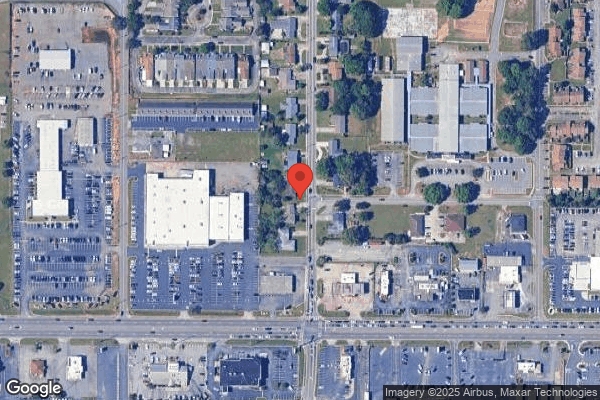

200 SOUTH KIMBERLY ROAD, WARNER ROBINS, GA 31088 (478) 293-4900
For profit - Limited Liability company 106 Beds PRUITTHEALTH Data: November 2025
Trust Grade
75/100
#102 of 353 in GA
Last Inspection: February 2025

Within standard 12-15 month inspection cycle. Federal law requires annual inspections.

Overview

Pruitthealth - The Lodge in Warner Robins, Georgia has a Trust Grade of B, meaning it is a good choice but not without its issues. It ranks #102 out of 353 facilities in Georgia, placing it in the top half, and #2 out of 5 in Houston County, indicating only one local facility is ranked higher. The facility's trend is worsening, with the number of issues increasing from 1 in 2024 to 2 in 2025. Staffing is a concern, rated 2 out of 5 stars with a 56% turnover rate, which is higher than average, indicating some instability among staff members. On a positive note, there have been no fines recorded, which is a good sign, but the facility has less RN coverage than 96% of state facilities, potentially impacting the quality of care. Specific incidents noted include failures in food safety practices that could lead to foodborne illnesses, such as expired food not being discarded and hot food not being kept at safe temperatures. Additionally, there were lapses in infection control, with improper handling of personal care items and medication administration, raising concerns about potential infection risks for residents. Overall, while there are strengths, families should weigh these issues seriously when considering care options.

Trust Score
B
75/100
In Georgia
#102/353
Top 28%
Safety Record
Low Risk
No red flags
Inspections
Getting Worse
1 → 2 violations
Staff Stability
⚠ Watch
56% turnover. Above average. Higher turnover means staff may not know residents' routines.
Penalties
✓ Good
No fines on record. Clean compliance history, better than most Georgia facilities.
Skilled Nurses
⚠ Watch
Each resident gets only 15 minutes of Registered Nurse (RN) attention daily — below average for Georgia. Fewer RN minutes means fewer trained eyes watching for problems.
Violations
✓ Good
Only 5 deficiencies on record. Cleaner than most facilities. Minor issues only.
★★★★☆
4.0
Overall Rating
★★☆☆☆
2.0
Staff Levels
★★★★☆
4.0
Care Quality
★★★★☆
4.0
Inspection Score
Stable
2024: 1 issues
2025: 2 issues

The Good

  • 4-Star Quality Measures · Strong clinical quality outcomes
  • Full Sprinkler Coverage · Fire safety systems throughout facility
  • No fines on record

Facility shows strength in quality measures, fire safety.

The Bad

Staff Turnover: 56%

Near Georgia avg (46%)

Frequent staff changes - ask about care continuity

Chain: PRUITTHEALTH

Part of a multi-facility chain

Ask about local staffing decisions and management

Staff turnover is elevated (56%)

8 points above Georgia average of 48%

The Ugly 5 deficiencies on record

Feb 2025 2 deficiencies
CONCERN (E)

Potential for Harm - no one hurt, but risky conditions existed

Infection Control (Tag F0880)

Could have caused harm · This affected multiple residents

**NOTE- TERMS IN BRACKETS HAVE BEEN EDITED TO PROTECT CONFIDENTIALITY** Based on observations, staff interviews, record review, and review of the facility policies titled Cleaning and Disinfection of ...

Read full inspector narrative →
**NOTE- TERMS IN BRACKETS HAVE BEEN EDITED TO PROTECT CONFIDENTIALITY** Based on observations, staff interviews, record review, and review of the facility policies titled Cleaning and Disinfection of Resident-Care Items and Equipment, Personal Protective Equipment (PPE), and Administration of IV (intravenous) Medications, the facility failed to properly cover resident personal care items when not in use on two of four halls (Hall 200 and Hall 300) and ensure infection control processes were followed during medication administration for three of five residents (R) (R183, R187, and R188) observed for medication administration. The deficient practices had the potential to place R183, R187, and R188 at risk of avoidable spread of infections and had the potential to increase the risks for cross-contamination and spread of infection on two of four halls. Findings include: Review of the facility policy titled Cleaning and Disinfection of Resident -Care Items and Equipment, revised August 2009, revealed the Policy Statement stated, Resident care equipment, including reusable items and durable medical equipment, will be cleaned and disinfected according to current CDC (Centers for Disease Control and Prevention) recommendations for disinfection and the OSHA (Occupational Safety and Health Administration) Bloodborne Pathogens Standard. The Policy Interpretation and Implementation sections included 1. c. Non-critical items are those that come in contact with intact skin but not mucus membranes. (1) Non-critical resident-care items include bedpans, blood pressure cuffs, crutches, and computers. (2) Most non-critical reusable items can be decontaminated where they are used (as opposed to being transported to a central processing location). Review of the facility policy titled Personal Protective Equipment, dated 1/17/2017, revealed the Purpose section stated, The purpose of this procedure is to appropriately don and doff (put on and take off) personal protective equipment. The Guidelines Section stated, The facility follows CDC sequencing PPE for safe work practices to protect yourself and limit the spread of contamination. The How to Safely Remove PPE guidelines included removing all PPE before exiting the patient room except a respirator if worn. Review of the facility's undated policy titled Administration of IV Medications revealed the Purpose section stated, The purpose of this procedure is to provide guidelines for IV medication administration. The Infusion section included . 6. Vigorously wipe the hub of the needleless connector on the IV device with an antiseptic swab for 5 - 15 seconds and allow it to dry. 7. Attach a prefilled saline syringe, check for blood return, then flush to check patency. Detach the syringe and discard. 8. Vigorously wipe the hub of the needleless connector on the IV device with an antiseptic swab for 5 - 15 seconds and allow it to dry. 1. Observation on 2/14/2025 at 9:45 am revealed an unbagged and unlabeled urinal in the bathroom sink of resident room [ROOM NUMBER]. Observation on 2/14/2025 at 9:55 am revealed an unbagged and unlabeled bath basin on the floor in the bathroom of resident room [ROOM NUMBER]. Observation on 02/14/2025 at 10:17 am revealed an unbagged and unlabeled bath basin on the floor in the bathroom of resident room [ROOM NUMBER]. Observation on 2/14/2025 at 12:04 pm revealed an unbagged and unlabeled bath basin on the floor in the bathroom of resident room [ROOM NUMBER]. In an interview on 2/14/2025 at 12:31 pm, Certified Nurse Assistant (CNA) CC stated urinals should not be in the sink and should be bagged and labeled. In a concurrent observation and interview on 2/14/2025 at 12:43 pm, Unit Manager (UM)/Licensed Practical Nurse (LPN) AA verified that the bath basins in the bathrooms of resident rooms [ROOM NUMBER] were not bagged or labeled. She stated that personal care items should be labeled, bagged, and stored off the floor. In an interview on 2/16/2024 at 11:15 am, the Director of Nursing (DON) stated it was her expectation for personal care items to be bagged separately, labeled, off of the floor and that urinals should never be left in a sink. 2. During observation of a medication pass on 2/15/2025 at 8:35 am, LPN BB was observed taking R183's blood pressure using an electronic blood pressure machine. She did not disinfect the blood pressure cuff before or after taking the resident's blood pressure. Continued observation revealed LPN BB used the same blood pressure cuff to check R187's blood pressure. She did not disinfect the blood pressure cuff before or after checking the resident's blood pressure. In an interview on 2/15/2025 at 9:20 am, LPN BB verified she did not disinfect the blood pressure cuff between residents and stated she should disinfect it between each resident. In an interview on 2/15/2025 at 12:43 pm, UM/LPN AA stated the blood pressure cuffs should be disinfected between each resident use. In an interview on 2/16/2025 at 11:15 am, the DON stated it was ideal for the electronic blood pressure cuffs to be cleaned between each resident. 3. During observation of a medication pass on 2/15/2025 at 9:03 am, LPN BB was observed administering medication to R187, and observation revealed R187 was on Enhanced Barrier Precautions (EBP). LPN BB was observed putting on PPE before entering the room, administering the medication, exiting the room, removing the PPE in the hallway, and discarding it in the trash can on the medication cart. In an interview on 2/15/2025 at 9:20 am, LPN BB stated she removed the PPE in the hallway because she couldn't find a trash can in the resident's room. In an interview on 2/15/2025 at 12:43 pm, UM/LPN AA stated that PPE should be removed in the resident's room before exit and not in the hallway. In an interview on 2/16/2025 at 11:15 am, the DON stated the expectation was for PPE to be removed in the resident rooms, not in the hallways. 4. During observation of a medication pass on 2/15/2025 at 12:20 pm, LPN BB was observed administering an IV medication to R188. Observation revealed LPN BB wiped the hub of the needleless connector on the peripherally inserted central catheter (PICC) [a flexible tube inserted in the upper arm and threaded into a large vein above the heart] with an alcohol wipe for two to three seconds before administering the saline flush and again before administering the medication. In an interview on 2/15/2025 at 12:48 pm, LPN BB confirmed she wiped the hub of the needleless connector on the PICC line with an alcohol wipe for two to three seconds and stated she should have wiped it for five to 15 seconds. In an interview on 2/15/2025 at 4:15 pm, UM/LPN AA confirmed the PICC line needleless hubs should be cleaned with an antiseptic wipe for five to 15 seconds before each use and stated two to three seconds was not long enough. In an interview on 2/16/2025 at 11:58 am. The DON stated her expectation was for the PICC line needleless hub to be cleaned with alcohol vigorously for five to 15 seconds before administering saline flush and medications via the PICC line.
CONCERN (F)

Potential for Harm - no one hurt, but risky conditions existed

Food Safety (Tag F0812)

Could have caused harm · This affected most or all residents

Based on observations, staff interviews, and review of the facility policy titled Food Preparation and Service, the facility failed to discard food by the expiration date, label and date leftovers, an...

Read full inspector narrative →
Based on observations, staff interviews, and review of the facility policy titled Food Preparation and Service, the facility failed to discard food by the expiration date, label and date leftovers, and store dishwasher crates off of the floor. These deficient practices had the potential to promote foodborne illnesses associated with bacterial growth and cross-contamination for 67 of 73 residents receiving an oral diet. Findings include: Review of the facility's undated policy titled Food Preparation and Service revealed, Food service employees shall prepare and serve food in a manner that complies with safe food handling practices. The Leftover Food section included . 4. Leftover food must be covered, labeled, and dated. 5. Leftover food must be used within 7 days (refrigerated) or 30 days (frozen). 9. Disposal-Expired or unsafe food must be thrown away. During a tour of the kitchen on 2/14/2025, beginning at 7:53 am with the Assistant Dietary Manager (ADM), the following concerns were identified: One 5.5-ounce container of leaf basil with an expiration date of 10/7/2024. One 5.5-ounce container of jerk seasoning with an expiration date of 10/7/2024. One 16-ounce container of ground nutmeg with an expiration date of 2023. One 16-ounce container of seasoning with an expiration date of 1/19/2025. One 26-ounce container of fajita seasoning with an expiration date of 1/2/2025. One 12-ounce container of ground oregano with an expiration date of 12/28/2023. Observations in the walk-in cooler revealed the following: One container of ham with an open date of 2/5/2025. One container of strained broccoli soup with an open date of 1/31/2025. One bag of biscuits with an open date of 2/3/2025. One container of leftovers, identified by the ADM as baked ziti, with a date of 2/5/2025. Observations in the main kitchen dry pantry storage room revealed three boxes of oatmeal cream pies with an expiration date of 2/12/25. Observation in the kitchen revealed four dish crates were stored on the floor. Observation of the 400 Hall Resident Pantry revealed three boxes of oatmeal cream pies with an expiration date of 2/12/2025. Observation of the refrigerator revealed one container of milk with an open date of 12/9/2024 and an expiration date of 2/6/2025 and a container of unidentified, unlabeled leftovers. Observation of the 200 Hall Resident Pantry revealed two boxes of oatmeal cream pies with an expiration date of 2/12/2025. In an interview on 2/14/2025 at 8:30 am, the ADM confirmed all findings. She confirmed that the dish storage crates should not be on the floor but on a rack. In a concurrent interview and observation on 2/15/2025 at 8:30 am, the Dietary Manager (DM) confirmed that the four dish storage crates lying on the floor underneath a food prep table should not be stored on the floor. The DM stated food items should be dated when opened and expire seven days from that date. He further stated the ADM had informed him of the findings and that he was unaware of the identified concerns before being informed. He stated that dietary staff was responsible for daily monitoring of the dry pantry, cooler, freezer in the main kitchen, and resident pantries. He stated his expectations were for dietary staff to follow policy and ensure items were labeled, dated, and discarded by the expiration date. He further stated there was a potential for resident illness if staff did not follow the policies.
Oct 2024 1 deficiency
CONCERN (D) 📢 Someone Reported This

A family member, employee, or ombudsman was alarmed enough to file a formal complaint

Potential for Harm - no one hurt, but risky conditions existed

Report Alleged Abuse (Tag F0609)

Could have caused harm · This affected 1 resident

Based on staff interview, record review, and review of the facility's policy titled Abuse Policy and Procedure, the facility failed to report an injury of unknown origin, specifically left acute dista...

Read full inspector narrative →
Based on staff interview, record review, and review of the facility's policy titled Abuse Policy and Procedure, the facility failed to report an injury of unknown origin, specifically left acute distal tibial and fibular fractures, within the required time frame for one of three sampled residents (R) (R3). Findings include: Review of the facility's policy titled Abuse Policy and Procedure, with a revision date of 2020, revealed all allegations of abuse involving abuse along with injuries of unknown origin are reported immediately to the charge nurse and/or administrator of the facility along with other officials in accordance with State law through established guidelines. The Investigation section of the policy documented all allegations of abuse will be investigated and reported to the appropriate agencies. Review of the Nurse's Notes for R3, dated 6/13/2024, revealed physical therapy reported the resident had pain and was unable to bear any weight. The physician was notified and ordered an x-ray of the left ankle. The Radiology Results Report, dated 6/14/2024, documented the left ankle noted acute distal tibial and fibular diaphyseal fractures. The Orthopedic Progress Notes, dated 6/20/2024, documented the resident had a new fracture of her tibial fibula. Review of the Facility Incident Report Form revealed the State Survey Agency was not notified of the injury of unknown origin and fractures until 6/21/2024. The report also documented the incident occurred on 6/20/2024, although the radiology results on 6/14/2024 were positive for fractures. During an interview with the Administrator on 10/24/2024 at 12:20 pm, she stated there was a delay in the reporting of the fracture from the 6/14/2024 x-ray report because they wanted to get the results from the orthopedic physician to make sure it was a new fracture since the resident had been having ongoing problems with a nonhealing fracture to that leg.
Oct 2022 1 deficiency
CONCERN (F)

Potential for Harm - no one hurt, but risky conditions existed

Food Safety (Tag F0812)

Could have caused harm · This affected most or all residents

Based on observation, interview, and facility policy review, the facility failed to ensure all hot food items were held above 135 degrees on the steam table to prevent food borne illness. The facility...

Read full inspector narrative →
Based on observation, interview, and facility policy review, the facility failed to ensure all hot food items were held above 135 degrees on the steam table to prevent food borne illness. The facility also failed to ensure that all expired foods were removed from the cooler located in the main kitchen as well as ensuring that all food was labeled and dated. This deficient practice had the potential to effect 79 of 88 resident that receive regular or mechanical soft textured diet. Findings include: Observation on 10/19/22 at 11:46 p.m. of the facility main kitchen walk-in cooler revealed the following food items stored in cooler beyond the expiration date; Pimento Cheese spread 5 pound (lb.) container expiration date 10/17/22, Lactose Free Whole Milk half gallon (3) expiration date 10/18/22, Cottage Cheese 5 lb. container expiration date 9/26/22. There were also food items that were not labeled and dated as well as food items that were spoiled that were stored in cooler. A head of leafy green lettuce was wilted with red and black discoloration noted, three cabbage heads cut in half with black substances noted on the outer leaves, one cabbage cut in half in a zip lock bag that was not labeled or dated, 1/2 white onion in zip lock bag not labeled or dated, 5 lb. bag of 5 Flavor pizza cheese not labeled or dated. All food items were confirmed by Dietary Manager (DM) as unlabeled or expired at time of observation. Observation on 10/19/22 at 12:30 p.m. revealed the DM assisting with obtaining hot food temperatures on the steam table using the facility's calibrated thermometer. Steam table temperatures were obtained halfway through lunch meal service. Observation of food temps revealed pureed vegetable blend was 130 degrees, pureed Philly Cheese Steak was 125 degrees, Alternate meal hamburger steak was 130 degrees, gravy was 124 degrees, and mashed potatoes were 130 degrees. Staff reheated food items in main kitchen food blower at 12:35 p.m., removed food from blower at 12:40 p.m. Food temps: pureed vegetable blend was 134 degrees, pureed Philly Cheese Steak was 135 degrees, Alternate meal hamburger steak was 142 degrees, and gravy was 135 degrees. During an interview on 10/19/22 at 12:45 p.m. the DM confirmed the food temperatures and expired and unlabeled foods at time of observation. The DM stated that hot foods should be at least 135 degrees on the steam table and foods should be discarded on or before expiration date. On 10/19/22 at 2:00 p.m. interview with Administrator revealed there were no systems in place to ensure that the food temps are kept at appropriate temp and for food items to be discarded if expired. Further interview also revealed the cook that was in the kitchen was in training and will be in-serviced on the proper food temps and expiration of food items as well. Review of facility undated policy titled Food Storage/Leftovers number 1. Leftovers should not be kept no longer than 7 days, 3. leftovers should be covered, dated, labeled, and refrigerated below 41 degree or frozen.
Jun 2021 1 deficiency
CONCERN (D)

Potential for Harm - no one hurt, but risky conditions existed

Infection Control (Tag F0880)

Could have caused harm · This affected 1 resident

**NOTE- TERMS IN BRACKETS HAVE BEEN EDITED TO PROTECT CONFIDENTIALITY** Based on observations, staff interviews and policy review, the facility failed to follow Transmission Based Precautions (TBP) re...

Read full inspector narrative →
**NOTE- TERMS IN BRACKETS HAVE BEEN EDITED TO PROTECT CONFIDENTIALITY** Based on observations, staff interviews and policy review, the facility failed to follow Transmission Based Precautions (TBP) related to wearing appropriate Personal Protective Equipment (PPE) to prevent potential exposure for new admission residents on isolation precautions, in two of seven rooms (408 and 412) on the 400 Hall Isolation Unit. Findings include: Review of facility policy titled Health Management Quarantine and Isolation Protocol, dated 11/13/2020 revealed, Quarantine and Isolation Protocol revealed Quarantine for COVID-19 should last for a period of 14 days after the potential exposure. Protocol: use of mask and shield when not in high contact with resident activities and use of full PPE (Enhanced Barrier Precautions: mask, gloves, gown, and shield) when in high contact with resident care activities. Observation on 6/22/2021 at 9:44 a.m., revealed room [ROOM NUMBER] door open with signage on the door indicating resident was on enhanced barrier precautions, requiring staff to clean their hands before entering and after exiting room and they must wear gown, mask, face shield and gloves. Licensed Practical Nurse (LPN) AA was observed wearing a face mask and sanitized her hands before entering resident room, but did not don the required PPE (gown, gloves, or face shield) before entering the resident's room. LPN AA was observed to provide care to resident without sanitizing her hands when exiting the residents room. Observation on 6/22/2021 at 9:50 a.m. revealed Certified Nursing Assistant (CNA) BB, walking from 300 Hall to 400 Hall. She sanitized her hands and donned a pair of gloves she pulled from her pocket. She then entered room [ROOM NUMBER], with room door ajar and signage that resident is on enhanced barrier precautions. CNA BB was wearing a face mask but did not don a gown or face shield prior to entering the resident's room. Observation on 6/22/2021 at 10:03 a.m. revealed room [ROOM NUMBER] with signage on the door indicating resident was on enhanced barrier precautions, requiring staff to clean their hands before entering and after exiting room and they must wear gown, mask, face shield and gloves. LPN AA was wearing a face mask and sanitized her hands before entering resident room, but did not don the required PPE (gown, gloves, or face shield) before entering the resident's room. Observation on 6/22/2021 at 10:17 a.m. CNA BB walked from Nurse's Station to room [ROOM NUMBER]. The door to the room was open. CNA BB entered room [ROOM NUMBER] to retrieve the meal tray. She did not don PPE or sanitize her hands before entering or after exiting the room. Observation on 6/23/2021 at 12:39 p.m. revealed CNA BB delivered meal tray to resident in room [ROOM NUMBER], only wearing a face mask. She did not don gown, gloves, or face shield prior to entering room. She did not sanitize her hands after leaving the room. Observation on 6/23/2021 at 12:44 p.m. revealed CNA BB delivered meal tray to room [ROOM NUMBER], only wearing a face mask. She did not don gown, gloves, or face shield. Observation on 6/23/2021 at 12:48 p.m. revealed LPN AA administering medication to resident in room [ROOM NUMBER]. LPN AA sanitized her hands prior to entering the room, but did not don gown, gloves, or face shield. Observation on 6/23/2021 at 12:56 p.m. revealed LPN AA administering medication to resident in room [ROOM NUMBER]. LPN AA sanitized her hands prior to entering the room, but did not don gown, gloves, or face shield. Interview on 6/23/2021 at 1:02 p.m. with LPN AA, confirmed she failed to use the full PPE as the posted sign indicated. She revealed that staff are to wear full PPE for residents on TBP. She verified that full PPE consisted of gown, gloves, masks, and face shield. Interview on 6/23/2021 at 1:11 p.m. with CNA BB, confirmed she failed to comply with wearing the full PPE with residents on TBP. Interview on 6/24/2021 at 10:30 a.m. with Infection Control Preventionist (ICP), revealed when residents are on TBP and staff have contact with residents' body, they should be wearing full PPE. During further interview, she stated that if there is no body contact with the residents, a face mask and face shield is all that is needed. She stated that residents in room [ROOM NUMBER] and 412 are new admissions and have not been vaccinated for COVID-19. During further interview, she stated that the doors to the rooms on the 400 Hall should be closed. Interview on 6/24/2021 at 11:00 a.m. with Director of Nursing (DON), revealed staff should be donning full PPE including gown, mask, gloves, and face shield, when caring for residents on the 400 Hall. She further stated that non-vaccinated admissions are on quarantine for 14 days. Interview on 6/24/2021 at 11:15 a.m. with Administrator, revealed that staff should be wearing full PPE when caring for residents on TBP. She stated that staff should be wearing gowns, gloves, face masks and face shield when caring for residents on TBP and using hand sanitizer.
Understanding Severity Codes (click to expand)
Life-Threatening (Immediate Jeopardy)
J - Isolated K - Pattern L - Widespread
Actual Harm
G - Isolated H - Pattern I - Widespread
Potential for Harm
D - Isolated E - Pattern F - Widespread
No Harm (Minor)
A - Isolated B - Pattern C - Widespread

Questions to Ask on Your Visit

  • "Why is there high staff turnover? How do you retain staff?"
  • "Can I speak with families of current residents?"
  • "What's your RN coverage like on weekends and overnight?"

Our Honest Assessment

Strengths
  • • No major safety red flags. No abuse findings, life-threatening violations, or SFF status.
  • • No fines on record. Clean compliance history, better than most Georgia facilities.
  • • Only 5 deficiencies on record. Cleaner than most facilities. Minor issues only.
Concerns
  • • 56% turnover. Above average. Higher turnover means staff may not know residents' routines.
Bottom line: Generally positive indicators. Standard due diligence and a personal visit recommended.

About This Facility

What is Pruitthealth - The Lodge, Llc's CMS Rating?

CMS assigns Pruitthealth - The Lodge, LLC an overall rating of 4 out of 5 stars, which is considered above average nationally. Within Georgia, this rating places the facility higher than 99% of the state's 100 nursing homes. This rating reflects solid performance across the metrics CMS uses to evaluate nursing home quality.
How is Pruitthealth - The Lodge, Llc Staffed?

CMS rates Pruitthealth - The Lodge, LLC's staffing level at 2 out of 5 stars, which is below average compared to other nursing homes. Staff turnover is 56%, which is 10 percentage points above the Georgia average of 46%. High turnover can affect care consistency as new staff learn residents' individual needs. RN turnover specifically is 57%, which is notably high. RNs provide skilled clinical oversight, so turnover in this role can affect medical care quality.

What Have Inspectors Found at Pruitthealth - The Lodge, Llc?

State health inspectors documented 5 deficiencies at Pruitthealth - The Lodge, LLC during 2021 to 2025. These included: 5 with potential for harm.
Who Owns and Operates Pruitthealth - The Lodge, Llc?

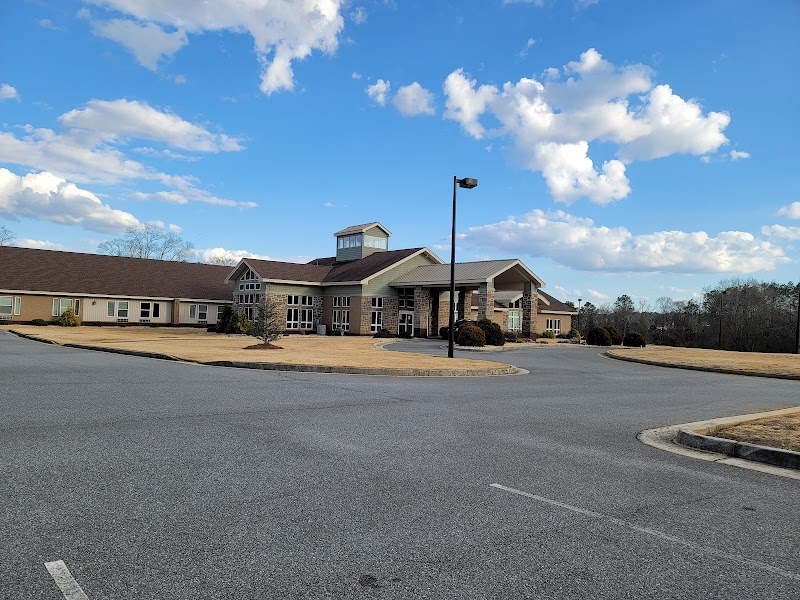
Pruitthealth - The Lodge, LLC is owned by a for-profit company. For-profit facilities operate as businesses with obligations to shareholders or private owners. The facility is operated by PRUITTHEALTH, a chain that manages multiple nursing homes. With 106 certified beds and approximately 69 residents (about 65% occupancy), it is a mid-sized facility located in WARNER ROBINS, Georgia.
How Does Pruitthealth - The Lodge, Llc Compare to Other Georgia Nursing Homes?

Compared to the 100 nursing homes in Georgia, Pruitthealth - The Lodge, LLC's overall rating (4 stars) is above the state average of 2.6, staff turnover (56%) is near the state average of 46%, and health inspection rating (4 stars) is above the national benchmark.

What Should Families Ask When Visiting Pruitthealth - The Lodge, Llc?

Based on this facility's data, families visiting should ask: "How do you ensure continuity of care given staff turnover, and what is your staff retention strategy?" "Can you walk me through typical staffing levels on day, evening, and night shifts?" "Can I visit during a mealtime to observe dining assistance and food quality?" "How do you handle medical emergencies, and what is your hospital transfer rate?" These questions are particularly relevant given the facility's high staff turnover rate and the below-average staffing rating.

Is Pruitthealth - The Lodge, Llc Safe?

Based on CMS inspection data, Pruitthealth - The Lodge, LLC has a clean safety record: no substantiated abuse findings (meaning no confirmed cases of resident harm), no Immediate Jeopardy citations (the most serious violation level indicating risk of serious injury or death), and is not on the Special Focus Facility watch list (a federal program monitoring the lowest-performing 1% of nursing homes). The facility has a 4-star overall rating and ranks #1 of 100 nursing homes in Georgia. While no facility is perfect, families should still ask about staff-to-resident ratios and recent inspection results during their visit.

Do Nurses at Pruitthealth - The Lodge, Llc Stick Around?

Staff turnover at Pruitthealth - The Lodge, LLC is high. At 56%, the facility is 10 percentage points above the Georgia average of 46%. Registered Nurse turnover is particularly concerning at 57%. RNs handle complex medical decisions and coordinate care — frequent RN changes can directly impact care quality. High turnover means new staff may not know residents' individual needs, medications, or preferences. It can also be disorienting for residents, especially those with dementia who rely on familiar faces. Families should ask: What is causing the turnover? What retention programs are in place? How do you ensure care continuity during staff transitions?

Was Pruitthealth - The Lodge, Llc Ever Fined?

Pruitthealth - The Lodge, LLC has no federal fines on record. CMS issues fines when nursing homes fail to meet care standards or don't correct problems found during inspections. The absence of fines suggests the facility has either maintained compliance or corrected any issues before penalties were assessed. This is a positive indicator, though families should still review recent inspection reports for the full picture.

Is Pruitthealth - The Lodge, Llc on Any Federal Watch List?

Pruitthealth - The Lodge, LLC is not on any federal watch list. The most significant is the Special Focus Facility (SFF) program, which identifies the bottom 1% of nursing homes nationally based on persistent, serious quality problems. Not being on this list means the facility has avoided the pattern of deficiencies that triggers enhanced federal oversight. This is a positive indicator, though families should still review the facility's inspection history directly.