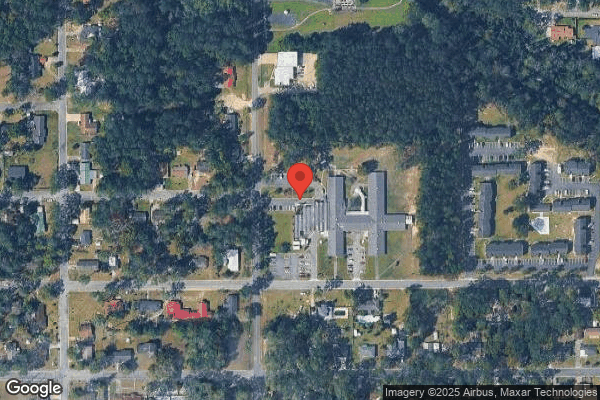
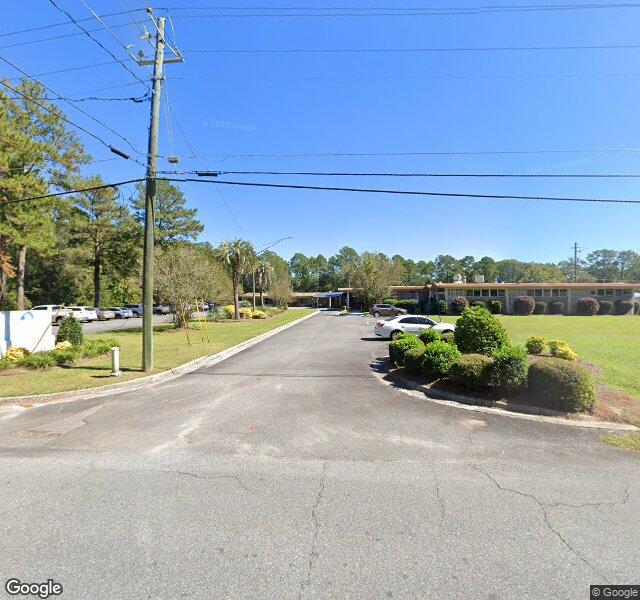
HARBORVIEW SATILLA

1600 RIVERSIDE AVE, WAYCROSS, GA 31501 (912) 283-1182
For profit - Corporation 174 Beds Independent Data: November 2025
Trust Grade
28/100
#284 of 353 in GA
Last Inspection: January 2025

Within standard 12-15 month inspection cycle. Federal law requires annual inspections.

Overview

Harborview Satilla in Waycross, Georgia, has a Trust Grade of F, indicating significant concerns about the quality of care provided. It ranks #284 out of 353 in the state, placing it in the bottom half of Georgia facilities, and #3 out of 3 in Ware County, meaning there are no better local options available. The facility's performance has remained stable, with 10 identified issues each year in 2023 and 2025. Staffing is a relative strength, rated 2 out of 5 stars with a turnover rate of 40%, which is below the Georgia average; however, the overall quality ratings are poor, at 1 out of 5 stars across the board. Recent inspections revealed serious incidents where residents were harmed due to inadequate staffing; specifically, one resident fell and suffered a fracture when a caregiver did not follow the care plan requiring two-person assistance. Another finding indicated that a resident did not receive the necessary supervision during care, leading to a similar fall. Additionally, the facility has accrued fines totaling $22,022, which is concerning as it is higher than 75% of similar facilities in Georgia. Overall, while there are some positive aspects, serious deficiencies and poor ratings raise significant red flags for families considering this nursing home.

Trust Score
F
28/100
In Georgia
#284/353
Bottom 20%
Safety Record
Moderate
Needs review
Inspections
Holding Steady
10 → 10 violations
Staff Stability
○ Average
40% turnover. Near Georgia's 48% average. Typical for the industry.
Penalties
✓ Good
$22,022 in fines. Lower than most Georgia facilities. Relatively clean record.
Skilled Nurses
⚠ Watch
Each resident gets only 27 minutes of Registered Nurse (RN) attention daily — below average for Georgia. Fewer RN minutes means fewer trained eyes watching for problems.
Violations
⚠ Watch
26 deficiencies on record. Higher than average. Multiple issues found across inspections.
★☆☆☆☆
1.0
Overall Rating
★★☆☆☆
2.0
Staff Levels
★★☆☆☆
2.0
Care Quality
★☆☆☆☆
1.0
Inspection Score
Stable
2023: 10 issues
2025: 10 issues

The Good

  • Full Sprinkler Coverage · Fire safety systems throughout facility
  • No fines on record
  • Staff turnover below average (40%)

    8 points below Georgia average of 48%

Facility shows strength in fire safety.

The Bad

1-Star Overall Rating

Below Georgia average (2.6)

Significant quality concerns identified by CMS

Staff Turnover: 40%

Near Georgia avg (46%)

Typical for the industry

Federal Fines: $22,022

Below median ($33,413)

Minor penalties assessed

The Ugly 26 deficiencies on record

2 actual harm
Apr 2025 2 deficiencies 2 Harm
SERIOUS (G) 📢 Someone Reported This

A family member, employee, or ombudsman was alarmed enough to file a formal complaint

Actual Harm - a resident was hurt due to facility failures

Comprehensive Care Plan (Tag F0656)

A resident was harmed · This affected 1 resident

**NOTE- TERMS IN BRACKETS HAVE BEEN EDITED TO PROTECT CONFIDENTIALITY** Based on record review, staff interviews, and review of the facility policy titled Comprehensive Care Plan the facility failed t...

Read full inspector narrative →
**NOTE- TERMS IN BRACKETS HAVE BEEN EDITED TO PROTECT CONFIDENTIALITY** Based on record review, staff interviews, and review of the facility policy titled Comprehensive Care Plan the facility failed to ensure the care plan was followed for two person assistance toileting for one Resident ((R) R1) of three residents which resulted in R1 having a fall. On 4/12/2025, actual harm was identified when Certified Nursing Assistant (CNA) BB was providing care alone resulting in R1 falling out of bed and sustaining a left femoral neck fracture and left frontal scalp hematoma. Findings include Review of the Comprehensive Care Plans dated 3/1/2022, revealed Policy: It is the policy of this facility to develop and implement a comprehensive person-centered care plan for each resident, consistent with resident rights, that includes measurable objectives and timeframes to meet a resident's medical, nursing, and mental and psychosocial needs that are identified in the resident's comprehensive assessment. Review of the admission Record revealed resident was admitted to the facility on [DATE] with the following diagnoses that include but are not limited to hemiplegia and hemiparesis following cerebral infarction, atrial fibrillation, atherosclerotic heart disease of native coronary artery without angina pectoris, restless legs syndrome, hypertension, adult failure to thrive, and neuralgia and neuritis. Review of the medical record revealed R1 admitted to the facility with the facility with the diagnoses that included but are not limited to hemiplegia and hemiparesis following cerebral infarction, atrial fibrillation, atherosclerotic heart disease of native coronary artery without angina pectoris, restless legs syndrome, hypertension, adult failure to thrive, and neuralgia and neuritis. Review of the Minimum Data Set (MDS) admission dated 1/15/2025 revealed R1 was dependent for eating, shower, bathing, roll left or right, personal hygiene, upper and lower body dressing, self-care and toilet hygiene. Review of the care plan dated 1/22/2025 revealed resident needs assistance with grooming, bathing and personal hygiene related to inability to care for themselves, mobility impairment, range of motion limitations, self-care impairment, contracture left hand, hemiplegia and hemiparesis affecting the left nondominant side, muscle weakness. He has an assist rail to left side of bed. Interventions included toileting assist of two; transfers assist of two people; bathing assist of two; bed mobility assistance of two; and dressing assistance of two. An interview with Registered Nurse (RN) MDS Coordinator on 4/22/2025 at 2:56 pm revealed the [NAME] should be pulled from the electronic health record (EHR). It was reported that R1 was very contracted and could not give help with his care. RN MDS Coordinator reported that CNA BB should have had another CNA to assist her. It was further reported that CNA BB could have gotten another CNA from another hall or the nurse to assist her with caring for R1. It was reported that the care plan should have been followed for the safety of the resident. RN MDS Coordinator confirmed again that two people were needed, one for each side of the bed, when caring for R1. Cross reference F689
SERIOUS (G) 📢 Someone Reported This

A family member, employee, or ombudsman was alarmed enough to file a formal complaint

Actual Harm - a resident was hurt due to facility failures

Accident Prevention (Tag F0689)

A resident was harmed · This affected 1 resident

Based on medical record review, staff interviews and review of the facility policy Accidents and supervision, the facility failed to ensure that one resident (R1) of three residents was provided with ...

Read full inspector narrative →
Based on medical record review, staff interviews and review of the facility policy Accidents and supervision, the facility failed to ensure that one resident (R1) of three residents was provided with enough staff to complete perineal care of residents while in bed. On 4/12/2025, actual harm was identified when Certified Nursing Assistant (CNA) BB was providing care alone resulting in R1 falling out of bed and sustaining a left femoral neck fracture and left frontal scalp hematoma. Findings include: Review of the facility policy, Accidents and Supervision dated 3/1/2022, revealed Policy: the resident environment will remain as free of accident hazards as is possible. Each resident will receive adequate supervision and assistive devices to prevent accidents. This includes: 1. Identifying hazards (s) and risk (s). 2. Evaluating and analyzing hazard (s) and risk (s). 3. Implementing interventions to reduce hazard(s) and risk (s). 4. Monitoring for effectiveness and modifying interventions when necessary. 5. Supervision - Supervision is an intervention and a means of mitigating accident risk. The facility will provide adequate supervision to prevent accidents. Adequacy of supervision: a. Defined by type and frequency. b. Based on the individual resident's assessed needs and identified hazards in the resident environment. Review of the closed medical record revealed R1was admitted to the facility with the following diagnoses that include but are not limited to hemiplegia and hemiparesis following cerebral infarction, atrial fibrillation, atherosclerotic heart disease of native coronary artery without angina pectoris, restless legs syndrome, hypertension, adult failure to thrive, and neuralgia and neuritis. Review of NSG: Fall Risk Evaluation dated 4/12/2025 revealed a score of five indicating low risk. Review of Progress Notes dated 4/12/2025 revealed resident had a five-centimeter (5 cm) laceration to the top of the scalp and was sent to the ER (emergency room) for evaluation. Review of the facility 5-day follow-up dated 4/12/2025 revealed an interview that resident was turned to the right side to clean his bottom and then positioned on his backside where he was in the middle of the bed. CNA proceeded to the other side of the bed to clean that side of his bottom. The resident then shifted leg to the right side causing his bottom half to roll off the bed. Review of the hospital emergency room medical records dated 4/12/2025 revealed multiple computed tomography (CT) scans of cervical spine revealed no fracture or subluxation for R1. No paravertebral soft tissue swelling; CT Brain revealed left frontal scalp hematoma. There are no mass effects for midline shift; CT Chest revealed the patient has scoliosis as well as kyphosis. No sternal fracture or rib fracture is relatively identified. CT Abdomen and Pelvis revealed left femoral neck fracture, no evidence of acute injury within the chest, abdomen and pelvis. It was also noted that R1 had a Do Not Resuscitate (DNR) status with comfort care. A telephone interview on 4/22/2025 at 11:53 am with Certified Nursing Assistant (CNA) BB revealed she was doing her last round on 4/12/2025 and went to change R1. She stated that she rolled the resident to the right side and then adjusted the bed so she could roll him. She reported that she had her supplies, and she then walked to the other side of the bed. While walking to the other side of the bed, she reported that R1 started trying to put his feet off the bed. The bed did not have regular side rails. R1 is reported as getting one foot out of the bed and then rolled off the bed. CNA BB reported that she tried to catch him, but the bedside table was on the side she was walking to which slowed her from getting to R1 before he fell. After he fell, she noticed that his head was bleeding and she left the room to get the nurse. It is reported that LPN CC assessed R1 and he was then taken to the local hospital via Emergency Medical Services (EMS). CNA BB further stated she was trained that R1 was a one person assist for care. Lastly, CNA BB reported that there was only one CNA per hall so R1 was a one person assist because of that. An interview with CNA EE on 4/22/2025 at 1:40 pm revealed she worked with R1 in the past and had the assistance of CNA AA because it was easier to provide care with two people. R1 was reported as being very contracted. CNA EE stated that she was not comfortable changing R1 by herself. An interview with CNA FF on 4/22/2025 at 2:15 pm revealed R1 required two people to assist because he was very contracted, and it was hard to roll him. CNA FF reported that two people were also needed to help maintain his posture. CNA FF further reported that she trained CNA BB that R1as a two-person assist. It was also reported that R1 required two-person assistance and normally a CNA from another hall would have to help with assisting R1. An interview with LPN GG on 4/22/2025 at 2:22 pm revealed R1was total care and had severe contractions resulting in his legs being stiff, but he could kick his legs off the bed resulting in his feet dangling off the bed. LPN GG further explained that R1 required two people for his ADLs and the 2nd person was needed to maintain posture, the resident could not help with any aspect of his care. An interview with the Director of Nursing (DON) on 4/22/2025 at 3:17 pm revealed she does not know why CNA BB did not have a second person assisting with R1. DON further reported that the nurse could have assisted the CNA with bed mobility and toileting for R1. The DON reported that CNA BB should have waited for someone to assist her with caring for R1. An interview with the Administrator on 4/22/2025 at 3:23 pm revealed that she is unsure why CNA BB did not have a second person assisting her with R1. The Administrator reported that the CNA had not started the process for perineal care and R1 had a side of his body that he favored. The Administrator further reported that R1 had a tendency to throw his legs and his weight would follow his legs and R1 could not stop himself from falling. LPN CC was unavailable for an interview. Cross reference F656
Jan 2025 8 deficiencies
CONCERN (D)

Potential for Harm - no one hurt, but risky conditions existed

Deficiency F0554 (Tag F0554)

Could have caused harm · This affected 1 resident

**NOTE- TERMS IN BRACKETS HAVE BEEN EDITED TO PROTECT CONFIDENTIALITY** Based on observations, staff interviews, record reviews, and review of the facility's policy titled, Medication Administration, ...

Read full inspector narrative →
**NOTE- TERMS IN BRACKETS HAVE BEEN EDITED TO PROTECT CONFIDENTIALITY** Based on observations, staff interviews, record reviews, and review of the facility's policy titled, Medication Administration, Facility B failed to ensure over-the-counter medication were not stored at the bedside for one of 55 residents (R) (R151). This deficient practice had the potential to allow unauthorized access of unsecured medications to residents and visitors. Findings include: A review of Facility B's policy titled, Medication Administration, revised date 4/2022, revealed, Policy: Self-Administration of medication: Residents can self-administer medication if they can do so safely and are authorized to do so by their attending physician and interdisciplinary team. The medications will be kept in a lock safe box in the resident's room. The resident will open and self-administer his/her medications. The nurse will record the resident's self-administration of the medication on the medication record. Any self-administration error that occurs must be reported to the interdisciplinary team and the resident will be re-evaluated for continued self-administration. Resident Self -Administration of Medication dated 4/1/2024 documented it is the policy of this facility to support each residents right to self-administer medication. A resident may only self-administer medications after the facility's interdisciplinary team has determined which medications may be self-administered safely. Review of electronic medical records (EMR) revealed R151 was admitted with diagnoses of but not limited to shortness of breath, respiratory failure, heart failure, type 2 diabetes mellitus with diabetic neuropathy, atrial fibrillation, cerebral infarction, pneumonia and obstructive sleep apnea. Review of R151 EMR revealed there was no physician order for cough drops. Review of R151 EMR revealed there was no care plan for self-administration of medication. Review of the Quarterly Minimum Data Set (MDS) assessment dated [DATE] assessed a Basic Interview for Mental Status (BIMS) score of 99 indicating severe cognitive impairment. Review of nurses' notes dated 1/7/2025 documented R151 had [name brand] cough drops on his over the bed table. He stated that his wife brought them. When asked if other candy works just as good for throat irritation, he stated no. Explained that these could not be kept in the room but would speak with his wife and see if could find alternative or if needed get an order for these. He stated understanding. Spoke with his daughter, I could not reach wife. She stated he has always used these even at home and explained they could not be kept in room related to be considered a medication. She stated understanding. An Observation on 1/7/2025 at 11:02 am revealed a plastic zip closure storage bag of cough drops on R151 bedside table. An interview on 1/7/2025 at 2:11 pm with Licensed Practical Nurse (LPN) CC confirmed that R151 could not have cough drops at his bedside without a physician's order. LPN CC revealed a family member must have brought the cough drop into the facility. LPN CC stated she spoke with R151 and advised him that he could not have cough drops at his bedside. An interview on 1/9/2025 at 1:45pm with the Director of Nursing (DON) revealed R151's family member bought the over-the-counter medication into the facility, and it was discussed upon admission that no medication could be brought into the facility. DON expects staff to monitor for medication brought in from outside the facility, in the resident's room when rounding. Staff will be reeducated about self-administration of medication. An interview on 1/9/2025 at 1:55 pm with Administrator revealed her expectations was for staff to follow policies and procedure. Staff will be reeducated as she was made aware of cough drops being found at the resident's bedside.
CONCERN (D)

Potential for Harm - no one hurt, but risky conditions existed

Transfer Notice (Tag F0623)

Could have caused harm · This affected 1 resident

**NOTE- TERMS IN BRACKETS HAVE BEEN EDITED TO PROTECT CONFIDENTIALITY** Based on interviews, record review, and review of the facility's policy titled, Transfer and Discharge, Facility A failed to pro...

Read full inspector narrative →
**NOTE- TERMS IN BRACKETS HAVE BEEN EDITED TO PROTECT CONFIDENTIALITY** Based on interviews, record review, and review of the facility's policy titled, Transfer and Discharge, Facility A failed to provide notice of transfer/discharge to residents or their representatives for one of four sampled residents (R) (R2) reviewed for hospitalization. Findings included: Review of Facility A's policy titled, Transfer and Discharge revised on 7/1/2024, revealed 12. Emergency Transfers/Discharges-initiated by the facility for medical reasons to an acute care setting such as a hospital, for the immediate safety and welfare of a resident (nursing responsibilities unless otherwise specified) G. Provide a notice of transfer and the facility's bed hold policy to the resident and representative as indicated. R2 was admitted to the facility with diagnoses of but not limited to sepsis, dementia severe with psychotic disturbance, and epilepsy. Review of the Quarterly Minimum Data Set (MDS) assessment dated [DATE] revealed R2's Brief Interview for Mental Status (BIMS) score was unable to be determined. Review of medical records revealed R2 was transferred to the hospital from the facility on 10/22/2024 and readmitted to the facility on [DATE]. R2 was also transferred to the hospital from the facility on 1/4/2025 and readmitted to the facility the same day. Further review revealed no evidence of the provision of transfer/discharge notice was provided to R2's representative. During a telephone interview on 1/9/2025 at 9:17 am with the resident's representative, who was from the Office of the State Guardian, revealed she did not receive a notice of transfer/discharge in writing from the facility when the resident went to the hospital on [DATE] or on 1/4/2025. The representative stated the facility failed to notify her that R2 was sent to the hospital on 1/4/2025 and was only made aware of the hospital stay when she visited the resident at the facility on 1/8/2025. Interview on 1/9/2025 at 8:39 am with Licensed Practical Nurse (LPN) AA revealed when a resident is transferred to the hospital staff complete a transfer document in the electronic health record, notifies the family/representative via telephone, and calls the hospital to give a report such as the medications the resident is taking and vitals. She confirmed that nothing is given in writing to the family/representative or resident regarding reason for transfer/discharge. Interview on 1/9/2025 at 8:47 am with LPN BB revealed that when a resident is transferred out of the facility to the hospital, the facility notifies the resident's representative or family via telephone. She revealed staff complete a transfer form in [named electronic system] and that the facility calls the hospital to give a report. LPN BB revealed the resident's code status, and a list of medications are sent with emergency services. She confirmed nothing is given in writing to the resident or the representative regarding reason for transfer/discharge. Interview on 1/9/2025 at 8:55 am with the Business Office Manager (BOM) revealed that due to R2's poor cognition, he was not given anything in writing regarding a reason for transfer/ discharge on [DATE] or on 1/4/2025. The BOM revealed that R2's representative was notified via telephone the resident was being transferred to the hospital on [DATE] and 1/5/2025 and to him, that was adequate notification. He confirmed that there was nothing given in writing to the resident's representative regarding the reason for transfer/discharge on [DATE] or 1/4/2025. Interview on 1/9/2025 at 1:00 pm with the Administrator revealed that R2's representative was called on 10/22/2024 and 1/4/2025 but nothing in writing regarding a notice or reason for transfer/discharge was given to the representative/guardian.
CONCERN (D)

Potential for Harm - no one hurt, but risky conditions existed

Deficiency F0625 (Tag F0625)

Could have caused harm · This affected 1 resident

**NOTE- TERMS IN BRACKETS HAVE BEEN EDITED TO PROTECT CONFIDENTIALITY** Based on record reviews, interviews, and review of the facility's policy titled, Bed Hold Prior to Transfer, Facility A failed t...

Read full inspector narrative →
**NOTE- TERMS IN BRACKETS HAVE BEEN EDITED TO PROTECT CONFIDENTIALITY** Based on record reviews, interviews, and review of the facility's policy titled, Bed Hold Prior to Transfer, Facility A failed to provide a notice of bed hold for one of four residents (R) (R2) reviewed for hospitalization. Findings included: Review of facility A's policy titled, Bed Hold Prior to Transfer, revised on 3/1/2023, revealed Policy: It is the policy of this facility to provide written information to the resident and/or the resident representative regarding bed hold policies prior to transferring a resident to the hospital or the resident goes on therapeutic leave. Policy Explanation and Compliance Guidelines: Notice before Transfer. 2. The facility will have policies that address holding the resident's bed during periods of absence, such as during hospitalization or therapeutic leave. 3. The facility will provide written information about these policies to residents and/or resident representatives prior to and upon transfer for such absences. Record review revealed R2 was admitted to the facility with diagnoses of but not limited to sepsis, dementia severe with psychotic disturbance, and epilepsy. Review of the Quarterly Minimum Data Set (MDS) assessment dated [DATE] revealed R2's Brief Interview for Mental Status (BIMS) score was unable to be determined. Review of medical records revealed R2 was transferred to the hospital from the facility, on 10/22/2024 and readmitted to the facility on [DATE]. R2 was transferred to the hospital from the facility on 1/4/2025 and readmitted to the facility the same day. Further review revealed no evidence of the provision of a notice of bed hold provided to R2's representative on either date. During a telephone interview on 1/9/2025 at 9:17 am with R2's representative, who was from the Office of the State Guardian revealed she did not receive a notice of bed hold in writing from the facility when R2 went to the hospital on [DATE] or on 1/4/2025. The representative revealed the facility failed to notify her that R2 went to the hospital on 1/4/2025 and was only made aware of the hospital stay when she visited the resident at the facility on 1/8/2025. Interview on 1/9/2025 at 8:39 am with Licensed Practical Nurse (LPN) AA revealed when a resident is transferred to the hospital staff complete documentation in the electronic health record, notifies the family/representative, and calls the hospital to give a report such as the medications the resident is taking and vitals. She confirmed that nothing is given in writing to the family/representative or resident regarding the bed hold policy. Interview on 1/9/2025 at 8:47 am with LPN BB revealed that when a resident is transferred to a hospital, the facility notifies the resident's representative or family via telephone. She confirmed nothing is given in writing to the resident or the representative regarding the bed hold policy. Interview on 1/9/2025 at 8:55 am with the Business Office Manager (BOM) revealed that due to the resident's poor cognition, he was not given anything in writing regarding a bed hold. The BOM revealed the resident's representative was notified via telephone about the bed hold policy on 10/22/2024 and 1/5/2025 and to him, that was adequate notification. He confirmed that there was nothing given in writing to the resident's representative regarding the bed hold policy on 10/22/2024 and 1/4/2025. On 1/9/2025 at approximately 11:45 am, the Administrator from the sister facility (facility B) who was present to assist facility A's Administrator with the survey, revealed he found bed hold agreements; however, they were not completed. They had the residents name and responsible party listed but it was missing the responsible party's signature, address, and phone number. Later, an interview with facility A Administrator at 1:00 pm revealed that the forms were completed via telephone and nothing in writing was sent to the representative/guardian.
CONCERN (D)

Potential for Harm - no one hurt, but risky conditions existed

Comprehensive Care Plan (Tag F0656)

Could have caused harm · This affected 1 resident

**NOTE- TERMS IN BRACKETS HAVE BEEN EDITED TO PROTECT CONFIDENTIALITY** 2. Record review of the medical record revealed R12 had diagnoses of but not limited to dementia, gastro esophageal reflux disea...

Read full inspector narrative →
**NOTE- TERMS IN BRACKETS HAVE BEEN EDITED TO PROTECT CONFIDENTIALITY** 2. Record review of the medical record revealed R12 had diagnoses of but not limited to dementia, gastro esophageal reflux disease, and left-hand contracture. Review of R12's Quarterly MDS assessment dated revealed R12 was assessed a Brief Interview for Mental Status (BIMS) score of three which indicated severe cognitive impairment; MDS also revealed R12 required total assistance with all Activities of Daily Living (ADL). Review of the ADL care plan for R12, created 11/10/2021 and last revised 5/15/2023, documented R12 needs assist with grooming, bathing, and personal hygiene r/t (related to) mobility impairment and self-care impairment. Interventions included nail care as needed. During an observation on 1/7/2025 at 10:01 am to 12:46 pm of R12, his left hand and fingers were curled into a fist causing the long discolored yellowish fingernails to become embedded into lower palm of the hand. Also, an odor was coming from R121's hand. Interview on 1/7/2025 at 12:46 pm with family member of R12, Family Member A revealed concerns with R12 having long nails that needed trimming and a foul odor in the palm of the left hand. She further stated her opinion that the odor was a result from staff not washingR12's left palm. Interview on 1/7/20255 at 1:08 pm with the DON and Administrator, the DON confirmed an odor coming from R12's left hand and her staff failed to trim the R12's fingernails. Interview on 1/9/2025 at 3:36 pm with the MDS Coordinator revealed that in her professional opinion, the intervention nail care as needed included trimming the fingernails and cleaning underneath the nails. She revealed her expectation was that the care plan is followed. Based on observations, staff interviews, record review, and review of the facility's policies titled, Comprehensive Care Plan and Nail Care Policy, Facility A failed to implement the care plan for two of 55 residents (R) (R22 and R12). Specifically, the facility failed to provide a scoop mattress for resident (R22) and failed to provide proper nail care for (R12). The sample size was 55. Findings include: Review of the facility A's policy titled, Comprehensive Care Plan, revised 1/1/2023, revealed that it is the policy of this facility to develop and implement a comprehensive person-centered plan of each resident, consistent with rights, that includes measurable objectives and timeframes to meet a resident's medical, nursing, and mental and psychological needs that are identified in the resident's comprehensive assessment. 1. Review of the electronic medical record (EMR) revealed R22 was admitted to the facility with pertinent diagnoses including but was not limited to depression and anxiety. Review of Quarterly Minimum Data Set (MDS) assessment dated [DATE] revealed a Brief Interview for Mental Status (BIMS) was not assessed due to short-term and long-term memory issues. Review of the care plan for R22, dated 11/27/2024, revealed a risk for falls. Goals included but not limited to not having any fall related injuries by next review. Interventions included but not limited to using scoop mattress. Observation on 1/9/2024 at 2:42 pm of R22 revealed that her bed had a standard facility mattress, and she was lying at a 30-degree angle elevation. An interview on 1/09/2024 at 2:55 pm with Licensed Practical Nurse (LPN) AA confirmed that R22 was not on a scoop mattress as care planned. An interview on 1/9/2024 at 3:10 pm with the Director of Nursing (DON) confirmed that R22 was not on a scoop mattress as care planned. She revealed that care plans should be implemented as written. Observation and interview on 1/9/2025 at 3:10 pm with the Administrator, accompanied by the DON to R22's bedside, confirmed there was not a scoop mattress in use.
CONCERN (D)

Potential for Harm - no one hurt, but risky conditions existed

ADL Care (Tag F0677)

Could have caused harm · This affected 1 resident

**NOTE- TERMS IN BRACKETS HAVE BEEN EDITED TO PROTECT CONFIDENTIALITY** Based on observations, record reviews, staff interview, and review of the facility's policy titled, Nail Care, Facility A failed...

Read full inspector narrative →
**NOTE- TERMS IN BRACKETS HAVE BEEN EDITED TO PROTECT CONFIDENTIALITY** Based on observations, record reviews, staff interview, and review of the facility's policy titled, Nail Care, Facility A failed to perform nail care for one totally dependent resident (R) (R12), who had a left-hand contracture. The sample size was 55 residents. Findings include: Review of facility A's undated policy titled, Nail Care, documented, 1. Assessments of resident nails will be conducted on admissions and readmission to determine the resident nail condition, needs and preferences for nail care, if possible. a. Report unusual or abnormal conditions, needs, and preferences for nail care, if possible. a. Report unusual or abnormal conditions of the nails to the physician and the responsible party (e.g. (example given), curling, color changes, separations from the nailbed, redness, bleeding, pain, odor, infection, etc.) 3. Routine cleaning and inspection of nails will be provided during ADL care on an ongoing basis. 4. Principles of nail care. a. Nails should be kept smooth to avoid skin injury. Record review of the medical record revealed R12 had diagnoses of but not limited to left hand contracture and dementia. Review of the Quarterly Minimum Data Set (MDS) assessment dated [DATE] assessed a Brief Interview for Mental Status (BIMS) score of three which indicates severe cognitive impairment. Section GG assessed resident as totally dependent for all Activities of Daily Living (ADLs) skills. Review of R12's Physician Order Form (POF) dated January 2025 listed an order dated 1/9/2024 for nail care weekly every Tuesday. During an observation on 1/7/2025 at 10:01 am to 12:46 pm, R12 was observed lying in bed with a left-hand contracture. Continued observation revealed R12's left hand was curled into a fist and a foul odor was noted. R12's fingernails (on the left hand) were long and had a thick yellowish discoloration. The long fingernails were observed to be embedded into the lower palm of R12's hand resulting in one of the fingernails pinching the palm. There was no breakage in skin but had the potential to result in a skin tear or cause discomfort. During an interview on 1/7/2025 at 12:46 pm with Family Member A of R12. Family Member A reported that staff were not trimming the resident fingernails. The family member also complained of R12's hand having a sour odor from not being washed. During an interview on 1/7/2025 at 1:08 pm with the Director of Nursing (DON) and Administrator, the DON confirmed R12's fingernails were long and embedded into R12's palm. The DON also confirmed that R12's left hand had a mild odor. During a later interview on 1/9/2025 at 1:25 pm with the DON, she revealed her expectation that all staff, including her certified nursing assistants and licensed nursing staff, monitor all residents for nail care. DON revealed that nail care included trimming and cleaning underneath the nails. DON further revealed that long nails have the potential to put the resident at risk of injury.
CONCERN (D)

Potential for Harm - no one hurt, but risky conditions existed

Respiratory Care (Tag F0695)

Could have caused harm · This affected 1 resident

**NOTE- TERMS IN BRACKETS HAVE BEEN EDITED TO PROTECT CONFIDENTIALITY** Based on observations, staff interviews, record reviews, and review of the facility's policy titled, Oxygen Administration, Faci...

Read full inspector narrative →
**NOTE- TERMS IN BRACKETS HAVE BEEN EDITED TO PROTECT CONFIDENTIALITY** Based on observations, staff interviews, record reviews, and review of the facility's policy titled, Oxygen Administration, Facility B failed to ensure oxygen administered by nasal cannula was set at the prescribed rate for one of 42 residents (R) (R30) receiving oxygen therapy. The deficient practice has the potential to cause adverse consequences for the R30. Findings included: Review of facility B's policy titled, Oxygen Administration, revised 3/1/2023, revealed under, Policy Explanation and Compliance Guidelines, Oxygen is administered under orders of a physician, except in the case of an emergency. Review of the medical record for R30 revealed pertinent diagnoses included but not limited to dementia, chronic obstructive pulmonary disease (COPD), anxiety disorder, and allergic rhinitis. Review of the Quarterly Minimum Data Set assessment dated [DATE] Section C - Cognitive Patterns assessed a Brief Interview for Mental Status (BIMS) score of 8. This score suggests moderate cognitive impairment. Section J - Health Conditions, indicates R30 has shortness of breath or trouble breathing with exertion and when lying flat. Review of the care plan for R30, updated on 11/19/2024, documented at risk for alteration in respiratory status related to COPD and allergic rhinitis. She has a history of smoking cigarettes, has order for oxygen via nasal cannula; administer oxygen as ordered per physician's order. Review of physician's orders included, may apply oxygen at 2 liters per minute via nasal cannula for complaints of shortness of breath and discomfort, and monitor oxygen saturation every shift. Observation on 1/7/2025 at 11:30 am R30 was lying in the bed, with no respiratory distress noted. She had oxygen on at 4 liters by nasal cannula. Observation on 1/8/2025 at 9:00 am R30 was sleeping in bed, no distress noted. Oxygen on at 4 liters nasal cannula. Interview and observation on 1/8/2025 at 10:52 am with LPN FF revealed the nurses are responsible for checking the oxygen rate every shift. The nurse states she checks the oxygen every time she goes in the room. R30 is sleeping with oxygen on at 4 liters nasal cannula. LPN FF revealed R30 uses the oxygen constantly. LPN FF verified the oxygen was set at 4 liters nasal cannula. LPN FF confirmed the order was for 2 liters nasal cannula. Interview on 1/8/2025 at 10:55 am with LPN GG, confirmed the oxygen order was for 2 liters by nasal cannula. Interview on 1/9/2025 at 3:30 pm with the DON revealed the facility does not have a respiratory department, the nurses are responsible for making sure the oxygen is on the correct liters. Interview on 1/9/2025 at 3:50 pm with LPN GG, revealed the residents nurse for that shift is responsible for making sure the oxygen rates are correct. The Certified Medical Assistants (CMA) can look at the oxygen and let the nurse know if it is incorrect, and the oxygen rate is listed on the Medication Administration Record.
CONCERN (D)

Potential for Harm - no one hurt, but risky conditions existed

Medication Errors (Tag F0758)

Could have caused harm · This affected 1 resident

**NOTE- TERMS IN BRACKETS HAVE BEEN EDITED TO PROTECT CONFIDENTIALITY** Based on record review and staff interview, and review of the facility's policy titled, Use of Psychotropic Medication, Facility...

Read full inspector narrative →
**NOTE- TERMS IN BRACKETS HAVE BEEN EDITED TO PROTECT CONFIDENTIALITY** Based on record review and staff interview, and review of the facility's policy titled, Use of Psychotropic Medication, Facility B failed to indicate the need to extend orders for as needed (PRN) antianxiety medication for one of four residents (R) (R18) beyond 14 days and failed to document the reason for the extension to be in effect. Findings include: Review of facility B's policy titled, Use of Psychotropic Medication, with a revised date of 5/1/2024 revealed under 9. PRN (as needed) orders for all psychotropic drugs shall be used only when the medication is necessary to treat a diagnosed specific condition that is documented in the clinical record, and for a limited duration (i.e. (that is) 14 days). a. If the attending physician or prescribing practitioner believes that it is appropriate for the PRN order to be extended beyond 14 days, he or she shall document their rationale in the resident's medical record and indicate the duration for the PRN order. Record review revealed R18 admitted to the facility with diagnosis of Alzheimer's/ Dementia including patterns of psychosis and hallucinations or delusions, and physical and verbal behaviors. Review of physician orders included but not limited to Alprazolam 0.5 mg (milligram) PRN every 12 hours as needed for anxiety related to diagnosis of generalized anxiety disorder. The start date was 11/4/2024 and the duration/end date was 11/4/2025. Review of the Quarterly Minimum Data Set (MDS) assessment dated [DATE] assessed R18 with a BIMS score of 2 indicated severe cognitive impairment, mood symptoms included anxiety, depression, and pain, and received antipsychotic and antidepressant medications. Review of the care plan for R18 included anxiety. Interventions included anti-anxiety medications, provide medications as ordered by physician and evaluate for effectiveness. Anti-anxiety medications. Monitor for side effects and report to physician. Review of the clinical record for R18 did not document the rationale for its continued use Alprazolam 0.5 mg PRN past 14 days. Interview on 1/9/2025 at 9:45 am with DON (Director of Nursing) regarding how often Hospice provider comes into the building. DON confirmed that an antipsychotic medication required a 14-day limit unless a rationale is provided in the medical record. R18 receives Alprazolam Oral Tablet 0.5 mg (milligram) every 12 hours PRN (as needed). The prescription was written for 11/4/2024 to 11/4/2025. Interview on 1/9/2025 at 10:11 am with primary physician regarding the rational for writing the prescription for Alprazolam 0.5 mg involved convenience. Physician was aware of 14-day limit for anti-anxiety/psychotropic medication.
CONCERN (D)

Potential for Harm - no one hurt, but risky conditions existed

Food Safety (Tag F0812)

Could have caused harm · This affected 1 resident

Based on observations, staff interviews, and review of the facility policy titled, Date marking for food safety, facility A failed to discard food in the walk-in cooler by the use by date and failed t...

Read full inspector narrative →
Based on observations, staff interviews, and review of the facility policy titled, Date marking for food safety, facility A failed to discard food in the walk-in cooler by the use by date and failed to label and date opened food items in the walk-in refrigerator and dry storage area, this deficient practice had the potential to effect 86 of the 89 residents receiving an oral diet. Findings include: Review of facility A's policy titled Date marking for food safety, revised on 10/1/2024, revealed under Policy: The facility adheres to date marking system to ensure the safety of ready-to-eat, time/temperature control for safety food. Under, Policy Explanation and Compliance Guidelines for Staffing: 2. The food shall be clearly marked to indicate the date or by which the food shall be consumed or discarded. 3. The individual opening or preparing a food shall be responsible for date marking the food at the time the food is opened or prepared. 4. The marking system shall consist of a color-coded label, the day/date of opening and the day/date the item must be consumed or discarded. 6. The head cook, or designee, shall be responsible for checking the refrigerator daily for food items that are expiring, and shall discard accordingly. 7. The Dietary Manager, or designee shall spot check refrigerators weekly for compliance and document accordingly. Corrective action shall be taken as needed. The tour of the kitchen on 1/7/2025 started at 8:45 am with the Dietary Manager (DM). The following concerns were identified during the tour: Walk in cooler- 4 large containers of peeled garlic with an expiration date of 7/30/2024. A large box of sweet potatoes that appeared rotten with mold, a white fuzzy substance, with an in date of 11/2/2024 and no expiration/out date. A large box of carrots that appeared to be old, rotten, and wilted with an in date of 11/27/2024 and no expiration/out date. 2 large boxes of tomatoes that were soft (overripen) and discolored with what appeared to be mold, a black and white substance with an in date of 12/5/2024 and no expiration/out date. A large box of bananas that were overripen, black in color. No in/out date. Dry pantry- bag of pasta that was opened with no use by date. Interview on 1/7/2025 at 9:30 am with the Dietary Manager revealed that she and her staff are responsible for labeling food items with an open and use by date. She stated that all food should be discarded by the item's use by date and expiration date. She confirmed that all items identified during initial walk through were either expired or not labeled correctly. She revealed that she assigned the task to one of her dietary aid's but that they overlooked the items the surveyor discovered. Interview on 1/9/2025 at 2:30 pm with Administrator revealed that her expectations were that dietary staff abide by policy by labeling and dating all food items. She revealed dietary staff should be looking for, and discard, expired food items daily. She stated if these things were not completed it could potentially affect all residents receiving an oral diet.
Feb 2023 10 deficiencies
CONCERN (D) 📢 Someone Reported This

A family member, employee, or ombudsman was alarmed enough to file a formal complaint

Potential for Harm - no one hurt, but risky conditions existed

Quality of Care (Tag F0684)

Could have caused harm · This affected 1 resident

**NOTE- TERMS IN BRACKETS HAVE BEEN EDITED TO PROTECT CONFIDENTIALITY** Based on record review, resident interview, staff interview, and review of the facility policies titled, Diabetes - Clinical Pro...

Read full inspector narrative →
**NOTE- TERMS IN BRACKETS HAVE BEEN EDITED TO PROTECT CONFIDENTIALITY** Based on record review, resident interview, staff interview, and review of the facility policies titled, Diabetes - Clinical Protocol and the Administering Medications policy; the facility failed to ensure that one of 21 Residents (R) (R#15) insulin was accurately reconciled, and scheduled insulin was given within the prescribed administering parameters to prevent an acute episode of hypoglycemia. Findings include: Review of the Diabetes - Clinical Protocol revised date September 2017. Monitoring and Follow-up. 4. The physician will order desired parameters for monitoring and reporting information related to blood sugar management. a. The staff will incorporate such parameters into the Medication Administration Record and care plan. Review of the Administering Medications revised April 2019. Policy Interpretation and Implementation. 7. Medications are administered within one (1) hour of their prescribed time, unless otherwise specified (for example, before and after meals orders) Review of the admission Record revealed Resident #15 was admitted to the facility with the following diagnoses that include but not limited to cerebral infarction due to occlusion or stenosis of right cerebellar artery, hemiplegia and hemiparesis following cerebral infraction, end stage renal disease, asthmas, type 2 diabetes mellitus, and gout. Review of the order summary report dated 12/23/2022 revealed an order for Novolin N suspension 15 units subcutaneously in the evening with a start date of 12/23/2022. Novolin N suspension 25 units subcutaneously in the morning with a start date 12/24/2022. However, the hospital Discharge summary dated [DATE], the new prescription list did not list any insulin orders. Review of the Medication Administration Record (MAR) dated 12/1/2022 through 12/31/2022 revealed that there was no evidence that the blood sugar was obtained on 12/23/2022 at 4:00 p.m. as indicated with a X in the box and coded 4 (other / see Nurse Notes). There were no nurse notes to explain the code. There was no evidence that the blood sugar was obtained on 12/24/2022 at 6:00 a.m. as indicated by a blank box. The blood sugar and insulin for 4:00 p.m. was coded 5 to indicate out of facility. On 12/26/2022 at 6:00 a.m. On 12/26/2022 at 6:00 a.m. the blood sugar was 72 and the Licensed Practical Nurse (LPN) DD administered 25 units of Novolin N-suspension insulin. The progress notes (nursing notes) entry dated 12/26/2022 revealed R#15 blood sugar dropped to 44. And R#15 required glucagon. Review of the Medication Administration Record dated 1/1/2023 through 1/31/2023 revealed on 1/1/2023 at 4:46 a.m. the resident blood sugar was 159 and Registered Nurse (RN) TT administered Novolin-N suspension at 4:46 a.m. as indicated by initials. The Novolin-N suspension insulin was given earlier than the prescribed medication administration parameters and resident had not had breakfast. Review of progress notes (nurses notes) dated 12/23/2022 through 1/31/2023 revealed an entry on 1/1/2023 that a Certified Nursing Aide (CNA) noted resident was lying in bed with eyes open and with some deep breathing. The resident's name was called several times but resident unable to answer, arm limp and her vitals were taken 172/72, 64 92% room air (RA). The resident blood sugar when checked was 36. The nurse noted that she immediately injected glucagon due to resident being unable tolerate anything by mouth at this time. Resident was also placed on oxygen at 2 Liters via nasal cannula. A recheck of the blood sugar was 47. Resident was sent to hospital via ambulance services. Review of the hospital records dated 1/1/2023 revealed R#15 was seen for altered mental status and low blood sugar. The History of Present Illness noted that the Emergency Medical Services (EMS) upon arrival to the facility, the resident blood sugar was 37 and Glucagon was administered. A recheck at 9:03 a.m. blood sugar was 53, and D50 was given at 9:14 a.m. and the blood sugar level rose to 259. The blood sugar upon arrival to emergency room (ER) blood sugar was 128 but did drop to less than 50 with patient receiving D50 ½ amp then additional D50 one amp. The resident medication list not yet reconciled. Resident admitted to PCU-Inpatient. The resident was discharged on 1/5/2023 to the nursing home with discharge instructions for Humalog solution 100 unit/ml (Insulin Lispro) inject as sliding scale with a start date of 1/5/2023. RN TT was no longer an employee and was not available for an interview. During an interview on 2/8/2023 at 10:15 a.m. LPN DD unit manager revealed that the nurses are to enter the orders into (named) electronic records. The medication list entered are the medication list in the discharge summary. Sometimes when the resident come back from the hospital, they will have the same orders. The electronic record will automatically give a box for blood sugar entry for insulin. R#15 did not have any parameters to hold insulin. After the resident was sent to the hospital for the hypoglycemia episode, when she came back to the facility, the insulin had parameters. However, the resident did not return to the facility with Novolin-N insulin orders. Resident #15 returned to the facility with a sliding scale insulin with parameters. During an interview on 2/8/2023 at 11:15 a.m. with LPN CC revealed that when residents are admitted to the facility, the nurses use the discharge summary medication list to enter information into Point Click Care (PCC) to include any allergies with all diagnoses. If a resident has a scheduled routine insulin, the nurse must check the finger stick box. The sliding scale insulin automatically populate. The scheduled insulin was on the discharge summary. During an interview on 2/13/2023 at 11:54 a.m. LPN FF revealed that the CNA went into the resident's room to do a bed bath and came to her to inform her that something was not right with the resident. LPN FF stated that she did an assessment and noted that the blood sugar was low. Continued to state that she administered glucagon injection. The blood sugar was not coming up that fast. RN UU was in the room as well, as she called 911, then the hospital to give report. During an interview on 2/13/2023 at 1:50 p.m. with Physician WW revealed that the hospitalist is to reconcile the medication list prior to the discharge summary. The nurse who administered the insulin at 4:46 a.m. did not help, especially with the resident not having breakfast. During an interview on 1/25/2023 at 3:38 p.m. with the Director of Nursing (DON) revealed that on the discharge summary from the hospital the new prescription medication listed were the medications to be given and that the current medications was the home medication. And that the doctor at discharge was to reconcile the medications.
CONCERN (D) 📢 Someone Reported This

A family member, employee, or ombudsman was alarmed enough to file a formal complaint

Potential for Harm - no one hurt, but risky conditions existed

Safe Environment (Tag F0921)

Could have caused harm · This affected 1 resident

Based on observations, staff interviews, and the review of the facility policies titled, Quality of Life - Homelike Environment, Cleaning and Disinfection Residents' Rooms, and Quality Control, Enviro...

Read full inspector narrative →
Based on observations, staff interviews, and the review of the facility policies titled, Quality of Life - Homelike Environment, Cleaning and Disinfection Residents' Rooms, and Quality Control, Environmental Services, the facility failed to ensure that five of 18 resident rooms (103, 156, 162 174 and 187) air conditioning vents were consistently kept clean from dirt and debris and to provide a safe and functional, sanitary and comfortable environment for the residents. Specifically, the facility failed to ensure that there was an consistent system of cleaning the air conditioning vents/filters to ensure the residents have a safe, functional and sanity as well as comfortable environment. Findings include: A review of the facility policy titled, Quality of Life - Homelike Environment Revised May 2017, Policy Statement: Residents are provided with a safe, clean, comfortable and homelike environment and encouraged to use their personal belongings to the extent possible, and under number 2. a., Clean, sanitary and orderly environment: A review of the facility policy titled, Quality Control, Environmental Services, revised December 2009 under Policy Statement: A quality control program shall be maintained by the housekeeping and laundry departments. Policy Interpretation and Implementation 1. To assist in maintaining a standard of excellence, our housekeeping and laundry departments have developed a quality control program that; a. Identifies specific deficiencies; b. Measures the level of the quality of services provided by our departments, and c. Continually furnishes information to the Quality Assessment and Assurance Committee that will aid in taking corrective action to assure that compliance with regulations can be maintained. 2. Quality control records are maintained by the department director and a copy of each record is provided to the facility Quality and Assurance Committee on a monthly basis. A review of the facility policy titled, Cleaning and Disinfection Residents' Rooms Revised August 2013, Purpose The purpose of this procedure is to provide guidelines for cleaning and disinfecting residents' rooms. General Guidelines: 1. Housekeeping surfaces (e.g., floors, tabletops) will be cleaned on a regular basis, when spills occur, and when these surfaces are visibly soiled. 2. Environment surfaces will be disinfected (or cleaned) on a regular basis (e.g., daily, three times per week) and when surfaces are visibly soiled. On 1/31/2023 at 11:30 a.m., a random check of the above noted resident rooms for the following environmental items was conducted and it was noted that in five (5) of the rooms evaluated rooms: 103, 156, 162 174 and 187 air conditioning vents/filters were soiled with dark pieces of dust/dirt debris, napkins, and other particles of unidentifiable dark matter in them. On 2/2/2023 at 11:34 a.m. during an interview with the Housekeeping Supervisor BB, revealed the End of Shift Report where it states what filters have been cleaned in which rooms. This tells which filters in the front of the units are cleaned, the filter that runs across the top is cleaned by maintenance she stated. The dates are from 9/17/2022 through 12/20/2022. Some sheets are Privacy Curtain Sheets, End of Shift Report and Detailed Rooms Log Sheet. She stated that once a month one person goes through every room checking the curtains, the filters, air conditioning (AC) units and general cleanliness of the rooms. If Details is written in by the room number, the Supervisor will go back and check that room at the end of the day. She stated that she doesn't know how those rooms could slip through the cracks. Observation On 2/3/2023 at 11:00 a.m., revealed those same room air conditioning vents and filters were observed for the second time and there were no changes in the materials noted from the observations made on 1/31/2023. Observation on 2/3/2023 at 11:27 a.m. of those five (5) residents' rooms with the Administrator and the Housekeeping Supervisor BB: 103, 156, 162, 174 and 187. The vents running across the top of the air conditioning units were found to have multiple pieces of debris, napkins, dust, and brown pieces of debris inside them.There were no notable changes from the two observational tours completed on 1/31/2023 at 11:30 a.m., and on 2/3/2023 at 11:00 a.m. At this time with the Administrator and the Housekeeping Supervisor BB saw when the double filters were pulled up out of the air conditioning units, they were noted to have copious amounts of white dust particles gathered across the filters. This was confirmed at this time by the Administrator and the Housekeeping Supervisor BB. On 2/13/2023 at 9:13 a.m., during an interview with the Maintenance Director, GG, he stated that they were in charge of pulling the unit off the wall or sometimes swap the unit off the wall. When they pull the unit off the wall, they take it outside and clean it. They have 53 resident rooms/units and they try to do one a week, so that makes one time a year each one is done. He stated that he is in every room in the facility at least one time in three weeks. He stated that he probably needs a better system to ensure that every room is checked on a regular basis.
CONCERN (E) 📢 Someone Reported This

A family member, employee, or ombudsman was alarmed enough to file a formal complaint

Potential for Harm - no one hurt, but risky conditions existed

Comprehensive Care Plan (Tag F0656)

Could have caused harm · This affected multiple residents

**NOTE- TERMS IN BRACKETS HAVE BEEN EDITED TO PROTECT CONFIDENTIALITY** Based on record review, Staff interviews, and review of the facility policy titled, Care Plans, Comprehensive Person-Centered. T...

Read full inspector narrative →
**NOTE- TERMS IN BRACKETS HAVE BEEN EDITED TO PROTECT CONFIDENTIALITY** Based on record review, Staff interviews, and review of the facility policy titled, Care Plans, Comprehensive Person-Centered. The facility failed to provide wound care to residents on a consistent basis according to their person-centered care plan and/or Activities of Daily Living Care (ADLs) showers, for seven (7) of seven (7) Resident (R) #1, R#4, R#5, R#6, R#8, R#9, and R#10. The deficient practice had the potential to cause mental and psychosocial concerns that affected the desired outcomes for these residents to be able to reach or maintain their highest practical level of quality of life. Findings include: Review of the facility policy titled, Care Plans, Comprehensive Person-Centered with Revised date December 2016, revealed under Policy Interpretation and Implementation 2. The care plan interventions are derived from a thorough analysis of the information gathered as part of the comprehensive assessment. 8. The comprehensive person-centered care plan will: b. Describe the services that are to be furnished to attain or maintain the resident's highest practicable physical, mental, and psychosocial well-being. Resident #1 (R#1) admitted to the facility with diagnoses of (not an all-inclusive list): diabetes, depression, anxiety, low back pain, muscle spasms, and an acquired absence of right leg below knee. Review of R#1 most recent Minimum Data Set (MDS) Quarterly assessment dated [DATE], revealed a Brief Interview for Mental Status (BIMS) score of 15 indicating intact cognition. A further review of her MDS revealed the need for supervision and oversight of one (1) staff member for her physical functioning level to complete her ADLs. Review of the Care Plan revealed a care plan under Focus indicating R#1 needs assist with grooming, bathing, and personal hygiene r/t (related to): Mobility impairment Date initiated: 06/29/2022 Revision on: 06/29/2022. The Goal is stated as, Resident will improve current level of physical functioning by next review. Date initiated: 06/29/2022 Target date 12/26/2022. Interventions stated include, Bathing assist of 1 limited assist Date initiated 06/29/2022 Revision on 06/29/2022. Review of two (2) C.N.A. Skin Inspection Report sheets, dated 12/20/2022 and 1/5/2023 for R#1. These two (2) sheets were the only documentation of shower for R#1 going back to August 11, 2022. A review of R#1's nursing notes going back to August 11, 2022, made no references to showers/baths or any refusals of baths/showers. Resident #4 admitted to the facility with the following diagnoses (this is not an all-inclusive list): diabetes, paranoid schizophrenia, depression, anxiety, obesity, Parkinson's Disease, vascular dementia severity with agitation. Review of R#4 most recent MDS Quarterly assessment dated [DATE] revealed a BIMS score of 15 indicating no cognitive impairment. Her physical functioning level was assessed and coded as needing the assistance of two (2) staff members to complete her ADLS. A review of R#4's Care Plan reveals a care plan with the Focus of R#4 needs assist with grooming, bathing, and personal hygiene, r/t (related to): Mobility impairment Date initiated: 09/15/2021 Revision on 09/15/2021. The Goal is stated as R#4 will maintain current level of physical functioning by next review Date Initiated. Review of C.N.A. Skin Inspection Reports (Shower Sheets) provided by the facility documenting showers for R#4 with the following dates 12/28/2022, 12/14/2022, 11/9/2022, 1/25/2023, 1/16/2023, 1/11/2023 made no references to showers/baths or any refusals of baths/showers. Resident #5 admitted to the facility with diagnoses of (not an all-inclusive list): pressure ulcer of sacral region Stage IV, ankylosing spondylitis of thoracolumbar region, aphasia, expressive language disorder, polyosteoarthritis, iron deficiency, muscle weakness, hypertension, COVID 19, Contracture of muscle lower leg, cognitive communication deficit, and anoxic brain damage. Review of R#5 most recent MDS Quarterly assessment dated [DATE] revealed BIMS score of severely cognitively impaired was coded for him. A further review of his physical abilities was assessed and found that he would need the assistance of two (2) staff members to complete his Activities of Daily (ADL). A review of R#5's Care Plan revealed a care plan with the Focus of R#5 is at an increased risk for pressure ulcer and for skin related alteration secondary to decreased physical mobility, CVD, incontinence and ASA (aspirin) use, Hx (history) of fragile skin, Dermatitis to face and scalp. 7/14/2021 R#5 has a Stage 4 pressure ulcer to his sacrum. The Goal is stated as, R#5 is at risk for skin related complications will be minimized/managed through early detection/intervention during the next review Date initiated: 10/17/2019, Revision on 02/15/2021, Target Date: 02/19/2023. R#5'(s) pressure ulcer will show signs of healing by next review. Date initiated: 08/16/2021 Target Date 02/19/2023. Under, Interventions/Tasks, some of the interventions are, Observe skin during care and report discolorations, excoriations, or open areas immediately to the supervisor Date Initiated: 10/17/2019 Revision on: 12/02/2021 and Treatment order changed to sacrum. Follow treatment orders in TAR until healed or new orders applied. Date Initiated: 10/31/2020 Revision on 10/7/2021. Review of R#5 Treatment Administration Records (TAR) for November 2022 revealed missing treatment dates for wound care on 11/3/2022, 11/11/2022, 11/12/2022, 11/13/2022, 11/18/2022, 11/19/2022, 11/20/2022, 11/24/2022, 11/25/2022, 11/27/2022, and 11/28/2022. Review of R#5 TAR for December 2022, for R#5 revealed missing treatment dates for wound care on 12/11/2022, 12/14/2022, 12/17/2022 and 12/18/2022. Review of R#5 TAR for January 2023, revealed missing treatment dates for wound care on 1/1/2023, 1/2/2023, 1/5/2023, 1/6/2023, 1/7/2023, 1/8/20223, 1/9/2023, 1/10/2023, 1/11/2023, 1/12/2023, 1/13/2023, 1/16/2023, 1/21/2023, 1/25/2023, 1/27/2023, 1/28/2023, 1/29/2023, 1/30/2023 and 1/3/2023. Resident #6 admitted to the facility with diagnoses of (not an all-inclusive list): pressure ulcer sacral region Stage IV (upon admission), chronic ulcer part of right foot not pressure, and muscle weakness. Review of R#6 most recent MDS Annual assessment dated [DATE] revealed a BIMS score 15 indicating no cognitive impairment. She was also assessed and coded at that time as needing the assistance of two (2) staff members to complete her ADLS. Review of R#6's Care Plan revealed a care plan with a Focus of R#6 is at risk for actual pressure ulcer due to: Pressure ulcer present to Sacral at stage 4 with HX (history) of Osteomyelitis 1/5/2023 Stage 4 sacral ulcer still present Date Initiated: 01/20/2022 Revision on: 01/09/2023. The Goals is stated as, R#6 will remain free from further breakdown through the next review Date Initiated: 7/08/2022 Revision on: 7/08/2022 Target Date: 4/10/2023, and R#6's pressure ulcer will heal without complications by next review. Date Initiated: 7/08/2022 Revision on: 7/08/2022 Target Date: 4/10/2023. One of the Interventions/Tasks is written as, Wound care as needed Date Initiated: 3/22/2022. Review of R#6 TAR for November 2022 revealed missing wound treatment dates for 11/11/2022, 11/12/2022, 11/13/2022 and 11/14/2022. Review of R#6 TAR for December 2022 revealed missing wound treatment dates for 12/11/2022 and 12/14/2022. Review of R#6 TAR for January 2023 revealed missing wound treatment dates for 1/2/2023 and 1/4/2023. Resident #8 admitted to the facility with diagnoses (not an all-inclusive list): chronic obstructive pulmonary disease, somatization disorder, diabetes, depression, anxiety, mood affective disorder, functional dyspepsia, dysuria, muscle weakness, vitamin deficiency, and edema. A review of R#8's Care Plan revealed several care plans addressing her need for assistance and supervision for her Activities of Daily Living (ADLs), of showering/bathing. The Focus of one of those care plans states, R#8, has difficulty with making daily decisions rt (related to) anxiety and depression Date initiated: 9/23/2022 Revision on 9/23/2022. The goals are stated as, R#8, will improve level of function by next review. Date initiated: 9/23/2022 Revision on 9/23/2023 Target Date: 5/1/2023. Interventions/Tasks list, Monitor ADLs for assistance and render care as needed Date initiated: 9/23/2022. Another care plan enacted for R#8 states, R#8, is at risk for falls rt: antianxiety medications, anti-depressant medication, generalized weakness, pain medications Date Initiated: 1/29/2020, Revision on: 8/24/2022. The goal is stated as, Staff will manage factors that increase my risk for falls through next review. Date Initiated: 2/3/2020 Revision on: 9/17/2021 Target Date: 5/1/2023. Some of the Interventions/Tasks are listed as: Assisted of (1) with transfers. Dated Initiated: 1/29/2020 Revision on: 2/29/2022 and Offer verbal cues and reminders to call for assist. Date Initiated 5/21/2020 and Remind resident of physical limitations and calling for assist before attempting any task that may be unsafe. Review of another care plan for R#8 states, R#8, requires supervision to limited assistance with ADLs. Occasional incontinence with bladder functions and chronic pain. Date Initiated: 1/29/2020 Revision on: 11/12/2021. The goal is stated as, R#8, will improve current level of physical functioning by next review. Date Initiated: 2/3/2020 Revision on: 12/31/2020 Target Date: 5/1/2023. Interventions/Tasks also list encourage choices with care Date Initiated: 1/29/2020. Review of C.N.A. Skin Inspection Reports (Shower Sheets) provided by the facility documenting showers for R#8 with the following dates 11/2/2022 and 1/22/2022 made no references to showers/baths or any refusals of baths/showers. Resident #9 admitted to the facility with diagnoses of (not an all-inclusive list): obesity, disorder of parathyroid, vitamin D deficiency, vitamin deficiency, heart disease, hypertension, low back pain, disorders of bone density, depression, and insomnia. Review of R#9 MDS admission assessment dated [DATE] revealed a BIMS score of 15 indicating no cognitive losses. She was also assessed and coded for a physical functioning level of needing supervision and oversight to complete her ADLs. A review of R#9's Care Plan revealed a care plan in place for R#9, needs assist with grooming, bathing, and personal hygiene rt: self-care impairment Date Initiated: 12/30/2022 Revision on: 12/30/2022. The goals are stated as, R#9, will maintain current level of physical functioning by next review. Date Initiated: 12/30/2022 Revision on 12/30/2022 Target Date: 3/30/2023. Interventions/Tasks are listed as, Bathing assist x1 Date Initiated: 12/30/2022 Revision on: 12/30/2022. Personal Hygiene assistance of set-up Date Initiated: 12/30/2022 Revision on: 12/30/2022. There were no shower sheets that could be provided by the facility to prove that R#9 had any showers going back to her admission date of 12/12/2022 to the facility. Resident #10 admitted to the facility with diagnoses of (not an all-inclusive list): cerebrovascular disease, spastic hemiplegia left side, acute embolism and thrombosis of the deep veins of left lower extremity, dementia, Parkinson's Disease, extrapyramidal and movement disorder, Lupus, anxiety, depression, overactive bladder, restless leg syndrome, difficulty walking, anemia in chronic kidney disease, hypokalemia, chronic kidney disease, macular degeneration, hypertension, hypothyroidism, panic disorder, anxiety and osteoarthritis. A review of R#10's Care Plan reveals a care plan in place for R#10 having a physical functioning deficit rt: Mobility impairment, Self-care impairment. Dx (diagnosis) (Cerebral vascular accident) CVA, Lupus and Dementia. Occasional incontinence with bowel and bladder functions. BIMS 15 Date Initiated: 7/31/2019 Revision on: 12/3/2021. The goal is stated as, R#10, will maintain current level of physical functioning by next review. Date Initiated: 1/14/2020, Revision on: 7/9/2021 Target Date: 5/1/2023. Under Interventions/Tasks is lists, Bathing requires limited to extensive assist of (1) Dated Initiated 12/3/2021 Revision on: 12/3/2021. Review of C.N.A. Skin Inspection Reports (Shower Sheets) provided by the facility documenting showers for R#10 with the following dates 9/2/2022 and 10/10/2022. made no references to showers/baths or any refusals of baths/showers. During an interview with the Director of Nursing (DON) on 2/1/2023 at 12:30 p.m., she stated that she believes they are in a staffing crisis at this time. She stated that the facility does not have a shower team and they have multiple call out every day. They are unable to offer any hiring incentives. She stated that she understands they are not able to give showers to the residents at this time related to this staffing shortage and she does not know what to do about it. She is aware that the CNAs are working with up to 18 residents each and it makes it difficult to meet their daily needs. During an interview with the Administrator on 2/1/2023 at 1:10 p.m., he also stated that he believed the facility was in a staffing crisis. He indicated that the nurse managers and DON were assisting the staff with giving showers to the residents and the hall nurses were doing the wound care for the residents. He confirmed that there were no hiring incentives and that their corporate office does not allow them to use agency staff to help. He then stated that the staff they have is all the staff they have to work with and understands that residents with BIMS of 15 are complaining they are not getting showers, ADL assistance. He admitted that this situation was a problem for the quality of care his residents were receiving.
CONCERN (E) 📢 Someone Reported This

A family member, employee, or ombudsman was alarmed enough to file a formal complaint

Potential for Harm - no one hurt, but risky conditions existed

Deficiency F0676 (Tag F0676)

Could have caused harm · This affected multiple residents

**NOTE- TERMS IN BRACKETS HAVE BEEN EDITED TO PROTECT CONFIDENTIALITY** Based on resident interviews, staff interviews, family interview, and review of the facility polices titled, Activities of Daily...

Read full inspector narrative →
**NOTE- TERMS IN BRACKETS HAVE BEEN EDITED TO PROTECT CONFIDENTIALITY** Based on resident interviews, staff interviews, family interview, and review of the facility polices titled, Activities of Daily Living (ADL), Supporting, and Bath, Shower/Tub. The facility failed to provide ADL care for six of seven Residents (R) #1, R#4, R#8, R#9, R#10 and R#14. Specifically, the facility failed to provide Activities of daily living in the form of showers and changing of resident briefs and bed linens related to insufficient staff to complete those Activities of Daily Living for the daily care and well-being of the facility residents and to help maintain or improve their ability to carry out their own ADLS and achieve their highest quality of life. Findings Include: A review of the facility policy Activities of Daily Living (ADL), Supporting, Revised March 2018, the Policy Statement states, Residents will be provided with care, treatment and services as appropriate to maintain or improve their ability to carry out activities of daily living (ADLs). Policy Interpretation and Implementation, 1. Residents will be provided with care, treatment and services to ensure that the activities of daily living (ADLs) do not diminish unless the circumstances of their clinical condition(s) demonstrate that diminishing ADLs are unavoidable. (c) the refusals and information are documented in the resident's clinical record. 2. Appropriate care and services will be provided for residents who are unable to carry out ADLs independently, with consent of the resident and in accordance with the plan of care, including appropriate support and assistance with: a. Hygiene (bathing, dressing, grooming and oral care); c. elimination (toileting);. A review of the facility policy, Bath, Shower/Tub Revised February 2018, Purpose, The purposes of this procedure are to promote cleanliness, provide comfort to the resident and to observe the condition of the resident's skin. Under, Documentation, 1. The date and time the shower/tub bath was performed. 2. The name and title of the individual(s) who assisted the resident with the shower/tub bath. 3. All assessment dated (e.g., any reddened areas, sores, etc., on the resident's skin) obtained during the shower/tub bath. 4. How the resident tolerated the shower/tub bath. 5. If the resident refused the shower/tub bath, the reason(s). Under Reporting 1. Notify the supervisor if the resident refuses the shower/tub bath. 2. Notify the physician of any skin areas that may need to be treated. 3. Report other information in accordance with facility policy and professional standards of practice. During an interview on 2/1/2023 at 9:37 a.m. with the Director of Nursing (DON) copies of shower sheets were requested for Residents #1 (R#1), R#4, R#8, R#9, R#10 and R#14 back to the last recertification survey of August 11, 2022. She stated that there was little to no documentation of the Certified Nursing (CNA) Skin Inspection Sheets (Shower Sheets) because the staff were just not doing them. She admitted it was difficult to tell if the documentation was not being done or the showers were not being done related to the continued low staffing situation. Resident #1 (R#1) admitted to the facility with diagnoses of (not an all-inclusive list): diabetes, depression, anxiety, hypothyroidism, low back pain, muscle spasms, constipation, hypertension, nausea, and an acquired absence of right leg below knee. Review of R#1 most recent Minimum Data Set (MDS) Quarterly assessment dated [DATE] revealed a Brief Interview for Mental Status (BIMS) score of 15 indicating intact cognition. A further review of her MDS revealed the need for supervision and oversight of one (1) staff member for her physical functioning level to complete her ADLs. Review of two (2) C.N.A. Skin Inspection Report sheets, dated 12/20/2022 and 1/5/2023 for R#1 revealed the only documentation of shower for R#1 going back to August 11, 2022. A review of R#1's nursing notes made no references to showers/baths or any refusals of baths/showers. During an interview on 2/1/2023 at 2:00 p.m. with R#1 revealed that she hasn't had a shower in weeks. She stated she is supposed to get one on Mondays and Thursdays. She says they always have an excuse and then she is told to get up earlier or they will get someone to do it at night. She also stated, we just don't get them. She went on to say, it's been about a month since I've had a shower. She indicated that she usually must go speak to the DON and complain if she wants to get a shower. Resident #4 admitted to the facility with the following diagnoses (this is not an all-inclusive list): diabetes, paranoid schizophrenia, depression, anxiety, obesity, Parkinson's Disease, vitamin deficiency, hypomagnesemia, vascular dementia severity with agitation, hypokalemia, and insomnia. Review of R#4 most recent MDS Quarterly assessment dated [DATE] revealed a BIMS score of 15 indicating no cognitive impairment. Her physical functioning level was assessed and coded as needing the assistance of two (2) staff members to complete her ADLS. C.N.A. Skin Inspection Reports (Shower Sheets) provided by the facility were requested going back to August 11, 2022, and the following were all the sheets that could be provided by the facility: 12/28/2022, 12/14/2022, 11/9/2022, 1/25/2023, 1/16/2023, 1/11/2023. A review of the nursing notes for this timeframe revealed no mention of any showers/baths or refusals of showers/baths during this timeframe. During an interview with R#4 on 2/1/2023 at 12:30 p.m., she simply stated, they don't seem to have enough staff to give showers. Resident #8 admitted to the facility with diagnoses (not an all-inclusive list): chronic obstructive pulmonary disease, somatization disorder, diabetes, depression, anxiety, mood affective disorder, heart disease, hypertension, hyperlipidemia, functional dyspepsia, dysuria, muscle weakness, vitamin deficiency, and edema. Review of R#8 most recent MDS Quarterly assessment dated [DATE] revealed a BIMS score of 15 indicating no cognitive losses. She was also assessed and coded as needing just oversight and supervision for the completion of her ADLS. Review of C.N.A. Inspection Reports (Shower Sheets) provided by the facility were requested going back to August 11, 2022, and the following were the only sheets that could be provided by the facility for that timeframe: 11/2/2022 and 1/22/2022. A review of the nursing notes for R#8 for this same timeframe revealed no mention of any showers/baths or refusals of showers/baths during this timeframe. During an interview with R#8 on 2/1/2023 at 11:30 a.m., she stated that last night she sponged off herself in the bathroom and she acknowledged that she is not supposed to do that because she is on oxygen and can become weak and is a fall risk. She stated that it's safer with staff assisting her or least on stand-by. She stated that staff never come and offer a shower to her, and she is supposed to have a shower on Tuesdays and Fridays. She also stated that if they come and she asks for a shower they tell her they will be right back but they never come back to her room. The last shower she had was about two weeks ago and she needs more showers than she is getting. Resident #9 admitted to the facility with diagnoses of (not an all-inclusive list): diabetes, mild asthma, chronic kidney disease Stage III, cerebral aneurysm non-ruptured, obstructive sleep apnea, obesity, disorder of parathyroid, vitamin D deficiency, vitamin deficiency, heart disease, hypertension, long term use of insulin, low back pain, disorders of bone density, presence of intraocular lens, acquired absence of other organs, partial traumatic amputation of left little finger, and depression. Review of R#9 most recent MDS admission assessment dated [DATE] revealed a BIMS score of 15 indicating no cognitive losses. She was also assessed and coded for a physical functioning level of needing supervision and oversight to complete her ADLs. There were no shower sheets that could be provided by the facility to prove that R#9 had any showers going back to her admission date of 12/12/2022 to the facility. R#9's Nursing notes were reviewed back through her readmission date 12/12/2022 through 2/1/2023 and there was no mention of any showers, refusals of showers or taking a shower or a bath. During an interview with R#9 on 2/1/2023 at 11:05 a.m., she stated the last shower she remembers getting was 1/14/2023. She also stated that it had been several weeks since her sheets have been changed. She would like at least a few showers a week and when she asks the aids tell her they don't have time and they don't have enough staff to do that. Resident #10 admitted to the facility with diagnoses of (not an all-inclusive list): cerebrovascular disease, spastic hemiplegia left side, psychosis, dementia, vitamin D deficiency, Parkinson's Disease, extrapyramidal and movement disorder, Lupus, anxiety, depression, overactive bladder, restless leg syndrome, difficulty walking, anemia in chronic kidney disease, hypokalemia, macular degeneration, hypertension, hypothyroidism, panic disorder, anxiety, and osteoarthritis. Review of two (2) C.N.A. Skin Inspection Report (Shower Sheets) were provided for R#10 going back to August 11, 2022. Those were dated 9/2/2022 and 10/10/2022. There were no other sheets available to be provided. A review of the nursing notes for R#10 going back to August 11, 2022, did not reveal any documentation related to showers/baths or to any refusals by the resident of baths or showers. During an interview with R#10 on 2/1/2023 at 12:15 p.m., she stated that it had been at least two (2) weeks since she had a shower. She stated that the staff tell her they are too busy to give showers and that they don't have the time. At this moment CNA AA, walks into the resident's room. The resident asks if she can have a shower today. CNA AA responds by telling her that she still have to pass lunch trays on the other halls, she is assigned two (2) halls today and then give one shower over there. She stated that she would then come back over and give R#10 a shower today. Resident #10 stated it's been a very long times since she's had a shower. CNA AA stated that it's been a very long time since she's given any showers because they are always so short staffed, and she really can't remember the last time she gave any showers to residents. CNA AA stated that she was working with 18 residents today. Resident #14 admitted to the facility with diagnoses of (this is not an all-inclusive list): hypertension, benign prostatic hyperplasia, diabetes, cerebrovascular accident, hemiplegia, depression, and asthma. Review of R#14 most recent MDS admission assessment dated [DATE] revealed a BIMS score of 15 indicating no cognitive losses. His physical functioning level was assessed and coded as needing the assistance of two (2) staff member to complete his ADLs. During an interview with family member of R#14 on 2/1/2023 at 11:48 a.m., revealed that she was always changing her family members brief finding him soaking wet all the time. She comes into the facility every day and finds him that way. She is carrying a plastic bag of soaking wet clothing that she picked up out of his closet stating they threw them in there because they changed him and then placed him back on the soaking wet sheets. She could not identify which nursing assistant had done this. She stated that he can use the toilet but they never assist him to the toilet so he can use it. She then stated, he does not get showers and cannot remember when he got the last one, because there is no staff there to help him. She indicated the staffing numbers that are posted on the wall are not the actual numbers in the facility helping the staff. During an interview on 2/7/2023 at 9:40 a.m. with Licensed Practical Nurse (LPN) FF, she stated she has been here for 22 years. She stated the residents have missed showers, and they miss the extra help they need. She stated that they do get their sheets change but not as often as they should and that the nurses help the CNAs, but they have a lot to do to keep up with the medications and the documentation also, the nursing jobs are full. During an interview with the DON on 2/1/2023 at 12:30 p.m., she stated that the facility is not allowed to use Agency for staffing, they also have no staffing incentives to fill empty spaces on the staffing sheets, they do not have a shower team and that they have multiple callouts per day. She stated that she understands they are not meeting the standard of care when it comes to ADLS, showers, changing of the briefs and linens for the residents and believes they are in a crisis at this time. During an interview with the Administrator on 2/1/2023 at 1:10 p.m., he stated that he believes they are in a staffing crisis. He believes there are too many residents per CNA and the nurse managers and DON try to help out as much as they can. He understands residents are not getting showers. He also stated that this is a problem for the quality of care for his residents
CONCERN (E) 📢 Someone Reported This

A family member, employee, or ombudsman was alarmed enough to file a formal complaint

Potential for Harm - no one hurt, but risky conditions existed

ADL Care (Tag F0677)

Could have caused harm · This affected multiple residents

**NOTE- TERMS IN BRACKETS HAVE BEEN EDITED TO PROTECT CONFIDENTIALITY** Based on observations, record reviews, resident and staff interviews, and review of the facility policy titled, Activities of Da...

Read full inspector narrative →
**NOTE- TERMS IN BRACKETS HAVE BEEN EDITED TO PROTECT CONFIDENTIALITY** Based on observations, record reviews, resident and staff interviews, and review of the facility policy titled, Activities of Daily Living (ADL) the facility failed to ensure that residents received showers for two (2) of 18 residents (R) (R#G and R#S) that are dependent on staff for ADLs. Findings include: Review of the facility policy titled, Activities of Daily Living (ADL), Supporting revised date March 2018 revealed under Policy Statement. Residents who are unable to carry out activities of daily living independently will receive the services necessary to maintain good nutrition, grooming and personal and oral hygiene. Policy Interpretation and Implementation. 2. Appropriated care and services will be provided for residents who are unable to carry out ADLs independently, with the consent of the resident and in accordance with the plan of care, including appropriated support and assistance with: a. hygiene (bathing, dressing, grooming and oral care). 1. Review of the admission Record revealed Resident S was admitted to the facility with the following diagnoses that include but not limited to cerebral infarction due to occlusion or stenosis of right cerebellar artery, hemiplegia and hemiparesis following cerebral infraction, end stage renal disease, asthma, hypertension, gastroparesis, type 2 diabetes mellitus, and gout. Review of the bath schedule revealed that Resident S shower days were Wednesday, and Saturday on the night shift. Review of the Documentation Survey Report Dec-22 (December 1,2022 through December 31,2022) revealed no evidence that bath was given, the documentation did not reflect a section for bathing on the form. The personal hygiene section revealed no evidence that personal hygiene was performed for 12/23/2022, 12/24/2022, 12/25/2022, 12/29/2022, and 12/30/2022 on 7a-7p shift and 12/23/2022, 12/24/2022, 12/26/2022, 12/27/2022, 12/28/2022 and 12/31/2022 for 7p-7a shift as indicated by a blank box. Review of the Documentation Survey Report Jan-23 (January 1, 2022, through January 31, 2022) revealed that there was no evidence that baths were given on 1/1/2023 through 1/31/2022. The personal hygiene section revealed that no evidence that personal hygiene was performed for 7a-7p shift on 1/1/2023 was blank, 1/2/2023 through 1/31/2023 where marked X and for 7p-7a on 1/19/2023. During an interview on 2/8/2023 at 2:25 p.m. Resident D (former roommate) revealed that people (residents) could ring their call light and not get help. The certified nurse aide (CAN)s wouldn't take her roommate to the bathroom because they wanted her to wait. This was between 7:30 p.m. an 8:00 p.m. She got out of her bed and personally changed her roommate that night for her to have a dry night. During an interview on 2/8/2023 at 11:15 a.m. Licensed Practical Nurse (LPN) CC revealed that the facility has a bath schedule. The CNAs were supposed to do the shower sheet and turn the bath sheets into the Director of Nursing (DON) drop box. During an interview on 2/8/2023 at 2:39 p.m. with CNA XX revealed that she does not do showers because the facility does not have staff to assist on the hall. She would try to do a bed bath but get behind. And that she rarely changes the sheets on the resident's bed. Continued to state that she currently has one hall, but around 3 p.m. she will have another hall assigned to her because the CNA on the second hall leaves at 3:00 p.m. 2. admission Record revealed Resident G admitted to the facility with the following diagnoses that include but not limited to chronic obstructive pulmonary disease, major depressive disorder, hemiplegia, and hemiparesis following cerebrovascular disease, atherosclerotic heart disease, hypertension, and muscle spasm. Review of the bath schedule revealed that Resident G shower days were Wednesday, and Saturday on the night shift. Review of the MDS Quarterly assessment dated [DATE] revealed Resident G has a BIMS of 15 indicating that he is cognitive intact. Resident is total dependent on one staff to fully perform. An observation on 2/8/2023 at 3:02 p.m. Resident G lying in bed wearing a hospital gown. He has mild facial hairs. During an interview on 2/8/2023 at 3:02 p.m. Resident G revealed that he has not been to shower in about 4 months. And that he tried to have a bed bath every day. He stated that he would like to be taken to the shower 2-3 times a week.
CONCERN (E) 📢 Someone Reported This

A family member, employee, or ombudsman was alarmed enough to file a formal complaint

Potential for Harm - no one hurt, but risky conditions existed

Pressure Ulcer Prevention (Tag F0686)

Could have caused harm · This affected multiple residents

**NOTE- TERMS IN BRACKETS HAVE BEEN EDITED TO PROTECT CONFIDENTIALITY** Based on record review, staff interview, resident interview, and review of the facility policy titled, Wound Care, the facility ...

Read full inspector narrative →
**NOTE- TERMS IN BRACKETS HAVE BEEN EDITED TO PROTECT CONFIDENTIALITY** Based on record review, staff interview, resident interview, and review of the facility policy titled, Wound Care, the facility failed to ensure that three (3) of three (3) residents (Resident #5 R#6, and R#7), with pressure ulcers were consistently treated based on the professional standard of practice to care, prevent and heal the worsening and/or the development of pressure ulcers. Specifically, the facility failed to ensure that the residents were receiving wound treatments as prescribed by the physician for their pressure ulcers. Findings include: Review of the facility policy titled, Wound Care with revised date of October 2010 under Purpose: The purpose of this procedure is to provide guidelines for the care of wounds to promote healing. Preparation 1. Verify that there a physician's order for this procedure. 2. Review the resident's care plan to assess for any special needs of the resident. Resident #5 (R#5) was admitted to the facility with diagnoses of (not an all-inclusive list): pressure ulcer of sacral region Stage IV, ankylosing spondylitis of thoracolumbar region, Contracture of muscle lower leg, Review of R#5 most recent Minimum Data Set (MDS) Quarterly assessment dated [DATE] revealed a Brief Interview for Mental Status (BIMS) score of severely cognitively impaired. A review of the November 2022 Treatment Administration Records (TAR) for R#5 revealed wound treatment missing dates for 11/3/2022, 11/11/2022, 11/12/2022, 11/13/2022, 11/18/2022, 11/19/2022, 11/20/2022, 11/24/2022, 11/25/2022, 11/27/2022, and 11/28/2022. A review of the December 2022, TAR for R#5 revealed wound treatment missing dates for 12/11/2022, 12/14/2022, 12/17/2022 and 12/18/2022. A review of the January 2023 TAR for R#5 revealed wound treatment missing dates for 1/1/2023, 1/2/2023, 1/5/2023, 1/6/2023, 1/7/2023, 1/8/20223, 1/9/2023, 1/10/2023, 1/11/2023, 1/12/2023, 1/13/2023, 1/16/2023, 1/21/2023, 1/25/2023, 1/27/2023, 1/28/2023, 1/29/2023, 1/30/2023 and 1/3/2023. Resident #6 admitted to the facility with diagnoses of (not an all-inclusive list): pressure ulcer sacral region Stage IV (upon admission), chronic ulcer part of right foot not pressure, and muscle weakness. Review of R#6 most recent MDS Annual assessment dated [DATE] revealed a BIMS score of 15 indicating no cognitive losses. A review of the November 2022 TAR for R#6 revealed wound treatment missing dates for 11/3/2022, 11/11/2022, 11/12/2022, 11/13/2022 ,11/14/2022, 11/18/2022, 11/19/2022, 11/25/2022, 11/26/2022, and 11/27/2022. A review of the December 2022 TARS for R#6 revealed wound treatment missing dates for 12/11/2022, 12/14/2022,12/18/2022, 12/21/2022, 12/23/2022, 12/24/2022, 12/25/2022, 12/28/2022 and 12/29/2022. A review of the January 2023 TAR for R#6 revealed wound treatment missing dates for 1/2/2023, 1/4/2023, 1/6/2023, 1/9/2023, 1/11/2023, 1/6/2023, 1/20/2023, 1/21/2023, 1/25/2023 and 1/31/2023. Resident #7 admitted to the facility with the diagnoses of (not an all-inclusive list): Anemia, diabetes, intervertebral disc degeneration lumbar region, history of Venous thrombosis and embolism, osteoarthritis, spondylolisthesis lumbar region. Review of R#7 most recent MDS Quarterly assessment dated [DATE] revealed a BIMS score of 6 indicating some cognitive and memory loss. A review of the November 2022 TAR for R#7 revealed wound treatment missing dates for 11/24/2022, 11/25/2022, 11/27/2022 and 11/28/2022. A review of the December 2022 TAR for R#7 revealed wound treatment missing dates for 12/11/2022, 12/14/2022, 12/21/2022, 12/23/2022, 12/25/2022, 12/28/2022, and 12/29/2022. A review of the January 2023 TAR for R#7 revealed wound treatment missing dates for 1/2/2023, 1/6/2023, 1/11/2023, 1/16/2023, 1/17/2023, 1/18/2023, 1/20/2023, 1/21/2023, 1/25/2023, 1/26/2023, and 1/31/2023. Interview on 1/1/2023 at 2:00 p.m. with R#6 revealed she knows they are short of staff and doesn't like to complain but would like to see her wounds changed daily like they are supposed to be. Interview on 2/2/2023 at 10:20 a.m. with the Director of Nursing (DON) revealed that they have a nurse (EE) that will be the wound nurse as soon as they have enough nurses to pull her from the hall. She stated that this nurse comes in on Tuesdays to do wound rounds with the Nurse Practitioner that oversees the wound care. The DON also stated the daily wound care is done by the nurses on the hall and she stated she should be checking the TARs every day.
CONCERN (F) 📢 Someone Reported This

A family member, employee, or ombudsman was alarmed enough to file a formal complaint

Potential for Harm - no one hurt, but risky conditions existed

Deficiency F0725 (Tag F0725)

Could have caused harm · This affected most or all residents

**NOTE- TERMS IN BRACKETS HAVE BEEN EDITED TO PROTECT CONFIDENTIALITY** Based on record review, resident interviews, family interview, staff interviews, and review of the facility policy titled, Staff...

Read full inspector narrative →
**NOTE- TERMS IN BRACKETS HAVE BEEN EDITED TO PROTECT CONFIDENTIALITY** Based on record review, resident interviews, family interview, staff interviews, and review of the facility policy titled, Staffing, Sufficient and Competent Nursing, the facility failed to adequately staff the facility and to provide care and to respond adequately to each resident's individual care needs. Specifically, the facility failed to ensure positive outcomes for the residents related to their Activities of Daily Living (ADL) needs and ensure residents consistently received showers and the changing of their briefs and bed linens. Findings Include: A review of the facility policy, Staffing, Sufficient and Competent Nursing (Revised August 2022) under the Policy Statement says, Our facility provides sufficient numbers of nursing staff with appropriate skills and competency necessary to provide nursing and related care and services for all residents in accordance with resident care plans and the facility assessment. Under, Policy Interpretation and Implementation, Sufficient Staff, number, 1.a. assuring resident safety, b. attaining or maintaining the highest practicable physical, mental and psychosocial well-being of each resident; c. assessing, evaluating, planning and implementing resident care plans; and d. responding to resident needs. Number 4. Licensed nurses are required to supervise nurse aides/nursing assistants and are scheduled in such a way that permits adequate time to do so. Under Number 6. Staffing numbers and the skill requirements of direct care staff are determined by the needs of the residents based on each resident's plan of care, the resident assessments and the facility assessment. Number 7., Factors considered in determining appropriate staffing ratios and skills include an evaluation of the diseases, conditions, physical or cognitive limitations of the resident population and acuity. Number 8, Minimum staffing requirements imposed by the state, if applicable, are adhered to when determining staff ratios but are not necessarily considered a determination of sufficient and competent staffing. The weeks of 9/1/2022 through 9/30/2022 were reviewed and it was found that on 9/4/2022 the staffing average was 1.85% and should have been at least 2.0%. The Facility Daily Staffing sheet that is posted for staff and visitors to view states the staffing ratio for this date is 1.84%. The weeks of 10/1/2022 through 10/15/2022 were reviewed and it was found that on 10/1/2022 the staffing average was 1.95% and should have been at least 2.0%.The Facility Daily Staffing sheet that is posted for staff and visitors to view states the staffing ratio for this date is 1.93% indicating inaccurate information for the public to view. The weeks of 1/1/2023 through 1/17/2023 were reviewed and it was found that on 1/7/2023 the staffing average was 1.95%, and on 1/8/2023 the staffing average was 1.81%, and on 1/14/2023 the staffing average was 1.98%. These averages should have been at least 2.0% to meet the State Guidelines. Per the Staffing Sheet for 1/22/2023 the staffing average was 1.91% and this day should have had a staffing average of at least 2.0% to meet the State Guidelines.The Facility Daily Staffing sheet that is posted for staff and visitors to view states the staffing ratio for this date is 2.01% indicating inaccurate information for the public to view. On 2/1/2023 at 11:48 a.m., during an interview with the family member of R#14 revealed that staffing was so low all the time she is always having to change her family member's brief when she comes into the facility. She stated that they don't give him time to finish eating his meals and they never assist him into the bathroom, which he can use if they would do that. She also stated that he does not get showers and she really can't say how long it has been since his last real shower. She stated that there is no staff here to help him and that the staff they post does not actually represent the staff that are present in the facility. Family member of R#14 was holding a clear plastic back of heavily soaked clothing stating that she had found them in the bottom of the closet and they were soaked with urine. She indicated that they had changed him from those cloths into dry clothing but had placed him back on the bedding that was totally soaked with urine in his dry clothing. She could not identify which Certified Nursing Assistant (CNA) had worked him earlier that morning). Review of R #10 most recent MDS Quarterly assessment dated [DATE] revealed a BIMS score of 15 indicating no cognitive loss. On 2/1/2023 at 12:15 p.m., during an interview with Resident #10 she stated that it's been two (2) weeks since she has had a shower. The staff tell her they are too busy to give showers and they don't have the time and that there is not enough staff. She stated she would like to have a shower today. At this time during the interview CNA AA, comes into the room to feed R#10's roommate. This Surveyor asked her if she could give R#10 a shower today. She stated that she had to pass trays on her other hall (she is assigned two halls today) and give a shower over there then she will come back and shower R#10. CNA AA indicated that she hasn't given showers in a very long time and that the facility floats her all around the facility. She also stated staffing is so short every day and they don't have a shower team. She stated that she can't really remember the last time she gave showers. She stated that she has around 18 residents today. On 2/1/2023 a request was made of the DON for the documentation of the shower sheets for Resident #8 back to the last recertification survey date of August 11, 2022, and this Surveyor was notified that there was no documentation to indicate that this resident had been provided a shower during that timeframe except for two (2) sheets.One (1) was dated 11/2/2022 at which time the resident refused the shower stating she did not need it and one (1) on 11/22/2022 with an X marked across it with the word refused written on it. The nursing notes were reviewed for this timeframe and there was no reference from September 2022 through February 2, 2023, related to any showers/baths or any refusals on the part of the resident. Review of R #8 most recent MDS Quarterly assessment dated [DATE] revealed a BIMS score of 15 and her physical functioning level was assessed and coded as needing the oversight and supervision of staff for the completion of her ADLS of one (1) staff member. During an interview with R#8 on 2/1/2023 at 11:30 a.m. she stated that last night she sponged off herself in the bathroom. She also stated that she is not supposed to do that because she is on oxygen and can become weak and is a fall risk. She stated that she is safer with staff assisting her. She stated that they never come and offer a shower, and she is supposed to have a shower on Tuesdays and Fridays. She stated if she asks, they say they will be right back, but they never come back.The last shower she had was about two weeks ago and she says that she needs more showers that she is getting but they tell her there is not enough staff. A request was made for documentation of her shower sheets back to the last recertification survey of 8/11/2022 but the facility could not provide any documentation that any showers had been offered or provided to R#9 during this timeframe.The nursing notes back through September 2022 and through her readmission of 12/12/2022 back into the facility as well as up until 2/1/2023.There was no mention of any showers, baths or refusals by the resident of showers or baths. Review of R#9 most recent MDS admission Assessment with an ARD of 12/18/2022 revealed a BIMS of 15 indicating no cognitive losses. During an interview with R#9 on 2/1/2023 11:05 a.m. she stated the last shower she remembers getting was 1/14/2023. She stated that it's been several weeks since her bed linens have been changed and when she asks she is told they don't have the time or the staff to do that. She would like a few showers a week and when she asks the aids tell her they don't have time or the staff to give them. During an interview with the DON on 2/1/2023 at 12:30 p.m., she was asked if there were any staffing/hiring incentives in place. She indicated that there were none. She stated they were not allowed to use agency help, they did not have a shower team, they had multiple call out per day and even though they had a policy about no call no show, they could not use it because they would not have any staff at all. She stated that she understood they were not meeting the standard of care when it came to giving the residents showers and she believed they were in a staffing crisis. She stated that today she had four (4) CNAs with the following numbers of residents to care for: CNA AA has 18 residents, CNA HH has 16 residents, CNA II has 10 residents, CNA JJ has 17 residents, and CNA KK has 14 residents. The DON stated that the facility needs eight (8) to nine (9) CNAs on the 7a-7p shift and a shower team of two (2), and for the weekend eight (8) to nine (9) to work effectively. She also stated for CNAs on the 7p-7a shift six (6) CNAs and one (1) floater as well as the same for weekends. During an interview with the Administrator on 2/1/2023 at 1:10 p.m. he was asked about staffing concerns for the facility and he stated he believed that they were in a staffing crisis in this facility. He believes there are too many residents per CNA but states the nurse managers and DON all give showers and help with changing people and answering call lights. He stated they are not giving and incentives nor do they use agencies but he is trying to hire staff right now. He knows residents are not getting showers but stated he thinks it's more documentation. He stated that the staff they have is all they have and that's all he must work with. He understands this is a problem for the quality of care for his residents. During an interview on 2/8/2023 at 2:39 p.m. CNA XX revealed that she does not do showers because the facility does not have staff to assist on the hall. She would try to do a bed bath but get behind. And that she rarely change the sheets on the resident's bed. Continued to state that she currently has one hall, but around 3 p.m. she will have another hall assigned to her because the CNA on the second hall leaves at 3:00 p.m. During another interview with the DON on 2/13/2023 at 3:34 p.m., she stated that the scheduling sheets are done by the Infection Control Registered Nurse (RN) 00 and that she herself does the Daily Staffing sheet that is posted at the nursing station for staff and visitors/public to see.
CONCERN (F) 📢 Someone Reported This

A family member, employee, or ombudsman was alarmed enough to file a formal complaint

Potential for Harm - no one hurt, but risky conditions existed

Deficiency F0800 (Tag F0800)

Could have caused harm · This affected most or all residents

Based on resident interview, staff interviews, and review of facility policy titled, Dietary Services-Staffing, the facility failed to have adequate staff to carry out the functions for the Christmas ...

Read full inspector narrative →
Based on resident interview, staff interviews, and review of facility policy titled, Dietary Services-Staffing, the facility failed to have adequate staff to carry out the functions for the Christmas Day meals. The deficient practice had the potential to affect 75 of 81 residents on an oral diet. Findings include: Review of the policy Dietary Services-Staffing dated 11/2017. Revised date 12/20/2019. Policy: The facility employs sufficient staff with the appropriate competencies and skills sets to carry out the function of the Food and Nutrition service, taking into consideration resident assessments, individual plans of care and the number, acuity, and diagnoses of the facility's resident population in accordance with the facility assessment. Review of the Week at a Glance Menu for week four revealed the dinner meal for the Sunday was orange glazed turkey, mashed potatoes, green bean casserole, cornbread, and pineapple chunks. The alternative was a veggie burger on bun. Review of the dietary staff schedule dated 12/20/2022 through 2/8/2023 revealed on 12/25/2022 there was one cook working. There were two aides listed to work on 12/25/2022, however, there was no timecard or any other evidence to support that the two aides worked on Christmas day. During an interview on 2/6/2023 at 3:47 p.m. Resident P revealed that the menu for Christmas was turkey, with dressing and that she was served hotdogs for dinner. During an interview on 2/8/2023 at 12:19 p.m. with the [NAME] MM revealed that she was the only cook in the kitchen on Christmas day. The resident was to have turkey, dressing, dinner roll and string beans. She did not have any help, so she served hamburgers for lunch and hotdogs for dinner to the residents. During an interview on 2/14/2023 at 2:46 p.m., the Administrator revealed that on Christmas day, that there was only one cook available to work. And that he had a Certified Nurse Aide (CNA) to cook breakfast on Christmas day. The CNA did not have a safe serve certificate.
CONCERN (F) 📢 Someone Reported This

A family member, employee, or ombudsman was alarmed enough to file a formal complaint

Potential for Harm - no one hurt, but risky conditions existed

Deficiency F0801 (Tag F0801)

Could have caused harm · This affected most or all residents

Based on staff interviews, review of the facility policy titled, Dietary Services-Staffing, and review of the job description titled Certified Diet Manager. The facility failed to ensure that the diet...

Read full inspector narrative →
Based on staff interviews, review of the facility policy titled, Dietary Services-Staffing, and review of the job description titled Certified Diet Manager. The facility failed to ensure that the dietary department had a designated staff as director of food and nutrition services, was a certified dietary or food service manager, or had a similar food service management or degree to provide the daily functions/duties of a Dietary Manager. The deficient practice had the potential to affect 75 of 81 residents who received an oral diet. Findings include: Review of the Dietary Service-Staffing dated 11/2017 revised 12/20/2019 revealed under Policy: The facility employs sufficient staff with the appropriate competencies and skills set to carry out the functions of the Food and Nutrition Services, taking into consideration resident assessments, individual plans of care and the number, acuity, and diagnoses of the facility's resident population in accordance with the facility assessment. Policy Explanation and Compliance Guidelines for Staff. Review of job description titled, Certified Dietary Manager (revised October 2020), revealed Primary Purpose of this Position. The primary purpose of this position is to plan, organize, develop, and direct the operations of the food and nutrition services department in accordance with current federal, state, and local standards, guidelines and regulations and as directed by the Administrator. Review of the former Certified Food Manager (CDM)status revealed the last day working was 10/28/2022. Review of a 2nd employee revealed that the CDM worked on 12/20/2022, 12/23/2022, 12/27/2022, 12/28/2022, 12/29/2022 and 1/3/2023. The Dietary Management did not work any other day. And quit. The facility as of 10/28/2022 through 2/14/2023 currently does not have a dietary manager. During an interview on 2/14/2023 at 2:46 p.m. the Administrator revealed that the last day the Dietary Manager worked was 10/28/2022. And that the facility had hired a Dietary Manager who worked for one week and quit. He continued to state that he has been doing the truck orders. And that the facility is actively seeking potential qualified applicants.
CONCERN (F) 📢 Someone Reported This

A family member, employee, or ombudsman was alarmed enough to file a formal complaint

Potential for Harm - no one hurt, but risky conditions existed

Food Safety (Tag F0812)

Could have caused harm · This affected most or all residents

**NOTE- TERMS IN BRACKETS HAVE BEEN EDITED TO PROTECT CONFIDENTIALITY** Based on observations, staff interviews, the facility failed to maintain food temperatures on the serving line; failed to ensure...

Read full inspector narrative →
**NOTE- TERMS IN BRACKETS HAVE BEEN EDITED TO PROTECT CONFIDENTIALITY** Based on observations, staff interviews, the facility failed to maintain food temperatures on the serving line; failed to ensure that all staff in the kitchen wore hairnets during meal preparation, and the facility also failed to ensure that the ice was maintained in a sanitary bin. The deficient practice had the potential to affect 75 of 81 residents that receive an oral diet. Findings include: An observation on 2/7/2023 at 9:40 a.m. two kitchen staff were in the kitchen preparing lunch without wearing a hairnet. An observation on 2/7/2023 at 9:54 a.m. the Administrator was in the kitchen without wearing a hairnet. An observation on 2/7/2023 at 9:55 a.m. a female staff was wearing a head band around her afro preparing drinks in Styrofoam cups. She did not have on a hair net. An observation on 2/8/2023 at 9:29 a.m. a staff entered the kitchen without hairnet. A Certified Nurse Aide (CNA) came into the kitchen and got ice without wearing a hairnet. An observation on 2/8/2023 at 9:48 a.m. in the pantry for residents' an ice bin has a gaping hole on the left side of the ice panel. In the left corner of the ice bin the ice is visibly melting. An observation on 2/8/2023 at 10:06 a.m. on the [NAME] Hall the ice chest had the scoop left in the ice chest. An observation on 2/8/2023 at 12:13 p.m. observed [NAME] MM take food temperatures and obtained the following: meatloaf 125 Fahrenheit (F), mash potatoes 118 F, corn 120 F puree meat 115 F, gravy 100 F and puree corn 115 F. After taking the food temperatures she continued to place the food items on Styrofoam plates and a housekeeper was placing the plates on a food cart. After the cart had the required plates, the cart was rolled to the designated hall. An observation on 2/9/2023 at 10:38 a.m. with the Administrator confirmed that the ice bin in the resident's pantry had an open area on the left side of the upper ice bin causing the ice to melt in that area. The facility does not have a dietary manager to provide oversight and the daily requirements of the dietary departments. The Administrator has completed a Food Manager Certification on 2/8/2023, however is not able to perform the dietary manager daily direct oversite duties. During an interview on 2/9/2023 at 3:41 p.m., with Housekeeper QQ revealed that she has been helping in the kitchen. She stated that she helps put trays into the meal cart. During an interview on 2/9/2023 at 3:46 p.m., with Floor Tech RR revealed that he put condiments on the meal trays and would push the meal carts to the Halls. During an interview on 2/14/2023 at 10:15 a.m. with Environmental & Laundry SS revealed that she puts the lids over the plates and then put the meal trays into the meal carts. During an interview on 2/14/2023 at 11:46 a.m. with the Maintenance Director revealed that he had repaired the opening gap on the ice bin. He explained that the ice bin had a larger ice maker portion and when it was replaced a smaller ice maker was placed on top of the bin. He stated that he was unaware of the gap between the ice maker and the bin. During an interview on 2/14/2023 at 2:46 p.m. the Administrator revealed that the ice machine ice should have been dumped after the ice machine was repaired. The staff in the kitchen should have been wearing hairnets, and that when he went into the kitchen without a hairnet he was not thinking to wear one.
Aug 2022 3 deficiencies
CONCERN (D)

Potential for Harm - no one hurt, but risky conditions existed

Respiratory Care (Tag F0695)

Could have caused harm · This affected 1 resident

Based on observation, interview and review of the facility's policy titled Bilevel (CPAP) Therapy, Facility B failed to ensure Continuous Positive Airway Pressure (CPAP) respiratory supplies were prop...

Read full inspector narrative →
Based on observation, interview and review of the facility's policy titled Bilevel (CPAP) Therapy, Facility B failed to ensure Continuous Positive Airway Pressure (CPAP) respiratory supplies were properly stored and reservoir emptied when not in use for one resident (R) (R#29) of 19 residents receiving respiratory treatments. The findings include: Review of the facility policy titled Bilevel (CPAP) Therapy, revised 5/2017, the purpose is to assure appropriate application and administration of residents requiring the use of bilevel airway pressure therapy (CPAP). When therapy is complete, remove and clan mask and then store in a plastic bag. During the initial tour of the facility on 8/9/22 at 9:39 a.m., R #29 was in a room in bed. A CPAP machine was observed on the resident's bedside table with the CPAP mask hanging on the wall uncovered while not in use and the reservoir observed with water filled to the full line and not emptied and allowed to air dry when not in use. On 8/10/22 at 9:38 a.m. and 8/11/22 at 8:13 a.m. R#29's CPAP mask was observed hanging on the wall behind bedside table uncovered and the reservoir had water in it and was not emptied while not in use. Review of R#29's record revealed the resident has diagnoses that included but not limited to chronic obstructive pulmonary disease (COPD), Atrial fibrillation, heart failure, chronic respiratory failure with hypoxia and obstructive sleep apnea (adult). The August 2022 physician orders revealed the following orders: Replace c-pap filter monthly every day shift every 3 month(s) starting on the 28th for 1 day(s), Clean c-pap tubing/mask. Soak in 1 cup vinegar, 2 cup hot water for 30 minutes. Wash with dawn soap, let dry, every day shift every Sun, change 02 humidifier every month, ensure it is dated and ensure it is filled with sterile water., every night shift starting on the 28th and ending on the 28th every month. During an interview on 8/11/22 at 9:01a.m with Licensed Practical Nurse (LPN) DD, she stated that sometimes when she comes in the morning the night shift is removing the CPAP because resident primarily wears it at night. LPN DD stated that there have been times upon her arrival to work that resident has the CPAP on if she is still asleep. During an interview on 8/11/22 at 9: 08 a.m. with the Registered Nurse (RN) BB, she stated that the CPAP mask should be bagged, the reservoir should be emptied, and allowed to air dry while not in use. RN BB verified that the CPAP mask was not bagged, and the reservoir was not emptied while not in use.
CONCERN (D)

Potential for Harm - no one hurt, but risky conditions existed

Medication Errors (Tag F0758)

Could have caused harm · This affected 1 resident

**NOTE- TERMS IN BRACKETS HAVE BEEN EDITED TO PROTECT CONFIDENTIALITY** Based on record review, staff interview, and review of policy titled Stop orders for Acute Conditions, Facility B failed to ensu...

Read full inspector narrative →
**NOTE- TERMS IN BRACKETS HAVE BEEN EDITED TO PROTECT CONFIDENTIALITY** Based on record review, staff interview, and review of policy titled Stop orders for Acute Conditions, Facility B failed to ensure that PRN [as needed] orders for psychotropic drugs documented the rationale for the extended duration for the PRN order for one resident (R) (R#132) of five residents reviewed for medication management. Findings include: Review of facility's policy titled Stop orders for Acute Conditions (11/17) revealed new medications orders for acute conditions are subject to automatic stop orders unless the medication orders specify the number of doses or duration of medication. The following classes of medications will not automatically be refilled after the indicated number of days, unless the prescriber specifies different number of doses or duration of therapy to be given or in cases where the automatic discontinuation of a medication may lead to adverse outcome. PRN psychotropic medications 14 days. R#132 was admitted to the facility on [DATE] with admit diagnoses of history of transient ischemic attack and cerebral infraction without residual deficits. Record review revealed that Registered Nurse (RN) BB entered an order in the electronic record for R#132 on 6/6/22. The order was for Ativan 1 milligram (mg) by mouth every eight hours as needed for anxiety. A subsequent order was reviewed for Ativan Tablet 1 mg (Lorazepam) Give 1 mg by mouth every 8 hours as needed for anxiety for 12 Months with a start date of 7/12/22. Review of the record did not reveal a rationale for continued use of this medication. Review of the Medication Administration Record for June 2022 revealed Ativan tablet 1 mg taken on 6/7/22, 8/9/22, 8/10/22, 6/14/22, 6/17/22, 6/19/22, 6/21/22 - 6/27/22, 6/29/22 - 6/30/22. Review of the Medication Administration Record for July 2022 revealed Ativan tablet 1 mg taken 7/13/22 - 7/15/22, 7/21/22 -7/24/22, 7/27/22 - 7/28/22, and 7/30/22 - 7/31/22. Review of the Medication Administration Record for August 2022 revealed Ativan tablet 1 mg taken 8/1/22 - 8/4/22, 8/6/22 - 8/7/22, and 8/9/22 - 8/10/22. During an interview with on 8/10/22 at 11:28 a.m. with DON, she stated that when R#132 was admitted to facility he did not have the PRN Ativan order. She verified that Ativan 1 mg 1 tablet by mouth for anxiety was originally ordered 6/6/22, discontinued on 7/12/22 and restarted 7/12/22 for 12 months PRN for anxiety. DON verified that there is not a documented rationale in the record by a medical provider for the continued use of the medication extension beyond 14 days. During an interview on 8/10/22 at 11:46 a.m. with RN BB, she stated that she only remembers the order for Ativan for seizure and she does not remember the orders that she transcribed for the Ativan in June. During an interview on 8/10/22 at 11:57 a.m. with DON and RN CC, stated that she discontinued the previous Ativan order and entered a new order on 7/12/22 after she called the Nurse Practitioner (NP) to clarify the end date for the medication and she gave her the duration of 12 months. She stated that the NP did not give a rationale for the continued used of the PRN Ativan. DON stated that order is probably supposed to have been originally written for seizures and not anxiety, but she would call the physician for clarification. During an interview on 8/11/22 at 8:37 a.m. with LPN DD, she stated she has administered the prn Ativan because it keeps R#132 mellow because there was an outbreak of episodes of being anxious and cursing the staff. During review of the electronic medication record with the DON, she verified that resident had received 18 doses of the medication. The DON stated that the medication was documented the use as anxiety according to the MAR in July. DON was questioned if R#132 had experienced this many seizures in the facility or was the medication in fact being administered for anxiety PRN as the ordered in the records but DON did not verbalize a response.
CONCERN (F)

Potential for Harm - no one hurt, but risky conditions existed

Food Safety (Tag F0812)

Could have caused harm · This affected most or all residents

**NOTE- TERMS IN BRACKETS HAVE BEEN EDITED TO PROTECT CONFIDENTIALITY** Based on observation, policy review, staff interview, and review of facility policy titled Food Receiving and Storage, Facility ...

Read full inspector narrative →
**NOTE- TERMS IN BRACKETS HAVE BEEN EDITED TO PROTECT CONFIDENTIALITY** Based on observation, policy review, staff interview, and review of facility policy titled Food Receiving and Storage, Facility A failed to ensure food items in the dry storage areas were labeled, dated, and failed to discard food items by expiration date. This deficient practice had the potential to affect 84 of 89 residents at Facility A. Findings include: Review of policy titled Food Receiving and Storage (revised October 2017) reveals that dry foods that are stored in bins will be removed from original packaging, labeled, and dated (use by date). Such foods will be rotated using a first in-first out basis. Further review reveals that Supervisors will be responsible for ensuring food items in pantry, refrigerators, and freezer are not expired or past perish dates. During initial tour observation on 8/9/22 at 9:10 a.m. the following was observed: 1. [NAME] Double Acting Baking Powder bag inside a plastic storage bag with the use by date of 7/20/21. 2. A clear plastic container with a yellow lid containing a cereal/grain substance without an open date or use by date. 3. Three 16-ounce (oz) cartons of [NAME] Ready Care Thickened Apple Juice with a best if used by date of June 6, 2022. 4. One bag of [NAME] buns with five in bag and use by date of August 6, 2022. 5. One bag of [NAME] buns with three buns and use by date of July 31, 2022. 6. One large bag of dry cake mix without an expiration date. Interview with Tray Aide on 8/9/22 at 9:20 a.m. stated once an item has been opened the facility keeps it at least 30 days after opened. During an interview and observation of the dry food pantry with the Dietary Manager on 8/10/22 at 12:00 p.m. he reported that he would have to check the expiration of cake mix bag. Dietary Manager further stated that he would discard the unknown substance in the clear plastic container. Lastly, the Dietary Manager confirmed the items in the dry storage area were without label and use by dates had expired.
Feb 2019 3 deficiencies
CONCERN (D)

Potential for Harm - no one hurt, but risky conditions existed

Deficiency F0657 (Tag F0657)

Could have caused harm · This affected 1 resident

**NOTE- TERMS IN BRACKETS HAVE BEEN EDITED TO PROTECT CONFIDENTIALITY** Based on record review, policy titled Interdisciplinary Care Planning Team and resident and staff interview the facility failed ...

Read full inspector narrative →
**NOTE- TERMS IN BRACKETS HAVE BEEN EDITED TO PROTECT CONFIDENTIALITY** Based on record review, policy titled Interdisciplinary Care Planning Team and resident and staff interview the facility failed to update care plans for one of two residents (R151) reviewed for falls in the B Building. The sample size was 56 residents. Findings include: 1. Review of the medical record for R151 revealed the resident was admitted to the facility on [DATE] with a diagnosis of unspecified injury to the head, congestive heart failure, delusional disorder, unspecified psychosis, right hip pain, diverticulitis, hallucinations, candidacies, dementia with behavior disturbances, urinary tract infection, edema, major depression, insomnia, and anxiety disorder. Review of the Quarterly Minimum Data Set (MDS) for R151 dated 1/24/2019 revealed a Brief Interview for Mental Status Test (BIMS) revealed a score of 15 indicating no mental impairment. The residents Functional Status indicated needing limited assistance with one person assist for bed mobility, transfers, walking in room and corridors, locomotion in room and corridors, dressing, toileting and personal hygiene. She is independent for eating and requires physical help of one person for bathing. Resident is continent of both bowel and bladder. The assessment indicates falls since admission with one with a major injury. Resident is on a Restorative Nursing Program for walking and transfers six times a week. Review of the medical record for R151 revealed the resident had two falls on 1/9/2019 when her wheelchair flipped backwards and on 1/17/2019 when the resident lost her balance when transferring herself from the wheelchair to her bed. The resident's care plan did not reflect these falls. Review of the care plans for R151 revealed a care plan for: At risk for falls due to history of falls at home with injury, chronic pain, use of narcotic analgesics, and antidepressant (sertraline) and antianxiety (Ativan). Resident desires to maintain her independence which increases her risk for falls. Further review revealed that the resident's care plan had not been updated to reflect the resident's actual falls that occurred on 1/9/2019 and on 1/17/2019. Review of the facility policy number #2031 titled Interdisciplinary Care Planning Team last revised 1/2017 revealed the care plan reveals the care plan will be completed within 21 days of admission. The policy does not indicate when to up-date the care plans when a resident has a fall or has a change in condition. An interview with the resident on 02/20/2019 at 9:01 a.m. revealed the resident stated she was having a lot of falls when she lived at home by herself. She stated she has had a few falls since admission, but the staff reminds her to not get up without asking for assistance. She was just using a walker but now uses the walker only with therapy and uses the wheelchair other times. An interview on 2/21/2019 at 10:18 a.m. with the Minimum Data Set (MDS) Coordinator revealed she has a blanket type care plan for residents at risk for falls. The care plans do not indicate a date when a fall actually happens. She only updates the care plans when she completes a quarterly or an annual MDS. She stated she attends the daily morning meeting and they discuss the events from the previous day. She also stated they discuss falls at the monthly Patients at Risk (PAR) meetings. She also stated she is the only one that updates the care plans. The nurses do not update the care plans.
CONCERN (D)

Potential for Harm - no one hurt, but risky conditions existed

Infection Control (Tag F0880)

Could have caused harm · This affected 1 resident

**NOTE- TERMS IN BRACKETS HAVE BEEN EDITED TO PROTECT CONFIDENTIALITY** Based on observation, record review, the facility's policy titled, Dressing Change Procedure and Hand Washing and staff intervie...

Read full inspector narrative →
**NOTE- TERMS IN BRACKETS HAVE BEEN EDITED TO PROTECT CONFIDENTIALITY** Based on observation, record review, the facility's policy titled, Dressing Change Procedure and Hand Washing and staff interview, the facility failed to wash/sanitize hands after glove removal and prior to donning clean gloves during wound treatment for one residents (R) (R#145) of 56 sampled residents in the B Building. In addition, the facility failed to store resident personal care items and specimen collection devices in a sanitary manner for 16 of 56 residents in the A Building. These 16 residents shared four bathrooms. This was observed for four of four days of the survey. The sample size was 56 residents. Findings include: Review of the policy titled Dressing Change Procedure last reviewed 5/2017 revealed the following procedure: 2. Wash hands and collect supplies 4. Wash hands and don gloves and apron, remove and discard old dressing, remove and discard gloves, perform hand hygiene and don new gloves. Review of the policy titled Hand Washing last reviewed 1/2011 revealed careful hand hygiene must be performed when moving from a dirty patient care task to a clean task. A review of the Treatment Record document revealed a physician's order to cleanse the sacral wound with Dakin's solution. Pack with wet to dry dressing with Dakin's Solution in sacral wound, change two times a day (BID), cover with Optifoam. Order started on 2/21/2019. Documentation indicated the treatment was performed twice a day. An observation of wound care for R145 on 2/21/2019 at 10:20 a.m. LPN AA revealed the nurse brought the supplies needed for the residents wound care and placed them on the resident's bed. The bed was not protected by a barrier. Observation revealed that LPN AA took the dressings off the resident's bed and opened them and put them on the cleaned bedside table; however, LPN AA did not wash/sanitize her hands nor put on gloves. Without washing or sanitizing her hands LPN AA then put on gloves and repositioned the resident for the procedure. After repositioning the resident LPN AA then removed her gloves and put on sterile gloves. She did not wash or sanitize her hands before putting on the sterile gloves. LPN AA then took the 4x4 gauze with the Dakin's Solution on it and washed the inside of the wound and using the same 4x4 gauze she also cleaned the parameter of the wound. LPN AA then put the soiled 4x4 gauze on the pad that was under the resident and picked up another 4x4 gauze and packed the wound with it. LPN AA did not remove her gloves or wash/sanitize her hands between dirty to clean. She then applied the Optifoam dressing over the packing. She did not change her gloves or wash/sanitize her hands. She removed her sterile gloves, washed her hands and then repositioned the resident to get up to sit in her wheelchair. Review of the Nurse Competency completed on 12/13/2018 for LPN AA revealed she demonstrated knowledge of wounds and how to appropriately care for them. Part of the procedure states to wash hands after cleaning wound and applying new sterile gloves. An interview with LPN AA on 2/21/2019 at 2:34 p.m. revealed that wound care involves ensuring the area is clean and that the procedure is sterile. It also involves washing your hands prior to and after changing gloves. LPN AA stated that you have to be sure the scissors are cleaned before use and that the over the bed table is cleaned before use. LPN AA stated that you should not put soiled dressings on the bed. She stated if proper procedure is not followed this can put the resident at risk for infection. An interview with the Director of Nursing (DON) on 2/21/2019 at 2:38 p.m. revealed If a problem with wound care is identified a written corrective solution is completed with the nurse. This concern is documented on a form titled Problem Resolution Sheet and a follow up with re-educating the staff is completed. She further stated that there is a procedure in place that requires Doing a Weekly Inspection Control Round and this will include any identified concerns that involve infection control/wound care. 2. Observations conducted on 2/18/19 at 11:05 a.m., 2/19/19 at 12:00 p.m. and 2/20/19 at 12:10 p.m. revealed the shared bathroom between rooms [ROOM NUMBERS] with one unlabeled, unbagged bath basin containing dried white debris and one unlabeled, unbagged bedpan. Observations conducted on 2/19/19 at 12:03 p.m. and 2/20/19 at 12:46 p.m. revealed the shared bathroom between rooms [ROOM NUMBERS] with one unlabeled, unbagged bedpan sitting on the floor. Observations conducted on 2/18/19 at 11:05 a.m., 2/19/19 at 12:00 p.m. and on 2/20/19 at 12:10 p.m. revealed the shared bathroom between rooms [ROOM NUMBERS] contained one unlabeled, unbagged bedpan. Observations conducted on 2/18/19 at 11:19 a.m. and on 2/19/19 at 8:16 a.m. revealed the shared bathroom between rooms [ROOM NUMBERS] contained one unlabeled and un-bagged bath basin underneath the toilet. During a tour of the facility conducted on 2/21/19 beginning at 10:30 a.m. with the Director of Nursing (DON) and the Director of Housekeeping (DOH), revealed that the DON and the DOH validated the following areas of concern: the shared bathroom between rooms [ROOM NUMBERS] contained one unlabeled and unbagged bath basin with a moderate amount of white residue and one labeled but unbagged bedpan; the shared bathroom between rooms [ROOM NUMBERS] contained one unlabeled, unbagged bedpan sitting on the floor; the shared bathroom between rooms [ROOM NUMBERS] contained one unlabeled, unbagged bedpan; the shared bathroom between rooms [ROOM NUMBERS] contained one unlabeled, unbagged bedpan. During an interview conducted on 2/21/19 at 10:50 a.m., the DON confirmed that bedpans and bath basins are individual resident use items and should be labeled with the resident's room and bed number and stored in a clean, plastic bag off the floor.
CONCERN (E)

Potential for Harm - no one hurt, but risky conditions existed

Deficiency F0883 (Tag F0883)

Could have caused harm · This affected multiple residents

Based on record reviews and staff interviews, the facility failed to provide annual education for immunizations for four of five residents in Building A. The census was 88 residents. Findings include:...

Read full inspector narrative →
Based on record reviews and staff interviews, the facility failed to provide annual education for immunizations for four of five residents in Building A. The census was 88 residents. Findings include: A review of the Influenza Prevention policy (undated), revealed; It is the policy of Long-Term Care to reduce the risk of influenza infection and transmission within the facilities. Page 1, item #2 indicates Education pertaining to the epidemiology, transmission and diagnosis of Influenza and the benefits of the vaccine will be made available to residents; his/her responsible representative, staff and volunteers. Page 2, item#1 indicates on admission, the resident/responsible party will be made aware of the availability of the influenza vaccination. Page 2, item#3 indicates Residents will be vaccinated annually for influenza, unless contraindicated. Interview on 2/19/19 at 1:25p.m. an interview with Infection Preventionist (IP), revealed the undated policy is the most current version, she dated and signed the current version. A review of Influenza vaccine policy with a revised date of 2012 from 2001 MED-Pass revealed; All residents will be offered the influenza vaccine annually and the facility shall provide pertinent information. Item #4 revealed prior to the vaccination, the resident will be provided information and education, and provision of such education shall be documented in the medical record. A review of the admission packet revealed a document labeled Harborview Health Systems labeled as item#1, revealed residents receive a written notice upon admission from Centers for Disease Control Vaccine Information. The admission packet contains Resident Immunization Consent or Refusal Form indicating the facility provides information regarding the risks and benefits of the influenza and pneumococcal immunization vaccines. Vaccine information statement, a 4-page document from CDC is included in the admission packet. 1. A review of the medical record for resident (R)#46 revealed an Informed Consent to Receive Vaccines signed and dated 8/1/14. An interview on 2/21/19 at 11:15 a.m. with IP revealed there is no additional evidence of education or administration of the flu vaccine for R#46. A Physician order report signed and dated 2-6-19, indicated an order to administer the flu vaccine annually. 2. A review of the medical record for resident (R)#7 revealed a Resident Immunization Consent or Refusal Form signed and dated 1-7-19, there is an entry on this document indicating the annual influenza vaccine was administered 10-5-18 Physician order report signed and dated 2-6-19, indicated an order to administer the flu vaccine annually. 3. A review of the medical record for resident (R)#6 revealed a Resident Immunization Consent or Refusal Form signed and dated 7-20-2017, there is an entry on this document indicating afluria lot yt38006 was administered 10-5-2018. Physician order report signed and dated 2-6-19, indicated an order to administer the flu vaccine annually. 4. A review of the medical record for resident (R)#52 revealed a Resident Immunization Consent or Refusal Form signed and dated 10-16-17, there is an entry on this document indicating afluria lot yT38006 was administered 10-3-18. Physician order Report signed and dated 2-6-19, indicated an order to administer the flu vaccine annually. A review of the medical records for R#46, R#7, R#6, R#52 revealed that there was not any evidence of education prior to administration of vaccines for the flu season of 2018 Interview on 02/20/19 08:30 a.m. was conducted with the Director of Nursing (DON). She stated that the IP, and the Staff Education Nurse, are responsible for giving the residents education regarding immunizations, and that the (IP) nurse is responsible for administering the vaccinations to the residents. Interview on 02/20/19 08:40 a.m. with the IP nurse, revealed that on admission the residents and or responsible party receive education in regard to flu and pneumococcal vaccines. She stated that she usually calls the responsible party before giving the flu vaccine, but she did not do that this flu season, she also stated that she usually mails out education for vaccinations but did not do it this past year. She stated that yearly education for vaccinations is not documented anywhere. Interview on 2/20/19 at 9:35a.m. with the DON revealed her expectations in regard to yearly education for vaccinations are to verbally educate the residents before the vaccines are administered, and handouts are given for education. She stated this should be done yearly. DON also stated that documentation regarding vaccination education would be nice Interview on 2/20/19 at 3:55 p.m. with Staff Education Nurse, she stated that she has no role in the education for vaccinations. Interview on 2/20/19 at 4:00 p.m. with the Director of Nursing (DON) revealed that an education sheet for vaccinations is given upon admission to the resident and/or the responsible party. She stated that there is no signature page to prove they got the education sheet, nor is there any documentation to prove that an education sheet was given. She also clarified that IP nurse does the education for all residents, and that the staff education nurse is responsible for all staff education.
Understanding Severity Codes (click to expand)
Life-Threatening (Immediate Jeopardy)
J - Isolated K - Pattern L - Widespread
Actual Harm
G - Isolated H - Pattern I - Widespread
Potential for Harm
D - Isolated E - Pattern F - Widespread
No Harm (Minor)
A - Isolated B - Pattern C - Widespread

Questions to Ask on Your Visit

  • "Can I speak with families of current residents?"
  • "What's your RN coverage like on weekends and overnight?"

Our Honest Assessment

Strengths
  • • 40% turnover. Below Georgia's 48% average. Good staff retention means consistent care.
Concerns
  • • 26 deficiencies on record, including 2 serious (caused harm) violations. Ask about corrective actions taken.
  • • $22,022 in fines. Higher than 94% of Georgia facilities, suggesting repeated compliance issues.
  • • Grade F (28/100). Below average facility with significant concerns.
Bottom line: Trust Score of 28/100 indicates significant concerns. Thoroughly evaluate alternatives.

About This Facility

What is Harborview Satilla's CMS Rating?

CMS assigns HARBORVIEW SATILLA an overall rating of 1 out of 5 stars, which is considered much below average nationally. Within Georgia, this rating places the facility higher than 0% of the state's 100 nursing homes. A rating at this level reflects concerns identified through health inspections, staffing assessments, or quality measures that families should carefully consider.

How is Harborview Satilla Staffed?

CMS rates HARBORVIEW SATILLA's staffing level at 2 out of 5 stars, which is below average compared to other nursing homes. Staff turnover is 40%, compared to the Georgia average of 46%. This relatively stable workforce can support continuity of care.

What Have Inspectors Found at Harborview Satilla?

State health inspectors documented 26 deficiencies at HARBORVIEW SATILLA during 2019 to 2025. These included: 2 that caused actual resident harm and 24 with potential for harm. Deficiencies causing actual harm indicate documented cases where residents experienced negative health consequences.

Who Owns and Operates Harborview Satilla?

HARBORVIEW SATILLA is owned by a for-profit company. For-profit facilities operate as businesses with obligations to shareholders or private owners. The facility operates independently rather than as part of a larger chain. With 174 certified beds and approximately 154 residents (about 89% occupancy), it is a mid-sized facility located in WAYCROSS, Georgia.

How Does Harborview Satilla Compare to Other Georgia Nursing Homes?

Compared to the 100 nursing homes in Georgia, HARBORVIEW SATILLA's overall rating (1 stars) is below the state average of 2.6, staff turnover (40%) is near the state average of 46%, and health inspection rating (1 stars) is much below the national benchmark.

What Should Families Ask When Visiting Harborview Satilla?

Based on this facility's data, families visiting should ask: "Can you walk me through typical staffing levels on day, evening, and night shifts?" "Can I visit during a mealtime to observe dining assistance and food quality?" "How do you handle medical emergencies, and what is your hospital transfer rate?" "Can I speak with family members of current residents about their experience?" These questions are particularly relevant given the below-average staffing rating.

Is Harborview Satilla Safe?

Based on CMS inspection data, HARBORVIEW SATILLA has a clean safety record: no substantiated abuse findings (meaning no confirmed cases of resident harm), no Immediate Jeopardy citations (the most serious violation level indicating risk of serious injury or death), and is not on the Special Focus Facility watch list (a federal program monitoring the lowest-performing 1% of nursing homes). The facility has a 1-star overall rating and ranks #100 of 100 nursing homes in Georgia. While no facility is perfect, families should still ask about staff-to-resident ratios and recent inspection results during their visit.

Do Nurses at Harborview Satilla Stick Around?

HARBORVIEW SATILLA has a staff turnover rate of 40%, which is about average for Georgia nursing homes (state average: 46%). Moderate turnover is common in nursing homes, but families should still ask about staff tenure and how the facility maintains care continuity when employees leave.

Was Harborview Satilla Ever Fined?

HARBORVIEW SATILLA has been fined $22,022 across 4 penalty actions. This is below the Georgia average of $33,299. While any fine indicates a compliance issue, fines under $50,000 are relatively common and typically reflect isolated problems that were subsequently corrected. Families should ask what specific issues led to these fines and confirm they've been resolved.

Is Harborview Satilla on Any Federal Watch List?

HARBORVIEW SATILLA is not on any federal watch list. The most significant is the Special Focus Facility (SFF) program, which identifies the bottom 1% of nursing homes nationally based on persistent, serious quality problems. Not being on this list means the facility has avoided the pattern of deficiencies that triggers enhanced federal oversight. This is a positive indicator, though families should still review the facility's inspection history directly.