WRIGHTSVILLE MANOR HEALTH AND REHAB
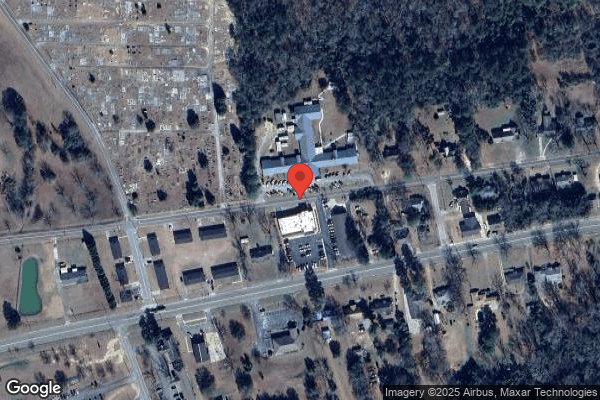

337 WEST COURT STREET, WRIGHTSVILLE, GA 31096 (478) 864-2286
For profit - Limited Liability company 94 Beds PEACH HEALTH GROUP Data: November 2025 2 Immediate Jeopardy citations
Trust Grade
0/100
#352 of 353 in GA
Last Inspection: July 2025

Inspected within the last 6 months. Data reflects current conditions.

Overview

Wrightsville Manor Health and Rehab has received a Trust Grade of F, indicating significant concerns about the quality of care provided. Ranked #352 out of 353 facilities in Georgia, this places it in the bottom half of nursing homes statewide, and it is the second out of two facilities in Johnson County, meaning there is only one local option that is better. The facility's performance is worsening, with issues increasing from 4 in 2023 to 9 in 2025. While the staffing turnover rate is relatively low at 39%, which is better than the state average, the facility has concerning fines of $99,469, higher than 96% of Georgia facilities, suggesting repeated compliance problems. Notably, there were two critical incidents involving failure to protect residents from sexual abuse, as well as issues with food safety practices, highlighting both serious weaknesses in resident safety and care standards.

Trust Score
F
0/100
In Georgia
#352/353
Bottom 1%
Safety Record
High Risk
Review needed
Inspections
Getting Worse
4 → 9 violations
Staff Stability
○ Average
39% turnover. Near Georgia's 48% average. Typical for the industry.
Penalties
✓ Good
$99,469 in fines. Lower than most Georgia facilities. Relatively clean record.
Skilled Nurses
⚠ Watch
Each resident gets only 19 minutes of Registered Nurse (RN) attention daily — below average for Georgia. Fewer RN minutes means fewer trained eyes watching for problems.
Violations
⚠ Watch
17 deficiencies on record. Higher than average. Multiple issues found across inspections.
★☆☆☆☆
1.0
Overall Rating
★★☆☆☆
2.0
Staff Levels
★★☆☆☆
2.0
Care Quality
★☆☆☆☆
1.0
Inspection Score
Stable
2023: 4 issues
2025: 9 issues

The Good

  • Full Sprinkler Coverage · Fire safety systems throughout facility
  • No fines on record
  • Staff turnover below average (39%)

    9 points below Georgia average of 48%

Facility shows strength in fire safety.

The Bad

1-Star Overall Rating

Below Georgia average (2.6)

Significant quality concerns identified by CMS

Staff Turnover: 39%

Near Georgia avg (46%)

Typical for the industry

Federal Fines: $99,469

Well above median ($33,413)

Moderate penalties - review what triggered them

Chain: PEACH HEALTH GROUP

Part of a multi-facility chain

Ask about local staffing decisions and management

The Ugly 17 deficiencies on record

2 life-threatening
Jul 2025 7 deficiencies
CONCERN (D)

Potential for Harm - no one hurt, but risky conditions existed

Resident Rights (Tag F0550)

Could have caused harm · This affected 1 resident

**NOTE- TERMS IN BRACKETS HAVE BEEN EDITED TO PROTECT CONFIDENTIALITY** Based on observations, staff interviews, and record review, the facility failed to ensure one of 22 sampled residents (R) (R4) w...

Read full inspector narrative →
**NOTE- TERMS IN BRACKETS HAVE BEEN EDITED TO PROTECT CONFIDENTIALITY** Based on observations, staff interviews, and record review, the facility failed to ensure one of 22 sampled residents (R) (R4) was treated with dignity during dining and during the care of an indwelling urinary catheter. This failure had the potential to place R4 at risk of experiencing low self-esteem and embarrassment.Findings include:Review of the facility's Residents' Right to Care, Treatment, and Services, located in the facility's admission Packet, revealed, . Resident have [sic] the right to expect reasonable continuity of care. This care is given without discrimination in the quality of services based on the source of payment and with respect for personal dignity and privacy .Review of R4's admission Record, located under the Profile tab of the electronic medical record (EMR), revealed R4 was admitted to the facility on [DATE] with diagnoses that included pseudobulbar affect, generalized anxiety disorder, and abnormal weight loss.Review of R4's significant change in status Minimum Data Set (MDS), with an Assessment Reference Date (ARD) of 7/14/2025 and located under the MDS tab of the EMR, revealed R4 was unable to complete the Brief Interview for Mental Status (BIMS), had long and short-term memory problems, and was severely impaired in cognitive skills for daily decision making. It was recorded that the resident had an indwelling urinary catheter and was dependent on staff for most activities of daily living (ADLs).a. During an observation on 7/28/2025 at 12:26 pm, R4 was observed lying in bed. Her noon meal tray was on her bedside table. At 12:38 pm, Certified Nurse Aide (CNA) 3 entered R4's room, repositioned R4 in bed, and began to feed the resident. CNA3 stood by the resident's side while feeding her. There was no chair in the room for CNA3 to sit in. CNA3 fed R4 her entire meal while standing at the resident's side.During an interview on 7/30/2025 at 2:01 PM, CNA3 confirmed that she stood by R4's side while feeding her on 7/28/2025. CNA3 stated that when residents were in their rooms for meal service, she always stood by the resident. CNA3 stated she did not know that standing by a resident while feeding them was a dignity concern. She stated she had probably been taught that, but it had slipped her mind.During an interview on 7/31/2025 at 1:27 pm, the Assistant Director of Nursing (ADON) was asked what the expectation was related to standing while feeding a resident. The ADON stated, I understand the dignity aspect for not standing over someone to feed them, but it is not something we have ever in serviced on, so we cannot have that expectation.b. During an observation on 7/30/2025 at 10:46 am, R4 was observed lying in bed. Her urinary catheter drainage bag was hanging on the side of the bed, and there was no dignity bag in place. The bag could be seen from the hallway and contained urine.During an observation on 7/31/2025 at 10:50 am, R4 was observed in the common area in front of the nurses' station. Her urinary catheter drainage bag and tubing were lying on the floor under her geriatric chair. The drainage bag was not covered with a dignity cover, and there was urine in the bag.During an interview and observation on 7/31/2025 at 10:53 am, CNA1 was asked why dignity covers were used with urinary catheter drainage bags. She stated it was a dignity issue. CNA1 was asked if R4's drainage bag was covered with a dignity cover at this time. CNA1 looked and the drainage bag and stated, No. CNA1 stated she had asked someone to find a dignity cover on the previous day.During an interview on 7/31/2025 at 10:59 am, the ADON stated the expectation was for urinary catheter drainage bags to be covered. The ADON went to the supply room, obtained a dignity cover, and instructed CNA1 to take the resident to her room, empty the drainage bag, and place the dignity cover on the bag.
CONCERN (D)

Potential for Harm - no one hurt, but risky conditions existed

Deficiency F0628 (Tag F0628)

Could have caused harm · This affected 1 resident

**NOTE- TERMS IN BRACKETS HAVE BEEN EDITED TO PROTECT CONFIDENTIALITY** Based on record review, staff interviews, and review of the facility's policy titled, Transfer or Discharge, Preparing a Residen...

Read full inspector narrative →
**NOTE- TERMS IN BRACKETS HAVE BEEN EDITED TO PROTECT CONFIDENTIALITY** Based on record review, staff interviews, and review of the facility's policy titled, Transfer or Discharge, Preparing a Resident for, the facility failed to provide the resident and/or their responsible party (RP) a written transfer notice, including the resident's appeal rights and ombudsman contact information, at the time the resident was transferred to the hospital, and failed to send a copy of the notice to the Long Term Care Ombudsman for five of five residents (R) (R6, R7, R28, R71, and R76) reviewed for hospitalizations in a total sample of 22. This deficient practice had the potential to place R6, R7, R28, R71, and R76 and/or their RP at risk of not having the knowledge of where and why a resident was transferred and/or how to appeal the transfer, if desired, and had the potential to contribute to the possible denial of re-admission and loss of the resident's home following a hospitalization for residents transferred to the hospital. Findings include: Review of the facility’s policy titled, Transfer or Discharge, Preparing a Resident for, dated December 2016, indicated, Policy Statement: Residents will be prepared for discharge.Policy Interpretation and Implementation When a resident is scheduled for transfer…the business office will notify nursing services of the transfer…so that appropriate procedures can be implemented…Nursing services is responsible for: a. Obtaining orders for…transfer…f. Assisting with transportation as applicable (i.e., calling for an ambulance) …The business office is responsible for: …b. Informing the resident, or his or her representative…of our facility's readmission appeal rights, bed holding policies, etc… 1. Review of R7’s Face Sheet located under the Profile tab of the EMR indicated R7 was admitted to the facility on [DATE]. Review of R7's Progress Note, dated 4/15/2025 and located in the Progress Notes tab of the EMR, revealed R7 was sent to the hospital on 4/15/2025. Review of R7 's EMR revealed no evidence that written notification regarding R7's transfer to the hospital was sent to R7’s RP or sent to the Ombudsman. Review of R7's, undated Bed Hold Notice, located in the EMR under the Miscellaneous tab, that the resident was sent to the hospital with, which did not have a signature from R7 or the RP and did not state the daily bed hold rate for a private or semi-private room. 2. Review of R71’s Face Sheet located under the Profile tab of the EMR revealed R71 was admitted to the facility on [DATE]. Review of R71's Progress Note, dated 7/2/2025 and located in the Progress Notes tab of the EMR, revealed R71 was sent to the hospital on 7/2/2025. Review of R71 's EMR revealed no evidence that written notification regarding R71's transfer to the hospital was sent to R71’s RP or sent to the Ombudsman. Review of R71's, undated Bed Hold Notice, located in the EMR under the Miscellaneous tab that was sent to the hospital with the resident, did not have a signature from R71 or the RP, and did not state the daily bed hold rate for a private or semi-private room. 3. Review of R76’s Face Sheet located under the Profile tab of the electronic medical record (EMR) revealed R76 was admitted to the facility on [DATE]. Review of R76's Progress Note, dated 6/20/2025 and located in the Progress Notes tab of the EMR, indicated R76 was sent to the hospital on 6/20/2025. Review of R76 's EMR revealed no evidence that written notification regarding R76's transfer to the hospital was sent to R76’s RP or sent to the Ombudsman. Review R76's undated Bed Hold Notice, and located in the resident's EMR under the Miscellaneous tab, and that was sent with R76 to the hospital, did not have a signature from R76 or the RP, and did not state the daily bed hold rate for a private or semi-private room. 4. Review of R28's undated admission Record located in the EMR under the Profile tab, revealed R28 was admitted to the facility on [DATE] and was re-admitted on [DATE]. Review of the EMR Progress Notes, located under the Progress Notes tab, revealed a progress note, dated 7/10/2025, of Writer notified residents wife RP [Representative] [name] of [R28’s] transfer to [Name of Hospital] unit due to increased agitation and resident receiving IM [intramuscular] injection for agitation. Further review of the record revealed no documentation that written notification containing information as to the reason for the hospital transfer was provided to the resident or the RP. Additionally, there was no documentation that he resident and/or the RP was given written notice that specified the duration of the facility’s bed hold policy. 5. Review of R6's admission Record, located in the Profile tab of the EMR, revealed R6 was admitted to the facility on [DATE]. Review of R6's Discharge summary, dated [DATE] at 8:46 pm, revealed, . resident was displaying signs of altered mental status, barely responding nodding to questions that nurse (writer) asked him . notified sister . to see if she was in agreeance [sic] with sending him to the hospital . she agreed . Review of R6's Patient Transfer Form and Bed-Hold Notice, both dated 6/14/2025 and located under the Miscellaneous tab of the EMR, revealed no documented evidence that R6 or his RP were provided written notice of the transfer or that they were provided written notice of the facility's bed-hold policy at the time of transfer. The Bed-Hold Notice was marked that the resident wished to reserve his room, but did not identify the daily rate for holding the resident's room. Review of R6's Plan of Care Note, dated 06/18/2025 at 2:08 PM, revealed, . [R6] is expected to return from hospital hospital [sic] stay today. He was admitted to hospital on [DATE] for abdominal pain and decreased appetite due to AKI [Acute Kidney Injury] . During an interview on 7/30/2025 at 10:45 am, the Administrator stated all RPs were notified by telephone by the nursing staff regarding a resident that must be transferred to the hospital. The Administrator confirmed the facility staff did send the RP written information on why the resident was sent to the hospital. The Administrator stated all residents transferred to the hospital were sent with a bed hold notice, but the RP was not provided with a bed hold notification. The Administrator also stated Medicaid residents had a seven-day bed hold, and if a resident was private pay, they could pay to hold the bed. During an interview on 7/31/2025 at 11:55 am, the Administrator revealed, We have no documentation of the reason for the transfer, and our bed hold policy having been provided to the resident, RP, and the Ombudsman regarding R28.” During an interview on 7/31/2025 at 3:35 pm, the Social Services Director (SSD) stated she was not aware she was supposed to send a notice to the Ombudsman regarding all residents who were transferred to the hospital.
CONCERN (D)

Potential for Harm - no one hurt, but risky conditions existed

Incontinence Care (Tag F0690)

Could have caused harm · This affected 1 resident

**NOTE- TERMS IN BRACKETS HAVE BEEN EDITED TO PROTECT CONFIDENTIALITY** Based on observation, staff interview, record review, and review of facility policy titled Foley Catheter Policy, the facility f...

Read full inspector narrative →
**NOTE- TERMS IN BRACKETS HAVE BEEN EDITED TO PROTECT CONFIDENTIALITY** Based on observation, staff interview, record review, and review of facility policy titled Foley Catheter Policy, the facility failed to manage a urinary catheter and drainage bag appropriately for one of one resident (R) (R4) reviewed for urinary catheters out of a total sample of 22 residents. This deficient practice had the potential to place R4 at risk of urinary tract complications.Findings include:Review of the facility's undated policy titled Foley Catheter Policy revealed that the policy did not address the proper placement of urinary catheter drainage bags and tubing.Review of R4's admission Record, located under the Profile tab of the electronic medical record (EMR), revealed R4 was admitted to the facility on [DATE] with diagnoses that included pseudobulbar affect, generalized anxiety disorder, and abnormal weight loss.Review of R4's Care Plan, located under the Care Plan tab of the EMR, revealed a focus of R4 having an indwelling urinary catheter. Goals included, . will show no s/sx [signs or symptoms] of urinary infection through review date . Interventions included to position catheter bag and tubing below the level of the bladder, check for kinks in catheter tubing, and resolve any issues to ensure proper flow of urine.Review of R4's Progress Note, dated 04/18/2025 at 12:48 PM and located under the Progress Notes tab of the EMR, revealed R4 had been hospitalized from [DATE] through 4/15/2025 for a urinary tract infection.Review of R4's significant change in status Minimum Data Set (MDS), with an Assessment Reference Date (ARD) of 7/14/2025 and located under the MDS tab of the EMR, revealed R4 was unable to complete the Brief Interview for Mental Status (BIMS), had long and short-term memory problems, and was severely impaired in cognitive skills for daily decision making. It was recorded that the resident had an indwelling urinary catheter and was dependent on staff for most activities of daily living (ADLs).During an observation on 7/28/2025 at 9:14 am, R4 was observed lying in bed. Her urinary catheter drainage bag was observed lying on the floor, and the tubing was touching the floor.During an observation on 7/31/2025 at 10:50 am, R4 was observed in the common area in front of the nurses' station. Her urinary catheter drainage bag was attached to her geriatric chair, and the drainage bag and tubing were lying on the floor.During an observation and interview on 7/31/2025 at 10:53 am, Certified Nurse Aide (CNA) 1 was asked if the resident was prone to urinary tract infections. She stated yes. CNA1 was asked where the urinary catheter bag should be placed when the resident was up in her chair. She stated it should be hooked on the back of the chair so that the bag and tubing did not touch the floor. CNA1 was asked to confirm the location of R4's urinary drainage bag and tubing. She observed and stated that both the tubing and the drainage bag were on the floor and should not be. During an interview on 7/31/2025 at 10:59 am, the Assistant Director of Nursing (ADON) stated urinary catheter bags and tubing should not be on the floor, as this was an infection control concern.
CONCERN (D)

Potential for Harm - no one hurt, but risky conditions existed

Deficiency F0698 (Tag F0698)

Could have caused harm · This affected 1 resident

**NOTE- TERMS IN BRACKETS HAVE BEEN EDITED TO PROTECT CONFIDENTIALITY** Based on observation, resident and staff interviews, and record review, the facility failed to ensure communication with the dia...

Read full inspector narrative →
**NOTE- TERMS IN BRACKETS HAVE BEEN EDITED TO PROTECT CONFIDENTIALITY** Based on observation, resident and staff interviews, and record review, the facility failed to ensure communication with the dialysis center, failed to monitor the dialysis access site, and failed to have documented blood pressures and weights, as ordered by the physician, for one of one resident (R) (R9) reviewed for dialysis out of a total sample of 22. These deficient practices had the potential to place R9 at increased risk of complications related to dialysis. Findings include:Review of R9's admission Record, located under the Profile tab of the electronic medical record (EMR), revealed R9 was admitted to the facility on [DATE] with diagnoses that included end-stage renal disease and dependence on renal dialysis.Review of R9's Physician Orders, located under the Orders tab of the EMR, revealed the following orders:3/3/2023 - weigh on non-dialysis days every Tuesday, Thursday, Saturday, and Sunday5/23/2023 - take blood pressure every day shift2/8/2024 - assess right permacath (dialysis access site) site every shift for signs and symptoms of infection.Review of R9's Care Plan, dated 7/16/2024 and located under the Care Plan tab of the EMR, revealed a focus related to end-stage renal disease. The goal was that R9's dialysis care would be coordinated between the facility and the dialysis center through the review date. Interventions included communicating with the dialysis center on an ongoing basis and monitoring and assessing the site for signs and symptoms of infection, bleeding, or pain.Review of R9's quarterly Minimum Data Set (MDS), with an Assessment Reference Date (ARD) of 6/3/2025 and located under the MDS tab of the EMR, revealed R9 had a Brief Interview for Mental Status (BIMS) score of 15 out of 15, which indicated the resident was cognitively intact. It was documented that the resident received dialysis services.a. Review of R9's Refusal of Treatment, dated 8/20/2024 and located under the Misc (Miscellaneous) tab of the EMR, revealed, . I, [R9], am exercising my right to refuse treatment. The staff has explained to me the long and short term consequences of this refusal as listed below and I fully understand these consequences. The facility has tried to offer alternative treatments which I have also refused. I hereby release this facility of any responsibility for anything that may occur due to my refusal . Treatment resident refuses: fluid restriction . short and long term consequences of refusal: fluid overload, death .Review of R9's Medication Administration Records (MARs), located under the Orders tab of the EMR, and Progress Notes and Vital Signs tabs of the EMR revealed the following:5/2025 - weight not obtained on non-dialysis days for nine of 18 opportunities; dialysis access site not assessed on day shift on 12 of 31 opportunities, and blood pressure not monitored on the day shift on 11 of 31 opportunities.6/2025 - weight not obtained on non-dialysis days for eight of 17 opportunities; dialysis access site not assessed on day shift on 11 of 30 opportunities, and blood pressure not monitored on the day shift on 10 out of 30 opportunities.7/2025 - weight not obtained on non-dialysis days for two of 17 opportunities; dialysis access site not assessed on day shift on three of 29 opportunities, and blood pressure not monitored on day shift on three of 29 opportunities.b. Review of R9's Progress Notes, Misc (Miscellaneous), and Assessments tab of the EMR, dated 1/2025 through 7/28/25, revealed no documented evidence of any communication between the facility and the resident's dialysis center. During an observation and interview on 7/28/2025 at 3:08 pm, R9's dialysis access site was observed with a dressing intact, and no signs or symptoms of infection or bleeding were noted. R9 stated she did not take any type of written communication with her when she went to dialysis and that she did not bring anything back from the dialysis center. R9 stated she did not think the facility took her blood pressure every day, but she could not be sure. R9 stated she did not think she was weighed every day.During an interview on 7/30/2025 at 2:09 pm, Licensed Practical Nurse (LPN) 2, who was assigned to R9, was asked how the facility communicated with R9's dialysis center. She stated, They call us with problems and we call them with problems. LPN2 was asked if any communication documentation was used between them and the dialysis center. LPN2 stated, No. LPN2 stated the facility obtained its own vital signs, including weights on non-dialysis days. LPN2 stated the mechanical lift had a built-in scale that was used to obtain the resident's weight. LPN2 stated she did not do anything with the resident's dialysis access site. She was asked if she monitored the site for signs and symptoms of infection. LPN2 stated, Our wound nurse would do that.During an interview on 7/30/2025 at 2:23 pm, LPN2 was asked about the missing vital signs and weights that had been identified on R9's MARs for 5/2025 through 7/2025. She stated it was improper documentation. She stated she had been documenting incorrectly and had been clicking a button in the EMR, which caused a 9 to appear in areas without documented blood pressures and weights. LPN2 was asked how the facility would know if the resident's blood pressure was elevated without the readings or if the resident was experiencing fluid overload without being able to monitor her weight. LPN2 stated she had obtained the weights and blood pressures had been obtained, but there was no documentation to show it.During an interview on 7/30/2025 at 2:47 pm, Registered Nurse (RN) 1, the Unit Manager, stated the nurse should be assessing R9's access site each shift for signs and symptoms of infection. RN1 stated any dressing changes to the access site would be done by either the dialysis center or the wound nurse. RN1 was asked how the facility would know if the resident's blood pressure was elevated or if she was at risk for fluid overload without having weights to monitor. She stated, You couldn't. RN1 was asked how the facility communicated with the dialysis center. She stated the dialysis center would call the Director of Nursing (DON) if there were any medication changes or if they needed the facility to do something with the resident. RN1 was asked if the weights and vital signs were important indicators for fluid volume overload, especially in light of the resident being non-compliant with her fluid restriction. She stated, Yes.During an interview on 7/30/2025 at 3:42 pm, the Assistant Director of Nursing (ADON) was asked how the facility communicated with the dialysis center. She stated the facility had previously used a communication sheet, but now they just call the facility with any information or instructions. The ADON was asked how the facility knew what types of medications the resident received at dialysis. She stated she thought they would call the facility. The ADON was asked how the dialysis center communicated nutritional information with the facility, or if the resident was receiving an Erythropoiesis-Stimulating Agent (ESA), so that the facility could monitor for adverse reactions or side effects. She stated the facility did not have a policy related to dialysis residents or communicating with the dialysis center. She stated the dialysis center would call and speak with the DON regarding any concerns. The ADON was asked if those phone calls with the DON were documented in the clinical record. She stated, No. The ADON was asked if the weights and vital signs were important indicators for fluid volume overload, especially in light of the resident being non-compliant with her fluid restriction. She stated, Yes.
CONCERN (D)

Potential for Harm - no one hurt, but risky conditions existed

Unnecessary Medications (Tag F0759)

Could have caused harm · This affected 1 resident

**NOTE- TERMS IN BRACKETS HAVE BEEN EDITED TO PROTECT CONFIDENTIALITY** Based on observations, staff interviews, record review, review of manufacturer's guidelines, and review of facility policies tit...

Read full inspector narrative →
**NOTE- TERMS IN BRACKETS HAVE BEEN EDITED TO PROTECT CONFIDENTIALITY** Based on observations, staff interviews, record review, review of manufacturer's guidelines, and review of facility policies titled Insulin Administration, and Administering Medications through a Handheld Nebulizer, the facility failed to ensure a medication error rate of less than five percent for four of 13 residents (R) (R64, R48, R7, and R16) observed during the medication pass out of a total sample of 22 residents. There were four errors out of 34 opportunities, resulting in a medication error rate of 11.76 percent. These failures had the potential to place R64, R48, R7, and R16 at risk of not receiving the prescribed dosage of medication.Findings include:Review of the facility's policy titled Insulin Administration, dated 09/2014, revealed no documentation related to priming insulin pens.Review of the facility's undated policy titled Administering Medications through a Handheld Nebulizer, revealed no documentation related to the fit of a nebulizer mask. Review of the manufacturer's Flex Pen package insert, dated 4/2025, revealed, . Check the insulin flow . Turn the dose selector to 2 units . Hold your FlexPen with the needle pointing upwards . Press the push-button until the dose shows 0 and lines up with the pointer . If you do not check the insulin flow, you may not receive your full insulin dose . Review of the manufacturer's KwikPen Instructions for Use package insert, dated 7/2023, revealed, . Priming your Pen means removing the air from the Needle and Cartridge that may collect during normal use and ensures that the Pen is working correctly. If you do not prime before each injection, you may get too much or too little insulin . To prime your Pen, turn the Dose Knob to select 2 units . Hold your Pen with the Needle pointing up . Push the Dose Knob in until it stops, and 0 is seen in the Dose Window. Hold the Dose Knob in and count to 5 slowly . You should see insulin at the tip of the Needle .Review of the manufacturer's Fiasp FlexTouch package insert, dated 6/2023, revealed, . Turn the dose selector to select 2 units . Hold the Pen with the needle pointing up . Press and hold in the dose button until the dose counter shows 0 . A drop of insulin should be seen at the needle tip .1. Review of R64's admission Record, located under the Profile tab of the electronic medical record (EMR), revealed R64 was admitted to the facility on [DATE] with diagnoses that included type 2 diabetes mellitus.Review of R64's Physician Order, dated 12/3/2024 and located under the Orders tab of the EMR, revealed R64 was to receive Fiasp Insulin Aspart with Niacinamide Injection Solution 100 units/milliliter (ml) subcutaneously every two hours, based on a sliding scale. For a blood sugar level of 251 to 360, it was ordered for R64 to receive five units of Fiasp.During an observation on 7/29/2025 at 11:25 am, Licensed Practical Nurse (LPN) 3 was observed obtaining a reading from R64's glucose monitoring system. The reading revealed that R64's blood sugar level was 290. LPN3 obtained R64's Fiasp Flex Touch pen from the medication cart, turned the dial to five units, and administered the medication. LPN3 did not prime the insulin pen as per the manufacturer's instructions.2. Review of R48's admission Record, located under the Profile tab of the EMR, revealed R48 was admitted to the facility on [DATE] with diagnoses that included type 2 diabetes mellitus.Review of R48's Physician Order, dated 6/12/2025 and located under the Orders tab of the EMR, revealed R48 was to receive Novolog Injection Solution 100 units/ml subcutaneously before meals and at bedtime, based on a sliding scale. For a blood sugar level of 243, it was ordered for R48 to receive four units of Novolog insulin.During an observation on 7/29/2025 at 11:31 am, LPN3 was observed obtaining a fingerstick blood sugar level (FSBS) for R48. The reading was 243. LPN3 obtained R48's Novo Nordik insulin pen from the medication cart, turned the dial to four units, and administered the medication. LPN3 did not prime the insulin pen as per the manufacturer's instructions.3. Review of R7's admission Record, located under the Profile tab of the EMR, revealed R7 was admitted to the facility on [DATE] with diagnoses that included type 2 diabetes mellitus.Review of R7's Physician Order, dated 1/6/2025 and located under the Orders tab of the EMR, revealed R7 was to receive Admelog Injection Solution (Insulin Lispro) 100 unit/ml subcutaneously before meals and at bedtime, based on a sliding scale. For a blood sugar level of 199, it was ordered for R7 to receive one unit of Lispro insulin.During an observation and interview on 7/29/2025 at 11:59 am, LPN3 was observed obtaining a FSBS reading for R7. The reading was 199. LPN3 obtained R8's Insulin Lispro Kwik Pen from the medication cart, turned the dial to one unit, and began to administer the medication. The surveyor stopped LPN3 and asked if she had primed the insulin pen before beginning the administration. LPN3 stated, No. LPN3 primed the Kwik Pen and then administered one unit of Lispro to R7.During an interview on 7/29/2025 at 12:05 pm, LPN3 confirmed she had not primed the insulin pens for R64 or R48. LPN3 stated she was unaware that insulin pens should be primed before each use.During an interview on 7/30/2025 at 10:00 am, the Assistant Director of Nursing (ADON) stated she was unaware that insulin pens should be primed.4. Review of R16's admission Record, located under the Profile tab of the EMR, revealed R16 was admitted to the facility on [DATE] with diagnoses that included chronic obstructive pulmonary disease (COPD).Review of R16's Physician Order, dated 1/15/2025 and located under the Orders tab of the EMR, revealed R16 was to receive one vial of ipratropium-albuterol 0.50.5/2.5 milligrams (mg)/3 milliliters (ml) via nebulizer three times a day.During an observation and interview on 7/29/2025 at 2:43 pm, LPN3 was observed providing the nebulizer treatment to R16. The nebulizer mask did not fit the resident's face snugly, and an approximate one-inch gap was noted between R16's nose and the mask. There were gaps on the sides of the mask. When the nebulizer machine was turned on, the medication mist flowed upward through the gaps, in front of the resident's eyes, and into the room. At 2:55 pm, LPN3 was asked if the resident's nebulizer mask fit. She attempted to tighten the mask and stated she did not want the mask too tight. LPN3 stated that the way the resident held her head during the treatment added to the mask not fitting correctly; however, LPN3 did not attempt to educate the resident on holding her head in a different position. LPN3 was asked if the facility had different sizes of nebulizer masks. She stated she did not know.During an interview on 7/30/2025 at 10:00 am, the ADON stated that nebulizer masks should fit snugly to a resident's face, and it was her expectation that staff inform management if the proper size was not available for a resident.During an interview on 7/31/2025 at 2:00 pm, the Administration stated it was her expectation that nurses perform their duties according to current standards of practice.
CONCERN (D)

Potential for Harm - no one hurt, but risky conditions existed

Medical Records (Tag F0842)

Could have caused harm · This affected 1 resident

**NOTE- TERMS IN BRACKETS HAVE BEEN EDITED TO PROTECT CONFIDENTIALITY** Based on resident and staff interviews and record review, the facility failed to document an episode of hypoglycemia (low blood ...

Read full inspector narrative →
**NOTE- TERMS IN BRACKETS HAVE BEEN EDITED TO PROTECT CONFIDENTIALITY** Based on resident and staff interviews and record review, the facility failed to document an episode of hypoglycemia (low blood sugar) for one of five residents (R) (R8) reviewed for unnecessary medications out of a total sample of 22. This deficient practice had the potential to place R8 at increased risk for medical complications.Findings include: Review of R8's admission Record, located under the Profile tab of the electronic medical record (EMR), revealed R8 was admitted to the facility on [DATE] with diagnoses that included type 2 diabetes mellitus.Review of R8's Physician Order, dated 6/13/2025 and located under the Orders tab of the EMR, revealed R8 was to have fingerstick blood sugar (FSBS) checks before meals and at bedtime. It was recorded that the physician was to be notified if R8's blood sugar level was below 80 or greater than 400. Review of R8's admission Minimum Data Set (MDS), with an Assessment Reference Date (ARD) of 6/25/2025 and located under the MDS tab of the EMR, revealed R8 had a Brief Interview for Mental Status (BIMS) score of 13 out of 15, which indicated the resident was cognitively intact. During an interview on 7/30/2025 at 12:13 pm, R8 stated, My blood sugar dropped on the preceding day (7/29/2025). R8 stated that when the episode happened, her roommate got Licensed Practical Nurse (LPN) 3. R8 stated LPN3 checked her blood sugar level, and it was 61. R8 stated LPN3 brought her orange juice and sugar, and when LPN3 rechecked her blood sugar, it was 91. R8 stated that three nurses were involved in helping her with her blood sugar level. Review of R8's entire EMR revealed no documented evidence of the incident with R8's blood sugar on 7/29/2025. On 7/30/2025 at 4:37 pm, the Assistant Director of Nursing (ADON) was asked if anything had been reported to her regarding R8's blood sugar being low on 7/29/2025. She stated, No. The ADON called LPN3, and the surveyor spoke to LPN3 in the presence of the ADON. LPN3 was asked if there had been an incident with R8's blood sugar dropping on 7/29/2025. LPN3 stated, Yes. LPN3 stated R8 reported that her blood sugar was low, so she checked it, and it was 60. LPN3 stated she gave the resident orange juice. LPN3 was asked if she documented the incident. She stated, No. During an interview on 7/30/2025 at 4:39 pm, the ADON stated the expectation was for these types of episodes to be documented. During an interview on 7/31/2025 at 2:00 pm, the Administration stated it was her expectation that nurses perform their duties according to current standards of practice.
CONCERN (E)

Potential for Harm - no one hurt, but risky conditions existed

Infection Control (Tag F0880)

Could have caused harm · This affected multiple residents

Based on observation, interview, and record review, the facility failed to administer medications in a manner to prevent cross-contamination for seven of 13 residents (R) (R62, R65, R56, R30, R33, R22...

Read full inspector narrative →
Based on observation, interview, and record review, the facility failed to administer medications in a manner to prevent cross-contamination for seven of 13 residents (R) (R62, R65, R56, R30, R33, R22, and R45) observed receiving medications. This deficient practice had the potential to place R62, R65, R56, R30, R33, R22, and R45 at risk of avoidable infections. Findings include:1. During continuous observations of the medication pass on 7/29/2025 and beginning at 1:10 pm, the following was observed:1. 1:10 pm: Licensed Practical Nurse (LPN) 2 was observed preparing a medication for R62. LPN2 opened the medication cart, obtained a medication card, popped a pill into a medication cup, placed the medication card back into the cart, and then locked the cart. LPN2 poured water into a cup and then went outside to the smoking area where R62 was located and administered the medication. R62 drank the water and handed the cup back to LPN2 for disposal. LPN2 then re-entered the building. LPN2 touched the door handle going outside and coming back inside.2. 1:15 pm: LPN2 approached the medication cart, and without performing hand hygiene, LPN2 opened the medication cart, prepared three oral medications for R65, and closed the cart. LPN2 poured water into a cup and then went outside to the smoking area where R65 was located and administered the medication. R65 drank the water and handed the cup back to LPN2 for disposal. LPN2 then re-entered the building. LPN2 touched the door handle going outside and coming back inside.3. 1:20 pm: LPN2 approached the medication cart, and without performing hand hygiene, LPN2 opened the medication cart, prepared three oral medications for R56, and closed the cart. LPN2 poured water into a cup and then administered the medications to R56 in his room. R56 drank the water and handed the cup back to LPN2 for disposal.4. 1:28 pm: LPN2 approached the medication cart, and without performing hand hygiene, LPN2 opened the medication cart, prepared two oral medications for R30, and closed the cart. LPN2 poured water into a cup and then went to R30 in the hallway and administered the medications. R30 drank the water and handed the cup back to LPN2 for disposal.5. 1:36 pm: LPN2 approached the medication cart, and without performing hand hygiene, obtained a respiratory inhaler from the cart for R33. R33 came to the medication cart, LPN2 handed the inhaler to R33, and R33 self-administered the medication and gave the inhaler back to LPN2. LPN2 placed the inhaler back into the medication cart.6. 1:40 pm: LPN2 prepared one oral medication for R22 and poured a cup of water. LPN2 approached R22, administered the medication, and returned to the medication cart.7. 1:42 pm: LPN2 did not perform hand hygiene, opened the medication cart, prepared one oral medication, and obtained a bottle of eye drops for R45. LPN2 closed the drawer, performed hand hygiene with hand sanitizer, and gathered a tissue and an empty cup. LPN2 stated she always completed hand hygiene before a treatment, and the eye drops were considered a treatment. LPN2 was asked if she performed hand hygiene at any other time during a medication pass. She stated she washed her hands with soap and water at the beginning of a medication pass, but unless she was completing a treatment, she did not perform hand hygiene between medication administrations. LPN2 was asked if she had touched the door handle when leaving and entering the building when she had gone outside to administer medications. She stated, Yes. LPN2 was asked if she had touched anything in the residents' environments during the medication pass. She stated, Yes. LPN2 was asked if she had touched objects that had been touched by the residents and/or other staff members. She stated, Yes. LPN2 was asked if the potential for cross-contamination was present during the medication pass. She stated, Yes.During an interview on 7/31/2025 at 10:19 am, the Assistant Director of Nursing (ADON) stated staff were expected to wash their hands before starting the medications pass and that hand hygiene should be performed between residents. She stated that, if needed due to soilage during the medication pass, staff should wash their hands again. The ADON was asked to provide the facility's hand-washing policy. She stated the facility did not have a specific handwashing policy, but a skills check was completed for all staff members related to handwashing.On 7/31/2025 at 10:40 am, the ADON provided an undated Handwashing Skills Check for LPN2. It was recorded that LPN2 had performed hand washing competently. At the bottom of the form, it was recorded, . Nurses: Hand hygiene between each resident med pass .
Feb 2025 2 deficiencies 2 IJ
CRITICAL (J) 📢 Someone Reported This

A family member, employee, or ombudsman was alarmed enough to file a formal complaint

Immediate Jeopardy (IJ) - the most serious Medicare violation

Free from Abuse/Neglect (Tag F0600)

Someone could have died · This affected 1 resident

**NOTE- TERMS IN BRACKETS HAVE BEEN EDITED TO PROTECT CONFIDENTIALITY** Based on staff interviews, record reviews, and a review of the facility's policy titled Abuse, Neglect, Exploitation and Misappr...

Read full inspector narrative →
**NOTE- TERMS IN BRACKETS HAVE BEEN EDITED TO PROTECT CONFIDENTIALITY** Based on staff interviews, record reviews, and a review of the facility's policy titled Abuse, Neglect, Exploitation and Misappropriation Prevention Program, the facility failed to protect Resident (R1)'s right to be free from sexual abuse by Resident (R2). The facility census was 75. On 2/4/2025, a determination was made that a situation in which the facility's noncompliance with one or more requirements of participation had the likelihood to cause serious injury, harm, impairment, or death to residents. The facility's Administrator and the Director of Nursing (DON) were informed of the Immediate Jeopardy (IJ) on 2/4/2025 at 4:13 pm. The noncompliance related to the IJ was identified to have existed on 11/29/2024. An Acceptable IJ Removal Plan was received on 2/8/2025. Based on observations, record reviews, interviews, and review of the facility's policies as outlined in the Removal Plan, it was validated that the corrective plans and the immediacy of the deficient practice were removed on 2/8/2025. Findings include: The facility had an Abuse, Neglect, Exploitation and Misappropriation Prevention Program, revision dated April 2021. The policy did not include a definition of sexual abuse. Policy Statement: Residents have the right to be free from abuse, neglect, misappropriation of resident property and exploitation. This includes but is not limited to freedom from corporal punishment, involuntary seclusion, verbal, mental, sexual or physical abuse, and physical or chemical restraint not required to treat the resident's symptoms. Facility Incident Report dated 11/29/2024 documented resident to resident sexual abuse in which R2 was found in R1's room standing over her, his pants were on, her brief was on, blood was noted on her brief upon exam she was bleeding from the vagina. The physician, responsible party, and police were notified. R1 was transferred to the hospital for an exam left via ambulance at 2:21 am. R2 was in his room and placed on 15-minute checks to monitor his whereabouts. A review of the hospital records dated 11/29/2024 at 6:39 am revealed the emergency room physician was asked by the advocate who brought the sexual assault kit to obtain samples per kit instructions and not to perform the full sane exam. The physician revealed samples were obtained with mild bleeding on exam. Abrasions were noted at one-three o'clock as well as nine o'clock. Small vaginal tear at 5:00. Patient was given Sexually Transmitted Infection (STI) prophylaxis. The physician stated he personally obtained samples, sealed them, and handed sealed envelope to the detective. The physician revealed that per law enforcement steps have been taken for patient to ensure safety at facility has other {sic} resident been removed or is being removed. A review of the local police report dated 11/29/2024 at 6:41 am revealed that the officer was advised that one of the on-duty nurses at the facility entered the room of R1 and witnessed R2 over the top of R1. R2 fled from the room. The nurse then noticed blood around the private area of R1, at which time she went to locate R2. When R2 was located, he had his hands in front of his pants in his private area. Blood was noticed on his pants by the zipper. The facility collected R1 and R2 clothing. The officer revealed that he arrived at the hospital at 7:15 am, where he met with R1's family about the facts of the incident. The family member stated that R1 was unaware of where she was or what happened and that all he could get from her was that she had a bad dream. The officer was notified of four facility staff members that had witnessed R2 on numerous occasions going in and out of the room belonging to R1 on the night in question. The physician at the hospital made contact with the officer around 2:00 pm and turned over the evidence collected from the sexual assault kit to the officer. The officer stated that after talking with the physician and collecting the sexual assault kit, it was determined that R1 had been a victim of rape. The officer notified and advised the Administrator at the facility that R2 was going to be arrested for the rape of R1, then turned back over to the facility because of his mental capacity. He stated the Administrator stated R2 would then be moved to another facility. A review of the facility incident report dated 11/29/2024 revealed a description of the Licensed Practical Nurse (LPN) noted a male resident (R2) standing over her (R1). Shortly after he (R2) left room noted bright red blood on brief was mostly on the right side of brief. A review of the Progress Notes dated 11/29/2024 revealed the Registered Nurse (RN) was called to room by LPN. Noted large amount of bright red blood on (R) right side of brief. Appeared to be coming from the vaginal area. Had had a small stool and no blood was in this stool when resident was cleaned up. LPN had noted a male resident (R2) in the room before the blood was noted. A review of the clinical record for R1 revealed that she was admitted to the facility on [DATE] and had diagnoses that included but were not limited to Alzheimer's Disease with late-onset, delusional disorders, legal blindness, as defined in the USA, a psychotic disorder with delusions due to known physiological condition, and muscle weakness. A review of the Quarterly Minimum Data Set (MDS) of the Brief Interview for Mental Status (BIMS) form dated 11/15/2024 revealed that R1 was assessed as having a score of 99, indicating the interview was not completed. Review of a quarterly note by social services dated 11/14/2024 revealed that R1 is up and dressed daily. Most days, she is in the lobby/room in a geriatric chair. She wears a helmet for safety. R1 often talks but is rarely understood, she will often yell out for mamma and other words sometimes not understood. A review of the clinical record for R2 revealed that he was admitted to the facility on [DATE] and had diagnoses that included but were not limited to, high-risk heterosexual behavior, muscle weakness, need for assistance with personal care, unspecified dementia, unspecified severity, without behavioral disturbance, psychotic disturbance, mood disturbance, other personality and behavioral disorders due to known physiological condition, and anxiety. A review of the Annual MDS of the BIMS form dated 9/3/2024 revealed that R2 was assessed as having cognitive impairment, with a score of 5 out of 15, indicating severe cognitive impairment. A review of a social services annual review note dated 9/3/2024 revealed that R2 has a supportive family that he speaks to by phone often. The resident gets along with his roommate. He also participates in activities of his choosing. He eats meals in the dining room with others. He is up and dressed daily. He is a smoker and abides by the smoking policy with his vape. Interview with the Director of Nursing (DON) on 1/29/2025 at 10:00 am revealed she has been in the DON role for six years. She stated that R2 could ambulate without assistance, had an unsteady gait at times, and had no history of falls. The DON stated that when RN CC stated that R1 had blood in her brief, they looked at it. The DON further revealed that she does not know if R1 was raped, but it depends on what you define as rape. She stated that if R2 did something to R1, it would be with his hands because he was not capable of sexually assaulting R1. She stated that R2 would not have known how to fasten his brief back and fasten R1's brief. DON stated that the RN CC assessed him at the facility and that there were two small blood spots near his belt buckle, and R2 would not have had time to wash his hands. She stated that there was no blood on his hands when staff located R2. Further interview with the DON on 1/30/2025 at 9:45 am revealed DON stated that R2 was not having any inappropriate sexual behaviors towards other residents. She stated that she thinks that it was more of him messing with himself. The DON stated that R2 was on medroxyprogesterone for a while. The DON revealed that the medication started on 9/4/2019 and was discontinued on 7/30/2024 due to a decline in gait and cognition. The DON further revealed that R2 was starting back on medroxyprogesterone, and the medication was sent with him to the other facility after the incident. The DON revealed that they moved R2 down to the locked unit until they could get him to a behavioral facility. The DON stated that he was arrested and returned to the facility several hours later. Interview with Licensed Practical Nurse (LPN) JJ on 2/4/2025 at 3:05 pm revealed she has been working at the facility for six years. She stated that she has been working on the locked unit for one year. LPN JJ stated that when she came to work R2 was not on the unit. She stated that they brought him on the unit sometime during breakfast. She stated that she does not remember the exact time. LPN JJ stated that she was told of the incident, and they wanted him to be watched closer. LPN JJ stated that R2 was mostly in the dayroom. She stated that she is responsible for the locked unit, and she is also responsible for the rest of the 300 hall. LPN JJ revealed that R2 went into a female resident's room while he was on the locked unit. She stated that she saw him coming out of the female resident's room. LPN JJ stated that she does not think that anyone saw him go into her room, but she saw him come out. LPN JJ stated that she does not know how long he was in the female's room because no one saw him go in. She stated that when she saw him come out of the room, she made him go back to the dayroom. She stated that one CNA was at lunch and the other CNA was on the unit. LPN JJ stated that she checked on the female resident after R2 came out of her room. She stated that the female resident was fine, she was in bed with covers pulled over her. Interview with Certified Nursing Assistant (CNA) II on 2/4/2025 at 2:48 pm revealed that she had worked at the facility for 15 years. She stated that she has worked on the locked unit for 14 years. CNA II stated that her shift is from 6:45 am - 7:15 pm. She stated that she was working on the morning of the incident between R1 and R2. She stated that they brought R2 to the locked unit during breakfast. CNA II stated that the police came and took R2 out of the facility through the back door of the unit. She stated that he returned to the unit a couple of hours later. CNA II stated that they were doing 15-minute checks on him, and he was always in their eyesight. She stated there were two CNAs and one nurse for the locked unit. CNA II revealed that the nurse is responsible for the locked unit and the rest of the 300 hall. CNA II stated that when the nurse is not on the unit, she gives medication to the other residents in the 300 hall. CNA II stated that she went to lunch from 11:00 am to 11:30 am. CNA II further revealed that she did not know what happened while she was at lunch and only one CNA would be left on the unit while she was at lunch. Interview with CNA HH on 2/4/2025 at 2:40 pm revealed that she has worked at the facility for one and a half years and on the locked unit since her hire. She stated that she worked in the morning after the incident between R1 and R2. CNA HH stated that she and the other CNA provided every 15-minute checks on R2. CNA HH stated that R2 mostly stayed in the dayroom with other residents. She stated that he sat in a chair at the door, and she sat in the hall facing him. CNA HH stated that when R2 got up and walked down the hall, she walked behind him. She stated that there were 17 residents in total on the locked unit that day. CNA HH stated that she does not recall if R2 entered a female resident's room while in the locked unit. Interview with the Social Service Director (SSD) on 1/29/2025 at 10:30 am revealed R2 just walked around and was easily redirected. SSD stated that R2 was on the 100 hall, and R1 was on the 200 hall. She stated that R2 had to walk past R1's room to go to the vending machine to buy snacks, which he did often. She stated R2 was sent to a behavior unit and from there he was discharged home with family. SSD stated R1 talks but it's like blurting stuff out. She stated that she hollers out a lot, and she does not see a difference in her behavior before or after the incident. Interview with the Administrator on 1/29/2025 at 3:01 pm revealed that she is the abuse coordinator and was informed of the incident by the DON. She stated that R1 was sent to the emergency room (ER) for evaluation, and they placed R2 on the locked unit so that he could be monitored closer. The Administrator revealed that the staff started 15-minute checks on him until they could get him sent out to a behavioral unit. She stated that if anything, he can move his hands, but she does not believe that he could perform a sexual act. The Administrator further revealed that R2 did not have any sexual behaviors prior to the incident. Interview with RN BB on 1/29/2025 at 8:50 pm revealed she has been working at the facility for 14 years. She stated that she is the weekend night supervisor and works every weekend from 7:00 pm -8:00 am. RN BB stated that several years ago, maybe eight or nine years ago, the male resident would go out to the smoke porch and show himself (his private area). RN BB further revealed that there was a large window at that time, and he would stand in front of that large window and show himself. RN BB stated that they put him on some medication that seemed to help up until this incident. RN BB stated that the male resident would get up sometimes during the night, walk around, and then lie back down and go to sleep. RN BB stated that the male resident went down the 200 hall because that's where the dining room is, and he would go to the dining room to eat. She stated that the female resident (R1) is known to holler out and was hollering out some on that night. RN BB stated that the staff does not always go and check on her when she hollers out because she does it frequently. She stated that she does not remember if she was hollering out during the time frame when R2 was in her room. RN BB stated that she felt like there was a very good possibility that the resident was raped. She stated that if R1 was raped, it was by hand. RN BB stated that R2 could dress and undress himself, but he was slow. She stated that he was slow in doing things, and they had to cue him to do things. Interview with the Assistant Director of Nursing (ADON) LPN DD on 1/30/2024 at 10:10 am revealed that she has worked at the facility for 19 years. She stated that she's been in the ADON role for five years. LPN DD stated that the DON informed her of the incident through a text message. She stated that the next day, she was told that it was thought that it was some sort of sexual abuse that had happened. The police came and got R2, and they sent R1 out to the ER. LPN DD stated that after the hospital examined R1, she returned to the facility. She stated that the Administrator asked her to request hospital records. LPN DD revealed that they all reviewed the hospital records together, and the hospital records stated that she had some tears in her vaginal area. LPN DD stated that R2 went to jail. The staff monitored R2 after returning to the facility until he was discharged home. She stated that it was a mess, she hated it happened, but she doesn't know. LPN DD stated that the medication medroxyprogesterone was discontinued July 2024. She stated that R2 had a decline; he began to shuffle, and the nurse practitioner took him off the medication, thinking it would help with his decline. She stated that R2 was on it for a long time. LPN DD stated that R2 didn't have sexually inappropriate behaviors towards other residents, but he would expose himself and touch himself but never touched anyone else. Interview with LPN AA on 1/30/2025 at 1:47 pm revealed she was working on the night of the incident. LPN AA further revealed that R2 always wanders but usually does not go inside rooms. However, she had observed him going down the hall and into the R1 room. LPN AA stated she got right up (maybe a minute) and entered R1's room. She revealed that R2 was startled when she turned the lights on. She reported that R2 was just standing over R1. LPN AA stated that his pants were not down and asked R2 to come out of the room. She confirmed that she walked him to his nurse and told her what happened. LPN AA revealed that she went back to check on R1 and saw specks of blood. She stated she looked closer and saw blood on her brief. She stated she went and got the RN supervisor, RN BB. She stated that she, RN BB, and the other nurse entered R1's room, and RN BB assessed her. Interview with Nurse Practitioner (NP) CC on 1/30/2025 at 2:56 pm revealed that R2 had a decline in health and falls, so she did a kind of Gradual Dose Reduction (GDR). NP CC further revealed that R2 was on the medication medroxyprogesterone for so long, and since there were no reported incidents, she took him off of it, and there were no issues until that incident. NP CC stated she was not on call the day of the incident and did not know until the next day after they had already sent the resident out. She noted that communication came over from the facility notifying her of R1 having blood in her brief. NP CC stated that the on-call NP had started R2 back on the Provera. NP CC revealed that the on-call NP took care of things that night, moved him to the locked unit, started his Provera, and got a Haldol injection to help him relax since he was moved down to that unit. She revealed that she does not feel that R2 had the sexual behaviors because his Provera was discontinued. NP CC stated that behaviors would have been observed after two weeks of being off the medication. The facility implemented the following actions to remove the IJ: 1. Resident R1, BIMS 99, continues at baseline confused, yells out at intervals, and continues to require total ADL care needs be identified and met by staff. 2. Resident R2 on 11/29/24 was placed on 15-minute checks from 1:45am, R2 was placed on locked unit until he was picked up at 8:30pm by a behavioral health service. Action Plan: 1. Abuse Prevention education began on 11/29/24 and is ongoing with staff by Administrator, Staff Development Coordinator or Director of Nursing. 12 of 12 Lpn's, 24 of 24 can's, 2 of 2 CMA's, 1 of 1 social services, 1 of 1 administrator, 2 of 2 maintenance, 1 of 1 DON, 1 of 1 ADON, 1 of 1 admissions, 1 of 1 hr, 2 of 2 activities, 1 of 1 medical records, 1 of 1 MDS, 3 of 3 Therapy, 1 of 1 BOM, 2 of 2 Receptionists, 9 of 9 Housekeepers, 8 of 8 Dietary, 3 of 3 RN's. 76 employees 100%. Abuse 11/29/2024. Prevention education is provided upon hire by HR director and periodically throughout employment by regulation guidelines. The dates of the last in-service were 1/29/25 and 1/30/25. No new staff will be able to work without receiving the education. No new hires. 2. Social Service Director interviewed all residents with BIMS 13 or above on 12/2/24, asking had anyone injured them, come in there room, or sexual abused them. For the resident unable to answer Skin assessments are performed on all residents weekly by treatment nurse every week. Weekly skin assessments 12/2 hall 1, 12/3 hall 2, 12/5 hall 3 were completed no injuries found per treatment nurse. 3. A camera was placed in R1's room and the monitor placed at nurses' station, on 12/9/2024, with family's permission for closer observation and residents' inability to communicate r/t potential abusive encounters. 4. R1 was assessed upon return by nurse S.T. with no new findings/bleeding observed 11/29/24. 5. Social Service Director began interviewing all residents 2/5/25, asking them has a person been in there room touching or hurting them, this will be completed 2/6/25. 6. Medical Director was notified of 3 Ij's 2/4/25 at 6:00 pm. 7. Medical Director reviewed the abuse policy and made no changes on 12/3/2024. 8. On 01/15/25 QA reviewed state report of incident with R1 and R2. R2 did not return to facility that resolved the situation, R2 was admitted to a behavioral health facility on 11/29/2024. The facility's corrective actions for F600 were completed on 02/06/2025, and the facility alleges the immediacy of IJ be removed on 02/08/2025. The facility implemented the following actions to remove the IJ: 1. Observation on 2/11/2025 at 12:45 pm of R1 who was observed in bed with her left leg pulled up to her chest. She was noted to yell at least once during the observation, and she would repeat her name at times. 2. Review of the Census of the electronic medical record (EMR) R2 discharged from the facility on 11/29/2024. Review of Progress Notes dated 11/29/2024 indicated that R2 was picked up by transportation and taken to a behavior health center at 8:30 pm. Action Plan: 1. Interview on 2/12/2025 at 1:19 pm with Human Resources, on 2/12/2025 at 1:44 pm with LPN XX, 2/12/2025 at 1:48 pm LPN HHH, 2/12/2025 at 1:52 pm LPN JJ, Interview on 2/12/2025 at 2:00 pm with CNA GG, on 2/12/2025 at 2:03 pm with CNA HH, on 2/12/2025 at 2:06 pm with CNA/Central Supply JJJ, on 2/12/2025 at 2:10 pm with CNA HH, on 2/12/2025 at 2:17 pm with CNA KKK, at 2:20 pm with CNA LLL, on 2/12/2025 at 2:25 CNA LL, on 2/12/2025 at 2:29 pm with CNA MM, on 2/12/2025 at 2:39 pm with RN - Unit Manager NN, on 2/12/2025 at 2:57 pm with MDS, on 2/12/2025 at 3:01 pm with LPN Treatment nurse EE, on 2/12/2025 at 3:11 pm with Housekeeper (HSK) OO, on 2/12/2025 at 3:17 pm with HSK TT, on 2/12/2025 at 3:21 pm with HSK QQ, on 2/13/2025 at 6:10 am with Receptionist YY, on 2/13/2025 at 6:13 am with CNA ZZ, 2/13/2025 at 6:17 am with LPN AAA, on 2/13/2025 at 6:19 am with Agency LPN BBB, on 2/13/2025 at 6:21 am with CMA CCC, on 2/13/2025 at 6:27 am with CNA DDD, on 2/13/2025 at 6:34 am with CNA EEE, on 2/13/2025 at 6:51 am with CNA FFF, on 2/13/2025 at 7:12 am with CNA GGG on 2/13/2025 at 7:46 am with Maintenance Assistant, on 2/13/2025 at 7:51 am with Maintenance Director, on 2/13/2025 at 8: 25 am with HSK RR, on 2/13/2025 at 8:27 am Program Manager, on 2/13/2025 at 8:30 am with COTA SS, on 2/13/2025 at 8:31 am with HSK TT, on 2/13/2025 at 8:33 with HSK Supervisor, on 2/13/2025 at 8:38 am with [NAME] UU, on 2/13/2025 at 8:41 am with Dietary Manager, on 2/13/2025 at 8:43 am with Dietary Aide VV, on 2/13/2025 at 8:45 am with [NAME] WW, on 2/13/20205 at 9:11 am with Business Office Manager(BOM), on 2/13/2025 at 9:15 am with Medical Records, on 2/13/2025 at 9:18 am with Admissions Coordinator, on 2/13/2025 at 9:24 am with Social Services Director, on 2/13/2025 at 9:27 am with Activities Director, and on 2/13/2025 at 9:30 am with Activities Assistant. All staff interviewed expressed a knowledge in knowing the types of abuse, signs and behaviors of potential sexual abuse, who to report abuse to, and timeframes for reporting abuse. 2. Review of a document dated 12/3/2024 indicated that the Social Services Director questioned all female residents with a BIMS of 13 and higher if any male residents had ever been in room without permission and it was reported that none of the women voiced any concerns. There were 13 women listed on the document. During an interview on 2/12/2025 at 4:37 pm with R8, 2/12/2025 at 4:39 pm with R9, and 2/12/2025 at 4:46 pm with R10 all residents confirmed that they had been interviewed by staff, and no one reported being fearful of anyone and all denied that anyone has abused them. 3. Observation on 2/11/2025 at 12:45 pm of R1 who was observed in bed with her left leg pulled up to her chest. R1 was noted to yell out during the observation, and she would repeat her name at times. During an observation on 2/11/2025 at 1:12 pm a monitor was observed at the nurse station showing R1 in bed in her room. 4. Review of Weekly Skin Checks for R1 on 11/29/2024 revealed reddened area to the coccyx. 5. Review of document dated 2/6/2025 which listed 76 total residents and their response (No or no response) to a question about anyone coming into their room unwelcomed making sexual advances or inappropriate touch. None of the residents reported yes to the question. This was completed by the Social Services Director and dated 2/7/2025. 6. There was a document on facility letterhead dated 2/4/2025 with a statement written by the Administrator indicating the Medical Director was notified of the 3 IJs via telephone on 2/4/2025 at 6 pm. Document signed by the Administrator and the Medical Director. During an interview with the Medical Director on 2/14/2025 at 8:05 am he confirmed that he had been made aware of the IJs for the facility. 7. Review of statement from the Administrator dated 12/3/2024 indicating that the Medical Director reviewed the abuse policy with no changes noted. Document signed by the Administrator and the Medical Director. There was also an email response from the Medical Director stated that the policy was reviewed on 12/3/2024 and he agreed with the policy. During an interview with the Medical Director on 2/14/2025 at 8:05 am he confirmed that he had reviewed the abuse policy. 8. Review of document titled Quality Assurance/Performance Improvement Meeting Format dated 1/15/2025 revealed and sign in sheet with the Administrator, DON, and Medical Director in attendance in addition to other staff with the following discussed: reportable to state agency related to R1 and R2, interview and assessments completed 12/6/2024, and MD review of abuse policy with no changes. There was also a copy of a letter dated 12/5/2024 to the State Agency. The facility's corrective actions for F600 were completed on 02/06/2025, and the facility alleges the immediacy of IJ be removed on 02/08/2025.
CRITICAL (J) 📢 Someone Reported This

A family member, employee, or ombudsman was alarmed enough to file a formal complaint

Immediate Jeopardy (IJ) - the most serious Medicare violation

Administration (Tag F0835)

Someone could have died · This affected 1 resident

Based on staff interviews, record reviews, and a review of the facility's policy titled Abuse, Neglect, Exploitation and Misappropriation Prevention Program, the facility Administration failed to prot...

Read full inspector narrative →
Based on staff interviews, record reviews, and a review of the facility's policy titled Abuse, Neglect, Exploitation and Misappropriation Prevention Program, the facility Administration failed to protect one resident (R) (R1) was free from sexual abuse by R2, and the facility failed to complete a thorough investigation following an allegation of resident-to-resident sexual abuse involving two Residents (R) (R1 and R2). This failure resulted in R1 being transferred to the emergency room for evaluation of sexual assault. On 2/4/2025, a determination was made that a situation in which the facility's noncompliance with one or more requirements of participation had the likelihood to cause serious injury, harm, impairment, or death to residents. The facility's Administrator and the Director of Nursing (DON) were informed of the Immediate Jeopardy (IJ) on 2/4/2025 at 4:13 pm. The noncompliance related to the IJ was identified to have existed on 11/29/2024. A Creditable Allegation of Compliance was received on 2/8/2025. Based on observation, record reviews, review of facility policies as outlined in the Removal Plan, and staff interviews, it was validated that the corrective plans and the immediacy of the deficient practice was removed on 2/8/2025. The facility remained out of compliance while the facility continues to develop and implement a Plan of Correction (POC). This oversight process includes the analysis of facility's staff conformance with the facility's policies and procedures regarding preventing, reporting, and investigating abuse. Findings include: Review of the Administrator's job description titled, Job Description and Performance Standards documented the purpose of this position is to establish and maintain systems that are effective and efficient to operate the facility in a manner to safely meet resident needs in compliance with federal, state, and local requirements. To establish and maintain systems that are effective to operate the facility in a financially sound manner. Review of the Director of Nursing's job description titled, Job Description and Performance Standards documented the purpose of this position is to provide nursing management, set resident care standards for all direct care providers and provide complete supervision and management for the nursing department. Facility Administration, specifically the Administrator and DON failed to protect residents and effectively oversee areas of the facility that were included in their job descriptions. 1.The Administration failed to maintain an environment free from sexual abuse for one R1 perpetuated by R2. Cross reference to F600. R2 was observed by staff on 11/29/2024 going in and out of the room of R1. On 11/29/2024, sexual abuse was identified between R1 and R2. R2 was observed in R1's room, standing over her bed while she was in bed asleep. R2 was seen leaving R1's room, adjusting his belt in the lobby with a small amount of blood on his pants observed. Review of progress notes dated 11/29/2024 at 00:30 am revealed Registered Nurse (RN) BB was called to R1 room by Licensed Practical Nurse (LPN) AA. RN BB noted a large amount of bright red blood on the right side of R1 brief. It appeared to be coming from the vaginal area. Hospital records on 11/29/2024 at 6:10 am revealed an evaluation for a sexual assault exam. Abrasions were noted at 1:00 -3:00 o'clock as well as at 9:00 o'clock. Small vaginal tear at 5:00 o'clock. Patient was given Sexually Transmitted Infection (STI) prophylaxis. A review of the local police report dated 11/29/2024 at 6:41 am revealed that the officer was advised that one of the on-duty nurses at the facility entered the room of R1 and witnessed R2 over the top of R1. R2 fled from the room. The nurse then noticed blood around the private area of R1, at which time she went to locate R2. When R2 was located, he had his hands in front of his pants in his private area. Blood was noticed on his pants by the zipper. The facility collected R1 and R2 clothing. The officer was notified of four facility staff members that had witnessed R2 on numerous occasions going in and out of the room belonging to R1 on the night in question. The officer stated that after talking with the physician and collecting the sexual assault kit, it was determined that R1 had been a victim of rape. The officer notified and advised the Administrator at the facility that R2 was going to be arrested for the rape of R1, then turned back over to the facility because of his mental capacity. Interview with the DON on 1/29/2025 at 10:00 am revealed that she does not know if R1 was raped, but it depends on what you define as rape. She stated that if R2 did something to R1, it would be with his hands because he was not capable of sexually assaulting R1. She stated that R2 would not have known how to fasten his brief back and fasten R1's brief. The DON further revealed that R2 was starting back on medroxyprogesterone, and the medication was sent with him to the other facility after the incident. The DON revealed that they moved R2 down to the locked unit until they could get him to a behavioral facility. The DON stated that he was arrested and returned to the facility several hours later. Interview with the Administrator on 1/29/2025 at 3:01 pm revealed she is the abuse coordinator. The administrator stated that the DON had informed her of the incident between R1 and R2. She stated that she came right over to the facility. She stated that R1 was sent to the ER for evaluation, and they placed R2 on the locked unit to monitor him closely. The Administrator stated that they started 15-minute checks on R2 until they could get him sent out to the behavior unit, but he was not placed on one-on one. Interview with RN BB on 1/29/2025 at 8:50 pm revealed that an LPN AA saw the male resident fiddling with his pants. She stated that she assessed him and saw some bright red blood on his pants. She stated that the blood looked fresh. RN BB stated that a CNA was going into the R1's room to check on her, and she noticed the blood was on her. She stated this was right after the male resident (R2) left her (R1) room. RN BB revealed that the resident did not have any blood on her previously in her brief. RN BB stated that she checked the female resident, and she had a small BM. She stated that she saw some blood and checked to ensure the blood was not coming from the stool. RN BB stated that there was some blood in the female's vaginal area. She stated that she tried to make sure the blood wasn't coming from the urinary area. LPN AA stated that the blood was definitely coming from the vagina. She stated that the R1 flinched when she wiped the area, and R1 had not done that before. Interview with the Administrator on 2/4/2025 at 3:20 pm revealed that the Administrator stated that she did not do follow-up interviews with staff because she had three staff written statements. The facility implemented the following actions to remove the IJ: 1. Director of operation reviewed Abuse Neglect and Exploitation misappropriation program in-serviced Administrator and DON on 2/5/2025. 2. Administrator and DON signed job descriptions on hire date. Director of operations reviewed job descriptions on 2/5/2025. 3. The facility held Ad Hoc QAPI meeting 2/5/2025, to review the Immediate Jeopardy findings Medical Director was over the phone. Administrator, DON, Adon, Treatment nurse, MDS, Social Service, Activity, Maintenance, Housekeeping, HR, Admissions, Dietary, IFP, CNA, Unit Manager. 4. The allegations of sexual abuse of R1 have been reported and investigated by administrator and DON and the necessary corrective actions were taken to assure they do not happen again, R2 was removed from facility and is discharged . R1 has a room monitor with camera and it stays on at the nurse's station to allow staff to see R1, 12/9/24. 5. Abuse prevention is given by HR on hire 2/5/2025. No new employee will be able to work without receiving education. 6. Social Service director has called and emergency Abuse and prevention and resident rights meeting to be held 2:30pm 2/7/2025. The meeting was held with resident counsel. 7. Social Service director completed interview with all residents 2/5/2025, asking them has a person been in their room touching or hurting them, all that could answer stated no. Residents that could not answer were reviewed on skin assessments for injury, tears, bruises. 8. 12-2-2024 skin assessments were started on all residents weekly by treatment nurse. Each hall is on a different day, treatment nurse observes for any skin tears, bruises, sores, etc. Skin assessments were completed 12/6/2024. The facilities corrective actions for F835 were completed by 2/6/2025, and facility alleges the immediacy of IJ be removed 02/08/2025. The facility implemented the following actions to remove the IJ: 1. Confirmation via signed document dated 2/5/2025 stating Abuse, Neglect, exploitation misappropriation prevention program was reviewed and in-serviced by the Director of Operations. Signatures by the Director of Operations, Administrator, and the Director of Nursing. 2. Review of signed statement dated 2/5/2025 indicating the Director of Operations reviewed Administrator and DON job descriptions. Copy of job descriptions attached and signatures by the Director of Operations, Administrator, and Director of Nursing. 3. Review of document titled Quality Assurance/Performance Improvement Meeting Format and dated 2/5/2025 indicated signatures for Administrator, DON, ADON, Treatment nurse, MDS, Social Service, Activity, Maintenance, Housekeeping, HR, Admissions, Dietary, IFP, and Unit Manager. Interview with the Administrator on 2/12/2025 at 12:24 pm reported that CNA JJJ serves as both Central Supply and a CNA. 4. Review of the Census of the electronic medical record (EMR) R2 discharged from the facility on 11/29/2024. Review of Progress Notes dated 11/29/2024 indicated that R2 was picked up by transportation and taken to a behavior health center at 8:30 pm. Observation on 2/12/2025 at 9:20 am a monitor was observed at the nursing station showing R1 in bed asleep. 5. Review of signed document signed by Administrator and Human Resources (HR) indicating HR will be responsible for giving abuse prevention policy to new hires. Interview on 2/12/2025 at 1:19 pm with HR, who confirmed there have been no new hires since 2/4/2025. She reported that she is responsible for reviewing the abuse policy with new hires and will get them to sign off on this during orientation. 6. Review of document titled Resident Council Meeting and dated 2/7/2025 indicated topics discussed of Resident Rights, Abuse Prevention, and Reporting Abuse. Policy reviewed Abuse Prohibition Policy and Procedures and Resident's Federal and State Rights. Interview with the Administrator on 2/12/2025 at 12:21 pm who confirmed that an Emergency Resident Council meeting was held to discuss abuse prevention and resident's rights on 2/7/2025. Interviews on 2/12/2025 at 4:28 pm with R3 and on 2/12/2025 at 4:33 pm with R11 who both confirmed attending the resident council meeting on 2/7/2025. 7. Review of document dated 2/6/2025 which listed 76 total residents and their response (No or no response) to a question about anyone coming into their room unwelcomed making sexual advances or inappropriate touch. None of the residents reported yes to the question. This was completed by the Social Services Director and dated 2/7/2025. Review of skin assessment documentation confirmed skin assessments were completed for all residents between 12/2/2024 and 12/6/2024. 8. Review of the skin assessment documents indicated skin assessments completed weekly beginning the week of 12/2/2024 forward. This was also confirmed through a calendar that indicated the dates that skin assessments were completed for each hall. The facility's corrective actions for F835 were completed by 2/6/2025, and the facility alleges the immediacy of IJ to be removed by 02/08/2025.
Oct 2023 4 deficiencies
CONCERN (D)

Potential for Harm - no one hurt, but risky conditions existed

Accident Prevention (Tag F0689)

Could have caused harm · This affected 1 resident

**NOTE- TERMS IN BRACKETS HAVE BEEN EDITED TO PROTECT CONFIDENTIALITY** Based on observation, staff interviews, record review, and review of facility policy, the facility failed to accurately assess o...

Read full inspector narrative →
**NOTE- TERMS IN BRACKETS HAVE BEEN EDITED TO PROTECT CONFIDENTIALITY** Based on observation, staff interviews, record review, and review of facility policy, the facility failed to accurately assess one resident (R) (41) reviewed for smoking of 26 residents that smoke. Findings include: Observation on 10/6/2023 at 9:45 am revealed R41 sitting on the smoking porch looking at her phone. Interview with the Assistant Director of Nursing (ADON) at this time revealed R41 was waiting on smoke break at 10:30 am. Review of the list of smokers provided by the facility revealed R41 smokes. Review of the admission Minimum Data Set (MDS) assessment dated [DATE] revealed R41 had a Brief Interview of Mental Status (BIMS) score of 0, indicating severely cognitively impaired. MDS indicated the resident uses tobacco products. A Smoking Evaluation dated 7/25/2023 documented R41 had no history of tobacco use and does not currently use tobacco. Review of the care plan dated 10/6/2023, implemented after surveyor inquiry, revealed resident is a smoker . Interventions included cigarettes' and lighter kept in box with staff, notify Social Worker (SW) if violate policy, resident made aware of smoking policy on admission, smoking assessment performed on admission and routinely, and staff monitor each smoke break. Interview with the Licensed Practical Nurse (LPN) CC, while observing smoke break on 10/7/2023 at 4:00 pm, revealed R41 does not go to every smoke break but does smoke and goes to smoke break when she wants to. The resident was not at this smoke break. Observation on 10/8/2023 at 10:50 am revealed R41 had a pack of cigarettes in the box of residents' cigarettes. Interview with the Director of Nursing (DON) on 10/8/2023 at 12:03 pm revealed smoking assessments are done on admission and quarterly. At that time, if the resident smokes at all, the resident would be reevaluated to determine appropriate interventions for smoking. Review of the untitled smoking policy revised 3/1/2023 revealed smoking in permitted in smoking areas . a care plan will be written, and if a resident is assessed and it is determined that a smoking apron is needed, then they must wear an apron.
CONCERN (D) 📢 Someone Reported This

A family member, employee, or ombudsman was alarmed enough to file a formal complaint

Potential for Harm - no one hurt, but risky conditions existed

QAPI Program (Tag F0867)

Could have caused harm · This affected 1 resident

Based on interviews, review of facility documentation, and policy review titled Quality Assurance and Performance Improvement (QAPI) Program-Governance and Leadership the facility failed to ensure pol...

Read full inspector narrative →
Based on interviews, review of facility documentation, and policy review titled Quality Assurance and Performance Improvement (QAPI) Program-Governance and Leadership the facility failed to ensure policies and procedures were implemented to address the facility's Quality Assessment and Performance Improvement (QAPI) plan and program, in which data was gathered, analyzed, developed, implemented, and re-evaluated to address adverse events related to failure to label and date open food items in the dry storage and walk in refrigerator and discard expired meat in the walk in refrigerator. This had the potential to affect 75 of 81 residents who receive food from the kitchen. Findings include: Review of the undated facility policy titled Quality Assurance and Performance Improvement (QAPI) Program-Governance and Leadership indicated The Quality Assurance and Performance Improvement Program is overseen and implemented by the QAPI Committee, which reports its findings, actions, and results to the Administrator and Governing Body. 4. The responsibilities of the QAPI Committee are to: a. Collect and analyze performance indicator data and other information; b. Identify, evaluate, monitor and improve facility systems and processes that support the delivery of care and services; c. Identify and help to resolve negative outcomes and/or care quality problems identified during the QAPI process; g. Coordinate the development, implementation, monitoring, and evaluation of performance improvement projects to achieve specific goals. Review of the document titled QAPI Action Plan dated 10/27/2023 indicated that a root cause analysis was completed identifying improper sanitation in the 3 compartment sink, food not labled and dated, and concerns with safe thawing practices. The goals and objectives indicated that all three areas would be observed for compliance during the next three months. The team members, start date, and established completion date were not identified as evidenced by blanks on the document. Review of the document titled Quality Assurance/Performance Improvement Meeting Format dated 10/31/2023 revealed: Attendees included but were not limited to the Administrator, Medical Director, and the Dietary Manager. Topics included but not limited to: Regulatory followup-Ongoing Ongoing/open citations-Blank Review of previous survey completed-Not yet completed. Interview on 11/21/2023 at 9:30 am with the Administrator revealed the facility had a QAPI meeting on 10/31/23 and discussed the recent annual survey. They discussed all the deficient practices, completed audits, and education was offered. She indicated she made rounds throughout the survey including rounds in the kitchen. The Administrator acknowledged that she was unaware of the lack of labeling of the foods that were not in their original packaging that would indicate the date delivered, opened date, and/or use by date. It was reported that they store dry goods in totes to prevent bug infestation. She verified the foods in the totes did not have the above dates. She further indicated food that is expired should have been disposed of. .
CONCERN (E)

Potential for Harm - no one hurt, but risky conditions existed

Infection Control (Tag F0880)

Could have caused harm · This affected multiple residents

**NOTE- TERMS IN BRACKETS HAVE BEEN EDITED TO PROTECT CONFIDENTIALITY** 2. Review of the policy titled Glucometer Policy dated 4/20/2020, revealed each individual resident will have their own glucomet...

Read full inspector narrative →
**NOTE- TERMS IN BRACKETS HAVE BEEN EDITED TO PROTECT CONFIDENTIALITY** 2. Review of the policy titled Glucometer Policy dated 4/20/2020, revealed each individual resident will have their own glucometer to prevent cross contamination between residents. The glucometer will be cleaned with approved sanitizing wipes, laid on a clean, dry surface, and allowed to air dry for at lest two minutes before and after each use. Glucometers will be stored in their own personal bag, labeled with the resident's name. Review of the policy titled Policy for cleaning/disinfecting glucometers revised 5/17/2011, revealed proper procedures for disinfecting glucometer between uses: a. Cleanse between each resident b. Thoroughly clean all visible soil or organic material from glucometer with gauze prior to disinfection (do not clean battery or port). c. Disinfect exterior surface of glucometer after each individual use for 30 seconds - one minute as recommended per germicidal wipe manufacturer's guidelines. Review of the undated policy titled Infection Prevention and Control Policy revealed Number 16. Blood Glucose Meters: a. Individual glucometers will be assigned to any resident that requires daily or as needed blood glucose checks b. All glucometers will have control checks completed by the nurses weekly on Fridays c. All glucometers will be cleaned with sanitation wipes after each use Observation on 10/7/2023 at 4:05 pm Licensed Practical Nurse (LPN) AA removed a glucometer from the top drawer of the medication cart and placed it on top of the cart, without a protective barrier. She gathered supplies to check finger stick blood sugar (FSBS) (alcohol swab, cotton ball, lancet, test strip, gloves), sanitized her hands, donned clean gloves, and proceeded to R18's room. She explained the procedure to the resident, cleansed right forefinger with alcohol swab, wiped the finger with cotton ball, lanced the finger and obtained blood sample. LPN AA held the supplies and the glucometer in her gloved hand. She discarded the garbage in the trash and exited the resident's room. She discarded the lancet in the sharps container on the med cart and placed the glucometer back on top of the med cart without cleaning it and without a protective barrier. Observation on 10/7/2023 at 4:10 pm, LPN AA performed FSBS for R3. LPN AA gathered supplies (alcohol swab, cotton ball, lancet, test strip). She sanitized her hands, donned clean gloves, and picked up the same glucometer from top of medication cart that was previously used for R18. LPN AA did not sanitize the glucometer before using it on R3. Upon entering R3 room, LPN AA placed the glucometer and the supplies on residents over bed table, without placing a barrier. After the procedure was completed, LPN AA discarded garbage appropriately and exited the resident's room. She returned to the medication cart, disposed of the lancet in the sharps container and then returned the glucometer to the top drawer of the cart, without sanitizing the glucometer. Interview on 10/7/2023 at 4:17 pm LPN AA was questioned about the policy on cleaning of multi-use glucometers, and she immediately replied Oh, I forgot to clean it. She stated the policy is to clean the glucometer after each use. She continued explaining the process for cleaning consisted of wiping the glucometer with an alcohol swab for one minute. During continued interview, LPN AA was asked about the residents having their own personal glucometers for individual use, as revealed by LPN BB in an earlier interview. LPN AA then confirmed that residents do have their own individual glucometer but stated It's just easier if I use one glucometer for everybody, since I don't have that many to check. Interview on 10/8/2023 at 10:35 am Director of Nursing (DON) confirmed that each resident has their own individual glucometer and stated the nurses should be using their individual meters. She stated that LPN AA should not be using the same glucometer to check all the resident blood sugars. She continued to state if a multi-use glucometer were to be used, the nursing staff should be cleaning it before and after each use with the Clorox Sani-wipe for 2 minutes and left to air dry. During further interview, she stated the nursing staff recently had in-service training on the procedure for glucometer cleaning. Review of meeting sign-in sheet dated 9/22/2023 with topic titled Glucometer Cleaning: How is this done? revealed there is no evidence that LPN AA attended the training on this date. There was no other in-service training provided related to glucometer cleaning. Based on observations, staff interviews, and a review of facility's policy titled, Infection Prevention and Control Policy, and Glucometer Policy, the facility failed to practice acceptable infection control practices to prevent possible cross-contamination by not ensuring resident bath basins and urinals were labeled and covered for 10 of 44 rooms. In addition, the facility failed to ensure a glucometer (a device used to measure blood sugar levels) was disinfected after each use and prior to use on other residents for two of three residents (R) (R18 and R3) and failed to provide a clean barrier between clean and contaminated surfaces. This failure had the potential to expose patients to infections due to cross-contamination. Findings include: 1. Review of the facility policy entitled Infection Prevention and Control Policy revealed the facility would follow evidence-based guidelines, regulations, and standards for infection prevention. Observation on 10/7/2023 at 3:02 p.m. of the bathroom shared by rooms 101 (R26 and R75) and 103 (R4 and R33) revealed one basin sitting on the floor in the bathroom. The basin was not covered or labeled. An observation on 10/7/2023 at 3:05 p.m. of the bathroom shared by rooms 105 (R77 and R52) and 107 (R63 and R5) revealed three basins and one urinal on the floor. All items were uncovered and unlabeled. An observation on 10/7/2023 at 3:07 p.m. of the bathroom shared by room [ROOM NUMBER] (R65) and room [ROOM NUMBER] (R32 and R23) revealed three basins and one urinal sitting on the floor in the bathroom. All basins were uncovered and unlabeled. An observation on 10/7/2023 at 3:09 p.m. of the bathroom shared by room [ROOM NUMBER] (R56 and R7) and room [ROOM NUMBER] (R62 and R59) revealed two basins sitting on the floor in the bathroom. One urinal was on the back of the toilet lid. The basins and urinal were uncovered and unlabeled. An observation on 10/7/2023 at 3:11 p.m. of the bathroom shared by room [ROOM NUMBER] (R39 and R25) and room [ROOM NUMBER] (R43 and R29) revealed two basins sitting on the floor in the bathroom. The basins were uncovered and unlabeled. An observation on 10/7/2023 at 3:18 p.m. of the bathroom shared by room [ROOM NUMBER] (R81 and R6) and room [ROOM NUMBER] (R17 and R31) revealed one basin and one urinal sitting on the floor in the bathroom. The basin and urinal were uncovered and unlabeled. An interview on 10/7/2023 at 3:43 p.m. with the Director of Nursing (DON) revealed all basins, urinals, and basins were supposed to be labeled with the resident's names and covered. The DON acknowledged the items were unlabeled and uncovered, and the DON could not identify which item belonged to which resident. She stated all the items would be thrown away and replaced with labeled and covered items. The DON added that the items should not be stored on the floors. The DON stated the facility did not have a policy specific to labeling and storing resident personal items, but she trained the staff to keep the items labeled, off the floor, and covered.
CONCERN (F)

Potential for Harm - no one hurt, but risky conditions existed

Food Safety (Tag F0812)

Could have caused harm · This affected most or all residents

Based on observations, staff interviews, and a review of the facility policies titled, Food Storage, General HACCP Guidelines for Food Safety, and Cleaning Dishes - Manual Dishwashing the facility fai...

Read full inspector narrative →
Based on observations, staff interviews, and a review of the facility policies titled, Food Storage, General HACCP Guidelines for Food Safety, and Cleaning Dishes - Manual Dishwashing the facility failed to label and date opened food items in the reach-in refrigerator, dry storage area, and walk-in freezer. In addition, the facility failed to properly thaw food items to prevent food borne illness and failed to demonstrate the correct usage of the three compartment sink to prevent cross contamination. The facility census was 83 with 76 residents consuming an oral diet. Findings include: 1. Review of the facility policy titled Food Storage revealed Refrigerated food storage - leftover food should be stored in covered containers or wrapped carefully and securely and clearly labeled and dated before being refrigerated. The policy stated Frozen Foods - all foods should be covered, labeled, and dated. Observation on 10/6/2023 at 8:25 am of the two door reach-in refrigerator next to the milk refrigerator revealed the following items were opened with no date: One gallon container Banana Peppers One gallon container Sweet Pickles One gallon container Prepared Yellow Mustard One gallon container Dill Pickle Spears One gallon container BBQ sauce 16 ounce container Cool Whip Further observation of the reach-in refrigerator revealed a five pound container of Pimento Cheese Spread had been opened with no dated. The Pimento Cheese Spread had a use by date 9/2/2023. Also, a one gallon container of milk had been opened with no date and had a use by date of 10/3/2023. Interview on 10/6/2023 at 8:25 am the Dietary Manager (DM) confirmed that dietary staff have not been dating food items after opening. The DM stated that she has the goal to have dietary staff date all food items that are opened before storage. The DM confirmed that the Pimento Cheese Spread and gallon of milk had use by dates of 9/2/2023 and 10/3/2023 and should have been discarded. The DM stated that the cooks are responsible for reviewing dates on food items and discarding if appropriate. Observation on 10/6/2023 at 8:52 am of the dry storage area revealed an open bag of spaghetti noodles with no open date and an opened five pound bag of tri-colored spiral pasta with no open date. Interview on 10/6/2023 at 8:52 am the DM confirmed that the spaghetti noodles and spiral pasta had been opened with no open date. The DM stated that dating food items after opening is a work in process with dietary staff. Observation on 10/6/2023 at 8:56 am of the walk-in freezer revealed a tan colored food item that was logged shaped and about 12 inches long wrapped in plastic wrap and had no label or date. Interview on 10/6/2023 at 8:56 am the DM confirmed that the tan food item wrapped in plastic wrap had no label or date and she did not know what the food item was. The DM stated that dietary staff should have labeled and dated the item. 2. Review of the facility policy titled General HACCP Guidelines for Food Safety revealed Safe Thawing Practices, completely submerge the item in clean running water that is running fast enough to agitate and float off loose ice particles. Observation on 10/7/2023 at 8:40 am of the food prep sink revealed the bottom of the sink was covered with hot dogs. There was a small stream of cool water running over the top of the hot dogs, but the hot dogs were not submerged in water with the water running over them. Interview on 10/7/2023 at 8:40 am, dietary cook CC revealed that she was thawing the hot dogs for resident lunch. Dietary cook CC stated that she knew that she needed to have running water go over the frozen food items when thawing but did not know that the food items needed to be completely submerged in water. Interview on 10/7/2023 at 8:40 am the DM confirmed that the hot dogs were in the sink to be thawed for lunch and that they were not submerged in water. Later in conversation the DM stated that basic thawing method is to have frozen food items completely submerged in water with running water over the top. 3. Review of the facility policy titled Cleaning Dishes - Manual Dishwashing revealed Sink 3. Sanitize step 3 place the dishes in the sanitizing sink. Allow to stand according to the manufacture's guidelines for sanitizer. Review of the manufacture's recommendations for Multi-Quat Sanitizer revealed to immerse all utensils for at least one minute. Observation on 10/7/2023 at 10:45 am of dietary cook CC wash the food processor bowl, lid, and blade using the three compartment sink revealed she washed, rinsed, and placed in sanitizing solution. The dietary cook placed the food processor bowl in the sanitizing solution for ten seconds and took out to dry. Continued observation revealed a sign posted on the front of the sanitizing sink that stated, place all dishes in the sanitizing solution for a period of not less than one minute. Interview on 10/7/2023 at 10:45 am, dietary cook CC confirmed that she only had the food processor bowl in the sanitizing solution for about ten seconds. The dietary cook confirmed that there was a sign on the front of the sanitizing sink that stated to submerge items for not less than one minute. The dietary cook confirmed she should have had the food processor bowl in the sanitizing solution for at least one minute. Interview on 10/7/2023 at 11:00 am the DM revealed that she expects dietary staff to have dish items in the sanitizing solution for no less than one minute.
May 2022 4 deficiencies
CONCERN (D)

Potential for Harm - no one hurt, but risky conditions existed

Comprehensive Care Plan (Tag F0656)

Could have caused harm · This affected 1 resident

**NOTE- TERMS IN BRACKETS HAVE BEEN EDITED TO PROTECT CONFIDENTIALITY** Based on record review, staff interview, and review of the facility Care Plan Policy Statement and Behavior Monitoring Policy th...

Read full inspector narrative →
**NOTE- TERMS IN BRACKETS HAVE BEEN EDITED TO PROTECT CONFIDENTIALITY** Based on record review, staff interview, and review of the facility Care Plan Policy Statement and Behavior Monitoring Policy the facility failed to implement interventions in the comprehensive, person centered, care plan related to behavior monitoring for one resident (R) (#64) who was prescribed an antianxiety, antipsychotic and hypnotic medication with care planned behaviors, of five residents reviewed for unnecessary medications. Findings include: Review of the facility Care Plan Policy Statement, undated, revealed the care plan shall be used in developing the residents daily care routines and will be available to staff personnel who have responsibility for providing care or services to the resident. Review of the facility Behavior Monitoring Policy, undated, revealed it is the policy of the facility for any resident that is taking a psychotropic medication to be observed for behaviors specific to their medication, as well as specific to the resident. The resident will be observed for these behaviors each shift and if the behaviors is present, it will be documented in the Electronic Medication Administration Record (EMAR) by the hall nurse and reported as needed. R#64 was initially admitted to the facility on [DATE] with diagnoses that include but is not limited to restlessness and agitation, schizoaffective disorder, major depressive disorder, and anxiety disorder. During her stay at the facility, she began exhibiting behaviors of delusions, hallucinations, and attention seeking behaviors. On 11/24/20 R #64 was moved to the behavior unit related to delusions that someone was putting poison in her water and the bugs on her body were multiplying. Since that time the resident has received Psychiatric Services, is on an antipsychotic, antianxiety, and hypnotic medication without behavior monitoring by the facility. Review of the 4/25/22 Quarterly Minimum Data Set (MDS) Assessment for R#64 revealed in Section (C) a Brief Interview for Mental Status Score (BIMS) of 15 indicating intact cognition. Section (E) Behaviors revealed R #64 did not exhibit any negative behaviors. Section (N) Medications revealed R #64 receives an antipsychotic, antianxiety, and a hypnotic all seven days of the assessment period. Review of Physician orders for R#64 revealed Buspirone 15mg give one by mouth 3 times daily beginning 5/9/22 for anxiety, Latuda 60mg give one by mouth one time a day beginning 8/11/22 for schizoaffective disorder, and Temazepam 30mg one by mouth at bedtime beginning 7/28/21 for insomnia. Review of the care plan for R#64 revised 3/29/22 revealed she pours liquids on her bed to appear that her catheter is leaking. She also messes around in brief and touches catheter and contaminates it. She has been known to smear chocolate pudding mixed with cranberry juice on her bed to appear she is bleeding rectally and that she is soiled. Review of the care plan for R#64 revised 12/16/20 revealed she will act as though she is hallucinating. She states she is seeing things that is not there in hopes of being sent out. When staff states that the Medical Doctor (MD) thinks that the pain medications may need to be decreased to rule out that being the cause of hallucinations the resident will then act as though nothing happened and tell staff to leave her alone. Resident has been witnessed by numerous staff to appear to be unconscious, however, she will nod yes to questions, such as would you like to be sent to the hospital? Resident has been known to tell untruths to staff about other staff members, seeks attention often, and is very paranoid. She states that staff are constantly in the hallway talking about her and that two staff members stand outside of her window and mock and laugh at her even though she cannot even see the window. She has had frequent room changes related to constant complaints. Interventions include approach resident in a calm and pleasant manner, educate resident on inappropriate behaviors and positive ways to express feelings and to communicate needs. Psychiatric consult as needed, and re-direct resident as needed. Review of the care plan for R#64 revised 2/18/22 revealed she has hallucinations and delusions that she has bugs under her skin. She picks her skin causing opened sores all over stating she must pick them open so the bugs can get out. She has been sent to the behavioral unit for this. However, upon return she still states that she has bugs under her skin/in her body. She puts perfumed soaps and makeup on these areas. She also is very paranoid thinking staff is making fun of her. She also believes that a receptionist at the facility flatulates into the air vent that goes into her room. She is also paranoid that she is being poisoned and people are trying to kill her. Resident is observed for signs of depression/crying, delusions, and insomnia. Resident receives Level II services. Interventions include administer meds per order, redirect resident as needed, resident to continue receiving level II services, and treat opened areas per orders, if any. Review of the care plan for R#64 revised 2/11/22 revealed she is at risk for behavioral outburst related to diagnosis of schizoaffective disorder. Also has diagnosis of depression & anxiety. Resident has unrealistic expectations concerning self-care. The resident uses google on her cell phone to make up diagnosis that she states she has and needs treatment for immediately. (Preferably pain medication). Staff very attentive to resident's needs. Resident educated on current condition when complaints of needs aren't met per resident. MD aware of resident's obsessive behavior with her health. Resident likes to tell fabricated stories to staff upon evaluating for nursing assessment and therapy. Resident likes to tell untruths about her medical condition. She likes to fabricate her medical condition to therapy and nursing. She also likes to say that her Duragesic patch has not been placed on and demands for another patch to be placed. Interventions include administer medications as ordered. Observe/document for side effects and effectiveness, caregivers to provide opportunity for positive interaction & attention, stop and talk with her as passing by, and explain all procedures to the resident before starting and allow the resident time to adjust if needed. The care plans for R#64 do not include interventions related to monitoring the behaviors mentioned in the care plans. During an interview on 5/15/22 at 11:42 a.m. with the MDS Coordinator revealed MDS is responsible for anything to do with the care plan, including putting new interventions in place and revisions except for wounds as the Wound Care Nurse is solely responsible for doing the wound care plan. She revealed information related to updating the care plan with new interventions or putting a new care plan in place comes from all staff to include housekeeping. MDS Coordinator revealed that she takes a notebook and pen with her to the morning meetings that include department heads and writes down anything that needs to go into a resident's care plan. She stated there is three ring binder at the nurse station specifically for staff to write down anything they need to add into the care plan to ensure nothing gets missed. She stated once a care plan's interventions are working and there is no sign the issue will arise again then she would resolve the care plan but in R#64's case, when they know her issues come and go, she revises the care plan even if she has gone some time without a behavior because her behaviors do come and go. MDS Coordinator stated anyone should be able to read a care plan and know how to meet the needs of a resident and stated the care plan for R #64 does not indicate the need for behavior monitoring related to her behaviors.
CONCERN (D)

Potential for Harm - no one hurt, but risky conditions existed

Medication Errors (Tag F0758)

Could have caused harm · This affected 1 resident

**NOTE- TERMS IN BRACKETS HAVE BEEN EDITED TO PROTECT CONFIDENTIALITY** Based on observation, record review, staff and resident interview, and review of the facility Behavior Monitoring Policy the fac...

Read full inspector narrative →
**NOTE- TERMS IN BRACKETS HAVE BEEN EDITED TO PROTECT CONFIDENTIALITY** Based on observation, record review, staff and resident interview, and review of the facility Behavior Monitoring Policy the facility failed to initiate behavior monitoring for one resident (R) (#64) who was prescribed an antianxiety, antipsychotic, and hypnotic of five residents reviewed for unnecessary medications. Findings include: Review of the facility Behavior Monitoring Policy, undated, revealed it is the policy of the facility for any resident that is taking a psychotropic medication to be observed for behaviors specific to their medication, as well as specific to the resident. The resident will be observed for these behaviors each shift and if the behaviors is present, it will be documented in the Electronic Medication Administration Record (EMAR) by the hall nurse and reported as needed. Psychotropic medication side effects will be observed and documented as needed. Each resident that is prescribed a psychotropic medication will be care planned to observe/document/report as needed any adverse reactions of these medications, including but not limited to: Unsteady gait, frequent falls, refusal isolation, blurred vision, diarrhea, fatigue, insomnia, loss of appetite, weight loss, muscle cramps, nausea, vomiting, behavior symptoms not usual to the side effects of psychotropic medications including tongue thrusts, drooling, Abnormal Involuntary Movement Scale (AIMS), and if observed to notify the Medical Director (MD). Resident #64 was initially admitted to the facility on [DATE] with diagnoses that include but is not limited to restlessness and agitation, schizoaffective disorder, major depressive disorder, and anxiety disorder. During her stay at the facility, she began exhibiting behaviors of delusions, hallucinations, and attention seeking behaviors. On 11/24/20 R#64 was moved to the behavior unit related to delusions that someone was putting poison in her water and the bugs on her body were multiplying. Since that time the resident has received Psychiatric Services, is on an antipsychotic, antianxiety, and hypnotic medication without behavior monitoring by the facility. Review of the 4/25/22 Quarterly Minimum Data Set (MDS) Assessment for R#64 revealed in Section (C) a Brief Interview for Mental Status Score (BIMS) of 15 indicating intact cognition. Section (E) Behaviors revealed R#64 did not exhibit any negative behaviors. Section (N) Medications revealed R#64 receives an antipsychotic, antianxiety, and a hypnotic all seven days the assessment period. Review of Physician orders for R #64 revealed Buspirone 15mg give one by mouth 3 times daily beginning 5/9/22 for anxiety, Latuda 60mg give one by mouth one time a day beginning 8/11/22 for schizoaffective disorder, and Temazepam 30mg one by mouth at bedtime beginning 7/28/21 for insomnia. Review of the Electronic Medication Administration Record (EMAR) for R#64 revealed there has been no behavior monitoring done, only monitoring for delusions every shift is noted on the EMAR. During an interview on 5/14/22 at 12:25 p.m. with the Assistant Director of Nursing (ADON), and nurse assigned to R#64, while reviewing the care plan, she revealed that R#64 continues to have behaviors such as messing around in her brief and contaminating her catheter bag. ADON revealed R#64 has not hallucinated in at least 3 to 4 months, and stated it comes and goes but added that paranoia continues to be a behavior for R#64 more often than any attention seeking behavior. She revealed R#64 continues to pick at her skin, but she does not complain there are bugs on her skin only that her skin itches, so she got a physician order recently for Benadryl. She stated the physician is aware of the obsessive behavior of R#64 related to her health and that she will say her Duragesic patch has not been put on and will try to get the nurse to put on another patch. She stated behavior monitoring is done on a case-by-case basis but if a resident is on antipsychotic medication the resident's behaviors are monitored on the MAR (Medication Administration Record) and stated that any resident who exhibits behaviors are placed on the list for the Psychiatric Nurse Practitioner, who comes to the facility weekly, to see while she is here and why the request for her to evaluate the resident was made. During this time the Psychiatric, Physician, and Nurse Practitioner notes were reviewed with the ADON, and she confirmed that the notes do not indicate any behaviors by R#64 except mention of periodic concerns related to her request for increase in pain medication. ADON confirmed there has been no behavior monitoring and stated R#64 is on antipsychotic medication and behavior monitoring should be done. During a telephone interview on 5/14/22 at 1:17 p.m. with the Psychiatrist she revealed if R#64 was exhibiting behaviors it would be in her progress notes. She revealed she did not know that R#64 was messing in her brief and then touching the suprapubic catheter. She revealed she was not aware that the resident was exhibiting behaviors of telling staff she did not get her Duragesic patch to try to get another patch or that she was picking at her skin. Psychiatrist revealed she does not prescribe pain medication for R#64 but confirmed if the resident is having these kinds of behaviors, then the facility should be doing behavior monitoring on her. She stated a while back, not long after being admitted , R#64 was put in the Behavior Unit because she was hearing voices but that resolved. She revealed she is aware of the residents focus on her pain medication and that she exhibits attention seeking behavior but was not aware of the other behaviors R#64 was experiencing.
CONCERN (E)

Potential for Harm - no one hurt, but risky conditions existed

Safe Environment (Tag F0584)

Could have caused harm · This affected multiple residents

**NOTE- TERMS IN BRACKETS HAVE BEEN EDITED TO PROTECT CONFIDENTIALITY** Based on observations and staff interviews, the facility failed to ensure that it was maintained in a safe, clean and comfortabl...

Read full inspector narrative →
**NOTE- TERMS IN BRACKETS HAVE BEEN EDITED TO PROTECT CONFIDENTIALITY** Based on observations and staff interviews, the facility failed to ensure that it was maintained in a safe, clean and comfortable home-like environment related to dirt buildup and disrepair of resident rooms and bathrooms including toilets, sinks, floors, walls, privacy curtains, and vents in 9 of 45 resident rooms (210, 302, 303, 305, 306, 307, 309, 310, and 312) and one of two dayrooms (300 hall). Findings Include: During observation tour of facility on 5/13/22 at 9:08 a.m. revealed the following: 1. room [ROOM NUMBER] the wall under the TV had thick black scuff marks and missing paint and the door frame had chipped and missing paint. 2. room [ROOM NUMBER] the wall next to the window has a patched hole that has not been sanded and painted, night light vent next to bathroom door appeared rusted, the blinds hanging from the window had a large section missing, and the air vent in the ceiling had a thick brown dust. 3. room [ROOM NUMBER] Bed 'A' bed frame was noticeably rusted, floorboard next to the bathroom is chipped and missing paint, and the door to bathroom had wood missing. 4. Day room at the end of 300 hall had 3 of 4 ceiling vents with thick coat of dust/dirt, door frame had chipped paint, and the door had paint missing. 5. Observation of room [ROOM NUMBER] on 5/13/22 at 7:43 a.m. revealed the bathroom was noted to have dark brown stains on the floor in the corner by the sink and around the toilet. The wall behind B bed had scuff marks noted. There was also chipped paint noted on base boards starting at the bathroom door leading all around the room. 6. Observation of room [ROOM NUMBER] on 5/13/22 at 7:48 a.m. revealed the privacy curtain for bed B has holes noted at the top of netting and a large brown stain to the left of the curtain by the hem. 7. Observation of room [ROOM NUMBER] on 5/13/22 at 8:18 a.m. revealed privacy curtain had multiple brown stains noted, and paint is chipped on the wall behind residents' bed. 8. Observation of room [ROOM NUMBER] on 5/13/22 at 8:29 a.m. revealed bathroom sink had black stains noted to the base. 9. Observation of room [ROOM NUMBER] on 5/13/22 at 8:31 a.m. revealed door to room entrance has chipped wood noted to door with splinters present. 10. Observation of room [ROOM NUMBER] on 5/13/22 at 9:32 a.m. revealed base boards had chipped paint noted. Privacy curtain stained and sink has black ring to the base. Environmental rounds conducted on 5/15/22 at 10:15 a.m. with Administrator, Maintenance Director, and Housekeeping Supervisor confirmed all environmental concerns observed during survey process. Interview with Housekeeping Supervisor on 5/15/22 at 10:20 a.m. revealed that when staff competes routine cleaning of the rooms the privacy curtains are to be inspected for any damage or debris during that time. Further interview also revealed that when deep cleanings are done the staff is to remove all furnishings from the room and clean them with anti-bacterial cleaner or Clorox, dust all areas in the room, any stains on the walls should be removed, if the resident has a fall mat to the floor it is to be removed cleaned and replace as well as the floor underneath the pad. Interview with Maintenance Director on 5/15/22 at 10:35 a.m. revealed that there is a plan to renovate all the bathrooms in the facility which would include replacing the sinks and the flooring in each room. There was no indication of when the renovations were to begin at time of interview. Further interview also revealed that there is maintenance logbook that staff can record any maintenance issues in, located at the nurse's station that is checked daily for needed repairs.
CONCERN (E)

Potential for Harm - no one hurt, but risky conditions existed

Food Safety (Tag F0812)

Could have caused harm · This affected multiple residents

Based on observations, interviews, and review of facility policies titled General Sanitation of Kitchen, Food Safety -Director of Food and Nutrition Services Responsibility, and Production, storage an...

Read full inspector narrative →
Based on observations, interviews, and review of facility policies titled General Sanitation of Kitchen, Food Safety -Director of Food and Nutrition Services Responsibility, and Production, storage and dispensing of ice, the facility failed to maintain clean and sanitary ice machines which is used for resident hydration and for meal service, and the facility also failed to maintain clean and sanitary oven and fryer used to prepare residents meals. The deficient practice had the potential to affect 74 of 78 residents receiving an oral diet. Findings Include: Observation of two ice machines located in the main dining room of the facility on 5/13/22 at 7:50 a.m. that were in use for residents and facility staff. Observation of ice machine two located directly to the right of ice machine one revealed there were white chalky streaks of debris noted streaming down the front of machine from the top black striping to the bottom black stripping at the base of the machine, this same white chalky debris was also noted on the right side of the machine as well as on the inner lip of the black stripping at the machine door hinges and top lip of the machines door access to the ice inside of the machine. Continued observation also revealed brown build up noted on the white stripping inside the machine as well. The filter leading to machine was secured to the wall to the right of machine with a filter that was brown in color indicating need for replacement. Interview with Dietary Manager on 5/13/22 at 7: 55 a.m. revealed the ice machines are wiped down daily by dietary staff and cleaned from the inside out monthly. Continued interview also revealed that ice machine two has been having problems for a while and is not used by the staff and is secured by a pad lock that was not on the machine at time of observation. Continued interview also confirmed that the filter that was noted to be brown in color should be changed monthly and when it turns brown that is the indication that the filter should be replaced as well as confirmation on the white chalky substance noted on ice machine two as well. Interview with Maintenance Director on 5/13/22 at 8:00 a.m. revealed that the ice machine is usually kept locked because there have been issues with the machine. Further interview could not confirm that ice machine had not been used by staff due to machine not being secured by the pad lock that was located on top of the machine. Further interview also revealed that the filter for the ice machine is replaced monthly and as needed and the filter turning brown is the indication that the filter should be replaced. Observation of kitchen double door oven located in the main kitchen on 5/13/22 at 8:15 a.m. revealed brown buildup on both doors with brown streaking noted streaming down the doors to the front of the oven, the base of the oven had hard black crusted debris noted as well as the side walls of the oven. Observation of kitchen fryer revealed that inside of fryer where the grease is filtered out had an abundance of grease buildup noted on the base of the inside doors and wall of the fryer as well. Interview with Dietary Manager on 5/14/22 at 10:30 a.m. revealed that the oven and the fryer are cleaned every Sunday from top to bottom by dietary staff. Interview also confirmed that there was buildup inside the oven and fryer. Further interview also revealed that there is not a written cleaning task schedule that the staff follows and that the staff is aware of what duties are to be completed on what day. Review of facility cleaning schedule revealed the ovens and ice machine are to be cleaned twice a month there was no indication of the fryer or the oven of being cleaned on the schedule provided. Review of facility policy titled General Sanitation of Kitchen dated 2021 revealed: Food and nutrition services staff will maintain the sanitation of the kitchen through compliance with written comprehensive cleaning schedule. Continued review of facility policy titled Food safety- Director of Food and Nutrition Services Responsibility dated 2021 revealed under policy the director of food and nutrition services will be responsible for providing safe foods to all individuals, under procedure 5. All employees will follow proper cleaning and sanitizing instructions for all kitchen equipment. Policy titled production, storage and dispensing of ice revealed under policy, ice will be produced, stored, and dispensed in a manner to avoid contamination. Procedure 1. The ice machine will be cleaned and sanitized at least monthly, and/or as needed. Inside and outside of machine and the area around the machine will be cleaned.
Understanding Severity Codes (click to expand)
Life-Threatening (Immediate Jeopardy)
J - Isolated K - Pattern L - Widespread
Actual Harm
G - Isolated H - Pattern I - Widespread
Potential for Harm
D - Isolated E - Pattern F - Widespread
No Harm (Minor)
A - Isolated B - Pattern C - Widespread

Questions to Ask on Your Visit

  • "What changes have you made since the serious inspection findings?"
  • "What safeguards are in place to prevent abuse and neglect?"
  • "Can I speak with families of current residents?"
  • "What's your RN coverage like on weekends and overnight?"

Our Honest Assessment

Strengths
  • • 39% turnover. Below Georgia's 48% average. Good staff retention means consistent care.
Concerns
  • • Multiple safety concerns identified: Federal abuse finding, 2 life-threatening violation(s), $99,469 in fines. Review inspection reports carefully.
  • • 17 deficiencies on record, including 2 critical (life-threatening) violations. These warrant careful review before choosing this facility.
  • • $99,469 in fines. Extremely high, among the most fined facilities in Georgia. Major compliance failures.
  • • Grade F (0/100). Below average facility with significant concerns.
Bottom line: This facility has a substantiated abuse finding. Extreme caution advised. Explore alternatives.

About This Facility

What is Wrightsville Manor Health And Rehab's CMS Rating?

CMS assigns WRIGHTSVILLE MANOR HEALTH AND REHAB an overall rating of 1 out of 5 stars, which is considered much below average nationally. Within Georgia, this rating places the facility higher than 0% of the state's 100 nursing homes. A rating at this level reflects concerns identified through health inspections, staffing assessments, or quality measures that families should carefully consider.

How is Wrightsville Manor Health And Rehab Staffed?

CMS rates WRIGHTSVILLE MANOR HEALTH AND REHAB's staffing level at 2 out of 5 stars, which is below average compared to other nursing homes. Staff turnover is 39%, compared to the Georgia average of 46%. This relatively stable workforce can support continuity of care.

What Have Inspectors Found at Wrightsville Manor Health And Rehab?

State health inspectors documented 17 deficiencies at WRIGHTSVILLE MANOR HEALTH AND REHAB during 2022 to 2025. These included: 2 Immediate Jeopardy (the most serious level, indicating potential for serious harm or death) and 15 with potential for harm. Immediate Jeopardy findings are rare and represent the most serious regulatory concerns. They require immediate corrective action.

Who Owns and Operates Wrightsville Manor Health And Rehab?

WRIGHTSVILLE MANOR HEALTH AND REHAB is owned by a for-profit company. For-profit facilities operate as businesses with obligations to shareholders or private owners. The facility is operated by PEACH HEALTH GROUP, a chain that manages multiple nursing homes. With 94 certified beds and approximately 73 residents (about 78% occupancy), it is a smaller facility located in WRIGHTSVILLE, Georgia.

How Does Wrightsville Manor Health And Rehab Compare to Other Georgia Nursing Homes?

Compared to the 100 nursing homes in Georgia, WRIGHTSVILLE MANOR HEALTH AND REHAB's overall rating (1 stars) is below the state average of 2.6, staff turnover (39%) is near the state average of 46%, and health inspection rating (1 stars) is much below the national benchmark.

What Should Families Ask When Visiting Wrightsville Manor Health And Rehab?

Based on this facility's data, families visiting should ask: "What changes have been made since the serious inspection findings, and how are you preventing similar issues?" "What safeguards and monitoring systems are in place to protect residents from abuse or neglect?" "Can you walk me through typical staffing levels on day, evening, and night shifts?" "Can I visit during a mealtime to observe dining assistance and food quality?" These questions are particularly relevant given the facility's Immediate Jeopardy citations, the substantiated abuse finding on record, and the below-average staffing rating.

Is Wrightsville Manor Health And Rehab Safe?

Based on CMS inspection data, WRIGHTSVILLE MANOR HEALTH AND REHAB has documented safety concerns. The facility has 1 substantiated abuse finding (meaning confirmed case of resident harm by staff or other residents). Inspectors have issued 2 Immediate Jeopardy citations (the most serious violation level indicating risk of serious injury or death). The facility has a 1-star overall rating and ranks #100 of 100 nursing homes in Georgia. Families considering this facility should ask detailed questions about what corrective actions have been taken since these incidents.

Do Nurses at Wrightsville Manor Health And Rehab Stick Around?

WRIGHTSVILLE MANOR HEALTH AND REHAB has a staff turnover rate of 39%, which is about average for Georgia nursing homes (state average: 46%). Moderate turnover is common in nursing homes, but families should still ask about staff tenure and how the facility maintains care continuity when employees leave.

Was Wrightsville Manor Health And Rehab Ever Fined?

WRIGHTSVILLE MANOR HEALTH AND REHAB has been fined $99,469 across 3 penalty actions. This is above the Georgia average of $34,074. Fines in this range indicate compliance issues significant enough for CMS to impose meaningful financial consequences. Common causes include delayed correction of deficiencies, repeat violations, or care failures affecting resident safety. Families should ask facility leadership what changes have been made since these penalties.

Is Wrightsville Manor Health And Rehab on Any Federal Watch List?

WRIGHTSVILLE MANOR HEALTH AND REHAB is not on any federal watch list. The most significant is the Special Focus Facility (SFF) program, which identifies the bottom 1% of nursing homes nationally based on persistent, serious quality problems. Not being on this list means the facility has avoided the pattern of deficiencies that triggers enhanced federal oversight. This is a positive indicator, though families should still review the facility's inspection history directly.