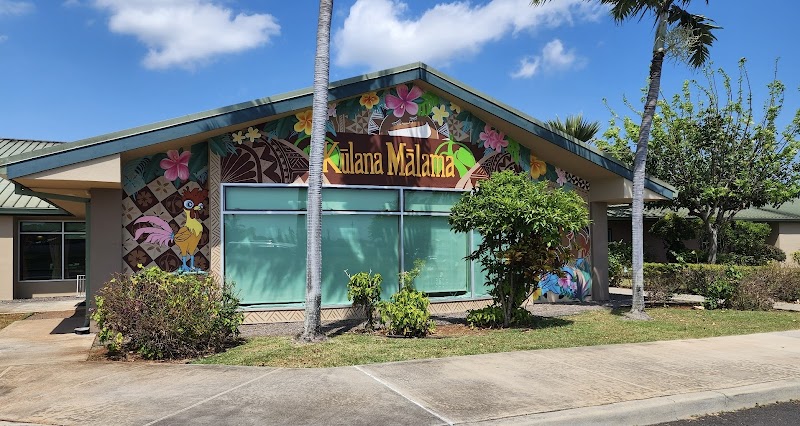
Kulana Malama

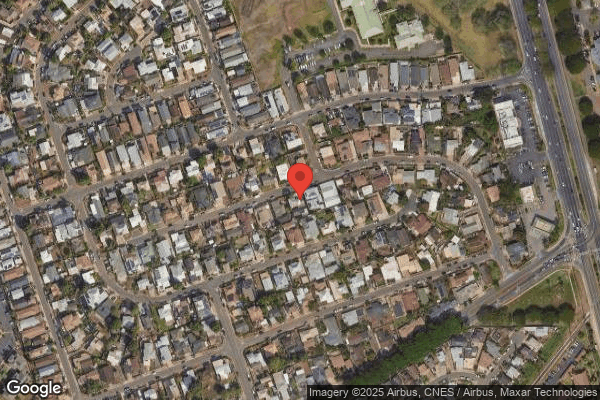
91-1360 KARAYAN STREET, EWA BEACH, HI 96706 (808) 681-1200
For profit - Limited Liability company 33 Beds Independent Data: November 2025 1 Immediate Jeopardy citation
Trust Grade
66/100
#8 of 41 in HI
Last Inspection: June 2024

Within standard 12-15 month inspection cycle. Federal law requires annual inspections.

Overview

Kulana Malama has a Trust Grade of C+, indicating it is slightly above average but not without concerns. It ranks #8 of 41 facilities in Hawaii, placing it in the top half, and #6 out of 26 in Honolulu County, which means there are only five local options that are better. The facility is improving, having reduced its number of issues from 8 in 2024 to 5 in 2025. Staffing ratings are solid, with a 4/5 score and a turnover rate of 37%, which is about average for Hawaii. However, there are some troubling issues, including $14,069 in fines, which is higher than 78% of facilities, and a critical incident where staff lacked the necessary competencies to respond to medical emergencies, putting residents at risk. Additionally, an infection prevention program was not properly maintained, potentially exposing residents to communicable diseases. On a positive note, Kulana Malama has excellent RN coverage, exceeding 97% of facilities in Hawaii, which helps ensure that residents receive proper care.

Trust Score
C+
66/100
In Hawaii
#8/41
Top 19%
Safety Record
High Risk
Review needed
Inspections
Getting Better
8 → 5 violations
Staff Stability
○ Average
37% turnover. Near Hawaii's 48% average. Typical for the industry.
Penalties
⚠ Watch
$14,069 in fines. Higher than 76% of Hawaii facilities, suggesting repeated compliance issues.
Skilled Nurses
✓ Good
Each resident gets 296 minutes of Registered Nurse (RN) attention daily — more than 97% of Hawaii nursing homes. RNs are the most trained staff who catch health problems before they become serious.
Violations
⚠ Watch
24 deficiencies on record. Higher than average. Multiple issues found across inspections.
★★★★★
5.0
Overall Rating
★★★★☆
4.0
Staff Levels
★★★★★
5.0
Care Quality
★★★★☆
4.0
Inspection Score
Stable
2024: 8 issues
2025: 5 issues

The Good

  • 4-Star Staffing Rating · Above-average nurse staffing levels
  • 5-Star Quality Measures · Strong clinical quality outcomes
  • Full Sprinkler Coverage · Fire safety systems throughout facility
  • No fines on record
  • Staff turnover below average (37%)

    11 points below Hawaii average of 48%

Facility shows strength in staffing levels, quality measures, fire safety.

The Bad

Staff Turnover: 37%

Near Hawaii avg (46%)

Typical for the industry

Federal Fines: $14,069

Below median ($33,413)

Minor penalties assessed

The Ugly 24 deficiencies on record

1 life-threatening
Jun 2025 5 deficiencies 1 IJ
CRITICAL (J) 📢 Someone Reported This

A family member, employee, or ombudsman was alarmed enough to file a formal complaint

Immediate Jeopardy (IJ) - the most serious Medicare violation

Deficiency F0726 (Tag F0726)

Someone could have died · This affected 1 resident

**NOTE- TERMS IN BRACKETS HAVE BEEN EDITED TO PROTECT CONFIDENTIALITY** Based on interviews, medical record review and document review, the facility failed to assure that all nursing staff possessed t...

Read full inspector narrative →
**NOTE- TERMS IN BRACKETS HAVE BEEN EDITED TO PROTECT CONFIDENTIALITY** Based on interviews, medical record review and document review, the facility failed to assure that all nursing staff possessed the competencies and skill sets necessary to provide nursing care to meet residents' needs in a safe manner. Specifically, the licensed staff did not demonstrate 1) competency to perform and document neurological (neuro) assessments on a Resident whose baseline was neurologically impaired, 2) competency to identify a medical emergency that required timely response and transfer to a higher level of care, and 3) critical thinking to recognize the need to conduct and document a thorough physical and neurological assessment after a fall with potential head/neck injury, to determine if the Resident could be safely transferred from the floor to the bed. Due to the serious nature of this citation, and the fact that multiple licensed staff were involved, and did not demonstrate competency, this deficient practice was determined to be an immediate jeopardy (IJ). The survey team approved the facility abatement plan and validated it had been implemented. If nursing staff do not possess the competencies and skill sets for the population served, it could affect any resident and place them at risk of adverse events, harm or death. Findings include: 1) The facility is a 36 bed facility that cares for pediatric and adult residents that have complex medical issues. There is a high volume of residents that have cognitive and physical disabilities and require complex respiratory support due to various causes. This resident profile requires that all nursing staff have special skill sets to meet residents' medical needs. At the time of survey, the census was 33, nine adults and 24 pediatrics. Reviewed the Facility Assessment Tool last updated 03/05/2025. The document revealed the following: Part 1: Our Resident Profile included Diseases/conditions, physical and cognitive disabilities. These conditions included, Neurological Problems, which was further broken down to include but not limited to Traumatic Brain Injury, Minimal Consciousness, Vegetative State, Seizure disorder, Communication Difficulty and Anoxic Brain Damage. Part 2: Services and Care We Offer Based on our Residents' Needs, included Management of medical conditions. The Specific Care or Practices for Management of medical conditions read Assessment, early identification of problems/deterioration, management of medical symptoms and conditions . Part 3.4 Staff training/education and competencies, included staff training/education and competencies are necessary to provide the level and types of support and care for the residents.Staff competencies are monitored by department supervisors and nursing's scheduler. The assessment included Supplies, which listed respiratory, medical and nonmedical supplies. It was noted the list did not include a pen light, which should be used for neurological assessments. 2) R1 was a [AGE] year old male with history of traumatic brain injury (TBI) with subdural hematoma (bleeding inside the head). He had a decompression craniectomy (part of the skull is removed to reduce pressure on the brain and allow swelling). As a result of his injury, R1 was a quadriplegic (paralysis of all limbs), had a tracheostomy (hole in neck to breath), and a PEG (tube into the stomach through the abdominal wall for feeding). On 03/16/2025 at approximately 08:20 PM, R1 sustained a fall from bed; reported while being changed by a Certified Nurse Assistant (CNA). He had altered mental status (AMS), and was transferred to the hospital emergency room (ER) by ambulance for further evaluation on 03/17/2025 at 02:20 AM. R1's cat scan (x-ray of head) was negative at that time, for acute traumatic injury and he was discharged back to the facility, that same day (03/17/2025) at 12:10 PM. On arrival back to the facility, R1 was assessed to have altered mental status (AMS) from his baseline and was subsequently sent back to the hospital a second time on 03/18/2025 at 09:42 PM. That hospital transferred R1 to another facility (referral center) for further management, where he was admitted with primary diagnosis of subacute encephalopathy, multifactorial (disease affects the brain and leads to AMS). Despite treatment of the suspected causes of the encephalopathy, his mental status did not significantly improve and he was transitioned to comfort care and ultimately passed away on 04/05/2025. 3) Reviewed Nursing documentation that included [NAME]-Daily Assessment (template documentation format) notes as well as Health Status Notes (progress notes) after the fall, to the time R1 was initially transferred to the ER. These records included the following: 03/17/2025 Note entered at 08:52 AM: @2020 (03/16/2025, 08:20 PM), CNA assigned to the resident was changing the resident's diaper when the resident fell on the floor. Upon assessment found one linear redness to the right upper forehead measuring 2 cm (centimeter) x 0.5 cm, skin intact. No other visual injuries noted.CN (Charge Nurse) and this nurse @ bedside. @20:30 (08:30 PM on 03/16/2025) resident awake BP (blood pressure) 130/86. HR (heart rate) 62 T. (temperature) 35.5 (centigrade) RR (respiratory rate) 22 Awake, alert. @ 2035 (08:35 PM on 03/16/2025) BP 145/84 HR 60 O2 (oxygen saturation) RR 22. @ 2052 (08:51 PM on 03/16/2025) x 1 desat (desaturation (drop in oxygen level)) to 86% . RT (respiratory therapist) placed the resident on RC 28% BP 127/87 HR 59 O2 99 T 36.6. @ 2031 (08:31 PM) DON (Director of Nursing) made aware. @ 2112 (09:12 PM ) Attempted to call the doctor on .CN (Charge Nurse) phone, no answer. @ 2020 (08:30 PM) BP 127/87 HR 59 O2 99 T 36.6. @ 2128 (09:28 PM on 03/16/2025) sent Dr (MD1) a message regarding an update on resident's status and also called physician exchange @ 21:32 (09:32 PM). @ 2145 (09:45 PM) BP 134/87 HR 55 O2 100 T 36.5. @ 2217 (10:17 PM) BP130/87 HR 53 O2 100 RR 20. @ 2252 (10:52 PM) BP133/82 HR 51 O2 99. @ 2325 (11:25 PM) BP 124/72 HR 53 O2 100 RR 18. @ 0000 (00:00 AM on 03/17/2025) RT weaned the resident back to RN (room air), BP 109/63 HR 59 T 36.2 O2 98 RR 18. @ 0025 (00:25 AM on 03/17/2025 BP 103/69 HR 58 T 36.1. @ 0036 (00:35 AM on 03/17/2025) Called physician exchange again to follow up on not receiving a call back from the doctor. @ 0115 (01:15 AM on 03/17/2025) .during this assessment resident appeared more lethargic (drowsy, decrease in consciousness that affects mental status) than usual, no response to sternal rub (painful stimulus to test consciousness), and no response to yes or no questions . CN made aware again. Resident's baseline-responses yes or no to questions by blinking. @ 0153 (01:53 AM on 03/17/2025) MD1 called the facility back .Dr stated to send the resident out (to ER). @ 0206 Called 911. @ 0218 BP 134/86 O2 98 HR 61 RR 18. @ 0220 Resident transferred . 03/16/2025, 11:58 PM - 03/17/2025: [NAME]-Night Shift: Neurological LOC (level of consciousness): Alert. The areas on the form for Oriented, and Pupils were not completed. Although vital signs were documented and taken on a schedule that is standard for post fall with potential head injury, the nursing staff failed to do full neurological assessments, which should include LOC, and pupillary reaction. LOC for R1 would be if he could respond the way he usually did, blinking eyes to yes and no questions, smiling, response to suction and any sensation he may have (baseline could not be determined by documentation). Based on nursing notes, there was a significant change in condition at 01:15 AM, when R1 was not responsive to sternal rub and lethargic. With calls out to notify MD1, with no response, the nursing staff should have had the skill set to identify this as an emergency condition, called 911 and transferred R1 to the hospital. 4) Reviewed Nursing documentation from the time R1 returned to the facility prior to being transferred to ER for the second time. 03/17/2025 entered at 07:14 PM, Progress note: Resident back from QMC (hospital) @ 1210 (PM) .Noted L (left) cheek with redness and slightly swollen. Resident is less responsive, compared to his baseline. Does not blink eyes to questions asked. (Use to blink when talked to and if it's 2 x blink it means yes). Bilateral eyes constantly moving left to right or right to left side only. Able to clean his mouth using yankauer (suction tool) without difficulty. (Used to bite yankauer when doing oral care and smile at staff). Tongue constantly moving and deviated to the left. There is no evidence R1's physician was contacted to report R1's neuro status on return to the facility, which was not his baseline. 03/17/2025, 11:50 PM-03/18/2025 [NAME]-Night Shift: Neurological LOC: Alert. The areas on the form Oriented and Pupils, were not completed. Nursing note: .complete neuro (neurological) checks and vitals q 4 hr (every four hours). No blinking response to yes or no questions, bilateral eye movement continues to move left to right. Although complete neuro checks was documented to be done in the nursing note above, the entries were not found. 03/18/2025, 07:49 PM (Late Entry), Day shift Progress Note: .Received bedside report from NOC (night) RN. Per NOC RN Vitals are stable, but he seems lethargic and not at his baseline.RN called patient by their name and no response. RN opened patient's eyelid and flash a light to pupils. Non reactive and constricted, .RN made jokes to make the patient smile. Patient blinks as a form of communication.Patient was non-reactive, no smile and bilateral eyes were in horizontal nystagmus (involuntary rapid eye movements). RN assess eyes again and no change.Frequent checks made on patient through the night.No further neuro signs noted. Patient is nonreactive and eyes remain horizontal nystagmus.no smiling. 03/18/2025, 10:06 PM-03/19/2025 [NAME]-Night Shift: The neurological area on the form was not completed. Nursing Note: Pt (R1) was sent out to QMC (hospital) at 21:43 (09:43 PM). Pt had fall 3/17 (actual date was 03/16/2025), was sent to the ER for assessment, but was sent back to KM (facility) due to no abnormal findings. Pt's baseline is responsive. However, at BSSR (bedside shift report) and during med pass, pt noted to have a significant difference. Pt noted to also have pin-point pupils and increased lethargy. See Charge RN progress notes for further details . 03/18/2025, 10:26 PM, SBAR (Situation, Background, Assessment, Recommendations) report documented by NOC Charge RN: S: resident s/p (post) fall on 3/16, hx of TBI and VP shunt. Noted AMS upon starting shift and eye abnormalities. Concern that Resident needs reevaluation in ED for abnormal findings not consistent with baseline or expectations after a fall. B: resident p/fall on 3/16, returned to facility on 3/17 after having CT (cat scan) that showed no abnormal results. PMH (Past medical history) hx of TBI with VP shunt (tube that drains excess cerebrospinal fluid into abdomen), convulsions, quadriplegia. At baseline resident is responsive, laughs, tracks with eyes, no nystagmus, and blinks for yes and not blinking for no. A: resident with AMS, difficulty to arouse, lethargic, pupils pinpoint, nonreactive and fixed, noted to have constant horizontal nystagmus that is uncontrolled, unable to track, appears to have decreased facial muscle tone blinking. After awaking resident, noted that he was attempting to answer questions, however d/t (due to) facial tone he could not close his eyes while blinking. S: contacted MD1 (Provider) @ 2050 (08:50 PM), received orders to send resident to ER for revaluation.called 911 at 2120 (09:20 PM) and resident transferred .at 2145 (09:42 PM). In addition to the notes above, the staff initiated the Neurological Assessment Flow Sheet when R1 returned to facility 03/17/2025 at 12:10 PM. The flow sheet included instructions and area to document Level of Consciousness (LOC), Pupil Response, Motor functions-Hand grasps, Extremities, Pain Response and Vitals. It directed staff to use the Observation Column to note the presence or absence of specific resident conditions. Reviewed the flow sheet, which included the following: 03/17/2025 at 12:10 PM: Vital signs documented. 03/17/2025 at 01:47 PM: Vital signs documented. 03/17/2025 at 01:47 PM: Vital signs documented. 03/17/2025 at 01:47 PM: Vital signs documented. 03/17/2025 at 01:47 PM: Vital signs documented. 03/18/2025 at 12:00 PM: Vital signs documented. 03/18/2025 at 04:07 PM: Vital signs documented. There were no neurological assessments of LOC, Pupil response, or observations documented on this flowsheet. The Neurological assessment documented on return to the facility (03/17/2025, day shift) indicated R1 was not at his baseline. Assigned nursing staff night shift ( 03/17/2025 to 03/18/2025) and day shift 03/18/2025, continued to document he was not at baseline. In addition, the neuro exams did not consistently include pupillary response. It was not until 03/18/2025 at 08:50 PM, over 24 hours later, that the physician was notified for order to transfer to ER for reevaluation. 5) Review of Falls - Clinical Protocol policy and procedure, last revised March 2018. The policy included the following: .the nurse shall assess and document/report the following: .Change in condition or level of consciousness; . Neurological status; . The staff, with the physician's guidance, will follow up on any fall with associated injury until the resident is stable and delayed complications such as late fracture or subdural hematoma have been ruled out or resolved .signs of subdural hematoma or other intracranial bleeding could occur up to several weeks after a fall. This policy did not include any specifics as to how or when to do neuro checks. Reviewed the facility policy titled Neurological Assessment (Routine), last revised October 2023. The purpose statement was . to provide guidelines for conducting a routine neurological assessment (neuro checks). Equipment listed that was necessary when performing this procedure included a flashlight and documentation tool. The policy included: 1. Routine neurological assessment is conducted to evaluate the resident for small changes over time that may be indicative of neurological injury. 2. Routine neurological exams include assessing: a. mental status and level of consciousness; b. pupillary response; . Neurological Assessment/Evaluation included: 1. Mental Status: a. Determine the level of consciousness and alertness. b. Determine orientation to time, place and person. 2. Pupillary Response: a. Test both pupils to ensure they are equally reactive to light and accommodation. b. diameter of the pupils usually ranges from two to five millimeters, c. Test pupillary reaction to light. (1) Dim the lights of the room before performing this test (2) Using a penlight, approach the patient from the side. (3) Shine the penlight on one pupil. Observe the response of the lighted pupil. It should quickly constrict (direct reaction). The other pupil should constrict (consensual reaction). (4) Repeat with the other pupil. The policy included the expectation to document all assessment data obtained in the medical record, and Notify the physician of any changes in a residents neurological status. This policy was not specific regarding the frequency of neuro checks On 06/17/25, between 07:30 AM and 04:30 PM, multiple confidential interviews were done with facility staff. During an interview with Anonymous Staff Member (ASM)9, he/she reported that they had noticed after a review of the facility's policies and procedures that there was nothing found regarding conducting a neurological (neuro) assessment after a fall. Reviewed the facility policy titled Change in a Resident's Condition or Status, last revised February 2021. The policy statement was Our facility promptly notifies the resident, his or her attending physician, and the resident's representative of changes in the resident's medical/mental condition and/or status. The policy included: 1. The nurse will notify the resident's attending physician or physician on call when there has been a (an) a. accident or incident involving .; d. significant change in the resident's physical/emotional/mental condition; g. need to transfer the resident to a hospital/treatment center; . 2. A significant change of condition is major decline . in the resident's condition status that: a. will not normally resolve itself without intervention . 3. Prior to notifying the physician or healthcare provider, the nurse will make detailed observations and gather relevant and pertinent information for the provider, including (for example) information prompted by the Interact SBAR (structured report for physician communication; Situation, Background, Assessment and Recommendation) Communication form. 7. The nurse will record in the resident's medical record information relative to changes in the resident's medical .condition or status. 6) On 06/16/2025 at 03:45 PM, interviewed ASM7. She said when R1 arrived back from the ER on [DATE], she assessed him right away. She said he had redness on left cheek, opened his eyes, but was not blinking. She said she reported it to the CN because he was not at baseline and worried about his eyes going left to right. ASM7 said she did not personally notify the physician, and did not know if the CN did. She said she used the neuro flow sheet and reported her concerns to the noc nurse at shift change. On 06/17/2025 at 07:47 AM, interviewed the ASM8, who was on at the time of the fall. Discussed the CN role and she said if something is going on, the staff will notify the CN, and they would call the doctor if needed. She went on to say they were trialing something new, and trying to have the assigned nurse be more involved and the CN would assist. The CN said she was in the next room and heard the fall, so was there quickly. She said from her recall, three staff moved R1 back to the bed. Inquired who assessed R1 when he was on the ground, before moving him, and she said she was not sure, but thought it was the nurse. She said R1 could not grasp (hand grasp is part of neuro check), so a neuro check for him would be if he can blink and checking his pupils. When asked if they did this prior to moving him, she said I think we never did. When asked if nursing could call 911, if there was an emergency, and then notify the physician after, she said yes. On 06/19/2025 at approximately 09:30 AM, conducted a telephone interview with ASM6, who entered R1's room after he was already in bed, about 15 minutes after the fall. He/she said the assigned Nurse was just starting the assessment, and he/she was unsure how much experience the Nurse had with neuro assessments, and a second set of eyes would be good who knows his (R1's) normal baseline. ASM6 said R1 had changes at that time, and his eyes were fluttering back and forth. He/she went on to say normally, R1 responds to jokes, bites down on the suction tube and you have to tell him to stop. He will look at you, and responds to your voice. ASM6 said R1 was not responding the way he normally was, his playfulness was gone. When they did the neuro check, they turned off the lights and checked pupils. When asked how they checked pupils, he/she said they used the cell phone flashlight. ASM6 said they looked for a form to document the ongoing neuro checks, but could not find it. On 06/17/2025, conducted a telephone interview with ASM9, who said on 03/18/2025 when he/she received report from the day shift, they reported some things about R1's behavior, which made him/her think R1 would probably need to be sent to the ER. ASM9 asked the day shift if they called the doctor, and reported his condition, but they had not. He/she said if the doctor was not called, he would assume R1 came back from the hospital at his baseline, which was not the case. ASM9 assessed R1, and said he looked panicky and fearful. He/she went on to say he was trying to answer, his pupils were moving crazy back and forth, and he wasn't blinking. ASM9 said it was like he had loss of muscle tone in his face, with one side reacting less than other side, trying to blink, but couldn't. He/she said R1 was very hard to wakeup. After the assessment, he/she called the physician and then sent him to the ER. ASM9 said he/she documented R1's baseline on the transfer form, and the ER doctor called about 03:00 AM, and wanted additional information regarding his usual behavior. He/she was unsure if the ER was aware of R1's baseline on the first visit. On 06/17/25 at 11:23 AM during a concurrent interview and review of R1's neuro assessments following his fall with the Director of Nursing (DON), DON agreed that at a minimum, nursing staff should have documented level of consciousness (LOC) and pupil response in addition to the vital signs that were documented. On 06/17/25 at 02:29 PM, an interview was done with the DON. When asked for the competency checklist for Certified Nurse Aide (CNA)1 (the staff member responsible for leaving the bed/safety rail down as she provided perineal care to R1 by herself, resulting in him falling out of bed), DON reported that he had been unable to locate a skills/competency checklist but was looking further into it. On 06/18/25 at 08:32 AM, an interview was done with the DON, at which time he confirmed he did not have a skills/competency checklist that was completed for CNA1. He agreed that it should have been done. On 06/18/25, during a confidential interview with ASM11, when asked if there had been any training on neuro assessments since R1's fall (when to conduct them, how to conduct a neuro assessment properly, how often to conduct them), he/she responded that he/she was not aware of any training on neuro assessments. When asked if he/she had a penlight to conduct a neuro assessment if he/she needed to, ASM11 responded that he/she did not have a penlight, and to his/her knowledge, the facility did not have any penlights available (for example, in the med cart). Concurrent inspection of the facility medication and treatments carts confirmed no penlights available to assess pupil response for a neuro assessment. 7) On 06/18/2025 at approximately 08:15 AM., observed the layout of R1's room with ASM8. R1's mechanism of injury was a fall from bed. The CNA was in the room, but could not see if he struck his head. There was redness observed on his R1's upper forehead, and he had a history of brain surgery with missing bone, and a shunt. There was high likelihood he struck his head on something. The standard of care post fall, would be to do a thorough head-to-toe assessment, full set of vitals and a neurological assessment, prior to moving him. The initial assessment would determine if he could be moved safely, or if EMS should be called (American Association of Post-Acute Care Nursing, Post-Fall Assessments, August 2021; American Nurse Journal 2023, The VIP treatment: A comprehensive post-fall assessment guideline). On 06/18/25 at 09:50 observations were done at the Nurses' Station. Review of the In-Service binder revealed no in-services had been conducted on how to perform a neuro assessment following R1's incident. 8) The facility documentation and interviews did not provide evidence that; 1) staff were knowledgeable of the importance to complete an thorough physical and neurological assessment, to determine if R1 could be moved safely; 2) the nursing staff understood what a complete neurological assessments was (i.e. pupils, eye movement, change from baseline), and how often they should be done, 3) the nursing staff understood the importance of timely transfer when neurological changes are noted, and 4) there was a structured approach to neurological assessments.
CONCERN (D) 📢 Someone Reported This

A family member, employee, or ombudsman was alarmed enough to file a formal complaint

Potential for Harm - no one hurt, but risky conditions existed

Comprehensive Care Plan (Tag F0656)

Could have caused harm · This affected 1 resident

**NOTE- TERMS IN BRACKETS HAVE BEEN EDITED TO PROTECT CONFIDENTIALITY** Based on interviews, medical record review and document review, the facility failed to develop a person-centered comprehensive c...

Read full inspector narrative →
**NOTE- TERMS IN BRACKETS HAVE BEEN EDITED TO PROTECT CONFIDENTIALITY** Based on interviews, medical record review and document review, the facility failed to develop a person-centered comprehensive care plan (CP) to meet the needs of one Resident (R)1 of a sample size of six. R1 had cognitive impairment and was nonverbal. His CP did not include how to communicate with him. As a result of this deficient practice, there was the potential not all staff were aware of how to communicate with him in a consistent manner. If Resident Care Plans are not comprehensive, Residents may not reach their highest medical, mental and psychosocial potential. Findings include: 1) R1 was a [AGE] year old male admitted to the facility on [DATE] after a traumatic brain injury (TBI). He had a tracheostomy (hole in neck to breathe), and a PEG (tube into the stomach through the abdominal wall for feeding). R1 had cognitive impairment (deficit from head injury, i.e. memory, understanding), quadriplegic (permanent paralysis of all limbs from the neck down) and nonverbal. 2) Review of R1's medical record revealed the following entry related to his cognition and communication: 03/18/2025 at 09:59 PM, Progress Notes: . At baseline resident is responsive, laughs, tracks with eyes, no nystagmus (roving eye movements), can respond by blinking for yes and not blinking for no. 03/18/2025 at 07:02 PM Late Entry, Progress notes: .(Patient blinks as form of communication. 1 blink for no and 2 blinks for yes). 3) On 06/17/2025 at 09:00 AM, during a phone interview with Anonymous Staff Member (ASM)9, he/she said R1's baseline was that he would blink, and laugh at jokes. ASM9 said he would blink several times for Yes, and once or not at all for No. 4) Reviewed R1's CP, which initiated the a plan for Altered communication/cognition r/t (related to) tracheostomy, traumatic brain injury, on 04/14/2022. The Goal was for Staff to anticipate needs and wants based on resident non-verbal responses. Interventions/Tasks included assess for signs and symptoms of pain and discomfort using the [NAME] pain scale (measurement of pain in people with cognitive impairment). There were no interventions of how staff communicated with R1, which was blinking his eyes to answer yes or no questions. In addition there was no documentation that he tracked with his eyes, laughed, or smiled. This information was important to establish communication with R1 and his baseline for cognition.
CONCERN (D) 📢 Someone Reported This

A family member, employee, or ombudsman was alarmed enough to file a formal complaint

Potential for Harm - no one hurt, but risky conditions existed

Accident Prevention (Tag F0689)

Could have caused harm · This affected 1 resident

**NOTE- TERMS IN BRACKETS HAVE BEEN EDITED TO PROTECT CONFIDENTIALITY** Based on interview and record review, the facility failed to ensure 1 of 6 residents sampled (Resident 1) was free from accident...

Read full inspector narrative →
**NOTE- TERMS IN BRACKETS HAVE BEEN EDITED TO PROTECT CONFIDENTIALITY** Based on interview and record review, the facility failed to ensure 1 of 6 residents sampled (Resident 1) was free from accident hazards. Despite being completely dependent on staff for all activities of daily living (ADLs), including toileting, bed mobility, and transfer, staff failed to ensure Resident (R)1's safety rails were secure and in place before walking away from his bed. As a result of this deficient practice, R1 experienced an avoidable fall. This deficient practice has the potential to affect all residents at the facility who are dependent on staff for ADLs and safety. Findings include: Resident (R)1 was a [AGE] year-old male admitted to the facility on [DATE] with a history of traumatic brain injury (TBI). R1's admitting diagnoses include, but are not limited to, quadriplegia (loss of motor and/or sensory function in all four limbs and the torso) and contractures (a permanent tightening of muscles, tendons, skin, and other tissues around a joint, leading to stiffness and reduced range of motion). In addition, R1 was nonverbal. A review of R1's electronic health record noted the following progress note on 03/17/2025 at 08:52 AM: .@2020 (at 08:20 PM the previous night) CNA (Certified Nurse Aide) assigned to the resident (R1) was changing the resident's diaper when the resident fell on the floor. A review of the facility incident report revealed the following description of R1's fall, that occurred on 03/16/2025, by CNA1, who was caring for him at that time: I was changing the Resident .he was turned on his Right side .I went to the other side of the bed as soon as I turned around the Resident was falling . The same incident report documents the CNA answering the question Explain the precautions to be taken to prevent event . with use lighting, make sure bed rails are up, make sure bed is locked . CNA1 was unavailable for interview by the State Agency (SA). On 06/17/2025, between 07:30 AM and 04:30 PM, multiple confidential interviews were done with facility staff. During an interview with Anonymous Staff Member (ASM)8, he/she confirmed from his/her observations that R1's room was poorly lit at the time of the incident, the bed was unlocked, the upper bed/safety rail on the side closest to the window (the side R1 fell off of) was lowered, and CNA1 reported she was on the opposite side of the bed when R1 fell. On 06/17/25 at 11:23 AM, interview was done with the Director of Nursing (DON). DON confirmed that R1 had fallen off the bed following CNA1 leaving at least one bed/safety rail down while she moved to the other side of the bed to obtain supplies for perineal care. DON confirmed he was notified by phone by one of the charge nurses about the fall and that he instructed her to make sure she discussed fall prevention at the change of shift huddle (meeting) and to have all staff in attendance sign that they received that education. DON reported that after conducting an investigation, it was determined that the incident was an accident. DON agreed that the accident was avoidable. Review of the facility policy and procedure, Fall Prevention Program, dated 10/2018, revealed the following: Resident's side rails will be kept in the raised up position when resident is in bed. Further review of the facility incident report noted the following documentation by the DON of actions taken as a result of the accident: Staff Huddle completed on same shift. Reviewed Fall Prevention policy. All staff to be educated on Fall prevention. Agency staff terminated effective immediately . DON provided evidence that all staff had completed the fall prevention training.
CONCERN (D) 📢 Someone Reported This

A family member, employee, or ombudsman was alarmed enough to file a formal complaint

Potential for Harm - no one hurt, but risky conditions existed

Deficiency F0713 (Tag F0713)

Could have caused harm · This affected 1 resident

**NOTE- TERMS IN BRACKETS HAVE BEEN EDITED TO PROTECT CONFIDENTIALITY** The facility failed to ensure availability of a physician for emergency care for one Resident (R)1 of a sample size of three. R1...

Read full inspector narrative →
**NOTE- TERMS IN BRACKETS HAVE BEEN EDITED TO PROTECT CONFIDENTIALITY** The facility failed to ensure availability of a physician for emergency care for one Resident (R)1 of a sample size of three. R1 had a fall with a change of condition, and the facility was unable to reach the physician (MD)1 for over four and a half hours. In addition, the staff failed to transport R1 to the emergency room (ER) in a timely manner to obtain physician evaluation when they were unable to reach MD1. As a result of this deficient practice, there was a delay in transferring R1 to a higher level of care. Not having a physician available 24 hours a day could affect any resident who had an emergency, which could put them at risk of negative outcomes. Findings include: 1) R1 was a [AGE] year old male with history of traumatic brain injury (TBI) with subdural hematoma (bleeding inside the head). He had a decompression craniotomy (part of the skull is removed to reduce pressure on the brain and allow swelling), with post traumatic hydrocephalus (too much cerebrospinal fluid) that requires a shunt (catheter) to remove excess fluid. R1 had a tracheostomy (hole in neck for airway to breathe), PEG (tube into the stomach through the abdominal wall to provide means of feeding), and was a quadriplegic (permanent paralysis of all limbs from the neck down). On 03/16/2025, R1 sustained a fall from bed. 2) Reviewed the Progress Notes entered on 03/17/2025 at 08:52 AM. The notes included, but not limited to the following: @ (at) 2020 (08:20 PM on 03/16/2025) CNA (Certified Nurse Assistant) assigned to the resident (R1) was changing the resident's diaper when the resident fell on the floor. @ 2051 (08:51 PM on 03/16/2025 x1 desat (desaturation-drop in oxygen level) to 86% . @ 2112 (09:12 PM on 03/16/2025) Attempted to call the doctor on .CN (Charge Nurse) phone, no answer. @ 2128 (09:28 PM on 03/16/2025) sent Dr (MD1) a message regarding an update on resident's status and also called physician exchange (answering service) @ 21:32 (09:32 PM) @ 0036 (00:36 AM on 03/17/2025) Called physician exchange again to follow up on not receiving a call back from the doctor. @ 0115 (01:15 AM on 03/17/2025) .during this assessment resident appeared more lethargic (drowsy, decrease in consciousness) than usual, no response to sternal rub (painful stimulus to test consciousness level), and no response to yes or no questions . @ 0153 (01:53 AM on 03/17/2025) MD1 called the facility back . Dr stated to send the resident out (to ER). @ 0206 Called 911. @ 0220 Resident transferred . The facility was unable to reach MD1 for over four and a half hours. 3) On 06/17/2025 at 11:30 AM, interviewed the Director of Nursing, who said MD1 is the provider assigned to all the adult residents. He went on to say the nursing staff call him directly, and if they have any problem reaching him, they would call physicians exchange (answering service). When asked what they would do if unable to reach MD1, the DON said they would contact him, could call 911, or contact the Medical Director. On 06/17/2025 at 02:30 PM during a phone interview with Anonymous Staff Member (ASM)10, he/she confirmed the progress notes above and validated the multiple calls to reach MD1. On 06/19/2025 at approximately 09:15 AM, interviewed ASM6, who assisted ASM10 with R1's initial neurological assessment after his fall. He/she said R1 was not responding the way he normally does. ASM6 said ASM10 monitored R1 and was finally able to reach the physician after 4 1/2 hours. He/she said the practice is to call MD1 directly, and if he can't be reached, they will then call physicians exchange. ASM6 said it was his/her understanding that MD1 was out of the country. He/She was unsure what they would do if MD1 did not respond.
CONCERN (D) 📢 Someone Reported This

A family member, employee, or ombudsman was alarmed enough to file a formal complaint

Potential for Harm - no one hurt, but risky conditions existed

QAPI Program (Tag F0867)

Could have caused harm · This affected 1 resident

Based on interviews, medical record and document review, the facility failed to systematically analyze one Resident's (R1) adverse event (fall) and two unplanned hospitalizations for altered mental st...

Read full inspector narrative →
Based on interviews, medical record and document review, the facility failed to systematically analyze one Resident's (R1) adverse event (fall) and two unplanned hospitalizations for altered mental status. In addition, leadership received staff feedback regarding deficient practice related to this case and did not investigate the concerns. Due to this deficiency, system and process issues were not identified and addressed to ensure the nursing care met recognized standards of practice. Findings include: 1) Cross Reference F689 Free of Accident Hazards Despite being completely dependent on staff for all activities of daily living (ADLs), including toileting, bed mobility, and transfer, staff failed to ensure Resident (R)1's safety rails were secure and in place before walking away from his bed. As a result of this deficient practice, R1 experienced an avoidable fall. Reviewed the facility Incident Event report for the fall. The report was to be completed by Charge Nurse/Designee on Duty, and included The purpose of this report is to track and monitor patterns of incidents and to analyze the need for corrective action plans. The report was a template format to encourage thorough documentation, and was to be completed within 24 hours of occurrence and sent to the Director of Nursing (DON). The Nursing Care section included if the Care Plan (CP) was followed and if it met the Resident's needs and if Appropriate transfer technique was used. This area was left blank. Hand written on the form was Staff Huddle completed on same shift. Reviewed fall prevention policy/ All staff to be educated on fall prevention. Agency staff terminated effective immediately. This was an accident. Abuse & Neglect has been ruled out. The form had four places for signatures; Charge Nurse/Designee, DON, Medical Director and Administrator. The Medical Director was the only person that had not signed the report. The facility does a Root Cause Analysis on events and provides a fishbone diagram to prompt review of Staff/People, Rules/Policies/Process, Equipment/Supplies, Environment, Materials and Other Processes to facilitate identifying opportunities to improve. The DON wrote on the form CNA needed more wipes located @ the other side of the bed on the shelves, during care, then resident fell. This was determined to be an accident . There was no evaluation, or identification that the incontinence care was provided by one staff rather than two as indicated in R1's CP. There was no reminder to staff of the need for two person assist. Reviewed R1's CP , which included Always use 2-person assist and use mechanical devices d/t weigh over 50 pounds, which was initiated on 04/14/2022. On 06/18/2025 , during a confidential interview with ASM10, he/she reported that R1 was pretty heavy. ASM10 reported he/she would never change R1's adult incontinence brief by him/herself, he is always a 2-person brief change. On 06/17/2025 and 06/18/2025, between 07:30 AM and 04:30 PM, as well as off site phone interviews 06/19/2025, multiple confidential interviews were done with facility staff. During interviews with Anonymous Staff Members, there were inconsistencies of specifics related to the fall. There were no interviews, or written statements post fall of the staff on duty that evening, with the exception of the CNA involved, so survey interviews were from recall months later. ASM3, ASM4 and ASM8 said R1 was found flat on his back. During a confidential interview, ASM2, said he/she walked into the room, saw empty bed, upper rail on left side was down, lower rail was still up, right leg was stuck in the left lower rail, body was on ground. ASM2 did not stay in the room, as there were already several staff attending the situation. On 06/17/2025 at 08:15 AM, observed the layout of R1's room with ASM8, and concurrently conducted interview. At that time noted a cabinet in front of the window and placement of the bed. ASM8 pointed out where he/she was was in the next room, when the fall occurred, and said he/she heard the noise, but was unable to see if R1 struck his head, or how he landed. Attempted to reenact the mechanism of injury, and determine how he was moved back to the bed. ASM8's recall was that three staff members lifted him back in bed. 2) Cross Reference 713- Physician For Emergency Care Available 24 Hrs The facility failed to ensure 24 hours a day availability of a physician for emergency care, when MD1 could not be reached for over four hours after R1 fell and had a condition change. The staff failed to transport R1 to the emergency room (ER) in a timely manner to obtain physician evaluation when they were unable to reach MD1. Due to the lack of review of the unplanned transfers, and follow up on staff feedback, QAPI did not identify the delays of this physicians availability and response. 3) Cross Reference 726-Competent Nursing Staff The facility failed to ensue that all nursing staff possessed the competencies and skill sets necessary to provide nursing care to meet the residents' needs in a safe manner. Specifically, the licensed staff did not demonstrate competency when an adult resident (R)1 with traumatic brain injury (TBI) fell out of bed. Issues of competency included 1) performing and documenting neurological (neuro) assessments, 2) identifying a medical emergency that required timely response and transfer to a higher level of care on two separate occasions, 3) notification of Provider regarding baseline condition change after R1 returned to the facility from the ER, and 4) lack of knowledge regarding importance of a comprehensive physical and neurological assessment after a fall, to determine if Resident could be safely transferred from the floor to the bed 4) Reviewed the facility Fall Prevention Program, dated 10/2018. The program included Resident's fall events will be monitored as part of the facility-wide QI (Quality Improvement) program to identify trends and opportunities for improvement. Reviewed the Facility Quality Assurance and Performance Improvement (QAPI) Program, last revised date February 2020. The Policy Statement was This facility will develop, implement, and maintain an ongoing, facility wide, data driven QAPI program that is focused on indicators of the outcomes of care and quality of life for our residents. The program implementation included 2. The QAPI plan describes the process for identifying and correcting quality deficiencies. Key components of this process include: .C. identifying and prioritizing quality deficiencies; d. systematically analyzing underlying causes of systemic quality deficiencies. Reviewed the QAPI minutes for the meeting dated 05/14/2/25. Noted the Standard Meeting Agenda items for all committees included Review data elements and document areas of concern or identified improvement opportunities. One of the data elements listed was ACTS/Rehospitalization, with the bullet point Identify any Trends or Action items for Quality Improvement Opportunities. This data element was marked N/A (not applicable) - Compliant. Another data element was Medical Record Audits where Transfers/Discharges was listed Medical Record audit done for discharge/transfers compliance. The minutes did not include any information regarding R1's fall. 6) The Director of Nursing (DON) was made aware of an anonymous staff member's (ASM) concerns by email, regarding R1's fall and unplanned transfers to the ER. The concerns included; 1) delay in initial neurological assessment, 2) reportedly R1 had nystagmus immediately after the fall, but was not documented 3) lack of thorough ongoing neuro assessments, 4) no documentation on day shift 03/18/2025 (ASM advised Assigned RN to document, 5) lack of provider notification of R1's AMS on return from the hospital, and 5) delay in transferring R1 to the ER twice, once after the fall, and again after return to the facility. 7) On 06/17/2025 during an interview with the Director of Nursing (DON), he said he had been made aware of the fall shortly after it occurred. He said We do not have falls at this facility, so this was very unusual. The DON said he had been told the CNA left the siderail down and R1 fell out of the bed. Inquired if anything had been discussed at QAPI or if any other opportunities had been identified, he said no. The DON said they provided an inservice and reminder to staff to keep rails up and supplies readily available. The DON said he did not personally investigate the fall, as it had been delegated to the Charge Nurse. He said he had not reviewed the medical record for nursing care and post fall documentation, and stated he was not aware of any specific staff concerns. Discussed how staff are trained to transfer residents, and he said PT had trained some staff to do a three man transfer for some Residents, but that R1 was not one of them. On 06/18/2025, conducted a second interview with the DON, after became aware that an ASM brought concerns to his attention. At that time, he confirmed receipt of the email. When inquired if there had been any investigation to validate the concerns or develop and implement action plans if needed, he said no. On 06/18/2025 during an interview with the Administrator (ADM) in the conference room, she said the focus of the Medical Record Audits for transfers referred to in the QAPI plan were to monitor compliance with providing the appropriate notices at time of discharge. She said they did not routinely review charts of the unplanned discharges (transfers to acute care) of adult residents for opportunities for improvement as it relates to medical and nursing care, or process issues (e.g. ambulance delay, MD response)., nursing or medical care. The ADM went on to say that the physician that has oversight of the pediatric population, reviews the unplanned discharges. When asked the ADM had been made aware of any concerns related to R1's two unplanned transfers to the ER, she said no.
Jun 2024 8 deficiencies
CONCERN (D)

Potential for Harm - no one hurt, but risky conditions existed

Resident Rights (Tag F0550)

Could have caused harm · This affected 1 resident

Based on observation, interview and record review, the facility failed to enhance one Resident (R)6 of 12 residents in the sample's quality of life while in her room in bed. Music, television, or othe...

Read full inspector narrative →
Based on observation, interview and record review, the facility failed to enhance one Resident (R)6 of 12 residents in the sample's quality of life while in her room in bed. Music, television, or other auditory stimulating activities were not provided to the resident. The deficient practice dishonored the residents right to a dignified existence. Findings include: Random observations of Resident (R)6 on the following dates and times: 06/03/24 at 08:35 AM and 3:00 PM; 06/04/24 at 09:35 AM and 2:35 PM; and 06/05/24 at 08:35 AM. Observed R6 in bed awake with eyes closed or sleeping. The room was quiet without television or music playing. On 06/04/24 at 11:26 AM a telephone interview was conducted with R6 family member (FM). During the interview, the FM said, it really bothers me that her room is so quiet, they need to put the television on with cartoons or something. I have spoken to them several times about it and half the time they turn the television on. On 06/05/24 at 2:46 PM, interviewed the Recreation Coordinator (RC). When asked when the residents are in their room in bed why some rooms have a television on or music playing, and others don't. The RC replied, it depends on the resident's level, the more active ones might have an IPAD or a cell phone, toys, or a hanging mobile. For the others who aren't, and they are dependent, they should have a television unless it's time to go to sleep. Electronic medical record reviewed. Minimum data set annual dated 03/24/2024. R6 is Comatose and in a persistent vegetative state. Care plan dated 09/20/22 reviewed. Activities interventions: Sensory stimulation activities auditory, visual, tactile. TV/Movies. On 06/06/24 at 08:20 AM, observation in R6's room. Noted the room was quiet without any television or music playing. The Registered Nurse (RN)25 was repositioning R6's bed. The surveyor asked RN25 why the room doesn't have any television or music playing. RN25 stated, well it is dayshift, so activities will be coming in and later. RN25 turned on the television to a channel with sporting activities. Activity programs policy MED-PASS, Inc. revised June 2018 reviewed.4. Activities are considered any endeavor, other than routine ADLs, in which the resident participates, that is intended to enhance his or her sense of well-being and to promote or enhance physical, cognitive, or emotional health .
CONCERN (D)

Potential for Harm - no one hurt, but risky conditions existed

Safe Environment (Tag F0584)

Could have caused harm · This affected 1 resident

Based on observations and interview, the facility failed to ensure a clean environment for one resident ((R)12) sampled. The mesh netting on the inside of R12's crib became soiled during care and staf...

Read full inspector narrative →
Based on observations and interview, the facility failed to ensure a clean environment for one resident ((R)12) sampled. The mesh netting on the inside of R12's crib became soiled during care and staff did not change or clean the mesh. R12 regularly puts her legs vertically on the mesh which increases the resident's likelihood of encountering the soiled mesh. As a result of this deficient practice, residents with mesh on the inside of the crib have an increased potential for exposure to an unsanitary environment. Findings include: On 06/03/24 at 08:45 AM, conducted an observation of Certified Nurse Aide (CNA)25 and Registered Nurse (RN)99 providing peri-care for Resident R12. The resident had a large bowel movement (liquid consistency). Staff lowered the right bedrail and the mesh netting on the inside of the crib was in direct contact with the soiled bedsheet, which then soiled the mesh. Observations of R12 lying horizontally on the bed with her legs up against the mesh on 06/03/24 at 08:45 AM and 02:23 PM, 06/04/24 at 03:12 PM, 06/05/24 at 09:43 AM and 01:50 PM. On 06/06/24 at 11:25 AM, conducted a concurrent interview and record review with RN25. RN25 reviewed the resident's bowel movement log located in the resident's room and confirmed on 06/03/24, R12 had a large watery bowel movement. RN25 visually inspected the mesh netting and confirmed the mesh on the inside of R12's crib was soiled and needed to be changed. Staff changed the mesh and cleaned R12's mattress/bedding.
CONCERN (D)

Potential for Harm - no one hurt, but risky conditions existed

Deficiency F0661 (Tag F0661)

Could have caused harm · This affected 1 resident

**NOTE- TERMS IN BRACKETS HAVE BEEN EDITED TO PROTECT CONFIDENTIALITY** Based on record review and interview, the facility failed to ensure the following at the time of the resident's discharge for on...

Read full inspector narrative →
**NOTE- TERMS IN BRACKETS HAVE BEEN EDITED TO PROTECT CONFIDENTIALITY** Based on record review and interview, the facility failed to ensure the following at the time of the resident's discharge for one resident (R) 32 of four in the sample: Communication of necessary information to one resident and the residents care giver; document a concise summary from the physician of the residents stay and course of treatment in the facility; and reconciliation of medications. Findings include: On 06/04/24 at 2:36 PM, Electronic Medical Record (EMR) reviewed. R32 is a [AGE] year-old male admitted to the facility on [DATE] and discharged on 04/29/24. Diagnosis includes spastic diplegic cerebral palsy, localization related (focal partial) symptomatic epilepsy and epileptic syndromes with simple partial seizures, acute respiratory failure with hypoxia, and tracheostomy. Physicians Discharge summary dated [DATE] reviewed. The Physician hand wrote a note that stated Had stable course. On 06/04/24 at 3:03 PM, confirmed with the Social Services Director (SSD) that R32 was a voluntary discharge. The surveyor requested the discharge summary, post discharge plan of care and the last care conference meeting notes. Received and reviewed the discharge summary for R32. Summary: had stable course signed by Primary physician, and dated 05/02/24. admission care conference summary dated 01/11/24 reviewed. Social work report.The family anticipates that he will reside at the facility for three to four months. Care conference summary discharge date d 04/12/24 reviewed. Social work follow up. No follow-up needed. Patient discharging on Monday 04/29/24. Care plan for R32 reviewed. Anticipated discharge to be within the next three to four months. The decision makers overall goal established in initial assessment is to have R32 return to the community once in home, nursing can be provided once again. Requested a copy of the discharge orders from the physician and the discharge instructions form from the Administrator on 06/06/24 at 10:45AM. At 11:25AM, the Administrator and the Registered Nurse (RN)23, who was assigned charge nurse on the day of discharge, discussed the discharge with the surveyor. RN23 verified with the surveyor that she verbally went over the checklist with R32's caregiver at the time of the discharge, and did not complete a discharge instruction form or document the discussion in the EMR. Orders reviewed. No discharge orders from the physician were found and the surveyor verified with the Administrator on 06/06/24 at 11:45 AM. Transfer of resident policy 10/2018 reviewed. Discharge of resident (nursing). Procedure: 1. All discharges require a physician order . 6. If the resident is being discharged to home, the assigned nurse must complete the discharge instructions form and review the following with the resident and responsible party: a. Medication .c. Equipment if any . e. Follow up physician visits . A copy of the discharge instructions is given to the resident/responsible party. The original is left in the chart.
CONCERN (D)

Potential for Harm - no one hurt, but risky conditions existed

Accident Prevention (Tag F0689)

Could have caused harm · This affected 1 resident

**NOTE- TERMS IN BRACKETS HAVE BEEN EDITED TO PROTECT CONFIDENTIALITY** Based on observation, interviews, and record review, the facility failed to ensure a resident's environment remains free of acci...

Read full inspector narrative →
**NOTE- TERMS IN BRACKETS HAVE BEEN EDITED TO PROTECT CONFIDENTIALITY** Based on observation, interviews, and record review, the facility failed to ensure a resident's environment remains free of accident hazards for one resident (R27) sampled. Past non-compliance was determined for an incident on 03/01/24, R27 had an unwitnessed fall from the crib. The facility was not in compliance for accident hazard at the time the fall occurred, the noncompliance happened after the last survey date and prior to this survey, and there was sufficient evidence that the facility corrected the noncompliance and was in substantial compliance at the time of the current survey related to falls. However, in response to the fall, the facility installed a crib canopy, but did not conduct a safety assessment or assess for potential accident hazards for R27 after the canopy was implemented. As a result of this deficient practice, residents with newly implemented equipment are at a potential risk of harm resulting from an accident hazard. Findings include: 1) Past non-compliance was determined for an unwitnessed fall R27 sustained on 03/01/24. Review of the facility's investigation documented at approximately 03:30 PM- 03:40 PM, staff suctioned the resident's tracheotomy (an opening surgically created through the neck into the trachea (windpipe) to allow air to fill into the lungs, a tube is inserted through it to provide an airway and to remove secretions from the lungs) and brought the railing up and left the room. At approximately 04:00 PM, staff went into R27's room and found the resident on the ground. The resident's gastro-jejunal (GJ) tube balloon was dislodged, and the stoma was open and completely exposed. A ST button (a low-profile tube) was inserted into the stoma and notified the physician. Post fall, the facility completed a root cause analysis of the fall, staff training (Fall Prevention and Safety, Locking Crib Rails, and Raising Side Rails), completed a physical therapy assessment of R27 functional abilities, revised the care plan with interventions which included implementing a canopy for the crib. 2) R27 is a 2-year-old female who was admitted to the facility on [DATE] with diagnosis which include George's syndrome, paralysis of vocal cords and larynx, chronic respiratory failure, tracheostomy, gastrostomy, dysphagia, pulmonary hypertension, dependence of respirator (ventilator), hypoxic ischemic encephalopathy (a type of brain injury that occurs when the brain experiences a decrease in oxygen or blood flow before, during, or after birth). R27 has a Preadmission Screening and Resident Review (PASRR) Level 2 condition of mental retardation and is totally dependent on staff for all care and needs. As a result of the fall on 03/01/24, the facility implemented the use of a canopy for R27's crib. On 06/03/24 at 09:50 AM, conducted an observation of R27 in the crib with a canopy over the top of the crib. The canopy was observed to be a heavy-duty plastic covering which covered the top of the crib. R27 was able to reach up and touch the canopy. R27 was observed watching a television through the canopy which distorted the images on the television (located above the front of the crib). Conducted a review of R27's Electronic Health Record (EHR) on 06/06/24 at 10:12 AM. Review of the care plan documented a safety intervention for the crib rails/side rails/padding: a. Raise side-rails and close canopy of crib to prevent falls secondary to motor disabilities, immature/impaired cognitive development/ abilities. Review of the progress notes documented a note physical therapy which documented an assessment of R27's functional ability and the potential need for R27 to be reassessed if implementation of the canopy was delayed for several months but did not include an assessment of R27 after the canopy was implemented. This surveyor was unable to find a safety assessment after the canopy was implemented or evaluation of the use of the canopy for R27. On 06/06/24 at 10:46 AM, conducted an interview and concurrent record review of R27's EHR with Registered Nurse (RN)33. Inquired if the facility completed a safety assessment of the implementation of the canopy after it was installed on R27's crib. RN33 confirmed a safety assessment or evaluation of the canopy was not done after the canopy was installed. RN33 also confirmed the facility did not identify that the canopy distorts the images on the television and did not consider how that would/could influence R27's development. On 06/06/24 at 09:10 AM, during an interview with the Administrator confirmed the facility did not conduct a safety assessment or an evaluation for the use of the canopy after the equipment was installed.
CONCERN (D)

Potential for Harm - no one hurt, but risky conditions existed

Deficiency F0760 (Tag F0760)

Could have caused harm · This affected 1 resident

Based on record review and interview the facility failed to assure Resident (R) 15's insulin was held when his blood glucose level was less than 80 as ordered by the physician. The facility was not in...

Read full inspector narrative →
Based on record review and interview the facility failed to assure Resident (R) 15's insulin was held when his blood glucose level was less than 80 as ordered by the physician. The facility was not in compliance for significant medication error at the time the significant medication error occurred, the noncompliance happened after the last survey and prior to this survey. There was sufficient evidence that the facility corrected the noncompliance and was in substantial compliance at the time of the current survey related to significant medication errors. Findings Include: On 06/06/24 at 09:30 AM during record review of R15's Electronic Health Record (EHR) found R15 was given Lantus Solostar Solution Peninjector 100 unit/ml (insulin Glargine) 55 units subcutaneously on 01/04/24 which is ordered to be given two times a day for R15's Type 2 Diabetes Mellitus with an order to hold (do not give the medication) for blood glucose (BG) less than 80. R15 had his blood glucose checked on 01/04/24 at 0730 (07:30 AM) and was documented at 79 mg/dl. Registered Nurse (RN) 25 gave R15 his 0900 (09:00 AM) dose of Lanstus Solostar 55 units of insulin instead of holding this medication as ordered by the physician with the hold parameter for blood glucose (BG) less than 80. On 06/06/24 at 09:51 AM interviewed Assistant Director of Nursing (ADON) and Administrator who were able to provide a copy of the incident event report for this medication error. Medication error was found after the fact by facility staff who reported the error to the charge nurse on the same day this incident occurred, 01/04/24. R15's doctor was notified of medication error on 01/04/24 at 1455 (02:55 PM) with no orders given at that time. R15's son was also notified of the medication error on 01/04/24 at 15:44 (03:44 PM). On 01/04/24 R15's blood glucose was rechecked at 02:45 PM and documented at 81 mg/dl. Later that same day at 1930 (07:30 PM) R15's blood glucose was documented at 69 mg/dl, which is a critical level requiring staff intervention. R15 was given glucose tablets as ordered for BG less than 70 mg/dl. R15's 2100 (9:00 PM) dose of Lanstus Solostar 55 units of insulin was held per physician ordered parameters. R15's physician was notified of critical BG level of 69 mg/dl and order given to decrease R15's Lantus Solostar insulin from 55 unit to 50 units twice a day with the same hold parameters. Review of incident report found Director of Nursing (DON) re-educated staff to read instructions/parameters carefully and cosign with another staff to double check. Root cause analysis was completed for the medication error on 01/04/24 at 0900 which resulted in the critical BG level later that evening at 1930. Facility is found to be in past non-compliance for this citation, facility found the medication error the day it occurred on 01/04/24, reported it to the charge nurse, DON, physician and R15's son and corrected it that day which included monitoring of R15, administration and holding of medication, staff interviews were conducted and staff were reeducated to review medication carefully before administering, to use the 5Rs. No POC is required for this citation.
CONCERN (D)

Potential for Harm - no one hurt, but risky conditions existed

Dental Services (Tag F0791)

Could have caused harm · This affected 1 resident

2) On 06/03/24 at 03:50 PM, conducted an observation of R5 lying in bed. R5's mouth was open and saw that the resident's teeth were yellow, appeared dirty, and had white reside on the inside of the re...

Read full inspector narrative →
2) On 06/03/24 at 03:50 PM, conducted an observation of R5 lying in bed. R5's mouth was open and saw that the resident's teeth were yellow, appeared dirty, and had white reside on the inside of the resident's mouth to include his tongue. Conducted a record review of R5's Electronic Health Record (EHR). Review of the physician orders documented an order for, . f. May be seen by facility Dentist for examination, treatment, medications twice a year and as needed . Review of the resident's care plan documented R5 has self-care deficits for all personal needs related to cognitive impairment, contractures, immobility, and inability to make purposeful movements and has spastic quadriparesis with an intervention to .Provide oral hygiene BID (twice daily) and PRN (as needed) . Review of the task list, oral hygiene had been provided once on 06/02/24 (at 07:19 PM) and once on 06/03/24 (at 09:48 PM). On 06/05/24 at 10:32 AM, conducted a concurrent record review and interview with Unit Clerk (UC) and Administrator. UC stated the dentist comes to the facility once a year and reviewed a binder with the dental appointment summaries. Reviewed R5's dental summaries and it documented the resident's last dental check-up was on 11/11/21 (dental consults were documented as completed in 2016, 2017, and 2018). A review of R5's EHR did not contain documentation under the miscellaneous tab, assessments, physician orders, and progress notes of any other dental exam conducted after 11/11/21. UC stated R5 had been seen in 2023 and would get the dental consult summary from the dentist's office. UC reported the dentist's office was closed on 06/05/24 and 06/06/24 but would continue to follow-up for the requested dental consult summary. Administrator was unable to provide additional documentation of any other dental consult conducted after 11/11/21. Based on observation, interview, and record review, the facility failed to ensure residents had routine dental care for two residents (R10 and R5) sampled. R10's most recent dental consult was conducted on 11/27/20. R5's most recent dental consult was conducted on 11/11/21. Findings include: 1) On 06/06/24 at 11:17 AM during record review of R10's Electronic Health Record (EHR) found resident had a dental consult filled out from 2020. Record review found R10 has a care plan in place for facility staff to arrange for dental consult yearly and PRN which was initiated on 01/10/2020. At this time inquired of Assistant Director of Nursing (ADON) if R10 was seen by the dentist within the past year. ADON stated she would check on this. On 06/06/24 at 11:59 AM during interview with Administrator she stated she had Director of Nursing schedule upcoming dental appointments for all residents in the facility for June and July 2024. Administrator stated dentists were not coming to facilities during the pandemic and just returned in 2023. ADON was unable to find any documentation at this time that R10 was seen in 2023.
CONCERN (D)

Potential for Harm - no one hurt, but risky conditions existed

Medical Records (Tag F0842)

Could have caused harm · This affected 1 resident

Based on observations, interview and record review, the facility failed to accurately document a medication order in the narcotic medication record for one resident (R)20, of 28 medication administrat...

Read full inspector narrative →
Based on observations, interview and record review, the facility failed to accurately document a medication order in the narcotic medication record for one resident (R)20, of 28 medication administration observations in the sample. The dosage was documented to give Lacosamide oral solution 10 milligram (mg) per milliliters (ml); give eight ml via Jejunostomy tube (J-Tube) two times a day. The Registered Nurse (RN) 23 verified the order should read give 12 ml via J-Tube two times a day. Findings include: On 06/05/24 at 09:00 AM a concurrent interview and observation during a medication administration for R20 revealed that the narcotic medication record for Lacosamide Oral Solution 10 MG/ML give 8 ml via J-Tube two times a day was handwritten with the incorrect dosage. The surveyor questioned RN23 about the dosage, and she verified with the electronic medical record, medication administration record (MAR) states give 12 ml. The bottle of the medication had small labels that stated the dosage has been changed in the medical record. The RN said, the narcotic form should have been updated, and removed it from the binder. A Medication Administration General Guidelines 2007 PharMerica Corp reviewed. Page 4, 9. Verify medication is correct three times before administering the medication .c. before dose is administered.
CONCERN (D)

Potential for Harm - no one hurt, but risky conditions existed

Infection Control (Tag F0880)

Could have caused harm · This affected 1 resident

2) On 06/03/24 at approximately 03:05 PM, observed DCS1 providing suctioning to a resident, then entered the adjacent room. While in the adjacent room, DCS1 was at another resident's bedside observing...

Read full inspector narrative →
2) On 06/03/24 at approximately 03:05 PM, observed DCS1 providing suctioning to a resident, then entered the adjacent room. While in the adjacent room, DCS1 was at another resident's bedside observing the resident with his/her mask still down under the chin, which exposed DCS1's mouth and nose. On 06/05/24 at 12:40 PM, conducted an interview with the Infection Control Physician (ICP). During the interview, inquired as to what type of personal protective equipment (PPEs) staff should wear while in the resident's room and while providing care. ICP confirmed during suctioning and while in the resident's room, staff should have a face mask on and it should be properly worn to cover staff's mouth and nose. Based on observation and interviews, the facility failed to ensure staff implemented infection control practices for infection prevention and and prevention of communicable diseases. Observed Registered Nurse (RN) 26 take off dirty gloves and put on clean gloves without performing hand hygiene. Observed Direct Care Staff (DCS)1 provide suctioning to a resident then enter another resident's room all while the staff's face mask was pulled under his/her chin, exposing the staff's mouth and nose. Findings include: 1) On 06/05/24 at 09:37 AM observed RN 26 prepare and administer Resident (R) 16's medications via their gastromy tube. After the task was completed RN26 took off her gloves, threw away the dirty gloves and put on a new pair of clean gloves. RN26 then suctioned R16's mouth and cleaned their mouth with a swab and prescribed medication. Afterwards interviewed RN26 and asked if she is to do anything after taking off her dirty gloves before putting on new clean gloves and she stated no my hands weren't dirty. On 06/05/24 at 11:10 AM interviewed Assistant Director of Nursing who confirmed staff are to do hand hygiene between glove use. Requested a copy of facility policy on hand hygiene. On 06/05/24 at 15:00 PM Administrator provided a copy of facility policy titled Handwashing/Hand Hygiene which states Indications for Hand Hygiene 1. Hand Hygiene is indicated g. immediately after glove removal.
Jun 2023 6 deficiencies
CONCERN (D)

Potential for Harm - no one hurt, but risky conditions existed

Comprehensive Care Plan (Tag F0656)

Could have caused harm · This affected 1 resident

**NOTE- TERMS IN BRACKETS HAVE BEEN EDITED TO PROTECT CONFIDENTIALITY** Based on observations, interviews, and record review. The facility failed to implement interventions in a care plan to provide e...

Read full inspector narrative →
**NOTE- TERMS IN BRACKETS HAVE BEEN EDITED TO PROTECT CONFIDENTIALITY** Based on observations, interviews, and record review. The facility failed to implement interventions in a care plan to provide effective and person-centered care that meet professional standards of quality care for one of the three residents sampled (Resident (R) 2). Findings Include: Cross tag with F693. The facility failed to provide appropriate treatment and services to prevent complications for a resident who receives enteral feeding. R2 was admitted to the facility on [DATE]. R2's diagnosis included dysphagia, respiratory disorder, and gastroesophageal reflux disease without esophagitis. Observation was conducted on 06/20/23 at 01:50 PM in R2's room. R2 was lying flat in bed on his left side. Enteral feeding bag was attached and infusing. Observation was conducted on 06/21/23 at 01:21 PM in R2's room. R2 was observed lying flat in bed on his left side. R2's enteral feeding bag was attached and infusing. Interview with Registered Nurse (RN) 1 was conducted in R2's room on 06/21/23 at 01:27 PM. RN1 was asked about R2's flat position during enteral feedings. RN1 replied, supposed to be elevated to prevent aspiration but because he is on a special bed, you can't elevate him. On 06/20/23 at 02:20 PM an Electronic Health Record (EHR) review of R2's care plan, dated 04/18/23, indicated that R2 was, at risk for respiratory distress/ineffective breathing/airway and infections r/t: tracheostomy placed . One of the interventions listed for this focus area was, POSITIONING .Keep HOB [head of bed] raised at least 30 degrees to facilitate optimum breathing pattern and during tube feeding up to 1 hour after to prevent aspiration. A second focus area in R2's care plan indicated, altered GI [gastrointestinal] function/difficulties r/t [related to] gastrostomy dependence .chewing and swallowing difficulties requiring total GT [gastrostomy tube] feed, altered GI function, GERD, possible emesis. One of the interventions for this focus area indicated elevate HOB at least 30 degrees during TF and1 hour after TF to prevent aspiration. Concurrent observation and interview were conducted with the Director of Nursing (DON) on 06/22/23 at 01:27 PM in R2's room. R2 was observed lying flat in bed slightly on his stomach receiving his scheduled tube feeding. DON was questioned about R2's flat position in bed during enteral feedings. DON answered, he is okay he can tolerate that. His trust bought this bed, and it doesn't go up. But we did get him a new bed. DON was informed of R2's care plan indicating elevating R2's head of the bed at least 30 degrees during feeding. DON replied, just got to update the care plan. An interview was conducted with the DON on 06/23/23 at 11:08 AM at the nurse's station. DON was asked if there was a nursing assessment, MD assessment, or MD order that supported R2's position of lying flat during his enteral feedings. DON answered, that just comes from the daily nursing assessment charting and there is no MD order.
CONCERN (D)

Potential for Harm - no one hurt, but risky conditions existed

Tube Feeding (Tag F0693)

Could have caused harm · This affected 1 resident

**NOTE- TERMS IN BRACKETS HAVE BEEN EDITED TO PROTECT CONFIDENTIALITY** Based on observations, interviews, and record review, the facility failed to provide appropriate treatment and services to preve...

Read full inspector narrative →
**NOTE- TERMS IN BRACKETS HAVE BEEN EDITED TO PROTECT CONFIDENTIALITY** Based on observations, interviews, and record review, the facility failed to provide appropriate treatment and services to prevent complications from enteral feeding for one of the three residents sampled (Resident (R) 2) Findings Include: Cross tag with F656. The facility failed to implement interventions in a care plan to provide effective and person-centered care that meet professional standards of quality care. R2 was admitted to the facility on [DATE]. R2's diagnosis included dysphagia, respiratory disorder, and gastroesophageal reflux disease without esophagitis. Observation was conducted on 06/20/23 at 01:50 PM in R2's room. R2 was lying flat in bed on his left side. Enteral feeding bag was attached and infusing. Observation was conducted on 06/21/23 at 01:21 PM in R2's room. R2 was observed lying flat in bed on his left side. R2's enteral feeding bag was attached and infusing. Interview with Registered Nurse (RN) 1 was conducted in R2's room on 06/21/23 at 01:27 PM. RN1 was asked about R2's flat position during enteral feedings. RN1 replied, supposed to be elevated to prevent aspiration but because he is on a special bed, you can't elevate him. On 06/20/23 at 02:20 PM an Electronic Health Record (EHR) review of R2's care plan, dated 04/18/23, indicated that R2 was, at risk for respiratory distress/ineffective breathing/airway and infections r/t: tracheostomy placed . One of the interventions listed for this focus area was, POSITIONING .Keep HOB [head of bed] raised at least 30 degrees to facilitate optimum breathing pattern and during tube feeding up to 1 hour after to prevent aspiration. A second focus area in R2's care plan indicated, altered GI [gastrointestinal] function/difficulties r/t [related to] gastrostomy dependence .chewing and swallowing difficulties requiring total GT [gastrostomy tube] feed, altered GI function, GERD, possible emesis. One of the interventions for this focus area indicated elevate HOB at least 30 degrees during TF and1 hour after TF to prevent aspiration. A review of the facility's policy titled, G-tube/Peg-tube Feeding/Medication Nursing Policy and Procedure dated 11/2018 was conducted. The policy documented, Ask the resident to sit, or assist him/her into semi-Fowler's position [30 to 45 degrees], for the entire feeding (this helps to prevent esophageal reflux and pulmonary aspiration of the formula). For an intermittent feeding, have the resident maintain this position throughout the feeding and for 30 minutes to 1 hour afterward. Concurrent observation and interview were conducted with the Director of Nursing (DON) on 06/22/23 at 01:27 PM in R2's room. R2 was observed lying flat in bed slightly on his stomach receiving his scheduled tube feeding. DON was questioned about R2's flat position in bed during enteral feedings. DON answered, he is okay he can tolerate that. His trust bought this bed, and it doesn't go up. But we did get him a new bed. DON was informed of R2's care plan indicating elevating R2's head of the bed at least 30 degrees during feeding. DON replied, just got to update the care plan. An interview was conducted with the DON on 06/23/23 at 11:08 AM at the nurse's station. DON was asked if there was a nursing assessment, MD assessment, or MD order that supported R2's position of lying flat during his enteral feedings. DON answered, that just comes from the daily nursing assessment charting and there is no MD order.
CONCERN (D)

Potential for Harm - no one hurt, but risky conditions existed

Deficiency F0761 (Tag F0761)

Could have caused harm · This affected 1 resident

Based on observation, record review, and interview with staff members the facility failed to ensure one of six medication/respiratory (containing medication) carts were kept locked or under direct obs...

Read full inspector narrative →
Based on observation, record review, and interview with staff members the facility failed to ensure one of six medication/respiratory (containing medication) carts were kept locked or under direct observation of authorized staff. Findings include: On 06/20/23 at 01:32 PM observed a cart containing medication unlocked and unattended located next to a resident's room and a main walkway used by staff members, residents and/or visitors. Observed staff members including the Director of Nursing (DON) walk past the cart. During the observation, there were no staff members in direct observation of the cart and were busy doing other assignments and duties. At 01:42 PM this surveyor was able to open and close the unlocked cart with no supervision from an authorized staff member. At 01:44 PM observed Respiratory Therapist (RT) 5 return to the unlocked cart, inquired with RT5 if the cart contained resident medications, RT5 confirmed the cart had medications and should have been locked. Review of the facility's policy and procedure Storage of Medication Section 4.1 dated 01/21, documents In order to limit access to prescription medications, only licensed nurses pharmacy staff, and those lawfully authorized to administer medications (such as medication aides) are allowed access to medications carts. Medication rooms, cabinets, and medications supplies should remain locked when not in use or attended by persons with authorized access.
CONCERN (D)

Potential for Harm - no one hurt, but risky conditions existed

Deficiency F0887 (Tag F0887)

Could have caused harm · This affected 1 resident

**NOTE- TERMS IN BRACKETS HAVE BEEN EDITED TO PROTECT CONFIDENTIALITY** Based on record review and staff interview, the facility failed to ensure documentation of COVID-19 vaccine refusal education pr...

Read full inspector narrative →
**NOTE- TERMS IN BRACKETS HAVE BEEN EDITED TO PROTECT CONFIDENTIALITY** Based on record review and staff interview, the facility failed to ensure documentation of COVID-19 vaccine refusal education providedd was included in the medical records for one of the five residents (R) 11 sampled. As a result of this deficiency, the facility did not meet the regulation for documenting the reason R11 did not receive the COVID-19 vaccine and education provided regarding the benefits and potential risks associated with the vaccine. Findings Include: On 06/22/23 at 07:48 AM, review of Electronic Health Records (EHR) was conducted. R11 is a [AGE] year-old resident admitted on [DATE]. Diagnoses include chronic respiratory failure, tracheostomy (surgical opening through neck into the windpipe to allow air into lungs) and ventilator (breathing machine) dependence. Vaccination records revealed that there was no documentation if R11 received the COVID-19 vaccine. Furter review of EHR under Misc (section of EHR where documents are scanned into the chart) done and was not able to locate documentation of COVID-19 vaccine declination, and education provided regarding the benefits, risks and potential side effects associated with the vaccine. R11's paper chart that is kept in the nurse's station was also checked but no documentation was found. On 06/22/23 at 01:46 PM, a concurrent interview and record review was conducted with the Director of Nursing (DON) in his office. DON stated that the vaccine consent forms including education materials regarding COVID-19 vaccine are given to the resident's representatives for signature and then scanned into the EHR. DON added that the resident representatives do not always bring the document back and the staff would have to keep reminding them to bring it in or note consent or declination to the vaccine in the progress notes. DON then looked in R11's record but was not able to find documentation of vaccine declination. Asked DON if there is any other place in the EHR where the staff would document a resident's consent or declination for the COVID-19. DON said he will continue to look in the EHR and notify the survey team when he finds it. On 06/23/23 at 07:55 AM, DON provided a printout of a Late Entry progress note for 11/16/21 created on 06/23/23 at 07:42 AM. The note text stated: Covid Vaccine Consent: Mom refused covid vaccine for resident today. Stated she will return form. A 10:24 AM, DON confirmed there was no documentation in the EHR for COVID-19 vaccine declination for R11 prior to the late entry note done on 06/23/23. DON also provided a copy of the Care Conference Summary dated 11/16/21 that stated: DON discussed the option for vaccine and mom stated she received it in the mail and would be returning the document. There was no mention of the R11's representative refusing the COVID-19 vaccine. Review of facility policy, COVID-19 Vaccine Mandate and Exemptions stated: . Documenting COVID-19 Vaccine for Staff and Residents . For residents, the information will be documented in their medical record . Whether the employee or resident/representative was provided education regarding the benefits and potential risks. Whether the employee or resident/representative consented to the vaccine . If no, date(s) and reason for and documentation of refusal .
CONCERN (E)

Potential for Harm - no one hurt, but risky conditions existed

Room Equipment (Tag F0908)

Could have caused harm · This affected multiple residents

Based on observations, staff interview and review of the Ventec Life Systems User Manual, the facility failed to clean the VOCSN (Ventilator) Air Intake Filter every two weeks as recommended by the Ma...

Read full inspector narrative →
Based on observations, staff interview and review of the Ventec Life Systems User Manual, the facility failed to clean the VOCSN (Ventilator) Air Intake Filter every two weeks as recommended by the Manufacturer. As a result of this deficiency, the facility put the residents at risk for further complications. Findings include: On 06/21/23 at 10:45 AM, an observation of the VOCSN Air Intake Filter showed dust/dirt appearing build up on the surface of the filter. Concurrent staff interview with Respiratory Services Director (Resp Dir) revealed that the facility would only clean the filter once a month. During staff interview on 06/21/23 at 11:00 AM, Resp Dir acknowledged that the facility was not aware of the filter cleaning recommendation for every two weeks. Resp Dir said they would make the necessary change for filter cleaning to follow the Manufacturer's recommendation. Review of the Ventec Life Systems User Manual read the following: Cleaning and Maintenance, the organization responsible for the use and maintenance of VOCSN should perform all adjustments, cleaning, and disinfection of VOCSN. Follow all instructions provided in this Clinical and Technical manual to prevent damage to VOCSN during cleaning and maintenance procedures . Cleaning the Air and Fan Filters, clean the air and fan filters every two weeks to ensure VOCSN internal components are protected from dirt and dust .
CONCERN (F)

Potential for Harm - no one hurt, but risky conditions existed

Infection Control (Tag F0880)

Could have caused harm · This affected most or all residents

Based on record review and staff interview, the facility failed to maintain an infection prevention and control program (IPCP) to provide a safe environment to help prevent the transmission of communi...

Read full inspector narrative →
Based on record review and staff interview, the facility failed to maintain an infection prevention and control program (IPCP) to provide a safe environment to help prevent the transmission of communicable diseases and infections. The facility did not ensure that the IPCP was reviewed annually and updated as national standards change. As a result of this deficient practice, all the residents in the facility were placed at potential risk for developing communicable diseases and infections. Findings Include: On 06/22/23, review of the facility's Infection Control Policy and Procedure manual was conducted. Noted the first page in the inside cover titled, Kulana Malama - IP (infection prevention) Manual Approval Signature Sheet did not have any signatures on it. At 01:46 PM, a concurrent interview and record review was conducted with the Director of Nursing (DON) in his office. Asked DON when was the last time the Infection Control Policy and Procedure manual was reviewed. DON said it was reviewed last year and proceeded to show a copy of the manual that was in his office with the Approval Signature Sheet dated, 06/14/22. When asked if the manual was reviewed for 2023, DON responded, Not yet, but we have it scheduled this month. DON did not provide a date for when the manual will be reviewed. On 06/23/23 at 11:15 AM, the DON provided a meeting agenda dated 06/12/23. The agenda included, . III. Discuss any changes to Infection Control Policy and Procedure manual. Asked DON if minutes were taken for the meeting. DON responded, No, the meeting did not happen because something came up.
Jul 2022 5 deficiencies
CONCERN (D)

Potential for Harm - no one hurt, but risky conditions existed

Resident Rights (Tag F0550)

Could have caused harm · This affected 1 resident

**NOTE- TERMS IN BRACKETS HAVE BEEN EDITED TO PROTECT CONFIDENTIALITY** Based on interviews and record review, the facility failed to promote quality of life for Resident (R)2 by ensuring he was treat...

Read full inspector narrative →
**NOTE- TERMS IN BRACKETS HAVE BEEN EDITED TO PROTECT CONFIDENTIALITY** Based on interviews and record review, the facility failed to promote quality of life for Resident (R)2 by ensuring he was treated with dignity and respect when a staff member provided personal care. This deficient practice has the potential to affect all residents in the facility who receive assistance with personal care. Findings Include: Cross tag with F609. The facility failed to immediately report allegation of abuse to the adult protective services (APS) or law enforcement in accordance with State Law R2 was admitted to the facility on [DATE]. R2's diagnoses included severe intellectual disabilities, unspecified abnormal involuntary movement, abnormal reflex, unspecified paraplegia, unspecified scoliosis, and unspecified hip disorder of ligament. Review of R2's quarterly Minimum Data Set (MDS) with an Assessment Reference Date (ARD) of 04/22/22 documented R2's cognitive skills for daily decision making as severely impaired. On 09/28/21 the facility submitted a completed Event Report to the State Agency. The Event Report documented On 09/22/21, at approximately 7 pm, it was reported by a witness [Registered Nurse (RN) 38] that . [Certified Nursing Assistant (CNA)5] .was heard yelling at the resident, This is why I get hurt, you bitch! She was also heard yelling profanities .in the resident room and slapping the resident's inner thigh with excessive force .The witness immediately pulled .[CNA5] .aside and spoke to her about treatment of the resident [R2]. It was reported that CNA5 was frustrated with the resident because both of her wrists were hurting due to arthritis. On 07/14/22 at 10:05 AM interview with Registered Nurse (RN) 30 was done. RN30 stated she worked on 09/22/21 and was the oncoming night shift. RN30 did not witness the incident but was with the charge nurse when CNA5 stated she wanted to go home and reportedly asked RN38 to help change R2 because he made a bowel movement (BM) and was not cooperating. RN30 reported CNA5 felt disrespected by RN38 and explained RN38 told her she was inappropriate and unprofessional. RN30 reported CNA5 blamed R2 for her sore wrists. RN30 spoke with RN38 and RN38 reported she went to help CNA5 and witnessed CNA5 swear in front of the resident, was rough when changing the resident's diaper, and blamed the resident for her wrist injury in front of the resident. RN30 reported she was instructed by the charge nurse to check on R2 and to examine his skin for signs of physical abuse. RN30 stated she did not see any redness, bruising, or scratches and the resident did not appear to be in any discomfort. RN30 further described R2 usually cooperative when providing care but becomes anxious when there is more than one person in the room and can become uncooperative. RN30 stated you have to be patient and talk to him nicely. RN30 described CNA5 as a good CNA but .can't say I agree with her methods. She can be a bit more rough. Inquired with RN30 the impact if a reasonable person was in a similar situation, RN30 stated .they [the resident] wouldn't feel very well. They would feel bad as if it was their fault. On 07/14/22 at 10:05 AM interview with CNA1 was done. CNA1 did not work on the day of the incident but has experience working with R2. CNA1 explained R2 is uncooperative if there is more than one person in the room providing care and .if I change him, I talk to him nice he will listen .he will eventually calm down and participate. CNA1 further explained if R2 is rushed he won't listen and become uncooperative. CNA1 confirmed CNA5's technique can be rough when assisting residents but has not noticed residents in pain or hurt due to her technique. On 07/14/22 at 11:17 AM telephone interview with RN38 was done. RN38 confirmed she witnessed the incident on 09/22/21. RN38 reported she assisted CNA5 in changing R2 after having a BM. RN38 reported CNA5 appeared to be frustrated that day and was rough when providing care, tossing R2 side to side aggressively than normal, slapping his thighs, grabbing and pulling him toward her, and reportedly said This is why I get hurt, you bitch. RN38 reported CNA5 then said .he knows I am just playing with him, I raised him. RN38 described R2 as a sweet boy and .if you talk sweet to him and hold his hand . to distract him from scratching his buttocks, he usually cooperates. On 07/14/22 at 01:36 PM interview with RN29 was done. RN29 stated she was working as a CNA on 09/22/21 but did not witness the incident. RN29 stated if you are patient and speak calmly when providing care to R2 he will listen to you. RN29 further stated if R2 made BM, holding his hand prevents him from touching his buttocks, .he loves holding hands. On 07/15/22 at 10:26 AM interview with Director of Nursing (DON) was done. DON reported after the incident he interviewed CNA5 and during the interview CNA5 reportedly stated while changing R2's diaper You have to be rough with him . DON reported CNA5 could not recall if she called R2 a derogatory term and slapped his thigh. Inquired with DON if staff members complained of CNA5's rough technique when providing care, DON stated it has been mentioned that CNA5 .would be a little rough repositioning or changing diapers . and he had verbal undocumented conversations with CNA5 about it. Inquired if CNA5's reported behavior on 09/22/21 was appropriate, DON stated it would be inappropriate to use profanities in front of a resident and/or at a resident. Review of the facility's employee conduct titled APPENDIX I dated April 2007 documents an employee must not use .abusive, profane, or obscene language, threatening, fighting or engaging in any act of physical aggression .either by words or actions, directed at a residents, visitors, doctors, supervisor, member of the Facility . Review of the faculty's resident rights and responsibilities dated August 2007 documents under dignity The facility must promote care for residents in a manner and in an environment that maintains or enhances each resident's dignity and respect in full recognition of his or her individuality.
CONCERN (D)

Potential for Harm - no one hurt, but risky conditions existed

Deficiency F0625 (Tag F0625)

Could have caused harm · This affected 1 resident

**NOTE- TERMS IN BRACKETS HAVE BEEN EDITED TO PROTECT CONFIDENTIALITY** Based on interview and record review, the facility failed to provide written notice of the facility's bed hold policy to Residen...

Read full inspector narrative →
**NOTE- TERMS IN BRACKETS HAVE BEEN EDITED TO PROTECT CONFIDENTIALITY** Based on interview and record review, the facility failed to provide written notice of the facility's bed hold policy to Resident (R)18 and R10 or their family representatives upon transfer to an acute care hospital. Findings include: Resident (R)18 is a 9-year-old female admitted to the facility on [DATE]. During a review of her electronic health records (EHR) on 07/15/22 at 08:23 AM, it was noted that R18 was transferred and admitted to an acute care hospital on [DATE]. There was no documentation found in the EHR that R18's family representative had received information regarding the facility's bed hold policy/process before or upon this transfer. On 07/15/22 at 09:31 AM, an interview was done with the Health Information Associate (HIA) at the Nurses' Station. The HIA confirmed that she could find no documentation in R18's medical record that her family representative had received written notification of the facility's bed hold policy/process for this transfer. The HIA stated that normally a copy of the Bed Hold Agreement is given to the family upon transfer/discharge to an acute care hospital, however, it was not given or sent this time. On 07/15/22 at 10:04 AM, a review of the facility's Discharges and Transfers Policy and Procedure, dated June 2008, noted the following: Procedures: . 8. A copy of the Transfer/Discharge Notice and the bed holding policy are given to the resident and/or family/responsible representative at the time of discharge to an acute hospital. On 07/15/22 at 10:09 AM, a review of the facility's admission Packet noted the following undated information to family representatives regarding bed holds: . Upon any transfer or discharge from the facility to a hospital, you will receive notice of our Bed Hold and readmission Policy and must return a Bed Hold Agreement within 24 hours of discharge . Review of the facility's Notice of Bed Hold and re-admission Policy, revised 5/9/13 noted the following: . In order to bed hold, the Resident or legal representative or agent must complete, sign, and submit the Facility's Bed Hold Agreement within twenty-four (24) hours of discharge . 2)Resident (R) 10 is [AGE] year-old who female who was admitted to an acute care facility on 02/28/22. On 07/15/22 at 09:31 AM, a concurrent record review (RR) and interview was done with the Health Information Associate (HIA) who stated that a bed hold agreement was not given to the family for resident (R)10. On further questioning, a bed hold agreement was not done as well. HIA stated that she had not been aware of a written notification needing to be sent. HIA further stated that normally a copy of the bed hold agreement is given to the family upon transfer/discharge to an acute care hospital; however, it was not sent this time. RR did not reveal a copy of bed hold agreement.
CONCERN (E)

Potential for Harm - no one hurt, but risky conditions existed

Report Alleged Abuse (Tag F0609)

Could have caused harm · This affected multiple residents

Based on review of the facility's policy and procedures and staff interview, the facility failed to immediately report allegation of abuse to the adult protective services (APS) or law enforcement in ...

Read full inspector narrative →
Based on review of the facility's policy and procedures and staff interview, the facility failed to immediately report allegation of abuse to the adult protective services (APS) or law enforcement in accordance with State Law for Resident (R) 2. This deficient practice has the potential to affect all residents in the facility. Findings Include: Cross tag with F550. The facility failed to promote quality of life for Resident (R) 2 by ensuring he was treated with dignity and respect when a staff member provided personal care. On 09/28/21 the facility submitted a completed Event Report to the State Agency regarding an allegation of staff to resident abuse. The Event Report documented On 09/22/21, at approximately 7 pm, it was reported by a witness that .[Certified Nursing Assistant (CNA) 5] .was heard yelling at the resident, This is why I get hurt, you bitch! She was also heard yelling profanities .in the resident room and slapping the resident's inner high with excessive force . The facility documented Abuse cannot be ruled out . A review of the facility's Incident Report and Event Report submitted by the facility found this allegation was not reported to APS. A review of the facility's policy and procedure for abuse and neglect entitled Investigation of Alleged Violations Involving Mistreatment, Neglect, Abuse, Injuries of Unknown Source, Unusual Occurrences and Misappropriation of Resident Property, effective 09/2017, documents The Administrator or his/her designee shall immediately notify by phone or by FAX, the following State agencies as required by State law through established procedures of the reported incident and findings within 24 hours after the discovery of the event . The following State agencies listed included APS. On 07/13/22 at 02:20 PM interview and concurrent review of the facility's policy and procedure on abuse and neglect with Social Worker (SW) was done. SW confirmed the facility did not call AP'S or law enforcement and stated .it is questionably whether we report to APS .I was told it was not necessarily an APS referral. Concurrent review of the facility's policy and procedure, SW stated It reads we should go ahead and make the referral .I think it is safer to report to APS. On 07/15/22 at 10:26 AM interview with Director of Nursing (DON) was done. Inquired if the facility reported the incident to APS, DON stated .we did question whether to report to APS . DON could not confirm if APS was notified but confirmed the facility did not report the incident to law enforcement.
CONCERN (E)

Potential for Harm - no one hurt, but risky conditions existed

Transfer Notice (Tag F0623)

Could have caused harm · This affected multiple residents

**NOTE- TERMS IN BRACKETS HAVE BEEN EDITED TO PROTECT CONFIDENTIALITY** Based on interview and record review, the facility failed to provide proper notification of discharge/transfer to two resident/f...

Read full inspector narrative →
**NOTE- TERMS IN BRACKETS HAVE BEEN EDITED TO PROTECT CONFIDENTIALITY** Based on interview and record review, the facility failed to provide proper notification of discharge/transfer to two resident/family representative(s) in the sample. Resident (R)18 and Resident 10 were discharged /transferred without they or their family representative(s) receiving written notification of their discharge/transfer, their right to appeal the discharge/transfer, or contact information for the Office of the State LTC [long-term care] Ombudsman (LTCO). In addition, the facility failed to send notification of the discharge/transfers to the LTCO. This deficient practice has the potential to affect all residents at the facility who are discharged or transferred. Findings include: Resident (R)18 is a 9-year-old female admitted to the facility on [DATE]. During a review of her electronic health records (EHR) on 07/15/22 at 08:23 AM, it was noted that R18 was transferred and admitted to an acute care hospital on [DATE]. There was no discharge/transfer notification or LTCO notification found in the EHR for this discharge/transfer. On 07/15/22 at 09:31 AM, an interview was done with the Health Information Associate (HIA) at the Nurses' Station. The HIA confirmed that she could find no documentation in R18's medical record that her family representative had received written notification of her transfer/discharge. The HIA stated that the normal procedure when a resident is transferred to the acute care hospital is that the Nurse usually notifies the family by phone, and the Social Worker follows up with the family by phone. The HIA also stated that she had not heard of a notification for the LTCO, nor was she aware of written notification needing to be sent to anyone. On 07/15/22 at 10:04 AM, a review of the facility's Discharges and Transfers Policy and Procedure, dated June 2008, noted the following: Procedures: . 4. All transfers and discharges from the facility . require a completed Transfer/Discharge Notice explaining the reason for discharge . 8. A copy of the Transfer/Discharge Notice and the bed holding policy are given to the resident and/or family/responsible representative at the time of discharge to an acute hospital. 2) Resident (R)10 is a [AGE] year-old admitted to an acute care facility on 02/28/22. Record review (RR) of her medical records on 07/15/22 at 12:30 PM revealed that the resident had been discharged and transferred without their family representative receiving a written notification of their discharge/transfer. Written notification to the long term ombudsman was not done as well.
CONCERN (E)

Potential for Harm - no one hurt, but risky conditions existed

Deficiency F0761 (Tag F0761)

Could have caused harm · This affected multiple residents

Based on observation, review of the facility's policy and procedure, and interview with staff members the facility failed to ensure all medications used in the facility were securely stored in locked ...

Read full inspector narrative →
Based on observation, review of the facility's policy and procedure, and interview with staff members the facility failed to ensure all medications used in the facility were securely stored in locked compartments. This deficient practice has the potential to affect all residents in the facility by increasing the risk of injury for any resident, or visitor who can access the medication cart. Findings Include: On 07/12/22 at 08:19 AM, while entering the facility, observed an unlocked and unattended medication cart. Inquired with Director of Nursing (DON) if the medication cart should be locked, DON immediately locked the cart and confirmed it should have been locked. On 07/12/22 at 03:41 PM, as the Assistant Director of Nursing (ADON) approached this surveyor, observed an unlocked and unattended medication cart. Inquired with ADON if the medication cart should be unlocked and unattended, ADON stated it should have been locked. On 07/15/22 at 09:52 AM observed an unlocked and unattended medication cart outside of resident rooms. Observed Registered Nurse (RN) 3 approach the medication cart and RN3 confirmed she was assigned to the medication cart. Inquired if the medication cart should be unlocked and unattended, RN3 stated she had to get a disinfecting spray and confirmed it should have been locked. Review of the facility's policy and procedure MEDICATION STORAGE IN THE FACILITY revised on January 2018 documents Only licensed nurses, pharmacy personnel, and those lawfully authorized to administer medications are permitted to access medications. Medication rooms, carts, and medication supplies are locked when not attended by persons with authorized access.
Understanding Severity Codes (click to expand)
Life-Threatening (Immediate Jeopardy)
J - Isolated K - Pattern L - Widespread
Actual Harm
G - Isolated H - Pattern I - Widespread
Potential for Harm
D - Isolated E - Pattern F - Widespread
No Harm (Minor)
A - Isolated B - Pattern C - Widespread

Questions to Ask on Your Visit

  • "What changes have you made since the serious inspection findings?"
  • "Can I speak with families of current residents?"
  • "What's your RN coverage like on weekends and overnight?"

Our Honest Assessment

Strengths
  • • 37% turnover. Below Hawaii's 48% average. Good staff retention means consistent care.
Concerns
  • • Multiple safety concerns identified: 1 life-threatening violation(s). Review inspection reports carefully.
  • • 24 deficiencies on record, including 1 critical (life-threatening) violation. These warrant careful review before choosing this facility.
  • • $14,069 in fines. Above average for Hawaii. Some compliance problems on record.
Bottom line: Mixed indicators with Trust Score of 66/100. Visit in person and ask pointed questions.

About This Facility

What is Kulana Malama's CMS Rating?

CMS assigns Kulana Malama an overall rating of 5 out of 5 stars, which is considered much above average nationally. Within Hawaii, this rating places the facility higher than 99% of the state's 100 nursing homes. This rating reflects solid performance across the metrics CMS uses to evaluate nursing home quality.

How is Kulana Malama Staffed?

CMS rates Kulana Malama's staffing level at 4 out of 5 stars, which is above average compared to other nursing homes. Staff turnover is 37%, compared to the Hawaii average of 46%. This relatively stable workforce can support continuity of care.

What Have Inspectors Found at Kulana Malama?

State health inspectors documented 24 deficiencies at Kulana Malama during 2022 to 2025. These included: 1 Immediate Jeopardy (the most serious level, indicating potential for serious harm or death) and 23 with potential for harm. Immediate Jeopardy findings are rare and represent the most serious regulatory concerns. They require immediate corrective action.

Who Owns and Operates Kulana Malama?

Kulana Malama is owned by a for-profit company. For-profit facilities operate as businesses with obligations to shareholders or private owners. The facility operates independently rather than as part of a larger chain. With 33 certified beds and approximately 33 residents (about 100% occupancy), it is a smaller facility located in EWA BEACH, Hawaii.

How Does Kulana Malama Compare to Other Hawaii Nursing Homes?

Compared to the 100 nursing homes in Hawaii, Kulana Malama's overall rating (5 stars) is above the state average of 3.5, staff turnover (37%) is near the state average of 46%, and health inspection rating (4 stars) is above the national benchmark.

What Should Families Ask When Visiting Kulana Malama?

Based on this facility's data, families visiting should ask: "What changes have been made since the serious inspection findings, and how are you preventing similar issues?" "Can I visit during a mealtime to observe dining assistance and food quality?" "How do you handle medical emergencies, and what is your hospital transfer rate?" "Can I speak with family members of current residents about their experience?" These questions are particularly relevant given the facility's Immediate Jeopardy citations.

Is Kulana Malama Safe?

Based on CMS inspection data, Kulana Malama has documented safety concerns. Inspectors have issued 1 Immediate Jeopardy citation (the most serious violation level indicating risk of serious injury or death). The facility has a 5-star overall rating and ranks #1 of 100 nursing homes in Hawaii. Families considering this facility should ask detailed questions about what corrective actions have been taken since these incidents.

Do Nurses at Kulana Malama Stick Around?

Kulana Malama has a staff turnover rate of 37%, which is about average for Hawaii nursing homes (state average: 46%). Moderate turnover is common in nursing homes, but families should still ask about staff tenure and how the facility maintains care continuity when employees leave.

Was Kulana Malama Ever Fined?

Kulana Malama has been fined $14,069 across 1 penalty action. This is below the Hawaii average of $33,220. While any fine indicates a compliance issue, fines under $50,000 are relatively common and typically reflect isolated problems that were subsequently corrected. Families should ask what specific issues led to these fines and confirm they've been resolved.

Is Kulana Malama on Any Federal Watch List?

Kulana Malama is not on any federal watch list. The most significant is the Special Focus Facility (SFF) program, which identifies the bottom 1% of nursing homes nationally based on persistent, serious quality problems. Not being on this list means the facility has avoided the pattern of deficiencies that triggers enhanced federal oversight. This is a positive indicator, though families should still review the facility's inspection history directly.