MAUNALANI NURSING AND REHABILITATION CENTER


5113 MAUNALANI CIRCLE, HONOLULU, HI 96816 (808) 732-0771
Non profit - Other 100 Beds Independent Data: November 2025
Trust Grade
60/100
#11 of 41 in HI
Last Inspection: August 2024

Within standard 12-15 month inspection cycle. Federal law requires annual inspections.

Overview

Maunalani Nursing and Rehabilitation Center has received a Trust Grade of C+, indicating it is decent and slightly above average. It ranks #11 out of 41 nursing homes in Hawaii, placing it in the top half, and #8 out of 26 in Honolulu County, which means there are only a few local facilities that rank higher. The facility is showing improvement, reducing its issues from 7 in 2024 to just 1 in 2025. Although staffing is a relative strength with a turnover rate of 0%, indicating staff stability, there are concerns regarding RN coverage, which is less than 92% of other facilities in Hawaii. However, there have been serious incidents reported, including a resident who fell from a mechanical lift due to improper assistance, resulting in serious injuries, and another resident who fell in the therapy gym without adequate supervision, leading to a subdural hematoma that required surgery. Additionally, there are concerning fines totaling $73,738, which are higher than 88% of Hawaii facilities and suggest repeated compliance problems. Overall, while there are strengths in staffing stability, families should be aware of safety incidents and compliance issues when considering this facility.

Trust Score
C+
60/100
In Hawaii
#11/41
Top 26%
Safety Record
High Risk
Review needed
Inspections
Getting Better
7 → 1 violations
Staff Stability
○ Average
Turnover data not reported for this facility.
Penalties
✓ Good
$73,738 in fines. Lower than most Hawaii facilities. Relatively clean record.
Skilled Nurses
✓ Good
Each resident gets 65 minutes of Registered Nurse (RN) attention daily — more than 97% of Hawaii nursing homes. RNs are the most trained staff who catch health problems before they become serious.
Violations
⚠ Watch
21 deficiencies on record. Higher than average. Multiple issues found across inspections.
★★★★★
5.0
Overall Rating
★★★☆☆
3.0
Staff Levels
★★★★☆
4.0
Care Quality
★★★★★
5.0
Inspection Score
Stable
2024: 7 issues
2025: 1 issues

The Good

  • 4-Star Quality Measures · Strong clinical quality outcomes
  • Full Sprinkler Coverage · Fire safety systems throughout facility
  • No fines on record

Facility shows strength in quality measures, fire safety.

The Bad

Federal Fines: $73,738

Well above median ($33,413)

Moderate penalties - review what triggered them

The Ugly 21 deficiencies on record

2 actual harm
Aug 2025 1 deficiency 1 Harm
SERIOUS (G) 📢 Someone Reported This

A family member, employee, or ombudsman was alarmed enough to file a formal complaint

Actual Harm - a resident was hurt due to facility failures

Accident Prevention (Tag F0689)

A resident was harmed · This affected 1 resident

**NOTE- TERMS IN BRACKETS HAVE BEEN EDITED TO PROTECT CONFIDENTIALITY** Based on interview and record review, the facility failed to ensure residents were free from accidents for one of three resident...

Read full inspector narrative →
**NOTE- TERMS IN BRACKETS HAVE BEEN EDITED TO PROTECT CONFIDENTIALITY** Based on interview and record review, the facility failed to ensure residents were free from accidents for one of three residents (Resident (R) 2) sampled for falls and one of one resident (R1) sampled for accident hazards. 1) The facility failed to ensure two trained staff members operated a mechanical lift and upon analysis, indicated human error, which lead to R2's fall from the lift. During transfer with use of a mechanical lift, the left side lift sling straps slipped off the hanger bar as R2 was lifted causing R2 to fall. As a result, R2 was hospitalized with left side rib fractures with pneumothorax (collapsed lung) requiring a pigtail chest tube placement. 2) The facility failed to ensure R1 received care consistent with her physician orders. As a result, R1's safety was compromised, and she was placed at risk of an avoidable injury and/or adverse outcome in the event of a respiratory emergency. Findings Include:1) R2 was admitted to the facility on [DATE] with diagnoses, not limited to, resolved right pneumothorax, acute respiratory failure with hypoxia, pneumonia due to Hemophilus influenza, shortness of breath, muscle weakness, and unspecified abnormalities of gait and mobility. Review of R2’s admission comprehensive Minimum Data Set (MDS) with an Assessment Reference Date (ARD) of 06/18/25, R2 scored a 14 out of 15 (cognitively intact) during the brief interview for mental status (BIMS). In section GG, Functional Abilities and Goal, R2 is dependent in chair/bed-to-chair transfer. Review of R2’s comprehensive care plan documented “I need dependent assist (2 staff with Maxi lift) during chair/bed-to-chair transfer,” created on 06/18/25. Review of R2’s nursing notes documented on 07/25/25, “Charge nurse alerted by CNA [Certified Nurse Aide] that the patient had a fall. Immediately went to the site of incident and noted patient lying on his back to the floor…Patient [R2] described pain with movement on posterior Left rib cage…The patient moved all extremities within limits. Questioned the patient on the incident. Patient landed on left side, making contact with the metal component of the lift machine. Although the patient did not strike his head, the initial impact to his left side caused his head to bounce and hit a surface.” Review of the completed event report provided to State Agency (SA) on 07/29/25 documented the 07/25/25 incident, “On the day of the incident, the resident [R2] was initially transferred from wheelchair to bed at the start of the shift. Later in the afternoon, just before dinner, the resident’s spouse requested that he be transferred back to his wheelchair in anticipation of a visitor. 2 staff members assisted with the transfer using a mechanical lift…During the lift and while maneuvering the resident toward the wheelchair, the sling supporting the upper left side of the resident’s body suddenly detached. This caused the resident to fall from the lift, landing on his left side and striking his left ribcage on the metal portion of the Maxi Lift. The resident’s right food remained partially attached to the sling, contributing to the awkward fall…The following day, the resident continued to report left-sided rib pain aggravated by movement. The physician subsequently gave an order to transfer the resident to the hospital for further evaluation…The conclusion from the maxi lift representative was the hook probably shifted out of position due to rigidity of the strap combined with resident movement upon lifting. He advised staff to pay attention to the positioning of strap at all times.” On 08/13/25 at 10:34 AM, an interview with Nurse Aide (NA) 23 was done. NA23 reported her first day of work was the day before the incident on 07/24/25. NA23 stated 07/25/25 was her second day orientating on the job and was not allowed to provide care to the residents but helped and followed orders from the CNAs training her. NA23 confirmed she was in R2’s room when he fell from the mechanical lift. CNA62 was reportedly training her on how to use the lift, NA23 was at the end of the bed, on the side, and CNA62 was hooking the sling straps onto the lift with R2 positioned in the sling. NA23 reportedly remembers CNA62 tell her that she checks and double checks everything, pulled down the straps to make sure it was strong, then asked her to hold the remote and press the up button. R2 went up and NA23 stated, “I went blank and then saw him go on the floor.” NA23 confirmed, CNA62 and her were the only staff in the room operating the lift, she was orientating and only there to observe and not position or provide care. On 08/13/25 at 12:06 PM, an interview with CNA62 was done. CNA62 confirmed with NA23 present, she attempted to transfer R2 from bed to wheelchair with the mechanical lift. CNA62 reported, at approximately 05:00 PM, R2’s wife asked staff to get resident up from bed because he will have a visitor over to eat with him at the lanai. CNA62 stated they put the lift straps on the hook and started with the straps closest to the head and ended with the straps closest to the legs. While putting the straps on, CNA62 reportedly explained to NA23 where to hook the straps, to double check, and to never operate the lift alone because “…something can happen.” Then they started lifting R2 up and off the bed, his position looked good, and he was straight, then when they were ready to set up the wheelchair, R2 slipped off the sling and “…fell down from the Hoyer lift…I noticed the red plastic stopper part flipped outward…” CNA62 reported after the incident she received training from Vendor 1 (V1) and he demonstrated the straps in the right position, it was correctly put on, but the straps came off, V1 reportedly “… said we are supposed to hold the strap down…” before lifting the residents. On 08/13/25 at 01:08 PM, an interview with Maintenance Manager (MM) was done. MM reported the mechanical lift vendors came to the facility after the incident and inspected the lifts, including the one used by R2 when he fell, and found nothing wrong with the equipment. MM reported he did not keep a log that the lifts were periodically inspected but just did visual checks. On 08/13/25 at 01:13 PM, an interview with V1 was done. V1 confirmed he came to the facility on [DATE] along with V2, re-training staff on using the lift and proper sling strap placement and inspected the lift that was used and found it to be in working condition, no visual damage, and no mechanical failure. For the red plastic tab/clip to invert, it would require a lot of weight, and the red tabs were not meant to hold weight. V1 described the incident to be a “user error” versus “mechanical error.” V1 reported, while providing training, the facility described to him what happened when R2 fell, he attempted to replicate what was described and stated “I don’t know if she [CNA62] wasn’t aware and not paying attention, but the plastic clip doesn’t pop on its own…no one noticed it was not fully seated in the hook…I think they attached it correctly…” but when R2 was seated not putting pressure to the straps the straps would have slack and “…sometime in between the slack was pulled and moved out of place while R2 was lifted, it pulled on the red tab and came off the carry bar.” V1 stressed the importance of paying attention when lifting a resident during the training to ensure the straps do not move out of place. Review of a letter sent to the facility by V1 regarding R2's incident on 07/25/25, dated 07/28/25. “Per staff, the resident was being moved from bed to wheelchair with an… [mechanical lift] …and loop-style sling on 7/25/25. Two staff members assisted with the transfer using the lift. Staff reported that the sling strap inverted the hanger strap lock---a non-load-bearing component---resulting in the strap detaching from the hanger bar hook. This caused the resident to fall onto his left side, striking the base of the lift, with his right leg partially remaining in the sling. The lift was promptly removed for inspection. Upon inspection on 7/28/25 by…[V1] … (authorized distributor representative) and…[V2] …(distributor service manager) the lift was found to be in proper working condition. The hanger bar and hanger strap locks were intact without any visual defects. Following the incident, staff received re-education on proper sling strap placement, including reminders: 1. The hanger strap locked is not load-bearing 2. Ensure straps are fully seated in hooks 3. Best practice is to attach shoulder straps before leg straps. 4. Straps may shift until the sling is fully loaded and slack is eliminated. Pay attention to strap position during transfer.” On 08/13/25 at 02:06 PM, an interview with Director of Nursing (DON) was done. DON stated after the incident they called the vendor to find out what could have happened and were told “…the strap might have shifted during the lifting which caused the straps to snap out…” DON reported, after the incident, chest x-ray was done at the facility and results were negative. R2 was sent to the emergency room (ER) and hospitalized the next day, on 07/26/25, after complaining of pain to left side. At the ER, R2’s x-rays found fracture to left ribs. Review of R2’s ER physician notes documented, “Patient is at nursing home after prolong battle with pneumonia…He states he was being lifted in a .[mechanical lift] .yesterday when part of it malfunctioned and he landed on his left posterior ribs and hit his head. He has noted significant rib pain since and notes that he has mild shortness of breath and feels his ribs moving. He had an x-ray last night and was told everything was fine but he feels something is wrong. Pain is significant…” R2’s history and physical documented “Patient presents from nursing home complaining of left rib pain. Patient was being lifted in the Hoyer lift one of the straps was not connected properly and the patient fell 3 feet landing on mostly left side.” Review of R2’s ER x-ray results on 07/26/25, found “Acute appearing fractures of the lateral left sixth. Four, and second ribs. Worsening lower lung opacities. Small left apical pneumothorax.” Further review of R2’s physician notes dated 08/20/25, documented R2 was admitted to the hospital on [DATE] due to closed traumatic facture of ribs of left side with pneumothorax. R2’s pneumothorax worsened on 07/29/25 requiring pigtail chest tube placement from 07/29/25 to 08/10/25. Review of the facility’s policy and procedure “Hoyer Lift Safe Use Policy” dated 07/28/25, documented “A minimum of two trained staff members is required for all mechanical lift transfers.” On 08/13/25 at 03:15 PM, an interview with CNA Supervisor, CNA57 was done. CNA57 was not able to provide documentation that NA23 was trained to use the mechanical lift to meet the facility’s policy requiring a minimum of two trained staff. The facility uses a checklist that the CNA or NA orientee signs after a trainer goes over what is included in the checklist and CNA57 confirmed NA23 did not sign it. 2) R1 is an [AGE] year-old female admitted to the facility on [DATE] for short-term rehabilitation. Her admitting diagnoses include, but are not limited to, a history of stroke, gastrostomy (a surgical opening into the stomach for the introduction of nutrition and/or medication), and dysphagia (difficulty swallowing foods or liquids). On 08/11/25 at 11:47 AM, observations were made at the bedside of R1. R1 was lying in bed sleeping connected to oxygen via nasal cannula (indicating respiratory issues), with a suction machine at the bedside without any suction tubing, suction canister, or yankauer (rigid, curved, suction tip connected to suction tubing). On 08/11/25 at 11:51 AM, an interview was done with Registered Nurse (RN) 3. RN3 validated that due to R1’s dysphagia, she is to have nothing by mouth, however the suction machine is kept at the bedside “just in case it is needed.” RN3 agreed that the suction machine at the bedside was no good without the suction canister, suction tubing, and yankauer, stating, it should definitely be there. During a concurrent review of R1’s physician orders, the following order was revealed: Suction PRN [as needed] for oral secretions. When asked why it was important to have the suction machine set-up and ready to use at any time, RN3 answered “to prevent an accident.”
Oct 2024 4 deficiencies 1 Harm
SERIOUS (G) 📢 Someone Reported This

A family member, employee, or ombudsman was alarmed enough to file a formal complaint

Actual Harm - a resident was hurt due to facility failures

Accident Prevention (Tag F0689)

A resident was harmed · This affected 1 resident

**NOTE- TERMS IN BRACKETS HAVE BEEN EDITED TO PROTECT CONFIDENTIALITY** Based on interviews, observation, record review, the facility failed to provide adequate supervision to one Resident (R)2. On 09...

Read full inspector narrative →
**NOTE- TERMS IN BRACKETS HAVE BEEN EDITED TO PROTECT CONFIDENTIALITY** Based on interviews, observation, record review, the facility failed to provide adequate supervision to one Resident (R)2. On 09/21/2024, R2 fell while in the Physical Therapy gym which resulted in harm. He was hospitalized with a subdural hematoma (bleeding near the brain) which required immediate surgical intervention. In addition, the facility failed to conduct a thorough investigation, document findings, and interventions taken to reduce the likelihood of a similar event. This deficient practice could affect any resident if the appropriate level of supervision is not provided. Findings include: 1) On 09/23/2024, the Office of Healthcare Assurance (OHCA) received an facility reported incident (ACTs # 11218) regarding a witnessed fall with injury. The report included: Resident is a [AGE] year-old-male who was admitted . on 09/12/2024 for PT/OT (physical/occupational services) after being hospitalized . following right foot necrotizing fasciitis status post angiogram and balloon angioplasty on 8/29/24, then right knee above amputation on 9/5/24. He is A&Ox4 to person, time, place, and situation. He is on hemodialysis three times a week, mostly incontinent to bowel and bladder. He is only able to walk 10 feet with use of parallel bars with contact guard assistance from therapist. On 09/21/2024 at approximately 10:15 AM, resident had a witnessed fall in therapy gym. Resident was receiving physical therapy service with PTA (physical therapy assistant). He propelled himself to the parallel bars, quickly attempted to go up the ramp to parallel bars. Resident's wheelchair tipped and he slid backwards out of it and fell to the ground. Resident was assisted to lying on the floor with comfortable position and a pillow was placed under his head. No changes of level of consciousness or visible injuries were noted. The therapist called a licensed nurse immediately. Resident verbalized that he moved too quickly to attempt standing in parallel bars. Head to toe assessment performed after the fall. Resident was able to answer questions appropriately. He reported pain to the back of head. No bump or lump on his head was noted. Pupil reactions were equal and brisk to light. He was able to move both upper and lower extremities. Resident remained alert with no loss of consciousness or change in mental status. VS 174/71, 68, SPO2 99% on RA. Resident was assisted back to wheelchair via mechanical lift with two staff transfer. Neurocheck were initiated every 15 min. for 1hr., every 30 min. for 2 hrs. per facility protocol. Resident reported pain level 5/10 to back of his head when he transferred to his bed around 10:45 am. Physician (MD)1 was notified and he ordered to send resident to emergency room for further evaluation. POA1(power of attorney/daughter) was notified. Note: Emergency Medical Service (EMS) responded that it would take proximately 20 minutes because they had a lot of calls, and if resident ' s condition changes to call back. While awaiting arrival of EMS the licensed nurse noted resident ' s change of mental status and increased pain. The nurse immediately re-alerted 911 to respond immediately. Resident left with EMS at approximately 11:57 AM . Completed report was dated and received on 09/23/2024. The report included R2 would not be returning to the facility, and will be discharge to the community. 2) Request made for the investigation notes. Reviewed the notes provided by the Director of Nursing (DON), which included: DON notes dated 09/25/2024: Resident is baseline A&O x3. However, occasional episodes of confusion and disorientation noted since SNF admission. The therapy reports stated that resident was displaying anxiety, disorientation, suspicions, and depression, and SLUMS scored 11/30 (questionnaire that measures cognitive function. Higher scores indicate better cognitive function) Verbal and tactile cues required for safe transfer technique during therapy sessions. Cognitive deficit, complex medical conditions with easy fatigue, impaired physical function with recent right AKA ambulation also increased risk of fall and injury. This fall happened due to resident moved too quickly to get to the parallel bars before therapist could provide verbal cue for safety. Due to right above knee amputation, he might not be able to hold himself without sliding from the wc. Unit Manager (UM)2 notes dated 9/30/2024: Per interview with therapist who worked with resident at the time of incident, they were working on wheelchair propulsion up to parallel bars for next activity to attempt ambulate in parallel bars. Resident self propelled to therapist on the left side. Resident propelled too fast to ramp and posteriorly tipped out of wheelchair. Therapist attempted to catch the resident but was too late and bumped occipital area of head. Reviewed the Corporation Resident/patient Incident Report completed by PTA1 dated 09/22/2024. The report included, but not limited to the following: On 21 [DATE] at 1015 with daughter and grandson present, R2 and PTA were working on wheelchair propulsion to parallel bars for next activity to attempt to ambulation in parallel bars. Resident self-propelled to parallel bars, with Therapist 6 ft. to the left side. Resident propelled to [sic] fast to ramp and posteriorly tipped out of the chair. Therapist attempted to catch resident however to [sic] late and resident bumped occipital region of head. BP documented to be 174/74. 3) Review of R2's medical records revealed R2 had a past pertinent history of diabetes, hypertension, and end stage renal disease. He was incontinent of urine, had a urostomy (urinary bladder removed and opening in belly created to drain urine ), and had dialysis three times a week. R2 has some memory issues at baseline and prior to hospitalization was dependant on his daughter for care. He was hospitalized on [DATE], for sepsis due to cellulitis (bacterial infection) of the right lower extremity. His hospitalization was complicated by delirium. The goal was for R2 to return home. Reviewed R2's Fall Risk Evaluation completed on admission, which deemed R2 to be a high risk with a score of 18. Score 10 or higher indicates the resident is at high risk of fall. Reviewed Physical Therapy Treatment Encounter Note date of Service 09/21/2024 by PTA1. The note included, but not limited to the following: .Pt (R2) is able to stand with CGA (contact guard assist-the therapist is close and not more than several steps away in case resident loses their balance, strength, etc) performed x1 with gait belt (safety device used to help someone move or walk) for assistance for 2 mins (minutes). .Wheelchair navigation and transfer training in and out of wheelchair x2 from mat table to wheelchair with CGA/SBA (standby assist-both require no immediate assistance from the therapist, however, the therapist would intervene as needed) with gait belt for safety. Wheelchair management training self propelling in therapy gym education to address [sic] STG (short term goal) of wheelchair mobility tolerance and to improve independence with mobility and ensure safety within home. Other Status Update Report: Patient had minor fall in therapy gym while attempting to navigate parallel bars. Transfers .Sit to stand = CGA Safety Awareness = impaired Response to Session Interventions: Patient was responsive to therapeutic [sic] interventions, completed all strengthening, transfer training, and mobility training well, however while working on STG of self propelling in wheelchair patient moved too quickly up to parallel bars. Once patient hit the ramp with wheelchair his wheelchair tipped and he fell backwards, therapist jumped to try to assist descent however patient fell back to quickly hit back side of head, patient was assessed rapidly, given pillow underneath head . Reviewed the Fall Nursing Note, dated 9/21/2024 at 04:43 PM, which included, but not limited to: - pt (R2) wasn't on the unit until after 10:44 am. - Between 10:45 am and 11:15 am MD and 911 called due to pt complaining of headache MD gave instructions to call 911. - Called 911 immediately and they said that because of pt's LOC (level of consciousness (Showed no signs of confusion)) they would come in approximately 20 minutes because they had a lot of calls today; they said to call back if pt (R2) condition changes; pt was showing no signs of confusion initially - after reassessing pt he had some confusion (could not remember where he was, who the nurse was, etc) I immediately called 911 again to report the update in pt condition and they said that they would be there in a few minutes. - continued to monitor pt until EMT [sic] arrived sometime between 11:30 am to 11:45 am. - Left for hospital around 11:57 am. Reviewed the Neurological Assessment form, that included the following documentation following after P2's fall 09/21/2024 at approximately 10: : 10:15 AM (in PT gym: Blood pressure (BP) 174/71, oriented, speech clear, headache 10:30 AM: Not taken. (Arrive on unit after 10:44 AM). 10:45 AM: (Back on unit) BP 172/72, oriented, speech clear, headache 10:49 AM: BP 169/80, oriented, speech clear, headache 11:00 AM: BP 171/70, oriented, speech clear, headache 11:30 AM: BP 184/83, disoriented, drowsiness, speech garbled 11:51 AM: Pt (patient/R2) sent to ER (emergency room) with EMT' Review of R2's vitals summary revealed is BP baseline was lower prior to the fall, and recorded as: 09/21/2024 at 08:27 AM: 138/67 09/20/2024 at 06:32 PM: 139/71 09/20/2024 at 02:26 PM: 145/78 09/19/2024 at 07:28 PM: 138/75 09/19/2024 at 0:542 PM: 166/66 09/19/2024 at 09:21 AM: 165/72 09/19 2024 at 00:32 AM: 135/69 Review of R2's Medication Administration Record (MAR) for behavioral monitoring every shift, revealed the following behaviors: 09/14/2024 1st shift - 3 (key agitation) 09/15/2024 2nd shift - 3 09/19/2024 3rd shift - 2 (keyRestless, attempting to get out of bed) Reviewed R2's MDS (Minimum Data Set-clinical assessment) dated 09/19/2024, documented his Functional Status (Section G) for transfers was total dependence. Reviewed R2's active care plan, which included: -Risk for fall, due to recent right above the knee amputation. Intervention 09/13/2024 Provide me safety reminder as needed. -I need assist during ADL (activities of daily living) daily due to right above the knee amputation .I am here for short term rehabilitation to improve ADL function . Interventions 09/13/2024: Provide me simple verbal or physical cues as needed for my maximum participation and safety, .I need 1 or 2 staff substantial/maximum assist to dependent assist during sit to stand .I am not walking with nursing at this time. PT will direct nursing staff when is appropriate. Reviewed EMS Patient Care Record) dated 09/21/2024, which included .The pt. opened his eyes briefly to painful stimuli and moaned in response to verbal commands, with no purposeful movements of his arms.Clinical impression: Closed head injury, Intracranial Bleed. Reviewed R2's Emergency Department (ER) Provider (MD)2 notes 09/21/2024 that revealed the following: - Full trauma team activation (team page for immediate response to ER) on arrival. -EMS reports fall backwards out of wheelchair .Patient experienced head strike and then sudden onset of worst headache of life. Reviewed the Trauma History and Physical by (MD)3, dated 09/21/2024 included .patient found to have large acute on chronic SDH (Subdural hematoma-dangerous bleeding that puts pressure on the brain) with midline shift, neurosurgery to take for emergent craniotomy (surgery to relieve pressure on the brain). On 09/25/2024, R2 had a complication of a large rebleed and required a second surgery. 3) On 10/16/2024 at 12:45 PM, interviewed RN3. She said R2 had some hospital delirium with some residual behaviors. RN3 went to the PT gym to assist the day R2 fell. She said the PTA relayed R2 quickly rolled his wheelchair toward the parallel bars and when he reached the incline the w/c flipped backwards and he struck his head. She said daughter had been present at the time of the fall but had her back turned as she was watching her son. On 10/16/2024 at 12:00 PM, conducted telephone interview with R2's Power of Attorney (POA/daughter). She shared that she was present with her young son when her dad was getting PT. The POA said she heard the tech ask Are you OK? The whole wheelchair fell backward. She felt there was a delay getting additional help, approximately 15-20 minutes. The POA said she heard the therapist say, I should have been behind him instead of next to him. She said it was then over an hour before EMS was called. The POA felt the therapist should have known R2 was a high risk, and not able to stand on own. She went on to say R2 had neuropathy (nerve damage) in his good leg, and can't feel it all the time. The POA said R2 he is not able to walk on his own, and totally dependent. On 10/16/2024 at 02:30 PM, interviewed the UM2. She said when there is a fall, nursing does a root cause analysis (RCA), that includes looking at how the fall happened, identify contributing factors, and interview staff. Inquired if there were opportunities identified during this RCA, and she said the only question that came up was why the therapist was at R2's side, instead of behind the w/c. UM2 said [NAME] from PT participated in these, and she did not discuss the concern with the PT Director She said she was not aware of any changes that had been implemented as a result of the incident. On 10/16/2024 at 03:00 PM, interviewed the Director of Rehab (DPT). She said from what she had been told, PTA1 and R2 went up to the gym, and the daughter and young son were present. She went on to say they were doing exercises and w/c mobility, then going to work on the bars (parallel) for standing. When transitioning, R2 went up to the bar, pulled up to bars, got into bars. guess too forceful and went back. The DPT said there is a very small incline, little ramp to get into bars. She said it was PTA1's first time with R2, and it was on a Saturday, so he was alone. Inquired if the incident was analyzed for any opportunities, and she replied to make sure precautions are in place, specific to the resident and to follow current levels of supervision, and weight bearing. Asked if anything specific related to positioning of the PTA1 to Resident, and she said she didn't really identify anything. PTD said she called PTA1 the next day, but it was difficult to understand him at the time. She said he was very sad and upset the fall occurred. Inquired specifically if PTA1 talked about any opportunities or ideas to prevent similar fall, and she said no. On 10/16/2024. at 03:30 PM, toured the rehab room with the PTD, and observed the parallel bar equipment. At each end of the bars is a small ramp with a skid strip to enter the bars to the level plane. The PTD did not know any specifics of the fall. such as which end of the ramp the fall occurred, placement of the wheelchair, position of therapist, and had not reenacted the event to identify opportunities. On 10/17/2024, at 09:45 AM, interviewed the DON. She said she became aware of the incident that Saturday, and had a conversation with the PTD and there needed to be investigation and inservices to the rehab team. She went on to say on Monday (09/23/2024), she went to a meeting with the therapists, and they briefly went over what happened on Saturday. Inquired if any opportunities were identified or changes made based on review of the incident, and she said just how to prevent incidents and need to know each resident and follow PT recommendations. She went on to say they identified a need to be able to obtain assistance quicker, and that staff need to always stay with the resident. The DON said it was agreed therapists shouldn't use the rehab gym unless there is another staff present. She did not think there were minutes to the meeting or attendance recorded. The DON stated I should have written more in my summary. On 10/17/2024 at 02:00 PM, interviewed the Physical Therapy Assistant Director (PTAD). He explained they are a contracted group. The PTAD confirmed they discussed the fall that Monday, and that PTA was alone in the gym at the time. There was further discussion in the future, they want to have other staff around. He said the meeting emphasis was on fall prevention, to be attentive and present. On 10/18/2024 at:915 AM, conducted a phone interview with the VP of Operations for the PT vendor. She said the corporate office provides operational and clinical support to the staff working at the different facilities. The RVP was notified of the incident by the onsite PTD. She went on to say she was on site at the facility October 1, 2024, the week after the incident for follow up education with staff. As a result of that, they determined and put in action plan as follows: 1) there will be two people in the space at all times 2) to expedite response and assist staff were trained to use the 500 page, and 3) emphasize staff will review the chart to familiarize self with resident and adhere to functional recommendations. The VPO said she did not interview or speak with PTA1, but reviewed the records and conclusion was that R1 was not doing a transfer from sit to stand, and R2 propelled himself to the ramp. She went on to say the facility does the investigation after the report is made. Request was made regarding the documentation of the incident review, recommendations and action plan. At the time of exit, this documentation was not provided. On 10/18/2024 at 10:30 AM conducted a second interview with PTD by phone. At that time the RTD said the staff meet every morning, and that Monday after the incident, the DON was present to discuss what could be done to prevent another incident. She said about a week later, the RVP met with them. Inquired if there were any changes or actions taken as a result of the two meetings, and she said they would call Code 500 if assistance was needed, for quicker response. She said they emphasized knowing what level of assistance the resident needs for fall prevention. The RTD said there were no minutes to the meeting. Inquired if there would be any policy changes, and she said we don't want any therapist alone in the gym. Inquired if that policy had been implemented, and she said yes. The RTD said she usually gets information to the on call staff by texting them. She said not all of the on call staff had been notified of the changes. Inquired why she did not mention the action plans during the initial interview, and she said she misunderstood the question. When inquired if PTA1 had received an orientation, she said she did a phone orientation with him the Friday before he worked, but did not have any documentation regarding the orientation or content. On 10/18/2024 at approximately 10:30 AM, interviewed PTA2, who works part time. She said they discussed the fall at one of their meetings Asked it she had any ideas how to prevent this type of fall and she said some of the wheelchairs have stoppers, but did not know if the w/c used that day had them or not. PTA2 went on to say, its all about staying close to the patient, always contact guard. always use safety belt, hold the wheel chair and gotta be behind. She said most of the residents are high risk. On 10/18/2024 11:56 AM, conducted a phone interview with PTA1. He said it had been his first time at the facility and confirmed the orientation he received was on the phone. RTA1 said after the fall occurred, he assessed R2, checked neuro signs and he was alert and oriented. He said R2's daughter was there, so he ran downstairs to get help. PTA1 said they did some exercises on the unit before going upstairs (to the PT gym). He went on to say he reviewed R2's chart and noted he needed work with wheelchair mobility, standing and a few steps in the parallel bars. He said he instructed R2 to wheel over to the parallel bars, and turned to pick up some equipment. He said R2 wheeled too quickly, and he witnessed the fall, but could not get to him. Inquired if anyone had discussed the specifics of the fall with him, and he said he was asked to write a statement, about [NAME] had discussed details, or reenacted the event. Inquired if he had any suggestions to prevent a similar fall, and he said after the incident, he looked at the w/c with nursing, and it was noted that w/c did not have the longer antitip bars. He went on to say the antitip bars on the chair used that day were the short ones, and would buffer a fall, but not stop it. He said R2 had been following directions well and trusted him to be safe with the w/c mobility. PTA1 said it was his first time at the facility and was not oriented to the gym, layout of the facility, or how to summons help. 4 ) Reviewed the facility policy titled Fall Management, revised date 08/04/2024. The purpose of the policy read The fall management program are interventions developed to prevent falls and injury. The procedure included 2. When a fall occurs, an incident report investigation will be initiated immediately, including .A root cause analysis as to the reason a fell occurred and strategies to minimize reoccurrence 5) Requested documentation of PTA1's orientation, and was provided validation that PTA1 completed the required training from the contracted vendor, but there was no orientation specific to the facility documented.
CONCERN (D) 📢 Someone Reported This

A family member, employee, or ombudsman was alarmed enough to file a formal complaint

Potential for Harm - no one hurt, but risky conditions existed

Quality of Care (Tag F0684)

Could have caused harm · This affected 1 resident

**NOTE- TERMS IN BRACKETS HAVE BEEN EDITED TO PROTECT CONFIDENTIALITY** Based on interviews, document and record review, the facility failed to recognize the seriousness of one Resident's (R)1 conditi...

Read full inspector narrative →
**NOTE- TERMS IN BRACKETS HAVE BEEN EDITED TO PROTECT CONFIDENTIALITY** Based on interviews, document and record review, the facility failed to recognize the seriousness of one Resident's (R)1 condition, of a sample size of three. Specifically, R1 exhibited a change in level of consciousness on two consecutive days, and on day two, the nursing staff determined her condition not serious enough to transport to the hospital by Emergency Medical Services (EMS/911). In addition, the facity failed to develop a comprehensive care plan for R1's multiple skin tears. As result of these deficiencies, R1 was 1) hospitalized for sepsis due to urinary tract infection (UTI), and 2) continued to get skin tears. These deficiencies may affect any resident, and has potential to delay transport to a higher level of care. Findings include: 1) Reviewed the facility grievance log, which included a complaint made by R1's daughter. The Complaint Report Form was dated 09/12/2024, and included Dtr (daughter) expressed concerns that staff did not contact EMS (Emergency Medical Services/011) timely to address resident's needs & family's concern for stroke. R1 is a [AGE] year old female with significant past medical history that included, but not limited to Cerebral Vascular Accident (CVA/stroke) resulting in right lower extremity weakness, hypertension (high blood pressure), atrial fibrillation (irregular heart rate), urinary tract infection (UTI), muscle weakness, difficulty walking, dysphasia (swallowing difficulty), and mild dementia. Her medications included Eliquis (blood thinner) to reduce risk of stroke. After her stroke on March 31, 2024, she was an inpatient at a Rehabilitation Center, and then transferred to the facility at SNF (skilled nursing facility) level of care on 05/15/2024. R1 required 2-person assist with transfers, often up in wheelchair (w/c), feeds self after meal setup, and incontinent of bowel and bladder. R1 is able to walk with front wheel walker, gait belt and requires full contact-guar (person assisting had one or two hands on body). She is sometimes resistive to care. R1's baseline is alert, responsive with forgetfulness, and unable to speak clearly due to her stroke. She has had multiple skin tears on her lower legs. 2) Review of Nursing Notes included the following: 09/11/2024 12:52 PM Subject: Increased confusion and unsteady gait. Data: Family notified this writer (Registered Nurse (RN)1) that while working with therapy this shift, resident's (R1) gait was more unsteady than usual. She was also noted to have increased confusion. Action: MD notified. Response: N.O. (new orders) CBC (complete blood count) with diff and BMP (basic metabolic panel) for Thurs 9/12 and cranberry supplement 300 mg BID (twice a day) for UTI prevention. Resident is now resting comfortably with call light within reach. 09/11/2024 at 02:47 PM Subject: Orthostatic hypotension (low blood pressure (BP)) Data: BP 101/59 after working with therapy (family employed) Action: Resident was safely assisted back into bed and legs elevated. Pushed 120 cc (cubic centimeters) of fluid Response: BP increased to 130/54. Resident is now coherent, talking and smiling at baseline. 09/12/2024 11:08 AM: Subject: Labs Data: labs done last evening due to episode of lethargy (weak,sleepy,unable to do anything), and low bp. Awake and alert this morning. Labs wnl (within normal limits) No significant findings. Action: MD to review labs. Informed daughter of lab results and current condition. Response: Daughter appreciative of call. 09/12/2024 at 03:27 PM Subject: Episode of increased confusion/incoherence Date: Resident was eating lunch on lanai with family when this writer (Unit Manager /UM1)) was notified that resident was unresponsive. This writer found resident in w/c with eyes open, difficulty swallowing, lethargic and slow to respond. resident was making incoherent sentences and noted to be confused. Vitals stable. Both daughters with resident at time of incident. Family expressed concern and called 911 for resident to be seen quickly at Hospital. Action: Resident was transferred to .Hospital at 1250 pm via ambulance. Resident was alert with confusion at time of transfer Reviewed the SNF/NF to Hospital transfer form completed on 09/12/2024, which included: BP 140/85 at 12:43 PM Reason(s) for transfer: two episodes of unresponsiveness, increased confusion, increased incoherence. Physician orders included: - 05/26/2024 Metroprolol Tartrate Oral Tablet 50 mg (milligrams). Give 0.5 mg tablet by mouth two times a day for HTN (hypertension/high blood pressure) Hold for SBP (systolic blood pressure) less than 120 and HR (heart rate) less than 55. - Monitor for Orthostatic Hypotension (low blood pressure that happens when standing after sitting or lying). On 09/12/2024, the RN documented the chart code 9, which is Other/See Nursing Notes (MAR nursing note). Review of the Medication Administration Record (MAR) revealed the following: - R1's BP had been stable and the metroprolol was documented to be administered every day in September except on 09/12/2024. On 09/12/2024, the RN did not administer the 8:30 AM dose, and entered the code 12 (Vitals outside parameter). The MAR nursing note documented at 09:45 AM, R1's BP was 108/76. On 09/12/2024, there was no documentation that a repeat blood pressure was taken after the one documented in MAR note (108/76), which required the blood pressure medication to be held. In this circumstance, it is the standard of care to repeat the blood pressure. Reviewed P1's Care Plan (CP), which included Risk for UTI d/t (due to) Hx (History) of UTI. Interventions included Monitor and document PRN (as needed) for s/s (signs and symptoms) of UTI: strong smelling urine, blood in urine, .fever, chills, confusion, change in mental status. On 10/17/2024 at 11:39 AM, interviewed RN1, who had been assigned R1 on 09/11/2024 and 09/12/2024. She said on 09/11/2024, R1's daughter informed her that her mother's gait had changed and was noticed after physical therapy. She went on to say at baseline, R1 was confused, but more so, and very lethargic. RN1 said she checked vitals, raised her legs and gave her something to drink. She said she thought R1 might have been alittle dehydrated, or had a UTI. RN1 said the daughter wanted her mother to go to the hospital, but informed her they could do things at the facility, so contacted the physician and he ordered blood tests. RN1 was assigned R1 again the next day, 09/12/2024 and R1 was more tired that day. She said CNA (certified nurse assistant)1 got her up and took her to the lanai before lunch time. Later, CNA1 told her something was going on with R1, and she was having difficulty swallowing, very lethargic not as responsive, not as coherent by baseline. She was taken back to bed from the lanai. RN1 said R1's family was with her at the time, and wanted us to call 911. RN1 said she told them they could do some more things at the facility, as felt is was not super critical. She said the family really wanted her to be seen at the hospital. RN1 said she spoke with the Unit Manager (UM)1 and because R1 was not super critical they could call AMR (non emergency transport ambulance service). She said when she told the family they could call AMR, rather than 911, they asked about the response time. RN1 said when she informed them it could be an hour or more, they were not happy, and the daughter called 911 herself. She said EMS arrived in approximately 10 minutes. Inquired who makes the decision to transport by 911 or AMR, and she said it was situational, and the physician would make the decision, but they hadn't yet called him. She said that day, the UM1 said R1 was not supercritical, and felt AMR was fine. She went on to say, R1 was alert, and speaking, but the family was concerned maybe she was having a stroke. On 10/17/2024 at 12:04 PM, interviewed the UM1. She said the first day after R1 had an episode, they did labs, which didn't show anything significant. UM1 went on to say, the next day about lunch time, the daughters were with R1 in the lanai, and one came to get her because R1 wasn't acting normal When she responded, she said R1 wasn't talking, eating, and had a blank stare. She said she directed staff to take her back to the room and do a head to toe assessment. The UM1 said R1 was not in critical condition. She said the daughter's were worried, so they did send her out (to the emergency room). On 10/17/2024 at 12:25 PM, interviewed CNA1, who worked with R1 09/11/2024 and 09/12/2024. She said on 09/12/2024, R1 was different from other days, and she didn't want to get up. CNA1 said she was going to get her up, and RN1 said not to, because her blood pressure was low when she took it in the morning, so she left the BP machine in the room. CNA1 said later, when she went to tell the nurse R1 was not feeling good, and she was told the family called, and wanted R1 up in the lanai, because they were coming to visit. CNA1 said she got her up, but could tell she was not normal, she was slumped (CNA demonstrated position leaning to the side with head down) over in the chair. CNA1 said the day before, the daughter wanted her to walk R1, and had to stop because she was having difficulty walking.That's why we felt that maybe she had a stroke. Review of R1's Emergency Department Provider note dated 09/12/2024 revealed the following entry: .Patient called as a code stroke (team response to facilitate time sensitive treatment if stroke). CT head and CTA brain and neck negative for any new strokes, suspect at this time is metabolic encephalopathy (brain dysfunction caused by underlying condition).Workup was notable for infected urine, likely causing sepsis and UTI. Patient was given IV antibiotics, fluids and admitted to the hospital.The patient was seen immediately upon arrival due to life/limb threatening illness.There was a high probability of imminent or infiltrating deterioration in the patients condition due to sepsis (serious condition in which the body responds improperly to an infection), UTI, and severely altered mental status. 3) Reviewed R1's nursing notes, and identified the following references to skin tears: 05/15/2024, 01:47 PM: admission Note identified 1) Skin tear right shin, 1.5 cm x 2 cm, and 2) Skin tear left shin, 5 cm x x 0.75 cm. 06/16/2024, 01:17 AM: Resident noted with new skin tear to RLE.C-shaped measuring 2.0 cm. 07/08/2024, 10:21 AM: .sustained skin tear to left shin old discoloration, Measures 0.65 cm x 0.2 cm. 07/25/2024, 02:03 PM: 1. Skin tear to RLE (right lower extremity).2. Skin tear to RLE . 08/22/2024, 10:32 PM: Skin tears to R shin. 09/08/2024, 10:56 PM: Patients family notified nurse of skin tear to left lower extremity 1 cm x 3 mm. 09/12/2024, 11:55 AM: Skin tear to RLE. Reviewed R1's care plan (CP), which revealed the following: On 07/08/2024, the following CP was initiated Focus: I sustained skin tear to my left shin. Goal: I will resolve in 14 days without any complication . Interventions: - I agree to receive topical treatment as ordered by my physician. Monitor for signs and symptoms of infection every shift: bleeding, pain, swelling, bleeding [sic], drainage, color, pus and notify physician. - Monitor for treatment adverse effects and effectiveness and notify physician. On 08/08/2024 this focus was documented as Resolved. The CP for left shin skin tear was not initiated after identified on admission assessment 05/15/2024, or updated with the 09/08/24 skin tear. The CP was not revised to include new interventions. On 08/08/2024, the following CP was initiated Focus: skin tear to right shin and right lower leg (reopen on 8/21/23). Goal: I want to resolve skin tear without infection within 14 days. Interventions: - Apply treatment as ordered (See TAR (treatment administration record)) Monitor healing progress daily. Notify MD if no improvement or s/s (signs/symptoms) of infection noted. - Check my fingernails as needed and trim when indicated. - I get combative and resistive with care in the evenings due to my dementia. Please provide 2 assist. When I am combative or resistive, stop care and allow me to calm down before resuming care. - May use long pants daily On 09/02/2024, this focus was documented as Resolved. The CP for right shin skin tear was not initiated after identified on admission assessment 05/15/2024, or when tear occurred on the right shin 06/16/2024. Reviewed the facility policy titled Care Plans: Baseline and Comprehensive, revised 03/27/2024. The policy included: - The purpose of the Comprehensive Care Plan policy is so that each resident will have a person-centered comprehensive care plan developed and implemented to meet his or her preferences and goals, and address the resident's medical, physical, mental and psychosocial needs. Comprehensive assessments, care planning, and care delivery process involve gathering and analyzing information, selecting and initiating interventions, and then monitoring results and adjusting interventions accordantly [sic]. - 6. License nurse will develop the baseline care plan to include conditions and risks affecting resident's health and safety. Examples include, but are not limited to .e. Alterations in skin integrity Reviewed the facility policy titled Skin tears and Bruising dated 06/21/2024. The policy included: - Policy: To provide preventative skin care to all residents especially those vulnerable to skin tear trauma. - B. A resident's care plan shall be initiated with the following interventions, as appropriate, to prevent and promote healing of skin tears and bruising.b). Upon moving or transferring the resident, look and ensure that the resident's extremities are safe. Be especially careful when using the mechanical lift. c). Be careful in the care of the resident to prevent shearing of skin with clothing and bed linen.e) Apply lotion to the forearms and lower legs to retain moisture, lubricate skin and prevent further breakdown. f) Trim the resident's fingernails. g.) Develop and implement a behavioral management care plan if appropriate. h) Encourage family to bring long pants for the resident to ear, .i) Encourage good nutrition and hydration. On 10/17/2024, at 12:45 PM, accompanied CNA1 to unit where R1 resided. At that time asked CNA1 about the skin tears and if she had any thoughts of how R1 kept getting the tears so frequently. CNA pointed out a resident in a wheel chair, and pointed out the metal on the side of the wheelchair (leg lift), and demonstrated how the tears could have occurred by moving her legs against the sharp edged metal. She also said R1 use to need the hover lift for transfers, which may have caused friction.
CONCERN (D) 📢 Someone Reported This

A family member, employee, or ombudsman was alarmed enough to file a formal complaint

Potential for Harm - no one hurt, but risky conditions existed

Deficiency F0711 (Tag F0711)

Could have caused harm · This affected 1 resident

**NOTE- TERMS IN BRACKETS HAVE BEEN EDITED TO PROTECT CONFIDENTIALITY** Based on interview and medical record review (RR), one physician's (MD)1 documentation of one Resident's (R)2 visit, did not mee...

Read full inspector narrative →
**NOTE- TERMS IN BRACKETS HAVE BEEN EDITED TO PROTECT CONFIDENTIALITY** Based on interview and medical record review (RR), one physician's (MD)1 documentation of one Resident's (R)2 visit, did not meet regulatory requirements. MD1's visit note did not accurately reflect R2's total program of care, and included an inaccurate statement. Findings include: R2 was a [AGE] year old male with past pertinent history of diabetes (on insulin), hypertension, anemia of chronic renal failure, and end stage renal disease. He was incontinent of urine, had a urostomy (urinary bladder removed and opening in belly created to drain urine), and received dialysis three times a week. R2 has some memory issues at baseline and prior to hospitalization was dependant on daughter for care. He was hospitalized on [DATE], for sepsis due to cellulitis (bacterial infection) of the right lower extremity. His hospitalization was complicated by multiple debridements and necrotizing fasciitis (flesh-eating disease) and delirium. On 09/05/2024, R2 had an amputation above the right knee. On 09/12/2024, he was admitted to the skilled nursing facility for short term care, which included daily dressing changes of the surgical site, physical and occupational therapy. The discharge goal was to return home with his daughter as caregiver. Reviewed R2's medical records, which included revealed the following: 09/13/2024, R2's care plan included:initiated a plan for his insomnia. Interventions included monitoring and recording his hours of sleep nightly. 09/13/2024 09:18 PM Nursing Notes: Subject: Behavior/AGITATED/Restless, Refused care Data: .Resident noted trying to get out of chair every so often, there were times able to redirect, there were times, unable to redirect. At one point, resident noted tried to get out of geri-chair, and this writer tried to help him not falling on the floor, resident pushed this writer on the chest, .During MD round at the beginning of shift, MD assessed resident, however resident pointed finger at MD and said you get out of here. do not touch me.Staff reported last night he did not sleep . This morning, he woke up and said Where's my knife.At one point resident said I want Army hotel. Resident kept removing his dressing to right leg amputation . Action: MD1 order Ativan 0.5 mg Q6 hr for mild to moderate agitation, and Valium 5 mg injection Q 12 hr for severe agitated for 2 weeks, . 09/20/2024 MD1 Progress note: Denies having a cough, No fever, No wheezing or orthopnea. Denies hemoptysis or pleurisy. Review of systems performed. As noted in the history. Ten systems reviewed Vital signs stable. General: lying comfortably in bed in no apparent distress. Responding to commands. HEENT (head, ear, eyes, nose, throat). Eyes, pupils reactive to light,. Dentition fair. Oropharynx is clear. Neck: no lymadenopathy. Normal carotid pulses. Cardiovascular. No murmurs, rubs or [NAME]. Respiratory: Fair respiratory effort. Clear to auscultation. Abdomen. Positive bowel sounds. Soft and nontender. No masses palpated. Extremities: Dorsalis pedis (pulse that can be palpated over the midfoot) and radial pulses 2+ (strong and easily palpable pulse, which suggests good blood circulation). No edema. Assessment and Plan: pvd (peripheral vascular disease). Supportive care, Constipation. Bowel movements moving regularly on current regimen. Plan of care. Here for long term care. Medications and orders reviewed in the EMR (electronic medical record). The MD visit note dated 09/20/2024 included two entries that were not accurate: 1. Dorsalis pedis pulses 2+: R2 had an above the knee amputation of his right leg, so there would not be a pedal pulse. 2. Here for long term care: R2 was at the facility for short term care and the current plan for discharge was home with the assistance of his daughter. The MD note dated 09/20/2024 did not reflect R2's condition and total plan of care. It did not include documentation of progress and problems in maintaining or improving highest practical physical, mental and psychosocial well-being. There was no documentation regarding the problem identified with his behavior, cognitive status, or if his sleep had improved.
CONCERN (E) 📢 Someone Reported This

A family member, employee, or ombudsman was alarmed enough to file a formal complaint

Potential for Harm - no one hurt, but risky conditions existed

Deficiency F0661 (Tag F0661)

Could have caused harm · This affected multiple residents

**NOTE- TERMS IN BRACKETS HAVE BEEN EDITED TO PROTECT CONFIDENTIALITY** Based on interview, document and medical record review (RR), the facility failed to ensure appropriate discharge summaries were ...

Read full inspector narrative →
**NOTE- TERMS IN BRACKETS HAVE BEEN EDITED TO PROTECT CONFIDENTIALITY** Based on interview, document and medical record review (RR), the facility failed to ensure appropriate discharge summaries were completed for two out of a sample size of three residents (R). R1 and R2 were transferred to the Hospital for a higher level of care, but when the Resident's families informed the facility the resident would not be returning to the facility, the discharge summaries are required to include a recapitulation of the resident's stay and treatment in the facility. R2's discharge summary was not accurate or complete, and R1's had not been completed prior to survey. As a result of these deficiencies, the provider did not have all the necessary information regarding the resident's clinical status. This deficient practice could affect all discharged resident's. Findings include: 1) R1 is a [AGE] year old female with significant past medical history that included, but not limited to Cerebral Vascular Accident (CVA/stroke) resulting in right lower extremity weakness, hypertension (high blood pressure), atrial fibrillation (irregular heart rate), urinary tract infection (UTI), muscle weakness, difficulty walking, dysphasia (swallowing difficulty), and mild dementia. Her medications included Eliquis (blood thinner) to reduce risk of stroke. R1 requires 2-person assist with transfers, feeds self after meal setup, and is incontinent of bowel and bladder. R1 is often up in a wheelchair (w/c). She was able to walk with a front wheel walker, gait belt and requires full contact-guard. R1 is sometimes resistive to care. At baseline, she is alert, responsive with forgetfulness, and unable to speak clearly due to her stroke. R1 has had multiple skin tears on her lower legs. On 09/12/2024, she was transferred to the hospital for a change in her mental status. While R1 was in the hospital, her family notified the facility she would not be returning to the facility. On 10/17/2024, RR revealed there was no discharge summary in the Electronic Medical Record. On 10/18/24, the facility provided a discharge summary for R1 which was signed by the attending physician (MD)1, but did not have a date. When inquired, the Director of Nursing investigated, and reported MD1 had completed the discharge summary after meeting with surveyor on 10/17/2024 regarding another resident. 2) R2 was a [AGE] year old male with past pertinent history of diabetes, hypertension, and end stage renal disease. He was incontinent of urine, had a urostomy (urinary bladder removed and opening in belly created to drain urine ), and had dialysis three times a week. R2 has some memory issues at baseline and prior to hospitalization was dependant on his daughter for care. He was hospitalized on [DATE], for sepsis due to cellulitis (bacterial infection) of the right lower extremity. His hospitalization was complicated by multiple debridements and necrotizing fasciitis (flesh-eating disease) and delirium. On 09/05/2024, R2 had a amputation above the right knee. He was discharged to the skilled nursing facility for dressing care of surgical site and rehabilitation, with the discharge goal to return home with his daughter. On 09/21/2024, R2 fell at the facility, had a change in level of consciousness and was transferred to the hospital for a higher level of care. The daughter informed the facility R2 would not be returning to the facility. RR of R2's medical records revealed a discharge summary by MD1, dated 09/24/2024. The discharge summary was a paper preprinted form and included the following: Original admission Problem (preprinted on form): Physical and Occupational Therapy Management and Treatment Procedures to date (preprinted on form): Physical and Occupational Therapy Progress Mentally and physically (preprinted on form): Developed change in condition and sent to er. Current problem in care (preprinted on form): Dementia Immediate Cause of Discharge (preprinted on form): To er Anticipated goals of Improvement (preprinted on form): N/a (not applicable) discharge date : [DATE] The discharge summary was not adequate for an emergency transfer, as it did not include why R2 needed the PT/OT, and he did not have a diagnosis of dementia. When the facility was notified he would not be returning, there was no additional discharge summary completed. On 10/17/2024 at 10:40 AM conducted an interview with MD1. At that time, he stated I could have done better with content and details.
Aug 2024 3 deficiencies
CONCERN (D) 📢 Someone Reported This

A family member, employee, or ombudsman was alarmed enough to file a formal complaint

Potential for Harm - no one hurt, but risky conditions existed

Resident Rights (Tag F0550)

Could have caused harm · This affected 1 resident

**NOTE- TERMS IN BRACKETS HAVE BEEN EDITED TO PROTECT CONFIDENTIALITY** Based on resident interview, family interviews, record review and staff interview, the facility failed to care for two Residents...

Read full inspector narrative →
**NOTE- TERMS IN BRACKETS HAVE BEEN EDITED TO PROTECT CONFIDENTIALITY** Based on resident interview, family interviews, record review and staff interview, the facility failed to care for two Residents (R) 46 and 188 of eight residents reviewed, with respect and dignity. As a result of this deficiency, R46 and R188 were not given their right to the maintenance and/or enhancement of their quality of life. Findings include: 1) During an interview with R46's family (FAM) on 08/26/24 at 12:00 PM, FAM was concerned about several issues related to care and quality of life. FAM said that the showering was not being done three times a week as ordered. FAM said they would notice dirt or fecal like matter on the hands or fingernails after the supposed showering. FAM said they have not had any follow up from the physician about medications related to low blood pressure. During activities, FAM said that staff would speak loudly and scare R46. Review of Electronic Health Record (EHR) showed R46 was admitted on [DATE] with diagnosis including Cerebral Infarction (Stroke), Difficulty Walking, Muscle Weakness, Hypertension, High Cholesterol . Task; bed bath/shower 3x/wk., MWF mornings. 2) Interview on 08/27/24 at 10:45 AM, R188 said that staff took a long time to respond when he/she activated the call bell. After staff assisted R188 to the bathroom, they did not return to assist back to bed. R188 said that he/she made it back to the bed by self without any assistance. Review of EHR showed R188 was admitted on [DATE] with diagnosis including Post Knee Joint Replacement Surgery, High Cholesterol . Care Plan; Toilet use, I need substantial /maximum assist during toileting transfer, I need substantial /maximum assist to dependent assist during toileting hygiene. Staff interview on 08/29/24 at 11:00 AM, Director of Nursing (DON) acknowledged the care concerns previously mentioned. DON said that the facility was already aware of some of the concerns and would continue to work with the residents to resolve the care concerns.
CONCERN (D)

Potential for Harm - no one hurt, but risky conditions existed

Assessment Accuracy (Tag F0641)

Could have caused harm · This affected 1 resident

Based on record review and interview, the facility failed to accurately assess one Resident (R) 2 of three in the sample who had two pressure ulcer's that were acquired in the facility. The resident a...

Read full inspector narrative →
Based on record review and interview, the facility failed to accurately assess one Resident (R) 2 of three in the sample who had two pressure ulcer's that were acquired in the facility. The resident assessment coded one stage three pressure injury as present on admission. The deficient practice potentially affects the care plan which implements the goals and treatment outcomes. All residents in the facility may be affected. Findings include: Cross Reference to F696. Electronic Health Record (EHR) review of the Minimum Data Set (MDS) Annual assessment date 02/27/2024. R2 did not have any unhealed pressure ulcers. RR of MDS change of status assessment date 04/11/2024. R2 has a stage three pressure ulcer that was coded as present on admission. Review of the Minimum Data Set (MDS) quarterly review 07/12/24. R2 is cognitively intact with impairment on bilateral upper and lower extremities and dependent on staff for self-care and mobility. R2 is coded with having a stage three pressure ulcer that was present on admission. Interview and concurrent record review with the Director of Nursing (DON) on 08/29/24 at 12:58 PM. The DON confirmed that R2's pressure ulcers were facility acquired and said that the coding in the MDS is incorrect and will need to be updated.
CONCERN (D)

Potential for Harm - no one hurt, but risky conditions existed

Pressure Ulcer Prevention (Tag F0686)

Could have caused harm · This affected 1 resident

**NOTE- TERMS IN BRACKETS HAVE BEEN EDITED TO PROTECT CONFIDENTIALITY** Based on observation, interview, and record review, the facility failed to provide care consistent with professional standards o...

Read full inspector narrative →
**NOTE- TERMS IN BRACKETS HAVE BEEN EDITED TO PROTECT CONFIDENTIALITY** Based on observation, interview, and record review, the facility failed to provide care consistent with professional standards of practice to prevent the development of two stage three (full thickness skin loss) pressure ulcers (a localized damage to the skin and/or underlying tissue, as a result of intense pressure in combination with shear) while in the facility for one resident (R) 2 of three in the sample. The facility staff failed to turn and reposition R2 every 1-2 hours. The deficient practice placed the resident at an increased risk of infection and poor health outcomes. All residents who require assistance from staff for mobility are at risk. Findings include: R2 is a [AGE] year-old female. Primary diagnoses includes other neurological conditions, and coronary artery disease. R2 was readmitted to the facility after being discharged to the hospital on [DATE] per Electronic Health Record (EHR) review of the census and face sheet. Review of the facility matrix revealed that R2 had a stage three pressure ulcer not present on admission. Observation and interview with R2 on 08/26/24 at 09:00 AM. Observed R2 lying on her back center, the head of her bed up at a 45-degree angle working on a word search tablet. When asked if she likes to get up and go to activities, she stated, only Bingo on Tuesdays. I prefer to stay in my room. EHR review of the following Minimum Data Set's (MDS): Annual assessment date 02/27/2024; Change of status assessment date 04/11/2024, and Quarterly review dated 07/12/2024, cross reference to F641. EHR review of orders and wound care notes dated 08/22/24. Resident with stage three ulcer to right buttocks. Orders to turn and reposition every (Q) hour. Orders to sit no longer than 30 minutes. Observed R2 in her room in her bed on 08/26/24 at 11:15 AM. Her eyes were closed, lying on her back center with the head of bed up at 45-degree angle. Observation and interview with R2 in her room on 08/27/24 at 09:42 AM. Head of bed is up at a 45-degree angle, and she is on her back center. When asked if R2 has a sore on her back or her bottom, she said, something is there. When asked if she has a wound or a dressing, she said yes, they are taking care of it. The nurses are coming in to do change it. Observed R2 in the activity room on 08/27/24 at 03:30 PM Sitting up in her wheelchair with a Bingo card on the table with pieces on it. 08/28/24 11:31 AM observed sleeping in her bed with the head of bed up 45 degrees. She was laying on her back center. Interview and concurrent record review with Licensed Practice Nurse (LPN)25. On 08/29/24 at 11:20 AM on the unit near R2's room. The surveyor asked LPN25 where the ulcers are located and are they healing? She now has two ulcers on her buttocks. The left buttock was moisture associated skin damage (MASD) on 04/02/24, and now it's a stage three. The right buttock started in 05/2024 as a round open area. Now it is a stage three. We get her up for only 30 minutes when she attends Bingo once a week every Tuesday only for 30 minutes. The orders vary if it changes. She is being turned every two hours. Interview and concurrent record review with the Director of Nursing (DON) during the Quality Assurance Performance Improvement (QAPI) meeting in the Administrators office on 08/29/24 at 12:58 PM. The surveyor asked the DON to verify in the record when the resident received the pressure ulcers and if they were acquired in the facility after admission. The DON confirmed that R2's pressure ulcers were acquired in April and May 2024 after the admission and progressed to a stage three. The DON added that the coding in the MDS will need to reflect two stage three facility acquired pressure ulcers. Mauna [NAME] Nursing and Rehabilitation Center Policy for Pressure Injury 08/14/2024 revised reviewed. A. Minimize pressure, friction, and shearing .Limit amount of time resident may be in one position without moving in bed or chair by repositioning resident during a purposeful rounding or more frequently depending upon the resident's condition and specific needs .
Aug 2023 7 deficiencies
CONCERN (D)

Potential for Harm - no one hurt, but risky conditions existed

Deficiency F0578 (Tag F0578)

Could have caused harm · This affected 1 resident

**NOTE- TERMS IN BRACKETS HAVE BEEN EDITED TO PROTECT CONFIDENTIALITY** Based on interview and record review, the facility failed to: 1. Honor one Resident (R)2's wishes to refuse treatment per the a...

Read full inspector narrative →
**NOTE- TERMS IN BRACKETS HAVE BEEN EDITED TO PROTECT CONFIDENTIALITY** Based on interview and record review, the facility failed to: 1. Honor one Resident (R)2's wishes to refuse treatment per the advanced healthcare directive for one resident of one in the sample. 2. Did not honor the medical decision to stop medication that potentially prolong's life when the medical decision maker asked the nursing staff not to give the medication that would lower her blood pressure (BP). 3. Follow up with R2 and her medical decision maker about considering comfort care as an option. The deficient practice violates the rights of the resident and her representative to make treatment decisions. Findings include: Telephone interview with R2's Family member (FM)1 on 08/29/23 10:54 AM, who is the medical decision maker number one for R2. When asked if her aunt's choices are being honored by the facility stated. No, I don't think they are, they have been giving her a medication that she refuses to take, I can't remember what it is, but she has refused it a lot, and they do call me and ask if they can provide the medication and ask for my approval. It doesn't seem to matter if I tell them no, because I think they will give it to her anyway. When she could make her own decisions, she specifically told me she did not want to take that medication. I am not sure what it is, but she kept refusing it, then they gave her a medication patch instead. When the nurse called to talk to me, I did not agree for her to take it, because I know it is not her wishes. I think the nurse went to the manager and they overrode my decision and gave it to her anyway. When asked if they discussed hospice with her at the care plan meetings, she said hospice was only brought up to me one time, and the person told me its only for people who have cancer. Interview with the Social Worker (SW) on 08/31/23 at 09:03 AM regarding R2. Shared the discussion with FM1 who is R2's medical decision maker and the concern that R2 is having to take the blood pressure medication that she does not want to take, because she feels that it is prolonging her life with medication. Asked the SW if she is aware that FM1 has this concern and if it was ever brought up during R2's interdisciplinary team (IDT) meetings, or via telephone conversations. Asked SW if Hospice was a consideration for R2. The SW stated that hospice was discussed with FM1 by the former SW, and not documented. Surveyor asked for information either from the nursing staff or previous SW notes to indicate if Hospice was an option for the resident. Reviewed A guide to Advance Care Planning: Making Life Decisions. (Brochure by Kokua [NAME], continuous care from the Executive Office on Aging. Department of Health on 08/31/23 at 09:21 AM. Page 6 What is Comfort Care? The goal of comfort care is to give the best quality of life for the person and family during the time of illness, dying, and grieving. 08/31/23 11:02 AM Reviewed the electronic medical record (EMR). Medical Diagnosis includes Vascular dementia, history of falling, repeated falls, abnormal weight loss, essential primary hypertension, and major depressive disorder. Reviewed physician (MD) orders: R2 is taking the following medications that may prolongs life: 1. Catapres-TTS-2 Transdermal (on the skin) Patch (to lower BP) Weekly 0.2miligrams (MG)/24HR (Clonidine). Apply 2 patch trans dermally one time a day every for Hypertension (high BP) remove old patch when placing new patch two times a day for Hypertension. 3. Nitro-Bid Ointment 2 % (Nitroglycerin) (that lowers BP). Apply 2-inch trans dermally every 8 hours as needed (PRN). Reviewed the following nursing notes regarding a refusal to take medication: 8/24/2023 15:43 Late Entry: Subject: BP Data: Record shows that resident with episodes of elevated BP despite on Clonidine patch mg/24 hr., 1 patch Q 7 days. MD notified and ordered to increase patch to 2 patches trans dermally every (Q) 7 days. 8/4/2023 20:09 Data: Resident refused eve shift medications despite encouragement, education and other staff help for taking eve medication. Resident states, I am not going to take any medications. 8/4/2023 15:14 Subject: Intermuscular (IM) Diazepam order Data: MD extended diazepam injection 5mg IM q 12 hrs. PRN for agitation / combativeness / self-harm for 2 weeks. 7/26/2023 15:11 Subject: Behavior Data: Resident asleep throughout shift. Attempted to administer routine medications; however, Resident refused three times, despite education. VS: 187/68, 55, 18 RR, 97.6F, 95% RA. PRN Nitro-paste administered at 1400 to right chest. 7/25/2023 22:02 Subject: Behavior Data: Resident is pleasant this shift. However, refused to take her evening med and said I took these today already. I am not taking any more meds. Take them away. Encourage multiple times and educated resident but unsuccessful. Resident had a good dinner, ambulated to bathroom. No other behavior noted. 7/24/2023 10:06 Subject: Blood pressure Data: This AM resident's BP was 195/82. MD in house in a notified of BP results. This nurse applied Nitro-bid paste PRN. 7/12/2023 03:01 Subject: BP med changes Data: Started on clonidine patch, oral bp meds d/c-d. BP 146/64. 7/10/2023 10:32 Subject: Data: POA was informed, and resident will be informed too. 7/10/2023 09:42 Subject: MD rounds Data: MD updated this morning re: resident's refusal to take meds including BP meds. New orders: DC Norvasc and Atenolol BP meds; Keep nitro paste as ordered. TTS-2 Clonidine (Catapres) patch applied weekly. 6/15/2023 13:42 Subject: Refusal of medication/ behavior Data: Resident refused despite encouragement. Resident states, I don't like. Resident went toilet eats lunch then went back to bed. No acute distress noted. No suicidal behavior or episodes of unwanted behaviors this shift. 5/26/2023 10:01 Late Entry: Subject: Intravenous fluids (IVF) Data: Continues on IV. Last bag running to right wrist. Resident asks repeatedly when the IV will finish. Gets upset about IV. Asks to change the kerlix around IV site. During dressing change, resident lay on bed and cried that she wants to die already and to leave her alone. Refused meds in the morning. 5/24/2023 06:44 Subject: IVF Therapy Data: Resident is on IV fluids. Currently on liter #1. IV to right wrist patent, intact, and running without difficulty. 5/23/2023 19:47 Subject: New IV fluid therapy Data: .Still with no oral (PO) intake for dinner. No fluids intake. Continued to offer fluids/meal, resident opened eyes then shook head no and fell back asleep. Continue IV therapy. 08/31/23 11:33 AM Reviewed care plan dated 08/18/23. I have a diagnosis (dx) of vascular dementia. I can be confused and exhibit delusional behavior at times. I will be able to make my basic needs known on a daily basis. I have the tendency to refuse all my medications. Try to come back at a different time. I may refuse to take my meds for the whole day. Please do provide encouragements and education. My family and physician are aware of this behavior.
CONCERN (D)

Potential for Harm - no one hurt, but risky conditions existed

Deficiency F0697 (Tag F0697)

Could have caused harm · This affected 1 resident

**NOTE- TERMS IN BRACKETS HAVE BEEN EDITED TO PROTECT CONFIDENTIALITY** Based on observation, interview and record review, the facility failed to manage pain adequately for one of one resident (R) sam...

Read full inspector narrative →
**NOTE- TERMS IN BRACKETS HAVE BEEN EDITED TO PROTECT CONFIDENTIALITY** Based on observation, interview and record review, the facility failed to manage pain adequately for one of one resident (R) sampled for pain (R84). Specifically, the facility failed to ensure that R84's as needed (PRN) pain medication was kept in stock, failed to administer the PRN pain medication when asked for, failed to assess his pain level when needed, and failed to develop pain management goals with the Resident. As a result of this deficient practice, R84 was prevented from attaining or maintaining his highest practicable level of well-being. Findings include: Resident (R)84 is a [AGE] year-old male admitted on [DATE] for short-term rehab following surgical repair of a left lower leg fracture. On 08/30/23 at 07:57 AM, during an interview with Registered Nurse (RN)20 as she prepared medications for R84, RN20 stated the facility was having problems getting medications in from the pharmacy at times. As an example, RN20 reported that R84's as needed (PRN) pain medication, Oxycodone, was out and that she had called the pharmacy about it the day before. When asked what the facility normally does when a medication like that is out, RN20 replied oh, we can get it from the e-kit [emergency kit], but we prefer to get it from the pharmacy. On 08/30/23 at 08:03 AM, as RN20 gave R84 his routine pain medication, Acetaminophen, R84 asked for his Oxycodone. RN20 told him that his Oxycodone was out. RN20 was not observed asking R84 to rate his pain level at this time, despite giving him his routine pain medication and him asking for his PRN pain medication. RN20 was also not observed offering or implementing any non-pharmacological pain interventions such as elevating R84's visibly swollen left lower leg, which was hanging down as he sat in his wheelchair. In addition, it was noted that RN20 did not offer to obtain any Oxycodone from the e-kit prior to leaving the room. On 08/30/23 at 08:07 AM, an interview was done with R84 in his room. When asked about his pain, R84 stated he had severe pain in his left ankle, and rated it an eight to nine out of 10. R84 reported that the facility had been out of his Oxycodone for about two days. When asked if the facility had tried to get some from another pharmacy, see if they had some in the emergency kit, or offered to have the doctor change the medication to something that was available, R84 replied, no. R84 described his pain as off and on throbbing, and stated I need to elevate my foot, that helps a little with the throbbing and swelling. R84 reported that he was not satisfied with his pain management. When asked, R84 stated that he had only felt relief of the throbbing pain twice since he was admitted , and that both times it was after taking the Oxycodone. On 08/30/23 at 08:21 AM, during an interview with the Director of Nursing (DON) outside of the third floor elevator, the DON agreed that a pain assessment should have been done when R84 asked about his Oxycodone, and that she would follow-up on getting him his Oxycodone as soon as possible, or call the Doctor to change the order to a different medication if the Oxycodone was not immediately available. The DON shared that she was not happy about the situation, and stated that staff had been trained to manage pain better than this. During a review of R84's electronic health record (EHR), the following physician order from 08/14/23 was noted: Oxycodone HCl [hydrochloride] Oral Tablet 5MG [milligrams] Give 1 tablet by mouth every 6 hours as needed for moderate to severe pain (4-10/10). A review of R84's Medication Administration Record (MAR) revealed the last time he had received the Oxycodone was at 07:30 PM the night before. On 08/30/23 at 10:44 AM, during a review of R84's Comprehensive Care Plan (CP) for Pain, the following interventions were noted: Monitor pain level daily during care and as needed. Offer and administer pain medication (PRN) as ordered. Further review of R84's CP for Pain noted no documentation of R84's pain management goals such as what pain level was acceptable or tolerable for him and/or what level of pain would he like to keep it below. A review of the facility's Policy and Procedure for Pain Management noted the following: . Resident's pain will be alleviated or reduced to a level of comfort that is acceptable to the resident . . G. Intervention if medication is out of stock or no supply: a. Check emergency kit (e-kit) for pain medication . d. Offer non-pharmacological pain interventions.
CONCERN (D)

Potential for Harm - no one hurt, but risky conditions existed

Deficiency F0761 (Tag F0761)

Could have caused harm · This affected 1 resident

Based on observations, interview, and facility policy review, the facility failed to properly store medications in a manner that facilitates considerations of precautions and safe administration in on...

Read full inspector narrative →
Based on observations, interview, and facility policy review, the facility failed to properly store medications in a manner that facilitates considerations of precautions and safe administration in one out of three medication carts sampled. This deficient practice has the potential to promote medication administration error to the residents in one unit in the facility. Findings include: Concurrent observation and interview were conducted on 08/30/23 at 10:28 AM on the third-floor hallway. An opened bottle of floor stock Acetaminophen was found in one of the facility's medication carts. The bottle of Acetaminophen did not have an expiration date. Licensed Practical Nurse (LPN)1 and Unit Manager (UM)1 both inspected the bottle for an expiration date. LPN1 and UM1 both could not locate an expiration date on the bottle. A review of the facility's policy titled, Medication Storage, with a review date of 07/08/23 was conducted. The facility's policy indicated, Medications will be discarded based on expiration date per facility protocol. If no open date or date of expiration is unknown, Licensed Nurse to discard medications per facility protocol.
CONCERN (D)

Potential for Harm - no one hurt, but risky conditions existed

Deficiency F0806 (Tag F0806)

Could have caused harm · This affected 1 resident

**NOTE- TERMS IN BRACKETS HAVE BEEN EDITED TO PROTECT CONFIDENTIALITY** Based on observations, interviews, and facility policy review, the facility failed to provide accommodation for food preferences...

Read full inspector narrative →
**NOTE- TERMS IN BRACKETS HAVE BEEN EDITED TO PROTECT CONFIDENTIALITY** Based on observations, interviews, and facility policy review, the facility failed to provide accommodation for food preferences for one of 20 residents sampled, Resident (R)60. Findings include: R60 is a [AGE] year-old female admitted to the facility on [DATE]. A review of R60's most recent Minimum Data Set (MDS) assessment, with an Assessment Reference Date (ARD) of 07/13/23 revealed that R60 was determined to have a Brief Interview for Mental Status (BIMS) score of 15, meaning she was found to be cognitively intact. Observation and interview were conducted on 08/29/23 at 07:42 AM in R60's room. R60 was up in bed having breakfast. R60's menu indicated, give cornflakes with brown sugar every breakfast, 1/2 tuna sandwich only for breakfast, no boiled eggs, omelet is fine or scrambled egg is fine, no oatmeal or cream of wheat. What R60 received from the kitchen was Portuguese sausage, rice, banana, and cream of wheat. She did not receive any of her chosen menu items. R60 stated that she often gets the wrong items sent to her from the kitchen. She does not complain to the staff or have her food tray replaced because she does not want anyone getting upset with her. Interview was conducted with Kitchen Manager (KM) on 08/29/23 at 11:02 AM in the kitchen. KM stated she usually does rounds on the residents and asks them about their food preferences. She added that the residents' food preference is what the kitchen delivers. A review of the facility's policy titled, Resident Food Preferences, revised July 2017 was conducted. The facility policy indicated, Individual food preferences will be assessed upon admission and communicated to the interdisciplinary team.
CONCERN (E)

Potential for Harm - no one hurt, but risky conditions existed

Food Safety (Tag F0812)

Could have caused harm · This affected multiple residents

Based on observations, interviews, and facility policy review, the facility failed to store and handle food items under sanitary conditions. This failed practice could place all facility residents at ...

Read full inspector narrative →
Based on observations, interviews, and facility policy review, the facility failed to store and handle food items under sanitary conditions. This failed practice could place all facility residents at risk for food-borne illness. Findings include: Observation was conducted on 08/28/23 at 08:27 AM in the kitchen. A large freezer contained cake, six English muffins, and four bagels. All mentioned food items were wrapped in plastic and did not have a label. On the prep table, a half full bottle of thickener was observed without a label. Observation was conducted in the storage room on 08/28/23 at 08:40 AM. Six unopened boxes were placed directly on the floor. Large opened bags of penne pasta and macaroni noodles were wrapped in plastic with no labeled open dates. The freezer contained two large pork butt out of the box without dates, a package of edamame (soybeans) with an expiration date of 02/18/22, and unknown meat item in an unlabeled blue bag. Interview was conducted with Kitchen Manager (KM) on 08/28/23 between the times of 08:27 AM and 08:40 AM in the kitchen and storage room. KM indicated that once a food item is opened it should be dated right away. She also added that items should not be placed directly on the floor. A review of the facility's policy titled, Refrigerators and Freezers, with a revised date of December 2014 was conducted. The policy documented, All food shall be appropriately dated to ensure proper rotation by expiration dates .Use by dates will be completed with expiration dates on all prepared foods in refrigerators. Expiration dates on unopened food will be observed and use by dates indicated once food is opened . Supervisors will be responsible for ensuring food items in pantry, refrigerators, and freezers are not expired or past perish dates.
CONCERN (E)

Potential for Harm - no one hurt, but risky conditions existed

Infection Control (Tag F0880)

Could have caused harm · This affected multiple residents

**NOTE- TERMS IN BRACKETS HAVE BEEN EDITED TO PROTECT CONFIDENTIALITY** 2) On 08/28/23 at 10:00 AM, observations and a concurrent interview was done with Resident (R)61 at his bedside. Observed an enh...

Read full inspector narrative →
**NOTE- TERMS IN BRACKETS HAVE BEEN EDITED TO PROTECT CONFIDENTIALITY** 2) On 08/28/23 at 10:00 AM, observations and a concurrent interview was done with Resident (R)61 at his bedside. Observed an enhanced-barrier precautions sign posted on the wall near the head of his bed that instructed staff to Wear gloves and a gown for the following High-Contact Resident Care Activities . Providing Hygiene . When asked, R61 stated that he had not seen staff wearing a gown when changing his adult incontinence brief. Observations both inside and outside the room noted no personal protective equipment (PPE) cart with gowns for staff to don (put on) in the immediate vicinity. On 08/28/23 at 10:59 AM, observed Certified Nurse Aide (CNA)33 changing R61's adult incontinence brief wearing a procedure mask and gloves, but no gown. When asked about the gown, CNA33 apologized and stated she should be wearing one. CNA33 immediately covered R61 with a blanket, took off her gloves, performed hand hygiene, and walked out of the room and down the hall to grab a disposable gown to don. When she returned to the room and began donning her PPE, asked CNA33 about the unavailability of a PPE cart either inside or immediately outside the room. CNA33 replied that they don't always have a PPE cart outside every door, and currently most of their PPE carts were on the second floor, but that PPE was still readily available in a centralized area on each unit. On 08/31/23 at 09:33 AM, during an interview with the Director of Nursing (DON) and the IP in the IP's office, both agreed that CNA33 should have been wearing a gown while she performed personal hygiene on R61. Based on observation, interview, and record review, the facility failed to ensure appropriate protective and preventive measures for communicable diseases and infections. This is evidenced by the facility failing to ensure staff followed transmission-based precautions (TBP) (Transmission-Based Precautions are the second tier of basic infection control and are to be used when additional precautions are needed to prevent infection transmission) by wearing the proper personal protective equipment (PPE), as well as not keeping the room door closed for seven out of the seven rooms on Airborne Precautions (a type of TBP). These deficient practices have the potential to affect all residents in the facility, as well as all healthcare personnel, and visitors at the facility. Findings include: 1) Observation on 08/28/23 at 08:50 AM showed Resident (R)234 was on isolation; Airborne Precautions for COVID-19 (COVID) and that the room door was wide open which would allow the contaminated air to flow out of the room to the hallway. Record review showed R234 was admitted to the facility on [DATE]. COVID was diagnosed on [DATE]. Staff interview on 08/28/23 at 09:35 AM, Unit Manager (UM)2 said that the room door was kept halfway open because R234 was identified for fall risk and on fall precautions. UM2 also acknowledged that with the room door being wide open, the contaminated air was allowed to flow out of the room to the hallway. As a result of this deficiency, the facility put all other residents on that nursing unit at risk for contracting COVID. Review of facility policy on Infection Control - Precautions read the following: Policy; It is the policy of this facility to use appropriate precautions to reduce the risk of transmission of pathogens from both recognized and unrecognized sources of infection. Verbal communication and appropriate signs to be posted regarding the type of precautions required. Types of Infection Control Precautions, Transmission Based Precautions, additional precautions used for residents with documented or suspected infection or colonization with highly transmissible or epidemiologically important pathogens for which additional precautions are needed to prevent transmission. There are 3 types; Contact Precaution, Enhanced Barrier Precaution, Droplet Precautions, Airborne Precautions. Airborne Precautions are intended to prevent transmission of infectious agents that remain infectious over long distances when suspended in the air. Disease particles are small and require special respiratory protection and room ventilation. Procedure . Place resident in private room and keep door closed until the resident is transferred to another facility with an AII room (airborne infection isolation room) or to an acute care facility . On 08/29/23 at 07:30 AM, six of seven rooms that had Airborne TBP signs outside were observed with the doors left wide open. Upon interview with the Infection Preventionist (IP), it was confirmed that the doors were left wide open to these rooms. Guidelines from the Centers for Disease Control and Prevention (CDC) state that doors will be closed when Airborne TBP are in place, to prevent spread of airborne-transmitted communicable diseases such as COVID. Seven residents were positive for COVID in these rooms and included rooms 214, 216, 217, 218 and 219. Further observations made on 08/29/23 included three wall-mounted fans outside of these open rooms, mounted high on the hallway walls to increase air circulation, were on. This observation was also confirmed with the IP. The wall-mounted hallway fans being on helps facilitate the spread of airborne microorganisms to other areas of the unit, putting all residents, visitors and staff at risk of the development and transmission of COVID. Two of the three wall-mounted hallway fans had an accumulation of dust particles visible on them, putting all residents, visitors and staff at risk of development and transmission of communicable diseases transmitted from the dust accumulation on these fans. During continued observations on 08/29/23, staff were seen outside of the opened Airborne TBP rooms wearing medical procedure masks. Staff were observed donning a higher grade N95 respirator only before entering the Airborne TBP rooms, and then removing it and placing a medical procedure mask on after leaving the room, leaving the doors open behind them. CDC guidelines state the highest available respirator should be used when being exposed to COVID and as part of Airborne TBP personal protective equipment (PPE). Use of medical procedure masks in the hallways outisde of the open rooms, and not the higher grade respirator available to them, puts the staff at risk of developing COVID and spreading it to non-infected residents, visitors, and staff in other parts of the facility.
CONCERN (E)

Potential for Harm - no one hurt, but risky conditions existed

Safe Environment (Tag F0921)

Could have caused harm · This affected multiple residents

**NOTE- TERMS IN BRACKETS HAVE BEEN EDITED TO PROTECT CONFIDENTIALITY** Based on observation and interview, the facility failed to provide a safe, functional, and comfortable environment for residents...

Read full inspector narrative →
**NOTE- TERMS IN BRACKETS HAVE BEEN EDITED TO PROTECT CONFIDENTIALITY** Based on observation and interview, the facility failed to provide a safe, functional, and comfortable environment for residents, staff, and visitors, as evidenced by the unlevel and/or multiple floor panels that are lifting in the hallways and dining room(s) of the resident floors, and in the elevator. As a result of this deficient practice, residents, staff, and visitors are placed in an uncomfortable environment and are at risk for avoidable injuries. Findings include: On 08/28/23 at 09:30 AM, during a tour of the third floor [NAME] wing, observed multiple areas of black tape on the floor panels along the hallway. When stepping in certain areas of the hallway, some floor panels were noted to give slightly when stepped on, causing an unlevel and unstable surface to walk on. On 08/29/23 at 10:39 AM, during an interview with Maintenance Staff (MS)1 near the third floor elevator, MS1 stated that the black tape on the floor is because the floor panels are lifting. MS1 continued on to explain that the facility had tried to replace some of the floor panels, but they began lifting too. On 08/29/23 at 11:30 AM, during a tour of the 2nd and 3rd floors, mismatched floor panels with black tape, lifting floor panels, and/or an unlevel walking surface were observed all along the hallways, at the entrances or doorways to some of the resident rooms, outside and inside the elevator on both floors, and in one of the dining rooms. On 08/31/23 at 08:38 AM, an interview was done with the Maintenance Manager (MM) in his office. When asked about the flooring on the resident floors, MM reported that the facility had replaced all of the flooring for the anniversary celebration, probably three years ago, and soon after began having problems with the floor shifting. MM continued on to describe how the facility had tried to replace some of the floor panels, that's why they are mismatched, but the problem remained. When asked about the uneven walking surface in some areas, MM reported that it was not just the floor panels that needed to be replaced, but the substrate beneath the floor panels as well. MM reported that the floor panels had been a problem for well over a year and that administration was aware. On 08/31/23 at 11:01 AM, an interview was done with the Chief Financial Officer (CFO) in the Administrator's office. When asked specifically how long the flooring on the resident floors had been a problem, the CFO responded that it had been an issue (in various stages) since 2021. The CFO also reported that replacing the flooring (including the substrate beneath the flooring) was one part of a larger renovation project that was waiting for State permits.
Oct 2022 6 deficiencies
CONCERN (D)

Potential for Harm - no one hurt, but risky conditions existed

Comprehensive Care Plan (Tag F0656)

Could have caused harm · This affected 1 resident

**NOTE- TERMS IN BRACKETS HAVE BEEN EDITED TO PROTECT CONFIDENTIALITY** Based on observations, interviews, and record review the facility failed to ensure the comprehensive person-centered care plan w...

Read full inspector narrative →
**NOTE- TERMS IN BRACKETS HAVE BEEN EDITED TO PROTECT CONFIDENTIALITY** Based on observations, interviews, and record review the facility failed to ensure the comprehensive person-centered care plan was implemented for one (1) of 19 residents sampled. R69's care plan was not implemented and the facility failed to monitor the efficacy of R69's pain management regimen. The deficient practice resulted in R69 experiencing unrelieved pain. R69 is at a potential risk for psycho-social harm. Findings Include: Cross reference to F697 Pain Management. R69 was admitted to the facility on [DATE] with diagnoses that included unspecified polyneuropathy, unspecified gout, and abrasion of lower back and pelvis. Review of the resident's care plan documents R69 to have pain in her right leg and to be managed with pain medication as needed. The care plan further documents she will be comfortable with current pain regimen. Tolerable pain level is 3. Interventions include Administer pain medication as needed for moderate to severe pain .Assist me to repositioning as needed to maintain proper body alignment for comfort .Divert attention to interest of activities as tolerated. Encourage me to attend activities .Monitor pain level daily during care and as needed. Report to Charge nurse when c/o [complains of] pain or s/s [signs and symptoms of pain] noted. On 10/11/22 at 10:11 AM observed R69 in her room sleeping. At 12:04 PM a second observation was done of R69 in her room with her lunch tray in front of her. R69 stated she is in pain and has cramps radiating from her feet to her legs. R69 reported she received routine Tylenol every day, but it is not helping and is experiencing pain all day and night. Inquired if resident spoke to nursing staff, R69 stated she did about two weeks ago. Further observations of R69 were made in her room on 10/11/22 at 01:39 PM, 10/12/22 at 08:59 AM and on 10/13/22 at 08:11 AM, 10:41 AM, 11:08 AM, and 12:17 PM verbalizing pain. On 10/12/22 at 08:59 AM Certified Nursing Assistant (CNA) 22 was in the room waiting to provide R69 with care when R69 verbalized pain to this surveyor and wanted medication. This surveyor directed R69's request to CNA22. Review of the physician's orders documented R69 was prescribed Gabapentin Capsule 300 milligrams (mg) give two capsules by mouth three times a day for Neuropathy, Tylenol Tablet 325 mg give two tablets by mouth three times a day for Pain Management for 14 days, and Tylenol Tablet give 650 mg by mouth every 4 hours as needed for mild pain (pain level 1-3/10). On 10/13/22 at 10:12 AM interview and concurrent review of R69's electronic medical record (EMR) was done with Director of Nursing (DON). DON explained if medication is not effective, nursing staff should attempt non-pharmacological approaches, and inform the doctor if both pharmacological and non-pharmacological approaches are not effective. DON confirmed R69 has a physician's order for as needed Tylenol for pain. DON also confirmed R69 did not receive Tylenol as needed for mild pain on 10/11/22, 10/12/22, and 10/13/22. Inquired with DON if nursing staff document the effectiveness of routine pain medication, DON stated they should and upon concurrent review of the nursing progress notes confirmed nursing staff did not document the effectiveness of pain medication for the dates reviewed, 10/11/22 and 10/12/22.
CONCERN (D)

Potential for Harm - no one hurt, but risky conditions existed

Quality of Care (Tag F0684)

Could have caused harm · This affected 1 resident

**NOTE- TERMS IN BRACKETS HAVE BEEN EDITED TO PROTECT CONFIDENTIALITY** Based on observations, record review and interviews, the facility failed to provide resident centered needed care and services f...

Read full inspector narrative →
**NOTE- TERMS IN BRACKETS HAVE BEEN EDITED TO PROTECT CONFIDENTIALITY** Based on observations, record review and interviews, the facility failed to provide resident centered needed care and services for one (1) of 19 residents sampled, Resident (R)24. The facility did not follow the physicians order to treat diarrhea for R24. Findings Include: R24 was admitted to the facility on [DATE] with multiple diagnoses which includes, hypertiensive chronic kidney disease and Cauda Equina Syndrome, a rare disease affecting a bundle of nerves in the spine. Review of R24's annual Minimum Data Set (MDS) with an assessment reference date (ARD) of 07/22/22, R24's Brief Interview Mental Status (BIMS) scored her at a 15 (cognitively intact). On 10/11/22 at 12:25 PM interview with R24 was done, R24 reported having frequent loose stools, diarrhea, and her physician was to recommend medication but was never administered any medication to treat diarrhea. During a second observation and interview at 02:56 PM, R24 was observed to finish her lunch and stated she tries not to eat certain foods due to having loose stools multiple times a day. R24 was then observed to point to the cheesecake on her lunch tray, R24 stated she did not want to eat the cheesecake served because it contains cream. On 10/12/22 at 02:46 PM a record review was done which found physician's orders for diarrhea, Imodium A-D Tablet 2 milligrams (mg) every 3 hours as needed for diarrhea ordered on 07/30/21 and loperamide HCI capsule 2 mg every 3 hours as needed for diarrhea for 14 days after each loose stool ordered on 10/10/22. A review of R24's output for October 2022, notes R24 had loose stools on 10/04/22, three times on 10/05/22, on 10/07/22, 10/08/22 and on 10/12/22. A review of the Medication Administration Record (MAR) for October 2022 could not find documentation that the physician ordered treatment for diarrhea was implemented. Interview and concurrent record review was done with Registered Nurse Manager (RNM)1 on 10/14/22 at 08:49 AM. RNM1 explained loose documented in the R24's output is diarrhea and confirmed R24 had diarrhea on 10/04/22, 10/05/22. 10/07/22, 10/08/22 and 10/12/22 and did not receive treatment. RNM1 confirmed R24 should have received either Imodium or loperamide on those days.
CONCERN (D)

Potential for Harm - no one hurt, but risky conditions existed

Deficiency F0697 (Tag F0697)

Could have caused harm · This affected 1 resident

**NOTE- TERMS IN BRACKETS HAVE BEEN EDITED TO PROTECT CONFIDENTIALITY** Based on observations, interviews, and record review the facility failed to evaluate the effectiveness of regularly scheduled pa...

Read full inspector narrative →
**NOTE- TERMS IN BRACKETS HAVE BEEN EDITED TO PROTECT CONFIDENTIALITY** Based on observations, interviews, and record review the facility failed to evaluate the effectiveness of regularly scheduled pain medication for one of two residents sampled for pain management. As a result of this deficient practice, Resident (R)69 had unrelieved pain. Findings Include: Cross reference to F656, Develop/ implement comprehensive care plan. R69 was admitted to the facility on [DATE] with diagnoses that included unspecified polyneuropathy, unspecified gout, and abrasion of lower back and pelvis. Review of R69's quarterly Minimum Data Set (MDS) with an assessment reference date (ARD) of 08/28/22, R69's Brief Interview Mental Status (BIMS) scored her at a 15 (cognitively intact). Review of the physician's orders documented R69 was prescribed Gabapentin Capsule 300 milligrams (mg) give two capsules by mouth three times a day for Neuropathy, Tylenol Tablet 325 mg give two tablets by mouth three times a day for Pain Management for 14 days, and Tylenol Tablet give 650 mg by mouth every 4 hours as needed for mild pain (pain level 1-3/10). On 10/11/22 at 12:04 PM R69 was observed in her room with her lunch tray in front of her. R69 stated she is in pain and has cramps radiating from her feet to her legs. R69 reported she received routine Tylenol every day, but it is not helping and is experiencing pain all day and night. Inquired if resident spoke to nursing staff, R69 stated she did about two weeks ago. During another observation at 01:39 PM, R69 continued to state she was in pain and the medication staff give her is not working and would like a stronger medication to relieve her pain. R69 stated from a scale of 0 to 10 her pain is at a 5. On 10/12/22 at 08:59 AM observed R69 in bed, finished with her breakfast. Certified Nursing Assistant (CNA) 22 was in the room waiting to provide R69 with care. R69 informed this surveyor she has pain on her left side and wanted medication. This surveyor directed R69's request to CNA22. On 10/13/22 at 08:11 AM observed R69 in bed, R69 stated she has muscle pain and needs a strong pain-relieving medication. R69 stated nursing staff keeps giving her Tylenol and Gabapentin but they are not relieving her pain. During a second observation at 10:41 AM, R69 was lying in bed with her eyes closed. R69 stated she received one of her pain medications, but her pain is still bothering her. Inquired if staff ask her if she is experiencing pain when providing care or comes back and checks if her pain has been relieved after taking pain medication, R69 stated staff do not ask her or come back and ask if the pain medication is working. During a third observation at 11:08 AM, R69 was in bed with her eyes closed and stated she continues to have pain in her leg and the pain is starting to squeeze the top of her right leg. During a fourth observation at 12:17 PM, R69 stated the pain seems to be getting worse and the medication did not work. Climbing up to the thigh, they have to find me a stronger one. R69 stated from a scale of 0 to 10 her pain is at a 5. On 10/13/22 at 10:12 AM interview and concurrent review of R69's electronic medical record (EMR) was done with Director of Nursing (DON) and Registered Nurse Manager (RNM) 1. RNM1 stated R69 can verbalize her needs, has pain on her right leg and receives routine medication. DON further stated if medication is not effective, nursing staff should attempt non-pharmacological approaches, and inform the doctor if both pharmacological and non-pharmacological approaches are not effective. Concurrent review of R69's EMR, DON confirmed R69 has a physician's order of as needed Tylenol for pain. DON confirmed R69 did not receive Tylenol as needed for mild pain on 10/11/22, 10/12/22, and 10/13/22. Inquired with DON if nursing staff document the effectiveness of routine pain medication, DON stated they should and upon concurrent review of the nursing progress notes confirmed nursing staff did not document the effectiveness of pain medication for the dates reviewed, 10/11/22 and 10/12/22.
CONCERN (D)

Potential for Harm - no one hurt, but risky conditions existed

Menu Adequacy (Tag F0803)

Could have caused harm · This affected 1 resident

**NOTE- TERMS IN BRACKETS HAVE BEEN EDITED TO PROTECT CONFIDENTIALITY** Based on observation, interviews and record review, the facility failed to ensure one (1) of 19 residents sampled, Resident (R)2...

Read full inspector narrative →
**NOTE- TERMS IN BRACKETS HAVE BEEN EDITED TO PROTECT CONFIDENTIALITY** Based on observation, interviews and record review, the facility failed to ensure one (1) of 19 residents sampled, Resident (R)24 who were served food according to preference. Findings Include: R24 was admitted to the facility on [DATE]. Review of R24's annual Minimum Data Set (MDS) with an assessment reference date (ARD) of 07/22/22, R24's Brief Interview Mental Status (BIMS) scored her at a 15 (cognitively intact). Review of R24's food allergies documented in R24's Electronic Medical Record (EMR) includes Basil and Broccoli. On 10/11/22 at 12:33 PM observation and interview with R24 was done during lunch. R24 stated the facility gives her the menu weekly and she can mark off her preferences, however, on the bottom of the menu she requests for a tuna sandwich and raisins every day just in case she doesn't like the food or is served with food she is allergic to. R24 stated the facility does not always follow her preference, If I don't order a toss salad, don't give me a toss salad. R24 further stated she received brown rice for lunch although she requested not to have brown rice. Observed on R24's lunch plate brown rice and on R24's meal ticket under dislikes brown rice. R24 provided a copy of the menu she gives to staff weekly that includes her preferences marked off. For lunch on 10/11/22, R24 crossed out with a black marker brown for brown rice. On the bottom of the menu, R24, wrote and requested raisins and tuna sandwich every day, to have two packets of salad dressing, to not be served food that was cooked with broccoli, fresh thyme, cabbage, and zucchini and Please don't serve or substitute crossed out items. On 10/13/22 at 12:08 PM during an interview with R24, R24 stated last night she received brown rice again during dinner. Review of the R24's weekly menu documents brown crossed out with a black marker for the menu item brown rice on the 10/12/22 dinner menu. On 10/13/22 at 08:21 AM interview with Certified Dietary Manager (CDM) was done. Inquired with CDM what the facility's process is to ensure residents' food preferences are accommodated, CDM stated staff go over the menu and ask residents what their preferences are and will also provide a weekly menu to the residents. The residents will cross out the items they do not want and submit it back to staff. On 10/13/22 at 02:02 PM a second interview and concurrent review of R24's preferences were done with CDM. Inquired what starches are provided daily at the facility, CDM stated white rice and brown rice is always provided and depending on the menu there is usually mashed potatoes. Concurrent review of R24's meal ticket on 10/11/22 and R24's weekly menu for the week of 10/10/22 to 10/16/22 provided to dietary staff, CDM confirmed R24 should have not received brown rice and it should have been corrected and .sent back for us to correct.
CONCERN (E)

Potential for Harm - no one hurt, but risky conditions existed

Infection Control (Tag F0880)

Could have caused harm · This affected multiple residents

Based on observations, review of the facility's policy and procedures, and interview with staff members, the facility failed to ensure a contractor, injecting COVID-19 boosters at the facility, demons...

Read full inspector narrative →
Based on observations, review of the facility's policy and procedures, and interview with staff members, the facility failed to ensure a contractor, injecting COVID-19 boosters at the facility, demonstrate proper hand hygiene between glove changes while vaccinating the residents. This deficient practice may increase the spread of infections and has the potential to affect the residents who are receiving vaccinations in the facility. Findings Include: On 10/13/22 at 10:38 PM observation and interview with Contractor (C)1 and Health Information Clerk (HIC)4 was done. Observed C1 and HIC4 in Resident (R)17's room as she expressed that she did not want to get the COVID-19 booster. C1 stated he is at the facility to administer COVID-19 boosters to facility staff members and residents. HIC4 stated he is assisting C1 to ensure C1 vaccinate residents who are eligible and consented to the booster. On 10/13/22 at 11:07 AM, during a second observation, observed C1 doff (take off) and don (put on) gloves without hand sanitizing and administering R82 with the booster injection, then continue to doff and don gloves without hand sanitizing between R36 and R35 after administering the COVID-19 injection. Inquired with C1 if he has been hand sanitizing between residents and glove use which C1 confirmed he did not and stated that he did not need to because wearing new gloves was sufficient. On 10/14/22 at 10:14 AM interview with Infection Preventionist (IP) and Director of Nursing (DON) was done. Inquired with IP and DON how the facility ensures visitors or contractors are washing their hands or hand sanitizing while at the facility, IP and DON stated during rounds staff are asked to remind visitors to wash their hands or hand sanitize. Staff are reminded if they see something is wrong, even with contractors or transporters, the facility is responsible for it. IP and DON confirmed C1 should have been hand sanitizing between residents and glove use. HIC4, who assisted C1 should have known and reminded C1. Review of the facility's policy and procedure (P&P) Infection Control: HAND HYGIENE revised on 07/20/22 documents All staff in the facility are responsible for following hand hygiene policies and procedures including but not limited to Registered Nurses, Nurse Practitioners, Licensed Practical Nurses, Certified Nursing Assistants, Physicians, Physician Assistants, Rehabilitation Therapists, External Consultants, Environmental Services, Dietary Services, paramedics, students and volunteers. The P&P further documents When to perform hand hygiene: .Before and after performing and resident care procedure .After touching a resident or their immediate environment .After removing PPE [Personal Protective Equipment] (e.g. [for example] gloves, gown, facemask) .
CONCERN (E)

Potential for Harm - no one hurt, but risky conditions existed

Safe Environment (Tag F0921)

Could have caused harm · This affected multiple residents

Based on observations, staff interview and review of Product Safety Data Sheet, the facility failed to perform preventive maintenance on three Biohazard Response Spill Kits, Peroxide Multi Surface Cle...

Read full inspector narrative →
Based on observations, staff interview and review of Product Safety Data Sheet, the facility failed to perform preventive maintenance on three Biohazard Response Spill Kits, Peroxide Multi Surface Cleaner and Disinfectant bottles located in hallway cabinets on the nursing units. As a result of this deficiency, the facility put the residents, staff, visitors at risk for exposure to hazardous solutions. Findings include: During observations of the three Biohazard Response Spill Kits on 10/13/22 at 01:00 PM, it was noted that the Peroxide Multi Surface Cleaner and Disinfectant bottles appeared wilted with spillage of yellow substances. The Spill kits contained labels which said Updated 5/26/17 and Updated 2/2/21. During staff interview on 10/13/22 at 01:20 PM, the Maintenance Manager (Maint Mgr) stated that they have not used and/or done preventive maintenance on any of the kits since it was installed. The labels on the kits showed when it was last checked; 5/26/17 and 2/2/21. Review of the Product Safety Data Sheet for Peroxide Multi Surface Cleaner and Disinfectant read as follows: Hazards Identification, GHS Classification, Acute toxicity (oral) Category 4, Acute toxicity (Inhalation) Category 3, Acute toxicity (Dermal) Category 4, Skin corrosion Category 1A, Serious eye damage Category 1, Skin sensitization Category 1. Storage, store in a well-ventilated place, keep container tightly closed, store locked up. Hazardous combustion products, decomposition products may include the following materials: Carbon oxides, Sulfur oxides. Accidental release measures, ensure adequate ventilation, keep people away from and upwind of spill/leak, avoid inhalation, ingestion and contact with skin and eyes.
Understanding Severity Codes (click to expand)
Life-Threatening (Immediate Jeopardy)
J - Isolated K - Pattern L - Widespread
Actual Harm
G - Isolated H - Pattern I - Widespread
Potential for Harm
D - Isolated E - Pattern F - Widespread
No Harm (Minor)
A - Isolated B - Pattern C - Widespread

Questions to Ask on Your Visit

  • "Can I speak with families of current residents?"
  • "What's your RN coverage like on weekends and overnight?"

Our Honest Assessment

Strengths
  • • Licensed and certified facility. Meets minimum state requirements.
Concerns
  • • Multiple safety concerns identified: 2 harm violation(s), $73,738 in fines. Review inspection reports carefully.
  • • 21 deficiencies on record, including 2 serious (caused harm) violations. Ask about corrective actions taken.
  • • $73,738 in fines. Extremely high, among the most fined facilities in Hawaii. Major compliance failures.
Bottom line: Mixed indicators with Trust Score of 60/100. Visit in person and ask pointed questions.

About This Facility

What is Maunalani's CMS Rating?

CMS assigns MAUNALANI NURSING AND REHABILITATION CENTER an overall rating of 5 out of 5 stars, which is considered much above average nationally. Within Hawaii, this rating places the facility higher than 99% of the state's 100 nursing homes. This rating reflects solid performance across the metrics CMS uses to evaluate nursing home quality.
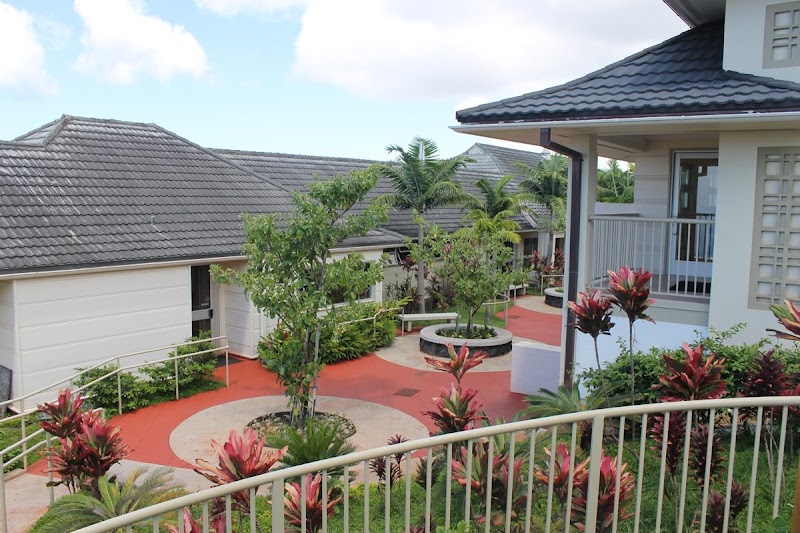
How is Maunalani Staffed?

CMS rates MAUNALANI NURSING AND REHABILITATION CENTER's staffing level at 3 out of 5 stars, which is average compared to other nursing homes.

What Have Inspectors Found at Maunalani?

State health inspectors documented 21 deficiencies at MAUNALANI NURSING AND REHABILITATION CENTER during 2022 to 2025. These included: 2 that caused actual resident harm and 19 with potential for harm. Deficiencies causing actual harm indicate documented cases where residents experienced negative health consequences.

Who Owns and Operates Maunalani?

MAUNALANI NURSING AND REHABILITATION CENTER is owned by a non-profit organization. Non-profit facilities reinvest revenue into operations rather than distributing to shareholders. The facility operates independently rather than as part of a larger chain. With 100 certified beds and approximately 92 residents (about 92% occupancy), it is a mid-sized facility located in HONOLULU, Hawaii.

How Does Maunalani Compare to Other Hawaii Nursing Homes?

Compared to the 100 nursing homes in Hawaii, MAUNALANI NURSING AND REHABILITATION CENTER's overall rating (5 stars) is above the state average of 3.5 and health inspection rating (5 stars) is much above the national benchmark.

What Should Families Ask When Visiting Maunalani?

Based on this facility's data, families visiting should ask: "Can I visit during a mealtime to observe dining assistance and food quality?" "How do you handle medical emergencies, and what is your hospital transfer rate?" "Can I speak with family members of current residents about their experience?"

Is Maunalani Safe?

Based on CMS inspection data, MAUNALANI NURSING AND REHABILITATION CENTER has a clean safety record: no substantiated abuse findings (meaning no confirmed cases of resident harm), no Immediate Jeopardy citations (the most serious violation level indicating risk of serious injury or death), and is not on the Special Focus Facility watch list (a federal program monitoring the lowest-performing 1% of nursing homes). The facility has a 5-star overall rating and ranks #1 of 100 nursing homes in Hawaii. While no facility is perfect, families should still ask about staff-to-resident ratios and recent inspection results during their visit.

Do Nurses at Maunalani Stick Around?

MAUNALANI NURSING AND REHABILITATION CENTER has not reported staff turnover data to CMS. Staff turnover matters because consistent caregivers learn residents' individual needs, medications, and preferences. When staff frequently change, this institutional knowledge is lost. Families should ask the facility directly about their staff retention rates and average employee tenure.

Was Maunalani Ever Fined?

MAUNALANI NURSING AND REHABILITATION CENTER has been fined $73,738 across 2 penalty actions. This is above the Hawaii average of $33,816. Fines in this range indicate compliance issues significant enough for CMS to impose meaningful financial consequences. Common causes include delayed correction of deficiencies, repeat violations, or care failures affecting resident safety. Families should ask facility leadership what changes have been made since these penalties.

Is Maunalani on Any Federal Watch List?

MAUNALANI NURSING AND REHABILITATION CENTER is not on any federal watch list. The most significant is the Special Focus Facility (SFF) program, which identifies the bottom 1% of nursing homes nationally based on persistent, serious quality problems. Not being on this list means the facility has avoided the pattern of deficiencies that triggers enhanced federal oversight. This is a positive indicator, though families should still review the facility's inspection history directly.