HALE ANUENUE RESTORATIVE CARE
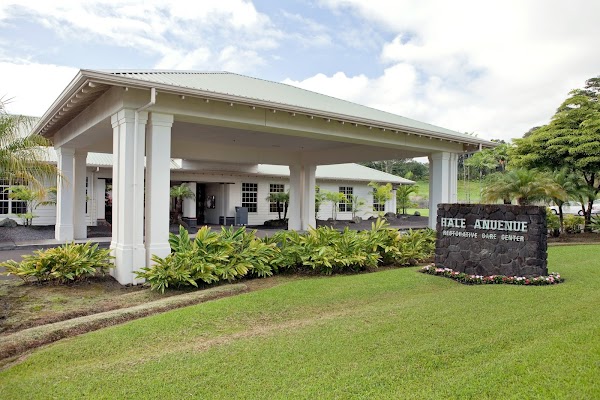
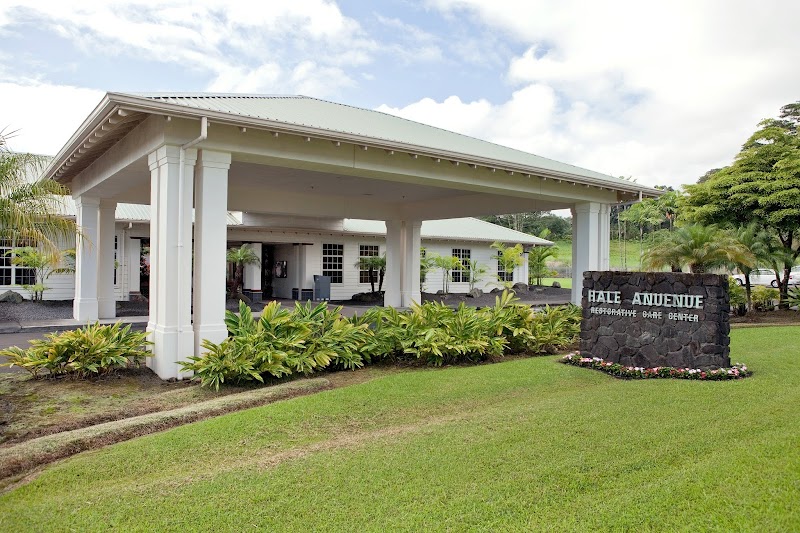
1333 WAIANUENUE AVENUE, HILO, HI 96720 (808) 961-6644
For profit - Limited Liability company 120 Beds LIFE CARE CENTERS OF AMERICA Data: November 2025
Trust Grade
55/100
#22 of 41 in HI
Last Inspection: February 2024

Within standard 12-15 month inspection cycle. Federal law requires annual inspections.

Overview

Hale Anuenue Restorative Care has a Trust Grade of C, which means it is average and positioned in the middle range of nursing homes. It ranks #22 out of 41 facilities in Hawaii, placing it in the bottom half, and #3 out of 7 in Hawaii County, indicating that only two local options are better. Unfortunately, the facility’s performance is worsening, with issues increasing from 6 in 2023 to 12 in 2024. On a positive note, staffing receives a good rating of 4 out of 5 stars, with a low turnover rate of 11%, suggesting that staff are dedicated and familiar with the residents. However, there are concerns about RN coverage, which is lower than 75% of facilities in Hawaii, potentially impacting care quality. Recent inspector findings revealed serious incidents, including a resident being neglected in their care plan, which led to psychosocial harm, and another resident experiencing a fall after waiting too long for assistance, resulting in injuries. Overall, while there are strengths in staffing stability, the facility does face significant challenges that families should consider.

Trust Score
C
55/100
In Hawaii
#22/41
Bottom 47%
Safety Record
Moderate
Needs review
Inspections
Getting Worse
6 → 12 violations
Staff Stability
✓ Good
11% annual turnover. Excellent stability, 37 points below Hawaii's 48% average. Staff who stay learn residents' needs.
Penalties
✓ Good
No fines on record. Clean compliance history, better than most Hawaii facilities.
Skilled Nurses
✓ Good
Each resident gets 59 minutes of Registered Nurse (RN) attention daily — more than average for Hawaii. RNs are trained to catch health problems early.
Violations
⚠ Watch
31 deficiencies on record. Higher than average. Multiple issues found across inspections.
★★★☆☆
3.0
Overall Rating
★★★★☆
4.0
Staff Levels
★★★★★
5.0
Care Quality
★★☆☆☆
2.0
Inspection Score
Stable
2023: 6 issues
2024: 12 issues

The Good

  • 4-Star Staffing Rating · Above-average nurse staffing levels
  • 5-Star Quality Measures · Strong clinical quality outcomes
  • Low Staff Turnover (11%) · Staff stability means consistent care
  • Full Sprinkler Coverage · Fire safety systems throughout facility
  • No fines on record
  • Staff turnover is low (11%)

    37 points below Hawaii average of 48%

Facility shows strength in staffing levels, quality measures, staff retention, fire safety.

The Bad

3-Star Overall Rating

Near Hawaii average (3.4)

Meets federal standards, typical of most facilities

Chain: LIFE CARE CENTERS OF AMERICA

Part of a multi-facility chain

Ask about local staffing decisions and management

The Ugly 31 deficiencies on record

2 actual harm
Feb 2024 12 deficiencies
CONCERN (D)

Potential for Harm - no one hurt, but risky conditions existed

Resident Rights (Tag F0550)

Could have caused harm · This affected 1 resident

2) On 01/31/24 at 08:31 AM, observed in R41's room, Registered Dietician (RD) providing feeding assistance to R41 standing up. A chair was observed to be in R41's room but was not positioned to be use...

Read full inspector narrative →
2) On 01/31/24 at 08:31 AM, observed in R41's room, Registered Dietician (RD) providing feeding assistance to R41 standing up. A chair was observed to be in R41's room but was not positioned to be used while RD was providing feeding assistance. 3) On 02/01/24 at 09:12 AM, observed in the activities room, also used for dining, Activities Aide (AA) 4 providing feeding assistance to R12 standing up. AA4 reported he should not be standing up while providing feeding assistance and usually uses a chair. AA4 further reported R12 can feed herself, but needs encouragement, and sometimes total assist. On 02/01/24 at 03:36 PM an interview with the Director of Nursing (DON) was done. DON stated staff should be sitting while providing feeding assistance for resident dignity. Review of the facility's policy and procedure Dignity reviewed on 09/25/23 documented Each resident has the right to be treated with dignity and respect .Promoting resident independence and dignity while dining, such as avoiding .c. Staff standing over residents while assisting them to eat . Based on observation, interview, and record review, the facility failed to protect and promote quality of life for 3 of 4 residents sampled for dignity (Residents 74, 41, and 12). Specifically, the facility failed to ensure that Resident (R)74's hair was combed prior to placing her in the common area used for dining, and failed to ensure staff did not stand over R41 and R12 while providing feeding assistance. This deficient practice has the potential to affect all residents in the facility requiring assistance with hygiene, grooming, and feeding. Findings include: 1) On 01/30/24 at 12:16 PM, observed R74 sleeping in her high-backed wheelchair out in the common room used for dining, as at least 15 other residents waited in the common room for lunch service to begin. Noted that R74's hair was sticking up in disarray, appearing uncombed/unbrushed. On 02/01/24 at 08:25 AM, a second observation was made of R74 seated in her high-backed wheelchair in the common area used for dining with at least 15 other residents in various stages of breakfast service. Noted that R74's hair was sticking up in disarray, appearing uncombed/unbrushed. On 02/01/24 at 08:30 AM, an interview was done with Certified Nurse Aide (CNA)14 out in the common area. After looking at R74's hair, CNA14 confirmed that it had not been combed or brushed, and that R74 could not perform that task herself. CNA14 agreed that residents' hair should absolutely be groomed prior to being brought out of their rooms. A review of R74's comprehensive care plan (CP) revealed the following regarding her activities of daily living (ADLs) such as grooming/personal hygiene: ADL Assistance . needed to maintain or attain highest level of function. Assist with mobility and ADLs as needed. PERSONAL HYGIENE: Extensive to total assist .
CONCERN (D)

Potential for Harm - no one hurt, but risky conditions existed

Transfer Notice (Tag F0623)

Could have caused harm · This affected 1 resident

**NOTE- TERMS IN BRACKETS HAVE BEEN EDITED TO PROTECT CONFIDENTIALITY** 3) Review of R12's EHR documented R12 was transferred to an acute care hospital on [DATE] for a change in her level of care. R12...

Read full inspector narrative →
**NOTE- TERMS IN BRACKETS HAVE BEEN EDITED TO PROTECT CONFIDENTIALITY** 3) Review of R12's EHR documented R12 was transferred to an acute care hospital on [DATE] for a change in her level of care. R12's EHR lacked documentation that the facility had sent written notification to the State Long Term Care Ombudsman (SLTCO). Interview with the facility's Social Service (SS) 1 was conducted on 02/02/24 at 09:11 AM. SS1 confirmed that written notification to the SLTCO, regarding R12's transfer to the hospital, was not sent. 4) Review of R9's EHR documented that R9 was transferred to an acute care hospital on [DATE] for a change in her level of care. R9's EHR lacked documentation that the facility had sent written notification to the State Long Term Care Ombudsman (SLTCO). Interview with SS1 was conducted on 02/02/24 at 09:11 AM. SS1 confirmed that written notification to the SLTCO, regarding R12's transfer to the hospital, was not sent. 2) Review of R24's EHR documented R24 was transferred to the emergency room (ER) on 10/26/23 after X-ray results from an orthopedic clinic indicated R24 had a fracture to left hip and required surgery. R24's EHR did not include documentation that written notification was given or sent to R24's or his representative. Review of the NOTICE OF RESIDENT TRANSFER OR DISCHARGE form does not include a signature under VERIFICATION/NOTICE OF RECEIPT that R24 or his representative received a copy of the form. Based on interview and record review, the facility failed to provide proper notification of transfer/discharge for 4 of 4 residents sampled for Hospitalization (Residents 15, 24, 12, and 9). Specifically, the facility failed to issue written notification of transfer/discharge to the residents or their representatives for 2 of the 4 residents, and failed to send notification of the transfer/discharge to the Office of the State LTC [long-term care] Ombudsman (LTCO) for 2 of the 4 residents. This deficient practice has the potential to affect all residents at the facility who are discharged or transferred. Findings include: 1) On 01/31/24 at 12:20 PM, a review of Resident (R)15's electronic health record (EHR) noted that she was hospitalized from [DATE] to 12/14/23 for gastrointestinal bleeding (she had blood in her stool). No written notice of the transfer/discharge was found in her EHR. On 02/01/24 at 09:28 AM, the Director of Nursing (DON) provided a Notice of Resident Transfer or Discharge that was dated 12/08/23 but was not signed by R15's family representative verifying receipt of the written notice. DON confirmed that without the signature verifying receipt, there was no documentation to verify that the written notification of transfer/discharge was issued.
CONCERN (D)

Potential for Harm - no one hurt, but risky conditions existed

Deficiency F0625 (Tag F0625)

Could have caused harm · This affected 1 resident

**NOTE- TERMS IN BRACKETS HAVE BEEN EDITED TO PROTECT CONFIDENTIALITY** 2) Review of R12's EHR documented that R12 was transferred to an acute care hospital on [DATE] for a change in her level of care...

Read full inspector narrative →
**NOTE- TERMS IN BRACKETS HAVE BEEN EDITED TO PROTECT CONFIDENTIALITY** 2) Review of R12's EHR documented that R12 was transferred to an acute care hospital on [DATE] for a change in her level of care. R12's EHR lacked documentation that a written notification of the facility's bed hold policy was provided to R12's representative. Interview was conducted with the facility's Health Information Management Director (HIMD) on 02/02/24 at 08:59 AM. HIMD stated that the facility's process includes, the nurses calling the resident's representative and verbally providing them with the bed hold policy. HIMD confirmed that the facility does not send the resident's representative a written notification of the bed hold policy. Based on interview and record review the facility failed to provide written notification of the facility's bed hold policy to the resident or resident representative for two of four sampled for Hospitalization (Residents (R) 24 and R12). Findings include: 1) Review of R24's Electronic Health Record (EHR) documented R24 was transferred to the emergency room (ER) on 10/26/23 after X-ray results from an orthopedic clinic indicated R24 had a fracture to left hip and required surgery. R24's EHR did not include documentation that written the facility's bed hold policy was given or sent to R24's or his representative. On 02/01/24 at 02:38 PM an interview with Social Services (SS) 1 was done. SS1 reported R24's EHR documents that a phone call was made out to his representative regarding the facility's bed hold policy but there was no documentation a written copy was sent out to R24 of his representative.
CONCERN (D)

Potential for Harm - no one hurt, but risky conditions existed

MDS Data Transmission (Tag F0640)

Could have caused harm · This affected 1 resident

Based on interview and record review, the facility failed to electronically transmit minimum data set (MDS) data to the Centers for Medicare and Medicaid Services (CMS) System within 14 days of its co...

Read full inspector narrative →
Based on interview and record review, the facility failed to electronically transmit minimum data set (MDS) data to the Centers for Medicare and Medicaid Services (CMS) System within 14 days of its completion following the discharge of Resident 70. Transmitting health data in a timely manner facilitates computer-aided data analysis which impacts payment and quality. Findings include: On 01/31/24 at 02:24 PM, during a review of Resident (R)70's electronic health record (EHR), it was noted that he was discharged from the facility on 09/29/23, with his discharge assessment documented as completed on 10/04/23. While searching for confirmation of the data transmittal, noted that the Assessment History displayed as Assessment was never added to a batch. Requested transmittal documentation from Minimum Data Set Coordinator (MDSC)1. On 01/31/24 at 02:49 PM, an interview was done with MDSC1 and MDSC2 in the administration conference room. MDSC1 confirmed that R70's discharge assessment had not been transmitted, and stated that they had just submitted it. Transmittal Report provided by MDSC1 verified the assessment was transmitted and accepted on 01/31/24.
CONCERN (D)

Potential for Harm - no one hurt, but risky conditions existed

Comprehensive Care Plan (Tag F0656)

Could have caused harm · This affected 1 resident

**NOTE- TERMS IN BRACKETS HAVE BEEN EDITED TO PROTECT CONFIDENTIALITY** Based on observation, interview, and record review, the facility did not ensure that comprehensive person-centered care plans we...

Read full inspector narrative →
**NOTE- TERMS IN BRACKETS HAVE BEEN EDITED TO PROTECT CONFIDENTIALITY** Based on observation, interview, and record review, the facility did not ensure that comprehensive person-centered care plans were developed and/or implemented for 2 of 21 residents (Residents 17 and 132) in the active patient sample. As a result of this deficient practice, these residents were placed at risk for a decline in their quality of life, and were prevented from attaining their highest practicable physical, mental, and psychosocial well-being. This deficient practice has the potential to affect all the residents at the facility. Findings include: 1) Cross-reference to F688 Increase/Prevent Decrease in ROM/Mobility. Based on observation, interview, and record review, the facility failed to implement interventions from the comprehensive care plan of Resident (R)17 to help increase and/or prevent further decrease in range of motion (ROM) of her left knee and hand. 2) On 01/31/24 at 11:02 AM observed and interviewed R132 in her room while she was sitting in her wheelchair. Edema (swelling) was noted in R132's left leg and foot. Inquired when she noticed the swelling and she stated she had fallen at home and had broke her hip and had to have hip replacement surgery, they put a new ball in there referring to the artificial hip joint. R132 was unable to state exactly when she acquired the swelling in her left leg and foot. On 01/31/24 Record Review (RR) of R132's Electronic Health Record (EHR) found she was admitted on [DATE] and her diagnoses include, but are not limited to, displaced midcervical fracture of left femur (misaligned broken left upper leg bone), presence of left artificial hip joint and pain in left hip. During RR of R132's care plan (CP) there was no mention of monitoring for edema (swelling) and interventions staff would do to prevent and alleviate it. On 02/01/24 at 03:48 PM interviewed Registered Nurse (RN)8 who stated since R132 came to facility she has had some noted swelling in her left leg and foot and this is usually due to the resident spending more time in bed while she was in the hospital and then spending more time sitting up in her wheelchair at the facility. RN8 stated she checked for deep vein thrombosis (blood clot) and it was not present.
CONCERN (D)

Potential for Harm - no one hurt, but risky conditions existed

Quality of Care (Tag F0684)

Could have caused harm · This affected 1 resident

**NOTE- TERMS IN BRACKETS HAVE BEEN EDITED TO PROTECT CONFIDENTIALITY** Based on observation, interview, and record review, the facility did not ensure that 1 of 1 resident (Resident 74) sampled for a...

Read full inspector narrative →
**NOTE- TERMS IN BRACKETS HAVE BEEN EDITED TO PROTECT CONFIDENTIALITY** Based on observation, interview, and record review, the facility did not ensure that 1 of 1 resident (Resident 74) sampled for a urinary tract infection (UTI) received the appropriate treatment and services to manage her acute urinary retention, as evidenced by repeated and routine intermittent catheterizations over a period of 5 days, causing unnecessary trauma to her urethra and placing her at increased risk of bladder spasms and UTIs. Findings include: Resident (R)74 is an [AGE] year-old female admitted to the facility on [DATE] following a fracture to her right hip. Multiple observations made of R74 on 01/30/24 and 01/31/24, both in her room and out in the common area used for dining, noted R74 as extremely somnolent, very poor appetite, consuming a maximum of 10% of lunch on 01/30/24, and 10% of breakfast on 01/31/24, and non-responsive to staff, family, and State Agency (SA) questions. On 01/31/24 at 10:46 AM, a review of R74's electronic health record (EHR) noted that on 01/26/24, after assessing R74 with an abdomen hard to touch and distended, and documentation of her last bowel movement at 05:35 AM, the facility obtained an order to perform an intermittent catheterization. When the catheter was inserted, 800 milliliters (less than a cupful under a liter) of dark tea color urine was drained. R74's physician was informed and gave an order for intermittent catheterization every 8 hours for urinary retention until 01/29/2024. On 01/29/24, another order was obtained for intermittent catheterization for urine retention three times a day . A review of R74's Treatment Administration Record (TAR) noted that from 01/26/24 to 01/31/24, R74 was catheterized 15 times with outputs ranging from 80 - 950 milliliters (mLs). Many of the urine outputs were documented as dark urine, with sediment, and foul smell, however a urinalysis (UA) to test for a UTI was not done until 01/29/24. On 01/30/24, R74 was diagnosed with a UTI and started on oral antibiotics. A review of the facility policy for Indwelling Urinary Catheter (Foley) Management, last revised 06/27/23, and last reviewed on 08/24/23, revealed the following: Examples of Appropriate Indications for Indwelling [as opposed to intermittent] Urethral Catheters 1. Patient has acute urinary retention . The National Institute of Health at https://www.niddk.nih.gov/health-information/urologic-diseases/urinary-retention/definition-facts, defines acute urinary retention as a condition in which you are unable to empty all the urine from your bladder . happens suddenly and lasts only a short time, and states, Acute urinary retention can cause severe pain and be life threatening. On 02/01/24 at 03:46 PM, an interview was done with the Director of Nursing (DON) in the Administrator's office. DON confirmed that the facility began routinely and intermittently (three times a day) catheterizing R74 on 01/26/24 for urinary retention of unknown causes. DON reported that normally they would catheterize a resident only after assessing them with retained urine of a volume above a predetermined parameter, however the facility's bladder scanner was inoperable until 01/31/24, so they had no idea how much urine R74 might be retaining and had to drain her bladder routinely. When asked why an indwelling catheter had not been placed, DON stated the facility did not feel that an indwelling catheter was indicated when they didn't know what was causing the retention. DON confirmed that R74 had no history of a neurogenic bladder (a condition where a person lacks bladder control due to brain, spinal cord, or nerve problems) or urinary retention. On 02/02/24 at 08:31 AM, an interview was done with R74's physician (DO)1 in her facility office. DO1 stated that had the bladder scanner been operational earlier, she would have modified the orders for routine intermittent catheterization to as needed for urine retention above a specific volume. DO1 reported that on 01/26/24, there was only the urinary retention, there was no indication of an infection of any kind, so a UA was not ordered. She did however, order blood tests for Monday 01/29/24, which showed mildly elevated white blood cells, and that was when a UA was ordered. DO1 agreed that since there was no UA done on 01/26/24, there was no way to tell if R74 had the UTI already, or it was caused by the repeated catheterizations. In the American Family Physician Journal 2000:61(2):369 - 376, a review of the article Urinary Catheter Management, found at https://www.aafp.org/pubs/afp/issues/2000/0115/p369.html#:~:text=An%20initial%20episode%20of%20acute,after%2010%20to%2014%20days, revealed the following: An initial episode of acute urinary retention should be treated with an indwelling catheter to allow the bladder to regain its tone, with catheter removal and a voiding trial after 10 to 14 days . a single in-and-out catheterization may cause bacteriuria [the presence of bacteria in the urine] in as many as 20 percent of older people .
CONCERN (D)

Potential for Harm - no one hurt, but risky conditions existed

Deficiency F0688 (Tag F0688)

Could have caused harm · This affected 1 resident

**NOTE- TERMS IN BRACKETS HAVE BEEN EDITED TO PROTECT CONFIDENTIALITY** Based on observation, record review, and interview, the facility failed to ensure Resident (R)17 received the appropriate treatm...

Read full inspector narrative →
**NOTE- TERMS IN BRACKETS HAVE BEEN EDITED TO PROTECT CONFIDENTIALITY** Based on observation, record review, and interview, the facility failed to ensure Resident (R)17 received the appropriate treatment, equipment, and/or services to increase or prevent further decrease in range of motion (ROM) of her left knee and hand. As a result of this deficient practice, R17 was hindered from reaching her highest practicable well-being. This deficient practice has the potential to affect all the residents at the facility with ROM deficits. Findings include: Resident (R)17 is a [AGE] year-old female admitted to the facility for long-term care on 05/10/19. Her current diagnoses include, but are not limited to, hemiplegia (paralysis of one side of the body) and hemiparesis (weakness or the inability to move on one side of the body) of the left side following a stroke, contracture (a tightening of muscle, tendons, ligaments, or skin that prevents normal movement of the associated body part) of the left hand and left knee, and generalized muscle weakness. R17 is non-verbal and minimally responsive to stimuli. A review of R17's electronic health record (EHR) revealed the following interventions in her comprehensive care plan for Alteration in Musculoskeletal Status Related to Contractures of the Left Hand and Left Knee: Left resting splint: AM [morning/day shift] STAFF: L) resting hand splint on beginning of shift off 4 hours later. Check skin pre/post wear time for redness/swelling. PM [evening shift] STAFF: L) resting hand splint on beginning of shift, off 4 hours later. Check skin pre/post wear times for redness/swelling. Left knee contracture splint on 2 hrs [hours] day shift and 2 hrs evening shift; remove for night shift and for skin checks and hygiene. The same interventions were also noted in the physician orders and on R17's Treatment Administration Record (TAR). On 01/30/24 at 11:15 AM, 01/31/24 at 03:30 PM, and 02/01/24 at 08:46 AM, observations were done of R17 as she slept in bed. No observations were made of a supportive device/splint on her left knee, left hand, or at the bedside. On 02/01/24 at 10:40 AM, observed Certified Nurse Aide (CNA)14 performing peri care (washing the genitals and anal area) on R17. While she was uncovered, observed no supportive device/splint on her left knee, left hand, on the bed, or at the bedside. Noted R17's left wrist was severely contracted. At 10:52 AM, once peri care was completed, asked CNA14 if she had ever seen R17 wearing any splints. CNA14 stated yes, but I don't know where it went. After looking around R17's bed, CNA14 looked in the closet and pulled out a blue splint and a black splint. CNA14 explained that she usually sees a splint on R17's hand but did not know which of the splints she found in the closet was the correct one as the nurses are the ones who apply it. There was no mention of ever seeing a splint on R17's left knee. CNA14 left the room to get Registered Nurse (RN)16 to apply the splint(s). On 02/01/24 at 11:35 AM, observed R17 with the blue splint on her right wrist/hand. Her left hand and left knee both remained bare. On 02/01/24 at 11:42 AM, an interview was done with Licensed Practical Nurse (LPN)5 at the Nurses' Station. LPN5 stated that R17 should have a splint for her left hand. If placed, it should be documented on her TAR; if not placed, the reason should be documented in a progress note. At 11:45 AM, a review of R17's TAR noted RN16 had signed off that R17's left knee splint had been applied for 2 hours that morning, and that her left hand splint had been on at 06:30 AM and off at 10:30 AM. This documentation does not align with any of the multiple observations made that morning. At 12:17 PM, observation of R17 sleeping in her bed revealed the blue splint remained on R17's right hand, with her left hand and left knee still bare. A review of the progress notes noted no documentation of why there was no splint applied to R17's left hand or left knee, nor why there was a splint applied to her right hand where there was no contracture.
CONCERN (D)

Potential for Harm - no one hurt, but risky conditions existed

Deficiency F0692 (Tag F0692)

Could have caused harm · This affected 1 resident

**NOTE- TERMS IN BRACKETS HAVE BEEN EDITED TO PROTECT CONFIDENTIALITY** Based on observation, interview, and record review the facility failed to ensure Resident (R) 52 was offered sufficient fluid wh...

Read full inspector narrative →
**NOTE- TERMS IN BRACKETS HAVE BEEN EDITED TO PROTECT CONFIDENTIALITY** Based on observation, interview, and record review the facility failed to ensure Resident (R) 52 was offered sufficient fluid when requested to maintain proper hydration and health. Findings include: R52 was admitted to the facility on [DATE] with a diagnosis not limited to Urinary Tract Infection (UTI). On 01/31/24 at 08:41 AM an observation and interview with R52 was done. Observed Certified Nurse Aide (CNA) 10 approach R52 while R52 was eating breakfast. After CNA10 left R52's room, R52 reported she asked for water at approximately 07:15 AM and a staff member took her water pitcher but has not returned and she just asked CNA10 for her water again. At 08:45 AM, CNA10 returned with R52's water pitcher. Review of R52's care plan documented DEHYDRATION RISK: The resident has dehydration or potential fluid deficit r/t [related to] recent UTI.
CONCERN (E)

Potential for Harm - no one hurt, but risky conditions existed

Food Safety (Tag F0812)

Could have caused harm · This affected multiple residents

**NOTE- TERMS IN BRACKETS HAVE BEEN EDITED TO PROTECT CONFIDENTIALITY** 2) Observation of the nourishment room between room [ROOM NUMBER] and the nurse's station was conducted on 01/30/24 at 02:13 PM....

Read full inspector narrative →
**NOTE- TERMS IN BRACKETS HAVE BEEN EDITED TO PROTECT CONFIDENTIALITY** 2) Observation of the nourishment room between room [ROOM NUMBER] and the nurse's station was conducted on 01/30/24 at 02:13 PM. The nourishment room contained 25 grape jellies, 14 honey, eight breakfast syrups, and three peanut butters. All listed condiments did not have use by dates or expiration dates. Interview was conducted with the Director of Nursing (DON) on 01/30/24 at 02:15 PM in the nourishment room. DON was shown the undated condiments. DON stated that there is no way to tell if the condiments are expired or not. She stated that she will ask the DM. On 01/30/24 at 02:35 PM, after asking the DM, DON stated that the staff members should have put a date on all the condiments. Based on observation, interview, and record review, the facility failed to store, prepare, distribute and serve food in accordance with professional standards for food service safety. Findings include: 1) On 01/30/24 at 10:25 AM, during the initial kitchen tour with Dietary Manager (DM) observed in the walk refrigerator 19 uncovered cakes. Inquired with DM if the cakes should be covered, DM stated they should have been. On 01/30/24 at 11:41 AM, observed in a nourishment room with DM a total of three cranberry cocktail juice containers past the used by date of 01/21/24 on the shelf and one opened cranberry cocktail juice container past the used by date of 01/21/24 in the refrigerator. DM stated they should be discarded and observed DM throw the containers in the trash. On 02/01/24 at 11:09 AM, observed DM check the temperatures of the food to be served to residents for lunch. Observed DM take the temperature of the whole regular chicken with temperature 127 degrees Fahrenheit (F) from the steam table, then immediately take the chicken out of the tray and put it in the steamer to get warmed up. Inquired if the chicken was at safe holding temperatures, DM reported it was not and that is why he took it out of the tray line to warm it up. Review of the facility's policy and procedure (P&P) Food Safety revised on 04/26/23 documented steam tables must be able to maintain hot foods at temperature of 135 degrees F or above. Danger Zone described in the P&P .temperatures above 41 degrees Fahrenheit (F) and below 135 degrees F that all the rapid growth of pathogenic microorganisms that can cause foodborne illness.
CONCERN (F)

Potential for Harm - no one hurt, but risky conditions existed

Deficiency F0725 (Tag F0725)

Could have caused harm · This affected most or all residents

4) On 01/30/24 at 02:19 PM an interview with Resident (R) 52 was done. R52 reported the facility seemed to be short staffed and described an incident when she waited for an hour for staff to help her....

Read full inspector narrative →
4) On 01/30/24 at 02:19 PM an interview with Resident (R) 52 was done. R52 reported the facility seemed to be short staffed and described an incident when she waited for an hour for staff to help her. She used her call light and needed to use the bathroom and because she waited an hour, she had an accident in her bed. 5) On 01/30/24 at 11:00 AM, a resident who asked to remain anonymous was interviewed in his/her room. When asked about staffing, Anonymous Resident (AR)1 stated, they're short of help. AR1 explained that the facility is frequently lacking both Aides and Nurses, resulting in several times in the last year that he/she has lost control of his/her bladder or bowels while waiting for assistance to the bathroom after hitting his/her call light. AR1 stated that he/she also fell and hit his/her head after waiting for assistance so long that he/she tried to walk to the bathroom unassisted. 6) On 01/30/24 at 12:02 PM, when asked about staffing, AR2 also responded that there is not enough staff to meet the needs of the residents. AR2 reported that he/she too has had multiple accidents in his/her briefs while waiting for staff to respond to his/her call for assistance to the bathroom. 7) On 01/31/24 at 09:06 AM, when asked about staffing, AR3 reported that the facility often runs so short that he/she does not get his/her scheduled two showers per week. AR3 stated that the showers depend on having enough staff, so when the facility is short-staffed, it means that showers get missed. AR3 stated that if he/she could, he/she would shower every day, so to not be able to shower even twice a week really bothers him/her. In a review of the Centers for Medicare and Medicaid Services (CMS) Payroll-Based Journal (PBJ) Staffing Data Report, it was revealed that the facility had triggered for Excessively Low Weekend Staffing every quarter of fiscal year 2023. On 02/01/24 at 02:56 PM, an interview was done with the Health Information Management Director (HIM), who was also the Nurse Staffing Coordinator, in her office. When asked about the PBJ Report, and if the results sounded accurate, HIM responded yes. HIM confirmed that the staff schedule has been very challenging to do as the facility is short of nursing staff. HIM reported that the Certified Nurse Aide (CNA) positions seemed to be shorter than the Registered Nurse/Licensed Practical Nurse (RN/LPN) positions. CNAs are already short [on the schedule] then they call out sick and we're even shorter. When asked about weekend staffing, HIM reported that sick calls do seem to increase on the weekends. On 02/01/24 at 03:34 PM, a second interview was done with HIM in the facility breezeway. When asked about staffing ratio goals, HIM reported that they ideally shoot for a 10:1 ratio for CNAs to residents (on the day shift). When asked how often they hit that goal, HIM answered not too often, because of sick calls. For the RN/LPN staffing goal, HIM reported that they would like to have 2 nurses on each side of the facility, plus a Unit Manager (UM) on the larger side, for a total of 5 licensed nurses on day shift, however there are not enough licensed nurses for that, so the UM is usually used as a floor nurse. On 02/01/24 at 03:46 PM, an interview was done with the Administrator and Director of Nursing (DON) in the Administrator's office. When asked about the PBJ Report, and if the results of excessively low weekend staffing for every quarter of fiscal year 2023 sounded accurate, both the Administrator and DON stated yes. Based on observation, record review, and interview, the facility failed to ensure there was sufficient nursing staff to provide nursing and related services to meet the residents' needs safely and in a manner that promotes each resident's rights, in addition to their physical, mental, and psychosocial well-being. As a result of this deficient practice, the residents experienced a decreased quality of life and were unable to attain their highest practicable well-being. Findings include: 1) On 01/30/24 at 01:43 PM interviewed AR4 in his/her room. Inquired if there are enough staff to provide care for him/her. AR4 reported there are not enough staff, they are so short staffed, and he/she made a note to the social worker regarding this. AR4 stated, it's a shame to have such a nice place and not have it fully staffed. AR4 asked, what can we do as a community? What can our representative do? (Legislator). Such a shame. One time I rang the buzzer and they didn't come, sometimes it takes 15-20 minutes, it's not right away, one time I felt like I was going to die and I could have. 2) On 01/30/24 at 02:40 PM, interviewed R76 who stated facility is short staffed when asked if there are enough staff to help her. R76 would not elaborate when questioned about this, stated she was being discharged soon. 3) On 01/31/24 at 10:42 AM interviewed R132 in her room. R132, who is a high risk for falls, had fallen at home and had hip surgery before coming to the facility. R132 reported, in the early morning it takes them about 15 minutes to respond, to her call light and that she will, go on my own because I have to go.
CONCERN (F)

Potential for Harm - no one hurt, but risky conditions existed

Deficiency F0800 (Tag F0800)

Could have caused harm · This affected most or all residents

3) Interview was conducted with R62 on 01/31/24 at 07:54 AM. R62 stated that the kitchen sends over meals containing chocolate multiple times in a month, when her diet preference card documented choco...

Read full inspector narrative →
3) Interview was conducted with R62 on 01/31/24 at 07:54 AM. R62 stated that the kitchen sends over meals containing chocolate multiple times in a month, when her diet preference card documented chocolate as one of her allergies/dislikes. Observation was conducted on 01/31/24 at 12:26 PM in R62's room. CNA10 was observed delivering R62's lunch tray. When CNA10 uncovered R62's plate, it was observed that R62's chicken entrée was grinded/grounded. On R62's diet preference card, it documented, no grounded meat. R62 stated that the kitchen makes an error on her meals at least twice a week. Interview was conducted with Dietary Manager (DM) on 02/01/24. DM was shown a picture of R62s lunch tray on 01/31/24. DM was also shown R62's diet preference card. DM stated that R62 is on an easy to chew diet, which means that the chicken entrée for that day needed to be grounded. Since R62 preferred no ground meat, DM stated that a substitution entrée should have been provided to meet R62's diet preference. Based on observation, interview, and record review the facility failed to ensure residents dietary needs and preference were met. 1) Resident (R) 52 food preferences were not followed. 2) Staff members providing feeding assistance and/or passing meal trays to residents were not aware of residents' special dietary texture needs to ensure residents are receiving the proper diet texture on their meal trays. 3) R62's food preferences were not followed. 4.) R50's fluid preferences were not given. Findings include: 1) On 01/31/24 at 08:41 AM an observation and interview with R52 was done. Observed Certified Nurse Aide (CNA) 10 approach R52 while R52 was eating breakfast. After CNA10 left R52's room, R52 reported she is supposed to get milk with her breakfast and when she got her meal tray 30 minutes ago, she asked a staff member for milk but had not received it yet. She asked CNA10 about her milk. At 08:45 AM, CNA10 returned with R52's milk. Observed R52 dietary form to include milk with her meal. R52 was then observed to pour her milk in her cereal. R52 further reported when she gets the weekly menu, she reviews it in advance and marks an X to indicate she plans to order from the alternative menu. Reviewed R52's marked menu with an X for dinner on Tuesday (01/30/24) and Thursday (02/01/24). R52 explained that she fills out the form to request an alternative menu in advance and gives the form the day before or the day of to the CNA. R52 ordered Salesbury steak as her alternative menu on 01/30/24 instead of the baked honey glaze ham for dinner but did not receive her menu preference. Instead R52 received the ham but did not want to turn the food away because from experience it would take another 20 minutes to get the correct menu ordered. On 02/01/24 at 08:59 AM, R52 reported she received the Salesbury steak she ordered on 01/30/24, last night instead. Dinner on 01/31/24 was supposed to be teriyaki beef and she wanted to eat the teriyaki beef but instead got the Salesbury steak. R52 did not understand why dietary staff got the days mixed up. R52 ate the Salesbury steak because she did not want to wait any further for dinner. R52 did not receive her menu preference. The facility's policy and procedure Food Preferences revised 04/25/23 documented Individual .food preferences are honored, when possible, to enhance resident's satisfaction with food and dining. 2) On 01/30/24 at 12:47 PM an interview with Family Member (FM) 16 was done. FM16 reported Resident (R) 69's ordered diet texture is currently moist minced after choking on her food. FM16 reportedly found dietary staff have been inconsistent in R69's ordered diet and would sometimes give R69 regular diet, chopped diet, minced diet, and pureed diet which may have resulted in the incident when R69 choked on her food. R69 reportedly expressed to FM16 and another FM that she thought she was going to die. On 01/31/24 at 08:21 AM interview with Activities Aide (AA) 1 was done. While AA1 was providing feeding assistance to a resident, inquired what does PU4 on the resident's dietary form stand for, AA1 stated she did not know. On another resident's dietary form, inquired what MM5 stands for, AA1 stated she did not know. On 01/31/24 at 08:24 AM an interview with Certified Nurse Aide (CNA) 42 was done. While CNA42 was providing feeding assistance to resident, inquired what does PU4 on the resident's dietary form stand for, CNA42 stated she was not sure, but it might stand for pureed. Inquired why CNA42 may think it stand for pureed diet, CNA42 stated because the resident's food is all pureed. Inquired about MM5, CNA42 stated she cannot memorize all the abbreviations to the diet textures but there is a chart with all the abbreviation and referred to Registered Dietician. Review of the list of abbreviations for texture diets provided by RD included but not limited to: Regular - RG7 Easy To Chew - EC7 Soft & Bite-Sized -SB6 Minced & Moist - MM5 Pureed- PU4 On 01/31/24 at 08:29 AM an interview with CNA10 was done. Observed CNA10 passing trays to residents in their rooms, inquired with CNA10 what MM5 stood for in the residents' dietary form. CNA10 stated she did not know. Review of the facility's policy and procedure Meal Service reviewed on 08/24/23 documented Verify the meal being served matches the correct diet that is prescribed for the resident. 4) An interview was conducted with R50 on 01/30/24 at 2:13 PM. Observed R50 was sitting in front of his bathroom. He reported that he is lactose intolerant, stated he has been given milk five times in the past two weeks. R50 reported today he tried the milk in his cup that came on his lunch tray and said it was regular milk, not the almond milk that he requested. At this time R50 complained of having loose stool, stated he believes it is from the milk he was given.
CONCERN (F)

Potential for Harm - no one hurt, but risky conditions existed

Infection Control (Tag F0880)

Could have caused harm · This affected most or all residents

**NOTE- TERMS IN BRACKETS HAVE BEEN EDITED TO PROTECT CONFIDENTIALITY** 3) On 01/30/24 at 11:48 AM, observed dietary staff bring a cart full of lunch trays to the area used for activities and dining. ...

Read full inspector narrative →
**NOTE- TERMS IN BRACKETS HAVE BEEN EDITED TO PROTECT CONFIDENTIALITY** 3) On 01/30/24 at 11:48 AM, observed dietary staff bring a cart full of lunch trays to the area used for activities and dining. Observed AA1 prepare residents in the dining area for lunch by clearing their tables and putting tablecloths on the tables and/or tray tables. No observation of staff members offering residents hand sanitizer or to wash their hands. At 12:05 PM, observed staff members begin passing out trays to residents. A total of 19 residents were dining outside of their room and there was no observation of staff members offering residents hand sanitizer or to wash their hands from any of the staff members passing the trays. At 12:15 PM, inquired with AA1 how residents wash their hands before meals, AA1 pointed to a portable hand sanitizer bottle that is used. Inquired if she offered the hand sanitizer to the residents before lunch, AA1 stated she did not. Based on observations, interviews and record review, the facility failed to apply standard infection control precautions to ensure the health and safety of its residents, staff and visitors. Findings include: 1) On 01/31/24 at 08:28 AM observed Activities Aide (AA)2 set up resident(R)77's breakfast. Interviewed AA2 at this time and asked if she gave R77 hand sanitizer or wipes to wipe her hands before breakfast and she said no. Inquired if facility staff usually provide hand wipes or hand sanitizer before meals and AA2 said no and said the hand sanitizer is kept around as she looked around the room. Asked if R77, who is in a wheelchair, would roll herself to the hand sanitizer and she said no. On 01/31/24 at 08:33 AM interviewed Registered Nurse (RN)8 about patient's cleaning their hands before breakfast. RN8 said if the resident uses the bathroom staff have them wash their hands. RN8 also stated when residents are sitting out of their room or are up in their room to eat their meal staff provide hand sanitizer before meals. On 01/31/24 at 08:44 AM met with and interviewed Administrator regarding hand hygiene for residents before meals. Administrator explained residents who are provided care would also do hand hygiene at that time. Administrator did state they (facility) need to correct this because they do not know if they (residents) touched anything afterwards. On 01/31/24 at 08:48 AM interviewed R77 and inquired if staff had been provided hand sanitizer or hand wipes to use on her hands before she ate her breakfast. She stated she washes her face and hands in the morning before she comes out of her room to eat her meals. An interview was performed with the Infection Preventionist (IP) on 02/01/24 at 1:57 PM in his office. Inquired if the facility offers residents hand sanitizer or hand wipes before meals. IP stated when residents used to eat in the big dining room the staff would give the residents hand sanitizer as they entered the room. Currently, because of COVID, residents are now eating on their units either in the main room or in their rooms. IP confirmed staff should be giving residents hand sanitizer before meals. 2) On 01/31/24 at 10:26 AM observed R132's room did not have signs posted outside of her room notifying staff and visitors of transmission based precautions (TBP) and need for all to use personal protective equipment (PPE) (use of gloves, gowns, mask and goggles) prior to entering R132's room. R132 was admitted to the facility on [DATE] with an active case of COVID-19. Concurrent interview was done with RN8 who was not aware signage was not placed outside of R132's room for everyone to use PPEs for TBP. RN8 taped the sign up to the wall outside of R132's room at that time.
Aug 2023 3 deficiencies
CONCERN (D) 📢 Someone Reported This

A family member, employee, or ombudsman was alarmed enough to file a formal complaint

Potential for Harm - no one hurt, but risky conditions existed

Deficiency F0552 (Tag F0552)

Could have caused harm · This affected 1 resident

**NOTE- TERMS IN BRACKETS HAVE BEEN EDITED TO PROTECT CONFIDENTIALITY** Based on record review and interviews, the facility failed to follow the standards of care when two residents (R)1 and R2 left a...

Read full inspector narrative →
**NOTE- TERMS IN BRACKETS HAVE BEEN EDITED TO PROTECT CONFIDENTIALITY** Based on record review and interviews, the facility failed to follow the standards of care when two residents (R)1 and R2 left against medical advice (AMA). Specifically, the facility failed to: 1. Document physician (MD) assessment of residents competency, 2. Staff failed to document the specific risks and potential adverse outcomes of leaving AMA. 3. Discharge instructions an education were not documented when discharged . 4. The AMA form for R1 was not signed by R1, but by a family member (FM), who was not Power of Attorney (POA). 5. R1 did not have a nursing assessment of medical condition prior to leaving the facility. All residents that leave AMA have the right to be informed of the risks and potential adverse outcomes to be able to make an informed decision before leaving. Findings include: 1) R1 is a [AGE] year old female who was admitted to the facility on [DATE] for short term rehabilitation. Her past pertinent medical history included chronic congestive heart failure, pneumonia, Type 2 diabetes, and chronic kidney disease. She was incontinent of bowel and bladder, had a stage 3 pressure ulcer (PU) on her sacrum and unstagable PU of the right heel. R1 was diagnosed COVID + after admission. She was alert and oriented x3 and able to make her needs known. R1 required extensive assist with activities of daily living and the assist of two staff with transfers. Physical therapy recommended using a lift for transfers. R1 was competent and did not have a Power of Attorney for healthcare decisions. On 06/02/2023, sometime after 09:00 AM, R1's FM came to visit and was not able to open the door to R1's room because the bathroom door handle and entrance door handles interlocked preventing access. At 02:20 PM, R1's family member (FM) signed R1 out of the facility AMA because she felt it was an unsafe environment. Review of the R1's Against Medical Advice Discharge Form, signed by 06/02/2023 at 02:20 PM by FM revealed the following: - The form template date was 2006. - The form was signed by FM, and witnessed by Social Services Assistant (SSA) and Licensed Nurse (LN)1. - There were no specific risks or potential adverse outcomes listed on the form or in the progress notes. Content included: This is to certify I, ., a resident in . am being discharged against the advice of the attending physician and the facility administration. I acknowledge that I have been informed of the risks involved and hereby release the attending physician and the facility from all responsibility for and from anything that may result from such discharge. I am also aware that I will be responsible for any costs incurred that my insurance company refuses to cover. - Statement regarding authorization; Authorization must be signed by the resident, by the nearest relative in the case of a minor, or by the Durable Power of Attorney when the resident is physically or mentally incompetent. Reviewed Nursing Progress notes, which included the following entries: 06/01/2023 at 05:17 PM: .BP (blood pressure) 100/60 . Saturating 97% on 2 liters via NC (nasal cannula) .Resident c/o (complain of ) SOB (shortness of breath) when lying flat during care 06/02/2023 (Effective date) at 03:45 PM: Resident left AMA .with family. SS (Social Service) in the unit at the time. The Created date was 06/03/2023 at 01:57 AM by LN2. The Executive Director (ED) confirmed this was a late entry and entered into the medical record after the incident occurred. The last nursing assessment documented prior to R1 leaving AMA was 06/01/2023 at 05:17 PM. On 08/07/2023 at 03:00 PM, interviewed LN2, who documented R1's AMA progress note. When inquired if the physician (MD) or LN1 had talked to R1 or FM about the risks and potential adverse outcomes of leaving AMA, said she was not sure. At that time, LN2 said when she came on duty, she was told R1 was leaving AMA, and the SSA was facilitating the AMA. She did not know why R1 was leaving. LN2 said when SSA asked if the facility could call for an ambulance transport for R1, she informed him R1 was AMA, and the facility could no longer call or assist. LN2 confirmed she did not provide any discharge education or instructions to R1 or FM. On 08/08/2023 at 08:00 AM, interviewed SSA, who signed as a witness on R1's AMA form. He said his role in an AMA was to inform the resident and family what it entails, and advocate for their wishes. He said he was asked by his supervisor (Director of Social Service (DSS)) to assist with the AMA. SSA said he had a conversation with FM to confirm she wanted to take R1 home. He said he spoke with nursing staff, who placed a call to the physician. RN (LN1) and I met with the family and got signature. FM was informed AMA meant the facility wouldn't provide any further services. Inquired what that might involve, and he said medication due, would not be given. SSA said he heard RN inform FM about risk of COVID + and possible transmission, but did not hear any other risks discussed. He said Social Services do not have privy to detailed information about the medical condition, so it was a general risk explanation. Reviewed SSA's post event statement regarding the AMA, which included This writer (SSA) proceeded to speak with nursing staff to have an RN accompany this writer to have FM sign AMA paperwork. RN, came to the front foyer with SSA to speak with FM to inform her of what AMA meant and what it entailed for discharge. FM was agreeable and signed AMA paperwork with both RN and SSA present. On 08/08/2023 at 08:20 AM, during an interview with the DSS, she said on the way to a meeting she saw R1's FM, who said she was waiting for a phone call and wanted to take R1 home. DSS informed SSA, and asked him to follow up. She said it wasn't until later she found out R1 left AMA. DSS said SSA mentioned FM was feeling frustrated about R1's care at the facility. The DSS said the Social Services (SS) usually facilitates the request for AMA. She went on to say we talk to the resident/representative and find out why they want to leave, notify the Doctor (MD) and Executive Director (ED). They should be working with nursing, especially if the resident is not ready to be discharged because of medical condition, as they need to know the risks of leaving. The DSS said the facility does not have very many AMA's, but she felt the SS staff should do everything possible to assist them to make sure they have what they need when they leave. At that time. reviewed R1's AMA form and medical record. DSS said she was aware there were issues with the documention of the AMA with no SS notes and minimal nursing notes. Later the DSS confirmed FM was not the Power of Attorney (legal document that is effective upon disability which appoints person to make healthcare decisions during any period of incapacity), and agreed R1 should have been present during any discussions and the one to sign the form. On 08/08/2023 at 09:15 AM, during an interview with R1's MD, she confirmed she last saw R1 on 06/02/2022 in the AM, and at that time had a phone discussion with the FM about meds and clinical status. She said FM had mentioned a couple of concerns and referred FM to nursing to discuss. MD said there was no discussion of leaving at that time. She said sometime after that, nursing called to inform her R1 leaving AMA. MD said she did not see or talk to FM or R1 after the notification. When asked MD what the specific risks were for R1 to leave AMA, she said it would have included CHF (congestive heart failure) and fall risk, safety of where she is going. She was medically a lot more stable, . but then couldn't take care of herself. MD said the practice at the facility is nursing will give the MD a heads up if a resident wants to leave, but they do not discuss and document competency or specific risks with the Resident/representative. The medical record did not contain any documentation that R1 received discharge instructions or any education at the time of discharge. R1's FM made arrangements for transport, home oxygen and hospice services because she was told all facility services ended when the AMA was signed. 2) Reviewed R2's medical records, which revealed there was no documentation by the physician of R2's competency and ability to understand the adverse outcomes of leaving against medical advice. The AMA form dated 03/21/2023 at 02:52 PM signed by R2 and nursing progress notes did not document specific risks or potential adverse outcomes of leaving AMA. 3) Reviewed the facility policy titled Against Medical Advice Discharges revised 06/20/2023. The policy included the following: - Policy: If a resident wishes to be discharged prior to the completion of medical treatment or against the advice of the attending physician to a setting that does not appear to meet his or her needs or appears unsafe, the facility will treat this situation similarly to refusal of care. The facility will complete the required documentation and provide written discharge instructions as with any discharge. - Procedure: This facility will utilize the [NAME] Procedure (link to procedure): Discharge against medical advice, long-term care. The [NAME] policy revised May 22, 2023, included the following: - .Discharge AMA is a right of a mentally competent resident. If discharge AMA can't be prevented, a practitioner must evaluate the resident's mental capacity to be sure that the resident can understand the condition, the nature and effect of the proposed treatment, and the attendant risks in pursuing the treatment and not pursuing the treatment. An AMA consent should be properly documented in the resident's medical record. .Before discharge, the nurse should explain all risks and consequences of premature discharge to the resident. The facility must take reasonable steps to secure the resident's signature on the designated form.As with any discharge, the facility is required to provide written discharge instructions, including follow-up with Practioner's, medication management, the need for continued therapy, and any durable equipment necessary. - Explain previously discussed goals for treatment, risks, and potential adverse consequences of not completing the treatment plan in the facility setting. - If the resident still wants to sign the discharge AMA form, request that the resident sign a discharge AMA form or release from responsibility form .that indicated the resident understands the discussed goals, risks, and potential adverse consequences. - Resident Teaching: Provide the resident with written information about medication management, follow-up care, medical equipment, and further discharge arrangements with home health care or other agencies. - Documention associated with discharge AMA included but not limited to: residents decision-making capacity, discussion of the treatment goals, risks of not completing the goals in the facility setting and the resident's understanding of those risks, .discharge arrangements made with community agencies, written discharge instructions, physical assessment findings, teaching provided and understanding of that teaching.
CONCERN (D) 📢 Someone Reported This

A family member, employee, or ombudsman was alarmed enough to file a formal complaint

Potential for Harm - no one hurt, but risky conditions existed

Deficiency F0726 (Tag F0726)

Could have caused harm · This affected 1 resident

Based on interviews and record review, the facility failed to ensure the licensed staff had the knowledge to respond to a resident's request to leave the facility against medical advice (AMA). Specifi...

Read full inspector narrative →
Based on interviews and record review, the facility failed to ensure the licensed staff had the knowledge to respond to a resident's request to leave the facility against medical advice (AMA). Specifically, the staff did not know the requirements of documentation and did not know the resident needed discharge instructions and education in a resident initiated discharge. The nursing staff also failed to assess and document one of two residents (R)1 patient's condition prior to leaving AMA. As a result of the deficient practices, there was increased potential of adverse outcome after discharge. In addition, the nursing staff did not complete event reports when resident doors interlocked preventing access to the rooms, presenting an unsafe environment. Due to this deficient practice, leadership was not aware of the issue, so an investigation, analysis and actions measures were not taken to prevent reoccurrence of same issue. Findings include: 1) The Licensed Nurse (LN) did not understand the role and components involved when a resident left AMA. The Social Service department takes a lead role in facilitating the discharge, and the RN is to provide information regarding the risks and potential adverse outcomes. Interviews revealed the licensed staff did not know the physician was required to determine competency and must be documented the resident is able to understand the potential adverse outcomes if treatment is not continued. On 06/02/2023, the LN who discharged R1 did not provide discharge instructions or education prior to R1 leaving. When FM wanted assistance to call for transport, she was told after the AMA is signed, the facility is no longer responsible and could not provide assistance. There was no assistance provided to make the transition as safe as possible. Cross reference F552: Right to Be Informed/make Treatment Decisions R1 signed out AMA on 06/02/2023. The facility failed to inform and document the specific risks and potential adverse outcomes of signing out AMA. The discussion regarding leaving AMA was held with a Family Member (FM), who signed the release form, rather than R1, who was competent to make her own decisions regarding her care. Interviews revealed the staff was not aware the physician needs to determine competency of the resident to sign AMA and that the resident understands the risks. In addition, there was no documentation of the residents condition or assessment prior to resident initiated discharge. The nursing staff did not provide discharge instructions or patient education at the time of discharge. 2) The Office of Health Care Assurance received a facility reported event dated 06/09/2023. the report included the following information: - On 06/09/2023 the facility received a report from an outside agency regarding an incident that alleged caregiver neglect. -The incident occurred on 06/02/2023 at approximately 10 AM, when R1's door was unable to be opened from the outside. Maintenance responded and accessed the room through the outside window, and was able to open the door. The resident hallway door was closed and the inside handle and the bathroom door handle unexpectedly interlocked preventing access to the room. On 08/08/2023 at 10:30 AM, interviewed Certified Nurse Assistant (CNA), assigned to R1 on 06/02/2023. She said the door got jammed. She said she was unable to open the door and asked to have maintenance called. CNA went on to say maintenance entered the room through the outside window and was able to open the door. When asked if CNA had this issue happen before, she said she was fairly new to the facility, but the Housekeeper on that day said it had happened before. She said both residents in the room were total assist, unable to get out of bed on their own and the doors were shut due to COVID. CNA said the room was hot because the air conditioner was broken so the window was open. CNA thought maybe the wind blew the bathroom door. Review of event reports revealed no incident/event report was made by nursing on the 06/02/2023 or any other incident related to interlocking doors preventing access to residents. During an interview with the Executive Director (ED), she said the first she became aware of the incident was when the facility was contacted by an external agency, who was investigating the case. She said to her knowledge, this had not happened before any where in the facility The nursing staff did not demonstrate knowledge of the importance to identify, and report incidents that present a safety risk to residents so they could be investigated, analyzed and actions implemented to prevent future incidents of similar nature.
CONCERN (D) 📢 Someone Reported This

A family member, employee, or ombudsman was alarmed enough to file a formal complaint

Potential for Harm - no one hurt, but risky conditions existed

Safe Environment (Tag F0921)

Could have caused harm · This affected 1 resident

**NOTE- TERMS IN BRACKETS HAVE BEEN EDITED TO PROTECT CONFIDENTIALITY** Based on observation, interviews and document review, the facility failed to provide a safe environment. The facility had a main...

Read full inspector narrative →
**NOTE- TERMS IN BRACKETS HAVE BEEN EDITED TO PROTECT CONFIDENTIALITY** Based on observation, interviews and document review, the facility failed to provide a safe environment. The facility had a maintenance issue on 06/02/2023 where one resident's (R)1 room was not accessible to staff when the entrance door inside handle interlocked with the bathroom door handle. The only way to access the room and open the door was through the outside window. This created an unsafe environment because staff did not have immediate access to the two residents in the room. R1's family member (FM) felt this was unsafe and signed R1 out of the facility against medical advice (AMA). Investigation revealed this same door issue had occurred in the past. The facility action plan included inspection of all doors, but was unable to provide documentation it had been completed. Day one of survey, investigation revealed two doors of a random sample had not been maintained, and were vulnerable for doors to interlock. The facility did not have a process in place to maintain the doors and there was high probability of reoccurrence, creating an unsafe environment. If staff are not able to have immediate access to residents, there may be serious adverse outcomes. The deficiency constituted an immediate jeopardy. Findings include 1) On 06/07/23, the Office of Healthcare Assurance received a facility incident report that on 06/02/2023 at approximately 10:00 AM, R1's room was not able to be opened from the outside (hall). FM said she was told if the bathroom door is opened a certain degree, it blocks the room door from being opened. She said several staff tried to open the door, and it was unknown how long the door was jammed, or last time R1 had seen by staff. The Housekeeping staff was called and said, oh, that's happened before, you have to go through the window to get in and open it Maintenance was called and got access to the room through the outside window. R1 is a [AGE] year old female who was admitted to the facility on [DATE] for short term rehabilitation. Her past pertinent medical history includes chronic congestive heart failure, pneumonia, Type 2 diabetes, and chronic kidney disease. She was incontinent of bowel and bladder and had a stage 3 pressure ulcer (PU)on her sacrum and unstagable PU of the right heel. R 1 was diagnosed COVID + after admission on She was alert and oriented x3 and able to make her needs know. R1 required extensive assist with activities of daily living and the assist of two with transfers. On 06/02/2023 at 02:20 PM, FM signed R1 out of the facility AMA. 2) On 08/07/2023, day one of survey, at 09:30 AM, conducted an inspection of resident room doors with maintenance. At that time, two resident rooms (109 and 210) were found to have the same facility maintenance issue that would allow the doors to interlock, preventing access to the room to provide monitoring or resident care. Surveyor with good hand dexterity had difficult time unlocking the doors from the inside. On 08/08/2023 at 01:38 PM, the facity completed an inspection and identified two additional rooms (503 and 504) that needed immediate maintenance on the doors. 3) On 08/08/2023 at 08:00 AM, during an interview with the Maintenance Director (MD), he said he was new to the facility in November of 2022, and had not been aware of a door issue until 06/02/2023. He went on to say R1's door was repaired that day, and the maintenance staff made sure the other rooms had door stops to prevent from happening in other rooms. The Maintenance Director said there was no documentation of the inspection/audit and was more like a safety check. On 08/08/2023 at 10:30 AM, during an interview with the Certified Nursing Assistant (CNA) assigned to R1 on 06/02/2023, she said the door got jammed. She said R1's daughter came to visit and found it like that. CNA tried to unarm the door using a pen, and could not open, so requested maintenance be contacted. She said the Housekeeper (unavailable for interview) on that day, said this has happened before, and they need to go through the window. The CNA went on to say the R1's door was closed because she was positive for Covid. She said both residents in the rooms could not get up and required assistance for transfers. CNA said the maintenance staff had to put PPE (personal protective equipment) on before entering through the window. She said the window was open because the air conditioner was broken, and thought maybe the wind blew the bathroom door open, locking the handles. The CNA said the FM was very upset and later signed R1 out AMA.
Mar 2023 3 deficiencies
CONCERN (D) 📢 Someone Reported This

A family member, employee, or ombudsman was alarmed enough to file a formal complaint

Potential for Harm - no one hurt, but risky conditions existed

Deficiency F0557 (Tag F0557)

Could have caused harm · This affected 1 resident

Based on interviews and record review, it was determined the facility constituted past noncompliance when one Resident (R)1 was not treated with care and compassion. Specifically R1 had significant an...

Read full inspector narrative →
Based on interviews and record review, it was determined the facility constituted past noncompliance when one Resident (R)1 was not treated with care and compassion. Specifically R1 had significant anxiety and fear after an interaction she had with a Registered Nurse (RN)1 on 02/28/2023. There was sufficient evidence the facility corrected the deficiency and found to be in substantial compliance at the time of the survey. Findings include: 1) The Office of Healthcare Assurance (OCHA) received an event report (ACTS # 10032) dated 01/20/2023. Details of the incident included: Staff reported that the Resident (R1) and her daughter informed nursing staff today, 1/16/23, at approximately 5:15 PM that R1 was approached in her room by a male nurse (RN1). She was on the telephone with her daughter who also heard the male staff member tell the resident Never make phone calls outside this facility during these times. The resident hung up immediately. The resident also told nursing staff that the same nurse didn't listen to her. She said that she asked him to take her blood pressure a specific [sic] was and he responded I'll do it however I want to. The resident (R1) expressed fear hearing that RN1 was on the schedule to work tonight. Both Resident and Daughter expressed concerns of potential retaliation, and declined to provide a written complaint. DON (Director or Nursing) contacting nurse in question to suspend pending investigation. Police contacted. 2) The facility investigation summary read: An investigation was initiated on 01/16/23, concluding on 01/19/23. Staff with any knowledge of the situation were interviewed and witness statements taken. Residents were interviewed to determine if there was a wider concern and establish if there was a pattern of behavior. RN1 and subject of the investigation was not suspended because he was not scheduled during the dates of the investigation. Staff interview summary: Interviews were conducted with 7 associates working directly with the Resident's unit or with directly [sic] with the resident on the day of the reported event and the following 72 hours. They indicated that this nurse often has communication challenges. This resident has a history of COPD (Chronic Obstructive Pulmonary Disease) with moderate anxiety when triggered. The family stated that it was normal for her to have breathing challenges with high anxiety, particularly at night. Their routine has been to speak to her gently and breath with her to calm her. She received Trazadone (for pain) .at 11:17 PM 01/15/2023. She did not receive her anti-anxiety medication (Alprazolam) that night, or her PRN (as needed) inhaler.The resident reported to the Social Service Director that the nurse suggested that she not call anyone outside. When asked if she was fearful, she initially stated that she was fearful because of the male nurse. When she was questioned further, she said she was afraid of the male nurse because she has to ask for help. A family meeting was held with the resident's highly engaged son and daughter (POAs) on 01/18/22. They said that their primary concern regarding this incident was not the guy (referring to the male nurse identified in the complaint), but their mother's difficulty breathing. Resident interviews: There were no trends identified. Conclusion: The associate in question has communication challenges. He sometimes lacks warmth, and may appear disinterested. He received disciplinary action on 01/19/23 as a result of this investigation, with a 90 day action plan and weekly coaching sessions with the DON and other administrative staff. Although he has communication deficits, we were unable to prove the complaint of abuse, He at no time interfered with the resident's telephone communications with her family, and continuous [sic] to have full access to her cell phone which is used at her discretion. 3) The facility action plan included the following, which were validated through document review and interviews. - RN1 received formal reprimand dated 01/19/2023 from the DON for conduct that included be professional, respectful, and ethical when acting on behalf of ., Acting indifferently or rudely toward others, using inappropriate language. Validated by review or RN1's Human Resource file. - Implemented 90 day action plan for RN1, which included education on the following: patient rights, person-centered care and service plans, person-centered communication, conflict management, effective communication for leaders, abuse prevention, mental health and psychosocial needs and person-centered care in LTC (long term care). In addition, the action plan included weekly meetings with leadership every Monday until 04/02/2023 and performance monitoring. The action plan was reviewed and validated during an interview with the DON. - Facility held a meeting with R1's family, with documented minutes. - Facility implemented staff education that was validated by reviewed of the inservice content and attendance records. 4) During an interview with R1's POA, she said she did not actually hear RN1 tell her mother (R1) to get off the phone, but that she (R1) hung up abruptly and later told her RN1 didn't want her to use the phone.
CONCERN (D) 📢 Someone Reported This

A family member, employee, or ombudsman was alarmed enough to file a formal complaint

Potential for Harm - no one hurt, but risky conditions existed

Accident Prevention (Tag F0689)

Could have caused harm · This affected 1 resident

**NOTE- TERMS IN BRACKETS HAVE BEEN EDITED TO PROTECT CONFIDENTIALITY** Based on interviews and document review, the facility was found to meet the criteria for past noncompliance. On 03/12/2023, one ...

Read full inspector narrative →
**NOTE- TERMS IN BRACKETS HAVE BEEN EDITED TO PROTECT CONFIDENTIALITY** Based on interviews and document review, the facility was found to meet the criteria for past noncompliance. On 03/12/2023, one resident (R)2 was very restless and the staff did not provide adequate supervision to prevent a fall that resulted in harm, a fracture of the left wrist. After review of actions taken by the facility and an additional sample of three residents, the facility was found to be in substantial compliance at the time of this survey. Findings include: 1) R2 is an [AGE] year old female admitted to the facility on [DATE] after she had a stroke. Her medical history included stroke with right-sided weakness, dysphasia, cognitive communication deficit, difficulty walking, insomnia and hypertension. R2 has difficulty verbalizing her needs and requires extensive assistance with her activities of daily living and is unable to ambulate on her own. She had multiple falls since her admission. 2) Facility fall investigation summary: 02/22/2023 at 08:05 PM: fell out of bed. Root cause was R2's fall was she ambulated without help and does not uses [sic] her pancake call light. Care plan was reviewed and discussed. RN reminded staff to secure pancake call light is within her reach and frequent visual checks to be done. Resident was then brought out at the nurse's station for safety. On 02/23/2023 during morning grand rounds, the intervention was added to move R2 to a room with better visibility and more foot traffic. 02/23/2023 at 10:20 PM: unwitnessed fall.R2 was noted to be restless in the evening. Documented at 07:08 PM, resident appeared to be restless, transferring herself from bed to wheelchair. She was brought to the TV room where she watched with her family present. Presumably after the family left, she was brought back to her room and put to bed.Resident found on the floor next to her bed, near her bathroom.Resident brought out to the nurses station due to another attempt to ambulate to the bathroom without calling for assistance. 02/24/2023, family gave consent for Lorazepam (decreases anxiety). 02/25/2023, family requested to hold the Lorazepam due to drowsiness. As a result, Resident then required increased visualization and occasional 1:1. R2 tested positive for COVID. 02/27/2023, R2's family noticed a bruise/hematoma on her hip of unknown origin. The facility conducted an investigation which ruled out abuse/neglect, but found R2 had a fall on 02/27/2023 about 03:00 PM that had not been reported. The LPN did not report the fall to the Charge RN or Physician. In addition, she did not complete an event report or update the care plan. 03/06/2023, family agreed to medications for R2's insomnia and restlessness. 03/12/2023 at approximately 11:18 PM, R2 fell and was transferred to the Emergency Department where she was diagnosed with a left wrist fracture and admitted for further care. 3) Reviewed R2's nursing progress notes which included the following: 03/06/2023 11:11 PM: .Pt remains restless, anxious, and complaints of inability to sleep. Pt continues to be a safety risk to self secondary to her restlessness poor awareness and forgetfulness and requires constant supervision and redirection by staff. New order to start Trazodone .for insomnia given tonight . 03/06/2023 07:23 PM: DON spoke to nursing staff regarding efficacy of fall interventions over the weekend. Per Noc shift CNA (certified nurse assistant) resident slept 1/5- 2 hrs last night total. Resident required constant supervision due to restlessness. CNA provided interventions for positive distraction including coloring, word puzzles, cards, music, snacks, and TV but detractions were ineffective. CNA provided calming music, back rubs and in room exercises deemed safe for resident .in an attempt to tire resident, but these were ineffective as well. DON also spoke to day and evening shift nurses who reported that positive distraction activities were ineffective during their shift as well and resident continued to be restless and expressed disinterest in activities. Resident verbalized being tired, unable to fall asleep and requesting for help. DON spoke to resident's son/surrogate decision maker. 03/11/2023 03:52 PM: .Staff continue to provide very close visualization for resident, remains a high fall risk due to decreased safety awareness and short term memory. 03/12/2023 03:06 PM: She continues to receive Trazadone for insomnia and sleeping better. Up via w/c for meals and activities. High risk for falls d/t lack of safety awareness. While giving reports this PM, resident stood up from her w/c and started to walk. The RN ran towards her and guided her to her assigned w/c.Staff to continue providing frequent checks and to offer activities. At the time of this note, she is having 1:1 with activity aide. 03/12/2023 11:15 PM: Pt was noted by this RN to be restless and combative with care prior to fall, pt continues to require very frequent rounding by staff. Pt toileted immediately prior to fall, pancake light in place, ambient light on, wheelchair close to bed, frequent rounding by staff. Pt involved in multiple non pharm (no medication) interventions during this shift including satellite activities like balloon tennis and cards, visitation and dinner with family and rounded with staff.She also told staff that she would call the police if unable to be in room without frequent monitoring. Multiple attempts by staff to allow pt to not be in bed but pt remained adamant to be in bed. 03/12/2023 11:15 PM, Late entry: At 21:28 resident (R2) was observed on the floor by LPN .at the doorway of her room. She was found on bottom with her legs bent under her. Her left ue (upper extremity) was extended with wt. bearing on LUE. Her wheelchair was at her bedside near enough for her to reach. The floor was dry, pt was wearing her nonskid socks. Upon direct inquiry of what happened pt reported that she needed to use the bathroom .Per CNA she was toileted less than 10 min prior to incident. Resident was also last visualized at 2125 in bed with her eyes closed. Upon assessment the resident noted to have an obvious deformity to the L (left) wrist edematous and ecchymosis (bruising) noted, .Also noted to have hematoma to left side of forehead, .Resident left the facility with paramedics via gurney at 21:40.A fall huddle was conducted after the incident with CNA's, LPN and RN present. Resident was toileted and was continent of bladder and rounded on at 21:25. Resident was noted to have increased restlessness, agitation, and combative during shift, resisting care and agitated with frequent checks.had increased restlessness this shift than recently observed. 4) Reviewed the Emergency Department Provider notes dated 03/12/2023 which included: .On exam here she (R2) has a lot of frontal forehead ecchymosis on the left side of the forehead. And her upper eyelid.She has significant deformity and ecchymosis to the left distal forearm and wrist. There is a small puncture wound consistent with an open fracture over the dorsal aspect of the writs. X-ray does confirm a comminuted distal radius with significant displacement. Patient received procedural sedation and reduction was attempted. R2 was admitted for further care. 5) Reviewed R2's Care Plan which identified her as a fall risk on admission. Interventions included but not limited to: - Shoes or non-skid socks - Assist with toileting at start of each shift, end of each shift and PRN. - During episodes of restlessness, provide positive distraction: resident enjoys singing ., offer snack, quiet table top activities, stuffed animal or doll to cuddle for comfort, laundry to fold, etc. - If resident is observed wakeful and/or with restlessness when resting in bed (day or night) assist resident into wheelchair and bring to social area where visual oversight can be provided. - Observe for pain and administer pain medications as ordered and as needed. - Orient resident to room and keep commonly used items within her reach for easy access. She may not remember orientation and education and may need assistance. - Pancake call light placed to abdomen. Check frequently and ensure proper call light placement. Provide reminders for call bell use as needed every shift. - Place wheelchair locked with footrests removed, to left side of resident's bed. - Provide frequent visual checks when resident is napping in bed (day/evening shift). - Residents personal preference is to stay up late (2:00-3:00 AM ) watching favorite television shows. 6) On 03/12/2023 at 09:43 AM, interviewed RN2, who was charge the evening shift (02:00 PM to 10:30 PM). She said while receiving a report at the beginning of the shift, they had to stop multiple times because R2 was trying to get out of her w/c. She went on to say the staff were engaging with her, but R2 had increased agitation that shift. RN2 said R2 was an extreme fall risk and day shift reported they also had stopped her twice and redirected her because she was trying to stand up. RN2 said they would take her with them when doing tasks because she needed someone to be near her. RN2 said she got called to the other side of the unit to assist, the CNA was on break, and the LPN had just walked past R2 and and saw her eyes closed. RN2 said she did not contact the supervisor for a sitter (1:1) or additional help, as it was not the usual practice at the facility. On 03/11/2023 at approximately 12:00 PM, during an interview with the DON, she said they did not have a sitter or 1:1 policy. 7) At the time of the survey, the facility had corrected the deficient practice. Their action plan included the following: - The LPN was suspended during the investigation and received a disciplinary action for not following the facility policy after R2's fall on 02/27/2023. Review of LPN's Human Resource file validated facility action. - Staff education was completed on reporting events and fall management which included the intervention of 1:1 sitters. - Follow up was scheduled for Quality Assurance Performance Improvement meeting.
MINOR (C) 📢 Someone Reported This

A family member, employee, or ombudsman was alarmed enough to file a formal complaint

Minor Issue - procedural, no safety impact

Grievances (Tag F0585)

Minor procedural issue · This affected most or all residents

Based on observation, interviews and document review, the facility had not determined or notified residents/families what a reasonable timeframe was they could expect a completed review of a grievance...

Read full inspector narrative →
Based on observation, interviews and document review, the facility had not determined or notified residents/families what a reasonable timeframe was they could expect a completed review of a grievance. Findings include: 1) Observed the signage notifying residents/families of the grievance process located at the main facility entrance/registration area did not include a reasonable expected timeframe for completing review of a grievance. 2) Reviewed the facility policy titled Grievance Program (Concern and Comment) reviewed 09/30/2022. The policy included: - Definitions of Prompt efforts to resolve -This refers to a facility acknowledgement of a complaint/grievance and actively working toward resolution of that complaint/grievance. - Procedure 1. The facility will post in prominent locations throughout the facility of the right to file grievances orally .or in writing; the right to file grievances anonymously.b. A reasonable expected time frame for completing the review of the grievance; and .the contact information of independent entities with whom grievances may be filed, that is, the pertinent State agency, Quality Improvement Organization, State Survey Agency and State Long-Term Care Ombudsman program . The policy did not include what the expected timeframe was. 3) On 03/22/2023 at 04:30 PM, during an interview with the Social Services Director (SSD), reviewed the facility grievance policy and practice. At that time, the SSD confirmed the facility had not established an expected time frame and confirmed the information was not in the policy, signage throughout the facility or provided to the residents/families.
Dec 2022 4 deficiencies
CONCERN (D)

Potential for Harm - no one hurt, but risky conditions existed

Resident Rights (Tag F0550)

Could have caused harm · This affected 1 resident

**NOTE- TERMS IN BRACKETS HAVE BEEN EDITED TO PROTECT CONFIDENTIALITY** Based on observations, interviews, record review, and facility policy review, the facility failed to ensure a urinary catheter d...

Read full inspector narrative →
**NOTE- TERMS IN BRACKETS HAVE BEEN EDITED TO PROTECT CONFIDENTIALITY** Based on observations, interviews, record review, and facility policy review, the facility failed to ensure a urinary catheter drainage bag was covered to prevent it from being seen by other residents or visitors, to maintain dignity for 1 (Resident #19) of 2 sampled residents reviewed for urinary catheters. Findings included: Review of a facility policy titled, Dignity, dated as reviewed 09/30/2022, revealed promoting resident independence and dignity included, refraining from practices demeaning to residents, such as leaving urinary catheter bags uncovered. A review of an admission Record revealed Resident #19 had diagnoses that included urinary retention and neurogenic bladder. A review of a quarterly Minimum Data Set (MDS), dated [DATE], revealed the resident was in a persistent vegetative state. The MDS indicated Resident #19 was dependent on staff for all activities of daily living and had an indwelling urinary catheter. A review of a care plan, dated as revised 06/06/2022, revealed Resident #19 had a suprapubic catheter (a catheter that permits direct urinary drainage from the bladder through a surgical opening in the abdominal wall) inserted 04/16/2013. The care plan did not address the need to keep the urinary drainage bag covered. Observations on 11/28/2022 at 2:41 PM, 11/29/2022 at 4:00 PM, and 11/30/2022 at 10:00 AM revealed Resident #19 lying in bed. The resident's urinary catheter bag was hanging on the side of the bed facing the resident's roommate. There was no privacy cover on the drainage bag. During an interview on 11/30/2022 at 2:56 PM, Certified Nursing Assistant (CNA) #17 stated she had not seen the resident's catheter drainage bag covered and was unable to recall if she had been taught the drainage bag required covering. Observation on 12/01/2022 at 9:20 AM revealed Resident #19's urinary drainage bag remained uncovered. CNA #18 was interviewed on 12/01/2022 at 9:33 AM. The CNA stated she had not seen the urinary drainage bag for Resident #19 covered with a privacy bag and indicated she had not been taught the drainage bag needed to be covered. The Social Services Assistant (SSA) was interviewed on 12/01/2022 at 10:46 AM. The SSA stated the ways to promote dignity for residents included covering urinary drainage bags when residents were out of their rooms. The SSA added that a privacy bag should be used when the resident was in their room as well, since visitors could enter a resident's room. Licensed Practical Nurse (LPN) #15 was interviewed on 12/01/2022 at 11:36 PM. The LPN stated urinary drainage bags should be covered with a privacy bag when a resident was in or out of their room. The LPN stated she knew Resident #19's urinary drainage bag was uncovered, since the resident remained in the room, but added that when the resident came out of the room the urinary drainage bag was covered. The Director of Nursing (DON) was interviewed on 12/01/2022 at 2:59 PM. The DON stated the facility's policy included covering urinary catheter drainage bags to maintain privacy and dignity. The DON stated she expected staff to follow the policy. The Administrator was interviewed on 12/02/2022 at 10:26 AM. The Administrator stated she thought leaving the urinary drainage bag uncovered was acceptable, as long as the residents remained in their rooms.
CONCERN (D) 📢 Someone Reported This

A family member, employee, or ombudsman was alarmed enough to file a formal complaint

Potential for Harm - no one hurt, but risky conditions existed

Report Alleged Abuse (Tag F0609)

Could have caused harm · This affected 1 resident

**NOTE- TERMS IN BRACKETS HAVE BEEN EDITED TO PROTECT CONFIDENTIALITY** Based on interviews, record review, and facility document and policy review, the facility failed to report an injury of unknown ...

Read full inspector narrative →
**NOTE- TERMS IN BRACKETS HAVE BEEN EDITED TO PROTECT CONFIDENTIALITY** Based on interviews, record review, and facility document and policy review, the facility failed to report an injury of unknown origin to the state survey agency (SSA) within the required timeframe for 1 (Resident #28) of 2 sampled residents reviewed for injuries of unknown origin. Findings included: Review of a facility policy titled, Incident and Reportable Event Management, revised 08/16/2022, revealed, Ensure that all alleged violations involving abuse, neglect, exploitation or mistreatment, including injuries of unknown source and misappropriation of resident property, are reported immediately, but not later than 2 hours after the allegation is made, if the events that cause the allegation involve abuse or result in serious bodily injury, or not later than 24 hours if the events that cause the allegation do not involve abuse and do not result in serious bodily injury, to the administrator of the facility and to other officials (including to the State Survey Agency and adult protective services where state law provides for jurisdiction in long-term care facilities) in accordance with State law through established procedures. The policy defined an injury of unknown source was classified as such when both of the following criteria were met: The source of the injury was not observed by any person or the source of the injury could not be explained by the resident; and The injury is suspicious because of the extent of the injury or the location of the injury (e.g. [for example], the injury is located in an area not generally vulnerable to trauma) or the number of injuries observed at one particular point in time or the incidences of injuries over time. A review of an admission Record revealed Resident #28 had diagnoses that included hemiplegia (paralysis on one side of the body) and hemiparesis (weakness on one side of the body) following a nontraumatic intracerebral hemorrhage (bleeding inside the brain) affecting the left dominant side, epilepsy, aphasia, abnormal posture, contracture of the left elbow, and cognitive communication deficit. Review of a quarterly Minimum Data Set (MDS), dated [DATE], revealed Resident #28 was severely impaired in cognitive skills for daily decision-making per a staff assessment for mental status. The MDS indicated the resident was totally dependent on staff for all activities of daily living (ADLs). A review of Resident #28's Care Plan, dated as initiated 03/11/2022, revealed the resident had the potential for impairment to skin integrity related to moving their arms during care. Interventions included assessing the location, size, and treatment of skin injuries; applying a brace to the left arm when the resident was in bed and removing it for bathing and skin checks; and using caution during transfers and bed mobility to prevent striking the resident's arms, legs, and hands against any sharp or hard surface. A review of an Incident Audit Report, dated 05/16/2022 at 2:50 PM, revealed Resident #28 had bruising to the upper right side and left arm. Resident #28's left upper arm, shoulder, and left chest were noted to be warm, firm to touch, and swollen, and the resident had a yellowish discoloration to the chest area. The Director of Nursing (DON) was notified and assessed the resident. A review of an untitled document, dated 05/16/2022, revealed the DON was notified of the injury on 05/16/2022 at 3:00 PM. A review of an Event Report revealed the facility completed the initial report of Resident #28's injury of unknown origin to the Office of Health Care Assurance (OHCA) on 05/18/2022 at 6:30 PM, over 48 hours after the injury was identified. During an interview on 12/01/2022 at 12:19 PM, the DON stated she was not the DON at the time of the incident. The DON stated the facility had two hours to report the injury after it was found. During an interview on 12/01/2022 at 2:57 PM, Licensed Practical Nurse (LPN) #5 stated if a resident had an injury of unknown origin, she would complete a risk management report and inform the DON, the resident's responsible party, and the resident's doctor. During an interview on 12/02/2022 at 8:23 AM, the Administrator (ADM) stated she was not sure what happened regarding the timing of the report of Resident #28's injury of unknown origin to the state agency. During an interview on 12/02/2022 at 12:06 PM, the ADM stated she was notified of Resident #28's injury on 05/18/2022 by the DON. The ADM stated she would have preferred the injury to have been reported right away, but she was trying to determine what happened. The ADM stated the DON and ADM shared the responsibility for reporting injuries of unknown origin, but Resident #28's injury was reported to the state agency by the DON.
CONCERN (D) 📢 Someone Reported This

A family member, employee, or ombudsman was alarmed enough to file a formal complaint

Potential for Harm - no one hurt, but risky conditions existed

Investigate Abuse (Tag F0610)

Could have caused harm · This affected 1 resident

**NOTE- TERMS IN BRACKETS HAVE BEEN EDITED TO PROTECT CONFIDENTIALITY** 2. A review of an admission Record revealed the facility admitted Resident #24 with diagnoses of hypertension and hemiplegia (pa...

Read full inspector narrative →
**NOTE- TERMS IN BRACKETS HAVE BEEN EDITED TO PROTECT CONFIDENTIALITY** 2. A review of an admission Record revealed the facility admitted Resident #24 with diagnoses of hypertension and hemiplegia (paralysis on one side of the body) and hemiparesis (weakness on one side of the body) following cerebral infarction (stroke) affecting left non-dominant side. Review of a quarterly Minimum Data Set (MDS), dated [DATE], revealed Resident #24 was severely impaired in cognitive skills for daily decision-making per a staff assessment of mental status. The MDS indicated the resident was totally dependent for all activities of daily living and had impaired range of motion to both upper and lower extremities. A review of an Event Report, dated as initiated 05/18/2022 and completed on 05/23/2022, indicated on 05/18/2022, a licensed nurse assessed Resident #24 and observed discoloration and swelling to the resident's left upper extremity. The physician noted a contusion and swelling and ordered a mobile x-ray, which revealed an acute, medially displaced fracture of the proximal left humerus. No resident witness statements were included with the facility's investigation. During an interview on 12/02/2022 at 9:00 AM, the Director of Nursing (DON) indicated the Administrator was responsible for abuse investigations. The DON indicated social services was also involved. The DON revealed she was responsible for the clinical aspect of an abuse investigation. During an interview on 12/02/2022 at 9:39 AM, Social Services Assistant (SSA) #9 indicated it was his responsibility to obtain resident witness statements for certain types of investigations. SSA #9 indicated he remembered obtaining resident witness statements for Resident #24's investigation but stated he was unable to locate the resident witness statements. During an interview on 12/02/2022 at 11:01 AM, the Administrator indicated part of the investigation process was for her and SSA #9 to obtain the interviews. The Administrator indicated she had conducted the staff interviews and SSA #9 had done the resident interviews related to the investigation of Resident #24's injury. The Administrator revealed she had not located the resident witness statements. The Administrator indicated the resident witness statements should be available. During an interview on 12/02/2022 at 1:01 PM, the DON indicated resident witness statements should be maintained with the investigation. The DON indicated her expectation was that resident witness statements were to be kept in a file with the rest of the investigation documentation. During an interview on 12/02/2022 at 1:02 PM, the Administrator indicated her expectation was for resident witness statements to be obtained and maintained for all investigations. Based on interviews, record review, facility document review, and policy review, it was determined that the facility failed to thoroughly investigate injuries of unknown origin for 2 (Resident #24 and Resident #28) of 2 sampled residents reviewed for injuries of unknown origin. Findings included: Review of a facility policy titled, Abuse - Conducting an Investigation, dated 10/04/2022, revealed, When an incident or suspected incident of resident abuse and/or neglect, injury of unknown source, exploitation, or misappropriation of resident property is reported, the administrator/designee will investigate the occurrence. The policy also indicated, The written summary of the investigation should include, but is not limited to: a. A review of the Incident Report. b. An interview with the person(s) reporting the incident. c. Interviews with any witnesses to the incident. d. An interview with the resident, if appropriate. e. A review of the resident's medical record. f. An interview with the employee(s) as needed. g. A review of the employee's file, as needed. h. Interviews with staff members on all shifts having contact with the resident at the time of the incident. i. Interviews with the resident's roommate, family, and/or visitors who may have information regarding the incident. 1. A review of an admission Record revealed Resident #28 had diagnoses that included hemiplegia (paralysis on one side of the body) and hemiparesis (weakness on one side of the body) following nontraumatic intracerebral hemorrhage (bleeding inside the brain) affecting the left dominant side, epilepsy, aphasia, abnormal posture, contracture of the left elbow, and cognitive communication deficit. Review of a quarterly Minimum Data Set (MDS), dated [DATE], revealed Resident #28 was severely impaired in cognitive skills for daily decision-making per a staff assessment for mental status. The MDS indicated the resident was totally dependent on staff for all activities of daily living (ADLs). A review of Resident #28's Care Plan, dated as initiated 03/11/2022, revealed the resident had the potential for impairment to skin integrity related to the resident moving their arms during care. Interventions included assessing the location, size, and treatment of skin injuries; applying a brace to the left arm when the resident was in bed and removing it for bathing and skin checks; and using caution during transfers and bed mobility to prevent striking the resident's arms, legs, and hands against any sharp or hard surface. A review of an Incident Audit Report, dated 05/16/2022 at 2:50 PM, revealed Resident #28 had bruising to the upper right side and left arm. Resident #28's left upper arm, shoulder, and left chest were noted to be warm, firm to touch, and swollen, and there was a yellowish discoloration to the resident's chest area. The Director of Nursing (DON) was notified and assessed the resident. A review of an Event Report, dated 05/18/2022, revealed Resident #28 had an injury of unknown source. The injury was described as significant bruising to bilateral axilla (both armpits) and yellowing and bruising of the skin to the front, upper chest wall. The report indicated the area to the left side of the upper chest was firm. A review of Associate Interview forms, dated 05/18/2022 and 05/19/2022, revealed Certified Nursing Assistants (CNAs) #25, #26, and #16 were interviewed as part of the investigation of Resident #28's injury of unknown origin. A review of nursing schedules for 05/13/2022, 05/14/2022, 05/15/2022, and 05/16/2022 revealed there were 27 staff members who may have worked with Resident #28 during the time the injury of unknown origin was likely to have occurred. During an interview on 11/30/2022 at 11:43 AM, Resident #28's family member stated that the facility said they did not know how Resident #28 got the bruise. The family member indicated they thought that since the left arm was contracted, someone was not gentle enough when applying the brace. During an interview on 12/01/2022 at 9:27 AM, Licensed Practical Nurse (LPN) #15 denied having been interviewed during the facility's investigation of Resident #28's injuries. LPN #15 stated the nurses put a brace on Resident #28's left arm, and that may have caused the bruising. A review of Daily Assignment Sheets for 05/13/2022 and 05/15/2022 revealed LPN #15 worked with Resident #28 during the days prior to the injuries being identified. During an interview on 12/01/2022 at 9:34 AM, LPN #27 stated she did not remember if she was interviewed about Resident #28's injury of unknown source. LPN #27 stated she was not sure how Resident #28 got the bruising. During an interview on 12/01/2022 at 9:39 AM, CNA #29 stated the sling used for showering Resident #28 could have caused the bruising because it went under the armpits and pushed forward when the resident was lifted. During an interview on 12/01/2022 at 9:44 AM, CNA #17 stated she was interviewed by the Administrator (ADM) about Resident #28's injury of unknown origin. Further review of the Associate Interview Forms included in the facility's investigation documentation revealed CNA #17's interview was not included. During an interview on 12/01/2022 at 9:56 AM, CNA #28 stated she did not recall if she worked with Resident #28 during the time of the identification of the injury of unknown source. CNA #28 stated she was not interviewed as part of the investigation. A review of the nursing schedule revealed CNA #28 worked on 05/14/2022. During an interview on 12/01/2022 at 12:19 PM, the DON stated she was not the DON at the time Resident #28's injuries were discovered. The DON stated the facility should have looked at the daily schedules to see who was assigned for the 72 hours prior to the identification of the bruise. During an interview on 12/01/2022 at 2:51 PM, CNA #11 stated she was interviewed about Resident #28's injury of unknown source. CNA #11 stated she had seen the bruise and reported it to the nurse. Further review of the Associate Interview Forms included with the facility's investigation documentation revealed CNA #11's interview was not included. During an interview on 12/01/2022 at 2:57 PM, LPN #5 stated she was interviewed about Resident #28's injury of unknown origin but did not remember what was asked. Further review of the Associate Interview Forms included with the facility's investigation documentation revealed LPN #5's interview was not included. During an interview on 12/02/2022 at 8:23 AM, the ADM stated she could not find any more documented interviews that were completed as part of the investigation. The ADM stated a lot of people were involved in Resident #28's case because the resident required so much assistance. The ADM stated there should have been interviews with staff who had worked with the resident for the 72 hours prior to the identification of the injury. During an interview on 12/02/2022 at 12:06 PM, the ADM stated the DON was responsible for investigating this injury of unknown origin. During an interview on 12/02/2022 at 12:27 PM, the DON stated there were assignment sheets on the unit, but that anyone assigned on the Keolamau Unit could have potentially been assigned to work with Resident #28. During an interview on 12/02/2022 at 12:46 PM, the DON stated they were unable to find all the assignment sheets for the timeframe relevant to Resident #28's injury of unknown source.
CONCERN (F)

Potential for Harm - no one hurt, but risky conditions existed

Food Safety (Tag F0812)

Could have caused harm · This affected most or all residents

Based on observations, interviews, facility policy review, and document review, the facility failed to ensure potentially hazardous cold food items were held at a temperature of 41 degrees Fahrenheit ...

Read full inspector narrative →
Based on observations, interviews, facility policy review, and document review, the facility failed to ensure potentially hazardous cold food items were held at a temperature of 41 degrees Fahrenheit (F) or lower during tray line service for 2 of 2 meals observed. Additionally, the facility failed to ensure surfaces and equipment were maintained in sanitary condition in 1 of 1 kitchen. The deficient practices had the potential to affect all 90 residents who received food and/or beverages from the kitchen. Findings included: 1. Review of a facility policy titled, Food Temperature Control, dated 04/27/2022, revealed, Food temperatures are maintained during serving times to ensure residents receive safe food served at acceptable temperatures. The policy also indicated, Food temperatures are checked at the completion of the cooking process and before being placed on the serving line; if issues are identified, they are corrected, or the food is discarded. Additionally, the policy indicated the following: - Potentially Hazardous Food (PHF) or Time/Temperature Control for Safety (TCS) Food means food that requires time/temperature control for safety to limit the growth of pathogens (i.e. [such as] bacterial or viral organisms capable of causing a disease or toxin formation). - Cold foods are held at or below 41 [degrees F] or per state requirements. - While PHF/TCS Foods are on the serving line, the temperature of the foods will be maintained at a safe temperature. During a concurrent observation and interview on 11/29/2022 at 12:01 PM, the Food Service Director (FSD) was asked to check the temperature of items on the food line. The FSD measured the temperature of egg salad and the temperature registered 51 degrees F. During an interview on 11/30/2022 at 8:23 AM, the FSD stated staff would start placing potentially hazardous cold foods in the refrigerator before serving. The FSD stated if a cold item was not below 41 degrees F, it should be chilled or pulled from another source. During an interview on 11/30/2022 at 8:38 AM, the FSD stated the temperature of the egg salad was not recorded before or after the tray line. During a concurrent observation and interview on 12/01/2022 at 8:26 AM, Dietary Employee (DE) #20 checked the temperature of a pre-poured cup of chocolate milk that was on the tray line. The temperature of the milk was 46.9 degrees F. DE #20 stated the temperature was supposed to be below 40 degrees F. During an interview on 12/01/2022 at 3:07 PM, the Administrator ADM stated the FSD was responsible for ensuring temperatures were checked on the tray line. The ADM stated if an item was not the appropriate temperature, it should have been pulled off the line. 2. Review of a facility policy titled, Cleaning Schedule, dated as reviewed 04/27/2022, revealed, Procedure 1. The Director of Food and Nutrition Service develops a cleaning schedule to include all equipment and areas to be cleaned. 2. Designated cleaning tasks are assigned to each position. 3. The cleaning schedule is posted in a location where it can be easily read. 4. The Director of Food and Nutrition Service monitors the cleaning schedule to ensure the tasks are completed timely and appropriately. Review of an undated Dietary Security Checklist revealed, Refrigerator and freezer units are clean and neat and locked. During an observation on 11/29/2022 at 3:34 PM, the fan in the food preparation area and two fans above the clean drying rack in the dishwashing area were covered in dust. On 11/30/2022 at 8:32 AM, a clipboard hanging on the wall in the food preparation area was observed to be covered in dust. Dust was observed on the wall in the food preparation area. On 11/30/2022 at 8:40 AM, the wall behind the fan in the food preparation area was observed to be covered in dust. The wall behind the fan in the dishwashing area was also covered in dust. A speaker on the same had a thick accumulation of dust on top of it. The wall underneath the dish machine was soiled with food debris. The wall and ceiling tiles above the dish washing area were observed to be covered with dust. Cobwebs were observed behind the shelf next to the first walk-in refrigerator. On 11/30/2022 at 8:44 AM, the floor of the reach-in freezer was observed to be covered in food crumbs. During an interview on 11/30/2022 at 8:32 AM, the Food Service Director (FSD) was unable to locate the cleaning schedule. The FSD stated the person who did the security check off at the end of the shift had to check off that everything was clean before they locked up. The FSD acknowledged it was his responsibility the past two nights. During a concurrent observation and interview on 11/30/2022 at 8:50 AM, the FSD observed the areas with dust in the kitchen and the freezer and stated that cleaning needed to be done. The steam table was observed to have food debris accumulated. During an observation on 12/01/2022 at 8:24 AM, dust and debris remained on the fans, walls, ceiling, and in the reach-in freezer as previously described. During an interview on 12/01/2022 at 3:07 PM, the Administrator (ADM) stated there was a cleaning list and schedule in the kitchen. The ADM stated the FSD was responsible for ensuring the cleaning was done.
Jul 2021 9 deficiencies 2 Harm
SERIOUS (G)

Actual Harm - a resident was hurt due to facility failures

Free from Abuse/Neglect (Tag F0600)

A resident was harmed · This affected 1 resident

**NOTE- TERMS IN BRACKETS HAVE BEEN EDITED TO PROTECT CONFIDENTIALITY** Based on observations, staff interviews, and record review, the facility failed to ensure a resident's right to be free from neg...

Read full inspector narrative →
**NOTE- TERMS IN BRACKETS HAVE BEEN EDITED TO PROTECT CONFIDENTIALITY** Based on observations, staff interviews, and record review, the facility failed to ensure a resident's right to be free from neglect. The facility did not assure Resident (R)10 was provided the care to address positioning needs and as a result of this deficiency, R10 experienced psychosocial harm and an increased potential for physical harm. Findings Include: Cross Reference to F656 Development/Implement Comprehensive Person-Centered Care Plan and F725 Sufficient Nursing Staff R10 had a stroke and was admitted to the facility on [DATE]. R10's diagnoses including Epilepsy, Hemiplegia and hemiparesis following a non-traumatic intracerebral hemorrhage affecting the left non-dominant side, abnormal posture, muscle weakness, hypertension, vascular dementia without behavioral disturbances, aphasia, dysphagia, and tachycardia. Review of R10's quarterly Minimum Data Set (MDS) with an Assessment Reference Date (ARD) 04/07/21 documented R10 is totally dependent on 2+ staff physical assistance for bed mobility, transfer (between surfaces) dressing, eating (1 staff assist), toileting, bathing, hygiene (1 staff assist), and incontinence care. R10 is unable to operate a call light system or clearly verbalize needs. Multiple observations (07/13/21 at 1:55 PM; 07/15/21 at 9:54 PM and 1:39 PM; 07/16/21 at 08:57 AM) were made of R10 heard making loud moaning sounds which could only be hear from immediately outside the resident's room. There were no staff in the area to hear R10's moans and no staff went to check on or address the resident. On 07/15/21 at 1:39 PM, this surveyor heard a loud crying/wailing type of noise coming from R10's room. The crying/wailing could be heard from 3 doors down the hallway from room [ROOM NUMBER]. Two (2) staff members were observed to be in room [ROOM NUMBER], were R10 was loudly crying/wailing and did not check on R10 or address the resident's needs. This surveyor entered the room and saw Certified Nurse Aide (CNA)11 assisting R10's roommate with a meal and Facility Staff (FS)99 finished cleaning the floor and exited the room. The privacy curtain was drawn between R10 and the roommate which blocked CNA11 from any visual contact of R10. Observed R10 crying, the resident's entire face was red in color and teary-eyed. R10 was dressed in a shirt and incontinent brief only, with a small blanket placed between the resident's knee and wall (knee leaning on the wall) and right side of R10's forehead was resting directly on the wall. No pillows or cushions were observed on R10's bed and observed a call light clipped to the lower left part of R10's bed. CNA11 did not come over to assess R10 despite the resident's continued crying. This surveyor finally verbally requested for CNA11 to assess and attend to R10. CNA11 came over and immediately started to raise the head of R10's bed (HOB) prior to repositioning the resident which caused R10's right forehead to drag along the surface of the wall. Immediately instructed CNA11 to stop raising the head of the bed and reposition R10. Inquired with CNA11 as to why R10 was not checked on or addressed when staff heard the resident crying loudly. CNA11 reportedly was busy assisting R10's roommate with a meal and confirmed other staff was not alert that R10 required assistance. Queried CNA11 regarding R10's positioning needs and ability. CNA11 stated R10 is unable to reposition without 1-2 staff assistance and is known to lean towards the wall (the resident's right side). CNA11 further stated R10 usually makes noises when he needs to be repositioned. Inquired with CNA11 if R10 is able to reach and/or appropriately use the call light that was clipped to R10's bed (on the lower left corner). CNA11 confirmed R10 is unable to reach or appropriately utilize the call light button and reiterated R10 will make noises when the resident needs help. On 07/15/21 at 3:10 PM, conducted a record review of R10's Electronic Medical Record (EMR). Review of R10's care plan documented R10 has Activity of Daily living (ADL) self-care deficit as evidenced by R10 requires total assistance with ADLs related to the resident's diagnoses and impaired mobility. The care plan documents that a tear- drop bolster for proper bed positioning and for staff to frequently check the resident's positioning and reposition to prevent R10 from leaning up against the wall which was not implemented by staff. As a result of not implementing frequent checks R10 was in direct contact with the wall more than once, placing the resident at an increased risk of injury and potential for pressure ulcers. The care plan documented also documented for communication, staff should anticipate and meet needs per non-verbal indicators or discomfort/distress and follow-up as indicated. CNA11 failed to meet R10's communication needs despite R10 crying out in distress. On 07/16/21 at 08:45 AM, queried Nursing Staff (NS)60 regarding the use of a call light for R10. NS60 confirmed R10 is not capable of appropriately and physically using the call light button. NS60 stated R10 will make noises when the resident needs help or is uncomfortable, however, if staff is not in the area and does not hear R10's noises, then R10 does not receive assistance. Inquired if the location of R10's room, which is one of two rooms at the end of a hall away from the nurse's station on the Keolamau Unit. NS60 confirmed due to the distance of R10's room for the nursing station and the noise of the activities, residents and other staff make it difficult to hear when R10 is making noise and needs assistance. NS60 stated staff attempt to do frequent rounds to check R10, however, staff is not always able to complete rounds frequently. On 07/16/21 at 09:18 AM, conducted a concurrent interview with the Director of Nursing and the Assistant Director of Nursing regarding observations made of R10. The DON and ADON confirmed staff should have assisted R10 with positioning needs or alerted other staff to assist R10. After reviewing R10's comprehensive care plan, the DON and ADON confirmed a cushion or cushion device should be used to ensure R10 is not leaning directly on the wall according to R10's individual care plan interventions but was not implemented. Further queried the DON and ADON regarding the observation of the call light clipped to R10's bed. The DON and ADON confirmed R10 is unable to appropriately use and operate a call light due to the resident's medical condition. Queried the DON and ADON regarding staff's ability to hear R10's verbal noises used to alert staff for assistance given that the resident is in the last room down the hall and in the bed furthest from the door if the staff is not in the area. The DON and ADON confirmed it would be difficult for staff to hear R10 from the nursing station.
SERIOUS (G)

Actual Harm - a resident was hurt due to facility failures

Accident Prevention (Tag F0689)

A resident was harmed · This affected 1 resident

**NOTE- TERMS IN BRACKETS HAVE BEEN EDITED TO PROTECT CONFIDENTIALITY** 2) On [DATE] at 1:45 PM, surveyor reviewed the facility's Office of Health Care Assurance (OHCA) completed Event Report for a fa...

Read full inspector narrative →
**NOTE- TERMS IN BRACKETS HAVE BEEN EDITED TO PROTECT CONFIDENTIALITY** 2) On [DATE] at 1:45 PM, surveyor reviewed the facility's Office of Health Care Assurance (OHCA) completed Event Report for a facility reported incident (FRI) about R302's fall on [DATE] at 2:45 PM. Details included that the certified nursing assistant (CNA) checked R302's blood pressure (BP) at 1420 or 2:20 PM that day. She had low BP. R302 was lying in bed when the CNA left the room to report to the nurse about R302's low BP. At 1445 or 2:45 PM, R302 was found lying on the floor in front of the bathroom. R302 was not responding to painful stimuli. Staff then elevated R302's legs and checked her BP, it was low at 99/59, HR (heart rate) 100. R302 opened her eyes and became verbally responsive. The physician and daughter were notified. R302 sustained skin tears to both arms and a bruise to the back of her scalp. A Health Status Note written on [DATE] at 07:21 (AM) by the RN revealed that R302 was sent to the emergency room (ER) at 0415 (04:15 AM). R302 was not responding verbally to the staff, and she was not following their commands to test for motor function. A Health Status Note documented on [DATE] at 10:38 (AM) showed that R302 was admitted to the hospital for bleeding in the brain and bladder rapture (sic). Continued review of R302's EMR revealed that R302 is a [AGE] year-old female with diagnoses of: Alzheimer's disease (gradual and progressive brain disorder affecting memory, thinking and behavior), dementia (a group of symptoms affecting memory, thinking and social abilities severe enough to interfere daily life), heart failure, chronic kidney disease (CKD, failure of the kidneys to filter waste in the blood and fluid in the body), uterovaginal prolapse (pelvic floor muscles and ligaments stretch and weaken and no longer provide enough support for the uterus causing urinary leakage and the sensation of pelvic heaviness) and frequent falls. R302's care plan revealed for Focus - Resident is at risk for falls due to poor safety awareness related to Dementia, comorbidities. Date Initiated: [DATE] Goal - The resident will not sustain serious injury requiring hospitalization through the review date. Date Initiated: [DATE], Interventions/Tasks .FREQUENT SAFETY CHECKS RESIDENT WILL NOT CALL FOR HELP AND HAS URINARY FREQUENCY ISSUES. Date Initiated: [DATE] In the afternoon of [DATE], surveyor reviewed R302's facility incident reports for falls. R302 had a fall on [DATE] at 02:30 AM and sustained a bruise on her left hand. A fall occurred on [DATE] at 11:30 PM (23:30) and R302 did not have any visible injury. R302 fell in the bathroom on [DATE] at 2:20 PM (14:20) with no visible injury but she complained of pain to her right leg and hip. On [DATE] at 11:25 PM (23:35), R302 stated to staff that she fell in the bathroom, and she was found to have a skin tear on her left wrist and cut to her left knee. R302 experienced a fall on [DATE] at 11:45 PM (23:45) with complaints of left knee pain and no visible injury. R302 had a fall on [DATE] at 09:45 AM which she sustained a small lump to the left side of her head and redness to her left knee. On [DATE] at 2:45 PM (14:45), R302 had her final fall in the facility where she sustained a bruise on her scalp and ruptured bladder. She was transferred to an acute care facility on [DATE]. The ADON and DON were interviewed on [DATE] at 09:20 AM. Surveyor asked them if R302 was considered for one-to-one care with staff. The DON stated that they didn't think she needed one to one care because when she slept, she slept very soundly. The DON further stated that R302 was difficult to care for because she was up 20 times at night, had muscle spasms, medications for hemorrhoids, co-morbidities (other medical diagnoses) that made her feel uncomfortable and she was not a surgical candidate. Surveyor then queried the DON that if R302 was difficult to care for, then wouldn't she have one to one care? The DON stated, She would get tired if she had one to one care. (Refer F725) 3) An observation of R36 was made on [DATE] at 09:32 AM. R36 was sitting up in bed with his eyes closed and was slow to respond when his name was called several times in a loud tone. His breakfast tray was hardly touched and sat on the rolling bedside table in front of him. A vital signs (VS) monitor (equipment to check BP and heart rate) on a rolling apparatus was placed next to his bed. He had difficulty opening his eyes and groggily stated that he needed help with his eggs. Surveyor noted that R36's call light was up high on the right side of his pillow. Surveyor asked RN12 if R36 can reach up and activate his call light. RN12 looked for R36's call light and found it on the right side of his pillow and stated, No. CNA10 entered the room and stated, I left him (R36) because I had to go help someone else. (Refer F919) A review of R36's EMR was done in the morning of [DATE]. A review of Event Notes in R36's progress notes revealed that R36 has had multiple falls. R36 had sustained a fall on [DATE] at 08:03 AM. He had two open areas to his 4th and 5th toes on his right foot. Further review of R36's EMR revealed that R36 had previous falls on [DATE], [DATE] and [DATE]. R36 is receiving Hospice care and has diagnoses of history of falls, generalized muscle weakness, cognitive communication deficit and retention of urine. A subsequent review of R36's care plan was done. Under Focus - FALLS: Resident is at risk for falls due to impaired balance, hx (history) of falls, RLE (right lower extremity) cellulitis (serious bacterial infection of the skin), LE (lower extremity) venous stasis ulceration. Date initiated: [DATE], Goal - The resident will not sustain serious injury requiring hospitalization through the review date. Date Initiated [DATE], Interventions/Tasks .Call light within reach. Remind frequently to call and wait for assistance as needed. Date Initiated: [DATE]. (Refer F656) Based on observation, interviews and record reviews, the facility failed to protect three residents, R103, R302 and R39, from falls while residing at the facility. R103 and R302 had sustained major injuries after their falls and R39 continues to suffer from falls. The deficient practice resulted in the decline and expiration of R103; R302 was transferred to acute care and R36 could potentially suffer from a major injury if he continues to have falls in the facility. Findings Include: 1) Surveyor reviewed the electronic medical record (EMR) on [DATE] at 03:14 PM. The event completed report dated [DATE] stated that R103 was found on the floor lying next to her bed. The nursing assessment noted that she had swelling to her right shoulder. R103 was sent to an acute care Emergency Department (ED) at 07:25 AM. At 07:25 the ED informed the facility staff that R103 sustained a proximal right humeral fracture (right upper arm) verified by x-ray. Detailed description of the report: R103 is an [AGE] year-old female admitted to facility on [DATE] for long term care. At 04:35 resident was observed lying on the floor beside her bed lying on her right shoulder and right hip. R103 had a small amount of hard stool noted on the floor and in her brief .The resident indicated that she had right shoulder pain and demonstrated unequal strength in her right hand. Physician (MD) ordered resident to be sent to the ED for evaluation. Night shift nurse was interviewed and stated that resident appeared to be asleep twenty minutes prior to the fall when the certified nurse aide (CNA) checked on her. Resident was toileted approximately two hours before fall .After a thorough investigation, staff felt that it is likely that resident was incontinent of BM and moved around in bed, and consequentially rolled out of bed landing on the floor . Surveyor reviewed discharge summary from the acute care hospital on [DATE] at 1:00 PM. [DATE] 07:05 Impression: 1. Acute fracture of the surgical neck of the proximal humerus (shoulder X-ray) Surveyor noted the following: Findings .A large amount of stool is noted throughout the entire colon, consistent with constipation or colonic impaction (Pelvis and right hip radiographs) . Surveyor reviewed the Electronic medical record (EMR) for R103 on [DATE] at 4:12 PM. Progress notes reviewed revealed: [DATE] 15:57. admission assessment. admitted from care home on [DATE] with diagnosis of dementia, Mild Protein Malnutrition, Hearing loss, Constipation On [DATE] found on floor and got sent to HMC for further evaluation and returned on same day with diagnosis of right proximal humeral fracture. Requires extensive to total one to two-person assist for activities of daily living (ADL's). Resident complained of right upper extremity (RUE) pain with movement, rated pain medium. Sling is in place. [DATE] 14:47 R103 continue to complain of pain and discomfort to right shoulder. Continue to have poor oral intake even tried to encourage and feed resident. Continue to have cough during mealtime and resident refused to eat when staff helped her with her meals. MD ordered and started on intravenous (IV) fluids. [DATE] 13:59 Resident stayed in bed .continues with poor oral intake, refused meals, noted grimacing with movements, applied Lidocaine patch to right shoulder for pain management. On [DATE] R103 had a second unattended fall while sitting up in her wheelchair, it was presumed that she fell face first to the floor after being left unsupervised in her wheelchair after a physical therapy session. R103 was taken the ED for evaluation and treatment and diagnosed with a fracture of the right greater trochanter and questionable incomplete nondisplaced fracture of the base of the neck of the right femur. Surveyor reviewed the discharge summary from the acute care hospital dated [DATE]. MD documentation at 20:13 (8:13 PM) .Had a discussion with son which I explained that R103 will not be able to use a walker anymore because of her shoulder fracture and that if she is non-ambulatory and bed-bound there may be no indication to fix her hip. [DATE] at 15:20 (3:20 PM) .Impression: Right hip greater trochanteric fracture with unlikely extension into femoral neck. Given both upper and lower extremity injuries I do not recommend surgery based on frailty and comorbidities. [DATE] 09:16 Physical therapy (PT) screen. Patient is unable to follow commands. Moans in pain with bed mobility and passive range of motion to bilateral extremities, dependent for mobility. Not presenting with need for skilled PT at this time. Surveyor reviewed the EMR on [DATE] at 2:00 PM. The progress notes revealed that R103 was re-admitted to the facility on [DATE]. Further review showed: Care plan dated [DATE]: R103 is at risk for falls. Goal: R103 will not sustain serious injury requiring hospitalization through the review date. Initiated: [DATE] (initial admission). The resident will be free from fall over the next review. initiated: [DATE]. Surveyor noted interventions for constipation were implemented on [DATE]. R103 was noted to have constipation at the time of her first fall on [DATE] when hard stool was found on the floor. R103 was noted to have colon impaction when she was evaluated at the ED. Progress note written on [DATE] 15:03 (3:03 PM). IDT meeting to discuss R103's fall on [DATE]. It was noted that she was lying face down and was overheard making a slight moaning noise. Her right upper extremity (RUE) was in a splint due to a previous fall with a fracture. The certified nurse aide (CNA) reported that the resident had just returned from working with rehabilitation. It appears likely that the resident may have fallen asleep and fell forward landing on the floor in front of her wheelchair. Resident was assisted back in bed and a full head-to-toe assessment was completed by RN. Resident was noted to be guarding her right hip/leg and moaned when asked if she had pain there. She denied pain to any other areas. Scattered small bruises were noted to her knees. She had a purplish bruise that appeared on her left cheek bone. When asked what happened, resident stated, Ow, ow, ow. Continued moaning and grimacing was noted during assessment. Notifications were made appropriately. Surveyor reviewed the minimum data set (MDS) on [DATE] at 10:15 AM. Assessment review date (ARD) [DATE]. R103 was noted to have a significant change; Her functional abilities changed from extensive assist (admission assessment) to total dependence. Progress note on [DATE] at 15:18 (03:18 PM), telephone call from Unit registered nurse (RN) who reported resident expired at 1320 (1:20 PM) today and daughter was in the room. Surveyor interviewed the director of nursing (DON) and assistant director of nursing (ADON) on [DATE] at 09:26 AM. Surveyor asked if the resident was considered a high risk for falls and if so what type of interventions were in place prior to the first fall? Details of the interview are as follows: The DON summarized the first fall that occurred on [DATE]. It was believed that R103 was lying in bed, repositioned herself in bed and slid onto the floor. She was toileted before that. She couldn't recall how she fell; she had a small amount of hard stool (BM). She did say bathroom. She was a heavy sleeper and sleeps a lot during the day. Historically was sleepy, she would fall asleep easily while sitting up in her chair. The root cause was related to waking up in the middle of the night needing to have a BM and trying to get up and slid out of bed. We gave her a pressure sensitive call light so if she repositioned in bed, the call light would go on. We cannot stop all falls, but we can keep it safe as possible. The second fall happened on [DATE] when R103 was left in her room in her wheelchair after her physical therapy session. The therapist left her sitting up in her chair with the call light. Surveyor asked if R103 was safe to be left in her chair unsupervised, especially since it was documented that she frequently would fall sleep in her chair? The DON replied that the Therapist stated that R013 was safe to stay in her chair. It was believed that she fell forward after falling asleep. Surveyor asked when R103 came back from the acute care hospital after the second fall, did she have a change in her health status? Did she have decline in her activities of daily living (ADL's)? The DON responded yes; a Hospice referral was started while she was at the acute care hospital. When she came back to the facility she declined. Hospice was started on [DATE] and she expired on [DATE].
CONCERN (D)

Potential for Harm - no one hurt, but risky conditions existed

Comprehensive Care Plan (Tag F0656)

Could have caused harm · This affected 1 resident

**NOTE- TERMS IN BRACKETS HAVE BEEN EDITED TO PROTECT CONFIDENTIALITY** 3) An observation of R36 was made on 07/15/21 at 09:32 AM. R36 was sitting up in bed with his eyes closed and he was slow to res...

Read full inspector narrative →
**NOTE- TERMS IN BRACKETS HAVE BEEN EDITED TO PROTECT CONFIDENTIALITY** 3) An observation of R36 was made on 07/15/21 at 09:32 AM. R36 was sitting up in bed with his eyes closed and he was slow to respond when his name was called several times in a loud tone. His breakfast tray was hardly touched and sat on the rolling bedside table in front of him. A vital signs (VS) monitor (equipment to check blood pressure (BP) and heart rate) on a rolling apparatus was placed next to his bed. He had difficulty opening his eyes and groggily stated that he needed help with his eggs. Surveyor noted that R36's call light was up high on the right side of his pillow. Surveyor asked RN12 if R36 can reach up and activate his call light. RN12 looked for R36's call light and found it on the right side of his pillow and stated, No. CNA10 entered the room and stated, I left him (R36) because I had to help someone else. (Refer F919) A review of R36's care plan was done at 08:50 AM on 07/16/21. Under Focus - FALLS: Resident is at risk for falls due to impaired balance, hx (history) of falls, RLE (right lower extremity) cellulitis (serious bacterial infection of the skin), LE (lower extremity) venous stasis ulceration. Date initiated: 01/06/21, Goal - The resident will not sustain serious injury requiring hospitalization through the review date. Date Initiated 01/06/2021, Interventions/Tasks .Call light within reach. Remind frequently to call and wait for assistance as needed. Date Initiated: 01/06/2021. Based on observations, staff interviews, and record review, the failed to ensure a comprehensive person-centered care plan was developed and/or implemented with measurable objectives and individualized interventions for 2 residents (Resident (R)10 and R36) in the sample. Interventions related to R10's positioning and communication needs were not implemented according to the resident's comprehensive care plan. R36's care plan was not followed for fall prevention when staff did not ensure that R36's call light was within his reach. As a result of this deficient practice, residents are at risk of not attaining or maintaining their highest practicable physical, mental, and psychosocial well-being and potential of a negative impact on the resident's quality of life, as well as quality of care and services received. Findings Include: 1) Cross Reference to F600 Free from Abuse and Neglect R10 was admitted to the facility on [DATE] with diagnoses including Epilepsy, Hemiplegia and hemiparesis following a non-traumatic intracerebral hemorrhage affecting the left non-dominant side, abnormal posture, muscle weakness, hypertension, vascular dementia without behavioral disturbances, aphasia, dysphagia, and tachycardia. Review of R10's quarterly Minimum Data Set (MDS) with an Assessment Reference Date (ARD) 04/07/21 documented R10 is totally dependent on 2+ staff physical assistance for bed mobility, transfer (between surfaces) dressing, eating (1 staff assist), toileting, bathing, hygiene (1 staff assist), and incontinence care. On 07/13/21 2:40 PM, observed R10's bed was positioned parallel to and directly against the wall for the length of the bed. R10 was resting in bed with the right side of R10's body leaning up against the wall and R10's head rested up against the wall. There were no pillows or cushions placed between R10 and the wall. R10 remained in that position until after 3:10 PM. On 07/15/21 at 1:39 PM, this surveyor heard a loud crying/wailing type of noise coming from R10's room. The crying/wailing could be heard from 3 doors down the hallway. Two (2) staff members were observed to be in the room of the crying/wailing and did not address the resident making the crying/wailing sound. Upon entering the room, observed Certified Nurse Aide (CNA)11 assisting R10's roommate with a meal and Facility Staff (FS)99 carried on with cleaning the room floor. CNA11 was unable to directly see R10, while assisting R10's roommate because the privacy curtain separated the two residents. Observed R10 with a red face, with tears due to crying, with a small blanket between R10's right knee and the wall and the right side of R10's forehead was resting directly on the wall. There were no pillows or cushions observed on R10's bed. Also observed a call light clipped to the lower left part of R10's bed. CNA11 approached R10 only after this surveyor requested assistance for R10. CNA11 came over and immediately started to raise the head of R10's bed (HOB) prior to repositioning the resident which caused R10's right forehead to drag along the surface of the wall. Requested for CNA11 to stop and reposition R10 before elevating the HOB further and CNA11 complied. Inquired with CNA11 as to why R10 was not checked on or addressed when staff heard the resident crying loudly. CNA11 reportedly was busy assisting R10's roommate with a meal and confirmed other staff was not alert that R10 required assistance. Queried CNA11 regarding R10's positioning needs and ability. CNA11 stated R10 is unable to reposition without 1-2 staff assistance and is known to lean towards the wall (the resident's right side) due to the resident's medical condition. Inquired with CNA11 if R10 is able to reach and/or appropriately use the call light that was clipped to R10's bed (on the lower left corner). CNA11 confirmed R10 is unable to reach or appropriately utilize the call light button due to the resident's medical condition. On 07/15/21 at 3:10 PM, conducted a record review of R10's Electronic Medical Record (EMR). Review of R10's care plan documented R10 has Activity of Daily living (ADL) self-care deficit as evidenced by R10 requires total assistance with ADLs related to the resident's diagnoses and impaired mobility. The care plan documented for bed positioning, a tear- drop bolster for proper bed positioning, the angle side needs to be placed underneath R10's right shoulder and arm and staff should check R10's positioning frequently and reposition as needed to prevent R10 from leaning too much the right, towards the wall. Staff did not implement the tear-drop bolster (cushion) or reposition R10 away from the wall during observations made on 07/13/21 at 2:40 PM and 07/12/21 at 1:39 PM. On 07/16/21 at 09:18 AM, conducted a concurrent interview with the Director of Nursing and the Assistant Director of Nursing regarding observations made of R10. The DON and ADON confirmed staff should have assisted R10 with positioning needs or alerted other staff to assist R10. After reviewing R10's comprehensive care plan, the DON and ADON confirmed a cushion or cushion device should be used to ensure R10 is not leaning directly on the wall according to R10's individual care plan interventions but was not implemented. Further quired the DON and ADON regarding the observation of the call light clipped to R10's bed. 2) Cross Reference to F600 Free from Abuse and Neglect Regarding observations on 07/15/21 at 2:40 PM of R10 leaning in direct contact with the wall. This surveyor heard R10 crying/wailing loudly, from approximately 3 doors down the hallway immediately outside the resident's room. Despite the presence of two staff in the room, staff did not immediately check on R10 or address R10's needs until this surveyor requested staff to assist R10. Observed a call light button clipped to the lower left portion of R10's bed, away from the resident's legs. Inquired with CNA11 regarding the placement of the call light. CNA11 confirmed R10 is not capable of physically using the call light or have the cognitive capacity to appropriately utilize the call light. Inquired with CNA11 as to how R10 can alert staff of needs and if so how does R10 alert staff. CNA11 stated R10 will generally make noises to alert staff for assistance. On 07/15/21 at 3:10 PM, conducted a record review of R10's Electronic Medical Record (EMR). Review of R10's care plan documented interventions foe staff to anticipate and meet needs per physical/non-verbal indicators r discomfort/distress and follow-up as indicated. On 07/16/21 at 08:45 AM, queried Nursing Staff (NS)60 regarding the use of a call light for R10. NS60 confirmed R10 is not capable of appropriately and physically using the call light button. NS60 stated R10 will make noises when the resident needs help or is uncomfortable, however, if staff is not in the area and does not hear R10's noises, then R10 does not receive assistance. Inquired if the location of R10's room, which is one of two rooms at the end of a hall away from the nurse's station on the Keolamau Unit. NS60 confirmed due to the distance of R10's room for the nursing station and the noise of the activities, residents and other staff make it difficult to hear when R10 is making noise and needs assistance. NS60 stated staff attempt to do frequent rounds to check R10, however, staff is not always able to complete rounds frequently. On 07/16/21 at 09:18 AM, conducted a concurrent interview with the Director of Nursing and the Assistant Director of Nursing regarding the use of a call light for R10. The DON and ADON confirmed R10 is unable to appropriately use and operate a call light due to the resident's medical condition. Inquired how the facility is addressing R10 making noises as a means of alerting staff of needs.
CONCERN (D)

Potential for Harm - no one hurt, but risky conditions existed

Medical Records (Tag F0842)

Could have caused harm · This affected 1 resident

Based on record review and interview, the facility failed to ensure the completion of neurological (neuro) monitoring assessments for R302 after her fall. Neuro checks provide close monitoring of poss...

Read full inspector narrative →
Based on record review and interview, the facility failed to ensure the completion of neurological (neuro) monitoring assessments for R302 after her fall. Neuro checks provide close monitoring of possible brain injury sustained after a fall and a small change from baseline could indicate the start of brain swelling. Neuro checks were not completed as indicated in the early evening after R302's fall. She was later transferred to an acute care facility in the early morning of the next day and was found to have bleeding in her brain. Finding Includes: On 07/13/21 at 1:45 PM, surveyor reviewed the facility's Office of Health Care Assurance (OHCA) completed Event Report for a facility reported incident (FRI) about R302's fall on 08/03/20 at 2:45 PM. Details included that the certified nursing assistant (CNA) checked R302's blood pressure (BP) at 1420 or 2:20 PM that day. She had low BP. R302 was lying in bed when the CNA left the room to report to the nurse about R302's low BP. At 1445 or 2:45 PM, R302 was found lying on the floor in front of the bathroom. R302 was not responding to painful stimuli. Staff then elevated R302's legs and checked her BP, it was low at 99/59, HR (heart rate) 100. R302 opened her eyes and became verbally responsive. The physician and daughter were notified. R302 sustained skin tears to both arms and a bruise to the back of her scalp. A Health Status Note written on 08/04/20 at 07:21 (AM) by the RN revealed that R302 was sent to the emergency room (ER) at 0415 (04:15 AM). R302 was not responding verbally to the staff, and she was not following their commands to test for motor function. A Health Status Note documented on 08/04/20 at 10:38 (AM) showed that R302 was admitted to the hospital for bleeding in the brain and bladder rapture (sic). R302's NRSG: Neurological Check List - V2 series in her EMR post fall were reviewed. They revealed that RN13 did not do pupil (eye) reaction to light checks, level of consciousness and speech checks at 5:30 PM and 7:30 PM. At 9:30 PM, RN13 did not do the pupil reaction checks. A review of the R302's progress notes for that evening was done and RN13 did not document the reason for not doing the neuro checks. The ADON and DON were interviewed on 07/16/21 at 09:20 AM in the conference room. Surveyor indicated the missing documentation on the paper copies of R302's NRSG: Neurological Check List - V 2 reviewed. The DON stated that R302 could have been sleeping at the time. Surveyor then asked the DON what happens when a lapse in assessment occurs. She stated that the nurse should document the reason for the missing neuro checks in the progress notes. The DON checked R302's progress notes on her computer and confirmed that there was no note written by RN13 regarding the incomplete neuro checks.
CONCERN (D)

Potential for Harm - no one hurt, but risky conditions existed

Deficiency F0919 (Tag F0919)

Could have caused harm · This affected 1 resident

Based on observations, interviews and record reviews, the facility failed to ensure R36's safety by not placing his call light within his reach to help him alert staff for help. R36 could have potenti...

Read full inspector narrative →
Based on observations, interviews and record reviews, the facility failed to ensure R36's safety by not placing his call light within his reach to help him alert staff for help. R36 could have potentially suffered further injury due to his history of falls and after receiving strong pain medication. Finding Includes: An observation of R36 was made on 07/15/21 at 09:32 AM. R36 was sitting up in bed with his eyes closed and he was slow to respond when his name was called several times in a loud tone. His breakfast tray was hardly touched and sat on the rolling bedside table in front of him. A vital signs (VS) monitor (equipment to check BP and heart rate) on a rolling apparatus was placed next to his bed. He had difficulty opening his eyes and groggily stated that he needed help with his eggs. Surveyor noted that R36's call light was up high on the right side of his pillow. Surveyor asked RN12 if R36 can reach up and activate his call light. RN12 looked for R36's call light and found it on the right side of his pillow and stated, No. CNA10 entered the room and stated, I left him (R36) because I had to go help someone else. RN12 agreed that before CNA10 left the room, she should have placed R36's pancake call light within his reach to call for help. In a follow up observation of R36 on the same day at 12:53 PM, he was sitting up high in bed with his eyes half open, being assisted with his lunch by RN12. His pancake call light was in his hands. She stated that R36 was still sleepy due to a pain medication given in the morning. A review of R36's EMR was done at 08:50 AM on 07/16/21. A review of Event Notes in R36's progress notes revealed that R36 had sustained a fall on 07/15/21 at 08:03 AM. He had two open areas to his 4th and 5th toes on his right foot. Further review of his medication administration record (MAR) showed that he was given Norco (strong pain medication) 5-325 mg (milligram) at 08:48 AM of that same morning. A subsequent review of R36's care plan was done. Under Focus - FALLS: Resident is at risk for falls due to impaired balance, hx (history) of falls, RLE (right lower extremity) cellulitis (serious bacterial infection of the skin), LE (lower extremity) venous stasis ulceration. Date initiated: 01/06/21, Goal - The resident will not sustain serious injury requiring hospitalization through the review date. Date Initiated 01/06/2021, Interventions/Tasks .Call light within reach. Remind frequently to call and wait for assistance as needed. Date Initiated: 01/06/2021.
CONCERN (E)

Potential for Harm - no one hurt, but risky conditions existed

Deficiency F0725 (Tag F0725)

Could have caused harm · This affected multiple residents

**NOTE- TERMS IN BRACKETS HAVE BEEN EDITED TO PROTECT CONFIDENTIALITY** 5) In the afternoon of [DATE], surveyor reviewed R302's facility incident reports for falls. R302 had a fall on [DATE] at 02:30 ...

Read full inspector narrative →
**NOTE- TERMS IN BRACKETS HAVE BEEN EDITED TO PROTECT CONFIDENTIALITY** 5) In the afternoon of [DATE], surveyor reviewed R302's facility incident reports for falls. R302 had a fall on [DATE] at 02:30 AM and sustained a bruise on her left hand. A fall occurred on [DATE] at 11:30 PM (23:30) and R302 did not have any visible injury. R302 fell in the bathroom on [DATE] at 2:20 PM (14:20) with no visible injury but she complained of pain to her right leg and hip. On [DATE] at 11:25 PM (23:35), R302 stated to staff that she fell in the bathroom, and she was found to have a skin tear on her left wrist and cut to her left knee. R302 experienced a fall on [DATE] at 11:45 PM (23:45) with complaints of left knee pain and no visible injury. R302 had a fall on [DATE] at 09:45 AM which she sustained a small lump to the left side of her head and redness to her left knee. On [DATE] at 2:45 PM (14:45), R302 had her final fall in the facility where she sustained a bruise on her scalp and ruptured bladder. She was transferred to an acute care facility on [DATE]. The ADON and DON were interviewed on [DATE] at 09:20 AM. Surveyor asked them if R302 was considered for one-to-one care with staff. The DON stated that they didn't think she needed one to one care because when she slept, she slept very soundly. The DON further stated that R302 was difficult to care for because she was up 20 times at night, had muscle spasms, medications for hemorrhoids, co-morbidities (other medical diagnoses) that made her feel uncomfortable and she was not a surgical candidate. Surveyor then queried the DON that if R302 was difficult to care for, then wouldn't she have one to one care? The DON stated, She would get tired if she had one to one care. 6) An observation of R36 was made on [DATE] at 09:32 AM. R36 was sitting up in bed with his eyes closed and was slow to respond when his name was called several times in a loud tone. His breakfast tray was hardly touched and sat on the rolling bedside table in front of him. A vital signs (VS) monitor (equipment to check BP and heart rate) on a rolling apparatus was placed next to his bed. He had difficulty opening his eyes and groggily stated that he needed help with his eggs. Surveyor noted that R36's call light was up high on the right side of his pillow. Surveyor asked RN12 if R36 can reach up and activate his call light. RN12 looked for R36's call light and found it on the right side of his pillow and stated, No. CNA10 entered the room and stated, I left him (R36) because I had to go help someone else. 7) RN9 was interviewed on [DATE] at 10:50 AM. She stated that there are short-staffed because of the pandemic. We have trained nurses and CNAs, but several of them left. She further stated that she does help out by covering shifts when the facility is short-staffed, but she also needs to have days off. R10 was admitted to the facility on [DATE] with diagnoses including Epilepsy, Hemiplegia and hemiparesis following a non-traumatic intracerebral hemorrhage affecting the left non-dominant side, abnormal posture, muscle weakness, hypertension, vascular dementia without behavioral disturbances, aphasia, dysphagia, and tachycardia. Review of R10's quarterly Minimum Data Set (MDS) with an Assessment Reference Date (ARD) [DATE] documented R10 is totally dependent on 2+ staff physical assistance for bed mobility, transfer (between surfaces) dressing, eating (1 staff assist), toileting, bathing, hygiene (1 staff assist), and incontinence care. R10 is unable to operate a call light system or clearly verbalize needs. Multiple observations ([DATE] at 1:55 PM; [DATE] at 9:54 PM and 1:39 PM; [DATE] at 08:57 AM) were made of R10 heard making loud moaning sounds which could only be hear from immediately outside the resident's room. There were no staff in the area to hear R10's moans and no staff went to check on or address the resident. On [DATE] at 1:39 PM, R10 could be heard from the hallway crying/wailing loudly, which could be heard from three rooms down the hall. There were two (2) staff members in R10's room upon entering the room. Certified Nurse Aide (CNA)11 was assisting R10's roommate with a meal and Facility Staff (FS)99 finished cleaning the floor and exited the room. The privacy curtain was drawn between R10 and the roommate which blocked CNA11 from any visual contact of R10. Observed R10 in bed, the resident's entire face appeared red with observable tears. Inquired with CNA11 as to why R10 was not checked on or addressed when staff heard the resident crying loudly. CNA11 stated he/she was busy assisting R10's roommate with a meal and confirmed he/she did not alert other staff to assist R10 required. Queried CNA11 regarding R10's positioning needs and ability. CNA11 stated R10 is unable to reposition without 1-2 staff assistance and is known to lean towards the wall (the resident's right side). CNA11 further stated R10 usually makes noises when he needs to be repositioned. Inquired with CNA11 if R10 is able to reach and/or appropriately use the call light that was clipped to R10's bed (on the lower left corner). CNA11 confirmed R10 is unable to reach or appropriately utilize the call light button and reiterated R10 will make noises when the resident needs help. On [DATE] at 3:10 PM, conducted a record review of R10's Electronic Medical Record (EMR). Review of R10's care plan documented R10 has Activity of Daily living (ADL) self-care deficit as evidenced by R10 requires total assistance with ADLs related to the resident's diagnoses and impaired mobility. The care plan documents that a tear- drop bolster for proper bed positioning and for staff to frequently check the resident's positioning and reposition to prevent R10 from leaning up against the wall which was not implemented by staff. As a result of not implementing frequent checks R10 was in direct contact with the wall more than once, placing the resident at an increased risk of injury and potential for pressure ulcers. The care plan documented also documented for communication, staff should anticipate and meet needs per non-verbal indicators or discomfort/distress and follow-up as indicated. CNA11 failed to meet R10's communication needs despite R10 crying out in distress. On [DATE] at 08:45 AM, queried Nursing Staff (NS)60 regarding the use of a call light for R10. NS60 confirmed R10 is not capable of appropriately and physically using the call light button. NS60 stated R10 will make noises when the resident needs help or is uncomfortable, however, if staff is not in the area and does not hear R10's noises, then R10 does not receive assistance. Inquired if the location of R10's room, which is one of two rooms at the end of a hall away from the nurse's station on the Keolamau Unit. NS60 confirmed due to the distance of R10's room for the nursing station and the noise of the activities, residents and other staff make it difficult to hear when R10 is making noise and needs assistance. NS60 stated although staff attempt to do frequent rounds to check on R10, staff are not always able to assist R10 or made aware that the resident needs help. On [DATE] at 09:18 AM, conducted a concurrent interview with the Director of Nursing and the Assistant Director of Nursing regarding observations made of R10. The DON and ADON confirmed staff should have assisted R10 with positioning needs or alerted other staff to assist R10 when staff heard the resident vocalizing the need for help. Further queried the DON and ADON regarding the observation of the call light clipped to R10's bed. The DON and ADON confirmed R10 is unable to appropriately use and operate a call light due to the resident's medical condition. Queried the DON and ADON regarding staff's ability to hear R10's verbal noises used to alert staff for assistance given that the resident is in the last room down the hall and in the bed furthest from the door if the staff is not in the area. The DON and ADON confirmed it would be difficult for staff to hear R10 from the nursing station. Based on observation, record review and interviews, the facility failed to ensure it adequately assigned staff to meet the needs of its residents. The deficient practice has the potential to impact the health and safety of all the residents. R103 and R302 had unattended falls with injuries. R36 is dependent on staff, on Hospice care, and his safety was not ensured. Staff did not respond to R10 crying or other sounds for staff assistance. R10 is dependent on staff for positioning needs and all care needs and is able to alert staff through various sound for assistance. R10 is unable to appropriate use the call light system. Findings Include: 1) R103 had an unattended fall on [DATE] at the facility and sustained a fracture of the upper arm. A few weeks later R103 had a second unattended fall on [DATE] after being left unsupervised in her wheelchair when she fell face first to the floor and sustained a hip fracture. After returning to the facility on [DATE] R103 significantly declined and expired on [DATE]. (Refer F689). 2) Surveyor interviewed an anonymous staff on [DATE] at 9:45 AM who stated that today the minimum data set (MDS) nurse is helping to with the medication administration pass, because there is a nurse out sick today. Surveyor asked if the staffing is often short on this unit, (W unit). The Staff replied that lately we have been short, staff are out sick. 3) Surveyor interviewed R157 on [DATE] at 02:13 PM who was alert and oriented to name, place, and time. When the surveyor asked if there were enough staff to help or the other resident when she needed help and do staff come when she presses the call light? R157 replied, not all the time. The other day there were only two CNA's here. I didn't press the call light because I knew they were busy with the others. I try not to call for help when I know they don't have enough staff. 4) [DATE]: During the Quality Assurance Performance improvement (QAPI) interview, the DON and Administrator stated that when the facility is short, assigned staff, the MDS or assistant ADON will step in to cover those areas where appropriate. The W wing has a higher priority for staffing due to the higher acuity of the residents who are receiving skilled nursing. The unit manager is currently on vacation and the unit manager on the K unit is not currently filled. The facility requires one registered nurse on each shift.
CONCERN (E)

Potential for Harm - no one hurt, but risky conditions existed

Food Safety (Tag F0812)

Could have caused harm · This affected multiple residents

Based on observation, staff interview and review of policy, the facility failed to label two containers stored in the walk-in refrigerator. Findings Include: During an observation of the kitchen walk-...

Read full inspector narrative →
Based on observation, staff interview and review of policy, the facility failed to label two containers stored in the walk-in refrigerator. Findings Include: During an observation of the kitchen walk-in refrigerator on 07/13/21 at 10:30 AM, a container of Thousand Island Dressing and a container of Barbeque Sauce was not labeled with the dates that they were opened. There were more than half the contents remaining for the Thousand Island Dressing, and around half the contents remaining for the Barbeque Sauce. On 07/13/21 at 10:35 AM, the Food Service Director (FSD) was queried about the two containers not being labeled. FSD acknowledged that the two containers were not labeled and should have been labeled with the dates that they were opened. FSD proceeded and removed the two containers from the shelf. A review of the facility policy on Food Safety stated: Policy, Food is stored and maintained in a clean, safe and sanitary manner following federal, state and local guidelines to minimize contamination and bacterial growth. Guidelines; food is stored a minimum of six inches off the floor, pre-packaged food is placed in a leak-proof, pest-proof, non-absorbent, sanitary (NSF) container with a tight-fitting lid. The container is labeled with the name of the contents and date (when the item is transferred to the new container). Use by Date is noted on the label or product when applicable. The use by date guide is easily accessible to all associates involved with resident food storage .
CONCERN (E)

Potential for Harm - no one hurt, but risky conditions existed

Infection Control (Tag F0880)

Could have caused harm · This affected multiple residents

**NOTE- TERMS IN BRACKETS HAVE BEEN EDITED TO PROTECT CONFIDENTIALITY** 2) On 07/13/21 at 2:35 PM, CNA50 was noted to be pushing the rolling VS monitor into R36's room and stated to R36 that she had t...

Read full inspector narrative →
**NOTE- TERMS IN BRACKETS HAVE BEEN EDITED TO PROTECT CONFIDENTIALITY** 2) On 07/13/21 at 2:35 PM, CNA50 was noted to be pushing the rolling VS monitor into R36's room and stated to R36 that she had to take his BP. At 2:39 PM, she was observed leaving R36's room and knocked on the door of R39's room rolling the VS monitor into her room. CNA50 did not disinfect the VS equipment prior to using it on R36. In a query with the restorative nursing assistant (RNA) on 07/16/21 at 10:45 AM, she stated, Some staff wipe it and some staff don't. There is supposed to be a spray bottle on here (indicating to the VS monitor's basket) to wipe down. Based on observations, interviews and record review, the facility failed to apply standard infection control precautions to ensure the health and safety of its residents and staff working in the facility. The facility failed to appropriately isolate its residents who were newly admitted and not vaccinated for the COVID-19 when staff who was not wearing personal protective equipment (PPE) entered one resident ' s room. The facility also did not ensure that common equipment used between residents were disinfected appropriately. The deficient practices placed the residents and staff in the facility at an increased risk for disease transmission. Findings Include: 1) Surveyor made observations on 07/13/21 at 10:35 AM on the W Unit. Surveyor noted a yellow line was taped to the floor that indicated the rooms past that line were for residents on contact/ droplet precautions. There were PPE signs that indicated staff were only to enter the room wearing full PPE (gown, gloves, mask, and face shield) were posted outside of the door of room [ROOM NUMBER]. The resident in the room was a new admission and not vaccinated against the COVID-19 on contact/ droplet precautions. A staff was observed in the room wearing a blue surgical mask and no PPE. The staff was putting laundry in the closet and talking to the resident. Surveyor asked the ADON who was outside the room for confirmation that any staff or person entering the room is supposed to be wearing PPE. The ADON said yes then asked the staff to put on her PPE, and that she is in an isolation room. The staff quickly left the room and said she was in the wrong resident room.
CONCERN (E)

Potential for Harm - no one hurt, but risky conditions existed

Room Equipment (Tag F0908)

Could have caused harm · This affected multiple residents

**NOTE- TERMS IN BRACKETS HAVE BEEN EDITED TO PROTECT CONFIDENTIALITY** Based on observation, staff interview, review of equipment service manual, and review of policy, the facility failed to: ensure ...

Read full inspector narrative →
**NOTE- TERMS IN BRACKETS HAVE BEEN EDITED TO PROTECT CONFIDENTIALITY** Based on observation, staff interview, review of equipment service manual, and review of policy, the facility failed to: ensure routine maintenance, cleaning of the air particle filter, based on the manufacturer's recommendation, for one of four oxygen concentrators reviewed. This deficient practice put Resident (R) 98 at risk for the development and transmission of communicable diseases and infections, and 2. Ensure routine maintenance, cleaning of the air conditioner vents located in the kitchen. Findings Include: 1) During an observation, on 07/15/21 at 09:30 AM, of R98's room, a NewLife Elite Oxygen Concentrator was noted at bedside providing oxygen to R98. The air particle filter located on the back of that oxygen concentrator appeared dirty with dust on it. A review of the Electronic Health Record (EHR) showed that R98 was admitted on [DATE] with a diagnosis of Chronic Obstructive Pulmonary Disease, Dependence on Supplemental Oxygen, Long term use of systemic Steroids, Hypertension, Hyperlipidemia, Dementia. R98 had a doctor's order to use oxygen. On 07/15/21 at 10:00 AM, Licensed Practical Nurse (LPN) 6 was queried about the air particle filter cleaning process. LPN6 stated that the nursing staff did not clean that filter and that the Central Supply Department was responsible for that. On 07/15/21 at 10:30 AM, Central Supply (CS) Director was queried about the air particle filter cleaning process. CS Director stated that they had a cleaning process but was not aware if that process included cleaning the filters. CS Director acknowledged that the air particle filter for R98 was not cleaned and/or changed out. On 07/16/21 at 01:00 PM, a review of the Service manual for the NewLife Elite Oxygen Concentrator - Filters stated the following: Routine maintenance by the patient. To ensure accurate output and efficient operation of the unit, the patient must perform two simple routine maintenance tasks: clean the air intake gross particle filter, check the alarm system battery. Cleaning the air intake gross particle filter, Note, the patient must clean this filter weekly, as described below. The filter may require daily cleaning if the NewLife unit operates in a harsh environment such as a house heated by wood, kerosene, or oil, or one with excessive cigarette smoke . A review of the facility policy on Oxygen Administration, Safety, Storage, Maintenance, stated the following: Policy . Infection Control, change oxygen supplies weekly and when visibly soiled. Equipment should be labeled with patient name and dated when setup or changed out . Clean exterior of concentrators weekly with an EPA registered hospital disinfectant. The concentrator must be stationed where there is free air movement. External filter should be checked daily and all dust should be removed. Filters should be washed with soap and water once each week and PRN. Dry with a towel and reinsert. Discard and replace when damaged. 2) During an observation 07/13/21 at 10:45 AM of the kitchen, the four air conditioner vents appeared to be dirty. The vents contained a dark brown/black material on the surface at the output air flow opening. The Food Service Director (FSD) was queried on 07/13/21 at 10:50 AM and stated that the kitchen staff did not do the cleaning of the vents and did not know who was responsible for that. Later, FSD acknowledged that the routine maintenance, cleaning of the air conditioner vents were not being done. A review of the facility policy on Sanitation and Maintenance stated; Policy, The Director of Food and Nutrition Services is responsible for ensuring that the department is maintained according to the standards of sanitation and in compliance with federal, state and local requirements. Guidelines, food and nutrition services associates are trained in the proper use, cleaning and sanitation of all equipment and utensils . Procedures for cleaning equipment are readily available to all associates. The Director of Food and Nutrition Services develops a cleaning schedule and posts the schedule each month . Physical facilities are cleaned as often as necessary to keep them clean. Cleaning is done during periods when the least amount of food is exposed. Mops and brooms are hung when not in use in designated areas . A review of the facility policy on Cleaning Schedule stated; Policy, The Director of Food and Nutrition Services develops a cleaning schedule, with assistance from the Registered Dietitian, to ensure that the Food and Nutrition Services department remains clean and sanitary at all times. Guidelines, the Director of Food and Nutrition Services develops a cleaning schedule to include all equipment and areas to be cleaned. Designated cleaning tasks are assigned to each position. The cleaning schedule is posted in a location where it can be easily read. The Director of Food and Nutrition Services monitors the cleaning schedule to ensure the tasks are completed timely and appropriately.
Understanding Severity Codes (click to expand)
Life-Threatening (Immediate Jeopardy)
J - Isolated K - Pattern L - Widespread
Actual Harm
G - Isolated H - Pattern I - Widespread
Potential for Harm
D - Isolated E - Pattern F - Widespread
No Harm (Minor)
A - Isolated B - Pattern C - Widespread

Questions to Ask on Your Visit

  • "Can I speak with families of current residents?"
  • "What's your RN coverage like on weekends and overnight?"

Our Honest Assessment

Strengths
  • • No fines on record. Clean compliance history, better than most Hawaii facilities.
  • • 11% annual turnover. Excellent stability, 37 points below Hawaii's 48% average. Staff who stay learn residents' needs.
Concerns
  • • 31 deficiencies on record, including 2 serious (caused harm) violations. Ask about corrective actions taken.
  • • Grade C (55/100). Below average facility with significant concerns.
Bottom line: Mixed indicators with Trust Score of 55/100. Visit in person and ask pointed questions.

About This Facility

What is Hale Anuenue Restorative Care's CMS Rating?

CMS assigns HALE ANUENUE RESTORATIVE CARE an overall rating of 3 out of 5 stars, which is considered average nationally. Within Hawaii, this rating places the facility higher than 0% of the state's 100 nursing homes. This mid-range rating indicates the facility meets federal standards but may have areas for improvement.
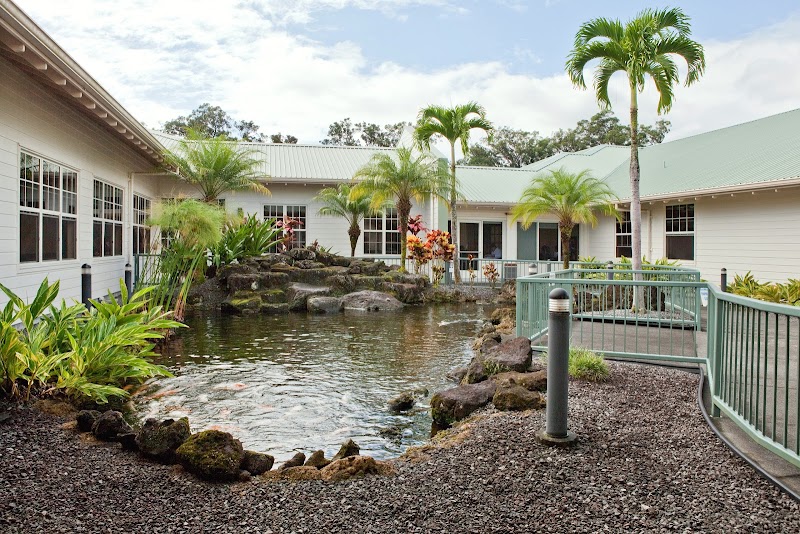
How is Hale Anuenue Restorative Care Staffed?

CMS rates HALE ANUENUE RESTORATIVE CARE's staffing level at 4 out of 5 stars, which is above average compared to other nursing homes. Staff turnover is 11%, compared to the Hawaii average of 46%. This relatively stable workforce can support continuity of care.

What Have Inspectors Found at Hale Anuenue Restorative Care?

State health inspectors documented 31 deficiencies at HALE ANUENUE RESTORATIVE CARE during 2021 to 2024. These included: 2 that caused actual resident harm, 28 with potential for harm, and 1 minor or isolated issues. Deficiencies causing actual harm indicate documented cases where residents experienced negative health consequences.
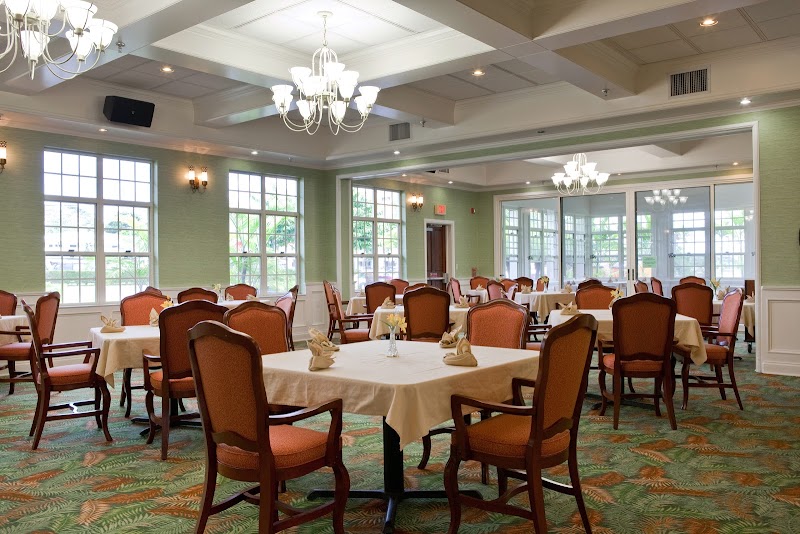
Who Owns and Operates Hale Anuenue Restorative Care?

HALE ANUENUE RESTORATIVE CARE is owned by a for-profit company. For-profit facilities operate as businesses with obligations to shareholders or private owners. The facility is operated by LIFE CARE CENTERS OF AMERICA, a chain that manages multiple nursing homes. With 120 certified beds and approximately 91 residents (about 76% occupancy), it is a mid-sized facility located in HILO, Hawaii.
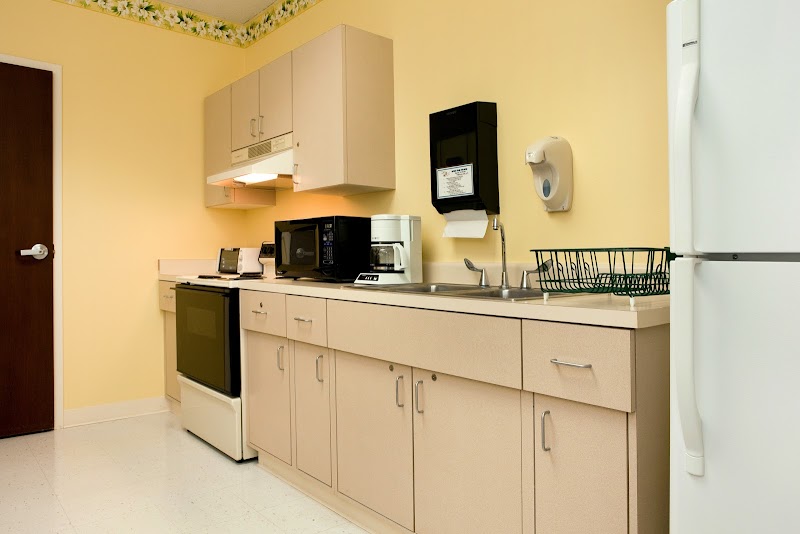
How Does Hale Anuenue Restorative Care Compare to Other Hawaii Nursing Homes?

Compared to the 100 nursing homes in Hawaii, HALE ANUENUE RESTORATIVE CARE's overall rating (3 stars) is below the state average of 3.4, staff turnover (11%) is significantly lower than the state average of 46%, and health inspection rating (2 stars) is below the national benchmark.

What Should Families Ask When Visiting Hale Anuenue Restorative Care?

Based on this facility's data, families visiting should ask: "Can I visit during a mealtime to observe dining assistance and food quality?" "How do you handle medical emergencies, and what is your hospital transfer rate?" "Can I speak with family members of current residents about their experience?"

Is Hale Anuenue Restorative Care Safe?

Based on CMS inspection data, HALE ANUENUE RESTORATIVE CARE has a clean safety record: no substantiated abuse findings (meaning no confirmed cases of resident harm), no Immediate Jeopardy citations (the most serious violation level indicating risk of serious injury or death), and is not on the Special Focus Facility watch list (a federal program monitoring the lowest-performing 1% of nursing homes). The facility has a 3-star overall rating and ranks #100 of 100 nursing homes in Hawaii. While no facility is perfect, families should still ask about staff-to-resident ratios and recent inspection results during their visit.

Do Nurses at Hale Anuenue Restorative Care Stick Around?

Staff at HALE ANUENUE RESTORATIVE CARE tend to stick around. With a turnover rate of 11%, the facility is 35 percentage points below the Hawaii average of 46%. Low turnover is a positive sign. It means caregivers have time to learn each resident's needs, medications, and personal preferences. Consistent staff also notice subtle changes in a resident's condition more quickly. Registered Nurse turnover is also low at 6%, meaning experienced RNs are available to handle complex medical needs.

Was Hale Anuenue Restorative Care Ever Fined?

HALE ANUENUE RESTORATIVE CARE has no federal fines on record. CMS issues fines when nursing homes fail to meet care standards or don't correct problems found during inspections. The absence of fines suggests the facility has either maintained compliance or corrected any issues before penalties were assessed. This is a positive indicator, though families should still review recent inspection reports for the full picture.

Is Hale Anuenue Restorative Care on Any Federal Watch List?

HALE ANUENUE RESTORATIVE CARE is not on any federal watch list. The most significant is the Special Focus Facility (SFF) program, which identifies the bottom 1% of nursing homes nationally based on persistent, serious quality problems. Not being on this list means the facility has avoided the pattern of deficiencies that triggers enhanced federal oversight. This is a positive indicator, though families should still review the facility's inspection history directly.