YUKIO OKUTSU STATE VETERANS HOME

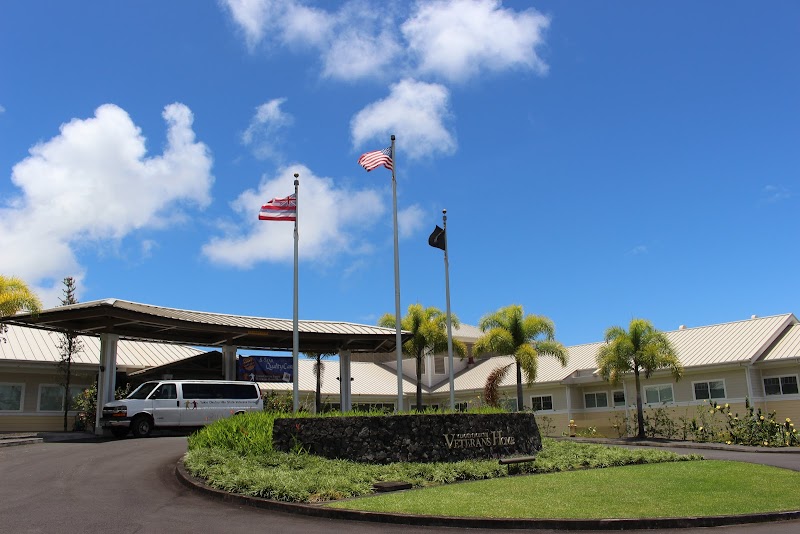
1180 WAIANUENUE AVENUE, HILO, HI 96720 (808) 961-1500
Government - State 95 Beds HAWAII HEALTH SYSTEMS CORPORATION Data: November 2025
Trust Grade
33/100
#30 of 41 in HI
Last Inspection: November 2024

Within standard 12-15 month inspection cycle. Federal law requires annual inspections.

Overview

Yukio Okutsu State Veterans Home has received a Trust Grade of F, indicating significant concerns about the care provided. It ranks #30 out of 41 facilities in Hawaii, placing it in the bottom half of state options, and #7 out of 7 in Hawaii County, meaning it is the least favorable choice locally. The facility's performance is worsening, with the number of reported issues increasing from 10 in 2023 to 11 in 2024. Staffing is a major concern, with a low rating of 1 out of 5 stars and a staggering 99% turnover rate, which is far above the state average. Additionally, there have been serious incidents, such as a resident sustaining multiple fractures due to improper use of a mechanical lift and another resident developing severe pressure injuries due to inadequate care. While the quality measures score is strong at 5 out of 5, the overall picture raises significant red flags for potential residents and their families.

Trust Score
F
33/100
In Hawaii
#30/41
Bottom 27%
Safety Record
High Risk
Review needed
Inspections
Getting Worse
10 → 11 violations
Staff Stability
⚠ Watch
99% turnover. Very high, 51 points above average. Constant new faces learning your loved one's needs.
Penalties
⚠ Watch
$13,049 in fines. Higher than 79% of Hawaii facilities, suggesting repeated compliance issues.
Skilled Nurses
✓ Good
Each resident gets 55 minutes of Registered Nurse (RN) attention daily — more than average for Hawaii. RNs are trained to catch health problems early.
Violations
⚠ Watch
39 deficiencies on record. Higher than average. Multiple issues found across inspections.
★★★☆☆
3.0
Overall Rating
★☆☆☆☆
1.0
Staff Levels
★★★★★
5.0
Care Quality
★★★☆☆
3.0
Inspection Score
Stable
2023: 10 issues
2024: 11 issues

The Good

  • 5-Star Quality Measures · Strong clinical quality outcomes
  • Full Sprinkler Coverage · Fire safety systems throughout facility
  • No fines on record

Facility shows strength in quality measures, fire safety.

The Bad

3-Star Overall Rating

Near Hawaii average (3.4)

Meets federal standards, typical of most facilities

Staff Turnover: 99%

52pts above Hawaii avg (47%)

Frequent staff changes - ask about care continuity

Federal Fines: $13,049

Below median ($33,413)

Minor penalties assessed

Chain: HAWAII HEALTH SYSTEMS CORPORATION

Part of a multi-facility chain

Ask about local staffing decisions and management

Staff turnover is very high (99%)

51 points above Hawaii average of 48%

The Ugly 39 deficiencies on record

3 actual harm
Nov 2024 11 deficiencies
CONCERN (D)

Potential for Harm - no one hurt, but risky conditions existed

Resident Rights (Tag F0550)

Could have caused harm · This affected 1 resident

Based on observations and interviews, the facility failed to ensure the resident's right to a dignified existence and is treated with respect and dignity for one resident (Resident (R)36) sampled. Reg...

Read full inspector narrative →
Based on observations and interviews, the facility failed to ensure the resident's right to a dignified existence and is treated with respect and dignity for one resident (Resident (R)36) sampled. Registered Nurse (RN)6 referred to resident's who require assistance with meals as feeders in front of R36, who requires assistance with meals. As a result of this deficient practice, residents are at a potential risk of psychosocial harm. Findings include: On 11/12/24 at 12:09 PM, while conducting an interview with R36 in the resident's room, RN6 entered the room, stood next to the resident, and informed this surveyor, The unit has two other feeders, and the aide will be over to assist the resident (R36 with lunch) when they (aides) are done. After RN6 left the room, R36 stated, I guess I'm a feeder. and reported it did not feel good to hear staff refer to him as a feeder. RN6 returned to R36's room a short time later to assist the resident with lunch and R36 refused the meal. Review of R36's Electronic Health Record (EHR) documented the resident's most recent annual Minimum Data Set (MDS), Section C. Cognitive Patterns, Brief Interview for Mental Status (BIMS) score was 15, indicating R36's cognition is intact. A significant change in status MDS with an Assessment Reference Date (ARD) of 07/23/24, documented R36's BIMS score was 14, and his cognition was intact. On 11/13/24 at 03:15 PM, while conducting an interview with the Director of Nursing (DON) in her office, DON confirmed staff should not call or refer to residents as feeder.
CONCERN (D)

Potential for Harm - no one hurt, but risky conditions existed

Deficiency F0561 (Tag F0561)

Could have caused harm · This affected 1 resident

Based on observation and interview, the facility failed to facilitate a resident's self-determination through support of the resident's choice of food preferences for one resident (Resident (R)58) sam...

Read full inspector narrative →
Based on observation and interview, the facility failed to facilitate a resident's self-determination through support of the resident's choice of food preferences for one resident (Resident (R)58) sampled. R58's reported he informed the facility of his food preferences and still receives foods that he informed the facility he does not like, for example milk and fish. During lunch observation on 11/12/24, the resident was served salmon for lunch and the resident's meal ticket documented R58 dislikes fish. As a result of this deficient practice, residents are at risk for more than minimal physical and/or psychosocial harm. Findings include: On 11/12/24 at 10:55 AM, conducted an interview with R58. During the interview, R58 reported the food is not so good and he receives foods that he has told staff he dislikes or has stopped eating/drinking. Asked R58 for an example of an event he experienced. R58 reported since last week, he has had diarrhea and, in an attempt, to minimize the incident of having diarrhea, he told staff that he does not want any milk or dairy products, with the thought that the lactose in the milk is potentially a cause or is contributing to the diarrhea. However, for breakfast, he is brought cereal and milk. The resident has his own refrigerator, with R58's permission, the refrigerator was inspected and noted there were 6 containers of milk stored. R58 stated that those are the milks he received with his meals after informing the facility staff that he did not want milk with his meals. On 11/12/25 at 12:15 PM, conducted a lunch dining observation for R58. R58 stated, Look they gave me fish and I don't eat fish. It's on my paper, dislikes fish. Reviewed R58's lunch meal ticket which documented, Dislikes: Fish. R58 reported, this is not the first time I have received something I told them I do not want. On 11/15/24 at 09:05 AM, conducted an interview with the Dietitian (D)1. D1 confirmed R58 received fish for lunch on 11/12/24 despite his meal ticket documenting that he dislikes fish and confirmed kitchen staff made a mistake. On 11/15/24 at 09:10 AM, the Director of Nursing (DON) was informed of R58's food preferences were not being honored. DON confirmed R58 should not have been served fish for lunch.
CONCERN (D)

Potential for Harm - no one hurt, but risky conditions existed

Transfer Notice (Tag F0623)

Could have caused harm · This affected 1 resident

**NOTE- TERMS IN BRACKETS HAVE BEEN EDITED TO PROTECT CONFIDENTIALITY** 2) R43 is a [AGE] year-old male admitted to the facility on [DATE]. On 10/17/24, R43 fell out of his wheelchair and was transfer...

Read full inspector narrative →
**NOTE- TERMS IN BRACKETS HAVE BEEN EDITED TO PROTECT CONFIDENTIALITY** 2) R43 is a [AGE] year-old male admitted to the facility on [DATE]. On 10/17/24, R43 fell out of his wheelchair and was transferred to the hospital. A review of the R43's EHR was conducted on 11/13/24. R43's EHR did not contain any documentation that the facility had provided R43 and his representative a written notification for his transfer to the hospital. Interview was conducted with the facility Administrator on 11/13/24 at 04:49 PM. Administrator confirmed that no written notification was given to R43 or R43's family member. A review of the facility policy titled, Discharge/Transfer Notice, with a last revised date of 03/2024 was conducted. The policy noted, . Before the facility transfers or discharges a resident, the facility must make the following notifications-notify the resident and the resident's representative(s) of the transfer or discharge and the reasons for the move in writing and in a language and manner they understand . Based on interview and record review, the facility failed to ensure the resident or their representative was given written notice of transfer or discharge from the facility and that a copy of the notice was sent to a representative of the Office of the State Long-Term Care Ombudsman for two residents (Resident (R)7 and R43) sampled. This deficient practice has the potential to affect all the residents who are transferred or discharged from the facility. Findings include: 1) Review of R7's Electronic Health Record (EHR) documented R7 was sent to an acute hospital on [DATE] due to difficulty breathing. On 11/15/24 at 09:18 AM, conducted an interview and concurrent review of R7's Transfer/Discharge Notice (which was provided by the facility) with Social Service staff (SS)2. Inquired if a copy of R7's Transfer/Discharge Notice for 07/09/24 was sent to a representative of the Office of the State Long-Term Care Ombudsman and requested for SS2 to provide a confirmation of the date and time the notice was sent. SS2 confirmed R7's Notice of Transfer/Discharge for 07/09/24 was not sent to a representative of the Office of the State Long-Term Care Ombudsman but should have been.
CONCERN (D)

Potential for Harm - no one hurt, but risky conditions existed

Comprehensive Care Plan (Tag F0656)

Could have caused harm · This affected 1 resident

**NOTE- TERMS IN BRACKETS HAVE BEEN EDITED TO PROTECT CONFIDENTIALITY** Based on record review and interview, the facility failed to develop a comprehensive person-centered care plan (CP) for pain whi...

Read full inspector narrative →
**NOTE- TERMS IN BRACKETS HAVE BEEN EDITED TO PROTECT CONFIDENTIALITY** Based on record review and interview, the facility failed to develop a comprehensive person-centered care plan (CP) for pain which included non-pharmacological interventions for one of five residents (Resident (R)16) sampled for unnecessary medication. Review of R16's CP for pain did not include non-pharmacological interventions as a standard of practice of multimodal approaches for pain relief according to the American Nurses Association (ANA). As a result of this deficient practice, resident is at risk for potential harm by potentially receiving unnecessary medications, which could include opioids, prior to implementing other effective modalities of pain relief (cold, heat, repositioning, exercise, stretching etc.). Findings include: Review of R16's Electronic Health Record (EHR) documented R16 was admitted to the facility on [DATE] with diagnosis which included low back pain and has a current diagnosis of cellulitis to both lower limbs, and gangrene. R16 was admitted to hospice on 10/31/24. R16's physician's orders which included Oxycodone HCl 5 mg as needed for pain give 5 mg (milligrams) by mouth every 4 hours as needed for pain level 4-7/10 and give 10 mg by mouth every 4 hours as needed for pain level of 8-10/10 ; Morphine Sulfate (Concentrate) Oral Solution 20 MG/ML, give 0.25 ml by mouth every 1 hours as needed for pain 1-3/10 not to exceed 20 mg per hour. May give sublingual (under the tongue) if unable to swallow and give 0.5 ml by mouth every 1 hours as needed for pain 4-6/10 not to exceed 20 mg per hour. May give sublingual if unable to swallow and give 1 ml by mouth every 1 hours as needed for Pain 7-10/10 not to exceed 20 mg per hour. May give SL if unable to swallow and give 0.25 ml by mouth every 1 hours as needed for SOB (shortness of breath) not to exceed 20 mg per hour. May give sublingual if unable to swallow; Methadone HCl Oral Tablet 5 mg, give 0.5 tablet by mouth one time a day for pain and give 1 tablet by mouth at bedtime for pain. Review of R16's November 2024 Medication Administration Record (MAR) documented the resident received Oxycodone 5 mg on 11/01/24 at 12:05 AM and 09:30 PM, 11/02/24 at 05:25 AM, 11/03/24 at 04:37 PM, 11/05/24 at 12:40 AM, 11/06/24 at 07:46 AM, 11/07/24 at 05:06 AM, and 11/10/24 at 09:10 PM. R16 also received Morphine on 11/07/24 at 05:45 AM. On 11/13/24 at 03:45 PM, conducted a concurrent interview and record review of R16's EHR with the Director of Nursing (DON) in her office. After reviewing R16's physician orders and CP, DON confirmed non-pharmacological interventions should be implemented prior to administering medications as a standard of practice for implementing least invasive interventions first and R16's CP does not include non-pharmacological interventions but should have included any effective non-pharmacological interventions. DON reviewed R16's chart and could not provide documentation confirming the facility is currently implementing other modalities of treating R16's pain besides medication.
CONCERN (D)

Potential for Harm - no one hurt, but risky conditions existed

Quality of Care (Tag F0684)

Could have caused harm · This affected 1 resident

**NOTE- TERMS IN BRACKETS HAVE BEEN EDITED TO PROTECT CONFIDENTIALITY** Based on observation, interviews, and record review, the facility failed to provide appropriate medical care for one resident (R...

Read full inspector narrative →
**NOTE- TERMS IN BRACKETS HAVE BEEN EDITED TO PROTECT CONFIDENTIALITY** Based on observation, interviews, and record review, the facility failed to provide appropriate medical care for one resident (R)58. The facility failed to manage R58's bowel regimen and manage the resident's diarrhea. This deficient practice has the potential to result in more than minimal psychosocial and physical harm. Findings include: On 11/12/24 at 10:52 AM, entered R58's room and conducted an interview with R58 and R58's Family Member (FM)1. R58 reported having diarrhea since last week Thursday (11/07/24). R58 expressed concerns about having diarrhea for the past six (6) days and felt that the facility has not been managing his condition according to professional standards of medical care. R58 reported to date, the facility has not taken a stool sample to ensure he does not have C. difficile (a germ bacterium that causes diarrhea and inflammation of the colon and can be life threatening) or a similar condition; administered medication that is an osmotic laxative (MiraLAX, which draws water into the colon) while having soft/loose stools which worsened his condition; R58 reported having to ask the nurses for medication to treat the symptoms of diarrhea and stop attempting to give him a laxative; experiencing pain to an area where the skin was starting to breakdown on his bottom area; no nursing interventions were implemented to mediate R58's condition so he started to elevate his legs to alleviate the pain and pressure on the area where his skin was hurting; reduced the amount he ate and drank to reduce the incidence of having diarrhea and started to feel weak as a result. R58 informed staff that he was no longer eating/drinking dairy products to see if that was the cause of his condition but still received milk and cereal for breakfast. Inquired if Attending Physician (AP)1 had been in to assess or address his condition. R58 confirmed AP1 has not assessed him and added that he only sees AP1 approximately once a month when he must certify that his condition qualifies him to be in the facility and the visits with AP1 are minimal lasting less than several minutes. R58 shared that he does not feel he is receiving person-centered care from AP1, and the facility is not doing all they can to immediately address the issue before it affects him to the point that he must go to the hospital. Asked R58 how he was currently feeling. R58 reported feeling weak due to dehydration and minimizing his intake to avoid having diarrhea. Also, R58 shared that he was feeling emotionally down due to lack of attention to his concerns and lack of confidence in the facility's ability to provide quality care. While in the resident's room, inspected his personal refrigerator and observed approximately six (6) containers of milk. R58 confirmed those were the milk which came on his meal trays after he told staff that he did not want milk or dairy due to this condition. While conducting the interview with R58, AP1 entered the resident's room, walked pass this surveyor and up to R58's bedside. AP1 asked R58 about his breathing and if he had any pain. R58 confirmed he did not have any difficulty breathing or pain. AP1 put on his stethoscope placed it over R58's heart, then removed his stethoscope. R58 was telling AP1 about having diarrhea and AP1 did not ask any clarifying questions. After the third time, R58 reported he had pain in his stomach. AP1 moved to R58's abdomen area and made contact with this surveyor. I identified myself as a nurse surveyor with the Department of Health (DOH), held up my identification badge, and was wearing a shirt with the Department of Health logo. AP1 smiled and nodded, then turned to R58 and quickly palpated his stomach. R58 informed AP1 that he's been having diarrhea for several days and he was surprised that AP1 did not order a stool sample or some sort of diagnostic test to figure out what is going on. AP1 responded and told R58 that they could get a stool sample, then left the room shortly after. AP1 interaction and assessment of R58 took approximately five (5) minutes or less. AP1 did not auscultate R58's stomach area and did not give any orders to this surveyor. Reviewed of R58's Electronic Health Record (EHR) documented R58 was admitted to the facility on [DATE] and diagnosis included acute and chronic respiratory failure with hypoxia, chronic obstructive pulmonary disease, heart failure, type 2 diabetes mellitus, hypertension, and atrial fibrillation. Review of R58's admission Minimum Data Set (MDS) with an Assessment Reference Date (ARD) of 08/23/24, Section C. Cognitive Patterns, Brief Interview for Mental Status (BIMS) score was 14, indicating the resident's cognition is intact. Review of R58's Bowel Elimination Task monitoring form documented R58 was consistently incontinent of bowels, had not had an event of loose stools or diarrhea from 10/15/24 to 11/06/24 (timeframe of monitoring form is 30 days). Documentation of the size and consistency of R58's bowel movements were: Day 1: 11/07/24 at 11:15 AM- Large Putty- like 11/07/24 at 12:23 PM- Medium Putty- like 11/07/24 at 01:23 PM- Large Putty- like 11/07/24 at 06:51 PM- Medium Loose/Diarrhea 11/07/24 at 09:21 PM- Medium Loose/Diarrhea Day 2: 11/08/24 at 01:27 AM- Medium Loose/Diarrhea 11/08/24 at 12:38 PM- Small Loose/Diarrhea 11/08/24 at 06:39 PM- Medium Formed 11/08/24 at 08:18 PM- Small Loose/Diarrhea 11/08/24 at 09:38 PM- Small Loose/Diarrhea Day 3: 11/09/24 at 01:46 AM- Medium Formed 11/09/24 at 05:10 AM- Medium Formed 11/09/24 at 07:14 AM- Medium Putty- like 11/09/24 at 09:14 AM- Medium Putty- like Day 4: 11/10/24 at 01:30 AM- Large Loose/Diarrhea 11/10/24 at 05:40 AM- Large Loose/Diarrhea 11/10/24 at 09:25 AM- Small Loose/Diarrhea Day 5: 11/11/24 at 04:02 AM- Large (consistency not documented) 11/11/24 at 11:50 PM- Large Putty- like 11/11/24 at 11:50 PM- Medium Putty- like Day 6: 11/12/24 at 01:52 PM- Medium Putty-like 11/12/24 at 06:16 PM- Small Putty-like Review of R58's physician orders documented an order of MiraLAX 1 scoop by mouth in the afternoon for constipation. Hold for loose BM (bowel movement) at 04:00 PM daily and Loperamide HCl Capsule 2 mg (milligram), Give 1 capsule by mouth every 6 hours as needed (PRN) for loose stool after each loose stool (ordered on 11/08/24). Loperamide is administered to control and relieve symptoms of acute diarrhea by slowing down intestinal movement. AP1 ordered the stool sample on 11/13/24, a day after AP1 informed R58 a stool sample would be done. Also, contact precautions for R58's loose stool was not implemented until 11/13/24, six days after the onset of symptoms. Review of R58's Medication Administration Record (MAR) for MiraLAX documented nursing staff attempted to administer the laxative when R58 was actively having stool with the consistency of putty-like and loose/diarrhea of two occasions: 11/07/24- R58 refused 11/08/24- R58 refused 11/09/24- R58 was administered MiraLAX 11/10/24- MiraLAX was held (not administered) 11/11/24- MiraLAX was placed on hold Review of R58's MAR for Loperamide HCl 2 mg documented: 11/08/24- ordered and administered twice 11/09/24- administered once 11/10/24- administered three times 11/11/24- administered once 11/12/24- administered twice. R58 continued to have putty-like and loose/diarrhea after the implementation of Loperamide HCl 2 mg and the consistency of the resident's BM continued be mostly putty-like and loose/diarrhea. Review of R58's comprehensive person-centered care plan confirmed a care plan was not developed to address R58's bowel management and infection prevention goals and interventions, until 11/13/24. Review of R58's progress notes documented: 11/08/24 at 12:37 PM, . Resident requested if he could have an order of Loperamide 2 mg every 6 hours as needed for loose stool . Confirmed the resident was actively advocating for himself. 11/09/24- No progress notes documented in R58's EHR 11/10/24 at 10:46 PM, Resident had x1 episode of mucous in stool with a scant amount of blood . 11/12/24 at 11:20 AM, a progress not written by AP1 documented, . Stool studies ordered and pending . Abd (abdomen): flat, non tender, no mass, bowel sounds present . However, this surveyor did not observe AP1 listen to R58's abdomen/stomach area during his assessment of R58. In a follow-up with R58, the resident confirmed AP1 did not conduct any additional assessments on 11/12/24 and this surveyor was present during the only assessment AP1 conducted on him at the time of the recertification survey. On 11/13/24 at 03:24 PM, conducted a concurrent interview and record review of R58's EHR with the Director of Nursing (DON). DON navigated R58's EHR and confirmed according to professional standard of practice, R58 should not have been offered or administered MiraLAX due to having multiple episodes of loose stools; as a result of on-going loose stool, a stool sample should have been taken sooner and the resident should have been placed on contact precautions sooner and until the facility could rule out the cause of his condition was not due to a potentially contagious bacterial or viral infection; and the care plan was not developed for bowel management. Also, DON confirmed the collection of R58's stool was delayed because the collection and test was not ordered until the following day. DON stated on follow-up with AP1 regarding the day delay in the order, AP1 stated he gave a verbal order to the new nurse in the room. Informed DON the only people in the room when AP1 was conducting his assessment was R58, FM1, and this surveyor. AP1 did not address me or verbalize any orders and the only mention of a stool sample was AP1 telling R58 that they (the facility) could get a stool sample. AP1 did not give any orders to this surveyor and this surveyor did not accept any orders from AP1 according to professional standards of practice which would include directly addressing staff with the resident's information and parameters of the order with a verbal read back to the physician. Also, as professional standards of practice, if the physician is onsite, verbal order should not be given to licensed staff and the physician should directly input orders into the ordering system. On 11/15/214 at 10:11 AM, conducted a telephone interview with AP1. Inquired about the nature and reason of AP1 visit with R58 on 11/12/24. AP1 stated the visit was a regular recertification visit and during the visit R58 reported having diarrhea. AP1 confirmed there was a delay in ordering the stool culture and testing.AP1 said he gave the order to the nurse in the room. Informed AP1 there was a total of four (4) people in the room: AP1, R58, FM1, and this surveyor. Inquired if AP1 recalls this surveyor introducing and identifying herself as a nurse surveyor with the DOH. AP1 replied that he must have missed that and did not recall this surveyor identifying herself, did not notice the DOH logo on my shirt and did not notice that I was not wearing scrubs.
CONCERN (D)

Potential for Harm - no one hurt, but risky conditions existed

Deficiency F0698 (Tag F0698)

Could have caused harm · This affected 1 resident

**NOTE- TERMS IN BRACKETS HAVE BEEN EDITED TO PROTECT CONFIDENTIALITY** Based on observations, interviews and record review, the facility failed to provide care consistent with professional standards ...

Read full inspector narrative →
**NOTE- TERMS IN BRACKETS HAVE BEEN EDITED TO PROTECT CONFIDENTIALITY** Based on observations, interviews and record review, the facility failed to provide care consistent with professional standards of practice for the resident (Resident (R)25) who received hemodialysis (treatment to remove waste and excess fluids from the blood) treatments. Specifically, the facility did not ensure fluid restrictions were followed as ordered by the attending physician. This deficient practice could result in preventable adverse health conditions like fluid overload and congestive heart failure for residents with end stage renal disease. Findings include: R25 was admitted to the facility on [DATE] for short-term rehabilitation services. Diagnoses included but not limited to End Stage Renal Disease (ESRD) and dependence on renal dialysis. During an interview with R25 on 11/13/24 at 09:25 AM, R25 said he has been on hemodialysis for over 10 years. Asked R25 if he has had any complications during his treatments. R25 said his blood pressure drops during treatments when the weight gains between treatments are high. Asked R25 if the staff limit his fluid intake. R25 nodded Yes and said I don't drink much. Review of R25's Electronic Health Records (EHR) revealed that the fluid restriction ordered by the physician was 1,200 milliliters (ml) per day. On the following dates for November, R25's recorded fluid intake was above 1,200 ml: 11/03/24 was 1,680 ml; 11/07/24 was 1,680 ml, 11/08/24 was 3,360 ml, 11/10/24 was 1,338 ml and 11/11/24 was 1,318 ml. On 11/14/24 at 11:12 AM, a concurrent interview and record review was conducted with Registered Nurse (RN)6 at the second-floor nurse's station. Asked RN6 how they monitor and ensure R25's fluid restriction is followed. RN6 said they coordinate with the CNAs (Certified Nurse Aide) on the amount of fluid given to R25 every shift. RN6 added that the night shift nurse will add up all the documented fluids given to R25 at the end of the day and enter that amount in the monitoring log. Reviewed fluid intake log with RN6, acknowledged that ordered fluid restrictions were not followed for the five days listed above. Asked RN6 if the resident was able to get his own water or other fluids to drink. RN6 said, No, fluids are provided by the staff. The family also come to visit and we would not know if they also give him anything to drink. Asked RN6 why it is important to follow the fluid restrictions for R25. RN6 said, it was because the resident is on hemodialysis, he is not able to remove excess fluid from his body and added they have to follow the restrictions as ordered.
CONCERN (D) 📢 Someone Reported This

A family member, employee, or ombudsman was alarmed enough to file a formal complaint

Potential for Harm - no one hurt, but risky conditions existed

Deficiency F0726 (Tag F0726)

Could have caused harm · This affected 1 resident

**NOTE- TERMS IN BRACKETS HAVE BEEN EDITED TO PROTECT CONFIDENTIALITY** Based on interviews and record review, the facility failed to provide competent nursing services for one resident (Resident (R)1...

Read full inspector narrative →
**NOTE- TERMS IN BRACKETS HAVE BEEN EDITED TO PROTECT CONFIDENTIALITY** Based on interviews and record review, the facility failed to provide competent nursing services for one resident (Resident (R)166) sampled. Specifically, nursing staff did not take immediate action and seek a higher level of care for R166's respiratory distress. As a result of this deficient practice, R166 was placed at risk of more than minimal physical harm. Findings include: Review of R166's Electronic Health Record (EHR) documented the resident was admitted to the facility on [DATE] with diagnosis which included hemiplegia/hemiparesis following a cerebral infarction affecting the right dominant side, dysphagia, and hypertension. R166 was at the facility for physical, speech, and occupational therapy services after experiencing a cerebral infarction (condition that occurs when brain tissue dies as a result of a lack of blood flow). Review of R166's oxygen saturations documented R166's oxygen saturation as: 10/06/24 at 11:15 PM- 91.0 % on room air 10/07/24 at 06:07 AM- 92.0% oxygen via nasal cannula 10/07/24 at 08:09 AM- 83.0% oxygen via nasal cannula 10/07/24 at 08:53 AM- 84.0% oxygen via nasal cannula Oxygen saturation levels under 90% are considered low and levels below 88% require immediate medical attention. R166 was also COVID positive with documented oxygen saturation level of 83% on 2 liters (L) of oxygen. Approximately an hour later R166's oxygen saturation was 84% on 4 L of oxygen. Review of R166's a nursing progress note on 10/07/24 at 09:15 AM documented, At 0840 resident desated (desaturated) to 83-84% with 4 liters of oxygen via nasal cannula. Family is into visit and requested to have resident to be send out to ER for further evaluation and treatments. Called and spoke with . (Attending Physician (AP)1) . of resident's status and family wishes and received an order for the resident to be sent to the emergency room for further evaluation and treatments. Emergency medical services was contacted at 08:47 AM and called the emergency room (ER) which reported to charge nurse . During the survey, a telephone interview was conducted with Family Member (FM)2. Inquired about R166's physical presentation prior to the family requesting for the resident to be sent out to the ER. FM2 stated that R166 did not look good. He was struggling to breath, he looked pale, and was coughing a lot. FM2 recalled R166's oxygen level was low and nursing staff was attempting to administer oral medication to him. R166 was unable to swallow the medication, choked on a pill and did not attempt to administer medications or treatment to increase the resident's oxygen level other than increasing the amount of oxygen to 4 L. FM2 reported it was clear that he needed a higher level of care and they did not take action to transfer him to the ER and the family felt R166 needed to go to the ER because he was not doing good. On 11/15/24 at 11:26 AM, conducted a concurrent review of R166's EHR and interview with Registered Nurse (RN)3 in the Director of Nursing's (DON) office, with the DON present regarding the delay in providing a higher level of care for R166 on 10/07/24. RN3 reported R166 was not symptomatic and not using auxiliary muscles to assist the resident in breathing or struggling to breath despite the resident coughing a lot. RN3 reportedly provided treatment by increasing the resident's oxygen from 2 L to 4 L. RN3 confirmed she did not stay in R166's room after becoming aware of the resident's desaturation and attempted to administer medications to the resident and he was having difficulty swallowing the medication. RN3 stated R166 did not appear to be in distress or need to be transferred to the ER. However, members of R166's family who were present at the time wanted him to be sent out to the ER. DON confirmed the normal range for oxygen saturation is 90% to 100% and action should have been taken sooner than when R166's oxygen was increased to 4L with a 1% increase in oxygen saturation.
CONCERN (D)

Potential for Harm - no one hurt, but risky conditions existed

Unnecessary Medications (Tag F0759)

Could have caused harm · This affected 1 resident

Based on observation, interview, and record review, the facility failed to ensure a medication error rate of less than 5%, as evidenced by two medication errors observed out of 30 opportunities, for a...

Read full inspector narrative →
Based on observation, interview, and record review, the facility failed to ensure a medication error rate of less than 5%, as evidenced by two medication errors observed out of 30 opportunities, for an error rate of 6.67%. Safe and timely medication administration practices are essential for the health and well-being of the residents. As a result of this deficient practice, two residents (Resident (R)56 and 52) were placed at risk of negative outcomes due to medication errors. This deficient practice has the potential to affect all residents in the facility taking medications. Findings include: 1) On 11/14/24 at 08:14 AM, observed Licensed Practical Nurse (LPN)2 administer medications on the second floor. One of the medications administered to R56 was Mucinex Extended Release, 600 mg (milligrams). LPN2 cut the tablet into two pieces prior to giving it to R56. 2) On 11/14/24 at 08:31 AM, LPN2 administered Flonase nasal spray to R52. LPN2 inserted the applicator into R52's nostril and administered two sprays into each nostril as ordered. LPN2 then replaced the applicator cover and did not give any instructions to R52 while administering the nasal spray. On 11/14/24 at 01:31 PM, a concurrent interview and record review was conducted with LPN2 by the nurses' station. Asked LPN2 if there was an order to cut the Mucinex Extended Release tablet into two for R56. LPN2 reviewed the orders in the Electronic Heath Records (EHR) and said she could not find an order. Reviewed package instructions for the medication with LPN2 that stated, . Do not crush, chew or break tablet . LPN2 confirmed that she should not have cut the tablet into two pieces unless it was ordered by the physician. Surveyor then asked LPN2 if there was a package insert for the Flonase nasal spray in the box. LPN2 checked the box and pulled out the package insert. Reviewed administration directions with LPN2 that stated, . Blow your nose to clear your nostrils . Close 1 nostril. Tilt your head forward slightly . insert the nasal applicator into the other nostril . Start to breathe in through your nose . press firmly . Breathe out through your mouth . wipe the nasal applicator with a clean tissue and replace the dust cap . LPN2 confirmed that she did not follow the manufacturer's directions for administering the nasal spray and thanked the surveyor for sharing the information in the package insert.
CONCERN (D)

Potential for Harm - no one hurt, but risky conditions existed

Food Safety (Tag F0812)

Could have caused harm · This affected 1 resident

Based on observations and interviews, the facility failed to clean and maintain food serving equipment, dishes, and utensils in a sanitary condition. This deficient practice places the residents at ri...

Read full inspector narrative →
Based on observations and interviews, the facility failed to clean and maintain food serving equipment, dishes, and utensils in a sanitary condition. This deficient practice places the residents at risk for food borne illness and has the potential to affect all the residents who have meals served by the facility. Findings Include: 1) Concurrent observation and interview were conducted on 11/12/24 at 09:31 AM. Observation was made of a food warmer that contained an uncovered container of soup. The top of the food warmer had a worn down rubber seal and a buildup of dust and lint. The dust and lint were directly above the uncovered soup. Both the cook and the Dietitian (D)1 were shown the dirty warmer and the uncovered soup. D1 confirmed that the container of soup should have been covered and the food warmer should be cleaned. 2) Concurrent observation and interview were conducted on 11/12/24 at 09:43 AM. Dietary Assistant (DA)1 was observed testing the dishwasher solution. After the solution was tested, observation of the test strip bottle showed that the container had an expiration date of August 15, 2024. Both DA1 and D1 were shown the bottle of strips. DA1 and D1 confirmed that the bottle of strips were expired and should not have been used to test the dishwasher sanitizing solution. A review of the facility policy titled, Cleaning and Sanitation of Dining and Food Service Area, with a revised date of 5/13, was conducted. The policy noted, The food service staff will maintain the cleanliness and sanitation of the dining and food service areas .
CONCERN (D)

Potential for Harm - no one hurt, but risky conditions existed

Deficiency F0883 (Tag F0883)

Could have caused harm · This affected 1 resident

Based on interviews and record review, the facility failed to ensure a resident's medical record included documentation that indicated the resident did not receive the influenza immunizations for one ...

Read full inspector narrative →
Based on interviews and record review, the facility failed to ensure a resident's medical record included documentation that indicated the resident did not receive the influenza immunizations for one of five residents (Resident (R)46) sampled for immunizations. R46 signed a consent form to receive the influenza immunization. However, R46 did not receive the influenza immunization and the resident's refusal and education regarding the benefits of the vaccination was not documented in his medical record. As a result of this deficient practice, R46 was placed at risk for more than minimal harm. Findings include: On 11/14/24 at 03:04 PM, conducted an interview and concurrent record review with the Director of Nursing (DON), in her office regarding the facility's infection control program. Reviewed the immunization status of five (5) preselected residents. R46 did not receive the influenza immunization but had signed a consent form to receive it. Provided an opportunity for DON to provide an attestation or other documentation of R46's refusal and education the facility provided to the resident on the risks and benefits of receiving the influenza immunization. DON reviewed R46's Electronic Health Record (EHR) and could not find the requested documentation in his chart. DON inquired with Registered Nurse (RN)99 who was responsible for obtaining consents and refusal forms. RN99 recalled R46 initially signed the consent to receive the influenza immunization, but when staff was administering the immunization, R46 changed his mind and refused it. Provided an opportunity for NS99 and DON to provide any form of documentation of R46's refusal and of the education provided to the resident upon his refusal. On 11/15/24 at 09:52 AM, checked back in with DON regarding the requested documentation. DON confirmed the facility did not document the R46's refusal and education provided at the time of refusal in the medical chart or EHR. Review of R46's EHR documented a progress note (11/14/2024 at 06:32 PM) Fluzone administered to L (left) deltoid. Placed on alert to monitor for adverse effects x 72. R46 received the immunization.
CONCERN (E)

Potential for Harm - no one hurt, but risky conditions existed

Deficiency F0847 (Tag F0847)

Could have caused harm · This affected multiple residents

Based on record review and interview, the facility failed to ensure the Binding Arbitration Agreements (BAA) followed all the requirements as specified in the regulations. Specifically, the agreements...

Read full inspector narrative →
Based on record review and interview, the facility failed to ensure the Binding Arbitration Agreements (BAA) followed all the requirements as specified in the regulations. Specifically, the agreements residents were asked to enter into, did not explicitly grant the residents or their representatives the right to rescind the agreement within 30 calendar days of them signing it. Findings include: On 11/14/24 at 10:00 AM, review of resident (R)25's Electronic Health Record (EHR) was conducted. Review of the document titled Patient and Facility Arbitration Agreement revealed that it did not include language that the resident or their representative have the right to rescind the agreement within 30 calendar days of signing it. Review of the list of residents that have entered into a BAA showed 42 of the 60 residents have agreed to it. On 11/15/24 at 10:32 AM, a concurrent interview and record review was conducted with the Administrator in her office. Administrator reviewed the BAA and acknowledged the agreement did not explicitly grant the residents or their representatives the right to rescind the agreement withing 30 days of signing.
Oct 2023 10 deficiencies 1 Harm
SERIOUS (G)

Actual Harm - a resident was hurt due to facility failures

Accident Prevention (Tag F0689)

A resident was harmed · This affected 1 resident

**NOTE- TERMS IN BRACKETS HAVE BEEN EDITED TO PROTECT CONFIDENTIALITY** Based on interviews and record reviews, the facility failed to ensure one of the residents (Resident (R) 161) in the sample was ...

Read full inspector narrative →
**NOTE- TERMS IN BRACKETS HAVE BEEN EDITED TO PROTECT CONFIDENTIALITY** Based on interviews and record reviews, the facility failed to ensure one of the residents (Resident (R) 161) in the sample was free from accident hazards from the use of a mechanical lift. A facility staff independently operated the mechanical lift without assistance form another staff member. As a result of this deficient practice, R161 sustained multiple fractures to his vertebra and ribs. This deficient practice has the potential to affect all residents that require the use of a mechanical lift for transfers. Findings include: Review conducted for the Facility Reported Incident (FRI) document retrieved from Aspen Complaints/Incidents Tracking System (ACTS) 10397. Initial report was submitted to the Office of Healthcare Assurance on 06/29/23 and the completed report on 07/07/23. Type of incident was listed as Other, Serious Bodily Injury. Details of incident stated that on 06/29/23, R161 was being transferred from the wheelchair to the bed using a mechanical lift by a Certified Nurse Assistant (CNA) when the lift malfunctioned and R161 fell to the floor from an approximated height of three feet. R161 was transferred to a local acute care hospital and subsequently admitted for multiple acute fractures of his spine and ribs. The CNA was immediately placed on administrative leave until the investigation was completed. The mechanical lift was removed from service and inspected by maintenance team on 06/29/23. A facility-wide inspection of all mechanical lifts was completed on the same day. It was identified that the lifting strap failed and all other were confirmed to be functioning properly. Maintenance inspections were being completed monthly with the last one done on 06/14/23. On 07/06/23, maintenance and inspections were transitioned to a different team and completed per manufacturer guidelines. The CNA that transferred the resident confirmed that she was operating the mechanical lift without the assistance of another staff member. On 06/30/23, all staff were required to watch a training video on the proper use of the mechanical lift. Education was also provided on the facility policy where two staff members must always be present for all resident transfers using the mechanical lift. Skills validation training was also conducted and documented. The training and skills validation was made mandatory for all employees and was completed on 07/27/23. All new employees hired after the incident were also required to complete the mechanical lift training and skills validation. After completion of the mandatory training, the facility developed focused rounds to monitor compliance of the staff when using the mechanical lifts. Findings were reported in the Quality Assurance and Performance Improvement (QAPI) meetings monthly for 90 days. On 10/27/23 at 09:44 AM, interview conducted with Restorative Aide (RA) 2 in the hallway of [NAME] Lane unit. RA2 verbalized that two staff members are required when using the mechanical lift and safety checks need to be completed prior to its use.
CONCERN (D)

Potential for Harm - no one hurt, but risky conditions existed

Assessment Accuracy (Tag F0641)

Could have caused harm · This affected 1 resident

**NOTE- TERMS IN BRACKETS HAVE BEEN EDITED TO PROTECT CONFIDENTIALITY** 2) R43 is a [AGE] year-old resident admitted on [DATE] for long-term care. Diagnoses include end stage renal disease and depende...

Read full inspector narrative →
**NOTE- TERMS IN BRACKETS HAVE BEEN EDITED TO PROTECT CONFIDENTIALITY** 2) R43 is a [AGE] year-old resident admitted on [DATE] for long-term care. Diagnoses include end stage renal disease and dependence on renal dialysis. Review of R43's Electronic Health Record (EHR) revealed two quarterly MDS (Minimum Data Set) assessments were done with an assessment reference date of 08/04/23. Under Section O, Special Treatments, Procedures, and Programs, there was no check mark if dialysis was performed in the last 14 days for one of the MDS assessments. On 10/24/23 at 01:30 PM, an interview with R43 was conducted in his room. R43 said he has been on dialysis for the past 22 year and has treatments three times a week. On 10/26/23 at 01:43 PM, concurrent interview and record review conducted with MDS Coordinator (MDS) 2. Review of the MDS tab of the EHR showed two quarterly assessments dated 08/04/23. Under the Status, one had Modified and the other had Export Ready. MDS2 confirmed that the first quarterly MDS completed on 08/04/23 that had Modified under the status was not accurate because there was no check mark for Dialysis in Section O. MDS2 said the information was updated on 10/24/23 when they realized the MDS Resident Matrix that they ran after the entrance conference was incorrect. Based on observation, interviews and record review (RR), two residents of the three sampled resident (R)38 and R43, failed to receive accurate assessments, reflective of their status at the time, to identify relevant care areas. As a result of this deficiency, their care plans (CP) did not identify focus areas needed to ensure they maintain or attain their highest medical, functional, and psychosocial potential. All residents are at risk of not receiving an accurate assessment. Findings include: 1) On 10/27/2023 at 08:00 AM, observed R38 in his room, lying in bed. During the interview, he said he had a cracked tooth, for some time. R38 said he wanted to have the tooth taken out. The MDS (Minimum Data Set), used for standardized assessments (comprehensive, quarterly, significant change in status) includes a Dental Section L. which assesses for any Obvious or likely cavity or broken natural teeth. On R38's annual assessment completed on 02/07/2023, this was checked off, indicating he did have a current issue with his natural teeth. On 08/12/2023, R38 was transferred to the hospital for altered mental status and respiratory failure. When he was discharged , R38 returned back to the facility. An Entry tracking record was created on 08/19/2023, which indicated add new record. This assessment did not identify or document R38 had the ongoing dental issue, and therefore did not trigger or activate a care plan for a dental focus, goal, or interventions. On 10/27/23 at 09:13 AM, interviewed MDS Coordinator (MDS)1, who completed R38's assessments. At that time, she reviewed the documentation, and acknowledged the assessment completed on his return to the facility was not accurate, and should have documented the dental issue.
CONCERN (D)

Potential for Harm - no one hurt, but risky conditions existed

Comprehensive Care Plan (Tag F0656)

Could have caused harm · This affected 1 resident

Based on observations, interviews and record reviews, the facility failed to implement person-centered comprehensive care plan for one of two sampled residents (Resident (R) 39). An intervention to pr...

Read full inspector narrative →
Based on observations, interviews and record reviews, the facility failed to implement person-centered comprehensive care plan for one of two sampled residents (Resident (R) 39). An intervention to prevent falls for R39 was not implemented. As a result of this deficient practice, the R39 was placed at risk for potential harm from avoidable falls and has the potential to affect all resident at the facility on close monitoring. Findings include: On 10/24/23 at 11:37 AM, observed R39 lying in bed, awake, with Certified Nurse Assistant (CNA) 11 sitting at bedside. CNA11 said R39 is on one-on-one close observation during the day due to a history of frequent falls. Review of R39's care plan documented that he is at risk for falls and interventions included but not limited to, 1:1 (one-on-one) observation and supervision, Q-15 (every 15) minute check QHS (every night at bedtime). Further review of progress notes for the past six months revealed R39 has had falls on the following dates: 04/03/23, 04/15/23, 04/25/23, 05/19/23, 05/30/23, 05/31/23, 06/06/23, 06/13/23, and 06/14/23. One-on-one observation was implemented on 06/15/23 after the interdisciplinary team meeting. On 10/27/23 at 08:03 AM, interview with Registered Nurse (RN) 5 was conducted at the nurses' station. RN5 said that a CNA is always assigned to stay with R39 while he is awake and at night whenR39 is sleeping, the staff check on him every 15 minutes. RN5 added that the staff document the 15-minute checks on a log but was not able to locate them when asked. Monitoring logs for October were later provided by the Administrator at 11:30 AM. Review of the logs revealed that there were multiple instances where there were no entries every 15 minutes when R39 was sleeping as specified in the care plan intervention. On 10/30/23 at 12:40 PM, interview conducted with Administrator in her office. Administrator confirmed that since the intervention in the care plan stated to check on the R39 every 15 minutes, the expectation is for the staff to record an entry into the log every 15 mins when one-on-one observation is not being provided. No entries were being recorded.
CONCERN (D)

Potential for Harm - no one hurt, but risky conditions existed

Deficiency F0657 (Tag F0657)

Could have caused harm · This affected 1 resident

**NOTE- TERMS IN BRACKETS HAVE BEEN EDITED TO PROTECT CONFIDENTIALITY** 2) R43 was admitted to the facility on [DATE] for long-term care. Interview conducted with R43 in his room on 10/24/23 at 01:39 ...

Read full inspector narrative →
**NOTE- TERMS IN BRACKETS HAVE BEEN EDITED TO PROTECT CONFIDENTIALITY** 2) R43 was admitted to the facility on [DATE] for long-term care. Interview conducted with R43 in his room on 10/24/23 at 01:39 PM. Prior to the interview, observed R43 watching television with the volume on high. R43 stated that he is hard of hearing and that he has a hearing aid but was not using it. When asked why he was not using the hearing aid, R43 said he is not able to place it in his ears by himself because the device was small, and he has poor dexterity. R43 also added that he did not know where it is now since he has not used it for some time. Review of Electronic Health Record (EHR) conducted. R43's active care plan dated 06/15/23 stated he has a communication problem related to his impaired hearing. The only intervention documented in the care plan was to ensure hearing aid to both ears are in place. On 10/30/23 at 10:21 AM, concurrent interview and record review conducted with Licensed Practical Nurse (LPN) 2 at the nurses' station. Asked LPN2 why R43's hearing aid was not being used. LPN2 replied she was not aware that he had a hearing aid. LPN2 reviewed active care plan in the EHR and confirmed intervention to ensure R43 used hearing aid for both ears. LPN2 said she will follow up with R43's family representative. At 11:34 AM, LPN2 said she called R42's family representative and was told they were waiting for a replacement device since the old one was too small. LPN2 confirmed that the active care plan intervention was not updated with she will correct it before the end of her shift. Based on observation, interview and record review, the facility failed to meet the standards of good clinical practice and ensure timeliness of revisions to the Care Plan (CP) of two Residents (R) of a sample size of 3, R9 and R43. Specifically, R9's dental issue, was not addressed in his CP and R43's hearing aid was not being used. As a result of these deficiencies there was the potential they would not meet their highest level of medical, physical and psychological well-being. This deficient has the potential to affect all residents. Findings include: 1) R9 was admitted to the facility on [DATE], and is a long term resident. His medical history includes, type 2 diabetes, hypertension, Parkinson's disease, dementia without disturbance, major depressive disorder, and acute kidney failure. On 10/27/2023 at approximately 08:30 AM, during an interview with R9 in his room, he said he had been having tooth pain, and pointed to the upper tooth. He went on to say, he wanted it removed because he had a bad experience with another tooth and didn' t want to get an infection. Review of R9's nursing progress included, but not limited to the following entries: 10/27/2023 at 01:47 AM: No c/o (complaint of) any discomfort to left upper tooth . 10/26/2023 at 06:30 PM: Resident w/out (without) c/o tooth pain. 10/26/2023 at 03:19 PM: No c/o left upper tooth pain throughout this shift. 10/26/2023 at 06:23 AM: Denies tooth pain. 10/25/2023 at 11:07 PM: Denies tooth pain. 10/25/2023 at 03:51 PM: No c/o left upper tooth pain. 10/25/2023 at 03:45 AM: No c/o tooth pain. 10/24/2023 at 09:50 PM: .Denies tooth pain. 10/24/2023 at 03:11 PM: Continues on alert for left upper tooth pain. 10/24/2023 at 05:40 AM: resident is on alert for left upper tooth pain. 10/23/2023 at 09:14 PM: On alert for upper tooth pain. Review of IDT (interdisciplinary team) note by Dietician revealed the following entry: 10/23/2023 at 04:16 PM: Met with resident regarding teeth pain. Review of R9's active CP revealed Dental, was not included as a focused problem with a goal and interventions. On 10/272023 at approximately 01:30 PM, the facility provided a revised CP to include Dental.
CONCERN (D)

Potential for Harm - no one hurt, but risky conditions existed

Pressure Ulcer Prevention (Tag F0686)

Could have caused harm · This affected 1 resident

**NOTE- TERMS IN BRACKETS HAVE BEEN EDITED TO PROTECT CONFIDENTIALITY** Based on interviews, observation and record review, the facility failed to provide consistent repositioning for one of the one s...

Read full inspector narrative →
**NOTE- TERMS IN BRACKETS HAVE BEEN EDITED TO PROTECT CONFIDENTIALITY** Based on interviews, observation and record review, the facility failed to provide consistent repositioning for one of the one sampled residents (R) 45 in the sample. R45 had an existing Stage 4 (Full-thickness skin and tissue loss) Pressure Ulcer (PU) on the sacrum. As a result of this deficiency, R45 was at increased risk for new PU's and the potential of healing the current PU was decreased. This deficient practice could affect any resident identified at risk for the development of PU, and those with current PU's, resulting in preventing them from reaching their highest physical and psychosocial well-being. as ordered, and consistent with professional standards of practice. Findings include: R45 is a [AGE] year old male admitted to the facility on [DATE]. He has a pertinent medical history that includes a history of paraplegia (paralysis, loss of function in the lower part of body) due to astrocytoma (tumor of the spinal cord) with a neurogenic bladder (lack of control of bladder). He has a chronic indwelling Foley catheter, and being treated for wound management of a Stage 4 PU of the sacrum. R45 is not mobile and stays in bed. He requires assistance to reposition. R45 was hospitalized from [DATE]-[DATE] due to Urinary Tract Infection and diagnosed with sepsis. When discharged , he returned to the facility for ongoing long term care. 1) On 10/27/2023 at 08:38 AM, observed R45 lying on his back, During an interview at that time, asked him how often the staff repositioned him to promote healing of the sacrum PU. R45 said, About every couple of hours. R45 went on to say the Physical Therapist (PT) wanted him to be at 45 degrees on his side, but he did not like that. On 10/27/2023, at 10:25 AM, during an Interview with Certified Nurse Assistant (CNA)10, asked her about R45's mobility and positioning. She said he was totally dependent on staff to reposition, and He is suppose to be turned every hour. On 10/27/23 at 10:30 AM, accompanied the RN to observe a dressing change of R45's sacrum wound. At that time, noted him to be in the same position on his back. When the RN prepared R45 for the dressing change, observed there was a wedge on his right side located by his waist, providing some offloading to the wound. When the RN completed the dressing change, R45 was very specific and told the RN where to place the wedge. Inquired if he ever rotated more on his side to look out the window, and the RN said he refuses. On 10/27/2023, at 01:00 PM, Physical Therapy (PT)1 accompanied surveyor to assess R45's positioning. At this time he was in the same position on his back, the same position when the dressing change occurred at 10:30 AM. PT1 said she would like R45 be more at 45 degree angle, but due to his neuropathic pain in his back, thorax and shoulders, he is unable to do so. She said he does not like to face toward the window. PT demonstrated the wedge was offloading pressure on his wound, by placing her hand under him. Reviewed R45's care plan history, which revealed the following entries: On 03/04/2023, the CP included: The resident needs assistance to turn/reposition at least every 2 hours and more often as needed or requested. On 09/08/2023, the CP was revised to include Ensure frequent small turns with repositioning of sacrum to prevent further pressure. On 10/11/2023, the CP was revised to include Ensure frequent small turns with repositioning off of sacrum to prevent further pressure. Offer every hour and with rounding. The current, active CP included, but not limited to the following: Focus: The resident has a stage 4 pressure injury to sacrum and history of non-compliance with turning and positioning (10/10/2023). Interventions/Tasks included: .4. Place one wedge at buttocks, 2 wedges at shoulder blades. Reviewed the Follow up Question Report for October 2023, which summarized the Certified Nurse Assistants documentation of task completion for the question Did you turn and reposition every hour. Ensure resident is not [sic] positioned off of his sacrum to prevent further pressure to wound. The report included, but not limited to the following gaps of time when R45 was not repositioned, or documented a refusal to do so: 10/16/2023: Repositioned at 03:07 PM, next documented at 06:22 PM. 10/17/2023: Repositioned at 01:30 AM, next documented at 05:53 AM. 10/18/2023: Repositioned at 02:36 AM, next documented at 05:51 AM. 10/19/2023: Repositioned at 05:16 AM, next documented at 11:25 AM. 10/19/2023: Repositioned at 01:00 PM, next documented at 06:58 PM. 10/20/2023: Repositioned at 04:00 AM, next documented at 08:12 AM. 10/20/2023: Repositioned at 02:50 PM, next documented at 07:57 PM. 10/21/2023: Repositioned at 01:57 PM, next documented at 06:56 PM. 10/24/2023: Repositioned at 01:11 AM, next documented at 05:17 PM. 10/24/2023: Repositioned at 01:00 PM, next documented at 08:28 PM. Reviewed the facility policy titled Quality of Care Skin Integrity, dated 05/2023. The policy guidelines included: 6. A resident identified as at risk of developing PU/PI's (pressure injuries) will have individualized interventions implemented to attempt to prevent PU/PI from developing. 15. Prevention and treatment plans will be individualized and consistently provided. 18. If a resident is refusing care and treatment, the facility will attempt to identify the basis for the refusal and identify potential alternatives, as indicated. 22. Repositioning or relieving constant pressure is an effective intervention for treatment or prevention of PU/PIs.
CONCERN (D)

Potential for Harm - no one hurt, but risky conditions existed

Unnecessary Medications (Tag F0759)

Could have caused harm · This affected 1 resident

Based on observation, interview and record review, the facility failed to ensure that the medication error rate was less than 5 percent for one of five sample residents Resident (R)46. This deficient ...

Read full inspector narrative →
Based on observation, interview and record review, the facility failed to ensure that the medication error rate was less than 5 percent for one of five sample residents Resident (R)46. This deficient practice has the potential to harm other residents and failure for R46 to reach their highest practicable level of health and well-being. Findings include: Observation and concurrent record review (RR) on 10/26/23 at 08:36 PM was done during medication pass with Registered Nurse (RN)4. Doctor's orders for Metoprolol 100 mg extended release (ER) to give one tab twice a day for hypertension. RN4 reported blood pressure was 96/64 mmHg and stated that she was going to hold the medication from the resident. Surveyor asked if there were parameters to hold the medications and RN4 stated there were no parameters. Surveyor asked if this was a common practice of other nurses for this blood pressure reading. RN4 stated I am not responsible for what others do. RN4 stated that she was going to hold blood pressure medication Lisinopril/hydrochlorathiazide 50 mg which is given one tablet by mouth every day. This medication also did not have parameters written by the physician to follow. RN4 further stated that all of R46's medications are crushed. R46 receives Metoprolol 100 mg extended release (ER) which is against advisement of manufacturer recommendations to crush time-released medications and in this case Metoprolol is an extended release.
CONCERN (D)

Potential for Harm - no one hurt, but risky conditions existed

Deficiency F0761 (Tag F0761)

Could have caused harm · This affected 1 resident

Based on observation, record review, and interview, the facility failed to ensure appropriate temperatures for one of its two medication refrigerators that are monitored and maintained. This deficient...

Read full inspector narrative →
Based on observation, record review, and interview, the facility failed to ensure appropriate temperatures for one of its two medication refrigerators that are monitored and maintained. This deficient practice has the potential to negatively affect the efficacy and integrity of medications that require storage at proper temperatures. Findings include: On 10/26/23 at 03:27 PM, observation and concurrent interview of the medication refrigerator was done with Registered Nurse (RN) 6 on the first-floor unit. The refrigerator contained insulin, suppositories and vaccines. Further review of the instructions on the temperature log stated, Refrigerator temperature to be monitored and documented on day shift and NOC [night] shift to maintain a desired refrigerator temperature of 36-46 degrees Fahrenheit (F). Temperature log for the month of October was on the door of the refrigerator. Review of the log showed that the temperature readings for 10/18/23 was missing. RN6 confirmed that the nurses assigned to work on that day should have checked and documented the temperatures on the log.
CONCERN (D)

Potential for Harm - no one hurt, but risky conditions existed

Infection Control (Tag F0880)

Could have caused harm · This affected 1 resident

**NOTE- TERMS IN BRACKETS HAVE BEEN EDITED TO PROTECT CONFIDENTIALITY** Based on observations, interviews and record reviews, the facility failed to ensure shared medical devices were properly disinfe...

Read full inspector narrative →
**NOTE- TERMS IN BRACKETS HAVE BEEN EDITED TO PROTECT CONFIDENTIALITY** Based on observations, interviews and record reviews, the facility failed to ensure shared medical devices were properly disinfected after use. Specifically, the facility did not use the appropriate disinfectant to wipe the shared blood glucose meter (device used to measure blood sugar levels). The facility also failed to ensure proper hand hygiene was used to prevent the transmission of commumnicable diseases and infections. The deficient practice have the potential to spread communicable diseases and infections to other residents that use the same device to have their blood sugar levels checked. Findings include: 1) On 10/26/23 at 03:27 PM, observation and review of the medication cart was conducted with Registered Nurse (RN) 6. Observed a blood glucose meter in the top drawer of the cart that RN6 said the staff use to check blood sugar levels of multiple residents on the unit. Asked RN6 how often is the device disinfected. RN6 replied the staff disinfect it immediately after each use with alcohol wipes. When asked why the staff use alcohol wipes, RN6 said, The other wipes make the meter break easily. On 10/27/23 at 10:19 AM, interview conducted with RN5 at the nurses' station. Asked RN5 what the staff use to disinfect the shared blood glucose meter. RN5 replied, We use the PDI Sani Cloth that is on the other cart but sometimes just use the alcohol pads because the other one (PDI Sani Cloth) breaks the meter and even the iPads. Review of the Users' Guide for the blood glucose meter (EvenCare G2 Meter) used by the facility revealed that alcohol wipes or pads was not on the list of products the manufacturer validated for disinfecting the meter. CMS (Centers for Medicare and Medicaid Services) Memo, S&C: 10-18-NH dated 08/27/10 stated, . Point of care devices, such as blood glucose meters, . if used for multiple residents, must be cleaned and disinfected after each use according to manufacturer's instructions. 2) Observation was done on 10/24/23 at 12:02 PM of lunch delivery. The lunch cart was parked at room [ROOM NUMBER]. Clinical nurses assistant (CNA)12 was observed to grab tray and enter room with tray without hand sanitizing or hand washing. CNA12 was noted to hand sanitize on the way out of the room. CNA12 then entered room [ROOM NUMBER]. Upon entrance to room [ROOM NUMBER], no HS was done on the way in. CNA was noted to open cart doors, open door to room before serving the tray. CNA 10 was in the hall with CNA12 at rom 207. CNA10 did not HS on the way in and HS only on the way out. This process was repeated with 209 with CNA 10. Interview was done on 10/24/23 at 12:14 with CNA 10. Surveyor queried regarding their policy for passing trays during lunch delivery. CNA 10 stated that we hand sanitize on the way in and we do three trays and then wash our hands. We sanitize every tray coming out. Record review (RR) of the policy dated 06/2023 titled Infection prevention and control program under (III) Procedure for Standard Precautions reads: a. (i) Avoid unnecessary touching of surfaces in close proximity to the resident when providing care. (iv) Before having direct contact with a resident with suspected or confirmed infections.
CONCERN (E)

Potential for Harm - no one hurt, but risky conditions existed

Deficiency F0625 (Tag F0625)

Could have caused harm · This affected multiple residents

**NOTE- TERMS IN BRACKETS HAVE BEEN EDITED TO PROTECT CONFIDENTIALITY** Based on record review (RR) and interview, the facility did not provide a written notice to specify a bed-hold at the time of tr...

Read full inspector narrative →
**NOTE- TERMS IN BRACKETS HAVE BEEN EDITED TO PROTECT CONFIDENTIALITY** Based on record review (RR) and interview, the facility did not provide a written notice to specify a bed-hold at the time of transfer. In addition, the facility failed to provide written information to the resident and/or resident representative at the time of transfer. Findings include: RR of resident (R)37 reveals multiple hospitalizations to an acute facility. R37 was initially admitted to the facility on [DATE]. Most recent admission was 10/27/23 at 11:46 AM. Unable to locate via record review documentation regarding bed-hold policy except on admission and notice of transfer to resident or resident representative. Interview with Nursing Home Administrator (NHA) and Direction of Nursing (DON) regarding admission to the hospital for R(37). He was admitted on [DATE] for aspiration and then most recently on 10/27/23. NHA stated that they have a weekly communication every week and the facility still has a bed for him. NHA stated that they have no written communication that goes out to patient representative before transfer. On further questioning, it was revealed that the facility provides a notice of bed-hold transfer by admission agreement on admission; however, not at the time of transfer for hospitalization.
CONCERN (E)

Potential for Harm - no one hurt, but risky conditions existed

Food Safety (Tag F0812)

Could have caused harm · This affected multiple residents

Based on observation, record review and interview, the facility failed to ensure dishes used to serve food were appropriately sanitized in accordance with professional standards for food service safet...

Read full inspector narrative →
Based on observation, record review and interview, the facility failed to ensure dishes used to serve food were appropriately sanitized in accordance with professional standards for food service safety. This deficient practice placed all the residents in the facility at risk for possible foodborne illnesses. Findings include: An observation and concurrent interview was done on 10/24/23 at 09:47 AM. The initial tour of the kitchen area was conducted with Dining Services Director (DSD). Observed a log on the wall by the dishwashing machine that DSD identified as the temperature log. DSD added that the staff use the log to record the temperatures for the dishwasher to make sure that the dishes are disinfected properly after use. Review of the log titled Dishwashing/Warewashing Machine Temperature Log and noted an entry for 10/23/23 was missing. Asked DSD how often the staff record the temperatures on the log. DSD said the staff record it three times a day since they use the dishwashing machine after each meal service. Asked DSD if the dishwasher was used after dinner on 10/23/23. DSD looked at the log and said Yes, but they forgot to record the temperature in the log. DSD apologized and said he will remind the staff the importance of recording the temperatures on the log since it can affect all the residents if the dishes were not disinfected properly.
Oct 2022 18 deficiencies 2 Harm
SERIOUS (G)

Actual Harm - a resident was hurt due to facility failures

Pressure Ulcer Prevention (Tag F0686)

A resident was harmed · This affected 1 resident

**NOTE- TERMS IN BRACKETS HAVE BEEN EDITED TO PROTECT CONFIDENTIALITY** Based on observations, record review and interview with staff members, the facility failed to ensure residents received care to ...

Read full inspector narrative →
**NOTE- TERMS IN BRACKETS HAVE BEEN EDITED TO PROTECT CONFIDENTIALITY** Based on observations, record review and interview with staff members, the facility failed to ensure residents received care to prevent development of new pressure inuries and provide care to promote healing and prevention of infections from developing for two (Residents 11 and 54) of four residents included in the sample. The facility failed to develop a person-centered care plan for the prevention of development and infection of pressure injuries; implement the resident's care plan to facilitate healing of the pressure injuries (application of foam boots and elevating feet); and provide resident with informed choices regarding the treatment of the pressure ulcers. As a result of the deficient practice, Resident (R)11 developed two facility-acquired pressure injuries which worsened, Stage 4 pressure injury to the left heel and Stage 3 pressure injury to the right buttock. R11's pressure injury also became infected requiring antibiotic treatment. R54 was admitted to the facility with deep tissue injury (DTI) to the left heel. The facility failed to develop a person-centered care plan to prevent the development of pressure injuries and infection of pressure injuries. As a result of this deficient practice, R54 had pressure injury related infections, including osteomyelitis (infection to the bone) requiring four rounds of antibiotic treatment (orally and intravenously) for treatment of infection and developed pressure injuries to the coccyx, spine/back, and right foot (Stage 3). Findings include: 1) Cross Reference F656 (Comprehensive Care Plan). Resident (R)11 was admitted to the facility on [DATE]. Diagnoses include, essential hypertension, benign prostatic hyperplasia without lower urinary tract symptoms, chronic obstructive pulmonary disease, malignant neoplasm of colon, peripheral vascular disease, anxiety disorder, and edema. Observation during the initial tour of the facility on 10/10/22 found R11 seated in a recliner with a urinal hanging on his rubbish can. R11's head was hanging down to the right and appeared asleep. R11 has an air mattress and on oxygen. On 10/11/22 at 07:41 AM observed R11 sleeping in his recliner. He was upright and slouched over to the right side. R11 was wearing socks and feet were not elevated. His lower legs were wrapped. Second observation at 10:49 AM, R11 was lying on his left side in bed, uncovered with his personal brief open. Two staff members entered and R11 was asked whether he wanted to be covered up and get out of bed. R11 was agreeable. Observation at 12:40 PM, R11 was seated in his recliner, leaning to his right side and feet were not elevated. R11 had earphones on and did not respond to greeting by surveyor. On 10/11/22 at 10:58 AM, Registered Nurse (RN)7 was observed leaving R11's room. RN7 reported the wound team saw R11 and the pressure injury on the buttock has worsened, it's not getting better. RN7 reported they will be changing treatment and awaiting physician orders. On 10/12/22 at 01:15 PM and 02:15 PM, R11 was seated in the recliner, his feet were not elevated. At 02:15 PM, R11 was asleep, leaning on the right of the armrest. At 03:15 PM, R11 had a shower and was assisted back to bed. On 10/13/22 at 08:32 AM, R11 observed seated in his recliner, wearing socks and his feet were not elevated. Second observation at 09:30 AM, the privacy curtain was drawn, staff stated pericare was being provided. At 09:45 AM, staff asked whether he wanted to go back to his recliner. R11 was agreeable to transfer back to his recliner. Restorative Nurse Aide (RNA) waited for assistance to transfer R11 via mechanical lift. Certified Nurse Aide (CNA)2 assisted with the transfer. R11 was placed in the recliner, no foam boots and legs were not elevated. CNA2 was asked whether R11's foam boots should be applied. CNA2 responded the RNA will apply and thinks it is applied only when in bed. CNA2 further reported she needs to read the [NAME] as she is new to the facility. RNA reported R11 does not like to wear foam boots, he will get mad if it is applied and will kick it off. RNA also reported R11 does not like to elevate his feet, he just wants to sit in his recliner. RNA placed a pillow to R11's right side and proceeded to tidy the resident's bed. Observed R11's air mattress was not covered with a sheet; a sheet was laid across the bed under the resident's lower half of his torso. Review of R11's admission Minimum Data Set (MDS) with an assessment reference date of 07/12/22 noted he yielded a score of 14 (cognitively intact) when the Brief Interview for Mental Status was administered. R11 was also noted to require extensive assistance with two+ (plus) person physical assist for bed mobility (how resident moves to and from lying position, turns side to side, and positions body while in bed or alternate sleep furniture) and toilet use. R11 was coded as occasionally incontinent (less than 7 episodes of incontinence) for bladder and always incontinent of bowel. In Section M - Skin Conditions, R11 noted to be at risk of developing pressure ulcers and no unhealed pressure ulcer(s) at Stage 1 or higher. Review of R11's Braden Scale (standardized, evidence-based assessment tool commonly used in health care to assess and document a patient's risk for developing pressure injuries) for 07/14/22, 07/21/22 and 07/28/22 documents a score of 15 (moderate risk). A review of the PCC Skin & Wound: Total Body Skin Assessment for 07/14/22 and 07/21/22 documents no wounds. The assessment for 07/28/22 and 08/04/22 documents one new wound. The assessment includes skin turgor (elasticity), color (ashen, pale, cyanotic, flushed, jaundiced, mottled), temperature, moisture (normal, moist, diaphoretic, clammy), condition (extremely dry, dry, normal, oily, friable), and number of new wounds. A review of the progress note dated 07/28/22 documents R11 developed a pressure injury - DTI (deep tissue injury) to the left heel. Also noted, the outer layer of skin has ruptured and about 40% of wound filled with eschar (a dry, dark scab or falling away of dead skin). The plan was to apply bordered foam every evening shift, foam boats to both feet, and consult wound specialist. Review of the wound note of 08/02/22 notes R11 is a [AGE] year-old with wound on left heel, wound occurred by pressure mechanism, started as deep tissue injury (DTI) prior to admission. R11 was admitted from an acute hospital due to femoral neck fracture and post-surgery. Subsequent wound consult note dated 08/16/22 documents R11 with a pressure ulcer to the left heel, unstageable. Subsequent note of 08/23/22 notes an unstageable pressure ulcer of the left heel and a non-pressure chronic ulcer of other part of left lower leg. R11 noted with severe peripheral artery disease, limited elevation, and worsening edema. Culture of the wound found bacteria, enterococcus, MSSA, and mixed GNR indicative of an infection. R11 was prescribed antibiotic (Augmentin from 08/30/22 to 09/09/22 and cipro from 10/04/22 to 10/11/22). Review of the physician order notes treatment for multiple wounds on the lower extremities (left lower leg/shin, left dorsal foot, left heel. right toe, and right lower leg). R11 also noted with a sacral wound. The diagnoses included pressure ulcer of left heel, unstageable and pressure ulcer of sacral region, Stage 3. R11 has a care plan for pressure injury (Stage 4 pressure injury to the left heel and Stage 3 pressure injury to the right buttock). Interventions included: -Administer treatments as ordered and monitor for effectiveness; -Foam boots to bilateral feet in bed and in wheelchair; -Pressure injury to left heel (report to nurse if dressing is soiled or displaced); -Remind resident to keep pressure off left heel when transferring and ambulating; and -Roho cushion and dycem for offloading. There was no care plan including interventions for the prevention of pressure injuries and prevention of infection. Review of the Task bar which provides direction to CNAs regarding care did not include offloading or ensuring position change. On 10/13/22 at 10:00 AM an interview was conducted with the Assistant Director of Nursing (ADON). ADON confirmed R11's pressure ulcer was facility acquired. ADON reported the pressure ulcer to the heel started as a deep tissue injury, a blister. ADON further reported R11 spent a lot of time sitting up in bed and has poor circulation, so they brought a recliner for him to keep his feet slightly elevated off the ground. ADON explained R11's pressure ulcer became infected as he was very swollen and with the use of diuretics his legs were really weeping providing opportunity for bacterial growth. ADON also reported R11 is not compliant with wearing the foam boots and elevating his legs. Inquired whether R11 was provided with informed choices about his treatment (i.e., treatment options, consequences of refusing treatment) and offering of alternative treatment. ADON referred to Wound Care Consult report where it is documented education was provided. The ADON stated the facility was concerned about R11's comfort. ADON was agreeable to follow up on providing care plan for the prevention of pressure ulcers and documentation of the facility's discussion with R11 regarding informed choices and offering of alternative treatment. On 10/13/22 at 12:20 PM, ADON provided a copy of the care plan for skin integrity. The date of initiation was 07/20/22 (14 days after admission) and documents resident has moisture associated skin damage (MASD) and pressure ulcers due to weakness and impaired mobility. This care plan was initiated/developed after R11 presented with skin breakdown. The interventions include: -Administer treatments as ordered and monitor for effectiveness -Educate the resident/family/caregivers as to cause of skin breakdown; including transfer/positioning requirement; importance of taking care during ambulating/mobility, good nutrition, and frequent repositioning -Follow facility policies/protocols for the prevention/treatment of skin breakdown The ADON did not provide documentation of the facility's discussion with R11 regarding informed choices and offering of alternative treatment. 2) R54 was admitted to the facility on [DATE]. Diagnoses include spondylosis (a condition in which there is abnormal wear on the cartilage and bones of the neck, cervical vertebrae), radiculopathy (injury or damage to nerve roots in the area where they leave the spine), spinal stenosis (narrowing of the spinal canal), and occlusion and stenosis of right carotid artery. On 10/11/22 at 07:45 AM, R54 was interviewed in his room. R54 was observed lying in bed with his blanket suspended off his feet by a wired apparatus and an IV pole next to his bed. R54 reported that he currently has an infection in the bone and has sores to the left heel and on the right side. He reported the sores were very painful and the wired apparatus helps to keep the weight of his blanket off his feet. R54 reported he also had a sore on his backside. On 10/11/22 at 12:53 PM, R54 reported the wound team came to see him and he requires two more weeks of antibiotics and wounds have healed up. R54 stated he will be discharged to his home after he completes the antibiotics. On 10/12/22 at 01:15 PM, R54 was observed in bed. Inquired whether staff reposition him while in bed. He replied, staff do not assist to reposition him. Observed R54 has an air mattress and no sheet covering the mattress. Queried whether a sheet is used on his mattress, he replied a sheet is not used. He commented the mattress is slippery and he slides down, so he needs to be pulled up every four hours. R54 reported he wears the foam boots in bed and the doctor has told him he can remove the boots when out of bed. R54 further reported he received education about his wounds and has been cooperative. He stated that he was not aware the wound was present upon admission to the facility. Subsequent observation at 02:15 PM, R54 was seated in a wheelchair with prevalon boots on. On 10/13/22 at 08:32 AM, R54 was lying in bed, he was observed wearing his prevalon boots. Review of the admission MDS with an ARD of 11/22/21 notes upon administration of the BIMS, R54 yielded a score of 15 (cognitively intact) required extensive assist with one-person physical assist for bed mobility, toilet use, and personal hygiene. Section M. Skin Conditions, documents R54 was at risk for development of pressure ulcer and had one unhealed pressure ulcer at Stage 1 or higher. The pressure ulcer was documented as unstageable. The treatment included pressure reducing device for chair, pressure reducing device for bed and pressure ulcer care. A review of the resident's care plan provided by the facility found a focus area for infection (resident has IV antibiotic treatment due to osteomyelitis of the right lateral foot), there were no interventions for prevention of infections. The care plan for pressure injury with the goal to remain free from infection does not include interventions to ensure prevention of wound infections. Interventions include administer treatment as ordered and monitor for effectiveness, air mattress, apply foam boots to both feet while in bed, elevate resident's both legs with heel suspension/leg elevation cushion while in bed, monitor nutritional status, and weekly treatment documentation to include measurement of each area of skin breakdown's width, length, type of tissue and exudate. The first documentation of wound care note (11/23/21) documents R54 with a DTI on left heel which reportedly occurred after falling asleep sitting down with foot down about 1.5 months prior to admission. R54 was admitted from home. Summary of subsequent wound care notes include: -12/21/21: DTI on the left heel measuring larger with a new DTI to right lateral foot which may be related to use of new footrests. The impression was pressure injury of deep tissue of left heel and pressure injury of deep tissue of right foot. -01/11/22: coccyx appears healed with dimple deformity. -02/08/22: addition of pressure injury of deep tissue of toe on right foot. Also noted, resident reporting he slips down his bed and fee are up against the footboard. On 03/02/22 R54 assessed with MASD to right buttock as resident insists on sitting in his wheelchair. -03/01/22: culture of the wound found mixed skin-type flora -03/22/22: new opening to spine/back and R54 on IV antibiotic for bacteremia -05/03/22: pressure injury of right foot (Stage 4) and pressure injury to left heel (unstageable), there is exposure of bone on right lateral foot, and poor compliance with prevalon boots. -05/24/22: bone culture of left heel grew staph lugdunensis (bacteria) and recommendation was for treatment -06/14/22: R54 completed course for oral doxycline (antibiotic) for right foot infection -06/28/22: missed appointment with wound team due to COVID-19 infection and poor compliance to boots and pillow offloading (elevating feet) -08/02/22: culture of left heel and right foot grew MRSA, poor compliance with prevalon boots and pillow offloading -08/16/22: R54 on oral doxycline for right and left wound infection -09/13/22: wound not visualized as R54 in hurry for PICC line insertion, recommendation for IV antibiotics for six weeks (vancomycin and Zosyn) -10/04/22: R54 continues IV antibiotics, left heel intact, and right foot (stage 4 pressure injury). Also noted under Miscellaneous the resident received meropenem for bacteremia (03/17/22 to 03/24/22), doxycycline for right foot wound infection (05/24/22 to 06/07/22), and doxycycline for left heel infection (08/02/22 to 08/16/22). Review of the weekly wound care notes from 07/05/22 through 10/04/22 documents R54 had poor compliance with the application of prevalon boots since 11/18/21. However, a review of R54's treatment record provided by the facility found from December 2021 through October 2022 there was no documentation of refusal for the application of bilateral foam boots. On 10/13/22 an interview was conducted with the ADON, the identified Infection Preventionist. ADON reported osteomyelitis (infection of the bone) was in the left lateral foot and R54 developed the pressure injury on his right foot due to poor circulation. Inquired how did R54 develop osteomyelitis. ADON reported organisms causing infections are introduced to the wound. ADON further reported she tracks infections and has observed facility staff performing dressing change and there has not been infection control breeches. The ADON suggested the surveyor contact the wound consultants. A review of the facility's policy and procedure, titled Quality of Care Skin Integrity. The guidelines include the following: -3. The facility will implement, monitor and modify interventions to attempt to stabilize, reduce or remove underlying risk factors. -6. A resident identified as at risk of developing PU/PIs (pressure ulcer/pressure injury) will have individualized interventions implemented to attempt to prevent PU/PI from developing. Interventions will be monitored for effectiveness. The resident's care plan will reflect the interventions. -15. Prevention and treatment plans will be individualized and consistently provided. -41. The first sign of infection in a PU/PI may delay in healing and an increase in exudate. In a chronic wound, signs of infection may include: a. Increase in amount or change in characteristics of exudate; b. decolonization and friability of granulation tissue; c. Undermining; d. Abnormal odor; 3. Epithelial bridging at base of the wound; and f. Sudden pain.
SERIOUS (G)

Actual Harm - a resident was hurt due to facility failures

Deficiency F0697 (Tag F0697)

A resident was harmed · This affected 1 resident

**NOTE- TERMS IN BRACKETS HAVE BEEN EDITED TO PROTECT CONFIDENTIALITY** Based on observation, interview, and record review, the facility failed to ensure that adequate pain management was provided to ...

Read full inspector narrative →
**NOTE- TERMS IN BRACKETS HAVE BEEN EDITED TO PROTECT CONFIDENTIALITY** Based on observation, interview, and record review, the facility failed to ensure that adequate pain management was provided to one resident (R34) in the sample. As a result of this deficient practice, R34 experienced pain that interfered with his movement, affected his mood, and diminished his appetite, thereby preventing him from attaining his highest practicable level of well-being. Findings include: Resident (R)34 is a [AGE] year-old male admitted to the facility on [DATE] with diagnoses that include muscular dystrophy, heart failure, and chronic pain syndrome. On 10/11/22 at 01:29 PM, an interview was done with R34 at his bedside. R34 reported constant pain everywhere, but worse in his neck and hands. When asked, R34 stated that the pain medications he was on did little to relieve his pain. Concurrent observations noted several signs indicating severe pain. R34 was observed grimacing, biting his lower lip, holding his breath and or taking very shallow breaths, speaking in few words at a time, frequently stopping to catch his breath. His posture was stiff, and he moved slowly, making small, careful movements. R34 rated his pain at the time as a 10 out of 10 and stated that he was waiting for the Licensed Practical Nurse (LPN) to bring him his pain medication. R34 shared feelings of hopelessness, acute depression, and feeling overwhelmed. I'm miserable, I hate it here, I hate being here, but I feel like there is no way I will ever get out of here now [due to constant pain affecting his mobility]. Expressed many fatalistic thoughts, feels he will die here. When asked if he gets out of bed, R34 stated I just can't . it hurts . just everywhere. At 01:58 PM when LPN2 brought in his pain medication, he asked her to put the tablet in his mouth and hold the water cup and straw for him because his hands hurt too much. On 10/12/22 at 03:52 PM, a review of R34's medication orders noted an order for acetaminophen 500 milligrams (mg) every 6 hours as needed for pain rated 1-6/10, and an order for hydrocodone-acetaminophen 10-325mg every 6 hours as needed for pain rated 7-10/10. Despite the diagnoses of muscular dystrophy and chronic pain syndrome, no orders were found for continuous, round-the-clock, scheduled pain management. A review of R34's comprehensive care plan noted no non-pharmacological interventions for pain management. A review of R34's progress notes noted a dietary note on 10/11/22 documenting, The resident is having decreased appetite . pain in his hands/arms, affecting his appetite . A nursing note from 10/08/22 documented Resident has poor intake and requires increased assistance with eating. OT (occupational therapy) eval (evaluation) requested. On 10/13/22 at 08:40 AM, observed R34 lying in bed with his breakfast tray on his bedside table. Some of his oatmeal was eaten, but nothing else on the tray had been touched. R34 reported severe pain and that he was waiting for pain medication. R34 stated he takes hydrocodone for pain but that it does not help much. R34 was observed with facial grimacing and shallow breathing, speaking in short, slow sentences, and seemed short of breath. When asked if he wanted the Surveyor to get his nurse, R34 stated no, I'm tired of arguing with them, f*ck, I don't want to get you involved. R34 reported that the pain in his hands was so bad, it made it hard to eat or do much of anything.
CONCERN (D)

Potential for Harm - no one hurt, but risky conditions existed

Resident Rights (Tag F0550)

Could have caused harm · This affected 1 resident

Based on observation, interview and record review, the facility failed to treat residents with respect and dignity to promote maintenance or enhancement of his or her quality of life. Findings includ...

Read full inspector narrative →
Based on observation, interview and record review, the facility failed to treat residents with respect and dignity to promote maintenance or enhancement of his or her quality of life. Findings include: 1) On 10/12/22 at 09:30 AM the resident council interview was conducted. R8 reported not receiving a response from a grievance that was filed regarding the facility withholding his electric wheelchair. R8 reported his electric wheelchair was taken away in April related to an incident with another resident. Record review found an entry dated 06/16/22 at 10:09 by the Licensed Clinical Social Worker (LCSW) documenting meeting with R8 three times during the month. LCSW asked R8 whether he would intentionally use his electric wheelchair to harm another resident. R8 reported stated that he would intentionally use his wheelchair to harm another resident. LCSW documents with assistance, R8 still participates in activities of choice and eats in the dining room. LCSW planned to reassess the use of the electric wheelchair quarterly. The facility provided a list of the grievances they received. R8's grievance was not listed. Review of the progress notes found no documentation for September regarding the use of the electric wheelchair. Interview with the Assistant Director of Nursing (ADON) on 10/13/22, ADON reported returning R8's wheelchair is assessed on a quarterly basis. 2) On 10/12/22 at 09:30 AM, R57 attended the resident council interview. R57 would answer interview questions, however, the surveyor was unable to understand what he was trying to say. The words were unrecognizable, however, he tried to communicate. R8 reported R57 gets frustrated when he is not understood. R57 began repeatedly stating, no .no .no . and self-propelled out of the meeting a little early. Record review noted a care plan as R57 has a communication problem related to aphasia (aphasia is a disorder that results from damage to portions of the brain that are responsible for language). Interventions include resident prefers to communicate by writing with pen and paper; speak on an adult level, speaking clearly and slower than normal; and resident can communicate by using communication board, cards, or gestures. R57 was not provided with items identified in his care plan to facilitate communication, no paper and pencil and no communication board or cards, therefore, he was unable to participate in the meeting. 3) On 10/13/22 at 02:05 PM while seated in the nursing station, observed eleven staff members gathered together. A staff member could be heard informing staff of a new admission this afternoon. The resident has c-difficile and will be on contact precautions. Staff member was also heard reminding staff that they will need to use bleach wipes and ensure waste in placed in a plastic bag. Another staff member also stated the new admission is on antibiotics and has two more days of treatment. This staff member further stated c-difficile includes loose stools so use a face shield to prevent splashing and utilize contact precautions. During this time there were residents present who were able to hear what the staff members were saying regarding the new admission. R13 was observed ambulating around the unit and there were two residents seated in the television room.
CONCERN (D)

Potential for Harm - no one hurt, but risky conditions existed

Deficiency F0572 (Tag F0572)

Could have caused harm · This affected 1 resident

Based on interview with residents, the facility did not assure staff provide ongoing communication to residents about their rights. Findings include: On 10/12/13 at 09:00 AM an interview was conducte...

Read full inspector narrative →
Based on interview with residents, the facility did not assure staff provide ongoing communication to residents about their rights. Findings include: On 10/12/13 at 09:00 AM an interview was conducted with resident council representatives. The representatives were asked whether staff periodically review their resident rights with them. The representatives were unable to confirm their rights are reviewed with them. A review of the Residents Advisory Council Meeting minutes found no documentation resident rights were reviewed during their meetings.
CONCERN (D)

Potential for Harm - no one hurt, but risky conditions existed

Deficiency F0574 (Tag F0574)

Could have caused harm · This affected 1 resident

Based on resident interview, the facility failed to ensure residents are provided with informational notice of how to contact the Ombudsman or the State Agency. Finding includes: On 10/12/22 at 09:30 ...

Read full inspector narrative →
Based on resident interview, the facility failed to ensure residents are provided with informational notice of how to contact the Ombudsman or the State Agency. Finding includes: On 10/12/22 at 09:30 AM, an interview was conducated with six resident council representatives. Residents were asked if they know where the contact information is posted for the Ombudsman. The residents did not answer. Residents were asked whether they have been informed of their right and given informaiton on how to formally complain to the State Agency. Further asked if they were aware they can call the State Agency to complain. None of the residents in attendance were able to confirm they know where to find informaiton to contat the Ombudsman or State Agency to complain or request support.
CONCERN (D)

Potential for Harm - no one hurt, but risky conditions existed

Deficiency F0577 (Tag F0577)

Could have caused harm · This affected 1 resident

Based on resident interview, the facility did not assure residents were aware of their right to examine the results of the most recent survey of the facility conducted by State or Federal surveyors. ...

Read full inspector narrative →
Based on resident interview, the facility did not assure residents were aware of their right to examine the results of the most recent survey of the facility conducted by State or Federal surveyors. Findings include: On 10/12/22 at 09:00 AM an interview was conducted with resident council representatives. The representatives were asked if they were aware the results of the State inspection are available to read. None of the representatives were able to acknowledge awareness of State inspection results or where to locate the report.
CONCERN (D)

Potential for Harm - no one hurt, but risky conditions existed

Deficiency F0657 (Tag F0657)

Could have caused harm · This affected 1 resident

**NOTE- TERMS IN BRACKETS HAVE BEEN EDITED TO PROTECT CONFIDENTIALITY** Based on observations, interview, and record review, the facility failed to timely update the care plans for two residents (R), ...

Read full inspector narrative →
**NOTE- TERMS IN BRACKETS HAVE BEEN EDITED TO PROTECT CONFIDENTIALITY** Based on observations, interview, and record review, the facility failed to timely update the care plans for two residents (R), R21 and R49, out of a sample of 19 residents. This deficient practice does not assure interventions were revised to meet the care needs of the residents. Findings include: 1) On 10/11/22 at 10:43 AM, R21 was observed to be in his room lying on his bed with a specialty mattress watching television. Boots were noted to be on both of his feet. On 10/11/22 at 2:05 PM, an interview was done with R21. R21 stated that he looked forward to going home to Maui, but the wounds on his feet are slow to heal because of his diabetes (high blood sugar medical disorder). On 10/13/22 at 11:22 AM, R21's electronic health record (EHR) was reviewed. The Medical Diagnosis screen revealed that R21 is an [AGE] year old resident initially admitted to the facility on [DATE] for TYPE 2 DIABETES MELLITUS WITH FOOT ULCER [high blood sugar disorder with foot wound] and then readmitted to the facility on [DATE] for long-term bone infection in his left ankle and foot. R21's care plan stated, INFECTION The resident is on antibiotic [medication to fight infection] therapy for sepsis [infection in the blood]. Review of the Orders revealed that R21 was not currently on any antibiotics. On 10/14/22 at 10:00 AM, the Assistant Director of Nursing (ADON) was interviewed. ADON stated that R21 no longer has sepsis, and it should have been resolved on R21's care plan. Review of the facility's policy, Comprehensive Care Plans, effective 03/22 stated, . GUIDELINES . 7. The care plan will be person-specific with measurable objective, interventions, and timeframes. It will address goals, preferences, needs and strengths of the resident. 2) On 10/12/22 at 09:23 AM, R49 was interviewed. R49 stated that she has PTSD (post-traumatic stress disorder) but has had no support. R49 further stated that the facility's licensed clinical social worker (LCSW) had been gone since July and that the facility's one SSA (social services assistant) had been doing all the work. On 10/13/22 at 11:25 AM, R49's electronic health record (EHR) was reviewed. R49's Medical Diagnosis screen revealed that R49 is a [AGE] year old resident admitted to the facility on [DATE] for heart failure. R49's current care plan stated these interventions under the focus for BEHAVIORAL EXPRESSIONS: LCSW [Licensed Clinical Social Worker] to provide counseling when needed, LCSW to provide psychotherapy approaches of; EMDR [Eye Movement Desensitization and Reprocessing, type of psychotherapy], Strength-Based Modalities, Solution Focus Therapy, Trauma Cognitive Behavioral Therapy (TCBT), CBT [Cognitive Behavior Therapy], and DBT [Dialectical Behavior Therapy]. On 10/14/22 at 10:45 AM Social Services Assistant (SSA)1 was interviewed. SSA1 stated that she is not qualified to perform the duties of the LCSW. Counseling and psychotherapy are being provided by a psychologist because the facility had been unable to hire a new LCSW. SSA1 stated that the use of the psychologist, instead of a LCSW, should be reflected in the care plan. Review of Comprehensive Care Plans policy effective 03/22. It stated, GUIDELINES .8. Care plan will include: a. The services the facility will provide to assist the resident to attain or maintain the highest practicable physical, mental, and psychosocial well-being.
CONCERN (D)

Potential for Harm - no one hurt, but risky conditions existed

Quality of Care (Tag F0684)

Could have caused harm · This affected 1 resident

**NOTE- TERMS IN BRACKETS HAVE BEEN EDITED TO PROTECT CONFIDENTIALITY** 3) On 10/11/22 at 1:00 PM, observation and interview were done with R39 in his room. R39 sat at the edge of his bed wearing a na...

Read full inspector narrative →
**NOTE- TERMS IN BRACKETS HAVE BEEN EDITED TO PROTECT CONFIDENTIALITY** 3) On 10/11/22 at 1:00 PM, observation and interview were done with R39 in his room. R39 sat at the edge of his bed wearing a nasal cannula (tubing placed into the nose to deliver oxygen) connected to an oxygen compressor. R39 was visibly short of breath, and he was unable to speak in long sentences. R39 stated he recently completed a course of radiation and chemotherapy to treat his lung cancer. On 10/12/22 at 08:24 AM, R39 was observed sitting at the edge of his bed in his room using his nasal cannula. R39 was slicing and eating mangoes brought by his sister. R39 was visibly short of breath. On 10/12/22 at 08:35 AM, a query was made with a staff member about R39, and she stated that R39 is always short of breath because of his COPD (chronic obstructive pulmonary disease, lung disease causing obstructed airflow), but more so with increased activity. On 10/12/22 at 10:11 AM, R39's electronic health record (EHR) was reviewed. His recent Minimum Data Set (MDS) assessment with Assessment Reference Date (ARD) of 09/01/22 revealed a Brief Interview for Mental Status (BIMS) score of 15 meaning he is cognitively intact. R39's admission Record shows that he was initially admitted on [DATE] with a diagnosis of heart failure, COPD, diabetes, and depression. R39 showed a recent diagnosis of right lung cancer on 09/13/21. The active Order revealed Furosemide [medication to rid the body of excess fluid] Tablet 80 mg (milligrams) orally two times a day related to HEART FAILURE . No order for R39 to be weighed was found. Review of R39's care plan revealed the following: .The resident has Congestive Heart Failure .Monitor/document/report .weight gain unrelated to intake . .The resident has altered cardiovascular status r/t [related to] HTN [hypertension, high blood pressure], CHF [congestive heart failure] .Monitor/document report .any changes in .edema [swelling] and changes in weight . .The resident has potential for fluid deficit [decreased fluid in the body] r/t use of diuretics [medication to rid the body of excess fluid] for CHF .Monitor/document/report .recent/sudden weight loss . .The resident has Diabetes Mellitus [DM] type II [elevated blood sugar in the body] and is receiving DM medications including insulin .Report to nurse any s/sx [signs and symptoms] .weight loss . .The resident uses antidepressant medication r/t Major Depressive Disorder and Pain .Monitor/document/report .wt [weight] loss . .The resident is at nutritional risk r/t dx [diagnosis] of cancer, on a therapeutic diet and COPD increasing needs. Also at risk of complications of Dx: Obesity, DM-II, CHF. The resident may have slow trend of weight loss but will remain free from significant weight loss of 5% in 30 days, 7.5% in 90 days and 10% in 10 days through review date. .The resident has pain r/t PVD [peripheral vascular disease], left shoulder pain, and right leg pain .Monitor/record/report to nurse loss of appetite, refusal to eat and weight loss. Under VS [vital signs] the last documented weight was on 12/07/21. On 10/14/22 at 08:32 AM, conducted interview with the Registered Dietitian (RD)1. RD1 stated that R39 needed to be weighed but he refuses. The risk vs benefit of not obtaining R39's weights was not discussed with R39 until this morning and R39 agreed to be weighed. 4) Cross reference F656 Develop/Implement Comprehensive Care Plan On 10/11/22 at 10:43 AM, R16 was observed while an interview was conducted with family member (FM)6. R16 sat up in a 45 degree angle in his wheelchair with pillows on either side of him, under his head, and under his legs. R16's skin to his arms and neck had red bumps that R16 occasionally scratched. FM6 stated that R16 returned here after spending the last two weeks of September in the hospital. R16's tube feeding formula was changed and a rash appeared on R16's arms, chest, back, and neck. FM6 stated that she had alerted the staff, but no one could explain the reason for his rash. FM6 stated that she uses her own Doterra oils to moisturize his skin and treat his rash. On 10/12/22 at 08:24 AM, R16 was observed to be sitting up in his wheelchair in the television room. R16 had bilateral skin protectors on his arms, and he was attempting to take them off. R16 was also noted to be scratching his ears and neck, where red bumps were noticeable. On 10/12/22 at 09:19 AM, reviewed R16's EHR. Medical diagnosis screen revealed that R16 was admitted on [DATE] for aphasia following cerebral infarction or difficulty communicating after suffering from a stroke. There was no person-centered problem of a rash addressed in R16's care plan nor was there any order for medical treatment of R16's rash to his arms, chest, back, and neck. The PCC Skin & Wound - Total Body Skin Assessment documentation for 09/28/22, 10/05/22, and 10/12/22 were reviewed and there no rash to R16's arms, chest, back, and neck noted. Progress Notes revealed on 10/04/22 at 10:44 AM, a Nutrition/Dietary Note was written: . Discussion with wife today regarding change of formula [tube feeding] planned for next week. Wife agreeable and appreciative. Expressed concern about a rash that disappeared at [hospital] and seems to come back now, wondering if can be r/t [related to] Nepro formula. Informed that we will look into ingredients. Will follow up. No Nutrition/Dietary Note was found to address that any education or follow up was given to FM6. On 10/14/22 at 08:32 AM, an interview was conducted with the Registered Dietitian (RD)1. RD1 stated that she didn't think the rash was from the tube feeding formula but from phosphorus deposits under his skin from his recent kidney failure that cause him to be hospitalized . RD1 stated that she had provided education to FM6 that R16's rash was from phosphorus deposits. RD1 stated that R16's tube feeding formula was recently changed back to his original formula. On 10/14/22 at 10:59 AM, a follow up interview was done with FM6. FM6 was applying Doterra oil to R16's right arm. FM6 stated that R16's skin seems better now that the tube feeding formula was changed to the original formula. FM6 stated that she was never educated by the dietitian that R16's rash was caused by phosphorus deposits because of his recent temporary kidney failure. Based on observations, interviews, and record reviews, the facility failed to provide appropriate medical care for four residents (R), R27, R109, R39, and R16 residents. The facility failed to manage bowel regimen to treat constipation for R27 and R109; obtain weights for R39 who has a complex medical history and is on medication to help rid his body of excess fluid; and medically treat and manage R16's rash. These deficient practices affected residents' ability to attain or maintain their highest practicable physical well-being. Findings include: 1) Cross Reference F656 (Comprehensive Care Plan). R27 was admitted to the facility on [DATE]. Diagnosis includes, bipolar disorder, benign prostatic hyperplasia without lower urinary tract symptoms, severe obesity due to excess calories, and borderline personality disorder. On 10/10/22 at 01:29 PM, R27 reported that he gets constipated, clarified in the past he was stopped up three times. R27 further reported he is provided a red pill and pudding for constipation. Review of the Order Summary Report found the following physician orders: -fiber pudding one time a day for BM (bowel movement) regularity (start date: 08/24/22); -docusate sodium capsule 100 mg by mouth two times a day for constipation, hold for loose bowel (start date: 10/05/22); -docusate sodium capsule 100 mg, give one tablet by mouth every 24 hours as needed for constipation (start date: 05/28/22); -lactulose solution 10 gm/15 mL, give 30 mL by mouth as needed for constipation if no BM in 3 days (start date: 02/23/22); and -fleet enema, insert one application rectally as needed for bowel care if no BM times four days and not relieved by lactulose (02/23/22). A review of the electronic health record (EHR) under the Tasks tab found no documentation of bowel elimination for the following time periods: 06/12/22 to 06/14/22 (three days), 06/26/22 to 06/30/22 (five days), 07/21/22 to 07/22/22 (two days), 08/26/22 to 08/27/22 (two days), 09/01/22 to 09/02/22 (two days), 09/22/22 to 09/24/22 (three days), and 10/03/22 to 10/04/22 (two days). Review of the Medication Administration Record (MAR) for June 2022 found no documentation prn (as needed) medications (docusate, suppository, or fleet enema) were administered during the time period of no bowel elimination. Review of the progress note found no documentation prn medications as ordered by the physician were offered and/or refused by R27 during the time periods where there was no documentation of bowel elimination. A progress note dated 06/26/22, R27is documented as reporting his urinal and wheelchair were not where it was supposed to be, out of reach. Further stating if items are out of reach, he may have to shit and piss himself. There was no documentation R27 did not have bowel movement or offering of prn medications as ordered by physician from 06/26/22 to 06/30/22. On 10/14/22 at 09:23 AM interview and concurrent record review was done with the Minimum Data Set Coordinator (MDSC). MDSC confirmed there was no documentation in MAR or progress note that R27's bowel protocol was implemented in June 2022. MDSC reported there should be an alert progress note when there is no bowel movement. MDSC could not locate any alert messages in the progress note. 2) Cross Reference F656 (Comprehensive Care Plan). R109 was admitted to the facility on [DATE]. Diagnoses include necrotizing fasciitis, cellulitis of right lower limb, cellulitis of left lower limb, and bacteremia. On 10/11/22 at 11:07 AM, R109 reported having problems with bowel movement for a couple of weeks. R109 reported he did not have a bowel movement for one week. R109 stated he got out of bed for therapy and that night he could not stop and had twelve bowel movements. Review of the EHR under the Tasks tab found documentation of no bowel elimination for the following time periods: 09/23/22 to 09/25/22 (three days); 09/27/22 to 09/28/22 (two days); and 10/02/22 to 10/03/22 (two days). A review of the physician's order noted the following orders: -miralax packet, give 17 gram by mouth as needed for constipation once daily (start date: 09/23/22); -docusate sodium capsule 100 mg give one capsule by mouth as needed for constipation twice a day (start date: 09/23/22); -lactulose solution 10 gm/15 ml by mouth as needed for constipation if no bowel movement in three days (start date: 09/23/22); and -Dulcolax suppository 10 gm insert rectally as needed for bowel care if no bowel movement times four days and not relieved by lactulose (start date: 09/23/22). R102 is also prescribed oxycodone HCI 5 mg tablet for pain. Order includes, oxycodone HCI 5 mg, give one every four hours as needed for pain rated four to six related to necrotizing fasciitis and oxycodone HCI tablet 5 mg, give two tablets every four hours as needed for pain rated seven to ten related to necrotizing fasciitis. A side effect of oxycodone is constipation. Review of the MAR found docusate sodium capsule was provided on 09/25/22 at 07:00 PM (on the third day of no bowel elimination) which was effective. On 10/13/22 at 02:15 PM an interview and concurrent record review was conducted with the MDSC. Inquired when would docusate sodium be administered as there was no parameters when to administer prn. MDSC reported R109 is independent and would be able to tell staff if he is constipated. MDSC confirmed R109 did not have bowel movement 09/23/22 to 09/25/22 (three days). MDSC reported based on the physician order, a prn of lactulose should have been administered. MDSC also confirmed there was no documentation prn medications for bowel regimen was offered and/or refused. Requested the facility's policy and procedure for bowel regimen. On 10/14/22 at 07:34 AM, the Director of Nursing (DON) provided a copy of an order set which documents the checked medications listed under bowel standard, fleet enema one PRN if Dulcolax suppository is ineffective, Dulcolax suppository 10 mg prn if no bowel movement times four days and not relieved by lactulose, and lactulose 10 gm/15 ml - 30 ml daily PRN if no bowel movement times three days. The DON reported when residents don't have a bowel movement, the EHR software should originate an alert. Further queried whether the facility develops care plans to address constipation, the DON replied do we need one.
CONCERN (D)

Potential for Harm - no one hurt, but risky conditions existed

Deficiency F0740 (Tag F0740)

Could have caused harm · This affected 1 resident

**NOTE- TERMS IN BRACKETS HAVE BEEN EDITED TO PROTECT CONFIDENTIALITY** 2) Resident (R)34 is a [AGE] year-old male admitted to the facility on [DATE] with diagnoses that include muscular dystrophy, he...

Read full inspector narrative →
**NOTE- TERMS IN BRACKETS HAVE BEEN EDITED TO PROTECT CONFIDENTIALITY** 2) Resident (R)34 is a [AGE] year-old male admitted to the facility on [DATE] with diagnoses that include muscular dystrophy, heart failure, and chronic pain syndrome. On [DATE] at 01:29 PM, an interview was done with R34 at his bedside. R34 reported constant pain everywhere, but worse in his neck and hands. When asked how he was doing, R34 shared feelings of hopelessness, acute depression, and feeling overwhelmed. I'm miserable, I hate it here, I hate being here, but I feel like there is no way I will ever get out of here now [due to constant pain affecting his mobility]. Expressed many fatalistic thoughts, feels he will die here. When asked if he gets out of bed, R34 stated I just can't . it hurts . just everywhere. Reported activities staff does come in and try to involve/engage him but he just can't get excited about any of that [due to constant pain]. R34 also shared that his dog died since he was admitted and that added to his feelings of depression and hopelessness. On [DATE] at 03:52 PM, a review of R34's electronic health record (EHR) was done. The depression screening done on [DATE] documented There is signs and symptoms of depression. Despite identifying signs of depression at admission, and nursing notes documenting gloomy all the time, lethargic in energy ., record review found only one referral/evaluation done by a mental health professional. The consulting Psychologist documented Is depressed, exacerbated by loss of independence . There were no new orders or recommendations as a result of the [DATE] psychological consult except for a 2-week follow-up. Record review and document request to the administration produced no documentation that the follow-up had occurred. A review of R34's comprehensive care plan found no care plan to address the depression identified at admission. Based on observations, interviews, and record reviews, the facility did not assure 2 of 5 residents (Resident 109 and 34) received necessary behavioral health services to attain or maintain their highest practicable mental and psychosocial well-being. As a result of this deficient practice, these residents did not have their needs met, and were placed at risk for a decline in their quality of life. This deficient practice has the potential to affect all the residents at the facility in need of behavioral health services. Findings include: 1) R109 was admitted to the facility on [DATE]. Diagnoses include necrotizing fasciitis, cellulitis of right lower limb, cellulitis of left lower limb, and bacteremia. On [DATE] at 08:06 AM, R109 reported his mother died and while picking [NAME] leaves for her funeral he fell and was impaled by a tree branch. He did not seek medical attention, then went to the beach where he contracted bacteria from the water. R109 was hospitalized , reported almost losing his foot but the doctor saved his leg by performing a skin graft. R109 stated that he was unable to grieve the loss of his mom. He expressed concern regarding discharge as he does not want to rely on his father to care for him as he is grieving the loss of his wife. R109 also expressed that he is embarrassed about the care he needs (can't even wipe my behind) and is a crippled bastard. R109's admission Minimum Data Set with an assessment reference date of [DATE] was reviewed. The Brief Interview for Mental Status was administered, R109 yielded a score of 15 indicative of no cognitive impairment. R109 was interviewed for mood status. R109 reported having trouble falling asleep or staying asleep, or sleeping too much, feeling tired or having little energy, and poor appetite or overeating nearly every day. R109 yielded a score of 9 on the scale for depression (nine item depression scale of the patient health questionnaire) which indicated mild depression. A review of the Interdisciplinary Team (IDT) Care Plan Conference - Welcome Meeting dated [DATE] notes R109 scored an 8 when the PHQ was completed. Also noted, R109 has signs and symptoms of depression, social services offered mental health services which was declined. A review of R109's care plan notes a goal for resident will have minimal adverse effects throughout the next review period, the interventions included encourage alternate communications with family, follow facility protocol for COVID-19, provide in room activities of choice, when able, and provide support and allow resident to express feelings, fears and concerns. Further review found no documentation in the progress notes that support services were provided. On [DATE] at 04:50 PM an interview was conducted with Social Services Assistant (SSA). Inquired how is support provided for R109. SSA replied she is talking to him to see how he's doing, and he is not reporting that he is depressed, but upset with the situation. R109 reportedly does not participate in group activities and is keeping in touch with his family via telephone. SSA reported R109 has been referred to the psychologist via email. Requested to review the SSA's progress notes of supportive services and the email that was sent to the psychologist. As we were walking to the office, SSA reported the referral for the psychologist was not sent and there is no documentation of the meetings with R109.
CONCERN (D)

Potential for Harm - no one hurt, but risky conditions existed

Deficiency F0744 (Tag F0744)

Could have caused harm · This affected 1 resident

**NOTE- TERMS IN BRACKETS HAVE BEEN EDITED TO PROTECT CONFIDENTIALITY** Based on observation and record review, the facility failed to ensure one resident (R) diagnosed with dementia, received the app...

Read full inspector narrative →
**NOTE- TERMS IN BRACKETS HAVE BEEN EDITED TO PROTECT CONFIDENTIALITY** Based on observation and record review, the facility failed to ensure one resident (R) diagnosed with dementia, received the appropriate treatment and services to attain or maintain her highest practicable physical, mental, and psychosocial well-being. As a result of this deficient practice, R56 did not have her needs met, and was placed at risk for a decline in her quality of life. This deficient practice has the potential to affect all the residents at the facility with a diagnosis of dementia. Findings include: R56 is an [AGE] year-old female admitted to the facility on [DATE] with admitting diagnoses that include Parkinson's Disease, major depressive disorder, generalized anxiety disorder, and dementia with agitation, behavioral disturbances, and anxiety. On 10/11/22 at 10:38 AM, during a review of R56's comprehensive care plan (CP) the following intervention was noted: Resident prefers to have STOP SIGN placed on her door. There were no observations made throughout the survey period of a stop sign placed on resident's door. Further review of R56's CP also noted the facility had identified that R56's anxiety and behavioral disturbances could be triggered by unfamiliar people approaching her and/or entering her room unannounced, and loud noises. On 10/11/22 at 11:54 AM, while standing outside of room [ROOM NUMBER], observed R13 walk out of his room, loudly apologizing, wearing only a t-shirt and a pair of adult incontinent briefs, quickly walk directly across the hall to R56's room and with no obstructions in the doorway, was about to enter. A staff member was able to stop and redirect him back to his room just as he entered R56's doorway. Review of R13's electronic health record noted that the facility had previously identified R13 as a wanderer and had several interventions to address his wandering behavior in his CP.
CONCERN (D)

Potential for Harm - no one hurt, but risky conditions existed

Deficiency F0760 (Tag F0760)

Could have caused harm · This affected 1 resident

**NOTE- TERMS IN BRACKETS HAVE BEEN EDITED TO PROTECT CONFIDENTIALITY** Based on observation and interview, the facility failed to ensure that one resident (R) was free from a significant medication e...

Read full inspector narrative →
**NOTE- TERMS IN BRACKETS HAVE BEEN EDITED TO PROTECT CONFIDENTIALITY** Based on observation and interview, the facility failed to ensure that one resident (R) was free from a significant medication error as evidenced by R47 being administered an insulin pen that was labeled as expired for six days. In addition, the insulin would have been administered for a seventh day had the state agency (SA) not intervened. Safe medication administration practices are essential for the health and well-being of the residents. As a result of this deficient practice, R47 was placed at risk of inadequate glucose control as a result of being administered expired insulin. This deficient practice has the potential to affect all residents in the facility receiving insulin. Findings include: On [DATE] at 09:30 AM, Registered Nurse (RN)5 was observed preparing medications for Resident (R)47. One of the medications prepared was an insulin pen that RN5 removed from a plastic bag labeled with the prescription label. In addition to the prescription label identifying the medication, dose ordered, and resident name, there were two small stickers attached to the bag that identified the pen as being opened on [DATE], and to discard the pen after [DATE]. There were no labels observed on the insulin pen itself. RN5 dialed in the correct dose and showed the insulin pen to the SA for confirmation. The SA asked RN5 to read the discard label, which RN5 read aloud twice, specifying the date opened and the date to discard. After the SA pointed out that the current date was well past the discard date, RN5 confirmed that she had not checked the expiration date and would have given the insulin had she not been stopped by the SA.
CONCERN (D)

Potential for Harm - no one hurt, but risky conditions existed

Deficiency F0761 (Tag F0761)

Could have caused harm · This affected 1 resident

Based on observation and interview, the facility failed to ensure all medications used in the facility were stored in accordance with professional standards. Proper storage practices of all medication...

Read full inspector narrative →
Based on observation and interview, the facility failed to ensure all medications used in the facility were stored in accordance with professional standards. Proper storage practices of all medications and biologicals are necessary to ensure their integrity, safety, and efficacy. Findings include: On 12/20/22 at 07:45 AM, observed eight (8) boxes of Influenza Vaccines, each containing ten (10) single-dose pre-filled syringes for a total of eighty (80) doses, on one of the refrigerator (fridge) shelves in the Adult Day Health (ADH) Room. On the same shelf in the fridge was a brown paper bag with half of a moldy egg salad sandwich in a plastic container with a date label that read 10.17, and a large plastic bag with approximately twenty (20) laboratory (lab) specimen bags, each bag containing a specimen swab sealed in a labeled specimen tube and a lab slip. At 08:12 AM, observed Certified Nurse Aide (CNA)1 enter the ADH Room and collect some lab specimen bags from the Quiet Room [a small room within the larger ADH Room]. Prior to CNA1's exit from the ADH Room, asked her if she needed to collect the lab specimens in the ADH Room fridge as well. CNA1 checked the ADH Room fridge and confirmed that there were COVID-19 test samples from staff in there that she would have missed because they should have been placed in the other [Quiet Room] fridge only. Observed CNA1 look in the brown paper bag containing the moldy sandwich and put it back in the fridge before leaving with all the lab specimen bags from both fridges. At 08:48 AM, an interview was done with the Director of Nursing (DON) and the Infection Preventionist (IP) in the second-floor hallway outside of the IP's office. The DON confirmed that lab specimens should be kept only in the Quiet Room fridge, and never placed into the same fridge as any food items or medications. The DON stated that no one should be using the ADH Room fridge at all currently since the ADH Program was still closed. The DON assured the State Agency (SA) that the fridge would be cleaned and the medications [vaccines] removed for proper storage.
CONCERN (D)

Potential for Harm - no one hurt, but risky conditions existed

Medical Records (Tag F0842)

Could have caused harm · This affected 1 resident

**NOTE- TERMS IN BRACKETS HAVE BEEN EDITED TO PROTECT CONFIDENTIALITY** Based on observation, record review and interview, the facility failed to ensure that the health record for one resident (R)7, o...

Read full inspector narrative →
**NOTE- TERMS IN BRACKETS HAVE BEEN EDITED TO PROTECT CONFIDENTIALITY** Based on observation, record review and interview, the facility failed to ensure that the health record for one resident (R)7, out of a sample of 19 residents, accurately conveyed R7's current wishes for medical treatment. This deficient practice has the potential to confuse caregivers to ensure the resident's wishes are executed. Findings include: On [DATE] at 12:25 PM, a concurrent observation and interview were done with R7. R7 laid in bed at a 45 degree angle watching television, his body leaning to the left and his feet towards the right lower edge of his mattress. Both feet were noted to have foot drop (toes pointing down with the inability to lift that part of the foot) and he wore padded boots on both feet. R7 wore tubing in his nares that delivered oxygen from the oxygen compressor located next to his bed. On [DATE] at 10:57 AM, R7's electronic health record (EHR) was reviewed. The Medical Diagnosis screen revealed that R7 is a [AGE] year-old resident who was admitted on [DATE] for heart failure. R7 has additional diagnoses of spinal stenosis, lumbar region without neurogenic claudication or narrowing of the spinal cord in the lower back causing compression of the lower back nerves not causing difficulty in walking, bipolar disorder, and presence of an artificial heart valve. R7's Advance Health Care Directive (AHCD) revised on 02/11 assigned his sister to be his health care agent and that he did not want to have life-sustaining treatments. A Physician Orders for Life-Sustaining Treatment (POLST) document prepared on [DATE] was also found in R7's EHR. It did not identify his sister as being his health care agent and it indicated that he wanted cardiopulmonary resuscitation (CPR), full treatment which includes a breathing tube, ventilator to help him breathe, electrical shock of his heart to bring it back into a normal rhythm, and to be transferred to the hospital. Orders also indicated that R7's treatment is Full Code, Full Treatment, Defined trial period of artificial nutrition by tube, which are all life-sustaining treatments. R7's current care plan indicated under the focus, ADVANCE DIRECTIVE/POLST, the goal of Resident's desires and wishes will be followed according to signed Advanced Directive & POLST. Date initiated [DATE], the interventions of: Staff will review with me my healthcare directives quarterly thereafter to verify that my wishes have not changed and Staff will understand and follow resident's Advanced Directive & POLST. The facility's RESIDENT RIGHTS- ADVANCE HEALTHCARE DIRECTIVES QUARTERLY REVIEW document dated [DATE] showed check marks that indicated the following were done with R7: Review Code Status, Advance Directives reflects current wishes, and Staff has reviewed the Advanced Directives/Code Status with me. On [DATE] at 10:45 AM, Social Services Assistant (SSA)1 was interviewed. SSA1 stated that the wishes on the POLST and AHCD do not coincide because the POLST takes effect when R7 needs immediate emergency medical treatment and the AHCD goes into effect when R7 becomes incapacitated. SSA1 further stated that R7's wishes should be clearly documented in his record and care plan. Review of Advance Directive/POLST policy effective 06/22 stated, . V. Procedure . e. If the resident has an existing AD [Advanced Health Care Directives form], the physician or APRN [advanced practice registered nurse] should ensure the content is consistent with those indicated on the POLST. In the event where a resident's choices have changed, the MD [medical doctor] should encourage the resident to update his/her AD and inform nursing and social services staff.
CONCERN (E)

Potential for Harm - no one hurt, but risky conditions existed

Safe Environment (Tag F0584)

Could have caused harm · This affected multiple residents

2) On 10/10/22 at 10:36 AM, an observation was done at the bedside of Resident (R)34. A urinal with 200 milliliters of urine was observed on R34's bedside table. Approximately two inches from the used...

Read full inspector narrative →
2) On 10/10/22 at 10:36 AM, an observation was done at the bedside of Resident (R)34. A urinal with 200 milliliters of urine was observed on R34's bedside table. Approximately two inches from the used urinal was an uncovered plastic cup of water with a straw, and a covered water jug. Directly next to the used urinal were several condiment packets. A half-filled urinal was observed again on his bedside table next to his uncovered water cup with straw and water jug on 10/14/22 at 11:49 AM. When asked, R34 confirmed that his meals were placed on the same bedside table. R34 stated staff will usually empty the urinal when they bring his food in but had not observed staff wipe down the bedside table before placing his meal tray(s) there. Based on observation and interview, the facility failed to maintain a clean, sanitary, and homelike environment as evidenced by repeated instances of resident (R) urinal(s), both partially filled and empty, being placed/left on the top of the resident's bedside table(s). As a result of this deficient practice, resident safety was compromised as the residents' food and hydration items were also placed on the bedside table(s). This deficient practice has the potential to affect all residents at the facility who are using urinals. Findings include: 1) On 10/10/22 at 11:30 AM during the initial screening of residents, Residents (R)54 and R2 were observed with empty urinals placed on their overbed trays. On 10/12/22 at 08:30 AM, R32 was interviewed. Observed a plastic urinal containing urine and a plastic bed pan lined with paper towel on his overbed tray. R32 stated nobody emptied his urinal since he used it at 07:00 AM. He ate breakfast and staff removed his tray but did not empty his urinal. Observed two open containers of dietary supplements next to the used urinal.
CONCERN (F)

Potential for Harm - no one hurt, but risky conditions existed

Comprehensive Care Plan (Tag F0656)

Could have caused harm · This affected most or all residents

**NOTE- TERMS IN BRACKETS HAVE BEEN EDITED TO PROTECT CONFIDENTIALITY** 6) R13 is a [AGE] year-old male admitted to the facility on [DATE] with admitting diagnoses that include schizophrenia, and post...

Read full inspector narrative →
**NOTE- TERMS IN BRACKETS HAVE BEEN EDITED TO PROTECT CONFIDENTIALITY** 6) R13 is a [AGE] year-old male admitted to the facility on [DATE] with admitting diagnoses that include schizophrenia, and post-traumatic stress disorder. On 10/11/22 at 07:39 AM, observations were made of R13 wandering in the hallway unattended. Staff were present along the hallway assisting other residents and/or performing other duties such as preparing medication for administration. R13 approached Surveyor to talk, and during this interaction it was observed that he had little awareness of personal space/boundaries. R13 walked up less than a foot away from Surveyor and placed his face even closer as he spoke. As Surveyor repeatedly moved slightly back to create some distance, R13 advanced so that his face was consistently within inches of the Surveyor's face. On 10/11/22 at 11:54 AM, while standing outside of room [ROOM NUMBER], observed R13 walk out of his room, loudly apologizing, wearing only a t-shirt and a pair of adult incontinent briefs, quickly walk directly across the hall to R56's room and with no obstructions in the doorway, was about to enter. A staff member was able to stop and redirect him back to his room just as he entered R56's doorway. Interview with staff member at the time confirmed that R13 often wanders and lacks insight, impulse control, and awareness of personal boundaries. On 10/12/22 at 04:23 PM, a review of R13's comprehensive care plan (CP) noted that despite having identified wandering behavior in R13, the facility had not developed a care plan specifically to address his wandering behavior and/or lack of boundaries. Several interventions for wandering had been created but placed under the focus of Elopement Risk. On 10/12/22 at 04:58 PM while investigating the facility-reported incident ACTS #9767, an allegation of resident-to-resident abuse where R13 alleged that R5 had cut him with a broken beer bottle, it was noted that the facility was aware that the two residents involved did not get along. Another review of R13's CP noted no plans, problems identified, or interventions created to address resident safety in relation to personal interactions/altercations with other residents. On 10/14/22 at 07:37 AM, an interview was done with R13 in the hallway outside his room. R13 stated that he does not feel safe at the facility, reporting there's a number of staff and residents that make him feel unsafe. R13 could not or would not express specifically who, what, or how he feels unsafe. When asked about the recent incident with R5, R13 stated he could not remember any altercations with R5. On 10/14/22 at 08:00 AM, an interview was done with R5 in the common area. When asked how he gets along with all the other residents, R5 brought up how R13 annoys him and pushes all my buttons. R5 stated he does not get along with R13 and he is just waiting for R13 to hit him so I can have my turn. R5 reported R13 knows exactly how long his chain is and he pushes him until I am at the end of my chain. On 10/14/22 at 08:35 AM, an interview was done with the Social Services Assistant (SSA)1 in the Adult Day Health room. SSA1 reported that R5 and R13 originally were roommates but never got along. The facility separated them into different rooms on the same wing, then separated them further onto different wings because they kept having conflicts between the two. After the most recent allegation of assault, the facility attempted to separate them onto different floors, however both refused. SSA1 stated that the plan is to redirect each resident when they are observed in the same areas and to try to keep them separate/apart as much as possible. When asked about why this plan was not reflected on R13's CP, SSA1 stated she was unaware of what was on the CP. 7) R22 is an [AGE] year-old male admitted to the facility on [DATE] with diagnoses that include dementia, Alzheimer's Disease, and contractures of the right hand and left elbow. On 10/12/22 at 10:58 AM, during a review of R22's electronic health record (EHR) orders were noted for right and left soft elbow braces and a comfy air hand orthosis for his right hand. Observations done on 10/11/22 at 12:00 PM, 10/12/22 at 03:27 PM, 10/13/22 at 02:20 PM, 10/14/22 at 07:35 AM, and 10/14/22 at 10:07 AM noted no visible signs of hand or elbow braces/devices or splints, either on his body or at the bedside. Review of R22's CP noted interventions planned for Right hand: to apply comfy air hand orthotic start of day shift and remove end of the day shift with skin check . CNA [certified nurse aide] Splint/Brace Program #1. Apply Right and Left soft elbow extension braces at 0830-1030am . Resident to wear left hand orange hand carrot in AM and during day shift as tolerated . On 10/14/22 at 10:10 AM, an interview was done with Licensed Practical Nurse (LPN)1 near the nurses' station. LPN1 stated that she thought the carrot and the comfy air orthosis were the same thing. Concurrent review of the Treatment Administration Record (TAR) with LPN1 revealed the comfy air hand orthosis being documented, but no sign of the elbow braces. LPN1 stated that she would apply the carrot to his right hand on the day shift and document it on the TAR as the comfy air hand orthosis. Concurrent review of physician orders with LPN1 revealed the order for elbow braces was still active. LPN1 reported she did not know why the elbow braces were not on the TAR. Discussed with LPN1 that the comfy air hand orthosis was a hand brace device that had an inflatable section that went under the fingers so that the device could be adjusted depending on the severity of the resident's contracture. LPN1 stated she had never seen a device like that either on R22 or at his bedside. 8) Cross-reference to F697 Pain Management. Based on observation, interview, and record review, the facility failed to ensure that adequate pain management was provided to one resident (R34) in the sample. The facility failed to effectively care plan for pain management or include any non-pharmacological interventions in R34's CP. Cross-reference to F740 Behavioral Health Services. Based on observation, interview, and record review, the facility did not assure R34 received necessary behavioral health services to attain or maintain his highest practicable mental and psychosocial well-being. The facility failed to effectively care plan, monitor, and treat signs of depression identified at admission. 9) Cross-reference to F744 Treatment/Service for Dementia. Based on observation and record review, the facility failed to ensure one resident (R)56 diagnosed with dementia, received the appropriate treatment and services to attain or maintain her highest practicable physical, mental, and psychosocial well-being. The facility failed to implement interventions consistent with R56's CP and wishes. Based on observations, interviews, and record reviews, the facility failed to develop resident-centered comprehensive care plans supporting resident's choices and interventions to achieve the resident's goals for 9 residents (R), R16, R27, R109, R11, R54, R13, R22, R34, and R56, out of a sample of 19 residents. This deficient practice failed to recognize individualized care and medical needs of each resident with measurable objectives and timeframes to help them attain or maintain their highest practicable physical, mental, and psychosocial well-being. Finding includes: 1) Cross Reference to F684. On 10/11/22 at 10:43 AM, R16 was observed while an interview was conducted with family member (FM)6. R16 sat up in a 45 degree angle in his wheelchair with pillows on either side of him, under his head, and under his legs. R16's skin to his arms and neck had red bumps that R16 occasionally scratched. FM6 stated that R16 returned here after spending the last two weeks of September in the hospital. R16's tube feeding formula was changed and a rash appeared on R16's arms, chest, back, and neck. FM6 stated that she had alerted the staff, but no one could explain the reason for his rash. FM6 stated that she uses her own Doterra oils to moisturize his skin and treat his rash. On 10/12/22 at 08:24 AM, R16 was observed to be sitting up in his wheelchair in the television room. R16 had bilateral skin protectors on his arms, and he was attempting to take them off. R16 was also noted to be scratching his ears and neck, where red bumps were noticeable. On 10/12/22 at 09:19 AM, reviewed R16's electronic health record (EHR). R16's care plan did not address his rash to his chest, back, arms, and neck. Under the Orders screen, there was no medical treatment indicated for the rash. The PCC Skin & Wound - Total Body Skin Assessment documentation for 09/28/22, 10/05/22, and 10/12/22 were reviewed and there was no rash to R16's arms, chest, back, and neck documented. Progress Notes revealed on 10/04/22 at 10:44 AM, a Nutrition/Dietary Note documented: .Discussion with wife today regarding change of formula planned for next week. Wife agreeable and appreciative. Expressed concern about a rash that disappeared at [hospital] and seems to come back now, wondering if can be r/t [related to] Nepro formula. Informed that we will look into ingredients. Will follow up. Review of Comprehensive Care Plans policy effective 03/2022. It stated, GUIDELINES .8. Care plan will include: a. The services the facility will provide to assist the resident to attain or maintain the highest practicable physical, mental, and psychosocial well-being.2) Cross Reference to F684. R27 reported that he has experienced constipation. Review of R27's record found no care plan to address his constipation. 3) Cross Reference to F684. R109 reported he has experienced constipation. Review of R109's record found no care plan to address his constipation. 4) Cross Reference to F686. R11 was admitted to the facility without pressure injuries and the facility did not develop and implement a person-centered care plan to prevent the development of pressure injuries. Also, the facility did not develop a care plan to prevent infection. This deficient practice resulted in facility-acquired presure injuries and infection of injuries. 5) Cross Reference to F686. R54 was admitted to the facility with pressure injuries. The facility did not develop and implement a person-centered care plan to prevent the development of pressure injuries and prevent infection of the injuries. This deficient practice resulted in facility-acquired pressure injuries, worsening of pressure injuries, and infection.
CONCERN (F)

Potential for Harm - no one hurt, but risky conditions existed

Deficiency F0725 (Tag F0725)

Could have caused harm · This affected most or all residents

6) On 10/10/22 at 12:00 PM, an interview was done with a family member (FM)2 who wished to remain anonymous. FM2 stated that she visited her husband almost daily and had witnessed several times especi...

Read full inspector narrative →
6) On 10/10/22 at 12:00 PM, an interview was done with a family member (FM)2 who wished to remain anonymous. FM2 stated that she visited her husband almost daily and had witnessed several times especially on the weekends when the nurse and nurse aide staffing seemed short. Stated that she will usually do as much as she can herself rather than wait for staff to respond because it takes so long. 7) On 10/10/22 at 11:45 AM, during an interview at his bedside, when asked about staffing, Resident (R)29 stated that he had noticed the facility frequently seemed understaffed on nights and weekends. 8) On 10/11/22 at 01:29 PM, an interview was done with R34. The interview was done in the resident's room at his bedside. When asked about staffing, R34 reported understaffing . sometimes weekends . frequently on the night shift. It was observed that the resident's room was located at the end of the hall with no roommate, and no residents in the room across the hall. R34 stated that on the night shift, he can go almost the whole shift with no one checking on him unless he calls for help. When he does call, he can wait up to an hour for staff response. Wanted to make it clear that he was not complaining, and verbalized a fear of retaliation. 3) On 10/13/22 at 03:31 PM, Registered Nurse (RN)5 was interviewed. RN5 stated that there were 30 residents to care for today because there was no treatment nurse, or third licensed nurse to help. In addition to caring for 30 residents, RN5 was still expected to answer phone calls from physicians, follow up with physicians, input physician's orders into the resident's electronic health record (EHR), update residents' care plans, and administer residents' treatments and medications. RN5 further stated that the load is too heavy and that's why newly hired RNs quit. 4) On 10/14/22 at 09:00 AM, Certified Nursing Assistant (CNA)16 was interviewed. CNA16 stated that the facility is short-staffed. They are supposed to have four CNAs in the unit, but most time there would only be two to three CNAs working. 5) On 10/14/22 at 10:59 AM, family member (FM)6 was interviewed. FM6 stated that while visiting R16 yesterday, R16 was never repositioned while he sat in his wheelchair from the time she arrived at 09:30 AM and leaving at 11:30 AM. FM6 stated that R16 was already up in his wheelchair when she arrived at 09:30 AM. FM6 further stated that she felt that R16 was checked on less because he had a tube to drain his urine into a collection bag.Based on observations and interview with residents and staff, the facility failed to ensure there were sufficient nursing staff to assure residents' highest practicable physical, mental and psychosocial well-being was attained or maintained. Findings include: 1) On 10/12/22 at 09:00 AM an interview was conducted with the resident council representatives. The representatives were asked if they receive the help and care needed without waiting a long time. A representative reported the facility doesn't have enough workers, they leave faster than they are coming. The representative commented, the certified nurse aides are the backbone of the company. A representative reported waiting quite a while for call light response, at times for 30 minutes or more, for assistance with urinal or going to the toilet. The late response often results in bowel incontinence. The representative noted it is usually around mealtimes when there aren't enough staff as they are occupied with assisting other residents with their meals and passing out trays. A representative reported there are times when a resident on his unit is yelling for help constantly as he is unable to use the call light. A review of the meeting minutes of 08/23/22, representatives shared concern about the shortage of nurses, they noticed nurses are hired and they are leaving. They expressed they are afraid of not being taken care of as a result of too little or no staffing. 2) On 10/11/22 at 08:30 AM an observation and interview was done with R32. R32 reported there aren't enough staff available. R32 reported he used the urinal at 07:00 AM and it was placed on the overbed tray. Staff brought him his breakfast tray, he ate his breakfast, and staff removed his breakfast tray but didn't empty his urinal. R32 ate his breafast with a used urinal on his overbed tray. Observation confirmed a urinal containing urine was on R32's overbed tray.
CONCERN (F)

Potential for Harm - no one hurt, but risky conditions existed

Deficiency F0838 (Tag F0838)

Could have caused harm · This affected most or all residents

Based on review of the facility's assessment, the facility failed to include the facility's assessment of the facility's resources to meet the needs of their resident population. Findings include: Th...

Read full inspector narrative →
Based on review of the facility's assessment, the facility failed to include the facility's assessment of the facility's resources to meet the needs of their resident population. Findings include: The facility assessment was reviewed as interviews with residents indicated the facility does not have enough staff to provide care in a timely manner. Review of the facility assessment found documentation that describes the facility's resident population, however, based on the acuity level of the residents, there was no documentation of the staffing levels, contract services required, and equipment, supplies required to meet the residents' needs.
CONCERN (F)

Potential for Harm - no one hurt, but risky conditions existed

Infection Control (Tag F0880)

Could have caused harm · This affected most or all residents

**NOTE- TERMS IN BRACKETS HAVE BEEN EDITED TO PROTECT CONFIDENTIALITY** Based on observations, interviews, and record review, in response to a COVID-19 outbreak identified on 12/15/22, the facility fa...

Read full inspector narrative →
**NOTE- TERMS IN BRACKETS HAVE BEEN EDITED TO PROTECT CONFIDENTIALITY** Based on observations, interviews, and record review, in response to a COVID-19 outbreak identified on 12/15/22, the facility failed to ensure appropriate protective and preventive measures for COVID-19 were executed, as evidenced by the facility failing to follow and implement their infection prevention and control policies and procedures, including standard and transmission-based precautions to control and prevent the spread of COVID-19. In addition, the facility failed to ensure staff conducting point-of-care (POC) COVID-19 self-testing conducted the testing per CDC and manufacturer guidelines and failed to ensure staff handling the collected specimens followed standard precautions. This deficient practice has the potential to contribute to the transmission and spread of COVID-19 in the facility, compromising resident, staff, and visitor safety. Findings include: 1) Cross-reference to F761 Medication Storage and Labeling. The facility failed to ensure the proper storage of collected COVID-19 test samples as evidenced by collected samples observed held in the same refrigerator as food and Influenza Vaccines. 2) On 12/19/22 at 01:42 PM, an interview was done with the Infection Preventionist (IP) in the Adult Day Health (ADH) Room. The IP confirmed that the facility had an outbreak of COVID-19, identified on 12/15/22, and initially included two (2) residents (R). Mass testing was conducted on 12/15/22 and 12/16/22 in response, with three (3) additional residents and two (2) staff identified positive for COVID-19. All five (5 ) residents were moved to the Red Zone on 12/15/22. Mass testing was being continued twice a week (on Mondays and Thursdays) until the facility had reached fourteen (14) days with no new cases. The IP reported that the Red Zone was staffed with one dedicated Certified Nurse Aide (CNA) who remained on the unit, one CNA who floated between the Red and [NAME] Zones, and usually one licensed Nurse who was responsible for the entire first floor (including residents on other isolation types), working back and forth between Red and [NAME] Zones their whole shift. The IP described the facility's current Red Zone protocol as one respirator and face shield, changed out between the Red and [NAME] Zones, with the face shields cleaned at the end of shift, and the respirators worn for five donnings and doffings. In addition, staff were to don gloves and a gown upon entering, with the gown to be doffed upon exit of the Red Zone (in the anteroom). The face shields and respirators were also doffed upon exit of the Red Zone and were to be kept in labeled paper bags in plastic personal protective equipment (PPE) carts in the anteroom. Upon questioning by the State Agency (SA), the IP confirmed that the gowns were not changed between Red Zone residents because they all have COVID. The IP was asked to provide the Centers for Disease Control and Prevention (CDC) guidance or recommendations the facility was following. On 12/20/22 at 07:40 AM, observed a staff member sitting at table in the ADH Room with a laboratory (lab) specimen bag and lab collection swab on the table in front of her. The staff member was not wearing gloves as she placed the specimen container containing the collection swab into the bag and carried it into the Quiet Room (a room within the larger ADH Room), placing it in the refrigerator (fridge), nor did she wipe the table [test area] down prior to exiting the ADH Room. At 08:12 AM, observed Certified Nurse Aide (CNA)1 enter the ADH Room and collect some lab specimen bags from the Quiet Room. Prior to CNA1's exit from the ADH Room, asked her if she needed to collect the lab specimens in the ADH Room fridge as well. CNA1 checked the ADH Room fridge and confirmed that there were additional COVID-19 test samples from staff in there that she would have missed because they should have been placed in the other [Quiet Room] fridge only. While inspecting some of the collected specimens, CNA1 was observed taking individual specimen bags out of the larger bag and placing them on a counter in the ADH Room. CNA1 did not clean the counter prior to exiting the room. In addition, CNA1 was not wearing gloves as she handled the collected specimens, nor was she observed performing hand hygiene at any point while handling the specimens, or while entering and exiting the room(s). At 08:48 AM, an interview was done with the Director of Nursing (DON) and the IP in the second-floor hallway outside of the IP's office. The DON confirmed that lab specimens should be kept only in the Quiet Room fridge, and never placed into the same fridge as any food items or medications. When asked about continued transmission of COVID-19, the IP confirmed that two additional staff members had been identified from the testing conducted the day before. In response to the SA inquiry regarding using the same gown between Red Zone residents, the IP confirmed that the facility had incorrectly been following old guidance, and that staff should be changing gowns between residents. When asked about self-collection of lab specimens for staff and the handling of collected specimens, the DON confirmed that staff should be wiping down their testing area before and after self-swabbing and agreed that staff handling collected specimens should be wearing gloves. On 12/20/22 at 04:00 PM, observations were done in the Red Zone. All resident room doors were open, and at one point R8 was observed reversing his motorized wheelchair into the hallway, turning it slightly, then advancing it back into his room. CNA2 was observed exiting room [ROOM NUMBER] wearing a disposable gown that she doffed in the hallway and disposed of in one of two gown receptacles placed in the hallway. Confirmed with the Charge Nurse (CN)2 that despite being instructed to change gowns between residents, the Red Zone had only two used gown receptacles, located in the Red Zone hallway, and one used gown receptacle located in the Red Zone anteroom. CN2 questioned the facility's current use of the anteroom as a room to doff used gowns and store used face shields and respirators, when 'clean' PPE was also donned in the same area. The SA confirmed that the waste receptacles in the hallway and anteroom created a 'dirty' environment (area of increased potential transmission) and that standard precautions would dictate waste receptacles and the doffing of used PPE at the exit of each Red Zone room, thereby keeping the hallway and anteroom as 'clean' environments. Concurrently, two housekeepers were observed cleaning the Red Zone rooms and collecting trash. One housekeeper changed her gown between rooms while the second housekeeper did not. On 12/21/22 at 08:30 AM, the following was noted in the facility's COVID 19 Playbook, last revised 09/26/2022: HCP [health care personnel] assigned to care for COVID isolation patients should not care for other patients who are either immunosuppressed or in other isolation types (for example, airborne . or contact .). Minimize movement in and out of the red zone. During concurrent review of the facility's LTC [Long-Term Care]: Infection Prevention and Control Program, last reviewed and Effective 07/2022, the following was noted under the Procedure section for Standard Precautions: Remove and discard PPE before leaving the resident's room or cubicle using proper technique to avoid contamination. Under the section for Droplet Plus precautions, the following was noted: Designate staff to care for ill residents and minimize staff movement between areas in the facility with illness and areas not affected by outbreak. On 12/21/22 at 10:32 AM, additional observations were done in the Red Zone. CNA3 was observed in the hallway with a bag of trash wearing a disposable gown, a face shield, a respirator, and no gloves. Observed CNA3 carry the trash into room [ROOM NUMBER] where she discarded it. Watched CNA3 adjust R2's bedding and pillows before exiting the room and performing hand hygiene. Still wearing the same gown, observed CNA3 enter room [ROOM NUMBER] and assist R21. At 10:38 AM, an interview was done with CNA3 in the Red Zone hallway. CNA3 apologized and acknowledged that she forgot to put on gloves and change her gown between residents. CNA3 stated that currently there is a clean PPE cart outside of rooms [ROOM NUMBERS] only, and she would like to see one outside of every room because that would help remind her to change her gown before entering a new room. 3) On 12/20/22 at 09:40 AM observed a Licensed Vocational Nurse (LVN)1 in room [ROOM NUMBER]. The LVN was wearing personal protective equipment (gloves, gown, face shield, and an N95 face mask). There were two plastic bins to the left of the door. There was a laminated sign posted next to the door. The sign was titled Contact/Droplet Precaution with step-by-step instructions for donning (putting on) personal protective equipment (PPE) and doffing (removing) PPE. LVN1 stood in the doorway and stated she was waiting for assistance. LVN1 was asked why R31 is on contact/droplet precautions. LVN replied R31's roommate, R33 was positive for COVID-19 and has been moved to another unit. LVN clarified due to COVID-19 exposure; the facility is taking precautions with R31. The Contact/Droplet Precaution sign listed the following steps for doffing PPE with an N95: 1) Remove Gloves. 2) Remove Gown. 3) Exit room. 4) Hand Hygiene. 5) Remove Face Shield, place in plastic bag and store in drawer. 6) Remove N95 mask, place in brown bag and store in drawer. 7) Hand Hygiene. 8) Don surgical mask. 9) Don Face shield. 10) Hand Hygiene. At 09:45 AM observed LVN1 exiting R31's room. LVN removed gloves and gown and discarded items in a bin placed inside the resident's room. LVN was walking down the hall toward the nursing station (off the unit). LVN was stopped to inquire whether steps 5 and 6 were completed. Provided clarification to LVN1 regarding the sign and asked if she placed her face shield in a plastic bag and stored it in the bin and placed her face mask in a paper bag and stored in the drawer. Requested LVN show where she stored her face shield and face mask, was it labeled with her name? LVN stated that she forgot to change shield and mask. LVN opened the drawers of the narrow black bin and there were paper bags in it with masks, did not see prominent label of staff members' names on the bag. LVN opened all the drawers of the narrow bin and there was no observation of face shields in plastic bags stored in the drawers. LVN opened the drawers of the white wider bin, there was a roll of plastic bags. Did not observe clean face shields or N95 stored in the drawers for staff to change into (Steps 8 and 9). There were no sanitizing wipes or gloves provided on the cart for staff members use. LVN stated that she can get clean face shields and N95 face masks to put in the white cart. Followed LVN1 to the lobby of the facility where she took some face shields out of the bin marked clean face shields. Commented to the LVN it is difficult to know which N95 face masks to keep in stock as staff members may have been fitted for various masks. At 09:55 AM concurrent observation was made with the IP. Upon arrival to the resident's room, LVN1 was observed stocking N95 face masks in the white drawers. IP confirmed the step-by-step instructions should be followed by staff members. Informed IP the drawers were not supplied with clean face shields and N95 face masks for staff use. Further queried when does staff throw away their used face shields and masks. IP stated it should be done at the end of every shift.
Understanding Severity Codes (click to expand)
Life-Threatening (Immediate Jeopardy)
J - Isolated K - Pattern L - Widespread
Actual Harm
G - Isolated H - Pattern I - Widespread
Potential for Harm
D - Isolated E - Pattern F - Widespread
No Harm (Minor)
A - Isolated B - Pattern C - Widespread

Questions to Ask on Your Visit

  • "Why is there high staff turnover? How do you retain staff?"
  • "Can I speak with families of current residents?"
  • "What's your RN coverage like on weekends and overnight?"

Our Honest Assessment

Strengths
  • • Licensed and certified facility. Meets minimum state requirements.
Concerns
  • • Multiple safety concerns identified: 3 harm violation(s). Review inspection reports carefully.
  • • 39 deficiencies on record, including 3 serious (caused harm) violations. Ask about corrective actions taken.
  • • $13,049 in fines. Above average for Hawaii. Some compliance problems on record.
  • • Grade F (33/100). Below average facility with significant concerns.
Bottom line: Trust Score of 33/100 indicates significant concerns. Thoroughly evaluate alternatives.

About This Facility

What is Yukio Okutsu State Veterans Home's CMS Rating?

CMS assigns YUKIO OKUTSU STATE VETERANS HOME an overall rating of 3 out of 5 stars, which is considered average nationally. Within Hawaii, this rating places the facility higher than 0% of the state's 100 nursing homes. This mid-range rating indicates the facility meets federal standards but may have areas for improvement.

How is Yukio Okutsu State Veterans Home Staffed?

CMS rates YUKIO OKUTSU STATE VETERANS HOME's staffing level at 1 out of 5 stars, which is much below average compared to other nursing homes. Staff turnover is 99%, which is 52 percentage points above the Hawaii average of 47%. High turnover can affect care consistency as new staff learn residents' individual needs. RN turnover specifically is 100%, which is notably high. RNs provide skilled clinical oversight, so turnover in this role can affect medical care quality.

What Have Inspectors Found at Yukio Okutsu State Veterans Home?

State health inspectors documented 39 deficiencies at YUKIO OKUTSU STATE VETERANS HOME during 2022 to 2024. These included: 3 that caused actual resident harm and 36 with potential for harm. Deficiencies causing actual harm indicate documented cases where residents experienced negative health consequences.
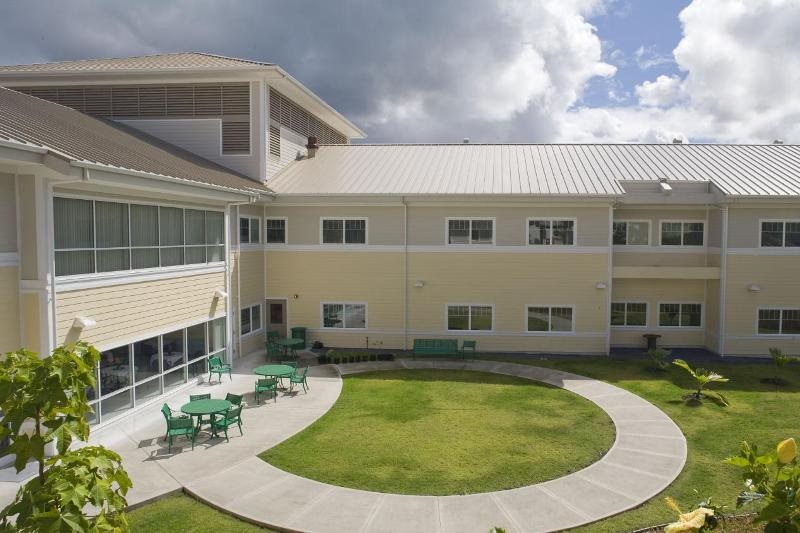
Who Owns and Operates Yukio Okutsu State Veterans Home?

YUKIO OKUTSU STATE VETERANS HOME is owned by a government entity. Government-operated facilities are typically run by state, county, or municipal agencies. The facility is operated by HAWAII HEALTH SYSTEMS CORPORATION, a chain that manages multiple nursing homes. With 95 certified beds and approximately 63 residents (about 66% occupancy), it is a smaller facility located in HILO, Hawaii.
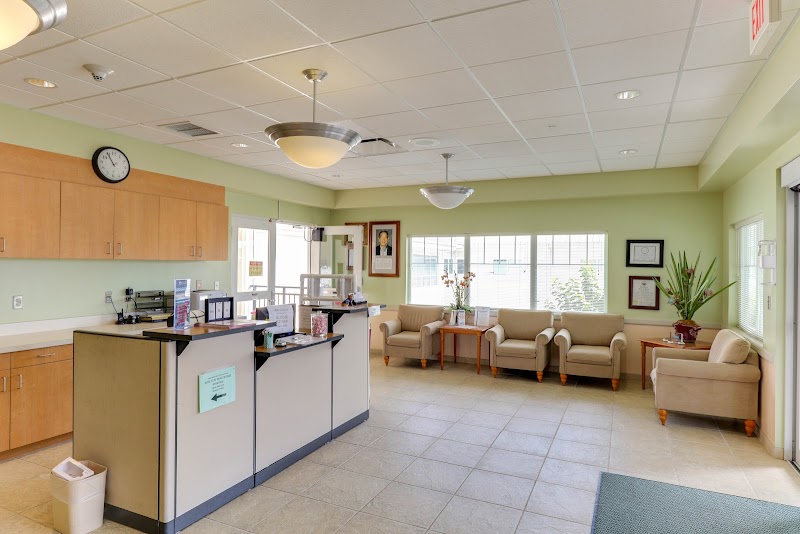
How Does Yukio Okutsu State Veterans Home Compare to Other Hawaii Nursing Homes?

Compared to the 100 nursing homes in Hawaii, YUKIO OKUTSU STATE VETERANS HOME's overall rating (3 stars) is below the state average of 3.4, staff turnover (99%) is significantly higher than the state average of 47%, and health inspection rating (3 stars) is at the national benchmark.

What Should Families Ask When Visiting Yukio Okutsu State Veterans Home?

Based on this facility's data, families visiting should ask: "How do you ensure continuity of care given staff turnover, and what is your staff retention strategy?" "Can you walk me through typical staffing levels on day, evening, and night shifts?" "Can I visit during a mealtime to observe dining assistance and food quality?" "How do you handle medical emergencies, and what is your hospital transfer rate?" These questions are particularly relevant given the facility's high staff turnover rate and the below-average staffing rating.

Is Yukio Okutsu State Veterans Home Safe?

Based on CMS inspection data, YUKIO OKUTSU STATE VETERANS HOME has a clean safety record: no substantiated abuse findings (meaning no confirmed cases of resident harm), no Immediate Jeopardy citations (the most serious violation level indicating risk of serious injury or death), and is not on the Special Focus Facility watch list (a federal program monitoring the lowest-performing 1% of nursing homes). The facility has a 3-star overall rating and ranks #100 of 100 nursing homes in Hawaii. While no facility is perfect, families should still ask about staff-to-resident ratios and recent inspection results during their visit.

Do Nurses at Yukio Okutsu State Veterans Home Stick Around?

Staff turnover at YUKIO OKUTSU STATE VETERANS HOME is high. At 99%, the facility is 52 percentage points above the Hawaii average of 47%. Registered Nurse turnover is particularly concerning at 100%. RNs handle complex medical decisions and coordinate care — frequent RN changes can directly impact care quality. High turnover means new staff may not know residents' individual needs, medications, or preferences. It can also be disorienting for residents, especially those with dementia who rely on familiar faces. Families should ask: What is causing the turnover? What retention programs are in place? How do you ensure care continuity during staff transitions?

Was Yukio Okutsu State Veterans Home Ever Fined?

YUKIO OKUTSU STATE VETERANS HOME has been fined $13,049 across 1 penalty action. This is below the Hawaii average of $33,209. While any fine indicates a compliance issue, fines under $50,000 are relatively common and typically reflect isolated problems that were subsequently corrected. Families should ask what specific issues led to these fines and confirm they've been resolved.

Is Yukio Okutsu State Veterans Home on Any Federal Watch List?

YUKIO OKUTSU STATE VETERANS HOME is not on any federal watch list. The most significant is the Special Focus Facility (SFF) program, which identifies the bottom 1% of nursing homes nationally based on persistent, serious quality problems. Not being on this list means the facility has avoided the pattern of deficiencies that triggers enhanced federal oversight. This is a positive indicator, though families should still review the facility's inspection history directly.