HALE NANI REHABILITATION AND NURSING CENTER
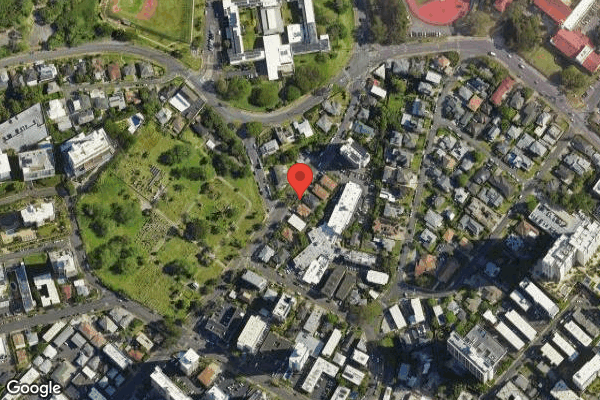
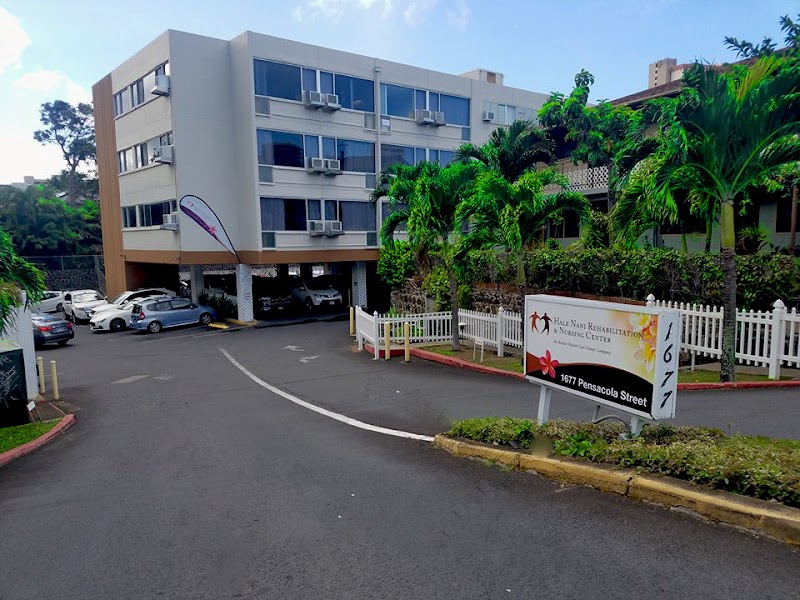
1677 PENSACOLA STREET, HONOLULU, HI 96822 (808) 537-3371
For profit - Limited Liability company 288 Beds VOLARE HEALTH Data: November 2025
Trust Grade
10/100
#33 of 41 in HI
Last Inspection: May 2025

Inspected within the last 6 months. Data reflects current conditions.

Overview

Hale Nani Rehabilitation and Nursing Center has received a Trust Grade of F, indicating significant concerns about its operations and care quality. It ranks #33 out of 41 facilities in Hawaii, placing it in the bottom half, and #19 out of 26 in Honolulu County, meaning only a few local options are worse. Unfortunately, the facility is worsening, with the number of issues reported increasing from 29 in 2024 to 35 in 2025. Staffing is a bright spot, rated 5 out of 5 stars with only a 21% turnover, which is well below the state average. However, the facility has $27,885 in fines, which is an average amount, indicating some compliance issues. On the downside, inspector findings revealed serious problems, such as failing to protect residents from physical abuse, leading to at least one resident sustaining injuries. There were also concerns about proper hand hygiene practices, with staff not washing their hands between assisting different residents. Additionally, the facility does not employ a qualified social worker full-time, which is a requirement for its size, potentially impacting all residents. Families should weigh these strengths and weaknesses carefully when considering this facility.

Trust Score
F
10/100
In Hawaii
#33/41
Bottom 20%
Safety Record
High Risk
Review needed
Inspections
Getting Worse
29 → 35 violations
Staff Stability
✓ Good
21% annual turnover. Excellent stability, 27 points below Hawaii's 48% average. Staff who stay learn residents' needs.
Penalties
✓ Good
$27,885 in fines. Lower than most Hawaii facilities. Relatively clean record.
Skilled Nurses
✓ Good
Each resident gets 79 minutes of Registered Nurse (RN) attention daily — more than 97% of Hawaii nursing homes. RNs are the most trained staff who catch health problems before they become serious.
Violations
⚠ Watch
89 deficiencies on record. Higher than average. Multiple issues found across inspections.
★★☆☆☆
2.0
Overall Rating
★★★★★
5.0
Staff Levels
★★★★☆
4.0
Care Quality
★☆☆☆☆
1.0
Inspection Score
Stable
2024: 29 issues
2025: 35 issues

The Good

  • 5-Star Staffing Rating · Excellent nurse staffing levels
  • 4-Star Quality Measures · Strong clinical quality outcomes
  • Low Staff Turnover (21%) · Staff stability means consistent care
  • Full Sprinkler Coverage · Fire safety systems throughout facility
  • No fines on record
  • Staff turnover is low (21%)

    27 points below Hawaii average of 48%

Facility shows strength in staffing levels, quality measures, staff retention, fire safety.

The Bad

2-Star Overall Rating

Below Hawaii average (3.4)

Below average - review inspection findings carefully

Federal Fines: $27,885

Below median ($33,413)

Moderate penalties - review what triggered them

Chain: VOLARE HEALTH

Part of a multi-facility chain

Ask about local staffing decisions and management

The Ugly 89 deficiencies on record

1 actual harm
May 2025 28 deficiencies
CONCERN (D)

Potential for Harm - no one hurt, but risky conditions existed

Resident Rights (Tag F0550)

Could have caused harm · This affected 1 resident

**NOTE- TERMS IN BRACKETS HAVE BEEN EDITED TO PROTECT CONFIDENTIALITY** 3) On 05/12/25 at 12:54 PM observed CNA11 assist R56 with her lunch. CNA11 was observed standing up while assisting R56. CNA11 u...

Read full inspector narrative →
**NOTE- TERMS IN BRACKETS HAVE BEEN EDITED TO PROTECT CONFIDENTIALITY** 3) On 05/12/25 at 12:54 PM observed CNA11 assist R56 with her lunch. CNA11 was observed standing up while assisting R56. CNA11 uncovered R56's food, mixed some of the food together and took a spoonful and offered it to R56 as she stood near R56. Right afterwards CNA11 left R56 and went into room [ROOM NUMBER] and retrieved a meal tray and placed it in the cart. CNA11 returned to R56, stirred her food some more, took another spoonful and offered it to the resident which she took. CNA11 continued to stand near resident during this time. CNA11 left R56 and walked down the hall to another resident and pushed the resident down the hall past R56 to help move him out of the way while a delivery was coming down the same hallway. CNA11 returned to R56, and proceeded to assist R56 with her lunch again by offering her more spoonful of food. At this time the facility Administrator in training appeared with a stool for CNA11 to sit on and he asked her to sit down and stay with R56 while she assisted her with her meal. On 05/12/25 at 02:00 PM interviewed DON in her office. Inquired of DON if staff who are assisting residents with their meals are to sit and she confirmed this, stated she heard of this and has already done corrective training with the staff. Based on observations and interviews, the facility failed to promote care for residents in a manner that maintains the dignity for three out of three residents Resident (R)330, R331, R56 observed during dining observation. This deficient practice has the potential to affect all residents that require assistance with their meals. Findings include: 1) On 05/12/25 at 08:20 AM, observed Certified Nurse Assistant (CNA)1 assisting R330 with breakfast. CNA1 was standing over R330 instead of sitting down next to her. CNA1 was also conversing with Restorative Nurse Aide (RNA)1 about work and not paying close attention to R330. Concurrent interview with CNA1 completed. CNA1 confirmed that she should be sitting down next to R330 to make her more comfortable and should be more attentive to R330 while assisting her with her breakfast. 2) On 05/12/25/ at 12:41 PM, observed CNA2 assisting R331 with lunch. CNA2 was standing over R331 instead of sitting down beside her. Concurrent interview with CNA2 confirmed that she should be sitting down beside R331 so she can maintain eye to eye contact. On 05/12/25 at 12:50 PM, interview with Licensed Practical Nurse (LPN)1 completed. When asked what their practice was in assisting residents with meals, LPN1 stated she did not know, but noted residents should not feel intimidated. On 05/14/25 at 11:45 AM, interview with Director of Nursing (DON) completed. DON confirmed that the facility's practice is for CNAs to be sitting down while assisting the residents with their meals, so residents can see the CNA at eye level and communicate with them better.
CONCERN (D)

Potential for Harm - no one hurt, but risky conditions existed

Deficiency F0553 (Tag F0553)

Could have caused harm · This affected 1 resident

**NOTE- TERMS IN BRACKETS HAVE BEEN EDITED TO PROTECT CONFIDENTIALITY** 2) On 05/12/25 at 08:52 AM, observed R532 seated in the doorway of the resident's assigned room. R532 was observed wearing brown...

Read full inspector narrative →
**NOTE- TERMS IN BRACKETS HAVE BEEN EDITED TO PROTECT CONFIDENTIALITY** 2) On 05/12/25 at 08:52 AM, observed R532 seated in the doorway of the resident's assigned room. R532 was observed wearing brown sweatpants and a black shirt with food stains and urine stains (observed on 05/12/25 at 02:15 PM) starting on Monday, 05/12/25, morning until Tuesday, 05/13/25, at approximately 02:55 PM. R532 was greeted and responded that he wanted to go home. When questioned where home was, R532 stated, I don't know. R532 was questioned regarding person, place, time, and situation. R532 was able to tell me his name, but no unable to correctly answer on the place, time, or situation. R532 started mumbling about wanting to go home and the interview was terminated. On 05/12/25 at 11:47 AM, conducted an interview with R532's Resident Representative (RR) 4. RR4 reported R532 has Dementia and at this time is unable to make meaningful decisions for himself. Asked RR4 to give an example of a decision the resident is unable to make. RR4 stated R532 is focused on and intends to return home. However, R532 is currently homeless and does not have a safe place to be discharged to. RR4 confirmed the resident can make decisions on day-to-day decisions such as what he wants to eat or use the restroom but is unable to make big decisions. Inquired if RR4 received an invitation to R532's care plan meeting or attended a care plan meeting. RR4 confirmed he/she was not invited to participate in R532's care plan meeting and would have attended had RR4 known about it. On 05/14/25 at 08:16 AM, reviewed R532's EHR. R532's admission MDS with an ARD of 04/24/25, Section C. Brief interview for Mental status score was 5, indicating severe cognitive impairment. On 05/14/25 at 02:05 PM, conducted an interview with Certified Nurse Aide (CNA) 91, Registered Nurse (RN) 23 and RN41 regarding their interactions with R532 and assessment of the resident. CNA91 reported R532 has been combative and impulsive, for example, he is constantly getting up and walking around trying to go home, he does what he wants when he wants, is refusing care, and has been known to be combative. RN23 and RN41 confirmed what CNA91 reported and added that R532's physician is work with the resident's medications to stabilize the resident. RN23 and RN41 confirmed R532 is unable to make important decisions and is alert and oriented to person. On 05/15/25 at 09:05 AM, observed R532 seated in a chair near his assigned room, with CNA67. Inquired with CNA67 about what his/her assignment was and reported, being R532's one to one staff. R532 is wandering, is unsteady on his feet, and can be combative/aggressive. On 05/15/25 at 08:12 AM, reviewed R532's EHR. Review of the facility's Interdisciplinary Team (IDT) Care Plan Conference with Welcome Meeting Form, dated 04/21/2025 10:15 AM and Section Status: Errors view errors. The only portion of the form filled out as reviewed and discussed was Activity Participation with comments, Resident prefers to participate in independent activities such as watching his bedside TV (television). Resident religion is Catholic. Reviewed the signature page for the IDT baseline care plan meeting (also known as the welcome meeting) and R532 was listed in attendance as Self- RP (dated 04/23/25). On 05/15/25 at 09:10 AM, conducted a concurrent interview and review of R532's EHR with Assistant Director of Nursing (ADON) 66 regarding R532's care plan meeting and requested documentation of RR4's invitation and/or attendance of R532's care plan meeting. Reviewed the IDT Care Plan Conference with Welcome Meeting Form and confirmed the document was as this surveyor viewed, with only the activity participation marked and with comments listed above regarding activity preference to watch his bedside TV. ADON66 also confirmed the baseline care plan form with staff and R532's signatures correlated to the IDT Care Plan Conference with Welcome meeting form. ADON66 confirmed RR4 did not attend R532's care plan conference or welcome meeting. ADON66 stated an admission Staff (AS) 8 is responsible for keeping track of family notification/invitation to the care plan meetings. On 05/15/25 at 10:18 AM, conducted an interview with AS8. Requested documentation of RR4's notification/invitation to R532's care plan meeting on 04/21/25 and an acceptance or declination of the notification/invitation. AS8 reviewed her records and confirmed she did not have any documentation because the meeting occurred prior to the facility tracking this information. Based on interview and record review, the facility failed to facilitate the inclusion of the resident's representative in the resident's care planning for 2 of 5 residents Resident (R) 203 and 532. As a result of this deficient practice, the resident's representative was not able to support and provide input on the resident's goals, choices and preferences. Findings include: 1) R203 is a [AGE] year-old male, admitted to the facility on [DATE]. A Minimum Data Set (MDS) with an Assessment Reference Date (ARD) of 02/13/25 noted that R203 had a Brief Interview for Mental Status (BIMS) score of 6, which indicated that R203 has severe cognitive impairment. On 05/12/25 at 02:48 PM, interviewed R203's family representative (FR) 10, over the phone, who was listed as R203's responsible party on the facility's admission record. FR10 stated that the care planning meetings for R203 is sporadic and formal meetings are not conducted. On 05/13/25 at 08:53 AM, interviewed the Minimum Data Set Nurse (MDS) 1 in her office along with a concurrent review of the Electronic Health Record (EHR). MDS1 stated that resident care planning meetings are held quarterly. The last care planning meeting for R203 was on 12/03/24 and the next quarterly meeting should have been held in March 2025 and was missed. On 05/13/25 at 01:39 PM, interviewed the Social Services Director (SSD) at the Social Services office. SSD stated that the Social Services department receives a weekly list of residents due for care planning meeting from the MDS office and schedules the care planning meetings for the following week. SSD did a search in the EHR and confirmed that the last care planning meetingfor R203 was held on 12/03/24 and the next required quarterly care planning meeting was not conducted.
CONCERN (D)

Potential for Harm - no one hurt, but risky conditions existed

Deficiency F0554 (Tag F0554)

Could have caused harm · This affected 1 resident

**NOTE- TERMS IN BRACKETS HAVE BEEN EDITED TO PROTECT CONFIDENTIALITY** Based on observation, interview, and record review, the facility failed to ensure 1 of 36 residents Resident (R)9 in the sample ...

Read full inspector narrative →
**NOTE- TERMS IN BRACKETS HAVE BEEN EDITED TO PROTECT CONFIDENTIALITY** Based on observation, interview, and record review, the facility failed to ensure 1 of 36 residents Resident (R)9 in the sample had been determined clinically appropriate to self-administer her medications before leaving them at the bedside for her to take independently. This deficient practice placed R9 at risk of adverse effects related to unsafe medication administration practices. Findings include: R9 is an [AGE] year-old female admitted on [DATE] for long-term care. Review of R9's Minimum Data Set (MDS) Annual Assessment with an Assessment Reference Date (ARD) of 03/31/25 revealed that staff had determined her Cognitive Skills for Daily Decision Making were Moderately impaired - decisions poor, cues/supervision required. On 05/12/25 at 08:52 AM, observation made while at the bedside of R9. Observed at least six different medications (tablets and capsules) at the edge of the bedside table in front of her. Attempted to ask R9 about the medications but she did not respond verbally to questions, only smiled. On 05/12/25 at 08:54 AM, called Registered Nurse (RN)3 into the room for a concurrent interview and observation. RN3 confirmed that the medications on the bedside table appeared to be R9's morning medications. RN3 explained that her shift began at 07:00 AM, and when she arrived on the unit, RN5 (a night shift nurse) informed her that he had already administered morning medications to R9. RN3 confirmed that medications should not be left at the bedside. On 05/12/25 at 09:04 AM, an interview was done with RN5. When asked about leaving the medications for R9, RN5 explained that he was working an extra shift this morning, as he should have completed his shift at 07:00 AM, and he was trying to get a head start on his duties for the morning, so he gave several of the residents their morning medications early. RN5 confirmed he should not have left any medications at the bedside. On 05/12/25 at 03:05 PM, a phone interview was done with R9's Family Representative (FR)1. FR1 stated that she and her husband have seen medications left on R9's bedside table for her to take later on more than one visit. Review of R9's electronic health record (EHR) noted no assessments done to determine if R9 could be responsible to safely self-administer her medications. On 05/15/25 at 07:27 AM, an interview was done with the Director of Nursing (DON) in her office. During a concurrent review of R9's EHR, DON confirmed R9 did not have an assessment documented for self-administration of medications, and with a determination of moderately impaired cognitive skills, she would not be clinically appropriate for this responsibility. The facility's policy and procedure regarding Self-Administration of Medications was requested but not received prior to exit.
CONCERN (D)

Potential for Harm - no one hurt, but risky conditions existed

Deficiency F0558 (Tag F0558)

Could have caused harm · This affected 1 resident

**NOTE- TERMS IN BRACKETS HAVE BEEN EDITED TO PROTECT CONFIDENTIALITY** Based on observation, interview, and record review, the facility failed to honor the shower preferences of 1 of 2 residents Resi...

Read full inspector narrative →
**NOTE- TERMS IN BRACKETS HAVE BEEN EDITED TO PROTECT CONFIDENTIALITY** Based on observation, interview, and record review, the facility failed to honor the shower preferences of 1 of 2 residents Resident (R)9 sampled for accommodation of needs by having a shower gurney available. In addition, the facility failed to ensure the continuous availability of a mechanical lift for the transfer of the 9 of 40 residents on the floor who require it. As a result of these deficient practices, R9 did not have her needs met and was placed at risk of not attaining her highest practicable well-being. Findings include: R9 is an [AGE] year-old female admitted on [DATE] for long-term care. Review of R9's Minimum Data Set (MDS) Annual Assessment with an Assessment Reference Date (ARD) of 03/31/25 revealed that R9 is fully dependent on staff for transferring in/out of bed and moving from a sitting to a lying position and vice versa. While in bed, R9 needs maximal assistance (staff do more than half the effort) to roll from side to side. On 05/12/25 at 03:05 PM, a phone interview was done with R9's Family Representative (FR)1. FR1 stated that R9 would like to shower at least once a week, but only gets a bed bath. FR1 explained that due to her physical limitations, R9 is a mechanical lift transfer but there is only one of those on the floor. Even when staff do transfer R9 with a mechanical lift, the facility does not have the equipment available so that R9 could be showered. On 05/15/25 at 09:32 AM, an interview was done with Certified Nurse Aide (CNA)4, who had been working at the facility for more than ten years. CNA4 confirmed that R9 needs a mechanical lift to be transferred in and out of bed. When asked about showers, CNA4 stated that R9 gets bed baths only. CNA4 explained that R9 cannot bend her knees so when she had been transferred to a shower chair in the past, she kept sliding down and could not be showered in it safely. Observation of the shower chair(s) tried noted they were standard shower chairs that could not recline. Observed in the shower room was one large reclining shower chair. Closer inspection of the reclining shower chair noted that when the back was reclined, the knees came up so that the knees were always in a 90-degree angle. CNA4 agreed because R9 could not bend her knees, the reclining shower chair would not be comfortable. When asked about a shower gurney for residents who could not sit up, CNA4 responded that there were none on the floor. On 05/15/25 at 09:48 AM, an interview was done with Registered Nurse (RN)3, who also served as the Nurse Supervisor. RN3 confirmed that the floor, with a census of 40 residents, did not have a shower gurney. When asked about mechanical lifts for transfers, RN3 confirmed that there was only one on the floor. After consulting with CNA4, RN3 also confirmed that the floor had nine residents, or 22% of the floor, that required a mechanical lift for transfers. On 05/15/25 at 10:13 AM, another interview was done with CNA4. When asked if one mechanical lift for the nine residents on the floor who needed it was adequate to meet their needs, CNA4 responded no, it was not enough. CNA4 explained that the floor's mechanical lift was also taken to other floors for use at times, leaving them without one. On 05/15/25 at 10:17 AM, an interview with Restorative Nurse Aide (RNA)3 was done. RNA3 confirmed that at times, the one mechanical lift is missing from the floor, and he has to go look for it on other floors and bring it back. On 05/15/25 at 11:26 AM, an interview was done with the Director of Nursing (DON) in her office. DON confirmed that there are zero shower gurneys at the facility, with a census of 255 residents, for residents who want to shower but cannot be safely transferred to, or sit in, a shower chair.
CONCERN (D)

Potential for Harm - no one hurt, but risky conditions existed

Deficiency F0561 (Tag F0561)

Could have caused harm · This affected 1 resident

**NOTE- TERMS IN BRACKETS HAVE BEEN EDITED TO PROTECT CONFIDENTIALITY** Based on interview and record review, the facility failed to identify and support the shower preference of 1 of 2 residents Resi...

Read full inspector narrative →
**NOTE- TERMS IN BRACKETS HAVE BEEN EDITED TO PROTECT CONFIDENTIALITY** Based on interview and record review, the facility failed to identify and support the shower preference of 1 of 2 residents Resident (R)9 sampled for Self-Determination/Choices. As a result of this deficient practice, R9 did not have her needs met and was hindered from attaining her highest practicable well-being. Findings include: Cross-reference to F558 Accommodation of Needs. The facility failed to secure the equipment necessary to honor Resident (R)9's shower preferences and meet her needs. R9 is an [AGE] year-old female admitted on [DATE] for long-term care. Review of R9's Minimum Data Set (MDS) Annual Assessment with an Assessment Reference Date (ARD) of 03/31/25 revealed that R9 is fully dependent on staff for toileting and requires maximal assistance (helper does more than half the effort) for showering and personal hygiene. Further review noted that in Section F0400 Interview for Daily Preferences, the question, How important is it to you to choose between a tub bath, shower, bed bath, or sponge bath? was marked Somewhat important. On 05/12/25 at 03:05 PM, a phone interview was done with R9's Family Representative (FR)1. When asked if the facility honors R9's choices, FR1 stated that R9 has expressed, and FR1 has communicated to staff, that R9 would like to shower at least once a week, but only gets a bed bath. On 05/15/25 at 09:32 AM, an interview was done with Certified Nurse Aide (CNA)4, who had been working at the facility for more than ten years. When asked about R9's shower schedule and preferences, CNA4 showed this Surveyor the posted shower schedule indicating that R9 is offered a bath on Tuesdays and Fridays on the day shift. CNA4 stated she did not know what R9's preferences were, but that R9 gets bed baths only. On 05/15/25 at 11:26 AM, an interview was done with the Director of Nursing (DON) in her office. During a concurrent review of R9's shower preferences, DON confirmed that although R9 had indicated it was somewhat important to her to choose between a shower and bed bath, the facility had failed to identify and document what that choice would be.
CONCERN (D)

Potential for Harm - no one hurt, but risky conditions existed

Deficiency F0568 (Tag F0568)

Could have caused harm · This affected 1 resident

**NOTE- TERMS IN BRACKETS HAVE BEEN EDITED TO PROTECT CONFIDENTIALITY** Based on interview and record review, the facility failed to ensure the individual financial records of 2 of 3 residents Residen...

Read full inspector narrative →
**NOTE- TERMS IN BRACKETS HAVE BEEN EDITED TO PROTECT CONFIDENTIALITY** Based on interview and record review, the facility failed to ensure the individual financial records of 2 of 3 residents Residents (R)104 and R49 sampled for personal funds were made available to them through quarterly statements. As a result of this deficient practice, the residents were not aware of their current account balances and were not afforded the opportunity to periodically reconcile their accounts. Findings include: 1) R104 is a [AGE] year-old male admitted to the facility on [DATE] for long-term care. A review of R104's most recent Minimum Data Set (MDS) assessment with an assessment reference date (ARD) of 03/31/25 noted a Brief Interview for Mental Status (BIMS) score of 12 out of 15, reflecting a determination that he falls just short of cognitively intact. The previous two MDS assessments, on 08/18/24 and 12/30/24, both have R104 assessed with a BIMS of 15 out of 15. On 05/12/25 at 10:31 AM, an interview was done with R104 at his bedside. R104 confirmed that the facility holds money for him. When asked if he receives periodic statements, R104 reported that his daughter gets statements regarding his account, but he does not. Review of the facility's undated Patient Trust Policies and Procedures revealed the following: Quarterly Statements - The facility will provide statements to residents and/or responsible party every quarter . On 05/14/25 at 01:36 PM, an interview was done with the Business Office Manager (BOM) in her office. When asked about R104, BOM confirmed that R104 does have a Trust Account with the facility and that he is his own responsible person regarding the account. During a review of his account details, BOM reported that statements are sent to his daughter at the address on file every three months and confirmed that a copy is not delivered to R104 even though he resides at the facility. When asked what the policy is, BOM initially answered that the policy is to send it [statements] out to the address on file. Surveyor reminded BOM that the facility was cited for the exact same issue last year. BOM then changed her earlier statement and reported that after last year's citation, the facility now sends the quarterly statement to both the address on file as well as takes a copy up to the resident(s). BOM explained that she prints up the statements every quarter and either a business office assistant or someone from social services will take a copy up to the resident. When asked how they document that a copy was delivered to the resident(s), BOM answered that they do not document it anywhere and do not currently have a tracking system set up to ensure that each resident with a trust account receives their statements. Surveyor explained that R104, who she already agreed is alert and oriented, stated that he does not and has not been receiving statements. BOM acknowledged that she had no evidence to the contrary. 2) R49 is a [AGE] year-old male admitted to the facility on [DATE] for long-term care. A review of R49's most recent MDS assessment with an ARD of 04/17/25 noted a BIMS score of 15 out of 15, reflecting a determination that he is cognitively intact. On 05/12/25 at 01:24 PM, an interview was done with R49 at his bedside. R49 confirmed that the facility maintains a trust account for him. When asked if he receives periodic statements, R49 answered that he does not receive any account statements without asking for one. On 05/14/25 at 01:36 PM, an interview was done with BOM in her office. When asked about R49, BOM confirmed that R49 does have a Trust Account with the facility and that he is his own responsible person regarding the account. During a review of his account details, BOM reported that statements are sent to his address on file every three months. BOM confirmed that the address on file is not the facility, although R49 resides here, and like R104, she had no documentation that a copy of any of his statements were delivered to him.
CONCERN (D)

Potential for Harm - no one hurt, but risky conditions existed

Deficiency F0583 (Tag F0583)

Could have caused harm · This affected 1 resident

Based on observation and interviews, the facility failed to ensure that the personal information and clinical records of Resident (R)134 were protected. As a result of this deficient practice, residen...

Read full inspector narrative →
Based on observation and interviews, the facility failed to ensure that the personal information and clinical records of Resident (R)134 were protected. As a result of this deficient practice, residents are at risk of their health information not remaining private. Findings include: On 05/14/25 09:40 AM, while surveyor was walking down the hallway on Piikoi 1, observed ICARE station #10784 (station where Certified Nurse Assistants (CNA) and Restorative Nurse Aides (RNA) document their tasks and interactions with residents) left open and accessible with R134's information to include code status, allergies, diet, and required treatment monitoring. ICARE station was located near the entrance of the wing where there is heavy traffic of other residents and family entering in and out through that area to get to the lanai. On 05/14/25 at 09:45 AM, interview with Registered Nurse (RN)1 completed. When asked if the ICARE station should be left open, RN1 confirmed that it should be closed and exited out for privacy reasons and to comply with the Health Insurance Portability and Accountability Act (HIPAA). On 05/14/25 at 09:50 AM, interview with Certified Nurse Assistant (CNA)3 completed. When asked if the ICARE station should be left open, CNA3 stated that he forgot to close it out and it should be closed for privacy reasons. On 05/14/25 at 11:45 AM, interview with Director of Nursing completed (DON). DON confirmed that the ICARE stations should be exited out and closed when the CNAs are done documenting their interaction with the residents to comply with HIPAA. Review of the facility's Resident Rights Privacy and Confidentiality, dated 03/23, in the Purpose section, it notes, Each resident has the right to privacy and confidentiality of personal and medical records. In the Guidelines section, it notes, 2.Personal privacy includes accommodations, medical treatment, .personal care .
CONCERN (D)

Potential for Harm - no one hurt, but risky conditions existed

Safe Environment (Tag F0584)

Could have caused harm · This affected 1 resident

Based on observations and interviews the facility failed to provide a clean area inside and outside of two of four Residents (R) 75, 159 sampled for Environment. R75's bed side mats were dirty with bl...

Read full inspector narrative →
Based on observations and interviews the facility failed to provide a clean area inside and outside of two of four Residents (R) 75, 159 sampled for Environment. R75's bed side mats were dirty with black marks and R159 sat underneath a dirty ceiling tile with a large black spot. 1) On 05/12/25 at 08:57 AM observed R75 resident in her room in her bed. R75 has fall mats on both sides of her bed. Closer inspection of fall mats found them to be dirty with black marks. On 05/14/25 at 05:38 PM observed R75 in her bed. Observation of fall mats on either side of her bed do not appear to have any changes, appears dirty with black marks. On 05/15/25 at 06:12 AM observed R75 in her bed as a CNA provided care for her. At this time noted fall mats on either side of R75's bed continues to be dirty with black marks. On 05/15/25 at 07:27 AM interviewed Housekeeper 25. Inquired of housekeeper 25 when was the last time the floor mats were cleaned. Housekeeper 25 stated she was not sure when they were last washed. Housekeeper 25 confirmed the mats were dirty and stated she would clean them with a brush. 2) On 05/15/25 at 07:51 AM R159 was observed sitting in her wheelchair in the hallway outside of her room. Resident had been seen sitting in this same area everyday of survey. At this time surveyor looked up at the ceiling and almost directly above R159 there was a blackened spot on the ceiling tile. Inquired of Registered Nurse (RN) 30 if she was aware of the dirty ceiling tile and she said no and she has not put in anything to maintenance regarding the ceiling tile. Surveyor showed RN30 the dirty ceiling tile and RN30 asked day shift nurse, RN50, to submit a work order to maintenance. At this time RN30 moved R159 into her room. On 05/15/25 at 07:58 AM Maintenance Assistant (MA) came to the unit and RN30 showed MA the dirty ceiling tile. MA said ok. On 05/15/25 at 08:22 AM ceiling tile was replaced. Maintenance Supervisor (MS) stated he thought the damage to the ceiling tile might have been from an old leak. MS looked at the area above the ceiling tile and could not explain where the leak would have come from. MM stated the dirty ceiling tile was dry.
CONCERN (D)

Potential for Harm - no one hurt, but risky conditions existed

Assessment Accuracy (Tag F0641)

Could have caused harm · This affected 1 resident

**NOTE- TERMS IN BRACKETS HAVE BEEN EDITED TO PROTECT CONFIDENTIALITY** 2) Record review on 05/13/25 (Face sheet). R201 is a [AGE] year-old female admitted to the facility on [DATE]. Diagnosis include...

Read full inspector narrative →
**NOTE- TERMS IN BRACKETS HAVE BEEN EDITED TO PROTECT CONFIDENTIALITY** 2) Record review on 05/13/25 (Face sheet). R201 is a [AGE] year-old female admitted to the facility on [DATE]. Diagnosis includes left sided weakness from a stroke. Unspecified dementia without behavioral disturbance. Observations of R201 on Piikoi 2 unit on the following dates: 05/12/25; 05/13/25; 05/14/25; and 05/15/25. R201 wandered (while ambulating) in the hallway on and off the unit unsupervised. MDS quarterly review ARD 04/26/25 reviewed on 05/13/25. R201 is severely cognitively impaired. Needs supervision or touching assistance when walking. Diagnosis includes stroke, coronary artery disease and Diabetes Mellitus. Two or more falls since admission. R201 was not coded as wandering although she is coded with a Wander/elopement alarm that is used daily. Interview with the MDS coordinator (MDSC) 1 on 05/15/25 at 1:00 PM in her office. The surveyor asked her why R201 was coded as having a wander guard on daily but wasn't coded with any behaviors of wandering. MDSC1 said, the behavior might not have been observed during the 7-day period. The surveyor asked her if it was an error, since observations have been made several times a day of R201 wandering on and off the unit between 05/12/25 and 05/15/25. Based on interview and record review, the facility failed to conduct an assessment that accurately reflects the status of two Residents (R) 9 and R201 of 36 residents in the sample. As a result of this deficient practice, these residents did not have their needs properly identified or met and were hindered from attaining their highest practicable well-being. Findings include: Cross reference to F689 and F740. 1) R9 is an [AGE] year-old female admitted on [DATE] for long-term care. Review of R9's Minimum Data Set (MDS) Annual Assessment with an Assessment Reference Date (ARD) of 03/31/25 noted the question: Should Brief Interview for Mental Status [BIMS] be Conducted? had been marked No (resident is rarely/never understood). Further review of the 03/31/25 Annual Assessment revealed that R9 had indicated her preferred language was Vietnamese, and indicated yes to the question regarding . need or want an interpreter to communicate with a doctor or health care staff? On 05/12/25 at 03:05 PM, a phone interview was done with R9's Family Representative (FR)1. FR1 stated that R9 speaks only Vietnamese. On 05/15/25 at 08:06 AM, an interview was done with the Social Services Director (SSD) in her office. Regarding R9's BIMS assessment not being completed, SSD confirmed she attempted to conduct the assessment using the language line but R9 had a poor response to questions asked by the interpreter, so she had marked that R9 is rarely/never understood. When asked what the language line is, SSD explained it is interpreter services by phone. When asked what language she used, SSD responded that she used a Cantonese speaker. State Agency informed SSD that FR1 had stated that R9 speaks only Vietnamese. SSD acknowledged that R9's poor response on the previous BIMS assessment was likely due to the use of interpreter services in the wrong language. SSD agreed that the assessment would need to be re-done. On 05/15/25 at 01:22 PM, an interview was done with FR1 and R9 at her bedside. Using FR1 to interpret, R9 answered all questions from the State Agency (SA) without hesitation and with great animation. R9 could barely stop talking. When asked about her memory, FR1 stated R9 has a great memory and remembers everything. When asked if R9 could speak Cantonese, FR1 responded no, she can understand only very little Cantonese but doesn't speak it, and confirmed that Vietnamese is R9's native language. Review of the facility's policy and procedure Conducting an Accurate Resident Assessment, last revised 04/28/25, revealed the following: The appropriate, qualified health professional will correctly document the resident's medical, functional, and psychological problems and identifies resident strengths to maintain or improve medical status, functional abilities, and psychosocial status.
CONCERN (D)

Potential for Harm - no one hurt, but risky conditions existed

Comprehensive Care Plan (Tag F0656)

Could have caused harm · This affected 1 resident

**NOTE- TERMS IN BRACKETS HAVE BEEN EDITED TO PROTECT CONFIDENTIALITY** 2) On 05/12/25 at 04:41 PM record review of R75's Electronic Health Record (EHR) revealed she is a [AGE] year-old who was admitt...

Read full inspector narrative →
**NOTE- TERMS IN BRACKETS HAVE BEEN EDITED TO PROTECT CONFIDENTIALITY** 2) On 05/12/25 at 04:41 PM record review of R75's Electronic Health Record (EHR) revealed she is a [AGE] year-old who was admitted to the facility on [DATE] with diagnoses that include, but are not limited to, vascular dementia, unspecified severity, with other behavioral disturbance, hemiplegia and hemiparesis following cerebral infarction affecting left non-dominant side, pain, unspecified and constipation, unspecified. R75 had a Minimum Data Set (MDS), that was a quarterly review, with an Assessment Reference Date (ARD) of 11/12/24 with a Brief Interview for Mental Status (BIMS) Exam summary score of 99, indicating the interview was not successful and R75 has an MDS Significant Change that had an ARD of 02/20/25 with a BIMS asking Should Brief Interview for Mental Status be Conducted? and No (resident is rarely/never understood) was checked, indicating the BIMS exam was not done with R75. Review of R75's MDS Section GG - Functional Abilities and Goals revealed she is dependent upon staff for her toileting hygiene. Review of R75's Care Plan (CP) revealed the following: o BOWEL AND BLADDER ELIMINATION The resident is incontinent of bowel and bladder due to impaired functional mobility and cognitive deficit. Date Initiated: 02/23/2024 Revision on: 03/12/2025 o The resident will remain free from skin breakdown due to incontinence and brief use through the review date. Date Initiated: 02/26/2024 Revision on: 03/12/2025 o Resident wears disposable brief and incontinent of bowel and bladder. Date Initiated: 02/23/2024 Revision on: 02/26/2024 o Check for incontinence during established rounding process and prn. Clean peri area and apply moisture barrier with each brief change. Date Initiated: 02/23/2024 On 05/14/25 at 05:30 PM Observed R75 in her room in her bed yelling help. Staff responded to R75. On 05/14/25 at 05:38 PM interviewed Certified Nurse Aide (CNA) 35 in the nurse's station. Inquired if she is familiar with working with R75 and she said yes. Inquired if R75 is incontinent of bowel and bladder (B&B) and CNA35 confirmed R75 is incontinent of B&B. Inquired how staff know R75 needs assistance if she is incontinent of B&B and CNA35 stated resident will use the call light or staff check her every 2 hours to clean her up. Inquired if resident can assist in moving when she is having her adult brief changed and CNA35 stated resident is able to move around in her bed. Inquired if R75 has any skin problems such as rash, moisture associated skin damage (MASD) or pressure ulcer and CNA35 stated R75 does not have any skin issues at this time. Inquired of CNA35 if R75 has a urinary tract infection and CNA35 said R75 does not have a UTI. On 05/15/25 at 06:12 AM observed CNA60 change R75's adult brief. CNA60 was able to gather the supplies needed, perform hand hygiene and put on clean gloves. CNA 60 wore appropriate Personal Protective Equipment (PPEs) which also included a gown and mask. CNA60 told R75 what she was going to do. CNA60 provided privacy for R75 by closing the bedside curtain. CNA60 opened R75's brief and started wiping R75's perineal area. CNA60 was observed wiping from the back going upward and forward. Inquired of CNA60 if she should be wiping from the back to forward and CNA60 stated no. Inquired of CNA60 how R75's skin looked and CNA60 stated resident's groin looks well with no skin breakdown. CNA60 turned R75 to her side with R75's assistance. CNA60 wiped R75's anus and buttocks. Inquired how R75's skin looks and CNA60 stated R75 had some reddened areas to her bottom (right buttock) and right back of right leg where her buttock meets her leg, right and left feet also have reddened areas on the bottom of R75's feet. CNA60 was able to use R75's call light to call for the nurse. RN30 confirmed these areas were new skin breakdown for R75. Inquired of CNA60 if she had training on how to provide peri-care to the residents at the facility and CNA60 stated she did during orientation last October. On 05/15/25 at 06:35 AM interviewed CNA22 at the nurse's station. Inquired how she wipes a female resident when she is providing peri-care. CNA22 stated she wipes from front to back. Inquired why she would not wipe back to front and she stated, because it's dirty. 05/15/25 10:20 AM interviewed Director of Nursing (DON) in her office. Inquired of DON on how staff are to provide peri-care to residents and she stated the steps of peri-care that included wiping front to back. Inquired why staff should not wipe back to front and DON stated it would be contamination, could cause an infection and confirmed it puts the resident at risk for UTI (urinary tract infection) especially if they have a BM (bowel movement). Based on observation, interview, and record review, the facility failed to develop and implement a person-centered Comprehensive Care Plan (CP) for 3 Residents (R), 9, 75, 211 of 36 residents sampled. As a result of this deficient practice, these residents were placed at risk for a decline in their quality of life, they did not have sufficient information to meet the residents medical, physical, mental, psychosocial needs and prevented them from attaining their highest practicable well-being. Findings include: Cross-reference to F676 Activities of Daily Living (ADLs)/Maintain Abilities. 1) Despite identifying that Resident (R)9's preferred language is Vietnamese and would like interpreter services to communicate with health care staff, the facility failed to develop and implement a person-centered communication plan that accurately reflected her needs. 3) R211 is a [AGE] year-old male admitted to the facility on [DATE] with diagnoses that include major depressive disorder single episode, generalized anxiety disorder, and post-traumatic stress disorder. A MDS with an ARD of 04/17/25 noted that R211 had a BIMS score of 13, which indicated that R211 is cognitively intact. On 05/12/25 at 01:00 PM, a review of the facility's Trauma-Informed Care (TIC) policy stated, 6. Resident centered, culturally competent care plans are developed to reflect resident needs and preference related to trauma . On 05/13/25 at 01:55 AM, interviewed the Social Services Director (SSD) in her office. A concurrent review was done for a Social Services Psychosocial Evaluation -V4 completed on 06/22/24 in where 10. Describe Trauma, noted a documented resident response, Large crowds makes resident anxious. SSD confirmed that R211's initial and current care plan did not contain a specific TIC care plan that listed the identified trigger and interventions on how to manage it.
CONCERN (D)

Potential for Harm - no one hurt, but risky conditions existed

Deficiency F0657 (Tag F0657)

Could have caused harm · This affected 1 resident

**NOTE- TERMS IN BRACKETS HAVE BEEN EDITED TO PROTECT CONFIDENTIALITY** Based on observation, record review and interview the facility failed to revise one Resident (R) 119 of four residents sampled f...

Read full inspector narrative →
**NOTE- TERMS IN BRACKETS HAVE BEEN EDITED TO PROTECT CONFIDENTIALITY** Based on observation, record review and interview the facility failed to revise one Resident (R) 119 of four residents sampled for dialysis, Care Plan (CP). The facility also failed to provide an intervention to care for R119's dialysis access site after he returned from dialysis with a pressure dressing covering his access site. The deficient practice puts the resident at risk of decreased blood flow and/or occlusion of the access site. Findings include: On 05/13/25 at 09:22 AM R119 was observed in his room in his bed with a dressing on his upper left arm. Inquired of R119 where the dressing was applied and he stated it was applied at the dialysis center yesterday. Inquired if the nurses ever take off the dressing when he returns from dialysis and he confirmed sometimes they take it off and put on Band-Aids if it is still bleeding. Record review of R119's Electronic Health Record (EHR) revealed he is a [AGE] year-old was admitted to the facility on [DATE] and his diagnoses include, but are not limited to, hypertensive heart and chronic kidney disease with heart failure and with stage 5 chronic kidney disease, or end stage renal disease, type 2 diabetes mellitus with diabetic polyneuropathy, unspecified dementia, unspecified severity, with other behavioral disturbance and dependence on renal dialysis. Review of R119's Minimum Data Set (MDS) with an Assessment Reference Date (ARD) of 03/13/25 revealed his Brief Interview for Mental Status (BIMS) Exam summary score of 11 indicating he is cognitively mildly impaired. Review of R119's care plan for hemodialysis included: HEMODIALYSIS The resident is on Hemodialysis due to ESRD (End Stage Renal Disease). Date Initiated: 09/10/2021 Revision on: 09/17/2021 ·He will have no s/sx of complications from Hemodialysis through the review date. Date Initiated: 09/10/2021 Revision on: 04/02/2025 Target Date: 06/29/2025 ·Do not draw blood or take B/P to left arm with AVF (Arteriovenous fistula) Date Initiated: 09/10/2021 Revision on: 05/23/2022 LPN RN ·Encourage resident to go for the scheduled dialysis appointments. Resident receives dialysis 3x/week (Tues-Thurs- Sat) [Mon, Weds., Fri. and sometimes Tuesday] CNA LPN Date Initiated: 05/23/2022 Revision on: 05/23/2022 RN o Monitor for dry skin and apply lotion as needed. Date Initiated: 05/23/2022 CNA LPN RN o Monitor labs and report to doctor as needed. Date Initiated: 05/23/2022 LPN RN o Monitor VITAL SIGNS every shift. Notify MD of significant abnormalities. Date Initiated: 09/10/2021 Revision on: 09/10/2021 CNA LPN RN o Monitor/document/report PRN any s/sx of infection to access site: Redness, Swelling, warmth or drainage. Date Initiated: 09/10/2021 LPN RN o Monitor/document/report PRN for s/sx of renal insufficiency: changes in level of consciousness, changes in skin turgor, oral mucosa, changes in heart and lung sounds. Date Initiated: 05/23/2022 LPN RN o On Hemodialysis every Tues-Thurs-Sat [Mon, Weds., Fri. and sometimes Tuesday] at . Date Initiated: 09/10/2021 Revision on: 05/23/2022 Resident has episode of refusing scheduled dialysis. Schedule make up HD with dialysis center. Notify MD. Date Initiated: 02/07/2025 On 05/14/25 at 08:59 AM interviewed R119 who was sitting in his wheelchair in the hallway outside of his room. Inquired when R119 went to dialysis the day before and he stated he Went to dialysis at 11 am, hook up was at about 12, and returned by 5:30. At this time observed resident still had a pressure dressing to his left upper arm intact covering his access site. Inquired why staff had not removed the pressure dressing and R119 stated dialysis staff told him to remove it to prevent it from ruining it (access site). R119 stated he forgot to take it off and forgot to tell the nurse to take it off. On 05/14/25 at 09:07 AM interviewed Registered Nurse (RN)40 near the medication cart. Inquired of RN40 who is supposed to take off R119's pressure dressing when he returns from dialysis and she stated night shift will take the pressure dressing off resident's access site. Inquired if RN40 had assessed R119's dialysis access site and she stated, he took off the dressing. Requested RN40 to look at R119's left arm as he still had the dressing on. RN40 took off R119's dressing. RN40 stated he has a strong bruit. Inquired of RN what she must assess and she said, the bruit and thrill. Inquired how she assesses for the bruit and she stated, Palpating for the bruit and Oh I'm nervous now. I'm listening to the bruit and palpating for the thrill. Inquired of RN40 if facility provided training on how to work with residents receiving dialysis and she confirmed she had training upon orientation. RN40 stated sometimes when the resident is bleeding, we put on a new dressing. RN40 stated sometimes the R119 is cranky in the morning if you wake him up, and he was covered head to toe and that is why she did not see that he still had the pressure dressing to his upper left arm this morning. 05/14/25 05:16 PM interviewed RN30 in the nurse's station. Inquired who is supposed to take off R119's pressure dressing when he returns to the facility and RN30 confirmed she did not remove the resident's pressure dressing yesterday (05/13/25). Inquired when did R119 return to the unit from dialysis and RN30 stated at 4:10 PM. RN30 explained that she started at 4:30 PM yesterday. RN30 stated they (nurses) usually take the pressure dressing off within 2 hours of the resident returning from dialysis. Inquired of RN30 if she took off R119's pressure dressing on 05/13/25 and RN30 confirmed she did not take it off and stated she checked on him later and he was sleeping around 7 or 7:30 PM. RN30 stated she worked till 11:30 PM on 05/13/25. Inquired of RN30 what the nurse has to assess for with R119's dialysis access site and RN30 stated she assess the access site with the pressure dressing in place. RN30 stated she assess if it's swollen, check for the bruit by using the stethoscope to listen for the woosh sound and feels with her hands (palpates) for the thrill. 05/14/25 09:15 AM interviewed Director of Nursing (DON) in her office and inquired how long the pressure dressing is to remain on residents who receive dialysis and DON stated she contacted the dialysis centers and inquired of them. DON stated she is in the process of training all facility nurses on when the pressure dressing should be removed after dialysis. DON confirmed they did not have this in place prior to her calling the dialysis center.
CONCERN (D)

Potential for Harm - no one hurt, but risky conditions existed

Deficiency F0676 (Tag F0676)

Could have caused harm · This affected 1 resident

**NOTE- TERMS IN BRACKETS HAVE BEEN EDITED TO PROTECT CONFIDENTIALITY** Based on observation, interview, and record review, the facility failed to provide the proper care and treatment including assis...

Read full inspector narrative →
**NOTE- TERMS IN BRACKETS HAVE BEEN EDITED TO PROTECT CONFIDENTIALITY** Based on observation, interview, and record review, the facility failed to provide the proper care and treatment including assistive devices/tools to improve, promote the communication abilities and to communicate needs and express choices for 2 Residents (R)9 and 203 of 3 residents sampled. Despite identifying upon admission that their primary language was not English, the facility failed to implement the use of alternative communication methods, such as a communication board, non-verbal pain assessment tools or commonly used phrases in their primary language. As a result of this deficient practice, the residents were placed at an increased risk of not having their needs met, hindered from attaining their highest practicable well-being and placed at risk for decrease in quality of life. Findings include: Cross-reference to F641 Accuracy of Assessments. 1) Despite identifying that R9's preferred language is Vietnamese and would like interpreter services to communicate with health care staff, the facility failed to develop and implement a person-centered communication plan that met her needs. On 05/12/25 at 03:05 PM, a phone interview was done with R9's Family Representative (FR)1. FR1 stated that R9 speaks only Vietnamese, and she has never seen or known the facility to use interpreter services. FR1 further stated that no staff speak Vietnamese, and despite requesting Vietnamese-speaking services several times for R9, FR1 had never been informed that phone interpreter services were available. When asked if the facility ever calls her to ask her to help interpret, FR1 responded, no, never. FR1 added that even when she visits, staff have never asked her to interpret despite observing her and R9 conversing in Vietnamese. Review of R9's Comprehensive Care Plan (CP) revealed the following planned interventions under Cognitive/Communication: Family serves as a translator to validate needs as needed. The resident is able to communicate by using communication board and translator. The CP also documented Primary language spoken is Cantonese/Vietnamese (two different languages from two different countries), despite none of her Minimum Data Set (MDS) assessments ever indicating that she spoke any other language but Vietnamese. On 05/13/25 at 08:01 AM, observations were done at the bedside with R9. No communication boards, communication books, or common phrases in Vietnamese were at or near the bedside, however there were laminated picture cards with Vietnamese words hanging from a bulletin board past the foot of the bed (not within R9's reach). State Agency (SA) grabbed the picture cards off of the bulletin board, handed them to R9 and asked if she was OK, using a thumbs up motion while asking. R9 indicated no. Smiling and repeatedly pointing to her toes (both with her hands and a stick device she had) and saying what sounded like ow, R9 appeared to be complaining of pain. SA flipped through the pictures to find the Vietnamese word for pain and showed R9 the word dau with a picture of a crying man above it. Still smiling, R9 nodded her head, repeatedly pointed at the picture of the man crying and at her toes, all while vocalizing the word dau which sounded like ow, ow, ow. Motioning with her hands, R9 indicated she had pain from her right hip, down her right leg, and on all of her toes. Observed at this time, as this Surveyor flipped through the Vietnamese picture cards, that there were no pain scale picture cards either in the packet, on the board, or at the bedside, so that the level or intensity of her pain could be assessed. On 05/14/25 at 09:05 AM, an interview was done with Registered Nurse (RN)3, who operates as both Nurse Supervisor for the unit, as well as a floor nurse when coverage is needed. RN3 stated she was familiar with R9's care and confirmed that R9 understands limited English. When asked how staff communicate health information or conduct assessments with R9, RN3 reported that they mostly use gesturing and monitor her facial expressions. When asked about phone interpreter services, RN3 stated that they are available, but she has never used them before. RN3 reported that staff nurses do not really use the interpreter services by phone, mostly just the APRN [Advance Practice Registered Nurse] uses it. Review of the facility's policy and procedure on Resident Rights, Right to Information and Communication, last revised 03/2023, revealed the following: If a resident . understanding of English . is inadequate for their comprehension, a means to communicate information in a language or format familiar to the resident . will be used. The facility will have written translations . and make services of interpreter available as needed. 2) R203 is a [AGE] year-old male admitted to the facility on [DATE]. A MDS with an Assessment Reference Date of 02/13/25 noted that R203 was identified as having a preferred language of Mandarin and was coded yes for need or want an interpreter to communicate with health care staff. On 05/13/25 at 01:46 PM, interviewed the Social Services Director (SSD) in her office. The SSD stated that the facility utilizes a professional translator service called MERFi and instructions should be posted at each nursing station. The SSD also stated that R203 should have a communication board in his room that is made up of laminated sheets with pictures and words in Mandarin. On 05/13/25 at 03:00 PM, met with Certified Nurse Aide (CNA) 40 in R203's room. Resident was asleep at the time. CNA40 stated that R203 primarily speaks Chinese. When CNA40 was asked if there are any communication tools that she uses, she stated that there are sheets with pictures that can be used. CNA40 confirmed it was called a communication board. When asked to see it, CNA40 looked around the room and could not locate it. The communication board was observed to be on a hook in the top corner of a corkboard located on R203 roommate's side of the room. CNA40 also stated that she was unaware of the MERFi translator services. On 05/14/25 at 11:22 AM, met with CNA41 in R203's room. R203 was asleep at the time. CNA41 stated that R203 speaks Chinese and communicates to R203 by using gestures and proceeded to provide an example of a gesture by moving his hand to mouth to represent eating. When CNA41 was asked if there are any communication tools that he uses like a communication board that has picture with Chinese language written on them, CNA41 stated that he was not aware of that. The communication board was observed to be on a hook in the top corner of a corkboard located on R203 roommate's side of the room. CNA41 also stated that he was unaware of the MERFi translator services. A facility policy titled, RESIDENT RIGHTS. Right to Information and Communication with a revision date of 03/2023, stated, If a resident .understanding of English .is inadequate for their comprehension, a means to communicate information in a language or format .will be used.
CONCERN (D)

Potential for Harm - no one hurt, but risky conditions existed

Deficiency F0698 (Tag F0698)

Could have caused harm · This affected 1 resident

Based on observations, interviews, and record review, the facility failed to ensure that residents who require dialysis services are consistent with professional standards of practice. The facility fa...

Read full inspector narrative →
Based on observations, interviews, and record review, the facility failed to ensure that residents who require dialysis services are consistent with professional standards of practice. The facility failed to remove the pressure dressing for one of one resident Resident (R) 73 sampled, who was on dialysis. This deficient practice puts residents on dialysis at high risk for access clotting and complications. Findings include: On 05/12/25 at 01:40 PM, observed R73, who went for dialysis in the morning at 05:00 AM and returned to the facility at 10:00 AM with left forearm fistula pressure dressing still on. R73 stated that the nurse will usually take it off after he comes back from dialysis. On 05/13/25 08:00 AM, observed resident left forearm fistula still with pressure dressing. Resident stated that they did remove it last night, but the nurse on the night shift reapplied a new dressing. On 05/13/25 at 11:35 AM, interview with Registered Nurse (RN) 2, when asked what the facility's process is in assessing the dialysis access, RN2 stated that they check the thrill, bruit, bleeding, and symptoms of infections every shift. RN2 noted that the night shift is responsible for removing pressure dressing. RN2 accompanied surveyor to R73's room to validate that the pressure dressing was still on. RN2 stated that resident was a bleeder and night shift reapplied a dressing to stop bleeding. RN2 admitted to not removing the pressure dressing as it was not endorsed by the night shift nurse that resident still had a pressure dressing on and was not able to assess R73's access yet as resident had an early appointment in the morning. RN2 finally removed the pressure dressing at 11:45 AM. On 05/14/25 at 11:45 AM, interview with Director of Nursing (DON) completed. DON agreed that pressure dressing should be removed couple of hours after dialysis and access checked for bleeding every shift, unless there is a doctor orders to leave dressing on. DON confirmed that not removing pressure dressing puts the resident's access at risk for occlusion. On 05/15/25 at 8:40 AM, follow up interview with DON completed. DON stated that she called U.S. Renal Care (facility that the resident gets dialysis at) to find out what their recommendations are for removal of the pressure dressing if the resident is a bleeder. DON was told by dialysis facility that the pressure dressing could be left on for couple hours if bleeding is noted, but that it should be assessed at least every two to three hours until bleeding has stopped, and dressing should be removed. DON agreed that the dressing should not have been left on until the following morning.
CONCERN (D)

Potential for Harm - no one hurt, but risky conditions existed

Deficiency F0699 (Tag F0699)

Could have caused harm · This affected 1 resident

**NOTE- TERMS IN BRACKETS HAVE BEEN EDITED TO PROTECT CONFIDENTIALITY** Based on interview and record review, the facility failed to adequately assess for and identify past trauma experienced by one o...

Read full inspector narrative →
**NOTE- TERMS IN BRACKETS HAVE BEEN EDITED TO PROTECT CONFIDENTIALITY** Based on interview and record review, the facility failed to adequately assess for and identify past trauma experienced by one of one Resident (R) 211 sampled for Trauma-Informed care (TIC). As a result of this deficient practice, R211 did not have his trauma triggers identified placing him at increased risk of re-traumatization and was hindered from attaining her highest practicable mental and psychosocial well-being. Findings include: R211 is a [AGE] year-old male admitted to the facility on [DATE] with diagnoses that include major depressive disorder single episode, generalized anxiety disorder, and post-traumatic stress disorder. A Minimum Data Set (MDS) with an Assessment Reference Date (ARD) of 04/17/25 noted that R211 had a Brief Interview for Mental Status (BIMS) score of 13, which indicated that R211 is cognitively intact. On 05/12/25 at 01:00 PM, a review of the facility's TIC policy stated, 1. Staff will receive training related to trauma-informed care; 2. Residents will be screened upon admission to assist in the identification of residents who may be trauma survivors. On 05/12/25 at 02:18 PM, interviewed R211. When asked about past trauma in his life, R211 stated that when he was in Vietnam, he sustained a knife wound and proceeded to lift his shirt displaying a scar extending across his chest. R211 stated that the scar is from the burning of the wound that was done to stop the bleeding. He declined to discuss the topic any further. On 05/13/25 at 01:04 PM, a record review was done. No trauma screen was found to be conducted on R211's admission. On 05/13/25 at 01:55 PM, interviewed the Social Services Director (SSD) and Social Services Assistant (SSA) 1 in the SSD's office. The SSD was asked if trauma screening was done on admission [DATE]) for R211. The SSD stated there is no trauma screen form that is utilized. The SSD stated that a psychosocial assessment, which has one question about trauma, is completed during the facility's welcome meeting. SSA1 added that the welcome meeting occurs a day or two after the resident's admission. The SSD presented the resident's psychosocial assessment with a completion date of 06/22/24, which was more than 2 months after the resident's admission. SSA1 stated that a Social Services Life Event Checklist should have also been completed after the welcome meeting with the resident/responsible party. This checklist assists in creating a TIC care plan. SSD presented a completed checklist with a former SSD's signature dated 05/04/24. The responses to all 17 questions which asked about difficult or stressful things that sometimes happen to people were all marked, e. Doesn't apply and was not completed timely. On 05/14/25 at 09:07 AM, received the staff training log for TIC. Only the SSD was noted to have a date of completion. No completion dates for other social services staff (SSA1, SSA2, and SSA3) were found. On 05/15/25 at 10:49 AM, the SSD confirmed that SSA1, SSA2 and SSA3 did not complete the training as of this date and time.
CONCERN (D)

Potential for Harm - no one hurt, but risky conditions existed

Deficiency F0740 (Tag F0740)

Could have caused harm · This affected 1 resident

**NOTE- TERMS IN BRACKETS HAVE BEEN EDITED TO PROTECT CONFIDENTIALITY** Based on observation, interview and record review the facility failed to ensure the necessary behavioral health care services th...

Read full inspector narrative →
**NOTE- TERMS IN BRACKETS HAVE BEEN EDITED TO PROTECT CONFIDENTIALITY** Based on observation, interview and record review the facility failed to ensure the necessary behavioral health care services that were person-centered and reflect the resident's goals for care, while maximizing the resident's dignity, autonomy, privacy, socialization, independence, choice, and safety were provided for one Resident (R) 201 of four residents in the sample. This deficient practice has the potential to affect all of the residents residing on the unit. Findings include: Cross reference to F641 Interview on 05/12/25 at 12:30 PM with R2 and R103 on the Piikoi 2 dining area. R2 referred to R201 and said to the surveyor that she was upset because sometimes R201 goes into other people's rooms and takes their food. Sometimes she will take food off trays from the kitchen carts that sit in the hallway. R2 added that R201 sometimes drinks water from the pitcher on the tables in the hallway and dining area, because no one monitors her. Once she went into another resident's room, hit the resident and took her banana away from her. Later that resident told me that she feared R210, so she gave her the banana. We have complained about her to the staff, and they just let her go, make excuses for her and never do anything about it. She needs more monitoring from the staff, but they are busy. R2 said, she really needs a 1:1 staff to stay with her and R103 agreed. R103 said, R201 has been here for a long time, and they let her go, they tell us we must endure it. They say we can't control people's behavior. Sometimes she hits other residents. She opened the food cart and takes the food from the trays. She's very mobile, she can't speak. I watched her take R158's food. The head nurse was sitting right there and watched her do it. R201 is aggressive if she doesn't get her way. R201 walked down the hallway and R2 gestured toward her, gestured with a nod and said that's her, she's the one who steals the food. Observation on 05/12/25 at 12:55 PM. R201 observed to wander in the hallway on Piikoi 2. She was standing near the carts while the resident's trays were being passed. Observation on 05/13/25 at 09:07 AM. R201 walked briskly on Piikoi 2 from her room at the end of the hall to the nurse's station. She was alone. On 05/13/25 in the morning, R201 was observed on the Lewalani unit 2 by another surveyor from the team. She came up behind the surveyor unexpectedly and surprised the surveyor. She wasn't assisted or supervised. Care plan reviewed on 05/13/25. Behavior. The resident tends to wander on the hallway or even go to the other floors .Resident has behavior of looking for food, trying to go into the kichenette or other rooms to search for food or will take food from other residents trays if no one is watching . revision on 04/10/25. Provide supervision when resident walks along the room & hallway. Encourage her to return to her room, offer assistance as needed, and offer toileting assistance as needed (revision on 06/27/24). Social Services (SS) Quarterly & Annual Note dated 5/9/2025 reviewed on 05/13/25. R201 is a Resident is [AGE] years old, admitted to facility on 1/23/2024 with admitting diagnosis of Hemiplegia and hemiparesis after a stroke affecting her left side. R201 also has dementia, unspecified without behavioral disturbance, psychotic disturbance, mood disturbance and anxiety. R201 is on psychotropic medications. Social services progress notes dated 05/13/25 at 16:07:38 and reviewed on 05/13/25. Writer met with resident for 1:1 psychosocial visit regarding concerns of her behavior towards staff member. Writer spoke with staff member, he verbalized he has no issues with the resident, and he understands her condition. Staff member declined to escalate concern. No further questions currently. Social Services progress note dated 5/13/2025 at 15:41:05 and reviewed on 05/13/25. Writer met with resident regarding concern about her taking food from other residents and informed residents she is not allowed to take other resident food. Resident was agreeable. No further questions currently. Writer will follow up as needed. Observation on 05/14/25 at 01:37 PM at the Piikoi 2 nurse's station. R201 walked briskly down the hall toward the nurse's station and turned right toward the Lewalani unit. A moment later staff came quickly around the corner and called out to R201 to come back. A few minutes later she was observed to walk back toward her room with the staff. Observation on 05/14/25 at 04:58 PM at the Piikoi 2 nurse's station. R201 was observed to wander in the hallway. She walked up to R199 who was sitting in front of the nurse's station in his wheelchair eating potato chips. Without asking or being offered, R201 put her hand in the bag of chips and put them into her mouth. The R199 made a grumbling noise toward R201 and moved the bag of chips away. R201 gestured to smirk and point her finger at R199. Certified Nurse Aides (CNAs) 98 and 100 were present and said to R201, stop, be nice! R201 continued to point her finger at the resident and make guttural noises to R199 while the staff observed. Interview with the Social Services Director (SSD) in the social services office on 05/15/25 at 10:10 AM. The surveyor asked her if she knew what the underlying causes of R201's behavior was. She responded that she wasn't sure why R201 tries to grab the food. During activities when music is playing, she is very calm. She likes music. When she takes food, we call her son, and he talks to her. Staff here try to redirect her. The surveyor asked her if she thinks R201 understands when staff tell her not to do something. She said yes, I think she does. When asked if she thinks R201 needs more supervision she said, yes, because it is upsetting to the other residents when she takes their food. Interview with Licensed Practice Nurse (LPN) 2 on 05/15/25 at 10:24 AM. The surveyor asked if she was familiar with R201. LPN2 said, before R201 was on another floor. Her level of function was more declined. She had a Gastrostomy (G)-Tube and after they took the G-tube out she got better, then she started walking and I think that's why she likes to eat so much. The staff try to redirect her when she is wandering and keep her safe. The surveyor asked LPN2 if R201 needs more supervision. LPN2 said, she's okay if she stays on the floor where we can supervise her. If she goes on the elevator, or goes downstairs, the wander guard will alarm. The surveyor asked if the wander Guard works. LPN2 said yes, it works. The surveyor asked if it upsets the other residents when she tries to take their food, she said, yes, they complain about her. We talk to them and try to explain that she has theses behavior problems. We try to help them understand. Interview with the Social Services Assistant (SSA) 1 in the social services office on 05/15/25 at 11:30 AM. The surveyor asked SSA1 if she knows what are the underlying causes for her behavior? (e.g., history of trauma, mental disorder) of the resident's behavioral expressions or indications of distress, specifically included in the care plan. SS1 said, that she wasn't sure of any underlying causes for the behavior. Social services staff talk with the families and the resident about any behaviors. The Social Services Director is the one responsible to send a referral to the Psychiatrist. Since there is not a Social Services Director, the referral will be made by the Assistant Director of Nursing (ADON) to R201's psychiatrist. The surveyor confirmed that once the referral is made, and evaluation completed the recommendations from the psychiatrist would be implemented into the plan of care. The surveyor asked SSA1 if R201 is safe on the unit and in the facility. Are other residents on the unit safe with her wandering on the unit. The SSA1 said, I think she needs more supervision. Requested a copy of the most recent psychiatric evaluation (the last report was dated 2022) from the Assistant Director of Nursing (ADON) on 05/15/25 at 01:07 PM. Telephone call with the Medical Director on 05/15/25 at 01:45 PM. The surveyor referenced R201 and asked the medical director if psychiatric services are being provided to R201 and if not, how is the referral made for the resident. The Medical Director said, it takes a while for a referral. Referrals must go through the attending. Sometimes the practitioner is working with the MD then the facility does the arranging. Usually, the nurse speaks to the team, sometimes the social worker and the team. I can ask them to prioritize this if it is needed. We would be discussing R210s behavior at the quarterly psychotropic meetings. Behavioral Health Services Medically related social services policy dated 03/2023 reviewed on 05/15/25. Policy: The facility provides medically related social services to support each resident to attain or maintain his/her highest practicable physical, mental, or psychosocial well-being. Guidelines: Social Services department advocates and assists resident(s) in the assertion of their rights within the facility by 5. Making referrals and obtaining needed services from outside entities; 8. Assisting with arrangements for needed mental and psychosocial counseling service as ordered.
CONCERN (D)

Potential for Harm - no one hurt, but risky conditions existed

Pharmacy Services (Tag F0755)

Could have caused harm · This affected 1 resident

**NOTE- TERMS IN BRACKETS HAVE BEEN EDITED TO PROTECT CONFIDENTIALITY** 2) On 05/14/25 at 08:14 AM checked medication cart 2 on Pensacola one with Registered Nurse (RN) 40. Reviewed med cart 2's Narco...

Read full inspector narrative →
**NOTE- TERMS IN BRACKETS HAVE BEEN EDITED TO PROTECT CONFIDENTIALITY** 2) On 05/14/25 at 08:14 AM checked medication cart 2 on Pensacola one with Registered Nurse (RN) 40. Reviewed med cart 2's Narcotic Count Sheet and found it was not fully filled out from 05/13/25. Inquired what happened and RN40 stated someone did not sign the form. Concurrent review of the Narcotic Count Sheet found the following missing: from the Day rows, On-going Nurse Signature, Count Correct Y-N and from the Afternoon row, Off-going Nurse Signature. On 05/14/25 at 10:00 AM interviewed Director of Nursing (DON) in her office. Inquired if licensed staff are to sign the Narcotic Count Sheet after they reconcile the medication with another nurse and DON confirmed this. Requested a copy of the facility's policy on Narcotic Count. Review of facility policy titled Pharmacy Services: Reconciliation and Destruction of Controlled Substances dated 03/203 states Guidelines: 1. The facility will establish a system of records and disposition of all controlled drugs in sufficient detail to enable an accurate reconciliation. 2. The facility determines that drug records is maintained and periodically reconciled. Based on observation, interview and record review, the facility failed to 1) Ensure the accurate administering of all drugs to meet the needs of 1 Resident (R) 9 of 36 residents sampled. R9 was given medications more than 2 hours early without consideration of safety/efficacy and 2) Assure licensed staff signed the narcotic log each time it was reconciled. The deficient practices placed R9 at risk of adverse effects related to unsafe medication administration practices and put other residents at risk for drug diversion. Findings include: 1) Cross-reference to F842 Resident Records - Identifiable Information. Despite intentionally giving her medication more than two hours early, the Registered Nurse documented it as being given on time. Resident (R)9 is an [AGE] year-old female admitted on [DATE] for long-term care. On 05/12/25 at 08:52 AM, observation made while at the bedside of R9. Observed at least six different medications (tablets and capsules) at the edge of the bedside table in front of her. Attempted to ask R9 about the medications but she did not respond verbally to questions, only smiled. On 05/12/25 at 08:54 AM, called Registered Nurse (RN)3 into the room for a concurrent interview and observation. RN3 confirmed that the medications on the bedside table appeared to be R9's morning medications. RN3 explained that her shift began at 07:00 AM, and when she arrived on the unit, RN5 (a night shift nurse) informed her that he had already administered morning medications to R9. During a concurrent review of R9's Medication Administration Record (MAR), RN3 confirmed that the medications on R9's bedside table were due at 09:00 AM. RN3 agreed that meant the medications were left more than two hours before they were due. In addition, RN3 commented that the blood pressure medications due at 09:00 AM had parameters that needed to be met before they could be administered safely. RN3 explained this was another reason the medications should not have been left at the bedside or given so early. Review of the facility's policy and procedure, Medication Administration, last revised on 03/01/23, revealed the following: Obtain and record vital signs, when applicable or per physician orders. Administer within 60 minutes prior to or after scheduled time . Observe resident consumption of medication. Review of the MAR noted the following medications with parameters given by RN5 more than 2 hours early included, but were not limited to: Amlodipine (for high blood pressure) 7.5 milligrams (mg), Hold for SBP [systolic blood pressure] less than 110mmhg [millimeters of mercury, a measurement of pressure]. Metoprolol Succinate ER 12.5 mg for Tachycardia (elevated heart rate) and Hypertension (high blood pressure). Hold for SBP < [less than] 110mmhg and HR [heart rate] < 60BPM [beats per minute]. On 05/12/25 at 09:04 AM, interview was done RN5. RN5 confirmed he had given the medications due at 09:00 AM to R9 more than 2 hours early, explaining that he knew he was working an overtime shift (a second shift), and was trying to get a head start on his [day] shift by giving the medications out before his first shift (the night shift) ended at 07:00 AM. RN5 reported that he gave around 6 residents their 09:00 AM medications before 07:00 AM. RN5 agreed he should not have given any of the medications so early. Concurrent review of R9's electronic health record (EHR) revealed that the blood pressure and heart rate taken by the Certified Nurse Aide (CNA) that morning was not put into the system until 07:39 AM. RN5 confirmed that he did not take R9's blood pressure and heart rate himself before giving her the medications. RN5 stated he used the data from the morning CNA to ensure the medications were safe to give. When asked how he could use the CNAs data when it was not entered into the EHR until after he had given the medications, RN5 stated he checked the CNA paper [written documentation of the vital signs the CNAs take until they have the time to enter it into the EHR]. When asked what time the morning CNA's shift began, RN5 stated he did not know because he normally works the night shift. On 05/12/25 at 09:20 AM, during an interview with RN3, who frequently serves as the Nurse Supervisor for the floor, confirmed that the morning CNAs begin their shift at 07:00 AM. RN3 agreed that it was not possible for RN5 to have used the morning CNAs data to ensure R9's medications were safe for her to take/met the parameters, as the CNAs arrived after RN5 had already given them. RN3 validated that this practice should not be happening. On 05/15/25 at 07:27 AM, an interview was done with the Director of Nursing (DON) in her office. DON confirmed medications should not be given more than one hour before or after they are due, and that nurses should always ensure medication parameters are met prior to giving them.
CONCERN (D)

Potential for Harm - no one hurt, but risky conditions existed

Drug Regimen Review (Tag F0756)

Could have caused harm · This affected 1 resident

**NOTE- TERMS IN BRACKETS HAVE BEEN EDITED TO PROTECT CONFIDENTIALITY** Based on interview and record review the facility failed to ensure that the consultant licensed pharmacist's (CLP) 1 medication ...

Read full inspector narrative →
**NOTE- TERMS IN BRACKETS HAVE BEEN EDITED TO PROTECT CONFIDENTIALITY** Based on interview and record review the facility failed to ensure that the consultant licensed pharmacist's (CLP) 1 medication regimen review (MRR) recommendations were acted upon for one of one Resident (R) 203 sampled for drug regimen review. As a result of this deficient practice the facility did not maintain the resident's highest practicable level of physical, mental, and psychosocial well-being and prevent or minimize potential adverse consequences related to medication therapy. Findings include: R203 is a [AGE] year-old male admitted to the facility on [DATE] with diagnoses of, but not limited to, spinal stenosis (spaces between the spine narrows putting pressure on the spinal cord), atrial fibrillation (the upper chambers of the heart beats chaotically and rapidly), and anxiety disorder. On 05/14/25 at 07:18 AM, a review of R203's MRRs was conducted. One MRR recommendation was not followed-up timely and a follow-up for one MRR recommendation was unable to be located. On 05/14/25 at 07:25 AM, a review of a MRR dated 07/26/24 noted a recommendation by CLP1 which stated, GDR [gradual dose reduction] vs. CC [clinical contraindication] for use of Trazadone. Follow-up on the recommendation was found in the progress notes dated 09/05/24 at 07:48 AM, documented by Unit Manager (UM) 3, which stated Provider declined Pharmacy Consultant recommendation re: GDR for Trazadone. Per MD, resident with good response, maintain current dose. On 05/14/25 at 09:50 AM, Interviewed the Director of Nursing (DON) who stated that the Unit Managers for each resident unit are responsible to do a review within one week after the MRR is received from the consultant pharmacist. On 05/14/25 at 07:35 AM. a review of a MRR dated 03/18/25 noted a recommendation by CLP1 which stated, Resident's trazadone was discontinued. New start of Lexapro - on alert monitoring. Will discuss at our next psychotropic meeting. On 05/14/25 at 11:41 AM, the DON stated that psychotropic meetings are held monthly. The psychotropic meeting minutes for April 2025 was requested from the DON and no documentation was received.
CONCERN (D)

Potential for Harm - no one hurt, but risky conditions existed

Deficiency F0761 (Tag F0761)

Could have caused harm · This affected 1 resident

**NOTE- TERMS IN BRACKETS HAVE BEEN EDITED TO PROTECT CONFIDENTIALITY** 4) On 05/12/25 at 09:54 AM observed R116 sitting in his wheelchair in front of his room. Noticed R116 had a medication cup with ...

Read full inspector narrative →
**NOTE- TERMS IN BRACKETS HAVE BEEN EDITED TO PROTECT CONFIDENTIALITY** 4) On 05/12/25 at 09:54 AM observed R116 sitting in his wheelchair in front of his room. Noticed R116 had a medication cup with pills and one loose pill on his table. At this time R116's assigned nurse, RN 50 was at the medication cart, to R116's left side. RN50 was focused on who he was talking to, with his back to R116. Surveyor stood in front of R116 to observe what he was going to do with the medication. RN50 noticed surveyor in front of R116 and stated, I have my eye on him. Once RN50 was done talking with the male person he was addressing he walked over to R116. RN50 looked down at R116 and did not say anything. Inquired of RN50 what he would do in such a situation and he said put the medication in the med cart. RN50 picked up the medication cup and started to walk away. Surveyor stopped RN50 and let him know there was a loose pill on R116's table. RN50 picked up the loose pill. On 05/15/25 at 01:25 PM interviewed DON in her office. Inquired how nurses are to administer medication and DON stated use the identifier such as a picture on the MAR (medication administration record), do hand hygiene before and after, provide the prescribed medication and water. Inquired if the nurse is to observe the resident take the medication and DON confirmed nurses are to observe resident's take the medication. Requested a copy of the facility Medication Administration policy. Review of facility policy Medication Administration which has a date reviewed/revised: 03/01/23 states Policy: Medications are administered by licensed nurses, or other staff who are legally authorized to do so in this state, as ordered by the physician an in accordance with professional standards of practice, in a manner to prevent contamination or infection. Policy Explanation and Compliance Guidelines: . 15. Observe resident consumption of medication. Based on observation, interview, record review and review of policy, the facility failed to ensure all medications used in the facility were stored, labeled, and administered in accordance with professional standards for four Residents (R) 47, 77, 162 and 116 of four sampled. This deficient practice has the potential for unsafe administration, loss and diversion of medications. Findings include: On 05/14/25 at 08:51 AM, the medication cart located on the Pensacola 2 Lower resident unit was checked with Registered Nurse (RN) 26. The following medication label and storage issues were found: 1) Observed a medication pack of Diazepam 10mg/2ml injectables for R47 with the narcotic count log wrapped around it and placed in the back of the locked narcotic storage compartment. RN26 stated that R47 was readmitted to the facility on [DATE] and the medication was not reordered. RN26 then stated that it is the responsibility of the Unit Manager to remove the medication and until then it is kept in the locked narcotic compartment and. It is endorsed to the next shift but not counted. Observed a bottle of Lactulose 10gm/15ml for R47 in the bottom drawer of the medication cart stored with other residents' active medications. RN26 confirmed that this medication was not reordered on the resident's readmission [DATE]) and should have been removed from the medication cart and placed in the designated bin for discontinued medications located in the unit's medication storage room. 2) Observed a bottle of Keppra 100mg/ml for R77 in the bottom drawer of the medication cart stored with other resident's active medications. RN26 confirmed that R77 was discharged from the facility on 05/11/25. RN26 also confirmed that this medication should have been removed from the medication cart when R77 was discharged . 3) Observed two bottles of the prescription medication Lagevrio for R162 in the medication cart. One bottle contained a pharmacy label, and one bottle had R162's name written on the outside of the bottle and no pharmacy label. RN26 confirmed that the second bottle did not contain a pharmacy label and stated that all prescription medication should contain a pharmacy label. On 05/15/25 at 07:50 AM, interviewed the Director of Nursing (DON) in her office. The DON stated the following: 1. The Unit Manager is responsible to remove discontinued narcotics from the medication cart weekly; 2. R47's Diazepam should have been counted while being stored in the locked narcotic compartment and should have been removed and disposed of with two nurses; 3. For discontinued non-controlled medications or if a resident is discharged , non-controlled medications should be removed from the medication cart and disposed of by the next day. If a resident is admitted to the hospital, the resident's non-controlled medications should be removed from the medication cart and stored in the unit's medication room for seven days and then disposed.
CONCERN (D)

Potential for Harm - no one hurt, but risky conditions existed

Deficiency F0806 (Tag F0806)

Could have caused harm · This affected 1 resident

**NOTE- TERMS IN BRACKETS HAVE BEEN EDITED TO PROTECT CONFIDENTIALITY** Based on observations, interviews, record review and review of policy, the facility failed to accommodate one Resident (R)250, o...

Read full inspector narrative →
**NOTE- TERMS IN BRACKETS HAVE BEEN EDITED TO PROTECT CONFIDENTIALITY** Based on observations, interviews, record review and review of policy, the facility failed to accommodate one Resident (R)250, of four residents sampled, preference of food and drink. As a result of this deficiency, R250 did not like the food and/or drink provided by the facility and would not eat it or would have other food, from outside the facility, brought in. Findings include: R250 was admitted to the facility on [DATE] with diagnosis including Diabetes, End Stage Renal Disease, Hemodialysis, Heart Failure, High Cholesterol. Observation on 05/12/25 at 01:45 PM, R250 was in the dining room eating outside food with family member. R250 said he did not like what was being served that day and preferred food from outside. Further inquiry revealed R250 had been requesting turkey sandwich with cheese for lunch, tea (instead of milk) and dry cereal for breakfast for several weeks. The request was not being followed and since then R250 would not eat causing him to feel malnourished and weak. Staff interview on 05/14/25 at 02:00 PM, Staff Nurse (Nurse)15 said R250 originally was on a restricted diet but signed a waiver allowing him to eat any preferred foods. Nurse15 revealed that there was constant miscommunication with the kitchen, and having the diet waiver, so the preferred foods were not being allowed. Staff interview on 05/14/25 at 02:05 PM, Food Services Director (FSD) acknowledged that there was miscommunication with the kitchen and the diet waiver. FSD later met with R250 to have his food preferences clarified. Review of facility policy on Food and Nutrition Services, Food and Drink read; Purpose, to provide residents with food and drink that is nutritive, appealing and meets their needs. Policy, the facility will prepare food and drink in methods that conserve nutritive value, flavor and appearance. Food and drink will be palatable, attractive and at a safe, appetizing temperature. The food and drinks will be prepared in a form designed to meet the individual needs, including accommodation for allergies, intolerances and preferences, according to their assessment and care plan . Guidelines . If a resident is unable to eat a menu item due to allergies, intolerances or preferences, the facility will provide an alternative, including therapeutic textures, of similar nutritive value that is consistent with the usual food items provided by the facility. Drinks, water and other liquids, will be provided to the residents according to their needs, including the need for thickened liquids and preferences in sufficient quantities to maintain resident hydration. Items which become liquid at room temperature are included when considering liquid intake.
CONCERN (D)

Potential for Harm - no one hurt, but risky conditions existed

Food Safety (Tag F0812)

Could have caused harm · This affected 1 resident

Based on observation and interview, the facility failed to store food in accordance with professional standards for food service safety. The deficient practice placed the residents residing on the uni...

Read full inspector narrative →
Based on observation and interview, the facility failed to store food in accordance with professional standards for food service safety. The deficient practice placed the residents residing on the unit at a potential risk for illness. Findings include: Observation with the Restorative Nurse Aide (RNA) 40 on 05/15/25 at 10:42 AM in the kitchenette on Piikoi 2. One container with food inside was labeled with a name and did not have a date. The second container that was found in the refrigerator was labeled with Resident (R) 52s name and room number and a date of 05/08/25. The surveyor asked RNA40 what the process is for storing the residents food in the refrigerator and how long is it kept. RNA40 said we write the residents name, date and room number on the package. It should be thrown out after three days. The surveyor showed her the food items that were not dated and the one dated for 05/08/25. She said, yeah, I will check with the resident. The surveyor asked her if it should be discarded, and she agreed. The surveyor confirmed the findings with Licensed Practice Nurse (LPN) 2 and Registered Nurse (RN) 55 who were sitting at the Piikoi 2 nurses station. Interview on 05/15/25 at 11:47 AM with Kitchen staff (KS) 5. The surveyor asked who is responsible for maintaining the nourishment refrigerators on each unit. KS5 stated that maintenance of the refrigerators and food from the kitchen that is placed in the refrigerator is the responsiblity of the kitchen. The food that is stored for a resident that is either brought in from outside or placed after the meal is the responsibility of the nursing staff. They are supposed to label the food with the residents name, room number and time. It should be discarded after three days. Dietary services resident foods from non-facility sources policy 01/2023 reviewed. Intent: To maintain outside food, which is brought in for residents, in a safe manner. Guidelines: Food which is brought in from the outside for a resident will be labeled with the resident's name, room number and date. It will be stored in a refrigerator specifically designated for residents. Facility did not provide a policy on how long food items will be stored in the refirigerator until discarded.
CONCERN (D)

Potential for Harm - no one hurt, but risky conditions existed

Medical Records (Tag F0842)

Could have caused harm · This affected 1 resident

Based on interview and record review, the facility failed to maintain medical records on one Resident (R) 9, of 36 residents sampled that were accurately documented, in accordance with accepted profes...

Read full inspector narrative →
Based on interview and record review, the facility failed to maintain medical records on one Resident (R) 9, of 36 residents sampled that were accurately documented, in accordance with accepted professional standards and practices. Findings include: Cross-reference to F755 Pharmacy Services/Procedures/Pharmacist/Records. Although giving Resident (R)9 her 09:00 AM medications more than 2 hours early, Registered Nurse (RN)5 documented that he gave them on time. On 05/12/25 at 08:52 AM, observation made while at the bedside of R9. Observed at least six different medications (tablets and capsules) at the edge of the bedside table in front of her. At 08:54 AM, during an interview with RN3 at R9's bedside, RN3 confirmed that the medications on the bedside table were given by RN5 before 07:00 AM when RN3 began her shift. During a concurrent review of R9's Medication Administration Record (MAR), RN3 confirmed that the medications were due at 09:00 AM, and that RN5 had signed off/documented the medications as administered at approximately 08:50 AM. RN3, who frequently serves as the Nurse Supervisor for the floor, stated the facility practice is to administer medications no more than one hour before or after they are due, and to document medications as given immediately after giving them. On 05/12/25 at 09:04 AM, an interview was done with RN5. RN5 confirmed he had given R9 her medications more than 2 hours early and did not document them as given until approximately 08:50 AM, which was 10 minutes before they were due. RN5 stated he did not get around to documenting the medications as given until then. After further questioning, RN5 confirmed that the electronic health record (EHR) system does not allow documentation of medication administration more than one hour before it is due, so there is no way he could have documented the medications as given when he gave them. RN5 acknowledged the documentation was inaccurate and did not align with facility and nursing standards. On 05/15/25 at 07:27 AM, an interview was done with the Director of Nursing (DON) in her office. DON confirmed medications should not be given more than one hour before or after they are due, and that documentation of medication administration should occur immediately after they are given. DON agreed that RN5's documentation was inaccurate and misleading, making it appear as if the medications were given on time, when they were not.
CONCERN (D)

Potential for Harm - no one hurt, but risky conditions existed

Room Equipment (Tag F0908)

Could have caused harm · This affected 1 resident

Based on observation and staff interviews, the facility failed to maintain the following equipment in safe operating condition: 1) medication refrigerator, and 2) medication refrigerator thermometer. ...

Read full inspector narrative →
Based on observation and staff interviews, the facility failed to maintain the following equipment in safe operating condition: 1) medication refrigerator, and 2) medication refrigerator thermometer. This deficient practice puts residents who are prescribed medications that needs refrigeration at risk for receiving ineffective medications and unexpected reactions. Findings include: 1) On 05/14/25 at 08:23 AM, conducted an inspection of the Pensacola third floor medication storage room. Observed the freezer of the medication refrigerator was completely frozen through with ice. A clear plastic bag with an object was frozen into the ice and unable to identify the contents stored in the bag. Registered Nurse (RN) 81 was present and confirmed the freezer needs to be defrosted and was also unable to identify the content of the frozen bag. 2) On 05/14/25 at 08:30 AM, walkthrough of the medication storage room on Piikoi 1 completed with RN2. Observed thermometer temperature setting for the medication refrigerator at 60 degrees. The refrigerator contained IV (intravenous) antibiotics, insulin, and immunization vials. The recommended temperature on the facility's log noted it should be between 36-46 degrees. The previous days temperature setting logged by staff where within the recommended temperature settings. RN2 noted that it maybe hotter because there are too many medications in the fridge and the staff must have been opening it too much. When RN2 was asked what the facility's process is if the refrigerator temperature setting is not between the recommended range, RN2 stated that she would check the temperature setting again in a few hours and call either the Unit Manager (UM) or Maintenance Assistance (MA)1 if the temperature is still not within the recommeded setting. Surveryor encouraged RN2 to call MA1 to resolve issue right away to ensure medications do not lose their efficacy. On 05/14/25 at 08:50 AM, observed MA1 troubleshooting refrigerator. MA1 changed the refrigerator setting colder. When asked how often the refrigerators and thermometers are checked and maintained, MA1 stated there is no set schedule and will address any issues as it is reported by the staff. MA1 stated there has not been any previous reports of the thermometer being broken until today. On 05/14/25 at 11:45 AM, interview with Director of Nursing (DON) completed. DON confirmed that it is important to keep thermometers in working order to ensure accurate temperatures are maintained and to keep the efficacy of the refrigerated medications. Review of the facility's Medication Storage Policy, in the Procedures section, it notes: 17.Medication storage conditions are monitored on a regular basis as a random quality assurance (QA) check .
CONCERN (E)

Potential for Harm - no one hurt, but risky conditions existed

Deficiency F0628 (Tag F0628)

Could have caused harm · This affected multiple residents

**NOTE- TERMS IN BRACKETS HAVE BEEN EDITED TO PROTECT CONFIDENTIALITY** Based on interviews and record review, for the facility failed to ensure the disharge/transfer form used by the facility include...

Read full inspector narrative →
**NOTE- TERMS IN BRACKETS HAVE BEEN EDITED TO PROTECT CONFIDENTIALITY** Based on interviews and record review, for the facility failed to ensure the disharge/transfer form used by the facility included all of the Ombudsman's address or the resident's appeal rights and provide written notification of transfer/discharge to the resident and the resident representative for two of three Residents (R)187 and R166 sampled. Finding include: Review of the facility's Transfer/Discharge Notice policy, 7.Before a facility transfers or discharges a resident: a. Notify the resident and the resident's representative of the transfer or discharge and the reasons for the move in writing and in a language and manner they understand .the facility must send a copy of the notice of transfer or discharge to the representative of the Office of the state Long-Term Ombudsman. 9. Content of Notice to include, d. A statement of the resident's appeal rights .e. The name and address of the Office of the State Long-Term Care Ombudsman . 1) On 05/13/25 at 03:25 PM, review of R187's Electronic Health Record (EHR) documented the resident was transferred and discharged to the hospital on [DATE] and 05/07/25. Unable to locate a written discharge/transfer notification to the resident/resident representative or Ombudsman for both transfer/discharges. Request a copy of the written transfer/discharge notification from the Director of Nursing (DON). On 05/15/25 at 09:37 AM, conducted an interview with the Director of Social Activities (DSA). DSA confirmed a written notification was not provided to the resident, resident representative, and Ombudsman. DSA stated that she did not know a written notification of transfer/discharge was supposed to be provided to the resident and/or resident representative and the facility has not been providing the written notification but should have been. Also, reviewed the transfer/discharge written notification form documented it did not include the Ombudsman's address but should have included it. 2) On 05/13/25 at 01:30 PM, record review of R166's EHR completed. R166 had three hospitalizations on 09/24/24, 01/28/25, and 03/27/25. There was no discharge and transfer notification found for all three hospitalizations. On 05/15/25 at10:32 AM, received discharge notice to Ombudsman for 03/28/25 and 09/24/24 that was sent via email from Director of Social Activities (DSA), but DSA could not provide proof that notification was sent to R166's representative. The Discharge Notification Form used by the facility was also missing the Ombudsman's address and appeals right information. Per DSA there was no notification sent for the 01/28/25 transfer to the emergency room (ER) as R166 was not admitted and only stayed overnight for observation. Surveyor informed DSA that the discharge and transfer notification form must be sent for all types of discharges and transfers to both Ombudsman and resident representative. DSA stated that they have not been doing that.
CONCERN (E)

Potential for Harm - no one hurt, but risky conditions existed

Deficiency F0688 (Tag F0688)

Could have caused harm · This affected multiple residents

**NOTE- TERMS IN BRACKETS HAVE BEEN EDITED TO PROTECT CONFIDENTIALITY** Based on observations, interviews, and record review, the facility failed to provide two Residents (R) 166, 216, out of two samp...

Read full inspector narrative →
**NOTE- TERMS IN BRACKETS HAVE BEEN EDITED TO PROTECT CONFIDENTIALITY** Based on observations, interviews, and record review, the facility failed to provide two Residents (R) 166, 216, out of two sampled, the amount of treatment/services to maintain and/or prevent a decline in range of motion (ROM) as evidenced by inconsistent application of splint and ROM exercises. This puts the residents who have limited mobility at risk for decline in ROM and further contractures. Findings include: 1) R166 was admitted to the facility on [DATE] with diagnosis, not limited to, Hemiplegia, unspecified affecting left non-dominant side (weakness or paralysis on the left side of the body). R166 has contractures to left hand and bilateral elbow. On 05/12/25 at 08:58 AM, observed resident with bilateral arm contractures. Noted a towel hand roll to left hand, but no splint to right arm noted. On 05/13/25 at 12:25 PM, observed hand roll to left hand, but no splint to right arm noted. On 05/14/25 at 08:45 AM, observed no hand roll on left hand and no right arm splint. On 5/14/25 at 09:15, interview with Restorative Nurse Aide (RNA)1 completed. RNA1 confirmed that R166 should have right arm splint and left hand roll applied every day. RNA1 also stated that R166 should be provided ROM at least six times a week for 15 minutes for both upper and lower extremities. RNA1 stated that they have been short of staff and at the most R166 has been only getting ROM two to three times a week. RNA1 confirmed that both application of the splint and ROM is important for preventing and worsening of contractures. On 05/14/205 at 09:30 AM, interview with Restorative Nurse Aide Supervisor (RNAS) completed. RNAS reviewed the RNA treatment administration record (TAR) and stated that splint/ROM was completed for couple of days and was not done consistently. When RNAS was asked the importance of the splint and providing ROM to residents, RNAS specified that it was important to prevent contractures. Record review of R166's Electronic Health Record (EHR) completed. The care plan that was initiated on 03/03/25 noted focus areas of ADL (activities of daily living) deficit, with interventions of nursing rehab/restorative: Splint/Brace Program#2-RNA to apply rolled towel between RUE (right upper extremity) upper arms/trunk to increase abduction x4 hours, resting hand splint to RUE, rolled wash cloth to left hand daily as tolerated. Focus area for mobility noted: nursing rehab/restorative: Active ROM Program #1-RNA to provide assistance and verbal cues to resident to perform AAROM (Active Assisted Range of Motion) and PROM (Passive range of motion) exercised to BUE (Bilateral Upper Extremity)/BLE (Bilateral Lower Extremity), all planes, x15 minutes six times a week as tolerated. Review of R166 TAR noted that for the month of April, AAROM/PROM and application of splint/brace was only completed on 04/23/25, 04/24/25, 04/29/25 for the month of April. The AAROM/PROM and splint/brace was only completed on 05/01/25, 05/07/25, 05/09-05/10/25, 05/12/25, and 05/14/25 so far for the month of May. 2) R216 was admitted to the facility on [DATE], with diagnoses not limited to, Hemiplegia (paralysis on one side of the body) and Hemiparesis (weakness on one side of the body) following cerebral infarction (stroke) affecting right dominant side. On 05/12/25 at 09:15 AM, observed R216 asleep in bed laying on back, easily arousable, hands crossed and resting on abdomen. Air mattress on with bilateral foot pads intact. On 05/12/25 at 03:41 PM, observed R216 asleep in bed, laying on back, with bilateral foot pads on. R216 hands crossed and resting on chest. No observed ROM activity this shift. On 05/13/25 at 08:05 AM, observed R216 asleep in bed laying on back, easily arousable, denies any pain. Hands crossed, resting on chest, and bilateral foot pads on. On 05/13 at 09:30 AM, observed CNA2 assisting R216 with breakfast. Head of bed elevated to 90 degrees. At 10:45 AM, observed R3 in bed, lying on back, hands crossed and resting on chest. On 05/13/25 at 12:10 PM, observed R216 asleep in bed, laying on back. Hands crossed, resting on chest, and BLE with foot pads on. On 05/13/25 at 03:48 PM, observed resident asleep in bed, laying on back. Hands crossed, resting on chest, and BLE with foot pads on. No ROM activity noted this shift. On 05/14/25 at 08:40 AM, observed R216 asleep in bed, positioned on left side. On 0514/25 at 12:00 PM, observed resident asleep in bed, laying on back. Hands on chest, BLE with [NAME] pads on. On 05/14/25 at 03:00 PM, observed resident asleep in bed, laying on back. Hands crossed, resting on chest, and BLE with foot pads on. On 05/14/25 at 01:28 PM, interview with RNA1 completed. RNA1 stated that R216 is on the Restorative Nursing Program (RNP) and should be receiving PROM to BUE/BLE, stretching at least three times a week. RNA1 stated he has not been able to provide R216 the frequency of PROM he needs due to short of staffing. RNA1 stated he completed PROM this morning and will probably be the only one R216 will have this week. Record review of R216's EHR completed. The Care Plan noted with a Focus on Mobility that was initiated on 01/15/25, and interventions to note: Nursing Rehab/Restorative: PROM Program #1-RNA to provide PROM exercises to BUE/BLE for strengthening, all planes, bilateral ankle .stretching 3x30s, LUE (left upper extremity) with 1-2 cuff weights x15 min, as tolerated. Review of the R216's TAR showed PROM only completed on 04/16/25, 04/18/25, 04/26/25, 04/30/25 for the month of April, and 05/08/25, 05/14/25 so far for the month of May. On 05/14/25 at 01:45 PM, interview with Director of Nursing (DON) completed. DON confirmed that R216 and R166 did not have consistent PROM completed. DON acknowledged that PROM is very important to maintain the residents' mobility and prevent further contractures. Review of the facility's Restorative Program policy's intent states, .program is designed to assist the facility team help residents to achieve and maintain their highest functional level.
CONCERN (E)

Potential for Harm - no one hurt, but risky conditions existed

Accident Prevention (Tag F0689)

Could have caused harm · This affected multiple residents

**NOTE- TERMS IN BRACKETS HAVE BEEN EDITED TO PROTECT CONFIDENTIALITY** Based on observation, interview, record review and review of policy, the facility failed to ensure two Residents (R)201 and R49,...

Read full inspector narrative →
**NOTE- TERMS IN BRACKETS HAVE BEEN EDITED TO PROTECT CONFIDENTIALITY** Based on observation, interview, record review and review of policy, the facility failed to ensure two Residents (R)201 and R49, of six residents sampled for accident hazards, had their risk of preventable accidents occurring minimized. R201 who wanders didn't receive adequate supervision from the staff and R49 did not have a safe designated smoking area for him to smoke. As a result of this deficient practice, there was increased risk of avoidable accidents and injuries by not providing the appropriate planning, monitoring and/or implementing the interventions to meet their identified needs. Findings include: Cross reference to F641. 1) The following observations were made of R201 on the Piikoi 2 unit between 05/12/25 to 05/15/25: 05/12/25 at 12:30 PM on the Piikoi 2 unit. R201 walked briskly up and down the hall from her room at the end of the hall toward the nurse's station. 05/13/25 at 09:07 AM on the Piikoi 2 unit. R201 was unaccompanied by staff when she walked around in the hall at the end of the hall near her room. 05/13/25 in the morning, R201 was observed on the Lewalani unit 2 by another surveyor. She came up from behind unexpectedly and surprised the surveyor. She wasn't assisted or supervised by staff. 05/14/25 at 01:37 PM at the Piikoi 2 nurse's station. R201 walked briskly down the hall toward the nurse's station and turned right toward the Lewalani unit. A moment later staff came quickly around the corner and called out to R201 to come back. A few minutes later she was observed to walk back toward her room with the staff. 05/14/25 at 04:58 PM at the Piikoi 2 nurse's station. R201 was observed wandering in the hallway. Social Services (SS) Quarterly & Annual Note dated 5/9/2025 reviewed on 05/13/25. R201 is a Resident is [AGE] years old, admitted to facility on 1/23/2024 with admitting diagnosis of Hemiplegia and hemiparesis after a stroke affecting her left side. R201 also has dementia, unspecified without behavioral disturbance, psychotic disturbance, mood disturbance and anxiety. R201 is on psychotropic medications. Care plan reviewed on 05/13/25. Fall. The resident is high risk for falls and serious injuries due to unsteady gait, dense Left hemiplegia and impaired balance, cognition & communication deficits, and poor safety awareness .Provide close supervision or frequent visual check when awake .R210 is impulsive and is a wanderer, She likes her freedom. Monitor for impulsivity, (date initiated 02/11/2025). Interview with the Social Services Director (SSD) in the social services office on 05/15/25 at 10:10 AM. The surveyor discussed R201s behavior of wandering unsupervised on the unit. She responded that During activities when music is playing, R201 is very calm. She likes music. Staff here try to redirect her and keep an eye on her when she is wandering. When asked if she thinks R201 needs more supervision she said, yes, because it is upsetting to the other residents when she takes their food. Interview with Licensed Practice Nurse (LPN) 2 on 05/15/25 at 10:24 AM. The surveyor asked if she was familiar with R201. LPN2 said, before R201 was on another floor. Her level of function was more declined. She had a Gastrostomy (G)-Tube and after they took the G-tube out she got better, then she started walking . The staff try to redirect her when she is wandering around the unit and keep her safe. The surveyor asked LPN2 if R201 needs more supervision. LPN2 said, she's okay if she stays on the floor where we can supervise her. If she goes on the elevator, or goes downstairs, the wander guard will alarm. The surveyor asked if the wander Guard works. LPN2 said yes, it works. Interview with the Social Services Assistant (SSA) 1 in the social services office on 05/15/25 at 11:30 AM. The surveyor discussed R201s behaviors of wandering alone on the unit and sometimes taking the other residents' foods. When asked if she feels that R201 needs more supervision, the SSA1 responded that she thinks she needs more supervision to keep her safe. 05/30/25 review of policy on Quality of Care Accident Hazards/Supervision/Devices dated 03/2023 read; Guidelines:6. Efforts to minimize risk to residents will include individualized, resident-centered interventions to reduce individual risks related to hazards in the environment. Interventions will be modified when necessary. Wandering and Elopement. 1. The facility will strive to identify potential safety issues for residents who wander. 2. Residents who wander will be evaluated to identify root causes to the degree possible. 2) R49 is a [AGE] year-old male admitted to the facility on [DATE] for long-term care. His admitting diagnoses include, but are not limited to, right hip osteoarthritis (a disease where the flexible, protective tissue at the ends of bones wears down, worsening over time, often resulting in chronic joint pain and stiffness). A review of R49's most recent MDS assessment with an ARD of 04/17/25 revealed that R49 can and does use a wheelchair independently for mobility and identifies him as a current smoker. Review of facility policy and procedure, Physical Environment Smoking - Supervised Smokers, last revised March 2023, revealed the following: The Facility will furnish the designated smoking area with a fire extinguisher and proper receptacle for extinguishing smoking materials. On 05/12/25 at 01:49 PM, the following observations were done of R49 when he went downstairs to smoke a cigarette: Recreational Aide (RA)1 arrived on the unit to escort R49 to the designated smoking area, pushing him in his wheelchair. RA1 offered him a smoking apron, he refused. RA1 pushed R49 out to the designated smoking area which is an unpaved, uneven, area with dirt and gravel, approximately 10 feet wide and 30 feet long, in a corner of the parking lot beneath a large tree and surrounded by several flammable plants and brush. In the back of the designated space was a fire-proof receptacle for used cigarettes and a couple of metal chairs. At the front of the designated space was a plastic trash can with a thin plastic trash liner. Nowhere near the designated smoking area was a fire extinguisher observed. RA1 pushed and stopped R49's wheelchair at the front of the designated smoking area, directly in front of the plastic trash can. When asked where he usually disposes of his cigarette butts, R49 responded either in the plastic trash can or the fire-proof receptacle, whichever is closer. Once R49 was done smoking, he extinguished his cigarette butt and handed it to RA1, who turned and put it in the plastic trash can. On 05/14/25 at 09:53 AM, an interview was done with the Director of Nursing (DON) in her office. DON confirmed that R49's used cigarette butts should only be discarded in the fire-proof receptacle, and that there should be a fire extinguisher immediately accessible in the designated smoking area.
CONCERN (E)

Potential for Harm - no one hurt, but risky conditions existed

Deficiency F0697 (Tag F0697)

Could have caused harm · This affected multiple residents

**NOTE- TERMS IN BRACKETS HAVE BEEN EDITED TO PROTECT CONFIDENTIALITY** 2) On 05/13/25 at 07:50 AM observed R44 in her room in her bed. Observed R44 has contractures to both hands and no splints were ...

Read full inspector narrative →
**NOTE- TERMS IN BRACKETS HAVE BEEN EDITED TO PROTECT CONFIDENTIALITY** 2) On 05/13/25 at 07:50 AM observed R44 in her room in her bed. Observed R44 has contractures to both hands and no splints were seen on her hands. Record review of R44's EHR revealed she is [AGE] years old and was admitted to the facility on [DATE] and her diagnoses include, but are not limited to, pain, unspecified, encounter for attention to tracheostomy ( medical procedure that involves creating an opening in the trachea (windpipe) for breathing), aphasia (not able to communicate) and dysphasia (difficulty swallowing) following nontraumatic subarachnoid hemorrhage (bleeding in the brain), and contracture to right and left hands. Review of R44's MDS with an ARD of 02/07/25, section GG - Functional Abilities and Goals, GG0130. Self-Care states R44 is Dependent - Helper does ALL of the effort. Resident does none of the effort to complete the activity. for all of her activities of daily living (ADLs) and hygiene. R44 is also coded as being dependent upon staff for all of her mobility needs such as rolling her left and right in her bed. A Brief Interview for Mental Status (BIMS) Exam was done and a summary score of 99 was coded for R44, indicating the interview was not successful. Review of R44's Care Plan (CP) includes the following: ADL Resident has an ADL self-care performance deficit r/t non traumatic subarachnoid hemorrhage and PCOM aneurysm. She is bed bound, non-verbal, with non-functional extremities and bil. (bilateral) contractures to hands/wrists. Also, she is unable to use call light button for her needs of assistance. Date Initiated: 08/29/2015 Revision on: 06/19/2019 o CNA to provide passive ROM to upper and lower extremities daily during care as tolerated. Date Initiated: 09/09/2015 Revision on: 09/09/2015 Date Initiated: 08/29/2015 NURSING/RESTORATIVE: Splint/Brace Program #2 - RNA to provide PROM exercise and gentle prolonged stretch prior to DONNING left and right hand rolls. Keep handrolls for 4-6 hrs. Check skin integrity after DOFFING. Report skin breakdown. Document the number of minutes spent doing this program. Date Initiated: 08/02/2022 Revision on: 04/16/2025 Disease Process non traumatic subarachnoid hemorrhage Date Initiated: 09/20/2015 Revision on: 06/19/2019 contractures, thrombus formation, skin-breakdown, fall related injury through the next review date. Date Initiated: 09/21/2015 Revision on: 02/20/2025 Target Date: 08/07/2025 o NURSING REHAB/RESTORATIVE: PASSIVE ROM Program #1 - RNA to provide gentle PROM to B UE/B LE, 12 reps x3 sets in all planes of motion. Document number of minutes to complete task. Date Initiated: 07/31/2022 Revision on: 05/09/2024 o COMMUNICATION Name of resident is non verbal. She has Aphasia, communication problem and impaired cognition, visual deficit r/t nontraumatic subarachnoid hemorrhage. Date Initiated: 10/11/2015 Revision on: 11/23/2020 Name of resident ADL needs will be met daily through next review Date Initiated: 10/13/2015 Revision on: 02/20/2025 Target Date: 08/07/2025 Anticipate her needs. Check resident at least q 2 hrs and as needed for incontinent care, turning and repositioning, suctioning needs, s/sx of pain, etc. Date Initiated: 10/12/2015 Revision on: 08/22/2023 Monitor/document for physical/ nonverbal indicators of discomfort or distress, and follow-up as needed. Date Initiated: 10/13/2015 Speak to her when doing care to provide stimulation. Observe her facial gestures Date Initiated: 04/23/2018 Revision on: 02/14/2022 PAIN Resident is at risk for pain r/t medical condition. She had previous SAH (subarachnoid hemorrhage), with PCOM (Posterior Communicating Artery) aneurysm, s/p PEG, and Tracheostomy. Date Initiated: 10/13/2015 Revision on: 05/21/2021 Will have no physical manifestations of pain/discomfort Date Initiated: 10/13/2015 Revision on: 02/20/2025 Target Date: 08/07/2025 Monitor for physical manifestations of pain. Administer analgesia as per orders. Date Initiated: 10/13/2015 Revision on: 05/21/2021 Monitor/record/report to Nurse any s/sx of non-verbal pain: Changes in breathing (noisy, deep/shallow, labored, fast/slow); Vocalizations (grunting, moans, yelling out, silence); Mood/behavior (changes, more irritable, restless, aggressive, squirmy, constant motion); Eyes (wide open/narrow slits/shut, glazed, tearing, no focus); Face (sad, crying, worried, scared, clenched teeth, grimacing) Body (tense, rigid, rocking, curled up, thrashing). Date Initiated: 10/13/2015 Revision on: 05/21/2021 MOBILITY Resident has limited physical mobility r/t The resident will remain free of complications related to immobility, including Provide gentle range of motion as tolerated with daily care. Date Initiated: 06/03/2020 On 05/14/25 at 02:35 PM inquired of Director of Nursing who would be the RNA working with R44 on 05/15/25 with her PROM and DON stated she would look at the schedule and let surveyor know. On 05/14/25 at 04:54 PM observed R44 in her room in bed with no splints or rolls in her hands, lying on her right side. On 05/14/25 at 05:48 PM interviewed Registered Nurse (RN) 30 and inquired if R44 ever has hand rolls in her hands. RN30 confirmed resident has had rolled up wash clothes placed in her hands when she has worked and denies resident wears splints on her hands. 05/14/25 06:00 PM interviewed CNA92 assigned to work with who has worked second day on the unit and not familiar with R44. RN30 requested CNA92 roll up washcloths and place them in R44's hands. On 05/15/25 at 06:46 AM interviewed Certified Nurse Aide (CNA) 85 in the hallway outside of R44's room. Inquired how many staff are required to care for R44 and inquired if CNA85 does passive range of motion with R44. CNA85 stated resident requires two person assist with her ADLS. CNA85 stated she does not do PROM with R44, that she just provides care and turns resident. CNA85 stated RNAs provides ROM (range of motion) for resident. On 05/15/25 at 08:50 AM an interview was conducted with the RNA35 at the nurse's station. Inquired of RNA35 when did she begin working with the resident? RNA35 stated Long time ago, more than 5 years ago. Inquired why R44 requires PROM and RNA35 stated to prevent more contractures. Inquired what is being provided to address R44's ROM and RNA35 stated PROM, stretching, all limbs. Inquired how often and how much assistance does R44 require and RNA35 stated one person for PROM, requires total assistance from staff. Inquired what equipment or devices does R44 uses for ROM, mobility, or positioning and RNA35 stated use hand rolls. Inquired how much time is required to provide the interventions and RNA35 stated 15-30 minutes. Inquired of RNA35 risk factors for developing a contracture, decline in ROM, mobility, or positioning for R44 and she stated, How they reposition the patient, lack of exercises and not being mobile. On 05/15/25 at 09:29 AM observed RNA35, perform PROM with R44. RNA35 was able to put on her personal protective equipment (gloves, gown and mask) as R44 is on enhanced barrier precautions due to her percutaneous endoscopic gastrostomy (PEG tube which is a feeding tube) prior to starting the PROM. RNA35 had another CNA help her re-position R44. RNA35 lowered R44's head of bd to lay her flat on her back. Inquired of RNA35 how long she was going to keep R44 in this position and she said 30 minutes. R44 coughed and RNA35 brought the HOB up. RNA35 was observed lifting R44's left arm all the way up with no stretching observed prior to lifting resident's arm straight up. R44 was observed with a lot of deep facial grimacing, eyes closed tightly and noted to be in pain. R44 is unable to speak and tell staff how she feels. Inquired of RNA35 if she looks at R44's face while she is performing PROM with resident and she said yes. Inquired if RNA35 noticed R44 was in pain and she replied yes. Inquired with RNA35 what she can do and she said, go slower. RNA35 continued to lift R44's left arm and surveyor stopped RNA35 as it was very painful for R44 who continued to have deep facial grimacing, her eyes were closed tightly and she started to cough. At this time recommended RNA35 assure R44 receives pain medicating prior to doing PROM. On 05/15/25 at 09:55 AM inquired of RN40 who was at the medication cart outside of R44's room if R44 had an as needed pain medication that she takes before PROM or for pain. RN40 looked at resident's medication orders and found she did not have anything ordered for pain. On 05/15/25 at 10:05 AM interviewed RNA35 and inquired how she knows what PROM she is to do with the R44 and she said, it's rehab orders. Inquired how she received training on how to perform ROM and PROM. RNA35 stated she did it a long time ago. We do not have a certificate for RNA, we are CNAs and do RNA work. RNA35 stated she trained in 2005. On 05/15/25 at 10:14 AM inquired of RN40 if staff are to keep R44's HOB up and she said staff are to follow the sign that is posted near her bed (sign behind resident's bed state's keep HOB up 45 degrees). On 05/15/25 at 10:43 AM interviewed DON in her office. Inquired what is R44's RNA program and DON stated It should be PROM and handrolls. These are nursing interventions because they are in the care plan. Resident has been here for almost 10 years. Inquired if the rehabilitation department did an evaluation of R44 and DON stated she would look for the last one. Inquired of DON what staff are to do when residents are in pain when RNAs are performing PROM. DON stated staff are expected to stop the exercises and report it to the nurse. On 05/15/25 at 12:06 PM interviewed RN40 at the medication cart near R44's room. Inquired if RN40 was able to order pain medication for R44 and RN40 confirmed she ordered and gave resident prn (as needed) acetaminophen for pain. Inquired of RN40 how she knew R44 was in pain and RN40 stated she was able to determine R44 was in pain by her facial grimacing. Went with RN40 to check on R44 and noted PRN pain medication was effective; resident was sleeping and no facial grimacing was observed. Based on observation, interview, and record review, the facility failed to manage pain adequately for 2 Residents (R)9 and R44 of 4 residents sampled for pain. Specifically, the facility failed 1) accurately assess and monitor R9's pain in a manner that she understood, resulting in inadequate pain control and 2) failed to manage R44's pain while being provided passive range of motion (PROM) exercises by the Restorative Nursing Assistant (RNA) and had not been pre-medicated prior. As a result of this deficient practice, these residents were prevented from attaining or maintaining their highest practicable level of well-being. Findings include: 1) Cross-reference to F676 Activities of Daily Living (ADLs)/Maintain Abilities. Despite identifying that Resident 9's preferred language is Vietnamese and would like interpreter services to communicate with health care staff, the facility failed to assess and monitor her pain in a way that she understood. Resident (R)9 is an [AGE] year-old female admitted on [DATE] for long-term care. Review of R9's Minimum Data Set (MDS) Annual Assessment with an Assessment Reference Date (ARD) of 03/31/25 revealed that R9 had indicated her preferred language was Vietnamese, and indicated yes to the question regarding . need or want an interpreter to communicate with a doctor or health care staff? On 05/12/25 at 03:05 PM, a phone interview was done with R9's Family Representative (FR)1. When asked about pain, FR1 reported that R9 complains of constant pain to her feet and toes. As far as she knows, R9 only receives acetaminophen for the pain, and it is not very effective, every time you touch her [R9's] feet, she cries out in pain. FR1 stated that she has asked for topical pain patches to try, but the nurses tell her they need to check with the doctor and then never get back to her about it. On 05/13/25 at 08:01 AM, observations were done at R9's bedside and an interview was attempted as she indicated that she was in pain, despite smiling the whole time. Using picture cards found on a bulletin board out of her reach, R9 repeatedly pointed to a picture of a crying man with the Vietnamese word for pain, dau, and motioned to her feet, toes, and right hip. When attempting to assess the level of her pain, it was noted that there was no Wong-Baker Faces Pain Rating Scale (a method for someone to self-assess and effectively communicate the severity of pain they may be experiencing. The scale contains a series of six faces ranging from a happy face at 0 to indicate no hurt to a crying face at 10 to indicate hurts worst) available in the room. Attempts to ask R9 to rate her pain on a scale of one to ten in English produced no response. Review of R9's electronic health record (EHR) revealed the following provider orders to manage her pain: Question resident about presence of pain or burning including pressure points. Monitor for pain using 0-10 scale. 0 for no pain, 10 for worst pain possible. If resident is not able to answer, use PAINAD scale [a tool that assesses pain levels in patients with cognitive impairments, such as delirium, or dementia]. every shift for pain. Acetaminophen 500 milligrams (mg) Give 1 tablet by mouth three times a day for PAIN. Review of R9's diagnoses revealed no history or current diagnosis of dementia or delirium. Review of the documented pain assessments done every shift for the month of May revealed R9's pain was consistently rated as 0. Review of R9's Medication Administration Record (MAR) revealed her pain level consistently documented as 0 when administering her Acetaminophen every shift. On 05/14/25 at 09:05 AM, an interview was done with Registered Nurse (RN)3, who operates as both Nurse Supervisor for the unit, as well as a floor nurse when coverage is needed. RN3 stated she was familiar with R9's care as she has served as her direct care nurse many times. When asked about R9's pain, RN3 confirmed that R9 usually has pain on [her] feet. RN3 agreed that pain assessments should include pain level, location, and characteristics. When asked how staff assess R9's pain, RN3 stated that they use the pain scale pictures that are at the bedside. Concurrent observation with RN3 at R9's bedside was done. RN3 confirmed there was no Wong-Baker Pain Scale in the room. Observation of RN3 looking through the picture cards that were available at the bedside noted she was unfamiliar where to find the word for pain and did not know what picture to look for. RN3 confirmed she had been the direct care nurse for R9 the previous two days and administered R9's pain medication during her care. When asked how she assessed R9's pain level, RN3 stated that she looked for facial grimacing, and there was none. While RN3 was looking through the picture cards, R9 again vocalized the Vietnamese word for pain, grabbed the picture cards from RN3, flipped to the picture of the man crying, and repeatedly pointed back and forth from the picture to her right hip down to her toes. R9 had a slight smile on the entire time and did not display any facial grimacing. Asked RN3 if she thought R9 was indicating she currently had pain, RN3 answered yes. RN3 acknowledged the possibility that culturally R9 may not display facial grimacing when she is in pain, and that to base a pain assessment on the presence of facial grimacing alone was not appropriate. On 05/14/25 at 09:46 AM, an interview was done with the Director of Nursing (DON) in her office. DON confirmed that the Wong-Baker Pain Scale should be available either at the bedside or with the nurse and should be used for non-English speaking residents. DON also confirmed that pain assessments should include characteristic, location, and level of pain. On 05/15/25 at 01:22 PM, an interview was done with FR1 at the bedside as she visited R9. FR1 stated that RN4 had just given R9 her Acetaminophen. When asked if RN4 had done a pain assessment or asked her to translate, FR1 responded no, she did not ask her [R9] anything about pain. Using FR1 to translate, R9 was able to communicate that she currently has pain 7-8 out of 10, and that it starts at her right hip and radiates down to her toes. On 05/15/25 at 01:28 PM, interview was done with RN4. RN4 confirmed that she did just give R9 her Acetaminophen and that she did not assess her pain. Upon questioning, RN4 agreed that standard nursing practice requires that when administering a medication for pain, pain must be assessed. Confirmed that she is aware that R9 does have pain and where her pain is located. Review of the facility's policy and procedure Quality of Care, Pain Management, last revised 03/23, revealed the following: Residents are assessed and evaluated to identify pain and manage pain/symptoms . Expressions of pain may be verbal or nonverbal . The presence of pain may be obtained by talking with the resident, directly examining the resident, and observing the resident's behavior. An evaluation of pain based on professional standards of practice may necessitate gathering the following information . Characteristics of pain, such as: (intensity, pattern, location, frequency and duration); .
CONCERN (E)

Potential for Harm - no one hurt, but risky conditions existed

Deficiency F0847 (Tag F0847)

Could have caused harm · This affected multiple residents

Based on resident/representative interviews, staff interview, record review and review of policy, the facility failed to ensure that three Residents (R)9, 54, 140 of three residents sampled understood...

Read full inspector narrative →
Based on resident/representative interviews, staff interview, record review and review of policy, the facility failed to ensure that three Residents (R)9, 54, 140 of three residents sampled understood the Binding Arbitration Agreement. As a result of this deficiency, R9, 54 and 140 did not fully understand the details of the Agreement. Findings include: Interview with R9's Family Representative on 05/14/25 at 01:30 PM, stated that he did not remember signing the Binding Arbitration Agreement and did not know what the Agreement was about. Family Representative said there were a lot of admission forms to sign and it was difficult to know what they were all about. R54 interview on 05/14/25 at 01:15 PM, stated that she signed all admission papers but did not remember the discussion of the Binding Arbitration Agreement. R54 was not familiar with any details of the Agreement and revealed that she would not have signed the Agreement had she known that she was waiving her right to a traditional court trial. R140 interview on 05/14/25 at 12:55 PM, stated that he did not remember signing the Binding Arbitration Agreement. Also, did not know what the Agreement was about and just said that it did not matter because he did not have any issues with the facility at the time. Staff interview on 05/14/25 at 12:40 PM, Business Office Manager said the facility follows the Binding Arbitration Agreement policy during the admission process for all residents. Review of facility policy on Resident Binding Arbitration Agreements, Entering into Binding Arbitration Agreements read; Policy, to ensure residents and resident representatives are informed of the nature and implications of any proposed binding arbitration agreement and to ensure compliance with law regarding entering into binding arbitration agreements with residents. Policy, The facility will not require any resident or their representative to sign an agreement for binding arbitration as a condition of admission to, or as a requirement to continue to receive care at, the facility. The facility will inform residents or their representatives of this right. The facility will ensure that: (1) an agreement to arbitrate is explained to the resident and/or representative in a form and manner that they understand, including in a language they understand; and (2) the resident or their representative acknowledges that they understand the agreement . Guidelines . An agreement to arbitrate should clearly explain that the resident/ representative has the right to refuse to enter into the arbitration agreement without fear of not being admitted or being transferred or discharged as a result of refusing to enter into an arbitration agreement. Should a resident/ representative elect to rescind an arbitration agreement within 30 calendar days of execution, the facility should have a process for such circumstances that is communicated to residents/ representatives .
CONCERN (F)

Potential for Harm - no one hurt, but risky conditions existed

Infection Control (Tag F0880)

Could have caused harm · This affected most or all residents

**NOTE- TERMS IN BRACKETS HAVE BEEN EDITED TO PROTECT CONFIDENTIALITY** 2) On 05/12/25 at 12:54 PM observed Certified Nurse Aide (CNA) 11 assist Resident (R) 56 with her lunch. CNA11 uncovered R56's f...

Read full inspector narrative →
**NOTE- TERMS IN BRACKETS HAVE BEEN EDITED TO PROTECT CONFIDENTIALITY** 2) On 05/12/25 at 12:54 PM observed Certified Nurse Aide (CNA) 11 assist Resident (R) 56 with her lunch. CNA11 uncovered R56's food, mixed some of the food together and took a spoonful and offered it to R56. Right afterwards CNA11 left R56 and went into room [ROOM NUMBER] and retrieved a used meal tray and placed it in the cart. CNA11 returned to R56, stirred her food some more, took another spoonful and offered it to the resident which she took. CNA11 left R56 and walked down the hall to another resident and pushed the resident down the hall past R56 to help move him out of the way while a delivery was coming down the same hallway. CNA11 returned to R56, did not perform hand hygiene and proceeded to assist R56 with her lunch again by offering her more spoonful of food. On 05/12/25 at 02:00 PM interviewed Director of Nursing (DON) in her office. Inquired if staff are to perform hand hygiene between tasks and DON confirmed staff are to perform hand hygiene between tasks. Requested a copy of facility policy on Hand Hygiene. Review of Hand Hygiene policy with a revised date of 07/2024 states Intent: To promote effective hand hygiene to reduce the incidence of healthcare associated infections. Common Situations that require hand hygiene . 3. Before and after direct resident contact (for which hand hygiene is indicated by acceptable professional practice). 7. Before and after assisting a resident with meals (hand hygiene with soap and water). Based on observations, interviews, and record review, the facility failed to: 1) Ensure infection control measures were implemented for a resident with a catheter, 2) Perform hand hygiene between tasks, 3) Perform hand hygiene after doffing personal protective equipment (PPE), 4) Appropriately change or store respiratory care equipment, 5) Timely test residents who had close contact or exposed to residents infected with Covid-19 (SARS-CoV-2) and 6) Wear proper PPE for a resident on contact precautions. As a result of these deficient practices residents are at an increased risk for the spread of infection(s) to other residents in the facility. Findings include: 1) On 05/12/25 at 09:13 AM, entered Resident (R) 530's room. Observed R530's catheter bag on the floor, partially covered by the privacy bag. Conducted an interview with Registered Nurse (RN) 81 regarding the observation of R530's catheter bag partially covered and in direct contact with the ground. RN81 confirmed the catheter bag was partially uncovered, in direct contact with the ground, and it should have been hanging from a rail on the bed frame instead. 3) On 05/15/25 at 08:27 AM, CNA32 was observed walking out of room [ROOM NUMBER], designated for transmission-based precautions (TBP), on the Pensacola 2 resident unit with full PPE on (gloves, gown, N-95 respirator and face shield). After leaving the room, CNA32 doffed all off the PPE she was wearing outside of the room, reached into the clean PPE supply cart for a clean procedural mask, and then proceeded to the resident meal tray storage cart without sanitizing her hands. Upon interview, CNA32 acknowledged that she should have taken off the gloves and gown inside of room [ROOM NUMBER] and washed her hands before leaving the room. She also confirmed that she did not sanitize her hands after removing her face shield and N95 respirator outside of the room and before reaching into the clean PPE supply cart for a procedure mask. On 05/15/25 at 08:43 AM, CNA33 was outside of room [ROOM NUMBER], designated for TBP, on the Pensacola 2 resident unit. After leaving the room, she was observed doffing her face shield and N95 respirator outside of the room, reached into the clean PPE supply cart for a clean procedural mask, and then proceeded to the resident meal tray storage cart without sanitizing her hands. CNA33 confirmed that she should have sanitized her hands after removing her face shield and N95 respirator outside of the room and before reaching into the clean PPE supply cart for a procedure mask. On 05/15/25 at 08:49 AM, CNA34 was outside of room [ROOM NUMBER], designated for TBP, on the Pensacola 2 resident unit. After leaving the room, she was observed doffing her face shield and N95 respirator outside of the room, and reached into the clean PPE supply cart for a clean procedural mask without sanitizing her hands. CNA34 confirmed that she should have sanitized her hands after removing her face shield and N95 respirator outside of the room and before reaching into the clean PPE supply cart for a procedure mask. A facility policy titled, Hand Hygiene stated, Common situations that require hand hygiene .5. Before and after entering transmission-based precaution areas. 6. Before and after eating or handling food. 4) On 05/13/25 at 08:04 AM, observed R162's suction machine tubing with a labeled date of 5/5. The attached Yankaeur suction catheter was not dated and placed uncovered next to incontinence supply products in the top drawer of R162's bedside cabinet. On 05/13/25 at 02:35 PM, interviewed the Infection Preventionist (IP) in R162's room. The IP confirmed the 5/5 date on the suction machine tubing and defined it as 05/05/25. She also confirmed the placement of the uncovered Yankaeur suction catheter next to incontinence supply products in R162's bedside cabinet drawer and stated that was not correct. On 05/13/25 at 03:15 PM, the IP stated that she verified suction/tubing cannisters should be changed every 7 days. The Yankaeur suction catheter should be changed every 24 hours. On 05/14/25 at 10:40 AM, a facility policy titled, Respiratory Equipment Management Policy with a revised date of 01/15/25 stated, Suction catheters and Yankauer tips should be changed every 24 hours . No change time for schedule for suction machine tubing and cannister was noted in the policy. 5) On 05/14/25 at 01:12 PM, a facility policy titled, Covid-19 with a revision date of 08/2024 stated, Asymptomatic residents .who experience close contact with someone with COVID infection; first test occurs 24 hours following close contact exposure. Testing is repeated with two additional viral tests obtained 48 hours apart, on days 3 and 5. On 05/15/25 at 01:26 PM, the IP stated that all resident rooms on the Pensacola 2 Lower resident unit (rooms 201-209), except for room [ROOM NUMBER], were on TBP because of residents testing positive for Covid-19 (SARS-CoV-2). The line listing of resident testing for Covid-19 was reviewed with the IP and revealed that testing was not done according to the time frames as listed above for Residents (R) 10, R40, and R 90: R10's first Covid-19 test was done on 05/13/25 and should have been completed on 05/09/25 due to roommate R3 testing Covid-19 positive on 05/08/25. R40's first Covid-19 test was done on 05/13/25 and should have been completed on 05/08/25 due to roommate R77 testing Covid-19 positive on 05/07/25. R90's first Covid-19 test was completed on 05/10/25 and should have been completed on 05/09/25 due to roommate R3 testing Covid-19 positive on 05/08/25. 6) On 05/12/25 08:20 AM, observed CNA1 assisting R330, (who is on contact precautions) with breakfast and not wearing a gown. On 05/12/25 08:30 AM, interview with CNA1 completed. When asked what PPE was needed for R330, CNA1 stated she was not sure. Surveyor reviewed the contact precaution PPE signage (posted in front of the R330's room) with CNA1 and CNA1 verbalized that she should be wearing a gown. CNA1 stated wearing the proper PPE prevents the spread of infection. Concurrent interview with RN1 noted that for residents who are contact precautions, the CNAs should be wearing gown, gloves, mask, even when assisting the residents with meals to prevent infection. On 05/14/25 at 11:45 AM, interview with Director of Nursing completed. DON confirmed that CNAs and other staff should be using the contact precautions PPE to prevent the spread of infections. Review of the facility's Contact Precautions required PPE, it notes: gloves and gown (don before room entry, don off before room exit .face protection may also be needed if performing activity with risk of splash or spray)
Apr 2025 7 deficiencies 1 Harm
SERIOUS (G) 📢 Someone Reported This

A family member, employee, or ombudsman was alarmed enough to file a formal complaint

Actual Harm - a resident was hurt due to facility failures

Free from Abuse/Neglect (Tag F0600)

A resident was harmed · This affected 1 resident

**NOTE- TERMS IN BRACKETS HAVE BEEN EDITED TO PROTECT CONFIDENTIALITY** Based on observation, interview, and record review, the facility failed to protect the residents' right to be free from abuse, s...

Read full inspector narrative →
**NOTE- TERMS IN BRACKETS HAVE BEEN EDITED TO PROTECT CONFIDENTIALITY** Based on observation, interview, and record review, the facility failed to protect the residents' right to be free from abuse, specifically resident-to-resident physical abuse, for 9 of 9 residents (Residents (R)10, R7, R8, R3, R1, R2, R4, R5, and R6) sampled for this type of abuse. The facility failed to provide sufficient protection to prevent resident-to- resident abuse from occurring or recurring once aware of aggressive behaviors. As a result of this deficient practice, at least one resident (R10) sustained physical injuries and experienced pain related to those injuries. In addition, given that R10 has both communication and cognitive barriers, the psychosocial harm and potential for negative effects as a result of this deficient practice cannot be fully determined. Findings include: 1) On 02/24/25 at 03:07 PM, the State Agency (SA) received a facility-reported incident (FRI) for ASPEN Complaints/Incidents Tracking System (ACTS) #11519, documenting an allegation of resident-to-resident abuse of Resident (R)10 by R7. On 04/22/25, the SA entered the facility to investigate the allegation. It was noted at entrance that R10 still resided in the same room as R7. The alleged victim, R10, is a [AGE] year-old male admitted to the facility on [DATE] for long-term care. A review of R10's most recent Minimum Data Set (MDS) assessment with an assessment reference date (ARD) of 02/13/25 noted a Brief Interview for Mental Status (BIMS) score of 6 out of 15, reflecting a determination of severe cognitive impairment. The same MDS assessment also documents Mandarin as R10's preferred language, and as answering yes to the question regarding .need or want an interpreter to communicate with a doctor or health care staff? Under Functional Abilities and Goals, the same MDS assessment documents R10 as requiring moderate to maximal assistance for all mobility and transfer needs, including maximal assistance for sit-to-stand, with an inability to walk at least 10 feet. The alleged perpetrator, R7, is a [AGE] year-old male, admitted on [DATE], for long-term care. A review of R7's most recent MDS assessment with an ARD of 02/07/25 noted a BIMS score of 8 out of 15, reflecting a determination of moderate cognitive impairment. Under Functional Abilities and Goals, the same MDS assessment documents R7 as requiring supervision or touching assistance for all mobility and transfer needs and includes an ability to walk at least 50 feet. Review of R7's comprehensive care plan (CP) revealed the following Focus topic (problem) initiated on 12/05/23: BEHAVIOR The resident has potential to be physically (hitting) and verbally aggressive r/t [related to] cognitive deficit, Poor impulse control. Review of the facility's investigation noted the witness statement from the first staff member on the scene of the 02/24/25 incident, Unit Manager (UM)1, documented the following after finding R10 on the floor: Resident [R10] was agitated . showing me his arms . [with] purplish discoloration . seemed upset continue to point to his arms . In a separate witness statement written on the same day by UM1, noted the following regarding R7: . sitting at the edge of his bed, holding a back scratcher . I asked him [R7] what happened and he said, I was whacking the bottle that he was holding on his [R10's] hand . In her witness statements, UM1 also documented that she immediately called for Physical Therapist (PT)1 who she saw across the hall, to come in and assist her in getting R10 up off the floor. Review of R10's electronic health record (EHR) revealed no progress note documenting the incident by UM1, despite being the initial staff member on the scene. Per the facility, UM1 was unavailable for interview by the SA as she was on leave. Further review of R10's EHR revealed the following documentation of the incident in a 02/24/25 progress note at 03:12 PM by Registered Nurse (RN)3: At around 11:45am [sic], resident [R10] was found lying on the floor . immediately assisted back to bed, assessed, and was transferred to his wheelchair . Noted redness in both arms and right jaw below the ear. He said during the telephone call with interpreter that he has pain at the right and left arms and to his neck as well. Ice pack applied to his right jaw . Resident's granddaughter . was able to speak w/ [with] her grandfather . saying that he got hit on the face by the roommate when he woke up. Per the facility, RN3 was also unavailable for interview by the SA. On 04/23/25 at 11:10 AM an interview was done with the Administrator in her office. When asked why the two residents still resided in the same room within several feet of each other, Administrator answered that both residents had refused to be moved. Asked if risks versus benefits were discussed in Mandarin with R10 when refusal was obtained. Administrator responded that if an interpreter were used it would be documented in the progress note. Concurrent review of the progress note documenting R10's refusal to move rooms confirmed no documentation that an interpreter was used. Requested documentation from facility that offer to move rooms had been explained to R10 and his responsible party in a way that could be understood. A review of the facility's Freedom for Abuse, Neglect and Exploitation policy, last revised 03/2023, noted the following: When the facility has identified abuse, the facility should take appropriate steps to . protect residents from additional abuse immediately . Take steps to prevent further potential abuse . Under the area of Preventing and Prohibiting Abuse, the following guidelines were noted: . protect residents from harm during and after the investigation to include . Room or staff changes if necessary . On 04/23/25 at 02:55 PM, observations were made of R10 in his room. R10's bed was next to, and within 10 feet of R7's (alleged perpetrator) bed, with the privacy curtain drawn. An interview was attempted with R10, but he was not interested. Appeared withdrawn, lying flat in bed on his right side. Refused to make eye contact. Did answer two questions with OK, but refused to answer more questions. It was unclear if his reluctance was due to language barrier or other factors. On 04/25/25 at 07:45 AM, an interview was done with the Director of Nursing (DON) in her office. DON reported that the facility had moved the alleged perpetrator, R7, into a semi-private room the previous night, and that no other residents were in the room with him. On 04/25/25 at 08:35 AM, a phone interview was done with R10's resident representative/family member (FM)2. FM2 confirmed that she had spoken to R10 on the phone shortly after the incident and stated that before handing him the phone, staff told her only that R10 had thrown a cup of liquid at R7. She was not informed that R7 had struck out at her grandfather, or that he had sustained injuries. When she spoke to her grandfather, R10 was upset, denied throwing anything at R7, and told her that R7 had hit him on the face. FM2 stated she relayed this information to staff before hanging up, but not having been informed that R7 admitted to striking out at R10, she thought her grandfather was confused. FM2 explained that R10 does have dementia and sometimes has bad dreams, so she thought he had dreamed the incident with R7. When she visited her grandfather that evening, she did notice the mark on his face, but had no idea it was related to the incident with R7. At the visit, FM2 stated R10 was agitated and told her he wanted to be moved away from R7. FM2 stated she relayed this to nursing staff, and later in the week, she spoke to Social Services Assistant (SSA)1 and requested R10 be moved again. When asked if she had noticed a change in R10's behavior since the incident, FM2 stated that R10 seems very scared at times, but she is not certain why. Not having been informed of a physical altercation, she had thought it was again related to R10's dementia and bad dreams. Review of the EHR revealed that prior to R10 being moved to the bed next to R7, another resident (R8) had been in that bed, had a physical altercation with R7 on 09/15/24, and had been moved to another room as a result (see finding #2 below for ACTS# 11204). Prior to R8, another resident (R9) had also been in that bed next to R7 and had been moved to another room on 05/22/24. On 04/24/25 at 10:12 AM, an interview was done with R9 at his bedside. When asked about R7 as his roommate, R9 stated he had run-ins with R7 before when he was in that room. When asked to describe what type of run-ins he had, R9 stated, he threatened me with bodily harm. When asked if he reported the threat to staff, R9 stated staff were aware of the problem, that is why they allowed him to move rooms. Review of R9's EHR noted the following progress note by RN3 on 05/22/24 at 02:10 PM: Resident [R9] was transferred . as per management recommendation . Requested documentation of incident from DON. On 04/24/25 at 12:00 PM, DON reported that she could find no documentation of any incidents between R9 and R7. Concurrent review of the room transfer progress note was done. DON stated she had no idea what 'management recommendation' could mean, and that RN3 was unavailable for interview by the SA. DON confirmed that R9 has a BIMS of 14 out of 15, reflecting he is cognitively intact, and is known to be a reliable historian. DON could not explain why there was nothing documented about R7's threats to R9. 2) On 09/15/24 at 05:15 PM, the State Agency (SA) received the FRI for ACTS #11204, documenting a witnessed incident of resident-to-resident abuse between R8 and R7. On 04/22/25, the SA entered the facility to investigate the allegation. R8 is a [AGE] year-old male, admitted on [DATE], for long-term care. A review of R8's most recent MDS assessment with an ARD of 03/19/25 noted a BIMS score of 14 out of 15, reflecting he is cognitively intact. On 04/23/25 at 02:50 PM, an interview was done with R8 at his bedside regarding the physical altercation with R7. R8 stated he had only moved to the room for about a week before the incident with R7 occurred, describing R7 as having an attitude from the beginning, but R8 just ignored him. On 09/15/24 however, R8 stated R7 became verbally aggressive with him for no reason and that turned into both residents becoming physically aggressive with each other, with R8 throwing an empty bottle at R7 and pulling his hair, and R7 punching R8 on the forehead, leaving a bump on his head. Review of the facility's investigation packet into the incident confirmed the incident had been witnessed by two staff members who were unable to de-escalate the verbal altercation from becoming physical, and unable to keep the two residents separated. 3) The facility submitted a completed Event Report on 07/30/24 to the Office of Health Care Assurance (OHCA) regarding an alleged resident-to-resident abuse. ACTS report #11090 stated that on 07/23/24 at 03:50 PM, a Certified Nurse Aide (CNA) witnessed R2 punch R1 on the left eyebrow after a verbal altercation in the hallway. There were no visible signs of injury to R1, but he complained of pain. R1's family member was present at the facility and was notified of the incident. Review of R2's EHR revealed he was admitted to the facility on [DATE] for long-term placement. Diagnoses included but not limited to dementia with agitation, depression, restlessness and agitation and history of stimulant abuse. A review of R2's quarterly MDS with an ARD of 07/18/24 documented R2's Brief Interview of Mental Status (BIMS) at 5 indicating severe cognitive impairment. Medications included Seroquel (antipsychotic) and Mirtazapine (antidepressant). Under Progress Notes, the RN documented on 01/28/24, . Resident got upset with roommate d/t [due to] roommate's [sic] spitting on the floor/throwing juice . On 01/29/24, RN documented, . Resident noted with anger behavior today insisting to go down the elevator even if he just came back from downstairs, redirected. On 04/24/24, RN documented, . Resident calls out/yells for help if he needs assistance, and yells if staff can't attend to him right away. Review of the facility's investigative notes revealed that on 07/23/24 at 03:50 PM, R1 was sitting up in his wheelchair in the hallway and partially blocking the entryway of R2's room. R2 was also up in his wheelchair and is able to self-propel. R2 asked R1 to move so he can enter his room but R1 did not move. Both residents started yelling at each other and CNA3 heard it from inside another resident's room. CNA3 came out to investigate and witnessed R2 punch R1 on the eyebrow. CNA3 separated the two residents and immediately asked for assistance from other staff members. When R2 was asked what happened, R2 said he hit R1 in the face because R1 did not move out of the way when he asked him. 4) The facility submitted a completed Event Report on 08/06/24 to OHCA regarding an alleged resident-to-resident abuse. ACTS report #11108 stated that on 08/01/24 at 07:55 PM, R4 kicked R3 on his right upper arm as witnessed by CNA2. There were no visible signs of injury to R3, family and police were notified and R4 was moved to another unit. Review of R3's EHR was conducted. R3 was a [AGE] year-old resident admitted to the facility on [DATE] for short term rehabilitation services following right knee replacement surgery. R3 was cognitively intact and mainly spoke Arabic. Review of R4's EHR conducted. R4 was a [AGE] year-old resident admitted on [DATE] for short term rehabilitation services. Diagnoses included but not limited to generalized weakness, history of alcohol abuse complicated by withdrawal and schizoaffective disorder. Prior to admission to the facility, R4 was living in a care home but eloped and is currently homeless. Medications included Risperidone (antipsychotic) and Lorazepam (antianxiety). Progress Notes entry dated 08/01/24 stated, At 7:55 P.M., resident kicked room mate [sic] right upper arm. He thought room mate stealing his wheelchair when room mate grabbed the wheelchair backrest part. On 04/24/25 at 06:38 AM, an interview was conducted with CNA2 at the nurse's station. CNA2 stated that R3 was in his wheelchair, and she was bringing him back to his bed which was closer to the window. R4 was sitting up in his bed which was closer to the door. R4's wheelchair was between the two beds so CNA2 asked R4 if she can move his wheelchair to give R3 more room to transfer from his wheelchair to the bed. R4 told CNA2 not to touch his wheelchair. R3 placed his hand on the backrest of R4's wheelchair in an attempt to move it. R4 then kicked R2 on his right upper arm from a sitting position on his bed. CNA2 moved R3 away from R4 and called the RN for assistance. Review of facility policy titled, Freedom from Abuse, Neglect and Exploitation stated, Purpose: to keep residents free from abuse . of any kind by any person. This includes freedom from verbal, mental, sexual, or physical abuse . Cognitive impairment or mental disorder does not preclude a resident from being abusive . Physical abuse includes, but not limited to hitting, slapping, punching, biting and kicking. On 04/25/25 at 09:30 AM, concurrent record review and interview was conducted with DON in her office. Reviewed with DON the investigation reports and witness statements for ACTS #11090 involving R2 and R1, and ACTS #11108 involving R4 and R3. Both investigation reports concluded that abuse was not substantiated. Asked DON if abuse occured based on the eyewitnesses' statements and what was documented in the progress notes, DON said, Yes, abuse should have been substantiated. 53) Review of Resident (R) 5 and R6 completed Event Report (ACTS #11159) submitted by the facility on 08/28/24 to the Office of Health Care Assurance (OHCA) noted R5 and R6 with observed verbal altercation and both alleged getting hit on the cheek by each other while in a common area for an activity event. On 04/24/25 at 09:30 AM, interviewed Recreation Aide (RA) 1 in the Activity Department. RA1 stated she remembered a verbal altercation between R5 and R6 occurring on 08/23/24 outside of the activity department near the vending machines where morning music activity took place. RA1 stated she and one other staff (RA1 and RA2) were assigned to the activity. However, during R5 and R6's verbal altercation, RA1 confirmed that she left the residents alone in the activity area to look for a co-worker for assistance. RA1 stated that she did not notify RA2 before leaving and did not know where RA2 was located at the time. RA1 acknowledged that without staff supervision, residents were left in an unsafe environment. On 04/24/25 at 11:27 AM, interviewed RA2 regarding the altercation between R5 and R6. RA2 stated she was transporting other residents and was not in the activity area during the altercation. A review of the facility policy titled, Freedom from Abuse, Neglect, and Exploitation stated, The facility will provide a safe resident environment and protect residents from abuse.
CONCERN (D) 📢 Someone Reported This

A family member, employee, or ombudsman was alarmed enough to file a formal complaint

Potential for Harm - no one hurt, but risky conditions existed

Deficiency F0582 (Tag F0582)

Could have caused harm · This affected 1 resident

Based on interviews and record review the facility failed to issue a Notice of Medicare Non-Coverage (NOMNC) at least two days before the end of services covered by Medicare for 1 of 3 residents (Resi...

Read full inspector narrative →
Based on interviews and record review the facility failed to issue a Notice of Medicare Non-Coverage (NOMNC) at least two days before the end of services covered by Medicare for 1 of 3 residents (Resident (R) 11) sampled for discharge notification. This deficient practice did not allow R11 and responsible party the right to file an immediate, independent medical review (appeal) of the decision to end Medicare services and did not allow R11 and responsible party time to make decisions regarding future care. Findings include: On 04/22/25, the State Agency (SA) investigated a complaint, for ASPEN Complaints/Incidents Tracking System (ACTS) #11610. On 04/22/25 at 08:08 AM, interviewed R11's family member (FM) 1 who was listed on the facility's admission record as the responsible party. FM1 stated that he received the Notice of Medicare Non-Coverage (NOMNC) via email on 04/08/25 stating that services would end on 04/08/25. On 04/22/25 at 02:50 PM, interviewed the Social Services Director (SSD) and Social Services Assistant (SSA) 1, in the SSD's office. A concurrent review of the following: 1) 04/04/25 08:21 AM social services note; 2) NOMNC issued to FM1 via email on 04/08/25; 3) and the NOMNC in R11's electronic medical record (EHR) was done. SSD confirmed that the NOMNC should be issued at least 3-4 days before the end of services covered by Medicare, and was not. SSA1 stated that the progress noted dated 04/04/25 was in error and should have been dated 04/08/25 because that is when the notice was issued. A review of the facility's policy titled, Resident Rights: Medicaid/Medicare Coverage/Liability Notice with a date of 03/2023, stated under the Guidelines section, 12. The facility will issue a NOMNC when: a. At least two days before the end of Medicare Part A stay .
CONCERN (D) 📢 Someone Reported This

A family member, employee, or ombudsman was alarmed enough to file a formal complaint

Potential for Harm - no one hurt, but risky conditions existed

Report Alleged Abuse (Tag F0609)

Could have caused harm · This affected 1 resident

Based on interview and record review, the facility failed to report to law enforcement, allegations of resident-to-resident abuse that included physical assault for 3 of 5 resident-to-resident abuse i...

Read full inspector narrative →
Based on interview and record review, the facility failed to report to law enforcement, allegations of resident-to-resident abuse that included physical assault for 3 of 5 resident-to-resident abuse investigations (ASPEN Complaints/Incidents Tracking System (ACTS) #11519, 11204, and 11090) conducted by the State Agency (SA). This deficient practice potentially compromised the thoroughness of the facility's investigations into these events and placed Residents (R)10, R8, R7, R1, and R2's safety at risk. Findings include: 1) Cross-reference to F600 (Free from Abuse and Neglect) The facility failed to protect R10 from resident-to-resident physical abuse by R7 despite identifying a history of physical aggressiveness. On 02/24/25 at 03:07 PM, the State Agency (SA) received a facility-reported incident (FRI) for ASPEN Complaints/Incidents Tracking System (ACTS) #11519, documenting an allegation of resident-to-resident abuse of Resident (R)10 by R7. On 04/22/25, the SA entered the facility to investigate the allegation. Review of the facility's Freedom for Abuse, Neglect and Exploitation policy, last revised 03/2023, noted the following: The facility will report to the State Agency and law enforcement any reasonable suspicion of a crime . Examples include, but are not limited to . assault and battery . On 04/23/25 at 11:10 AM an interview was done with the Administrator in her office. Administrator confirmed that law enforcement had not been informed of the incident because both of the residents involved had refused. When asked if residents who have a BIMS of 6 and a surrogate decision-maker are usually allowed to decide whether law enforcement should be called to report physical assault, Administrator answered that at the time of the incident, the facility would ask the residents if they wanted the police to be called, but has since been instructed by their regional office to call the police for every reportable incident, no matter what. 2) Cross-reference to F600 (Free from Abuse and Neglect) The facility failed to protect resident-to-resident physical abuse between R8 and R7 despite identifying a history of physical aggressiveness. On 09/15/24 at 05:15 PM, the State Agency (SA) received the FRI for ACTS #11204, documenting a witnessed incident of resident-to-resident abuse between R8 and R7. On 04/22/25, the SA entered the facility to investigate the allegation. On 04/23/25 at 11:10 AM an interview was done with the Administrator in her office. Administrator confirmed that law enforcement had not been informed of the incident because both of the residents involved had refused. Administrator also confirmed that the two residents had physically assaulted each other, which is a reportable crime. 3) Cross Reference to F600 (Free from Abuse and Neglect) R2 punched R1 after a verbal altercation and the facility failed to report it to law enforcement. The facility submitted a completed Event Report on 07/30/24 to the Office of Health Care Assurance (OHCA) regarding an alleged resident-to-resident abuse. ACTS report #11090 stated that on 07/23/24 at 03:50 PM, a Certified Nurse Aide (CNA) witnessed R2 punch R1 on the left eyebrow after a verbal altercation in the hallway. When R2 was asked what happened, R2 said he hit R1 in the face because R1 did not move out of the way when he asked him. R1's family was at the facility and was notified of the incident. R1's family declined to pursue charges or contact the police. R2 was moved to a different room. The completed report was submitted seven days after the incident occurred. On 04/25/25 at 09:30 AM, an interview was conducted with the Director of Nursing (DON) in her office. DON acknowledged that the police were not notified of R2 punching R1. When asked why law enforcement was not notified, DON stated, We have to honor the decision of the family if they do not want the police involved.
CONCERN (D) 📢 Someone Reported This

A family member, employee, or ombudsman was alarmed enough to file a formal complaint

Potential for Harm - no one hurt, but risky conditions existed

Deficiency F0745 (Tag F0745)

Could have caused harm · This affected 1 resident

**NOTE- TERMS IN BRACKETS HAVE BEEN EDITED TO PROTECT CONFIDENTIALITY** Based on interview and record review, the facility failed to provide medically-related social services to 1 of 3 residents (Resi...

Read full inspector narrative →
**NOTE- TERMS IN BRACKETS HAVE BEEN EDITED TO PROTECT CONFIDENTIALITY** Based on interview and record review, the facility failed to provide medically-related social services to 1 of 3 residents (Resident (R)10) in the sample. Specifically, the facility failed to ensure psychosocial follow-up for R10 following an allegation of physical abuse. As a result of this deficient practice, R10 was hindered in his ability to attain or maintain his highest practicable psychosocial well-being. Findings include: On 06/09/25, the State Agency (SA) entered the facility to conduct an onsite revisit to determine compliance with federal and state requirements related to deficient practices found on an earlier abbreviated survey at CFR (Code of Federal Regulations), Title 42, 483.12, Freedom from Abuse, Neglect, and Exploitation. Review of the facility's implemented plan of correction found no documentation that psychosocial follow-up had occurred for Resident (R)10, following a finding of deficient practice, at the level of harm, related to an allegation of resident-to-resident physical abuse where R10 was the alleged victim. R10 is a [AGE] year-old male admitted to the facility on [DATE] for long-term care. A review of R10's Minimum Data Set (MDS) assessment with an assessment reference date (ARD) of 02/13/25 noted a Brief Interview for Mental Status (BIMS) score of 6 out of 15, reflecting a determination of severe cognitive impairment. The same MDS assessment also documents Mandarin as R10's preferred language, and as answering yes to the question regarding .need or want an interpreter to communicate with a doctor or health care staff? On 06/09/25, review of R10's electronic health record (EHR) noted a progress note on 06/06/25 documenting that psychiatric follow-up in response to the 02/24/25 physical altercation with his then-roommate was still pending. Further review of the EHR revealed that on 05/13/25, Occupational Therapist (OT)1 had conducted a depression screening [PHQ-9] on R10. All answers were documented as no, reflecting a score of zero, indicating minimal to no depression. Review of OT1's accompanying progress note revealed the following: PHQ9 completed w [with] input from nursing & RNA [restorative nurse aide] as pt [R10] non English [sic] speaking. It was also noted at this time that OT1's 05/13/25 PHQ-9 was the only depression screening documented for R10 since his admission. On 06/09/25 at 03:24 PM, during an interview with Nurse Consultant (NC)1, she confirmed that there was no psychosocial follow-up done for R10 following the 02/24/25 resident-to-resident physical altercation with his former roommate. On 06/10/25 at 08:28 AM, an interview was done with OT1 regarding the depression screening she had done on 05/13/25. When asked about her usual practice when conducting a depression screening, OT1 stated she will talk to nursing staff before going in [to see the resident], to see if there is dementia, or a language barrier. If there is a language barrier, OT1 stated she will use google translate or will call family [to interpret]. During a concurrent review of her progress note on 05/13/25, OT1 confirmed she did neither for R10 despite knowledge of a language barrier. OT1 stated that she asked staff to help her complete the screening questions and confirmed that neither staff member communicated with R10 in Mandarin to do so. On 06/10/25 at 12:40 PM, an interview was done with Social Services Assistant (SSA)1, who had been working as an SSA at the facility for a little over a year. When asked about the process that is followed when there is an abuse allegation, SSA1 stated that she had been trained that when any abuse allegation is reported to social services (SS), they immediately initiate psychosocial follow-up with visits to both the alleged victim (AV) and alleged perpetrator (AP), but that focus is on the AV. SSA1 described psychosocial follow-up as a 3-day process where SS monitors resident(s) daily for 3 days, ensures resident safety, intervenes as appropriate, and updates the resident representative(s) as to what has occurred. During a concurrent review of R10's EHR, SSA1 confirmed there was no documentation that psychosocial follow-up had been done for R10 following the abuse allegation. On 06/10/25 at 01:33 PM, during an interview with the Administrator and Assistant Administrator, both agreed that a 72-hour psychosocial follow-up should be initiated in response to every abuse allegation. Review of the following article: [NAME], R., [NAME]-[NAME], M. A., Anetzberger, G. J., [NAME], D., & [NAME], W. (2017). The National Elder Mistreatment Study: An 8-year longitudinal study of outcomes. Journal of Elder Abuse & Neglect, 29(4), 254-269, found at https://doi.org/10.1080/08946566.2017.1365031, revealed that social support is both consistently and powerfully protective against most negative [psychosocial] outcomes.
CONCERN (D) 📢 Someone Reported This

A family member, employee, or ombudsman was alarmed enough to file a formal complaint

Potential for Harm - no one hurt, but risky conditions existed

Medical Records (Tag F0842)

Could have caused harm · This affected 1 resident

Based on interview and record review, the facility failed to maintain a medical record for 1 of 3 residents (Resident (R) 11) sampled for accurate documentation in accordance with accepted professiona...

Read full inspector narrative →
Based on interview and record review, the facility failed to maintain a medical record for 1 of 3 residents (Resident (R) 11) sampled for accurate documentation in accordance with accepted professional standards and practices. This deficient practice has the potential to affect all residents in the facility. Findings include: On 04/22/25 at 08:08 AM, interviewed R11's family member (FM) 1 who was listed on the facility's admission record as the responsible party. FM1 stated that he received the Notice of Medicare Non-Coverage (NOMNC) via email on 04/08/25 stating that services would end on 04/08/25. On 04/09/25, prior to entering the facility, State Agency (SA) received a copy of the NOMNC issued by Social Services Assistant (SSA) 1 to FM1 via email on 04/08/25. On 04/22/25 at 09:00 AM a scanned copy of the NOMNC for R11 was found in the Electronic Health Record (EHR). On this copy, additional handwritten information was noted in the Additional Information (Optional) section which stated, .issued NOMNC 4/4/25 . On 04/22/25 at 09:00 AM, during review of R11's medical record, a social service notation by SSA1, dated effective 04/04/24 at 08:21 AM and with a late entry created date of 04/08/25 08:25 AM, documented, NOMNC issued to representative. Writer went over Notice of Medicare Non-Coverage with representative .No questions at this time . On 04/22/25 at 02:50 PM, interviewed SSA1 in the Social Services Director's (SSD) office with the SSD present. A concurrent review of the following: 1) 04/04/25 08:21 AM social services note; 2) NOMNC issued to FM1 via email on 04/08/25; 3) and the NOMNC in R11's EHR was done. SSA1 confirmed that the NOMNC was issued to FM1 on 04/08/25 and not on 04/04/25 as documented in the social services note and scanned NOMNC doument located in R11's EHR.
CONCERN (E) 📢 Someone Reported This

A family member, employee, or ombudsman was alarmed enough to file a formal complaint

Potential for Harm - no one hurt, but risky conditions existed

Investigate Abuse (Tag F0610)

Could have caused harm · This affected multiple residents

Based on interview and record review, the facility failed to document and provide evidence that 2 of 5 resident-to-resident abuse investigations (ASPEN Complaints/Incidents Tracking System (ACTS) #116...

Read full inspector narrative →
Based on interview and record review, the facility failed to document and provide evidence that 2 of 5 resident-to-resident abuse investigations (ASPEN Complaints/Incidents Tracking System (ACTS) #11610 and #11159) conducted by the State Agency (SA) had been thoroughly investigated. This deficient practice potentially compromised the safety of Residents (R)10, R7, R5, and R6, and affects all residents at the facility with abuse allegations. Findings include: 1) Cross-reference to F600 (Free from Abuse and Neglect) The facility failed to obtain witness statements from all staff who responded to a resident-to-resident abuse allegation that occurred on 02/24/25 between R10 and R7. On 02/24/25 at 03:07 PM, the State Agency (SA) received a facility-reported incident (FRI) for ASPEN Complaints/Incidents Tracking System (ACTS) #11519, documenting an allegation of resident-to-resident abuse of Resident (R)10 by R7. On 04/22/25, the SA entered the facility to investigate the allegation. Review of the facility's investigation packet noted the witness statement from the first staff member on the scene of the 02/24/25 incident, Unit Manager (UM)1, documented that she immediately called for Physical Therapist (PT)1 who she saw across the hall, to come in and assist her in getting R10 up off the floor. Further review of the facility's investigation packet revealed it did not contain any witness statements obtained from PT1 as the second staff member on the scene. On 04/24/25 at 02:35 PM, an interview was done with the Administrator in her office. Administrator confirmed that a witness statement should have been obtained from PT1 since she was one of the first staff members to arrive to the incident. Administrator acknowledged that a thorough investigation into any abuse allegation should include witness statements from all staff working in the area at that time. ) Review of Resident (R) 5 and R6 completed Event Report (ACTS #11159) submitted by the facility on 08/28/24 to the Office of Health Care Assurance (OHCA) noted R5 and R6 with observed verbal altercation and both alleged getting hit on the cheek by each other while in a common area for an activity event. On 04/23/25 at 02:20 PM, interviewed the DON in her office. A concurrent review of three documented staff accounts (Recreation Aide (RA)1, RA3, and Physical Therapy Aide (PTA) 1) regarding the R5 and R6 altercation was done. DON confirmed that the statements were written by the listed individuals. DON stated that she interviewed each of them but was unable to produce any documentation of her interviews. DON also stated that no interviews were done with other residents that attended the morning music activity where the altercation between R5 and R6 occurred. A review of the facility policy titled, Freedom from Abuse, Neglect, and Exploitation under the heading of INVESTIGATION stated, c. Identifying and interviewing involved person, witnesses, and others who may have knowledge .
CONCERN (F) 📢 Someone Reported This

A family member, employee, or ombudsman was alarmed enough to file a formal complaint

Potential for Harm - no one hurt, but risky conditions existed

Social Worker (Tag F0850)

Could have caused harm · This affected most or all residents

Based on interviews and record review, facility did not employ a qualified social worker on a full-time basis as required for a facility with more than 120 beds and this facility was licensed for 288 ...

Read full inspector narrative →
Based on interviews and record review, facility did not employ a qualified social worker on a full-time basis as required for a facility with more than 120 beds and this facility was licensed for 288 beds. This deficient practice has the potential to affect all residents in the facility. Findings include: On 04/23/25 at 08:53 AM, the Administrator stated that the current Social Services Director (SSD) did not have the required credentials for a social worker (minimum of bachelor's degree in social work or a bachelor's degree in a human services field). On 04/23/25 at 09:55 AM, a review of employment documentation for the social services staff was conducted. The following was noted: Social Services Assistant (SSA) 1 with a hire date of 05/30/24 had less than a year of supervised social work experience in a health care setting. A review of a listing of her previous jobs on the facility's work application reflected experience other than that as a social worker and was not in a health care setting working directly with individuals. SSA2 and SSA3 with recent hire dates of 03/20/25 and 03/27/25 respectively did not meet the definition of a qualified social worker. On 04/23/25 at 01:20 PM, interviewed the SSD and SSA1 in the SSD's office. SSD confirmed that she did not have a bachelor's degree or social work license. SSA1 confirmed that her previous work experiences, prior to being employed at the facility, was not in the capacity of a social worker in a health care setting working directly with individuals.
Oct 2024 2 deficiencies
CONCERN (D) 📢 Someone Reported This

A family member, employee, or ombudsman was alarmed enough to file a formal complaint

Potential for Harm - no one hurt, but risky conditions existed

Grievances (Tag F0585)

Could have caused harm · This affected 1 resident

**NOTE- TERMS IN BRACKETS HAVE BEEN EDITED TO PROTECT CONFIDENTIALITY** Based on interview, and record review, although informed of an allegation of neglect, the facility failed to document the verbal...

Read full inspector narrative →
**NOTE- TERMS IN BRACKETS HAVE BEEN EDITED TO PROTECT CONFIDENTIALITY** Based on interview, and record review, although informed of an allegation of neglect, the facility failed to document the verbalized complaint as a grievance for 1 of 3 residents sampled (Resident 1). As a result of this deficient practice, Resident (R)1's right to have her grievance investigated, resolved, and be informed about the resolution were violated, and she was placed at risk for psychosocial harm and unmet medical and/or physical needs. This deficient practice has the potential to affect all residents with the functional capacity to file a grievance. Findings include: On 08/21/24 the State Agency (SA) received a facility-reported incident (FRI), ACTS#11153, documenting an allegation of staff-to-resident neglect of Resident (R)1. On 08/29/24 the SA received a complaint, ACTS #11168, about the same incident and how it was investigated. On 10/22/24, the SA entered the facility to investigate the allegations. R1 is a [AGE] year-old female admitted to the facility on [DATE] for short-term rehabilitation following a loss of consciousness and resulting fall. On 08/16/24 R1 reported to the Unit Manager (UM)1 that both a Certified Nurse Aide (CNA)1 and a Registered Nurse (RN)1 on the overnight shift had refused to change her adult incontinence brief when she asked. In addition, the complaint received by the SA detailed that R1 had overheard CNA1 telling other staff and R1's roommate that she was lying [asking to have her adult brief changed]. On 10/22/24 at 09:51 AM, an interview was done with Social Worker (SW)1 in the Conference Room. SW1 stated that she shared the Grievance Officer (GO) role with the Administrator. During a concurrent review of the Grievance Log for the last 6 months, noted there was no grievance logged for R1. SW1 confirmed that although she was aware of the incident, she did not receive the grievance for R1, so she did not log it. When asked what the usual process was for grievances, SW1 stated that normally the GO receives the written complaint and conducts the investigation, but in this case, she was informed by the Administrator that the Assistant Director of Nursing (ADON) would be handling the grievance. SW1 confirmed that R1's Grievance did not follow the usual grievance process. SW1 also confirmed that she never saw R1's written grievance. On 10/22/24 at 11:23 AM, an interview was done with UM1 in the Conference Room. UM1 stated that on 08/16/24, she was doing a resident satisfaction survey at the start of her shift and had randomly selected R1. Described R1 as sad and a little tearful when she went in to speak with her. Stated that R1 told her about what had happened to her on the overnight shift, and she immediately began collecting more information from other staff. UM1 stated that she did report the incident that morning at the 09:00 AM Stand-Up meeting, verified that the off-going House Manager had written about it in her Shift Report later that day, and filled out a Grievance Form and turned it in to the Director of Nursing (DON) either later that same day or the next day. UM1 stated that when she first heard about it, she thought it was a customer service issue. Agrees that in hindsight it could have been looked at as neglect right from the beginning. During an interview with the Administrator on 10/22/24 at 12:37 AM in the Conference Room, the Administrator stated there was never a Grievance Form regarding the incident. A second interview was done with SW1 on 10/22/24 at 02:42 PM in the Conference Room. SW1 agreed that there should have been a Grievance Form filled out. SW1 stated that if R1 did not want to fill out a Grievance Form, a staff member should have completed and submitted it for her. A review of the facility policy and procedure on Resident Rights Grievances, last revised 03/2023, revealed the following: Any resident, his or her representative (sponsor), family member, or appointed advocate may file a grievance . Grievances may be submitted orally or in writing.
CONCERN (D) 📢 Someone Reported This

A family member, employee, or ombudsman was alarmed enough to file a formal complaint

Potential for Harm - no one hurt, but risky conditions existed

Abuse Prevention Policies (Tag F0607)

Could have caused harm · This affected 1 resident

**NOTE- TERMS IN BRACKETS HAVE BEEN EDITED TO PROTECT CONFIDENTIALITY** Based on record review and interview, the facility failed to implement their policy to screen potential employees for a history ...

Read full inspector narrative →
**NOTE- TERMS IN BRACKETS HAVE BEEN EDITED TO PROTECT CONFIDENTIALITY** Based on record review and interview, the facility failed to implement their policy to screen potential employees for a history of abuse, neglect, exploitation, or misappropriation of resident property for 1 of 2 employees sampled. Findings include: On 08/21/24 the State Agency (SA) received a facility-reported incident (FRI), ACTS#11153, documenting an allegation of staff-to-resident neglect of Resident (R)1. On 08/29/24 the SA received a complaint, ACTS #11168, about the same incident and how it was investigated. On 10/22/24, the SA entered the facility to investigate the allegations. R1 is a [AGE] year-old female admitted to the facility on [DATE] for short-term rehabilitation following a loss of consciousness and resulting fall. On 08/16/24 R1 reported to the Unit Manager (UM)1 that both a Certified Nurse Aide (CNA)1 and a Registered Nurse (RN)1 on the overnight shift had refused to change her adult incontinence brief when she asked. A request of the facility's policy and procedures (P&Ps) on abuse/neglect was done during the entrance interview on 10/22/24. The facility provided several policy and procedures for Freedom From Abuse, Neglect and Exploitation. The P&P regarding Preventing and Prohibiting Abuse, last revised 03/2023, revealed the following: SCREENING . Facility will conduct a criminal background check on potential employees who have been deemed qualified for hire. Also requested during the entrance interview were the Personnel files for CNA1 and RN1. On 10/22/24 at 01:54 PM, the Administrator entered the Conference Room and stated that she was unable to locate and provide the requested Personnel files, specifically the criminal background checks for either staff member. On 10/24/24 the Administrator provided by e-mail the criminal background check for RN1. CNA1's criminal background check remains outstanding.
Jul 2024 26 deficiencies
CONCERN (D)

Potential for Harm - no one hurt, but risky conditions existed

Resident Rights (Tag F0550)

Could have caused harm · This affected 1 resident

**NOTE- TERMS IN BRACKETS HAVE BEEN EDITED TO PROTECT CONFIDENTIALITY** 3) On 07/15/24 at 10:09 AM, R29 expressed she was confused on why she was in this room. Observed her room to have no personal be...

Read full inspector narrative →
**NOTE- TERMS IN BRACKETS HAVE BEEN EDITED TO PROTECT CONFIDENTIALITY** 3) On 07/15/24 at 10:09 AM, R29 expressed she was confused on why she was in this room. Observed her room to have no personal belongings or personalization in the room and wearing a hospital gown. On 07/16/24 at 08:40 AM, R29 was observed to be groomed by a staff member near the exit of her room. R29 was wearing a hospital gown provided by the facility and not her own clothes. The staff member mentioned going downstairs to activities. On 07/16/24 at 09:29 AM, observed R29 sitting in her room, still wearing the hospital gown provided by the facility, staring out of the window. On 07/16/24 at 10:12 AM, an interview with Family Member (FM)4 was done. FM4 reported R29's room was on a different unit but when she was hospitalized and returned to the facility she was placed in another room in a different unit. The facility did not bring her belongings with her, and it was not communicated when she would return to her previous room. FM4 stated not even her clothes were brought to the room and R29 likes to wear her clothes when out in her wheelchair. FM4 reportedly expressed R29 does not like her current room and has become suspicious of staff. On 07/16/24 at 12:41 PM, a second interview with FM4 was done. FM4 reported she went to R29's previous room to get some clothes for her and the staff members on that unit did not even know she returned to the facility, the facility did not communicate with each other that she moved rooms and is back. On 07/17/24 at 01:48 PM, interview and concurrent record review with Nurse Manager (NM)1 was done. During review of R29 Electronic Health Record (EHR), NM1 reported R29 returned to the facility on [DATE] and was admitted to a different room and unit. NM1 reported because R29's return was anticipated, her belongings remained in her room when transferred to the hospital. However, if the resident was transferred to a different room when readmitted her belongings should go with her. On 07/17/24 at 02:27 PM, interview with Certified Nurse's Aide (CNA)5 was done. CNA5 did not know R29 returned to the facility and was in another room. If she had returned to the facility, her belongings would have followed her. R29 prefered to wear her gown in bed but liked to wear her clothes when going to activities. Review of the facility's policy and procedure, RESIDENT RIGHTS Respect and Dignity revised on 03/2023, documented The resident has the right to retain personal possessions, including furnishings and clothing as space permits, unless to do so would infringe upon the right or health and safety of others. 4) On 07/18/24 at 01:57 PM, during an interview with Resident Council members, R78 reported there is a staff member that has no respect, a Certified Nurse's Aide will come into the room and pretend she is working but R78 stated she does not do anything in the room. She stays in the room for a very long time and then when you ask for something she suddenly says she is going on her break. R50 chimed in and stated she knows what staff member R78 is talking about and stated it was CNA13. R78 agreed it was CNA13 and R202, roommate to R78, reported he was waiting to use the bathroom and CNA13 told him she was going on break. R78 also reported she was upset one day and threw a glass bottle of coffee in the trash can roughly and is not respectful when in their room. R50 reported she heard complaints from others about this CNA and it has been brought up to staff members, but no one wants to say her name. On 07/19/24 at 09:05 AM, observation was done in the hallway outside of R126's room. Observed CNA13 in R126's room with linens in her hands, curtains were drawn for R126 and her roommate's area. At 09:07 AM, continued observation of CNA13 in R126's room, CNA13's feet could be seen next to R126's bed behind the curtain with little to no movement. At 09:13 AM, observed Housekeeper (HK)1 go into R126's room, take out the trash, and leave the room. At 09:17 AM, this surveyor went into R126's room and observed CNA13 with a clipboard and electronic tablet in her hands at the foot of R126's bed. R126's bed was located next to the window, furthest away from the entrance door. R126 was observed to be in bed and her roommate was not in the room. As soon as CNA13 saw this surveyor, CNA13 was observed to quickly take a towel and cover her clipboard and tablet and place them at the foot of R126's bed. This surveyor went into the bathroom across from R126's bed and found an open trash bag of dirty linens on top of the toilet. CNA13 quickly grabbed the bag of dirty linens and tied it together. Inquired what CNA13 was doing in R126's room, CNA13 stated she was feeding the resident. R126's meal tray was not observed to be in the room and asked where the meal tray was if she was feeding R126, CNA13 stated she just finished and put it in the hallway. Inquired when she did this, she stated just now. CNA13 was not observed to go out of R126's room since 09:05 AM and bring a tray of food in the hallway or go to the hallway as soon as this surveyor went in the room. Inquired what CNA13 was doing on the clipboard, CNA13 stated she was writing down the resident's vitals. The vitals cart was not observed to be in R126's room. CNA13 quickly left R126's room and left the clipboard and tablet on the foot of R126's bed. At 09:20 AM, an interview with HK1 was done. Inquired with HK1, what CNA13 was doing when she went into R126's room. HK1 reported CNA13 was on her tablet. At 09:23 AM, an interview with CNA8 and CNA9 was done. Inquired how they chart vitals or their tasks, both CNA8 and CNA9 reported they use their clipboard and bring that into the resident's room to document the vitals and then use the tablet on the wall to input the vitals and document their tasks. Both stated they do not bring an electronic tablet into the room and just use the one connected to the wall. At 09:24 AM, an interview with RN5 was done. RN5 reported CNA staff use the tablets on the wall. Inquired if any of the staff use tablets they can hold, she stated there are some and showed this surveyor the tablets stored in the medication storage room. Electronic tablets were observed to be in a plastic drawer. Concurrent review of the sign-out sheet for the tablets, RN5 stated no one has signed any of the tablets out. Concurrent observation of R126's room, the clipboard and tablet were observed to be on R126's bed. Inquired if the tablet was the facility's tablet, RN5 reported it was not and it was a personal tablet. Inquired if CNA staff should be using personal tablets in residents' rooms, RN5 stated they should not and they should not be leaving their clipboard for vitals or personal items in the resident's room and on their bed. At 10:15 AM, an interview with Director of Nursing (DON) was done. DON stated staff should not use their personal electronic tablets or phones to chart their vitals or tasks. They should not leave items or personal items in the rooms unattended. DON stated, This is their .[residents'] .home and it does not belong there. Based on interviews and facility policy review, the facility failed to ensure residents were treated with respect and dignity in an environment that promotes maintenance or enhances his or her quality of life, recognizing the resident's individuality for four out of 37 sampled residents (Resident (R)50, R113, R29, and R126). Findings Include: Review of the facility's policy and procedure RESIDENT RIGHTS Respect and Dignity revised on 03/2023, document The resident has a right to be treated with respect and dignity. 1) Review of R50's most recent quarterly Minimum Data Set (MDS), with an Assessment Reference Date (ARD) of 06/06/24, documented R50 had a score of 15 on the Brief Interview for Mental Status (BIMS), indicating the resident's cognition is intact (a reliable source of information). Section GG- Functional Abilities and Goals documented R50 has functional limitation in Range of Motion (ROM) with impairment on both sides of the upper (shoulder, elbow, wrist, hand) and lower (hip, knee, ankle, foot) extremities. R50 is dependent (helper does all of the effort, resident does none of the effort to complete activity) on staff for toileting hygiene, shower/bathe, lower body dressing, personal hygiene, putting on/taking off footwear, sitting to standing, chair to bed transfers, getting off and on the toilet, and the ability to get in and out of a shower. During an interview on 07/16/24 at 08:30 AM, R50 reported having to wait more than 30 minutes for staff to address the resident after activating the call light. R50 stated that she relies on staff to clean her after soiling herself and having to wait more than 30 minutes is a long time to be sitting in your waste. R50 added, staff don't come to the room to let you know that they are with another resident or are busy, I understand if the staff that's supposed to help me is busy with another resident, but instead you're wondering the whole time if anyone even knows that you need help. At least if staff addressed me then I would at least have some sort of timeframe went I would be helped. After having to wait for a while and staff not checking in on you, it makes you feel kind of bad and the whole time you're waiting in your [NAME] (urine) or doo doo (feces). I feel sorry for the residents who cannot use the call light. R50 added that staff do not always knock or tell you they are coming into your room, especially float staff, they come onto the floor and just want to rush to get through their task and want to do everything their way, instead of asking the resident about their preferences. During the interview, R50 yawned several times and overall physical presentation appeared that the resident was tired. Inquired if the R50 was feeling tired. R50 stated she is sleepy this morning because staff came into her room last night to assist another resident. Staff were speaking loudly and did not consider that there were other residents in the room sleeping, waking R50 from sleep. R50 reported that she understood that they have a job to do, and the other resident can hear just fine, so there was no need for staff to be as loud as they were. Just then, staff walked by R50 and commented that the resident looked tired and if she was ready to do ROM exercises. R50 declined and informed the staff that maybe later she will do the exercises because she is too tired right now and it may not be safe. 2) Review of R113's most recent annual MDS, with an ARD of 05/07/24, the resident's BIMS score was 14, indicating R113's cognition is intact and is a reliable source of information. Section GG. Functional Abilities and Goals, documented R113 has functional limitation in ROM with impairment on one side for the upper (shoulder, elbow, wrist, hand) and lower (hip, knee, ankle, foot) extremities. R113 is dependent (helper does all the effort. resident does none of the effort to complete activity) on staff for toileting hygiene, shower/bathe, lower body dressing, personal hygiene, putting on/taking off footwear, and chair to bed transfers. During an interview on 07/15/23 at 03:31 PM, R113 reported that there are times when he must wait up to an hour for staff to answer his call light. Asked R113 if any staff check-in with him and alert him that staff will assist him when they are available. R113 confirmed staff does not always check-in with him.
CONCERN (D)

Potential for Harm - no one hurt, but risky conditions existed

Deficiency F0551 (Tag F0551)

Could have caused harm · This affected 1 resident

**NOTE- TERMS IN BRACKETS HAVE BEEN EDITED TO PROTECT CONFIDENTIALITY** Based on interviews and record review, the facility failed to ensure a Resident Representative's (RR) 21 right to exercise the r...

Read full inspector narrative →
**NOTE- TERMS IN BRACKETS HAVE BEEN EDITED TO PROTECT CONFIDENTIALITY** Based on interviews and record review, the facility failed to ensure a Resident Representative's (RR) 21 right to exercise the resident's rights to the extent provided by state law for one Resident (Resident (R) 5) sampled. RR21 is the Durable Power of Attorney (DPOA) for R5 and identified by the facility as the R5's healthcare decision-maker. R5 has a diagnosis of Alzheimer's Disease and does not have the capacity to make medication related decisions. Review of R5's Electronic Health Record (EHR) documented an informed consent for the use of an antidepressant medication signed by R5 and not RR21. Also, an Interdisciplinary (IDT) care plan meeting form documented RR21 attended the meeting on 04/23/24 and participated via phone and declined dental, vision, podiatry, and hearing services for R5. Closer review of the IDT care plan meeting form documented a voicemail was left for RR21 and he/she had not participated in the meeting, but services were declined. Findings include: Review of R5's EHR documented R5 was readmitted to the facility on [DATE] from the hospital after falling and fracturing her left hip. Review of the hospital's discharge summary documented while in the hospital, R5 was unable to make medical decisions and RR21 was making the medical decisions at the time. Review of R5's most recent Minimum Data Set with an Assessment Reference Date (ARD) of 01/25/24 Section C- Cognitive Patterns, documented a Brief Interview for Mental Status (BIMS) score of 3, indicating R5 had severe cognitive impairment. R5 was not oriented to the correct year, month, or day of the week. Also, R5 was unable to recall all three words the resident was asked to remember. A significant change MDS with an ARD of 04/25/24, which was conducted when the resident returned to the facility, documented the resident BIMS score was 2, indicating a worsening of R5's cognitive impairment. Review of an informed consent form for the use of an antidepressant medication was e-signed by Nurse Manager (NM)2 on 06/18/24, R5's signed the form on 06/27/24 and a verbal consent was received. However, the following areas of the Informed Consent form were blank, 1. Resident/Responsible Party Signature and date, 3. Verbal/phone consent received from, 3a. Date verbal/phone consent received, and Relationship to Resident. Review of the IDT care plan meeting on 04/23/24, Social Service Assistant (SSA) documented RR21 as R5's general POA and had declined services for dental, vision, hearing, and podiatry services. During a concurrent record review and interview with Nurse Practitioner (NP)8 on 07/18/24 at 10:19 AM, confirmed at the time the Informed Consent form for the use of an antidepressant medication was signed, R5 did not have the cognitive ability to understand the information and make an informed decision consenting to the use of an antidepressant medication. On 07/16/24 at 10:05 AM, conducted an interview with Registered Nurse (RN) 43 regarding R5's cognition. RN43 confirmed R5 can effectively communicate her needs to staff but lacks the cognitive ability to understand the side effects, risk, and benefits related to medications use and would not be able consent for the use of a medication. On 07/18/24 at 01:14 PM, conducted a concurrent interview and record review with the Director of Nursing (DON). After reviewing R5's EHR, DON confirmed there was no documentation that RR21 participated in the IDT care plan meeting on 04/23/24 or that RR21 verbally declined dental, vision, podiatry, and hearing services for R5. There was no additional documentation to support RR21 provided a verbal informed consent for the use of an antidepressant medication. DON also confirmed that there is a discrepancy with the date NM2 electronically-signed the Informed Consent form (06/18/24) and when R5 signed the same form (06/27/24). DON could not provide an explanation of how and/or why the forms would have different dates. Called RR21on 07/16/24 at 09:31 AM, for an interview regarding the informed consent and participation in the IDT meeting on 04/23/24 but was unable to make contact.
CONCERN (D)

Potential for Harm - no one hurt, but risky conditions existed

Deficiency F0558 (Tag F0558)

Could have caused harm · This affected 1 resident

**NOTE- TERMS IN BRACKETS HAVE BEEN EDITED TO PROTECT CONFIDENTIALITY** Based on observation, interview, and record review, the facility failed to honor the shower preferences of 2 of 3 residents (Res...

Read full inspector narrative →
**NOTE- TERMS IN BRACKETS HAVE BEEN EDITED TO PROTECT CONFIDENTIALITY** Based on observation, interview, and record review, the facility failed to honor the shower preferences of 2 of 3 residents (Residents 171 and 199) sampled for accommodation of needs. As a result of this deficient practice, Resident (R)171 and R199 did not have their needs met and were placed at risk of not attaining their highest practicable well-being. This deficient practice has the potential to affect all the residents at the facility. Findings include: 1) Resident (R)171 is a [AGE] year-old male admitted to the facility on [DATE] for long-term care. R171's admitting diagnoses include, but are not limited to, heart disease, diabetes, dementia, depression, and history of a right above the knee amputation. A review of R171's Minimum Data Set (MDS) admission Assessment with an Assessment Reference Date (ARD) of 02/05/24 noted R171 had been assessed with a Brief Interview for Mental Status (BIMS) score of 13, indicating a determination that he was cognitively intact. On 07/15/24 at 10:52 AM, observed R171 lying in bed wearing a facility gown visibly soiled at the chest with food and/or drink. On 07/16/24 at 08:40 AM, observation and concurrent interview was done with R171 at his bedside. R171 was noted to be wearing the same soiled gown from the previous day. When asked about how often he is showered and has his gown changed, R171 reported that he receives a bed bath about once a month, and that his gown only gets changed when it has poop on it. R171 stated bed baths were not his preference and that he would occasionally like to shower but is never offered the choice. A review of R171's Comprehensive Care Plan (CCP) under the focus of Activities of Daily Living (ADL) revealed the following: BATHING/SHOWERING: . [R171] to shower 2X [two times] a week and as needed. On 07/18/24 at 10:34 AM, an interview was done with Certified Nurse Aide (CNA)2 at the Unit 2 Nurses' Station (U2NS). When asked when he had last gotten out of bed, CNA2 responded that prior to today, she could not remember when R171 had last gotten up. When asked how often he is showered, CNA2 responded that R171 receives a shower twice a week. When asked how R171 could receive a shower if he isn't getting out of bed, CNA2 responded that he gets a shower in bed. After further discussion and clarification, CNA2 confirmed that R171 has been receiving bed baths and not showers. On 07/18/24 at 10:46 AM, an interview and concurrent record review was done with Nurse Manager (NM)2 at the U2NS. After reviewing his CCP, NM2 confirmed that R171 should be receiving a shower twice a week as per his ADL care plan. 2) R199 is a [AGE] year-old male admitted to the facility on [DATE] for long-term care related to his diagnosis of Amyotrophic Lateral Sclerosis (ALS), a disease affecting nerve cells in the brain and spinal cord, causing progressive loss of voluntary movements and muscle control, and eventually leading to death. A review of R199's MDS Significant Change in Status Assessment with an ARD of 04/05/24 noted R199 had been assessed with a BIMS score of 15, indicating a determination that he was cognitively intact. On 07/18/24 at 04:20 PM, R199 reported that he only receives bed baths despite requesting a shower multiple times. R199 expressed frustration that he was not allowed to shower, stating that he knew the unit had a shower gurney but that he had been told it was only for the use of one specific resident. A review of R199's CCP under the focus of ADL revealed the following: BATHING/SHOWERING: . [R199] to shower 2X a week and as needed. On 07/19/24 at 08:04 AM, an interview was done with CNA2 at the U2NS. CNA2 reported that the unit had one shower gurney but that they only used it for R67, stating, it has been designated for . [R67]. When asked if other residents could use it, CNA2 answered yes, but no one else wants it. When asked specifically about R199, CNA2 insisted that R199 only wants a bed bath. Upon inspection of the device CNA2 called a shower gurney, stored in the unit shower room, it was observed that the device could not lay flat. The device had a back that reclined to a 45-degree angle at the most, and a rigid seat. When the back was in the upright position, the seat was flat. When the back was reclined 45-degrees, the seat was tilted up. CNA2 confirmed the reclining shower chair was the device designated for R67. There were no shower gurneys observed on the unit. On 07/19/24 at 08:33 AM, during an interview with R199 at his bedside, he confirmed that he has never been offered a shower or the use of the reclining shower chair. R199 reiterated that when he has specifically asked to shower using the reclining shower chair (which he was told was a gurney), he was told no because it was reserved for only one specific resident. On 07/19/24 at 08:37 AM, an interview was done with the Director of Nursing (DON), the Director of Infection Control (DIC), and the Assistant Administrator in the Administration Office. The DON stated the facility did not have any shower gurneys that she knew of. The DIC and Assistant Administrator acknowledged that without a shower gurney on the unit, there was no way to accommodate a shower preference for residents like R177 and R199.
CONCERN (D)

Potential for Harm - no one hurt, but risky conditions existed

Deficiency F0568 (Tag F0568)

Could have caused harm · This affected 1 resident

**NOTE- TERMS IN BRACKETS HAVE BEEN EDITED TO PROTECT CONFIDENTIALITY** Based on interview and record review, the facility failed to ensure the individual financial record of 1 of 1 resident sampled f...

Read full inspector narrative →
**NOTE- TERMS IN BRACKETS HAVE BEEN EDITED TO PROTECT CONFIDENTIALITY** Based on interview and record review, the facility failed to ensure the individual financial record of 1 of 1 resident sampled for personal funds was made available to Resident (R)20 through quarterly statements. As a result of this deficient practice, R20 was not aware of her current balance and was not afforded the opportunity to periodically reconcile her account unless she made a request. Findings include: Resident (R)20 is a [AGE] year-old female admitted to the facility on [DATE] for long-term care. R20's admitting diagnoses include, but are not limited to, left-sided paralysis and weakness following a stroke, heart disease, peripheral vascular disease, and lymphedema (swelling that generally occurs in an arm or leg, caused by a blockage in the lymphatic system). A review of R20's Minimum Data Set (MDS) Annual Assessment with an Assessment Reference Date (ARD) of 05/29/24 noted R20 had been assessed with a Brief Interview for Mental Status (BIMS) score of 14, indicating a determination that she was cognitively intact. On 07/16/24 at 09:35 AM, an interview was done with R20 at her bedside. When asked about the individual account she had at the facility, R20 reported that she does not get any statements. R20 continued stating that she thought perhaps her sister in Texas was getting them, but she herself had not received any since being admitted . When asked how she knew how much money was in the account, R20 answered that she had no idea what her balance was. On 07/17/24 at 11:19 AM, a phone interview was done with the Business Office Manager (BOM). BOM stated that she herself sends out the Personal Funds statements every quarter. When asked what the general process was, BOM reported that if there is a responsible party, the quarterly statement is sent to them. When asked about R20 specifically, BOM stated that R20 is responsible for herself, but she could not recall if her quarterly statements were being sent to her, or her daughter. BOM reported that she would have her staff print up R20's last quarterly statement (sent out in June 2024), and whatever address was on the statement was where it was sent. BOM confirmed that if daughter's address is on there, it means it was sent to Texas, and only to Texas. However, if the facility address is there, then the Business Office would've given the statement to Social Services and either they or Recreation Services would have hand-delivered it. BOM agreed that to meet the requirement, if it is currently getting sent to [sister in] Texas, it should also be delivered to R20 herself since she is self-responsible, however, it is not their current practice to send it to two places. On 07/17/24 at 11:36 AM, the Assistant Administrator delivered R20's last quarterly statement showing her sister's address in Texas. The Assistant Administrator stated that BOM confirmed that meant R20 had not been issued a copy.
CONCERN (D)

Potential for Harm - no one hurt, but risky conditions existed

Safe Environment (Tag F0584)

Could have caused harm · This affected 1 resident

**NOTE- TERMS IN BRACKETS HAVE BEEN EDITED TO PROTECT CONFIDENTIALITY** 2) Cross Reference to F550. The facility failed to ensure R29 are treated with respect, dignity, and care in a manner and in an ...

Read full inspector narrative →
**NOTE- TERMS IN BRACKETS HAVE BEEN EDITED TO PROTECT CONFIDENTIALITY** 2) Cross Reference to F550. The facility failed to ensure R29 are treated with respect, dignity, and care in a manner and in an environment that promotes maintenance or enhancement to her quality of life. R29 was not provided accessibility to her belongings, including clothes, when moved to a different room/unit after returning to the facility. On 07/15/24 at 10:09 AM, R29 expressed she was confused on why she was in this room. Observed her room to have peeled paint behind her bed. R29 inquired why the facility would put her in a room with wall damage and pointed out the paint peeling all around her room. Concurrently observed the paint to be peeled off all around the room. On 07/18/24 at 11:18 AM, an interview with DOM was done. DOM reported the maintenance department does a walk around the facility once a week and if they see paint peeling in a room, they will patch the room when it is unoccupied due to the smell. It takes about 24 hours for them to mud, sand, and paint the walls. DOM stated they just patched up R29's room yesterday, 07/17/24, after the resident moved back to her previous room. DOM confirmed the maintenance department did not get a work order to patch the peeled paint in the room prior to the facility putting R29 in the room with peeled paint across the walls. 3) On 07/18/24 at 01:57 PM, during a meeting with Resident Council members, R231 reported her toilet has not been flushing properly for weeks and feels it is not sanitary if the residents are unable to flush. R231 share the bathroom with three other residents. R231 stated that maintenance would come in and fix it, but it would just break again. On 07/19/24 at 08:56 AM, an observation was done of R231's bathroom. The toilet water could be heard running and when attempted to flush the toilet the toilet did not flush. Attempted to flush the toilet three more times and the toilet flushed on the fourth try. Attempted to flush six more times and the toilet flushed on the seventh try. At 08:58 AM, an interview with CNA5 was done. CNA5 confirmed the toilet sometimes does not flush and it depends on how you push the flush lever down. On 07/19/24 at 10:56 AM, a concurrent observation and interview with DOM done. DOM stated the facility had work orders on R231's bathroom in June regarding the toilet, dated 06/15/24, 06/17/24, and 06/18/24. The facility replaced the inside of the toilet then. Concurrent observation of R231's toilet, DOM reported the toilet will not flush properly because the handle was bent, and the seal was off set. The toilet will continue to not flush properly unless they fix the bent handle. Based on observations and interviews, the facility failed to ensure the resident's right to a clean and homelike environment. The facility's wallpaper/paint was peeling off the wall, ceilings had water damage, and toilets were not properly working. As a result of this deficient practice, there is the potential to affect the resident's overall mood and psychosocial well-being. Findings include: Review of the facility's policy and procedure RESIDENT RIGHTS, Safe, Clean and Comfortable Environment, dated 03/2023, documented The facility will provide housekeeping and maintenance services necessary to maintain a sanitary, orderly and comfortable interior. 1) During an interview with R50 on 07/16/24 at 08:30 AM, the resident stated that the building is falling apart and does not feel homelike. R50 pointed out in the restorative room, the wallpaper was peeling off the wall, observed patches of exposed drywall in the restorative room and throughout the unit. Ceiling tiles in the hallway, near room [ROOM NUMBER] on Unit 5, appeared to have water damage. R50 reported the unit's physical appearance has an impact on her overall feeling of well-being and it can be depressing at times. On 07/19/24 at 10:52 PM, conducted an interview with Director of Maintenance (DOM) regarding the water damage, peeling wallpaper, and exposed drywall in the restoration therapy room on Unit 5. DOM confirmed this surveyor's observations
CONCERN (D)

Potential for Harm - no one hurt, but risky conditions existed

Deficiency F0604 (Tag F0604)

Could have caused harm · This affected 1 resident

**NOTE- TERMS IN BRACKETS HAVE BEEN EDITED TO PROTECT CONFIDENTIALITY** Based on observation, interview, and record review, the facility failed to ensure that 1 of 2 residents (Resident 92) sampled wa...

Read full inspector narrative →
**NOTE- TERMS IN BRACKETS HAVE BEEN EDITED TO PROTECT CONFIDENTIALITY** Based on observation, interview, and record review, the facility failed to ensure that 1 of 2 residents (Resident 92) sampled was free from physical restraints that were not required to treat her medical symptoms. As a result of this deficient practice, Resident (R)92's patient rights were violated, and she was placed at risk of avoidable injury and/or a decline in her psychosocial well-being. Findings include: Resident (R)92 is a [AGE] year-old female admitted to the facility on [DATE] for long-term care. On 07/15/24 at 11:05 AM, the state agency (SA) observed R92 quietly lying at the far end of the Unit 2 hallway in a Geri-chair that was fully reclined, with a wheelchair wedged under the extended/elevated footrest of the Geri-chair in such a way that even if R92 could physically put the Geri-chair down (using the side handle to set the chair upright), the chair would not go down. A review of the facility's Physical Restraint policy and procedure (P&P), last revised 03/2023, revealed the following: The resident has the right to be free of abuse and is not limited to freedom from . any physical or chemical restraint not required to treat the resident's medical symptoms. The P&P defines a physical restraint as: . any manual method, physical or mechanical device, equipment or material that meets all the following criteria: a. Is attached or adjacent to the resident's body; b. Cannot be removed easily by the resident; and c. Restricts the resident's freedom of movement or normal access to his body; d. The resident will be able to be [sic] remove the restraint or device intentionally by the same manner as it was applied by the staff. On 07/17/24 at 09:38 AM, an interview was done with Nurse Manager (NM)2 at the Unit 2 Nurses' Station (U2NS). When alerted of the observation on 07/15/24, NM2 did not appear surprised, and agreed that wedging a wheelchair under the extended footrests of a Geri-chair is a physical restraint, and should never happen. NM2 confirmed that due to restless/anxious behavior and a history of falling, R92 required frequent supervision and ongoing medication adjustment, however, physical restraints were not appropriate.
CONCERN (D)

Potential for Harm - no one hurt, but risky conditions existed

Report Alleged Abuse (Tag F0609)

Could have caused harm · This affected 1 resident

**NOTE- TERMS IN BRACKETS HAVE BEEN EDITED TO PROTECT CONFIDENTIALITY** Based on observation, interview, and record review, after receiving report of an injury of unknown origin from Resident (R)25's ...

Read full inspector narrative →
**NOTE- TERMS IN BRACKETS HAVE BEEN EDITED TO PROTECT CONFIDENTIALITY** Based on observation, interview, and record review, after receiving report of an injury of unknown origin from Resident (R)25's wife, the facility failed to report the allegation to the State Survey Agency (SA) and adult protective services (APS). In addition, the facility failed to report an allegation of abuse for one other Resident (R209), out of three residents sampled for abuse, to other officials, including Adult Protective Services (APS). As a result of this deficiency, the facility did not allow the resident further review of the abuse by APS. Findings include: 1) Resident (R)25 is an [AGE] year-old male admitted to the facility on [DATE] for long-term care. R25's diagnoses include, but are not limited to, dementia, heart failure, muscle weakness, and lack of coordination. A review of R25's Minimum Data Set (MDS) Quarterly Review Assessment with an Assessment Reference Date (ARD) of 04/24/24 noted R25 had been assessed as completely dependent for all eating, hygiene, toileting, and mobility activities. In addition, his Staff Assessment for Mental Status indicated he had Memory problem[s], was not oriented to place, time, or staff names and faces, and his Cognitive Skills for Daily Decision Making had been determined as Severely impaired - never/rarely made decisions. On 07/16/24 at 03:30 PM, observations of R25 and a concurrent interview was done with his family member (FM)2 at the bedside. FM2 reported that on 07/15/24, she noticed that R25's right hand, which he doesn't move [on his own], was all bruised and swollen. FM2 stated that she noticed the injury when she went to hold his right hand and he screamed in pain. When she questioned him about how it happened, R25 indicated to her that a small man had hurt his hand. Observation of R25's right hand noted dark purple bruising of the thumb pad portion of his palm extending to the lateral surface of his thumb. An interview was attempted with R25 by the SA however, he was unable to respond verbally to any questions asked. FM2 also reported that a few weeks ago R25 had a suspicious bruise on the bridge of his nose, like someone hit him, and several months ago, he had a bruise on his right hip that she had no idea how he could have gotten. On 07/18/24 at 08:04 AM, an interview was done with the Assistant Director of Nursing (ADON) and the Director of Infection Control (DIC), in the Administration Office. The ADON and DIC stated that the injury to R25's right hip occurred in February 2024 and had been reported to the SA, but not to APS. The two more recent incidents had not been reported to either agency. On 07/18/24 at 01:32 PM, an interview was done with the Assistant Administrator in the Conference Room. The Assistant Administrator confirmed that the bruising to R25's right hip was not reported to APS, but it should have been. She also confirmed that the bruising to R25's nose from a few weeks ago was not reported to the SA or to APS but should have been since it was an injury of unknown origin. Regarding the current bruising to R25's right hand, the Assistant Administrator reported that the facility had classified it as an injury of known origin, and therefore had not reported it to the SA or to APS. The SA asked how it was determined to be an injury of known origin if the injury was initially identified by FM2 and reported to the facility for investigation? The Assistant Administrator stated she would check with the Director of Nursing (DON) and the DIC and report back. On 07/18/24 at 02:36 PM, an interview was done with the ADON, the DIC, and the Assistant Administrator in the Administration Office. The three confirmed that the facility initially investigated the right-hand injury as an injury of unknown origin, and through the process of investigation, determined that the source of the injury was known. A review of the facility's policy and procedure (P&P) for Abuse Reporting and Responsibilities of Covered Individuals, last revised 03/2023, revealed the following: Allegations of abuse . including injuries of unknown source . will be reported to the State Survey Agency and other agencies in accordance with applicable law. In response to allegations of abuse . the facility will: a. Report immediately, but not later than 2 hours, all alleged violations involving abuse . including injuries of unknown source . 2) Review of an allegation of abuse event report for R209, the report was forwarded to the State Survey Agency but not to APS. During staff interview on 07/17/24 at 03:15 PM, Assistant Administrator (AA) acknowledged that the abuse event report for R209 was not sent to APS. AA said they were not aware that they were obligated to report this event to APS. Review of policy on Freedom from Abuse, Neglect and Exploitation read Purpose, to ensure reporting any reasonable suspicion of crime against a resident or individual receiving care from the facility within prescribed time frames. To ensure alleged violations involving abuse, neglect, exploitation, or mistreatment are reported and the results investigations of the allegations are reported within the prescribed timeframes. Policy, the facility will report to the State Agency and law enforcement any reasonable suspicion of a crime against any individual who reside or who is receiving care from the facility within the time frames required by federal and state law. The facility will notify covered individuals at least annually of their reporting obligations related to reasonable suspicion of a crime against a resident. The facility will report alleged violations involving abuse, neglect, exploitation, or mistreatment, including injuries of unknown source and misappropriation of resident property, and submit investigation results, according to regulatory guidelines and in accordance with State law and within the time frames required by federal and state law . Alleged violations will be reported to the facility administrator and to other officials (including to the State Survey Agency and adult protective services where state law provides for jurisdiction in long-term care facilities) in accordance with State law .
CONCERN (D) 📢 Someone Reported This

A family member, employee, or ombudsman was alarmed enough to file a formal complaint

Potential for Harm - no one hurt, but risky conditions existed

Investigate Abuse (Tag F0610)

Could have caused harm · This affected 1 resident

**NOTE- TERMS IN BRACKETS HAVE BEEN EDITED TO PROTECT CONFIDENTIALITY** Based on interview and record review, after being informed by adult protective services (APS) of an allegation of abuse of 1 of ...

Read full inspector narrative →
**NOTE- TERMS IN BRACKETS HAVE BEEN EDITED TO PROTECT CONFIDENTIALITY** Based on interview and record review, after being informed by adult protective services (APS) of an allegation of abuse of 1 of 3 residents (Resident 569) sampled, the facility failed to document and provide evidence that the allegation had been thoroughly investigated. Findings include: Resident (R)569 is a [AGE] year-old female admitted to the facility on [DATE] for short-term rehabilitation and skilled nursing services. R569 was transferred to an acute care hospital on [DATE] with a diagnosis of hyperkalemia (a high level of the electrolyte potassium in her blood), and after refusing to go to hemodialysis. On 05/21/24, the State Agency (SA) received a referral from APS (ACTS #10973) as a result of allegations of neglect made by R569 against facility staff. A review of the referral from APS revealed possible indicators that R569 had been physically and/or sexually abused at the facility as well. On 07/16/24 at 10:45 AM, the SA requested from the Assistant Administrator the facility's investigation packet related to R569's allegation(s). On 07/18/24 at 07:54 AM, an interview was done with the Assistant Administrator and the Director of Infection Control (DIC) in the Administration Office. The DIC confirmed that on 05/23/24, APS requested R569's entire record directly from medical records. APS also asked that someone from facility administration contact them. The interim Director of Nursing (IDON), who no longer works for the company, was responsible to contact APS at that time. The DIC reported that the facility was unable to locate any documentation by IDON of what her conversation with APS entailed. IDON simply reported that she had taken care of it. The DIC and Assistant Administrator both agreed that they would have wanted to know what specifically APS was investigating so that the facility could initiate their own investigation into it. They also confirmed that they would expect to see the APS discussion documented somewhere, but since there was no documentation, a facility investigation was not initiated, and nothing had been reported to the SA. In addition, both acknowledged that if APS was investigating, it stood to reason that it involved allegations covered under the facility's Freedom from Abuse, Neglect and Exploitation P&P. A review of the facility's Freedom from Abuse, Neglect and Exploitation policy and procedure (P&P) for Abuse Reporting and Responsibilities of Covered Individuals, last revised 03/2023, revealed the following: Allegations of abuse, neglect, exploitation, or mistreatment . will be reported to the State Survey Agency and other agencies in accordance with applicable law.
CONCERN (D)

Potential for Harm - no one hurt, but risky conditions existed

Comprehensive Assessments (Tag F0636)

Could have caused harm · This affected 1 resident

**NOTE- TERMS IN BRACKETS HAVE BEEN EDITED TO PROTECT CONFIDENTIALITY** Based on observation, interviews and record review, the facility failed to complete a comprehensive assessment for one resident ...

Read full inspector narrative →
**NOTE- TERMS IN BRACKETS HAVE BEEN EDITED TO PROTECT CONFIDENTIALITY** Based on observation, interviews and record review, the facility failed to complete a comprehensive assessment for one resident sampled for being a smoker. As a result of this deficient practice, the facility failed to identify resident (R) 38 as a smoker and no plan of care was developed to address the health and safety risks associated with smoking. Findings Include: On 07/15/24 at 12:24 PM, observed R38 up in his wheelchair in the hallway at Unit 4, propelling himself to one of the doors that open to the parking lot. R38 stopped to talk to Registered Nurse (RN) 6 as she was preparing medications. R38 then proceeded to exit Unit 4 and went to the parking lot unsupervised. Asked RN6 where R38 was going, she said he was going to the parking lot to smoke. At 01:13 PM, observed R38 come back into Unit 4. R38 had a pack of cigarettes and a lighter in his shirt pocket. Asked R38 how long he has been smoking. R38 responded, Since I was [AGE] years old. On 07/16/24, a review of R38's Electronic Health Record (EHR) was conducted. R38 was admitted to the facility on [DATE]. Review of current care plan dated 06/05/24 revealed that there was no documentation of the resident being a smoker and no smoking assessment was found in the EHR. On 07/18/24 at 07:56 AM, interview was conducted with RN6 outside of R38's room. Asked RN6 if they keep R38's cigarettes and lighter locked in the medication cart. RN6 said they do not since he is cognitively intact and only smokes when he goes outside to the parking lot or when he goes out of the facility for his dialysis treatments. On 07/18/24 at 11:16 AM, a concurrent interview and record review with the Director of Nursing (DON) was conducted in the conference room. Asked DON if there should be a care plan for residents that smoke. DON said, Yes. Reviewed care plan for R38 with DON, no care plan was found to address him being a smoker. DON said she will check if the assessment was done. On 07/18/24 at 01:27 PM, an interview with Licensed Practical Nurse (LPN)2 was conducted at the Unit 4 nurse's station. LPN2 confirmed that the comprehensive assessment did not identify the resident as a smoker, so no smoking assessment was done. LPN2 added that since he was not identified as a smoker, there was also no care plan developed. Review of facility policy titled Physical Environment, Facility with Independent and Supervised Smokers stated, . Residents who wish to smoke will be assessed for smoking safety by nursing. assessment will be completed on admission, quarterly, . and as needed .
CONCERN (D)

Potential for Harm - no one hurt, but risky conditions existed

Comprehensive Care Plan (Tag F0656)

Could have caused harm · This affected 1 resident

**NOTE- TERMS IN BRACKETS HAVE BEEN EDITED TO PROTECT CONFIDENTIALITY** Based on observation, interview, and record review the facility failed to develop a comprehensive person-centered care plan for ...

Read full inspector narrative →
**NOTE- TERMS IN BRACKETS HAVE BEEN EDITED TO PROTECT CONFIDENTIALITY** Based on observation, interview, and record review the facility failed to develop a comprehensive person-centered care plan for one of 37 residents sampled (Resident (R) 29). R29's was not care planned for diabetic foot nail care. Findings include: Cross reference to F677. The facility failed to carry out daily living activities (ADLs) to maintain good grooming for R29 dependent on ADL care. R29 did not receive proper foot nail care. This puts the resident at risk for cuts and wounds on her feet. R29 was admitted to the facility on [DATE] with diagnoses, not limited to, restless legs syndrome, type 2 diabetes, hyperlipidemia, hypertension, dementia, and peripheral vascular disease. On 07/16/24 at 10:11 AM, an interview with Family Member (FM) 4 was done. FM4 reported R29's left big toe was amputated due to an infection and gangrene. FM4 was not sure how she got the wound on her toe in the first place because R29 was not mobile and stated after the facility informed her of the wound and the progression to an infection, it happened so fast. FM4 mentioned that the facility does not cut R29's toenails, her toenails are long, thick, and close to the nail bed. FM4 did not recall the last time R29 had her toenails cut, and believed she did not get them cut since she was admitted in 2022. FM4 stated R29 has not seen a podiatrist. On 07/16/24 at 01:00 PM, concurrent observation of R29's right foot toenails with FM4 were done. R29's toenails were long, thick, and digging into her nailbed. On 07/17/24 at 02:27 PM, an interview with Certified Nurse's Aide (CNA) 5 was done. CNA5 reported the facility had never cut R29's toenails because she was diabetic. On 07/17/24 at 01:48 PM, an interview and concurrent record review with Nurse Manager (NM) 1 was done. NM1 reported that nail care for diabetic residents is done by the charge nurse, however, for toenails, it is normally referred to the podiatrist if the nails are thickened and the resident is diabetic. Concurrent review of R29's EHR, found R29's care plan did not include foot nail care for diabetes and/or to be referred to a podiatrist for foot care. NM1 stated this should be care planned.
CONCERN (D)

Potential for Harm - no one hurt, but risky conditions existed

ADL Care (Tag F0677)

Could have caused harm · This affected 1 resident

**NOTE- TERMS IN BRACKETS HAVE BEEN EDITED TO PROTECT CONFIDENTIALITY** Based on observation, interview, and record review, the facility failed to carry out daily living activities (ADLs) to maintain ...

Read full inspector narrative →
**NOTE- TERMS IN BRACKETS HAVE BEEN EDITED TO PROTECT CONFIDENTIALITY** Based on observation, interview, and record review, the facility failed to carry out daily living activities (ADLs) to maintain good grooming for one of two residents sampled (Resident (R) 29) dependent on ADL care. R29 did not receive proper foot nail care. This puts the resident at risk for cuts and wounds on her feet. Findings include: R29 was admitted to the facility on [DATE] with diagnoses, not limited to, restless legs syndrome, type 2 diabetes, hyperlipidemia, hypertension, dementia, and peripheral vascular disease. Review of R29's Electronic Health Record (EHR) found on 06/16/24 R29 had a wound to her left big toe. A nursing progress note dated 06/16/24 documented a skin check and assessment of R29 left big toe done, .a small amount of pus came out when .cleaned .up .dry skin on the front of the toe came out, showing a pinkish red color. Bottom of the resident left big toe was reddish purplish in color. On 06/28/24, R29 was sent to the emergency room for further evaluation of an infection of the left big toe and admitted to the hospital due to wound infected with pseudomonas orzyhabitans and gangrene of the left big toe. On 07/07/24 R29's left big toe was amputated. R29 was readmitted to the facility on [DATE]. On 07/16/24 at 10:11 AM, an interview with Family Member (FM) 4 was done. FM4 reported R29's left big toe was amputated due to an infection and gangrene. FM4 was not sure how she got the wound on her toe in the first place because R29 was not mobile and stated after the facility informed her of the wound and the progression to an infection, it happened so fast. FM4 mentioned that the facility does not cut R29's toenails, her toenails are long, thick, and close to the nail bed. FM4 did not recall the last time R29 had her toenails cut, and believed she did not get them cut since she was admitted in 2022. FM4 stated R29 has not seen a podiatrist. On 07/16/24 at 01:00 PM, concurrent observation of R29's right foot toenails with FM4 were done. R29's toenails were long, thick, and digging into her nailbed. On 07/17/24 at 02:27 PM, an interview with Certified Nurse's Aide (CNA) 5 was done. CNA5 reported the facility had never cut R29's toenails because she was diabetic. On 07/17/24 at 01:48 PM, an interview and concurrent record review with Nurse Manager (NM) 1 was done. NM1 reported that nail care for diabetic residents are done by the charge nurse, however, for toenails, it is normally referred to the podiatrist if the nails are thickened and the resident is diabetic. Concurrent review of R29's EHR, found there was no indication that R29 had seen or was referred to a podiatrist since she was admitted to the facility. No documentation that R29 had toenail care while in the facility. Review of the facility's policy and procedure QUALITY OF CARE Foot Care dated 03/2023, documented The facility will provide care and treatment to maintain mobility and good foot health. Foot care and treatment will be in accordance with professional standards of practice, including efforts to prevent complications from the resident's medical conditions. The facility will assist in making necessary appointments with a qualified person and arranging transportation to and from appointments .1. Treatment includes preventive care to minimize podiatric complications in residents with diabetes and circulatory disorders. 2) Residents with complicating disease processes will be referred to qualified professionals for foot care.
CONCERN (D)

Potential for Harm - no one hurt, but risky conditions existed

Deficiency F0679 (Tag F0679)

Could have caused harm · This affected 1 resident

**NOTE- TERMS IN BRACKETS HAVE BEEN EDITED TO PROTECT CONFIDENTIALITY** Based on observation, interview, and record review, the facility failed to ensure there was an ongoing resident-centered activit...

Read full inspector narrative →
**NOTE- TERMS IN BRACKETS HAVE BEEN EDITED TO PROTECT CONFIDENTIALITY** Based on observation, interview, and record review, the facility failed to ensure there was an ongoing resident-centered activities program that fully identified and met the resident's needs, for 2 of 3 residents sampled for activity (Residents 171 and 198). As a result of this deficient practice, both residents were placed at risk of experiencing a decline in their psychosocial well-being and quality of life. This deficient practice has the potential to affect all residents at the facility. Findings include: 1) Resident (R)171 is a [AGE] year-old male admitted to the facility on [DATE] for long-term care. R171's admitting diagnoses include, but are not limited to, heart disease, diabetes, dementia, depression, and history of a right above the knee amputation. A review of R171's Minimum Data Set (MDS) admission Assessment with an Assessment Reference Date (ARD) of 02/05/24 noted R171 had been assessed with a Brief Interview for Mental Status (BIMS) score of 13, indicating a determination that he was cognitively intact. On 07/16/24 at 08:36 AM, an interview was done with R171 at his bedside. When asked about activities, R171 stated that staff do not take him out of his room to activities. When he asks to get up out of bed for activities, he is told you cannot walk, you have to lay there. R171 complained that staff never get him up out of bed, and no one comes into his room to offer him individual activities such as puzzles or books either. R171 stated he would like to go out to activities occasionally, but staff refuse to get him up. On 07/17/24 at 01:01 PM, an interview was done with the activities director (AD) in her office. When asked how often one-to-one activities are offered to residents who do not leave their rooms, AD responded that in-room activities should be offered 3-4 times a week. R171's activity log for the last three months was requested, however AD reported she can only provide a log for the last 30 days. During a concurrent review of R171's activity log for the last 30 days, AD confirmed that she did not see documentation of any activities being offered to R171. AD reported that the facility does have dog therapy three times a week, and that she knows R171 enjoys that, but that too should be documented on the activity log. AD could not explain why there was no documentation found of any activities being offered. AD confirmed that even if R171 had been offered but refused activities, it should still be documented on the activity log. 2) R198 is a [AGE] year-old male admitted to the facility on [DATE] for long-term care. R198's diagnoses include, but are not limited to, left-sided paralysis and weakness following a stroke, aphasia (a language disorder that affects how you communicate; caused by damage in the part of the brain that controls language expression and comprehension), depression, and generalized muscle weakness. On 07/15/24 at 09:16 AM, an observation was done of R198 lying in bed awake in a silent room. R198 had no visible television or radio and appeared bored. On 07/16/24 at 08:20 AM, observed R198 again lying awake in bed in a room that was completely silent. On 07/17/24 at 08:43 AM, an interview was done with R198 as he lay in bed. When asked about activities, R198 stated that he does not want to go out to activities but would like to listen to music in his room. R198 expressed that he was often bored with nothing to do and confirmed that he had no access to a radio or television. A review of R198's Comprehensive Care Plan (CCP) notes the following under the Focus of Activity/Recreation: Staff to provide/encourage 1:1 [one-to-one] visits with resident consist [sic] with music and sensory. On 07/17/24 at 01:10 PM, an interview was done with the AD in her office. During a concurrent review of R198's activity log for the last 30 days, the AD noted documentation of 1:1 activities being offered five times in 30 days. The AD stated that she knew R198 often declined activities that were offered, however, reviewing his activity log, it did not appear that staff were documenting his declinations as they should be. The AD stated she would expect to see 1:1 activities offered 3-4 times a week. When asked about a television or radio for him, the AD stated televisions must be provided by the resident, but she could offer R198 a radio to keep at his bedside.
CONCERN (D)

Potential for Harm - no one hurt, but risky conditions existed

Quality of Care (Tag F0684)

Could have caused harm · This affected 1 resident

**NOTE- TERMS IN BRACKETS HAVE BEEN EDITED TO PROTECT CONFIDENTIALITY** 2) Resident (R)171 is a [AGE] year-old male admitted to the facility on [DATE] for long-term care. R171's admitting diagnoses in...

Read full inspector narrative →
**NOTE- TERMS IN BRACKETS HAVE BEEN EDITED TO PROTECT CONFIDENTIALITY** 2) Resident (R)171 is a [AGE] year-old male admitted to the facility on [DATE] for long-term care. R171's admitting diagnoses include, but are not limited to, heart disease (with a pacemaker), diabetes, dementia, depression, and history of a right above the knee amputation. A review of R171's Minimum Data Set (MDS) admission Assessment with an Assessment Reference Date (ARD) of 02/05/24 noted R171 had been assessed with a Brief Interview for Mental Status (BIMS) score of 13, indicating a determination that he was cognitively intact. On 07/16/24 at 08:52 AM, observed R171 lying in bed with both arms severely bruised with old and new bruises. His left leg was also noted to have extensive old and new bruises. R171 stated he did not know how he was getting the bruises because he is never allowed to get up out of bed. A review of R171's physician orders noted R171 was taking Apixaban (an anticoagulant that decreases the clotting ability of the blood and helps prevent harmful clots from forming) 5 mg (milligrams) twice a day. A review of R171's Comprehensive Care Plan (CCP) for the Focus of Anticoagulant/Antiplatelet revealed the following intervention: Bleeding Precautions: Report any bruising to the nurse. Observe gentle handling during care. For the Focus of Skin Impairment, the following intervention was noted initiated on 06/05/24: The resident needs protective sleeves for the arms. A follow-up review of the physician orders noted no orders for any type of skin protection or covering to help minimize the risk of bruising. On 07/17/24 at 09:58 AM, an interview was done with Nurse Manager (NM)2 at the Unit 2 Nurses' Station (U2NS). NM2 confirmed that R171 rarely is gotten up out of bed into a wheelchair because he has poor trunk control. When asked about the bruising on R171's extremities, NM2 reported that staff is aware of the bruising, but does not think R171 has been offered skin protection before. NM2 agreed given the extent of the bruising despite being bed-bound, skin protection is something that should have been implemented. On 07/18/24 at 10:46 AM, a follow-up interview was done with NM2 at the U2NS. NM2 confirmed that after finding no Geri-sleeves (skin protection for arms) in R171's possession the previous day, she had the facility issue him a pair and they were applied. NM2 agreed that the intervention should have been implemented before. Based on observation, interview, and record review, the facility failed to ensure the nursing treatment and care provided met the needs of 2 of 37 residents (Residents 188 and 171) in the sample and was in alignment with standards of good clinical practice. As a result of this deficient practice, the residents were placed at risk of avoidable injury and/or complications and were hindered from attaining their highest practicable well-being. Findings include: 1) R188 was returned to the facility on [DATE] from an acute hospital. Review of the acute hospital's discharge summary, R188 presented on 04/03/24 with sepsis with suspected sacral Skin and Soft Tissue Infection (SSTI) and associated complications. A blood culture confirmed bacteremia with gram positive cocci which is known to cause skin infections, pneumonia, endocarditis (life-threatening inflammation of the inner lining of the heart's chambers and valves), septic arthritis (painful infection in a joint that travel through the bloodstream to other parts of the body), osteomyelitis (swelling or inflammation that occurs in the bone), and abscesses (a buildup of pus under the skin which can affect any part of the body). Review of R188's skin assessments confirmed the resident currently has a stage 4 Pressure Ulcer (PU) (full thickness tissue loss with exposed bone, tendon, or muscle) on the sacral region; stage 4 PU of the left hip; a Deep Tissue Injury (DTI) which is a purple/maroon localized area of blood filled blister due to damage of underlying soft tissue due from pressure and/or shearing; and four (4) open lesion to the front left knee, the front loser lateral leg, right dorsum foot, and front right knee. R188 is currently on contact precautions, which require staff to don gloves and a gown for all interactions that may involve contact with the resident or resident's environment to contain pathogens which could be spread to other residents. Review of R188's most recent annual MDS, with an ARD of 02/27/24, documented the resident BIMS score of 11 indicating the resident has moderate cognitive impairment. Section GG- Functional Abilities and Goals documented R113 has functional limitation in ROM with impairment on one side for the upper (shoulder, elbow, wrist, hand) and lower (hip, knee, ankle, foot) extremities. R188 is dependent (helper does all the effort. resident does none of the effort to complete activity) on staff for toileting hygiene, shower/bathe, lower body dressing, personal hygiene, putting on/taking off footwear, and chair to bed transfers. - Observations of R188's physical environment on 07/17/24 at 09:17 AM, the shower room contained dark green and black organic growth, which was fuzzy and raised in appearance, with a strong musty smell on the shower floor room, wall, the connection points of the handheld showerhead tubing, and showerhead spout. The organic growth was persistent throughout the handheld shower that it clogged the small holes on the showerhead which the water comes out of directly onto the resident. On 07/19/24 at 10:30 AM, conducted an interview with HK2 regarding the visible organic growth in the resident's shower room. After viewing the shower room with this surveyor and CNA59 it was confirmed shower rooms should be cleaned daily by housekeeping staff and the amount of organic growth in R188's shower appears as if it had not been cleaned in over 2 weeks, at a minimum. CNA59 also confirmed R188 currently uses this shower at least twice a week. HK2 cleaned the shower, however, was not able to entirely remove all the organic material and has not cleaned the showerhead. - On 07/18/24 at 10:58 AM, while sitting at the nursing station, this surveyor heard R188 calling out for staff, saying Hello, can anybody hear me? Hello and calling out for RN42. Observed two CNAs walk past R188's room and did not address the resident's calls for help. A moment later, RN42 walked to the medication cart located across R188's room door, while the resident continued to yell out for staff. RN42 was on the computer located on the medication cart and not passing any medication. At 11:12 AM, RN42 entered the room and addressed R188's calls for staff assistance. Review of R188's fall care plan documented interventions including, Anticipate and meet the resident's needs, he usually doesn't call for assist (date revised 04/26/2024). and Be sure the resident's call light is within reach and encourage the resident to use it for assistance as needed. The resident needs prompt response to all request for assistance (Date initiated: 11/21/2023). - On 07/19/24 at 11:27 AM, entered R188's room and observed the resident's right foot was not properly placed in the boot for pressure ulcer prevention and the open lesion on the side of the resident's big toe was in direct contact with the bed sheet. There were dried blood stains on the bedsheet from the open lesion indicating the resident's foot had not just recently become dislodged from the protective boot. Observed R188's catheter bag in direct contact with the ground. The catheter bag cover was present but had not been properly applied. on the ground with no covering. The resident appeared to be struggling to grab the side rail attached to the bed. When asked what he was doing, the resident requested for this surveyor to pass him the pancake call light which was located on top a drawer located out of the resident's reach. Inquired why the call light was on the drawer out of reach the resident's reach. R188 reported that staff often puts the call light on the drawer because staff tell him he calls for staff too much. At 11:31 AM, CNA81 entered R188's room and inquired about R188's boot, which was not properly applied, the catheter bag uncovered and, on the floor, and the call light being out of the resident's reach. CNA81 confirmed R188 is totally dependent on staff and confirmed R188's foot should have been placed in the boot properly, the catheter bag should have been covered and hanging off the ground, and the call light should have been within the resident's reach but was not. CNA81 then placed the call light next to the resident, picked up and covered the catheter bag and hung it from the bedside, then grabbed the resident's hand and assisted the resident with grabbing the side rail and was not wearing a gown or gloves. Inquired if CNA81 should be wearing a gown and gloves to be following proper PPEs for a resident on contact precaution. CNA81 confirmed he/she should have donned a gown and glove prior to being in direct contact with R188 or the resident's physical environment.
CONCERN (D)

Potential for Harm - no one hurt, but risky conditions existed

Deficiency F0688 (Tag F0688)

Could have caused harm · This affected 1 resident

**NOTE- TERMS IN BRACKETS HAVE BEEN EDITED TO PROTECT CONFIDENTIALITY** Based on observation, interview, and record review, the facility failed to ensure 2 of 3 residents (Residents 199 and 20) sample...

Read full inspector narrative →
**NOTE- TERMS IN BRACKETS HAVE BEEN EDITED TO PROTECT CONFIDENTIALITY** Based on observation, interview, and record review, the facility failed to ensure 2 of 3 residents (Residents 199 and 20) sampled for limited range of motion (ROM) received the appropriate treatment and services to prevent, or delay, further decrease in their ROM, mobility, and independence. As a result of this deficient practice, Resident (R)199 can no longer be transferred into his motorized wheelchair, and R20 now has contractures to her left hand that were not present at admission. These outcomes hinder both their abilities to reach their highest practicable well-being. This deficient practice has the potential to affect all the residents at the facility. Findings include: 1) Resident (R)199 is a [AGE] year-old male admitted to the facility on [DATE] for long-term care related to his diagnosis of Amyotrophic Lateral Sclerosis (ALS), a disease affecting nerve cells in the brain and spinal cord, causing progressive loss of voluntary movements and muscle control, and eventually leading to death. A review of R199's MDS Significant Change in Status Assessment with an ARD of 04/05/24 noted R199 had been assessed with a BIMS score of 15, indicating a determination that he was cognitively intact. On 07/15/24 at 01:57 PM, an interview was done with R199 at his bedside on Unit 2. When asked about staffing, R199 stated that since November 2023, there has been a real lack of staff. As a result, he feels that the care has decreased since he got here a year ago. R199 reported that the unit seems especially short in the mornings because of showers, morning hygiene, toileting, and breakfast. R199 explained that he has filed multiple grievances regarding staffing and quality of care, but things have not changed. States that he is so tired of being told we [the facility] are short-staffed by management. When asked how the staffing problems may have contributed to a specific outcome for him, R199 stated that from January through March of 2024, he should have had half an hour of Restorative Nurse Assistant (RNA) services five (5) days a week, but he didn't. As a result of his ALS, R199 is paralyzed from the neck down, and needs passive range of motion (PROM) to be performed regularly. During those 3 months I should have been getting it [PROM] 5 days a week, I think I got it maybe 5 times total. R199 further explained that on Christmas Day 2023, he was able to stand and pivot with assistance and sit in his $50,000 motorized wheelchair. Now he cannot even be mechanically transferred to sit in his wheelchair because his knees have locked up and can no longer bend. R199 feels that if he had received the RNA services as scheduled, he would still be able to bend his knees, sit in his wheelchair, and have home visits. R199 stated he has not been out since Christmas day. R199 also stated that he has not had RNA services for weeks because they are always pulling the RNA to do CNA [Certified Nurse Aide] duties. On 07/17/24 at 10:15 AM, an interview was done with RNA1 on Unit 2. RNA1 stated he has been an RNA at the facility since 2020. RNA1 confirmed that R199 should be receiving RNA services 5 days a week. RNA1 also confirmed that the facility is aware of the contractures (permanent tightening of the muscles, tendons, skin, and nearby tissues that causes the joints to shorten and become very stiff) to R199's knees and that they can no longer bend without great pain. RNA1 could not remember when he first noticed the knee contractures but confirmed that R199 did not have them on Christmas day 2023 when he sat in his motorized wheelchair and went home for a visit. RNA1 acknowledged that the unit was especially short-staffed from January to March 2024, yeah, it was bad. Explained that RNAs are responsible for RNA treatments Monday through Saturday, and to weigh the residents on Sundays. RNA1 stated that there are no relievers so when he is off, there is no RNA coverage on the unit. When asked about how often R199 has missed receiving RNA/PROM services, RNA1 explained that the RNAs are like the CNAs, we're short-staffed and we get to as many people per day as we can. RNA1 stated that there are 31 residents on Unit 2 scheduled to receive RNA services 5 days a week, there is no way one RNA can get through that many residents in one day. A review of the RNA logs for January through March 2024 revealed documentation of R199 receiving RNA services 14 out of the 65 times it was scheduled in that 3-month period. A review of the RNA log for July 1-17, 2024, revealed documentation that R199 had received RNA services 1 out of the 12 times he was scheduled. On 07/18/24 at 02:13 PM, an interview was done with the Director of Rehabilitation (DOR) and Occupational Therapist (OT)1. While both were unsure if contractures were unavoidable in residents with ALS, OT1 (who has worked with R199) agreed that his knee contractures would not have occurred at the rate and severity it is now had he received the RNA services/PROM 5 times a week as ordered. On 07/18/24 at 03:00 PM, an interview was done with the Director of Nursing (DON) in her office. DON acknowledged that contractures do occur when ROM/PROM is not done. Stated that she was uncertain if contractures were avoidable in residents with ALS and was looking for documentation. 2) Resident (R)20 is a [AGE] year-old female admitted to the facility on [DATE] for long-term care. R20's admitting diagnoses include, but are not limited to, left-sided paralysis and weakness following a stroke, heart disease, peripheral vascular disease, and lymphedema (swelling that generally occurs in an arm or leg, caused by a blockage in the lymphatic system). A review of R20's Minimum Data Set (MDS) Annual Assessment with an Assessment Reference Date (ARD) of 05/29/24 noted R20 had been assessed with a Brief Interview for Mental Status (BIMS) score of 14, indicating a determination that she was cognitively intact. On 07/16/24 at 09:32 AM, an interview was done with R20 at her bedside. R20 stated that she currently has left finger contractures that she did not have when she was admitted here 2 years ago, somebody thought they were helping me and massaging my tendons and they went a little too far. As a result, R20 reported that she wears a hand splint for a few hours every day. R20 stated that the contractures did not bother her or hinder her from performing her activities of daily living. On 07/18/24 at 10:59 AM, an interview was done with Registered Nurse (RN)15 and Nurse Manager (NM)2 at the Unit 2 Nurses' Station (U2NS). During a concurrent review of R20's electronic health record (EHR), both confirmed that R20 was not admitted with any contractures and that they should not have occurred.
CONCERN (D) 📢 Someone Reported This

A family member, employee, or ombudsman was alarmed enough to file a formal complaint

Potential for Harm - no one hurt, but risky conditions existed

Deficiency F0726 (Tag F0726)

Could have caused harm · This affected 1 resident

**NOTE- TERMS IN BRACKETS HAVE BEEN EDITED TO PROTECT CONFIDENTIALITY** Based on observations and interviews, the facility failed to ensure that one of the licensed nurses had the specific competencie...

Read full inspector narrative →
**NOTE- TERMS IN BRACKETS HAVE BEEN EDITED TO PROTECT CONFIDENTIALITY** Based on observations and interviews, the facility failed to ensure that one of the licensed nurses had the specific competencies and skill sets necessary to care for residents' needs. This failed practice has the potential to affect all the residents on one of the five nursing units. Findings include: R239 is an [AGE] year-old female admitted to the facility on [DATE]. A review of R239's Brief Interview for Mental Status (BIMS), with an Assessment Reference Date (ARD) of 05/09/24 was conducted. R239's BIMS score was an 11, meaning R239 had moderate cognitive impairment. Observation was conducted on 07/15/24 at 09:00 AM in R239's room. R239 was lying in bed watching television. On her bedside table was a medication cup with four different pills. When asked about the medication cup, R239 stated that she forgot it was there. She stated it was her morning medications that were left there by Registered Nurse (RN) 10. State Agency (SA) then exited the room to look for RN10. RN10 was observed at the other end of the hallway performing medication administration. Registered Nurse Manager (NM) 1 was observed at the nurse's station. Interview was conducted with NM1 on 07/15/24 at 09:04 AM. NM1 stated that medications should not be left in the room. NM1 added that the nurse administering the medication should wait with the resident until she observes the resident taking it. Interview was conducted on 07/18/24 09:03 AM with RN10 in the hallway. RN10 stated the R239 did not want to take her medications when it was offered to her. RN10 added that when a resident is not ready to take their medications, the nurse would normally take the cup of medicine out of the room, but this time RN10 left it on top of R239's bedside table. Interview was conducted with Director of Nursing (DON) on 07/19/24 at 10:30 AM. DON stated that when a resident is not ready to take his/her medications when it is offered, the nurse must take the medications out of the room and properly store it, until the resident is ready.
CONCERN (D)

Potential for Harm - no one hurt, but risky conditions existed

Pharmacy Services (Tag F0755)

Could have caused harm · This affected 1 resident

Based on observation, interview, and record review, the facility failed to implement a thorough process in narcotic log documentation and reconciliation. This deficient practice hinders the process ne...

Read full inspector narrative →
Based on observation, interview, and record review, the facility failed to implement a thorough process in narcotic log documentation and reconciliation. This deficient practice hinders the process necessary to promptly identify loss or potential diversion of the controlled medications used to meet the needs of the residents. Findings include: On 07/17/24 at 09:22 AM, an inspection of the Unit 2 Medication Cart #1 was done with Nurse Manager (NM)2. While reviewing the narcotic log, the following discrepancies in narcotic log documentation and actual narcotic count were observed by the State Agency (SA) and confirmed by NM2: Oxycodone IR [immediate release] 5 milligrams (mg). Narcotic log shows there should be twenty-three (23) tablets remaining in the blister pack; only twenty-one (21) tablets observed. Clonazepam 0.5 mg. Narcotic log shows there should be sixteen (16) tablets remaining in the blister pack; only fifteen (15) tablets observed. Interview done with NM2 at the time confirmed that all narcotics should be signed out on the narcotic log when pulled from the medication cart, not after the medication(s) are given. On 07/19/24 at 10:54 AM, an interview was done with the Director of Nursing (DON) in the Conference Room. DON stated the expectation is that narcotics should be signed out on the narcotic log as soon as they are dispensed from their containers/blister packs.
CONCERN (D)

Potential for Harm - no one hurt, but risky conditions existed

Deficiency F0761 (Tag F0761)

Could have caused harm · This affected 1 resident

**NOTE- TERMS IN BRACKETS HAVE BEEN EDITED TO PROTECT CONFIDENTIALITY** 2) On [DATE] at 12:55 PM, concurrent inspection of the medication cart in Unit 5 and interview with Registered Nurse (RN) 7 was ...

Read full inspector narrative →
**NOTE- TERMS IN BRACKETS HAVE BEEN EDITED TO PROTECT CONFIDENTIALITY** 2) On [DATE] at 12:55 PM, concurrent inspection of the medication cart in Unit 5 and interview with Registered Nurse (RN) 7 was conducted. An insulin pen was found with no open and discard dates in the top drawer of the cart. A pink sticker was on the pen that stated, Discard 28 days after opening. RN7 verified that the insulin pen did not have open and discard dates and said it was used to administer a dose on [DATE]. RN7 confirmed that the staff are supposed to write on the pink sticker the day it was first used as the open date and 28 days after the open date as the discard date. On [DATE] at 11:23 AM, an interview was conducted with the Director of Nursing (DON) in the conference room. DON confirmed that the insulin pen is only good for 28 days after opening and that is why it is important to note the open and discard dates on the supplied sticker. Based on observation, interview, and record review, the facility failed to ensure all medications used in the facility were labeled in accordance with professional standards. Proper labeling of medications is necessary to promote safe administration practices, decrease the risk for medication errors, and decrease the risk for the diversion of resident medications. This deficient practice has the potential to affect all residents in the facility who take medications. Findings include: 1) On [DATE] at 08:54 AM, an inspection was done of the Unit 2 medication cart #2 with Registered Nurse (RN)15. Observed a vial of Lantus insulin for Resident (R)8 where the open dates and discard dates written on both the vial itself, and the box it was in, were completely unreadable. RN15 confirmed that since the information was indecipherable, the insulin vial needed to be discarded to ensure R8 would not be administered expired insulin. At 09:03 AM, observed an Admelog Solostar insulin pen for R8 that was labeled with an open date of [DATE] but no discard date. RN15 confirmed that the insulin pen was not labeled correctly as it should also have a discard date written in. Review of the facility's policy and procedure (P&P) Labeling and Storage of Drugs and Biologicals, last revised 03/2023, revealed the following: Drugs and biologicals used in the facility are labeled in accordance with currently accepted professional principles, and include the appropriate accessory and cautionary instructions, and the expiration date when applicable.
CONCERN (D)

Potential for Harm - no one hurt, but risky conditions existed

Food Safety (Tag F0812)

Could have caused harm · This affected 1 resident

Based on observations, interviews, and record review, the facility failed to date and label a food item to prevent the potential for foodborne illness. This deficient practice has the potential to aff...

Read full inspector narrative →
Based on observations, interviews, and record review, the facility failed to date and label a food item to prevent the potential for foodborne illness. This deficient practice has the potential to affect all the residents on one of the five nursing units. Findings include: Observation was conducted on 07/17/24 at 09:22 AM in one of the facility nutrition rooms. The freezer contained an unlabeled brown colored ice cream. Interview was conducted with Registered Nurse Supervisor (RN) 12. RN12 stated that nursing staff usually checks expiration dates and throws them away if needed. When shown the unlabeled ice cream, RN12 stated that it must have been from one of the resident's food trays and one of the staff had placed it in the freezer. RN12 added that the staff should have labeled the ice cream with the resident's name and date. A review of the facility's policy titled, Food Safety, dated 03/2023 was conducted. The policy noted, Food, including leftovers, will be labeled and dated in the refrigerator.
CONCERN (D)

Potential for Harm - no one hurt, but risky conditions existed

Medical Records (Tag F0842)

Could have caused harm · This affected 1 resident

Based on observation, staff interview, and review of policy, the facility failed to safeguard medical record information against unauthorized use by not logging off of the Electronic Health Record (EH...

Read full inspector narrative →
Based on observation, staff interview, and review of policy, the facility failed to safeguard medical record information against unauthorized use by not logging off of the Electronic Health Record (EHR) on a computer laptop left unattended in a nursing unit hallway. As a result of this deficiency, there was risk for violations of the Health Insurance Portability and Accountability Act (HIPAA) privacy or security rules. Findings include: During observation of the second-floor nursing unit hallway on 07/16/24 at 08:15 AM, a computer laptop showing resident EHR was left unattended. No staff was in the immediate vicinity and there was risk of unauthorized access to the information. During staff interview on 07/16/24 at 08:20 AM, the Unit Manager was made aware of the situation and acknowledged that the EHR should have been logged off when left unattended. Review of facility policy on Resident Rights Privacy and Confidentiality read, Purpose, each resident has the right to privacy and confidentiality of personal care and medical records. Policy, the facility will respect the resident's right to personal privacy and the right to secure and confidential personal and medical records .
CONCERN (D)

Potential for Harm - no one hurt, but risky conditions existed

Deficiency F0883 (Tag F0883)

Could have caused harm · This affected 1 resident

Based on record review, staff interview and review of policy, the facility did not document the refusal of an influenza vaccine for one Resident (R)63 out of five residents sampled. As a result of thi...

Read full inspector narrative →
Based on record review, staff interview and review of policy, the facility did not document the refusal of an influenza vaccine for one Resident (R)63 out of five residents sampled. As a result of this deficiency, there was a risk for miscommunication and misadministration of the influenza vaccine. Findings include: Record review for R63 showed no documentation of influenza vaccination administration or refusal for the last immunization time period '23-'24. During staff interview with the Infection Preventionist (IP) on 07/18/24 at 10:20 AM, IP said that R63's representative consented to the influenza vaccination and later R63 refused but that was not recorded in the Electronic Health Record. Review of policy on Infection Prevention and Control Influenza and Pneumococcal Immunizations read, Purpose, to minimize the risk of residents acquiring, transmitting or experiencing complications from influenza and pneumococcal disease. Policy, the facility will provide influenza and pneumococcal immunizations to minimize the risk of residents acquiring, transmitting or experiencing complications from influenza and pneumococcal disease. Residents and/or resident representatives will receive information related to the risks and benefits of immunizations. Immunizations will be administered according to the recommendations of The Advisory Committee on Immunization Practices unless medically contraindicated, refused or if the resident has previously been immunized. Administration of these vaccinations will occur based on this policy, specific physician orders are not needed prior to administration. Guidelines; Influenza, . 7. The resident record will reflect the provision of education and the administration or refusal of the immunization, or non-administration due to medical contraindication, precaution or other reason for non-administration of the vaccine .
CONCERN (E)

Potential for Harm - no one hurt, but risky conditions existed

Deficiency F0657 (Tag F0657)

Could have caused harm · This affected multiple residents

4) On 07/15/24 at 01:33 PM, an interview was conducted with R38. Asked R38 if he was invited to his care plan meetings or participated in the development of his plan of care. R38 replied that he would...

Read full inspector narrative →
4) On 07/15/24 at 01:33 PM, an interview was conducted with R38. Asked R38 if he was invited to his care plan meetings or participated in the development of his plan of care. R38 replied that he would like to attend in person but was not given a choice. R38 stated that the paper invitation he gets from the facility has the option to attend crossed out with a note stating that option was not available. On 07/16/24, a review of R38's EHR was conducted. Reviewed the last three IDT meetings on 11/10/23, 03/29/24 and 07/12/24. On the attendance sign-in sheet for all three IDT meetings, only the social services and recreational services staff attended. Resident's name was also on the sign-in sheets but there was no signature. Review of the invitation letters for all three meetings also revealed that the option to attend the meeting in person was crossed out with a notation that stated, Option 1 not available at this time. On 07/18/24 at 08:51 AM, an interview with SW1 was conducted. Asked SW1 why the option to attend the IDT meeting was not available. SW1 said, It's an old letter used during COVID time. SW1 added that they did meet with R38 on 07/12/24 to go over his care plan. SW1 said that if R38 wanted to change something, they would note it. If R38 had any questions, they would bring it up with the physician, registered nurse or dietitian as needed. SW1 confirmed that the care plan was already completed before they met with R38 on 07/12/24. When asked why the physician and the registered nurse did not attend the IDT meeting with R38, SW1 said, They may have not been available at the time. On 07/18/24 at 10:48 AM, an interview with the DON was conducted in the conference room. DON confirmed that the all the IDT members which included the physician and the registered nurse need to be present for the care plan meetings. 2) On 07/16/24 at 08:59 AM, an interview with R168 was done. R168 reported he had not been invited to his care plan meeting regarding his nursing care and treatment. R168 stated if they did invite him, he would go. Review of R168's last IDT meeting on 01/22/24 documented the social services assistant and a recreation staff member attending the IDT meeting. The attending physician, a registered nurse, and nurse aide was not documented to attend the meeting. The sign-in sheet did not include R168's signature, the signature line was left blank. On 07/17/24 at 02:56 PM, an interview with Social Worker (SW) 1 was done. SW1 reported IDT meetings are conducted quarterly and annually and for long-term care residents, nursing staff and the physician do not attend the IDT meetings. SW1 confirmed the last IDT meeting for R168 was done on 01/22/24 and the next quarterly meeting should have been done in April. 3) On 07/16/24 at 09:15 AM, an interview with R253 was done. R253 expressed she does not recall a care plan meeting regarding her nursing care and treatment and stated it would be helpful to have one and wouldn't mind attending. Review of R253's last IDT meeting on 06/20/24 documented the social services assistance, the registered dietician, and a recreation staff member attending the IDT meeting. The attending physician, a registered nurse, and nurse aide was not documented to attend the meeting. The sign-in sheet did not include R253's signature, the signature line was left blank. On 07/17/24 at 02:56 PM, an interview with SW1 was done. SW1 confirmed nursing staff and the physician did not attend the IDT meeting. Based on interview and record review, the facility failed to ensure resident's care plan meetings were completed quarterly, and resident's care plans was revised and prepared by an Interdisciplinary (IDT) team, that includes but is not limited to the attending physician, registered nurse, nurse aide, and the resident's representative(s) for four residents (Resident (R) 58, R168, R253, and R38) sampled. Findings include: 1) Reviewed R58's EHR. Reviewed documentation of R58's most recent IDT meeting, conducted on 06/25/24 and 03/21/24, revealed the disciplines represented in the IDT meetings were social services and recreation services staff and did not include the resident's attending physician, registered nurse, or a nurse aide. During an interview with R58 on 07/18/24 at 09:43 AM, it was confirmed the resident's attending physician, a registered nurse, and a nurse aide did not attend or participate the resident's IDT meeting conducted on 06/25/24. On 07/18/24 at 01:14 PM, conducted a concurrent record review and interview with the Director of Nursing (DON) regarding R58's IDT care plan meetings. DON confirmed social services and recreation services were the only disciplines which attended R58's care plan meetings on 03/21/24 and 06/25/24. DON also confirmed the resident's attending physician, registered nurse, and if possible, a nurse aide should be attending each resident's IDT care plan meetings.
CONCERN (E)

Potential for Harm - no one hurt, but risky conditions existed

Deficiency F0725 (Tag F0725)

Could have caused harm · This affected multiple residents

3) On 07/15/24 at 08:29 AM, initial interview conducted with R42 in his room. R42 said staffing has declined since COVID started in 2020 and it has affected the care provided to the residents. On 07/...

Read full inspector narrative →
3) On 07/15/24 at 08:29 AM, initial interview conducted with R42 in his room. R42 said staffing has declined since COVID started in 2020 and it has affected the care provided to the residents. On 07/16/24 at 09:13 AM, a follow-up interview was conducted with R42. Asked R42 how his care has been affected by the staffing decline he mentioned in an earlier interview. R42 said that Unit 4 was supposed to have six CNAs on day shift but there are some days when they would only have five. R42 said that when they don't have enough staff, he would have to wait longer for service, up to 20 minutes. R42 stated, I would suffer a bit since I'm not able to move. I always ask for two people to move me. If there's only one, it's hard on them and me. It's safer if there are two. R42 added that when they are short of staff, he would have to wait longer for his meals, would not get his scheduled shower, and the dressing change for his wounds are delayed. On 07/17/24 at 08:23 AM, observed the staffing board at Unit 4 listed two registered nurses (RN) and five CNAs scheduled to work. Asked RN5 if they had enough staff schedule for the shift. RN5 said they were short one CNA since they are supposed to have six. When asked how often are they short of staff, RN5 did not answer the question. RN5 instead said, The administration tries their best to get us staff by asking for OT (overtime) or calling agency staff. Census for Unit 5 was 40. On 07/19/24, the staffing board at Unit 4's nurse's station had two registered nurses and five CNAs scheduled to work. Census for Unit 5 was 40. On 07/19/24 at 12:34 PM, an interview with S1 was conducted in his office. Asked S1 how many CNAs were supposed to be scheduled at Unit 4 on 06/22/24 with a census of 43. S1 said there were supposed to be six CNAs. When asked S1 if they had six CNAs working at Unit 4 on 06/22/24, S1 looked in the computer and said only five CNAs were working that day including one working overtime. 2) On 07/18/24 at 01:57 PM, during an interview with resident council members, R50 reported during their monthly resident council meetings, residents expressed the facility is short staffed and it has not been resolved. Resident council members reported that the residents have been told there should be at least six certified nurse's aides (CNA) on each floor, the same number of workers, but not based on units' acuity and census. However, residents are finding that there are only four to five CNAs on the units. Resident council members expressed the facility should staff the units based on acuity and census, and there are units with residents who need one on one supervision, but the facility cannot provide an assigned person which effects the other residents' care. Staff who are floaters, take long to provide care because they are not familiar with the resident and their routine. Instead of following the residents wishes on how they prefer to receive care they treat them as a task and just do it how they want to provide the care. Review of the resident council minutes for May 2024, June 2024, and July 2024 document short staffing on all floors, Nurses not assisting w/CNA when short on the floor, More Staffing on the floor. Scheduler removing staff who has already completed 3 hrs. [hours], More Staffing (CNA), Resident express more staffing (CNA) is needed on the floors, Resident had concerns regarding floating probation. DON [Director of Nursing] to follow up with staffing, and More Staffing. On 07/18/24 at 10:57 AM, during an interview with Director of Nursing (DON), DON reported staff members have expressed they are short staffed, and the RNA staff will volunteer to provide extra support when short staffed. On 07/19/24 at 12:12 PM, interview with Scheduler (S) 1 and S2 was done. S1 reported there is a criteria flow sheet (CNA matrix) they follow based on the census amount for each unit and staff accordingly. If there are residents who need one to one supervision, nursing staff communicate this and the schedulers will try to accommodate. Concurrent review of the facility's CNA matrix includes the ratio of one CNA for seven residents (1:7). During a full census on sampled units, Unit 2, Unit 4, and Unit 5, a minimum 36 residents. the matrix indicates six CNA's to be scheduled during the day shift on each unit. Reviewed a sample of three days of the facility's schedule and census, 06/05/24, 06/22/24, and 07/12/24. On 06/05/24, Unit 2 had a census of 44 residents with five CNAs assigned and working that day, a ratio of approximately 1:9. Unit 5 had a census of 50 residents with three CNAs assigned and working that day, a ratio of approximately 1:16. On 06/22/24, Unit 2 had a census of 44 residents with three CNAs assigned and working that day, a ratio of approximately 1:14. Unit 4 had a census of 43 residents with four CNAs assigned and working that day, a ratio of approximately 1:10. Unit 5 had a census of 49 residents with three CNAs assigned and working that day, a ratio of approximately 1:16. On 07/12/24, Unit 2 had a census of 44 residents with four CNAs assigned and working that day, a ratio of approximately 1:11. Unit 5 had a census of 50 residents with five CNAs assigned and working that day, a ratio of approximately 1:10. Based on observation, interview, and record review, the facility failed to ensure there was sufficient nursing staff to provide nursing and related services to meet the residents' needs safely and in a manner that promotes each resident's rights, in addition to their physical, mental, and psychosocial well-being. As a result of this deficient practice, the residents experienced a decreased quality of life and were unable to attain their highest practicable well-being. Findings include: 1) Cross-reference to F688 Increase/Prevent Decrease in ROM/Mobility. The facility failed to provide Restorative Nurse Assistant (RNA) and other services as scheduled to help prevent/minimize the formation and worsening of contractures in Residents (R)199 and R20.
CONCERN (E)

Potential for Harm - no one hurt, but risky conditions existed

Infection Control (Tag F0880)

Could have caused harm · This affected multiple residents

3) On 07/15/24 at 12:25 PM, observed Certified Nurse Aide (CNA) 12 passing meal trays in Unit 4. CNA12 was coming out of resident (R)49's room when she stopped to check on R44 who was up in her wheelc...

Read full inspector narrative →
3) On 07/15/24 at 12:25 PM, observed Certified Nurse Aide (CNA) 12 passing meal trays in Unit 4. CNA12 was coming out of resident (R)49's room when she stopped to check on R44 who was up in her wheelchair in the hallway. CNA12 readjusted R44's mask, repositioned the blanket covering her lap then went back in the room to check on R183. When CNA12 got to R183's bedside, she repositioned the meal tray on the bedside table, pulled her blanket up then proceeded to check on R49. CNA12 moved R49's table closer and repositioned the meal tray to the middle of the table. CNA12 then exited the room and proceeded to R215's room and assisted her with her meal. CNA12 did not perform hand hygiene when moving from one resident to another. 4) On 07/17/24 at 08:27 AM, observed Registered Nurse (RN) 5 as she was passing medications at Unit 4. RN5 placed the medications to be administered to R11 in a plastic tray and entered room without performing hand hygiene. RN5 then placed the tray on R11's bedside table, removed 2 cups from the table, donned a pair of gloves, gave the inhaler (device used to deliver medication through the mouth directly into the lungs), then handed R11 a cup of water and asked him to rinse his mouth. RN5 then administered R11's insulin (diabetes medication) injection to his right arm, removed her gloves, discarded the cup used to rinse his mouth and exited the room. RN5 went back to her medication cart, donned new gloves, and wiped the medication tray with disinfecting wipes. RN5 did not perform hand hygiene between glove changes. 5) On 07/17/24 at 08:54 AM, observed CNA13 enter a room where four residents were lying in their beds. CNA13 brought a shared equipment used to check the resident's blood pressure. When CNA13 came out of the room, she performed hand hygiene using the alcohol-based hand rub (ABHR) dispenser mounted on the wall outside the room and entered the blood pressure readings on a tablet. Asked CNA13 if she disinfected the shared blood pressure cuff. CNA13 said she did not but knows she was supposed to. On 07/18/24 at 11:17 AM, an interview was conducted with the Director of Nursing (DON) in the conference room. DON confirmed that staff are supposed to perform hand hygiene before they enter and when exiting a resident's room, between glove changes, and when moving from one resident to another. DON also confirmed that the blood pressure cuff needs to be cleaned with disinfecting wipes immediately after use and before being used on another resident. Review of the facility policy Infection Prevention and Control Program (IPCP) stated, . Staff will perform hand hygiene, even if gloves are used . Before and after contact with the resident. After removing PPE (personal protective equipment which includes gloves) . multi-use equipment and supplies . will be de-contaminated prior to re-use. 2) On 07/17/24 at 08:40 AM, during observation of R180, R180 began moaning and groaning, and stated he cannot breathe, observed his nasal cannula out of his nose. This surveyor requested Unit Manager (UM) 4 to assist R180. UM4 quickly went into R180's room without performing hand hygiene and adjusted R180's nasal canula. Based on observation, interview, and record review, the facility failed to ensure appropriate protective and preventive measures for communicable diseases and infections. This is evidenced by the facility failing to ensure staff followed standard precautions by performing hand hygiene, implemented enhanced barrier precautions when appropriate, and sanitized shared medical equipment after each use. These deficient practices have the potential to affect all residents in the facility, as well as all healthcare personnel, and visitors at the facility. Findings include: 1) On 07/16/24 at 10:15 AM, an observation was done of Registered Nurse (RN)16 changing the dressing on the gastric tube insertion site for Resident (R)199. RN16 was wearing gloves and a procedure mask, but no gown. Once the dressing was completed, observed RN16 change her gloves with no hand hygiene in between. She then administered a nasal spray to R199, after which he requested some oral medication. Observed RN16 doff her gloves right before leaving the room but performed no hand hygiene after that. On 07/16/24 at 10:31 AM, an interview was done with RN16 in front of the medication cart on Unit 2. When asked about hand hygiene between glove changes, RN16 stated she does not usually do hand hygiene between glove changes because the sink is not accessible at the bedside. When asked if the facility provided staff with alcohol-based hand rub (ABHR) that could be carried into the room and used for hand hygiene at the bedside, RN16 responded no. RN16 acknowledged that facility policy is to perform hand hygiene between glove changes and after doffing gloves and agreed that she should have done it. When asked about enhanced barrier precautions (EBP) while doing the dressing change for R199's gastric tube, RN16 agreed that she should have implemented EBP and donned a gown in addition to her gloves and mask for the dressing change.
CONCERN (F)

Potential for Harm - no one hurt, but risky conditions existed

Transfer Notice (Tag F0623)

Could have caused harm · This affected most or all residents

**NOTE- TERMS IN BRACKETS HAVE BEEN EDITED TO PROTECT CONFIDENTIALITY** Based on record reviews and interviews, the facility failed to provide written transfer notification to the resident or the resi...

Read full inspector narrative →
**NOTE- TERMS IN BRACKETS HAVE BEEN EDITED TO PROTECT CONFIDENTIALITY** Based on record reviews and interviews, the facility failed to provide written transfer notification to the resident or the resident's representative for five out of five sampled residents (Resident (R)29, 49,128,182, and 266). This deficient practice has the potential to affect all the residents that are transferred to an acute care hospital. Findings include: A review of the facility's policy titled, Admission, Transfer, and Discharge, dated 03/2023 was conducted. The facility policy noted, Before the facility transfers or discharges a resident, the facility will notify the resident and the resident's representative of the transfer/discharge and the reasons for the move in writing, in a language and manner they understand. 1) R266 is a [AGE] year-old female transferred and later admitted to an acute care hospital on [DATE]. A review of R266's Electronic Health Record (EHR) was conducted. R266's EHR did not contain documentation that R266 or R266's representative was provided a written notification of her transfer to the acute care hospital. An interview with Social Worker (SW) 1 was conducted on 07/17/24 at 02:29 PM. SW1 stated that the facility did not provide R266 or R266's representative a written notification of her transfer to an acute care hospital. 4) R49 was admitted to the facility on [DATE]. On 10/26/23, R49 was transferred to an acute care hospital for sepsis (life-threatening complication of an infection). Review of the EHR was conducted and no documentation was found of the facility providing a written notification of transfer to R49 or her representative. 5) R128 was admitted to the facility on [DATE]. On 05/20/24, R128 was transferred to an acute care hospital for complaints of left shoulder pain. Review of the EHR was conducted and no documentation was found of the facility providing a written notification of transfer to R128 or her representative. On 07/17/24 at 02:30 PM, an interview was conducted with SW1 in the conference room. SW1 confirmed that the facility does not give a written notification of discharge to the residents or their representative when they are transferred to an acute care hospital. 2) R29 was transferred and admitted to the hospital on [DATE] for wound infected with pseudomonas orzyhabitans and gangrenes of the left big toe. A review of R29's EHR found no documentation that a written notification for transfer to the hospital was provided to R29 or her representative. On 07/17/24 at 02:54 PM, an interview with SW1 was done. SW1 reported the facility does not provide written notification of transfer/discharge to the resident or representative when sent to acute care. A written transfer/discharge notification was not sent to R29 or her representative. 3) R182 was transferred and admitted to the hospital on [DATE] for a fracture on his right femur and on 04/27/24 for pneumonia. A review of R182's EHR found no documentation that a written notification for transfer to the hospital was provided to R182 or his representative. On 07/17/24 at 02:54 PM, an interview with SW1 was done. A written transfer/discharge notification was not sent to R182 or his representative.
CONCERN (F)

Potential for Harm - no one hurt, but risky conditions existed

Deficiency F0625 (Tag F0625)

Could have caused harm · This affected most or all residents

**NOTE- TERMS IN BRACKETS HAVE BEEN EDITED TO PROTECT CONFIDENTIALITY** Based on record reviews and interviews, the facility failed to provide written notification of the bed hold policy to the reside...

Read full inspector narrative →
**NOTE- TERMS IN BRACKETS HAVE BEEN EDITED TO PROTECT CONFIDENTIALITY** Based on record reviews and interviews, the facility failed to provide written notification of the bed hold policy to the resident or the resident's representative for five out of five sampled residents (Resident (R) 29, 49,128,182, and 266). This deficient practice has the potential to affect all the residents that are transferred to an acute care hospital. Findings include: A review of the facility's policy titled, Admission, Transfer, and Discharge, with a revised date of 03/2023 was conducted. The policy noted, The facility will provide written information to the resident or resident representative specifying the duration of the state bed-hold policy, if any, during which time the resident is permitted to return and resume residence in the facility .This information will be provided to the resident and the resident representative before a transfer or therapeutic leave and at the time of transfer of a resident for hospitalization or therapeutic leave. 1) R266 is a [AGE] year-old female transferred and later admitted to an acute care hospital on [DATE]. A review of R266's EHR was conducted. R266's EHR did not contain documentation that R266's representative was provided a written notification of the facility's bed hold policy. An interview with Social Worker (SW) 1 was conducted on 07/17/24 at 02:29 PM. SW1 stated that the facility did not provide R266's representative a written notification of the facility's bed hold policy. 4) R128 was admitted to the facility on [DATE]. On 05/20/24, R128 was transferred to an acute care hospital for complaints of left shoulder pain. A review of the EHR was conducted and no documentation was found of the facility providing a written notification of the bed hold policy to R128 or her representative. 5) R128 was admitted to the facility on [DATE]. On 05/20/24, R128 was transferred to an acute care hospital for complaints of left shoulder pain. A review of the EHR was conducted and no documentation was found of the facility providing a written notification of the bed hold policy to R128 or her representative. On 07/17/24 at 02:30 PM, an interview was conducted with SW1 in the conference room. SW1 confirmed that the facility does not give a written notification of the bed hold policy to the residents or their representative when they are transferred to an acute care hospital. 2) R29 was transferred and admitted to the hospital on [DATE] for wound infected with pseudomonas orzyhabitans and gangrenes of the left big toe. A review of R29's EHR found no documentation that a written notification of the facility's bed hold policy was provided to R29 or her representative. On 07/17/24 at 02:54 PM, an interview with SW1 was done. SW1 reported the facility does not provide written notification of the bed hold policy to the resident or representative when sent to acute care. A written notification of the bed hold policy was not sent to R29 or her representative. 3) R182 was transferred and admitted to the hospital on [DATE] for a fracture on his right femur and on 04/27/24 for pneumonia. A review of R182's EHR found no documentation that a written notification of the facility's bed hold policy was provided to R182 or his representative. On 07/17/24 at 02:54 PM, an interview with SW1 was done. A written notification of the bed hold policy was not sent to R182 or his representative.
CONCERN (F)

Potential for Harm - no one hurt, but risky conditions existed

Staffing Information (Tag F0732)

Could have caused harm · This affected most or all residents

Based on observation, record review and interview, the facility failed to ensure the nurse staffing data was posted daily at the beginning of each shift, in a prominent place readily accessible to res...

Read full inspector narrative →
Based on observation, record review and interview, the facility failed to ensure the nurse staffing data was posted daily at the beginning of each shift, in a prominent place readily accessible to residents and visitors, and ensure staffing information was complete with specific units reflected on the posting. Findings include: On 07/15/24 at 08:13 AM, during observation of Unit 3, including the nurse's station, the bulletin board, and the elevators, the nurse staffing data posting was not found. Inquired with other surveyor team members if postings were found on their assigned units to screen, Unit 2 and Unit 4 were observed to not have the postings. The postings were not found at the entrance of the facility, near the facility elevators, or on the bulletin boards on the ground level. On 07/15/24 at 08:32 AM, during a tour of Unit 2, no staff posting was observed near the elevators, on the bulletin board, or at the Nurses' Station. On 07/15/24 at 10:43 AM, observed a staff posting had been brought up and placed on the bulletin board near the Unit 2 Nurses' Station. Review of the staff posting however, noted it pertained to the entire facility and did not provide residents and visitors information regarding the census and staffing hours specific to Unit 2. On 07/17/24 at 08:51 AM, observed the posting on ground level at the bulletin board where staff members clock in and out, and announcements and information for staff members are posted. On Unit 3, observed the posting on the bulletin board next to the nurse's station dated Tuesday, 07/16/24, yesterday. The posting on Unit 3 did not have specific information regarding Unit 3 on the posting. On 07/18/24 at 08:14 AM, interview and concurrent observation with Unit Manager (UM) 4 was done. Inquired where the facility posts their nurse staffing data, UM4 reported she did not know and inquired with the nurse on the floor, who pointed to the whiteboard with staff names but not the nursing staffing data with required information. This surveyor directed UM4 to the bulletin board next to the nurse's station and concurrently observed the posting. UM4 confirmed the date on the posting was from two days ago, 07/16/24. Concurrent observation of the ground level posting on the staff bulletin board was conducted. Inquired if the posting was in area where residents or visitors would look when coming in and out of the facility, UM4 confirmed it was not, and stated it was not in an area visible to residents and visitors but more for staff members to see. On 07/19/24 at 10:20 AM, interview with Director of Nursing (DON) and concurrent observation of the nurse staffing data posted on the ground level staff bulletin board was conducted. Inquired if the facility posts the document anywhere else. DON reported it should be on every unit. Inquired if the postings on the units include information related to the unit, DON reported it does not but includes the information for the entire facility. Review of the facility's policy and procedure NURSING SERVICES Posted Nurse Staffing Information dated 03/2023, documented At the beginning of each shift, on a daily basis, the facility will post: 1) the facility name; 2) the current date; 3) the total number and the actual hours worked by . [nursing staff] .responsible for resident care per shift, and; 4) resident census. Data will be in a clear and readable format in a prominent place readily accessible to resident and visitors.
Mar 2024 1 deficiency
CONCERN (E) 📢 Someone Reported This

A family member, employee, or ombudsman was alarmed enough to file a formal complaint

Potential for Harm - no one hurt, but risky conditions existed

Grievances (Tag F0585)

Could have caused harm · This affected multiple residents

**NOTE- TERMS IN BRACKETS HAVE BEEN EDITED TO PROTECT CONFIDENTIALITY** Based on interviews, observation and record review (RR), the facility failed to have an effective process to support each reside...

Read full inspector narrative →
**NOTE- TERMS IN BRACKETS HAVE BEEN EDITED TO PROTECT CONFIDENTIALITY** Based on interviews, observation and record review (RR), the facility failed to have an effective process to support each resident/representative's grievance. The facility did not have a process in place to capture all complaints/grievances, did not promptly address and thoroughly investigate two of five sampled Residents grievances (R3 and R4), and the three complainants (R1, R3 and R4) were not appropriately apprised of progress toward resolution. Findings include: 1) Reviewed the facility policy number 585, titled Resident Rights Grievances last revised 03/29/2023. The policy purpose was To support residents' right to voice grievances and receive follow-up related to those grievances. The guidelines included: 3. Grievances may be submitted orally or in writing. No specific form or format is required to file a written grievance. 5. The Administrator is the Grievance Officer. The Grievance Officer, with the assistance of social services, had the responsible to oversee the grievance process, receive and track grievances through to their conclusion, lead any necessary investigations, .issue written grievance decisions and . 6. If a staff member overhears receives a grievance voiced by a resident, a resident's representative (sponsor), or another interested family member of a resident concerning the resident's medical care, treatment, . the staff member will provide information as to how to file a written or verbal grievance with the facility. 9. The resident, or person filing the grievance on behalf of the resident, will be informed of the findings of the investigation and the actions that will be taken to correct any identified problems. The Grievance Officer and or designee, will make such reports available within seven (7) business days of the filing of the grievance with the facility. A summary report of the investigating will be available to the resident. 2) On 03/19/2024 at 03:10 PM, during an interview with the Social Service Director (SS), she said if a Resident expresses concerns or complaint regarding nursing care, she usually asks them if they want to formally write a grievance She said at that point, many say no. If they do, she will note the concern in her progress note and pass the information on to the Director Of Nursing (DON) for investigation. SS said she does not get involved further with the complaints, unless specific to her area. 3) Request was made for the Grievance logs from October 2023 to current (03/18/2024). The facility provided hand written logs for October, November, December 2023, and January 2024. A second request was made for February and March, 2024. The Assistant Administrator (AA) provided a typed report for February, and reported there were no grievances to date in March. At that time, she said she had just prepared the report for February. The AA said there had been a recent change in leadership and the new Administrator (ADM) had just started, and the DON position was open, so she (AA) was maintaining the grievance log. 4) The Office of Healthcare Assurance (OHCA) received two facility reported incidents of potential Resident (R) abuse, an incident related to R1 on 02/05/2024, and one regarding R2, reported on 12/27/2023. Reviewed the facility Grievance Report Log for October 2023 to current date of 03/18/2024, which revealed neither R1 or R2 were recorded on the respective logs. R1 was on the log for an incident dated 02/23/2024, for missing items, but not for the potential abuse. 5) The February 2024 grievance log listed a grievance on 02/19/2024 from R3. The form used for the log included a column titled Disposition of Complaint. The disposition of complaint was recorded as staffing, customer service, but there was no indication if it had been resolved. The Grievance Summary Report, included but not limited to the Grievance summary, handwritten interview notes of R3 by the previous DON, and a written statement from two Certified Nursing Assistants (CNA's), CNA1 and CNA2, who R3 had concerns about. The DON's interview with R3 included: I have a lot of problems. The number of staff you have is not adequate. I don't believe the patient to CNA ratio is legal . A lot of staff are older. I don't mind if they can professionally handle, .There are options ,. there are travelers, agencies rather than falling short. It has become the norm-shortage I know there is nothing going to be done. I am going to file grievances. On 03/20/2024, reviewed R3's electronic medical records (EMR). The nursing progress note dated 03/18/2024 at 02:42 PM was: He (R3) requested to discuss some of his complaints and was attended by the UM (Unit Manager) on duty. On 03/18/2024 at 10:56 PM, there was another entry: .He then asked to speak with the DON/ADON (Assistant Director of Nursing) downstairs to no avail. He can't believe that there is no Supervisor whom he can talk to (He also asked for the Supervisor the other evening). He said he's been waiting for somebody to answer his call light for 50 minutes. However, prior that incident, the 2 CNA floaters said that they were sent out (of the room) by the resident saying that they do not know what they are doing, and are not competent/qualified to do the job.He is tired and sick of the facility and the incompetent staffs.Since there are no CNA's who can go inside his room, the nurse on duty answered/checked on him from time to time (15-30 mins (minutes)), . There are instances wherein he didn't ask for anything upon checking but for those instances wherein he needs something, it includes the following: Sips of coffee, change of channel, bed/table adjustments, PRN medications. The next shift CNA's and UM on duty have been informed on the resident's status. On 03/20/2024 at 04:30 PM, asked the AA, and ADON if they had been made aware of R3's new grievance, and they had not. His concerns had been brought to the attention of unit staff and UM3, but was not processed as a grievance to ensure follow investigation and response. On 3/22/2023 at interviewed UM3, who spoke with R3 on 03/18/2024 about his concerns. She said she responded to his room at his request and listened to his concerns about staffing. UM3 said she did not complete a grievance form, or share the information with the Grievance Official. She went on to say she completed two grievance forms in the past for R3 and provided them to the DON at the time. The logs revealed there was only one grievance recorded. On 03/21/2024 at 01:00 PM observed R3 in his room. He appeared comfortable, resting in bed. At that time I interviewed R3 about the grievance he filed in February, and asked it he had any follow up regarding his concerns. He said the DON came to see him at that time, took a statement, but did not hear anything after that about the outcome. R3 confirmed he asked to speak to someone to file a complaint on the evening of 03/18/2023 and was told there was no supervisor or anyone he could speak with at that time. He went on to say the new administrator (ADM)spent an hour with him the evening before (03/20/2024) talking about his concerns. R3 said, the concerns were not only about inadequate number of staff available, but that he was concerned some of the older CNA's were not able to safely lift 50 pounds and unable to properly care for him. When asked R3 if he knew how to file a complaint, he said, yea, have to fill out that paper. Asked if he knew how to notify the Ombudsman or OHCA, and he said no. There was no evidence R3's initial grievance filed on 02/19/2024 was promptly investigated, with findings communicated to him. As a result, his concerns were not resolved, he became more frustrated and continued to express the same concerns. 5) OHCA received a facility reported incident regarding potential staff to resident abuse of R1 on 02/06/2024. The report included Resident reports that CNA makes him feel uncomfortable when she is assigned to him. Resident also feels this CNA has been rough with care and feels like he has been abused by CNA. R1 was admitted on [DATE] with diagnosis of Hepatic encephalopahy, hypertension, muscle weakness, difficulty walking and history of falling. He had history of an elbow fracture on 02/17/2023. He was alert and oriented and needs assistance with activities of daily living. Reviewed the facility investigation documents, that included: Statement by R1 taken by UM2 (in orientation), read: Last night on 3-11 shift as he usually does he asks for his pain medication so that he an sleep through the night and not have to ask CNA4 for any help because of how she treats him. States if he asks for anything (to be changed or get water) she rolls her eyes makes a loud sigh before she says OK' and leaves. States she barely returns when asked for help. States he always has to ask to be wiped after being changed because if he doesn't, the urine goes onto his stomach. She usually places the dry diaper on the urine left on his body, The worst is when she forces him to roll over onto his left side & yells at him when it takes him a while to turn over w/ (with) fracture of elbow & shoulder but states he still tries to turn so that she wont yell at him and he will get cleaned up. Resident states this has continued for a long time. States he feels degraded and very angry. States he kicked her out of the room in the past d/t (due to) his increased anger @ her behavior. Resident states he feels abused by her, and feels she treats him like a child . There was a second statement taken by the DON with similar content. Statement by R4 (Room mate), taken on 02/06/2024 by UM1: It was a little after 12 (midnight), she (CNA4) came about 5 min after call light pushed. I asked for assistance with urinating, she tried to hand me the urinal and I said no I need assistance because of my hand injury. Then she got the urinal and put it down there but she made a comment about which hole does it go into. I wasn't sure what she was referring to so then I lifted up my gown and she told me to hold it in place and she left me holding the bottle with my left hand. Returned and removed urinal tried to put diaper back on. I asked was she going to wipe me before putting diaper on she said well do you have any wipes, I said no, she went and got wipes and returned. Her attitude and demeanor was like I was bothering her. The whole encounter was uncomfortable I didn't ask her for anything else because of her tone and attitude. I just waited for the next shift for assistance. R4 was discharged and not available for interview or observations. Written statement by Charge RN (RN)1 dated 02/06/2024. A incident/interview happened on 2/6/24. Pt (R4) states the noc (night) shift CNA was very rude and unprofessional. Pt asked to assistance with urinal and aide came and gave the urinal to pt. (R4) but pt has fx (fracture of R (right) hand which he has a hard time holding it. Aide took the urinal and open the diaper and made a comment she cannot see his penis. After urination aide never wipe the area and pt requested again to be wipe [sic]. Following the interview with 309A (R4), Pt in 309B (R1) c/o (complain) of the same behavior of the aide. On 03/21/2024 at 02:45 PM, during an interview with RN1 he validated the written statement to be accurate. RN1 said it was R4, who made the complaint and while he was interviewing R4, R1 heard some of the discussion and made some comments about the same CNA. R4 said he reported the incident to the UM, and was instructed to write a statement. He said both Residents are alert and oriented with no behavioral issues and were very frustrated with the CNA's behavior. R1's concerns were treated as potential abuse, but R4's concerns were not processed as a grievance, listed on the log or investigated. There was a statement from CNA1, denying any abuse, but here was no evidence the concerns about her communication and behavior were addressed. The facility did not substantiate the abuse related to R1. 6) Reviewed R5's EMR, which revealed a social service progress note dated 02/13/2024. The note included Writer and senior administrator met with resident @ bedside to address her concerns regarding nursing. Writer informed resident that the DON and ADON are working on plan of correction and education with the staff regarding concerns. R5 was not listed on the grievance log. The ADON was able to locate the grievance file in the the previous DON's office.
Sept 2023 3 deficiencies
CONCERN (D) 📢 Someone Reported This

A family member, employee, or ombudsman was alarmed enough to file a formal complaint

Potential for Harm - no one hurt, but risky conditions existed

Comprehensive Care Plan (Tag F0656)

Could have caused harm · This affected 1 resident

**NOTE- TERMS IN BRACKETS HAVE BEEN EDITED TO PROTECT CONFIDENTIALITY** Based on record review, and interviews the facility failed to develop and implement a comprehensive person-centered care plan fo...

Read full inspector narrative →
**NOTE- TERMS IN BRACKETS HAVE BEEN EDITED TO PROTECT CONFIDENTIALITY** Based on record review, and interviews the facility failed to develop and implement a comprehensive person-centered care plan for one resident (R)1 of a sample size of three. R1's primary language was Ilocano and spoke only a few English words. His care plan (CP) did not identify the need for an interpreter. As a result of this deficiency there was the potential R1 did not understand the staff and physician who cared for him. If communication barriers are not identified and included in the CP, there is the potential residents may not attain or maintain their highest practicable physical, mental, and psychosocial well-being. Findings include: 1) R1 was a [AGE] year old man admitted to the facility on [DATE] for short term rehabilitation after hospitalization. His primary language was Illocano and he spoke only a few words of English. He was able to feed himself independently, but required assistance for bed mobility, transfers, dressing, and toilet use. R1 was frequently incontinent of urine, and always incontinent of bowel. Prior to hospitalization, he used a walker. R1 had memory problems, and was moderately impaired. 2) Reviewed R1's Minimum Data Set (MDS) dated [DATE]. The MDS included the following: Section A 1100: Language A. Does the resident need or want an interpreter to communicate with a doctor or health care staff? Yes. Preferred language: Ilocano. 3) Reviewed R1's CP, which did not include his primary dialect was Ilocano and needed an interpreter for communications. 4) On 09/21/2023 at 08:45 AM, during an interview with RN1, she said she spoke the same language as R1, so she could communicate with him. She went on to say some of the CNA's (Certified Nurse Assistants) speak the language and they often use them as interpreters. RN 1 said the CP should have included information about R1's primary language and need for an interpreter. On 09/21/22 at 02:00 PM, during an interview with the MDS Coordinator (RN3), reviewed the MDS assessment. She confirmed the documentation that R1's primary language was Ilocano, and that he spoke only a few words of English. She validated the entry needed or requested an interpreter. RN3 went on to explain communication would not automatically trigger for inclusion on the CP, because the question was marked yes, for understands and understood. She said although it had not been triggered automatically, it should have been added to the CP on admission.
CONCERN (D) 📢 Someone Reported This

A family member, employee, or ombudsman was alarmed enough to file a formal complaint

Potential for Harm - no one hurt, but risky conditions existed

Deficiency F0661 (Tag F0661)

Could have caused harm · This affected 1 resident

**NOTE- TERMS IN BRACKETS HAVE BEEN EDITED TO PROTECT CONFIDENTIALITY** Based on record review and interview, the facility failed to ensure a discharge summary was completed for one resident (R)1 out ...

Read full inspector narrative →
**NOTE- TERMS IN BRACKETS HAVE BEEN EDITED TO PROTECT CONFIDENTIALITY** Based on record review and interview, the facility failed to ensure a discharge summary was completed for one resident (R)1 out of a sample size of three. As a result of this deficient practice, there was no concise summary of R1's stay and course of treatment at the facility available to continuing care providers. Findings included: 1). R1 was a [AGE] year old male admitted to the facility on [DATE] for short term rehabilitation after hospitalization. His primary language was Illocano and he spoke only a few words of English. R1 was able to eat independently, required assistance for bed mobility, transfers, dressing, and toilet use. He was frequently incontinent of urine, and always incontinent of bowel. Prior to hospitalization, he used a walker. R1 had memory problems, and was moderately impaired. His past pertinent medical history included but not limited to hypertension and stroke without deficits. On 08/07/2023, R1 was transferred to an acute care hospital for a change in condition. 2). Review of R1's medical records on 09/21/2023 revealed there was no discharge summary. 3). On 09/22/2022, during an interview with MD1, he confirmed he was the attending physician for R1. At that time, he validated a discharge summary was required for all residents, including those transferred to acute care. Informed MD1 there was no discharge summary in the medical record for R1, to which he did not respond. R1 had been transferred to acute care on 08/08/2023.
CONCERN (D) 📢 Someone Reported This

A family member, employee, or ombudsman was alarmed enough to file a formal complaint

Potential for Harm - no one hurt, but risky conditions existed

Deficiency F0726 (Tag F0726)

Could have caused harm · This affected 1 resident

**NOTE- TERMS IN BRACKETS HAVE BEEN EDITED TO PROTECT CONFIDENTIALITY** Based on interviews and record review, the nursing staff failed to demonstrate competency when caring for one resident (R)1. The...

Read full inspector narrative →
**NOTE- TERMS IN BRACKETS HAVE BEEN EDITED TO PROTECT CONFIDENTIALITY** Based on interviews and record review, the nursing staff failed to demonstrate competency when caring for one resident (R)1. The nursing staff did not: 1. Report a critical blood sugar (BS) to the physician (MD1), 2. Notify MD1 when R1's mental status changed, 3. Did not notify MD1 to obtain an order for pain medication, and 4. three progress notes did not accurately reflect R1's condition. As a result of these deficiencies, R1's physician (MD)1 did not have critical information to make treatment decisions, which resulted in harm. R1's pain was not treated in a timely manner and his transfer to acute care was delayed. These deficiencies have the potential to affect all residents if staff do not have identify and report critical values, trends and changes in condition, so interventions can be made to prevent further decline. Findings include: 1) R1 was a [AGE] year old man admitted to the facility on [DATE] for physical and occupational therapy, post acute care, due to deconditioning and generalized weakness. Skilled nursing observation and management of hypertension, hyperlipidemia, .and recent stroke. He was 6' 3, weighed 122 pounds, and identified to be at risk for malnutrition. R1 required assistance for bed mobility, transfers, dressing, and toilet use. Prior to admission, he used a walker. He was able to eat independently. The MDS (minimum data sheet) documented he did not have an indwelling catheter, but was frequently incontinent of urine, and always incontinent of bowel. R1 took Metropolol orally for his blood pressure two times a day. He was allergic to Vicodin (hydrocodone-acetaminophen). R1's primary language was Ilocano and he spoke only a few words of English. At baseline, he was alert and oriented x1-2; able to verbalize wants and needs, but forgetful. On 08/08/2023 at the request of R1's family, he was transferred to a hospital for increasing pain and urinary tract infection (UTI). 2) R1 had an order for Metropolol (for hypertension) oral tablet 25 mg (milligrams, one tablet mouth two times a day. The order was to Hold the medication if the SBP (systolic blood pressure/top number of BP) was < (less than) 100 or HR (heart rate) <60. Reviewed R1's Medication Administration Record (MAR), which revealed the medication was not given on 08/06/2023, day shift, due to blood pressure (BP 91/58), outside of parameters. Reviewed R1's blood pressure Vitals Summary, which included the following readings: 08/05/2023 at 00:20 AM: BP 96/52. There was no repeat reading until 07:38 AM 08/06/2023 at 07:16 AM: BP 91/58. Metropolol held. There was no repeat reading until 04:04 PM (BP 100/61) 08/07/2023 at 00:07 AM: BP 92/50. There was no repeat reading until 04:44 PM (BP 100/76) The RN standard would be to do a subjective clinical assessment, and have knowledge of R1's history of hypertension and baseline BP. R1's BP's were showing a trend of low readings that are outside expected parameters for R1 who has a history of hypertension. Repeat BP's should have been taken. 3) Reviewed R1's Nursing progress notes. Identified the following notes that did not demonstrate competency and did not meet nursing standard:. 08/03/2023 at 08:15 AM by RN2: .GU (genitourinary): Resident (R1) has Foley (urinary indwelling catheter) in place passing clear yellow urine. This was not an accurate nursing assessment, as R1 did not have a Foley catheter. 08/06/2023 at 04:04 PM by RN1: .BP 100/61 . appears tired.No hypotension noted this evening. There was no evidence to support this statement, as the next BP taken was 92/50 at 00:07 AM on 08/07/2023. 08/07/2023 09:53 PM by Unit Manager: Covid 19 antigen test done using .due to Temp 101.3. Result: Not detected. There was no documentation of treatment of the fever. 08/07/2023 at 10:58 PM, RN2 progress note read: .111/64 . Resident alert and oriented to name only. Resident known to speak and responds to Ilocano but resident currently not responding back. Resident is just moaning and groaning or not responding back at all.GU: Resident with current suspicion of UTI (urinary tract infection). STAT (immediate) Urinary Analysis sample taken and reported to lab during day shift. Results reported during evening shift. Per Clinical lab report, resident's sample was turbid (cloudy) with MOD (moderate amount) bacteria. Reflex C/S (Culture and sensitivity) done-no report. Report given to provider (MD1) with new orders to start Rocephin (antibiotic) 1 Gr (Gram) IV (intravenous) Daily for 7 days; . Resident reporting of back pain, Noted and communicated in communication binder. Awaiting further orders. new order for Rocephin 1G daily for 7 days. 1st dose given this evening shift (09:21 PM). This note indicated R1 was in pain and there was a change in his mental status. RN2 wrote a note to MD1, rather than make a telephone call. R1's pain went untreated until pain medication given by RN1 just prior to transfer the next day. 08/08/2023 at 01:51 PM Nursing SBAR (situation, background, assessment, recommendation) note by RN1: Situation: R1 .reports c/o (complain of) Increasing right flank & low back pain, UTI that began on 08/08/2023 1:00 PM and have stayed the same since the onset. any [sic] sorts of movement make the symptoms worse, while administration of back of pain medication improve the symptoms. These symptoms have not occurred before. Background: .the resident is not Diabetic and the most recent BS (blood sugar) is. [blank/no value documented] . Assessment: The current problem seems to be related to Infection. Recommendation: MD1 was notified and made aware of resident's current status. The following orders were received: Per family request to send to ER, MD agreed. Tylenol grain X (ten) 1 dose & Lidocaine patch. There was only one BS test done, which was collected on 08/07/2023 at 02:40 PM. The lab called a critical glucose value of 60 to RN1 at 04:52 PM, and documented the call to be readback for accuracy. There was no documentation RN1 reported this critical value to MD1 when it was received. In addition, RN1 did not enter the phone orders she received from MD1 for the pain medications (Tylenol and Lidocaine patch), and did not document the administration of the medications on the MAR. RN1's charting was incomplete and inaccurate. The BS value was left blank, and R1 did display signs of pain on the previous shift that was not treated. 4) The nursing staff utilize a Communication book, to write notes to MD1 regarding residents. When MD1 comes to the facility, he reads the communication book. Reviewed the communication book for R1's unit, which revealed a handwritten entry dated 08/07/2023 (not timed) by RN2. The entry read: Resident (R1) c/o (complain of) pain to back/waist. Resident also became less responsive/talk as compared to what is seen on admission. Please assess. There is a designated area titled MD/NP (Nurse Practioner) response or orders (if any), with space for Date and Initial. There was a slash mark through this area with no comment, time or initials. A communication book should not be utilized in place of direct communication for changes in resident condition that need to be addressed. 5) Reviewed R1's lab results reported to facility on 08/07/2023 at 06:02 PM. The results revealed several abnormal results that included the critical values for Glucose and WBC called separately when resulted. Results included but not limited to the following: CO2 (Carbon Dioxide) 11 (reference (ref) range 21-31) Low sodium can be a sign of several conditions, including kidney disease, severe dehydration, malnutrition, lactic acidosis or metabolic acidosis. BUN (kidney function test) 34 (ref range 8-24) Creatinine (kidney function test) 1.66 (ref range 0.80-1.40) eGFR (kidney function test) 38 (ref range >89) Glucose 60 (ref range >70-99). Its rare to get low blood sugar if you do not have diabetes. WBC (White Blood Cells-High count usually means you have an infection) 21.8 (ref range 3.8-11.2). Critical Notification: WBC verbal to RN1 .on 08/07/2023 . at 02:44 PM. Critical Notification: Glucose verbal to RN1 .on 08/07/2023 . at 04:52 PM. Both critical notifications were documented to be Readback done and verified as correct. 7) On 09/23/2023 at 08:33 AM, during an interview with RN2, reviewed his progress notes on R1. He said he didn't recall if he had actually seen the Foley catheter when he first assessed R1 and documented it. RN2 reviewed the chart, and said Your right, he (R1) did not have a Foley. When inquired if he reported the critical glucose or other abnormal lab results to MD1, he said he had been watching for the UA results because at shift report, he had been told about the critical WBC and the urine had been sent to the lab. On 09/23/2023 at 10:45 AM, during an interview with RN1, she said from her recall, a family member (FM) came in on 08/08/2023 about lunchtime and asked why R1 looked so tired and had a lot of pain. She said the pain prompted me he needs to go to the hospital, so she called MD1, who agreed to transfer him. RN1 said even though the record said R1 was allergic to Tylenol, the FM wanted her to give it to him. She went on to say she got a phone order for Tylenol and Lidocaine patch for the pain, and gave it. RN1 confirmed she did not document the phone order or the administration on the MAR. Reviewed the critical glucose level that was called to RN1, and she commented that R1 was not diabetic and it was a fasting lab draw, so the critical value did not trigger her as the priority. RN1 went on to say if a resident had a BS of 60, she would usually give them snacks, and she thought she gave something to R1, but didn't retake a glucose because he was not diabetic. On 09/22/2023 at 01:15 PM, during an interview with the Director of Nursing (DON), she said the facility had a pharmacy standing order for pain and fever. Reviewed the order, which read Give 650 mg (milligrams) Acetaminophen (Tylenol) tablet by mouth every 6 hours as needed for pain. Pain rated 1-3/10 on numerical pain scale. Not to exceed 3000 mg daily for all sources AND Give 650 mg by mouth every 6 hours as needed for temperature greater than 100.4 F Not to exceed 3000 mg daily from all sources. The DON said it would be the expectation that if a resident had a fever or pain, the staff would give the Acetaminophen according to the order, but in R1's situation, because he was allergic to Acetaminophen, it was not given. She reviewed the MAR and validated that R1 was not given any medication when his temperature was recorded to be 101, or when he was noted first to have pain on 08/07/2023. The nursing staff failed to get an order for an alternative medication to address R1's fever or onset of pain.
Jul 2023 22 deficiencies
CONCERN (D)

Potential for Harm - no one hurt, but risky conditions existed

Resident Rights (Tag F0550)

Could have caused harm · This affected 1 resident

Based on interviews and record review, the facility failed to ensure each resident was treated with respect and dignity to enhance the resident's quality of life and individuality for one resident (Re...

Read full inspector narrative →
Based on interviews and record review, the facility failed to ensure each resident was treated with respect and dignity to enhance the resident's quality of life and individuality for one resident (Resident (R)517) sampled. Findings include: During an interview with R517 on 07/11/23 at 11:55 AM, the resident reported some of the staff are not nice when they respond to her call light and stated, it's like I'm bothering them, and they can't be bothered. R517 recalled that it made her feel like she was not important and her needs did not matter to them. R517 stated, It's not only what they say, it's how they say it. Like they are irritated when you call for them and they talk to you sharp. It doesn't feel good, but what can I do? I need help. At the time of the interview, a family member (FM3) of R517's roommate, interrupted the interview and collaborated staff's treatment of the resident. FM3 stated they have witnessed staff being more short when addressing R517 and some staff treat R517 noticeably different. On 07/12/23 at 02:15 PM, conducted a concurrent interview and record review of R517's electronic health record (EHR) with the Assistant Director of Nursing (ADON). This surveyor informed the ADON of R517's statement regarding staff treatment of the resident. ADON confirmed regardless of how busy staff are, the residents should always be treated in a respectful and dignified manner.
CONCERN (D)

Potential for Harm - no one hurt, but risky conditions existed

Safe Environment (Tag F0584)

Could have caused harm · This affected 1 resident

Based on observations and interviews, the facility failed to maintain a clean, homelike environment for one of the sampled residents (Resident (R)187). The standing fan had a heavy buildup of dust on ...

Read full inspector narrative →
Based on observations and interviews, the facility failed to maintain a clean, homelike environment for one of the sampled residents (Resident (R)187). The standing fan had a heavy buildup of dust on the front screen and fan blades. Findings include: On 07/12/23 at 07:78 AM, observed R187 lying in bed with an empty tube feeding bag hanging on a pole and a fan at her bedside. The fan was on, facing the resident, and there was a heavy buildup of dust on the front screen. At 02:30 PM, concurrent observation and interview conducted with Licensed Practical Nurse (LPN)1 at R187's bedside. LPN1 confirmed that there was a heavy buildup of dust on the front screen of the fan. Asked LPN1 if she knows how often the fans are cleaned, she advised to check with maintenance or housekeeping since they are responsible for cleaning the fans in the facility. On 07/13/23 at 07:48 AM, observed the front screen of the fan still had a heavy buildup of dust. At 02:04 PM, met the Housekeeping Supervisor (HS) by the nurses' station. Asked HS how often are the fans in the facility cleaned. HS responded they are cleaned monthly and as needed. Showed HS the fan at R187's bedside and asked when was the last time the fan was cleaned. HS responded that if the fan was the personal property of the resident, they are not allowed to perform any type of service on it unless they have a consent from the resident or the resident's family. HS said they will need to remove screws on the screen in order to clean it along with the fan blades which also had a buildup of dust. HS also added that the nursing staff are supposed to notify the resident or their family as well to get consent from them if their personal equipment needed to be serviced by the housekeeping or maintenance staff. Unit Manager (UM)2 entered the room while HS was explaining the process. UM2 confirmed that the fan was dirty and that the staff are supposed to let the nurse on duty know so they can get consent from R187's family. UM2 said she will call the family for consent.
CONCERN (D) 📢 Someone Reported This

A family member, employee, or ombudsman was alarmed enough to file a formal complaint

Potential for Harm - no one hurt, but risky conditions existed

Report Alleged Abuse (Tag F0609)

Could have caused harm · This affected 1 resident

Based on record review and interview with staff member, the facility failed to ensure an allegation of sexual abuse was reported immediately, but not later than two hours after the allegation was made...

Read full inspector narrative →
Based on record review and interview with staff member, the facility failed to ensure an allegation of sexual abuse was reported immediately, but not later than two hours after the allegation was made to the State Survey Agency. The facility also failed to report the allegation of abuse to adult protective services (APS). Findings include: Review of Resident (R)143's Event Report (ACTS #10280) submitted by the facility on 05/10/23 regarding an incident which occurred on 05/09/23, a staff member observed R148 kiss R143 on the cheek. On 07/13/23 at 01:02 PM interview with Administrator was done. Administrator confirmed allegations of abuse are to be reported to the State Survey Agency within two hours after the allegation was made. Administrator further confirmed the incident occurred on 05/09/23 and the facility reported the incident on 05/10/23 which was not within the required timeframe. Inquired if the facility reports allegations of abuse to APS, Administrator stated the facility usually does but does not recall reporting this incident to APS. Review of the facility's policy and procedure number 606 FREEDOM FROM ABUSE, NEGLECT, and EXPLOITATION Abuse Policies documents under reporting/response 1. Staff will immediately report allegations or suspicions of abuse to the Administrator, stage agency, adult protective services and other required agencies .within specified timeframes .3. Allegations reported to the Administrator or DON [Director of Nursing], will be reported to required agencies within required timeframes. The facility's policy and procedure did not define the required timeframes.
CONCERN (D)

Potential for Harm - no one hurt, but risky conditions existed

Deficiency F0625 (Tag F0625)

Could have caused harm · This affected 1 resident

**NOTE- TERMS IN BRACKETS HAVE BEEN EDITED TO PROTECT CONFIDENTIALITY** Based on interview and record review, the facility failed to provide proper notification of bed-hold policy and return for one o...

Read full inspector narrative →
**NOTE- TERMS IN BRACKETS HAVE BEEN EDITED TO PROTECT CONFIDENTIALITY** Based on interview and record review, the facility failed to provide proper notification of bed-hold policy and return for one of 4 residents in the sample. Resident (R)154, was transferred and/or discharged to an acute care hospital without receiving written notification of a bed-hold policy prior to transfer. This deficient practice has the potential to affect all residents at the facility who are discharged or transferred. Findings include: Cross Reference to F623. R154 was not provided with a written notification of transfer/discharge with the required information. R154 was transferred to an acute hospital and admitted on [DATE]. Review of R154's electronic health record (EHR) did not contain documentation regarding a written notification of the bed-hold policy. On 07/12/23 at 03:15 PM, went to the business office and requested documentation of the written notification for transfer/discharge and bed-hold policy. Requested with the Regional Nurse (RRN) and the Administrator for documentation that the required documents were provided in writing to the resident/resident representative upon R154's transfer and admission to the acute hospital. RRN reported the staff that would have provided the written notification no longer worked at the facility and was doubtful they would be able to provide the necessary documentation. On 07/13/23 at 08:00 AM, the facility provided a typed document titled R154 Bed Hold Documentation 5.17.23. The document was signed by the admission Director (AD). The note documented the AD called the resident's spouse to inquire whether they would like a bed-hold. The spouse was informed of an out-of-pocket cost. The spouse declined bed-hold. The facility documented the resident/resident representative was given verbal notification. There was no documentation the resident/resident's representative was provided with written notification.
CONCERN (D) 📢 Someone Reported This

A family member, employee, or ombudsman was alarmed enough to file a formal complaint

Potential for Harm - no one hurt, but risky conditions existed

Deficiency F0657 (Tag F0657)

Could have caused harm · This affected 1 resident

Based on record review and interviews, the facility did not ensure a care plan was revised for one of 35 residents in the sample. Findings include: Cross Reference to F689-Accidents. Resident (R)148 h...

Read full inspector narrative →
Based on record review and interviews, the facility did not ensure a care plan was revised for one of 35 residents in the sample. Findings include: Cross Reference to F689-Accidents. Resident (R)148 had an incident on 05/09/23 (ACTS #10280) where he was on another unit and was observed kissing R143 on the cheek. There was a subsequent incident on 06/30/23 when R148 wandered into another room on his unit. This room is next door to his room and occupied by female residents. A review of the resident's care plan found the facility failed to assess the efficacy of the interventions that were in place following the incidents on 05/09/23 and 06/30/23 and did not revise interventions to prevent further incidents from occurring.
CONCERN (D)

Potential for Harm - no one hurt, but risky conditions existed

Deficiency F0676 (Tag F0676)

Could have caused harm · This affected 1 resident

**NOTE- TERMS IN BRACKETS HAVE BEEN EDITED TO PROTECT CONFIDENTIALITY** Based on observations, interview, and record review, the facility failed to provide the necessary care and services for one (Res...

Read full inspector narrative →
**NOTE- TERMS IN BRACKETS HAVE BEEN EDITED TO PROTECT CONFIDENTIALITY** Based on observations, interview, and record review, the facility failed to provide the necessary care and services for one (Resident 153) of two residents in the sample to communicate his needs, express his choices, and fully participate in activities of interest. As a result of this deficient practice, Resident (R)153 was hindered from attaining his highest practicable well-being and placed him at risk for a decreased quality of life. This deficient practice has the potential to affect all residents at the facility who do not speak English. Findings include: R153 is a [AGE] year-old male admitted to the facility on [DATE] for short-term rehabilitation. During a review of his admission Minimum Data Set (MDS) with an assessment reference date (ARD) of 06/05/23, it was noted that R153 was identified as having a preferred language of Korean, and in need or want of interpreter services. On 07/11/23 at 11:36 AM, observation was done of R153 sitting in the dayroom at the far end of the hall. A staff member was present in the room, but not interacting with R153 in any way. The TV in the dayroom was on a Japanese language channel with the volume low and a golf tournament playing. The remote control for the TV was not observed. R153 did not appear interested in watching TV, nodded his head when greeted, then returned to staring off into space. At 11:45 AM, R153 was observed pointing at something outside the window and saying something in Korean. Neither Registered Nurse (RN)8, who was the Charge Nurse for the unit, nor the Surveyor, could make sense of what R153 was repeatedly attempting to communicate. RN8 confirmed that R153 spoke primarily Korean with very limited English. Asked RN8 how staff communicate with R153 when his primary language is Korean. RN8 responded there was usually a communication book kept in the resident's room right at the entrance. Inquired if it is really kept at the room entrance when R153 occupied the bed furthest from the entrance. RN8 confirmed that placement is usually at the room entrance no matter which bed the involved resident occupies. When RN8 and the Surveyor went to R153's room, a communication book was nowhere to be found. RN8 then went to the Nurses' Station and pulled a large communication binder out that included common phrases in multiple languages, and stated that it should be in R153's room. Inquired whether there would be a smaller book that was resident-specific, and RN8 re-confirmed that it should be the entire book with multiple languages. RN8 then stated that the facility also utilizes a translator service, but could not provide the name of the program, or describe the process of accessing interpreter services. On 07/11/23 at 03:02 PM, during a review of R153's electronic health record (EHR), the following was noted in his Comprehensive Care Plan (CP) under Cognitive/Communication: .language barrier .speaks Korean which is his primary language. Under Interventions for Communication: Resident prefers to communicate in Korean . Provide a Korean speaking translator [sic] to validate his needs as needed. Notably absent from the interventions was a communication book or board with common phrases for quick reference. A review of his Activities of Daily Living (ADL) and Activity/Recreation Care Plans also noted no interventions for his communication needs/language barrier. On 07/11/23 at 03:32 PM, an interview was done with the Director of Nursing (DON) at the Nurses' Station. From there, R153 could be seen still sitting alone in the Dayroom with the TV on a Japanese channel. While discussing R153's language/communication barrier, the DON agreed that there should be a resident-specific communication book kept at the bedside for quick reference in addition to utilizing the interpreter services available as necessary. On 07/12/23 at 08:14 AM, observed R153 sitting alone in the Dayroom at the far end of the hall with the TV on, but muted, and National Geographic playing in English language. The remote control for the TV was not observed. R153 did not appear interested in watching TV. When asked if he spoke Japanese or Korean, R153 replied, Huh? Oh, the TV, Korean OK. Surveyor went to find a staff member to change the channel. Certified Nurse Aide (CNA)7 was asked to adjust the TV. With difficulty, CNA7 located the remote control for the TV on a bookcase far out of reach for R153 and began to adjust the TV. CNA7 was unfamiliar with what channel(s) would be Korean speaking, so she went to the guide channel and scrolled through them for several minutes trying to find a channel R153 liked. A review of the facility policy, Resident Rights, Right to Information and Communication, noted the following: The facility will have written translations . and make services of interpreter available as needed.
CONCERN (D)

Potential for Harm - no one hurt, but risky conditions existed

Deficiency F0679 (Tag F0679)

Could have caused harm · This affected 1 resident

**NOTE- TERMS IN BRACKETS HAVE BEEN EDITED TO PROTECT CONFIDENTIALITY** Based on interviews and record review, the facility failed to ensure to support a resident's choice of activity to meet the inte...

Read full inspector narrative →
**NOTE- TERMS IN BRACKETS HAVE BEEN EDITED TO PROTECT CONFIDENTIALITY** Based on interviews and record review, the facility failed to ensure to support a resident's choice of activity to meet the interest and support the mental and psychosocial well-being of one of four residents (Resident (R)222) in the sample. Findings include: During an interview with R222 on 07/11/23 at 10:16 AM, the resident expressed he wished the facility offered spiritual services as an activity. R222 reported he used to be a catholic priest and spirituality and spiritual worship was very important to him. R222 reported that since he was admitted to the facility, he had not been offered any type of spiritual activity and was not aware if the facility had any type of church service for any denomination. Conducted a review of R222's Electronic Health Record (EHR). R222 was admitted to the facility on [DATE]. Review of the resident's admission Minimum Data Set (MDS) with an assessment reference date (ARD) of 05/15/23, Section C. Cognitive Patterns, Brief interview for Mental Status (BIMS) R222 had a score of 15, indicating R222's cognition is intact. Section F. Preferences for Customary Routine and Activities F. 0500 Interview for Activity Preferences. E. how important is it to you to do things with groups of people and H. how important is it to you to participate in religious services or practices were documented as Very important. On 07/12/23 at 02:52 PM, conducted a concurrent interview and record review of R222's EHR with the Assistant Director of Nursing (ADON). Reviewed R222's activity care plan which documented the resident is a Catholic priest and enjoys praying. Review of R222's EHR to include but not limited to progress notes, activity records, attached documents did not provide documentation supporting R222 was offered, participated in, or refused to participate in church services when the activity was available. On 07/14/23 at 08:45 AM, conducted a concurrent record review and interview with Recreation Staff (RS)2 regarding R222's participation in church services. RS2 stated spiritual and church services are offered twice a month with two different community groups. RS2 reviewed R222's EHR and could not provide documentation that R222 was offered participation in church services, participated in services, or refused participation in church services. On 07/14/23 at 09:03 AM, concurrent record review and interview with the Recreation Director (RD) was conducted. RD stated R222 has not been wanting to participate or be involved in church services. RD was informed of R222's interview during which the resident reported no church services had been offered and focused how important it was for the resident to participate in church services. Review of the activity calendar documented church services were offered on 05/10/23, 06/07/23, and 06/14/23. Review of R222's activity record documented the resident did not attend the church services and only participated in activities independently (reading, watching TV) or talked with staff. RD reviewed R222's EHR and could not provide documentation that the activity was offered to the resident and confirmed staff did not document in R222's EHR any refusal of church services. On 07/14/23 at 11:30 AM, requested the following documents from the Regional Nurse (RRN), documentation of the dates church service was available to R222 in the facility, a copy of R222's activity log, and any documentation of R222 refusing church services or spiritual activities. RRN confirmed services were offered on 05/10/23, 06/07/23, and 06/14/23 and there were no documentation that R222 refused church services or that it was offered. At 02:25 PM, reviewed a document titled Follow Up Question Report provided by RRN which documented R222's activity participation in 1:1 for 05/01/23 to 05/31/23 and 06/01/23 to 06/30/23. Review of the documents provided noted on 05/10/23 at 11:06 AM the resident's response to invitation was marked as not applicable. After the document was printed from R222's EHR, staff hand wrote Refused next to Not Applicable. No documents were provided of R222 refusing the activity at the time it was offered.
CONCERN (D)

Potential for Harm - no one hurt, but risky conditions existed

Quality of Care (Tag F0684)

Could have caused harm · This affected 1 resident

**NOTE- TERMS IN BRACKETS HAVE BEEN EDITED TO PROTECT CONFIDENTIALITY** 2) R162 is a [AGE] year-old male admitted to the facility on [DATE]. His past medical history include but not limited to acute r...

Read full inspector narrative →
**NOTE- TERMS IN BRACKETS HAVE BEEN EDITED TO PROTECT CONFIDENTIALITY** 2) R162 is a [AGE] year-old male admitted to the facility on [DATE]. His past medical history include but not limited to acute respiratory failure with hypoxia (oxygen deficiency), congestive heart failure, chronic obstructive pulmonary disease, ischemic cardiomyopathy (decreased ability of the heart to pump blood adequately), diabetes mellitus type two, and constipation. R162 BIMS (Brief Interview for Mental Status) at 15 indicating the resident is cognitively intact. Record review was conducted of R162's EHR. On 07/12/23 at 12:48 PM, R162's physician ordered a Stat chest X-Ray CHF [Congestive Heart Failure]. Concurrent observation and interview were conducted on 07/12/23 at 02:20 PM with RN2. R162 was observed in his room with an X-ray technician. X-ray technician was attempting to complete R162's chest X-ray but R162 was refusing at that time because he was having abdominal pain and was in the process of having a bowel movement. X-ray technician exited R162's room and waited for 15 minutes. When R162 was asked if he was ready for his X-ray he replied, No, I'm trying to go right now. X-ray technician was overheard telling RN2 that he is going to go to another appointment and that they can call the X-ray company when R162 was ready. X-ray technician also added that there is another technician available from 05:00 PM to 09:00 PM who they can call as well. Observation and interview were conducted on 07/13/23 at 02:00 PM with Certified Nurse Aide (CNA)1. R162 was lying in bed with intravenous fluids infusing. R162 was complaining to CNA1 of abdominal pain and trouble breathing. CNA1 relayed the message to RN1. This surveyor asked R162 if he had completed his chest X-ray the day prior. He answered, No one came back. At the nurse's station RN1 was heard on the phone with the X-ray company. The stat order by R162's physician was made on 07/12/23 at 12:48 PM. A review of R162's chest X-ray results noted the radiologist electronically signed the report on 07/13/23 at 05:13 PM. Observation was conducted on 07/14/23 at 07:45 AM. R162 was lying in bed. R162's respiratory rate was in the mid 20's and he was using his accessory muscles to breath. Concurrent observation and interview with R162's Medical Doctor (MD) was conducted on 07/14/23 at 08:52 AM. R162 was lying in bed and staff were preparing him to go to the emergency room. MD stated that R162's chest X-ray result indicated pleural effusion (a buildup of fluid between the tissues that line the lungs and the chest). MD also added that R162 will probably need a thoracentesis (procedure performed to remove fluids from the lungs) and a chest tube in the hospital. Interview was conducted on 07/14/23 at 10:32 AM in the nursing office with Assistant Director of Nursing (ADON). ADON was informed of R162's stat chest X-ray order placed on 07/12/23 at 12:48 PM. ADON stated that a stat order is usually completed 1-2 hours after order is placed. If that is not possible, then it should at least be done during the same shift that it was ordered. Based on observations, interviews, and record reviews, the facility failed to ensure nursing care was provided to meet the needs of 2 of 35 residents (R) in the sample (R153 and R162), and were in alignment with standards of good clinical practice. As a result of this deficient practice, these residents were placed at risk of avoidable injury and/or complications, and were hindered from attaining their highest practicable well-being. Findings include: 1) Resident (R)153 is a [AGE] year-old male admitted to the facility on [DATE] for short-term rehabilitation. His admitting diagnoses include but are not limited to, Sepsis (severe infection), hydrocephalous (a condition where one or both kidneys become stretched and swollen as the result of a build-up of urine inside them), and pyelonephritis (inflammation of the kidney due to a bacterial infection). In addition, R153 was admitted with an indwelling urinary catheter (foley) that he removed himself, and was sent to the emergency room to be re-inserted on 06/13/23, where he was also diagnosed with a urinary tract infection (UTI). On 07/11/23 at 11:39 AM, observation of R153 and an interview with Registered Nurse (RN)8, who was the Charge Nurse on the unit, were done concurrently in the Dayroom at the end of the hall. Observed dark brown, blood-tinged urine in R153's foley collection tube. Asked RN8 about R153's hydration. Without checking his urine output in the foley collection tube, RN8 responded that R153's hydration was good. RN8 further reported that R153 had no signs of a UTI. Asked RN8 to look at his urine output and describe it. RN8 donned (put on) gloves and pulled R153's foley collection bag out of the privacy bag that covered it. Observed approximately 100 mls (milliliters) of dark brown urine in the collection bag. RN8 described it at as tea-colored, a little concentrated, maybe blood-tinged because he pulls on the tube. RN8 stated that the collection bag had last been emptied at 07:00 AM. When asked if the amount of urine that had collected and the color of the urine were indicators of good hydration, RN8 answered that the Certified Nurse Aide (CNA) had informed her at the start of the shift that R153's urine was concentrated so they had been pushing fluids since. We offer hydration every time, meaning every couple of hours, and that is what she meant by describing R153's hydration as good. On 07/11/23 at 03:14 PM, an interview was done with Nurse Supervisor (NS)1 at the Nurses' Station. NS1 reported that R153 had 175 mls (milliliters) documented for the past 8 hours. When asked what his normal urine output was for an 8-hour period, NS1 responded 500 to 800 mls. After observing the dark brown color of R153's urine, NS1 agreed that the color and amount of output was a concern. NS1 confirmed that there was no documentation that the doctor had been informed, or additional interventions applied. On 07/11/23 at 03:32 PM, an interview was done with the Director of Nursing (DON) at the Nurses' Station. The DON agreed that for urine as dark as R153's was, especially if identified at the start of the shift, she would have expected the doctor to be called, and additional interventions to be applied. The DON stated she would follow-up on it. On 07/12/23 at 02:06 PM, observed R153 wheeling himself into the Dayroom, observed clear yellow urine in his foley collection tube. A review of R153's electronic health record (EHR)noted the following: Nurse Progress Note from 07/11/23 at 04:13 PM, Noted resident with tea-colored urine, and low output=175 ml this shift. Offered fluids in between and during meal times. Foley catheter checked and intact. Updated . [provider] at the end of shift, with order to irrigate foley catheter with 100 ml of NS [normal saline] . carried out. Standing provider order since 06/30/23, with no end date, Irrigate Foley Catheter with 100 ml NS as needed daily. Foley Catheter Care Plan with the intervention, Monitor/record/report to MD [medical doctor] for s/sx [signs or symptoms] UTI: pain, burning, blood tinged urine, cloudiness, no output, deepening of urine color . On 07/12/23 at 03:00 PM, an interview was done with the DON in her office. The DON agreed that further intervention was warranted besides pushing fluids and the expectation is that the provider be notified. Also agreed that since there was an as needed foley irrigation order on file already, irrigation could and should have been done when the problem was identified, not at the end of the shift.
CONCERN (D)

Potential for Harm - no one hurt, but risky conditions existed

Deficiency F0685 (Tag F0685)

Could have caused harm · This affected 1 resident

Based on record review and interviews, the facility failed to assist Resident (R)126 in making an audiologist appointment to obtain hearing assistive devices. Findings include: During an interview wit...

Read full inspector narrative →
Based on record review and interviews, the facility failed to assist Resident (R)126 in making an audiologist appointment to obtain hearing assistive devices. Findings include: During an interview with R126 on 07/1/23 at 09:53 AM, R126 expressed he has difficulty hearing and stated, the CNAs (Certified Nurse Aides) and I don't know how to cope with that. R126 reported he told nursing staff that he cannot hear, and they need to speak closer to his ear, but they continue to talk to him from far away. R126 stated he wants hearing aids and requested for an audiologist appointment but no one at the facility helped him try to make an appointment. Review of R126 nursing note documented .Resident is requesting a referral to audiologist/specialist. He is indicating he needs new hearing aids and does not want to go back to his otolaryngologist. Request was placed in MD's binder . On 07/14/23 at 10:39 AM interview and concurrent record review with Director of Nursing (DON) was done. DON confirmed R126 currently does not have hearing aides and there was no documentation that the facility attempted to make an audiologist appointment, or the primary physician spoke to R126 regarding scheduling an audiology appointment and hearing aids. Review of the facility's policy and procedure number 685 QUALITY OF CARE Hearing and Vision documented The facility will assist residents to receive treatment and assistive devices to maintain vision and hearing abilities. The facility will assist in making appointments and arranging for transportation to and from appointments.
CONCERN (D) 📢 Someone Reported This

A family member, employee, or ombudsman was alarmed enough to file a formal complaint

Potential for Harm - no one hurt, but risky conditions existed

Accident Prevention (Tag F0689)

Could have caused harm · This affected 1 resident

**NOTE- TERMS IN BRACKETS HAVE BEEN EDITED TO PROTECT CONFIDENTIALITY** Based on observations, interviews, and record reviews, the facility failed to ensure 3 of 6 residents sampled were free from acc...

Read full inspector narrative →
**NOTE- TERMS IN BRACKETS HAVE BEEN EDITED TO PROTECT CONFIDENTIALITY** Based on observations, interviews, and record reviews, the facility failed to ensure 3 of 6 residents sampled were free from accident hazards as evidenced by the application of an instant hot pack directly to Resident (R)208's skin, failure to implement and revise care plans for wandering and falls for R148, and potential accident hazard related to a cracked power strip for R108. As a result of this deficient practice, these residents were placed at risk of an avoidable accident and/or injury. Findings include: 1) Resident (R)208 is a [AGE] year-old female admitted to the facility on [DATE] for skilled therapy following hospitalization for a loss of consciousness and collapse at home. Her admitting diagnoses include but are not limited to chronic kidney disease (CKD), diabetes, communication deficits, and need for assistance with personal care. Her age coupled with her existing medical conditions place R208 at high risk for sensory impairment (a condition where one or more of our senses is no longer normal), such as a decreased feeling and awareness of the sensations of hot or cold, increasing her risk of burn injuries. On 07/13/23 at 08:11 AM, observation was done of Registered Nurse (RN)8 preparing medications for R208. One of the medications due was a medicated pain patch. Before RN8 could apply the patch, she needed to remove a disposable Instant Hot Pack that had been applied directly to the skin of R208's right neck. After applying the medicated pain patch to R208's right shoulder, RN8 asked her if she would like the hot pack re-applied, stating it's still warm. R208 responded yes, and RN8 re-applied the instant hot pack directly to the skin of the resident's right neck. At no time was RN8 observed assessing the skin on R208's right neck. At 08:15 AM, an interview was done with RN8 outside of R208's room. When asked if the instant hot pack was safe to be applied directly to the skin of R208 given her risk of sensory impairment, RN8 replied, I think so. RN8 reported that the instant hot packs were locked in the medication room on the unit and could only be accessed by a nurse. At 08:55 AM, observed an unused hot pack with RN8 outside of room [ROOM NUMBER]. The hot pack had a visible and prominently placed information on the front of the packaging, WARNING: Do not apply against unprotected skin. Wrap in soft cloth and apply . RN8 acknowledged that she was not aware of the warning and did not look at the hot pack for warnings before she re-applied it. On 07/14/23 at 10:56 AM, an interview was done with the Assistant Director of Nursing (ADON) in the Nursing Office. When asked about the training nurses receive regarding care of the elderly's skin, the use of instant hot packs, and the risk for injury, the ADON stated that nurses should have received in-services and/or training on all of those topics. In addition, the ADON verbalized his expectation is that all staff would read warnings on anything they give to a resident. Documentation of the in-services done regarding the use of instant hot packs was requested. On 07/14/23 at 12:05 PM, an interview was done with the Staff Development Coordinator (SDC) in the Conference Room. The SDC provided the State Agency (SA) with documentation of an in-service beginning 07/13/23 titled, Hot/Cold Pack Application. When asked what prompted the in-service, the SDC stated I was informed yesterday that an in-service was needed. The SDC continued to report that she began the in-service yesterday afternoon, and repeated it this morning, but that the training was ongoing so that she could catch everyone. Documentation of any in-service done prior to yesterday was requested at this time, but was not provided by the facility before completion of the survey. 3) Observation on 07/11/23 at 11:00 AM of R108's room showed a cracked electrical power strip supplying power to two outlets. The cracked electrical power strip also had a hole the size of a dime exposing the internal circuit. Staff interview on 07/12/23 at 02:40 PM, Maintenance Director (Maint) acknowledged that the electrical power strip was damaged and there was a risk for accident hazards. Maint said that they would immediately replace the damaged electrical power strip. 2) Cross Reference to F657-Care Plan Revision. R148 was admitted to the facility on [DATE]. Diagnoses include but not limited to unspecified dementia, unspecified severity, without behavioral disturbance, mood disturbance and anxiety; unspecified dementia, unspecified severity, with other behavioral disturbance; history of falling; and unsteadiness on feet. The facility submitted an event report (ACTS #10280), documenting on 05/09/23 at 06:00 AM, a staff member witnessed R148 kiss a female resident (R143) on the cheek. Brief review noted R143 resides on another unit (Pensacola). On 07/11/23 at 12:03 PM, 01:45 PM, and 02:11 PM observed R148 lying in bed asleep. The resident's walker was placed next to his bed. On 07/13/23 at 08:09 AM observed R148 was not in bed. Certified Nurse Aide (CNA)18 reported, R148 was out walking on the unit. At 08:17 AM observed R148 walking with the use of a walker in the breezeway from the Pensacola to Piikoi unit. The Administrator In Training (AIT)2 approached R148 and attempted to redirect him to his unit. Inquired whether R148 is supposed to stay on his unit. AIT2 responded R148 has a wanderguard then went on to ask a staff member, the location of R148's aide. Record review on 07/12/23 found no progress note documenting the incident of 05/09/23. There was alert charting; however, there was no indication of why R148 was on alert charting. Further review found an entry dated 06/30/23 documenting R148 was found in room [ROOM NUMBER] (this room is located next to R148's room at the end of the hall and is occupied by female residents). A review of the quarterly Minimum Data Set with an assessment reference date of 04/21/23 notes R148 yielded a score of 11 (moderately impaired cognition) upon administration of the Brief Interview for Mental Status. R148 was also coded to require supervision (oversight, encouragement or cueing) with one personal physical assist for walking in his room and in the corridor. R148 was also coded to be not steady, but able to stabilize without human assistance for walking with an assistive device. Further review noted a care plan for wander risk (resident wanders aimlessly within the units and staff have to redirect resident back to his assigned unit). Interventions include the use of an elopement prevention device which is placed on the resident's walker. There were no revisions to the care plan to address R148 wandering into another resident's room. R148 also has a plan to address mood/behavior, inappropriate touching, stripping clothes off and walking naked, hitting and spitting on staff, and rummaging through trash. Interventions included administer medications as ordered, if reasonable discuss the residents behavior and explain why behavior is inappropriate and/or unacceptable, provide a program of activities that is of interest and accommodates residents status, and put his urinal in front of his walker when up and about. There were no revisions to the care plan to address the incident of 05/09/23. On 07/13/23 at 01:40 PM concurrent observation with RN42 found R148 ambulating with his walker in the hall on his unit alone. RN42 stated R148 needs to be on 1:1 supervision when ambulating. RN42 instructed the CNA to supervise R148. On 07/14/23 at 10:11 AM, interviewed CNA21. Inquired whether R148 requires supervision when ambulating on the unit. CNA21 reported sometimes the staff will follow the resident as he tends to fall in the breezeway. CNA reported R148 becomes agitated when he is followed. CNA21 was not aware of R148 entering other residents' room. On 07/14/23 at 10:19 AM an interview was conducted with the Unit Manager (UM)5 at the nurses' station. UM5 was asked about R148's wandering. UM5 reported, R148 has not left the facility but will ambulate on his unit (Lewalani) and Pensacola. UM5 reported it is preferable for someone to accompany R148 while he is ambulating as he is at risk for falls. Inquired whether UM5 was aware of the incident on 05/09/23, UM5 responded she heard about it. UM5 further reported when staff see R148 ambulating alone, they will accompany him (walking behind him) or redirect him. UM5 stated, R148 becomes agitated and is hard of hearing, making it difficult to re-direct him. Further queried whether R148's care plan was revised to prevent reoccurrence of behavior. UM5 reported she is not sure as she is covering for the UM on leave. On 07/14/23 at 10:33 AM an interview and record review was conducted with RN48 at the nurses' station. Inquired whether RN48 was aware of the incident on 05/09/23. RN48 responded if it is a reportable then management will investigate and update the care plan. Further queried whether R148's care plan was revised following the incident. RN48 responded the doors are closed to keep R148 out of the area. RN48 also stated the care plan includes staff to provide supervision. Noted the intervention date was 12/09/22, RN48 agreed intervention was in place prior to the date of the event. RN48 reported R148 is provided 1:1 as needed; however, requires 1:1 especially when walking or going to another unit. Further requested assistance from RN48 regarding documentation of the incident of 05/09/23. RN48 confirmed there was no documentation of the event. Also, RN48 was not aware of R148 entering another resident's room. On 07/14/23 at 11:37 AM an interview and concurrent record review was conducted with the Assistant Director of Nursing (ADON) in the nursing office. The ADON was asked what was the facility's response following the incident of R148 kissing R143's cheek on 05/09/23. ADON responded, R148 was placed on alert charting. ADON clarified alert charting includes documenting every shift for the next three days. ADON clarified the resident was being monitored for behavior/acute issue. ADON was unable to find an entry which documented the incident on 05/09/23. Inquired if there is no documentation of the event, how does the staff know what specific behavior to monitor. ADON confirmed the reason for alert charting was not specific but generally it would be for wandering, agitation, and sexual expression. R148's care plan was reviewed with the ADON. Inquired if the facility revised interventions to address R148's behavior related to the incident. ADON responded the team reviewed the behavior care plan interventions and determined interventions continued to be appropriate. ADON was asked if the interventions were already in place and implemented, how did the team determine these interventions were still appropriate when R148 was able to wander into another unit and witnessed to have kissed R143's cheek? ADON reported the facility already had an intervention to follow the resident when he goes to other units, which he confirmed was initiated in December 2022. This intervention was in place when the event occurred on 05/09/23 and when the resident wandered into female residents' room on 06/30/23. Further queried what interventions did the facility add/revise to ensure R143 and other residents are protected? Informed ADON that R148 was also noted to enter a room occupied by female residents on 06/30/23. ADON responded R148 was escorted out of the room. ADON reported staff followed the current interventions - knowing R148's whereabouts, providing redirection, frequent visual checks, and during rounds pass by his room and check on him. ADON was asked what should have taken place. ADON replied, based on the resident's presentation, the facility needed to add more interventions. ADON added R148 is on medication and it looks like the pharmacological intervention is not effective, therefore, consultation with the physician and pharmacist will be done to change the resident's regimen.
CONCERN (D)

Potential for Harm - no one hurt, but risky conditions existed

Pharmacy Services (Tag F0755)

Could have caused harm · This affected 1 resident

Based on interviews and record review, the facility failed to ensure that drug records are in order and that an account of all controlled drugs are maintained and reconciled. Findings include: 1) On...

Read full inspector narrative →
Based on interviews and record review, the facility failed to ensure that drug records are in order and that an account of all controlled drugs are maintained and reconciled. Findings include: 1) On 07/12/23 at 01:55 PM, conducted an inspection of medication cart #2 on the third floor. Review of the Narcotic Count Sheet documented the controlled medications were not reconciled with the night shift nurse on 07/11/23 and the on-coming day nurse on 07/12/23. Registered Nurse (RN)23 stated the Narcotic Count Sheet is signed off with two nurses present (on-coming and off-going nurses) to ensure the accurate reconciliation and to avoid the opportunity for diversion, RN23 confirmed the Narcotic Count Sheet was not signed and should have been. On 07/12/23 at 01:55 PM, conducted an interview with the Assistant Director of Nursing (ADON) regarding the unsigned Narcotic Count Sheet. ADON confirmed the Narcotic Count Sheet should have been signed at the time the count was completed with both nurses present and was not. Review of the facility's policy and procedure Controlled Medication Storage documented 6. At each shift change or when keys are surrendered, a physical inventory of all Scheduled II, including refrigerated items, is conducted by two licensed nurses or per state regulation and is documented on the controlled substances accountability record or verification of controlled substances count report. 2) On 07/12/23 at 02:05 PM, conducted a review and reconciliation of narcotic medication (Oxycodone 5 mg) for R250 with the ADON. A review of the pharmacy administration sheet documented R250 should have had 52 pills of Oxycodone 5 mg. A count of the actual Oxycodone 5 mg tablets in the blister pack with the ADON documented there were only 49 tablets. The ADON confirmed there was a discrepancy between the documented number of tablets and the actual amount of Oxycodone 5 mg tablets remaining in the blister pack. Review of R250's Electronic Medication Administration Record (EMAR) documented RN23 had administered the medication earlier to the resident but did not update the pharmacy's administration sheet. ADON confirmed RN23 should have signed the pharmacy sheet immediately following the actual administration of the medication.
CONCERN (D)

Potential for Harm - no one hurt, but risky conditions existed

Deficiency F0757 (Tag F0757)

Could have caused harm · This affected 1 resident

Based on record review and interview with staff member the facility failed to ensure each resident's drug regimen was free from unnecessary drugs for one of five residents sampled (Resident (R) 40). T...

Read full inspector narrative →
Based on record review and interview with staff member the facility failed to ensure each resident's drug regimen was free from unnecessary drugs for one of five residents sampled (Resident (R) 40). The facility failed to adequately monitor R40 for side effects and behaviors related to use of an antipsychotic medication. Findings include: During review of R40's Electronic Health Record (EHR) on 07/12/23 at 08:16 AM, R40's physician's orders include Quetiapine Fumarate (Seroquel) Oral Tablet 25 milligrams (MG). Order included, give 0.5 tablet by mouth at bedtime related to generalized anxiety disorder and depressive disorder effective 10/22/22 and monitor behaviors and side effects related to use of antipsychotic medication were documented as effective 07/11/23. Further review of R40's EHR found no documentation of the facility's monitoring R40's behaviors and side effects related to antipsychotic use after the antipsychotic was prescribed (effective date) and prior to 07/11/23. On 07/14/23 at 11:11 AM interview and concurrent record review with Director of Nursing (DON) was done. DON confirmed R40's behavior and side effect monitoring related to antipsychotic use ended on 10/15/22 and started back on 07/11/23. DON confirmed R40's physician's order for Seroquel effective date was 10/22/22 and documentation of monitoring for behavior and side effects was not done until 07/11/23. Review of the facility's policy and procedure Medication Monitoring Medication Management dates 11/17 documented Each resident's drug regimen is reviewed to ensure it is free from unnecessary drugs. This includes any drug .without adequate monitoring .
CONCERN (D)

Potential for Harm - no one hurt, but risky conditions existed

Deficiency F0761 (Tag F0761)

Could have caused harm · This affected 1 resident

2) On 07/11/23 at 09:29 AM observed a small disposable pill cup containing a large oval green pill, a small round yellow pill, and a small round white pill and in a separate small disposable cup obser...

Read full inspector narrative →
2) On 07/11/23 at 09:29 AM observed a small disposable pill cup containing a large oval green pill, a small round yellow pill, and a small round white pill and in a separate small disposable cup observed blue unidentified liquid on top of R35's bedside table. Inquired with R35 what the pills and liquid were on his bedside table, R35 reported the green pill is a vitamin, the other two small pills are baclofen and aspirin, and the liquid is a mouth wash. R35 further reported he asked the nurse to leave his medication on his bedside table and he would take them after breakfast but forgot to take them. R35 stated he already finished breakfast. Review of R35's medication administrative record (MAR) for July documented at 09:00 AM, R35 was administered Aspirin EC Tablet Delayed 81 milligrams (mg), MiraLax Powder, Baclofen Tablet 10 mg, and Chlorhexidine Gluconate Solution on 07/11/23. On 07/13/23 at 12:45 PM interview with Registered Nurse (RN)4 was done. Inquired if there were any residents on her unit, the unit R35 resides on, that self-administered medication, RN4 confirmed there were none. Inquired if a resident can ask to leave their medication on the bedside table and they will take it later, RN4 stated the nurse administering the medication should take the medication with them and go back later. RN4 reported they should not leave medication with a resident without ensuring the resident took and ingested the medication. On 07/13/23 at 02:58 PM inquired with Administrator if there were any residents on R35's unit that can self-administer medication. Administer confirmed there was none. On 07/14/23 at 10:37 AM interview with Director of Nursing (DON) was done. DON reported the nurse assigned to administer medication must watch the resident take their medication before documenting it on the MAR to ensure the resident swallows their medication. Based on observations and interviews, the facility failed to ensure all medications used in the facility were securely stored in locked compartments, and were labeled in accordance with professional standards, including expiration dates. Proper storage and labeling of medications are necessary to promote safe administration practices, and to decrease the risk of medication errors and diversion of resident medications. This deficient practice has the potential to affect all residents in the facility. Findings include: 1) On 07/13/23 at 08:11 AM, observations were done of Registered Nurse (RN)8 preparing medications for Resident (R)208. As RN8 entered the room to administer the medications, she left the medication cart wedged in the doorway, but neglected to lock it before walking away. R208 was situated in the bed furthest from the room entrance, requiring RN8 to have her back to the medication cart as she administered her medications. After administering the medications, RN8 entered R208's bathroom, leaving the medication cart out of her sight completely. At 08:15 AM, interviewed RN8 outside the room. RN8 acknowledged that she should have locked the medication cart before walking away from it. RN8 also confirmed that the facility policy is to secure the medication cart at all times. 3 ) On 07/13/23 at 01:55 PM observation of the medication cart was done with Registered Nurse (RN)42. Observation found an insulin Lantus Solostar pen for Resident (R)41. There was a sticker affixed to the pen which documented an open date of 07/13/23, the discard date was not documented. There was a vial of insulin (Humulin N) for R15 labeled with an open date of 07/13/23 with no documentation of the discard date. RN42 confirmed there was no documentation of discard date. RN42 reported insulin is discarded 28 days from the open date and the discard date is usually documented upon first usage. Further observation found an inhaler (Spiriva) for R200. The inhaler was labeled with an open date of 07/04/23. The discard date was not documented. RN42 confirmed there was no documentation of discard date. RN42 reported inhalers are to be discarded 90 days from the open date. Observation of the house stock medications found an opened bottle of aspirin (81 mg) with a handwritten label affixed to the bottle with the date of 02/16/23. Inquired when would the aspirin be discarded. RN42 responded the aspirin will be discarded according to the manufacturer's expiration date. RN42 was unable to locate the manufacturer's expiration date on the bottle. Observed a box containing nasal spray (fluticasone propionate) for R24 which was labeled with an open date of 04/19/23 and no documentation of discard date. Observed a label wrapped around the plastic dispenser, the label affixed to the dispenser was illegible, smeared, resulting in no identification of resident's name, dosage, and prescribing physician.
CONCERN (D)

Potential for Harm - no one hurt, but risky conditions existed

Staffing Data (Tag F0851)

Could have caused harm · This affected 1 resident

Based on record review and staff interviews, the facility failed to follow the regulation for mandatory submission of staffing information based on payroll data to the Centers for Medicare and Medicai...

Read full inspector narrative →
Based on record review and staff interviews, the facility failed to follow the regulation for mandatory submission of staffing information based on payroll data to the Centers for Medicare and Medicaid Services (CMS). The facility did not report hours worked by staff for the month of March 2023 in a timely manner resulting in inaccurate data and multiple metrics triggered in the PBJ (Payroll-Based Journal) Staffing Data Report for Fiscal Year 2023 Quarter 2. Findings include: Review of the PBJ report for January 1 to March 31, 2023, revealed the following metrics were triggered: One Star Staffing Rating, Excessively Low Weekend Staffing, No RN Hours, and Failed to have Licensed Nursing Coverage 24 Hours/Day (hours per day). The PBJ report also showed that there were no RNs or licensed nursing coverage for the month of March 2023. Review of facility assessment under Staffing Plan documented the following daily staffing needs based on the facility's average daily census of 266: day shift, 16 licensed nurses (mix of Registered Nurses and Licensed Practical Nurses), three unit managers (Registered Nurses) and 38 nurse aides (Certified Nursing Assistant); and evening shift, 11 licensed staff, one nursing supervisor and 28 nurse aides; night shift, nine licensed staff, one nursing supervisor and 23 nurse aides. On 07/14/23 at 07:30 AM, requested a copy of the payroll data submitted to CMS for March 2023 and the staff schedule for March and July 2023 from the Administrator. At 08:02 AM, Administrator provided a copy of the requested report and schedule. He also stated that the company changed payroll systems back in March 2023 which may have caused some inaccuracies in the data submitted. Administrator gave the contact information of their assigned payroll staff (PS) who is responsible for transmitting the payroll data to CMS. Review of schedule and payroll report revealed that the facility had licensed staff working for the month of March 2023. At 10:25 AM, phone interview was conducted with PS located in Ohio. PS stated that the data for March 2023 was transmitted late to CMS. Submission deadline was at 09:00 PM eastern standard time and the data was transmitted at 09:00 PM Hawaii standard time, six hours after the deadline. PS stated that the timing for the transmission of data was adjusted for April 2023.
CONCERN (D)

Potential for Harm - no one hurt, but risky conditions existed

Room Equipment (Tag F0908)

Could have caused harm · This affected 1 resident

Based on observation, staff interview and review of equipment service manual, the facility failed to ensure routine maintenance cleaning of the cabinet filter, based on the manufacturer's recommendati...

Read full inspector narrative →
Based on observation, staff interview and review of equipment service manual, the facility failed to ensure routine maintenance cleaning of the cabinet filter, based on the manufacturer's recommendation. This deficient practice put Resident (R)56 at risk for the development and transmission of communicable diseases and infections. Findings include: Resident observation, on 07/11/23 at 09:15 AM, R56 was receiving oxygen via a Perfecto2 V Oxygen Concentrator. The cabinet filter of that oxygen concentrator appeared to have hair, dust and lint on the cabinet filter. Review of Electronic Health Record showed that R56 was admitted with diagnosis including Chronic Obstructive Pulmonary Disease, Dementia, Abdominal Aneurysm, Spinal Stenosis, Diabetes, Polyneuropathy, Hypertension. R56 had a doctor's order to give oxygen for oxygen saturation less than 89%. During staff query on 07/12/23 at 03:10 PM, Central Supply Staff (CS1) acknowledged that the cabinet filter was dirty and required maintenance cleaning based on manufacturer's recommendation. CS1 said they would immediately clean or change the filter. Review of the Service manual for the Perfecto2 V Oxygen Concentrator, Section 6 - Preventive Maintenance revealed the following: Cleaning the cabinet filter. There is one cabinet filter located on the back of the cabinet. 1. Remove the filter and clean at least once a week depending on environmental conditions. Note: Environmental conditions that may require more frequent cleaning of the filters include but are not limited to; high dust, air pollutants, etc. 2. Clean the cabinet filter with a vacuum cleaner or wash in warm soapy water and rinse thoroughly. 3. Dry the filter thoroughly before reinstallation.
CONCERN (E)

Potential for Harm - no one hurt, but risky conditions existed

Deficiency F0572 (Tag F0572)

Could have caused harm · This affected multiple residents

Based on record review and interview with residents, the facility failed to ensure residents were verbally informed of their rights during their stay in the facility. Findings include: During a Resid...

Read full inspector narrative →
Based on record review and interview with residents, the facility failed to ensure residents were verbally informed of their rights during their stay in the facility. Findings include: During a Resident Council interview on 07/13/23 at 10:04 AM, five of five Resident Council members (Residents (R)66, R194, R115, R33, and R98) concurred the facility does not discuss Resident Rights anymore. R66 stated the facility used to go over two resident rights at every Resident Council meeting but they have not done this in a long time. Review of the Resident Council minutes from April to June 2023 documented two rights were discussed each month at the meetings; however, Resident Council members concurred the rights were not discussed. Observed in front of the Resident Council members a booklet titled Resident Rights, members stated it was the first time seeing this booklet. R98 commented .it is all for show. R66 referred to the booklet and stated .see how it looks brand new.
CONCERN (E)

Potential for Harm - no one hurt, but risky conditions existed

Deficiency F0577 (Tag F0577)

Could have caused harm · This affected multiple residents

Based on observations and interview with residents and staff member, the facility failed to post in a place readily assessable to residents, family members, and residents' legal representatives, the r...

Read full inspector narrative →
Based on observations and interview with residents and staff member, the facility failed to post in a place readily assessable to residents, family members, and residents' legal representatives, the results of the most recent survey of the facility and/or post notice of the availability of such reports in areas of the facility that are prominent and accessible to the public for two of seven units. Findings include: During a Resident Council interview on 07/13/23 at 10:04 AM, Resident (R)155 expressed he did know where the facility posted the results of the most recent survey on his unit (Piikoi 1). On 07/13/23 at 10:56 AM at Piikoi 1 and 11:04 AM at Piikoi 2, observations in the hallways of both units (bulletin boards and walls), the posting of the most recent survey results and/or posted notice of the availability of the results were not found. On 07/13/23 at 11:12 AM interview with Staff Development Coordinator (SDC) was done at Piikoi 2. Inquired where the results of the most recent survey was located, SDC found results in the bookshelf behind the nurses station. SDC confirmed the survey results were not accessible to residents and only staff members are allowed in the nurses' station. SDC stated she will move the results to a space in front of the nurses' station wall.
CONCERN (E)

Potential for Harm - no one hurt, but risky conditions existed

Transfer Notice (Tag F0623)

Could have caused harm · This affected multiple residents

**NOTE- TERMS IN BRACKETS HAVE BEEN EDITED TO PROTECT CONFIDENTIALITY** Based on interviews and record reviews, the facility failed to provide proper notification of discharge/transfer to 3 of 4 resid...

Read full inspector narrative →
**NOTE- TERMS IN BRACKETS HAVE BEEN EDITED TO PROTECT CONFIDENTIALITY** Based on interviews and record reviews, the facility failed to provide proper notification of discharge/transfer to 3 of 4 residents in the sample. Residents (R)65, 154, and 153, were transferred and/or discharged to an acute care hospital without receiving written notification of their discharge, their right to appeal the discharge, or contact information for the Office of the State LTC [long-term care] Ombudsman (LTCO). This deficient practice has the potential to affect all residents at the facility when they are discharged or transferred. Findings include: 1) Review of R153's electronic health record (EHR) on 07/11/23 at 03:03 PM noted he was admitted to the facility on [DATE] and transferred to the emergency room on [DATE]. On 07/14/23 at 07:54 AM, further review of R153's EHR noted no documentation of written notification was issued to either R153 or his representative. On 07/14/23 at 10:41 AM, an interview was done with the Assistant Director of Nursing (ADON) in the nursing office. After review of the EHR, the ADON confirmed that no written notification of transfer had been documented. 3) R154 was transferred to an acute hospital and admitted on [DATE]. Review of R154's EHR did not contain documentation regarding a written notification of the resident's discharge, right to appeal, or contact information for the LTCO. On 07/12/23 at 2:05 PM, conducted a concurrent interview and record review with the Assistant Director of Nursing (ADON) regarding the written notifications for R154 prior to transfer/discharge to the acute hospital. ADON reviewed R154's EHR and could not provide documentation that the notices were given to the resident/resident representative. The ADON advised to check with the business office staff. At 03:15 PM, went into the business office and requested the above-mentioned documents for R154. A form titled Discharge/Transfer Notice was received; however, the document does not provide adequate information or proof such as the resident/resident representatives' signature, date or time stamp, or any information proving the written documents were provided to the resident. Requested with the Regional Nurse (RRN) and the Administrator for documentation that the required documents were provided in writing to the resident/resident representative upon R154's transfer and admission to the acute hospital. RRN reported the staff that would have provided the written notification no longer worked at the facility and was doubtful they would be able to provide the necessary documentation. 2) R65 was readmitted to the facility on [DATE]. A review of the progress notes found documentation on 03/12/23 at 02:01 PM, R65 was transferred to an acute hospital via ambulance for an acute fracture of left hip. R65 was admitted to the acute hospital at 06:25 PM. On 03/15/23 at 03:22 PM, R65 was readmitted to the facility. Requested to review the written notification to the resident or resident's representative and the Ombudsman of the transfer. On 07/13/23 at 02:27 PM, the Administrator reported the facility did not provide written notification to the Ombudsman. The facility did not provide documentation that the resident or resident's representative received written notice containing the required information as soon as practicable of the transfer.
CONCERN (E)

Potential for Harm - no one hurt, but risky conditions existed

Comprehensive Care Plan (Tag F0656)

Could have caused harm · This affected multiple residents

Based on observations, record reviews, and interviews the facility failed to develop and implement comprehensive person-centered care plans for 3 of 35 residents sampled (Residents 153, 120, and 40). ...

Read full inspector narrative →
Based on observations, record reviews, and interviews the facility failed to develop and implement comprehensive person-centered care plans for 3 of 35 residents sampled (Residents 153, 120, and 40). This deficient practice resulted in failure to address the needs of each resident to assure they attain or maintain their highest practicable physical, mental, and psychosocial well-being. Findings include: 1) On 07/11/23 at 12:44 PM observed a dark thumb size bruise on R120's left forearm. Inquired with R120 where he got the bruise and he stated he did not remember and had not noticed it earlier. On 07/13/23 at 08:20 AM observed the same bruise on R120's left forearm had gotten bigger from the initial observation. On 07/14/23 at 08:32 AM interview and concurrent observation with Certified Nurse Aide (CNA)3 was done. Observed the bruise to left forearm larger than initial and second observation, at approximately 2 inches long. Inquired with CNA3 where he got the bruise from and if it was reported, CNA3 stated she saw the bruise yesterday when she started and did not report it because it was there prior to her shift. On 07/14/23 at 08:39 AM interview, concurrent observation, and record review was done with Registered Nurse (RN)4. RN4 was not aware of the bruise and stated R120 has frail skin and bruises easily. RN4 confirmed R120 receives an anticoagulant and should be monitored for bleeding and bruising. RN4 further stated residents receive weekly skin assessments or as needed. Inquired when would a resident be assessed as needed, RN4 stated when staff member notices an unusual occurrence on the skin, such as new bruising. Concurrent review of R120's Electronic Health Record (EHR), RN4 confirmed the bruise was not documented in R120's skin assessments and in the progress notes. RN4 confirmed the bruise should have been reported and monitored. On 07/14/23 at 11:31 AM interview and concurrent review of R120's EHR was done with Director of Nursing (DON). DON confirmed R120 is on an anticoagulant, Xarelto, and should be monitored for bruising and bleeding. DON further confirmed the bruising to left forearm was not assessed, documented, and monitored. Concurrent review of R120's CP, DON confirmed the CP includes to inform the nurse if there is any new bruising. 2) During initial observation on 07/11/23 at 08:47 AM, R40 stated his bed was uncomfortable and that his butt was sore. R40 further reported he is supposed to be positioned in bed on his left and right side and the device that helps with that is not working properly. R40 was observed lying at an approximately 45 degree angle in supine (on back), flat on his back, and with no positioning devices to offload his left or right side. Review of R40's EHR documented R40 has a Stage 1 pressure ulcer to sacrum since 10/26/22. Review of R40's quarterly Minimum Data Set (MDS) with an assessment reference date (ARD) of 06/23/23 documented in Section M. Skin Conditions, R40 has an unhealed Stage 1 pressure ulcer and is at risk of developing pressure ulcers. Further review of R40's MDS documented under Section G. Functional Status in Activities of Daily Living (ADL), R40 required extensive assistance with two person physical assistance for bed mobility (how resident moves to and from lying position, turns side to side, and positioning body while in bed). On 07/13/23 observations were made at 08:26 AM, 09:30 AM, and 11:25 AM of R40 lying in the same position in bed at an approximate 45 degree angle in supine position with a rolled up sheet in the same spot, along his left side under arm to lower back. At 12:37 PM observed the rolled up sheet in the same spot, along the left side under arm to lower back with R40 sitting in a 90 degree angle for lunch. Inquired with R40 if staff members moved or removed the rolled up sheet from the left side during observations, R40 stated no. Only at 01:47 PM observed R40 repositioned differently, lying flat in supine position without any rolled up sheets on either side of him. Review of R40's CP documented under ADL BED MOBILITY PROGRAM: Assist resident to turn and reposition per established schedule and prn [as needed] and under potential skin Encourage/assist to turn and reposition in bed per established schedule. The CP did not define or specify how often R40 was to be turned and repositioned. On 07/14/23 at 08:53 AM interview and concurrent observation of R40 with CNA4 was done. CNA4 reported R40 is to be repositioned every two hours and that he does not have a repositioning pillow so a rolled up sheet is used. Observed a rolled up sheet on R40's right side from under his arm to lower back. On 07/14/23 at 11:01 AM interview and concurrent review of R40's EHR with DON was done. DON reported staff are to reposition residents who need assistance every two hours, or as needed, and if a resident needs to be repositioned more often it will specify in the care plan. DON reported R40 has a sacrum pillow behind his back and is turned every two hours. DON described turning in no specific order as to the left, then to the right, then on his back and if R40 refused it would be documented. DON confirmed there is no documentation of R40 refusing to be repositioned on 07/13/23. On 07/14/23 at 12:39 AM interview and concurrent review of R40's EHR with Director of Wounds (DOW) was done. DOW reported R40 was assessed to have a Stage 1 pressure ulcer since 10/26/22. DOW stated the way to prevent pressure ulcers from developing or getting worse is turning and positioning for residents who are not able to turn or position themselves. DOW reported even with special mattresses, pillows, or devices the resident still needs to be turned and repositioned at least every two hours to prevent pressure ulcers. DOW further reported the goal to turn, and position every two hours and timing is adjusted based on the needs of the resident. Inquired what it means for a resident to be turned and positioned based on established schedule as written, on R40's CP, DOW stated he did not know what that meant and why it was written like that. Review of the facility's policy and procedure number 656 COMPREHENSIVE CARE PLANS documented The care plan will be person-specific with measurable objectives, interventions and timeframes . 3) Cross reference to F676 - Activities of Daily Living (ADLs)/Maintain Abilities. Despite identifying a language barrier upon admission, the facility failed to appropriately care plan to meet Resident (R)153's communication needs. Cross reference to F684 - Quality of Care. The facility failed to ensure R153's indwelling catheter care plan was implemented, placing him at increased risk of complications and infection.
CONCERN (E)

Potential for Harm - no one hurt, but risky conditions existed

Incontinence Care (Tag F0690)

Could have caused harm · This affected multiple residents

**NOTE- TERMS IN BRACKETS HAVE BEEN EDITED TO PROTECT CONFIDENTIALITY** Based on observations and interviews, the facility did not ensure that 4 (Residents 516, 153, 187, and 141) of 5 residents sampl...

Read full inspector narrative →
**NOTE- TERMS IN BRACKETS HAVE BEEN EDITED TO PROTECT CONFIDENTIALITY** Based on observations and interviews, the facility did not ensure that 4 (Residents 516, 153, 187, and 141) of 5 residents sampled for indwelling catheters received the appropriate treatment and services to prevent urinary tract infections. This deficient practice exposed residents to contaminants that may cause preventable urinary tract infections. Findings include: 1) On 07/12/23 at 01:23 PM, observed R187 lying in bed with eyes closed. Urinary catheter drain bag and tubing was placed on the right side of the bed frame. Both drain bag and tubing were touching the floor. At 02:30 PM, concurrent observation and interview conducted with Licensed Practical Nurse (LPN)1 at R187's bedside. Asked LPN1 if the catheter bag and tubing are supposed to be touching the floor. LPN1 said, No because it gets contaminated. 2) On 07/12/23 at 02:49 PM, observed R141 in bed with head elevated and watching television. Urinary catheter drain bag was placed on the left side of the bed frame and was touching the floor. Concurrent observation and interview conducted with Registered Nurse (RN) 3 outside R141's room at 02:50 PM. Asked RN3 if catheter bag was supposed to be touching the floor. RN3 said, The catheter bag should be off the floor for infection control. On 07/14/23 at 01:28 PM during an interview with both the Director of Nursing (DON) and the Infection Preventionist (IP), both confirmed that the catheter drain bags and lines should be off the floor at all times. 4) R153 is a [AGE] year-old male admitted to the facility on [DATE] for short-term rehabilitation. His admitting diagnoses include but are not limited to, Sepsis (severe infection), hydronephrosis (a condition where one or both kidneys become stretched and swollen as the result of a build-up of urine inside them), and pyelonephritis (inflammation of the kidney due to a bacterial infection). In addition, R153 was admitted with an indwelling urinary catheter (foley) that he removed himself, and was re-inserted in the emergency room on [DATE], where he was also diagnosed with a urinary tract infection (UTI). On 07/11/23 at 11:36 AM, observation was done of R153 sitting in a wheelchair in the Dayroom at the far end of the hall. His foley collection bag was observed within a thin, permeable privacy bag, and was attached to crossbars underneath his wheelchair in such a way that the privacy bag was touching the ground. If the wheelchair moved, the privacy bag and the foley collection bag within it would drag on the ground. On 07/11/23 at 11:39 AM, an interview was done with Registered Nurse (RN)8, who was the Charge Nurse for the shift, in the Dayroom. When asked about the placement of the foley collection bag, RN8 agreed that it (and the privacy bag) should not be touching the ground. With difficulty, RN8 re-positioned the bag under the wheelchair. When asked, RN8 stated that the foley collection bag should always be positioned above the ground to reduce the risk of infection. 3) While conducting an interview with R516's roommate on 07/11/23 at 11:43 AM, an observation was made of Certified Nurse Aide (CNA)56 assisting R516 to the restroom. CNA56 utilized a wheelchair to assist the resident to the bathroom. R516 was transferred to the toilet and CNA56 placed the resident's catheter bag and excess tubing on the bathroom floor next to the left side of the toilet. On 07/12/23 at 02:39 PM, conducted an interview with the Assistant Director of Nursing (ADON) regarding observation of R516's catheter bag and tubing on the floor next to the toilet. ADON stated if the resident was transferred to the bathroom with a wheelchair, then the catheter bag should remain on the wheelchair, staff should ensure the tubing does not touch the ground, and the catheter bag should be below the resident. This surveyor informed the ADON of the observation and the ADON confirmed the catheter bag and tubing should not have been placed on the ground next to the toilet. On 07/14/23 at 11:39 AM, the IP was informed of the observation of R516's catheter and tubing on the bathroom floor next to the toilet and confirmed the catheter bag and/or tubing should not have been placed on the ground.
CONCERN (E)

Potential for Harm - no one hurt, but risky conditions existed

Food Safety (Tag F0812)

Could have caused harm · This affected multiple residents

**NOTE- TERMS IN BRACKETS HAVE BEEN EDITED TO PROTECT CONFIDENTIALITY** Based on observations, interviews, and record review, the facility failed to store food items under sanitary conditions. This fa...

Read full inspector narrative →
**NOTE- TERMS IN BRACKETS HAVE BEEN EDITED TO PROTECT CONFIDENTIALITY** Based on observations, interviews, and record review, the facility failed to store food items under sanitary conditions. This failed practice could place all facility residents at risk for food-borne illness. Findings include: 1) Concurrent observation and interview were conducted on 07/11/23 at 08:29 AM with the Food Service Manager (FSM). Observed in the facility's walk-in fridge of the kitchen a plastic container filled with 21 cartons of milk were observed with an expiration date 07/10/23. Food Service Manager (FSM) confirmed that the expired milk cartons should not have been in the fridge and should have been discarded by one of the kitchen staff. 2) Concurrent observation and interview were conducted on 07/11/23 at 08:50 AM in the kitchen. A scooper was observed left in a container filled with thickening powder. FSM was questioned on the location of the scooper. FSM confirmed that the scooper should not have been left in the container and one of the kitchen staff had forgotten to remove it. 3) Concurrent observation and interview were conducted on 07/13/23 at 08:54 AM on the Lewalani 2 unit, outside room [ROOM NUMBER]. A white powder in a blue bowl with a plastic cover was observed on the bottom drawer of the Lewalani 2 medication cart. The powder was labeled thickener. The container filled with white powder did not have an open date or expiration date on the label. Registered Nurse (RN) 1 verbalized that everything in the medication cart should be labeled with an expiration date. RN1 also added that the white powder did not have an expiration date because it was provided to the unit from the facility kitchen. Interview was conducted with the Director of Nursing (DON) on 07/14/23 at 11:30 AM in the hallway outside the conference room. DON stated that the facility has a policy in place that when the kitchen distributes the thickening powder to the units, it needs to be labeled with a date of when it was opened. A review was completed on a facility document titled, DIETARY SERVICES: Receiving Food Deliveries, dated 01/2023. Document indicated, Perishable foods will be properly covered, labeled, and dated .will not be left on the floor for an extended period of time. In addition, a review of the facility document titled, DIETARY SERVICES: Shelf-life of Common Foods, dated 01/2023 was conducted. The document indicated, The maximum amount of time any food may be stored will be based on recommended storage timeframes and will not exceed manufacturer's use by date .Thickener 1 year.
CONCERN (E)

Potential for Harm - no one hurt, but risky conditions existed

Infection Control (Tag F0880)

Could have caused harm · This affected multiple residents

**NOTE- TERMS IN BRACKETS HAVE BEEN EDITED TO PROTECT CONFIDENTIALITY** Based on observations and staff interviews, the facility failed to ensure hand hygiene procedures were followed by staff between...

Read full inspector narrative →
**NOTE- TERMS IN BRACKETS HAVE BEEN EDITED TO PROTECT CONFIDENTIALITY** Based on observations and staff interviews, the facility failed to ensure hand hygiene procedures were followed by staff between glove change, prior to donning gloves, and when moving from one resident to another. The facility's system for enhanced barrier precautions was not followed or clear to staff members. This deficient practice encourages the development and transmission of communicable diseases and infections which may affect the health and safety of residents, staff, and visitors. Findings include: 1) On 07/11/23 at 02:42 PM, observed Registered Nurse (RN)3 change the dressing for Resident (R)57's left hip wound. R57 was lying in bed, supine position. RN3 told R57 that she will change the dressing to her left hip wound and asked R57 to turn to her right side. RN3 performed hand hygiene, donned a pair of gloves and removed R57's incontinence brief and the dressing to left hip wound. After removing the old foam dressing, RN3 removed her gloves and donned a new pair without performing hand hygiene. RN3 then wet a piece of gauze with normal saline, wiped the wound, dried it with another piece of gauze, applied an ointment and a new foam dressing to the wound. After replacing R57's incontinence brief, RN3 changed gloves again without performing hand hygiene. RN3 assisted R57 with her blanket, repositioned her pillows, removed gloves and washed hands in the bathroom sink. 2) On 07/14/23 at 08:26 AM, observed Certified Nursing Assistant (CNA)2 come out of room [ROOM NUMBER]. Resident in room [ROOM NUMBER] is on Enhanced Barrier Precautions (EBP) so gown, gloves and mask are required when entering the room. CNA2 removed her gown and gloves outside the room and placed them in the receptacles by the doorway. CNA2 did not perform hand hygiene after removing her gloves and gown. CNA2 continued to walk down the hall, greeted another resident that was in a wheelchair and touched her on the shoulder. CNA2 then entered room [ROOM NUMBER] without performing hand hygiene and came out with a meal tray. After placing the meal tray in the cart that was in the hallway, CNA2 performed hand hygiene using the alcohol based hand rub (ABHR) mounted on the wall by room [ROOM NUMBER]. All the rooms have an ABHR dispenser mounted just outside the doors in the hallway. On 07/14/23 ant 10:37 AM during an interview, the Director of Nursing (DON) confirmed that all the staff were trained to perform hand hygiene between glove changes and after removing personal protective equipment (PPE). 5) On 07/11/23 at 02:58 PM observed R221 sitting outside of his room in his wheelchair and a tray table in front of him. On his tray table was a used thickened water cup that he received assistance in drinking. As Certified Nurse Aide (CNA)4 walked past R221 she touched and moved R221's water cup toward the center of his tray table and walked in his room. On her way out of R221's room she grabbed a sandwich from the snack bin in the hallway and walked into another resident's room to deliver the snack without hand sanitizing. During the observation, Staff Development Coordinator (SDC) was concurrently in the hallway and began walking away when she suddenly turned back around and walked toward CNA4 loudly saying gel in, gel out, indicating to CNA4 to hand sanitize her hands when she enters and exits a room. 3 ) On the morning of 07/13/23 observed RN49 don a gown outside of R2's room. There were no gloves in the cart. RN49 asked another staff member to pass him some gloves from another cart. The staff member did not sanitize her hands and grabbed a bunch of gloves out of the box. RN49 communicated to the staff member that he would get his own gloves. RN49 hand sanitized and proceeded to remove gloves from another box. Interview with the Infection Preventionist (IP) confirmed staff members should perform hand hygiene prior to donning (putting on) gloves. 4) On 07/11/23 at 09:20 AM observed CNA18 assisting R19 with her breakfast. Observed signage posted outside of R19's room, Enhanced Barrier Precautions. The instructions included everyone must clean their hands before entering and when leaving the room. The instructions for providers and staff also included: wear gloves and a gown for the following high-contact resident care activities - dressing, bathing/showering, transferring, changing linens, providing hygiene, changing briefs or assisting with toileting, device care use (central line, urinary catheter, feeding tube, tracheostomy), and wound care (any skin opening requiring a dressing). Interviewed Unit Manager (UM)3 to inquire whether staff is required to don gloves and gown when assisting a resident with their meal. UM3 responded staff should don gloves and gown as they are touching the resident during the meal. UM3 observed CNA18 assisting R19 with her meal. UM3 reported he would check on the status for the need for enhanced barrier precautions for this room. On 07/11/23 at 12:07 PM observed the signage for enhanced barrier precaution was removed for room [ROOM NUMBER]. Observed CNA18 continued to wear gloves and a gown while in the room. On 07/11/23 at 12:22 PM, a follow-up interview was conducted with UM3. UM3 reported the IP was consulted and the signage was removed as the resident's wound had healed and enhanced barrier precautions are no longer indicated.
Understanding Severity Codes (click to expand)
Life-Threatening (Immediate Jeopardy)
J - Isolated K - Pattern L - Widespread
Actual Harm
G - Isolated H - Pattern I - Widespread
Potential for Harm
D - Isolated E - Pattern F - Widespread
No Harm (Minor)
A - Isolated B - Pattern C - Widespread

Questions to Ask on Your Visit

  • "What safeguards are in place to prevent abuse and neglect?"
  • "Can I speak with families of current residents?"
  • "What's your RN coverage like on weekends and overnight?"

Our Honest Assessment

Strengths
  • • 21% annual turnover. Excellent stability, 27 points below Hawaii's 48% average. Staff who stay learn residents' needs.
Concerns
  • • Multiple safety concerns identified: Federal abuse finding, Special Focus Facility, 1 harm violation(s), $27,885 in fines. Review inspection reports carefully.
  • • 89 deficiencies on record, including 1 serious (caused harm) violation. Ask about corrective actions taken.
  • • $27,885 in fines. Higher than 94% of Hawaii facilities, suggesting repeated compliance issues.
  • • Grade F (10/100). Below average facility with significant concerns.
Bottom line: This facility has a substantiated abuse finding. Extreme caution advised. Explore alternatives.

About This Facility

What is Hale Nani Rehabilitation And Nursing Center's CMS Rating?

CMS assigns HALE NANI REHABILITATION AND NURSING CENTER an overall rating of 2 out of 5 stars, which is considered below average nationally. Within Hawaii, this rating places the facility higher than 0% of the state's 100 nursing homes. A rating at this level reflects concerns identified through health inspections, staffing assessments, or quality measures that families should carefully consider.
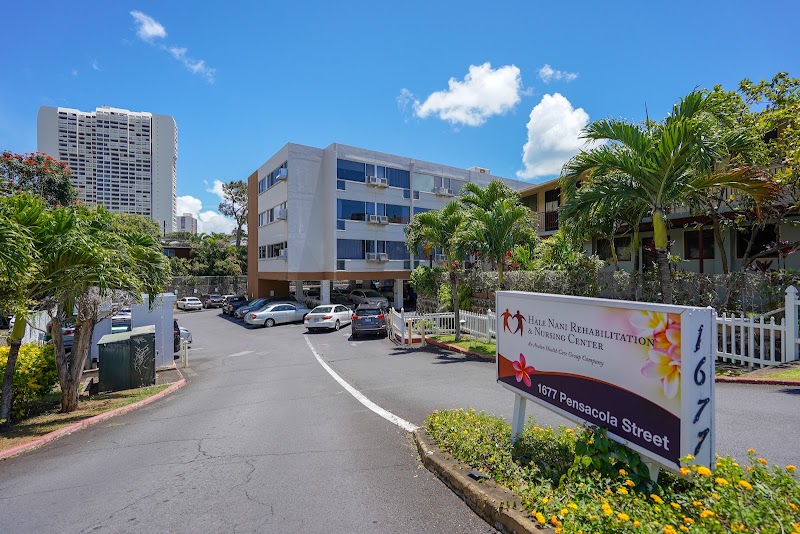
How is Hale Nani Rehabilitation And Nursing Center Staffed?

CMS rates HALE NANI REHABILITATION AND NURSING CENTER's staffing level at 5 out of 5 stars, which is much above average compared to other nursing homes. Staff turnover is 21%, compared to the Hawaii average of 46%. This relatively stable workforce can support continuity of care.

What Have Inspectors Found at Hale Nani Rehabilitation And Nursing Center?

State health inspectors documented 89 deficiencies at HALE NANI REHABILITATION AND NURSING CENTER during 2023 to 2025. These included: 1 that caused actual resident harm and 88 with potential for harm. Deficiencies causing actual harm indicate documented cases where residents experienced negative health consequences.
Who Owns and Operates Hale Nani Rehabilitation And Nursing Center?

HALE NANI REHABILITATION AND NURSING CENTER is owned by a for-profit company. For-profit facilities operate as businesses with obligations to shareholders or private owners. The facility is operated by VOLARE HEALTH, a chain that manages multiple nursing homes. With 288 certified beds and approximately 268 residents (about 93% occupancy), it is a large facility located in HONOLULU, Hawaii.
How Does Hale Nani Rehabilitation And Nursing Center Compare to Other Hawaii Nursing Homes?

Compared to the 100 nursing homes in Hawaii, HALE NANI REHABILITATION AND NURSING CENTER's overall rating (2 stars) is below the state average of 3.4, staff turnover (21%) is significantly lower than the state average of 46%, and health inspection rating (1 stars) is much below the national benchmark.

What Should Families Ask When Visiting Hale Nani Rehabilitation And Nursing Center?

Based on this facility's data, families visiting should ask: "What safeguards and monitoring systems are in place to protect residents from abuse or neglect?" "Can I visit during a mealtime to observe dining assistance and food quality?" "How do you handle medical emergencies, and what is your hospital transfer rate?" "Can I speak with family members of current residents about their experience?" These questions are particularly relevant given the substantiated abuse finding on record.

Is Hale Nani Rehabilitation And Nursing Center Safe?

Based on CMS inspection data, HALE NANI REHABILITATION AND NURSING CENTER has documented safety concerns. The facility has 1 substantiated abuse finding (meaning confirmed case of resident harm by staff or other residents). The facility is currently on the Special Focus Facility watch list (a federal program monitoring the lowest-performing 1% of nursing homes nationwide). The facility has a 2-star overall rating and ranks #100 of 100 nursing homes in Hawaii. Families considering this facility should ask detailed questions about what corrective actions have been taken since these incidents.

Do Nurses at Hale Nani Rehabilitation And Nursing Center Stick Around?

Staff at HALE NANI REHABILITATION AND NURSING CENTER tend to stick around. With a turnover rate of 21%, the facility is 24 percentage points below the Hawaii average of 46%. Low turnover is a positive sign. It means caregivers have time to learn each resident's needs, medications, and personal preferences. Consistent staff also notice subtle changes in a resident's condition more quickly. Registered Nurse turnover is also low at 19%, meaning experienced RNs are available to handle complex medical needs.

Was Hale Nani Rehabilitation And Nursing Center Ever Fined?

HALE NANI REHABILITATION AND NURSING CENTER has been fined $27,885 across 1 penalty action. This is below the Hawaii average of $33,358. While any fine indicates a compliance issue, fines under $50,000 are relatively common and typically reflect isolated problems that were subsequently corrected. Families should ask what specific issues led to these fines and confirm they've been resolved.

Is Hale Nani Rehabilitation And Nursing Center on Any Federal Watch List?

HALE NANI REHABILITATION AND NURSING CENTER is currently an SFF Candidate, meaning CMS has identified it as potentially qualifying for the Special Focus Facility watch list. SFF Candidates have a history of serious deficiencies but haven't yet reached the threshold for full SFF designation. The facility is being monitored more closely — if problems continue, it may be added to the official watch list. Families should ask what the facility is doing to address the issues that led to this status.