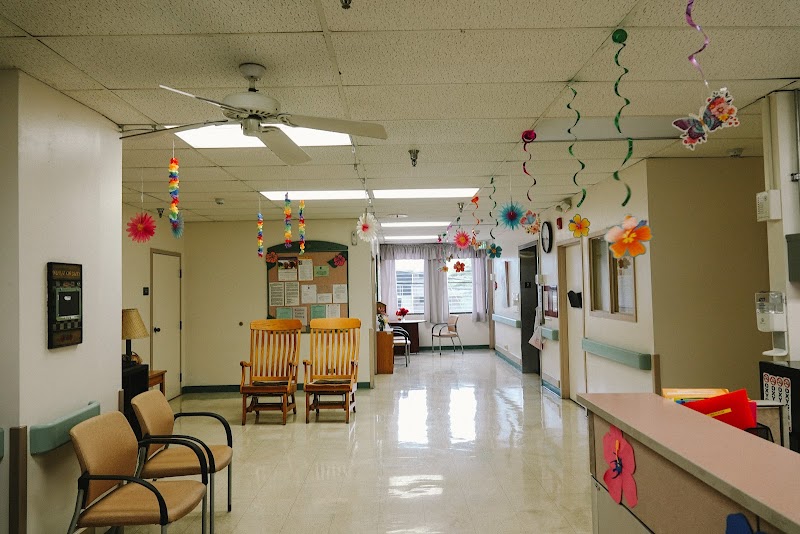
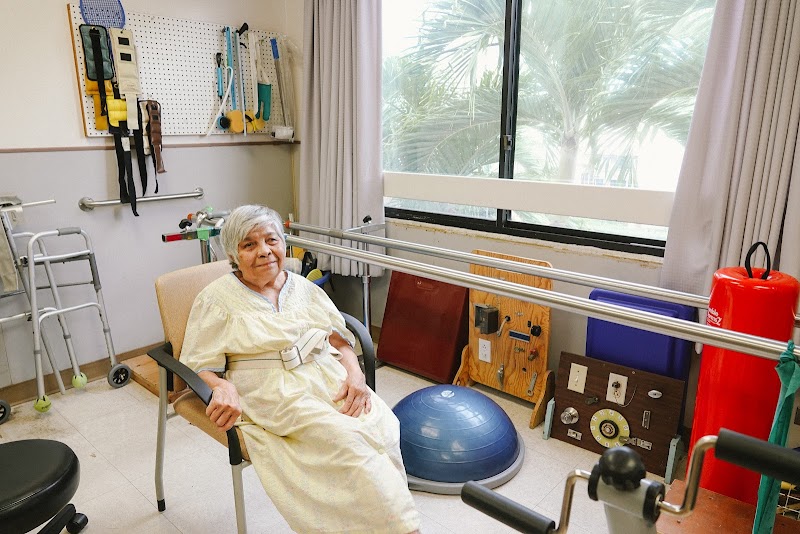
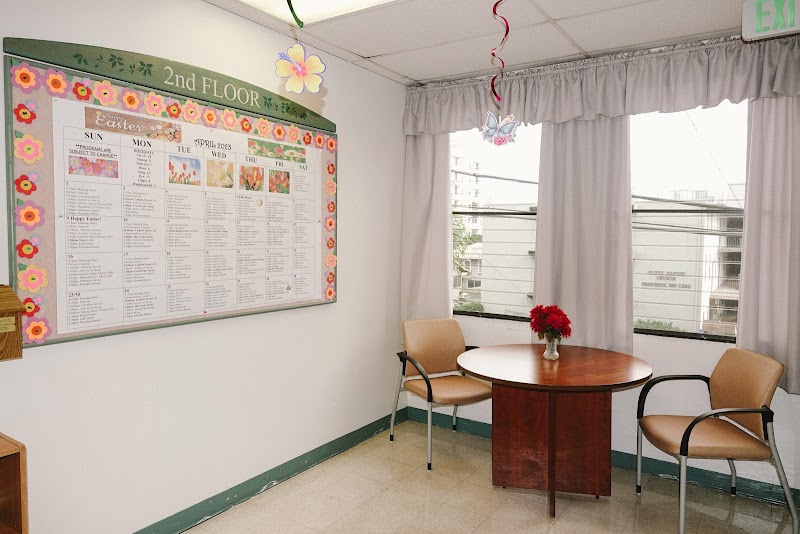

OAHU CARE FACILITY

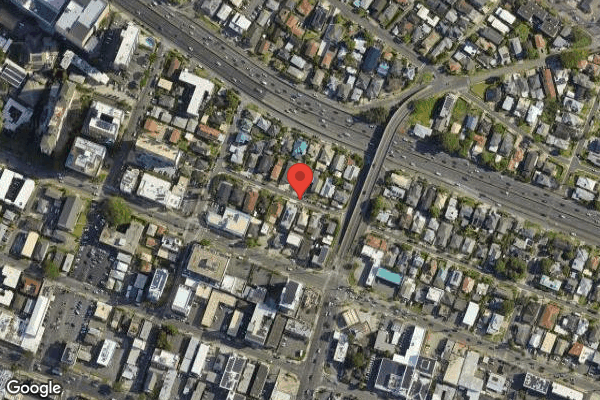
1808 SOUTH BERETANIA STREET, HONOLULU, HI 96826 (808) 973-1900
For profit - Corporation 82 Beds Independent Data: November 2025
Trust Grade
33/100
#40 of 41 in HI
Last Inspection: August 2024

Within standard 12-15 month inspection cycle. Federal law requires annual inspections.

Overview

Oahu Care Facility has received a Trust Grade of F, indicating significant concerns about the quality of care provided. They rank #40 out of 41 nursing homes in Hawaii, placing them in the bottom half of facilities in the state, and #25 out of 26 in Honolulu County, suggesting that there is only one local option that performs worse. The facility's trend is improving, as the number of issues decreased from 12 in 2024 to 4 in 2025, but it still has high turnover at 53%, which is concerning compared to the Hawaii average of 36%. Staffing is a strength here, with a 4 out of 5 stars rating, indicating that while staff may stay, they are under pressure, and there were fines of $8,278, which is average but suggests some compliance issues. Specific incidents include a resident who eloped from the facility, resulting in a hospital visit for injuries, and instances of inadequate infection control practices, including staff not wearing required protective equipment, which could put residents at risk. Overall, while there are positive aspects like good staffing ratings, serious concerns remain about safety and compliance.

Trust Score
F
33/100
In Hawaii
#40/41
Bottom 3%
Safety Record
Moderate
Needs review
Inspections
Getting Better
12 → 4 violations
Staff Stability
⚠ Watch
53% turnover. Above average. Higher turnover means staff may not know residents' routines.
Penalties
○ Average
$8,278 in fines. Higher than 52% of Hawaii facilities. Some compliance issues.
Skilled Nurses
✓ Good
Each resident gets 88 minutes of Registered Nurse (RN) attention daily — more than 97% of Hawaii nursing homes. RNs are the most trained staff who catch health problems before they become serious.
Violations
⚠ Watch
39 deficiencies on record. Higher than average. Multiple issues found across inspections.
★☆☆☆☆
1.0
Overall Rating
★★★★☆
4.0
Staff Levels
★★★★☆
4.0
Care Quality
★☆☆☆☆
1.0
Inspection Score
Stable
2024: 12 issues
2025: 4 issues

The Good

  • 4-Star Staffing Rating · Above-average nurse staffing levels
  • 4-Star Quality Measures · Strong clinical quality outcomes
  • Full Sprinkler Coverage · Fire safety systems throughout facility
  • No fines on record

Facility shows strength in staffing levels, quality measures, fire safety.

The Bad

1-Star Overall Rating

Below Hawaii average (3.4)

Significant quality concerns identified by CMS

Staff Turnover: 53%

Near Hawaii avg (46%)

Higher turnover may affect care consistency

Federal Fines: $8,278

Below median ($33,413)

Minor penalties assessed

The Ugly 39 deficiencies on record

1 actual harm
Mar 2025 4 deficiencies 1 Harm
SERIOUS (G) 📢 Someone Reported This

A family member, employee, or ombudsman was alarmed enough to file a formal complaint

Actual Harm - a resident was hurt due to facility failures

Accident Prevention (Tag F0689)

A resident was harmed · This affected 1 resident

**NOTE- TERMS IN BRACKETS HAVE BEEN EDITED TO PROTECT CONFIDENTIALITY** Based on interviews, medical record review and document review, the facility failed to provide adequate supervision of one Resid...

Read full inspector narrative →
**NOTE- TERMS IN BRACKETS HAVE BEEN EDITED TO PROTECT CONFIDENTIALITY** Based on interviews, medical record review and document review, the facility failed to provide adequate supervision of one Resident (R)3 of three residents sampled that were high risk of elopement. R3 eloped on 02/09/2025 and suffered harm. When she was found, she was taken to the hospital where she was treated for abrasions from a fall and discharged back to the facility. The facility met the following three criteria for past non-compliance 1) Not in compliance with the regulatory requirement at the time the situation occurred; 2) The noncompliance occurred after the exit date of the last recertification and 3) There is evidence that the facility corrected the noncompliance and is in substantial compliant at the time of this survey. Findings include: 1) The Office of Healthcare Assurance received an initial facility reported incident (ACTS # 11488) on 02/10/2025 regarding an elopement. The report included the following information: -R3 initially admitted to facility on 01/10/2025 for skilled nursing facility services after a hospital admission following an unwitnessed fall with acute traumatic injury of CSpine (C3-C4), Unsteady gait, Multilevel degenerative changes of C-spine, Stage 5 Chronic Kidney Disease and dementia. R3 is pleasant, alert, oriented to self, forgetful of place/situation, able to verbalize needs and understands others, and able to walk with a front wheel walker with supervision. R3 had nondirectable exit seeking behavior on 1/12/2025 and a wanderguard bracelet was determined to be the least restrictive device. -On 2/9/2025 at 4pm [sic] R3 was unable to be found on the facility property and staff initiated the missing resident procedure. The resident was found by a good Samaritan on [NAME] Avenue (several blocks away in high traffic area) and had taken R3 to .ER for evaluation. R3 sustained a minor skin injury on bilateral knees, right elbow, and palm. She returned to the facility accompanied by facility Administrator on 2/9/2025 at 9:22Pm . -R3's wanderguard bracelet was noted in good working condition by day shift RN. On evening shift, RN noted R3's wanderguard triggered by elevator, staff escorted her away, and RN administered medications at 3:26pm. CNA (Certified Nurse Assistant) then escorted her to the dining room to participate in activities. Activity staff were aware resident was in the dining room, but did not observe R3 walking out of the dining room. At 4:00pm, RN started looking for resident to give her next scheduled medication. He looked in the dining room and her room, and resident was not found. Staff began missing resident procedure at approximately 4:10pm. Staff contacted the administrator soon after and called 911. -Upon R3's return to the facility, the facility Administrator and Nursing Supervisor tested the wanderguard bracelet on R3's right ankle and found that the wanderguard bracelet is faulty. The wander guard bracelet did not trigger the elevator door until the Administrator was right in front of the elevator door and called for the elevator. A new wanderguard bracelet was immediately tested and .placed on resident. The completed report was received on 02/14/2025 and included the following: -Upon incident on 02/09/2025, RF Technologies (RFT) Senior Service Technician was dispatched (urgent request was submitted immediately) and arrived on 2/12/2025. Technician assessed resident's transmitter bracelet (the one on at the time of elopement) and verified that the equipment was faulty. The hardware (elevator and exit door system) for the WanderGuard transmitter bracelet was tested multiple times, and all devices were found to be working in good condition-please see attached report. 15 minute checks were done immediately upon incident on 2/9/2025, on resident and all other residents wearing the WanderGuard transmitter bracelets until the technician confirmed the system was in good condition. -Additional education was done on 2/10/2025 regarding Wandering and Elopements and Missing Resident policies and procedures. -In conclusion, resident's transmitter bracelet was effective and noted to be working by licensed staff an hour prior to the incident. The transmission bracelet resident had on was later identified to be faulty and malfunctioned .and tested by RFT technician; and thus the technical glitch was determined to have caused the incident. Facility did not identify any problem with the WanderGuard system, and noted to be working properly, also verified and confirmed by technician. -R3 .was discharged as planned on 2/13/2025 .after successful rehabilitation and was transferred to a lower-level of care. 2) Reviewed R3's Hospital Emergency Department Provider record dated 02/09/2025, time seen 06:14 PM. The record included: Chief Complaint: Fall. Location of injuries-right elbow, right wrist and right knee and left knee. The injury occurred just prior to arrival. Occurred on a street. (Apparently a patient at .rehab and eloped undetected. Found on [NAME] Ave with wounds to extremities. Unwitnessed fall. Patient does not recall what happened.She complains of pain in right elbow and wrist). Skin: (Multiple large skin tears involving right elbow and bilateral knees). Neuro: Altered mental status: disoriented to place and time. Course of Care:Wounds were thoroughly irrigated and dressed . R3 was discharged back to the facility with the nursing home manager. 3) Reviewed the facility policy titled WanderGuard Device, which included but not limited to the following: 1. Residents will be assessed for the need of WanderGuard bracelet at the time of admission and as needed. 3. The Director of Nursing or designee will be notified of any residents assessed for the need of the WanderGuard bracelet. 4. The Director of Nursing or designee will ensure that an order has been received from the attending physician and immediately facilitate the placement of the WanderGuard bracelet on the resident. Resident family will be notified in a timely manner. 5. Nurses will obtain an order on TAR (treatment administration record) for WanderGuard check every shift. 6. Environmental Services will be notified of resident receiving WanderGuard service and will issue the WanderGuard bracelet to the Nursing department. 7. An interdisciplinary team will develop a care plan for all residents wearing a WanderGuard bracelet 4) The facility is a three story building located on a busy street. There is one entrance/exit to the street and another to the parking garage. The first floor has a very small lobby with one elevator. All Residents live on the second and third floor. The only exits from the Resident floors are the elevator and the fire exit doors/stairs. On 03/25/2025 at approximately 10:30 AM, conducted a facility tour with maintenance staff (MS) and the Administrator (ADM). At that time, interviewed MS, who described their audit process for ensuring the equipment is working. Observed that all exits had the WanderGuard System in place, which was tested by maintenance with surveyor present. At the time of survey, there were eight residents that had been assessed to be at risk of elopement, who had the WanderGuard bracelets on. A random sample of three Residents were selected and maintenance staff accompanied surveyor and demonstrated and checked the bracelets with a handheld device. All three bracelets were functioning. Reviewed the Maintenance Audit tools completed once/week from February to current and confirmed R4 had been on the list and the new Resident had been added the day the WanderGuard was put on. The tool included: Resident Room, date of expiration, did the elevator alarm activate, did the elevator door lock, did the exit door alarm activate, did the exit door lock, keypad working and alarm cleared, and any alarm delay less than 2-4 ft of the elevator or door noted. Reviewed all Resident's with WanderGuard to confirm there was a Provider order. Some orders were specific to monitor the bracelet six times a day. This is a shared task between the Nurses and CNA's. Record Review revealed compliance with monitoring on all Resident's. The monitoring includes Wanderguard Monitor placement and quality of device. Monitor skin integrity of resident. Confirmed education on Wandering and Elopement, Resident Safety, and Policy had been completed for all staff In summary, there was sufficient evidence of compliance at the time of survey.
CONCERN (D) 📢 Someone Reported This

A family member, employee, or ombudsman was alarmed enough to file a formal complaint

Potential for Harm - no one hurt, but risky conditions existed

Comprehensive Care Plan (Tag F0656)

Could have caused harm · This affected 1 resident

**NOTE- TERMS IN BRACKETS HAVE BEEN EDITED TO PROTECT CONFIDENTIALITY** Based on record review and interviews, the facility failed to develop a comprehensive care plan (CCP) for one Resident (R)1 of a...

Read full inspector narrative →
**NOTE- TERMS IN BRACKETS HAVE BEEN EDITED TO PROTECT CONFIDENTIALITY** Based on record review and interviews, the facility failed to develop a comprehensive care plan (CCP) for one Resident (R)1 of a sample size of three. Specifically, R1's CCP did not address his safety needs in a timely manner. As a result of this deficiency, R1 may have been at higher risk of falls. The deficient practice of not addressing resident's needs timely in the CCP could affect any resident and be a barrier to meeting their highest potential of physical and mental well-being. Findings include: Record review of R1's electronic medical record (EMR) noted that prior to admission on [DATE], R1 was admitted to a hospital with a subdural hematoma (brain bleed caused by trauma) due to falling at home. R1's baseline care plan (BCP) completed on admission to the facility, noted R1 to be cognitively impaired, marked Yes, for fall(s) in the past three months, level of consciousness marked as disoriented x3 at all times, and functional ability and goals were not assessed. admission progress notes detailed resident was lethargic, disoriented, and oriented to person with mild impairment. Late entry on admission note specified R1 was a fall risk. Review of the Nurses Notes dated 05/13/2024, at 11:13 AM, documented, R1 was found sitting on the floor with his back leaning against his bed at 02:20 AM. Alert but very confused and hallucinating. He thought that he was at the Club . When asked him if he was only dreaming, he said no and he believed that he was there at the Club. Review of the Nurses Notes dated 05/20/2024 at 00:02 AM, documented, At 2345h (11:45 PM) CNA (certified nurse assistant) found resident sitting on the floor next to his bed. No noted pain, other than his unchanged pain to his coccyx. He was then assisted back to bed.DON (Director of Nursing) and Kaiser notified. On the same day there was a late entry at 03:30 AM: Found resident facing down on the floor, alert c/o pain from head to toe .assisted back in bed with 4 person assist. Abrasion to right elbow 2 cm X 1cm .MD and family notified. MD stated to send to ER for further evaluation d/t (due to) frequent falls and confusion. Record review of R1's care plan noted that The resident is High Risk for falls r/t confusion, deconditioning, gait/balance problems, incontinence, use of Oxycodone (pain medication). Actual fall on 05/13/24-minor injury (complaints of pain), was initiated on 05/16/2024, three days from the initial fall on 05/13/2024. On 03/24/2025 at 03:00 PM, interview with DON, who confirmed that High Risk for falls was not included in R1's CCP on admission, and should have been due to his history. On 03/25/2025 at 01:00 PM reviewed the facility's care plan policy titled, Falls and Fall Risk, Managing with a revised date of March 2018. In the section titled, Policy Statement noted, Based on previous evaluations and current data, the staff will identify interventions related to the resident's specific risks and causes to try to prevent the resident from falling and to try to minimize complications from falling. Also noted in the same policy under section titled Resident-Centered Approaches to Managing Falls and Fall Risk, noted, 1. The staff, with input of the attending physician, will implement a resident-centered fall prevention to reduce the specific risk factor(s) of falls for each resident at risk or with a history of falls.
CONCERN (E) 📢 Someone Reported This

A family member, employee, or ombudsman was alarmed enough to file a formal complaint

Potential for Harm - no one hurt, but risky conditions existed

Deficiency F0655 (Tag F0655)

Could have caused harm · This affected multiple residents

**NOTE- TERMS IN BRACKETS HAVE BEEN EDITED TO PROTECT CONFIDENTIALITY** 3) R4 was a [AGE] year old female admitted to the facility for skilled nursing services on 03/19/2025 for short term rehabilitat...

Read full inspector narrative →
**NOTE- TERMS IN BRACKETS HAVE BEEN EDITED TO PROTECT CONFIDENTIALITY** 3) R4 was a [AGE] year old female admitted to the facility for skilled nursing services on 03/19/2025 for short term rehabilitation after being hospitalized for two unwitnessed falls at home. Her medical diagnosis included but not limited to repeated falls, anorexia, severe malnutrition, hypertension, unsteadiness on feet, dysphagia (swallowing disorder), and pressure ulcer of sacral region Stage 2. Reviewed R4's medical records, which included the following: Hospital Discharge summary dated [DATE] revealed the following entries: - Related to unwitnessed fall; patient lives with special needs son and does not have anyone to take care of her. She is primary caretaker of son. Niece checks on her twice a week and found her down prior to admission.Has frequent falls and states that she uses walker/cane in her home to ambulate due to instability. The hospital discharge instructions included care for Pressure Injury (PU). - ITO-Baseline Care Plan was completed on 03/19/2029, and included skin risk. This section documented R4 to have current skin integrity issues, but did not identify the Stage 2 sacral PU present on admission. The signature of Resident and Representative was left blank and no evidence a copy of the BCP was provided to R4 or Representative. 3) Reviewed the facility's care plan policy titled, Care Plans - Baseline with revised date March 2022. The policy documented in the section titled Policy Statement noted, A BCP to meet the resident's immediate health and safety needs is developed for each resident within 48 hours of admission. Also noted in the same policy under section titled Policy Interpretation and Implementation, noted, 3. A comprehensive care plan (CCP) may be used in place of the BCP provided the CCP is developed within 48 hours of the resident's admission. 4. The resident and/or representative are provided a written summary of the BCP (in a language that the resident/representative can understand) .5. Provision of the summary to the resident/or resident representative is documented in the medical record. These policy statements were not followed by the facility. Based on record reviews and interviews, the facility failed to meet regulatory requirements for Baseline Care Plans (BCP) for three of three Residents (R)1, R2, and R4. Specifically, R1 did not have a BCP developed within 48 hours of admission, R4's BCP did not include the Stage 2 Pressure Ulcer that was present on admission, and two residents were not provided summaries of the BCP. This deficient practice places residents at risk for not receiving appropriate and timely care, delays the development of care to address resident's immediate health and safety needs, hinders continuity of care, and impedes communication amongst nursing home staff. Findings include: 1) On 03/24/2025 at 10:30 AM, record review of R2s BCP was noted to be blank and not completed. R2 was admitted on [DATE], and comprehensive care plan (CCP) was initiated on 02/28/2025. Further review of R2's electronic medical record (EMR), did not note they were furnished with a copy of their BCP. On 03/24/2025 at 03:00 PM, interview with Director of Nursing (DON) confirmed that the BCP should be completed within 48 hours of resident's admission. Surveyor asked DON to show R2's BCP and noted that it was blank, and stated, I don't know what happened, I will check on it. On 03/25/2025 at 12:00 PM, DON provided a copy of a completed BCP for R2. It was completed by Nursing Supervisor (NS). There was no completion date noted on BCP. On 03/25/2025 at 12:20 PM, interview with NS, who confirmed that she was asked to complete the BCP that morning. When asked when the BCP should be completed, NS replied, It should be completed within 24 hours. On 03/25/2025 at 12:30 PM, interview with DON and Administrator confirmed that if the staff cannot complete the BCP, that the NS will be the one to complete it. At that time, they let surveyors know that the BCP for R2 and another resident were completed late. The Clinical Specialist (CS) said no matter how late the BCP is, it still needed to be completed to move forward in their next step of documentation. The BCP for R2 was completed 03/25/25. 2) On 03/24/2025 at 10:35 AM, record review of R1's EMR did not note they was furished a copy of their BCP. Concurrent record review and interview with DON on 03/24/2025 at 03:00 PM, DON confirmed that summary of BCP was not provided to the resident/guardian.
CONCERN (E) 📢 Someone Reported This

A family member, employee, or ombudsman was alarmed enough to file a formal complaint

Potential for Harm - no one hurt, but risky conditions existed

Pressure Ulcer Prevention (Tag F0686)

Could have caused harm · This affected multiple residents

**NOTE- TERMS IN BRACKETS HAVE BEEN EDITED TO PROTECT CONFIDENTIALITY** Based on record reviews and interviews, the facility failed to provide repositioning, the standard of care for pressure ulcers (...

Read full inspector narrative →
**NOTE- TERMS IN BRACKETS HAVE BEEN EDITED TO PROTECT CONFIDENTIALITY** Based on record reviews and interviews, the facility failed to provide repositioning, the standard of care for pressure ulcers (PU/ injury to the skin and tissue below the skin due to pressure on the skin for a long time), and as directed in care plans for three Residents (R)1, R2 and R4 out of a sample size of three. This deficient practice puts residents with PU's at risk of worsening the wound, and increases the potential of those at risk to develop one. Findings include: 1) Cross Reference F655 Baseline Care Plan R4 was a [AGE] year old female admitted to the facility for skilled nursing services on 03/19/2025 for short term rehabilitation after being hospitalized for two unwitnessed falls at home. She had a sacral Stage 2 PU present on admission that was not identified on her baseline care plan. Record review revealed no documentation the R4 had been turned or repositioned until after the treatment administration record (TAR) was initatiated on 03/25/2025. 2) Record review of R1's Minimum Data Set (MDS), noted R1 was admitted on [DATE] with an unstageable wound ulcer to his coccyx and required substantial/maximal assistance with rolling left to right in bed, sitting to lying position, and with transfers. Review of Wound Care Nurse (WCN) notes, dated 05/13/2024, indicated, wound on coccyx is necrotic and malodorous with large, purulent drainage. R1's care plan for unstageable ulcer, initiated on 05/16/2024, included tasks to assist R1 to turn/reposition at least every 2 hours. There was no documentation in R1's TAR that repositioning/turning every 2 hours was completed. 3) Record review of R2s MDS noted that R2 was admitted to the facility on [DATE] with multiple PUs. R2 had a Stage 3 PU on the right buttocks, unstageable wound left buttocks, Stage 2 coccyx, and left ankle ulcers. Review of WCN notes dated 03/21/2025, indicated wounds located on bilateral buttocks and left posterior thigh are smaller in size while the right posterior thigh is healed. R2's care plan initiated on 02/28/2025, included tasks that R2 needs assistance to turn/reposition at least every 2 hours, more often as needed or requested. There was no documentation in R2's TAR that repositioning/turning every 2 hours was completed. 4) On 03/25/2025 at 10:25 AM, interview with Certified Nurse Assistant (CNA)1 inquired how often they would check on the residents with PUs. CNA1 stated, We check up on them every time they have bowel movement, at least three times a day, in the morning after breakfast, again at lunch, and after dinner. When asked about peri care and repositioning, CNA1 replied, We clean them and would report any findings to the charge nurse. We change their position every two hours and document that in the I-pad, under Activities of Daily Living (ADLs), repositioning and sign our name. At 10:30 AM, CNA1 showed surveyor, where in the I-pad, they would document repositioning was completed. On 03/03/2025 at 10:40 AM, interviewed CNA2, who confirmed that they check residents with PUs every two hours for bowel and bladder elimination and reposition them every two hours. CNA2 verified that they document these tasks in the ADLs section in the I-pad. Surveyor asked CNA2, to open up R2's chart to see if documentation was noted for repositioning. Documentation showed repositioning on 03/25/2025. CNA2 was asked to show if documentation for repositioning was completed on 03/24/2025, and she confirmed that there was none as she wasn't assigned to R2 yesterday. CNA2 checked another date, 03/11/2025 to see if documentation on repositioning was done by another CNA, but record showed none were documented. It was confirmed that the documentation for positioning started on 03/24/2025. CNA2 went on to note that the CNAs should be documenting every day. On 03/25/2025 at 01:30 PM, interview with Director of Nursing (DON) confirmed the importance of every two hours repositioning for residents with PUs and agreed there should be documentation of the task being done. DON also confirmed that there were no tasks triggered for the repositioning for both R1 and R2 upon admission but will do so to improve the process moving forward. 5) On 03/25/2025 at 01:45 PM, record review of the facility's Repositioning policy, with a revised date of May 2013, documented under General guidelines, states, 1. Repositioning is a common, effective intervention for preventing skin breakdown, promoting circulation, and providing pressure relief.3. Repositioning is critical for a resident who is immobile or dependent upon staff for repositioning.5. Positioning the resident on an existing pressure ulcer should be avoided since it puts additional pressure on tissue that is already compromised and may impede healing. Also noted in the same policy under the Documentation section, notes, The following should be recorded in the resident's medical record: 1. The position in which the resident was placed. This may be on a flow sheet. 2. The name of the individual who gave the care.7. The signature and title of the person recording the data. These policy statements were not followed by the facility.
Aug 2024 12 deficiencies
CONCERN (D)

Potential for Harm - no one hurt, but risky conditions existed

Deficiency F0604 (Tag F0604)

Could have caused harm · This affected 1 resident

Based on observations, interviews, and record review, the facility failed to ensure a resident's right to be free from physical restraint for staff convenience and not required to treat the resident's...

Read full inspector narrative →
Based on observations, interviews, and record review, the facility failed to ensure a resident's right to be free from physical restraint for staff convenience and not required to treat the resident's medical symptoms for one resident (Resident (R)5) sampled. Positioning wedges were placed under R5's mattress and under the resident's fitted sheet in a manner which could not be removed by the resident, which hindered the resident from freely moving at will. An interview with staff confirmed the positioning wedges were not used to reposition R5 and the resident is capable of independently moving around in bed. As a result of this deficient practice, residents with the ability to move independently are at risk of the potential for more than harm. Findings include: On 08/26/24 at 11:50 AM, 12:30 PM, and 02:05 PM, observed a large black positioning wedge and pillow placed under the bed's mattress. The placement of the positioning wedge and pillow caused the mattress to be concaved and restricted the resident from freely moving around. Inquired with the resident if he was able to move side to side independently while lying on the mattress, the resident tried and was unable to do so and reported he needed help. The resident confirmed he can move side to side by himself. On 08/27/24 at 07:55 AM, 09:03 AM, 11:47 AM, and 01:40 PM observed a positioning wedge placed under the resident's fitted sheet on both sides of the bed, parallel to the resident's legs only. The wedges were not placed under the resident and did not function to reposition the resident. Resident confirmed the wedges did stop him from moving to his side and could not remove the wedge from under the fitted sheet. On 08/27/24 at 01:40 PM, conducted concurrent observation and interview with Registered Nurse (RN)4 of R5 in bed with the wedges placed under the sheet. RN4 confirmed the placement of the wedges under the resident's fitted bed sheet, made it impossible for this resident to remove the wedge, was not placed in a manner consistent with repositioning the resident, and was not being used to treat a medical condition. RN4 stated, The way the wedges are placed under the sheet, on both sides of the resident, the wedges are being used as a restraint. Wedges should have only been placed on one side if we want to reposition him, but he (R5) can move side to side on his own and doesn't need to be repositioned by staff to prevent a pressure ulcer. He (R5) is a high fall risk and has fallen out of bed recently, we try our best but cannot be with him all the time. Asked RN4 if a bed alarm was implemented for the resident. RN4 confirmed R5 does not have a bed alarm and it should have been implemented after the resident's last fall but was not. Review of R5's skin integrity care plan, did not include using a wedge to reposition the resident. A care plan for R5's high fall risk and an elopement was developed and did not include the use of wedges. Review of the facility's policy and procedure (provided by the facility), Use of Restraints documented 1. Physical Restraints are defined as any manual method or physical or mechanical device, material or equipment attached or adjacent to the resident's body that the individual cannot remove easily, which restricts freedom of movement or restricts normal access to one's body. 2. The definition of a restraint is based on the functional status of the resident and not the device. If the resident cannot remove a device in the same manner in which the staff applied it given that resident's physical condition and this restricts his/her typical ability to change position or place, that device is considered a restraint.
CONCERN (D)

Potential for Harm - no one hurt, but risky conditions existed

Deficiency F0625 (Tag F0625)

Could have caused harm · This affected 1 resident

**NOTE- TERMS IN BRACKETS HAVE BEEN EDITED TO PROTECT CONFIDENTIALITY** Based on record reviews and interviews, the facility failed to provide written notification of the bed hold policy to the reside...

Read full inspector narrative →
**NOTE- TERMS IN BRACKETS HAVE BEEN EDITED TO PROTECT CONFIDENTIALITY** Based on record reviews and interviews, the facility failed to provide written notification of the bed hold policy to the resident or the resident's representative for two of the five residents (Resident (R)6, and 167) sampled for hospitalization. As a result of this deficient practice, there was a potential for miscommunication. This has the potential to affect all the residents that are transferred to an acute care hospital. Findings include: 1) R6 is a [AGE] year-old resident admitted to the facility on [DATE]. Review of R6's electronic health record (EHR) revealed that she was transferred to an acute care hospital on [DATE] for acute lower GI (gastrointestinal) bleeding. R6's EHR did not contain documentation that R6's representative was provided a written notification of the facility's bed hold policy. On 08/29/24, requested a copy of the written notification of the bed hold policy provided to R6's representative from the Director of Nursing (DON). DON said he will check. On 08/29/24 at 04:14 PM, the Social Worker Designee (SWD) provided a printout of the progress notes from R6's EHR that stated the bed hold policy was communicated via phone call with the family representative. Asked SWD if a written copy of the bed hold policy was also provided. SWD confirmed the facility did not provide the resident representative a written copy of the bed hod policy. Review of the facility policy titled Notice of Bed-Hold and readmission Policy stated, . In order to bed-hold, the resident or the resident's responsible party or agent must complete, sign and submit the BED-HOLD AGREEMENT within twenty-four (24) hours of discharge and pay a deposit . 2) Record review on 08/28/24 of R167's EHR found she was transferred to an acute hospital on [DATE] at 5:25 PM for pain r/t (related to) fractures of her Right Hip and Right shoulder that she incurred from a fall (unwitnessed) in her room at 1305 (1:05 PM) this afternoon. On 08/29/24 at 03:46 PM, interviewed SWD and inquired if R167 or her resident representative was notified of the facility's bed hold policy at time of transfer to the hospital. SWD confirmed resident or resident representative was not notified of bed hold policy.
CONCERN (D)

Potential for Harm - no one hurt, but risky conditions existed

Comprehensive Care Plan (Tag F0656)

Could have caused harm · This affected 1 resident

Based on interviews and record review, the facility failed to ensure a comprehensive person-centered care plan was implemented for one resident (Resident (R)56) sampled. R56's person-centered care pla...

Read full inspector narrative →
Based on interviews and record review, the facility failed to ensure a comprehensive person-centered care plan was implemented for one resident (Resident (R)56) sampled. R56's person-centered care plan included an intervention to use alternative communication tools (i.e. interpreter services, available for staff use) for this Korean speaking resident. Staff did not implement the use of interpreter services intervention when conducting the Brief Interview for Mental Status (a tool used to assess the resident's cognition). As a result of this deficient practice, all non-English speaking residents are at risk of the potential for more than minimal harm. Findings include: On 08/27/24 at 12:28 PM, conducted an observation of R56 in the unit's main dining room during lunch. The resident was seated next to another Korean speaking resident and conversed with each other throughout lunch. When R56 was done with her meal, facility staff approached R56 and attempted to have a conversation with the resident in English. R56 waived her hand at the staff then said No, English, then said something to the other resident in Korean and both residents proceeded to laugh and continue their conversation. Staff kept attempting to speak and interact with R56 about the meal but was unable to effectively communicate with the resident. Reviewed R56's Electronic Health Record (EHR). The resident's baseline care plan Section 1.B. Communication documented: 1. Can the resident communicate easily with staff? No 2. Does the resident understand the staff? No 3. Does the resident need or want an interpreter to communicate with a doctor or health care staff? Yes 4. Primary Language: Korean Review of R56's admission Minimum Data Set (MDS) with an Assessment Reference Date of 06/14/24 documented in Section C. Cognitive Patterns, R56 scored 99 on Brief Interview for Mental Status (BIMS) score, which assesses the resident's cognition, indicating the test could not be completed. R56's comprehensive person-centered care plan for communication documented an intervention which included .Use alternative communication tools as needed. On 08/29/24 at 12:13 PM, conducted an interview with the MDS Coordinator (MDSC). MDSC confirmed she conducts the BIMS testing with the residents. MDSC stated the facility's interpreter service has never been used to communicate with non-English speaking residents to conduct a BIMS test. MDSC confirmed R56 scored a 99 on the admissions BIMS score due to the resident's inability to understand English and is not an accurate BIMS score for the resident. On 08/29/24 at 01:57 PM, conducted a concurrent record review of R56's Electronic Health Record (EHR) and interview with Registered Nurse (RN)5. RN5 confirmed R56 is Korean speak and is minimally (i.e. tired, sleepy, hungry) able to communicate with staff, but is not able to understand complex statements. RN5 reported R56 is cognitively aware, she is observant of staff, and was able to incrementally find a way to elope from the facility. RN5 explained R56 eloped from the facility, she was cognitive enough to figure out that the Wander guard would prevent her from being able to get off the elevator, but she was determined to leave. R56 noticed staff inputting a code to disarm the Wander guard system and even attempted to input a code. Eventually, she was able to find a scissor in a manicure set, cut off the Wander guard bracelet which activates the system and prevented the resident from leaving the facility, and was able to exit the building and cross the street. RN5 stated most of the behaviors and the elopement attempt could have been mitigated if interpreter services were implemented to discover what was the real issues and to explain the circumstances of why the resident was in the facility in the first place. RN5 confirmed R56 is minimally interactive with staff who are only English speaking, but she will sit a have conversations with another Korean speaking resident.
CONCERN (D)

Potential for Harm - no one hurt, but risky conditions existed

Accident Prevention (Tag F0689)

Could have caused harm · This affected 1 resident

**NOTE- TERMS IN BRACKETS HAVE BEEN EDITED TO PROTECT CONFIDENTIALITY** 2)R56 is an [AGE] year-old woman who was admitted to the facility on [DATE] with diagnosis which include hypotonic hyponatremia ...

Read full inspector narrative →
**NOTE- TERMS IN BRACKETS HAVE BEEN EDITED TO PROTECT CONFIDENTIALITY** 2)R56 is an [AGE] year-old woman who was admitted to the facility on [DATE] with diagnosis which include hypotonic hyponatremia (an increase of free water in relation to sodium in the fluid outside of the cell), encephalopathy (damage to the brain), depression, suicidal ideations, hypertension (high blood pressure 140/90 millimeter of Mercury (mmHG)), and Dementia. Review of R56's Electronic Health Record (EHR) progress notes documented R56 used scissors from a manicure kit stored in the resident's bedside stand to cut off the wander guard and allowed the resident to exit the building without triggering the facility's elopement security system: On 07/10/24 at 06:45 PM, Patient left facility unattended. Wonder guard off patient, found in bedside drawer. Wonder guard had been on patient prior to her removing and leaving the facility. CNA 72 observed patient crossing the street and assisted patient back into facility. CNA also notified and went out to patient to speak to patient in Korean and assist back into her room. Patient confused and upset stating she doesn't want to wear Wonder guard and wants to leave . Patient agreed to wear and not take off. Wonder guard on right wrist. Patient remains in stable condition. On 07/11/24 at 12:45 PM, Scissors were found in resident's bedside stand in a manicure kit. Scissors were then labeled and stored in locked med cart. Review of R56's admission Minimum Data Set (MDS) with an Assessment Reference Date of 06/14/24 documented in Section C. Cognitive Patterns, R56 scored 99 on Brief Interview for Mental Status (BIMS) score, which assesses the resident's cognition, indicating the test could not be completed. On 08/29/24 at 12:13 PM, conducted an interview with the MDS Coordinator (MDSC). MDSC confirmed she conducts the BIMS testing with the residents. MDSC stated the facility's interpreter service is not used to communicate with non-English speaking residents to obtain an accurate BIMS score. MDSC confirmed R56 scored a 99 on the admissions BIMS score due to the resident's inability to understand English and the resident speaks Korean. On 08/29/24 at 01:57 AM, conducted a concurrent record review and interview with Registered Nurse (RN)5 regarding R56's elopement. RN5 confirmed R56 is cognitive and is very aware of her surroundings. RN5 explained, prior to R56 eloping, the resident tested out the Wander guard system. R56 set off the alarm several times when trying to get on the elevator. She saw staff putting in a code to disarm the Wander guard system and staff observed R56 attempting to put in the code to disarm the system, but she was unable to disarm the alarm without staff knowing. Eventually, R56 figured out it was the bracelet that activated the Wander guard system, and the resident got a scissor from her personal kit and cut the Wander guard band off her wrist and managed to get out of the building and across the street. RN5 confirmed staff underestimated how [NAME] the resident is and showed how high functioning the resident's cognitive functioning really is. Asked RN5 if R56's care plan was updated after the resident eloped to ensure the resident's safety. Based on observation, interviews and record review, the facility failed to ensure the environment remains as free of accident hazards and adequate supervision to prevent accidents for one resident (Resident (R)56) sampled. A nurse's scissor was left unattended in an area accessible to resident and not properly stored. R56 was not adequately supervised, had access to a scissor, and managed to elope from the facility without staff's knowledge. As a result of this deficient practice, residents are at risk of more than minimal harm. Findings include: 1) Observation on 08/26/24 at 11:55 AM, before walking out of a non-COVID room on the second floor observed an N95 mask on the rack that is used to store chux and adult briefs. Inquired with Certified Nurse Assistant (CNA)5 if the N95 mask belongs in the room and he stated he did not know who put it there and said he would throw it away. CNA5 picked up the N95 mask to throw away and behind the N95 mask was a pair of metal scissors on the shelf. On 08/26/24 at 12:15 PM, inquired with Nursing Supervisor (NS) if scissors are left in residents' room and she confirmed the scissors are not left in resident's room and she picked up the scissors. Inquired where the scissors are kept, NS stated the treatment cart. On 08/29/24 at 02:41 PM, requested a facility policy regarding sharps/scissors from Administrator. On 09/03/24 at 02:21 PM, Administrator emailed facility policy titled Safety and Supervision of Residents. Review of this policy found Policy Statement Our facility strives to make the environment as free from accident hazards as possible. Resident safety and supervision and assistance to prevent accidents are facility-wide priorities.
CONCERN (D)

Potential for Harm - no one hurt, but risky conditions existed

Pharmacy Services (Tag F0755)

Could have caused harm · This affected 1 resident

Based on interview and record review, the facility also failed to ensure the records for controlled medications were maintained and accurate. As a result of this deficient practice, there is a potenti...

Read full inspector narrative →
Based on interview and record review, the facility also failed to ensure the records for controlled medications were maintained and accurate. As a result of this deficient practice, there is a potential for the diversion of a controlled medication. Findings include: On 08/28/24 at 08:24 AM, an inspection of the medication cart on the second floor was conducted with Registered Nurse (RN)9. While checking the controlled medications logs with RN9, reviewed a log for the administration of morphine sulfate (opioid pain-relieving medication). Observed that a dose was administered on 08/16/24 at 11:01 PM but there was no signature of the staff who gave it to the resident. RN9 confirmed that the staff who administered the medication should have signed the log immediately after giving it. Review of the facility policy titled Controlled Substances stated, . 4. When a controlled medication is administered, the licensed nurse administering the medication immediately enters the following information on the accountability record . c. Signature of the nurse administering the dose .
CONCERN (D)

Potential for Harm - no one hurt, but risky conditions existed

Deficiency F0761 (Tag F0761)

Could have caused harm · This affected 1 resident

2) On 08/28/24 at 07:45 AM, conducted an inspection of the 3rd floor medication cart with RN5. Observed three (3) bottles of ophthalmic drops: Resident (R)32's Brimonidine Tartrate-Timolol Ophthalmic ...

Read full inspector narrative →
2) On 08/28/24 at 07:45 AM, conducted an inspection of the 3rd floor medication cart with RN5. Observed three (3) bottles of ophthalmic drops: Resident (R)32's Brimonidine Tartrate-Timolol Ophthalmic Solution 0.2-0.5 % (Brimonidine Tartrate-Timolol Maleate) and Lumigan Ophthalmic Solution 0.01 % (Bimatoprost); R52's Latanoprost Ophthalmic Emulsion 0.005 % (Latanoprost) were not labeled with the date the solutions were opened or an expiration/discard by date and there was no way to confirm when the medicated ophthalmic drops were opened. RN5 confirmed the three (3) bottles of ophthalmic solutions were not labeled with the date the bottles were open or when the bottles should be discarded by, and the bottles should have been labeled. Review of the facility's policy and procedure, Medications and Medication Labels documented, Multi-dose vials shall be labeled to assure product integrity .Nursing staff should document the date opened on multi-dose vials on the attached auxiliary label. Based on observations, interviews, and record review, the facility failed to properly store physician prescribed topical ointment for one resident (Resident (R)22) and failed to ensure medicated ophthalmic drops were properly labeled with an expiration date for two residents (Resident (R)32 and 52) sampled. As a result of this deficient practice, residents who receive prescribed cream, ointment and medicated ophthalmic drops are at risk for more than minimal harm. Findings include: 1) On 08/28/24 record review of R22's Care Plan (CP) found she has a CP in place for: The resident has bowel/bladder incontinence d/t impaired mobility. At risk for skin breakdown/UTI, or falls. Has potential for constipation. Date Initiated: 06/26/2021 Revision on: 09/04/2021. The resident will remain free from skin breakdown due to incontinence and brief use through the review date. Date Initiated: 06/26/2021 Revision on: 07/09/2024 Target Date: 10/15/2024. Administer Triad paste to groin and perianal area MASD. Date Initiated: 04/26/2024 LPN RN Clean peri-area with each incontinence episode. Date Initiated: 06/27/2021 CNA LPN RN Medications as ordered. Date Initiated: 07/27/2023 RN LPN On 08/29/24 at 10:05 AM observed peri-care for R22. R22 was in her bed and stated, I'm wet. Certified Nurse Assistant (CNA)12 was at the bedside with R22. Inquired of CNA12 if she applies the triad paste to the resident after she provides peri-care and CNA12 opened R22's bedside table, pulled open the drawer, and took out three medicine cups. Two of the three medicine cups had R22's name and room number. Each medicine cup had either a paste/cream or an ointment. Inquired again of CNA12 if she applies the triad paste after peri-care and CNA12 stated let me get the nurse. On 08/29/24 at 10:30 AM interviewed Registered Nurse (RN) 4. Surveyor told RN4 of medication cups with creams and ointments that were found in R22's bedside table. Inquired of RN4 if medicine cups with ointments and creams that are ordered by the physician are to be left at the resident's bedside and she confirmed they are not to be left at the bedside. RN4 stated she had put prescribed ointment for R22 in a medicine cup for another nurse who worked the day before (08/28/24) with her because the other nurse did not have access to the ointment which is kept locked in the treatment cart. RN4 apologized and stated she assumed the nurse had put the ointment on R22. Review of the facility's policy, 4.1 Storage of Medication documented Policy Medications and biologicals are stored properly, following manufacturer's or provider pharmacy recommendations, to maintain their integrity and to support safe effective drug administration. The medication supply shall be accessible only to licensed nursing personnel, pharmacy personnel, or staff members lawfully authorized to administer medications.
CONCERN (E)

Potential for Harm - no one hurt, but risky conditions existed

Deficiency F0552 (Tag F0552)

Could have caused harm · This affected multiple residents

**NOTE- TERMS IN BRACKETS HAVE BEEN EDITED TO PROTECT CONFIDENTIALITY** Based on record review and interview, the facility failed to inform a resident of the risks and benefits of the use of psychotro...

Read full inspector narrative →
**NOTE- TERMS IN BRACKETS HAVE BEEN EDITED TO PROTECT CONFIDENTIALITY** Based on record review and interview, the facility failed to inform a resident of the risks and benefits of the use of psychotropic drugs and obtain consent for one of five residents (Resident (R)3) sampled for unnecessary medications. As a result of this deficiency, the resident was placed at risk for more than minimal harm. Findings include: R3 was an [AGE] year-old resident admitted to the facility on [DATE]. Diagnoses included but not limited to anxiety disorder, dementia, and major depressive disorder. Ordered medications included mirtazapine and duloxetine (antidepressants). Review of R3's Electronic Health Records (EHR) documented the consents for the use of the psychotropic medications including education on the risks and benefits were not found. On 08/28/24 at 12:34 PM, requested from Director of Nursing (DON) a copy of the consents for the use of antidepressants for R3. DON said he will look in the paper files since R3 was already on the medications before the facility switched over to the EHR. On 08/29/24 at 07:58 AM, the DON confirmed he was not able to locate the consents for the use of the antidepressants for R3.
CONCERN (E)

Potential for Harm - no one hurt, but risky conditions existed

Deficiency F0660 (Tag F0660)

Could have caused harm · This affected multiple residents

**NOTE- TERMS IN BRACKETS HAVE BEEN EDITED TO PROTECT CONFIDENTIALITY** Based on record review and interview, the facility failed to develop a discharge plan for two of 18 residents (Resident (R)61 an...

Read full inspector narrative →
**NOTE- TERMS IN BRACKETS HAVE BEEN EDITED TO PROTECT CONFIDENTIALITY** Based on record review and interview, the facility failed to develop a discharge plan for two of 18 residents (Resident (R)61 and R219) sampled. The discharge needs and/or discharge goals for these residents were not identified to ensure the residents are ready for discharge according to their individual needs. As a result of this deficient practice, residents are at risk for more than minimal harm related to an unsafe discharge from the facility and/or a readmission to the facility. Findings include: Review of the facility policy titled, Care Plans, Comprehensive Person-Centered stated, . The comprehensive, person-centered care plan: a. includes measurable objectives and timeframes . c. includes the resident's stated goals upon admission and desired outcomes . 1) R61 is a [AGE] year-old resident admitted to the facility for short-term rehabilitation on 07/24/24. During an interview with R61 on 08/26/24 at 11:48 AM, R61 said he was only at the facility short-term. R61 reported he is from another island and was here to have his knees taken care of. Review of R61's Electronic Health Record (EHR) documented the resident's comprehensive care plan identified the resident is in the facility for short -term rehabilitation but did not include a discharge plan, measurable objectives, or timeframes the resident would need to meet prior to being discharged from the facility. Without a discharge plan including necessary goals to ensure the resident's individual needs were met to be safely discharged from the facility, the resident is at risk of being readmitted and/or injury due to a premature discharge. 2) R219 is a [AGE] year-old resident admitted to the facility on [DATE] for short-term rehabilitation after hospitalization for a chronic right leg wound. During an interview in the dining area on 08/27/24 at 10:16 AM, R219 said he wanted to go back home when he is strong enough to walk a short distance. Conducted a review of R219's EHR comprehensive care plan which documented the resident was admitted for short term rehab (rehabilitation) but did not include a discharge plan, measurable objectives, or timeframes for the resident prior to discharge. An interview and concurrent record review was conducted with the Director of Nursing (DON) in the conference room on 08/29/24 at 07:56 AM. Asked DON to find the discharge plan for R61 and R219 in the EHR to review. DON accessed the residents HER and reviewed their comprehensive care plans, then confirmed both residents did not have a comprehensive discharge plan. DON stated expectation for residents admitted to the facility for short-term rehabilitation services is to have a discharge care plan documented in the EHR.
CONCERN (E)

Potential for Harm - no one hurt, but risky conditions existed

Deficiency F0676 (Tag F0676)

Could have caused harm · This affected multiple residents

Based on interviews and record review the facility failed to ensure Resident (R)122 is provided appropriate services for communication. As a result of this deficient practice, non-English speaking res...

Read full inspector narrative →
Based on interviews and record review the facility failed to ensure Resident (R)122 is provided appropriate services for communication. As a result of this deficient practice, non-English speaking residents are at potential risk for more than minimal harm. Findings include: On 08/27/24 at 09:10 AM before going into R122's room inquired with Registered Nurse (RN)17 if they use interpreter services with resident and she stated she does not think they are. Administrator overheard and stated they are using interpreter services because she receives the bill and pays it each month. On 08/27/24 at 09:13 AM, attempted to interview R122 and she said, No English. On 08/28/24 at 01:48 PM, conducted an interview with Admissions Staff (AS)2 and she confirmed an admission packet was provided to R122 and she completed R122's admission. Inquired about English as a second language for R122. AS2 stated she would speak slowly for resident and R122 was comfortable with this. AS2 also stated the facility has Korean speaking staff at the facility, the resident ask to use an interpreter, and the Administrator speaks Korean. Inquired if staff were used as an interpreter during this time and AS2 confirmed staff was not used to complete the admission process. Record review of R122's Electronic Health Record (EHR). A pre-admission form documented R122's primary language is Korean, and the resident's English-speaking ability is very limited. R122's current care plan for Impaired communication skills d/t language barrier. Prefers to speak in Korean. Sometimes makes self-understood and understand others was initiated 08/26/2024 and revised on 08/26/2024, while surveyors were onsite. Provide translator as necessary to communicate with the resident. Date Initiated: 08/26/2024 Revision on: 08/26/2024. COMMUNICATION: Resident requires interpreter with communication. Date initiated: 08/28/2024. Revision on 08/28/2024. Review of R122's progress notes confirmed interpreter services was not offered or used with resident since her admission, for any care provided, when family and friends were not available.
CONCERN (F)

Potential for Harm - no one hurt, but risky conditions existed

Food Safety (Tag F0812)

Could have caused harm · This affected most or all residents

**NOTE- TERMS IN BRACKETS HAVE BEEN EDITED TO PROTECT CONFIDENTIALITY** Based on observation and interview the facility failed to ensure staff use non-expired test strips for their kitchen three compa...

Read full inspector narrative →
**NOTE- TERMS IN BRACKETS HAVE BEEN EDITED TO PROTECT CONFIDENTIALITY** Based on observation and interview the facility failed to ensure staff use non-expired test strips for their kitchen three compartment sink to test for levels of strength of sanitizer solutions, failed to store clean meal lids on a rack that did not have rusty colored debris and failed to label opened beverages with the opened-on date. Findings Include: 1) Observation on 08/26/24 at 10:40 AM had kitchen staff test the strength of sanitizer in their three compartments sink and found facility was using expired Hydrion test strips with an expiration date of [DATE]. Food Service Worker (FSW) 11 confirmed the test strips were expired and got new test strips and tested the water which was in range. 2) On 08/28/24 at 10:57 AM while observing tray line observed a rack in the kitchen near the stove, which held clean lids for resident meals, had rust colored debris. Inquired with Dietary Manager who confirmed there was rust colored debris and stated, need to change it out. 3) On 08/29/24 at 09:50 AM observed nourishment refrigerator on the second floor. While looking at food and juices in the refrigerator found orange juice, prune juice and cranberry juice were open but not dated with the opened-on date. Inquired with Nursing Supervisor who confirmed juices are to have the opened-on dates on them.
CONCERN (F)

Potential for Harm - no one hurt, but risky conditions existed

Infection Control (Tag F0880)

Could have caused harm · This affected most or all residents

**NOTE- TERMS IN BRACKETS HAVE BEEN EDITED TO PROTECT CONFIDENTIALITY** Based on observations, interviews, and record reviews, the facility failed to implement infection prevention and control measure...

Read full inspector narrative →
**NOTE- TERMS IN BRACKETS HAVE BEEN EDITED TO PROTECT CONFIDENTIALITY** Based on observations, interviews, and record reviews, the facility failed to implement infection prevention and control measures when providing care for residents on isolation. The facility did not ensure that staff were wearing applicable personal protective equipment (PPE) when providing care to residents on transmission-based precautions (TBP). This deficient practice placed the residents at risk for the potential spread of infections and communicable diseases. Findings include: On 08/26/24 at 11:03 AM, observed postings on the door of room [ROOM NUMBER] that stated, Special Droplet/Contact Precautions. The posting also stated that eye protection, gown and gloves are required when entering the room. Registered Nurse (RN)9 confirmed that one of the residents in room [ROOM NUMBER] recently tested positive for COVID-19. On 08/26/24 at 11:39 AM, observed Physical Therapist Assistant (PTA)1 in room [ROOM NUMBER] talking to Resident (R)61. PTA1 was not wearing a gown and did not have a face shield or eye protection. PTA1 then exited the room to speak to another staff member, put on a gown and reentered room [ROOM NUMBER]. PTA1 did not have a face shield or eye protection when he went back in. On 08/28/24 at 08:47 AM, an interview was conducted with the Director of Nursing (DON) in the hallway just outside room [ROOM NUMBER]. DON confirmed that all staff are expected to wear a gown, gloves, mask and face shield or eye protection when entering rooms assigned to residents on TBP. Review of facility policy titled Coronavirus Disease (COVID-19) - Using Personal Protective Equipment stated, . b. Eye Protection: (1) Eye protection (i.e., goggles or a face shield that covers the front and sides of the face) is applied upon entry to the resident room or care area. d. Gowns: (1) A clean isolation gown is donned upon entry into the resident room or area. 2) On 08/26/24 at 09:11 AM observed on the second floor a plastic container that held PPE such as gloves in various sizes, disposable gowns, N95 and surgical masks. This was kept outside of a resident's room who tested positive for COVID. PPEs were placed outside the room near the door for staff to put on before entering the room and the red biohazard trash can with lid was next to the PPE container. Across the hall there was another PPE container next to a regular trash can that did not have a lid, placed outside another resident's room who also tested positive for COVID. On 08/26/24 at 11:28 AM second observation done on the second floor found a red biohazard trash can left outside of a resident's room who tested positive for COVID. At this time inquired with the Nursing Supervisor why it was not in the room, and she stated there was no room and that it would create a fall risk for the residents in the room. On 08/27/24 at 08:20 AM Administrator shared with surveyor why facility had PPEs, biohazard and regular trash cans outside resident rooms who tested positive for COVID. Administrator stated facility had a meeting with an Infection Control Consultant and shared what the consultant wrote in an email to Administrator on 09/22/23 at 4:04 PM I understand you are in the window for survey. If they ask why they are bringing doffed PPE in the hallway bin, explain the lack of space in the room does not allow a large trash bin and if you put one it could pose a safety risk for the residents and cause falls or injury to them .Explain you are looking at over the door PPE caddy's and over the door trash bag holder for the used PPE. At no time during survey was over the door PPE caddy's and over the door trash bag holder for the used PPE observed in the resident's rooms who tested positive for COVID. Review of facility policy titled Coronavirus Disease (COVID-19) - Using Personal Protective Equipment stated under Policy Interpretation and Implementation . 2. When caring for a resident with suspected or confirmed SARS-CoV-2 infection, personnel who enter the room of the resident will adhere to standard precautions and use a NIOSH-approved N95 or equivalent or higher-level respirator, gown, gloves, and eye protection. c. Gloves (1) Non-sterile gloves are applied upon entry into the resident care room or care area. (3) Gloves are removed and discarded before leaving the resident room or care area, and hand hygiene performed immediately. d. Gowns (1) A clean isolation gown is donned upon entry into the resident room or area. (3) The gown is removed and discarded in a dedicated container for waste or linen before leaving the resident room or care area.
CONCERN (F)

Potential for Harm - no one hurt, but risky conditions existed

Deficiency F0882 (Tag F0882)

Could have caused harm · This affected most or all residents

Deficiency Text Not Available

Read full inspector narrative →
Deficiency Text Not Available
Oct 2023 12 deficiencies
CONCERN (D) 📢 Someone Reported This

A family member, employee, or ombudsman was alarmed enough to file a formal complaint

Potential for Harm - no one hurt, but risky conditions existed

Resident Rights (Tag F0550)

Could have caused harm · This affected 1 resident

2. On 10/11/2023 at 09:30 AM interviewed R161 and his wife. When asked if staff respond to the call light when he uses it R161 and his wife reported it took staff 30 minutes to come and assist him whe...

Read full inspector narrative →
2. On 10/11/2023 at 09:30 AM interviewed R161 and his wife. When asked if staff respond to the call light when he uses it R161 and his wife reported it took staff 30 minutes to come and assist him when they asked for help on 10/10/2023. R161 had urine on himself and his bed. Resident's wife asked staff to help her to clean up the urine and change his bedding. On 10/13/2023 in the afternoon interviewed DON and Director of Clinical Operations (DCO) who shared the Call System, Residents policy. Surveyor read out loud Policy Interpretation and Implementation 6. Calls for assistance are answered as soon as possible, but no later than 5 minutes. Urgent requests for assistance are addressed immediately. Inquired if facility staff follow this and DCO confirmed this. Based on observation, interview and record review, the facility did not assure that 2 residents out of a sample of 4, Resident (R)38, and R161 was treated with dignity and maintenance of quality of life. Findings Include: 1) An attempt was made to interview R38 on 10/16/23 at 08:40 AM in the hall, across where the nursing station is and elevators. R38 was hard of hearing and distracted. R38 was not able to answer any questions. Surveyor noted that R38's hair was not brushed and hair was oily and messy. On the same day at 08:45, Registered nurse (RN1) put Ketoconazole cream to resident's scalp. RN1 stated that she had itching to her scalp and the cream is placed into her scalp by doctor's order. Inquiry was made regarding her shower schedule and when does she get a hair wash. RN2 stated that clinical assistant #2 (CN)2 does R38's shower. CNA2 does a really good job and blow dries her hair and her shower was yesterday. RN2 further stated that CNA2 was off yesterday and that CNA3 had given R38 a shower. Surveyor questioned if R38 had a shower because her hair did not look clean before the cream was applied. RN2 stated that evening shift do showers too. On 10/12/23 at 08:50 AM, an interview was done with CNA3. Surveyor asked CNA3 if he showered R38 yesterday and CNA3 stated Oh I did not shower her yesterday. On 10/12/23 at 09:02 AM, interview with Director of Nursing (DON) was done and discussed observation that R38's hair does not look clean, it's oily. Discussed also that she gets a cream put into her hair daily and R38 missed her shower yesterday and her last shower was Saturday and her next shower is Saturday. DON acknowledged that R38's hair looked oily. DON stated that R38's shower is Tuesday and Saturday and evenings can do the shower too. On 10/12/23 at 09:30 AM, obtained and reviewed the shower schedule for 3rd floor and no record that shower was done for R38 on evening. Record review (RR) shows that R38 did not have a shower since Saturday, October 7th and R38's next shower would be Saturday, October 4th.
CONCERN (D)

Potential for Harm - no one hurt, but risky conditions existed

Transfer Requirements (Tag F0622)

Could have caused harm · This affected 1 resident

Based on interview and record review, the facility failed to meet the document requirements for resident transfer for two out of two sampled residents (Resident (R) 31, 50). This deficient practice ha...

Read full inspector narrative →
Based on interview and record review, the facility failed to meet the document requirements for resident transfer for two out of two sampled residents (Resident (R) 31, 50). This deficient practice has the potential to negatively affect the continuation of care for the residents. Findings Include: Record review of R31 and R50's Electronic Health Record (EHR) indicated no documentation of R31 and R50's care plans being sent over to the receiving hospital. A review of the facility's document titled, Transfer Information Checklist, indicated that the resident's care plan is not included in the list of documents sent over to the receiving hospital. Interview with the Director of Nursing (DON) was conducted on 10/13/23 at 02:21 PM in the conference room. DON verbalized that the facility does not send over care plan records to the receiving hospital.
CONCERN (D)

Potential for Harm - no one hurt, but risky conditions existed

Deficiency F0637 (Tag F0637)

Could have caused harm · This affected 1 resident

Based on record review (RR) and staff interview Resident (R)2 developed a stage two pressure ulcer (PU) on 09/29/2023, it deteriorated and became unstageable on 10/05/2023 which the Minimum Data Set (...

Read full inspector narrative →
Based on record review (RR) and staff interview Resident (R)2 developed a stage two pressure ulcer (PU) on 09/29/2023, it deteriorated and became unstageable on 10/05/2023 which the Minimum Data Set (MDS) coordinator was not made aware of, a significant change was not reported to CMS using the Significant Change in Status Assessment (SCSA) and the Care Area Assessments (CAAs) was not completed within 14 days. Findings Include: During RR on 10/12/2023 noted R2 was being treated for a stage two pressure ulcer that was identified on 09/29/2023. Review of submitted MDS from facility to CMS found there was no SCSA and CAAs completed within 14 days from 09/29/2023. On 10/16/2023 at 12:57 PM met with MDS coordinator and inquired how she would know a resident develops a pressure ulcer. She stated that she is not notified of pressure ulcers, that she's only part-time and facility is trying to hire a full time MDS coordinator. MDS coordinator stated communication was better in the past with nurse managers who would let her know, communication has broken down. Inquired of MDS coordinator if a significant change should have been reported for this resident's stage two PU and she confirmed this should have been done. It was noted the nursing manager on second floor, where this resident resides, is out on leave and there is no facility staff covering. During the survey there was an agency nurse who was working at the facility as the third floor nurse manager.
CONCERN (D)

Potential for Harm - no one hurt, but risky conditions existed

Deficiency F0655 (Tag F0655)

Could have caused harm · This affected 1 resident

**NOTE- TERMS IN BRACKETS HAVE BEEN EDITED TO PROTECT CONFIDENTIALITY** Based on record review (RR) and staff interview the facility failed to develop and implement a baseline care plan for Resident (...

Read full inspector narrative →
**NOTE- TERMS IN BRACKETS HAVE BEEN EDITED TO PROTECT CONFIDENTIALITY** Based on record review (RR) and staff interview the facility failed to develop and implement a baseline care plan for Resident (R)162's language barrier and R163's diabetes and dialysis. R162's primary language is Chinese and R163's admission diagnosis included Type 2 Diabetes Mellitus (DM) and orders for dialysis on Tuesday, Thursday and Saturday each week. Findings Include: 1.) On 10/11/2023 at 09:45 am while doing rounds with residents on the second floor noted R162 had a language barrier as he told me that he does not speak English when I greeted him. Resident repeated this when I asked how he slept. R162 was not able to communicate with surveyor. RR found R162's primary language is Chinese. RN25, who filled out resident's baseline care plan form, selected unable to determine for Does the resident need or want an interpreter to communicate with a doctor or health care staff? Review of progress notes did not find any documentation that an interpreter service was used to communicate with R162 at any time from admission on [DATE] through 10/12/2023. Baseline care plan that was developed did not include language barrier and use of interpreter services to communicate with resident to assess and plan care effectively. On 10/13/2023 at 12:24 PM inquired with ward clerk if an interpreter was used to communicate with R162. [NAME] clerk could not confirm this but did state there was a posting of interpreter services on the wall. Noted facility uses Language Services Hawaii as their interpretive services. During this time interviewed RN 30 who stated R162 can use simple English to communicate with staff. Inquired with RN30 if R162 would understand medications given to him and wound care that was being provided for him and she said no. At this time the ward clerk called Language Services Hawaii and was able to have an interpreter work with RN30 and R162. R162 was cooperative with talking with the interpreter on the phone and explained to RN30 what R162 was stating. R162 was reporting that he was not eating all of his lunch meal as he had a little bit of diarrhea yesterday and was afraid he was going to have more diarrhea. Earlier that day RN30 had given resident medication (PEG 3350 Oral Powder 17 GM/SCOOP (Polyethylene Glycol 3350) Give 1 scoop by mouth one time a day for Constipation. Dissolve in 8 ounces of liquid or juice to help with having a BM) as there was no documentation of resident having a BM. RN30 was not able to communicate with R162 effectively until the interpreter services was used. R162 reports only has pain in his left leg when he touches the wound, not when he moves and is not afraid of having pain. This is the leg that has a wound that he receives care for which includes use of a wound vacuum. Resident also told interpreter for staff to speak slower as he left his hearing aids at home. On 10/13/2023, in the afternoon, met with and interviewed DON. Inquired if a language barrier should be included in R162's baseline care plan and he confirmed this. Requested and received the facility's policy on Translation and/or Interpretation of Facility Services which states This facility's language access program will ensure that individuals with limited English proficiency (LEP) shall have meaningful access to information and services provided by the facility. Under Policy Interpretation and Implementation number 4. states All LEP persons shall receive a written notice in their primary language of their rights to obtain competent oral translation services free of charge. If written notice is not possible, such notice shall be given orally. Inquired of DON if this was done for R162 and he said no. 2.) On 10/13/2023 during RR of R163's baseline care plan form noted it was not filled out accurately by RN25 who documented resident did not have diabetes. One of R163's admitting diagnosis, on 10/04/2023, included Type 2 Diabetes Mellitus . Review of R163's baseline care plan found he did not have diabetes mellitus and dialysis care planned for. It was noted R163 has doctor's order for dialysis every Tuesday, Thursday and Saturday and blood sugar check two times a day for DM *Notify MD if blood sugar less than 70 mg/dL or greater than 400 mg/dL. This was not reflected in R163's baseline care plan. On 10/13/2023 at 11:03 AM met with DON who acknowledged RN25 had inaccurately filled out R163's Baseline Care Plan form by putting no for Is the patient diabetic?, confirmed R163's dialysis is supposed to be care planed for, stated nurses provide the care per doctors orders.
CONCERN (D)

Potential for Harm - no one hurt, but risky conditions existed

Deficiency F0676 (Tag F0676)

Could have caused harm · This affected 1 resident

Based on observation, interview and record review, the facility did not assure that 1 resident out of a sample of 4, Resident (R)38, was provided care with hygiene-bathing to maintain activities of da...

Read full inspector narrative →
Based on observation, interview and record review, the facility did not assure that 1 resident out of a sample of 4, Resident (R)38, was provided care with hygiene-bathing to maintain activities of daily living. Findings Include: Surveyor noted that R38's hair was not brushed and hair was oily and messy. On the same day at 08:45, Registred nurse (RN1) put Ketoconazole cream to resident's scalp. RN1 stated that she had itching to her scalp and the cream is placed into her scalp by doctor's order. Inquiry was made regarding her shower schedule and when does she get a hair wash. RN2 stated that clinical assistant #2 (CN)2 does R38's shower. CNA2 does a really good job and blow dries her hair and her shower was yesterday. RN2 further stated that CNA2 was off yesterday and that CNA3 had given R38 a shower. Surveyor questioned if R38 had a shower because her hair did not look clean before the cream was applied. RN2 stated that evening shift do showers too. On 10/12/23 at 08:50 AM, an interview was done with CNA3. Surveyor asked CNA3 if he showered R38 yesterday and CNA3 stated Oh I did not shower her yesterday. (refer F550). On 10/12/23 at 09:02 AM, interview with Direction of Nursing (DON) was done and discussed observation that R38's hair does not look clean, it's oily. Discussed also that she gets a cream put into her hair daily and R38 missed her shower yesterday and her last shower was Saturday and her next shower is Saturday. DON acknowledged that R38's hair looked oily. DON stated that R38's shower is Tuesday and Saturday and evenings can do the shower too. (refer F550).
CONCERN (D)

Potential for Harm - no one hurt, but risky conditions existed

Quality of Care (Tag F0684)

Could have caused harm · This affected 1 resident

**NOTE- TERMS IN BRACKETS HAVE BEEN EDITED TO PROTECT CONFIDENTIALITY** Based on observation, interview and record review, the facility failed to provide treatment and care in accordance with professi...

Read full inspector narrative →
**NOTE- TERMS IN BRACKETS HAVE BEEN EDITED TO PROTECT CONFIDENTIALITY** Based on observation, interview and record review, the facility failed to provide treatment and care in accordance with professional standards of practice when the staff did not continue the functional mobility services and therapy as ordered and care planned for 2 of 5 residents sampled (Resident (R)1) and R29. This deficient practice has the potential to harm R1 and R29 by decline in their mobility and worsening of contractures and haults their progress to reach their highest practicable level of health and wellbeing. Findings include: 1) On 10/12/23 at 10:31 AM, R1 was observed in bed. Contractures to left arm and right leg noted. R1 was nonverbal. A review of the Minimum Data Set (MDS) dated [DATE] for R1. In Section I, R1's active diagnosis include but not limited to non-traumatic brain dysfunction, peripheral vascular dysfunction (PVD) and hemiplegia. Section GG shows the resident is dependent with functional abilities and goals. Review of R1's care plan revealed a careplan for a problem for limited physical mobility related to contractures of right hip and right knee, left elbow, left wrist, 3rd/4th/5th fingers on his left hand initiated on 09/07/2023. The care plan including an intervention for Locomotion - The resident is totally dependent on wheelchair mobility staff for locomotion using wheelchair. Uses positioning device to maintain proper alignment an tolerance. R1 will sit in DR, hallway and observed. Care plan also had an intervention for nursing rehab/restorative: Passive ROM Program #1 initiated on 09/07/2023. A review of the Physical Therapy evaluation and plan of treatment for reason of therapy revealed that patient requires skilled PT services to develop and instruct in restorative nursing program, increase LE ROM and strength and teach compensatory/adaptation techniques, in order to preserve skin integrity, relieve pressure for skin breakdown and decrease level of assistance from caregivers. Due to the documented physical impairments and associated functional deficits, without skilled therapeutic intervention, the patient is at risk for: behavioral outbursts, contractures(s), decreased skin integrity, immobility, limited out-of-bed activity, muscle atrophy and pressure sores. During an interview with the Supervisor of Rehab Services (SRS) on 10/13/23 at 12:50 PM, SRS indicated that Rehab services write up the Restorative Hand-off form, provide training and explain it to the CNAs and nurses and they sign off on it. Review of functional maintenance program flowsheet for R1 was requested on several occasions. (MPF) was provided but was incomplete with the program, goal, initials of CNA. Description for flexion application of posey splint right knee up to three hours as tolerated incomplete. Of note, this surveyor did not see R1 up in wheelchair during the length of the survey dates of October 11, 12, 13, 16 and 17 of 2023. An interview with Director Nursing (DON) on 10/17/23 at 10:54 AM revealed that there is one Restorative nursing assistant (RNA) and when it is short-staffed, the RNA is pulled to cover the floor as clinical nursing assistant. 2) On October 11, 2023 at 09:31 AM, 11:11 AM and 12:11 PM, R29 was observed laying in bed. On October 12, 2023 at 09:09 AM and 12:09 PM and on October 13, 2023 at 09:30 AM, resident was observed laying in bed. An interview was done on 10/16/23 at 12:09 PM with R29 who was in bed. R29 stated that she got up on Saturday and Sunday. I usually do the pulley exercises with rehab but this weekend, there was no one to set that up for me. I am not sure why they couldn't set it up. Queried R29 whether someone does range of motion (ROM) or exercises with her. R29 stated no one comes and does ROM exercises. I try to do some exercises on my own. Review of Restorative hand-off form showed that training had been provided by physical therapy to do exercises of active and passive ROM. Review of functional maintenance program flowsheet for September revealed incomplete charting throughout the month and flowsheet for October was filled out twice for 17 days. Review of care plan revised on 09/16/23 revealed nursing rehab/restorative program: 1. bilateral lower extremity exercises to ankles, hips, knees in all planes with yellow therband. 2. Active ROM to bilateral upper extremities with yellow or blue theraband.
CONCERN (D)

Potential for Harm - no one hurt, but risky conditions existed

Deficiency F0761 (Tag F0761)

Could have caused harm · This affected 1 resident

**NOTE- TERMS IN BRACKETS HAVE BEEN EDITED TO PROTECT CONFIDENTIALITY** Based on observations, interview, and facility policy review, the facility failed to ensure drugs and biologicals are stored in ...

Read full inspector narrative →
**NOTE- TERMS IN BRACKETS HAVE BEEN EDITED TO PROTECT CONFIDENTIALITY** Based on observations, interview, and facility policy review, the facility failed to ensure drugs and biologicals are stored in a locked compartment. Proper storage of medications is necessary to promote safe administration practices and to decrease the risk for diversion of resident medications. Findings Include: Observation was conducted on 10/13/23 at 11:33 AM on the third floor. Registered Nurse (RN) 1 was observed leaving the medication cart unlocked while administering medications in room [ROOM NUMBER]. The medication cart was left unlocked in the hallway. The hallway had residents and staff members passing by. Interview was conducted with the Director of Nursing (DON) on 10/13/23 at 11:33 AM in the conference room. DON stated that the medication cart should have been locked when RN1 left it unattended. A review of the facility document titled, Medication Administration, was conducted. The document indicated, During administration of medications, the medication cart is kept closed and locked when out of sight of the medication nurse.
CONCERN (D)

Potential for Harm - no one hurt, but risky conditions existed

Deficiency F0805 (Tag F0805)

Could have caused harm · This affected 1 resident

Based on observation of tray line and staff interview the facility failed to correctly plate the prescribed diet for Resident (R) 55 who was ordered a regular chopped diet with nectar liquids. The fac...

Read full inspector narrative →
Based on observation of tray line and staff interview the facility failed to correctly plate the prescribed diet for Resident (R) 55 who was ordered a regular chopped diet with nectar liquids. The facility staff prepared a pureed diet for R55. This failed practice puts all the facility residents at risk for receiving a meal that does not meet their health needs. Findings Include: On 10/11/2023 at approximately 11:15 AM while observing food service staff (FSS) plate residents lunches surveyor requested to spot check a tray for accuracy. FSS1, who is temporarily covering as the kitchen manager, pulled a tray that was one of the last trays to be plated and we checked the meal card to what was plated. The tray chosen was for R55 who has a regular chopped diet with nectar liquids ordered. The plated meal appeared to be a pureed diet. Surveyor asked FSS1 and FSS2 if this plated food was the correct meal that should be given to the resident. FSS1 stated no. She was able to have the kitchen staff correct their error and prepare a meal of regular chopped diet for R55. On 10/11/2023 at 11:30 AM went to third floor and observed nursing staff deliver corrected lunch meal to R55 who was able to confirm he received the right diet. Nursing staff also confirmed this was the correct meal for R55 as they compared to what was plated and what was written on the lunch sheet. On 10/17/2023 at 11:53 AM RR for R55 found he has a diet order from 09/15/2023 for No Concentrated Sweets diet Minced texture, Nectar consistency, (dysphagia minced). Resident was given a regular, chopped diet for lunch on 10/11/2023. Interview with dietician found R55 was given the right diet. R55 had an order written on 09/27/2023 upgrade to chopped solids, continue nectar liquids. This had been communicated with the kitchen on a Dietary Communication form and the food services staff updated R55's meal sheet. On 10/17/2023 review of facility FSS1 and FSS2 found they had Food Service Cooks Skills Checklist filled out for Trayline Assembly Read Card-serve food according to diet and both attended the education provided by the dietary department for staff on 09/12/2023 regarding textures and consistency of food which described and gave examples of different textures and consistencies of food.
CONCERN (D)

Potential for Harm - no one hurt, but risky conditions existed

Food Safety (Tag F0812)

Could have caused harm · This affected 1 resident

Based on observation of the kitchen and staff interview the facility failed to store food in accordance with professional standards for food service safety and at the start of temperature taking of th...

Read full inspector narrative →
Based on observation of the kitchen and staff interview the facility failed to store food in accordance with professional standards for food service safety and at the start of temperature taking of the trayline failed to correctly place thermometer in cooked food to register temperature. Findings Include: On 10/11/2023 at 08:30 AM, while doing brief tour of the kitchen, noted there were two separate containers of chopped meat (ham and Portuguese sausage) that were placed in a larger plastic container. Noted the saran wrap that had been placed over the larger plastic container had folded up upon itself when it was placed in the refrigerator that morning. It appears to have caught on the top of the shelf it was placed under. The Food Services Staff (FSS)1, who was covering for the kitchen manger, confirmed the saran wrap should have been covering the chopped meat, explained that the saran wrap was used to do that. On 10/11/2023 at 10:55 AM went to observe the trayline in the kitchen. Kitchen was very busy with food being cooked on the stove and food transferred to metal containers to go onto the trayline. FSS2 was observed taking temperatures of trayline food and noted for one check he pulled the thermometer out of the food in less than 15 seconds. Inquired of staff how long thermometer is to remain in food to register temperature and he stated A minute? FSS2 appeared nervous and FSS1 corrected him. FSS1 also encourage FSS2 to take temperature in the middle of the food and not to push the thermometer all the way to the bottom of the container and FSS2 complied with this. Review of FSS1 and FSS2's Food Service Cooks Skills Checklist found both had received training on Trayline temperature taken before and after service. On 10/13/2023 in the afternoon interviewed the Director of Clinical Operations who denies having a foodborne illness outbreak at the facility.
CONCERN (D)

Potential for Harm - no one hurt, but risky conditions existed

Medical Records (Tag F0842)

Could have caused harm · This affected 1 resident

Based on resident interview, record review (RR) and staff interview the facility failed to maintain resident medical records that accurately documented the stage of a pressure ulcer (PU) on the care p...

Read full inspector narrative →
Based on resident interview, record review (RR) and staff interview the facility failed to maintain resident medical records that accurately documented the stage of a pressure ulcer (PU) on the care plan for Resident (R)2, diet order for R55, correct days of the week of dialysis on Occupational Therapy (OT) care plan for R163 and completely fill out communication documents to dialysis center for R163. Findings Include: 1. On 10/12/2023 at 12:52 PM during RR found R2 had developed a stage 2 PU on 09/29/2023. This PU deteriorated and on 10/05/2023 was documented as unstageable. Review of R2's care plan included care for a stage 2 PU. Care plan had been updated on 10/13/2023 with no change made to identify the decline of the pressure ulcer. 2. On 10/12/2023 met with and interviewed R163 who stated he receives dialysis three times a week on Tuesday, Thursday and Saturday. RR found this as accurate with doctors orders for R163 to receive dialysis on Tuesday, Thursday and Saturday. On 10/13/2023 at 09:36 AM met with Physical Therapy (PT) staff who was able to print out a copy of R163's care plan for Occupational Therapy (OT) and PT. While reviewing R163's care plans noted under precautions PT had DIALYSIS: TTHSat 10:45 am. and OT had HD [hemodialysis] Tuesday/Saturday 10:30 pick up. Inquired with PT staff about this and she confirmed this was a mistake on the care plan. While completing RR for R163 noted three communication forms sent from the facility to the dialysis center were not filled out completely by the RN assigned to R163. Dialysis communication forms were filled out on 10/05/2023, 10/07/2023 and 10/10/2023. Two of the three forms did not include if the hemodialysis access site had the Bruit/Thrill present and time of last meal. All three forms were missing the R163's weight and catheter DRSG D&I [Dressing Dry and Intact] yes or no response. One of the three forms was missing the BP [blood pressure], P [pulse], name of nurse who completed the form and the contact number. 10/13/2023 11:03 AM met with DON. Inquired if the communication form to the dialysis center from the facility is expected to be filled out completely for R163 who went to have dialysis. DON confirmed form should have been filled out completely to include all the information that had been left blank on these forms. 3. On 10/17/2023 at 11:53 AM RR for R55 found he has a diet order from 09/15/2023 for No Concentrated Sweets diet Minced texture, Nectar consistency, (dysphagia minced). Resident was given a regular, chopped diet for lunch on 10/11/2023. Interview with dietician found R55 was given the right diet. R55 had an order written on 09/27/2023 upgrade to chopped solids, continue nectar liquids. On 10/17/2023 at 12:14 PM interview with DON confirmed this was a communication error on the speech therapist part and the nurse did not transcribe this order. This order was not signed off by the nurse as receiving the order as this area was left blank and the information was not included in R55's electronic health record.
CONCERN (E)

Potential for Harm - no one hurt, but risky conditions existed

Safe Environment (Tag F0584)

Could have caused harm · This affected multiple residents

4. On 10/11/2023 at 03:11 PM, during resident interview, R159 complained of call bell noise during the night, stated It rings 27 times before anyone answers it, I counted it. Complained that it rings ...

Read full inspector narrative →
4. On 10/11/2023 at 03:11 PM, during resident interview, R159 complained of call bell noise during the night, stated It rings 27 times before anyone answers it, I counted it. Complained that it rings so much when she is trying to sleep at night and reported not having a good nights sleep. Observation of the unit found the call light bell speaker is located outside of R159's room on the opposite wall with the speaker facing her room. 5. On 10/11/2023 at 03:21 PM during interview with R161 he reported his roommate (R164) was loud all night and kept him up, he was not able to sleep. R161 stated he was surprised his roommate was so quiet now as he was so loud previously yelling out and moaning. During this time the other resident in question was being assisted by facility staff. R161 said the resident in question will probably soon become loud. 6. On 10/12/2023 at 08:41 AM, during resident interview, R163 reported two days ago (10/10/2023) a resident (R164) in the first bed was yelling and kept him up. Resident reported last night the room was quiet because the resident (R164) in the first bed was taken to the hospital. It is noted that R163 is hard of hearing, does not have hearing aids and is in the last bed of the room located near the window. The resident who was reported as being loud was in the first bed located near the door, the farthest bed from R163. On 10/12/2023 Inquired of second floor unit clerk if the call light speaker volume could be changed (lowered) and she said no. On 10/13/2023 in the afternoon interviewed DON and Director of Clinical Operations (DCO) who shared the Call System, Residents policy. Surveyor read out loud Policy Interpretation and Implementation 6. Calls for assistance are answered as soon as possible, but no later than 5 minutes. Urgent requests for assistance are addressed immediately. Inquired if facility staff follow this and DCO confirmed this. Based on resident (R)29, R159, R161, R164, and R163 interviews and observations the facility failed to maintain a comfortable home like environment, light and sound levels for the resident's living area. Findings include 1) During an interview on 10/17/23 at 11:27 AM, R53 stated that he did not sleep good last night because he was woken up at 4 am when the lights came on and staff was trying to change everyone. He and his roommate asked for the lights to be turned off but he stated that did not happen. He further stated that he did not get enough rest because of the noise in the room and the lights on. 2) During an interview on 10/17/23 at 11:30 AM, R53 stated that he told a night staff nurse that he wanted to be changed. He stated that he looked at the clock (because it is right in front of me, as he pointed to the clock on the wall). He further stated that the next shift came on and that staff stated that no one told oncoming staff that he wanted to be changed. He stated that he waited for 1.5 hours. 3) During an initial interview and observation on 10/17/23 at 11:23 AM, queried R29 regarding a picture on her board above the bed of someone holding a baby. R29 stated I have no idea about the picture. I don't have any family. An interview was done on 10/16/23 at 1:00 PM with clinical nursing assistant (CNA)3. Queried with CNA3 who stated I don't know. An interview was done with CNA4 on 10/16/23 at 1:05 PM who stated I don't have any idea.
CONCERN (E)

Potential for Harm - no one hurt, but risky conditions existed

Infection Control (Tag F0880)

Could have caused harm · This affected multiple residents

Based on observation and staff interview the facility failed to place a Contact Precautions sign and PPE cart outside of R162's room for staff and guest notification and use, failed to clean a shower ...

Read full inspector narrative →
Based on observation and staff interview the facility failed to place a Contact Precautions sign and PPE cart outside of R162's room for staff and guest notification and use, failed to clean a shower chair between resident use with noted brown substance on right handrail, failed to have a food services staff (FSS)3 cover a healing burn wound while cooking food, failed to have FSS4 use gloves when unloading clean dishes from the dishwasher, failed to have FSS2 use gloves when performing tray line temperature checks over open food, and failed to deliver a lunch tray that was free from a dirty crumpled up napkin to the second floor. Findings Include: 1. During initial observations of residents, on 10/11/2023 at 10:00 AM, found R162 had contact precautions in place, order read place resident on contact precaution for MRSA [Methicillin-resistant Staphylococcus aureus] at LLE wound. The colored contact precautions sign was placed on a piece of furniture across from the resident's bed inside his room, facing the hallway leading to the resident's room. The cart of PPEs was also located inside the resident's room. Inquired of RN25 why the contact precautions sign and PPEs were inside R162's room and she replied because resident is positive for MRSA and PPEs are for staff use. On 10/12/2023 at 09:30 AM observed PPE cart was located right outside R162's room, in the corridor hallway for staff/guest to don before entering his living area. Inquired with RN15 why the PPE cart was moved and she confirmed the PPE cart was placed in the hallway yesterday after surveyor mentioned PPEs had to be accessible outside of the room to don before entering the room. It was noted there was a black and white contact precautions sign on R162's door. 2. On 10/11/2023 at 10:00 AM made observation of resident bathroom and noted the shower chair that was left over the toilet was dirty with brown substance on the right handle and dark brown black substance near the opening of the seat that is over the toilet. Inquired with CNA1 if the shower chair is to be cleaned between resident use and CNA1 stated I missed it. This bathroom can have a maximum total of eight residents in the two rooms and at this time there were five residents in the two rooms with two residents who are able to place themselves on the shower chair to use the bathroom. 3. On 10/11/2023 at 11:00 AM observed kitchen FSS3 cooking and inquired what was on his right forearm and he reported it was a healing burn. Inquired of FSS1 if FSS3 should be cooking with an uncovered wound on his arm. FSS1 stated that he usually has it covered, that it was healing. FSS1 had FSS3 go and cover the wound with a dressing. 4. On 10/11/2023 at 11:15 AM, while observing staff in the kitchen, noted FSS4 was unloading clean dishes from the dishwasher with bare hands. Inquired with FSS1 if staff should use clean gloves when unloading dishwasher and FSS1 had staff switch tasks. Another FSS finished up unloading the clean dishes from the dishwasher. Other FSS washed hands and donned gloves before unloading dishes from the dishwasher. 5. On 10/11/2023 at 11:20 AM while observing tray line noted FSS2 was testing food temperatures over open food without donning clean gloves prior to performing this task. 6. On 10/11/2023 at approximately 12:30 PM meal trays were delivered to the second floor and meals were placed in front of those residents eating in the dining room. Afterwards lunch trays were delivered to those residents who chose to eat in their room. While observing distribution of lunch meal trays to resident's room noted there was something on R209's tray. Inquired of CNA1 what the object was, and he confirmed it appeared to be a dirty crumpled up napkin. Inquired of CNA1 what should be done, and he stated he would tell the RN. CNA1 brought the lunch tray to RN15 who stated she would get a new tray for the resident. RN15 asked the unit clerk to call the kitchen to ask for a replacement tray. On 10/11/2023 observed Director of Clinical Operations (DCO) on the unit and she was talking with facility staff, requesting to see the lunch tray that was delivered to the unit for R209. Staff told DCO that the kitchen had already picked it up. DCO inquired if resident had received a new tray and this was done. On 10/13/2023 in the afternoon met with DON and DCO. During this interview DCO stated she talked to FSS3 who shared that he did not realize his scab, that had formed on his right forearm, had come off when he changed his shirt and that he now has a dressing in place. On 10/17/2023 at 11:40 AM inquired and DCO confirmed shower chair is considered durable medical equipment. Inquired if the shower chair is supposed to be cleaned between resident use and she confirmed this. Requested and received facility policy on Cleaning and Disinfection of Resident-Care Items and Equipment. Under Policy Interpretation and Implementation it states 5. Reusable items are cleaned and disinfected or sterilized between residents (e.g. stethoscopes, durable medical equipment). 6. Reusable resident care equipment is decontaminated and/or sterilized between residents according to manufactures' instructions. 7. Only equipment that is designated reusable is used by more than one resident. 9. Durable medical equipment (MDE) is cleaned and disinfected before reuse by another resident.
Apr 2023 4 deficiencies
CONCERN (D) 📢 Someone Reported This

A family member, employee, or ombudsman was alarmed enough to file a formal complaint

Potential for Harm - no one hurt, but risky conditions existed

Abuse Prevention Policies (Tag F0607)

Could have caused harm · This affected 1 resident

Based on interview and record review, the facility failed to develop policies and procedures that include reporting of allegations of abuse within the specified timeframes required at 42 CFR §483...

Read full inspector narrative →
Based on interview and record review, the facility failed to develop policies and procedures that include reporting of allegations of abuse within the specified timeframes required at 42 CFR §483.12(c)(1). After discovering an injury of unknown origin, then receiving report that the injury was a result of the alleged abuse of Resident (R)1 by Registered Nurse (RN)3, the facility failed to report the allegation to the State Survey Agency (SA) and adult protective services (APS). As a result of this deficient practice, resident safety was compromised. This deficient practice has the potential to affect all residents in the facility. Findings include: Cross-reference to F609 Reporting of Alleged Violations. Review of the facility's policy titled Resident Abuse, Neglect and Misappropriation of Property, last revised on 11/16/00, revealed the following with regards to allegations of abuse: B. The DON [Director of Nursing] or supervisor/department head shall notify the Administrator or his/her designee immediately of the reported incident. The Administrator or his/her designee shall immediately notify by phone or by FAX not to exceed twenty-four (24) hours after discovery of the incident, the following State agencies . Review of reporting requirements at 42 CFR §483.12(c)(1) note the following: Ensure that all alleged violations involving abuse, neglect, exploitation or mistreatment, including injuries of unknown source and misappropriation of resident property, are reported immediately, but not later than 2 hours after the allegation is made, if the events that cause the allegation involve abuse or result in serious bodily injury .
CONCERN (D) 📢 Someone Reported This

A family member, employee, or ombudsman was alarmed enough to file a formal complaint

Potential for Harm - no one hurt, but risky conditions existed

Report Alleged Abuse (Tag F0609)

Could have caused harm · This affected 1 resident

**NOTE- TERMS IN BRACKETS HAVE BEEN EDITED TO PROTECT CONFIDENTIALITY** Based on interview and record review, after discovering an injury of unknown origin, then receiving report that the injury was a...

Read full inspector narrative →
**NOTE- TERMS IN BRACKETS HAVE BEEN EDITED TO PROTECT CONFIDENTIALITY** Based on interview and record review, after discovering an injury of unknown origin, then receiving report that the injury was a result of the alleged abuse of Resident (R)1 by Registered Nurse (RN)3, the facility failed to report the allegation to the State Survey Agency (SA) and adult protective services (APS). Findings include: On 03/14/23 at 11:12 AM, a complaint was received by the State Agency (SA) involving an allegation of staff-to-resident abuse of Resident (R)1. The complaint was forwarded to the SA by another state agency/program providing protection for vulnerable adults. The forwarded complaint was filed by R1's family member (FM)1. The complaint received documented that on the morning of 02/18/23, R1 sustained a cut . on his right forearm ., after a . nurse .grabbed . [R1's] arm very hard and started to shake him aggressively . The complaint goes on to state that FM1 reported the alleged abuse, and had discussions with both the 2nd Floor Nurse Supervisor (NS2) and the Administrator regarding her complaint(s). R1 is an [AGE] year-old male admitted to the facility on [DATE]. A review of R1's electronic health record (EHR) noted that the incident actually occurred on the morning of 02/20/23, with R1 sustaining a skin tear to his right forearm measuring 3cm [centimeters] x [by] 2cm. On 04/04/23 at 01:30 PM, an interview was done with the Administrator in the Administration Conference Room. The Administrator confirmed that she was at home when she received notification the morning of 02/20/23 about the allegation of abuse. She was told that FM1 was very upset and wanted to speak to someone. The Administrator spoke to FM1 by phone and began the process of investigating the abuse allegation. The Administrator stated she told FM1 she would schedule a meeting immediately and invite the State Long-Term Care Ombudsman. The Administrator confirmed that FM1 reported to her that R1 had identified RN3 as the alleged perpetrator. When asked about reporting the allegation of abuse to the SA and APS, the Administrator stated that after consulting with the Clinical Director (CD) about the incident, a decision had been made that reporting was not required. At 01:48 PM, the Administrator asked the CD to join the interview and address the question regarding reporting. The CD explained that the facility opted to use 24 hours after the allegation was made to conduct their investigation. During that time, since the facility determined that there was no malicious intent, they believed that reporting was not required.
CONCERN (D) 📢 Someone Reported This

A family member, employee, or ombudsman was alarmed enough to file a formal complaint

Potential for Harm - no one hurt, but risky conditions existed

Investigate Abuse (Tag F0610)

Could have caused harm · This affected 1 resident

Based on interview and record review, after discovering an injury of unknown origin, then receiving report that the injury was a result of the alleged abuse of Resident (R)1 by Registered Nurse (RN)3,...

Read full inspector narrative →
Based on interview and record review, after discovering an injury of unknown origin, then receiving report that the injury was a result of the alleged abuse of Resident (R)1 by Registered Nurse (RN)3, the facility failed to document and provide evidence that the allegation had been thoroughly investigated. Findings include: Cross-reference to F585 Grievances. The facility failed to properly investigate and document an allegation of abuse reported by R1 and his family member.
CONCERN (E) 📢 Someone Reported This

A family member, employee, or ombudsman was alarmed enough to file a formal complaint

Potential for Harm - no one hurt, but risky conditions existed

Grievances (Tag F0585)

Could have caused harm · This affected multiple residents

**NOTE- TERMS IN BRACKETS HAVE BEEN EDITED TO PROTECT CONFIDENTIALITY** Based on observation, interview, and record review, although informed of an allegation of abuse, the facility failed to document...

Read full inspector narrative →
**NOTE- TERMS IN BRACKETS HAVE BEEN EDITED TO PROTECT CONFIDENTIALITY** Based on observation, interview, and record review, although informed of an allegation of abuse, the facility failed to document the verbalized complaint as such, and failed to provide a prompt resolution of the complaint/grievance for one resident. In addition, the facility failed to provide information on how to file a grievance or complaint readily accessible to all residents. As a result of this deficient practice, the residents' right to be informed about the grievance process were violated, and the residents were placed at risk for psychosocial harm and unmet medical and/or physical needs. This deficient practice has the potential to affect all residents with the functional capacity to file a grievance. Findings include: 1) On 03/14/23 at 11:12 AM, a complaint was received by the State Agency (SA) involving an allegation of staff-to-resident abuse of Resident (R)1. The complaint was forwarded to the SA by another state agency/program providing protection for vulnerable adults. The forwarded complaint was filed by R1's family member (FM)1. The complaint received documented that on the morning of 02/18/23, R1 sustained a cut . on his right forearm ., after a . nurse .grabbed . [R1's] arm very hard and started to shake him aggressively . The complaint goes on to state that FM1 reported the alleged abuse, and had discussions with both the 2nd Floor Nurse Supervisor (NS2) and the Administrator regarding her complaint(s). R1 is an [AGE] year-old male admitted to the facility on [DATE]. A review of R1's electronic health record (EHR) noted that the incident actually occurred on the morning of 02/20/23, with R1 sustaining a skin tear to his right forearm measuring 3cm [centimeters] x [by] 2cm. Review of the progress notes from 02/20/23 revealed two nurse progress notes that mention the skin tear. The first one, documented at 07:12 AM by the off-going night shift nurse, revealed the following: Resident was found with skin tear . Per CNA [certified nurse aide] assigned resident had his arm across siderail while being changed. He did not see the skin tear but when the resident called out again the other CNA answered and she saw the skin tear. Reported to the Nurse immediately and treatment was done and covered . Nurse supervisor was informed and left a message with MD [medical doctor]. The second nurse progress note, documented at 11:41 AM by the day shift nurse, revealed the following: MD was informed re: right forearm skin tear, gave order via phone [detailing treatment of skin tear] . [FM1] was updated of treatment-acknowledged. Further review of the progress notes noted no documentation at any time that either R1 or FM1 had reported an allegation of abuse, that the skin tear was being investigated as an allegation of abuse, or that R1 had been assessed by social services for psychosocial harm following an allegation of abuse. On 04/04/23 at 01:30 PM, an interview was done with the Administrator in the Administration Conference Room. The Administrator confirmed that she was at home when she received notification the morning of 02/20/23 about the allegation of abuse. She was told that FM1 was very upset and wanted to speak to someone. The Administrator spoke to FM1 by phone and began the process of investigating the abuse allegation. The Administrator stated she told FM1 she would schedule a meeting immediately and invite the State Long-Term Care Ombudsman. The Administrator confirmed that FM1 reported to her that R1 had identified Registered Nurse (RN)3 as the alleged perpetrator. When asked who documented the grievance, the Administrator stated it was her understanding that NS2 had completed the grievance form. On 04/04/23 at 03:00 PM, a review of the Resident Grievance Report completed by NS2 on 02/20/23 revealed no documentation of the allegation of abuse. The Report was filled out and signed by NS2, yet had the Resident Representative box checked off with family member/niece written below it. The following was noted written in under Nature of the Grievance (Be specific. If other persons involved, name them.): Staff called me and said that niece of . [R1] called and spoke with RN and upset and yelled at staff regarding the skin tear that happened on the night shift. The Report does not include a statement by R1 or FM1, nor is it acknowledged by either of them. Review of the grievance investigation completed by the facility also revealed no documentation of the allegation of abuse. Although the Administrator confirmed that the facility did investigate the complaint as an allegation of abuse, all investigation documentation, including staff witness statements, refer only to the skin tear, not how R1 reported the skin tear occurred. In addition, review of the investigation documentation and EHR revealed no statements obtained from either R1 or FM1 describing the allegation of abuse. A review of the facility Resident Grievance Policy, last revised 12/03, noted the following: Grievances must be submitted in writing and signed by the resident or legal representative before submission to the administrator. 2) On 04/04/23 at 12:05 PM, an interview was done with the Administrator in the Administration Conference Room. When asked to identify the Grievance Officer for the facility, the Administrator stated the Activities Director served in that role. On 04/04/23 at 02:04 PM, an interview was done in the Conference Room with the Activities Director, who identified herself as the Recreation Coordinator (RC). When asked about her role with regard to the grievance process, the RC stated that beginning 02/01/23, she took over as the person responsible to compile and maintain the complaints/grievances sent to her into a Grievance Log. The RC reported that she was not the Grievance Officer and repeated that she compiled and logged grievances only, and had little to no involvement in the investigation/resolution process. The RC stated that the only complaints/grievances she would be involved in were ones that pertained to resident activities. The RC could not provide any information specifically regarding R1's allegation of abuse beyond having documented it as received on the Grievance Log. When asked to identify the Grievance Officer for the facility, the RC stated . [the Administrator] I'm guessing. On 04/05/23 at 01:36 PM, a tour of the facility was done specifically to make observations of facility postings regarding the complaints/grievance process. Observed grievance postings on the bulletin boards outside of the elevators on both resident floors. Postings were noted to be printed in small font and placed at the top of each bulletin board. The State Surveyor, 5 feet 4 inches in height, was able to read the posting only while standing directly below it, looking up, less than a foot away from the bulletin board. Any resident in a wheelchair would have great difficulty reading the posting as the wheelchair would place them lower and further away from the bulletin board than the Surveyor. It was also noted that neither posting identified the facility's Grievance Officer for the residents. On 04/05/23 at 01:40 PM, an interview was done with R2 in the second floor dining room. R2 was admitted to the facility on [DATE]. When asked about the complaints/grievance process, R2 stated he did not know and did not recall being informed or instructed on how to file a complaint or grievance at the facility. R2 reported that he had been instructed of the process at other facilities he had resided in, but not this one. During the interview, R2 reported that he would like to know what the complaint process was because he had a complaint regarding his neighbor who is so loud. R2 stated that his neighbor's television is always too loud, and that he is always yelling and/or calling out, often in the middle of the night, disrupting R2's sleep.
Nov 2022 7 deficiencies
CONCERN (D)

Potential for Harm - no one hurt, but risky conditions existed

Resident Rights (Tag F0550)

Could have caused harm · This affected 1 resident

Based on observation and interview, the facility failed to ensure the resident's right to a dignified existence. Findings include: On 11/02/22 at 11:55 AM, conducted a dining observation during lunc...

Read full inspector narrative →
Based on observation and interview, the facility failed to ensure the resident's right to a dignified existence. Findings include: On 11/02/22 at 11:55 AM, conducted a dining observation during lunch in the main dining room. There were approximately 22 residents in the dining room for lunch. The residents that could eat independently were eating lunch and some had already finished their meal. Resident (R)3 was seated in a wheelchair positioned away from the table, next to the wall on the left side of the building, facing the front of the room. Inquired with staff if R3 had eaten, and staff confirmed R3 did not eat lunch and needed assistance. A quick visual inspection of the residents in the dining room noted there were 2 other residents that appeared to need assistance with meals, had their lunches in front of them, and were waiting for assistance. This surveyor observed R3 yell out twice, shook in his wheelchair, and appeared to be upset. R3 could see the other residents eating their lunch. At 12:08 PM, the Staff Development Coordinator (SDC) entered the dining room and directed several staff to assist the residents that required help with eating. Immediately after, Certified Nurse Aide (CNA)7 approached R3 and asked the resident if the resident was ready to eat lunch. On 11/02/22 at 1:05 PM, conducted a review of R3's Electronic Medical Record (EMR). R3's diagnosis include hemiplegia and hemiparesis due to a stroke, Dementia, and contractures. Review of R3's annual Minimum Data Set (MDS) with an Assessment Reference Date (ARD), Section G- Functional Status, H. Eating- how a resident eats and drinks documented R3 requires Extensive Assistance with one-person physical assistance. Section GG- A. Eating Performance documented R3 is dependent on staff, staff does all the effort. Resident does none of the effort to complete the activity. On 11/03/22 at 09:40 AM, conducted an interview with Nurse Supervisor (NS)3 and SDC regarding R3. SDC and NS3 confirmed R3 was not treated with dignity when the resident had to wait for assistance with lunch while independent residents ate their food in front of the resident.
CONCERN (D)

Potential for Harm - no one hurt, but risky conditions existed

Comprehensive Care Plan (Tag F0656)

Could have caused harm · This affected 1 resident

Based on interviews and record review, the facility failed to ensure a resident's comprehensive person-centered care plan was implemented for one resident (Resident (R)54) sampled. Findings include: ...

Read full inspector narrative →
Based on interviews and record review, the facility failed to ensure a resident's comprehensive person-centered care plan was implemented for one resident (Resident (R)54) sampled. Findings include: On 11/02/22 at 10:29 AM, conducted a review of R54's Electronic Medical Record (EMR). Review of R54's physician orders documented an orders for Insulin Glargine Solution Pen-Injector 100 UNIT/ML (milliliter), Inject 18 unit subcutaneously (under the skin) one time a day for Diabetes Mellitus (DM) and Blood Sugar (BS) check, two times a day for DM, Notify physician if BS is less than 70 milligrams/deciliter (dL) or greater than 400 mg/dL. Review of R54's Care Plan (CP) related to the resident's risk of complications of hyper (high BS)/hypoglycemia (low BS) DM (initiated on 12/17/21, revision on 07/16/22) documented interventions that include for staff to monitor, document, report any signs or symptoms of hyperglycemia: increased thirst and appetite, frequent urination, weight loss, fatigue, dry skin, poor wound healing, muscle cramps, and pain, Kussmaul breathing, acetone breath (smells fruity), stupor, or coma. (Initiated on 07/16/2022) and staff to monitor, document, report any signs or symptoms of hypoglycemia: Sweating, Tremor, Increased heart rate (Tachycardia), Pallor, Nervousness, Confusion, slurred speech, lack of coordination, Staggering gait. (Initiated on 07/16/2022). This surveyor was unable to find documentation in R54's EMR of staff monitoring/documentation signs or symptoms of hypoglycemia/hyperglycemia. On 11/02/22 at 1:48 PM, conducted a concurrent record review of R54's EMR and interview with Nurse Supervisor (NS)3. NS3 reviewed R54's CP, Medication Administration Record (MAR), Treatment Administration Record (TAR), monitoring sheets, and assessments. NS3 confirmed signs and symptoms of hypo/hyperglycemia was not being monitored. On 11/03/22 at 07:10 AM, conducted a second interview with NS3. NS3 informed this surveyor that a Physician's Order was ordered to monitor R54 for signs and symptoms of hypo/hyperglycemia.
CONCERN (D)

Potential for Harm - no one hurt, but risky conditions existed

Deficiency F0657 (Tag F0657)

Could have caused harm · This affected 1 resident

**NOTE- TERMS IN BRACKETS HAVE BEEN EDITED TO PROTECT CONFIDENTIALITY** Based on observations, interviews, and record review, the facility failed to ensure a comprehensive care plan was revised by the...

Read full inspector narrative →
**NOTE- TERMS IN BRACKETS HAVE BEEN EDITED TO PROTECT CONFIDENTIALITY** Based on observations, interviews, and record review, the facility failed to ensure a comprehensive care plan was revised by the interdisciplinary team after after a quarterly review assessment and admission to an acute hospital for one resident (Resident (R)3) sampled. Findings include: On 11/02/22 at 12:08 PM, observed Certified Nurse Aide (CNA)7 approach R3 and assisted the resident with lunch. Observed two spoons on R3's tray, both spoons were notably smaller than a regular spoon and one spoon had a built-up handle. CNA7 used a filled regular sized spoon when she assisted the resident with lunch. At approximately 12:33 PM, inquired with CNA7 regarding the smaller spoons on R3's tray. CNA7 stated she did not know why the spoons were smaller and reported that she does not normally assist the residents with meals. On 11/02/22 at 1:05 PM, conducted a record review of R3's Electronic Medical Record (EMR). R3 was admitted to the facility on [DATE] and has diagnosis that include dysphagia, Dementia, contracture of muscles, bipolar disorder, quadriplegia, hemiplegia, hemiparesis, and a subarachnoid hemorrhage affecting the left dominant side. Review of an MD (Medical Doctor) Discharge Summary documented R3 was treated at an acute hospital from [DATE] to 07/11/22 for a principal diagnosis of acute encephalopathy from sepsis and secondary diagnosis that included severe sepsis from aspiration, pneumonia which occurs when food or liquid is breathed into the airways or lungs, instead of being swallowed. The discharge summary also documented, Per speech (therapy) suspect ongoing aspiration risk/events even on most restricted diet consistency .Suspect progression of dysphagia likely from natural decline over time . with a plan that included strict aspiration precautions. When R3 returned to the facility on [DATE], an order was input into the physician orders to provide R3 with demitasse spoons (smaller than a regular spoon, usually used for coffee, measuring approximately 3-34 to 4 1/2 inches long) for meals instead of teaspoons. Review of R3's care plan documented the care plan was not updated to include the physician's order to use a demitasse spoon. Review of R3's meal card which was on the resident's meal tray did not include the use of a demitasse spoon. On 11/03/22 at 09:50 AM, conducted review of R3's care plan and concurrent record review with Nurse Supervisor (NS)3 and the Staff Development Coordinator (SDC). NS3 and SDC confirmed R3's care plan was not updated to include the physician's order to use a demitasse spoon that was ordered to start on 07/11/22, after the resident returned from the acute hospital with diagnosis that included aspiration pneumonia and should have been
CONCERN (D)

Potential for Harm - no one hurt, but risky conditions existed

Pressure Ulcer Prevention (Tag F0686)

Could have caused harm · This affected 1 resident

**NOTE- TERMS IN BRACKETS HAVE BEEN EDITED TO PROTECT CONFIDENTIALITY** Based on observations, record review, and staff interviews, the facility failed to apply pressure reduction boots while in bed f...

Read full inspector narrative →
**NOTE- TERMS IN BRACKETS HAVE BEEN EDITED TO PROTECT CONFIDENTIALITY** Based on observations, record review, and staff interviews, the facility failed to apply pressure reduction boots while in bed for Resident (R) 24. As a result of this deficiency, R24 was put at risk for developing pressure injuries. Findings include: On 11/01/22 at 1:00 PM, R24's record was reviewed and indicated that R24 was admitted to the facility on [DATE] for rehabilitation for an intertrochanteric fracture of the left femur (fracture of the left hip) suffered during a fall at home. admission Minimum Data Set with assessment reference date of 09/07/22, indicated that R24 required one-person physical assist with bed mobility and transfers. COMS-Braden Scale for Predicting Pressure Ulcer Risk dated 09/30/22 indicated a score of 12, meaning that R24 was at high risk for developing pressure injuries. R24's record also indicated that R24 had a Stage 2 pressure injury on the left heel on 09/22/22 and that the pressure injury had recently healed. Physician order dated 10/22/22 stated, treatment to healed Stage 2 Pressure Injury on Left Heel: Continue to float bilateral heels and don pressure reduction boots at all times while in bed. Leave open to air. Monitor daily. Notify MD (medical doctor) with any s/s (signs and symptoms) of infection. On 11/01/22 at 1:42 PM, a concurrent observation and interview was done with Nurse (N) 3 and Certified Nursing Assistant (CNA) 4 in R24's room. R24 was observed lying in bed asleep with the head of the bed at 45 degrees. R24 had a bedsheet covering from the waist down. N3 lifted R24's bedsheet off R24's to reveal R24's bare feet floating on a pillow. R24's heels were off the bed but there were no pressure reduction boots on R24's feet. R24's heels were observed to be free of any pressure injuries. N3 confirmed that R24's pressure injury on her left heel had recently healed and that R24 should be wearing the boots while in bed to prevent another pressure injury from reoccurring. CNA4 and RN3 left the room to find new boots, and then came back to the room and applied the boots to R24's feet. CNA4 then confirmed that R24 should be always wearing the boots when she is in bed. On 11/01/22 at 1:50 PM, a concurrent record review and interview was done with the Staff Development Coordinator (SDC). SDC reviewed R24's electronic health record and confirmed that R24 had an order dated 10/22/22 that stated, treatment to healed Stage 2 Pressure Injury on Left Heel: Continue to float bilateral heels and don pressure reduction boots at all times while in bed. Leave open to air. Monitor daily. Notify MD (medical doctor) with any s/s (signs and symptoms) of infection. SDC stated that R24 should be wearing the pressure reduction boots while in bed and that both heels should be floating.
CONCERN (D)

Potential for Harm - no one hurt, but risky conditions existed

Food Safety (Tag F0812)

Could have caused harm · This affected 1 resident

Based on observations and interviews, the facility failed to discard expired food from the facility kitchen walk-in refrigerator. As a result of this deficiency, facility residents were put at risk fo...

Read full inspector narrative →
Based on observations and interviews, the facility failed to discard expired food from the facility kitchen walk-in refrigerator. As a result of this deficiency, facility residents were put at risk for foodborne illnesses. Findings include: On 10/31/22 at 08:26 AM, a container of prunes was observed in the facility kitchen's walk-in refrigerator. A label on the container stated Prep date: 10/17/22. Use by 10/22/22. On 10/31/22 at 10:21 AM, a concurrent observation and interview was done with Lead [NAME] (LC). LC observed the container of prunes located in the walk-in refrigerator and confirmed that the prunes were expired. LC then proceeded to discard the prunes.
CONCERN (F)

Potential for Harm - no one hurt, but risky conditions existed

Deficiency F0727 (Tag F0727)

Could have caused harm · This affected most or all residents

Based on observations, staff interview, and review of facility assessment, the facility failed to have a director of nursing on a full-time basis. As a result of this deficiency, there was a potential...

Read full inspector narrative →
Based on observations, staff interview, and review of facility assessment, the facility failed to have a director of nursing on a full-time basis. As a result of this deficiency, there was a potential for substantial impact on the quality of care and resident outcomes. Findings include: During an observation on 10/31/22 at 09:00 AM, there was no director of nursing onsite. The Assistant Administrator (Asst Admin) was interviewed/queried and stated that the director of nursing was working only on a part-time basis and was not onsite at that time. Asst Admin further stated that the director of nursing was available on call if needed. Review of the facility assessment tool stated the following: Our Resident Profile. 1.1 Indicate the number of residents you are licensed to provide care for 82. Describe your general staffing plan to ensure that you have sufficient staff to meet the needs of the residents at any given time. Consider if and how the degree of fluctuation in the census and acuity levels impact staffing needs. General Staffing Plan, Nursing Administration, one Director of Nursing, full-time days.
CONCERN (F)

Potential for Harm - no one hurt, but risky conditions existed

Deficiency F0882 (Tag F0882)

Could have caused harm · This affected most or all residents

Based on interview, the facility failed to ensure the designated infection preventionist (IP) responsible for the facility's Infection Prevention Control Program (IPCP) worked at least part-time at th...

Read full inspector narrative →
Based on interview, the facility failed to ensure the designated infection preventionist (IP) responsible for the facility's Infection Prevention Control Program (IPCP) worked at least part-time at the facility. Findings include: On 11/03/22 at 11:32 AM, conducted an interview and record review of the facility's IPCP with the Assistant Administrator (AA), Nurse Supervisor (NS)2, NS3, and Temporary Administrative Nurse (TAN). TAN joined the meeting via telephone. Inquired if the facility has an individual designated as the IP with primary professional training in nursing, medical technology, microbiology, epidemiology, or other related field, that is qualified (by education, training, experience or certification), that has completed specialized training in infection control and prevention, that works at least part-time at the facility. AA stated the facility contracts an Infection Control Consultant (ICC). However, the ICC is on-call and does not work at least part-time at the facility. Inquired regard how often ICC is at the facility and the ICC's current schedule. AA stated the last time ICC was at the facility was at the end of July 2022 into the beginning of August 2022 for 3 days.
Understanding Severity Codes (click to expand)
Life-Threatening (Immediate Jeopardy)
J - Isolated K - Pattern L - Widespread
Actual Harm
G - Isolated H - Pattern I - Widespread
Potential for Harm
D - Isolated E - Pattern F - Widespread
No Harm (Minor)
A - Isolated B - Pattern C - Widespread

Questions to Ask on Your Visit

  • "Can I speak with families of current residents?"
  • "What's your RN coverage like on weekends and overnight?"

Our Honest Assessment

Strengths
  • • Licensed and certified facility. Meets minimum state requirements.
Concerns
  • • 39 deficiencies on record, including 1 serious (caused harm) violation. Ask about corrective actions taken.
  • • Grade F (33/100). Below average facility with significant concerns.
Bottom line: Trust Score of 33/100 indicates significant concerns. Thoroughly evaluate alternatives.

About This Facility

What is Oahu Care Facility's CMS Rating?

CMS assigns OAHU CARE FACILITY an overall rating of 1 out of 5 stars, which is considered much below average nationally. Within Hawaii, this rating places the facility higher than 0% of the state's 100 nursing homes. A rating at this level reflects concerns identified through health inspections, staffing assessments, or quality measures that families should carefully consider.

How is Oahu Care Facility Staffed?

CMS rates OAHU CARE FACILITY's staffing level at 4 out of 5 stars, which is above average compared to other nursing homes. Staff turnover is 53%, compared to the Hawaii average of 46%.

What Have Inspectors Found at Oahu Care Facility?

State health inspectors documented 39 deficiencies at OAHU CARE FACILITY during 2022 to 2025. These included: 1 that caused actual resident harm and 38 with potential for harm. Deficiencies causing actual harm indicate documented cases where residents experienced negative health consequences.

Who Owns and Operates Oahu Care Facility?

OAHU CARE FACILITY is owned by a for-profit company. For-profit facilities operate as businesses with obligations to shareholders or private owners. The facility operates independently rather than as part of a larger chain. With 82 certified beds and approximately 76 residents (about 93% occupancy), it is a smaller facility located in HONOLULU, Hawaii.

How Does Oahu Care Facility Compare to Other Hawaii Nursing Homes?

Compared to the 100 nursing homes in Hawaii, OAHU CARE FACILITY's overall rating (1 stars) is below the state average of 3.4, staff turnover (53%) is near the state average of 46%, and health inspection rating (1 stars) is much below the national benchmark.

What Should Families Ask When Visiting Oahu Care Facility?

Based on this facility's data, families visiting should ask: "Can I visit during a mealtime to observe dining assistance and food quality?" "How do you handle medical emergencies, and what is your hospital transfer rate?" "Can I speak with family members of current residents about their experience?"

Is Oahu Care Facility Safe?

Based on CMS inspection data, OAHU CARE FACILITY has a clean safety record: no substantiated abuse findings (meaning no confirmed cases of resident harm), no Immediate Jeopardy citations (the most serious violation level indicating risk of serious injury or death), and is not on the Special Focus Facility watch list (a federal program monitoring the lowest-performing 1% of nursing homes). The facility has a 1-star overall rating and ranks #100 of 100 nursing homes in Hawaii. While no facility is perfect, families should still ask about staff-to-resident ratios and recent inspection results during their visit.

Do Nurses at Oahu Care Facility Stick Around?

OAHU CARE FACILITY has a staff turnover rate of 53%, which is 7 percentage points above the Hawaii average of 46%. Moderate turnover is common in nursing homes, but families should still ask about staff tenure and how the facility maintains care continuity when employees leave.

Was Oahu Care Facility Ever Fined?

OAHU CARE FACILITY has been fined $8,278 across 1 penalty action. This is below the Hawaii average of $33,162. While any fine indicates a compliance issue, fines under $50,000 are relatively common and typically reflect isolated problems that were subsequently corrected. Families should ask what specific issues led to these fines and confirm they've been resolved.

Is Oahu Care Facility on Any Federal Watch List?

OAHU CARE FACILITY is not on any federal watch list. The most significant is the Special Focus Facility (SFF) program, which identifies the bottom 1% of nursing homes nationally based on persistent, serious quality problems. Not being on this list means the facility has avoided the pattern of deficiencies that triggers enhanced federal oversight. This is a positive indicator, though families should still review the facility's inspection history directly.