THE CARE CENTER OF HONOLULU
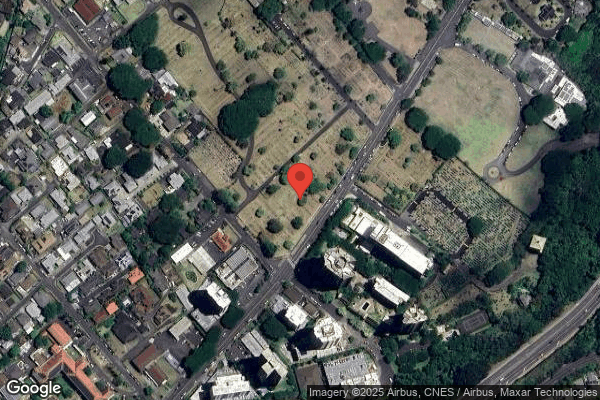

1900 BACHELOT STREET, HONOLULU, HI 96817 (808) 531-5302
For profit - Corporation 182 Beds Independent Data: November 2025
Trust Grade
33/100
#41 of 41 in HI
Last Inspection: August 2024

Within standard 12-15 month inspection cycle. Federal law requires annual inspections.

Overview

The Care Center of Honolulu has a Trust Grade of F, indicating significant concerns about the facility's quality of care. It ranks #41 out of 41 nursing homes in Hawaii, placing it in the bottom tier of facilities in the state, and #26 out of 26 in Honolulu County, meaning there are no better local options. While the facility's trend is improving, with issues decreasing from 23 in 2023 to 20 in 2024, there are still serious deficiencies. Staffing is rated average, with a turnover rate of 36%, which is on par with the state average. However, the facility has been fined $8,018, which is concerning but not among the highest in the state. Notably, there have been serious incidents, such as a resident feeling unsafe due to intimidation from another resident after reporting mistreatment. Additionally, several residents were observed eating meals on trays that had not been cleared away, indicating a lack of attention to creating a homelike dining environment. Lastly, the facility failed to display staffing information prominently, leaving residents unaware of the number of available care staff. Overall, while there are some strengths, such as improving trends and average staffing levels, the facility's serious issues warrant careful consideration.

Trust Score
F
33/100
In Hawaii
#41/41
Bottom 1%
Safety Record
Moderate
Needs review
Inspections
Getting Better
23 → 20 violations
Staff Stability
○ Average
36% turnover. Near Hawaii's 48% average. Typical for the industry.
Penalties
✓ Good
$8,018 in fines. Lower than most Hawaii facilities. Relatively clean record.
Skilled Nurses
✓ Good
Each resident gets 92 minutes of Registered Nurse (RN) attention daily — more than 97% of Hawaii nursing homes. RNs are the most trained staff who catch health problems before they become serious.
Violations
⚠ Watch
47 deficiencies on record. Higher than average. Multiple issues found across inspections.
★☆☆☆☆
1.0
Overall Rating
★★★☆☆
3.0
Staff Levels
★★★★☆
4.0
Care Quality
★☆☆☆☆
1.0
Inspection Score
Stable
2023: 23 issues
2024: 20 issues

The Good

  • 4-Star Quality Measures · Strong clinical quality outcomes
  • Full Sprinkler Coverage · Fire safety systems throughout facility
  • No fines on record
  • Staff turnover below average (36%)

    12 points below Hawaii average of 48%

Facility shows strength in quality measures, fire safety.

The Bad

1-Star Overall Rating

Below Hawaii average (3.4)

Significant quality concerns identified by CMS

Staff Turnover: 36%

10pts below Hawaii avg (46%)

Typical for the industry

Federal Fines: $8,018

Below median ($33,413)

Minor penalties assessed

The Ugly 47 deficiencies on record

1 actual harm
Aug 2024 19 deficiencies 1 Harm
SERIOUS (G)

Actual Harm - a resident was hurt due to facility failures

Grievances (Tag F0585)

A resident was harmed · This affected 1 resident

**NOTE- TERMS IN BRACKETS HAVE BEEN EDITED TO PROTECT CONFIDENTIALITY** Based on interview and record review, the facility failed to support the resident's right to voice a complaint without the fear ...

Read full inspector narrative →
**NOTE- TERMS IN BRACKETS HAVE BEEN EDITED TO PROTECT CONFIDENTIALITY** Based on interview and record review, the facility failed to support the resident's right to voice a complaint without the fear of reprisal or retaliation for one resident (Resident (R) 31) sampled. R31 reported an allegation of mistreatment by the Alleged Perpetrator (AP) to the Assistant Administrator (AADM). Initially, R31 reported he did not want to file a formal grievance due to being fearful what AP's reaction would be, and that R31 would not receive assistance from staff, or care would be withheld. During the facility's investigation, the facility informed R31 and AP that there should not be any form of contact between the two individuals. R31 informed AADM that despite this instruction, AP went into the resident's room and confronted him in a manner which made him feel fearful, intimidated, and unsafe. During an interview, R31 stated he did not feel that the facility could keep him safe from retaliation by the AP. As a result, R31 felt anxious, fearful, unsafe, hypervigilant causing loss of sleep, and experienced a new onset of nightmares in which he was violently defending himself from AP. R31 confirmed he does not usually have nightmares. AADM did not identify R31's allegations as potential abuse and did not investigate R31's allegations or report the incident to the appropriate state and federal agencies. As a result of this deficient practice, R31 experienced psychosocial harm as evidenced by new onset of nightmares, hypervigilance, anxiousness, and being fearful of retaliation by AP which interrupted the resident's sleep patterns. All residents receiving care by AP have the potential for harm. Findings include: (Cross Reference to F600, F609, and F610) Review of the facility's policy and procedure, Grievance/Complaints: Recording and Investigating documented 9. The Grievance Officer will coordinate actions with the appropriate state and federal agencies, depending on the nature of the allegation. All alleged violations of neglect, abuse, and/or misappropriation of property will be reported and investigated under guidelines for reporting abuse, neglect, and misappropriation of property, as per state law. R31 is a [AGE] year-old resident, who was admitted to the facility on [DATE] for physical and occupational therapy to improve the resident's level of functioning. R31's diagnoses include sepsis, cellulitis (skin infection that appears red and swollen) of upper limb, hypertension, a history of falling, and a need for assistance with personal care, weakness, and unsteadiness on feet. Review of R31's Electronic Health Records (EHR) documented a Minimum Data Set (MDS) admission assessment with an Assessment Refence Date (ARD) of 07/18/24, Section C. Cognitive Patterns the resident scored a 15 out of 15 on the Brief Interview for Mental Status, indicating the resident's cognition is intact, and that he is a reliable source of information. Section GG- Functional Abilities and Goals documented the resident is dependent (helper does ALL the effort) on staff for oral hygiene, toileting, upper and lower body dressing, putting on footwear, and personal hygiene (combing hair, shaving, washing and drying face and hands). During an interview with R31 on 08/12/24 at 10:06 AM, the resident stated he did not feel safe in the facility. Asked R31 why he did not feel safe, R31 explained he reported an incident to AADM of AP's treatment of the resident when the resident requested assistance with the air conditioner on one occasion, and pain medication on another. R31 reported, I didn't want to cause a problem with staff (AP), I just wanted him to treat me better. I felt like staff [AP] was already kind of aggressive towards me. R31 stated AP told the resident, What the fuck do you want now, when he answered my call light. Then he [AP] told me if I kept pressing the call light, he was going to take it away from me. He [AP] was irritable and snappy with me, but I was new to the facility, and I thought that's what the call light was for. If I needed something, I call for staff, instead of getting out of bed by myself. I'm not sure how long I have to be here, and if he [AP] treated me bad before I complained, I could only imagine how he would treat me if I filed a grievance. The resident explained after he complained to AADM about how AP treated him, AADM assured him that AP would not be taking care of him any longer and should not have any contact with him. Despite instructions not to have contact with the resident, R31 reported AP went into his and confronted him about reporting AP to management, stating, You got a problem with me? in an intimidating tone while the resident was alone in the room, laying on the bed. R31 informed AADM that AP came into his room and confronted him about complaining to management. R31 reported to AADM that he did not feel safe and elaborated that he cannot defend himself against AP should the staff member decide to do something to him. R31 stated that he was scared of AP and requested to move rooms to get away from him. Surveyor inquired if R31 knew, or if AADM updated him on the outcome of an investigation into AP confronting him after he complained to the facility. R31 confirmed he did not know of, and was not informed of an investigation into AP confronting him. R31 stated, After I moved [rooms], I started having nightmares and I feel anxious that AP could just come into my room when I'm sleeping or by myself and do something to me. Asked R31 about the nightmares he was having. R31 reported the nightmares were violent dreams about the resident having to defend himself or fighting AP, and that he would wake up because he was yelling and upset in his dream. R31 reported it is unusual for him to have nightmares or violent dreams, but he started having them after AP entered his room and confronted him about complaining. While speaking with this surveyor, R31 was visibly upset. His eyes welled-up with tears, and he required pauses in the interview to regain his composure. The tone and rate of his voice was shaky, and he cried at one point of the interview. R31 expressed he was spontaneously waking up throughout the night with a feeling of AP's presence in his room. Inquired if he informed the facility about how he was feeling and about the nightmares he was having. R31 responded he did not tell the facility because they (facility management) could not keep him safe the first time he reported AP's behaviors, and he feared AP could retaliate again and/or harm him. On 08/14/24 at 11:10 AM, conducted an interview with AADM and the Administrator regarding R31's incident(s) with AP. Informed AADM and Administrator of R31's interview with this surveyor, and asked for the facility's account of the incident(s) between AP and R31. AADM confirmed that during a meeting which included AP and the Director of Nursing (DON), AP was informed of the initial complaint, and told that he was not allowed to have any contact with R31. The Administrator stated she was not aware that AP had confronted R31 after being instructed to not have contact with him. AADM reported he followed up on the initial complaint with R31, and that R31 did inform him that AP confronted him in his room after being instructed not to have contact with him. Inquired if the facility investigated R31's report of AP confronting and intimidating him for the potential of abuse. AADM confirmed no other investigation was initiated following R31's report of AP confronting him. AADM also confirmed he had not identified the incident as potential verbal abuse, retaliation, and/or intimidation. AADM stated it was not identified as potential verbal abuse, retaliation, and/or intimidation because R31 did not file an official grievance when the resident first reported AP. Inquired if AADM asked R31 why he did not want to file an official grievance. AADM responded he did not ask R31 why he did not want to file an official grievance, but he [AADM] filled out the grievance form as a complaint on the resident's behalf. On 08/14/24 at 01:48 PM, conducted an interview with Social Service Director (SSD) regarding R31's allegations. SSD stated she normally handles the resident's complaints and grievances; however, she was on leave during this time and had not been informed of R31's allegations. SSD confirmed no investigation was conducted into the resident's report of AP confronting the resident after complaining about staff's treatment of the resident and it was not reported to the state agencies. SSD stated at the time of the incident, AADM was acting as the Grievance Officer. After SSD was informed of R31's allegations, she confirmed AP should have been placed on leave after R31 reported he confronted the resident, while a formal investigation was completed to ensure the resident's safety. At 03:00 PM, SSD reported R31 was interviewed regarding the incident, and her interview with the resident was consistent with this surveyor's resident interview. SSD stated she would be conducting a formal investigation of R31's allegation of verbal abuse and intimidation by AP. On 08/14/24 at 01:49 PM, conducted an interview with the DON regarding AP confronting R31 regarding the his complaint of AP's treatment of him. During the interview, DON stated an investigation was conducted into R31's allegations. Requested to review the DON's full investigation complete with witness statements. DON initially stated the investigation was in the Human Resource office and did not provide any documentation on 08/14/24. On 08/15/24, the DON submitted typed, Timeline of Events 7/31/24 which documented Resident had a care concern for the attitude of a night shift CNA [Certified Nurse Aide (AP)] and gave him [R31] attitude about turning up the temperature . Union Meeting held . on 08/02, and included an unidentified staff member (no ledger on form) reporting that CNA48, CNA2, and Registered Nurse (RN)11 did not report anything related to the incident on 07/31/24. The investigation notes did not address AP confronting R31, and intimidating him after finding out the resident had filed a complaint.
CONCERN (D)

Potential for Harm - no one hurt, but risky conditions existed

Deficiency F0583 (Tag F0583)

Could have caused harm · This affected 1 resident

Based on observation, interview, and record review, the facility failed to provide privacy for one of the sampled residents (Resident (R) 415). This failed practice had a negative affect on R415's psy...

Read full inspector narrative →
Based on observation, interview, and record review, the facility failed to provide privacy for one of the sampled residents (Resident (R) 415). This failed practice had a negative affect on R415's psychosocial well being and has the potential to affect all the residents in the facility. Findings include: Interview was conducted with R415 on 08/12/24 at 09:22 AM in R415's room. R415 stated that on multiple occasions, the staff would pull the privacy curtains from around her bed while providing personal care to her roommate. R415 stated that pulling the curtain from her side to provide privacy to her roommate ends up exposing her to individuals passing in the hallway. Interview was conducted with R415 on 08/13/24 at 09:04 AM in R415's room. R415 stated that on 08/12/24, she was exposed to the other resident in the room as well as individuals passing in the hallway. Observation was made on 08/13/24 at 09:16 AM in R415's room. While R415 was talking to State Agency (SA), Certified Nurse Aide (CNA) 62 was observed pulling one of the privacy curtains near the entrance of the room/R415's bed and pulling it towards the window to provide privacy to the resident near the window. In doing so, CNA62 exposed R415 to the hallway, since R415's bed was next to the door. R415 was exposed to staff, residents, and visitors walking in the hallway. R415 had her legs elevated and was wearing a gown and adult briefs. Her legs were open, therefore exposing her adult briefs. R415 stated, you see what I mean, pointing at the door. R415 remained exposed for 20 minutes, until CNA62 was informed by SA. Interview with CNA62 was conducted on 08/13/24 at 09:36 AM in R415's room. CNA62 agreed that she should have adjusted the curtains to provide privacy for R415. Interview was conducted with the Director of Nursing (DON) on 08/13/24 at 03:30 PM in her office. DON was informed of the observation made by SA. DON stated that normally the staff closes the door when providing personal care to a resident in the room. DON confirmed that CNA62 should have closed the door. A review of the facility policy titled, Resident Rights, with a revised date of 02/2021 was conducted. The policy documented, Staff promote, maintain and protect resident privacy, including bodily privacy during assistance with personal care and during treatment procedures.
CONCERN (D)

Potential for Harm - no one hurt, but risky conditions existed

Free from Abuse/Neglect (Tag F0600)

Could have caused harm · This affected 1 resident

**NOTE- TERMS IN BRACKETS HAVE BEEN EDITED TO PROTECT CONFIDENTIALITY** Based on interview and record review, the facility failed to ensure the resident's right to be free from verbal abuse for one re...

Read full inspector narrative →
**NOTE- TERMS IN BRACKETS HAVE BEEN EDITED TO PROTECT CONFIDENTIALITY** Based on interview and record review, the facility failed to ensure the resident's right to be free from verbal abuse for one resident (Resident (R)31) sampled. After filing a complaint with the facility regarding the Alleged Perpetrator's (AP) treatment of R31, AP was informed not to have any form of contact with the resident. Following this instruction, R31 reported to the Assistant Administrator (AADM) that AP had verbally confronted and intimidated him while he was alone in his room. AADM confirmed that he did not identify AP's confrontation and intimidation of R31 as potential abuse, and did not initiate an investigation into the incident. As a result of AP confronting R31 about the initial complaint, R31 reported feeling unsafe, fearful of additional retaliation from AP, increased anxiousness, hypervigilance with loss of sleep, and violent nightmares of having to defend himself from AP. As a result of this deficient practice, the resident was not kept safe while allegations were thoroughly investigated. Findings include: (Cross reference to F585, F609, and F610) R31 is a [AGE] year-old resident, who was admitted to the facility on [DATE] for physical and occupational therapy to improve the resident's level of functioning. R31's diagnoses include sepsis, cellulitis (skin infection that appears red and swollen) of upper limb, hypertension, a history of falling, and a need for assistance with personal care, weakness, and unsteadiness on feet. Review of R31's Electronic Health Records (EHR) documented a Minimum Data Set (MDS) admission assessment with an Assessment Refence Date (ARD) of 07/18/24, Section C. Cognitive Patterns the resident scored a 15 out of 15 on the Brief Interview for Mental Status, indicating the resident's cognition is intact, and that he is a reliable source of information. Section GG- Functional Abilities and Goals documented the resident is dependent (helper does ALL the effort) on staff for oral hygiene, toileting, upper and lower body dressing, putting on footwear, and personal hygiene (combing hair, shaving, washing and drying face and hands). During an interview on 08/12/24 at 10:06 AM, R31 reported he made a complaint to the facility regarding how AP treated him when he requested assistance with the temperature of the air conditioner. R31 stated when AP answered his call light, he told the resident What the fuck do you want now! and told the resident if he keeps pressing his call light that he was going to take the call light away from the resident. R31 stated he was afraid to file a formal complaint out of fear of what AP might do after he heard about R31's complaint. R31 reported the initial incident to AADM, and after looking into it, AADM informed R31 that AP would not be assigned to him any longer and had been instructed to not have any contact with him. R31 stated that after AP was informed of R31's complaint, AP confronted him while he was alone in his room and stated, You got a problem with me? in an intimidating tone and manner. R31 reported that he was afraid of AP and did not feel safe. R31 stated he informed AADM that AP came into his room and confronted him for making the initial complaint. R31 reported he did not feel safe and elaborated that he cannot defend himself against AP should the staff member decide to do something to him and requested to move rooms to get away from AP. Surveyor inquired if R31 knew, or if AADM had updated him, on the outcome of an investigation into AP confronting the resident after the initial complaint to the facility. R31 confirmed he did not know of, and was not informed, of an investigation into AP confronting him. R31 stated, After I moved, I started having nightmares and I feel anxious that AP could just come into my room when I'm sleeping or by myself and do something to me. Asked R31 about the nightmares he was having. R31 reported the nightmares were violent dreams about him having to defend himself or fighting AP, and that he would wake up because he was yelling and upset in his dream. R31 reported it is unusual for him to have nightmares or violent dreams, but he started having them after AP entered his room and confronted him. While speaking with this surveyor, R31 was visibly upset. His eyes welled-up with tears, he required pauses in the interview to regain his composure, the tone and rate of his voice was shaky, and he cried at one point of the interview. R31 expressed he was also spontaneously waking up throughout the night with a feeling of AP's presence in his room. Inquired if he informed the facility about how he was feeling and about the nightmares he was having. R31 confirmed he did not tell the facility because they (facility management) did not keep him safe the first time he reported AP's behaviors. R31 stated that he could not trust the facility to keep him safe and feared that AP would retaliate further and/or harm him. On 08/14/24 at 11:10 AM, conducted an interview with AADM and the Administrator regarding R31's report of AP confronting him about the initial complaint. The Administrator stated she was not aware that AP had confronted R31 after being instructed not to have any contact with him, and if she were aware of the incident, AP would have been placed on leave immediately until an investigation had been completed. If the allegation was substantiated, then AP would be relieved of his duty at the facility, and if the allegation was not substantiated, AP would not be assigned to R31, nor would he be allowed to provide any assigned care to him. If AP needed to interact with R31, the facility would ensure AP was escorted and not left alone with the resident. Inquired with AADM of R31's report that he informed AADM of the confrontation. AADM confirmed that R31 did inform him that AP confronted him in his room after being instructed not to have contact with him. Inquired if the facility investigated R31's report of AP confronting and intimidating him for the potential of abuse. AADM confirmed no other investigation was initiated following R31's report of AP confronting him. AADM also confirmed he had not identified the incident as potential verbal abuse, retaliation, and/or intimidation. As a result of AADM not identifying the incident as potential abuse, AP remained working in the building which exposed R31 to further potential situation(s) for verbal or some other form of abuse. On 08/14/24 at 01:48 PM, conducted an interview with Social Service Director (SSD) regarding R31's allegations. SSD stated she normally handles the resident's complaints and grievances; however, she was on leave during this time and had not been informed of R31's allegations. SSD confirmed no investigation was conducted into R31's report of AP confronting him following his initial complaint, and it was not reported to the state agencies. SSD stated at the time of the incident, AADM was acting as the Grievance Officer. After SSD was informed of R31's allegations regarding the confrontation, she confirmed AP should have been placed on leave while a formal investigation was completed to ensure the resident's safety. At 03:00 PM, SSD reported R31 was interviewed regarding the incident, and her interview with the resident was consistent with this surveyor's resident interview. SSD stated she would be conducting a formal investigation of R31's allegation of verbal abuse and intimidation by AP. Review of a progress note written by SSD on 08/14/24 at 03:14 PM revealed that Social Service Assistant (SSA)5 and SSD had met with R31 in the social service office, where R31 verbalized, I am not feeling safe unless you transfer me to another facility or let him (AP) go. Resident agreed to be transferred to another floor in the facility.
CONCERN (D)

Potential for Harm - no one hurt, but risky conditions existed

Report Alleged Abuse (Tag F0609)

Could have caused harm · This affected 1 resident

**NOTE- TERMS IN BRACKETS HAVE BEEN EDITED TO PROTECT CONFIDENTIALITY** Based on interview and record review, the facility failed to report an allegation of potential abuse to the Administrator of the...

Read full inspector narrative →
**NOTE- TERMS IN BRACKETS HAVE BEEN EDITED TO PROTECT CONFIDENTIALITY** Based on interview and record review, the facility failed to report an allegation of potential abuse to the Administrator of the facility, the State Agency (SA), and Adult Protective Services in accordance with State law through established procedures. R31 reported to the Assistant Administrator (AADM) that a staff member [alleged perpetrator (AP)] confronted him about an initial complaint he had made about AP. AADM confirmed the incident was not identified as potential abuse, and because of not identifying it as possible abuse, it was not reported accordingly. Findings include: (Cross reference to F585, F600, F610) R31 is a [AGE] year-old resident, who was admitted to the facility on [DATE] for physical and occupational therapy to improve his level of functioning. R31's diagnoses include sepsis, cellulitis (skin infection that appears red and swollen) of upper limb, hypertension, a history of falling, and a need for assistance with personal care, weakness, and unsteadiness on feet. Review of R31's Electronic Health Records (EHR) documented a Minimum Data Set (MDS) admission assessment with an Assessment Refence Date (ARD) of 07/18/24, Section C. Cognitive Patterns the resident scored a 15 out of 15 on the Brief Interview for Mental Status, indicating the resident's cognition is intact, and that he is a reliable source of information. Section GG- Functional Abilities and Goals documented the resident is dependent (helper does ALL the effort) on staff for oral hygiene, toileting, upper and lower body dressing, putting on footwear, and personal hygiene (combing hair, shaving, washing and drying face and hands). During an interview on 08/12/24 at 10:06 AM, R31 reported he made a complaint to the facility regarding how AP treated him when he requested assistance with the temperature of the air conditioner. After filing the initial complaint with the facility, R31 was assured that AP had been instructed not to have any form of contact with him. Following this assurance, R31 reported AP verbally confronted and intimidated him while he was alone in his room, causing him to be fearful of staff, feel afraid and anxious, and he began having violent nightmares of physically defending himself from AP. R31 stated he informed AADM that AP came into his room and confronted him for making the initial complaint. During an interview on 08/14/24 at 11:10 AM with the Administrator and AADM, the Administrator confirmed she was not informed that R31 reported to AADM that AP had confronted and intimidated him following the initial complaint. AADM confirmed although he was informed, he did not identify AP confronting R31 about the initial complaint as having the potential for abuse. As a result of not conducting an investigation and following up with R31, the facility was unaware of R31's nightmares and new feelings of anxiousness and feeling unsafe. Review of SA's Aspen Complaints/Incidents Tracking System did not include a report from the facility of AP confronting R31 after the resident filed a complaint of AP's treatment of him.
CONCERN (D)

Potential for Harm - no one hurt, but risky conditions existed

Investigate Abuse (Tag F0610)

Could have caused harm · This affected 1 resident

**NOTE- TERMS IN BRACKETS HAVE BEEN EDITED TO PROTECT CONFIDENTIALITY** Based on interview and record review, the facility failed to thoroughly investigate an allegation of potential abuse for one res...

Read full inspector narrative →
**NOTE- TERMS IN BRACKETS HAVE BEEN EDITED TO PROTECT CONFIDENTIALITY** Based on interview and record review, the facility failed to thoroughly investigate an allegation of potential abuse for one resident (Resident (R)31) sampled. R31 reported to the Assistant Administrator (AADM) that a staff member confronted and intimidated him about a complaint he made about the staff member. AADM confirmed the incident was not identified as potential abuse and an investigation into the incident was not initiated. Findings include: (Cross reference to F585, F600, F609) R31 is a [AGE] year-old resident, who was admitted to the facility on [DATE] for physical and occupational therapy to improve the resident's level of functioning. R31's diagnoses include sepsis, cellulitis (skin infection that appears red and swollen) of upper limb, hypertension, a history of falling, and a need for assistance with personal care, weakness, and unsteadiness on feet. Review of R31's Electronic Health Records (EHR) documented a Minimum Data Set (MDS) admission assessment with an Assessment Refence Date (ARD) of 07/18/24, Section C. Cognitive Patterns the resident scored a 15 out of 15 on the Brief Interview for Mental Status, indicating the resident's cognition is intact, and that he is a reliable source of information. Section GG- Functional Abilities and Goals documented the resident is dependent (helper does ALL the effort) on staff for oral hygiene, toileting, upper and lower body dressing, putting on footwear, and personal hygiene (combing hair, shaving, washing and drying face and hands). After filing a complaint with the facility regarding the Alleged Perpetrator's (AP) treatment of R31, AP was informed not to have any form of contact with the resident. R31 reported AP verbally confronted and intimidated the resident causing the resident to be fearful of staff, feel afraid and anxious, and started having violent nightmares of physically defending himself from AP. During an interview on 08/14/24 at 11:10 AM with the Administrator and AADM, the Administrator confirmed she was not informed that R31 reported to AADM that AP confronted and intimidated the resident after the resident complained to the facility's management of the staff. AADM confirmed he did not identify AP confronting the resident about his complaints as having the potential for abuse. As a result of not conducting and following up with R31, the facility was unaware of R31's nightmares and new feeling of anxiousness and feeling unsafe. On 08/14/24 at 01:48 PM, conducted an interview with Social Service Director (SSD) regarding R31's allegations. SSD stated she normally handles the resident's complaints and grievances; however, she was on leave during this time and had not been informed of R31's allegations. SSD confirmed no investigation was conducted into the resident's report of AP confronting the resident after complaining about staff's treatment of the resident and it was not reported to the state agencies. SSD stated at the time of the incident, AADM was acting as the Grievance Officer. After SSD was informed of R31's allegations, she confirmed AP should have been placed on leave after R31 reported he confronted the resident while a formal investigation was completed to ensure the resident's safety. At 03:00 PM, SSD reported R31 was interviewed regarding the incident and her interview with the resident was consistent with this surveyor's resident interview and would be conducting a formal investigation of R31's allegation of verbal abuse and intimidation by AP. Review of a progress note written by SSD on 08/14/24 at 03:14 PM, Social Service Assistant (SSA)5 and SSD met resident in the social service office, R3 1 verbalized I am not feeling safe unless you transfer me to another facility or let him (AP) go. Resident agreed to a lateral transfer. Review of SA's Aspen Complaints/Incidents Tracking System did not include a report from the facility of AP confronting R31 after the resident filed a complaint of AP's treatment of the resident.
CONCERN (D)

Potential for Harm - no one hurt, but risky conditions existed

Assessment Accuracy (Tag F0641)

Could have caused harm · This affected 1 resident

**NOTE- TERMS IN BRACKETS HAVE BEEN EDITED TO PROTECT CONFIDENTIALITY** Based on record review and interview, the facility failed to correctly document the presence of a stage three pressure ulcer in ...

Read full inspector narrative →
**NOTE- TERMS IN BRACKETS HAVE BEEN EDITED TO PROTECT CONFIDENTIALITY** Based on record review and interview, the facility failed to correctly document the presence of a stage three pressure ulcer in the Resident Assessment Instrument (RAI) for one Resident (R) 56 of 32 in the sample. As a result of this deficient practice, R56 was not properly coded which could affect the resident's care plan and potential outcomes. All residents have the potential to be affected. Findings include: R56 is a [AGE] year-old male admitted to the facility on [DATE] with a diagnoses that include anoxic brain damage, muscle weakness, contractures of left and right forearm muscle, stage three pressure injury to the sacrum . per record review (RR) of face sheet. RR of a skin & wound evaluation, dated 08/12/2024, noted the following documentation: Stage three to sacrum. present on admission. 0.3 centimeters (cm) long 0.2 cm wide no undermining or depth. No tunneling. Wound healing is slow or stalled but stable, little/no deterioration. Generic wound cleanser with foam dressing . Minimum Data Set (MDS) quarterly assessment, dated 07/18/24, reviewed. R56 was not coded with an unhealed pressure ulcer. Prior discharge assessment, dated 04/24/24, reviewed. R56 was coded with a stage three pressure ulcer which was not present on admission. Interview with Minimum Data Set Coordinator (MDSC)1 in the MDS office on 08/15/24 at 12:30 PM. The surveyor confirmed with MDSC1 that R56 was not coded with a stage 3 pressure ulcer on the 07/18/24 quarterly assessment and that R56 was diagnosed with a stage 3 pressure ulcer at the time of the look back period. MDSC2 joined the interview stating, we will correct the error on the MDS assessment.
CONCERN (D)

Potential for Harm - no one hurt, but risky conditions existed

Comprehensive Care Plan (Tag F0656)

Could have caused harm · This affected 1 resident

**NOTE- TERMS IN BRACKETS HAVE BEEN EDITED TO PROTECT CONFIDENTIALITY** Based on observation and record review, the facility failed to implement the care plan for two Residents, (R)126 and R218, of 32...

Read full inspector narrative →
**NOTE- TERMS IN BRACKETS HAVE BEEN EDITED TO PROTECT CONFIDENTIALITY** Based on observation and record review, the facility failed to implement the care plan for two Residents, (R)126 and R218, of 32 residents in the sample. R126 was not repositioned at least every two hours to promote healing of his pressure ulcer and R218 was not routinely repositioned or transferred to a wheelchair. The deficient practice placed the residents at risk for a decline in their functional and physical health status. All residents who are dependent on staff have the potential to be affected. Findings include: Cross reference to F686. R126 is a [AGE] year-old male admitted to the facility on [DATE] with a primary diagnosis that includes heart failure; septicemia; wound infection and an unhealed stage four pressure ulcer of the sacral region, per Record Review (RR) of the face sheet. During random observations of Resident (R)126 in his room on the following days and times: 08/12/24 at 09:07 AM and 2:00 PM; 08/13/24 at 09:15 AM; 11:30 AM; 2:00 PM and 3:45 PM; 08/14/24 at 08:45 AM, 11:38 AM, 1:45 PM, and 3:14 PM, noted R126 laying on his back with the head of the bed elevated, watching television. Record Review (RR) of R126's Care plan (CP), started 07/15/2023, noted the following: R126 has limited physical mobility related to pain, wounds, deconditioning secondary to sepsis. Stage four to sacrum. Will show signs of healing without complications through the next review date. The resident will not develop any further complications related to immobility . 2) R218 is a [AGE] year-old female admitted to the facility on [DATE] with a diagnosis that includes depression, hemiplegia, and hemiparesis (weakness) per Record Review (RR) of face sheet. Cross reference to F688. Care plan (CP) 02/19/24 reviewed: The resident has impaired mobility related to (r/t) medical comorbidities. The resident will remain free of complications related to immobility, including contractures, thrombus formation, skin-breakdown, fall related injury through the next review date. The resident has impaired mobility r/t medical comorbidities. Date Initiated: 02/19/24 Resident to be up in wheelchair (w/c) at 1030. Revision on: 03/05/24 Restorative Nurse Aide (RNA) to Monitor/document/report as needed (PRN) signs and symptoms (s/sx) of immobility: contractures forming or worsening, thrombus formation, skin-breakdown, fall related injury. RR of Plan Of Care (POC) dated 08/02/24 to 08/14/24. Turn and reposition (right side, left side, back, chair. R218 was up in the chair on 08/03/24 at 2:13 PM and 08/10/24 at 12:19 PM. The rest of the days documented R218 was laying in bed.
CONCERN (D)

Potential for Harm - no one hurt, but risky conditions existed

Pressure Ulcer Prevention (Tag F0686)

Could have caused harm · This affected 1 resident

**NOTE- TERMS IN BRACKETS HAVE BEEN EDITED TO PROTECT CONFIDENTIALITY** Based on observation, interview and record review, the facility failed to provide treatment consistent with professional standar...

Read full inspector narrative →
**NOTE- TERMS IN BRACKETS HAVE BEEN EDITED TO PROTECT CONFIDENTIALITY** Based on observation, interview and record review, the facility failed to provide treatment consistent with professional standards of practice to promote the healing and prevent infection of an existing stage four pressure ulcer for one Resident (R) 126. R126 required maximum assistance and was not repositioned off of the wound at least every two hours. The deficient practice places placed the resident at risk of worsening a stage four pressure injury. All residents who require maximum assistance from staff have the potential to be affected. Findings include: R126 is a [AGE] year-old male admitted to the facility on [DATE] with a primary diagnosis that includes heart failure; septicemia; wound infection and an unhealed stage four pressure ulcer of the sacral region, per Record Review (RR) of the face sheet. Observation and interview with R126 in his room on 08/12/24 at 09:04 AM. R126 was in his bed on his back with the head of bed up 45 degrees. R126 said that he used to walk pretty well before but now I'm in bed all the time. The surveyor asked R126 if he is able to get the help he needs from the staff? R126 said, I have a sore on my back that's infected and pretty deep. I'm supposed to be turned every two hours but there isn't always enough staff available. It takes two Certified Nurse Aides (CNA)'s to do it, and one CNA can't do it by themself. I take antibiotics because I have an infected sore. I wish I could turn or get a pillow. When they came in to change the bed, they moved the extra pillows and I didn't get them back, they must be in short supply. Record Review (RR) of the Minimum Data Set (MDS) annual review 07/09/24. R126 is cognitively intact. Dependent on staff for toileting, bathing and dressing and requires partial to moderate assistance to roll left and right and dependent on staff for bed to chair transfer. R126 has a stage four pressure ulcer present on admission. RR of Care plan 07/15/23 cross reference to F656. RR of Infection note 8/10/24. Wound noted to have deteriorated on 8/2 where last week resident was in his wheelchair exceeding four hours. Noted with green drainage and foul odor . Observation and interview with the wound Nurse Practitioner (NP) from the wound clinic on 08/14/24 at 08:45 AM. The surveyor asked the NP how R126's the pressure ulcer is healing. He stated R126 has medically complex issues, and he is declining, his Chronic Obstructive Pulmonary disease (COPD) (a lung disease) has gotten a lot worse, and he's not able to do too much outside of his bed. When he came in a year ago, he was able to actually get up and walk a bit. His wounds were all completely closed then, 126 had a pretty bad skin tear that reopened the wound. He went to acute care for a cardiac procedure and was laying on a hard table for a long period of time, when he came back the wound had opened and progressed to a stage four wound on his sacrum. It's getting a little better, today were going to take a sample for a culture after we clean the wound. The surveyor asked the NP if the resident is able to reposition himself off of the wound. The NP stated, no, he needs help to turn and reposition. The wound was observed to be deep with yellow slough. After the NP removed the dressings and cleaned away the dead tissue. He said to R126 it's really important to keep the pressure off of the wound. The surveyor asked the NP for clarification, turning the resident every two hours is really important, he said yes, it's very important to keep the pressure off of the wound.
CONCERN (D)

Potential for Harm - no one hurt, but risky conditions existed

Deficiency F0688 (Tag F0688)

Could have caused harm · This affected 1 resident

**NOTE- TERMS IN BRACKETS HAVE BEEN EDITED TO PROTECT CONFIDENTIALITY** Based on observations, interview and record review, the facility failed to provide the care to maintain or improve the highest l...

Read full inspector narrative →
**NOTE- TERMS IN BRACKETS HAVE BEEN EDITED TO PROTECT CONFIDENTIALITY** Based on observations, interview and record review, the facility failed to provide the care to maintain or improve the highest level of range of motion and mobility for one Resident (R) 218 of 32 in the sample. The resident was not routinely repositioned and placed up in the chair daily as ordered by the physician. The deficient practice placed the resident at an increase risk of a decline in functional status. Findings include: R218 is a [AGE] year-old female admitted to the facility on [DATE] with a diagnosis that includes depression, hemiplegia, and hemiparesis (weakness) per Record Review (RR) of face sheet. Observation of R218 in her room on 08/12/24 at 10:15 AM. R218's laying on her back with her bed flat, her right leg started shaking. Facial grimacing noted and an adhesive patch on her left knee. Observation of R218 on 08/12/24 at 2:33 PM. The resident was observed on her back in bed, with a contracture of her left arm, non-verbal, moaning and grimacing, and when asked if she was having pain, she moaned with her eyes wide open. Trapeze in place over the bed, when asked if she can use this, she moaned and shook her head no. The surveyor asked Registered Nurse (RN) 7 if R218 can use the trapeze bar, RN7 said we encourage her to reposition herself. (RR) of the Minimum Data Set (MDS) quarterly review 05/23/24: Resident is moderately cognitively impaired, has an impairment on one side of her upper body (left side). Resident has an impairment on her lower part of her body on both sides. Dependent in toileting, showering and mobility. Care plan (CP) 02/19/24 reviewed. Cross reference to F656. RR of physician orders: Up to wheelchair daily at 10:30 am and have patient up in wheelchair until lunch time use HOYER (a mechanical lift to assist with transfer) one time a day 4/4/2024. RR of plan of care (POC) dated 08/02/24 to 08/14/24. Turn and reposition (right side, left side, back, chair. R218 was documented up in the chair on 08/03/24 at 2:13 PM and 08/10/24 at 12:19 PM. The rest of the days document R218 was laying in bed. Interview with Restorative Nurse Aide (RNA) 4 on 08/15/24 at 12:29 PM the surveyor asked RNA4 if R218 was receiving restorative care. RNA4 stated that R218 is working with an outside rehabilitation agency.
CONCERN (D)

Potential for Harm - no one hurt, but risky conditions existed

Deficiency F0726 (Tag F0726)

Could have caused harm · This affected 1 resident

Based on observation and interview, the facility failed to ensure that staff implemented specific competencies necessary for resident safety. This deficient practice has the potential for harm. Findi...

Read full inspector narrative →
Based on observation and interview, the facility failed to ensure that staff implemented specific competencies necessary for resident safety. This deficient practice has the potential for harm. Findings include: On 08/14/24 at 09:00 AM, while waiting to check a medication cart on Unit 4, observed Registered Nurse (RN)10 dispose of a medication tablet in the trash bin (unlocked, unsecure) located on the side of the medication cart. The medication landed on the top of other trash which was visible and accessible to anyone passing the medication cart. Inquired if it was okay to dispose of the medication tablet in the trash bin at the side of the medication cart which was unsecured and unable to be locked. RN10 stated she would have to check on how she was supposed to dispose of that medication. RN10 confirmed she disposed of a tablet of Aspirin 81 mg (milligrams) on the side of the medication cart and remained unsure of how to properly dispose of the medication. As RN10 and this surveyor were discussing RN10 disposing of the medication in an unsecure/unlocked trash bin, and the potential opportunity for a resident to retrieve the medication from the cart, Resident (R)140 independently and unsupervised, wheeled himself past the medication cart with the Aspirin 81 mg tablet exposed. On 08/15/24 at 12:20 PM, conducted an interview with Unit Manager (UM)8 and informed her of an observation of staff disposing a tablet of Aspirin 81 mg in the trash bin on the medication cart. UM8 confirmed disposal of non-controlled medication should be in the sharps or another closed system and should have not been disposed of in the trash on the medication cart.
CONCERN (D)

Potential for Harm - no one hurt, but risky conditions existed

Pharmacy Services (Tag F0755)

Could have caused harm · This affected 1 resident

Based on observation, interview, and record review, the facility failed to determine that drug records are in order and that an account of all controlled drugs is maintained and reconciled on 1 of 4 u...

Read full inspector narrative →
Based on observation, interview, and record review, the facility failed to determine that drug records are in order and that an account of all controlled drugs is maintained and reconciled on 1 of 4 units in the facility. This deficient practice increases the risk for diversion of resident medications. Findings include: Observation was conducted on 08/14/24 at 07:38 AM at the nurses' station on the second floor. Registered Nurse (RN)24 was observed preparing medications for a resident. The medication cart she was using was unlocked and RN24 was accessing the medications contained in the medication cart. A review of the facility's document titled, Controlled Item Checklist, dated August, was conducted on 08/14/24 at 07:49 AM. The sheet did not contain the outgoing night shift nurse and the incoming day shift nurses' signatures for August 14, 2024, in the 07:00 AM boxes. RN24 was informed of the missing signatures. RN24 stated that it should have been signed earlier with the outgoing night shift nurse. On 08/14/24 at 07:57 AM, RN24 and RN20 were both observed signing the facility's, Controlled Item Checklist, form. Interview was conducted with RN20 on 08/14/24 at approximately 08:20 AM. RN20 stated that she was the only nurse on the unit on night shift and after performing the narcotic count with RN24, she did not sign off on the controlled item sheet. Instead, RN20 stated that she did her final rounds and used the restroom. She didn't want RN24 to wait on her to start her morning medication administration, so she handed off the medication cart prior to signing the narcotic count sheet. RN20 confirmed that the normal process is to count the narcotics and once verified, the outgoing and incoming nurses sign the sheet.
CONCERN (D)

Potential for Harm - no one hurt, but risky conditions existed

Drug Regimen Review (Tag F0756)

Could have caused harm · This affected 1 resident

Based on record review and interview, the facility failed to ensure the physician, the facility's medical director, and/or director of nursing acted upon irregularities the pharmacist reported during ...

Read full inspector narrative →
Based on record review and interview, the facility failed to ensure the physician, the facility's medical director, and/or director of nursing acted upon irregularities the pharmacist reported during the monthly medication regimen review (MRR) for two of five residents sampled (Resident (R) 67 and R110). The attending physician did not document in the medical record that the identified irregularities had been reviewed, nor did he/she document the rationale for the no change in medications. Findings include: Review of the facility's policy and procedure Medication Regimen Reviews, revised in May 2019, documented The attending physician documents in the medical record that the irregularity has been reviewed and what (if any) action was taken to address it .Copies of medication regimen review reports, including physician responses, are maintained as part of the permanent medical record. 1) During review of R67's Electronic Health Record (EHR), under the pharmacist note in progress notes, the pharmacist documented for MRR 07/31/24 to see report. Review of documented MRRs uploaded in the resident's EHR found the MRR for 07/31/24 was not uploaded in the EHR. Review of hard chart at the nurse's station found the MRR 07/31/24 was not in the file. On 08/14/24 at 08:57 AM, an interview with Director of Medical Records (DMR) was done. Inquired where the facility keeps residents' MRRs. DMR reported it would be uploaded in the EHR or put in a binder. DMR was observed to look for the binder at the nurses' station but was not able to locate it. DMR further stated she will have to look for it in the medical records office. On 08/15/24 at 09:25 AM, an interview and concurrent record review was done with DMR. Review of R67's MRR dated 07/31/24 from the pharmacist to the attending physician documented: To help optimize pain management for this resident, please consider adding: . For severe pain not managed by PRN [as needed] APAP [Acetaminophen] to the PRN oxycodone order. Under physician's response, a handwritten note on the signature line documented: No new order. The note was dated 07/31/24, and was not signed. The bottom of the MRR form was noted to have a print date of 08/05/24. Inquired why the physician did not sign the document. DMR reported the physician was called, and the response was not to change the order. Requested for DMR to provide documentation the physician was called and notified, as well as documentation of the physician's rationale for not making the recommended change in the order. Review of R67's progress notes found no documentation the physician was notified of the recommendation and the physician's response or rationale. The documentation requested on 08/15/24 was not provided by the facility or DMR. 2) During review of R110's EHR under the pharmacist note in progress notes, the pharmacist documented for MRR between 09/01/23 and 09/30/23 to see report. Review of documented MRRs uploaded in the resident's EHR found the MRR was not uploaded in the EHR. Review of hard chart at the nurse's station found the MRR was not in the file. The facility provided a copy of R110's MRR between 09/01/23 and 09/30/23 after it was not found in a binder of residents' MRRs provided by the DMR. The MRR documented on 09/11/23, the pharmacist's recommendation to nursing staff, Please clarify medication administration directions for this resident using a feeding tube (APAP sorbitol Instaglucose Iron see MAR [Medication Administration Record]. There was no documentation found for either the physician or nursing staff regarding the recommendation and their response. On 08/15/24 at 11:48 AM, an interview and concurrent record review with License Practical Nurse (LPN) 2 was done. Inquired if R110 had a feeding tube, LPN2 confirmed she did, and that medications would be administered through the feeding tube. Concurrent review of the MAR for APAP, sorbitol, insta-glucose, and iron found the order for APAP: Give 650 mg by mouth .; insta-glucose (discontinued on 08/14/24, 11 months after the recommendation): Give 24 gram by mouth .; and for iron: Give 1 tablet by mouth . LPN2 reported the medication orders should not say by mouth and should have been changed to administer via G-Tube. The orders for APAP, insta-glucose, and iron routes of administration were not changed to feeding tube or by G-Tube despite the pharmacist recommending the facility clarify the administration directions on 09/11/23.
CONCERN (D)

Potential for Harm - no one hurt, but risky conditions existed

Menu Adequacy (Tag F0803)

Could have caused harm · This affected 1 resident

Based on observation, interview, and record review, the facility failed to ensure a resident's food preference/request was followed for one of four residents sampled (Resident (R) 106). R106 requested...

Read full inspector narrative →
Based on observation, interview, and record review, the facility failed to ensure a resident's food preference/request was followed for one of four residents sampled (Resident (R) 106). R106 requested white bread for every meal and did not get white bread for every meal. Findings include: On 08/12/24 at 10:45 AM, during an interview with R106 at the bedside, resident reported she spoke with the facility's dietician and requested to have milk every morning and plain white bread every meal but has not been getting her request. R106 did not understand why she needed to ask for milk and white bread every day. On 08/12/24 at 12:36 PM, observed R106's lunch tray to not have plain white bread. R106 stated no bread again and brought out a half a slice of white bread from the top of her nightstand kept in a cup that she saved from the morning and said, good thing I kept one. Reviewed R106's meal card for lunch on her meal tray which documented + 2 SLICES BREAD DAILY (untoasted). On 08/13/24 at 08:24 AM and 08/14/24 at 08:44 AM, observed R106 eating breakfast with bread and milk on her plate, she reported she received them without asking for breakfast but did not receive white bread for lunch and dinner on 08/12/24 and 08/13/24. On 08/15/24 at 10:12 AM, an interview with Dietary Director (DD) was done. DD reported if the meal card documented a specific preference for that mealtime, whether it be breakfast, lunch, or dinner the resident should be getting their request despite the word daily for that mealtime. Reviewed R106's meal card for breakfast, lunch, and dinner, all meal cards document + 2 SLICES BREAD DAILY (untoasted). Review of the facility's policy and procedure, Food and Nutrition Services revised in October 2017 documented Meals and/or nutritional supplements will be provided per scheduled meal time or by request, and in accordance with the resident's medication requirements .Reasonable efforts will be made to accommodate resident choices and preferences.
CONCERN (D)

Potential for Harm - no one hurt, but risky conditions existed

Medical Records (Tag F0842)

Could have caused harm · This affected 1 resident

**NOTE- TERMS IN BRACKETS HAVE BEEN EDITED TO PROTECT CONFIDENTIALITY** 2) Concurrent observation and interview were conducted on 08/14/24 at 01:20 PM near the 1st floor nurse's station. A medication ...

Read full inspector narrative →
**NOTE- TERMS IN BRACKETS HAVE BEEN EDITED TO PROTECT CONFIDENTIALITY** 2) Concurrent observation and interview were conducted on 08/14/24 at 01:20 PM near the 1st floor nurse's station. A medication cart was parked in front of the nurse's station with the computer screen facing the hallway and the tv/dining room. The screen displayed one of the resident's EHR. The tv/dining room had five residents sitting at the tables. The hallway had a newly admitted resident in a wheelchair that was being pushed by a visitor. The visitor paused in front of the medication cart waiting for staff to acknowledge him and the new resident. As they both waited, the visitor was observed looking at the computer screen with a resident's EHR displayed. Registered Nurse (RN) 24 was nearby and the State Agency (SA) informed RN24 of the opened computer screen. RN24 stated the computer did not belong to her and that it belonged to RN10. RN24 quickly closed the resident's EHR and confirmed that it should not have been left open. RN10 was informed of the opened EHR; she agreed that she should have logged off prior to leaving the computer unattended. A review of the facility policy titled, Computer Terminals/Workstations, with a revised date of 04/2014, was conducted. The policy documented, A user may not leave his/her workstation or terminal unattended unless the terminal screen is cleared, and the user is logged off. Each user must log off at the end of his/her work shift. Based on interview and record review, the facility failed to maintain medical records on 1 of 32 residents sampled, that were accurately documented. As a result of this deficient practice, Resident (R)313 was placed at risk for a decrease in quality and competency of care. In addition, based on observation, interview, and record review, the facility failed to keep a resident's Electronic Health Record (EHR) confidential. This deficient practice places residents' EHRs at risk for violations of the Health Insurance Portability and Accountability Act (HIPAA). Findings include: 1) Resident (R)313 is a [AGE] year-old male admitted to the facility on [DATE] for short-term rehabilitation. R313's admitting diagnoses include, but are not limited to, acute respiratory failure with hypoxia (an absence of enough oxygen in the tissues to sustain bodily functions), epilepsy, and esophageal (tube that runs from the throat to the stomach) obstruction. As a result of his admitting diagnoses, R313 was admitted with a tracheostomy (a surgically created hole in your windpipe (trachea) that provides an alternative airway for breathing) and a gastrostomy tube (feeding tube). A review of R313's electronic health record (EHR) on 08/13/24 noted the following active provider order: NPO diet, NPO texture, to mean nothing by mouth. On 08/15/24, further review of R313's EHR noted the following in the nurse progress notes, documented word-for-word, on 08/12/24 10:28 AM; 08/11/24 06:17 PM; 08/11/24 10:13 AM; 08/10/24 10:40 PM; 08/10/24 03:40 PM; and 08/10/24 05:05 AM: Nutrition: Taking nutrition and hydration orally. No complaints of thirst. No signs/symptoms of a swallowing disorder. Mucous membranes moist. On 08/15/24 at 11:40 AM, an interview was done with Unit Manager (UM)8 in her office. After a concurrent review of the nurse progress notes/skilled nursing assessments listed above, UM8 agreed there should not be any documentation indicating that R313 was taking any food or liquids by mouth as that would be incorrect. UM8 also agreed that the documentation appeared repeatedly copied and pasted. UM8 stated that copying and pasting of assessments or portions of assessments should not happen. UM8 stated that she was surprised and disappointed to see incorrect documentation happening even once, but repeatedly over the course of two days was unacceptable. UM8 agreed that accurate assessments were important for appropriateness and quality of care.
CONCERN (D)

Potential for Harm - no one hurt, but risky conditions existed

Deficiency F0847 (Tag F0847)

Could have caused harm · This affected 1 resident

**NOTE- TERMS IN BRACKETS HAVE BEEN EDITED TO PROTECT CONFIDENTIALITY** Based on interview and record review, the facility failed to ensure the Binding Arbitration Agreements ([NAME]) they asked the r...

Read full inspector narrative →
**NOTE- TERMS IN BRACKETS HAVE BEEN EDITED TO PROTECT CONFIDENTIALITY** Based on interview and record review, the facility failed to ensure the Binding Arbitration Agreements ([NAME]) they asked the residents (or their representatives) to enter into, were explained in a form and manner that they could understand. This is evidenced by 1 of 3 residents or resident representatives (of Resident 63) sampled stating she did not have the BAA explained to her in a way that she understood what it meant. Findings include: On 08/13/24 at 12:00 PM, an interview was done with the resident representative/family member (FM3) for Resident (R)63 at his bedside. During a concurrent review of a copy of the signed BAA and being asked if she recognized it, FM3 reported that she believed it was a form in a bunch of forms that had been sent to her to sign once when R63 was being re-admitted from the acute care hospital. FM3 also reported that she could not recall the form being explained to her and stated that she wasn't sure what it was for. After the state agency (SA) explained the BAA form to her, FM3 stated that she was sure the form had not been explained to her before, because if it had, she would not have signed it. When shown the Voluntary Arbitration Program Information Sheet and asked if it had been read to her by a facility representative, FM3 responded that she did not recall seeing the Information Sheet before, nor did she remember it being read to her. FM3 stated that she did receive a phone call about the admission Packet forms but was only asked if there were any changes. When she responded that there were no changes, FM3 stated that she was asked to review and sign the forms. On 08/14/24 at 02:19 PM, an interview was done with the Director of Medical Records (DMR) outside of the Administrator's Office. The DMR confirmed that the BAA would have been sent to FM3 for e-signatures with about 27 [other] forms in the admission Packet [all requiring signatures]. The DMR also confirmed that the social services representative that had signed off as reviewing the BAA information with FM3 no longer worked for the facility.
CONCERN (D)

Potential for Harm - no one hurt, but risky conditions existed

Infection Control (Tag F0880)

Could have caused harm · This affected 1 resident

**NOTE- TERMS IN BRACKETS HAVE BEEN EDITED TO PROTECT CONFIDENTIALITY** Based on observation and interview, the facility failed to provide a safe, sanitary, and comfortable environment to prevent the ...

Read full inspector narrative →
**NOTE- TERMS IN BRACKETS HAVE BEEN EDITED TO PROTECT CONFIDENTIALITY** Based on observation and interview, the facility failed to provide a safe, sanitary, and comfortable environment to prevent the development and transmission of communicable diseases and infections for two of six residents sampled for infection control (Resident (R) 126 and R85). R85's humidifier bottle was not properly secured to the oxygen concentrator. During R126 sacral wound dressing change, the nurse didn't sanitize hands after removing dirty gloves and before putting on clean gloves. This failure could place the resident at risk for infection. Findings include: 1) On 08/12/24 at 08:38 AM, during an observation of R85's room, observed R85 on oxygen, oxygen contractor running, and the humidifier bottle had broken off tape around it and was taped on the bottom sticking to the ground. The rubber band that secured the humidifier bottle to the concentrator was broken and there was tape around the concentrator. R85 reported the humidifier bottle was taped to the concentrator this morning but it fell off and he had issues with his oxygen tube soon after, .there was a kink in the machine and the tubing was changed right after. R85 reported the rubber band holding the humidifier bottle had been broken for a while but could not provide how long or the date when he first noticed it broken. On 08/15/24 at 10:39 AM, an interview with Infection Preventionist (IP) was done. Inquired if an oxygen humidifier bottle on the floor would be acceptable. IP stated no because the floor is not sanitary with possible germs, bile, and infectious diseases on the floor. IP admitted this could put the resident at risk of infection. 2) R126 is a [AGE] year-old male admitted to the facility on [DATE] with primary diagnoses that includes heart failure; septicemia; wound infection and an unhealed stage four pressure ulcer of the sacral region, per Record Review (RR) of the face sheet. Wound care team observed on 08/14/24 at 08:45 AM. Licensed Practice Nurse (LPN) 3 and Registered Nurse (RN) 22 started the dressing change on R126's stage four sacral wound. During the dressing change, observed LPN3 clean the wound and remove her dirty gloves then put clean gloves on without sanitizing her hands. The surveyor asked LPN3 if she should sanitize her hands after removing the dirty gloves and before putting on the clean gloves. LPN3 said yes and proceeded to remove the gloves, apply the hand sanitizer, and replaced with the clean gloves. Wound Care policy and procedure, 2001 MED-PASS, Inc. (Revised October 2010) reviewed. 7. Cleanse wound with ordered wound cleanser . 8. Pull glove over and discard into appropriate receptacle. Wash and dry your hands thoroughly or may use alcohol-based sanitizer as an alternative . 9. DON new gloves.
CONCERN (E)

Potential for Harm - no one hurt, but risky conditions existed

Safe Environment (Tag F0584)

Could have caused harm · This affected multiple residents

2) On 08/12/24 at 12:19 PM, observed five residents in a common dining room area eating lunch with their meals on top of a meal tray that was not removed when the meal was served. A second observatio...

Read full inspector narrative →
2) On 08/12/24 at 12:19 PM, observed five residents in a common dining room area eating lunch with their meals on top of a meal tray that was not removed when the meal was served. A second observation was done on 08/14/24 at 08:10 AM, observed three residents in a common dining room area eating breakfast with meals on top of a meal tray that was not removed when the meal was served. On 08/15/24 at 11:27 AM, an interview with Registered Nurse (RN) 40 was done. Inquired if RN40 eats on meal trays when at home, he stated he does not but uses a place mat. Further inquired if he does not use meal trays when eating at home, would it be a homelike environment for residents in the dining room to eat with meal trays, RN40 stated, .it would seem it would not. On 08/15/24 at 11:29 AM, an interview with Assistant Administrator (AADM) was done. AADM reported he does not eat his meals with meal trays at home. Inquired if it would be homelike for residents to use meal trays when eating their meals in the dining room at the facility, AADM stated it depends on the resident and if they prefer to eat with meal trays. Further inquired if this would be in resident care plans, AADM reported it should be in their care plan. Based on observation, interview, and record review, the facility failed to ensure a homelike environment. The facility did not remove any of the resident meal trays (an institutional characteristic) after serving residents in the dining room. This deficient practice affects all residents dining in the dining areas. Findings include: On 08/12/24 at 11:55 AM, conducted a dining observation of twelve (12) residents eating lunch in the main dining room on the 1st floor. All 12 residents' meals remained on the meal trays. Inquired with Resident (R)138 and the resident's Family Member (FM)1 if it was their preference for the resident's meal to remain directly on the tray for the entirety of the meal. FM1 reported that they were not given the option to have the food taken off the cafeteria style trays, staff just always leave it on the trays. Inquired with Dining Staff (DS)3 regarding residents' meals being served and remaining on the cafeteria style tray throughout the meal service. DS3 confirmed all the residents dining in the 1st floor dining room have their meals on the tray. Asked if the residents' preference is to have the meal remain on the cafeteria style tray. DS3 confirmed he/she is unaware of the residents' preference if they want their food to remain on the trays or not and stated, This is just how we always do it. Review of R138's care plan (last reviewed 05/01/24) did not contain documentation that the resident preferred to have his meal plate remain on the cafeteria like trays while eating in the 1st floor dining room.
CONCERN (E)

Potential for Harm - no one hurt, but risky conditions existed

Staffing Information (Tag F0732)

Could have caused harm · This affected multiple residents

**NOTE- TERMS IN BRACKETS HAVE BEEN EDITED TO PROTECT CONFIDENTIALITY** 2) On 08/12/24 at 08:24 AM, during an initial observation of Unit 3, the daily nursing staffing posting with total number and ac...

Read full inspector narrative →
**NOTE- TERMS IN BRACKETS HAVE BEEN EDITED TO PROTECT CONFIDENTIALITY** 2) On 08/12/24 at 08:24 AM, during an initial observation of Unit 3, the daily nursing staffing posting with total number and actual hours worked per shift for nursing staff responsible for resident care was not found. Based on observations and interviews, the facility failed to ensure posted nurse staffing information was in clear and in an identifiable and prominent place. As a result of this deficient practice, residents and resident representatives are not informed of the number of staff available for resident care. Findings include: 1) On 08/13/24 at 10:55 AM, conducted observations of daily staff posting at the entrance of the building and on all four (4) units. Near the entrance of the building, after the screener's station, Daily Staff Posting is posted on a bulletin board along with the employee clock in/out system, a Stay up to Date with your Covid Vaccine poster, Cover your Cough poster, August 2024 Employee Calendar, Mandatory CNA (Certified Nurse Aide) Meeting, and a list of employees who need to see the Director of Nursing (DON) prior to starting the shift. The 24-hour-Daily Staff Posting form was printed on what appeared to be an 11-inch (in) x 13 in paper. The print was small, and this surveyor was unable to clearly read the form until standing approximately two (2) feet away from the form. There was no larger sign clearly indicating the form was the 24-Hour-Daily Staff Posting. A visitor approached the main exit doors and this surveyor inquired if she knew where the daily staff posting was located. The visitor confirmed she did not know where it was despite standing approximately 3-4 feet away from the posted form. On each of the four units, the names of the staff working are written on a dry erase board which is set in the back of the nurses' station, over 10 feet from the entrance to the nurses' station. The entrance of the nurses' station is noted by a high counter/desktop, which is where any resident or visitor would be stopped prior to entering the nurses' station. The dry erase board was difficult to identify the location the units were listing, or the individual staffing census. On 08/14/24 at approximately 02:10 PM, inquired with the Director of nursing where the daily staffing information was posted. DON confirmed daily staffing is written on the whiteboards on each unit and at the entrance of the building. Informed DON on initial observation, the listing was not identifiable or highly visible when entering into the building due to the form being posted on the employee notification board, it appears like information for staff. On 08/15/24 at 11:37 AM, observed Resident (R)315 and multiple family members (FM), walk past the nursing station at a slow rate, then into the resident's room. Inquired with FM99, who was a young adult male (25-[AGE] years old), confirmed he does not need or use glasses and has great eyesight, if he was aware where the daily staffing was posted for the unit and for the facility. FM99 confirmed he has never seen any daily staffing form or information, and stated, Nope, I don't know where it is, and staff never told me where it was at. At 11:40 AM, inquired with R138's FM if she knew where the facility's daily staffing information for R138's unit and for the entire facility was located. FM confirmed she did not know where that information was and has never seen the form.
CONCERN (E)

Potential for Harm - no one hurt, but risky conditions existed

Food Safety (Tag F0812)

Could have caused harm · This affected multiple residents

Based on observations, interview, and record review, the facility failed to store and serve food in accordance with professional standard for food service safety. This deficient practice has the poten...

Read full inspector narrative →
Based on observations, interview, and record review, the facility failed to store and serve food in accordance with professional standard for food service safety. This deficient practice has the potential to place facility residents at risk for food-borne illness. Findings include: 1) A concurrent observation and interview were conducted on 08/12/24 at 08:27 AM in the facility kitchen. One of the refrigerators contained a container of rice porridge with a discard date of 08/11/24. Dietary Director (DD) stated that it should have been discarded since the kitchen staff performs audits twice a day. Review of the facility policy titled, Food Receiving and Storage, with a revised date of 10/2017, was conducted. The facility policy documented, Food shall be received and stored in a manner that complies with safe food handling practices. 2) Concurrent observation and interview were conducted with the Dietary Aide (DA) 1 on 08/12/24 at 08:53 AM. DA1 was observed checking the dishwasher sanitizer with a quality assurance strip. When asked if she logs the results, DA1 stated that kitchen staff only logs the temperature for the dishwasher and there was no log for checking the dishwasher sanitizer. Interview was conducted on 08/12/24 at 01:28 PM with DD. DD confirmed that the facility did not have a log for the dishwasher sanitizer quality assurance checks. A review of the facility policy titled, Dishwashing Machine Use, with a revised date of 03/2010, was conducted. The facility policy documented, A supervisor will check the dishwashing machine for proper concentrations of sanitizer solution after filling the dishwashing machine and once a week thereafter. Concentrations will be recorded in a facility approved log.
Jul 2024 1 deficiency
CONCERN (D) 📢 Someone Reported This

A family member, employee, or ombudsman was alarmed enough to file a formal complaint

Potential for Harm - no one hurt, but risky conditions existed

Medical Records (Tag F0842)

Could have caused harm · This affected 1 resident

Based on interview and record review, the facility failed to maintain a medical record that was accurately documented for one of three residents in the sample. Two entries documented in the electronic...

Read full inspector narrative →
Based on interview and record review, the facility failed to maintain a medical record that was accurately documented for one of three residents in the sample. Two entries documented in the electronic medical record stated the resident's fractured shoulder was the right shoulder when the injury occurred in the left shoulder. A third entry documented the resident was transferred to the wrong acute care hospital. The deficient practice has the potential to affect all residents residing in the facility. Findings include: Electronic medical record (EMR) reviewed for Resident (R)1. admission note: 12/20/2023 at 22:28 .Left arm swollen. With elastic bandage and sling in place. Skilled nursing note: Registered Nurse (RN)10. 12/23/2023 14:18. Patient (Pt.) alert oriented x3 verbalizing appropriately .right arm swelling noted, brace and sling in place, placed pillow under to have extremity elevated . Skilled Nursing note: RN25. 12/24/2023 at 18:25 .pt. alert and oriented x 3. Verbalizing appropriately, .Right arm swelling, and discoloration noted. Pulses noted arm warm to touch . General note: RN30. 12/29/2023 00:38. Resident admitted to acute care hospital A with a diagnosis of Influenza; Covid-19 positive and Altered mental status this afternoon. R12 was transferred and admitted to acute care hospital B with a diagnosis of influenza, Covid-19 positive and altered mental status per EMR review .12/28/2023, 1320: Emergency medical services (EMS) arrived. Pt temperature w/ their equipment reading at 101.5 transported to acute care hospital B. Report called to staff in the ER. Nursing Supervisor (NS)1 interviewed on 07/03/2024 at 09:55 AM. Regarding documentation, the surveyor asked NS1 whose responsibility is it to ensure the accuracy, frequency, and completion of all documentation? For the monitoring, it's really a team effort, I will look, the Director of Nursing, (DON) or the Minimum Data Set (MDS) Coordinator will look etc. Charting and Documentation Policy revised July 2017 reviewed. 3. Documentation in the medical record will be objective .complete, and accurate. Registered Nurse (RN) Job description reviewed. Essential Job Functions. 7. Monitors documentation of .skilled charting .for completeness and timeliness.
Aug 2023 20 deficiencies
CONCERN (D)

Potential for Harm - no one hurt, but risky conditions existed

Deficiency F0561 (Tag F0561)

Could have caused harm · This affected 1 resident

**NOTE- TERMS IN BRACKETS HAVE BEEN EDITED TO PROTECT CONFIDENTIALITY** Based on interview and record review (RR), the facility failed to identify and support 2 of 2 residents sampled (Residents (R)1 ...

Read full inspector narrative →
**NOTE- TERMS IN BRACKETS HAVE BEEN EDITED TO PROTECT CONFIDENTIALITY** Based on interview and record review (RR), the facility failed to identify and support 2 of 2 residents sampled (Residents (R)1 and 65) preference to be gotten up out of bed daily. As a result of this deficient practice, these residents did not have their needs met and were placed at risk of not attaining their highest practicable well-being. This deficient practice has the potential to affect all the residents at the facility. Findings include: 1) Resident (R)1 is a [AGE] year-old male admitted to the facility on [DATE] for long-term care. R1's active diagnoses include but are not limited to quadriplegia (a form of paralysis that affects all four limbs, plus the torso), respiratory failure, and dependence on a respirator (ventilator) for breathing. A review of his most recent Minimum Data Set (MDS) assessment, with an Assessment Reference Date (ARD) of 05/25/23 revealed that R1 was determined to have a Brief Interview for Mental Status (BIMS) score of 14, meaning he was found to be cognitively intact. During an interview with R1 at his bedside on 08/07/23 at 09:54 AM, R1 reported that he likes to be gotten up daily to a wheelchair, sometimes to go to activities, and other times just to get out of bed and sit in the common area. R1 complained that the facility used to get him up out of bed all the time, but now has not been up to a wheelchair for a long time. R1 stated his belief that he has not been gotten out of bed because the facility is short-staffed. R1 explained that he needed two staff members and a mechanical lift (assistive device that enables the movement, transfer, and positioning of an immobilized resident to and from a sitting and/or lying position) to be transferred, so when the facility is short-staffed, he usually does not get transferred. On 08/10/23 at 10:46 AM, observed R1 had been transferred from bed to a wheelchair for the first time during the survey period. When asked, R1 confirmed that this is the first time in a while that the facility assisted him out of bed. On 08/10/23 at 12:00 PM, reviewed a Point-of-Care (POC) report documenting the facility getting R1 out of bed for the months of June, July, and August. The report displayed that R1 had consistently been gotten out of bed 2-3 times a day since June, including during the survey period. There was no documentation that R1 had been offered and refused to get up on the report. On 08/10/23 at 12:45 PM, an interview was done with R1 in the common area. After reviewing the POC report with him, R1 emphatically denied that he had been gotten out of bed daily for months. R1 reported that he could not remember the last time he had gotten up out of bed prior to this morning. When asked if perhaps the facility had offered to get him up, and he had refused, R1 responded no. 2) R65 is a [AGE] year-old male admitted to the facility on [DATE] for long-term care. R65's active diagnoses include but are not limited to amyotrophic lateral sclerosis (ALS; a progressive nervous system disease that weakens muscles and impacts physical function), major depressive disorder, chronic respiratory failure, and dependence on a respirator (ventilator) for breathing. A review of his most recent MDS assessment, with an ARD of 06/02/23 revealed that R65 was determined to have a BIMS score of 13, meaning he was found to be cognitively intact. R65 could not speak and therefore communicated through facial expressions and mouthing words. On 08/07/23 at 09:18 AM, during an interview with R65 at his bedside, he was able to communicate that he is supposed to get up out of bed to his wheelchair every day. R65 indicated that he did not know/could not recall when he was last transferred out of bed. Observations were done at this time that his special wheelchair and a mechanical lift were kept at his bedside. R65 indicated that both were stored there at the bedside but confirmed again that they had not been used for a long time. On 08/10/23 at 09:51 AM, during a review of R65's comprehensive care plan, it was noted that there is a resident-centered care plan initiated in 2017 and last revised on 05/28/20 specifically focused on R65's desire to be gotten up out of bed. The care plan focus: Resident wants to be out of bed qd [every day]. The care plan goal: Resident will be on wheelchair before lunch until [sic] qd. On 08/10/23 at 12:10 PM, reviewed a POC report documenting the facility getting R65 out of bed for the months of June, July, and August. The report displayed that R65 had consistently been gotten out of bed 2-3 times daily on most days since June, including during the survey period. There was no documentation that R65 had been offered and refused to get up on the report. On 08/10/23 at 12:50 PM, an interview was done with R65 at his bedside. After reviewing the POC report with him and asking if that sounded accurate, R65 denied that he had been gotten out of bed daily for months. When asked if perhaps the facility had been offering to get him up on a daily basis, R65 indicated no by moving his lower jaw from side to side. On 08/10/23 at 12:55 PM, an interview was done with Unit Manager (UM)3 in her office. When asked about the POC report documenting both residents being gotten up out of bed daily and how the documentation did not align with either resident interviews or Surveyor observations, UM3 could not explain the inconsistencies, stating, I don't know what to tell you.
CONCERN (D)

Potential for Harm - no one hurt, but risky conditions existed

Safe Environment (Tag F0584)

Could have caused harm · This affected 1 resident

**NOTE- TERMS IN BRACKETS HAVE BEEN EDITED TO PROTECT CONFIDENTIALITY** Based on observations and interviews, the facility failed to provide a safe, homelike environment for one out of 49 residents sa...

Read full inspector narrative →
**NOTE- TERMS IN BRACKETS HAVE BEEN EDITED TO PROTECT CONFIDENTIALITY** Based on observations and interviews, the facility failed to provide a safe, homelike environment for one out of 49 residents sampled (Resident (R) 88). This deficient practice has a negative effect on resident's quality of life and places her at risk for psychosocial harm. Findings Include: R88 is a [AGE] year-old female admitted to the facility on [DATE]. Observation and interview were conducted on 08/07/23 at 02:11 PM. R88 stated, My neighbor's snacks are all over the place. I don't like seeing it all! The curtains need to be washed. It has not been washed since I have been here. It smells bad. An observation was made on a tear in the curtain that created a 5inch-by-5inch hole. To the right of R88's television are shelves, tables, large plastic storage bins, and stackable trays. These items contained food, packing boxes, plants, pillows, blankets, paper goods, and drinks. The items are stacked on top of one another creating a 5-foot-high pile. Some of the bins are overflowing with items that could potentially fall. Interview was conducted with the facility's Housekeeping Manager (HM) on 08/09/23 at 09:01 AM in R88's room. HM stated that curtains are usually washed every three months and the tears in the curtains are usually hemmed. HM added that his department is currently in the process of evaluating all the curtains in the facility. Interview and observation were conducted on 08/10/23 at 08:17 AM in R88's room. R88 stated that she hasn't been out of her room because her roommate's belongings make it difficult for wheelchair access. This surveyor attempted to maneuver R88's wheelchair into the hallway. A shelf filled with food items and plants was obstructing the path into the hallway. R88's wheelchair did not fit in the opening between R88's bed and her roommate's shelf. Assistant Director of Nursing (ADON) 2 was summoned into R88's room. ADON2 was shown the tight pathway between R88's bed and the shelves. ADON2 also observed the shelves that were stacked over 5 feet high with various items. ADON2 agreed that the items and the shelves are possible safety hazards for individuals passing by. ADON2 also mentioned that R88's roommate's belongings were encroaching into R88's space and obstructed wheelchair accessibility.
CONCERN (D)

Potential for Harm - no one hurt, but risky conditions existed

Deficiency F0604 (Tag F0604)

Could have caused harm · This affected 1 resident

**NOTE- TERMS IN BRACKETS HAVE BEEN EDITED TO PROTECT CONFIDENTIALITY** Based on observations, interviews, and record review, the facility failed to document ongoing re-evaluation of the need for rest...

Read full inspector narrative →
**NOTE- TERMS IN BRACKETS HAVE BEEN EDITED TO PROTECT CONFIDENTIALITY** Based on observations, interviews, and record review, the facility failed to document ongoing re-evaluation of the need for restraints for one out of four residents sampled (Resident (R) 429). This deficient practice places the resident at risk for psychosocial harm. Findings Include: R429 is a [AGE] year-old male admitted to the facility on [DATE]. Observations were conducted at various times between the dates 08/07/23-08/10/23. R429 had his mitten restraint on throughout the four-day span. Interview was conducted with Registered Nurse (RN) 25 on 08/09/23 at 01:34 PM near the nurse's station. RN25 stated that R429's mitten is supposed to be released every two hours. RN also mentioned that she only completes the flowsheet and has not charted in the progress notes regarding R429's restraint use. Interview was conducted with Unit Manager (UM) 3 on 08/09/24 at 02:58 PM. UM3 stated that charting in the progress notes should be done every shift especially regarding restraints. After reviewing R429's Electronic Health Record (EHR), UM3 concluded that the use of restraint and assessment was not being charted in the progress notes every shift. A review of R429's EHR indicated an order for restraints that was started on 08/01/23. The order stated, mitten to L [Left] hand to prevent resident from pulling out tracheostomy. Release every hours and assess for CMS [Circulatory Motor Sensory] and skin breakdown. Chart in progress note every shift. Every 2 hours. A review of R429's EHR indicated that charting of R429's restraint use was completed only during two shifts for four consecutive days (12 shifts total) between the dates of 08/05/23-08/08/23.
CONCERN (D) 📢 Someone Reported This

A family member, employee, or ombudsman was alarmed enough to file a formal complaint

Potential for Harm - no one hurt, but risky conditions existed

Report Alleged Abuse (Tag F0609)

Could have caused harm · This affected 1 resident

Based on interviews and document review, the facility failed to report one reportable event of suspected resident (Resident (R)52) abuse event to the State Agency (SA) and Adult Protective Services (A...

Read full inspector narrative →
Based on interviews and document review, the facility failed to report one reportable event of suspected resident (Resident (R)52) abuse event to the State Agency (SA) and Adult Protective Services (APS) within 2 hours of the incident if serious bodily injury is present, as mandated by state law. On 03/28/23 it was reported to the facility that R52 had an injury to the right shoulder which was red, swollen, and could not move his/her arm. R52 was allegedly abuse by Facility Staff (FS)4. As a result of this deficient practice the SA did not have information to determine if an investigation by their agency was needed, and there is the potential incidents are not thoroughly investigated, putting all residents of potential abuse at risk. Findings include: (Cross Reference to F600 Allegation of Abuse; F610 Conducting a Thorough Investigation; and F676 Maintain Abilities) The definition of Willful as defined at 485.5 in the definition of abuse and means the individual must have acted deliberately, not that the individual must have intended to inflict injury or harm. The definition of Abuse as defined at 483.5 as the willful infliction of injury with resulting physical harm, pain, or mental anguish Review of a Facility Reported Incident (FRI) in the Aspen Complaints/Incidents Tracking System (ACTS) #10193 initial report was reported to the State Agency (SA) on 03/30/23 at 01:35 PM via email, Resident was being repositioned in bed by staff CNA (FS)4. Staff pulled on resident's arm to straighten her position in the bed and resident reported pain in the rt (right) shoulder. X-ray ordered, report received 3/29/23 and x-ray shows subluxation of Rt shoulder with chronic rotator cuff tear, advanced osteopenia, and mild osteoarthritis of the AC joint. Ortho consult ordered, ortho unable to accommodate in person timely appointment, resident sent to ER for treatment on 3/30/23. Investigation was initiated. The facility's completed report for ACT#10193 was reported to the SA via email on 04/04/23 documented, On 3/28/23 Resident was being repositioned in bed by staff CNA. Staff pulled on the resident's arm to straighten her position in the bed and resident reported pain in the rt shoulder. A portable X-ray was obtained, and the facility received the report on 3/29/23 which shows a subluxation of resident's Rt shoulder and Abuse or neglect was ruled out. Facility provided re-education of staff member regarding using a draw sheet and 2 person assist for repositioning resident. 1:1 education provided. Staff has verbalized understanding of need to use draw sheet and 2-person assist. Upon follow up she has returned demonstration of appropriate method of transfer. On 08/10/23 at 01:29 PM, conducted an interview with the Administrator, Assistant Administrator (AA), and the Director of Nursing (DON) regarding FRI #10193. The DON confirmed she had conducted the investigation for the incident and abuse was not substantiated because when FS7 pulled R52's arm he/she did not intend to hurt the resident. This surveyor reviewed the definition of willful and abuse the Administrator, AA, and DON further explaining that although FS7 stated he/she did not pull R52's arm to hurt the resident, but FS7 did know that by pulling on R52's arm the resident could be injured and knowing this and not by not adhering to the professional standard of practice, still chose to pull the resident's arm to reposition. After further clarifying the definition of willful the Administrator and DON confirmed understanding that the intent of the action does not negate knowing the potential outcome could result in harm and still affect other residents. The DON stated that the facility did not identify the incident as abuse because the staff involved in the incident was apologetic about the incident and did not intentionally hurt the resident. As a result of not identifying the incident as abuse, the facility did not remove the staff from the floor to ensure knowledge and teaching of the professional standard of practice for repositioning residents would be implemented and did not meet the timeframe of reporting or completing a thorough investigation within two hours.
CONCERN (D) 📢 Someone Reported This

A family member, employee, or ombudsman was alarmed enough to file a formal complaint

Potential for Harm - no one hurt, but risky conditions existed

Investigate Abuse (Tag F0610)

Could have caused harm · This affected 1 resident

Based on interviews and record review, the facility failed to ensure further potential for abuse was prevented and a completed report was submitted to the State Agency (SA) within 5 days of the incide...

Read full inspector narrative →
Based on interviews and record review, the facility failed to ensure further potential for abuse was prevented and a completed report was submitted to the State Agency (SA) within 5 days of the incident. Facility Staff (FS)7 partially dislocated Resident (R)52's right (R) shoulder while attempting to reposition the resident. Applying the federal and state definitions of willful and abuse, the SA found the facility to not be in compliance with regulations and identified the incident as abuse. The facility did not identify the incident as abuse and therefore did not remove the staff from providing care and submitted the completed report 6 days after the incident. Findings include: (Cross Reference to F609 Reporting an Allegation on Abuse/Neglect/Misappropriation; F610 Conducting a Thorough Investigation; and F676 Maintain Abilities) The definition of Willful as defined at 485.5 in the definition of abuse and means the individual must have acted deliberately, not that the individual must have intended to inflict injury or harm. The definition of Abuse as defined at 483.5 as the willful infliction of injury with resulting physical harm, pain, or mental anguish Review of a Facility Reported Incident (FRI) in the Aspen Complaints/Incidents Tracking System (ACTS) #10193 initial report was reported to the State Agency (SA) on 03/30/23 at 01:35 PM via email, Resident was being repositioned in bed by staff CNA (FS)4. Staff pulled on resident's arm to straighten her position in the bed and resident reported pain in the rt (right) shoulder. X-ray ordered, report received 3/29/23 and x-ray shows subluxation of Rt shoulder . The facility's completed report for ACT#10193 was reported to the SA via email on 04/04/23. Although the completed report documented training was completed with facility Staff FS7 there is no indication of when the training was completed. Facility provided re-education of staff member regarding using a draw sheet and 2 person-assist for repositioning resident. 1:1 education provided. Staff has verbalized understanding of need to use draw sheet and 2-person assist. Upon follow up she has returned demonstration of appropriate method of transfer. On 08/10/23 at 01:29 PM, conducted an interview with the Administrator, Assistant Administrator (AA), and the Director of Nursing (DON) regarding FRI #10193. The DON confirmed she had conducted the investigation for the incident and abuse was not substantiated because when FS7 pulled R52's arm he/she did not intend to hurt the resident. This surveyor reviewed the definition of willful and abuse the Administrator, AA, and DON further explaining that although FS7 stated he/she did not pull R52's arm to hurt the resident, but FS7 did know that by pulling on R52's arm the resident could be injured and knowing this and not by not adhering to the professional standard of practice, still chose to pull the resident's arm to reposition. After further clarifying the definition of willful the Administrator and DON confirmed understanding that the intent of the action does not negate knowing the potential outcome could result in harm and still affect other residents. The DON stated that the facility did not identify the incident as abuse because the staff involved in the incident was apologetic about the incident and did not intentionally hurt the resident. As a result of not identifying the incident as abuse, the facility did not remove the staff from the floor to ensure knowledge and teaching of the professional standard of practice for repositioning residents would be implemented and did not meet the timeframe of reporting or completing a thorough investigation within two hours.
CONCERN (D) 📢 Someone Reported This

A family member, employee, or ombudsman was alarmed enough to file a formal complaint

Potential for Harm - no one hurt, but risky conditions existed

Transfer Requirements (Tag F0622)

Could have caused harm · This affected 1 resident

**NOTE- TERMS IN BRACKETS HAVE BEEN EDITED TO PROTECT CONFIDENTIALITY** Based on record review and interviews, the facility failed to properly document a transfer summary to be received by an acute ca...

Read full inspector narrative →
**NOTE- TERMS IN BRACKETS HAVE BEEN EDITED TO PROTECT CONFIDENTIALITY** Based on record review and interviews, the facility failed to properly document a transfer summary to be received by an acute care provider for one resident (R), R378, out of a sample of two residents. This deficient practice fails to inform the receiving acute care provider of the care needed by the resident and does not allow R378 a smooth transfer to the acute care provider from the facility. Finding includes: Record review of R378's electronic health record (EHR). Minimum Data Set (MDS) with Assessment Reference Date (ARD) of 09/05/22 revealed that R378 was admitted to the facility on [DATE] from a hospital. R378 had the following medical diagnoses: irregular heart rate, heart failure (a weakened heart that cannot supply the body with enough oxygen), an active cancer of a type of white blood cells (WBCs) that produce antibodies to help the body fight off infections, an anemia (low blood cell count) where the bone marrow cannot produce new WBCs, red blood cells (RBCs, provides oxygen to all cells in the body), and platelets (helps to clot and stop bleeding). R378 received chemotherapy and transfusions while hospitalized . Read the discharge summary from the hospital filed on 08/31/22 at 08:44 AM. R378's physician agreed to hold R38's cancer treatment while R378 received short-term rehabilitation (STR) at the long term care facility. Review of progress notes revealed that R378 required a blood transfusion on 10/17/22 and was transferred to an acute care provide to receive the blood transfusion. Nutrition/Dietary Note dated 10/19/22 and 11/21/22 documented by the Registered Dietitian (RD) revealed that R378 progressively lost weight and documented on 12/05/22, R378 was refusing to eat and had continued nausea with vomiting despite the use of an antiemetic (medication used to treat nausea and vomiting). Read SBAR [situation, background, action, and response] progress note documented on 12/06/22 at 11:45 AM. It stated that R378 was to be transferred to the hospital for R378's complaints of weakness and needed further evaluation and treatment of low blood pressure. Reviewed [facility name] Discharge Summary with discharge date of 12/06/22 documented by R378's medical doctor (MD)1. It lacked communication regarding to the specific needs R378 required from the hospital that could not be met at the facility and the facility's efforts to meet those specific needs. On 08/10/23 at 10:39 AM, conducted a phone interview with R378's medical doctor (MD)1. MD1 agreed that the transfer summary documented by him could be written better. On 08/10/23 at 11:25 AM, conducted a concurrent review of R378's [facility name] Discharge Summary with discharge date of 12/06/22 and interview with Unit Manager (UM)1 in UM1's office. UM1 stated that the document was unacceptable and that it needs to paint a picture of the resident. The transfer document should specifically identify R378's required need(s) that can be given by the hospital and care given by the facility to try and meet those need(s), but were unsuccessful.
CONCERN (D)

Potential for Harm - no one hurt, but risky conditions existed

Deficiency F0657 (Tag F0657)

Could have caused harm · This affected 1 resident

**NOTE- TERMS IN BRACKETS HAVE BEEN EDITED TO PROTECT CONFIDENTIALITY** Based on interview and record review, the facility failed to ensure the timely review and revision of the Resident's Comprehensi...

Read full inspector narrative →
**NOTE- TERMS IN BRACKETS HAVE BEEN EDITED TO PROTECT CONFIDENTIALITY** Based on interview and record review, the facility failed to ensure the timely review and revision of the Resident's Comprehensive Care Plan (CP) included his family representative/healthcare surrogate for 1 of 3 residents (Resident (R)84) in the sample. As a result of this deficient practice, staff did not have all the information necessary to effectively address the resident's status, condition, and/or needs adequately so that he could meet his highest potential of physical and psychosocial well-being. This deficient practice has the potential to affect all the residents at the facility. Findings include: Resident (R)84 is a [AGE] year-old male admitted to the facility on [DATE] for long-term care. R84's active diagnoses include but are not limited to a personal history of traumatic brain injury, chronic respiratory failure, and functional quadriplegia (a form of paralysis that affects all four limbs, plus the torso). R84 does not speak and is incapable of voluntary movement of his limbs or head. In addition, R84 does not reliably/consistently respond to verbal stimuli, so cannot be assessed for cognitive status. On 08/07/23 at 01:50 PM, a phone interview was done with R84's family representative/healthcare surrogate (FR). FR reported that she is very involved with R84's care, visits him daily, and keeps careful notes of all care planning meetings, but had not been invited to one for more than 4 months. Documentation of the last 6 months of Multidisciplinary Care Conference meetings, including the sign-in sheets, was requested from the facility. On 08/09/23 at 01:30 PM, an interview was done with the Director of Social Services (MSW) in the Conference Room as she delivered documentation of the last 2 Multidisciplinary Care Conference meetings, recorded on 04/14/23 and 07/14/23. MSW stated that through her research, she could not find evidence that FR had been invited to either April or July's Care Conference meetings. MSW also confirmed that she could not find sign-in sheets for either meeting. Reviewing the documentation, MSW reported that it did look like FR had not been invited to the last 2 meetings. When specifically asked if she thought the meetings had occurred, MSW responded that the documentation did not support that the meetings took place. MSW reported that the Social Services Assistant responsible for the 2 meetings had left the facility in July. MSW had reached out to her to ask what had happened with the Care Conferences and documentation, but had not received a call back yet. At the time of survey exit, the facility was unable to provide any new information regarding the Care Conference meetings.
CONCERN (D)

Potential for Harm - no one hurt, but risky conditions existed

Deficiency F0676 (Tag F0676)

Could have caused harm · This affected 1 resident

Based on observations, interviews, and record review, the facility failed to provide the necessary care and services to ensure two residents' abilities in activities of daily living are not diminished...

Read full inspector narrative →
Based on observations, interviews, and record review, the facility failed to provide the necessary care and services to ensure two residents' abilities in activities of daily living are not diminished. Facility Staff (FS)7 repositioned R52 by pulling the resident's arm resulting in a subluxation (partial dislocation) of the resident's right (R) shoulder. Prior to the incident, R52 could walk approximately 100 feet with minimal assistance and was in the process of finding appropriate discharge placement after the incident the resident is unable to walk and is not receiving restorative services to help maintain his/her strength to walk. As a result of this deficient practice, all residents needing restorative services are at a for potential risk of harm. Findings include: (Cross Reference to F600 Allegation of Abuse; F609 Reporting an Allegation on Abuse/Neglect/Misappropriation; and F610 Conducting a Thorough Investigation) The facility's completed report for ACT#10193 was reported to the SA via email on 04/04/23 documented, On 3/28/23 Resident was being repositioned in bed by staff CNA. Staff pulled on the resident's arm to straighten her position in the bed and resident reported pain in the rt shoulder. A portable X-ray was obtained, and the facility received the report on 3/29/23 which shows a subluxation of resident's Rt shoulder On 08/08/23 at 11:05 AM, conducted an interview with R52's Family Member (FM)2 via telephone regarding the incident. FM2 reported he/she was aware of the incident and prior to FS7 pulling on the resident's arm to reposition the resident, R52 was walking and there was a possibility that the resident would be able to leave the facility. But since the incident, R52's ability to walk has been affected and stated that R52 has reported pain to him/her. R52 had used a walker for assistance but due to pain, loss of strength, loss of the ability to raise his/her arm above the head, or bear weight with the right (R) shoulder R52 has not been able to walk and is not receiving services to help the resident regain mobility. FM2 reported R52 has not walked since the incident and is concerned that R52's issues is not being properly addressed. Observations of R52 conducted throughout the survey (08/07/23 at 09:28 am, 10:45 AM, 12:07 PM, 01:45 PM; 08/08/23 at 08:35 AM, 09:20 AM, 10:15 AM, 12:45 PM, and 02:15 PM; 08/09/23 at 08:00 AM, 08:53 AM, 12:12 PM, and 01:17 PM; and 08/10/23 at 09:00 AM and 10:35 AM) observed R52 lying in bed on his/her back. Resident was alert and orientated to person, place, time, and situation. During the observation on 08/10/23 at 09:00 AM, R52 reported that FS7 pulled on her arm to reposition the resident and immediately felt pain and was unable to move his/her arm. R52 then called FM2, who in turn called the unit nursing station and reported the incident to nursing staff. R52 stated the facility did an x-ray that day then 2 days later he/she went to the hospital because the doctor appointment was too far away. R52 confirmed that since the incident the resident has not been able to lift his/her right arm and has not walked because he/she cannot use a walker. R52 then attempted to lift the right arm and stopped immediately due to pain, observed R52 tightly squeezed both eyes shut and wince in pain and observed that the resident was not able to lift his/her right arm off the bed. Inquired with R52 if the resident had received rehab therapy since the incident to help regain functioning. R52 confirmed that although he/she would like to have therapy the resident has not received services for the partial dislocation. Inquired if the resident has pain related to the injury. R52 confirmed having pain. Review of the resident's two most recent quarterly Minimum Data Set (MDS) with ARDs of 03/20/23 (MDS1) and 06/13/23(MDS)2 documented MDS1 was completed prior to R52 incurring the partial dislocation of the right shoulder and MDS2 was after the injury. Review of Section C. Cognitive Function a Brief Interview of Mental Status (BIMS) score was 13 indicating the resident is cognitively intact. Review of Section G. Functional Status documented in MDS R52 walked in the room and corridor with limited assistance (resident highly involved, staff provided guided maneuvering of limbs or other non-weight bearing support). Review of MDS2 documented Section C. documented a BIMS score of 14 indicating the resident is cognitively intact. Review of Section G. Functional Status documented R52 did not walk in the room or corridor. Review of R52's Electronic Health Record (EHR) documented on a nursing progress note on 3/29/2023 03:41 PM, R52's physician reviewed thex-ray results of R shoulder and R humerus and confirmed the subluxation of the right humeral head. A progress note on 04/05/23 at 12:53 documented after returning from an orthopedic appointment, there was a new order for physical therapy and occupational therapy to the right shoulder. Review of physician orders documented an order for OT clarification order: Skilled OT services 3x/week x 8 weeks for self-care training, therapeutic exercise, therapeutic activities, neuromuscular reeducation, and group therapy No directions specified for order on 05/17/2023. Review of Nursing rehab and Restorative Nursing Administration Record documented in August 2023; Active Range of Motion (ROM) for was completed only once, and No documentation that the resident recieved restorative AROM exercise to BUE/BLE (bilaterlateral upper extremities/ bilateralteral lower extremities) or walking program #2 RNA to ambulate resident using a FWWto ambulate up to 100 feet with wheelchair to follow for safety for 15 minuties 6 times a week did not occur. Review of R52's two most recent Minimium Data Set Assessments 03/20/23 section G. Functional Abilities for walking On 08/10/23 at 12:40 PM, conducted a concurrent interview and record review of R52's EHR with the Director of Rehab Services. DRS reviewed R52's EHR and stated R52 is currently not receiving services, the facility had requested for approval for rehab services with the resident's insurance, but the request was denied. Inquired if R52 was referred for restorative services. Review of records documented on 01/03/23, R52 sustained an acute distal fracture of the right wrist and an x-ray report of the right shoulder documented There is no radiographic evidence of acute fracture or dislocation. The humeral head and neck as well as the clavicle and scapula are intact. Visualized lung and parenchyma is clear. The bony mineralization is mildly decreased. Mild narrowing of Gleno-hemeral joint space and AC joint. DRS was unaware that R52 has sustained a right wrist fracture and further confirmed that staff should not have been pulling on the resident's arm to reposition the resident. DRS reviewed a physical therapy progress note, on 02/01/23, which documented R52 had been walking up to 100 feet with minimal to no assistance prior to the partial dislocation of the resident's right shoulder. Reviewed all x-ray results (from 01/03/23, 02/28/23, and 02/30/23) DRS confirmed the impression of the presence of a chronic rotator cuff tear was not documented on the 01/03/23 and the impression of injury or chronic injury to R52's right shoulder was only documented after FS7 pulled on R52's arm resulting a partial right shoulder dislocation which can go back into place without interventions. On 08/10/23 at 01:29 PM, conducted an interview with the Administrator, Assistant Administrator (AA), and the Director of Nursing (DON) regarding FRI #10193. The DON confirmed she had conducted the investigation for the incident and abuse was not substantiated because when FS7 pulled R52's arm he/she did not intend to hurt the resident. This surveyor reviewed the definition of willful and abuse the Administrator, AA, and DON further explaining that although FS7 stated he/she did not pull R52's arm to hurt the resident, but FS7 did know that by pulling on R52's arm the resident could be injured and knowing this and not by not adhering to the professional standard of practice, still chose to pull the resident's arm to reposition. After further clarifying the definition of willful the Administrator and DON confirmed understanding that the intent of the action does not negate knowing the potential outcome could result in harm and still affect other residents. The DON stated that the facility did not identify the incident as abuse because the staff involved in the incident was apologetic about the incident and did not intentionally hurt the resident. As a result of not identifying the incident as abuse, the facility did not remove the staff from the floor to ensure knowledge and teaching of the professional standard of practice for repositioning residents would be implemented and did not meet the timeframe of reporting or completing a thorough investigation within two hours.
CONCERN (D)

Potential for Harm - no one hurt, but risky conditions existed

Incontinence Care (Tag F0690)

Could have caused harm · This affected 1 resident

Based on observations, record review and staff interview, the facility failed to provide appropriate services to prevent urinary tract infection for one out of four residents (Resident (R) 43) sampled...

Read full inspector narrative →
Based on observations, record review and staff interview, the facility failed to provide appropriate services to prevent urinary tract infection for one out of four residents (Resident (R) 43) sampled. This deficient practice exposes the resident to possible infection causing contaminants and has the potential to affect all residents with urinary catheters. Findings Include: On 08/07/23 at 09:58 AM, during initial observations, R43 was lying supine in bed with head elevated watching television. Observed R43 had a urinary catheter draining light yellow urine into a covered drainage bag that was on the floor. After initial observation of all 47 residents in the unit was completed, noted the drainage bag was still on the floor at the following times: 11:12 AM, 11:44 AM, 12:29 AM, 01:33 PM and 2:42 PM. On 08/08/23 at 08:20 AM, observed urinary catheter drainage bag was on the floor. Record review revealed that a urine analysis (urine test to check for infections) was done on 08/08/23. Further review revealed that R43 already had a urinary tract infection in June 2023. On 08/09/23 at 12:58 PM, concurrent interview and record review conducted with Unit Manager (UM) 1 at the nurses' station. Asked UM1 what was the reason for the urine analysis done on 08/08/23 for R43. UM1 responded they wanted to see if R43 still had an infection since he has not had any symptoms for a while. Asked UM1 if R43 has had urinary tract infections in the past, she responded that R43 also had an infection in February 2023. Asked UM1 if the drainage bag was supposed to be off the floor, she responded, Yes, to prevent infections. Shared with UM1 multiple observations of R43's urinary catheter drainage bag being on the floor the past 2 days. UM1 said she will educate the staff and monitor. Review of facility policy, Catheter Care, Urinary with a revision date of September 2014 stated, . Infection Control. b. Be sure the catheter tubing and bag are kept off the floor.
CONCERN (D)

Potential for Harm - no one hurt, but risky conditions existed

Tube Feeding (Tag F0693)

Could have caused harm · This affected 1 resident

**NOTE- TERMS IN BRACKETS HAVE BEEN EDITED TO PROTECT CONFIDENTIALITY** Based on observation, interview, and record review, the facility failed to provide the appropriate treatment and services to ass...

Read full inspector narrative →
**NOTE- TERMS IN BRACKETS HAVE BEEN EDITED TO PROTECT CONFIDENTIALITY** Based on observation, interview, and record review, the facility failed to provide the appropriate treatment and services to assess an identified complication, and prevent further potential complications related to enteral tube-feedings (TF) for 1 of 3 residents sampled (Resident (R)84). As a result of this deficient practice, the facility placed the resident at risk for continued avoidable complications. This deficient practice has the potential to affect all residents at the facility receiving enteral feedings. Findings include: Resident (R)84 is a [AGE] year-old male admitted to the facility on [DATE] for long-term care. R84's active diagnoses include but are not limited to a personal history of traumatic brain injury, chronic respiratory failure, and functional quadriplegia (a form of paralysis that affects all four limbs, plus the torso). R84 does not speak and is incapable of voluntary movement of his limbs or head, and is dependent on enteral tube-feedings (TF) for all nutrition. In addition, R84 does not reliably/consistently respond to verbal stimuli, so cannot be assessed for cognitive status. On 08/08/23 at 02:11 PM, observed certified nurse aide (CNA)6 and CNA8 changing R84's adult disposable brief. R84's brief and under-pad visibly saturated with large areas of beige-colored liquid. The appearance and smell of the liquid was consistent with enteral feeding formula. Observation confirmed by the 2 CNAs present. Asked if the licensed nurse had been notified. CNA6 responded that they would let her know. On 08/08/23 at 02:30 PM, an interview and concurrent observations were done with licensed practical nurse (LPN)1 both outside R84's room and at his bedside. LPN1 stated that the CNAs had just informed her of the TF formula on R84's brief and under-pad, and was just about to go in to check for residual (the volume of fluid remaining in the stomach). LPN1 reported that the last TF had been connected at 12:00 PM, and the next feeding was due at 04:00 PM. LPN1 stated her intention to check for residual, and if there was only a small amount, she would give another feeding and endorse it to the next shift so that they could adjust future feedings accordingly. When asked, LPN1 stated she could not remember if she was the one who disconnected R84's 12:00 PM feeding and flushed his gastric tube with water as per the physician order. Followed LPN1 into R84's room where she found less than 10 milliliters (mLs) of residual. LPN1 did not perform any assessment or investigation as to how or why the previous TF ended up on the resident. As LPN1 prepared to reconnect and start another TF, asked her if this was something she wanted to inform the physician about. LPN1 was unsure why the physician would want to know. With Surveyor prompting, LPN1 agreed that she would inform the physician and let him decide if/how to adjust the TF orders. On 08/08/23 at 02:43 PM, an interview was done with Unit Manager (UM)3 in her office. UM3 confirmed that she would have expected LPN1 to know to inform the physician without prompting, and to troubleshoot possible leakage from the gastric tube. UM3 stated one of the first things LPN1 should have done was visualize the gastric tube insertion site and dressing to check for leakage. On 08/08/23 at 02:52 PM, LPN1 informed UM3 that she had notified the physician and received an order to give a one-time replacement feeding. Surveyor followed LPN1 back into R84's room. Observed LPN1 as she instilled air into the gastric tube, auscultated with her stethoscope for bowel sounds, checked residual, then flushed the gastric tube with water and reconnected the TF via a pump. At no time did LPN1 check the gastric tube insertion site or dressing for leakage, as they remained under R84's gown and not visible as she worked then prepared to leave the room. A review of R84's TF Care Plan revealed the following: Monitor/document/report [to the physician] PRN [as needed] any s/sx [signs or symptoms] of: . Tube dislodged, Infection at tube site, Self-extubation, Tube dysfunction or malfunction . A review of the facility policy and procedure on Enteral Tube Feeding, last revised November 2018, revealed the following under Reporting: 1. Report complications promptly to the supervisor and the Attending Physician.
CONCERN (D) 📢 Someone Reported This

A family member, employee, or ombudsman was alarmed enough to file a formal complaint

Potential for Harm - no one hurt, but risky conditions existed

Deficiency F0726 (Tag F0726)

Could have caused harm · This affected 1 resident

Based on observation, interview, and record review (RR), the facility failed to ensure nurse competency in medication administration as evidenced by an extended release tablet being crushed and admini...

Read full inspector narrative →
Based on observation, interview, and record review (RR), the facility failed to ensure nurse competency in medication administration as evidenced by an extended release tablet being crushed and administered to a resident. This deficient practice places the residents at risk for avoidable declines in health status and decreased quality of care and has the potential to affect all the residents at the facility receiving crushed medications. Findings include: On 08/09/23 at 07:51 AM, medication pass observations were done with licensed practical nurse (LPN)1 as she prepared and administered medications for Resident (R)25. Observed LPN1 remove a potassium chloride ER (extended release) 10mEq (milliequivalent) tablet from the blister pack and place it into a medication cup. The blister pack had a bold pharmacy label prominently placed that read Do not crush . A minute later, after LPN1 had prepared the other 6 medications for R25, LPN1 proceeded to crush the potassium chloride ER tablet. At 08:01 AM, the crushed potassium chloride was administered via a gastric tube to R25. At 08:18 AM, an interview was done with LPN1 outside R25's room. When asked, LPN1 reported she was not sure if the pharmacy is OK with the potassium chloride ER being crushed for administration. At 09:44 AM, an interview was done with Unit Manager (UM)3 in her office. UM3 confirmed that extended release tablets should not be crushed, and stated that LPN1 should know that. A review of R25's physician orders revealed no orders to crush the potassium chloride ER. A review of the facility policy Crushing Medications, last revised April 2018, revealed the following: Medications shall be crushed only when it is appropriate and safe to do so, consistent with physician orders.
CONCERN (D) 📢 Someone Reported This

A family member, employee, or ombudsman was alarmed enough to file a formal complaint

Potential for Harm - no one hurt, but risky conditions existed

Pharmacy Services (Tag F0755)

Could have caused harm · This affected 1 resident

2) On 08/09/23 at 10:22 AM, observation of medication cart in Unit 2 was done with Registered Nurse (RN) 18. Review of the Controlled Drug Record revealed that the remaining amount in a bottle of liqu...

Read full inspector narrative →
2) On 08/09/23 at 10:22 AM, observation of medication cart in Unit 2 was done with Registered Nurse (RN) 18. Review of the Controlled Drug Record revealed that the remaining amount in a bottle of liquid medication (Phenobarbital) was documented as 200 milliliters (ml) with amount received at 320 ml. Actual amount of medication in the bottle was observed at 245 ml. RN18 confirmed the actual amount in the bottle was 245 ml. RN18 said the staff sign off on the amount noted in the log but verbally endorse what the actual amount is in the bottle. RN18 added that when the log is at zero, two nurses would note the amount left over in the bottle on the back of the Controlled Drug Record and it will be discarded. Asked RN18 if they document the amount of overage anywhere, he said, We don't, we just endorse. Requested a copy of the log from RN18. On 08/10/23 at 08:53 AM, an interview was conducted with the Director of Nursing (DON). Shared observed discrepancy with the medication log and amount in the container for the controlled medication. DON said, I will look into it. When asked if the pharmacy overfills liquid medications, she confirmed that they do not overfill the containers. DON said the pharmacy delivers the actual amount noted on the log that comes with the medication. DON shown a copy of the log where the remaining amount was documented as 200 ml and the actual amount observed was 245 ml. Amount received was also noted as 320 ml and that there were 16 doses of 20 ml. On the row after the first dose was administered, the amount documented was 280 ml. Asked DON if 280 ml is correct, she said, It should be 300 ml. DON then said she will talk to the nurse and correct it. On 08/10/23 at 10:00 AM, interview with RN18 conducted. RN18 stated, I may have mistaken the two for a zero on the amount received. RN18 also confirmed that the nurses, write down what the amount should be in the log and verbally endorse what the actual amount is. RN18 also confirmed that the information is not documented anywhere. Review of the facility policy Medication Administration Controlled Substances stated, . 9. Any discrepancy in a controlled substance medication count is reported to the director of nursing immediately. The DON investigates the discrepancy and researches all the records related to administration and the supply of the medication, including medication reconciliation. Based on interviews and record review, the facility failed to ensure that records for controlled medications are in order and that an accurate account is maintained and reconciled. The staff did not document the actual amount of medication in the container and signed off on medications not yet administered. As a result of this deficiency, there is a potential for the diversion of controlled medications. Findings include: 1) On 08/09/23 at 08:20 AM, conducted an inspection of a medication cart with Nursing Staff (NS)34. Review of the Controlled Medication Sign-Off sheet documented NS34 had pre-signed the sheet of the count that is to be preformed with the on-coming evening shift nurse later in the day. NS34 confirmed the sheet controlled medications sheet was pre-signed and should not have been, it should have been signed in the presence of and witnessed by the on-coming shift immediately after the count was verified as accurate. The purpose of the on-coming and off-going nurses conducting and verifying the controlled medication count serves as part of the facility's system to account for all controlled medication, reduce the potential for diversion, and to more readily identify/recognize an attempt to diverge controlled medications. At 08:25 AM, conducted an interview with the Unit Manager (UM)3 regarding NS34 pre-signing the controlled medication audit list. Informed UM3 of the observation and UM3 confirmed the controlled medication audit sheet should not be pre-signed and should be signed in the presence of the on-coming licensed staff, immediately after verifying the controlled medication count together. Review of the facility policy Medication Administration Controlled Substances (2007 PharMerica Corp, Nursing Care Center Pharmacy Policy & Procedure Manual), 7. At each shift change, a physical inventory of controlled medications, as defined by state regulation, is conducted by two licensed clinicians and is documented on an audit record.
CONCERN (D)

Potential for Harm - no one hurt, but risky conditions existed

Drug Regimen Review (Tag F0756)

Could have caused harm · This affected 1 resident

**NOTE- TERMS IN BRACKETS HAVE BEEN EDITED TO PROTECT CONFIDENTIALITY** Based on interview and record review, the facility failed to ensure that medication regimen irregularities were identified, repo...

Read full inspector narrative →
**NOTE- TERMS IN BRACKETS HAVE BEEN EDITED TO PROTECT CONFIDENTIALITY** Based on interview and record review, the facility failed to ensure that medication regimen irregularities were identified, reported, and addressed for 1 of 5 residents sampled (Resident (R)74). As a result of this deficient practice, the resident was placed at risk of avoidable complications related to his documented medication allergies. This deficient practice has the potential to affect all residents at the facility receiving medications. Findings include: Resident (R)74 is a [AGE] year-old male admitted to the facility on [DATE] for long-term care. R74's active diagnoses include but are not limited to chronic respiratory failure, and dependence on a respirator (ventilator) for breathing. On 08/09/23 at 10:33 AM, during a record review of his electronic health record (EHR), the following orders were noted: 05/11/23 Trazodone HCl [hydrochloride] Oral Tablet 50 MG [milligrams] (Trazodone HCl) Give 0.5 tablet by mouth as needed for Sleep. For 6 months at bedtime. Hold for sedation. 06/23/23 AVOID trazodone and psyllium per Dr Also noted at this time was that R74's listed allergies were trazodone and psyllium, and had been recorded upon his admission. Further review of the EHR noted that the trazodone was originally ordered in April 2023. Review of the Medication Administration Records (MARs) from April through August revealed that the facility had administered trazodone to R74 three times in July 2023. On 08/10/23 at 02:33 PM, an interview was done with Unit Manager (UM)3 at the Ventilator Care Unit (VCU) nurses' station. UM3 confirmed that R74 had a documented allergy to Trazodone, yet had a current order for the medication. UM3 could not explain why the order was still active despite the listed allergy and the 06/23/23 order by the physician to avoid the medication. UM3 questioned why the pharmacy did not catch the allergy and why they sent the medication to the facility, and agreed that the discrepancy should have been noticed by someone. UM3 could not explain why the medication had been given three times in July as nurses are trained to check allergies prior to giving any medication.
CONCERN (D)

Potential for Harm - no one hurt, but risky conditions existed

Medical Records (Tag F0842)

Could have caused harm · This affected 1 resident

Based on record review, the facility failed to maintain medical records on 1 of 36 residents sampled (Resident (R)25) that were complete and accurately documented. As a result of this deficient practi...

Read full inspector narrative →
Based on record review, the facility failed to maintain medical records on 1 of 36 residents sampled (Resident (R)25) that were complete and accurately documented. As a result of this deficient practice, the medication administration record (MAR) for R25 was incorrect until the state agency (SA) pointed out the discrepancy. Timely and accurate medical record documentation, especially of medications administered, is essential for the care of any resident. This deficient practice has the potential to affect all the residents at the facility. Findings include: On 08/09/23 at 07:51 AM, medication pass observations were done with licensed practical nurse (LPN)1 as she prepared and administered medications for Resident (R)25. Observed LPN1 administer and/or attempt to administer 7 medications to R25. 6 medications were given via her gastric tube. The seventh medication was a mouth rinse that LPN1 tried to administer, however R25 did not tolerate even the small amount attempted via a disposable oral swab, so LPN1 wasted most of it. At 09:30 AM, while attempting to verify if LPN1 had correctly documented the wasted medication on the MAR, SA noted that none of the medications given to R25 had been signed off yet. At 09:44 AM, an interview was done with Unit Manager (UM)3 in her office. After verifying that the medications were not signed off yet in the EHR, UM3 stated that the expectation is that medications are documented as administered as soon as they are given. UM3 continued that licensed nurses should not be waiting until the end of the shift to document medications as given. UM3 stated she would address it with LPN1. On 08/09/23 at 02:57 PM, a review of R25's MAR revealed that 6 of the 7 medications administered to R25 that morning were documented as given by Registered Nurse (RN)25, and not LPN1. In addition, the 1 medication documented as given by LPN1, the mouth rinse, was documented as if the entire dose was given. At 03:04 PM (the end of the shift), another interview was done with UM3 in her office. UM3 confirmed that the documentation for the mouth rinse was inaccurate and should reflect that part of it was wasted. UM3 called LPN1 into the office to provide guidance on how to document it accurately. After the discussion was over, SA asked about the other 6 medications being documented as given by a different nurse. LPN1 stated she meant to correct that at the end of the shift. UM3 stated she would have expected to be notified of a mistake like that as soon as the mistake was found because IT [Information Technology Department] needs to be involved and they are located in California. As a result of waiting until the end of the shift, UM3 stated that the issue needed to be escalated to the Director of Nursing (DON) because since IT was already closed for the day, it could not be addressed until the next day. A review of R25's MAR done directly prior to survey exit on 08/10/23 revealed that 1 of the 7 medications administered the day before still showed as administered by the wrong licensed nurse.
CONCERN (D)

Potential for Harm - no one hurt, but risky conditions existed

Infection Control (Tag F0880)

Could have caused harm · This affected 1 resident

Based on observations, interviews, and record review, the facility failed to perform proper hand hygiene and follow infection control processes. This deficient practice places the residents and visito...

Read full inspector narrative →
Based on observations, interviews, and record review, the facility failed to perform proper hand hygiene and follow infection control processes. This deficient practice places the residents and visitors at risk for the development and transmission of communicable disease and infections. Based on observation, interview, and record review, the facility failed to ensure appropriate protective and preventive measures for communicable diseases and infections. This is evidenced by the facility failing to ensure staff followed transmission-based precautions (TBP) by wearing the proper personal protective equipment (PPE), as well as follow standard precautions by performing hand hygiene in between glove changes. These deficient practices have the potential to affect all residents in the facility, as well as all healthcare personnel, and visitors at the facility. Findings include: 1) Observation was conducted on 08/07/23 at 08:14 AM near the front entrance on the first floor. Infection Preventionist (IP) was performing rapid Covid testing to facility visitors. IP swabbed the first surveyor and removed his gloves. IP was observed donning new gloves without sanitizing his hands first. IP then assisted five other surveyors with self-swabbing without changing out his gloves. Interview was conducted on 08/09/23 at 09:17 AM on the first floor. IP was asked when should staff perform hand hygiene. IP answered that hand hygiene should be performed every time patient care is performed and in between gloves. IP agreed that he should have hand sanitized in between glove use while performing Covid testing. He also added that it would have been a good idea to change out his gloves while assisting the five surveyors with self-swabbing, since each specimen was from a different person. A review of the facility's document titled, Handwashing/Hand Hygiene, dated August 2019 was conducted. The document indicated, Perform hand hygiene before applying non-sterile gloves .use an alcohol-based hand rub containing at least 62% alcohol or soap and water for the following situations .after removing gloves. 2) On 08/07/23 at 12:07 PM, observed certified nurse aide (CNA)7 repositioning Resident (R)48 to prepare him for lunch. R48 is a ventilator-dependent resident who is on enhanced-barrier precautions, meaning staff who are providing direct care should be wearing an N-95 respirator, a gown, and gloves. CNA7 was observed touching his bedding, gown, and underpad without wearing a gown or gloves. At 12:12 PM, an interview was done with CNA7 outside R48's room. CNA7 acknowledged that she should have gowned and gloved to reposition him. CNA7 stated she thought she was just dropping his tray but when he asked to be repositioned, she should have exited the room to gown and glove up. ) On 08/08/23 at 02:11 PM, observed CNA6 and CNA8 changing R84's adult disposable brief. R84 is a ventilator-dependent resident who is on enhanced-barrier precautions, meaning staff who are providing direct care should be wearing an N-95 respirator, a gown, and gloves. CNA6 was observed not wearing a gown as she and CNA8 repositioned R84 to change his brief. When asked about it, CNA6 stated she had been wearing one when changing the resident in bed 3, but when she came over to bed 1, she forgot to don (put on) a new one. As she and CNA8 changed R84's disposable brief, observed CNA6 change her gloves multiple times with no hand hygiene in between.
CONCERN (E) 📢 Someone Reported This

A family member, employee, or ombudsman was alarmed enough to file a formal complaint

Potential for Harm - no one hurt, but risky conditions existed

Resident Rights (Tag F0550)

Could have caused harm · This affected multiple residents

4) On 08/07/23 at 09:54 AM, an interview was done with Resident (R)1 at his bedside. R1 complained about the staff, specifically the certified nurse aides (CNAs), speaking Filipino around and over him...

Read full inspector narrative →
4) On 08/07/23 at 09:54 AM, an interview was done with Resident (R)1 at his bedside. R1 complained about the staff, specifically the certified nurse aides (CNAs), speaking Filipino around and over him. Stated that he hears the CNAs speaking Filipino to each other all the time and he does not like it. R1 explained that speaking a language other than English around him is upsetting because he cannot understand what they are saying, and feels that sometimes they are talking bad about me. R1 stated that he has asked for the CNAs not to speak Filipino around him, and that he knows that they shouldn't be doing that, but it continues. On 08/10/23 at 01:35 PM, a review of the facility Language Policy, effective 10/01/15, revealed the following: Employees . are to speak English when communicating with residents, visitors and other employees while working in resident care areas . Based on interview, and policy review, the facility failed to protect and promote quality of life for 4 of 5 residents sampled (Residents (R)29, 52, 75, and 1) by making sure that they were treated with respect and dignity. Specifically, the facility failed to ensure that English was consistently spoken in all resident care areas, exposing R1 to frustrating situations. R29 handling R29 roughly while providing care despite resident's request to be gentle. R52 and R75 both reported having to wait 30 minutes to 1 hour for staff to respond and/or acknowledge the resident after activating their call light. This deficient practice has the potential to affect all residents in the facility. Findings include: 1) On 08/07/23 at 11:43 AM, conducted an interview with R29 regarding staff treating the resident with respect and dignity. R29 reported there are some staff that are rough when they clean her down there (providing peri care). R29 explained that she had surgery down there and I have to remind the staff more than once to be gentle. R29 reported that it is not very respectful when you have to keep reminding the same staff about it. 2) On 08/08/23 at 11:05 AM, conducted a telephone interview with R52's Family Member (FM)2. Inquired if FM2 had any concerns related to how long R52 must wait after activating her call light. FM2 reported having to wait approximately 30 minutes to 1 hour before have staff answer the call light. FM2 reported that they have had to wait while at the facility and there have been times when R52 called FM2 to tell her that she needs help. FM2 would then call the facility, then finally they would go and assist R52. FM2 stated that there have been times when she needed to be cleaned (after incontinence). Inquired if staff were visible when FM2 was in the facility and had to wait. FM2 confirmed he/she observed staff walking by the room but did not stop to see why the call light was activated. 3) On 08/09/23 at 08:25 AM, conducted an interview with Resident (R)75. During the interview, R75 reported having to wait 30 minutes to 1 hour for staff to respond to the resident's activated call light or acknowledge that they are aware the resident is waiting for staff to respond. R75 stated staff can be seen walking past his door, but do not stop to help him or tell him that they are busy and will be back to assist him. R75 stated It makes me think that my call light is broken because no one comes in to check on me. So, when I press the call light, I don't let it go and keep pressing it until someone comes. I don't like that feeling.
CONCERN (E)

Potential for Harm - no one hurt, but risky conditions existed

Deficiency F0558 (Tag F0558)

Could have caused harm · This affected multiple residents

**NOTE- TERMS IN BRACKETS HAVE BEEN EDITED TO PROTECT CONFIDENTIALITY** Based on observation, interview, and record review (RR), the facility failed to accommodate the needs of 3 of 5 residents sample...

Read full inspector narrative →
**NOTE- TERMS IN BRACKETS HAVE BEEN EDITED TO PROTECT CONFIDENTIALITY** Based on observation, interview, and record review (RR), the facility failed to accommodate the needs of 3 of 5 residents sampled (Residents (R)1, 74, and 100) by ensuring that their call lights were always placed within reach. As a result of this deficient practice, the residents were placed at risk of not having their needs identified and met in a timely manner. This deficient practice has the potential to affect all the residents at the facility who can activate a call light, or have it activated on their behalf. Findings include: 1) Resident (R)1 is a [AGE] year-old male admitted to the facility on [DATE] for long-term care. R1's active diagnoses include but are not limited to quadriplegia (a form of paralysis that affects all four limbs, plus the torso), respiratory failure, and dependence on a respirator (ventilator) for breathing. A review of his most recent Minimum Data Set (MDS) assessment, with an Assessment Reference Date (ARD) of 05/25/23 revealed that R1 was determined to have a Brief Interview for Mental Status (BIMS) score of 14, meaning he was found to be cognitively intact. During an interview with R1 at his bedside on 08/07/23 at 09:54 AM, R1 stated that as long as his call light was positioned next to his head properly, he could activate it. Observation was done of R1's call light clipped to his pillow and positioned to the left of his head. On 08/07/23 at 11:31 AM, concurrent observation and interview was done with R1 at his bedside. Observation was made that R1's call light was not in position next to his head. Surveyor asked R1 where his call light was. R1 responded that he did not know. Surveyor exited room and asked the ward clerk to find a certified nurse aide (CNA) to assist R1, as he had requested assistance in getting him something to drink. At 11:50 AM, CNA5 entered the room. When asked to locate R1's call light, it took her several minutes to locate the call light which had been left on the headboard of the bed. CNA5 explained that she and another CNA had given R1 a bed bath this morning, and that someone must have forgotten to put the call light back. CNA5 agreed that it was important that R1's call light always be positioned where he could reach it. On 08/10/23 at 10:46 AM, observed R1 sitting up in a wheelchair in his room. R1 was very upset, stating that he had wanted to go to activities but that he had been forgotten, and now it was too late. Observed R1's call light placed on a shelf well out of his reach. At his request, Surveyor pressed the call light on R1's behalf. CNA6 responded to the call light and confirmed that the call light should have been clipped to R1's pillow before the staff who had gotten him up to the wheelchair left the room. 2) R74 is a [AGE] year-old male admitted to the facility on [DATE] for long-term care. R74's active diagnoses include but are not limited to chronic respiratory failure, and dependence on a respirator (ventilator) for breathing. A review of his most recent MDS assessment, with an ARD of 07/05/23 revealed that R74 was determined to have a BIMS score of 15, meaning he was found to be cognitively intact. R74 could not speak and therefore communicated through writing on notepaper, and using hand signals. On 08/08/23 at 09:06 AM, R74 indicated through gestures and writing that he needed his call light to call for help. Observation was made that his call light was not on his bed. Surveyor looked for his call light to assist him and found it hanging off the left side of the bed on the floor where he could neither see nor reach it. After handing the call light to R74, he immediately pressed the button repeatedly. Observation done of R74 with labored breathing, and the use of accessory muscles. Surveyor asked if he needed tracheal suctioning, R74 nodded yes. At 09:13 AM, after receiving no response to his call light, Surveyor left the room and located a staff member who quickly assisted him. 3) R100 is a [AGE] year-old male admitted to the facility on [DATE] for long-term care. R100's active diagnoses include but are not limited to functional quadriplegia and chronic respiratory failure, with a status of being confined to the bed. Although not on his active diagnosis list, R100 was also dependent on a ventilator for breathing. On 08/07/23 at 09:08 AM, one of the observations made at the bedside of R100 was that his call light was nowhere to be found. Surveyor exited the room to find a staff member. At 09:16 AM, Registered Nurse (RN)5 entered the room with the Surveyor. RN5 was able to locate R100's call light hanging off of the left side of his bed. RN5 acknowledged that although R100 could not activate his call light because he could neither move his head nor limbs, it was important that his call light was always visible and within reach. RN5 agreed that the call light could be activated by a visitor should R100 need assistance.
CONCERN (E)

Potential for Harm - no one hurt, but risky conditions existed

Deficiency F0761 (Tag F0761)

Could have caused harm · This affected multiple residents

Based on observation, interview, and record review, the facility failed to ensure all medications used in the facility were labeled in accordance with professional standards. Proper labeling of medica...

Read full inspector narrative →
Based on observation, interview, and record review, the facility failed to ensure all medications used in the facility were labeled in accordance with professional standards. Proper labeling of medications is necessary to promote safe administration practices and decrease the risk for medication errors. This deficient practice has the potential to affect all residents in the facility who take medications. Findings include: On 08/09/23 at 08:49 AM, an inspection of the Ventilator Care Unit (VCU) medication cart #3 was done with licensed practical nurse (LPN)1. Observed in the 3rd drawer of the cart were the following unlabeled bottles of over-the-counter (OTC) vitamins/supplements: 1 open bottle of Tangy Tangerine Tablets 2.0 1 open bottle Z-Stack vitamin 1 closed bottle Z-Stack vitamin Interview done with LPN1 revealed the unlabeled bottles were medications (with accompanying physician orders) for Resident (R)9. LPN1 stated that R9's family brings the medications in from the outside, and that the facility holds and administers them from the medication cart. LPN1 confirmed that the bottles should be labeled with the resident's name at a minimum. At 09:02 AM, an emergency kit (E-Kit) insulin pen was found in the medication cart for R10, who had been transferred to an acute care facility 3 days ago. The insulin pen had E-Kit pharmacy labels with only R10's last name written in ball point pen on one of the labels. LPN1 confirmed that E-Kit insulin pens should be labeled with the first and last name of the resident, as residents can often have the same or similar last names. On 08/09/23 at 09:22 AM, an interview was done with Unit Manager (UM)3 at the VCU nurses' station. UM3 confirmed that all bottles in the medication cart, especially those brought in by family, should be labeled with the first and last name of the resident and their room number prior to being placed in the medication cart. UM3 also verified that insulin pens used from the E-Kit should be labeled with first and last name of the resident as well. Review of the facility policy and procedure Medications Brought To Nursing Care Center By Resident Or Responsible Party, last revised 12/12, revealed the following: 1. Use of medications brought to the nursing care center . is allowed only when . b. The medication container is clearly labeled and packaged in accordance with pharmacy procedures for medication labeling and packaging .
CONCERN (E)

Potential for Harm - no one hurt, but risky conditions existed

Food Safety (Tag F0812)

Could have caused harm · This affected multiple residents

**NOTE- TERMS IN BRACKETS HAVE BEEN EDITED TO PROTECT CONFIDENTIALITY** Based on observations and interviews, the facility failed to ensure food was stored and prepared in accordance with standards fo...

Read full inspector narrative →
**NOTE- TERMS IN BRACKETS HAVE BEEN EDITED TO PROTECT CONFIDENTIALITY** Based on observations and interviews, the facility failed to ensure food was stored and prepared in accordance with standards for food safety. As a result of this deficient practice, all resident have the potential to be affected and experience harm. Findings include: 1) On 08/07/23 at 08:44 AM, during the initial brief tour of the kitchen, observed an open box of [NAME] Beef Patty and an open bag of diced potatoes (in an unlabeled box) in the freezer. The beef patties and diced potatoes were both open to the freezer air and appeared to have freezer burn. The Dietary Director (DD)1 was present and confirmed the open bags of beef patties and diced potatoes should have been sealed properly, but was not, and both items were freezer burnt. DD1 removed the beef patties and diced potatoes from the freezer. 2) On 08/09/23 at 11:37 AM, during a follow-up visit to the kitchen, observed staff plating resident's lunches. Observed a pot on the stove that contained cooked chicken (alternative/special request) which was served to at least one resident. Although the pot was on the stove, there was no heat source and to keep the chicken at 135 degrees Fahrenheit throughout the plating process. At 12:15 PM, after the last cart was completed, requested for Kitchen Staff (KS)2 to take the temperature of the chicken and the internal temperature of the chicken was 104 degrees Fahrenheit. KS2 confirmed the cooked chicken was not held at 135 degrees Fahrenheit or higher while plating and should have been.
CONCERN (E) 📢 Someone Reported This

A family member, employee, or ombudsman was alarmed enough to file a formal complaint

Potential for Harm - no one hurt, but risky conditions existed

Safe Environment (Tag F0921)

Could have caused harm · This affected multiple residents

Based on observations and staff interview, the facility failed to secure an electrical panel on Nursing Unit 4. As a result of this deficient practice, the facility put the safety and well-being of th...

Read full inspector narrative →
Based on observations and staff interview, the facility failed to secure an electrical panel on Nursing Unit 4. As a result of this deficient practice, the facility put the safety and well-being of the residents as well as the public at risk for accident hazards. Findings include: During an observation of Nursing Unit 4 on 10/07/23 at 10:00 AM, the electrical panel was not secured. The panel contained electrical circuit switches numbered one to thirty five. No staff members were in the immediate vicinity to prevent any residents and/or visitors from accessing the electrical panel. Second observation of Nursing Unit 4 on 10/08/23 at 11:00 AM showed the same electrical panel was not secured. Again, no staff members were in the immediate vicinity to prevent any residents and/or visitors from accessing the electrical panel. During staff inquiry on 10/09/23 at 08:30 AM, the Administrator acknowledged that the electrical panel should have been secured. Administrator stated that they would immediately have the electrical panel secured/locked.
Jan 2023 3 deficiencies
CONCERN (E) 📢 Someone Reported This

A family member, employee, or ombudsman was alarmed enough to file a formal complaint

Potential for Harm - no one hurt, but risky conditions existed

Respiratory Care (Tag F0695)

Could have caused harm · This affected multiple residents

Based on interviews and record review (RR), the facility failed to provide evidence that Agency Registered Nurses (RN) hired to function in the role of Respiratory Therapist (RT) received appropriate ...

Read full inspector narrative →
Based on interviews and record review (RR), the facility failed to provide evidence that Agency Registered Nurses (RN) hired to function in the role of Respiratory Therapist (RT) received appropriate orientation to the facilities policies/processes and that they demonstrated competency for the RT role. Due to RT staffing, facility Licensed Nurses (LN) also functioned in the RT role. RR revealed when the RN's, or LN's were assigned as RT, there was lack of documentation Respiratory Care, including nebulizer treatments and required respiratory care/assessments had been completed. As a result of these deficiencies, it put the residents requiring respiratory care on the Respiratory Care Unit (RCU) at risk they did not receive the same standard of respiratory care, which increases the risk of adverse outcomes. Findings include: 1) On 01/13/2023, the Office of Healthcare Assurance received an anonymous complaint regarding the competency/training of the RN's performing in the role of RT. 2) Review of the Facility Assessment included the following: The Resident Profile included Residents who required Ventilator Care and Tracheostomy care. Respiratory Special Treatments included the following with Number/Average or Range of Residents: Suctioning-48, Tracheostomy Care-47, Ventilator or Respirator-19, and Oxygen therapy-87. 3.2 The Staffing Plan: Based on the resident population and their needs for care and support, the following is the approach to staffing to ensure that we have enough staff to meet the needs of the residents at any given time.The facility will have sufficient nursing staff with the appropriate competencies and skills set to provide nursing and related services. The staffing plan for the Respiratory Care Unit included Respiratory Therapist/or Licensed Nurse (LN) providing Respiratory Care, and training topics included: Specialized care - .oxygen administration, suctioning, .trach care/suctioning, ventilator care . 3) The facility said they currently had contracts with Agency Vendors for Nurses with Intensive Care Unit background to provide Respiratory Care Services on the RCU unit. If there is no RT available, an RN will be assigned to the RT role on RCU and designated as such on the staffing sheet. In addition to the contracted RN's, according to the the staffing coordinator, there are four of the RCU LN's that also function in this role as needed. The RT manager recently left the facility and the position is open. There is currently an assigned Lead RT on days and nights, who work with Nursing to complete the RT schedule. 4) Reviewed the Agency Contract for the RN's which included 6. Client will provide AGENCY personnel with an orientation to CLIENT specific policies and procedures and processes necessary to equip AGENCY personnel with the knowledge necessary to meet Client expectations for personnel. 5) Requested a list of all facility licensed nurses who are assigned the role of RT. The Staffing Coordinator said she did not have a list, but provided the names of four LN's (LN1, LN2, LN3 and LN4). 6) Requested any documents that identity who is authorized to perform each type of respiratory care services, such as responding to mechanical ventilator alarms, suctioning and tracheotomy care, including changing the inner cannula. The facility provided three policies titled Pulse Oximetry (SpO2), Open Tracheal Suctioning, and Closed Tracheal Suctioning which were revised August 1, 2020. These policies included that specific procedure could be performed by a licensed nurse, or licensed respiratory therapist. There were no other documents defining the scope or clarifying roles of the LN when assigned as RT. 7) Reviewed the RT three page orientation competency checklist updated October 2019, which included an evaluators signature to document competency. The checklist included, but not limited to: able to identify 15 functions of the ventilator, care and maintenance of the equipment, Emergency procedures and documentation. In addition, the orientation included the ability to perform: Analyze FIO2 and check liter flow (including O2 bleed in), O2 analyzer, Pulse oximetry, Administer aerosolized medications in line, Types of breath sounds and causes of dysfunction, Chest physiotherapy: Postural drainage and percussion, Clean, assemble, use and ensure proper functioning of resuscitator bag, Connect O2 to ambu, Drain tubing of excess water, Change tubing while patient is on ventilator, assemble/disassemble circuits, and document on ventilator/trach flow sheets. Specific to tracheostomy, the checklist included Tracheostomy: uncuffed trach tube, Changing trach tube, Tracheal suctioning, Trach mask, Passy Muir Valve (used to help patients speak more normally). 8) Reviewed the competencies provided for LN1, LN2, LN3, and LN4. All four completed Tracheostomy Care Competency Skills Checklist-Open Tracheal Suctioning, and Tracheostomy Care Competency Skills Checklist-Closed Tracheal Suctioning, Ventilator Care Unit Competency Checklist and Respiratory Care Unit Skills Competency Checklist (includes nebulizer administration). These checklists did not include changing the inner cannula of tracheostomy, which is a procedure required for tracheostomy residents on RCU. Requested competencies for the Agency RN's and was provided with Agency Checklist which documented basic mandatory topics that included location of AED's/crashcarts, Emergency preparedness, Stop and Watch, Rounding, Abuse and Neglect and Name badge inserts were explained to the RN. The Agency RN's did not have any documented clinical orientation or competencies. 9) Completed RR of the Respiratory Administration Record (RAR), nursing progress notes and other entries of five tracheostomy RCU residents (R1, R2, R3, R4, and R5) with orders for respiratory/tracheotomy care. The RR revealed the following: R1: - 12/11/2022 06:00 PM, No documentation of Nebulizer treatment on the RAR, X's in place of data with RT3's initials and a 9. On 02/01/2023, facility provided Orders-Administrative note from 02/11/2022 20:55 (08:55 PM) with the order Albuteral Sulfate Nebulization Solution (2.5 MG/3 ML) 0.083% 3 ml via trach every 6 hours for Acute on chronic respiratory failure. There was no note from RT3, and there is no nursing documentation showing the minutes nebulizer provided, pre and post lung sounds, O2 saturation, or that the treatment was actually administered. - 01/11/2023 00:00, No documentation of Nebulizer treatment on the RAR. Review of staffing revealed RT called out 01/10/2023 for 06:00 PM to 06:00 AM, with a note *Supervisor and nurses will help RT's No specific LN was assigned as RT on RCU. - No documentation on RAR of assessment and secretion management, or incomplete data on the following: 12/02/2022 05:00 PM: blank, LN3 assigned RT. 12/03/2022 05:00 PM: blank; On 02/01/2023, facility provided nursing progress note entered at 09:52 PM for this assessment, which a different shift. LN4 was assigned RT. 12/05/2022 05:00 PM: blank. LN3 was assigned RT. 12/05/2022 01:00 AM, 03:00 AM, 05:00 AM: assessment X's with RT1's initials with a 9. On 02/01/2023, facility provided Orders-Administrative notes entered by RT1 at 00:28 AM, 03:05 AM and 05:03 AM that read respiratory assessment and secretion management care every 2 hours and as needed every 2 hours * resident under nursing care staff. There was no nursing progress note these assessments were completed. 12/16/2022 05:00 PM: blank 12/21/2022 05:00 PM: blank; On 02/01/2023, facility provided nursing progress note entered at 10:20 PM, which did not include all the elements required and noted Suctioned by RT as scheduled and as needed. There is no documentation by RT the suctioning was done. 12/29/2022 07:00 AM and 09:00 AM: assessment has no data, just X's with RT2s initials and a 9. 01/04/2023 05:00 AM: blank 01/10/2023 07:00 PM, 09:00 PM, 11:00 PM: blank; staffing schedule showed RT called out 06:00 PM to 06:00 AM, no LN assigned and note *Supervisor and nurses will help RT's 01/11/2023 01:00 AM, 03:00 AM, 05:00 AM: blank: see staffing note as above 01/10/2023 R2: - No documentation of Nebulizer treatment: 01/10/2023 11:59 PM (see note above for RT staffing 06:00 PM-06:00 AM 01/10/2023). - No documentation, or incomplete documentation on RAR of assessment and secretion management on the following: 12/02/2022 05:00 PM: blank LN3 assigned RT. 12/03/2022 05:00 PM: blank; staffing schedule indicated LN4 was assigned as RT on RCU 06:00 AM to 06:00 PM. On 02/01/2023 facility provided nursing progress note entered on 12/03/2022 at 09:52 PM (different shift), which documented whitish tracheal secretion There was no documentation by the RT for the 05:00 PM assessment. 12/05/2022 01:00 AM, 03:00 AM, 05:00 AM: no data, X's with RT1's initials and a 9. On 02/01/2023, the facility provided Orders-Administration note by RT1 on 12/05/2022 at 00:16 AM, 03:08 AM, and 05:27 AM that documented *resident under nursing care staff. There are no nursing progress notes with the required elements for assessment for these times. 12/05/2022 05:00 PM: blank-Staffing schedule indicated LN3 assigned as RT 12/11/2022 05:00 PM: blank-Staffing schedule indicated LN4 assigned as RT. 12/16/2022 05:00 PM: blank 12/21/2022 05:00 PM: blank 12/29/2022 07:00 AM, 09:00 AM, 01:00 PM, 03:00 PM, 05:00 PM: blank 01/03/2023 03:00 PM: blank 01/04/2023 05:00 AM: blank 01/10/2023 07:00 PM, 09:00 PM, 11:00 PM: blank (see note above for RT staffing ) 01/11/2023 01:00 AM, 03:00 AM, 05:00 AM: blank: On 02/02/2022, facility provided nursing progress note from 01/11/2023 at 01:42 AM, which included .Suctioned routinely and as needed obtained loose whitish tracheal secretions. This note is prior to the scheduled assessments at 03:00 AM and 05:00 AM, which is not appropriate documentation for the scheduled assessments. R3: - No documentation on RAR of assessment and secretion management: 01/03/2023 03:00 PM: blank Agency RN scheduled as RT 01/04/2023 05:00 AM: blank 01/10/2023 07:00 PM, 09:00 PM, 11:00 PM: blank (see note above for RT staffing) 01/11/2023 01:00 AM, 03:00 AM, 05:00 AM: blank (see note above for RT staffing) R4: - No documentation on RAR of assessment and secretion management: 01/10/2023 07:00 PM, 09:00 PM, 11:00 PM: blank (see note above for RT staffing) 01/11/2023 01:00 AM, 03:00 AM, 05:00 AM: blank (see note above for RT staffing) R5: - No documentation on RAR assessment and secretion management or incomplete data on the following: 12/02/2022 05:00 PM: blank (LN assigned as RT) 12/03/2022 05:00 PM: blank (LN assigned as RT) 12/05/2022 05:00 PM: blank (LN assigned as RT) 12/05/2022 01:00 AM, 03:00 AM, 05:00 AM: assessment has no data, just X's with RT1's initials and 9. No nursing notes documenting assessment 12/11/2022 05:00 PM: blank (LN assigned as RT) 12/16/2022 05:00 PM: blank 12/21/2022 05:00 PM: blank 01/03/2022 01:00 PM, 03:00 PM: blank, Agency RN assigned RT 01/04/2023 05:00 AM: blank 01/10/2023 07:00 PM, 09:00 PM, 11:00 PM: blank (see note above for RT staffing) 01/11/2023 01:00 AM, 03:00 AM, 05:00 AM: blank (see note above for RT staffing) 10) Reviewed policy titled Clinical Documentation and Reporting Guidelines revised 08/01/2020. The policy included the following: - Goals: To document and report the ventilator/tracheotomy resident's respiratory clinical condition every shift in the EMR (electronic medical record) progress notes; To document and report evaluation of .the tracheostomy heated humidification every shift in the medication administration report (MAR); To document and report suctioning, and trach care every shift in medication administration report (MAR); To document and report any aerosol medication administration in the medication administration report (MAR). 1) Documentation in the EMR progress notes shift to include: Oxygen saturation % ., general status, color amount, and consistency of secretions . 4) Documentation evaluation of the tracheostomy and of the respondent's response to heated or cool mist humidification in the medication administration record (MAR). 5) Documentation evaluation of the need for suctioning and of the resident's response to suctioning in the medication administration record (MAR).the procedure is referred to as Respiratory and Tracheostomy Assessment. The assessment is mandatory and must be done daily . 11) RR review of the RAR also included Respiratory tasks not documented as completed, which included, but not limited to the following: R1: - Change suction canister and tubing once a week every night shift every Tue, not completed 01/10/2023. - Check tracheostomy humidifier and circuit once a shift every day and night shift, not completed night shift 01/10/2023. - Document oxygen liter flow rate every day and night shift, not documented on night shift 01/10/2023. - Changed disposable inner cannula and trach sponge; clean and assessed stoma site every day shift, not documented 01/10/23. R2: Changed disposable inner cannula and trach sponge; clean and assessed stoma site every day shift not documented done on 12/02/2022, 12/05/2022 and 12/29/2022. R3: - Change suction canister and tubing once a week every night shift every Tue, not completed 01/10/2023 night shift. - Change tracheostomy tube tie every night shift every Tue, Sat, not completed night shift 01/10/2023. R4: - Check tracheostomy humidifier and circuit once a shift every day and night shift, not completed night shift 01/10/2023. - AIRVO heated humidifier via (T-piece) with 4 LPM (O2 LPM oxygen every day and night shift Titrate oxygen to maintain SpO2 greater than or equal to 92%, not documented as done 01/10/2023. - Document oxygen liter flow rate every day and night shift, not documented as done 01/10/2023 night shift. R5: Changed disposable inner cannula and trach sponge; clean and assessed stoma site every day shift not documented on 12/02/2022, 12/05/2022, 12/16/2022 and 12/29/2022. 12) On 01/26/2023 at 03:00 PM, during an interview with the day RT lead (RTL), she said she works with the staffing coordinator to make sure the RT schedule is covered. When there is no RT available, staffing will find a LN to cover. The RTL said they should train the Agency RN's the same as new RTs are trained, and use the same checklists. She went on to say when an RN/LN is assigned, it is expected they document like the RT, and if an area on the RAR is blank, it wasn't done. RTL could not explain what the X's meant in on the RAR. On 01/26/2023 at 04:15 PM, during an interview with LN1, he said when an RN or LN was assigned RT, they should do all documentation in the RT section of EMR. On 01/27/2023 at 03:00 PM, during an interview with RT4, who assists with orientation and education, he said RN's have been backing up the RT's and are assigned to RCU and the RT's to the ventilator side. He went on to say the facility contracted Agency nurses with ICU experience so they would be familiar with trachs and vent patients. RT2 said the nurses mostly make sure the suctioning is done as scheduled and when needed. He said the LN/RN's also do the nebulizer treatments. RT2 said the Agency RN spends time with an RT for orientation, and they review and talk about things, but do not document it, as it wasn't part of the process. At that time, reviewed the different competency checklists, and RT2 said they did not use them with the Agency RN's. On 01/28/2023 at 09:30 AM, during an interview with the Assistant Director of Nursing (ADON), she confirmed when the LN's including Agency RN's are assigned RT, the responsibilities for care, treatments and documentation would be the same as the RT. On 01/27/2023 at 02:00 PM, during an interview with the Administrator (ADM), she said when competencies were discussed with the previous RT Manager, he said all they needed to have was the competency on suctioning, and the RT's would do whatever else was needed. She went on to say after he left the facility, the RT leads discussed competencies, but haven't rolled anything out yet.
CONCERN (E) 📢 Someone Reported This

A family member, employee, or ombudsman was alarmed enough to file a formal complaint

Potential for Harm - no one hurt, but risky conditions existed

Deficiency F0726 (Tag F0726)

Could have caused harm · This affected multiple residents

Based on interviews, and document review, the facility failed to ensure four residents (R)1, R3, R4 and R5 of a sample size of five on the Respiratory Care Unit (RCU) received the required daily nursi...

Read full inspector narrative →
Based on interviews, and document review, the facility failed to ensure four residents (R)1, R3, R4 and R5 of a sample size of five on the Respiratory Care Unit (RCU) received the required daily nursing clinical assessments to monitor their condition. As a result of this deficiency there is the potential the residents health status may change and go unrecognized resulting in a negative outcome. Findings include: 1) The RCU is a specialized unit with 51 available beds for residents with needs that include but not limited to oxygen administration, suctioning, tracheostomy care/suctioning and tube feeding. Residents on this unit are to have a daily Nursing Assessment. 2) Review of Nursing Progress notes revealed the following days each Resident did not have a documented nursing assessment as required: R1 did not have a nursing assessment/progress note on 12/07/2022, 12/08/2022, and 12/29/2022. R3 did not have a nursing assessment/progress note on 12/08/2022, 12/11/2022, 12/12/2022, 12/20/2022, 01/08/2023, and 01/09/2023. R4 did not have a nursing assessment/progress note on 01/07/2023, 01/08/2023, 01/11/2023, 01/12/2023, 01/13/2023, 01/19/2023, and 01/23/2023 R5 did not have a nursing assessment/progress note on 01/03/2023, 01/06/2023, 01/07/2023, and 01/08/2023. 3) On 01/26/2023 at 04:15 PM, during an interview with Licensed Nurse (LN)1, he said every resident on RCU needs to have a daily assessment, and that the unit divides the responsibility between shifts. RN reviewed R1's progress notes and confirmed the missing assessments. On 01/27/2023 at 02:00 PM, during an interview with the Assistant Director of Nursing (ADON), she validated the assessment/documentation expectations and provided the charting assignments, as below. Back side - Morning 128-1 to 130-3 - Evening 131-1 to 133-3 - Noc 134-1 to 136-3 Front side - Morning 116-1 to 121-2 - Evening 122-1 to 124-2 - Noc 125-1 to 126-3 2) Cross Reference 0695 Respiratory/tracheostomy Care and Suctioning. The facility failed to provide evidence the Agency Registered Nurses hired to function in the role of Respiratory Therapist (RT) received appropriate orientation to the facilities policies/processes and that they demonstrated competency for the RT role.
CONCERN (E) 📢 Someone Reported This

A family member, employee, or ombudsman was alarmed enough to file a formal complaint

Potential for Harm - no one hurt, but risky conditions existed

Medical Records (Tag F0842)

Could have caused harm · This affected multiple residents

The medical records of five residents (R)1, R2, R3, R4, R5, of a sample size of five failed to document periodic assessments to reflect their condition. The Respiratory lead, two Respiratory Therapist...

Read full inspector narrative →
The medical records of five residents (R)1, R2, R3, R4, R5, of a sample size of five failed to document periodic assessments to reflect their condition. The Respiratory lead, two Respiratory Therapists (RT) and leadership were unable to explain why some RT documentation on the Respiratory Administration Record (RAR) contained X's where data should be documented, or where to locate the RT progress note. This specific issue was identified on previous survey on September 8, 2022, but had not been resolved. In addition, inaccurate data was recorded in R1's RAR on 01/26/2027. As a result of these deficiencies important clinical information was not available or accessible across providers. Findings include: 1) Review Resident RAR's revealed the following entries: R1: - No documentation of Nebulizer treatment 12/11/2022 06:00 PM: X's documented in place of data with RT3's initials and a 9. -12/05/2022 01:00 AM, 03:00 AM, 05:00 AM: assessment has no data, just X's with RT1's initials with a 9. -12/29/2022 07:00 AM, 09:00 AM: assessment has no data, just X's with RT2s initials with a 9. R2: -12/05/2022 01:00 AM, 03:00 AM, 05:00 AM: assessment has no data, just X's with RT1's initials and a 9. R5: -12/05/2022 01:00 AM, 03:00 AM, 05:00 AM: assessment has no data, just X's with RT1's initials and a 9. 2) On 01/26/2023 at 03:00 PM during an interview with the day RT Lead (RTL), reviewed documentation RAR's which contained X's where data should be with RT's initials and a 9. The RTL said although the 9 is not on the RAR legend/key, it indicates there should be a progress note from the RT for that specific time. She said all disciplines progress notes should be viewable, but there was no notation in the progress notes where interdisciplinary notes display. On 01/27/2023 at 12:00 PM, during a telephone interview with RT2, asked if she could explain the documentation she initialed on R1's RAR 12/29/2022 which had X's where data should be. RT2 could not explain why the X's were there or why they would appear on the RAR of other charts. On 01/27/2022 at 02:00 PM during an interview with the Administrator (ADM), discussed findings of the documentation review which revealed RT staff documentation that included X's in specific tasks (assessment and nebulizer treatment) with initials and 9. She was unable to answer why this documentation was occurring, and acknowledged the issue was identified on the September 8, 2022 survey, but due to the structure of the ongoing audit, it was not identified it was still occurring. The ADM did not have an answer why, but said there is a meeting scheduled with the vendor of the electronic medical record. On 01/27/2023 at 03:00 PM during an interview with RT4, who assists with orientation, he was not aware of X's appearing on the RAR, but also stated the 9 would refer to a progress note. On 01/27/2023 at 04:00 PM, the House Supervisor (HS), who assisted with record audits presented to surveyor and said she thought there was some computer glitch and she had been able to locate the RT progress notes, but unsure if the data entered by RT was dropped and replaced with an X. The HS agreed to provide the RT progress notes. 2) Reviewed the facility policy revised July 2017, titled Charting and Documentation. The policy included: 3. Documentation in the medical record will be objective (not opinionated or speculative), complete, and accurate. 7. Documentation of procedures and treatments will include care-specific details, including : .the name and title of the individual(s) who provided the care; . 3) On 02/01/2023 received fax to Office of Healthcare Assurance with progress notes and a typed explanation signed by the HS of the charting of respiratory care. The explanation included, but limited to: If there is an X on the slot (on RAR), the task was done, but not charted: A Registered Respiratory Therapist's initials appear at the time slot. There is a code 9 which means that it is supported by a progress note found in PCC (Point Click Care, the electronic medical record). The directions to locate the progress note included it could be found in Nursing dept progress note, and Order Administration Note, which could be entered by either the RT or LN, and the secretion management note can be part of the shift entry. All additional documents sent were reviewed and the nursing progress notes were determined to be inadequate documentation and did not include all the required elements of respiratory care. 4) On 01/27/2023 during record review (RR), noted Director of Nursing (DON)'s initials on RAR indicating that she completed the following respiratory care, assessments, and tasks on 01/26/2023 day shift on R1: - Changed disposable inner cannula and trach sponge; cleaned and assessed stoma site. - AIRVO2 heated humidifier, via (T-Mask/T-Piece) with (O2 LPM (liters per minute) oxygen .to maintain SpO2 greater than or equal to 92%. - Checked tracheostomy humidifier and circuit once a shift every day and night shift. - Documented oxygen liter, flow rate. DON documented R1's SpO2 was 97% on 2 LPM. On 01/272023 at 01:00 PM, during an interview with DON, reviewed the charting on R1's RAR for day shift 01/26/2023. At that time the DON validated it was her initials. When inquired if she had changed the inner cannula herself, and completed the other tasks, she said no. She went on to say, I was going through all the documentation to see that it was completed and asked LN1 if it was done (the care, assessment and tasks). LN1 said he did it, so I documented it for him. Noted DON had also initialed entry that R1's oxygen saturation was 96 % on 2 LPM. Asked if she observed that, and she said No, but when I asked LN1, he said it was his (R1's) usual, so I documented that. Further RR revealed DON also documented on R5's RAR care and tasks she personally did not complete. Although DON stated she asked LN1, and he was aware she was documenting for him, the legal medical record does not indicate this, and does not meet the standards of nursing practice. In addition, the documentation of R1's O2 flow rate and SpO2 was falsified.
Aug 2022 4 deficiencies
CONCERN (D)

Potential for Harm - no one hurt, but risky conditions existed

Resident Rights (Tag F0550)

Could have caused harm · This affected 1 resident

**NOTE- TERMS IN BRACKETS HAVE BEEN EDITED TO PROTECT CONFIDENTIALITY** Based on observations, record review, interviews, and facility policy review, the facility failed to conceal the urine collectio...

Read full inspector narrative →
**NOTE- TERMS IN BRACKETS HAVE BEEN EDITED TO PROTECT CONFIDENTIALITY** Based on observations, record review, interviews, and facility policy review, the facility failed to conceal the urine collection bag for a resident's indwelling urinary catheter to maintain dignity for 1 (Resident #8) of 1 sampled resident reviewed for urinary catheter management. Findings included: Review of a facility policy titled, Dignity, revised 02/2021, revealed, Each resident shall be cared for in a manner that promotes and enhances his or her sense of well-being, level of satisfaction with life, and feelings of self-worth and self-esteem. Policy Interpretation and Implementation 1. Residents are treated with dignity and respect at all times. Review of an admission Record revealed Resident #8 had diagnoses including acute respiratory failure with hypoxia (failure of the respiratory system to maintain adequate levels of oxygen in the blood), quadriplegia (paralysis of all four limbs), and encounter for fitting and adjustment of urinary device. Review of a quarterly Minimum Data Set (MDS), dated [DATE], revealed Resident #8 had a Brief Interview for Mental Status (BIMS) score of 14, which indicated the resident was cognitively intact. According to the MDS, the resident was totally dependent on two or more people for bed mobility, dressing, and toilet use. The MDS also indicated the resident had an indwelling catheter and was always incontinent of bowel. Additionally, the MDS indicated the resident received tracheostomy care and suctioning while a resident. Review of an Order Summary Report revealed Resident #8 had a physician's order dated 05/01/2022 for a 16 French urinary catheter due to a diagnosis of neurogenic bladder. Review of a Care Plan, dated as initiated on 08/08/2022, revealed Resident #8 had an indwelling urinary catheter. Interventions included to keep the catheter bag and tubing positioned below the level of the bladder and keep the drainage bag covered. On 08/08/2022 at 10:14 AM, Resident #8 was observed lying in bed, with a urinary catheter drainage bag hanging from the bedframe without a privacy cover in place. The catheter bag contained urine and was visible from the hallway outside the resident's room. During an observation and interview on 08/08/2022 at 10:21 AM, Registered Nurse (RN) #5 revealed Resident #8's catheter bag should be in a privacy bag and considered it a dignity issue that it was visible from the resident's doorway. She revealed the Certified Nursing Assistants (CNAs) and nurses were responsible for ensuring catheter bags were covered. During an observation and interview on 08/08/2022 at 10:27 AM, CNA #3 acknowledged that Resident #8's catheter bag was visible to others from the resident's doorway. She indicated she would get a cover and place it on the catheter bag, because this was a dignity issue. She indicated CNAs were responsible for ensuring catheter bags were covered. During an interview on 08/10/2022 at 10:01 AM, the Director of Nursing (DON) revealed she expected catheter bags to be maintained in a privacy bag to promote residents' dignity. She indicated she considered it a dignity issue for the catheter bag to not be covered. She stated the CNAs and nurses were responsible for ensuring catheter bags were maintained with privacy covers. During an interview on 08/11/2022 at 10:14 AM, the Administrator revealed she expected catheter bags to be covered for a resident's privacy and dignity. She indicated she considered it a dignity issue for a catheter bag to be visible from the hallway without a cover. She indicated the direct care staff were responsible for ensuring catheter bags were covered to promote residents' dignity.
CONCERN (D)

Potential for Harm - no one hurt, but risky conditions existed

Deficiency F0657 (Tag F0657)

Could have caused harm · This affected 1 resident

**NOTE- TERMS IN BRACKETS HAVE BEEN EDITED TO PROTECT CONFIDENTIALITY** Based on observations, interviews, record review, and facility policy review, the facility failed to revise the comprehensive ca...

Read full inspector narrative →
**NOTE- TERMS IN BRACKETS HAVE BEEN EDITED TO PROTECT CONFIDENTIALITY** Based on observations, interviews, record review, and facility policy review, the facility failed to revise the comprehensive care plan to address an increased need for assistance during meals for 1 (Resident #104) of 2 sampled residents reviewed for nutrition. Findings included: Review of a facility policy titled, Care Plans, Comprehensive Person-Centered, revised March 2022, revealed, A comprehensive, person-centered care plan that includes measurable objectives and timetables to meet the resident's physical, psychosocial and functional needs is developed and implemented for each resident. The policy also indicated the comprehensive, person-centered care plan, b. describes the services that are to be furnished to attain or maintain the resident's highest practicable physical, mental, and psychosocial well-being including and reflects currently recognized standards of practice for problem areas and conditions. Additionally, the policy indicated, 12. The interdisciplinary team reviews and updates the care plan: a. when there has been a significant change in the resident's condition. A review of Resident #104's admission Record revealed the resident had diagnoses of hemiplegia (paralysis on one side of the body) affecting the left nondominant side, dysphagia (difficulty swallowing) following cerebral infarction, and encephalopathy (a disease that affects brain function or structure and causes an altered mental state or confusion). Review of a quarterly Minimum Data Set (MDS), dated [DATE], revealed Resident #104 scored 14 on a Brief Interview for Mental Status (BIMS), which indicated the resident was cognitively intact. The MDS indicated the resident required only set-up assistance to eat independently. Review of a significant change MDS, dated [DATE], revealed Resident #104 scored 10 on a BIMS, which indicated moderate cognitive impairment. The MDS indicated the resident required extensive assistance of one person with eating, which represented a decline in the resident's eating ability had occurred since the previous MDS. Review of a Care Plan, dated as last reviewed 05/09/2022, revealed the following focus areas for Resident #104: - A focus area dated as revised 11/12/2021 indicated Resident #104 had limited physical mobility due to a stroke and weakness. - A focus area dated as revised 11/12/2021 revealed Resident #104 had a cerebrovascular accident (CVA - a stroke) affecting the left non-dominant side, resulting in hemiplegia. Interventions included to monitor/document the resident's ability to chew and swallow and if the resident presented with problems, to obtain an order for speech therapy to evaluate and treat. - A focus area dated as revised 11/12/2021 revealed Resident #104 had a swallowing problem due to dysphagia secondary to a CVA. - A focus area dated as revised 04/25/2022 indicated Resident #104 had a nutritional problem related to diet restrictions. Interventions included to monitor/document/report as needed any signs and symptoms of dysphagia. The Care Plan was not revised to address the resident's need for extensive assistance with eating, as identified on the significant change MDS dated [DATE]. Observation on 08/08/2022 at 12:52 PM in Resident #104's room revealed the resident was in bed attempting to eat lunch. No staff member was present to assist the resident. The resident picked up the fork, scooped up a small amount of corn, and brought the fork to his/her mouth, but the resident's hand was visibly shaking, and the resident was struggling to keep the food on the fork. Resident #104 stated, My [family member] usually feeds me. During an interview on 08/10/2022 at 8:46 AM, Certified Nursing Assistant (CNA) #4 revealed Resident #104 did require assistance with every meal and that Resident #104's family member usually came to the facility to assist the resident with eating. If the family did not come in, staff would assist. CNA #4 added that if a resident required any additional assistance, this would be indicated on the [NAME]. During an interview on 08/10/2022 at 12:10 PM, Resident #104's family member confirmed he/she came to the facility to assist the resident with most meals. During an interview on 08/11/2022 at 9:49 AM, CNA #5 revealed she checked the [NAME] to find out what assistance residents needed. During an interview on 08/11/2022 at 9:52 AM, Registered Nurse (RN) #8 revealed nurses looked at the care plans and the CNAs looked at the [NAME] to find out what assistance residents required. Review of the [NAME] sheet for Resident #108 on 08/11/2022 revealed the section for Eating/Nutrition did not address the resident's need for extensive assistance with eating. During an interview on 08/11/2022 at 12:47 PM, the Director of Nursing (DON) confirmed Resident #104 needed extensive assistance with eating and stated this should be care planned. During an interview on 08/11/2022 at 1:22 PM, the Administrator stated Resident #104's eating assistance should be care planned and she was not sure why this was not added to the current care plan.
CONCERN (D)

Potential for Harm - no one hurt, but risky conditions existed

Quality of Care (Tag F0684)

Could have caused harm · This affected 1 resident

**NOTE- TERMS IN BRACKETS HAVE BEEN EDITED TO PROTECT CONFIDENTIALITY** Based on observations, interviews, record review, and facility policy review, the facility failed to ensure care and services we...

Read full inspector narrative →
**NOTE- TERMS IN BRACKETS HAVE BEEN EDITED TO PROTECT CONFIDENTIALITY** Based on observations, interviews, record review, and facility policy review, the facility failed to ensure care and services were provided in accordance with physician's orders and accepted standards of practice for two sampled residents (Resident #105 and Resident #137). Specifically, the facility: - failed to conduct and document thorough assessments of a non-pressure related wound to enable healing progress to be tracked or deterioration to be promptly identified for 1 (Resident #105) of 1 sampled resident reviewed for non-pressure related skin conditions. - failed to ensure physician's orders for laboratory (lab) services were consistently followed to allow the physician to titrate anticoagulant (blood thinner) medication dosages for 1 (Resident #137) of 1 sampled resident reviewed for lab monitoring of anticoagulant therapy. Findings included: 1. Review of a facility policy titled, Wound Care, revised October 2010, revealed, The following information should be recorded in the resident's medical record: 1. The type of wound care given. 2. The date and time the wound care was given. 3. The position in which the resident was placed. 4. The name and title of the individual performing the wound care. 5. Any change in the resident's condition. 6. All assessment data (i.e. [meaning], wound bed color, size, drainage, etc. [et cetera]) obtained when inspecting the wound. 7. How the resident tolerated the procedure. 8. Any problems or complaints made by the resident related to the procedure. 9. If the resident refused the treatment and the reason(s) why. 10. The signature and title of the person recording the data. Review of an admission Record revealed Resident #105 had diagnoses that included leprosy and hemiplegia (paralysis on one side of the body) and hemiparesis (weakness on one side of the body) following cerebral infarction (stroke) affecting right dominant side. Review of a quarterly Minimum Data Set (MDS), dated [DATE], indicated Resident #105 scored 14 on a Brief Interview for Mental Status (BIMS), indicating the resident was cognitively intact. Per the MDS, the resident had no ulcers or other skin problems and received application of nonsurgical dressings other than to feet and received application of ointments/medications other than to feet. Review of an Order Summary Report revealed Resident #105 had a physician's order dated 03/27/2022 for halobetasol propionate cream 0.05% to be applied to the right knee topically every day and evening shift for open areas. The directions were to cleanse with normal saline, cover with a non-adherent dressing, and wrap with kerlix (rolled gauze). Review of Care Plan, dated 04/14/2022, revealed the resident had potential/actual impairment of skin integrity. The care plan did not specify the location or type of skin impairment involved. Interventions included avoiding scratching, following the facility's protocols for treatment of injury, and conducting a systematic skin inspection every shift. Review of Skin Observation Tools, dated 05/01/2022 and 05/08/2022, revealed Resident #105 had right knee lesions that persisted. The top lesion was intact with no discharge and the lower part of the lesion had scant drainage from the old dressing. Review of Skin Observation Tools, dated 05/14/2022, 05/21/2022, and 05/28/2022 indicated Resident #105 had existing wounds to the right knee and right lower leg. The notes on the forms dated 05/21/2022 and 05/28/2022 indicated the wounds looked like swollen blisters. No measurements were documented on any of the forms. Review of Skin Observation Tools, dated 06/04/2022, 06/12/2022, 06/19/2022, 06/26/2022, 07/03/2022, 07/10/2022, 07/17/2022, 07/24/2022, 07/31/2022, and 08/07/2022, indicated Resident #105 had existing wounds to the right knee and right lower leg. All the forms dated from 06/04/2022 through 08/07/2022 indicated the wounds appeared flat. No measurements were documented on any of the forms. During an observation on 08/08/2022 at 3:06 PM, Resident #105 had an area to the right knee where an alteration was visible in the resident's skin. There was also a bandage on the inner aspect of the knee. During an observation on 08/09/2022 at 10:52 AM, Resident #105 had a bandage to the right inner knee. During an interview on 08/09/2022 at 11:02 AM, Licensed Practical Nurse (LPN) #1 stated the wound on Resident #105's knee was an old leprosy wound. LPN #1 stated the nurses applied a cream twice per day. LPN #1 stated the wound was sometimes flat and other times, it was bumpy with drainage. LPN #1 stated the wound was the same since she started on the unit last year. During an interview on 08/10/2022 at 11:11 AM, Wound Care Nurse #1 stated she did not deal with the non-pressure related wounds. During an interview on 08/10/2022 at 12:05 PM, LPN #1 stated that after a wound treatment was completed, it was marked on the Treatment Administration Record (TAR). LPN #1 stated if she noticed anything unusual or new about the wound, she would document. LPN #1 stated documentation was on the weekly skin assessment. During an interview on 08/10/2022 at 12:09 PM, Unit Manager (UM) #1 stated the nurses used the weekly skin observation tool and every time the treatment was rendered, they looked at the wound and compared. During an observation on 08/10/2022 at 1:30 PM, Treatment Nurse #1 prepared a treatment for the resident's knee. She stated she was going to perform the wound treatment for Resident #105. Treatment Nurse #1 applied normal saline to a gauze pad and cleaned the wound. Treatment Nurse #1 stated she had already removed the bandage from the previous treatment. Treatment Nurse #1 stated she applied a non-adherent bandage because the gauze was saturated when it was removed. When asked what the treatment order consisted of, Treatment Nurse #1 stated she had come to the room to do a skin assessment, and there was not a current order for treatment that she was aware of, but she covered the wound, because the physician would not want it uncovered. When asked if the halobetasol propionate cream was discontinued, Treatment Nurse #1 stated she did not know. Treatment Nurse #1 went on to say that the halobetasol propionate cream was started two years ago, and she was not sure of the effectiveness of the treatment. Review of a Skin and Wound Evaluation, dated 08/10/2022, revealed a wound to Resident #105's right shin was described as an abscess that measured 2.4 centimeters (cm) by 3.5 cm and was warm to touch. Per the evaluation, the wound had light, serosanguineous drainage (thin, watery drainage with a pink or red hue) present. During an interview on 08/10/2022 at 1:08 PM, Registered Nurse (RN) #1 stated the resident received a wound treatment twice per day and that the wound on the resident's knee been in the same condition for a long time. RN #1 stated sometimes the wound opened, sometimes it was closed, sometimes it was flat, and sometimes there was discharge. During an interview on 08/10/2022 at 2:03 PM, Treatment Nurse #1 stated the reason she had looked at the wound on Resident #105 was because the orders had been in place for so long, she was looking to see if it needed a different form of treatment. Treatment Nurse #1 stated the skin alteration looked like an abscess. She stated the wound was closed but there was a spot that oozes a little when touched. During an interview on 08/10/2022 at 2:38 PM, UM #1 stated she was not sure if the doctor had seen the wound. UM #1 stated Resident #105's wound was sometimes opened and sometimes closed. UM #1 stated the doctor should have been notified if the wound got bigger, reopened, or if there was drainage. During an interview on 08/10/2022 at 3:04 PM, Wound Care Nurse #1 stated that Resident #105's wound appeared to be very old. Wound Care Nurse #1 stated she spoke to the doctor and had Resident #105 added to wound rounds for the following week. Wound Care Nurse #1 stated the wound was an abscess, and Treatment Nurse #1 had told her it felt a little warm. Wound Care Nurse #1 stated the doctor would probably want the wound cultured. During an interview on 08/11/2022 at 9:58 AM, the Director of Nursing (DON) stated nurses should have documented in a Progress Note, even for non-pressure related skin conditions. The DON stated Resident #105's wound fluctuated; it improved and then got worse. The DON stated the nurses should have documented whether the wound was improving, the same, or getting worse, as well as described and measured it. The DON stated Resident #105's wound should have been discussed with the wound team. During an interview on 08/11/2022 at 12:45 PM, the Administrator stated she was told Resident #105 had a wound treatment for a while, and the Medical Director was notified for further guidance. The Administrator stated the nurses should have documented the size and drainage of the wound to show if it was progressing or getting worse. During an interview on 08/11/2022 at 2:38 PM, Wound Care Nurse #1 stated she had followed up with the wound care provider and they were researching, because the doctor was relating the wound to leprosy that went as far back as 2001. The doctor told Wound Care Nurse #1 not to change the treatment, because they were still researching, and they were going to reach out to specialists to find out if the current order was the correct treatment. The doctor told Wound Care Nurse #1 they would see Resident #105 on wound rounds the following week. 2. Review of a facility policy titled, Anticoagulation-Clinical Protocol, revised November 2018, revealed, The physician should adjust the anticoagulant dose or stop, taper, or change medications that interact with the anticoagulant, and/or monitor the PT/INR [prothrombin time/international normalized ratio - a lab test to monitor blood clotting in individuals on anticoagulant therapy] very closely while the individual is receiving warfarin [an anticoagulant medication], to ensure that the PT/INR stabilizes within a therapeutic range. Review of an admission Record revealed the facility admitted Resident #137 on 07/21/2022 with diagnoses that included paroxysmal atrial fibrillation and long-term use of anticoagulants. Review of an admission Minimum Data Set (MDS), dated [DATE], revealed Resident #137 scored a 9 on the Brief Interview for Mental Status (BIMS) assessment, indicating moderate cognitive impairment. Review of an Order Summary Report revealed Resident #137 had a physician's order dated 07/24/2022 for a PT/INR every Wednesday and Sunday evening/night for warfarin maintenance. The most recent warfarin order was dated 08/01/2022 and indicated the resident was to receive warfarin sodium 1.5 milligram by mouth once daily for anticoagulation. Review of a Progress Note, dated 07/28/2022 revealed the PT/INR specimen sent to the lab had no label and the lab was unable to process it. The physician was informed and ordered the PT/INR to be repeated on 07/29/2022. Review of a Lab Results Report, dated 07/28/2022, revealed the PT/INR lab was not processed because the specimen was received unlabeled and was stored at the wrong temperature. Review of a Lab Results Report, dated 07/29/2022, revealed Resident #137's INR was 5.8, which was significantly higher than the listed therapeutic ranges of 2.0 to 3.5. Review of a Progress Note, dated 08/04/2022, revealed the PT/INR was not processed because the specimen was placed in the wrong specimen container. The physician was informed and ordered the PT/INR to be drawn again on 08/05/2022. Review of a Lab Results Report, dated 08/04/2022, revealed lab was canceled because the appropriate specimen type for testing was not received. The report indicated the specimen was not drawn by lab personnel. During an interview on 08/11/2022 at 9:41 AM, Registered Nurse (RN) #3 stated Resident #137 had orders for a PT/INR to be drawn every Wednesday and Sunday. RN #3 stated there was a PT/INR drawn on August 4, but there was a problem with the specimen, so it was redrawn. During an interview on 08/11/2022 at 10:44 AM, Unit Manager #2 stated the facility had a company that drew lab specimens but if needed, the facility nurses would sometimes draw the specimens. Unit Manager #2 stated Resident #137's INR fluctuated a lot and that if it was high, the resident could have spontaneous bruising and if the resident fell, he/she would be at high risk for hemorrhage (uncontrolled bleeding). During an interview on 08/11/2022 at 12:28 PM, the Director of Nursing (DON) stated there was an occasion when the facility did not get the results for Resident #137's PT/INR because the wrong tube was used for the specimen. The DON stated it did not happen often, but that it did sometimes. The DON stated if a lab was missed, it could have been dangerous for the resident. Further, the DON stated if there was a critical high lab result, the facility would have needed to watch for cuts and bruising. During an interview on 08/11/2022 at 12:58 PM, the Administrator stated she was not aware of the issues with lab draws.
CONCERN (D)

Potential for Harm - no one hurt, but risky conditions existed

Infection Control (Tag F0880)

Could have caused harm · This affected 1 resident

**NOTE- TERMS IN BRACKETS HAVE BEEN EDITED TO PROTECT CONFIDENTIALITY** Based on observations, record review, interviews, and facility policy review, the facility failed to ensure staff performed hand...

Read full inspector narrative →
**NOTE- TERMS IN BRACKETS HAVE BEEN EDITED TO PROTECT CONFIDENTIALITY** Based on observations, record review, interviews, and facility policy review, the facility failed to ensure staff performed hand hygiene/changed gloves prior to performing medication administration via gastrostomy tube (g-tube) for 1 (Resident #113) of 1 sampled resident reviewed for medication administration via g-tube. Findings included: Review of a facility policy titled, Administering Medication through an Enteral Tube, revised 11/2018, revealed, The purpose of this procedure is to provide guidelines for the safe administration of medications through an enteral tube. The policy also indicated, Steps in the Procedure 1. Wash your hands. Review of an admission Record revealed Resident #113 had diagnoses which included gastrostomy status and tracheostomy status. Review of a quarterly Minimum Data Set (MDS), dated [DATE], revealed Resident #113 scored 15 on a Brief Interview for Mental Status (BIMS), which indicated the resident was cognitively intact. Per the MDS, the resident required extensive assistance with bed mobility and was totally dependent on the assistance of one person for eating. The MDS also indicated the resident had a feeding tube through which he/she received 51% or more of the total caloric intake and 501 cubic centimeters (cc) per day of fluid intake. Review of an Order Summary Report revealed Resident #113 had a physician's order dated 07/16/2022 for gabapentin 100 milligrams (mg). The directions were to give one capsule via g-tube three times daily for neuropathic pain. Observations on 08/10/2022 at 12:32 PM revealed Registered Nurse (RN) #1 preparing to administer medication to Resident #113 via the resident's g-tube. The RN entered the resident's room and washed his hands, then donned gloves. He then obtained the assistance of a certified nursing assistant (CNA) to reposition the resident in bed. After the resident was repositioned, the RN proceeded to administer medication via the resident's g-tube without first washing his hands/changing gloves. During an interview on 08/10/2022 at 12:46 PM, the surveyor reviewed the above observation with RN #1. He stated he should have performed hand hygiene and donned clean gloves prior to handling the gastrostomy tubing and supplies to administer the medication. During an interview on 08/12/2022 at 9:51 AM, Licensed Practical Nurse (LPN) #2 stated a nurse should wash hands and don clean gloves just prior to beginning medication administration via a g-tube. During an interview on 08/12/2022 at 9:55 AM, RN #7 stated a nurse should wash hands and don clean gloves just prior to beginning medication administration via a g-tube. During an interview on 08/12/2022 at 7:54 AM, the surveyor informed the Director of Nursing (DON) of the observation of RN #1 administering medications to Resident #113. When asked if she would have expected the RN to perform hand hygiene and change gloves after repositioning the resident, prior to handling the g-tube and supplies, she stated, Of course. During an interview on 08/12/2022 at 7:57 AM, the surveyor informed the Administrator of the observation of RN #1 administering medication to Resident #113. The Administrator stated she would have expected the RN to perform hand hygiene and change gloves after repositioning the resident, prior to handling the g-tube and supplies.
Understanding Severity Codes (click to expand)
Life-Threatening (Immediate Jeopardy)
J - Isolated K - Pattern L - Widespread
Actual Harm
G - Isolated H - Pattern I - Widespread
Potential for Harm
D - Isolated E - Pattern F - Widespread
No Harm (Minor)
A - Isolated B - Pattern C - Widespread

Questions to Ask on Your Visit

  • "Can I speak with families of current residents?"
  • "What's your RN coverage like on weekends and overnight?"

Our Honest Assessment

Strengths
  • • 36% turnover. Below Hawaii's 48% average. Good staff retention means consistent care.
Concerns
  • • 47 deficiencies on record, including 1 serious (caused harm) violation. Ask about corrective actions taken.
  • • Grade F (33/100). Below average facility with significant concerns.
Bottom line: Trust Score of 33/100 indicates significant concerns. Thoroughly evaluate alternatives.

About This Facility

What is The Of Honolulu's CMS Rating?

CMS assigns THE CARE CENTER OF HONOLULU an overall rating of 1 out of 5 stars, which is considered much below average nationally. Within Hawaii, this rating places the facility higher than 0% of the state's 100 nursing homes. A rating at this level reflects concerns identified through health inspections, staffing assessments, or quality measures that families should carefully consider.

How is The Of Honolulu Staffed?

CMS rates THE CARE CENTER OF HONOLULU's staffing level at 3 out of 5 stars, which is average compared to other nursing homes. Staff turnover is 36%, compared to the Hawaii average of 46%. This relatively stable workforce can support continuity of care.

What Have Inspectors Found at The Of Honolulu?

State health inspectors documented 47 deficiencies at THE CARE CENTER OF HONOLULU during 2022 to 2024. These included: 1 that caused actual resident harm and 46 with potential for harm. Deficiencies causing actual harm indicate documented cases where residents experienced negative health consequences.
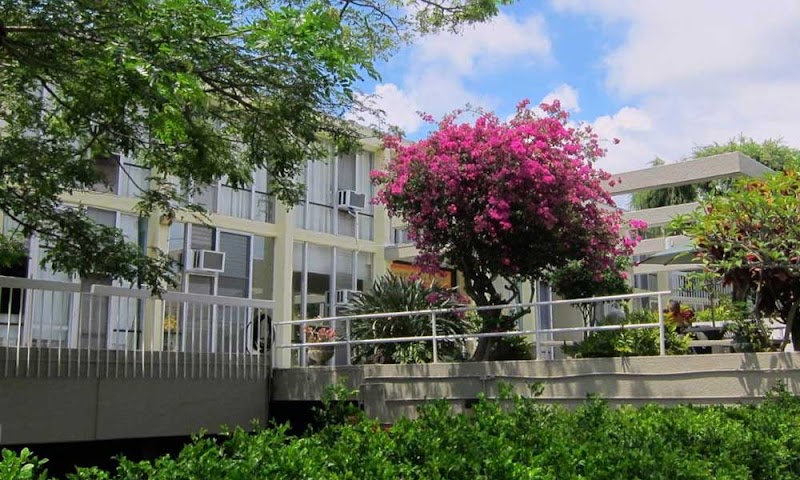
Who Owns and Operates The Of Honolulu?

THE CARE CENTER OF HONOLULU is owned by a for-profit company. For-profit facilities operate as businesses with obligations to shareholders or private owners. The facility operates independently rather than as part of a larger chain. With 182 certified beds and approximately 170 residents (about 93% occupancy), it is a mid-sized facility located in HONOLULU, Hawaii.
How Does The Of Honolulu Compare to Other Hawaii Nursing Homes?

Compared to the 100 nursing homes in Hawaii, THE CARE CENTER OF HONOLULU's overall rating (1 stars) is below the state average of 3.4, staff turnover (36%) is significantly lower than the state average of 46%, and health inspection rating (1 stars) is much below the national benchmark.

What Should Families Ask When Visiting The Of Honolulu?

Based on this facility's data, families visiting should ask: "Can I visit during a mealtime to observe dining assistance and food quality?" "How do you handle medical emergencies, and what is your hospital transfer rate?" "Can I speak with family members of current residents about their experience?"

Is The Of Honolulu Safe?

Based on CMS inspection data, THE CARE CENTER OF HONOLULU has a clean safety record: no substantiated abuse findings (meaning no confirmed cases of resident harm), no Immediate Jeopardy citations (the most serious violation level indicating risk of serious injury or death), and is not on the Special Focus Facility watch list (a federal program monitoring the lowest-performing 1% of nursing homes). The facility has a 1-star overall rating and ranks #100 of 100 nursing homes in Hawaii. While no facility is perfect, families should still ask about staff-to-resident ratios and recent inspection results during their visit.

Do Nurses at The Of Honolulu Stick Around?

THE CARE CENTER OF HONOLULU has a staff turnover rate of 36%, which is about average for Hawaii nursing homes (state average: 46%). Moderate turnover is common in nursing homes, but families should still ask about staff tenure and how the facility maintains care continuity when employees leave.

Was The Of Honolulu Ever Fined?

THE CARE CENTER OF HONOLULU has been fined $8,018 across 1 penalty action. This is below the Hawaii average of $33,159. While any fine indicates a compliance issue, fines under $50,000 are relatively common and typically reflect isolated problems that were subsequently corrected. Families should ask what specific issues led to these fines and confirm they've been resolved.

Is The Of Honolulu on Any Federal Watch List?

THE CARE CENTER OF HONOLULU is not on any federal watch list. The most significant is the Special Focus Facility (SFF) program, which identifies the bottom 1% of nursing homes nationally based on persistent, serious quality problems. Not being on this list means the facility has avoided the pattern of deficiencies that triggers enhanced federal oversight. This is a positive indicator, though families should still review the facility's inspection history directly.