LIFE CARE CENTER OF KONA
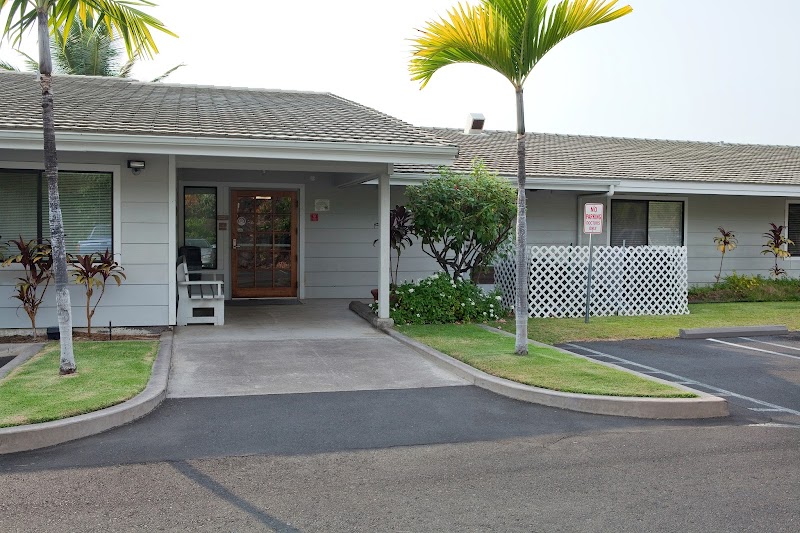
78-6957 KAMEHAMEHA III ROAD, KAILUA KONA, HI 96740 (808) 322-2790
For profit - Corporation 94 Beds LIFE CARE CENTERS OF AMERICA Data: November 2025
Trust Grade
45/100
#28 of 41 in HI
Last Inspection: September 2024

Within standard 12-15 month inspection cycle. Federal law requires annual inspections.

Overview

Life Care Center of Kona has a Trust Grade of D, which indicates below-average performance and raises some concerns about care quality. They rank #28 out of 41 nursing homes in Hawaii, placing them in the bottom half of facilities in the state, and #6 of 7 in Hawaii County, meaning only one local option is better. The facility is improving, with a reduction in reported issues from 15 in 2023 to 14 in 2024. Staffing is a strength, with a rating of 4 out of 5 stars and a turnover rate of 34%, which is slightly below the state average. However, there are some concerning incidents, such as one resident falling and sustaining a hematoma after being left unsupervised and another resident experiencing a delayed treatment after falling from bed, which resulted in serious harm. Additionally, the facility has less RN coverage than 87% of Hawaii facilities, which may impact the quality of care.

Trust Score
D
45/100
In Hawaii
#28/41
Bottom 32%
Safety Record
Moderate
Needs review
Inspections
Getting Better
15 → 14 violations
Staff Stability
○ Average
34% turnover. Near Hawaii's 48% average. Typical for the industry.
Penalties
○ Average
$27,612 in fines. Higher than 69% of Hawaii facilities. Some compliance issues.
Skilled Nurses
✓ Good
Each resident gets 54 minutes of Registered Nurse (RN) attention daily — more than average for Hawaii. RNs are trained to catch health problems early.
Violations
⚠ Watch
44 deficiencies on record. Higher than average. Multiple issues found across inspections.
★★★☆☆
3.0
Overall Rating
★★★★☆
4.0
Staff Levels
★★★★★
5.0
Care Quality
★★☆☆☆
2.0
Inspection Score
Stable
2023: 15 issues
2024: 14 issues

The Good

  • 4-Star Staffing Rating · Above-average nurse staffing levels
  • 5-Star Quality Measures · Strong clinical quality outcomes
  • Full Sprinkler Coverage · Fire safety systems throughout facility
  • No fines on record
  • Staff turnover below average (34%)

    14 points below Hawaii average of 48%

Facility shows strength in staffing levels, quality measures, fire safety.

The Bad

3-Star Overall Rating

Near Hawaii average (3.4)

Meets federal standards, typical of most facilities

Staff Turnover: 34%

12pts below Hawaii avg (46%)

Typical for the industry

Federal Fines: $27,612

Below median ($33,413)

Moderate penalties - review what triggered them

Chain: LIFE CARE CENTERS OF AMERICA

Part of a multi-facility chain

Ask about local staffing decisions and management

The Ugly 44 deficiencies on record

2 actual harm
Sept 2024 14 deficiencies
CONCERN (D) 📢 Someone Reported This

A family member, employee, or ombudsman was alarmed enough to file a formal complaint

Potential for Harm - no one hurt, but risky conditions existed

Report Alleged Abuse (Tag F0609)

Could have caused harm · This affected 1 resident

**NOTE- TERMS IN BRACKETS HAVE BEEN EDITED TO PROTECT CONFIDENTIALITY** Cross reference to F600, F610. On 09/22/24 at 12:08 PM, conducted an interview with R5 in the resident's room. R5 informed this ...

Read full inspector narrative →
**NOTE- TERMS IN BRACKETS HAVE BEEN EDITED TO PROTECT CONFIDENTIALITY** Cross reference to F600, F610. On 09/22/24 at 12:08 PM, conducted an interview with R5 in the resident's room. R5 informed this surveyor that on 07/16/24, R5 reported an incident to Registered Nurse (RN) 32 which included allegations of staff causing her intentional physical pain while using the pivot disc to transfer to and from the toilet. R5 confirmed she does not usually experience pain when using the pivot disc and reported the Alleged Perpertrator(AP) was willfully handling the resident roughly. R5 also reported that AP, who is normally speaks in a loud volume, was yelling in the resident's ear in a manner which caused her ear to feel numb and requested several times with AP for the staff to stop yelling in her ear. In addition to being handled in a rough manner and yelling in the resident's ear, R5 reported AP was upset and grumbling under her breath prior to assisting the resident and became increasingly more irritated with the resident and told the resident, You are so fussy, that's why no one wants to work with you. and informed the resident that there was a staff meeting about her. R5 also stated that she informed the Social Service Director (SSD) 1 that she felt like she was being abused by AP, two days after the incident occurred. R5 reported, she felt like SSD1 did not believe her and asked the resident if she had any bruises or marks, R5 replied she did not have physical evidence, but at the time AP did hurt her physically, was emotionally hurt by what the staff said to her, and felt like staff did not believe the resident or asked the resident about her account of the incident. R5 confirmed that facility did not interview her about the 07/16/24 incident with AP, it was only after she complained about the staff again on 08/06/24. During an interview with RN32 on 09/25/24 at 10:42 AM, staff stated the first time she became aware of the situation was on 07/16/24, when R5 rolled herself out of her assigned room quickly with AP following behind the resident's wheelchair, waving her hands, and loudly saying, I didn't do anything to her, she's (R5) going to complaint about me. RN32 also confirmed AP did not wheel R5 out of her assigned room and the resident was telling the staff to get away from her. RN32 stated it took approximately 30 minutes or more to verbally deescalate R5 because the resident was extremely upset about the incident between R5 and AP. After conducting an interview with RN32, both R5 and RN32's account of the incident was aligned and similar. RN32 stated that her first action was to separate R5 and AP, so AP was reassigned to another section of residents. Then, RN32 called the Director of Nursing (DON) and informed her of the incident. Then RN32 attended to R5 and calmed the resident down. RN32 reported that R5 was extremely upset and affected by the incident with AP and required a lot of time and attention to calm down R5. Also, it took R5 a couple of days to get back to her normal self and R5 regularly ruminated on the incident. During an interview with the Administrator and DON on 09/25/24 at 08:22 AM. During the interview, the DON confirmed she did not identiy the incident with R5 and AP on 07/16/24 as a potential abuse but viewed the situation as a customer service issue. DON reported R5 did not have any identifiable marks and did not tell staff she was abused. Inquired if DON was aware that AP called R5 fussy and told resident that was why no one wanted to work with her. DON confirmed AP admitted to saying this to R5 on 07/16/24 when she interviewed AP over the phone. DON stated she informed AP that it was not okay to speak to the residents in this manner and still did not identify it as potential abuse. Inquired if DON was aware that RN32 spent more than 30 minutes directly after incident to calm and deescalate R5. DON confirmed she was aware the RN32 spent time calming the resident down, and confirmed she did not identify that R5 could have potentially experienced psychosocial harm and stuck to her decision to treat the incident on 07/16/24 as a customer service issue. DON confirmed the incident on 07/16/24 was not reported because it was not identified as having a potential for abuse. Review of the Facility Reported Incident (FRI) #11120 (initial report date 08/06/24; completed report date 08/06/24) included the incident from 07/16/24. Based on interviews and record reviews the facility failed to report allegations of abuse of two residents (Residents (R)8 and R5) of 51 residents at the facility, to the facility administrator and/or state agency within two hours of being reported to staff by the resident. During the review of R8's allegation of abuse two facility staff were notified by R8, and the facility administrator was not notified abuse had occurred. Initial report of R8's allegation of abuse was submitted by the facility to the state agency on 09/24/24. The facility did not identify R5 allegations as having the potential for abuse and classified the incident as a customer service issue and did not report the incident within the two-hour timeframe. This deficient practice could affect all residents in the facility who have a reported or witnessed incident of abuse and the facility fails to notify the state agency within two hours. Findings include: 1) On 09/22/24 at 01:05 PM interviewed R8 and inquired if she has had any confrontations with other residents at the facility and she stated R23 comes over here sometimes and has run over my feet twice and called me an F'n bitch. Inquired what facility did about this and R8 stated they told me that they talked to him about it. Inquired who they were and R8 stated Social Worker and Activities Director. Inquired when this occurred and R8 was unable to recall the date this occurred and could not confirm if the resident still lived at the facility. On 09/22/24 Record Review (RR) of R8's Electronic Health Record (EHR) revealed she is a [AGE] year-old admitted to the facility on [DATE] with diagnoses that include, but are not limited to, acute respiratory failure with hypercapnia (higher than normal levels of carbon dioxide in the blood), type 2 diabetes mellitus, chronic pain syndrome, muscle weakness and difficulty in walking, not elsewhere classified. R8's Minimum Data Set (MDS) completed on 08/27/24 identified resident as having a Brief Interview for Mental Status (BIMS) of 15 identifying her as cognitively intact. On 09/24/24 at 11:15 AM requested from Administrator investigation that was conducted for R8's allegation of abuse from R23. Administrator stated she had not been told the incident was abuse, that it had been an accident. Surveyor explained R8 had reported R23 had run over her feet with his wheelchair two times and cursed at her when she said something to him. On 09/25/24 at 08:43 AM Administrator stated yesterday (09/24/24) she reported R8's allegation of abuse to State Agency Office of Health Care Assurance (OHCA). Administrator stated on 09/24/24 she interviewed R8 and called the police to take resident's statement. At this time inquired and Administrator confirmed she was not previously aware of the allegation of abuse from R23 to R8, she had not been informed this incident was abuse by staff and had been told it was an accident.
CONCERN (D) 📢 Someone Reported This

A family member, employee, or ombudsman was alarmed enough to file a formal complaint

Potential for Harm - no one hurt, but risky conditions existed

Investigate Abuse (Tag F0610)

Could have caused harm · This affected 1 resident

Based on interviews and record review, the facility failed to ensure all alleged violations are thoroughly investigated, in response to an allegation of abuse for one (Resident (R)5) sampled. On 07/16...

Read full inspector narrative →
Based on interviews and record review, the facility failed to ensure all alleged violations are thoroughly investigated, in response to an allegation of abuse for one (Resident (R)5) sampled. On 07/16/24, R5 reported an incident that the Alleged Perpetrator (AP) was rough with the resident's gait belt when assisting the resident during a transfer, yelling in the resident's ear, and told the resident she was fussy and that's why no one wanted to work with her. RN23 reported spent approximately 30 minutes deescalating R5 after she reported the incident to the Director of Nursing (DON). The DON conducted an interview only with AP, did not interview the resident, did not conduct a thorough investigation, did not identify the incident as having a potential for abuse (physical, verbal, and psychosocial harm), and classified the incident as a customer service issue. Two days after the incident, R5 informed the Social Service Director (SSD)1 that she felt like AP abused her on 07/16/24 and the facility did not initiate an investigation. As a result of this deficient practice, residents are at risk for more than minimal harm related to the facility not identifying the potential for abuse and conducting an immediate thorough investigation. Findings include: Cross Reference to F600- Free from Abuse, Neglect, and Misappropriation and F609- Reporting of Alleged Violation On 09/22/24 at 12:08 PM, conducted an interview with R5 in the resident's room. R5 informed this surveyor that on 07/16/24, R5 reported an incident to Registered Nurse (RN)32 which included allegations of staff causing her intentional physical pain while using the pivot disc to transfer to and from the toilet. R5 confirmed she does not usually experience pain when using the pivot disc and reported the Alleged Perpetrator (AP) was willfully handling the resident roughly. R5 also reported that AP, who is normally speaks in a loud volume, was yelling in the resident's ear in a manner which caused her ear to feel numb and requested several times with AP for the staff to stop yelling in her ear. In addition to being handled in a rough manner and yelling in the resident's ear, R5 reported AP was upset and grumbling under her breath prior to assisting the resident and became increasingly more irritated with the resident and told the resident, You are so fussy, that's why no one wants to work with you. and informed the resident that there was a staff meeting about her. R5 also stated that she informed the Social Service Director (SSD)1 that she felt she had been abused by AP, two days after the incident occurred. R5 reported, she felt like SSD1 did not believe her and asked the resident if she had any bruises or marks, R5 replied she did not have physical evidence, but at the time AP did hurt her physically, was emotionally hurt by what the staff said to her, and felt like staff did not believe the resident or asked the resident about her account of the incident. R5 confirmed that facility did not interview her about the 07/16/24 incident with AP, it was only after she complained about the staff again on 08/06/24. During an interview with RN32 on 09/25/24 at 10:42 AM, staff stated the first time she became aware of the situation was on 07/16/24, when R5 rolled herself out of her assigned room quickly with AP following behind the resident's wheelchair, waving her hands, and loudly saying, I didn't do anything to her, she's (R5) going to complaint about me. RN32 also confirmed AP did not wheel R5 out of her assigned room and the resident was telling the staff to get away from her. RN32 stated it took approximately 30 minutes or more to verbally deescalate R5 because the resident was extremely upset about the incident between R5 and AP. After conducting an interview with RN32, both R5 and RN32's account of the incident was aligned and similar. RN32 stated that her first action was to separate R5 and AP, so AP was reassigned to another section of residents. Then, RN32 called the Director of Nursing (DON) and informed her of the incident. Then RN32 attended to R5 and calmed the resident down. RN32 reported that R5 was extremely upset and affected by the incident with AP and required a lot of time and attention to calm down R5. Also, it took R5 a couple of days to get back to her normal self and R5 regularly ruminated on the incident. During an interview with the Administrator and DON on 09/25/24 at 08:22 AM. During the interview, the DON confirmed she did not identify the incident with R5 and AP on 07/16/24 as a potential abuse but viewed the situation as a customer service issue. DON reported R5 did not have any identifiable marks and did not tell staff she was abused. Inquired if DON was aware that AP called R5 fussy and told the resident that was why no one wanted to work with her. DON confirmed AP admitted to saying this to R5 on 07/16/24 when she interviewed AP over the phone. DON stated she informed AP that it was not okay to speak to the residents in this manner and still did not identify it as potential abuse. Inquired if DON was aware that RN32 spent more than 30 minutes directly after the incident to calm and deescalate R5. DON confirmed she was aware that RN32 spent time calming the resident down, and confirmed she did not identify that R5 could have potentially experienced psychosocial harm and stuck to her decision to treat the incident on 07/16/24 as a customer service issue. DON confirmed the incident on 07/16/24 was not investigated thoroughly because it was not identified as having a potential for abuse. Review of the Facility Reported Incident (FRI) #11120 (initial report date 08/06/24; completed report date 08/06/24) included the incident from 07/16/24.
CONCERN (D)

Potential for Harm - no one hurt, but risky conditions existed

Transfer Notice (Tag F0623)

Could have caused harm · This affected 1 resident

**NOTE- TERMS IN BRACKETS HAVE BEEN EDITED TO PROTECT CONFIDENTIALITY** Based on interview and record review, the facility failed to provide proper notification of transfer/discharge for two of four r...

Read full inspector narrative →
**NOTE- TERMS IN BRACKETS HAVE BEEN EDITED TO PROTECT CONFIDENTIALITY** Based on interview and record review, the facility failed to provide proper notification of transfer/discharge for two of four residents sampled for Hospitalization (Residents (R)1 and R8). Specifically, the facility failed to provide written notification of transfer/discharge to the residents or their representatives. This deficient practice has the potential to affect all residents at the facility who are discharged or transferred. Findings include: 1) R1 was admitted to the facility on [DATE]. On 07/16/24, R1 was transferred to an acute care hospital for gastrointestinal bleeding. Review of the Electronic Health Record (EHR) was conducted, and no documentation was found of the facility providing a written notification of transfer to R1 or his representative. Asked Administrator if a written notification was sent to R1's representative. Administrator said she will check the paper files. On 09/25/24 at 10:27 AM, Administrator was interviewed in the conference room. Administrator said she was not able to locate document to show written notification of R1's discharge was provided to R1's representative. 2) On 09/22/24 at 01:27 PM interviewed R8. Inquired if resident had been hospitalized while she lived at the facility and she stated, a couple of times. Asked R8 why she went to the hospital, and she stated one time when she was found unresponsive and in the in ICU for a couple of days and can't remember why for the other time she went to the ER and was admitted to the hospital. On 09/22/24 record review of R8's EHR found she is a [AGE] year-old admitted to the facility on [DATE]. Review of R8's Minimum Data Set (MDS) revealed she was admitted on [DATE], discharged on 08/09/24 and returned to the facility on [DATE] and discharged on 08/17/24 and admitted back to the facility on [DATE]. Review of R8's progress notes revealed she was discharged from the facility on 08/09/24 and sent to the emergency room for SOB (shortness of breath) and further evaluation. R8 returned to the facility on [DATE] and had been hospitalized for COPD (Chronic obstructive pulmonary disease). R8 was discharged on 08/17/24 when she was found unresponsive but breathing by facility staff. R8 was transferred to the emergency room and admitted to the hospital ICU (intensive care unit). R8 returned to the facility on [DATE] and had been hospitalized for acute-on-chronic hypoxemic and hypercapnic respiratory failure (occurs when there is not enough oxygen and too much carbon dioxide in the body leading to breathing to stop). On 09/25/24 at 08:45 AM requested from the Administrator copies of R8's discharge/transfer notification that was provided to R8 or her representative for her discharges on 08/09/24 and 08/17/24. On 10/10/24 at 01:02 PM in an email reply by the Administrator she was able to provide a copy of the discharge/transfer notice that was given to R8's representative for the 08/17/24 transfer. Administrator, stated in her email response, that she was not able to find the transfer notification form for 08/09/24.
CONCERN (D)

Potential for Harm - no one hurt, but risky conditions existed

Deficiency F0625 (Tag F0625)

Could have caused harm · This affected 1 resident

**NOTE- TERMS IN BRACKETS HAVE BEEN EDITED TO PROTECT CONFIDENTIALITY** Based on interview and record review, the facility failed to ensure written notification of the facility's bed hold policy was p...

Read full inspector narrative →
**NOTE- TERMS IN BRACKETS HAVE BEEN EDITED TO PROTECT CONFIDENTIALITY** Based on interview and record review, the facility failed to ensure written notification of the facility's bed hold policy was provided to three of four residents sampled for Hospitalization (Residents (R)1, R30 and R8). This deficient practice has the potential to affect all residents at the facility who are discharged to an acute care hospital. Findings include: 1) R1 was admitted to the facility on [DATE]. On 07/16/24, R1 was transferred to an acute care hospital for gastrointestinal bleeding. A review of the Electronic Health Record (EHR) was conducted, and no documentation was found of the facility providing a written notification of the bed hold policy to R1 or his representative. 2) R30 was admitted to the facility on [DATE]. On 07/01/24, R30 was transferred to an acute care hospital for an abscess to his AV (arteriovenous) fistula (surgical connection made between an artery and a vein used to access the blood for dialysis). A review of the EHR was conducted and no documentation was found of the facility providing a written notification of the bed hold policy to R30 or his representative. On 09/24/24 at 10:03 AM, requested from Administrator a copy of written notifications given to both R1 and R30 regarding the facility's bed hold policy when they were transferred to an acute care hospital. Administrator said she will check the paper charts. On 09/25/24 at 10:27 AM, Administrator said she was not able to locate the written notifications of the bed hold policy give to R1 and R30 in the paper charts. Review of the facility policy titled Bed-Hold Policy stated, . The Bed-hold policy should be given upon admission, upon transfer of a resident to the hospital . to ensure that the residents are made aware of the facility' bed-hold and reserve bed payment policy before and upon transfer to the hospital . notice must be provided to the resident, and if applicable the resident's representative, at the time of transfer, or in cases of emergency transfer, within 24 hours. 3) On 09/22/24 record review of R8's EHR found she is a [AGE] year-old admitted to the facility on [DATE]. Review of R8's progress notes revealed she was transferred to an acute care hospital two times in August 2024, once on 08/09/24 for SOB (shortness of breath) and further evaluation and on 08/17/24 when R8 was found unresponsive but breathing by facility staff. During this record review no documentation was found of the facility providing written notification of the bed hold polity to R8 or her representative. On 09/25/24 at 08:45 AM requested from Administrator copies of R8's written notifications of the bed hold policy for the transfers/discharges that occurred on 08/09/24 and 08/17/24. On 09/27/24 at 01:39 PM Administrator sent an email to surveyor stating she was unable to locate the bed hold policy forms for R8's transfers/discharges that occurred on 08/09/24 and 08/17/24.
CONCERN (D)

Potential for Harm - no one hurt, but risky conditions existed

Comprehensive Care Plan (Tag F0656)

Could have caused harm · This affected 1 resident

**NOTE- TERMS IN BRACKETS HAVE BEEN EDITED TO PROTECT CONFIDENTIALITY** 2) Review of R32's EHR documented, the resident has an order for, Norco Oral Tablet 5-325 MG (Hydrocodone-Acetaminophen) Give 1 ...

Read full inspector narrative →
**NOTE- TERMS IN BRACKETS HAVE BEEN EDITED TO PROTECT CONFIDENTIALITY** 2) Review of R32's EHR documented, the resident has an order for, Norco Oral Tablet 5-325 MG (Hydrocodone-Acetaminophen) Give 1 tablet by mouth every 4 hours as needed for pain, which is an opioid analgesic pain medication which acts on the central nervous system to relieve pain. Review of R32's care plan documented interventions did not include non-pharmacological interventions. On 08/25/24 at 08:22 AM, during an interview with the Administrator and the Director of Nursing, it was confirmed the CP did not include non-pharmacological interventions as an option for treatment of the resident's pain and it should have been included. Based on observation, record review (RR), and interview the facility failed to develop and implement a comprehensive care plan for two residents (Resident (R)8 and R32) sampled. R8 has a physician's order for 2 (two) liters/(per) minute of continuous oxygen via nasal cannula and a care plan was not developed for this medical intervention. R32 has a physician's order for an opioid pain medication and R32's care plan did not include non-pharmacological pain-relieving interventions. The deficient practice could affect all residents at the facility if the facility fails to develop and implement a comprehensive person-centered care plan for each resident to attain or maintain the resident's highest practicable physical well-being. Findings include: 1) On 09/22/24 at 01:05 PM, observed and interviewed R8 in her room with O2 (oxygen) tubing connected to an O2 concentrator and oxygen administered via nasal cannula at 2L/minute. Resident did not appear to be in distress. Tubing was noted to be long enough to go into the bathroom with her. On 09/25/24 at 08:10 AM during RR of R8's Electronic Health Record (EHR) found resident was admitted to the facility on [DATE] with the diagnosis of acute respiratory failure with hypercapnia. R8's Brief Interview for Mental Status (BIMS) score is 15 which identifies her as being cognitively intact. During this RR found R8 does not have a CP for her continuous O2 use. Review of R8's physician's orders found she has the following order: Oxygen at 2 liters/minute continuously per nasal cannula. Document every shift for sleep apnea, obesity hypoventilation syndrome which was written on 09/23/24. On 09/25/24 at 09:03 AM, reviewed with Administrator who confirmed R8 does not have a CP in place for her O2 use.
CONCERN (D)

Potential for Harm - no one hurt, but risky conditions existed

Accident Prevention (Tag F0689)

Could have caused harm · This affected 1 resident

**NOTE- TERMS IN BRACKETS HAVE BEEN EDITED TO PROTECT CONFIDENTIALITY** Based on observation and interview the facility failed to provide adequate supervision for one Resident (R)52 who was found outs...

Read full inspector narrative →
**NOTE- TERMS IN BRACKETS HAVE BEEN EDITED TO PROTECT CONFIDENTIALITY** Based on observation and interview the facility failed to provide adequate supervision for one Resident (R)52 who was found outside of the facility sitting in her wheelchair, by herself, at a table with her back facing the facility door. The deficient practice puts residents at risk for accidents if they are not provided proper and adequate supervision. Findings Include: On 09/23/24 at 04:30 Surveyors were leaving the facility and noticed a female resident was sitting outside of the facility in her wheelchair with her back facing the facility door. R52 called out I need help! Can you help me? Surveyor inquired what she needed and R52 stated she wanted to go back inside. Surveyor buzzed the front door and asked for staff to come and assist R52 back into the building. Facility staff came out to help R52 back into the unit. On 09/24/24 record review of R52's Electronic Health Record (EHR) found she was admitted to the facility on [DATE] and her diagnoses include, but are not limited to, history of hemiplegia and hemiparesis following cerebral infarction affecting right dominant side (stroke with weakness on the right side), difficulty in walking and legal blindness, as defined in USA. R52's Minimum Data Set (MDS) completed on 09/03/24 has her Brief Interview for Mental Status (BIMS) score at 13 out of 15 identifying her as Intact/borderline cognition. On 09/24/24 at 11:19 AM an interview was conducted with the Administrator. Inquired what had occurred with R52 the previous day (09/23/24) when she was left by herself outside the front of the facility. Administrator reported hospitality aide and the resident had an understanding when the resident was to return to the unit. Administrator reported the resident wanted to be in for dinner which is at about 5 PM. The resident meant go in at 4:00 PM for dinner. Inquired of Administrator how do residents notify staff inside if they need assistance when the resident is left outside the facility by themselves. Administrator confirmed the resident would not be able to notify staff because she is not able to move herself in her wheelchair and the facility does not have any signaling device outside the facility that communicates with staff inside the building. On 09/24/24 at 11:55 AM interviewed Hospitality Aide (HA). HA stated yesterday she took R52 outside after lunch to sit in front of the facility. Inquired what time this was and HS was not sure exactly when she took R52 outside and stated resident wanted to come back inside the facility at 4 PM. HA stated she finishes at 3 PM and she told the nurse before she left for the day. HA stated she checked on resident one last time at 2:57 PM and came back to the unit and told the nurse R52 wants to come in at 4 o'clock for dinner and HA said nurse stated ok staff would bring her in. On 09/24/24 at 12:27 PM, interviewed R52 who thanked surveyor for helping her. HA told them to bring me inside at 4 PM but they forgot. They always forget me. Inquired if this has happened before and R52 confirmed it has and stated When someone passes me outside, I ask them for help. It has happened before, but I cannot remember how many times. Inquired if she can notify staff that she wants to go inside if she is outside sitting at the table by herself and R52 stated I have no way of telling them. Only when someone passes by I ask them for help. R52 stated It is wonderful here but there are not enough people . to coordinate to bring me in on time. Sometimes we have three nurses and then none.
CONCERN (D)

Potential for Harm - no one hurt, but risky conditions existed

Pharmacy Services (Tag F0755)

Could have caused harm · This affected 1 resident

Based on interview and record review, the facility failed to ensure an account of all controlled drugs is maintained. Reconciliation of the controlled medication reconciliation sheet and the medicatio...

Read full inspector narrative →
Based on interview and record review, the facility failed to ensure an account of all controlled drugs is maintained. Reconciliation of the controlled medication reconciliation sheet and the medication documented a discrepancy between the count of the medication and the number of actual pills. As a result of this deficient practice, there is the potential for more than minimal harm. Findings include: On 09/24/24 at 09:57 AM, conducted an inspection of a medication cart with Licensed Practical Nurse (LPN)13. Review of R41's-controlled medication reconciliation sheet for Oxycodone HCl Oral Tablet 5 MG (Oxycodone HCl) documented 38 tablets. Counted the actual pills stored in the locked compartment with LPN13 which documented only 37 pills. Reviewed R41's Medication Administration Record (MAR) with LPN13. R41's MAR did not contain documentation the medication was administered to the resident. LPN13 reported R41 was administered Oxycodone HCl 5 mg at 07:30 AM for the resident's complaint of a pain level, 5 out of 10. LPN13 confirmed she should have updated the Controlled Medication Reconciliation sheet when the medication was initially removed from the locked container and the administration should have been documented in the MAR but was not. Review of the facility's policy and procedure, Administration of Medications (Reviewed 09/16/2024) documented, .f. Right Documentation .Controlled substances should be signed out from the descending count sheet and documented on the MAR for each routine and PRN (as needed) dose of medication administered.
CONCERN (D)

Potential for Harm - no one hurt, but risky conditions existed

Medical Records (Tag F0842)

Could have caused harm · This affected 1 resident

**NOTE- TERMS IN BRACKETS HAVE BEEN EDITED TO PROTECT CONFIDENTIALITY** Based on record review and interview the facility failed to assure two residents reviewed, of the 18 sampled, had accurate infor...

Read full inspector narrative →
**NOTE- TERMS IN BRACKETS HAVE BEEN EDITED TO PROTECT CONFIDENTIALITY** Based on record review and interview the facility failed to assure two residents reviewed, of the 18 sampled, had accurate information placed in their Electronic Health Record (EHR). Review of R20's Advanced Health Care Directive (AHCD) found it was signed by the agent the resident had selected to be his decision maker and not by the resident. R2's physician documented resident as [AGE] years old over a three-year span, identified the resident as full code when he is a Do Not Resuscitate (DNR) and documented resident did not have any allergies when he is allergic to Clindamycin. The deficient practice puts all residents at risk if the resident's AHCD is not filled out correctly prior to it being utilized by the facility and resident's health status is not accurately documented by the physician. Findings Include: 1) On 09/23/24 during record review of R20's EHR found there is a copy of his AHCD which shows his agent, the person named as the one making healthcare decisions for R20 signed the form where R20 should have signed. On 09/24/24 at 12:05 PM, interviewed Administrator. Shared R20's AHCD was not signed by him instead was signed by his agent. Administrator reviewed AHCD for 20 and confirmed he should have signed the AHCD and not his agent. 2) On 09/24/24 during record review of R2's Electronic Health Record (EHR) found Practitioner Notes written by R2's physician stating resident as a [AGE] year-old male for all the provider notes he completed from 03/12/21 - 09/11/24. Physician also has documented in Practitioner Notes R2's Allergy List: No known medication allergies. No known allergies. but EHR lists Clindamycin as an allergy. R2's EHR also shows he is a DNR (Do Not Resuscitate) with Comfort Measures with a Physician Orders for Life Substantiating Treatment (POLST) filled out and signed by his guardian and physician on 02/17/21. R2's physician's last Practitioner Note dated 09/13/2024 lists resident's Code Status: Full Code. On 09/26/24 at 03:35 PM an interview was conducted with R2's physician who confirmed he had not updated R2's age as he got older, physician confirmed the software used to write the Practitioner Notes does not interface with Point Click Care (PCC) and the updates are not done automatically such as a resident's age or changes that are made in PCC such as the resident's allergies and code status. Physician stated these were errors he made.
CONCERN (D)

Potential for Harm - no one hurt, but risky conditions existed

Infection Control (Tag F0880)

Could have caused harm · This affected 1 resident

Based on observations, interviews, and record reviews, the facility failed to implement infection prevention and control measures when providing care for residents on isolation. The facility did not e...

Read full inspector narrative →
Based on observations, interviews, and record reviews, the facility failed to implement infection prevention and control measures when providing care for residents on isolation. The facility did not ensure that staff were wearing applicable personal protective equipment (PPE) when providing care to Resident (R)1, who was on Enhanced Barrier Precautions (EBP), and performing hand hygiene between glove changes. This deficient practice placed the residents at risk for the potential spread of infections and communicable diseases. Findings include: On 09/22/24 at 10:43 AM, observed a sign by the entrance of R1's room that stated, Enhanced Barrier Precautions . Everyone Must: . Wear gloves and a gown for the following High-Contact Resident Care Activities. Dressing . Transferring . Wound Care: any skin opening requiring a dressing . On 09/23/24 at 11:00 AM, observed RN (registered nurse) Care Manger (CM) and Certified Nursing Assistant (CNA)23 change the dressing to R1's open wounds to his back and buttocks. CM and CNA23 entered R1's room without wearing a gown. CM placed the supplies on the bedside table, performed hand hygiene and donned a clean pair of gloves. CM then removed the old dressing, assess the wound, removed her gloves and donned new gloves without performing hand hygiene. CM then cleaned the wound, applied a cream, measured the wound and changed gloves again without performing hand hygiene. After applying a new dressing to the wound, CM changed gloves again without performing hand hygiene and helped CNA23 change R1's clothes and transfer him from the bed to his wheelchair using the mechanical lift. Both CM and CNA23 were not wearing a gown. On 09/24/24 at 02:41 PM, an interview was conducted with the Infection Preventionist (IP) in her office. IP confirmed that both the CM and CNA23 should have been wearing a gown while changing the dressing, changing R1's clothes and transferring him to his wheelchair. IP added that staff were trained to perform hand hygiene with either the alcohol-based hand rub or soap and water after removing their gloves. Review of facility policy titled, Enhanced Barrier Precautions stated, . indicated for residents with the following: . Wounds and/or indwelling medical devices even if the resident is not known to be infected or colonized . Review of facility policy titled hand Hygiene stated, . perform hand hygiene (even if gloves are used) in the following situations: . After removing personal protective equipment (e.g., gloves, gown, eye protection, face mask) .
CONCERN (D)

Potential for Harm - no one hurt, but risky conditions existed

Deficiency F0883 (Tag F0883)

Could have caused harm · This affected 1 resident

Based on record review and staff interviews, the facility failed to ensure pneumococcal vaccine was offered to one of the five residents (Resident (R)1) in the sample. This deficient practice placed t...

Read full inspector narrative →
Based on record review and staff interviews, the facility failed to ensure pneumococcal vaccine was offered to one of the five residents (Resident (R)1) in the sample. This deficient practice placed the resident at risk for acquiring, transmitting, and developing possible complications from pneumococcal disease. Findings include: Review of the Electronic Health Record (EHR) of R1 was conducted. Vaccination tab of the EHR had the records of all vaccines administered to the R1 including vaccines not given at the facility. Review of the vaccination records revealed that R1 has not received the pneumococcal vaccine. On 09/24/24 at 02:09 PM, a concurrent interview and record review was conducted with the Infection Preventionist (IP) in her office. Asked IP if there were any records or scanned documents in the EHR to show if R1 was given the pneumonia vaccine or if he declined the vaccine. IP was not able to find a consent or declination in the EHR and said will ask Administrator if there was one paper in the paper chart. On 09/24/24 at 03:29 PM, Administrator confirmed that R1 was not offered the pneumonia vaccine yet and will contact family representative to get consent. Review of the facility policy titled, Influenza Vaccine & Pneumococcal Vaccine Policy for Residents stated, . Each resident should be offered pneumococcal immunization, unless the immunization is medically contraindicated or the resident has already been immunized .
CONCERN (E)

Potential for Harm - no one hurt, but risky conditions existed

Resident Rights (Tag F0550)

Could have caused harm · This affected multiple residents

**NOTE- TERMS IN BRACKETS HAVE BEEN EDITED TO PROTECT CONFIDENTIALITY** Based on observations and interviews, the facility failed to ensure residents dignity for four residents (Resident (R)14, R156, ...

Read full inspector narrative →
**NOTE- TERMS IN BRACKETS HAVE BEEN EDITED TO PROTECT CONFIDENTIALITY** Based on observations and interviews, the facility failed to ensure residents dignity for four residents (Resident (R)14, R156, R35, and R5) sampled. Residents were observed and/or reported having to wait 25 minutes or more for staff to address the resident's call lights and/or provide care as needed by the resident. As a result of this deficient practice, resident is at risk for more than minimal harm. Findings include: 1) On 09/22/24 at 10:58 AM, observed R14's call light on as this surveyor walked onto the unit. R14's room is the first resident room on the left after entering through the unit doors. No staff were visible in the hallway or at the nurse's station. At 11:15 AM, R14's call light was still on, and no staff were observed on the unit. This surveyor walked down the hallway and observed Licensed Practical Nurse (LPN)13 assisting another resident in the room. Then another staff entered the unit (through the unit doors), look up at R14's activated call light, then proceeded to go into the break room without checking in on R14. At 11:17 AM, LPN13 walked past R14's room, call light still activated, did not check on the resident or acknowledge the resident when walking past R14's room. At 11:19 AM, Certified Nurse Aide (CNA)6 entered the unit, walked past R14's room, did not look into the resident's room, and walked right past the door without acknowledging R14 or checking in to see if the resident was safe. At 11:21 AM, LPN13 entered R14's room and addressed R14. In a later interview with LPN13, it was confirmed there is not enough staff to provide care and/or address resident's call lights when staff are on their lunch break, especially on the weekends. Review of R14's most recent quarterly Minimum Data Set (MDS) with an Assessment Reference Date (ARD) of 06/20/24, Section C- Cognitive Patterns, Brief Interview for Mental Status (BIMS) score was 11, indicating R14 has moderate cognitive impairment. Section GG, Functional Abilities and Goals, documented R14 is dependent (helper does all of the effort) on staff for toileting hygiene, sitting to lying (ability to move from sitting on side of the bed to lying flat on the bed, and lying to sitting. R14 requires substantial/maximal assistance (helper does more than half of the effort) personal hygiene, rolling left and right, and upper and lower body dressing. 2) On 09/22/24 at 11:43 AM, conducted an interview with R156 in the resident's room. R156 was admitted to the facility on [DATE] for short-term rehabilitation and physical therapy after knee surgery. R156 was alert and oriented to person, place, time, and situation during the interview. R156 reported waiting 45 minutes to an hour for staff to answer the resident's call light. She stated that no one came in to check on what she needed and reported longer wait times on the weekend, especially on the evening and night shifts. R156 stated that she can tell when she must go to the toilet and requires staff's assistance to get to the bathroom but cannot hold herself for 45 minutes and ended up urinating in the bed. R156 said that she felt humiliated having to use the bathroom in her bed and she can't always get the help she needs when she needs it so she asked them for a bedpan so she wouldn't have to urinated on herself or in a diaper. R156 expressed worry that because there is not enough staff to help her up when she needs to go to the bathroom and less opportunities to get out of bed for short distances, it will lengthen her rehabilitation time. 3) On 09/23/24 at 09:35 AM, this surveyor was seated at the end of the hall, near R35's room and observed the resident's call light was activated as evidenced by the activated light about the room door. At 09:40 AM, observed Non-Certified Nurse Aide (NCNA)7 in another room changing the linen. From 09:35 AM to 10:01 AM, 13 staff, which included the Director of Nursing (DON) and the Administrator, passed by the resident's room with the activated call light and did not acknowledge R35 or check to ensure the resident was safe. At 10:01 AM, NCNA addressed R35's call light. During an interview with R35 on 09/23/24 at 10:36 AM, the resident confirmed he often waits 25 minutes or more for staff to answer his call light. R35 reported feeling frustrated because he can see staff walking past his room and hear him calling out, but staff keep walking by. R35 stated that on some occasions, he has had to wait for over an hour for staff to answer my call light, it makes me feel less than and like I don't matter. Review of R35's most recent quarterly MDS with an ARD of 09/19/24, Section C- Cognitive Patterns, BIMS score was 13, indicating the resident is cognition is intact. Section GG, Functional Abilities and Goals, documented R35 is dependent (helper does all the effort) on staff for toileting hygiene, shower/bath, transferring to any surface, and lower body dressing. R35 requires substantial/maximal assistance (helper does more than half of the effort) for personal hygiene, rolling left and right, and upper body dressing, 4) Review of R5's most recent quarterly MDS with an ARD of 07/18/24, Section C- Cognitive Patterns, BIMS score was 15, indicating the resident's cognition is intact. Section GG, Functional Abilities and Goals, documented. R5 requires substantial/maximal assistance (helper does more than half of the effort) for toilet transfer and transitioning from sitting to standing. During an interview with R5 on 09/22/24 at 11:58 AM, R5 reported that she often must wait a long time for staff to answer her call light and if staff are busy, staff do not communicate with the resident to let her know they are busy and will be right with her or check to make sure she was safe. R5 stated, My call light could be on, and staff will walk right past my room, I can see them walking past the door and they don't even check to see that I'm safe. I could've fallen and been hurt, and staff wouldn't know. R5 reported on the weekends and nights it is not uncommon to have to wait 30 minutes or more for staff to answer your call light or address you. R5 informed this surveyor that she is aware the facility is short on the weekends, but staff should at minimum check to see the resident is okay and what they need, instead of having the resident wait with no idea if staff are aware that her call light is on and provide a timeframe for when the staff will be able to help the resident.
CONCERN (E) 📢 Someone Reported This

A family member, employee, or ombudsman was alarmed enough to file a formal complaint

Potential for Harm - no one hurt, but risky conditions existed

Free from Abuse/Neglect (Tag F0600)

Could have caused harm · This affected multiple residents

**NOTE- TERMS IN BRACKETS HAVE BEEN EDITED TO PROTECT CONFIDENTIALITY** 2) Cross Reference to F609 Reporting of Alleged Violation and F610- Investigate / Prevent / Correct Alleged Violation Review of...

Read full inspector narrative →
**NOTE- TERMS IN BRACKETS HAVE BEEN EDITED TO PROTECT CONFIDENTIALITY** 2) Cross Reference to F609 Reporting of Alleged Violation and F610- Investigate / Prevent / Correct Alleged Violation Review of R5's most recent annual Minimum Data Set (MDS) with an Assessment Reference Date (ARD) of 04/26/24 and most recent quarterly MDS with an ARD of 07/18/24 documented, Section C. Cognitive Patterns, scored 15 out of 15 on the Brief Interview for Mental Status (BIMS), indicating the resident's cognition is intact. Section GG. Functional Abilities and Goals. GG.0170 Mobility, documented R5 requires substantial/maximal assistance- Helper does more than half the effort for sit to stand (the ability to come to a standing position from sitting in a chair, wheelchair, or on the side of the bed), Chair/bed-to-chair transfer (ability to transfer to and from a bed to a chair/wheelchair), toilet transfer (the ability to get on and off a toilet or commode), and Tub/shower transfer (the ability to get in and out of a tub/shower. Review of a Facility Reported Incident (FRI) #11120 (initial report date 08/06/24; completed report date 08/09/24), dated 08/06/24, for an allegation of staff to resident abuse which occurred on 07/16/24 at 02:00 PM. The report documented on 08/06/24, R5 reported to the Director of Nursing and the Executive Director that she felt as though she had been abused by AP. An abuse investigation was initiated, and AP has been suspended pending investigation. The completed report (08/09/24) documented, R5 reports that she felt as though the CNA(AP) abused her on 08/09/24 although the incident happened on 07/16/24. The facility documented that it wasn't until the 08/06/24 incident that they became aware of how R5 felt about the incident on 07/16/24. The report documented on 07/16/24, AP was assisting R5 to the bathroom and there was a discrepancy between how AP was completing the transfer and the resident's preference of only locking one side of the wheelchair to transfer in a manner which the resident felt comfortable and safe. As a result of the disagreement on mode of transferring the resident, AP claimed R5 was yelling at her, and AP made a comment about R5 being fussy and this is why staff do not want to work with her. R5 felt as if AP was shaking the resident while assisting her with maneuvering in the pivot disc which caused her pain. After the encounter R5 then asked to see the manager and AP assisted R5 to Registered Nurse (RN)32. RN32 reported the incident to the DON and the DON reviewed customer service with AP and reported she was better. The next few days R5 continued to improve and seemed to be back to her normal self. Social Service Director (SSD)1 spoke to R5 on 07/18/24, no concerns were brought to her attention. On 08/06/24, R5 overheard staff saying AP said R5 refused lunch, when in fact R5 had not refused lunch and was waiting for it to be delivered. R5 became upset about the situation and while the nurse attempted to deescalate the situation, R5 reported that she was upset because the incident that happened on 07/16/24, she then added in the pieces about being yelled at and shaken around making her feel abused. The nurse notified the DON, an abuse investigation was promptly started, AP was suspended pending investigation, police, and Adult Protective Service (APS) was notified. The facility continued the investigation by conducting interviews with the resident and staff. no concerns were related to AP, additional education was completed with AP regarding communication and care are without concerns. Informed AP she would not be assigned to R5 in the foreseeable future. On 09/22/24 at 12:08 PM, conducted an interview with R5 in the resident's room. The interview with R5 and the facility's completed report were different. R5 stated on 07/16/24 she was abused physically and verbally when AP assisted the resident to the toilet. R5 stated she had not been feeling good (in good health) that day and took a nap. At approximately, 02:00-02:30 PM, AP entered the room and assisted the resident to the bathroom to use the toilet. R5 stated that upon entering the room, AP appeared to be upset about something and was grumbling about something under her breath which R5 could not understand and was mumbling prior to helping R5 to the bathroom. During the transfer, R5 requested for AP to lock only one wheel of the wheelchair instead of two due to the set-up of the bathroom and the way the wheelchair needs to move in relation to the pivot disc. R5 reasoned that with both wheels locked it is a difficult position for R5 and she does not feel safe before she sat into the wheelchair. AP informed the resident that she had to lock both wheelchair wheels and R5 insisted on her preference to only lock one wheel. R5 reported AP became frustrated over R5's insistence of locking one wheel only and AP began to get louder out of frustration, to the point AP began to yell in R5's ear. R5 explained when AP picked her up using the gait belt, AP was rougher than normal and shaking the pivot disc bars in a manner which caused R5 to experience pain in her back. R5 reported she had not been handled in this manner by AP or other staff before when using the pivot disc and did not feel safe with AP. R5 recalled that AP is normally louder than other staff, but it wasn't that she was speaking loudly or AP's positioning to the resident, it was more than that, she was yelling in her ear, and she asked AP to stop yelling in her ear. AP then told R5,You know that meeting was all about you. You're so fussy, that's why no one wants to work with you. R5 recalled that all she wanted to do was to get safely into her wheelchair to get away from AP. R5 reported that as soon as she got into her wheelchair, she began wheeling herself out of the room and AP followed behind the resident, waving her hands in the air, mockingly yelling in the hallway, Yeah here she comes, coming to complaint about me, I didn't do anything. R5 reported the incident to Registered Nurse (RN)32 and RN32 took the time and care to calm R5 down. R5 reported AP was yelling in her ear as she wheeled herself out of the room. I was just telling AP of my preferences, what works for me, and how other staff transfer me. I felt like she was abusing me with her words, yelling into my ear, and her attitude towards me, and then shaking me with the gait belt which caused me pain. R5 stated that when she reported this incident on 07/16/24 to the nurse, the Director of Nursing (DON) or the Administrator did not come to talk to me to get my side of what happened or to see how I was feeling after the incident. It's like they did not believe me. R5 said that she told SSD1 about the incident and SSD1's response to her was that there were no marks or bruises to support the resident's claim that she was abused. Inquired if the DON or Administrator spoke with her (R5) after the incident on 07/16/24. R5 confirmed the DON did not speak to her to see what happened, she only spoke to AP. R5 stated she repeatedly inquired with the DON about the education and/or training AP received because of the 07/16/24 incident. R5 stated the DON informed her that AP received training but refused to provide the resident with the materials used in the training. R5 reported she felt unsupported, and the DON and Administrator did not believe or was interested her version of events on 07/16/24 and that the DON had already made up her mind that AP did not abuse her. R5 stated when AP told her Nobody wants to work with her it really affected her mood, R5 expressed she started to feel depressed and sad. R5 said, I depend on staff to go to the toilet, for my food, and care and to hear staff say that to you makes you feel less than and when the DON had already made up her mind and couldn't be bothered, how do I trust the DON to have my best interest in mind. I have nowhere else to go, this is my home, and it doesn't feel good to be treated this way and not liked by staff. During this interview, R5 was visibly affected by the 07/16/24 incident. R5's voice was shaky, cried, appeared to be in low spirit, and took breaks to compose herself. R5 stated, I know that I am particular about somethings, but those things don't change, and they are not unreasonable, for example, I only like to drink filter water, because of the quality of the unfiltered water, I don't feel like that is a new or unreasonable request. On 09/25/24 at 08:22 AM, conducted an interview with the DON and Administrator in the conference room regarding the incident on 07/16/204 with AP and R5. DON stated she was notified of the incident on 07/16/24 by RN32. DON confirmed she only spoke to AP about the incident and did not conduct an interview with R5 to get the resident's perspective. DON confirmed AP admitted that she told R5 that she was fussy, and no one wanted to work with her. Asked the DON if AP's statement to R5 could be identified as potential verbal abuse due to AP making a non-professional statement that any reasonable person would be offended by, there was conflict within the situation between R5 and AP, and the resident was dependent on staff to maneuver onto the toilet. DON stated she did not see it as verbal abuse because the resident is known to be picky about what she likes and how she wants things done, for example, she only likes filtered water and R5 gets upset when she's given another type of water. DON was firm that AP making that statement was not verbal abuse by AP and it was a customer service matter. Referred to the report which documented it took a few days for R5 to return to her baseline behavior. Inquired about the type of education and training AP received because of this incident. DON stated AP received education and training. Requested for the DON to provide a copy of the material used to educate and train AP. DON then stated, there was no formal education or training, when the DON spoke to AP about the incident, AP was informed to stay away from the resident and that was not an appropriate way to speak to a resident. On 09/25/24 at 08:56 AM, conducted an interview with SSD1 regarding the incident. SSD1 confirmed she spoke to R5 a couple of days after the incident. SSD1 stated that when there is an investigation, it was her role to speak to the residents. SSD1 reported AP was educated on customer service because of the incident but did not know what the education was comprised of. SSD1 confirmed R5 told SSD1 that AP abused her and confirmed that she did not see any marks on the resident and discounted the resident's allegation of abuse because the DON was handling the incident as a customer service issue. SSD1 confirmed R5 was upset about what AP said to her. On 09/25/24 at 09:31 AM, conducted an interview with RN32. RN32 recalled the incident and stated she saw R5 wheeling down the hallway and AP was following behind R5, saying that R5 is going to complain about her now. RN32 stated R5 was visibly upset and told AP to give the resident some space. RN32 confirmed R5 reported AP was yelling in her ear so loud the resident stated her ear canals were numb, AP told the resident she's so fussy and that's why no one wants to work with her, and that when AP was maneuvering the resident on the pivot disc, she was doing it in a manner that hurt the resident. RN32 stated, R5 was so upset over the incident that it took RN32 approximately 35 minutes to deescalate R5 after the incident. Based on interviews and record review, the facility failed to ensure the resident's right to be free from abuse for two (Residents (R)8 and R5) sampled. R8 informed two different staff that R23 had run over her feet twice with his wheelchair, then cursed at R8 when she responded verbally to R23. On 07/16/24, an incident occurred where R5 informed staff that the Alleged Perpetrator (AP) caused her pain by handling the resident's gait belt roughly when transferring the resident to the toilet, AP yelled in R5's ear causing the resident numbness in her ear canal, and AP told R5 that the resident is fussy and that's why no one (staff) wants to work with her in response to the resident informing the staff of her preferences for transferring on and off the toilet. R5 reported because of R5 not doing what the staff wanted, AP deliberately called the resident fussy and told her no one wanted to help the resident, who is dependent on staff to transfer on and off the toilet. As a result of this deficient practice, residents are at risk for the potential of more than minimal harm. Findings include: Willful, as defined at 483.5 in the definition of abuse, and means the individual must have acted deliberately, not that the individual must have intended to inflict injury or harm. Guidance for 483.12(a)(1) documents, All staff are expected to be in control of their own behavior, are to behave professionally, and should appropriately understand how to work with the nursing home population. A facility cannot disown the acts of staff, since the facility relies on them to meet the Medicare and Medicaid requirements for participation by providing care in a safe environment .It is also not acceptable for an employee to claim his/her action was reflexive or a knee jerk reaction and was not intended to cause harm. Retaliation by staff is abuse, regardless of whether harm was intended . Cross Reference to F609 Reporting of Alleged Violation 1) On 09/22/24 at 01:05 PM an interview was conducted with R8. Inquired if any resident had ever hurt or abused her and R8 stated a resident comes over here sometimes and has run over my feet twice and he called me an F'n bitch. Inquired if she had reported this to any staff at the facility and she stated she reported it to two staff, the Activities Director and the Social Worker. Inquired when this occurred and R8 was unsure of the date. Inquired if the resident still lives in the facility and R8 was not sure. On 09/22/24 Record Review (RR) of R8's Electronic Health Record (EHR) revealed she is a [AGE] year-old admitted to the facility on [DATE] with a diagnosis that include, but are not limited to, acute respiratory failure with hypercapnia (higher than normal levels of carbon dioxide in the blood), Type 2 diabetes mellitus, chronic pain syndrome, muscle weakness and difficulty in walking, not elsewhere classified. R8's Minimum Data Set (MDS) completed on 08/27/24 identified her as having a Brief Interview for Mental Status (BIMS) score of 15 out of 15 identifying her as cognitively intact. On 09/24/24 at 08:45 AM requested facility investigation for reported resident to resident abuse (R23 towards R8) from Administrator. Administrator stated there was no investigation for this incident because it had been reported by staff as an accident. On 09/25/24 at 11:15 AM interview was conducted with the Administrator who stated yesterday (09/24/24) she reported the incident to the State Agency Office of Health Care Assurance (OHCA). Administrator stated she interviewed R8 and called the police to ask them to come and take resident's statement. Administrator stated she was not previously aware of the allegation(s) of abuse that occurred from R23 to R8, she had not been informed this incident was abuse, she was told it was an accident. On 09/25/24 at 09:53 AM interviewed Human Resource Director (HRD). Inquired of HRD when staff do abuse training and she stated upon hire and annually. Requested a copy of all staff's current abuse training dates. She stated she would provide the dates of staff's abuse training. On 09/27/24 at 01:39 PM Administrator provided a copy of staff's dates for abuse training by email. On 09/27/24 review of facility staff abuse-training data revealed a total of 76 staff listed, 25 staff were not current with this training making this 33% of staff outdated with their abuse training. Review of facility policy found the following Protection of Residents: Reducing the Threat of Abuse & Neglect . Position Statement & Guidelines . Residents must not be subjected to abuse by anyone. This includes but is not limited to: staff, other residents, consultants, volunteers, staff from other agencies serving our residents, family members, the resident representative, friends, or any other individuals. Policy . This facility has procedures in place to provide protection for the health, welfare, and rights of each resident residing in the facility. These procedures include, but are not limited to, the following seven components: 1. Screening 2. Training 3. Prevention 4. Identification 5, Investigation 6. Protection 7. Reporting and Response . Reporting and Response . 2. All associates are mandated to immediately report suspected resident abuse and/or neglect to their immediate supervisor and/or facility representative. 3. All alleged or suspected violations involving mistreatment, abuse, neglect, injuries of unknown origin (e.g. bruising and skin tears) will be immediately reported to the administrator and/or director of nursing. 10. The administrator, director of nursing, or designated representative will complete an investigation of the incident including a written summary of the findings no later than five (5) working days after the reported occurrence.
CONCERN (F)

Potential for Harm - no one hurt, but risky conditions existed

Deficiency F0730 (Tag F0730)

Could have caused harm · This affected most or all residents

Based on interview and record review the facility failed to perform annual performance reviews with their Certified Nurse Aides (CNAs) in identifying any weaknesses they may have and address them with...

Read full inspector narrative →
Based on interview and record review the facility failed to perform annual performance reviews with their Certified Nurse Aides (CNAs) in identifying any weaknesses they may have and address them with in-service education. This deficient practice puts all the residents in the facility at risk for not receiving quality care from CNAs who have had their weaknesses identified and education provided that enhances the resident's life. Findings Include: On 09/25/24 at 11:04 AM an interview was conducted with the Director of Nursing (DON) and Administrator. Inquired if DON does annual performance reviews with CNAs and she stated, they are currently sitting on my desk. Inquired again, yes or no, if this was done and DON stated no. Requested from the Administrator a list of facility CNA names, date last performance review was done and next performance review is due. On 09/27/2024 at 01:39 PM an email was sent by the Administrator who provided a copy of the facility CNA names, date last performance review was done and when the next performance review is due. Review of the information provided revealed the following: Facility has 24 CNAs. 8 of the 24 CNAs are new hires and their annual performance review is due in 2025. 13 of the 24 CNAs are outdated with their annual performance review from the last time they had an annual performance review done, most as far back as 05/21. 16 of the 24 CNAs are outdated with their next review which was due either 05/24 or 06/24.
CONCERN (F)

Potential for Harm - no one hurt, but risky conditions existed

Food Safety (Tag F0812)

Could have caused harm · This affected most or all residents

Based on observation, record review and interview, the facility failed to monitor the temperature for the refrigerator and freezer to ensure the foods are stored in accordance with professional standa...

Read full inspector narrative →
Based on observation, record review and interview, the facility failed to monitor the temperature for the refrigerator and freezer to ensure the foods are stored in accordance with professional standards. The facility also failed monitor the disinfectant level for the dishwasher to ensure the dishes used to serve food were appropriately sanitized. This deficient practice placed all the residents in the facility at risk for possible foodborne illnesses. Findings include: On 09/22/24 at 10:01 AM, initial brief tour of the kitchen was conducted. Observed a document in a clear plastic sleeve on the wall between the walk-in refrigerator and freezer titled Refrigerator/Freezer Temperature Log. Month and year section of the log was blank but when asked [NAME] (C)6 if the log was for the current month, she said, Yes, it's for September. When asked how often they document the temperatures, C6 said, Twice a day. Observed missing entries for the morning checks on the following dates: 09/19/24, 09/20/24, and 09/21/24. Missing entries were also noted for the afternoon checks on the following dates: 09/11/24, 09/12/24, 09/18/24, and 09/19/24. Asked C6 what the importance is for checking the temperature, C6 said, To make sure the temperature is okay. On 09/22/24 at 10:13 AM, observed Dietary Aide (DA)7 loading the dishwasher. Observed a paper log a on the wall titled Low Temperature Dish Machine Log. Asked DA7 how often are they supposed to check and log the temperature and disinfectant level for the dishwasher. DA7 said three times a day when they use the machine. Asked DA7 if the dishwasher was used on the dates with missing entries on the log. DA7 said they use the dishwasher three times a day and the staff forgot to complete the log on those days. The log had missing entries for the following dates: 09/01/24, 09/02/24, 09/08/24, 09/09/24,.09/10/24, 09/15/24,.09/16/24, 09/17/24, 09/18/24, 09/19/24, 09/20/24 and 09/21/24. On 09/25/24 at 08:49 AM, an interview was conducted with the Nutrition Coordinator (NC) in the kitchen. NC confirmed that the staff are supposed to complete the refrigerator and freezer log twice a day, and the dishwasher log three times a day to ensure the temperatures and disinfectant levels are in range. Review of the facility policy titled Food Safety stated, . Temperatures are recorded at least twice daily on the Refrigerator/Freezer Temperature Log using an inside thermometer . any problems will be reported immediately . Review of the facility policy titled Sanitation and Maintenance stated, . The temperature and parts per million (PPM) of the sanitizer (50-100 ppm for chlorine) will be recorded on the Low Temperature Dish Machine Log a minimum of three times per day.
Sept 2023 15 deficiencies 2 Harm
SERIOUS (G)

Actual Harm - a resident was hurt due to facility failures

Accident Prevention (Tag F0689)

A resident was harmed · This affected 1 resident

**NOTE- TERMS IN BRACKETS HAVE BEEN EDITED TO PROTECT CONFIDENTIALITY** Based on observations, record reviews and staff interviews, the facility failed to ensure adequate supervision and assistance to...

Read full inspector narrative →
**NOTE- TERMS IN BRACKETS HAVE BEEN EDITED TO PROTECT CONFIDENTIALITY** Based on observations, record reviews and staff interviews, the facility failed to ensure adequate supervision and assistance to prevent accidents for two Residents (R)8 and R36 sampled. As a result of these deficient practices 1) R8 fell and sustained a hematoma to the right side of her forehead and swelling of the right side of her face and 2) R36 was placed at risk for falling when being transported in a wheelchair that had no footrests. Findings include: (Cross Reference to F656: Develop/Implement Comprehensive Care Plan) 1) On 09/17/23 at 11:17 AM, observed R8 in her room sitting up in her wheelchair. R8 had a dressing on the right side of her forehead. When asked what happened to her head, R8 said I fell in the bathroom. Review of electronic health record (EHR) for R8 conducted. Progress note dated 08/17/23, 08:51 AM revealed that R8 had an unwitnessed fall in the bathroom after the CNA left her alone to get the vital signs tower from the nurse's station. As a result of the fall, R8 sustained a hematoma to the right side of her forehead and was sent to a nearby acute facility emergency room for evaluation. The following were also documented in the EHR under Progress Notes: 08/18/23 at 08:39 PM, . Right eye swollen shut and hematoma on right side of forehead. 08/19/23 at 07:07 PM, . Raised area to right forehead has small multiple blisters now. R (right) eye lid still swelling and blue and purple in color now. 08/19/23 at 07:37 PM, . R (right) eye lid still swelling with bruising that starts at the top of her head and continues down the right side of her face and I noted there is blood pooling down in her neck. 08/20/23 at 04:58 PM, . Edema from fluid from trauma came down to [sic] cheek and chin area today. 08/23/23 at 01:36 PM, . resident noted to have knot on R (right) upper forehead with a laceration and bruising to site. 08/23/23 at 05:34 PM, . Large raised bump to right side of head with purple/black bruising down right side of face and neck. 08/29/23 at 09:55 AM, . resident continues with knot on R (right) upper forehead with a laceration and bruising to site. 09/01/23 at 10:02 AM, Large pocket of blood drained from residents [sic] head wound. New dressing applied to site. 09/03/23 at 06:58 PM, . Light red bleeding from R (right) forehead continues little by little. Raised area decreased and flat, and area discolored like large size scab. 09/05/23 at 04:27 PM, . Noted area has dry eschar with slightly milky appearance to the discharge. Wound bed is clean and beefy red, refer to WOT (wound observation tool) for measurements. Wound measurement was 4.5 X 4.5 centimeters (cm) and 0.8 cm deep on 09/05/23. On 09/20/23 at 10:23 AM, observed Unit Care Coordinator (UCC) change the dressing to wound, current measurements were 3.6 X 4.5 cm and 0.1 cm deep. Review of latest care plan dated 08/17/23 documented interventions for ADL (activities of daily living) self-care performance deficit included, TOILETING SCHEDULE: Request voiding with check and change as needed. DO NOT LEAVE ALONE IN BATHROOM. Initiation date for intervention was 03/08/22. 2) During observation on 09/18/23 at 11:00AM, R36 was sitting in a wheelchair and Hospitality Aide (HA)1 was pushing the wheelchair forward through the hallway from the facility entrance to the Ka'u Nursing Unit. The wheelchair had no footrests, R36 had to lift both feet/legs off the ground, and there was an increased chance of R36 falling forward out of the wheelchair. Review of the EHR showed that R36 was admitted to the facility on [DATE] with a diagnosis including Alcohol Dependence, Difficulty Walking, Malnutrition, Asthma, Hypertension, History of Falling, Anxiety.
SERIOUS (G)

Actual Harm - a resident was hurt due to facility failures

Deficiency F0726 (Tag F0726)

A resident was harmed · This affected 1 resident

Based on interviews and record review, the facility failed ensure competent skills to assure resident safety and maintain the highest practicable well-being for two Residents (R)40 and R34 sampled. Nu...

Read full inspector narrative →
Based on interviews and record review, the facility failed ensure competent skills to assure resident safety and maintain the highest practicable well-being for two Residents (R)40 and R34 sampled. Nursing Staff (NS)99 delayed treatment by not immediately informing the physician after R40 fell from the bed sustaining redness and pain to touch (5/10) on the resident's left shoulder to ensure a physician evaluated the resident's overall condition(s), laboratory test, treatment of the resident was under the care of a physician. Approximately four to five hours after the fall, R40 had an acute mental status change and was transferred then discharged to an acute hospital for further treatment. Staff did not properly place R34's catheter bag while transferring the resident which resulted in bleeding from from the catheter insertion site down the length of the cateter tubing, pain, and dark red blood in the catheter collection bag indicating tissue trauma. As a result of these deficient practices R40 and 34 experienced harm. Findings include: 1) While conducting observations of residents on 09/18/23 at 08:38 AM, observed two Emergency Medical Service (EMS) staff enter the facility and go into R40's room. The resident on bed, on his back, with uncontrollable involuntary movements. The resident's movements were rapid and spastic which made it hard for the resident to safely remain on the bed. EMS staff and facility staff were talking to the resident, and although the resident made jokes, it was apparent the resident was not at baseline and appeared to have an altered mental status from this surveyor's previous interaction with the resident. Reviewed R40's diagnosis which included Diabetes Mellitus (DM2) with polyneuropathy, Major Depressive Disorder (MDD), adrenocortical insufficiency, acute embolism, and thrombosis of superficial veins of left upper extremity, and orthostatic hypotension. Review of the physician's orders documented R40 had orders for: - Accuchecks in the morning every Wednesday related to type 2 Diabetes Mellitus without complications, Notify MD (physician) if BS (blood sugar) is less than 60 or greater than 400; (09/06/23 BS=98 and 09/13/23 BS=90) - Implement a hyperglycemia/hypoglycemia protocol with parameters of greater than 400 and less than 60, respectively. - Blood glucose check every Wednesday - Aspirin EC tablet delayed release 81 milligrams (mg), give by mouth one time a day for deep vein thrombosis prophylaxis - Heparin sodium flush lock 100 Units (U) /(per) 5 milliliters (ml) Use 5 ml intravenously every day shift every 4 weeks on Friday, last given on 09/15/23 - Bupropion HCl ER (XL)tablet 24 hour extended release 300 mg, give by mouth 1 tablet 1 time a day, which was increased from l50 mg daily on 09/15/23 - Citalopram Hydrobromide tablet 40 mg, give 1 tablet by mouth one time a day for depression, which was increased form 20 mg on 09/03/23 - Glucagon (rDNA) Kit 1 mg, inject 1 mg intramuscularly every 15 minutes as needed for Blood sugar less than 60. - Encourage resident to drink house shake on meal tray. One house shake at breakfast, two house shakes at lunch with meals for weight gain. R40 did not have an order for insulin control (oral or subcutaneous). Review of R40's meal intake documented: 09/16/23 Breakfast: 0-25 percent (%) Lunch: Refused Dinner: 0-25% Shake: Breakfast- 100 % Lunch 0%, Dinner: 100% Breakfast:0-25% Lunch: 26-50% Dinner: 0-25% Shake: Breakfast- 0 % Lunch 100%, Dinner: 50% R40 did not have adequate nutritional intake. On 09/18/23 at 02:48 PM, conducted a concurrent review of R40's EHR and interview with Nursing Staff (NS)27 regarding the events which lead up to R40's transfer to an acute hospital that morning. NS27 stated she came on at 06:00 AM and the report from the off-going night nurse of R40's fall had not mentioned any complications because of the fall. The first documented neuro check was documented at 03:15 AM and review of neuro check assessment documented no abnormal results. Reviewed a progress note written on 09/18/23 at 04:12 AM, which documented, residents (R40) roommate called facility to alert Nurse that his roommate needed assistance. Upon entering room, this Nurse found Resident on ground to the right side of his bed. Resident was on his back. Resident stated he was trying to reach a book on his bedside table and fell off the bed. Resident stated he hit left shoulder on the ground. This Nurse immediately obtained vital signs (VS) and assessed for injuries. Red, painful to touch area noted to left shoulder. Resident c/o (complained of ) 5/10 pain to area. PRN (as needed) Tylenol given, and ice pack offered. Neuro checks initiated, and all WNL (within normal limits) of Resident. Intervention will be to make sure his bedside table is always within easy reach. Resident educated on using call light if he cannot reach items around his bed. Nurse manager notified. MD notified in communication binder. Will alert AM Nurse to notify Residents power of attorney (POA) during daytime hours. Call light within easy reach. Reviewed a progress note (written on 09/18/23 at 09:00 AM) documented EMT (emergency medical transport) reported BS (blood sugar) was 38 (dangerously low which can lead to a coma and even death). NS27 confirmed R40's blood sugar was not checked at the facility and the resident's intake has been low. Review of the physician orders documented the physician ordered lab test (CBC with diff, CMP, ammonia) on 0918/23 at 08:04 AM. Progress noted documenting updates of R40 in the acute hospital documented: 09/18/23 at 12:12 PM, R40 currently being treated with Dextrose, Rocephin for a urinary tract infection; 09/18/23 at 04:10 PM the acute hospital will be admitting R40 due to blood sugar under 100 with dextrose and lunch. Inquired if the physician is notified after a resident fall. NS27 stated, The doctor is called only as needed. Asked for situational examples of when nursing staff would call the physician. NS27 responded, the doctor would be called if the resident had an injury, if the neuro checks were abnormal, or if the resident had an observable change in condition. Summarized the progress note which R40's roommate had to alert facility staff of the fall, there is no way to verify for certain if the resident hit his head because the fall was unwitnessed, R40's left shoulder was red and reported pain 5/10, receives Aspirin 81 mg daily which increases the resident's potential for bleeding, R40's Bupropion dose was doubled on 09/15/23 and inquired if R40's event was an accident involving a resident which resulted in injury and had the potential for requiring a physician's intervention. NS27 confirmed a note left in the physician's binder was not sufficient, the physician was not immediately notified and should have been due to the circumstances of R40's fall. On 09/20/23 at 09:49 AM, conducted a concurrent review of R40's EHR and interview with the Director of Nursing (DON). After reviewing R40's chart, the DON confirmed the physician should have been immediately contacted. DON added the physician should be contacted after every fall regardless of the nurse's assessment and the physician has also informed the staff to call. 2) During an interview with R34 on 09/17/23 at 12:19 PM, the resident reported when staff was transferring him to the bed using the Hoyer lift, they forgot about the bag and when they moved me the catheter tubing was pulled, and I started bleeding all over the place. R34 reported being in a lot of pain and saw blood in the catheter collection bag after the incident. R34 stated that staff rush while providing care and don't pay attention. On 09/19/23 at 02:53 PM, conducted a review of R34's EHR. A progress note written on 09/16/23 at 02:53 PM documented, Patient (R34) was being transferred via standing Hoyer and while doing so foley catheter was pulled so hard that some bleeding to foley catheter was noted. Bleed bright red was scattered the length of catheter tubing. This RN (Nursing Staff (NS) 26) monitored throughout the rest of night shift; urine in collection bag with lightly tinged dark red bleed. No bright red bleed noted. Will inform DON and (physician) via unit binder .). Conducted a comprehensive interview and record review with the DON on 09/20/23 at 09:49 AM. DON confirmed staff did not provide competent care while transferring R34 with the Hoyer lift to ensure the resident's catheter tubing is not pulled to avoid harm to the resident.
CONCERN (D)

Potential for Harm - no one hurt, but risky conditions existed

Notification of Changes (Tag F0580)

Could have caused harm · This affected 1 resident

**NOTE- TERMS IN BRACKETS HAVE BEEN EDITED TO PROTECT CONFIDENTIALITY** Based on observations, interviews, and record review, the facility failed to notify the resident's physician or inform the resid...

Read full inspector narrative →
**NOTE- TERMS IN BRACKETS HAVE BEEN EDITED TO PROTECT CONFIDENTIALITY** Based on observations, interviews, and record review, the facility failed to notify the resident's physician or inform the resident's representative of a serious medical incident for two Residents (R)23 and R40 sampled. The deficient practice placed the residents at risk of harm. Findings include: 1) The State Agency (SA) received a Facility Reported Incident (FRI) #10454 documented on 07/20/23, R20 got upset with R23 for yelling and poured hand sanitizer on R23's head. Residents were separated and R23's eyes were flushed with normal saline. On 09/18/23 at 09:05 AM, conducted a review of R23 Electronic Health Record (EHR), documented the resident is an [AGE] year-old female resident who was admitted to the facility on [DATE] with diagnosis which include Dementia, Alzheimer's, and routine healing of fractures. Review of the R23's most recent quarterly Minimum Data Set (MDS) with an Assessment Reference Date (ARD) of 08/22/23, Section C. Cognition, Brief Interview for Mental Status (BIMS) score was 4, indicating the resident has severe cognitive impairment. Review of the resident's chart documented the resident is unable to make decisions and has a representative for decision making. On 09/19/23, requested documentation from the Director of Nursing (DON) that R23's resident representative was notified of the incident. The DON and Administrator confirmed R23's resident representative had not been informed of the incident and should have been. 2) While conducting observations of residents on 09/18/23 at 08:38 AM, observed two Emergency Medical Service (EMS) staff enter the facility and go into R40's room. The resident was on the bed, on his back, with uncontrollable involuntary movements. The resident's movements were rapid and spastic which made it hard for the resident to safely remain on the bed. EMS staff and facility staff were talking to the resident, and although the resident made jokes, it was apparent the resident was not at baseline and appeared to have an altered mental status from this surveyor's previous interaction with the resident. Reviewed R40's diagnosis which included Diabetes Mellitus (DM2) with polyneuropathy, Major Depressive Disorder (MDD), adrenocortical insufficiency, acute embolism, and thrombosis of superficial veins of left upper extremity, and orthostatic hypotension. Review of the physician's orders documented R40 had orders for: - Accuchecks in the morning every Wednesday related to type 2 Diabetes Mellitus without complications, Notify MD (physician) if BS (blood sugar) is less than 60 or greater than 400; (09/06/23 BS=98 and 09/13/23 BS=90) - Implement a hyperglycemia/hypoglycemia protocol with parameters of greater than 400 and less than 60, respectively. - Blood glucose check every Wednesday - Aspirin EC tablet delayed release 81 milligrams (mg), given by mouth one time a day for deep vein thrombosis prophylaxis - Heparin sodium flush lock 100 Units (U) /(per) 5 milliliters (ml) Use 5 ml intravenously every day shift every 4 weeks on Friday, last given on 09/15/23 - Bupropion HCl ER (XL)tablet 24 hour extended release 300 mg, given by mouth 1 tablet 1 time a day, which was increased from l50 mg daily on 09/15/23 - Citalopram Hydrobromide tablet 40 mg, give 1 tablet by mouth one time a day for depression, which was increased form 20 mg on 09/03/23 - Glucagon (rDNA) Kit 1 mg, inject 1 mg intramuscularly every 15 minutes as needed for Blood sugar less than 60. - Encourage resident to drink house shake on meal tray. One house shakes at breakfast, two house shakes at lunch with meals for weight gain. R40 did not have an order for insulin control (oral or subcutaneous). Review of R40's meal intake documented: 09/16/23 Breakfast: 0-25% Lunch: Refused Dinner: 0-25% Shake: Breakfast- 100 % Lunch 0%, Dinner: 100% Breakfast:0-25% Lunch: 26-50% Dinner: 0-25% Shake: Breakfast- 0 % Lunch 100%, Dinner: 50% On 09/18/23 at 02:48 PM, conducted a concurrent review of R40's EHR and interview with Nursing Staff (NS)27 regarding the events which lead up to R40's transfer to an acute hospital that morning. NS27 stated she came on at 06:00 AM and the report from the off-going night nurse of R40's fall had not mentioned any complications because of the fall. The first documented neuro check was documented at 03:15 AM and review of neuro check assessment documented no abnormal results. Reviewed a progress note written on 09/18/23 at 04:12 AM, which documented, residents (R40) roommate called facility to alert Nurse that his roommate needed assistance. Upon entering room, this Nurse found Resident on ground to the right side of his bed. Resident was on his back. Resident stated he was trying to reach a book on his bedside table and fell off the bed. Resident stated he hit left shoulder on the ground. This Nurse immediately obtained vital signs (VS) and assessed for injuries. Red, painful to touch area noted to left shoulder. Resident c/o (complained of ) 5/10 pain to area. PRN(as needed) Tylenol given, and ice pack offered. Neuro checks initiated, and all WNL (within normal limits) of Resident. Intervention will be to make sure his bedside table is always within easy reach. Resident educated on using call light if he cannot reach items around his bed. Nurse manager notified. MD notified in communication binder. Will alert AM Nurse to notify Residents POA (Power of Attorney) .during daytime hours. Call light within easy reach. Reviewed a progress note (written on 09/18/23 at 09:00 AM) documented EMT (emergency medical transport)reported BS (blood sugar) was 38 (dangerously low which can lead to a coma and even death). NS27 confirmed R40's blood sugar was not checked at the facility and the resident's intake has been low, the resident's POA was not notified within at least an hour of R40's fall. Inquired if the physician is notified after a resident fall. NS27 stated, The doctor is called only as needed. Asked for situational examples of when nursing staff would call the physician. NS27 responded, the doctor would be called if the resident had an injury, if the neuro checks were abnormal, or if the resident had an observable change in condition. Summarized the progress note which R40's roommate had to alert facility staff of the fall, there is no way to verify for certain if the resident hit his head because the fall was unwitnessed, R40's left shoulder was red and reported pain 5/10, receives Aspirin 81 mg daily which increases the resident's potential for bleeding, R40's Bupropion dose was doubled on 09/15/23 and inquired if R40's event was an accident involving a resident which resulted in injury and had the potential for requiring a physician's intervention. NS27 confirmed a note left in the physician's binder was not sufficient, the physician was not immediately notified and should have been due to the circumstances of R40's fall. On 09/20/23 at 09:49 AM, conducted a concurrent review of R40's EHR and interview with the DON. After reviewing R40's chart, the DON confirmed the physician should have been immediately contacted. DON added the physician should be contacted after every fall regardless of the nurse's assessment and the physician has also informed the staff to call.
CONCERN (D) 📢 Someone Reported This

A family member, employee, or ombudsman was alarmed enough to file a formal complaint

Potential for Harm - no one hurt, but risky conditions existed

Transfer Notice (Tag F0623)

Could have caused harm · This affected 1 resident

**NOTE- TERMS IN BRACKETS HAVE BEEN EDITED TO PROTECT CONFIDENTIALITY** Based on interviews and record review, the facility failed to provide notification of transfer and/or discharge to the resident,...

Read full inspector narrative →
**NOTE- TERMS IN BRACKETS HAVE BEEN EDITED TO PROTECT CONFIDENTIALITY** Based on interviews and record review, the facility failed to provide notification of transfer and/or discharge to the resident, resident's representative, and/or to the Office of the State Long-Term Care Ombudsman (LTCO) for two residents (Resident (R)55 and R4) sampled. Findings include: (Cross Reference to F625: Notice of Bed Hold Policy Before/Upon Transfer) 1) R55 was admitted to the facility on [DATE] for long term placement. Review of the Electronic Health Record (EHR) documented R55 was transferred to an acute care hospital on [DATE] after an unwitnessed fall. Progress note documented that the emergency department, attending physician, R55's family and on-call supervisor were made aware of the transfer. On 06/10/23, it was documented in the progress notes that R55 was admitted to the acute care hospital. It was not noted if the LTCO was notified. Unable to locate documentation of LTCO notification in the EHR. Requested a copy of the LTCO notification of discharge for R55 from the Administrator on 09/19/23 at 03:38 PM. On 09/20/23 at 10:58 AM, Administrator confirmed the facility was unable to provide documentation of notification to the LTCO regarding R55's discharge to an acute hospital on [DATE]. (Cross Reference to F625: Notice of Bed Hold Policy Before/Upon Transfer) 2) The State Agency (SA) received a Facility Reported Incident (FRI) #10338 documented on 06/05/23, R4 had an unwitnessed fall in the resident's bathroom, assessed with significant pain to the right hip, and was transferred to an acute hospital for further evaluation and treatment. The acute hospital reported to the facility that R4 had sustained a right hip fracture and would be admitted to the acute hospital. During the review of R4's EHR, on 09/19/23 at 10:08 AM, this surveyor was unable to find documentation of required written notification to the resident, resident representative, and/or the LTCO related to R4's transfer/discharge to the acute hospital on [DATE]. At 09/19/23, requested a copy of the written notification of discharge to the resident, resident representative, and/or the LTCO. On 09/20/23 at 10:58 AM, the facility provided the written Discharge/Transfer Notice, however, there was no indication the form was faxed as it was not accompanied by a fax confirmation page and was did not have the facility's fax stamp accompanied by a staff signature (for accountability).
CONCERN (D) 📢 Someone Reported This

A family member, employee, or ombudsman was alarmed enough to file a formal complaint

Potential for Harm - no one hurt, but risky conditions existed

Deficiency F0625 (Tag F0625)

Could have caused harm · This affected 1 resident

**NOTE- TERMS IN BRACKETS HAVE BEEN EDITED TO PROTECT CONFIDENTIALITY** (Cross Reference to F623 Notice Requirements Before Transfer/Discharge) 2) R55 was transferred to an acute care hospital on [DAT...

Read full inspector narrative →
**NOTE- TERMS IN BRACKETS HAVE BEEN EDITED TO PROTECT CONFIDENTIALITY** (Cross Reference to F623 Notice Requirements Before Transfer/Discharge) 2) R55 was transferred to an acute care hospital on [DATE] after an unwitnessed fall in her room. Review of the EHR for R55 done and was not able to find documentation if written notification of the facility's bed-hold policy was given to either the resident or her representative prior to the transfer. On 09/19/23 at 03:38 PM, asked Administrator if there was any documentation that R55 or her representative were notified of the facility's bed-hold policy prior to her transfer to an acute care hospital. Administrator said she will check with medical records and let us know. On 09/20/23, prior to the survey team exiting the building, the facility did not provide the requested documentation of the written bed-hold notification for R55's transfer to the acute hospital. Based on interviews and record review, the facility failed to provide a written bed-hold notice at the time of transfer of a resident to hospitalization to the resident and the resident representative which specifies the duration of the bed-hold policy for two Residents (R)4 and R55 sampled. This deficient practice has the potential to affect all residents. Findings include: (Cross Reference to F623 Notice Requirements Before Transfer/Discharge) 1) The State Agency (SA) received a Facility Reported Incident (FRI) #10338 documented on 06/05/23, R4 had an unwitnessed fall in the resident's bathroom, assessed with significant pain to the right hip, and was transferred to an acute hospital for further evaluation and treatment. The acute hospital reported to the facility that R4 had sustained a right hip fracture and would be admitted to the acute hospital. During the review of R4's EHR, on 09/19/23 at 10:08 AM, this surveyor was unable to find documentation a written bed-hold notification was provided to the resident and/or resident representative related to R4's transfer and subsequent discharge to the acute hospital on [DATE]. On 09/19/23, requested a documentation of the bed-hold notification for R4. On 09/20/23, prior to the survey team exiting the building, the facility did not provide the requested documentation of the written bed-hold notification for R4's transfer and subsequent discharge to the acute hospital.
CONCERN (D)

Potential for Harm - no one hurt, but risky conditions existed

MDS Data Transmission (Tag F0640)

Could have caused harm · This affected 1 resident

Based on record review, staff interview and review of Minimum Data Set (MDS) instruction, the facility failed to properly transmit the discharge MDS to the Centers for Medicare and Medicaid Services (...

Read full inspector narrative →
Based on record review, staff interview and review of Minimum Data Set (MDS) instruction, the facility failed to properly transmit the discharge MDS to the Centers for Medicare and Medicaid Services (CMS) System, for three Residents (R)33, R42, R43 out of three residents sampled. As a result of this deficiency, there was inaccurate data in the CMS System. Findings include: On 09/18/23 at 02:35 PM, Record review showed the following discharges: R33 discharged from the facility on 05/14/23, R42 discharged from the facility on 05/13/23, R43 discharged from the facility on 05/30/23. The Long-Term Care Survey Process (LTCSP) triggered that the MDS Record for these residents were over 120 days old. During staff interview on 09/18/23 at 03:20 PM, the MDS Coordinator acknowledged that the three MDS records, previously mentioned, were not transmitted the CMS System. Review of the MDS instruction read Discharge Assessments, generally completed when Medicare Part A stay ends . or the resident is physically discharged on the same day or within one day of the end of the Medicare Part A stay. You must complete the Omnibus Budget Reconciliation Act Discharge Assessment and the Part A PPS Discharge Assessment, and you may combine them .
CONCERN (D)

Potential for Harm - no one hurt, but risky conditions existed

Comprehensive Care Plan (Tag F0656)

Could have caused harm · This affected 1 resident

**NOTE- TERMS IN BRACKETS HAVE BEEN EDITED TO PROTECT CONFIDENTIALITY** Based on interviews and record reviews, the facility failed to ensure the comprehensive person-centered care plans were implemen...

Read full inspector narrative →
**NOTE- TERMS IN BRACKETS HAVE BEEN EDITED TO PROTECT CONFIDENTIALITY** Based on interviews and record reviews, the facility failed to ensure the comprehensive person-centered care plans were implemented for one Resident (R)8 in the sample. R8 was left alone in the bathroom and had an unwitnessed fall. As a result of the fall, R8 was injured and sustained a hematoma on the forehead. There were signs in R8's bathroom to not leave the resident alone and the resident's care plan documented an intervention to not leave the resident alone in the bathroom. As a result of this deficient practice, R8 was physically harmed and is at risk for a decline in their quality of life. There is the potential for all residents to not attaining their highest practicable physical, mental, and psychosocial well-being if the resident's comprehensive person-centered care plan is not implemented. Findings include: (Cross Reference to F689 Free of Accident Hazards) On 09/17/23 at 11:17 AM, observed R8 in her room sitting up in her wheelchair. R8 had a dressing on the right side of her forehead. When asked what happened to her head, R8 said I fell in the bathroom. Phone interview with R8's family member (FM) conducted on 09/18/23 at 11:43 AM. FM stated that R8 has had three falls this year and that the staff were supposed to stay with R8 while she was in the bathroom. Review of the electronic health record (EHR) for R8 conducted. R8 is an [AGE] year-old resident admitted on [DATE] for long-term care. Diagnoses included but not limited to history of falls, lack of coordination, epilepsy (brain disorder that causes seizures), muscle weakness, hemiparesis (weakness on one side of the body), and vascular dementia. Minimum Data Set (MDS) with assessment reference date of 06/13/23 showed that R8 had a Brief Interview for Mental Status (BIMS) score of 8 or having a cognitive status that was mildly impaired. Under functional status, R8 required extensive assistance for both toilet use and personal hygiene, two persons physical assist for toilet use and one-person physical assist for personal hygiene that included washing and drying hands. Latest care plan dated 08/17/23 documented interventions for ADL (activities of daily living) self-care performance deficit included, TOILETING SCHEDULE: Request voiding with check and change as needed. DO NOT LEAVE ALONE IN BATHROOM. Initiation date for intervention was 03/08/22. Intervention documented for R8's potential for injuries included, Sign in bathroom to remind not to leave alone- Per Daughters, [sic] [NAME], request. Initiation date for intervention was 07/27/22. Progress notes on 08/17/23 at 08:51 AM documented, CNA (Certified Nursing Assistant) entered residents [sic] bathroom at approximately 0715 to find her laying on her right side with her feet towards her sink and the wheelchair next to the door. She had reached over to pull the call light while on the floor. She was wearing non-skid socks and shoes. her w/c (wheelchair) was unlocked. CNA had just completed toileting and her normal AM (morning) routine. She left the resident at her sink while going to get the VS (vital signs) tower at the nurses [sic] station. R8 sustained a hematoma to the right side of her forehead and was sent to a nearby acute facility emergency room for evaluation. Interview conducted with the Director of Nursing (DON) on 09/19/23 at 04:43 PM. DON said the CNA stayed with R8 as she was using the toilet. After using the toilet, R8 was assisted back to her wheelchair and was brought to the sink to wash her hands. As R8 was washing her hands, the CNA then left to get the vital signs tower from the nurse's station. Asked DON if the CNA should have left R8 as she was washing her hands in the sink when the care plan stated not to leave her alone in the bathroom. DON said, The intent in the care plan was for toileting, not for using the sink. The sink where R8 was washing her hands was in the bathroom.
CONCERN (D)

Potential for Harm - no one hurt, but risky conditions existed

Deficiency F0657 (Tag F0657)

Could have caused harm · This affected 1 resident

Based on observations, interviews, and record review, the facility failed to revise a resident's comprehensive person-centered care plan for one Resident (R)4 sampled. The deficient practice places al...

Read full inspector narrative →
Based on observations, interviews, and record review, the facility failed to revise a resident's comprehensive person-centered care plan for one Resident (R)4 sampled. The deficient practice places all residents at risk of harm, with the potential to not reach their highest quality of life, and/or the highest physical, mental, and psychosocial well-being. Findings include: On 09/18/23 at 11:07 AM, observed R4 wheel herself down the hallway and into R1's room. Observed R4 seated in the wheelchair at R1's bedside (only R4's feet and the lower one-fourth of the wheelchair was visible), the privacy curtain was drawn, and the residents were unsupervised. Concluded observation of the resident's at 12:46 PM, due to R4 leaving the room. From 11:15 AM to 12:46 PM, R4 and R1 were unsupervised and not visible from the doorway so staff walking past the room would not be able to tell what was happening behind the curtain. During that time, no staff entered the room to ensure the residents were safe and/or interacting appropriately. On 09/18/23 at 09:15 AM, conducted a review of R4's Electronic Health Record (EHR). Review of a progress note on 07/05/23 at 03:20 PM, documented the Social Services Director, at the time, spoke with R4's Power of Attorney (POA) and the Director of Nursing (DON) regarding staff witnessed R4 and R1 holding hands, visiting, and hugging. R4's POA stated being okay with that as long as the situation does not progress further. Staff are observing the situation and will notify families based on status or progress of said relationship. More recent progress notes documented on one occasion, R4 got into a verbal altercation with R1's roommate which resulted in R4 swearing at him and R4 became agitated/verbally aggressive with staff while staff was attempting to assist R1 in the room. Review of R4's care plan documented a focus area addressed R4 and R1's relations with interventions (1) education with R4 concerning safety concerns; (2) families notified of the relationship; and (3) staff will provide privacy as able on 07/20/23. The care plan was not revised to include interventions for how the facility will monitor the residents, how the facility will monitor for advancement or appropriateness of the relationship, assessment of the resident's cognitive status, assessment of the resident's understanding of the boundaries of the relationship, or interventions to address and or prepare R4 for when the relationship will end, or the parameters/boundaries of R4 visiting in R1's room. Also, the care plan was not updated to address R4 swearing at R1's roommate or R4's undesired interaction with staff while attempting to provide care for R1. Conducted a concurrent record review of R4's EHR and interview with the Director of Nursing (DON). DON confirmed the necessary assessments highlighted in the facility's policy and procedure for Intimacy Between Residents/Sexual Consent was not completed prior to this surveyor requesting documentation of the assessments and the care plan was not updated to include the results of the assessment or management of situations and/or potential issues relating to R4 and R1's relationship but should have.
CONCERN (D)

Potential for Harm - no one hurt, but risky conditions existed

ADL Care (Tag F0677)

Could have caused harm · This affected 1 resident

Based on observations, interviews, and record review, the facility failed to ensure a resident receives the necessary services to maintain grooming for one Resident (R)29 sampled. Findings include: ...

Read full inspector narrative →
Based on observations, interviews, and record review, the facility failed to ensure a resident receives the necessary services to maintain grooming for one Resident (R)29 sampled. Findings include: On 09/18/23 at 08:50 AM, conducted an observation and interview with R29. Observed R29's skin was dry, cracking and the resident's toenails were thick, yellow, and growing over the front of his toes. The greater toenail was so long, that it grew over the front of the toe and appeared to be in contact with the ground. Asked the resident if he was able to cut his toenails. R29 confirmed he is unable to cut his own toenails. The resident stated his nails are too thick and cannot be cut with a regular nail clipper. Observation of R29's toenails confirmed it was too thick to fit in a nail clipper and needs to see a podiatrist for proper care. Inquired if he would like to have his toenails trimmed and lotion on his feet, the resident stated Yes, I would like that, because I cannot do it myself, or I would. On 09/19/23, requested a copy of any documentation of a podiatry appointment or consultation for R29 with the Director of Nursing (DON). The DON came into the conference room to drop off requested documents and informed this surveyor there was no documentation of a podiatry appointment or consultation for R29 because the resident refused. Requested for documentation the resident refused the consultation/appointment. At 02:10 PM, the DON informed this surveyor that there was no documentation of the refusal of a consultation/appointment because the resident was not offered a consultation/appointment. DON added that she spoke to the resident and R29 did not want to have his toenails cut so the facility did not make an appointment/consultation. Later, DON confirmed R29 did have an order to set up a podiatry appointment to assess the resident's toenails, but the facility missed/forgot about it and the podiatrist's office was not called to schedule an appointment. On 09/20/23 at 10:16 AM, a review of R29's Electronic Health Record (EHR) documented an order for Set up podiatry appointment to assess toenails on right foot was made on 06/16/23 and staff did not follow through with the order.
CONCERN (D)

Potential for Harm - no one hurt, but risky conditions existed

Deficiency F0730 (Tag F0730)

Could have caused harm · This affected 1 resident

Based on record review and staff interview, the facility failed to provide annual in-service education for one Certified Nursing Assistant (CNA)18 out of eleven staff sampled. As a result of this defi...

Read full inspector narrative →
Based on record review and staff interview, the facility failed to provide annual in-service education for one Certified Nursing Assistant (CNA)18 out of eleven staff sampled. As a result of this deficiency, the facility failed to conduct in-service education at least once every twelve months as required. Findings include: Record review on 09/21/23 at 11:00AM, In-Service Record for CNA18 showed the following: last in-service on Hazmat 06/02/22, last in-service on Infection Control 06/03/22, last in-service on Fire and Safety 06/02/22, last in-service on Accident Prevention 07/06/22, last in-service on Patient Rights 06/03/22. Staff interview on 09/21/23 at 12:30PM, Administrator acknowledged that the in-service education for CNA18 was out of the twelve-month requirement period
CONCERN (D)

Potential for Harm - no one hurt, but risky conditions existed

Deficiency F0761 (Tag F0761)

Could have caused harm · This affected 1 resident

Based on observation, interview, and record review, the facility failed to ensure a resident's own medication stored in the medication cart was properly labeled in accordance with professional standar...

Read full inspector narrative →
Based on observation, interview, and record review, the facility failed to ensure a resident's own medication stored in the medication cart was properly labeled in accordance with professional standards, including the expiration date and cautionary instruction. As a result of this deficient practice, residents are at a potential risk of harm. Findings include: On 09/19/23 at 08:50 AM, conducted an inspection of a medication storage cart. In the bottom drawer of the medication cart, observed a bottle of Acetaminophen 325 milligrams (mg) with no label and R34's last name written on the top of the cap with a sharpie pen. Review of R34's Physician's Orders documented an order for Acetaminophen 650 mg by mouth every four hours as needed for pain or temperature above 100.8 degrees Fahrenheit, not to exceed 3 grams in 24-hours. The physician's ordered cautionary instruction to not exceed 3 grams in 24 hours due to the potential for serious liver damage. Shared observations with the Director of Nursing (DON) who stated the bottle of Acetaminophen 325 mg was R34's own medication, the resident currently has an order for medication, and the facility was storing it in the medication cart because they do not want the resident to have unsupervised access it. The resident's own medication requires a label with the resident's name, medication name, prescribed dose, expiration date, cautionary instructions, and route of administration. Review of the facility's policy and procedure, Medications Brought To Nursing Care Center By Resident or Responsible Party documented the procedure includes verification of the medication name, dosage form, and strength by the nurse accepting the medication by consulting a tablet identification reference or calling the dispensing pharmacy for a physical description of the medication and the medication container is clearly labeled and packaged in accordance with pharmacy procedures for medication labeling and packaging in a manner consistent with pharmacy guidelines for medications within all state and federal regulations. Title 11, Chapter 94.1 documents, medication containers with missing labels shall be returned to the pharmacy or drug room for proper disposition.
CONCERN (E)

Potential for Harm - no one hurt, but risky conditions existed

Deficiency F0725 (Tag F0725)

Could have caused harm · This affected multiple residents

Based on interviews and review of the Staffing Report from the Centers for Medicare and Medicaid Services (CMS), the facility failed to have sufficient nursing staff to provide 24-hour nursing care. A...

Read full inspector narrative →
Based on interviews and review of the Staffing Report from the Centers for Medicare and Medicaid Services (CMS), the facility failed to have sufficient nursing staff to provide 24-hour nursing care. As a result of this deficiency, the call bell response was delayed for one Resident (R)13 out of four residents sampled and the CMS Staffing Report identified this facility for having low staffing. Findings include: During resident interview on 09/17/23 at 11:00AM, R13 stated sometimes it would take up to thirty minutes or more for staff to answer the call bell and that the facility could use more nursing staff. Staff interview 09/17/23 at 01:00PM, Administrator said that the facility was currently short on staffing and that they were working on various efforts to increase their staffing numbers. Review of CMS Staffing Report showed there was low staffing for this facility.
CONCERN (E)

Potential for Harm - no one hurt, but risky conditions existed

Deficiency F0882 (Tag F0882)

Could have caused harm · This affected multiple residents

Based on staff interview, the facility failed to designate an individual as the Infection Preventionist (IP) that works at least part-time at the facility. The individual designated as the IP is also ...

Read full inspector narrative →
Based on staff interview, the facility failed to designate an individual as the Infection Preventionist (IP) that works at least part-time at the facility. The individual designated as the IP is also working full-time as the Director of Nursing (DON). Findings include: During the entrance conference on 09/17/23 at 10:34 AM, inquired as to who was the IP for the facility. The Administrator confirmed the IP position is currently open and the DON and a unit supervisor have been covering the position. On 09/20/23 at 09:15 AM, an interview was conducted with the DON in her office. Asked DON how long has she been covering as the IP for the facility. The DON said that she has been covering for the position since January 2023 when the facility's designated IP resigned. Asked DON if there was anyone else in the facility trained to perform the responsibilities of the IP. The DON said another RN is currently in training but will only be the backup once she has completed her training. DON also added that the facility is actively looking for a qualified applicant to fill the position permanently and that until they find someone, she will be the covering IP. Facility website showed that there was an open job posting for a full-time Registered Nurse (RN) Infection Preventionist.
CONCERN (F)

Potential for Harm - no one hurt, but risky conditions existed

Food Safety (Tag F0812)

Could have caused harm · This affected most or all residents

Based on observations and staff interviews, the facility failed to follow safe food storage requirements. This deficient practice has the potential to affect all residents, visitors and staff who have...

Read full inspector narrative →
Based on observations and staff interviews, the facility failed to follow safe food storage requirements. This deficient practice has the potential to affect all residents, visitors and staff who have meals served by the facility, placing them at risk for food-borne illnesses. Findings include: 1) On 09/17/23 at 10:14 AM, initial tour of the kitchen area was conducted. Observed a wall-mounted fan next to the entrance that was turned on and directed at the food preparation area. A thick layer of dust was observed on both front and back screens of the fan. On 09/19/23 at 11:02 AM, concurrent observation and interview conducted with Food Services Director (FSD). Showed FSD the wall-mounted fan that still had a thick layer of dust on both front and back screens. FSD acknowledged that the fan was dusty and needed to be cleaned. FSD also said that it was installed a few months ago and was not put on the assignment log yet to remind the kitchen staff to clean it every month. FSD added that she will have the staff clean the fan after they are done with the lunch service. 2) On 09/17/23 at 10:14 AM during the initial tour of the kitchen area, noted a box on the floor of the walk-in freezer. Asked Nutrition Coordinator (NC) what was in the box, he said it was wheat bread. NC also said it was not supposed to be on the floor and moved the box on to the shelf. On 09/19/23 at 11:02 AM, a follow up visit to the kitchen was done. Observed various boxes on the floor of the walk-in freezer and dry good storage. Asked FSD and NC what were in the boxes and if the boxes were supposed to be on the floor. NC apologized, said the boxes contained food and that they were just delivered that morning. NC again said that the boxes are not supposed to be on the floor. On 09/19/23 at 12:29 PM, requested a copy of the facility's policy on food storage and handling from the Regional Coordinator (RC). On 09/20/23, the survey team exited the facility. Facility policy on food storage and handling was not provided.
CONCERN (F)

Potential for Harm - no one hurt, but risky conditions existed

QAPI Program (Tag F0867)

Could have caused harm · This affected most or all residents

Based on interviews and record review, the facility failed to set priorities for its performance improvement activity that focus on high-risk, high-volume, or problem-prone areas; consider the inciden...

Read full inspector narrative →
Based on interviews and record review, the facility failed to set priorities for its performance improvement activity that focus on high-risk, high-volume, or problem-prone areas; consider the incidence, prevalence, and severity of problems in that area, and affect health outcomes, and resident safety. Findings include: Prior to conducting the facility's Quality Assurance Performance Improvement (QAPI) program, the facility's matrix (printed 09/17/23 at 02:34 PM) and new admission matrix (printed 09/17/23 at 12:00 PM) were reviewed. Both matrix's reviewed excluded Resident (R)6 and the resident is not included following data. The mode of information provided on the matrix is quantified from either a resident's most recent Minimum Data Set (MDS) submission with no distinction between annual, quarterly, or significant change submissions. Both matrixes identified the following areas: Falls- 19 residents Infections- 7 residents Significant weight loss/gain- 5 residents Indwelling catheter- 4 residents Intravenous therapy (IV)-3 residents Pressure ulcers (PU)-1 resident Hemodialysis (HO)-1 resident Transmission based precautions (TBP)-1 resident Tube feeding-1 resident On 09/20/23 at 12:41 PM, conducted an interview with the Administrator and the facility's Regional Coordinator (RC) regarding the facility's QAPI program. Inquired as to what type of Performance Improvement (PI) projects the facility is currently conducting and the prevalence and severity of the problem area. The Administrator responded that the facility's PI project is on PU and has identified four residents with a PU. Inquired what type of performance measurements, monitoring, and evaluating the facility has done to ensure the corrective action/performance which were implemented is working or if the plan needs to be revised. The Administrator stated that the facility did not collect data, monitored outcomes, or evaluated if the PI project needs to be revised. Administrator reviewed the QAPI binder and stated the facility did identify in the past 2 months there was a total of 19 falls identified. Inquired if the facility is conducting a PI project for falls and shared several examples of residents from the sample who had outcomes related to falls: R4 sustained a hip fracture, R23 sustained a laceration to the forehead, R8 sustained a hematoma to the head, R40 sustained shoulder pain. The Administrator confirmed QAPI has not implemented a PI project for falls and should have due to the high-risk, high-volume, high-prevalence, and severity of resident outcomes.
Jun 2022 15 deficiencies
CONCERN (D)

Potential for Harm - no one hurt, but risky conditions existed

Deficiency F0558 (Tag F0558)

Could have caused harm · This affected 1 resident

**NOTE- TERMS IN BRACKETS HAVE BEEN EDITED TO PROTECT CONFIDENTIALITY** Based on observations, interview, and record review, the facility failed to ensure that one resident (R)27, out of a sample of 1...

Read full inspector narrative →
**NOTE- TERMS IN BRACKETS HAVE BEEN EDITED TO PROTECT CONFIDENTIALITY** Based on observations, interview, and record review, the facility failed to ensure that one resident (R)27, out of a sample of 18 residents, was able to use his call light appropriately to alert staff for assistance. The facility did not ensure that R27's call light was within reach for his use and did not assess if R27's current call light was still appropriate for his use and mentation. This deficient practice has the potential to affect all residents suffering from Alzheimer's disease in the facility and who rely on staff for assistance. Finding includes: On 06/06/22 at 11:12 AM, an initial observation of R27 was done. R27 was lying in bed and his call light control was not nearby. R27 was queried as to how he would call for assistance and he stated, I don't know how to communicate (with staff). On 06/07/22 at 08:21 AM, R27 was lying in bed with his call light clipped to the bedsheet to the right of him. His roommate, R32, stated that R27 forgets that he has his call light. R27 stated, No one told me that I had a call light, and he places the cord from his left to right, behind his neck, so that the call light trigger button rested on his right shoulder. On 06/08/22 at 08:10 AM, R27's call light was on a wheelchair to the left of his bed and out of his reach. licensed practical nurse (LPN)3 was queried about R27's use of his call light an LPN3 stated that R27 does not usually use it because he forgets to use it and he calls out for assistance. LPN3 further stated that the call light should be within R27's reach in case he does remember to use it. On 06/08/22 at 10:00 AM, R27's electronic health record (EHR) was reviewed. R27 is a [AGE] year-old resident admitted to the facility on [DATE] for Alzheimer's disease (most common cause of dementia which is a loss of cognitive functioning). R27's Brief Interview for Mental Status (BIMS) score on his quarterly Minimum Data Set (MDS) assessment, dated 04/12/22, scored his cognition as 10 or being moderately impaired. R27's care plan included a Focus for [R27] is at risk for falls r/t immobility, Alzheimer's Disease, Hallucinations, Legal Blindness, wears hearing aids, Hx [history] of falls, Major Depressive Disorder, revised on 03/21/22. Interventions included Call light within reach ([R27] prefers call light to be placed behind the back of his neck). The facility's Resident Call System, reviewed on 04/22/22, was read. It stated under .Procedure: .5. The call light should be positioned within reach of the resident. Return demonstration must be used when educating the resident about call light use. If the resident is unable to demonstrate appropriate call light use, the nurse must be notified to determine an adequate alternative. On 06/09/22 at 3:10 PM, the facility's guidance, Major neurocognitive disorder (dementia), care of resident, long-term care, revised on 02/18/22 was reviewed. It stated that in the care of residents with dementia ongoing assessment is essential, care should be person-centered and a daily routine should be maintained so that residents are able to recall daily activities.
CONCERN (D)

Potential for Harm - no one hurt, but risky conditions existed

Transfer Requirements (Tag F0622)

Could have caused harm · This affected 1 resident

**NOTE- TERMS IN BRACKETS HAVE BEEN EDITED TO PROTECT CONFIDENTIALITY** Based on record reviews and interviews, the facility failed to ensure that a transfer summary detailing R50's medical history wa...

Read full inspector narrative →
**NOTE- TERMS IN BRACKETS HAVE BEEN EDITED TO PROTECT CONFIDENTIALITY** Based on record reviews and interviews, the facility failed to ensure that a transfer summary detailing R50's medical history was completed by his physician and sent to the local area hospital he was transferred to. This deficient practice failed to communicate important information about R50's acute illness that may have hindered continuity of his care. This has the potential to affect all residents who transfer to a hospital for treatment. Findings include: On 06/07/22 at 2:32 PM, R50's EHR was reviewed. R50 is a [AGE] year-old resident that was initially admitted to the facility on [DATE] for complicated diabetes and chronic obstructed pulmonary disease (an inflammatory lung disease that causes obstructed airflow from the lungs). A physician encounter with date of service 05/17/22 was read. It stated that R50 was transferred to a local area hospital on [DATE] for difficulty breathing and decreasing oxygen levels in his blood. Given his rapid decline and his expressed desire to be fully treated, it was felt that he would benefit from a higher level of care . Further review of progress notes revealed that R50 was transferred back to the same local area hospital on [DATE] for low blood oxygen levels in his blood again. No transfer summary for this hospitalization was found in R50's chart. On 06/08/22 at 08:30 AM, a request for R50's transfer summary to the local area hospital on [DATE] was made with the facility. On 06/08/22 at 1 p.m., a progress note from the physician was given to the State Agency (SA) by the director of nursing (DON). The DON stated that there was no transfer summary made at the time of R50's transfer to the hospital on [DATE] and the progress note provided to SA was the transfer summary. As indicated on the progress note, the physician created the document on 06/08/22 at 12:23 PM. On 06/09/22 at 08:55 AM, medical doctor (MD)1 was interviewed at the nursing station. MD1 stated that a transfer summary was not made because he was unsure if R50 was going to be admitted to the hospital. MD1 stated that facility's process needed to be improved. On 06/09/22 at 12:00 PM, the facility's Transfers and Discharges policy, reviewed 05/11/21, was read. A document must be made by the physician and provided if the .transfer or discharge is necessary for the resident's welfare and the resident's needs cannot be met in the facility . This document should include .appropriate information is communicated to the receiving health care institution or provider .to ensure a safe and effective transition of care .
CONCERN (D)

Potential for Harm - no one hurt, but risky conditions existed

Transfer Notice (Tag F0623)

Could have caused harm · This affected 1 resident

**NOTE- TERMS IN BRACKETS HAVE BEEN EDITED TO PROTECT CONFIDENTIALITY** Based on record review and interview, the facility failed to ensure that the appropriate notifications were done when R34 was tr...

Read full inspector narrative →
**NOTE- TERMS IN BRACKETS HAVE BEEN EDITED TO PROTECT CONFIDENTIALITY** Based on record review and interview, the facility failed to ensure that the appropriate notifications were done when R34 was transferred to a hospital for emergent care, a facility-initiated transfer. This deficient practice fails to protect residents from involuntary discharge and has the potential to affect all residents in the facility. Finding includes: On 06/07/22 at 1:32 PM, R34's EHR was reviewed. The Progress Notes from 04/07/22 to 04/13/22 were read. On 04/08/22, R34 had medical changes that included right sided facial drooping, incontinence of urine that was new, and low blood pressure. R34 was transferred to a hospital for evaluation and was admitted to the hospital. There was no documentation that a written notification of R34's facility-initiated transfer was sent to his family and to the Ombudsman. The hospital discharge summary was reviewed, and R34 was admitted to the facility on [DATE] for a heart condition and discharged back to the facility on [DATE]. On 06/09/22 at 09:00 AM, the DON was interviewed. The director of nursing (DON) stated that R34's representative was notified verbally of his transfer to the local area hospital. On 06/09/22 at 10:17 AM, the Medical Records Director (MRD) was interviewed. MRD stated that a written notification of residents sent to the hospital is not sent to the Ombudsman. On 06/09/22 at 12:00 PM, the facility's Transfers and Discharges policy, reviewed 05/11/21, was read. Under Emergency Transfers it stated, When a resident is temporarily transferred on an emergency basis to an acute care facility, notice of the transfer may be provided to the resident and resident representative as soon as practicable .Copies of notices for emergency transfers must also still be sent to the ombudsman .
CONCERN (D)

Potential for Harm - no one hurt, but risky conditions existed

Deficiency F0661 (Tag F0661)

Could have caused harm · This affected 1 resident

**NOTE- TERMS IN BRACKETS HAVE BEEN EDITED TO PROTECT CONFIDENTIALITY** Based on record review and interview with staff members, the facility failed to ensure a discharge summary with an accurate and ...

Read full inspector narrative →
**NOTE- TERMS IN BRACKETS HAVE BEEN EDITED TO PROTECT CONFIDENTIALITY** Based on record review and interview with staff members, the facility failed to ensure a discharge summary with an accurate and current description of the clinical status of the resident and sufficiently detailed, individualized care instructions, to ensure that care is coordinated and the resident transitions safely from one setting to another was done. The discharge summary may help reduce or eliminate confusion for the continuum of care. Findings include: Record review done on 06/07/22 at 2:24 PM noted R54 was admitted to the facility on [DATE] and discharged on 05/14/22. A review of the progress note dated 05/14/22 documents the family decided to take resident home today due to financial issue. The physician was notified. The family signed form for discharge against medical advice. Medications were released to the family. R54 was discharged with her family with recommendation to see her primary community physician as soon as possible. Further review found no documentation of a discharge summary. Requested a copy of the discharge summary. On 06/08/22 at 09:22 AM, the facility provided a copy of the Against Medical Advice Discharge Form and the progress note of 05/14/22. On 05/14/22 at 10:00 AM requested the Administrator provide a copy resident's discharge summary. The Administrator responded a discharge summary is not done as this was an unplanned discharge.
CONCERN (D)

Potential for Harm - no one hurt, but risky conditions existed

Quality of Care (Tag F0684)

Could have caused harm · This affected 1 resident

**NOTE- TERMS IN BRACKETS HAVE BEEN EDITED TO PROTECT CONFIDENTIALITY** Based on record review and interview with staff members, the facility failed to monitor, and evaluate Resident (R)11's response ...

Read full inspector narrative →
**NOTE- TERMS IN BRACKETS HAVE BEEN EDITED TO PROTECT CONFIDENTIALITY** Based on record review and interview with staff members, the facility failed to monitor, and evaluate Resident (R)11's response to interventions, and/or revise the interventions as appropriate to facilitate the healing of moisture-associated skin damage (moisture-associated skin damage is the general term for inflammation or skin erosion caused by prolonged exposure to a source of moisture such as urine, stool, sweat, wound drainage, saliva, or mucus). This deficient practice compromised R11's skin and possibly a contributory factor to the development of a Stage 2 pressure injury. Findings include: Cross Reference to F657. The facility failed to revise care plan interventions to treat moisture-associated skin damage (MASD). Cross Reference to F686. Resident (R)11 had compromised skin and developed a Stage 2 pressure injury. R11 was admitted to the facility on [DATE]. Diagnoses includes but not limited to personal history of transient ischemic attack and cerebral infarction without residual deficits, fistula of vagina to large intestine, history of falling, anxiety disorder, dementia with behavioral disturbance, and history of urinary tract infections. R11 was observed on 06/07/22 at 10:11 AM asleep, lying on her back with a pillow to right lower extremity. On 06/07/22 at 11:13 AM, R11 was asleep on her back. No air mattress and bedside commode placed next to her bed. On 06/08/22 at 08:52 AM, R11 was observed in the hallway wheeling herself back to her room. Review of the annual Minimum Data Set with assessment reference date of 03/15/22 documents R11 requires extensive assist with two person physical assist for bed mobility (how resident moves to and from lying position, turns side to side, and positions body while in bed or alternate sleep furniture). R11 also noted to be frequently incontinent of bowel and bladder, requiring extensive assist with two person physical assist for toilet use (how resident uses the toilet room, commode, bedpan, or urinal; transfers on/off toilet; cleanses self after elimination; changes pad). A review of the weekly skin assessments from 04/07/22 through 06/03/22 notes on 04/07/22, R11's skin was intact. On 04/15/22, R11's skin was not intact, blanchable redness and open area/wound caused by moisture-associated skin damage (MASD) to the groin and coccyx were noted. The DON and MDS were notified. The weekly assessments from 04/22/22 to 05/28/22 documents continued MASD to groin and coccyx, noting it comes and goes. The assessment of 06/03/22 notes a Stage 2 pressure ulcer to the coccyx. On 06/08/22 at 2:39 PM an interview and record review was done with the Minimum Data Set Coordinator (MDSC). MDSC reported in the last couple of weeks, R11 seems to be declining. Review of the Braden Scale (predicts pressure sore risk to foster early identification of patients at risk for forming pressure sores) of 05/12/22 notes R11 was at mild risk for developing a pressure ulcer. MDSC reviewed R11's care plan for interventions to prevent skin breakdown. The interventions included performing Braden Scale assessments, weekly skin checks, notifying of skin breakdown, pressure reducing mattress, diet as ordered, and treatment as ordered (use skin barrier, A&D ointment). MDSC confirmed R11 documented with moisture-associated skin damage and acknowledged MASD from 04/22/22 through 05/28/22. Queried whether the facility changed R11's treatment. MDSC reviewed the electronic health record (EHR), responded she didn't see any change from A&D ointment and further stated a change in ointment is not always helpful. MDSC reported A&D is an ointment creates a moisture barrier. Further queried if there are other ointments that are used for MASD, for example calmoseptine (ointment to treat and prevent skin irritation). MDSC responded calmoseptine contains zinc which aides in treatment of skin. On 06/09/22 at 09:07 AM an interview was conducted with the DON and IP. The DON reported R11 has a long fistula so that stool comes out of her vagina with continual seepage which makes it difficult to keep R11 clean and dry to prevent MASD. DON also reported resident has behavior of repetitively wiping herself, resulting in irritation of her skin. Inquired if the facility changed R11's ointment/treatment in response to the development of MASD. DON stated she does not believe anything beyond A&D ointment was used. DON reported there are three ointments used for moisture barrier and treat skin, A&D ointment, calmoseptine and triad. Requested documentation different ointments/treatments were tried. DON reported the facility would change the treatment if it is not working and then go from there. The IP confirmed there is no documentation other treatments were tried.
CONCERN (D)

Potential for Harm - no one hurt, but risky conditions existed

Pressure Ulcer Prevention (Tag F0686)

Could have caused harm · This affected 1 resident

**NOTE- TERMS IN BRACKETS HAVE BEEN EDITED TO PROTECT CONFIDENTIALITY** Based on observation, record review and interview with staff members, facility failed to prevent the formation of pressure ulcer...

Read full inspector narrative →
**NOTE- TERMS IN BRACKETS HAVE BEEN EDITED TO PROTECT CONFIDENTIALITY** Based on observation, record review and interview with staff members, facility failed to prevent the formation of pressure ulcers [localized damage to the skin and/or underlying soft tissue usually over a bony prominence) for one, R11, of two residents sampled. A resident assessed at mild risk for developing a pressure ulcer developed a Stage 2 pressure ulcer and this deficient practice has the potential to affect all residents dependent on staff for care. Findings include: Cross Reference F684. Resident (R)11 with compromised skin, moisture-associated skin damage to the groin and coccyx for approximately one month with no change in interventions/treatment possibly contributed to the development of a Stage 2 pressure ulcer to the coccyx/sacrum. R11 was admitted to the facility on [DATE]. Diagnoses includes but not limited to personal history of transient ischemic attack and cerebral infarction without residual deficits, fistula of vagina to large intestine, history of falling, anxiety disorder, dementia with behavioral disturbance, and history of urinary tract infections. R11 was observed on 06/07/22 at 10:11 AM asleep, lying on her back with a pillow to right lower extremity. On 06/07/22 at 11:13 AM, R11 was asleep on her back. No air mattress and bedside commode placed next to her bed. On 06/08/22 at 08:52 AM, R11 was observed in the hallway wheeling herself back to her room. Record review done on 06/08/22 at 11:53 AM found physician order with start date of 06/02/22 for treatment to coccyx, cleanse and apply skin prep and foam dressing, every day shift, Tuesday and Saturday related to pressure ulcer of sacral region. Review of the annual Minimum Data Set with assessment reference date of 03/15/22 documents R11 requires extensive assist with two person physical assist for bed mobility (how resident moves to and from lying position, turns side to side, and positions body while in bed or alternate sleep furniture). R11 also noted to be frequently incontinent of bowel and bladder, requiring extensive assist with two person physical assist for toilet use (how resident uses the toilet room, commode, bedpan, or urinal; transfers on/off toilet; cleanses self after elimination; changes pad). A review of the weekly skin assessments notes on 04/07/22, R11's skin was intact. The assessment of 04/15/22 R11's skin was not intact, blanchable redness and open area/wound caused by moisture-associated skin damage (MASD) to the groin and coccyx was noted. The DON and MDS were notified. The weekly assessments from 04/22/22 to 05/28/22 documents continued MASD to groin and coccyx, noting it comes and goes. The assessment of 06/03/22 notes a Stage 2 pressure ulcer to the coccyx. On 06/08/22 at 2:39 PM an interview and record review was done with the Minimum Data Set Coordinator (MDSC). MDSC reported in the last couple of weeks, R11 seems to be declining. MDSC reported R11 has been spending more time in bed and has a preference to be on her back. MDSC recalled in the past, R11 would get out of bed several times a day. Inquired when would staff reposition R11, MDSC replied when doing rounds staff will check and turn/reposition residents. Review of the Braden Scale (predicts pressure sore risk to foster early identification of patients at risk for forming pressure sores) dated 05/12/22 notes R11 was at mild risk for developing a pressure ulcer. MDSC reviewed R11's care plan for interventions to prevent skin breakdown. The interventions included performing Braden Scale assessments, weekly skin checks, notifying of skin breakdown, pressure reducing mattress, diet as ordered, and treatment as ordered (use skin barrier, A&D ointment). MDSC reported all the mattresses in the facility are pressure reducing. MDSC confirmed R11 has moisture-associated skin damage. MDSC confirmed after a month, there was no change in treatment/intervention following the identification of MASD. The progress note of 06/02/22 at 04:22 PM documents the Certified Nurse Aide (CNA) informed the nurse and Director of Nursing (DON) of an open wound to the resident's butt. DON assessed and determined it is a Stage 2 pressure injury. Also noted, resident prefers to lay in bed more as she has back pain and does not like to lay on her side. Staff were reminded to try and reposition/shift her weight on every round. The Wound Observation Tool done on 06/02/22 documents the facility-acquired Stage 2 pressure ulcer to the sacrum with both sides of the coccyx with open area, the left was measured at 1.5 cm (length) x 1 cm (width) x 0.1 cm (depth) and right at 1 cm x 0.6 cm x 0.1 cm. On 06/09/22 at 09:07 AM an interview was conducted with the DON. The DON reported it is difficult to prevent MASD as R11 has a long fistula so that stool comes out of her vagina and it is difficult to keep the resident clean and dry. DON also reported R11 has back pain so prefers to stay on her back. Inquired whether there is documentation of refusals to reposition in bed, DON responded R11 can reposition herself and can sit up in bed. DON reported the MASD is at the top of the butt crack and the pressure ulcer is on the sacrum. DON also reported the wound came on quickly and there were no signs of it prior. At the end of the interview, DON was asked if the pressure ulcer was avoidable. DON responded, the pressure ulcer probably could have been avoidable, however, has not done an evaluation.
CONCERN (D)

Potential for Harm - no one hurt, but risky conditions existed

Accident Prevention (Tag F0689)

Could have caused harm · This affected 1 resident

**NOTE- TERMS IN BRACKETS HAVE BEEN EDITED TO PROTECT CONFIDENTIALITY** 2) R19 is an [AGE] year-old female admitted on [DATE] for long-term care. R19's admitting diagnoses include, but are not limited...

Read full inspector narrative →
**NOTE- TERMS IN BRACKETS HAVE BEEN EDITED TO PROTECT CONFIDENTIALITY** 2) R19 is an [AGE] year-old female admitted on [DATE] for long-term care. R19's admitting diagnoses include, but are not limited to, dementia, osteoporosis, rheumatoid arthritis, and a history of falls and stroke with residual weakness. On 06/07/22 at 12:17 PM, during a review of R19's electronic health record (EHR), it was noted that R19 had been placed on alert charting on 06/02/22 for behaviors, restlessness, and confusion. Progress notes beginning on 06/03/22 document R19 exhibiting exit-seeking behavior and verbalizations, . Res [R19] very difficult to deal with . perseverating ideations . insisting she needs to get on the elevator to go to Disneyland! R19's family was notified of the exit-seeking behavior and verbalizations on 06/04/22. On 06/06/22 at 06:23 PM, a Nursing Behavior Note documented, Resident exit seeking. Attempting to open both entrance door and Rehab door. The last Elopement Risk Assessment, done on 03/23/22, determined R19 was at no risk for elopement. A review of R19's comprehensive care plan noted no interventions or care plan initiated for exit-seeking behavior and/or risk for elopement. On 06/08/22 beginning at 3:15 pm, observations were made of R19 sitting in her wheelchair facing the visitor entrance doors, staring intently at the doors. Several staff members walked past with no attempts to re-direct her. The facility receptionist posted near the visitor entrance stated, she's been having some sundowning, but made no attempts to speak to R19 or inform unit staff that she was near the entrance. At 3:23 PM, another resident observed R19 at the door and stated, you gotta watch her, she's going to try to get out, she did yesterday. At 3:24 PM, R19 was observed trying to open the visitor door, which set off the alarm. At this point, the receptionist approached R19 and unsuccessfully tried to redirect her. This behavior continued for several minutes with R19 repeatedly trying to open the visitor door and setting off the alarm. At 3:28 PM, the receptionist alerted a staff member on the unit by phone of the behavior, stating, if someone can come talk to . [R19] over here, she keeps setting off the alarm. On 06/09/22 at 08:11 AM, an observation was made in the medical records room near the nurses' station of a posting of R19's picture with her name, age, gender, and room number written on it. The posting was titled Elopement Risk. On 06/09/22 at 08:49 AM, an interview was done with the Minimum Data Set Coordinator (MDSC) in her office. The MDSC stated R19's last quarterly assessment was completed on 03/31/22, and she had not been exhibiting exit-seeking behavior at that time. The MDSC reported that the exit-seeking behavior and verbalizations were pretty new, but had been identified, discussed in Interdisciplinary Team (IDT) meetings, and reviewed with R19's family, both in person and over the phone. During a concurrent review of R19's EHR, the MDSC stated the earliest documentation she could find regarding exit-seeking behavior was on 05/26/22, which she confirmed was when the issue was first discussed with the IDT. After reviewing R19's comprehensive care plan, the MDSC also confirmed that the care plan had not been revised to include any interventions for the identified problem, but it should have been. Based on observation, interview, and record review, the facility failed to ensure that two residents, R46 and R19, in the sample were free from accident hazards by thoroughly assessing and developing interventions consistent with their needs. As a result of this deficient practice, R46 and R19 were placed at risk of an avoidable accident and/or injury. This deficient practice has the potential to affect all the residents at the facility who are at a high risk for falls or display exit-seeking behavior. Findings include: 1) Cross Reference to F657. Based on the root cause analysis, the facility did not revise the resident's care plan to include factors contributing to the resident's fall. Resident (R)46 was admitted to the facility on [DATE] with diagnoses including but not limited to anxiety disorder; displaced intertrochanteric fracture of right femur, subsequent encounter for closed fracture with routine healing; unspecified nondisplaced fracture of first cervical vertebra, subsequent encounter for fracture with routine healing; unspecified nondisplaced fracture of second cervical vertebra, subsequent encounter for fracture with routine healing; and history of falling. On 06/06/22 at 10:43 AM observed R46 asleep in bed, she had a neck brace on, call light was placed on her stomach, overbed tray was placed along the left side of the bed, and her Reacher (mechanical tool to increase the range of a person's reach when grabbing objects) was next to her. Subsequent observation at 1:37 PM observed R46 sitting up in bed with her lunch on the overbed tray. The overbed tray was placed to her left and she had to turn to feed herself. A staff member was observed to enter R46's room, saw the overbed tray placed to the resident's left, and repositioned the overbed tray to the front. On 06/07/22 at 08:13 AM and 09:04 AM observed R46 sitting up in bed eating breakfast. The overbed tray was placed to the front. Subsequently on 06/07/22 at 11:12 AM and 0609/22 at 07:39 AM, R46 observed asleep in bed. On 06/08/22 at 08:49 AM, R46 awake and eating breakfast. R46 observed with an air mattress. On 06/07/22 at 09:04 AM an interview was conducted with R46. R46 recalled that she had fallen by the corner of her bed and broke her neck. She further reported she had dropped something, leaned over to try and get it, but could not get up until someone came to help her. She states that she is not as limber and the facility refuses to allow her to walk. The facility submitted an Event Report notifying the State Agency (SA) of R46's fall on 02/26/22 at 06:30 AM. R46 was found on the floor to the right side of her bed. Record review was done on 06/07/22 at 11:53 AM and 06/08/22 at 10:56 AM. The progress note of 02/26/22 at 11:37 AM documents at 06:30 AM, R46 was found on the floor. She was on the right side of the bed with her blanket in left lateral position. R46 reported I was reaching for my Reacher by my foot and leaned forward then lost balance and fell to the ground. Resident had pain to her head, neck, back, and right hip. She was assessed and found with a lump to the top of her head. She was assisted back to bed and later sent to emergency department. Upon return, R46 diagnosed with C1 and C2 fracture with a cervical collar. The facility developed a care plan identifying R46 at risk for falls related to weakness and impaired mobility. The care plan was initiated on 09/27/20 and revised on 06/04/22. Interventions prior to R46's fall included: assist with activities of daily living as needed; call light within reach, complete fall risk assessment; orient resident to room; provide adaptive equipment or devices as needed (wheelchair and walker); and Physical Therapy evaluate and treat as ordered or PRN. On 02/26/22, the care plan was revised to include, provide concave (air) mattress (bolsters until concave can be placed). On 06/04/22 the care plan was revised to include call light within reach, adequate lighting, and clutter free room. On 06/07/22 at 10:38 AM, an interview was conducted with R46's representative via telephone call. The representative confirmed she was notified by the facility of the fall and was sent to emergency. R46's representative reported she thinks R46 fell as she was trying to reach for something by getting out of bed On 06/08/22 at 12:00 PM an interview was conducted with the Administrator. The root cause analysis was reviewed with the Administrator. A copy of the document was requested, however, the Administrator reported this document is not a part of the medical record and would not provide a copy of the document to the State Agency. The Administrator reported R46 may have lost her balance due to the air mattress. Review of their root cause analysis included the five why(s). The responses include: she was reaching for her Reacher that was by her calf; because she has limited mobility and uses a Reacher to extend her personal space area; she uses the Reacher to give herself independence; she keeps items on her bed along both sides of her legs and uses two bedside tables; and she is on an air mattress and prefers to stay in bed. The root cause identified, R46 is unable to recover her balance after reaching forward for her Reacher and the air mattress may have further aided her losing her balance. The Administrator reported an air mattress with bolsters (concave) has been provided to R46. Inquired whether it would be helpful to include keeping R46's Reacher within reach as an intervention. The Adminsitrator responded she did not look through every word of the care plan so is not sure whether this intervention has been included in the care plan revision.
CONCERN (D)

Potential for Harm - no one hurt, but risky conditions existed

Deficiency F0745 (Tag F0745)

Could have caused harm · This affected 1 resident

Based on observations, interview, and record reviews, the facility failed to ensure that medically related social services were provided to one resident (R)32, out of a sample of two residents. This d...

Read full inspector narrative →
Based on observations, interview, and record reviews, the facility failed to ensure that medically related social services were provided to one resident (R)32, out of a sample of two residents. This deficient practice failed to provide emotional support to R32 and ensure the highest practicable mental and psychosocial well-being is maintained. The deficient practice has the potential to affect all residents in the facility who suffer from depression. Finding includes: On 06/07/22 at 08:30 AM, an initial observation and query was done with R32. R32's bed was by the window, and he was watching television. R32 had a depressed affect. R32 stated that there was no social worker (SW) in the facility, that the staff are too busy to talk to him, and that State Agency (SA) had been the only one to come into his room to converse. On 06/07/22 at 12:24 PM, R32's electronic health record (EHR) was reviewed. R32's PHQ-9 (Patient Health Questionnaire; a nine-question survey to assess for the presence and severity of depression) dated 01/17/22 was scored at zero or minimal depression. PHQ-9 assessment done on 04/19/22 was scored at 12 indicating moderate depression. On 06/08/22 at 08:21 AM, R32 stated with a depressed affect, that he wanted to die. R32 laid in bed with the television on. On 06/08/22 at 08:30 AM, a query was made with licensed practical nurse (LPN)3 about R32's statement of wanting to die and LPN3 stated that R32 sometimes makes comments like that, but that he is okay. On 06/08/22 at 1:51 PM, R32's EHR was reviewed. Progress notes from 02/16/21 to 06/07/22 were reviewed. The last Psychosocial Note found was dated 01/24/22. It stated that he had a Brief Interview for Mental Status Interview (BIMS) score of 15, which meant that he was cognitively intact, and he was able to communicate his needs and wants to the staff. The resident and staff reported no negative changes in demeanor nor onset of new bx at this time. Mood/PHQ-9 progress note dated 04/19/22 for 2:51 PM stated that .he feels down every day. That he feels like he let his daughter down. And that he has difficulty concentrating (sic) on things. That he has thought that he would be better off dead, but he has no plan of hurting himself . No follow up progress notes addressing his depressive symptoms or any attempts to provide emotional support were found after the entry on 04/19/22 at 2:51 PM. R32's care plan with last review date of 05/06/22 was reviewed. Focus BEHAVIOR: [R32] exhibits s/sx [signs and symptoms] r/t [related to] depressed mood . Interventions included .Offer [R32] non-pharmacological options during times of emotional distress: utilize active listening, 1-1 [one to one] validation of his concerns - offering realistic solutions to his concerns . On 06/09/22 at 11:46 AM, registered nurse (RN)1 was interviewed at the nursing station. RN1 stated that R32 had been very depressed in the past but he improves after the SW speaks with him. RN1 stated that the facility's SW left in March. RN1 stated that R32 had been depressed again and that the SW duties had been divided among three of the facility's staff but doesn't know who provides the emotional support for the residents. On 06/09/22 at 3:00 PM, the facility's Behavioral Health Management policy and procedure, revised on 05/09/22 was reviewed. Stated under Policy: .The facility will provide medically related social services for highest practicable well- being as necessary for each resident. The facility will identify the need for medically- related social services and ensure that these services are provided. It is not required that a qualified social worker necessarily provide all of the services .
CONCERN (D)

Potential for Harm - no one hurt, but risky conditions existed

Unnecessary Medications (Tag F0759)

Could have caused harm · This affected 1 resident

Based on observation, and record review, the facility failed to ensure a medication error rate of less than 5%, as evidenced by two medication errors observed out of twenty-eight opportunities for err...

Read full inspector narrative →
Based on observation, and record review, the facility failed to ensure a medication error rate of less than 5%, as evidenced by two medication errors observed out of twenty-eight opportunities for errors, for an error rate of 7.14%. Safe medication administration practices are essential for the health and well-being of the residents. As a result of this deficient practice, two residents received the wrong medication. This deficient practice has the potential to affect all residents in the facility. Findings include: On 06/08/22 at 08:23 AM, during medication administration, observed Registered Nurse (RN)1 prepare and administer to Resident (R)48 one tablet of Senna Plus 50/8.6mg [milligrams]. Senna Plus is senna and docusate sodium, a laxative with stool softener compound. At 09:56 AM while reviewing R48's electronic health record (EHR), it was noted that the medication order was for senna 8.6mg (the laxative) alone. On 06/08/22 at 08:31 AM, during medication administration, observed RN1 prepare and administer to R41 one tablet of Calcium 600mg. At 10:00 AM while reviewing R41's EHR, it was noted that the medication order was for a Calcium Carbonate - Vitamin D Tablet 600-400 MG-UNIT.
CONCERN (D)

Potential for Harm - no one hurt, but risky conditions existed

Deficiency F0761 (Tag F0761)

Could have caused harm · This affected 1 resident

Based on observation and interview, the facility failed to ensure all medications used in the facility were securely stored in locked compartments, and that floor stock medications were not used past ...

Read full inspector narrative →
Based on observation and interview, the facility failed to ensure all medications used in the facility were securely stored in locked compartments, and that floor stock medications were not used past the manufacturer expiration dates. Proper storage and labeling of medications is necessary to promote safe administration practices, and to decrease the risk of medication errors and diversion of resident medications. This deficient practice has the potential to affect all residents in the facility. Findings include: On 06/07/22 at 09:10 AM, while walking through the unit, observed an unlocked and unmonitored medication cart outside a resident room, blocking the doorway. There was no staff in sight. The resident's room had no resident in Bed A, closest to the door, and Bed B, near the window, had its privacy curtain pulled closed. State Agency (SA) sat in hallway across from the resident's room and the unsecured medication cart to continue observations. Observed two residents and one staff member walk past the cart. At 09:14 AM, observed Licensed Practical Nurse (LPN)4 come from behind the privacy curtain at 303, Bed B, return to the medication cart, place something on it, then turn and walk away from it without locking it. At 09:15 AM, LPN4 returned to the medication cart from the resident's privacy curtain once again. When asked if she usually locks the medication cart when she walks away from it, initially LPN4 answered yes, I do. When asked why the medication cart was left unlocked this time, LPN4 responded by stating she doesn't lock the medication cart if I can keep my eyes on it. On 06/08/22 at 08:18 AM, while walking through the unit, observed Registered Nurse (RN)1 walk away from a medication cart, leaving it unlocked as she entered a resident's room and walked to the bed closest to the window, which had its privacy curtain pulled closed. Neither the resident nor RN1 were visible from the medication cart. At 08:21 AM RN1 returned to the medication cart. When asked if she usually locks the medication cart when she walks away from it, RN1 responded yes. When the surveyor pointed out that the medication was not locked, RN1 stated, I didn't that one time for that short time, and it was within my view. On 06/09/22 at 08:28 AM, during an inspection of the medication cart on a nursing unit, observed two floor stock bottles of medication that had exceeded the manufacturer's expiration date. One bottle of Aspirin (a non-steriodal anti-inflammatory drug) 325 mg (miligram) had a manufacturer's expiration date of 02/2022. The Aspirin bottle also had a facility label on it that indicated it had been opened and used since 02/28/22. One bottle of Vitamin B-12 1000mcg [micrograms] had a manufacturer's expiration date of 05/22. The Vitamin B-12 bottle also had a facility label on it that indicated it had been opened and used since 09/18/21. Both bottles were given to RN1 who agreed that they should have been pulled and discarded.
CONCERN (E)

Potential for Harm - no one hurt, but risky conditions existed

Deficiency F0657 (Tag F0657)

Could have caused harm · This affected multiple residents

**NOTE- TERMS IN BRACKETS HAVE BEEN EDITED TO PROTECT CONFIDENTIALITY** 3) Cross-reference to F689 Free of Accident Hazards/Supervision/Devices. The facility failed to ensure R19 was free from acciden...

Read full inspector narrative →
**NOTE- TERMS IN BRACKETS HAVE BEEN EDITED TO PROTECT CONFIDENTIALITY** 3) Cross-reference to F689 Free of Accident Hazards/Supervision/Devices. The facility failed to ensure R19 was free from accident hazards by thoroughly assessing and developing a plan to keep her safe once an elopement risk had been identified. R19 is an [AGE] year-old female admitted on [DATE] for long-term care. R19's admitting diagnoses include, but are not limited to, dementia, osteoporosis, rheumatoid arthritis, and a history of falls and stroke with residual weakness. On 06/07/22 at 12:17 PM, during a review of R19's electronic health record (EHR), it was noted that R19 had been placed on alert charting on 06/02/22 for behaviors, restlessness, and confusion. Progress notes beginning on 06/03/22 document R19 exhibiting exit-seeking behavior and verbalizations, . Res [R19] very difficult to deal with . perseverating ideations . insisting she needs to get on the elevator to go to Disneyland! R19's family was notified of the exit-seeking behavior and verbalizations on 06/04/22. On 06/06/22 at 06:23 PM, a Nursing Behavior Note documented, Resident exit seeking. Attempting to open both entrance door and Rehab door. The last Elopement Risk Assessment, done on 03/23/22, determined R19 was at no risk for elopement. A review of R19's comprehensive care plan noted no interventions or care plan initiated for exit-seeking behavior and/or risk for elopement. On 06/08/22 beginning at 3:15 pm, observations were made of R19 sitting in her wheelchair facing the visitor entrance doors, staring intently at the doors. Several staff members walked past with no attempts to re-direct her. The facility receptionist posted near the visitor entrance stated, she's been having some sundowning, but made no attempts to speak to R19 or inform unit staff that she was near the entrance. At 3:23 PM, another resident observed R19 at the door and stated, you gotta watch her, she's going to try to get out, she did yesterday. At 3:24 PM, R19 was observed trying to open the visitor door, which set off the alarm. At this point, the receptionist approached R19 and unsuccessfully tried to redirect her. This behavior continued for several minutes with R19 repeatedly trying to open the visitor door and setting off the alarm. At 3:28 PM, the receptionist alerted a staff member on the unit by phone of the behavior, stating, if someone can come talk to . [R19] over here, she keeps setting off the alarm. On 06/09/22 at 08:49 AM, an interview was done with the Minimum Data Set Coordinator (MDSC) in her office. The MDSC stated R19's last quarterly assessment was completed on 03/31/22, and she had not been exhibiting exit-seeking behavior at that time. The MDSC reported that the exit-seeking behavior and verbalizations were pretty new, but had been identified, discussed in Interdisciplinary Team (IDT) meetings, and reviewed with R19's family, both in person and over the phone. During a concurrent review of R19's EHR, the MDSC stated the earliest documentation she could find regarding exit-seeking behavior was on 05/26/22, which she confirmed was when the issue was first discussed with the IDT. After reviewing R19's comprehensive care plan, the MDSC also confirmed that the care plan had not been revised to include any interventions for the identified problem, but it should have been. 4) R48 is a [AGE] year-old male admitted to the facility on [DATE] for long-term care. R48's admitting diagnoses include, but are not limited to, high blood pressure, difficulty in walking, right-sided weakness following a stroke, and aphasia (loss of ability to express speech). On 06/06/22 at 10:55 AM, observed R48 yelling gibberish out of his room. When surveyor entered, R48 was sitting up in bed with his bed set at a very high position. The bed had no bed rails, and his call light was noted to be hanging off the bed out of his reach and sight. It took several minutes of him yelling before a staff member entered to attend to his needs. On 06/08/22 at 10:00 AM, an interview was done with Certified Nurse Aide (CNA)3 outside of R48's room. CNA3 stated R48 is very particular and likes things a certain way, he will object loudly if he is not happy. Regarding the height of his bed, CNA3 stated R48's bed is left at the highest level per his preference and request. On 06/09/22 at 08:49 AM, an interview was done with the Minimum Data Set Coordinator (MDSC) in her office. During a concurrent review of R48's comprehensive care plan (CP), the MDSC confirmed that his CP includes to Provide a safe environment: Call light in reach, Adequate low glare light, Bed in lowest position and wheels locked . The MDSC stated she is aware that R48's bed is left in the highest position per his preference and agreed that his CP should have been revised to include that preference. 5) R13 is a [AGE] year-old female admitted to the facility on [DATE] for skilled services but has since been changed to long-term care. Since 05/21/22, R13 has been on isolation related to COVID-19 exposure, then on 05/31/22 tested positive for COVID-19 herself. On 06/09/22 at 07:34 AM, during a review of R13's CP, it was noted that there was no revision to her CP to address the social isolation and changes in needs resulting from her quarantine since 05/21/22. On 06/09/22 at 08:49 AM, an interview was done with the MDSC in her office. During a concurrent review of R13's CP, the MDSC confirmed it had not been revised since 04/10/22 and agreed that her needs would have changed when she went into quarantine. When asked why R13 did not have a COVID-19 isolation care plan, the MDSC stated I have no good answer as to why not. Based on observation, record review, and interview, the facility failed to review and revise the Comprehensive Care Plan (CP) for five residents (R) (R11, R46, R19, R48, and R13) in a sample of 18 residents, to effectively address their status, condition, and needs. As a result of this deficient practice, staff did not have the information necessary to adequately care for these residents so that they could meet their highest potential of physical and psychosocial well-being. This deficient practice has the potential to affect all the residents at the facility. Findings include: 1) Cross Reference to F684. R11 was with moisture-associated skin damage (MASD) for approximately one month and eventual development of a Stage 2 pressure ulcer. R11 was admitted to the facility on [DATE]. Diagnoses includes but not limited to personal history of transient ischemic attach and cerebral infarction without residual deficits, fistula of vagina to large intestine, dementia with behavioral disturbance, and history of urinary tract infections. A review of the weekly skin assessments from 04/07/22 through 06/03/22 revealed that R11's skin was intact on 04/07/22, On 04/15/22 documentation stated that R11's skin was assessed with blanchable redness and open area/wound caused by moisture-associated skin damage (MASD) to the groin and coccyx. The director of nursing (DON) and minimum data set coordinator (MDSC) were notified. The documentation from weekly assessments from 04/22/22 to 05/28/22 noted continued MASD to groin and coccyx, noting it comes and goes. On 06/08/22 at 2:39 PM a concurrent interview and record review was done with the MDSC. R11's care plan included the following interventions to prevent skin breakdown: Perform Braden Scale assessments, weekly skin checks, notifying of skin breakdown, pressure reducing mattress, diet as ordered, and treatment as ordered (use skin barrier, A&D ointment). MDSC confirmed that R11 had MASD documented in his record on 04/22/22 through 05/28/22. Asked the MDSC whether the facility changed R11's treatment/interventions. MDSC reviewed the electronic health record (EHR) and responded that she didn't see any change from A&D ointment and further stated a change in ointment is not always helpful. MDSC reported A&D is an ointment which creates a moisture barrier. Further queried if there are other ointments that are used for MASD, for example calmoseptine (ointment to treat and prevent skin irritation). MDSC responded calmoseptine contains zinc which aides in treatment of skin. On 06/09/22 at 09:07 AM an interview was conducted with the DON and Infection Preventionist (IP). The DON reported R11 has a long fistula so that stool comes out of her vagina, with continual seepage which makes it difficult to keep R11 clean and dry to prevent MASD. DON also reported resident has behavior of repetitively wiping herself, resulting in irritation of her skin. Inquired if the facility changed R11's ointment/treatment in response to development of MASD. DON stated she does not believe anything beyond A&D ointment was used. DON reported there are three ointments used to create moisture barrier and treat skin, A&D ointment, calmoseptine and triad. Requested documentation different ointments/treatments were tried. DON reported the facility would change the treatment if it were not working and then go from there. The IP confirmed there is no documentation other treatments were tried. 2) Cross Reference to F689. R46 fell on [DATE] at 06:30 AM. The facility conducted a root cause analysis. The five why(s) of contributory factors included: she was reaching for her Reacher that was by her calf; because she has limited mobility and uses a Reacher to extend her personal space area; she uses the Reacher to give herself independence; she keeps items on her bed along both sides of her legs and uses two bedside tables; and she is on an air mattress and prefers to stay in bed. The root cause identified, R46 is unable to recover her balance after reaching forward for her Reacher and the air mattress may have further aided her losing her balance. Inquired whether it would be helpful to revise the resident's care plan to include keeping her Reacher within reach so that she can independently have access to her belongings. The Administrator responded she is not sure whether this intervention has been included in R46's care plan.
CONCERN (E)

Potential for Harm - no one hurt, but risky conditions existed

Deficiency F0886 (Tag F0886)

Could have caused harm · This affected multiple residents

Based on observation, interview, and record review, the facility failed to ensure staff conducting point-of-care (POC) COVID-19 outbreak testing on themselves conducted the testing in a manner consist...

Read full inspector narrative →
Based on observation, interview, and record review, the facility failed to ensure staff conducting point-of-care (POC) COVID-19 outbreak testing on themselves conducted the testing in a manner consistent with current standards of practice for conducting COVID-19 tests. As a result of this deficient practice, the facility placed the residents and staff at an increased risk of COVID transmission. This deficient practice has the potential to affect all residents in the facility, as well as all healthcare personnel, and visitors at the facility. Findings include: On 06/08/22 at 12:21 PM, an interview was done with the Infection Preventionist (IP) in the conference room. The IP stated that the facility was currently in outbreak testing since 05/21/22. Residents were being tested for COVID-19 twice a week until 05/30/22, then decreased to once a week. Staff remained on twice a week testing. On 06/09/22 at 06:55 AM, arrived at the facility and observed Occupational Therapist (OT)2 and Staff Member (SM)1 standing outside the staff entrance after just swabbing themselves for COVID-19. Neither OT2 nor SM1 were wearing gloves or a gown at the time. SM1 was observed changing out her procedure mask for an N-95 respirator as she waited for the COVID-19 point-of-care (POC) test to result. Interviewed OT2 about the process and was told that staff had been trained to swab themselves, then verify each other's results for the screening log. On 06/09/22 at 07:27 AM, during an interview with the Infection Preventionist (IP) in the conference room, The IP stated that staff had been trained to test themselves in January of 2022, prior to her employment at the facility. The IP continued on to say that she expected staff to at least be wearing gloves when swabbing themselves but did not expect full personal protective equipment (PPE) to be worn because staff were conducting the tests outside the facility. The IP was asked to locate the education and competency logs from the January 2022 training. Education logs were received, but competency logs were not. During a review of the Centers for Medicare & Medicaid Services (CMS) Memorandum QSO-20-38-NH, Interim Final Rule (IFC), CMS-3401-IFC, Additional Policy and Regulatory Revisions in Response to the COVID-19 Public Health Emergency related to Long-Term Care (LTC) Facility Testing Requirements, last revised on 03/10/22, the following was noted regarding COVID-19 testing: During specimen collection, facilities must maintain proper infection control and use recommended personal protective equipment (PPE), which includes a NIOSH-approved N95 or equivalent or higher-level respirator (or facemask if a respirator is not available), eye protection, gloves, and a gown, when collecting specimens. During a review of the Centers for Disease Control and Prevention's (CDC) Interim Guidelines for Collecting and Handling of Clinical Specimens for COVID-19 Testing, updated May 18, 2022, the following was noted: For healthcare providers collecting specimens or working within 6 feet of patients suspected to be infected with SARS-CoV-2, maintain proper infection control and use recommended personal protective equipment (PPE), which includes an N95 or higher-level respirator (or face mask if a respirator is not available), eye protection, gloves, and a gown.
CONCERN (F)

Potential for Harm - no one hurt, but risky conditions existed

Infection Control (Tag F0880)

Could have caused harm · This affected most or all residents

**NOTE- TERMS IN BRACKETS HAVE BEEN EDITED TO PROTECT CONFIDENTIALITY** Based on observation, interview, and record review, the facility failed to ensure appropriate protective and preventive measures...

Read full inspector narrative →
**NOTE- TERMS IN BRACKETS HAVE BEEN EDITED TO PROTECT CONFIDENTIALITY** Based on observation, interview, and record review, the facility failed to ensure appropriate protective and preventive measures for COVID-19 and other communicable diseases and infections. This is evidenced by the facility failing to ensure staff followed facility protocols for standard and transmission-based precautions (TBP) by wearing the proper personal protective equipment (PPE), wearing PPE appropriately, and failing to dispose of trash from an active COVID-19 room properly. In addition, the facility failed to provide care for residents with COVID-19 in alignment with the Centers for Disease Control and Prevention's (CDC) guidelines. These deficient practices have the potential to affect all residents in the facility, as well as all healthcare personnel, and visitors at the facility. Findings include: Cross-reference to F886 COVID-19 Testing. The facility failed to ensure staff conducting point-of-care (POC) COVID-19 outbreak testing on themselves conducted the testing in a manner consistent with current standards of practice for conducting COVID-19 tests. On 06/06/22 at 10:00 AM, upon entering the facility, the State Agency (SA) was informed that the facility was experiencing a COVID-19 outbreak. The facility stated that there were two residents on quarantine for COVID-19, one in room [ROOM NUMBER] and another in room [ROOM NUMBER]. Both residents were sheltering in place with their roommates (who were previously positive). On 06/06/22 at 11:36 AM, while making observations outside the two COVID-19 rooms, the following was noted on the bright orange signs posted outside each room: .KEEP DOOR CLOSED . It was observed at this time, and throughout the length of the survey, that neither door was closed. The doors to both rooms remained open with thin plastic barriers unevenly secured around the inner door frames. The barriers went from the top of the door frames to approximately two inches above floor level. The center of each plastic barrier had a red zipper that extended the length of the barrier, to allow entry and exit into the room. At this time, and at several other points in the survey, the zippers on one or both of the plastic barriers were observed partially or fully open, with no staff in sight. The plastic barrier in the doorway of room [ROOM NUMBER] had an approximately 12-inch horizontal tear in it that had been repaired with clear 2-inch tape. On 06/06/22 at 11:51 AM, observed a bright yellow sign in the dining room and at the nurses' stations with the following information: INFECTION PREVENTION .LEVEL 2 ACTIVATION EFFECTIVE 5/21/22 .EMPLOYEES (ALL) EYE PROTECTION REQUIRE IN RESIDENT AREAS . On 06/06/22 at 12:00 PM, while making observations outside room [ROOM NUMBER], observed Certified Nurse Aide (CNA)2 deliver lunch to both residents in the room. Resident (R)13's lunch was packed in disposable containers, while R5's lunch was on a plastic tray with reusable tableware. Both lunches were passed through the plastic barrier by Staff Member (SM)2 to CNA2. After CNA2 delivered the lunch to R5, she passed the plastic cover for the main dish back out to SM2, who placed it back on the meal cart. It was observed at this time that CNA2 was wearing her N95 respirator with both bands together at the back top of her head. On 06/06/22 at 1:42 PM, an observation was done of Licensed Practical Nurse (LPN)3 exiting a resident's room with her eye protection sitting on the top of her head. On 06/07/22 at 09:20 AM, during a review of the day-shift nurse staffing schedule for the week, it was noted that on 06/07/22 through 06/09/22, there was one CNA assigned to Rooms 306A-404A, and a second CNA assigned to Rooms 404B-412. On 06/07/22 at 10:15 AM, while standing outside of room [ROOM NUMBER], observed CNA1 exiting the plastic barrier with trash collected in the room in a double-bagged clear trash bag. CNA1 carried the trash from room [ROOM NUMBER] through the hall to the dirty utility room where she placed it in a covered gray bin. Asked LPN2 if that was the proper handling of trash from a room with active COVID-19. LPN2 stated she would double-check. On 06/07/22 at 10:20 AM, an interview was done with CNA3 outside room [ROOM NUMBER]. Regarding meals, CNA3 stated all residents in rooms on isolation for COVID-19 should have disposable containers and utensils. Regarding staff assignments, CNA3 confirmed that staff who entered the COVID-19 isolation rooms were not dedicated to those rooms but assisted other residents in the unit as well. On 06/07/22 at 10:27 AM, LPN2 stated she had confirmed that the protocol for trash taken from the isolated COVID-19 rooms was that they should be placed in yellow trash liners which are stocked in the bottom drawer of the PPE carts outside the rooms, then placed in the yellow bins in the dirty utility room. The yellow color of the trash liners and bins indicating that special handling was required. On 06/08/22 at 09:38 AM, observed R36 sitting in his wheelchair outside of room [ROOM NUMBER]. R36 un-zipped the plastic barrier to his room and attempted to enter but his wheelchair got stuck on the plastic barrier. At 09:40 AM, Registered Nurse (RN)1 walked by and assisted R36 into the room. When asked about R36 being out of the isolation room when his roommate still had active COVID-19, RN1 stated he is recovered from COVID, so he is allowed to be out .[the Infection Preventionist] said he can be out even though his roommate has COVID as long as he wears a mask while he is out. On 06/08/22 at 12:17 PM, an interview was done with the Infection Preventionist (IP) in an office next to the Reception area. The IP confirmed that the residents in isolation for COVID-19 were not in a dedicated space and did not have dedicated staff. The IP also confirmed that rather than cohorting the confirmed positive residents together, with their exposed roommates quarantined in a separate space, the decision had been made to leave them with their COVID-positive roommates. The IP stated that the facility had been advised by the State Disease Outbreak and Control Division (DOCD) that the residents could be shelter[ed] in place, amongst other recommendations. The IP agreed that several of the infection control practices being followed in the facility, particularly in regard to the management of a COVID-19 outbreak, did not align with CDC recommendations, but stated that the decision had been made to follow DOCD recommendations instead. Documentation of recommendations made by DOCD and/or the evidence-based rationale for them was requested, but never produced by the facility. During a review of the CDC's Interim Infection Prevention and Control Recommendations to Prevent SARS-CoV-2 Spread in Nursing Homes, updated 02/02/22, the following recommendations were noted: Identify Space in the Facility that Could be Dedicated to Monitor and Care for Residents with Confirmed SARS-CoV-2 Infection . location of the COVID-19 care unit should ideally be physically separated from other rooms or units housing residents without confirmed SARS-CoV-2 infection . Identify HCP [healthcare personnel] who will be assigned to work only on the COVID-19 care unit when it is in use. . it is recommended that the door to the room remain closed to reduce transmission of SARS-CoV-2. This is especially important for residents with suspected or confirmed SARS-CoV-2 infection being cared for outside of the COVID-19 care unit. Residents should only be placed in a COVID-19 care unit if they have confirmed SARS-CoV-2 infection. 2 ) On 06/09/22 at 07:10 AM observed a contractor enter the facility alongside a facility staff member. The contractor stopped at the nurse's station, reviewed a binder, and was observed walking down the hall and into a resident's room. The contractor was wearing a lab coat, procedural mask and eye protection. Observed the contractor did not take her temperature and complete the facility's screening questions for COVID-19. Reviewed the visitor log and found the contractor did not sign in. On 06/09/22 at 07:15 AM, interviewed the Infection Preventionist (IP). Queried whether contractors entering the facility are required to wear an N95 and sign-in. IP replied contractor's are required to wear an N95 and sign-in. After reviewing the facility's sign-in log, the IP confirmed the contractor did not sign-in. IP agreed to find the contractor and have her follow the facility's procedure for screening and wearing the appropriate personal protective equipment.
MINOR (C)

Minor Issue - procedural, no safety impact

Staffing Information (Tag F0732)

Minor procedural issue · This affected most or all residents

Based on observations and interviews, the facility failed to appropriately inform their staff, residents, and visitors of the staffing pattern in the facility. This deficient practice failed to inform...

Read full inspector narrative →
Based on observations and interviews, the facility failed to appropriately inform their staff, residents, and visitors of the staffing pattern in the facility. This deficient practice failed to inform all staff, residents, and visitors of the current staffing conditions in the facility. Finding includes: On 06/06/22 at 11:12 AM, upon initial entry and observations of the facility, no posted staffing information was noted. Subsequent and continued observations in the facility for the required posted staffing information on 06/07/22, 06/08/22, and 06/09/22 did not reveal any such posting. On 06/07/22 at 09:17 AM, certified nurse aide (CNA)4 was interviewed at the nursing station. CNA4 directed the surveyor to the staff scheduling book when asked where the posted nurse staff information with the total amount of hours of staff working per shift and total resident census was located. No document containing that specific information was found in the staff scheduling book. On 06/09/22 at 10:00 AM, the Administrator was asked where the posted nurse staffing information was located. The Administrator stated that it was located on the closed unit.
MINOR (C)

Minor Issue - procedural, no safety impact

Food Safety (Tag F0812)

Minor procedural issue · This affected most or all residents

Based on observations, interviews with staff and review of the facility's dish machine log, the facility failed to ensure appropriate concentration of the sanitizing solution was maintained for the di...

Read full inspector narrative →
Based on observations, interviews with staff and review of the facility's dish machine log, the facility failed to ensure appropriate concentration of the sanitizing solution was maintained for the dish washing machine. This deficient practice has the potential to affect all resident in the facility. Findings include: On 06/07/22 at 2:55 PM interviewed Dietary Aide (DA)1 regarding the dishwashing machine. DA1 reported dishes are sanitized with a chlorine solution. Requested DA1 test the solution. DA1 was observed to dip the test strip into the pool of water/solution mixture under the dish rack of the dishwasher. DA1 matched the color of the strip to the manufacturer's color chart. DA1 reported the solution was 50 ppm (parts per million). A request was made for the Food Service Director/Registered Dietitian (FSD/RD) to perform the testing. FSD/RD dipped the strip into the water/solution mixture and compared the strip to the color chart and stated it was at 50 ppm. Further observation found the test strips expired, 12/20/21. A review of the Low Temperature Dish Machine Log for June 2022 noted the chlorine solution at 100 ppm for breakfast, lunch, and dinner service. The entry for 06/07/22 at breakfast was 100 ppm. Further review of the log, notes during the COVID-19 outbreak, along with [contractor name], we are requesting PPM's to be at 100 PPM . FSD/RD agreed to contact their contractor. On 06/07/22 at 1:10 PM, observed the contractor test the solution. The test strips were not expired. The contractor dipped the strip into the solution in the dishwasher. The contractor tested the solution and read it as 75 ppm. Observed the color chart did not include a color match for 75 ppm and the color of the strip did not match the manufacturer's color chart. This was brought to the contractor's attention, he replied the color is between 50 and 100 ppm so it is 75 ppm. The contractor asked the surveyor if he should change the solution, he will do whatever the surveyor wanted. Redirected the contractor to ask the FSD/RD what should be done. FSD/RD informed the contractor that their corporation requires 100 ppm. Contractor was agreeable to make the adjustment.
Understanding Severity Codes (click to expand)
Life-Threatening (Immediate Jeopardy)
J - Isolated K - Pattern L - Widespread
Actual Harm
G - Isolated H - Pattern I - Widespread
Potential for Harm
D - Isolated E - Pattern F - Widespread
No Harm (Minor)
A - Isolated B - Pattern C - Widespread

Questions to Ask on Your Visit

  • "Can I speak with families of current residents?"
  • "What's your RN coverage like on weekends and overnight?"

Our Honest Assessment

Strengths
  • • 34% turnover. Below Hawaii's 48% average. Good staff retention means consistent care.
Concerns
  • • 44 deficiencies on record, including 2 serious (caused harm) violations. Ask about corrective actions taken.
  • • $27,612 in fines. Higher than 94% of Hawaii facilities, suggesting repeated compliance issues.
  • • Grade D (45/100). Below average facility with significant concerns.
Bottom line: Trust Score of 45/100 indicates significant concerns. Thoroughly evaluate alternatives.

About This Facility

What is Life Of Kona's CMS Rating?

CMS assigns LIFE CARE CENTER OF KONA an overall rating of 3 out of 5 stars, which is considered average nationally. Within Hawaii, this rating places the facility higher than 0% of the state's 100 nursing homes. This mid-range rating indicates the facility meets federal standards but may have areas for improvement.
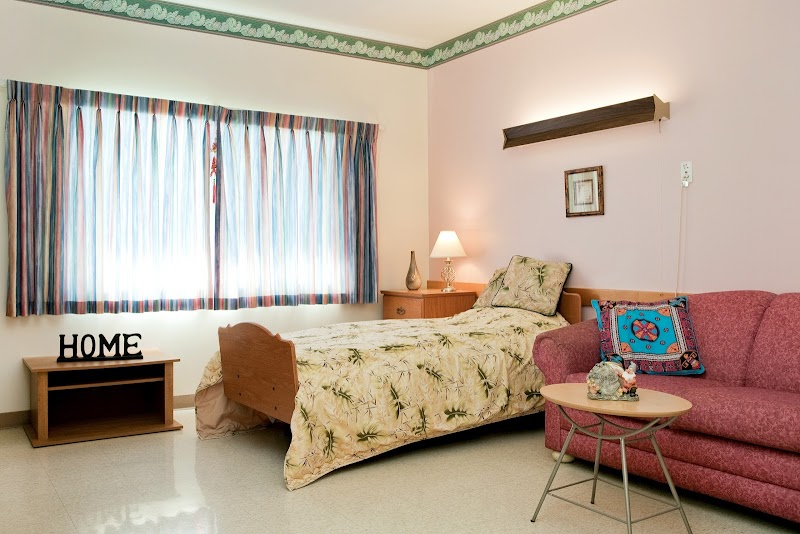
How is Life Of Kona Staffed?

CMS rates LIFE CARE CENTER OF KONA's staffing level at 4 out of 5 stars, which is above average compared to other nursing homes. Staff turnover is 34%, compared to the Hawaii average of 46%. This relatively stable workforce can support continuity of care.

What Have Inspectors Found at Life Of Kona?

State health inspectors documented 44 deficiencies at LIFE CARE CENTER OF KONA during 2022 to 2024. These included: 2 that caused actual resident harm, 40 with potential for harm, and 2 minor or isolated issues. Deficiencies causing actual harm indicate documented cases where residents experienced negative health consequences.
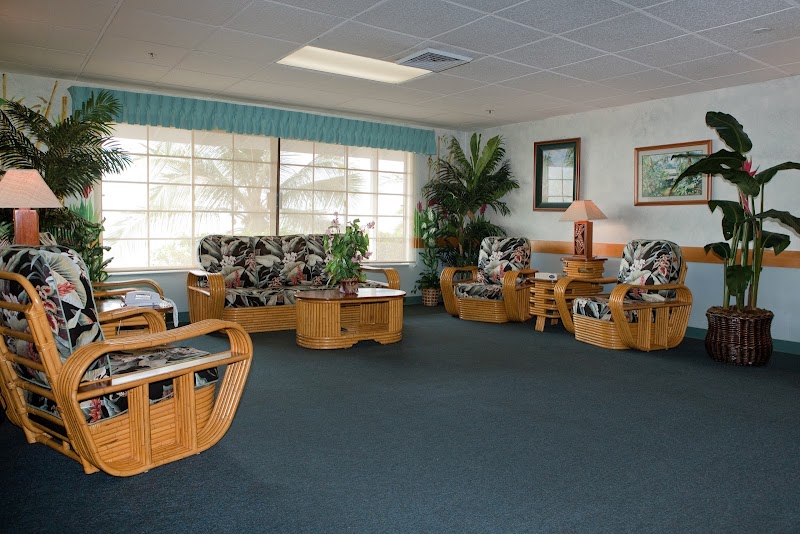
Who Owns and Operates Life Of Kona?

LIFE CARE CENTER OF KONA is owned by a for-profit company. For-profit facilities operate as businesses with obligations to shareholders or private owners. The facility is operated by LIFE CARE CENTERS OF AMERICA, a chain that manages multiple nursing homes. With 94 certified beds and approximately 49 residents (about 52% occupancy), it is a smaller facility located in KAILUA KONA, Hawaii.
How Does Life Of Kona Compare to Other Hawaii Nursing Homes?

Compared to the 100 nursing homes in Hawaii, LIFE CARE CENTER OF KONA's overall rating (3 stars) is below the state average of 3.4, staff turnover (34%) is significantly lower than the state average of 46%, and health inspection rating (2 stars) is below the national benchmark.

What Should Families Ask When Visiting Life Of Kona?

Based on this facility's data, families visiting should ask: "Can I visit during a mealtime to observe dining assistance and food quality?" "How do you handle medical emergencies, and what is your hospital transfer rate?" "Can I speak with family members of current residents about their experience?"

Is Life Of Kona Safe?

Based on CMS inspection data, LIFE CARE CENTER OF KONA has a clean safety record: no substantiated abuse findings (meaning no confirmed cases of resident harm), no Immediate Jeopardy citations (the most serious violation level indicating risk of serious injury or death), and is not on the Special Focus Facility watch list (a federal program monitoring the lowest-performing 1% of nursing homes). The facility has a 3-star overall rating and ranks #100 of 100 nursing homes in Hawaii. While no facility is perfect, families should still ask about staff-to-resident ratios and recent inspection results during their visit.

Do Nurses at Life Of Kona Stick Around?

LIFE CARE CENTER OF KONA has a staff turnover rate of 34%, which is about average for Hawaii nursing homes (state average: 46%). Moderate turnover is common in nursing homes, but families should still ask about staff tenure and how the facility maintains care continuity when employees leave.

Was Life Of Kona Ever Fined?

LIFE CARE CENTER OF KONA has been fined $27,612 across 1 penalty action. This is below the Hawaii average of $33,355. While any fine indicates a compliance issue, fines under $50,000 are relatively common and typically reflect isolated problems that were subsequently corrected. Families should ask what specific issues led to these fines and confirm they've been resolved.

Is Life Of Kona on Any Federal Watch List?

LIFE CARE CENTER OF KONA is not on any federal watch list. The most significant is the Special Focus Facility (SFF) program, which identifies the bottom 1% of nursing homes nationally based on persistent, serious quality problems. Not being on this list means the facility has avoided the pattern of deficiencies that triggers enhanced federal oversight. This is a positive indicator, though families should still review the facility's inspection history directly.