ANN PEARL NURSING FACILITY
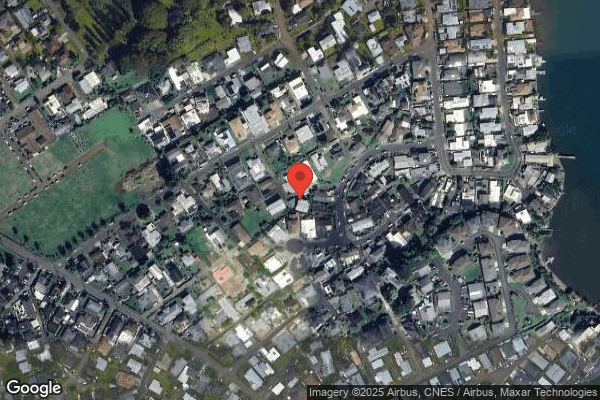
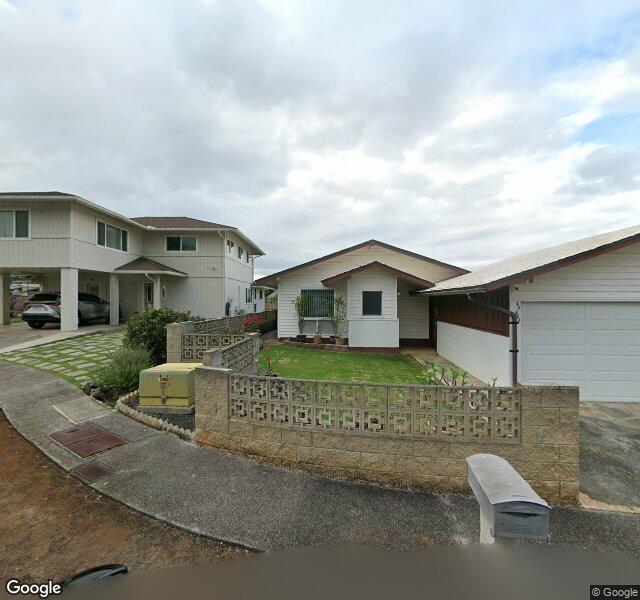
45-181 WAIKALUA ROAD, KANEOHE, HI 96744 (808) 247-8558
For profit - Corporation 104 Beds OHANA PACIFIC MANAGEMENT CO. Data: November 2025
Trust Grade
48/100
#20 of 41 in HI
Last Inspection: February 2025

Within standard 12-15 month inspection cycle. Federal law requires annual inspections.

Overview

Ann Pearl Nursing Facility has a Trust Grade of D, indicating below-average care with some concerns. It ranks #20 out of 41 facilities in Hawaii, placing it in the top half, but still highlights the need for improvement. The facility is worsening, with issues increasing from 10 in 2024 to 12 in 2025. Staffing is a relative strength, rated 4 out of 5 stars, though the turnover rate of 42% is around the state average. However, the facility has faced significant issues, including a serious incident where a resident suffered a hip fracture due to a failure to notify the physician after a therapy-related injury, and another resident sustained second-degree burns from an unauthorized heating pad. While RN coverage is average, these incidents underscore the need for better oversight and safety measures.

Trust Score
D
48/100
In Hawaii
#20/41
Top 48%
Safety Record
Moderate
Needs review
Inspections
Getting Worse
10 → 12 violations
Staff Stability
○ Average
42% turnover. Near Hawaii's 48% average. Typical for the industry.
Penalties
○ Average
$15,593 in fines. Higher than 62% of Hawaii facilities. Some compliance issues.
Skilled Nurses
✓ Good
Each resident gets 78 minutes of Registered Nurse (RN) attention daily — more than 97% of Hawaii nursing homes. RNs are the most trained staff who catch health problems before they become serious.
Violations
⚠ Watch
43 deficiencies on record. Higher than average. Multiple issues found across inspections.
★★★☆☆
3.0
Overall Rating
★★★★☆
4.0
Staff Levels
★★★☆☆
3.0
Care Quality
★★★☆☆
3.0
Inspection Score
Stable
2024: 10 issues
2025: 12 issues

The Good

  • 4-Star Staffing Rating · Above-average nurse staffing levels
  • Full Sprinkler Coverage · Fire safety systems throughout facility
  • No fines on record
  • Staff turnover below average (42%)

    6 points below Hawaii average of 48%

Facility shows strength in staffing levels, fire safety.

The Bad

3-Star Overall Rating

Near Hawaii average (3.4)

Meets federal standards, typical of most facilities

Staff Turnover: 42%

Near Hawaii avg (46%)

Typical for the industry

Federal Fines: $15,593

Below median ($33,413)

Minor penalties assessed

Chain: OHANA PACIFIC MANAGEMENT CO.

Part of a multi-facility chain

Ask about local staffing decisions and management

The Ugly 43 deficiencies on record

2 actual harm
Mar 2025 3 deficiencies
CONCERN (D) 📢 Someone Reported This

A family member, employee, or ombudsman was alarmed enough to file a formal complaint

Potential for Harm - no one hurt, but risky conditions existed

Notification of Changes (Tag F0580)

Could have caused harm · This affected 1 resident

Based on interviews and record review, the facility failed to consult with the physician for worsening injury sustained after a fall, which required a physician's intervention for one of three residen...

Read full inspector narrative →
Based on interviews and record review, the facility failed to consult with the physician for worsening injury sustained after a fall, which required a physician's intervention for one of three residents (Resident (R)19) sampled for falls. As a result of this deficient practice, the resident was at risk for more than minimal physical harm. Findings Include: On 03/19/25 at 02:27 PM, conducted a review of R19's Electronic Health Record (EHR). Review of the progress notes documented: -01/25/25 at 02:45 PM, At 1120, the writer heard resident calling out. Upon arrival to room, resident found on floor next to bed lying on back . c/o (complained of) pain to right forearm only. Right forearm with full ROM (range of motion) though resident is moving it weakly related to pain. Notified .on-call provider (OCP1) . with no new orders received . -01/26/25 at 06:48 AM, Resident fell on day shift 1/25/25. Resident has pain and swelling to right wrist. Resident has decreased strength in right hand compared to left hand. Endorsed to oncoming nurse about getting order for an x-ray. -01/27/25 at 06:23 AM, .Resident has swelling to right wrist . -01/27/25 at 08:43 AM, New order for xray to right wrist due to swelling. Phoned (imaging company) stated would be here today. -01/207/25 at 01:22 PM-, .Xray ordered and completed with impression of acute displaced fractures of the distal radial metaphysis and ulnar styloid. On 03/20/25 at 10:56 AM, conducted a concurrent telephone interview and review of R19's EHR with OCP1. OCP1 reviewed R19's EHR and provider notes of the resident on 01/25/25 and confirmed staff was instructed to call back if there were any changes in the resident's condition. OCP1 reviewed R19's progress notes and confirmed when staff identified swelling to the resident's right wrist, on 01/26/25 at 06:48 PM, staff should have called the on-call provider to report the swelling to a physician/provider and an x-ray would have been ordered given the obvious change. On 03/20/25 at 11:28 AM, conducted a concurrent interview and review of R19's EHR with the Director of Nursing (DON). After reviewing R19's progress notes, DON confirmed the on-call physician/provider should have been called when staff identified the resident's wrist was swollen and the noted discrepancy of strength between the resident's right and left hand and requested an x-ray but did not.
CONCERN (D) 📢 Someone Reported This

A family member, employee, or ombudsman was alarmed enough to file a formal complaint

Potential for Harm - no one hurt, but risky conditions existed

Report Alleged Abuse (Tag F0609)

Could have caused harm · This affected 1 resident

Based on interviews and record review, the facility failed to ensure for one of three residents (Resident (R) 12) sampled for abuse, that alleged violations are reported immediately, but no later than...

Read full inspector narrative →
Based on interviews and record review, the facility failed to ensure for one of three residents (Resident (R) 12) sampled for abuse, that alleged violations are reported immediately, but no later than 2 hours after the allegation is made, if the events that cause the allegation involve abuse or result in serious bodily injury. This deficient practice resulted in the facility not implementing its policy and procedure to ensure the immediate safety of the alleged victim, timely reporting of an alleged crime, and a timely abuse investigation. Findings include: Cross reference to F610 Investigate/Prevent/Correct Alleged Violation. The facility failed to prevent potential abuse for one of three residents sampled for abuse (Resident (R) 12) and other residents at risk due to delayed initiation of the investigation for R12's allegation of abuse. 1) On 03/19/25 at 09:00 AM, a review of the [State Agency] Event Report regarding an allegation of abuse was noted to be submitted to the State Agency (SA) on 02/03/25 at 11:08 AM via email. The Initial Report section of the report was noted with a date and time of 02/03/25 at 11:06 AM. The date and time of the incident (abuse allegation) noted on the report was 02/01/25 at 05:00 PM. On 03/19/25 at 09:30 AM, a review of R12's Resident Progress Notes was done. A progress note dated 02/01/25 at 11:24 AM, with a notation, Recorded as Late Entry on 02/04/25 at 11:40 AM, was inputted by Registered Nurse (RN) 10 and stated, resident screaming she raped last night, in front of husband. However, there was no documentation that the facility's Administrator or Director of Nursing (DON) was notified. On 03/19/25 at approximately 11:45 AM, a form titled, [Provider] Alleged AMN (Abuse, Misappropriation, Neglect), with a submission date listed as 02/03/25, was reviewed. The form listed 02/01/25 at 05:00 PM as the date and time the allegation was made. The date and time the Administrator and DON was notified of the event was listed as 02/03/25 at 09:00 AM. On 03/19/25 at 02:45 PM, interviewed the Administrator in her office. The Administrator stated for any allegations of abuse, floor staff will notify the clinical on call person, who will then notify the Administrator. This is usually done by phone. She confirmed the incident occurred on 02/01/25, but was notified on 02/03/25, and she should have been notified right away. On 03/19/25 at 03:45 PM, interviewed the DON in her office. The DON stated that anytime there is an allegation of abuse, staff should immediately call the Administrator and DON. She confirmed that she was notified on 02/03/25 and that was not immediate. On 03/20/25 at 11:25 AM, an interview with RN10 was conducted via telephone call. RN10 stated that she was the Nurse on duty when the resident voiced the allegation of sexual abuse (rape). RN10 stated that at approximately 4:00 PM, R12's husband visited and R12 started yelling that she wanted to go home and to call the ambulance to take her home. She then stated that she was raped the previous night. RN10 stated that she knew it was a serious allegation and was previously educated that it should reported, but did not report it because she was busy and forgot. 2) On 03/19/25 at approximately 10:30 AM, a review of the facility policy titled,Abuse and Neglect, dated 03/03/21, revealed the section titled, Overview of the Seven Components included 7) Reporting/Responding: .The Administrator/designee will ensure that that all alleged violations involving abuse, neglect, exploitation, or mistreatment .are reported no later than 2 hours after the allegation is made, if events that cause the allegation abuse or result in serious bodily injury; or not later than 24 hours if the events that caused the allegations do not involve abuse and do not result in serious bodily injury, to the state survey agency and others (police, APS, OIG, AG, etc.) . On 03/19/25 at approximately 10:45 AM, a review of a document titled, Honolulu Police Department noted the date initiated as 02/03/25 for the allegation of abuse by R12 which occurred on 02/01/25. On 03/19/25 at 02:45 PM, interviewed the Administrator in her office. A concurrent review of the [State Agency] Event Report was done. The Administrator confirmed 02/01/25 at 05:00 PM was listed as the date and time of the incident and 02/03/25 at 11:06 AM as the date and time the initial report was completed. The Administrator confirmed the report was not initiated within the time frame as stated in the facility policy.
CONCERN (E) 📢 Someone Reported This

A family member, employee, or ombudsman was alarmed enough to file a formal complaint

Potential for Harm - no one hurt, but risky conditions existed

Investigate Abuse (Tag F0610)

Could have caused harm · This affected multiple residents

**NOTE- TERMS IN BRACKETS HAVE BEEN EDITED TO PROTECT CONFIDENTIALITY** Based on interviews and record review, the facility failed to prevent potential abuse for one of three residents sampled for abu...

Read full inspector narrative →
**NOTE- TERMS IN BRACKETS HAVE BEEN EDITED TO PROTECT CONFIDENTIALITY** Based on interviews and record review, the facility failed to prevent potential abuse for one of three residents sampled for abuse (Resident (R) 12) and other residents at risk due to delayed initiation of the investigation for R12's allegation of abuse. As a result of this deficient practice, the residents were placed at a potential risk for physical and psychosocial harm. Findings include: Cross Reference to F609 Reporting of Alleged Violations. The facility failed to report an allegation of abuse within 2 hours which resulted in the facility not implementing its policy and procedure to ensure the immediate safety of the alleged victim, timely reporting of an alleged crime, and a timely abuse investigation. R12 is a [AGE] year-old female admitted to the facility on [DATE] with hospice services. Review of admission Minimum Data Set (MDS), with an Assessment Reference Date (ARD) of 01/18/25, revealed in Section C that R12 had a Brief Interview for Mental Status (BIMS) score of 5, which indicated R12 had severe cognitive impairment. Section GG (Functional Abilities) noted that R12 required dependent assistance (requires full assistance from another person(s)) for self-care and bed mobility. On 03/19/25 at 09:30 AM, a review of R12's Resident Progress Notes was done. A progress note dated 02/01/25 at 11:24 AM, with a notation, Recorded as Late Entry on 02/04/25 at 11:40 AM, was inputted by Registered Nurse (RN) 10 and stated, resident screaming she raped last night, in front of husband. However, there was no documentation that the facility's Administrator or Director of Nursing (DON) was notified. On 03/19/25 at approximately 11:45 AM, a form titled, [Provider] Alleged AMN (Abuse, Misappropriation, Neglect), with a submission date listed as 02/03/25, was reviewed. The form listed 02/01/25 at 05:00 PM as the date and time of the alleged abuse event. The date and time the Administrator and DON was notified of the alleged abuse event was listed as 02/03/25 at 09:00 AM. On 03/19/25 at approximately 10:30 AM, a review of the facility policy titled, Abuse and Neglect, dated 03/03/21, documented in the section titled, Overview of the Seven Components included 5) Investigation: Abuse Policy Requirement: The facility's immediate response is to protect the alleged victim. To protect the alleged victim, the facility has clear delineated roles of those responsible for investigating and will respond to ensure protection of the alleged victim, identify any other alleged victims, ensure the safety of all other residents and the integrity of the investigation. On 03/19/25 at 03:45 PM, interviewed the DON in her office. The DON confirmed that she was made aware of the allegation of abuse two days later (02/03/25) but should have been sooner so the investigation could start immediately. This would have provided immediate protection for the residents. On 03/19/25 at 03:20 PM, interviewed the Social Services Director (SSD) in her office. The SSD stated she does a Safe Survey form with the residents as part of any abuse investigation. The SSD stated she completes the form as soon as possible once she is made aware of an abuse incident. The SSD confirmed that the Safe Survey forms were started on 02/03/25 when she was made aware of the allegation. On 03/20/25 at 07:55 AM, interviewed the Administrator and SSD together. The SSD stated the purpose of the Safe Survey form is to ensure the residents feel safe and to check if they have any concerns. The Administrator stated the safe surveys should be initiated right away. On 03/20/25 at 09:20 AM, an interview was conducted with the Regional Nurse Consultant (RNC). RNC stated staff interviews regarding the allegation are done as part of the abuse investigation. A concurrent review of the Interview Statement forms conducted with staff reflected dates of 02/03/25 - 02/04/25. The RNC stated that if she was made aware of the allegation sooner, the staff interviews would have started sooner after the allegation. She also stated that is the normal process and that becomes priority.
Feb 2025 9 deficiencies
CONCERN (D)

Potential for Harm - no one hurt, but risky conditions existed

Comprehensive Care Plan (Tag F0656)

Could have caused harm · This affected 1 resident

Based on interview and record review, the facility failed to develop a resident-centered trauma-informed care (TIC) care plan for one of one resident (Resident (R) 41) reviewed with a diagnosis of Pos...

Read full inspector narrative →
Based on interview and record review, the facility failed to develop a resident-centered trauma-informed care (TIC) care plan for one of one resident (Resident (R) 41) reviewed with a diagnosis of Post Traumatic Stress Disorder (PTSD). As a result of this deficient practice, the facility staff did not have sufficient information to meet the R41's needs. Findings include: Cross-reference to F699 TIC for R41. The facility failed to develop a TIC plan of care to address the trauma triggers and specific needs of R41 with a diagnosis of PTSD.
CONCERN (D)

Potential for Harm - no one hurt, but risky conditions existed

Deficiency F0657 (Tag F0657)

Could have caused harm · This affected 1 resident

**NOTE- TERMS IN BRACKETS HAVE BEEN EDITED TO PROTECT CONFIDENTIALITY** Based on record review and interview, the facility failed to revise the care plan for one of one sampled resident (Resident (R) ...

Read full inspector narrative →
**NOTE- TERMS IN BRACKETS HAVE BEEN EDITED TO PROTECT CONFIDENTIALITY** Based on record review and interview, the facility failed to revise the care plan for one of one sampled resident (Resident (R) 42) for elopement. This deficient practice has the potential to place R42 at risk for future elopements. Findings include: R42 is a [AGE] year-old male, admitted to the facility on [DATE]. R42 has medical diagnoses that include, but not limited to schizophrenia and dementia. A review of R42's Electronic Health Record (EHR) was conducted on 02/26/25. R42's EHR noted a progress note that on 10/11/24, R42 had walked out of the front door of the facility because he was needing money for cigarettes. A review of R42's current care plan noted that on 07/10/24, the facility had created a plan of care for R42's wandering and exit seeking behaviors. Since 07/10/24, there was no revision done for this plan of care. Interview was conducted with Director of Nursing (DON) on 02/27/25 at 10:22 AM in her office. DON confirmed that the facility would normally address the root cause of his elopement, which was seeking money for cigarettes, and update the resident's care plan. She added that a revision of R42's care plan should have been done after he walked out of the facility door on 10/11/24.
CONCERN (D)

Potential for Harm - no one hurt, but risky conditions existed

Deficiency F0688 (Tag F0688)

Could have caused harm · This affected 1 resident

**NOTE- TERMS IN BRACKETS HAVE BEEN EDITED TO PROTECT CONFIDENTIALITY** Based on observations, interviews, and record reviews, the facility failed to ensure one of two residents (Resident (R)12) sampl...

Read full inspector narrative →
**NOTE- TERMS IN BRACKETS HAVE BEEN EDITED TO PROTECT CONFIDENTIALITY** Based on observations, interviews, and record reviews, the facility failed to ensure one of two residents (Resident (R)12) sampled for limited range of motion (ROM) received the appropriate treatment, equipment, and services to maintain and/or prevent a decline in ROM in her left hand and elbow, as evidenced by inconsistent application of orthotic devices and ROM exercises. As a result of this deficient practice, R12 was placed at risk of a decline in ROM and a loss of function. Findings include: R12 is a [AGE] year-old female admitted to the facility on [DATE] for long-term care. A review of R12's Minimum Data Set (MDS) Annual Assessment with an Assessment Reference Date (ARD) of 12/01/24 noted that her diagnoses include, but are not limited to, left-sided weakness and paralysis following a stroke, chronic pain, and heart failure. The Annual Assessment also documents R12 with a Brief Interview for Mental Status (BIMS) score of 15 out of 15, indicating that she is cognitively intact. On 02/25/25 at 09:16 AM, observations and interview were done with R12 at her bedside. Observed that R12 was not moving her left arm. When asked, R12 stated that she had a stroke in 2015 and has not been able to move her left arm too much since. No braces or splints were visible at the bedside at this time. On 02/25/25 at 01:07 PM, observations and interview were done with R12 at her bedside. Observed an elbow splint and wrist splint sitting on the nightstand behind her bed. R12 stated that they were for her left arm because of her stroke and resulting paralysis and weakness, and that facility staff helped her put them on every day. R12 confirmed that they had not been applied yet that day. Review of physician/provider orders revealed the following orders related to R12's splints: 01/10/25 Splint: Apply left elbow splint for 1-2.5 hours during day shift (06:00 AM - 02:00 PM), once a day. 01/10/25 Splint: Apply left palm protector splint with finger separators for 1-2.5 hours during day shift, once a day. 01/10/25 Splint: Apply left wrist, hand, finger, orthosis for 1 - 2.5 hours during evening shift (02:00 PM - 10:00 PM), once a day. On 02/26/25 at 08:00 AM, a review of R12's electronic health record (EHR) revealed that Point-of-Care (POC) responses for splints and passive range of motion (PROM), which is ROM that is achieved when an outside force (such as a therapist) exclusively causes movement of a joint, did not reflect the application or offer of application of her splints or PROM, on any shift, since 02/23/25. On 02/26/25 at 09:05 AM, an interview was done with Certified Nurse Aide (CNA) 52, who was also the Restorative Nurse Aide (RNA), out in the activities area. When asked, CNA52 stated that she documents individual therapies as soon as possible but definitely gets all charting in by the end of day. For R12, CNA52 stated that she does PROM first, then applies her splints, daily after her morning medications (per resident preference). Further review of POC responses for RNA services in the last thirty (30) days revealed PROM was done, and splints were documented as applied, for half that number of days. On 02/28/25 at 11:13 AM, an interview was done with Director of Nursing (DON) in her office. During a concurrent review of MDS Quarterly Assessment with ARD of 12/19/24 revealed PROM and Splint application was documented as being performed 2 days out of the 7-day observation period. DON explained that the data is compiled through observation and review of POC responses. DON agreed that if splints are ordered for daily application, the expectation is that the assessment result should be 7 of 7 days.
CONCERN (D)

Potential for Harm - no one hurt, but risky conditions existed

Accident Prevention (Tag F0689)

Could have caused harm · This affected 1 resident

**NOTE- TERMS IN BRACKETS HAVE BEEN EDITED TO PROTECT CONFIDENTIALITY** 2) On 02/25/25 at 09:36 AM, observed R35 smoking in the designated smoking area. Review of the list of residents who smoke in th...

Read full inspector narrative →
**NOTE- TERMS IN BRACKETS HAVE BEEN EDITED TO PROTECT CONFIDENTIALITY** 2) On 02/25/25 at 09:36 AM, observed R35 smoking in the designated smoking area. Review of the list of residents who smoke in the facility, R35 was not included on the list. On 02/25/25 at 10:12 AM, an interview and observation of R35 was done in his room. Observed in his left breast pocket on his shirt a green box. R35 confirmed that the green box was his cigarettes, and he also had his lighter. R35 reported a staff member is usually with him when he smokes and helps him light his cigarettes except when he gets back from dialysis in the evening. Before coming in the building, he will smoke, they give him his cigarettes and lighter when he leaves for dialysis. R35 further reported he is blind and only smokes half of his cigarette, so he does not burn himself. R35 admitted he was supposed to forfeit his cigarette and lighter to the nurse, but he forgot to. On 02/26/25 at 08:09 AM, observed R35 in the common dining room tapping his green cigarette box on the dining room table. His lighter was observed to be on his left side visibly on top of the table. Other residents and staff members were around and the tapping sound he was making was audibly loud. When asking for the nurse, two staff members approached him, cigarettes and lighter visibly on the table. On 02/26/25 at 09:09 AM, a staff member was observed to take R35 outside, cigarette pack and lighter was visibly outlined in left breast pocket on his shirt. At 09:12 AM, R35 was observed smoking. On 02/27/25 at 08:59 AM, observed R35's cigarettes and lighter on the table in the dining room while he was eating breakfast. On 02/27/25 at 01:44 PM, a concurrent observation and interview was done with Resident Care Manager (RCM) 21 and Infection Preventionist (IP). Inquired about the facility's smoking policy on locking residents' cigarettes and lighter, RCM21 reported the facility locks up residents' cigarettes and lighter, and when a resident wants to smoke, they can request it from the nurse. There are no situations where a resident is allowed to hold on to their cigarettes or lighter in the facility. Concurrent observation of R35 in the dining room with his cigarettes and lighter on the table with RCM21 and IP. Inquired with R35 if the cigarettes and lighter was his on the table, R35 stated it was. IP confirmed the resident should not have had his cigarettes and lighter with him in the facility and reported it was for safety because the facility would not know if a resident smoked inside their room or somewhere in the facility, and there are residents that use flammable oxygen. Review of the facility's policy and procedure Smoking effective 04/02/22, documented Residents regardless of smoking privileges are not permitted to keep cigarettes, e-cigarettes/vaping devices, pipes, tobacco, and other smoking articles in their possession. Those grandfathered in prior to the date of this policy and assessed as safe to smoke on their own may keep their supplies in a locked box in their room when not in use, which will be audited regularly for safety. If resident is non-compliant, supplies will be removed from room .Smoking materials must be checked out and in with the nurse and stored by the nurse . 3) R42 is a [AGE] year-old male, admitted to the facility on [DATE]. R42 has medical diagnosis include, but not limited to epilepsy. Multiple observations were conducted from 02/25/25 to 02/27/28 of R42's bed rails. The right side of R42's bed rail was covered with a blue padding. The left side bed rail did not have a blue padding. Record review of R42's Electronic Health Record (EHR) was conducted on 02/27/25. R42's EHR noted a progress note that on 02/26/25, R42 was witnessed having a tonic seizure during the evening. Interview was conducted with RCM54 in R42's room on 02/27/25 at 09:33 AM. RCM54 was shown R42's bed, which had the blue padding only on the right-side rail. RCM54 confirmed that seizure pads should have been placed on the left-side rail as well for R42's safety since he is on seizure precaution. A review of the facility document titled, Seizure management, with an effective date of 06/19/23 was conducted. The document noted, EQUIPMENT .Padding for side rails and bed headboard. Based on observations, record reviews, and interviews, the facility failed to ensure residents remain as free of accident hazards as possible for two of six residents (Resident (R) 35 and R42) sampled for accidents. The facility failed to identify and eliminate a known and foreseeable accident hazard in the resident environment (wet floor); failed to lock up R35's cigarettes and lighter; and failed to ensure R42's seizure pads were in place. The deficient practices have the potential for ambulatory residents on the unit to sustain a preventable injury; the potential of a fire accident in the facility that has residents who are on oxygen; and the potential for R42 sustaining injuries in bed when having a seizure. Findings include: 1) On 02/26/25 at 07:38 AM, clear colored wetness was noted on the hallway floor outside of rooms 111-118 and extended to the floor inside resident room [ROOM NUMBER]. From the initial observation at 07:38 AM until 08:02 AM, multiple staff were observed walking on and around the wetness observed on the floor in the hallway and resident room [ROOM NUMBER], taking no action to wipe it up. There were no wet floor caution signs observed on the areas of wetness. On 02/26/25 at 08:28 AM, Director of Nursing (DON) was interviewed and stated that a cone with a wet floor sign should typically be placed. Housekeeping should be notified if staff cannot get to it in time to clean it up. DON confirmed the wetness in the hallway and in resident room [ROOM NUMBER] remained, and agreed that it should have been wiped up.
CONCERN (D)

Potential for Harm - no one hurt, but risky conditions existed

Respiratory Care (Tag F0695)

Could have caused harm · This affected 1 resident

Based on observation, interview, and record review the facility failed to provide the physician ordered oxygen therapy during assistance with a meal for one of two residents (Resident (R) 2) sampled f...

Read full inspector narrative →
Based on observation, interview, and record review the facility failed to provide the physician ordered oxygen therapy during assistance with a meal for one of two residents (Resident (R) 2) sampled for oxygen use. This deficient practice has the potential for R2 to encounter difficulty breathing and discomfort. Findings include: On 02/27/25 at 07:58 AM, Certified Nurse Aide (CNA) 7 was observed removing R2's oxygen mask and replacing it with a nasal cannula. The flow rate of oxygen was observed to be set at five liters per minute via oxygen concentrator. CNA7 stated that she was informed by the nurse that the resident must always have oxygen on, and it was okay to replace the face mask with the nasal cannula. A review of the physician orders for R2 noted the following 06/05/21 oxygen order: Difficulty breathing: Oxygen 5-10 (five to ten) LPM (liters per minute) via face mask for SOB (shortness of breath) or SpO2 (oxygen saturation) < 90%. Special Instructions: Notify MD (physician) if O2 (oxygen) is applied or increased as needed. On 02/27/25 at 08:07 AM, Registered Nurse (RN) 4 was interviewed. She stated that when the resident eats, the face mask is switched to the nasal cannula and the certified nurse aides are aware to do that. She also confirmed that there was no order for that.
CONCERN (D)

Potential for Harm - no one hurt, but risky conditions existed

Deficiency F0699 (Tag F0699)

Could have caused harm · This affected 1 resident

**NOTE- TERMS IN BRACKETS HAVE BEEN EDITED TO PROTECT CONFIDENTIALITY** Based on interviews and record reviews, the facility failed to adequately assess for and identify past trauma experienced by one...

Read full inspector narrative →
**NOTE- TERMS IN BRACKETS HAVE BEEN EDITED TO PROTECT CONFIDENTIALITY** Based on interviews and record reviews, the facility failed to adequately assess for and identify past trauma experienced by one of one residents (Resident (R) 41) sampled for trauma-informed care (TIC). As a result of this deficient practice, R41 did not have her trauma triggers identified, placing her at increased risk of re-traumatization, and was hindered from attaining her highest practicable mental and psychosocial well-being. Findings include: R41 is a [AGE] year-old female admitted to the facility on [DATE]. A review of R41's electronic health record (EHR) noted that she was admitted with diagnoses that include cerebral infarction affecting left non-dominant side, major depressive disorder, anxiety disorder, and post-traumatic stress disorder (PTSD). The initial physician (MD) 2 note for R41, dated 10/26/24, noted a psychiatric history of post-traumatic stress disorder with avoidant behavior. On 02/25/25 at 02:00 PM, R41 was interviewed in an unoccupied resident room (resident requested privacy) and stated that she is unable to sleep because of hearing other residents and past roommates having personal emergencies like falling out of bed and coughing all night. R41 also stated that loud disruptive noises and staff talking loud in the hallway keep her awake at night. On 02/27/25 at 09:33 AM, an interview with Director of Nursing (DON) was conducted. DON stated that Social Services Director (SSD) 46 meets with the resident on admission. If the resident has a history of trauma or PTSD then a TIC care plan should be initiated. On 02/27/25 at 09:42 PM, an interview and concurrent review of R41's care plan was conducted with SSD46. During the interview, SSD46 confirmed that there was no TIC care plan addressing R41's specific trauma triggers and needs. During concurrent review of the facility's TIC policy with SSD46, the following was noted: A resident will be screened for trauma upon admission, quarterly, annually, and as needed using the tool in the electronic medical record. SSD46 stated the quarterly screen was not done. On 02/28/25 at 07:19 AM, a review of R41's Comprehensive Care Plan and facility TIC policy was conducted. The TIC policy noted that trauma events and triggers identified through screening will be used to develop a care plan. Review of R41's Mood State care plan noted some resident triggers in the Problem area of that care plan. However, there were no interventions listed to address them.
CONCERN (D)

Potential for Harm - no one hurt, but risky conditions existed

Drug Regimen Review (Tag F0756)

Could have caused harm · This affected 1 resident

**NOTE- TERMS IN BRACKETS HAVE BEEN EDITED TO PROTECT CONFIDENTIALITY** Based on interview and record review, the facility failed to ensure that medication regimen irregularities/recommendations were ...

Read full inspector narrative →
**NOTE- TERMS IN BRACKETS HAVE BEEN EDITED TO PROTECT CONFIDENTIALITY** Based on interview and record review, the facility failed to ensure that medication regimen irregularities/recommendations were addressed by the physician for one of five residents (Resident (R) 7) sampled for unnecessary medications. As a result of this deficient practice, R7 was placed at risk of avoidable complications related to continuing an as needed psychotropic (a drug taken to exert an effect on the chemical makeup of the brain and nervous system) past 14 days without a clinical rationale. Findings include: R7 is a [AGE] year-old female admitted to the facility on [DATE] for long-term care. A review of R7's Minimum Data Set (MDS) Quarterly Review Assessment with an Assessment Reference Date (ARD) of 12/03/24 noted that her diagnoses include, but are not limited to, dementia with behavioral disturbance-aggression, and left-sided weakness and paralysis following a stroke. A review of R7's electronic health record (EHR) noted the following open-ended physician order on 08/26/24: Lorazepam 0.5 mg [milligrams] PO [by mouth] or dissolve in water and place under tongue every 4 hours as needed for Anxiety. Review of R7's Medication Regimen Reviews (MRRs) revealed the following recommendation made by the pharmacist on 08/31/24: This resident is currently receiving the PRN [as needed] psychotropic medication lorazepam . Please provide a specific stop date or time period (e.g [sic] six months) AND a clinical rationale to continue PRN psychotropic medication past 14 days: The physician made the following response and signed the MRR form on 09/10/24: Nonpharmacological interventions are either ineffective or not practical for this resident's situation . Further review of the MRRs noted the pharmacist made the same recommendation the following month, on 09/30/24, however, this recommendation had no documented physician response. On 02/27/25 at 09:13 AM, an interview was done with Director of Nursing (DON) in her office. When asked about the MRR process, DON explained that the facility gives themselves thirty (30) days to receive and print the recommendations from the pharmacy, place it in the appropriate provider/physician binder, receive a response from the provider/physician, and make the appropriate changes to close it out. During a concurrent review of the 08/31/24 MRR recommendation, DON agreed that the physician response did not align with or address the pharmacist's recommendations, specifically, provide a specific stop date or time period . AND a clinical rationale to continue PRN psychotropic medication past 14 days. DON stated that either the Resident Care Manager (RCM) or DON should catch it when the provider/physician response does not match the pharmacist's request/recommendation. DON agreed that the inappropriate response should have been noticed and addressed with the physician prior to the receipt of the same recommendation being made the following month. Review of the facility policy and procedure Medication Regimen Review and Reporting, last revised 01/24, revealed the following: A record of the consultant pharmacist's observations and recommendations is made available in an easily retrievable format . within 48 hours of completion. The nursing care center follows up on the recommendations to verify that appropriate action has been taken. Recommendations should be acted upon within 30 calendar days .
CONCERN (D)

Potential for Harm - no one hurt, but risky conditions existed

Infection Control (Tag F0880)

Could have caused harm · This affected 1 resident

**NOTE- TERMS IN BRACKETS HAVE BEEN EDITED TO PROTECT CONFIDENTIALITY** Based on observation, interview, and record review, the facility failed to implement the facility's infection prevention and con...

Read full inspector narrative →
**NOTE- TERMS IN BRACKETS HAVE BEEN EDITED TO PROTECT CONFIDENTIALITY** Based on observation, interview, and record review, the facility failed to implement the facility's infection prevention and control measures for one of two residents (Resident (R) 35) sampled for Transmission Based Precautions (TBP). The facility did not ensure nursing staff hand hygiene between glove use while providing wound care for R35. This deficient practice has the potential to put residents at risk of spreading infections and communicable diseases. Findings include: R35 was admitted to the facility on [DATE] with diagnoses of acute osteomyelitis on right ankle and foot, stage 4 pressure ulcer of right heel, non-pressure chronic ulcer of right lower left with fat layer exposure and left lower left limited to breakdown of skin, local infection of the skin and subcutaneous tissue, and pseudomonas. Review of R35's Electronic Health Record (EHR) found R35 started contact precautions on 02/22/25 due to lab results of methicillin-resistant Staphylococcus aureus (MRSA) infection (a bacteria that's become resistant to many of the antibiotics used to treat ordinary staph infection) to leg wound. On 02/25/25 at 11:47 AM, observation of Resident Care Manager (RCM) 21 and Director of Nursing (DON) cleaning and changing the wound dressing to R35's leg wounds was done. DON was observed to hold R35's right leg up, take off the old wound dressing and helped direct RCM21 with cleaning and redressing the wounds. DON and RCM21 ran out of the dressing and the DON directed RCM21 to ask for more silver alginate wound dressing. RCM21 took off her gloves, radioed for someone to bring more silver alginate, threw her gloves in the trash, walk to the entrance door to R35's room, grabbed a pair of gloves and donned them without hand hygiene between glove use. RCM21 proceeded to dress the wounds after receiving the silver alginate wound dressing. At 12:09 PM, after NM21 completed R35's wound dressing with DON, an interview with RCM21 was done. Inquired if she hand-sanitized before donning the new pair of gloves while providing wound dressing care for R35, NM21 confirmed she did not and stated she was supposed to hand-sanitize between gloves.
CONCERN (E)

Potential for Harm - no one hurt, but risky conditions existed

Unnecessary Medications (Tag F0759)

Could have caused harm · This affected multiple residents

**NOTE- TERMS IN BRACKETS HAVE BEEN EDITED TO PROTECT CONFIDENTIALITY** Based on observation, interview, and record review, the facility failed to ensure a medication error rate of less than 5%, as ev...

Read full inspector narrative →
**NOTE- TERMS IN BRACKETS HAVE BEEN EDITED TO PROTECT CONFIDENTIALITY** Based on observation, interview, and record review, the facility failed to ensure a medication error rate of less than 5%, as evidenced by five medication errors observed out of 31 opportunities for errors, for an error rate of 16%. Safe and timely medication administration practices are essential for the health and well-being of the residents. As a result of this deficient practice, three residents (Residents (R) 37, R7, and R52) were placed at risk of negative outcomes due to medication errors. This deficient practice has the potential to affect all residents in the facility taking medications administered by staff. Findings include: 1) On 02/27/25 at 07:46 AM, observations were done of Registered Nurse (RN) 1 preparing medications for R37 at a medication cart outside of room [ROOM NUMBER]. Review of R37's Medication Administration Record (MAR) and medication orders noted there was an Amlodipine 2.5 mg (milligrams) due at 08:00 AM that RN1 was not observed preparing or administering, and that she had documented on the MAR as Not Administered: Drug/Item Unavailable. Further review of the MAR revealed the medication had been documented as Not Administered: Drug/Item Unavailable since 02/22/25, with the last time it was administered documented as 02/21/25. On 02/27/25 at 01:49 PM, an interview was done with RN1 outside of room [ROOM NUMBER]. RN1 confirmed that she did not administer R37's Amlodipine as it was out of stock in the medication cart. When asked what is usually done when a medication is out of stock, RN1 stated that the nurse should call the pharmacy and find out when it was being delivered. RN1 acknowledged that she had not done this. On 02/27/25 at 02:01 PM, an interview was done with Director of Nursing (DON) in her office. When asked about the process that should be followed when a medication is found to be out of stock, DON stated first, the nurse should check the RX NOW system (electronic medication storage) to see if the medication is in the machine. If it is, and the medication is overdue, the nurse calls the provider to get a one-time order to administer the medication late. Whether the medication is in the machine or not, the pharmacy is called to find out when the medication will be delivered. This information is documented in a progress note and passed off in shift report to the oncoming nurse. DON checked the RX NOW system and confirmed that the medication is available and should have been given. 2) On 02/27/25 at 08:05 AM, observations were done of RN1 preparing medications for R7 at a medication cart outside of room [ROOM NUMBER]. Observed RN1 crush all the prepared tablets together then mix them into one (1) teaspoonful of applesauce. RN1 then opened an Omeprazole DR (delayed release) 20 mg capsule, emptied its contents on top of the same spoonful of applesauce, and mixed it in. Review of the facility's Medication Administration General Guidelines, last revised, 01/25, revealed the following: Long-acting, extended release or enteric-coated dosage forms should generally not be crushed; an alternative should be sought. On 02/27/25 at 01:54 PM, an interview was done with DON in her office. DON confirmed that the Omeprazole DR capsule should not be opened and mixed in with applesauce. During a concurrent review of the medication orders, DON stated that the Omeprazole DR had a 'Do Not Crush' special instruction. 3) On 02/27/25 at 08:05 AM, observations were done of RN1 preparing medications for R7 at a medication cart outside of room [ROOM NUMBER]. Review of R7's MAR and medication orders noted there was Polyethylene Glycol (a laxative) 17 gm (grams) due at 08:00 AM that RN1 was not observed preparing or administering, and that she had documented on the MAR at 10:22 AM as Charted late . given on time. On 02/27/25 at 12:18 PM, an interview was done with RN1 outside of room [ROOM NUMBER]. RN1 stated that she gave R7 the Polyethylene Glycol with her other medications that morning. State Agency Surveyor (SA) reminded her that she did not take any medication that was not in the spoonful of applesauce into the room that morning. At 12:24 PM, RN1 prepared and administered the Polyethylene Glycol, mixed in approximately 60 ml (milliliters) of fluid to R7. R7 drank a little more than half the fluid, then handed the cup back to RN1. RN1 placed the remaining fluid (with medication) on R7's bedside table and left the room. Review of the facility's Medication Administration General Guidelines, last revised, 01/25, revealed the following: The resident is always observed after administration to ensure that the dose was completely ingested. The individual who administered the medication dose, records the administration on the resident's MAR immediately following the medication being given. On 02/27/25 at 01:54 PM, an interview was done with DON in her office. DON confirmed that no medication should be left at the bedside to finish unless the resident has orders to self-administer. DON also confirmed that a medication should not be documented as given until after it is administered. Review of R7's provider/physician orders noted that she did not have an order to self-administer. 4) On 02/27/25 at 08:19 AM, observations were done of RN1 preparing medications for R52 at a medication cart outside of room [ROOM NUMBER]. Amongst other medications, observed preparation of the following: Sennosides-Docusate Sodium 8.6-50 mg (a stimulant laxative with stool softener combination) At 08:23 AM, observed RN1 administering a total of six (6) tablets/medication to R52. At this time, observed RN1 ask R52 if he wanted his stool softener, which he refused. RN1 did not inform R52 at any time that one of the medications she had given him contained a stool softener. Review of R52's MAR and medication orders noted there was Polyethylene Glycol (a laxative) 17 gm (grams) due at 08:00 AM that RN1 was not observed preparing or administering, and that she had documented on the MAR at 08:28 AM as Not Administered: Refused. On 02/27/25 at 12:27 PM, interviewed RN1 outside room [ROOM NUMBER]. RN1 confirmed that R52 refused the stool softener and after prompting by the SA, acknowledged that she did give a stool softener to him at that time. RN1 explained that R52 doesn't like the powder [Polyethylene Glycol] because he thinks it makes him go more. RN1 also stated that (the Polyethylene Glycol) is what she meant when she asked R52 if he wanted the stool softener. RN1 did not seem aware that Polyethylene Glycol is a laxative and not a stool softener. Review of the facility's Medication Administration General Guidelines, last revised, 01/25, revealed the following: Explain to resident the type of medication being administered . On 02/27/25 at 02:01 PM, an interview was done with DON in her office. DON agreed that if R52 refused a stool softener, he either should not have been given the Sennosides-Docusate Sodium, or he should have been informed that there was a stool softener component in the medication he was given and been allowed the opportunity to refuse it. 5) On 02/27/25 at 08:19 AM, observations were done of RN1 preparing medications for R52 at a medication cart outside of room [ROOM NUMBER]. At 08:23 AM, observed RN1 administering a total of six (6) tablets/medication to R52. At this time, observed RN1 telling R52, I didn't bring your . [Acetaminophen], is that OK? Review of R52's MAR and medication orders noted there was Acetaminophen 1000 mg due at 07:00 AM that RN1 was not observed preparing or administering, and that she had documented on the MAR at 08:20 AM as Not Administered: Refused. Review of the facility's Medication Administration General Guidelines, last revised, 01/25, revealed the following: Medications are administered within 60 minutes of scheduled time . On 02/27/25 at 02:01 PM, an interview was done with DON in her office. DON agreed that medication cannot be marked as refused before it is offered and should be offered and/or administered within one hour of its scheduled time.
Mar 2024 6 deficiencies 1 Harm
SERIOUS (G)

Actual Harm - a resident was hurt due to facility failures

Notification of Changes (Tag F0580)

A resident was harmed · This affected 1 resident

**NOTE- TERMS IN BRACKETS HAVE BEEN EDITED TO PROTECT CONFIDENTIALITY** Based on interview and record review, the facility failed to ensure the resident's (R)12's physician was notified after an incid...

Read full inspector narrative →
**NOTE- TERMS IN BRACKETS HAVE BEEN EDITED TO PROTECT CONFIDENTIALITY** Based on interview and record review, the facility failed to ensure the resident's (R)12's physician was notified after an incident that occurred resulted in an injury for one resident sampled. On 02/08/24, R12 reported that during physical therapy he experienced a loud crack and sharp pain to his hip when physical therapist (PT)1 pushed R12's left knee to the resident's chest. R12's physician and his treatment team were not notified of the incident which resulted in a left hip fracture that was delayed in diagnosis and treatment. On 02/26/24, R12 was transferred to a hospital for a surgical repair of the fracture. As a result of this deficient practice, R12 suffered pain, continued to decline and sustained harm. Findings include: Cross reference to F610 Investigation. During an interview with R12 on 03/20/24 at 2:40 PM in his room, he stated he recently had hip surgery. R12 reported during physical therapy during an assisted exercise of his legs, the physical therapist (PT)1 was pushing his legs to his chest. When PT1 extended his left leg on the third push to his chest, he heard a crack and felt a sharp pain. The PT1 then stopped and stated, All [NAME] (finished) for the day. Conducted a review of R12's electronic health record (EHR) of the incident. Minimum Data Set (MDS) with an assessment reference date (ARD) of 12/22/23, documented in Section C. Cognitive Patterns, R12 scored a 15 out of 15, indicating the resident's cognition is intact. Reviewed progress notes of R12's reported incident: -02/02/24 at 8:50 PM, Nurse Practitioner (NP) in facility with new order to obtain x-ray of the left knee and left hip. Order carried out. -02/06/24 at 8:54 PM, NP in facility with new orders. Referral to orthopedic surgeon for further eval for osteo arthritis (OA) to left (L) hip and L knee (Send copies of recent x-rays). Start Tramadol (pain medication) 50 milligrams (mg) every night (QHS) for right (R) knee pain. Orders carried out. -02/07/24 at 08:10 AM, Received and reviewed progress note from NP facility visit on 02/2/24, seen for knee pain. See scanned note for details. -02/08/24 02:02 AM, Nurses notes. Resident complained of (c/o) 10/10 sharp pain to left knee whenever he moves it. Resident states he hurt it while he was in PT. Resident mention that the guy was pushing it down and lifting his knee against his chest and resident heard a loud crack noise. No sign of swelling or redness to area. Resident unable to fully make his left knee straight. Administered as needed (PRN) tramadol and hot pack. P: continue plan of care. Review of R12's progress notes after reporting the incident to registered nurse (RN)99. -02/12/24 02:43 AM, resident awake when entering room to care for another resident, resident voiced he was in pain to the right lower extremity (RLE). The resident was asked to rate it and voiced 5/10. Resident was given the option of PRN Tylenol or PRN tramadol; residents request was PRN tramadol. Given 0244. -02/13/2024 at 4:12 PM, NP in facility with new orders. Apply a small amount of Voltaren to L hip and L knee and reposition. Offer heat packs PRN. Orders carried out. -02/14/24 at 1:45 PM, Received and reviewed progress note from NP facility visit on 2/6/24, seen for follow up on pain. See scanned note for details. -02/15/24 at 13:59, medical doctor (MD) in facility. Reviewed x-ray on 2/3/24, see scanned note for details. -02/19/24 at 2:32 PM, .Resident states that he is unable to move left knee since two nights ago. Residents had complaints of pain to L knee . -02/20/24 at 5:11 PM, NP in facility with new orders to repeat X-ray of L hip and L knee for Diagnosis (Dx). Pain. Orders carried out. Imaging to be here late this evening. -02/20/24 at 8:20 PM, Received X-ray results: L knee unchanged. L hip: New acute avulsion fracture involving the lesser trochanter, along the attachment of the iliopsoas tendon. Called physician, awaiting call back. Notified director of nursing (DON). - 02/23/24 at 9:48 PM, Resident continue to have left hip pain 10/10, noted left leg unable to move .New order to send resident to . (acute hospital) .for evaluation. Acute lack of sensation to left lower extremities (LLE); diminished sensation to RLE .Resident left facility at 9:40 PM -02/24/24 02:27AM, Called Emergency department for an update on resident. Resident was admitted for Hip fracture. DON and resident clinic manager (RCM) notified. Review of provider notes documented: - 02/13/24, NP1 documented, He presented in stable condition but noted to still have pain to his left knee and hip at rest and with movement. He notes pain cream was effective to left knee but had not tried to hip. Reported tramadol was effective during night to both led hip and knee pain. Was still able to reposition left leg but limited ROM (range of motion). Noted PT was held due to (d/t) pain. Requested for trial of pain cream to hip and encouraged him to request for PRN tramadol during day if needed since only scheduled QHS. Discussed if pain did not improve will repeat imaging. - 02/20/24, NP1 documented, -Since x-ray on 2/3, he initially reported pain improved with tramadol, pain cream, and repositioning of left side. Prior ortho referral was still pending. - Today registered nurse (RN) reported he was not able to move his left leg. During the visit, he noted he was also unable to tolerate turning side to side with certified nurse aide (CNA). During the exam, he was not able to move or straighten his leg and noted to have more tenderness to his left hip and surrounding area. No warmth, edema, erythema noted. Still had lack of sensation below the knee, which he stated having in the past but intact sensations proximal from knee. Skin remained warm to touch along with extremity, given pain progressed, he agreed to repeat x-ray. -02/23/24, NP1 documented, Today during his visit, he noted since he was last seen, he lost sensation to his left upper leg and knee as well as right upper leg. Of note, had loss of sensation below knee which was his baseline. The pain to L-leg described as sharp but still unable to move but noted Tramadol; was slightly effective. During exam, he was noted to also loss sensation to his left hip and surrounding area upon palpation, which he had pain to on Tuesday . Review of x-ray results taken on 02/03/24 documented .No obvious displaced or impacted fracture noted at this time No evidence of osteomyelitis . A second x-ray taken on 02/20/24 documented There is an avulsion fracture of the lesser trochanter, new from prior . An avulsion fracture occurs when an injury causes a ligament or tendon to break off (avulse) a piece of a bone that's attached to it and usually happens as the result of a traumatic injury or explosive movement. Indicating an incident with force needed to have happened for this type of injury to occur. On 03/20/24 at 2:55 PM, conducted a confidential interview with direct care staff (DCS). Inquired regarding R12's level of function prior to sustaining a left hip fracture. DCS1 and DCS2 confirmed prior to physical therapy, R12 was able to move his lower extremities, but was unable to bear weight. Both DCS confirmed R12 informed them that during a physical therapy session, there was a loud pop, then sharp pain, then over the next couple of days the resident's pain increased and his movement decreased to the point R12 decided he shouldn't do physical therapy, related to the pain. Inquired with both staff about R12's cognition and if the resident is a reliable source of information. DCS1 and DCS2 confirmed R12 is a reliable source of information, and the resident is alert and oriented to person, place, time, and situation. On 03/21/24 at 3:45 PM, conducted an interview with the DON, resident care manager (RCM)1 and RCM2 regarding the facility's investigation of R12's hip fracture. Reviewed the facility's investigation which was submitted to the state agency (SA). Informed the DON, RCM1, and RCM2 about the progress note written on 02/08/24 by RN99 during which R12 informed the staff of an incident during physical therapy regarding the resident hearing a loud crack and felt a sharp pain. Inquired if the facility was aware of the situation. DON, RCM1, and RCM2 reviewed R12's EHR, the facility's morning meeting huddle information and all other additional documents then confirmed the facility was not aware of R12's report of the incident to RN99 and it was not investigated as a potential source of R12's left hip fracture. RCM1 and RCM2 both confirmed R12 is a reliable source of information. On 03/22/24 at 08:54 AM, conducted an interview and concurrent record review with NP1. Inquired if NP had been informed that R12's verbalized incident during a physical therapy session, where PT1 assisted the resident with range of motion and the resident heard a loud crack and experienced a sharp pain. NP1 confirmed she was not notified of the incident. Reviewed R12's progress notes and inquired if she had been informed of the incident would the course of treatment have been different. NP1 confirmed, the course of treatment would have been different, an x-ray would have been done on 02/08/24 to ensure there was no injury to the resident. The identification of an injury would have ended all future physical therapy sessions, and the resident would have been sent out to an acute setting for further treatment. NP1 confirmed R12's treatment was delayed 12 days. NP1 stated she was in close communication with R12's physician and confirmed they both were not informed of R12's report of the incident. Review of the facility's policy and procedure, change in a Resident Condition of Status, revision date 05/19/23, documented .The nurse will notify the resident's Attending Physician or physician on call when there has been a(an): 1. accident or incident involving the resident; b. discovery of injuries of an unknown source .
CONCERN (D)

Potential for Harm - no one hurt, but risky conditions existed

Resident Rights (Tag F0550)

Could have caused harm · This affected 1 resident

**NOTE- TERMS IN BRACKETS HAVE BEEN EDITED TO PROTECT CONFIDENTIALITY** Based on observation, interview and record review, the facility failed to maintain the dignity of one of the 14 residents (R) in...

Read full inspector narrative →
**NOTE- TERMS IN BRACKETS HAVE BEEN EDITED TO PROTECT CONFIDENTIALITY** Based on observation, interview and record review, the facility failed to maintain the dignity of one of the 14 residents (R) in the sample. The urinary catheter bag for R101 was not covered and visible from the hallway, revealing his medical condition to other residents and visitors to the facility. This deficient practice has the potential to affect all residents in the facility with an indwelling urinary catheter. Findings include: R101 is an [AGE] year-old resident admitted to the facility on [DATE] for short-term rehabilitation and wound care. R101 had an indwelling urinary catheter (flexible tube placed in the body to drain and collect urine from the bladder) to prevent getting the wounds to groin area wet. On 03/19/24 at 08:47 AM, observed R101 lying in bed in his room watching videos on his tablet. R101's bed was positioned closest to the door and is visible from the hallway. The collection bag for his indwelling urinary catheter was hung on the right side of his bed facing the door. There was no cover for the bag. On 03/21/24 at 3:01 PM, an interview was conducted with Licensed Practical Nurse (LPN) 50 just outside of R101's room. Asked LPN50 what was the reason they cover the collection bag for the indwelling urinary catheter. LPN50 responded The cover for the bag is used to maintain the resident's dignity. LPN50 added. It's supposed to be on the collection bag all the time, even when they get up on their wheelchairs. Review of R101's baseline care plan done. Under the problem Indwelling Catheter, intervention included but not limited to, Keep drainage bag below level of bladder. Place in dignity bag.
CONCERN (D)

Potential for Harm - no one hurt, but risky conditions existed

Investigate Abuse (Tag F0610)

Could have caused harm · This affected 1 resident

Based on interview and record review, the facility failed to ensure an injury of unknown origin was thoroughly investigated for one resident sampled. On 02/25/24, the facility submitted a completed ev...

Read full inspector narrative →
Based on interview and record review, the facility failed to ensure an injury of unknown origin was thoroughly investigated for one resident sampled. On 02/25/24, the facility submitted a completed event report for resident (R)12 who sustained a left hip fracture, origin of the injury was not known. The investigation report did not include documentation of R12's incident during physical therapy that was reported to nursing staff. Interview of staff responsible for completing the investigation confirmed the facility was unaware of the resident's report and the incident during PT could have potentially been the source of R12's injury. The investigation was initiated by the facility after becoming aware of R12's left hip fracture. As a result of this deficient practice, the Resident experienced a delay in the diagnosis and treatment of a left hip fracture. Findings include: Cross reference F580- notification of physician. Conducted a review of R12's electronic health record (EHR). Initial x-ray results take on 02/03/24 documented No obvious displaced or impacted fracture noted at this time No evidence of osteomyelitis . A second x-ray taken on 02/20/24 documented There is an avulsion fracture of the lesser trochanter, new from prior .An avulsion fracture occurs when an injury causes a ligament or tendon to break off (avulse) a piece of a bone that's attached to it and usually happens as the result of a traumatic injury or explosive movement. Indicating an incident with force needed to have happened for this type of injury to occur. On 03/21/24 at 3:45 PM, conducted an interview with the director of nursing (DON), resident care manager (RCM)1 and RCM2 regarding the facility's investigation of R12's hip fracture. Reviewed the facility's investigation which was submitted to the state agency (SA). Informed the DON, RCM1, and RCM2 about the progress note written on 02/08/24 by RN99 during which R12 informed the staff of an incident during physical therapy regarding the resident hearing a loud crack and felt a sharp pain. Inquired if the facility was aware of the situation. DON, RCM1, and RCM2 reviewed R12's EHR, the facility's morning meeting huddle information and all other additional documents then confirmed the facility was not aware of R12's report of the incident to RN99 and it was not investigated as a potential source of R12's left hip fracture. RCM1 and RCM2 both confirmed R12 is a reliable source of information.
CONCERN (D)

Potential for Harm - no one hurt, but risky conditions existed

Pharmacy Services (Tag F0755)

Could have caused harm · This affected 1 resident

Based on observation, interview, and review of the facility's policy and procedure, the facility failed to ensure the controlled drug records were reconciled between shifts. The deficient practice pot...

Read full inspector narrative →
Based on observation, interview, and review of the facility's policy and procedure, the facility failed to ensure the controlled drug records were reconciled between shifts. The deficient practice potentially places the facility at risk for the diversion of controlled medications. Findings include: On 03/21/24 at 09:08 AM, while conducting medication administration observations with registered nurse (RN)19, staff proceeded to initial the controlled medication reconciliation count sheet, for the off-going (11 PM- 7 AM) shift and the on-coming (3 PM-11 PM) shift. Inquired with RN19 what the facility's procedure is for verifying the count of the controlled medications between shifts is. RN19 stated the off-going shift and the on-coming shift nurses do the count together and sign the sheet once the count is completed and correct. RN19 stated, I probably shouldn't have done this in front of you, then confirmed he/she did not sign the controlled medication reconciliation sheet in the presence of the off-going nurse and pre-signed the form for the on-coming shift and by doing so there is an opportunity for an error in the reconciliation of the controlled medication(s). While conducting an interview with the director of nursing (DON) on 03/21/23 at 3:45 PM, informed the DON of observation of RN19 not signing the controlled medication reconciliation in the presence of the off-going or on-coming shift. DON confirmed for the facility to ensure all controlled drug counts are in order and accurate, staff is required to reconcile the controlled medication between shifts, and the nurses should be signing (initialing) the reconciliation sheet in the presence of each other right after the count is confirmed. Review of the facility's policy and procedure, 7.4 Controlled Substances (01/23), 7. At each shift change, a physical inventory of controlled medications, as defined by state regulation, is conducted by two licensed clinicians and is documented on an audit record.
CONCERN (D)

Potential for Harm - no one hurt, but risky conditions existed

Deficiency F0761 (Tag F0761)

Could have caused harm · This affected 1 resident

Based on observation, interview and record review, the facility failed to label medications in accordance with acceptable professional standards. Proper labeling of medications is necessary for safe a...

Read full inspector narrative →
Based on observation, interview and record review, the facility failed to label medications in accordance with acceptable professional standards. Proper labeling of medications is necessary for safe administration practices and to decrease the risk of medication errors. This deficient practice has the potential to affect all the residents in the facility. Findings include: On 03/20/24 at 08:03 AM, observed Licensed Practical Nurse (LPN)23 during the morning medication pass. While LPN23 was preparing the medications for Resident (R)252, observed the box for the inhaler (device used to deliver medicine into the lungs) with no open and discard dates. On 03/20/24 at 09:41 AM during a concurrent interview with LPN23 and inspection of the medication cart for the Ilima wing, LPN23 confirmed that the inhaler for R252 was supposed to be labeled with the open and discard dates. Review of the facility policy titled Medication Storage stated, . 10. Medications, . need to be labeled when opened. It [sic] using a label tag that requires open and discard dates, these should be filled in appropriately.
CONCERN (D)

Potential for Harm - no one hurt, but risky conditions existed

Infection Control (Tag F0880)

Could have caused harm · This affected 1 resident

Based on observation, interview and record review, the facility failed to implement the facility's infection prevention and control measures. The facility did not ensure the staff were wearing applica...

Read full inspector narrative →
Based on observation, interview and record review, the facility failed to implement the facility's infection prevention and control measures. The facility did not ensure the staff were wearing applicable personal protective equipment (PPE) when providing care to a resident on enhanced barrier precautions (EBP). This deficient practice placed all the residents at risk for the potential spread of infections and communicable diseases. Findings include: On 03/19/24 at 08:11 AM, observed a sign by the entrance of Resident (R)101's room that stated he was on EBP and to check with the nurse before entering the room. Asked Licensed Practical Nurse (LPN)23 if a gown was needed prior to entering the room. LPN23 said a gown is only needed when providing high contact care like bathing, dressing, transferring to wheelchair, wound dressing change or catheter care. LPN23 added that a gown is not needed if staff are going in just to talk to the resident, giving oral medications or serving meals. When asked why R101 was on EBP, LPN23 said it was because he had an indwelling urinary catheter and open wounds to groin area. 0n 03/19/24 at 08:37 AM, observed Certified Nurses' Aide (CNA)53 emptying R101's urinary catheter collection bag. CNA53 was not wearing a gown. On 03/21/24 at 09:02 AM, an interview was conducted with the Infection Preventionist (IP) in her office. IP confirmed that CNA53 was supposed to be wearing a gown when she was emptying R101's urinary catheter collection bag. Review of facility policy titled Transmission Based Precautions under Enhanced Barrier Precautions stated, . Used to reduce transmission of multidrug resistant organisms (MDROs) to staff hands and clothing during resident care activities . Apply to any resident/guest with wounds, indwelling medical devices (central line, urinary catheter, feeding tube, tracheostomy) . Staff will wear gown and gloves during high contact resident care activities .
Jan 2024 4 deficiencies
CONCERN (D) 📢 Someone Reported This

A family member, employee, or ombudsman was alarmed enough to file a formal complaint

Potential for Harm - no one hurt, but risky conditions existed

Deficiency F0657 (Tag F0657)

Could have caused harm · This affected 1 resident

**NOTE- TERMS IN BRACKETS HAVE BEEN EDITED TO PROTECT CONFIDENTIALITY** Based on observations, interview and record review, the facility failed to update the care plans (CP) for three dependent reside...

Read full inspector narrative →
**NOTE- TERMS IN BRACKETS HAVE BEEN EDITED TO PROTECT CONFIDENTIALITY** Based on observations, interview and record review, the facility failed to update the care plans (CP) for three dependent residents with a diagnosis of dementia in the sample, who had multiple falls. Resident's (R)10, 12, and 14. The deficient practice placed the residents at an increased risk for injury. In addition, the facility did not revise R1's CP to include notifying the provider if her systolic blood pressure (SBP) was over 160. This increased the risk that the provider would not be notified R1's BP was outside desired parameters. Findings include: 1) R1 is a [AGE] year old female admitted to the facility for IV (intravenous) therapy and short term rehabilitation on 10/10/2023 following a fall at home that resulted in a compression fracture T11-T12 (thoracic vertebrae). Her diagnosis also included but not limited to resistant hypertension. R1 was alert and oriented and had a BIMS of 15 (cognizant). During her stay at the facility, her medication was changed several times in effort to control her high blood pressure. RR of R1's CP revealed the CP included the problem has risk for cardiac complications related to hypertension. Approaches in the CP included 10/17/2023 Observe for signs and symptoms of elevated blood pressure (systolic BP > 140, diastolic > 90 , dizziness .). On 12/08/2023 R1's physician (MD)1 wrote a order Blood pressure check.-Notify Provider if SBP is frequently over 160's in a 24 hour periods [sic].Every shift;Days, Evenings, Nights. The CP was not revised to reflect the new order. 2) Incident reports for R10 reviewed with the following dates: 05/06/23 on the dementia care unit. Resident was walking around the dining room .redirected by staff and began to swing left arm towards staff. Lost her balance and started to fall backwards. 11/27/2023: had fall during a shower. 12/09/2023: Injury due to fall on 11/27/2023: R10 noted with increased pain right clavicle and ordered Xray to right clavicle, results received on 12/09/2023 for acute right clavicle fracture, right fracture to three to seven ribs. 12/22/2023: Alerted by staff resident found on the floor wrapped up in her personal blanket. 01/12/2024: Received results for right ribs and right clavicle fracture 01/10/2024. Right rib impression reads: subacute slightly displaced fractures involved the right 3-8th ribs taken. Right clavicle reads: redemonstrations of the previously seen mid clavicular fracture with 6.9 cm of foreshortening. Early callus formation is seen surrounding the fracture. Record review on 01/17/2024 at 11:00 AM. Physician (MD) orders. [AGE] year-old female with diagnosis (DX): Dementia, unspecified severity, with other behavioral disturbance Primary. Aphasia. Major depressive disorder, single episode, unspecified. Dysphagia, oropharyngeal phase, unsteadiness on feet. Radiology: 11/29/2023 left Hip; right (RT) Hip; RT Shoulder; special instructions: R shoulder & elbow Pain. Progress notes. 11/02/2023. Resident with multiple episodes of wandering this shift. Magazines and movies were ineffective to reduce wandering behaviors. Res noted with some agitation during toileting. 11/03/2023. Resident was trying to go down the stairs. Tried to redirect the resident but she was aggressive swinging her arms at staff. Resident continued to try and exit the side door and did not want to sit down or go to bed. For an hour resident was a one on one with staff due to wandering and attempting to exit facility. Called the dementia care unit nurse and asked if it was okay to bring resident downstairs where she is familiar to help redirect her. Social services (SS) quarterly assessment notes 11/10/2023. During this lookback period, resident had behaviors of wandering and being agitated with staff due to her recent room change and change in environment. Reviewed Final APS Report submitted 12/05/2023, at 11:28 AM. Addendum: R10 was noted with an assisted fall on 11/27/2023 .noted to refuse showers since 11/27/2023.On 12/05/2023, she was also noted to be combative with a caregiver .R10 noted with increased pain to her right arm on 12/09/2023 during the night shift .showed signs of pain with range of motion to her right arm. Charge Nurse (CN) did note bruising on [NAME]'s right clavicle, and behaviors indicating pain with soft palpation. [NAME] also was noted to prefer to lay on her left side. Her PCP gave an order for an Xray to the right clavicle. On 12/09/23 .the findings showed a mildly displaced mid clavicle fracture, multiple acute right posterolateral mildly displaced rib fractures involving ribs three through seven. Acute right clavicle and rib fractures. Care plans r/t dementia, behaviors, ADLS reviewed at 02:17 PM. Problem start date: 02/01/2021. Other: R10 has behavior of becoming agitated/combative around unfamiliar staff members/ has a hard time adapting to new situations. Approach Start Date: 12/11/2023. R10 to be showered with two certified nurse aids (CNA's) to ensure safety due to combative behaviors in showers. R10 was assisted to the floor on 11/27/23 after becoming combative and agitated during a shower with a CNA she does not usually work with. Problem start date: 10/30/2020: Falls: R10 has a history of repeated falls due to history of falls . recent fall on 12/22/23. Approach start date: 11/28/2023 when showering or providing care to R10 provide two persons assist for safety. R10 can be combative, especially in new situations or with new people, which could precipitate a fall. Created on 12/11/2023 by RN. Behavior Monitoring Administration History 11/01/2023 to 11/30/2023. Noted no behaviors were documented for R10 for entire month and across all shifts. Interview on 01/19/2023 at 10:15 AM with CNA5 in the training room regarding the fall with R10 dated 11/27/2023. CNA5 explained that before they moved the residents up from downstairs, all of the staff working on the upstairs unit who were not familiar with the residents got an in-service on dementia care that was generalized. I didn't know the resident or her behaviors, that she needed two people to help with her shower. They (other staff) said she needed only one person assist. 3) Observations 1/17/2024 at 9:55 AM, on [NAME] unit. Noted R12 with small stature, in bed, lowest position with pads up high on the sides under the sheets with sunken mattress. Restless, squirming around in the bed. Making moaning sounds. Noted Resident diagnosed with Alzheimer's or dementia and falls on the facility provided matrix. RR on 01/18/2024 at 11:04: R12 is [AGE] years old female. admitted on [DATE]. DX: Alzheimer's disease with late onset. Dementia, unspecified severity, with other behavioral disturbance. Note: Anxiety /restless/yells out. Repeated falls: 11/22/2023. Malnutrition. MDS: 11/29/2023: Sig change status. C: Cognitive skills for daily decision Making. Severely impaired. Memory problem. J: Falls since admission/entry or reentry: yes. Number of falls since entry or prior assessment. Yes, two or more. One injury. Except major. P: No restraints including bedrails. 08/29/2023: Annual assessment. E: Behavior: C. Other behavioral symptoms are not directed toward others. Hitting or scratching self, pacing, rummaging, throwing or smearing food or bodily waste, or verbal/vocal symptoms like screaming, disruptive sounds: 1. Behavior of this type occurred 1 to 3 days. G: Bed mobility/ self-performance. Extensive. Two + Transfer Extensive with two. Dressing Extensive. Eating extensive. Toilet use: extensive two +Bathing. Total dependence 1. Care plan: R12 experiences insomnia/change in usual sleep pattern. 12/06/2023. Reviewed 01/09/2024. R12 seems to have night and daytime hours turned around, with long naps during the day and insomnia at night.needs recreational opportunities immediately after morning schedule/afternoon nap for stimulation and effort to regain nighttime sleep pattern. R12 is at risk for difficulty in adjusting to new environment due to recent room change. Psychosocial wellbeing. 11/09/2023. Revised 01/09/2024. R12 moved from downstairs dementia care unit to upstairs room, (per RR). Risk for falls due to impaired mobility related to weakness, R foot contracture, attempts to get up unassisted to toilet self, possible restlessness r/t A-Fib, sleep wake cycle disturbance, etc. Update 11/12/23 and 11/23/23 fall with no injury, 11/28/23 fall with minor injury-bruise to L cheek, 12/2/23 fall with minor injury bruise to R cheek; 01/07/2024 fall with minor injury. Redness to right lateral leg. Start date: 10/22/2020. Last reviewed/ Revised dates: 01/09/2024; 12/06/2023. Approach start dates revised on 01/09/2024; 12/28/2023; 12/06/2023; 11/2022. Noted care plan updated on 12/06/2023. Observation on 01/19/2024, at 08:35 AM, R14, noted in bed sleeping. Full tray at her bedside, covered with a napkin. Noted the large wedges tucked under the sheets on both sides which won't allow her to get out of bed. Bed in low position. Floor mats on both sides of the bed. 4) R14 Record Review on 01/19/2024 at 12:33 PM. Non traumatic brain dysfunction. Dementia. CVA, Transient Ischemic Attack or stroke. Non-Alzheimer's dementia. Hemiplegia. Psychotic disorder. Schizophrenia. MDS annual assessment 12/12/2023. E Other behavioral symptoms directed toward others: 1. Behavior significantly interferes with others and self. Worse than last assessment. GG: impairment on one side. Dependent in ADL's partial assist with eating. J: Had fall since admission, yes. Number of falls since admission. Two or more with injury except major, skin tears, abrasions, lacerations, superficial bruises, hematomas and sprains; or any fall related injury that causes the resident to complain of pain. Reviewed MD orders. (Provided via email from facility administrator on 01/22/2024. Reviewed progress notes dated 11/30/2023 12:11. CNA reported resident on the floor on the left side of her bed, resident was facing with her feet to her cabinet. 11/14/2023. Follow up completed resident had unwitnessed fall out of bed. On assessment noted a 3 cm x 1.5 cm red bruise to her right knee. 10/22/2023 Pt. attempted to get OOB. Pt noted to be lying on the floor. No injuries noted. Care plan reviewed. Problem start date: 06/07/2023. Resident at risk for falling related to DX: Schizophrenia, dementia, anxiety disorder, cerebral infarction, and history of falls. Long Term Goal Target Date: 10/07/2023. Approach Start Date: 12/26/2023: 10/24/23: Fall with minor injury. 11/14/23: Fall with minor injury. 11/30/2023. Unwitnessed fall on 11/30/2023. Noted last reviewed/ revised on 12/12/26/2023. Interventions have not updated since 06/07/2023.
CONCERN (D) 📢 Someone Reported This

A family member, employee, or ombudsman was alarmed enough to file a formal complaint

Potential for Harm - no one hurt, but risky conditions existed

Deficiency F0726 (Tag F0726)

Could have caused harm · This affected 1 resident

**NOTE- TERMS IN BRACKETS HAVE BEEN EDITED TO PROTECT CONFIDENTIALITY** Based on interviews and record review (RR), the facility nursing staff did not display the competencies and necessary skill set ...

Read full inspector narrative →
**NOTE- TERMS IN BRACKETS HAVE BEEN EDITED TO PROTECT CONFIDENTIALITY** Based on interviews and record review (RR), the facility nursing staff did not display the competencies and necessary skill set when monitoring one resident's (R)1 blood pressure to meet the residents needs safely. Specifically the staff did not notify the provider as ordered when her systolic blood pressure was out of parameters. This put R1 at higher risk that her hypertension would not be managed effectively. Findings include: 1) R1 is a [AGE] year old female admitted to the facility for IV (intravenous) therapy and short term rehabilitation on 10/10/2023 following a fall at home that resulted in a compression fracture T11-T12 (thoracic vertebrae). Her diagnosis also included but not limited to resistant hypertension. R1 was alert and oriented and had a BIMS of 15 (cognizant). During her stay at the facility, her medication was changed several times in effort to control her high blood pressure. On 12/08/2023 R1's physician (MD)1 wrote the order Blood pressure check.-Notify Provider if SBP is frequently over 160's in a 24 hour periods [sic].Every shift;Days, Evenings, Nights. RR of R1's Vitals Report revealed the following documented vitals: 12/24/2023 05:58 AM: 182/79 12/24/2023 08:55 AM: 176/80 12/24/2023 09:14 AM: 176/80 Acceptable Range: 12/24/2023 08:02 PM: 165/77 Acceptable Range: 12/25/2023 07:03 AM: 186/79 12/25/2023 10:31 AM: 182/92 Acceptable Range: 12/25/2023 04:43 PM: 177/95 Acceptable Range: 12/25/2023 07:45 PM: 177/95 12/25/2023 09:22 PM: 166/83 Acceptable Range: 12/26/2023 05:50 AM: 193/97 Acceptable Range: 90-190/60-115 There is no documentation the provider was notified that R1's SBP was over 160 several times on 12/24/2023 and 12/25/2023. Nurse Practitioner was in the facility on 12/26/2023 rounding and changed medications. On 01/19/2023 at 01:45 PM, during an interview with MD1, asked what the expectations were of nursing staff and his interpretations of the order for nursing to notify provider of SBP> 160's frequently in a 24 hour period of time. He said nursing should make sure they are using the right size cuff and retake the BP. If it is consistently elevated, he would expect them to pursue notifying the provider. On 01/19/2023 at 01:52 PM, during an interview with the Director of Nursing (DON), she said nursing would take the BP every shift, three times a day, and more often if needed. She said the licensed staff should retake the BP if high, and if it was still high on the second reading, and it was the second shift recording a high reading, she would contact the provider. The DON went on to say the parameter set in the system to flag a high SBP was set at 190 (noted on 12/12/2023 at 05:50 AM), and then it would provide an icon to alert the licensed staff. She explained if the provider ordered a different parameter other than 190, the staff could add that parameter to the vital sign prompt order, or add the information to the BP med order. The DON confirmed the BP parameter had not been changed to flag if R1's SBPs' was over 160. She said the facility does not have a specific policy when to inform the provider on a BP out of range (i.e. one reading, two in a row). 2) Cross Reference F657: The facility nursing staff did not revise R1's CP to include notifying the provider if her systolic blood pressure (SBP) was over 160. This increased the risk that the provider would not be notified R1's BP was outside desired parameters and manage her medications in a timely manner.
CONCERN (E) 📢 Someone Reported This

A family member, employee, or ombudsman was alarmed enough to file a formal complaint

Potential for Harm - no one hurt, but risky conditions existed

Deficiency F0725 (Tag F0725)

Could have caused harm · This affected multiple residents

**NOTE- TERMS IN BRACKETS HAVE BEEN EDITED TO PROTECT CONFIDENTIALITY** Based on observations, interview and record review, the facility failed to provide services by sufficient numbers of nursing sta...

Read full inspector narrative →
**NOTE- TERMS IN BRACKETS HAVE BEEN EDITED TO PROTECT CONFIDENTIALITY** Based on observations, interview and record review, the facility failed to provide services by sufficient numbers of nursing staff evidenced by long call light waiting times by the residents in the facility. The deficient practice has the potential to result in an increased risk for an adverse event for the residents residing in the facility. Findings include: Interview with Licensed Nurse (LN)10 on 01/17/2024, at 8:25 AM. When asked if they have four Certified Nurse Aides, (CNA's) and one float, said yes, but it's not enough, I had a resident who needed to be changed and my CNA was feeding another resident, so I took over the feeding so she could change my resident. I could have passed four meds, but what can you do. It's not enough, we had three CNA's and recently went down to two because our census dropped. Even with three it wasn't enough. Observation on 01/17/2024 at 09:27 AM. Resident R35 was laying in her bed in a room at the other end of the corridor away from the nurses station. Her family member (FM)2 was present in the room sitting in a chair at the foot of the bed, stated that she stayed over last night and slept in a chair. Her sister came in yesterday from a hospital and is here for rehab. R35 was moaning I need to be moved, I hurt and am not comfortable in any position. When asked if her sister can use the call light, FM2 stated, no she can't do anything, they said she could give her an air call light, that she can use with her mouth. FM2 said she was tired. Her sister can't do anything and needs a lot of help. Observation on 01/17/2024 at 09:45 AM in R25's room. Noted a man with large stature and edema, laying on his left side in his bed wearing Oxygen (O2) tubing via nasal cannula (NC), O2 concentrator at bedside. When asked if he can get the help when he needs it, shook his head no. When asked if he must wait a long time (an hour or more) for help when he presses the call light, said yeah. Observation on 1/17/2024 at 9:55 AM with R40 lying in bed, watching television, (TV) stated, need more staff. When asked if he must wait a long time for help at night or other times when he presses his call light, nodded his head yes. 01/18/2024 at 09:00 AM reviewed the Resident council minutes dated 10/02/2023 on Old business discussed: Call light concerns. No information provided. New Business: Call light and staff concerns. Residents report a long waiting time for them to go back to bed or to get help using the bathroom. Vague minutes, no details provided. Resident Council minutes dated 07/10/2023 minutes. Old business discussed: Call light concerns. Residents suggesting call/ bell some kind of noise alarm for when they use the light. New business: Call light and staff concerns. 01/18/2024 at 10:15 AM. Interview with the Social Services Coordinator. Stated that after the resident council meeting I write the concerns on a follow up memo to the Director of Nursing. They have huddles on the units and conduct inservices to remind the staff to answer the call lights timely. 01/19/2023, at 1:20 PM, reviewed the call light logs for July and December 2023. The December report: weekly averages for [DATE] on Unit 1 of 441 total events average in minutes wait is 27 minutes. On Unit 2 of 411 total events average was 23-34 minutes wait. July call light report for week of July 15, Unit 3 of 42 events averages were 17:38 minutes. The week of July 31 of 45 events and 1:35:28 minutes wait. Unit 1 week of July 8 of 843 events were 10:18 average minutes (Cross reference to F867 QAPI/QAA improvement activities.
CONCERN (E) 📢 Someone Reported This

A family member, employee, or ombudsman was alarmed enough to file a formal complaint

Potential for Harm - no one hurt, but risky conditions existed

QAPI Program (Tag F0867)

Could have caused harm · This affected multiple residents

**NOTE- TERMS IN BRACKETS HAVE BEEN EDITED TO PROTECT CONFIDENTIALITY** The facility failed to implement its performance improvement project for a problem prone area when the untimely call response ti...

Read full inspector narrative →
**NOTE- TERMS IN BRACKETS HAVE BEEN EDITED TO PROTECT CONFIDENTIALITY** The facility failed to implement its performance improvement project for a problem prone area when the untimely call response times were identified. The deficient practice has the potential to adversely affect the residents residing in the facility. Findings include: 01/18/2024 at 09:00 AM reviewed the Resident council minutes dated 10/02/2023 on Old business discussed: Call light concerns. No information provided. New Business: Call light and staff concerns. Residents report a long waiting time for them to go back to bed or to get help using the bathroom. Vague minutes, no details provided. Resident Council minutes dated 07/10/2023 minutes. Old business discussed: Call light concerns. Residents suggesting call/ bell some kind of noise alarm for when they use the light. New business: Call light and staff concerns (cross reference to F725 Sufficient Nursing Staff). 01/19/2023, at 1:20 PM, reviewed the call light logs for July and December 2023. The December report: weekly averages for [DATE] on Ilima 441 total events average in minutes wait is 27 minutes. On [NAME] of 411 total events average was 23-34 minutes wait. July call light report HH week of July 15, of 42 events averages were 17:38 minutes. The week of July 31 of 45 events and 1:35:28 minutes wait. Ilima week of July 8 of 843 events were 10:18 average minutes. Reviewed the Performance Improvement Plan (PIP) Call lights dated 12/21/2023. Based on Resident Council reports, call light wait times are long. Goal: Decrease average call light wait times for both units by three minutes. Comments. QAPI minutes from July 2023 to November 2023 indicate that committee is aware of call light issues and moving towards starting a PIP. Reviewed the Facility QAPI Plan on 01/19/2023 at 3:00 PM. Page 5, 14. How PIPs will be identified. The QAA committee will review data and input monthly to identify potential topics for PIPs .Factors we will consider include high-risk, or problem prone areas that affect quality of care and services. 15. Prioritizing and selecting PIPs. The QAA committee will prioritize topics for PIPs based on the current needs of the residents .Priority will be given to areas we define as .problem prone. 01/19/2024, at 4:10 PM. Quality Assurance Performance Improvement (QAPI) discussion with the Administrator and team. Surveyor asked when were the call light times first identified by the QAPI committee and when the performance improvement plan (PIP) would be be put into place? July- August time frame, we decided to look at it more seriously then. Started working on ambassador rounds because call lights are included. The PIP committee was implemented in December. Our goal response time is five minutes on average. Part of the PIP will be to recognize the trends and meet with those staff members to find out what is the root cause. Surveyor asked how long will it take before your PIP and type of action plan roll out? The PIP was drafted today and next we will talk about the education piece with the staff.
Mar 2023 21 deficiencies 1 Harm
SERIOUS (G)

Actual Harm - a resident was hurt due to facility failures

Accident Prevention (Tag F0689)

A resident was harmed · This affected 1 resident

**NOTE- TERMS IN BRACKETS HAVE BEEN EDITED TO PROTECT CONFIDENTIALITY** Based on observations, record reviews and staff interviews, the facility failed to ensure one of 22 residents (Resident (R) 20) ...

Read full inspector narrative →
**NOTE- TERMS IN BRACKETS HAVE BEEN EDITED TO PROTECT CONFIDENTIALITY** Based on observations, record reviews and staff interviews, the facility failed to ensure one of 22 residents (Resident (R) 20) sampled was free from accident hazards from the use of an electric heating pad. As a result of this deficient practice, R20 sustained second-degree burns to both left and right calf areas. Findings include: Cross Reference to F600 (Free from Abuse and Neglect). The facility failed to protect one of 22 residents sampled from abuse. Resident (R) 20 sustained second degree burns from a heating pad, an item not allowed in the facility, left on her calves by a certified nurse aide (CNA). Cross Reference to F609 (Reporting of Alleged Violations). The facility failed to report suspected neglect to the Stage Agency. Cross Reference to F610 (Investigate/Prevent/Correct Alleged Violation). The facility failed to investigate and prevent further potential neglect after R20 sustained second-degree burns from the use of a heating pad. R20 is a [AGE] year-old resident admitted to the facility on [DATE]. Diagnoses include paraplegia (paralysis affecting lower half of the trunk and legs), type 2 diabetes mellitus (high blood sugar) and peripheral vascular disease (narrowing of blood vessels reducing blood flow to the limbs). On 02/28/23 at 10:37 AM, observed R20 lying in bed sleeping. Both legs were elevated off the bed with a pillow to both heels and noted ace wrap to left and right calf area. On 02/28/23 at 11:53 AM, observed R20 still in bed sleeping, but ace wrap to both left and right calf area were removed and revealed open wounds. On 02/28/23 at 12:23 PM, observed Licensed Practical Nurse (LPN) 2 by R20's bedside and both legs were now wrapped with light brown colored bandage. LPN2 said the wound nurse just finished changing the dressing. Interview with R20 done on 03/01/23 at 09:26AM. When asked about wound to calf area on both legs, R20 replied they are burns from a heating pad that happened in May 2022. R20 said, I asked a nurse to place an electric heating pad under my legs before I went to sleep, and it was left on overnight. R20 also said, I did not feel it burning since I can't feel anything down there. On 03/01/23 at 12:30 PM, asked Administrator if an investigation was done for the above incident and if they could supply us a copy along with the facility's policy on electrical heating pads. At 02:00 PM, Administrator provided investigation report and said there is no policy for heating pads since they are not allowed in the facility. Review of investigative reports revealed that the blister was noted on the evening of 05/18/22, and that the resident asked a girl form eve (evening shift) to apply the heating pad. The heating pad was seen on R20's wheelchair on the morning of 05/19/22. R20 did not want to disclose who gave her the heating pad. Review of witness statements revealed that on 05/15/22 (no time noted), a certified nurses' aide (CNA) 1 noticed the electric heating pad on R20's right leg and was asked by R20 to remove it. CNA1 also stated that she did not inform the charge nurse because she thought it was okay to use the heating pad. CNA13 stated that on 05/17/22 after R20 was transferred into her bed after dinner, R20 asked her to get the heating pad from her bag, put it in a pillowcase and place it on top of the wedge used to elevate her calves. R20 also asked CNA13 to put it on the highest setting. CNA13 stated that the heating pad was in use from 08:00 PM to 10:30 PM. She also stated that she did not inform the nurse or oncoming CNAs that the pad was being used and the reason R20 wanted to use it was to relax her muscles. CNA1 stated that on 05/18/22, she noticed a big blister on R20's left leg and reported it to her charge nurse around 05:00 AM. Nurse Manager (NM) 3 stated that on 05/18/22, she was called to assess fluid area on legs. Noted bubbled blister on right and left leg, intact with fluid. R20 also with pitting edema (swelling from too much fluid buildup in the body, when pressure is applied to the swollen area, a pit, or indentation, will remain) to both legs. NM3 stated that there is nothing on the bed that could be the cause of the blisters. CNA17 stated that on 05/19/22 while getting R20 ready to come out of her bed, she noticed a heating pad on R20's wheelchair. CNA17 told R20 that heating pads were not allowed in the facility. When asked if that is what caused the blisters on her legs, R20 said Yes. When asked who placed the heating pad under her legs, R20 said A girl from eve (evening shift). NM3 stated that on 5/19/22, she spoke to attending physician and was told that the blisters were second degree burns from a heating pad. R20 verbalized getting the heating pad from another resident on another unit. On 05/19/22, when a resident was shown the heating pad, she stated I gave it to the Hawaiian lady, she said she was cold on her legs. Review of electronic health records (EHR) done. In Progress Notes dated 05/18/22, at 06:50 AM the nurse documented, This writer was informed that the resident had a blister on her right outer aspect of heel. Blister is intact, measuring 2cm (centimeters) x 1cm. Findings reported to day (day shift) nurse. Will continue to monitor. On 05/18/22 at 14:30 PM, the nurse documented, While providing ADL's (activities of daily living - basic tasks like personal hygiene, grooming, dressing and eating), staff noted skin problem to BLE (both legs). Pt noted to have two fluid-filled blisters to lateral (side of) RLE (right leg) measuring 1x1.5 cm and 2x1 cm. Pt also has a fluid filled blister to posterior (back of) LLE (left leg) measuring 20x9 cm. Daiya Healthcare notified w/ (with) no new orders. Pt's (patient's) emergency contact, . also notified. Pt voices no c/o (complaints of) pain or discomfort to BLE. On 05/19/23 at 07:28 AM the nurse documented, .This writer was informed that the resident's blisters had popped. Will endorse day nurse to further assess when lighting is better and resident is awake. Will continue to monitor. On 05/19/22 at 13:28 PM the nurse documented, Charge nurse starting treatment for resident's burst blister to RLE. Stated resident had burns and MD (attending physician) was in to assess resident's blisters. RLE burst blistered area 7.0 x 10.0cm, . LLE with larger intact serous-filled blister 25.0 x 13.5cm. Asked resident what happened and stated I don't want to say who gave me the pad. I don't want them to get in trouble. No sore. I'm paralyzed down there. Explained needed to do teaching with whoever gave her pad and with staff; however, she didn't want to speak about it. Stated, You can throw it away. Heating pad taken from room and discarded. MD stated that burns were 2nd degree. Administrator notified. In admission Agreement, it was documented that, . items that are not permitted at [NAME] Pearl which include but are not limited to: coffee pots, electric blankets, heating pads, heaters and weapons.
CONCERN (D) 📢 Someone Reported This

A family member, employee, or ombudsman was alarmed enough to file a formal complaint

Potential for Harm - no one hurt, but risky conditions existed

Resident Rights (Tag F0550)

Could have caused harm · This affected 1 resident

**NOTE- TERMS IN BRACKETS HAVE BEEN EDITED TO PROTECT CONFIDENTIALITY** 2) On 02/28/23 at 12:26 PM, observed Minimum Data Set Coordinator (MDSC) enter R36's room with her lunch tray. After repositioni...

Read full inspector narrative →
**NOTE- TERMS IN BRACKETS HAVE BEEN EDITED TO PROTECT CONFIDENTIALITY** 2) On 02/28/23 at 12:26 PM, observed Minimum Data Set Coordinator (MDSC) enter R36's room with her lunch tray. After repositioning R36 in her bed, MDSC removed her gloves and performed hand hygiene. She then removed the food and drinks off the tray and placed it on the bedside table. R36 used adaptive utensils (the handles wrapped in thick foam) to feed herself. MDSC remained standing while encouraging R36 to feed herself using the adaptive utensils. On 02/28/23 at 12:33 PM, MDSC exited the room and came back at 12:37 PM with another food tray. At 12:46 PM, Certified Nursing Assistant (CNA) 33 entered R36's room and asked R36 if she needed assistance with her meal. R36 nodded her head and CNA33 assisted her but remained standing. 3) On 2/28/23 at 12:37 PM, MDSC brought R3's lunch tray into the room. R3 was already sitting up in bed and said she was hungry. MDSC moved the food and drinks from the tray to the bedside table and placed a cloth napkin over R3's neck and chest area. MDSC then assisted R3 with her meal and remained standing. Review of facility's policy Assistance with Meals with a revision date of 05/01/2022 documents: . Residents Requiring Full Assistance: .2. Residents who cannot feed themselves will be fed with attention to safety, comfort and dignity, for example: a. Not standing over residents while assisting them with meals;. Interview done with CNA33 and CNA34 separately on 03/03/23 at 11:30 AM and 11:35 AM in the hallway just outside of residents' room. Both CNAs confirmed that the staff should be sitting down when assisting a resident with their meal.3/02/23. Based on observations, staff interviews, policy review, record review, the facility failed to ensure three of 22 sampled residents (Resident (R) 48, R36, and R3) were treated with respect and dignity. Findings include: 1) Review of the Facility Reported Incident (FRI), ACTS #9900, read the following: on 11/09/22, certified nurse aide (CNA) had attitude, was rude, mean and documented the CNA threw a napkin in her face . During an interview with R48 on 03/01/23 at 11:00 AM, R48 was alert and oriented and could answer all questions appropriately. R48 recalled the incident previously mentioned and revealed that it made her feel like she was not treated with respect and dignity. Review of Electronic Health Record (EHR) showed that R48 was admitted on [DATE] with diagnoses including Congestive Heart Failure, Hypoxemia, Iron Deficiency Anemia, Hypertension, Neuralgia, Diabetes, Anxiety . R48's Brief Interview for Mental Status (BIMS) evaluation done on 08/29/22 showed a score of 14/15 which meant that R48 was cognitively intact.
CONCERN (D)

Potential for Harm - no one hurt, but risky conditions existed

Deficiency F0574 (Tag F0574)

Could have caused harm · This affected 1 resident

Based on observation and interviews, the facility failed to ensure that required notices in the facility were easily readable for residents. This deficient practice affects residents who can visualize...

Read full inspector narrative →
Based on observation and interviews, the facility failed to ensure that required notices in the facility were easily readable for residents. This deficient practice affects residents who can visualize the postings in the facility. Findings include: On 02/28/23 at 08:16 AM, started initial observations in the facility. Observed postings of the RESIDENTS' RIGHT GRIEVANCE PROCEDURE in various areas of the facility. This document contained contact information of agencies residents can call, printed on an 8 ½ inch by 11 inch paper which was laminated. On 03/01/23 at 10:00 AM, a resident council meeting was held in an unused resident room. Five of nine residents voiced a concern about not being able to read the posting of agencies and their phone numbers. They stated, The print on the posters are too small. On 03/03/23 at 11:00 AM, a concurrent observation and interview were done with the Social Services Associate (SSA). SSA was shown the RESIDENTS' RIGHT GRIEVANCE PROCEDURE document posted in a nursing unit. The magnification glass to enable residents to read it did not reach the posting. SSA stated that she can change the location of the posting to make it closer to the magnification glass and/or will make the postings in larger print.
CONCERN (D)

Potential for Harm - no one hurt, but risky conditions existed

Deficiency F0578 (Tag F0578)

Could have caused harm · This affected 1 resident

**NOTE- TERMS IN BRACKETS HAVE BEEN EDITED TO PROTECT CONFIDENTIALITY** Based on record review and interview with staff member, the facility failed to assure one of four residents (R)46 sampled exerci...

Read full inspector narrative →
**NOTE- TERMS IN BRACKETS HAVE BEEN EDITED TO PROTECT CONFIDENTIALITY** Based on record review and interview with staff member, the facility failed to assure one of four residents (R)46 sampled exercised their right to formulate an advanced health care directive (AHCD). This deficient practice has the potential to cause harm to residents when they are provided medical care that is not in accordance with their wishes. Findings include: R46 was admitted to the facility on [DATE]. On 02/28/23 at 02:20 PM reviewed R46's Electronic Health Record (EHR) for documentation of an AHCD. AHCD was not found. Review of R46's Declaration of Authority to Act as Surrogate for Patient form documented R46's family member as an Appointed (Non-Designated) Surrogate. The form includes a standard statement of I, (Name of Surrogate), under penalty of false swearing, provide the following statement of facts and circumstances establishing my authority to act as surrogate for (Name of Patient) who has been determined by the primary physician to lack capacity to make healthcare decisions and no agent or guardian has been appointed or the agent or guardian is not reasonably available. Under additional facts and circumstances to establish claimed authority was not documented. The form defined non-designated surrogate as a selected person .to make health care decisions for a patient has been determined to lack capacity to provide informed consent to or refusal of medical treatment. On 03/01/23 at 04:03 PM interview with Social Services Associate (SSA) was done. Inquired if R46 has an AHCD and/or if the facility has documentation from the physician that R46 lacks capacity to provide informed consent to or refusal of medical treatment that supports R46's Declaration of Authority to Act as Surrogate for Patient form, SSA reported R46 does not have an AHCD or documentation from the physician that R46 lacks capacity. Review of the facility's policy and procedure 3.3-2 Healthcare Surrogate revised on 05/01/22 documents In order for a Health Care Surrogate to be appointed, a qualified physician, qualified psychologist, or advance practice nurse must have made a determination that the individual is no longer able to make decisions on their own behalf . The Primary Care Physician should also agree to the diagnosis of incapacity as at least the second opening to sign for an incapacity.
CONCERN (D)

Potential for Harm - no one hurt, but risky conditions existed

Free from Abuse/Neglect (Tag F0600)

Could have caused harm · This affected 1 resident

**NOTE- TERMS IN BRACKETS HAVE BEEN EDITED TO PROTECT CONFIDENTIALITY** Based on observations, interviews and record review, the facility failed to protect one of 22 residents sampled from abuse. Resi...

Read full inspector narrative →
**NOTE- TERMS IN BRACKETS HAVE BEEN EDITED TO PROTECT CONFIDENTIALITY** Based on observations, interviews and record review, the facility failed to protect one of 22 residents sampled from abuse. Resident (R) 20 sustained second degree burns from a heating pad, an item not allowed in the facility, left on her calves by a certified nurse aide (CNA). Finding Includes: Cross Reference to F609 (Reporting of Alleged Violations). The facility failed to report suspected neglect to the Stage Agency. F610 (Investigate/Prevent/Correct Alleged Violation). The facility failed to investigate and prevent further potential neglect after R20 sustained second-degree burns from the use of a heating pad. F689 (Free of Accident Hazards). The facility failed to ensure R20 was free from accident hazards from the use of an electric heating pad, sustain second-degree burns to both left and right calf areas. Centers for Medicare & Medicaid Services (CMS) defined abuse as the willful infliction of injury .with resulting physical harm, pain or mental anguish . Willful, as defined in the definition of abuse means the individual must have acted deliberately, not that the individual must have intended to inflict injury or harm. R20 is a [AGE] year-old resident admitted to the facility on [DATE]. Diagnoses include paraplegia (paralysis affecting lower half of the trunk and legs), type 2 diabetes mellitus (high blood sugar) and peripheral vascular disease (narrowing of blood vessels reducing blood flow to the limbs). On 02/28/23, several observations were made of R20 in bed with wrapping around left and right calf area. At 10:37 AM observed open wounds to the left and right calf area. Interview with R20 done on 03/01/23 at 09:26AM in her room. When asked about wound to calf area on both legs, R20 replied they are burns from a heating pad that happened in May 2022. R20 said, I asked a nurse to place an electric heating pad under my legs before I went to sleep, and it was left on overnight. R20 also said, I did not feel it burning since I can't feel anything down there. Review of the facility's investigative reports revealed that the blister was noted on the evening of 05/18/22, and that the resident asked a girl from eve (evening shift) to apply the heating pad. The heating pad was seen on R20's wheelchair on the morning of 05/19/22. R20 did not want to disclose who gave her the heating pad. Review of witness statements revealed that on 05/15/22 (no time noted), CNA1 noticed the electric heating pad on R20's right leg and was asked by R20 to remove it. CNA1 also stated that she did not inform the charge nurse because she thought it was okay to use the heating pad. CNA13 stated that on 05/17/22 after R20 was transferred into her bed after dinner, R20 asked her to get the heating pad from her bag, put it in a pillowcase and place it on top of the wedge used to elevate her calves. R20 also asked CNA13 to put it on the highest setting. CNA13 stated that the heating pad was in use from 08:00 PM to 10:30 PM. She also stated that she did not inform the nurse or oncoming CNAs that the pad was being used and the reason R20 wanted to use it was to relax her muscles. CNA1 stated that on 05/18/22, she noticed a big blister on R20's left leg and reported it to her charge nurse around 05:00 AM. Nurse Manager (NM) 3 stated that on 05/18/22, she was called to assess fluid area on legs. Noted bubbled blister on right and left leg, intact with fluid. R20 also with pitting edema (swelling from too much fluid buildup in the body, when pressure is applied to the swollen area, a pit, or indentation, will remain) to both legs. NM3 stated that there was nothing on the bed that could be the cause of the blisters. CNA17 stated that on 05/19/22 while getting R20 ready to come out of her bed, she noticed a heating pad on R20's wheelchair. CNA17 told R20 that heating pads were not allowed in the facility. When asked if that is what caused the blisters on her legs, R20 said Yes. When asked who placed the heating pad under her legs, R20 said A girl from eve (evening shift). NM3 stated that on 5/19/22, she spoke to attending physician and was told that the blisters were second degree burns from a heating pad. R20 verbalized getting the heating pad from another resident on another unit. On 05/19/22, when the resident was shown the heating pad, she stated I gave it to the Hawaiian lady, she said she was cold on her legs. Review of electronic health records (EHR) done. In Progress Notes dated 05/18/22, at 06:50 AM the nurse documented, This writer was informed that the resident had a blister on her right outer aspect of heel. Blister is intact, measuring 2 cm (centimeters) x 1cm. Findings reported to day (day shift) nurse. Will continue to monitor. On 05/18/22 at 2:30 PM, the nurse documented, While providing ADL's (activities of daily living - basic tasks like personal hygiene, grooming, dressing and eating), staff noted skin problem to BLE (both legs). Pt noted to have two fluid-filled blisters to lateral (side of) RLE (right leg) measuring 1x1.5 cm and 2x1 cm. Pt also has a fluid filled blister to posterior (back of) LLE (left leg) measuring 20x9 cm. Daiya Healthcare notified w/ (with) no new orders. Pt's (patient's) emergency contact, . also notified. Pt voices no c/o (complaints of) pain or discomfort to BLE. On 05/19/23 at 07:28 AM the nurse documented, .This writer was informed that the resident's blisters had popped. Will endorse day nurse to further assess when lighting is better and resident is awake. Will continue to monitor. On 05/19/22 at 1:28 PM the nurse documented, Charge nurse starting treatment for resident's burst blister to RLE. Stated resident had burns and MD (attending physician) was in to assess resident's blisters. RLE burst blistered area 7 x 10 cm, . LLE with larger intact serous-filled blister 25 x 13.5cm. Asked resident what happened and stated I don't want to say who gave me the pad. I don't want them to get in trouble. No sore. I'm paralyzed down there. Explained needed to do teaching with whoever gave her pad and with staff; however, she didn't want to speak about it. Stated, You can throw it away. Heating pad taken from room and discarded. MD stated that burns were 2nd degree. Administrator notified. In admission Agreement, it was documented that, . items that are not permitted at [NAME] Pearl which include but are not limited to: coffee pots, electric blankets, heating pads, heaters and weapons. On 03/01/23 at 02:00 PM, queried the Administrator about the use of heating pads and the Administrator said there was no policy for heating pads since they are not allowed in the facility.
CONCERN (D)

Potential for Harm - no one hurt, but risky conditions existed

Report Alleged Abuse (Tag F0609)

Could have caused harm · This affected 1 resident

**NOTE- TERMS IN BRACKETS HAVE BEEN EDITED TO PROTECT CONFIDENTIALITY** Based on interviews, record and policy review, the facility failed to report suspected abuse to the State Agency (SA) for reside...

Read full inspector narrative →
**NOTE- TERMS IN BRACKETS HAVE BEEN EDITED TO PROTECT CONFIDENTIALITY** Based on interviews, record and policy review, the facility failed to report suspected abuse to the State Agency (SA) for resident (R) 20. As a result of this deficient practice the SA did not have information to determine if an investigation by the agency was needed, and there is the potential that incidents that are poorly investigated put all residents at risk for neglect. Findings include: Cross Reference to F600 (Free from Abuse and Neglect). The facility failed to protect one of 22 residents sampled from abuse. Resident (R) 20 sustained second degree burns from a heating pad, an item not allowed in the facility, left on her calves by a certified nurse aide (CNA). Cross Reference to F689 (Free of Accident Hazards). The facility failed to ensure R20 was free from accident hazards from the use of an electric heating pad, sustain second-degree burns to both left and right calf areas. R20 is a [AGE] year-old resident admitted to the facility on [DATE]. Diagnoses include paraplegia (paralysis affecting lower half of the trunk and legs), type 2 diabetes mellitus and peripheral vascular disease (narrowing of blood vessels reducing blood flow to the limbs). During an interview with R20 on 03/01/23 at 09:26AM, she stated that the wounds on her calf area to both legs are burns from a heating pad. R20 stated that it happened in May 2022. R20 said, I asked a nurse to place an electric heating pad under my legs before I went to sleep, and it was left on overnight. R20 also said, I did not feel it burning since I can't feel anything down there. Interview with Administrator and Director of Nursing (DON) conducted on 03/01/23 at 03:52 PM in the Administrator's office. When asked if the incident was reported to the State Agency, the Administrator said it was not. Review of facility's policy Comprehensive Abuse Policy and Prevention Program documented under 7) Reporting/Responding: Abuse Policy Requirement: The facility must report alleged violations related to mistreatment, exploitation, neglect or abuse .and report the results of all investigations to the proper authorities within prescribed timeframes .no later than 2 hours after the allegation is made, if the events that cause the allegation abuse or results in serious bodily injury .to the state survey agency and others .will be notified as mandated by regulation and/as needed.
CONCERN (D)

Potential for Harm - no one hurt, but risky conditions existed

Investigate Abuse (Tag F0610)

Could have caused harm · This affected 1 resident

**NOTE- TERMS IN BRACKETS HAVE BEEN EDITED TO PROTECT CONFIDENTIALITY** Based on interviews and records review, the facility failed to thoroughly investigate and prevent further potential neglect afte...

Read full inspector narrative →
**NOTE- TERMS IN BRACKETS HAVE BEEN EDITED TO PROTECT CONFIDENTIALITY** Based on interviews and records review, the facility failed to thoroughly investigate and prevent further potential neglect after R20 sustained second-degree burns from the use of a heating pad. The lack of a thorough investigation and prevention could lead to a corrective action that is ineffective and would continue to put the residents at risk for preventable harm. Finding Includes: Cross Reference to F600 (Free from Abuse and Neglect). The facility failed to protect one of 22 residents sampled from abuse. Resident (R) 20 sustained second degree burns from a heating pad, an item not allowed in the facility, left on her calves by a certified nurse aide (CNA). Cross Reference to F609 (Reporting of Alleged Violations). The facility failed to report suspected neglect to the Stage Agency. Cross Reference to F689 (Free of Accident Hazards). The facility failed to ensure R20 was free from accident hazards from the use of an electric heating pad, sustain second-degree burns to both left and right calf areas. R20 is a [AGE] year-old resident admitted to the facility on [DATE]. Diagnoses include paraplegia (paralysis affecting lower half of the trunk and legs), type 2 diabetes mellitus and peripheral vascular disease (narrowing of blood vessels reducing blood flow to the limbs). During an interview with R20 on 03/01/23 at 09:26AM, she stated that the wounds on her calf area to both legs are burns from a heating pad. R20 stated that it happened in May 2022. R20 said, I asked a nurse to place an electric heating pad under my legs before I went to sleep, and it was left on overnight. R20 also said, I did not feel it burning since I can't feel anything down there. Review of investigative report stated that the blister was noted on the evening of 05/18/22, however, the witness statements revealed that they were reported to the nurse around 05:00 AM on 05/18/22. Investigative report also stated that R20 asked to apply the heating pad on 5/18/22, however, the witness statements revealed that heating pad was used on 05/15/22 and 5/17/22. Investigative report did not include and root cause analysis on why R20 needed the heating pad since she was a paraplegic and how the heating pad got into the facility since they are not allowed in the facility. Summary of findings on investigative report documented, Blisters noted yesterday on eve (evening) shift with no RCA (root cause analysis); however, today (05/19/22) resident with electric heating pad and told CNA she asked a girl from eve (evening) to apply the heating pad on 05/18/22. Pad was seen in resident's w/c (wheelchair) on morning of 5/19/22. Interview with Administrator and Director of Nursing (DON) conducted on 03/01/23 at 03:52 PM in the Administrator's office. When asked if the incident was reported to the State Agency, the Administrator said it was not since they knew what caused the injury to R20. When asked what was put in place to prevent recurrence, the administrator said they did an in-service to educate the staff that electric heating pads are not to be used in the facility. Administrator also stated that it is also documented in the admission agreement signed by the residents, that electric heating pads are not permitted in the facility. Asked if all the staff were included in the in-service, Administrator said it was primarily with nursing staff. Review of Inservice Attendance Record showed it was signed by 32 nursing department staff. Review of current facility employee list showed that there are three unit managers, 12 registered nurses, two licensed practical nurses and 32 CNAs. Administrator also mentioned that policy on heating pads is not covered in the new employee orientation. Asked if other residents and their family members or visitors were made aware that electric heating pads are not allowed in the facility since another resident gave the heating pad to R20. The Administrator replied that she does not think so but should have sent out information after the incident. The Administrator did not provide documentation that residents, family members, and/or visitors received information that heating pads are not allowed in the facility after the incident. Interview with CNA35 done on 03/02/23 at 01:40 by the computer area near the shower room. Asked if CNAs are allowed to apply heating pads. CNA35 replied that they are allowed in other states but is not sure if they are allowed in Hawaii. She also added that if she does apply heating pads, she would make sure there is an order for it and that she notifies the charge nurse. Interview with CNA8 done on 03/02/23 at 01:49 PM in the nursing unit. Asked if CNAs are allowed to apply heating pads. CNA8 reported heating pads are not allowed in the facility. CNA8 further stated that they are not allowed to apply any heat or cold to the resident without notifying their nurse. Interview with NM3 on 03/03/23 at 11:45 AM in the unit and confirmed that the Registered Nurse (RN) working the night of 05/17/22 was not aware that the CNA placed a heating pad under R20's legs.
CONCERN (D)

Potential for Harm - no one hurt, but risky conditions existed

Comprehensive Care Plan (Tag F0656)

Could have caused harm · This affected 1 resident

**NOTE- TERMS IN BRACKETS HAVE BEEN EDITED TO PROTECT CONFIDENTIALITY** Based on observations, interviews, and record review, the facility failed to ensure a resident's (Resident (R)8) comprehensive p...

Read full inspector narrative →
**NOTE- TERMS IN BRACKETS HAVE BEEN EDITED TO PROTECT CONFIDENTIALITY** Based on observations, interviews, and record review, the facility failed to ensure a resident's (Resident (R)8) comprehensive person-centered care plan was implemented. R8 has difficulty swallowing and requires staff supervision during meals for aspiration precaution, observations were made of R8 eating meals in his/her room with no staff present. As a result of this deficiency, the resident is at risk of harm from aspirating during meal(s). Findings include: On 02/28/23 at 08:50 AM, conducted an observation of R8 in his room seated upright in bed, bedside table across his lap, eating breakfast by himself. Interviewed the resident and observed the resident coughing periodically throughout the meal. The resident's cough was wet and it sounded as if the resident was coughing to clear his throat. At 08:57 AM, R8 coughed excessively, and certified nurse aide (CNA) 40 came into the room, checked on R8, then CNA40 left the room, and R8 continued eating his breakfast unsupervised. On 02/28/23 during lunch, observed R8 in his room eating lunch without staff supervision. On 03/01/23 at 11:15 AM, conducted a review of R8's Electronic Health Record (EHR). R8 is a [AGE] year-old male that was admitted to the facility on [DATE], with diagnoses that include Alzheimer's disease, Dementia, cerebral infarction, epilepsy, dysphagia, and chronic kidney disease. Review of the resident's physician orders documented R8's dietary order is a regular diet, honey thick (texture), pureed was started on 08/10/22. Review of R8's care plan documented, R8 has dysphagia secondary to cerebral vascular accident (CVA, stroke), initiated on 06/03/22. Interventions include to observe resident closely for signs of choking, started on 06/03/23. Review of Speech Therapy Plan of Care, completed on 07/14/22, the initial assessment documented the resident needs close supervision for safe PO (oral) intake. On 03/03/23 at 10:22 AM, conducted an interview with CNA29 regarding the type of supervision R8 requires during meals. CNA29 stated R8's head of bed (HOB) should be elevated during meals, during meals staff should be observing him because he is on aspiration precautions. Inquired what type of aspiration precautions is in place for R8. CNA29 stated that staff should be in the room during meals observing and ensuring he does not choke or aspirate. Review of the facility policy and procedure, Aspiration Precaution- nursing, revised 05/01/22, documented Staff shall pay attention to patients eating habits, safety considerations, and Aspiration Precautions .
CONCERN (D)

Potential for Harm - no one hurt, but risky conditions existed

Deficiency F0657 (Tag F0657)

Could have caused harm · This affected 1 resident

**NOTE- TERMS IN BRACKETS HAVE BEEN EDITED TO PROTECT CONFIDENTIALITY** 3) R49 is a [AGE] year-old resident admitted on [DATE]. Diagnoses include bipolar disorder (mental illness causing extreme mood ...

Read full inspector narrative →
**NOTE- TERMS IN BRACKETS HAVE BEEN EDITED TO PROTECT CONFIDENTIALITY** 3) R49 is a [AGE] year-old resident admitted on [DATE]. Diagnoses include bipolar disorder (mental illness causing extreme mood swings), schizoaffective disorder (mental disorder characterized by false beliefs and sensing things that are not real) and hemiplegia (severe or complete loss of strength on one side of the body). On 2/28/23 at 08:45 AM, observed R49 lying in bed with eyes closed, wearing facility provided gown, hair was oily, uncombed with dandruff, unshaven beard, empty urinal without a barrier on the bedside table. At 10:42 AM, R49 was still lying in bed, still wearing the facility provided gown, oily hair and noted both legs with skin dry. At 11:56 AM, Infection Preventionist (IP) was at R49's bedside doing wound dressing change of right foot. R49 asked IP if there was an order for antibiotics for his wound. IP replied it was not needed since the wound was healing well and does not look infected. On 03/01/23 at 08:45 AM, observed R49 in bed eating breakfast, did not respond when greeted. On 03/01/23 at 10:59 AM, observed R49 refusing care from Certified Nurse Aide (CNA) 33. On 03/02/23 at 08:57 AM, observed R49 lying in bed with head slightly elevated eating graham crackers. Hair was still oily with dandruff, unshaven beard and wearing facility provided gown. When greeted and asked if he wanted to raise his head more, R49 did not respond and continued eating. Review of R49's EHR in Progress Notes revealed that R49 refuses care almost every day with some episodes of being verbally aggressive or yelling at staff to leave his room. Review of CP updated on 02/20/23 documented that R49 has behaviors of refusing care and refusal of medications. Interventions documented include charge nurse to rule out if behaviors are pain-related and offer non-pharmalogical interventions, leave room to give time to de-escalate when agitated, staff to encourage and educate resident on importance of receiving care and have social services and psychiatrist to assist as needed. Concurrent record review of R49's CP and interview were done with nurse manager (NM) 3 on 03/02/23 at 01:40 PM in her office. Asked when was the last time R49 was evaluated by a psychiatrist, she replied October 2020 but has a follow up scheduled on 03/23/23. When asked why it took so long to get a follow up evaluation, NM3 said that since R49 was at baseline, they were able to manage his care despite his refusal of care from the staff. Now that he developed more health issues that needed to be addressed, a follow up psychiatric evaluation was made to see if it would help with him refusing care and medications. NM3 also stated that there are certain staff that R49 responds to better than others and she tried to assign them to care for R49 whenever she can. CP was not updated with this information. NM3 said she will update the CP to include this intervention. 2) During observation of dining in the facility's locked memory care unit's dining room on 02/28/23 at 12:06 PM, observed two of five residents, including R41, using plastic utensils instead of silverware. On 03/03/23 at 08:13 AM, observed plastic utensils next to a finished plate and cups and a meal ticket indicating the items are for R41. R41's meal ticket documented R41 to receive plastic utensils and disposable cups. On 03/03/23 at 08:23 AM interview with Registered Nurse (RN) 1 was done. RN1 stated R41 will sometimes use the utensils as a weapon and throws them. For resident and staff safety R41 used plastic utensils instead of the silverware used by other residents. Review of R41's most recent care plan does not include R41 to use plastic utensils as an intervention to prevent R41 from throwing or hurting herself and others when using utensils. On 03/03/23 at 11:11 AM interview with Director of Nursing (DON) was done. DON reported R41 was taking the silverware from her tray, hoarding them, and hitting and throwing them when upset. DON confirmed the plastic utensils as an intervention was not care planned and should have been. Based on observations, record reviews, and interviews, the facility failed to review and revise the comprehensive plan of care for three of 22 residents sampled (Resident (R) 7, R41 and R49). This deficient practice failed to effectively address the residents' status, condition, and needs, and therefore not assisting these residents attain their highest practicable physical and psychosocial well-being. Findings include: 1) Review of Electronic Health Record (EHR), showed that R7 was admitted on [DATE] with diagnoses including End Stage Renal Disease, Dialysis, Alzheimer's Disease, Diabetes, Chronic Obstructive Pulmonary Disease, Peripheral Vascular Disease . Medications include Clopidogrel which is used to prevent heart attacks, stroke, prevents blood clots and recommends implementing bleeding precautions. Review of R7's current Comprehensive Care Plan (CP) did not include any precautions for bleeding. During staff interview on 03/02/23 at 12:00 PM, the Director of Nursing (DON) acknowledged that there was no bleeding precautions in R7's CP. DON stated that they would meet with the Unit Manager to have this added. Review of facility policy on Care Plans read the following: Policy statement, Care plans shall incorporate goals and objectives that lead to the resident's highest obtainable level of independence. Policy interpretation and implementation, Care plan goals and objectives are derived from information contained in the resident's comprehensive assessment and are resident oriented ., Goals and objectives are reviewed and/or revised . at least quarterly.
CONCERN (D)

Potential for Harm - no one hurt, but risky conditions existed

Respiratory Care (Tag F0695)

Could have caused harm · This affected 1 resident

Based on observations, interviews, and record review, the facility failed to ensure professional standards of practice were implemented for a resident (Resident(R)32) receiving supplemental oxygen. As...

Read full inspector narrative →
Based on observations, interviews, and record review, the facility failed to ensure professional standards of practice were implemented for a resident (Resident(R)32) receiving supplemental oxygen. As a result of this deficient practice, residents on supplemental oxygen are at a potential of harm related to respiratory infection. Findings include: Multiple observations (02/28/236 at 09:12 AM; 03/01/23 at 08:53 AM; and 03/02/23 at 08:52 AM) were made of R32's oxygen concentrator, mask/tubing, and reusable container (holds humidifying solution) and the equipment was not labeled with a date or time. On 03/02/23 at 10:20 AM, conducted a review of R32's Electronic Health Record (EHR). Review of physician orders documented R32 receives oxygen 1-4 Liter per minute (LPM) vis nasal cannula for shortness of breath (SOB) or oxygen levels below 90%. On 03/02/23 at 02:35 PM, conducted an interview with an anonymous nursing staff (NS) 8 regarding the labeling of tubing and humidifier concentrator container. NS8 stated the tubing and reusable reservoir should have been labeled with the date and time but was not. Review of the facility policy and procedure, Use of Oxygen, last updated on 03/28/17, documented V. If a reusable humidifier is used, it should be emptied, rinsed, dried, and refilled with sterile water daily. The person changing the water should label it with the date, time, and initials.
CONCERN (D)

Potential for Harm - no one hurt, but risky conditions existed

Deficiency F0710 (Tag F0710)

Could have caused harm · This affected 1 resident

Based on observations, interviews, and record review (RR), the facility failed to ensure physician services adequately addressed the needs of one of 22 residents sampled (Resident (R) 24). Physicians ...

Read full inspector narrative →
Based on observations, interviews, and record review (RR), the facility failed to ensure physician services adequately addressed the needs of one of 22 residents sampled (Resident (R) 24). Physicians are required to supervise medical care of residents by prescribing medications and therapy, participating in resident assessment and care planning, monitoring changes in resident's medical status, and providing consultation or treatment when contacted by the facility. Findings include: (Cross-Reference to F841 Responsibilities of Medical Director) On 02/28/23, conducted a RR of Resident (R) 24's Electronic Health Record (EHR). Review of R24's vitals documented on 08/04/2022, R24 weighed 96 lbs. On 02/22/2023, R24 weighed 86.4 pounds which is a -10.00 % loss. On 01/04/2023, R24 weighed 103 lbs. On 02/22/2023, the resident weighed 86.4 pounds which is a -16.12 % loss. On 02/28/23 at 02:05 PM, conducted a telephone interview with R24's guardian (GG). GG stated that she comes to the facility daily during mealtimes to assist R24 with eating. However, she had recently undergone surgery and has been unable to go to the facility for approximately two weeks (end of January 2023 to early February 2023). GG stated R24 may eat a few bites of main dish, fruit, or other sides, refuse the rest of her meal, but will drink Boost nutrition supplement. GG informed this surveyor that she regularly attends R24's quarterly care plan meetings. On 03/01/23 at 10:03 AM, conducted a RR of R24's EHR. Review of R24's dietary progress note on 02/03/23 at 4:51 PM documented, R24 was reviewed for significant (sig) weight (wt.) loss of 9.4# (-9.13%) in 1 month and the wt. loss was likely related to meal refusal and poor oral intake. Dietary will provide Boost breeze 120 ml TID (three times a day) and GG is agreeable to increase supplement to 237 ml TID. Additional RR on 03/02/23 of R24's EHR of all physician progress notes did not address or document R24's significant weight loss or plan of care to address the significant weight loss. Physician's progress notes documented: 01/12/23- Condition is medically stable at the present time. 02/23/23- Review of systems performed .Patient has been doing well .No new behavioral issues. R24's EHR did not contain any documentation that the physician provided oversight of other disciplines (dietary and nursing) for the overall care of R24's significant weight loss from 01/04/23 to the date of RR. On 03/02/23, after completing the RR of R24's EHR, this surveyor conducted a telephone interview with R24's Attending Physician (AP). AP confirmed that he was aware of resident's weight loss and further stated, I don't address every issue. AP confirmed he did not have a current plan to address R24's weight loss. On 03/02/23 at 01:35 PM, conducted concurrent RR and interview with Registered Dietician (RD). RD stated she did notify AP of R24's most recent weight loss and did not receive instructions from physician on how to address and approach R24's significant weight loss.
CONCERN (D)

Potential for Harm - no one hurt, but risky conditions existed

Deficiency F0740 (Tag F0740)

Could have caused harm · This affected 1 resident

**NOTE- TERMS IN BRACKETS HAVE BEEN EDITED TO PROTECT CONFIDENTIALITY** Based on observation, interviews and record review, the facility failed to provide behavioral health care to one of 22 residents...

Read full inspector narrative →
**NOTE- TERMS IN BRACKETS HAVE BEEN EDITED TO PROTECT CONFIDENTIALITY** Based on observation, interviews and record review, the facility failed to provide behavioral health care to one of 22 residents (R) sampled. R62 was not monitored for adverse effects or effectiveness of prescribed psychotropic (drugs affecting behavior, mood, thoughts, or perception) medications. This deficient practice has the potential to affect all residents on psychotropic medications. Findings include: R62 is a [AGE] year-old resident admitted on [DATE] for short term rehab after a hospitalization due to a fall at home. Diagnoses include lung cancer, anxiety disorder, and depression. On 02/28/23 at 12:56 PM, observed R62 sitting on wheelchair holding an emesis basin and was drooling. She said she just threw up. Licensed Practical Nurse (LPN) 2 came in the room to check on her and later helped R62 to her bed. LPN2 was observed administering R62 her medication by mouth. After LPN2 left, asked R62 if she felt well enough to talk, she responded Yes. Asked R62 what happened, she responded she had an anxiety attack. R62 reported she usually throws up when she has anxiety attacks. Asked if she was on any medications for her anxiety, R62 said she had anxiety attacks for a long time and is taking medications for it. Asked if she gets anxiety attacks often, R62 responded she has been getting more lately since she was hospitalized . When asked if she knows what triggers her attacks, R62 said she just has a lot on her mind lately and really wants to go home. R62 then got teary-eyed and said she's hoping she'll be strong enough to be able to go back home on Friday (03/03/23). Review of R62's Electronic Health Record (EHR) under Orders revealed that R62 was on alprazolam (anti-anxiety medication) 0.25 milligrams (mg) as needed and mirtazapine (antidepressant) 15 mg at bedtime. No order was found to monitor for adverse effect and effectiveness of both medications. Under Care Plan, for Psychotropic Drug Use, interventions include monitoring for adverse effects and effectiveness of medication, educate on relaxation techniques and monitor resident's mood and response to medication. Interview with Nurse Manager (NM) 3 done on 03/02/23 at 10:17 AM in her office. Asked if R62 was being monitored for adverse effects and effectiveness of alprazolam and mirtazapine. NM3 said there was no monitoring for it and said there should be. Review of EHR under Orders on 03/03/23 at 10:17 AM revealed that monitoring for adverse effects and effectiveness of alprazolam and mirtazapine was initiated on 03/02/23.
CONCERN (D)

Potential for Harm - no one hurt, but risky conditions existed

Pharmacy Services (Tag F0755)

Could have caused harm · This affected 1 resident

Based on observation, interview, and record review, the facility failed to ensure that an accurate account of controlled drugs is maintained and periodically reconciled. As a result of this deficiency...

Read full inspector narrative →
Based on observation, interview, and record review, the facility failed to ensure that an accurate account of controlled drugs is maintained and periodically reconciled. As a result of this deficiency, there is the potential for the of diversion of controlled drugs. Findings include: 1) On 03/02/23 at 09:14 AM, conducted an inspection of a medication cart on 1 of 3 units. Review of the Controlled Medication & Shortened Expiration/Unlabeled Medication Sign Off log (accounts for counted and ensuring the accurate reconciliation of controlled drugs between shifts) documented 4 incidents (03/23/23 at 14:00 (02:00 PM) on-coming staff; 03/2/22 at 22:00 (10:00 PM) on-coming and off-going 03/02/23 at 06:00 AM off-going shift) when staff did not complete the form. Also, on 03/02/23 the 14:00 (02:00 PM) off-going was signed in advance. Reviewed the form with Registered Nurse (RN)1 and he/she confirmed the log was not properly signed by staff and staff should not have pre-signed the log. On 03/02/23 at 09:29 AM, conducted an interview with the Director of Nursing (DON) and the Regional Nurse (RRN) regarding the reconciliation of controlled drugs between shifts. The DON and RRN confirmed nursing staff should complete the form each shift, on-coming and off-going nursing staff should sign the form after they have counted and verified the controlled drug count together to prevent an opportunity for diversion of controlled drugs. Review of the facility's policy and procedure Controlled Medication Storage documented, At each shift change or when keys are surrendered, a physical inventory of all scheduled II, including, refrigerated items, is conducted by two licensed nurses or per state regulation and is documented on the controlled substance accountability record or verification of controlled substances count report. 2) While conducting an inspection of the same medication cart on 03/02/23 at 09:14 AM, this surveyor reviewed the pharmacy's Controlled Drug Count for Resident (R)12 documented the resident had an order for Morphine 100 mg (milligrams)/ml (milliliter), 5 mg (0.25 ml) for SOB (shortness of breath) or moderate pain as needed; Morphine 100 mg (0.5 mg) for SOB or severe pain as needed. Staff documented on 11/30/22 at 10:33 AM there was 14.75 mls in the bottle. Observation of the bottle documented the bottle contained more than 16 mls of Morphine remained in the bottle that differs from staff's documentation. Review of an unopened bottle of morphine and the Controlled Drug Record form documented the bottle received had 30mls of morphine and visual inspection of the bottle contained more than 30 mls in bottle. RN1 stated, it is not uncommon for the facility to receive more actual (liquid) medication than what is documented on the pharmacy's-controlled drug record. When questioned, staff did not know what the facility's procedure was to account for receiving more liquid medication than documented on the form. On 03/02/23 at 09:29 AM, during an interview with the DON and RRN, this surveyor shared observation of the discrepancy between the actual amount of morphine the facility has on hand and the documented amount. The DON and RRN confirmed, the amount in the bottle should match the amount written on the pharmacy's Controlled Drug Record. DON and RRN confirmed this error in accounting for the actual amount of morphine could result in the diversion of a controlled medication. On 03/02/23 at 12:03 PM, the DON informed this surveyor, the pharmacist was contacted and stated staff should call the pharmacist to confirm the overage then document it on the Medication Administration Record (MAR) and start the count at the actual amount of medication and not at the amount on the bottle's label.
CONCERN (D)

Potential for Harm - no one hurt, but risky conditions existed

Drug Regimen Review (Tag F0756)

Could have caused harm · This affected 1 resident

**NOTE- TERMS IN BRACKETS HAVE BEEN EDITED TO PROTECT CONFIDENTIALITY** Based on observation, record reviews, and interview, the facility failed to adequately monitor medication for one resident (R), ...

Read full inspector narrative →
**NOTE- TERMS IN BRACKETS HAVE BEEN EDITED TO PROTECT CONFIDENTIALITY** Based on observation, record reviews, and interview, the facility failed to adequately monitor medication for one resident (R), R37, of five residents sampled for unnecessary medications. As a result of this deficient practice, R37 was put at risk for adverse side effects of a psychotropic medication. Findings include: R37 is a [AGE] year-old and was admitted to the facility on [DATE] with diagnoses of Alzheimer's disease. major depressive disorder, insomnia, unsteadiness on feet, repeated falls, muscle weakness, cerebral infraction, and vascular dementia with other behavioral disturbance. During review of R37's monthly medication regimen review (MRR) from the consultant pharmacist to the attending physician, the MRR for the month of November 2022 documented the following recommendation from the pharmacist This resident is receiving citalopram (Celexa) 30 mg {milligrams]/ day. Citalopram has a maximum recommended dose of 20mg daily in geriatric patients due to increased exposure and risk of QT prolongation [extended interval between the heart contracting and relaxing]. Please consider decreasing this does to 20mg per day. A written response on the MRR documented Defer to Psychiatry Dr [doctor} . On 03/03/23 at 11:02 AM interview with Regional Nurse was done. Inquired if R37's MRR pharmacy recommendation for November was reviewed by the psychiatrist as indicted by the written response, Regional Nurse confirmed there was no documentation that the psychiatrist received and responded to the recommendation by the pharmacist. Review of the facility's policy and procedure 8.1 Medication Regimen Review and Reporting dated 09/18 documents Resident-specific MRR recommendations and findings are documented and acted upon by the nursing care centers and/or physician .The nursing care center follows up on the recommendations to verify appropriate action has been taken. Recommendations shall be acted upon within 30 calandar days.
CONCERN (D)

Potential for Harm - no one hurt, but risky conditions existed

Deficiency F0761 (Tag F0761)

Could have caused harm · This affected 1 resident

Based on observation, interview, and record review, the facility failed to ensure all medications used in the facility were securely stored in locked compartments. Proper storage is necessary to decre...

Read full inspector narrative →
Based on observation, interview, and record review, the facility failed to ensure all medications used in the facility were securely stored in locked compartments. Proper storage is necessary to decrease the risk of diversion of resident medications. This deficient practice has the potential to affect all residents in the facility. Findings include: On 02/28/23 at 08:36 AM during an initial observation of residents, observed a resident walk up to a medication cart in the activity room and lean on to the side of the medication cart. Observed two residents in wheelchairs independently move to the front of the activity room toward the medication cart, a total of nine resident were in the activity room. Upon close observation of the medication cart observed it to be unlocked and unattended. Registered Nurse (RN) 3 assigned to the medication cart was administering medication to a resident in the activity room with her back facing the medication cart. Interview with RN3 confirmed the medication cart should have been locked. Review of the facility's policy and procedure section 4.1 STORAGE OF MEDICATION document In order to limit access to prescription medications, only licensed nurses, pharmacy staff, and those lawfully authorized to administer medications (such as medication aides_ are allowed access to medication carts. Medication room, cabinets and medication supplies should remain locked when not in use or attended by persons with authorized access.
CONCERN (D)

Potential for Harm - no one hurt, but risky conditions existed

Dental Services (Tag F0791)

Could have caused harm · This affected 1 resident

**NOTE- TERMS IN BRACKETS HAVE BEEN EDITED TO PROTECT CONFIDENTIALITY** Based on interview and record review the facility failed to assist Resident (R) 41 obtain routine dental care, including making ...

Read full inspector narrative →
**NOTE- TERMS IN BRACKETS HAVE BEEN EDITED TO PROTECT CONFIDENTIALITY** Based on interview and record review the facility failed to assist Resident (R) 41 obtain routine dental care, including making an appointment, arrange for transportation to and from the dental service location, and if eligible, apply for reimbursement of dental services as incurred medical expense under the State plan. Findings include: R41 is a Medicaid resident and was admitted to the facility on [DATE]. On 02/28/23 at 11:05 AM interview with R41's resident representative, Family Member (FM) 14, was done. FM14 reported R41 was admitted to the facility with dentures that she can longer use. FM14 stated R41 has not seen a dentist since admission to the facility and would love for her to get her dentures fixed or have new dentures. FM14 reported the facility knew R41's had dentures and they no longer fit her. Review of R41's Electronic Health Record (EHR) documents in the nursing notes R41 looking for her dentures and document the dentures not being used due to it not fitting well on 12/06/20 and 12/08/20. The nursing notes further document the FM14 is aware and stated R41 does not have dental insurance for another denture. On nursing notes dated 12/15/20, Resident informed MD [physician] that dentures do not fit well. Order obtained for dental referral for new dentures. Son .made aware of dental referral and ok with it. On 03/02/23 at 10:40 AM concurrent record review and interview with Registered Nurse (RN) 1 was done. RN1 reported a few years ago R41 had dentures but they did not fit anymore and R41's representative did not want her to go to the dentist .due to money or medical problem, not to sure. Concurrent review of R41's nursing notes, RN1 confirmed the physician ordered a dental referral and the son was ok with it. RN1 confirmed there was no documentation that a referral had been made and R41 seen the dentist. On 03/03/23 at 09:09 AM interview with Director of Nursing (DON) was done. DON confirmed the facility did not arrange accommodations, including make an appointment or arrange transportation for R41 to see the dentist after the physician made an order on 12/15/20 and/or for routine dental care. On 03/03/23 at 09:43 AM a second interview with FM14 was done. FM14 reported he does not know if R41's Medicaid insurance covers routine dental or denture services. FM14 confirmed if Medicaid covered R41's dentures to get adjusted or fixed and/or for new dentures he would want that for R41. FM14 further stated if R41 had properly fitted dentures it would improve her quality of life because she may be able to eat things she was not able to eat anymore. Review of the facility's policy and procedure Dental Services effective 06/01/20 document the facility must Provide or obtain from an outside resource routine and emergency dental care to meet the needs of each resident and must assist the resident to make appointments and arrange for transportation to and from the dentist's office. The definition included for routine dental services documents .an annual inspection of the oral cavity for signs of disease, diagnosis of dental disease, dental radiographs as needed, dental cleaning, fillings (new and repairs), minor partial or full denture adjustments, smoothing of broken teeth, and limited prosthodontic procedures, e.g., taking impressions for dentures and fitting dentures.
CONCERN (D)

Potential for Harm - no one hurt, but risky conditions existed

Food Safety (Tag F0812)

Could have caused harm · This affected 1 resident

Based on observations, interviews, and record review, the facility failed to ensure food was stored in in accordance with professional standards for food service safety. Finding include: On 02/28/23...

Read full inspector narrative →
Based on observations, interviews, and record review, the facility failed to ensure food was stored in in accordance with professional standards for food service safety. Finding include: On 02/28/23 at 08:14 AM, conducted an inspection of walk-in refrigerator. Observed unsealed container of ricotta cheese that was not labeled with date/time opened or a discard date. The ricotta cheese container was shown to the Dietary Manager (DM) and inquired about the facility's procedure for labeling and determining how long food products are kept after opening. DM stated that the opened container of ricotta cheese should have been labeled with the date and time it was opened and the ricotta cheese was not labelled in accordance with the facility's procedure. Received and reviewed the facility's Food Storage policy and procedure (last updated 10/15/17) on 03/02/23. The policy and procedure documented, food storage containers shall be labeled when container is first opened and date when product will be consumed, sold, or discarded.
CONCERN (D)

Potential for Harm - no one hurt, but risky conditions existed

Deficiency F0912 (Tag F0912)

Could have caused harm · This affected 1 resident

Based on documentation, the facility failed to ensure a single resident bedroom measured at least one hundred square feet of usable space and ensure a multi-resident room provides a minimum space of e...

Read full inspector narrative →
Based on documentation, the facility failed to ensure a single resident bedroom measured at least one hundred square feet of usable space and ensure a multi-resident room provides a minimum space of eighty square feet per bed of unusable space, excluding closets, bathrooms, alcoves and entryways. Findings include: 1) Room HH1 on the Hale Ho'olu unit accommodates one resident. HH1 does not measure at least one hundred square feet of usable space and is short by five feet three inches of the 100 square feet requirement for this room. 2) Room HH3 on the Hale Ho'olu unit houses multiple residents and does not meet the requirement of eighty square feet per bed of usable space and is short five feet eight inches of the 240 square feet requirement.
CONCERN (E)

Potential for Harm - no one hurt, but risky conditions existed

Safe Environment (Tag F0584)

Could have caused harm · This affected multiple residents

2) During lunch dining observation on 02/28/23 at 12:06 PM in the facility's locked memory unit, observed nine of 10 residents in the dining room and activity room with meal trays underneath residents...

Read full inspector narrative →
2) During lunch dining observation on 02/28/23 at 12:06 PM in the facility's locked memory unit, observed nine of 10 residents in the dining room and activity room with meal trays underneath residents' plates, bowls, and cups while eating and not removed. During a second observation of dining on 03/03/23 at 08:13 AM in the facility's locked memory unit, observed five of 10 residents in the dining room and activity room with meals trays underneath residents' plates, bowls, and cups while eating and not removed. On 03/03/23 at 08:23 AM interview with Registered Nurse (RN) 1 was done. RN1 stated one of the 10 residents in the dining room and activity room moves his cup off the table and so he needs a tray to prevent this but the other residents' trays should have been removed during meal service. 3) On 02/28/23 at 08:49 AM, a concurrent observation and interview were done with R9. Observed large brown stains on the ceiling above his television and other personal items. R9 stated that there had been water leaking from the ceiling in his room, especially when it rains. On 03/01/23 at 10:00 AM, at the resident council meeting, R9 and R2 voiced their concerns about water leaking from the roof affecting their rooms. R2 also stated that there was water leaking from R61's room above the sink. R9 and R2 stated that the facility was aware of the problem. On 03/02/23 at 07:59 AM, a concurrent observation and interview were done with R2. R2 stated that the smell of mildew was so bad in her room because mildew was on the wall adjacent to the entrance and bathroom. R2 showed the state agency (SA) where the mildew was located on the wall and stated maintenance just scraped off the mildew and painted over it. On 03/02/23 at 08:15 AM, observed two brown round stains over the bathroom sink in R61's room. On 03/02/23 at 1:30 PM, a concurrent observation of R9's, R2's and R61's rooms and interview were done with Nurse Manager (NM)3. NM3 stated that the Maintenance department was already aware of the issues in these rooms, and they are due to the leaking water from the roof. On 03/02/23 at 2:56 PM, interviewed the Maintenance Manager (MM). MM stated that the maintenance department is unable to go up on the roof to fix the leaks due to the wet weather, and the plan is to repair the leaks once the rain stops. Based on observations and interviews with staff member, the facility failed to provide a homelike environment for residents. The facility failed to remove trays when passing meals to residents. The facility failed to repair water damage due to water leakage from the roof in three residents (Resident (R) 9, R2, and R61) in one nursing unit As a result of this deficiency, resident is at risk of a negative psychosocial outcome. Findings include: 1) On 02/28/23 at 12:35 PM, observed 8 residents in the main dining area of the facility for lunch. Of the 8 residents in the dining room, 7 of the resident's meals remained on their trays throughout the entire meal. Inquired with the anonymous resident regarding why his/her lunch was not on a tray like the other residents observed. The anonymous resident stated that he/she did not want to get staff in trouble, but staff only take the meals off the trays if you ask them, because it's easier to clean if we make a mess.
CONCERN (E)

Potential for Harm - no one hurt, but risky conditions existed

Deficiency F0887 (Tag F0887)

Could have caused harm · This affected multiple residents

**NOTE- TERMS IN BRACKETS HAVE BEEN EDITED TO PROTECT CONFIDENTIALITY** Based on record review, staff interview and review of the COVID-19 Risk Mitigation Plan, the facility failed to provide COVID-19...

Read full inspector narrative →
**NOTE- TERMS IN BRACKETS HAVE BEEN EDITED TO PROTECT CONFIDENTIALITY** Based on record review, staff interview and review of the COVID-19 Risk Mitigation Plan, the facility failed to provide COVID-19 vaccine education for two Residents (R) 25, R42 of the five residents sampled. As a result of this deficiency, the facility did not meet the regulation for providing education regarding benefits and potential risks associated with the vaccination. Findings include: Review of Electronic Health Record (EHR) revealed that R25 was admitted on [DATE]. Further review showed R25 refusal of the COVID-19 vaccination on 02/02/23. There was no documentation of education regarding the benefits and potential risks associated with vaccine. Review of Electronic Health Record (EHR) revealed that R42 was admitted on [DATE]. Further review showed R42 refusal of the COVID-19 vaccination on 12/31/22. There was no documentation of education regarding the benefits and potential risks associated with vaccine. During staff interview on 03/03/23 at 12:25 PM, Infection Preventionist (IP) acknowledged that there was no documentation of the facility providing R25 and R42 education regarding the benefits and potential risks associated with the COVID-19 vaccination. Review of the COVID-19 Risk Mitigation Plan read the following: revised 2/6/2023, Vaccination Program, residents have the right to refuse COVID-19 immunization. Documentation in the resident medical record will include education . declination.
CONCERN (F)

Potential for Harm - no one hurt, but risky conditions existed

Deficiency F0841 (Tag F0841)

Could have caused harm · This affected most or all residents

Based on interviews and record review, the facility failed to ensure the Medical Director (MD) was responsible for coordination of medical care in the facility, including the oversight of other practi...

Read full inspector narrative →
Based on interviews and record review, the facility failed to ensure the Medical Director (MD) was responsible for coordination of medical care in the facility, including the oversight of other practitioner practicing in the facility. Findings include: (Cross-Reference to F710 Resident's Care Supervised by Physician) On 03/03/23 at 12:15 PM, during a surveyor meeting, the team became aware that R24's attending physician had not adequately addressed the resident's significant weight loss. (Cross Reference to F710 - Resident's Care Supervised by a Physician.) On 03/03/23 at 12:17 PM, conducted an interview with the MD with all surveyors present. Inquired how the MD coordinates and provides oversight for other practitioners providing care for residents in the facility. MD stated he was not aware that there were other physicians providing care in the facility and was unaware of his responsibility to provide oversight of other practitioners in the facility. Informed MD of R24's significant weight loss and R24's attending physician did not address or document any plan of care or pain of action to address the resident's significant weight loss. MD was unaware of R24's significant weight loss or the resident's situation. MD was also unaware of the facility's process for providing feedback to physicians and other health care practitioners regarding their performance and practices, including discussing and intervening (as appropriate) with a health care practitioner regarding medical care that is inconsistent with current professional standards of care. On 03/03/23 at 12:35 PM, requested with the Director of Nursing (DON), Administrator, and the Regional Nurse (RRN) for a copy of the facility's job description and role and responsibilities of the medical director and a list of other practitioners in the facility. On 03/03/23 at 01:30 PM, received a list of attending physicians providing care in the facility which documented there are 3 other attending physicians, a wound care group with 2 physicians, and 2 physicians that provide hospice services. This surveyor was informed by the RRN that the facility did not have a job description and no documentation was provided related to the role and responsibilities of the medical director. This surveyor was provided a copy of the MD's Physician Services Agreement. Review of the Physician Services Agreement did not include documentation of the medical director's responsibility to ensure other practitioners are providing care aligned with the current standard of practice.
Understanding Severity Codes (click to expand)
Life-Threatening (Immediate Jeopardy)
J - Isolated K - Pattern L - Widespread
Actual Harm
G - Isolated H - Pattern I - Widespread
Potential for Harm
D - Isolated E - Pattern F - Widespread
No Harm (Minor)
A - Isolated B - Pattern C - Widespread

Questions to Ask on Your Visit

  • "Can I speak with families of current residents?"
  • "What's your RN coverage like on weekends and overnight?"

Our Honest Assessment

Strengths
  • • 42% turnover. Below Hawaii's 48% average. Good staff retention means consistent care.
Concerns
  • • 43 deficiencies on record, including 2 serious (caused harm) violations. Ask about corrective actions taken.
  • • $15,593 in fines. Above average for Hawaii. Some compliance problems on record.
  • • Grade D (48/100). Below average facility with significant concerns.
Bottom line: Trust Score of 48/100 indicates significant concerns. Thoroughly evaluate alternatives.

About This Facility

What is Ann Pearl Nursing Facility's CMS Rating?

CMS assigns ANN PEARL NURSING FACILITY an overall rating of 3 out of 5 stars, which is considered average nationally. Within Hawaii, this rating places the facility higher than 0% of the state's 100 nursing homes. This mid-range rating indicates the facility meets federal standards but may have areas for improvement.

How is Ann Pearl Nursing Facility Staffed?

CMS rates ANN PEARL NURSING FACILITY's staffing level at 4 out of 5 stars, which is above average compared to other nursing homes. Staff turnover is 42%, compared to the Hawaii average of 46%. This relatively stable workforce can support continuity of care.

What Have Inspectors Found at Ann Pearl Nursing Facility?

State health inspectors documented 43 deficiencies at ANN PEARL NURSING FACILITY during 2023 to 2025. These included: 2 that caused actual resident harm and 41 with potential for harm. Deficiencies causing actual harm indicate documented cases where residents experienced negative health consequences.

Who Owns and Operates Ann Pearl Nursing Facility?

ANN PEARL NURSING FACILITY is owned by a for-profit company. For-profit facilities operate as businesses with obligations to shareholders or private owners. The facility is operated by OHANA PACIFIC MANAGEMENT CO., a chain that manages multiple nursing homes. With 104 certified beds and approximately 49 residents (about 47% occupancy), it is a mid-sized facility located in KANEOHE, Hawaii.

How Does Ann Pearl Nursing Facility Compare to Other Hawaii Nursing Homes?

Compared to the 100 nursing homes in Hawaii, ANN PEARL NURSING FACILITY's overall rating (3 stars) is below the state average of 3.4, staff turnover (42%) is near the state average of 46%, and health inspection rating (3 stars) is at the national benchmark.

What Should Families Ask When Visiting Ann Pearl Nursing Facility?

Based on this facility's data, families visiting should ask: "Can I visit during a mealtime to observe dining assistance and food quality?" "How do you handle medical emergencies, and what is your hospital transfer rate?" "Can I speak with family members of current residents about their experience?"

Is Ann Pearl Nursing Facility Safe?

Based on CMS inspection data, ANN PEARL NURSING FACILITY has a clean safety record: no substantiated abuse findings (meaning no confirmed cases of resident harm), no Immediate Jeopardy citations (the most serious violation level indicating risk of serious injury or death), and is not on the Special Focus Facility watch list (a federal program monitoring the lowest-performing 1% of nursing homes). The facility has a 3-star overall rating and ranks #100 of 100 nursing homes in Hawaii. While no facility is perfect, families should still ask about staff-to-resident ratios and recent inspection results during their visit.

Do Nurses at Ann Pearl Nursing Facility Stick Around?

ANN PEARL NURSING FACILITY has a staff turnover rate of 42%, which is about average for Hawaii nursing homes (state average: 46%). Moderate turnover is common in nursing homes, but families should still ask about staff tenure and how the facility maintains care continuity when employees leave.

Was Ann Pearl Nursing Facility Ever Fined?

ANN PEARL NURSING FACILITY has been fined $15,593 across 1 penalty action. This is below the Hawaii average of $33,235. While any fine indicates a compliance issue, fines under $50,000 are relatively common and typically reflect isolated problems that were subsequently corrected. Families should ask what specific issues led to these fines and confirm they've been resolved.

Is Ann Pearl Nursing Facility on Any Federal Watch List?

ANN PEARL NURSING FACILITY is not on any federal watch list. The most significant is the Special Focus Facility (SFF) program, which identifies the bottom 1% of nursing homes nationally based on persistent, serious quality problems. Not being on this list means the facility has avoided the pattern of deficiencies that triggers enhanced federal oversight. This is a positive indicator, though families should still review the facility's inspection history directly.