HALE KUPUNA HERITAGE HOME, LLC
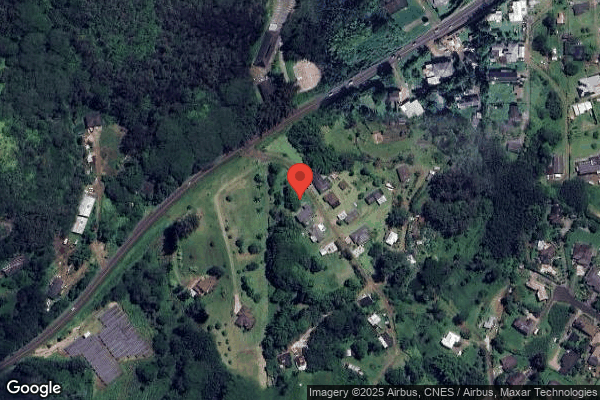
4297A OMAO ROAD, KOLOA, HI 96756 (808) 742-7591
For profit - Limited Liability company 84 Beds OHANA PACIFIC MANAGEMENT CO. Data: November 2025
Trust Grade
60/100
#23 of 41 in HI
Last Inspection: September 2024

Within standard 12-15 month inspection cycle. Federal law requires annual inspections.

Overview

Hale Kupuna Heritage Home, LLC has a Trust Grade of C+, which means it is considered decent and slightly above average in quality. It ranks #23 out of 41 nursing homes in Hawaii, placing it in the bottom half of facilities statewide, and #3 out of 5 in Kauai County, indicating that there are only two local options that are better. The facility is improving, as it reduced the number of issues from 10 in 2023 to 7 in 2024. Staffing is rated 4 out of 5 stars, which is a strength, although the turnover rate is concerning at 53%, higher than the state average of 36%. There have been no fines recorded, which is a positive sign, and the facility has average RN coverage. However, there are some notable weaknesses. Recent inspections found that staff did not follow proper procedures for thawing food, which could risk foodborne illness. Additionally, there were issues with staff not using personal protective equipment correctly while caring for both Covid-19 positive and negative residents, potentially exposing vulnerable individuals to infections. Lastly, the facility's quality assurance policies were found to be incomplete, which could hinder their ability to monitor and improve care quality effectively. Families should weigh these strengths and weaknesses carefully when considering this nursing home.

Trust Score
C+
60/100
In Hawaii
#23/41
Bottom 44%
Safety Record
Low Risk
No red flags
Inspections
Getting Better
10 → 7 violations
Staff Stability
⚠ Watch
53% turnover. Above average. Higher turnover means staff may not know residents' routines.
Penalties
✓ Good
No fines on record. Clean compliance history, better than most Hawaii facilities.
Skilled Nurses
✓ Good
Each resident gets 80 minutes of Registered Nurse (RN) attention daily — more than 97% of Hawaii nursing homes. RNs are the most trained staff who catch health problems before they become serious.
Violations
⚠ Watch
24 deficiencies on record. Higher than average. Multiple issues found across inspections.
★★★☆☆
3.0
Overall Rating
★★★★☆
4.0
Staff Levels
★★★☆☆
3.0
Care Quality
★★★☆☆
3.0
Inspection Score
Stable
2023: 10 issues
2024: 7 issues

The Good

  • 4-Star Staffing Rating · Above-average nurse staffing levels
  • Full Sprinkler Coverage · Fire safety systems throughout facility
  • No fines on record

Facility shows strength in staffing levels, fire safety.

The Bad

3-Star Overall Rating

Near Hawaii average (3.4)

Meets federal standards, typical of most facilities

Staff Turnover: 53%

Near Hawaii avg (46%)

Higher turnover may affect care consistency

Chain: OHANA PACIFIC MANAGEMENT CO.

Part of a multi-facility chain

Ask about local staffing decisions and management

The Ugly 24 deficiencies on record

Sept 2024 7 deficiencies
CONCERN (D)

Potential for Harm - no one hurt, but risky conditions existed

Deficiency F0552 (Tag F0552)

Could have caused harm · This affected 1 resident

**NOTE- TERMS IN BRACKETS HAVE BEEN EDITED TO PROTECT CONFIDENTIALITY** Based on interviews and record review, the facility failed to ensure the resident's right to be informed of the risk and benefit...

Read full inspector narrative →
**NOTE- TERMS IN BRACKETS HAVE BEEN EDITED TO PROTECT CONFIDENTIALITY** Based on interviews and record review, the facility failed to ensure the resident's right to be informed of the risk and benefits of proposed care for one Resident (R42) sampled. R42 had a decline in cognition due to the resident's health status. R42's cognition was not re-assessed for the resident's capacity to consent to medication(s)/treatment. The resident signed a consent for the use of antidepressant and antipsychotic medications. As a result of this deficient practice, residents with changes in condition which affect the resident's ability to understand the information required to make an informed decision are at risk for the potential of harm. Findings include: Review of the facility's policy and procedure, Psychotropic Medication (Original Effective Date 05/01/2021), use of documented, 5. Residents and/or representatives shall be educated on the risk and benefits of psychotropic drug use, as well as alternative treatments/non-pharmacological interventions. R42 was admitted to the facility on [DATE] with diagnosis which include hemiplegia and hemiparesis of the left dominant side after an intracranial hemorrhage, epilepsy, hypertension, and cognitive communication deficits. Conducted a review of R42's Electronic Health Record (EHR). Review of the R42's physician orders documented orders for an antidepressant, Lexapro (escitalopram oxalate) tablet; 10 mg PO (by mouth) daily at 08:00 AM, ordered on 04/12/24, for depression, and an antipsychotic, Quetiapine (Seroquel) tablet; 25 mg PO at Bedtime 09:00 PM, ordered on 04/12/24, for restlessness and agitation. Review of the facility's Informed Consent for Psychotropic Medications for Lexapro and Seroquel documented R42 was unable to sign: verbal consent on 04/12/24 at 01:30 PM. The form was filled in by Registered Nurse (RN)109. Review of the resident's submitted Minimum Data Set (MDS) documented: - admission MDS with an Assessment Reference Date (ARD) of 11/21/23 documented Section C. Cognitive Patterns, the Brief Interview for Mental Status (BIMS) score which is a test of the resident's cognition documented a score of 12, indicating the resident has moderate cognitive impairment. - Quarterly MDS with an ARD of 05/21/24, BIMS score was not completed - Quarterly MDS with an ARD of 08/08/24, BIMS score was 99, indicating the test could not be completed Review of R42's most recent quarterly Minimum Data Set (MDS) with an Assessment Reference Date (ARD) on 08/08/24, Section B. B060. Speech Clarity, R42 has unclear speech- slurred or mumbled words; B.0700 Rarely/Never understtod or has the ability to express ideas and want both verbal and non-verbal expression. Review of a Nursing Home to Hospital Transfer Form on 08/3/24 at 06:52 AM documented, Patient cognitive status has changed with less ability to swallow secretions . Review of R42's progress notes documented the resident was sent out to the emergency room (ER) and/or admitted to the hospital a total of five (5) times since admitted to the facility: -02/06/24 at 11:12 PM, R42 was unresponsive. Emergency Medical Services (EMS) was activated, and the resident was sent to the emergency room (ER) via ambulance. (R42 was admitted to the Intensive Care Unit (ICU)) -02/07/24 at 03:16 AM, R42 will be admitted (to an acute hospital) for a Urinary Tract Infection (UTI) with sepsis (a life-threatening infection) and hypoxia (low levels of oxygen which could be life-threatening). -02/15/24 at 05:12 PM, R42 was admitted back to the facility. -03/02/24 at 10:35 AM, R42 went back to the ER and was admitted to the ICU at 10:58 PM due to unresponsiveness and rule out a cerebral vascular accident (CVA, stroke) -03/20/24 at 09:50 PM, R42 was admitted back to the facility -04/09/24 at 05:50 PM, R42 admitted to the hospital for seizures -04/12/24 at 03:34 PM, R42 returned to the facility -04/16/24 at 03:05 PM, R42 was drooling and unresponsive to sternal rub and verbal commands, sent to ER -04/16/24 at 08:21 PM, R42 returned to the facility -08/03/24 at 08:20 PM, R42 returned to the facility. -08/03/24 at 07:38 AM, R42 has a change in cognitive status with less ability to swallow secretions, sent to the ER On 09/05/24 at 01:41 PM, conducted an interview with the Administrator regarding R42's cognitive ability to consent and requested a copy of a physician's assessment of the resident's ability to consent. Administrator stated R42 usually makes his own decisions. Asked if R42 has a designated representative in the event the resident is not able to make any decisions for himself. The Administrator did not know if the resident had a designated healthcare decision maker/representative and would get back to this surveyor with that information. On 09/05/24 at 02:44 PM, the Administrator confirmed, on admission, R42 could make his own decisions, but the resident has been sent out to the acute hospital several times since his original admission and the resident's cognition has declined since then. The Administrator also confirmed R42's capacity to consent has not been reassessed by the physician. On 09/06/24 at 11:25 AM, conducted a concurrent record review of R42's EHR and interview with the [NAME] President of Clinical Operations (VPCO), the Director of Nursing (DON) (new to the facility), the Infection Preventionist (IP) (assisted previous DON), Regional Nurse (RRN)1 and RRN2. Reviewed R42's progress notes (in the EHR) and R42's decline in health status, decline in cognition, and the facility's Informed Consent for Psychotropic Medications form which was verbally consented to by R42 on 04/12/24. VPCO, RRN1 and RRN2 confirmed R42's health and cognitive status has declined and the resident's capacity to consent should have reassessed but was not.
CONCERN (D) 📢 Someone Reported This

A family member, employee, or ombudsman was alarmed enough to file a formal complaint

Potential for Harm - no one hurt, but risky conditions existed

Free from Abuse/Neglect (Tag F0600)

Could have caused harm · This affected 1 resident

Based on interviews and record review, the facility failed to ensure one resident (Resident (R)39) was free from resident-to-resident abuse. R20 willful and intentionally punched R39 while smoking wit...

Read full inspector narrative →
Based on interviews and record review, the facility failed to ensure one resident (Resident (R)39) was free from resident-to-resident abuse. R20 willful and intentionally punched R39 while smoking with staff present. As a result of this deficient practice, R39 sustained harm due to physical contact. The facility investigated, implemented updated interventions for resident safety, educated staff, and counseled the residents. Past non-compliance was determined as a result of the facility's corrective actions. Findings include: Review conducted for the Facility Reported Incident (FRI) document retrieved from Aspen Complaints/Incidents Tracking System (ACTS) #11078. Initial report was submitted to the Office of Healthcare Assurance on 07/10/24 and the completed report on 07/15/24. An altercation occurred when R39 requested to use R20's lighter and proceeded to take the lighter from R20's personal bag. R20 became upset that R39 was going into his personal bag and punched R39. Certified Nurse Aide (CNA)107 was present in the area, but not close enough to the residents to prevent R39 from being punched by R20. The residents were separated and R39 did not sustain a major injury. The facility corrective actions included but not limited to, immediately separated, and assessed the residents and conducted an investigation. Every 15-minute checks were implemented for both residents for 72-hours. Interventions implemented as a result of the altercation included both residents will not utilize the designated smoking area simultaneously throughout the day and each resident will have their own designated lighters which staff will provide to them during smoke breaks. CNA107 was permanently removed from the schedule due to failure to intervene in the resident-to-resident altercation. Facility staff were educated on the significance of separating residents during an altercation to prevent further escalation and to mitigate to potential of harm.
CONCERN (D)

Potential for Harm - no one hurt, but risky conditions existed

Report Alleged Abuse (Tag F0609)

Could have caused harm · This affected 1 resident

**NOTE- TERMS IN BRACKETS HAVE BEEN EDITED TO PROTECT CONFIDENTIALITY** Based on interviews and record review, the facility failed to ensure an injury of unknown source was reported no later than 24 h...

Read full inspector narrative →
**NOTE- TERMS IN BRACKETS HAVE BEEN EDITED TO PROTECT CONFIDENTIALITY** Based on interviews and record review, the facility failed to ensure an injury of unknown source was reported no later than 24 hours to the State Agency (SA) and Adult Protective Service (APS) for one resident (Resident (R)42) sampled. R42 sustained bruising to the left eyebrow and left eyelid. The source of the injury is unknown due to the resident's inability to verbalize what happened and it was not witnessed by staff. The facility confirmed the injury of unknow source was not reported to the SA or APS. Review of the SA's database, Aspen Complaints/Incident Tracking System (ACTS), confirmed the facility did not submit a report of R42's injury of unknown source. As a result of this deficient practice, residents are at risk for more than minimal harm. Findings include: (Cross Reference to F610 Investigate/prevent/correct Alleged Violations) Review of R42's Electronic Health Record (EHR) documented the resident was admitted to the facility on [DATE] with diagnosis which include hemiplegia and hemiparesis of the left dominant side after an intracranial hemorrhage, epilepsy, hypertension, and cognitive communication deficits. Review of R42's most recent quarterly Minimum Data Set (MDS) with an Assessment Reference Date (ARD) on 08/08/24, Section B. B060. Speech Clarity, R42 has unclear speech- slurred or mumbled words; B.0700 Rarely/Never understood or has the ability to express ideas and want both verbal and non-verbal expression. A progress note written on 08/03/24 at 07:38 AM documented R42 was sent out to the emergency room (ER). A 08/03/24 at 08:24 PM confirmed upon returning from the ER, R42 had .no bruise . A nursing progress note written on 08/05/24 at 12:41 AM documented, Staff reported bruises to resident's left eyebrow and left eyelid measuring 2.5x2cm and 1x1.5cm respectively. Both are red. Unable to verbalize how he got the bruises. No verbal/non-verbal signs of pain/discomfort. MD response initiated. Review of an observation report (Skin Assessment) completed on 08/05/24 documented R42 sustained an eyebrow bruise 2.5 cm x 2 cm bruise and left eye 1 cm x 1.5 cm bruise to left eye. During a concurrent record review of R42's EHR and interview with the [NAME] President of Clinical Operations (VPCO), the Director of Nursing (DON) (new to the facility), the Infection Preventionist (IP) (assisted previous DON), Regional Nurse (RRN)1 and RRN2, on 09/06/24 at 11:25 AM, the IP confirmed the facility did not recognize R42's bruises on his left eyebrow and eyelid as an injury of unknown source and did not report it to the SA or to APS.
CONCERN (D)

Potential for Harm - no one hurt, but risky conditions existed

Investigate Abuse (Tag F0610)

Could have caused harm · This affected 1 resident

**NOTE- TERMS IN BRACKETS HAVE BEEN EDITED TO PROTECT CONFIDENTIALITY** Based on interviews and record review, the facility failed to thoroughly investigate an injury of unknown origin to prevent furt...

Read full inspector narrative →
**NOTE- TERMS IN BRACKETS HAVE BEEN EDITED TO PROTECT CONFIDENTIALITY** Based on interviews and record review, the facility failed to thoroughly investigate an injury of unknown origin to prevent further potential abuse for one resident (Resident (R)42). Staff reported bruises to R42's left eyebrow and eyelid and the source of the injury was unknown due to the resident's inability to verbalize what happened and the injury was not witnessed by staff. The facility did not identify the injury of unknown source as a potential for abuse of a vulnerable resident and did not investigate the potential source of the injury. As a result of this deficient practice, non-verbal and/or cognitive impaired residents are at risk for more than minimal harm. Findings include: (Cross Reference to F609 Reporting of Alleged Violations) Review of R42's Electronic Health Record (EHR) documented the resident was admitted to the facility on [DATE] with diagnosis which include hemiplegia and hemiparesis of the left dominant side after an intracranial hemorrhage, epilepsy, hypertension, and cognitive communication deficits. Review of R42's most recent quarterly Minimum Data Set (MDS) with an Assessment Reference Date (ARD) on 08/08/24, Section B. B060. Speech Clarity, R42 has unclear speech- slurred or mumbled words; B.0700 Rarely/Never understood or can express ideas and want both verbal and non-verbal expression. A progress note written on 08/03/24 at 07:38 AM documented R42 was sent out to the emergency room (ER). A 08/03/24 at 08:24 PM confirmed upon returning from the ER, R42 had .no bruise . A nursing progress note written on 08/05/24 at 12:41 AM documented, Staff reported bruises to resident's left eyebrow and left eyelid measuring 2.5x2cm and 1x1.5cm respectively. Both are red. Unable to verbalize how he got the bruises. No verbal/non-verbal signs of pain/discomfort. MD response initiated. Review of an observation report (Skin Assessment) completed on 08/05/24 documented R42 sustained an eyebrow bruise 2.5 cm x 2 cm bruise and left eye 1 cm x 1.5 cm bruise to left eye. During an interview with the Administrator on 09/05/24 at 01:41 PM, requested the facility's investigation into the origin of the bruises staff reported on R42's left eyebrow and eyelid. During a follow-up interview with the Administrator at 02:44 PM, the Administrator confirmed the facility did not investigate how R42 sustained the bruises. During a concurrent record review of R42's EHR and interview with the [NAME] President of Clinical Operations (VPCO), the Director of Nursing (DON) (new to the facility), the Infection Preventionist (IP) (assisted previous DON), Regional Nurse (RRN)1 and RRN2, on 09/06/24 at 11:25 AM, the IP confirmed the facility did not recognize R42's bruises on his left eyebrow and eyelid as an injury of unknown source and did not conduct a thorough investigation.
CONCERN (D)

Potential for Harm - no one hurt, but risky conditions existed

Deficiency F0625 (Tag F0625)

Could have caused harm · This affected 1 resident

**NOTE- TERMS IN BRACKETS HAVE BEEN EDITED TO PROTECT CONFIDENTIALITY** Based on record review, staff interview and review of policy, the facility failed to provide written notice of bed-hold policy f...

Read full inspector narrative →
**NOTE- TERMS IN BRACKETS HAVE BEEN EDITED TO PROTECT CONFIDENTIALITY** Based on record review, staff interview and review of policy, the facility failed to provide written notice of bed-hold policy for one Resident (R)8 of two residents sampled. As a result of this deficiency, there was potential for miscommunication. Findings include: Review of the Electronic Health Record indicated that R8 was transferred to the hospital on [DATE] for low blood pressure, Urinary Tract Infection. Further review did not show any written notice of bed-hold policy to the resident and/or representative. During staff interview on 09/05/24 at 12:30 PM, Administrator acknowledged that the facility did not provide written notification of bed-hold policy to R8 and/or representative. Administrator also said that the facility had used other forms for discharge/written notification at that time when R8 was discharged . Review of facility policy on Discharge, Transfer of the Guest/Resident read; Purpose, to ensure safe departure from the facility, to provide sufficient information for continued care of the resident. Discharge, to leave the facility without plans or intention to return (e.g. discharge to home, a lower level of care or another care facility). Transfer, to leave the facility with plans or intention to return (e.g. transfer to an acute care facility for appropriate care). Procedure, explain discharge procedure and reason to resident and give copy of Transfer & Discharge notice / Bed hold policy as required. Include guest/resident representatives . Transfer . explain transfer and reason to the guest/resident and/or representative. Give copy of signed transfer or discharge notice to the resident and/or representative or person(s) responsible for care . Explain and give copy of Bed Hold form to the resident and/or representative . Documentation Guidelines, documentation may include . Complete Bed Hold notification form per facility policy .
CONCERN (F)

Potential for Harm - no one hurt, but risky conditions existed

Food Safety (Tag F0812)

Could have caused harm · This affected most or all residents

**NOTE- TERMS IN BRACKETS HAVE BEEN EDITED TO PROTECT CONFIDENTIALITY** Based on observations and staff interviews, the facility failed to: 1 and 2) ensure food were stored and frozen food thawed in a...

Read full inspector narrative →
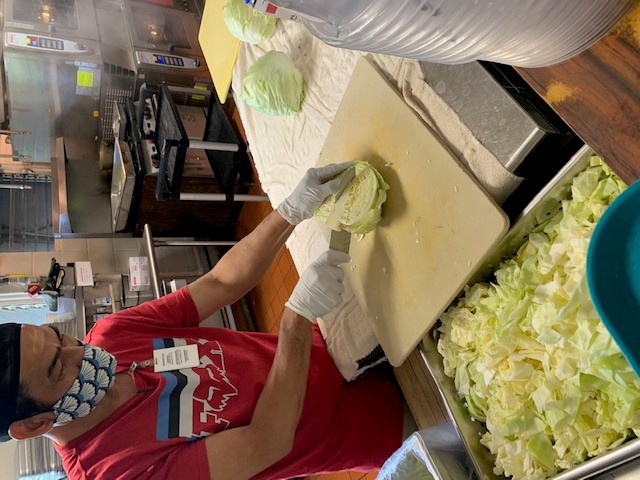
**NOTE- TERMS IN BRACKETS HAVE BEEN EDITED TO PROTECT CONFIDENTIALITY** Based on observations and staff interviews, the facility failed to: 1 and 2) ensure food were stored and frozen food thawed in a manner that avoids foodborne illness to the residents and 3) perform hand hygiene when distributing food trays to residents. As a result of these deficiencies, the facility put the residents at risk for foodborne illness. Findings include: 1) On 09/03/24 at 09:42 AM, initial observation of kitchen, thawing individually wrapped salmon fillets in water in a sink. Inquired with Kitchen Staff (KS)2 about the thawing salmon. KS2 stated they are having miso salmon for dinner and confirmed the salmon has been in the water for about one hour. Requested for KS2 to take the temperature of the salmon and the internal temperature of a larger fillet was 62.8 degrees Fahrenheit (F). 09/04/24 12:00 PM Conducted and interview with [NAME] (Food service Director and Dietician) shared observation with her of staff defrosting salmon and salmon was 62.8 degrees F. [NAME] confirmed temperature is out of range and salmon will defrost quicker than 40 lbs of chicken. Stated she would in-service staff on proper thawing of frozen foods. 2) On 09/03/24 at 09:38 AM, observed a scooper in the thickener container. Kitchen Manager (KM) confirmed the scooper should not be stored in the container. During an interview with the FSD ([NAME]) confirmed the scooper should not be stored in the same container as the product. 3) On 09/03/24 at 12:15 PM, during observation of lunch on the Makalapua Unit, Manager 5 did not perform hand hygiene after removing gloves. Manager 5 proceeded to distribute lunch trays to three residents and did not perform any hand hygiene between or after the distribution of the trays. Staff interview on 09/04/24 at 12:00 PM, Administrator acknowledged that hand hygiene should have been done during distribution of lunch trays.
CONCERN (F)

Potential for Harm - no one hurt, but risky conditions existed

Infection Control (Tag F0880)

Could have caused harm · This affected most or all residents

Based on observation, interview and policy review, the facility failed to ensure staff followed the Infection Prevention and Control policies and procedures for proper use of personal protective equip...

Read full inspector narrative →
Based on observation, interview and policy review, the facility failed to ensure staff followed the Infection Prevention and Control policies and procedures for proper use of personal protective equipment (PPE) to follow proper infection control practices. Staff working with residents on isolation precautions did not correctly doff (remove) their PPE after providing care to Covid-19 positive residents in both resident care units in the facility. The same staff were also caring for residents who were not Covid-19 positive. The deficient practice places all residents in the facility at risk for healthcare associated infections that can result in significant adverse consequences. Findings include: Facility matrix and Electronic Health Record (EHR) reviewed. Resident (R)13 is a resident in room D3 documented with Covid-19 and on isolation precautions. A second Resident in room D2 was on transmission-based precautions due to an exposure to Covid-19. A third Resident, R33 in room B1 was documented Covid-19 positive and is also on isolation precautions. Observation on Makalapua unit on 09/03/24 at 10:43 AM. Observed Certified Nurse Aide (CNA)15 walk into room D2 wearing personal protective equipment (PPE), face shield, mask, gown, and gloves. A few minutes later CNA15 walked out of D2 still wearing the PPE and walked into room D3. A minute later CNA15 walked back out of room D3 and walked back into room D2 wearing the PPE. A few minutes later CNA15 walked out of D2 and doffed (removed) her PPE in the hall and walked into D3 and put it in the trash. Observation and interview with Registered Nurse (RN)25 on 09/03/24 at 11:00 AM. RN25 came out of D3 and approached the surveyor. The surveyor asked RN25 what is the process for donning (put on) and doffing PPE for the residents are on transmission-based precautions. RN25 said the staff don the PPE outside the room, then after they go into the room and provide care, they doff the PPE inside the room, and throw it in the trash bins in the room before going outside. When asked why the staff doffed the PPE outside of the room, RN25 said, we didn't have a bin in the room to throw away the PPE. During an observation and interview in R33's room on 09/05/24 at 11:15 AM with CNA20, this surveyor was preparing to exit the room and asked how to doff the PPE. CNA20 said take-off gloves, gown, and face shield but you don't need to remove the N95, you don't need to change that one. Surveyor asked CNA20, I don't need to change my mask? CNA20 stated, only the gown, gloves, and face shield. Interview with the Infection Preventionist (IP) in an office in the Ilima building on 09/06/24 at 10:35 AM. The surveyor discussed the observation on 09/03/24 when the CNA15 came out of room D2 wearing full PPE, then was observed to go into room D3 and come out with the PPE still on and then go back into room D2 then leave the room and doff PPE outside the room. The surveyor asked the IP if staff are required to change the N95 when doffing the PPE? The IP confirmed yes that the staff are required to Doff all the PPE (including the N95 mask) prior to coming out of the room. Infection Prevention and Control Program 2001 MED-PASS, Inc. (Revised August 2016) reviewed. 7. Prevention of Infection. a. Important facets of infection prevention include: (3) educating staff and ensuring that they adhere to proper techniques and procedures; .
Sept 2023 10 deficiencies
CONCERN (D)

Potential for Harm - no one hurt, but risky conditions existed

Deficiency F0676 (Tag F0676)

Could have caused harm · This affected 1 resident

**NOTE- TERMS IN BRACKETS HAVE BEEN EDITED TO PROTECT CONFIDENTIALITY** Based on interviews and record review, the facility failed to provide the necessary care and services to ensure that one out of ...

Read full inspector narrative →
**NOTE- TERMS IN BRACKETS HAVE BEEN EDITED TO PROTECT CONFIDENTIALITY** Based on interviews and record review, the facility failed to provide the necessary care and services to ensure that one out of one sampled residents (Resident (R) 37) abilities in activities of daily living do not diminish. This failed practice has the potential to cause a decline in R37's mobility. Findings Include: R37 is a [AGE] year-old female admitted to the facility on [DATE]. R37 has a medical history that includes but not limited to Parkinson's disease. Interview was conducted with R37 on 09/20/23 at 11:51 AM in her room. R37 verbalized wanting to ambulate more often with a walker. R37 also added that she hasn't walked all week. Interview was conducted on 09/22/23 at 08:57 AM in the nursing administration office. State surveyor requested from the Director of Nursing (DON) R37's ambulation records. DON stated that R37 would not have any ambulation records because she was not cleared to ambulate with nursing staff. Interview was conducted with Physical Therapist (PT) in the rehabilitation room on 09/22/23 at 09:09 AM. PT confirmed that R37 was cleared to ambulate with nursing staff on 06/07/23 and staff should be attempting to help her ambulate. Interview was conducted with DON on 09/22/23 at 10:24 AM in the classroom. DON stated that the usual practice after PT discharges a resident from their services is to create a care plan. The care plan then triggers treatment. Certified Nurse's Assistant (CNA) will be triggered to perform the activity with the resident and CNAs will be able to chart into the records. Unfortunately, R37 did not have a care plan created for ambulation activity after she was discharged from rehabilitation services. A review of the Electronic Health Record (EHR) indicated that PT had discharged R37 on 06/06/23. In the discharge summary it stated, Patient will safely ambulate on level surfaces 100 feet using two-wheeled walker with Supervision or Touching Assistance with continuous steps to prepare for walk to dine for meals. EHR also indicated, Patient has met goals set and nursing has been educated on walking program .Discharge Instructions: see care plan. A review of the EHR indicated that R37 only ambulated eight times in the last month. EHR also indicated the lack of a care plan for R37's ambulation activity.
CONCERN (D)

Potential for Harm - no one hurt, but risky conditions existed

Quality of Care (Tag F0684)

Could have caused harm · This affected 1 resident

**NOTE- TERMS IN BRACKETS HAVE BEEN EDITED TO PROTECT CONFIDENTIALITY** Based on record review and interview with staff, the facility failed to collaborate with the hospice provider for the developmen...

Read full inspector narrative →
**NOTE- TERMS IN BRACKETS HAVE BEEN EDITED TO PROTECT CONFIDENTIALITY** Based on record review and interview with staff, the facility failed to collaborate with the hospice provider for the development and implementation of the coordinated plan of care for one of one resident selected for hospice review. This is evidenced by the failure to include the hospice provider in the development of a plan of care and no consistent documentation of the hospice providers communication with the facility. Findings include: Resident (R)9 was admitted to the facility on [DATE]. Diagnoses include but not limited to unspecified dementia, unspecified severity, without behavioral disturbance; psychotic disturbance, mood disturbance, and anxiety; generalized anxiety disorder; and adult failure to thrive. R9 is a hospice recipient (start date of 04/14/23). Record review found no copy of the election of benefit for hospice with the resident's diagnosis to qualify for hospice and the services to be supplied by hospice provider. On 09/22/23 at 11:44 AM interviewed the facility's Director of Nursing (DON). Requested to review R9's election of hospice benefit. Inquired what services is hospice providing. DON reported their staff continue to round on the resident. DON recalled the resident does not receive hospice aide services and recalls R9 receives spiritual care. Further queried how often does the nurse and spiritual counselor come to visit R9. There were monthly notes by hospice, dated 05/02/23, 05/30/23, 06/27/23, 08/11/23, and 09/11/23. Also found progress notes in the electronic medical record (07/11/23, 07/18/23, 8/8/23, 08/11/23, 08/15/23, 08/22/23, and 09/05/23). DON stated hospice is making weekly visits. DON reported nurses are making entries in the progress notes to document their communication with the hospice provider. Reviewed the care plan with the DON. There was no documentation the hospice provider participated in the development of the care plan for 04/11/23 and 07/12/23. The care plan documents discipline responsible for R9's care as hospice; however, there is no documentation of the hospice providers participation in the care planning process. Review of the election of hospice benefits found physician orders for lorazepam 2 mg/mL; morphine PRN; morphine concentrate solution 100 mg/5mL twice a day for pain; call hospice for discomfort, symptom management, changes, questions, concerns, fall; call hospice at time of death; call hospice if no urine output x12 hours; and call hospice prior to accessing hospice e-kit. There was no documentation of the services/durable medical equipment the hospice would provide. On 09/22/23 at 12:05 PM interview was done with the Social Services Designee (SSD). SSD reported she is aware a nurse and volunteer come to visit R9. Also, she thinks the Chaplain provides services. SSD shared that previously the hospice social worker would coordinate with their facility to participate in care plan meetings, however, this person left and presently there is no hospice person to participate in care plan meetings.
CONCERN (D)

Potential for Harm - no one hurt, but risky conditions existed

Accident Prevention (Tag F0689)

Could have caused harm · This affected 1 resident

**NOTE- TERMS IN BRACKETS HAVE BEEN EDITED TO PROTECT CONFIDENTIALITY** Based on observation, record review, and interview, the facility did not assure adequate supervision was provided to mitigate th...

Read full inspector narrative →
**NOTE- TERMS IN BRACKETS HAVE BEEN EDITED TO PROTECT CONFIDENTIALITY** Based on observation, record review, and interview, the facility did not assure adequate supervision was provided to mitigate the risk of an accident for 1 (Resident 39) of 4 residents in the sample. The facility failed to ensure staff were present to implement the care plan to prevent Resident (R)39 from unsafe wandering. R39 wandered into R36's room which resulted in finding R39 on the floor. This deficient practice has the potential to result in resident-to-resident altercations. Findings include: On 09/19/23 at 12:37 PM observed the call light for Room D2 was on. There were no staff members on the unit. Staff members were on the C unit distributing residents' lunch meal at the kitchenette. Observed Registered Nurse (RN)4 pushing a cart with lunch trays on it When she approached Room D2, RN4 was heard speaking to someone, she then left the food cart and rushed off. Upon entering the room, observed Resident (R)39 on the floor in R36's room. D2 is not R39's room. R39 was observed in a sitting position with his forward wheel walker upright in front of him. R39 was on the floor next to the partially drawn curtain close at the foot of the bed across of R36. R36 was observed standing at his bedside. RN4 returned to the room with her vitals cart. R39 was stating he needed help. RN4 informed R39 that she would come back as she needed help. RN4 left the room. Observed R39 telling R36 that if he could get over to his bed he can pull himself up. During this time, R39 kept making attempts to grab his walker. RN4 returned and called for assistance, Mr. Strong. R39 kept telling the nurse he needed help. RN4 asked R39 how he landed on the floor, he replied he fell. She then asked if he hit his head. R39 started to become agitated, repetitively telling her he wanted to get up. RN4 kept responding they are coming. The R39 yelled I just need to get the fuck up. Staff members responded and was able to get R39 to stand. On 09/20/23 at 08:38 AM observed R39 lying in bed. Asked him about his fall and he did not remember he fell yesterday. He conversed about where he worked and how he earned a living. R39 was asked if he knows R36. R39 responded he doesn't know who that is. On 09/20/23 at 08:59 AM interviewed R36. R36 reported he is not sure what R39 was doing in his room. R36 stated he does not know how R39 fell, he couldn't see him behind the curtain. R36 reported he activated the call light when R39 entered his room and fell. R36 stated he told R39 to get out of his room. Further queried whether R39 was a welcome visitor, R36 responded, he didn't care, if R39 did not bother him. On 09/21/23 at 02:45 PM record review noted R39 was admitted to the facility on [DATE]. Diagnoses include but not limited to unspecified dementia, unspecified severity, with other behavioral disturbance; orthostatic hypotension; syncope and collapse; and insomnia. A review of the John Hopkins Fall Risk Assessment Tool dated 09/19/23 documents, R39 did not have a fall in the previous six months and was assessed at moderate fall risk. Review of the quarterly Minimum Data Set with assessment reference date of 09/12/23 noted R39 had severe cognitive impairment. R39 was not coded as having behavioral symptoms (physical or verbal, rejection of care, or wandering. R39 was assessed as requiring supervision with set up for walking in room and corridor. He requires limited assistance with one-person physical assist for transfers (how resident moves between surfaces including to and from bed, chair, wheelchair, standing position). A review of R39's care plan documents R39 has cognitive communication deficits related to dementia and is hard to redirect and becomes aggressive. Start date of care plan was 06/19/23. Approaches include remove resident from other resident's rooms and unsafe situations; when resident begins to wander, provide comfort measures for basic needs (e.g., pain, hunger, toileting, too hot/cold, etc.); and when resident wanders, approach resident from the front, walk in step with resident first before redirecting. On 09/21/23 at 09:00 interview was conducted with Certified Nurse Aide (CNA)3. CNA3 reported R39 wanders into other residents' room but this is the first time he went into R36's room. CNA3 also reported she had heard that R39 was sitting in the activities area and started swearing. R36 shouted to R39 to shut up and this is when R39 entered R36's room. CNA3 reported R39 will ambulate with the use of his forward wheel walker on the unit. CNA3 stated when she observes R39 wandering on the unit, she will attempt to redirect him. Review of the nursing schedule for 06/19/23 for Units C and D was one Charge Nurse and two CNAs. There was a total of 21 residents on the unit. The ratio of direct care staff (CNAs) to residents was 1:10.5. During the time of the incident, the two CNAs and Charge Nurse were assisting with passing meal trays to the residents. (Refer F725)
CONCERN (D)

Potential for Harm - no one hurt, but risky conditions existed

Medication Errors (Tag F0758)

Could have caused harm · This affected 1 resident

**NOTE- TERMS IN BRACKETS HAVE BEEN EDITED TO PROTECT CONFIDENTIALITY** Based on record review and interview, the facility failed to follow through on a gradual dose reduction (GDR) for one of five sa...

Read full inspector narrative →
**NOTE- TERMS IN BRACKETS HAVE BEEN EDITED TO PROTECT CONFIDENTIALITY** Based on record review and interview, the facility failed to follow through on a gradual dose reduction (GDR) for one of five sampled residents (Resident (R) 16). This deficient practice has the potential to affect all residents on anti-psychotic medications and who need a gradual dose reduction and may be clinically contraindicated at a higher dose. Findings include: Unnecessary medications record review (RR) on 09/21/23 at 01:37 PM was done. RR for Trazodone 50 milligrams (mg) revealed a GDR attempt request by the pharmacist in June of 2023. A reminder was made on pharmacy drug regimen review dated September 2023 to ask physician to respond to a GDR attempt request for Trazodone from June 2023. Interview was done on 09/22/23 at 08:41 AM with the Director of Nursing (DON) who stated that this was not done, and it was missed but we are taking care of it now. RR on 09/22/23 at 10:00 AM revealed a new order for GDR of Trazodone 50 mg to decrease to 25 mg every night (qhs) on 09/21/23. Policies for gradual dose reduction and tapering of medications and Medication Regimen Review were reviewed on 09/22/23 at 10:30 AM. Medication Regimen Review and Reporting 8.1, #7 states A record of consultant pharmacist's observations and recommendations is made available in an easily retrievable format to nurses, physicians, and the care planning team within 48 hours of MRR completion. #8 states the nursing care center follows up on the recommendations to verify that appropriate action has been taken. Recommendations shall be acted upon within 30 calendar days. Further RR for [NAME] Pacific Health policy Gradual Dose Reduction and tapering of medications statement #2 states All medications shall be considered for possible tapering. Tapering that is applicable to antipsychotic medications shall be referred to as gradual dose reduction. #3 states residents who use antipsychotic drugs shall receive gradual dose reductions and behavioral interventions, unless clinically contraindicated, to discontinue these drugs.
CONCERN (D)

Potential for Harm - no one hurt, but risky conditions existed

Food Safety (Tag F0812)

Could have caused harm · This affected 1 resident

**NOTE- TERMS IN BRACKETS HAVE BEEN EDITED TO PROTECT CONFIDENTIALITY** Based on observation, document review, and interview with staff, the facility failed to: ensure potentially hazardous foods (raw...

Read full inspector narrative →
**NOTE- TERMS IN BRACKETS HAVE BEEN EDITED TO PROTECT CONFIDENTIALITY** Based on observation, document review, and interview with staff, the facility failed to: ensure potentially hazardous foods (raw chicken and fish) were thawed properly; food items were sanitarily stored; stored food items were uncovered/sealed; stored boxes of food direly on the floor; and food items were not labeled to assure they are discarded in accordance with the facility's policy and procedures. Findings include: On 09/19/23 at 09:50 AM a brief tour of the kitchen was conducted with [NAME] (C)1. Observed raw chicken in the sink. The chicken was in an opened plastic bag and covered with water. C1 reported the chicken is being thawed for cooking today. Inquired whether they run water while thawing food items. C1 did not respond. Observation with Server of food storage bins found three bins stored under a shelf. The bins had a clear plastic cover that could be slid back to open the container. Observed, oatmeal stored in a brown bag that was not sealed at the top. Further observed the back portion of the lid (area where clear plastic cover slides over) was covered with brown/black substance. The Server stated this was probably dust. Another bin was observed with ants crawling on the outside of the container close to lid. There were several brown bags and plastic bags stored in this bin. The brown bags were folded over. Upon opening the lid, observed one ant crawling in the bin. The Server reported brown sugar was stored in this bin. The third bin stored rice; the rice was in a brown bag which was not sealed. Observation of the refrigerator found a clear plastic container storing white shredded cheese. The container had a label with a date of 09/10/23. The Server reported food items are kept for a week in the refrigerator. Also observed a clear plastic container with individually wrapped sliced orange cheese. This container was labeled with date of 08/14/23. Server confirmed the cheese was supposed to be disposed of after a week. In the refrigerator observed a metal pan that was covered with plastic wrap. The Server reported this was [NAME] pork which was served last week. There was a container of layered brown and purplish creamy substance. The server reported this was peanut butter and jelly. There was no label of what the food item was and when it was prepared. Also found a small plastic container that was not labeled. The Server reported this was poi that they served last Friday with the [NAME] pork. Further observed a small carton of liquid whole egg in the refrigerator. The top of the carton was opened and there was no label of when the product was opened. The Server reported this was used this morning. Further queried whether the product should be closed. Server unable to answer. Also observed a metal rack with two shallow metal pans of cooked item with no label. The Server reported this was bread pudding, which was prepared yesterday, and they forgot to label it. Observation of the freezer found three stacks of boxes. The boxes at the bottom of the stacks were placed directly on the floor, sliced carrots, cut green beans, and chicken. The Server reported these items were just delivered and needed to be stored on the shelf. Second observation on 09/20/23 at 09:49 AM found the ants were still crawling on the brown sugar bin and the top of the oatmeal bin was opened but still with a smattering of dust. Observed signage on the walk-in refrigerator/freezer that read, Do No Keep Leftovers .Only Evening Shift Keep [NAME] If Any Left. A second sign read Label and Date All Items - Discard After 3 Days. Also observed unwrapped frozen fish fillets in the sink submerged in water. There was no running water. On 09/20/23 at 10:00 AM, interviewed the Registered Dietitian (RD). Inquired what is the facility's procedure for defrosting food items. The RD was agreeable to follow up. On 09/20/23 at 10:01 AM concurrent observations were done with food service director (FSD). Observation found the frozen fish fillets piled in a metal pan with water running. The fillets on top were not submerged in water. Took the temperature of the fish and water, which was 32 degrees Fahrenheit. FSD stated she is not sure that the facility was not in compliance and usually thaw items in the refrigerator. Explained to her initially there was no running water and now there is so why the change? FSD replied that the fish should be full submerged in water and instructed C2 to get a bigger pan and explained staff did not run water as the sink would overflow. FSD stated this is not a food safety issue. Requested a copy of the facility's policy and procedure for thawing food items. Observation of the three bins containing oatmeal, rice, and brown sugar. FSD stated she will make sure these bins are cleaned within the hour. FSD also observed the ants crawling on the brown sugar bin. On 09/20/23 at 10:54 AM, FSD provided copies of the facility's food storage policy and labeling and dating policy. FSD stated that the facility does not have a policy and procedure for thawing food, the closest was the procedure in the food storage policy, 4. Frozen foods are thawed at refrigeration temperatures of 40-degree F or below, under running water, or quick-thawed as part of the cooking process. FSD reported that she will be providing education to the staff regarding thawing frozen food items. Review of the policy and procedure, Labeling and Dating Policy documents the following: 3) Ensures that all foods are stored off the ground.
CONCERN (D)

Potential for Harm - no one hurt, but risky conditions existed

Infection Control (Tag F0880)

Could have caused harm · This affected 1 resident

Based on observation and interview with staff, the facility failed to ensure staff followed infection control procedures for a resident on contact precautions. This deficient practice has the potentia...

Read full inspector narrative →
Based on observation and interview with staff, the facility failed to ensure staff followed infection control procedures for a resident on contact precautions. This deficient practice has the potential to result in transmission of communicable infections. Findings include: On 09/19/23 at 11:05 AM observed Resident (R)94 had signage posted outside of her room regarding contact precautions. Overheard staff member in the resident's room. R94 requested water. The staff member removed personal protective equipment (PPE). Upon return staff member went to the cart housing PPE, placed water container on the cart, donned gown, removed a pair of gloves from the box, and don gloves. Staff member delivered the water and doffed all PPE in the resident's room. The staff member was overheard informing R94 that they will do a diet trial. The staff member hand sanitized with alcohol-based hand sanitizer (ABHS). As the staff member was leaving the unit, briefly interviewed the staff member. Staff member confirmed she is the Speech-Language Pathologist (SLP) and was assessing resident for diet texture. The staff member left the unit. Observed the PPE cart contained, gowns, gloves, and face mask. There was a signage placed with the contact precaution sign that was handwritten instructing to wash hands with soap and water. On 09/19/23 at 11:52 AM, Director of Nursing (DON) was interviewed. The DON reported R94 is on contact precautions for exhibiting signs and symptoms of norovirus. DON confirmed the posting of handwritten sign with instructions to wash hands with soap and water. Inquired where would staff go to wash their hands, she indicated they would go down the hall to the bathroom. Observation was shared with the DON, and she acknowledged the handwritten sign wasn't very prominent. Also, queried whether the isolation cart should be supplied with ABHS for staff convenience. DON confirmed the isolation cart should be supplied with ABHS for staff use. Second observation found ABHS on the isolation cart and a typed signage with bold/large font regarding the need for handwashing with soap and water.
CONCERN (D)

Potential for Harm - no one hurt, but risky conditions existed

Deficiency F0919 (Tag F0919)

Could have caused harm · This affected 1 resident

Based on observation and interview with staff, the facility did not assure the toilet and shower call light system was accessible for residents lying on the floor. This deficient practice has the pote...

Read full inspector narrative →
Based on observation and interview with staff, the facility did not assure the toilet and shower call light system was accessible for residents lying on the floor. This deficient practice has the potential to affect residents' ability to call for help if they fall to the floor. Findings include: On 09/21/23 at 08:50 AM interview and concurrent observation was made with Maintenance Associate (MA)1 on Unit D of both bathrooms, inquired if a resident falls to the ground, is the call light cord next to the toilet and in the shower long enough to pull for the resident to access. MA1 stated they try not to make the cord too long as they don't want it to get tangled. MA1 confirmed the cord may not be long enough. On 09/21/23 at 09:00 AM concurrent observation and interview was conducted with MA1 and MA2. Observation of the two residents' bathrooms on Unit C was done. The MAs confirmed the cord was not long enough for the toilets in both bathrooms for residents to access if on the ground. And the cord for the shower was not long enough for residents to access if on the ground. MA2 stated they will look into it and fix it today.
CONCERN (D)

Potential for Harm - no one hurt, but risky conditions existed

Deficiency F0925 (Tag F0925)

Could have caused harm · This affected 1 resident

Based on observation, the facility did not assure it had an effective pest control program. Observation of the kitchen found ants crawling on storage bin. Although the facility has a contract for pest...

Read full inspector narrative →
Based on observation, the facility did not assure it had an effective pest control program. Observation of the kitchen found ants crawling on storage bin. Although the facility has a contract for pest control services, there were observations of ants crawling on the storage bin. This deficient practice has the potential to have food items contaminated resulting in food borne illnesses. Findings include: On 09/19/23 at 09:50 AM observed a storage bin with ants crawling outside of the bin and an ant in the bin. The Server reported, the bin contained brown sugar. Second observation on 09/20/23 at 09:49 AM found ants crawling on the bin. Third observation on 09/20/23 at 10:00 AM found ants crawling on the bin. The food service director reported the facility receives monthly pest control services. A copy of the last invoice and pest control service was provided.
CONCERN (E)

Potential for Harm - no one hurt, but risky conditions existed

Deficiency F0725 (Tag F0725)

Could have caused harm · This affected multiple residents

Based on observations and interviews the facility failed to provide sufficient nursing staff to assure resident safety and to attain or maintain the highest practicable physical, mental, and psychosoc...

Read full inspector narrative →
Based on observations and interviews the facility failed to provide sufficient nursing staff to assure resident safety and to attain or maintain the highest practicable physical, mental, and psychosocial well being for four out of 15 sampled residents (Resident (R) 37, 22, 34, 36). The deficient practice has the potential to negatively effect all of the facility residents' physical, mental, and psychosocial wellbeing. Findings Include: 1) Concurrent interview and observation were conducted on 09/22/23 at 08:14 AM in the dining room. R37 verbalized that she had requested for her assigned Certified Nurse's Aide (CNA) 1 to take her back to her room a while ago, but CNA1 was nowhere to be found. R37 stated that it is very frustrating. CNA1 was then observed returning to the dining area to take one of the residents, R26, to the bathroom. R37 verbally requested to be taken back to her room after R26. CNA1 replied, okay. On 09/22/23 at 08:28 AM, R37 was observed still waiting in the dining room. On 09/22/23 at 08:34 AM, CNA1 was observed assisting R26 in the bathroom and ambulating him to his room. On 09/22/23 at 08:36 AM CNA1 was observed assisting CNA2. CNA1 and CNA2 were both ambulating R31 because R31 needed two staff assistance during ambulation. During that time both CNAs were in unit A. Therefore, unit B did not have a CNA available for the residents. On 09/22/23 at 08:43 AM CNA1 transported R37 to her room. 2 ) Interview was conducted with R22 in unit A on 09/22/23 at 11:57 AM. R22 was observed waiting for his lunch tray near a dining table. R22 verbalized that since he has been admitted into the facility three years ago, he always received his meals late. Breakfast is scheduled for 07:00 AM but receives his tray at 08:00 AM. Lunch is scheduled at 12:00 PM but he receives his tray at 01:00 PM. R22 added that it wouldn't be too bad if the delay was ten or fifteen minutes, but one hour is just too long because he gets very hungry. R22 believed that the lack of staff is the cause for the delay in the meal tray passing. 3) On 09/19/23 at 12:00 PM, dining service was observed in Makalapua unit. It was noted on 09/19/23 at 12:08 PM, in Room C3 all residents in their beds sleeping. At 12:11 PM, still waiting for lunch and residents in C3 still in room sleeping. It was noted that certified nurse's aide (CNA) 4 and CNA 5 were the only staff prepping the trays to receive the main meal. At 12:13 PM a visitor for C4 arrives to see resident. At 09/19/23 at 12:15 PM, spoons being placed on trays for prepping. At 09/19/23 at 12:24 PM the two CNAs and kitchen worker prepare and complete food trays. At 09/19/23 at 12:29 PM, no trays served yet. At 09/19/23 at 12:30 PM first tray served. At 09/19/23 at 12:31 PM two more trays are served. At 12:45 PM, R145 received her food in isolation room and housekeeper passed tray to CNA after CNA gowned up. At 12:55 PM tray arrived. At 12:56 on 09/19/23, R34 was still in the room sleeping and surveyor did not see a tray offered or for the resident to get up to eat. 09/19/23 at 01:19 PM, an interview with Registered Nurse (RN)1 who was in C4 room - Asked if resident (R)34 eats and she stated that the CNAs are instructed to see if he wants to eat and if not put into the fridge. Explained that surveyor did not see any interaction with R34 and that the CNAs seemed very busy and passed him by and he did not get offered a tray. RN1 stated that she would check on it and did not get back to surveyor. Interview was done on 09/22/23 with CNA3 who stated that they were busy and got a late start. We were trying to get the residents nice and clean for you all and before you know it, it was time to do lunch. We did the best we could with, and we put R34's tray up but did not get back in time to get him up. Interview with Administrator who confirmed that R34 did not get up and his tray was on the table. R34 was the last resident to get a tray after an hour's time and did not get up out of bed to eat. (Refer F802). 4)The facility did not assure there was sufficient staff on a unit to prevent Resident (R)39 from wandering into R36's room. This deficient practice has the potential to result in unsafe wandering/resident-to-resident altercations. (Refer F689)
CONCERN (F)

Potential for Harm - no one hurt, but risky conditions existed

QAPI Program (Tag F0867)

Could have caused harm · This affected most or all residents

Based on record review (RR) and interview, the facility failed to have written, in their policies and procedures, data collections systems, monitoring, adverse event monitoring, feedback from direct c...

Read full inspector narrative →
Based on record review (RR) and interview, the facility failed to have written, in their policies and procedures, data collections systems, monitoring, adverse event monitoring, feedback from direct care staff and other residents and representatives, opportunities for improvement, established with the minimum qualifications that should be established. This deficient practice has the opportunity for minimum Quality Assurance and Performance (QAPI) measures to be missed. Findings include: Observation of the policy on 09/21/23 at 10:00 AM revealed an incomplete policy and procedure demonstrating information needed to guide quality assurance and performance improvement. A concurrent record review and interview was done on 09/22/23 at 10:43 AM with the administrator and the Director of Nursing (DON). The facility was able to show their Quality Assurance and Performance Improvement (QAPI) projects and improvement but could not speak to their policy which lacked the information to describe and guide the details of a QAPI program. Administrator stated that she did not have the information needed in the policy and that the facility would be working on it.
Sept 2022 7 deficiencies
CONCERN (D)

Potential for Harm - no one hurt, but risky conditions existed

Safe Environment (Tag F0584)

Could have caused harm · This affected 1 resident

Based on observations, record review, and an interview, the facility served meals on trays during mealtime and did not remove the trays for 2 residents (Resident (R)34 and R46) sampled. As a result of...

Read full inspector narrative →
Based on observations, record review, and an interview, the facility served meals on trays during mealtime and did not remove the trays for 2 residents (Resident (R)34 and R46) sampled. As a result of this deficiency, the facility failed to provide the resident's right to a homelike environment. Findings include: On 08/30/22 at 12:30 PM, observed R34 and R46 seated at two separate tables on the A side of the Mokihana Nursing Unit during lunch. R34 and R46's lunchtime meals remained on the delivery tray for the entirety of the meal. On 08/31/22 at 10:15 AM, conducted a review of R34's and R46's Electronic Medical Record (EMR). There was no documentation that confirmed it was the preference of both residents to eat their meals on trays. On 09/02/22 at 11:15 AM, during an interview with the Director of Nursing (DON), it was confirmed that R34's and R46's lunchtime meal should have been removed from the delivery tray for a more homelike environment during meals.
CONCERN (D)

Potential for Harm - no one hurt, but risky conditions existed

Deficiency F0604 (Tag F0604)

Could have caused harm · This affected 1 resident

Based on observations, interviews, and record review, the facility used a repositioning wedge cushion as a physical restraint for Resident (R) 29. As a result of this deficiency, the facility failed t...

Read full inspector narrative →
Based on observations, interviews, and record review, the facility used a repositioning wedge cushion as a physical restraint for Resident (R) 29. As a result of this deficiency, the facility failed to ensure R29's right to be free from any physical restraints that are not required to treat the resident's medical symptoms or for staff convenience. Findings include: An observation on 08/31/22 at 11:41 AM, was made of Resident (R)29 lying in bed, eyes closed, and appeared to be sleeping. The left-side of R29's bed was placed up against the wall, enabler bars were up (no padding on bars) on both sides of the bed, and a long repositioning wedge cushion was placed on the right-side of the bed. The repositioning wedge cushion was positioned along the right edge of the bed and extended from the bottom of the right enabler bar straight down to the foot of the bed. R29 was blocked in on all four sides of the bed. R29 laid on his left shoulder facing the wall and was positioned close to the wall. From the position R29 was laying in, it did not appear that the resident needed assistance with turning from side to side (for repositioning) in the bed. The wedge cushion was not placed under the resident's body aiding in repositioning, instead, it blocked the side of the bed that R29 could exit the bed. On 09/01/22 at 09:15 AM, a second observation was made of R29. The observation documented the same placement of the resident's bed, body position, and position of the wedge cushion. Again, the wedge cushion was not placed under the resident's body to assist with repositioning. The wedge cushion blocked the portion of the bed where the resident would be able to transfer himself off of the bed. Conducted an interview with Nurse Manager (NM)4 on 09/01/22 at 10:15 AM regarding the use of the repositioning cushion. NM4 stated the resident is confused and has fallen when attempting to get out of bed. NM4 stated R29 requires the use of the repositioning wedge cushion for off-loading pressure, requires assistance with turning in bed, and cannot turn himself in bed. NM4 stated R29 will use the enabler bars to assist staff with repositioning, and the repositioning wedge cushion protects R29 from hitting the enabler bars. Shared this surveyor's observation of R29 on 08/31/22 and 09/01/22 during which the wedge cushion was not placed under the resident but was observed to be obstructing the resident from getting up out of bed. NM4 did not reply to this surveyor's observation of R29 on 08/31/22 and 09/01/22. On 09/01/22 at 09:42 AM, conducted a record review of R29's Electronic Medical Record (EMR). Review of the resident's progress note documented on 04/26/22, R29 had an unwitnessed fall in the room, R29 stated he was tired and attempted to self-transfer (from the wheelchair) to bed without using the call light. The wheel of the wheelchair was not locked and contributed to the resident falling. In progress notes written on 05/04/22 at 06:21 PM, documented R29's increased confusion, an increase in his attempts to self-transfer, and falls. Another progress note written on 05/10/22 at 07:27 AM, documented R29 was attempting to get out of bed multiple times by himself, appears to be confused. He was seen by staff standing beside his bed alone (unsupervised). R29 was observed wheeling himself in and out of his room multiple times and the resident was awake most of the night. Review of R29's comprehensive Care Plan (CP) (last reviewed/revised on 08/16/22 at 11:18 AM by NM4), documented R29 is at risk for skin breakdown, injury, and bruising related to fragile skin, self-inflicted bruising, observed restlessness and fidgety behavior at night and occasionally observed hitting his own legs and shaking enabler bars at night. Approaches (interventions) include the use of pillows as barriers to the enabler bars (to reduce injury from resident hitting the enabler bars), but do not include the use of a repositioning wedge cushion. Review of R29's entire comprehensive CP does not include documentation for the use of a repositioning wedge as an approach (intervention) for an identified issue. On 09/02/22 at 11:19 AM, conducted an interview with the Director of Nursing (DON) regarding the observation of the use of the wedge and a restraint for R29. DON stated although R29 has left-sided weakness, he does have the muscle strength, can turn himself in bed (from side-to-side) and can pull himself up. DON confirmed R29 can roll from side to side (by himself) in bed, does not need to use a repositioning wedge cushion for off-loading or repositioning, and R29 often ends up sitting at the side of the bed (unsupervised).
CONCERN (D)

Potential for Harm - no one hurt, but risky conditions existed

Transfer Notice (Tag F0623)

Could have caused harm · This affected 1 resident

Based on record review, the facility failed to ensure transfer notices were sent out to the resident's representative (RR) and the Ombudsman in a timely manner for one resident (Resident (R)29) sample...

Read full inspector narrative →
Based on record review, the facility failed to ensure transfer notices were sent out to the resident's representative (RR) and the Ombudsman in a timely manner for one resident (Resident (R)29) sampled. This deficiency has the potential to affect all residents who are transferred from the facility. Findings include: On 09/01/22 at 09:42 AM, conducted a review of R29's Electronic Medical Record (EMR). Review of the resident's census documented R29 was sent out to an acute hospital for medical attention on 11/24/21 and 4/26/22. Review of the facility's Notice of Resident Discharge/Transfer form documented a written notification for the 11/24/21 transfer was sent out to R29's RR and the Ombudsman on 01/18/22, which was approximately two (2) months after the transfer occurred. The Notice of Resident Discharge/Transfer form for R29's 4/26/22 transfer to an acute hospital for medical attention, was sent out to R29's RR and the Ombudsman on 08/29/22, which was approximately four (4) months after the transfer occurred. The intent of sending copies of the notice to a representative of the Office of the State Long-Term Care Ombudsman is to provide added protection to residents from being inappropriately discharged , provide residents with access to an advocate who can inform them of their options and rights, and to ensure that the Office of the State Long-Term Care Ombudsman is aware of facility practices and activities related to transfers and discharges. On 09/01/22 at 10:00 AM, requested to interview staff responsible for the written notice of a resident's transfer or discharge. The responsible staff was not available for an interview.
CONCERN (D)

Potential for Harm - no one hurt, but risky conditions existed

Comprehensive Care Plan (Tag F0656)

Could have caused harm · This affected 1 resident

Based on observations, interviews, and record review, the facility failed to implement a comprehensive care plan for one resident (Resident (R)45) sampled. As a result of this deficiency, R45 was not ...

Read full inspector narrative →
Based on observations, interviews, and record review, the facility failed to implement a comprehensive care plan for one resident (Resident (R)45) sampled. As a result of this deficiency, R45 was not provided with the activities documented on her comprehensive care plan as needed to help maintain her quality of life and level of function. Findings include: Observations were made of R45 seated at a table near the unit nurse's desk on 08/30/22 at 01:15 PM, 01:45 PM, and 02:10 PM; 08/31/22 at 01:05 PM and 01:45 PM; and 09/01/22 at 01:30 PM and 02:13 PM. R45 was seated at the table, alone, and not engaged in activities or with any type of self-directed activity to do. Multiple staff walked back and forth near R45, but did not stop to provide or assist the resident with an activity. On 09/02/22 at 10:24 AM, conducted a record review of R45's Electronic Medical Record (EMR). Review of the resident's comprehensive Care Plan (CP) related to activities, documented that R45 needs memory/cognitive, sensory, and psychological stimulation to maintain her quality of life and level of function. Review of the approaches (interventions) includes providing a baby doll when out of bed, listening to Hawaiian music, and providing her with tools and materials for self-directing activities during visits such as coloring materials, magazines, and puzzles (appropriate to her level of function). These approaches were not provided to R45 during this surveyor's observations. Additionally, the comprehensive CP identified that during R45's Annual assessment on 08/3/2022, R45 stated that her favorite activity is coloring, puzzles, listening to Hawaiian music, and holding her baby doll. On 09/02/22 at 11:00 AM, conducted an interview and concurrent record review with the Activities Manager (AM). AM confirmed R45 should be engaged in an activity, baby doll or puzzles, while seated at the table near the nurse's desk and not just sitting there watching staff walk by.
CONCERN (D)

Potential for Harm - no one hurt, but risky conditions existed

Deficiency F0761 (Tag F0761)

Could have caused harm · This affected 1 resident

Based on observation, interviews, and a review of facility policy, the facility failed to lock one (1) medication cart on the Mokihana Nursing Unit. Proper storage and labeling of medications is neces...

Read full inspector narrative →
Based on observation, interviews, and a review of facility policy, the facility failed to lock one (1) medication cart on the Mokihana Nursing Unit. Proper storage and labeling of medications is necessary to promote safe administration practices, and to decrease the risk of medication errors and diversion of resident medications. This deficient practice has the potential to affect all residents in the facility. Findings Include: On 09/01/22 at 08:58 AM, a medication cart was observed in the Mokihana Nursing Unit. The medication cart was unlocked and located approximately 10-15 feet away from the communal dining area. Resident (R) 25 whom is able to self-propel herself in a wheelchair, was in the dining area. Nurse (N) 2 was observed at the nurses' station down the hall talking to another staff member. The surveyor went to the medication cart and opened and closed the medication drawer. Immediately after the surveyor closed the medication drawer, N2 walked from the nurses' station and locked the medication cart. When asked if the medication cart should be locked, N2 stated that the medication cart should be locked and that she forgot to lock the cart because she was distracted by giving shift report to another staff member.On 09/02/22 at 12:24 PM. The Director of Nursing (DON) and the Resource Director of Nursing (RDON) was interviewed. The DON and RDON confirmed that medication carts should be locked if staff are not accessing medications. The DON confirmed that N2 should have locked the medication cart before leaving it unattended. On 09/02/22 at 01:00 PM, the facility's policy, Section 4.1 Storage of Medication dated 01/21 was reviewed. The policy stated, Procedures .3. In order to limit access to prescription medications, only licensed nurses, pharmacy staff, and those lawfully authorized to administer medications (such as medication aides) are allowed access to medication carts. Medication rooms, cabinets, and medication supplies should remain locked when not in use or attended by persons with authorized access.
CONCERN (E)

Potential for Harm - no one hurt, but risky conditions existed

Food Safety (Tag F0812)

Could have caused harm · This affected multiple residents

2) On 08/30/22 at 09:22 AM, conducted an initial observation of the kitchen with the Kitchen Manager (KM)1. Observed scooper stored in a clear plastic container of thickener on the kitchen counter. KM...

Read full inspector narrative →
2) On 08/30/22 at 09:22 AM, conducted an initial observation of the kitchen with the Kitchen Manager (KM)1. Observed scooper stored in a clear plastic container of thickener on the kitchen counter. KM1 confirmed they had just used the thickener and it should not have been left in the container. KM1 stated the scooper should be washed after use. Based on observations and staff interview, the facility failed to 1) perform hand hygiene during food distribution for residents on the Makalapua Nursing Unit, and 2) remove scooper from a container of thickener and label container with contents. As a result of this deficiency, the facility put all residents at risk for the potential for acquiring food-borne illness. Findings include: 1) During an observation of lunch preparation, on 09/30/22 at 12:30 PM, for the Makalapua Nursing Unit, Nursing Assistant (NA)1 was noted to be assisting with the tray line with no hand hygiene before, after, or throughout the preparation. NA1 was gathering utensils, wrapping them in a cloth napkin, placing them on each tray. NA1 was also pouring drinks in cups and placing them on each resident's tray Observation on 09/01/22 at 10:00 AM, NA1 distributed lunch trays to two rooms on the Makalapua Nursing Unit with no hand hygiene before, after, or in between the rooms. During staff interview on 09/01/22 at 12:40 PM, Director of Nursing (DON) acknowledged that hand hygiene should have been done during the lunch preparation and lunch distribution as previously mentioned.
CONCERN (F)

Potential for Harm - no one hurt, but risky conditions existed

Deficiency F0838 (Tag F0838)

Could have caused harm · This affected most or all residents

Based on interview and record review, the facility failed to ensure the Facility Assessment included an evaluation of the overall number of facility staff needed to ensure sufficient number of qualifi...

Read full inspector narrative →
Based on interview and record review, the facility failed to ensure the Facility Assessment included an evaluation of the overall number of facility staff needed to ensure sufficient number of qualified staff are available to meet each resident's needs. This deficiency has the potential to put residents at risk for harm. Findings include: On 09/02/22 at 11:05 AM, reviewed the facility assessment that was provided to the survey team on 08/30/22. Review of the facility assessment documented in Section A.1. Function- Sufficiency Analysis Summary, considerations for staffing and scheduling systems identified smartlinx for appropriate staffing levels for the census and that the facility ensures one RN (registered nurse) on staff at all times. However, there is no indication of the overall number of staffing needed to meet the residents' needs. Throughout the facility assessment, the sufficiency Analysis Categories for Overall Staffing is numerically valued at 0/0 (zero/zero) and subsequent categories identified as Sufficient for the areas of: II. Staffing, Training, Service & Personnel; (individual categories identified as sufficient) A.1. Function- Sufficient Analysis Summary; (no insufficiencies were identified) B. Acuity- Disease, Conditions, & Treatments; (individual categories identified as sufficient) C. Cognitive, Mental, & Behavioral Status; (individual categories identified as sufficient) D. Cultural, Ethnic, & Religious Factors; (individual categories identified as sufficient) On 09/02/22 at 12:38 PM, reviewed the facility assessment with the Administrator and confirmed the facility assessment does not contain the overall number of facility staff needed to meet the resident's needs.
Understanding Severity Codes (click to expand)
Life-Threatening (Immediate Jeopardy)
J - Isolated K - Pattern L - Widespread
Actual Harm
G - Isolated H - Pattern I - Widespread
Potential for Harm
D - Isolated E - Pattern F - Widespread
No Harm (Minor)
A - Isolated B - Pattern C - Widespread

Questions to Ask on Your Visit

  • "Can I speak with families of current residents?"
  • "What's your RN coverage like on weekends and overnight?"

Our Honest Assessment

Strengths
  • • No major safety red flags. No abuse findings, life-threatening violations, or SFF status.
  • • No fines on record. Clean compliance history, better than most Hawaii facilities.
Concerns
  • • 24 deficiencies on record. Higher than average. Multiple issues found across inspections.
Bottom line: Mixed indicators with Trust Score of 60/100. Visit in person and ask pointed questions.

About This Facility

What is Hale Kupuna Heritage Home, Llc's CMS Rating?

CMS assigns HALE KUPUNA HERITAGE HOME, LLC an overall rating of 3 out of 5 stars, which is considered average nationally. Within Hawaii, this rating places the facility higher than 0% of the state's 100 nursing homes. This mid-range rating indicates the facility meets federal standards but may have areas for improvement.
How is Hale Kupuna Heritage Home, Llc Staffed?

CMS rates HALE KUPUNA HERITAGE HOME, LLC's staffing level at 4 out of 5 stars, which is above average compared to other nursing homes. Staff turnover is 53%, compared to the Hawaii average of 46%.

What Have Inspectors Found at Hale Kupuna Heritage Home, Llc?

State health inspectors documented 24 deficiencies at HALE KUPUNA HERITAGE HOME, LLC during 2022 to 2024. These included: 24 with potential for harm.
Who Owns and Operates Hale Kupuna Heritage Home, Llc?

HALE KUPUNA HERITAGE HOME, LLC is owned by a for-profit company. For-profit facilities operate as businesses with obligations to shareholders or private owners. The facility is operated by OHANA PACIFIC MANAGEMENT CO., a chain that manages multiple nursing homes. With 84 certified beds and approximately 46 residents (about 55% occupancy), it is a smaller facility located in KOLOA, Hawaii.
How Does Hale Kupuna Heritage Home, Llc Compare to Other Hawaii Nursing Homes?

Compared to the 100 nursing homes in Hawaii, HALE KUPUNA HERITAGE HOME, LLC's overall rating (3 stars) is below the state average of 3.4, staff turnover (53%) is near the state average of 46%, and health inspection rating (3 stars) is at the national benchmark.

What Should Families Ask When Visiting Hale Kupuna Heritage Home, Llc?

Based on this facility's data, families visiting should ask: "Can I visit during a mealtime to observe dining assistance and food quality?" "How do you handle medical emergencies, and what is your hospital transfer rate?" "Can I speak with family members of current residents about their experience?"

Is Hale Kupuna Heritage Home, Llc Safe?

Based on CMS inspection data, HALE KUPUNA HERITAGE HOME, LLC has a clean safety record: no substantiated abuse findings (meaning no confirmed cases of resident harm), no Immediate Jeopardy citations (the most serious violation level indicating risk of serious injury or death), and is not on the Special Focus Facility watch list (a federal program monitoring the lowest-performing 1% of nursing homes). The facility has a 3-star overall rating and ranks #100 of 100 nursing homes in Hawaii. While no facility is perfect, families should still ask about staff-to-resident ratios and recent inspection results during their visit.

Do Nurses at Hale Kupuna Heritage Home, Llc Stick Around?

HALE KUPUNA HERITAGE HOME, LLC has a staff turnover rate of 53%, which is 7 percentage points above the Hawaii average of 46%. Moderate turnover is common in nursing homes, but families should still ask about staff tenure and how the facility maintains care continuity when employees leave.

Was Hale Kupuna Heritage Home, Llc Ever Fined?

HALE KUPUNA HERITAGE HOME, LLC has no federal fines on record. CMS issues fines when nursing homes fail to meet care standards or don't correct problems found during inspections. The absence of fines suggests the facility has either maintained compliance or corrected any issues before penalties were assessed. This is a positive indicator, though families should still review recent inspection reports for the full picture.

Is Hale Kupuna Heritage Home, Llc on Any Federal Watch List?

HALE KUPUNA HERITAGE HOME, LLC is not on any federal watch list. The most significant is the Special Focus Facility (SFF) program, which identifies the bottom 1% of nursing homes nationally based on persistent, serious quality problems. Not being on this list means the facility has avoided the pattern of deficiencies that triggers enhanced federal oversight. This is a positive indicator, though families should still review the facility's inspection history directly.