PEARL CITY POST ACUTE
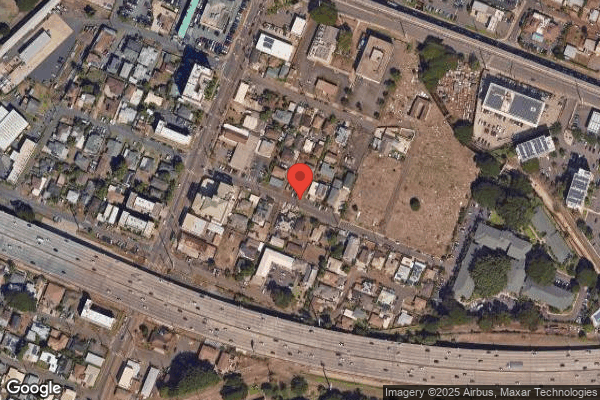
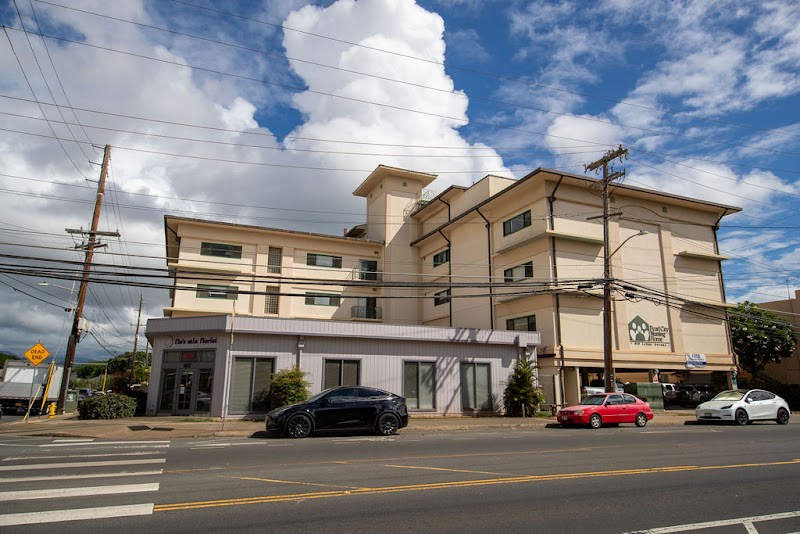
919 LEHUA AVENUE, PEARL CITY, HI 96782 (808) 453-1919
For profit - Corporation 122 Beds Independent Data: November 2025
Trust Grade
80/100
#13 of 41 in HI
Last Inspection: May 2025

Inspected within the last 6 months. Data reflects current conditions.

Overview

Pearl City Post Acute has received a Trust Grade of B+, indicating it is above average and recommended for families considering care options. It ranks #13 out of 41 nursing homes in Hawaii, placing it in the top half of facilities in the state, and #10 out of 26 in Honolulu County, meaning only a few local options are better. The facility is improving, with issues decreasing from 11 in 2024 to 8 in 2025, and they have maintained a good staffing rating of 5/5 stars, though turnover is average at 36%. Notably, there have been no fines reported, which is a positive sign for compliance. However, there were concerns identified during inspections, such as improper disposal of used fentanyl patches and failure to treat residents with dignity, indicating areas that need attention despite the overall strengths.

Trust Score
B+
80/100
In Hawaii
#13/41
Top 31%
Safety Record
Low Risk
No red flags
Inspections
Getting Better
11 → 8 violations
Staff Stability
○ Average
36% turnover. Near Hawaii's 48% average. Typical for the industry.
Penalties
✓ Good
No fines on record. Clean compliance history, better than most Hawaii facilities.
Skilled Nurses
✓ Good
Each resident gets 123 minutes of Registered Nurse (RN) attention daily — more than 97% of Hawaii nursing homes. RNs are the most trained staff who catch health problems before they become serious.
Violations
⚠ Watch
41 deficiencies on record. Higher than average. Multiple issues found across inspections.
★★★★★
5.0
Overall Rating
★★★★★
5.0
Staff Levels
★★★★☆
4.0
Care Quality
★★★★☆
4.0
Inspection Score
Stable
2024: 11 issues
2025: 8 issues

The Good

  • 5-Star Staffing Rating · Excellent nurse staffing levels
  • 4-Star Quality Measures · Strong clinical quality outcomes
  • Full Sprinkler Coverage · Fire safety systems throughout facility
  • No fines on record
  • Staff turnover below average (36%)

    12 points below Hawaii average of 48%

Facility shows strength in staffing levels, quality measures, fire safety.

The Bad

Staff Turnover: 36%

Near Hawaii avg (46%)

Typical for the industry

The Ugly 41 deficiencies on record

May 2025 8 deficiencies
CONCERN (D)

Potential for Harm - no one hurt, but risky conditions existed

Resident Rights (Tag F0550)

Could have caused harm · This affected 1 resident

**NOTE- TERMS IN BRACKETS HAVE BEEN EDITED TO PROTECT CONFIDENTIALITY** Based on observation, interview, and record review, the facility failed to protect and promote the rights for two of 25 resident...

Read full inspector narrative →
**NOTE- TERMS IN BRACKETS HAVE BEEN EDITED TO PROTECT CONFIDENTIALITY** Based on observation, interview, and record review, the facility failed to protect and promote the rights for two of 25 residents sampled (Resident (R) 28 and R82) by ensuring that she was treated with respect and dignity. This deficient practice has the potential to affect all residents in the facility. Findings Include: R28 is a [AGE] year-old female admitted to the facility on [DATE] with a diagnosis of the following but not limited to Hemiplegia and Hemiparesis (weakness) following non-traumatic Intracerebral Hemorrhage (stroke) affecting the left side. A review of her Minimum Data Set (MDS) admission Assessment with an Assessment Reference Date (ARD) of 02/20/25 noted R28 had severe cognitive impairment, and the Brief Interview for Mental Status (BIMS) couldn't be conducted. On 05/20/25 at 10:19 AM, concurrent observation and interview was done with R28's Family Member (FM) 1 at her bedside. FM1 described an incident where he observed staff repeatedly going in and out of the resident's room without knocking and requesting permission before entering R28's room. At 10:26 AM, an interview was done with the Administrator at the nurse's station and confirmed that all staff should always knock and request permission first before entering a resident's room. 2) On 05/20/25 at 10:30 AM, observed Licensed Practical Nurse (LPN) 45 repeatedly going in and out from R82's room but failed to knock and introduce himself prior to entering the room. When the surveyor asked LPN45 if he should knock first and introduce himself before entering the room, he confirmed he should always knock and introduce himself before going inside the resident's room. Review of the facility's policy and procedure on 05/22/25 titled Dignity revised February 2021, directed the staff, . 7. Staff are expected to knock and request permission before entering resident's room .
CONCERN (D)

Potential for Harm - no one hurt, but risky conditions existed

Deficiency F0657 (Tag F0657)

Could have caused harm · This affected 1 resident

Based on observations, interviews, and record review, the facility failed to ensure a resident's care plan was revised to include and implement interventions to prevent and minimize conflicts between ...

Read full inspector narrative →
Based on observations, interviews, and record review, the facility failed to ensure a resident's care plan was revised to include and implement interventions to prevent and minimize conflicts between residents for one of two residents (Resident (R) 69) sampled for mood and behavior. R69 displayed aggressive behavior toward selective residents when eye contact is made. This puts residents at risk of untoward behavior. Findings Include: On 05/20/25 at 09:52 AM, observed a resident, R83, from a distance in the activity room upset and yelling toward another resident, later identified as R69. R69 was observed to be sitting in the activity room not responding and far away from R83. Staff was able to redirect R83 and did not appear upset anymore. Inquired with R83 who she was yelling at and what happened, R83 stated she was not upset, and nothing happened but did not like R69 because she was mean to everyone. R83 was not able to elaborate. While talking to R83, suddenly heard R69 and an unidentified resident yelling at each other as the unidentified resident attempted to leave the activity room and pass R69. R83 also began yelling as well. R83, R69, and the unidentified resident were quickly redirected by staff and when the unidentified resident was removed from the room the yelling quickly subsided. On 05/22/25 at 03:26 PM, R69 was observed in her wheelchair, wheeling herself to the activity room. R69 grabbed a basket from a table she is assigned to in the activity room and attempted to place it on another table between two other residents, R13 and R18. A chair was in between the two residents preventing R69 from sitting in between them. R18's sitting position had her back toward R69. A staff member approached R69 to redirect her and R18 looked to her side toward R69. R69 started yelling at R18 What are you looking at me for? You look at somebody else! The staff member redirected R69 immediately and assisted R69 out of the activity room into the hallway. R69 was observed to wheel herself toward nurse's station and her room. R18 did not respond to R69's yelling. At 03:29 PM, R18 was observed to ask a staff member to help her get back to her room to use the restroom. The staff member wheeled her in the hallway, past her room, the nurse's station and R69, then turned around asking R18 where her room was. R18 directed her elsewhere, toward her room, and the staff member turned R18 around to pass R69 again. R69 attempted to hit R18 but the staff member quickly anticipated the action and moved R18 out of reach of R69. R18 did not respond to R69's action. Review of progress notes documented multiple incidents of R69 displaying behaviors of yelling and attempting to strike residents. It was documented in the progress notes that R18 used to be R69's roommate but changed rooms due to R69's behaviors toward R18. In a progress note documenting communication with the physician on 04/10/25, R69 had been displaying untoward behavior like yelling at other residents or anyone who makes noises at the nurse's station. The note described R69 to dislike certain residents, screaming, isolating herself, staying away from activities, roaming, hiding near the elevator, declining to eat her meals, and stating she is going to sleep outside. On 05/23/25 at 11:03 AM, an interview with Activity Assistant (AA) 1 was done. AA1 reported there are two residents she knows R69 does not like, R83 and R18. R69 gets upset when the residents look at her, even unintentionally. In activities, R83 sits far away from R69, with a pillar that sometimes blocks each other's view, and R18 was strategically placed at the group activity table to have her back toward R69 to prevent accidental eye contact. R18 used to sit away but facing the front of the activity room but they noticed once R18 looked to her side, accidently toward the direction of R69, R69 would get upset. AA1 confirmed R18 and R69 used to share a room but R18 was moved to another room due to R69's behavior toward her. R69 can wheel herself in the wheelchair and has a specific spot, close to the door, she likes to occupy in the activity room. When R69 is feeling upset she usually leaves the activity room and spends time outside of her bedroom in the hallway. Staff members try to ensure R69 and R18 avoid each other in the hallways to prevent any untoward behaviors. On 05/23/25 at 11:12 AM, a concurrent record review and interview with Licensed Practical Nurse (LPN) 43 was done. LPN43 reported R69 has a behavior of screaming and there are specific residents that trigger her behaviors. Staff try to separate the residents that R69 is known to yell at, such as separating them in the activity room, changing bedrooms, and ensuring residents that trigger R69 avoid her in the hallways by taking a different pathway. Inquired if R69's care plan, included the interventions mentioned regarding R69's behaviors and conflicts with other residents, LPN43 confirmed it was not included in the care plan. On 05/23/25 at 11:23 AM, a concurrent record review and interview with Social Services (SS) 5 was done. SS5 further confirmed there is a section for mood and behavior in R69's care plan but there were no interventions for behaviors toward other residents and reported it should be care planned. Review of the facility's policy and procedure, Behavioral Assessment, Intervention, Monitoring revised March 2022, documented The care plan includes, as a minimum: a. a description of the behavioral symptoms, including: (1) frequency; (2) intensity; (3) duration; (4) outcomes; (5) location; (6) environment; and precipitating factors or situations. b. targeted and individualized interventions for the behavioral and/or psychosocial symptoms; c. rationale for the interventions and approaches; d. specific and measurable goals for targets behaviors; and e. how the staff will monitor the effectiveness of the interventions.
CONCERN (D) 📢 Someone Reported This

A family member, employee, or ombudsman was alarmed enough to file a formal complaint

Potential for Harm - no one hurt, but risky conditions existed

ADL Care (Tag F0677)

Could have caused harm · This affected 1 resident

**NOTE- TERMS IN BRACKETS HAVE BEEN EDITED TO PROTECT CONFIDENTIALITY** Based on observation, interview and record review, the facility failed to assist two dependent resident's (R) 66 and R75 of thre...

Read full inspector narrative →
**NOTE- TERMS IN BRACKETS HAVE BEEN EDITED TO PROTECT CONFIDENTIALITY** Based on observation, interview and record review, the facility failed to assist two dependent resident's (R) 66 and R75 of three residents in the sample, in the care necessary to achieve basic hygiene. The deficient practice may affect all the residents who are dependent on the staff on the unit. Findings include: Observation on the 4th floor at R66s bedside on 05/21/25 at 10:03 AM. R66 was lying in bed, with respiratory tubing connected to the ventilator. He didn't respond to the surveyor. The toenails on both lower extremities were thick, long, and with crust. The dry flakes on his feet were sloughing onto the bed sheet. The fingernails on his hands were long and untrimmed. R66 moved his left hand to scratch his right arm. Additional observations of R66s hands and feet were made on 05/21/25 at 10:04 AM; 01:00 PM; and 02:45 PM. Observation on 05/22/25 at 02:23 PM of R66 at the bedside. Skin tear approximately three centimeters (cm) long on the right forearm. R66 was positioned facing the left side toward the door. He had flaky skin on his hands and fingers. His feet had dry flaky skin with skin flakes present on the top sheet. R66s face had hair growth present. A musty odor was detected while standing next to R66. Record review of the face sheet on 05/23/25. R66 is a [AGE] year-old male with chronic respiratory failure, dependent on a ventilator (a mechanical machine that breathes for the resident) and dependent on staff for his personal care and hygiene. Minimum Data Set (MDS) quarterly assessment dated [DATE] reviewed on 05/23/25. R66 is severely cognitively impaired, is on a Gastric tube for nutrition and is dependent on staff for all his activities of daily living (ADLs). His primary diagnosis is debility, cardiorespiratory conditions including seizure disorder, depression, asthma, chronic obstructive pulmonary disease (long term respiratory disease) and respiratory failure. Care plan reviewed on 05/23/25. ADL self-care. R66 has an ADL self-care performance deficit related to (r/t) contracture, activity intolerance, impaired balance due to history of a traumatic brain injury. The resident is bedfast all or most of the time. The resident is totally dependent on two staff to provide the following: Bath/shower every Wednesday and Saturday and as necessary; repositioning and turning in bed every 2-3 hours and as necessary; dressing; personal hygiene and oral care; toilet use; and requires mechanical lift with two staff assistance for transfers. R66 is on tube feeding. Revised date 03/04/25. SKIN. R66 has history of recurrent rash of the upper back. Apply Betamethasone Valerate External Lotion as ordered by the Medical Doctor (MD). For dry and flaky skin use high quality moisturizers to rehydrate skin. Monitor skin rashes for increased spread or signs of infection. Reviewed skin check, skin warm and dry. Normal turgor. Revised 03/04/25. Interview with the Charge Nurse (CN) 20 on 05/23/25 at 10:33 AM at the 4th floor nurses station. The surveyor asked CN20 what is the process for residents to obtain nail trimming. CN20 explained that we have a list of residents to be seen by the Podiatrist, who comes once per month to trim the resident's nails. The nursing staff recommend residents who need to have their nails trimmed and the unit clerk makes the list of residents to be seen. The surveyor asked about R66 to see if he was seen by the Podiatrist. CN20 asked the unit clerk to check to see if the resident has a consultation. CN20 got back to the surveyor at 10:45 AM and said R66 wasn't on the list to be seen by the Podiatrist. The surveyor discussed the concerns about R66 thick long nails and that a scratch was present on his right forearm with CN20. The surveyor also shared the observations of the flaking skin on his feet and his hands and the hygiene concerns. CN20 said the assessments are done by the nurses and the Certified Nurse Aide's (CNAs) are good at informing the nurses that a resident's nails need to be trimmed or if there are any issues with the skin. CN20 said he will follow up with the nursing staff about the concerns with the dry skin and he will follow up with ensuring the nails are looked at and a referral made to the Podiatrist. 2) Observation of R75 at the bedside in her room on 05/21/25 at 09:19 AM. R75 had a rash to her right upper middle arm with several small red dots. Observed many healed spots to her left lower extremity, on top of her foot and ankle. Observed both feet with long untrimmed toenails. Record review of the face sheet on 05/22/25 at 1:00 PM. R75 is a [AGE] year-old female with a diagnosis of hemiplegia and hemiparesis (weakness) following a stroke that affected her left side. She is dependent on a ventilator and is dependent on staff for her personal care and hygiene. Skin check dated 05/04/25 reviewed. Skin normal, rash to face resolved. Interview with Registered Nurse (RN) 40 who was preparing medications on 05/23/25 at 09:45 AM outside of R75's room. The surveyor asked RN40 what the rash was on her upper extremities? RN 40 responded that R75 used to have a rash on her face, but it has healed. RN40 looked in the Electronic Health Record (EHR) and said, there weren't any notes about the rash to her upper extremities. During an interview with the CN20 on 05/23/25 at 10:33 AM at the 4th floor nurses station. The surveyor asked CN20 if R75 is one of the residents on the list to have their nails trimmed by the Podiatrist. CN20 checked the list and with the unit clerk and said, R75 was not on the list. The surveyor discussed R75s rash on the upper extremities and the conversation with RN40 that there weren't any notes documented in the EHR with CN20. CN20 said he would follow up with an assessment of R75s nails and the rash and ensure the MD is made aware. At 11:00 AM, CN20 said he checked R66 and R75s skin and nails and confirmed the concerns that were discussed with the surveyor. ADL, Supporting Policy 2001 MED-PASS, Inc. Revised March 2018 reviewed on 05/23/25. Policy Statement. Residents who are unable to carry out activities of daily living independently will receive the services necessary to maintain good nutrition, grooming and personal and oral hygiene .5. e. Total dependence. Full staff performance of an activity with no participation by a resident for any aspect of the ADL activity .
CONCERN (D)

Potential for Harm - no one hurt, but risky conditions existed

Tube Feeding (Tag F0693)

Could have caused harm · This affected 1 resident

Based on observation, interview, and record review, the facility failed to provide the appropriate treatment and services to prevent potential complications of enteral tube-feeding (TF) for one of one...

Read full inspector narrative →
Based on observation, interview, and record review, the facility failed to provide the appropriate treatment and services to prevent potential complications of enteral tube-feeding (TF) for one of one resident (Resident (R) 19) sampled for TF. The TF formula and TF flush bag was not labeled with a date which would indicate that the formula and flush bag were changed every 48 hours. As a result of this deficient practice, the facility placed residents who are on enteral nutrition at risk for avoidable infections and complications. Findings Include: On 05/20/25 at 09:33 AM, observed R19's TF formula with approximately 100 milliliters (mL) left and TF flush bag with a label indicating it belonged to R19, but the date was left blank. On 05/22/25 at 02:18 PM, an interview with Director of Nursing (DON) was done. The DON explained the TF formula bags and flush bags should be labeled with the resident's name and the date. The DON reported the facility uses a closed system and changes the TF formula based on the manufacturers recommendation of expiration within 48 hours of use. Review of a procedure document provided by the facility labeled Enteral Feeding Supplies Labeling, Cleaning and Disposal updated on 05/12/23 documented The TF formula and TF flush bag should be labeled with the following information: -Patient's name or identification number -Type of formula/water flush -Administration rate -Date and time of Administration It is important to note the TF formula and flush bad should be changed when the TF is consumed or 48 hours have passed since the administration, whichever comes first.
CONCERN (D)

Potential for Harm - no one hurt, but risky conditions existed

Deficiency F0757 (Tag F0757)

Could have caused harm · This affected 1 resident

**NOTE- TERMS IN BRACKETS HAVE BEEN EDITED TO PROTECT CONFIDENTIALITY** Based on observations, interview and record review, the facility failed to ensure one Resident (R) 68 of five residents in the s...

Read full inspector narrative →
**NOTE- TERMS IN BRACKETS HAVE BEEN EDITED TO PROTECT CONFIDENTIALITY** Based on observations, interview and record review, the facility failed to ensure one Resident (R) 68 of five residents in the sample, was free from unnecessary medication by providing R68 with an anti-anxiety medication as needed for greater than 14 days, and the physician did not provide the rationale for continuing the medication as ordered. The deficient practice may affect the residents who are receiving psychotropic medications. Findings include: Observation and interview at the bedside in R68s room on 05/21/25 at 09:00 AM. R68 was lying in bed, with the head of the bed at 45 degrees. He was dependent on a ventilator, and able to speak with the surveyor. He said that he takes pain medication for back pain that is always present, and the medication helps most of the time. Observation on 05/21/25 03:20PM R68 was in bed with his eyes open, watching the television. R68 looked comfortable without any distressful gestures or facial expression. Record Review of the Minimum Data Set (MDS) unplanned discharge/ return anticipated assessment date 03/18/25 on 05/22/25. [AGE] year-old male with a primary diagnosis that includes: Quadriplegia (paralysis of both upper and lower extremities) with multiple medical conditions; anxiety disorder; Post-Traumatic Stress Disorder (PTSD); chronic respiratory failure with hypoxia; one stage four pressure ulcer to the sacrum; and dependance on respirator (ventilator) status. Received as needed pain medication and scheduled pain medication regimen. Is taking an antidepressant, antianxiety, and an opioid. Care Plan reviewed on 05/22/25. Mood/Behaviors. R68 has anxiety and can become combative and verbally aggressive. Date revised on 03/26/25. Administer medications (antianxiety and antidepressant med as ordered), date revised 10/21/2024. Medication Administration Record (MAR) reviewed on 05/22/25. Ativan (medication for anxiety); oral tab 0.5 milligrams (mg) give 0.5 mg via gastric (G) tube every (Q) three hours, as needed (prn) anxiety for three months. Start 04/30/25. Telephone call to R68s family member (FM) 1 on 05/22/25 at 12:54 PM. During the call FM1 stated to the surveyor that R68 has a lot of anxiety and sometimes he takes it out on the staff with yelling. He has gotten a lot better lately; I keep reminding him that he needs to try to be patient and that the staff are taking good care of him. Requested documentation from the Director of Nursing (DON) on 05/22/25 at 02:30 PM. Specifically a note written from the Physician that states the rationale for giving Ativan to R68 on an as needed order longer than 14 days. The DON explained to the surveyor that there wasn't any documentation from the physician that he was aware of and would speak with the pharmacist.
CONCERN (D)

Potential for Harm - no one hurt, but risky conditions existed

Deficiency F0761 (Tag F0761)

Could have caused harm · This affected 1 resident

**NOTE- TERMS IN BRACKETS HAVE BEEN EDITED TO PROTECT CONFIDENTIALITY** Based on observation and interviews, the facility failed to dispose of an intravenous (IV) medication vial labeled for single us...

Read full inspector narrative →
**NOTE- TERMS IN BRACKETS HAVE BEEN EDITED TO PROTECT CONFIDENTIALITY** Based on observation and interviews, the facility failed to dispose of an intravenous (IV) medication vial labeled for single use. As a result of this deficient practice, residents who require IV fluids and medications were placed at risk of receiving expired fluids. This deficient practice has the potential to affect any patient taking IV medications. Findings include: On [DATE] at 09:14 AM, an inspection of the medication room was conducted with Registered Nurse (RN)10. A bag containing five vials of sterile water was found in one of the cabinets. One of the vials was open and had the following written, [DATE], 0200. Asked RN10 what the numbers meant. RN10 said it meant the vial was opened on [DATE] at 02:00 AM. RN10 also added that the vial should have been discarded after it was opened since it was single use. Asked RN10 if any of the current residents in the unit are on IV medications. RN10 confirmed there were currently two residents receiving IV medications. On [DATE] at 07:39 AM, an interview was conducted with the Director of Nursing (DON) in the conference room. Asked the DON what is the facility practice for single use medication vials. The DON said single use vials are to be discarded immediately after use to ensure if is only used once.
CONCERN (D)

Potential for Harm - no one hurt, but risky conditions existed

Food Safety (Tag F0812)

Could have caused harm · This affected 1 resident

Based on observation, interview and record review, the facility failed to follow food handling and storage practices in accordance with professional standards for food service safety. Unsafe and/or un...

Read full inspector narrative →
Based on observation, interview and record review, the facility failed to follow food handling and storage practices in accordance with professional standards for food service safety. Unsafe and/or unsanitary food handling and storage practices have the potential to affect all residents, visitors and staff who have meals served by the facility, placing them at risk for foodborne illness. Findings include: On 05/20/25 at 08:17 AM, an initial tour of the facility's kitchen and interview with the Lead [NAME] (LC) were done. Observed one box of syrup on the floor of the dry storage area. LC confirmed the boxes of food items should not be on the floor. Review of the facility's policy and procedure on 05/21/25 titled Food Receiving and Storage revised November 2022, directed the staff, . 5. Food in designated dry storage are kept at least six (6) inches off the floor .
CONCERN (D)

Potential for Harm - no one hurt, but risky conditions existed

Infection Control (Tag F0880)

Could have caused harm · This affected 1 resident

Based on observations, interviews and record review, the facility failed to ensure shared medical devices were properly disinfected after use. Specifically, the facility did not use the appropriate di...

Read full inspector narrative →
Based on observations, interviews and record review, the facility failed to ensure shared medical devices were properly disinfected after use. Specifically, the facility did not use the appropriate disinfectant to wipe the shared blood glucose meter (device used to measure blood sugar levels). The facility also failed to ensure proper aseptic technique was used to prevent the transmission of communicable diseases and infections when initiating Intravenous (IV) medication for Resident (R)82. The deficient practices have the potential to expose the residents requiring blood glucose testing and IV medications to diseases-causing pathogens. Findings include: 1) On 05/22/25 at 09:14 AM, inspection of the of the medication cart was conducted with Registered Nurse (RN)10. Observed a blood glucose meter in the top drawer of the cart that RN10 said the staff use to check blood sugar levels of multiple residents on the unit. Asked RN10 how often is the device disinfected and what do they use. RN10 replied the staff disinfect it immediately after each use with the alcohol wipes or the PDI Super Sani-Cloth germicidal disposable wipes. On 05/23/25 at 07:39 AM, an interview was conducted with the Director of Nursing (DON) in the conference room. DON confirmed that alcohol wipes are not approved for use on the blood glucose meter since it is not on the list of disinfectants specified by the manufacturer. Review of the users' manual for the blood glucose meter (Arkray Assure Platinum) used by the facility revealed that alcohol wipes or pads was not on the list of products the manufacturer validated for disinfecting the meter. CMS (Centers for Medicare and Medicaid Services) Memo, S&C: 10-28-NH dated 08/27/10 stated, . Point of care devices, such as blood glucose meters, . if used for multiple residents, must be cleaned and disinfected after each use according to manufacturer's instructions. 2) On 05/22/25 at 07:56 AM, observed medication administration with Licensed Practical Nurse (LPN)45. After LPN45 prepared intra-venous (IV) antibiotic medication for R82, he proceeded to hang the medication on an IV pole with the end of the IV tube (the port end) uncovered and unprotected. LPN45 then connected the IV antibiotic but failed to keep the port end of the IV line clean and sterile when it touched the resident's gown, prior to connecting with R82's Peripherally Inserted Central Catheter (PICC) line (tube inserted into a large vein near the heart to deliver medication). On 05/23/25 at 10:30 AM, an interview was done with the DON and the Infection Preventionist (IP) inside DON's office. When asked if staff should keep IV line sterile and always protected to prevent contamination, both DON and IP confirmed that the end part of the IV line should always be covered with a sterile green cap when it is not connected to the PICC line. This is to ensure the tip is not exposed to contaminants that could cause preventable infections or other adverse complications associated with having a PICC line.
Nov 2024 2 deficiencies
CONCERN (D) 📢 Someone Reported This

A family member, employee, or ombudsman was alarmed enough to file a formal complaint

Potential for Harm - no one hurt, but risky conditions existed

Incontinence Care (Tag F0690)

Could have caused harm · This affected 1 resident

**NOTE- TERMS IN BRACKETS HAVE BEEN EDITED TO PROTECT CONFIDENTIALITY** Based on interview, record review and document review, the facility failed to ensure that one resident (R) 25 of three in the sa...

Read full inspector narrative →
**NOTE- TERMS IN BRACKETS HAVE BEEN EDITED TO PROTECT CONFIDENTIALITY** Based on interview, record review and document review, the facility failed to ensure that one resident (R) 25 of three in the sample received care and services to prevent a urinary tract infection (UTI). The resident's indwelling foley catheter was not removed as ordered upon admission to the facility until [DATE] and the resident developed a UTI. The Resident declined and was hospitalized on [DATE] for a serious illness. Findings include: Cross reference to F692 Reviewed intake ID11269. Resident's family member (F)1 filed a complaint to the state agency regarding care at the facility from [DATE] to [DATE]. F1 interviewed by telephone on [DATE] at 3:00 PM. F1 confirmed the concerns noted in the intake and emphasized that she was aware of the discharge instructions to remove R25s indwelling catheter, and that she asked the nursing staff repeatedly when the foley catheter was going to be removed. F1 was very worried that R25 would develop a UTI and did test positive on [DATE]. F1 stated that her mother also lost 20 pounds (lbs.) during the time she resided in the facility. F1 stated that R25 was in the hospital until [DATE], and was discharged home on hospice. On [DATE], R25 died. Onsite survey conducted on [DATE]. Electronic Medical Record (EMR) reviewed. R25 is a [AGE] year-old female admitted to the facility on [DATE], with a primary diagnosis of rhabdomyolysis, a breakdown of skeletal muscle due to muscle injury, and generalized muscle weakness. (Per review of the admission record), [DATE]. Discharge instructions dated [DATE] from Acute care hospital reviewed. Cardiac diet . Rehab .Voiding trial at skilled nursing facility (SNF) for foley removal . Minimum data set (MDS) admission five-day assessment dated [DATE] reviewed. Resident has an indwelling foley catheter at the time of assessment. No trial of a toileting program attempted on admission/entry or reentry. Care plan reviewed. Focus: The resident has indwelling catheter due to urinary retension (sic). Monitor to the Medical Doctor (MD) for signs and symptoms (s/sx) UTI: pain, burning .altered mental status, change in behavior, change in eating patterns. Progress notes reviewed. Removed indwelling foley catheter at 3:00 PM. [DATE]. 3:12 PM resident is confused, F1 came and also notice that R25 is confused, called MD to made aware and ordered Urinalysis (UA). Straight Cath done and noted cloudy urine 350 cubic centimeters (cc) out. [DATE] 02:05 AM. 2:35 PM. F1 called about R25's UA. Informed her that report status pending. MD is aware but will wait for the final result. [DATE] 3:40 PM MD ordered Cipro (antibiotic) 250 milligrams (mg) by mouth (PO) x five days. [DATE] 11:45 Final UA culture & sensitivity (C&S) result showing Extended Spectrum Beta Lactamases (ESBL), a type of enzyme or chemical produced by some bacteria that are resistant to common antibiotics. Relayed to MD. Received order to complete 14 days treatment of Cipro. [DATE] 11:42 AM. Mental Status: Resident is confused. [DATE] 3:54 PM. F1 requested transfer to Emergency Department (ED). MD made aware of patient's decline. Ambulance arrived at facility at 1:30 PM to take R25 to ED. [DATE] at 09:01 AM. Confirmed patient arrived at ED at 2:34 PM. Resident admitted at 9:53 PM with an admitting diagnosis of Metabolic encephalopathy, a brain dysfunction caused by systemic illness. Interview with Director of Nursing (DON), Nursing Supervisor (NS)1, and Registered dietician, (RD)1. On [DATE] at 12:24 PM in the Administrators office. The surveyor asked the DON and NS1 when did the hospitalization for R25 occur and what was the cause. They looked in the EMR and said she was sent to ED for weakness, poor po intake and weight loss of 20 pounds. The DON added that the resident's dehydration status would have affected the UTI and confirmed that the indwelling catheter had not been removed as ordered in the admission orders. Urinary Tract Infections (Catheter-Associated), Guidelines for preventing Level III 2001 MED-PASS, Inc. reviewed. The purpose of this procedure is to provide guidelines for the prevention of catheter-associated urinary tract infections (CAUTIs) .Be able to identify and report the clinical signs and symptoms of a urinary tract infection (with or without catheter), including: .Confusion and/or functional decline .General Guidelines .It is the responsibility of the interdisciplinary team to maintain vigilant practices to prevent CAUTIs and to recognize and report early indications that a CAUTI may be developing .Leave catheters in place only as long as needed. Conduct ongoing assessment and monitoring of residents with indwelling catheters to establish continued need .Initiate steps to discontinue order and remove catheter if criteria is no longer met . Hospital medical record dated [DATE] to [DATE] reviewed. Principal diagnosis: UTI .Secondary diagnoses include .Acute-subacute metabolic encephalopathy, multifactorial, resolving. Chief issue on admission, significantly worsening confusion at her SNF .On this admission initial UA was from Old foley, but on repeat urine culture still grew ESBL E coli resistant to multiple agents .Treated 7-day course of Ertapenem .discharged home on hospice.
CONCERN (D) 📢 Someone Reported This

A family member, employee, or ombudsman was alarmed enough to file a formal complaint

Potential for Harm - no one hurt, but risky conditions existed

Deficiency F0692 (Tag F0692)

Could have caused harm · This affected 1 resident

**NOTE- TERMS IN BRACKETS HAVE BEEN EDITED TO PROTECT CONFIDENTIALITY** Based on interview, record review and document review, the facility failed to Recognize, evaluate, and address the needs of one...

Read full inspector narrative →
**NOTE- TERMS IN BRACKETS HAVE BEEN EDITED TO PROTECT CONFIDENTIALITY** Based on interview, record review and document review, the facility failed to Recognize, evaluate, and address the needs of one resident of three in the sample who was at risk for adequate hydration and nutrition status. This deficient practice may have resulted in decline, weight loss, and an unplanned hospitalization with severe illness. Findings include: Cross reference to F690. Resident (R)25 is a [AGE] year-old female admitted to the facility on [DATE], with a primary diagnosis of rhabdomyolysis a breakdown of skeletal muscle due to muscle injury, and generalized muscle weakness. (Per review of the admission record), 06/24/24. Hospital (H) Discharge summary dated [DATE] reviewed. Principal diagnosis: rhabdomyolysis, (when muscles are severely injured or inflamed) and multiple medical diagnoses. admission orders reviewed. Take resident weight everyday x three days of admission, weekly for four weeks then monthly thereafter unless otherwise notified by Registered Dietician (RD)/Medical Doctor (MD) 06/25/24. Weights reviewed from 06/25/24 to 07/16/24: 06/25/24 1:07 PM, 181.6 Lbs. in wheelchair; 06/28/24 10:04 AM 177.0 lbs. in wheelchair; 07/01/24 2:08 PM 176.8 lbs. in wheelchair. Next weight documented on 07/16/24 2:02 PM 160.8 lbs. in wheelchair. Noted 11.5 percent (%) decrease in weight since admission on [DATE]. No weights documented between 07/01/24 to 07/16/24. Fluid and nutrition intake from 07/05/24 to 07/19/24 reviewed. Average fluid intake was 274 cubic centimeters (cc) per day. Average nutrition intake documented was 0-25%. Skilled nursing notes reviewed from 06/25/24 to 07/18/24. Skilled nursing evaluation notes state Taking nutrition and hydration orally, no complaints of thirst . No documentation of the resident with poor oral intake noted. Interview with the Director of Nursing (DON), Nursing Manager (NM)1 and Registered Dietician (RD) on 11/07/2024 at 12:24 PM in the Administrators office. The Surveyor asked the RD when was the weight loss identified and what interventions were put in place? Who was notified and when? The RD looked into the EMR and stated, R25's oral (PO) intake was documented between 0-50% during the week of 07/07 to 07/13. The diet was liberalized from Cardiac to regular. Snacks and supplements were offered with our alternative menu. The resident was offered assistance with her meals, and she would say that she didn't need help, but she really did need help to eat and drink. The surveyor asked why there weren't any orders for supplements? The DON and NM1 looked in the medical record and stated, R25 declined the supplements and snacks. The MD was updated on R25's weight loss on 07/17/24. The surveyor asked the RD if weights were taken between 07/01 and 07/16. The RD looked into the record and confirmed there were no weights documented during that time and on 07/16/24 the resident was identified with an 11percent % weight loss. Nutrition (Impaired)/Unplanned Weight Loss - Clinical Protocol 2001 MED-PASS, Inc. reviewed. 1. The nursing staff will monitor and document the weight and dietary intake of residents in a format which permits comparisons over time .4. The staff will report to the physician significant weight gains or losses or any abrupt or persistent change from baseline appetite or food intake .For individuals with recent or rapid weight gain or loss .the staff and will review for possible fluid and electrolyte imbalance as a cause .The physician and staff will monitor nutritional status, an individual's response to interventions, and possible complications of such interventions (for example, additional weight gain or loss, nausea, or vomiting) . Hospital medical record dated 07/19/2024 to 08/04/2024 reviewed. Principal diagnosis: UTI .Secondary diagnoses include .unintentional/ rapid weight loss .Robust appetite was noted (both in chart and by F1 when she discharged from Hospital eating plateful meals three times/day; standing weight on 06/24/24 was 180 lbs. Developed poor PO intake/appetite at SNF. admission weight on 07/19/24 bed scale was 159 lb. F1 and R25 report intermittent discomfort with swallowing, while overall swallow mechanics appear intact, he struggles with even simple foods - her dentures no longer fit due to the rapid weight loss .
Apr 2024 7 deficiencies
CONCERN (D)

Potential for Harm - no one hurt, but risky conditions existed

Comprehensive Assessments (Tag F0636)

Could have caused harm · This affected 1 resident

Based on record review, staff interview and review of the Long-Term Care Facility Resident Assessment Instrument (RAI) 3.0 User's Manual, Minimum Data Set (MDS), the facility in-accurately coded Restr...

Read full inspector narrative →
Based on record review, staff interview and review of the Long-Term Care Facility Resident Assessment Instrument (RAI) 3.0 User's Manual, Minimum Data Set (MDS), the facility in-accurately coded Restraint use for Resident (R)33 of three residents sampled. As a result of this deficiency, the facility put R33 at risk for further RAI, MDS inaccuracy. Findings include: During review of R33's most recent MDS, Assessment Reference Date 03/15/24, Section P0100 Physical Restraints was coded as Used daily. Review of R33's care plan revealed the use of bed rail for bed mobility and not as a restraint. During staff interview on 04/24/24 at 09:20 AM, MDS Coordinator (MDS1) acknowledged that R33 was in-accurately coded for Restraint use. MDS1 stated that they would do the necessary correction. Review of the Long-Term Care Facility RAI 3.0 User's Manual read the following: The RAI process has multiple regulatory requirements. Federal regulations at 42 CFR 483.20(b)(1)(xviii), (g), and (h) require that (1) the assessment accurately reflects the resident's status . In addition, an accurate assessment requires collecting information from multiple sources, some of which are mandated by regulations . As such, nursing homes are responsible for ensuring that all participants in the assessment process have the requisite knowledge to complete an accurate assessment.
CONCERN (D)

Potential for Harm - no one hurt, but risky conditions existed

Deficiency F0657 (Tag F0657)

Could have caused harm · This affected 1 resident

**NOTE- TERMS IN BRACKETS HAVE BEEN EDITED TO PROTECT CONFIDENTIALITY** Based on interviews and record reviews, the facility failed to include one of the sampled resident's (Resident (R) 89) represent...

Read full inspector narrative →
**NOTE- TERMS IN BRACKETS HAVE BEEN EDITED TO PROTECT CONFIDENTIALITY** Based on interviews and record reviews, the facility failed to include one of the sampled resident's (Resident (R) 89) representatives in developing and implementing a comprehensive, person-centered care plan. Findings Include: R89 is a [AGE] year-old male admitted to the facility on [DATE]. R89 has a medical history that includes, but not limited to, nontraumatic intracranial hemorrhage, chronic respiratory failure, and persistent vegetative state. Interview was conducted with R89's family representative on 04/22/24 at 12:04 PM in R89's room. R89's family representative stated that she does not remember having a meeting with the facility's Interdisciplinary Team (IDT) since R89's admission to the facility. She also added that it would be great if they had a meeting to discuss his plan of care. Interview and record review was conducted on 04/23/24 at 01:03 PM with Social Worker (SW). SW stated that she could not find any IDT documentation in R89's Electronic Health Records (EHR). Interview with the Director of Nursing (DON) was conducted on 04/24/24 at 12:37 PM. DON stated that the facility's process was to notify the family members about the IDT meetings and send them an invitation. The normal process did not happen for R89 and his family representatives. The facility's policy titled, Care Plans, Comprehensive Person-Centered, with a revised date of March 2022, documented, 1. The interdisciplinary team (IDT), in conjunction with the resident and his/her family or legal representatives, develops and implements a comprehensive, person-centered care plan for each resident.
CONCERN (D)

Potential for Harm - no one hurt, but risky conditions existed

Quality of Care (Tag F0684)

Could have caused harm · This affected 1 resident

**NOTE- TERMS IN BRACKETS HAVE BEEN EDITED TO PROTECT CONFIDENTIALITY** Based on observation and interview, the facility failed to ensure one of the 24 residents (Resident (R) 220) in the sample recei...

Read full inspector narrative →
**NOTE- TERMS IN BRACKETS HAVE BEEN EDITED TO PROTECT CONFIDENTIALITY** Based on observation and interview, the facility failed to ensure one of the 24 residents (Resident (R) 220) in the sample received care and treatment in accordance with professional standards of practice. The intravenous (IV) solution bag and lines were being used past the specified discard date. This deficient practice has the potential to affect all residents at the facility that require IV therapy. Findings include: On 04/22/24 at 09:27 AM during the initial observation, R220 was lying supine in bed and reading some papers. R220 had an IV pole on the side of his bed with a one liter bag of IV fluids being infused via pump. Date written on the IV bag was 04/18/24 and the label on the lines had a start date and time of 04/18/24, 2330 (11:30 PM) and a discard date and time of 04/21/24, 2330. On 04/22/24 at 01:53 PM, an interview was conducted with R220's Family Member (FM) at bedside. FM said the IV bag was hung and infusion started when R220 was admitted on [DATE]. The same IV bag and lines observed earlier in the day were still being used during the interview. On 04/23/24 at 09:56 AM, observed a new set IV bag and lines were being used. Label stated start date and time as 04/23/24, 0830 (08:30 AM) and discard date and time as 04/26/24, 0830. On 04/24/24 at 02:29 PM, an interview was conducted with the Director of Nursing (DON) by the fourth-floor nurses' station. Shared with DON the observations made on 04/22/24 during the initial observation and interview with FM. DON confirmed that the IV bag and lines being used at that time should have been changed the night before, on 04/21/24.
CONCERN (D)

Potential for Harm - no one hurt, but risky conditions existed

Accident Prevention (Tag F0689)

Could have caused harm · This affected 1 resident

Based on observation, staff interview and review of manufacturer product description, the facility failed to identify a potential electrical accident hazard for one Resident (R)42 of eight residents r...

Read full inspector narrative →
Based on observation, staff interview and review of manufacturer product description, the facility failed to identify a potential electrical accident hazard for one Resident (R)42 of eight residents reviewed. As a result of this deficient practice, the facility put the safety and well-being of all the residents as well as the public at risk for accident hazards. Findings include: During an observation of R42's room on 04/22/24 at 11:30 AM, a medical device; Air Mattress machine was plugged in to a power strip, then the power strip was plugged in to the wall electrical outlet. During a second observation of R42's room on 04/23/24 at 09:50 AM, the findings were the same as previously described on 04/22/24. Staff interview on 04/23/24 at 10:00 AM, Environmental Services Coordinator (ESC) acknowledged that the medical device; Air Mattress machine should not have been plugged in to the power strip. ESC said that the identified power strip was intended for the television or cell phone and not medical devices. ESC said they will move the medical device plug to the appropriate wall electrical outlet. Review of manufacturer product description read 6-in-1 multi-function power strip can quickly charge mobile phone, tablet computer, other electronic devices .
CONCERN (D)

Potential for Harm - no one hurt, but risky conditions existed

Incontinence Care (Tag F0690)

Could have caused harm · This affected 1 resident

Based on observations and interviews, the facility failed to ensure that one of the residents (Resident (R) 46) in the sample that had a urinary catheter received the appropriate treatment and service...

Read full inspector narrative →
Based on observations and interviews, the facility failed to ensure that one of the residents (Resident (R) 46) in the sample that had a urinary catheter received the appropriate treatment and services to prevent urinary tract infections. The deficient practice exposed the resident to contaminants that may cause preventable urinary tract infections and has the potential to affect all residents with a urinary catheter. Findings include: On 04/22/24 at 08:46 AM during the initial observations, R46 was lying supine in bed with head elevated. R46 had a suprapubic catheter (medical device that is inserted into the bladder through an incision in the abdomen to drain urine from the bladder) draining into a collection bag that was in a cloth privacy cover hung on the right side of the bed. The collection bag was touching the floor. During observations on 04/22/24 at 11:50 AM and 04/23/24 at 01:48 PM, catheter bag was again touching the floor. On 04/23/24 at 02:41 PM, concurrent observation and interview done with Registered Nurse (RN) 3 in R46's room. Showed RN3 the catheter bag hanging on the right side of the bed and was touching the floor. RN3 confirmed that the bag was not supposed to be coming in contact with the floor and asked another staff member to move it. On 04/24/24 at 02:25 PM, an interview was conducted with the Director of Nursing (DON) by the fourth-floor nurses' station. DON said the privacy cover acts as a barrier between the collection bag and the floor. Pointed out that the privacy cover is made from cloth and could get wet if left on the floor. DON agreed that if the bag gets wet, there is a potential for the transmission of pathogens (organisms that can cause diseases).
CONCERN (D)

Potential for Harm - no one hurt, but risky conditions existed

Food Safety (Tag F0812)

Could have caused harm · This affected 1 resident

Based on observation, interviews, and facility policy review, the facility failed to store food items under sanitary conditions. This failed practice could place one resident at risk for food-borne il...

Read full inspector narrative →
Based on observation, interviews, and facility policy review, the facility failed to store food items under sanitary conditions. This failed practice could place one resident at risk for food-borne illness. Findings Include: Observation was conducted on 04/22/24 at 09:45 AM on the fourth-floor recreation room. The recreation room housed a refrigerator for residents' food items. The refrigerator contained five containers filled with a resident's food items brought in by his/her visitors. The five containers all had a sticker labeled, Use by date, 04/19/24. Interview was conducted with Registered Nurse (RN) 10. RN10 was shown the five food items belonging to a resident. RN10 stated that it should have been thrown away on 04/19/24. Interview was conducted with the Food Service Manager (FSM) on 04/23/24 at 10:55 AM. FSM stated that the diet aids or nursing staff should have discarded the resident's food items on or before 04/19/24. Facility policy titled, Foods Brought by Family/Visitors, with a revise date of March 2022, was reviewed. The policy documented, 6. The nursing staff will discard perishable foods on or before the use by date.
CONCERN (D)

Potential for Harm - no one hurt, but risky conditions existed

Medical Records (Tag F0842)

Could have caused harm · This affected 1 resident

Based on record review and interviews, the facility failed to maintain accurate medical records for one of the 24 sampled residents (Resident (R) 46) in accordance with accepted professional standards...

Read full inspector narrative →
Based on record review and interviews, the facility failed to maintain accurate medical records for one of the 24 sampled residents (Resident (R) 46) in accordance with accepted professional standards and practices. This deficient practice has the potential to affect medical care provided to all the residents in the facility. Findings include: On 04/22/24 at 08:46 AM, observed R46 lying supine in bed with head elevated. R46 had a urinary catheter bag hanging on the right side of her bed that was touching the floor. On 04/23/24 at 08:29 AM, review of R46's Electronic Health Records (EHR) was conducted. Under Progress Notes, the nurse documented . Catheter in place to prevent soiling of stage 3 or 4 pressure ulcer. on the following dates: 04/23/24 at 02:14 AM; 04/19/24 at 02:57 AM; 04/18/24 at 02:07 AM; 04/12/24 at 01:58 AM; 04/09/24 at 01:58 AM; and 03/28/24 at 01:45 AM. On 04/24/24 at 12:50 PM, a concurrent interview and record review was conducted with Nurse Supervisor (NS) 1 at the fourth-floor nurses' station. NS1 confirmed that R46 does not have any pressure ulcer or pressure injury. Asked NS1 to review the progress notes for the dates mentioned above. NS1 stated that the documented reason why R46 has a urinary catheter was not accurate and said she will speak to the nurse.
Feb 2024 2 deficiencies
CONCERN (D) 📢 Someone Reported This

A family member, employee, or ombudsman was alarmed enough to file a formal complaint

Potential for Harm - no one hurt, but risky conditions existed

Deficiency F0760 (Tag F0760)

Could have caused harm · This affected 1 resident

Based on interview, and record review, the facility failed to Resident (R) 7 was free of any significant medication errors. Findings include: Review of R7's physician's order for constipation includ...

Read full inspector narrative →
Based on interview, and record review, the facility failed to Resident (R) 7 was free of any significant medication errors. Findings include: Review of R7's physician's order for constipation included Senna 8.6 milligrams (MG) tablets, give 2 tablets via G-Tube two times a day, hold for loose stools. Review of R7's nursing notes documented on 01/01/24, Resident was seen by PMD during rounds today. Notified MD that resident is having episodes of foul smell loose/soft stools. MD ordered check stool for C. diff. Specimen collected and awaiting for The Cab for pick up. On 02/15/24 at 11:43 AM concurrent review of R7's daily bowel movement output log and medication administration record (MAR) and interview with Director of Nursing (DON) was done. The facility documented R7 had loose stools on 12/30/23, 12/31/23, 01/01/24, 01/02/24, 01/03/24, and 01/04/24. The MAR documented R7 was administered Senna on those days. Inquired with DON if Senna should have been held (not administered) due to loose stools, DON confirmed the medication should have been held.
CONCERN (D) 📢 Someone Reported This

A family member, employee, or ombudsman was alarmed enough to file a formal complaint

Potential for Harm - no one hurt, but risky conditions existed

Infection Control (Tag F0880)

Could have caused harm · This affected 1 resident

Based on observation, interview and review of the facility's policy and procedures the facility failed to ensure measures to prevent the spread and transmission of communicable diseases were followed....

Read full inspector narrative →
Based on observation, interview and review of the facility's policy and procedures the facility failed to ensure measures to prevent the spread and transmission of communicable diseases were followed. Facility staff did not perform hand hygiene before donning gloves and did not clean the floors with a sanitizing solution. Findings include: 1) On 02/14/24 at 09:16 AM, observed Respiratory Therapist (RT) 2 running out of the supply room with an unidentified half round orange object in her hand. RT2 quickly put the half round orange object in her mouth and donned gloves without washing her hands or hand sanitizing. RT2 begun suctioning Resident (R) 10's tracheostomy site. Inquired if RT2 was eating something prior to the suction, RT2 stated she was .drinking something . and ran out when she heard the alarm. Inquired if RT2, hand sanitized prior to donning her gloves and suctioned R10, RT2 reported she did not and stated her first instinct is to run our and suction when the alarm goes off. On 02/15/24 at 11:43 AM an interview with Director of Nursing (DON) was done. DON confirmed staff members should hand sanitize prior to donning their gloves. Review of the facility's policy and procedure Tracheostomy Suction, Tracheostomy Cleaning, Tracheostomy Dressing and Tie Change effective 10/01/09 documented Wash hands . prior to performing procedures. 2) On 02/15/24 at 08:21 AM, observed Housekeeper (HK) 2 mopping a resident's room. Inquired with HK2 what solution was used to mop resident's room, HK2 reported she used only water to mop the residents' rooms. HK2 reported they do not use a chemical solution but can use the disinfectant spray bottle to spray on the floor or mix with the water. HK2 did not put anything but water in the mop bucket was not using the disinfectant spray. On 02/15/24 at 08:48 AM an interview with EVS Coordinator (EVSC) was done. EVSC explained the housekeepers use a premixed solution to mop the floors and clean the floor with the solution daily. Observed a janitor's room with different solutions that can be used and EVSC specified the peroxide multi-surface cleaner is used to mop the floors. EVSC reported that all floors have a janitor room and admitted some of them need to be refilled with the chemical solutions. On 02/15/24 at 08:57 AM, requested HK2 to concurrently observe the janitor room on her current floor. Observed all but one solution to be missing, including the peroxide multi-surface cleaner. Inquired with HK2 which solution would be used to clean the floors if available, HK2 reported the peroxide multi-surface cleaner. HK2 stated .but they never refilled it and did not know how long the cleaning solutions have not been available on the floor. On 02/15/24 at 11:43 AM an interview with Director of Nursing (DON) was done. DON reported housekeeping staff should be cleaning the floor daily with a sanitizing solution in every resident's room. DON stated, water isn't going to clean anything.
Jul 2023 1 deficiency
CONCERN (D) 📢 Someone Reported This

A family member, employee, or ombudsman was alarmed enough to file a formal complaint

Potential for Harm - no one hurt, but risky conditions existed

Accident Prevention (Tag F0689)

Could have caused harm · This affected 1 resident

**NOTE- TERMS IN BRACKETS HAVE BEEN EDITED TO PROTECT CONFIDENTIALITY** Based on interviews, record review (RR) and observation, the facility failed to ensure one resident (R)1 received timely assessm...

Read full inspector narrative →
**NOTE- TERMS IN BRACKETS HAVE BEEN EDITED TO PROTECT CONFIDENTIALITY** Based on interviews, record review (RR) and observation, the facility failed to ensure one resident (R)1 received timely assessments for smoking safety, and did not have documented Interdisciplinary Team involvement to evaluate and analyze the risk of his behavior, which included refusal to wear a smoking apron, and use a container to dispose of cigarette butts. As a result of this deficiency, there was increased risk to R1 of an avoidable accident. Findings include: 1) R1 is a [AGE] year old male readmitted to the facility as an ICF (intermediate care facility) LTC (long term care)resident after admission at an acute care hospital on [DATE] for hypoxia (low oxygen level) and COVID-19. His principal diagnosis at the hospital was acute respiratory failure with secondary diagnosis that included COVID-19. His medical history included obstructive sleep apnea, functional paraplegia (does not walk) due to accident and unable to move right (R) leg and chronically dislocated R hip. R1 had a history of homelessness, methamphetamine, marijuana, and tobacco use with recurrent hospitalizations. When R1 was readmitted to the facility, he did not desire to smoke, but sometime in February of 2022, made a request he would like to have smoking privileges. 2) Reviewed the facility policy titled Smoking Policy-Residents, revised August 2022. The policy included the following: - 4.Metal containers, with self-closing cover devices, are available in smoking areas. - 7. The staff consults with the attending physician and the director of nursing services (DNS/DON) to determine if safety restrictions need to be placed on a resident's smoking privileges based on the Safe Smoking Evaluation. - 8. A resident's ability to smoke is re-evaluated quarterly, upon a significant change (physical or cognitive) and as determined by the staff. - 9. Any smoking-related privileges, restrictions, and concerns (for example, need for close monitoring) are noted on the care plan, and all personnel caring for the resident shall be alerted to these issues. - 11. Any resident with smoking privileges monitoring shall have the direct supervision of a staff member, family member, visitor of volunteer worker at all times while smoking. 3) Reviewed R1's medical records for smoking assessments, which revealed one smoking assessment dated 03/17/2023, signed by the Social Worker (SW). The assessment included two documents. One titled Smoking Assessment, and the other titled Smoking Assessment Resident Interview. In addition, there was a signed agreement to the smoking times by R1. The smoking assessment included, but not limited to the following: - Memory Problems? Yes. Comment: Sometimes forgetful. - Decision Making Impaired? Yes, Comment: Sometimes impaired, can be impulsive. Lacks good judgement with regards to safety. - Physical functioning and structural problems. Locomotion support? Yes. Comment: Utilizes wc (wheelchair) for mobility; can self propel - At risk behaviors: Sometime impulsive Additional comments included, but not limited to: - . he was assessed on 3/15/2022 @ 4 PM and was able to safely smoke and extinguish. - He is cognitively aware to smoke safely. - Yes, he signed an acknowledgement and agreed to designated smoking times. - Yes, he demonstrated operation of a lighter on 3/15/2022. - Will utilize receptacle designated for ash and cigarette butt. The SW wrote the comment in update section Observed resident for safety, able to smoke safely. Assessed on 3/15/2022 with DON (Director of Nursing). Record review did not reveal any IDT (Interdisciplinary Team) meetings for R1, or any documentation of discussion with other team members or physician regarding R1's smoking assessment, refusal to wear smoking apron and use the disposal container for butts. On 05/03/2023, at 02:21 PM, the SW made a late entry Care Conference note that read Quarterly Care Conference held with R1. Present were NCC (Nursing Care Coordinator), and writer (SW). Reviewed current status of resident. Resident continues to request to smoke and lose weight.Resident was informed that another smoking assessment would be completed in a few weeks. Resident's response was that a smoking assessment is not needed and that he can smoke and will not use that apron. Resident concerns were acknowledged. 4) Request made to the SW for all smoking assessments for R1. The SW provided two additional assessments dated 05/17/2022 and 05/19/2023. 05/17/2022 smoking assessment included but not limited to: - Smoking Assessment: .BIMS=8/15 (8-12 is moderately impaired) and MMSE=17/30 (moderate range of suggested impairment). R1 is able to understand/acknowledge (at least) but not able to follow directions and rules, Explained rules for smoking and designated area, but not willing to follow directions. For the most part, places butt in receptacle; has been seen flicking butt on sidewalk. Several sections of this assessment were not completed, including the interventions/procedures implemented and identified on Service Plan (i.e. Supervision, Smoker's Apron, Safety Lighter). The form was not signed or dated. - Resident Interview: The section Have you ever had an accident related to your smoking? Fire? Burn? was answered with the comment Burnt R middle finger while smoking at Facility. Doesn't know how it happened. Didn't tell anyone. Date of the resident interview was 05/17/2022 at 11:15 AM and documented conducted by SW and Administrator. - MMSE (Mini Mental Examination- screening tool for cognitive impairment): The examiner was SW. The total score was not documented on the form. 05/19/2023 documents of smoking assessment included: - Smoking Assessment: All of the assessments were checked off and the Interventions and procedures implemented and identified on Service Plan: Care Plan on smoking implemented. were completed. New comment read R1 is routinely reminded of the smoking policy and designated smoking area. The form marked R1needed supervision, but did not mark needed smokers apron, or safety lighter. The form was dated 05/19/2023 and signed by SW. - Resident Interview: The interview was identical to the one on 05/17/2022 with the following additional comments: would like to smoke 8 cigarettes 2 /each time. It also added Doesn't know how it (Burn to finger)happened. Didn't tell anyone.Refuses that it was from smoking. Date of interview was 05/17/2022 11:15 AM conducted by SW and Administrator. - MMSE: The MMSE was the same one provided with the 05/17/2022 assessment. A new MMSE was not completed. 5) RR of Social Service progress and communication with resident notes included the following: - 01/28/2022: . MMSE completed. Score was a 21.The MMSE is indicative of mild cognitive decline. - 03/11/2022: Writer (SW) spoke to R1 about smoking and the policy that he needs to follow if he wants to smoke while on property. R1 acknowledged he was also informed that he would [sic] be allowed to smoke until everything is in place. An assessment needs to be completed and a smoking apron needs to be ordered. Although R1 believes all of this is silly, he acknowledged and stated that he would wait. - 03/11/2022: Writer asked CNA (Certified Nurses Aide), who accompanied R1 out this date if her [sic] was able to open the cigarette package, take out a cigarette and use the lighter to light it up. - 03/15/2022: Writer spoke to R1 about his request to go out and have a cigarette. R1 was reminded about the facility policy and that a smoking apron need to be purchased for him to smoke. R1 acknowledged but wants to smoke and gets impatient. R1 responded that he would try to be nicer to the staff about his demand to smoke. He was reminded that it is not acceptable, especially since he knows facility is working on putting things in place to allow him to smoke. - 05/17/2022: Writer was notified by Activities Coordinator contacted her and informed her R1 stated he signed form with writer saying that he didn't have to use the smoking apron. He was asked by writer about a form that he said writer had him sign. Basically, R1 lied and there was no form he signed. Writer visited R1 earlier in the day to assess his cognitive status and complete a new smoking assessment. - 07/11/2022: Writer spoke to R1 and informed again about the smoking policy and the designated area - 05/09/2023 Communication with Resident note: Writer spoke to R1 regarding smoking safety. R1 was encouraged to use the smoking apron for safety. R1 declined as he stated: when you are outside smoking, no one uses that thing-it makes you look stupid. Smoking safety was reiterated to R1, he was informed that we don't want to make him look stupid and we understand but we are also concerned for his safety. R1 declined use. - 05/11/2023: R1 prefers to sit with his wheelchair out on the sidewalk as he can socialize with passerbys. R1 does not want to use the smoking apron: R1 says it is a dignity issue. - 05/11/23: Writer spoke with R1 about using the smoking canister or can for his butts. R1 prefers to flick his butts onto the street or sidewalk as he stated this is what he is use to doing when he was homeless. 6) Review of R1's Care Plan (CP) revealed the following entries: Goals: R1 will be free from injury associated with smoking and will follow the smoking policy and procedure, and R1 will be able to carry out his preferences, smoke cigarettes safely. Interventions included but not limited to: Coordinate with R1 scheduled smoking times throughout the day. R1 will go out to the designated smoking area accompanied and supervised 1:1 by staff . Resident is assessed for safety of smoking. Provide supervision to resident. Regular checks of resident's skin, especially on his hands, for signs of any burns. Resident prefers to throw his butts into the grass or onto the street, after smoking, as he is used to this routine based of [sic] his living situation prior to becoming a resident . Resident refusing the use of apron, staff to still encourage the use during smoking session for safety. Staff will supervise resident during smoking session. 5) On 07/07/2023 at 01:30 PM, during an interview with the SW, she said it was her role to do the smoking assessments and R1 was the only resident that smoked. She went on to say when he was first admitted , he did not request to smoke and only made the request in February or March of 2022, so the initial smoking assessment was completed on 03/15/2022. The SW said they had to wait to get things in place and ordered the smoking apron. She said R1 felt it was a dignify issue and refused to wear the one they had, so they purchased another that was not so obvious, which he also refuses to wear. Inquired if R1's physician had been involved in assessing the safety without the apron, or if the Interdisciplinary Team had discussed and documented they had deemed it safe for R1 to smoke without the apron. SW said she did not believe it had been discussed with the physician, but was discussed in an IDT meeting, but probably was not documented. During the interview, inquired what documents were expected to be completed for a smoking assessment. She said a smoking assessment should include three documents, the Smoking Assessment, Resident Interview, and the MMSE. At that time reviewed R1's assessments, and confirmed they had not been completed timely, were missing information, not all documents used, and not all of the assessments were found in the medical record. SW said the 05/19/2023 smoking assessment may not have been scanned in yet. Asked the SW about the MMSE examination, and how to interpret the scoring, as there was no reference/resource on the tool. She was unable to answer, and did not know where to locate a resource to interpret the scoring. Surveyor research revealed the maximum MMSE score is 30. R1's score was documented as 17 on the smoking assessments dated 05/17/2022 and 05/19/2023, which indicated moderate cognitive impairment. After the interview, toured the designated smoking area with the SW, who pointed out where R1 likes to sit in his w/c and smoke. She said he likes to sit by the sidewalk and interact with people that pass. Observed there was no smoking can available to distinguish butts. SW said when she accompanies R1, she will take the can to him so he can distinguish the cigarette. She checked the immediate area, but was unable to find the can. The SW said R1 likes his privacy so staff assigned 1:1 observation of R1 smoking, often sit on the bench behind the bush [NAME], and he will call them when he is done smoking. Observed the bush [NAME] and sitting bench behind the [NAME]. Staff would not have direct obsersation of R1's chest/front if they were sitting behind the bushes. Observed and counted 20 plus cigarette butts in the street, just off the curb and called this to SW's attention. She said the butts were probably R1's because he flicks them in the street and often refuses to use the container. SW said there have been times when homeless people come by and pick it (cigarette butt) up.
May 2023 21 deficiencies
CONCERN (D)

Potential for Harm - no one hurt, but risky conditions existed

Safe Environment (Tag F0584)

Could have caused harm · This affected 1 resident

**NOTE- TERMS IN BRACKETS HAVE BEEN EDITED TO PROTECT CONFIDENTIALITY** Based on observations and interview, the facility failed to ensure a sanitary environment is maintained for three residents samp...

Read full inspector narrative →
**NOTE- TERMS IN BRACKETS HAVE BEEN EDITED TO PROTECT CONFIDENTIALITY** Based on observations and interview, the facility failed to ensure a sanitary environment is maintained for three residents sampled. Findings include: On 05/10/23 at 08:55 AM, while conducting an observation of residents in room [ROOM NUMBER], this surveyor notices there was a stain on the inside (portion of the curtain which faces the resident while in bed) Resident(R)11's privacy curtain. The stain was approximately 5-6 inches long on the portion of the curtain that staff frequently used to access the resident, and this surveyor could not distinguish if the stain was food (chocolate) or biological (blood) material. On 05/12/23 at 08:50 AM, conducted a concurrent observation and interview with Housekeeper (HK)62 regarding laundering/replacing resident's privacy curtains and the stain observed on R11's curtain. HK62 stated checking the resident's privacy curtain for cleanliness is part of housekeeping's daily task while cleaning each room. HK62 explained that if the resident's privacy curtain is dirty then staff will put in a request with maintenance to take down the dirty curtain and replace it with a clean curtain. HK62 confirmed there was a stain on R11's curtain and the curtain should have been changed. Observed R57 and R60's curtain (in the same room), both resident's curtains were notably dirty and should have been changed or cleaned.
CONCERN (D)

Potential for Harm - no one hurt, but risky conditions existed

Deficiency F0604 (Tag F0604)

Could have caused harm · This affected 1 resident

**NOTE- TERMS IN BRACKETS HAVE BEEN EDITED TO PROTECT CONFIDENTIALITY** Based on observation, interview and record review, the facility failed to use the least restrictive alternative for the least am...

Read full inspector narrative →
**NOTE- TERMS IN BRACKETS HAVE BEEN EDITED TO PROTECT CONFIDENTIALITY** Based on observation, interview and record review, the facility failed to use the least restrictive alternative for the least amount of time and document ongoing re-evaluation of the need for mitten restraints for one Resident (R)46 of five residents in the sample. The deficient practice inhibits the resident's freedom of movement and potentially affects her physical and psychosocial wellbeing. Findings include: 05/09/23 at 08:15 AM. An initial observation was made with Resident (R)46. Mitten restraints were intact on both hands. She was awake and alert and moving head from side to side. R46 did not appear agitated. R46 had a urinary catheter placed on the right side of the bed. Gastric Tube (G-tube) feeding pump was running at a rate of 300. Trach collar intact with no drainage 05/10/23 at 08:36 AM observed the Restorative Nurse Aide (RNA)31 at the right bedside applying stretches to R46 right arm. Skin to all extremities intact. No bruising noted. Right mitten off during stretches. Left mitten intact. slowly moving head around and back and forth. Looking at the RNA. Observation with mitten restraint off was only noted during this observation with the RNA. 05/10/23 at 1:50 PM observed R46 facing to her left side. Bilateral mitten restraints in place. Trach collar intact and urinary catheter placed on the left side of the bed. 05/10/23 at 3:22 PM. Electronic health record (EHR) reviewed. R46 is a [AGE] year-old female resident with an active diagnosis that includes quadriplegia, seizure disorder or epilepsy, anxiety disorder, and respiratory failure. Receiving medication for anxiety. Used daily (side rail, limb restraints). Physician (MD) Orders reviewed: Provide gentle passive range of motion (PROM) of fingers with emphasis on finger extension during scheduled time for removal of hand mittens. Every shift Keep a rolled towel in each hand. Monitor for any redness, swelling or skin breakdown. 5/25/2022 16:00 Both hand mitten ok for safety every shift for Dementia with Psychomotor Agitation. Release every 2 hours for 15 minutes. 4/21/2022 16:00 Reviewed plan of care 05/11/23 01:38 PM. o Increase joint mobility in UE shoulder, elbow, wrist, digit. 05/11/23 at 2:13 PM minimum data set (MDS) with an annual review date (ARD) 03/30/23 reviewed. Section E Behaviors: Noted there were no behaviors coded. Section P was coded for daily use of bed rail and limb. Reviewed the EHR for the restraint consent and pre-restraining assessment. Neither document was found. 05/12/23 at 12:43 PM reviewed progress notes. 5/8/2023 15:54 Restorative Program Note Text: Resident in bed alert and nonverbal. PROM BUE all joints hold 10-15 secs. AROM shoulder flexion BUE x 10 reps x 2 sets. Oriented to name, place, and time. Re-applied both hand mittens after treatment. 5/10/2023 14:37 Restorative Program Note. Text: Resident in bed awake, alert, and nonverbal with trach. PROM to BUE all joints hold 10-15 secs. AROM shoulder flexion BUE x 10reps x 2 sets. Oriented to name, place, and time. Assisted in grooming like swabbing mouth and wiping face. Re-applied both hand mittens after treatment. Restorative notes indicated the ROM care with the RNA occurs every two days on average. Multiple observations were made on 05/11/23 at 09:47 AM; 11:25 AM; 12:34 PM; 13:59 PM and 3:30 PM. Noted mitten restraints were on both hands during observations. 05/11/23 at 1:30 PM. Use of restraints policy reviewed on 05/11/23 at 1:30 PM. Policy Statement. Restrains shall only be used for the safety .and only after other alternatives have been tried unsuccessfully. Policy interpretation and implementation. 3. Examples of devices that are/may be considered physical restraints . include . hand mitts, that the resident cannot remove. 5. Restraints may only be used . to a. treat the medical symptoms; b. protects the resident's safety .6. Prior to placing a resident in restraints, there shall be a pre-restraining assessment and review .16. Restrained individuals shall be reviewed regularly . for restraint reduction, less restrictive methods .or total elimination. 19. Documentation . shall include: d. The type of the physical restraint used; length of effectiveness of the restraint time; observation, flow sheets. 05/12/23 08:33 AM interview with Licensed Nurse (LN)15 Asked How do you supervise staff to assure that the device is applied correctly and released, as ordered? How often are the mittens removed? LN15 explained that the restraints are removed about every two hours, for about 15 minutes. When asked why the restraints are applied, she stated that R46 has agitation, she pulls at her trach, bites her hand. LN15 reviewed the behavior flow sheet and the documentation with the surveyor. The documented behaviors were limited to only one to two times. LN15 explained this shows her legs dangling, but she is better now. In the morning after I give her the meds she sometimes sleeps. When asked if there is a place they document when the restraints are removed, she said no. 05/12/23 at 11:45 AM reviewed the EHR, Task list. No task list for restraints was found. Only the skin check, On 05/12/23 at 12:10 PM interview with the Director of Nursing. Asked the DON, How often do you evaluate and assess the resident to determine the ongoing need for the use of the restraint for the treatment of the medical symptoms? And what is the process to ensure the restraints are being taken off every two hours for 15 minutes, and how are the nursing staff ensuring that it is being done. Asked DON is there was a pre restraint assessment done for R46 and/ or a re-evaluation that the restraint is still needed to continue. DON responded that it is a standard of care that should be done by the nursing staff.
CONCERN (D)

Potential for Harm - no one hurt, but risky conditions existed

Deficiency F0625 (Tag F0625)

Could have caused harm · This affected 1 resident

**NOTE- TERMS IN BRACKETS HAVE BEEN EDITED TO PROTECT CONFIDENTIALITY** Based on record review, staff interview and review of policy, the facility failed to provide written notice of bed-hold policy f...

Read full inspector narrative →
**NOTE- TERMS IN BRACKETS HAVE BEEN EDITED TO PROTECT CONFIDENTIALITY** Based on record review, staff interview and review of policy, the facility failed to provide written notice of bed-hold policy for one Residents (R)97 of two residents sampled. As a result of this deficiency, there was potential for miscommunication of the bed hold policy. Findings include: Review of the Electronic Health Record indicated that R97 was transferred to the hospital on [DATE] for Respiratory Distress. Further review did not show any written notice of bed-hold policy provided to the resident and/or representative. During staff interview on 05/10/23 at 02:05 PM, Director of Social Services acknowledged that the facility did not provide second written notification of bed-hold policy to R97 and/or their representative. Review of facility policy on Bed-Holds and Returns read the following: Policy statement, residents and/or representatives are informed (in writing) of the facility and state (if applicable) bed-hold policies. Policy interpretation and implantation, 1. All residents/representatives are provided written information regarding the facility and state bed-hold policies, which address holding or reserving a resident's bed during periods of absence (hospitalization or therapeutic leave). Residents, regardless of payer source, are provided written notice about these policies at least twice: a. notice 1: well in advance of any transfer (e.g., in the admission packet); and b. notice 2: at the time of transfer (or, if the transfer was an emergency, within 24 hours) . 3. Multiple attempts to provide the resident representative with notice 2 should be documented in cases where staff were unable to reach and notify the representative timely. 4. The written bed-hold notices provided to the residents/representatives explain in detail: a. the duration of the state bed-hold policy, if any, during which the resident is permitted to return and resume residence in the facility, b. the reserve bed payment policy as indicated by the state plan (for Medicaid residents), c. the facility policy regarding bed-hold periods, d. the facility per-diem rate required to hold a bed (for non-Medicaid residents), or to hold a bed beyond the state bed-hold period (for Medicaid residents), e. the facility return policy.
CONCERN (D)

Potential for Harm - no one hurt, but risky conditions existed

Assessment Accuracy (Tag F0641)

Could have caused harm · This affected 1 resident

**NOTE- TERMS IN BRACKETS HAVE BEEN EDITED TO PROTECT CONFIDENTIALITY** Based on record review and interview, the facility failed to ensure Resident (R)27 received an accurate assessment to reflect hi...

Read full inspector narrative →
**NOTE- TERMS IN BRACKETS HAVE BEEN EDITED TO PROTECT CONFIDENTIALITY** Based on record review and interview, the facility failed to ensure Resident (R)27 received an accurate assessment to reflect his status. This deficient practice has the potential to affect all residents in the facility. Findings Include: R27 is a [AGE] year-old male admitted to the facility for long term care (LTC) on 08/05/15. R27 was admitted with a history of a cerebrovascular accident with left hemiparesis, gastrostomy tube, tracheostomy, and diabetes mellitus type 2. On 05/11/23 at 11:10 AM a review of the Physical Therapy Evaluation and Plan of Treatment, dated 09/10/15, indicated R27's baseline as patient currently demonstrates poor postural alignment in bed with B [bilateral] hips and knees acutely flexed and lower trunk rotated towards left. On 05/12/23 at 01:30 PM a review of R27's Electronic Health Record (EHR) indicated a change in his Functional Limitation in Range of Motion. Minimum Data Set (MDS) documentation dated 05/29/22 and prior MDS documentation indicated an assessment of an impairment to one side of R27's lower extremity (hip, knee, ankle, foot). MDS assessment dated [DATE] and assessments thereafter indicated an impairment to both sides of R27's lower extremities (hip, knee, ankle, foot). On 05/12/23 at 02:30 PM a phone interview was conducted with the facility's Minimum Data Set (MDS) coordinator with the Director of Nursing (DON) present in the room. MDS coordinator failed to explain how she was able to determine the change in R27's Functional Limitation in Range of Motion quarterly assessments dated 05/29/22 and 12/02/22. On 05/12/23 at 04:00 PM an interview was conducted with the DON and Administrator. They both confirmed the inaccuracy of R27's MDS assessment prior to the 12/02/22 MDS assessment documentation.
CONCERN (D)

Potential for Harm - no one hurt, but risky conditions existed

Comprehensive Care Plan (Tag F0656)

Could have caused harm · This affected 1 resident

**NOTE- TERMS IN BRACKETS HAVE BEEN EDITED TO PROTECT CONFIDENTIALITY** Based on record review, staff interview and review of policy, the facility failed to develop and implement a specified care plan...

Read full inspector narrative →
**NOTE- TERMS IN BRACKETS HAVE BEEN EDITED TO PROTECT CONFIDENTIALITY** Based on record review, staff interview and review of policy, the facility failed to develop and implement a specified care plan to monitor for the possibility of bleeding as a result of taking Eliquis medication for one resident (R)48 out of five residents reviewed. As a result of this deficiency, R48 had the potential to have a side effect of bleeding that would not have been identified and monitored by the facility. Findings include: Review of the Electronic Health Record (EHR) revealed that R48 was admitted on [DATE] with a diagnosis of Parkinson's Disease, Dementia, Atherosclerotic Heart Disease, Atrial Fibrillation, Heart Failure . The doctor's orders showed R48 was prescribed Eliquis 5 mg two times a day. A review of the most recent Comprehensive Care Plan did not have specific interventions to monitor for the possibility of bleeding as a result of taking Eliquis medication. During staff interview on 05/12/23 at 11:00 AM, the Nursing Supervisor acknowledged that there was no monitoring for possible bleeding listed in the Comprehensive Care Plan for R48. Review of facility policy on Care Plans, Comprehensive Person-Centered read the following: Policy statement; A comprehensive, person-centered care plan that includes measurable objectives and timetables to meet the resident's physical, psychosocial and functional needs is developed and implemented for each resident. Policy Interpretation and Implementation; 1. The interdisciplinary team (IDT), in conjunction with the resident and his/her family or legal representative, develops and implements a comprehensive, person-centered care plan for each resident . The care plan interventions are derived from a thorough analysis of the information gathered as part of the comprehensive assessment .
CONCERN (D)

Potential for Harm - no one hurt, but risky conditions existed

Deficiency F0657 (Tag F0657)

Could have caused harm · This affected 1 resident

**NOTE- TERMS IN BRACKETS HAVE BEEN EDITED TO PROTECT CONFIDENTIALITY** Based on observations, interviews, and record review, the facility failed to revise a resident's comprehensive person centered c...

Read full inspector narrative →
**NOTE- TERMS IN BRACKETS HAVE BEEN EDITED TO PROTECT CONFIDENTIALITY** Based on observations, interviews, and record review, the facility failed to revise a resident's comprehensive person centered care plan for one (Resident (R)39) resident sampled. As a result of this deficeint practice dependent residents are at potential risk for harm and/or neglect. Findings include: R39 is an [AGE] year-old resident who was admitted to the facility on [DATE] with diagnosis that include Alzheimer's, Dementia, dysphagia, Major Depressive Disorder, aphasia, hemiplegia, hemiparesis, and contracture of multiple joints. Conducted multiple observations of R39 (05/09/23 at 08:38 AM, 09:15 AM, 12:15 PM, 01:23 PM, 03:30 PM; 05/10/23 at 08:30 AM, 10:17 AM, 12:32 PM, 02:03 PM; 05/11/23 at 08:58 AM, 01:20 PM, 3:39 PM, 05/12/23 at 08:50 AM) in bed with a bulb-call light. The call light had been placed on the resident's lap, clipped near the top of her bed (level with her head), and on both sides. R39 was verbally not responsive and on 05/11/23 at 08:58 AM, this surveyor asked the resident to press the call light. R39 did not look in the direction of the call light, attempt to reach out for it, or respond to the surveyor in a manner that would indicate the resident understood this surveyor's request. Conducted a review of R39's Electronic Health Record (EHR) on 05/10/23 at 01:58 PM. Review of the resident's most recent quarterly Minimum Data Set (MDS) with an Assessment Reference Date (ARD) of 02/27/23, documented a Brief Interview for Mental Status (BIMS, an assessment of the resident's cognitive ability) score was not conducted because the resident is rarely/never understood. Review of Section G. Functional Status documented R39 is totally dependent on staff for ADLs (bed mobility, transfers, locomotion, dressing, toilet use, bathing, and personal hygiene) and requires 1-2 person assist to complete ADL task. Review of the resident's care plan documented interventions included interventions for staff to ensure the call light is within her reach (added on 03/08/22). On 05/10/23 at 01:40 PM, conducted an interview with Certified Nursing Assistant (CNA)99. During the interview CNA99 confirmed R39 does not cognitively understand the use of the call light is to alert staff that she needs help and the resident could not physically activated the call light due to physical limitations (diagnosis of hemiplegia and contracture of multiple joints). In addition, CNA99 confirmed that he/she had never seen R39 use the call light during any shift he/she has worked on the unit. On 05/12/23 at 09:22 AM, conducted an interview with Nursing Staff (NS)46 regarding R39 using the call light. NS46 confirmed R39 is unable cognitively or physically to use the call light for its intended purpose. On 05/12/23 at 11:07 AM, conducted a concurrent interview and record review of R39's EHR with the Director of Nursing (DON). Review of the resident's most recent MDS documented the resident did not have a BIMS score due to the resident's inability to participate in the interview due to the inability to cognitively engage in the assessment and the resident's inability to verbally communicate. Review of the care plan documented an intervention to use a call light to alert staff of the resident's needs. DON confirmed R39 in unable to use the call light, the intervention is no person centered, and the care plan should have been revised to include monitoring the resident in timed increments throughout the day (ex. every 30 minutes).
CONCERN (D)

Potential for Harm - no one hurt, but risky conditions existed

ADL Care (Tag F0677)

Could have caused harm · This affected 1 resident

**NOTE- TERMS IN BRACKETS HAVE BEEN EDITED TO PROTECT CONFIDENTIALITY** 2) On 05/10/23 at 09:02 AM, observed R47's hands. R47's right hand was resting on resident's abdomen, uncovered. R47's left hand...

Read full inspector narrative →
**NOTE- TERMS IN BRACKETS HAVE BEEN EDITED TO PROTECT CONFIDENTIALITY** 2) On 05/10/23 at 09:02 AM, observed R47's hands. R47's right hand was resting on resident's abdomen, uncovered. R47's left hand was inserted into the palm of a white cotton glove, but residents' fingers were not inserted into the finger openings of the glove. On 05/10/23 at 01:28 PM, reviewed R47's care plan in resident's electronic health record (EHR). R47's care plan documented instructions to keep R47's fingernails short to protect resident's skin integrity and documented instructions for a soft glove to be applied to resident's left hand. The care plan also documented instructions to remove the glove and check skin integrity every two hours. On 05/11/23 at 01:43 PM, observed R47's hands with the Director of Nursing (DON). R47 had purple coloration with a scab on the skin of her lateral first finger with a long, thickened, discolored fingernail. R47's second finger had a long, cracked, sharp fingernail. The other fingernails of resident's left hand were untrimmed. The fingernails of R47's right hand were untrimmed. There was no break in skin integrity of resident's right hand. The DON stated that staff had not been providing nail care to R47 due to resident's diabetes. The DON stated that the facility should have arranged to have R47's nails trimmed to avoid skin damage when scratching and for general grooming. Based on observations, staff interviews, and record reviews (RR), the facility failed to ensure a resident who is unable to carry out Activities of Daily Living (ADL), receives the necessary services to maintain good grooming and bathing for two of two (Resident (R)39 and R47) residents sampled. As a result of this deficient practice, residents dependent on staff for ADL care are at risk of potential physical harm and psychosocial harm related to unmet needs and are at risk for the potential of neglect. Findings include: R39 is an [AGE] year-old resident who was admitted to the facility on [DATE] with diagnosis that include Alzheimer's, Dementia, dysphagia, Major Depressive Disorder, aphasia, hemiplegia, hemiparesis, and contracture of multiple joints. On 05/09/23 at 08:38 AM, conducted an observation of R39. R39 hair and hygiene appeared as though the resident had not had a shower or bed bath recently. Conducted a review of R39's Electronic Health Record (EHR) on 05/10/23 at 01:58 PM. Review of the resident's most recent quarterly Minimum Data Set (MDS) with an Assessment Reference Date (ARD) of 02/27/23, documented a Brief Interview for Mental Status (BIMS, an assessment of the resident's cognitive ability) score was not conducted because the resident is rarely/never understood. Review of Section G. Functional Status documented R39 is totally dependent on staff for ADLs (bathing) and requires 1-person assistance. Review of the resident's care plan documented interventions for bathing included: resident is totally dependent on 1 staff to provide bath/shower, 2x (two times) a week, Mon- Thurs, AM and as necessary (last revised on 11/30/20). During an interview with Certified Nursing Assistant (CNA)99, on 05/13/23 at 09:22 AM, staff reported R39 receives showers on Tuesday, Fridays, and sooner if needed. CNA99 showed this surveyor how CNA staff document R39's showers/bed baths which consisted of only documenting the assistance the resident required to complete the task. The method of documentation did not allow for the type of bath residents receive. Inquired if R39's family provides any type of baths or shower for the resident while visiting. CNA99 confirmed resident's families do not provide bathing or showering to the resident. Inquired with CNA99 what the process for is alerting other disciplines and CNAs on the next shift if a resident did not receive a bath on their scheduled day. CNA99 confirmed nurses and the on-coming CNA staff are verbally notified and there is not a log, or a method used to keep track of when the resident last got a shower/bath. During an interview with Nursing Staff (NS)46 on 05/12/23 at 11:07 AM, NS46 confirmed that nursing staff is verbally notified a resident did not receive a shower/bath and there is no log or method for staff to keep track of the number of missed showers/baths. During a concurrent interview and record review of R39's EHR with the Director of Nursing (DON) on 05/12/23 at 11:07 AM, inquired regarding R39's shower regime. DON confirmed the resident receives showers/baths on Tuesdays and Fridays. Reviewed CNA staff's documentation of shower task to determine if R39 is receiving showers/baths regularly. DON reviewed the documentation and confirmed R39 was not receiving showers/baths according to the resident's scheduled days: in April 2023, R39 received two of eight scheduled showers/baths and one of three showers/baths in May 2023. DON reviewed the nursing progress notes and confirmed missed showers were not documented by nursing staff and CNA staff documents only the amount of assistance a resident requires to complete the task. Requested a printed copy of R39's shower task for March 2023 to May 2023. On 05/12/23 at 02:55 PM, received a printed copy of R39's shower task from 03/23/23 to 05/12/23. The printout documented from March 2023 to May 12, 2023, R39 had only received a total of 4 shower/baths.
CONCERN (D)

Potential for Harm - no one hurt, but risky conditions existed

Accident Prevention (Tag F0689)

Could have caused harm · This affected 1 resident

Based on interviews and record review, the facility failed to ensure residents were free from accidental exposure hazard related to the improper disposal of a controlled medication. As a result of thi...

Read full inspector narrative →
Based on interviews and record review, the facility failed to ensure residents were free from accidental exposure hazard related to the improper disposal of a controlled medication. As a result of this deficient practice, residents who ambulate via wheelchair are at risk for potential harm as a result of exposure to a controlled medication. Findings include: On 05/11/23 at 09:08 AM, while conducting an inspection of the controlled medications on a medication cart with Registered Nurse (RN)55, observed two residents (Resident (R)48 and R39) on the unit had a supply of fentanyl patches. Inquired with RN55 confirmed both residents are administered the fentanyl patches on a regular basis. Inquired with RN55 how does he/she safely dispose of the fentanyl patches. RN55 stated he/she would remove it from the resident, remove the glove from her hand (by rolling it off her hand, flipping the glove inside out) with the Fentanyl patch inside, then throw the glove away in the trash. Inquired with RN55 as to which trash she would throw the glove away in, she stated she would use the trash bin on the side of the medication cart. Inspection of the medication trash bin noted that the bin was unable to be secured in anyway and could be accessible to residents. visitors, and/or other staff. RR of R39's Electronic Health Record (EHR) physician order documented: Fentanyl DIS 12MCG/HR, Apply to back topically one time a day every 3 day(s) for pain and remove per schedule, Order Status: Active, Order Date: 09/13/2020, Start Date: 10/19/2020. Review of R39's electronic Medication Administration Record (MAR) documented fentanyl patch had last been applied on 05/10/23 at 08:00 PM and was scheduled to be removed on 05/13/23 at 07:59 PM. RR of R48's EHR physician order documented: Fentanyl Patch 72 Hour 12 MCG/HR Apply 1 patch transdermally every 72 hours for chronic pain and remove per schedule Order Status: Active, Order Date: 01/31/2022 Start Date: 01/31/2022. Review of R48's electronic Medication Administration Record (MAR) showed fentanyl patch had last been applied on 05/08/23 at 08:23 PM and was scheduled to be removed on 05/11/23 at 07:14 PM. On 05/11/23 at 12:13 PM, conducted an interview and review of the facility's policy and procedure,Disposal of Medications, Syringes and Needles dated 12/12 and Medication Storage dated 01/21 with the Director of Nursing (DON). During the interview, the DON confirmed the policy and procedure did not address how to properly dispose of the Fentanyl patches, was unaware of the standard of practice for disposing of the patches were, and was unaware of how staff was disposing of the medicated patches. Review of the Food and Drug Administration (FDA) and manufacturer instructions recommend consumers dispose of used fentanyl patches by folding the patch in half with the sticky sides together and flushing the patch down the sink or toilet. The Environmental Protection Agency (EPA), bans the flushing of pharmaceuticals if they are considered hazardous waste pharmaceuticals, fentanyl patches are not in this category. However, facilities may use drug disposal products for fentanyl patches and other controlled medications as long as the facility can show that the product or system implemented minimizes accidental exposure of diversion. Disposal in common areas, resident room trash cans, or sharps containers are methods that would not prevent accidental exposure or diversion.
CONCERN (D)

Potential for Harm - no one hurt, but risky conditions existed

Deficiency F0730 (Tag F0730)

Could have caused harm · This affected 1 resident

Based on observation and review of personnel files, the facility failed to complete an annual performance review of five certified nurse aides in the sample. The deficient practice may result in a lac...

Read full inspector narrative →
Based on observation and review of personnel files, the facility failed to complete an annual performance review of five certified nurse aides in the sample. The deficient practice may result in a lack of competencies needed based on the outcome of the performance review. Findings include: On 05/12/23 at 2:51 PM Requested the following personnel files for review: 1. Certified Nurse Aide (CNA) 9 Hire Date (HD) 02/13/17. 2. CNA 41 HD: 09/13/2021. 3. CNA15 HD: 03/03/08. 4. CAN27 HD: 05/07/07. 5. CNA37 HD: 11/14/05. No annual performance evaluations were found or provided by the facility administration.
CONCERN (D)

Potential for Harm - no one hurt, but risky conditions existed

Drug Regimen Review (Tag F0756)

Could have caused harm · This affected 1 resident

Based on record review and interview with staff member the facility failed to ensure the attending physician documented the review of an irregularity noted by the pharmacist during a monthly medicatio...

Read full inspector narrative →
Based on record review and interview with staff member the facility failed to ensure the attending physician documented the review of an irregularity noted by the pharmacist during a monthly medication regimen review (MRR) and/or document the rationale if there is to be no change in the medication for one of five residents sampled (Resident (R) 69). This deficient practice has the potential risk of medication error, R69 administered more than the maximum dose total for acetaminophen within 24 hours. Findings include: During review of R69's Electronic Health Record (EHR), reviewed the monthly MRR from the pharmacist for the month of March 2023. The pharmacist recommended CAUTION for the acetaminophen-the routine is currently 3gm/day. The PRN [as needed] order has a max warning of 3gm [gram]/day -consider placing the PRN order on hold to avoid any medication errors. The pharmacist signed the document on 03/26/23 and observed no other signatures, comments, or remarks from nursing staff or the attending physician. Review of the physician's order included Acetaminophen Oral Tablet 325 milligrams (mg) give two tablets by mouth every four hours PRN and instructions to not exceed three grams per 24 hour period, and a routine Acetaminophen Extra Strength Liquid 500 mg give 1000 mg via PEG-Tube three times a day for pain. Further instruction to hold PRN medication due to the routine medication meeting the maximum recommended amount or warning in the routine medication that the current order meets maximum amount was not included in the order. Further review of the EHR, documentation from the physician or in the nursing notes did not include the physician's response and or review of the MRR. On 05/12/23 at 09:17 AM concurrent record review and interview with the Director of Nursing (DON) was done. DON reported when an MRR is received and there are recommendations from the pharmacist, the nursing staff will inform the physician and the physician would decide what to do with the recommendation. DON further reported if a physician decided to make no changes to the current orders it would be documented on the MRR. Concurrent review of R69's EHR, DON confirmed nothing was documented on the MRR and in the nursing notes. DON confirmed both routine and PRN Acetaminophens are active orders. Review of the facility's policy and procedure Medication Regimen Review and Reporting Section 8.1 and dated 09/18, documents the MRR as a .thorough evaluation of the medication regimen of a resident, with the goal of promoting positive outcomes and minimizing adverse consequences and potential risks associated with medication. The MRR includes review of the medical record in order to prevent, identify, report, and resolve medications-related problems, medication errors, or other irregularities. The policy and procedure further documents The nursing care center follows up on the recommendations to verify that appropriate action has been taken. Recommendations shall be acted upon within 30 calandar days .For those issues that require physician intervention, the attending physician either accepts and acts upon the report and recommendations or reject all or some of the report and should document his or her rationale of why the recommendation is rejected in the resident's medical record .For recommendations that do not require physician intervention, the director of nursing or licenses designees will address the recommendations.
CONCERN (D)

Potential for Harm - no one hurt, but risky conditions existed

Dental Services (Tag F0791)

Could have caused harm · This affected 1 resident

Based on record review and interview with a staff member the facility failed to follow-up with the dentist's recommendation after a routine dental consult and assist the resident in making an appointm...

Read full inspector narrative →
Based on record review and interview with a staff member the facility failed to follow-up with the dentist's recommendation after a routine dental consult and assist the resident in making an appointment and arrange for transportation to and from the dental service location for one of one resident sampled (Resident (R) 21). Findings include: On 05/12/23 at 08:59 AM concurrent record review and interview with Director of Nursing (DON) was done. DON reported R21's last dental consult was done 06/25/22 with the facility's contracted dentist that comes to the facility. Concurrent review of R21's dental consult note dated 06/25/22, documented Improve Oral Hygiene- Suggest Trip to DDS (Dentist) Office for .[illegible] . DON confirmed he does not know what the dentist wrote trip to DDS office for something don't know why. Inquired if R21 went to the DDS office after the dental consult, DON reported he does not know if she went to the dental office and stated, we would let her doctor know, it would be the doctor's decision to make an appointment. Inquired if R21's physician was notified, DON was not able to find documentation the physician was notified and if follow-up was made for R21 to go to the DDS office.
CONCERN (D)

Potential for Harm - no one hurt, but risky conditions existed

Deficiency F0825 (Tag F0825)

Could have caused harm · This affected 1 resident

Based on observations, interviews, and record reviews (RR), the facility failed to ensure a resident receives specialized rehabilitative services to attain, maintain, or restore the highest practicabl...

Read full inspector narrative →
Based on observations, interviews, and record reviews (RR), the facility failed to ensure a resident receives specialized rehabilitative services to attain, maintain, or restore the highest practicable level of physical, mental, functional, and psycho-social well-being in one Resident (R)47. Findings include: On 05/10/23 at 09:02 AM, observed R47's hands. R47's right hand was resting on resident's abdomen, uncovered. R47's left hand was inserted into the palm of a white cotton glove with orange seams, but resident's fingers were not inserted into the finger openings of the glove. On 05/11/23 at 08:06 AM, observed R47's left hand inserted into the palm of a new white cotton glove with red seams, but resident's fingers were not inserted into the finger openings of the glove. On 05/11/23 at 01:43 PM, observed R47's hands with the Director of Nursing (DON). R47's left hand was ungloved, and resident's fingers were curled and stiffened. Using gentle pressure, the DON was able to gently spread and straighten the fingers of resident's left hand. The DON stated that the facility used to cover the resident's hand with a mitten to prevent skin damage from scratching or resident pulling her feeding tube, but the order was discontinued on 03/29/23 by R47's medical provider and now the facility was using a soft glove instead. The DON stated that the resident should have been assessed for occupational therapy or restorative services. On 05/11/23 at 03:15 PM, reviewed R47's electronic health record (EHR). Review of R47's quarterly Minimum Data Set (MDS) with Assessment Reference Date (ARD), section G0400-Functional Limitation in Range of Motion dated 02/14/23 documented R47 assessed with impairment of upper and lower extremities on both sides. R47's EHR documented that resident is currently receiving physical therapy to maintain mobility of resident's lower limbs but did not document R47 receiving therapy for resident's upper limbs or hands since 01/02/23. On 05/11/23 at 03:31 PM, reviewed R47's physical therapy evaluations and plans dated 09/26/22 and 10/28/22 with the Rehabilitation Director (RD). Neither therapy evaluation nor plan addressed weakness or risk of contracture for resident's upper limbs. The RD stated that R47 had recently been referred for occupational therapy (OT) but was unable to provide a referral date. RD stated that even if a resident is referred for physical therapy for the lower limbs, therapists should do a full, head-to-toe assessment of resident's function to identify concerns for lack of strength or mobility. On 05/12/23 at 08:50 AM, conducted concurrent RR and interview with RD and Physical Therapist (PT)1. RD stated that when a resident is referred, therapists should conduct a full assessment of resident's entire body. PT1 stated that whenever R47 came to physical therapy, R47 was wearing a mitten on her left hand and PT1 did not remove the mitten or assess either upper limb or hand. On 05/12/23 at 09:53 AM, conducted a telephone interview with R47's resident representative. The representative stated that he was aware of R47 receiving physical therapy for weakness and mobility of the lower limbs but no one from the facility had discussed therapy for R47's upper limbs or hands at any care plan meetings. Representative stated that he would like to discuss evaluating R47 for therapy for her upper limbs with the facility. On 05/12/23 at 10:15 AM, reviewed R47's Care Plan Conference summaries dated 08/18/22, 12/20/22, and 03/20/23. None of the summaries documented discussion of physical or occupational therapy or specified what restorative services R47 might receive. The latest care plan conference dated 03/20/23 did not document discontinuation of the mitten, implementation of a soft glove, or therapy referral for R47's upper limbs.
CONCERN (D)

Potential for Harm - no one hurt, but risky conditions existed

Medical Records (Tag F0842)

Could have caused harm · This affected 1 resident

Based on observation, record review and interview, the facility failed to accurately document in the medical record that the therapeutic (splint) devices were placed on the Resident (R)25's extremitie...

Read full inspector narrative →
Based on observation, record review and interview, the facility failed to accurately document in the medical record that the therapeutic (splint) devices were placed on the Resident (R)25's extremities as ordered for one resident in the sample. The deficient practice failed to accurately represent the resident's treatment regimen in the medical record. Findings include: 05/12/23 at 11:30 AM. Task flow sheet for R25 was reviewed. Apply splinting devices per order palm protector splint with finger separators on both hands .Please follow the splinting schedule. On 05/11/2023 at 02:05 and 15:47 a check mark was placed to indicate the splint was on. At 22:59 a check mark was placed to indicate the splint was off. Surveyor observations on the same day was not consistent with the documentation on the task form. On 05/12/23 at 12:10 PM, Director of Nursing (DON) was interviewed. Discussed the treatment for ROM with upper extremity palmar guard and finger separators and that R25 was observed throughout the shift on 05/11/23 and morning of 05/12/23 without the splint devices on (they were observed laying in the cart next to the bed. Despite the surveyor observations, the task document in the EHR for application and removal of the splint devices was checked as resident having them on 5/11/23 at 02:05 AM and 14:57 and off at 22:59 (Cross reference to F688 Increase/Prevent Decrease in ROM/Mobility).
CONCERN (E)

Potential for Harm - no one hurt, but risky conditions existed

Resident Rights (Tag F0550)

Could have caused harm · This affected multiple residents

**NOTE- TERMS IN BRACKETS HAVE BEEN EDITED TO PROTECT CONFIDENTIALITY** 2) On 05/09/23 at 11:27 AM, observed R39 in the resident's room during lunch. Observed R39 in bed with the resident's meal on th...

Read full inspector narrative →
**NOTE- TERMS IN BRACKETS HAVE BEEN EDITED TO PROTECT CONFIDENTIALITY** 2) On 05/09/23 at 11:27 AM, observed R39 in the resident's room during lunch. Observed R39 in bed with the resident's meal on the bedside table. Certified Nursing Assistant (CNA)62 stood at R39's bedside, over the resident while assisting R39 with eating. 3) On 05/09/23 at 11:48 AM, observed R11 in the resident's room. Observed R11 in bed with lunch on the bedside table. R11 was not raised to eye-level with CNA24. CNA24 stood at R11's bedside, over the resident while assisting R11 to eat. On 05/09/23 at 12:04 PM, observed R7 in the resident's room. Observed R7 in bed with resident's meal on the bedside table. CNA24 stood at R7's bedside, over the resident while assisting R7 with lunch. Based on record review and interview with residents the facility failed to ensure residents were treated with respect and dignity for two residents sampled (Resident (R) 85, R7, R11, and R39) and group members sampled (R1, R24, R73, and R31). Staff members were reportedly speaking another language other than English in front of residents who do not understand the language and standing over residents while assisting them with eating. Findings include: 1) R85 was admitted to the facility on [DATE]. Review of R85's admission Minimum Data Set (MDS) assessment with an Assessment Reference Date (ARD) of 04/21/23, R85 scored a 15 (cognitively intact) during her Brief Interview of Mental Status (BIMS). On 05/11/23 at 11:04 AM during an interview with R85, R85 reported she noticed a lot of staff not speaking English in the facility. R85 reported at the hospital she transferred from everyone spoke English but at this facility she was surprised to hear a lot of staff speak the Filipino language in front of her and other residents, especially during day and evening shift, since there are more staff working on those shifts. R85 reported staff spoke their Filipino language in her room and would hear them outside of her room too. R85 stated .they might be talking bad . about her and .might say that old lady is crabby. On 05/11/23 at 10:06 AM a group interview was done with resident council members and residents, R1, R31, R24, and R73. R1 was admitted to the facility on [DATE] and is co-president of Resident Council. Review of R1's quarterly MDS assessment with an ARD of 03/23/23, R1 scored a 13 (cognitively intact) during his BIMS. R31 was admitted to the facility on [DATE] and is co-president of Resident Council. Review of R31's quarterly MDS assessment with an ARD of 02/03/23, R31 scored a 15 (cognitively intact) during his BIMS. R24 was admitted to the facility on [DATE]. Review of R24's quarterly MDS assessment with an ARD of 02/06/23, R24 scored a 07 (severe cognitive impairment) during her BIMS. R73 was admitted to the facility on [DATE]. Review of R73's admission MDS assessment with an ARD of 02/24/23, R73 scored a 13 (cognitively intact) during her BIMS. At 10:23 AM during the conclusion of the group interview with R1, R31, R24, and R73, inquired if residents had any other questions or concerns, R1 reported staff members are speaking the Filipino language in front of him and other residents that do not speak the same language and reported it makes others who do not speak the language uncomfortable because they do not know if the staff members are talking bad about them. Inquired if R31, R24, and R73 heard staff members speak another language other than English to residents who do not understand, R31, R24, and R73 were observed to nod their head yes. R73 reported although she understands and speaks the Filipino language with staff members, she hears staff members speak the Filipino language in front of residents who do not understand, and they should not do that. R31 reported residents remind staff members to speak English and R24 was observed to nod her head in agreement. On 05/12/23 at 09:35 AM an interview with Director of Nursing (DON) was done. DON reported the facility is an English-speaking facility and staff members should not be speaking another language in front of residents or family members that do not understand the language. DON reported it is very disrespectful to speak another language in front of those who do not understand the language and would sometimes make the person who doesn't understand feel like they are being talked about. DON reported the facility's employee handbook includes a rule on speaking English only. Review of page 28 of facility's employee handbook dated 04/01 documents In order to maximize the quality of resident care and to assure that the best interests of the residents are served by employees of the Facility, the Facility required that employees speak only English while they are on duty attending to residents' needs or while they are in areas where residents care is delivered (including hallways, resident lounges, resident signing rooms and common work areas). Or to which residents have access, unless authorized by the Facility.
CONCERN (E)

Potential for Harm - no one hurt, but risky conditions existed

Deficiency F0577 (Tag F0577)

Could have caused harm · This affected multiple residents

Based on observations and interviews the facility failed to post notice of the availability of the most recent survey of the facility conducted by State surveyors on two of three units (Unit 2 and Uni...

Read full inspector narrative →
Based on observations and interviews the facility failed to post notice of the availability of the most recent survey of the facility conducted by State surveyors on two of three units (Unit 2 and Unit 3). Findings include: Review of the Centers for Medicare & Medicaid Services (CMS) definition of Place readily accessible for state survey results include .where individuals wishing to examine survey results do not have to ask to see them. On 05/11/23 at 10:06 AM an interview with resident council members was done. Three of four residents (Resident (R) 31, R24, and R73) reported they have never seen the most recent survey results, have never seen postings of its availability, and don't know where it is. On 05/11/23 at 10:29 AM during observation of the second and third floor observed the most recent survey results on the bulletin board near the elevators with no posting indicating the results are available or located on the bulletin board. On 05/11/23 at 01:49 PM an interview with Registered Nurse (RN) 55 was done on the second floor. Inquired with RN55 what the documents (most recent survey results) posted on the bulletin were. Observed RN55 take a closer look at the documents and stated, I will have to ask, I don't know. On 05/11/23 at 01:51 PM an interview with RN32 was done on the second floor. Inquired with RN32 what the documents (most recent survey results) posted on the bulletin were. RN32 stated Let me go closer cannot see .,observed RN32 go closer to the most recent survey results and reported she does not know the name of the report, but they put a new one up every year. Inquired if residents or family members would know the most recent survey results were available or posted at the bulletin board, RN32 confirmed residents and family members would not know where the results are posted and the availability of the results unless they ask and were told. On 05/11/23 at 01:53 PM an interview with Licensed Practical Nurse (LPN) 48 was done on the third floor. Inquired with LPN48 what the documents (most recent survey results) posted on the bulletin were. Observed LPN48 take a closer look at the documents and describe the documents as a care plan, then resident rights. Inquired if residents or family members would know the most recent survey results were available or posted at the bulletin board, LPN48 confirmed residents and family members would not know where the results are posted and the availability of the results and stated .unless they were told where to look.
CONCERN (E)

Potential for Harm - no one hurt, but risky conditions existed

Deficiency F0688 (Tag F0688)

Could have caused harm · This affected multiple residents

**NOTE- TERMS IN BRACKETS HAVE BEEN EDITED TO PROTECT CONFIDENTIALITY** 2) R27 is a [AGE] year-old male admitted to the facility for long term care (LTC) on 08/05/15. R27 was admitted with a history ...

Read full inspector narrative →
**NOTE- TERMS IN BRACKETS HAVE BEEN EDITED TO PROTECT CONFIDENTIALITY** 2) R27 is a [AGE] year-old male admitted to the facility for long term care (LTC) on 08/05/15. R27 was admitted with a history of a cerebrovascular accident with left hemiparesis, gastrostomy tube, tracheostomy, and diabetes mellitus type 2. Review of R27's quarterly Minimum Data Set (MDS) with Assessment Reference Date (ARD) of 02/21/23 under section C1000 Cognitive Skills for Daily Decision Making, R27 was assessed as severely impaired. Under section G-Functional Status, R27 requires total dependence on staff and require one to two person assists with his activities of daily living. On 05/09/2023 at 08:39 AM, an observation of R27 was done in his room. R27 was observed lying in bed with a mitten covering his left hand. Bilateral lower and upper extremities in a flexed position. He did not have any braces or splint on his extremities. On 05/10/23 at 08:01 AM, R27 was observed laying down. His lower extremities were in a flexed position with the knees wide apart. He did not have any braces or splint on his extremities. His left upper extremity was against his neck/face area. His left hand was covered with a mitten. His right upper extremity was in a flexed position as well. No splint noted. On 05/11/23 at 11:10 AM a review of the Physical Therapy Evaluation and Plan of Treatment, dated 09/10/15, indicated R27's baseline as patient currently demonstrates poor postural alignment in bed with B [bilateral] hips and knees acutely flexed and lower trunk rotated towards left. Pt [patient] does not have FMP [functional maintenance program] for contracture management. Pt is at risk for LE [lower extremity] fixed deformity and skin breakdown. Furthermore a review of the Long Term Goals section, dated 09/24/15, included instructions and indicated patient will tolerate B soft knee splints x 3 hours twice a day for improved postural alignment and reduce knee flexor tone and nursing will demonstrate 100% knowledge of B knee splinting, positioning in bed and ROM/stretching exercises after training to reduce risk of progression of B knee contractures, reduce the risk of skin breakdown and fixed deformity in LE's, and reduce burden of care on caregivers during lower body dressing/care. On 05/11/23 at 11:20 AM a review of the Occupational Discharge Summary dated 08/10/15, indicated R27's baseline of no orthotic in use at this time. A review of the Discharge section, dated 10/02/15, indicated tolerating a R [right] hand splint 6 hours, 3 times per day. On 05/11/23 at 12:50 PM concurrent record review and interview was conducted with Rehab Director (RD). RD confirmed that R27 is not currently receiving rehab services. Last noted rehab service was in 2016. During a review of the notes from 2015, RD reported that the resting hand splints, bilateral knee braces, and ROM services would help with contractures he could become contracted again if he didn't use it. On 05/11/23 01:14 PM interview was conducted with both Certified Nurse Aid (CNA)8 and Certified Nurse Aid (CNA)38. They both confirmed R27 did not have braces for his knees or splints for his hand. On 05/11/23 01:17 PM concurrent record review and interview was conducted with Nurse Supervisor (NS). NS confirmed that R27 did not have orders or a care plan for splints, braces, or ROM exercises. On 05/12/23 at 09:41 AM an interview was conducted with Director of Nursing (DON). DON confirmed that R27 was not receiving any ROM services and does not have an order for splints and braces. DON also stated that R27 was the only total dependence resident in the facility not receiving ROM services. Requested for DON to provide rationale or documentation for discontinuation of splint, braces, or ROM services. None was provided. On 05/12/23 at 04:00 PM DON provided documentation which indicated that R27 was receiving ROM services up until July 2020. DON was not able to provide records of ROM services after July 2020. On 05/12/23 at 11:40 AM records review of the facility's policy and procedures Resident Mobility and Range of Motion, revised July 2017, indicated residents with limited range of motion will receive treatment and services to increase and/or prevent a further decrease in ROM. Based on observation, interview and record review, the facility failed to ensure and prevent reduction of range of motion (ROM) without proper use of physical rehabilitation devices for two residents (R) 25 and R27. The deficient practice failed to ensure the residents achieved their most practicable physical and psychosocial wellbeing. Findings include: While observing a medication administration observation with Licensed Nurse (LN)27 on 05/11/23 at 10:02 AM observed resident (R)25 in bed. Noted bilateral upper extremities (BUE) hands and wrists, were contracted inward. Asked LN27 if R25 has any splints for her contracted hands? LN27 replied, that the restorative nurse aides, (RNA's) are working with her. 05/11/23 at 11:07 AM Reviewed electronic health record, (EHR) for Physician orders. Place palm protector splint with finger separators on both hands after morning activities of daily living (ADLs) and remove before bedtime. 1. Please provide range of motion (ROM) exercises before applying and after removing splints. 2. Check skin integrity before application and after removal of splints. Please notify nursing of redness, swelling, skin breakdown, or pain. Every day and night shift Active 2/10/2023 05/11/23 at 11:27 AM observed R25's family member (FM)10 at the bedside. R25's arms were placed under the blanket. Splint devices were noted on the cart next to the bed. 05/11/23 at 12:40 PM, interview with FM10 at the bedside. Asked her if R25 has a splint device on her arms/ hands? FM10 said sometimes they do, but they're not on today, it's right over there, (FM10 pointed to the cart next to the bed). There were two devices that looked like arms slings with the finger and palm device inside. FM10 said they have these sleeves they put on her arms and fingers; I don't know what the schedule is, but they don't have them on today. 05/11/23 at 2:03 PM Observation made of resident in bed covered up with blankets. Noted arm splints were on the bedside cart. 5/11/2023 at 2:27 PM Progress notes reviewed. 05/9/2023 11:06 Restorative Program Note Text: Resident in bed, awake watching TV. Provided passive (ROM) exercises (ex's) to BUE shoulder flex. hold for 10 seconds (sec's) x 15 reps x two sets. BUE PROM hand digit gentle stretch. Applied rolled towels after treatment. Restorative Program Note Text dated 5/4/2023 10:04 : Provided PROM ex's to BUE hold 10-20 secs. x 10 reps x 2 sets. Applied both rolled towels and finger separator and AFO Dyna splints after treatment. 05/11/23 at 3:46 PM Reviewed the Physical Therapy (PT) Evaluation & Plan of Treatment dated 02/03/2023. Initial Assessment/ Current level of function & underlying impairments. Reason for Referral/ Current illness . 46-year 0ld female with Admit diagnosis (dx) of contracture to bilateral (B) hands and wrist, patient (Pt.) was referred to skilled PT due to decline in range of motion (ROM) to BUE and BLE. Medical history (Hx) Relevant medical history: functional quadriplegia, cerebral infarction, contracture to Bilateral hands and wrist. Page 4. Initial assessment & underlying impairments: Contracture. Will PT treat to address Contracture impairment? yes. current orthotic device Palmar Guard. BLUE, BLE RNA trained in application. 05/12/23 08:43 AM noted resident in bed without splints on. Splint was on the cart next to the bed. 05/12/23 at 08:41 AM. Asked LN13 when the arms splint/devices are put on R25's arms? LN13 stated that the RNA usually puts it on for four hours once per day. When asked if the RNAs aren't working who is responsible to put the devices on? LN13 replied that the CNA's are doing it. Asked LN13 if there's any documentation from the CNAs in the record? LN 13 looked in the record and stated, I see the RNA note when it was put on, but I am not sure if the CNAs are noting it. 05/12/23 at 11:53 AM. Resident mobility and range of motion policy reviewed. Policy Statement 2. Residents with limited range of motion will receive treatment and services to increase and/or prevent a further decrease in ROM . page 2. #6. Interventions may include therapies, the provision of necessary equipment and/or exercises and will be based on professional standards of practice and be consistent with the state laws and practice acts. On 05/12/23 at 12:10 PM interview with the Director of Nursing (DON). Discussed the treatment for R25 with upper extremity palmar guard and finger separators and that R25 was observed throughout the shift on 05/11/23 and morning of 05/12/23 without the splint devices in on. Despite the surveyor observations, the task document in the EHR for application and removal of the splint devices was checked as resident having them on 5/11/23 at 02:05 AM and 14:57 and off at 22:59 (Cross reference to F842 resident records). DON explained that they have been looking into this and want to make it easier to have a standard schedule. Right now, the nursing staff are confused whose responsibility it is. The RNA program was previously under nursing and now it is under the rehab program. I will need to talk to rehab about it to ensure it is being done every day more consistently. There is an RNA is here every day so we would like them to do it every day.
CONCERN (E)

Potential for Harm - no one hurt, but risky conditions existed

Tube Feeding (Tag F0693)

Could have caused harm · This affected multiple residents

6) On 05/09/23 at 08:39 AM, an observation was done in R27's room. A syringe dated 05/06/23 was observed at bedside, containing unidentified pink/tan colored substance within the tip. On 05/09/23 at ...

Read full inspector narrative →
6) On 05/09/23 at 08:39 AM, an observation was done in R27's room. A syringe dated 05/06/23 was observed at bedside, containing unidentified pink/tan colored substance within the tip. On 05/09/23 at 11:15 AM a concurrent observation and interview was conducted with Registered Nurse (RN)79. RN79 was shown the syringe with unidentified substance. RN79 confirmed the syringe should have been rinsed out after use. On 05/10/23 at 12:48 PM a review of the facility's policies and procedures Enteral Feeding Syringes, Sanitization of Reusable, revised March 2015, indicated Rinse sixty (60) mL [milliliters] enteral feeding syringe with running water if the syringe had contact with stomach secretions or enteral feeding. On 05/11/23 at 12:13 PM an interview with Director of Nursing (DON) was conducted. DON confirmed, tube feeding syringes need to be cleaned after every use with tap water. 5) On 05/09/23 at 09:05 AM, observed R47's feeding tube, nutritional supplement, and administration set. The bottle of nutritional formula hanging at R47's bedside was labeled 05/08/23 with no time of day labeled. The bag for flushing the system was not labeled with date or time. On 05/09/23 at 12:12 PM, observed R47's feeding tube, nutritional supplement, and administration set. The bottle of nutritional formula hanging at R47's bedside was labeled 05/08/23 with no time of day labeled. The bag for flushing the system was not labeled with date or time. On 05/10/23 at 12:42 PM, reviewed facility policy and procedure (PP) for 'Enteral Tube Feeding via Continuous Pump' dated 11/18 with the Director of Nursing (DON). The PP documented that when initiating feeding, staff should initial on the bottle label that the feeding was checked against the physician's order and label the bottle with the date and time the formula set was hung/administered. The DON also stated that flush bags should be changed every night at midnight and should be labeled with the date staff changed them. On 05/11/23 at 08:06 AM, observed R47's feeding tube, nutritional supplement, and administration set. The bottle of nutritional formula hanging at R47's bedside was labeled 05/10/23 with no time of day labeled. The bag for flushing the system was dated 05/10/23 but no time was labeled. Based on observation, interview, and record review, the facility failed to provide the appropriate treatment and services to prevent potential complications of enteral tube-feeding (TF) for six of seven residents (Resident (R) 21, R67, R29, R69, R47, and R27) in the sample. The TF formula was not labeled with a date which would indicate that the formula is changed within 48 hours; the facility did not ensure the TF flush bag was changed every 24 hours; and ensure a syringe was cleaned after use. As a result of this deficient practice, the facility placed residents who are on enteral nutrition at risk for avoidable infections and complications. Findings include: Review of the facility's policy and procedure Enteral Tube Feeding via Continous Pump revised on 11/18 instructs On the formula label document intiails, date and time the formula was hung/administered, and initial that the label was checked against the order. On 05/10/23 at 12:42 PM an interview with Director of Nursing (DON) was done. DON reported tube feeding formula is changed every 48 hours and the label should include a date and time. DON further reported the flush bag is changed every 24 hours, at midnight, and should be labeled with at least the date. 1) On 05/09/23 at 08:28 AM and at 03:23 PM, observed R21's tube-feeding (TF) flush bag dated 05/07/23, past the 24 hours period, with no labeled time. On 05/10/23 at 08:08 AM observed R21's TF flush bag with no labeled date or time to indicate when the flush solution was changed. 2) On 05/09/23 at 08:20 AM, 11:06 AM, and at 03:19 PM observed R67's TF flush bag dated 05/08/23 at 12:00 AM and an unidentified date with no time on the formula. On 05/10/23 at 08:06 AM continued observation of R67's TF bag solution dated 05/08/23 at 12:00 AM, past the 24 hour period. 3) On 05/09/23 at 08:23 AM, 11:05 AM, and at 03:21 PM, observed R29's TF formula dated 05/09/23 with no time included on the label. 4) On 05/09/23 at 08:09 AM, 11:00 AM, and at 03:14 PM, observed R69's TF flush bag dated 05/08/23 at 07:00 AM and formula dated 05/08/23 with no labeled time. On 05/09/23 at 08:03 AM continued observation of R69's TF flush bag dated 05/08/23 at 07:00 AM, past the 24 hour period.
CONCERN (E)

Potential for Harm - no one hurt, but risky conditions existed

Deficiency F0761 (Tag F0761)

Could have caused harm · This affected multiple residents

**NOTE- TERMS IN BRACKETS HAVE BEEN EDITED TO PROTECT CONFIDENTIALITY** Based on observation, record review, and interview with staff members the facility failed to ensure two medication (med) carts i...

Read full inspector narrative →
**NOTE- TERMS IN BRACKETS HAVE BEEN EDITED TO PROTECT CONFIDENTIALITY** Based on observation, record review, and interview with staff members the facility failed to ensure two medication (med) carts in two of three units were kept locked or under direct observation of authorized staff. In a third med cart, one container of thickener was noted with an unreadable label of the date it was opened (expired). Proper storage is necessary to decrease the risk of diversion of resident medications. This deficient practice has the potential to affect all residents in the facility. Findings include: 1) On [DATE] at 01:37 PM observed a med cart unlocked and unattended in Unit 2 located next to a resident's room and a main walkway used by staff members, residents and/or visitors. Observed staff members and a state surveyor walk in and out of the room the unlocked cart was located next to. Observed Licensed Practical Nurse (LPN) 46 with a bag of unidentified items that she placed earlier next to the med cart while going in and out of a resident's room and walk toward the end of a hallway away from the med cart to throw the bag away in the unit's trash chute. During the observation, there were no staff members in direct observation of the med cart and were busy doing other assignments and duties. At 01:43 PM observed LPN46 return to the unlocked med cart and grab her keys from her pocket. Inquired with LPN46 if the med cart should have been locked, LPN46 confirmed it should have been locked and reported she was going to unlock it with her keys but realized it was already unlocked. On [DATE] at 10:32 AM observed an unlocked and unattended med cart located behind the nurse's station in Unit 4 next to another med cart (locked). Observed a staff member at the nurse's station with her back toward the unlocked and unattended med cart on the computer. There were no observed authorized staff in direct line and observation of the med cart. Observed Registered Nurse (RN) 27 walk towards the med cart, grabbed a pen and walked away to a resident's room. Observed Nurse Supervisor (NS) walk past the med cart about three times while going to one side of the walkway from behind the nurse's station to another to go to residents' rooms. Observed another staff member walk past the med cart while talking to NS. During the observation, there were no staff members in direct observation of the med cart and were busy doing other assignments and duties. At 10:35 AM, observed a staff member go to the locked med cart next to the unlocked med cart for medication administration. At 10:36 AM, inquired with NS if the med cart was unlocked, NS confirmed the med cart was unlocked and stated, it's supposed to be locked. Review of the facility's policy and procedure Storage of Medication Section 4.1 dated 01/21, documents In order to limit access to prescription medications, only licensed nurses pharmacy staff, and those lawfully authorized to administer medications (such as medication aides) are allowed access to medications carts. Medication rooms, cabinets, and medications supplies should remain locked when not in use or attended by persons with authorized access. Review of another policy and procedure provided by the facility titled Storage of Medication revised 11/2020 documents Drugs and biologicals used in the facility are stored in locked compartments .Only persons authorized to prepare and administer medications have access to locked medications. 2) [DATE] at 10:18 AM. An inspection of the fourth floor A med cart was conducted. Noted a can of thickener was placed in the medication storage cart. The label with written resident name and date on top of can was not readable. Validation was made with Licensed Nurse (LN)27 that it needed to be discarded.
CONCERN (E)

Potential for Harm - no one hurt, but risky conditions existed

Food Safety (Tag F0812)

Could have caused harm · This affected multiple residents

Based on observations, interviews, and record review (RR), the facility failed to ensure food was stored in accordance with professional standards for food service safety and follow proper sanitation ...

Read full inspector narrative →
Based on observations, interviews, and record review (RR), the facility failed to ensure food was stored in accordance with professional standards for food service safety and follow proper sanitation and food handling practices to prevent the outbreak of foodborne illness. Findings include: 1) On 05/09/23 at 08:23 AM, observed an uncovered container of gravy sitting on a cart away from the main food preparation area in the facility main kitchen. Kitchen Staff (KS)3 stated that containers with food in them should be covered when not being used. On 05/09/23 at 08:30 AM, inspected walk-in refrigerator. Observed unsealed container of beef base that was not labeled with date/time opened or a discard date and showed container to KS3. KS3 stated that opened containers should be labeled with the date and time opened and the beef base was not labeled in accordance with the facility's procedure. Upon entry of the collocated walk-in freezer, observed an opened, unlabeled package of waffles. When shown the open package, KS3 stated that opened containers and packages should be labeled with opening dates and the package was not labeled in accordance with the facility's procedures. On 05/09/23 at 08:35 AM, observed kitchen ice machine. Observed thick, white, dried mineralization covering the outside ledge of the ice machine over the door. On inspection of the interior of the ice machine, both screws securing the baffle had a layer of mildew, and the left interior wall had a streak of brown residue. The cleaning log for the ice machine documented that it should be deep cleaned on a monthly basis. The last documented cleaning was on 03/23/23. When shown the ice machine, KS3 stated that it should have been cleaned according to facility procedures. On 05/09/23 at 08:38 AM, observed kitchen toaster with KS3. The toaster had a large accumulation of crumbs stuck to the top and was stored under a counter. KS3 stated that it should be cleaned immediately after use and prior to storage. On 05/11/23 at 11:05 AM, observed a container of powdered thickener with KS3. The container of thickener was stored on a shelf with the scooper in the container. KS3 stated that scoopers should not be left in containers when stored. 2) On 05/11/23 at 03:36 PM, conducted a concurrent observation and staff interview with Registered Nurse (RN)29 of the refrigerator in the second-floor activities room. The refrigerator log documented the last staff check on 05/11/23. Observed a bottle of salad dressing labeled as belonging to Resident (R)31. The bottle had been opened and was approximately half full with no label showing the date it was opened. The expiration date printed on the bottle was on 05/08/23. RN29 stated that the bottle should have been labeled with the opening date and discarded by the expiration date. On 05/12/23 at 07:50 AM, reviewed facility policy for Foods Brought by Family/ Visitors. The facility policy documented that The nursing staff will discard perishable foods on or before the 'use by' date.
CONCERN (F)

Potential for Harm - no one hurt, but risky conditions existed

Pharmacy Services (Tag F0755)

Could have caused harm · This affected most or all residents

**NOTE- TERMS IN BRACKETS HAVE BEEN EDITED TO PROTECT CONFIDENTIALITY** Based on observations, interviews, and record reviews (RR), the facility failed to ensure safe and secure storage of medications...

Read full inspector narrative →
**NOTE- TERMS IN BRACKETS HAVE BEEN EDITED TO PROTECT CONFIDENTIALITY** Based on observations, interviews, and record reviews (RR), the facility failed to ensure safe and secure storage of medications to minimize loss or diversion. Findings include: On [DATE] at 09:08 AM, inspected a medication cart with Registered Nurse (RN)55. While reconciling controlled medications, when asked how many residents currently use Fentanyl patches stored in this specific cart, RN55 stated that Residents (R)39 and R48 had patches in the cart with current physician orders. When asked how she disposes of used fentanyl patches, RN55 stated that she disposes of used fentanyl patches by removing the patch from the resident, rolling the patch up in a glove, and throwing the glove in the unsecured trash bin on the side of the medication cart. RR of R39's Electronic Health Record (EHR) physician order documented: Fentanyl DIS 12MCG/HR, Apply to back topically one time a day every 3 day(s) for pain and remove per schedule, Order Status: Active, Order Date: [DATE], Start Date: [DATE]. Review of R39's electronic Medication Administration Record (MAR) documented fentanyl patch had last been applied on [DATE] at 08:00 PM and was scheduled to be removed on [DATE] at 07:59 PM. RR of R48's EHR physician order documented: Fentanyl Patch 72 Hour 12 MCG/HR Apply 1 patch transdermally every 72 hours for chronic pain and remove per schedule Order Status: Active, Order Date: [DATE] Start Date: [DATE]. Review of R48's electronic Medication Administration Record (MAR) showed fentanyl patch had last been applied on [DATE] at 08:23 PM and was scheduled to be removed on [DATE] at 07:14 PM. On [DATE], reviewed facility's policy and procedure (PP) for Disposal of Medications, Syringes and Needles dated 12/12 and Medication Storage dated 01/21. Neither PP documented procedures for disposal of used fentanyl patches. On [DATE] at 12:13 PM, reviewed PP for Disposal of Medications, Syringes and Needles dated 12/12 and Medication Storage dated 01/21 with the Director of Nursing (DON). The DON described procedures for disposal of expired/ unused oral controlled medication but when asked how staff dispose of used fentanyl patches, the DON stated that he/she does not know how staff are disposing the patches and confirmed the facility's PP did not address the proper disposal methods for fentanyl patches.
MINOR (C)

Minor Issue - procedural, no safety impact

Deficiency F0838 (Tag F0838)

Minor procedural issue · This affected most or all residents

Based on observation, interview, and policy review. The facility failed to meet the staffing needs of its resident population, and was determined by resident census, and not acuity of the residents, o...

Read full inspector narrative →
Based on observation, interview, and policy review. The facility failed to meet the staffing needs of its resident population, and was determined by resident census, and not acuity of the residents, or other factors to be considered to determine number of staff meet the unique needs of its residents. Findings include: On 05/09/23 at 07:26 AM Initial tour of the fourth-floor unit. Noted a sign on the display board on the wall next to the nurse's station read: P2, P3, P4 Daily Nurse Staffing Posting. Dayshift: Four RNs; 5 plus 1 orientee CNA's. Evening shift 3 RN's, 5 CNA's. Night Shift 3 RN's and 3 CNA's (cross reference to F730 sufficient nurse staffing). 05/10/23 at 3:00 PM Asked the Director of Nursing (DON) to look at the staff posting on the wall and questioned how the number of staff needed for the shift is determined. DON replied, it depends on the staffing that are scheduled for the shift, it is the actual numbers of staff who are on the schedule for the day and night shifts. Further, we use a staffing matrix, which compares national averages and statewide averages (cross reference to F730 sufficient nurse staffing) based on resident census. 05/11/23 at 11:30 AM. Reviewed PCHN Staffing Grid. Each unit staffing is determined by the resident census. For example, 36-41 Residents on the day shift require the following staffing: Two Charge Nurses; six Registered nurses/Licensed practical nurses; One Respiratory therapist; 15 CNA's and Four and half CNA Activity Aids. 05/10/23 at 1:20 PM Reviewed the Facility Assessment Tool with last revision date 04/20/2023. Page 8 Example 1. Evaluation of overall number of facility staff needed to ensure enough qualified staff are available to meet each resident's needs. The numbers were left blank. Page 9 Example 2. Describe your general staffing plan to ensure that you have sufficient staff to meet the needs of the residents at any given time. Consider if and how the degree of fluctuation in the census and acuity levels impact staffing needs . 05/11/23 at 1:25 PM Reviewed the Staffing Sufficient and Competent Nursing Policy. Policy Interpretation and Implementation. Sufficient Staff. 6. Staffing numbers and the skill requirements of direct care staff are determined by the needs of the residents based on each residents's plan of care, the resident assessments, and the facility assessment. 7. Factors considered in determining appropriate staffing ratios and skills include an evaluation of the diseases, conditions, physical or cognitive limitations of the resident population, and acuity.
Understanding Severity Codes (click to expand)
Life-Threatening (Immediate Jeopardy)
J - Isolated K - Pattern L - Widespread
Actual Harm
G - Isolated H - Pattern I - Widespread
Potential for Harm
D - Isolated E - Pattern F - Widespread
No Harm (Minor)
A - Isolated B - Pattern C - Widespread

Questions to Ask on Your Visit

  • "Can I speak with families of current residents?"
  • "What's your RN coverage like on weekends and overnight?"

Our Honest Assessment

Strengths
  • • Grade B+ (80/100). Above average facility, better than most options in Hawaii.
  • • No major safety red flags. No abuse findings, life-threatening violations, or SFF status.
  • • No fines on record. Clean compliance history, better than most Hawaii facilities.
  • • 36% turnover. Below Hawaii's 48% average. Good staff retention means consistent care.
Concerns
  • • 41 deficiencies on record. Higher than average. Multiple issues found across inspections.
Bottom line: Generally positive indicators. Standard due diligence and a personal visit recommended.

About This Facility

What is Pearl City Post Acute's CMS Rating?

CMS assigns PEARL CITY POST ACUTE an overall rating of 5 out of 5 stars, which is considered much above average nationally. Within Hawaii, this rating places the facility higher than 99% of the state's 100 nursing homes. This rating reflects solid performance across the metrics CMS uses to evaluate nursing home quality.

How is Pearl City Post Acute Staffed?

CMS rates PEARL CITY POST ACUTE's staffing level at 5 out of 5 stars, which is much above average compared to other nursing homes. Staff turnover is 36%, compared to the Hawaii average of 46%. This relatively stable workforce can support continuity of care.

What Have Inspectors Found at Pearl City Post Acute?

State health inspectors documented 41 deficiencies at PEARL CITY POST ACUTE during 2023 to 2025. These included: 40 with potential for harm and 1 minor or isolated issues.
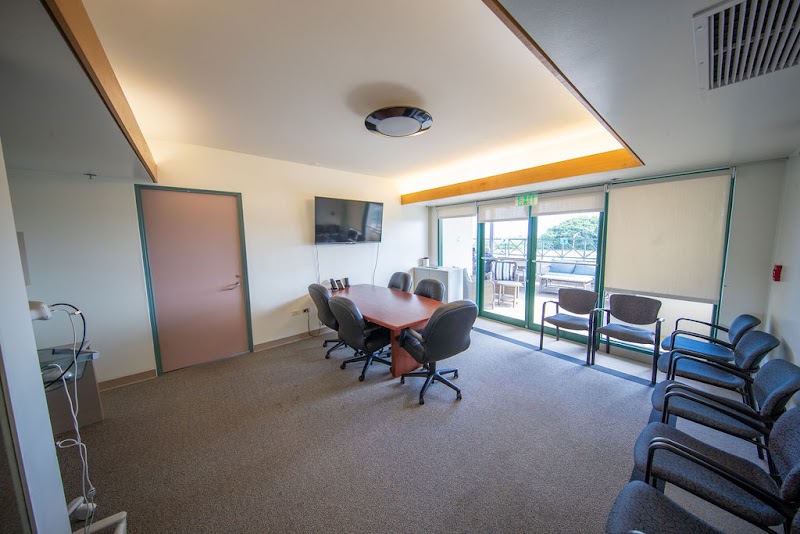
Who Owns and Operates Pearl City Post Acute?

PEARL CITY POST ACUTE is owned by a for-profit company. For-profit facilities operate as businesses with obligations to shareholders or private owners. The facility operates independently rather than as part of a larger chain. With 122 certified beds and approximately 115 residents (about 94% occupancy), it is a mid-sized facility located in PEARL CITY, Hawaii.
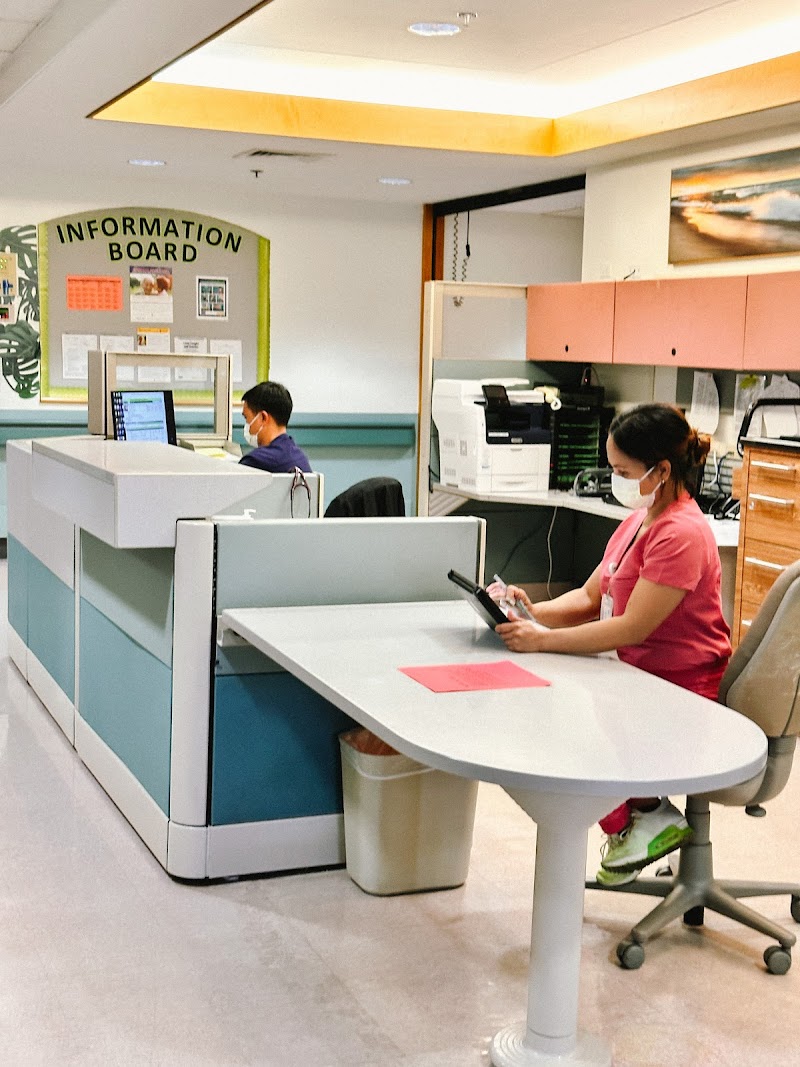
How Does Pearl City Post Acute Compare to Other Hawaii Nursing Homes?

Compared to the 100 nursing homes in Hawaii, PEARL CITY POST ACUTE's overall rating (5 stars) is above the state average of 3.5, staff turnover (36%) is near the state average of 46%, and health inspection rating (4 stars) is above the national benchmark.

What Should Families Ask When Visiting Pearl City Post Acute?

Based on this facility's data, families visiting should ask: "Can I visit during a mealtime to observe dining assistance and food quality?" "How do you handle medical emergencies, and what is your hospital transfer rate?" "Can I speak with family members of current residents about their experience?"

Is Pearl City Post Acute Safe?

Based on CMS inspection data, PEARL CITY POST ACUTE has a clean safety record: no substantiated abuse findings (meaning no confirmed cases of resident harm), no Immediate Jeopardy citations (the most serious violation level indicating risk of serious injury or death), and is not on the Special Focus Facility watch list (a federal program monitoring the lowest-performing 1% of nursing homes). The facility has a 5-star overall rating and ranks #1 of 100 nursing homes in Hawaii. While no facility is perfect, families should still ask about staff-to-resident ratios and recent inspection results during their visit.

Do Nurses at Pearl City Post Acute Stick Around?

PEARL CITY POST ACUTE has a staff turnover rate of 36%, which is about average for Hawaii nursing homes (state average: 46%). Moderate turnover is common in nursing homes, but families should still ask about staff tenure and how the facility maintains care continuity when employees leave.

Was Pearl City Post Acute Ever Fined?

PEARL CITY POST ACUTE has no federal fines on record. CMS issues fines when nursing homes fail to meet care standards or don't correct problems found during inspections. The absence of fines suggests the facility has either maintained compliance or corrected any issues before penalties were assessed. This is a positive indicator, though families should still review recent inspection reports for the full picture.

Is Pearl City Post Acute on Any Federal Watch List?

PEARL CITY POST ACUTE is not on any federal watch list. The most significant is the Special Focus Facility (SFF) program, which identifies the bottom 1% of nursing homes nationally based on persistent, serious quality problems. Not being on this list means the facility has avoided the pattern of deficiencies that triggers enhanced federal oversight. This is a positive indicator, though families should still review the facility's inspection history directly.