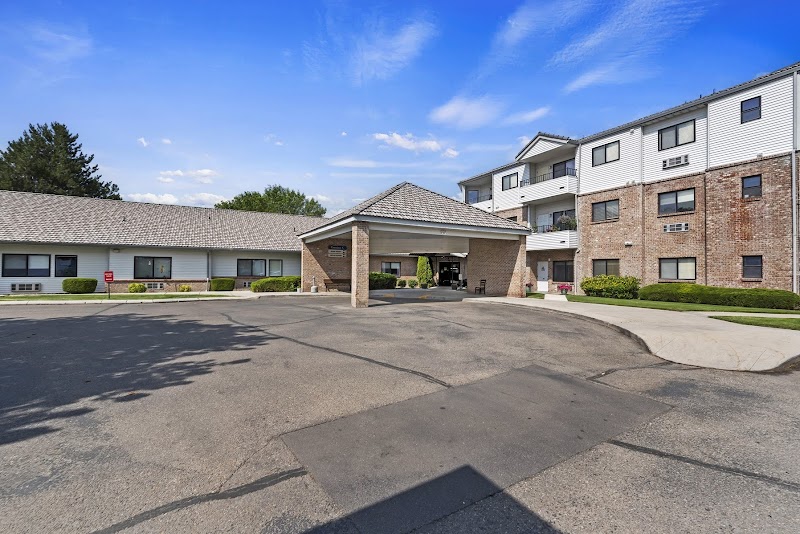
KARCHER POST ACUTE

1127 CALDWELL BOULEVARD, NAMPA, ID 83651 (208) 465-4935
For profit - Corporation 66 Beds PRESTIGE CARE Data: November 2025
Trust Grade
0/100
#72 of 79 in ID
Last Inspection: April 2025

Within standard 12-15 month inspection cycle. Federal law requires annual inspections.

Overview

Karcher Post Acute in Nampa, Idaho, has received a Trust Grade of F, indicating poor performance with significant concerns about care quality. They rank #72 out of 79 facilities in Idaho, placing them in the bottom half, and #6 out of 7 in Canyon County, meaning only one local option is worse. The facility's situation is worsening, with issues increasing from 7 in 2024 to 13 in 2025. Staffing is rated average at 3 out of 5 stars, with a turnover rate of 50%, which is close to the state average, but they have concerning RN coverage, as they fall below 98% of facilities in Idaho. They have accumulated $36,101 in fines, which is higher than 88% of Idaho facilities, suggesting repeated compliance issues. Specific incidents highlight serious concerns: one resident suffered a burn from a heating pad because a CNA did not notify the nurse, and another resident's hair was cut without consent, violating her rights. Additionally, a resident was discharged to a motel without the ability to manage their medical needs, which caused psychosocial harm. While the quality measures are rated good at 4 out of 5 stars, the overall picture shows considerable weaknesses that families should carefully consider.

Trust Score
F
0/100
In Idaho
#72/79
Bottom 9%
Safety Record
High Risk
Review needed
Inspections
Getting Worse
7 → 13 violations
Staff Stability
⚠ Watch
50% turnover. Above average. Higher turnover means staff may not know residents' routines.
Penalties
○ Average
$36,101 in fines. Higher than 65% of Idaho facilities. Some compliance issues.
Skilled Nurses
⚠ Watch
Each resident gets only 21 minutes of Registered Nurse (RN) attention daily — below average for Idaho. Fewer RN minutes means fewer trained eyes watching for problems.
Violations
⚠ Watch
44 deficiencies on record. Higher than average. Multiple issues found across inspections.
★☆☆☆☆
1.0
Overall Rating
★★★☆☆
3.0
Staff Levels
★★★★☆
4.0
Care Quality
★☆☆☆☆
1.0
Inspection Score
Stable
2024: 7 issues
2025: 13 issues

The Good

  • 4-Star Quality Measures · Strong clinical quality outcomes
  • Full Sprinkler Coverage · Fire safety systems throughout facility
  • No fines on record

Facility shows strength in quality measures, fire safety.

The Bad

1-Star Overall Rating

Below Idaho average (3.2)

Significant quality concerns identified by CMS

Staff Turnover: 50%

Near Idaho avg (46%)

Higher turnover may affect care consistency

Federal Fines: $36,101

Above median ($33,413)

Moderate penalties - review what triggered them

Chain: PRESTIGE CARE

Part of a multi-facility chain

Ask about local staffing decisions and management

The Ugly 44 deficiencies on record

4 actual harm
Sept 2025 2 deficiencies 1 Harm
SERIOUS (G) 📢 Someone Reported This

A family member, employee, or ombudsman was alarmed enough to file a formal complaint

Actual Harm - a resident was hurt due to facility failures

Accident Prevention (Tag F0689)

A resident was harmed · This affected 1 resident

**NOTE- TERMS IN BRACKETS HAVE BEEN EDITED TO PROTECT CONFIDENTIALITY** Based on the Long Term Care State Reporting Portal, Incident and Accident (I&A) report, record review and staff interview, it wa...

Read full inspector narrative →
**NOTE- TERMS IN BRACKETS HAVE BEEN EDITED TO PROTECT CONFIDENTIALITY** Based on the Long Term Care State Reporting Portal, Incident and Accident (I&A) report, record review and staff interview, it was determined the facility failed to provide an environment free from accidental hazards over which the facility has control and provides supervision to each resident to prevent avoidable accidents. This was true for 1 of 4 residents (Resident #36) reviewed for accidents. Resident #36 was harmed when a CNA failed to notify the nurse Resident #36 was using a heating pad. Resident #36 was found to have a burn at the hospital. Findings include: Resident #36 was admitted to the facility on [DATE], and readmitted on [DATE], with multiple diagnoses including surgical amputation of the left leg above the knee, diabetes, kidney disease, depression, anxiety, chronic pain symptom, and hypertensive heart disease without heart failure.An annual MDS Assessment, dated 7/16/25, documented Resident #36 was cognitively intact.Resident #36's medications included, but was not limited to:- Duloxetine (an anti-depressant, and also used to treat chronic pain) HCL capsule delayed release particles, dated 7/12/25, give 60 mg by mouth for neuropathy and depression.- Pregabalin (an anticonvulsant also used to treat nerve pain) Oral Capsule, dated 8/26/25, 150 mg 1 capsule by mouth three times per day for phantom limb pain.- Oxycodone (narcotic pain medication) HCL oral tablet 5 mg by mouth every 6 hours for chronic pain.A review of an I&A, dated 8/27/25, documented Resident #36 was found unresponsive at 3:45 AM when RN #1 attempted to wake her up to take her 2:00 AM medications. RN #1 felt hot compresses under Resident #36's gown. RN #1 was unaware Resident #36 was using a heating pad, or that it was on. The report stated RN #1 was unaware if Resident #36 was using a heating pad, and was never told it was on, or if Resident #36 was able to use it. RN #1 attempted to cool Resident #36 down by rolling her towards her and removing the heating pad. RN #1 did not visualize the resident's back as she was alone while rolling Resident #36 towards her. RN #1 was focused on getting Resident #36's vitals taken and applying cold compresses to the resident. Resident #36's temperature was documented at 100 degrees [F], and cold compresses did not wake the resident. Additional staff were called to assist to take Resident #36's vital signs, and Resident #36 remained unresponsive. RN #1 decided to contact emergency services. When RN #1 returned to Resident #36's room, her blood pressure was unreadable, and her oxygen levels were significantly low. Resident #36 remained unresponsive while life-saving measures were offered. Emergency services arrived soon after and Resident #36 was sent to the hospital.The facility investigation documented, CNA #1 stated she had cared for Resident #36 at 9:00 PM [on 8/26/25] and was aware Resident #36 had a heating pad with a green fabric cover on it. CNA #1 stated she was unaware Resident #36 was not allowed a heating pad. Resident #36 had told CNA #1 she was cold.The I&A report further documented the DON was informed by Resident #36's daughter, Resident #36 had a large burn and was being sent to [a nearby city] for burn care.There was no documentation in Resident #36's record CNA #1 notified the nurse on duty Resident #36 had a heating pad in her room or that the heating pad was placed behind Resident #36. Nursing progress notes, dated 8/26/25 at 1:40 PM, documented a Late Entry note where Resident #36 was concerned with an area on her buttocks. Resident #36 was examined, and it was documented her skin area was clear and there were no skin issues at that time.On 9/3/25 at 10:27 AM, the DON stated CNA #1 saw the heating pad was behind Resident #36's back, but did not check to see if it was on or off. The DON stated CNA #1 should have reported the heating pad to the nurse, but she did not.
CONCERN (D) 📢 Someone Reported This

A family member, employee, or ombudsman was alarmed enough to file a formal complaint

Potential for Harm - no one hurt, but risky conditions existed

Grievances (Tag F0585)

Could have caused harm · This affected 1 resident

**NOTE- TERMS IN BRACKETS HAVE BEEN EDITED TO PROTECT CONFIDENTIALITY** Based on policy review, record review, and staff interview, it was determined the facility failed to ensure a resident's missing...

Read full inspector narrative →
**NOTE- TERMS IN BRACKETS HAVE BEEN EDITED TO PROTECT CONFIDENTIALITY** Based on policy review, record review, and staff interview, it was determined the facility failed to ensure a resident's missing property was investigated and prompt corrective action was taken. This was true for 1 of 3 residents (Resident #28) whose missing items were reviewed. This failure created the potential for psychological harm if residents' missing items were not investigated. Findings include:The facility's Grievances/Complaints, Recording and Investigating policy, revised April 2017 documented all grievances and complaints filed with the facility will be investigated and corrective actions will be taken to resolve the grievance(s).Resident #28 was admitted to the facility on [DATE], and readmitted [DATE], with multiple diagnoses including stroke, cancer of right retina (part of the eye) and dementia.A care plan dated 8/29/24, documented Lost glass eye, MD (physician) recommended to leave out.A care plan dated 2/28/24, documented Resident #28 had history of cancer to her right eye and it was removed. She wore a prosthetic which she kept removing and the physician recommended to leave the eye out as it was causing her more issues than doing her good.On 9/2/25 at 2:00 PM, the Social Services Director (SSD) stated if a resident had a missing item reported they would look for it and if not found the facility would replace the missing item. When asked about Resident #28's missing glass eye, as documented in her care plan, the SSD stated she started in the position as SSD in April of 2025 and worked as nurse in the facility prior to her being the SSD. The SSD stated she heard Resident #28 removed her glass eye, placed it on her meal tray and the meal tray was taken away. The SSD was asked to provide documentation Resident #28's missing glass eye was investigated or what action did the facility do to locate the missing glass eye. On 9/2/25 at 3:51 PM, the SSD together with the DON stated she was unable to locate documentation Resident #28's missing glass eye was investigated or acted upon.
Apr 2025 11 deficiencies 1 Harm
SERIOUS (G) 📢 Someone Reported This

A family member, employee, or ombudsman was alarmed enough to file a formal complaint

Actual Harm - a resident was hurt due to facility failures

Deficiency F0561 (Tag F0561)

A resident was harmed · This affected 1 resident

**NOTE- TERMS IN BRACKETS HAVE BEEN EDITED TO PROTECT CONFIDENTIALITY** Based on interviews of residents, resident representatives, and staff, and record review, it was determined the facility failed ...

Read full inspector narrative →
**NOTE- TERMS IN BRACKETS HAVE BEEN EDITED TO PROTECT CONFIDENTIALITY** Based on interviews of residents, resident representatives, and staff, and record review, it was determined the facility failed to ensure a resident's cultural/religious rights were honored. This was true for 1 of 1 resident (Resident #28) whose record was reviewed for resident rights. This failure resulted in psychosocial harm to Resident #28 when a certified nursing assistant (CNA) cut her hair without her consent. Findings include: Resident #28 was admitted to the facility on [DATE], for care following a stroke and had multiple diagnoses including chronic kidney disease and dementia. A facility incident report, dated 2/12/25, documented staff were pulling Resident #28's hair while brushing it, then cut her hair. The report documented CNA #1 stated Resident #28 was uncooperative with staff attempting to brush the knots out of her hair, and CNA #1 cut about an inch or inch and a half from Resident #28's hair. The report did not specify if Resident #28 was asked for her consent before CNA #1 cut her hair. On 4/3/25 at 5:00 PM, Resident #28 and her representative were interviewed together. Resident #28 stated, I don't cut my hair, my hair came from Jesus. She became upset and stated, If I cut my hair, I'll go to hell. Resident #28's representative stated Resident #28 chooses not to cut her hair for religious reasons, and she informed the facility of this on the day of Resident #28's admission. The representative stated Resident #28 was upset about her hair being cut when the representative visited her afterward. She stated she brought it to the administrator's attention that someone had cut Resident #28's hair without her consent. Resident #28's care plan, dated 11/24/24, documented she required assistance to complete her daily hygiene tasks, such as bathing and caring for her hair. The care plan did not document her preference to wear her hair long or her religious beliefs that her hair should never be cut. On 4/3/25 at 5:45 PM, the Administrator stated he was aware Resident #28 had religious beliefs and she chose not to cut her hair. He added CNA #1 was trying to be helpful by cutting the knots out of Resident #28's hair rather than upset her while brushing them out, and CNA #1 did not know Resident #28 did not cut her hair for religious reasons.
CONCERN (D) 📢 Someone Reported This

A family member, employee, or ombudsman was alarmed enough to file a formal complaint

Potential for Harm - no one hurt, but risky conditions existed

Report Alleged Abuse (Tag F0609)

Could have caused harm · This affected 1 resident

**NOTE- TERMS IN BRACKETS HAVE BEEN EDITED TO PROTECT CONFIDENTIALITY** Based on record review, review of the State Survey Agency's Long-Term Care Reporting Portal, and resident and staff interview, i...

Read full inspector narrative →
**NOTE- TERMS IN BRACKETS HAVE BEEN EDITED TO PROTECT CONFIDENTIALITY** Based on record review, review of the State Survey Agency's Long-Term Care Reporting Portal, and resident and staff interview, it was determined the facility failed to report alleged verbal abuse to the State Survey Agency within 5 days. This was true for 1 of 6 residents (Resident #11) reviewed for abuse. This failure created the potential for residents to be subjected to ongoing abuse without detection and protective measures implemented by the facility. Findings include: Resident #11 was initially admitted to the facility on [DATE], with multiple diagnoses including diabetes and morbid obesity. Resident #11's admission MDS assessment, dated 9/15/24, documented Resident #6 was cognitively intact. The Grievance Logs from October 2024 to April 2025 were reviewed. A grievance, dated 10/18/24, documented Resident #11 felt publicly shamed by the dietitian in front of other residents when the dietitian asked about her ordering habits such as chicken fried steak and other high-calorie items. When Resident #11 responded about the weight she had lost, the dietitian commented Resident #11 would have lost more weight if she had stuck to the diet plan. A review of the State Survey Agency's Long-Term Care Reporting Portal documented the alleged verbal abuse was uploaded on 4/1/25, approximately six months after the alleged incident. On 4/2/25 at 3:04 PM, the DON stated, I wasn't here last October [2024], as I was hired at the end of December [2024]. The Administrator and I reviewed the grievances on 4/1/25, recognizing this grievance was not reported to the State Portal as it should have been. We [the Administrator and the DON] immediately uploaded the incident to the State Reporting Portal, and started an investigation.
CONCERN (D) 📢 Someone Reported This

A family member, employee, or ombudsman was alarmed enough to file a formal complaint

Potential for Harm - no one hurt, but risky conditions existed

Investigate Abuse (Tag F0610)

Could have caused harm · This affected 1 resident

**NOTE- TERMS IN BRACKETS HAVE BEEN EDITED TO PROTECT CONFIDENTIALITY** Based on record review, review of facility Grievance Logs, and staff interview, it was determined the facility failed to ensure ...

Read full inspector narrative →
**NOTE- TERMS IN BRACKETS HAVE BEEN EDITED TO PROTECT CONFIDENTIALITY** Based on record review, review of facility Grievance Logs, and staff interview, it was determined the facility failed to ensure allegations of verbal abuse were thoroughly investigated for 1 of 6 residents (Resident #11) reviewed for abuse. This failure created the potential for Resident #11 to be subjected to ongoing abuse without detection and intervention. Findings include: Resident #11 was initially admitted to the facility on [DATE], with multiple diagnoses including diabetes and morbid obesity. Resident #11's admission MDS assessment, dated 9/15/24, documented Resident #11 was cognitively intact. A review of Grievance Logs from October 2024 to April 2025, included a grievance, dated 10/18/24. The grievance documented Resident #11 was publicly shamed by the dietitian in the lobby area while other residents were present. The dietitian asked Resident #11 about her ordering habits such as chicken fried steak and other high-calorie items. When Resident #11 responded about the weight she had lost, the dietitian commented Resident #11 would have lost more weight if she had stuck to the diet plan. The report did not include what was done to protect the resident from further verbal abuse; staff and resident interviews; or the facility's conclusion of the investigation. A review of the State Survey Agency's Long-Term Care Reporting Portal documented the 10/18/24 incident was uploaded on 4/1/25, approximately six months after the incident. On 4/2/25 at 3:04 PM, the DON stated, I wasn't here last October [2024], as I was hired at the end of December [2024]. The Administrator and I reviewed the grievances on 4/1/25 recognizing this grievance was not reported to the State Portal as it should have been. We [the Administrator and the DON] immediately uploaded the incident to the Portal and started an investigation. On 4/4/25 at 11:45 AM, the DON stated the investigation had been completed and it was found there was not enough evidence to substantiate allegations of mistreatment or verbal abuse. The DON stated the investigation was uploaded it to the State Reporting Portal on 4/4/25. A review of the State Survey Agency's Long-Term Care Reporting Portal documented a final investigation report, dated 4/4/25.
CONCERN (D) 📢 Someone Reported This

A family member, employee, or ombudsman was alarmed enough to file a formal complaint

Potential for Harm - no one hurt, but risky conditions existed

Assessment Accuracy (Tag F0641)

Could have caused harm · This affected 1 resident

**NOTE- TERMS IN BRACKETS HAVE BEEN EDITED TO PROTECT CONFIDENTIALITY** Based on record review and staff interview, it was determined the facility failed to ensure residents' MDS documented correct as...

Read full inspector narrative →
**NOTE- TERMS IN BRACKETS HAVE BEEN EDITED TO PROTECT CONFIDENTIALITY** Based on record review and staff interview, it was determined the facility failed to ensure residents' MDS documented correct assessment information. This was true for 2 of 14 residents (#16 and #30) whose records were reviewed for accuracy. This deficient practice had the potential for negative outcomes if residents were not assessed and/or monitored due to inaccurate assessments. Findings include: The Resident Assessment Instrument (RAI), revised 10/1/24, documented if a PASARR (Preadmission Screening and Resident Review) level II determined a resident has a serious mental illness, then section A1500 of the MDS should be marked yes. 1. Resident #16 was admitted to the facility on [DATE], and readmitted on [DATE], with the diagnosis of bipolar disorder (a mental health condition characterized by extreme shifts in mood, energy, and activity levels, oscillating between periods of mania and depression, significantly impacting daily functioning). Resident #16's medical record documented a PASARR level II, dated 7/3/23, was completed. Resident #16's MDS assessment, dated 9/18/24, and quarterly MDS review, dated 12/10/24, documented, no at A1500. 2. Resident #30 was admitted on [DATE], with multiple diagnoses including dementia, anxiety, and depression. Resident #30's medical record documented a PASARR level II was completed on 2/12/25. Resident #30's admission MDS assessment, dated 2/12/25, documented no at A1500. On 4/3/25 at 3:30 PM, the MDS Coordinator stated any PASARR level II not requiring additional services will have no selected at A1500. The MDS Coordinator was not aware a PASARR level II on file would need to be marked yes at A1500. She stated both Resident #16 and Resident #30 did have a PASARR level II on file and the MDS should have been marked yes at A1500.
CONCERN (D) 📢 Someone Reported This

A family member, employee, or ombudsman was alarmed enough to file a formal complaint

Potential for Harm - no one hurt, but risky conditions existed

Comprehensive Care Plan (Tag F0656)

Could have caused harm · This affected 1 resident

**NOTE- TERMS IN BRACKETS HAVE BEEN EDITED TO PROTECT CONFIDENTIALITY** Based on interviews of residents, resident representatives, and staff, and record review, it was determined the facility failed ...

Read full inspector narrative →
**NOTE- TERMS IN BRACKETS HAVE BEEN EDITED TO PROTECT CONFIDENTIALITY** Based on interviews of residents, resident representatives, and staff, and record review, it was determined the facility failed to ensure a resident's cultural/religious preferences were included in their care plan. This was true for 1 of 14 residents (Resident #28) whose care plans were reviewed. This failure placed Resident #28 at risk for their religious rights not being honored. Findings include: Resident #28 was admitted to the facility on [DATE] for care following a stroke, and had multiple diagnoses including chronic kidney disease and dementia. On 4/3/25 at 5:00 PM, Resident #28 stated, I don't cut my hair, my hair came from Jesus. Resident #28's representative added Resident #28 chooses not to cut her hair for religious reasons and she informed the facility of this on the day of her admission. Resident #28's care plan, dated 11/24/24, documented she required assistance to complete her daily hygiene tasks, such as bathing and caring for her hair. Resident #28's care plan did not document her preference to wear her hair long or her religious beliefs that her hair should never be cut. On 4/3/25 at 5:45 PM, the Administrator stated he was aware Resident #28 had religious beliefs and she chose not to cut her hair but did not know why her religious beliefs were not included in her care plan.
CONCERN (D) 📢 Someone Reported This

A family member, employee, or ombudsman was alarmed enough to file a formal complaint

Potential for Harm - no one hurt, but risky conditions existed

Deficiency F0657 (Tag F0657)

Could have caused harm · This affected 1 resident

**NOTE- TERMS IN BRACKETS HAVE BEEN EDITED TO PROTECT CONFIDENTIALITY** Based on record review, policy review, and staff interview, it was determined the facility failed to ensure residents and their ...

Read full inspector narrative →
**NOTE- TERMS IN BRACKETS HAVE BEEN EDITED TO PROTECT CONFIDENTIALITY** Based on record review, policy review, and staff interview, it was determined the facility failed to ensure residents and their representatives were provided the opportunity to participate in care planning and attend care conferences. This was true for 1 of 14 residents (Resident #27) whose care plans were reviewed. This placed resident #27 at risk for adverse outcomes if care and services were not provided due to care plans not being reviewed and revised as the resident's needs changed. Findings include. The Facility's Care Conference policy, dated February 2019, documented, Care conferences will be scheduled with the resident and/or resident representative to review care plan goals and interventions. Care Conferences will be held upon admission, quarterly and with any significant change in conjunction with MDS Assessment. Review of the care plan with the resident and/or resident representative shall be documented in the EHR [Electronic Health Record]. Resident #27 was admitted to the facility on [DATE], with multiple diagnoses including renal (kidney) disease, high blood pressure, dementia, depression, and respiratory failure. On 4/1/25 at 11:33 AM, Resident #27's representative stated she had not been contacted regarding any care conferences since last summer [2024]. Resident #27's care plan, dated 2/21/21, instructed the facility to conduct quarterly care conferences and as needed for Resident #27. A review of Resident #27's medical record from August 2024 through January 2025, did not include documentation of care conferences with Resident #27 and/or her representative. On 4/2/25 at 4:29 PM, the DON stated care conferences were being completed and placed in the nursing progress notes, but they were documented incorrectly so there is no record of who attended the conference and what was discussed. The DON confirmed Resident #27's record did not include documentation of care conferences being performed.
CONCERN (D) 📢 Someone Reported This

A family member, employee, or ombudsman was alarmed enough to file a formal complaint

Potential for Harm - no one hurt, but risky conditions existed

Accident Prevention (Tag F0689)

Could have caused harm · This affected 1 resident

**NOTE- TERMS IN BRACKETS HAVE BEEN EDITED TO PROTECT CONFIDENTIALITY** Based on reviews of incident reports and medical records, and staff interviews, it was determined the facility failed to impleme...

Read full inspector narrative →
**NOTE- TERMS IN BRACKETS HAVE BEEN EDITED TO PROTECT CONFIDENTIALITY** Based on reviews of incident reports and medical records, and staff interviews, it was determined the facility failed to implement interventions to reduce residents' risk of accidents. This was true for 1 of 4 residents (Resident #20) reviewed for accidents. This failure resulted in Resident #20 experiencing a fall when her soft touch call light was not available for use. Findings include: Resident #20 was admitted on [DATE], with multiple diagnoses including dementia, Alzheimer's disease, and encounter for palliative care. A facility accident report, dated 1/17/25, documented facility staff found Resident #20 on her right side, on the floor next to her bed. She was assessed by a nurse and no injuries were found. The report concluded that Resident #20 attempted to transfer herself without assistance, and the facility implemented [the] use of [a] soft pad call light as [an] intervention to prevent falls in [the] future. A care plan intervention, revised on 1/22/25, instructed staff to keep a soft touch call light within Resident #20's reach and to keep Resident #20 within supervised view as much as possible. A facility accident report, dated 3/3/25, documented Resident #20 had an unwitnessed fall when she attempted to transfer herself in her room and fell next to her bed. Resident #20 was unable to explain what had happened. She was assessed by a nurse with no injuries found. The report concluded that Resident #20 did not activate her call light before the fall. A late entry note, dated 3/6/25, documented the facility changed Resident #20's call light out for a larger soft touch type of call light button. In an interview on 4/3/25 at 4:06 PM, the DON stated Resident #20 changed rooms around the end of February and her soft touch light was not moved with her. The DON stated the oversight was discovered when Resident #20 fell again in March and the soft touch call light was installed and reeducation was provided to staff.
CONCERN (D) 📢 Someone Reported This

A family member, employee, or ombudsman was alarmed enough to file a formal complaint

Potential for Harm - no one hurt, but risky conditions existed

Deficiency F0757 (Tag F0757)

Could have caused harm · This affected 1 resident

**NOTE- TERMS IN BRACKETS HAVE BEEN EDITED TO PROTECT CONFIDENTIALITY** Based on record review and staff interview, it was determined the facility failed to ensure a resident was free from duplicate p...

Read full inspector narrative →
**NOTE- TERMS IN BRACKETS HAVE BEEN EDITED TO PROTECT CONFIDENTIALITY** Based on record review and staff interview, it was determined the facility failed to ensure a resident was free from duplicate pain medication therapy without clear parameters for administration. This was true for 1 of 6 residents (Resident #9) whose records were reviewed for unnecessary medications. This failure created the potential for harm and adverse effects if Resident #9 was to receive inappropriate opioid medication. Findings include: Resident #9 was re-admitted to the facility on [DATE] with multiple diagnoses including dementia, fibromyalgia, and chronic pain syndrome. Resident #9's electronic health record (HER) documented the following medications ordered by her physician on 3/24/25: -acetaminophen (an analgesic) oral tablet 500 mg, give 1 tablet by mouth, every 6 hours, as needed for pain -hydrocodone-acetaminophen (an opioid analgesic) oral tablet 5-325 mg, give 1 tablet by mouth, every 6 hours, as needed for hip pain related to chronic pain syndrome -Tramadol (an opioid) HCL oral tablet 50 mg, give 1 tablet by mouth, every 8 hours, as needed for pain A note from the consulting pharmacist to the physician documented a recommendation to update Resident #9's hydrocodone and Tramadol orders with clear instructions using the pain scale to determine the appropriate medication to give. This note was signed by the physician on 3/24/25 with the response, no changes. On 4/4/25 at 1:02 PM, the DON stated the acetaminophen, hydrocodone, and Tramadol orders for Resident #9 were not clear and needed to be updated with more specific instructions for their use.
CONCERN (D) 📢 Someone Reported This

A family member, employee, or ombudsman was alarmed enough to file a formal complaint

Potential for Harm - no one hurt, but risky conditions existed

Deficiency F0760 (Tag F0760)

Could have caused harm · This affected 1 resident

**NOTE- TERMS IN BRACKETS HAVE BEEN EDITED TO PROTECT CONFIDENTIALITY** Based on record review, review of facility's policy and procedure, review of Incidents and Accidents reports, and staff intervie...

Read full inspector narrative →
**NOTE- TERMS IN BRACKETS HAVE BEEN EDITED TO PROTECT CONFIDENTIALITY** Based on record review, review of facility's policy and procedure, review of Incidents and Accidents reports, and staff interview, it was determined the facility failed to ensure residents were free from significant medication errors. This was true for 2 of 2 residents (#11 and #16) reviewed for medication errors. Findings include: The facility's Medication Administration policy, dated January 2023, documented: Prior to administration, review and confirm medication orders for each individual resident on the Medication Administration Record (MAR). Compare the medication and dosage schedule on the resident's MAR with the medication label. Verify medication is correct three times before administering the medication: 1. When pulling medication packages from the medication cart, 2. When dose is prepared, and 3. Before dose is administered. Residents are identified before medication is administered using at least two resident identifiers: 1. Check identification band, 2. Check photograph attached to medical record, and/or 3. Verify resident identification with other nursing care center personnel. The facility's Medication Administration - Errors policy and procedure, dated February 2019, directed staff to: 1. Report a medication error in the risk management systems. 2. Notify the physician and resident/resident representative of the medication error. 3. Place resident on alert monitoring for adverse effects. 4. The [DON] will be responsible to ensure an investigation is completed, identifying cause of error and need for system review, etc. 5. The [DON] should implement counseling and/or corrective action as needed. 6. Errors resulting in negative outcome, potential for serious negative outcome and those as a result of failure to comply with nursing standards, will be reported to the appropriate State Agencies and Licensing Boards. 1. Resident #11 was initially admitted to the facility on [DATE], with multiple diagnoses including a left leg fracture, chronic migraine, and non-pressure chronic ulcer. A physician's order, dated 10/25/24, documented Resident #11 was to receive Oxycodone (narcotic pain medication), 5 mg every 3 hours for chronic pain. An I&A report, dated 11/5/24, documented Resident #11 had received 10 mg of Oxycodone instead of the ordered 5 mg on 11/4/24. The 10 mg was supposed to be given to her roommate. The facility notified the doctor. Resident #11 was monitored for adverse effects and the evening dose was withheld. The facility identified Resident #11 and her roommate had same medication (Oxycodone) ordered in different strengths. The nurse had pulled the same medication out for both residents and gave the incorrect medication dose to Resident #11. The nurse was educated on the 10 rights of Medication Administration on 11/6/24. On 4/3/25 at 3:23 PM, the DON stated Resident #11 had received her roommate's dose of 10 mg of Oxycodone as the nurse had chosen to administer both roommates their medication at the same time. She stated the nurse was educated on providing one resident's medication at a time to avoid future errors. The DON stated the nurse should have given the medication individually. 2. Resident #16 was admitted to the facility on [DATE], and readmitted on [DATE], with the diagnosis of diabetes. A physician's order, dated 8/30/24, documented Resident #16 was to receive Insulin Lispro (1 Unit Dial) Subcutaneous Solution Pen-injector 100 UNIT/ML: Inject as per sliding scale: if 0 - 70 = 0 units and notify provider; 71 - 150 = 0 units; 151 - 200 = 2 units; 201 - 250 = 4 units; 251 - 300 = 6 units; 301 - 350 = 8 units; 351 - 400 = 10 units; 401+ = 12 units and notify provider, subcutaneously before meals. A physician's order, dated 9/25/24, documented Resident #16 was to receive Lantus SoloStar Subcutaneous Solution Pen-injector 100 UNIT/ML (Insulin Glargine): Inject 30 units subcutaneously two times a day. An I&A report, dated 11/13/24, documented Resident #16 received the incorrect insulin. The nurse was distracted answering questions from family members and gave the incorrect medication to Resident #16. The physician and Resident #16 were notified of the medication error. Resident #16 was placed on alert charting with blood sugars being checked within 30 minutes and then again in two hours. Resident #16 did not have signs or symptoms of hypoglycemia (low blood sugar). On 4/3/25 at 4:15 PM, the DON stated, The nurse was distracted and gave Resident #16 a fast-acting insulin versus the slow-acting insulin. She followed our Medication Error policy when she alerted the doctor and resident, also placing the resident on alert charting. All nursing staff were educated after this incident; however, I cannot find the staff sign-in sheet as this was done under old administration and I did not start until the end of December 2024. Documentation of the completed staff training was requested and not provided.
CONCERN (D) 📢 Someone Reported This

A family member, employee, or ombudsman was alarmed enough to file a formal complaint

Potential for Harm - no one hurt, but risky conditions existed

Deficiency F0804 (Tag F0804)

Could have caused harm · This affected 1 resident

Based on observation, resident interview, test tray evaluation, and staff interview, it was determined the facility failed to ensure food was served at an appropriate temperature. This affected 1 of 4...

Read full inspector narrative →
Based on observation, resident interview, test tray evaluation, and staff interview, it was determined the facility failed to ensure food was served at an appropriate temperature. This affected 1 of 4 residents (Resident #40) who were reviewed for dietary concerns. This failed practice created the potential to negatively affect residents' nutritional status and psychosocial well-being. Findings include: On 3/31/25 at 3:11 PM, Resident #40 stated, I eat my meals in my room. The food is not warm when I get it. On 4/3/25 at 12:55 PM, a lunch meal test tray was evaluated by three surveyors and the Registered Dietitian. The main dish of taco salad (lettuce, ground beef, kidney beans, cheese) had an internal temperature of 85-degrees Fahrenheit. The side of cooked beans had an internal temperature of 113-degrees Fahrenheit. The yogurt had an internal temperature of 52-degrees Fahrenheit, and the custard dessert had an internal temperature of 57-degrees Fahrenheit. The dietitian confirmed the food had been placed incorrectly in the food cart where the cold side of the tray was placed on the warming side, and the hot side of the tray was placed on the cold side of the food cart. On 4/4/25 at 9:56 AM, the Kitchen Manager stated the dining cart is usually not turned on so the food will remain at the temperature it was plated. She acknowledged the staff had placed the food tray into the cart incorrectly (hot on cold side/cold on hot side), and the temperature of the food would be affected from the time of plating until a resident received it.
CONCERN (D) 📢 Someone Reported This

A family member, employee, or ombudsman was alarmed enough to file a formal complaint

Potential for Harm - no one hurt, but risky conditions existed

Food Safety (Tag F0812)

Could have caused harm · This affected 1 resident

Based on observation, Food Drug Administration (FDA) Food Code, and staff interview, it was determined the facility failed to ensure kitchen equipment was maintained, cleaned, and sanitized. These def...

Read full inspector narrative →
Based on observation, Food Drug Administration (FDA) Food Code, and staff interview, it was determined the facility failed to ensure kitchen equipment was maintained, cleaned, and sanitized. These deficiencies had the potential to affect the 54 residents who consumed food prepared by the facility. This placed residents at risk for potential foodborne illnesses and adverse health outcomes due to contaminated food services equipment. Findings include: 1. FDA Food Code Section 4-602.11 Equipment Food-Contact Surfaces and Utensils documented: (E) Surfaces of utensils and equipment contacting food that is not time/temperature control for food shall be cleaned: (4) (b) Absent manufacturer specifications, at a frequency necessary to preclude accumulation of soil or mold. On 3/31/25 at 8:30 AM, and 4/4/25 at 9:56 AM, a layer of dark brown dust was observed coating the pan drying rack, and a darker brown coating of dirt was observed in the corner of the walk-in freezer. On 4/4/25 at 10:10 AM, the Dietary Manager (DM) stated the pan drying rack was dusty and should have been cleaned. She also stated the freezer is cleaned by a third-party source and she did not know when it was last cleaned, but the freezer should have been cleaned. 2. The FDA Code Section 4-602.12 Cooking and Baking Equipment documented: Food-contact surfaces of cooking equipment must be cleaned to prevent encrustations that may impede heat transfer necessary to adequately cook food. Encrusted equipment may also serve as an insect attractant when not in use. On 3/31/25 at 8:30 AM, and 4/4/25 at 9:56 AM, three aluminum skillets were observed to have a thick layer of black coating on the interior and exterior which the DM was able to scrape off with her fingernail. On 4/4/25 at 9:56 AM, the DM stated the skillets were aluminum and should not have a coating of black residue on them. 3. The FDA Food Code Section 6-501.12 Cleaning, Frequency and Restrictions, documented cleaning of the physical facilities is an important measure in ensuring the protection and sanitary preparation of food. A regular cleaning schedule should be established and followed to maintain the facility in a clean and sanitary manner. Primary cleaning should be done at times when foods are in protected storage and when food is not being served or prepared. On 3/31/25 at 8:30 AM, and 4/4/25 at 9:56 AM, a thick layer of ice build-up walk-in was observed on the pipe going from the walk-in refrigerator into the freezer. A large sheet of ice was observed coating a stack of three opened cardboard boxes of pizza dough. On 4/4/25 at 10:17 AM, the DM stated ice should not be coating the food boxes, the pipes, or dripping from the air condenser unit. She stated a third-party company cleans the walk-in refrigerator and freezer as the units would need to be shut down. The DM did not know when it had last been cleaned. On 4/4/25 at 1:40 PM, the Administrator stated the walk-in refrigerator and freezer should be cleaned whenever it is dirty. He stated either maintenance or the kitchen staff should be keeping it clean. The Administrator stated the outside vendor only handles the equipment maintenance, not the cleaning.
Jul 2024 1 deficiency 1 Harm
SERIOUS (G) 📢 Someone Reported This

A family member, employee, or ombudsman was alarmed enough to file a formal complaint

Actual Harm - a resident was hurt due to facility failures

Transfer Requirements (Tag F0622)

A resident was harmed · This affected 1 resident

**NOTE- TERMS IN BRACKETS HAVE BEEN EDITED TO PROTECT CONFIDENTIALITY** Based on policy review, record review, review of the State Agency's Long Term Care Reporting Portal, and resident and staff inte...

Read full inspector narrative →
**NOTE- TERMS IN BRACKETS HAVE BEEN EDITED TO PROTECT CONFIDENTIALITY** Based on policy review, record review, review of the State Agency's Long Term Care Reporting Portal, and resident and staff interview, it was determined the facility failed to ensure a resident's right to stay in the facility and the right to appeal the decision for a facility-initiated discharge. This was true for 1 of 3 residents (Resident #1) reviewed for facility-initiated discharges. This deficient practice caused Resident #1 to experience psychosocial harm when he was discharged to a motel without the ability to check his blood sugar and safely administer insulin. Findings include: The facility's Notice of Transfer or Discharge policy, dated 4/2020, documented the notice of transfer/discharge shall be made 30 days prior to transfer/discharge unless the health and/or safety of the resident or residents residing in this center are endangered. Appendix PP, State Operations Manual, states there may be rare situations, such as when a serious crime (e.g., attempted murder or rape) has occurred, that a facility initiates a discharge immediately, with no expectation of the resident's return. Resident #1 was admitted to the facility on [DATE], with multiple diagnoses including Type 2 Diabetes Mellitus, Long term (current) use of Insulin, Depression, and Legal Blindness. Resident #1's care plan, initiated on 2/1/24, documented he had impaired visual function and was at risk for falls related to his visual impairment, legal blindness. Resident #1 care plan, initiated 2/2/24, documented that Resident #1 wished to remain in the facility. An admission MDS assessment, dated 2/2/24, documented Resident #1 was cognitively intact, vision was highly impaired, and physical and verbal behavioral symptoms directed towards others were not exhibited. A quarterly MDS assessment, dated 5/2/24, documented Resident #1 was cognitively intact, had adequate vision, able to see fine detail including regular print in newspapers/books, and physical and verbal behavioral symptoms directed towards others were not exhibited. The State Agency's Long Term Care Reporting Portal included a facility initial report, dated 6/25/24 at 1:15 PM, which documented an incident between Resident #1 and Resident #2. The report documented, LTC Residents, [Resident #1], [Resident #3], and [Resident #2] were outside in the designated smoking area. All Residents are alert and oriented x4. [Resident #1] and [Resident #3] are consented boyfriend and girlfriend. They were sitting on the bench outside and kissed. Based on statements from the residents, [Resident #2] yelled at [Resident #1] and [Resident #3] and said, 'get a room!' [Resident #1] responded by picking up the garden hose (used to water the flowers nearby) and sprayed [Resident #2] with water. [Resident #2] stated she is okay but not happy. [Resident #1] said, 'for what [Resident #2] said, that is the appropriate thing to do.' Residents were separated at this time. No injuries reported. Investigation started. The State Agency's Long Term Care Reporting Portal also included documentation of an immediate action plan, dated the same day and time as the initial report. The immediate action included notification for local police to talk with Resident #1 about using the garden hose to spray water on another resident, Resident #1 and Resident #2 were separated, and both residents stated they felt safe. A progress note, dated 6/25/24 at 2:04 PM, documented after the incident Resident #1 was placed on 1:1 supervision and was being closely monitored by facility staff. The note further documented Resident #1's provider gave approval to send him to the hospital for evaluation. A progress note, dated 6/25/24 at 9:35 PM, documented Resident #1 returned from the hospital after evaluation at approximately 9:15 PM via a non-medical ambulatory transport service and had no signs or symptoms of distress. The note documented Resident #1 was cooperative with the nurse and his cares. A progress note, dated 6/26/24 at 5:58 AM, documented Resident #1 slept through the night and remained in his room, with no problems. A progress note, dated 6/26/24 at 2:26 PM, documented Resident #1 stayed in his room throughout the day shift. He was assigned a 1:1 CNA to monitor him for safety reasons and no further episodes of this type of behavior was noted on that shift. A progress note, titled late entry, dated 6/26/24 at 9:15 PM, documented Resident #1 was in the DON's office with the Administrator and Social Services where options for discharge were discussed. Resident #1 was given three options including a hotel, with the power of attorney, or the homeless shelter. It also stated nursing staff would provide him with his medication list in large print due to difficulty with his eyesight. Medication organizers were also provided with labels in large print. A progress note, titled late entry, dated 6/26/24 at 9:16 PM, documented Resident #1 was able to give a return demonstration for administering his insulin on his own. A Social Services progress note, titled late entry, dated 6/26/24 at 5:49 PM, documented the DON, Administrator and Social Services Director spoke with Resident #1 on discharge options after he was given a discharge notice due to behaviors and threatening comments towards staff and residents. Resident #1 chose to be sent to a hotel paid by the facility. The Social Services Director made a three-night reservation at a local motel. A progress note, dated 6/26/24 at 6:31 PM, documented Resident #1 was discharged and was not allowed in the facility. The note documented if he came to the facility, to CALL THE POLICE IMMEDIATELY. This is trespassing and he will be arrested. The message was relayed by the DON. There was no documentation in Resident #1's record the facility discussed with Resident #1 he could remain in the facility for 30 days as stated on the discharge notice. Resident #1's record also did not include documentation the facility discussed with Resident #1 he had the right to appeal the facility-initiated discharge. On 7/1/24 at 11:20 AM, Resident #4 stated Resident #1 was his roommate and he heard that Resident #1 was kicked out because he sprayed a hose at a resident. He stated that he never had a problem with Resident #1, he was a nice guy. He also stated that he has never seen Resident #1 hit or strike out at another resident. During an interview with the surveyors at Resident #1's hotel on 7/1/24 at 12:30 PM, Resident #1 stated that he and Resident #3 were out by the smoking area kissing. He stated Resident #2 came outside and said, you guys are disgusting and that was when he sprayed Resident #2 with the hose. He stated, the day they kicked me out was the worst day of my life, worse than the day I lost my sight. I just want to die after what they did to me. Resident #1 did state to the surveyors he was not suicidal and could not kill himself. When asked, he stated he would go back to the facility if he could, I have nowhere to go. Resident #1 stated he did not receive a discharge notice. He was told the next day that he had to leave, they packed up my stuff, gave me my medications, and no way to check my blood sugar. When the surveyor asked if he was taking his insulin, Resident #1 stated just my Lantus (long-acting insulin), 25 units in the morning. He stated he could not take his Humalog (short-acting insulin) because he was not provided a way to check his blood sugar. When asked how he adjusted the insulin pen, Resident #1 stated I count the clicks because I can't see the numbers. Resident #1 allowed the surveyor to review the documentation that was provided to him at discharge. After review, the surveyor noted that the 30-day discharge notice was present in the documentation. When asked if he was able to read the notice, he stated no, the words are too small. The discharge notice was in small, newspaper style print. Resident #1 allowed the surveyor to visualize his insulin pen and it was observed to be set at 24 units, not 25 units as prescribed. During the interview with Resident #1, the surveyor observed he was emotionally distressed as evidenced by tearful moments throughout the interview. On 7/1/24 at 3:15 PM, Resident #3 stated she remembered the incident between Resident #1 and Resident #2. She stated she was outside on the bench smoking and visiting with Resident #1 when Resident #2 came out and starting yelling at them to get a room when she saw them kissing. Resident #3 stated she yelled back pay for it then Resident #2 went over to them in her wheelchair and kept screaming at them. Resident #3 stated I'm pissed he was kicked out and nothing happened with her. On 7/1/24 at 3:20 PM, Resident #2 stated she did not have issues with other residents anymore, now that Resident #1 was kicked out. [Resident #1] had a bad temper, and he took what I said seriously. I told them to get a room and he started calling me names and sprayed me with the garden hose. When asked how long Resident #1 sprayed her with the hose, Resident #2 stated not for long. On 7/1/24 at 4:11 PM, RN #1 stated she had not witnessed any other incidents between Resident #1 and Resident #2. RN #1 also stated she had not witnessed Resident #1 in any other physical interactions with other residents and had not witnessed him throwing anything or threatening other residents. On 7/2/24 at 10:52 AM, the Regional Ombudsman stated she was aware of the situation and had a conversation with the Social Services Director about Resident #1. She stated she made them aware if he was a safety concern then they could discharge him. She also stated she was not made aware of his diagnoses of legal blindness or that he was insulin dependent. On 7/2/24 at 1:43 PM, CNA #1 stated she provided cares to Resident #1, and he never yelled at or become aggressive with her. On 7/2/24 at 1:50 PM, CNA #2 stated she never saw or witnessed Resident #1 yelling or acting out. She stated she had not witnessed negative interactions involving Resident #1. On 7/2/24 at 2:30 PM, LPN #1 stated she had provided cares for Resident #1, and he could be hard to redirect. She also stated she had not witnessed Resident #1 physically put his hands on anyone in anger. She stated that he will get in people's faces. On 7/2/24 at 3:05 PM, the Social Services Director stated she was not in the facility on 6/25/24, the day of the incident. She was informed of the incident the next day and was instructed to begin finding placement for Resident #1. She stated Resident #1 became angry when he was given the 30-day notice of discharge and 3 options to go to after discharge. She stated the options given to Resident #1 were the motel, homeless shelter, or his friend's house. She stated he chose the motel as his option. On 7/2/24 at 6:02 PM, the Administrator stated due to Resident #1's behavior and statements, he felt they did the right thing. He also stated if Resident #1 had not accepted the hotel option, he would have kept Resident #1 in the facility.
Jan 2024 6 deficiencies
CONCERN (D) 📢 Someone Reported This

A family member, employee, or ombudsman was alarmed enough to file a formal complaint

Potential for Harm - no one hurt, but risky conditions existed

Comprehensive Care Plan (Tag F0656)

Could have caused harm · This affected 1 resident

**NOTE- TERMS IN BRACKETS HAVE BEEN EDITED TO PROTECT CONFIDENTIALITY** Based on observation, record review, and staff interview, it was determined the facility failed to develop and implement compreh...

Read full inspector narrative →
**NOTE- TERMS IN BRACKETS HAVE BEEN EDITED TO PROTECT CONFIDENTIALITY** Based on observation, record review, and staff interview, it was determined the facility failed to develop and implement comprehensive resident-centered care plans. This was true for 2 of 13 residents (#28, and #41) whose care plans were reviewed. These failures placed residents at risk of negative outcomes if services were not provided or provided incorrectly due to lack of information in their care plan. Findings include: 1. Resident #28 was admitted to the facility on [DATE], with multiple diagnoses including chronic respiratory failure with hypoxia (low oxygen levels in the body tissues). A physician's order, dated 1/19/24, included an order for Resident #28 to receive oxygen continuously at 6 liters/minute. Resident #28's care plan did not document she was using oxygen. On 1/22/24 at 11:13 AM and 1/24/24 at 9:54 AM, Resident #28 was observed receiving oxygen at 6 liters/minute via nasal cannula. On 1/24/24 at 9:58 AM, the Regional Support Nurse reviewed Resident #28's care plan and stated her oxygen was not in the care plan. The Regional Support Nurse stated Resident #28's care plan should document her use of oxygen. 2. Resident #41 was admitted to the facility on [DATE] and readmitted on [DATE], with multiple diagnoses, including depression and anxiety. A physician's order, dated 11/29/23, documented Resident #41 was to receive sertraline (antidepressant) HCL 100 mg, one tablet once a day, for his depression. Resident #41's care plan, did not document he was taking a psychoactive medication and what specific target behavior he manifested for depression. On 1/24/24 at 10:13 AM, the SSD reviewed Resident #41's record, and stated Resident #41 was on sertraline. The SSD stated Resident #41's care plan did not document he was taking a psychoactive medication and it should have.
CONCERN (D) 📢 Someone Reported This

A family member, employee, or ombudsman was alarmed enough to file a formal complaint

Potential for Harm - no one hurt, but risky conditions existed

Accident Prevention (Tag F0689)

Could have caused harm · This affected 1 resident

**NOTE- TERMS IN BRACKETS HAVE BEEN EDITED TO PROTECT CONFIDENTIALITY** Based on observation, policy review, record review and resident and staff interview, it was determined the facility failed to en...

Read full inspector narrative →
**NOTE- TERMS IN BRACKETS HAVE BEEN EDITED TO PROTECT CONFIDENTIALITY** Based on observation, policy review, record review and resident and staff interview, it was determined the facility failed to ensure a resident was assessed quarterly to determine if they were safe to smoke cigarettes for 1 of 1 resident (Resident #39). This failure created the potential for negative outcomes if Resident #39 was not assessed for safe smoking. Finding include: The facility's Smoking policy, revised 3/2020, stated residents who smoke are reevaluated at least quarterly. Resident #39 was admitted to the facility on [DATE], with multiple diagnoses including kidney disease and nicotine dependence. A Smoking Safety Evaluation dated 8/2/23, documented Resident #39 was safe to smoke with supervision. Resident #39's comprehensive care plan, initiated 4/11/23, did not identify his smoking or smoking interventions. On 1/22/24 at 9:26 AM, Resident #39 stated he smoked 2-3 cigarettes about once a day. He stated cigarettes were kept in the medication cart. A lighter and 8 packs of cigarettes were observed in his room. Resident #39 stated he went out to smoke by himself, using his walker to the building in the back of the facility used for smoking. On 1/24/24 at 11:32 AM, the DON stated a smoking assessment was done on admission or when a resident decided they wanted to smoke and then it was done quarterly or as needed. On 1/24/24 at 11:39 AM, the DON stated a smoking assessment should have been done in November for Resident #39. The DON stated Resident #39 went out to the smoking area independently using his 4-wheel walker.
CONCERN (D) 📢 Someone Reported This

A family member, employee, or ombudsman was alarmed enough to file a formal complaint

Potential for Harm - no one hurt, but risky conditions existed

Medication Errors (Tag F0758)

Could have caused harm · This affected 1 resident

**NOTE- TERMS IN BRACKETS HAVE BEEN EDITED TO PROTECT CONFIDENTIALITY** Based on record review and staff interview, it was determined the facility failed to ensure residents receiving a psychoactive m...

Read full inspector narrative →
**NOTE- TERMS IN BRACKETS HAVE BEEN EDITED TO PROTECT CONFIDENTIALITY** Based on record review and staff interview, it was determined the facility failed to ensure residents receiving a psychoactive medication had resident-specific target behaviors identified and monitored. This was true for 1 of 5 residents (Resident #41) reviewed for psychoactive medications. This deficient practice created the potential for harm if residents received medications that may result in negative outcomes without clear indication of need. Findings include: Resident #41 was admitted to the facility on [DATE] and readmitted on [DATE], with multiple diagnoses, including depression and anxiety. A physician's order, dated 11/29/23, documented Resident #41 was to receive sertraline (antidepressant) HCL 100 mg, one tablet once a day, for his depression. Resident #41's care plan, did not document he was taking a psychoactive medication and what specific target behavior he manifested for depression. On 1/24/24 at 10:13 AM, the SSD reviewed Resident #41's record, and stated Resident #41 was on sertraline. She stated Resident #41 should have specific target behavior monitoring. On 1/29/24, the facility submitted Resident #41's ADL sheet which documented MONITOR behavior symptoms as needed. The ADL sheet did not include documentation of what symptoms/behaviors was to be monitored for Resident #41.
CONCERN (E) 📢 Someone Reported This

A family member, employee, or ombudsman was alarmed enough to file a formal complaint

Potential for Harm - no one hurt, but risky conditions existed

Transfer Requirements (Tag F0622)

Could have caused harm · This affected multiple residents

**NOTE- TERMS IN BRACKETS HAVE BEEN EDITED TO PROTECT CONFIDENTIALITY** Based on policy review, record review, and staff interview, it was determined the facility failed to ensure pertinent health inf...

Read full inspector narrative →
**NOTE- TERMS IN BRACKETS HAVE BEEN EDITED TO PROTECT CONFIDENTIALITY** Based on policy review, record review, and staff interview, it was determined the facility failed to ensure pertinent health information was provided to the receiving hospital for 3 of 3 residents (#2, #7, and #41) reviewed for transfers. This deficient practice had the potential to result in adverse outcomes if residents were not treated in a timely manner due to a lack of information provided upon transfer. Findings include: The facility's policy, Notice of Transfer or Discharge, dated 4/2020, stated when the center transfers or discharges a resident, the center documents the transfer or discharge in the medical record and appropriate information is communicated to the receiving care institute or provider. As a minimum the following information is provided: - Contact information of the practitioner responsible for the care if [sic] the resident. - Resident representative information, including contact information. - Advance Directive information. - Special instructions or precautions for ongoing care. - Comprehensive Care Plan goals. - Other necessary information including a copy of the discharge summary. Such as, resident needs that cannot be met and center attempts to meet those needs. 1. Resident #7 was admitted to the facility on [DATE], with multiple diagnoses including cerebrovascular disease (a disease that affects blood flow and blood vessels in the brain) and hypertension. Resident #7's care plan, initiated 7/12/19 and revised 4/29/21, documented Resident #7 wished to remain in the facility for long term care. A nurse's note, dated 10/5/23 at 5:36 PM, documented 911 was called and Resident #7 was transported to the hospital and was admitted and diagnosed with pneumonia. The note documented the Medical Director and family were notified. Resident #7's record did not include documentation pertinent medical information was provided to the receiving hospital. On 1/24/24 at 11:35 AM, LPN #1 stated when a resident was sent to the hospital the resident's POST (Physician Orders for Scope of Treatment), face sheet, INTERACT form (Interventions to Reduce Acute Care Transfers), orders, history and physical, and bed hold notice (when a healthcare center holds a bed for a resident when he/she is hospitalized and /or goes on therapeutic leave) were sent with the resident. LPN #1 stated there was no progress note documenting what documents were sent with Resident #7. On 1/24/24 at 11:45 AM, the DON stated she could not find documentation of Resident #7's discharge paperwork that was sent with her to the hospital. 2. Resident #2 was admitted to the facility on [DATE] and readmitted on [DATE], with multiple diagnoses including heart failure and chronic respiratory failure with hypoxia (low level of oxygen in the body tissues). A nursing progress note, dated 11/10/23 at 1:28 PM, documented Resident #2's representative called the facility and stated the resident told her she felt worse and was unable to get out of her bed. The nurse informed Resident #2's representative that she was more shaky than usual. The nurse asked Resident #2 if she needed to go to the hospital. Resident #2 stated Yes. A message was left for Resident #2's provider regarding Resident #2's request to go to the hospital. At 4:08 PM, Resident #2 was transferred to the hospital. Resident #2's record did not include what discharge paperwork was sent with her when she was transferred to the hospital. On 1/24/24 at 10:44 AM, LPN #1 stated a face sheet, POST (Physician Orders for Scope of Treatment), Hospital Transfer form, physician orders, bed hold notice (when a healthcare center holds a bed for a resident when he/she is hospitalized and /or goes on therapeutic leave), and History and Physical should have been sent with Resident #2 when she was transferred to the hospital and it should be documented in her records. LPN #1 stated she did not see documentation in Resident #2's record of what information was sent with her when she was transferred to the hospital. 3. Resident #41 was admitted to the facility on [DATE] and readmitted on [DATE], with multiple diagnoses, including diabetes mellitus and right knee infection. A nursing progress notes, dated 11/22/23 at 11:30 PM, documented Resident #41 complained of shivering and feeling fevered. His temperature was taken, and it was 99.9 F. Resident #41 was administered Tylenol and Oxycodone (an opioid pain reliever) for his right knee pain. At 2:00 AM Resident #41's temperature was 103.3 F. Resident #41's provider was notified and an order was received to send him to the hospital. At 2:45 AM, Resident #41 was taken to the hospital. Resident #41's record did not include what discharge paperwork was sent with him when he went to the hospital. On 1/24/24 at 10:44 AM, LPN #1 stated a face sheet, POST (Physician Orders for Scope of Treatment), Hospital Transfer, form, physician orders, bed hold notice (when a healthcare center holds a bed for a resident when he/she is hospitalized and /or goes on therapeutic leave), and History and Physical should have been sent with Resident #41 when he was transferred to the hospital and it should be documented in his records. LPN #1 stated she did not see documentation in Resident #41's record of what information was sent with him when he was transferred to the hospital.
CONCERN (E) 📢 Someone Reported This

A family member, employee, or ombudsman was alarmed enough to file a formal complaint

Potential for Harm - no one hurt, but risky conditions existed

Deficiency F0625 (Tag F0625)

Could have caused harm · This affected multiple residents

**NOTE- TERMS IN BRACKETS HAVE BEEN EDITED TO PROTECT CONFIDENTIALITY** 3. Resident #7 was admitted to the facility on [DATE], with multiple diagnoses including stroke and hypertension. Resident #7's ...

Read full inspector narrative →
**NOTE- TERMS IN BRACKETS HAVE BEEN EDITED TO PROTECT CONFIDENTIALITY** 3. Resident #7 was admitted to the facility on [DATE], with multiple diagnoses including stroke and hypertension. Resident #7's care plan, initiated 7/12/19 and revised 4/29/21, documented Resident #7 wished to remain in the facility for long term care. A nurse's note, dated 10/5/23 at 5:36 PM, documented Resident #7 had high blood pressure. 911 was called and Resident #7 was transported to the hospital. She was admitted and diagnosed with pneumonia. Resident #7's provider and family were notified. Resident #7's record did not include documentation that a bed hold notice was provided to her or to her representative when she was transferred to the hospital. On 1/24/24 at 11:45 AM, the DON stated she did not find documentation a bed hold notice was provided to Resident #7 or to her representative, and it should have been provided. Based on record review, policy review, and staff interview, it was determined the facility failed to ensure a bed hold notice was provided to residents or their representatives upon transfer to the hospital. This was true for 3 of 3 residents (#2, #7 and #41) reviewed for transfers. This deficient practice created the potential for harm if residents were not informed of their right to return to their former bed/room at the facility within a specified time. Findings include: The facility's Bed Hold (when a healthcare center holds a bed for a resident when he/she is hospitalized and /or goes on therapeutic leave) policy, reviewed March 2019, directed staff to provide the resident or resident representative a copy of the bed hold policy upon transfer or discharge. 1. Resident #2 was admitted to the facility on [DATE] and readmitted on [DATE], with multiple diagnoses including heart failure and chronic respiratory failure with hypoxia (low level of oxygen in the body tissues). A nursing progress note, dated 11/10/23 at 1:28 PM, documented Resident #2's representative called the facility and stated the resident told her she felt worse and was unable to get out of her bed. The nurse informed Resident #2's representative that she was more shaky than usual. The nurse asked Resident #2 if she needed to go to the hospital. Resident #2 stated Yes. A message was left for Resident #2's provider regarding Resident #2's request to go to the hospital. At 4:08 PM, Resident #2 was transferred to the hospital. Resident #2's record did not include documentation that a bed hold notice was provided to her or to her representative when she was transferred to the hospital. On 1/24/24 at 10:45 AM, the DON together with LPN #2, reviewed Resident #2's record and stated she was unable to find documentation that a bed hold notice was provided to Resident #2. 2. Resident #41 was admitted to the facility on [DATE] and readmitted on [DATE], with multiple diagnoses, including diabetes mellitus and right knee infection. A nursing progress note, dated 11/22/23 at 11:30 PM, documented Resident #41 complained of shivering and feeling fevered. His temperature was taken, and it was 99.9 F. Resident #41 was administered Tylenol and Oxycodone (an opioid pain reliever) for his right knee pain. At 2:00 AM Resident #41's temperature was 103.3 F. Resident #41's provider was notified and an order was received to send him to the hospital. At 2:45 AM, Resident #41 was taken to the hospital. Resident #41's record did not include documentation that a bed hold notice was provided to her or to her representative when she was transferred to the hospital. On 1/24/24 at 10:45 AM, the DON together with LPN #2, reviewed Resident #41's record and stated she was unable to find documentation that a bed hold notice was provided to Resident #41.
CONCERN (E) 📢 Someone Reported This

A family member, employee, or ombudsman was alarmed enough to file a formal complaint

Potential for Harm - no one hurt, but risky conditions existed

Food Safety (Tag F0812)

Could have caused harm · This affected multiple residents

Based on observation and staff interview, the facility failed to ensure food was stored, labeled, and food served in a sanitary manner in accordance with professional standards for food service safety...

Read full inspector narrative →
Based on observation and staff interview, the facility failed to ensure food was stored, labeled, and food served in a sanitary manner in accordance with professional standards for food service safety. This deficient practice had the potential to affect all 53 residents residing in the facility who consumed food prepared by the facility at risk for contamination of food and adverse health outcomes, including food-borne illnesses. Findings include: During the kitchen tour on 1/22/24 at 7:20 AM with the Dietary Manager, the following observations were made. 1. Food items without a use-by date or expired use-by date: - On a metal cart was a bottle of blended season oil without an open date and oil running down the side of the bottle along with a bottle of soy sauce without open date. - On the shelf above the food preparation table was a container of whole celery seeds spice with a use by date of 6/15/22, a container of powdered onion with a use by date of 7/29/23, a container of spice and herb seasoning with a use by date of 11/15/22, and curry powder with a use by date of 1/23/22. On 1/22/24 at 7:42 AM, the Dietary Manager stated the spices should be dated when opened and the facility's Use-by Sheet should be followed. 2. Food items were not stored in a sanitary manner: - 10 of 10 spice containers were observed with a dry residue on the sides and top of the containers. - A food preparation table was observed with a container with a white, powder substance, without a cover. - In the walk-in refrigerator, there were 3 pans of Jell-O and 3 pans of cake without covers. - The walk-in freezer contained 2 boxes of frozen food stored directly on the floor. On 1/22/24 at 7:37 AM, the Dietary Manager stated the container with the white powder was thickener and it should have had a cover on it. On 1/22/24 at 7:42 AM, the Dietary Manger was asked about the food in the refrigerator not covered and she stated as long as there was a tray above it, the food did not need to be covered. 3. Food was not served in a sanitary manner. On 1/23/24 at 12:38 PM, CNA #1 was observed wearing gloves during tray passing. She adjusted her bra strap and rubbed her gloved hands up and down her pants. CNA #1 stated she should not have touched herself with gloved hands when passing trays to residents.
Jan 2023 24 deficiencies 1 Harm
SERIOUS (G) 📢 Someone Reported This

A family member, employee, or ombudsman was alarmed enough to file a formal complaint

Actual Harm - a resident was hurt due to facility failures

Accident Prevention (Tag F0689)

A resident was harmed · This affected 1 resident

**NOTE- TERMS IN BRACKETS HAVE BEEN EDITED TO PROTECT CONFIDENTIALITY** Based on observation, policy review, record review, review of incident and accident reports, and resident and staff interview, i...

Read full inspector narrative →
**NOTE- TERMS IN BRACKETS HAVE BEEN EDITED TO PROTECT CONFIDENTIALITY** Based on observation, policy review, record review, review of incident and accident reports, and resident and staff interview, it was determined the facility failed to ensure residents' safety during bed-to-wheelchair transfer and provide a designated, supervised smoking area with safety equipment for smokers. This was true for 1 of 6 residents (Resident #55) reviewed for falls, and 1 of 2 residents (Resident #17) reviewed for smoking. This resulted in harm to Resident #55 when she sustained a nose and a finger fracture during an assisted transfer; and Resident #17 was at risk of accident hazards when she was not provided with appropriate smoking equipment and a safe smoking area. Findings include: 1. The Drugs.com website, accessed on 1/17/23, How To Transfer A Person Safely, documented safety instructions after transferring a person, including Help the person sit with his or her back resting against the back of the chair. If the person is in a wheelchair, place his or her feet and arms on the chair rests. Resident #55 was admitted to the facility on [DATE], with multiple diagnoses including congestive heart failure (weakness of the heart leading to buildup of fluid in the body) and type 2 diabetes mellitus and amputation of the right leg below the knee. A care plan for risk of falls, initiated 12/11/20, and revised 4/30/21, documented Resident #55 was at moderate fall risk. An I&A report, dated 4/19/21 at 9:30 AM, documented Resident #55 was cognitively intact and had a witnessed fall resulting in a nose and left pinky fracture. The report documented she was found on the floor on her left side with her left arm and leg underneath her. The pinky on her left hand was bent. Resident #55's left side of her face was on the floor, bleeding from her nose. Resident #55 was observed with a large bruise above her right eye. A Summary of Investigation for Fall with Injury, dated 5/19/21 at 9:30 AM, documented prior to the fall, 2 CNAs transferred Resident #55 from her bed to her power wheelchair with a slide board. The 2 CNAs did not put the right side armrest in the down position prior to and after the transfer for safety. After the transfer, Resident #55 leaned to the right, and she put her right hand down on the wheelchair's cushion to steady herself because the right armrest was not down. She then pushed down, forcing all her weight to shift left to move her bottom over, and she lost her balance. The report further documented the conclusion for the root cause of the fall as In every transfer staff must keep the far side power wheelchair arm down for safety. The facility initiated interventions to re- train staff on slide board transfers. On 1/13/23 at 4:30 PM, the DNS reviewed the I&A report and stated staff failed to put down Resident #55's armrest after the slide board transfer, resulting in a fall with fractures for Resident #55. Resident #55 was harmed when she sustained a nose and a finger fracture during an assisted transfer. 2. The facility's Smoking policy and procedure, revised 3/2020, documented, It is the policy of [blank space] to provide a safe environment for residents, staff and visitors by limiting the use of smoking materials on its grounds. Residents who wish to smoke were evaluated by their ability to smoke safely. The policy stated the following were provided in the smoking areas: *A suitable number of noncombustible ashtrays *Metal containers equipped with self-closing covers to use solely for the disposal of cigarette butts and ashes *A trash can that can be used solely for trash *A portable fire extinguisher *A fire blanket This policy was not followed. Resident #17 was admitted to the facility on [DATE], with multiple diagnoses including memory deficit, hemiplegia (paralysis on one side of the body) and hemiparesis (weakness on one side of the body) following stroke affecting right dominant side, and heart failure (progressive heart disease that affects pumping action of the heart muscles) A quarterly MDS assessment, dated 11/22/22, documented Resident #17 was moderately cognitively impaired. A Smoking Safety Evaluation report, dated 11/22/22, documented Resident #17 was safe to smoke independently. The assessment also documented Resident #17 had problems with dexterity (related to history of stroke and paresis of her dominant arm/hand). Resident #17's care plan, dated 12/6/22, documented she smoked off premises unsupervised. Interventions included to instruct her of smoking risks and hazards, and about smoking cessation aids that were available, instruct her about the facility's policy on smoking locations, times, safety concerns, monitor her ability to safely get to a smoking destination, and to notify the charge nurse immediately if it was suspected she had violated the facility's smoking policy. On 1/10/23 at 12:30 PM, Resident #17 was observed driving her power wheelchair down the access road at the back of the facility and around the side of the facility to the smoking area in the facility's parking lot. There were no observed sidewalks along the service road, and Resident #17 was observed to be driving down the middle of the road, dodging multiple potholes along the way. Resident #17's power wheelchair had a pole with a flag attached to it for safety related to oncoming traffic. She continued to the facility's smoking area, and smoked a cigarette. On 1/9/23 at 1:34 and 1/11/23 at 12:48 PM and 6:45 PM, Resident #17 was observed in her power wheelchair smoking a cigarette under a tree in the Off Campus Smoking area in the facility's parking lot in front of the building (which was part of the facility grounds). An open can was observed next to Resident #17 that appeared to be utilized for the disposal of cigarettes. There was no lid on the can and other debris, including paper was observed in the can. There was no fire extinguisher or fire blanket observed in the smoking area. Resident #17's power wheelchair did not have the required flag attached to the pole on her wheelchair to indicate safety while driving her wheelchair to the smoking area in the parking lot. On 1/11/23 at 9:50 AM, Resident #17 stated she did not feel safe driving her power wheelchair out to the smoking area, but she understood it was her choice to smoke and the facility allowed her to smoke as long as she smoked in the front parking lot area. Resident #17 stated she kept her smoking materials, including her cigarettes, in her room or on her person and she was never supervised by staff while smoking. On 1/12/23 at 9:45 AM, Resident #17 requested the surveyor to escort her to the back of the building to observe the sidewalk access immediately outside of the backdoor leading to the access road. There was no flag attached to the pole on her power wheelchair. Resident #17's roommate stated to her, Your flag is missing again. You should put your flag on your wheelchair before you go out to smoke. Resident #17 stated she did not know what had happened with her flag and would find it later. The access road was observed to have a large pothole in it and the area was very muddy. Resident #17 stated she had to use the access road when exiting the building to go out to smoke in order to get onto the road. She stated she had to drive down the road at the back of the building because there were no sidewalks in the area. Resident #17 stated she thought she might get stuck in the mud or have an accident while driving down the access area by tipping her wheelchair over in the pothole. The resident stated she knew she was not supposed to use the back door instead of the front door, but she had been having difficulty opening the front door (which was observed to not have handicapped access) due to her lower positioning in her power wheelchair and her inability to use her right dominant hand and arm related to her stroke. On 1/11/23 at 10:54 AM, the Administrator stated, We are a non-smoking facility, but a couple of the long-term care residents have smoked for years. The Administrator stated the current smokers had been grandfathered in when the facility decided to become a non-smoking facility and newly admitted residents were not allowed to smoke. The Administrator stated the residents who were allowed to smoke were required to leave the campus to do so. He stated the residents were supposed to check out with the nurse before leaving the building but indicated there was no documentation to show when the residents left the building to smoke or when they returned to the building after smoking. On 1/12/23 at approximately 10:00 AM, the DNS with the Administrator present stated, Resident #17 was not supposed to be using the back door to access the smoking area. He stated he had previous had multiple conversations with Resident #17 related to her needing to access the smoking area via the front door for safety reasons, but she continued to use the back door rather than the front door. He stated, She just won't listen and essentially does what she wants to do. The Administrator and DNS acknowledged the potential safety issues related to access to the back access road. The Administrator indicated he had been made aware of the safety issue with the back door road access the previous Monday and he was planning to put Quick-[NAME] down on the surface to fix the problem. The Administrator stated Resident #17 was supposed to be using the front door to access the smoking area and he had also had multiple conversations with the resident about this, but he stated, She just continues to use the back door. On 1/12/23 at approximately 10:10 AM, Resident #17 together with the DNS and Administrator stated, she did not like using the front door because it was difficult to access when coming back into the building due to her inability to use her right hand and arm to open the door and it was easier for her to open the back door by kicking it with her feet. She stated, I have to call staff to open the door and if no one is up here I have to wait to get in. Resident #17 was asked what she would do if she were out in the parking lot smoking and a fire was ignited by a cigarette, if a cigarette fell onto her clothing and she was unable to reach it, or if she were to have an accident in her wheelchair while driving down the access road in the back of the facility and she stated she thought she might holler, but she wasn't actually sure what she would do. Resident #17 stated, Honestly, I don't know what I would do. Resident #17 was asked about the use of the flag on her wheelchair for safety and she stated she did not know where the flag was. The administrator stated the resident's flag had gone missing and just been replaced the previous day and stated Resident #17 had been having a problem with losing the flag recently. The Administrator stated Resident #17 needed to have the flag on the pole on her wheelchair in order to remain safe when driving her wheelchair on the access road. The Administrator and the DNS acknowledged the lack of safety equipment, including a fire extinguisher, fire blanket and appropriate cigarette receptacle in the designated smoking area. The Administrator stated Resident #17 probably needed to be supervised while smoking.
CONCERN (D) 📢 Someone Reported This

A family member, employee, or ombudsman was alarmed enough to file a formal complaint

Potential for Harm - no one hurt, but risky conditions existed

Notification of Changes (Tag F0580)

Could have caused harm · This affected 1 resident

**NOTE- TERMS IN BRACKETS HAVE BEEN EDITED TO PROTECT CONFIDENTIALITY** Based on policy review, record review, and staff interview, it was determined the facility failed to ensure a resident's represe...

Read full inspector narrative →
**NOTE- TERMS IN BRACKETS HAVE BEEN EDITED TO PROTECT CONFIDENTIALITY** Based on policy review, record review, and staff interview, it was determined the facility failed to ensure a resident's representative was immediately notified when the resident had changes in condition. This was true for 1 of 4 residents (Resident #30) whose records were reviewed for changes in condition. This deficient practice placed residents at risk of harm due to lack of advocacy and support from their representatives when their health declined. The facility's policy, Managing Acute Condition Change (MACC), revised 2/2018, documented, The facility will ensure that each resident maintains the highest practicable physical, mental and psychosocial wellbeing by identifying and managing acute changes through the alert charting process and will Notify the physician and family/responsible party without delay. This policy was not followed. Resident #30 was admitted to the facility on [DATE], with multiple diagnoses including dementia, chronic obstructive pulmonary disease (a chronic inflammatory lung disease that causes obstructed airflow in the lungs), major depression disorder, and incontinence. Review of Resident #30's MDS assessment dated [DATE], documented Resident #30 was moderately cognitively impaired. Review of Resident #30's 12/7/22 laboratory results report was flagged for high potassium at 6.6 mEq/L (milliequivalents per liter). Normal ranges for potassium are 2.6-5.1 mEq/L. During a telephone interview on 1/10/23 at 8:59 AM with Resident #30's representative, she stated she was concerned while visiting Resident #30 when she observed an intravenous therapy (IV) pole was behind her chair. She asked what the pole was for, and the roommate of Resident #30 stated she had to receive an IV a few days ago because her potassium was too high. The representative explained that was very upsetting to her because no one had informed her of the need for an IV. She said if she had not come to the facility and seen the IV pole, she would not know Resident #30 had a high potassium level and the need for the IV treatment. During an interview on 1/11/23 at 9:57 AM, the RSN stated she was unable to find documentation the family was notified about Resident #30''s change in condition. The RSN stated she was unable to explain how Resident #30's representative was not notified about her change in the condition.
CONCERN (D) 📢 Someone Reported This

A family member, employee, or ombudsman was alarmed enough to file a formal complaint

Potential for Harm - no one hurt, but risky conditions existed

Free from Abuse/Neglect (Tag F0600)

Could have caused harm · This affected 1 resident

**NOTE- TERMS IN BRACKETS HAVE BEEN EDITED TO PROTECT CONFIDENTIALITY** Based on policy review, record review, review of the State Long Term Care Reporting System, and resident and staff interview, it...

Read full inspector narrative →
**NOTE- TERMS IN BRACKETS HAVE BEEN EDITED TO PROTECT CONFIDENTIALITY** Based on policy review, record review, review of the State Long Term Care Reporting System, and resident and staff interview, it was determined the facility failed to protect a resident's right to be free abuse. This was true for 1 of 9 residents (Resident #7) reviewed for abuse, neglect, and misappropriation. The facility failed to ensure Resident #7 was free from sexual abuse by another resident. This failure resulted in the potential for residents to be subjected to ongoing abuse and potential harm. Findings include: The facility's Abuse - Screening, Training, Identification, Investigation, Reporting, and Protection policy, revised 10/2022, stated the facility would prevent and prohibit all types of abuse, neglect, misappropriation of property and exploitation. The policy defined the following: *Abuse: willful infliction of injury, unreasonable confinement, intimidation, or punishment with resulting physical harm, pain or mental anguish. *Sexual abuse: sexual contact, including fondling, with a resident caused by an employee, agent, or other resident of a long-term care facility by force, threat, duress or coercion, or sexual contact where the resident has no ability to consent. This policy was not followed. Resident #7 was admitted to the facility on [DATE], with multiple diagnoses including multiple sclerosis (a potentially disabling disease of the brain and spinal cord) and diabetes mellitus. A quarterly MDS assessment, dated 10/28/22, documented Resident #7's cognitive skills for daily decision making were severely impaired. Resident #51 was admitted to the facility on [DATE], with multiple diagnoses including neurocognitive disorder (category of mental health disorders that primarily affect cognitive abilities including learning, memory, perception, and problem solving), acute respiratory failure, and hypertension. An facility reported incident, dated 9/20/21, documented RN #4 witnessed Resident #51 putting his hand on Resident #7's breast through the sleeve of her tank top gown. RN #4 removed Resident #51's hand from Resident #7's breast and a CNA took Resident #51 to his room. The report documented after RN #4 separated the two residents, Resident #7 stated He had his hand on my chest. Resident #7 had a flat affect and did not seem to be agitated about the incident and told the nurse 'It's fine.' Resident #7 did not appear to be upset or concerned and her face was not red and there were no tears. The SSD spoke to Resident #7 on 9/20/21 and found no signs of psychosocial distress. When Resident #7 was asked if she felt safe in the facility. Resident #7 stated Oh, yes I feel safe. I know you guys would protect me. The SSD informed Resident #7 that Resident #51 would be kept away from her and if she needed to talk about the incident, the SSD or DNS were available. Resident #7 responded, It's not that big of deal. The report documented the SSD would continue to monitor Resident #7 for any psychosocial distress. A progress note, undated, documented, the SSD continued to follow-up on Resident #7 related to the 9/20/21 incident. Resident #7 continued to come out of her room daily in the lobby area. She was observed for psychosocial distress and monitored for any signs or symptoms of depression or delayed adverse reaction. The progress note documented Resident #7 continued to participate in the facility's activities, ate her meals in the dining room, and watched TV in her room and in the lobby area where the incident occurred. Resident #7 did not appear to guarded or scared. The facility's conclusion of the investigation documented, Resident #51 did touch Resident #7's breast and her representative and physician were notified. Resident #51 was provided with 1:1 supervision during waking hours while out of his room. On 1/13/23 at 9:59 AM, the Administrator stated he was the abuse coordinator. The Administrator stated it was reported to him Resident #51 touched Resident #7's breast. The Administrator stated Resident #51 touched Resident #7's breast and it was inappropriate. The Administrator stated Resident #51 was provided with 1:1 supervision. The facility failed to ensure Resident #51 was free from abuse.
CONCERN (D) 📢 Someone Reported This

A family member, employee, or ombudsman was alarmed enough to file a formal complaint

Potential for Harm - no one hurt, but risky conditions existed

Deficiency F0602 (Tag F0602)

Could have caused harm · This affected 1 resident

**NOTE- TERMS IN BRACKETS HAVE BEEN EDITED TO PROTECT CONFIDENTIALITY** Based on staff interview, record review, and review of the State Long Term Care Reporting System, it was determined the facility...

Read full inspector narrative →
**NOTE- TERMS IN BRACKETS HAVE BEEN EDITED TO PROTECT CONFIDENTIALITY** Based on staff interview, record review, and review of the State Long Term Care Reporting System, it was determined the facility failed to ensure residents were free from misappropriation of a controlled pain medication. This was true for 1 of 9 residents (Resident #101) reviewed for abuse, neglect, misappropriation of resident property, and exploitation. This failed practice created the potential for all facility residents to experience uncontrolled pain if misappropriation of their controlled pain medications was undetected, or if their controlled pain medication was not administered. Findings include: The facility's Abuse - Screening, Training, Identification, Investigation, Reporting, and Protection policy, revised 10/2022, stated the facility would prevent and prohibit all types of abuse, neglect, misappropriation of property and exploitation. The policy defined misappropriation of resident's property as the illegal or deliberate use of a resident's resources for the personal profit or gain of another person. This policy was not followed. 1. A facility Reported Incident, dated 2/4/22, included an investigation summary which documented on 2/2/22, forged entries were discovered in the facility's narcotic log (a manual entry log in which a nurse documents their signature, the time, and the narcotic's perpetual inventory when dispensing a resident's prescribed narcotic). The investigation summary documented on 1/15/22, LPN #3 discovered her signature was forged in the narcotic log. LPN #3 did not report her discovery to the facility's administration until 2/2/22, 18 days later. The investigation found multiple entries had been forged using LPN #3's signature during January 2022. The investigation summary documented the narcotic log and the MAR were compared. The narcotics signed out with a forged signature did not have an administration entry in the MAR. The facility medication carts were inventoried and found no medication shortages. The investigation documented the narcotic log listed forged signatures for narcotics prescribed to 7 residents. The facility determined the schedules of 2 nurses correlated with the time of the forgeries, LPN #3, whose signature was used in the forgeries, and RN #2, who worked the shifts before or after LPN #3's signatures were forged. During the investigation, the 2 nurses submitted to urine drug tests. LPN #3 tested negative for controlled substances. RN #2 tested positive for opiates and Oxycodone (a narcotic pain medication). He failed to produce proof of a medication prescription and denied involvement with the forgeries and alleged drug diversion. The facility terminated his employment. The facility notified the Idaho State Board of Nursing and the Nampa Police Department of the alleged forgeries and medication diversion. The nursing staff were provided training regarding the immediate reporting of anomalies in the narcotic log. On 1/12/23, the Administrator was interviewed, and the investigation summary was reviewed in his presence. He stated the forgeries occurred and a crime committed. 2. Resident #101 was admitted to the facility on [DATE], with multiple diagnoses including metabolic encephalopathy (when another health condition such as diabetes or liver disease causes a chemical imbalance resulting in loss of brain function, including dementia and personality changes) and pain in left lower leg. Resident #101's admission MDS, dated [DATE], documented Resident #101 was cognitively intact. The assessment also stated Resident #101 was exhibiting and being medicated for pain. Resident #101's Order Summary Report, dated 1/13/23, included an order for a Fentanyl (a synthetic opioid) Transdermal Patch 25 mcg was to be applied transdermally (to the resident's skin) every 72 hours for pain control and remove the patch as scheduled. Resident #101's MAR, dated 1/1/23 through 1/14/23, documented the Fentanyl patch was applied per order, and placement was checked each shift with the exception of 1/3/23 night shift. Resident #101's progress notes, dated 1/5/23, documented, Unable to find pt's [patient's] Fentanyl patch. [Physician's Assistant] updated. Stated to replace patch. Resident #101's progress notes, dated 1/5/23, documented, Fentanyl patch reapplied to left mid [middle] back. During an interview with the DNS, the Administrator, and the RSN on 1/11/23 at 4:06 PM, the DNS stated he was aware of the missing Fentanyl patch. The facility failed to ensure residents were free from misappropriation of a controlled pain medication.
CONCERN (D) 📢 Someone Reported This

A family member, employee, or ombudsman was alarmed enough to file a formal complaint

Potential for Harm - no one hurt, but risky conditions existed

Report Alleged Abuse (Tag F0609)

Could have caused harm · This affected 1 resident

**NOTE- TERMS IN BRACKETS HAVE BEEN EDITED TO PROTECT CONFIDENTIALITY** Based on policy review, record review, and staff interview, it was determined the facility failed to ensure timely reporting of ...

Read full inspector narrative →
**NOTE- TERMS IN BRACKETS HAVE BEEN EDITED TO PROTECT CONFIDENTIALITY** Based on policy review, record review, and staff interview, it was determined the facility failed to ensure timely reporting of a potential narcotic diversion to law enforcement, the State Agency, and the local Ombudsman for 1 of 9 residents (Resident #101) reviewed for misappropriation. This deficient practice placed all residents in the facility at increased risk of undetected misappropriation of controlled pain medication. Findings include: The facility's Abuse - Screening, Training, Identification, Investigation, Reporting, and Protection policy, revised 10/2022, defined drug diversion as a crime and stated, Any suspicion of a crime requires notification of law enforcement and the state survey agency immediately by the person who first forms the suspicion of the crime. This policy was not followed. Resident #101 was admitted to the facility on [DATE], with multiple diagnoses including metabolic encephalopathy (when another health condition such as diabetes or liver disease causes a chemical imbalance resulting in loss of brain function, including dementia and personality changes) and pain in left lower leg. Resident #101's admission MDS assessment, dated 12/19/22, documented Resident #101 was cognitively intact. The assessment also stated Resident #101 was exhibiting and being medicated for pain. Resident #101's Order Summary Report, dated 1/13/23, included an order for a Fentanyl (a synthetic opioid) Transdermal Patch 25 mcg was to be applied transdermally (to the resident's skin) every 72 hours for pain control and remove the patch as scheduled. Resident #101's MAR, dated 1/1/23 through 1/14/23, documented the Fentanyl was applied per order, and placement was checked each shift with the exception of 1/3/23 night shift. Resident #101's progress notes, dated 1/5/23, documented, Unable to find pt's [patient's] Fentanyl patch. [Physician's Assistant] updated. Stated to replace patch. Resident #101's progress notes, dated 1/5/23, documented, his Fentanyl patch was reapplied to his left middle back. During an interview with the DNS 1/11/23 at 4:06 PM, he stated he was aware of the missing Fentanyl patch. He stated Resident #101's provider was alerted but the local police department, the local Ombudsman, nor the State Agency were notified of the missing narcotic medication.
CONCERN (D) 📢 Someone Reported This

A family member, employee, or ombudsman was alarmed enough to file a formal complaint

Potential for Harm - no one hurt, but risky conditions existed

Investigate Abuse (Tag F0610)

Could have caused harm · This affected 1 resident

**NOTE- TERMS IN BRACKETS HAVE BEEN EDITED TO PROTECT CONFIDENTIALITY** Based on staff interview, record review, and policy review, it was determined the facility failed to ensure a thorough investiga...

Read full inspector narrative →
**NOTE- TERMS IN BRACKETS HAVE BEEN EDITED TO PROTECT CONFIDENTIALITY** Based on staff interview, record review, and policy review, it was determined the facility failed to ensure a thorough investigation and results of the investigation for potential narcotic diversion was reported to the administrator and State Survey Agency within 5 working days. This was true for 1 of 19 residents (Resident #101) reviewed for abuse. This failure created the potential for residents to be subjected to ongoing misappropriation of resident property without detection. Findings include: The facility's Abuse - Screening, Training , Identification, Investigation, Reporting and Protection policy and procedure, revised 10/2022, stated all alleged incidents of abuse should be thoroughly investigated. This policy was not followed. Resident #101 was admitted to the facility on [DATE], with multiple diagnoses including metabolic encephalopathy (when another health condition such as diabetes or liver disease causes a chemical imbalance resulting in loss of brain function, including dementia and personality changes) and pain in left lower leg. Resident #101's admission MDS assessment, dated 12/19/22, documented Resident #101 was cognitively intact. The assessment also documented Resident #101 was exhibiting and being medicated for pain. Resident #101's Order Summary Report, dated 1/13/23, included an order for a Fentanyl (a synthetic opioid) Transdermal Patch 25 mcg was to be applied transdermally (to the resident's skin) every 72 hours for pain control and remove the patch as scheduled. Resident #101's MAR, dated 1/1/23 through 1/14/23, documented the Fentanyl patch was applied per order, and placement was checked each shift with the exception of 1/3/23 night shift. Resident #101's progress notes dated 1/5/23, documented, Unable to find pt's [patient's] Fentanyl patch. The facility's Incident and Accident Log, dated 1/1/23 through 1/14/23, was reviewed and documented no incidents related to Resident #101's missing Fentanyl patch. During an interview with LPN#1 on 1/13/23 at 4:15 PM, she stated she was working on 1/5/23 when Resident #101's Fentanyl patch could not be located. She stated she and another staff member searched for the missing medication and when they could not find it, the DNS was immediately notified. LPN#1 stated missing controlled medication such as Fentanyl was always to be reported immediately to administration, so an investigation could be done. During an interview with the DNS on 1/11/23 at 4:06 PM, the DNS stated he was aware of the missing Fentanyl patch. He stated Resident #101's provider was alerted but an investigation related to the missing narcotic medication was not done.
CONCERN (D) 📢 Someone Reported This

A family member, employee, or ombudsman was alarmed enough to file a formal complaint

Potential for Harm - no one hurt, but risky conditions existed

Transfer Notice (Tag F0623)

Could have caused harm · This affected 1 resident

**NOTE- TERMS IN BRACKETS HAVE BEEN EDITED TO PROTECT CONFIDENTIALITY** Based on policy review, record review, and resident and staff interview, it was determined the facility failed to ensure residen...

Read full inspector narrative →
**NOTE- TERMS IN BRACKETS HAVE BEEN EDITED TO PROTECT CONFIDENTIALITY** Based on policy review, record review, and resident and staff interview, it was determined the facility failed to ensure residents and/or their representatives and the Office of the State Long-Term Care Ombudsman received written notification regarding transfer to the hospital, for 1 of 1 resident (Resident #41) reviewed for transfer and discharge. This deficient practice had the potential to cause harm if residents were not made aware of or able to exercise their rights related to transfer. Findings include: The facility's Notice of Transfer and Discharge, reviewed 4/2020, documented when the transfer or discharge was initiated, the resident and resident's representative(s) received written notice using the Resident Notice of Transfer or Discharge. The Resident Notice of Transfer and Discharge included the following items: *Date notice was given *Effective date of the transfer/discharge *Reason for the transfer/discharge *Where the resident was to be moved *Contact information for the State Long Term Care Ombudsman *Contact information for protection and advocacy agency for residents with mental disorder, intellectual disability, developmental disability, or other related disability *Explanation of right to appeal the transfer or discharge *The name, address (mail and email), and telephone number of the State entity which receive appeal hearing requests The policy also stated the facility sent a copy of the Resident Notice of Transfer or Discharge to the State Long Term Care Ombudsman. This policy was not followed. Resident #41 was admitted to the facility on [DATE] and readmitted on [DATE], with multiple diagnoses including acute respiratory failure (fluid buildup in the air sacs of the lungs), stroke, and cancer of the esophagus. A discharge MDS assessment, dated 12/15/22, documented Resident #41 had an unplanned discharge to the hospital. On 1/9/23 at 10:57 AM, Resident #41 stated she was admitted to the hospital for 4 days. Resident #41's record did not include documentation a written notification of her transfer to the hospital was provided to her and her representative, and the State Ombudsman. On 1/13/23 at 3:45 PM, RCM #1 stated she did not think the facility sent a written notification of transfer to the resident or their representative when a resident was transferred to the hospital. RCM #1 stated they called Resident #41's representative and informed them of her transfer to the hospital. On 1/13/23 at 4:26 PM, the SSD stated she informed the Ombudsman when a resident was discharged home, but not when they transferred to the hospital. The facility failed to provide a written notification of transfer to the resident, her representative, and State Ombudsman.
CONCERN (D) 📢 Someone Reported This

A family member, employee, or ombudsman was alarmed enough to file a formal complaint

Potential for Harm - no one hurt, but risky conditions existed

Deficiency F0625 (Tag F0625)

Could have caused harm · This affected 1 resident

**NOTE- TERMS IN BRACKETS HAVE BEEN EDITED TO PROTECT CONFIDENTIALITY** Based on staff and resident interview, policy review, and record review, it was determined the facility failed to ensure a bed h...

Read full inspector narrative →
**NOTE- TERMS IN BRACKETS HAVE BEEN EDITED TO PROTECT CONFIDENTIALITY** Based on staff and resident interview, policy review, and record review, it was determined the facility failed to ensure a bed hold notice was provided to residents or their representatives upon transfer to the hospital. This was true for 1 of 1 resident (Resident #41) reviewed for transfer. This deficient practice created the potential for harm if residents were not informed of their right to return to their former bed/room at the facility within a specified time. Findings include: The facility's Bed Hold readmission policy, reviewed 3/2019, stated upon transfer a copy of bed hold policy was provided to the residents and/or their representative. If the copy of the bed hold notice was not provided, the Social Services Director should contact the resident and/or their representative to notify them of the facility's policy. This policy was not followed. Resident #41 was admitted to the facility on [DATE] and readmitted on [DATE], with multiple diagnoses including acute respiratory failure (fluid buildup in the air sacs of the lungs), stroke, and cancer of the esophagus. A discharge MDS assessment, dated 12/15/22, documented Resident #41 had an unplanned discharge to the hospital. On 1/9/23 at 10:57 AM, Resident #41 stated she was admitted to the hospital for 4 days. Resident #41's record did not include documentation a bed hold notice was provided to her and to her representative when she was transferred to the hospital. On 1/13/23 at 11:04 AM, RCM #1 reviewed Resident #41's record and stated she did not find documentation a bed hold notice was provided to Resident #41 and/or her representative, and it should have been provided.
CONCERN (D) 📢 Someone Reported This

A family member, employee, or ombudsman was alarmed enough to file a formal complaint

Potential for Harm - no one hurt, but risky conditions existed

Deficiency F0657 (Tag F0657)

Could have caused harm · This affected 1 resident

**NOTE- TERMS IN BRACKETS HAVE BEEN EDITED TO PROTECT CONFIDENTIALITY** Based on policy review, record review, and staff interview, it was determined the facility failed to ensure residents' care plan...

Read full inspector narrative →
**NOTE- TERMS IN BRACKETS HAVE BEEN EDITED TO PROTECT CONFIDENTIALITY** Based on policy review, record review, and staff interview, it was determined the facility failed to ensure residents' care plans were revised and updated as the resident's needs changed. This was true for 1 of 19 residents (Resident #16) whose care plans were reviewed. This deficient practice placed residents at risk for adverse outcomes if care and services were not provided appropriately due to a lack of information in the care plan. Findings include: The facility's Care Plan Policy, revised 2/2019, stated a care plan revision would be made when the resident had a change of condition. The RCM would be responsible for reviewing the changes no less than quarterly and in conjunction with the quarterly MDS review. The revision would be made as needed. This policy was not followed. Resident #16 was admitted on [DATE] with multiple diagnoses including type 2 diabetes mellitus and major depressive disorder. A quarterly MDS Assessment, dated 12/14/22, documented Resident #16 was cognitively intact. Resident #16's record included psychotropic medication orders as follows: * Seroquel 100 mg to be taken by mouth at bedtime for depression, started on 9/12/22, discontinued on 11/22/2022. * Seroquel 100 mg to be taken by mouth at bedtime for bipolar disorder, starting from 11/22/22 to current. Resident #16's record included the following care plans: * A depression care plan, initiated 9/12/22, documented the care plan goal for Resident #16 was to monitor Resident #16 for the effectiveness of the interventions for tearfulness, sad facial expressions, withdrawal from daily activities, and refusal of care. The care plan documented the intervention as: Resident Specific interventions; 1:1 reassurance and redirection, offer to call family, offer to sit and chat, offer snack or beverage of choice, R/O [rule out] pain or discomfort, redirect to activities. * A depression psychotropic medication use care plan, initiated 9/12/22, documented Resident #16's goals as: to remain free of psychotropic drug-related complications, including but not limited to a movement disorder, discomfort, hypotension, gait disturbance, complication, impaction or cognitive/behavioral impairment while achieving the desired effect through the review date. Resident #16's record did not include documentation his care plan was updated with interventions to monitor behaviors, side effects, and offer nonpharmacological interventions for bipolar disorder. On 1/12/2023 at 11:58 AM, the SSD said Resident #16 started to take Seroquel for depression from admission on [DATE], and on 11/22/22 the Seroquel was changed to treat Resident #16's bipolar disorder. She said she did not update the care plan to include bipolar disorder and there were no interventions, included for monitoring Resident #16's target behaviors for bipolar disorder or medication side effects. She said it should have been initiated as soon as the medication order changed.
CONCERN (D) 📢 Someone Reported This

A family member, employee, or ombudsman was alarmed enough to file a formal complaint

Potential for Harm - no one hurt, but risky conditions existed

Deficiency F0679 (Tag F0679)

Could have caused harm · This affected 1 resident

**NOTE- TERMS IN BRACKETS HAVE BEEN EDITED TO PROTECT CONFIDENTIALITY** Based on observation, record review, and staff interview, it was determined the facility failed to ensure there was an ongoing a...

Read full inspector narrative →
**NOTE- TERMS IN BRACKETS HAVE BEEN EDITED TO PROTECT CONFIDENTIALITY** Based on observation, record review, and staff interview, it was determined the facility failed to ensure there was an ongoing activity program designed to meet the interests of and support the physical, mental, and psychosocial well-being of each resident. This was true for 1 of 1 resident (Resident #8) reviewed for activities. This failure created the potential for harm if residents experienced boredom and lacked of meaningful activities throughout the day. Findings include: Resident #8 was admitted to the facility on [DATE] and readmitted on [DATE], with multiple diagnoses including hemiplegia (paralysis on one side of the body) and hemiparesis (weakness on one side of the body) following stroke, diabetes mellitus, and bipolar disorder. A care plan, revised 4/29/20, documented Resident #8 enjoyed listening to music, going to the beauty shop when available, and participating in morning exercise group. The care plan directed staff to assist her to activity functions using her wheelchair, invite her to the scheduled activities, and provide her with 1:1 bedside/in-room visits and activities as needed. On 1/9/23 at 9:58 AM, 10:05 AM, 10:15 AM, 11:28 AM and 3:08 PM. Resident #8 was observed in bed either eating a snack or lying in her bed. On 1/11/23 at 9:58 AM, Resident #8 could be heard from outside of her room tapping her overbed table with her water container. At 10:00 AM, the AD entered the room and placed three magazines on top of Resident #8's overbed table and left the room. Resident #8 continued to tap her overbed table with her water container. At 11:28 AM, when asked why she was tapping her table, Resident #8 stated, Because I wanted to. The magazines were observed on top of her table and appeared to be untouched. On 1/11/23 at 11:33 AM, the AD stated Resident #8 was a very difficult resident. When asked what she meant by a difficult resident, the AD stated Resident #8 always banged whatever you gave to her. When asked if she had asked Resident #8's family about activities she used to enjoy, the AD stated, I have not asked her family what kind of activity she liked or enjoyed to do. When asked what kind of activities were provided to Resident #8, the AD stated she offered Resident #8 some arts and crafts, and sometimes she participated. The facility failed to ensure there was an ongoing activity program designed to meet the interests of and support the physical, mental, and psychosocial well-being of each resident.
CONCERN (D) 📢 Someone Reported This

A family member, employee, or ombudsman was alarmed enough to file a formal complaint

Potential for Harm - no one hurt, but risky conditions existed

Quality of Care (Tag F0684)

Could have caused harm · This affected 1 resident

**NOTE- TERMS IN BRACKETS HAVE BEEN EDITED TO PROTECT CONFIDENTIALITY** Based on record review and staff interview, it was determined the facility failed to ensure medication was administered to resid...

Read full inspector narrative →
**NOTE- TERMS IN BRACKETS HAVE BEEN EDITED TO PROTECT CONFIDENTIALITY** Based on record review and staff interview, it was determined the facility failed to ensure medication was administered to residents as ordered by the physician. This was true for 1 of 20 residents (Resident #64) reviewed for quality of care. This failure created the potential for harm when a resident's medication was not administered as ordered. Findings include: Resident #64 was admitted to the facility on [DATE], with multiple diagnoses including chronic obstructive pulmonary disease (COPD- a chronic inflammatory lung disease that causes obstructed airflow in the lungs) and hypertension. A physician order, dated 2/9/22, documented Resident #64 was to receive Budesonide-Formoterol Fumarate Aerosol (a combination inhaler used to control and prevent the symptoms of COPD) 80-4.5 mcg/act, two puffs inhaled orally, two times a day, related to COPD. Resident #64's February 2022 MAR documented she did not receive Budesonide-Formoterol Fumarate in the evening of 2/9/22 and in the morning of 2/10/22 and 2/11/22. There was no documentation in Resident #64's record why her medication was not administered. On 1/13/23 at 12:34 PM, RCM #1 stated she could not find documentation on Resident #64's MAR indicating why her medication was not administered. On 1/13/23 at 12:39 PM, the DNS stated the facility used to receive their routine medications from a pharmacy located out of state. The DNS stated they would order the routine medications and usually would receive them the following day. The DNS stated the medication probably was not yet available until the evening of 2/10/22. The DNS stated the MAR indicated Resident #64 received the medication on the evening of 2/10/22 but did not know why the medication was not administered the following morning of 2/11/22. The facility failed to administer Resident #64's medication as ordered by the physician.
CONCERN (D) 📢 Someone Reported This

A family member, employee, or ombudsman was alarmed enough to file a formal complaint

Potential for Harm - no one hurt, but risky conditions existed

Deficiency F0687 (Tag F0687)

Could have caused harm · This affected 1 resident

**NOTE- TERMS IN BRACKETS HAVE BEEN EDITED TO PROTECT CONFIDENTIALITY** Based on observation, record review, and staff interview, it was determined the facility failed to ensure residents received pro...

Read full inspector narrative →
**NOTE- TERMS IN BRACKETS HAVE BEEN EDITED TO PROTECT CONFIDENTIALITY** Based on observation, record review, and staff interview, it was determined the facility failed to ensure residents received proper treatment and care to maintain good foot health. This was true for 1 of 3 residents (Resident #15) reviewed for foot care. This failed practice created the potential for harm should residents experience complications from their medical condition related to the lack of foot care. Findings include: Resident #15 was admitted to the facility on [DATE], with multiple diagnoses including lymphedema, (swelling of the leg or arm due to blockage in the lymphatic system, a part of the immune system), cellulitis (potentially serious bacterial skin infection) to both legs, and a cutaneous abscess (a localized collection of pus in the skin) of the left leg. On 4/18/23 at 1:50 PM, the DON stated the facility did not have a nail care policy. A podiatrist progress note, dated 1/25/23, documented Resident #15 was seen for evaluation of his thick toenails and calluses. The progress note documented Resident #15 stated they (the facility) told him they were going to trim his nails but never got around to it. The note documented Resident #15's toenails were painful at the nail/border on palpation, nails were discolored, thickened, yellow, brittle, crumbly with substantial debris, and elongated. Resident #15's toenails were debrided extensively to his tolerance, reducing length and girth as well as removing subungual debris (situated or occurring under a toenail and any necrotic tissue). Resident #15's care plan, revised 2/27/23, directed staff to check his nails weekly. A document titled Licensed Nurse (LN) tasks, stated Licensed Nurse to check finger nails and toe nails once a week on bath day. Trim as needed. Every day shift every Fri[day] for nail checks. Document: (+) for nails trimmed and (-) for nails trim not needed. The LN task, documented, the LN signed (-) nails trim not needed, for 4/7/23, and 4/14/23. On 4/18/23 at 11:00 AM, Resident #15 was in his room in his wheelchair with no shoes or socks on, and was observed to have long, thick toenails. His big toe nails were noted to be thick with jagged edges. Resident #15 stated the shower aide was going to clip and file his nails after his shower last Friday (4/14/23), but did not have the clippers that would be able to cut his thick nails, and the shower aide would cut his nails on his next shower day which was today. Resident #15 stated he had his shower this morning, but the shower aide did not cut his toenails. On 4/18/23 at 1:09 PM, LN #1 looked at Resident #15's toenails and stated they were thick and jagged. LN #1 stated she would clip and file toenails before the end of shift. LN #1 stated she would request a podiatrist referral for further nail care. On 4/18/23 at 3:00 PM, the DON reviewed the LN task documentation, and stated an LN signed (-) nails trim not needed for 4/7/23 and 4/14/23. At 3:09 PM, the DON observed Resident #15's toenails and stated the smaller toes aren't too terribly long and the big toes could use some filing. The DON stated the shower aide attempted to trim Resident #15's toenails on 4/14/23, but could not trim the big toes. The facility failed to ensure Resident #15 received care of his toenails.
CONCERN (D) 📢 Someone Reported This

A family member, employee, or ombudsman was alarmed enough to file a formal complaint

Potential for Harm - no one hurt, but risky conditions existed

Deficiency F0688 (Tag F0688)

Could have caused harm · This affected 1 resident

**NOTE- TERMS IN BRACKETS HAVE BEEN EDITED TO PROTECT CONFIDENTIALITY** Based on observation, record review, and resident and staff interview, it was determined the facility failed to ensure a residen...

Read full inspector narrative →
**NOTE- TERMS IN BRACKETS HAVE BEEN EDITED TO PROTECT CONFIDENTIALITY** Based on observation, record review, and resident and staff interview, it was determined the facility failed to ensure a resident received treatment and services to prevent further decrease in range of motion (ROM). This was true for 1 of 6 residents (Resident #19) reviewed for treatment and services related to ROM. This failed practice created the potential for harm when Resident #19 did not receive his restorative services referred and planned by the therapy department to prevent deterioration of existing ROM limitations. Findings include: Resident #19 was admitted to the facility on [DATE], with multiple diagnoses including type 2 diabetes mellitus and amputation of the right leg below the knee. A quarterly MDS assessment, dated 11/1/22, documented Resident #19 was moderately cognitively impaired. He required extensive to total assistance for Activities for Daily Living (ADLs). He had both lower extremity ROM impairment and did not walk. He was not steady during surface-to-surface transfer. Resident #19 was last on physical and occupational therapy between 2/1/22 and 2/11/22. Resident #19 was not in a restorative nursing program and did not receive ROM services. A care plan for ADLs, initiated 2/1/22, revised on 11/1/22, documented the goal was for Resident #19 to receive the appropriate level of assistance with mobility and ADLs and would have no avoidable decline. The care plan documented he was unable to maintain weight bearing on his left lower extremity. On 1/09/23 at 2:09 PM, Resident #19 was observed sitting in his wheelchair in his room. When asked, he said he was not on physical therapy or any exercising program. On 1/13/23 at 2:16 PM, when asked, RCM #2 said Resident #19's right leg was amputated below his knee, and his bilateral lower extremities were impaired, especially his right leg which had weakness. He would definitely benefit from the restorative nursing program. She said the therapist would evaluate all residents quarterly by MDS schedules and initiate the restorative nursing program if needed. RCM #2 said she would ask and see if any therapy evaluation note was available. On 1/13/23 at 2:46 PM, RCM #1 said Resident #19 has impaired ROM for both of his lower extremities. He said the therapy department was responsible for overseeing the restorative nursing program. On 1/13/23 at 3:10 PM, RCM #1 presented a physical therapist discharge note, dated 2/11/22 at 10:04 PM, documenting the therapist completed Active ROM restorative nursing program development for Resident #19 and instructed the IDT for implementation. RCM #1 said Resident #19 should have received Active ROM from 2/12/2022. However, the order had never been put into the system and carried out. As a result, Resident #19 never received restorative nursing services. The facility failed to implement Resident #19's restorative nursing program.
CONCERN (D) 📢 Someone Reported This

A family member, employee, or ombudsman was alarmed enough to file a formal complaint

Potential for Harm - no one hurt, but risky conditions existed

Respiratory Care (Tag F0695)

Could have caused harm · This affected 1 resident

**NOTE- TERMS IN BRACKETS HAVE BEEN EDITED TO PROTECT CONFIDENTIALITY** Based on observation, policy review, record review, and resident and staff interview, it was determined the facility failed to e...

Read full inspector narrative →
**NOTE- TERMS IN BRACKETS HAVE BEEN EDITED TO PROTECT CONFIDENTIALITY** Based on observation, policy review, record review, and resident and staff interview, it was determined the facility failed to ensure: a) residents received oxygen therapy per physician's orders, b) residents had consistent access to their BiPap (Bilevel positive airway pressure) machine, and c) stored respiratory equipment appropriately. This was true for 1 of 1 resident (Resident #32) reviewed for respiratory care. This deficient practice placed Resident #32 at risk of increased respiratory distress if she did not receive necessary treatment to meet her respiratory needs and respiratory infections due to growth of pathogens (organisms that cause illness) in the respiratory equipment. The facility's Respiratory Treatment policy, revised 6/22/22, stated, It is the policy of this center that residents receive respiratory treatment and monitoring per their physician orders, standards of practice and care plan. The policy also stated administration of BiPap, C-Pap (continuous positive airway pressure) etc. were administered per physician's order and manufacturer recommendation of equipment operations. The policy further stated staff were to use the manufacturer guidelines to develop cleaning and care maintenance treatment orders, to place the mask and tubing in bag after they dried. If the mast was not stored in a bag, it was cleaned prior to each use to prevent contamination. This policy was not followed. Resident #32 was admitted to the facility on [DATE], with multiple diagnoses including chronic respiratory failure with hypoxemia (low levels of oxygen in the blood) and sleep apnea (sleep disorder in which breathing repeatedly stops and starts). A hospital discharge summary report, dated 8/14/22, documented Resident #32 had acute chronic respiratory failure with hypoxemia and she required continuous oxygen and use of a BiPap machine at night. A quarterly MDS assessment, dated 11/15/22, documented Resident #32 was cognitively intact and received oxygen therapy. Resident #32's care plan, dated 10/26/22, documented she received oxygen via nasal cannula continuously at 3 liters/minute and staff were directed to monitor her for signs and symptoms of respiratory distress. Resident #32's care plan did include use of a BiPap machine. On 1/9/23 at 10:51 AM, Resident #32 stated she was supposed to be using her BiPap machine, but she had not been able to figure out how to use it. Resident #32 stated she asked the staff for help with the machine but was told there was not anyone at the facility who could help her. On 1/9/23 at 11:05 AM, 1/11/23 at 9:33 AM, 9:49 AM, 12:08 PM, 3:04 PM, and 5:27 PM, and on 1/12/23 at 9:52 AM, Resident #32 was observed seated on her bed in her room receiving oxygen therapy via nasal cannula at 4.5 liters/minute. A BiPap machine and associated equipment was observed on Resident #32's bedside table. The equipment was not bagged, and the mask and tubing were not dated. On 1/11/23 at 9:33 AM, during a follow-up interview, Resident #32 stated she only wore the Bipap machine once, because she did not think the settings on the machine were correct. Resident #32 stated, I want to wear it, but I need help with the settings. On 1/12/23 at 9:15 AM, the DNS and RCM #2 both stated they were not aware Resident #32's oxygen therapy was being administered at 4.5 liters/minute, it should be at 3 liters/minute as ordered by the physician. The DNS and RCM #2 also stated they were not aware Resident #32 needed to use a BiPap machine. RCM #2 stated the staff member who completed Resident #32's admission order should have included orders for the BiPap machine. They stated Resident #32 should have been assisted to use and clean the machine as needed On 1/12/23 at 3:48 PM, RCM #2 stated Resident #32 had diagnosis of sleep apnea and orders should have been in place for the BiPap machine as soon as it was brought into the facility. RCM #2 stated the staff should check Resident #32's oxygen at least each shift to ensure she was receiving the correct amount of oxygen as ordered by the physician. A physician order, dated 1/13/23, documented Resident #32 was to receive oxygen administered via nasal cannula at 3 liters/minute continuously. There was no order in Resident #32's record for the administration or care of Resident #32's BiPap machine.
CONCERN (D) 📢 Someone Reported This

A family member, employee, or ombudsman was alarmed enough to file a formal complaint

Potential for Harm - no one hurt, but risky conditions existed

Deficiency F0740 (Tag F0740)

Could have caused harm · This affected 1 resident

**NOTE- TERMS IN BRACKETS HAVE BEEN EDITED TO PROTECT CONFIDENTIALITY** Based on record review and staff interview, it was determined the facility failed to ensure a resident was provided with behavio...

Read full inspector narrative →
**NOTE- TERMS IN BRACKETS HAVE BEEN EDITED TO PROTECT CONFIDENTIALITY** Based on record review and staff interview, it was determined the facility failed to ensure a resident was provided with behavioral health care and services to maintain her highest practicable physical, mental, and psychosocial well-being consistent with her needs. This was true for 1 of 2 residents (Resident #32) reviewed for behavioral health. This failure created the potential for Resident #32 to experience physical, mental, and psychosocial distress related to a lack of accommodating her psychological needs. Findings include: Resident #32 was admitted to the facility on [DATE], with multiple diagnoses including bipolar disorder, anxiety, borderline personality disorder, and post-traumatic stress disorder (PTSD). A quarterly MDS assessment, dated 11/15/22, documented Resident #32 was cognitively intact and received an anti-depressant. The assessment documented Resident #32 did not have a depression diagnosis. Resident #32's assessment documented other behavioral symptoms not directed at others such as: - hitting or scratching self - pacing - rummaging - public sexual acts - disrobing in public - throwing or smearing food or bodily waste - verbal/vocal symptoms like screaming/disruptive sounds The assessment documented these symptoms were exhibited on one to three days during the assessment reference period. A physician order, dated 8/15/22, documented Resident #32 was to receive the following: bupropion (anti-depressant medication) ER (Extended Release) 300 mg once daily for bipolar disorder and Lithium Carbonate (mood stabilizing medication) 300 mg four times daily for bipolar disorder. Resident #32's mental health care plan, dated 10/26/22, documented Resident #32 had diagnoses including bipolar disorder, anxiety, borderline personality disorder, and PTSD and staff were directed to provide her with 1:1 visits, reassurance, assistance with calling family, and offering changes of scenery, and the continuation of the resident's weekly behavioral health/counseling appointments. Resident #32's Initial and Quarterly Social Services Assessments, dated 8/16/22 and 11/15/22, documented, No outside services for mental health counseling. There was no documentation in Resident #32's record she received behavioral health/mental health services, such as counseling. On 1/3/23, a physician ordered a Referral for counseling services for Resident #32. A Fax Cover Sheet sent to the behavioral clinic, dated 1/3/23, the SSD wrote, Subject: Will bring patient to apt [appointment]. She is really in need. Was at [name of behavioral clinic] but they did not have room to bring her back. On 1/9/23 at 10:17 AM, Resident #32 stated she had not seen her counselor of almost eight years since she was admitted to the facility. She stated the SSD told her, her counselor could not see her while she was in the facility. Resident #32 stated, I don't fit in here. No one helps me with anything (referring to the provision of mental health services). Resident #32 also stated she was depressed and felt she communicated this to the SSD and the nursing staff multiple times. Resident #32 stated the SSD said she would try to set her up to see a counselor the previous week, but nothing was set-up. Resident #32 stated, Right now I am really depressed, I don't feel like I am going to kill myself right now, but I am just really depressed. My anxiety is also really high right now, too. It took me eight years to open up to my counselor, and then I don't have her anymore. On 1/11/23 at 12:41 PM, the SSD stated Resident #32 had behavioral health services prior to being admitted to the facility. She stated when Resident #32 became a long-term resident she could no longer receive her outside counseling services. The SSD stated she was not aware Resident #32 was not receiving her counseling services until the beginning of January 2023, and that was why she had not sent the referral for mental health/behavioral health services until 1/3/23 (more than four months after the resident's admission to the facility). The SSD stated, she was not spending time with Resident #32 because she thought she was receiving counseling services. On 1/12/23 at 9:20 AM, the DNS stated Resident #32's mental health/behavioral health services should have been coordinated by the nursing and social services staff. On 1/13/23 at 2:45 PM, RCM #2 stated the facility did not have a policy to address the provision of behavioral/mental health services for residents. The facility did not provide behavioral health services to Resident #32.
CONCERN (D) 📢 Someone Reported This

A family member, employee, or ombudsman was alarmed enough to file a formal complaint

Potential for Harm - no one hurt, but risky conditions existed

Deficiency F0760 (Tag F0760)

Could have caused harm · This affected 1 resident

**NOTE- TERMS IN BRACKETS HAVE BEEN EDITED TO PROTECT CONFIDENTIALITY** Based on observation, policy review, record review, and staff interview, the facility failed to ensure residents were free of si...

Read full inspector narrative →
**NOTE- TERMS IN BRACKETS HAVE BEEN EDITED TO PROTECT CONFIDENTIALITY** Based on observation, policy review, record review, and staff interview, the facility failed to ensure residents were free of significant medication errors. This was true for 1 of 6 residents (Resident #101) whose medications were reviewed. This failure created the potential for harm to Resident #101 when he received an incorrect dose of his medication. Findings include: The facility's Medication Administration - Errors policy, revised 2/2019 stated the facility would ensure policy of the facility that practices will be in place to ensure residents are free of any significant medication errors .Significant medication error is defined as one which causes the resident discomfort or jeopardizes his or her health and safety This policy was not followed. The Drugs.com website, accessed on 1/25/23, stated the common side effects of Enoxaparin Sodium (used to prevent and treat harmful blood clots to help reduce risk of a stroke or heart attack) include: anemia and hemorrhage. Resident #101 was admitted to the facility on [DATE], with multiple diagnoses including metabolic encephalopathy (when another health condition such as diabetes or liver disease causes a chemical imbalance resulting in loss of brain function, including dementia and personality changes), localized swelling, mass and lump in left lower limb, and pain in left lower leg. An admission MDS assessment, dated 12/19/22, documented Resident #101 was cognitively intact. A physician's order, documented Resident #101 was to receive Enoxaparin Sodium prefilled syringe 80 mg/ml, inject 0.7 ml subcutaneously two times per day. A Medication Administration Record, dated 1/1/23 through 1/14/23, documented Enoxaparin Sodium was administered to Resident #101 by LPN #2 on the mornings of 1/8/22, 1/9/22, and 1/10/22. On 1/10/23 at 10:17 AM, LPN #2 was observed administering Resident #101's medication. LPN #2 obtained the ordered pre-filled Enoxaparin syringe from the medication cart. The syringe contained 0.8 mls of the medication and the directions on the medication box indicated 0.1 ml of the medication was to be discarded from the syringe prior to administering the medication in order to administer the correct 0.7 ml dose. On 1/10/23 at 10:19 AM, LPN #2 stated the ordered dose of the Enoxaparin was 0.7 ml. LPN #2 stated she obtained the Enoxaparin Sodium prefilled syringe dose from a new box. She stated she was unsure of what to do since the pre-filled Enoxaparin syringes she previously used contained the correct 0.7 ml dose of the medication and therefore she was able to give the correct dose without discarding any of the medication from the syringe. LPN #2 stated she was administering the entire pre-filled syringe to Resident #101 on the shifts she was assigned to administer his medications. On 1/10/23 at 10:40 AM, RCM #2 stated 0.7 ml syringes of Enoxaparin Sodium were not supplied by the pharmacy. RCM #2 stated syringes of the medication were supplied for Resident #101 throughout his stay at the facility and the instructions were to discard 0.1 ml with each administration. RCM #2 stated she contacted Resident #101's physician and received an order to hold Resident #101's Enoxaparin Sodium until he could be seen by his provider. RCM #2 said multiple medication errors had potentially been made related to incorrect dosing of Resident #101's Enoxaparin Sodium. On 1/11/23 at 10:31 AM, the DNS stated investigation into Resident #101's incorrect Enoxaparin Sodium dosing was initiated and it was determined an error was made each time LPN #2 administered the medication to Resident #101.
CONCERN (D) 📢 Someone Reported This

A family member, employee, or ombudsman was alarmed enough to file a formal complaint

Potential for Harm - no one hurt, but risky conditions existed

Dental Services (Tag F0791)

Could have caused harm · This affected 1 resident

**NOTE- TERMS IN BRACKETS HAVE BEEN EDITED TO PROTECT CONFIDENTIALITY** Based on record review, and resident and staff interview, the facility failed to ensure 1 of 4 residents (Resident #31) reviewed...

Read full inspector narrative →
**NOTE- TERMS IN BRACKETS HAVE BEEN EDITED TO PROTECT CONFIDENTIALITY** Based on record review, and resident and staff interview, the facility failed to ensure 1 of 4 residents (Resident #31) reviewed for the provision of dental services, was provided with routine and emergency dental services. This failure created the potential for residents to experience physical discomfort and mental anguish when dental services were not provided. Findings include: Resident #31 was admitted to the facility on [DATE], with multiple diagnoses including history of stroke, history of Acute Lymphoblastic Leukemia (ALL - a type of cancer of the blood and bone marrow-the spongy tissue inside bone where blood cells are made), and obesity. Resident #31's quarterly MDS assessment, dated 10/29/22, documented Resident #31 was cognitively intact. The section for oral dental status was not completed at the time of the assessment. Resident #31's Order Summary Report, dated 1/13/23, did not include documentation of orders for routine or emergency dental care. Resident #31's Dental Care Plan, dated 7/12/21, documented Resident #31 had potential for oral/dental problems. Interventions included coordinate arrangements for dental care and transportation as needed. Resident #31's admission Data Base (Assessment) dated 3/31/21, documented Resident #31 had her natural teeth and was experiencing no dental problems at the time of the assessment. There were no additional assessments found in Resident #31's record related to her oral/dental health. Resident #31's record did not include documentation of coordination of routine or emergency dental services for Resident #31 during her admission to the facility. During an interview with Resident #31 on 1/9/23 at 4:02 PM, she said a cap (an dental restoration that fits over the remains of a damaged tooth) fell out of one of her back molars in November of 2022 and the area was hollow, causing sensitivity to hot and cold foods and drinks. Resident #31 also stated food frequently got stuck in the hollow spot. Resident #31 stated she let the SSD know about the missing cap but could not recall exactly when she notified her. Resident #31 stated her understanding was Medicaid, who was her insurance provider, might not cover her dental services. During a follow-up interview with Resident #31 on 1/12/23 at 9:36 AM, she said routine dental services were not offered to her and stated, I've never seen a dentist since I've been here, and I've been here almost two years. I haven't had any routine dental care. I always saw the dentist every year before I came here. I would like to see the dentist [routinely in addition to a visit for her current emergency care]. The last time I saw the dentist was before I came here. Resident #31 again stated she notified the SSD of her lost dental cap. On 1/12/23 at 12:24 PM, the RSN stated the facility did not have a specific policy related to the provision of ancillary services, including dental services. During an interview with the SSD on 1/11/23 at 12:38 PM, she stated routine dental care was not provided by the facility as the facility did not have a provider who could come to the facility to provide services. She stated dental care was only provided when needed emergently. She stated she was unaware Resident #31's cap was missing. The SSD stated she was responsible for coordinating dental care, but she did not have an established way to track dental appointments or confirm routine dental needs for residents were being met. During an interview with the DNS on 1/12/23 at 9:04 AM, he confirmed residents were not being seen for routine dental appointments and services were not provided since he began working in the facility almost two years prior. He confirmed the facility did not have a process for ensuring residents were routinely offered dental services and services were only provided if a resident had an immediate concern. During an interview with RCM #2 on 1/12/23 at 10:53 AM, she stated she spoke with Resident #31 that morning and she said her cap fell out the previous week. RCM #2 stated she observed Resident #31's mouth and the resident appeared to have a black line down the affected tooth. She stated it was emergency dental care should have been provided for Resident #31 immediately after she reported the missing cap. During an interview with the DNS on 1/12/23 at 12:43 PM, he stated routine and emergency dental services should be available for all residents. He stated services should be available and offered similarly to people living in the community and residents should have regular access to routine cleanings and dental services.
CONCERN (D) 📢 Someone Reported This

A family member, employee, or ombudsman was alarmed enough to file a formal complaint

Potential for Harm - no one hurt, but risky conditions existed

Deficiency F0886 (Tag F0886)

Could have caused harm · This affected 1 resident

Based on policy review and staff interview, it was determined the facility failed to ensure testing was conducted in a manner consistent with current standards of practice for conducting COVID-19 test...

Read full inspector narrative →
Based on policy review and staff interview, it was determined the facility failed to ensure testing was conducted in a manner consistent with current standards of practice for conducting COVID-19 tests. This was true for true 3 of 3 staff (RN #1, the NP, and the PA) who self-tested in the facility for COVID-19. This failure created the potential for the development and transmission of COVID-19 in the facility. Findings include: The CDC website, updated 3/29/23, and accessed on 4/19/23, included a topic on Performing Broad-Based Testing for COVID-19 in Congregate Settings, which documented, For indoor specimen collection activities, designate separate spaces for each specimen collection testing station, either rooms with doors that close fully or protected spaces removed from other stations by distance and physical barriers, such as privacy curtains and plexiglass. It also stated to prevent inducing coughing/sneezing in an environment where multiple people were present and could be exposed, avoid collecting specimen in open-style housing spaces with current residents or multi-use areas where other activities are occurring. This guidance was not followed. On 4/18/23 at 9:18 AM, the NP, RN #1, the IP, and the PA were in front of the C nurse's station and a female resident was also observed sitting on the chair in front of the C nurse's station. The NP then handed a swab to the IP. The IP inserted the swab tip into the COVID-19 test card, added a reagent, closed the test card, labeled it and put it inside a zip lock bag. The IP then handed a swab to the PA, and the PA swabbed his nostrils and gave the swab back to the IP. The IP then inserted the swab tip into the COVID-19 test card, added a reagent, closed the test card, labeled it and put it inside a zip lock bag. On 4/18/23 at 9:35 AM, RN #1 stated about 10 minutes ago she swabbed her nostrils for a COVID-19 test in front of the medication cart which was parked in front of the C nurse's station. RN #1 also stated she observed the NP swab his nostrils by the C nurse's station. On 4/18/23 at 9:50 AM, the IP stated the NP and PA swabbed their nostrils in front of the C nurse's station and he performed the COVID-19 test. The IP stated sometimes he performed the COVID-19 test inside his office, or in the area where the staff were in the facility. The IP stated he realized the COVID-19 test should be conducted inside his office to prevent the spread of infection. The facility failed to ensure testing was conducted in a manner that was consistent with CDC guidance for conducting COVID-19 tests.
CONCERN (E) 📢 Someone Reported This

A family member, employee, or ombudsman was alarmed enough to file a formal complaint

Potential for Harm - no one hurt, but risky conditions existed

Medication Errors (Tag F0758)

Could have caused harm · This affected multiple residents

**NOTE- TERMS IN BRACKETS HAVE BEEN EDITED TO PROTECT CONFIDENTIALITY** 3. Resident #16 was admitted on [DATE] with multiple diagnoses including type 2 diabetes mellitus and major depressive disorder....

Read full inspector narrative →
**NOTE- TERMS IN BRACKETS HAVE BEEN EDITED TO PROTECT CONFIDENTIALITY** 3. Resident #16 was admitted on [DATE] with multiple diagnoses including type 2 diabetes mellitus and major depressive disorder. A quarterly MDS Assessment, dated 12/14/22, documented Resident #16 was cognitively intact. Resident #16's record included psychotropic medication orders as follows: * Seroquel 100 mg to be taken by mouth at bedtime for depression, started on 9/12/22, discounted on 11/22/2022. * Seroquel 100 mg to be taken by mouth at bedtime for bipolar disorder, starting from 11/22/22 to current. * Fluoxetine 40 mg to be taken by mouth once a day for depression, starting from 9/12/22 to current. Resident #16's record included his care plans as follows: * A depression care plan, initiated 9/12/22, documented a goal to monitor Resident #16 for the effectiveness of the interventions and tearfulness, sad facial expression, withdrawal from daily activities, and refusal of care. The care plan documented an intervention as Resident Specific interventions; 1:1 reassurance and redirection, offer to call family, offer to sit and chat, offer snack or beverage of choice, R/O (rule out) pain or discomfort, redirect to activities. * A depression psychotropic medication use care plan, initiated 9/12/22, documented a goal for Resident #16's to remain free of psychotropic drug-related complications, including but not limited to a movement disorder, discomfort, hypotension, gait disturbance, complication, impaction or cognitive/behavioral impairment while achieving the desired effect through the review date. The care plan documented a single intervention as, see MAR/ TAR for current medication interventions. Resident #16's MAR and TAR for December 2022 and January 2023 documented Seroquel and Fluoxetine were administered according to physician's order. Resident #16's record documented his target behavior monitoring and nonpharmacological interventions for depression were completed from admission. Resident #16's record did not include documentation of monitoring his specific target behaviors, nonpharmacological interventions for his bipolar disorder, and medication side effects related to Seroquel and fluoxetine use. On 1/12/23 at 11:58 AM, when asked, the SSD said there was no documentation in Resident #16's record for monitoring behaviors, nonpharmacological interventions for his bipolar disorder, and side effects related to fluoxetine and Seroquel. She said it should be established as soon as the medication started. 4. Resident #45 was admitted on [DATE] with multiple diagnoses including pneumonia, depression, and anxiety. An admission MDS Assessment, dated 12/14/22, documented Resident #45 was severely cognitively impaired, had unclear speech, and rarely understood others. Resident #45's record included psychotropic medication orders as follows: * Clonazepam 0.5 mg to be taken by mouth two times a day for anxiety, starting from 12/9/22 to current. * Citalopram 20 mg to be taken by mouth once daily for depression, starting 12/9/22 to current. Resident #45's record included care plans as follows: * An anxiety and depression care plan, initiated 12/9/22, documented the care plan goal for Resident #45 was to monitor her for the effectiveness of the interventions and tearfulness, sad facial expression, withdrawal from daily activities, restlessness, inability to get comfortable, shortness of breath, agitation or frustration. The care plan documented interventions as Resident Specific interventions; 1:1 reassurance and redirection, offer to call family, hand over hand comfort, R/O [rule out] pain or discomfort, offer snack or beverage of choice, offer to re-position. * An anxiety and depression psychotropic medication use care plan, initiated 12/9/22, documented a care plan goal for Resident #45's was to remain free of psychotropic drug-related complications, including but not limited to a movement disorder, discomfort, hypotension, gait disturbance, complication, impaction or cognitive/behavioral impairment while achieving the desired effect through the review date. The care plan documented a single intervention as see MAR/ TAR for current medication interventions. Resident #45's MAR and TAR for December 2022 and January 2023 documented Clonazepam and Citalopram were administered, and medications' side effects were monitored as her physician ordered. Resident #45's record included documentation that her target behaviors monitoring for depression and anxiety with nonpharmacological interventions were completed for January 2023. Resident #45's record did not include documentation that her target behaviors monitoring for depression and anxiety with nonpharmacological interventions were completed from her admission thru December 2022. On 1/12/2023 at 3:11 PM, the SSD said there were no target behaviors monitoring for Resident #45 from admission on [DATE]. She said she started the monitoring late on 1/1/23. The SSD stated Resident #45's target behavior should have been monitored as soon as her medication started. Based on policy review, record review and staff interview, it was determined the facility failed to ensure residents receiving a psychotropic medication had resident-specific target behaviors identified and monitored. This was true for 4 of 5 residents (#7, #16, #32 and #45) reviewed for unnecessary medications. This deficient practice created the potential for harm if residents received medications that may result in negative outcomes without clear indication of need. Findings include: The facility's Psychoactive Medications policy and procedure, revised 10/2022, documented residents' medications would be free from unnecessary drugs and would help to promote or maintain the residents' highest practicable mental, physical, and psychosocial well-being. Behavior monitoring would be initiated to identify problem behaviors and specific behavior interventions would be placed on the behavior monitor point of care. The facility's Behavior Monitor policy and procedure, revised 3/2019, documented the following: *Residents' behavior would be monitored, and interventions would be developed based on the residents' targeted behavior. *Target behavior was to be described as specifically as possible. *If all behavior interventions had been attempted and not been effective the charge nurse would be notified. These policies were not followed: 1. Resident #7 was admitted to the facility on [DATE], with multiple diagnoses including major depressive disorder, anxiety, and Multiple Sclerosis. A quarterly MDS assessment, dated 10/28/22, documented Resident #7's cognitive skills for daily decision making was severely impaired and she received anti-psychotic and anti-depressant medications on 7 of the previous days. A physician's order documented Resident #7 was to receive the following medications: *Ativan (anti-anxiety), one mg (milligram) tablet, TID (3 times per day) for anxiety disorder. *Duloxetine (anti-depressant) HCL (hydrochloride), 60 mg capsule, once per day for major depressive disorder. *Seroquel (anti-psychotic), 25 mg tablet, BID (2 times daily) for bipolar disorder. A care plan, revised 10/19/22, directed staff to monitor Resident #7 for tearfulness, restlessness, lack of motivation, withdrawal from daily activities, high and low mood, agitation, loss in things that were once enjoyable, feeling hopeless, restlessness, inability to get comfortable, increase in confusion, frustration with inability to voice needs and labile mood. Interventions included the following: 1:1 reassurance and redirection, hand over hand comfort, offer soothing music, offer snack or beverage of choice, offer to sit and chat, offer to call husband, offer facility activities, encourage positive conversations, offer to reposition, and offer warm blankets. Resident #7's August, September, October, and December 2022 Behavior Monitoring Flowsheets documented she was monitored for the following behaviors: *1. tearfulness, restlessness, 2. lack of motivation and 3. withdrawal from daily activities due to diagnosis of depression. The flowsheet documented the total number of behaviors she manifested on each shift, but it did not specify what behaviors she manifested that shift. *1. high and low moods, 2. agitation, and 3. losing interest in activities that were once enjoyable related to diagnosis of Bipolar disorder, Pseudobulbar affect, Altered Mental status, Mental Disorder due to Psychological condition. The flowsheet documented the total number of behaviors she manifested on each shift, but it did not specify what behaviors she manifested on that shift. *1. restlessness, 2. inability to get comfortable, 3. SOB (shortness of breath) and 4. agitation related to diagnosis of anxiety. The flowsheet documented the total number of behaviors she manifested on each shift, but it did not specify what behavior she manifested on that shift. On 1/11/23 at 5:22 PM, the SSD stated the facility monitored Resident #7 for depression, bipolar disorder, insomnia, dementia with behavioral disturbances, pseudobulbar affect (episodes of sudden uncontrollable and inappropriate laughing or crying), altered mental status, anxiety and cognitive communication defect. The SSD stated the staff would document the total number of behaviors Resident #7 manifested on each shift. If Resident #7 did not manifest any behavior, then staff would document 0. The SSD stated if the staff recorded 3 on their shift, then it meant Resident #7 had manifested 3 behaviors out of 4 behaviors she was being monitored for. The SSD stated she would tally the total number of behaviors per shift at the end of each month and report it to their IDT meeting including the Resident #7's diagnosis, whether the interventions were effective or not. When asked what specific behavior of Resident #7 she reported to the IDT meeting, the SSD stated she did not report the specific behavior to the IDT, only the total number of behaviors Resident #7 manifested. When asked if she knew what specific behaviors Resident #7 manifested on each day by looking at the behavior monitor, the SSD stated she did not know the specific behavior Resident #7 manifested on each day. She said she only documented the numbers of behaviors. When asked how the IDT would knew Resident #7's medications were effective, the SSD stated Resident #7's need for psychotropic medications were based on her total number of behaviors she had. When asked about the interventions being used for Resident #7, the SSD stated non-pharmacologic interventions such as 1:1 reassurance, hand over hand connection, offer soothing music, offer snack, and offer to sit and chat were being used by the staff, and staff would document a plus (+) sign for a positive response and minus (-) sign for a negative response. When asked what staff would do if Resident #7 did not respond positively to the non-pharmacologic interventions, the SSD stated staff should document it in Resident #7's record if non-pharmacologic interventions were not effective. The facility did not monitor Resident #7's specific target behavior. 2. Resident #32's was admitted to the facility on [DATE], with multiple diagnoses including bipolar disorder, borderline personality disorder, anxiety, and Post Traumatic Stress Disorder (PTSD). A quarterly MDS assessment, dated 11/15/22, documented Resident #32 was cognitively intact and received an anti-depressant. The assessment documented Resident #32 did not have a depression diagnosis. Resident #32's assessment documented other behavioral symptoms not directed at others such as: - hitting or scratching self - pacing - rummaging - public sexual acts - disrobing in public - throwing or smearing food or bodily waste - verbal/vocal symptoms like screaming/disruptive sounds The assessment documented these symptoms were exhibited on one to three days during the assessment reference period. Resident #32's Order Summary Report, dated 1/13/23, documented orders for bupropion ER (Extended Release) (an antidepressant medication) 300 mg once daily for bipolar disorder and Lithium 300 mg (mood stabilizer medication) four times daily for bipolar disorder. Resident #32's Psychotropic Medication Care Plan, dated 8/15/22, stated Resident #32 was receiving psychotropic medications. Interventions included monitor and record occurrences of target behaviors and document per facility protocol, review behaviors/interventions and alternate therapies attempted and their effectiveness per facility policy and discuss ongoing need for use of medication with family and physician. Resident #32's medical record did not include documentation she had been assessed to determine behaviors specific to her and the administration of her psychotropic medications. Resident #32's Behavior Monitoring, dated 12/1/22 through 1/10/23, documented behaviors being monitored were high and low mood, mood swings, refusal of care, agitation and frustration, tearfulness, and inability to cope with current situation. Rather than indicating the number of times each behavior was displayed individually each shift, the document indicated a total number of behaviors that occurred each shift. It could not be determined from the document which of the indicated behaviors were demonstrated by Resident #32. Resident #32's Progress Notes dated 12/1/22 through 1/10/23, did not include nursing documentation related to Resident #32's behaviors. Resident #32's most recent Behavior Note, dated 1/3/23, documented Resident #32's diagnoses, psychotropic medication orders, the behaviors being monitored, and general non-pharmacological interventions in place for the resident such as one to one reassurance and redirection, offer to call family, offer to sit and chat, and offer change in scenery. No specific information related to Resident #32's behaviors or non-pharmacological interventions was documented in the behavior note. The note documented Resident #32 would continue to be monitored. During an interview with the SSD on 1/11/23 at 12:41 PM, she stated Resident #32 residents were monitored for behaviors associated with their diagnoses and not based on individual assessment of each resident. The SSD additionally stated individual behaviors were not monitored, rather all behaviors were tallied together at the end of each shift and again at the end of each month. She said she had no way of knowing what specific behaviors each resident exhibited each day or month, and her monthly assessment of each resident and their continued need for psychotropic medication was based on the overall number of behaviors each resident was exhibiting rather than specific behavioral symptoms. The SSD stated non-pharmacological interventions were indicated by number (for example the number 2 was indicated if staff offered to call a resident's family) and the resident's response was indicated by a plus sign for a positive reaction and a minus sign for a negative reaction. The SSD stated staff were supposed to tell the resident's nurse if the resident was exhibiting a negative reaction to interventions, and a note was to be written in the resident's record. The SSD stated, however, she was unsure of what nursing staff were doing if a resident was exhibiting a negative reaction to an intervention because she was not able to read every charted note and no specifics were documented on the behavior monitor. During an interview with the DNS on 1/12/23 at 9:20 AM, he stated mental health needs of each resident should be coordinated, and behaviors related to psychotropic medication administration be accurately and specifically monitored based on each individual resident's assessment. The facility did not monitor Resident #32's specific target behavior.
CONCERN (E) 📢 Someone Reported This

A family member, employee, or ombudsman was alarmed enough to file a formal complaint

Potential for Harm - no one hurt, but risky conditions existed

Infection Control (Tag F0880)

Could have caused harm · This affected multiple residents

**NOTE- TERMS IN BRACKETS HAVE BEEN EDITED TO PROTECT CONFIDENTIALITY** 3. Resident #16 was admitted on [DATE], with multiple diagnoses including type 2 diabetes mellitus and chronic ulcers of the rig...

Read full inspector narrative →
**NOTE- TERMS IN BRACKETS HAVE BEEN EDITED TO PROTECT CONFIDENTIALITY** 3. Resident #16 was admitted on [DATE], with multiple diagnoses including type 2 diabetes mellitus and chronic ulcers of the right and left foot. Resident #16's record included an active wound treatment for his bilateral foot ulcers, dated 1/11/23. The order instructed the nurse to clean wounds with wound cleaner and dry them thoroughly, then to apply Iodosorb gel (antibacterial wound-cleaning gel) to the open areas of bilateral feet, cover with ABD (a type of gauze), and secure with Kerlix (a type of bandage) and tape. On 1/11/23 at 9:50 AM, during a wound care observation, LPN #4 prepared wound care supplies in the hallway in front of the treatment cart. She then placed the wound care supplies on the Today's activities sheet on top of Resident #16's bedside table and next to a bottle of Tabasco sauce. LPN # 4 did not place a barrier down or clean and sanitize the bedside table before use. The wound care supplies included: * Two ABD gauze (gauze pads used to absorb discharges from heavily draining wounds). * Two Kerlix (bandage rolls). * One disposable plastic cup contained two gauze pre-sprayed with wound cleaner. * One disposable plastic cup contained with dry gauze. * Two pairs of clean gloves. * Iodosorb gel in a plastic disposable medication cup. LPN #4 picked up the first pair of gloves next to the Tabasco sauce, put them on, and pulled out a pair of scissors from her right upper scrub pocket to cut off Resident #16's bandages and dressing without sanitizing the pair of scissors. LPN #4 then placed the dirty scissors next to and touching the second pair of unused, clean gloves on Resident #16's bedside table. Next, LPN #4 removed the dirty gloves from her hands, performed hand hygiene, and put on the second pair of gloves. She then applied Iodosorb (antimicrobial) gel and covered Resident #16's wound with the ABD gauze and Kerlix while wearing the contaminated gloves. On 1/11/23 at 10:10 AM, LPN #4 said she should put a barrier before placing the wound care supplies on the table. She said she did not, and should have, sanitized the scissors before use. 4. Resident #19 was admitted to the facility on [DATE], with multiple diagnoses including type 2 diabetes mellitus and amputation of the right leg below the knee. Resident #19's record included an active wound treatment order dated 1/4/23, for his ruptured hematoma (severe bruise) on his right below-knee amputation stump. The order instructed the nurse to clean with wound cleanser, pat dry, apply Iodosorb (antimicrobial) gel to the open hematoma area, and cover with a dressing once every day shift. On 1/11/23 at 9:40 AM, during wound care observation, LPN #4 prepared the wound care supplies in the hallway in front of the treatment cart. She then placed the wound care supplies on Resident #19's bedside table without placing a barrier down or sanitizing the bedside table. The wound care supplies included: * One disposable plastic cup contained two gauze pre-sprayed with wound cleaner. * One disposable plastic cup contained two dry gauzes and one long-handle swab. * Two pairs of clean gloves. * Iodosorb gel in a plastic disposable medication cup. * DermaPhor moisturizing ointment in a plastic disposable medication cup. LPN #4 picked up the first pair of gloves from the bedside table to remove Resident #19's dressing, then performed hand hygiene and put on the second pair of gloves to apply wound treatment to Resident #19. On 1/11/23 at 10:10 AM, LPN #4 said she should have put a barrier down before placing the wound care supplies on Resident #19's table. Based on observation, record review, policy review, and staff interview, it was determined the facility failed to ensure infection control prevention practices were consistently implemented and maintained to provide a safe and sanitary environment. This failure created the potential for negative outcomes by exposing residents to the risk of infection and cross-contamination including COVID-19. Findings include: 1. The facility's Hand Hygiene policy, revised 12/15/21, stated hand hygiene should be performed before and after completing duties [tasks]. This policy was not followed. On 1/12/23 at 12:48 PM, Housekeeper #1 was observed applying a bedspread on Resident #46's bed and then exited the room without performing hand hygiene. Housekeeper #1 then entered Resident #45's room and applied a bedspread to Resident #45's bed and exited the room. Housekeeper #1 did not perform hand hygiene before and after entering Resident #45's room. On 1/12/23 at 12:55 PM, Housekeeper #1 stated she did not perform hand hygiene when she entered and exited Resident #45 and Resident #46's room because the a bedspread that she applied to their beds were clean. Housekeeper #1 stated she was handling clean linen and she did not think she needed to perform hand hygiene. When asked when hand hygiene should be performed, Housekeeper #1 stated hand hygiene should be performed before and after entering a resident's room. 2. Resident #101 was admitted to the facility on [DATE], with multiple diagnoses including metabolic encephalopathy (when another health condition such as diabetes or liver disease causes a chemical imbalance resulting in loss of brain function, including dementia and personality changes), localized swelling, mass and lump in left lower limb, and pain in left lower leg. The CDC guidelines, Wearing A Mask, updated April 30, 2021, stated, a mask must cover your nose and mouth and fit under your chin. a. On 1/10/23 at 10:44 AM, LPN #2 was observed administering Resident#101's medication. LPN #2 prepared the ordered medication at the medication cart and proceeded to Resident#101's room to administer the medication. LPN #2 was observed wearing her surgical face mask over her mouth but underneath her nose with her nose exposed throughout the medication administration observation. b. During the same observation, Resident #101's fluticasone (nasal spray) container was placed on the resident's bedside table, with no clean barrier placed between the container and the bedside table, then placed back into the medication cart at the end of the medication administration without sanitizing the multi-dose container. During an interview with LPN #2 on 1/10/23 at 10:52 AM, she stated she frequently had trouble with her mask falling below her nose. She stated her mask should be covering both her mouth and her nose at all times while working with residents in the facility. LPN #2 also stated she should always use a clean barrier when placing anything being put back into the medication cart down on a surface in a resident's room. During an interview with the DNS on 1/11/23 at 10:31 AM, he stated a surgical mask was to be worn by all staff while working in the facility and masks should be covering both the mouth and nose. The DNS said a barrier should be placed between anything being put back into the medication cart and any surface in a resident's room. During an interview with RCM #2 on 1/13/23 at 5:36 PM, she verified all staff should be wearing a surgical grade or higher mask covering both their mouth and nose and mask at all times in resident care areas. She confirmed a clean barrier was to be placed between resident surfaces and any multi-use medication being returned to the medication cart.
CONCERN (E) 📢 Someone Reported This

A family member, employee, or ombudsman was alarmed enough to file a formal complaint

Potential for Harm - no one hurt, but risky conditions existed

Deficiency F0920 (Tag F0920)

Could have caused harm · This affected multiple residents

Based on observation and interview, the facility failed to provide sufficient lighting to accommodate residents who were dining in the facility's dining hall. One of 3 dining rooms observed did not ha...

Read full inspector narrative →
Based on observation and interview, the facility failed to provide sufficient lighting to accommodate residents who were dining in the facility's dining hall. One of 3 dining rooms observed did not have sufficient lighting to see items or food while in the dining room. This failure had the potenital to interfer with residents' ability to maintain independent functioning and task performance. Findings include: During an interview on 1/9/23 at 10:10 AM, Resident #25 stated she had concerns about dim lighting in Dining Hall D. Resident #25 further stated that she would like the survey team to speak with her daughter about her concerns. During an interview on 1/10/23 at 8:59 AM, Resident #25's daughter stated, there were multiple lights out in Dining Hall D during her visit. She stated Resident #25 was having difficulty seeing the food on the plate. She stated she was trying to read an article to Resident #25 and found it difficult to see the article due to the dim lighting. On 1/10/23 at 2:47 PM, 6 of 20 lights were observed not functioning during an observation of Dining Hall D with the Maintenance Director and the Administrator On 1/11/23 at 8:38 AM, residents were observed eating breakfast in Dining Hall D. This area was dim, and the fog was heavy outside which made it more dark in the room.
CONCERN (F) 📢 Someone Reported This

A family member, employee, or ombudsman was alarmed enough to file a formal complaint

Potential for Harm - no one hurt, but risky conditions existed

Comprehensive Care Plan (Tag F0656)

Could have caused harm · This affected most or all residents

**NOTE- TERMS IN BRACKETS HAVE BEEN EDITED TO PROTECT CONFIDENTIALITY** 3. The facility's Interdisciplinary Team Care Plan Deviation Interdisciplinary policy, revised March 2019, stated The RCM and so...

Read full inspector narrative →
**NOTE- TERMS IN BRACKETS HAVE BEEN EDITED TO PROTECT CONFIDENTIALITY** 3. The facility's Interdisciplinary Team Care Plan Deviation Interdisciplinary policy, revised March 2019, stated The RCM and social services and/ or other Interdisciplinary Team (IDT) members will meet with resident and/ or resident representative if the resident wishes to deviate from the plan of care or to follow the prescribed medical treatment. This policy was not followed. Resident #16 was admitted on [DATE], with multiple diagnoses including type 2 diabetes mellitus with a foot ulcer. A quarterly MDS Assessment, dated 12/14/22, documented Resident #16 was cognitively intact. On 1/9/23 at 10:40 AM, Resident #16 said he had never been invited or participated in care conference meetings. Resident #16's record documented an initial care conference was completed on 9/13/22 at 8:53 AM. The care conference note documented the only attendee was the Social Service Assistant. The note did not document Resident #16, or other IDT members participated in the care conference. On 1/11/23 at 6:09 PM, Resident #16 reviewed his care conference notes dated 9/13/2022, 9/27/22 and 12/27/22. Resident #16 said he did not attend the care conferences. On 1/11/23 at 6:09 PM, the SSD reviewed the initial care conference note dated 9/13/22. She said the IDT should participate in the conference, including the RCM, the DM, and the AD. The facility failed to ensure the IDT participated, and their name was documented in the initial care conference for Resident #16. 4. Resident #45 was admitted on [DATE] with multiple diagnoses including pneumonia, depression, and anxiety. An admission MDS Assessment, dated 12/14/22, documented Resident #45 was severely cognitively impaired, had unclear speech, and rarely understood others. Resident #45's record documented her emergency contact was her guardian. On 1/10/23 at 11:30 AM, Resident #45's guardian said she was notified a few times regarding the COVID-19 vaccine and the financial status change for Medicare and Medicaid on 1/9/23. She said she was not invited for care plan meetings. Resident #45 stated she signed admission paperwork, but did not receive paper documentation or verbal information related to her medication use, psychotropic medications, plan of care, diet or changes of medication. On 1/10/23 at 2: 30 PM, the RSN said the facility did not have a policy for care conferences. She stated the closest policy was the Interdisciplinary Team Care Plan Deviation policy. On 1/11/23 at 6:15 PM, the SSD reviewed Resident #45's initial care conference note dated 12/12/2022 at 9:34 AM. She said the care conference note documented the care conference attendee was the social service assistant and RCM. It did not include Resident #45's guardian or other IDT members. The SSD said it should be documented if Resident #45's guardian or other IDT members attended the care conference. Based on observation, record review, and staff interview, it was determined the facility failed to develop and implement comprehensive resident-centered care plans. This was true for 5 of 19 residents (#16, #41, #45, #101 and #201) whose care plans were reviewed. These failures placed residents at risk of negative outcomes if services were not provided or provided incorrectly due to lack of information in their care plans. Findings include: The facility's Care Plan policy, revised 2/2019, documented direct care givers will have accurate information available to them to properly care for their residents. 1. Resident #41 was admitted to the facility on [DATE] and readmitted on [DATE], with multiple diagnoses including acute respiratory failure (fluid buildup in the air sacs of the lungs) , stroke and cancer of the esophagus. A physician order, dated 12/20/22, documented the following: *Foley catheter (a flexible tube that a clinician passes througth the urethra and into the bladder to drain urine) 16 F (French) balloon size: 10 cc (cubic centimeter) *Change Foley catheter as needed for blockage or other signs and symptoms *May irrigate Foley catheter as needed with 30 ml (millimeter) of normal saline for obstruction prior to replacing A significant change MDS assessment, dated 12/25/22, documented Resident #41 had an indwelling urinary catheter. Resident #41's care plan did not document she had an indwelling urinary catheter. On 1/12/23 at 9:15 AM, Resident #41 was observed to have an indwelling urinary catheter during pericare observation. On 1/12/23 at 9:29 AM, RCM #1 reviewed Resident #41's care plan and stated it did not document she had an indwelling urinary catheter and it should have. 2. Resident #201 was admitted to the facility on [DATE], with multiple diagnoses including dementia. On 1/10/23 at 3:35 PM, a Personal Protective Equipment (PPE) cart and signage to put on PPE before entering the room was observed outside Resident #201's room. Resident #201's care plan did not include documentation she needed to placed on transmission based precaution. Resident #201's care plan did not include documentation she needed to be placed on contact isolation precautions as ordered by the physician. On 1/13/23 at 4:59 PM, the RSN stated Resident #201 was recently admitted to the facility and she was put on transmission based precaution and it should be in her care plan. The RSN reviewed Resident #201's care plan and stated it was not in her care plan. 5. Resident #101 was admitted to the facility on [DATE], with multiple diagnoses including bacteremia (the presence of bacteria in the bloodstream), pain in left lower leg, acute respiratory failure and pressure ulcer. Resident #101's admission Record, dated 1/13/23, documented Resident #101 had two Stage 2 pressure sores (the ulcer is superficial and presents clinically as an abrasion or blister) to his right and left buttocks. An admission MDS assessment, dated 12/19/22, documented Resident #101 was cognitively intact and had two Stage 2 pressure sores. The MDS assessment also documented, Resident #101 was also being treated for frequent pain. Resident #101's admission MDS, dated [DATE], documented Resident #101 had two Stage 2 pressure sores requiring treatment. The assessment also documented Resident #101 was being treated for frequent pain. A physician's order, dated 1/13/23, documented the following for Resident #101: *Gently cleanse left and right buttocks with wound cleanser, pat dry, and apply barrier cream twice daily and as needed. *Fentanyl (a narcotic pain medication used for severe pain) transdermal patch 25 mcg/hr (micrograms per hour) every 72 hours for pain. *Oxycodone (a narcotic pain medication used for moderate to severe pain) 5 mg (milligrams) every four hours as needed for pain. Resident #101's care plan did not address he required treatment for his pressure sores and pain. On 1/13/23 at 12:10 PM, RCM #1 stated he was responsible for Resident #101's care planning and he was behind on completing care plans for newly or recently admitted residents. RCM #1 stated Resident #101's pressure sores and pain should have been in his care plan.
CONCERN (F) 📢 Someone Reported This

A family member, employee, or ombudsman was alarmed enough to file a formal complaint

Potential for Harm - no one hurt, but risky conditions existed

Garbage Disposal (Tag F0814)

Could have caused harm · This affected most or all residents

Based on observation, review of the Food and Drug Administration (FDA) Food Code, and staff interview, the facility failed to dispose of garbage and refuse properly in the area surrounding 2 of 2 dump...

Read full inspector narrative →
Based on observation, review of the Food and Drug Administration (FDA) Food Code, and staff interview, the facility failed to dispose of garbage and refuse properly in the area surrounding 2 of 2 dumpsters. This created the potential for insect and pest infestation of the facility's premisis. Findings include: The FDA Food Code 2022 documented: 6-501.114 Maintaining Premises, Unnecessary Items and Litter. The PREMISES shall be free of: (A) Items that are unnecessary to the operation or maintenance of the establishment such as EQUIPMENT that is nonfunctional or no longer used; and (B) Litter. During the kitchen tour with the Food Service Manager (FSM) on 1/9/23 at 9:42 AM, the facility's 2 dumpsters located at the end of the parking lot, behind the kitchen were observed to have garbage and refuse in the area surrounding and between the dumpsters. The area contained broken down boxes, some type of nutritional drink box, and other loose trash such as gloves, a surgical mask, and a wheelchair with a broken back rest. The dumpsters' lids were closed. The FSM stated she was unsure why the trash was on the ground and could not confirm why the wheelchair was out by the dumpsters. During an observation of the dumpsters on 1/10/23 at 10:37 AM, the trash and broken-down boxes remained between the 2 dumpsters. The wheelchair had been removed. The garbage and refuse remained in the area surrounding and between the 2 dumpsters. During an observation of the dumpsters on 1/13/23 at 12:45 PM, the trash remained between the 2 dumpsters located behind the kitchen. The area contained broken down boxes, some type of nutritional drink box and other lose trash such as gloves and a surgical mask. During an interview with the RSN on 1/11/23 at 5:57 PM, the RSN stated she could not find a policy or procedure about the garbage and refuse.
CONCERN (F) 📢 Someone Reported This

A family member, employee, or ombudsman was alarmed enough to file a formal complaint

Potential for Harm - no one hurt, but risky conditions existed

Deficiency F0847 (Tag F0847)

Could have caused harm · This affected most or all residents

Based on record review, review of facility's Arbitration agreement, and staff interview, it was determined the facility failed to properly execute Arbitration agreements for 2 of 5 residents (#42 and ...

Read full inspector narrative →
Based on record review, review of facility's Arbitration agreement, and staff interview, it was determined the facility failed to properly execute Arbitration agreements for 2 of 5 residents (#42 and #301) whose agreements were reviewed. This failure created the potential for residents and their representatives to not be allowed enough time to seek legal advice or to review and reconsider their decision to use arbitration to settle a dispute with the facility. Findings Include: The Arbitration Agreements in use at the facilty titled, Alternative Dispute Resolution Agreement Between Resident and Facility, stated, The Facility and the Resident agree to use the procedures in the agreement in order to timely resolve any disputes between them and minimize their legal costs . Revocation of the Agreement. This agreement may be canceled by the Resident by delivering written notice of revocation to the Facility not later than 5:00 p.m. local time on the fifth (5th) day after the date the Resident or their representative signs this Agreement. The following Arbitration agreements were reviewed: *Resident #42 signed the agreement on 11/28/22 *Resident #301's agreement was signed by her representative on 1/5/23 On 1/11/23 at 5:37 PM, the admission Director stated, Typically when I bring up the arbitration everyone instantly says yes or no, most people already know what the arbitration agreement is about. If I have to explain, I let them know if there is an issue, we can go into a third-party mutual agreement. They ask if they can pick the person and I explain it is a mutual agreement, and they can opt out and change their mind at any time. The admission Director stated there had been no issues regarding the arbitration agreement. When asked if the facility's arbitration agreement indicated the resident or their representative had 5 days to rescind the agreement after signing it, the admission Director said, Yes, and the copy of the agreement was provided to them. When asked if she was aware of the required 30 days instead of 5 days to rescind the agreement, the admission Director did not make a comment.
Understanding Severity Codes (click to expand)
Life-Threatening (Immediate Jeopardy)
J - Isolated K - Pattern L - Widespread
Actual Harm
G - Isolated H - Pattern I - Widespread
Potential for Harm
D - Isolated E - Pattern F - Widespread
No Harm (Minor)
A - Isolated B - Pattern C - Widespread

Questions to Ask on Your Visit

  • "Can I speak with families of current residents?"
  • "What's your RN coverage like on weekends and overnight?"

Our Honest Assessment

Strengths
  • • Licensed and certified facility. Meets minimum state requirements.
Concerns
  • • Multiple safety concerns identified: Special Focus Facility, 4 harm violation(s), $36,101 in fines. Review inspection reports carefully.
  • • 44 deficiencies on record, including 4 serious (caused harm) violations. Ask about corrective actions taken.
  • • $36,101 in fines. Higher than 94% of Idaho facilities, suggesting repeated compliance issues.
  • • Grade F (0/100). Below average facility with significant concerns.
Bottom line: This facility is on CMS's Special Focus list for poor performance. Consider alternatives strongly.

About This Facility

What is Karcher Post Acute's CMS Rating?

CMS assigns KARCHER POST ACUTE an overall rating of 1 out of 5 stars, which is considered much below average nationally. Within Idaho, this rating places the facility higher than 0% of the state's 100 nursing homes. A rating at this level reflects concerns identified through health inspections, staffing assessments, or quality measures that families should carefully consider.

How is Karcher Post Acute Staffed?

CMS rates KARCHER POST ACUTE's staffing level at 3 out of 5 stars, which is average compared to other nursing homes. Staff turnover is 50%, compared to the Idaho average of 46%. RN turnover specifically is 70%, which is notably high. RNs provide skilled clinical oversight, so turnover in this role can affect medical care quality.

What Have Inspectors Found at Karcher Post Acute?

State health inspectors documented 44 deficiencies at KARCHER POST ACUTE during 2023 to 2025. These included: 4 that caused actual resident harm and 40 with potential for harm. Deficiencies causing actual harm indicate documented cases where residents experienced negative health consequences.

Who Owns and Operates Karcher Post Acute?

KARCHER POST ACUTE is owned by a for-profit company. For-profit facilities operate as businesses with obligations to shareholders or private owners. The facility is operated by PRESTIGE CARE, a chain that manages multiple nursing homes. With 66 certified beds and approximately 53 residents (about 80% occupancy), it is a smaller facility located in NAMPA, Idaho.

How Does Karcher Post Acute Compare to Other Idaho Nursing Homes?

Compared to the 100 nursing homes in Idaho, KARCHER POST ACUTE's overall rating (1 stars) is below the state average of 3.2, staff turnover (50%) is near the state average of 46%, and health inspection rating (1 stars) is much below the national benchmark.

What Should Families Ask When Visiting Karcher Post Acute?

Based on this facility's data, families visiting should ask: "Can I visit during a mealtime to observe dining assistance and food quality?" "How do you handle medical emergencies, and what is your hospital transfer rate?" "Can I speak with family members of current residents about their experience?"

Is Karcher Post Acute Safe?

Based on CMS inspection data, KARCHER POST ACUTE has documented safety concerns. The facility is currently on the Special Focus Facility watch list (a federal program monitoring the lowest-performing 1% of nursing homes nationwide). The facility has a 1-star overall rating and ranks #100 of 100 nursing homes in Idaho. Families considering this facility should ask detailed questions about what corrective actions have been taken since these incidents.

Do Nurses at Karcher Post Acute Stick Around?

KARCHER POST ACUTE has a staff turnover rate of 50%, which is about average for Idaho nursing homes (state average: 46%). Moderate turnover is common in nursing homes, but families should still ask about staff tenure and how the facility maintains care continuity when employees leave.

Was Karcher Post Acute Ever Fined?

KARCHER POST ACUTE has been fined $36,101 across 3 penalty actions. The Idaho average is $33,440. While any fine indicates a compliance issue, fines under $50,000 are relatively common and typically reflect isolated problems that were subsequently corrected. Families should ask what specific issues led to these fines and confirm they've been resolved.

Is Karcher Post Acute on Any Federal Watch List?

KARCHER POST ACUTE is currently an SFF Candidate, meaning CMS has identified it as potentially qualifying for the Special Focus Facility watch list. SFF Candidates have a history of serious deficiencies but haven't yet reached the threshold for full SFF designation. The facility is being monitored more closely — if problems continue, it may be added to the official watch list. Families should ask what the facility is doing to address the issues that led to this status.