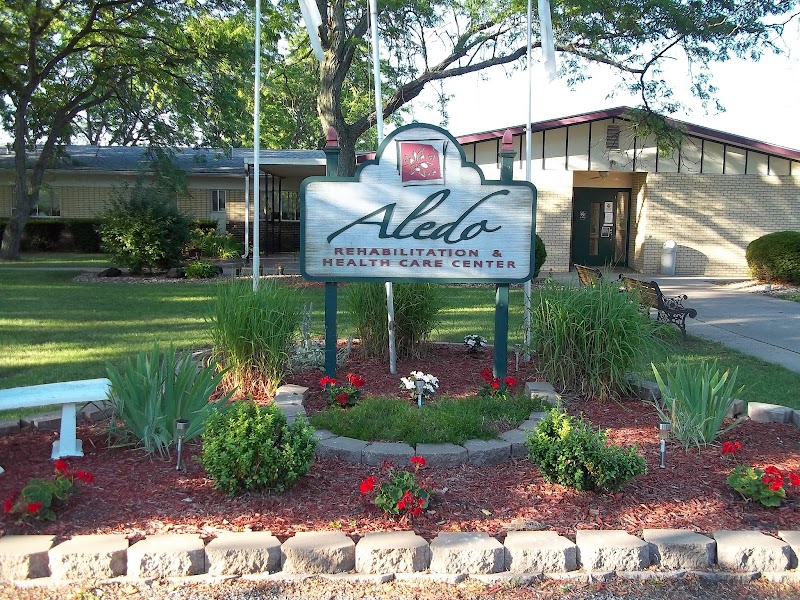

ARCADIA CARE ALEDO

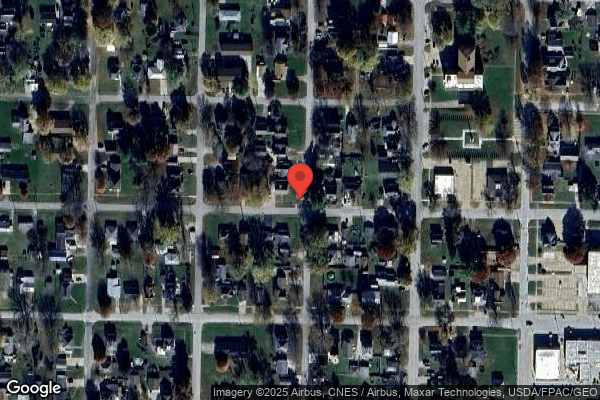
304 S.W. 12TH STREET, ALEDO, IL 61231 (309) 582-5376
For profit - Corporation 80 Beds ARCADIA CARE Data: November 2025
Trust Grade
5/100
#440 of 665 in IL
Last Inspection: March 2025

Within standard 12-15 month inspection cycle. Federal law requires annual inspections.

Overview

Arcadia Care Aledo has received a Trust Grade of F, indicating significant concerns about the quality of care provided. Ranking #440 out of 665 facilities in Illinois places it in the bottom half statewide, and it is the second of two options in Mercer County, meaning there is only one other local facility that ranks better. Although the trend shows improvement, with a reduction in issues from 35 in 2024 to 10 in 2025, the staffing situation is concerning, as it has a 62% turnover rate, which is higher than the Illinois average. Additionally, the facility has incurred fines totaling $97,562, which suggests ongoing compliance issues. Specific incidents include a resident suffering a right hip fracture due to inadequate fall prevention measures and another resident sustaining a second-degree burn from unattended hot coffee, highlighting serious lapses in supervision and safety protocols. While there are some positive aspects, such as average quality measures, the overall care environment raises significant red flags for families considering this nursing home.

Trust Score
F
5/100
In Illinois
#440/665
Bottom 34%
Safety Record
High Risk
Review needed
Inspections
Getting Better
35 → 10 violations
Staff Stability
⚠ Watch
62% turnover. Above average. Higher turnover means staff may not know residents' routines.
Penalties
○ Average
$97,562 in fines. Higher than 61% of Illinois facilities. Some compliance issues.
Skilled Nurses
⚠ Watch
Each resident gets only 23 minutes of Registered Nurse (RN) attention daily — below average for Illinois. Fewer RN minutes means fewer trained eyes watching for problems.
Violations
⚠ Watch
59 deficiencies on record. Higher than average. Multiple issues found across inspections.
★☆☆☆☆
1.0
Overall Rating
★☆☆☆☆
1.0
Staff Levels
★★★☆☆
3.0
Care Quality
★☆☆☆☆
1.0
Inspection Score
Stable
2024: 35 issues
2025: 10 issues

The Good

  • Full Sprinkler Coverage · Fire safety systems throughout facility
  • No fines on record

Facility shows strength in fire safety.

The Bad

1-Star Overall Rating

Below Illinois average (2.5)

Significant quality concerns identified by CMS

Staff Turnover: 62%

16pts above Illinois avg (46%)

Frequent staff changes - ask about care continuity

Federal Fines: $97,562

Well above median ($33,413)

Moderate penalties - review what triggered them

Chain: ARCADIA CARE

Part of a multi-facility chain

Ask about local staffing decisions and management

Staff turnover is elevated (62%)

14 points above Illinois average of 48%

The Ugly 59 deficiencies on record

4 actual harm
Aug 2025 1 deficiency
CONCERN (E) 📢 Someone Reported This

A family member, employee, or ombudsman was alarmed enough to file a formal complaint

Potential for Harm - no one hurt, but risky conditions existed

Free from Abuse/Neglect (Tag F0600)

Could have caused harm · This affected multiple residents

Based on interviews and record review, the facility failed to protect 3 residents (R2, R4, R6) from physical abuse by another resident, and failed to protect a resident from abuse by a staff member fo...

Read full inspector narrative →
Based on interviews and record review, the facility failed to protect 3 residents (R2, R4, R6) from physical abuse by another resident, and failed to protect a resident from abuse by a staff member for 1 resident (R7). These failures apply to 4 of 7 residents reviewed for abuse in the sample of 7.The findings include: 1. Preliminary Abuse Investigation Report with incident date of 08/04/2025 documented at approximately 04:40 PM, shows R2 was allegedly involved in a physical altercation with a peer (R1). R2's interview form documented R2 was unable to recall any details related to incident. No final report was provided. R1's electronic face sheet printed on 08/23/2025 documented an admission date of 05/12/2025 with a past medical history not limited to dementia with behavioral disturbance, anxiety disorder, major depressive disorder, mood affective disorder, and hypertension. R1's Minimum Data Set (MDS) Section C for Cognitive Patterns provided on 08/23/2025 indicated that R1 has severe cognitive impairment, dated 07/15/2025.R1's care plan detail reads in part: is/has potential to be verbally aggressive (cursing at others) last revised 06/10/2025; has impaired cognitive function related to dementia diagnosis last revised 06/23/2025; is receiving anti-psychotic medications related to dementia with psychotic disturbance-paranoid thoughts, resisting cares, verbal outbursts, aggression toward others last revised 06/23/2025; is/has potential to be physically aggressive last revised 07/24/2025. R1's nursing note dated 08/04/2025 at 04:15 PM (16:15) documented that resident was standing with cane in his hand next to another resident (R2) who was sitting in a wheelchair yelling. Certified nursing assistant (CNA) stated resident got up from his chair and went to another resident and hit him across the nose with his cane. Residents were separated. Other resident was checked for injuries with none noted.On 08/23/2025 at 10:56 AM, observed R1 ambulating in dining room of dementia unit and attempted to interview R1 regarding the incident with R2. R1was alert to self and stated, I'm tired of talking to people, leave me alone. At 01:51 PM, observed R1 lying in bed and attempted to interview R1 at this time but R1 was not interviewable. R2's electronic face sheet printed on 08/23/2025 documented an admission date of 11/17/2022 with a past medical history not limited to: dementia, dysthymic disorder (persistent depressive disorder) and altered mental status.R2's Minimum Data Set (MDS) Section C for Cognitive Patterns provided on 08/23/2025 indicated that R2 has severe cognitive impairment, dated 07/18/2025. R2's care plan detail reads in part: has impaired cognitive function or impaired thought processes related to dementia as evidenced by repetitive verbalizations and wandering behavior last revised 06/10/2025; at a high risk for abuse/neglect as noted from abuse screening related to assessment score of 5, history of involvement in peer incidents, date initiated 08/05/2025.R2's abuse/neglect screen dated 08/04/2025 indicated that R2 is at high risk for abuse/neglect. R2's nursing note dated 08/04/2025 at 04:15 PM (16:15) documented, this nurse was charting when I heard someone yell out upon entering day room, resident was yelling. CNA stated another resident got up from his chair (R1) and walked over and hit this resident across the nose with his cane.On 08/23/2025 at 10:55 AM, observed R2 seated at table in same dining room and noted light purple bruising to R2's right outer eye area and a small laceration to R2's upper right eyelid. R2 was alert to self and was not interviewable. R2 did not recall any details related to the incident with R1. On 08/23/2025 at 11:05 AM, V3 (Licensed Practical Nurse) said on the day of incident between R1 and R2, she was in the nurse's office on the unit when she heard someone yell out. V3 said she went out into the day area and observed R2 in his wheelchair and saw R1 walking with his cane away from R2. V3 then indicated that V4 (Certified Nursing Assistant) witnessed the incident and informed V3 that R1 whacked R2 across the bridge of his nose with his cane. V3 added that both residents were seen by psych provider; R1 had a medication change that seems to be helping with his aggression. V3 also said that the injuries to R2's right eye were from another incident and not from incident with R2.On 08/23/2025 at 11:13 AM, V4 (CNA) said on day of the incident, she was coming up the short hall on unit when she saw R1 hit the top of R2's nose with his cane, then R2 yelled out ow. V4 added that R1 can be aggressive and uses his cane as a weapon and had hit other residents in the past with his cane. V4 added that R1's cane has since been taken away and R1 now uses a wheeled walker. V4 showed this surveyor R1's cane that was being stored in the nurse's office and indicated that padding was taped around the flat handle but R1 kept removing it. On 08/23/2025 at 04:01 PM, V1 (Administrator) said R1 was transitioned from his cane to a walker because he was using as his cane as a weapon. 2. Final abuse investigation report provided by facility on 08/23/2025 documented on 08/04/2025 at approximately 04:45 PM, V4 (CNA) was walking past R3's room when she observed R3 push R4. Residents were separated and assessed for injuries with no findings. R3's electronic face sheet printed on 08/23/2025 documented an admission date of 03/24/2023 with a past medical history not limited to: post-traumatic stress disorder, anxiety disorder, major depressive disorder, brief psychotic disorder, and dementia with behavioral disturbance. R3's Minimum Data Set (MDS) Section C for Cognitive Patterns provided on 08/23/2025 indicated that R3 has no cognitive impairment, dated 06/29/2025.R3's care plan detail reads in part: uses antidepressant medication, initiated 03/12/2025; has impaired cognitive function related to dementia, last revised 06/26/2025; is/has potential to be verbally aggressive, last revised on 06/29/2025; experiences intermittent episodes of hallucinating, last revised 07/10/2025; diagnosis of post-traumatic stress disorder with triggers of invading personal space/room, initiated 08/06/2025; is/has potential to be physically aggressive related to dementia and has poor impulse control, last revised on 08/06/2025.On 08/23/2025 at 01:48 PM, R3 said R4 is always flailing her arms at people, then said R4 was standing in her doorway, and R3 told her to leave. R3 denied pushing R4 on day of incident, then said she may have lightly touched her back.R4's electronic face sheet printed on 08/23/2025 documented an admission date of 07/02/2024 with a past medical history not limited to: dementia with agitation, major depressive disorder.R4's care plan detail reads in part: is/has potential to be physically and verbally aggressive, last revised on 04/21/2025; risk for falls related to gait/balance problems, last revised 05/29/2025; has behavior problem of wandering into other resident's rooms and personal spaces, last revised on 06/02/2025; has impaired cognitive function related to dementia with agitation, last revised 06/04/2025; high risk for abuse/neglect as noted from abuse screen score of 5 and history of peer involvement, last revised 07/11/2025. R4's Minimum Data Set (MDS) Section C for Cognitive Patterns provided on 08/23/2025 indicated that R4 has severe cognitive impairment, dated 06/16/2025.R4's abuse/neglect screen dated 08/05/2025 indicated that R4 is at high risk for abuse/neglect.On 08/23/2025 at 01:35 PM, V4 (CNA) said on day of the incident, she saw R4 go into R3's room then R3 tried to push R4 out of the room. V4 added that R3 indicated R4 called her a bitch. V4 called for the nurse and both residents were separated, and incident was reported to V1 (Administrator).On 08/23/2025 at 01:38 PM, V3 (LPN) said on day of the incident, she was told by V4 (CNA) that R4 went into R3's room and R3 tried to push R4 out of the room; R4 did not fall to the floor. V3 said she assessed R4 then notified all parties including V1, abuse coordinator. On 08/23/2025 at 01:44 PM, observed R4 seated in chair near nurse's office on dementia unit. R4 was alert to self and was not interviewable. R4 did not recall any details of incident with R3. 3. Final abuse investigation report provided by facility on 08/23/2025 documented on 07/28/2025 at approximately 06:00 PM, V5 (CNA) was assisting R6 out of the dementia unit dining room when R5 walked up to R6 and hit her with an open hand. Residents were separated.R5's electronic face sheet printed on 08/23/2025 documented an admission date of 02/16/2024 with a past medical history not limited to: Alzheimer's disease, anxiety disorder, dementia, and bipolar II disorder.R5's Minimum Data Set (MDS) Section C for Cognitive Patterns provided on 08/23/2025 indicated that R5 has severe cognitive impairment, dated 07/20/2025.R5's care plan detail reads in part: has impaired cognitive function/dementia or impaired thought processes, last revised 06/10/2025; has behavior problems that includes restlessness and pacing, last revised 06/17/2025; receives antipsychotic medication, last revised 06/24/2025; potential for aggressive behavior related to dementia and history of aggression towards others, last revised 07/11/2025; has a behavior problem that includes getting into peers personal space, cursing and gesturing/posturing towards others, calling names and pushing furniture/property, last revised 07/16/2025; has the potential to be verbally and physically aggressive, and have paranoid behaviors (pacing, increased anxiousness) last revised 07/24/2025; behavior problem for impulsiveness and potential to harm others, last revised 08/01/2025. R5's psychiatry note dated 07/30/2025 documented to start quetiapine 25 milligrams (mg) twice daily for bipolar disorder and start quetiapine 25mg every 12 hours as needed for 14 days for breakthrough agitation, insomnia and psychosis. R5's prescriber note dated 08/01/2025 documented to decrease 1:1 supervision to 15 minute checks for impulsivity and potential to harm others.R5's psychiatry note dated 08/18/2025 indicated, bipolar disorder is worsening and unstable at visit then documented to increase lithium to 300mg every morning and 600mg every evening.On 08/23/2025 at 01:42 PM, observed R5 seated in a rocking chair near nurse's office on dementia unit. R5 was alert to self and was not interviewable. R5 did not recall any details of incident with R6.R6's electronic face sheet printed on 08/23/2025 documented an admission date of 12/21/2021 with a past medical history not limited to: dementia with behavioral disturbance, Alzheimer's disease, brief psychotic disorder, anxiety disorder, disorganized schizophrenia, bipolar disorder, and restlessness and agitation. R6's Minimum Data Set (MDS) Section C for Cognitive Patterns provided on 08/23/2025 indicated that R6 has severe cognitive impairment, dated 06/21/2025.R6's care plan detail reads in part: has impaired cognitive function, last revised 06/26/2025; moderate risk for abuse/neglect, last revised 07/30/2025.R6's abuse/neglect screen dated 07/28/2025 indicated that R6 is at moderate risk for abuse/neglect.On 08/23/2025 at 01:46 PM, observed R6 lying in bed. R6 was alert to self and was not interviewable. R6 did not recall any details of incident with R5.On 08/23/2025 at 02:13 PM, V5 (Certified Nursing Assistant) said on day of incident, she was trying to push R6 out of the unit dining room and R5 was in the doorway, pacing back and forth in front of the door and wasn't wanting to clear the doorway. V5 indicated that she asked R5 several times to please move, then R5 started pushing at R6's knees. V5 added that she tried taking R6 out of dining room again when R5 came towards R6, hitting V5's arm but as she blocked R5 from hitting her, R5 hit R6 in the face with an open hand and caused R6 to yell out. V5 said she had called out to V6 (Licensed Practical Nurse) for help because she, couldn't control R5. V5 then said that 15 minute checks were started on R5 after he incident and indicated that R5 has a history of aggression with staff, hitting walls and furniture, etc. and has been on 15 minute checks previously because she pushed another resident down. V5 added that R6 didn't do anything to provoke R5. Multiple attempts were made on 08/23/2025 to interview V6 (LPN) without success; however, review of correspondence from V6 to physician dated 07/28/2025 documented that R5 was involved in a resident to resident physical altercation where R5 approached another resident, starting yelling and hitting resident in the head and pushing on the other resident knees. Resident being sent to [emergency department. (Review of progress notes showed R5 returned same day with no new orders). 4. Final abuse investigation report provided by facility on 08/23/2025 documented on 06/21/2025 at approximately 08:20 AM, V9 (Registered Nurse) overheard a verbal altercation between R7 and V8 (Housekeeper) in that R7 had cursed at V8 regarding R7's request for an additional glass of milk. R7's electronic face sheet printed on 08/23/2025 documented an admission date of 05/15/2025, discharge date of 08/16/2025 and a past medical history not limited to: history of transient ischemic attack and cerebral infarction, hypertension, and alcohol/nicotine dependence. R7's abuse/neglect screen dated 06/24/2025 indicated that R4 is a high risk for abuse/neglect.R7's Minimum Data Set (MDS) Section C for Cognitive Patterns provided on 08/23/2025 indicated that R7 has no cognitive impairment, dated 08/16/2025.R7's care plan detail reads in part: has episodes of depression, initiated 05/29/2025; high risk for abuse/neglect and history of involvement in peer incident, initiated 06/25/2025.On 08/23/2025 at 03:17 PM, V1 (Administrator) said R7 wanted more milk and V8 said he already had his milk for the morning, then R7called her a fucking bitch, and she asked him not to call her a fucking bitch. V1 added that V8 was suspended and written up after the investigation was completed because she used curse words at the resident.Multiple attempts were made on 08/23/2025 to interview V8 (Housekeeper) without success; however, facility provided V8's written statement dated 06/21/2025 that indicated R7 had asked V8 for more milk and she informed him that he couldn't have anymore. R7 then cursed at V8, V8 informed R7 that she was not being mean to him and asked R7 to stop peeing on the floor. V8's corrective action form dated 06/27/2025 documented final written warning in regards to disorderly behavior unprofessional language/behavior related to incident with R7 on 06/21/2025.Multiple attempts were made on 08/23/2025 to interview V9 (RN) without success; however, facility provided V9's written statement dated 06/21/2025 that documented V9 overheard V8 yelling at R7 the following, did you just call me a fucking bitch? You told me fuck you yesterday and now you're calling me a fucking bitch. V9 then indicated that while R7 began wheeling himself down the hall, V8 yelled at R7 to stop pissing on the floor. The facility's policy titled, Abuse Prevention and Reporting-Illinois with a revision date of 10/2022 showed, The facility affirms the right of our residents to be free from abuse, neglect, exploitation, misappropriation of property, deprivation of goods and services by staff or mistreatment. This facility therefore prohibits abuse, neglect, exploitation, misappropriation of property, and mistreatment of residents. In order to do so, the facility has attempted to establish a resident sensitive and resident secure environment. The purpose of this policy is to assure that the facility is doing all that is within its control to prevent occurrences of abuse, neglect, exploitation, misappropriation of property, deprivation of goods and services by staff and mistreatment of residents. This will be done by .establishing an environment that promotes resident sensitivity, resident security, and prevention of mistreatment .physical abuse is the infliction of injury on a resident that occurs other than by accidental means and that requires medical attention. Physical abuse includes hitting, slapping, pinching, kicking .
Jul 2025 1 deficiency
CONCERN (E) 📢 Someone Reported This

A family member, employee, or ombudsman was alarmed enough to file a formal complaint

Potential for Harm - no one hurt, but risky conditions existed

Free from Abuse/Neglect (Tag F0600)

Could have caused harm · This affected multiple residents

**NOTE- TERMS IN BRACKETS HAVE BEEN EDITED TO PROTECT CONFIDENTIALITY** 3. The facility face sheet shows R5 was admitted to the facility with diagnoses to include cerebral infarction, hypertension and...

Read full inspector narrative →
**NOTE- TERMS IN BRACKETS HAVE BEEN EDITED TO PROTECT CONFIDENTIALITY** 3. The facility face sheet shows R5 was admitted to the facility with diagnoses to include cerebral infarction, hypertension and alcohol dependence. R5's facility assessment dated [DATE] shows him to be cognitively intact with no behaviors and requires standby assistance from staff for mobility. A nursing progress note dated 6/24/2025 shows R5 was in an incident with another resident. On 7/2/2025 at 12:30 PM, R5 said he was walking to his room from lunch and R6 came up to him and accused him of stealing his shirt and underwear. R5 said R6 hit him on his arm and continued yelling at him. R5 said a staff member came up to the situation right away and he was not physically harmed by R6. On 7/2/2025 at 1:24 PM, R6 said he does not remember the incident. On 7/2/2025 at 12:55 PM, V5 Certified Nursing Assistant (CNA) said she was helping another resident to the toilet when she heard yelling in the halls. V5 said she ran to the yelling and saw R6 hit R5 in the arm and R6 was yelling at R5 saying he had stolen his shirts and underwear. V5 said she quickly separated the residents and had R5 return to his room and she stayed with R6 trying to calm him down. The undated facility abuse investigation report shows on 6/24/2025 at approximately 6:30 PM, R5 was allegedly involved in a physical altercation with a peer. The facility investigation shows an interview with R6 showing he thought R5 took his underwear and he got upset. R6 said he has memory problems and feels bad. R5's statement to the facility showed R6 thought his underwear were stolen and accused R5 of taking them. The facility face sheet for R6 shows he was admitted to the facility with diagnoses to include left leg fracture, cerebral infarction and post traumatic stress disorder. R6's facility assessment dated [DATE] shows him to be cognitively intact and uses a walker and wheelchair for his ambulation. Nursing progress notes for R6 shows since the altercaton with R5, his behaviors have been escalating, he was arrested for a staff assault, went to jail and is currently back at the facility under the care of a psychiatrist and one to one observations. 4. The facility face sheet for R4 shows he was admitted to the facility with diagnoses to include cerebral infarction, migraine, and for palliative care. The facility assessment dated [DATE] for R4 shows him to have moderate cognitive impairment and is dependent on staff for his care. The nursing progress notes for R4 shows he was admitted to the facility on [DATE], was found on his knees in his room on 6/6/25 and on 6/7/25 the nurse documented R4 had fallen and a mechanical lift was used to lift him from the floor at 1 AM. The same nurse V3 Registered Nurse (RN) documented the resident was on a one to one observation for behaviors and making attempts to get on the floor through out the night. On 7/2/2025 at 9:45 AM, R4 said he has no concerns with his transfers in the facility. On 7/2/2025 at 10:32 AM, V4 Housekeeper said on Saturday 6/7/2025 around 5:30 AM, she had just come to work and heard yelling between R4 and V3 (RN). V4 said she went to R4's room and saw V3 outside the room near his medication cart and was yelling at R4 to quit kicking the wall. V4 said R4 was in the sling of the mechanical lift about 4 feet off the ground hovering over his bed. V4 said at the same time another nurse, V6 RN came to the door of the room and asked what was going on. V4 said V3 stated he didn't have time to watch R4 any longer and it was the only way to keep him from getting out of bed. On 7/2/2025 at 10:39 AM, V6 RN said when she came to work on Saturday 6/7/2025, she sat at the nursing station and waited for V3 to come give her report. V6 said she did not see R4 hanging in the mechanical lift and she did not hear V3 yelling at R4 or stating he was using the mechanical lift to control R4. On 7/2/2025 at 11:32 AM, V3 RN said he was new to taking care of R4 and had had a difficult night with him. V3 said R4 would not stay in bed and was up and down all night. V3 said he was attempting to change the linens on R4's bed alone and felt it was easier to use the mechanical lift to raise him up over the bed so the linens could be changed. V3 said he was not using the lift to limit R4's movements but felt this was the safest way to help R4. V3 said he was frustrated when V4 walked past and saw what was going on and he did not communicate properly with V4 that he was just changing the linens and R4 was not being restrained. On 7/2/2025 at 12:31 PM, V1 Administrator said the corporate staff had given V3 a corrective action for failing to follow company policies for conduct, customer servicce and resident rights. V1 said V3 has resigned from the facility. V1 said V3 was suspended pending the outcome of the investigation and since V3 had admitted he could have done better he was given a corrective action. The facility investigation shows V3 denies he had R4 in the mechanical sling to prevent his movement, he was putting the resident back to bed. V4 stated in the investigation she witnessed R4 being held in the mechanical lift sling and asking the nurse why the resident was being restrained. Text messaages from V3 shows his statements were he was waiting for another staff person to help him, he did not put the resident in the sling as a restraint. The text goes on to show he was frustrated but he does not recall saying it was the only way to deal with the resident. V3 also stated in the text he would not argue with the facility and he probably could have something better or safer. The corrective action form for V3 shows on June 8, 2025 that V2 (Director of Nursing-DON) was informed by a coworker that they witnessed V3 using a sling and mechanical lift to prevent a resident from getting out of bed on June 7,2025. The investigation confirmed that the incident took place as reported, with 2 coworkers also witnessing the use of the hoyer lift. V3 stated that he used the lift to change the bed linens and in a follow-up text message admitted he was not arguing that he could have done something better or safer. The form also shows the conduct policy and it expects the employees to uphold the highest standards of professionalism and ethical practice, ensuring that their actions align with the requirements of their role When providing care, employees must priortize quality and safety particularly when working with vulnerable residents. The customer service policy was also listed on the report and shows employees should go the extra mile in providing care, showing patience and persistance in [NAME] interaction with residents. The actions obsered in this incident did not demonstrate the expected level and attention to safety for the resident. The resident rights policy referred to in the report shows employees are expected to provide high quality care at all times. Failure to do so will result in corrective action and including termination of employment. R3's own admission that he could have provided better or safer care is considered a violation of this policy. Based on interview and record review, the facility failed to protect 3 residents (R1,R2,R5) from physical abuse by another resident, and failed to protect a resident from abuse by a staff member for 1 resident (R3). These failures apply to 4 of 6 residents reviewed for abuse in the sample of 6. The findings include: 1. R1's electronic face sheet printed on 7/2/25 showed R1 has diagnoses including but not limited to Alzheimer's Disease, anxiety disorder, vascular dementia without behaviors, bipolar II disorder, and dementia without behaviors. R1's facility assessment dated [DATE] showed R1 has severe cognitive impairment, behavioral symptoms not direct towards others (pacing, rummaging, verbal/vocal symptoms), rejection of care, wandering, and ambulates independently. R1's care plan with a revision date of 6/26/25 showed, I have a behavior problem and I am an elopement risk (score of 11): pacing, wandering halls, wandering into other resident's rooms and personal spaces . R1's care plan dated 5/30/25 showed, Resident is at moderate risk for abuse/neglect as noted from Abuse screening assessment score of 5 .provide a safe and secure environment. R2's electronic face sheet printed on 7/2/25 showed R2 has diagnoses including but not limited to dementia with agitation, major depressive disorder, and transient cerebral ischemic attack. R2's facility assessment dated [DATE] showed R2 has severe cognitive impairment, ambulates independently, and has physical and verbal behaviors directed towards others. R2's care plan revised on 6/2/25 showed, Wandering into other resident's rooms and personal spaces . R2's care plan dated 4/21/25 showed, (R2) is/has the potential to be physically and verbally aggressive .If agitation occurs/increases, the resident needs personal space at least arm's length. The resident reacts to touch while agitated. R2's nursing progress note dated 5/28/25 showed, CNA (Certified Nursing Assistant) called nurses station stating she needed this nurse immediately back on (unit), upon entering the unit another resident was on the ground holding her face, CNA stated that (R1) pushed the other resident causing them to fall down and hit their face on the ground. Redirected resident to another area . On 7/2/25 at 12:54PM, V9 (Licensed Practical Nurse-LPN) stated, I was up on (alternate unit) passing medications and V8 (Certified Nursing Assistant-CNA) called and said she needed me back there right away and when I got back there R2 was on the ground holding her head and (V8) said (R1) had pushed (R2) to the ground. (R2) had a laceration on her forehead and some bruising on her knees. I'm not aware of any issues they have had before. Their rooms are right next to each other, so they interact quite a bit. A lot of the residents argue but that's pretty normal on a specialized unit. On 7/3/25 at 11:08AM, V8 (CNA) stated, I had (R1) in the bathroom and she was talking about a man that kept coming in her room the previous night. I knew there hadn't been anyone because I worked the night shift, and nobody was in her room, and she had slept all night. All of a sudden (R2) walked into her room and (R1) started screaming at her to get out of her room and said that was the man that had been in her room. I asked (R2) to leave the room and she did. I took (R1) out to the main area of the unit and when I turned my back, (R1) took her fist and hit (R2) in the shoulder and then pushed her down before I could intervene. (R1) was yelling at (R2) that she stole her clothes, but nothing had happened between them before. (R1) had been getting worse with her behaviors prior to this so we were trying to keep a closer eye on her. Right away I called for the nurse because she was out on the other unit and (R2) was laying on the floor face down and was bleeding. I didn't know what else to do so I tried to keep them separated until the nurse could get there. There is only 1 aide and 1 nurse on the night shift so one of us has to stay on the locked unit while the other one is on the other unit. On 7/2/25 at 1:54PM, V2 (Director of Nursing) stated, We try to keep everyone separated the best that we can if they are having any issues. When we have a whole unit of residents that have dementia it can be challenging some days because some residents have pretty bad days where they are just upset with everyone so you never know what could happen. I do think we tried to keep these residents separated the best that we could, but we can't watch every resident every minute so it's difficult to determine if/when something will happen. The facility's policy titled, Abuse Prevention and Reporting-Illinois with a revision date of 10/2022 showed, The facility affirms the right of our residents to be free from abuse, neglect, exploitation, misappropriation of property, deprivation of goods and services by staff or mistreatment. This facility therefore prohibits abuse, neglect, exploitation, misappropriation of property, and mistreatment of residents. In order to do so, the facility has attempted to establish a resident sensitive and resident secure environment. The purpose of this policy is to assure that the facility is doing all that is within its control to prevent occurrences of abuse, neglect, exploitation, misappropriation of property, deprivation of goods and services by staff and mistreatment of residents. This will be done by .establishing an environment that promotes resident sensitivity, resident security, and prevention of mistreatment .physical abuse is the infliction of injury on a resident that occurs other than by accidental means and that requires medical attention. Physical abuse includes hitting, slapping, pinching, kicking . 2. R2's electronic face sheet printed on 7/2/25 showed R2 has diagnoses including but not limited to dementia with agitation, major depressive disorder, and transient cerebral ischemic attack. R2's facility assessment dated [DATE] showed R2 has severe cognitive impairment, ambulates independently, and has physical and verbal behaviors directed towards others. R2's care plan dated 4/21/25 showed, (R2) is/has the potential to be physically and verbally aggressive .If agitation occurs/increases, the resident needs personal space at least arm's length. The resident reacts to touch while agitated. R3's electronic face sheet printed on 7/2/25 showed R3 has diagnoses including but not limited to dementia without behaviors, dementia with agitation, and anxiety disorder. R3's facility assessment dated [DATE] showed R3 has severe cognitive impairment, has verbal behaviors directed towards others, and ambulates independently with a walker. R3's care plan dated 6/2/25 showed, The resident is/has potential to be physically aggressive related to dementia, history of harm to others related to poor impulse control and invasion of personal area or taking his personal property. R2's nursing progress notes dated 5/30/25 showed, Heard a male resident yelling in the dining room. This nurse had been charting and immediately got up. In the meantime, a CNA was rushing to the dining room and yelling (R3) no, (R3) no. Upon entering dining room, (R2) was seen sitting on the floor with CNA standing on the left side of her. The other resident was standing in front the resident yelling at her. CNA stated she tried to get to (R2) quickly, but the other resident had pushed her to the floor before she could get to her. (R2) has no new injuries. Unable to make out what the other resident was yelling. (R2) was noted to have a trash bag in her left hand. The resident that was yelling was not easily redirected and refused to leave the dining room. (R2) was taken out of the dining room and out of the situation. On 7/2/25 at 10:52AM, V7 (Licensed Practical Nurse-LPN) stated, I heard the incident, it happened in the dining room. There was a CNA (V10) in the day room, and we heard (R3) yelling loudly and I hurried and got up and went in there with the (V10). (R2) was sitting on the floor in front of (R3) and he was yelling at her. Neither of them could recall what happened but it's pretty obvious that he pushed her down. The aide stepped in and took (R3) to sit down as he refused to leave the dining room. I examined (R2) while she was on the floor and then took her down to her room for a more thorough assessment. She had no injuries or bruising. She was her norm after the incident. (R3) has been fine since then and we have had no further incidents with him. Several attempts were made on 7/2/25 and 7/3/25 to interview V10 without success; however, V10 provided a statement to the facility on 6/2/25 showing, I witnessed the incident between (R2 and R3). I heard (R3) yelling and following (R2) around the dining room. He was mad because she was carrying a gross garbage bag around. Before I could get to them, he pushed her down.
Mar 2025 6 deficiencies
CONCERN (D)

Potential for Harm - no one hurt, but risky conditions existed

Accident Prevention (Tag F0689)

Could have caused harm · This affected 1 resident

Based on record review and interview the facility failed to assess a new resident before transfering resident appropriately for one resident (R27) of 8 residents reviewed for accidents in a total samp...

Read full inspector narrative →
Based on record review and interview the facility failed to assess a new resident before transfering resident appropriately for one resident (R27) of 8 residents reviewed for accidents in a total sample of 28. This failure caused R27 to have a near fall that resulted in a broken toe. Findings Include: R27's admission nurse's notes dated 1/10/25 at 2:10 PM document resident is currently a (mechanical lift) for all transfers. On 3/11/25 at 9:00 AM R27 stated they (staff) got me up on a commode with two people and I did fine on the way to the commode but on the way back to the bed my legs did not work, and I stumbled. They used 5 people to get back to the commode and then used a (mechanical lift) to get me back in bed. When I stumbled my right foot got dragged across the floor. It started hurting the next day and then it started to bruise so we got an x-ray. I had a broken toe and had to wear a boot for a while. R27's Nurse's note dated 1/13/25 at 1:155 PM documents this nurse (V8/Registered Nurse) was called to resident's room to assist with a near fall during stand pivot turn transfer from commode to bedside. Upon entering (resident's room) resident was positioned on the edge of her commode with one CNA holding each leg, one CNA standing behind resident holding gait belt and one CNA attempting to hold resident in place near her abdomen. The resident was fearful of falling and with the assist of 5 she was moved back on commode, she leaned forward with a second assist of 5 she was placed on to her commode. Resident was then (mechanically lifted) transferred to her bed. On 3/12/25 at 10:30 AM V8 (Registered Nurse) stated I did not know how (R27) transferred. (V2/Registered Nurse/Director of Nursing) is the one who instructed (staff) to transfer her as a stand pivot two-person transfer. On 3/13/25 at 10:15 AM V2 (RN/DON) confirmed that she instructed staff to transfer R27 via stand pivot and two persons assist. I thought I saw that somewhere. V2 confirmed that R27 did not have any doctor's order regarding her transfer assistance, nor did R27 have any physical therapy or nursing assessment to evaluate how R27 was able to transfer until 3/12/25 which indicated R27 should be transferred via mechanical lift. R27's Nurse's note dated 1/17/25 at 3:35 AM documents When helping resident get her bed moved closer to the door I (V9/Licensed Practical Nurse) noticed a deep purple/ blue discoloration to her right great toe, doctor notified. R27's Nurse's noted dated 1/17/25 at 11:21 AM documents this nurse (V2/Registered Nurse/Director of Nursing) spoke to the resident about discoloration to right great toe and pad of foot. Resident stated that she believed the discoloration was a result of her requiring to be (mechanically) lifted from her commode on 1-13-25 after a near fall attempting to stand from commode. R27's X-Ray report dated 1/18/25 documents exam: right foot, complete 3 views and reason: pain and bruising post injury. R27's x-ray impression: curvilinear oblique sagittal linear lucency through the tibial margin of the base of the proximal phalanx of the great toe, suspicious for an acute nondisplaced fracture in the appropriate clinical setting. Clinical correlation is advised. R27's Nurse's note dated 1/18/25 at 7:57 PM authored by V10 (Registered RN) documents Pain scale 6 of 10 to (right foot) New onset of pain. Medication administered for pain. Deep purple bruising noted. Reddish-purple bruising noted to (right) foot. R27's Nurse's note dated 1/19/25 at 4:00 AM documents this DON (V2 Registered Nurse/Director of Nursing) notified of x-ray results which showed suspicious acute non-displaced fracture of phalanx of the great toe on the right foot. Intervention- new order for ortho shoe support.
CONCERN (D)

Potential for Harm - no one hurt, but risky conditions existed

Deficiency F0699 (Tag F0699)

Could have caused harm · This affected 1 resident

**NOTE- TERMS IN BRACKETS HAVE BEEN EDITED TO PROTECT CONFIDENTIALITY** Based on observation, interview, and record review the facility failed to assess and identify triggers for one resident (R6) wit...

Read full inspector narrative →
**NOTE- TERMS IN BRACKETS HAVE BEEN EDITED TO PROTECT CONFIDENTIALITY** Based on observation, interview, and record review the facility failed to assess and identify triggers for one resident (R6) with a Primary Diagnosis of PTSD (Post Traumatic Stress Disorder) of two residents reviewed for Mood and Behavior in the sample of 28. Findings include: Facility Policy/Behavioral Health Services Program dated 2025 documents: Mental Health Rehabilitated Services and behavior management program for Mental Illness and Intellectual Disabilities and other related disorders such as Substance Abuse Disorder and residents with a history of trauma and/or Post Traumatic Stress Disorder. The facility will attempt to identify, to the extent possible, any previous history of mental illness, trauma, abuse, substance use, comorbidities, pattern of behaviors, preferences, interests, daily routines, medication use and effective behavior management interventions in developing an individualized plan of care. The care plan should reflect: Identified or suspected triggers specific to each resident (environmental, emotional, physical, etc.) that may initiate or exacerbate behavioral symptoms. Specific individualized interventions for responding to target behaviors/triggers and expressions of distress. In developing the plan of care, the interdisciplinary team, in collaboration with the resident or family/representative, reviews the results of the assessment and cause identification above in order to develop individualized, person-centered interventions. Current Physician order Summary Report indicates R6 was admitted to the facility on [DATE] and indicates PTSD as R6's Primary Diagnosis. Behavioral Practitioner Note (initial visit) dated 8/22/23 indicates R6 With Generalized Anxiety Disorder with Panic Attacks. Questionable if (R6) has a strong previous traumatic event in her life that may have led to her current psychosis. (R6) reported seeing her daughter raped in the parking lot of the facility and despite her daughter calling and reporting it did not happen, (R6) did not believe her and felt as though her daughter was just sparing her feelings. Note indicates R6 with Chronic Post Traumatic Stress Disorder (new) and Plan: Need to rule out, need to gain trust of (R6) to obtain background stories. Trauma Informed Care assessment dated [DATE] indicates R6 refused to answer the assessment questions on that date. On 3/112/25 at 1:15pm V5, SSD (Social Services Director) stated that there are/were no other PTSD assessments for R6. V5 stated she thought R6's Primary Diagnosis was Dementia but acknowledged attempts should have been made to assess R6 for history of trauma and triggers. Current Care Plan indicates R6 has impaired cognitive function/Dementia or impaired thought processes as evidenced by dementia and requires specialized Dementia unit. Care Plan indicates R6 has social isolation, hallucinations, and delusions. Care Plan indicates R6 has diagnoses of Dementia, PTSD, Psychotic Disorder and (R6's) behaviors are triggered by environmental factors. Care Plan did not identify the 'environmental factors.
CONCERN (E)

Potential for Harm - no one hurt, but risky conditions existed

Medication Errors (Tag F0758)

Could have caused harm · This affected multiple residents

**NOTE- TERMS IN BRACKETS HAVE BEEN EDITED TO PROTECT CONFIDENTIALITY** Based on observation, interview, and record review the facility failed to provide an appropriate indication for use for four res...

Read full inspector narrative →
**NOTE- TERMS IN BRACKETS HAVE BEEN EDITED TO PROTECT CONFIDENTIALITY** Based on observation, interview, and record review the facility failed to provide an appropriate indication for use for four residents (R2, R15, R29, R39) receiving psychotropic medications, failed to identify behaviors requiring the use of psychotropic medications and failed to attempt a Gradual Dose Reduction for (R2) of five residents reviewed for unnecessary medications in the sample of 28. Findings include: Facility Policy/Behavioral Health Services Program dated 2025 documents: Review behaviors and interventions implemented during daily or weekly clinical review meetings. Review Care Area triggers for mood, behavior and/or psychotropic medications. The care plan should reflect: Baseline and ongoing details (e.g., frequency, intensity, and duration) of common behavioral expressions (targeted behavioral symptoms) and expected response to interventions. Identified or suspected triggers specific to each resident (environmental, emotional, physical, etc.) that may exacerbate behavioral symptoms. Specific individualized interventions for responding to target behaviors/triggers and expressions of distress. For psychotropic medications include indication/rationale for use, specific target behaviors, monitoring for efficacy and/or adverse consequences and (when applicable) plans for gradual dose reduction if an antipsychotic medication is used. Facility Policy/Psychotropic Medication-Gradual Dosage Reduction dated 10/2024 documents: To ensure that residents are not given psychotropic drugs unless psychotropic drug therapy is necessary to treat a specific or suspected condition as per current standards of practice and are prescribed at the lowest therapeutic dose to treat such conditions. Residents who use psychotropic drugs shall receive gradual dose reductions and behavior interventions, unless clinically contraindicated, in an effort to discontinue or reduce medication. A gradual dose reduction shall be encouraged at least twice yearly unless previous attempts at reduction have been unsuccessful, or reduction is contraindicated. 1. Current Physician Order Summary Report indicates R15 was admitted to the facility on [DATE] and has diagnoses that include Dementia with Agitation and Major Depressive Disorder. Order Report indicates R15 receives Quetiapine (antipsychotic) 100mg (milligram) twice daily for Unspecified Dementia with Agitation (order date 11/8/24). Consent for Psychotropic Medications dated 1/1/25 indicates consent was not signed for Quetiapine until 1/1/25. On 3/11/25 and 3/12/25 R15 was seen at various times of the day to be either sitting or walking in the common area of the Memory Care Unit. R15 was easily reassured and redirected. R15's care plan indicates a behavior of wandering into other residents' rooms (dated 12/9/24), potential to be verbally and physically aggressive (dated 12/9/24) and is resistive to care (dated 12/24/24) into other resident rooms. Care plan also indicates R15 is receiving anti-psychotic medications related to Psychotic disorder and Unspecified Dementia with severe agitation (date initiated 3/12/25). Care Plan does not identify behaviors requiring the use of antipsychotic medication. R15's Behavior Monitoring and Interventions Report (3 months) indicates the following behaviors were documented as occurring between March 1 - March 13, 2025: Screaming-not at others x1 Entering other residents' rooms x3 Repetitive motions x1 Insomnia x2 Wandering x1 Screaming at others x1 Hoarding x1 February 2025: Entering other residents' rooms x5 Insomnia x2 Wandering x2 Screaming at others x2 Accusing others x2 Cursing at others x1 Expressing frustration/anger at others x3 Pacing x1 Agitated x1 Exit Seeking x1. Panic x1. Pushing others x1 Physically aggressive toward others x1 Anxious, restless x2 Public Sexual Acts x1 January 2025: Entering other residents' rooms x6 Wandering x3 Screaming at others x2 Accusing others x4 Cursing at others x5 Expressing frustration/anger at others x4 Agitated x3 Exit Seeking x4. Panic x3. Physically aggressive toward others x1 Anxious, restless x5 Public Sexual Acts x Threatening others x3 Pacing x2 Disruptive sounds x2 2. Current Physician Order Summary Report indicates R29 was admitted to the facility on [DATE] and has diagnoses that include Dementia with Mood and Behavioral Disturbance and Senile Degeneration of the Brain. Order Report indicates R29 receives Quetiapine (antipsychotic) 25mg (milligram) twice daily for Senile Degeneration of the Brain (order date 11/7/24). Consent for Psychotropic Medications dated 3/3/25 indicates consent was not signed for Quetiapine until 3/3/25. Psychiatry Note dated 2/3/25 indicates R29 is [AGE] years old and has had no change in behavior and continues to be treated by Hospice. Note indicates R29 was calm and cooperative with interview but disengaged. No indication of audio/visual hallucinations or delusions. Note indicated no medication changes were recommended. On 3/11/25 and 3/12/25 R29 was seen at various times of the day in his bed in his room. Only once seen up in the dining room for lunch On 3/12/25 at 10:20am R29 engaged in a brief conversation stating he was ok but tired a lot. On 3/12/25 at 10:30am V11, CNA (Certified Nurse Assistant) stated sometimes R29 hollers out and sometimes may see things that aren't really there But (29) can really only see out of one of his eyes. V11 stated R29 spends most of his time in bed. Current care plan indicates R29 is/has the potential to be verbally aggressive (dated 2/21/25) and is resistive to care. Care plan also indicates R29 is receiving anti-psychotic medications related to Senile Degeneration of the Brain (dated 3/12/25). Care Plan does not identify behaviors requiring the use of antipsychotic medication. R29's Behavior Monitoring and Interventions Report (3 months) indicates the following behaviors were documented as occurring between March 1 - March 13, 2025: March 1-March 13, 2025: Experiencing something not there x1 Insomnia x2 Refusing care x2 Screaming, not at others x1 Sad, tearful x1 Hitting Kicking others x1 Cursing at others x2 Scratching self x1 Expressing frustration, anger with others x1 Throwing, smearing food x1 Withdrawn, isolating x1. February 2025: Insomnia x1 Refusing care x1 Screaming at others x1 Disruptive sounds x1 Anxious, restless x1 January 2025: Insomnia x1 Anxious, restless x1 4. R2's Physician Order Sheet dated March 2025 documents R2 was admitted to the facility in 2005 with diagnosis to include but not limited to major depressive disorder, other specified mental disorders due to known physiological condition anxiety, vascular dementia, moderate with mood disorder, bipolar disorder current episode mixed and unspecified psychosis not due to a substance or known physiological condition. R2's Physician Order Sheet dated March 2025 documents that R2 takes the antipsychotic medication Venlafaxine HCl ER 150 mg (milligrams) every day and Aripipazole 10 mg every day for Bipolar disorder. R2's current care plan documents identified behaviors as verbal aggression and refusing cares at times. R2's Behavior Monitoring Task in her electronic medical record did not identify any harmful behaviors occurring for R2 in the past year. R2's Psychiatry Progress Note dated 2/18/25 documents Gradual Dose Reduction (GDR) is clinically contraindicated at this juncture due to attempted dose reduction likely impairing resident's function and causing psychiatric instability by exacerbating an underlying psychiatric disorder. On 3/13/25 at 9:45 AM V2 (Registered Nurse/Director of Nursing) confirmed that there was no documentation of any GDR ever being done on R2 in the past year. V2 stated that R2 does not usually have any behaviors and when she does it is usually refusing cares. She does things on her own schedule, which is fine. We just go back later and ask again. V2 confirmed that R2 had no identified harmful behaviors to monitor for the use of antipsychotics.
CONCERN (F)

Potential for Harm - no one hurt, but risky conditions existed

Food Safety (Tag F0812)

Could have caused harm · This affected most or all residents

Based on observation, interview, and record review, the facility failed to ensure the tops of stationary kitchen equipment, next to food preparation areas, are free of dirt/debris. This failure has th...

Read full inspector narrative →
Based on observation, interview, and record review, the facility failed to ensure the tops of stationary kitchen equipment, next to food preparation areas, are free of dirt/debris. This failure has the potential to effect all 38 residents residing in the facility. FINDINGS INCLUDE: Centers for Medicare and Medicaid Services [CMS] Form 671 [Long-term Care Facility Application for Medicare and Medicaid], dated 3/12/2025, signed by V1/Administrator, document 38 residents reside in the facility. On 3/11/2025, at 10:25 a.m., during the initial kitchen tour, with V4/Dietary Manager, the tops of the upright refrigerator and upright freezer were covered with dirt and debris. These two pieces, of equipment, are sitting next to the food preparation tables. On 3/11/2025, at 10:25 a.m., V4 confirmed, due to ventilation/air movement, the tops of stationary equipment should have been cleaned.
CONCERN (F)

Potential for Harm - no one hurt, but risky conditions existed

Garbage Disposal (Tag F0814)

Could have caused harm · This affected most or all residents

Based on observation, interview, and record review, the facility failed to ensure the lids of trash dumpsters, located outside, are closed/secure to prohibit pests/animals from gaining access to disca...

Read full inspector narrative →
Based on observation, interview, and record review, the facility failed to ensure the lids of trash dumpsters, located outside, are closed/secure to prohibit pests/animals from gaining access to discarded food/trash. This failure has the potential to effect all 38 residents residing in the facility. FINDINGS INCLUDE: Centers for Medicare and Medicaid Services [CMS] Form 671 [Long-term Care Facility Application for Medicare and Medicaid], dated 3/12/2025, signed by V1/Administrator, document 38 residents reside in the facility. On 3/11/2025, at 10:25 a.m., during the initial kitchen tour, with V4/Dietary Manager, the lids of the trash dumpster, located outside, were left open. The large, steel, trash dumpster, is not secured by any walls/access doors. On 3/11/2025, at 10:25 a.m., V4 confirmed, the trash dumpster lids should be kept closed in order to prohibit access by pests/animals.
CONCERN (F)

Potential for Harm - no one hurt, but risky conditions existed

Antibiotic Stewardship (Tag F0881)

Could have caused harm · This affected most or all residents

Based on record review and interview the facility failed to use a set standard to determine the presence of an infection. This failure has the potential to affect all 38 residents who currently reside...

Read full inspector narrative →
Based on record review and interview the facility failed to use a set standard to determine the presence of an infection. This failure has the potential to affect all 38 residents who currently reside in the facility. Findings Include: The Facility's Antibiotic/Antimicrobial Stewardship Program policy dated 10/24 documents This facility is dedicated to implementing an Antibiotic/Antimicrobial Stewardship program to reduce the unnecessary use of antibiotics. This program helps ensure that our residents get the right antibiotics at the right time for the right duration, and can improve individual patient outcomes, prevent deaths from resistant infections, slow antibiotic resistance, decrease Clostridium Difficile Infections, and reduce healthcare costs. The Facility's Antibiotic/Antimicrobial Stewardship Program policy documents The Medical Director will set standards for antibiotic prescribing practices for all physicians providing care in the facility , review antibiotic use data gathered by tracking and monitoring, and providing feedback and recommendation to ensure that best practices are followed in the medical care of residents in the facility. The Director of Nursing and/or in conjunction with the Infection Control Officer will be responsible for setting the standards for assessing, monitoring and communicating changes in a resident's condition by the nursing staff providing direct care. The Facility's Infection Control Logs for December 2024, January and February 2025 did not indicate any set standards for determine the presence of an infection. On 3/12/25 at 11:00 AM V3 (Licensed Practical Nurse/Infection Preventionist) stated We have not been using any standardized diagnosing tools like McGeers or Loebs. I just took this job and will be implementing that right away. The Facility's Application for Medicare and Medicaid dated 3/12/25 documents 38 residents currently residing in the facility.
Jan 2025 2 deficiencies
CONCERN (D) 📢 Someone Reported This

A family member, employee, or ombudsman was alarmed enough to file a formal complaint

Potential for Harm - no one hurt, but risky conditions existed

Free from Abuse/Neglect (Tag F0600)

Could have caused harm · This affected 1 resident

Based on observations, interview and record review the facility failed to prevent resident to resident physical abuse for one resident (R2) of three residents reviewed for abuse in the sample of three...

Read full inspector narrative →
Based on observations, interview and record review the facility failed to prevent resident to resident physical abuse for one resident (R2) of three residents reviewed for abuse in the sample of three. Findings include: Facility Policy/Abuse Prevention and Reporting dated 9/2024 documents: This facility prohibits abuse, neglect, exploitation, misappropriation of property, and mistreatment of residents. Abuse means any physical or mental injury or sexual assault inflicted upon a resident other than by accidental means. Abuse is the willful infliction of injury, unreasonable confinement, intimidation, or punishment with resulting physical harm, pain, or mental anguish to a resident. This assumes that all instances of abuse of residents, even those in a coma, cause physical harm or pain or mental anguish. The term willful in the definition of abuse means the individual must have acted deliberately, not that the individual must have intended to inflict injury or harm. Physical abuse includes, hitting, slapping, pinching, kicking, and controlling behavior through corporal punishment. Resident-to-Resident Abuse (any type): A resident-to-resident altercation should be reviewed as potential situation of abuse. Current Physician Order Summary Report indicates R1 was admitted to the facility Memory Care Unit on 6/24/2024 with diagnoses that include Dementia without Behavioral Disturbance, Vascular Dementia with Mood Disturbance, Mood Disorder, Generalized Anxiety Disorder. On 1/16/25 R1 and R2 were observed to reside in the locked Memory Care Unit within the facility. Final Abuse Investigation Report indicates that on 11/29/24 R1 and R2 were involved in a resident-to-resident altercation. Report indicates R2 was talking to another resident when R1 approached and made contact with a closed hand to R2's left front shoulder. Report indicates R1 and R2 were separated by staff and assessed. Report indicates no visible injuries or psychosocial needs were noted at time of assessment. Report indicates R1 and R2 were interviewed and neither could recall the incident. Report indicates R1 scores a 5/15 on MDS/BIMS (Minimum Data Set/Brief Interview for Mental Status) and R2 scores a 3/15 on MDS/BIMS. Long Term Care Facility Resident Assessment Instrument 3.0 User's Manual dated 10/1/24 documents: BIMS scores from (0 - 7) indicate severe cognitive impairment. On 1/16/25 at 2:40pm V6, CNA (Certified Nurse Assistant) stated (on 11/29/24) she looked up from charting and saw R1 hit R2 in the front shoulder area with a closed fist. V6 stated R1's hand did make contact with R2 but not so hard as to knock her backward. V6 stated R1 and R2 were separated and no further behaviors were observed. V6 stated R2 irritates other residents because she wanders all over, in/out resident rooms but R2 was just talking to another resident when R1 struck R2. Final Abuse Investigation Report indicates that on 12/02/2024 R2 was outside another resident's room when R1 approached R2 and contacted R2 with closed hands. Report indicates R2 then made contact to R1 with a closed hand, both residents were immediately separated by staff and assessed. No visible injuries or psychosocial needs noted at the time and both residents remained at their baseline. On 1/16/25 at 2:55pm V5, CNA stated (on 12/2/24) R2 was standing in the doorway of another residents room when she witnessed R1 hitting R2 with both fists along R2 front and back torso. V5 stated R2 tried to defend herself, striking back at R1 and grabbing a wet floor sign and hitting R1 on his backside as R1 was walking away.
CONCERN (D) 📢 Someone Reported This

A family member, employee, or ombudsman was alarmed enough to file a formal complaint

Potential for Harm - no one hurt, but risky conditions existed

Investigate Abuse (Tag F0610)

Could have caused harm · This affected 1 resident

Based on observation, interview and record review the facility failed to initiate interventions to prevent resident to resident abuse for one resident (R2) of three residents reviewed for abuse in the...

Read full inspector narrative →
Based on observation, interview and record review the facility failed to initiate interventions to prevent resident to resident abuse for one resident (R2) of three residents reviewed for abuse in the sample of three. Findings include: Facility Policy/Abuse Prevention and Reporting dated 9/2024 documents: The purpose of this policy is to assure that the facility is doing all that is within its control to prevent occurrences of abuse, neglect, exploitation, misappropriation of property, deprivation of goods and services by staff and mistreatment of residents. This will be done by: Immediately protecting residents involved in identified reports of possible abuse, neglect, exploitation, mistreatment, and misappropriation of property; Implementing systems to promptly and aggressively investigate all reports and allegations of abuse, neglect, exploitation, misappropriation of property and mistreatment, and making necessary changes to prevent future occurrences. Protection of Residents: The facility will take steps to prevent potential abuse while investigation is underway. Residents who abused another resident shall be immediately evaluated to determine the most suitable therapy, care approaches, and placement, considering his or her safety, as well as the safety of other residents and employees of the facility. In addition, the facility shall take all steps necessary to ensure the safety of residents including, but not limited to, the separation of residents. Facility Policy/Behavioral Health Services program dated 2/2024 documents: When inappropriate or distressed behaviors occur, interventions should be implemented by utilizing the least restrictive or least intrusive measures first, and evaluating the effectiveness of those interventions before utilizing more restrictive interventions. Document all interventions attempted, including medication administered and the residents response to interventions as indicated. If the behavior symptoms do not subside or resolve, or if the resident exhibits behaviors that pose a threat to themselves or others, place the resident on 1:1, notify the physician and consulting services for psychiatric care for further orders or call 911 as deemed appropriate and notify family/resident representative of new interventions implemented (i.e. 1:1 monitoring, transfer to appropriate level of care). Current Physician Order Summary Report indicates R1 was admitted to the facility Memory Care Unit on 6/24/2024 with diagnoses that include Dementia without Behavioral Disturbance, Vascular Dementia with Mood Disturbance, Mood Disorder, Generalized Anxiety Disorder. Current Physician Summary Report indicates R2 was admitted to the facility 7/2/24 with diagnoses that include Unspecified Dementia with Agitation and Major Depressive Disorder. On 1/16/25 R1 and R2 were both observed to reside in the locked Memory Care Unit within the facility. On 1/16/25 at 9:45am R2 was sitting in a common area where both the short and long halls of the unit meet talking with a female resident, R4. A few minutes later, R1 came walking up the long hall and walked passed R2 and R4 proceeding into the dining area. R2 did not seem to notice R1 and R1 did not seem to notice R2. At that time, V4, Agency LPN (Licensed Practical Nurse) stated I wasn't told anything about keeping (R1) and (R2) apart. I know (R1) is being transferred to another facility tomorrow and I know he was in the front (North Unit) for awhile, but I didn't know why. Final Abuse Investigation Report indicates that on 11/29/24 R1 and R2 were involved in a resident-to-resident altercation. Report indicates R2 was talking to another resident when R1 approached and made contact with a closed hand to R2's left front shoulder. Report indicates R1 and R2 were separated by staff and assessed. Report indicates no visible injuries or psychosocial needs were noted at time of assessment. Report indicates R1 and R2 were interviewed and neither could recall the incident. Report indicates R1 scores a 5/15 on MDS/BIMS (Minimum Data Set/Brief Interview for Mental Status) and R2 scores a 3/15 on MDS/BIMS. Long Term Care Facility Resident Assessment Instrument 3.0 User's Manual dated 10/1/24 documents: BIMS scores from (0 - 7) indicate severe cognitive impairment. On 1/16/25 at 2:40pm V6, CNA (Certified Nurse Assistant) stated (on 11/29/24) she looked up from charting and saw R1 hit R2 in the front shoulder area with a closed fist. V6 stated R1's hand did make contact with R2 but not so hard as to knock her backward. V6 stated R1 and R2 were separated and no further behaviors were observed. V6 stated R2 irritates other residents because she wanders all over, in/out resident rooms but R2 was just talking to another resident when R1 struck R2. V6 stated I don't know about 1:1 for (R2). I heard about 15 minute checks. Final Abuse Investigation Report indicates that on 12/02/2024 R2 was outside another resident's room when R1 approached R2 and contacted R2 with closed hands. Report indicates R2 then made contact to R1 with a closed hand, both residents were immediately separated by staff and assessed. No visible injuries or psychosocial needs noted at the time and both residents remained at their baseline. On 1/16/25 at 2:55pm V5, CNA stated (on 12/2/24) R2 was standing in the doorway of another residents room when she witnessed R1 hitting R2 with both fists along R2 front and back torso. V5 stated R2 tried to defend herself, striking back at R1 and grabbing a wet floor sign and hitting R1 on his backside as R1 was walking away. V5 stated I think (R1) was on 15 minute checks for awhile. They would be on paper. We were just told to keep an eye on them. V5 stated R2 was moved to the short hall, but still wandered down the long hall where R1's room was located (R2's)constantly in and out of residents rooms. Nurse Note dated 12/2/24 at 6:30pm indicates the IDT (Interdisciplinary Team) met to review peer to peer altercation (R1 and R2). Note indicates Root cause: poor impulse control and cognitive deficit. Intervention: (R2) room was moved (to room on short hall). Nurse Note dated 12/29/24 at 1:21pm indicates R2 ambulating in hall entering other resident rooms. While attempting to redirect R2 to common areas and her room, R2 became agitated and resistant to care; difficult redirecting. Current Care Plan indicates R2 is at High Risk for Abuse/Neglect as noted from Abuse Screening score of 5. Care Plan intervention dated 12/2/24 indicates R2's room moved onto another wing. Care Plan indicates R2 has a behavior of wandering into other resident rooms (initiated 12/9/24). Current Care Plan does not address R2 being struck by R1 on 11/29/24 or 12/2/24 or identify any interventions to keep R2 safe from R1 except for changing R2's room which was not implemented until 12/2/24 after R2 was struck by R1 for the second time. Based on V6, CNA's statement on 1/16/24, the intervention of changing R2's room was not effective in keeping R2 from R1. No other interventions were addressed in R2's care plan. Incident Follow Up Note dated 12/03/24 at 9:51am indicates IDT met to review peer to peer altercation, R1 placed on 1:1 staff for 24 hours. 24 Hour Monitoring Log/15 Minute Resident Checks dated 12/2/24 indicates R2 was being monitored every 15 minutes from 2pm to 11:45pm on 12/2/24. 24 Hour Monitoring Log/15 Minute Resident Checks dated 12/3/24 indicates R2 was being monitored every 15 minutes from 12am to 3:30am; 5am to 4:15pm and from 5:45pm to 11:45pm on 12/3/24. Monitoring Log indicates 15 Minute Checks were initiated - not 1:1 monitoring. R2's Care Plan does not address 15 Minute Checks or 1:1 Monitoring/Supervision for any time period. Incident Note dated 12/19/24 at 12:05pm indicates Upon investigation it was noted that no one witnessed the incident take place. Note indicates two staff only heard R2 say Ow! and when staff responded (R1) was already down the hall, however R1 stated He pinched my ear. Note indicates R1 and R2 were separated. SSD (Social Service Note) dated 12/19/24 at 3:54pm indicates Writer called (R1's Family) on 12/19/24 to provide information about a trial room move to North Hall. R1 moved to new room without incident. North Hall was not part of the Memory Care Secure Unit. R1's Care Plan indicates R1 has impaired cognitive function/dementia or impaired thought processes as evidenced by Dementia and Requires specialized unit for Dementia. On 1/17/25 at 11:25am V2, DON (Director of Nursing) stated it was a Corporate decision to move R1 off of the Memory Care unit. V2 stated R1 was not reassessed to see if he no longer needed a secure unit. They were just trying to keep R1 away from R2. V2 stated R1 almost immediately started trying to go out the exit doors and was increasingly agitated about being moved. V2 stated R1 had to go on 15 minute checks due to being an elopement risk on the un-secured unit he was moved to. Nursing Note dated 12/28/24 at 10:01am indicates R1 continues to exit out front door. Staff able to direct R1 back inside Ok to move (R1) back to (Memory Care Unit). Note indicates R1 was moved at that time. Care Plan does not indicate that any interventions were implemented to keep R1 away from R2 after R1's return to the Memory Care Unit on 12/28/24 through 1/17/25 when R1 was transferred out of the facility. On 1/17/25 at 11:15am V3, SSD (Social service Director) stated she was not aware at anytime that R1 was on actual 1:1 monitoring. V3 stated that would require additional staff and documentation. V3 stated if a resident requires 1:1 monitoring she should be notified. No interventions/protection was implemented from 11/29 to 12/2/24 The intervention implemented of moving R2 to another room on the Memory Care unit on 12/2/24 was ineffective in preventing interaction or protection of R2. One to One monitoring implemented for R1 on 12/2/24 to 12/3/24 was actually 15 Minute check monitoring for 24 hours. No other interventions/protections were in place from 12/4/24 to 12/19/24 when R1 again struck R2. R1 was then transferred to a non-secure unit on 12/19/24 which was unsuccessful as R1 was a known elopement risk and required R1 to be transferred back to the Secure Unit on 12/28/24. No interventions/protections were implemented after R1 returned to the unit R2 where R2 was still residing.
Dec 2024 1 deficiency
CONCERN (D) 📢 Someone Reported This

A family member, employee, or ombudsman was alarmed enough to file a formal complaint

Potential for Harm - no one hurt, but risky conditions existed

Accident Prevention (Tag F0689)

Could have caused harm · This affected 1 resident

**NOTE- TERMS IN BRACKETS HAVE BEEN EDITED TO PROTECT CONFIDENTIALITY** Based on observation, record review and interview the facility failed to notify the doctor and obtain wound treatment orders for...

Read full inspector narrative →
**NOTE- TERMS IN BRACKETS HAVE BEEN EDITED TO PROTECT CONFIDENTIALITY** Based on observation, record review and interview the facility failed to notify the doctor and obtain wound treatment orders for one resident (R1) and failed to investigate, monitor, and implement new fall interventions for two residents (R1, R2) of three residents reviewed for accidents and injuries in a total sample of three. Findings include: A facility policy titled Incident and Accidents - Illinois last revised 05/2022 documents, The Incident/Accident Report is completed for all unexplained bruises or abrasions, all accidents or incidents where there is injury or the potential to result in injury, allegations of theft and abuse registered by residents, visitors or other, and resident-to resident altercations. A section titled Procedure defines an accident as, any happening, not consistent with the routine operation of the facility that results in bodily injury other than abuse. An incident/accident report will be completed for all serious accidents or incidents of residents, all unusual occurrences and any condition resulting from an accident requiring first aid, physician visit, or transfer to another health care facility. This policy documents 1. An incident/accident report is to be completed by a RN (Registered Nurse) or LPN (Licensed Practical Nurse) and is to include: a. Date and time of incident/accident; b. Full written statement and possible cause of incident, physical assessment, injuries noted, vital signs, treatment rendered, and notification of appropriate parties. 2. An RN or LPN must notify the following if an actual injury occurs: a. Physician; b. Legal representative or interested family member within 24 hours. The policy continues, 4. Documentation in nurses' notes is to include: a. A description of the occurrence, the extent of injury (if any), the assessment of the resident, vital signs, treatment rendered, and parties notified; b. A minimum of seventy-two (72) hours (longer, if indicated of documentation per day on resident status after the incident (vital signs, mental and physical state, follow-up, tests, procedures, and findings are to be documented. 5. All incident/accident reports are reviewed, signed and investigated by: a. The Administrator; and b. The Director of Nursing or the Assistant Director of Nursing and c. The Medical Director). Routine fall risk audits are to be completed no less than quarterly. A facility policy titled Pressure Injury and Skin Condition Assessment last revised 01/2018 documents that a skin condition assessment and pressure ulcer assessment will be completed at the time of admission/readmission and that residents identified will have a weekly skin assessment by a licensed nurse. This policy also documents At the earliest sign of a pressure injury or other skin problem, the resident, legal representative, and attending physician will be notified. The initial observation of the ulcer or skin breakdown will also be described in the nursing progress notes. 1 R1's Brief Interview for Mental Status score dated 09/17/24 is 13, indicating minimal memory impairments. R1's Minimum Data Sheet Section GG documents R1 requires partial/moderate assistance for lower body dressing and undressing. R1 requires partial/moderate assistance for toilet transfers and substantial/maximal assistance in tub/shower transfers. R1's Physician Order Sheet dated November 2024 document R1 has a diagnosis of Mild Intellectual Disability and has an order for skin checks weekly on every Monday on first shift. No skin checks were documented completed on 11/11/24, 11/19/24 (upon readmission from hospital), and 11/25/24. A History and Physical Documentation from R1's ED/Emergency Department visit on 11/15/24 documents R1 has second degree burns on her bilateral inguinal creases reportedly from spilling hot tea on her lap on 11/11 (2024) which was never treated or seen by medical staff. A Progress Note dated 12/2/24 written by V5/LPN (Licensed Practical Nurse) documents, (R1) has 2 new skin issues noted this shift. Open wounds to both inner thighs. (It was) Reported to this nurse that resident spilled hot tea on her lap at the beginning of November. This left 2 blisters on both inner thighs that popped and now are open wounds. Nurse cannot find any information on this happening. Wounds measured and sent to (physician). Waiting on response for treatment but covered wounds with border gauze so resident stops picking at them. On 12/4/24 at 7:06 AM V10/Anonymous ED (Emergency Department) nurse stated they called the facility on 11/15/24 regarding R1's bruises and burns. V10 stated they spoke with V7/Agency LPN who told them R1 had spilled hot tea on her lap on 11/11/24. V10 stated V7 told her the burns had no treatment ordered. V10 described R1's injury as a large fluid blister with additional burned areas to her perineal area and both inner thighs. On 12/4/24 at 3:13 PM V4/LPN/Infection Preventionist changed R1's bilateral inner thigh dressings. R1's right upper inner thigh had an open area which was approximately two inches long and appeared to be in a straight line. There were areas of pink skin which appeared to be recently healed extending from each side of R1's open area. R1's left inner upper thigh had an area which was open and approximately 1.5 inches in length, appearing to be in a straight line. R1 also had pink lines extending from the open wound, appearing to be recently healed skin. V4 stated she just received orders that day from V12/R1's physician to begin dressing changes for R1's burns. On 12/10/24 at 10:15 AM V8/CNA (Certified Nursing Assistant) stated she became aware of the burns on R1's inner thighs after R1 returned to the facility from the hospital on [DATE]. V8 stated she then notified V4/LPN/Infection Preventionist of R1's skin issue. On 12/10/24 at 10:38 AM V9/CNA stated she first heard of R1's burns on 11/15/24 when she overheard a phone conversation where V7 told the local ED (Emergency Department) nurse that R1's blisters/burns came from (R1) spilling hot tea on herself. V9 stated that V4 had seen and measured the wounds on R1's thighs and treated them after R1 returned from the hospital but was unsure of the exact day. On 12/10/24 at 10:55 AM V6/Dietary Manager stated on 11/11/24 at approximately 4:30 PM V7/Agency LPN came to the kitchen and told V6 that R1 had been served hot tea which she spilled in her lap. An undated partial investigation conducted 12/4/24 by V3 Regional Director of Operations documents an interview with V4 who stated V4 knew about R1's burn on 11/15/24 and 12/2/24. V3 also documented, (V9) states she was present for the call from the hospital and heard (V7) fill them in on the burn and that is how she (V9) knew about it. On 12/10/24 at 1:45 PM V1, Administrator in Training, confirmed she was not aware of R1's burns until 12/4/24. V1 stated these burns were not reported to the state and she didn't feel they were thoroughly investigated. On 12/10/24 at 3:10 PM V12/R1's physician stated he was first notified of the wound (to R1's inner thighs) last week. On 12/10/24 at 1:45 PM, V2, Director of Nursing, confirmed there is no documentation of R1's wounds including physician orders, measurements, or treatments between 11/11/24 when R1's burn was known to have occurred and 12/2/24. V2 confirmed R1 should have had a skin assessment upon return from her hospitalization on 11/19/24 and weekly thereafter. V2 stated these assessments, measurements, and treatments were not completed, but should have been addressed immediately after the initial injury on 11/11/24. R1's 9/9/24 Fall Risk Assessment documents R1 scored an 11, indicating R1 is a high fall risk. R1's Progress note dated 11/1/24 at 9:00 PM documents, CNA paged this nurse to North Unit (room number) for a resident incident. Upon entering room this nurse noted (resident) laying on her back with (moderate) amount of bright red blood to mid forehead. Nurse noted a laceration to forehead and had CNA call 911. There were no follow up vital signs documented for the following 72 hours post fall in R1's record. R1's 11/12/24 11:45 AM Progress Note documents, Resident laying on floor by W/C (wheelchair). Trying to transfer and slid onto floor. No injuries. There was no investigation or post fall additional interventions documented to prevent further falls. There were no follow up vital signs documented for the following 72 hours post fall in R1's record. On 11/15/24 at 9:30 AM R1's progress notes state she was very lethargic and hard to arouse. Narcan was administered to R1, and she was sent the local emergency department. R1's History and Physical Documentation dated 11/15/24 from the local ED Emergency Department documents, On arrival in the ED (R1) was noted to have bruises on all four extremities including her wrists, upper arms, knees and hips bilaterally and the bruises are in various stages of healing. She also has a healing laceration to the forehead from a fall and ED visit on 11/1 (2024) and periorbital bruising from that. She has reportedly fallen on at least one other occasion as well and was not treated or sent to the ED for evaluation. A 11/19/24 at 9:38 PM Progress Note documents R1 pushed front door open, attempting to leave the building. CNA heard the door alarming and ran toward resident, resident stood up and began to walk outside when resident lost balance and fell onto her buttocks. There was no investigation or post fall additional interventions documented to prevent further falls. There were no follow up vital signs documented for the following 72 hours post fall in R1's record. A Discharge Summary from the local hospital dated 12/4/24 documents a concern about over sedation from medications at the nursing home. The (patient) had been on Depakote, Buproprion, Trazodone and Clonazepam, all scheduled. Will continue the Bupropion and make Trazodone qhs (every night at bedtime) prn (as needed) for insomnia and decrease Clonazepam to 0.5 mg (milligrams) bid (twice daily) prn anxiety/agitation. This summary also documents a recommendation for Physical and Occupational Therapy due to multiple falls, likely multifactorial due to sedating medications. On 12/10/24 at 10:55 AM, V11/R1's guardian stated she felt R1's falls were due to R1 being over-medicated. V11 stated when she would visit, R1 would have slurred speech and lean far forward in her chair. An undated fall log for November 2024 documents R1 had one fall on 11/1/24. On 12/4/24 at 2:06 PM V2/DON stated she missed entering R1's 11/12/24 fall on the facility fall tracking sheet and was not aware of R1's fall on 11/19/24. 2. R2's 10/3/24 Fall Risk Assessment documents a score of 18, indicating R2 is a high fall risk. R2's Progress Note dated 11/3/24 at 9:30 AM documents R2 had an unwitnessed fall at approximately 8:00 AM when she was found on her buttocks sliding out into the hallway from her room. There was no investigation or post fall additional interventions documented to prevent further falls. There were no follow up vital signs documented for the following 72 hours post fall in R2's record. R2's Progress Note dated 11/16/24 at 8:00 PM documents R2 was on the floor, sitting with no visible injuries. There was no investigation or post fall additional interventions documented to prevent further falls. There were no follow up vital signs documented for the following 72 hours post fall in R2's record. R2's Progress Note dated 11/29/24 at 7:15 PM documents R2 was found on the hallway floor right outside of her doorway on her back holding her forehead. R2's legs were out straight with her bedspread wrapped around her feet. There was blood running down her head from her forehead where she has what appears to be a small cut. There were no follow up vital signs documented for the following 72 hours post fall in R2's record. On 12/4/24 at 2:06 PM V2/DON stated she missed entering R2's 11/29/24 fall on the fall tracking sheet. On 12/10/24 at 3:10 PM V12/physician stated tracking falls to monitor for trends or patterns would be beneficial in potentially preventing future falls. V12 also stated that orders for physical and occupational therapy as well as a medication review would be recommended. On 12/10/24 at 1:45 PM, V2 confirmed she cannot provide additional documentation for R1 or R2's falls and that the facility currently does not have an accurate system to track and monitor for trends and patterns of falls.
Aug 2024 1 deficiency
CONCERN (F) 📢 Someone Reported This

A family member, employee, or ombudsman was alarmed enough to file a formal complaint

Potential for Harm - no one hurt, but risky conditions existed

Deficiency F0728 (Tag F0728)

Could have caused harm · This affected most or all residents

Based on observation, record review and interview the facility failed to ensure nurse aides who provide direct patient care are not employed full time for more than four months without successfully co...

Read full inspector narrative →
Based on observation, record review and interview the facility failed to ensure nurse aides who provide direct patient care are not employed full time for more than four months without successfully completing a state approved training and competency evaluation program. This failure has the potential to affect 44 of 44 residents in the facility (R1-R44). Findings include: On 07/30/24 at 10:49AM, V4/Nurse Aide was observed working with residents on the secured unit in the facility. An active Employee roster dated 07/30/24 at 8:26am documents V4 is a CNA (Certified Nurse Aide) with a hire date of 02/02/22. V4's personnel file shows V4 is Eligible to work per the Illinois Department of Public Health - Health Care Worker Registry. V4's start date at the facility is 02/02/22 under the title of House Keeping - Cleaner. On 08/01/23 the facility changed V4's title on the Health Care Worker Registry to Technical, Unlicensed Health Care - Certified Nurse Aide. V4's Health Care Worker Registry page documents the following, Certification Program Information: No programs on Record, Date training successfully completed (blank), and Date of competency evaluation: No competencies on record. On 07/30/24 at 12:56pm, V1 (Director of Nursing/Administrator in Training) confirmed V4 is employed full time as a Certified Nurse Aide. On 07/30/24 at 1:06pm, V4 stated she provides direct care including toileting, transferring and feeding to residents in the facility. V4 confirmed she has not completed all of the requirements of a state-approved Nurse Aide competency training program. On 08/01/24 at 10:49am, V1 stated V4 began with the facility in the housekeeping department, then enrolled in a CNA program and worked at the facility as a CNA while in the program. V1 stated V4 did not pass the required skills competency program portion of the program and administration did not follow through with ensuring V4 was certified.
Jul 2024 3 deficiencies 1 Harm
SERIOUS (G) 📢 Someone Reported This

A family member, employee, or ombudsman was alarmed enough to file a formal complaint

Actual Harm - a resident was hurt due to facility failures

Accident Prevention (Tag F0689)

A resident was harmed · This affected 1 resident

**NOTE- TERMS IN BRACKETS HAVE BEEN EDITED TO PROTECT CONFIDENTIALITY** Based on interview and record review, the facility failed to implement interventions to reduce a resident's risk of a fall (R2) ...

Read full inspector narrative →
**NOTE- TERMS IN BRACKETS HAVE BEEN EDITED TO PROTECT CONFIDENTIALITY** Based on interview and record review, the facility failed to implement interventions to reduce a resident's risk of a fall (R2) and failed to provide adequate supervision to prevent falls (R1 and R2), for two of three residents reviewed for falls, in a sample of 3. These failures resulted in R1 sustaining a fall with a hematoma and R2 sustaining a fall with a right hip fracture, pubic rami fracture and a T12 compression fracture. FINDINGS INCLUDE: The facility policy, Fall Prevention dated (revised) 11/10/18 directs staff, To provide for resident safety and to minimize injuries related to falls. All staff must observe residents for safety. If residents with a high risk code are observed up or getting up, help must be summoned, or assistance must be provided to the resident. Appropriate interventions will be implemented for residents determined to be at high risk for falls. 1. R1's New admission Information form documents that R1 was admitted to the facility on [DATE]. R1's facility Cumulative Diagnosis Log documents R1's diagnoses: Dementia Disorder, Severe Dementia with Agitation, Legally Deaf, Anxiety. R1's Fall Risk Assessment, dated 3/5/24 documents that R1 is a High Risk for Falls, score 14 (10 points or more equals high risk for falls). R1's Care Plan, dated 3/22/24 includes the following Focus Area: (R1) does not understand mobility limits due to cognitive limitations. Also included are the following Interventions: Assist to recliner if restless in bed; Attempt to anticipate needs, Encourage and assist placement of proper non-skid footwear throughout the night and while in bed; Encourage resident to sit in areas well supervised by staff; Monitor in common areas while awake. R1's facility Investigation Report for Falls, dated 3/17/24 documents, 3/17/24 Fell in room, unattended while making bed, due to vertigo. No injury. Intervention: Medication review. First (resident) up (in morning). Lab (laboratory) work. R1's facility Investigation Report for Falls, dated 3/18/24 at 3:00 A.M. documents, Got up from bed unassisted. Laceration to back of head, sent to ER (Emergency Room) for staples. Intervention: Prefers to sleep in recliner in main area, at times. R1's facility Investigation Report for Falls, dated 6/15/24 at 4:40 P.M. documents, Sitting in (high back padded reclining) chair in dining room, unattended. Stood from chair and fell while not wearing non-skid footwear. Intervention: Remind staff to apply non-skid footwear at all times. R1's facility Investigation Report for Falls, dated 6/24/24 at 8:00 P.M. documents, Fell in kitchenette area from wheelchair, unattended. Hematoma to left eyebrow. Intervention: Hospice to provide a peddle reclining wheelchair. R1's facility Investigation Report for Falls, dated 7/1/24 documents, Slid from wheelchair, next to nurse. No injuries. On 7/8/24 at 2:18 P.M., V4/Agency Registered Nurse stated, I was the nurse on duty the evening of June fifteenth when (R1) fell in the dining room. It was only me and two CNAs (Certified Nursing Assistants) working at the time. (V7/CNA-former employee) had left the dining room with a resident and (R1) stood from (R1's) wheelchair and fell to the ground. Another resident yelled for help and (V7) returned to the dining room and found (R1). I was down the hall, and the other CNA was down the hallway too. (R1) only had socks on, they weren't non-skid. I wasn't aware that R1 was supposed to be under direct line of vision of staff at all times when (R1) was out of bed and I didn't know (R1) was supposed to have non-skid footwear on, also. On 7/8/24 at 2:31 P.M., V8/Agency Licensed Practical Nurse stated, (R1) was out of (R1's) Alprazolam on June twenty-ninth and July first when I worked. I was under the impression it had been ordered by the hospice nurse and was going to be delivered. I had nothing to give (R1) for her anxiety. I have never seen (R1) so agitated and anxious. (R1) even fell, when I was standing near (R1) because (R1) couldn't sit still. On 7/9/24 at 7:00 A.M., V6/Registered Nurse confirmed that R1 fell in the kitchenette area of the locked unit on 6/24/24 at 8 PM, while unattended by staff. 2. R2's Facility Profile Sheet documents that R2 was admitted to the facility on [DATE] at 10:45 A.M. with a diagnosis of Weakness, Major Depressive Disorder, (recent) Fracture of Left Radius and Left Femur. R2's Progress Notes dated 5/3/24 at 2:20 P.M. document, (R2) had an unwitnessed fall in room. (R2) came out of room and was seen by nurse while (R2) was holding onto the rail and stated she fell. (R2) assessed and sent to Emergency Room. R2's Baseline Care Plan, dated 5/3/24 documents, high Fall Risk Assessment, Fall History, Gait/Balance Problems, Weakness. R2's emergency room Report, dated 5/3/24 documents, (R2) lost balance and fell at (facility). 2.5 CM (Centimeter) laceration to scalp. 4 staples placed. R2's facility Investigation Report for Falls, dated 5/3/24 documents, Fell in room. Interventions: Frequent observation with nursing and CNAs (Certified Nursing Assistants). R2's facility Investigation Report for Falls, dated 6/29/24 at 8:20 A.M., (R2) fell in dining room when no staff were present to supervise. R2 sustained a Fractured Right Hip, Pelvis and T12 Compression Fracture. On 7/9/24 at 11:30 A.M., V8/Agency Licensed practical Nurse stated, I was the nurse the morning (R2) fell in the dining room. It was only me and two CNAs. They both had left the dining room to assist other residents and I was down the hall passing medications. (R2) is very impulsive and needs to be watched all the time. On 7/9/24 at 1:45 P.M., V2/Director of Nursing verified that R2 had been left alone in the facility locked unit dining room and fell and sustained multiple fractures while standing unassisted. At that time V2/DON stated, We have been discussing what to do about this situation. One staff member is supposed to stay with the residents at all times so things like this don't happen.
CONCERN (D) 📢 Someone Reported This

A family member, employee, or ombudsman was alarmed enough to file a formal complaint

Potential for Harm - no one hurt, but risky conditions existed

Pressure Ulcer Prevention (Tag F0686)

Could have caused harm · This affected 1 resident

Based on observation, interview and record review, the facility failed to assess, notify the physician and obtain a treatment order for a newly identified pressure wound for one of three residents (R2...

Read full inspector narrative →
Based on observation, interview and record review, the facility failed to assess, notify the physician and obtain a treatment order for a newly identified pressure wound for one of three residents (R2), reviewed for pressure wounds, in a sample of 3. The facility policy, Decubitus Care/Pressure Area, dated (revised) 1/18 documents, It is the policy of this facility to ensure a proper treatment program has been instituted and is being closely monitored to promote the healing of any pressure ulcer. Upon notification of skin breakdown, the pressure area will be assessed and documented on the Treatment Administration record or the Wound Documentation Record. Document size, stage, site, depth, drainage, color, odor, and treatment (after obtaining from the physician). Notify the physician for treatment orders. The orders should include: type of treatment, frequency treatment is to be performed, how to cleanse, site of application. R2's (Hospital) After Visit Summary, dated 6/29/24 to 7/5/24 documents that R2 was readmitted to the facility with the following diagnoses: Closed Fracture of Neck of Right Femur and Compression Fracture of T (Thoracic) 12 Vertebra. R2's Nurses Notes, dated 7/5/24 and signed by V11/Agency Licensed Practical Nurse document, (Nurse) called facility to give report regarding (R2) discharge from hospital. (R2) has right hip fracture, superior and inferior pubic (ramus) fracture and T12 compression fracture. Has some shearing to left buttock. R2's Nurses Notes, dated 7/5/24 and signed by V10/Agency Licensed Practical Nurse document, (R2) arrived to this facility at 5:58 P.M. Skin assessment performed. Bruising noted to bilateral forearms. Surgical site noted to right hip. Dressing dry and intact. Opened area noted to upper right (left) buttock. Right and left buttocks red. Bilateral heels boggy. R2's facility Nursing admission Assessment, dated 7/5/24 and completed by V10/Agency Licensed Practical Nurse documents, Opened area to left buttock. R2's current Treatment Administration Record, dated July 2024 and verified by V4/Agency Registered Nurse, documents, (7/8/24) Right hip surgical incision. No note of the pressure wound to R2's left buttock or a physician's order to treat the wound to R2's left buttock, is noted. On 7/9/24 at 12:18 P.M., V8/Agency Licensed Practical Nurse removed a heavily feces-soiled, undated bandage from R2's left buttock. An inverted V-shaped, Stage 2 pressure wound, measuring 2.5 CM (Centimeters) X 1.5 CM was present. At that time V8/Agency Licensed Practical Nurse verified she was unaware of the pressure wound and no previous assessment of the wound, physician notification or physician's orders for the treatment of the wound were completed.
CONCERN (D) 📢 Someone Reported This

A family member, employee, or ombudsman was alarmed enough to file a formal complaint

Potential for Harm - no one hurt, but risky conditions existed

Pharmacy Services (Tag F0755)

Could have caused harm · This affected 1 resident

Based on interview and record review, the facility failed to obtain and administer physician- ordered medication for one of three residents (R1), reviewed for medications, in a sample of three. The fa...

Read full inspector narrative →
Based on interview and record review, the facility failed to obtain and administer physician- ordered medication for one of three residents (R1), reviewed for medications, in a sample of three. The facility policy, Medication Administration, dated (revised) 11/18/17 documents, Drug administration shall be defined as an act in which a single dose of prescribed drug or biological is given to a resident by an authorized person in accordance with all laws and regulations governing such acts. Document any medications not administered for any reason by circling initials and documenting on the back of the MAR (Medication Administration Record) the date, time, medication and dosage, reason for omission and initials. If the medication is not available for a resident, call the pharmacy and notify the physician when the drug is expected to be available. Like medications are not to be borrowed from one resident for another. Notify the physician as soon as practical when a scheduled dose of medication has not been administered for any reason.: R1's (facility) Cumulative Diagnosis Log documents R1's current diagnoses as: Severe Dementia with Agitation and Anxiety. R1's June 2024 Physician's Orders Sheet includes the following medications: Alprazolam (Anti-Anxiety) 1 MG (Milligram) take 1 tablet three times daily for anxiety. R1's current Care Plan, dated 3/22/24 includes the following Focus Area: (R1) has a behavior problem associated with anxiety related to worrisome, restlessness, verbal outburst and paranoia. Also included are the following Interventions: Administer medications as ordered. R1's Nursing Progress Notes, dated 6/25/24 at 5:00 P.M., and signed by V5/Agency Licensed Practical Nurse document, (Hospice Nurse) called in regards to needing Alprazolam (Xanax) script for (R1). Nurse will get it ordered and (Nurse) will be here Friday. R1's June 2024 and July 2024 Physician Order Sheets include the following medications: Alprazolam 1 MG take one tablet three times daily. R1's order dose of Alprazolam is circled as not administered for June 29, June 30, July 1 and July 2, 2024, at 8:00 A.M., 12:00 P.M., and 4:00 P.M. No documentation for the omitted doses is present. On 7/9/24 at 9:43 A.M., V2/Director of Nurses confirmed the omitted doses of R1's scheduled Alprazolam. R1's (facility) Controlled Substances Proof of Use sheet for R1's Alprazolam 1 MG tablets document no Alprazolam was signed out or administered to R1 for June 29, June 30, July 1, 2024. On 7/7/24 at 11:00 AM, V2/Director of Nurses confirmed the missing doses of (R1's Alprazolam) due to unavailability. We couldn't get hospice to get us a script. If a medication isn't available, medications can be pulled from the emergency box or can be delivered from Walmart or CVS. On 7/8/24 at 2:31 P.M., V8/Agency Licensed Practical Nurse stated, (R1) was out of her Alprazolam on June twenty-ninth and July first when I worked. I was under the impression it had been ordered by the hospice nurse and was going to be delivered. I had nothing to give (R1) for (R1's) anxiety. I have never seen (R1) so agitated and anxious.
Jun 2024 2 deficiencies
CONCERN (D) 📢 Someone Reported This

A family member, employee, or ombudsman was alarmed enough to file a formal complaint

Potential for Harm - no one hurt, but risky conditions existed

Deficiency F0760 (Tag F0760)

Could have caused harm · This affected 1 resident

Based on observation, interview, and record review the facility failed to administer a physician prescribed antibiotic medication to a resident with a diagnosis of lower extremity cellulitis for one o...

Read full inspector narrative →
Based on observation, interview, and record review the facility failed to administer a physician prescribed antibiotic medication to a resident with a diagnosis of lower extremity cellulitis for one of three residents (R1) reviewed for infections in the sample of three. Findings include: The facilities Medication Administration Policy, dated 7/3/2013, documents The complete act of administration entails removing an individual dose from a previously dispensed, properly labeled container (including a unit dose container), verifying it with the physician's orders, giving the individual dose to the proper resident, and promptly recording the time and dose given. The same policy also documents Medications must be prepared and administered within one hour of the designated time or as ordered. Medications must be identified by using the six rights of administration: right resident, right drug, right dose, right time, right route, right documentation. On 6/17/2024 at 10:30 AM, R1 was sitting in her wheelchair at her bedside. R1's left lower leg was wrapped with a bandage and resting on her wheelchair foot pedal. R1 stated at the hospital she was found to have Methicillin Resistant Staphylococcus Aureus (MRSA) in her leg wound. R1 stated, When I got back from the hospital I did no get my antibiotics. The nurse said it wasn't delivered yet. R1's hospital After Visit Summary, dated 6/15/2024, documents R1 was discharged from the hospital on 6/15/2024 with a diagnosis of cellulitis and an order to give Linezolid 600 milligrams (mg), (antibiotic medication) by mouth every twelve hours for seven days. This summary documents the last time Linezolid was administered was on June 15th 2024 at 09:07AM. R1's Skilled Progress Note, dated 6/15/2024 and signed by V4 (Registered Nurse), documents R1 returned to the facility on 6/15/2024 at 1:45 PM. The facilities Pharmacy Delivery Receipt dated 6/15/2024, documents R1's Linezolid medication was delivered to the facility on 6/15/2024 at 07:32 PM. R1's Medication Administration Record (MAR), dated 6/15/2024-6/30/2024, documents on 6/15/2024 R1 had an order for Linezolid 600 mg take one tablet by mouth every twelve hours for seven days. This same MAR documents the first administered dose of Linezolid was given at 08:00 PM on 6/16/2024, 35 hours after the last administered dose. On 6/17/2024 at 12:55 PM, V2 (Director of Nursing) stated I was not here over the weekend. She (R1) came back from the hospital on Saturday. If there was an order it should have been sent to the pharmacy and then they would deliver the medication at night. V2 confirmed the Linezolid should have been delivered on 6/15/2024 and administered as scheduled. V2 stated 36 hours between doses (of antibiotic) should not have happened.
CONCERN (D) 📢 Someone Reported This

A family member, employee, or ombudsman was alarmed enough to file a formal complaint

Potential for Harm - no one hurt, but risky conditions existed

Laboratory Services (Tag F0770)

Could have caused harm · This affected 1 resident

Based on interview and record review the facility failed to ensure physician ordered laboratory tests were collected as ordered for one of three residents (R1) reviewed for infections in the sample of...

Read full inspector narrative →
Based on interview and record review the facility failed to ensure physician ordered laboratory tests were collected as ordered for one of three residents (R1) reviewed for infections in the sample of three. Findings include: The facilities Laboratory Test Policy, dated 9/27/2017 documents Appropriate laboratory monitoring of disease process and medications requires consideration of many factors including concomitant disease and medications, wishes of the resident and family and current standards of practice. Responsibility; physician, license nursing personal, laboratory consultant, pharmacy consultant. Procedure: laboratory testing will be completed in collaboration with Medicare guidelines, pharmacy recommendations and physician orders. R1's Physician Order Sheet, dated 5/1/2024-5/31/2024, documents on 5/29/2024 R1 had an order to Collect CBC (complete blood count), BMP (basic metabolic panel), ESR (Erythrocyte Sedimentation Rate), CRP (C-Reactive Protein test) on Tuesday 6/4/2024 and send to V9 (Infections disease physician) and follow up with V9 on 6/4/2024. R1's Laboratory Report dated 6/7/2024 documents the physician ordered laboratory tests were not collected until 6/7/2024 at 2:42 AM. On 6/17/24 at 12:55 PM, V2 (Director of Nursing) confirmed R1 was supposed to have laboratory values (labs) drawn on 6/4/24 so she could see V9 on 6/6/24. V2 confirmed these labs were not drawn until 6/7/24 and R1's Infectious Disease appointment had to be rescheduled to 6/10/24 as a result. V2 stated she was not aware of the orders and was notified of the error by V9's office staff. On 6/18/24 at 12:18 PM V4 (Registered Nurse) confirmed she wrote R1's order for lab work on 5/29/2024 and it did not get drawn until 6/7/2024. V4 stated I did specifically order these labs as STAT (immediately), multiple times. I called the lab two or three days in a row. They would say they must've missed it and apologized. This is something (labs not being drawn timely) that has been a challenge. V4 confirmed ensuring that lab orders are processed is a nursing responsibility.
Jun 2024 15 deficiencies
CONCERN (D)

Potential for Harm - no one hurt, but risky conditions existed

Transfer Notice (Tag F0623)

Could have caused harm · This affected 1 resident

Based on interview and record review the facility failed to notify the facility Ombudsman monthly of a resident transfer to the hospital and failed to provide the resident and resident representative ...

Read full inspector narrative →
Based on interview and record review the facility failed to notify the facility Ombudsman monthly of a resident transfer to the hospital and failed to provide the resident and resident representative with a written notice of transfer, for one of two residents (R26) reviewed for hospitalizations, in a sample of 43. Findings Include: R26's medical record documents that R26 was transferred to a local hospital on 2/12/24. No evidence of a facility notification to R26 of a transfer/discharge was present on R26's chart. On 6/4/24 at 1:30 P.M., V18/Social Services Director verified that the facility did not provide R26 or his representative with a written notice of transfer. At that time, V18/Social Services Director also confirmed that she had not sent notification to the local Ombudsman of monthly facility transfers/discharges.
CONCERN (D)

Potential for Harm - no one hurt, but risky conditions existed

Deficiency F0625 (Tag F0625)

Could have caused harm · This affected 1 resident

**NOTE- TERMS IN BRACKETS HAVE BEEN EDITED TO PROTECT CONFIDENTIALITY** Based on interview and record review the facility failed to provide a copy of the bed hold policy for residents discharging to t...

Read full inspector narrative →
**NOTE- TERMS IN BRACKETS HAVE BEEN EDITED TO PROTECT CONFIDENTIALITY** Based on interview and record review the facility failed to provide a copy of the bed hold policy for residents discharging to the hospital, for one of two residents (R26), reviewed for bed holds, in the same of 43. Findings Include: R26's medical record documents that R26 was hospitalized on [DATE]. R26's medical record does not contain documentation of written notice to R26 or R26's resident representative, of the facility bed hold policy. On 6/4/24 at 1:30 P.M., V18/Social Services Director verified that the facility did not provide R26 or his representative with a a Bed Hold Policy or a written Notice of Transfer.
CONCERN (D)

Potential for Harm - no one hurt, but risky conditions existed

Incontinence Care (Tag F0690)

Could have caused harm · This affected 1 resident

Based on interview and record review the facility failed to monitor a physician's order for self-catheterization and failed to update a resident's care plan to reflect self catherization needs for one...

Read full inspector narrative →
Based on interview and record review the facility failed to monitor a physician's order for self-catheterization and failed to update a resident's care plan to reflect self catherization needs for one of two residents (R18) reviewed for catheters, in a sample of 43. FINDINGS INCLUDE: The facility policy, Comprehensive Care Planning, dated (revised) 7/20/22 directs staff, It is the (facility) policy to comprehensively assess and periodically reassess each resident admitted to this facility. The results of this resident assessment shall serve as the basis for determining each resident's strengths, needs, goals, life history and preferences to develop a person centered comprehensive plan of care .The care plan shall be reviewed and revised as necessary to reflect the resident's current medical, nursing and mental and psychological needs as identified. R18's Cumulative Diagnosis Log documents R18's diagnoses as Hereditary Spastic Paraplegia, Neurogenic Bladder. R18's Physician Order, dated 11/20/2023 and signed by V13/Physician/Medical Director documents, Resident may continue self- catheterization PRN (as needed) for retention. Staff educate/monitor for retention/UTI weekly and as needed. A review of R18's current Physician Order Sheet, dated June 2024 does not include a physician's order for self-catheterization. R18's current Physician Order Sheet, dated 3/2/24 documents in Section C- Cognitive Patterns, BIMS (Brief Interview for Mental Status) Summary Score: 15:15 (Cognitively Intact). R18's current Care Plan, dated 11/18/2023 contains no documented Problem/Need Areas, Goals or Approaches/Interventions to address the required care of R18's self- catheterization needs. R18's Laboratory Test result Urinalysis with Culture, dated 5/27/24 documents, Urine positive for Escherichia Coli. On 06/04/24 at 2:10 P.M., V2/Director of Nurses (DON) verified the missing documentation for the monitoring of R18's self- catheterization and a care plan to address R18's self- catheterization.
CONCERN (D)

Potential for Harm - no one hurt, but risky conditions existed

Deficiency F0698 (Tag F0698)

Could have caused harm · This affected 1 resident

F698 Based on observation, interview and record review the facility failed to obtain a physician's order for dialysis treatments, update a plan of care, for a resident receiving dialysis services and ...

Read full inspector narrative →
F698 Based on observation, interview and record review the facility failed to obtain a physician's order for dialysis treatments, update a plan of care, for a resident receiving dialysis services and failed to assess a resident's dialysis fistula for hemorrhage post-dialysis for one of one residents (R26) reviewed for dialysis, in a sample of 43. FINDINGS INCLUDE: The facility policy, Comprehensive Care Planning, dated (revised) 7/20/22 directs staff, It is the (facility) policy to comprehensively assess and periodically reassess each resident admitted to this facility. The results of this resident assessment shall serve as the basis for determining each resident's strengths, needs, goals, life history and preferences to develop a person centered comprehensive plan of care .The care plan shall be reviewed and revised as necessary to reflect the resident's current medical, nursing and mental and psychological needs as identified. The facility policy, Dialysis, dated (revised) 01/02 directs staff, Dialysis is another name for artificial kidney treatment. It is a medical procedure, which is substituted for normal kidney function when the kidneys fail. For dialysis, two large needles are placed. One needle brings blood from the body into the dialysis machine. The other needle takes the cleansed blood back from the dialysis machine to the resident's body. After dialysis, the needles are removed and firm pressure must be maintained over the puncture site for approximately 15 to 20 minutes until all bleeding has stopped. A bandage is then applied. The bandage should be kept in place until the evening of dialysis or until bleeding from the needle sites has definitely stopped. Fistula: If a resident has a fistula, contact the physician and/or hemodialysis center for specific directions on care of the fistula. It is acceptable for a resident to bathe or shower with a fistula. Blood pressures and blood sampling are not to be taken in the fistula arm. Complications with a fistula are clotting and infection with the same principles applied as with a graft. R26's current Minimum Data Set Assessment, dated 3/6/24 documents in Section C- Cognitive Patterns, BIMS (Brief Interview for Mental Status) Summary Score: 15:15 (Cognitively Intact). R26's current Physician Order Sheet, dated June 2024 includes the following diagnosis: ESRD (End Stage Renal Disease). No current physician's order for R26's dialysis treatments is documented. R26's current Care Plan, dated 12/7/21 contains no documented Problem/Need Areas, Goals or Approaches/Interventions to address the required care of R26's dialysis needs. On 06/04/24 at 9:25 A.M., R26 stated, I have been receiving thrice weekly dialysis for many years. I return to the facility with a pressure bandage in place which I remove when I feel enough time has lapsed. The nurse never monitors the fistula after dialysis for signs of hemorrhage. On 06/04/24 at 2:05 P.M., V2/Director of Nurses (DON) verified the missing physician's order for R26's current dialysis treatment and a Care Plan to address R26's. At that time, V2/DON confirmed nursing staff should be monitoring R26's dialysis fistula for hemorrhage upon return to the facility from dialysis.
CONCERN (D) 📢 Someone Reported This

A family member, employee, or ombudsman was alarmed enough to file a formal complaint

Potential for Harm - no one hurt, but risky conditions existed

Deficiency F0760 (Tag F0760)

Could have caused harm · This affected 1 resident

Based on record review and interview the facility failed to administer an IV (Intravenous) medication as ordered by the physician for one resident (R32) of 16 residents reviewed for medication adminis...

Read full inspector narrative →
Based on record review and interview the facility failed to administer an IV (Intravenous) medication as ordered by the physician for one resident (R32) of 16 residents reviewed for medication administration, in a sample of 43. Findings Include: The facility policy, revised 7/3/2013, named Medication Administration, documents the following: Drug administration shall be defined as an act in which a single dose of a prescribed drug or biological is given to a resident by an authorized person in accordance with all laws and regulations governing such acts. 22.) Notify the physician as soon as practical when a scheduled dose of a medication has not been administrated for any reason. R32's Cognitive Assessment, dated 2/7/2024, documents R32 has a BIMS (Brief Interviews for Mental Status) of 15. R32 is cognitively intact. R32's Wound culture results from the wound clinic dated 5/9/2024, documents, Culture results: Moderate growth of Methicillin Resistant Staphylococcus Aureus (MRSA) is isolated. vancomycin (antibiotic used to treat bacteria) is susceptible to the MRSA. R32's Progress Notes, dated 5/17/2024, documents, R32 readmitted to the facility from a local hospital. R32 has a PICC (peripherally inserted central catheter) line in left arm with new orders for Vancomycin for 14 days. R32's Physician Order Sheet, dated 5/18/2024, documents, Vancomycin trough drawn one hour before first dose. R32's MAR (Medication Administration Record), documents, Vancomycin (Pharmacy to dose) 8AM start. Date 5/19/2024, indicates that the Vancomycin was not given on 5/24/, 5/27, 5/28, and 5/29/2024. MAR (Medication Administration Record) also documents: Do not miss doses, call V2/DON (Director of Nurses) to administer if no RN (Registered Nurse) present. On 6/3/2024 at 3PM R32 stated, I was not given all of my IV antibiotics. There were several doses that I did not get. I was afraid my wounds would get worse without the antibiotic not given. I am pretty lucky this did not turn bad. On 6/5/2024 at 10:50AM V21/RN (Registered Nurse) stated, I was the primary nurse that administered R32's IV (Intravenous) antibiotic. It was due every morning through R32's PICC line. Pharmacy would adjust her dose of Vancomycin according to her blood work. R32 informed me that she did not get some doses of the antibiotic. Looking at the medication administration record it does look like R32 missed at least 3 to 4 doses. I am not sure why R32 did not let someone know as soon as she realized staff missed a dose. On 6/5/2024 at 2:30PM V23/RN stated, I work 2PM - 6PM R32's Vancomycin is to be given in the morning. I did notice after the Vancomycin was done that there were a few doses that were not signed out. It didn't look like the antibiotic was given. On 6/5/2024 at 1PM V22/RN stated, No, I did not give R32 any of her Vancomycin. I noticed that there was a lot of bags left in the medication room, but I do not know anything about that. On 6/5/2024 at 9:45AM V2/DON (Director of Nurses) stated, I did not administer any doses of R32's Vancomycin. I was not asked from any of the nurses that it needed to be done. And I did not know R32 was missing doses. None of her doses of Vancomycin should have been missed. It does look like there was a few doses missed. According to her medication administration record.
CONCERN (E)

Potential for Harm - no one hurt, but risky conditions existed

Safe Environment (Tag F0584)

Could have caused harm · This affected multiple residents

**NOTE- TERMS IN BRACKETS HAVE BEEN EDITED TO PROTECT CONFIDENTIALITY** Based on interview, observation and record review the facility failed to ensure the resident's memory care unit had warm water a...

Read full inspector narrative →
**NOTE- TERMS IN BRACKETS HAVE BEEN EDITED TO PROTECT CONFIDENTIALITY** Based on interview, observation and record review the facility failed to ensure the resident's memory care unit had warm water and was clean and free of odors for 19 of 42 residents (R2, R3, R4, R7, R8, R10, R11, R16, R20, R21, R22, R25, R27, R31, R33, R41, R42, R43, and R247) reviewed for safe clean and homelike environment in the sample of 43. Findings include: The facility's Water Temperature monitor Policy-Resident Areas policy (undated) states, Policy: Ensure warm water temperatures are within the range of 100 degrees to 110 degrees for Resident areas and warm water is deliver to each faucet in timely manner. Water temps are to be taken at least once a week to ensure temperatures are within proper parameters. Any adjustments necessary will be immediately made to ensure comfortable and safe water temps. The facility's Housekeeper policy (undated) stated, Job Summary: Housekeepers are responsible for maintaining the facility in a clean, orderly, and sanitary manner. Responsibilities: 1. Duties a) Clean, organize, and sanitize each resident room, all hallways, congregate areas, nursing station, and offices at least once each day. e) All floor surfaces are continually monitored for wet, dirty spots debris and other safety hazards. Unsafe and unsanitary conditions are corrected immediately. k) Sweeps and wet mops every room in the facility every day (including weekends and holidays) using a cleaning/sanitizing solution. On 6/2/24 at 8:30 AM a tour of the facility was conducted. On the Memory Care Locked Unit, the hallway (between rooms 39 through 44) had a pungent urine odor. room [ROOM NUMBER] was observed and noted to have a malodorous smell of urine, a sticky floor, and debris noted around the cove board. room [ROOM NUMBER] was then observed and noted to have the cove board laying on the floor on the left side and back side of the room, had a sticky floor, debris all over the floor and around the cove boards, and had a bucket approximately four inches full of brownish/black liquid that had a putrid smell. The joint bathroom between room [ROOM NUMBER] and 43 was observed and noted to have the hot water knob turned off where no warm water could come out, and the cold-water knob was turned on with only cold-water coming out. On 6/3/24 at 1:00PM room [ROOM NUMBER] was observed. The cove boards were still laying on the left side and back side of the room on the floor, the floors remained sticky, and a bucket of brownish/black liquid with high odor around four inches full remained in the room next to the bathroom. On 6/3/24 at 1:05 PM room [ROOM NUMBER] was observed. room [ROOM NUMBER]'s floor remained sticky, the bed was unmade with filthy matter on the bed, debris noted around the cove board and had a malodorous smell of urine. On 6/4/24 at 12:42 PM room [ROOM NUMBER] was observed. The cove boards were still laying on the left side and back side of the room on the floor, the floors remained sticky, and a bucket of brownish/black liquid with high odor around four inches full remained in the room next to the bathroom. V14/Maintenance stated, the cove boards look like they have been laying on the floor for a while. No one has told me about them. They should have been fixed and put back on the wall right away. On 6/4/24 at 12:45 PM room [ROOM NUMBER] was observed. Feces was observed to be smeared all over the chair in room [ROOM NUMBER], the floor remained sticky with feces smeared on the floor, debris noted around the cove board, and had a malodorous smell of urine and feces. room [ROOM NUMBER]'s bathroom had feces smeared on the floor, around the toilet bowl, on the toilet bowl lid and inside the toilet bowl. No resident was in the room at that time. On 6/4/24 at 12:48PM V14/Maintenance was checking water temperatures. V14/Maintenance checked room [ROOM NUMBER] and 43's joint bathroom water temperature at 70 degrees, room [ROOM NUMBER]'s-bathroom water temperature at 72 degrees, room [ROOM NUMBER] and room [ROOM NUMBER]'s joint bathroom water temperature at 70 degrees, room [ROOM NUMBER]'s bathroom at 71 degrees, and room [ROOM NUMBER]'s bathroom at 71 degrees. On 6-2-24 at 9:15 AM V15 (CNA/Certified Nursing Assistant) stated, The resident's room and our main sink for washing hands has had no hot water for at least a year. The dietary staff is supposed to fill up the orange five-gallon jug of hot water and bring it back to us every day, but they don't. The orange jug was observed on a cart at the end of the Memory Care Locked Unit by the resident's sitting room. V15/CNA pushed the button on the five-gallon jug and cold water came out. V15/CNA stated, see, it never gets filled up with hot water. We use cold water to wash our hands and then use alcohol hand-based hand sanitizer afterwards. I don't even give my resident's a bed bath because I don't want them to have a cold bed bath. I do wash their perineum area with cold water though. On 6/2/24 at 10:48 AM V16/CNA stated, We (the staff) should be using the orange bucket for warm water to use the basin for bed baths. I did not give the resident's a bed bath this morning because the orange bucket was not filled up. We (the staff) don't torture the residents. I don't wash their backs or anything just their private area with cold water when needed. On 6/2/24 at 10:08AM V2 (DON/Director of Nursing) stated, room [ROOM NUMBER] has a bucket in the room for (R33) to urinate in. I am not sure why the bucket has brownish/black liquid in it right now, but it is supposed to be emptied out and cleaned every two hours by the housekeepers. Housekeeping is supposed to go in and check room [ROOM NUMBER] and room [ROOM NUMBER]'s floors frequently because the residents urinate on the floor. On 6/3/24 at 1:30 PM V18/Housekeeping Supervisor stated, The CNAs are supposed to clean the bucket in room [ROOM NUMBER] every two hours and a towel or blanket should be placed under the bucket, but the CNAs don't do it. I am constantly going down the Dementia Unit hallway to find a CNA and yell at them to clean the bucket in room [ROOM NUMBER] because it is nasty. I do have newer employees, so I am not sure if they frequently check the floors in room [ROOM NUMBER] and 43 to ensure they are clean. The housekeepers should be keeping an eye on the resident's floors, especially rooms [ROOM NUMBERS]. On 6/4/24 at 1:25 PM V14/Maintenance stated, We (the facility) have not had hot water on the Dementia Unit for a while. All of the hot water knobs have been turned off. The pipes in the ground have to be dug out and re-routed and I don't believe the company has set anyone up to come do it. 6/5/24 at 11:27 AM V1/Administrator stated, The Dementia Unit has not had hot water for approximately a year. The pipe is currently in the floor and needs to be re-routed in the ceiling. The cost is over 60,000 dollars and I am not sure if (the company) is planning on fixing it.
CONCERN (E)

Potential for Harm - no one hurt, but risky conditions existed

Deficiency F0761 (Tag F0761)

Could have caused harm · This affected multiple residents

Based on observation, interview and record review, the facility failed to ensure medications were kept stored in their original packaging with labels until administered for four of forty-three residen...

Read full inspector narrative →
Based on observation, interview and record review, the facility failed to ensure medications were kept stored in their original packaging with labels until administered for four of forty-three residents reviewed (R7, R20, R27, and R43) for medication administration, storage, and labeling in the sample of 43. The facility policy, Medication Administration dated (revised 7/3/13) directs staff, Medications must be prepared and administered as ordered (by the physician). All medications must be labeled with the resident's name, the medication, the dosage and instructions for administration. On 6/2/24 at 8:25 AM V17 (Agency Licensed Practical Nurse) was standing at her medication cart next to the dining room on the Dementia locked unit. V17 opened the top left drawer of her medication cart where there were four medication cups labeled with a first name all full of medications. V17 stated, I pre-popped (R7), (R20), (R27), and (R43's) 8:00 AM medications. I did not administer the medications immediately and only labeled the medication cups with their first name. I know I am not supposed to pull medications ahead of time and store them in the cart, but I did. 6/2/24 at 10:58 AM V2 (Director of Nursing) verified the nurses should not be pre-pouring medications and storing them in the medication carts. V2 stated, When the nurses are preparing to administer medications to the residents, they should immediately administer the medications after they verify the medication, the label, and the date.
CONCERN (F)

Potential for Harm - no one hurt, but risky conditions existed

Resident Rights (Tag F0550)

Could have caused harm · This affected most or all residents

Based on interview and observation, the facility failed to ensure resident's clothing was labeled in a dignified manner. This failure has the potential to affect all 44 residents to reside at the faci...

Read full inspector narrative →
Based on interview and observation, the facility failed to ensure resident's clothing was labeled in a dignified manner. This failure has the potential to affect all 44 residents to reside at the facility. Findings include: During a tour of the Laundry Department on 6/3/24 at 1:30 PM, V18 (Housekeeping Supervisor) stated the facility no longer provides labels to the residents to identify their clothing. V18 demonstrated a black marker and stated We (housekeeping/laundry staff) have to write the residents name on the inside of their clothing (with the black marker). It's hard because you can't always read it on dark clothing and if there is not a tag (manufacturer tag) we (housekeeping/laundry staff) can write on, there is no way to identify it (clothing). Some of the residents have nicer articles of clothing and it just ruins the piece. V18 demonstrated multiple residents' pieces of clothing which had been washed and hanging on hangers that had the residents name or residents initials written on the collar of shirts. On 6/4/24 at 1:15 PM during the Resident Council Meeting, R147 demonstrated R147's initials written with a black marker on the collar of R147's t-shirt. On 6/4/24 at 1:15 PM during the Resident Council Meeting R147 and R37 stated they have white colored tops that the sharpie has bled through the material and smeared on the fabric. On 6/5/24 at 2:00 PM, R147 was observed in the Administrators office with a gray t-shirt on and black marks (appeared to be letters which had bled through the t-shirt material) were observed on the back collar of the shirt.
CONCERN (F)

Potential for Harm - no one hurt, but risky conditions existed

Deficiency F0565 (Tag F0565)

Could have caused harm · This affected most or all residents

Based on observation, record review and interview, the facility failed to ensure grievances or recommendations are considered, addressed and acted upon. This failure has the potential to affect all 44...

Read full inspector narrative →
Based on observation, record review and interview, the facility failed to ensure grievances or recommendations are considered, addressed and acted upon. This failure has the potential to affect all 44 residents who reside at the facility. Findings include: The Resident Grievances/Complaints policy, no date, documents 1. Resident Council meetings are to allow time for Residents to address complaints, grievances and other concerns which shall be reflected in minutes of the meeting. The facility liaison to the Resident Council shall direct complaints and grievances to the appropriate Department Head who will resolve the complaint and/or grievance. The Administrator shall also receive copies of the minutes so he/she can follow up to insure resolution. 6. Grievance and complaint investigations shall be completed within 15 days by the Investigator. 6. The Investigator shall notify the Resident and document the results of the investigation and notification on the grievance/complaint form. The Social Service Director is responsible to notify the family and resident representative of the resolution. The Resident Council Meeting Minutes documented the following complaints/grievances: on 7/3/23, four grievances were filed regarding missing clothes, call lights being turned off and staff not returning for cares, call light response time and maintenance requests not being fulfilled; on 9/11/23, missing laundry; on 10/9/23, missing laundry and the need to retrain housekeeping staff regarding missing laundry and transportation issues (missing appointments); on 11/6/23, missing laundry, need for staff name tags and transportation issues; on12/4/23, missing laundry, no heat in residents rooms and residents missing appointments/transportation issues; on 1/8/24, no heat in dining room, need for staff name tags and missing clothes; on 2/5/24, need for name tags documented as solved and no heat in dining room; undated, missing laundry; on 3/4/24, no heat in dining room documented as solved; on 4/15/24, missing laundry; on 5/13/24, missing laundry and staff name tags, on 6/3/24, ants in building. The following Grievance/Complaint Reports were filed and documented: On 7/5/23 the report documented Residents are reporting missing clothes and still not received after giving laundry a list and Residents reporting that maintenance requests are not being fulfilled; on 2/5/24 the report documented no heat in the dining room; on 5/13/24 the report documented a staff member was not passing medications and each report lacked documentation an investigation was initiated, a resolution was identified and the residents were informed of the resolution; on 4/15/24, the report documented the missing laundry plan of correction was to talk to the Department Director and request that new staff to be retrained on checking residents tags; on 5/13/24, the reports regarding the ants in the building and two report regarding lack of supplies documented the complaints were being taken care of. On 6/4/24 at 1:30 PM, R32 (Resident Council President) stated the residents don't receive verbal or a written report that a complaint/grievance investigation was initiated and/or feedback about a plan for resolution. R32 stated As the President, I feel our complaints are not heard because we complain about the same things over and over. If I do hear anything about it (complaint/grievance plan for correction), I hear it through the grape vine through the Activity Director. .
CONCERN (F)

Potential for Harm - no one hurt, but risky conditions existed

Staffing Information (Tag F0732)

Could have caused harm · This affected most or all residents

Based on observation, interview and record review, the facility failed to post the daily direct care staff hours and resident census. This has the potential to affect all 44 resident's residing in the...

Read full inspector narrative →
Based on observation, interview and record review, the facility failed to post the daily direct care staff hours and resident census. This has the potential to affect all 44 resident's residing in the facility. On 6/2/24 at 9:15 AM a tour was conducted of (the facility). No daily nursing hour data and census sheet was observed throughout the entire building. On 6/2/24 at 12:00 PM V2 (DON/Director of Nursing) stated, I was not aware that I was supposed to be filling out a sheet that includes the census for the day and the total number of staff and actual hours worked per shift for RN's (Registered Nurses), LPN's (Licensed Practical Nurses), and CNA's (Certified Nursing Assistants). V2/DON verified she has not posted the daily nursing staff data since she started as DON in March 2024. V2 stated, I would post the daily census for the day and the total number of staff and actual hours worked in the glass case outside of V1's/Administrator's office. On 6/3/24 at 10:00 AM there was no daily nursing staff data posted in the glass case on the wall or anywhere else within the building. On 6/4/24 at 10:15 AM there was no daily nursing staff data posted in the glass case on the wall or anywhere else within the building. On 6/5/24 at 10:00 AM there was no daily nursing staff data posted in the glass case on the wall or anywhere else within the building. A policy on staff posting was not provided by the time of Exit Conference on 6/5/24. The facility's CMS (Centers for Medicare and Medicaid Services) Long Term Care Facility Application for Medicare and Medicaid Form 671 dated 6/5/24 and signed by V1/Administrator documents 44 residents currently reside within the facility.
CONCERN (F)

Potential for Harm - no one hurt, but risky conditions existed

Food Safety (Tag F0812)

Could have caused harm · This affected most or all residents

Based on observation, interview and record review the facility failed to ensure equipment in the facility kitchen was clean and free of debris, failed to date cooked food items to ensure use before ex...

Read full inspector narrative →
Based on observation, interview and record review the facility failed to ensure equipment in the facility kitchen was clean and free of debris, failed to date cooked food items to ensure use before expiration, and failed to monitor and record the required refrigerator, freezer temperatures, food temperatures of served foods and the required dishwasher sanitation levels. These failures have the potential to affect all 44 residents currently residing in the facility. FINDINGS INCLUDE: The facility policy, Refrigerator and Freezer Storage, dated (revised) 10/14 directs staff, It is the policy of (facility) that any item to be placed in the refrigerators and freezers must be covered, labeled and dated with a date-marking system that tracks when to discard perishable food. The facility policy, Storage, dated (revised) 10/20 directs staff, Store leftovers in covered, labeled and dated containers under refrigeration or frozen. When using only part of a product, the remaining product shall be in the original package or air tight container and labeled and dated. The facility policy, Dish machine, dated (revised) 10/09 directs staff, It is the policy of (facility) that utensils and dishes washed by a mechanical dishwasher will be clean and sanitized. Check the cleanliness of the machine. For low-temperature dishwashers (temperature of the wash water shall not be less than 120 degrees), before washing anything, use a test strip to check the sanitation level, for Chlorine sanitizers, the level should be 50-100 PPM (Parts Per Million). Record the sanitizer level on the Dish machine Temperature/Sanitizer Log. On 06/02/23 at 8:36 A.M., upon entrance to the facility kitchen V3/Cook and V4/Dietary Assistant were washing dishes and preparing the facility noon meal. An observation of the facility refrigerator temperature show a 46 ounce bottle of thickener opened, but not dated. A stack of five slices of pepper cheese in a square, plastic container that was undated. An opened bottle of yellow mustard, 1/2 empty and undated. A cut apple pie with missing pieces, undated. A separate food storage room, down the hall from the kitchen contained a large white chest freezer with boxes of meat products and no thermometer present to record the temperature of the stored food. At that time, V3/Cook verified the undated food items and the missing thermometer. On 06/02/24 at 10:53 A.M., upon return to the facility kitchen, V3/Cook and V4/Dietary Assistant were present and preparing food for the noon meal. An exhaust fan currently running, above a metal food prep table had a thick build up of black dust. Multiple yellow plastic dishracks, on the floor in the dishwashing room, were smeared with a large build up of black grease. A green plastic dishrack with multiple metal steam table lids had a large build up of black greasy dirt, located under the facility steam table. An observation of the facility Refrigerator Temperature Log Chart, dated 4/1/24 through 4/30/2024 documents missing refrigerator temperature logs on 4/1/24, 4/26/24 and 4/29/24. An observation of the facility Freezer Temperature Log Chart, dated 4/1/24 through 4/30/2024 documents missing refrigerator temperature logs on 4/1/24, 4/10/24 and 4/25/24, 4/26/24 and 4/29/24. An observation of the facility Sanitizing Solution Log Chart, dated 4/1/24 through 4/30/2024 documents missing sanitizing solution checks on 4/25/24, 4/26/24 and 4/29/24. And for 5/1/24 through 5/31/24, missing sanitizing solution checks for 5/1/24, 5/2/24, 5/3/24, 5/6/24, 5/7/24, 5/8/24, 5/9/24, 5/16/24, 5/19/24, 5/22/24, 5/23/24, 5/28/24 and 5/29/24. An observation of the facility Dishwasher Temperature/Sanitizer Log, dated 4/1/24 through 4/30/2024 documents missing sanitizing solution checks on 4/1/24 through 4/5/24, 4/7/24, 4/8/24 and 4/11/24 through 4/30/24. An observation of the May 2024 logs document missing checks on 5/1/24, 5/2/24, 5/7/24 through 5/10/24 and 5/13/24 through 5/31/24. An observation of the facility Food Temperature Logs for May 2024 documents facility kitchen staff failed to obtain food temperature logs prior to serving meals on 5/26/24 through June 1, 2024. On 6/2/24 at 12:30 P.M., V3/Cook verified the missing food temperature logs, required refrigeration checks and sanitation solution and dishwasher checks. The facility Room Roster, dated 6/2/24 and verified by V1/Administrator documents 44 residents currently reside in the facility.
CONCERN (F) 📢 Someone Reported This

A family member, employee, or ombudsman was alarmed enough to file a formal complaint

Potential for Harm - no one hurt, but risky conditions existed

Infection Control (Tag F0880)

Could have caused harm · This affected most or all residents

Facility failures resulted in two deficient practices. A. Based on record review, and observation, the facility failed to place signage in a conspicuous location to clearly identify the category of tr...

Read full inspector narrative →
Facility failures resulted in two deficient practices. A. Based on record review, and observation, the facility failed to place signage in a conspicuous location to clearly identify the category of transmission-based precautions, instructions for PPE (Personal Protective Equipment) and/or instruction to see the nurse prior to entering the resident's room for 1 of 1 (R32) residents that required transmission-based precautions in a sample of 43 residents. B. Based on interview and record review the facility failed to have interventions in place to mitigate the growth and spread of legionella and failed to maintain logs of interventions. This has the potential to affect all 44 residents that reside at the facility. Findings include: A. The Multidrug-Resistant Organisms in Non-Hospital Healthcare Settings, revised 11/30/09, documents 2. Multi-resistant drug organisms are bacteria and other microorganisms that have developed resistance to antimicrobial drugs. Common examples of these organisms include: MRSA- Methicillin/Oxacillin-resistant Staphylococcus aureus. The Transmission-Based Precautions, revised 12/14/09, documents Contact Precautions: Are designed to reduce the risk of transmission of epidemiologically important microorganisms by direct or indirect contact. The Isolation Room Set Up policy, revised 5/30/14, documents It is the policy of this facility to set up isolation for communicable diseases. Procedure: 7. Place sign on door to resident's room for visitors to inquire at nurse's desk prior to entering room. On 5/18/24, R32 was re-admitted to the facility with a diagnosis of MRSA in R32's leg wounds on 5/14/24 which required Intravenous Antibiotics and daily dressing changes. Between 6/2/24 at 10:30 AM and 6/5/24 at 1:00 PM, R32's room lacked signage to identify the category of transmission-based precautions, instructions for PPE (Personal Protective Equipment) and/or instruction to see the nurse prior to entering the residents room. B. On 6/5/24 at 1:30 PM, V2 (Director of Nursing/Infection Preventionist) stated V25 (Maintenance Supervisor) oversees Legionella management and this was all V25 has and then provided a log of water flushes every two weeks dated 10/3/20 through 5/24/24. The Infection Control Plan Index, no date, lacked inclusion of a Legionella prevention policy. The Quality Assurance Performance Improvement (QAPI) Agenda, updated 8/3/17, lacked inclusion of Legionella monitoring. The QAPI scope documents Maintenance We provide comprehensive building safety, repairs, and inspections to ensure all aspects of safety are enforced, assuring the safety and well being for each resident, visitor and staff who enter the building. The facility lacked a flow diagram of the buildings water system, measures to prevent the growth of Legionella by implementing control measures such as disinfection, water temperatures and inspections and policies and procedures of ways to monitor measures and identify acceptable ranges.
CONCERN (F)

Potential for Harm - no one hurt, but risky conditions existed

Antibiotic Stewardship (Tag F0881)

Could have caused harm · This affected most or all residents

Based on interview and record review the facility failed to: implement an antibiotic stewardship program that included assessing and monitoring residents for signs and symptoms of infections; ensure a...

Read full inspector narrative →
Based on interview and record review the facility failed to: implement an antibiotic stewardship program that included assessing and monitoring residents for signs and symptoms of infections; ensure antibiotic usage was appropriate, and use of a nationally recognized surveillance criteria to define infections for 3 of 3 (R34, R57, R58) residents reviewed for the Antibiotic Stewardship Program in the sample of 43 residents. This failure has the potential to affect all 44 residents who reside at the facility. Findings include: The Infection Control Surveillance and Monitoring policy, dated 4/11/22, documents It is the policy of the facility to do routine surveillance and monitoring of the facility to determine if compliance with infection control practices is maintained. Monitoring of the day-to-day operations include: a. Investigation and implementation of controls to prevent infections in the facility. b. Determine and direct the correct procedures necessary for the prevention of infections. c. Follows up on documentation of, and reporting of infection to physicians, through direct, random inspection of the clinical record with respect to: 1. Isolation techniques instituted and followed; 2. Evaluation of parameters involved in assessment of physical condition are evaluated and reported as appropriate; 3. Periodic observation of infection sensitive techniques, including soaks, irrigations, catheter procedures, intravenous infusions, tracheostomy procedures, and inhalation techniques. f. Updates the infection Control Log on a daily basis in order to analyze data and identify trends that would indicate need for additional controls to prevent any further spread of an infection. g. Prepares quarterly Infection Control report for quarterly presentation to Quality Assurance committee. 3. Documentation of noncompliance of practices and corrective actions taken to ensure improvement will be conducted. 4. Responsibility of maintaining records of surveillance and monitoring will be the DON/ICP (Director of Nursing/Infection Control Preventionist) and/or Administrator. On 6/3/24 at 11:00 AM, V2 stated I don't formally track and write down observations (of infection control practices). I look around as I'm in the halls but don't have a formal audit process. There haven't been any reports done since I started in March. I haven't had a chance yet. V2 stated V2 is notified of residents treated for infections but they are not tracked and/or trended according to caregivers, locations or any other sources that could be controlled and antibiotics have not been reviewed for use.
CONCERN (F) 📢 Someone Reported This

A family member, employee, or ombudsman was alarmed enough to file a formal complaint

Potential for Harm - no one hurt, but risky conditions existed

Deficiency F0882 (Tag F0882)

Could have caused harm · This affected most or all residents

Based on record review and interview, the facility failed to designate a qualified infection preventionist who is responsible for the facility's Infection Prevention and Control Plan. This failure has...

Read full inspector narrative →
Based on record review and interview, the facility failed to designate a qualified infection preventionist who is responsible for the facility's Infection Prevention and Control Plan. This failure has the potential to affect all 44 residents who reside at the facility. Findings include: The Infection Control Surveillance and Monitoring policy, dated 4/11/22, documents The facility shall employee, at a minimum, a part time Infection Control Preventionist. These duties maybe performed by the Director of Nursing with an approved Infection Control Certification. The Infection Preventionist Job Description, dated 3/3/23, documents Qualifications: 2. Must have completed Specialty Training in Infection Prevention and Control through accredited continuing education. On 6/3/24 at 11:00 AM, V2 (Director of Nursing/Infection Preventionist) stated V2 was the designated Infection Preventionist although no specialty training in Infection Prevention and Control had been completed at this time. On 6/5/24 at 2:00 PM, V1 (Administrator) stated V2 was hired on 3/19/24 and has not had the time to complete the training for Infection Prevention and Control due to other responsibilities.
CONCERN (F)

Potential for Harm - no one hurt, but risky conditions existed

Deficiency F0883 (Tag F0883)

Could have caused harm · This affected most or all residents

**NOTE- TERMS IN BRACKETS HAVE BEEN EDITED TO PROTECT CONFIDENTIALITY** Based on record review and interview, the facility failed to offer immunizations and vaccinations in 5 of 5 residents (R12, R14,...

Read full inspector narrative →
**NOTE- TERMS IN BRACKETS HAVE BEEN EDITED TO PROTECT CONFIDENTIALITY** Based on record review and interview, the facility failed to offer immunizations and vaccinations in 5 of 5 residents (R12, R14, R39, R40, R96) per policy. This failure has the potential to affect all 44 residents who reside at the facility. Findings include: The Immunization of Residents policy, dated 5/19/23, documents Verify the date of last vaccination. Obtain proof of previous Pneumococcal and Influenza vaccination for residents when able. Assess all newly admitted resident's pneumococcal and Influenza vaccination status upon admission and record last known immunization on the resident's Immunization Record. Offer the (Pneumonia Vaccination) unless contraindicated. Offer the Influenza annually from September 1st thru March 31st. Offer the current recommended COVID-19 Vaccine upon admission for those identified as not being up to date with recommended vaccination. Document immunization on the resident's Medication Administration Record and on the Resident's Immunization Record. R12 was admitted on [DATE]. R12's Immunization Record lacked documentation the influenza vaccination was offered, given or refused. R14's was admitted on [DATE]. R14's Immunization Record lacked documentation the influenza vaccination was offered, given or refused. R39 was admitted on [DATE]. R39's Immunization Record lacked documentation the influenza and/or pneumococcal vaccination was offered, given or refused. R40 was admitted on [DATE]. R40's Immunization Record lacked documentation the influenza and/or pneumococcal vaccination was offered, given or refused. R96 was admitted [DATE]. R96's Immunization Record lacked documentation the pneumococcal vaccination was offered, given or refused. On 6/3/24 at 1:30 PM, V2 (Infection Preventionist/Director of Nursing) stated all resident immunizations and vaccinations are documented on the residents Immunization Record and kept in the residents' chart. V2 stated R39 and R40 refused the Influenza Vaccination, although did not sign a declination nor was verbal refusal documented and stated, Do they have to sign a refusal?
May 2024 2 deficiencies
CONCERN (D) 📢 Someone Reported This

A family member, employee, or ombudsman was alarmed enough to file a formal complaint

Potential for Harm - no one hurt, but risky conditions existed

Notification of Changes (Tag F0580)

Could have caused harm · This affected 1 resident

**NOTE- TERMS IN BRACKETS HAVE BEEN EDITED TO PROTECT CONFIDENTIALITY** Based on observation, interview and record review the facility failed to notify the family of one resident (R1) of a condition c...

Read full inspector narrative →
**NOTE- TERMS IN BRACKETS HAVE BEEN EDITED TO PROTECT CONFIDENTIALITY** Based on observation, interview and record review the facility failed to notify the family of one resident (R1) of a condition change of three residents reviewed for falls. Findings Include: The facility's Notification for Change in Resident Condition or Status dated 7/1/2012 documents The facility and/or facility staff shall promptly notify appropriate individuals (i.e. Administrator, DON, Physician, Guardian, HCPOA, etc) of changes in the resident's medical/mental condition and/or status. The nurse supervisor/charge nurse will notify the DON, physician, and unless otherwise instructed by the resident, the resident's next of kin or representative when the resident has any other afore mention situations. b. an accident or incident involving the residentg. Refusal of treatment or medications (i.e. three or more consecutive times. h. A need to transfer the resident to a hospital/treatment center. R1's Medical Record documents that R1 was admitted to the facility's Alzheimer's Unit on 10/5/2022 with diagnosis of dementia, unspecified severity without behavioral disturbances, senile degeneration of the brain, anxiety, bipolar 1 disorder and depression. R1's Cognitive assessment dated [DATE] documents R1 scored 9/15 on BIMS (Brief Interview for Mental Status) indicating she was moderately impaired cognitively. R1's Face Sheet lists V4 as R1's Health Care Power of Attorney and V5 as R1's second emergency contact. R1's Nurse's Notes document that on 4/30/24 she was found on the floor of her room with a hematoma and a laceration to her left upper forehead. R1's Nurse's Notes document that family notified on 4/30/24. Message left. R1's documentation did not indicate which family member did not answer or where the voicemail was left or any further attempts to contact the remaining family member. On 5/14/24 at 10:30 AM V3 (Registered Nurse) stated When (R1) got to the hospital (V3/R1 Health Care Power of Attorney) and (V4/R1's brother/second emergency contact) were present and both were upset that they did not know that (R1) had fallen on 4/30/24 and sustained a head injury. They told me that the hospice nurse is the one who called and told them. On 5/14/24 at 10:50 AM V5 (R1's brother/second emergency contact) stated They (the facility) keep saying that they do call us when they don't. I have my phone on me all the time and I answer all calls, we have made it clear to them (the facility) if they cannot get ahold of (V4/R1's HCPOA) then they can call me. On 5/14/24 at 11:00 AM V4 (R1's Health Care Power of Attorney) stated I am very upset that I didn't know (R1) had fallen or that she had hit her head. When I told the facility that they said they tried and didn't get me which is a lie, but even if that were true then why did they not call her second emergency contact if they can't get ahold of the first one? We have told them this multiple times. Especially V6 (Registered Nurse) he got an attitude with me and said oh well, I tried. I would be willing to have my phone searched for any indication of that missed call and I also did not get any voicemail. (V5) lives with me and he can and does answer all phone calls. The facility has been made aware that it is ok to notify him if I don't answer and he can tell me. Hospice called me and told me she had fallen and hit her head so I went out there and told them (facility staff) to send her to the emergency room. On 5/14/24 at 9:30 AM R1 stated (V4) is my power of attorney but (V5) is my brother and helps me a lot. If you have questions, you can call either one. They live together. Throughout the survey V6 (Registered Nurse) did not return calls for a statement on notifying the family.
CONCERN (D) 📢 Someone Reported This

A family member, employee, or ombudsman was alarmed enough to file a formal complaint

Potential for Harm - no one hurt, but risky conditions existed

Accident Prevention (Tag F0689)

Could have caused harm · This affected 1 resident

**NOTE- TERMS IN BRACKETS HAVE BEEN EDITED TO PROTECT CONFIDENTIALITY** These failures resulted in two deficient practices. A. Based on record review and interview the facility failed to monitor a res...

Read full inspector narrative →
**NOTE- TERMS IN BRACKETS HAVE BEEN EDITED TO PROTECT CONFIDENTIALITY** These failures resulted in two deficient practices. A. Based on record review and interview the facility failed to monitor a resident after a fall and failed to initiate new interventions to prevent falls for two residents (R1 and R3) of three residents reviewed for falls with injury. B. Based on record review and interview the facility failed to assess one resident (R3) for the potential to harm himself after a suicidal statement of three residents reviewed for accidents and supervision. Findings Include: The Facility's Fall Prevention policy dated 08/2006 documents the policy is to provide for resident safety and to minimize injuries related to falls; decrease falls and still honor each resident's wishes/desires for maximum independence and mobility. The Facility's Fall Prevention policy dated 08/2006 documets that the Charge Nurse will Complete a 72 hour fall intervention and place in the MAR (Medication Administration Record); place the resident on the 24 hour report with fall and new intervention to be initiated; document in the resident's record all the information collected for the forms, assessment of the resident, notifications made and new intervention initiated; submit all forms completed to the DON; Document on the resident for three days vital signs, physical assessment, new intervention effectiveness, changes in resident condition, transfer/gait/mobility abilities; educate hands on care givers of new interventions. The Facility's Fall Documentation Guide dated 08/2006 documents The Charge Nurse will document at least every shift for at least three days any relevant physical assessments including ROM (Range of Motion), pain and vital signs, results of new interventions initiated, resident response to new intervention and gait. transfer abilities and techniques used. 1. R1's Nurse's Notes dated 4/29/24 at 6:10 PM document that R1 was found on the floor of her room laying on her left side with dark red blood draining from a small laceration to left temporal (area) above eye brow. R1's Neuro/Head Trauma Assessment dated 4/30/24 documents Record vital signs in appropriate box. Place (DNA) in the box if the resident does not exhibit the symptom. Place an (X) in each box for each symptom found. Notify the physician if any abnormal results are found. Assess as follows: a) initially and every 15 minutes x4; b) every 30 minutes x 1 hour; c) every 1 hour x 4 hours; d) every 4 hours x 8 hours; and e) every shift for remainder of 72 hours. R1's Neuro/Head Trauma Assessment documents that on 4/30/24 at 8:30 PM, 9:30 PM, 10:30PM, 11:00PM, and 12:00 AM R1 was asleep and neurological examinations were not done. The Neuro/Head Trauma Assessment has no documentation on 5/2/24 at 8:00PM, 5/3/24 at 8:00 AM, 5/3/24 at 8:00 PM, 5/4/24 at 8:00AM and 5/4/24 at 8:00 PM. R1's Nurse's Notes did not include any other mention of the fall or assessments of R1 until 5/7/24 when hospice requested that the family come to the facility and V4 (R1 Health Care Power of Attorney) and V5 (R1's brother) arrived and requested R1 be evaluated at the hospital for being more confused and lethargic. On 5/14/24 at 11:30 AM V2 (Director of Nursing) confirmed that there was no documentation of any assessments of R1 after her fall on 4/29/24. V2 also confirmed that the Neuro/Head Trauma Assessment was not complete and that R1 should have been woken up to complete neurological checks after a fall with a head injury. R1's discharge papers from the emergency room dated 5/7/24 document that R1's laceration from her fall on 4/29/24 was infected and R1 was put on Rocephin 1 Gram daily for 7 days for cellulitus of the head wound on left upper head. R1's current care plan dated 9/21/2023 did not document R1's fall on 4/29/24 or the resulting injury to R1's head. On 5/14/24 at 11:30 AM V2 (Director of Nursing ) confirmed that there were no new interventions in place after R1's fall on 4/29/24 and there should have been. 2. R3's Nurse's Notes dated 2/4/24 at 9:15 PM R3 was found on the floor in his room next to his wheelchair. R3 complained of upper jaw and lip pain. R3's face on his left side was reddened and swollen. R3's Nurse's Notes did not include any other mention of R3's fall with injury on 2/4/24. R3's Neuro/Head Trauma Assessment dated 2/4/24 did not have any documentation on 2/6/24 on first shift or on any shifts on 2/7/24. On 5/15/24 at 1:00 PM V2 (Director of Nursing) confirmed there was no further assessments or documentation regarding R3's fall on 2/4/24. V2 also confirmed that R3's Neuro/Head Trauma Assessment for the fall on 2/4/24 was not complete and that 2/6/24 first shift and on 2/7/24 all shift should have had documentation of neurological assessments for R3. B. The Facility's Suicide Precautions policy dated 10/2006 documents It is the policy of (This Corporation) to provide a safe and caring environment for all residents by identifying and meeting physical and psychological needs. Attention will be given to residents with potential behaviors associated with causing self harm. Any resident with past history of suicide attempt or suicidal ideations or verbalize suicidal thoughts shall be assessed for precaution needs. The Facility's Suicide Precautions policy documents The nurse shall: 1. Actively observe and listen to residents for behavioral and verbal changes such as increased insomnia, anxiety, poor concentration, anorexia, etc . 2. Interview the resident by using clear, direct questions using the Suicidal Potential Assessment form. 3. Should potential for self harm be identified, the Suicidal Attempt Checklist or Suicidal Treat Checklist shall be completed. 4. Evaluate resident responses and discuss them with the IDT (Interdisciplinary Team) and resident for development of care plan needs. 5. Notify family or responsible party of the care plan needs based on the psychological assessment if they are unable to attend care plan conference. 6. Encourage resident to reports feeling and needs to staff. If verbalizing or acting on suicidal ideation, resident room safety precautions will be implemented. 7. Implement Resident Room Reviews as IDT deems necessary to remove harmful objects from resident access (sharp objects, shoe laces, bets, plastic bags, call cords.) 8. Initiate resident checks every 15 minutes or 1:1 as IDT deems necessary. 9. Notify physician of resident behavior or suicidal ideation. R3's Medical Record documents that R3 is a [AGE] year old man with advanced Parkinson's, multiple falls and inability to take care of himself at home. R3 was admitted to the facility on [DATE]. R3' cognitive assessments on 12/19/2023 and 3/26/2024 both document that resident scored a 12 out of possible 15 on BIMS (Brief Interview for Mental Status) indicating moderately impaired cognitive ability. R3's Social Service admission Assessment dated 12/13/23 documents Resident's reaction to health status: upset, dealing with it. R3's Nurse's Notes dated 02/04/24 at 9:45 PM documents that R3 had fallen and when he was asked what he attempting to do when he fell R3 stated I wanted to die. R3's fall investigation dated 2/4/24 at 9:45 PM documents Other behavioral changes (describe) wanting to die. On 5/13/24 at 2:00 PM R3 confirmed that he had stated that he wanted to die after his fall on 2/4/24. I get frustrated with all of this (gestured towards his body/involuntary movements). But I wasn't trying to harm myself when I fell and I wouldn't hurt myself. R3 confirmed that no staff member had asked him about his statement of wanting to die after his fall on 2/4/24. R3's Medical Record does not contain any more information or psychological assessments regarding R3's statement of wanting to die or any increased monitoring of R3. On 5/15/24 at 10:00 AM V2 (Director of Nursing) stated (R3) can say pretty dark things when he is in a bad mood. I don't think he means them. V2 confirmed that there was no further assessments of R3's potential for self harm. V2 stated That would have been (V8/previous Administrator in Training) and (V9 Licensed Practical Nurse) that didn't investigate his statements and they should have.
Mar 2024 2 deficiencies
CONCERN (F) 📢 Someone Reported This

A family member, employee, or ombudsman was alarmed enough to file a formal complaint

Potential for Harm - no one hurt, but risky conditions existed

Employment Screening (Tag F0606)

Could have caused harm · This affected most or all residents

Based on interview and record review the facility failed to check the nursing license status of a nurse prior to employment. This failure has the potential to affect all 48 residents who reside in the...

Read full inspector narrative →
Based on interview and record review the facility failed to check the nursing license status of a nurse prior to employment. This failure has the potential to affect all 48 residents who reside in the facility. Findings Include: The Facility's Nurse Staffing Policy dated 12/07/2017 documents No person may provide direct resident care without a certification and records check. The Facility's Administrator job description documents Personnel Functions: Ensure that appropriate identification documents are present prior to the employment of personnel and that and that appropriate documentation is filed in the employee's record in accordance with state and federal regulations. The Facility's Nursing Schedule for February and March 2024 documents V5 (Licensed Practical Nurse) worked the following days: 02/10/24,02/11/24,02/13/24,02/14/24,02/15/24,02/19/24,02/20/24,02/22/24,02/25/24,02/27/24,02/29/24,03/04/24,03/05/24,03/07/24,03/09/24,03/10/24,03/12/24. The Illinois Department of Professional and Financial Regulation website shows that V5's LPN license was suspended effective 02/05/24 for posing an imminent danger to the public. On 03/24/25 at 9:00AM V2 (Licensed Practical Nurse/MDS Coordinator) stated Someone told me they thought that (V5/LPN) did not have a license so I checked it on 03/12/24 and found that it was suspended, I immediately alerted (V1/Administrator in Training and V20/Corporate Registered Nurse) and was instructed to ask (V5/LPN) to leave and I did that. On 03/24/24 at 10:30 AM V1 (Administrator in Training) stated I did not check (V5/Licensed Practical Nurse) license prior to her employment and I should have. The Facility's Resident Roster dated 03/24/24 documents 48 residents who currently reside in the facility.
CONCERN (F) 📢 Someone Reported This

A family member, employee, or ombudsman was alarmed enough to file a formal complaint

Potential for Harm - no one hurt, but risky conditions existed

Administration (Tag F0835)

Could have caused harm · This affected most or all residents

Based on interview and record review the facility failed to have a licensed Administrator and failed to thoroughly investigate an incident of finding used needles and syringes. This failure has the po...

Read full inspector narrative →
Based on interview and record review the facility failed to have a licensed Administrator and failed to thoroughly investigate an incident of finding used needles and syringes. This failure has the potential to affect all 48 residents who currently reside in the facility. Findings Include: The Facility's undated Administrator job description documents Job Summary: The Administrator is responsible for directing the day to day functions of the facility in accordance with current local, state and federal standards and guidelines and regulations that govern long term care facilities to assure that appropriate care is provided in the facility. The Administrator is responsible for delegating the Administrative authority, responsibility necessary for carrying out duties. The Facility's Administrator job description also includes qualifications: Must possess a current unencumbered Nursing Home Administrator's License or meet the license requirements of this state. 1. On 3/24/24 at 9:30 AM V1 (Administrator in Training) stated she had been an Administrator in Training for about three or four years. V1 stated I have flunked the test twice now. V1 confirmed that she is the Administrator on a daily basis at the facility with over sight of V6 (Corporate Administrator) who makes visits to the facility and communicates with V1 via phone and email. V1's application for employment dated 10/10/2020 documents that V1 was applying for an Administrator in Training position and had never worked as an Administrator in Training prior to this employment. V1's Personnel file documents her first day as Administrator in Training was 10/10/2024. 2. A Police Report dated 3/7/24 at 8:59 AM documents V17 (Police Officer) responded to a call from V1 (Administrator in Training) and reported to the facility due to the discovery of an unknown white powdery substance and syringes. V17's report documents that V17 spoke with V1 and V18 (Certified Nurse Aide) who found the objects. V18 reported to the officer that she found the substance in a white cap in the clean utility room and had found a syringe that appeared to be used and still had some clear liquid in it. V17 documented V18 as saying that she suspected V5 (Licensed Practical Nurse) due to V5 acting very strange. V18 also voiced that she had been finding similar items on the same shelf for a couple of months. When V17 spoke with V1 (Administrator in Training) V17 relayed this to V1 who reported that V5 had worked at the facility for a couple months, the same time frame in which things began to be discovered. The police officer documented that she did not have a field kit to test the substance but wrote Based on my years of police experience and research completed online, I believe the substance to be consistent with crystal methamphetamine, based on appearance. On 3/24/24 at 9:05 V3 (Licensed Practical Nurse) stated I have found what looked like used needles twice in the clean utility room. Both times I reported this to (V1/Administrator in Training) both times. I was not asked for any further information or statements. When they found the white powder and syringes, I went to (V1/Administrator in Training) and voiced my concerns that V5 (Licensed Practical Nurse) spent a lot of time in the bathroom and acted very sporadically after she came out. Sometimes she acted confused. I can't specifically say she was acting intoxicated, she was acting weird that is for sure. On 3/25/24 at 10:30 AM V19 (Housekeeper) stated (V5/Licensed Practical Nurse) was weird. I told them (V1/Administrator in Training) and V2 (License Practical Nurse/MDS Coordinator) that she seemed like she was on something. She would walk around and not seem to get anything done. (V5/Licensed Practical Nurse) spent a lot of time in the bathroom and being very unfocused and ditzy. I told them both (V1 Administrator in Training and V2 Licensed Practical Nurse/MDS Coordinator) on the day that the cops were here (3/7/24). On 3/25/24 at 1:00 PM V1 (Administrator in Training) stated she called the police upon discovery of the used needles and syringes with white substance. V1 confirmed that the white powder and needle had been found in a clean utility room which all staff have a key to so that narrowed it down to the staff that work at facility and not a resident or visitor that left these items behind. V1 also confirmed that she did not question any staff present, or question any residents about potential staff behavior. V1 did acknowledge that some people were telling her that V5 (Licensed Practical Nurse) had issues. V1 confirmed that she did not interview or investigate V5 in any way when staff members told her that V5 was acting weird. 3. The Facility's Nursing schedule documents V5 continued to work after 3/7/24 on 3/9,3/10 and 3/12/24 until she was asked to leave the premises for not having a valid nursing license. Cross reference F606. The Facility's Resident Room Roster dated 3/24/24 documents 48 residents currently reside in the facility.
Feb 2024 3 deficiencies 1 Harm
SERIOUS (G) 📢 Someone Reported This

A family member, employee, or ombudsman was alarmed enough to file a formal complaint

Actual Harm - a resident was hurt due to facility failures

Accident Prevention (Tag F0689)

A resident was harmed · This affected 1 resident

Based on observation, interview and record review, the facility failed to provide adequate supervision for one of three residents (R8), reviewed for accidents/incidents, in a sample of 13. This failur...

Read full inspector narrative →
Based on observation, interview and record review, the facility failed to provide adequate supervision for one of three residents (R8), reviewed for accidents/incidents, in a sample of 13. This failure resulted in R8 sustaining a second degree burn from unattended hot coffee. FINDINGS INCLUDE: The manufacture guidelines for the facility hot beverage machine (BUNN U3/SRU) documents, Carefully read and follow all notices on the brewer. They were written for your protection. Brewer to be installed at a location where it can be overseen by trained personnel. Warning. Hot liquid. Use with care. The facility Incident Report dated 2/1/24 documents, Incident date: 1/26/24. On 1/26/24 at 10:30 A.M., (V13/Activity Assistant) asked (R8) if she wanted to go outside for some fresh air. V13/AA noticed (R8) was changing her pants, which is a little out of the ordinary for (R8). When (R8) returned to the unit, she was limping. The nurse (V12/Registered Nurse) noted a red raised area to the right upper thigh. (R8) did not voice how the incident occurred however, (V12/RN) noticed coffee spilled on the resident tray and the floor. The physician was notified. New orders were received to refer the resident to the Burn Clinic and to cleanse the wound with sterile water or normal saline solution, apply triple antibiotic and protective bandage twice daily and as needed. R12/Registered Nurse completed the wound treatment per order, administered pain medications with relief noted and cleaned up the spill. Upon interviewing staff, (it was determined) that (R8) approached the drink cart around 7:00 (A.M.) or 7:30 A.M. for her coffee and (V12/RN) advised (R8) she would assist her momentarily. (V12/RN) proceeded to assist with cares and upon returning to the area, (R8) had gone back to her room. (V1/Administrator in training) and (V9/Food Service Supervisor) interviewed (R8) regarding the incident. (R8) states she got her coffee and went back to her room. (R8) set her coffee on her tray next to her bed, sat down, moved the tray (with coffee) closer to her causing the cup to fall over, lid pop off and spill on her right thigh. When asked why she didn't notify the nurse, she stated she didn't think it was that bad. Conclusion: (R8) poured a cup of coffee and accidentally spilled it on her right thigh causing a burn from upper thigh to top of knee area. New intervention: Hot beverages are to be locked in the nurse's station while staff are performing cares. Staff educated to add 3-4 ice cubes to warm beverages. (R8) referred to the Burn Clinic on 2/5/24 and is being followed by the contracted wound vendor. R8's current Physician Order Sheet, dated February 2024 includes the following diagnoses: Altered Mental Status, HX (History) Seizures, Acute Encephalopathy, HX Head Injury, Aphasia. R8's AIM (Assess, Intercommunicate, Manage) form, dated 1/26/24 and signed by V12/Registered Nurse documents, Burn to right thigh. Physician and Family notified. Orders received from wound center. R8's Physician Order, dated 1/26/24 documents, Cleanse wound on right upper thigh with sterile water or normal saline solution. Apply TAO (Triple Antibiotic Ointment) and protective bandage twice daily and as needed. R8's Nurses Notes, dated 1/26/24 at (1:45 P.M.) document, Initial order received form physician for Silvadene cream and protective dressing. Pharmacy was consulted due to resident's mild sulfa allergy. Because the severity of allergy cannot be determined, Physician and Pharmacy concluded that TAO (Triple Antibiotic Ointment) and protective dressing would be the safest treatment order at this time. This RN (registered Nurse) changed bandage; moderate amount of serous drainage and one small blister containing fluid (0.5 CM X 0.5 CM). Peri wound is blanchable, bright red and painful to touch. Protective dressing applied as ordered. Tylenol given for pain. R8's (facility) Wound Management note, dated 2/1/24 documents, (R8) seen today for reports of a burn to her right thigh after (R8) dropped hot coffee on herself. Etiology: Burn; Wound size: 9 X 7 X 0.1 CM (centimeters). Exudate amount: Scant; Exudate Type: Sero-sanguineous; Tissue Type: 100 % granulation. Treatment Plans: Apply (Mesh, occlusive) Sterile Gauze- every 3 days. Notes: Treatment orders updated 2/1/24. (R8) presents with second degree burns with 2% TBSA (Total Body Surface Area). Discussed with (R8) and nursing staff that I do not think (R8) needs Wound Clinic appointment at this time. Nutritional consult recommended if not already completed in the presence of a new burn wound. On 2/28/24 at 8:30 A.M., (R8) was in bed. A healing burn was present to (R8's) right, anterior thigh, extending from (R8's) upper thigh to the top of (R8's) knee. The area was pink and measured 9 CM (centimeters) X 7 CM (centimeters). (R8) stated the area was very painful, is better, but is still tender. On 2/28/24 at 9:10 A.M., an observation of the (facility) kitchen coffee machine with V9/Food Services Supervisor (FSS). A temperature test of coffee coming from the machine registered 182.7 degrees Fahrenheit. At that time, V9/FSS stated, Hot water and coffee that comes from our machine is very hot. It is poured into a white carafe and placed on a food cart and taken to (locked) unit and placed outside of the unit dining room for the CNAs (Certified Nursing Assistants) to pour. On 2/28/24 at 10:17 A.M., V12/Registered Nurse (RN) stated, I was the nurse working the day that (R8) was burned by the hot coffee. When the food cart and beverage cart come from dietary, the dietary staff place it outside of the dining room and left the unit. The nurse and the assigned CNA (Certified Nursing Assistant) are responsible for serving the food and drinks. The coffee is always very hot, so is the hot water for tea. You have to be very careful with it. (R8) and (R13) like to help themselves to coffee. We always tell them not to, but they do anyway. On that day, I was helping (V10/Certified Nursing Assistant) with another resident, that required both of us. The coffee cart was outside of the dining room and (R8) had been told to wait until I got back. I left to go help (V10). Later that morning, we noticed (R8) was walking funny and she complained of pain to her leg. We undressed her and found a reddened area that was approximately 9 CM (Centimeters) X 7 CM. (R8) said it was very painful. There was no blistering at the that time. I called her doctor and got an order for a treatment, and I tried to call her sister. Her sister is not her POA (Power of Attorney) but will take updates on her condition. I honestly can't remember if I ever got hold of her. On 2/28/24 at 10:17 A.M., V10/Certified Nursing Assistant (CNA) stated, I was working the morning that (R8) was burned by the coffee. It was breakfast time and I needed (V12's) (V12/Registered Nurse) help getting another resident up. The food cart and beverage cart were outside of the dining room. Later that day, we noticed that (R8) was walking funny and when we took her pants off, we noticed the red area on her leg. It was pretty big, and she was complaining of a lot of pain. Her and (R13) always try to help themselves to coffee and we tell them to leave it alone. Now, after R8 was burned, when the kitchen staff bring out the coffee, they lock it up in the nurse's station until we can pour it.
CONCERN (D) 📢 Someone Reported This

A family member, employee, or ombudsman was alarmed enough to file a formal complaint

Potential for Harm - no one hurt, but risky conditions existed

Deficiency F0657 (Tag F0657)

Could have caused harm · This affected 1 resident

**NOTE- TERMS IN BRACKETS HAVE BEEN EDITED TO PROTECT CONFIDENTIALITY** Based on observation and record review, the facility failed to update a plan of care for one resident (R7) of three residents re...

Read full inspector narrative →
**NOTE- TERMS IN BRACKETS HAVE BEEN EDITED TO PROTECT CONFIDENTIALITY** Based on observation and record review, the facility failed to update a plan of care for one resident (R7) of three residents reviewed for wounds, in a sample of 13. FINDINGS INCLUDE: The facility policy, Comprehensive Care Planning, dated (revised) 7/20/22 directs staff, It is the (facility) policy to comprehensively assess and periodically reassess each resident admitted to this facility. The results of this resident assessment shall serve as the basis for determining each resident's strengths, needs, goals, life history and preferences to develop a person centered comprehensive plan of care .The care plan shall be reviewed and revised as necessary to reflect the resident's current medical, nursing and mental and psychological needs as identified. R7's hospital Transfer Sheet documents that R7 was hospitalized from [DATE] to 2/7/24 for Cellulitis and Wound Debridement of Ulcers to the Left Lower Leg. This same form documents new wound treatments, new medication orders for treating Cellulitis and multiple new physician orders for wound clinic and physician appointments. R7's current Care Plan, provided by V12/Licensed Practical Nurse on 2/27/24 documents, Problem: Moderate Risk for Ulcer development. No plan of care for R7's current surgically debrided ulcers, or physician ordered treatments and follow up visits were noted. At that time V12/Licensed Practical Nurse verified R7's current care plan and lack of revision to reflect R7's current status.
CONCERN (D) 📢 Someone Reported This

A family member, employee, or ombudsman was alarmed enough to file a formal complaint

Potential for Harm - no one hurt, but risky conditions existed

Deficiency F0825 (Tag F0825)

Could have caused harm · This affected 1 resident

**NOTE- TERMS IN BRACKETS HAVE BEEN EDITED TO PROTECT CONFIDENTIALITY** Based on observation, interview, and record review, the facility failed to ensure physician ordered therapy services were provid...

Read full inspector narrative →
**NOTE- TERMS IN BRACKETS HAVE BEEN EDITED TO PROTECT CONFIDENTIALITY** Based on observation, interview, and record review, the facility failed to ensure physician ordered therapy services were provided to residents for three of four residents (R2, R6, and R7) reviewed for therapy services in the sample of 13. Findings include: The facility's Amended and Restated Therapy Services Agreement effective 10/1/2019 documents physical therapy/PT, occupational therapy/OT, and speech and language therapy will be provided in accordance with residents' applicable plan of care. The Facility Assessment Tool updated 2/13/24 documents the facility provides various services for residents including PT, OT, and Speech/Language Therapy. The facility's Protocol for the Facility Regarding Transportation Requests for Outside Vendor Appointments revised 11/15/23 documents the transportation driver will assist residents in arranging transportation to appointments and outside excursions. If other arrangements can't be made, the facility will provide transportation as the schedule allows. On 2/27/24 at 12:30 PM, 2:30 PM and again on 2/28/24 at 11:30 AM, the therapy services room appeared closed down. The lights were off, equipment was turned off and not in use, and no therapy staff was present in the facility. 1. R2's New admission Information documents R2 admitted to the facility on [DATE] for a short term stay with a diagnosis of weakness of both legs. R2's Social Service admission assessment dated [DATE] documents R2 is admitted to the facility for rehab to be able to walk again with the goal to return home. R2's After Visit Summary (AVS) dated 12/1/23 documents R2 was admitted to the local area hospital between 11/8/23-12/1/23 for spinal stenosis of lumbar region and neurogenic claudication. This same summary form documents discharge orders for R2 to be referred to PT/OT to evaluate and treat. R2's AVS dated 1/16/24 documents R2 was seen status post lumbar laminectomy with referrals made to Physical Medicine and Rehabilitation. R2's Physician Order Sheet dated 2/1/24-2/29/24 documents an order for Physical Therapy/PT and Occupational Therapy/OT to evaluate and treat. R2's current Care Plan documents: R2 requires staff assistance for Activities of Daily Living/ADL related to generalized weakness and documents R2 is to leave the facility three times per week for therapy at outside therapy unit to improve on ADL task. R2's OT notes dated 2/9/24 document R2's insurance authorized sessions three times a week for six weeks until 3/1/24. R2's PT notes dated 2/9/24 document R2's insurance authorized sessions three times a week for six weeks until 3/1/24. This same note states, Barriers to Goal Achievement: Transportation. As of 2/28/24, R2's medical record did not contain any documentation that R2 received therapy services between 2/10/24-2/19/24. R2's next therapy session note is dated 2/20/24. R2's Occupational Therapy Note dated 2/20/24 states, (R2) arrives 20 minutes late to session and that R2 reports R2 was late because the SNF/Skilled Nursing Facility van would not start. These same notes document R2's insurance authorized sessions two to three times a week for six weeks until 3/1/24. R2's Physical Therapy Note dated 2/20/24 states, (R2) reports that the reason why (R2) missed the past two weeks was due to no transport. (R2) has not been as consistent with his exercises due to nursing being short staffed. Limited progression this session due to transport bringing (R2) arriving late. These same notes document R2's insurance authorized sessions three times a week for six weeks until 3/1/24. On 2/28/24 at 11:38 AM, V8 (Transportation) stated a couple weeks ago, V8 was out of the facility sick and was not able to drive residents to their appointments. V8 stated V5 (Maintenance Director) and V6 (Social Service Director/Certified Nursing Assistant) assisted in transporting the dialysis residents to their appointments when V8 was out ill. V8 denied being aware of any other staff members who helped with transportation and denied being aware that residents outside of dialysis residents were taken to appointments. On 2/28/24 at 11:55 AM, V5 and V6 denied taking any residents to physical therapy appointments in the time when V8 was out sick. V5 stated, I only transported the dialysis residents. On 2/28/24 at 1:15 PM, V1 (Administrator in Training) verified no other therapy notes could be provided for R2 and verified R2 had missed some therapy sessions. 2. R6's Nurses Notes document R6 was admitted to the local area hospital on 1/31/24 and did not return to the facility until 2/5/24. R6's Physician Orders documents an order dated 2/6/24 for OT (Occupational Therapy) to eval & tx (evaluate and treat). R6's Weekly Rehab Meeting with Notes documents R6 had OT sessions on 2/8/24, 2/9/24, 2/12/24-2/14/24 and documents R6 was certified for OT through 3/4/24. No further therapy notes could be provided to document R6 received any further therapy sessions after 2/14/24. R6's Social Service Progress Note dated 2/19/24 documents V16 (R6's Power of Attorney) was notified R6 would not be having therapy services in the facility until the new therapy company started on 3/11/24. On 2/27/24 at 1:22 PM, V16 (R6's Power of Attorney) stated R6's original plan was to rehab at the skilled nursing facility to be able to go back home. V16 stated R6 was receiving therapy at the facility after recovering from an illness. V16 stated V16 was notified that the services were ending and not resuming until 3/11/24. V16 stated R6 has remained in the facility with no current therapy services. On 2/27/24 at 1:46 PM, R6 stated, I was getting therapy. My treatments stopped and haven't started back up yet. On 2/27/24 at 2:00 PM, V4 (Licensed Practical Nurse) stated therapy services are not currently being offered to residents in the facility.3. R7's recent hospitalization Transfer Orders, dated 2/7/24 include the following physician orders: Referral to Physical Therapy to Eval (Evaluate) and Treat. Also included is an order for, Referral to Occupational Therapy to Eval (Evaluate) and Treat. On 2/27/24 at 1:09 P.M., R7 stated she had received therapy at the facility until it was abruptly ended about two weeks ago. R7 further stated she loved working with her therapist and missed her. R7 stated the facility Administrator (V1) told her the new therapy company wasn't supposed to start until 3/11/24. On 2/28/24 at 1:15 P.M., V1/Administrator in Training stated, We (facility) lost our therapy services on February sixteenth (2/16/24). We have a new company that starts on March eleventh (3/11/24). At this time, V1 verified R6 and R7 are not currently receiving therapy services.
Feb 2024 1 deficiency
CONCERN (E) 📢 Someone Reported This

A family member, employee, or ombudsman was alarmed enough to file a formal complaint

Potential for Harm - no one hurt, but risky conditions existed

Safe Environment (Tag F0584)

Could have caused harm · This affected multiple residents

Based on record review and interview the facility failed to provide adequate heat in the dining room. This failure has the potential to affect 13 residents (R1, R2, R3, R4, R5, R6, R7, R8, R9, R10, R1...

Read full inspector narrative →
Based on record review and interview the facility failed to provide adequate heat in the dining room. This failure has the potential to affect 13 residents (R1, R2, R3, R4, R5, R6, R7, R8, R9, R10, R11, R12, and R13 that eat in the dining room. Findings Include: The facility policy named, Disaster Plan/Policies and Procedures, dated 9/25/2012, documents the following: It is the policy of this facility to provide continuing safe, and comfortable care to its residents in the event the facility heating, and furnace systems fail during periods of unseasonably cold outside temperatures are present and such systems are required for resident safety and comfort. According to the weather graph on Google the temperature outside on 2/17/2024 at 9:52AM was 35 degrees. The facility Resident Council Agenda, dated 12/4/2023, documents the following: No heat in rooms. The facility Resident Council Agenda, dated 1/8/2024, documents the following: No heat in the dining room. The facility Grievance Log, dated 2/5/2024, documents the following: No heat in dining room. On 2/17/2024 it was determined that the temperature in the dining room was 58 degrees according to a wall thermostat and the air temperature was 62 degrees. On 2/17/2024 at 9:14AM V6/Housekeeper stated, The heat in the dining room is down. It has been down for a while now. I feel bad for the residents they are cold. They keep putting the residents in the dining room to eat. I do not know what they are doing to fix the heat. On 2/17/2024 at 9:15AM V4/CNA stated, We have not had any heat in that dining room for a long time. The company never fixes anything around here. These poor residents eat in the cold dining room. We have to make sure they are properly dressed, so they do not get sick. On 2/17/2024 at 9:50AM V3/Maintenance Director stated, The dining room blower for the furnace is not blowing hot air. It has been that way for at least one to two weeks. It needs a new motor. It is cold in here today. It was pretty cold last night outside and this morning. This building is old, and it is hard to keep things running sometimes. The dining room heat has been out about a couple of weeks. The dining room is heated by a roof top furnace. The furnace motor went out and I am just waiting for corporate to replace it. The residents are still eating in there, it gets cold, so we leave the doors open to help heat it up. I do not know when the new motor will be in. The temperature in the dining room is between 58-62 degrees. On 2/17/2024 at 10:18AM V9/Corporate Maintenance Director stated, The blower on the roof top furnace is not working. It does not blow hot air. I will have to get the part or get someone to come in and fix it. On 2/17/2024 at 10:38AM R1 stated, It is a crime, it has been so cold in here. The dining room has no heat, and they continue to put residents in there. This has been going on for at least a few months. I must put layers of clothes on and wrap me with this blanket. On 2/17/2024 at 10:59AM R2 stated, There is no heat in the dining room. I do not know how long it has been out. I just dress warm when I am in there. On 2/17/2024 at 11:11AM R3 stated, I believe there was no heat Thursday night through Friday morning. It felt cold in here. I overheard staff talking about having no heat. The dining room does not have heat. It is cold in there and has been. I really don't know how long it has been without heat. On 2/17/2024 at 5:30PM V2/Social Service Director stated When I came in on Friday morning, I had staff tell me there was no heat in dining room where at least 13 residents come eat or in the hall. I do not know how long the heat was not working down the halls. I feel it was off overnight. But there has not been any heat in the dining room for weeks. This company does nothing to repair things around here.
Jan 2024 5 deficiencies 2 Harm
SERIOUS (G) 📢 Someone Reported This

A family member, employee, or ombudsman was alarmed enough to file a formal complaint

Actual Harm - a resident was hurt due to facility failures

Quality of Care (Tag F0684)

A resident was harmed · This affected 1 resident

**NOTE- TERMS IN BRACKETS HAVE BEEN EDITED TO PROTECT CONFIDENTIALITY** Based on observation, interview and record review the facility failed to ensure a ureteral stent was removed for one resident (R...

Read full inspector narrative →
**NOTE- TERMS IN BRACKETS HAVE BEEN EDITED TO PROTECT CONFIDENTIALITY** Based on observation, interview and record review the facility failed to ensure a ureteral stent was removed for one resident (R2) of three residents reviewed for urinary catheters. This failure resulted in the ureteral stent becoming infected requiring removal after being transferred to the Emergency Department. Findings include: Hospital Records dated 10/26/23 at 3:21pm indicates R2 had bilateral hydroureteronephrosis (urinary obstruction of urine), chronic indwelling (urinary) catheter with recent stent placement by urology service. Hospital Care Timeline indicates: On 10/18/23 R2 was admitted from ED (Emergency Department) at 8:01pm On 10/20/23 R2 had a Cystoscopy with right stone extraction via laser lithotripsy On 10/25/23 R2 had Cystoscopy and right ureteral stent placement discharged on 10/26/23 at 6:12pm Hospital Discharge Follow-Up dated 10/26/23 indicates to go to a Urology appointment on 11/9/23 at 11:00am. Hospital ID (Infectious Disease) and Pulmonary Consult/Brief Hospital Course dated 12/23/23 at 11:18am indicates R2 is a [AGE] year-old with history of Autism, Seizure Disorder, Subdural Hematoma who recently had a right ureteral stent placement on 10/25/23 due to Nephrolithiasis and could not make it to the follow-up appointment on 12/8/23 for removal. Consult indicates R2 presented to the ED from the nursing home with hypoxia and fever (on 12/14/23). Consult indicates in the ED R2 was found to have an acute indwelling urinary catheter induced UTI (Urinary Tract Infection) and Septic Shock resolved. Hospital Radiology Exam dated 12/14/23 indicates There is a ureteral stent present on the right. There is calcification near the distal portion of the stent which may be within the urinary bladder. Hospital Clinical Impression: Ureteral stent retained. Differential Diagnoses: Sepsis, pneumonia, CHF (Congestive Heart Failure), UTI, cellulitis. Consideration of admission: This patient was critically ill and required constant attention, providing direct management of acute potentially life-threatening situations involving acute impairment or failure of one or more vital organ systems, and/or high likelihood of imminent or rapid deterioration. Hospital Care Time indicates: admitted from ED on 12/15/23 at 12:11pm, Cystoscopy with irrigation of Pus, right ureteral stent removal. discharged on 12/23/23 at 5:02pm. Transportation Calendar indicates R2 had a scheduled appointment at a physician's office on 11/9/23 at 11am. Transportation Trip Log indicates R2 was transported to a follow-up appointment (from hospital discharge instructions) on 11/8/23 - not 11/9/23. December 2023 Calendar did not include an appointment on 12/8/23 (date stent was to be removed). Trip Log does not have an entry indicating R2 was transported to an appointment on 12/8/23 for stent removal. Progress Notes did not contain documentation of R2 being transported to a medical appointment on 11/8/23, 11/9/23 or 12/8/23. On 1/11/24 at 2:45pm V1, Administrator stated that she may have been the transport driver on 11/8/23 but does not recall the actual transport of R2. V1 could not explain how the stent removal appointment on 12/8/23 was missed. On various dates/times between 1/9/23 and 1/11/23 discussions with V1, Administrator requesting documentation of R2's medical appointments, no documentation of any medical appointments from 11/8/23, 11/9/23 or 12/8/23 were found or presented. No facility documentation was found or presented to indicate R2 had a ureteral stent placed on 10/25/23.
SERIOUS (G) 📢 Someone Reported This

A family member, employee, or ombudsman was alarmed enough to file a formal complaint

Actual Harm - a resident was hurt due to facility failures

Pressure Ulcer Prevention (Tag F0686)

A resident was harmed · This affected 1 resident

**NOTE- TERMS IN BRACKETS HAVE BEEN EDITED TO PROTECT CONFIDENTIALITY** Based on observation, interview and record review the facility failed to assess, document and obtain treatment for sacral/buttoc...

Read full inspector narrative →
**NOTE- TERMS IN BRACKETS HAVE BEEN EDITED TO PROTECT CONFIDENTIALITY** Based on observation, interview and record review the facility failed to assess, document and obtain treatment for sacral/buttock wounds, and failed to develop/revise a pressure ulcer wound care plan including initiating interventions for one of four residents (R2) reviewed for pressure ulcers in a sample of eight. This failure resulting in multiple pressure wounds across R2's buttocks and sacrum. Findings include: Facility Policy/Decubitus Care/Pressure Areas dated 1/18 documents: It is the policy of this facility to ensure a proper treatment program has been instituted and is being closely monitored to promote the healing of any pressure ulcer. Upon notification of skin breakdown, the QA (Quality Assurance) form for Newly Acquired Skin Condition will be completed and forwarded to the Director of Nurses. The pressure area will be assessed and documented on the Treatment Administration Record or the Wound Document Record. Complete all areas of the Treatment Administration Record (TAR) or Wound Documentation Record. Documentation of the pressure area must occur upon identification and at least once each week on the TAR or Wound Documentation Form. When a pressure ulcer is identified additional interventions must be established and noted on the care plan in an effort to prevent worsening or re-occurring pressure ulcers. Assessment Scale For Predicting Pressure Ulcer Risk indicates on 10/16/23, 10/26/23 and 12/23/23 R2 was identified as high risk for pressure ulcer development. Nursing admission assessment dated [DATE] indicates R2 had a Stage 3 cluster sacral wound on that date. TAR dated 12/23/23 indicates to cleanse R2 sacral wound with normal saline solution or wound cleanser, apply silver alginate and cover with silicone dressing every other day. TAR dated 1/4/24 indicates to apply in-house barrier cream to R2's sacrum every shift. and indicates the treatment was discontinued on 1/11/24. Infectious Disease Progress Note dated 12/28/23 indicates R2 had current assessment diagnosis of right buttock/sacral region wound, unstageable. Physiican Progress Note dated 12/29/23 indicates R2 was seen status post sepsis secondary to right hip decubitus ulcer wound infection. Facility Weekly Wound Tracking dated 12/2023 and 1/2024 indicate wound assessments for left medial heel, left lateral hip, left lateral foot, right lateral heel and right lateral hip for R2. No assessments were documented for R2's sacral/buttock wounds. On 1/5/24 R2 was observed on multiple times throughout the day positioned on his left side. On 1/5/24 at 2:15pm two staff assisted R2 to turn onto his right side. R2 was verbally resistant and at times attempted to push staff hands away from his body. R2's body- from mid back to under R2's buttocks- was laying on top of multiple thick cloth layers of linen that had been folded in half. R2 was noted with dressings to both hips. No dressing was in place across the multiple open areas across R2's upper buttocks and sacrum. The open areas were weeping a bloody drainage which was also noted on the incontinent brief that had covered the open areas. At that time, V11, CNA (Certified Nurse Assistant) attempted to place a small rolled pillow under R2's left side prior to R2 being returned to his left side. R2 rolled completely over the pillow which did not keep R2 positioned off of his left side. At that time V11 stated that R2 only likes to be on his left side and the pillows really weren't effective to keep him positioned off of that side. On 1/10/24 at 11:35am R2 was positioned on his left side in bed on top of multiple layers of thick cloth linens. R2 had a dressing over right hip with the bottom portion of the dressing saturated with bloody drainage and seeping out the bottom of the dressing. R2 also had a dressing over left hip. R2's upper buttocks/sacrum and coccyx had multiple scattered open areas, some with slough in the wound beds. No dressing was in place over any of the open areas and there was visible wound drainage on the incontinent brief. V2, DON (Director of Nursing)/Treatment Nurse was present during R2's assessment and stated that she was not aware R2's wounds across sacrum had become this bad. At that time, V2 stated she did not know why R2 did not have an air mattress and wasn't sure what the facility policy was on obtaining air mattresses for residents. On 1/11/24 at 9:30am V2, DON/Treatment Nurse stated that she has only been the wound care nurse for two months and had not written any notes on the observation of R2's sacral wounds from yesterday. V2 stated I started (R2) on a turn schedule today. I hadn't seen that area (sacral) in awhile. I didn't know it had become so bad. Those are definitely are not superficial wounds. I haven't notified (R2's) physician yet. On 1/11/24 at 9:40am V3, Infection Preventionist Nurse stated All of our mattresses are pressure relieving mattresses, we don't have air mattresses. At that time V1, Administrator stated We can rent an air mattress if it's recommended or ordered. On 1/11/24 at 12:30pm V10, Wound NP (Nurse Practitioner) assessed and measured R2's wounds. The following are wound sites, measurements and wound descriptors: Right hip: 6cm (centimeters) X 4.5cm X 3.5cm (depth) with tunneling at three different areas of the wound with the greatest tunnel at 8cm. The wound had thick greenish gray fibrous slough within the wound bed that was malodorous. Right buttock: 3cm X 5cm X 0.1 depth Left buttock: 8cm X 6cm X 0.1cm (depth) Coccyx: 2.5cm X 1cm X 0.2cm Right/left buttock and coccyx wound beds covered with slough weeping bloody drainage. Right heel: 4cm X 4cm (no depth) Right lateral plantar: 0.5cm X 1cm X 0.2 (depth) Left mid plantar: 2cm X 1.5cm X (no depth) Left hip: 5cm X 5cm X (no depth), entire wound covered with black thick eschar directly over hip bone. Left inferior hip: 3cm X 2cm X 0.1cm, wound bed pink with scattered slough. During assessments of R2's wounds V10 noted the multiple layers of thick linens (folded mattress pads and bath blankets under R2) and stated the padding is negating any benefits of the pressure relieving mattress. V10 stated that she will be recommending an air mattress for R2's bed An (air mattress) is a standard of practice for anyone with pressure wounds. V10 also noted bilateral sheepskin boots R2 was wearing and stated there is no benefit or pressure relief of R2's wounds with that style of boot. V10 stated that due to the bogginess of the skin and tissue across R2's buttocks and sacrum, the three wounds will likely become one large wound across entire buttock/sacral area. V2, DON/Treatment Nurse was present during the assessment of R2's wounds by V10, NP. V2 stated that R2 did not have a cushion for his reclining chair which R2 had been sitting in earlier that day. The chair was in R2's room and was an older model reclining chair covered with a stiff vinyl fabric. R2's Current Wound Care Plan indicates that R2 is at High Risk for Pressure Ulcers Start Date 8/18/22 Care Plan does not include any of R2's current pressure ulcer sites or individualized interventions for those sites. Generic interventions identified in the care plan were all dated 8/18/22.
CONCERN (D) 📢 Someone Reported This

A family member, employee, or ombudsman was alarmed enough to file a formal complaint

Potential for Harm - no one hurt, but risky conditions existed

Deficiency F0569 (Tag F0569)

Could have caused harm · This affected 1 resident

**NOTE- TERMS IN BRACKETS HAVE BEEN EDITED TO PROTECT CONFIDENTIALITY** Based on interview and record review the facility failed to convey resident funds within 30 days of discharge for one resident (...

Read full inspector narrative →
**NOTE- TERMS IN BRACKETS HAVE BEEN EDITED TO PROTECT CONFIDENTIALITY** Based on interview and record review the facility failed to convey resident funds within 30 days of discharge for one resident (R1) of three residents reviewed for discharge in a sample of eight. Findings include: Profile Face Sheet indicates R1 was admitted to the facility on [DATE] and received Public Aid at that time. Social Service Progress Notes dated 10/25/23 indicate R1 was discharged to Assisted Living facility and that All belongings and medications sent. Social Service Progress Notes dated 11/20/23 indicates a phone call was received from R1's current facility asking about R1's money and discussed that (facility R1 was discharged from) was still (R1's) Representative Payee and current facility would need to contact the Social Security office to have R1's money routed to them if they preferred that. Social Service Progress Notes dated 12/5/23 indicate Received another call from (R1's) current facility. Discussed that he had been released from (State screening and assessment program) and discussed Social Security and again Advised they apply for Representative Payee and that any remaining funds would be issued back to (R1). On 1/3/24 at 3:15pm V4, BOM (Business Office Manager) stated We still have (R1's) money. I talked to Social Security - they said his new facility needs to contact them. Social Service Progress Notes dated 1/4/24 indicate Talked to Social Security Office to verify best way to return (R1) money since the new facility had not yet applied for Representative Payee and (R1's) funds are still coming into (our facility) trust. Social Security Representative advised to release remaining funds to (R1). Social Security Progress Notes dated 1/5/24 indicate (State screening and assessment program) advised that (R1) was successfully discharged from this facility and into Assisted Living facility on 10/25/23. On 1/5/23 at 10:15am V1, Administrator stated that a check was sent to R1's residence on 1/4/23 in the amount of $7233.30 from R1's Social Security Trust account. At that time, V1 provided a photocopy of check #1099 dated 1/4/24 made to the order of (R1) in the amount of $7233.30 which was the entire balance held in R1's Trust account by the facility.
CONCERN (D) 📢 Someone Reported This

A family member, employee, or ombudsman was alarmed enough to file a formal complaint

Potential for Harm - no one hurt, but risky conditions existed

Deficiency F0760 (Tag F0760)

Could have caused harm · This affected 1 resident

Based on interview and record review the facility failed to administer a physician ordered antidepressant medication for one resident (R5) and failed to administer two physician ordered antibiotics fo...

Read full inspector narrative →
Based on interview and record review the facility failed to administer a physician ordered antidepressant medication for one resident (R5) and failed to administer two physician ordered antibiotics for one resident (R2) of three residents reviewed for medications in a sample of eight. Findings include: Facility Policy/Medication Administration dated 11/18/17 documents: Document any medication not administered for any reason by circling initials and documenting on the back of the MAR (Medication Administration Record) the date, the time, the medication and dosage, reason for omission and initials. If the medication is not available for a resident, call the pharmacy and notify the physician when the drug is expected to be available. Notify the physician as soon as practicable when a scheduled dose of a medication has not been administered. On 1/5/23 at 10:45am R5 stated he felt as though his depression was worsening in the past few weeks and blew up at (V1, Administrator) over transportation issues. R5 stated when he blew up at V1, he was not aware he had not been receiving his Trintellix. R5 stated he just found out last weekend that he hadn't been getting the Trentellix when they tried to give him a different antidepressant. R5 stated he had already been on the new one they were trying to give him and it wasn't effective so he wouldn't take it. R5 stated that's when they told him the insurance would no longer pay for the Trentellix. Physician Orders indicate Trintellix (antidepressant) 10mg (milligrams) at bedtime was ordered for R5 on 11/9/23. MAR (Medication Administration Record) indicates R5 did not receive Trintellix for 22 days - 12/6/23 to 12/27/23. Each of those dates on R5's MAR indicate Trintellix was not given as evidenced by a nurses circled initials. Progress Note dated 12/28/23 at 1pm indicates an order was received from R5's physician to discontinue R5's Trintellix and to start Amitryptilline (antidepressant). No documentation was found or presented to indicate R5's physician was aware of R5 not receiving Trintellix (prior to 12/28/23), communication with the pharmacy or notification to R5 that Trintellix was no longer covered by his insurance. Progress Note dated 1/10/24 at 12 pm indicates R5 requesting to have Trintellix back and physician agreed to reorder. 2) Hospital Discharge Records dated 12/23/23 indicate R2 was ordered Ceftin and Zyvox (antibiotics) for a UTI (Urinary Tract Infection), Pneumonia and Sepsis. Both antibiotics were ordered for 7 days. Current Physician's Orders dated January 2024 indicate Ceftin (antibiotic) 500mg twice daily and Zyvox (antibiotic) 600mg every 12 hours were ordered on 12/23/23 for R2. Both orders indicated Confirm duration/stop date. Neither order contained a diagnosis, indication for use or duration of therapy. R2's December 2023 MAR indicates nurses circled initials for both twice daily doses of Ceftin on 12/24/23 and 12/25/23. MAR also indicates nurses circled initials for both twice daily doses of Zyvox on 12/24/23, 12/25/23 and 12/26/23. MAR indicates a total of four doses of Ceftin not given and six doses of Zyvox not given. MAR indicates for the month of December 2023, six days of Ceftin were given and 5 days of Zyvox were given to R2. R2's January 2024 MAR does not include Ceftin or Zyvox to complete the 7 day duration of antibiotic therapy. Emergency Medication Contents List indicates Ceftin 250mg is available in the back-up medication box located in the nurses station. Emergency Medication Withdrawal Form dated 12/26/23 indicates six Ceftin 250mg tablets were removed from the back-up medication box on that date. Pharmacy medication shipment list indicates both Ceftin and Zyvox were received on 12/26/23 at 9:59pm. On 1/11/23 at 11:00am V3, Infection Preventionist stated that Ceftin is available in the Emergency Medication box, but did not know why the Ceftin wasn't pulled out until 12/26/23 or why the medications weren't given to complete the 7 day duration. V3 confirmed Zyvox is not available in the Emergency Medication Box. V3 stated that the pharmacy does not deliver medications on Christmas Eve (12/24) or Christmas Day (12/25).
CONCERN (E) 📢 Someone Reported This

A family member, employee, or ombudsman was alarmed enough to file a formal complaint

Potential for Harm - no one hurt, but risky conditions existed

Comprehensive Care Plan (Tag F0656)

Could have caused harm · This affected multiple residents

**NOTE- TERMS IN BRACKETS HAVE BEEN EDITED TO PROTECT CONFIDENTIALITY** Based on interview and record review the facility failed to develop comprehensive care plans for four residents (R3, R4, R5, R8)...

Read full inspector narrative →
**NOTE- TERMS IN BRACKETS HAVE BEEN EDITED TO PROTECT CONFIDENTIALITY** Based on interview and record review the facility failed to develop comprehensive care plans for four residents (R3, R4, R5, R8) of eight residents reviewed for care plans in a sample of eight. Findings include: Facility Policy/Comprehensive Care Planning dated 11/1/17 documents: It is the policy of (the facility) to comprehensively assess and periodically reassess each resident admitted to this facility. The results of this resident assessment shall serve as a basis for determining each resident's strengths, needs, goals, life history and preferences to develop a person-centered comprehensive plan of care for each resident that will describe the services that are to be furnished to attain or maintain the resident's highest practicable physical, mental, and psychosocial well-being. The RAI (Resident Assessment Instrument) shall be the guide utilized for all comprehensive assessments, care area assessments and care planning. The Comprehensive Care Plan (CCP) shall be developed within 7 days of the completion of the RAI (Resident Assessment Instrument)/MDS (Minimum Data Set). The Resident Care Plan may be kept electronically or in hard copy printed format. Current Physician Order's indicate: R3 was admitted to the facility on [DATE] R4 was admitted to the facility on [DATE] R5 was admitted to the facility on [DATE] R8 was admitted to the facility on [DATE] On 1/10/23 R3, R4, R5 and R8's medical records contained only Baseline Careplans. On 1/10/23 at 3:30pm V3, CPC (Care Plan Coordinator) stated The facility's system was compromised about two months ago and Regional is working on getting the residents MDS and Comprehensive Care Plans to me. V3 acknowledged R3, R4, R5 and R8 should all have had CCP's. On 1/10/23 at 3:40pm V1, Administrator confirmed the system breach occurred sometime around 10/25/23 and Corporate was still working remotely on the care plans. V1 stated resident care plans are only kept in their charts, there is no other place care plans are kept.
Jun 2023 10 deficiencies
CONCERN (D) 📢 Someone Reported This

A family member, employee, or ombudsman was alarmed enough to file a formal complaint

Potential for Harm - no one hurt, but risky conditions existed

Report Alleged Abuse (Tag F0609)

Could have caused harm · This affected 1 resident

Based on interview and record review the facility failed to report an allegation of financial misappropriation of resident property to the State Agency for one resident (R104) of 16 residents reviewed...

Read full inspector narrative →
Based on interview and record review the facility failed to report an allegation of financial misappropriation of resident property to the State Agency for one resident (R104) of 16 residents reviewed for abuse in the sample of 33. Findings include: Facility Policy/Abuse Prevention Program dated/revised 11/28/2016 documents: Misappropriation of resident property means the deliberate misplacement, exploitation, or wrongful, temporary or permanent use of a resident's belongings or money without the residents consent. The facility must ensure that all alleged violations involving mistreatment, exploitation, neglect or abuse, including injuries of unknown source, misappropriation of resident property, and reasonable suspicion of a crime, are reported Immediately to the State Agency with two hours if the events that occurred result in serious bodily injury or suspected criminal sexual abuse - otherwise report must be made no later than 24 hours after forming the suspicion. A written report shall be sent to the State Agency. Within 5 working days after the report of the occurrence a complete written report of the conclusion of the investigation will be sent to the State Agency. On 6/14/23 at 9:15am V1, Administrator stated that multiple failed attempts were made to contact V8, Family to address non-payment of R104's account so the previous Business Office Manager called APS (Adult Protective Services) to report and start a possible investigation for financial exploitation of R104 by V8, Family. V1 stated APS never got back to us. V1 also stated there are no notes or documentation of the call to APS. On 6/15/23 at 10:15am V1, Administrator stated they only reported the possible financial exploitation of R104 to APS, and did not think they needed to report to also report to the State Agency as they initiated an Involuntary Discharge for non-payment. State Notice of Involuntary Discharge and Opportunity for Hearing for Nursing Home Residents dated 1/30/23 indicates R104 Failed after reasonable and appropriate notice, to pay for your stay at this facility.
CONCERN (D) 📢 Someone Reported This

A family member, employee, or ombudsman was alarmed enough to file a formal complaint

Potential for Harm - no one hurt, but risky conditions existed

Investigate Abuse (Tag F0610)

Could have caused harm · This affected 1 resident

Based on interview and record review the facility failed to investigate an allegation of financial misappropriation of resident property to the State Agency for one resident (R104) of 16 residents rev...

Read full inspector narrative →
Based on interview and record review the facility failed to investigate an allegation of financial misappropriation of resident property to the State Agency for one resident (R104) of 16 residents reviewed for abuse in the sample of 33. Findings include: Facility Policy/Abuse Prevention Program dated/revised 11/28/2016 documents: Misappropriation of resident property means the deliberate misplacement, exploitation, or wrongful, temporary or permanent use of a resident's belongings or money without the residents consent. The facility will implement procedures to investigate all reports and allegations of mistreatment, exploitation, neglect, abuse of residents and misappropriation of resident property promptly and aggressively. On 6/14/23 at 9:15am V1, Administrator stated that multiple failed attempts were made to contact V8, Family to address non-payment of R104's account so the previous Business Office Manager called APS (Adult Protective Services) to report and start a possible investigation for financial exploitation of R104 by V8, Family. V1 stated APS never got back to us. V1 also stated there are no notes or documentation of the call to APS. On 6/15/23 at 10:15am V1, Administrator stated they only reported the possible financial exploitation of R104 to APS, and did not think they needed to report to the State Agency as they initiated an Involuntary Discharge for R104. State Notice of Involuntary Discharge and Opportunity for Hearing for Nursing Home Residents dated 1/30/23 indicates R104 Failed after reasonable and appropriate notice, to pay for your stay at this facility. On 6/14/23 at 1:30pm V14, SSD (Social Service Administrator) stated I'm usually the one who calls APS if there is a concern. This is the first I'm finding out they were called. I knew nothing about any of this. V14 acknowledged that she is the only social worker in the building and should have been notified of the allegation of financial exploitation. No investigation was found or presented regarding facility allegation of financial exploitation by V8.
CONCERN (D) 📢 Someone Reported This

A family member, employee, or ombudsman was alarmed enough to file a formal complaint

Potential for Harm - no one hurt, but risky conditions existed

Transfer Notice (Tag F0623)

Could have caused harm · This affected 1 resident

**NOTE- TERMS IN BRACKETS HAVE BEEN EDITED TO PROTECT CONFIDENTIALITY** Based on interview and record review the facility failed to provide a notice of discharge to the State Ombudsman prior to discha...

Read full inspector narrative →
**NOTE- TERMS IN BRACKETS HAVE BEEN EDITED TO PROTECT CONFIDENTIALITY** Based on interview and record review the facility failed to provide a notice of discharge to the State Ombudsman prior to discharge, failed to document initiation of Involuntary Transfer or Discharge and failed to maintain an up to date discharge care plan for one resident (R104) of three residents reviewed for discharge in the sample of 33. Findings include: Facility policy/Transfer and Discharge Policy and Procedure (undated) documents: In all cases of transfer or discharge except the facility ceases to operate, documentation in the resident's clinical record shall be required, this includes The resident has failed, after reasonable and appropriate notice, to pay for a stay in the facility. The discussion shall be carried out by the Administrator or his/her designee. The content of the discussion and explanation shall be summarized in writing, including the names of those in attendance. The summary shall be part of the resident's clinical record. Notice of Involuntary Transfer or Discharge and Opportunity for Hearing for Nursing Home Residents dated 1/30/23 was sent to the State Agency , a pre-hearing conference was held on 2/28/23 and a second pre-hearing conference was held on 5/4/23. State Notice of Prehearing Conference Docket #R2 NH23-0005 indicated a prehearing conference would be held telephonically concerning the involuntary transfer or discharge of R104 on 2/28/23. Email to V1, Administrator dated 5/4/23 indicates a prehearing conference was set via telephone for 11:30am on that date. Email indicates the hearing was declined by the facility. No notes on these hearings or names of attendees were found in R104's medical record or presented by the facility. No documentation of involuntary transfer or discharge of R104, initiated by the facility was found anywhere in R104's medical record. On 6/13/23 V1, Administrator stated R104 was discharged on 4/21/23 to another facility to be closer to his family - by request of V8, Family - so there was no need to continue with the involuntary discharge process. Physician Order's dated 4/20/23 indicates (R104) to discharge to (another facility). Discharge summary dated [DATE] indicates R104 was discharged to be closer to family. Nurse Note dated 4/21/23 at 2:15pm indicates R104 was discharged to (another facility) at this time. Social Service Note dated 1/11/23 indicates V8, Family called the facility to request R104 either be discharged home or to a facility closer to her home. V8 requested the transfer be in March 2023 due to V8's own medical issues. Social Service Note dated 3/23/23 indicates V8 called the facility to request R104 transfer closer to her home. Note indicates Social Service would send referrals to facilities in V8's area. Social Service Note dated 4/14/23 indicates a facility near V8 called stating they would accept R104 and also notified V8 of R104's acceptance to their facility. Social Service Note dated 4/21/23 indicates R104 was discharged to another facility on 4/21/23 with belongings. On 6/14/23 at 1:30pm V14, SSD (Social Service Director) stated that she had no clue about R104's involuntary discharge until about 2 or 3 weeks ago. V14 stated that she happened to walk in on a call with the Business Office Manager and V1, Administrator regarding R104 and that's when she was told about the involuntary discharge process. V14 stated when R104 got transferred here all he ever wanted was to see his wife - he was always wandering and looking for her. V14 stated that she talked to V8, Family monthly and V8 didn't have any transportation here and wanted R104 to move back closer to her. V14 stated that she didn't hear from V8 for a couple months - possibly related to some health issues she was having, and when attempts to contact V8 were made it always went to voicemail or was disconnected. V14 stated that she last talked to V8 around the beginning of March and from there started sending some referrals to facilities closer to V8. V14 stated she told V7, Ombudsman at some point about transferring R104 to another facility. V14 stated that R104 wanted to see V8 and V8 wanted R104 transferred by her. V14 stated I didn't know about any of this other financial/involuntary transfer stuff going on and I was not part of any of the hearings regarding the involuntary transfer that were held. Care Plan dated 5/31/22 indicates R104 discharge imminent. R104 desires discharge to non-nursing home level of care. Family/caregiver supportive of discharge. Estimated date/length of time before discharge TBD (To Be Determined). R104 wants to go home, but family requesting he remains in facility for his safety and well-being. Care Plan interventions include to document all discharge planning and teaching in Social Service, therapy and/or nursing notes. Retain copy of information provided to R104. Care Plan was never updated to include initiation of Involuntary Discharge or Transfer to another facility to be closer to family.
CONCERN (D)

Potential for Harm - no one hurt, but risky conditions existed

Pressure Ulcer Prevention (Tag F0686)

Could have caused harm · This affected 1 resident

**NOTE- TERMS IN BRACKETS HAVE BEEN EDITED TO PROTECT CONFIDENTIALITY** 3. R49's assessment for predicting pressure ulcer risk dated 5/6/23 documents Total Score: 15 High. A score of 16 or less indica...

Read full inspector narrative →
**NOTE- TERMS IN BRACKETS HAVE BEEN EDITED TO PROTECT CONFIDENTIALITY** 3. R49's assessment for predicting pressure ulcer risk dated 5/6/23 documents Total Score: 15 High. A score of 16 or less indicates a high risk for pressure ulcers. R49's minimum data set (MDS) dated [DATE] documents Skin Conditions: Is the resident at risk of developing pressure ulcers/injuries? 1. Yes. R49's current care plan documents High risk for pressure ulcers per Braden risk assessment: Maintain clean, dry, wrinkle free linens. On 06/12/23 at 9:52 AM, R49 observed lying in bed asleep on top of a mechanical lift sling. On 06/12/23 at 11:09 AM, R49 observed lying in bed asleep on top of a mechanical lift sling. On 06/13/23 02:33 PM V12, Licensed Practical Nurse (LPN) stated The (Mechanical Lift) sling should not be left under the resident while they're in bed unless the staff are actively in the process of getting her ready for transfer. For example, if they put the sling under her, forgot something and had to leave the room, but they should be right back. It shouldn't have been over an hour. On 06/14/23 at 2:44 PM, V11, Certified Nursing Assistant (CNA) stated The sling should never be left under the residents while they're in bed. Based on Observation, Interview and Record review the facility failed to administer physician ordered scheduled wound treatments, administer the correct wound treatment and remove a mechanical lift sling from under the body of residents while in bed for three of three residents (R14, R25, R49) reviewed for pressure ulcers in the sample of 33. Findings include: The facility's Pressure Sore Prevention guidelines, dated 3/16/23, documents It is the facility's policy to provide adequate interventions for the prevention of pressure ulcers for residents who are identified as High or Moderate risk for skin breakdown as determined by the Braden Scale (pressure ulcer risk assessment). The facility's Preventative Skin Care policy, dated 1/2018, documents It is the facility's policy to provide preventative skin care through repositioning and careful washing, rinsing, drying, and observation of the resident's skin condition to keep them clean, comfortable, well groomed, and free from pressure ulcers. Maintain wrinkle free, clean, dry bed linen. The facility's Decubitus Care/ Pressure Areas policy, dated 1/2018, documents It is the policy of this facility to ensure a proper treatment program has been instituted and is being closely monitored to promote the healing of any pressure ulcer. The pressure area will be assessed and documented of the Treatment Administration Record or the Wound Documentation Record. The facility's Mechanical Lift policy revised 10/30/08 documents Procedure: Provide explanation of procedure to resident prior to transfer. 2. Pull privacy curtain. Position the resident in the center of the bed in a back lying position. 3. Roll resident to side lying position. 4. fold sling seat in half lengthwise, placing smooth surface toward resident. 5. Place the wider area along the bottom of the buttocks. 6. Assist resident to roll toward you and pull sling through, like positioning a draw sheet. 7 Place sling straps under thighs and cross. 8. Position lift at side of bed. Lock wheels on lift. 9. Attach the appropriate colored loops on the bars. 10. Have resident cross arms over chest. 11. Instruct the resident that they will be raised off the bed and start to raise the resident using a slow, steady movement. It may be necessary to support the resident's head. 12. Move resident to chair or wheelchair and lower resident. The guidance strap may be used to guide the resident in to a proper position while resident is being lowered. 13. Release the loops and remove the lift from the resident. 14. Provide the resident any assistant needed prior to leaving the area. 15. Return to bed by reversing the procedure. 1. R25's Current Care plan, dated 3/14/23, documents (R25's) Pressure Ulcer Goal: Pressure ulcer will reduce in size, through course of treatment as ordered by physician. Intervention: Treatment as ordered. Cleansing, application of medication, packing and/or dressing change with wound status and progress see Physician Order Sheet for current treatments. R25's current Physician Order Sheet, dated 6/8/23, documents wound orders for Buttock wound apply sodium hypochlorite 0.125% solution (antiseptic solution) daily until healed. Right ischial wound cleanse with normal saline or wound cleanser skin prep to periwound, collagen to wound bed. Pack lightly with (gauze) wettened with normal saline, cover with four by four island dressing daily. R25's Treatment Administration record, dated 6/8/23- 6/12/23, documents sodium hypochlorite 0.125% solution has not been administered to R25's wound (five missed doses). On 6/14/23 at 2:12 PM, V3 (Licensed Practical Nurse) and V14 (Certified Nursing Assistant) performed R25's wound care. V3 cleansed R25's right buttock wound and applied skin prep and collagen powder. V3 then packed the wound with gauze that was soaked with sterile water. On 6/14/23 at 2:20 PM, V3 stated The order for (sodium hypochlorite solution) is something we are unable to get. So today I got a clarification from (V6 R25's Physician) that we can use sodium chloride instead. The solution is supposed to soak the gauze. I didn't realize I used sterile water today. It should have been sodium chloride. On 6/14/23 at 2:50 PM, V3 confirmed that from the wound treatment order start date was 6/8/23 and the order for sodium hypochlorite was not clarified until 6/14/23. V3 stated I must have grabbed the wrong bottle today. We do have sodium chloride but I accidentally used sterile water. So as far as what everyone has been using this entire time. I don't know. I am not able to do the wound treatments everyday. The floor nurses do them too but I can't be sure what they have been using. I know they have not been documenting the (sodium hypochlorite) because we could not get it. On 6/15/23 at 9:56 AM, V3 stated Upon realizing that we didn't have the right solution for the order, they (nursing staff) should have contacted the doctor (V6). 2. R14's Braden Scale for Predicting Pressure Ulcer Risk assessment, dated 4/18/23, documents R14 is at a high risk for pressure ulcers. On 6/12/23 at 10:50 AM, R14 was laying in her bed with eyes closed. R14's blue textured mechanical lift sling was under R14's body between R14's clothing and the bed linen. On 6/12/23 at 11:15 AM, R14 continued to lay in bed with her eyes closed and the mechanical lift sling remained underneath her. On 6/14/23 at 10:15 AM V11 (Certified Nursing Assistant) stated (R14) is not responsive to commands. She cannot follow them. (R14) is a (mechanical lift) to transfer. The lift sling should be removed when (R14) is placed in bed and not left underneath her. On 6/15/23 at 9:48 AM, V3 (Licensed Practical Nurse/ Minimum Data Set assessment coordinator) stated (R14's) (Mechanical lift) sling should be removed from under her when she is left in bed for any length of time due to skin risk and the risk for pressure ulcers.
CONCERN (D)

Potential for Harm - no one hurt, but risky conditions existed

Accident Prevention (Tag F0689)

Could have caused harm · This affected 1 resident

Based on observation, interview and record review the facility failed to protect two (R12, R47) residents of 18 residents from construction related airborne dust and debris during construction related...

Read full inspector narrative →
Based on observation, interview and record review the facility failed to protect two (R12, R47) residents of 18 residents from construction related airborne dust and debris during construction related work on the Memory Care Unit in the sample of 33. Findings include: Facility Policy/Physical Plant and Environmental Policy and Guidelines (undated) documents: The facility Administrator must ensure that the overall scope and effective procedures are followed by each departments supervisors and staff or request of approved contractors for creating and maintaining a safe and comfortable environment for the residents, visitors and staff. On 6/13/23 at 8:45am construction workers were jackhammering through the hallway floor on the memory care unit. The rooms along the hallway were current resident rooms. Due to the active jackhammering through the middle of the floor of the hallway, dust and debris was noted in the air from floor to ceiling throughout the unit but particularly concentrated in the hallway where the jackhammering was being done. No barrier or partition was in place to contain the dust and particles from dispersing throughout the unit. At that time, R47 was walking through the open area past the nurses station toward the hallway where the jackhammering was taking place. R47 did not have on a mask and no staff were redirecting R47 away from the area. R12 was sitting just inside the doorway of her room with the door open, which was approximately 30 feet from the jackhammering. R12 did not have a mask or any other protective shield from the dust. The remainder of other residents on the Memory Care Unit were in the unit dining room behind closed doors and protected from the airborne dust and debris. Shortly after V1, Administrator arrived onto the Memory Care Unit and stated A few of the residents refused to go into the dining room. Everything is taken care of. On 6/13/23 at 9:14am the State Agency office was notified by surveyor of construction at on the Memory Care Unit at the facility. On 6/13/23 at 9:57am V17, State Life Safety and Construction Architect stated (via email) The contractor and facility are responsible for protecting the residents from construction related work. In a temporary measure we would accept plastic barriers if the sprinkler system were still operational, or a fire watch is in place. The issue I have is that the facility did not reach out to inform us (State Agency) that they were going to do this work. We understand if it is an emergency project and we do see this happen all of the time, but we need to be notified so we can plan for the resident movement and relocation during this fix. On 6/13/23 at 11:18am V17, (via email) stated I have talked with the Administrator and have discussed the work being completed. We discussed the ability of using barriers to limit the migration of dust and debris and their need to keep residents from wandering into the construction area. On 6/14/23 at 12:44pm V17 (via email) stated I have been in contact with the facility Administrator, and they have made adjustments in protecting resident movement and protecting the area with plastic barriers to limit airborne dust. On 6/15/23 at 1pm V16, Maintenance stated the jackhammer was necessary to go through the concrete, into the sand below the concrete. V16 stated the layer of tile on top of the concrete had already been removed. No protective measures to contain the airborne dust were initiated until the State surveyor notified he State Life Safety and Construction Architect.
CONCERN (D)

Potential for Harm - no one hurt, but risky conditions existed

Incontinence Care (Tag F0690)

Could have caused harm · This affected 1 resident

Based on observation, interview and record review, the facility failed to conduct perineal cleaning during incontinence care for one resident (R34) out of two residents reviewed for incontinence care ...

Read full inspector narrative →
Based on observation, interview and record review, the facility failed to conduct perineal cleaning during incontinence care for one resident (R34) out of two residents reviewed for incontinence care out of a sample of 33. Findings include: The facility's Perineal Cleansing policy dated 12/17 documents Male-without catheter: 1. Position resident on back with knees bent and slightly apart. 2. Keep resident gown at mid-abdomen with the linens fan folded to knees. 3. Place half of towel lengthwise under buttocks with the remaining half to be used for covering and drying the perineum. 4. Wet washcloth and apply cleansing agent chosen. 5. Wash pubic area, including upper inner aspect of both thighs as well as the penis and scrotum. 6. Rinse area in same sequence, if applicable. 7. Place soiled items in plastic bag. 8. Dry carefully, remembering to draw foreskin of the uncircumcised male back over the head of the penis. 9. Instruct or assist the resident to turn on side with upper leg slightly bent. 10. Rinse cloth and proceed with the cleansing of the anal area. 11. Washing should alternate side to side, ending with the center anal area. 12. Rinse cloth and entire area in the same sequence, if applicable. 13. Place soiled items in plastic bag. 14. Dry area thoroughly. 15 Remove gloves and wash hands with soap and water, cleansing gel or Theraworx. 16. Apply clean incontinent product, clothes, or position resident comfortably. 17. Wash hands with soap and water, cleansing gel or Theraworx. R34's minimum data set (MDS) documents Section H: Bowel and Bladder H0300; Urinary incontinence. 3. Always incontinent. Section G: Functional Status; Toilet use - how resident uses the toilet room, commode, bedpan, or urinal; transfers on/off toilet; cleanses self after elimination; changes pad; manages ostomy or catheter; and adjusts clothes - One person physical help. R34's current care plan documents Alteration in bladder eliminations related to incontinence: Toilet and/or change padding and give proper hygiene before/after meals, upon arising, upon request, before retiring for the evening, after napping, and as needed for incontinence. On 06/14/23 at 09:53 AM, V13, Certified Nursing Assistant (CNA) and V14, CNA observed providing incontinence care to R34. While R34 was sitting in his recliner, V13 and V14 pulled his pants down to his knees. Then V13 and V14 stood on each side of R34, wrapped their arms under R34's armpits and stood him up. With R34 standing, V13 and V14 took off his soiled depends, threw it in the trash and placed a new depends on him without cleaning his perineum area. V13 and V14 then pulled R34's pants up and assisted him to sit back down in the recliner. V13 confirmed the depends was soiled with urine and stated We didn't clean him because he didn't have a BM (bowel movement). He was out of the facility and just got back. That's why we just changed the depends. Yes, the old one was soiled with urine. Well, I also don't have any wipes in here for him. That's the other reason why we didn't clean him. I should have left and gotten some wipes to clean him. On 06/14/23 at 10:13 AM, V3, Licensed Practical Nurse (LPN) stated When the CNAs did incontinence care on (R34), they should have laid him down in bed. They shouldn't be doing it from the recliner or standing. They should always provided perineal care when changing an incontinence brief. We have washcloths and incontinence wipes they should have used regardless if it was bowel or urine incontinence.
CONCERN (D)

Potential for Harm - no one hurt, but risky conditions existed

Deficiency F0761 (Tag F0761)

Could have caused harm · This affected 1 resident

Based on observation, interview and record review, the facility failed to date open insulin vials for two residents (R48 and R51) during a routine medication storage review. Findings include: The fa...

Read full inspector narrative →
Based on observation, interview and record review, the facility failed to date open insulin vials for two residents (R48 and R51) during a routine medication storage review. Findings include: The facility's Procurement and Storage of Medications policy reviewed 3/16/23 documents 7. All medication containers shall be labeled with the date opened by the person breaking the container seal. R48's physician order sheet (POS) dated June 2023 documents Lantus Vial 100 units/milliliter (ml) 10 ml. Inject 28 units subcutaneously every morning and evening. R51's POS dated June 2023 documents Lantus Vial 100 units/ml 10 ml. Inject 55 units subcutaneously twice daily. On 06/12/23 at 2:30 PM, V3, Licensed Practical Nurse (LPN) opened the top drawer of the North medication cart. In the top drawer, there are two open undated Lantus insulin vials for R48 and R51. V3, LPN, verified the insulins for R48 and R51 are not dated and stated The insulins should be dated with the date they were opened.
CONCERN (D)

Potential for Harm - no one hurt, but risky conditions existed

Deficiency F0849 (Tag F0849)

Could have caused harm · This affected 1 resident

Based on observation, interview and record review the facility failed to ensure Hospice communication, clinical records and Hospice plan of care was included in the medical record for one resident (R3...

Read full inspector narrative →
Based on observation, interview and record review the facility failed to ensure Hospice communication, clinical records and Hospice plan of care was included in the medical record for one resident (R38) of four residents reviewed for Hospice care in the sample of 33. Findings include: Nursing Facility Hospice, General Inpatient and Respite Care Services Agreement dated 11/9/2020 documents: Services To Be provided by Hospice: A copy of each updated plan of care will be furnished to the facility upon each update, but no less than every fifteen days. Hospice will furnish a copy of each Hospice patient's Plan of Care to the facility at the time of admission into the Hospice program. In addition, for each Hospice patient residing in the facility, Hospice will provide the facility with a copy of the patient's Hospice election form and any advance directives specific to such patient; a copy of the physician certification and re-certification of the terminal illness specific to each patient; a list of names and contact information for Hospice personnel involved in Hospice care for each Hospice patient; instructions on how to access the Hospice's 24 hour on-call system; Hospice medication information specific to each Hospice patient; and copies of Hospice physician and attending physician, if any orders specific to each Hospice patient. Services To Be Provided By The Facility: Facility shall prepare and maintain medical records for each Hospice patient receiving services pursuant to this Agreement in accordance with all applicable federal and State laws, rules, and regulations and generally accepted medical records practices and shall complete such records in the same manner as required by the Hospice staff personnel. The medical records shall consist of at least progress notes and clinical notes describing all services and events. Physician Order Report dated 5/24/23 indicates orders to evaluate and treat with Hospice. Nurse Progress Note dated 5/28/23 at 10am indicates R38 remains on Hospice. No other progress notes by facility staff were found or presented. No Hospice election form, Hospice care plan, admission documents, diagnosis of terminal illness, Hospice contact information or notes of Hospice providing any care for R38 were found or presented. Facility care plan did not include a plan for R104 receiving Hospice services. On 6/14/23 at 11:30am V2, RN (Registered Nurse) stated that there is a binder for Hospice documentation for R104. V2 located a Hospice binder for R104, however there was no Hospice documentation for R104 in the binder. V2 stated she was unsure if Hospice leaves their notes and she would need to call Hospice to get the documents. On 6/15/23 at 1:15pm V3, LPN (Licensed Practical Nurse) stated they still had not received any of the Hospice documentation for R104 and were developing a comprehensive facility Hospice care plan for R104.
CONCERN (E)

Potential for Harm - no one hurt, but risky conditions existed

Medication Errors (Tag F0758)

Could have caused harm · This affected multiple residents

**NOTE- TERMS IN BRACKETS HAVE BEEN EDITED TO PROTECT CONFIDENTIALITY** Based on observation, interview and record review the facility failed to provide an appropriate indication for the use of antips...

Read full inspector narrative →
**NOTE- TERMS IN BRACKETS HAVE BEEN EDITED TO PROTECT CONFIDENTIALITY** Based on observation, interview and record review the facility failed to provide an appropriate indication for the use of antipsychotic medications for four residents (R2, R12, R37, R38) with Dementia diagnosis of seven residents reviewed for unnecessary medications in the sample of 33. Findings include: Facility Policy/Psychotropic Medication Policy dated/revised [DATE] documents: it is the policy of this facility that residents shall not be given unnecessary drugs. Unnecessary drug is any drug used: without adequate indications for its use. Definition of an antipsychotic medication: A neuroleptic drug that is helpful in the treatment of psychosis and has a capacity to ameliorate thought disorders. Any resident receiving such medications shall have a psychiatric diagnosis or documented evidence of maladaptive behavior, which can be considered harmful to themselves or others, destructive to property, or if emotional problems exist which cause the resident frightful distress. Any resident receiving any psychotropic medications will have the resident care plan identify specific target behaviors causing the use of psychotropic medications. 1) Psychotropic Medication Consent-Antipsychotic dated [DATE] indicates consent was given for R2 to receive Seroquel (antipsychotic) 25mg (milligrams) twice daily for psychosis, combativeness with cares and verbal aggression - no specific target behaviors were identified. Current Physician's Orders indicate R2 is [AGE] years old and has orders to administer Seroquel 25mg to be administered twice daily ordered on [DATE] for Psychosis. Physician's Orders indicate R2 has diagnoses that include Alzheimer's Disease, Bipolar Disorder, Dementia with Behaviors and Psychosis. Behavior Tracking Record date 6/2023 indicates target behaviors for R2 are verbal aggression and combative with cares. Record indicates target behaviors are to be monitored every shift. Record was missing 11 shifts of behavior monitoring of 14 days. Of the shifts recorded zero target behaviors were identified. Social Service Quarterly assessment dated [DATE] indicates R2 receives Seroquel for psychosis and (R2) does become combative and agitated during cares. Staff just reassure (R2) of steps of care. Psychotropic Medication Quarterly Evaluation dated [DATE] and [DATE] indicates the Target Behavioral Symptoms do not cause (R2) to present a danger to self or to others (including staff) or interfere with staff's ability to give care or cause impairment in functional capacity. Evaluations indicate a tapering/reduction has not been attempted. Current Care Plan indicates R2 requires psychotropic medication to manage mood and behavior issues and is a candidate for gradual dose reduction. Care Plan indicates Class of drugs are antidepressant, antipsychotic and antiseizure medications. Care plan does not include an individualized care plan for antipsychotic/Seroquel. Care plan indicates R2 has a known history of resisting cares/services; specific behaviors of aggression and agitation when staff attempts to provide cares - tends to hit/kick at staff; spits and has delusions at times. Comprehensive assessment dated [DATE] indicates R2 had delusions, no physical or verbal behavioral symptoms and occasional rejection of care. On [DATE] at 10:30am R2 was in his room looking through his closet. R2 was alert, confused, talkative, believing he was going home. On [DATE] and [DATE] R2 was seen self propelling wheelchair in hallway and also in the dining room attending activities. No inappropriate behavior was observed. 2) Psychotropic Medication Consent-Antipsychotic dated [DATE] indicates consent was given for R12 to receive Seroquel (antipsychotic) 25mg (milligrams) every morning and 12.5mg every evening for agitation/psychosis, agitation towards staff, verbal and physical towards staff. Current Physician's Orders indicate Seroquel 12.5mg to be administered twice daily was ordered on [DATE] for Psychosis. Physician's Orders indicate R12 is [AGE] years old has diagnoses that include Psychosis and Agitation. Physician Progress Note dated [DATE] indicate R12 also has diagnosis of Dementia. Behavior Tracking Record date 6/2023 indicates target behaviors are agitation towards staff and peers. Record indicates target behaviors are to be monitored every shift. Record was missing 9 shifts of behavior monitoring for R12 of 14 days. Of the shifts recorded zero target behaviors were identified. Current Care Plan indicates R12 requires psychotropic medication to manage mood and behavior issues and is a candidate for gradual dose reduction. Care plan does not include an individualized care plan for antipsychotic/Seroquel. Care plan indicates R12 exhibits behaviors of coming out of her room naked, agitation with staff, wandering in/out of other resident rooms and looking for her deceased dog. Comprehensive assessment dated [DATE] indicates R12 had no delusions or hallucinations, no physical or verbal behavioral symptoms; did have occasional wandering and rejection of care. On [DATE], [DATE] and [DATE] at various times of the day, R12 was seen in her room and in the dining room for meals and during activities. No inappropriate behaviors were observed 3) Psychotropic Medication Consent-Antipsychotic dated [DATE] indicates consent was given for R37 to receive Invega Sustenna (antipsychotic) 117mg (milligrams)/0.75 every 3 weeks for psychosis, verbal and physical aggression toward staff and manic episodes- no specific target behaviors were identified. Consent did not identify route of administration. Current Physician's Orders indicate R37 is [AGE] years old and has orders to administer Invega Sustenna 117mg/0.75 intramuscular to be administered every three weeks ordered on [DATE] for Psychosis. Physician's Orders indicate R37 has diagnoses that include Alcoholic Dementia, Dementia with Behaviors and Psychosis. Physician's Progress Note dated [DATE] indicates Invega was increased (from monthly to every 3 weeks) on that date due to (R37)Aggression and attacking examiner. Behavior Tracking Record date 6/2023 indicates R37 target behaviors are paranoia and agitation. Record indicates target behaviors are to be monitored every shift. Of the shifts recorded, zero target behaviors were identified. Current Care Plan indicates R37 requires psychotropic medication to manage mood and behavior issues and is a candidate for gradual dose reduction. Care Plan indicates behaviors exhibited are agitation and manic episodes. No other specific behaviors were identified or documented. Comprehensive assessment dated [DATE] indicates R37 had no hallucinations or delusions and no physical or verbal behavioral symptoms. On [DATE], [DATE] and [DATE] at various times of the day, R37 was seen in his room, the hallway and in the dining room for meals and during activities. No inappropriate behaviors were observed. 4) Psychotropic Medication Consent-Antipsychotic dated [DATE] indicates consent was given for R38 to receive Secuade (antipsychotic) 3.8mg (milligrams) transdermal patch for psychosis, combativeness with cares and physical aggression toward staff. No specific target behaviors were identified and frequency of medication was not documented. Current Physician's Orders indicate R38 is [AGE] years old and has orders for Secuade 3.8mg/24 hours transdermal patch to be administered every 24 hours ordered on [DATE] for Psychosis with Delusions. Physician's Orders indicate R38 has diagnoses that include Anxiety, Bipolar Disorder, Dementia with Behaviors, Psychomotor Agitation, Disorganized Thoughts and Psychosis. Behavior Tracking Record date 6/2023 indicates target behaviors for R38 are physical aggression toward staff, delusions and combative behaviors. Record indicates target behaviors are to be monitored every shift. Record indicates behaviors continue to occur, however record does not indicate which specific behaviors are occurring. Psychotropic Medication Quarterly Evaluation dated [DATE] indicates the Target Behavioral Symptoms do not cause (R38) to present a danger to self or to others (including staff) or interfere with staff's ability to give care or cause impairment in functional capacity. Evaluation indicates a tapering/reduction has not been attempted. Current Care Plan indicates R38 requires psychotropic medication to manage mood and/or behavior issues and is a candidate for gradual dose reduction. Care Plan indicates Class of drugs are anti-anxiety, antipsychotic medications. Care plan does not include an individualized care plan for antipsychotic/Secuade. Care plan indicates R38 behaviors exhibited are restlessness, yelling out, combative with cares and physical aggression toward staff. Comprehensive assessment dated [DATE] indicates R38 had behaviors of hallucinations and delusions and had physical/verbal behavior symptoms directed at others. Assessment indicates none of the behavior symptoms put R38 or others at risk for physical illness or injury and did not interfere with R38 care. Assessment indicates R38 behavioral symptoms did not significantly interfere with R38 participation in activities or social interactions and did not significantly disrupt care or living environment. Assessment indicates R38 behaviors remained unchanged since previous (quarterly) review. On [DATE] at 10:15pm R38 was seen in her room with V18, CNA (Certified Nurse Assistant). R38 was in a recliner chair and was attempting to pull at her shirt with repetitive movements. V18 stated that R38 starts disrobing after meals and needs constant supervision in her room. On [DATE] and [DATE] R38 was seen in her room as well as in the dining room for meals and activities. R38 was observed being restless. On [DATE] V2, RN (Registered Nurse) and V3, LPN (Licensed Practical Nurse) stated that: If R2's Seroquel is discontinued, R2 will become aggressive with staff; R12 is physically aggressive with staff and some peers. R37 is physically aggressive to staff and the aggression is unprovoked; and R38 is receiving a first generation antipsychotic, unknown why that specific antipsychotic or why it is administered transdermally. Neither V2 or V3 could specify the psychosis that was identified as the indication for use of antipsychotic medications for R2, R12, R37 or R38.
CONCERN (F)

Potential for Harm - no one hurt, but risky conditions existed

Food Safety (Tag F0812)

Could have caused harm · This affected most or all residents

Based on interview, observation and record review, the facility failed to ensure items in the kitchen were clean. This failure has the potential to affect all 53 residents currently residing in the fa...

Read full inspector narrative →
Based on interview, observation and record review, the facility failed to ensure items in the kitchen were clean. This failure has the potential to affect all 53 residents currently residing in the facility. Findings include: The facility's Cleaning Schedule Policy (dated 10/2014) documents the following: The food Service Manager shall develop a cleaning rotation form that lists all cleaning tasks required for proper sanitation of the food preparation and serving areas. Tasks are divided into categories that must be completed daily, weekly, and monthly. On 06/12/23 from 10:05 AM - 10:20 AM, a tour of the facility's kitchen was conducted with V10 (Dietary Manager). At 10:07 AM, the water dispensing spigot on the water/coffee machine had a white, crusty debris adhered around the dispensing site. V10 confirmed the presence of the white debris and stated, It needs to be cleaned. On 06/12/23 at 10:09 AM, the wall-mounted heating unit, including the fan blades and the surrounding wall, was covered with several areas dust and debris. V10 verified the presence of dust and debris and stated the heater and surrounding wall needs to be cleaned. On 06/12/23 at 10:11 AM, two wall-mounted air conditioning units were blowing cool air into the kitchen. The fan covers and fan blades of both of the units were coated with areas of dust and debris, and some of these attached areas were moving with the flow of air dispensed from the units. V10 confirmed the air conditioners were covered in dust and debris, They do need wiped down. On 06/12/23 at 10:14 AM, the fan cover on the ceiling-mounted fan, which was located directly above the food preparation area, was covered with a thick coat of dust and debris. The surrounding areas on the ceiling contained several areas of dust and debris as well. V10 confirmed the presence of dust and debris, and stated, It needs to be cleaned up there. On 06/12/23 at 10:17 AM, the facility's exhaust hood had a significant amount of dust and debris attached to the metal vent slats. V10 confirmed the presence of the dust and debris on the exhaust hood vent slats and stated, We have another set of vent slats that we can change out when the ones in place in the hood need cleaned. It's probably time to change out the current vent slats in the hood so they can be cleaned. The Resident Census and Conditions of Residents form, dated 06/12/23 and signed by V3 (Licensed Practical Nurse/Minimum Data Set Coordinator), documents 53 residents currently reside in the facility.
Feb 2023 1 deficiency
CONCERN (D) 📢 Someone Reported This

A family member, employee, or ombudsman was alarmed enough to file a formal complaint

Potential for Harm - no one hurt, but risky conditions existed

Laboratory Services (Tag F0770)

Could have caused harm · This affected 1 resident

**NOTE- TERMS IN BRACKETS HAVE BEEN EDITED TO PROTECT CONFIDENTIALITY** Based on interview and record review the facility failed to obtain physician ordered laboratory services for two of three reside...

Read full inspector narrative →
**NOTE- TERMS IN BRACKETS HAVE BEEN EDITED TO PROTECT CONFIDENTIALITY** Based on interview and record review the facility failed to obtain physician ordered laboratory services for two of three residents (R1 and R2), reviewed for laboratory services, in a sample of 3. The facility policy, Laboratory Tests, dated (reviewed) 9/27/2017 directs staff, Appropriate laboratory monitoring of disease processes and medication requires consideration of many factors including concomitant disease(s) and medication (s), wishes of the resident and current standards of practice. Laboratory testing will be completed in collaboration with Medicare guidelines, pharmacy recommendations and physician orders. Obtain laboratory orders upon admission, readmission, and as needed (PRN) for medications and condition monitoring per the physician's order. Follow up urine cultures will not be done routinely after antibiotic therapy. The physician will determine the need for repeat cultures based on symptoms and/or professional judgement. 1. R1's Cumulative Diagnosis Log documents the following diagnosis: HTN, Stage four Chronic Kidney Disease, Dementia and Diabetes Type II. R1's Physician's Order Sheet, dated 1/12/2023, documents, Obtain UA (Urinalysis) with/culture, even if not indicated. R1's Urinalysis Report from the local lab, dated 1/13/2023, documents, If a urinalysis meets criteria for a culture, but it was not ordered as Culture if Indicated then the urine will be held for 48 hours. If culture is desired, the laboratory must be notified as soon as possible, and an order sent to the laboratory. On 1/30/2023 at 11:35AM V2/Director of Nurses, confirmed that an order for a culture to be done was not sent over to the lab. The urine culture was not done as ordered by Physician. 2. R2's facility Face Sheet documents that R2 was admitted to the facility on [DATE] with following diagnoses: Hypertension and Weakness. R2's Physician Order Sheet, dated January 20, 2023 includes the following physician order, May obtain stat CBC (Complete Blood Count). R2's medical record Lab (Laboratory) and Special Reports section contains no stat CBC report from January 20, 2023. R2's Nurse's Notes, dated 1/23/23 at 10:50 P.M. document, (R2) was taken by ambulance at 10:50 P.M. for confusion and AMS (Altered Mental Status). POA (Power of Attorney) and MD (Medical Doctor). R2's ED (Emergency Department) Physician Notes, dated 1/23/2023 document, (R2) is a [AGE] year-old woman with a history of hypertension, frequent UTIs (Urinary Tract Infections) and multiple CVAs (Cerebral Vascular Accidents) which has resulted in dementia, brought by paramedics from (facility) secondary to (V7/POA)s guidance and suspicion of urinary tract infection secondary to decreased urine output and some degree of altered mental status. Reportedly stated the last time (R2) appeared this way, (R2) was septic. Has not been (R2's) normal self for the past week with increased fatigue and difficulty with ambulation. (V7/POA) stating that (R2) has not had any urinary output today. Differential Diagnosis: Dehydration, electrolyte imbalance, thyroid disorder, weakness, bronchitis, influenza, urinary tract infection. On 1/30/2023 at 1:53 P.M., V7/POA/Social Services Director stated, I am (R2's) Power of Attorney. I have taken care of (R2) for a long time. I know her very well. Around the twentieth (1/20/2023) I noticed (R2) was having trouble ambulating and was getting weaker. Her doctor (V10) was making rounds that day and I said something to him and (V3/Licensed Practical Nurse) and asked him if we could get some labs. (V10/MD) ordered a stat CBC. I checked on Friday night and it hadn't been drawn yet. I came in on Saturday (1/21/23) and Sunday (1/22/23)it still wasn't done. (R2) was still having trouble ambulating and was weak. Finally on Monday (1/23/23) I told them (facility) I wanted (R2) sent out (to Emergency Room). They never did(facility) draw the lab (CBC) that (V10/MD) had ordered. On 1/30/2023 at 2:40 P.M., V2/Director of Nurses confirmed that a stat CBC for (R2) had never been obtained.
Nov 2022 3 deficiencies
CONCERN (D) 📢 Someone Reported This

A family member, employee, or ombudsman was alarmed enough to file a formal complaint

Potential for Harm - no one hurt, but risky conditions existed

Deficiency F0883 (Tag F0883)

Could have caused harm · This affected 1 resident

**NOTE- TERMS IN BRACKETS HAVE BEEN EDITED TO PROTECT CONFIDENTIALITY** Based on record review and interview, the facility failed to ensure the Influenza and Pneumococcal vaccinations were offered for...

Read full inspector narrative →
**NOTE- TERMS IN BRACKETS HAVE BEEN EDITED TO PROTECT CONFIDENTIALITY** Based on record review and interview, the facility failed to ensure the Influenza and Pneumococcal vaccinations were offered for one of five residents (R1) reviewed for immunizations in the sample of six. Findings include: The facility's Immunization of Residents policy, dated 2017, documents, The facility will offer immunizations and vaccination that aid in the prevention of infectious disease unless medically contraindicated or otherwise ordered by the resident's attending physician or the facility's medical director. The policy also documents, Procedure: Explain to the resident, resident's guardian or resident's Durable Power of Attorney for Health Care, at the time of admission and at the start of the recognized mass immunization period, the importance of vaccination against common illnesses such as pneumonia and influenza. Obtain a written order for the vaccination, unless otherwise ordered by the resident's attending physician or the resident or authorized representative refuses. Obtain permission/consent from the resident, resident's guardian or the resident's Durable Power of Attorney for Health Care to administer the ordered vaccine, unless contraindicated. Offer the PCV13 or PPSV 23 as indicated utilizing the Pneumococcal vaccination Algorithm. Offer the influenza immunization annually from October 1st thru March 31st (with physician order) or as directed by the Medical Director. R1's Profile Face Sheet, undated, documents that R1 was admitted to the facility on [DATE], and R1's Emergency contact/Legal POA (Power of Attorney) is V19 (R1's family). R1's Cumulative Diagnosis Log, undated, documents that R1 has the diagnoses of Autism, intellectual disability, and Mental Retardation. R1's current Immunization Record, undated, has no documentation of any immunizations being administered while R1 resided in the facility. R1's Influenza and Pneumonia Vaccine Consent, dated 8/4/22, documents that R1 is due for the Influenza vaccination and the PCV 13 vaccine. However, there is no documentation of consent being given to administer the medication nor if the the vaccines were declined. On 11/3/22 at 10:30 a.m., V19 (R1's family) stated, When (R1) got admitted to the facility no one asked me about him getting the Influenza or Pneumococcal vaccine either. I would have gotten them for sure for him. On 11/3/22 at 9:10 a.m., V4 (Care Plan Coordinator) stated, (V19 R1's Family) is responsible for (R1). (V19) signed all of the admission paperwork for (R1). Immunizations are offered during admission. V4 confirmed that R1 had not had his Influenza or Pneumococcal vaccinations.
CONCERN (D) 📢 Someone Reported This

A family member, employee, or ombudsman was alarmed enough to file a formal complaint

Potential for Harm - no one hurt, but risky conditions existed

Deficiency F0887 (Tag F0887)

Could have caused harm · This affected 1 resident

**NOTE- TERMS IN BRACKETS HAVE BEEN EDITED TO PROTECT CONFIDENTIALITY** Based on record review and interview, the facility failed to ensure the COVID-19 vaccination was offered to an unvaccinated resi...

Read full inspector narrative →
**NOTE- TERMS IN BRACKETS HAVE BEEN EDITED TO PROTECT CONFIDENTIALITY** Based on record review and interview, the facility failed to ensure the COVID-19 vaccination was offered to an unvaccinated resident upon admission for one of five residents (R1) reviewed for immunizations in the sample of six. Findings include: The facility's COVID-19 Control Measures policy, dated 10/21/22, documents, Education: Provide education on vaccines for COVID-19 and encourage all staff to be vaccinated. Provide information regarding COVID-19 that is accessible to residents, staff, and visitors. Additional Actions: Encourage all healthcare professionals and residents to get vaccinated, as recommended. R1's Profile Face Sheet, undated, documents that R1 was admitted to the facility on [DATE], and R1's Emergency contact/Legal POA (Power of Attorney) is V19 (R1's family). R1's Cumulative Diagnosis Log, undated, documents that R1 has the diagnoses of Autism, intellectual disability, and Mental Retardation. R1's current Immunization Record, undated, has no documentation of any immunizations being administered while R1 resided in the facility. R1's COVID-19 Vaccine Declination Form, dated 8/4/22, documents that R1 is declining the COVID-19. However, there is no signature acknowledging that R1 and/or his representative agree with this form. On 11/3/22 at 10:30 a.m., V19 (R1's family) stated, When (R1) got admitted to the facility no one asked me about him getting the COVID-19 vaccine. I would have gotten them for sure for him. On 11/3/22 at 9:10 a.m., V4 (Care Plan Coordinator) stated, (V19 R1's Family) is responsible for (R1). (V19) signed all of the admission paperwork for (R1). Immunizations are offered during admission. V4 confirmed that R1 had not had his COVID-19 vaccinations.
CONCERN (F) 📢 Someone Reported This

A family member, employee, or ombudsman was alarmed enough to file a formal complaint

Potential for Harm - no one hurt, but risky conditions existed

Infection Control (Tag F0880)

Could have caused harm · This affected most or all residents

Based on observation, interview, and record review, the facility failed to initiate isolation precautions when a resident developed symptoms of COVID-19, ensure residents who were COVID-19 positive we...

Read full inspector narrative →
Based on observation, interview, and record review, the facility failed to initiate isolation precautions when a resident developed symptoms of COVID-19, ensure residents who were COVID-19 positive were being monitored every shift, ensure staff wore PPE (Personal Protective Equipment) when entering a COVID-19 positive room, and perform hand hygiene when exiting a COVID-19 positive room. This had the potential to affect all 44 residents residing in the facility. Findings include: The facility's COVID-19 Control Measures policy, dated 10/21/22, documents, Contact Precautions-Wear gloves where there is a potential for contact with respiratory secretions or contaminated surfaces (High touch areas). Wear a gown if clothing could potentially come in contact with respiratory secretions or possible contaminated surfaces. Change gloves and gowns after contact with a resident and perform hand hygiene. Perform hand hygiene before and after touching the resident, resident's environment and/or residents respiratory secretions even if gloves are worn. Remove PPE when leaving a residents room. Droplet precautions-Wear a N95, gloves, gown, eye protection when entering room or when working within 6 feet of residents on droplet precautions. Remove PPE when leaving residents room and perform hand hygiene. The policy also documents, Monitoring and Surveillance: Initiate Contact and Droplet precautions for residents with respiratory symptoms, fever, sore throat, nausea, vomiting, diarrhea, extreme fatigue, muscle pain, loss of taste and/or smell. Initiate temperature, pulse, respirations, and pulse oximetry every shift for all residents, when a resident has been confirmed positive for COVID-19, suspected of having COVID-19 or had prolonged close contact with someone with COVID-19. If the resident is symptomatic, place in isolation using TBP (Transmission Based Precautions) and test. The facility's Testing of Staff and Residents policy, dated 10/21/22, documents, Testing of Residents with COVID-19 Symptoms or Exposure: Residents displaying symptoms of COVID-19, must be tested. Notify physician of symptoms and orders for Antigen or PCR testing. Residents with symptoms must be placed on TBP until the results are received. The CDC's COVID-19 Infection Control Guidance-Personal Protective Equipment, dated 9/23/22, documents, HCP (Health Care Professionals) who enter the room of a patient with suspected or confirmed SARS-CoV-2 infection should adhere to Standard Precautions and use a NIOSH-approved particulate respirator with N95 filters or higher, gown, gloves, and eye protection (i.e., goggles or a face shield that covers the front and sides of the face). 1. The facility's COVID Testing Residents log, dated 10/19-10/28/22, documents that R2 tested positive for COVID-19 on 10/21/22 and the facility was aware of the results on 10/25/22. The log also documents that R2's COVID-19 will be resolved on 11/4/22. R2's Skilled Progress notes, Nurses' notes, and COVID-19 Assessments, dated 10/25/22 to 11/2/22, have no documentation of R2's vital signs on the following days: 11/1 all shifts; 10/30 2nd and 3rd shift; 10/29 all shifts; 10/28 all shifts; 10/27 2nd and 3rd shift; 10/25 2nd and 3rd shift. 2. The Facility's COVID-19 Testing Residents log, dated 10/19-10/28/22, documents that R3's tested positive for COVID-19 on 10/19/22. The log also documents that R3's COVID-19 was resolved on 10/29/22. On 11/3/22 at 9:40 a.m. R3 stated, I started feeling bad Wednesday (10/19/22) night. I had a cough and low-grade fever. I just didn't feel good. When I woke up Thursday (10/20/22) I felt like I had been hit by a truck. I felt awful. I went into isolation Thursday, and then I came out the following weekend. R3's AIM (Assess Intercommunicate Manage), dated 10/19/22 at 9:30 p.m. and signed by V5 (Licensed Practical Nurse), documents that R3 has had a change in condition with signs and symptoms of a cold including a non-productive cough, decreased appetite, and a low grade fever of 99 degrees Fahrenheit. R3's Nurses' notes, dated 10/20/22 at 1:00 p.m. and signed by V5, document, Received telephone call from V6 (R3's family) wanting update on R3, who told him she was sick. This nurse explained to him R3 had signs and symptoms of a cold, cough non-productive, watery eyes, and slight temperature yesterday. V6 stated that R3 had told him she had been tested for COVID-19. This nurse explained that she had but no results had been reported to facility. R3's Nurses' notes, dated 10/20/22 at 4:00 p.m. and signed by V3 (Infection Preventionist) document, Received COVID-19 results dated 10/19/22. R3 COVID-19 positive. New order from doctor: initiate contact/droplet precautions for 10 days due to COVID-19 positive. R3's Social Service Progress notes, dated 10/20/22, document, (R3) was notified of positive COVID test. R3 is on isolation for 10 days. R3's COVID-19 Assessments and Nurses' notes, dated 10/19/22 to 10/24/22, have no documentation of R3's vital signs on the following days/shifts: 10/20 2nd shift; 10/22-10/29/22 all shifts. On 10/31/22 at 9:35 a.m., V24 (Speech Pathologist) stated, There was a resident (R3) who I had on my radar because I knew she was sick. I was treating (R3's) roommate (R6), and before I entered their room I asked the staff if I should wear any certain PPE. I was told since there were no signs hanging on the door I didn't have to wear anything special besides my mask and goggles. After the treatment, I was speaking with the nurse, and she said yeah the room you just went in with they are most likely going to end up positive. I heard that morning that they said in morning meeting she was negative, but then she ended up positive that afternoon (10/20/22). On 11/2/22 at 1:55 p.m., V5 (Licensed Practical Nurse) stated, I worked 2nd shift on 10/19/22 and (R3) was having symptoms of a cold. She had a cough, watery eyes, and a low-grade temperature. I notified the doctor because she had a change in condition. I didn't do a rapid COVID-19 test because we don't have access to do them when the management isn't here. I didn't start (R3) on isolation when here symptoms started. She also had a roommate (R6) at the time. I took care of (R3) that evening and the next morning. She was not on isolation at all during that time. Her isolation didn't start until the following night when her PCR test came back positive. We are supposed to be doing vitals every shift if a resident has COVID. V5 confirmed that vital signs weren't done, and that on 10/19/22 she was caring for all of the residents in the facility. 3. The Facility's COVID-19 Testing Residents log, dated 10/19-10/28/22, documents that R5's tested positive for COVID-19 on 10/21/22. The log also documents that R5's COVID-19 will be resolved on 11/4/22. R5's Skilled Progress notes and COVID-19 Assessments, dated 10/20/22 to 11/2/22, have no documentation of R5's vital signs on the following days: 10/21-11/1/22 all shifts. On 11/1/22 at 12:05 p.m., V7 Activity Assistant, entered R5's room wearing only an N95 and face shield. V7 asked if she could help R5 and R5 explained that she would like more punch. V7 picked up R5's Styrofoam meal container and exited the room without performing any hand hygiene. V7 threw away R5's lunch meal container in the main sitting area. Then, V7 used the dining room punch container and poured a cup of punch for R5. At 12:08, V7 reentered the room, again without applying any PPE, and set the cup on R5's bedside table. V7 exited the room carrying a plastic water jug, again without performing hand hygiene. At 12:10 p.m., V7 set the jug on the counter in the main sitting area, and then she washed her hands. V7 filled the jug with ice and water and returned to R5's room at 12:12 p.m. again without applying PPE. V7 set the jug on R5's bedside table and exited the room without performing hand hygiene. At 12:15 p.m., V7 stated, I'm not really sure why (R5) is on isolation. I think it's because of COVID. I'm not really sure if we have to put stuff on to go in there or not. I heard she might be off of it, but I really don't know. On 10/31/22 at 12:30 p.m., V1 (Administrator) provided a Facility Room Roster dated 10/26/22. V1 stated this was the current room roster and the facility census was 44.
Understanding Severity Codes (click to expand)
Life-Threatening (Immediate Jeopardy)
J - Isolated K - Pattern L - Widespread
Actual Harm
G - Isolated H - Pattern I - Widespread
Potential for Harm
D - Isolated E - Pattern F - Widespread
No Harm (Minor)
A - Isolated B - Pattern C - Widespread

Questions to Ask on Your Visit

  • "Why is there high staff turnover? How do you retain staff?"
  • "Can I speak with families of current residents?"
  • "What's your RN coverage like on weekends and overnight?"

Our Honest Assessment

Strengths
  • • Licensed and certified facility. Meets minimum state requirements.
Concerns
  • • Multiple safety concerns identified: 4 harm violation(s), $97,562 in fines, Payment denial on record. Review inspection reports carefully.
  • • 59 deficiencies on record, including 4 serious (caused harm) violations. Ask about corrective actions taken.
  • • $97,562 in fines. Extremely high, among the most fined facilities in Illinois. Major compliance failures.
  • • Grade F (5/100). Below average facility with significant concerns.
Bottom line: Trust Score of 5/100 indicates significant concerns. Thoroughly evaluate alternatives.

About This Facility

What is Arcadia Care Aledo's CMS Rating?

CMS assigns ARCADIA CARE ALEDO an overall rating of 1 out of 5 stars, which is considered much below average nationally. Within Illinois, this rating places the facility higher than 0% of the state's 100 nursing homes. A rating at this level reflects concerns identified through health inspections, staffing assessments, or quality measures that families should carefully consider.

How is Arcadia Care Aledo Staffed?

CMS rates ARCADIA CARE ALEDO's staffing level at 1 out of 5 stars, which is much below average compared to other nursing homes. Staff turnover is 62%, which is 16 percentage points above the Illinois average of 46%. High turnover can affect care consistency as new staff learn residents' individual needs. RN turnover specifically is 80%, which is notably high. RNs provide skilled clinical oversight, so turnover in this role can affect medical care quality.

What Have Inspectors Found at Arcadia Care Aledo?

State health inspectors documented 59 deficiencies at ARCADIA CARE ALEDO during 2022 to 2025. These included: 4 that caused actual resident harm and 55 with potential for harm. Deficiencies causing actual harm indicate documented cases where residents experienced negative health consequences.

Who Owns and Operates Arcadia Care Aledo?

ARCADIA CARE ALEDO is owned by a for-profit company. For-profit facilities operate as businesses with obligations to shareholders or private owners. The facility is operated by ARCADIA CARE, a chain that manages multiple nursing homes. With 80 certified beds and approximately 42 residents (about 52% occupancy), it is a smaller facility located in ALEDO, Illinois.

How Does Arcadia Care Aledo Compare to Other Illinois Nursing Homes?

Compared to the 100 nursing homes in Illinois, ARCADIA CARE ALEDO's overall rating (1 stars) is below the state average of 2.5, staff turnover (62%) is significantly higher than the state average of 46%, and health inspection rating (1 stars) is much below the national benchmark.

What Should Families Ask When Visiting Arcadia Care Aledo?

Based on this facility's data, families visiting should ask: "How do you ensure continuity of care given staff turnover, and what is your staff retention strategy?" "Can you walk me through typical staffing levels on day, evening, and night shifts?" "Can I visit during a mealtime to observe dining assistance and food quality?" "How do you handle medical emergencies, and what is your hospital transfer rate?" These questions are particularly relevant given the facility's high staff turnover rate and the below-average staffing rating.

Is Arcadia Care Aledo Safe?

Based on CMS inspection data, ARCADIA CARE ALEDO has a clean safety record: no substantiated abuse findings (meaning no confirmed cases of resident harm), no Immediate Jeopardy citations (the most serious violation level indicating risk of serious injury or death), and is not on the Special Focus Facility watch list (a federal program monitoring the lowest-performing 1% of nursing homes). The facility has a 1-star overall rating and ranks #100 of 100 nursing homes in Illinois. While no facility is perfect, families should still ask about staff-to-resident ratios and recent inspection results during their visit.

Do Nurses at Arcadia Care Aledo Stick Around?

Staff turnover at ARCADIA CARE ALEDO is high. At 62%, the facility is 16 percentage points above the Illinois average of 46%. Registered Nurse turnover is particularly concerning at 80%. RNs handle complex medical decisions and coordinate care — frequent RN changes can directly impact care quality. High turnover means new staff may not know residents' individual needs, medications, or preferences. It can also be disorienting for residents, especially those with dementia who rely on familiar faces. Families should ask: What is causing the turnover? What retention programs are in place? How do you ensure care continuity during staff transitions?

Was Arcadia Care Aledo Ever Fined?

ARCADIA CARE ALEDO has been fined $97,562 across 2 penalty actions. This is above the Illinois average of $34,054. Fines in this range indicate compliance issues significant enough for CMS to impose meaningful financial consequences. Common causes include delayed correction of deficiencies, repeat violations, or care failures affecting resident safety. Families should ask facility leadership what changes have been made since these penalties.

Is Arcadia Care Aledo on Any Federal Watch List?

ARCADIA CARE ALEDO is not on any federal watch list. The most significant is the Special Focus Facility (SFF) program, which identifies the bottom 1% of nursing homes nationally based on persistent, serious quality problems. Not being on this list means the facility has avoided the pattern of deficiencies that triggers enhanced federal oversight. This is a positive indicator, though families should still review the facility's inspection history directly.