ALTON MEMORIAL REHAB & THERAPY
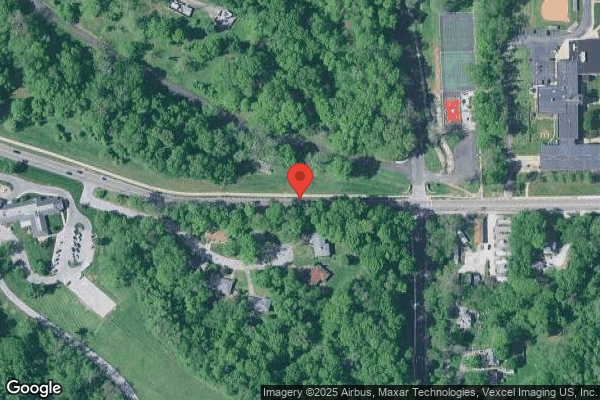
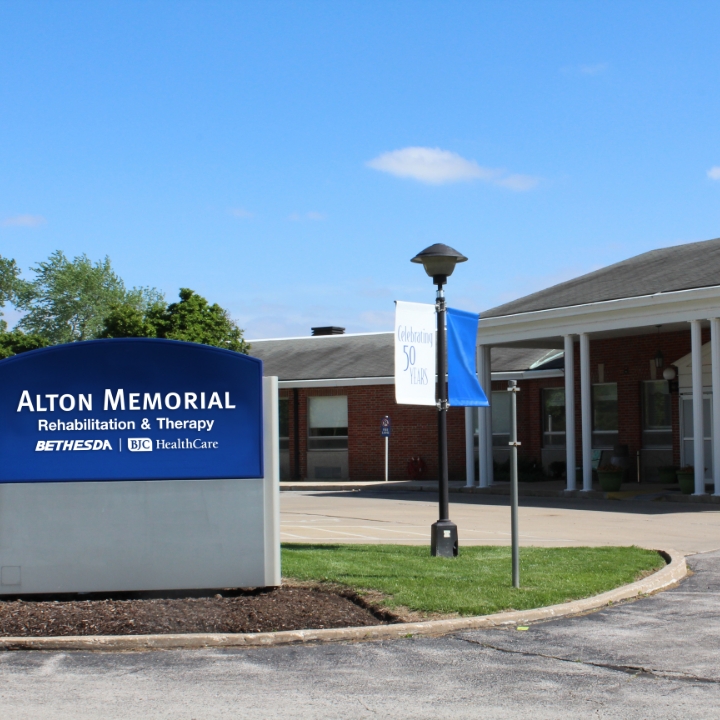
1251 COLLEGE AVENUE, ALTON, IL 62002 (618) 463-7330
Non profit - Corporation 64 Beds BJC HEALTHCARE Data: November 2025
Trust Grade
30/100
#213 of 665 in IL
Last Inspection: October 2024

Within standard 12-15 month inspection cycle. Federal law requires annual inspections.

Overview

Alton Memorial Rehab & Therapy has received a Trust Grade of F, indicating significant concerns about the quality of care provided. Ranking #213 out of 665 facilities in Illinois places them in the top half, while being #5 out of 17 in Madison County means only four other local options are better. The facility is showing improvement, with issues decreasing from 9 in 2024 to 3 in 2025, but still had 28 problems identified during inspections, five of which were serious and could cause harm. Staffing is a relative strength, with a 4/5 star rating and a 44% turnover rate, slightly below the state average, suggesting staff familiarity with residents. However, there are concerning incidents, such as a resident being left in urine-soaked bedding for an entire night and a significant delay in medication administration that led to complications for another resident.

Trust Score
F
30/100
In Illinois
#213/665
Top 32%
Safety Record
High Risk
Review needed
Inspections
Getting Better
9 → 3 violations
Staff Stability
○ Average
44% turnover. Near Illinois's 48% average. Typical for the industry.
Penalties
✓ Good
$45,819 in fines. Lower than most Illinois facilities. Relatively clean record.
Skilled Nurses
✓ Good
Each resident gets 58 minutes of Registered Nurse (RN) attention daily — more than average for Illinois. RNs are trained to catch health problems early.
Violations
⚠ Watch
28 deficiencies on record. Higher than average. Multiple issues found across inspections.
★★★☆☆
3.0
Overall Rating
★★★★☆
4.0
Staff Levels
★★★☆☆
3.0
Care Quality
★★★☆☆
3.0
Inspection Score
Stable
2024: 9 issues
2025: 3 issues

The Good

  • 4-Star Staffing Rating · Above-average nurse staffing levels
  • Full Sprinkler Coverage · Fire safety systems throughout facility
  • No fines on record
  • Staff turnover below average (44%)

    4 points below Illinois average of 48%

Facility shows strength in staffing levels, fire safety.

The Bad

3-Star Overall Rating

Near Illinois average (2.5)

Meets federal standards, typical of most facilities

Staff Turnover: 44%

Near Illinois avg (46%)

Typical for the industry

Federal Fines: $45,819

Above median ($33,413)

Moderate penalties - review what triggered them

Chain: BJC HEALTHCARE

Part of a multi-facility chain

Ask about local staffing decisions and management

The Ugly 28 deficiencies on record

5 actual harm
Jan 2025 1 deficiency
CONCERN (D) 📢 Someone Reported This

A family member, employee, or ombudsman was alarmed enough to file a formal complaint

Potential for Harm - no one hurt, but risky conditions existed

Deficiency F0802 (Tag F0802)

Could have caused harm · This affected 1 resident

**NOTE- TERMS IN BRACKETS HAVE BEEN EDITED TO PROTECT CONFIDENTIALITY** Based on observation, interview and record review, the facility failed to adequately staff the dietary department to ensure meal...

Read full inspector narrative →
**NOTE- TERMS IN BRACKETS HAVE BEEN EDITED TO PROTECT CONFIDENTIALITY** Based on observation, interview and record review, the facility failed to adequately staff the dietary department to ensure meals were served in a timely manner for 1 of 5 residents (R9) reviewed for food and nutrition services in the sample of 9. Findings include: R9's Physician Orders document R9 was admitted to the facility on [DATE]. R9's Face Sheet documents R9 has diagnoses including heart disease, peripheral vascular disease, and protein calorie malnutrition. R9's Minimum Data Set (MDS) dated [DATE] documented R9 was cognitively intact, independent with eating, and ambulated with wheelchair and walker. R9's Care Plan documents goal to improve nutritional status. R9's Physician Orders document 12/16/24 order for carbohydrate controlled diet. On 1/9/25 at 12:47 PM, R9 stated dinner is never on time and has recently received dinner as late as 6:30 PM and 6:35 PM. On 1/9/25 at 12:57 PM, V10, Certified Nursing Assistant (CNA) stated meal service tends to run slower in the evenings. On 1/9/25 at 2:40 PM, V16, Dietary Aid, stated he occasionally has to work by himself during meals and services the entire facility. On 1/9/25 at 2:50 PM, V15, Dietary Manager, stated sometimes meal trays are late, and it is more of a problem for residents who eat in their rooms because the dining room is served first. On 1/9/25 at 3:00 PM, V14, Activities Director, stated meal timing was previously discussed as a problem in the Resident Council Meeting. He was unsure if the issue has been resolved but was told the kitchen has been sending food a little later in effort to keep it hot. On 1/9/25 at 11:35 AM, V7, Licensed Practical Nurse (LPN), stated meals run late if there is only one person running the kitchen. On 1/9/25 at 11:37 AM, V11, CNA, stated meals are served late on occasion. On 1/9/25 at 11:48 AM, there was a posting on the steam table documenting breakfast is served from 7:30-8:00, lunch is served from 11:30-12:00, and dinner is served from 5:30-6:00. On 1/9/25 at 2:15 PM, V1, Administrator, stated she was unaware of any meals being served late. She stated the facility does not have a policy regarding acceptable time frames for meals, but should be base times on resident preference. On 1/9/25 at 4:20 PM, V1 stated she will address this issue. The Facility's Resident Council Meeting Minutes dated 11/19/24 document, Food needs to be on time. The Facility's Meal Times posting documents breakfast is served from 7:30-8:00, lunch is served from 11:30-12:00, and dinner is served from 5:30-6:00. The Facility's Dietary Schedule documents only one staff member was working during the dinner service on 12/7/24, 12/8/24, 12/13/24, 12/14/24, 12/15/24, 12/26/24, 12/27/24, and 1/6/25. The facility's 1/9/25 Census documents there are 54 residents living in the facility.
Jan 2025 2 deficiencies
CONCERN (D) 📢 Someone Reported This

A family member, employee, or ombudsman was alarmed enough to file a formal complaint

Potential for Harm - no one hurt, but risky conditions existed

Report Alleged Abuse (Tag F0609)

Could have caused harm · This affected 1 resident

Based on interview and record review the facility failed to ensure all abuse investigations were reported to the designated representative and to other officials in accordance with State law, includin...

Read full inspector narrative →
Based on interview and record review the facility failed to ensure all abuse investigations were reported to the designated representative and to other officials in accordance with State law, including State Survey Agency within five working days of the incident for 1 of 7 residents (R2) reviewed for reporting in the sample of 10. Findings include: On 1/2/2025 at 12:28 PM, V1, Administrator stated (V6), Licensed Practical Nurse LPN) was the nurse working the day (R2's) wet sheets were changed and the male certified nursing assistant (CNA) was (V7). V7 was the one who was working (R2's) hall. V1 stated, I did not get any statements or have any allegations of abuse related to (R2). I know the family was upset about (R2's) bed being wet but I do not have any statements or anything in writing voicing any other concerns, and nothing related to any abuse allegations. All abuse investigations for the past six months were requested and reviewed and there was no abuse investigation provided for R2. On 1/2/2024 at 12:43 PM, V7, Certified Nursing Assistant (CNA) stated, I laid (R2) gently on the bed and moved her feet over, covered her up and left the room. I never threw her on the bed or threw water at her. I tried to go back and clean up the water but (V6, LPN) told me not go into her room. On 1/3/2025 at 8:33 AM, R2 stated, I was good at the (Facility) until that staff member picked me up, slid me on the bed, swung my feet around and spilled water all over me and left me. I was afraid of him. He was rough with me. I was very upset, so I immediately called (V5, Family of R2) and told her what had happened. Nobody should be treated the way he treated me. I was scared to tell him about the water because of the way he was treating me. I feel like I was abused by him. On 1/3/2025 at 8:39 AM, V5, Family of R2 stated, I remember getting the call from my mom because she was frantic, and I asked her what was going on and she asked me to please come to the (Facility). It took me over an hour before I got there but when I got there my mom was still upset. When I walked into the room there was water all over the floor. I started cleaning up the water on the floor because I did not want anyone to fall. Then my mom told me a staff member threw her on the bed and spilled water all over her and left her. Now mind you, it took me an hour to get to my mom because I had to wait on my cousin, and here she is and when I went over to her the bed was soaked with water. I started stripping the bed and I went and got (V6, the nurse) and told him my mom was afraid of (V7) and he had me write everything down in a statement and he told me that staff member (V7) would not be providing care anymore to my mom. (V7) started to come into my mom's room and he told me he was going to finish cleaning everything but (V6) told him he could not go back into my mom's room. (V7) told me he had spilt the water I could see my mom shaking and I was happy (V7) was not going to provide care to my mom. But, then the next day (V7) was on the floor the next day giving care to my mom, so nothing happened. I did not want (V7) going into my mom's room after that incident because my mom was so upset and said she felt abused, and nobody should be treated the way (V7) treated her that day. On 1/3/2025 at 12:44 PM, V7, Licensed Practical Nurse (LPN) stated, I remember the family member (V5) coming to me and she was upset and told me there was water in her mom's room on the floor that she had cleaned up and her bed was wet. I went into the room and there was not any water on the floor but (R2's) bed was wet and damp. They told me they were upset with (V7's care) and did not want (V7) providing any care to (R2) and I told them to write down a statement. I called (V2) and she told me to call (V1). I called (V1) and I put the statement under (V1's) door because she was not here. I told both (V1) and (V2) that the family was upset and did not want (V7) providing care to (R2). I told (V7) he could not work (R2's) hall. Nobody asked me any other questions. R2's Medical Records were reviewed and there was no documentation related to any allegations of abuse made by R2. On 1/3/2025 at 3:07 PM, V1, Administrator stated she did not complete an investigation on (R2) and or put anything in place for (R2) or collect evidence to determine what actions the facility must follow, and or put in place for the protection of the residents in the facility. V1 also stated she did not report it because she stated she did not get any statements, and nothing was put under her door and did not realize it was not customer service. The Facility Resident Abuse/Neglect/Exploitation Policy with a revision date of 7/23 documents, To provide guidelines for identifying, investigation, and reporting resident abuse/neglect and exploitation including any reasonable suspicion of a crime toward the resident. It is the responsibility of the Administrator of each resident to monitor compliance of this policy. Department Managers and Supervisors must know, understand, and enforce this policy. All employees of (Facility) must know, understand, and abide by this policy. Every resident has the right to be free from verbal, sexual, physical, and mental abuse, corporal punishment, and involuntary seclusion. Resident must not be subject to abuse by anyone, including, but not limited to, resident staff, other residents, consultants or volunteers, other agencies serving the individual, family members or legal guardians, friends, or other individual. The Elder Justice Act of 2009 has mandated enhanced reporting requirements for crimes that occur in LTC (Long term Care) facility which are outlined in this policy. Any covered individual who received an allegation or suspects that there is a situation of abuse, neglect, or exploitation of a resident including a potential or actual criminal action shall immediate disrupt all perceived or observed abuse by yelling for help, activating the call lights and/or telling the person involved to stop. A covered individual may also contact the appropriate State agency- Department of Health and Senior Services (DHSS) Complaint Registry Unit. The Administrator will direct staff to complete an incident report and initiate investigation process. An investigation shall be initiated immediately. Any allegations must be fully investigated and self-reported to an appropriate State Agency. Upon receiving al allegation of abuse, the alleged perpetrator will be suspended/removed immediate from the resident, pending the investigation. Nursing Management or the Administrator will initiate the investigation and complete the Resident Abuse/Neglect Complaint Investigation Report.
CONCERN (D) 📢 Someone Reported This

A family member, employee, or ombudsman was alarmed enough to file a formal complaint

Potential for Harm - no one hurt, but risky conditions existed

Investigate Abuse (Tag F0610)

Could have caused harm · This affected 1 resident

Based on interview and record review the Facility failed to ensure all abuse allegation were thoroughly investigated for 1 of 5 residents (R2) reviewed for investigation of abuse in the sample of 10. ...

Read full inspector narrative →
Based on interview and record review the Facility failed to ensure all abuse allegation were thoroughly investigated for 1 of 5 residents (R2) reviewed for investigation of abuse in the sample of 10. Findings include: On 1/2/2025 at 12:28 PM, V1, Administrator stated, (V6, Licensed Practical Nurse LPN) was the nurse working the day that (R2's) wet sheets were changed and the male certified nursing assistant (CNA) was (V7). V7 was the one who was working (R2's) hall. V1 stated, I did not get any statements or have any allegations of abuse related to (R6). I know the family was upset about (R2's) bed being wet but I do not have any statements or anything in writing voicing any other concerns, and nothing related to any abuse allegations. All abuse investigations for the past six months were requested and reviewed and there was no abuse investigation provided for R2. On 1/2/2024 at 12:43 PM, V7, stated (R2) was very slow in her movements. (R2) did not like to move a lot, I helped her to transfer from her recliner to her wheelchair, and then her wheelchair to her bed, when I turned around a saw water on the floor. I did not see any water on (R2) nor did I see (R2) was wet. If I thought, she was wet I would have changed her right then. I always tried to be gentle with her and had no issues with her. I laid her gently on the bed and moved her feet over, covered her up and left the room. I never threw her on the bed or threw water at her. I tried to go back and clean up the water but (V6) told me not go into her room. On 1/3/2025 at 8:33 AM, R2 stated, I was good at the (Facility) until that staff member picked me up, slid me on the bed, swung my feet around and spilled water all over me and left me. I was afraid of him. He was rough with me. I was very upset, so I immediately called (V5) and told her what had happened. Nobody should be treated the way he treated me. I was scared to tell him about the water because of the way he was treating me. I feel like I was abused by him. I am afraid to go back to the facility. On 1/3/2025 at 8:39 AM, V5, Family of R2 stated, I remember getting the call from my mom because she was frantic, and I asked her what was going on and she asked me to please come to the (Facility). It took me over an hour before I got there but when I got there my mom was still upset. When I walked into the room there was water all over the floor. I started cleaning up the water on the floor because I did not want anyone to fall. Then my mom told me a staff member threw her on the bed and spilled water all over her and left her. Now mind you, it took me an hour to get to my mom because I had to wait on my cousin, and here she is and when I went over to her the bed was soaked with water. I started stripping the bed and I went and got (V6, the nurse) and told him my mom was afraid of (V7) and he had me write everything down in a statement and he told me that staff member (V7) would not be providing care anymore to my mom. (V7) started to come into my mom's room and he told me he was going to finish cleaning everything but (V6) told him he could not go back into my mom's room. (V7) told me he had spilt the water I could see my mom shaking and I was happy (V7) was not going to provide care to my mom. But, then the next day (V7) was on the floor the next day giving care to my mom, so nothing happened. I did not want (V7) going into my mom's room after that incident because my mom was so upset and said she felt abused, and nobody should be treated the way (V7) treated her that day. (R2) does not want to go back to the facility. I was hoping she would have more care but if that is the care she is getting them I am going to have her come home with me. On 1/3/2025 at 12:44 PM, V6, LPN stated, I remember the family member (V5) coming to me and she was upset and told me there was water in her mom's room on the floor that she had cleaned up and her bed was wet. I went into the room and there was not any water on the floor but (R2's) bed was wet and damp. They told me they were upset with (V7's care) and did not want (V7) providing any care to (R2) and I told them to write down a statement. I called (V2) and she told me to call (V1). I called (V1) and I put the statement under (V1's) door because she was not here. I told both (V1) and (V2) that the family was upset and did not want (V6) providing care to (R2). I told (V7) he could not work (R2's) hall. Nobody asked me any other questions. R2's Medical Records were reviewed and there was no documentation related to any allegations of abuse made by R2. On 1/2/2025 at 2:30 PM, V2, DON stated, I am not aware of any resident accidentally or intentionally having water on them and staff not cleaning it up and/or treating any resident rough. (V7) did call me and told me the family of (R2) had a family concern and I immediately told him to call (V1) because she is the one that needs to address any concerns. I never heard back from anyone, so I was not aware until today that there were any abuse allegations from (R2). Normally, if there are any abuse allegations that are supposed to go directly to the administrator where she will start an investigation. Usually, once the investigation is initiated, then I will help out with the investigation. On 1/3/2025 at 3:07 PM, V1 stated she did not complete an investigation on (R2) and or put anything in place for (R2) or collect evidence to determine what actions the facility must follow, and or put in place for the protection of the residents in the facility. No assessment was completed on (R2), and no interviews were conducted and/or no measures were put into place to ensure no future potential abuse occurred. V1 stated she was not aware there was any allegation of abuse made by (R2). The Facility Resident Abuse/Neglect/Exploitation Policy with a revision date of 7/23 documents, To provide guidelines for identifying, investigating, and reporting resident abuse/neglect and exploitation, including any reasonable suspicion of a crime toward the resident. It is the responsibility of the Administrator of each resident to monitor compliance of this policy. Department Managers and Supervisors must know, understand, and enforce this policy. All employees of (Facility) must know, understand, and abide by this policy. Every resident has the right to be free from verbal, sexual, physical, and mental abuse, corporal punishment, and involuntary seclusion. Resident must not be subject to abuse by anyone, including, but not limited to, resident staff, other residents, consultants or volunteers, other agencies serving the individual, family members or legal guardians, friends, or other individuals. The Elder Justice Act of 2009 has mandated enhanced reporting requirements for crimes that occur in LTC (Long term Care) facility which are outlined in this policy. Any covered individual who received an allegation or suspects that there is a situation of abuse, neglect, or exploitation of a resident including a potential or actual criminal action shall immediately disrupt all perceived or observed abuse by yelling for help, activating the call lights, and/or telling the person involved to stop. A covered individual may also contact the appropriate State agency- Department of Health and Senior Services (DHSS) Complaint Registry Unit. The Administrator will direct staff to complete an incident report and initiate investigation process. An investigation shall be initiated immediately. Any allegations must be fully investigated and self-reported to an appropriate State Agency. Upon receiving an allegation of abuse, the alleged perpetrator will be suspended/removed immediately from the resident, pending the investigation. Nursing Management or the Administrator will initiate the investigation and complete the Resident Abuse/Neglect Complaint Investigation Report.
Oct 2024 7 deficiencies 3 Harm
SERIOUS (G)

Actual Harm - a resident was hurt due to facility failures

ADL Care (Tag F0677)

A resident was harmed · This affected 1 resident

**NOTE- TERMS IN BRACKETS HAVE BEEN EDITED TO PROTECT CONFIDENTIALITY** Based on interview and record review the facility failed to provide timely and complete incontinent care for 5 of 5 residents (R...

Read full inspector narrative →
**NOTE- TERMS IN BRACKETS HAVE BEEN EDITED TO PROTECT CONFIDENTIALITY** Based on interview and record review the facility failed to provide timely and complete incontinent care for 5 of 5 residents (R13, R23, R24, R31, R33) reviewed for incontinent care in a sample of 33. This failure resulted in R23 laying in urine all night, feeling dirty, like a fool and embarrassed. Findings include: 1. R23's Care Plan, not dated, documents R23 is occasionally incontinent of urine of bladder and continent of bowel. Please provide frequent toileting and peri care after each incontinent episode, requires extensive assist with ADL's (activities of daily living), R23's Minimum Data Set, dated 8/20, documents R23 is alert and oriented x4, occasionally incontinent of urine, and requires assistance from staff for toileting. On 10/7/2024 at approximately 9:00 AM, observed V5, CNA, providing R23 incontinent care. R23 was incontinent of urine. V5 pulled back covers and opened R23's incontinent brief. V5's incontinent brief was heavily soiled with urine. V5 then cleansed R23's peri and groin area. V5 then assisted R23 over onto her right side. R23's gown, incontinent brief, incontinent pad and sheets were soaked with urine. R23's sheets were soaked up to her upper back. V5 removed the soiled incontinent brief revealing multiple deep, red indentations in skin. V5 then cleansed R23's left buttock. V5 then removed the urine soak sheets from the bed and rolled beneath R23. V5 then assisted R23 into the seated position on the side of the bed and put on R23's clothes and assisted R23 into the wheelchair. V5 did not cleanse all areas of incontinence. V5 did not cleanse R3's inner thighs and back. On 10/7/2024 at 8:50 AM, R23 stated she wanted to know why the girl did not come in and change her last night. R23 stated she has been wet all night. R23 stated the girl came in and gave her water last night but never checked her or cleaned her. R23 stated she told the girl she needed to be changed. R23 stated in the day she is up in her chair and able to use the toilet with help. R23 stated at night when she is in the bed, she loses all sense of control. R23 stated this makes her feel dirty, angry and embarrassed. R23 stated she doesn't want to lay in her own filth all night and she doesn't want to stink because of it. R23 stated it hurts laying in one position wet all night. R23 stated there is only 1 CNA, Certified Nurse Assistant, that cleans you when you are wet. R23 stated the others remove the depend and put another on you without cleaning you. R23 stated she shouldn't have to live like that. R23 stated they don't have enough staff. R23 stated she laid wet all night. R23 stated there was a time she had to have her roommate take her off the bedpan and clean her. R23 stated no one came. R23 stated she complains about it, but nothing is done. R23 stated she feels like a fool, like she is nothing. On 10/7/2024 at 9:08 AM, V5, CNA, stated she was informed (R23) did not void all night. V5 stated she thought it was odd because (R23) is a heavy wetter at night. On 10/101/2024 at 11:03 AM, V18, Nurse Supervisor, stated (R23) is alert and oriented x4. V18 stated if (R23) stated said she was laying wet all night this would be accurate statement. V18 stated if R23 stated she was embarrassed, angry, felt like a fool and felt pain from this this would be an accurate statement of how (R23) felt. V18 stated (R23) laying in urine all night and being soiled up to her head is a dignity problem. On 10/10/2024 at 11:47 AM, V23, Licensed Practical Nurse, stated (R23) is alert and oriented x4. V23 stated (R23) will tell you the truth. V23 stated if (R23) stated she was wet all night, and they didn't have staff this would be an accurate statement. V23 stated if she laid in urine for a long time, she would feel nasty and dirty. V23 stated if (R23) stated this is how she felt it would be accurate. On 10/8/24 at 1:30 PM, Resident Council was conducted, and R23, R24, R31, and R33 voiced multiple concerns with lack of staff and timeliness of incontinent care during this meeting. R23, Resident Council President, stated the facility does not have enough staff at night and she has laid in wet pants multiple times all night because she could not get any employees to clean her up. R23 stated her roommate R24 is a former CNA and R24 has assisted her with getting on the bedpan and has cleaned her up throughout the night because they could not get any staff to answer the call light. R23 stated she frequently must sit with wet pants for long periods of time due to staff not answering her call light or staff saying they will be back to change her, and then they don't return. R23 stated she frequently voices her complaints to administration, and they just blow smoke up her butt in response to her complaints. 2. R13's Care Plan, not dated, documents R13 and requires extensive too dependent of ADL care, incontinent of bowel and bladder. Provide peri care after episodes of incontinent remain clean and dry and minimize the risk of skin breakdown thru this next review period. R13's MDS, dated [DATE], documents R13 is moderately cognitively impaired, incontinent of bladder and bowel, and requires assistance from staff for toileting. On 10/9/2024 at 8:00 AM, observed V23, LPN, and V24, LPN, performed incontinent care and treatment. R13 was incontinent of urine and bowel. V23 and V24 opened R13's incontinent brief V24 rolled it between R13's legs. V23 and V24 then turned R13 on her right side. V24 rolled the soiled incontinent brief under R13. Using soap and water V24 wiped the stool from between R13's right and left buttocks. V24 then wiped the same area with a wet washcloth. V24 then changed her gloves and performed treatment to R13's pressure ulcer on right buttock. V24 then placed a clean incontinent brief under R13. V23 and V24 rolled R13 onto her left side and removed the soiled incontinent brief from beneath R13. V23 and V24 then fastened R13's brief and placed cover over R13. On 10/10/2024 at 11:03 AM, V18, Nurse Supervisor, stated she expects the staff to clean all wet areas. V18 stated if a resident is wet up to her back and neck those areas are to be cleaned as part of peri care. V18 stated if a treatment is performed, and the resident is incontinent of bowel and bladder the staff are to perform peri care and then complete the treatment. The facility's Perineal Policy, dated 10/22, documents Purpose: To provide guidelines for performing perineal care. Policy: Perineal care is to be done as needed for incontinence for residents who are unable to perform self-care. Perineal care is done to cleanse the perineum to prevent growth of bacteria, prevent skin breakdown and promote good personal hygiene. Standard precautions and sound aseptic technique will be used when performing peri-care. Policy: Perineal Care is to be done as needed for incontinence for residents who are unable to perform self-care. Perineal care is done to cleanse the perineum to prevent growth of bacteria, prevent skin breakdown and promote good personal hygiene. Practice: 10. Always work from the cleanest area to the dirtiest. Therefore, clean from urethra to the anal area (front to back) to prevent fecal matter from spreading from the anal area to the vagina or urethra using clean technique. Always gently pat dry (no scrubbing). Female Perineal Care 2. Expose perineal area. Gently cleanse the inner legs and outer peri area along the outside of the labia. 3. Cleanse outer labia from front to back. 4. Cleanse inner labia from front to back. 5. Gently open all skin folds and cleanse from front to back. 6. Cleanse and dry anal area. -- 3. R24's face sheet, print date of 10/9/24, documented R24 has diagnoses of hemiplegia and hemiparesis following cerebral infarction affecting right dominant side, dysphagia and aphasia following cerebral infarction, depression, multiple sclerosis, epilepsy, and hypertension. R24's MDS dated [DATE] documented R24 is cognitively intact. R24's MDS dated [DATE] documented R24 depends on a wheelchair for mobility and requires partial to moderate assistance to ambulate 10 feet. On 10/8/24, during the Resident Council meeting R24 agreed that she helps her roommate (R23) get on the bed pan at night and cleans her up due to staff not answering the call light. 4. R31's face sheet, print date of 10/9/24, documented R31 has diagnoses of malignant neoplasm of prostate, dysphasia following cerebral infarction, pulmonary hypertension, pleural effusion, emphysema, spinal stenosis, and atrial fibrillation. R31's MDS dated [DATE] documented R31 is cognitively intact, always incontinent of bowels, has an indwelling urinary catheter, and requires substantial to maximal assistance with toileting hygiene. On 10/8/24, during the Resident Council meeting R31 stated that there is not enough staff on any of the shifts and that the night shift is the worst. R31 stated that he has been dirty all night several times because he cannot get the CNAs to change him. 5. R33's face sheet dated 10/9/24 documented R33 has diagnoses of benign hypertensive heart, chronic kidney disease, congestive heart failure, morbid obesity, gout, atrial fibrillation, anemia, hypertension, and diabetes mellitus. R33's MDS dated [DATE] documented R33 is cognitively intact, always incontinent of bowel and bladder, and requires substantial to maximal assistance with toileting hygiene. On 10/8/24, during the Resident Council meeting R33 stated that she often must sit in her wet adult diaper due to the staff not answering her call light or answering it, stating they will be back to change her, and then they don't return. R33 stated she recently called for assistance to be changed at 7 am because she was wet. The CNA stated she would be back to change her, and she could not get anyone to change her adult diaper until 11:30 am. On 10/8/24 at approximately 2 PM, V5, CNA stated that sometimes she does find residents that are saturated with urine when she comes on duty in the mornings. On 10/10/24 at 11:06 AM, V18, Nurse Supervisor stated that she would expect the facility nursing staff to answer resident call lights within 5 minutes She would expect the nursing staff to immediately assist the residents with care needs and stated that it is absolutely not okay for a resident to be cleaning up another resident.
SERIOUS (G)

Actual Harm - a resident was hurt due to facility failures

Incontinence Care (Tag F0690)

A resident was harmed · This affected 1 resident

**NOTE- TERMS IN BRACKETS HAVE BEEN EDITED TO PROTECT CONFIDENTIALITY** 3. R24's face sheet, print date of 10/9/24, documented R24 has diagnoses of hemiplegia and hemiparesis following cerebral infarc...

Read full inspector narrative →
**NOTE- TERMS IN BRACKETS HAVE BEEN EDITED TO PROTECT CONFIDENTIALITY** 3. R24's face sheet, print date of 10/9/24, documented R24 has diagnoses of hemiplegia and hemiparesis following cerebral infarction affecting right dominant side, dysphagia and aphasia following cerebral infarction, depression, multiple sclerosis, epilepsy, and hypertension. R24's MDS dated [DATE] documented R24 is cognitively intact. R24's MDS dated [DATE] documented R24 depends on a wheelchair for mobility and requires partial to moderate assistance to ambulate 10 feet. On 10/8/24, during the Resident Council meeting R24 agreed that she helps her roommate (R23) get on the bed pan at night and cleans her up due to staff not answering the call light. 4. R31's face sheet, print date of 10/9/24, documented R31 has diagnoses of malignant neoplasm of prostate, dysphasia following cerebral infarction, pulmonary hypertension, pleural effusion, emphysema, spinal stenosis, and atrial fibrillation. R31's MDS dated [DATE] documented R31 is cognitively intact, always incontinent of bowels, has an indwelling urinary catheter, and requires substantial to maximal assistance with toileting hygiene. On 10/8/24, during the Resident Council meeting R31 stated that there is not enough staff on any of the shifts and that the night shift is the worst. R31 stated that he has been dirty all night several times because he cannot get the CNAs to change him. 5. R33's face sheet dated 10/9/24 documented R33 has diagnoses of benign hypertensive heart, chronic kidney disease, congestive heart failure, morbid obesity, gout, atrial fibrillation, anemia, hypertension, and diabetes mellitus. R33's MDS dated [DATE] documented R33 is cognitively intact, always incontinent of bowel and bladder, and requires substantial to maximal assistance with toileting hygiene. On 10/8/24, during the Resident Council meeting R33 stated that she often must sit in her wet adult diaper due to the staff not answering her call light or answering it, stating they will be back to change her, and then they don't return. R33 stated she recently called for assistance to be changed at 7 am because she was wet. The CNA stated she would be back to change her, and she could not get anyone to change her adult diaper until 11:30 am. On 10/8/24 at approximately 2 PM, V5, CNA stated that sometimes she does find residents that are saturated with urine when she comes on duty in the mornings. On 10/10/24 at 11:06 AM, V18, Nurse Supervisor stated that she would expect the facility nursing staff to answer resident call lights within 5 minutes She would expect the nursing staff to immediately assist the residents with care needs and stated that it is absolutely not okay for a resident to be cleaning up another resident. Based on interview and record review the facility failed to provide timely and complete incontinent care for 5 of 5 residents (R13, R23, R24, R31, R33) reviewed for incontinent care in a sample of 33. This failure resulted in R23 laying in urine all night, feeling dirty, like a fool and embarrassed. Findings include: 1. R23's Care Plan, not dated, documents R23 is occasionally incontinent of urine of bladder and continent of bowel. Please provide frequent toileting and peri care after each incontinent episode, requires extensive assist with ADL's (activities of daily living), R23's Minimum Data Set, dated 8/20, documents R23 is alert and oriented x4, occasionally incontinent of urine, and requires assistance from staff for toileting. On 10/7/2024 at approximately 9:00 AM, observed V5, CNA, providing R23 incontinent care. R23 was incontinent of urine. V5 pulled back covers and opened R23's incontinent brief. V5's incontinent brief was heavily soiled with urine. V5 then cleansed R23's peri and groin area. V5 then assisted R23 over onto her right side. R23's gown, incontinent brief, incontinent pad and sheets were soaked with urine. R23's sheets were soaked up to her upper back. V5 removed the soiled incontinent brief revealing multiple deep, red indentations in skin. V5 then cleansed R23's left buttock. V5 then removed the urine soak sheets from the bed and rolled beneath R23. V5 then assisted R23 into the seated position on the side of the bed and put on R23's clothes and assisted R23 into the wheelchair. V5 did not cleanse all areas of incontinence. V5 did not cleanse R3's inner thighs and back. On 10/7/2024 at 8:50 AM, R23 stated she wanted to know why the girl did not come in and change her last night. R23 stated she has been wet all night. R23 stated the girl came in and gave her water last night but never checked her or cleaned her. R23 stated she told the girl she needed to be changed. R23 stated in the day she is up in her chair and able to use the toilet with help. R23 stated at night when she is in the bed, she loses all sense of control. R23 stated this makes her feel dirty, angry and embarrassed. R23 stated she doesn't want to lay in her own filth all night and she doesn't want to stink because of it. R23 stated it hurts laying in one position wet all night. R23 stated there is only 1 CNA, Certified Nurse Assistant, that cleans you when you are wet. R23 stated the others remove the depend and put another on you without cleaning you. R23 stated she shouldn't have to live like that. R23 stated they don't have enough staff. R23 stated she laid wet all night. R23 stated there was a time she had to have her roommate take her off the bedpan and clean her. R23 stated no one came. R23 stated she complains about it, but nothing is done. R23 stated she feels like a fool, like she is nothing. On 10/7/2024 at 9:08 AM, V5, CNA, stated she was informed (R23) did not void all night. V5 stated she thought it was odd because (R23) is a heavy wetter at night. On 10/101/2024 at 11:03 AM, V18, Nurse Supervisor, stated (R23) is alert and oriented x4. V18 stated if (R23) stated said she was laying wet all night this would be accurate statement. V18 stated if R23 stated she was embarrassed, angry, felt like a fool and felt pain from this this would be an accurate statement of how (R23) felt. V18 stated (R23) laying in urine all night and being soiled up to her head is a dignity problem. On 10/10/2024 at 11:47 AM, V23, Licensed Practical Nurse, stated (R23) is alert and oriented x4. V23 stated (R23) will tell you the truth. V23 stated if (R23) stated she was wet all night, and they didn't have staff this would be an accurate statement. V23 stated if she laid in urine for a long time, she would feel nasty and dirty. V23 stated if (R23) stated this is how she felt it would be accurate. On 10/8/24 at 1:30 PM, Resident Council was conducted, and R23, R24, R31, and R33 voiced multiple concerns with lack of staff and timeliness of incontinent care during this meeting. R23, Resident Council President, stated the facility does not have enough staff at night and she has laid in wet pants multiple times all night because she could not get any employees to clean her up. R23 stated her roommate R24 is a former CNA and R24 has assisted her with getting on the bedpan and has cleaned her up throughout the night because they could not get any staff to answer the call light. R23 stated she frequently must sit with wet pants for long periods of time due to staff not answering her call light or staff saying they will be back to change her, and then they don't return. R23 stated she frequently voices her complaints to administration, and they just blow smoke up her butt in response to her complaints. 2. R13's Care Plan, not dated, documents R13 and requires extensive too dependent of ADL care, incontinent of bowel and bladder. Provide peri care after episodes of incontinent remain clean and dry and minimize the risk of skin breakdown thru this next review period. R13's MDS, dated [DATE], documents R13 is moderately cognitively impaired, incontinent of bladder and bowel, and requires assistance from staff for toileting. On 10/9/2024 at 8:00 AM, observed V23, LPN, and V24, LPN, performed incontinent care and treatment. R13 was incontinent of urine and bowel. V23 and V24 opened R13's incontinent brief V24 rolled it between R13's legs. V23 and V24 then turned R13 on her right side. V24 rolled the soiled incontinent brief under R13. Using soap and water V24 wiped the stool from between R13's right and left buttocks. V24 then wiped the same area with a wet washcloth. V24 then changed her gloves and performed treatment to R13's pressure ulcer on right buttock. V24 then placed a clean incontinent brief under R13. V23 and V24 rolled R13 onto her left side and removed the soiled incontinent brief from beneath R13. V23 and V24 then fastened R13's brief and placed cover over R13. On 10/10/2024 at 11:03 AM, V18, Nurse Supervisor, stated she expects the staff to clean all wet areas. V18 stated if a resident is wet up to her back and neck those areas are to be cleaned as part of peri care. V18 stated if a treatment is performed, and the resident is incontinent of bowel and bladder the staff are to perform peri care and then complete the treatment. The facility's Perineal Policy, dated 10/22, documents Purpose: To provide guidelines for performing perineal care. Policy: Perineal care is to be done as needed for incontinence for residents who are unable to perform self-care. Perineal care is done to cleanse the perineum to prevent growth of bacteria, prevent skin breakdown and promote good personal hygiene. Standard precautions and sound aseptic technique will be used when performing peri-care. Policy: Perineal Care is to be done as needed for incontinence for residents who are unable to perform self-care. Perineal care is done to cleanse the perineum to prevent growth of bacteria, prevent skin breakdown and promote good personal hygiene. Practice: 10. Always work from the cleanest area to the dirtiest. Therefore, clean from urethra to the anal area (front to back) to prevent fecal matter from spreading from the anal area to the vagina or urethra using clean technique. Always gently pat dry (no scrubbing). Female Perineal Care 2. Expose perineal area. Gently cleanse the inner legs and outer peri area along the outside of the labia. 3. Cleanse outer labia from front to back. 4. Cleanse inner labia from front to back. 5. Gently open all skin folds and cleanse from front to back. 6. Cleanse and dry anal area.
SERIOUS (G)

Actual Harm - a resident was hurt due to facility failures

Deficiency F0760 (Tag F0760)

A resident was harmed · This affected 1 resident

**NOTE- TERMS IN BRACKETS HAVE BEEN EDITED TO PROTECT CONFIDENTIALITY** Based on interview, record review, and observation the facility failed to ensure residents are free from significant medication ...

Read full inspector narrative →
**NOTE- TERMS IN BRACKETS HAVE BEEN EDITED TO PROTECT CONFIDENTIALITY** Based on interview, record review, and observation the facility failed to ensure residents are free from significant medication errors for 1 of 6 (R195) residents reviewed for medication administration in a sample of 33. A delay of 6 days in getting the antibiotic started to treat UTI as ordered by the Physician Assistant caused R195 to become confused, have abdominal pain, increased leg pain, and missed some therapy sessions. Findings include: R195's face sheet, print date of 10/8/24, documented R195 was admitted to the facility on [DATE] with diagnoses of displaced intertrochanteric fracture of right femur, subsequent encounter for closed fracture with routine healing, Sjogren syndrome with peripheral nervous system involvement, Parkinson's disease, anemia, obstructive sleep apnea, and rheumatoid arthritis. R195's MDS (Minimum Data Set) dated 9/4/24, documented R195 is mildly cognitively impaired. R195's Physician Progress Notes by V31 PA (Physician Assistant) dated 9/27/24 at 8:51 AM documented, TI (urinary tract infection). Urine cx (culture) growing out ESBL (extended spectrum beta-lactamase). 9/27 - 1 week course of ciprofloxacin ordered. R195's Urine Culture Report dated 9/26/24 documents, urine culture positive for klebsiella pneumoniae ESBL. V31, PA documented on this report start ciprofloxacin 500 mg 1 tab (tablet) po (by mouth) BID (two times a day) for times 7 days for UTI with a start date of 9/27/24. R195's Nurse Progress Note dated 10/2/24 at 3:41 PM documents, UA (urinalysis) results sent to MD 9/27/24 with order returning to start Cipro. Order entry was delayed until 10/2/24 for ABT (antibiotic). MD and family aware. ABT started at this time. R195's Physical Therapy Treatment Encounter note dated 9/18/24 documented, patient participated in gait training and ambulated 50 feet with CGA (contact guard assist)/Min assist (minimal assistance) using a FWW (front wheeled walker) with cues. R195's Physical Therapy Note dated 9/19/24 documented, (R195) participated in gait training using front wheeled walker, CGA, and ambulated 250 feet with close w/c (wheelchair) follow. R195's Physical Therapy Note dated 9/24/24 documented, patient with decreased performance with blood in urine and procedure this date to drain fluid as patient had distended abdomen. Patient required increased assistance this date due to fatigue. R195's Occupational Therapy Note dated 10/2/24 documented, patient seen extended time today secondary to having difficulty attending to task and following automatic instructions. Wife present and concerned. Patient alert and oriented x 1. Patient requiring increased time to initiate and complete tasks. Patient required max to near total assist to don bilateral tie shoes. Patient demonstrated poor sitting balance. Patient not following instructions to complete transfer to chair with front wheeled walker. Patient required mod assist to complete SPT (stand pivot transfer) from bed to wheelchair. Nurse informed of status and reports patient has irregular labs and has a call out to MD. R195's physical therapy note dated 10/2/24 documented COTA (Certified Occupational Therapy Assistant) reports increased confusion from patient. This clinician arrived at patient with wife appearing distressed. Patient's wife reports antibiotic for UTI was ordered 9/27 but was never started. Wife also reports she was told there were abnormal labs, but only had the report for hemoglobin. Wife reports catheter had been removed but was reinserted. Spoke with nurse to ask about patient being seen. Nurse said to return later as she needed to straight cath (catheterization) patient and scan bladder. Min (minimal) assist for supine to sit with assist using leg lifter during sit to supine. Patient utilizing bed rails. Verbal instruction for hand placement for ease of transfer. CGA for sit to stand from bed with verbal instruction for correct hand placement. This progress notes documented patient walked zero feet when R195 received physical therapy on 10/2/24. On 10/7/24 at 9:15 am R195's wife V28 stated the facility did not get R195's antibiotic started when it was order for a UTI. V28 stated there was a delay of 6 days in getting the antibiotic started and R195 was confused, having abdominal pain, increased leg pain, and missed some therapy sessions due to the UTI not being treated as ordered by the Physician Assistant. V28 stated she met with V2 DON (Director of Nursing) and V2 stated there was a miscommunication causing the antibiotic not getting administered when it was ordered. On 10/9/24 at 10:40 am V2 DON stated there was a medication error with R195's cipro order due to miscommunication between the nurse and the Physician Assistant. V2 stated the facility did complete a medication error report and a QAPI (Quality Assurance Performance Improvement) on R195's medication error. The facility medication incident report, print date of 10/8/24, documented R195's medication error was discovered by the facility on 10/2/24 for R195's antibiotic was ordered to be started on 9/27/24. This incident report documented antibiotic delayed start for UTI. R195's MARS (medication administration records) dated 9/24 and 10/24 documented R195 had an order for oxycodone 5mg prn (as needed) every 4 hours on admission 9/17/24. These MARS documented R195 only received the oxycodone on 9/23/24, 9/27/24, 10/1/24, and 10/2/24 when R195 was exhibiting symptoms of a UTI. R195's MAR dated 10/1/24 documented R195's first dose of ciprofloxacin was ordered on 9/27/24 was not administered until 10/2/24. On 10/9/24 at 10:45 am V28 (R195's wife) stated R195 is going home tomorrow because the insurance company will not pay for anymore therapy services. V28 stated she filed an appeal with the insurance company, and it was denied. V28 stated the 6-day delay in R195 receiving the antibiotics for the UTI due to the miscommunication caused R195 to miss therapy for multiple days because R195 was having pain, confused, and unable to participate in therapy. V28 stated instead of treating the UTI due to the miscommunication with the antibiotics the facility nurses were just administering oxycontin to R195 for pain. V28 stated the oxycontin caused R195 to be zoned out. R195 stated he was having pain in his lower abdomen and his upper leg during this time, and he was unable to do therapy. V28 stated she is very upset because R195 did not receive as much therapy as he needed due to the delay in getting the antibiotic started. V28 stated she believes R195 would be more prepared to go home if R195's UTI would have been treated when it was ordered. On 10/9/24 at 11:05 am V26 PTA (Physical Therapy Assistant) stated she has been treating R195 since admission and there was a period R195 was not able to participate in therapy due to an increase in pain and confusion. On 10/9/24 at 11:06 am V27 PT (Physical Therapist)/Therapy Manager stated R195 did not have any pain when she completed his initial therapy evaluation. V27 stated then there were a few days R195 did have a lot of pain and some confusion so R195 was not doing very well in therapy or unable to participate in therapy during those day. V27 stated the therapy documentation shows R195 was doing good in therapy up until 9/23/24, was walking 175 feet, then on 9/24/24 R195 had decreased performance, blood in his urine, and abdominal distention. V27 stated on 9/26/24 R195 complained of a lot of pain and could not participate in therapy on this day. V27 stated she spoke to R195's nurse on 9/26/24 and requested a doppler study and held off on therapy until the results came back. V27 stated the doppler results came back negative on 9/27/24 and R195 did received some therapy on 9/27/24 but R195 was unable to walk in therapy on 9/27/24. V27 stated R195 was only able to walk 10 feet in therapy on 9/30/24. V27 stated on 10/1/24 R195 was still having pain and only walked 30 feet in therapy. V27 stated on 10/2/24 R195 had increased confusion, was unable to walk in therapy, and only participated a little due to a UTI. V27 stated R195 was still confused on 10/3/24 and could not due therapy on this day but R195 was better on 10/4/24 and was able to walk 75 feet. V27 stated R195 did not have any confusion on 10/7/24 and he had a great day in therapy on 10/7/24. The facility Nursing Practices Policy and Procedure dated 1/24 documented Purpose: To establish guidelines for properly obtaining physician orders and processing these orders. Scope: Level 2 policy affecting licensed nursing personnel. Responsibility: It is the responsibility of the licensed nurse to understand and comply with this procedure. It is the responsibility of the nurse manager to maintain, enforce and monitor the procedure. It continues, telephone and verbal orders should be documented in the resident's electronic medical record then read back to the ordering physician/independent practitioner for verification.
CONCERN (D)

Potential for Harm - no one hurt, but risky conditions existed

Resident Rights (Tag F0550)

Could have caused harm · This affected 1 resident

Based on observation, and interview the facility failed to ensure a resident was treated with dignity and had needs met timely for 1 of 3 (R23) residents in a sample 33 observed for dignity. Findings...

Read full inspector narrative →
Based on observation, and interview the facility failed to ensure a resident was treated with dignity and had needs met timely for 1 of 3 (R23) residents in a sample 33 observed for dignity. Findings include: R23's Care Plan, noted dated, documents R23 is able to make her needs known, pleasant to talk to and can communicate needs with staff. R23's Minimum Data Set, dated 8/20, documents R23 is alert and oriented x4 occasionally incontinent of urine and requires assistance from staff for toileting. On 10/7/2024 at approximately 9:00 AM, observed V5, CNA, providing R23 incontinent care. R23 was incontinent of urine. V5 pulled back covers and opened R23's incontinent brief. V5's incontinent brief was heavily soiled with urine. V5 then cleansed R23's peri and groin area. V5 then assisted R23 over onto her right side. R23's gown, incontinent brief, incontinent pad and sheets were soaked with urine. R23's sheets were soaked up to her upper back. V5 removed the soiled incontinent brief revealing multiple deep, red indentations in skin. V5 then cleansed R23's left buttock. V5 then removed the urine soak sheets from the bed and rolled beneath R23. V5 then assisted R23 into the seated position on the side of the bed and put on R23's clothes and assisted R23 into the wheelchair. V5 did not cleanse all areas of incontinence. V5 did not cleanse R3's inner thighs and back. On 10/7/2024 at 8:50 AM, R23 stated she wanted to know why the girl did not come in and change her last night. R23 stated she has been wet all night. R23 stated the girl came in and gave her water last night but never checked her or cleaned her. R23 stated she told the girl she needed to be changed. R23 stated in the day she is up in her chair and able to use the toilet with help. R23 stated at night when she is in the bed, she loses all sense of control. R23 stated this makes her feel dirty, angry and embarrassed. R23 stated she doesn't want to lay in her own filth all night and she doesn't want to stink because of it. R23 stated it hurts laying in one position wet all night. R23 stated there is only 1 CNA, Certified Nurse Assistant, that cleans you when you are wet. R23 stated the others remove the depend and put another on you without cleaning you. R23 stated she shouldn't have to live like that. R23 stated they don't have enough staff. R23 stated she laid wet all night. R23 stated there was a time she had to have her roommate take her off the bedpan and clean her. R23 stated no one came. R23 stated she complains about it, but nothing is done. R23 stated she feels like a fool, like she is nothing. On 10/7/2024 at 9:08 AM, V5, CNA, stated she was informed (R23) did not void all night. V5 stated she thought it was odd because (R23) is a heavy wetter at night. On 10/101/2024 at 11:03 AM, V18, Nurse Supervisor, stated (R23) is alert and oriented x4. V18 stated if (R23) stated said she was laying wet all night this would be accurate statement. V18 stated if R23 stated she was embarrassed, angry, felt like a fool and felt pain from this this would be an accurate statement of how (R23) felt. V18 stated (R23) laying in urine all night and being soiled up to her head is a dignity problem. On 10/10/2024 at 11:47 AM, V23, Licensed Practical Nurse, stated (R23) is alert and oriented x4. V23 stated (R23) will tell you the truth. V23 stated if (R23) stated she was wet all night, and they didn't have staff this would be an accurate statement. V23 stated if she laid in urine for a long time, she would feel nasty and dirty. V23 stated if (R23) stated this is how she felt it would be accurate. The facility's Resident Handbook, dated March 2020, documents Resident Rights: These are your rights as a resident of a Long-Term Care Community in Illinois as provided by the centers for Medicare and Medicaid Services (CMS) and the Illinois Department of Public Health (IDPH). You have the right to privacy in medical treatment, personal care, telephone and mail communications, visits with family and meetings in groups. You should be treated with consideration and respect, with full recognition of your dignity and individuality.
CONCERN (D)

Potential for Harm - no one hurt, but risky conditions existed

MDS Data Transmission (Tag F0640)

Could have caused harm · This affected 1 resident

**NOTE- TERMS IN BRACKETS HAVE BEEN EDITED TO PROTECT CONFIDENTIALITY** Based on record review and interview, the facility failed to complete the periodical comprehensive Minimum Data Set Assessments ...

Read full inspector narrative →
**NOTE- TERMS IN BRACKETS HAVE BEEN EDITED TO PROTECT CONFIDENTIALITY** Based on record review and interview, the facility failed to complete the periodical comprehensive Minimum Data Set Assessments in the required time frame for 3 of 3 (R16, R23, R28) residents reviewed for resident assessments in a sample of 33. Findings include: 1. R28's Face Sheet, not dated, documents that R28 was admitted [DATE]. R28's Minimum Data Set (MDS), dated [DATE], documents Quarterly Assessment. Signed 8/23/2024. The facility provided a form that documents (R28) Target date: 8/9/2024, Submission and Processing date:10/8/2024. Warnings: Record submitted late. The submission date is more than 14 days after Z0500B on this new assessment. 2. R23's Face Sheet, not dated, documents that R23 was admitted [DATE]. R23's Minimum Data Set (MDS), dated [DATE], documents Quarterly Assessment. Signed 9/4/2024. The facility provided a form that documents (R23) Target date: 8/20/2024, Submission and Processing date: 10/8/2024. Warnings: Record submitted late. The submission date is more than 14 days after Z0500B on this new assessment. 3. R16's Face Sheet, not dated, documents that R16 was admitted [DATE]. R16's Minimum Data Set (MDS), dated [DATE], documents Quarterly Assessment. Signed 9/4/2024. The facility provided a form that documents (R28) Target date: 8/21/2024, Submission and Processing date: 10/8/2024. Warnings: Record submitted late. The submission date is more than 14 days after Z0500B on this new assessment. On 10/9/2024 at 1:32 PM, V29, MDS Coordinator stated that she is not sure why the assessments are indicating that they are overdue. On 10/9/2024 at 1:40 PM V30, Corporate Director of Reimbursement stated that the assessments were submitted late and this is why it was indicated that the assessments were overdue. The facility's Minimum Data Set Protocol, dated 10/23, documents Purpose: to provide directions for the completion of Resident Assessment Instrument (RAI) in a consistent, accurate manner that complies with the requirements set forth in the Long-Term Care Facility Resident Assessment Instrument User Manual. This includes the Minimum Data Set (MDS), Version 3.0, Submission: Assessment Transmission: Comprehensive assessments must be transmitted electronically within 14 days of the Care Plan Completion Date (V0200C2 +14 days). All other MDS assessments must be submitted within 14 days of the MDS Completion Date (Z0500B +14 days).
CONCERN (D)

Potential for Harm - no one hurt, but risky conditions existed

Deficiency F0725 (Tag F0725)

Could have caused harm · This affected 1 resident

**NOTE- TERMS IN BRACKETS HAVE BEEN EDITED TO PROTECT CONFIDENTIALITY** On 10/8/24 at 1:30 PM, Resident Council was conducted. R23, R24, R31, and R33 voiced multiple concerns with lack of staff during...

Read full inspector narrative →
**NOTE- TERMS IN BRACKETS HAVE BEEN EDITED TO PROTECT CONFIDENTIALITY** On 10/8/24 at 1:30 PM, Resident Council was conducted. R23, R24, R31, and R33 voiced multiple concerns with lack of staff during this meeting. R24's face sheet, print date of 10/9/24, documented R24 has diagnoses of hemiplegia and hemiparesis following cerebral infarction affecting right dominant side, dysphagia and aphasia following cerebral infarction, depression, multiple sclerosis, epilepsy, and hypertension. R24's MDS dated [DATE] documented R24 is cognitively intact. R24's MDS dated [DATE] documented R24 depends on a wheelchair for mobility and requires partial to moderate assistance to ambulate 10 feet. On 10/8/24, during the Resident Council meeting R24 agreed that she helps her roommate R23 get on the bed pan at night and cleans her up due to staff not answering the call light. R31's face sheet, print date of 10/9/24, documented R31 has diagnoses of malignant neoplasm of prostate, dysphasia following cerebral infarction, pulmonary hypertension, pleural effusion, emphysema, spinal stenosis, and atrial fibrillation. R31's MDS dated [DATE] documented R31 is cognitively intact, always incontinent of bowels, has an indwelling urinary catheter, and requires substantial to maximal assistance with toileting hygiene. On 10/8/24, during the Resident Council meeting R31 stated that there is not enough staff on any of the shifts and that the night shift is the worst. R31 stated that he has been dirty all night several times because he cannot get the CNAS to change him. R33's face sheet dated 10/9/24 documented R33 has diagnoses of benign hypertensive heart, chronic kidney disease, congestive heart failure, morbid obesity, gout, atrial fibrillation, anemia, hypertension, and diabetes mellitus. R33's MDS dated [DATE] documented R33 is cognitively intact, always incontinent of bowel and bladder, and requires substantial to maximal assistance with toileting hygiene. On 10/8/24, during the Resident Council meeting R33 stated that she often must sit in her wet adult diapers due to the staff not answering her call light or answering it, stating they will be back to change her, and then they don't return. R33 stated that she recently called for assistance to be changed at 7 am because she was wet, the CNA stated she would be back to change her, and that she could not get anyone to change her adult diaper until 11:30 am. On 10/8/24 at approximately 2:00 PM, V5, CNA stated that sometimes she does find residents that are saturated when she comes on duty in the mornings. On 10/10/24 at 11:06 AM, V18, Nurse Supervisor stated she would expect the facility nursing staff to answer resident call lights within 5 minutes, she would expect the nursing staff to immediately assist the residents with care needs and stated that it is absolutely not okay for a resident to be cleaning up another resident. The facility staff plan policy and procedure dated 3/20 documented the purpose is to establish written guidelines to assist nursing management in determining adequate staffing to provide safe resident care. It is the responsibility of all nursing management (Director of Nursing, Assistant Director of Nursing, Supervisors and Nurse Managers) to understand and enforce this policy. Responsibility: It is the responsibility of this community to provide sufficient staff with appropriate competencies and skills to assure resident safety and attain or maintain the highest practicable physical, mental, and psychosocial well-being of each resident. Policy: The provision of safe care to every resident should be the focus for determining the number and competency level of direct caregivers based on the resident's needs within the community and to make sure staffing information is readily available in a readable format to residents and visitors at any given time. The community census, acuity and diagnosis of the resident population will be considered based on the facility assessment. Basic staffing guidelines will be followed for assigning direct care nursing staff on each shift of duty. The need for additional staff should be assessed using established guidelines that are reflected in the practice statement of this policy. It continues, direct care staffing: 1. The staffing plan should be based upon general staffing guidelines. The staffing schedule is developed by the nursing office and available to the staff at least two weeks in advance. 2. Each shift staffing is determined by staffing guidelines using resident acuity, census and staff availability. Nursing Supervisors will evaluate upcoming shift staffing to ensure adequate staffing. 3. The information shall reflect staff absences on that shift due to call outs and illnesses. The actual hours will be updated on the staffing sheet after the start of each shift. It continues, 7. If the acuity for a specific nursing unit requires adjusted staffing, examples of acuity measures to be considered are: a. Number of residents that require full assistance. b. Number of residents with continuous monitoring devices, c. Number of new admissions within the past twenty-four hours. It continues, 11. Providing care includes, but is not limited to assessing, evaluating, planning, and implementing resident care plans and responding to residents' needs. Based on record review, and interview, facility failed to ensure sufficient nursing staff to provide nursing and related services to meet the residents' needs safely and in a manner promotes each resident's rights, physical, mental, and psychosocial well-being. This failure has the potential to affect all 33 residents residing in the facility. R23's Care Plan, not dated, documents R23 is occasionally incontinent of urine of bladder and continent of bowel. Please provide frequent toileting and peri care after each incontinent episode, requires extensive assist with ADL's (activities of daily living), R23's Minimum Data Set, dated 8/20, documents R23 is alert and oriented x4 occasionally incontinent of urine and requires assistance from staff for toileting. On 10/7/2024 at approximately 9:00 AM, observed V5, CNA, provide R23 incontinent care. R23 was incontinent of urine. V5 pulled back covers and opened R23's incontinent brief. V5's incontinent brief was heavily soiled with urine. V5 then cleansed R23's peri and groin area. V5 then assisted R23 over onto her right side. R23's gown, incontinent brief, incontinent pad and sheets were soaked with urine. R23's sheets were soaked up to her upper back. V5 removed the soiled incontinent brief revealing multiple deep, red indentations in skin. V5 then cleansed R23's left buttock. V5 then removed the urine soak sheets from the bed and rolled beneath R23. V5 then assisted R23 into the seated position on the side of the bed and put on R23's clothes and assisted R23 into the wheelchair. V5 did not cleanse all areas of incontinence. V5 did not cleanse R3's inner thighs and back. On 10/7/2024 at 8:50 AM, R23 stated she wanted to know why the girl did not come in and change her last night. R23 stated she has been wet all night. R23 stated the girl came in and gave her water last night but never checked her or cleaned her. R23 stated she told the girl she needed to be changed. R23 stated in the day she is up in her chair and able to use the toilet with help. R23 stated at night when she is in the bed, she loses all sense of control. R23 stated this makes her feel dirty, angry and embarrassed. R23 stated she doesn't want to lay in her own filth all night and she doesn't want to stink because of it. R23 stated it hurts laying in one position wet all night. R23 stated there is only 1 CNA, Certified Nurse Assistant, that cleans you when you are wet. R23 stated the others remove the depend and put another on you without cleaning you. R23 stated she shouldn't have to live like. R23 stated they don't have enough staff. R23 stated she laid all night. R23 stated there was a time she had to have her roommate take her off the bedpan and clean her. R23 stated no one came. R23 stated she complains about it, but nothing is done. R23 stated she feels like a fool, like she is nothing. On 10/8/24 at 1:30 PM, Resident Council was conducted, and R23, R24, R31, and R33 voiced multiple concerns with lack of staff and timeliness of incontinent care during this meeting. R23, Resident Council President, stated the facility does not have enough staff at night and she has laid in wet pants multiple times all night because she could not get any employees to clean her up. R23 stated her roommate R24 is a former CNA and R24 has assisted her with getting on the bedpan and has cleaned her up throughout the night because they could not get any staff to answer the call light. R23 stated she frequently must sit with wet pants for long periods of time due to staff not answering her call light or staff saying they will be back to change her, and then they don't return. R23 stated she frequently voices her complaints to administration, and they just blow smoke up her butt in response to her complaints. On 10/7/2024 at 9:08 AM, V5, CNA stated she was informed (R23) did not void all night. V5 stated she thought it was odd because (R23) is a heavy wetter at night. On 10/101/2024 at 11:03 AM, V18, Nurse Supervisor stated (R23) is alert and oriented x4. V18 stated if (R23) stated said she was laying wet all night Because no one came in and there were no staff this would be accurate statement. V18 stated if (R23) stated she was embarrassed, angry, felt like a fool and felt pain from this this would be an accurate statement of how (R23) felt. V18 stated (R23) laying in urine all night and being soiled up to her head is a dignity problem. On 10/10/2024 at 11:47 AM, V23 stated (R23) is alert and oriented x4. V23 stated (R23) will tell you the truth. V23 stated if (R23) stated she was wet all night, and they didn't have staff this would be an accurate statement.
CONCERN (F)

Potential for Harm - no one hurt, but risky conditions existed

Deficiency F0761 (Tag F0761)

Could have caused harm · This affected most or all residents

Based on observation, interview, and record review, the facility failed to properly store medications and ensure expired medications were discarded when appropriate. This has the potential to affect a...

Read full inspector narrative →
Based on observation, interview, and record review, the facility failed to properly store medications and ensure expired medications were discarded when appropriate. This has the potential to affect all 45 residents living in the facility. Findings include: On 10/7/2024 at 9:43 AM, the facility's East Wing Medication Storage Room was inspected. The refrigerator in the medication room contained the following medication: 1. A Dulcolax suppository with expiration date 1/20/2023. 2. Two Acetaminophen 650mg suppositories with expiration date 4/2024. The East Wing medication room also had the following medication: 3. A large bottle of stool softener with expiration date 3/2022. On 10/7/2024 at approximately 9:50 AM, V4, Licensed Practical Nurse, LPN stated the medication in the storage rooms is stock medication. V4 stated the Dulcolax and Acetaminophen suppositories and the stool softeners are stock medication and can be used for everyone as long as they have an order and no allergies. V4 stated expired medications are not to be used and are to be destroyed. On 10/10/24 at 10:06 AM, V32, LPN stated the medicine room and medication storage room stores the stock, over the counter medication. V32 stated the Senna tablets, Acetaminophen and Dulcolax suppositories are stock medication and can be used for all residents. V32 stated if the medication is expired it is destroyed immediately. V32 stated they have a person stocks the medication, and they check the expiration date. On 10/10/2024 at 11:03 AM, V18, Nurse Supervisor stated (V33), Central Supply, is the central supply person. V18 stated at the end of last month, she has helped with checking the meds. V18 stated she is not sure of why the expired meds were there. V33 stated she is not sure if the medication was taking out of the cart and placed on the shelf or what. V33 stated the nurses check the carts and V33 checks the medicine room and medication room when he stocks. V18 stated he checks all the meds for expired medication at time. V18 stated when the medications are expired, he alerts the nurse, and they destroy them. On 10/10/2024 at 11:47 AM, V23, LPN stated when medications are expired on the cart they are removed and destroyed. V23 stated the medication is not placed back in the medication rooms they are destroyed. V23 stated the pharmacist checks the carts and the medication guy checks the medication rooms for expiration medications. The facility's Pharmacy Services and Procedure Manual, dated 12/1/22, documents Procedure: 4. The facility should ensure medications and biologicals: (1) have an expired date on the label; (2) have been retained longer than manufacture or supplier guidelines; or (3) have been contaminated or deteriorated, are stored separate from other medications until destroyed or returned to the pharmacy or supplier. The CMS Long-Term Care Facility Application for Medicare and Medicaid dated 10/7/2024, documents total residents 45.
May 2024 1 deficiency 1 Harm
SERIOUS (G) 📢 Someone Reported This

A family member, employee, or ombudsman was alarmed enough to file a formal complaint

Actual Harm - a resident was hurt due to facility failures

Accident Prevention (Tag F0689)

A resident was harmed · This affected 1 resident

**NOTE- TERMS IN BRACKETS HAVE BEEN EDITED TO PROTECT CONFIDENTIALITY** Based on interview and record review the facility failed to ensure a safe transfer for 1 of 3 residents (R2) reviewed for falls ...

Read full inspector narrative →
**NOTE- TERMS IN BRACKETS HAVE BEEN EDITED TO PROTECT CONFIDENTIALITY** Based on interview and record review the facility failed to ensure a safe transfer for 1 of 3 residents (R2) reviewed for falls in the sample of 13. This failure resulted in R2 sustaining a large, abrasion/laceration on her right calf while being transferring without the use of a gait belt and needing wound care. Findings include: R2's Physician Order Sheet for May, 2024 documents a diagnosis of abnormal weight loss, hereditary hemochromatosis, unspecified severe protein calorie malnutrition, alcoholic hepatitis without ascites, chronic obstructive pulmonary disease, disorder of iron metabolism, irritable bowel syndrome with diarrhea, body mass index 19.9 or less, adult, arthropathic psoriasis, monoclonal gammopathy, ankylosis, spondylitis lumbar region. R2's Minimum Data Set (MDS) dated [DATE] documents R2 is cognitively intact for decision making of activities of daily living. I use a wheelchair and a walker and have no impairment on my upper and/or lower extremities. R2's Resident Profile Page dated 4/5/2024 documents, I have a goal of increasing my independence. I am at risk for falls. I require assistance with transfers and ambulation. My goal is to reduce the risk factors that contribute to my fall risk and to minimize the risk of injury related to my fall throughout this review. My goal is to discharge home independently with home health. I am five foot seven and weigh 87 pounds. I have a risk for skin breakdown. I have a risk for skin breakdown. I received skin tear to right lower leg from transfer. Treatment orders in place and improvement noted at discharge. R2's Physician Note SBAR (Situation, Background, Assessment and Recommendation) dated 4/1/2024 at 10:00 AM, documents, I was called to patients' room at approximately 9:30 AM, because she was yelling in pain. The CNA informed me that her skin on her right leg got bumped during transfer. DON assisted me down to her room and patient's right calf had skin tear 7 x 4 cm (centimeters) in size. CNA informed me that she was transferring her from the wheelchair to the bed and the patient started to slide out of her wheelchair and she was able to put her on the bed before she slid on the floor. Patient stated she felt as if her leg hit the footboard and blood was spotted there. I assisted the DON with wrapping the patient's leg to control drainage. Patient is lying in bed, call light in reach. Incident report made. R2's Wound Assessment Report dated 4/2/2024 documents wound length 9.9 x 5 (width) x 0.2 cm3 (depth) for right calf. L (length) x w (width) = 49.5. The facility photograph dated 4/2/2024 was reviewed and shows a large area or chunk of skin that was affected and discolored, taking up a large portion of the leg. R2's Progress Note dated 4/18/2024 at 10:20 PM, documents, I was called to a patient's room at approximately 9:30 PM, because she was screaming in pain. The CNA (certified nursing assistant) informed me that her skin on her leg ripped and was bleeding tremendously. DON (Director of Nursing) assisted me down to her room and patient right calf has skin peeling and hanging off. CNA informed me that she was transferring her from the wheelchair to the bed and the patient started to slide out of her wheelchair and she was able to put her on her bed before she slid on the floor. Patient stated that she felt as if her leg hit the footboard and blood was spotted on her. I assisted the DON with wrapping the patient's leg to control drainage. On 5/7/2024 at 3:07 PM, V4, Registered Nurse (RN) stated, (R2) was very pleasant, but she was not here very long. She fell before I started my shift. (R2) I believe had the incident with her calf on the day shift. (R2's) skin was very fragile. (R2) did have a good size wound to her calf. On top of that, she was very tiny, hardly weighed anything and was a smoker which are all things that contribute to healing of wounds. I believe she left here shortly after and was still getting wound treatment. On 5/7/2024 t 3:51 PM, V8, Nurse Practitioner stated, (R2's) skin was paper thin and there was an incident that she did sustain an injury from a transfer. I would expect all transfers to be safe and I am not sure what or how it happened, but she got a bad skin tear/abrasion on her leg. I would expect all things to be clear, so no resident is injured when being transferred. On 4/9/2024 at 3:00 PM, V9, Certified Nursing Assistant (CNA) stated, I gave (R2) a shower, and then put her in the wheelchair and took her into her room. (R2) is a one assist. I then I put the walker in front of her and she stood and then (R2) started to fall, and I grabbed her leg where she would not fall on the ground, and I yanked her, and she hit her leg on the side of bed. I guess (R2) hit the bed frame with her leg, because there was blood there on the bedframe at the end of the bed. (R2) did not give me chance to get a gait belt. I did not use a gait belt on (R2) when I was transferring her. On 5/9/2024 at 9:51 AM, V6, Licensed Practical Nurse (LPN) stated, I remember the aid (V9) came and got me and told me that while she was transferring (R2) from the chair to the bed, she hit her leg and got a skin tear to her right calf, and the skin was peeling. (R2) had hit her left at the bottom of the bed and her leg had scraped the foot board. I went and got (V2) and it was bleeding profusely, and we stopped the bleeding and bandages the area. We did not take a photo because of the blood but I believe the NP saw her the next day and they took a photo. R2's Wound Assessment Report dated 4/2/2024 documents wound length 9.9 centimeters x 5 (width) cm x 0.2 cm3 (depth) for right calf. LxW= 49.5). R2's Wound Report dated 4/18/2024 at 10:33 AM, documents wound 9.0 length x 4.7 x 0.1 cm3 (L x W = 42.3) On 5/9/2024 at 3:11 PM, V2, Director of Nursing stated, I would expect staff to follow the facility policy for transfers and for staff to use a gait belt for transferring all residents unless there was a medical contradiction for the use of a gait belt. (R2) did not have a medical contraindication. (R2) should have been transferred with a gait belt. I was not told a gait belt was not used on (R2) when she had the injury. I would have expected staff to dress her after her shower and use the gait belt to transfer her. The Gait Belt/Transfer Policy with a revision date of 5/2023 documents, To provide guidelines to facilitate the safe transfer and ambulation of the resident and prevent injury to the resident or employee. It will be the responsibility of all nursing staff to follow this policy and procedure. It is the policy of (Facility) to provide gait/transfer belts to nursing staff responsible for transfers and ambulation and for staff to use them when appropriate.
Feb 2024 1 deficiency
CONCERN (F) 📢 Someone Reported This

A family member, employee, or ombudsman was alarmed enough to file a formal complaint

Potential for Harm - no one hurt, but risky conditions existed

Food Safety (Tag F0812)

Could have caused harm · This affected most or all residents

Based on interview, observation, and record review, the facility failed to ensure Dietary Staff wear appropriate hair and beard nets, failed to perform proper hand hygiene and/or wear gloves, and fail...

Read full inspector narrative →
Based on interview, observation, and record review, the facility failed to ensure Dietary Staff wear appropriate hair and beard nets, failed to perform proper hand hygiene and/or wear gloves, and failed to check temperatures of food, including all diets (regular diets, special diets, and pureed foods) prior to serving to residents, to prevent contamination and foodborne illness. This failure has the potential to affect all 52 residents living in the facility. The findings include: On 2/1/24 at 2:20 PM, R1, stated, The food is horrible, I wouldn't feed it to my dog. It's usually between warm and cold. The outside may be warm, but the inside is cold. It comes from the hospital, and by the time we get it, it has cooled down. On 2/5/24 at 8:00 AM, V6, Food Service Director, stated All of the food at the facility is produced at the hospital and transported in hot boxes via hospital van, to the facility, it is unloaded, and is placed in a plug-in warmer. The facility's dietary department will prep the food, such as pureed, etc., as needed for special meals, and the cart is brought up to the floor's dining room steamtable/food line. The food is then plated for residents in the dining room first, and then to the residents in their rooms. The food is plated and placed on a non-warming cart and transported to the resident rooms. We try to follow the dietary menu as best we can unless there is a special diet a resident needs. There is a list of alternatives available 24-hours a day, with some exceptions. We are not going to cook chicken strips and fries in the middle of the night. On 2/5/24 at 8:17 AM, Breakfast was being served to residents sitting in the dining room, and then to the resident rooms. There were four breakfast trays on a non-warming plastic cart being delivered to residents by V7, Certified Nursing Assistant (CNA), including R3's and R4's. The breakfast plates on cart were partially covered by a plastic cover. On 2/5/24 at 8:18 AM, V7, stated, We only do four trays at a time and deliver the trays to their rooms. On 2/5/24 at 8:19 AM, R4, was eating her food as soon as the tray was delivered. R4, stated, No the food is not warm anymore. It comes from the hospital, and it is never warm. The food is usually not cold, but definitely not warm. On 2/5/24 at 8:33 AM, R3's breakfast tray was seen delivered (from 8:17 Cart), which took 16-minutes to get to R3 after the tray was placed on cart. On 2/5/24 at 8:35 AM, The last breakfast tray was delivered to R1. On 2/5/24 at 8:43 AM, R1, stated, The sausages are a little bit warm, not actually cold, but could be hotter. On 2/5/24 at 8:55 AM, R3, had just finished her breakfast was delivered at 8:33 AM. R3 stated, The food wasn't very warm, it wasn't exactly cold, but it could have been warmer. When my food isn't warm enough, I send it back and they will microwave it. I have had to do with eggs especially. Most of the time the food is not warm. On 2/5/24 at 9:43 AM, R5 stated, I eat in my room, and I am the last one to get a tray. The food is good, but it is always cold when I get it. They do have a big list of things I can pick from if I don't like the meal served, but even the alternatives are cold. On 2/5/24 at 11:28 AM, the lunch food was delivered to the 200-hall dining room by V11, Patient Dining Associate, via an open plastic non-warming cart, with food in metal pans and covered with either plastic wrap or aluminum foil. V11 placed the food containers on the steamtable/serving station. V11 had a cap on his head with no hairnet on, with a long ponytail going down his back, and a full beard on his face with no beard net. V11's hair was outside his cap and when V11 would bend over, his ponytail was seen flopping over his shoulder. V11 had gloves on as he passed out utensils to residents sitting at tables. On 2/5/24 at 11:42 AM, V11 did not doff his gloves and said he had to go downstairs to get the pureed food. V11 left the dining room with his gloves on. On 2/5/24 at 11:44 AM, V11 came back to the dining room with metal containers of food, and still had his gloves on, then took off the wraps over the food, and started plating the food, using the same gloves. V11 was seen using the microwave several times with his gloves on, then going back to the serving line to plate food. On 2/5/24 at 11:48 AM, V11 was seen putting creamy chicken soup into a bowl and walking over to the microwave and microwaving the soup, then would deliver soup to the resident without checking the temperature or letting the soup sit prior to delivering it to the resident. No resident was seen scalding or burning themselves with the soup. On 2/5/24 at 11:50 AM, R6 was served a plate of food at the dining room table, with his friend (V10) next to him. R6 had no utensils to eat with and nothing to drink. R6 picked up his plate and put it to his face and began eating with his fingers. V10 went to a table and got R6 some utensils, and asked V7 if she could get R6 a drink, V7 stated He's on my list and I'll get to him. It was approximately ten minutes later before V7 brought R6 a glass of tea, and after R6 was finished eating his meal. On 2/5/24 at 12:08 PM, V11 stated, The Chicken Soup wasn't heated up downstairs when I got it, is why I am microwaving it. It was brought up that way. I microwave the soup until it boils, then it should be hot enough. On 2/5/24 at 12:10 PM, V5, Dietary Manager, stated, We should temp our food when it arrives from the hospital and before serving it to the residents. You mean he didn't temp the food, even with (V6) standing there? Everything on the steamtable should be cooked, heated, and ready to serve to the residents. There is a list of alternatives if a resident requests something different. On 2/5/24 at 12:14 PM, V6, Food Service Director, stated, Everything on the steamtable should be heated and ready to serve. What I would have done is taken the chicken soup back downstairs and heat it up properly, then bring back up to the steamtable. On 2/5/24 at 2:50 PM, V5, Dietary Manager, stated, (V11) does not have a Food Handlers Certificate. (V11) did have a cap on his head, and I thought was sufficient. What if a man is bald or has a crew cut haircut, do they have to wear a hairnet? On 2/5/24 at 3:30 PM, R1 stated, I am the president of the Resident Council, and we have meetings the first week of every month. The number one complaint, tenfold, is about the food in this facility. It is basically a little bit of everything about the food, the taste, the amount, and the temperatures. It is just not good when we get it. They tend to microwave it all the time. The Activity Director is part of all the meetings, so I know she is aware of these issues but not sure who she tells. I know I personally have talked to (V1, Administrator) about this, so you may want to ask her. On 2/5/24 at 3:42 PM, V13, Activity Director, stated, After each resident council meeting, I will give any concerns/complaints to the department head to follow-up with. I know for dietary; I gave the issues to (V5). Anything needs to be done with Dietary, needs to go through (V5, and V6). I know they have been trying to work on it and are changing things for the residents. On 2/5/24 at 3:50 PM, V1, Administrator, stated, We have changed the menu, and the alternatives list, and I try to get feedback from the residents and then go back to dietary and talk to them. I know we are pushing the alternative menu and for the residents to eat in the dining room. On 2/5/24 at 3:58 PM, V5 stated, If I get a complaint, I pass it on to my manager (V6). We meet with the residents and discuss the issues. We have changed our menu now about ten times and have a lengthy alternative menu for residents to choose from. On 1/6/24 at 1:15 PM, V5, Dietary Manager, stated, I have been on the staff to check temps like they are supposed to. I'm not sure why there was soup wasn't warmed up on the steamtable. I can't believe (V11) was heating things in a microwave, and then not checking the temperature again to see how hot it was. Sounds like there is a lot of education has to be done. The Facility's Resident Council Meeting Minutes, dated 11/9/23, documented, Dietary: New menu coming out, maybe better choice of food. The Facility's Resident Council Meeting Minutes, dated 12/14/23, documented, Dietary: Can't eat the food, meat is overdone. If you had a dog, it won't eat it. Lots of times it is cold. They have soup day after day and the vegetables are not done. The Facility's Resident Council Memorandum, dated 12/14/23, documented, Issue: Meat is overdone, vegetables not done, lots of time it's cold. Response: Working on new menu and with the Chef to improve food quality. Meat is more tender, vegetables are softer. Nursing is working to staff appropriately to serve meals in a timelier manner. The Resident Council Meeting Minutes, dated 1/11/24, documented, Dietary: Snacks at the desk, but not better food. Any special meals: Better food. The Facility's 100-Hall and 200-Hall dining room steamtable temperature checklist were reviewed with multiple dates and meals missing a temp check: The Facility's 200-Hall/West Hall Temperature Log and Checklist, dated from January 2024 until current date (2/6/24), documented temperatures were checked on 1/14/24 for Breakfast and Lunch only, 1/15/24 for Breakfast and Lunch only, on 1/19/24 for Breakfast and Lunch only, on 1/22/24 for Breakfast only, on 1/25/24 for Breakfast only, on 1/26/24 for Breakfast only, on 1/28/24 for Dinner only, on 1/29/24 for Breakfast only, on 1/30/24 for Breakfast only, on 2/1/24 for Breakfast only, on 2/5/24 for Breakfast and Lunch only, on 2/6/24 for Breakfast only. The 2/5/24 Lunch temperature check was seen being done after residents were served their meals. The Facility's 100-Hall/East Hall Temperature Log and Checklist, dated from January 2024 until current date (2/6/24), documented temperatures were checked on 1/1/24 for Breakfast and Lunch only, on 1/2/24 for Breakfast and Lunch only, on 1/3/24 for Breakfast only, on 1/5/24 for Breakfast and Lunch only, on 1/8/24 for Breakfast and Lunch only, on 1/9/24 for Breakfast and Lunch only, on 1/10/24 for Breakfast and Lunch only, on 1/11/24 for Breakfast and Lunch only, on 1/13/24 for Breakfast and Lunch only, on 1/14/24 for Breakfast and Lunch only, on 1/15/24 for Breakfast only, on 1/16/24 for Breakfast and Lunch only, on 1/17/24 for Breakfast and Lunch only, on 1/19/24 for Breakfast and Lunch only, on 1/22/24 for Breakfast, Lunch, and Dinner, on 1/23/24 for Breakfast and Lunch only, on 1/24/24 for Breakfast and Lunch only, on 1/25/24 for Breakfast and Lunch only, on 1/27/24 for Breakfast and Lunch only, on 1/30/24 for Breakfast only, on 1/31/24 for Breakfast only, on 2/2/24 for Breakfast only, on 2/5/24 for Breakfast, Lunch, and Dinner, on 2/6/24 for Breakfast and Lunch. The Facility's Food Handling Guidelines Policy, undated, documented, Temperatures of food shall be monitored using accurate thermometers (32 +/-2 degrees Fahrenheit). The Director of Food and Nutrition Services and the Executive Chef are responsible for the execution and monitoring of CCPs and records associated with safe food handling procedures. The individual responsible for maintaining these records should initial the form(s) weekly and indicating proper procedures have been followed. Hands should be scrubbed following appropriate hand washing techniques according to facility/community policy (e.g., after toilet use, between food preparation tasks, before putting on gloves, etc.). Single use disposable gloves are worn when preparing foods will not be cooked again (ready-to-eat foods) and while serving food. Gloves are to be placed over clean hands. Gloves are changed between tasks or if punctured or ripped. Hands are washed after gloves are removed. Cooking: Food must be cooked to the minimum safe internal temperature listed in the chart below and the final cooking temperature will be recorded. Food heated in the microwave must reach an internal temperature of 165 degrees Fahrenheit at all parts. Food should be rotated or stirred halfway during cooking process and left to stand covered for two minutes after cooking to assure appropriate temperature throughout the product. Hot Holding Temperatures: Foods should be held hot for service at a temperature of 135 degrees Fahrenheit or higher. Foods should be covered during hot holding whenever possible to minimize the effects of evaporative cooling on the surface. Monitor the temperatures of food held in a hot holding box by checking at least one pan of food every two hours. Temperatures of hot food in service will be documented; Patient service during traditional meal periods: at the beginning of service and either middle or end of service on the Webtrition Taste Temperature Log. Room Service style patient dining program: at the beginning of service and every two hours thereafter. The Resident Census and Conditions of Residents, CMS 671, dated 2/5/24, documents the facility has 52 residents living in the facility.
Nov 2023 6 deficiencies
CONCERN (E)

Potential for Harm - no one hurt, but risky conditions existed

Deficiency F0565 (Tag F0565)

Could have caused harm · This affected multiple residents

**NOTE- TERMS IN BRACKETS HAVE BEEN EDITED TO PROTECT CONFIDENTIALITY** Based on interview and record review, the facility failed to organize and have a monthly Resident Council Meeting for 7 of 7 res...

Read full inspector narrative →
**NOTE- TERMS IN BRACKETS HAVE BEEN EDITED TO PROTECT CONFIDENTIALITY** Based on interview and record review, the facility failed to organize and have a monthly Resident Council Meeting for 7 of 7 residents (R1, R5, R6, R13, R18, R19, R214), reviewed for Resident Council meetings in the sample of 33. The findings include: On 11/28/23 at 1:30 PM, a Resident Council Meeting was held in a dining room with R1, R6, R13, and R18 in attendance. 1. On 11/28/23 at 1:40 PM, R6 (Resident Council President) stated, We definitely do not have a meeting every month, are we supposed to? I think we have only had one or two meetings that I know of. R6's Electronic Medical Record (EMR), visit list, documents R6 was admitted to the facility on [DATE]. R6's Minimum Data Set (MDS), dated [DATE], documents R6 is cognitively intact with a Basic Interview for Mental Status (BIMS) of 15. A Score of 13-15 indicates an intact cognitive response, 8-12 indicates a moderate cognitive impairment, and 0-7 indicates a severe cognitive impairment. 2. On 11/28/23 at 1:42 PM, R13 stated, We do not have a meeting every month. We have only had a couple that I am aware of. R13's EMR, visit list, documents R13 was originally admitted to the facility on [DATE]. R13's MDS, dated [DATE], documents R13 has a moderate cognitive impairment with a BIMS of 12. 3. On 11/28/23 at 1:44 PM, R18 stated, No we do not have one of these meetings every month. R18's EMR, visit list, documents R18 was originally admitted to the facility on [DATE]. R18's MDS, dated [DATE], documents R18 is cognitively intact with a BIMS of 13. 4. On 11/28/23 at 1:46 PM, R1 stated, I did not know we have to have a meeting every month, we definitely don't do that. R1's EMR, visit list, documents R1 was originally admitted to the facility on [DATE]. R1's MDS, dated [DATE], documents R1 is cognitively intact with a BIMS of 15. 5. On 11/28/23 at 3:35 PM, R5 stated, I have been here since June 2023, and I have never heard of a Resident Council Meeting and have not been invited to such a meeting. R5's EMR, visit list, documents R5 was admitted to the facility on [DATE] and has a Diagnosis of Type 2 Diabetes Mellitus (DM), Mild protein-calorie malnutrition, Moderate protein energy malnutrition. R5's MDS, dated [DATE], documents R5 is cognitively intact with a BIMS of 13. 6. On 11/28/23 at 3:40 PM, R214 stated, I have not heard of a meeting called Resident Council, and I was never invited to that meeting. R214's EMR, visit list, documents R214 was admitted to the facility on [DATE] and has a Diagnosis of Type 2 DM. R214's MDS, dated [DATE], documents R214 has a moderate cognitive impairment with a BIMS of 8. 7. On 11/28/23 at 3:45 PM, R19 stated, I have been here since May 2023, and I have not been invited to a meeting called the Resident Council. I have not heard of this meeting before. R19's EMR, visit list, documents R19 was admitted to the facility on [DATE] and has a Diagnosis of Type 2 DM. R19's MDS, dated [DATE], documents R19 has a moderated cognitive impairment with a BIMS of 11. On 11/28/23 at 3:05 PM, V16, Activity Director, stated, I have had a meeting every month with those residents who want to attend. There are times when we are eating while meeting. I am not sure why residents would say that we have not had any meetings. I go down the hall and ask every resident if they want to attend the meeting and usually only get one or two. On 11/28/23 at 3:08 PM, V1, Administrator, stated, I think we will send out an actual invitation to every resident to attend the resident council meeting. Going forward, V16 will have a list of items that she will need to address with those attending the resident council meetings. The Facility's Resident Rights and Responsibilities Policy, dated 6/2022, documents 8. Right to make independent choices: f. Organize and participate in a resident council.
CONCERN (E)

Potential for Harm - no one hurt, but risky conditions existed

Deficiency F0679 (Tag F0679)

Could have caused harm · This affected multiple residents

**NOTE- TERMS IN BRACKETS HAVE BEEN EDITED TO PROTECT CONFIDENTIALITY** Based on observation, interview and record review the facility failed to provide an ongoing program of activities for 6 of 6 res...

Read full inspector narrative →
**NOTE- TERMS IN BRACKETS HAVE BEEN EDITED TO PROTECT CONFIDENTIALITY** Based on observation, interview and record review the facility failed to provide an ongoing program of activities for 6 of 6 residents (R1, R5, R6, R13, R18 and R19) reviewed for activities in a sample of 33. Findings include: 1. On 11/28/23 at 1:30 PM, a Resident Council Meeting was held in a dining room with R1, R6, R13, and R18 was in attendance. On 11/28/23 at 1:40 PM, R6, Resident Council President, stated, I think the activities are cutting short. The activity girl drives the bus and does other jobs and our activities are slowing down. R6's electronic medical record, visit list, documents R6 was admitted to the facility on [DATE]. R6's Minimum Data Set (MDS), dated [DATE], documents R6 is cognitively intact with a Basic Interview for Mental Status (BIMS) of 15. A Score of 13-15 indicates an intact cognitive response, 8-12 indicates a moderate cognitive impairment, and 0-7 indicates a severe cognitive impairment. On 11/28/23 at 1:42 PM, R13 stated, The activities here are slowing down. We used to play bingo almost every day and everyone likes to play Bingo. Now we may play a couple times a week if we're lucky R13's electronic medical record, visit list, documents R13 was originally admitted to the facility on [DATE]. R13's MDS, dated [DATE], documents R13 has a moderate cognitive impairment with a BIMS of 12. On 11/28/23 at 1:44 PM, R18 stated, We don't do as many activities as we used to do. I think they are just too busy lately. R18's electronic medical record, visit list, documents R18 was originally admitted to the facility on [DATE]. R18's MDS, dated [DATE], documents R18 is cognitively intact with a BIMS of 13. On 11/28/23 at 1:46 PM, R1 stated, We need to have more activities here. R1's electronic medical record, visit list, documents R1 was originally admitted to the facility on [DATE]. R1's MDS, dated [DATE], documents R1 is cognitively intact with a BIMS of 15. 2. R5's Care Plan, dated 5/22/23, documents that R5 would do best to come to activities to be around other people. R5's MDS, dated [DATE], documents that R5 is cognitively intact. The facility provided R5's Activities Detail Report, print date 11/29/2023, for October 2023 and November 2023. The report does not document activity participation or invitation for R5 for the following dates: 10/1, 10/2, 10/3, 10/4, 10/5, 10/7 through 10/11/23, 10/13, 10/14, 10/16/23 through 10/31/203. The report does not document activity participation and/or invitation for R5 for the following dates: 11/1 through 11/5/2023, 11/10, 11/11, 11/13 through 11/28/23. On 11/29/2023 at 9:00 AM, R5 stated that no one comes in room to get him for activities and that no one comes in and sits and talks with him or provided one on ones with him. R5 stated he has not gotten out of the bed since his prosthesis were taken. R5 stated he would like to go to an activity. R5 stated at this point he is only laying in the bed watching television. R5 stated there is nothing else to do. 3. R13's Care Plan, dated 8/15/23, documents R13's daughter comes every other day to see her, R13 has been coming out to activities, talking to other residents, and helping them when she can, she would benefit to still come to activities to be with the other people. R13's MDS, dated [DATE], documents R13 is cognitively intact. The facility provided R13's Activities Detail Report, print date 11/29/2023, for October 2023 and November 2023. The report does not document activity participation or invitation for the following dates: 10/1, 10/2, 10/3, 10/4, 10/5, 10/7, 10/8, 10/10/23 through 10/31/203. The report does not document activity participation and/or invitation for the following dates: 11/1 through 11/5/2023, 11/8, 11/9, 11/13 through 11/28/23. On 11/29/2023 at 8:50 AM, R13 stated the facility has a 2PM activity. R13 stated she has not been out to or invited to an activity that occurs before then. R13 stated she gets bored because she is confined to a wheelchair and needs staff help at times. R13 stated the bingo occurs in the dining room across from her room. R13 stated she keeps her door open so she can see what's going on in the hall and the dining room. R13 stated she has not seen any activities before 2 PM. R13 stated she has not been invited to any morning activity. On 11/29/2023 at 9:00 AM, R13 was in room in wheelchair. On 11/29/2023 at 9:00 AM, No activity performed on [NAME] Hall. 4. R19's Care Plan, dated 8/28/23, documents R19 would do best coming to activities to be around all the other people. R19's MDS, dated [DATE], documents R19 is cognitively intact. The facility provided R19's Activities Detail Report, print date 11/29/2023, for October 2023 and November 2023. The report does not document activity participation or invitation for the following dates: 10/1, 10/2, 10/3, 10/4, 10/5, 10/7, 10/8, 10/10/23 through 10/31/203. The report does not document activity participation and/or invitation for the following dates: 11/1 through 11/5/2023, 11/8, 11/10, 11/13 through 11/28/23. On 11/29/2023 at approximately 10:38 AM, R19 stated he does not get out of the bed. R19 stated he has not been invited to go to an activity. R19 stated he lays in the bed all day and would like to go to an activity. R19 stated he lays in the bed and watch tv all day. R19 stated he gets the Daily Chronical and reads it sometimes and sometimes he doesn't. R19 stated he does not think it's an activity. R19 stated he is not sure when the activities are. The facility's Resident Activities, dated 9/22, documents Policy: Each residence will provide an ongoing program of activities, which identifies each resident's interest and needs and individualizes activities based on comprehensive care plan and the preferences of each resident. The program shall support residents in their choice of activities, both residence sponsored, group and individual activities and independent activities, designed to meet the interests of and support the physical, mental and psychosocial well-being of each resident.
CONCERN (E)

Potential for Harm - no one hurt, but risky conditions existed

Incontinence Care (Tag F0690)

Could have caused harm · This affected multiple residents

**NOTE- TERMS IN BRACKETS HAVE BEEN EDITED TO PROTECT CONFIDENTIALITY** 5. R205's admission Record, undated, documents R205 was admitted to the facility on [DATE]. R205's Electronic Medical Record, Di...

Read full inspector narrative →
**NOTE- TERMS IN BRACKETS HAVE BEEN EDITED TO PROTECT CONFIDENTIALITY** 5. R205's admission Record, undated, documents R205 was admitted to the facility on [DATE]. R205's Electronic Medical Record, Diagnosis and Problems, documents R205's diagnosis include: Acute Kidney Failure (AKF), Cachexia, Cardiomegaly, Hypertension (HTN), Left femur fracture, Congested Heart Failure (CHF), Left Bundle Branch Block (LBBB), Hyperlipidemia, Aortic stenosis, Idiopathic osteoporosis, Type 2 Diabetes Mellitus (DM), Osteoarthritis, Dementia, Cerebral infarction, and Urinary Tract Infections (UTI). R205's Care Plan, dated 11/3/23, documents R205 is at risk for falls related to a fall with injury prior to admission. Interventions: Ensure bed is at appropriate height at all times, ensure call light is within reach when in my room, mats on floor while in bed. R205 is occasionally incontinent. Intervention: Use dignity briefs, provide peri care after episodes of incontinence. R205 is at risk for skin impairment related to immobility, incontinence, dependent on care and positioning. Interventions: check skin daily with care, let nurse know if dressing is not intact or new areas of redness/impairment, treatments as ordered by Medical Doctor (MD), reposition as needed, wound consult as ordered. R205's MDS, dated [DATE], documents R205 has a severe cognitive impairment and requires dependent on staff for toileting, dressing, and transfers. R205 is occasionally incontinent of urine and is frequently incontinent of bowel. On 11/28/23 at 11:07 AM, V11, CNA, and V10, CNA, pushed R205 to her room for toileting. Both CNA's donned gloves, and a gait belt was placed around R205. R205 was assisted to stand up and pivot to the toilet. V10 and V11 removed R205's incontinence brief, which appeared saturated with urine, and then her pants. R205 was lowered to the toilet. R205 stated she did not have to go again, so V10 gave R205 some toilet paper to wipe herself. R205 reached between her legs and wiped three different times from back to front, with the toilet paper appearing soiled after each wipe. R205 was then assisted to stand, and a new incontinence brief was applied, and her pants were pulled up with neither CNA checking, wiping or further cleaning R205. V11 stated R205 had already urinated in her incontinence brief before they put her on the toilet. 6. R212's admission Record, undated, documents R212 was admitted to the facility on [DATE]. R212's Electronic Medical Record, documents R212's Diagnosis include: CHF, ASHD, Cardiomegaly, Atrial Fibrillation, HTN, Hemiplegia/Hemiparesis, Cerebral Infarction, Hypothyroidism, Paralytic gait, Spondylosis, Type 2 DM. R212's Care Plan, dated 11/13/23, documents ADLs: R212 requires assistance with ADLs, one-person assist with dressing, bathing, and grooming, two-person assist with transfers. Skin: R212 is at risk for skin impairment due to incontinence. Interventions: Keep skin warm and dry, turn and reposition as needed, barrier cream after incontinent episodes, encourage to shift weight while in bed, cushion to wheelchair, pressure reducing mattress. R212's MDS, dated [DATE], documents R212 has a severe cognitive impairment and requires substantial/maximal assistance for toileting, bathing, dressing, transfers, and mobility. R212 is occasionally incontinent of urine and always continent of bowel. On 11/28/23 at 10:34 AM, V10, CNA, and V11, CNA, entered R212's room to assist her with toileting. Both CNAs put gait belt around R212, and R212 was pushed to the restroom in her wheelchair. R212 was assisted to stand up and then pivoted to the toilet, her incontinence brief and pants were pulled down, and then R212 was lowered down to the toilet, and left in private to void and have a bowel movement. On 11/28/23 at 10:47 AM, R212 was done using the restroom and both V10 and V11 entered to assist R212 off the toilet. Both CNAs held onto the gait belt while R212 stood up. Both CNAs pulled up R212's incontinence brief and pants without wiping or checking to see if R212 was clean, then pivoted R212 to her wheelchair and lowered. R212 stated she wiped herself a little before the CNAs came in. On 11/30/23 at 9:45 AM, V7, CNA, stated, If I'm helping a resident while toileting, and they want to wipe themselves, I will make sure they have all the supplies needed to do it, but I will offer assistance and will make sure they are completely clean and dry before I leave them. On 11/30/23 at 9:05 AM, V2, DON, stated, I talked to the CNAs about helping residents with peri-care and they said some of the residents want to do it themselves. I did tell them they should at least offer to assist them and explain it is going to help them maintain their skin integrity. If a resident is incontinent, then they should be cleaned up all over. The Facility's Perineal Care Policy, dated 10/2022, documents, Perineal care is to be done as needed for incontinence for residents who are unable to perform self-care. Perineal care is done to cleanse the perineum to prevent growth of bacteria, prevent skin breakdown and promote good personal hygiene. Standard precautions and sound aseptic technique will be used when performing peri-care. 3. R5's Care Plan, dated 8/4/23, documents, I am incontinent of bowel and bladder, and I am a bilateral amputee. I use dignity briefs. Please provide peri care after episodes of incontinence. I require staff assistance with toileting, monitor me for changes in my elimination and report observed changes to nurse. I am prone to urinary elimination changes and infection. R5's MDS, dated [DATE], documents R5 is cognitively intact, always incontinent of bowel and bladder and requires partial/moderate assistance with toileting. On 11/28/2023 at 11:20 AM V12, CNA, and V7, CNA, performed incontinent care. R5 was incontinent of bowel. Using wet wash cloths and peri wash V12 cleansed R5's groin, penis and scrotum. V12 and V7 then turned R5 onto his right side. V12, using a wet washcloth and cleansed R5's left buttock, anal area, and partial right buttock. V12 then placed a clean brief and incontinent pad beneath R5. V12 and V7 then turned R5 onto his left side and fastened the brief. V12 did not cleanse R5's entire right buttock. 4. R25's Care Plan, not dated , documents, I am always incontinent of B&B (bowel and bladder). I use dignity briefs. Please provide peri care after episodes of incontinence. My goal is to maintain my current level of continence, remain clean and dry and minimize the risk of skin breakdown thru this next review. R25's MDS, dated [DATE], documents that R25 is severely cognitively impaired, is incontinent of bladder and requires substantial assist with toileting. On 11/27/2023 at approximately 11:20 AM observed V7, Certified Nurse's Assistant (CNA), perform incontinent care. R25 was incontinent of urine. During incontinent care R25 began to urinate wetting himself and the bed. V7 and V6, LPN, utilized a garbage bag in attempt to contain the urine. R25's bed was soiled with urine. V7, using a washcloth with soap, cleansed R25's groin and penis. V7 then assisted R25 onto his left side and cleansed the back of R25's scrotum. V7 and V8, CNA, then applied the clean incontinent brief. V7 did not cleanse R25's buttocks or front of R2's scrotum. Based on observation, interview and record review, the facility failed to provide complete incontinent care for 6 of 6 (R1, R4, R5, R25, R205, R212) residents reviewed for incontinent care in a sample of 33. Findings include: 1. On 11/28/2023 at 3:00 PM, R1 stated she was supposed to have a test for her urine and there wasn't a urine collector in the toilet and now she had an accident and wet herself. R1 was sitting in her wheelchair, out in the hallway in front of her room. The front of R1's pants were wet in front from the right groin area over to her pelvic and abdominal fold area. At 3:17 PM, V17, Certified Nurse Assistant (CNA) took R1 into her room. V17 donned gloves without benefit of hand hygiene. V18, Licensed Practical Nurse (LPN) then entered R1's room, donned gloves without benefit of hand hygiene. V17 collected items needed to perform incontinent care on R1 then placed gait belt on R1. V17 and V18 assisted R1 to a standing position in the bathroom. V18, pulled down R1's pants and removed the urine-soaked incontinent brief. V17 was standing behind R1 and took wet wash cloths with soap and cleansed front to back R1's perineal area but did not cleanse R1's bilateral groin or abdominal fold. V17 then retrieved a dry wheelchair pad without benefit of hand hygiene or glove change. R1 then asked to sit down in her wheelchair and R1 did so without the soap being rinsed off her skin. After a brief rest period, R1 was assisted back to a standing position and a clean incontinent brief and clean pants were put on. R1's Minimum data set (MDS), dated [DATE], documented her cognition was intact, she was occasionally incontinent of urine, and always incontinent of her bowels. It also documented R1 required partial to moderate assistance with toileting hygiene. R1's CORP-Resident Profile Report, dated 11/29/2023, documented, Due to my incontinence please make sure my peri care is done properly as I am susceptible to UTI's (urinary tract infections) and skin breakdown. R1's Resident Information sheet, dated 11/29/2023, documented a diagnosis of overactive bladder. On 11/29/2023 at 3:30 PM, V24, CNA, stated she would cleanse and dry all areas including the abdominal folds, groin areas, buttocks and hips when performing incontinent care. V24 stated she would perform hand hygiene and glove changes when she contaminates her gloves during incontinent care. On 11/29/2023 at 3:40 PM, V25, CNA, stated when a resident is incontinent, she would cleanse and dry abdominal folds, groins, buttocks and hips and she would perform hand hygiene and glove changes during incontinent care. 2. On 11/28/2023 at 9:15 AM, V14, CNA, with the assistance of V13, CNA, performed incontinent care, on R4, who was incontinent of both urine and stool. V14 cleansed R4 outer and inner labia and bilateral groin with soap and water and did not cleanse R4's abdominal fold. R4 then was rolled onto her right side and V14 then cleansed R4's peri rectal area and left buttock. V14 then cleansed R4's exposed partial right buttock and then dried the areas. V14 did not cleanse R4's bilateral hips, thighs nor did she completely cleanse R4's right buttock. R4's CORP-Resident Profile Report, undated, documented, I am frequently to always incontinent of bladder and bowel. I need assistance with toileting and skin care for my incontinence. Monitor me for changes in bladder. bowel elimination and skin appearance. Report all observed changes to nurse. I receive a diuretic daily. Encourage daily fluid intake and report any changes in fluid or meal intake to nurse. My goal is to regain my independence with toileting and skin and remain free from potential complications related to daily diuretic medication use. My goal is to maintain my current level of continence, remain clean and dry and minimize the risk of skin breakdown thru this next review period. R4's MDS, dated [DATE], documented, R4 was always incontinent of her bowels and of urine. R4's Resident Information sheet, dated 11/29/2023, documented diagnosis of chronic kidney disease. On 11/29/2023 at 3:30 PM, V24, CNA, stated she would cleanse and dry all areas including the abdominal folds, groin areas, buttocks and hips when performing incontinent care. On 11/29/2023 at 3:40 PM, V25, CNA, stated she when a resident is incontinent, she would cleanse and dry abdominal folds, groins, buttocks and hips. On 11/29/2023 at 3:45 PM, V1, Administrator, stated she would expect staff to perform incontinent care according to the facility's policy.
CONCERN (E)

Potential for Harm - no one hurt, but risky conditions existed

Respiratory Care (Tag F0695)

Could have caused harm · This affected multiple residents

**NOTE- TERMS IN BRACKETS HAVE BEEN EDITED TO PROTECT CONFIDENTIALITY** Based on observation, interview, and record review, the facility failed to change and date the oxygen tubing and humidification ...

Read full inspector narrative →
**NOTE- TERMS IN BRACKETS HAVE BEEN EDITED TO PROTECT CONFIDENTIALITY** Based on observation, interview, and record review, the facility failed to change and date the oxygen tubing and humidification water bottles on the oxygen concentrators and failed to store needed equipment in a safe and sanitary manner for 6 of 6 (R1,R17, R35, R37, R204, R255) residents reviewed for respiratory care in a sample of 33. Findings include: 1. On 11/27/23 at 8:50 AM, R255 was observed resting in bed. R255 was receiving O2 (oxygen) via nasal cannula at 2 LPM (liters per minute) as documented on the physician order records. The oxygen tubing was attached to a bottle of water connected to an oxygen concentrator. There was no date on the oxygen tubing, nor was the bottle of water dated that connected to the oxygen concentrator. On 11/29/23 at 8:30 AM, R255 was in bed with O2 running at 2 LPM via nasal cannula connected to a bottle attached to the oxygen concentrator. The bottle did not contain any water for humidification. There was no date on the bottle or the oxygen tubing. R255's electronic medical record/diagnosis & problems list, undated, documents R255 has diagnosis of acute pulmonary edema, chronic diastolic (congestive) heart failure, chronic obstructive pulmonary disease, anxiety disorder, and atherosclerosis. R255's physician orders, dated 11/16/23, documents oxygen therapy at 2 LPM per nasal cannula. 2. On 11/29/23 at 8:33 AM, R37 was sitting up in a wheelchair in her room. R37 was receiving oxygen via nasal cannula attached to a bottle with water connected to an oxygen concentrator. There was no date on the oxygen tubing, or the bottle of water connected to the concentrator. R37's electronic medical record/diagnosis & problems list, undated, documents diagnosis of chronic diastolic heart failure, acute pulmonary edema, atherosclerotic heart disease, bauxite fibrosis of lung, chronic respiratory failure, hyperlipidemia, hypokalemia, hypothyroidism, irritable bowel syndrome, moderate protein energy malnutrition, nonexudative age-related macular degeneration, aortic valve disorder, pleural effusion, pulmonary hypertension, and diabetes mellitus. R37's physician orders, dated 11/1/23, documents oxygen therapy at 4 LPM per nasal cannula. 3. On 11/29/23 at 8:38 AM, R17, was observed with an oxygen concentrator in the room. The concentrator was not in use. The oxygen tubing attached to the concentrator did not have a date. The nasal cannula was not contained in a bag and was laying on the floor. R17's electronic medical record/diagnosis & problems list, undated, documents diagnosis of cervical-occipital neuralgia, chronic kidney disease, chronic pain syndrome, degenerative lumbar spinal stenosis, essential hypertension, major depressive disorder, malnutrition, neuropathy, neurogenic dysfunction, overactive bladder, restless legs, retention of urine, and senile dementia. R17's physician orders, dated 7/14/23, documents oxygen therapy at 4 LPM per nasal cannula, prn (as needed). 4. On 11/29/23 at 8:40 AM, an oxygen concentrator was observed in R1's room. The concentrator was turned on and had an empty humidifier bottle attached to it. The oxygen tubing and nasal cannula was laying in the floor. The nasal cannula was not contained in a bag for storage. There was no date on the oxygen tubing or the humidification bottle. R1 stated she wears the oxygen occasionally. R1's electronic medical record/diagnosis & problems, undated, documents diagnosis of anemia, chest pain (unspecified), chronic diastolic (congestive) heart failure, constipation, cough, degenerative disorder of macula, dementia, essential (primary) hypertension, gastroesophageal reflux disease, generalized anxiety disorder, glaucoma, hiatal hernia, hypokalemia, hypothyroidism, neuropathy, osteoarthritis, overactive bladder, pneumonia, and restless legs. R1's physician orders, dated 5/3/23, documents oxygen therapy, prn, 2-4 l/m, titrate to maintain O2 saturation above 90%. 5. On 11/29/23 at 8:45 AM, R204 was sitting in a wheelchair in his room. R204 was receiving oxygen per nasal cannula. The oxygen was attached directly to the oxygen concentrator. There was no bottle attached to the concentrator. There was no date on the oxygen tubing. R204's electronic medical record/diagnosis & problems, undated, documents diagnosis of cardiomyopathy, chronic hypoxemic respiratory failure, chronic systolic heart failure, gastroesophageal reflux disease, and mixed hyperlipidemia. R204's physician orders, dated 11/18/23, documents oxygen therapy, routine, 3 LPM, per nasal cannula. 6. On 11/27/2023 at 9:09 AM, R35's Oxygen tubing and humidifier was not dated and there was no water was in the humidifier. R35 stated it hadn't been changed since she was admitted . On 11/29/2023 at 11:11 AM, R35's Oxygen tubing and humidifier was not dated and there was no water in the humidifier bottle. R35 stated she thinks they changed it yesterday and that when her daughter comes in, she will have her add water to it. R35 stated she really needs water in it because her nose gets so dry. R35's Resident Information sheet, dated 11/29/2023, documented she was admitted to the facility on [DATE]. It also documented diagnoses of Acute on Chronic respiratory failure and chronic obstructive lung disease. R35's Physicians order sheet, dated 11/29/2023, documented an order, dated 11/1/2023, (Oxygen at 4 liters) per nasal cannula to maintain (pulse ox greater than) 90%. R35's CORP-Resident Profile Report, dated 11/15/2023, documented, I use oxygen at 4 (liters) via (nasal cannula as needed). R35's Minimum data set (MDS) dated [DATE], documented that her cognition was intact. The facility's policy, Oxygen Administration, dated 10/2022, documented, 8. Fill the humidifier bottle with tap water to the fill line. It continues, Care of oxygen supplies. Change the set up (mask, cannula, extension tubing and humidifier bottle monthly and (as needed)), It continues, Document Change of set ups in the resident's medical directory.
CONCERN (E)

Potential for Harm - no one hurt, but risky conditions existed

Infection Control (Tag F0880)

Could have caused harm · This affected multiple residents

**NOTE- TERMS IN BRACKETS HAVE BEEN EDITED TO PROTECT CONFIDENTIALITY** 1. R209's admission Record, undated, documents R209 was admitted to the facility on [DATE]. R209's Electronic Medical Record, do...

Read full inspector narrative →
**NOTE- TERMS IN BRACKETS HAVE BEEN EDITED TO PROTECT CONFIDENTIALITY** 1. R209's admission Record, undated, documents R209 was admitted to the facility on [DATE]. R209's Electronic Medical Record, documents R209's Diagnosis includes: Abdominal Aortic Aneurysm (AAA), Acute Cystitis, Acute Kidney Failure (AKF), Anemia, Arteriosclerotic Heart Disease (ASHD), Cardiomegaly, Candida Stomatitis, CHF, COPD, Chronic resp. failure, Diverticulosis, Flaccid neuropathic bladder, Mesothelioma, Hyperlipidemia, macular degeneration, Portal Hypertension (HTN), Thrombocytopenia, Dementia, Fracture right humerus. R209's Care Plan, dated 11/8/23, documents Bladder and Bowel: R209 is incontinent of bowel at times. Interventions: provide peri-care after episodes of incontinence, has a urinary catheter due to neurogenic bladder, keep bag and tubing to gravity, catheter care daily and PRN (as needed). Skin: R290 is at risk for skin impairment related to immobility, incontinence, dependent on care and positioning. Interventions: check skin daily with care, let nurse know if dressing is not intact or any new areas of redness. R209's Minimum Data Set (MDS), dated [DATE], documents R209 has a severe cognitive impairment and requires substantial/maximal assistance for ADLs. R209 has urinary catheter in place. On 11/27/23 at 9:40 AM, R209 was seen lying in bed and is not answering questions appropriately. R209 had a urinary catheter with amber colored urine lying on the floor with a wheel of the bed on top of the bag. On 11/30/23 at 9:47 AM, V7, CNA, stated, All urinary catheters should be covered up or in a bag, should always be hooked on the bed or chair and kept below the level of the resident's waist, and should never be lying on the floor. The Facility's Perineal Care Policy, dated 10/2022, documents, Perineal Care with Catheter: 17. Be sure to check catheter and drainage tubes for leaks, kinks, level of drainage bag below level of bladder, color and characteristics of the urine. Verify that the drainage bag is securely attached to the bedframe. 2. On 11/28/23 7:45 AM, V9, Licensed Practical Nurse (LPN), was seen passing medications to R20 with no hand hygiene performed before or after medications given. 3. On 11/28/23 at 8:10 AM, V9, LPN, was seen passing medications to R213 with no hand hygiene performed before or after medications given. On 11/30/23 at 9:43 AM, V26, LPN, stated, Nurses should be washing our hands before and after we pass medications to a resident and moving on to the next resident. That's why we have a bottle of the gel hand hygiene on the cart and hand hygiene by each door. The Facility's Hand Hygiene Policy, dated 9/2022, documents, It is the responsibility of all employees to follow this policy regarding hand hygiene for infection control. 1. CDC recommends use of an alcohol-based hand rub to routinely clean hands between resident contacts as long as hands are not visibly dirty. Do not opt for an alcohol-based hand rub when hands are visibly soiled or contaminated with blood or body fluids. The facility's Administration of Medications Policy, dated 6/2023, documents, b. Also refer to Bethesda policies and procedures Hand Hygiene in the Long-Term Care manual under the infection control tab and medication error reporting tin the nursing policy and procedure manual. Based on observation interview and record review the facility failed to perform proper hand hygiene and glove changes per current standards of practice and failed to secure a catheter bag off the floor for 5 of 5 (R1, R20, R104, R209, R213) residents reviewed for infection control in a sample of 33. Findings include: 4. On 11/28/2023 at 3:00 PM, R1 stated she was supposed to have a test for her urine and there wasn't a urine collector in the toilet and now she had an accident and wet herself. R1 was sitting in her wheelchair, out in the hallway in front of her room. The front of R1's pants were wet in front from the right groin area over to her pelvic and abdominal fold area. At 3:17 PM, V17, Certified Nurse Assistant (CNA) took R1 into her room. V17 donned gloves without benefit of hand hygiene. V18, Licensed Practical Nurse (LPN) then entered R1's room, donned gloves without benefit of hand hygiene. V17 collected a items needed to perform incontinent care on R1 then placed gait belt on R1. V17 and V18 assisted R1 to a standing position in the bathroom. V18 pulled down R1's pants and removed the urine-soaked incontinent brief. V17 was standing behind R1 and took wet wash cloths with soap and cleansed front to back R1's perineal area. V17 then retrieved a dry wheelchair pad without benefit of hand hygiene or glove change returned to assist R1 with putting on a clean incontinent brief and her pants. R1's Minimum data set (MDS), dated [DATE], documented R1's cognition was intact, she was occasionally incontinent of urine and always incontinent of her bowels. It also documented R1 required partial to moderate assistance with toileting hygiene. R1's CORP-Resident Profile Report, dated 11/29/2023, documented, Due to my incontinence please make sure my peri care is done properly as I am susceptible to UTI's and skin breakdown. R1's Resident Information sheet, dated 11/29/2023, documented a diagnosis of overactive bladder. On 11/29/2023 at 3:30 PM, V24, CNA stated she would perform hand hygiene and glove changes when she contaminates her gloves during incontinent care. On 11/29/2023 at 3:40 PM, V25, CNA stated she would perform hand hygiene and glove changes during incontinent care. On 11/29/2023 at 3:45 PM, V1, Administrator, stated she would expect staff to perform hand hygiene and glove changes during incontinent care according to the facility's policy. 5. On 11/28/2023 at 3:30 PM, V19, Registered Nurse, donned gloves without the benefit of hand hygiene, took the intravenous (IV) tubing, removed the cap from the spike end of the tubing and then spiked R104's vancomycin solution bag. V19 took the IV tubing and primed it with the solution, opened the IV pump door with the same gloved hands, and fed the IV tubing through the pump, closed the pump door and set the IV pump. With the same gloved hands, V19, then opened an alcohol cleansing wipe package, took the alcohol wipe out of the package, removed, R104's, cap from the end of her peripherally inserted central catheter (PICC), cleansed the end of R104's PICC line and inserted the end of the IV tubing into her PICC line all without the benefit of hand hygiene or glove changes. On 11/28/2023 at 3:45 PM, R104, stated the nurses usually wear gloves but she did not know if they wash their hands prior to putting gloves on. R104's, Physicians Orders, dated 11/18/2023, documented an order, Vancomycin (vancomycin 750 (milligrams)/150 (milliliters)-Sodium Chloride 0.9% intravenous solution) 750 mg IV (every) 24 (hours). Indication: osteomyelitis. R104's Minimum Data Set (MDS), dated [DATE], documented her cognition was intact. On 11/29/2023 at 3:47 PM, V19, RN stated he should have performed hand hygiene and changed gloves before he cleansed the PICC line access with the alcohol wipe. On 11/29/2023 at 3:45 PM, V1, Administrator stated she would expect the staff to follow the facility's policy on glove changes and hand hygiene. The facility's policy, Infection Control Hand Hygiene, dated 09/2022, documented, Practice: 1. CDC recommends use of an alcohol-based hand rub to routinely clean hands between resident contacts as longs as hands are not visible dirty. It continues, After contact with inanimate objects (including medical equipment) in the immediate vicinity of the resident.
CONCERN (F)

Potential for Harm - no one hurt, but risky conditions existed

Deficiency F0761 (Tag F0761)

Could have caused harm · This affected most or all residents

**NOTE- TERMS IN BRACKETS HAVE BEEN EDITED TO PROTECT CONFIDENTIALITY** 5. On 11/27/23 at 10:50 AM, an open bottle of Fluticasone nasal spray was observed on R260's bedside table. R260 was resting in ...

Read full inspector narrative →
**NOTE- TERMS IN BRACKETS HAVE BEEN EDITED TO PROTECT CONFIDENTIALITY** 5. On 11/27/23 at 10:50 AM, an open bottle of Fluticasone nasal spray was observed on R260's bedside table. R260 was resting in bed with the bottle of Fluticasone within reach. On 11/28/23 at 10:15 AM, the bottle of Fluticasone nasal spray was again observed on R260's bedside table. The bottle of Fluticasone was within the reach of R260. R260's Physician orders, dated 11/22/23, documents an order for Fluticasone nasal spray, 1 spray, daily for rhinitis. The order does not document may keep at bedside. R260's MDS (Minimum Data Set), dated 11/28/23, documents R260's cognition is intact. On 11/29/23 at 11:56 AM V22, LPN (Licensed Practical Nurse), stated, Flonase can be kept at the bedside if they have an order. I do not see an order for that resident (R260) to have Flonase or any medications to be kept at bedside. On 11/30/23 at 8:25 AM, V2, DON (Director of Nursing), stated, I would expect medications to be stored in the medication cart unless the resident has an order to keep at bedside. 6. R206's admission Record, undated, documents R206 was admitted to the facility on [DATE]. R206's Electronic Medical Record, Diagnosis and Problems, document R206's diagnosis include: Anemia, Obesity, Congestive Heart Failure (CHF), chronic kidney disease (CKD), Esophageal Varices, Hypertension (HTN), Gastroesophageal Reflux Disease (GERD), Hepatorenal Syndrome, Hyperlipidemia, Osteopenia, Rheumatoid arthritis, COVID-19, Systemic Lupus, Thrombocytopenia, Type 2 Diabetes Mellitus (DM), Cirrhosis - non-alcoholic, and Right Bundle Branch Block (RBBB). R206's Care Plan, dated 11/18/23, documents ADLs: R206 requires some assistance with ADL. One person set-up for hygiene, dressing, bathing, and transfers. R206 uses Continuous Positive Airway Pressure (CPAP) at night based on home settings. Please monitor my compliance with this device, ensure that mask is fitting correctly, change tubing monthly, rinse my mask daily. R206's MDS, dated [DATE], documents R206 is cognitively intact and requires substantial/maximal assistance for toileting, bathing, dressing, and personal hygiene. R206 is occasionally incontinent of both bowel and bladder. On 11/27/23 at 9:10 AM, R206, lying in bed with a bottle of Fluticasone Nasal Spray sitting on her bedside table with no name or date on the bottle. R206 does not have a Physician Order to have medications at her bedside. R206's Physician Order, dated 11/19/23, documents, Fluticasone Nasal Spray, 1 spray Daily for 7 days. This order was discontinued on 11/26/23. 11/30/23 at 9:41 AM, V26, LPN, stated, We can leave medications like eye drops or inhalers in a resident's room, if we have a Physician's order for it. Sometimes the resident's family will bring something in and leave it with them, but if we find it, it should be locked up until we get a Physician's order to keep it in the room. 7. On 11/28/23 7:45 AM, V9, Licensed Practical Nurse (LPN), performing medication pass on the East-Hallway. R213's admission Record, undated, documents R213 was admitted to the facility on this occurrence on 11/19/23. R213's Electronic Medical Record, documents R213's Diagnosis include: Atherosclerotic Heart Disease (ASHD), chronic kidney disease (CKD) stage 4, Hypertension (HTN), Anemia, Peripheral Vascular Disease (PVD), Sick Sinus Syndrome (SSS), Type 2 Diabetes Mellitus (DM), and Atrial Fibrillation. R213's Care Plan, dated 11/19/23, documents ADLs: R213 requires limited assist with ADLs, requires one person assist with dressing and bathing, set-up assist for meals. R213 is at risk for falls related to possible increase weakness. Interventions: keep call light within reach, adequate lighting, keep items frequently used within reach, anticipate needs prior to exiting room. Bladder and Bowel: R213 is continent of bowel and bladder, takes diuretic medication which can increase the frequently, volume, and urgency of urine for several hours following dosage. Please toilet me more frequently during this time. R213's MDS, dated [DATE], documents R213 is cognitively intact and is independent of all Activities of Daily Living (ADLs). On 11/28/23 at 8:30 AM, R213 had a bottle of Systane eye drops on his bedside table with no resident name or date opened. R213 does not have a Physician Order to keep medications at his bedside. R213 does not have a Physician Order for the Systane Eye Drops that was seen sitting on his bedside table. On 11/28/23 at 8:20 AM, V9, LPN, stated, If a resident is alert, some of them are allowed to keep their inhalers and Flonase with them in their rooms. The facility's Administration of Medications Policy, dated 6/2023, documents, General Guidelines: 1. There will be five storage areas of oral medications: a) active working (routine cards); b) Routine liquids; c) PRNs; d) Backup (refills); e) Refrigerator for medications requiring refrigeration. The active working medications will be kept in the appropriate designated storage area. It continues Medication Administration: b. Also refer to Bethesda policies and procedures Hand Hygiene in the Long-Term Care manual under the infection control tab and medication error reporting tin the nursing policy and procedure manual. g. Do not leave medications in the room or on a food tray. The facility's CMS 671, dated 11/27/23, documents there were 40 residents residing in the facility. Based on observation, interview, and record review, the facility failed to properly store medications and label tuberculin vials and insulin pens. This has the potential to affect all 40 residents living in the facility. Findings include: On 11/27/2023 at 11:00 AM the facility's [NAME] Wing Medication Storage Room was inspected. The medication room contained the following medication: 1. A multi-dose vial of Tubersol (TB) with no open date. V6, Licensed Practical Nurse (LPN), verified the medication was open and in use. On 11/27/2023 at 11:07 AM, V6 stated the multi-dose vial was open and in use. V6 stated when she opens the vial, she places an open date. V6 stated this is the facility process. V6 stated she was not sure if the vial had an open date as she had not opened it. V6 stated the vial of Tubersol should have an open date. V6 stated Tubersol has a different expiration date once the bottle is opened. V6 stated it (Tubersol) is good for 30 days. V6 stated placing the open date on the bottles tells them when the expiration date is. V6 stated the Tubersol is not specific to one resident and is used for all the residents admitted to the facility. V6 stated each resident is given a series of TB unless they have an allergy and the Tubersol in the refrigerator is used for this process. The Tuberculin Purified Protein Derivative (Mantoux) Tubersol package insert, dated April 2016, documents, A vial of TUBERSOL which has been entered and in use for 30 days should be discarded. On 11/27/2023 at 11:38 AM the [NAME] Hall medication cart was inspected. The cart contained: 2. R5's Lispro insulin pen. No open date in place on bag or pen. 3. R19's Glargine insulin pen. No open date in place on bag or pen. On 11/27/2023 at 11:40 AM, V6 stated both insulin's were open and in use. V6 stated the insulin pens have a short time once open to be used. V6 stated the expiration date is different from the manufactures date once opened. V6 stated the open date should be written on the pen or bag when opened. V6 stated this is how they know what the expiration date is. V6 stated they would not know what the expiration date is without the open date. On 11/29/2023 at 2:34 PM, V2 stated the multi-dose vial of Tubersol and insulin pens are to be labeled with open date when open. V2 stated the date should be on the bottle, vial, or pen. V2 stated the written date on the medication is to let the nurse know the expiration date. V2 stated once open the Tubersol and insulin have shorter expiration dates than the manufacturer. The facility's Storage and Expiration Dating of Medications, Biological, dated 3/7/23, documents Procedure 5. Once any medication or biological package is opened, Facility should follow manufacturer/supplier guidelines with respect to expiration dates for opened medications. Facility should record the date opened on the primary medication container (vial, bottle, inhaler) when the medication has a shortened expiration date once opened or opened. 5.3 If a multi-dose vial of an injectable medication has been opened or accessed (e.g., needle-punctured), the vial should be dated and discarded within 28 days unless the manufacturer specifies a different (shorter or longer) date for opened vial. The facility's General Dose Preparation and Medication Administration, dated 10/18, documents Practice: 1d. The nurse who opens the vial of insulin/insulin pen will be responsible for checking the manufacturer's expiration date and will date the bottle indicating the expiration date once opened. This will be 14-42 days after opening for most products or manufacturer's expiration date, whichever comes first. The Long-Term Care Facility Application for Medicare and Medicaid, dated 11/27/23, documents the total number of residents 40. 4. On 11/27/2023 at 09:22 AM, R35 had Fluticasone nasal spray on her overbed table and it was within her reach. R35's Physicians order, dated 11/2/2023, documented, Fluticasone nasal 50 (microgram)/(inhalation) nasal spray. 2 sprays, Nasal, form: spray daily 1st dose 11/2/23. indication: Seasonal Allergy. There was not an order to keep medication at the bedside. R35's Physician order sheet, dated 11/2023 documented an admission date of 11/01/2023. R35's MDS dated [DATE] documented that her cognition was intact.
Apr 2023 4 deficiencies
CONCERN (D) 📢 Someone Reported This

A family member, employee, or ombudsman was alarmed enough to file a formal complaint

Potential for Harm - no one hurt, but risky conditions existed

Pressure Ulcer Prevention (Tag F0686)

Could have caused harm · This affected 1 resident

**NOTE- TERMS IN BRACKETS HAVE BEEN EDITED TO PROTECT CONFIDENTIALITY** 2. R3's Electronic Medical Record, documents R3 was admitted on [DATE]. R3's MDS dated [DATE] documents alert, requires extensiv...

Read full inspector narrative →
**NOTE- TERMS IN BRACKETS HAVE BEEN EDITED TO PROTECT CONFIDENTIALITY** 2. R3's Electronic Medical Record, documents R3 was admitted on [DATE]. R3's MDS dated [DATE] documents alert, requires extensive assistance of two+ persons physician assist for bed mobility. The MDS documents R3 requires extensive assistance of one-person physical assist for dressing, requires total dependence with two+ persons physical assist for toilet use. R3's MDS documents R3 requires limited assistance of two+ persons physical assist for personal hygiene. R3 MDS documents R3 has a catheter and has 2 Stage III pressure ulcers and one Stage IV pressure ulcer. The MDS document skin and injury/treatments: pressure reducing device for chair and bed, turning/repositioning program, and nutrition/hydration intervention to manage skin problems. R3's Undated Care Plan, documents I admitted with a multiple pressure injures. I have a history of MASD (incontinence moisture skin damage.) I have been educated about the risks of sitting and apply pressure to my sacral area and how it will impede wound healing. I have been non-compliant with turning and reposition. I also sit up in my chair for extended amounts of time. I have been non-compliant with frequency in dressing changes. Interventions: treatments as ordered by MD (physician), notify my nurse if my dressings are not intact, check my skin daily and notify my nurse of changes, RD (registered dietitian) to follow for nutritional support, assistance, and encouragement to turn and reposition as needed, LAL (low air loss mattress) wound physician to follow. Please let the nurse know if my dressing is not intact OR any new areas of redness an/or impairment. My goal is to reduce the risk for skin impairment and/or optimize wound healing through this next review period. R3's Physician's Order Sheet, dated 3/2023 documents 2/14/2023: sacrum pressure ulcer BID (twice a day) cleanse wound to sacrum, pack with Nova Gran damp gauze BID and PRN (when needed). May use Nova Gran if Dakin's unavailable. 2/27/2023: Left gluteal fold pressure ulcer cleanse area to with wound cleanser (WC) dry, cover with Aquacel extra, cover with foam. Change q (every) 3 days and PRN. R3's Undated Wound Care Treatment Administration Record (TAR), documents had no documentation the pressure ulcer treatment was administered per physician's orders for R3's sacral ulcer on 3/2/2023 at 8:00 PM, 3/16/2023 8:00 AM and 8:00 PM, 3/20/2023 at 8:00 AM and 8:00 PM, 3/22/2023 at 8:00 PM, 3/23/2023 at 8:00 PM, 3/24/2023 at 8:00 PM, 3/25/2023 8:00 AM and 8:00 PM, and 3/26/2023 8:00 PM. R3's Wound Visit Report, dated 3/27/2023 documents sacral PU (pressure ulcer) remains extensive. Failed NPWT (negative pressure wound therapy), returned to packing with Novagran or Dakins if out of Novagran. History: sacral abscess debrided, then discharged to SNF (skilled nursing facility) where ulcer worsened and required surgical debridement, osteomyelitis noted and treat with multiple courses of abx (antibiotics), developed bacteremia with sepsis due to this ulcer. Clostridum cadaveris bacteremia. Because of this, therapy will not be able to do any advanced modalities. Noncompliant with offloading. Less friable bleeding tissue but remains deep with undermining. Ordered for BID changes due to amount of exudate (drainage); Left buttock/gluteal fold PU 3 (stage III) worse again this week and foam dressing daily ordered but foam not large enough - will change to ABD (absorbent dressing) instead. Has foley in, but this sometimes leaks. Non ambulatory and WC (wheelchair) bound at baseline. Again, discussed with patient need to reposition (weekly discussion), but she continues to lay in bed on her back or sit up in bed. Plan of care: appropriate treatments for moist wound healing, offloading. Goals for wound: maintenance. Frequency of encounters: weekly. Duration of expected treatment: until closure, discharge, or transfer. Potential to heal: poor. Sacrum wound is currently classified as Stage IV. The wound measures 6.2 centimeters (cm) length x 5.3 cm x 4 cm with fat layer and fascia exposed. There is no tunneling noted, however there is undermining starting at 12:00 and ending at 6:00 with a maximum distance of 6.5 cm. There is a large amount of sanguineous drainage noted. There is a large (67%-100%) red granulation within the wound bed. There is no necrotic tissue within the wound bed. The periwound skin appearance had no abnormalities noted for texture, moisture, color, or temperature. The periwound has tenderness on palpation. Wound progress: unchanged. Left gluteal fold pressure ulcer is classified as a Stage III measures 3.5 cm length x 9.5 cm width x 0.3 cm depth. There is fat layer exposed. There is no tunneling, or undermining noted. There is a large amount of serosanguineous drainage noted. The wound margin is indistinct and nonvisible. There is large pink granulation within the wound bed. There is a small (1% - 33%) amount of necrotic tissue within the wound bed including adherent slough. The peri wound skin appearance has no abnormalities noted for texture, moisture, color, or temperature. The peri wound has tenderness on palpation. Wound progress: worsening. On 3/30/2023 at 11:00 AM V4, Certified Nurse Assistant (CNA), V5, CNA and V6, CNA, entered R3's room to provide activities of activity living (ADL) care. V5 assisted R3 to roll to her left side. There were two dressings, one over R3's sacrum and one over an area on R3's left gluteal fold, both dressings were saturated in wound drainage and were not intact. There was urine on R3's incontinence pad that was under her and V4 asked R3 if her catheter was leaking and R3 stated 'If there is urine down there then my catheter must be leaking somewhere.' V4 assisted R3 to roll to her right side and V5 applied hand sanitizer and gloves then she took approximately 4 4x4 gauze and put them against R3's open sacrum wound. V5 stated this will have to do until the nurse can dress the wounds. On 3/20/2023 at 1:15 PM V5 stated she always puts 4 x 4s on R3's wound to soak up the wound drainage until the nurse can dress the wounds. On 3/30/3023 at 1:25 PM, V5 and V7 Licensed Practical Nurse (LPN) entered R3's room to provide wound care. V7 stated the dressings were not intact due to excessive wound drainage. V7 stated the dressings rarely stay in place due to the wound drainage. V7 stated the wound on R3's sacrum and left lower gluteal fold were pressure ulcers. V7 washed her hands and applied gloves. V7 open a gauze roll and sprayed wound cleanser (WC) directly into the gauze roll packet. V7 stated the physician's order is to saturate the gauze roll with WC and pack it in R3's sacrum pressure ulcer. V5 assisted R3 to roll to her left side and V7 removed the non-intact dressings from R3's sacrum and left lower gluteal fold pressure ulcers. V7 failed to remove gloves after removing the saturated dressings from R3's sacrum and left gluteal fold pressure ulcers. V7 sprayed WC on several 4x4s and sprayed WC directly into the deep sacrum pressure ulcer and wiped the WC with the same gloves with 4x4 gauze. V7 then sprayed WC directly on the actively bleeding left gluteal fold pressure ulcer and wiped it with the same gloved hands with dry 4x4s. V7 then packed the entire saturated WC gauze roll in R3's sacrum pressure ulcer and did not administer a dressing. V7 cleansed the left gluteal fold pressure ulcer with WC again then applied Santyl and a foam dressing to the bloody pressure ulcer. V5 and V7 assisted R3 to turn on her right side, while R3 turned the WC saturated gauze roll came out of the sacrum wound and V5 wrapped it in the incontinence pad and threw it away. On 3/30/2023 at 3:16 PM V7 stated no staff reported to her that R3's pressure ulcer dressings were not on and intact, that her catheter was leaking urine and she didn't instruct a CNA to apply 4x4 gauze to R3's sacrum pressure ulcer. She expects staff to report when wound dressings are not on and intact and when a catheter is leaking so she can go fix it. On 3/31/2023 at 8:00 AM R3 lay in bed positioned on her back. R3 stated her wounds were treated once yesterday and no nurse looked at her catheter. R3 stated her catheter was still leaking, and staff know her catheter is leaking but they don't do anything about it. R3 stated no staff have been in her room to provide care this morning other than to drop her breakfast tray off. R3 stated no staff have offered or encouraged her to turn and reposition and no staff have assessed if her catheter is leaking or changed the pad under her. On 3/31/2023 at 9:45 AM V9, CNA stated R3 has a colostomy bag and a catheter, so she doesn't need incontinence care but that she does provide catheter care once a shift. V9 stated she wasn't assigned to R3 this morning that V4, CNA was assigned to her and that this was the first time she was going into R3's room. On 3/31/2023 at 9:51 AM V9 entered the resident's room at the request of the IDPH surveyor. V9 assisted R3 to turn to her left side. The incontinence pad under R3 was saturated with urine, there was no dressing over the Stage IV pressure ulcer on R3's sacrum and the dressing on the Stage III pressure ulcer on R3's left gluteal fold was not intact. V9 stated she didn't know R3's catheter was leaking and that she was laying in urine. On 3/31/2023 at 9:54 AM V7, LPN entered R3's room and observed the urine saturated incontinence pad. V7 stated she didn't know that R3's catheter was leaking and that the dressings were not on or intact. On 3/31/2023 at 10:15 AM V4 stated she was not assigned to R3 today and that she provided no care for her. On 3/30/2023 at 2:34 PM V8, Corporate Wound Nurse stated she does weekly rounds with the wound physician at the facility on Mondays. V8 stated R3 was admitted approximately a year ago and she was admitted with the sacrum pressure ulcer, but the lower left gluteal fold pressure ulcer was facility acquired. V8 stated R3 is non-compliant with offloading and won't turn and reposition, R3 wants to lay on her back so she can do crafts. V8 stated the coccyx pressure ulcer is classified as a stage IV pressure ulcer and the treatment is supposed to be Nova Gran hydrochloric acid which helps protect against bacteria buildup and biofilm, if the facility doesn't have Nova Gran for some reason they can sub Dakin's Solution. V8 stated wound cleanser isn't a substitute for Nova Gran and shouldn't be used in its place as wound cleanser just cleans the wound bed, it doesn't help protect against bacteria buildup or biofilm. V8 stated staff are supposed to dampen gauze with Nova Gran then cover the coccyx pressure ulcer with an ABD (large absorbent dressing.) (R3's) left gluteal fold pressure ulcer is classified as a Stage III acquired pressure ulcer and the treatment was apply aquacel extra which is a white hydofiber which helps collect drainage and allows dressing to stay on longer, this was dressing is supposed to be changed every 3 days and PRN. Per V8 there is no physician's order for Santyl to be applied to the left gluteal fold pressure ulcer. V8 expects staff to administer pressure ulcer treatment per physician's orders. On 3/31/2023 at 2:24 PM V2, Director of Nursing (DON), stated she expected staff to follow physician's orders and follow the facility's policies. V2 wasn't aware staff were not following physician's orders for R3's pressure ulcers and wasn't aware the treatment to R3's sacrum pressure ulcer wasn't being administered BID per physician's order, she stated the sacrum pressure ulcer treatment was now changed to once a day. V2 expected the pressure ulcer dressings to be on and intact and if they aren't staff should notify the nurse and the nurse should do the pressure ulcer treatment as soon as they can. On 3/31/2023 at 10:00 AM V10, Nurse Practitioner (NP) stated she expects the facility to follow policies and procedures and physician's orders. V10 stated when a CNA observes a wound dressing is not on and intact, she expects the CNA to report that to the nurse and the nurse should redo the dressing as soon as they can. A resident laying in urine for long periods of time can cause the skin to breakdown further. V10 didn't know R3 doesn't have a dressing ordered for the sacrum pressure ulcer but that R3 is being assessed by a wound physician, so she doesn't address R3's wounds. On 4/4/2023 at 11:53 AM V14, Wound Physician stated she expects staff to follow facility policies and physician's orders. V14 stated the following: she assesses R3's sacrum and left gluteal fold pressure ulcers every Monday. They are both chronic and are status quo, they are not getting better but not getting worse either. The sacrum pressure ulcer is classified as a Stage IV. The treatment is an unrolled gauze roll sprayed with an antiseptic solution and pack it in the sacrum wound, an ABD (large absorbent dressing) would help to keep the packed gauze in the wound but isn't necessary because the disposable pad under R3 is a secondary dressing. The left gluteal fold is classified as MASD and a Stage III pressure ulcer. It should be cleansed with wound cleanser and a hydrofiber dressing should be applied. The sacrum pressure ulcer treatment was to be changed twice a day and the gluteal fold dressing once a day. When staff observe a dressing is not on and intact, they should notify the nurse and the treatment should be reapplied as soon as possible. V14 stated she doesn't know what to say about staff not packing the sacrum pressure ulcer by just placing a wound cleaner soaked gauze roll in the wound, wound cleanser doesn't have antiseptic properties and isn't designed to be packed in a wound and when staff rolled R3 over and the gauze roll fell out of the sacrum pressure ulcer staff should have told the nurse and should have redone the treatment. Santyl is a physician's order, and it is not ordered for R3 and she doesn't know why staff are applying Santyl to the left gluteal fold pressure ulcer. Based on observation, interview and record review, the facility failed to provide turning and repositioning, pressure relief and pressure ulcer treatments per physician's orders to prevent the development and/or worsening of pressure ulcers for 2 of 3 residents (R1, R3) reviewed for pressure ulcers in the sample 9. Findings include: 1. R1's Face Sheet, undated, documents R1 had diagnoses of unspecified severe protein-calorie malnutrition; unspecified dementia, unspecified severity without behavioral disturbance, psychotic disturbance, mood disturbance, and anxiety; chronic kidney disease, stage 3b; Heart Failure; Nutritional Anemia; Peripheral Vascular disease. R1's Minimum Data Set (MDS), dated [DATE], documents a BIMS (Brief Interview for Mental Status) score of 4, severe cognitive impairment. The MDS documents R1 requires extensive assistance of one-person for bed mobility. The MDS documents R1 frequently incontinent of urine and bowel and is at risk for developing pressure ulcers. R1's Care Plan undated documents I have a pressure injury to my L (left) heel, and I am at risk for further skin breakdown related to my need for staff assistance with mobility and cares. R1's Braden Scale, dated 03/18/23, documents that R1 has very limited sensory perception, is very moist, is chairfast, 1 has very limited mobility, 1 has very poor nutrition, and has a friction and shear problems. R1's Braden Score is 10, which means high risk for developing pressure ulcers. R1's Wound Note, dated 03/18/23 at 10:19 PM, documents Wound # 1 status is open. Original cause of wound was pressure injury. The date acquired was 03/08/23. The wound is currently classified as a category/stage III wound with etiology of pressure ulcer and is located on the left calcaneus (heel). The wound measures 0.9 cm (centimeter) length x 0.5 cm width x 0.1 cm depth; 0.353 cm ^2 area and 0.035cm^3 volume. The Wound Note documented Plan: Wound # 1 left Calcaneus: cleanse wound with cleaner, protect peri wound with skin prep, cover wound with bordered foam, change every 72 hours, change PRN (as needed) for soiling and/or saturation. Nutrition: discussed nutrition and its impact on wound healing. Pressure Relief/Offloading: Follow Facility Pressure Ulcer prevention policy/protocol, pressure redistribution mattress per facility policy/protocol, wheelchair pressure redistribution cushion per facility policy/protocol, offload heels per facility policy/protocol. R1's Wound note dated 03/20/23 at 1:00 PM documents Wound # 1 status is open. Original cause of wound is pressure injury. The date acquired is 03/08/23. The wound has been in treatment 1 weeks. The wound is currently classified as a category/stage III wound with etiology of pressure ulcer and is located on the left calcaneus. The wound measures 1 cm length x 0.8 cm width x 0.1 cm depth; 0.628 cm^2 area and 0.0063 cm^3 volume. The Wound Note documented Plan: Wound # 1 left Calcaneus: cleanse wound with cleaner, protect peri wound with skin prep, cover wound with bordered foam, change every 72 hours, change PRN for soiling and/or saturation. Nutrition: discussed nutrition and its impact on wound healing. Pressure Relief/Offloading: Follow Facility Pressure Ulcer prevention policy/protocol, pressure redistribution mattress per facility policy/protocol, wheelchair pressure redistribution cushion per facility policy/protocol, offload heels per facility policy/protocol. R1's Wound note dated 03/27/23 at 1:00 PM documents Wound # 1 status is open. Original cause of wound is pressure injury. The date acquired is 03/08/23. The wound has been in treatment 2 weeks. The wound is currently classified as a category/stage III wound with etiology of pressure ulcer and is located on the left calcaneus. The wound measures 0.9 cm length x 0.6 cm width x 0.1 cm depth; 0.424 cm^2 area and 0.0042 cm^3 volume. The Wound Note documented Plan: Wound # 1 left Calcaneus: cleanse wound with cleaner, protect peri wound with skin prep, cover wound with bordered foam, change every 72 hours, change PRN for soiling and/or saturation. Nutrition: discussed nutrition and its impact on wound healing. Pressure Relief/Offloading: Follow Facility Pressure Ulcer prevention policy/protocol, pressure redistribution mattress per facility policy/protocol, wheelchair pressure redistribution cushion per facility policy/protocol, offload heels per facility policy/protocol. On 03/30/23 at 2:29 PM, R1 was sleeping in bed. R1's left heel was not floated or offloaded. R1's left heel was lying flat on mattress. On 03/30/23 at 3:35 PM, R1 was still sleeping in bed in the same position with R1's heels lying flat on mattress with no pressure relief. On 03/31/23 at 1:17 PM, R1 was lying in bed flat on her back. R1's left heel was not floated and lying directly on the mattress without pressure relief. On 03/31/23 at 8:47 AM, V8, Corporate Wound Nurse stated, I would expect them to be floating her heel on a pillow when she's in bed. On 04/04/23 at 12:05 PM, V14, Wound Physician, stated that she would expect the facility to be floating R1's heel on pillow to offset the pressure. Facility's policy Wounds: Treatment of Pressure and Non-pressure Injuries, including Staging and Documentation dated 09/2022 documents To provide guidelines for use in wound assessment, treatment, and documentation. A. 6. Interventions should be taken to reduce edema and pressure related to the wound such as offloading heels and repositioning.
CONCERN (D) 📢 Someone Reported This

A family member, employee, or ombudsman was alarmed enough to file a formal complaint

Potential for Harm - no one hurt, but risky conditions existed

Incontinence Care (Tag F0690)

Could have caused harm · This affected 1 resident

Based on observation, interview, and record review the facility failed to provide services to address a leaking catheter for one of 3 residents (R3) reviewed for catheters in a sample of 9. Findings ...

Read full inspector narrative →
Based on observation, interview, and record review the facility failed to provide services to address a leaking catheter for one of 3 residents (R3) reviewed for catheters in a sample of 9. Findings include: R3's Undated Care Plan, R3 had a catheter in place to promote wound healing along with retention of urine. The Care Plan documented Please perform foley care as needed. On 3/30/2023 at 11:00 AM V4, Certified Nurse Assistant (CNA), V5 CNA and V6 CNA entered R3's room to provide activities of activity living (ADL) care. V5 assisted R3 to roll to her left side. The incontinence pad under R3 was saturated with urine. Observation showed R3 had an indwelling catheter. V4 asked R3 if her catheter was leaking and R3 stated 'If there is urine on my pad my catheter must be leaking.' On 3/30/2023 at 11:35 AM V4 stated she comes into work at 6:00 AM. (R3) has a colostomy bag and a urinary catheter so she doesn't need incontinence care. V4 emptied (R3's) catheter bag earlier and gave R3 her breakfast tray but she didn't provide incontinence care. V4 stated she didn't know R3's catheter was leaking and R3 didn't tell her she was wet. On 3/30/2023 at 3:16 PM V7, Licensed Practical Nurse (LPN) stated no staff reported to her that R3's catheter was leaking urine. V7 stated she expects staff to report when a catheter is leaking so she can go check on it. On 3/31/2023 at 8:00 AM R3 lay in bed. R3 stated no nurse looked at her catheter on 3/30/2023. R3 stated her catheter was still leaking, and staff know her catheter is leaking but they don't do anything about it. R3 stated no staff have been in her room to provide care this morning other than to drop her breakfast tray off. R3 stated no staff have assessed if her catheter is leaking or changed the pad under her. On 3/31/2023 at 9:48 AM V13, CNA stated R3 has a catheter and a colostomy bag, so she doesn't need incontinence care. On 3/31/2023 at 9:51 AM R3 lay in bed. V13 entered R3's room and assisted her to roll to her left side. The incontinence pad under R3 was saturated with urine at that time. V13 stated she wasn't assigned to R3 all morning that V4 was and that she just took over the assignment. She didn't know R3's catheter was leaking and wasn't aware R3's incontinence pad was saturated with urine. V7 entered the room and stated she wasn't aware R3's catheter was leaking or that her incontinence pad was saturated with urine. On 3/31/2023 at 9:54 AM V4 stated she wasn't assigned to R3 today, that V13 was assigned to her and that she didn't provide any ADL care to R3 this morning. On 3/31/2023 at 2:24 PM V2, Director of Nursing, DON stated she expects staff to follow the facility policies and procedures. V2 stated R3's catheter leaks often and nursing is aware of that, they notify R3's physician and they change the catheter, but they don't send her out to the hospital every time her catheter leaks. V2 stated staff do rounds on all residents every 2 hours, she expects staff to check on residents with catheters at that time as well to ensure they are clean and dry. V2 stated she wasn't aware R3's catheter was leaking and that she was sitting on a urine saturated pad on 3/30/2023 and 3/31/2023. On 3/31/2023 at 10:00 AM V10, Nurse Practitioner (NP), stated she expects the facility to follow policies and procedures and physician's orders. V10 stated she didn't know the facility's incontinence policy but that she assumes staff round on residents every 2 hours and provide incontinence care then. V10 stated residents that have a catheter should also be rounded on every 2 hours and when needed. V10 stated R3 is alert and oriented and staff are in and out of her room throughout the day. V10 stated she's aware R3's catheter leaks often and she's had the catheter a long time. V10 stated when a CNA observes the catheter is leaking, she expects the CNA to alert the nurse and the nurse should assess R3's catheter as soon as they can. V10 stated staff should check and change the pad under R3 when it was observed with urine on it when they observe it.
CONCERN (D) 📢 Someone Reported This

A family member, employee, or ombudsman was alarmed enough to file a formal complaint

Potential for Harm - no one hurt, but risky conditions existed

Unnecessary Medications (Tag F0759)

Could have caused harm · This affected 1 resident

Based on observation, interview and record review, the facility failed to ensure medications were given as ordered. There were 35 opportunities with 5 errors resulting in a 14.29% medication error rat...

Read full inspector narrative →
Based on observation, interview and record review, the facility failed to ensure medications were given as ordered. There were 35 opportunities with 5 errors resulting in a 14.29% medication error rate. The errors involved 3 residents (R7, R8, R9) in the sample of 9 out of 3 residents observed during medication administration. Findings include: 1. On 3/31/2023 at 8:20 AM, Licensed Practical Nurse (LPN), administered medications to R7. V7 failed to administer potassium 10 mEq (milliequivalents), Fluticasone nasal spray and glipidize XL 10 milligrams (mg) to R7. R7's Physician's Order Sheet (POS), dated 3/2023 documents the physician's orders to administer potassium 10 mEq twice a day (BID) for replenishment, Fluticasone nasal spray 2 sprays once a day for allergies and Glipidize XL (extended release) 10 mg once a day for diabetes. 2. On 3/31/2023 at 8:30 AM, V7, LPN, administered medications to R8. V7 failed to administer Duloxetine 40 mg to R8. R8's POS, dated 3/2023 documents a physician's order for Duloxetine 40 mg once a day for bipolar. 3. On 3/31/2023 at 8:41 AMmV7, LPN, administered medications to R9. V7 failed to administer Polyethylene Glycol 17 grams to R9. R9's POS, dated 3/2023 documents a physician's order for Polyethylene Glycol 17 grams once a day for constipation. On 3/31/2023 at 12:30 PM V7 (LPN) stated she knew there were several medications were not available during the morning medication pass including R7's potassium and nasal spray. V7 stated the facility has a backup medication kit, but it's usually empty so she didn't look to see if any of the medications were in there. V7 stated residents not having medications available at the facility is unfortunately common. V7 stated when a nurse is passing medications, they are supposed to pull the tab when there are only a few pills left on the medication card and send the information to pharmacy, so they know to send a new medication card but not all staff do that, so they run out of medications often. On 3/31/2023 at 2:24 PM, V2, Director of Nurses (DON), stated, I expect staff to administer medication to residents per physician's orders. I was aware (R7) didn't receive his potassium and nasal spray this morning but no one reported to me that other residents didn't receive physician prescribed medications. There is a backup medication system at the facility and I expect staff to use it if a resident's medication isn't available. The Facility's policy Administration of Medication dated 08/2022 documents To provide general guidelines for staff to follow in the administration of medications. It continues under A. 2. Each resident will have his/her own supply of medications, excluding stock medications. It further documents under H. 7. If the medication is unavailable at time, the Nursing Supervisor should be contacted and may obtain medication from the emergency drug supply or contact the physician to try to obtain an alternate order.
CONCERN (D) 📢 Someone Reported This

A family member, employee, or ombudsman was alarmed enough to file a formal complaint

Potential for Harm - no one hurt, but risky conditions existed

Deficiency F0761 (Tag F0761)

Could have caused harm · This affected 1 resident

Based on observation, interview and record review the facility failed to provide protective oversight leaving a resident's medications on the bedside table for 1 of 4 residents (R3) in a sample of 9. ...

Read full inspector narrative →
Based on observation, interview and record review the facility failed to provide protective oversight leaving a resident's medications on the bedside table for 1 of 4 residents (R3) in a sample of 9. Findings include: On 3/30/2023 at 8:00 AM, R3 was lying in bed. A cup of pills was on her breakfast tray. R3 stated V7, Licensed Practical Nurse (LPN), came in her room, dropped off the pills and ran out of her room. On 3/30/3023 at 8:10 AM, V7, LPN, stated R3 doesn't want to take her medications on an empty stomach so she left the medications with her to take them. V7 stated she doesn't do this all time, R3 just didn't have her breakfast tray yet and she needed to continue to medication pass. On 3/31/2023 at 8:05 AM, R3 was lying in bed. A medication cup filled with medications was on her breakfast tray. On 3/31/2023 at 8:15 AM, V7 stated, (R3) won't take her medications without eating breakfast first so I left the medications in there for her to take, I can't control when (R3) takes her medications. On 3/31/2023 at 2:34 PM, V2, Director of Nursing (DON), stated, I expect staff to observe residents take their medications because we have to provide protective oversight and to ensure the resident takes their medications. The Facility's policy Administration of Medication dated 08/2022 documents, Do not leave medications in the room or on a food tray.
Dec 2022 6 deficiencies 1 Harm
SERIOUS (G)

Actual Harm - a resident was hurt due to facility failures

Accident Prevention (Tag F0689)

A resident was harmed · This affected 1 resident

**NOTE- TERMS IN BRACKETS HAVE BEEN EDITED TO PROTECT CONFIDENTIALITY** Based on observation, interview and record review, the facility failed to ensure fall interventions are implemented and provide ...

Read full inspector narrative →
**NOTE- TERMS IN BRACKETS HAVE BEEN EDITED TO PROTECT CONFIDENTIALITY** Based on observation, interview and record review, the facility failed to ensure fall interventions are implemented and provide supervision for safety for 1 of 4 residents (R28) reviewed for falls in the sample of 29. This failure resulted in R28 sustaining multiple falls with multiple fractures. Finding includes: R28's Morse Fall Risk Score, dated 10/30/2022, documented that she was at high risk for falls. R28's Minimum Data Set, dated [DATE] documented that R28 was rarely or never understood cognitively, that she required limited to extensive assistance of 1 staff member for activities of daily living, and that her balance was not steady and that she was only able to stabilize with staff assistance while moving from seated to standing position. R28's Post Fall Evaluation, dated 10/30/2022, documented, Morse Fall Risk Score: 80. It continues, Team Meeting Notes: Writer is notified about fall. Immediately, writer goes to see Patient. Writer sees patient laying with left side on the fall at the hallway. Patient is helped to stand with maximum assist. Patient is unable to explain situation; unable to confirm or decline head hitting the floor. Patient consistently complains of general pain; mad reference to shoulder and head upon assessment. No apparent skin injury gait is weak and unsteady. Patient is helped back to wheelchair. (Power of Attorney) is informed; Resident is transferred to ER (Emergency Room) for evaluation. (V14, R28's Physician) is notified. It continues, Intervention: will notify family regarding recommendation for sitter. Resident will be monitored at the nurse's station for better supervision. (V14, R28's Physician and Power of Attorney) aware. R28's Post Fall Evaluation, dated 11/01/2022, documented, Member was observed sitting on the floor facing the door looking down at floor. She was holding her forehead with her (left) hand and when (Nurse) assessed the area (Nurse) noted a hematoma to (left) forehead, involving eyebrow with a small laceration within the hematoma and a scant amount of blood present. No other injuries were noted. Resident was assisted up to her manual wheelchair per 1 assist and was able to bear weight with out (complaint of) pain. It continues, She was brought to the nurse's station for supervision and an ice pack was applied to the hematoma. It continues, Intervention: if resident becomes anxious and restless, place in recliner at the nurse's station for close supervision, thick black mat next to bed when in bed in the lowest position. (V14, R28's Physician and Power of Attorney) aware. R28's Hospital Record, dated 11/01/2022 to 11/04/2022, documented, (Computerized tomography) Pelvis (without) contrast. Result date 11/01/2022. It continues, Impression: Non displaced fracture through the left lateral sacral body extending to the sacroiliac joint. R28's Care Plan, dated 11/15/2022, documented, I am at risk for falls related to my (history) of falls. Please ensure my bed is at an appropriate height at all times. Ensure my call light is within reach when I am in my room. Round on me as needed to ensure I do not need assistance with ambulation. My goal is to reduce the risk factor that contribute to my fall risk and to minimize the risk of injury related to my falls throughout this review period. On 11/28/2022 at 12:31 PM, R28 was lying in bed asleep. The bed was in the lowest position but there were no floor mats on either side of the bed nor was her call light within reach. On 11/29/2022 at 09:18 AM, R28 was lying in bed asleep call light within reach and bed in the lowest position but there were no floor mats on either side of the bed. On 11/29/2022 at 12:27 PM, R28 was sitting up in wheelchair at the nurses station and V6, LPN, was sitting at the nurses station. On 11/30/2022 at 08:44 AM, R28 was not in her room or anywhere around the unit, V7, Registered Nurse (RN), stated that she was told that R28 was sent to the hospital last night because she fell and that they do not know if she will be returning. V7 stated that she did not know what happened or how R28 fell. On 11/30/2022 at 10:00 AM, V11, Licensed Practical Nurse (LPN), stated that R28 was sitting up in her wheelchair across from the nurses station and that she (V11) was in another resident's room passing medications. When she (V11) exited the other resident's room, she saw R28 leaning forward like she was picking up something off of the floor and she couldn't get to her fast enough before she fell onto the floor, onto her left side. V11 continued to state that R28 complained of left arm pain so the doctor and the family was notified and V14, R28's Physician, ordered an xray of her left arm, which showed a fracture of her wrist and she was sent out to the hospital. V11 also stated that the CNA's (Certified Nursing Assistants) and the other nurse were in other rooms assisting other residents and there was no one sitting at the nurses station when R28 was in the hallway across from the nurses station. V11 continued to state that R28 was seen about 5 minutes prior to her fall. V11 stated that when R28 is up to her wheelchair she is parked in front of the nurses station because she is a high fall risk. On 12/01/2022 at 10:33 AM, V15, LPN, stated that she was in a room assisting another resident when R28 fell and that she was seen a few minutes prior to her fall but not by her. V15 also stated that they have tried everything with R28. On 11/30/22 at 12:30 PM, V14, R28's Physician, stated that R28 was very mobile and when she fell the 1st time, the facility started fall precautions. V14 stated yes that if R28 was sat out in front of the nurses station in her wheelchair, he would expect a nurse or a staff member to be there to observe her. When asked if the facility would have provided a 1 to 1 sitter or temporary sitter to sit with R28 would that have maybe prevented her from falling, V14 stated a temporary sitter would if it could be provided by the facility. V14 stated yes all safety protocols should be in place for R28. R28's Post Fall Evaluation, dated 11/29/2022, documented, Team Meeting Notes: Resident was sitting in (wheelchair) in hallway and this nurse was walking out of (R139's room) and noted resident leaning forward and to left of (wheelchair) and tried to get to resident and fell to left side of (wheelchair) and landed on left arm. (R28) states I hurt my arm. Assisted up with 2 assist to (wheelchair) . It continues, Resident wanting to go to bed, assisted to bed with this nurse assist. (V14, R28's Physician) and and informed of fall and received orders to x-ray (left) wrist. Son informed of fall and apparent injury. (Mobile X-Ray Service) here to x-ray (left) wrist and showed (fracture). Son aware and resident being sent to (local hospital emergency department). Son here to go with resident. Report given to (Registered Nurse) in (Emergency Room). R28's Radiological Report, dated 11/29/2022, documented, Reason: Fall with Pain and Mild Swelling. Procedure: 73110-Left Wrist, Complete, 3+ Views It continues, Impressions: Subacute distal radial and ulnar fractures. V18's, CNA, written statement, dated 11/29/2022 at 10:30 PM documented, I was taking (R19) to the bathroom commode the time that (R28) fell. When I was finish taking care of (R19) I went in her room and I heard (V11) talking to (R28). V17's, CNA, written statement, dated 11/29/2022 at 9:35 PM, documented, I was assisting a patient in the shower room. I didn't witness that patient falling. I didn't even know she fell until hours after. V19's, CNA, written statement, dated 11/29/2022, documented, I (V19) was with another patient on East after dinner when (R28) fell, so I didn't see anything. On 11/30/2022 at 3:55 PM, V1, Administrator stated that the facility could not provide 1 to 1 supervision for R28 and that R28's son did not want it. When asked that when R28 was placed up at the nurses station to be supervised would she expect staff be there to supervise R28, V1 stated that there was always someone at the nurses desk and it was only a matter of 1 to 2 minutes when R28 wasn't supervised. The facility's policy, Fall Management/Reduction Program, dated 09/2022, documents, Appropriate safety interventions, including potentially being placed in a Fall Reduction Program, will be implemented.
CONCERN (E)

Potential for Harm - no one hurt, but risky conditions existed

ADL Care (Tag F0677)

Could have caused harm · This affected multiple residents

**NOTE- TERMS IN BRACKETS HAVE BEEN EDITED TO PROTECT CONFIDENTIALITY** 2. R13's MDS, dated [DATE], documents that R13 is cognitively intact, requires extensive physical assist of 2 persons for person...

Read full inspector narrative →
**NOTE- TERMS IN BRACKETS HAVE BEEN EDITED TO PROTECT CONFIDENTIALITY** 2. R13's MDS, dated [DATE], documents that R13 is cognitively intact, requires extensive physical assist of 2 persons for personal hygiene. R13's Physician Order Sheet (POS), dated 10/11/22-11/29/22, documents admit date [DATE]. On 11/28/22 at 2:13 PM, V20, R13's Wife, stated that R13 has only had a shower once since being admitted to the facility to cold water. V20 stated that the water is too cold for the residents to take a shower. V20 stated How is that clean? V20 stated When is that going to get fixed? On 11/28/22 at 2:15 PM, R13 stated that he has only had 1 maybe 2 showers since being admitted . R13 stated that he does not feel clean. On 11/30/22 at 1:30 PM, V2, Director of Nursing (DON), provided R13's shower schedule indicating that R13 is scheduled for showers 2x a week. R13's Bath Type Detail Report, dated 11/30/22, documents that R13 received a shower on 11/11/2022 and 11/17/2022. 3. R1's Care Plan, dated 10/19/21, documents that that R1 requires assistance with personal hygiene and is dependent with showering. R1's MDS, dated [DATE], documents that R1 is cognitively intact, requires extensive physical assist of 2 persons for personal care. On 11/30/22 at 1:30 PM, V2 provided R1's shower schedule indicating that R1 is scheduled for showers 2x a week. R1's Bath Type Detail Report, dated 8/30-11/30/22, does not document that R1 received 2 showers a week. It documents that R1 received a shower in the month of November on 11/4/2022 and 11/28/22. On 11/29/22 at 10:39 AM, R1 stated that she has only had 2 showers this month. R1 stated that today was the first shower she has received in weeks. R1 stated that the staff tell her that they can't give her a shower because the water is too cold. R1 stated that they wipe only your butt, and they call that a sponge bath. R1 stated that they rush doing that. R1 stated that she feels dirty. 4. R4's MDS, dated [DATE], documents that R4 is cognitively intact, requires extensive physical assist of 1 person for personal care. On 11/30/22 at 1:30 PM, V2 provided R4's shower schedule indicating that R4 is scheduled for showers 2x a week. R4's Bath Type Detail Report, dated 6/28-11/28/22, does not document that R4 received 2 showers a week. On 11/28/2022 at 10:15 AM, R4 stated that she does not get showers because the water is too cold. R4 stated that she gets a sponging and that they clean her butt very well. R4 stated that they have the cleanest butts around. R4 stated that they are not good for anything else. On 11/30/2022 at 1:30 PM, V2 stated that there was a problem with the water system and the water was not temping high enough. V2 stated that the residents were not able to take showers. V2 stated that the residents were offered bed baths and some used wipes. V2 stated that a new system was put in 6 weeks ago and this issue was resolved. On 12/1/2022 at 10:30 AM, V16 ,CNA, stated that they were not able to give showers because the water was cold. V16 stated that they would wipe them down because that was the only option. V16 stated that sometimes she lets the water run for about 30 minutes before the water gets warm. V16 stated that after the 30 minutes she can hurry up and get one in. 5. The Facility's Resident Council Meeting was held once a month: June 16, 2022 - c/o (Complaints of) Not getting showers or not getting them on their shower days. On 11/29/22 at 11:20 AM, R4, Resident Council President, stated, We always have our Resident Council Meetings in the dining room every month. Sometimes the staff (Activity Director) stay and sometimes not. They don't really fix our problems that are brought up because it is always the same complaints from residents every month. The complaints are cold food, no hot water, and sometimes not enough staff here. The hot water issue has been going on for a year or so, probably ever since I have been here. Sometimes it may be warm but never hot. By the time they clean me up with it, it is cold. I got cleaned up this morning and it was cold. The facility's A.M. and P.M. Care policy, documents Purpose: To provide grooming and hygiene for each resident, assisting with bathing, dressing and elimination as needed. Procedure: A.M. Care -do the following: 10. On the designated day, assist the resident with their bath or shower, change linen, remake bed. Based on interview and record review, the facility failed to provide showers for 4 of 4 residents (R1, R4, R6, R13) reviewed for activities of daily living (ADLs) in the sample of 29. Findings include: 1. On 11/29/2022 at 01:41 PM, V13, R6's Daughter, stated that her mother received 2 showers in the past 4 weeks she had been here and they weren't for sure if it was because of COVID or what. V13, stated that she was unaware if she (R6) had had a bed bath or not. R6's Physicians Orders sheet, dated 11/30/2022, documented that she was admitted to the facility on [DATE]. R6's Bath Type Detail Report, dated 11/30/2022, documented that R6 received a shower on 11/04/2022 and 11/23/2022. R6's Minimum Data Set (MDS), dated [DATE], documented R6 required physical help in part of bathing activity. R6's Care Plan, dated 12/01/2022, documented I require staff assist with (activities of daily living).
CONCERN (E)

Potential for Harm - no one hurt, but risky conditions existed

Incontinence Care (Tag F0690)

Could have caused harm · This affected multiple residents

**NOTE- TERMS IN BRACKETS HAVE BEEN EDITED TO PROTECT CONFIDENTIALITY** Based on observation, interview and record review, the facility failed to provide, timely and complete incontinence care for 4 o...

Read full inspector narrative →
**NOTE- TERMS IN BRACKETS HAVE BEEN EDITED TO PROTECT CONFIDENTIALITY** Based on observation, interview and record review, the facility failed to provide, timely and complete incontinence care for 4 of 6 residents (R1, R9, R16, R17) reviewed for incontinent care in the sample of 29. Findings include: 1. R16's Care Plan, dated 8/10/21, documents Bladder and Bowel: I have incontinent episodes of both bowel and bladder. Monitor me for changes in bowel/bladder elimination and skin appearance. R16's Minimum Data Set (MDS), dated [DATE], documents R16 is cognitively intact, frequently incontinent of urine, occasionally incontinent of bowel and requires extensive physical assist of 1 person for toileting. R16's Resident information sheet, not dated, documents Needs assistance with personal care. On 11/28/22 at 10:15 AM, V5, Certified Nurse's Assistant (CNA), and V8, Licensed Practical Nurse (LPN), assisted R16 with toileting. R16 was incontinent of urine. V5 and V8 pulled down R16's pants and incontinent brief. This revealed a soiled incontinent brief indicated by the blue stripe on the undergarment. V5 and V8 assisted R16 onto the toilet. R16 voided. V5 applied gloves, grabbed tissue paper, and wiped R16's buttocks. V5 got more toilet paper and wiped beneath R16 while R16 was in seated position on toilet riser. V5 removed R16's soiled undergarment and applied a clean one. V5 did not cleanse R16's inner thighs and inner labia. 2. R1's Care Plan, dated 10/19/21, documents I am incontinent of bladder and continent of bowel. I require staff assistance with toileting and incontinence skin care. I wear briefs, please assist me with peri care as needed, use barrier cream as needed to protect my skin. I am on water pills, so I have to urinate often, I at times do not know I need to go until I feel myself going. Please respond as promptly as possible to my light. R1's MDS, dated [DATE], documents that R1 is cognitively intact, frequently incontinent of bowel and bladder and requires extensive physical assist of 1 person for toileting. On 11/29/2022 at 9:35 AM, V5, CNA, assisted R1 with incontinent care. V5 assisted R1 into a standing position. R1 was incontinent of urine. V5 removed a heavily soiled incontinent brief from beneath R1. During transfer to the toilet, R1 continued to urinate down her legs and onto the floor. R1's elastic stockings were soiled with urine. V5 assisted R1 onto the toilet. Using a washcloth V5 wiped R1 below her abdomen. V5 wiped same area with a wet towel and then dried the area. V5 wiped R1's inner thigh to above the knee. V5 assisted R1 into a standing position and cleansed R1's buttocks. V5 applied clean brief and pants. V5 did not cleanse R1's lower leg. V5 did not remove R1's urine soiled stockings. 3. R17's Care Plan, dated 6/10/21, documents, I am incontinent of bowel and bladder at times. I would like to regain my ability to be more continent. I would like to be clean, dry, odor free and free of skin breakdown related to incontinence. R17's MDS, dated [DATE], documents that R17 is severely cognitively impaired, frequently incontinent of bowel and bladder, and requires extensive physical assist of 2 people for toileting. On 11/30/2022 at 1:40 PM, V5, CNA, and V16, CNA, assisted R17 with incontinent care. R17 was incontinent of urine. V5 and V16 assisted R17 into the bed. V5 opened and rolled the brief between R17's legs. V5 cleansed the peri area and sides of the scrotum. V16 assisted R17 onto his right side, removed urine soiled brief and cleansed R17's left buttock and part of the right buttock. V16 applied barrier cream. V5 placed a clean brief beneath R17. V5 and V16 then rolled R17 onto his back and applied the brief and pulled covers over R17. V5 and V16 did not cleanse both of R17's buttocks. 4. R9's Care Plan, dated 1/18/2022, documents I am continent to bowel and bladder. I Require assistance with toileting and incontinence skin care. R9's MDS, dated [DATE], documents that R9 is occasionally incontinent of urine, frequently incontinent of bowel and requires extensive physical assistance of 1 staff for toileting. On 11/30/2022 at 2:10 PM, V5, CNA, assisted R9 with incontinent care. R9 was incontinent of urine. V5 assisted R9 into a standing position and removed the soiled incontinent brief. V5 used a wet washcloth to wash R9's buttocks, penis, scrotum and then dried the areas with a dry towel. V5 applied protectant barrier cream to R9's buttocks, applied clean brief, and pulled up pants. V5 did not use soap and/or any cleaner when providing incontinent/peri care. On 12/1/2022 at 10:25 AM, V15, LPN/Nurse Manager, stated that she would expect the staff to cleanse all areas of incontinence including cleansing the thighs, back of the legs and both buttocks. V15 stated that she would expect the staff to remove the urine soiled socks and cleanse the resident's entire leg and foot. V15 also stated that she would expect the wheelchair seat to be cleansed as well. The facility's Perineal Care policy, dated 10/22, documents Policy: Perineal care is to be done as needed for incontinence for residents who are unable to perform selfcare. Perineal care is done to cleanse the perineum to prevent growth of bacteria, prevent skin breakdown and promote good personal hygiene. Practice: 1. Gather supplies a. Peri-Wash or a PH balanced body wash. It continues, 9. Use Peri-Wash according to directions or moistened disposable cleansing cloths. It documents, for Male Perineal Care 3. Peri care for the male resident is started at the end of the penis and cleansed toward the anus, using clean technique. 4. Cleanse the scrotum and other skin areas between the legs always working from 'clean to dirty'. 5. Cleanse the anal area. It documents, for Female Perineal Care 2. Expose perineal area. Gently cleanse the inner legs and outer peri area along the outside of the labia. 3. Cleanse the outer labia from front to back. 4. Cleanse the inner labia from front to back. 5. Gently open all skin folds and cleanse from front to back. 6. Cleanse and dry the anal area.
CONCERN (F)

Potential for Harm - no one hurt, but risky conditions existed

Deficiency F0761 (Tag F0761)

Could have caused harm · This affected most or all residents

2. On 11/30/22 at 7:50 AM, the medication cart on the east hall was noted to be setting in the hall, unlocked and a nurse was not seen anywhere around the cart. Approximately five minutes later, V7, R...

Read full inspector narrative →
2. On 11/30/22 at 7:50 AM, the medication cart on the east hall was noted to be setting in the hall, unlocked and a nurse was not seen anywhere around the cart. Approximately five minutes later, V7, RN (Registered Nurse), was seen walking out of a resident's room down the hall from where the cart was, walked past the cart, down the entire hall to the nurses desk, leaving the medication cart unlocked and unattended. On 11/30/22 at 9:00 AM, V7, LPN, stated I always keep my medication cart locked. There are controlled substances in the locked box inside the top right second drawer. If I left the cart unlocked, it was because I was probably in a resident's room. 3. On 11/30/22 at 7:55 AM, V9, LPN (Licensed Practical Nurse), was passing medications, and each time V9 entered a resident's room to administer medications, V9 left her cart in the hall unlocked and unattended. On 11/30/22 at 3:45 PM, V1, Administrator, stated I would expect the nurses to keep the medication carts locked at all times. I will make sure that does not happen again. The Facility's Storage and Expiration Dating of Medications, Biologicals Policy, dated 7/21/22, documents General Storage Procedures: Facility should store Schedule II-V Controlled Substances, in a separate compartment within the locked medication carts and should have a different key or access device. It continues Facility should ensure that all medications and biologicals, including treatment items, are securely stored in a locked cabinet/cart of locked medication room that is inaccessible by residents and visitors. POLICY: The facility's Storage and Expiration Dating of Medications, Biologicals, dated 7/21/22, documents Procedure 5. Once any medication or biological package is open, Facility should follow manufacturer/supplier guidelines with respect to expiration dates for opened medications. Facility staff should record the date opened on the primary medication container (vial, bottle, inhaler) when the medication has a shortened expiration date once opened or opened. The Resident's Census and Conditions of Resident, CMS 672, dated 11/28/2022, documents that the facility has 33 residents living in the facility. Based on observation, interview, and record review, the facility failed to properly store medication, and label tuberculin vial. This has the potential to affect all 33 residents living in the facility. Findings include: On 11/29/2022 at 9:05 AM, the facility's [NAME] Wing Medication Storage Room was inspected. The medication room contained the following medication: 1. A Vial of Tubersol (TB) with no open date. V8, Licensed Practical Nurse (LPN), verified the medication was open and in use. On 11/29/2022 at 9:07 AM, V8 stated that the vial of Tubersol should have an open date. V8 stated that Tubersol has a different expiration date once the bottle is opened. V8 stated that it (Tubersol) is good for 30 days. V8 stated that placing the open date on the bottles tells them when the expiration date is. V8 stated that the Tubersol is not specific to one resident and is used for all the residents admitted to the facility. V8 stated that each resident is given a series of TB unless they have an allergy and that the Tubersol in the refrigerator is used for this process. On 11/30/2022, V6, LPN, stated that the TB when open an open date is placed on the box or vial. V6 stated that when the TB is opened its date is less than the expiration date. V6 stated that the TB medication is only good for 30 days after opening. V6 stated the open date written on the medication lets them know when the expiration date is. V6 stated that she expects the medication carts to be locked when out of view of the nurse. The Tuberculin Purified Protein Derivative (Mantoux) Tubersol package insert, dated April 2016, documents A vial of TUBERSOL which has been entered and in use for 30 days should be discarded.
CONCERN (F)

Potential for Harm - no one hurt, but risky conditions existed

Deficiency F0804 (Tag F0804)

Could have caused harm · This affected most or all residents

Based on observation, interview, and record review, the Facility failed to serve food at palatable temperatures. This has the potential to affect all 33 residents living in the Facility. Findings inc...

Read full inspector narrative →
Based on observation, interview, and record review, the Facility failed to serve food at palatable temperatures. This has the potential to affect all 33 residents living in the Facility. Findings include: 1. On 11/29/2022 at 12:12 PM, sample tray received from dietary and the french fries were extremely chewy and not hot. 2. On 11/28/2022 at 10:48 AM, R139 stated that his food was cold this morning. R139 Physician Orders, dated 11/27/2022, documented, Regular Diet. It also documents an admission date of 11/27/2022. 3. On 11/28/2022 at 09:26 AM, R140 stated that his breakfast was cold and that no one wants to eat cold eggs. R140's Physician's Order Sheet, dated 11/29/2022, documented, Regular Diet. It also documents an admission date of 11/26/2022. 4. On 11/29/2022 at 09:15 AM, R3 stated that the food is not really warm when she gets her meal tray. R3's Physicians Orders, dated 11/30/2022, documented, Regular diet. R3's Care Plan, dated 11/30/2022, documented, I am (alert and oriented) (times) 4 and able to make my wants and needs be known. Resident Council Meeting minutes, dated 07/20/2022, documented, Dietary: Food is cold, no hot tea, if you sign up for alternate should be able to get - explained to them that we are very hard to make sure food comes and is hot. The Facility's Resident Council Memorandum, dated 07/20/2022, documents Response: We temp the food when it arrives, when it gets put on the steam table, and before it is taken off the steam table. The temp must be lowering once it is plated. We only dish up four plates at a time. Please suggest more. Resident Council Meeting minutes, dated 08/31/2022, documented, Dietary: Food being cold. Resident Council Meeting minutes, dated 09/2022, documented, Dietary: Food cold and too hard to chew. Resident Council Meeting minutes, dated 10 /20/2022, documented, Dietary: Still some things but know that they are working on it. On 11/28/2022 at 09:00 AM, V4, Food Services Manager, stated that the food is made at the local hospital and then brought over to the nursing home in warmers and at supper, the trays come a little bit earlier and they are kept in the heated box. On 11/30/2022 at 3:50 PM, V1, Administrator, stated that the dining room was served first, then the trays are made up from those steam tables and sent down the hall so they may be a little cold and that is why we encourage the residents to eat in the dining room. On 12/01/2022 at 12:28 PM, V1, Administrator, stated that the facility did not have a policy on passing out meal trays. The Facility's Resident Census and Conditions of Residents Form (CMS 672) dated 11/28/2022 documents there are 33 residents living in the Facility.
CONCERN (F)

Potential for Harm - no one hurt, but risky conditions existed

Safe Environment (Tag F0921)

Could have caused harm · This affected most or all residents

**NOTE- TERMS IN BRACKETS HAVE BEEN EDITED TO PROTECT CONFIDENTIALITY** Based on observation, interview, and record review, the facility failed to maintain hot water to perform Showers. This has the p...

Read full inspector narrative →
**NOTE- TERMS IN BRACKETS HAVE BEEN EDITED TO PROTECT CONFIDENTIALITY** Based on observation, interview, and record review, the facility failed to maintain hot water to perform Showers. This has the potential to affect all 33 residents living in the facility. Findings include: 1. R13's Minimum Data Set (MDS), dated [DATE], documents that R15 is cognitively intact. On 11/28/22 at 2:13 PM V20 stated that R13 has only had a shower once since being admitted to the facility to cold water. V20 stated that the water is too cold for the residents to take a shower. 2. R1's MDS, dated [DATE], documents that R1 is cognitively intact. On 11/29/22 at 10:39 AM, R1 stated that she has only had 2 showers this month. R1 stated that today was the first shower she has received in weeks. R1 stated that the staff tell her that they can't give her shower because the water is too cold. R1 stated that they wipe only your butt, and they call that a sponge bath. R1 stated that they rush doing that. R1 stated that she feels dirty. 3. R4's MDS, dated [DATE], documents that R4 is cognitively intact. On 11/28/2022 at 10:15 AM, R4 stated that she does not get showers because the water is to cold. R4 stated that she gets a sponging and that they clean her butt very well. R4 stated that they have the cleanest butts around. R4 stated that they are not good for anything else. On 11/29/22 09:15 AM, V8, Licensed Practical Nurse (LPN), stated Resident showers were a big problem for a while. We did not have any hot water for at least a couple of months. I was off for an entire month, and we did not have hot water before I left and did not have it when I came back. It wasn't until yesterday (11/28/22) that we actually had hot water. On 11/29/22 at 11:20 AM, R4, Resident Council President, stated, We always have our Resident Council Meetings in the dining room every month. The complaints are cold food, no hot water, and sometimes not enough staff here. The hot water issue has been going on for a year or so, probably ever since I have been here. Sometimes it may be warm but never hot. By the time they clean me up with it, it is cold. I got cleaned up this morning and it was cold. On 11/30/2022 at 10:10 AM, V3, Repair Man, stated that there was an issue with the water and that the facility obtained a new valve 2 months ago. V3 stated that he temps the water every morning around 8 AM but does not keep a log of the temperatures. V3 stated that he gets temps around 102 degrees. V3 stated that you have to let the water run for about 10 to 15 minutes before you can temp it. V3 stated that there was resident and family complaints about the temperature of the water being cold and V2, Director of Nursing (DON), is aware and has the information. On 11/30/2022 at 1:30 PM, V2, DON, stated that there was a problem with the water system and the water was not temping high enough. V2 stated that the residents were not able to take showers. V2 stated that the residents were offered bed baths and some used wipes. V2 stated that a new system was put in 6 weeks ago and this issue was resolved. On 12/1/2022 at 10:30 AM, V16, Certified Nursing Assistant (CNA), stated that they were not able to give showers because the water was cold. V16 stated that they would wipe them down because that was the only option. V16 stated that sometimes she lets the water run for about 30 minutes before the water gets warm. V16 stated that after the 30 minutes she can hurry up and get one in. 4. On 11/20/2022 at 2:50 PM, The [NAME] Hall shower was temped. V5, CNA, turned on the water in the shower room to Hot. Water left running for 3 minutes. Temperature checked with the highest temperature that was obtained was 80 degrees. 5. On 11/30/22 at 7:50 AM, The shower on the [NAME] Hall was turned on high and left running as hot as it could get for 5 minutes. Temperature then checked and the highest temperature that was obtained was 82 degrees. 6. On 11/29/2022 at 11:10 AM, The east hall shower room water temperature was 95 degrees Farenheight (F) after letting the shower run for approximately 3 minutes. 7. On 11/29/2022 at 11:20 AM, the west hall shower room water temperature was 101.2F after letting the shower run for approximately 3 minutes. 8. On 11/29/2022 at 03:30 PM, the east hall shower room water temperature was 89.6 F after letting the shower run for approximately 2 to 3 minutes. 9. On 11/30/2022 at 08:41 AM, the east hall shower room water temperature was 97F and water was warm to touch. On 11/29/2022 at 11:15 AM, V6, LPN, stated that the water in the shower room has not been getting warm for sometime. The facility's Safe Water Temperatures, dated 10/22, documents Purpose: To establish guidelines to provide safe water temperatures in resident care areas. Policy: 4. Staff will report abnormal findings, such as complaint of water too cold or hot, burns or redness, or any problem with water temperatures to the supervisor and/or maintenance staff. 5. Water temperatures will be set to a temperature of no more 110 degrees for Illinois. 6. Documentation of testing will be maintained for 3 years and kept in the maintenance office. The Facility's Resident Census and Conditions of Residents Form (CMS 672) dated 11/28/2022 documents there are 33 residents living in the Facility.
Understanding Severity Codes (click to expand)
Life-Threatening (Immediate Jeopardy)
J - Isolated K - Pattern L - Widespread
Actual Harm
G - Isolated H - Pattern I - Widespread
Potential for Harm
D - Isolated E - Pattern F - Widespread
No Harm (Minor)
A - Isolated B - Pattern C - Widespread

Questions to Ask on Your Visit

  • "Can I speak with families of current residents?"
  • "What's your RN coverage like on weekends and overnight?"

Our Honest Assessment

Strengths
  • • 44% turnover. Below Illinois's 48% average. Good staff retention means consistent care.
Concerns
  • • Multiple safety concerns identified: 5 harm violation(s), $45,819 in fines. Review inspection reports carefully.
  • • 28 deficiencies on record, including 5 serious (caused harm) violations. Ask about corrective actions taken.
  • • $45,819 in fines. Higher than 94% of Illinois facilities, suggesting repeated compliance issues.
  • • Grade F (30/100). Below average facility with significant concerns.
Bottom line: Trust Score of 30/100 indicates significant concerns. Thoroughly evaluate alternatives.

About This Facility

What is Alton Memorial Rehab & Therapy's CMS Rating?

CMS assigns ALTON MEMORIAL REHAB & THERAPY an overall rating of 3 out of 5 stars, which is considered average nationally. Within Illinois, this rating places the facility higher than 99% of the state's 100 nursing homes. This mid-range rating indicates the facility meets federal standards but may have areas for improvement.
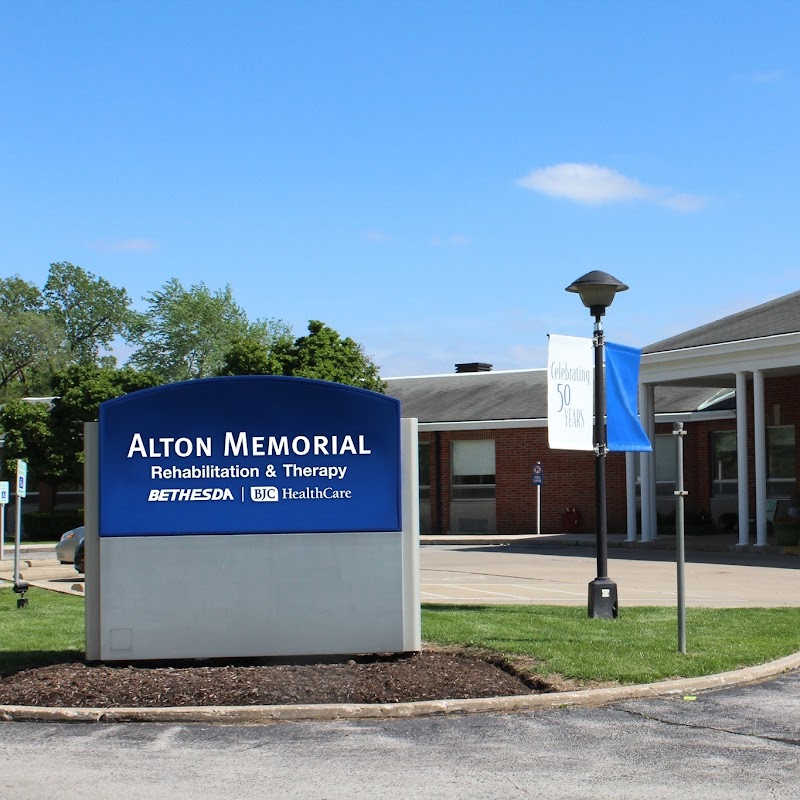
How is Alton Memorial Rehab & Therapy Staffed?

CMS rates ALTON MEMORIAL REHAB & THERAPY's staffing level at 4 out of 5 stars, which is above average compared to other nursing homes. Staff turnover is 44%, compared to the Illinois average of 46%. This relatively stable workforce can support continuity of care.

What Have Inspectors Found at Alton Memorial Rehab & Therapy?

State health inspectors documented 28 deficiencies at ALTON MEMORIAL REHAB & THERAPY during 2022 to 2025. These included: 5 that caused actual resident harm and 23 with potential for harm. Deficiencies causing actual harm indicate documented cases where residents experienced negative health consequences.
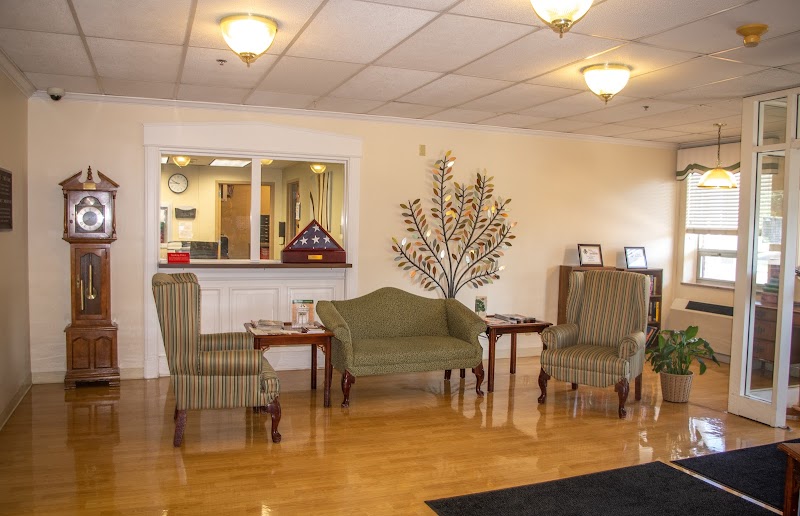
Who Owns and Operates Alton Memorial Rehab & Therapy?

ALTON MEMORIAL REHAB & THERAPY is owned by a non-profit organization. Non-profit facilities reinvest revenue into operations rather than distributing to shareholders. The facility is operated by BJC HEALTHCARE, a chain that manages multiple nursing homes. With 64 certified beds and approximately 44 residents (about 69% occupancy), it is a smaller facility located in ALTON, Illinois.
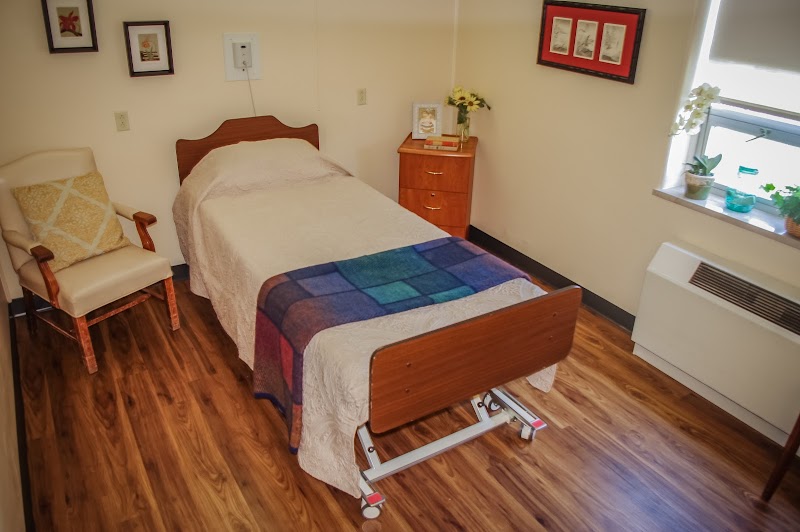
How Does Alton Memorial Rehab & Therapy Compare to Other Illinois Nursing Homes?

Compared to the 100 nursing homes in Illinois, ALTON MEMORIAL REHAB & THERAPY's overall rating (3 stars) is above the state average of 2.5, staff turnover (44%) is near the state average of 46%, and health inspection rating (3 stars) is at the national benchmark.

What Should Families Ask When Visiting Alton Memorial Rehab & Therapy?

Based on this facility's data, families visiting should ask: "Can I visit during a mealtime to observe dining assistance and food quality?" "How do you handle medical emergencies, and what is your hospital transfer rate?" "Can I speak with family members of current residents about their experience?"

Is Alton Memorial Rehab & Therapy Safe?

Based on CMS inspection data, ALTON MEMORIAL REHAB & THERAPY has a clean safety record: no substantiated abuse findings (meaning no confirmed cases of resident harm), no Immediate Jeopardy citations (the most serious violation level indicating risk of serious injury or death), and is not on the Special Focus Facility watch list (a federal program monitoring the lowest-performing 1% of nursing homes). The facility has a 3-star overall rating and ranks #1 of 100 nursing homes in Illinois. While no facility is perfect, families should still ask about staff-to-resident ratios and recent inspection results during their visit.

Do Nurses at Alton Memorial Rehab & Therapy Stick Around?

ALTON MEMORIAL REHAB & THERAPY has a staff turnover rate of 44%, which is about average for Illinois nursing homes (state average: 46%). Moderate turnover is common in nursing homes, but families should still ask about staff tenure and how the facility maintains care continuity when employees leave.

Was Alton Memorial Rehab & Therapy Ever Fined?

ALTON MEMORIAL REHAB & THERAPY has been fined $45,819 across 3 penalty actions. The Illinois average is $33,537. While any fine indicates a compliance issue, fines under $50,000 are relatively common and typically reflect isolated problems that were subsequently corrected. Families should ask what specific issues led to these fines and confirm they've been resolved.

Is Alton Memorial Rehab & Therapy on Any Federal Watch List?

ALTON MEMORIAL REHAB & THERAPY is not on any federal watch list. The most significant is the Special Focus Facility (SFF) program, which identifies the bottom 1% of nursing homes nationally based on persistent, serious quality problems. Not being on this list means the facility has avoided the pattern of deficiencies that triggers enhanced federal oversight. This is a positive indicator, though families should still review the facility's inspection history directly.