ST PAUL'S SENIOR COMMUNITY
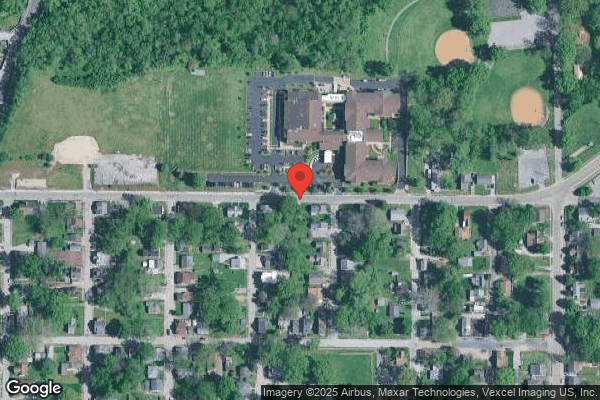

1021 WEST E STREET, BELLEVILLE, IL 62220 (618) 233-2095
For profit - Limited Liability company 108 Beds TUTERA SENIOR LIVING & HEALTH CARE Data: November 2025 3 Immediate Jeopardy citations
Trust Grade
0/100
#638 of 665 in IL
Last Inspection: January 2025

Within standard 12-15 month inspection cycle. Federal law requires annual inspections.

Overview

St. Paul's Senior Community in Belleville, Illinois, has received a Trust Grade of F, indicating significant concerns about the quality of care provided. It ranks #638 out of 665 facilities in Illinois, placing it in the bottom half statewide and at #15 out of 15 in St. Clair County, meaning there are no better local options. The facility is worsening, with issues increasing from 7 in 2024 to 13 in 2025. Staffing appears to be a strength with a 0% turnover rate, which is below the state average, but the overall staffing rating is low at 1 out of 5 stars. However, the facility has accumulated concerning fines of $308,209, which are higher than 94% of Illinois facilities, suggesting ongoing compliance problems. Specific incidents include a resident sustaining critical injuries due to improper transfer techniques, which led to severe fractures and a prolonged lack of timely care. Overall, while staffing stability is a positive aspect, the alarming safety issues and poor overall rating make this facility a risky choice for families.

Trust Score
F
0/100
In Illinois
#638/665
Bottom 5%
Safety Record
High Risk
Review needed
Inspections
Getting Worse
7 → 13 violations
Staff Stability
○ Average
Turnover data not reported for this facility.
Penalties
⚠ Watch
$308,209 in fines. Higher than 87% of Illinois facilities, suggesting repeated compliance issues.
Skilled Nurses
○ Average
Each resident gets 32 minutes of Registered Nurse (RN) attention daily — about average for Illinois. RNs are the most trained staff who monitor for health changes.
Violations
⚠ Watch
35 deficiencies on record. Higher than average. Multiple issues found across inspections.
★☆☆☆☆
1.0
Overall Rating
★☆☆☆☆
1.0
Staff Levels
★☆☆☆☆
1.0
Care Quality
★★☆☆☆
2.0
Inspection Score
Stable
2024: 7 issues
2025: 13 issues

The Good

  • Full Sprinkler Coverage · Fire safety systems throughout facility
  • No fines on record

Facility shows strength in fire safety.

The Bad

1-Star Overall Rating

Below Illinois average (2.5)

Significant quality concerns identified by CMS

Federal Fines: $308,209

Well above median ($33,413)

Significant penalties indicating serious issues

Chain: TUTERA SENIOR LIVING & HEALTH CARE

Part of a multi-facility chain

Ask about local staffing decisions and management

The Ugly 35 deficiencies on record

3 life-threatening 7 actual harm
Sept 2025 1 deficiency
CONCERN (D) 📢 Someone Reported This

A family member, employee, or ombudsman was alarmed enough to file a formal complaint

Potential for Harm - no one hurt, but risky conditions existed

Deficiency F0726 (Tag F0726)

Could have caused harm · This affected 1 resident

**NOTE- TERMS IN BRACKETS HAVE BEEN EDITED TO PROTECT CONFIDENTIALITY** Based on interview and record review, the Facility failed to ensure nurse aids had the skills and competencies to care for 1 of ...

Read full inspector narrative →
**NOTE- TERMS IN BRACKETS HAVE BEEN EDITED TO PROTECT CONFIDENTIALITY** Based on interview and record review, the Facility failed to ensure nurse aids had the skills and competencies to care for 1 of 3 residents with urinary catheters (R2) in the sample of 3.Findings include: 1-R2's Face Sheet documents R2 was admitted to the facility on [DATE] with diagnoses including paraplegia and neuromuscular dysfunction of bladder.R2's Minimum Data Set (MDS) dated [DATE] documented R2 was independent with cognitive skills for daily decision making, required partial assistance with rolling from side to side, was dependent for transfer, and had indwelling catheter.R2's Physician Order dated 8/27/25 documents R2 has indwelling urinary catheter with diagnosis of neurogenic bladder.R2's Care Plan initiated 6/3/24 documents R2 has a catheter related to neuromuscular dysfunction of the bladder and will remain free from catheter-related trauma.R2's Progress Note by V7, Registered Nurse, on 9/10/25 at 5:31 PM documents R2 stated V4 Certified Nursing Assistant (CNA) pulled on his catheter. The catheter is leaking urine, and R2 requested to go to the emergency room (ER).R2's Hospital After Visit Summary dated 9/10/25 documents R2 was seen for displacement of indwelling urinary catheter.R2's Progress Note by V8, Medical Doctor (MD), on 9/12/25 documents R2 was seen for catheter pain and reported forceful tugging on the catheter on behalf of his nurse aid. There was no evidence of significant trauma at that time. R2's Grievance Form dated 9/10/25 documents, CNA was being rough and pull(ed) on catheter. (R2) stated that he does not want that CNA in his room.On 9/17/25 at 8:48 AM, R2 was lying in bed in his room with catheter tubing running into a dignity bag hanging off the side of his bed. R2 stated V4 (always takes the catheter bag off the bed to empty his urine, whereas the other nurses just open the clamp and let it drain out into the urinal. One morning V4 was emptying his catheter, and the tubing just went snap. He had to catch the line higher up (toward his body) to keep it from pulling more. He stated if he had not grabbed the tubing the catheter would have come completely out. R2 added, I don't wish this on nobody, but I know what it felt like, and it wasn't good. It's another trip to the hospital my insurance shouldn't have to pay for.On 9/17/25 at 8:45 AM, V6, Licensed Practical Nurse (LPN), stated R2 complained that V4 pulled on his catheter and is generally not very careful with it.On 9/17/25 at 11:51 PM, V4 stated she was providing care to R2 last week when he told her his catheter hurt. The catheter bag had been placed on the bed frame, so she tried to lift the mattress off the bed frame to remove the bag. When R2 said it hurt, she pulled up his bed sheet. The leg strap that connects to the tube to keep it from pulling was in the middle of his thigh. V4 stated that probably should have been further up on his leg or not be worn at all, as he usually does not.On 9/17/25 at 1:35 PM, V2, Director of Nursing (DON), stated it is not procedure to lift the mattress on residents' beds while emptying catheter bags. Staff should open the clamp on the bag and allow the urine to drain into a urinal. The leg bands that secure catheter placement should always be worn. It was a competency issue when V4 pulled on R2's catheter, and staff were in serviced regarding the Facility's catheter care policy and procedure after this happened.V4's Employee Suspension Form dated 9/10/25 documents, The allegation occurred on 9/10/25. Resident states staff pulled his catheter by not following correct procedures which caused issues with his catheter, leaking and pain. The incident was described as poor work quality and was classified as a category II offense where employee is not entitled to back pay while on suspension.The Facility's Catheter Care, Urinary Policy reviewed 4/20 documents, Ensure resident is not lying on the catheter and keep the catheter and tubing free of kinks. Ensure that the catheter remains secured with a leg strap to reduce friction and movement at the insertion site. (Note: Catheter tubing should be strapped to the resident's inner thigh.
Sept 2025 2 deficiencies
CONCERN (D) 📢 Someone Reported This

A family member, employee, or ombudsman was alarmed enough to file a formal complaint

Potential for Harm - no one hurt, but risky conditions existed

Deficiency F0804 (Tag F0804)

Could have caused harm · This affected 1 resident

**NOTE- TERMS IN BRACKETS HAVE BEEN EDITED TO PROTECT CONFIDENTIALITY** Based on interview, observation, and record review, the Facility failed to provide appetizing food at palatable temperatures for...

Read full inspector narrative →
**NOTE- TERMS IN BRACKETS HAVE BEEN EDITED TO PROTECT CONFIDENTIALITY** Based on interview, observation, and record review, the Facility failed to provide appetizing food at palatable temperatures for 3 of 5 residents (R1, R2, R5) reviewed for food and nutrition services in the sample of 5.Findings Include:1- R1's Face Sheet documents he was admitted to the facility on [DATE] with diagnoses including gastric ulcer, end stage renal disease, and muscle wasting and atrophy.R1's 8/15/25 Diet Order documents liberal renal precautions; no orange juice or bananas; limit potatoes and tomatoes; provide double protein portions three times daily; restrict fluid to 1500 mL (milliliter) in 24 hours.R1's Minimum Data Set (MDS) dated [DATE] documented R1 was cognitively intact.On 9/4/25 at 9:20 AM, R1 stated the food is not good and is always cold.2-R2's Face Sheet documents R2 was admitted to the facility on [DATE] with diagnoses including stage 3 sacral pressure ulcer, burns involving 50-59% of body surface, dependence on renal dialysis, and muscle wasting and atrophy.R2's 8/12/25 Diet Order documents renal diet with no orange juice, oranges, bananas, or milk; limit tomatoes and potatoes to one meal per day.R2's MDS dated [DATE] documented R2 was cognitively intact.On 9/4/25 at 9:45 AM, R2 stated the food is awful about half the time. It usually arrives late and is cold.3-R5's Face Sheet documents R5 was admitted to the facility on [DATE] with diagnoses including unspecified pressure ulcer of sacral region, muscle wasting and atrophy, and need for assistance with personal care.R5's 11/14/24 Diet Order documents pureed diet with double portions and mechanical soft preferences, per Speech Language Pathologist (SLP).R5's MDS dated [DATE] documented R5 was moderately cognitively impaired.The Facility's 6/11/25 Grievance by R5 documents R5 concerned that food quality is not good.On 9/4/25 at 3:10 PM, R5 stated the food is still lousy most of the time.On 9/4/25 at 12:40 PM, obtained temperatures from a sample meal from the Two South Kitchenette using a metal calibrated thermometer after the last resident tray was served. The gravy was in a pan on the counter and had no method for maintaining the temperature during meal service. The gravy temperature was 105 F (Fahrenheit). V13, Assistant Dietary Manager, stated that needs to be kept in the warmer. The Facility's Resident Council Meeting Minutes dated 6/27/25 documents food is cold as an issue/concern The Facility's Resident Council Meeting Minutes dated 8/29/25 documents food cold as an issue/concern.On 9/4/25 at 3:57 PM, V1, Regional Director of Operations/Interim Administrator, stated she expects staff to serve food at acceptable temperatures as described in the Facility policy.The Facility's Undated Monitoring Food Temperatures for Meal Service Policy documents, Food temperatures of hot foods on room trays at the point of service are preferred to be 120 F or greater to promote palatability for the resident.
CONCERN (D) 📢 Someone Reported This

A family member, employee, or ombudsman was alarmed enough to file a formal complaint

Potential for Harm - no one hurt, but risky conditions existed

Deficiency F0806 (Tag F0806)

Could have caused harm · This affected 1 resident

**NOTE- TERMS IN BRACKETS HAVE BEEN EDITED TO PROTECT CONFIDENTIALITY** Based on interview and record review, the Facility failed to ensure always available alternative options were available for 2 of...

Read full inspector narrative →
**NOTE- TERMS IN BRACKETS HAVE BEEN EDITED TO PROTECT CONFIDENTIALITY** Based on interview and record review, the Facility failed to ensure always available alternative options were available for 2 of 5 residents (R2, R5) reviewed for food and nutrition services in the sample of 5.1-R2's Face Sheet documents R2 was admitted to the facility on [DATE] with diagnoses including stage 3 sacral pressure ulcer, burns involving 50-59% of body surface, dependence on renal dialysis, and muscle wasting and atrophy.R2's 8/12/25 Diet Order documents renal diet; no orange juice, oranges, bananas, or milk; limit tomatoes and potatoes to one meal per day.R2's MDS dated [DATE] documented R2 was cognitively intact. On 9/4/25 at 9:45 AM, R2 stated the Facility has an alternative menu, but is always told they do not have the items he requests.2-R5's Face Sheet documents R5 was admitted to the facility on [DATE] with diagnoses including unspecified pressure ulcer of sacral region, muscle wasting and atrophy, and need for assistance with personal care.R5's 11/14/24 Physician Order documents pureed diet with double portions and mechanical soft preferences, per Speech Language Pathologist (SLP).R5's MDS dated [DATE] documented R5 was moderately cognitively impaired.R5's 6/11/25 Grievance documents the Facility is always out of food items.On 9/4/25 at 3:10 PM, R5 stated he does not like the food, but does not ask for alternates because he knows is not going to get it. They always tell him they don't have it.On 9/4/25 at 10:17 AM, V8, Dietary Manager, stated they run out of some alternative items like chicken strips and French fries.On 9/4/25 at 3:57 PM, V1, Regional Director of Operations/Interim Administrator, stated the alternative menu is available from 7:00 AM to 7:00 PM. There will be isolated instances where certain foods are not available from time to time, but in general, the alternative options should be available to residents.On 9/4/25 at 2:28 PM, requested Facility policy regarding alternative menus from V1.On 9/5/25 at 10:00 AM, no policy was received from the Facility.The Facility's Alternative Menu documents two pages of food choices, including chicken tenders, French fries, and various soups and sandwiches.
Apr 2025 1 deficiency
CONCERN (D) 📢 Someone Reported This

A family member, employee, or ombudsman was alarmed enough to file a formal complaint

Potential for Harm - no one hurt, but risky conditions existed

Menu Adequacy (Tag F0803)

Could have caused harm · This affected 1 resident

**NOTE- TERMS IN BRACKETS HAVE BEEN EDITED TO PROTECT CONFIDENTIALITY** Based on interview, and record review the facility failed to provide diets as ordered and failed to follow pre-planned meals for...

Read full inspector narrative →
**NOTE- TERMS IN BRACKETS HAVE BEEN EDITED TO PROTECT CONFIDENTIALITY** Based on interview, and record review the facility failed to provide diets as ordered and failed to follow pre-planned meals for 2 of 4 residents (R3, R4) in a sample of 7. Findings Include: 1. On 3/28/2025 at 9:10 AM, R3 stated he does not always get what he orders from the facility's menu, due to the facility running out of food or not having what is listed on the menu for that meal. R3's Minimum Data Set (MDS) dated [DATE] documents R3 is cognitively intact. R3's Physician Order dated 3/19/2025 documents R3 is on a Consistent Carbohydrate diet with regular texture and liquid consistency. 2. On 3/28/2025 at 11:52 AM, R4 stated she is on a mechanical soft diet and will receive 2 items on her tray but will not always receive 3 or 4 items. R4 stated the facility does not always have available what is listed on the menu. R4's MDS dated [DATE] documents R4 is mildly cogitatively impaired and needs supervision or touching assistance with eating. R4's Physician Order dated 3/4/2025 at 7:38 PM, documents R4 has a regular diet with mechanical soft texture, regular liquid consistency. R4's Care Plan dated 7/01/2024 documents diet to be followed as prescribed. Grievance dated 1/31/2025 documents description of incident: Not offering different choices in drinks only giving half sandwiches for a meal. Residents ordering food and never getting it. Grievance dated 1/31/2025 documents description of incident: Early dialysis patients not getting breakfast before dialysis. Grievance dated 1/31/2025 documents description of incident: Food quality-no protein in meals, burnt food, being out of milk, juice, lemonade etc. Serving the same soup 2-3 days in a row. Two people had this concern. Grievance dated 2/28/2025 documents description of incident: Food is cold, not getting what is on the menu, no protein offered on some meals. Grievance dated 3/2/2025 documents description of incident: Lunch menu said shrimp but served grilled cheese and chips on paper plates. Grilled cheeses were burnt-dietary aide told nurse she didn't know how to work the stove top. Dietary aid didn't serve any soup. Nurse made all new sandwiches. Never any fruit with meals or on hall. On 3/28/2025 at 8:15 AM V4, Interim Certified Dietary Manager stated he has been in his current position for about a month and when he started this position the facility was not making everything on the menu for the residents who have special diets such as pureed and mechanical soft. V4, Interim Certified Dietary Manager, stated residents were not receiving the proper number of items off the menu if they have a special diet. On 3/28/2025 at 8:34 AM V5 Licensed Practical Nurse (LPN) stated residents that are on a mechanical soft or pureed diet will receive 2 things off the facility menu made for their diet, but not always 3 or 4 items. On 3/28/2025 at 9:30 AM, V3, Assistant Director of Nursing (ADON), stated residents who have orders for special diets such as a mechanical soft or pureed diet are expected to receive the facility's full menu made to how the resident's diet is ordered, which should consist of at least 3 items. On 3/28/2025 at 11:47 AM V11, Activities Assistant, stated residents who are on special diets will not always receive 3 items from the menu made for them, but they will receive 2 items. On 3/28/2025 at 11:50 AM V12, Certified Nursing Assistant (CNA), stated residents with special diets will receive 2 items from the facility's menu made per their diet, however they will not always receive 3 items. On 3/28/2025 at 12:00 PM V14, LPN stated not everything on the facility's menu will be made for the residents with special diets such as mechanical soft or pureed. V14, LPN, stated she knows on the weekends, residents will only receive maybe 2 items from the menu, but not 3 or 4 items. The Facility's Menus and Special Diets Policy, Subject Menu Planning dated 9/7/2017 states The nutritional needs of residents will be met in accordance with the recommended dining allowances of the Food and Nutrition Board of the National Research Council, National Academy of Science (which are adjusted for age, gender, activity level, and disability). through nourishing well balanced diets, unless contraindicated by medical needs. Menus will also be prepared and presented in a hospitality charged environment.
Feb 2025 1 deficiency 1 Harm
SERIOUS (G) 📢 Someone Reported This

A family member, employee, or ombudsman was alarmed enough to file a formal complaint

Actual Harm - a resident was hurt due to facility failures

Respiratory Care (Tag F0695)

A resident was harmed · This affected 1 resident

**NOTE- TERMS IN BRACKETS HAVE BEEN EDITED TO PROTECT CONFIDENTIALITY** Based on observation, interview, and record review the facility failed to ensure respiratory care needs met current standards of...

Read full inspector narrative →
**NOTE- TERMS IN BRACKETS HAVE BEEN EDITED TO PROTECT CONFIDENTIALITY** Based on observation, interview, and record review the facility failed to ensure respiratory care needs met current standards of practice for 5 of 6 (R1, R2, R4, R5, R6) reviewed for respiratory care. This failure resulted in R1 experiencing chest pain and tightness, shortness of breath and decreased oxygen saturations after R1 did not receive ordered nebulizer treatments. Findings include: 1.R1 was admitted to the facility on [DATE] with diagnoses of, in part, acute on chronic congestive heart failure (CHF), lymphedema and chronic obstructive pulmonary disease (COPD). R1's Minimum Data Set (MDS) dated [DATE], documented R1 is cognitively intact, and is on oxygen therapy. R1's Care Plan dated 2/18/25 documented R1 has oxygen therapy related to shortness of breath (SOB); R1 has pneumonia, give medications as ordered, monitor/document for side effects and effectiveness; R1 has asthma related to COPD, give nebulizer treatments and oxygen therapy as ordered, monitor for signs and symptoms of impending asthma attack: coughing spells, decreased energy, rapid breathing, complaint of chest tightness or hurting, wheezing, shortness of breath, tightness of neck or chest muscles, malaise or fatigue; and R1 has COPD, give aerosol or bronchodilators as ordered, monitor/document any side effects and effectiveness, give oxygen therapy as ordered by the physician. R1's orders dated 2/17/2025 at 12:00, documented Ipratropium-Albuterol Inhalation Solution 0.5-2.5 (3) MG/3ML (Ipratropium-Albuterol) 3 ml inhale orally every 6 hours for cough, shortness of breath for 5 Days. R1's Medication Administration Record (MAR), documented on 2/17/25 through 2/20/225, V14 LPN, V19, LPN, and V20 LPN gave R1 breathing treatments. R1's breathing treatments on 2/17/25 at 12:00 PM and 6:00 PM were documented as administered by V14. R1's breathing treatments on 2/18/25 at 12:00 AM and 6:00 AM were documented as administered by V19 LPN. R1's breathing treatment on 2/19/25 at 6:00 AM was documented as administered by V19. R1's breathing treatments on 2/20/25 at 12:00 AM and 6:00 AM were documented as administered by V20 LPN. On 2/18/25 at 12:40 PM, V4, Licensed Practical Nurse (LPN), went into R1's room to administer her breathing treatment. V4 stated she would need some time getting the supplies together because it is a new order and would be the first treatment she's received at the facility. R1 was receiving oxygen via nasal cannula and her tank was set to 3(liters)L. At this time, R1 stated she had not received a breathing treatment at the facility yet, she had gotten some while in the hospital though and feels like it would help her. On 2/18/25 at 1:16 PM, V4 went back to R1's room after getting all the supplies she needed for R1's breathing treatment. R1 stated she had feeling constricted in her chest for a few days now. R1 had her right hand over her chest stating her chest felt heavy. V4 stated the orders were for 3milliters(mL) of breathing treatment solution to be given over 10-15minutues for five days. V4 administered the breathing treatment to R1. V4 stated she was not aware the breathing treatments were to be started yesterday and was not told they hadn't been given. V4 stated she noticed the orders today and assumed she was the first to get them. At 1:35 PM, R1 stated she was not feeling worse after the breathing treatment was completed but not much better. On 2/19/25 at 10:30 AM, R1 stated last night she got her breathing treatment but did not get it this morning. R1 stated, The nurse might have charted giving me my breathing treatment, but I know it wasn't done. R1 stated she doesn't like to complain because the CNAs (certified nursing assistant) don't care. R1 stated she doesn't remember anyone checking her vital signs today yet either. R1 stated the less I say the better off I am but she was feeling lightheaded and tired now. On 2/19/25 at 10:40 AM, V6, LPN checked R1's oxygen level and reported it to be 93% while R1 was receiving 2L of oxygen via nasal cannula. R1 reported to V6 her chest felt tight and did not get her breathing treatment this morning. V6 told R1 she would look at her orders and get her something to help. On 2/19/25 at 10:47 AM, V4, LPN, stated she was not aware R1 missed her breathing treatment this morning, the nurse did not report that to her in hand off. On 2/20/25 at 10:03 AM, R1 stated she did not get her breathing treatment again at midnight or at 6:00 AM. R1 stated she was having chest pain and reported it to the CNA about 44 minutes ago and still hasn't been seen. R1's oxygen was set to 1.5L via nasal cannula at this time. R1 does not have orders for oxygen to be given or orders on the settings it should be at. On 2/20/25 at 10:06 AM, this surveyor reported R1's complaints of chest pain to nurses V6 LPN and V14 LPN. V14 stated V13 CNA had not reported anything to her about R1 having chest pain. V14 stood up and went to R1's room with vitals sign monitor. R1's vitals were 98.2 temperature, 131/66 blood pressure, 88% oxygen saturation, 125 heart rate with reports of shortness of breath, feeling uncomfortable and having audible wheezes while breathing. V14 told R1 to take some deep breaths and offered her a dose of her albuterol inhaler. R1 stated would rather get her breathing treatment instead since she missed her other doses earlier today. V14 left and came back with a different pulsometer and got readings of 100% oxygen saturation with heart rate of 72. V14 stated R1's lungs were crackled but did not listen to them with a stethoscope. V14 stated the nurse that gave hand off report to her did not mention R1 missed any breathing treatments. V14 told V6 to contact R1's provider about her findings. On 2/20/25 at 12:45 PM, R1 stated she feels like the staff should be giving her breathing treatments as ordered, if they had been I might be feeling better now but my chest still feels heavy. V14 came in and checked R1's oxygen levels and reported them to be 76%. R1's oxygen was set at 1.5L. V14 changed R1's oxygen to 3L after her readings. R1 had a saturation of 82% after being placed on 3L. V14 stated she was going to notify the doctor. On 2/19/25 at 2:39 PM, V2, DON, stated V19 charted giving R1 her breathing treatments but did not actually administer them. V2 stated she could not deny this because R1 is cognitively with it. V2 stated the nurse told her she had pulled R1's nebulizer treatment and had it ready to go, charted that it was given but forgot to give it. V2 stated she told V19 if she charts it given, then she needs to actually give it. V2 stated she expects staff to document accurately. V2 stated she was going to be completely honest, on 2/17/25 the breathing treatments hadn't been started if V4 had to go and find new supplies to administer it. On 2/24/25 at 8:48 AM, V18, R1's Nurse Practitioner, stated she would expect the facility to administer medications to R1 as ordered and if she was missing over half the amount of breathing treatments to be notified of that also. V18 stated the breathing treatments were ordered for R1 due to an acute breathing issue with shortness of breath. V18 stated R1 should be on 2L of oxygen but just noticed now R1 didn't have oxygen orders in her chart. V18 stated missing breathing treatments and having the wrong amount of oxygen administered could cause R1 to have worsening/exacerbation of her COPD and increased workload on her heart with all the excess fluid she has. 2.R2 was admitted to the facility on [DATE] with diagnoses of, in part, congestive heart failure, iron deficiency anemia, and chronic obstructive pulmonary disease. R2's MDS dated [DATE] documented R2 is moderately cognitively impaired. R2's Care Plan dated 2/17/25 documented R2 has oxygen therapy related to CHF and to monitor for signs and symptoms of respiratory distress and report to medical doctor (MD) as needed (PRN): Respirations, Pulse oximetry, Increased heart rate (Tachycardia), Restlessness, Diaphoresis, Headaches, Lethargy, Confusion, Atelectasis, Hemoptysis, Cough, Pleuritic pain, Accessory muscle usage, Skin color; R2 has oxygen (O2) via nasal prongs/mask; R2 has asthma relate to CHF; R2 has COPD, give aerosol or bronchodilators as ordered, monitor/document any side effects and effectiveness; R2 has altered respiratory status/difficulty breathing related to chronic respiratory therapy. R2's orders dated 2/19/2025 at 2:30 PM documented R2 to be on 3L of oxygen nasal cannula continuously. On 2/20/25 at 9:42 AM, R2 was in his room directly across the hall from the nurse's station with his door wide open, no nasal cannula was attached to his face. This surveyor observed R5 looking out his window in his wheelchair and could hear an oxygen concentrator turned on from the hallway. Upon entering R2's room, this surveyor observed R2's nasal cannula hooked up to the concentrator set to 3L laying on the floor. On 2/20/25 At 10:20 AM, R2 was in the same position with his nasal cannula lying on the floor. At 10:22 AM, V10, Physical Therapy, came to take R2 for a session. V10 removed R2's nasal cannula from his concentrator and hooked it up to the empty tank on the back of R2's wheelchair. At 10:25 AM, R2 was noted to be pale and took fast shallow breaths. This surveyor requested V11, CNA, check R2's oxygen saturation level before leaving to physical therapy. V11 assessed his oxygen levels and were running at 48-50%. V11 asked R2 via a communications board if he was having trouble breathing and he responded yes. V11 hooked R2 back up to his concentrator and removed R2 from the oxygen saturation monitor before leaving him in his room. V11 left R2 in his room alone after having oxygen saturation levels at 50% and reports of trouble breathing without notifying his nurse. At 10:30 AM, V11 returned with one oxygen tank and told the other CNA that she is going on break then left the unit. V12, Registered Nurse, stated V11 did not report any vital signs to her on R2. On 2/20/25 at 10:37 AM, V10, came back to R2's room and hooked R2 up to the new oxygen tank. V10 stated he was not told of what R2's oxygen saturations levels were and did not check to see what they were or verify if it was safe with nursing staff to take him. V10 left the unit with R2 at 10:44 AM. On 2/20/25 at 8:50 AM, V5 CNA stated she did not know how to check how many liters a resident was on while receiving oxygen, she would rely on the nurses to set it and check to make sure it was right. V5 stated yesterday, 2/19/25, R2 had come back from physical therapy with an empty oxygen tank and his saturation levels were in the 50s, she reported it immediately to the nurse who told her to stay with R2 while she went to get more oxygen for him and set it up. On 2/20/25 at 10:45 AM, V15, CNA, stated that she would tell the nurse immediately if a resident had oxygen levels in the 50s. On 2/20/25 at 10:55 AM, V16, CNA, stated she would get the nurse and wait to do anything while staying with the resident if they had oxygen levels in the 50s or reported chest pain. On 2/20/25 at 10:58 AM, V17, CNA stated she would get the nurse for oxygen levels in the 50s or chest pain reports. V17 stated she checks on oxygen tanks before hooking them up and every two hours while using them to make sure they are not empty. 3.R4 was admitted to the facility on [DATE] with diagnosis of, in part, type two diabetes mellitus and chronic kidney disease. R4's MDS dated [DATE] documented R4 is moderately cognitively impaired. R4's Care Plan dated 1/9/25, documented R4 has oxygen therapy with no documentation of what it was related to and R4 has shortness of breath. R4's current orders dated 4/10/2024 at 2:30 PM are for oxygen at 2L continuously. On 2/19/25 at 10:51 AM, R4 was lying in bed with oxygen on via nasal cannula at 3L (Liters). 4. R5 was admitted to the facility on [DATE] with diagnoses of, in part, acute and chronic respiratory failure, acute on chronic congestive heart failure, emphysema, and chronic obstructive pulmonary disease. R5's MDS dated [DATE] documented R5 is cognitively intact. R5's Care Plan dated 2/17/25 documented R5 has respiratory infection; R5 has oxygen therapy related to chronic respiratory failure; and R5 has COPD Give oxygen therapy as ordered by the physician. On 2/20/25 at 9:33 AM, R5 was sitting in the dining room with an empty oxygen tank hooked to the back of his wheelchair set to 3L. R5 stated he could not feel any oxygen running through his nasal cannula. R5 stated his lungs felt a little tight usually and thinks he should get breathing treatments but doesn't. R5 pulled out an albuterol inhaler from his pocket and stated he will take puffs from that whenever he needs it. R5 reported to V8 that he needed more oxygen. V8 stated looks like you're out of oxygen too, then left to get R5's concentrator from his room. R5's oxygen saturation was 97%. On 2/17/2025 at 6:30 AM documented R5 is supposed to get 2L of oxygen nasal cannula. 5.R6 was admitted to the facility on [DATE] with diagnosis of, in part, chronic obstructive pulmonary disease, acute respiratory failure with hypoxia, and malignant neoplasm of bronchus. R6's MDS dated [DATE] documented R6 is cognitively intact. R6's Care Plan dated 2/10/25 documented R6 has altered respiratory status/difficulty breathing related to acute respiratory failure and R6 has COPD, give oxygen therapy as ordered by the physician. On 2/20/25 at 9:30 AM, R6 was sitting in the dining room with an empty oxygen tank hooked to the back of her wheelchair set to 2L. R6 stated she did not feel any oxygen coming through the nasal cannula. At 9:35 AM, V8 stated the floor was completely out of oxygen tanks. On 2/20/25 at 1:45 PM, V2 stated her expectation from staff when running low on oxygen tanks is to be notified right away so I can make an urgent delivery on them. V2 stated if someone has oxygen saturations in the 50s after not having oxygen on or if oxygen is not being administered, I expect to be notified. The facility's Oxygen Administration Policy dated 12/24, documented under preparation to verify that there is a physician's order for this procedure for oxygen administration. The facility's Medication Administration Policy undated, documented all staff members are expected to follow these guidelines strictly and to report any issues or deviations from the policy; residents who self-administer must have a profile only MAR which lists their medications and indicates that they self-administer; medication administration should be accurately documented on the MAR immediately after each administration, any errors, omissions, or incidents related to medication administration must be documented in the clinical record and reported as per facility policy. The facility's Nebulized Medication Policy undated, documented under tasks to access lung sounds before and after treatments are given.
Feb 2025 5 deficiencies 1 Harm
SERIOUS (G) 📢 Someone Reported This

A family member, employee, or ombudsman was alarmed enough to file a formal complaint

Actual Harm - a resident was hurt due to facility failures

Resident Rights (Tag F0550)

A resident was harmed · This affected 1 resident

**NOTE- TERMS IN BRACKETS HAVE BEEN EDITED TO PROTECT CONFIDENTIALITY** Based on interview, observation, and record review, the facility failed to maintain residents' pride and dignity for 3 of 5 resi...

Read full inspector narrative →
**NOTE- TERMS IN BRACKETS HAVE BEEN EDITED TO PROTECT CONFIDENTIALITY** Based on interview, observation, and record review, the facility failed to maintain residents' pride and dignity for 3 of 5 residents (R1, R3, R5) reviewed for resident dignity in the sample of 5. This failure resulted in expressed feelings of embarrassment and frustration. The Findings Include: 1. R1's admission Record, dated 2/5/25, documents R1 was admitted to the facility on [DATE] with diagnoses of Chronic Obstructive Pulmonary Disease (COPD), Respiratory Failure, Malignant Neoplasm of bronchus or lung, Hypertension (HTN), Morbid Obesity, Diverticulosis, Sleep Apnea, Nicotine Dependence, Lymphedema, Pulmonary HTN, Congestive Heart Disease (CHF), and Peripheral Vascular Disease (PVD). R1's Care Plan, dated 1/24/25, documents R1 has COPD: Interventions: Give aerosol or bronchodilators as ordered, give oxygen therapy as ordered by the physician, monitor for difficulty breathing (Dyspnea) on exertion, remind resident not to push beyond endurance, monitor for signs/symptoms of acute respiratory insufficiency. It continues R1 has Oxygen (O2) Therapy related to shortness of breath (SOB). Interventions: The resident has O2 via nasal prongs/mask continuously, humidified, monitor for signs/symptoms of respiratory distress and report to Medical Doctor as needed (PRN). It continues R1 has altered respiratory status/Difficulty Breathing related to acute respiratory failure. Interventions: Administer medication/puffers as ordered, elevate head of bed (HOB). It continues R1 has bladder incontinence. Interventions: the resident uses disposable briefs, change (freq/frequent) and PRN, check the resident (freq) and as required for incontinence, wash, rinse, and dry perineum, change clothing PRN after incontinence episodes. R1 has bowel incontinence. Interventions: Provide bedpan/bedside commode, provide peri-care after each incontinent episode. R1's Minimum Data Set (MDS), dated [DATE], documents R1 is cognitively intact and is dependent on staff for Activities of Daily Living (ADLs). R1 is frequently incontinent of both bowel and bladder. On 2/6/25 at 8:40 AM, R1 was seen lying on her side with a strong odor of feces in the room. R1 stated I am very upset because I let the Certified Nursing Assistant (CNA) know that I had a Bowel Movement (BM) and was saturated about 30-minutes ago and was told that she would be right back. I have been lying in my BM since then, and no one has come in to take care of me yet this morning. I am usually out of bed by now. On 2/6/25 at 8:44 AM, V13, CNA, brought in R1's breakfast tray and set it on her bedside table. R1 stated You're bringing me my breakfast without even cleaning me up first? V13 stated We already had this discussion. and walked out of the room. R1 stated Her discussion was 'You missed breakfast and now have to eat in your room.' Now my breakfast will be cold by the time I get to eat it. I am very messy and stinky. This has me very frustrated and embarrassed and it takes away my dignity and pride, and I have no control over it. On 2/6/25 at 8:52 AM, R1 was provided incontinence care by V13, CNA, and V16, CNA. On 2/6/25 at 9:20 AM, When asked if R1 notified her of being soiled this morning, V13 stated Yes, she did. She put her call light on, and I answered it and told her I would be right back. Then I was helping another resident and was going to go to her after that. When asked why she would bring her breakfast tray to her before cleaning her up, V13 stated I was given the cart of trays and told to deliver them to all the residents in the rooms and I didn't want all the food to get cold. What was I supposed to do? 2. R3's admission Record, dated 1/5/25, documents R3 was admitted to the facility on [DATE] with diagnosis of Hypoglycemia, End Stage Renal Disease (ESRD), Dependence on Renal Dialysis, Cerebral Infarction, Aphasia, HTN, Spinal Stenosis Cervical, and Anemia. R3's Care Plan, dated 12/9/24, documents R3 has bladder incontinence. Interventions: The resident uses medium disposable briefs, change (freq) and PRN, check the resident every two Hours and as required for incontinence, wash, rinse and dry perineum, change clothing PRN after incontinence episodes. It continues R3 has bowel incontinence. Interventions: Check resident every two hours and assist with toileting as needed, observe pattern of incontinence, and initiate toileting schedule if indicated, provide bedpan/bedside commode, provide peri-care after each incontinent episode, take resident to toilet at same time each day resident usually has bowel movement. It continues R3 has an ADL Self-Care Performance Deficit. Interventions: The resident is totally dependent on staff for toilet use, requires two staff participation to use toilet. R3's MDS, dated [DATE], documents R3 has a moderate cognitive impairment and is dependent on staff for toileting and transfers, requires substantial/maximum assistance from staff for other ADLs. R3 is frequently incontinent of both bowel and bladder. On 2/5/26 at 1:56 PM, V11, R3's daughter, stated My mom (R3) called me on Saturday morning (2/1/25) around 7:30 AM. She told me she had to use the restroom and put her call light on, and no one is answering it. Mom said her call light has been on for an hour and half already. While I was on the phone with her, a CNA (V9) came in and told mom that she was the only one working the floor and that mom was a two-person assist and she could not get her to the restroom herself. The CNA told her to just go in her bed and to put her call light on and she will clean her up when she is done. When the CNA left, my mom said (V11), I don't sh** in my pants, what am I supposed to do. We waited about two minutes later, and I had mom turn on the call light to see if the CNA would come back and we waited 20 more minutes, and she never came back. At that point, I decided to come on in myself. It takes me a while to get there but I would say within an hour I was there, and mom's call light was still on, and no one had helped her. Mom did wet her pants but did not have a bowel movement. (V3, Assistant Director of Nursing/ADON) was here by then and told me that everyone called in and she was the one on-call, so she had to come in to assist. (V3) told me she was very sorry and that it was just her and one CNA working. She said she called (staffing agency) and they didn't have anyone. (V3) told me she called (V2, Director of Nursing/DON) five times and that (V2) did not answer her phone. (V2) never showed up to help the staff out. There was mom's physical therapist (V10, Physical Therapist Assistant/PTA) who happened to be visiting her family member and both of us were helping other residents get up and to the dining room to eat. I'm a Licensed Practical Nurse (LPN) so knew what needed to be done, however, I did not work as a nurse, more as a CNA, and (V3) allowed us to help everyone out. I have been working with (V1, Administrator) and the Social Service person to get mom out of there and I believe we are moving her this coming Friday (2/7/25). On 2/5/25 at 2:25 PM, V3, ADON, stated I was called Saturday (2/1/25) because we had a bunch of call-offs. I couldn't get anyone to come in, so I came in. There was only one Nurse and one CNA working the 100-South unit. When I got here (R3's) daughter was very upset and I had to talk to her. The CNA working (V9) did tell (R3) that she was by herself and could not get her up to use the toilet and to go ahead and go in the bed and she will clean her up afterwards. I had a talk with (V9) and told her that was not the way she should have handled it. (V9) could have gotten the nurse on duty to help her or ask me when I got here. I told (V9) that it was not acceptable, and she should never tell a resident something like that. I called the DON, and she didn't answer, and I don't blame her, it was her day off. I tried again later, and she answered, and I explained what was going on and the DON called (R3's) daughter to talk to her. I ended up working the entire shift because no one would come in. I know that (R3's) daughter did not help with other residents because I was here helping out. On 2/5/25 at 2:35 PM, V10, PTA, stated I was here visiting my grandmother who is staying on this floor (100-South). There was only one CNA working and she had no help to get people up. I did not help anyone but my grandmother that day. I did not see (R3's) daughter assisting other residents either. On 2/5/25 at 2:55 PM, V2, DON, stated Yes, that did happen Saturday, we only had one CNA, but (V3) did come in to assist. (V9) should not have told any resident to go in the bed and she'll clean her up afterwards. I only received one phone call, and I was in the shower and as soon as I got out, I called (V3) back to see what was going on. On 2/5/25 at 3:55 PM, R3 stated (V9) did tell me to just go in my pants in bed and she would clean me up later. She said she didn't have any help to get me up. It's embarrassing enough to go in my pants by accident, but for someone to tell you to do it, it hurt my pride and my dignity. I could not believe someone who works here told me to do that, that is her job. 3. R5's admission Record, dated 2/6/25, documents R5 was originally admitted to the facility on [DATE] with diagnosis of Cholecystitis, Deep Vein Thrombosis (DVT), Hemiplegia/Hemiparesis, Cerebral Infarction, PVD, Morbid Obesity, Cervicalgia, Type 2 Diabetes Mellitus (DM), Myocardial Infarction (MI), Hyperlipidemia, HTN, CHF, Osteoarthritis, Cardiomegaly, Benign Prostatic Hyperplasia (BPH), and Atherosclerosis. R5's Care Plan, dated 12/26/24, documents R5 has an ADL Self Care Performance Deficit. Interventions: can transfer from bed to chair with stand by assist-1 assist, uses quarter rails to help with repositioning in bed, Active Range of Motion, Transfer using one assist, Toilet Use: The resident is able to wash hands, hold grab bars, wipe self, adjust clothing. R5's MDS, dated [DATE], documents R5 is cognitively intact and requires substantial/maximal assistance from staff for toileting, and supervision/touching assistance with transfers. R5 is always continent of both bowel and bladder. On 2/6/25 at 11:00 AM, R5 stated I am the President of the Resident Council, and we have meetings every month. In just about every meeting, there are complaints of the facility not having enough staff to take care of the resident needs. I feel that one of the biggest problems I see at the facility is that we are being treated like children and don't know what is going on, or that the staff think we are ignorant. They should treat everyone the same, as adults. It makes me feel like a lesser person because of how I am treated. There are some staff who seem to bully me, for example, they will bring me something like juice and will just sit it down and say Here. I don't know why some staff are even working because they don't want to do their job. The Facility's Resident Rights Policy, dated 12/2024, documents Each resident residing in this community has the right and will be afforded the right to a dignified existence, self-determination, and communication with and access to persons and services inside and outside the community without interference, coercion, discrimination or reprisal. No staff member or contracted provider of care will hamper, compel, treat differently or retaliate against a resident for exercising Resident Rights. It is the responsibility of all who work in this community, including employees of the community and any others who provide services to the residents of the community, to advocate and protect the rights of each resident. All staff members are trained on this Resident Right Policy at the time of employment, prior to providing care to residents, and at least annually to ensure full understanding related to ensuring each resident's Resident Rights.
CONCERN (D) 📢 Someone Reported This

A family member, employee, or ombudsman was alarmed enough to file a formal complaint

Potential for Harm - no one hurt, but risky conditions existed

Accident Prevention (Tag F0689)

Could have caused harm · This affected 1 resident

**NOTE- TERMS IN BRACKETS HAVE BEEN EDITED TO PROTECT CONFIDENTIALITY** Based on observation, record review and interview the facility failed to provide a safe transfer for 1 of 1 resident (R1) review...

Read full inspector narrative →
**NOTE- TERMS IN BRACKETS HAVE BEEN EDITED TO PROTECT CONFIDENTIALITY** Based on observation, record review and interview the facility failed to provide a safe transfer for 1 of 1 resident (R1) reviewed for resident safety in the sample of 4. The Findings Include: R1's admission Record, dated 2/5/25, documents R1 was admitted to the facility on [DATE] with diagnoses of Chronic Obstructive Pulmonary Disease (COPD), Respiratory Failure, Malignant Neoplasm of bronchus or lung, Hypertension (HTN), Morbid Obesity, Diverticulosis, Sleep Apnea, Nicotine Dependence, Lymphedema, Pulmonary HTN, Congestive Heart Disease (CHF), and Peripheral Vascular Disease (PVD). R1's Care Plan, dated 1/24/25, documents R1 has COPD: Interventions: Give aerosol or bronchodilators as ordered, give oxygen therapy as ordered by the physician, monitor for difficulty breathing (Dyspnea) on exertion, remind resident not to push beyond endurance, monitor for signs/symptoms of acute respiratory insufficiency. It continues R1 has oxygen (O2) Therapy related to shortness of breath (SOB). Interventions: The resident has O2 via nasal prongs/mask continuously, humidified, monitor for signs/symptoms of respiratory distress and report to Medical Doctor as needed (PRN). It continues R1 has altered respiratory status/Difficulty Breathing related to acute respiratory failure. Interventions: Administer medication/puffers as ordered, elevate head of bed (HOB). It continues R1 has bladder incontinence. Interventions: the resident uses disposable briefs, change (freq) and PRN, check the resident (freq) and as required for incontinence, wash, rinse and dry perineum, change clothing PRN after incontinence episodes. R1 has bowel incontinence. Interventions: Provide bedpan/bedside commode, provide peri-care after each incontinent episode. R1's Minimum Data Set (MDS), dated [DATE], documents R1 is cognitively intact and is dependent on staff for Activities of Daily Living (ADLs). R1 is frequently incontinent of both bowel and bladder. On 2/5/25 at 10:15 AM, R1 stated The staff have to use a (full body mechanical lift device) to get me out of bed and to my wheelchair. On 2/5/25 at 2:25 PM, V3, Assistant Director of Nursing (ADON), stated I was called Saturday (2/1/25) because we had a bunch of call-offs. I couldn't get anyone to come in, so I came in. There was only one Nurse and one CNA working the 100-South unit. On 2/5/25 at 2:35 PM, V10, Physical Therapy Assistant (PTA), stated I was here visiting my grandmother who is staying on this floor (100-South). There was only one CNA working, and she had no help to get people up. On 2/5/25 at 3:50 PM, R1 stated This past Saturday (2/1/25), (V9, CNA) told me that she was the only one working the floor, and in the morning, she got me cleaned up and out of bed and to my wheelchair with the (full body mechanical lift device) by herself, so I was able to go to the dining room for breakfast. On 2/6/25 at 8:52 AM, V13, CNA, and V16, CNA/Staffing Coordinator, was seen assisting R1 from her bed to her wheelchair using the full body mechanical lift device. The lift device sling was placed under R1, then V16 brought the full body mechanical lift device in and attached the sling to the lift. R1 was lifted off her bed by V16 and pulled to the middle of the room, while free swinging in the air. V13 brought the unlocked wheelchair over to R1, and R1 was lowered to the unlocked wheelchair and disconnected from the sling. There was no one holding onto R1 while she was freely swinging in the air and moving toward the wheelchair. The wheelchair was not locked while R1 was being lowered into the wheelchair. The Facility's Safe Lifting and Movement of Residents Policy, dated 12/2024, documents Resident safety, dignity, comfort, and medical condition will be incorporated into goals and decisions regarding the safe lifting and moving of residents. The (Full Body Mechanical Lift Device User Manual, dated 5/2011, documents Page 36, 8.3: Transferring to a Wheelchair. When the sling is elevated a few inches off the surface of the bed and before moving the patient, check again to make sure that the sling is properly connected to the hoks of the swivel bar. Although (company) recommends that two assistants be used for all lifting preparation, transferring from and transferring to procedures, our equipment will permit proper operation by one assistant. The use of one assistant is based on the evaluation of the health care professional for each individual case. 1. Ensure the legs of the lift (with patient) are in the open position. 2. Move the wheelchair into position. 3. Engage the rear wheel locks of the wheelchair to prevent movement of the chair. Page 37: Use the straps or handles on the side and the back of the sling to guide the patient's hips as far back as possible into the seat for proper positioning.
CONCERN (D) 📢 Someone Reported This

A family member, employee, or ombudsman was alarmed enough to file a formal complaint

Potential for Harm - no one hurt, but risky conditions existed

Incontinence Care (Tag F0690)

Could have caused harm · This affected 1 resident

**NOTE- TERMS IN BRACKETS HAVE BEEN EDITED TO PROTECT CONFIDENTIALITY** Based on Interview, observation, and record review, the facility failed to provide timely and complete incontinent care for 2 of...

Read full inspector narrative →
**NOTE- TERMS IN BRACKETS HAVE BEEN EDITED TO PROTECT CONFIDENTIALITY** Based on Interview, observation, and record review, the facility failed to provide timely and complete incontinent care for 2 of 4 residents (R1, R3) reviewed for incontinence care in the sample of 5. The Findings Include: 1. R1's admission Record, dated 2/5/25, documents R1 was admitted to the facility on [DATE] with diagnosis of Chronic Obstructive Pulmonary Disease (COPD), Respiratory Failure, Malignant Neoplasm of bronchus or lung, Hypertension (HTN), Morbid Obesity, Diverticulosis, Sleep Apnea, Nicotine Dependence, Lymphedema, Pulmonary HTN, Congestive Heart Disease (CHF), and Peripheral Vascular Disease (PVD). R1's Care Plan, dated 1/24/25, documents R1 has bladder incontinence. Interventions: the resident uses disposable briefs, change (freq) and as needed (PRN), check the resident (freq) and as required for incontinence, wash, rinse, and dry perineum, change clothing PRN after incontinence episodes. R1 has bowel incontinence. Interventions: Provide bedpan/bedside commode, provide peri-care after each incontinent episode. R1's Minimum Data Set (MDS), dated [DATE], documents R1 is cognitively intact and is dependent on staff for Activities of Daily Living (ADLs). R1 is frequently incontinent of both bowel and bladder. On 2/6/25 at 8:40 AM, R1 was seen lying on her side with a strong odor of feces in the room. R1 stated I am very upset because I let the Certified Nursing Assistant (CNA) know that I had a Bowel Movement (BM) and was saturated about 30-minutes ago and was told that she would be right back. I have been lying in my BM since then, and no one has come in to take care of me yet this morning. I am usually out of bed by now. On 2/6/25 at 8:43 AM, V13, CNA, brought in R1's breakfast tray and set it on her bedside table. R1 stated You're bringing me my breakfast without even cleaning me up first? V13 stated We already had this discussion. and walked out of the room. R1 stated her discussion was You missed breakfast and now have to eat in your room. R1 stated Now my breakfast will be cold by the time I get to eat it. I am very messy and stinky. This has me very frustrated and embarrassed and takes away my dignity and pride and I have no control over it. On 2/6/25 at 8:52 AM, V13, CNA, entered R1's room with a few washcloths, placed them in the sink with running water. There was no hand hygiene performed prior to V13 donning gloves to do peri-care on R1. V16, CNA/Staffing Coordinator, entered to assist. V13 used a wet washcloth, with no peri-cleaner, and wiped once to R1's right groin, once to R1's left groin, then folded the washcloth and wiped once down the middle of R1's vagina. V13 then told R1 to roll over to her right side. Very large bowel movement noticed going up and all over both buttocks. V13 then used wet washcloths, with no peri-cleaner, and wiped R1's anal area and buttocks. V13 kept the same gloves on, which had visible feces on them, and while adjusting the linen and holding R1 over to her side, smeared more feces onto R1's buttock and sheets. V16 then brought more wet washcloths in and V13 wiped the feces she had smeared on R1's buttocks, off R1's buttock again, then had R1 roll to her back while a clean incontinence brief was pulled through her legs. R1 then rolled to her left side and soiled linen/brief was pulled out and clean brief fastened to R1. There was no wiping of R1's right side once rolled to her left side. With the same soiled gloves on, V13 then got R1's clean clothes from her recliner and began putting R1's clothes on her. There was no cleaning solution used to clean R1, no rinsing, and no drying of R1 after incontinent care was provided. V13 used the same pair of gloves throughout the care even when visibly soiled with feces. On 2/6/25 at 9:20 AM, When asked if R1 notified her of being soiled this morning, V13, CNA, stated Yes, she did. She put her call light on, and I answered it and told her I would be right back. Then I was helping another resident and was going to go to her after that. When asked why she would bring her breakfast tray to her before cleaning her up, V13 stated I was given the cart of trays and told to deliver them to all the residents in the rooms and I didn't want all the food to get cold. What was I supposed to do? On 2/6/25 at 3:25 PM, V2, Director of Nursing (DON), stated I was told the same thing about the peri-care, the CNA was smearing feces all over and did not change her gloves, and giving her a breakfast tray before cleaning her up. That CNA was sent home and will not be back here again. 2. R3's admission Record, dated 1/5/25, documents R3 was admitted to the facility on [DATE] with diagnosis of Hypoglycemia, End Stage Renal Disease (ESRD), Dependence on Renal Dialysis, Cerebral Infarction, Aphasia, HTN, Spinal stenosis cervical, and Anemia. R3's Care Plan, dated 12/9/24, documents R3 has bladder incontinence. Interventions: the resident uses disposable briefs, change (freq) and prn, check the resident every two hours and as required for incontinence, wash, rinse, and dry perineum, change clothing PRN after incontinence episodes. It continues R3 has bowel incontinence. Interventions: Check resident every two hours and assist with toileting as needed, observe pattern of incontinence, and initiate toileting schedule if indicated, provide bedpan/bedside commode, provide peri-care after each incontinent episode, take resident to toilet at same time each day resident usually has bowel movement. It continues R3 has an ADL Self Care Performance Deficit. Interventions: The resident is totally dependent on staff for toilet use, requires two staff participation to use toilet. R3's MDS, dated [DATE], documents R3 has a moderate cognitive impairment and is dependent on staff for toileting and transfers, requires substantial/maximum assistance from staff for other ADLs. R3 is frequently incontinent of both bowel and bladder. On 2/5/25 at 9:45 AM, R3 stated there are times when she is incontinent and will let the staff know when she is incontinent, and sometimes will still have to wait a long time to get cleaned up. On 2/5/25 at 1:56 PM, V11, R3's Daughter, stated My mom (R3) called me on Saturday morning (2/1/25) around 7:30 AM. She told me she had to use the restroom and had put her call light on, and no one was answering it. Mom said her call light had been on for an hour and a half already. While I was on the phone with her, a CNA (V9) came in and told her that she was the only one working the floor and that mom was a two-person assist and she could not get her to the restroom herself. The CNA told her to just go in her bed and to put her call light on, and she will clean her up when she is done. When the CNA left, my mom said Cindy, I don't sh** in my pants, what am I supposed to do. We waited about two-minutes later, and I had mom turn on the call light to see if the CNA would come back. We waited another 20-minutes, and she never came back. At that point, I decided to come on in myself. It took me a while to get there, but I would say within an hour, I was there, and mom's call light was still on, and no one had helped her. Mom did wet her pants but did not have a bowel movement. On 2/5/25 at 2:25 PM, V3, Assistant Director of Nursing (ADON), stated I was called Saturday (2/1/25) because we had a bunch of call-offs. I couldn't get anyone to come in, so I came in. There was only one Nurse and one CNA working the 100-South unit. When I got here (R3's) daughter (V11) was very upset and I had to talk to her. The CNA (V9) working did tell (R3) that she was working by herself and could not get her up to use the toilet and to go ahead and just go in the bed and she will clean her up afterwards. I had a talk with (V9) and told her that was not the way she should have handled it. (V9) could have gotten the nurse on duty to help her or ask me when I got here. I told (V9) that it was not acceptable, and she should never tell a resident something like that. On 2/5/26 at 2:55 PM, V2, DON, stated Yes, that did happen Saturday (2/1/25), we only had one CNA, but (V3) did come in to assist. (V9) should not have told any resident to just go in the bed and she'll clean her up afterwards. On 2/5/25 at 3:55 PM, R3 stated (V9) did tell me to just go in my pants in bed and she would clean me up later. She said she didn't have any help to get me up. It's embarrassing enough to go in my pants by accident, but for someone to tell you to do it, it hurt my dignity and my pride. I could not believe someone who works here told me to do that, that is her job. On 3/6/25 at 3:30 PM, V2, DON, stated I would expect the staff to perform timely and completed incontinent care, including changing their gloves when they are soiled and providing hand hygiene. I would expect the staff to ensure the residents dignity and pride are maintained and never to tell the resident to just void in their pants and they will clean them up afterwards. We don't have an Incontinence Care policy; we just follow standard of practice for peri-care. All I have is our Skills Checklist. The Facility's Peri-Care Skills Checklist, undated, documents Identify patient, explain procedure; Wash hands; Ensure privacy; Place basin of warm water and cleansing solution on over-bed table; Put on gloves; Position bed at comfortable working height; Offer resident bed pan or urinal; Help resident into Dorsal Recumbent position, not restrictions in mobility; Ask patient to bed knees and open legs; Drape with bath blanket; Position towel or disposable protector under buttocks; Wash and dry upper thighs covering thighs with bath blanket when finished; Raise bath blanket to expose perineal area; Apply soap to wet washcloth; Separate Labia and wash Urethral area first; Wash between and outside Labia in downward strokes alternating from side to side moving outward to thighs; Use different part of washcloth for each stroke; With fresh water and a clean washcloth, rinse area thoroughly with same strokes; Gently pat dry in same direction; Position patient on side exposing buttocks toward caregiver; Apply soap to wet washcloth; Clean rectal area wiping from base of Labia over Buttocks using a different part of washcloth for each stroke; Rinse and dry anal area thoroughly; Remove pad or towel from underneath patient; Assist patient to comfortable position; Lower bed, call light in reach; Remove gloves and wash hands; Document Procedure in clinical record. The Facility's Infection Prevention and Control Policy, dated 2019, documents Gloves: a. Wear gloves when it can be reasonably anticipated that contact with blood or other potentially infectious materials, mucous membranes, non-intact skin, or potentially contaminated intact skin (e.g., of a patient incontinent of stool or urine) could occur. e. Remove gloves after contact with a patient, bodily fluids/excretions, and the surrounding environment (including medical devices) using proper technique to prevent hand contamination. f. Change gloves during patient care if the hands will move from a contaminated body site (e.g., perineal area) to a clean body site (e.g., face, clothing, etc.).
CONCERN (D) 📢 Someone Reported This

A family member, employee, or ombudsman was alarmed enough to file a formal complaint

Potential for Harm - no one hurt, but risky conditions existed

Respiratory Care (Tag F0695)

Could have caused harm · This affected 1 resident

**NOTE- TERMS IN BRACKETS HAVE BEEN EDITED TO PROTECT CONFIDENTIALITY** Based on Interview, observation, and record review, the facility failed to provide oxygen (O2) to 1 of 3 residents (R2) that is ...

Read full inspector narrative →
**NOTE- TERMS IN BRACKETS HAVE BEEN EDITED TO PROTECT CONFIDENTIALITY** Based on Interview, observation, and record review, the facility failed to provide oxygen (O2) to 1 of 3 residents (R2) that is Oxygen dependent, reviewed for residents on oxygen in the sample of 5. The Findings Include: 1. R2's admission Record, dated 2/5/25, documents R2 was admitted to the facility on [DATE] with diagnosis of Chronic Obstructive Pulmonary Disease (COPD), Respiratory failure, Malnutrition, Thrombocytopenia, Hypertension (HTN), Anxiety disorder, Depression, Hyperlipidemia, and Dysphagia. R2's Care Plan, dated 1/24/25, documents R2 has Oxygen Therapy related to acute Respiratory Failure. Interventions: Oxygen Settings: The resident has O2 via nasal prongs/mask at three Liters (L) continuously. Humidified, monitor for signs/symptoms of respiratory distress and report to Medical Doctor (MD) as needed (PRN): Respirations, pulse oximetry, increased heart rate (Tachycardia), restlessness, diaphoresis, headaches, lethargy, confusion, atelectasis, hemoptysis, cough, pleuritic pain, accessory muscle usage, skin color. It continues R2 as Shortness of Breath (SOB) while lying flat. Interventions: Assist with positioning over bedside table with pillows, elevate head of bed (HOB), encourage patient to use pursed lip breathing, prop with extra pillows, administer PRN medications as ordered. It continues R2 has COPD: Interventions: Give aerosol or bronchodilators as ordered, monitor/document any side effects and effectiveness, give oxygen therapy as ordered by the Physician, HOB to be elevated (semi-Fowlers to fowlers) or out of bed upright in a chair during episodes of difficulty breathing (Dyspnea), monitor for difficulty breathing (Dyspnea) on exertion, remind resident not to push beyond endurance, monitor for signs/symptoms of acute respiratory insufficiency: Anxiety, confusion, restlessness, SOB at rest, cyanosis, somnolence. It continues R2 has altered respiratory status/Difficulty Breathing related to anxiety and acute respiratory failure. Interventions: Administer medication/puffers as ordered, elevate HOB, encourage sustained deep breaths, maintain a clear airway by encouraging resident to clear own secretions with effective coughing, monitor/document changes in orientation, increased restlessness, anxiety, and air hunger, monitor for signs/symptoms of respiratory distress and report to MD PRN. R2's Minimum Data Set (MDS), dated [DATE], documents R2 is cognitively intact and requires partial to moderate assistance from staff for Activities of Daily Living (ADLs). On 2/5/25 at 10:00 AM, R2 was seen lying in bed. There was a loud beeping coming from her room which was audible from the nurse's desk down the hall. Upon entrance to R2's room, R2 had a nasal cannula (NC) on, and it was connected to a oxygen concentrator which was beeping and appeared to be off with no O2 running. V5, Certified Nursing Assistant (CNA), entered the room and turned the oxygen concentrator switch on and the O2 began infusing at 2 L/NC. V5 stated I'll tell the nurse about the machine beeping. After notification of R2's O2 not running, the nurse did not go check on the resident. The nurse was seen sitting at the desk. On 2/5/25 at 10:23 AM, V6, CNA, stated (R2) was on a facemask with a breathing treatment being given earlier, but there was nothing in the container, so I took it off and put her NC back in her nose. I assumed the O2 was on at that time. On 2/5/25 at 10:25 AM, V7, Registered Nurse (RN), stated (R2) has continuous Oxygen and should always be on 3 L/NC. I did not know about R2's O2 being off. It was on earlier because I did her vital signs, and her oxygen was working at that time. I did not give (R2) a breathing treatment today, so if she had one on earlier, it must have been from the night nurse. There were no vital signs documented as completed in R2's Electronic Medical Record except for 1:46 AM. On 2/5/25 at 12:13 PM, V3, Assistant Director of Nursing (ADON), stated I went in and checked (R2's) O2 concentrator in her room and it was still randomly beeping, and then it shut itself off. I immediately got her a new one and took that one to maintenance because there must be something wrong with it when it beeps like that. The new one is working fine and is not beeping. On 2/5/25 at 3:35 PM, V4, R2's Daughter, stated I visit my mother every day and twice last week, when I got to the facility, mom was sitting in the dining room without her oxygen on. I had to get staff to get her oxygen and put it on. During this interview, R2's Oxygen concentrator was noted to only be on 1 L/NC, V4 stated It's only on 1 L/NC and she is supposed to be on 3 L/NC. This was confirmed as only on 1 L/NC and V4 turned it up to 3 L/NC herself. On 2/6/25 at 12:55 PM, V18, Nurse Practitioner (NP), stated I follow (R2's) care and (R2) was just sent to the hospital last week for exacerbation of her COPD. She is to always be on continuous Oxygen and should not be off it. If her Oxygen is off, it could be detrimental to her health and life. R2's Physician Order, dated 2/1/25, documents Cont. (continuous) O2 at 3L. R2's Physician Order, dated 1/24/25, documents Continuous O2 at 3 liters via nasal cannula, every shift. On 2/6/25 at 3:30 PM, V2, Director of Nursing (DON), stated I would expect the staff to make sure any resident who requires oxygen will be provided oxygen as ordered by their Physician. The Facility's Oxygen Administration Policy, dated 12/2024, documents Verify that there is a Physician's order for this procedure for Oxygen administration. 6. Turn on the Oxygen. Start the flow of oxygen at the rate ordered. 8. Adjust the Oxygen delivery device so that it is comfortable for the resident and the proper flow of Oxygen is being administered. 10. Check the mask, tank, humidifying jar, etc., to be sure they are in good working order and are securely fastened. 11. Observe the resident upon setup and periodically thereafter to be sure Oxygen is being tolerated.
CONCERN (E) 📢 Someone Reported This

A family member, employee, or ombudsman was alarmed enough to file a formal complaint

Potential for Harm - no one hurt, but risky conditions existed

Deficiency F0725 (Tag F0725)

Could have caused harm · This affected multiple residents

**NOTE- TERMS IN BRACKETS HAVE BEEN EDITED TO PROTECT CONFIDENTIALITY** Based on interview, observation, and record review, the facility failed to provide sufficient staff to care and tend to resident...

Read full inspector narrative →
**NOTE- TERMS IN BRACKETS HAVE BEEN EDITED TO PROTECT CONFIDENTIALITY** Based on interview, observation, and record review, the facility failed to provide sufficient staff to care and tend to resident needs for 4 of 5 residents (R1, R2, R3, R5) reviewed for sufficient staffing in the sample of 5. The Findings Include: 1. R1's admission Record, dated 2/5/25, documents R1 was admitted to the facility on [DATE] with diagnoses of Chronic Obstructive Pulmonary Disease (COPD), Respiratory Failure, Malignant Neoplasm of bronchus or lung, Hypertension (HTN), Morbid Obesity, Diverticulosis, Sleep Apnea, Nicotine Dependence, Lymphedema, Pulmonary HTN, Congestive Heart Disease (CHF), and Peripheral Vascular Disease (PVD). R1's Care Plan, dated 1/24/25, documents R1 has an Activities of Daily Living (ADL) Self Care Performance Deficit. Interventions: Toilet Use: The resident requires (two) staff participation to use toilet, the resident requires assistance (specify: wash hands, adjust clothing, clean self, transfer onto toilet, transfer off toilet) to use toilet, Transfer: The resident requires (two) staff participation with transfers. Mobility: The resident requires staff (Specify: supervision, encouragement, assistance) with mobility (Specify: by placing equipment nearby, providing weight bearing support, providing non-weight bearing support, praising efforts), the resident uses wheelchair for locomotion, provide supportive care, assistance with mobility as needed. It continues R1 has bladder incontinence. Interventions: the resident uses disposable briefs, change (freq) and as needed (PRN), check the resident (freq) and as required for incontinence, wash, rinse and dry perineum, change clothing as needed (PRN) after incontinence episodes. R1 has bowel incontinence. Interventions: Provide bedpan/bedside commode, provide peri-care after each incontinent episode. R1's Minimum Data Set (MDS), dated [DATE], documents R1 is cognitively intact and is dependent on staff for ADLs. R1 is frequently incontinent of both bowel and bladder. On 2/5/25 at 10:15 AM, R1 stated The staff have to use a (full body mechanical lift device) to get me out of bed to my wheelchair. I use my call light for help, and it can get answered in around 15-30 minutes, depending on if they have staff working. I know when I have to use restroom, however I am incontinent at times, and will get cleaned up eventually, it all depends on if the staff show up or not. On 2/5/25 at 3:50 PM, R1 stated On Saturday (2/1/25), (V9, CNA) said she was the only one working the floor. She got me out of bed with the (full body mechanical lift device) by herself. She cleaned me up first, then got me up using the (full body mechanical device) to my wheelchair, then I went to the dining room for breakfast. On 2/6/25 at 8:40 AM, R1 was seen lying on her side with a strong odor of feces coming from the room. R1 appeared tearful and stated I am very upset because I let the CNA know that I had a BM (bowel movement) and was wet 30-minutes ago and was told that she would be right back. I have been lying in BM since then, and no one has come in to take care of me yet this morning. I am usually out of bed by now. I am very messy and stinky. This has me very frustrated and embarrassed and takes away my dignity and pride and I have no control over it. 2. 1. R2's admission Record, dated 2/5/25, documents R2 was admitted to the facility on [DATE] with diagnoses of Chronic Obstructive Pulmonary Disease (COPD), Respiratory failure, Malnutrition, Thrombocytopenia, Hypertension (HTN), Anxiety disorder, Depression, Hyperlipidemia, and Dysphagia. R2's Care Plan, dated 1/24/25, documents R2 has an ADL Self Care Performance Deficit. Interventions: Transfer: The resident requires (two) staff participation with transfers, provide supportive care, assistance with mobility as needed. Document assistance as needed. R2's MDS, dated [DATE], documents R2 is cognitively intact and requires partial to moderate assistance from staff for Activities of Daily Living (ADLs). On 2/5/25 at 10:00 AM, a loud beeping was heard coming from R2's room which was audible from nurse's desk. Upon entrance to her room, R2 had a nasal cannula on and connected to oxygen concentrator which was beeping and appeared to be off with no O2 running and no one going to check the loud beeping. V5, CNA, was working the hall and a room away from R1's room. V5 eventually entered R1's room and turned the oxygen concentrator switch on and O2 began infusing at 2 L/NC. V5 stated she would notify the nurse of the machine beeping, no nurse arrived to check out the concentrator. The nurse was seen sitting at the desk. On 2/5/25 at 10:05 AM, R2 stated I use my call light, but it takes a while for it to get answered. I usually let them know when I have to use the restroom, and eventually they will come and help me. The staffing is ok but could use more since it takes a while to get some assistance. On 2/5/25 at 3:35 PM, V4, R2's Daughter, stated I visit my mother every day and when we use the call light when my mother needs help, sometimes it takes a while to get someone to answer it, and one time, no one ever showed up at all. They definitely need more help here. 3. R3's admission Record, dated 1/5/25, documents R3 was admitted to the facility on [DATE] with diagnosis of Hypoglycemia, End Stage Renal Disease (ESRD), Dependence on Renal Dialysis, Cerebral Infarction, Aphasia, HTN, Spinal stenosis cervical, and Anemia. R3's Care Plan, dated 12/9/24, documents R3 has an ADL Self-Care Performance Deficit. Interventions: The resident is totally dependent on staff for toilet use, requires two staff participation to use toilet. It continues R3 has bladder incontinence. Interventions: The resident uses medium disposable briefs, change (freq) and PRN, check the resident Every Two Hours and as required for incontinence, wash, rinse, and dry perineum, change clothing PRN after incontinence episodes. It continues R3 has bowel incontinence. Interventions: Check resident every two hours and assist with toileting as needed, observe pattern of incontinence, and initiate toileting schedule if indicated, provide bedpan/bedside commode, provide peri-care after each incontinent episode, take resident to toilet at same time each day resident usually has bowel movement. R3's MDS, dated [DATE], documents R3 has a moderate cognitive impairment and is dependent on staff for toileting and transfers, requires substantial/maximum assistance from staff for other ADLs. R3 is frequently incontinent of both bowel and bladder. On 2/5/26 at 1:56 PM, V11, R3's Daughter, stated My mom (R3) called me on Saturday morning (2/1/25) around 7:30 AM. She told me she had to use the restroom and put her call light on, and no one is answering it. Mom said her call light has been on for an hour and half already. While I was on the phone with her, a CNA (V9) came in and told mom that she was the only one working the floor and that mom was a two-person assist and she could not get her to the restroom herself. The CNA told her to just go in her bed and to put her call light on and she will clean her up when she is done. When the CNA left, my mom said (V11), I don't sh** in my pants, what am I supposed to do. We waited about two minutes later, and I had mom turn on the call light to see if the CNA would come back and we waited 20 more minutes, and she never came back. At that point, I decided to come on in myself. It takes me a while to get there but I would say within an hour I was there, and mom's call light was still on, and no one had helped her. Mom did wet her pants but did not have a bowel movement. (V3, Assistant Director of Nursing/ADON) was here by then and told me that everyone called in and she was the one on-call, so she had to come in to assist. (V3) told me she was very sorry and that it was just her and one CNA working. She said she called (staffing agency) and they didn't have anyone. (V3) told me she called (V2, Director of Nursing/DON) five times and that (V2) did not answer her phone. (V2) never showed up to help the staff out. There was mom's physical therapist (V10, Physical Therapist Assistant/PTA) who happened to be visiting her family member and both of us were helping other residents get up and to the dining room to eat. I'm a Licensed Practical Nurse (LPN) so knew what needed to be done, however, I did not work as a nurse, more as a CNA, and (V3) allowed us to help everyone out. I have been working with (V1, Administrator) and the Social Service person to get mom out of there and I believe we are moving her this coming Friday (2/7/25). On 2/5/25 at 3:55 PM, R3 stated (V9) did tell me to just go in my pants in bed because she was working by herself and she didn't have anyone to help her, so she would clean me up after I went. It's embarrassing enough to go in my pants by accident, but for someone to tell you to do it, it hurt my pride and my dignity. I could not believe someone who works here told me to do that, that is her job. 4. R5's admission Record, dated 2/6/25, documents R5 was originally admitted to the facility on [DATE] with diagnoses of Cholecystitis, Deep Vein Thrombosis (DVT), Hemiplegia/Hemiparesis, Cerebral Infarction, PVD, Morbid Obesity, Cervicalgia, Type 2 Diabetes Mellitus (DM), Myocardial Infarction (MI), Hyperlipidemia, HTN, CHF, Osteoarthritis, Cardiomegaly, Benign Prostatic Hyperplasia (BPH), and Atherosclerosis. R5's Care Plan, dated 12/26/24, documents R5 has an ADL Self Care Performance Deficit. Interventions: can transfer from bed to chair with stand by assist-one assist, uses quarter rails to help with repositioning in bed, active range of motion, transfer using one assist, Toilet Use: The resident is able to wash hands, hold grab bars, wipe self, adjust clothing. R5's MDS, dated [DATE], documents R5 is cognitively intact and requires substantial/maximal assistance from staff for toileting, and supervision/touching assistance with transfers. On 2/6/25 at 11:00 AM, R5 stated I am the President of the Resident Council, and we have meetings every month. In just about every meeting, there are complaints of the facility not having enough staff to take care of the resident needs. I have had conversations with (V1) and (V2), and both told me that they are trying to eliminate using agency staff and are trying to hire more of their own staff. There are not enough CNAs working to take care of all the residents, especially at night. At night there is only one CNA working the hall and that one CNA can't help everyone. On 2/5/25 at 2:25 PM, V3, ADON, stated I was called Saturday (2/1/25) because we had a bunch of call-offs. I couldn't get anyone to come in, so I came in. There was only one Nurse and one CNA working the 100-South unit. When I got here (R3's) daughter was very upset and I had to talk to her. The CNA working (V9) did tell (R3) that she was by herself and could not get her up to use the toilet and to go ahead and go in the bed and she will clean her up afterwards. (V9) could have gotten the nurse on duty to help her or ask me when I got here. I called the DON, and she didn't answer, and I don't blame her, it was her day off. I tried again later, and she answered, and I explained what was going on and the DON called (R3's) daughter to talk to her. I ended up working the entire shift because no one would come in. On 2/5/25 at 2:35 PM, V10, Physical Therapy Assistant (PTA), stated I was here visiting my grandmother who is staying on this floor (100-South). There was only one CNA working and she had no help to get people up. On 2/5/25 at 2:55 PM, V2, DON, stated Yes, that did happen Saturday, we only had one CNA, but (V3) did come in to assist. I only received one phone call, and I was in the shower and as soon as I got out, I called (V3) back to see what was going on. On 2/6/25 at 8:45 AM, V15, CNA, stated I am on this floor (100-South) and covering the first set of rooms on the first hall, and (V13) is covering the other hall rooms, there are just the two of us. On 2/5/25 at 11:35 AM, V3, Assistant Director of Nursing (ADON), stated We staff with one nurse per unit, then usually two Certified Nursing Assistants (CNAs) per unit. The 100-South floor usually has three CNAs. We have an internal agency that we use for staffing, and we also use (outside staffing agency). If there is a call-off, and once it is put into the system, both agencies get automatically notified that there is an open shift and it almost always gets filled by one of them, and if by chance it does not get filled, then the manager-on-call will come in and work. I have never heard of only having one CNA and one Nurse on the 100-South Unit, there would never be just one CNA working by herself. On 2/5/25 at 11:40 AM, V6, CNA, stated I heard (V3) mention that we staff with three CNAs on the 100-South Hall. They may schedule three of us, but they pull one of us to be a float, so we always only have the two working on the floor. The Facility's Daily Staffing Sheets, dated 2/1/25, documents only one CNA was working on the 1-South Unit. On 2/6/25 at 3:00 PM, V1 stated We don't have a Staffing Policy, we follow state guidelines.
Jan 2025 3 deficiencies
CONCERN (D)

Potential for Harm - no one hurt, but risky conditions existed

Notification of Changes (Tag F0580)

Could have caused harm · This affected 1 resident

**NOTE- TERMS IN BRACKETS HAVE BEEN EDITED TO PROTECT CONFIDENTIALITY** Based observation, interview, and record review, the facility failed to notify a family representative of a significant illness ...

Read full inspector narrative →
**NOTE- TERMS IN BRACKETS HAVE BEEN EDITED TO PROTECT CONFIDENTIALITY** Based observation, interview, and record review, the facility failed to notify a family representative of a significant illness and test results for one of one resident (R31) reviewed for notification in the sample of 34. Findings include: R31's undated Face Sheet documents an admission date of 8/8/22 with a primary medical diagnosis of Syncope and Collapse. R31's Minimum Data Set (MDS) dated [DATE] documents R31 has moderate cognitive impairment. V4, R31's daughter, filed a grievance dated 10/11/14 documenting a concern for R31's well-being and the failure of staff to notify her of the results of x-rays. R31's chest x-ray dated 10/11/24 documents Impression: bronchovascular prominence with differential as above. No lobar consolidation is seen. There is some increased density at the left base suggestive of infiltrate. On 1/14/25 at 12:13 PM, V4 stated she did not receive notification her mother (R31) had pneumonia. V4 stated she emailed the Social Service Director (SSD) to get her mother tested because of the concern of her mothers' wheezing and coughing. R31 was tested and she did have pneumonia. V4 stated she was not notified that her mother had pneumonia. R31's Nurse Progress notes dated 10/14/24 documents resident daughter here to visit stated to this nurse that she was not aware resident had an x-ray and was not aware of the results. Daughter stated her distaste for not knowing what was going on with her mother. This nurse did inform daughter of the new orders given for resident's X-ray results for pneumonia all new orders confirmed by this nurse. Informed management of daughters concerns and that she would like a call also put on (HIPAA/Health Insurance Portability and Accountability Act-compliant secure messaging and communication tool). Grievance Log dated October 2024 documents V4 did file a Grievance with the facility regarding the lack of notification of chest X-ray results. The Grievance final report dated 10/18/24 was founded and the employee (V28, Licensed Practical Nurse, LPN) receive a write up and re-education on notification of family's regarding any changes. On 01/17/25 at 2:30 PM V1, Administrator, stated her expectations are that the assigned duty nurse would notify the family. V1 stated that nurse has been re-educated on the importance of family notification. On 01/17/25 at 2:46 PM V27, Social Service Director (SSD) stated she did receive a text from V4 regarding R31's wheezing and coughing. The information was passed on to the nurse on duty for follow-up. Later discovered that V4 daughter of R31 did not receive follow-up information from the X-rays and that treatment had been initiated. On 01/17/25 at 2:50 PM V28, stated that she did attempt to notify the family around 7:00 PM but no answer. V28 stated she did not leave a message. She did however request that the night shift nurse alert morning shift to contact the family of the resident's change in condition. V28 stated she did receive a write-up and re-education for failing to notify the family. The facility policy on Significant Condition Change and Notification dated 12/2024 documents the purpose is to ensure that the resident's family and /or representative and/or medical practitioner are notified of resident changes such as those listed below. A significant change in the resident's physical, mental or psychosocial status.
CONCERN (F)

Potential for Harm - no one hurt, but risky conditions existed

Food Safety (Tag F0812)

Could have caused harm · This affected most or all residents

Based on observation, interview, and record review the facility failed to ensure food was stored and prepared in a manner which prevents potential contamination. This has the potential to affect all 1...

Read full inspector narrative →
Based on observation, interview, and record review the facility failed to ensure food was stored and prepared in a manner which prevents potential contamination. This has the potential to affect all 103 residents living in the facility. On 01/14/25 at 10:02 AM on the 100 South Hall there are two refrigerators in the kitchen unit, in the first refrigerator there was a non- resident refrigerator and inside was a block of yellow cheese slices approximate 30 slices that was not covered as the plastic wrap had come off and was exposing it to the air the top slice was leathery in texture, and all dried out. There was also a large styrofoam container containing some type of rice with vegetables inside of it that was not labeled or dated. On 1/14/2025 at 10:08 AM on the 100 South Hall in the resident refrigerator there was four cooked eggs in a metal container with no date or label. There was a large three-quart clear pitcher that was full and was brown in color with no date and or label. There was also a plastic container full of a brown meat like product that was not labeled and or dated. On 1/14/2025 at 10:11 AM, in the Resident Refrigerator on the 100 South Hall was a laminated sign that was hanging on the door of the refrigerator that documented the following: Any items placed in the refrigerator and freezer should be clearly labeled with name and date. Any items that are not properly labeled with a name and date will be discarded immediately. Thanks Household Dietary Manager. On 1/14/2025 at 10:18 AM, on the 100 North Hall kitchen unit in the Resident's Refrigerator there are five bags of food tied of with a grocery bag with no date or labels. There is also a package of Swiss cheese that was halfway opened and was not covered entirely in plastic wrap that was not covered, dated, or labeled. There were two two-quart pitchers of thickened clear substance that was not dated and or labeled. There was a large three-quart brown pitcher of a substance with no date and or label on it. On 1/14/2025 at 10:22 AM, on the 100 North Hall kitchen unit the other refrigerator were five bags of food wrapped in a grocery store none of the bags were dated and or labeled. There was also a block of yellow cheese not dated and or labeled. There was a large box of pizza not dated or labeled. And a metal container of what appeared to be chocolate pudding was sitting on the shelf that was not dated and or labeled. On 1/14/2025 at 10:24 AM, on the 200 South Hall in the main refrigerator there was a styrofoam container of rice with no date and or label on it. There was a large industrial pitcher of a brown liquid with no date and or label. There was a block of butter wrapped in aluminum foil with no date and or label. On 1/14/2025 at 10:26 AM, on the 200 Hall Resident Refrigerator there were two fast food bags with food inside with no date and or label. There was a sausage patty with no date and or label. There were two slices of pizza with no name, date and or label. On 1/14/2025 at 10:29 AM, on the 300 North Hall there were five small round pancakes wrapped in plastic wrap with no date or label. There was also a block of yellow cheese with no date or label. On 1/14/2025 at 10:30 AM, in the Resident Refrigerators there was a plastic container with a substance that appeared red with beans that was not dated and or labeled. There was a large 30-ounce container of yogurt with a use by date of 12/24/2024. (23 days old), and three styrofoam containers of food covered with grocery bags with no name, date and or labels. On the top shelf was a dinner plate with a thermal lid on top with no date and or label. There was also a sausage patty wrapped in plastic with no date and or label. On 1/14/2025 at 1:14 PM, V9, Dietary Manager stated, Any items placed in the refrigerator and freezer even on the kitchenette should always be clearly labeled with name and date. The Labeling and Dating Foods (Date Marking) Policy undated documents, All Foods stored will be properly labeled according to the following guidelines. Once opened, all ready to eat, potentially hazardous food will be re-dated with a use by date according to current safe food storage guidelines or be the manufactures expiration date. Prepared food or opened food items should be discarded. The CMS 671 Form dated 1/14/2025 documents there were 103 residents living in the facility.
CONCERN (F)

Potential for Harm - no one hurt, but risky conditions existed

Staffing Data (Tag F0851)

Could have caused harm · This affected most or all residents

Based on Interview and Record Review the facility failed to submit the required Payroll-Based Journal (PBJ) data for the 4th quarter of 2024. This has the potential to affect all 103 residents in the ...

Read full inspector narrative →
Based on Interview and Record Review the facility failed to submit the required Payroll-Based Journal (PBJ) data for the 4th quarter of 2024. This has the potential to affect all 103 residents in the facility. Findings include: PBJ report for the 4th quarter of 2024 dated 10/1/2024-12/31/2024, documents Low weekend staffing, RN (Registered Nurse) coverage for 8 consecutive hours/day, licensed nurse for 24 hours/day, one star staffing rating, failed to submit PBJ data. On 1/14/2025 V1, Administrator, provided a notice the facility received from the State Agency documenting the facility had failed to provide the required staffing information. On 1/17/2025 at 12:50PM V1, Administrator, stated the corporate office had a new employee. The PBJ data was submitted to the corporate office from our facility in a timely manner, but not submitted to CMS (Centers for Medicare & Medicaid Services). On 1/17/2025 at 1:10PM V1, Administrator, stated facility has no policy regarding PBJ submission data.
Aug 2024 1 deficiency
CONCERN (D) 📢 Someone Reported This

A family member, employee, or ombudsman was alarmed enough to file a formal complaint

Potential for Harm - no one hurt, but risky conditions existed

Resident Rights (Tag F0550)

Could have caused harm · This affected 1 resident

**NOTE- TERMS IN BRACKETS HAVE BEEN EDITED TO PROTECT CONFIDENTIALITY** Based on interview and record review the facility failed to protect resident's rights and treat each resident with dignity for 2...

Read full inspector narrative →
**NOTE- TERMS IN BRACKETS HAVE BEEN EDITED TO PROTECT CONFIDENTIALITY** Based on interview and record review the facility failed to protect resident's rights and treat each resident with dignity for 2 of 8 residents (R1 and R7) reviewed for resident rights in a sample of 10. Findings include: 1. R1's admission Record, with a print date of 08/29/24, documented R1 has diagnoses of but not limited to overactive bladder, hypertension, generalized weakness, diabetes, and low back pain. R1's Minimum Data Set (MDS), dated [DATE], documented R1 is cognitively intact with a Brief Interview for Mental Status (BIMS) score of 14 out of 15, requires the use of a wheelchair, has an indwelling foley catheter and is frequently incontinent of bowel. R1's Care Plan, dated 08/15/2024, documented problems of but not limited to fall risk, pain due to fracture of the third vertebra, self-care deficit, potential impairment to skin integrity, and limited physical mobility. On 08/28/2024 at 10:20 AM, R1 stated the Certified Nursing Assistants (CNAs) have their earbuds in and are talking on their phones while they ae performing care for him, such as putting his clothes on. R1 stated this occurs a large percentage of the time. R1 stated he will think the CNAs are talking to him so he will ask them what they said and will be told by staff they are not talking to him. R1 stated he gets irritated and mad when they're (staff) listening to their earbuds all the time. R1 stated he feels the CNAs use their personal cell phones more than nurses and there are certain ones who do this every day. 2. R7's admission Record, with a print date of 08/29/24, documented R7 has diagnoses of but not limited to myocardial infarction, cerebral infarction, hemiplegia and hemiparesis, venous insufficiency, diabetes, hypertension, and congestive heart failure (CHF). R7's MDS, dated [DATE], documented R7 is cognitively intact with a BIMS of 13 out of 15, requires the use of a wheelchair, is occasionally incontinent of bladder and always continent with bowel. R7's Care Plan, dated 07/22/24, documented problems of but not limited to dependence of staff for activities, communication problems due to hard of hearing, limitation with ADL activities, peripheral vascular disease (PVD) complications, congestive heart failure (CHF), hypertension, fall risk, diuretic therapy, and limited physical mobility. On 08/28/2024 at 11:10 AM, R7 described employee usage of cell phones as unbelievable. R7 stated one nurse will perform her needed tasks then prop her phone up and watch it for hours. R7 stated a lot of the CNAs have earbuds in and I'll ask a question and when the CNAs speak, I think they are talking to him, but they are talking on their phone. R7 described this as a flagrant violation. Resident Council Meeting Records, dated 05/31/24, documented follow up concerns from last meeting: cell phones. It further documented under the nursing section issues/concerns and listed cell phones. Resident Council Meeting Records, dated 06/28/24, documented follow up concerns from last meeting: cell phones. It further documented under the nursing section issues/concerns and listed cell phones. Resident Council Meeting Records, dated 07/29/24, documented follow up concerns from last meeting: cell phones. It further documented under the nursing section issues/concerns and listed cell phone use 3 south. Grievance Log for the month of June 2024, documented Resident: Resident Council, date of concern 06/28/24, Nature of Concern: Cell phones. Grievance Log for the month of July 2024, documented Resident: Resident Council, date of concern 07/29/24, Nature of Concern: Cell phone use 3 south. On 08/29/24 at 8:56 AM, V1, Administrator stated the facility does not have a policy on cell phones. The facility's policy Resident Rights, not dated, documented Resident Rights Employees shall treat all residents with kindness, respect, and dignity. Federal and state laws guarantee certain basic rights to all residents of this facility. These rights include the resident's right to privacy and confidentiality. It further documents Our values of integrity, compassion, and respect help us create an environment that is safe, comfortable, and supportive of the rights and needs of our residents. It also documents Privacy In our facility, here are some of the ways we protect the privacy of our residents: Protect a resident's medical or personal information (HIPPA)
Jun 2024 2 deficiencies 1 Harm
SERIOUS (G) 📢 Someone Reported This

A family member, employee, or ombudsman was alarmed enough to file a formal complaint

Actual Harm - a resident was hurt due to facility failures

Incontinence Care (Tag F0690)

A resident was harmed · This affected 1 resident

**NOTE- TERMS IN BRACKETS HAVE BEEN EDITED TO PROTECT CONFIDENTIALITY** Based on interview, observation, and record review, the facility failed to provide complete and timely incontinent care using pr...

Read full inspector narrative →
**NOTE- TERMS IN BRACKETS HAVE BEEN EDITED TO PROTECT CONFIDENTIALITY** Based on interview, observation, and record review, the facility failed to provide complete and timely incontinent care using proper technique; and failed to perform hand hygiene and glove changes for 3 of 4 residents (R6, R7, R8) reviewed for incontinence care in the sample of 10. This failure resulted in R7 obtaining a Urinary Tract Infection, (UTI), and being placed on an Antibiotic. The findings include: 1. R7's Face Sheet, undated, documents R7 was admitted to the facility on [DATE], with diagnoses of Hypertension, (HTN), Respiratory Failure, Atrial-Fibrillation, (A-Fib), Chronic Kidney Disease, (CKD)-stage 3, Type 2 Diabetic Mellitus, (DM), Congestive Heart Failure, (CHF), Cardiac pacemaker, Atherosclerotic Heart Disease, (ASHD), and Hyperlipidemia. R7's Care Plan, dated 3/7/24, documents R7 has bladder incontinence. Interventions: the resident uses disposable briefs. Change, establish voiding patterns, R7 is Incontinent: Check the resident and as required for incontinence, wash, rinse and dry perineum, change clothing PRN, (as needed), after incontinence episodes, monitor/document for s/sx, (signs/symptoms), UTI: pain, burning, blood tinged urine, cloudiness, no output, deepening of urine color, increased pulse, increased temp, urinary frequency, foul smelling urine, fever, chills, altered mental status, change in behavior, change in eating patterns, observe pattern of incontinence, and initiate toileting schedule if indicated, provide bedpan/bedside commode, provide peri-care after each incontinent episode. R7's on Antibiotic Therapy r/t, (related to), UTI. R7 has Urinary Tract Infection. Interventions: Check at least every two hours for incontinence, wash, rinse and dry soiled areas, give antibiotic therapy as ordered, monitor/document/report to MD, (Medical Doctor), PRN for s/sx of UTI: Frequency, urgency, malaise, foul smelling urine, dysuria, fever, nausea and vomiting, flank pain, supra-pubic pain, hematuria, cloudy urine, altered mental status, loss of appetite, behavioral changes. R7 has an ADL, (Activities of Daily Living), Self Care Performance Deficit r/t mobility disturbance and weakness. Interventions: Toilet Use: The resident requires X 2 staff participation to use toilet. Transfer: The resident requires X 2 staff participation with, (full body mechanical lift device). R7's Minimum Data Set, (MDS), dated [DATE], documents R7 is cognitively intact and is dependent on staff for toileting, bathing, dressing, and transfers. R7 is frequently incontinent of both bowel and bladder. R7 Lab Result, dated 6/8/24, documents R7 has a UTI. R7's Nursing Note, dated 6/8/24 at 12:25 PM, documents, Resident complained of, (c/o), some burning while urinating. resident is afebrile. MD notified and ordered UA, (urinalysis). Urine collected and in fridge awaiting pick-up. R7's Physician Order, dated 6/10/24, documents, Ciprofloxacin HCl, (Hydrochloride), Tablet 250 MG, (milligram). Give 1 tablet by mouth every 12-hours for UTI for 5 Days. R7's Nursing Note, dated 6/11/24 at 11:35 PM, documents, ABT, (antibiotic), for UTI with no complaints of pain or discomfort. No s/s of adverse reaction. Fluids encouraged. R7's Nursing Note, dated 6/12/24 at 1:33 AM, documents, Resident continues on ABT therapy r/o UTI no c/o pain or burning when voiding, fluids encouraged. Resident is INC, (Incontinent), of urine and using bedpan at night peri care given when in INC, resting quietly in bed at this time, will continue to monitor condition, call light within reach. On 6/11/24 at 9:48 AM, V14, Certified Nursing Assistant, (CNA), brought in supplies to do peri-care on R7. V14 did hand hygiene, donned gloves, turned R7 to her right side, and the bedpan was removed. R7 had small amount of soft stool on anal area and buttocks. V14 used a wet washcloth and wiped most of the stool from the anal area and put the bedpan in the restroom. V14 changed gloves, with no hand hygiene done. R7's soiled brief was tucked underneath her. V14 sprayed peri-wash onto R7's buttocks and wiped R7's right buttock and anal area. Using the same gloves, V14 got a wet washcloth out of the clean water and wiped between R7's legs and anal area again. V14 used the same gloves and rolled R7 to her left side. V14 tucked R7's linen underneath her, and using the same soiled gloves, pulled R7's bedside table with supplies over to the other side of the bed, took R7's pillow out from under her, then got another washcloth from the clean water, sprayed R7's right buttock with peri-wash and wiped it off. V14 sprayed peri-wash onto washcloth and wiped between R7's legs and anal area, using same gloves, got clean towels and dried R7. V14 doffed her gloves, went outside the room door to get more washcloths, then donned gloves then rolled R7 to her right side and pulled out the soiled brief and linen. R7 was then rolled to her back and V14, used the same soiled gloves, lifted R7's left leg and sprayed peri-wash on washcloth and wiped from back to front between R7's legs, including up and through her vagina. V14 fastened R7's brief and gave pillow and blanket to R7, and then doffed her gloves. 2. R6's Face Sheet, undated, documents, R6 was originally admitted to the facility on [DATE], with diagnoses of CHF, CKD-stage 3, Gastroenteritis/colitis, Cardiac Pacemaker, Intestinal malabsorption, COVID-19, Chronic Obstructive Pulmonary Disease, (COPD), Non-ST Elevation MI, (myocardial infarction), (NSTEMI), Major depressive disorder, Idiopathic Neuropathy, Hyperlipidemia, HTN, Osteoporosis, Sick Sinus Syndrome, (SSS), A-Fib, and Anxiety disorder. R6's Care Plan, dated 5/23/24, documents, R6 has bladder incontinence. Interventions: Incontinent: Check the resident every two hours and as required for incontinence, wash, rinse, and dry perineum, change clothing PRN after incontinence episodes, monitor/document for s/sx UTI: pain, burning, blood-tinged urine, cloudiness, no output, deepening of urine color, increased pulse, increased temp, urinary frequency, foul smelling urine, fever, chills, altered mental status, change in behavior, change in eating patterns. R6 has bowel incontinence r/t impaired mobility. Interventions: Observe pattern of incontinence, and initiate toileting schedule if indicated, provide bedpan/bedside commode, provide peri-care after each incontinent episode, take resident to toilet at same time each day resident usually has bowel movement. R6 has Urinary Tract Infection. Interventions: Give antibiotic therapy as ordered, monitor/document for side effects and effectiveness, monitor/document/report to MD PRN for s/sx of UTI: Frequency, urgency, malaise, foul smelling urine, dysuria, fever, nausea and vomiting, flank pain, supra-pubic pain, hematuria, cloudy urine, altered mental status, loss of appetite, behavioral changes. R6 has an ADL Self Care Performance Deficit r/t Musculoskeletal impairment. Interventions: Toilet Use: The resident is totally dependent on staff for toilet use, the resident requires 2 staff participation to use toilet. Transfer: The resident requires 2 staff participation with transfers, the resident requires Mechanical Aid Sit-To-Stand device for transfers. R6 MDS, dated [DATE], documents, R6 is cognitively intact and is totally dependent on staff for toileting, bathing, and dressing. R6 is always incontinent of both bowel and bladder. On 6/11/24 at 10:37 AM, R6 stated she has diarrhea all the time, and there are times when she has to sit in it for about 15-30 minutes before staff cleans her up. R6's Nursing Note, dated, 5/23/24, at 11:05 PM, documents, Resident is on po ABT r/t UTI. No ASE (adverse side effects) noted. Afebrile. A&Ox4, (alert and oriented X 4). Able to make needs known. PO, (oral), fluids encouraged and tolerated. Appetite is fair. No c/o pain or discomfort. Resident is resting in bed with call light in reach. Will continue to monitor. R6's Physician Order, dated 5/23/24, documents, Cephalexin Oral Capsule 500 MG, (Cephalexin). Give 1 capsule by mouth two times a day for UTI for 7 Days. This order was completed and discontinued on 5/31/24. R6's Nursing Note, dated 5/31/24, at 6:13 AM, documents, Remains on PO abt, (antibiotic), for UTI no ASE noted. Denies any pain or discomfort with urination. PO fluids encouraged tolerated well. Call light in reach. On 6/11/24 at 10:29 AM, R6, seen lying in bed, and had put her call light on after having BM (bowel movement), while on the bedpan, and she needed cleaned up. V12, CNA, entered with supplies to provide peri-care to R6. V12 obtained wash basin of water, wet a washcloth, and wiped both of R6's groins, and then using same washcloth, wiped down the middle of R6 vagina, which appeared very reddened with R6 complaining of pain upon touch. V12 tucked R6's soiled brief between her legs and underneath R6, then rolled R6 over to her left side. V12 did not change her gloves. V12 obtained another wet washcloth and wiped R6's anal area, which was also very reddened, then using the same soiled gloves, put clean bed linen and a bath blanket on the bed, rolled R6 over to her right side and pulled the soiled linen out from under R6 and adjusted the clean linen under R6. There was no wiping of R6's left buttock while turned to her right side. V12 rolled R6 to her back and still using her same soiled gloves, got moisture barrier cream, and put cream on R6's reddened vaginal area, and nothing to her anal area/buttocks. V12 secured R6's incontinence brief, adjusted R6 in bed, including her pillow, put socks on R6, then covered R6 with sheet and blanket, all while using same soiled gloves. V12 pulled the bedside table with personal belongings over to bed, then doffed gloves. 3. R8's Care Plan, dated 4/10/21, shows R8 is at risk for complications with her skin integrity r/t her preference to sit up in her recliner for longer periods of time rather than changing position, h/o, (history of), pressure area, incontinence. Interventions: Pressure reducing cushion to wheelchair when up in wheelchair, the resident needs one assist/encouragement to turn/reposition at least every 2-hours, more often as needed or requested. R8 has an ADL Self Care Performance Deficit due to confusion and hearing deficit. Alert with confusion. Needs 1 assist for most tasks. Incontinent of bowel and bladder. Interventions: Toilet Use: The resident is not toileted. R8 is incontinent of bowel and bladder, The resident requires X 1 staff participation with transfers. R8's MDS dated , 4/16/24, scored her with being severely cognitively impaired, and is dependent on staff for toileting, bathing, and transfers. R8 is always incontinent of both bowel and bladder. On 6/11/24 at 10:43 AM, V13, CNA, performed incontinent care on R8. V13 donned gloves and removed R8's soiled brief by rolling it between R8's legs. V13 then instructed R8 to roll over and took a wet towel and wiped R8's buttock from back to front, folded the same towel, and had R8 roll onto her back again and used the same towel to wipe R8's vaginal region from back to front and rolled V8 to her other side. While using the same towel and same soiled gloves, V13 wiped the other side of R8's buttock region from front to back. R8's peri region is visibly red and irritated. V13 stated she used one towel but folded it up to a new section for each region. V13 then removed the dirty linen and brief and placed them on the floor. V13 then donned new gloves and placed a new incontinence brief on R8. On 6/12/24 at 8:25 AM, V4, Licensed Practical Nurse, (LPN), stated she does not get to witness the CNAs often, and was unsure if they change their gloves properly in-between care procedures. On 6/12/24 at 8:43 AM, V17, CNA, stated she does hand hygiene before touching residents and when leaving the resident's room. V17 stated she puts on gloves every time she enters a room to provide care on a resident. V17 stated residents should be checked for incontinence care and have position changes every 2 hours, but that doesn't always happen due to having busy workloads. V17 feels like more training on hand hygiene and glove use would be useful. On 6/12/24 at 8:45 AM, V18, CNA, stated gloves must be changed in between dirty to clean care, on top of when entering the room. V18 stated more training would be useful for the CNAs on proper hand hygiene and glove use. On 6/12/24 at 11:00 AM, R10, Resident Council President, stated he frequently monitors the residents on his floor for the care they receive, and he does not observe staff checking on residents every two hours like they should. R10's MDS, dated [DATE], documents, R10 is cognitively intact. On 6/12/24 at 1:20 PM, V1, Administrator, stated, I would expect the staff to perform timely and complete incontinence care to the residents. I would expect the staff to perform hand hygiene before resident care, during glove changes, and after resident care, and glove changes when going from a dirty area to a clean area. On 6/12/24 at 1:25 PM, V1, stated, We don't have a policy on incontinent care, we always just use the checklist. The Facility's Peri-Care (Female) Policy/Checklist, undated, documents, Wash Hands, Put on Gloves, Wash and dry upper thighs covering thighs with bath blanket when finished, Apply soap to wet washcloth, Separate Labia and wash Urethral area first, Wash between and outside Labia in downward strokes alternating from side to side moving outward to thighs, Use different part of washcloth for each stroke, With fresh water and a clean washcloth, rinse area thoroughly with same strokes, Gently pat dry in same direction, Clean rectal area wiping from base of Labia over Buttocks using a different part of washcloth for each stroke, Rinse and dry Anal area thoroughly, Remove gloves and wash hands. The Facility's Infection Control/PPE Policy, dated 2019, documents, Gloves are worn as per standard precautions. The Facility's Infection Control Policy, dated 2019, documents The primary mission is to establish and maintain an infection prevention and control program designed to provide a safe, sanitary and comfortable environment and to help prevent the development and transmission of communicable diseases and infections. 2. c. Standard and transmission-based precautions to be followed to prevent the spread of infections. a. Selection and Use of PPE. f. The hand hygiene procedures to be followed by staff involved in direct resident contact. Elements of the program: Implementing measures to prevent the transmission of infectious agents and to reduce risks for device and procedure-related infections. The Facility's Hand Hygiene Policy, dated 2019, documents, Appropriate hand hygiene is essential in preventing transmission of infectious agents.
CONCERN (D) 📢 Someone Reported This

A family member, employee, or ombudsman was alarmed enough to file a formal complaint

Potential for Harm - no one hurt, but risky conditions existed

Infection Control (Tag F0880)

Could have caused harm · This affected 1 resident

**NOTE- TERMS IN BRACKETS HAVE BEEN EDITED TO PROTECT CONFIDENTIALITY** Based on interview, observation, and record review, the facility failed to adhere to infection control practices and policies re...

Read full inspector narrative →
**NOTE- TERMS IN BRACKETS HAVE BEEN EDITED TO PROTECT CONFIDENTIALITY** Based on interview, observation, and record review, the facility failed to adhere to infection control practices and policies related to the staff failing to change gloves and perform hand hygiene during resident care for 3 of 4 residents (R6, R7, R8) reviewed for infection control in the sample of 10. The findings include: 1. R7's Face Sheet, undated, documents R7 was admitted to the facility on [DATE], with diagnoses of Hypertension, (HTN), Respiratory Failure, Atrial-Fibrillation, (A-Fib), Chronic Kidney Disease, (CKD)-stage 3, Type 2 Diabetic Mellitus, (DM), Congestive Heart Failure, (CHF), Cardiac pacemaker, Atherosclerotic Heart Disease, (ASHD), and Hyperlipidemia. R7's Care Plan, dated 3/7/24, documents R7 has bladder incontinence. Interventions: the resident uses disposable briefs. Change, establish voiding patterns, R7 is Incontinent: Check the resident and as required for incontinence, wash, rinse and dry perineum, change clothing PRN, (as needed), after incontinence episodes, monitor/document for s/sx, (signs/symptoms), UTI (Urinary Tract Infection): pain, burning, blood tinged urine, cloudiness, no output, deepening of urine color, increased pulse, increased temp, urinary frequency, foul smelling urine, fever, chills, altered mental status, change in behavior, change in eating patterns, observe pattern of incontinence, and initiate toileting schedule if indicated, provide bedpan/bedside commode, provide peri-care after each incontinent episode. R7's on Antibiotic Therapy r/t, (related to), UTI. R7 has Urinary Tract Infection. Interventions: Check at least every two hours for incontinence, wash, rinse and dry soiled areas, give antibiotic therapy as ordered, monitor/document/report to MD, (Medical Doctor), PRN for s/sx of UTI: Frequency, urgency, malaise, foul smelling urine, dysuria, fever, nausea and vomiting, flank pain, supra-pubic pain, hematuria, cloudy urine, altered mental status, loss of appetite, behavioral changes. R7 has an ADL, (Activities of Daily Living), Self-Care Performance Deficit r/t mobility disturbance and weakness. Interventions: Toilet Use: The resident requires X 2 staff participation to use toilet. Transfer: The resident requires X 2 staff participation with, (full body mechanical lift device). R7's Minimum Data Set, (MDS), dated [DATE] documents R7 is cognitively intact and is dependent on staff for toileting, bathing, dressing, and transfers. R7 is frequently incontinent of both bowel and bladder. On 6/11/24 at 9:48 AM, V14, Certified Nursing Assistant (CNA), brought in supplies to do peri-care on R7. V14 did hand hygiene, donned gloves, turned R7 to her right side, and the bedpan was removed. R7 had small amount of soft stool on anal area and buttocks. V14 used a wet washcloth and wiped most of the stool from the anal area and put the bedpan in the restroom. V14 changed gloves, with no hand hygiene done. R7's soiled brief was tucked underneath her. V14 sprayed peri-wash onto R7's buttocks and wiped R7's right buttock and anal area. Using the same gloves, V14 got a wet washcloth out of the clean water and wiped between R7's legs and anal area again. V14 used the same gloves and rolled R7 to her left side. V14 tucked R7's linen underneath her, ans using same soiled gloves, pulled R7's bedside table with supplies over to the other side of the bed, took R7's pillow out from under her, then got another washcloth from the clean water, sprayed R7's right buttock with peri-wash and wiped it off. V14 sprayed peri-wash onto washcloth and wiped between R7's legs and anal area, and using same gloves, got clean towels and dried R7. V14 doffed her gloves, went outside the room door to get more washcloths, then donned gloves then rolled R7 to her right side and pulled out the soiled brief and linen. R7 was then rolled to her back and V14, used the same soiled gloves, lifted R7's left leg and sprayed peri-wash on washcloth and wiped from back to front between R7's legs, including up and through her vagina. V14 fastened R7's brief and gave pillow and blanket to R7, and then doffed her gloves. 2. R6's Face Sheet, undated, documents R6 was originally admitted to the facility on [DATE] with diagnosis of CHF, CKD-stage 3, Gastroenteritis/colitis, Cardiac Pacemaker, Intestinal malabsorption, COVID-19, Chronic Obstructive Pulmonary Disease, (COPD), Non-ST Elevation MI, (myocardial infarction), (NSTEMI), Major depressive disorder, Idiopathic Neuropathy, Hyperlipidemia, HTN, Osteoporosis, Sick Sinus Syndrome, (SSS), A-Fib, and Anxiety disorder. R6's Care Plan, dated 5/23/24, documents R6 has bladder incontinence. Interventions: Incontinent: Check the resident every two hours and as required for incontinence, wash, rinse, and dry perineum, change clothing PRN after incontinence episodes, monitor/document for s/sx UTI: pain, burning, blood-tinged urine, cloudiness, no output, deepening of urine color, increased pulse, increased temp, urinary frequency, foul smelling urine, fever, chills, altered mental status, change in behavior, change in eating patterns. R6 has bowel incontinence r/t impaired mobility. Interventions: Observe pattern of incontinence, and initiate toileting schedule if indicated, provide bedpan/bedside commode, provide peri-care after each incontinent episode, take resident to toilet at same time each day resident usually has bowel movement. R6 has Urinary Tract Infection. Interventions: Give antibiotic therapy as ordered, monitor/document for side effects and effectiveness, monitor/document/report to MD PRN for s/sx of UTI: Frequency, urgency, malaise, foul smelling urine, dysuria, fever, nausea and vomiting, flank pain, supra-pubic pain, hematuria, cloudy urine, altered mental status, loss of appetite, behavioral changes. R6 has an ADL Self Care Performance Deficit r/t Musculoskeletal impairment. Interventions: Toilet Use: The resident is totally dependent on staff for toilet use, the resident requires 2 staff participation to use toilet. Transfer: The resident requires 2 staff participation with transfers, the resident requires Mechanical Aid Sit-To-Stand device for transfers. R6 MDS, dated [DATE], documents R6 is cognitively intact, and is totally dependent on staff for toileting, bathing, and dressing. R6 is always incontinent of both bowel and bladder. On 6/11/24 at 10:29 AM, R6, seen lying in bed, and had put her call light on after having BM (bowel movement), while on the bedpan, and she needed to be cleaned up. V12, CNA, entered with supplies to provide peri-care to R6. V12 obtained wash basin of water, wet a washcloth, and wiped both of R6's groins, and then using same washcloth, wiped down the middle of R6 vagina, which appeared very reddened, with R6 complaining of pain upon touch. V12 tucked R6's soiled brief between her legs and underneath R6, then rolled R6 over to her left side. V12 did not change her gloves. V12 obtained another wet washcloth and wiped R6's anal area, which was also very reddened, then using the same soiled gloves, put clean bed linen and a bath blanket on the bed, rolled R6 over to her right side and pulled the soiled linen out from under R6 and adjusted the clean linen under R6. There was no wiping of R6's left buttock while turned to her right side. V12 rolled R6 to her back and still using her same soiled gloves, got moisture barrier cream, and put cream on R6's reddened vaginal area, and nothing to her anal area/buttocks. V12 secured R6's incontinence brief, adjusted R6 in bed, including her pillow, put socks on R6, then covered R6 with sheet and blanket, all while using same soiled gloves. V12 pulled the bedside table with personal belongings over to bed, then doffed gloves. 3. R8's Care Plan, dated 4/10/21, shows R8 is at risk for complications with her skin integrity r/t her preference to sit up in her recliner for longer periods of time rather than changing position, h/o, (history of), pressure area, incontinence. Interventions: Pressure reducing cushion to wheelchair when up in wheelchair, the resident needs one assist/encouragement to turn/reposition at least every 2-hours, more often as needed or requested. R8 has an ADL Self Care Performance Deficit due to confusion and hearing deficit. Alert with confusion. Needs 1 assist for most tasks. Incontinent of bowel and bladder. Interventions: Toilet Use: The resident is not toileted. R8 is incontinent of bowel and bladder, The resident requires X 1 staff participation with transfers. R8's MDS dated , 4/16/24 scored her with being severely cognitively impaired, and is dependent on staff for toileting, bathing, and transfers. R8 is always incontinent of both bowel and bladder. On 6/11/24 at 10:43 AM, V13, CNA, performed incontinent care on R8. V13 donned gloves and removed R8's soiled brief by rolling it between R8's legs. V13 then instructed R8 to roll over and took a wet towel and wiped R8's buttock from back to front, folded the same towel, and had R8 roll onto her back again and used the same towel to wipe R8's vaginal region from back to front and rolled V8 to her other side. While using the same towel and same soiled gloves, V13 wiped the other side of R8's buttock region from front to back. R8's peri region is visibly red and irritated. V13 stated she used one towel, but folded it up to a new section for each region. V13 then removed the dirty linen and brief and placed them on the floor. V13 then donned new gloves and placed a new incontinence brief on R8. On 6/12/24 at 8:25 AM, V4, Licensed Practical Nurse, (LPN), stated she does not get to witness the CNAs often, and was unsure if they change their gloves properly in-between care procedures. On 6/12/24 at 8:43 AM, V17, CNA, stated she does hand hygiene before touching residents and when leaving the resident's room. V17 stated she puts on gloves every time she enters a room to provide care on a resident. V17 stated residents should be checked for incontinence care and have position changes every 2 hours, but that doesn't always happen due to having busy workloads. V17 feels like more training on hand hygiene and glove use would be useful. On 6/12/24 at 8:45 AM, V18, CNA, stated gloves must be changed in between dirty to clean care, on top of when entering the room. V18 stated more training would be useful for the CNAs on proper hand hygiene and glove use. On 6/12/24 at 1:20 PM, V1, Administrator, stated, I would expect the staff to perform timely and complete incontinence care to the residents. I would expect the staff to perform hand hygiene before resident care, during glove changes, and after resident care, and glove changes when going from a dirty area to a clean area. The Facility's Infection Control/PPE Policy, dated 2019, documents, Gloves are worn as per standard precautions. The Facility's Infection Control Policy, dated 2019, documents, The primary mission is to establish and maintain an infection prevention and control program designed to provide a safe, sanitary and comfortable environment and to help prevent the development and transmission of communicable diseases and infections. 2. c. Standard and transmission-based precautions to be followed to prevent the spread of infections. a. Selection and Use of PPE. f. The hand hygiene procedures to be followed by staff involved in direct resident contact. Elements of the program: Implementing measures to prevent the transmission of infectious agents and to reduce risks for device and procedure-related infections. The Facility's Hand Hygiene Policy, dated 2019, documents, Appropriate hand hygiene is essential in preventing transmission of infectious agents.
Apr 2024 1 deficiency 1 IJ
CRITICAL (J) 📢 Someone Reported This

A family member, employee, or ombudsman was alarmed enough to file a formal complaint

Immediate Jeopardy (IJ) - the most serious Medicare violation

Accident Prevention (Tag F0689)

Someone could have died · This affected 1 resident

**NOTE- TERMS IN BRACKETS HAVE BEEN EDITED TO PROTECT CONFIDENTIALITY** Based on interview and record review the facility failed to ensure proper transfer techniques to prevent falls and injuries for ...

Read full inspector narrative →
**NOTE- TERMS IN BRACKETS HAVE BEEN EDITED TO PROTECT CONFIDENTIALITY** Based on interview and record review the facility failed to ensure proper transfer techniques to prevent falls and injuries for one of 7 residents (R2) reviewed for supervision to prevent falls in the sample of 7. This failure resulted in an Immediate Jeopardy when V8, Certified Nurse's Aide (CNA) transferred R2 incorrectly causing R2 to sustain bilateral femur (thigh) fractures and expiring on 04/14/24. This past non-compliance occurred from 04/11/24 to 04/12/24. The Immediate Jeopardy began on 4/11/24, when V8 attempted to transfer R2 by herself, and R2 falling and sustaining bilateral femur fractures. On 4/17/24, at 2:17 PM, V1, Administrator, V25, Regional Corporation Nurse and V26, Director of Clinical Operations were notified of the Immediate Jeopardy. The surveyor confirmed by observation, interview, and record review, that the Immediate Jeopardy was removed, and the deficient practice was corrected, on 4/12/24, prior to the start of the survey and was therefore Past Noncompliance. Findings include: R2's Electronic Medical Record, EMR, undated documents R2 was admitted to the facility on [DATE]. R2's EMR, dated 05/29/19, documents R2 has a diagnosis of Alzheimer's Disease, unspecified. R2's EMR, dated 02/17/21, documents a diagnosis of chronic pain syndrome. R2's EMR, dated 10/01/22, documents a diagnosis of Vascular Dementia, unspecified severity, with agitation. R2's Care Plan dated 04/13/21 documents ADL (Activities of Daily Living): (R2) has an ADL Self Care Performance Deficit r/t (related to) limited mobility from her past left hip fracture, weakness and confusion. Alert, oriented to self. Incontinent of B&B (bowel and bladder). Able to feed self. Utilizes wheelchair for mobility. Hesitant in new environments and does not do well with too many options. Requires extensive assist and encouragement to complete most tasks. Has a stuffed, interactive cat that she often has nearby as a companion. R2's Care Plan Intervention, dated 03/10/22 documents TRANSFER: sit to stand using 2 assist. R2's Minimum Data Set, MDS, dated [DATE] documents a BIMS (Brief Interview of Mental Status) score of 99, which means the resident had severe cognitive impairment. The MDS documents that the resident required substantial/maximal assistance for roll left and right, sit to lying, and lying to sitting on side of bed. The MDS documents that the resident was dependent for sit to stand, chair/bed to chair transfer, toilet transfer, and tub/shower transfer. R2's Health Status Note dated 04/11/24 at 11:39 PM documents The resident was being transferred into the room by aide and the resident's weight shifted toward the aide making the aide fall backward the resident came down forward and once this nurse immediately arrived at the room it was observed that the resident down on one knee and the aide holding her up best, she could. Resident was immediately assessed for injuries. there was no open area to the knees, this nurse attempted ROM (Range of Motion) and upon review the left femur seems to have a deformity. The right thigh had some swelling and at this time the aide and nurse was not clear if this was normal muscular tight swelling or from the fall. So, EMS (Emergency Medical Services), MD (Medical Director) and family notified once EMS arrived and was given report was informed of all concerns of bilateral knees and femurs. Pt (patient) vitals were stable. pt did not hit her head and was sent to (local hospital). R2's Health Status Note dated 04/12/24 at 12:24 PM documents Resident admitted to (local hospital) due to BLE (bilateral lower extremities) fractures. R2's Radiology Report dated 04/12/24 documents Acute significantly displaced and comminuted fracture of the mid left femur. Acute significantly fracture of the mid right femur. R2's Health Status Note dated 04/12/24 at 1:43 PM documents Clarification note per Nurses note incident occurred at 21:00. Facility's Lift Transfer Past Non-Compliance form, dated 04/12/24 documents under problem On 4-11-24 patient (R2) was transferred with 1 person assist but care plan was for sit to stand using 2 assist. On 04/16/24 at 2:09 PM, V8, CNA (Certified Nursing Aide) stated that she was putting R2 in her bed and R2 fell on her. She stated that she yelled for help because R2 was on top of her, and she could not move. She stated that she noticed R2's leg was deformed. She stated that she told the nurse that something was not right with R2's leg. She stated that R2 is normally a 2 assist, but she has been working with her for months. She (V8) stated she has been transferring R2 by herself for a while. She stated that R2's legs are contracted, and she always has her legs crossed. She (V8) stated that lifted her (R2) with a gait belt and put her (V8's) leg between R2's legs. She (V8) stated that she stumbled and R2 fell on top of her. She (V8) stated that the unit was not short staffed. She (V8) stated that R2 fell between 9:00 PM and 9:30 PM. She (V8) stated that it took a long time for the ambulance to get there. She (V8) stated that the ambulance arrived around 10:30 PM. She (V8) stated that the nurse ordered x-rays instead of calling an ambulance. On 04/16/24 at 2:27 PM, V9, Licensed Practical Nurse, LPN, stated that she was sitting at the nurses' station. V9 stated that she heard yelling down the hall. She (V9) stated she ran to see R2 with one knee on the floor kneeling and V8 holding R2 up with R2's back against the dresser. She (V9) stated that she was able to assist R2 into her wheelchair. She (V9) stated that she assessed R2 and noticed a bulging area on her right thigh. She (V9) stated that she ordered a STAT x-ray. She stated that she had another aide come look at R2's legs and that aide stated that her legs did not look that way before. She (V9) stated that instead of waiting on (mobile x-ray company), she called the ambulance. She (V9) stated that the hospital could get an x-ray quicker and that R2 had already been given her norco (pain medication) at 8:00 PM, so the ER (Emergency Room) could give her more pain meds. She (V9) stated that she did not see a gait belt or a sit to stand. She stated that V8 never asked her or the other CNA on the unit for help to transfer R2. On 04/17//24 at 12:47 PM, V21, ER Physician, stated that the resident (R2) had very severe osteopenia and never would have survived surgery. He (V21) stated that he is unsure if the fractures contributed to her death, but it did not help. On 04/17/24 at 2:08 PM, V19, Medical Director stated that in his professional opinion the bilateral femur fractures contributed to R2's death. Facility's Fall Prevention Policy (S.A.F.E.) dated 02/2021 documents The S.A.F.E. program promotes Safety, Assessment, Fall prevention and Education of both staff and residents. The Immediate Jeopardy and deficiency practice that began on 4/11/24 was corrected/removed on 4/12/24 after the facility took the following actions to correct the noncompliance prior to the start of current survey: 1. DON (V2) or Designee (V14) to provide 100% of nursing staff were educated on 2 person transfers with all lifts following the patient [NAME] prior to their next assigned shift. Done 04/12/24. 2. DON or Designee will provide education to direct care staff on correct procedures for following the [NAME] prior to allowing staff to work their next assigned shift. Done 04/12/24. 3. Staff will not be allowed to work and will be taken off the schedule until all education is completed. 4. Education will continue until all nursing staff have been educated, staff will not be allowed to return to work until the education has been provided. 5. All new nursing staff and agency will have the same information reviewed with them at the time of orientation. 6. AD HOC QAPI meeting was immediately held with the medical director on 04/12/24. 7. The DON or Designee will complete 5 lift educations a week for 8 weeks. 8. Any deficient practices will be corrected immediately. Patterns or trends will be reported to QA committee for further recommendations and follow-up. 9. All resident's transfer status' reassessed and reviewed by V3, Assistant Director of Nursing, ADON on 04/12/24.
Mar 2024 3 deficiencies 1 Harm
SERIOUS (G) 📢 Someone Reported This

A family member, employee, or ombudsman was alarmed enough to file a formal complaint

Actual Harm - a resident was hurt due to facility failures

Deficiency F0760 (Tag F0760)

A resident was harmed · This affected 1 resident

**NOTE- TERMS IN BRACKETS HAVE BEEN EDITED TO PROTECT CONFIDENTIALITY** Based on interview and record review, the facility failed to ensure residents were free from significant medication errors for 1...

Read full inspector narrative →
**NOTE- TERMS IN BRACKETS HAVE BEEN EDITED TO PROTECT CONFIDENTIALITY** Based on interview and record review, the facility failed to ensure residents were free from significant medication errors for 1 of 6 residents (R2) reviewed for medication errors in the sample of 13. This failure resulted in R2 having a drop in blood pressure requiring hospitalization, intravenous fluids, and blood pressure support medication. This past non-compliance occurred on 2/26/24. Findings include: 1-R2's Face Sheet documents R2 was admitted to the facility on [DATE] with diagnoses including Atrial Fibrillation, Supraventricular Tachycardia, Myocardial Infarction, Cognitive Communication Deficit, need for assistance with personal care, Hypertension, and Hypotension. R2's Care Plan dated 11/28/23 documents, (R2) has Hypertension. Give anti-hypertensive medications as ordered. Monitor for side effects such as orthostatic hypotension and increased heart rate (tachycardia) and effectiveness. The Care Plan also documents, (R2) is on diuretic therapy r/t (related to) hypertension. Many other medications may interact with antihypertensives to potentiate their effect (Levodopa, Nitrates). Monitor for Interactions/Adverse Consequences. R2's Progress Note by V17, Licensed Practical Nurse (LPN), on 2/26/24 at 10:43 AM documents, Resident is A&O (Alert and Oriented) x/times 4 able to make needs known. Nurse approached resident with medication, asked resident if his name was (R5), resident stated yes. Nurse than {sic} gave resident medication. Nurse than {sic} noticed it was a mediation {sic} error. Resident received his roommate's medication. (V2) and (V18) contacted immediately. (V18) gave new orders for every 30 minutes blood pressure check and to monitor closely. VS (Vital Signs): BP (Blood Pressure): 109/86 P (Pulse): 82 O2 (Oxygen): 95 (Percent) RA (Room Air) T (Temperature): 97.2 (Degrees Fahrenheit). (V18) returned call at 1050 am with new orders to send resident to (Local Hospital). (Emergency Medical Services) contacted and transported resident to hospital. Family notified and hospital called for report. The Facility's 2/26/24 Hand-Written Statement by V17, LPN, documents, Resident (R2) is A x O x 4 able to make needs known. Nurse approached resident with medication, asked resident if his name was (R5) resident stated yes. Resident was given the medications. Nurse noticed resident was given his roommates {sic} medications. (V2), (V18) was contacted immediately. (V18) gave new orders every 30 min (minutes) blood pressure checks and to monitor closely. VS: BP: 109/86, P: 82, O2: 95 RA T: 97.2. (V18) contacted nurse back giving new orders to send resident to hospital. EMS contacted and resident was sent out to hospital family made aware. This nurse contacted hospital at 2PM. Hospital nurse stated that resident will be admitted to hospital r/t low blood pressure 83/47. Resident is alert and oriented, talking but lightheaded. (V2) and (V18) made aware. On 3/7/24 at 8:17 AM, V17, LPN, stated I went in and pulled the med, asked what I thought was (R5), and he said, Yes, my name is (R5). I went back to the med cart and heard another staff member call him (R2). I realized I had the wrong person and immediately notified (V1), (V2), (V18). We had a meeting and planned to monitor his vitals more closely, but he ended up being sent out (to the hospital). R2's Progress Note by V2, Director of Nursing (DON), on 2/26/24 at 11:38 AM documents, (R2) was given another resident's medications in error. (V18) was notified and gave orders for BP (Blood Pressure) Q30 (every 30) minutes x2 hours and monitor closely. Returned call after talking to (V19) and requested resident be sent to (Local Hospital) for eval (evaluation) and treat. R2's Progress Note dated 2/26/24 at 2:00 PM documents, (Local Hospital) contacted r/t (related to) resident condition. Hospital nurse states that resident is admitted to hospital with BP (Blood Pressure): 83/47. Alert and oriented, talking but lightheaded. (V18) and (V2) made aware. R2's Med Error Report dated 2/26/24 at 10:11 AM documents, (V17) notified (V2) of (R2) being given another resident's medications by mistake. (V18) notified with orders to monitor closely, BP Q30 (every 30) minutes and report each one back for 2 hours. At 10:50 AM, (V18) returned call with orders to send to (Local Hospital) for eval and treat. R2's Progress Note by V19, Physician, on 3/1/24 documents, Received furosemide, carvedilol, isosorbide mononitrate, hydralazine, and tamsulosin that were intended for his SNF (Skilled Nursing Facility) roommate. The Progress Note also documents, Had episode of SVT (Supraventricular Tachycardia) rate in the 190's (beats per minute) after having BM (bowel movement) on commode and Lightheaded. On 3/5/24 at 3:30 PM, V11, Pharmacist, stated, (R2) had an additional 4 items that lowered blood pressure. Furosemide is a duplication of his diuretic. Carvedilol duplicates (his) Metoprolol. Isosorbide Mononitrate and Hydralazine are pure extra blood pressure lowering medications. Tamsulosin can lower blood pressure, as well. I know it was an accident, but this is pretty major, and I can see how his blood pressure dropped. This is definitely significant since it caused (R2) to have to go to the hospital. On 3/7/24 at 7:53 AM, V1, Administrator stated V17 was a new agency nurse and was not allowed to return to the facility due to this incident. On 3/7/24 at 9:32 AM, V19, Physician, stated he was not here when this medication error occurred, but was told the resident's names were similar and V17 gave R2 the wrong medications. V19 stated he would expect the facility to give medications as ordered. On 3/7/24 at 9:27 AM, V2, Director of Nursing (DON), stated this incident may not have happened if V17 had asked R2 to tell her his name. V2 stated she expects medication orders to be followed. On 3/7/24 at 10:55 AM, V1, Administrator, stated he expects staff to follow all policies, including medication administration, and expects medications to be given as prescribed by the physician. The Facility's Administration of Medications Policy dated 4/21 documents, The nurse's station shall have necessary items and equipment available for proper administration of medications, and current standards of practice should be followed. Nursing staff will report immediately to the attending physician any medication errors, or adverse drug reactions. The pharmacy shall be informed, and a copy of all incident reports forwarded. The facility shall check the Physician's Order Sheet and MAR against the current Physician's Orders, to assure proper administration of medications to each resident. Prior to the survey date, the Facility took the following actions to correct the noncompliance. Immediate Actions: 1-Director of Nursing, Assistant Director of Nursing, and/or Designee immediately in-serviced all nurses regarding the Five Rights of Medication Administration to include accurate identification of patient/resident prior to medication administration. 2-Director of Nursing, Assistant Director of Nursing, and/or Designee immediately initiated ongoing audits of medication administration per clinical managers to ensure that nurses are compliant with the Five Rights of Medication Administration to be immediately addressed upon identification and/or re-education provided three times per week for four weeks. 3-Facility pharmacy consultant and/or pharmacy nurses initiated ongoing audits of medication administration per clinical managers to ensure that nurses are compliant with the Five Rights of Medication Administration. Any variances will be immediately addressed upon identification and/or re-education provided. 4-Ad Hoc QAPI meeting was completed to review occurrence, immediate intervention, and plans for ongoing audits to ensure continued compliance. Ongoing Actions: 1-Education will be provided to new employees prior to being allowed to work in the Facility. 2-Concerns will be addressed immediately and discussed during the monthly QAPI Committee for resolution.
CONCERN (D) 📢 Someone Reported This

A family member, employee, or ombudsman was alarmed enough to file a formal complaint

Potential for Harm - no one hurt, but risky conditions existed

Incontinence Care (Tag F0690)

Could have caused harm · This affected 1 resident

**NOTE- TERMS IN BRACKETS HAVE BEEN EDITED TO PROTECT CONFIDENTIALITY** Based on observation, interview and record review, the facility failed to ensure Certified Nursing Assistants (CNAs) provide app...

Read full inspector narrative →
**NOTE- TERMS IN BRACKETS HAVE BEEN EDITED TO PROTECT CONFIDENTIALITY** Based on observation, interview and record review, the facility failed to ensure Certified Nursing Assistants (CNAs) provide appropriate catheter care, for 2 of 4 residents reviewed (R8, and R9) reviewed for catheter care in the sample of 13. Findings include: 1-R9's Face Sheet documents diagnoses including Other Specified Disorders of Kidney and Ureter; Chronic Kidney disease Stage 4; Hypertensive Chronic Kidney Disease with Stage 1 through 4 chronic kidney disease, or Unspecified Chronic Kidney Disease R9's Minimum Data Set (MDS) dated [DATE] documented R9 was cognitively intact, required substantial assistance with toileting and indwelling urinary catheter. R9's Undated Care Plan documents R9 has a catheter. The resident will show no s/sx (signs/symptoms) of urinary infection through review date. The Care Plan documents catheter care should be provided every shift and PRN (as needed). On 3/5/24 at 1:45PM there was a smell of urine in R9's room. R9's catheter was intact to gravity drainage in bag with cover touching the floor. V10, Certified Nursing Assistant (CNA), explained to R9 that she would be providing care, closed the door for privacy, and pulled the window shade closed. V10 elevated the bed, removed the top sheet, and removed R9's adult brief which was soiled with dark brown stool. V10 dampened a washcloth and wiped the left groin downward, then changed washcloth and wiped the right groin downward. V10 changed washcloth, wiped head of penis (meatus) in clockwise direction, changed washcloth and wiped meatus in downward position at the insertion site of the catheter. V10 turned washcloth over and wiped downward then upward towards the catheter and scrotum area. V10 changed washcloth, wiped R9's buttocks downward towards scrotum twice with clean washcloths and patted the buttocks dry. There was a stool smear in R9's scrotum and sacral area. V10 stated R9 was still going (having a bowel movement) and will come back when he is finished and clean him up again. R9's buttocks and scrotum were red and excoriated. 2-R8's Face Sheet documents diagnoses including Flaccid Neuropathic Bladder, not elsewhere classified; Neuromuscular Dysfunction of Bladder unspecified; Sepsis, unspecified organism. R8's Undated Care Plan documents R8 has Urinary Tract Infection; R8's Urinary Tract Infection will resolve without complications by the review date.; Give antibiotic therapy as ordered. Monitor/document for side effects and effectiveness. The resident has a catheter for Neurogenic Bladder. The resident will be/remain free from catheter related trauma through review date. Catheter care every shift and PRN. R8's MDS dated [DATE] documented R8 was cognitively intact, had urinary catheter and required substantial assistance with toileting. On 3/5/24 at 1:25 PM V5, CNA, completed catheter care for R8. V5 took a damp towel and wiped R8's left groin up and down. V5 then used the same towel and wiped R8's vaginal area upward, then downward. R8 grimaced in pain. V5 then wiped in between R8's buttocks stool downward towards vaginal area with a damp towel. R8's inner thighs and buttocks were excoriated, red, and tender to touch. V5 then applied an adult brief to R8. On 3/7/24 at 10:55 AM, V1, Administrator, stated he expects staff to follow all facility policies, including catheter care. The Facility's Catheter Care Policy revised 1/2017 documents, The purpose of this procedure is to prevent catheter-associated urinary tract infections. Infection Control 1. Use standard precautions when handling or manipulating the drainage system. 2. Maintain clean technique when handling or manipulating the catheter, tubing, or drainage bag. Do not clean the periurethral area with antiseptics to prevent catheter associated UTIs while the a. catheter is in place. Routine hygiene (e.g., cleansing of the meatal surface during daily bathing or showering) is appropriate. Use a clean washcloth with warm water and soap to cleanse and rinse the catheter from insertion site outward.
CONCERN (D) 📢 Someone Reported This

A family member, employee, or ombudsman was alarmed enough to file a formal complaint

Potential for Harm - no one hurt, but risky conditions existed

Deficiency F0804 (Tag F0804)

Could have caused harm · This affected 1 resident

Based on interview, observation, and record review, the Facility failed to provide warm, palatable, appetizing meals for 3 of 4 residents (R2, R6, R8) reviewed for food palatability and temperature in...

Read full inspector narrative →
Based on interview, observation, and record review, the Facility failed to provide warm, palatable, appetizing meals for 3 of 4 residents (R2, R6, R8) reviewed for food palatability and temperature in the sample of 13. Findings include: On 3/3/24 at 9:45 AM, R6 stated the food is not good. On 3/3/24 at 9:54 AM, R2 stated the food is not served timely and is hardly ever at the correct temperature. On 3/5/24 at 12:25 PM, R8 stated the food is often served cold. On 3/5/24 at 12:55 PM, temperatures were obtained from a test tray using metal calibrated thermometer after the last resident tray was served. The taco measured 97.8° F (Fahrenheit), the refried beans measured 93.0° F, and the rice measured 104°F. On 3/5/24 at 12:56 PM, V7, Certified Nursing Assistant (CNA), was asked whether residents complained about the food to which she smiled and stated, They like it piping hot. On 3/5/24 at 1:53 PM, V3, Dietary Manager, stated Those (temperatures) are all still cold. On 3/7/24 at 10:18 AM, V24, CNA, stated she tries to encourage residents to eat in the dining room so the food will be warmer. She stated a few of the residents like the food really warm so she puts it in the microwave before bringing it to their rooms. The Facility's Resident Council Meeting Minutes dated 11/29/23 document, Cold Food as an Issue/Concern. The Facility's Resident Council Meeting Minutes dated 12/29/23 document Hall trays still cold as an Issue/Concern. The Facility's Grievance Form dated 1/26/24 documents, Having the same vegetables multiple times a week. On 3/7/24 at 10:55 AM, V1, Administrator, stated he expects staff to follow its food service policies. The Facility's Serving Temperatures for Hot and Cold Foods on Households Policy revised 1/2017 from their Dietary Policy and Procedure Manual documents, It is the policy of this facility that hot and cold foods will be served at a safe temperature. Foods will be served at the following temperatures to ensure a safe and appetizing dining experience. The minimum serving temperatures do not reflect the required temperatures for preparation, cooking or cooling of foods. These are minimum serving/holding temperatures. Hot Food Items such as hot cereal, meats, casseroles, potatoes, vegetables, gravy and soups, hold between 135°F - 195°F. If hot food is below 135°F is {sic} must be rapidly heated to 165°F, before serving.
Dec 2023 1 deficiency 1 Harm
SERIOUS (G) 📢 Someone Reported This

A family member, employee, or ombudsman was alarmed enough to file a formal complaint

Actual Harm - a resident was hurt due to facility failures

Accident Prevention (Tag F0689)

A resident was harmed · This affected 1 resident

**NOTE- TERMS IN BRACKETS HAVE BEEN EDITED TO PROTECT CONFIDENTIALITY** Based on interview, observation and record review, the facility failed to implement fall interventions to prevent falls for 3 of...

Read full inspector narrative →
**NOTE- TERMS IN BRACKETS HAVE BEEN EDITED TO PROTECT CONFIDENTIALITY** Based on interview, observation and record review, the facility failed to implement fall interventions to prevent falls for 3 of 3 residents (R1, R2, R3) reviewed for falls in the sample of 3. This failure resulted in R1 sustaining a laceration to her left eye and R2 sustaining a left hip fracture. Findings include: 1. R1's Face Sheet, undated, documents R1 has a diagnosis of Dementia, Osteoporosis, Stage 3 Chronic Kidney Disease and Type 2 Diabetes. R1's MDS (Minimum Data Set), dated 10/23/23, documents R1 has severe cognitive impairment, is dependent with toileting, bed mobility and transfers and has a history of falls. R1's Care Plan, dated 7/1/22, documents R1 is at risk for falls with an intervention, dated 12/4/23, not to leave R1 in her room unattended. R1's Fall Risk Assessment, dated 9/24/23, documents R1 is at high risk for falls. R1's Progress Note, dated 12/3/23 at 8:16 PM, documents resident fell out of her reclining wheelchair around 6:55 PM. The aide stated that she stepped out of the room to go across the hall and when she went back to the resident's room, she was on the floor. The nurse assessed R1, and she was lying face down on the floor. The aides turned her over and there was a laceration to the left eyebrow, redness to the tip of her nose and chin, a skin tear to the left elbow and an abrasion to the left knee. Hospice called and notified, verbal orders received to monitor and treat. POA (Power of Attorney) and DON (Director of Nurses notified. Provider and management notified via texting application. Vital signs WNL (within normal limits). Resident is stable at this time. Bed is in the lowest position and call light is within reach. R1's Progress Note, dated 12/17/23 at 2:14 PM, documents at 1:28 PM, resident was found in room by aide after falling out of her chair onto the floor. Resident able to respond to name. Breathing is even and non-labored. Injury noted to the left eye and left upper leg. Hospice, POA and DON notified. Resident sent to hospital for evaluation. R1's Progress Note, dated 12/17/23 at 9:57 PM, documents resident returned to the facility at 9:45 PM by ambulance. Resident went out for an unwitnessed fall and was seen for a left eyebrow laceration. CT/computed tomography scan of the head was clear, and no fractures were found. Steri-strips were applied to the laceration with instructions to change the dressing as needed, use antibiotic ointment on area 2-3 times per day and to wash with mild soap and water. Resident is alert and oriented to self. Resident is lying in bed with the bed in the lowest position and the call light within reach. R1's AVS (After Visit Summary), dated 12/17/23, documents R1's CT scan showed chronic bilateral nasal bone fractures, no new fractures, new left frontal scalp hematoma and periorbital hematoma and a contusion/hematoma tracking down the left cheek bones. R1 was diagnosed with a Fall and had laceration repair to the left eyebrow. On 12/20/23 at 9:20 AM, R1 was observed at the dining room table in her reclining wheelchair. R1 had a laceration to the left eyebrow with steri-strips in place and reddish bruising to the left upper eye, eye lid and lower eye area. There was a bandage in place below the left eye. On 12/20/23 at 2:00 PM, V11, LPN, stated that R1 fell on [DATE] after lunch between 12:00 PM and 1:00 PM. V11 stated the CNA who was caring for R1, unsure of name, was not familiar with R1 and was taking R1 out of the dining room. V11 stated she asked the CNA where she was taking R1, and the CNA told her she was taking her to her room to lay her down. V11 stated she told the CNA they normally keep her at the nurse's station or in the dining room for a little while until they get her in bed and the CNA stated she was going to lay her down. V11 stated approximately 3-4 minutes later, the CNA told her R1 was on the floor. When V11 entered the room, R1 was on the floor face down in front of her reclining wheelchair. V11 stated the CNA told her she stepped away to get towels to clean R1 up and R1 fell while she was out of the room. 2. R2's Face Sheet, undated, documents R2 has a diagnosis of Sepsis, Dehydration, Stage 3 Chronic Kidney Disease, Vascular Dementia, Muscle Weakness, Left Femur Fracture (7/18/23), Heart Failure, Hypertension (HTN), History of Falling, Atrial Fibrillation, Muscle Wasting and Atrophy. R2's MDS, dated [DATE], documents R2 has severe cognitive impairment, is dependent with toileting and transfers and requires maximum assistance with bed mobility. R2's Care Plan, dated 7/10/23, documents R2 is at risk for falls. R2's Fall Risk Assessment, dated 12/1/23, documents R2 is at high risk for falls. R2's Progress Note, dated 11/29/23 at 10:17 PM, documents the CNA (Certified Nurse Assistant) went into the resident's room to do the last round and the CNA informed the nurse that the resident's legs were hanging off of the side of the bed. CNA stated that one of R2's legs was against the bedside table and that she (CNA) put the resident's legs back on the bed. The nurse went to assess the resident. No bruising, bleeding, lacerations, swelling or complaints of pain were noted. Resident lying in bed resting with eyes closed. Bed is in lowest position and call light is within reach. There was no documentation in R2's care plan or progress note that an intervention was implemented to prevent R2 from falling after she was observed by staff with her legs hanging off of the bed. R2's Progress Note, dated 12/18/23 at 1:30 AM, documents while the CNA was doing her rounds, she found the patient down on the mat on her left side by the bed. The bed is in the lowest position with the call light on her side. Assessed with no physical injuries. Vital signs were taken and are stable. Patient is awake and not really good at verbal communication. Nurse called for help from the regular staff in charge to help assess the patient. They put her back to bed with a full mechanical lift. R2's Progress Note, dated 12/18/23 at 2:37 AM, documents the patient was re-evaluated at bedside and it was noted that R2 was guarding her left thigh and made a moan when changing her incontinence brief. When asked if she was in pain, she answered yes, and her hand was on that side of the leg. There was a bump and swelling noted to the left thigh. Hospice was called and was advocated for an x-ray. Informed POA/power of attorney (V15, R2's Daughter) and Physician (V16, R2's Physician/Medical Director) and V16 stated to send to the ER/emergency room for further evaluation and treatment. Family was informed that the patient was being sent out to the ER for an x-ray. After some time, hospice called and said they just wanted a portable x-ray for the patient. V16 was called to inform of hospice's wish and V16 insisted that the patient be sent to the ER. R2's Progress Note, dated 12/20/23 at 12:40 PM, documents R2 returned to the facility with an indwelling urinary catheter, family requests not to remove. Continues with hospice services. Resident is not verbally responsive. Will open eyes for brief periods. R2's Progress Note, dated 12/20/23 at 12:43 PM, documents R2's left lower extremity (LLE) displays internal rotation. R2's Hospital Records, dated 12/20/23, documents R2 was admitted to the hospital from [DATE] - 12/20/23 with a diagnosis of a Closed Femur Fracture. On 12/20/23 at 1:00 PM, R2 was observed in her room with her bed with family at bedside. R2 appeared ill with open mouth breathing and was not responsive. On 12/20/23 at 1:00 PM, V14, R2's Granddaughter, stated R2 was sent to the hospital after a fall on 12/18/23 and was diagnosed with a left hip fracture and bladder infection. V14 stated they did not do any surgical repair of the left hip fracture due to R2 already being on hospice and the doctors said she most likely wouldn't make it through the surgery. V14 stated R2 moans in pain when turned or when being provided care, so they left the indwelling urinary catheter in place to help with the pain. V14 stated the facility staff had told her that R2 had been putting her legs out of the bed and she isn't sure why they didn't put alarms on her or do more than just have the mats beside her bed, you'd think they would put other precautions in place. V14 stated R2 had a fall in July 2023 at home, sustained a left hip fracture and they had to put pins in it and it healed, then she fell and broke it again. V14 stated R2 was somewhat awake before the fall on 12/18/23. On 12/20/23 at 1:00 PM, V15, R2's Daughter, stated on the day R2 fell (12/17/23), she was here until around 9:30 PM. V15 stated she received a call from the facility nurse, unsure of name, around 2:00 AM, stating R2 had fallen out of bed. V15 stated then a little later on, unsure of time, she received another phone call from the same nurse, stating that the nurse looked at R2's hip and it was swollen and R2 was in pain, so they were sending her to the hospital for an x-ray. V15 stated they did an x-ray at the hospital and her left hip was broken, she had a bladder and kidney infection. On 12/20/23 at 1:20 PM, V10, LPN, stated that R2 had been fidgety and would put her legs out of the bed. V10 stated that is how they knew she was ready to get out of bed, so they would get her up. V10 stated she doesn't work nights so she isn't sure how she is on nights, but she does that during the day at times. On 12/20/23 at 2:40 PM, V16, R2's Physician and Medical Director stated he was on call the night that R2 fell. V16 stated the nurse called him and stated that R2 had fallen and had a deformity of the upper leg, and she was thinking it was fractured, so he revoked hospice's order to complete the x-ray at the facility and told them to send her to the hospital for further evaluation and treatment. V16 stated he would expect the facility to implement interventions to prevent falls. On 12/21/23 at 10:00 AM, V12, Agency RN, stated R2 was last checked on by her around 10:00 PM and she was awake. V12 stated R2 was stiff, doesn't really move but at times tries to get out of bed. 3. R3's Face Sheet, undated, documents R3 has a diagnosis of Acute Cystitis, Neurocognitive Disorder with Lewy Bodies, Need for Assistance with Personal Care, Dementia, Parkinson's Disease, Syncope, Unsteadiness of Feet, HTN and Stage 4 Kidney Disease. R3's MDS, dated [DATE], documents R3 has severe cognitive impairment, requires maximum assist with toileting, is independent with bed mobility, requires supervision/touching assist with transfers and has a history of falls. R3's Care Plan, dated 8/5/23, documents R3 is at risk for falls related to weakness with an intervention to be sure the call light is within reach. R3's Fall Risk Assessment, dated 11/6/23, documents R3 is at high risk for falls. On 12/20/23 at 9:05 AM, R3 was observed in his room in bed. R3's call light was on the floor to the left of the resident out of his reach. R3 stated he's had a couple of falls but didn't get hurt. R3 stated he uses his call light sometimes. On 12/21/23 at 8:30, V2, DON, stated she would expect fall interventions be implemented and in place to prevent falls. The Fall Policy, dated 9/17/19, documents the facility shall ensure that a fall management program be maintained to reduce the incidence of falls and risk of injury to the resident to promote independence and safety. Residents found to be at high risk for falls are placed on the fall program and interventions are implemented to meet their individual needs.
Dec 2023 6 deficiencies 2 IJ
CRITICAL (J) 📢 Someone Reported This

A family member, employee, or ombudsman was alarmed enough to file a formal complaint

Immediate Jeopardy (IJ) - the most serious Medicare violation

Quality of Care (Tag F0684)

Someone could have died · This affected 1 resident

**NOTE- TERMS IN BRACKETS HAVE BEEN EDITED TO PROTECT CONFIDENTIALITY** Based on interview and record review, the facility failed to maintain residents' highest practicable physical well-being by asse...

Read full inspector narrative →
**NOTE- TERMS IN BRACKETS HAVE BEEN EDITED TO PROTECT CONFIDENTIALITY** Based on interview and record review, the facility failed to maintain residents' highest practicable physical well-being by assessing and providing timely care and treatment of fractures for 1 of 3 residents (R22) reviewed for quality of care in the sample of 43. This failure resulted in R22 not receiving timely care and treatment for three days after a fall. When R22 was sent to the hospital for treatment, it was identified that he had bilateral femur fractures and a dislocated knee. The Immediate Jeopardy began on 11/23/23 when R22 had a syncope episode during a transfer by V14, Certified Nurse's Aide (CNA) with a sit-to stand lift. The facility did not conduct an assessment after this incident to ensure the safest mode of transfer for R22. Again on 11/24/23, R22 had another syncope episode while being transferred with a sit to stand lift. On 11/26/23, after having pain throughout the day, R22 was sent to the hospital. R22's sustained severely displaced fracture of the right proximal femur shaft, a severely comminuted distal left femoral fracture with displacement with likely disruption of the knee joint. On 12/1/23, at 12:50 PM, V3, Director of Nursing (DON) and V28, Licensed Practical Nurse/Travel Nurse Manager was notified of the Immediate Jeopardy. The surveyors confirmed by observation, interview and record review, the Immediate Jeopardy was removed on 12/2/23, but noncompliance remains at Level Two because additional time is needed to evaluate the implementation and effectiveness of the in-service training. Findings Include: R22's Face Sheet, undated, documents R22 has the following diagnoses: Rheumatoid Arthritis, Weakness, Bilateral Osteoarthritis of the Knees and Abnormalities of Gait and Mobility. R22's Minimum Data Set (MDS), dated [DATE], documents R22 is cognitively intact and is dependent with transfers. R22's Care Plan, dated 8/17/23, documents R22 is at risk for falls. R22's Care Plan does not address that R22 has episodes of syncope. R22's Progress Note, dated 9/13/2023 at 2:00 PM, the CNA (Certified Nurse's Assistant) was assisting resident in bed, staff states resident's legs gave out, so she slowly lowered him to the floor. Upon assessment no injuries noted and Power of Attorney at bedside. Resident helped up and laid down in bed. Vital signs 130/66 (blood pressure), 88 (pulse), 18 (respirations), 98.3 (temperature) and 97% (oxygen saturation) on 2 liters. Will continue to monitor. R22's Progress Note, dated 11/23/23 at 8:30 PM, documents Returned to facility per (Outside Company) transport. Taken to room (Room #). CNAs times/x2 to assist to bed per sit to stand. Was unable to raise bed. Resident passed out. Lowered to floor. There was no documentation in R22's medical record that after R22 had a syncope episode on 11/23/23, the facility reassessed R22 for the safest mode of transfer due to syncope. There was no documentation that staff conducted a full assessment to ensure that R22 had not sustained any injuries after this incident. R22's Progress Note, dated 11/24/23 at 9:31 PM, documents Resident had a syncope episode tonight while being transferred in sit to stand. When aide lifted the resident, the resident became unconscious and started to snore. Episode last for 20 secs (seconds). Resident now in bed and is still drowsy. R22's Progress Note, dated 11/26/23 at 5:08 AM, documents R22 was given pain medication during the night for pain. R22's legs were edematous, and the left knee area was bruised from the fall. R22 had difficulty moving his left leg. There is no documentation that the Physician was notified of R22's change in condition. R22's Progress Note, dated 11/26/23 at 10:15 PM, documents R22 was complaining of pain to his buttocks and back throughout the day with several needs for pain medication. V15, Nurse Practitioner, called the facility and an update on R22's condition, increased edema and bruising to the knee. R22's Progress Note, dated 11/26/23 at 10:37 PM, documents upon assessment of R22's left leg, it has had a significant change with increased swelling, abnormal coloring, and increased pain. Physician exchange notified, awaiting response. R22's Progress Note, dated 11/26/23 at 10:51 PM, documents the nurse spoke with the on-call Physician and a new order was obtained to send to the local ER (Emergency Room) for evaluation and treatment. R22's Progress Note, dated 11/27/23 at 4:37 AM, documents R22 was admitted to the hospital with a diagnosis of Low Hemoglobin, A Dislocated Left Knee and Bilateral Femur Fractures. R22's ER notes, dated 11/27/23, document R22 was brought into the ER for bilateral knee pain, swelling and deformity after a fall at his nursing facility 2-3 days ago. Patient states he fell at the nursing home and the pain became worse today. R22's right femur x-ray showed a severely displaced fracture of the right proximal femur shaft. R22's left femur x-ray showed a severely comminuted distal femoral fracture with displacement. R22's left knee x-ray showed a severely comminuted and displaced distal femoral fracture with likely disruption of the knee joint. Discussed patient history, exam, and other pertinent info with orthopedic surgeon. He advises sending patient to an orthopedic trauma specialist at an outside hospital. Patient has been accepted and will be transferred to the outside hospital for further treatment. On 11/30/23 at 9:10 AM V12, CNA, stated she had worked 6 AM - 2:30 PM on 11/23/23 and R22 was okay. V12 came back in and worked the night shift on 11/23/23 from 11:00 PM - 6:00 AM, R22 had his call light on, so she went into his room, and he told her that he did not faint, he was dropped by staff. V12 stated R22 was complaining of a lot of pain and didn't want to be touched. V12 stated she is not sure if he had any injuries because he was hurting and wouldn't let her touch him. V12 stated R22 needed some pain medication, so she let the nurse know. On 11/30/23 at 9:50 AM, V14, CNA, stated R22 had been passing out in the sit to stand mechanical lift off and on since admission. V14 stated on 11/23/23, unsure of exact time, she and V16, RN, were getting R22 ready for bed and was going to lay him down. V14 stated R22 was in the sit to stand mechanical lift and passed out so she had to spring to get the other CNA to ease R22 to the floor. V14 stated V16, RN, asked R22 if he was hurt, R22 stated yes, and he needed some pain medication. V14 stated she did not see V16, RN, do any other assessments on R22 and he was placed in the bed using a full mechanical lift. V14 stated she did not see any visible injuries to R22. V14 stated if R22 had injuries, he should have been sent out. On 11/30/23 at 10:22 AM V15, Nurse Practitioner, stated she was sent a message through (communication application) on 11/23/23 that R22 had a syncopal episode in the sit to stand. V15 stated she had discontinued R22's Midodrine a couple of weeks earlier, so she gave orders to restart that. V15 stated she called the facility on Sunday, 11/26/23, during the day, to check in with all the units. V15 stated she talked to the nurse on duty for R22 and reminded her that R22 had been restarted on his Midodrine and the nurse did not report anything to her about R22's fall, any injuries or pain. V15 stated she got a text message that night from the on-call Physician stating R22 was sent to the hospital with his bone protruding. V15 sated they should have notified her or the Physician with any changes. On 11/30/23 at 11:20 AM V21, R22's Daughter, stated V17, R22's Wife notified her (V21) that R22 had fainted and was lowered to the ground and R22 immediately got on the phone and told her (V21) that they dropped him. On 11/30/23 11:20 AM V22, R22's Son, stated that the facility called V17, R22's Wife, on her cell phone and she was told that R22 fainted and was lowered to the floor but R22 said he was dropped. V22 stated R22 laid in his bed from Thursday night (11/23/23) until Monday morning (11/27/23). V22 stated the nurse on duty, unsure of name, communicated with V17 several times on 11/26/23 and R22 needed to be sent to the hospital. V22 stated R22 had bilateral fractured femurs with significant displacement and the bone was protruding from the skin. V22 stated R22 was kept at the local hospital for a couple of hours and was then sent to an outside hospital due to the extent of his injuries and they were worried that the femoral artery was damaged. V22 stated he was admitted to the outside hospital, has had significant blood loss, and required two surgeries with the orthopedic and vascular doctor and remains in ICU at the hospital. On 12/05/23 at 9:28 AM, V3, Director of Nursing, stated she would expect staff to identify changes in condition and provide the necessary care and treatment needed. The Significant Condition Change & Notification policy, dated 11/2019, documents the purpose of the policy is to ensure that the resident's family and/or representative and medical practitioner are notified of resident changes such as: an accident or incident, with or without injury, that has the potential for needed medical practitioner intervention, a significant change in the resident's physical, mental or psychosocial status, a need to significantly alter treatment and transfer of the resident from the facility. Charting will include an assessment of the resident's current status as it relates to the change in condition. The Immediate Jeopardy that began on 11/23/23 was removed on 12/2/23 when the facility took the following actions: Section 1 1. On 12-1-23, The V1, Administrator and V3, DON were educated to ensure all residents must be assessed and provide timely care and treatment by V4, Regional Nurse Consultant, to ensure the safety of the facility's residents. 2. On 12-1-23, The facility has assessed all residents for change in condition. These initial assessments were done by the Nurse Management Team. The Nursing management team consist of V3, DON, V26, MDS Coordinator, V40, Care Plan Coordinator, V8 and V9, Infection Control Nurses and V18, Wound Care Nurse on 12-1-23. From the facility's assessment done by the Nursing Management Team, those resident change in condition have been addressed. The Nurse must assess the resident after a change in condition and notify the MD and RR immediately and inform the V3, DON/Designee of the occurrence. In Clinical meeting the occurrence will be discuss in depth. The following residents' changes in conditions that occurred on 12-2 and 12-3 are reviewed by the IDT Team on 12-4-23. R20, R52, R33 and R75 to ensure that Proper documentation, SBAR (Situation, Background, Assessment, and Recommendation), Nurses notes, Medical Doctor/MD, and RR (resident representative) notification were done, and treatment was carried out by the nurse immediately. 3. On 12-1-23, The facility will ensure that all residents are assessed for change in condition timely and the residents' care plan will be updated accordingly. Any change in condition, the nurse must assess the resident immediately, notify the MD and RR and inform the V3, DON/Designee of the occurrence. Change in condition that occurred on 12-2 and 12-3 are reviewed by the IDT Team (V3, DON, V26, MDS Coordinator, V40, Care Plan Coordinator, V8 and V9, Infection Control Nurses, and V18, Wound Care Nurse) on 12-4-23. R20, R52, R33 and R75 to ensure that Proper documentation, SBAR, Nurses notes, MD and RR notification were done, and treatment was carried out by the nurse immediately. The nursing management team (V3, DON, V26, MDS Coordinator, V40, Care Plan, V8 and V9, Infection Control Nurses and V18, wound Care nurse) will monitor the resident in the facility for possible residents' changes in condition to ensure that the nursing staff identify and provide timely treatment for the resident. Weekly to ensure compliance. 4.On 12-1-23, The facility will ensure that all residents are assessed for change in condition timely. 5. On 12-1-23, An ADHOC meeting with V42, Medical Director was held, and the identified issues were discussed. During this time the following policies for Falls, Transfers and Mechanical Lifts and identifying change in condition and notifying the MD of those changes were reviewed. At this time, it was determined that the facility would allege compliance as of 12-1-23 with the safety of all residents. Section 2 Other residents have the potential to be affected by the alleged deficient practice. Section 3 Systemic Changes to Ensure Compliance All nursing staff will be in-serviced on the following: The IDT Team and the ADHOC committee reviewed the policies and procedures to ensure current practices are being followed. This review occurred on 12-1-23. The policy for change in condition was reviewed. At this time, it was determined the facility would allege compliance with as of 12-2-23. License nursing staff was in-serviced on assessing and providing care and treatment and to provide timely documentation. The nurse must assess and document their assessment after each fall/lowering of the residents or change in conditions. This assessment must be communicated to the physician. This in-service was performed on 12-1-23 and 12-2-23 by V3, DON/Designee. Certified Nursing staff was in-serviced to communicate any changes in the resident status (i.e., falls or changes in condition) to all nursing immediately and through on and off shift report. This assessment must be communicated to the physician. This in-service was performed on 12-1-23 and 12-2-23 by V3, DON/Designee. Section 4 V3, DON/Designee will review residents' progress notes 4 x week to ensure that residents' assessments, care, and treatments are performed in a timely manner and documented in a timely manner. Any noted issues will be immediately addressed and reviewed in the QAPI process. The abatement plan was validated on 12/5/23. R20, R341, R33 and R75 were reviewed for changes in condition. The following staff were interviewed for validation that the in-servicing had been completed: V28, LPN/Travel Nurse Manager; V2, Assistant Administrator; V4, Regional Nurse; V3, DON; V30, CNA; V11, LPN; V12, CNA; V31, LPN; V27, LPN; V32, CNA; V19, CNA; V33, CNA; V34, LPN; V13, CNA; V34, LPN; V35, CNA; V36, LPN; V37, CNA, and V38, CNA.
CRITICAL (J) 📢 Someone Reported This

A family member, employee, or ombudsman was alarmed enough to file a formal complaint

Immediate Jeopardy (IJ) - the most serious Medicare violation

Accident Prevention (Tag F0689)

Someone could have died · This affected 1 resident

**NOTE- TERMS IN BRACKETS HAVE BEEN EDITED TO PROTECT CONFIDENTIALITY** A. Based on interview and record review, the facility failed to assess for and provide safe transfer techniques to prevent falls...

Read full inspector narrative →
**NOTE- TERMS IN BRACKETS HAVE BEEN EDITED TO PROTECT CONFIDENTIALITY** A. Based on interview and record review, the facility failed to assess for and provide safe transfer techniques to prevent falls/injury for 1 of 14 residents (R22) reviewed for safe transfer techniques to prevent injury/falls in the sample of 43. This failure resulted in an Immediate Jeopardy when the facility failed to reassess R22 for the safest mode of transfer after having syncope episodes while being transferred with a sit-to stand lift. R22 sustained severely displaced fracture of the right proximal femur shaft, severely comminuted distal left femoral fracture with displacement of the knee joint. R22 has had two surgeries, a blood transfusion and remains in the Intensive Care Unit (ICU). The Immediate Jeopardy began on 11/23/23 when R22 had a syncope episode during a transfer by V14, Certified Nurse's Aide (CNA) with a sit-to stand lift. The facility did not conduct an assessment after this incident to ensure the safest mode of transfer for R22. Again on 11/24/23, R22 had another syncope episode while being transferred with a sit to stand lift. On 11/26/23, after having pain throughout the day, R22 was sent to the hospital. R22's sustained severely displaced fracture of the right proximal femur shaft, a severely comminuted distal left femoral fracture with displacement with likely disruption of the knee joint. On 12/1/23, at 12:50 PM, V3, Director of Nursing (DON) and V28, Licensed Practical Nurse/Travel Nurse Manager was notified of the Immediate Jeopardy. The surveyors confirmed by observation, interview and record review, the Immediate Jeopardy was removed on 12/2/23, but noncompliance remains at Level Two because additional time is needed to evaluate the implementation and effectiveness of the in-service training. Findings Include: 1. R22's Face Sheet, undated, documents R22 has the following diagnoses: Rheumatoid Arthritis, Weakness, Bilateral Osteoarthritis of the Knees and Abnormalities of Gait and Mobility. R22's Minimum Data Set (MDS), dated [DATE], documents R22 is cognitively intact and is dependent with transfers. The MDS does not indicate that R22 utilizes a mechanical lift. R22's Care Plan, dated 8/17/23, documents R22 is at risk for falls and requires an assistance of one staff with transfers. R22's Care Plan does not indicate that R22 utilizes a mechanical lift. R22's Care Plan did not document R22 had any syncope episodes. R22's Progress Note, dated 9/13/2023 at 2:00 PM, the CNA (Certified Nurse's Assistant) was assisting resident in bed, staff states resident's legs gave out, so she slowly lowered him to the floor. Upon assessment no injuries noted and Power of Attorney at bedside. Resident helped up and laid down in bed. Vital signs 130/66 (blood pressure), 88 (pulse), 18 (respirations), 98.3 (temperature) and 97% (oxygen saturation) on 2 liters. Will continue to monitor. There was no documentation in R22's medical record that the facility reassessed R22's for safe transfer techniques after he was lowered to the floor on 9/13/23. R22's Progress Note, dated 11/23/23 at 8:30 PM, documents Returned to facility per (Outside Company) transport. Taken to room (Room #). CNAs x2 to assist to bed per sit to stand. Was unable to raise bed. Resident passed out. Lowered to floor. There was no documentation in R22's medical record that after R22 had a syncope episode on 11/23/23, the facility reassessed R22 for the safest mode of transfer due to syncope. R22's Progress Note, dated 11/24/23 at 9:31 PM, documents Resident had a syncope episode tonight while being transferred in sit to stand. When aide lifted the resident, the resident became unconscious and started to snore. Episode last for 20 secs (seconds). Resident now in bed and is still drowsy. R22's Progress Note, dated 11/26/23 at 5:08 AM, documents R22 was given pain medication during the night for pain. The Note documented R22's legs were edematous, and the left knee area was bruised from the fall and R22 had difficulty moving his left leg. There is no documentation that the Physician was notified of R22's change in condition. R22's Progress Note, dated 11/26/23 at 10:15 PM, documents R22 was complaining of pain to his buttocks and back throughout the day with several needs for pain medication. V15, Nurse Practitioner, called the facility and an update on R22's condition, increased edema and bruising to the knee. R22's Progress Note, dated 11/26/23 at 10:37 PM, documents upon assessment of R22's left leg, it has had a significant change with increased swelling, abnormal coloring, and increased pain. Physician exchange notified, awaiting response. R22's Progress Note, dated 11/26/23 at 10:51 PM, documents the nurse spoke with the on-call Physician and a new order was obtained to send to the local ER (Emergency Room) for evaluation and treatment. R22's Progress Note, dated 11/27/23 at 4:37 AM, documents R22 was admitted to the hospital with a diagnosis of Low Hemoglobin, a Dislocated Left Knee and Bilateral Femur Fractures. R22's ER notes, dated 11/27/23, document R22 was brought into the ER for bilateral knee pain, swelling and deformity after a fall at his nursing facility 2-3 days ago. Patient states he fell at the nursing home and the pain became worse today. R22's right femur x-ray showed a severely displaced fracture of the right proximal femur shaft. R22's left femur x-ray showed a severely comminuted distal femoral fracture with displacement. R22's left knee x-ray showed a severely comminuted and displaced distal femoral fracture with likely disruption of the knee joint. Discussed patient history, exam, and other pertinent info with orthopedic surgeon. He advises sending patient to an orthopedic trauma specialist at an outside hospital. Patient has been accepted and will be transferred to the outside hospital for further treatment. The Facility Investigation regarding R22's fractures, undated, documents the following: Interview with V14 conducted on 11/27/23 documents the resident was back from his family visit and took resident to his room to place him bed. She called out from the room for assistance because the resident went limp and passed out in the Sit to Stand Lift. The Interview documented V14, V16, RN (Registered Nurse) and V27, LPN (Licensed Practical Nurse) assisted and lowered R22 to the floor. The Interview documented a full mechanical lift was obtained and R22 was placed in the bed. Interview with V27, Agency LPN, conducted on 11/27/23, documents V27 came to the floor to talk with V16, and heard V14 call for help from R22's room. The Interview documented V27 immediately ran into the room and saw R22 hanging in the sit to stand lift in a fetal position. The Interview documented they immediately lowered R22 to the floor. Interview with V16, RN, conducted on 11/27/23, documents V14was putting R22 to bed and he went limp in the sit to stand lift, he R22 was very heavy so they lowered him to the floor. Interview with V25, LPN, conducted on 11/27/23, documents V25 stated that in report from the midnight nurse on 11/26/23, that the resident legs were swollen, and he was in pain. At 1:00 PM, V25 observed the left leg with bruising and swelling notified. V15, Nurse Practitioner (NP) called for an update on R22. At 10:22 PM, R22 wanted more over the counter (OTC) pain medication and V25 went into the room to assess R22. V15 was called because R22 had pain in his back and buttocks. V25 received order to transfer to the ER (Emergency Room) for evaluation and treatment, Summary: Interview with staff and the CNA (V14). This CNA was suspended pending investigation related to the transfer. We cannot substantiate that the incident that occurred on 11/23/23 was the primary causative factor. (R22) has a history of chronic steroid use and has received injections prior to his nursing home admission. Being on prednisone for long period of time may predispose the resident to osteopenia which makes him prone to fractures. With the weight of (R22) and the transfer from the bed to the sit to stand, (R22) became limp. V14's Employee Suspension Form, dated 11/27/23, documents the following: Offense being investigated - Improper operation of community equipment that resulted in harm of team member, resident, or visitor; Date of alleged offense and a brief narrative of the events that led to the suspension: 11/23/23 - Improper transfer of resident using (sit to stand) lift by herself. On 11/30/23 at 9:10 AM V12, CNA, stated she had worked 6 AM - 2:30 PM on 11/23/23 and R22 was okay. V12 came back in and worked the night shift on 11/23/23 from 11:00 PM - 6:00 AM, R22 had his call light on, so she went into his room, and he told her that he did not faint, he was dropped by staff. V12 stated R22 was complaining of a lot of pain and didn't want to be touched. V12 stated she is not sure if he had any injuries because he was hurting and wouldn't let her touch him. V12 stated R22 needed some pain medication, so she let the nurse know. On 11/30/23 at 9:50 AM, V14, CNA, stated R22 had been passing out in the sit to stand mechanical lift off and on since admission. V14 stated on 11/23/23, unsure of exact time, she and V16, RN, were getting R22 ready for bed and was going to lay him down. V14 stated R22 was in the sit to stand mechanical lift and passed out so she had to spring to get the other CNA to ease R22 to the floor. V14 stated V16, RN, asked R22 if he was hurt, R22 stated yes, and he needed some pain medication. Stated she did not see V16, RN, do any other assessments on R22 and he was placed in the bed using a full mechanical lift. V14 stated she did not see any visible injuries to R22. V14 stated if R22 had injuries, he should have been sent out. V14 stated because R22 was passing out in the sit to stand, she wasn't sure why he wasn't made to use the full mechanical lift. V14 stated when they were transferring R22 on 11/24/23, he felt lightheaded, and they had to slide the full mechanical lift pad under him and use that lift. On 11/30/23 at 10:22 AM V15, Nurse Practitioner, stated she was sent a message through (communication application) on 11/23/23 that R22 had a syncopal episode in the sit to stand. V15 stated she had discontinued R22's Midodrine a couple of weeks earlier, so she gave orders to restart that. V15 stated she called the facility on Sunday, 11/26/23, during the day, to check in with all the units. V15 stated she talked to the nurse on duty for R22 and reminded her that R22 had been restarted on his Midodrine and the nurse did not report anything to her about R22's fall, any injuries or pain. V15 stated she got a text message that night from the on-call Physician stating R22 was sent to the hospital with his bone protruding. V15 sated they should have notified her or the Physician with any changes. On 11/30/23 at 11:20 AM V21, R22's Daughter, stated V17, R22's Wife notified her (V21) that R22 had fainted and was lowered to the ground and R22 immediately got on the phone and told her (V21) that they dropped him. On 11/30/23 at 11:20 AM V22, R22's Son, stated that the facility called V17, R22's Wife, on her cell phone and she was told that R22 fainted and was lowered to the floor but R22 said he was dropped. V22 stated R22 laid in his bed from Thursday night (11/23/23) until Monday morning (11/27/23). V22 stated the nurse on duty, unsure of name, communicated with V17 several times on 11/26/23 and R22 needed to be sent to the hospital. V22 stated R22 had bilateral fractured femurs with significant displacement and the bone was protruding from the skin. V22 stated R22 was kept at the local hospital for a couple of hours and was then sent to an outside hospital due to the extent of his injuries and they were worried that the femoral artery was damaged. V22 stated he was admitted to the outside hospital, has had significant blood loss, and required two surgeries with the orthopedic and vascular doctor and remains in ICU at the hospital. V22 stated on 11/23/23, R22 was with the family celebrating Thanksgiving and around 8:20 PM, R22 was taken back to the facility by an outside transportation company. V22 stated R22 had been back at the facility for a very short time before he had fallen. V22 stated R22 is adamant that he was dropped. V22 stated R22 had no ambulatory capacity and was unable to walk. V22 stated he is not sure why the facility was using the sit to stand lift if he couldn't stand. V22 stated R22 told him V14, CNA, was frustrated because the bed was not working. On 11/30/23 at 11:42 PM, V23, Certified Occupational Therapy Assistant (COTA) stated, We saw (R22) in October and at that time we evaluated him and for transfers we recommended a sit to stand. (R22) was able to stand at the parallel bars and was weight bearing. If a resident was hooked up properly to the sit to stand, they should not have been able to fall out of it. On 12/1/23 at 9:20 AM V23, LPN, stated she worked on 11/26/23 and sent R22 to the hospital. V23 stated when she came in for her shift, she was told by the night shift nurse that R22 needed his compression socks put on, but she couldn't get them on because his legs were so swollen. V23 stated the night nurse told her that R22 was lowered to the floor 3 days prior but was not on fall precautions because it wasn't a fall. V23 stated she assumed that he was being assessed for the bruising and edema and now they were just monitoring it. V23 stated early in her shift she went in to assess R22's legs and there was some edema and bruising noted. V23 stated R22 was complaining of pain in his back and butt and was given pain medication throughout the day. V23 stated she had just given R22 pain medication around 9:00 PM and R22 was asking for it again, this concerned V23, so she went and assessed R22 again and he was complaining of left leg pain. R22's left leg was so much worse about three times the size it was that morning and the left knee had a big knot that looked like it was protruding. V23 stated it was not there at the beginning of her shift. V23 stated it had been a few hours since she had seen it. V23 stated she called the physician on call and received new orders to send R22 to the hospital. V23 stated she did not notify the physician earlier in the shift because his condition hadn't changed until that night. The Immediate Jeopardy that began on 11/23/23 was removed on 12/2/23 when the facility took the following actions to remove the Immediacy: 1. On 12-1-23, The V1, Administrator, and V3, DON, were educated on the Fall Risk and Transfer Status and Safety when utilizing mechanical lifts and updating the care plan by the Regional Nurse, V4, to ensure the safety of the facility's residents. 2. The facility performed a whole house audit to ensure transfers status of all residents. This audit was performed by the Nursing Management Team consist of V3, V26, MDS Coordinator, V40, Care Plan Coordinator, V8 and V9, Infection Control Coordinators, and V18, Wound Care Nurse on 12-1-23. When there is a concern with the mode of transfer, the nurse along with the IDT team will reassess transfer status. This reassessment will occur with changes in conditions, quarterly and as needed. When a transfer poorly goes the nursing staff will notify the MD, POA and V3, V3/Designee of the occurrence. The nursing staff will consult the MD on the new mode of transfer. V3/Designee will notify the Therapy Dept to perform a screen. The IDT Team will update the new mode of transfer on the care plan and any changes will be communicated to the nursing staff from the V3/Designee immediately. The IDT Team consist of V3, DON, V1, Administrator, V2, Asst Administrator, V40, Care Plan Coordinator, V26, MDS Coordinator, V18, Wound Care Nurse, V8/V9, Infection Control Nurse, V41, Social Service Therapy. 3. On 12-1-23, The facility has assessed all residents fall risk. This audit was performed by the Nursing Management Team on 12-1-23. When there is a concern with the mode of transfer, the nurses along with the IDT Team will perform a reassessment if a change in condition occurs, quarterly or as needed. When a transfer poorly goes the nursing staff will notify the MD, POA and V3/Designee of the occurrence. The nursing staff will consult the MD on the new mode of transfer. V3/Designee will notify the Therapy Dept to perform a screen. The IDT Team will update the new mode of transfer on the care plan and any changes will be communicated to the nursing staff from the V3/Designee immediately. 4. On 12-1-23, The facility will ensure safety is utilized with the use of mechanical lifts through observational returned demonstrations and the residents' care plan have been updated accordingly. Nursing staff performed return demonstrations on 1-person, 2-person, sit to stand and Hoyer lift transfers on 12-1-23 and 12-2-23. These demonstrations were observed by the Nursing Management Team. These return demonstrations will be conducted Quarterly and as needed by the Nursing Management Team. I am concerned that in Section 4 they noted that they will be done 3 x weekly for 8 weeks. 5. On 12-1-23, The IDT Team and the ADHOC meeting with the V42, Medical Director was held, and the identified issues were discussed. During this time the following policies for Falls, Transfers and Mechanical Lifts were reviewed. At this time, it was determined that the facility would allege compliance as of 12-2-23 with the safety of all residents. Section 2 Other residents have the potential to be affected by the alleged deficient practice. Section 3 Systemic Changes to Ensure Compliance The IDT Team and the ADHOC committee reviewed the policies and procedures related to the use of the mechanical lift to ensure current practices are followed. This review occurred on 12-1-23. All nursing staff will be in-serviced on the following: Nursing staff (Licensed Nurses and Certified Nursing staff) was in-service by the V3/Designee on transferring the resident appropriately based on the resident mode of transfer. When there is a concern with the mode of transfer, the nurses along with the IDT Team will be performing a reassessment if a change in condition occurs immediately, quarterly, and as needed. This service in-service was performed by the V3/Designee on 12-1-23. Nursing staff was in-serviced by the V3/Designee on using the appropriate equipment to maintain safety of all residents. This will be communicated to all nursing staff through on and off shift report. This in-service was performed by the V3/Designee on 12-1-23. Section 4 V3, DON/Designee, will do observational audits 3x a week for 8 weeks to ensure that the resident mode of transfer is correct and appropriate transfer methods are being done to prevent falls. Any noted issues will be immediately addressed and reviewed in the QAPI process. The abatement plan was validated on 12/5/23. R20, R341, R33 and R75 were reviewed for falls, transfer status, fall risk and care plans with no concerns. The following staff were interviewed for validation that the in-servicing had been completed: V28, LPN/Travel Nurse Manager; V2, Assistant Administrator; V4, Regional Nurse; V3, DON; V30, CNA; V11, LPN; V12, CNA; V31, LPN; V27, LPN; V32, CNA; V19, CNA; V33, CNA; V34, LPN; V13, CNA; V34, LPN; V35, CNA; V36, LPN; V37, CNA, and V38, CNA. B. Based on interview and record review, the facility failed to ensure residents at risk for elopement were being adequately supervised in 1 of 2 residents (R74) reviewed for supervision to prevent elopement in the sample of 43. Findings include: R74's Face Sheet, undated, documents R74 has the following diagnoses: Alzheimer's disease, Cognitive Communication Deficit and Senile Degeneration of the Brain. R74's Minimum Data Set (MDS), dated [DATE], documents R74 has moderate cognitive impairment, is independent with ambulation and wanders daily. R74's Care Plan, dated 3/9/23, documents R22 is at risk for elopement/wandering due to a history of attempts to leave the facility unattended, impaired safety awareness and wanders aimlessly. R74's Elopement Assessment, dated 5/12/23, documents R74 is at risk for elopement. R74's Progress Note dated, 8/25/23 at 4:13 PM, documents the following: Resident is wandering from 3 South to 3 north trying to get on the elevator. Resident went through the emergency door on 3 north and went down the stairs. This writer was unable to redirect resident. He then went through the emergency door on 1 north. This writer was able to redirect him back inside. Resident is sitting in the dining area watching TV at this time. Will continue to monitor 9/2/2023 18:01 Resident has removed his wander guard. Resident continues to leave all and try to get on the elevator. Also going to 3 North try to go out the exit door. Resident becomes combative when you try too re-direct him. Will continue to monitor. R74's Progress Note, dated 9/5/23 at 10:33 AM, documents the following: Resident continues wandering and exit seeking behaviors. Requires redirection from entering peers' rooms. Easily redirected at this time. Wander guard not in place. Nurse Manager informed this writer that resident had removed his wander guard. R74's Progress Note, dated 9/10/23 at 12:20 PM, documents the following: CNA reported to this nurse resident had gone with activity assistant at approximately 10:30 AM to church. This nurse was then notified at approximately 12:00 PM that resident had not returned back from church. Building was searched thoroughly for resident's whereabouts. On call nurse was notified of not being able to locate resident at that time immediately. On call nurse stated administrator had been notified with proper procedures being conducted. R74's Progress Note, dated 9/10/23 at 4:00 PM, documents the following: Resident returned to facility at 3:45 PM, all assessments including Skin, Elopement, Neuros, fall, Pain, and SBAR being conducted per protocol. Resident denies any pain or discomfort. No injuries noted, skin intact per usual with dark purple bruising to upper extremities and reddened knees. 15-minute checks initiated. Resident pleasant and cooperative with care. The Facility Investigation documents the following: Final report 9/10/23 - On 9/10/23 at approximately 12:00 PM a family member reported to staff that they had seen R74 walking down the street. Staff members went out searching. Police department was notified. Next of kin and physician were notified. R74 was found at approximately 3:30 PM. R74 was found still on the property on the west edge. R74 stated he was trying to go to the bank and that he knew they were searching for him, but he was trying to hide R74 was assessed and found to have no injuries. R74 had been in the chapel for church services. Staff were assisting residents back to their respective neighborhoods when R74 left by crossing over the building to the independent living side and exiting the building. R74 walked down the sidewalk west on F Street then turned right, toward Catawba Avenue. R74 was found sitting off the right side of the road. R74 had his wander guard on when he returned, and it was functioning. Chronological events per V10, Activity Aide: 9/10/23 at 10:45 AM, church started and V10 went to get residents for church. R74 walked with her to the chapel; 11:15 AM, church was over and V10 took another resident to their room, R74 was sitting in the chapel talking to other residents; 11:23 AM, V10 returned to the chapel, noticed R74 was gone, V10 checked the bathroom next to the chapel and didn't see him, so she checked 2 north and 2 south and did not see him; 11:50 AM, V10 went to kitchen and asked if they saw R74; 11:55 AM, V10 went to 3 south and 3 north and asked if they saw him or not or if he was in his room; 12:00 PM, V10 checked 1 south and 1 north and did not see him; 12:05 PM, V10 went to front desk and walked around the building and didn't see him so then she walked to the police station and looked inside and did not see R74. On 11/30/23 at 9:10 AM, V12, CNA, stated R74 wanders and tries to escape all the time. V12 stated he is not allowed off of the unit by himself. On 11/30/23 at 10:22 AM, V15, Nurse Practitioner, NP, stated R74 is at risk for elopement and has no safety awareness. On 12/05/23 at 9:28 AM, V3, Director of Nursing, DON, stated she would expect staff to assess residents after a fall and provide the necessary care and treatment, and provide adequate supervision/monitoring for residents at risk for elopement. The Elopement Policy, dated 5/2023, documents it is the policy of this facility that all residents are afforded adequate supervision to provide the safest environment possible. C. Based on interview and record review the facility failed to assess for causative factors related to residents' falls and implement progressive interventions based upon this assessment for 5 of 11 residents (R39, R45, R52, and R69) reviewed for falls in the sample of 43. Findings include: 1. R39's Face Sheet, undated, documents R39 has the following diagnoses: Repeated Falls, Trans-Ischemic Attack (TIA), Alzheimer's Disease and Vascular Dementia. R39's Minimum Data Set, MDS, dated [DATE], documents R39 is severely cognitively impaired and has a history of falls. R39's Fall Risk Assessment, dated 10/17/23, documents R39 is at high risk for falls. R39 did not have a Care Plan addressing his fall risk or interventions to prevent falls. R39's Progress Note, dated 9/14/23 at 5:09 PM, documents R39 was observed on the floor by the bed. Vital signs were within normal limits (WNL). When asked what happened, R39 stated he was trying to get into bed. Denies hitting his heads. Neuro checks started due to fall being unwitnessed. Family and MD made aware. There was no documentation in R39's progress note that a new intervention was implemented to prevent further falls. R39's Progress Note, dated 10/12/23 at 12:55 AM, documents the evening CNA reported to the nurse that during her last round R39's arm was bleeding from a fall he had earlier on the evening shift around 6:00 PM or 6:30 PM. When nurse went to check on the resident, two skin tears with bruising were noted to the right arm side by side just above the elbow. Both areas were cleansed with wound cleanser. Resident stated he was not having any pain at this time. POA and MD notified of findings. Will continue to monitor. There was no documentation in R39's record of the fall that allegedly occurred on the evening shift, the root cause of the fall was identified or that a new intervention was implemented to prevent further falls. 2. R52's Physician Order Sheets (POS) dated November 2023 documents diagnoses of Multiple Sclerosis, Myocardial Infarction, Hypertension, Pressure Ulcer of Sacral Region, Pressure Ulcer of Right Heel, Pressure Ulcer of Sacral Area, Pressure Ulcer of Right Buttock, Right Heel, Need for Assistance with Personal Care, Pressure Ulcer of Left Heel. R52's Fall Risk assessment dated [DATE] at 1:58 PM, document R52 was High Risk for falls. R52's Nurse's Notes dated 9/12/2023 at 1:42 PM, Resident was yelling and was found lying on his back was on the floor and lower half on bed. This nurse assessed resident with no injuries noted. Resident complained lower abdominal pain, will not let this nurse palpate. Resident is more confused today than normal. R52's Care Plan dated 9/12/2023 intervention for R52's fall was documented as Resident sent to ED (Emergency Department) for evaluation of fall. No other intervention for R52's fall for 9/12/2023 was documented. R52's Follow up Report documents, Resident sustained fall on 9/12/2023. No injuries noted. Observed on floor in room. Root cause of fall may be attributed to the following diagnostic weakness, muscle wasting and atrophy, multiple sclerosis. Immediate intervention-send to ED, Emergency Department for evaluation. Care Plan updated and followed. 3. R69's Face sheet dated 5/13/2023 document diagnoses of wedge Compression Fracture of Second Lumbar Vertebra, Subsequent Encounter for Fracture with Routine Healing, Alzheimer Disease with Early Onset, Unspecified Dementia, Unspecified Severity, with Psychotic Disturbances, Alzheimer Disease And Anxiety. R69's Care Plan documents, R69's daughter is her POA (Power of Attorney) for healthcare and is assisting with decision making related to (R69's) memory deficits. The resident has impaired cognitive function/dementia or impaired thought process. R69's Minimum Data Set (MDS) dated [DATE] document R69 was severely impaired for cognition for activities of daily living. R69's Behavior Note dated 5/1/2023 at 12:07 AM, Note Text: resident still up after midnight, wandering the hall, reaching over the nurses' desk, very confused, staff attempted several times to get resident to go to bed, resident refusing and continuing to wander. R69's Nurse's Notes dated 5/1/2023 at 152 AM, Note Text: resident still up wandering the hall, attempting to go into other residents' rooms, resident is not able to be redirected at this time. R69's Nurse's Notes dated 5/1/2023 at 10:25 PM, Note Text: Resident was in another resident room trying to get into the floor on right side. Hematoma to mid/right side forehead. (Right forehead). Unwitnessed. R69's Fall Report dated 5/1/2023 documents, Resident was in roommates room trying to get into recliner and fell onto floor on right side, moves all extremities WNL (within normal limits) upon assessment hematoma noted to middle/right side of forehead. This nurse and CNA helped resident back to her bed. Intervention: Care Plan documented Staff to ensure resident is ready for bed and in bed before shift change. This intervention did not address that R69 has a history of wandering throughout the night and does not wish to go to bed. On 12/1/2023 at 10:28 AM, V26, Care Plan Licensed Practical Nurse (LPN)/MDS Coordinator stated, Our former Care Plan person is no longer here. We reviewed all falls as a team, and I would expect appropriate interventions to be added to all Care Plans. I am not sure what happened but hopefully now that we have new staff members, we can address those things properly and make sure all interventions moving forward are carried over. 4. R45's Electronic Health Record dated 11/10/21 documents R45 had diagnoses of Alzheimer's Disease. R45's Electronic Health Record dated 3/14/23 also documents R45 has a diagnosis of Vascular Dementia. R45's Fall Risk Data Collection dated 9/29/23 documents R45 is low risk for falls. R45's Fall Risk Data collection dated 11/11/23 documents R45 is high risk for falls. R45's Minimum Data Set (MDS) dated [DATE] documents R45 is severely cognitively impaired. R45's Care Plan, dated 10/6/23, documents R45 will be free of injury through the next review date. R45's interventions are ensuring proper visual aides are available to support (R45) participation in activities. Ensure R45's glasses are clean and in good working condition. R45's Fall Investigation dated 1/24/23 documents resident was on the floor laying on her back by the bathroom door a small bump and bruise on the back of her head. R45's Care Plan was not revised with a progressive intervention to prevent her from potential future falls after she fell on 1/24/23. R45's Fall investigation dated 3/2/23 documents (R45) found by CNA (Certified Nursing Assistant) sitting on floor next to the toilet in her room Resident said that she was trying to get back into her wheelchair. R45's Care Plan was revised on 3/3/23 with initiation of intervention on 3/2/23 and documented Increase frequency of checks on reside while she is in her room. R45's Care Plan was updated on 3/6/23 with another intervention anti-roll backs on wheelchair. R45's Fall Investigation dated 3/17/23 documents resident fell trying to transfer herself to the recliner. R45's Care Pl[TRUNCATED]
SERIOUS (G) 📢 Someone Reported This

A family member, employee, or ombudsman was alarmed enough to file a formal complaint

Actual Harm - a resident was hurt due to facility failures

Free from Abuse/Neglect (Tag F0600)

A resident was harmed · This affected 1 resident

**NOTE- TERMS IN BRACKETS HAVE BEEN EDITED TO PROTECT CONFIDENTIALITY** Based on interview and record review, the facility failed/neglected to prevent abuse/neglect for 4 of 5 residents (R22, R29, R53...

Read full inspector narrative →
**NOTE- TERMS IN BRACKETS HAVE BEEN EDITED TO PROTECT CONFIDENTIALITY** Based on interview and record review, the facility failed/neglected to prevent abuse/neglect for 4 of 5 residents (R22, R29, R53, R69) reviewed for abuse/neglect in the sample of 43. This failure resulted in R22 not being assessed timely and provided care and treatment after sustaining a fall that resulted in two fractured femurs and a dislocated knee. This failure also resulted in R53 being abused by an employee, with bruising, bleeding, and pain to her lower leg. Findings Include: 1. R22's Face Sheet, undated, documents R22 has the following diagnoses: Rheumatoid Arthritis, Weakness, Bilateral Osteoarthritis of the Knees and Abnormalities of Gait and Mobility. R22's Minimum Data Set (MDS), dated [DATE], documents R22 is cognitively intact and is dependent with transfers. R22's Care Plan, dated 8/17/23, documents R22 is at risk for falls. R22's Progress Note, dated 11/23/23 at 8:30 PM, documents R22 was being assisted to bed with two Certified Nursing Assistants, CNAs, per sit to stand mechanical lift, staff was unable to raise R22's bed, and R22 passed out and was lowered to the floor. R22's Progress Note, dated 11/26/23 at 5:08 AM, documents R22 was given pain medication during the night for pain. The Progress Note documents R22's legs were edematous, and the left knee area was bruised from the fall. R22 had difficulty moving his left leg. There is no documentation that the Physician was notified of R22's change in condition. R22's Progress Note, dated 11/26/23 at 10:15 PM, documents R22 was complaining of pain to his buttocks and back throughout the day with several needs for pain medication. V15, Nurse Practitioner, called the facility and an update on R22's condition, increased edema and bruising to the knee. R22's Progress Note, dated 11/26/23 at 10:37 PM, documents upon assessment of R22's left leg, it has had a significant change with increased swelling, abnormal coloring, and increased pain. Physician exchange notified, awaiting response. R22's Progress Note, dated 11/26/23 at 10:51 PM, documents the nurse spoke with the on-call Physician and a new order was obtained to send to the local ER (Emergency Room) for evaluation and treatment. R22's Progress Note, dated 11/27/23 at 4:37 AM, documents R22 was admitted to the hospital with a diagnosis of low hemoglobin, a dislocated left knee and bilateral femur fractures. R22's ER Note, dated 11/27/23, document R22 was brought into the ER for bilateral knee pain, swelling and deformity after a fall at his nursing facility 2-3 days ago. Patient states he fell at the nursing home and the pain became worse today. R22's right femur x-ray showed a severely displaced fracture of the right proximal femur shaft. R22's left femur x-ray showed a severely comminuted distal femoral fracture with displacement. R22's left knee x-ray showed a severely comminuted and displaced distal femoral fracture with likely disruption of the knee joint. Discussed patient history, exam, and other pertinent info with orthopedic surgeon. He advises sending patient to an orthopedic trauma specialist at an outside hospital. Patient has been accepted and will be transferred to the outside hospital for further treatment. On 11/30/23 at 9:10 AM V12, CNA, stated she had worked 6 AM - 2:30 PM on 11/23/23 and R22 was okay. V12 came back in and worked the night shift on 11/23/23 from 11:00 PM - 6:00 AM, R22 had his call light on, so she went into his room, and he told her that he did not faint, he was dropped by staff. V12 stated R22 was complaining of a lot of pain and didn't want to be touched. V12 stated she is not sure if he had any injuries because he was hurting and wouldn't let her touch him. V12 stated R22 needed some pain medication, so she let the nurse know. On 11/30/23 at 9:50 AM, V14, CNA, stated R22 had been passing out in the sit to stand mechanical lift off and on since admission. V14 stated on 11/23/23, unsure of exact time, she and V16, Registered Nurse, were getting R22 ready for bed and was going to lay him down. V14 stated R22 was in the sit to stand mechanical lift and passed out so she had to spring to get the other CNA to ease R22 to the floor. V14 stated V16, RN, asked R22 if he was hurt, R22 stated yes, and he needed some pain medication. V14 stated she did not see V16 do any other assessments on R22, and he was placed in the bed using a full mechanical lift. V14 stated she did not see any visible injuries to R22. V14 stated if R22 had injuries, he should have been sent out. On 11/30/23 at 10:22 AM V15, Nurse Practitioner, stated she was sent a message through (communication phone application) on 11/23/23 that R22 had a syncopal episode in the sit to stand. V15 stated she had discontinued R22's Midodrine a couple of weeks earlier, so she gave orders to restart that. V15 stated she called the facility on Sunday, 11/26/23, during the day, to check in with all the units. V15 stated she talked to the nurse on duty for R22 and reminded her that R22 had been restarted on his Midodrine and the nurse did not report anything to her about R22's fall, any injuries or pain. V15 stated she got a text message that night from the on-call Physician stating R22 was sent to the hospital with his bone protruding. V15 sated they should have notified her or the Physician with any changes. On 11/30/23 at 11:20 AM V21, R22's Daughter, stated V17, R22's Wife notified her (V21) that R22 had fainted and was lowered to the ground and R22 immediately got on the phone and told her (V21) that they dropped him. On 11/30/23 11:20 AM V22, R22's Son, stated that the facility called V17, R22's Wife, on her cell phone and she was told that R22 fainted and was lowered to the floor but R22 said he was dropped. V22 stated R22 laid in his bed from Thursday night (11/23/23) until Monday morning (11/27/23). V22 stated the nurse on duty, unsure of name, communicated with V17 several times on 11/26/23 and R22 needed to be sent to the hospital. V22 stated R22 had bilateral fractured femurs with significant displacement and the bone was protruding from the skin. V22 stated R22 was kept at the local hospital for a couple of hours and was then sent to an outside hospital due to the extent of his injuries and they were worried that the femoral artery was damaged. V22 stated he was admitted to the outside hospital, has had significant blood loss, and required two surgeries with the orthopedic and vascular doctor and remains in ICU (intensive care unit) at the hospital. 2. On 11/30/23 at 9:15 AM R53 stated she got into a fight with V5, Former CNA. R53 stated she (V5) was standing up and I (R53) was in my wheelchair. R53 stated she is not sure who kicked who first, but she thinks V5 kicked her first. R53 stated V5 kicked her in the right shin, and she had bruising and a bump from it. V5 stated it hurt for a few days. R53 stated the nurse fired V5 and she hasn't been back. R53's Minimum Data Set (MDS), dated [DATE], documents R39 has moderate cognitive impairment. R53's Progress Note, dated 7/17/23 at 8:00 PM, documents the following: This nurse arrived back to the floor on 3 south to find (R53) sitting in room with (R37). R53 had her leg elevated on a chair with a wet towel on the top of her shin. When (R53) was asked what happened, she stated a CNA (V5, Former CNA) kicked her in the leg because she was mad and (R53) went into the kitchen area after being told she could not enter the kitchen due to the floor being wet. V5 was not on the floor when the nurse arrived. Call placed to the DON (Director of Nurses). Message sent to the MD and Nurse Practitioner. Call placed to POA. Range of motion (ROM) not performed due to resident complaints of pain, bleeding and swelling to the shin. The Facility Abuse Investigation documents the following: Incident date of 7/17/23 at 8:00 PM, it was reported that V5, Former CNA, had allegedly kicked R53 in the shin after R53 kicked V5. V5 was immediately suspended pending investigation. R53 was assessed and found to have bleeding and swelling from the shin. MD notified and a treatment was applied. All required notifications have been made, including local law enforcement. A thorough investigation has been completed. V5 denies kicking R53. R53 reports that she kicked V5 first and then V5 kicked her back. This incident was witnessed by R37, who corroborates R53's version of the story. The incident was not witnessed by any other residents or team member. The local police department was asked to come out to investigate. The officer indicated that he did not believe any charges would be brought against V5 since R53 admitted to having kicked her first. The officer indicated that this would then move the situation into an area of self-defense rather than elder abuse. While the local police department found the incident to be self-defense, the facility chose to terminate the employment of V5. Statement given by R37, dated 7/17/23, R37 stated that she and R53 was sitting in their wheelchairs and R53 attempted to go into the kitchen from the dining room for a drink and was forcefully pushed out of dining room by V5 and V5 told R53 she could not go into the kitchen because it was wet. R53 attempted to go into the kitchen a second time and was again pushed forcefully out by V5. After the 2nd push, R53 kicked V5 because that was all she could do and V5 kicked R53 back. V5 had shoes on and R53 only had socks on. That is what started it and they were going back and forth and kicking and yelling. After a while R37 told R53 that was enough, and they stopped. R53 came to R37's room and R53's leg was bleeding, and she (R37) gave R53 a wet towel and dry towel for her leg. Written statement by V5, dated 7/17/23, documented I was sitting in the dining room and (R53) was going into the kitchen while the kitchen lady was cleaning. I told both of them to come out of there. (R53) kept rolling up on me kicking me as I asked her to stop several times and she continued to keep doing it, calling me out of my name. I then walked and got my water bottle and went to my car. Written statement by V7, RN (Registered Nurse), dated 7/17/23, at approximately 8:00 PM, V7 found R53 sitting with her leg elevated on a chair and R37 applying a wet washcloth to R53's right lower extremity, shin area. When asked what happened, R53 stated she was kicked in the leg by V5. V5 was not on the unit when V7 arrived. When the washcloth was lifted, V7 found a large gray/white hematoma the size of an adult fist and the area was bleeding. R53 states pain at site. Leg kept elevated and intermittent ice applied to area. V5 was outside on parking lot and was asked to leave the facility related to abuse allegation. R53 statement, dated 7/17/23, I (R53) was taking a spoon and coffee into the kitchen so it could be washed for the next morning and V5 yelled at her and told her to get out of the kitchen and I (R53) told her I am only taking this cup into the kitchen it's no big deal. She (V5) kept yelling saying the floor was wet. V5 forcibly tried to get her (R53) wheelchair out of the kitchen. V5 tried to push her chair and I (R53) had her hands on the wheels and told her she did not need to push me out. V5 came out of the kitchen, and I (R53) started kicking her (V5), with my foot on her upper leg with my right foot and I (R53) could not kick her hard because I (R53) don't have the strength. They kicked back and forth about 2-3 times then R53 left. R53 waited until V7 got back and told her what happened. On 11/30/23 at 11:23 AM, R37 stated R53 was kicked by a female employee, unsure of her name, a few months back. R37 stated she doesn't recall the exact details of what happened, but she told them to stop. R37 stated she brought R53 back to her (R37) room and placed a towel on R53's leg because it was bleeding. On 12/05/23 at 9:28 AM V3, Director of Nursing (DON), stated she would expect staff to follow the abuse policy and refrain from abusing any resident. V3 stated she would expect staff to provide the care and services necessary for the resident. Abuse, Prevention and Prohibition Policy, dated 11/2018, documents Each resident has the right to be free from abuse, corporal punishment, and involuntary seclusion. Residents must not be subjected to abuse by anyone, including, but not limited to facility staff, other residents, consultants or volunteers, staff of other agencies serving the resident, family members or legal guardians, friends, or other individuals. The Policy documents The facility prohibits mistreatment, abuse, or neglect. This includes the deprivation by an individual, including a caretaker, of goods or services that are necessary to attain or maintain physical, mental, and psychosocial well-being. The Policy documents Neglect means failure to provide goods and services necessary to avoid physical harm, pain, mental anguish, or emotional distress. 3. R69's Face Sheet dated 5/13/2023 documents R69 has diagnoses of Wedge Compression Fracture of Second Lumbar Vertebra, Subsequent Encounter for Fracture With Routine Healing, Alzheimer Disease With Early Onset, Unspecified Dementia, Unspecified Severity with Psychotic Disturbances, Alzheimer Disease and Anxiety. R69's Care Plan, initiation date of 10/12/22, documents, R69's daughter is her POA (Power of Attorney) for healthcare and is assisting with decision making related to (R69's) memory deficits. The resident has impaired cognitive function/dementia or impaired thought process. R69's Minimum Data Set (MDS) dated [DATE] document R69 was severely impaired for cognition for activities of daily living. R69's Nurse's Notes dated 5/13/2023 (Saturday) at 12:17 AM, documents was slapped/punched in the face by another resident, POA (Power of Attorney), notified skin assessment performed, pain assessment performed. On 11/29/2023 at 2:29 PM, V7, Registered Nurse stated, I did not witness the incident. I was called over to the floor that day because of the incident. It was reported to me by (V6, CNA) that (R69) was just sitting in her chair across from the nurse's station and the other resident (R29) just walked up to her and punched her in the face. Both residents were on the dementia unit. There was an agency nurse working that day and the agency nurse was not familiar with the residents, so they called me over. I did an assessment on (R69). Poor thing. I can only imagine how she must have reacted to the situation. R69's Incident Report, dated 5/13/2023 at 12:08 AM, Resident to Resident Altercation, documents On 5/13/2023 at 12:07 AM, on the Memory Care Unit, resident (R29) entered (R69's) room. (R29) made a statement about (R69) sleeping with her husband and struck her. (V6) was in the room providing care to another resident, they were able to immediately intervene and redirect (R29) out of the room successfully. Assessment completed indication no injury or pain. All required notifications completed. Full medical work up completed by NP (Nurse Practitioner) along with the medical review and lab work. Lab results indicted abnormal urine. Antibiotic treatment was started. No further issues noted. Both residents remain at baseline with no signs of distress noted. SSD (Social Service Director) following up routinely. Statement by V6, Certified Nursing Assistant (CNA) dated 5/13/2023 documents, I was doing care on patient and another resident hit the patient during care. I then verbally told the combative resident to exit which she did. Statement by V7, Registered Nurse (RN), undated documents CNA made me aware, CNA told me of witnessed incident between two residents. R29's Face sheet documents diagnoses of Alzheimer disease with late onset, unspecified dementia, unspecified severity, without behavior disturbances, mood disturbances, and anxiety. Vascular dementia, and anxiety. R29's MDS dated [DATE] documents R29 was severely impaired for cognition. R29's Care Plan documents, The resident has impaired cognitive function/dementia or impaired thought process related to Alzheimer, and dementia. R29's Nurse's Notes dated 5/13/2023 at 12:12 AM, documents, Late Entry, called to unit by CNA who witnessed resident follow her into a room which she was providing care and punch/slap another resident of whom she states was sleeping with her husband. Executive Director, DON (Director of Nursing), on call nurse notified of occurrence.
CONCERN (D) 📢 Someone Reported This

A family member, employee, or ombudsman was alarmed enough to file a formal complaint

Potential for Harm - no one hurt, but risky conditions existed

Comprehensive Care Plan (Tag F0656)

Could have caused harm · This affected 1 resident

**NOTE- TERMS IN BRACKETS HAVE BEEN EDITED TO PROTECT CONFIDENTIALITY** Based on interview and record review, the facility failed to implement a person-centered care plan for falls for 1 of 29 residen...

Read full inspector narrative →
**NOTE- TERMS IN BRACKETS HAVE BEEN EDITED TO PROTECT CONFIDENTIALITY** Based on interview and record review, the facility failed to implement a person-centered care plan for falls for 1 of 29 residents (R39) reviewed for comprehensive care plans in the sample of 43. Findings Include: R39's Face Sheet, undated, documents R39 has the following diagnoses: Repeated Falls, Trans-Ischemic Attack (TIA), Alzheimer's Disease and Vascular Dementia. R39's Minimum Data Set, MDS, dated [DATE], documents R39 is severely cognitively impaired and has a history of falls. R39's Fall Risk Assessment, dated 10/17/23, documents R39 is at high risk for falls. R39 did not have a Care Plan addressing his fall risk or interventions to prevent falls. R39's Progress Note, dated 9/14/23 at 5:09 PM, documents R39 was observed on the floor by the bed. Vital signs were within normal limits (WNL). When asked what happened, R39 stated he was trying to get into bed. Denies hitting his heads. Neuro checks started due to fall being unwitnessed. Family and MD (medical doctor) made aware. R39's Progress Note, dated 10/12/23 at 12:55 AM, documents the evening CNA (Certified Nurse's Aide) reported to the nurse that during her last round R39's arm was bleeding from a fall he had earlier on the evening shift around 6:00 PM or 6:30 PM. When nurse went to check on the resident, two skin tears with bruising were noted to the right arm side by side just above the elbow. Both areas were cleansed with wound cleanser. Resident stated he was not having any pain at this time. POA (Power of Attorney) and MD notified of findings. Will continue to monitor. On 12/05/23 at 9:28 AM V3, Director of Nursing (DON), stated she would expect each resident to have a comprehensive care plan in place. The Care Planning Policy, dated 1/2017, documents the purpose of this policy is to use the assessment data to develop a comprehensive plan of care for each resident that will assist them in achieving and maintaining the highest practical level of mental functioning, physical functioning, and well-being as possible.
CONCERN (D) 📢 Someone Reported This

A family member, employee, or ombudsman was alarmed enough to file a formal complaint

Potential for Harm - no one hurt, but risky conditions existed

Pressure Ulcer Prevention (Tag F0686)

Could have caused harm · This affected 1 resident

**NOTE- TERMS IN BRACKETS HAVE BEEN EDITED TO PROTECT CONFIDENTIALITY** Based on interview and record review, the facility failed to assess, monitor, and treat pressure ulcers for 1of 8 residents (R48...

Read full inspector narrative →
**NOTE- TERMS IN BRACKETS HAVE BEEN EDITED TO PROTECT CONFIDENTIALITY** Based on interview and record review, the facility failed to assess, monitor, and treat pressure ulcers for 1of 8 residents (R48) reviewed for pressure ulcers in the sample of 43. Findings include: R48's Face Sheet documents an original admission date of 12/5/2019. Diagnosis include Hemiplegia and Hemiparesis Following Cerebral Infarction affecting right dominant side, Enterococcus, End Stage Renal Disease, Dysphasia. R48's Minimum Data Set, MDS, dated [DATE] documents R48 had mild cognitive impairment. MDS dated [DATE] documents R48 had right sided impairment and was dependent for toileting and bed mobility. MDS dated [DATE] documents R48 is at risk for pressure ulcers and had no pressure ulcers at this time. R48's Care Plan, updated 11/9/2023, documents R48 has potential/actual impairment to skin integrity. Interventions include Administer treatments as ordered and monitor for effectiveness. Monitor pressure areas for changes in color, sensation, temperature, and report any change to nurse. Pressure redistributing mattress on bed. R48's Progress Note, dated 11/8/2023 at 9:01PM document R48 arrived at the facility at 8:00 PM via stretcher and 2 Emergency Medical Services, EMS, personal from local hospital. The Note documented the nurse noted 2 small open areas located on R48's right and left buttocks. R48's Weekly Skin Check assessment dated [DATE] documents right buttocks open area and redness. New areas of skin impairment, coccyx. R48's Pressure Ulcer Weekly wound evaluation dated 11/22/2023 documents a pressure ulcer to right buttock measuring 4 centimeters (cm) by (x) 1.5cm x 0.1cm. No debridement. First observation, granulation present. There was no physician's order documented in R48's medical record on 11/22/23 regarding R48's right buttock pressure ulcer. R48's Weekly Skin Check assessment dated [DATE] documents no new changes. R48's Braden Pressure Sore predication dated 11/27/2023 documents R48 has low risk of pressure sore development. R48's Pressure Ulcer Weekly wound evaluation dated 11/29/2023 documents right buttock 8.5cm x 6.4cm x 0.1cm. No debridement. Granulation present. R48's Physician's Order, dated 11/29/2023 at 4:45PM documented Cleanse right buttock with normal saline or wound cleanser, apply skin prep on skin around wound. Apply calcium alginate and dry dressing daily and as needed until healed, every day shift for wound care and every 8 hours as needed for wound care. R48's Treatment Administration Record (TAR), dated 11/1/2023-11/30/2023, documents Cleanse right buttock with normal saline or wound cleaner apply skin prep on skin around wound. Apply calcium alginate and dry dressing daily and as needed until healed. The TAR had no documentation that any treatment to R48's pressure ulcer was completed in November 2023. On 11/30/2023 at 11:30AM V18, Wound Nurse, stated R48's wound on her right buttock was looking much better. V18 stated I know the measurements look like it was much bigger, but I measured the red area also. The order wasn't put in to do wound treatments until the 29th, because I thought the floor nurses put the order in on 11/22/2023. On 12/1/2023 at 8:40AM V15, Nurse Practitioner, stated It is protocol to do skin checks weekly and wounds treatments should be provided promptly to prevent infection. Facility policy updated 3/2022 states A pressure ulcer/injury can occur wherever pressure has impaired circulation to the tissue. A facility must: Identify whether the resident is at risk for developing or has a pressure ulcer upon admission. Evaluate resident specific risk factors and changes in the resident's condition that may impact the development and or healing of a pressure ulcer. Implement, monitor, and modify interventions to attempt to stabilize reduce or remove underlying risk factors and if a pressure ulcer is present provide treatment to heal it and prevent the development of additional pressure ulcers.
CONCERN (D) 📢 Someone Reported This

A family member, employee, or ombudsman was alarmed enough to file a formal complaint

Potential for Harm - no one hurt, but risky conditions existed

Antibiotic Stewardship (Tag F0881)

Could have caused harm · This affected 1 resident

Based on interview and record review, the facility failed to ensure that residents were not given unnecessary antibiotics for 1 of 6 residents (R6) reviewed for antibiotic stewardship in the sample of...

Read full inspector narrative →
Based on interview and record review, the facility failed to ensure that residents were not given unnecessary antibiotics for 1 of 6 residents (R6) reviewed for antibiotic stewardship in the sample of 43. Findings Include: R6's Physician Order Sheet, documents an order, dated 7/27/23, for Macrobid 100 milligrams by mouth one time a day for prophylaxis. R6's Care Plan, dated 10/25/23, documents R6 has reoccurring Urinary Tract Infections and is on an antibiotic prophylactically. On 12/01/23 at 1:03 PM V9, Licensed Practical Nurse/Infection Control Preventionist, stated when a resident is prescribed an antibiotic prophylactically, she will notify the physician that the antibiotic doesn't meet criteria and then the physician will let her know what to do. V9 stated she does not expect residents to be prescribed antibiotics unnecessarily. The Infection Prevention and Control Manual Antibiotic Stewardship, dated 2017, documents antibiotics will be prescribed for the correct indication, dose, and duration to appropriately treat the resident while attempting to reduce the development of antibiotic-resistant organisms or other adverse consequences or outcomes.
Oct 2023 1 deficiency
CONCERN (D) 📢 Someone Reported This

A family member, employee, or ombudsman was alarmed enough to file a formal complaint

Potential for Harm - no one hurt, but risky conditions existed

Respiratory Care (Tag F0695)

Could have caused harm · This affected 1 resident

**NOTE- TERMS IN BRACKETS HAVE BEEN EDITED TO PROTECT CONFIDENTIALITY** Based on interview and record review, the facility failed to assess, monitor, and document respiratory assessment for 1 of 3 res...

Read full inspector narrative →
**NOTE- TERMS IN BRACKETS HAVE BEEN EDITED TO PROTECT CONFIDENTIALITY** Based on interview and record review, the facility failed to assess, monitor, and document respiratory assessment for 1 of 3 residents (R2) reviewed for respiratory care in the sample 10. Findings include: R2's admission Record, not dated, documents that R2 was admitted on [DATE] with diagnoses of Chronic Obstructive Pulmonary Disease with (Acute) Exacerbation on [DATE] Primary Admitting Dx (diagnosis), Acute Respiratory Failure with Hypoxia. R2's Care Plan, dated [DATE], documents R2 had oxygen therapy with initiated date of [DATE]. The Intervention documented Encourage or assist with ambulation as indicated. Date Initiated: [DATE] The Care Plan did not address monitoring of R2's oxygen status. R2 admission Assessment Nursing Admission/readmission Data Collections, dated [DATE] at 5:25 PM documents that R2's respiration were normal, observed R2 experiencing shortness of breath while sitting and upon exertion, abnormal lungs that were diminished in lower lobes. It continues that R2 requires oxygen per nasal cannula at 6 liters. It continues to document that R2 requires oxygen therapy. No interventions documented. R2's Physician Order Sheet, not dated, documents [DATE] Vital Signs every shift for 14 days post admission or readmission on every shift for 14 Days. R2's Medication Record, dated [DATE], documents Vital signs every shift for 14 days post admission or readmission every shift for 14 Days -Start Date [DATE] 2230. It also documents on [DATE] R2's blood pressure (B/P) was 104/52, Temperature (T) was 97.3 degrees Fahrenheit (F), Pulse (P) was 100, Respirations (R) was 20, Oxygen Saturation (Oxygen Saturation levels) 96 percent (5). There was no time documented. On [DATE] R2's vitals were B/P NA, T 98.2, P87, R 18, O2 sat 97%. On [DATE] there were no vitals charted. On [DATE] there were no vitals charted. R2's Progress Notes, dated [DATE] at 5:25 PM, documents admission Summary Note Text: (R2) was admitted to our community. See the Nursing Admission/readmission Data Collection for additional information. R2's Progress Notes, dated [DATE] at 6:10 PM, documents Skin intact, scattered bruising noted to both arms. R2's Vitals, dated [DATE] at 5:22 PM, documents T98.4, P108, R18, B/P 104/52, O2 sat 97.0%. R2's Progress Notes, dated [DATE] 6:45 PM, documents Resident arrived by EMS (Emergency Medical Service) from (Local) Hospital @ (at) 4:08pm. Resident is on O2 5L (liters). Resident VS read as followed 98.4,108,18,103/59 O2 97%, pain 0. Resident has a history for COPD, Acute respiratory failure, Cigarette nicotine dependence in remission, GERD, Oral thrush, lower GI bleed, Hyponatremia, Acute blood loss anemia, Malnutrition, Sinus tachycardia, Pneumonia, Weakness, and hypoxia. R2's Vitals, dated [DATE] at 6:14 AM, documents T 97.3, P 100, R 20, B/P 103/59, O2 sat 96%. R2's Vitals, dated [DATE] at 12:00 AM, documents T98.2, P87, R18, O2 sat 97.0%. R2's electronic was record reviewed. There were no other respiratory assessments documented in R2 Electronic Health Record for [DATE]. R2's Progress Note, dated [DATE] 08:01 AM, documents CNA (Certified Nurse Assistant) reported to nurse that res (resident) was not breathing right, he checked vitals, are as follows 112/42, P 142, R 22, O2 74% on 6L, T 98.6, upon nurse assessment, res conscious, eyes open, and breathing in a pant using accessory muscles, place pulse ox on finger,O2 at 68% on 6L via concentrator, added water to the humidifier, O2 went up to 82%, notified MD (medical doctor) and requested to send res to ER (emergency room), attempted to contact son, number disconnected, 8:10a CNA came to notify nurse that res not breathing right, checked code status, nurse entered room, res not breathing, 8:11a nurse 1 initiated CPR (Cardiopulmonary resuscitation), nurse 2 called 911 and retrieved crash cart, 8:20a nurse 3 took over CPR, Med Star EMS arrived at 8:29a and took over CPR, 7 of them, switching out, first epi given at 8:30a, AED applied, EMS continuing CPR, lactated ringer started at 8:33a, site to LLE, 2nd epi given at 8:36a, EMS continuing CPR, size 4 breathing tube placed, 8:42a 3rd epi given, still no pulse, EMS continuing CPR, 8:53a EMS contacted supervisor for further instructions, time of death called at 8:53a, SW was able to get in contact with son, phone number updated on profile sheet, son came to see res and took belongs, 10A, coroner contacted, spoke with (V14), released body at 10:05a, 10:10a contacted (Funeral Home), 11am (V15), contractor with (Funeral Home), came to p/u (pick up) body, MD notified of res expiring. R2's Certificate of Death, documents the date of death [DATE]. It also documents the cause of death Respiratory Failure, Chronic Obstructive Pulmonary Disease, Asthma. On [DATE] at approximately 3:30 PM V2, Director of Nursing, stated that she did not have an opportunity to see R2 during her admission. V2 stated that R2 was admitted to the facility on a Friday evening. V2 stated that the nurses were agency nurses and did not document assessment. V2 stated that the nurses should have performed assessments every shift and documented. V2 stated that this is the process for every new admission. V2 stated that the nurse should have documented in the progress notes. On [DATE] at approximately 9:50 AM V2 stated that she did not feel that the nurses could have obtained a baseline for the R2 to know when R2 was having a change in condition. On [DATE] at 4:16 PM V13, R2's Physician, stated that she is no longer working for the facility. V13 stated that she was the physician at the time of R2's admission and stay at the facility. V13 stated that she does her rounds on Tuesday and Thursdays to assure that she can see the new admits from the weekend and before any discharges for the weekend. V13 stated that R2 was admitted on a Friday evening and passed on a Monday morning. V13 stated that she would expect the nurses to perform assessments every 8 hours at least for a resident presenting with respiratory problems. V13 stated that if a resident require oxygen or is having difficulties, she would expect the assessment to be completed more often every 4 hours. V13 stated that R2 was treated at the hospital for COVID Pneumonia prior to admission and puts R2 at risk for respiratory issues. V13 stated that R2 also had blood in stools and was taken off blood thinners. The removal of the blood thinner with COVID patients put them at high risk for a pulmonary embolism. V13 stated that especially in the morning after lying in bed all night and the first movement causes the clot to dislodge and travel to the lungs. V13 stated that this is why the assessments are important. V13 stated that she cannot say that this would have prevented R2's /death. V13 stated that the nurse's did act appropriately but if R2 was having respiratory difficulty prior to then it could have been caught and sent to the hospital. V13 stated that she was unsure if R2 was having respiratory difficulty prior to her death. On [DATE] at 3:39 PM V2 stated that the shifts are 6 AM to 2:30 PM, 2:30 PM to 10:30 PM and 10:30 PM to 6:30 AM. The facility's admission Policy, dated 1/2017, documents 1. The objective of our admission Policies is to: a. admits residents that can be cared for adequately by the facility.
Sept 2023 1 deficiency
CONCERN (D) 📢 Someone Reported This

A family member, employee, or ombudsman was alarmed enough to file a formal complaint

Potential for Harm - no one hurt, but risky conditions existed

Deficiency F0582 (Tag F0582)

Could have caused harm · This affected 1 resident

**NOTE- TERMS IN BRACKETS HAVE BEEN EDITED TO PROTECT CONFIDENTIALITY** Based on interview, and record review, the facility failed to provide residents in writing, of the resident's change in Medicare...

Read full inspector narrative →
**NOTE- TERMS IN BRACKETS HAVE BEEN EDITED TO PROTECT CONFIDENTIALITY** Based on interview, and record review, the facility failed to provide residents in writing, of the resident's change in Medicare coverage, for 1 of 1 resident (R7) reviewed for notification of Medicare Coverage in the sample of 8. This failure has the potential to affect all residents receiving Medicare Coverage. Findings Include: 1. R7's admission Record, undated, documents, R7 was admitted to the facility on [DATE]. R7's Electronic Medical Record, documents, R7's Medical Diagnosis include, Arteriosclerotic Heart Disease, (ASHD), Hypertension, (HTN), Spondylosis w/Radiculopathy Lumbar, Irritable Bowel Syndrome, (IBS), Congested Heart Failure, (CHF), Type 2 Diabetes Mellitus, (DM), Hyperlipidemia, Acute Kidney Failure, (AKF), Chronic Kidney Disease, (CKD). R7's Care Plan, dated 08/23/23, documents, R7 has an ADL, (Activities of Daily Living), Self-Care Performance Deficit r/t, (related to), Dementia and Impaired balance. Interventions: Resident ambulates with assistance, with wheeled walker, the resident requires one staff participation with bathing. The resident is able to turn and reposition in bed with cues/reminders. Allow the resident sufficient time for dressing and undressing, the task is confusing. Assist the resident to choose simple comfortable clothing that maximizes the resident's ability to dress self. Make sure shoes are comfortable and not slippery. The resident requires one staff participation to dress. The resident is able to hold a cup, feed self, and eat finger foods independently. The resident requires one staff participation with personal hygiene and oral care. The resident is able to wash hands, hold grab bars, wipe self, adjust clothing with cues with minimal assist. The resident requires one staff participation to use toilet, and with transfers. R7's Minimum Data Set, (MDS), dated [DATE], documents, R7 is cognitively intact and requires extensive assistance from one staff member for bed mobility, transfers, dressing, toilet use, and bathing. R7 requires limited assistance from one staff member for locomotion on/off unit, and personal hygiene. R7 is frequently incontinent of both bowel and bladder. On 09/14/23 at 10:20 AM, V13, Regional Nurse Consultant, stated, I know who this complaint is about, (R7), because I just dealt with this yesterday. On 09/07/23, our Social Service Director called (R7's) daughter to tell her that (R7's) last Medicare coverage day will be 09/11/23. He was supposed to send a certified letter instead of calling, that is what our policy states. Our corporate was involved, and we had a Care Plan meeting with everyone involved, including (R7's) daughter, and it was decided that (R7) still had care needs and we were told to keep her at the facility and on Medicare days for her care. I have already written a past non-compliance about this, and we already had a Care Plan meeting and will be having an in-service today with the SSA, SSD, MDS, Care Plan Nurse, and Therapy. On 09/14/23 at 11:01 AM, V18, R7's Daughter, stated, My mother (R7) entered the facility on 08/22/23 after a three-day hospital stay due to a fall. She was discharged from the hospital to go for rehab at that facility. On Thursday 09/07/23, the Social Service Assistant (V19) called me and said, that my mother's Medicare will no longer be covering, my mother, as of Monday 09/11/23. On Friday 09/08/23, I went in to see (V19) and asked him to see the letter from Medicare, and he told me there was no letter and that the Therapy Department was the one who told him that my mother's Medicare days are up. (V19) asked me if I wanted to appeal this decision, and of course I said yes. The next day, on Saturday 09/09/23 around 4:00 PM, I received a voice message from, what I thought was Medicare, which said my appeal was denied. I never received any sort of letter or paperwork related to this. I didn't understand what I was appealing. Since the Therapy Department is the one who decided this, I thought I was appealing Therapy's decision. So, on Monday 09/11/23, I met with the Administrator (V1), and I asked for the NOMNC (notice of Medicare non coverage) letter and asked him, why I was not notified of this, and he told me there was not a letter and that the phone call, I received was my notification. I was told that the Therapist was the one who decided that my mother was ready to go home. I don't believe my mother even had a Care Plan meeting, because they did not involve me or even let me know about one, so I requested to have a meeting. During this Care Plan meeting on 09/13/23, it was agreed that the Therapy Department will do another evaluation on my mother, and when they did, they said, she needed some more therapy. So, yesterday (09/13/23), the Social Service Director (V20), told me my mother was discharged from Medicare days only, and not to home, so as of today (09/14/23), my mother is still receiving OT, PT, and ST and I have nothing in writing that states, she will be a self-pay. On 09/14/23 at 12:22 PM, V18, R7's Daughter, in R7's room, stated, They finally gave me the NOMNC on Monday morning (09/11/23) when I came in. They gave me mom's Medical Records today. What happened with the appeal is when I came in on Monday morning, (V19, SSD) gave me the NOMNC, I asked to see the letter from Medicare and (V19) stated, that it wasn't from Medicare that it was from the Therapy Department, and he asked me if I wanted to appeal it. I told him Yes; I disagree with it. He left and came back to me on a phone and had a tablet with him. The only thing I had to do was say my mother's birthday. Someone on the phone, asked what her birthday was and once I told him, (V19) took his tablet and left the room. That was the end of it. The next day is when I got a phone call that said, the appeal was denied. Therapy tells me that mother is still needing Therapy. We have another meeting tomorrow at 12:00 PM, which is a second review by an Independent Physician who will review the documentation, by the facility. So, we will see what they say tomorrow. That day when my mother vomited, I don't know how long she was sitting there like that, she threw up in the dining room and they brought her to her room. She may have just thrown up again when we walked in to see her, we don't really know. On 09/14/23 at 12:38 PM, V15, Speech/Language Pathologist, (SLP), stated I did work with (R7) this morning and she did well. She has a lack of confidence and needs verbal cues to get the task done. She has not met her goals as of today. On 09/14/23 at 12:42 PM, V16, Physical Therapy Assistant, (PTA), stated, I saw (R7) this morning and she is still needing some help, still needs cues to do things. (R7) has not met her goals yet, she is getting better, but still has a flex balance and needs to straighten herself out to be better with her walking. On 09/14/23 at 12:45 PM, V17, PTA/Program Manager, stated, The way we determine if a resident has met their goals and ready to be discharged is we have a meeting that includes everyone, Business Office, MDS, SSD, and others and we discuss how that resident is doing, how many MC (Medicare) days they have left, and we figure out a plan for that resident. As for (R7), we all decided, based on my Therapist Notes and documentation, that (R7) was ready to go home and that she has met her goals. So, on paper, she looked ready to go. I did not go assess her myself, I go by what the therapist document. I only follow what they tell me to do. Everyone at the meeting told me to just keep working with (R7), so we did. Then we had a Care Plan meeting and decided to let the Therapist do another evaluation and, per (R7's) daughter, decided that (R7) still needed help. I don't tell anyone when their MC days are up, that comes from the offices. I don't tell people that they will be responsible for the charges, that comes from the offices. On 09/14/23 at 2:15 PM, V20, Social Service Director, (SSD), stated, We issued (R7) a NOMNC, (Notification of Medicare Non-Coverage), correctly, but we didn't give her or her daughter (V18) a copy of it. We didn't know we had to do that, and we never send a copy of it. We had a meeting on Tuesday (09/5/23) that included Therapy Department (V17), MDS, Business Office, and me. Therapy said, they issued the NOMNC with the last covered date of 09/11/23. On Thursday (09/07/23), my assistant (V19) went and told (R7) about it and (R7) told him to call her daughter and let her know. So (V19) called (V18) and told her about the NOMNC, but he never sent her a copy. Then on Friday (09/08/23), (V18) came into (V19's) office and said that she wanted to appeal the NOMNC. The appeal process has changed and now has must be done in front of the resident and/or POA, but there is not really any paperwork. (V18) asked for a Care Plan meeting which we had on Monday (09/22/23) with the same people in it. The Therapy Manager (V17) is the one who decides when a resident's last covered Medicare day is, and he is the one who does the NOMNC. At the meeting, it was decided to keep her on therapy because she needed some more help. I know that (V18) requested (R7's) medical records and I had to wait for the request to be approved. It was approved and they got their medical records today. We did a 48-hour Care Conference which included R7 in her room. On 09/14/23 at 2:41 PM, V19, Social Service Assistant, (SSA), stated, I met with (R7) in her room to discuss her MC days ending and she asked me to call her daughter (V18). I called (V18) and explained the NOMNC to her over the phone and told her that Therapy issued her the NOMNC with her last covered day of 09/11/23. I never sent her any paperwork. The next day, she came in my office and wanted to appeal, so I called the contracted company and brought the phone to (R7's) room where they both were and had to get her consent to start the appeal. Once she gave consent, I went back to my office and put in the appeal in the computer. There is no paperwork to give them. I guess I should have explained it better to her and maybe printed off the appeal, so she could have a copy. I can see how she was confused thinking she was appealing Therapy's decision of the NOMNC. I learned and know now going forward. On 09/18/23 at 9:42 AM, V19, SSA, stated Before this occurrence, all we were doing was notifying residents and/or POA of their Medicare days ending via telephone and were not sending anything to them. So, you can look through any past medical record and all you will see is a note stating they were verbally, in person or by phone call, notified and we did not send out any letters or hand them anything in writing. We have been in-serviced, and I did a little research myself, and found out that I was not doing things correctly and will be doing it correctly going forward. On 09/18/23 at 11:23 AM, V1, Administrator, stated, I think we only have one resident who has exhausted their Medicare days and is still here, and that is (R8). On 09/18/23 at 11:25 AM, V20, SSD, stated, (R8) does have a NOMNC on file. I tried to explain it to her, but she didn't understand. I called her daughter, but that was it. I did not give them anything in writing. On 09/14/23, V13, provided a Past Non-Compliance for Administering NOMNC, documents, 1. On 09/07/23, it was noted that NOMNC forms, were not sent appropriately based on our Policy and Procedures. 2. On 09/14/23, Social Service Director and Assistant, MDS Coordinator, Therapy, and Business Office Manager, in-serviced on the correct procedure when issuing a NOMNC on 09/14/23. 3. On 09/14/23, Social Service Director was fully in-serviced on the administration of NOMNC. 4. On 09/14/23, Regional Reimbursement Nurse in-serviced on being the backup to Social Service for administering NOMNC. 5. On 09/14/23, MDS Coordinator was in-serviced on communicating with Social Services when a resident utilizing Medicare will be issued a last covered day. 6. On 09/14/23, Therapy DOR in-serviced on communicating with Social Services when a resident utilizing Medicate will be issued a last covered day. 7. Administrator/Designee will complete random audits to ensure compliance with NOMNC administration. Date of Compliance: 09/14/23. The Facility's Medicare Liability Notices/Notice of Medicare Provider Non-Coverage Policy and Procedure, dated 10/2014, documents, It is the policy of the management company to comply with all CMS directives related Medicare Non-coverage notices. 2) Notice of Medicare Provider Non-Coverage (CMS form 10123) is required: a) when the resident no longer meets criteria for Medicare A Coverage. This explanation should be reviewed by PPS team in morning meeting, completed by Social Worker or clinical designee, and presented to the resident or responsible party two days prior to discontinuing services under Part A. i) The notice should be given to the resident or responsible party if appropriate as soon as the termination date is known, but it MUST be given no later than two days in advance of the last covered day. (1) If unable to obtain signature from resident to responsible party, notification via telephone shall be done. Documentation of telephone notification, the date, the name, and phone number of the facility QIO, as well as date noticed mailed is to be documented in the medical chart. The letter [NAME] be mailed certified, return receipt requested. When the care is returned to the facility, acknowledging receipt, staple the card to the copy of the notice in financial file. ii) if the beneficiary wishes to appeal, they (the resident) must submit a request for a determination to the QIO (Medicare Quality Improvement Organization) in writing or by telephone no later than noon of the calendar day prior to the effective termination date. The Facility's Form Instructions for the Notice of Medicare Non-Coverage (NOMNC) CMS 10123, undated, documents A Medicare provide or health plan (Medicare Advantage plans and cost plans collectively referred to as plans) must deliver a completed copy of the Notice of Medicare Non-Coverage, (NOMNC), to beneficiaries/enrollees receiving covered skilled nursing, home health (including psychiatric home health), comprehensive outpatient rehabilitation facility, and hospice services. The NOMNC must be delivered at least two calendar days before Medicare covered services end or the second to last day of service if care is not being provided daily. A NOMNC must be delivered even if the beneficiary agrees with the termination of services. Medicare providers are responsible for the delivery of the NOMNC. The provider must ensure that the beneficiary or representative signs and dates the NOMNC to demonstrate that the beneficiary or representative received the notice and understands that the termination decision can be disputed. Electronic issuance of NOMNC is not prohibited. If a provider elects to issue a NOMNC that is viewed on an electronic screen before signing, the beneficiary must be given the option of requesting paper issuance over electronic if that is what is preferred. Regardless of whether a paper or electronic version is issued and regardless of whether the signature is digitally captured or manually penned, the beneficiary must be given a paper copy of the NOMNC, with the required beneficiary-specific information inserted, at the time of electronic notice delivery. CMS requires that notification of changes in coverage for an institutionalized beneficiary/enrollee who is not competent be made to a representative. Notification to the representative may be problematic, because that person may not be available in person to acknowledge receipt of the required notification. Providers are required to develop procedures to use when the beneficiary/enrollee is incapable or incompetent, and the provide cannot obtain the signature of the enrollee's representative through direct personal contact. If the provider is personally unable to deliver a NOMNC to a person acting on behalf of an enrollee, then the provider should telephone the representative to advise him or her when the enrollee's services are no longer covered. The date of the conversation is the date of the receipt of the notice. Confirm the telephone contact by written notice mailed on that same date. When direct phone contact cannot be made, send the notice to the representative by certified mail, return receipt requested. The date that someone at the representative's address signs (or refuses to sign) the receipt is the date of the receipt. Place a dated copy of the notice in the enrollee's medical file. The Facility's CMS 672, dated 09/18/23, documents that there are 95 residents residing in the facility, with 15 residents Medicare, 34 residents Medicaid, and 47 residents listed as other.
Mar 2023 1 deficiency
CONCERN (E) 📢 Someone Reported This

A family member, employee, or ombudsman was alarmed enough to file a formal complaint

Potential for Harm - no one hurt, but risky conditions existed

Pharmacy Services (Tag F0755)

Could have caused harm · This affected multiple residents

**NOTE- TERMS IN BRACKETS HAVE BEEN EDITED TO PROTECT CONFIDENTIALITY** Based on observation, interview and record review, the facility failed to ensure medications (meds) were administered per physi...

Read full inspector narrative →
**NOTE- TERMS IN BRACKETS HAVE BEEN EDITED TO PROTECT CONFIDENTIALITY** Based on observation, interview and record review, the facility failed to ensure medications (meds) were administered per physician's order and per standards of practice for 4 of 7 (R2, R5, R6, and R7) residents reviewed for pharmacy service in the sample of 7. Findings include: 1. On 3/28/2023 at 8:30 AM, V 12 (Licensed Practical Nurse/LPN) was observed passing medications and state she only had three residents left to receive their medications. At 9:00 AM V12 stated she had completed her medication pass. On 3/28/2023 at 9:55 AM, V12 was observed passing medication down the hall. At this time, V12 stated, I thought there was another nurse coming in but it's just me. I have 5 residents left to do (pass medications). On 3/28/2023 at 9:13 AM, V15 (Agency Registered Nurse/ Agency RN) was observed passing medications and stated, I still have 11 or 12 residents left for their AM (8 AM) med pass. I just got my log in (to the facility's Electronic Medical Record EMR system) not too long ago. On 3/28/2023 at 9:45 AM, V15 (Agency RN) was observed still passing medications. V15 appeared very flustered and stated, I don't even know how many people (residents) I have left (to pass medications). It'll be a while before I can even talk to you. I am passing R5's morning meds now. On 3/28/2023 at 10:56 AM, V15 stated she finished her morning med pass around 10 AM. The facility's Medication Audit Report, dated 3/28/2023, titled Unit One North-6:30 (AM)-2:30 (PM) documents R5 received 8 medications scheduled for 8 AM at 9:51 AM-9:57 AM. It further documents R5's doctor was notified and gave orders to Hold noon dose (Midodrine CHL 10mg three times a day) and perform a set of vitals (Vital signs: temperature, pulse, blood pressure and respirations). On 3/28/2023 at 1 PM, V1 (Administrator) stated, I heard there was an Agency Nurse on One North that was having an issue. She got her username and password (for the EMR). We have already notified the doctor to see if the residents need any new orders. On 3/28/2023 at 11:00 AM, V3 (Assistant Director of Nursing/ADON) stated she had just finished the medication pass about an hour ago (10 AM). V3 continued to state medications passes are scheduled at 8 AM, 12 PM, 4 PM, and 8 PM. V3 stated, I don't know what's going on there (V15's medication pass), but that is not within the time frame. 2. R2's Face Sheet dated 3/28/2023 documents R2 has a diagnosis of Diabetes Type 1. R2's Medication Administration Record (MAR) dated 3/26/2023 at 5 PM was 200 and required 2 units of insulin prior to meal. On 2/27/2023 at 2:10 PM, V10, R2's son, stated, I wasn't 100 % sure but I think they were giving her the wrong meds because within a couple of days of being there, she went downhill. Nobody knows when you ask them about her meds. They have a lot of Agency (nursing staff). I asked a nurse to give her something for pain for her leg. She looked on the computer and said, they don't have anything for her. Later, another girl came in and found her something for pain. I know she was in pain because she was crying. I was there yesterday, she ate, and then 15 minutes later she (the nurse, unknown) took it (R2's blood sugar), after she ate. I know it was 5:57 PM because I text my wife at that time. Her sugar was 200. Of course, it was high because she ate. 3. The Facility's Grievance Log documents, 1/25/2023- Resident (R6)- Nature of Concern- IV (Intravenous medication) not given on time. The Facility's Grievance Report Form dated 1/25/2023 documents R6's IV was not infused at the right time. It further documents R6's IV Dapto dose was held per doctors' orders and to continue the regular schedule on 1/26/2023. The Facility's untitled, undated document reads: Investigation of report of extra Medication given to resident (R6) by her son on 1/25/23. I investigated the concern, speaking to the nurse involved related to the reported medication error and the resident, who was a poor historian and unable to give any information related to the incident. Although her BIMS (Brief Interview for Mental Status) was 15 on admission, she became confused and disoriented and eventually became more oriented a few days later. The resident reported to her brother that she had received an extra dose of her antibiotic. I could not validate that this was accurate. When I spoke to V17 (Registered Nurse/RN), she did not validate that an extra done of any antibiotic had been administered. There was no documentation that an extra dose of medication had been given. (V17) was the assigned nurse for the evening shift on the day in question. There was no Medication (Med) error report filed, because there was no proof that an error had been made. I spoke to V17 on 2 separate occasions on the evening of the incident and a few days later. I requested her to complete a Med Error report and she continued to say that there was no error that had been made and that she was not going to make a med error. I did speak to the other nurse that worked the shift with her and she stated that the nurse was very nasty to her and did not ask for any help and that she was very late arriving to work, that day. This nurse was made a Do not return from the agency. The brother was notified of the findings from the investigation and was glad to hear that this nurse will not be returning. R6's Progress Notes dated 1/25/2023 at 10:22 PM documents, R6's brother was called to notify of the new orders to hold dose of Dapto antibiotic for 1/25/23. R6's Progress Notes dated 1/25/2023 at 10:39 PM documents, Resident not given Daptomycin as per MD (Medical Doctor) order, writer charted given. R6's Progress Notes dated 1/25/2023 at 10:47 PM documents, Writer infused Ertapenem at 11:30 am due to bag being at bedside and not infused. Dose was signed off this AM (morning). Writer and pt (patient) had discussion overdose being late and pt became upset over Dapto being infused at 5 pm instead of 3 pm. Pt called brother [NAME] and writer pt and her brother discussed incident. R6's brother came to facility where there was further discussion and requested to speak to management. Pt's brother spoke with management. Spoke with (MD) and order obtained to hold today's dose of Dapto and to resume routine abx (antibiotic) in the am. All aware. Pt refused further care from writer. Pt's PICC line (Intravenous line) dressing needed changing, writer reported to ns (night shift) nurse. R6's Progress Notes dated 1/26/2023 at 6:18 PM documents R2 is receiving Daptomycin daily related to Osteomyelitis (bone infection). R6's Progress Notes dated 1/26/2023 at 2:37 AM documents R6 is alert and has no memory problems. On 3/28/2023 at 1:00 PM, V1 stated R6's IV was not infused at the right time on 1/25/2023 but had no negative outcomes. V1 stated it was an agency nurse (V17, RN) involved and R6's IV medication was held and continued the following day (1/26/2023). 4. The Facility's Grievance Log documents, 1/25/2023- R7- Nature of Concern- 8 PM meds were not given. The Facility's Grievance Report Form dated 1/25/2023 documents R7 did not receive R7's 8 PM meds prior to the agency nurse leaving. On 3/28/2023 at 10:15 AM, R7 stated she did not recall receiving her evening medications but did mention she is sometimes given evening and bedtime medications together. On 3/28/2023 at 1 PM, V1 stated, A different agency nurse did not do her medication pass correctly. We made her a DNR (Do Not Return) to the facility. She left during her shift. Another nurse came in and gave the medicine. R7's Medication Audit Report dated 1/25/2023 documents R7 received 6 medications scheduled for 8 PM, at 10:41-10:48 PM. The Facility's Resident Council Minutes dated 1/26/2023 documents, Clinical: Agency staff is terrible and feels like they are not doing their job. It continues to document, Morning meds are not always given within the hour time frame. Sometimes meds do not arrive until noon. Same with evening meds not getting them until 10:30 PM vs (versus) 9 PM. On 3/28/2023 at 11:30 AM, V2 (Director of Nursing/DON) stated that facility policy does not address time frames for medication administration, but it is standard practice of care to administer medications either an hour before or an hour after it is scheduled. The Facility's Critical Care Pharmacy Policy and Procedure Manual does not address timeliness of medication administration.
Dec 2022 3 deficiencies 1 Harm
SERIOUS (G)

Actual Harm - a resident was hurt due to facility failures

Pressure Ulcer Prevention (Tag F0686)

A resident was harmed · This affected 1 resident

**NOTE- TERMS IN BRACKETS HAVE BEEN EDITED TO PROTECT CONFIDENTIALITY** Based on observation, interview, and record review, the facility failed to assess and monitor pressure ulcers, ensure pressure u...

Read full inspector narrative →
**NOTE- TERMS IN BRACKETS HAVE BEEN EDITED TO PROTECT CONFIDENTIALITY** Based on observation, interview, and record review, the facility failed to assess and monitor pressure ulcers, ensure pressure ulcer treatments/services are administered per standards of practice and orders are administered per physician's orders (PO) for 1 of 7 residents (R8) reviewed for pressure ulcers in the sample of 40. This failure resulted in R8's unstageable pressure ulcer to right buttocks/thigh worsening and becoming infected. Findings include: R8's Face Sheet documents R8 was admitted to the facility on [DATE] with diagnoses including osteomyelitis of vertebra, sacral and sacrococcygeal region, pressure ulcer of sacral region: Stage 4 (full thickness tissue loss with exposed bone, tendon or muscle; slough or eschar may be present on some parts of the wound bed; often includes undermining and tunneling) pressure ulcer, moderate protein-calorie malnutrition, Alzheimer's disease, muscle weakness, unspecified abnormalities of gait (ambulation) and mobility, and need for assistance with personal care. R8's Care Plan dated [DATE] documents, R8 has actual impairment to skin integrity r/t (related to) (nothing else listed). R8's Care Plan Interventions document to administer treatments as ordered and monitor for effectiveness. R8's Revised Care Plan, dated [DATE] documents, R8 has actual impairment to skin integrity r/t (related to) being admitted with need of assist with ADLs (activities of daily living), transfers and meals. admitted stage 4 pressure ulcer to coccyx. R8 is currently on IV (intravenous) ABT (antibiotic) for osteomyelitis (infection in the bone) to wound. V11 (R8's daughter) involved with care and assist with teaching on wound care. R8's Care Plan documents Interventions: avoid shearing while repositioning when in bed use assist, educate resident/family/caregivers of causative factors and measures to prevent skin injury, encourage good nutrition and hydration in order to promote healthier skin, float heels while in bed as tolerated, inform the resident/family/caregivers of any new area of skin breakdown, low air mattress: check for placement and function every shift, monitor dressing to coccyx when providing care to ensure it is intact and adhering, report lose dressing to nurse, supplements to promote wound healing, teach the resident/family/caregiver to avoid risks for skin injury and decreased circulation, the resident needs assistance to turn/reposition at least every 2 hours, more often as needed or requested, treat pain as per orders prior to treatment/turning etc. to ensure the resident's comfort. R8's medical record documents R8 was being seen by a Consultant Wound Physician for the Stage IV sacral pressure ulcer beginning in [DATE]. R8's Physician Order, dated [DATE], documented she was admitted to Hospice Care. R8's Minimum Data Sheet (MDS) dated [DATE] documents R8 is severely cognitively impaired and requires extensive 2+ person assistance with bed mobility and transfers. The MDS documents R8 is incontinent of bowel and bladder and is at risk for developing pressure ulcers. The MDS documents R8 had a Stage IV pressure ulcer present upon admission. R8's Revised Care Plan, dated [DATE], documents that R8 has actual impairment to skin integrity r/t being admitted with need of assist with ADLs, transfers, meals. admitted stage 4 pressure ulcer to coccyx. R8 is currently on IV ABT for osteomyelitis to wound. V11 (R8's daughter) involved with care and assist with teaching on wound care. Continue for preventive/Unstageable right buttock wound. Intervention documented: use pillows/wedges for repositioning. R8's Physician's Order Sheet (POS) dated [DATE] through [DATE] documents weekly skin assessment every Thursday evening. R8's medical record had no documented weekly skin assessments from facility staff from [DATE] through [DATE], although R8 had a Stage IV sacral ulcer. R8's Consultant Wound Physician's Note, dated [DATE], documents R8 had a right buttock pressure wound. The Note had no documentation/description in the section Wound type. The Note documented the wound measured 4.5 centimeters (cm) by (x) 6.5 cm x 0.1 cm depth. The Note document the wound had moderate drainage present. The Note documented that the Treatment was Calcium Alginate and honey. R8's Physician's Order (PO), start date of [DATE], documents Cleanse areas rt. (right) lower buttock with wound cleanser. Apply thin layer of medihoney to wound bed, cover with calcium alginate and dry dressing. Change daily and PRN (as needed) every day shift. R8's [DATE] Treatment Administration Record (TAR) had no documentation that R8 received the treatment to right buttock on 9/27 and [DATE]. R8's [DATE] TAR had no documentation that R8 received the treatment to R8's Right Buttock on 10/6 and [DATE]. R8's Consultant Wound Physician's Note, dated [DATE], documents R8's right buttock wound measuring 2.0 cm x 7.8 cm x 0.1 cm. The note documented the wound type as MASD (incontinence-associated dermatitis, perspiration, drainage). R8's Consultant Wound Physician's, dated [DATE], documents R8's right buttock wound description was now Trauma. The Note documented the measurements as 4 cm x 3.8 cm x .5 cm. The Note documented 40% slough (non-viable yellow, tan gay, green or brown tissue; usually moist, can be soft, stringy, and mucinous in texture). The Note documented treatment of 0.125% NaClO (Dakin's solution) moist gauze light pack or Vasche (wound cleanser solution). R8's PO, dated [DATE], document to cleanse areas rt (right) lower buttock with Dakins or Vashe, lightly pack wound bed with Vashe or Dakin's moistened gauze, cover with dry dressing. Change daily and prn every day shift. R8's [DATE] TAR had no documentation that R8 received this treatment on [DATE]. R8's Consultant Wound Physician's Note, dated [DATE] documents right buttock wound measuring 3 cm x 3 cm x 0.3 cm. On this Note, the wound type was documented as MASD. The Note documented 30% slough. R8's Consultant Wound Physician's Note dated [DATE] documents right buttock wound measuring 2 cm x 4 cm x 1 cm. The Note documented the wound type as pressure and unstageable. The Note documents the pressure ulcer was 70% neurotic (dead tissue). The Note documented, Needs wound culture order for Monday morning (right buttocks). R8's Significant Change MDS dated [DATE] documents, R8 is incontinent of bowel and bladder, is at risk for developing pressure ulcers, and has one unstageable pressure ulcer that was not present upon admission. R8's Wound Physician's Note dated [DATE] documents right buttock wound measuring 3 cm x 8 cm x 2 cm. and the wound type documented as pressure. R8's Progress Note, dated [DATE] at 8:35 PM, documents, Wound culture result received this PM with moderate growth of Enterococcus faecalis, and light growth of Streptococcus agalactiae-Grp B. MD (physician) and wound physician made aware. New order obtained to start resident on Augmentin 500/125 milligrams (mg) BID (twice a day) x 7 days for wound infection. CBC/CMP/Pre-Albumin to be drawn on [DATE]. POA informed of wound culture results and new orders. POA is in agreement with plan of care. There were no further Consultant Wound Physician's Notes in R8's medical Record after [DATE]. The facility's Skin Check Weekly & PRN (as needed) Note, dated [DATE], documents R8 had an unstageable pressure ulcer on the right buttock measuring 3 cm x 8 cm x2 cm with 50% slough and 50% granulation. The Note documented the treatment as to pack with Dakins and cover with dd (dry dressing) daily and prn. R8's PO, start date [DATE], documents Cleanse Right buttock wound cleanser, pat dry. Apply collagen and Calcium Alginate. Cover with foam dressing every day shift for wound care. R8's [DATE] TAR has no documentation that R8 received the treatment on [DATE]. R8's Skin Check Weekly & PRN Notes dated [DATE] documented no new changes this week. R8's Skin Check Weekly & PRN Note, dated [DATE] documented Right posterior thigh: 4 (cm) x 7.4 (cm) x 3 cm, heavy yellow-brown and wet slough covering 95% of wound bed, moderate serosanguineous drainage noted. The Note documented no new changes this week. R8's TAR dated [DATE] through [DATE], documents physician's treatment order to treat the pressure ulcer on R8's right gluteal fold/right posterior thigh. R8's Physician Order, start date [DATE], documented Cleanse with NS (normal saline) and hibiclens [sic], rinse with NS, pat-dry and apply thin layer of Santyl to wound bed, then cover with cut-to fit calcium alginate to wound bed. Cover with Dry dressing daily and PRN for soiling/loosening. One time a day for Wound Care. R8's [DATE] TAR treatment, with start date of 11/26 and discontinued date of [DATE], documented Right posterior thigh: cleanse with NS (normal saline) and hibiclens [sic], rinse with NS, pat-dry and apply thin lay of Santyl to wound bed, then cover with cut-to-fit calcium alginate to wound bed. Cover with dry dressing daily and PRN for soiling/loosening. One time a day for Wound Care. R8's TAR has no documentation that R8 received this treatment on 11/27 or [DATE], 11/29, and 11/30 although R8's PO (Physician Order) was not written until [DATE]. On [DATE] at 11:45 AM V8 (Certified Nurse Aide/CNA) and V4 (Wound Nurse) entered R8's room and explained to her that they were going to change her dressings. V4 removed the dressing from R8's sacral pressure ulcer. V4 then removed the dressing from R8's right thigh. Immediately after removing the dressing, there was a very foul odor coming from R8's thigh pressure ulcer. The pressure ulcer bed was pink but had some yellow slough present. V4 then hand sanitized after removing the dressings and donned new gloves. V4 cleansed both areas with normal saline. She removed her gloves and used hand sanitizer. V4 donned new gloves and applied Santyl and Ca Alginate to R8's thigh pressure ulcer wound bed and covered with a dry dressing. V4 hand sanitized again and donned new gloves. V4 did not cleanse R8's thigh pressure ulcer with Hibiclens during the observation of pressure ulcer treatment per order. On [DATE] at 11:52 AM, V4 (Wound Nurse) stated R8 was on Augmentin (antibiotic) from [DATE] to [DATE]. R8's family wants to give another round of antibiotics. We are planning to culture wound today. V4 stated R8's daughter (V11) requested to do the dressing changes when she is here and was doing them prior to when I started here. On [DATE] at 1:45 PM, V4 (Wound Nurse) stated, We are walking a fine line between curative and palliative care. If we order the wound culture, they (Hospice) will consider it curative rather than palliative and it will not be covered by insurance. R8's family are not able to pay out of pocket for it, so they don't want it. Hibiclens was ordered but not used for dressing change. V4 stated she ran out of it on [DATE]. V4 stated it's supposed to be delivered to the facility on [DATE]. When questioned regarding V11 completing the treatments for R8, V4 responded R8's daughter (V11) is a wound nurse, an LPN (Licensed Practical Nurse), I believe. She is not currently working in the medical field. I have not asked to see her license. On [DATE] at 3:34 PM, V2 (Director of Nursing /DON), stated, All I know is the nurse's do the dressing changes. I was not aware the daughter was changing any dressings here, and I do not think she is a nurse. If I had known a family member wanted to change dressings, I would have gotten an order and gone about the proper documentation. On [DATE] at 10:07 AM, V2 (DON) stated, The previous wound nurse said she and the wound doctor showed (R8)'s daughter how to do dressing changes with return demonstration. If the doctor does change the order, the nurse should be there with them, and the nurse would sign off that the dressing was done. R8's Progress Note dated [DATE] at 8:13 AM documents, Late entry [DATE]: This nurse spent time with daughter (V11, R8's Daughter), educating her on wound treatment to coccyx. Daughter was able to return demo and verbalized understanding of wound care to coccyx. On [DATE] at 10:07 AM, V2 stated, There are no wound reports (from Wound consultant physician) after [DATE] because the family does not want R8 to be seen by him anymore. The family just wants her followed by the wound nurse. The previous wound nurse said she and the wound doctor showed R8's daughter how to do dressing changes with return demonstration. If the doctor does change the order, the nurse should be there with them, and the nurse would sign off that the dressing was done. On [DATE] at 12:17 PM, V2 stated I would expect staff to follow physician orders for treatments. If we have done some teaching with the family member, we should be able to do the wound treatment. Family members who have preference we have to obey their wishes, but it is not best practice. I would expect family members to be retrained if the orders change. I would expect them to be documenting each time orders change, because how else would the family member know. The expectation would be we educate, someone is there each time, and ensure proper documentation. As of [DATE] at 11:17 AM, the Illinois Department of Financial and Professional Regulation License Lookup documents V11's, Licensed Practical Nurse/LPN, license expired on [DATE]. On [DATE] at 11:40 AM, V2 stated, Skin checks should be done weekly and documented on the weekly skin assessment. If there is an issue, it should be documented, and the physician and wound nurse will be notified. The right gluteal wound popped up in [DATE]. R8 had a specialty wound physician assessing her coccyx pressure ulcer in [DATE] but the specialist didn't assess the right gluteal fold wound until [DATE] and that's when he started documenting the wound assessments. On [DATE] at 2:06 PM, V11 (R8's daughter) stated, I started changing my mom's dressings because they were not being done in a timely manner. There were several days there were no dressings on, and I could tell some days they were not being changed. The Facility did not provide any documentation that V11 was trained after right buttock wound developed or after subsequent orders were changed. On [DATE] at 3:00 PM, V2 stated, There are no weekly skin checks documented for 9/2022. When staff document the weekly skin assessment was completed, she expects to be able to find the skin assessment in the resident's electronic medical record, but they are not there. The physician's order dated [DATE] through [DATE] was for R8's left leg/buttocks not her right buttocks she didn't know what staff were treating because she was not working at the facility at that time, but she expected staff to document what the wound/skin breakdown was in the nurse's notes and to notify the physician when a new skin wound was initially identified and include in the assessment the size of the wound, wound bed description, drainage and if there was odor and get a wound treatment order from the physician as soon as possible. V2 also didn't know what was on R8's right gluteal fold/right upper posterior thigh on [DATE] through [DATE]. V2 was certain that R8's right gluteal fold wound was not assessed by staff until [DATE] and that was by the specialty wound physician. On [DATE] at 11:58 AM, V9 (Medical Director) stated, I expect wound treatments to be administered as ordered, and they should be documented in the resident's treatment administration record. I have not seen V11 (R8's family) changing her dressing, but she should not be doing that. Hygienically, we don't know if good practices are being followed or even where the wound supplies are coming from. It should be the wound doctor or wound nurse or an experienced nurse doing the dressing changes. If there is an odor coming from a wound, they should be informing us, the provider, so we can order labs and cultures. The NP (Nurse Practitioner) is currently on maternity leave, but she was previously here 5 days a week, so this should have been communicated. The wound needs to be clean because it is a constant source of infection. Perhaps she needs a rectal tube to keep the wound clean and dry. I would expect weekly skin assessments to be completed. I cannot say whether weekly skin checks would have found the wound sooner. The right gluteal wound is classified as an unstageable pressure ulcer. One time I was here and V11 had R8 sitting up in her wheelchair without a pressure cushion, so I had to tell her why it was important to use it. Not having that cushion could make the wound worse. R8 is on hospice, but that should not stop them from treating her wounds and doing the necessary tests. On [DATE] at 3:58 PM, V1 (Administrator) stated, I do not have a policy regarding who is able to perform dressing changes. The facility's Wound Assessment Policy revised 3/2022 documents, It is the policy of the facility to assess each wound initially, either at the time of admission or at the time the wound is identified. Each wound will be assessed weekly thereafter or with any significant noted change in the wound. Identify the etiology of the wound if possible. Is it a pressure ulcer/pressure injury, venous stasis ulcer, arterial ulcer, or diabetic ulcer? Accurate etiology is important to ensure correct MDS (Minimum Data Set) coding.
CONCERN (D)

Potential for Harm - no one hurt, but risky conditions existed

Deficiency F0658 (Tag F0658)

Could have caused harm · This affected 1 resident

**NOTE- TERMS IN BRACKETS HAVE BEEN EDITED TO PROTECT CONFIDENTIALITY** Based on interview and record review, the facility failed to provide pressure ulcer care services in accordance with professiona...

Read full inspector narrative →
**NOTE- TERMS IN BRACKETS HAVE BEEN EDITED TO PROTECT CONFIDENTIALITY** Based on interview and record review, the facility failed to provide pressure ulcer care services in accordance with professional standards of care for 1 of 1 resident (R8) reviewed for professional standards of care in the sample of 40. Findings include: R8's Face Sheet documents R8 was admitted to the facility on [DATE] with diagnoses including osteomyelitis of vertebra, sacral and sacrococcygeal region; pressure ulcer of sacral region, stage 4; Alzheimer's disease, unspecified; muscle weakness, generalized; unspecified abnormalities of gait and mobility; and need for assistance with personal care. R8's Face Sheet documents diagnosis of pressure ulcer of right buttock, unstageable, on [DATE]. R8's Minimum Data Set (MDS) dated [DATE] documents R8 is at risk for developing pressure ulcers, has one stage 4 pressure ulcer that was present upon admission, and one unstageable pressure ulcer that was not present on admission. R8's Care Plan documents, (R8) has actual impairment to skin integrity r/t (related to) being admitted with need of assist with ADLs (activities of daily living), transfers, meals. R8's Wound Care Note dated [DATE] documents right buttock unstageable pressure wound measuring 3 centimeters (cm) long by (x) 8 cm wide x 2 cm deep. On [DATE] at 11:52 AM, V4 (Wound Nurse) stated, R8's daughter requested to do the dressing changes when she is here and was doing them prior to when I started here. On [DATE] at 1:45 PM, V4 stated, R8's daughter is a wound nurse, an LPN (Licensed Practical Nurse), I believe. She is not currently working in the medical field. I have not asked to see her license. On [DATE] at 3:34 PM, V2 (Director of Nursing /DON), stated, I was not aware that R8's daughter was changing any dressings here, and I do not think she is a nurse. If I had known a family member wanted to change dressings, I would have gotten an order and gone about the proper documentation. On [DATE] at 10:07 AM, V2 (DON) stated, The previous wound nurse said she and the wound doctor showed R8's daughter how to do dressing changes with return demonstration. If the doctor does change the order, the nurse should be there with them, and the nurse would sign off that the dressing was done. R8's Progress Note dated [DATE] at 8:13 AM documents, Late entry [DATE]: This nurse spent time with daughter (V11, R8's Daughter), educating her on wound treatment to coccyx. Daughter was able to return demo and verbalized understanding of wound care to coccyx. R8's Progress Note from wound doctor dated [DATE] documents, [DATE]: History of dementia, chronic heart failure and malnutrition. The daughter wants to perform dressing changes. The nurses and I taught her how to perform dressing changes and we observed her do this properly. On [DATE] at 12:17 PM, V2 (DON) stated, If we have done some teaching with the family member, we should be able to do the wound treatment (ourselves). (For) family members who have preferences, we have to obey their wishes, but it is not best practice. I would expect family members to be retrained if the orders change. I would expect them to be documenting each time orders change, because how else would the family member know? The expectation would be we educate, someone (our staff) is there each time, and ensure proper documentation. On [DATE] at 11:58 AM, V9 (Medical Director) stated, I have not seen (R8)'s daughter changing her dressing, but she should not be doing that. Hygienically, we do not know if good practices are being followed or even where the materials come from. It should be the wound doctor, wound nurse or an experienced nurse doing the dressing changes. On [DATE] at 2:06 PM, V11 (R8's daughter) stated, I started changing my mom's dressings because they were not being done in a timely manner. There were several days that there were no dressings on, and I could tell some days they were not being changed. As of [DATE] at 11:17 AM, the Illinois Department of Financial and Professional Regulation License Lookup documents V11's Licensed Practical Nurse/LPN license expired on [DATE]. The Facility did not provide any documentation that V11 was trained after right buttock wound developed or after subsequent orders were changed. On [DATE] at 3:58 PM, V1 (Administrator) stated, I do not have a policy regarding who is able to perform dressing changes.
CONCERN (D)

Potential for Harm - no one hurt, but risky conditions existed

Accident Prevention (Tag F0689)

Could have caused harm · This affected 1 resident

**NOTE- TERMS IN BRACKETS HAVE BEEN EDITED TO PROTECT CONFIDENTIALITY** Based on observation, interview and record review, the Facility failed to implement interventions to prevent falls for 1 of 10 ...

Read full inspector narrative →
**NOTE- TERMS IN BRACKETS HAVE BEEN EDITED TO PROTECT CONFIDENTIALITY** Based on observation, interview and record review, the Facility failed to implement interventions to prevent falls for 1 of 10 residents (R71) reviewed for falls in the sample of 40. Findings include: R71's Face Sheet, undated, documents diagnoses of Left Femur Fracture, Muscle Weakness and Abnormalities of Gait and Mobility. R71's Minimum Data Set (MDS), dated [DATE], documents R71 has moderate cognitive impairment, requires assistance with activities of daily living (ADL) care and her balance is unsteady and she is only able to stabilize with staff assistance. R71's Care Plan, dated 8/17/22, documents R71 is at risk for falls. R71's Interventions are documented as follows: have her call light within reach (6/15/21), encourage to ask for assist with wheelchair transfer, offer resident snack or drink when brought out for meals while waiting for meal to be served, request for labs to be done, (9/15/22) resident educated to use call light for help instead of self-transfer, roommate moved to another room due to incompatibility, re-educate staff that resident is not to have foot pedals on wheelchair, resident self-propels, be sure the call light is within reach and encourage the resident to use it for assistance as needed, bring to dining room before meals, Non-skid rubber under wheelchair and between mattress and sheet, educate resident/family/caregivers about calling for assistance prior to care and what to do if a fall occurs, encourage her to remain in common areas after meals, ensure personal items are within reach, gripper socks and keep her floor clean from debris. R71's Progress Note, dated 9/28/2022 at 2:03PM, documents Resident had a fall in her bedroom. When asked what happened, res (resident) responded. 'I was trying to walk.' Resident redirected and reminded to stay in bed/wheelchair and call for help by using her call light. Resident stated understanding. However, res complained of left hip pain. No other obvious bruising or deformities. Nurse Practitioner aware and gave new order for a STAT (immediate) left hip and pelvis x-ray. Orders placed and x-ray company notified. Call placed to daughters but was unsuccessful. Resident resting in bed with call light in reach. Neuro checks initiated. R71's Progress Note, dated 9/29/2022 at 1:53AM, documents at 12:50 AM received call about resident's x-ray report. Resident had an acute femoral neck fracture to the left hip. On 12/2/22 at 12:03 PM, R71 was in bed with the call light on the floor to the right side of the resident. Surveyor asked resident if she could reach the call light and R71 stated she was not able to. R71 stated she fell and broke her hip, she was dancing in her room, lost her balance, fell, and had to have surgery. R71 stated she fell about a month ago in the dining room, she was in her wheelchair and bent over to pick something up off the floor and fell forward onto the floor, landing on her nose and she broke her nose. R71 stated she used to get up by herself even though she wasn't supposed to but won't now because she doesn't want to fall again. R71 stated she uses her call light when she can find it, and if she can't find it, she'll yell until someone will come and help her. On 12/02/22 at 12:10 PM, V2 (Interim Director of Nursing) stated she would expect the call light to be in place for the prevention of falls. On 12/02/22 12:23 PM, V9 (R71's Physician) stated, Definitely all steps the staff can take to be vigilant to prevent falls should be in place, including the call light being in reach. The Fall Policy, dated 9/17/19, documents residents found to be at high risk for falls are placed on the fall program and interventions implemented to meet the resident's individual needs.
Nov 2022 2 deficiencies
CONCERN (D) 📢 Someone Reported This

A family member, employee, or ombudsman was alarmed enough to file a formal complaint

Potential for Harm - no one hurt, but risky conditions existed

ADL Care (Tag F0677)

Could have caused harm · This affected 1 resident

**NOTE- TERMS IN BRACKETS HAVE BEEN EDITED TO PROTECT CONFIDENTIALITY** Based on observation, interview, and record review, the facility failed to ensure residents who require assistance with hygiene ...

Read full inspector narrative →
**NOTE- TERMS IN BRACKETS HAVE BEEN EDITED TO PROTECT CONFIDENTIALITY** Based on observation, interview, and record review, the facility failed to ensure residents who require assistance with hygiene as well as getting out of bed for meals receive that assistance for 2 of 5 residents (R2, R4) reviewed for assistance with Activities of Daily Livings (ADLs), in the sample of 5. Findings include: 1. R2's Face Sheet dated 11/1/2022 documents R2 has a need for assistance with personal care. R2's Care Plan dated 11/9/2020 documents R2 has a Self-Care Performance Deficit and requires staff assistance with ADL care tasks, including bathing. R2's Minimum Data Set (MDS) dated [DATE] documents R2 is moderately cognitively impaired and requires extensive assist for personal hygiene. On 10/31/2022 at 9:30 AM, V14 (Certified Nursing Assistant/CNA) stated residents get two showers a week and staff complete a Shower Sheet as documentation. On 10/31/2022 at 9:40 AM, R2's room had a calendar on the wall, with Mondays and Fridays marked as shower days. It also had, Call if she refuses shower. On 10/31/2022 at 10:15 AM, V15, R2's Power of Attorney (POA) stated a nurse (V5) had to help give R2 a shower on a weekend because the CNA said, She's not on my list, she's not getting one. V15 added that he went to the Facility to visit R2 about two weekends prior, and R2's hair was greasy. V15 stated, They (staff) said she didn't get one (a shower) that Friday (10/14/2022) because they were short. V15 stated R2's shower days were scheduled for Mondays and Fridays during the day. On 10/31/2022 at 12:49 PM, V5 (Licensed Practical Nurse/LPN) stated, R2 had a shower this morning. One Friday, a couple weeks ago (10/14/2022) there was only one CNA here (on the unit). The regular day shift CNA walked out (quit), and the other one called off. I was on call and called for more staff to come in. I came in on that Saturday (10/15/2022) to do (R2)'s shower. The Facility was only able to provide 3 shower sheets for R2 dated 10/7/2022, 10/15/2022, and 10/25/2022 for the month of October. 2. R4's Face Sheet dated 11/1/2022 documents R4 has muscle weakness. R4's MDS dated [DATE] documents R4 is cognitively intact and is totally dependent on two staff for transfers. On 10/31/2022 at 9:45 AM, R4 stated, There's not enough staff. There are supposed to be two CNAs, but they will tell me 'I'm the only one here', and then they don't get me out of bed. I like to get up for a little while each day for lunch. On 10/31/2022 at 12:45 PM, V7 (Certified Nursing Assistant/CNA) was observed in R4's room telling R4 she couldn't get her up because the sling for the mechanical lift was broke. R4 stated, I just want to get up (out of bed) because I get sore just lying-in bed all the time. This is the second day I haven't been out of bed. On 10/31/2022 at 3:00 PM, R4 remained in bed. On 11/1/2022 at 1:40 PM, R4 stated, I was glad to be up for lunch today. On 11/1/2022 at 3:00 PM, V2 (Director of Nursing/DON) stated, We do not have a policy on ADL's/Showers, but residents should at least get two a week or more if that is their preference. If a resident wants to get up (out of bed), they should be able to do so. If a resident declines to do something, staff should try a second approach. If they refuse, it should be documented, and the charge nurse should be notified.
CONCERN (D) 📢 Someone Reported This

A family member, employee, or ombudsman was alarmed enough to file a formal complaint

Potential for Harm - no one hurt, but risky conditions existed

Accident Prevention (Tag F0689)

Could have caused harm · This affected 1 resident

**NOTE- TERMS IN BRACKETS HAVE BEEN EDITED TO PROTECT CONFIDENTIALITY** Based on observation, interview and record review, the facility failed to perform safe mechanical lift transfers for 1 of 3 resi...

Read full inspector narrative →
**NOTE- TERMS IN BRACKETS HAVE BEEN EDITED TO PROTECT CONFIDENTIALITY** Based on observation, interview and record review, the facility failed to perform safe mechanical lift transfers for 1 of 3 residents (R4) reviewed for supervision/accidents in the sample of 5. Findings include: 1. R4's Face sheet dated 11/1/2022 documents R4 has muscle weakness. R4's Minimum Data Set (MDS) dated [DATE] documents R4 is cognitively intact and is totally dependent on two staff for transfers. On 11/1/2022, at approximately 11:30 AM, R4 was observed suspended in the air in the mechanical lift sling. R4 had the remote control for the lift and was operating it while V12 (Certified Nursing Assistant/CNA) was guiding R4 in the sling to place R4 in her wheelchair. V12 was the only staff member present in the room. On 11/2/2022 at 1:40 PM, R4 stated, Most of the time there are two of them (CNAs) when I'm on the lift, but sometimes it's just hard to get somebody else, so they use one. On 11/1/2022 at 1:45 PM, V2 (Director of Nursing/DON) stated, A mechanical lift requires two staff to operate at all times. The Facility's Skills Check List- (Mechanical Lift) undated documents, 2 staff must always assist with (mechanical lift) transfers.
Understanding Severity Codes (click to expand)
Life-Threatening (Immediate Jeopardy)
J - Isolated K - Pattern L - Widespread
Actual Harm
G - Isolated H - Pattern I - Widespread
Potential for Harm
D - Isolated E - Pattern F - Widespread
No Harm (Minor)
A - Isolated B - Pattern C - Widespread

Questions to Ask on Your Visit

  • "What changes have you made since the serious inspection findings?"
  • "Can I speak with families of current residents?"
  • "What's your RN coverage like on weekends and overnight?"

Our Honest Assessment

Strengths
  • • Licensed and certified facility. Meets minimum state requirements.
Concerns
  • • Multiple safety concerns identified: 3 life-threatening violation(s), 7 harm violation(s), $308,209 in fines, Payment denial on record. Review inspection reports carefully.
  • • 35 deficiencies on record, including 3 critical (life-threatening) violations. These warrant careful review before choosing this facility.
  • • $308,209 in fines. Extremely high, among the most fined facilities in Illinois. Major compliance failures.
  • • Grade F (0/100). Below average facility with significant concerns.
Bottom line: This facility has 3 Immediate Jeopardy findings. Serious concerns require careful evaluation.

About This Facility

What is St Paul'S Senior Community's CMS Rating?

CMS assigns ST PAUL'S SENIOR COMMUNITY an overall rating of 1 out of 5 stars, which is considered much below average nationally. Within Illinois, this rating places the facility higher than 0% of the state's 100 nursing homes. A rating at this level reflects concerns identified through health inspections, staffing assessments, or quality measures that families should carefully consider.

How is St Paul'S Senior Community Staffed?

CMS rates ST PAUL'S SENIOR COMMUNITY's staffing level at 1 out of 5 stars, which is much below average compared to other nursing homes.

What Have Inspectors Found at St Paul'S Senior Community?

State health inspectors documented 35 deficiencies at ST PAUL'S SENIOR COMMUNITY during 2022 to 2025. These included: 3 Immediate Jeopardy (the most serious level, indicating potential for serious harm or death), 7 that caused actual resident harm, and 25 with potential for harm. Immediate Jeopardy findings are rare and represent the most serious regulatory concerns. They require immediate corrective action.
Who Owns and Operates St Paul'S Senior Community?

ST PAUL'S SENIOR COMMUNITY is owned by a for-profit company. For-profit facilities operate as businesses with obligations to shareholders or private owners. The facility is operated by TUTERA SENIOR LIVING & HEALTH CARE, a chain that manages multiple nursing homes. With 108 certified beds and approximately 94 residents (about 87% occupancy), it is a mid-sized facility located in BELLEVILLE, Illinois.

How Does St Paul'S Senior Community Compare to Other Illinois Nursing Homes?

Compared to the 100 nursing homes in Illinois, ST PAUL'S SENIOR COMMUNITY's overall rating (1 stars) is below the state average of 2.5 and health inspection rating (2 stars) is below the national benchmark.

What Should Families Ask When Visiting St Paul'S Senior Community?

Based on this facility's data, families visiting should ask: "What changes have been made since the serious inspection findings, and how are you preventing similar issues?" "Can you walk me through typical staffing levels on day, evening, and night shifts?" "Can I visit during a mealtime to observe dining assistance and food quality?" "How do you handle medical emergencies, and what is your hospital transfer rate?" These questions are particularly relevant given the facility's Immediate Jeopardy citations and the below-average staffing rating.

Is St Paul'S Senior Community Safe?

Based on CMS inspection data, ST PAUL'S SENIOR COMMUNITY has documented safety concerns. Inspectors have issued 3 Immediate Jeopardy citations (the most serious violation level indicating risk of serious injury or death). The facility has a 1-star overall rating and ranks #100 of 100 nursing homes in Illinois. Families considering this facility should ask detailed questions about what corrective actions have been taken since these incidents.

Do Nurses at St Paul'S Senior Community Stick Around?

ST PAUL'S SENIOR COMMUNITY has not reported staff turnover data to CMS. Staff turnover matters because consistent caregivers learn residents' individual needs, medications, and preferences. When staff frequently change, this institutional knowledge is lost. Families should ask the facility directly about their staff retention rates and average employee tenure.

Was St Paul'S Senior Community Ever Fined?

ST PAUL'S SENIOR COMMUNITY has been fined $308,209 across 6 penalty actions. This is 8.5x the Illinois average of $36,161. Fines at this level are uncommon and typically indicate a pattern of serious deficiencies, repeated violations, or failure to correct problems promptly. CMS reserves penalties of this magnitude for facilities that pose significant, documented risk to resident health or safety. Families should request specific documentation of what issues led to these fines and what systemic changes have been implemented.

Is St Paul'S Senior Community on Any Federal Watch List?

ST PAUL'S SENIOR COMMUNITY is not on any federal watch list. The most significant is the Special Focus Facility (SFF) program, which identifies the bottom 1% of nursing homes nationally based on persistent, serious quality problems. Not being on this list means the facility has avoided the pattern of deficiencies that triggers enhanced federal oversight. This is a positive indicator, though families should still review the facility's inspection history directly.