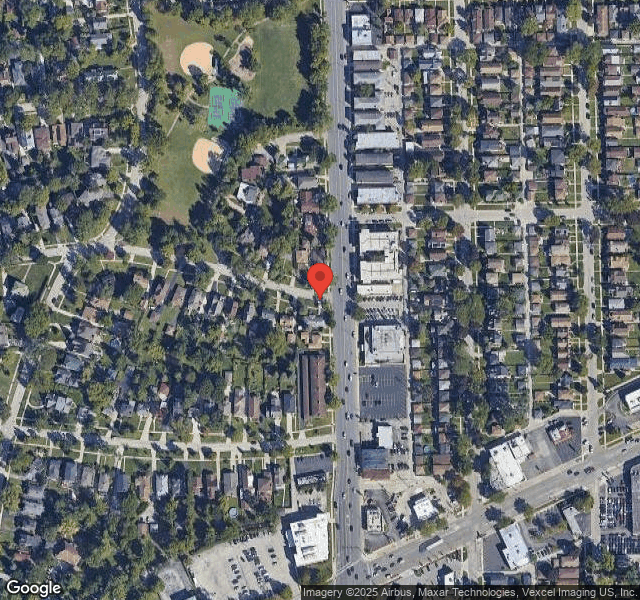
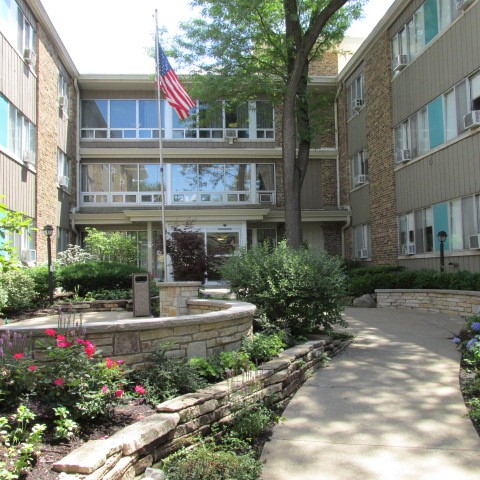
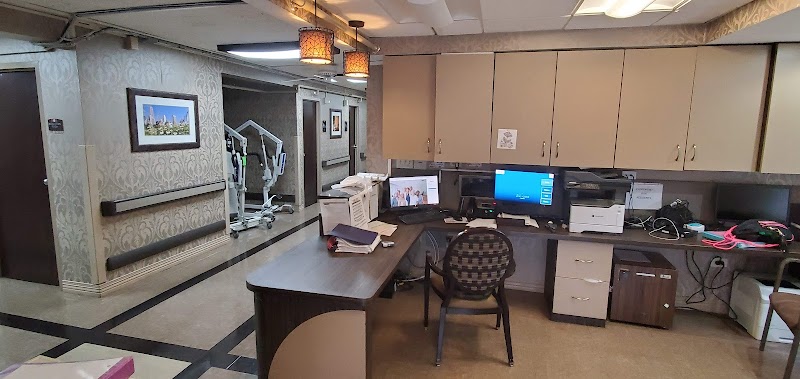
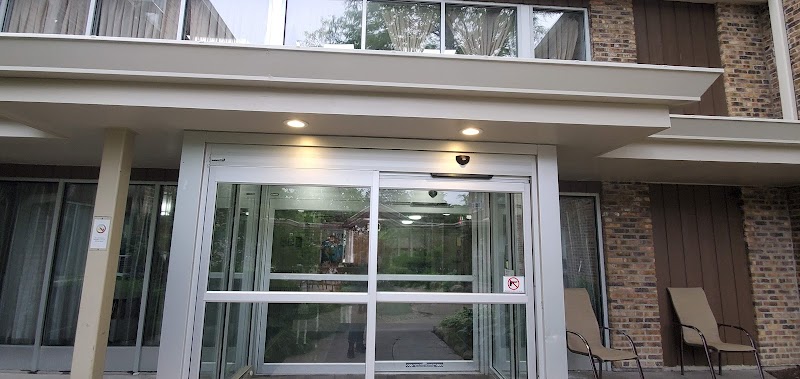
ZAHAV OF BERWYN

3601 SOUTH HARLEM AVENUE, BERWYN, IL 60402 (708) 749-4160
For profit - Corporation 145 Beds LEGACY HEALTHCARE Data: November 2025
Trust Grade
0/100
#665 of 665 in IL
Last Inspection: February 2025

Within standard 12-15 month inspection cycle. Federal law requires annual inspections.

Overview

Zahav of Berwyn has received a Trust Grade of F, indicating significant concerns about its quality of care. This facility ranks last in Illinois at #665 of 665 and also holds the lowest position in Cook County at #201 of 201, meaning it is at the bottom of the list for local options. While the facility's trend is improving, with issues decreasing from 19 in 2024 to 15 in 2025, it still faces serious challenges, including a high staff turnover rate of 69%, which is well above the state average of 46%. Additionally, the facility has been fined $214,497, which raises concerns about repeated compliance issues. Staffing levels are also a concern, with less RN coverage than 81% of Illinois facilities. Specific incidents include a resident experiencing severe pain due to missed pain medication and another resident suffering injuries from falls that occurred due to inadequate fall prevention measures. Overall, while there are some signs of improvement, families should weigh the significant weaknesses when considering this nursing home.

Trust Score
F
0/100
In Illinois
#665/665
Bottom 1%
Safety Record
High Risk
Review needed
Inspections
Getting Better
19 → 15 violations
Staff Stability
⚠ Watch
69% turnover. Above average. Higher turnover means staff may not know residents' routines.
Penalties
✓ Good
$214,497 in fines. Lower than most Illinois facilities. Relatively clean record.
Skilled Nurses
⚠ Watch
Each resident gets only 24 minutes of Registered Nurse (RN) attention daily — below average for Illinois. Fewer RN minutes means fewer trained eyes watching for problems.
Violations
⚠ Watch
50 deficiencies on record. Higher than average. Multiple issues found across inspections.
★☆☆☆☆
1.0
Overall Rating
★☆☆☆☆
1.0
Staff Levels
★★☆☆☆
2.0
Care Quality
★★☆☆☆
2.0
Inspection Score
Stable
2024: 19 issues
2025: 15 issues

The Good

  • Full Sprinkler Coverage · Fire safety systems throughout facility
  • No fines on record

Facility shows strength in fire safety.

The Bad

1-Star Overall Rating

Below Illinois average (2.5)

Significant quality concerns identified by CMS

Staff Turnover: 69%

23pts above Illinois avg (46%)

Frequent staff changes - ask about care continuity

Federal Fines: $214,497

Well above median ($33,413)

Significant penalties indicating serious issues

Chain: LEGACY HEALTHCARE

Part of a multi-facility chain

Ask about local staffing decisions and management

Staff turnover is elevated (69%)

21 points above Illinois average of 48%

The Ugly 50 deficiencies on record

8 actual harm
Jul 2025 2 deficiencies 1 Harm
SERIOUS (G) 📢 Someone Reported This

A family member, employee, or ombudsman was alarmed enough to file a formal complaint

Actual Harm - a resident was hurt due to facility failures

Deficiency F0697 (Tag F0697)

A resident was harmed · This affected 1 resident

**NOTE- TERMS IN BRACKETS HAVE BEEN EDITED TO PROTECT CONFIDENTIALITY** Based on interview and record review the facility failed to follow the physician ordered to ensure as needed pain medications (N...

Read full inspector narrative →
**NOTE- TERMS IN BRACKETS HAVE BEEN EDITED TO PROTECT CONFIDENTIALITY** Based on interview and record review the facility failed to follow the physician ordered to ensure as needed pain medications (Norco, Tramadol, Gabapentin, and Tylenol) were administered to residents as prescribed. This affected two of three (R1, R2) residents reviewed pain management. This failure resulted in R1 suffering a psychosocial harm and stated that R1 endured excruciating pain due to not getting his pain medications. R2 said R2 needed pain medication, rated his pain as 8 on a scale of 1 to 10, but his medication was not available. Findings include: 1. R1 is [AGE] years old, admitted to the facility on [DATE], medical diagnosis includes, but not limited to Malignant neoplasm of bone and articular cartilage, secondary malignant neoplasm of other parts of nervous system, anemia, benign prostatic hyperplasia without lower urinary tract symptoms, low back pain, wedge compression fracture of first lumbar vertebrae, osteomyelitis unspecified, etc. On 6/23/2025 at12:20PM, R1 was observed in his room, awake, alert and oriented and stated that he is doing okay, he is managing to survive, but it could be better. R1 said that his pain is not being managed well because of how staff gives him his medicine, he would like to have something in between his Norco, staff always tells him that he is not due for Norco, and he cannot get anything else. They always run out of his lidocaine patch, he did not get any patch this morning, R1 said that the first week he was at the facility was hell, they took forever getting his medications and when they did, he was still not getting his medicine as he should, and he had to deal with excruciating pain. R1 said, imagine my medical condition and not having pain medications, the staff just don't understand, they think I was just asking for pain medicine for the heck of it. On 6/24/2025 at 9:40AM, R1 said that that he never received any anxiety medication or something for muscle pain, just the Norco. Active physician order summary for R1 showed the following: 1. Lidocaine External Patch 4 % (Lidocaine) apply to neck topically in the morning for Take off at 6p related to acute hematogenous osteomyelitis, multiple sites, order date 6/12/2025. 2.Hydroxyzine HCl Oral Tablet 25 MG (Hydroxyzine HCl) Give 12.5 tablet by mouth every 8 hours as needed for Anxiety for 14 Days, order date 6/17/2025. 3.Gabapentin Oral Capsule (Gabapentin) Give 100 mg by mouth every 12 hours as needed for pain AND Give 200 mg by mouth every 24 hours as needed for Pain. Order date 6/12/2025. 4.Hydrocodone-Acetaminophen Tablet 5-325 MG *Controlled Drug* Give 1 tablet by mouth every 6 hours as needed for pain moderate to severe. Order date 6/12/2025, discontinue on 6/17/2025. Hydrocodone-Acetaminophen Tablet 5-325 MG *Controlled Drug* Give 1 tablet by mouth every 6 hours as needed for pain moderate to severe. Order date 6/12/2025. 5.Acetaminophen Oral Tablet (Acetaminophen) give 650 mg by mouth every 6 hours as needed for Pain, order date 6/12/2025. Care plan initiated 6/13/2025 states the following: PAIN: Resident has an alteration in comfort r/t Advanced Disease process. Goal: Resident will not experience a decline in overall function r/t pain through next review. Interventions: Administer pain meds and treatments as ordered, assess effectiveness of pain medication, encourage to report any pain, Educate on non-pharmacological interventions such as heat, ice, massage, relaxation, and distraction techniques, etc. R1's Medication administration record (MAR) for the month of June 2025 showed the following documentations: Lidocaine patch was not signed as given on 6/14/2025, 6/20/2025 and 6/23/2025. Hydroxyzine signed out as given once, on 6/15/2025, Hydrocodone was signed as given on 6/15/2025, 6/16/2025, 6/18/2025, and 6/24/2025.Tylenol was signed as given on 6/13/2025, 6/17/2025 and 6/18/2025. Gabapentin was never signed out as given from the date it was ordered. On 6/23/2025 at 12:27PM, V3 (LPN) said that she is the assigned nurse for R1, he gets lidocaine patch for pain but not on her shift, it is usually given by the PM shift and removed in the morning by the AM shift nurse. V3 was asked if she removed any lidocaine patch from the resident this morning and she said no. V3 then said, we have some house stock, I can go give him one now. On 6/24/2025 at 2:47PM, V10 (LPN) said that R1 thought that he was supposed to be getting Norco and oxycodone at the same time, he wants pain medication all the time every hour. V10 said that she has not given R1 any other medication other than Norco for pain. She added that they are supposed to sign the narcotic sheet, document the pain scale, and sign the MAR whenever pain medication is given to a resident. On 6/24/2025 at 12:39PM, V6 (C.N.A) said that she is familiar with R1, he lets staff know when he needs anything. V6 said that R1 never complained of anything to her except one time he was asking V6 about getting more medication, stating that he is not getting all his pain medications. On 6/25/2025 at 11:15AM, V14 (pharmacy technician) said that they delivered 15 tablets of Norco for R1 on 6/13/2025, and then 30 tablets on 6/21/2025. V14 said that they also delivered 30 tablets of Gabapentin and 15 tablets of hydroxyzine for R1 on 6/13/2025.V14 added that that they did not supply any lidocaine patch for R1 because it is considered a house stock, they normally don't send it for individual residents, the facility uses their own supply. Review of manifest sheet from pharmacy confirmed that the above medications were delivered to the facility 6/13/2025 as stated by V14. On 6/25/2025 surveyor reviewed medication supply for R1 with V10 (LPN). There is 1 bingo card of Norco (30 tablets) delivered on 6/10/2025, resident have 15 tablets remaining. V10 was asked about resident's gabapentin and hydroxyzine, and she said that she could not find any, she will search more in the medication cart for it. At 2:18PM V10 told the surveyor that she did not find any gabapentin or hydroxyzine for R1. On 6/23/2025 at 2:00PM, V2 (DON) said that R1 he was getting his pain medications, the nurses are probably documenting only in the narcotic sheet and not in the medication administration record (MAR), medications are supposed to be signed out both in the narcotic count sheet and MAR when given. On 6/25/2025 at 3:11PM, V2 (DON) was presented with R1's missing gabapentin that was delivered but never signed out and she said that staff used all the gabapentin, and it is being reordered today. Surveyor asked V2 if she was aware that none of the medication was signed out as given to R1 in his MAR and she said yes. 2. R2 is [AGE] years old admitted to the facility on [DATE], medical diagnosis includes, but not limited to Unilateral primary osteoarthritis, right knee, generalized muscle weakness, unspecified abnormalities of gait and mobility, lack of coordination, essential primary hypertension, atherosclerotic heart disease of native coronary artery without angina pectoris, anemia, presence of right artificial knee joint, etc. On 6/23/2025 at 11:25AM, R2 was observed in his room, awake and alert and stated that he came to the facility after a knee surgery, the facility is not controlling his pain, he was supposed to be getting Norco for pain, but has not been getting it consistently, the last time he received his Norco was last Thursday, 6/19/2025. R2 was observed holding his right leg and grimacing, R2 said that he needs his pain medicine right now, have not received any today and rated his pain as 8 on a scale of 1 to 10. On 6/23/2025 at 11:30AM, surveyor inquired about the assigned nurse for R2 from V3 who was working on the same floor but was told that the nurse for R2 is on break. Surveyor asked V3 if she can give pain medication to R2, but she said that she does not have the narcotic key for the other cart and cannot tell if resident have had his pain medication today, she has to look in the narcotic book. On 6/23/2025 at 12:03PM, surveyor informed V2 (DON) that R2 has been waiting for pain medication and the other nurse on the floor said that his assigned nurse is on break. V2 said that she will follow up on that, the nurse should be returning from break shortly. On 6/23/2025 at 12:35PM, surveyor followed up with R2 who stated that he still did not receive any medication, no one has been to his room. Surveyor spoke to a staff who was sitting at the nursing station V4 (LPN), she said that she is the assigned nurse for R2, she was told that resident needed pain medication, she just spoke to the nurse practitioner who said that she will fax a new prescription for his Norco to pharmacy. V4 added that she will go and pull a dose for the resident from the emergency box. R2 has the following listed in physician order summary: 1. Hydrocodone-Acetaminophen Tablet 5-325 MG *Controlled Drug* Give 1 tablet by mouth every 4 hours as needed for pain, order date 5/30/2025. 2.Oxycodone HCl Oral Tablet 5 MG (Oxycodone HCl) *Controlled Drug* Give 5 mg by mouth one time only for severe pain for 1 Day. Order date 6/5/2025. 3.Tramadol HCl Oral Tablet 50 MG (Tramadol HCl) *Controlled Drug*Give 1 tablet by mouth every 12 hours as needed for Pain, order date 6/23/2025. 4.Gabapentin Capsule 300 MG Give 1 capsule by mouth three times a day for neuropathic pain, order date 5/30/2025 discontinued 6/3/2025. Gabapentin Tablet 600 MG Give 1 tablet by mouth as needed for Pain related to presence of right artificial knee joint, three times a day. Order date 6/3/2025. Review of June MAR for R2 showed that his Norco was last given on 6/19/2025 as the resident said, there is no documentation that R2 was medicated for pain on 6/23/2025 for the pain scale of 8. R2's gabapentin 600mg was recorded as given once or twice some days, but not given at all on 6/3/2025, 6/4/3035, 6/6/2025, 6/8/2025. 6/9/2025, 6/15/2025, 6/18/2025 and 6/19/2028. There was no entry for tramadol in R2's MAR, or any documentation that R2 was receiving tramadol. On 6/23/2025 at 2:00PM, V2 (DON) said that R2 likes his pain medication, and he runs out, resident's pain medication is supposed to be reordered by the nurses. 6/23/2025 at 3:30PM, V2 said that the nurse practitioner gave the nurse an order to give R2 tramadol until his Norco is refilled. The NP faxed a new order to pharmacy on the 19th, not sure why it was not delivered. On 6/25/2025 at 11:35AM, surveyor presented R2's MAR to V2 (DON) that did not list any tramadol, and did not have any documentation that R2 was receiving any tramadol and she said, The nurse received an order to give resident tramadol when he ran out of Norco, she just forgot to put the order in or document it in the MAR. V2 was asked if the tramadol was delivered from the pharmacy and she said, no, it came from an outside source and we do not have any documentation of when it was received. V2 added that all medications residents receive are supposed to be documented in the MAR, and signed out when given, the nurse just forgot to do that. On 6/25/2025 at 12:29 PM V15 (Nurse Practitioner) said that R2 came to the facility from the hospital post right knee arthroplasty, he came with his own supply of Norco, Flexeril, gabapentin and tramadol, all to be taken a needed for pain. V15 did a script for his Norco to be refilled on 6/20/2025 and faxed it to pharmacy, not sure why the medication was not delivered. V15 gave an order to give resident tramadol until the Norco comes. Surveyor informed V15 that there is no documentation that R2 was receiving any tramadol in the medication administration record. She said, that part will be for the DON, I am just the NP, all resident medications are supposed to be documented in the medication administration record and signed out when given. Pain care plan for R2 initiated 6/2/2025 states: PAIN: Resident has an alteration in comfort r/t Advanced Disease process, Goal: Resident will not experience a decline in overall function r/t pain through next review. Interventions: Administer pain meds and treatments as ordered, assess effectiveness of pain medication, Educate on non-pharmacological interventions such as heat, ice, massage, relaxation, and distraction techniques, etc. Pain management policy revised 10/2024 states in part, to facilitate and provide guidance on pain observations and management, to facilitate resident independence, promote resident comfort and preserve resident dignity. This will be accomplished through an effective pain management program, ------------------- and enhance dignity and life involvement. Under guideline, the policy states as follows: The pain management program is based on a facility-wide commitment to resident comfort. Pain is defined as whatever the experiencing person says it is and exits whenever he or she says it does. Medication administration policy revised 4/2024 states in part: All medications are administered safely and appropriately to aid residents to overcome illness, relive and prevent symptoms and help in diagnosis. Licensed staff will administer medications as ordered by the physician. Under guideline, the policy states, #18 document as each medication is prepared in the medication administration record (MAR). #24, Document reason and response for any PRN medications. Job description for registered nurse and licensed practical nurse (undated) states in part: Under the direction of the physician, is responsible for total nursing care to all residents on assigned unit during the assigned shift including responsibility for delegation of duties, -----------------, and adherence by staff members to facility policies and procedures. Essential duties #3, Administer prescribed medications and treatments according to policy and procedure, evaluate treatment effectiveness on a continuous basis. #10. Document nursing care rendered, resident response, and all other pertinent and necessary data as outlined in facility's policies and procedures.
CONCERN (D) 📢 Someone Reported This

A family member, employee, or ombudsman was alarmed enough to file a formal complaint

Potential for Harm - no one hurt, but risky conditions existed

Quality of Care (Tag F0684)

Could have caused harm · This affected 1 resident

Based on observation, interview and record review, the facility failed to ensure that staff administer ordered pain medications to residents according to resident's needs and as outlined in their care...

Read full inspector narrative →
Based on observation, interview and record review, the facility failed to ensure that staff administer ordered pain medications to residents according to resident's needs and as outlined in their care plan and failed to ensure that resident's medications readily available. These failures affected two residents (R1 and R2) of four residents reviewed for pain management and have the potential to affect all 45 residents on the first floor of the facility. This failure resulted in R1 and R2 missed multiple doses of about 9 different pain medications while at the facility. Findings include: 1.R1's diagnosis includes, but are not limited to Malignant neoplasm of bone and articular cartilage, secondary malignant neoplasm of other parts of nervous system, anemia, benign prostatic hyperplasia without lower urinary tract symptom, wedge compression fracture of first lumbar vertebrae, osteomyelitis unspecified, etc. On 6/23/2025 at12:20PM, R1 was interviewed, and he said that his pain is not being managed because of how staff give his medications, he would like to have something in between Norco, staff always tell him that he is not due for Norco, and they cannot give him anything else. R1 said that they always run out of his lidocaine patch, he did not get any patch this morning, that is supposed to help with his neck pain. Active physician order summary for R1 showed the following: 1. Lidocaine External Patch 4 % (Lidocaine) apply to neck topically in the morning for Take off at 6PM related to acute hematogenous osteomyelitis, multiple sites, order date 6/12/2025. 2. Hydroxyzine HCl Oral Tablet 25 MG (Hydroxyzine HCl) Give 12.5 tablet by mouth every 8 hours as needed for Anxiety for 14 Days, order date 6/17/2025. 3 Gabapentin Oral Capsule (Gabapentin) Give 100 mg by mouth every 12 hours as needed for pain AND Give 200 mg by mouth every 24 hours as needed for Pain. Order date 6/12/2025. 4. Hydrocodone-Acetaminophen Tablet 5-325 MG *Controlled Drug* Give 1 tablet by mouth every 6 hours as needed for pain moderate to severe. Order date 6/18/2025. 5. Acetaminophen Oral Tablet (Acetaminophen) Give 650 mg by mouth every 6 hours as needed for Pain R1's Medication administration record (MAR) for the month of June 2025 showed the following documentations: Lidocaine patch was not signed as given on 6/14/2025, 6/20/2025 and 6/23/2025. Hydroxyzine signed out as given once, on 6/15/2025, Hydrocodone was not given on 6/12, 6/13, 6/14 and 6/17/, 6/19, 620, 6/21, 6/22 and 6/23/2025. Tylenol was given once on 6/13, 6/17 and 6/18/2025. Gabapentin was never signed out as given from the date it was ordered. On 6/23/2025 at 12:27PM, V3 (LPN) said that she did not remove any lidocaine patch from R1, the Surveyor informed V3 that R1 said he did not get his lidocaine patch this morning and does not have any on him right now. V3 then said, we have some house stock, I can go give him one now. On 6/23/2025 at 2:00PM, V2 (DON) was presented with all the days R1 did not get his pain medications and she said that R1 he was getting his pain medications, the nurses are probably documenting only in the narcotic sheet and not in the MAR, medications are supposed to signed out both in the narcotic count sheet and MAR when given. On 6/25/2025 surveyor reviewed medication supply for R1 with V10 (LPN) and noted that R1 did not have any gabapentin or hydroxyzine. V10 said that she could not find any, she will search more in the medication cart for it. At 2:18PM V10 told the surveyor that she did not find any gabapentin or hydroxyzine for R1. On 6/25/2025 at 3:11PM, V2 (DON) was presented with R1's missing gabapentin that was delivered on 6/13/2023, but never signed out as given in the MAR and she said that staff probably ran out, the medication is being re-ordered today. Surveyor asked V2 if she was aware that none of the delivered 30 tablets of gabapentin was signed out as given to R1 in his MAR and none is on hand at this time, she said yes. Facility could not provide any documentation that R1 received any gabapentin since it was ordered. 2. R2's medical diagnosis includes, but are not limited to Unilateral primary osteoarthritis, right knee, generalized muscle weakness, unspecified abnormalities of gait and mobility, lack of coordination, presence of right artificial knee joint, etc. On 6/23/2025 at 11:25AM, R2 was observed in his room, awake and alert and stated that he came to the facility after a knee surgery, the facility is not controlling his pain, he was supposed to be getting Norco for pain, but has not been getting it consistently, the last time he received his Norco was last Thursday, 6/19/2025. R2 said that he is in pain right now and rated his pain as 8 on a scale of 1 to 10. R2 have the following listed in physician order summary: 1. Hydrocodone-Acetaminophen Tablet 5-325 MG *Controlled Drug* Give 1 tablet by mouth every 4 hours as needed for pain, order date 5/30/2025. 2.Oxycodone HCl Oral Tablet 5 MG (Oxycodone HCl) *Controlled Drug* Give 5 mg by mouth one time only for severe pain for 1 Day. Order date 6/5/2025. 3.Tramadol HCl Oral Tablet 50 MG (Tramadol HCl) *Controlled Drug*Give 1 tablet by mouth every 12 hours as needed for Pain, order date 6/23/2025. 4.Gabapentin Capsule 300 MG Give 1 capsule by mouth three times a day for neuropathic pain, order date 5/30/2025 discontinued 6/3/2025. Gabapentin Tablet 600 MG Give 1 tablet by mouth as needed for Pain related to presence of right artificial knee joint, three times a day. Order date 6/3/2025. On 6/23/2025 at 12:03PM, surveyor informed V2 (DON) that R2 has been waiting for pain medication and the other nurse on the floor said that his assigned nurse is on break. V2 said that she will follow up on that, the nurse should be returning from break shortly. On 6/23/2025 at 12:35PM, surveyor followed up with R2 who stated that he still did not receive any medication, no one has been to his room. Surveyor spoke to a staff who was sitting at the nursing station V4 LPN) she said that she is the assigned nurse for R2, she was told that resident needed pain medication, she just spoke to the nurse practitioner who said that she will fax a new prescription to pharmacy. V4 added that she will go and pull a dose for the resident from the emergency box. Review of June MAR for R2 showed that his Norco was last given on 6/19/2025 as the resident said, there is no documentation that R2 was medicated for pain on 6/23/2025. R2's gabapentin 600mg was recorded as given once or twice some days, but not given at all on 6/3/2025, 6/4/3035, 6/6/2025, 6/8/2025. 6/9/2025, 6/15/2025, 6/18/2025 and 6/19/2028. There was no entry for tramadol in R2's MAR, or any documentation that R2 was receiving tramadol. On 6/23/2025 at 2:00PM, V2 (DON) said that R2 likes his pain medication, and he runs out, resident's pain medication is supposed to be reordered. 6/23/2025 at 3:30PM, V2 said that the nurse practitioner gave the nurse an order to give R2 tramadol until his Norco is refilled. The NP faxed a new order to pharmacy on the 19th, not sure why it was not delivered. On 6/25/2025 at 11:35AM, surveyor presented R2's MAR to V2 (DON) that did not list any tramadol, and did not have any documentation that R2 was receiving any tramadol and she said, The nurse received an order to give resident tramadol when he ran out of Norco, she just forgot to put the order in or document it in the MAR. V2 added that all medications residents receive are supposed to be documented in the MAR, and signed out when given, the nurse just forgot to do that. On 6/25/2025 at 12:29PM V15 (Nurse Practitioner) said that R2 came to the facility from the hospital post right knee arthroplasty, V15 did a script for his Norco to be refilled on 6/20/2025 and faxed it to pharmacy, not sure why the medication was not delivered. V15 gave an order to give resident tramadol until the Norco comes. Surveyor informed V15 that there is no documentation that R2 was receiving any tramadol in the medication administration record. She said, that part will be for the DON, I am just the NP, all resident medications are supposed to be documented in the medication administration record and signed out when given. Medication administration policy revised 4/2024 states in part: All medications are administered safely and appropriately to aid residents to overcome illness, relive and prevent symptoms and help in diagnosis. Licensed staff will administer medications as ordered by the physician. Under guideline, the policy states, #18 document as each medication is prepared in the medication administration record (MAR). #24, Document reason and response for any PRN medications. Job description for registered nurse and licensed practical nurse (undated) states in part: Under the direction of the physician, is responsible for total nursing care to all residents on assigned unit during the assigned shift including responsibility for delegation of duties, -----------------, and adherence by staff members to facility policies and procedures. Essential duties #3, Administer prescribed medications and treatments according to policy and procedure, evaluate treatment effectiveness on a continuous basis. #10. Document nursing care rendered, resident response, and all other pertinent and necessary data as outlined in facility's policies and procedures.
Jun 2025 2 deficiencies
CONCERN (D) 📢 Someone Reported This

A family member, employee, or ombudsman was alarmed enough to file a formal complaint

Potential for Harm - no one hurt, but risky conditions existed

Deficiency F0761 (Tag F0761)

Could have caused harm · This affected 1 resident

Based on observation, interview and record review the facility failed to ensure that emergency cart, treatment cart was locked when not in proximity of the nurse and individual medications were locked...

Read full inspector narrative →
Based on observation, interview and record review the facility failed to ensure that emergency cart, treatment cart was locked when not in proximity of the nurse and individual medications were locked up safely in the medication cart to prevent tampering and accidental hazard. This failure affected 2 of 2 residents (R3 and R1) in the sample reviewed for medication administration. Findings include: On 06/04/25 at 10:13am, the treatment cart noted in the hallway unlocked and unattended to by Room105. V7 LPN (Wound Care Nurse) confirm that it was the treatment cart stating that it is the treatment cart with treatment medications. V7 stated that the facility policy is to have it locked when not at eyesight level and not in use. At 10:40am, V2 (DON) stated that the treatment cart should be locked when not in visual contact of the nurse. V2 stated that V7 (treatment nurse) has told me about it (not locking the cart). I told her lock to the cart always when not in the eye contact with the cart. On 06/04/25 at 11:24am, crash cart noted in the hallway in front of the elevator unlocked with two plastic locks broken and left on the crash cart. When shown to V20 LPN (Licensed Practical Nurse). V20 stated the cart should be locked always with the red plastic lock so that no one can get into it. V20 stated I did not use the cart this morning and it should be locked; I turned the gray lock but that can be easily turned to unlock. The lock is to make sure that no one can get into its residents /visitors. On 06/05/25 at 11:03pm, R3 noted in the room in bed at the bedside noted 3pills in the medication cup at the bed side. R3 was unable to identify the pills. At 11:09am, from the hallway noted R11 had medication cup on the over bed side table. Upon entering the room there were 8pills noted in the medication cup. R11 stated that the nurse (referring to V9 (LPN) gave him the medications this morning and will have to take it later. At 11:11am, When the surveyor observations were shown to V9 LPN (Licensed Practical Nurse) and was asked about the facility policy for medication pass. V9 stated that the medications for R11 was this morning medication and while having conversation with R11 she forgot to give them to R11 and make sure he took them (Medicine). V9 stated that she should not have signed the MAR (Medication administration Record) has given. V9 checked the POS and the MAR with the surveyor R3's medication that was left at the bedside and told the surveyor that the medication found at R3 bedside is not left on the side table dresser by her and did not know how R3 got the medicines. V9 stated the medications look like tums and stool softener but R3 did not have any order for the medicines. And they should not be left at bedside unless ordered by the doctor to do so. On 06/05/25 at 11:24am, V10 (Nurse Supervisor) stated that we (nurses) not supposed to leave medication at bedside unless ordered by the doctor and the medication should not be signed out as given until after the resident has taken the medication. At 11:42am, V3 ADON (Assistant Director of Nurse's) stated that he cannot for word for word quote the facility policy, but the expectation is for the nurses to follow administration policy and one of it is to observe the patient (resident) take the medicine (Swallow) a document right after it is taken. V3 stated that no medication should be stored at bedside without an order and resident assessment that resident can self-administer. The facility policy on Crash Cart presented with revised date 04/2025 documented that in general the policy is to provide the staff with guidance on Crash cart contents and monitoring. Listed purpose indicated that the Crash Carts are set up for type of life-threatening event expected to occur in this facility (i.e., cardiac, anaphylaxis). Protocol listed includes crash cart will be checked daily by night nurse and department manager; verify the crash cart has not been opened since the previous day by verifying tag number against crash cart checklist. The facility policy Self-Administration of Medications and treatments presented with review date 12/2021 documented that self-administration of medications and treatments are done to prepare a resident for discharge and to help the resident maintain their independence. The decision for self-administration is done by the interdisciplinary team. Facility policy on Medication Storage in the Facility presented with review date 6/2024 documented in general that medications and biologicals are stored safely, securely, and properly following the manufacture or supplier recommendations. The medication supply is accessible only to licensed nursing personnel, pharmacy personnel, or staff members lawfully authorized to administer medications. Responsible party listed nursing. Listed procedure includes but not limited to medication carts and medical supplies are locked or attended by person with authorized access that includes licensed nurses. Facility policy on Medication Administration presented with review date 3/2022 documented in general that all medications are administered safely and appropriately to aid residents to overcome illness, relieve and prevent symptoms and help in diagnosis. Level of responsible party are RN (Registered Nurse), LPN (Licensed Practical Nurse). Listed guidelines includes but not limited to remain with the resident to ensure that the resident swallows the medications.
CONCERN (E) 📢 Someone Reported This

A family member, employee, or ombudsman was alarmed enough to file a formal complaint

Potential for Harm - no one hurt, but risky conditions existed

Safe Environment (Tag F0921)

Could have caused harm · This affected multiple residents

**NOTE- TERMS IN BRACKETS HAVE BEEN EDITED TO PROTECT CONFIDENTIALITY** Based on observation, interview and record review the facility failed to ensure that resident personal washroom was equipped wit...

Read full inspector narrative →
**NOTE- TERMS IN BRACKETS HAVE BEEN EDITED TO PROTECT CONFIDENTIALITY** Based on observation, interview and record review the facility failed to ensure that resident personal washroom was equipped with toilet tissue/rolls in a timely manner in the resident's bathroom for personal hygiene. This failure affected 4 of 4 residents (R4, R6, R7 and R12) reviewed for personal hygiene equipment toilet rolls. Findings include: On 06/04/25 from 10:13am to 11:30am, the following observations were made: At 10:23am, R7's clothing noted on the bare floor R7 stated they are dirty clothes and stated he has no plastic bag to put the clothes Complain of not having toilet paper in the toilet for days at a time. At 10:42am, on the 1st floor, 1 south room [ROOM NUMBER], room floor noted with yellowish dry colored particles and orange peels. At 10:47am, V15 CNA stated the resident must have spill something, its dry possibly from previous shift. I am the CNA for this morning and the floor has been like that. On the 3floor at 10:54am, room [ROOM NUMBER] noted with no toilet paper in the toilet. No extra paper tissue noted in the toilet. At 10:56am, room [ROOM NUMBER] noted with no toilet paper in the toilet. No extra paper tissue noted in the toilet. At 10:58am, room [ROOM NUMBER], noted with no toilet paper in the toilet. No extra paper tissue noted in the toilet. In the same room garbage can with overflowing garbage and used adult incontinent diaper. room [ROOM NUMBER] noted with no toilet paper in the toilet. No extra paper tissue noted in the toilet. When all these observations were shown to V16 LPN (Licensed Practical Nurse) she stated that the housekeeping are responsible for replacing the toilet tissue and hopefully they will be getting to it, most of the garbage in the can are not from this shift. The surveyor asked who takes care of the garbage, V16 stated the housekeeping staff but those incontinent diapers should not be left in the room garbage. 06/04/25 at 11:03am, V18 (Housekeeping Director) stated that I (18) came in late this morning, but the rooms are supposed to be cleaned daily, and they are on it now. As for the toilet papers they (Housekeeping staff) are stocking up now. In no time now, all the rooms will be stocked. At 11:22am, in room [ROOM NUMBER] observed no tissue in the bathroom toilet. R4 noted sitting on the edge of the bed. R4 stated for two days now there was no tissue in the bathroom. They (housekeeping staff) came to clean it up but there is no tissue left. I don't know how they want us to wipe off our butt. room [ROOM NUMBER] shared the same bathroom with room [ROOM NUMBER]. On 06/04/25 at 2:06pm, V12 LPN (Licensed Practical Nurse) stated that the housekeeping staff usually are responsible for placing new tissue in the toilet room (washroom). V12 stated no extra tissue papers (rolls) are kept here (Nurse's station) but there should be plastic bags for room cabbage cans left at the Nurse's station. On 06/05/25 at 9:36am, V18 (Housekeeping Director) stated that the housekeepers are to stock up supplies during the cart preparations. The housekeeper for each floor is to stock up the rooms daily in the morning but sometimes they do and sometimes they do not. At times when budget run over it depends then I will put only one roll in the room. On weekends we leave supplies for the staff because I don't work on weekends. V18 stated I (V18) leave it on Friday before I leave. There are 96rolls in each box. The residents are not supposed to run short of toilet rolls, every room must have a supply very day. the surveyor asked do the staff that includes nursing staff have access to where toilet supplies are always kept. V18 stated only the housekeeping staff have access to the housekeeping storage unless there is a manager in the building. The surveyor then asked whether it Is appropriate for residents to be out of toilet tissue and what other plans are in place for them to clean up after using the bathroom. V18 stated logically they can use the towel (cloth towels) to wipe. V18 stated they (towels) are not stock in the bathroom for that purpose. 0n 06/05/25 at 1:49pm, V18 stated that there is no standard policy or SOP (Standard of Operation) given to us by the company, the only thing I (V18) have is the daily housekeeping check list from the hold company. Since the name change I (V18) don't have any policy on housekeeping from the new company. On 06/05/25 at 3:40pm V1 stated that the housekeeping keys will be left at the front desk so there should be no problem with the toilet roils any more, I know we should do better. We have problem with staff taken them home, we will do better.
Apr 2025 1 deficiency 1 Harm
SERIOUS (G) 📢 Someone Reported This

A family member, employee, or ombudsman was alarmed enough to file a formal complaint

Actual Harm - a resident was hurt due to facility failures

Accident Prevention (Tag F0689)

A resident was harmed · This affected 1 resident

Based on observations, interviews and record reviews, the facility failed to implement effective individualized fall interventions to prevent fall incidents and fall incidents with injury for resident...

Read full inspector narrative →
Based on observations, interviews and record reviews, the facility failed to implement effective individualized fall interventions to prevent fall incidents and fall incidents with injury for residents identified as high risk for falls, with severe cognitive impairment and assessed with poor awareness. This affected two (R2 and R5) of three residents reviewed for incidents/accidents. This failure resulted in R2 having multiple falls with self-transfer attempts and R5 with history of wandering behavior, had a fall and found by the third floor exit door on 4/10/25. R5 transferred to local hospital for evaluation and returned with new diagnosis of closed nondisplaced fracture of proximal end of left humerus. Findings Include: R2 admitted in the facility on 9/16/24 with diagnoses of but not limited to: Hemiplegia and Hemiparesis following Cerebral Infarction Affecting Right Dominant Side, Generalized Muscle Weakness, Abnormal Posture, Hypertension, Depression, Insomnia, Restlessness and Agitation, Cognitive Communication Deficit, History of Falling, Type 2 Diabetes, Muscle Wasting and Atrophy on Right Lower Leg and Abnormalities of Gait and Mobility. Section C of MDS (Minimum Data Set) dated 3/16/25, BIMS (Brief Interview for Mental Status) of 6/15, indicates severe cognitive impairment. Fall Risk Review dated 11/7/24 was 17 and 3/15/25 score was 20. R2 is High Risk for Fall. R2 is care planned for High Risk for falls related to current condition, medication use, Poor Safety Awareness, Unsteady Gait, Disease Process dated 1/23/25. Fall incident reviewed from January of 2025. R2 had multiple fall incident. One on 3/4/25 and another one on 3/15/25. R2's 3/4/25 fall incident at 1700, reads in part: R2 noted lying in-between bed and wheelchair on right lateral side. R2 tried to self-transfer from bed to wheelchair. R2 requires assistance with transfer. R2 stated R2 was trying to go to the living room to watch television. R2's 3/15/25 fall incident at 22:15, reads in part: Walking to the nurses station and heard R2 yelling, hey hey and upon entering room, R2 observed trying to transfer self from bed to wheelchair and slide down off the bed, landing in a sitting position on buttocks. On 4/15/25 at 11AM, observed R2 sitting in bed. Wearing AFO brace on right foot (white plastic brace with no socks or any footwear on bilateral feet. Feet touching the floor as R2 seats on his bed. On 4/16/25 at 9:30AM, R2 observed in bed, wearing gown and wearing regular socks. On 4/16/25 at 9:30AM, V7 (Restorative Aide/CNA) confirmed with V7 that R2 is currently wearing regular socks and not the non-skid socks. V7 stated that AFO brace is used at night, when he is in bed. R2 was able to put the AFO brace by himself, and that was the brace you have seen R2 was wearing yesterday. We are now keeping the brace in the bottom drawer, so R2 will not be able to put the brace on his own. R2 is not supposed to wear it during day time. For his safety. R2 requires minimal staff assist with transfer, can stand pivot safely with staff present. On 4/17/25 at 11:00AM, V2 (DON) stated that R2 should have and wear non-skid socks for safety because R2 is High Risk for Fall and history of fall with self-transfer. R2 wear AFO brace during night time and not during day time. AFO brace was recommended by outpatient therapy and we are in the process in getting more information into when and now long R2 needs to utilize it. CNA informed V2 that R2 puts on the AFO by himself, and so CNA working with R2 removes the brace and place it in the bottom drawer for resident safety. R5 admitted in the facility on 2/1023 with diagnoses of but not limited to: Fracture of Upper End of Left Humerus, Protein Calorie Malnutrition, Type 2 Diabetes, Hypertension, Fracture of Neck Left Femur, Mild Cognitive Impairment, Dementia, and History of Falling. Section C of MDS (Minimum Data Set) dated 3/17/25, BIMS (Brief Interview for Mental Status) of 4/15, indicates severe cognitive impairment. Fall Risk Review dated 3/17/25 was 10 and 4/10/25 score was 13. R5 is High Risk for Fall. R5 is care planned for at risk for falls related to: type 2 diabetes, history of falling, essential primary hypertension, dementia, and UTI, with a revision date of 11/18/24. R5 is care planned for Displays behavioral symptoms of unpredictable verbal aggression outburst towards peers with delusional statement of abuse, related to diagnosis of dementia, with a revision date of 3/17/25. R5's Wandering Risk Careplan dated 4/25/23 and revision date of 11/4/24, reads in part: R5 demonstrates movement behavior that may be interpreted as wandering, pacing and roaming. Pacing, roaming or wandering in and out of peers' rooms. R5 is a new admission and not familiar with her environment. R5 no longer exhibiting with behavior as of 11/4/24 and through this annual review period. R5's Social Services notes on 3/17/25, reads in part: R5 presents to be Alert & Oriented x1 with periods of confusion, disorientation, poor awareness, short-term memory loss, and/or forgetfulness. She has no challenges with the expression and comprehension of information at times when expressed to her to her understanding and knowledge. R5's Risk Management Fall Documentation dated 4/10/25 at 1400, reads in part: writer heard the alarm sound and immediately went to the door, upon observation writer noted resident alert and verbally responsive in the supine laying on the stairwell. 911 called due to anticoagulant therapy. Writer noted skin tear to left lower extremity. R5's Hospital record reviewed dated 4/10/25, reads in part: X-ray Left Shoulder: Comminuted fracture of left proximal humerus with varus impaction at the surgical neck. X-ray Left Humerus: Comminuted sub capital fracture with superior subluxation of distal fragment. Emergency Department diagnosis: closed nondisplaced fracture of proximal end of left humerus. On 4/16/25 at 9:40AM, V8 (LPN) stated R5 is high risk for fall due to R5's wandering behavior. R5 has a behavior of wandering the 3rd floor unit, baseline routine of R5 was up and uses her wheelchair as a mode of locomotion. Able to propel wheelchair with her hand on her own, but not now due to the left arm brace R5 is wearing now and the fracture on left arm. Staff usually redirect R5 when observed with wandering behavior. Staff would ask if R5 needs something, at times R5 would say R5 is looking for her room. V8 stated that V8 worked on 4/10/25, and was working the north side unit on the 3rd floor. Heard code yellow announced in the intercom. V8 stated he checked his unit for all his residents and after V8 went to 3rd floor south side unit. V8 heard an alarm coming from the south side exit door, there were already staff present at the exit door when he arrived in the area. V8 observed R5 outside the exit door, two steps away from the door, with R5 laying on the stairs floor, face up with the head towards two stair steps downward and feet placed upward, foot facing towards the door (body diagonally positioned) and wheelchair located at the middle part of the stairways. On 4/16/25 at 9:45, V8 demonstrates in opening the exit door. V8 pushed the door, loud alarm went off, however unable to open door for another 15 secs, as it is required to re-push for it to open. Need key for the alarm to stop sounding. Observed signage on the exit door stating push until alarm sounds, door can be opened in 15 seconds. R5 used to be on (3rd floor) south side unit by the exit door, passing an open area used to store unused wheelchair, Geri chair and mechanical lift, parked against the wall. On 4/16/25 at 12:25PM V9 (CNA) stated that R5 normal morning get up. R5's baseline routine in the unit, normally when V9 gets here R5 is usually already up in the dining room. Waiting for breakfast to come. Will do activity at times after and sometime will lay back down in her bed after the breakfast. Sometimes she needs redirecting as she forgets which side of the floor her room is on sometimes. Depend on her mood if she stays in the dining area after meals. When I redirect her, I will then take her to her room, when R5 seems kind of lost and can't find her room. On 4/16/25 at 12:50PM, V10 (CNA) stated that R5 gets up in the morning and that night shift get R5 up. R5 would be already ready be waiting for breakfast in the dining room. When too many people in the dining area, R5 sometimes would ask if she can go to her room. Most of the time R5 will ask. And there will be times, R5 will go in her room on her own. At times I see her and I will take her to her room. Sometimes R5 is confused and will not find her room. Sometimes she remembers her room number and sometimes she gets confused. On 4/16/25 at 1:05PM, V11 (CNA) stated R5 usually stays in the dining room for activity. R5 is fall risk, so R5 stays in the dining room, so staff would be able to monitor R5. To prevent fall and for her safety. One of the reason R5 stays in the dining room, so we can assist her at all times if R5 needs to go to the bathroom. R5 at times would try to go to the washroom and not able to find it unless assisted by the staff. Need assistance with staff in finding her room also. On 4/16/25 at 1:30PM, V12 (Wound Nurse), I was on the 2nd floor, Heard the alarm went off from the third floor. I ran south side stair exit coming from the 2nd floor. Office right by the 2nd floor exit door. When V12 went upstairs, observed R5 laying on the floor. On the first level, before the first two steps. Body started to continue to slide down further and so V12 assisted R5 further down the step, V12 does not recall the position of R5's head at the time. I do not recall where her wheelchair was. R5 was screaming and I was paying more attention to R5 at the time. People started coming maybe because of the alarm sounding at the time. 911(Emergency Response) was called and V12 stayed with R5 along with the other staff until taken by paramedics. V12 noted Skin tear on R5's Left leg lower shin area with partial skin flap. It was approximately 3x4 cm. STERI strips placed prior to the ambulance arriving in the facility and V12 was able to control the bleeding. Scant amount of bleeding. On 4/17/25 at 11:00AM, V2 (DON) stated that R5 was seen in her room prior to her fall. It just happened R5 fell trying to exit, R5 does not have an exit seeking behavior prior to this fall. Upon her returned in the facility, we placed her in a room closer to the nurse's station, and placed her in close monitoring. We are not aware of her wandering behaviors, management are all new in the facility. Fall Prevention and Management Policy with a review date of 8/2024, reads in part: This facility is committed to maximizing each residents' physical, mental and psychosocial well-being. While preventing all falls is not possible, the facility will identify and evaluate those residents at risk for fall, plan for preventative strategies and facilitate as safe as environment as possible. All residents fall shall be reviewed, and resident's existing plan of care shall be evaluated and modified as needed. A fall risk evaluation will be completed on admission readmission, quarterly, significant change and after each fall. Resident at risk for falls will have fall risk identified on the interim plan of care and the ISP with interventions implemented to minimize fall risk. A fall risk evaluation is completed by the nurse. A score of 10 or greater indicates the resident is at high risk for falls, a score of less than 10 indicates at risk for fall. Care plan to be updated with new interventions based on root cause analysis after reach fall occurrence.
Mar 2025 1 deficiency
CONCERN (D) 📢 Someone Reported This

A family member, employee, or ombudsman was alarmed enough to file a formal complaint

Potential for Harm - no one hurt, but risky conditions existed

Respiratory Care (Tag F0695)

Could have caused harm · This affected 1 resident

Based on observation, interview and record review, the facility failed to maintain an available manual resuscitator and failed to provide timely suctioning care for two (R1 and R6) out of three reside...

Read full inspector narrative →
Based on observation, interview and record review, the facility failed to maintain an available manual resuscitator and failed to provide timely suctioning care for two (R1 and R6) out of three residents with a tracheostomy. Findings include: According to the electronic health record, R1 has diagnosis including s/p tracheostomy, g-tube placement, hypertension, hyponatremia, anemia, sacral decubitus ulcer, chronic respiratory failure, and gastroparesis. R1 is nonverbal. On 3/21/2025 at 9:40 AM, R1 was observed asleep, tracheostomy attached to oxygen concentrator; tracheostomy collar appears clean and dry, no secretions present at the entrance of the tracheostomy tube observed. Manual resuscitator was not available at the bedside. V2, Director of Nursing (DON) confirmed that a manual resuscitator (a handheld medical device used to manually ventilate a patient who is not breathing or is breathing inadequately, often used in emergency situations like cardiac arrest or respiratory failure) was not available at the bedside. V2 further stated that there should be a manual resuscitator always at the bedside of residents with tracheostomies because in an event of an emergency the manual resuscitator is used to manually provide oxygenation to the resident. V2 stated that the facility also has a respiratory treatment cart that has a manual resuscitator and that she is not sure why R1's manual resuscitator is not at the bedside but that she will place a manual resuscitator in R1's room right away. On 3/21/2025 at 9:58 AM, V3, Licensed Practical Nurse, stated that lately she has noted that R1 has been having a lot of secretions so V3 has been suctioning R1 more frequently. V3 stated she had cleaned and changed R1's inner cannula, and that V3 had suctioned R1 once already today. V3 stated that she suctions R1 4 to 6 times during her shift at least. V3 stated that there should always be always a manual resuscitator available in R1's room because in an emergency, the manual resuscitator is used to provide oxygen to R1 for respiratory distress. According to the electronic health record, R6 has diagnosis including cerebrovascular accident, traumatic brain disorder s/p evacuation of subdural hematoma and left occipital lobe epidural hematoma, paraplegia, nonverbal, tracheostomy and gastrostomy tube in place. R6 is non interviewable and is nonverbal. R6's Physician Order Sheet includes a physician order dated 2/8/2025 that documents: Suction as needed. On 3/21/2025 at 2:50 PM, R6 was observed coughing and was noted with obvious thick secretions at the entrance of R6's trach(tracheostomy) tube. V6, Licensed Practical Nurse (LPN) was also at R6's bedside, cleaned the secretions around R6's trach tube but did not suction R6. On 3/21/2025 at 3:00 PM R6 was observed coughing again and additional thick secretions were noted at the entrance of R6's trach tube. V6 stated that she had just suctioned R6 around 11:00 AM and that she would have to check R6's suction orders but that she is pretty sure it is every 3 hours and as needed but not any sooner than every 3 hours. On 3/21/2025 at 3:11 PM, R6 was observed with thick secretions at the entrance of his trach tube. V6 was at the nurses' station and stated that she had not checked R6's orders for suctioning the tracheostomy. V6 stated she would go to the bathroom first and then check the order for R6. On 3/21/2025 at 3:18 PM, while waiting inside R6's room, R6 was observed coughing again and more thick secretions can now be observed at the entrance of R6's trach tube. On 3/21/2025 at 3:28 PM, V6, Licensed Practical Nurse, was observed walking in the hallway past R6's room. V6 did not check R6, nor did she suction R6. On 3/21/2025 at 3:30 PM, surveyor summoned V7, Nursing Supervisor to R6's room to check R6's SPO2 level. V7 stated R6's SPO2 (Saturation of peripheral oxygen which indicates how much oxygen your blood is carrying compared to its maximum capacity. A healthy SPO2 level is typically between 95% and 100%) is 89%. V7 affirmed that R6 needed to be suctioned. V7 affirmed that R6 had thick secretions at the entrance of R6's trach tube and needed to be suctioned. V7 stated that if there are secretions around and at the entrance of R6's trach tube, it is her expectation that the nurse would suction R6 right away since aside from the order for scheduled suctioning, R6 also has an order for PRN (as needed) suctioning. V2, Director of Nursing, also stated that it is her expectation that the nurse will suction the resident right away. V2 stated that she will suction R2 right now. Informed V2 that I have been observing R6 with thick secretions at the entrance of his trach tube since 2:50 PM and that V7 stated that R6's SPO2 level is now only 89%. V2 stated that the nurse should have suctioned R6 right away. Facility Tracheostomy Care policy dated 4/2019 documents in part: It is the policy of this facility that residents with tracheostomies receive routine care to maintain a patent airway, that aseptic technique is used during the dressing changes until the tracheostomy is healed, and a physician order is obtained for tracheostomy care.
Feb 2025 7 deficiencies
CONCERN (D)

Potential for Harm - no one hurt, but risky conditions existed

Deficiency F0558 (Tag F0558)

Could have caused harm · This affected 1 resident

**NOTE- TERMS IN BRACKETS HAVE BEEN EDITED TO PROTECT CONFIDENTIALITY** Based on observation, interview, and record review the facility failed to ensure resident call light is within reach. This defic...

Read full inspector narrative →
**NOTE- TERMS IN BRACKETS HAVE BEEN EDITED TO PROTECT CONFIDENTIALITY** Based on observation, interview, and record review the facility failed to ensure resident call light is within reach. This deficiency affects two (R68, R78) of three residents in the sample for 25 reviewed for accommodation of needs. Findings include: On 02/25/25 at 11:23 AM, R78 observed in bed, with call light behind curtain on top of dresser. On 02/25/25 at 11:24 AM, R68 observed in room with call light behind curtain on top of dresser, R68 said she could not reach it, said it is usually next to her. On 02/25/25 at 11:27 AM, V25 (Restorative aide) made aware of above findings and said that call lights should be within reach, not sure why they were on top of dresser. On 02/26/25 at 1:25 PM, V3 (Director of Nursing) said her expectations for residents call lights are to be within reach at all times and answered promptly. R68 admitted on [DATE] with diagnosis in part but not limited to encounter for surgical aftercare following surgery on the digestive system, bacteremia, hyperlipidemia, diabetes type 2 mellitus without complications, depression. A focused care plan requires assistance with ADL's (bed mobility, transfers, dressing, walking, personal hygiene, eating and toileting) indicated intervention: keep call lights within reach when in bedroom or bathroom. R78 admitted on [DATE] with diagnosis in part but not limited to aphasia, history of falling, hyperlipidemia, other seizures, essential hypertension. A focused care plan requires assistance with ADL's (bed mobility, transfers, dressing, walking, personal hygiene, eating and toileting) indicated intervention: keep call lights within reach when in bedroom or bathroom. Facility's Policy on Call Light Response revised 9/2024 General: To provide the staff with guidance on responding to resident's response and needs. Protocol: 3. Ensure call light is within residents reach at all times.
CONCERN (D)

Potential for Harm - no one hurt, but risky conditions existed

ADL Care (Tag F0677)

Could have caused harm · This affected 1 resident

**NOTE- TERMS IN BRACKETS HAVE BEEN EDITED TO PROTECT CONFIDENTIALITY** Based on observation, interview, and record review the facility failed to provide nail and foot care to dependent resident. The ...

Read full inspector narrative →
**NOTE- TERMS IN BRACKETS HAVE BEEN EDITED TO PROTECT CONFIDENTIALITY** Based on observation, interview, and record review the facility failed to provide nail and foot care to dependent resident. The facility also failed to incontinence care to dependent and incontinent resident in a timely manner. This deficiency affects one (R108) of three residents in the sample of 25 reviewed for Activity of daily living (ADL) Program. Findings include: On 2/25/25 at 9:39AM, V18 Family member said that R108 has stroke and one side of the body is partially functioning. He cannot walk, talk nor eat on his own. He has been bed bound since July 2024. V18 said that every time he comes to visit R108 he has to advocate for his needs. On 2/25/25 at 10:14AM, Observed R108 with V15 CNA (Certified Nurse Assistant) and V14 WCN (Wound Care Nurse) lying in bed. V15 and V14 preparing R108 for wound care treatment. Observed bilateral hands with long and dirty fingernails, bilateral toenails are long thickened and discolored. Both said that CNAs are responsible for nails care and for foot care they usually referred resident to podiatrist. V15 CNA then opened disposable brief of R108 soaked with feces. V15 turned him to his left side, observed disposable brief saturated with fecal matters and leak into the bottom sheet. The sacral wound dressing is contaminated with fecal matters. On 2/25/25 at 1:00PM, Informed V3 DON (Director of Nursing) of above observation, V3 said that CNAs are responsible for nail care as needed during daily ADLs care. The social services are responsible for scheduling resident for podiatrist consult. On 2/26/25 at 1:23PM, Informed V3 of above observation made before wound care that R108 was soaked with feces. V3 said that prolong exposure of wetness, urine or fecal matters are factors in impaired wound healing or worsening of wound. R108 is admitted on [DATE] with diagnosis listed in part but not limited to Acute and chronic respiratory failure, Acute kidney failure, Tracheostomy status, Stage 4 Pressure ulcer of sacral region, Gastrotomy status, Cerebral infarction, Intracranial hemorrhage. Comprehensive care plan indicates he has an ADL self-care performance deficit and impaired mobility. Intervention: Personal hygiene and grooming- total assistance. MDS /Resident assessment dated [DATE] indicated Section GG0130 Self-care functional abilities: Toileting and Personal hygiene- 01 (Dependent). Facility's policy on Nail care reviewed 9/2024 indicates: General: To provide care and maintain hygiene the resident's nails. Guideline: 6. Nail care is offered and performed on the resident's shower day and as needed. Facility's policy on Foot care revised 9/2024 indicates: General: Foot care is given to promote cleanliness, prevent infection, control odor, provide comfort, monitor for skin breakdown, and promote healing. Guideline: 1. Foot care is provided routinely with the bath and prn. It may also be done more frequently with a physician or nurse practitioner order. Facility's policy on Incontinence care revision date 4/2024 indicates: General: Incontinence care is provided to keep residents as dry, comfortable and odor free as possible. It also helps in preventing skin breakdown. Facility's policy on ADL (Activities of Daily Living) reviewed 9/2024 indicates: General: A Program of activities of daily living is provided to prevent disability and return or maintain residents at their maximal level of functioning based on their diagnosis. 1. The ability of each resident to meet the demands of daily living is determined by licensed Nurse. 2. A program of assistance and instructions in ADL skills is care planned and implemented.
CONCERN (D) 📢 Someone Reported This

A family member, employee, or ombudsman was alarmed enough to file a formal complaint

Potential for Harm - no one hurt, but risky conditions existed

Pressure Ulcer Prevention (Tag F0686)

Could have caused harm · This affected 1 resident

**NOTE- TERMS IN BRACKETS HAVE BEEN EDITED TO PROTECT CONFIDENTIALITY** Based on observation, interview, and record review the facility failed to implement measures to prevent resident from acquiring ...

Read full inspector narrative →
**NOTE- TERMS IN BRACKETS HAVE BEEN EDITED TO PROTECT CONFIDENTIALITY** Based on observation, interview, and record review the facility failed to implement measures to prevent resident from acquiring pressure ulcer in the facility and updated wound care plan intervention. This deficiency affects one (R108) of three residents in the sample of 25 reviewed for Wound/Pressure Ulcer Prevention and management. Findings include: On 2/25/25 at 9:39AM, V18 Family member said that R108 has stroke and one side of the body is partially functioning. He cannot walk, talk nor eat on his own. He has been bed bound since July 2024. V18 said that R108 developed pressure ulcer on sacral area since last year and still not healing. V18 said that every time he comes to visit R108 he has to advocate for his needs. On 2/25/25 at 10:14AM, Observed R108 with V15 CNA (Certified Nurse Assistant) and V14 WCN (Wound Care Nurse) lying in bed. V15 and V14 preparing R108 for wound care treatment. V15 CNA then opened disposable brief of R108 soaked with feces. V15 turned him to his left side, observed disposable brief saturated with fecal matters and leak into the bottom sheet. The sacral wound dressing is contaminated with fecal matters. On 2/26/25 at 1:23PM, V3 ADON (Assistant Director of Nursing) said that he is also the wound care Director. He oversees the wound care management for the residents. He said that R108's Braden scale/skin assessment upon admission and most recent assessment indicated that he is at high risk for skin impairment. He has acquired pressure ulcer on sacral area on 10/29/24 full thickness, measures 7cm x 13cm x 0.10cm, 60% deep maroon and 40% bright beefy red tissue, scant amount of serosanguinous drainage, maceration, and bogginess on peri wound area. Reviewed R108's comprehensive wound care plan. Informed V3 that wound care plan intervention was not updated when there was an acquired new pressure. V3 said that he did the wound assessment on 10/29/24 and did not update the intervention because he has already intervention in placed. Informed V3 that their policy indicated that each new wound identified, after assessment and informing physicians for new treatment orders, care plan intervention has to be updated. V3 said R108's most recent wound assessment dated [DATE] indicated Stage 4 pressure ulcer on sacral area, full thickness, and tissue loss, in- house acquired, measures 5cm x 2.9cm x 0.3cm, 30% epithelial tissue, 20% granulation, 50% slough formation, moderate serosanguinous drainage, attached edges. Informed V3 of above observation made before wound care that R108 was soaked with feces. V3 said that prolong exposure of wetness, urine or fecal matters are factors in impaired wound healing or worsening of wound. R108 is admitted on [DATE] with diagnosis listed in part but not limited to Acute and chronic respiratory failure, Acute kidney failure, Tracheostomy status, Stage 4 Pressure ulcer of sacral region, Gastrotomy status, Cerebral infarction, Intracranial hemorrhage. Comprehensive care plan indicates he has actual and potential for skin impairment. Intervention: Keep skin and dry. Prompt incontinence care. He has an ADL self-care performance deficit and impaired mobility. Intervention: total assistance. MDS /Resident assessment dated [DATE] indicated Section GG0130 Self-care functional abilities: Toileting hygiene and Personal hygiene- 01 (Dependent). Facility's policy on Skin management: Pressure injury treatment /general wound treatment reviewed date 4/2024 indicates: General: The following treatment guidelines have been developed to serve as a general protocol for selecting the type of treatment or dressing to be used. However, the facility recognizes that the selection of the treatment protocols is individualized based on the resident condition and health care provider practice patterns. Therefore, these are only guidelines and not all inclusive. An order is required for all treatment orders. General guidelines: * Implement prevention protocol according to resident needs *Moisture: avoid prolonged periods of wetness General treatment guidelines: 11. When the wound care team assess the resident, they will take a picture, measure the wound, review the orders, and update any notes and care plans as appropriate.
CONCERN (D)

Potential for Harm - no one hurt, but risky conditions existed

Deficiency F0688 (Tag F0688)

Could have caused harm · This affected 1 resident

**NOTE- TERMS IN BRACKETS HAVE BEEN EDITED TO PROTECT CONFIDENTIALITY** Based on observation, interview, and record review the facility failed to ensure ongoing assessment was in place for a totally d...

Read full inspector narrative →
**NOTE- TERMS IN BRACKETS HAVE BEEN EDITED TO PROTECT CONFIDENTIALITY** Based on observation, interview, and record review the facility failed to ensure ongoing assessment was in place for a totally dependent resident who has limited range of motion (ROM) to prevent contractures. This deficiency affects one (R108) of three residents in the sample of 25 reviewed for Restorative Nursing Program. Findings include: On 2/25/25 at 9:39AM, V18 Family member said that R108 has stroke and one side of the body is partially functioning. He cannot walk, talk nor eat on his own. He has been bed bound since July 2024. V18 said that every time he comes to visit R108 he has to advocate for his needs. On 2/25/25 at 9:58AM, Observed R108 with V3 DON (Director of Nursing) lying in bed. Observed right hand wrist with extension contraction. V16 LPN (Licensed Practical Nurse) said that R108 does not have splint. On 2/25/25 at 1:51AM, Informed V11 Restorative Nurse of above observation made. She said that she just started and have to check her notes. On 2/26/25 at 12:20PM V11 Restorative Nurse said that she cannot find Restorative admission assessment for R108. She did her assessment yesterday after surveyor asked for R108's restorative assessment. She is aware of R108's limited in range of motion at risk for developing contractures. She referred R108 to OT (Occupational therapy) and started on right hand splint yesterday. V11 presented copy of the 108's functional abilities assessment she completed 2/25/25 indicates that R108 is dependent in ADLs and transfers. Range of motion screen completed on 2/25/25 indicates: 4. right elbow, wrist and fingers has severe loss/less than 50% of norm). V11 presented copy of R108's physician order dated 2/25/25 indicated: Apply splint daily to right hand/wrist secondary to decreased muscle tone. On during AM for up to 2 hours as tolerated. When removing splint, assess for CMS and pain. Perform ADL/hygiene care. On 2/26/25 at 1:27PM, V12 Therapy Director said that he evaluated R108 yesterday as requested by nursing for right hand splint due to decrease in range of motion and prevent hand contractures. Reviewed V12 therapy notes dated 2/25/25 indicated R108 has decreased in hand digits and wrist flexion and recommended use of resting hand splint to prevent contractures starting at 2 hours daily as tolerated. R108's therapy notes dated 2/25/25 indicated V12 Therapy Director was made aware of potential need for right hand/wrist. Assessed right hand digits and wrist in slight flexion. Performed hand hygiene and gentle, low load stretching to digits and wrist. Recommended to restorative director to start patient at 2 hours for donning of resting hand splint to right hand wrist in AM with regular checks of any potential discomfort or skin irritation. Will continue to monitor application of hand splint and notify nursing. On 2/27/25 at 11:00AM, V12 Therapy Director presented copy of R108's Occupational therapy (OT) evaluation and plan of treatment for certification period of 2/26/25 to 3/27/25 indicates: Reason for referral: Patient is [AGE] year-old male with history of polysubstance abuse and intracranial hemorrhage ([DATE]), Seizure (7/2024), Left craniotomy (7/2024), Gastrostomy tube (7/2024), and Trach (7/2024). Referral for skilled OT for right hand splint to prevent contracture. He shows decrease in right hand ROM (range of motion). Recommend right resting hand splint to reduce amount of stiffness, prevent muscle from shortening, to maintain neutral positioning and prevent further contractures. Remove daily for hand hygiene and check skin integrity, swelling and positioning. Musculoskeletal assessment indicated: RUE ROM- shoulder, elbow/forearm, wrist, hand, thumb, index finger, middle finger, ring finger and little finger impaired. R108 is admitted on [DATE] with diagnosis listed in part but not limited to Acute and chronic respiratory failure, Acute kidney failure, Tracheostomy status, Stage 4 Pressure ulcer of sacral region, Gastrotomy status, Cerebral infarction, Intracranial hemorrhage. Comprehensive care plan indicates he has an ADL self-care performance deficit and impaired mobility. Intervention: Personal hygiene and grooming- total assistance. MDS /Resident assessment dated [DATE] indicated Section GG0130 Self-care functional abilities: Personal hygiene- 01 (Dependent). Facility's policy on Restorative Nursing Program reviewed date 4/2024 indicates: General: To promote each resident's ability to maintain or regain the highest degree of independence as safely as possible. Policy: 1. Each resident will be screened for restorative programs by the Restorative Nurse upon admission, quarterly, and with any significant change in function. 2. Appropriateness for the restorative program will be determined by the IDT (interdisciplinary team) as needed and may be determined as a continuation of care following a course of physical, occupational and or speech therapy. Facility's policy on Splints reviewed date 10/2024 indicates: General: Adaptive devices will be used as ordered by the physician to prevent deformities or further contractures. Guidelines: 1. Residents will be evaluated for the use of splint based on their assessed deformity or contractures. 2. A physician order will be obtained for any needed splint.
CONCERN (D) 📢 Someone Reported This

A family member, employee, or ombudsman was alarmed enough to file a formal complaint

Potential for Harm - no one hurt, but risky conditions existed

Accident Prevention (Tag F0689)

Could have caused harm · This affected 1 resident

**NOTE- TERMS IN BRACKETS HAVE BEEN EDITED TO PROTECT CONFIDENTIALITY** Based on observation, interview, and record review the facility failed to ensure adequate supervision is rendered to dependent r...

Read full inspector narrative →
**NOTE- TERMS IN BRACKETS HAVE BEEN EDITED TO PROTECT CONFIDENTIALITY** Based on observation, interview, and record review the facility failed to ensure adequate supervision is rendered to dependent resident who is at high risk and had several unwitnessed falls in his room. This deficiency affects one (R108) of three residents in the sample of 25 reviewed for Fall prevention program. Findings include: On 2/25/25 at 9:39AM, V18 Family member said that R108 has stroke and one side of the body is partially functioning. He cannot walk, talk nor eat on his own. He has been bed bound since July 2024. Facility reported unwitnessed fall out from bed twice. He was placed in the far end of the facility as if being ignored away from the nursing station in case an emergency was to occur. V18 said that every time he comes to visit R108 he has to advocate for his needs. On 2/25/25 at 9:58AM, Observed R108 lying in low air loss mattress. He has tracheostomy tube connected to oxygen at 8LPM (liters per minute). He is awake and nonverbal; he needs total care with ADLs (Activity of Daily Living) and transfers. He has floormat on the left side of the bed. On 2/25/25 at 10:30AM, V16 LPN said R108 jerks and moves to the left side of the bed when he coughs. He worked with him on 2/1/25 when he was found on the floor. He was coughing too much that is why his body moved to the left side of the bed and fell to the floor. R108 is admitted on [DATE] with diagnosis listed in part but not limited to Acute and chronic respiratory failure, Acute kidney failure, Tracheostomy status, Stage 4 Pressure ulcer of sacral region, Gastrotomy status, Cerebral infarction, Intracranial hemorrhage. Fall assessment upon admission [DATE]) and most recent fall assessment (2/18/25) indicated that he is at high risk for falls. Comprehensive care plan indicates he is at risk for falls related to current conditions. He has an ADL self-care performance deficit and impaired mobility. Fall admission assessment indicated he is at high risk for falls. Fall incident history indicated: 12/29/24 at 4:09AM, Unwitnessed fall in his room. R108 noted hanging off the bed, upper torso on the floor, bilateral legs on the bed. R108 unable to give description. He was sent to hospital for evaluation. Hospital record dated 12/29/24 indicated Chief complaint: Fall. Patient brought in by emergency medical services (EMS) for unwitnessed fall occurred at 4:09AM. Patient nonverbal, non-ambulatory, on trach collar suctioned by EMS, on heparin. 2/1/25 at 3:30PM, Unwitnessed fall in his room. R108 noted on the floor next to bed. Head, neck and shoulder on feeding pole and feet on the bed. R108 unable to give description. He went to hospital for evaluation. Hospital record dated 2/1/24 indicated Patient arrives via EMS due to unwitnessed fall. Per EMS, patient still on the floor upon their arrival. Patient nonverbal, bed bound, trach per baseline. Per EMS, copious amount of secretions suctioned on route. Patient tachypneic upon arrival. On 2/27/25 at 11:26AM, V3 DON (Director of Nursing) said that she started working in the facility [DATE]. Aside from DON, she is the fall coordinator. She oversees the fall prevention management program. She said that after each fall, fall investigation/ root cause analysis is conducted and developed individualized care plan intervention to prevent fall reoccurrence. Reviewed R108's medical records including fall incident reports with V3. Informed V3 of family concerns that R108 was placed at the far end of the nursing station, and they only moved resident closer to the nursing station as 2 weeks after he fell. Concern also presented to V3 of providing adequate supervision to prevent re-occurrence of 2nd fall. Informed V3 that R108, a totally dependent resident with trach, GT, and stage 4 pressure ulcer, had 2 unwitnessed falls in his room and had visited hospital emergency room for evaluation and undergone with different procedures and X-rays to check for injury. V3 said that they cannot prevent the resident from falling. They provide frequent rounding but did not document it. She added that they cannot document frequent rounding done to all resident at high risk for fall or resident with multiple falls. Facility's policy on fall prevention management reviewed dated 8/2024 indicates: General: This facility is committed to maximizing each resident's physical mental and psychosocial well-being. The facility will identify and evaluate those residents at risk for falls, plan for preventive strategies and facilities as safe an environment as possible. All resident falls shall be reviewed, and resident's existing plan of care shall be evaluated and modified as needed. Facility's policy on Patient monitoring and Safety reviewed 9/2024 indicates: Purpose: To ensure the safety and well-being of patients/residents through effective monitoring and response protocols. Definitions: Patient monitoring: The continuous or period observation of a patient's physical and emotional status, including vital signs and overall condition. Safety protocols: Specific guidelines are designed to monitor patients through various preventive measures. Purposeful rounding: A structured approach where staff routinely check on patients with a specific focus on addressing their needs, reducing fall risk, preventing discomfort and improving.
CONCERN (D)

Potential for Harm - no one hurt, but risky conditions existed

Unnecessary Medications (Tag F0759)

Could have caused harm · This affected 1 resident

**NOTE- TERMS IN BRACKETS HAVE BEEN EDITED TO PROTECT CONFIDENTIALITY** Based on observation, interview, and record review the facility failed to ensure that Medication error rates are not 5 percent o...

Read full inspector narrative →
**NOTE- TERMS IN BRACKETS HAVE BEEN EDITED TO PROTECT CONFIDENTIALITY** Based on observation, interview, and record review the facility failed to ensure that Medication error rates are not 5 percent or greater. This deficiency affects one (R66) of four residents in a sample of 25 reviewed for medication administration. Findings include: On 2/26/25 at 8:40AM, V19 (Licensed Practical Nurse) during medication administration observation with R66 administered Aspirin 81mg chewable 1 tablet and Senna 8.6mg 1 tablet. On 2/26/25 at 8:45AM, V19 said she follows physician orders from medication administration record. On 2/27/25 at 10:33 AM, V3 (Director of Nursing) made aware of above findings and said nurses should follow physician orders when administering medications. R66 admitted on [DATE] with diagnosis in part of but not limited to hemiplegia and hemiparesis following cerebral infarction affecting right dominant side, type 2 diabetes mellitus without complications, other seizures, gastrostomy status, muscle weakness. R66 Physician order report 2/26/25 Order Summary: Aspirin oral capsule 81mg, give 1 capsule by mouth one time a day and Sennosides tablet 8.6mg, give 2 tablets by mouth one time a day. Facility's Policy on Medication Administration revised 5/2017 General: All medications are administered safely and appropriately to aid residents to overcome illness, relieve and prevent symptoms and help in diagnosis Guideline: 6. Check medication administration record prior to administering medication for the right medication, dose, route, patient/ resident, and time. 9. If there is a discrepancy between the MAR and label, check order's before administering medications.
CONCERN (E)

Potential for Harm - no one hurt, but risky conditions existed

Infection Control (Tag F0880)

Could have caused harm · This affected multiple residents

Based on observation, interview, and record review the facility failed to ensure appropriate infection control practices to resident on tracheostomy tube and during medication administration. This def...

Read full inspector narrative →
Based on observation, interview, and record review the facility failed to ensure appropriate infection control practices to resident on tracheostomy tube and during medication administration. This deficiency affects all five (R19, R66, R93, R108 and R110) residents in the sample of 25 reviewed for Infection Control. Findings include: On 2/25/25 at 9:58AM, Observed R108 with V3 DON (Director of Nursing) lying in bed with Tracheostomy tube connected to oxygen at 8 LPM (liters per minute). R108 is awake, non-verbal and needs total assistance with ADLs (Activity of Daily Living) and transfers. The tracheostomy corrugated tubing and drainage collection bag touching floor. V3 DON said that it should not be touching the floor for infection control. On 2/25/25 at 12:21PM, Observed R110 with V4 ADON (Assistant Director of Nursing) lying in bed with tracheostomy tube connected to oxygen at 8LPM. R110, non-verbal and needs total assistance with ADLs (Activity of Daily Living) and transfers. The tracheostomy corrugated tubing and drainage collection bag touching the floor. V4 ADON said that it should not be touching the floor for infection control. On 2/26/25 at 11:06AM, Informed V9 Infection Preventionist of above observation and concerns. V9 said that the tracheostomy corrugated tubing and drainage collection bag should not be touching the floor for infection control. Facility unable to provide policy. On 2/26/25 at 8:24 AM, V20 (Registered Nurse) performed a blood pressure check on R19 when completed with blood pressure check V20 did not disinfect blood pressure cuff. V20 said that she is unaware of disinfecting blood pressure cuff in between resident use if resident is not on any enhance barrier precautions or isolation precautions. On 2/26/25 at 8:40AM, V19 (Licensed Practical Nurse) performed a blood pressure check on R66, when completed with blood pressure check did not disinfect blood pressure cuff. On 2/26/25 at 8:56 AM. V19 also performed a blood pressure check on R93 and did not disinfect blood pressure cuff before or after resident use. V19 said that she should have disinfected between residents to avoid any transmission of infections but forgot to do so. On 2/26/25 at 10:17 AM, V3 (Director of Nursing) made aware of above observations and said that all medical equipment should be disinfected before using on the next resident for infection control purposes, regardless of being on isolation or enhanced barrier precautions. On 2/26/25 at 12:45 PM, V9 (Infection Preventionist) said that all medical equipment should be disinfected between resident use to prevent the spread of infections to other residents. Facility's Policy on Equipment Cleaning revised 10/2024 General: To provide guidance on how to clean equipment between residents. Policy: 1. Obtain bleach or disinfectant wipes. 2. Apply gloves. 3. Take a pre-moistened disinfectant wipe and clean the entire surface of monitor. Inspect to ensure all areas are clean. 4. Allow product to remain on equipment according to manufactures recommendations 5. Remove and discard gloves. Sanitize hands. 6. Repeat process between resident use.
Jan 2025 1 deficiency 1 Harm
SERIOUS (G) 📢 Someone Reported This

A family member, employee, or ombudsman was alarmed enough to file a formal complaint

Actual Harm - a resident was hurt due to facility failures

Accident Prevention (Tag F0689)

A resident was harmed · This affected 1 resident

**NOTE- TERMS IN BRACKETS HAVE BEEN EDITED TO PROTECT CONFIDENTIALITY** Based on interview and record review, the facility failed to develop a fall care plan with interventions to prevent a fall of a ...

Read full inspector narrative →
**NOTE- TERMS IN BRACKETS HAVE BEEN EDITED TO PROTECT CONFIDENTIALITY** Based on interview and record review, the facility failed to develop a fall care plan with interventions to prevent a fall of a resident (R1) who was assessed as high fall risk. These failures affected one (R1) of three residents reviewed for falls and resulted in R1 sustaining broken ribs, left shoulder out of socket and fluid in muscle as a result of a fall. Findings include: R1 is a [AGE] year-old male admitted to the facility on [DATE] with medical diagnosis that includes and not limited to Cerebral vascular accident, hemiplegia affecting the left side, respiratory failure, diabetes, and clostridium difficile. According to R1's progress notes dated 01/15/2025 at 9:15PM R1 was found by V3 (Licensed Practical Nurse) on the floor facing down next to the bed with an abrasion to left eyebrow and swelling to left hand. R1 was sent to a local hospital by ambulance for further evaluation. According to R1's progress notes dated 01/16/2025 at 4:16 AM V3 called the hospital and nurse on duty provided report that R1 had broken ribs, left shoulder out of socket and fluid in muscle and was transferred to another local hospital. On 01/21/2025 at 11:00AM V3 (Licensed Practical Nurse) said, R1 had his right leg dangling on the sides of the bed and assisted him back to bed while I finished passing medications for another resident and I parked the cart by the nursing station. About 9:00PM before going to my break time I completed a walking round in the unit. I observed R1 on the floor facing down and between the bed and the wall. I called V4 (Certified Nursing Assistant) who spoke Spanish and translated for me while I was doing R1 assessment. I sent R1 to the hospital and notified the family and director of nursing of the fall. I called the hospital four to five hours later; I received the information that R1's shoulder was out of the socket and had broken ribs. On 01/21/2025 at 11:47AM V4 (Certified Nursing Assistant) said, R1 was restless during the shift I changed R1's brief before the fall. Later while I was doing my rounds, I saw V3 in the room with R1 on the floor. On 01/21/2025 at 1:53PM V2 (Director of Nursing) said, I did not send a report to IDPH (Illinois Department of Health) because there is no report from the hospital, I am not going to report a fracture if I don't have the x-ray results and I am not going to rely on the progress notes from the nurse. On 01/21/2025 at 1:55PM reviewed records for R1 and noted that care plan did not include fall interventions for 01/14/2025 admission. On 01/22/2025 at 11:29AM V7 (Restorative Director) said, a restorative technician usually sees residents and completes an assessment and I will see the resident after the restorative technician. That is when I will add programs that the resident will benefit from. On my assessment for R1, he was lethargic and flaccid on the left side. I did not initiate or update any fall care plan, the nurses are expected to complete a fall evaluation on admission and if the score is above 10, a basic fall care plan should be entered by the admitting nurse with interventions to prevent falls. V7 stated that there is no fall risk care plan, but all residents have the call light within reach. On 01/21/2025 at 11:25AM V2 (Director of Nursing) said, the facility had no falls with injury since December of 2025. I expect the nurses to follow the facility fall policy, first assess the resident, call physician, and the notify family. Resident is placed on monitoring for 72 hours and update care plan and interventions. Any fall with injury I expect the nurses to notify the physician, administrator, and myself immediately. On 01/21/2025 at 1:50PM V2 (Director of Nursing) presented facility Policy Titled, Fall Prevention and Management (date reviewed 08/2024), which reads: General: The facility will identify and evaluate those residents at risk for falls, plan for a preventative strategy, and facilitate as safe and environment as possible. All residents' falls shall be reviewed, and the resident's existing plan of care shall be evaluated and modified as needed. Guidelines: Upon admission: 1-A fall risk evaluation will be completed on admission, readmission, and quarterly, significant change after each fall. 2-Residents at risk for falls will have fall risk identified on the interim plan of care and ISP with the interventions implemented to minimize fall risks.
Jan 2025 1 deficiency
CONCERN (D) 📢 Someone Reported This

A family member, employee, or ombudsman was alarmed enough to file a formal complaint

Potential for Harm - no one hurt, but risky conditions existed

Quality of Care (Tag F0684)

Could have caused harm · This affected 1 resident

Based on interviews and record review, the facility failed to follow their Laboratory Specimens policy. Facility failed to send urine specimen labeled and with requisition, resulting in laboratory una...

Read full inspector narrative →
Based on interviews and record review, the facility failed to follow their Laboratory Specimens policy. Facility failed to send urine specimen labeled and with requisition, resulting in laboratory unable to process Urinalysis and Culture/Sensitivity test. This deficiency practice affects one resident (R1) of three residents reviewed for quality of care. Findings Include: R1 admitted in the facility on 8/10/23. BIMS of 15 (Intact Cognition) On 1/14/25 at 11AM, R1 stated that her urine sample was taken twice in the facility, does not recall exactly when in December. The urine sample was taken the same day R1 reported an odor in her urine. First urine sample, R1 was informed that the urine sample was not labeled. And then the second sample was taken, and R1 was informed by the NP, saying that the urine sample says the lab received it, however no result can be found. Stated that NP suggested for a third specimen, R1 refused and decided to go to this primary physician in the community. Stated January 2nd R1went to doctor's appointment. Specimen taken on this appointment and days later her primary called R1 to inform R1 that they submitted antibiotic medication order to her pharmacy for the diagnosis of Urinary Tract Infection. Physician Order Sheet reviewed and noted 2 orders for Urinalysis and Culture/Sensitivity, on 12/17/24 and 12/25/24. Laboratory Result reviewed and noted 12/17/24 that this was cancelled due to an unlabeled sample. Specimen collection will be rescheduled. Specimen on 12/25/2 was reads in part: problem requisition. Received urine -No requisition form received. On 1/15/25 at 12:05PM, V4 (Nurse Practitioner) stated V4 ordered Urinalysis and Culture/Sensitivity on 12/17/24 when seen R1. On 12/20/24, saw again for the same reason because per nursing report, the sample was collected and there was no label. Re ordered and the second urine sample and per nursing report that it was a requisition issue. V4 stated V4 met with R1 again, and V4 spoke to R1 and informed R1 and offered to get another sample, and hope they get the third sample right. However, R1 said she will just get the test done on the 2nd of January with her primary care provider. On 1/15/25 at 1PM, V5 (Lab representative) stated that in order for the lab to process the urine specimen, their expectation is for the facility to send the specimen with 3 identifiers. Labelled correctly and requisition present. Sample of 3 identifiers are name of resident, Birthdate, Physician's name and date of and time of collection. On 1/15/25 at 9:40AM, V2 (DON) stated that staff will collect the specimen, label it and call the lab, then lab will pick up the specimen. V2 stated that V2 was just made aware regarding the missing labs the day of the antibiotic was started which is the 7th of January. V2 stated that if V2 was made aware of the incident earlier, V2 would have done an in-service to educate the nurses of the proper labeling for the urine specimen before sending out a specimen to the lab. Laboratory Specimens Policy with a revision date of 9/2017, reads in part: To provide information on how to accurately collect laboratory specimens. Responsible party: all nursing staff. Guideline: An order is necessary for any lab specimen collection. A requisition should be completed on each lab specimen collected.
Dec 2024 1 deficiency
CONCERN (D) 📢 Someone Reported This

A family member, employee, or ombudsman was alarmed enough to file a formal complaint

Potential for Harm - no one hurt, but risky conditions existed

Deficiency F0576 (Tag F0576)

Could have caused harm · This affected 1 resident

**NOTE- TERMS IN BRACKETS HAVE BEEN EDITED TO PROTECT CONFIDENTIALITY** Based on interview and record review, the facility failed to ensure a resident has the right to receive unopened personal mail i...

Read full inspector narrative →
**NOTE- TERMS IN BRACKETS HAVE BEEN EDITED TO PROTECT CONFIDENTIALITY** Based on interview and record review, the facility failed to ensure a resident has the right to receive unopened personal mail in a timely manner. This failure affected one (R3) resident in a sample of 6 residents reviewed for privacy and resident rights. Findings include, R3 is [AGE] years old with BIMS (Cognition test) score of 15, meaning R3 is cognitively intact. On 12/21/24 at 9:56 am R3 said, he received a letter from IDPH and when he got his letter it was opened and also there was no envelope to send appeal. R3 was not sure if it came with the letter. R3 said, the letter was mailed on 12/4/24 and it was handed to him by the facility on 12/13/24. R3 said, activity brought the letter and it was V14 who handed the letter to him. R3 said, V14 told him when she picked up the letter from downstairs, it was already open like that. R3 provided the letter, and it was opened neatly and looked like it was opened with a letter opener or scissors. R3 said, he does not have scissors or letter opener in his room. On 12/21/24 at 9:49 am V18 (Business Office Manager) said, she collects mail. If it is business, Department of Human Services and social security she will open it and then she gives the mail to activity and it gets distributed on the floor to residents. V18 said, she does not open Illinois Department of Public Health findings as it is personal mail. V18 said, R3 spoke to her, he said one of the mail was opened, and he was upset it was not given to him in a timely manner. V18 said, the turn around process for mail is daily, 2 days at the most and there is no procedure to hold on to mail for 10 days. V18 said, he informed her of this issue and she said she would make sure he gets mail on time. V18 said, she did not complete a written grievance form on this and she should have done a grievance. On 12/21/24 at 11:43 am V14 (Activity) said, she picked up the mail after it was check by business manger (V18), and she delivered mail to R3 and it was opened. V14 said, R3 asked why the letter was opened and she told him that is how she got it from the mail box. V14 said, time turn around for mail is daily, staff check for mail on daily basis. V14 said, she did not delay the delivery of the letter and facility does not hold mail on purpose and they deliver the mail everyday in a timely manner. On 12/21/24 at 12:49 pm, V1 (Administrator) said, facility does not retaliate on residents for filing complaints, that is their right. V1 said, R3 signed consent for facility to open his mail. V1 provided the consent R3 signed when R3 was admitted , however the consent does not include personal mail and correspondence from IDPH. V1 said, the letter was opened by mistake and he will in-service the staff so it does not happen again. Review of the admission contact R3 signed (7/28/22), it documents permission for facility to open the following correspondence: social security checks, pension checks, Veteran Administration checks, correspondence from Department of Human Services and Illinois Department of Healthcare and Family Services, Social Security, Medicare Insurance and Doctor and Hospital Bills. (consent does not include IDPH complaint findings or personal mail) Long Term Care Ombudsman Program Residents Rights for People in Long Term Care Facilities documents in part: Your facility must deliver and send your mail promptly. Your facility may not open your mail without your permission.
Sept 2024 2 deficiencies
CONCERN (D) 📢 Someone Reported This

A family member, employee, or ombudsman was alarmed enough to file a formal complaint

Potential for Harm - no one hurt, but risky conditions existed

Quality of Care (Tag F0684)

Could have caused harm · This affected 1 resident

Based on interview and record review the facility failed to provide the necessary transportation for a resident to attend a doctor's appointment outside of the facility for 1 of 3 residents (R1) revie...

Read full inspector narrative →
Based on interview and record review the facility failed to provide the necessary transportation for a resident to attend a doctor's appointment outside of the facility for 1 of 3 residents (R1) reviewed for necessary care and services in the sample 5. The findings include: R1's appointment note dated 6/28/24 showed R1 had a scheduled appointment to see a dermatologist, on 8/27/24, at a local outpatient clinic. On 9/13/24 at 9:28 AM, R1 stated, I missed my derm (dermatologist) appointment on August 27, 2024. I was supposed to go by the facility van but that van was broken so they couldn't take me. (V12 Facility Van Driver) told me it was because there was something broken in the van. On 9/13/24 at 9:42 AM, V13 Facility Scheduler stated, I was aware of (R1's) appointment on 8/27/24. I wrote it down in the appointment book. I arranged to have our van take her to it. I don't know exactly why she didn't go to the appointment. I think it had something to do with the van. On 9/13/24 at 9:50 AM, V12 Facility Van Driver stated on 8/27/24, There was an issue with the van so I couldn't take (R1) to her to her appointment. I can't exactly remember what was wrong with it. On 9/13/24 at 10:27 AM, V2 Assistant Administrator stated R1 missed her dermatology appointment on 8/27/24 because the wheelchair lift in the facility's van was broken and could not transport her. On 9/13/24 at 10:59 AM, V3 Executive Director stated, We screwed up on this one with (R1). We could have done a better job. I don't know why we didn't arrange alternative transportation for (R1) on August 27th. The facility's Appointments and Transportation policy dated 4/16/24 showed, When a resident has an appointment outside of the facility, the staff will make the transportation arrangements, unless the responsible party chooses to make the arrangements themselves . If the family is not making transportation arrangements, the staff nurse or designee will call the transportation company to set up date and time of pick up .
CONCERN (D) 📢 Someone Reported This

A family member, employee, or ombudsman was alarmed enough to file a formal complaint

Potential for Harm - no one hurt, but risky conditions existed

Pharmacy Services (Tag F0755)

Could have caused harm · This affected 1 resident

Based on interview and record review the facility failed to obtain medication from the pharmacy for 1 of 3 residents (R2) reviewed for pharmacy services in the sample of 5. The findings include: R2'...

Read full inspector narrative →
Based on interview and record review the facility failed to obtain medication from the pharmacy for 1 of 3 residents (R2) reviewed for pharmacy services in the sample of 5. The findings include: R2's face sheet shows he has diagnoses including: anxiety disorder, major depressive disorder recurrent, bipolar disorder, and mood disorder. R2's active Physician Order Summary (POS) shows he has an acitve order for Alprazolam 1 MG (milligram). One time a day for anxiety. R2's 8/1-8/31/24 Medication Administration Record (MAR) shows he should receive Alprazolam (xanax) tablet 1 MG. at 5:00 AM for anxiety. This dose of medication is documented in the MAR using a code 9 which indicates (see notes). A eMAR- Medication Administration Note completed on 8/21/24 at 5:10 AM by V6 (Licensed Practical Nurse/LPN) states, out of stock, f/up with pharmacy. insurance order for tomorrow. A Nurse Practitioner progress note completed on 8/21/24 at 9:35 AM states, {R2} was seen today at the request of the nursing staff for a medication refill. He takes xanax 1 mg and 2 mg for anxiety and needs refill. On 9/13/24 at 10:20 AM, V5 (Director of Nursing) said pharmacy delivers medications to the facility every day. There is a cubex (medication dispensing system) on the 2nd floor of the facility if there is a medication that is not at the facility. If a medication is not in the cubex then the nurses should call stat and obtain the medication from the pharmacy. V5 said if a narcotic or controlled medication needs a signature for a refill they call the Nurse Practitioner who is here Monday thru Friday, and obtain a code from the pharmacy to obtain the medication from the cubex to be able to obtain the medication. V5 said she was not aware of the missed xanax dose for R2. On 9/13/24 at 11:20 AM, V4 (Nurse Practitioner) said he did reorder R2's xanax on 8/21/24 but he was not aware that the morning dose was not given as scheduled at 5:00 AM. V4 said the nursing staff could have obtained the medication from the cubex and given it. On 9/13/24 at 11:30 AM, V6 (LPN) said he could not administer R2's 5:00 AM dose of xanax because it was not available from pharmacy. V6 said someone had forgotten to re-order the medication. The facility provided Pharmacy Services policy last reviewed on 4/14/24 shows the facility will provide pharmaceutical services to assure the accurate acquiring and dispensing of medications.
Jul 2024 1 deficiency 1 Harm
SERIOUS (G) 📢 Someone Reported This

A family member, employee, or ombudsman was alarmed enough to file a formal complaint

Actual Harm - a resident was hurt due to facility failures

Quality of Care (Tag F0684)

A resident was harmed · This affected 1 resident

**NOTE- TERMS IN BRACKETS HAVE BEEN EDITED TO PROTECT CONFIDENTIALITY** Based on interview and record review, the facility failed to identify and treat an open wound. This affected one of three reside...

Read full inspector narrative →
**NOTE- TERMS IN BRACKETS HAVE BEEN EDITED TO PROTECT CONFIDENTIALITY** Based on interview and record review, the facility failed to identify and treat an open wound. This affected one of three residents (R1) reviewed for skin assessment and wound care. This failure resulted in R1 being admitted to the hospital where the open wound was found and treated for maggots present in the wound. Findings Include: R1 is a [AGE] year old with the following diagnosis: end stage renal disease with dependence on renal dialysis, type 2 diabetes, heart failure, and transient ischemic attacks. A General note dated 7/6/24 documents the nurse contacted the physician to inform them about R1's left leg swelling. Orders were put in to send R1 to the hospital for an evaluation to rule up blood clots. R1 was transported to the hospital at 12:06 AM. R1 was admitted to the hospital to a step down unit. The Hospital Records dated 7/7/24 document R1 presented to the emergency department with increased left leg swelling. R1 had a procedure on 6/17 where R1 underwent revascularization with a left vein angioplasty. R1 has required multiple veinoplasties in the past. Maggots were noted in the right plantar foot wound so a wound consult was ordered. The wound is on the plantar surface of the right foot and was noted to have maggots upon admission. On 7/9/24 at 2:00PM, V2 (CNA) stated R1 received bed baths daily due to being immobile and during the bed bath skin is checked for any issues. V2 denied being aware that R1's feet needed to checked or washed daily as part of the care plan. On 7/9/24 at 2:12PM, V3 (CNA) stated V3 worked with R1 the morning (7/6/24 7AM-3PM shift) before R1 left for the hospital. V3 reported giving R1 a bed bath on this day and denied seeing any open areas or new skin concerns that should have been reported to the nurse. V3 stated overall skins checks are performed daily on residents when care is being provided. V3 reported any concerns with the skin should be documented on the bath sheet and the nurse should be notified so wound treatments can be ordered. V3 reported seeing flies every now and then in the halls and that it is normal. On 7/9/24 at 2:44PM, V4 (Nurse) stated V4 did a full body skin assessment on R1 before R1 left for the hospital. V4 denied R1 having any open areas on the skin. V4 reported the skin has to be assessed before a resident leaves the facility so the facility is aware of how their skin looks before they leave and to give report to the location the resident is going on what was found. V4 stated the nurse must document a skin assessment was completed before the resident is discharged and what was found on the skin assessment. V4 reported if maggots were found in a wound then the skin would have to be open at least a couple days for the maggots to be there. On 7/9/24 at 3:11PM, V5 (DON) stated R1 previously had wounds that healed, but V5 was not aware of any wounds R1 had upon discharge to the hospital on 7/6/24. V5 confirmed R1 previously had a wound to the right foot that healed. V5 reported skin assessments should be completed when a resident is being bathed and as needed. V5 stated a skin assessment form needs to be completed with each bath given. V5 reported a skin assessment is not needed before going out to the hospital and the facility refers to the resident's last shower day to know what their skin was like when they left. On 7/9/24 at 3:26PM, V6 (CNA) stated V6 just arrived to the facility around 11PM and got R1 cleaned up to go to the hospital. V6 denied doing a complete skin assessment on R1 before leaving due to R1 having socks on. V6 reported R1 left the facility around midnight for the hospital. On 7/9/24 at 3:32PM, V7 (Wound Care Coordinator) stated R1 had pressure injuries on R1's heels when R1 was admitted but R1 did not have any current wounds. V7 reported skin assessments need to be completed on bath days and as needed. V7 stated staff did not bring any new skin concerns to V7's attention before R1 left for the hospital. V7 reported if a wound is left open and untreated then it runs the risk of becoming infected and declining. On 7/9/24 at 3:43PM, V8 (Nurse) stated R1's leg became swollen so V8 got orders to send R1 to the hospital for an evaluation. V8 denied assessing R1's skin before leaving for the hospital because because nothing was brought to my attention anything was wrong. When asked if residents are supposed to have a skin assessment before leaving the facility, V8 said, I don't know. On 7/12/24 at 10:32AM, R1 was interviewed at the hospital. R1 was alert and oriented times three when questioned the date, location, and president. R1 stated R1 came to the hospital due to the left leg swelling but was unaware why the leg was swelling. R1 reported in the emergency room maggots were found in a wound on R1's right foot. R1 was unaware R1 had a wound to the right foot. R1 stated there would be a fly in R1's room once or twice a week but it didn't stay all day. R1 reported R1 would go hours without seeing the fly then it would reappear later. R1 stated the fly would land on R1 and R1's belongings. R1 denied having any wound care to the feet within the last month. R1 reported the wound is still on R1's foot and was infected but is now healing. R1 was wearing a heel protective boot with a dressing to the right foot covered in gauze. The nurse at the hospital reported the dressing change was completed around 8AM that morning and the hospital would not be removing the dressing again for the surveyor to make an observation of the wound. On 7/12/24 at 1:55PM, V10 (Maintenance Director) stated staff notified V10 about a concern for flies downstairs on 7/8/24. V10 reported putting up two fly traps and reminding staff to close the door during deliveries because that is how flies get in the building. On 7/12/24 at 2:00PM, R5 resided in the room R1 resided in before R1 was sent to the hospital. R5 reported seeing a fly about once a week come into the room but was unaware of where the fly was coming from. R5 stated R5 thought the fly was coming from the hallway when the door was open because the window in the room did not open. R5 reported the fly would land on R5 as well as R5's belongings. R5 reporting making a comment to the flies coming in and out of the room to a staff member but R5 could not remember who the staff member was. R5 stated the flies having been coming in and out of the room all summer. On 7/15/24 at 12:37PM, V12 (Wound Nurse Practitioner) stated R1 was not being seen by V12's company due to R1;s wound healing earlier in the year. V12 reported the only way a resident is treated by V12 is if staff notify V12 that a resident has a skin concern. V12 stated R1 is at risk for developing wounds due to immobility, being incontinent, and previously having wounds in the past. V12 reported most facilities assess resident's skin at least on a weekly basis. V12 reported the wound care company should be notified immediately if there is any openings in a resident's skin so treatment can begin. V12 stated maggots get into a wound by a fly laying eggs in the warm moist environment. V12 said, I can't say exactly how long it takes for the fly eggs to become maggots, but I would say within a day or two. V12 reported in order to prevent maggots from entering a wound he area needs to clear of flies, which is difficult so the wound or any open areas of the skin should be covered to make sure the flies aren't laying eggs. V12 stated maggots can cause infection in a wound and cause the wound to decline and become worse. The SBAR Communication Form dated 7/6/24 documents R1 had swelling to the left lower extremity and was sent to the hospital. The skin evaluation documents there's only swelling to the left leg. There is no other indication that R1 has an open area to any part of the skin. The Hospital Transfer Form dated 7/6/24 documents R1 was sent to the hospital for new or worsening edema. R1 is at risk for pressure ulcers/injuries. The skin assessment documents R1 currently does not have any pressure ulcers or other wounds. The Braden Scale dated 6/8/24 documents a score of 15 indicating R1 is at risk for developing wounds due to being chair fast, very limited mobility, and slightly limited sensation. There is a wound documented that healed on the right plantar foot that was treated in the facility in 05/2024. The Bath Sheets for 07/2024 were reviewed. Per the documentation, R1 received a bed bath on 7/1/24 and 7/4/24 and had no new wounds present at the time of these assessments. There is no documentation of any daily skin checks to the feet were completed. The Care Plan was reviewed and does not document R1 having any current care plan for open wounds. The Care Plan dated 6/28/24 documents R1 is at risk for impairment to skin integrity with a Braden score of 15. An intervention includes to perform skin checks on bath days, report abnormalities to a nurse, and follow appropriate skin impairment protocols. The Care Plan dated 1/1/24 documents R1 has diabetes mellitus. An intervention for this care plan includes to wash feet daily with mild soap and water and inspect feet daily for open areas, sores, pressure areas, blisters, edema, or redness then report any issues to the nurse. The Minimum Data Set (MDS) dated [DATE] documents R1 has a Brief Interview for Mental Status score as a 14 (no cognitive impairment). Section M of the MDS documents R1 is a risk for developing pressure ulcers but currently does not have any unhealed pressure ulcers or other wounds present. The Physician Order Sheet was reviewed for all orders and there are no orders for wound treatments for be performed to the right foot. The Medication Administration Record for 06/2024 and 07/2024 were reviewed and does not document any dressing changes to the right foot. Per V1 (Administrator), there is no Treatment Administration Record for R1 for 06/2024 and 07/2024. The policy titled, Wound Prevention and Healing, dated 07/24/23 documents, Policy Statement: To provide wound care treatments/services based on evidence based standards of care under the direction of a physician. 1. Assessment and Prevention . c. Facility will inspect skin during showers, daily and or weekly skin checks as scheduled, and PRN .11. The Multidisciplinary Wound Care Team: 1. The wound care team is responsible for identifying problems, coordinating care, and promoting development of the team in the program. 2. Certified wound care nurses and trained nurses are responsible for oversight of wound care rendered to all wound care patients, including the patient assessments, evaluation, treatment, measurements, plans of care, care outcomes, and cost effective of the treatment plan of care.
Jul 2024 3 deficiencies 1 Harm
SERIOUS (G) 📢 Someone Reported This

A family member, employee, or ombudsman was alarmed enough to file a formal complaint

Actual Harm - a resident was hurt due to facility failures

Medication Errors (Tag F0758)

A resident was harmed · This affected 1 resident

**NOTE- TERMS IN BRACKETS HAVE BEEN EDITED TO PROTECT CONFIDENTIALITY** Based on observation, interview, and record review, the facility failed to obtain consent for psychotropic medications prior to ...

Read full inspector narrative →
**NOTE- TERMS IN BRACKETS HAVE BEEN EDITED TO PROTECT CONFIDENTIALITY** Based on observation, interview, and record review, the facility failed to obtain consent for psychotropic medications prior to administering. This failure affected one of one (R2) resident reviewed for unnecessary psychotropic medications and resulted in R2 experiencing increased lethargy and concern from family members. Findings include: R2 is [AGE] years old and was transferred to the facility on 4/9/24. Diagnoses listed for R2 include dementia, osteitis (inflammation of bone), convulsions and violent behavior. According to the Minimum Data Assessment of 4/19/24, R2 was assessed to have mild cognitive impairment. On 7/03/24, at 1:31PM R2 was observed in bed, dressed in a gown, and picking at lunch using fingers. R2 was conversational and alert. R2 also appeared lethargic, as evidenced by the slow movement of hands, low tone of voice and drooping eyelids. R2 expressed that they regularly received medications from the nursing staff but was unable to say what medications were being administered nor for what reason they were being administered. On 7/7/24 at 2:19PM V10 Family Member of R2 said, shortly after R2 came to the facility, R2 was noticed to have confusion, and hallucinations. V10 said when R2 transferred to this facility, R2 was lucid, but now R2 has become increasingly confused and V10 believed that R2 was being given too many medications that affect R2's mental capabilities and symptoms. V10 said that as a family, we think the facility nurses are deliberately trying to sedate R2. V10 continued to say, during a care plan meeting in May of 2024, concerns regarding medications were brought to the attention of the staff, however there was no suggestion or resolution to adjusting R2's medication regiment. V10 denied signing or giving consent for any medication R2 was receiving. V11 (Licensed Clinical Social Worker) was interviewed 7/8/24 at 10:59AM and said during the care plan meeting, V10 and another family member were given a medication administration record and they questioned the medications that R2 was taking. V11 said that we, (the interdisciplinary team) provided education regarding the medications and told them to continue educating themselves. As listed on the Physician order sheet active during this survey (July 2024), medications being administered to R2 include Olanzapine 15mg oral daily (ordered 6/24/24), Gabapentin 300mg two capsules every eight hours (4/9/24) for pain, Duloxetine 120mg daily for depression (4/9/24), Cyclobenzaprine 10mg every eight hours for muscle spasms (4/9/24), Hydrocodone-acetaminophen 5/325mg one tab every six hours as needed, and Lorazepam 2mg every night for sleep (4/9/24). On 7/8/24 at 1:42PM V12 Primary Physician said, olanzapine is an antipsychotic. Gabapentin is an anticonvulsant (anti-seizure) but can also be used as a mood stabilizer for the prescribed dose and unlikely used for pain for R2. Cyclobenzaprine is a muscle relaxer that can be used for muscle spasms, however if R2 is not complaining of cramps or muscle spasms, should not be taking as a scheduled medication because it can cause drowsiness and lethargy. V12 said, since R2 has other medications for pain such as ibuprofen and acetaminophen ordered, these should be used as a first option because hydrocodone as a narcotic has some sedating properties, while the other [aforementioned] medications do not. V12 said, that during previous visits, R2 did not complain of pain. Controlled drug administration record sheet for hydrocodone/acetaminophen 5/325mg indicated that this medication was dispensed for R2, in April, May and June of 2024, however, the pain assessments as listed in the Medication Administration record indicated that R2 did not complain of any pain in May or June. On 7/7/24 at 3:10PM V6 Director of Nursing said that the nurses were expected to document pain assessments when giving any medication specific to pain and that if R2 was not complaining of pain, they should not be given an as needed medication. On 7/8/24 at 3:47PM V13 Psychiatric PA (Physician's Assistant) said that they manage psychotropic medications for R2. On 6/6/24, V13 assessed R2 and made a recommendation to increase a medication Aripiprazole (antipsychotic) from 10mg to 15mg. When seeing R2 again on 6/20/24, V13 noted that the medication had not been entered on the Physician's Order Sheet and inquired about the order. V13 said that the nurses informed V13 that consent had not been given to administer the medication, and V13 also said that R2 was not believed to be decisional. V13 also said that olanzapine was not ordered or recommended for R2 by themselves, nor did V13 believe that the collaborating physician made the change from aripiprazole to olanzapine because it was not common practice. V13 explained that since both medications were in the same drug class, aripiprazole was less sedating than olanzapine. V13 said that when recommendations were given to adjust or order new medications, it was sent to the Director of Nursing and the Psychotropic Nurse to enter into the electronic health record, because consent is required prior to administering the medication. This practice was confirmed by V6 Director of Nursing on 7/8/24. V13 provided email documentation dated 6/6/24 sent to V6, the Assistant Director of Nursing and the Psychotropic Nurse which stated [R2]: increase [aripiprazole] from 10mg (every day) to 15mg (every day) (due to) psychotic (symptoms) that are causing distress. The facility provided psychotropic consents for lorazepam 2mg, duloxetine 120mg and apriprazole15mg which did not contain signatures from R2 or their representative. No consent was provided for olanzapine 15mg. Facility Policy PSYCHOTROPIC DRUG USE revised 1//21 states in part; General: The purpose is to promote the safe and effective use of psychotropic medications that are used in lowest possible dose and time frame and have indication for use that enhances the resident's quality of life. Guideline: Initiating the Use of Psychotropic Medications: 1. Prior to using any new Psychotropic medication, the staff will document the behaviors and any interventions that were attempted if appropriate. 3. The Health Care Provider/Psychiatrist may order psychotropic medications as indicated. 7. If an order is obtained for a Psychotropic Medication, the resident, family or POA must be informed of the risks and benefits of the medication. The facility must obtain an informed consent. If the family or significant other is not able to sign the consent, phone consent will be taken with by a nurse verifying the consent.
CONCERN (D) 📢 Someone Reported This

A family member, employee, or ombudsman was alarmed enough to file a formal complaint

Potential for Harm - no one hurt, but risky conditions existed

Deficiency F0660 (Tag F0660)

Could have caused harm · This affected 1 resident

**NOTE- TERMS IN BRACKETS HAVE BEEN EDITED TO PROTECT CONFIDENTIALITY** Based on interview and record review, the facility failed to initiate discharge for a resident upon request and failed to update...

Read full inspector narrative →
**NOTE- TERMS IN BRACKETS HAVE BEEN EDITED TO PROTECT CONFIDENTIALITY** Based on interview and record review, the facility failed to initiate discharge for a resident upon request and failed to update the discharge care plan to include a desire for transfer or discharge which affected one (R2) of two residents reviewed for discharge planning. Findings include: R2 is [AGE] years old and was transferred to the facility on 4/9/24. Diagnoses listed for R2 include dementia, osteitis (inflammation of bone), convulsions and violent behavior. According to the Minimum Data Assessment of 4/19/24, R2 was assessed to have mild cognitive impairment. On 7/7/24 at 2:19PM V10 and V14, Family Members of R2 said, we have been directly involved in R2's care since transfer into the facility. V10 said, at first the facility primarily contacted (V14), but after a verbal altercation with staff, V6 Director of Nursing asked if V10 could be the primary contact. V14 said the altercation was due to the frustration and lack of help from the staff. V10 and V14 expressed concerns regarding discharge planning, medication administration, therapy and overall nursing care. V10 and V14 said that they have been trying to work with the facility to transfer R2 to another long-term care facility since April, and the facility has not sent any transfer information for consideration to the facility chosen. On 7/8/24 at 10:30AM the admissions department from the receiving facility said, that V10 and V14 inquired over two months ago about a referral, however according to their notes on the matter, they have not received any documentation to review R2's request. V10 provided an email verifying that admissions contact information was given June 10, 2024, to V15 Social Services Director. V15 was unavailable to interview during this survey. On 7/8/24 at 12:08PM V2 Executive Director said, V15 mentioned that R2's family wanted to transfer and said V15 said a transfer packet was sent to the facility they requested. When transfer documents are sent to a facility, we (the facility) should keep a copy of the transmission for our records. When V2 requested the confirmation, V15 was not able to provide it On 7/8/24 at 5:30PM V1 administrator said, our social worker never sent the referral paperwork to the requested facility because when the social worker called, the facility said that no beds were available. V10 requested that R2 be transferred back to our sister facility in April because they wanted R2 to have more therapy, but we explained that R2 would not be receiving more subacute therapy because R2 had already been discharged from therapy services and was appropriate for the nurse led restorative therapy program. The care plan should have been updated to reflect R2 and or the family was requested to be discharged or transferred. R2's care plan was reviewed, however did not include revisions that included R2's desire to transfer to another facility. R2's discharge care plan was created 4/10/24. Focus: Discharge Potential: the tentative plan is for the resident to remain in Long Term Care placement, work on transitioning to her own apartment with her family. Outcome (revised 4/22/24): [R2] will discuss feelings and concerns regarding discharge planning. Interventions: Encourage the resident to discuss desire for discharge and what she needs to do to increase likelihood of success as clinically indicated. The facility provided a policy titled Discharge Summary and Plan revised 5/25/24 however, does not include a process or procedure for resident-initiated discharge.
CONCERN (D) 📢 Someone Reported This

A family member, employee, or ombudsman was alarmed enough to file a formal complaint

Potential for Harm - no one hurt, but risky conditions existed

Quality of Care (Tag F0684)

Could have caused harm · This affected 1 resident

**NOTE- TERMS IN BRACKETS HAVE BEEN EDITED TO PROTECT CONFIDENTIALITY** Based on interview and record review, the facility failed to follow physician orders for two of two (R2, R3) residents reviewed ...

Read full inspector narrative →
**NOTE- TERMS IN BRACKETS HAVE BEEN EDITED TO PROTECT CONFIDENTIALITY** Based on interview and record review, the facility failed to follow physician orders for two of two (R2, R3) residents reviewed for medication administration by inaccurately transcribing a medication for R2 and by not ensuring timely ordering of medications for R3. Findings include: R2 is [AGE] years old and was transferred to the facility on 4/9/24. Diagnoses listed for R2 include dementia, osteitis (inflammation of bone), convulsions and violent behavior. According to the Minimum Data Assessment of 4/19/24, R2 was assessed to have mild cognitive impairment. The Physician order sheet active during this survey and the Medication Administration Record (July 2024), include Olanzapine 15mg oral daily which was ordered 6/24/24. On 7/8/24 at 3:47PM V13 Psychiatric PA (Physician's Assistant) said that they manage psychotropic medications for R2. On 6/6/24, V13 assessed R2 and made a recommendation to increase a medication Aripiprazole (antipsychotic) from 10mg to 15mg. When seeing R2 again on 6/20/24, V13 noted that the medication had not been entered on the Physician's Order Sheet and inquired about the order. V13 also said that olanzapine was not ordered or recommended for R2, nor did V13 believe that the collaborating physician made the change from aripiprazole to olanzapine because it was not common practice. Furthermore, as R2 already had previous orders for aripiprazole in 5mg and 10mg dosages, 15mg of the medication should have been available. V13 said that when recommendations were given to adjust or order new medications, it was sent to the Director of Nursing and the Psychotropic Nurse to enter into the electronic health record, because consent is required prior to administering the medication. This practice was confirmed by V6 Director of Nursing on 7/8/24. V13 provided email documentation dated 6/6/24 sent to V6, the Assistant Director of Nursing and the Psychotropic Nurse which stated [R2]: increase [aripiprazole] from 10mg (every day) to 15mg (every day) (due to) psychotic (symptoms) that are causing distress. On 7/8/24 at 4:38PM, V6 Director of Nursing said that they were unaware of the change and was unable to provide any reasoning as to why the Psychotropic nurse would have placed the order for olanzapine instead of aripiprazole as ordered. V6 said that the expectation would have been to transcribe the medication as received by V13. R3 is [AGE] years old was initially admitted to the facility 11/25/15 and has diagnoses that include osteoarthropathy, COPD, lumbar radiculopathy, arthritis and anxiety disorder. R3 was interviewed in the facility on 7/5/24 at approximately 5:30PM. R3 was observed to be alert, coherent, well-groomed, and mobilizing independently. During the interview, R3 said that in June 2024, the facility ran out of medication tizanidine which is prescribed for back spasms for several days. R3 said that there are times when other medications are not ordered timely due to frequency of agency staff working. R3 said that while it was upsetting that the medication was not available, it did not hinder activities of daily living. The medication administration record for R3 was reviewed for the month of June 2024. It was noted that tizanadine hydrochloride 4mg (milligrams) was not administered as signed out June 16th through the 21st. On 7/5/24 at 11:30AM V6 Director of Nursing said R3 is very adamant about taking their medications usually at the same time every day, so much that sometimes he causes a disturbance when the nurse is not available or working with another resident. R3 wants what they want when they want it. R3 takes medications for pain and back spasms and while they are ordered as needed, I would say that he takes the medications daily. I was not made aware of any time any medications were not available. On 7/8/24 at 10:20AM, V6 said, while the facility does not have a written policy regarding when to re-order medications. The expectation is that they order prior to the medication running out. V6 said that although agency nurses are used often, there is always a staff nurse with availability to the convenience machine. It is linked directly to the pharmacy and when medications are removed, the pharmacy sends someone to refill it. The facility was unable to provide any documentation that medications were removed from the convenience machine for R3 and V6 confirmed that no medications from the machine were accessed for R3 in June. Nursing progress notes were reviewed for June 2024 and none were written regarding the missing mediation.
Apr 2024 9 deficiencies
CONCERN (D)

Potential for Harm - no one hurt, but risky conditions existed

Deficiency F0645 (Tag F0645)

Could have caused harm · This affected 1 resident

**NOTE- TERMS IN BRACKETS HAVE BEEN EDITED TO PROTECT CONFIDENTIALITY** Based on interview and record review the facility failed to refer a resident with a new mental health diagnosis for a level II P...

Read full inspector narrative →
**NOTE- TERMS IN BRACKETS HAVE BEEN EDITED TO PROTECT CONFIDENTIALITY** Based on interview and record review the facility failed to refer a resident with a new mental health diagnosis for a level II PASARR assessment. This failure applies to one of three residents (R102) reviewed for PASARR assessments. Findings include: R102 is a [AGE] year-old male with a diagnoses history of Recurrent Major Depressive Disorder (as of 08/17/2023), Adjustment Disorder with Mixed Anxiety and Depressed Mood (as of 07/13/2023), who was admitted to the facility 02/19/2023. R102's medical records did not include a PASARR Level II Assessment On 04/24/24 at 01:27 PM V11 (Psychotropic/Falls Nurse) stated, she believes R102 had a stroke at a young age [AGE]. V11 stated she has always been able to sit and talk with R102 and has not had to send him out, but at times he cannot be calmed down or deescalated. V11 stated, she gave R102 a supervised pass but that does not seem to be sufficient. V11 stated she believes R102 does not belong at the facility and maybe belongs in a different type of facility. On 04/25/24 at 02:04 PM V1 (Administrator) reported, the facility does not have a PASARR Policy. As of the exit of the annual certification survey 04/25/2024 the facility could not provide an answer to surveyors inquiry made 04/25/2024 at 12:41 PM of whether R102 should have received a PASARR Level II Assessment due to receiving new mental health diagnoses after his admission to the facility.
CONCERN (D)

Potential for Harm - no one hurt, but risky conditions existed

Comprehensive Care Plan (Tag F0656)

Could have caused harm · This affected 1 resident

**NOTE- TERMS IN BRACKETS HAVE BEEN EDITED TO PROTECT CONFIDENTIALITY** Based on interviews and record reviews the facility failed to follow their policy and procedures for comprehensive care planning...

Read full inspector narrative →
**NOTE- TERMS IN BRACKETS HAVE BEEN EDITED TO PROTECT CONFIDENTIALITY** Based on interviews and record reviews the facility failed to follow their policy and procedures for comprehensive care planning by not developing and implementing person centered care plan interventions for a resident who refused ADL (Activities of Daily Living) care, a resident with a history of substance use who was observed to be under the suspicion of substance use, and a resident with a history of aggressive and maladaptive behaviors. This failure applies to three of three residents (R78, R85, and R102) reviewed for care planning. Findings include: 1. R78 is a [AGE] year-old male with a diagnoses history of Cerebral Infarction, Unspecified Symptoms and Signs Involving the Nervous System, and Aphasia following Cerebrovascular Disease who was admitted to the facility 11/10/2022. On 4/23/24 at 11:19 AM surveyor observed R78's gown, linens and body with a strong odor of urine. R78 shook his head no when asked by surveyor if he needed to be changed. R78 shook his head up and down to confirm he wanted to be dressed and get out of bed later. R78's admission Minimum Data Set, dated [DATE] documents he requires supervision and setup for transfers and walking and most activities of daily living and one-person physical assistance for locomotion on and off the unit, toilet use and personal hygiene. On 04/23/24 at 01:24 PM V28 (Family Member) stated, sometimes she comes in at three in the afternoon and R78 has an extremely strong urine smell and is still in the bed, he has not been changed and V28 will get him up. V28 stated R78 can not sit up due to medications and stroke. V28 stated her main concern is R78 getting a little more attention. V28 stated when she comes to visit R78 is in a urine-soaked bed and his gown has a urine smell. V28 stated she is assuming R78 gets changed once a day maybe later at night. V28 stated she would like to see R78 get more assistance, he needs more prompting to get up and get showered. V28 stated sometimes when R78 goes out at night they do not make sure he takes his clothes off when he returns, and he sleeps in his clothes and urinates in them. V28 stated R78 needs help. On 04/24/24 at 03:16 PM V2 (Assistant Administrator) stated, R78 has a history of refusing ADL (Activities of Daily Living) care and the facility regularly has to contact V28 for him to comply with incontinence care and bathing, V2 stated social services are involved because R78 lacks motivation to get out of bed and engage in activities of daily living. V1 (Administrator) and V2 stated these issues are included and addressed in R78's care plan. R78's current care plan documents he is incontinent but prefers to do his own toileting; R78 has an ADL (Activities of Daily Living) Self Care Performance Deficit related to impaired ability with Dressing and Grooming such as: Putting on or take off clothing, unable to obtain or replace article of clothing, unable to fasten clothing, unable to groom self satisfactorily, unable to complete task with personal hygiene, unable to bathe and groom self independently; R78 requires assistance with ADL's (bed mobility, transfers, dressing, walking, personal hygiene, eating and toileting) with interventions including: Assist resident with shower/bathing per schedule, Encourage participation in ADL's; R78 exhibit(s) the symptoms of resisting care by refusing caregiver requests to leave the bed and refusing/resisting ADL assistance (bathing, dressing, grooming, transferring, etc.) with interventions including: Conduct an evaluation of the behavioral symptoms(s) to determine what strength or needs are communicated via the behavior (e.g., resisting care often communicates the emotion of fear and need for control). R78's current care plan does not include personalized interventions to address his refusal of ADL care and does not document the causes of his refusals. R78's Progress notes from March 01/2024 - April 24/2024 does not document refusals of attempts to provide him with ADL care of incontinence, showers, or personal hygiene. R78's Psychotropic progress notes dated 03/21/2024, and 04/04/2024 created by V25 (Psychiatric Nurse Practitioner) document Staff nurse had no complaints and did not report any behaviors. 2. R85 is a [AGE] year-old male with a diagnoses history of End Stage Renal Disease and Nicotine Dependence who was admitted to the facility 09/17/2022. On 04/22/24 from10:55 - 12:13 PM surveyor observed a strong odor of Marijuana outside and in R85's room. Observed R85 with strong Marijuana odor near him. Observed R85 walking through the facility with his eyes red and droopy. On 04/23/24 at 9:12 AM Observed strong Marijuana smell in R85's room. On 04/23/24 at 09:34 AM Observed along with fellow surveyor hallway near R85's room and R85's room with a strong smell of marijuana. On 04/23/24 at 12:40 PM Observed R85 sleeping in bed. R85 stated he had been out of the facility earlier and is often in and out of the facility. On 04/23/24 at 01:00 PM Observed V12 (Licensed Practical Nurse) measure R85's blood pressure. V12 stated R78 blood pressure fluctuates depending on dialysis. Observed R85's eyes to be red and droopy. Observed V12 administer R85's blood pressure and Kidney medication. V12 stated at times R85 smells of marijuana and if observed with this smell social services is notified and they will talk to him. On 04/24/24 at 10:01 AM V4 (Assistant Director of Nursing/Registered Nurse) stated, she is not aware of any residents returning to the facility under the influence of substances. V4 reported that she can check the policy on contraband searches, however the facility may not necessarily search residents upon return from the community. V4 stated if nursing smell marijuana, social services is notified, and the nurse and social service staff inform the resident of the concerns brought to their attention then get permission from resident to fully search their room. V4 stated these situations have occurred at times with residents. V4 stated other signs of marijuana use include eyes blood shot, smell of marijuana on person. V4 stated concerns of marijuana use for residents include that other substances may have been within the marijuana that affect cognition, safety issues, and medication use. V4 stated the nurse would perform a full head to toe assessment including vital signs if residents show any signs they are under the influences of other illegal substances along with marijuana. R85's Progress Notes from February - April 2024 did not include observations of substance use. R85's Current care plan documents he expresses the desire to receive an outside, independent pass, he must make a commitment to behave appropriately while in the community, take medications as prescribed and remain clean and sober but does not include personalized interventions regarding substance use. On 04/24/24 at 01:01 PM V21 (Social Services) stated she has not received any reports of R85 using any substances. V21 stated if it was reported that a resident possibly used marijuana a room search would be conducted and they may possibly receive a clinical assessment or be sent out for evaluation and testing. V21 stated if the resident has an outside pass, they would be restricted if they are showing signs of intoxication. V21 stated due to receiving dialysis, if R85 was using marijuana it could affect his dialysis treatment, and there would also be concerns of bringing substances into the facility, and general safety. 3. R102 is a [AGE] year-old male with a diagnoses history of Recurrent Major Depressive Disorder (as of 08/17/2023), Adjustment Disorder with Mixed Anxiety and Depressed Mood (as of 07/13/2023), who was admitted to the facility 02/19/2023. R102's social service progress notes dated 02/27/2024 documents he attempted elopement. Writer met with R102 to counsel on the importance of making staff aware of issues before he gets too anxious and frustrated in future situations. He expressed understanding. R102 will be on 72 hour follow up. Staff will monitor for aggression and mood changes. Social services will follow up. R102's social service progress note dated 3/5/2024 documents created by V2 (Social Services Director) Day 1: Writer was made aware of resident was presenting with exit-seeking behavior. Writer approached resident and he appeared in an anxious mood at this time. R102 was re-directed and reoriented by writer back to a quiet and safe setting to discuss noted behavior. Writer encouraged R102 to vent feelings or concerns to staff. R102 expressed understanding at this time. Social Services will continue to monitor behaviors. R102 requires constant reminders to decrease in behavior, facility protocols, plan of care, his safety, and a need for daily supervision. R102 has a history of Elopement. Care Plan Updated. R102's Psychiatry/Mental Health progress note created by V25 (Psychiatric Nurse Practitioner) dated 3/13/2024 documents Chief Complaint: Follow up mood. History of Present Illness: [AGE] year-old male with Opioid Use, Unspecified, Uncomplicated and Adjustment Disorder with Mixed Anxiety and Depressed Mood. There were no behavior issues to report. Staff nurse had no complaints and did not report any behaviors. R102's Psychotropic Progress note dated 3/21/2024 documents Chief Complaint: Follow up adjustment disorder. There were no behavior issues to report. Staff nurse had no complaints and did not report any behaviors. R102's Psychotropic Progress note dated 3/29/2024 documents Chief Complaint: Follow up mood.There were no behavior issues to report, and his mood has been baseline per staff. Staff nurse had no complaints and did not report any behaviors. R102's Health Status Progress Note dated 4/4/2024 created by V11 (Psychotropic Nurse) documents a Change In Condition/s reported on this change in condition evaluation are/were: Behavioral symptoms (e.g. agitation, psychosis). R102's Progress note dated 4/4/2024 documents he is being aggressive, being delusional, trying to elope out the front door, and is not able to be redirected. Writer called resident's Psych Physician and left a voice message. Writer asked the Physician. to call back to the facility concerning the resident. Writer notified Director of Nursing to make her aware of resident's behavior. Writer called Insight hospital and gave nursing report. Writer called transportation to schedule pick-up for the resident. R102's Progress note dated 04/6/2024 documents he became verbally and physically threatening to writer. Resident is not able to be redirected after several failed attempts to calm him down. Resident stormed out of the facility unescorted against writer and other staff request . Code yellow was called staff quickly responded to bring him out the courtyard back inside. Physician was notified ordered to send resident out to insight hospital for psychiatric evaluation. R102's social service progress note dated 4/8/2024 by V21 (Social Services) documents Note Text: Behavior monitoring Day 1 of 3. Writer met with (staff member) to conduct well-being check. Resident went outside with writer along with psychotherapist for about an hour. R102's social service progress note dated 4/10/2024 12:37pm documents a code yellow was called to the receptionist area and upon arrival the resident was at the front door trying to elope, being physically/verbally aggressive. Writer tried to talk to the R102, and he continued to scream/yell. R102 was not able to be redirected. The writer informed the V13 (Nurse Practitioner) and orders were to send the resident to hospital. A petition will be sent along with the resident. R102's social health status progress note dated 4/16/2024 documents writer approached resident regarding skin assessment, resident was pacing and appeared upset, writer asked R102 if he was ok, he yelled No and kept walking. Writer later saw R102 on the 2nd floor of the building attempting to get into the social services office, he appeared upset, staff was able to redirect him. Writer unable to complete an assessment on the resident due to aggressive behaviors. R102's progress note dated 4/23/2024 at 2:16 PM documents he is showing aggressive behaviors towards staff physically and verbally. The resident is not able to be redirected. A petition to hospital has been presented to the writer for the resident. The writer has contacted ambulance service for transport to Local Hospital was given. The Director of Nursing and V13 (Nurse Practitioner) is aware of the residents petition/transport; at 3:30 PM Behavior follow up note: documents Writer was made aware by nursing staff that resident was inside of nursing office exhibiting with verbal aggressive behavior and demanding that nursing staff change his current out on pass order from supervised to independent. R102 voiced that he is capable of going out alone and wants order changed immediately. Writer approached resident and he was in an agitated mood. R102 was asked kindly to exit nursing office and go speak to social services in their office. When R102 entered office, he was asked to sit as he was standing in doorway of social services office yelling and screaming stating, I want my pass changed now! I don't understand why I can't go out by myself! R102 was reassured that he was safe and that he ok with staff. Resident was then asked again to sit and calmy express himself, resident refused. Resident was then notified of outside pass procedures, his gait imbalance, poor decision making, and safety awareness. R102 then continued to express agitation towards staff with noted verbal aggression, while resident was in the doorway of social services office another resident approached social services office to notify them of his return from Association House Skills Training. R102 then turned towards peer and yelled loudly, this is my time I'm busy leave now! Peer was immediately assisted out by social service designee to his room. R102 remained in social services office with noted uncontrollable verbal aggressive behavior. Social services continued to encourage resident to speak in a soft tone of voice resident refused. R102 was then asked to be taken on a walk down to his room to calm down. Once R102 reached first floor nursing station he refused to present in a calm manner. Social services was notified by nursing staff to petition resident out for psychiatric evaluation, noted aggression towards staff and peer and uncontrollable verbal outburst. R102 has a history exhibiting with, exit seeking behavior, aggressive/inappropriate behavior, attention seeking behavior, conflicts/altercations with others, and acting impulsively, and erratically. R102's current medical diagnoses are Aphasia Following Cerebral Infarction, Symptoms and Signs Involving Emotional State, Other Symptoms and Signs Involving Appearance and Behavior, Recurrent Major Depressive Disorder, Adjustment Disorder with Mixed Anxiety and Depressed Mood, and Opioid Use. R102 suffers from a family history of verbal abuse. R102 currently receives psychotherapy and agrees with counseling sessions at this time. Social Services will continue to follow up, intervene, and council resident as needed. R102 is currently petitioned out to hospital for assessment review. Care plan updated. On 04/24/24 at 12:45 PM V21 (Social Services Designee) stated a lot of R102's frustrations are from him wanting to go outside so sometimes staff will take him outside for a walk upon request. V21 stated R102 also visits with psychotherapist 3-4 times per week, engages in activities, and his needs are addressed by social services when expresses them. V21 stated she is not aware of any group programs for residents, but the psychotherapist or social services director may have more information. V21 stated she keeps in touch with V26 (Psychotherapist/Psychologist) often regarding R102's behaviors. V21 stated she believes V25 (Psychiatric Nurse Practitioner) works along with the V11 (Psychotropic/Fall Nurse). V21 stated she only communicates with V26. V21 stated it's pretty important to communicate behaviors to R102's psychotropic care team which is why she tries to communicate consistently with V26 so she can meet with R102. V21 stated R102 wants to be outside probably daily and even wants to go out at times after he's already been out. V21 stated on occasion R102 can be taken outside multiple times a day depending on who's available. V21 stated R102 likes to watch videos on his computers, but mainly likes sitting outside when he can. V21 stated if activities are not being offered enough or R102 isn't able to go outside frequently enough it may contribute to more behaviors. V21 stated R102 exhibits these behaviors sometimes even when offered activities and outside time. V21 stated if activities and outside time are still not adequate for R102 we'll try to work with him and she personally will invite him to her office just to vent his frustrations which can be helpful. V21 stated if none of these options are sufficient they may offer him something from the kitchen, activities, or see if there's anyone he wants to speak to. V21 stated she believes V26 can refer residents to outside services or providers for psychosocial services if needed. R102's current care plan documents he is a younger individual [AGE] years of age and presents with a Substance abuse history and difficulties expressing himself. He may present with poor motivation, lack of energy. May state he is bored or act bored. Interventions include: Assess the need for additional, formal education needs and offer referrals, as appropriate for educational opportunities; Assure the resident is in an appropriate treatment setting. R102 has a history of aggressive, inappropriate, attention-seeking and/or maladaptive behavior. R102's history includes conflicts/altercations with others, acting impulsively, and erratically by throwing chairs. R102 has been noted flipping over tables when he is stressed and refuse staff redirection/reorientation to setting. On 11/21/23 R102 was noted with aggression towards staff. Interventions include: If R102's symptoms warrant further assessment of ongoing management, Refer him to a mental health professional, including a consulting psychiatrist, for evaluation; Intervene when any inappropriate behavior is observed. Communicate assertively that he must exercise control over impulses and behavior (Social skills training); Provide supportive intervention as needed; R102 demonstrates strong activity participation, may refuse some activities at certain times, goes outside as an activity at his request, also enjoys arts and crafts. Interventions include: Escort the resident to preferred setting as requested; establish a rapport with the family. R102 demonstrate(s) movement behavior that may be interpreted as wandering, pacing or roaming. R102 attempts to leave the facility without a responsible escort (elopement) and will become agitated, oppositional and combative when redirected by staff. R102's care plan does not include personalized behavioral interventions to address causes of or prevent behaviors. The facility's Comprehensive Care Plan Policy reviewed/receive 04/25/2024 states To meet the resident's physical, psychosocial and functional needs, the facility will develop and implement a comprehensive, person-centered care plan for each resident that includes measurable objectives and target goals. The Facility IDT will develop and implement a person-centered care plan for each resident/patient in conjunction with resident and his/her family/ or legal representative's participation in care. Care plan interventions or approaches will be based on resident or patient health records, comprehensive assessments, resident/patient preferences and reasonable requests from family/legal representative. The comprehensive, person-centered care plan will be measurable and attainable. Care plan interventions are chosen only after careful data gathering, proper sequencing of events, careful consideration of the relationship between the resident's problem areas and their causes, and relevant clinical decision making. Assessments of residents are ongoing and care plans are revised as information about the residents and the residents' conditions change.
CONCERN (D)

Potential for Harm - no one hurt, but risky conditions existed

Deficiency F0740 (Tag F0740)

Could have caused harm · This affected 1 resident

**NOTE- TERMS IN BRACKETS HAVE BEEN EDITED TO PROTECT CONFIDENTIALITY** Based on interviews and record reviews the facility failed to follow their policy and procedure for ensuring residents are provi...

Read full inspector narrative →
**NOTE- TERMS IN BRACKETS HAVE BEEN EDITED TO PROTECT CONFIDENTIALITY** Based on interviews and record reviews the facility failed to follow their policy and procedure for ensuring residents are provided necessary behavioral health care and services to maintain their highest practicable mental and psychosocial wellbeing consistent with a comprehensive assessment and plan of care and for the prevention and treatment of substance use disorders by not developing comprehensive person-centered care plans, and not reporting signs of resident substance use to social services,. This failure applies to two of three residents (R85, and R102) reviewed for behaviors. Findings include: 1. R85 is a [AGE] year-old male with a diagnoses history of End Stage Renal Disease and Nicotine Dependence who was admitted to the facility 09/17/2022. On 04/22/24 from 10:55 - 12:13 PM surveyor observed a strong odor of Marijuana outside of and in R85's room. Observed R85 with strong Marijuana odor near him. Observed R85 walking through the facility with his eyes appearing red and droopy. On 04/23/24 at 9:12 AM surveyor observed strong Marijuana smell in R85's room. On 04/23/24 at 09:34 AM surveyor observed along with fellow surveyor hallway near R85's room and R85's room with a strong smell of marijuana. On 04/23/24 at 12:40 PM surveyor observed R85 sleeping in his bed. R85 stated he had been out of the facility earlier and is often in and out of the facility. On 04/23/24 at 01:00 PM surveyor observed V12 (Licensed Practical Nurse) measure R85's blood pressure. V12 stated R78 blood pressure fluctuates depending on dialysis. Surveyor observed R85's eyes to be red and droopy. Surveyor observed V12 administer R85's blood pressure and Kidney medication. V12 stated at times R85 smells of marijuana and if observed with this smell social services is notified and they will talk to him. On 04/24/24 at 10:01 AM V4 (Assistant Director of Nursing/Registered Nurse) stated, she is not aware of any residents returning to the facility under the influence of substances. V4 reported that she can check the policy on contraband searches, however the facility may not necessarily search residents upon return from the community. V4 stated, if nursing smell marijuana, social services is notified and the nurse and social service staff inform the resident of the concerns brought to their attention then get permission from resident to fully search their room. V4 stated, these situations have occurred at times with residents. V4 stated other signs of marijuana use include eyes blood shot, smell of marijuana on person. V4 stated concerns of marijuana use for residents include that other substances may have been within the marijuana that affect cognition, safety issues, and medication use. V4 stated the nurse would perform a full head to toe assessment including vital signs if residents show any signs that they are under the influences of other illegal substances along with marijuana. R85's Current care plan documents he expresses the desire to receive an outside, independent pass, he must make a commitment to behave appropriately while in the community, take medications as prescribed and remain clean and does not include personalized interventions regarding substance use. R85's Progress Notes from February - April 2024 did not include observations of substance use. On 04/24/24 at 01:01 PM V21 (Social Services) stated, she has not received any reports of R85 using any substances. V21 stated, if it was reported that a resident possibly used Marijuana a room search would be conducted and they may possibly receive a clinical assessment or be sent out for evaluation and testing. V21 stated, if the resident has an outside pass, they would be restricted if they are showing signs of intoxication. V21 stated, due to receiving dialysis, if R85 was using marijuana it could affect his dialysis treatment, and there would also be concerns of bringing substances into the facility, and general safety. 2. R102 is a [AGE] year-old male with a diagnoses history of Recurrent Major Depressive Disorder (as of 08/17/2023), Adjustment Disorder with Mixed Anxiety and Depressed Mood (as of 07/13/2023), who was admitted to the facility 02/19/2023. R102's social service progress notes dated 02/27/2024 documents he attempted elopement. Writer met with R102 to counsel on the importance of making staff aware of issues before he gets too anxious and frustrated in future situations. He expressed understanding. R102 will be on 72 hour follow up. Staff will monitor for aggression and mood changes. Social services will follow up. R102's social service progress note dated 3/5/2024 documents created by V2 (Social Services Director) Day 1: Writer was made aware of resident was presenting with exit-seeking behavior. Writer approached resident and he appeared in an anxious mood at this time. R102 was re-directed and reoriented by writer back to a quiet and safe setting to discuss noted behavior. Writer encouraged R102 to vent feelings or concerns to staff. R102 expressed understanding at this time. Social Services will continue to monitor behaviors. R102 requires constant reminders to decrease in behavior, facility protocols, plan of care, his safety, and a need for daily supervision. R102 has a history of Elopement. Care Plan Updated. R102's Psychiatry/Mental Health progress note created by V25 (Psychiatric Nurse Practitioner) dated 3/13/2024 documents Chief Complaint: Follow up mood. History of Present Illness: [AGE] year-old male with Opioid Use, Unspecified, Uncomplicated and Adjustment Disorder with Mixed Anxiety and Depressed Mood. There were no behavior issues to report. Staff nurse had no complaints and did not report any behaviors. R102's Psychotropic Progress note dated 3/21/2024 documents Chief Complaint: Follow up adjustment disorder. There were no behavior issues to report. Staff nurse had no complaints and did not report any behaviors. R102's Psychotropic Progress note dated 3/29/2024 documents Chief Complaint: Follow up mood There were no behavior issues to report, and his mood has been baseline per staff. Staff nurse had no complaints and did not report any behaviors. R102's Health Status Progress Note dated 4/4/2024 created by V11 (Psychotropic Nurse) documents a Change In Condition/s reported on this change in condition evaluation are/were: Behavioral symptoms (e.g. agitation, psychosis). R102's Progress note dated 4/4/2024 documents he is being aggressive, being delusional, trying to elope out the front door, and is not able to be redirected. Writer called resident's Psych Physician and left a voice message. Writer asked the Physician. to call back to the facility concerning the resident. Writer notified Director of Nursing to make her aware of resident's behavior. Writer called Insight hospital and gave nursing report. Writer called transportation to schedule pick-up for the resident. R102's Progress note dated 04/6/2024 documents he became verbally and physically threatening to writer. Resident is not able to be redirected after several failed attempts to calm him down. Resident stormed out of the facility unescorted against writer and other staff request . Code yellow was called staff quickly responded to bring him out the courtyard back inside. Physician was notified ordered to send resident out to insight hospital for psychiatric evaluation. R102's social service progress note dated 4/8/2024 by V21 (Social Services) documents Note Text: Behavior monitoring Day 1 of 3. Writer met with (staff) to conduct well-being check. Resident went outside with writer along with psychotherapist for about an hour. R102's social service progress note dated 4/10/2024 12:37 documents a code yellow was called to the receptionist area and upon arrival the resident was at the front door trying to elope, being physically/verbally aggressive. Writer tried to talk to the R102, and he continued to scream/yell. R102 was not able to be redirected. The writer informed the V13 (Nurse Practitioner) and orders were to send the resident to local hospital. A petition will be sent along with the resident. R102's social health status progress note dated 4/16/2024 documents writer approached resident regarding skin assessment, resident was pacing and appeared upset, writer asked R102 if he was ok, he yelled No and kept walking. Writer later saw R102 on the 2nd floor of the building attempting to get into the social services office, he appeared upset, staff was able to redirect him. Writer unable to complete an assessment on the resident due to aggressive behaviors. R102's progress note dated 4/23/2024 at 2:16 PM documents he is showing aggressive behaviors towards staff physically and verbally. The resident is not able to be redirected. A petition to hospital has been presented to the writer for the resident. The writer has contacted ambulance service for transport to hospital was given. The Director of Nursing and V13 (Nurse Practitioner) is aware of the residents petition/transport; at 3:30 PM Behavior follow up note: documents Writer was made aware by nursing staff that resident was inside of nursing office exhibiting with verbal aggressive behavior and demanding that nursing staff change his current out on pass order from supervised to independent. R102 voiced that he is capable of going out alone and wants order changed immediately. Writer approached resident and he was in an agitated mood. R102 was asked kindly to exit nursing office and go speak to social services in their office. When R102 entered office, he was asked to sit as he was standing in doorway of social services office yelling and screaming stating, I want my pass changed now! I don't understand why I can't go out by myself! R102 was reassured that he was safe and that he ok with staff. Resident was then asked again to sit and calmy express himself, resident refused. Resident was then notified of outside pass procedures, his gait imbalance, poor decision making, and safety awareness. R102 then continued to express agitation towards staff with noted verbal aggression, while resident was in the doorway of social services office another resident approached social services office to notify them of his return from Association House Skills Training. R102 then turned towards peer and yelled loudly, this is my time I'm busy leave now! Peer was immediately assisted out by social service designee to his room. R102 remained in social services office with noted uncontrollable verbal aggressive behavior. Social services continued to encourage resident to speak in a soft tone of voice resident refused. R102 was then asked to be taken on a walk down to his room to calm down. Once R102 reached first floor nursing station he refused to present in a calm manner. Social services was notified by nursing staff to petition resident out for psychiatric evaluation, noted aggression towards staff and peer and uncontrollable verbal outburst. R102 has a history exhibiting with, exit seeking behavior, aggressive/inappropriate behavior, attention seeking behavior, conflicts/altercations with others, and acting impulsively, and erratically. R102's current medical diagnoses are Aphasia Following Cerebral Infarction, Symptoms and Signs Involving Emotional State, Other Symptoms and Signs Involving Appearance and Behavior, Recurrent Major Depressive Disorder, Adjustment Disorder with Mixed Anxiety and Depressed Mood, and Opioid Use. R102 suffers from a family history of verbal abuse. R102 currently receives psychotherapy and agrees with counseling sessions at this time. Social Services will continue to follow up, intervene, and council resident as needed. R102 is currently petitioned out to hospital for assessment review. Care plan updated. On 04/24/24 at 12:45 PM V21 (Social Services Designee) stated, a lot of R102's frustrations are from him wanting to go outside so sometimes staff will take him outside for a walk upon request. V21 stated R102 also visits with psychotherapist 3-4 times per week, engages in activities, and his needs are addressed by social services when expresses them. V21 stated, she is not aware of any group programs for residents, but the psychotherapist or social services director may have more information. V21 stated she keeps in touch with V26 (Psychotherapist/Psychologist) often regarding R102's behaviors. V21 stated she believes V25 (Psychiatric Nurse Practitioner) works along with the V11 (Psychotropic/Fall Nurse). V21 stated, she only communicates with V26. V21 stated, it's pretty important to communicate behaviors to R102's psychotropic care team which is why she tries to communicate consistently with V26 so she can meet with R102. V21 stated R102 wants to be outside probably daily and even wants to go out at times after he's already been out. V21 stated, on occasion R102 can be taken outside multiple times a day depending on who's available. V21 stated, R102 likes to watch videos on his computers, but mainly likes sitting outside when he can. V21 stated, if activities are not being offered enough or R102 isn't able to go outside frequently enough it may contribute to more behaviors. V21 stated R102 exhibits these behaviors sometimes even when offered activities and outside time. V21 stated, if activities and outside time are still not adequate for R102 we'll try to work with him and she personally will invite him to her office just to vent his frustrations which can be helpful. V21 stated, if none of these options are sufficient they may offer him something from the kitchen, activities, or see if there's anyone he wants to speak to. V21 stated, she believes V26 can refer residents to outside services or providers for psychosocial services if needed. R102's current care plan documents he is a younger individual [AGE] years of age and presents with a Substance abuse history and difficulties expressing himself. He may present with poor motivation, lack of energy. May state he is bored or act bored. Interventions include: Assess the need for additional, formal education needs and offer referrals, as appropriate for educational opportunities; Assure the resident is in an appropriate treatment setting. R102 has a history of aggressive, inappropriate, attention-seeking and/or maladaptive behavior. R102's history includes conflicts/altercations with others, acting impulsively, and erratically by throwing chairs. R102 has been noted flipping over tables when he is stressed and refuse staff redirection/reorientation to setting. On 11/21/23 R102 was noted with aggression towards staff. Interventions include: If R102's symptoms warrant further assessment of ongoing management, Refer him to a mental health professional, including a consulting psychiatrist, for evaluation; Intervene when any inappropriate behavior is observed. Communicate assertively that he must exercise control over impulses and behavior (Social skills training); Provide supportive intervention as needed; R102 demonstrates strong activity participation, may refuse some activities at certain times, goes outside as an activity at his request, also enjoys arts and crafts. Interventions include: Escort the resident to preferred setting as requested; establish a rapport with the family. R102 demonstrate(s) movement behavior that may be interpreted as wandering, pacing or roaming. R102 attempts to leave the facility without a responsible escort (elopement) and will become agitated, oppositional and combative when redirected by staff. R102's care plan does not include personalized behavioral interventions to address causes of or prevent behaviors. R102's progress notes do not document any communication with V25 (Psychiatric Nurse Practitioner) or V26 (Psychotherapist/Psychologist) regarding R102's elopement, aggressive, inappropriate, attention seeking or maladaptive behaviors. R102's point of care activities reports from 03/26/2024 - 04/24/2024 documents he primarily engaged in self-directed indoor audio related (such as listening to music) activities daily, and only engaged in indoor group activity once during the month on 03/26/2024 and once in outdoor group activity on 04/17/2024. R102's medical records do not include documentation of referrals for group or supervised outside psychosocial services activities and do not include documentation of him being offered time outside with staff. On 04/24/24 at 01:27 PM V11 (Psychotropic/Falls Nurse) stated, V26 (Psychotherapist/Psychologist) is the psychologist or social therapist that meets with the residents and attempts to visit with residents twice weekly for 30 minutes. V11 stated, If V26 notices behaviors she provides suggestions and then she communicates that to V25 (Psychiatric Nurse Practitioner) who comes in to the facility twice weekly. V11 stated, every week she always updates crystal with a list of all residents on psych medication or with a psych diagnosis and residents that may have had behaviors that week. V11 stated the IDT (Interdisciplinary Team) meets once weekly and discuss behaviors and requests V25 to prioritize these residents when she comes in and conducts her rounds. V11 stated, she believes R102 had a stroke at a young age [AGE]. V11 stated, she is always been able to sit and talk with R102 and has not had to send him out, but at times he cannot be calmed down or deescalated. V11 stated,she gave R102 a supervised pass but that does not seem to be sufficient. V11 stated, she believes R102 does no belong at the facility and maybe belongs in a different type of facility. As of the exit of the annual certification survey the facility did not provide a policy for substance abuse or behavior health services as requested 04/25/2024. The facility's Comprehensive Care Plan Policy reviewed/receive 04/25/2024 states To meet the resident's physical, psychosocial and functional needs, the facility will develop and implement a comprehensive, person-centered care plan for each resident that includes measurable objectives and target goals. The Facility IDT will develop and implement a person-centered care plan for each resident/patient in conjunction with resident and his/her family/ or legal representative's participation in care. Care plan interventions or approaches will be based on resident or patient health records, comprehensive assessments, resident/patient preferences and reasonable requests from family/legal representative. The comprehensive, person-centered care plan will be measurable and attainable. Care plan interventions are chosen only after careful data gathering, proper sequencing of events, careful consideration of the relationship between the resident's problem areas and their causes, and relevant clinical decision making. Assessments of residents are ongoing and care plans are revised as information about the residents and the residents' conditions change.
CONCERN (E)

Potential for Harm - no one hurt, but risky conditions existed

Deficiency F0658 (Tag F0658)

Could have caused harm · This affected multiple residents

**NOTE- TERMS IN BRACKETS HAVE BEEN EDITED TO PROTECT CONFIDENTIALITY** Based on observation, interview and record review the facility failed to document medication administration in the Electronic Me...

Read full inspector narrative →
**NOTE- TERMS IN BRACKETS HAVE BEEN EDITED TO PROTECT CONFIDENTIALITY** Based on observation, interview and record review the facility failed to document medication administration in the Electronic Medical Record in accordance with acceptable clinical practice for seven (R29, R109, R17, R64, R28, R86, R25) residents reviewed for medication administration. Findings include: On 04/23/24 at 08:47 AM V8 (License Practical nurse) stated, I finished passing all my medications for all my patients. The electronic medical record screen displays a yellow color over all residents' names. V8 stated, I did not sign the medications after I passed them. I normally pass the medication first for each resident, then I will sit down and sign them out, even though the facility policy is to sign each medication after the patient takes them, I did not do it today. R29 was admitted on [DATE] with diagnosis that include and are not limited to diabetes and sacral pressure ulcer, per current physician orders dated: 4-2024 reads: 12 medications are due at 9:00am R109 was admitted on [DATE] with diagnosis that include and are not limited to: diabetes and acute kidney failure, Per current Medication administration dated; 4-2024 reads: 9 medications are due at 9:00am. R17 was admitted on [DATE] with diagnosis that include and are not limited to: atrial fibrillation and hypertension, per current Medication administration dated; 4-2024 reads: 14 medications are due at 9:00am. R64 was admitted on [DATE] with diagnosis that include and are not limited to hypertension and prosthetic heart valve, per current Medication administration dated; 4-2024 reads: 5 medications are due at 9:00am. R28 was admitted on 2-22-2020 with diagnosis that include and are not limited to chronic back pain, asthma and polycystic ovarian syndrome, per current Medication administration dated; 4-2024 reads: 14 medications are due at 9:00am. R86 was admitted on [DATE] with diagnosis that include and are not limited to chronic obstructive pulmonary disease and atrial fibrillation, per current Medication administration dated; 4-2024 reads: 14 medications are due at 9:00am. R25 was admitted on [DATE] with diagnosis that include and are not limited to: cerebral infarct and tracheostomy, per current Medication administration dated; 4-2024 reads: 11 medications are due at 9:00am. Per census report dated: 4-23-2024 reads, 14 residents currently in unit 2 north. On 04/23/24 at 08:50 AM V3 (Director of Nursing) stated, my expectation is for the nurses to sign the medications as soon as they are done giving the medication. It is not acceptable to wait and signed them out later. On 4-24-2024 at 1:30pm V4 (Assistant Director of Nursing) stated, my expectation is for the nurses to complete the medication pass and signed the Electronic Medical Administration Record. It is unacceptable to wait until all medications are passed because you need to document vital signs and you can forget if any patient refused any. V4 presented, Facility Policy Title Medication administrations dated 05/18/23 reads, nurse administering medications initials/signs the resident's Electronic Medical Administration Record (EMAR) after giving medication.
CONCERN (E) 📢 Someone Reported This

A family member, employee, or ombudsman was alarmed enough to file a formal complaint

Potential for Harm - no one hurt, but risky conditions existed

ADL Care (Tag F0677)

Could have caused harm · This affected multiple residents

**NOTE- TERMS IN BRACKETS HAVE BEEN EDITED TO PROTECT CONFIDENTIALITY** Based on observation, interview and record review, the facility failed to ensure staff provide shower/bed bath and grooming for ...

Read full inspector narrative →
**NOTE- TERMS IN BRACKETS HAVE BEEN EDITED TO PROTECT CONFIDENTIALITY** Based on observation, interview and record review, the facility failed to ensure staff provide shower/bed bath and grooming for residents who are dependent on staff for Activities of Daily Living (ADL). This failure affected 6 residents (R3, R7, R21, R47, R78, R99) of 11 residents reviewed for ADL care. Findings include: R21 is [AGE] years old and have resided at the facility since 2021, past medical history includes multiple sclerosis, hyperlipidemia, acquired absence of left leg below the knee, history of falling, etc. On 04/22/24 at 10:55AM, R21 was observed in bed, awake and alert and stated that she is doing okay, R21 told surveyor to come closer, because she had something to show surveyor. R21 raised up her head from the pillow and showed surveyor her long hair that was clumped together and matted in the back, with a lump of hair in the middle all tangled up. R21 stated, the facility does not give her showers or bed bath, no one has ever washed or combed her hair since admission, she does not want it washed or combed at this point because it is too painful, she just wants them to cut it off. R21 further stated, her bed baths are scheduled at night while other residents get theirs during the day, and R21 must wait more than 4 hours sitting in urine before getting changed. R21 stated, she has not been changed today, she was last changed last night. R21 added, she has some redness on her bottom from sitting in urine for a long time, they gave her a cream to apply, staff does not help her with brushing her teeth and all she needs is for someone to put toothpaste on her toothbrush, she cannot do that due to a contracture in her right hand, but she can brush her own teeth. Resident's room was noted to be dirty with lots of garbage and used medicine cups and pink liquid on the floor. On 04/22/24 at 11:02AM, V6 (CNA) was observed going into the room. Surveyor asked V6 if he was going to change the resident. V6 stated, yes, he added that he has not changed the resident today, and he started his shift at 8:00AM because he was a little later today. V6 was observed changing resident's incontinence brief that was visibly soiled with urine and brown in color. On 04/23/24 at 9:45AM, R21 was observed in bed, awake and alert and stated she was in pain. The CNA just changed her and moved her around, but the nurse just gave her medications. R21 added that the last time she was changed was last night, and she is still waiting for someone to cut her hair. On 04/24/24 at 10:36AM, surveyor went to R21's room with V4 (ADON) who examined resident's clumped and matted hair, V4 stated, this is unacceptable, she will get someone to take care of it. Resident stated, she does not want her hair to combed at this point because it is very painful, she just wants someone to cut it out. MDS assessment dated [DATE] scores resident with a BIMs score of 14 out of 15, section GG of the same assessment coded resident as being totally dependent on staff for most ADL care needs except for eating and oral hygiene. ADL care plan initiated 4/12/2024 stated that R21 has an ADL care self-care performance deficit related to impaired ability with dressing and grooming and requires total assistance x 1 staff for ADLs. R21 was scheduled for showers on Monday and Saturday on 3PM to 11PM shift. Review of shower sheets for the month of April 2024 showed R21 received 2 bed baths, on 4/13/2024 and 4/15/2024. R3 is a [AGE] year-old female who have resided at the facility since 2009, past medical history includes, but not limited to chronic obstructive pulmonary disease, chest pain, essential primary hypertension, unspecified osteoarthritis, respiratory failure, etc. On 04/22/24 at 11:36AM, R3 was observed in her room, awake and alert. Staff was at the bedside and stated she is about to change resident but is waiting for another staff. R3 stated, she is usually changed after lunch, but she has not been changed today. R3 stated, she was last changed last night. R3 added, she does not get showers and cannot remember the last time she had a bed bath. V22 (CNA) who was in the room at with resident stated, she has not changed resident because they are short staffed, they should have 4 CNAs but they only have 3 and they still have to do breakfast and assist with feeding. V22 further stated, they have 15 residents each and some of them are 2-person assist so it takes a while to get to everyone on time. On 04/23/24 at 9:50AM, R3 was observed again in her room, awake and alert and stated, she is still waiting to be changed, she was last changed early morning around 3:00AM. On 04/24/24 at 10:10AM, R3 was observed in bed and stated, she is still waiting to be changed. V24 (CNA) was in the room and stated, she is about to change resident, she started her shift at 7:00AM, and she is not sure how many residents she has right now. V24 stated, they have 3 CNAs on the third floor, they sometimes have 4 CNAs and it is better when they work with 4. V24 proceeded to give resident a bed bath, when she removed resident's brief, it was visibly soiled with urine and brown in color. Minimum Data Set (MDS) assessment dated [DATE] section C (cognitive) scored R3 as 12 for brief interview for mental status (BIMS) Section GG (functional abilities) of the same assessment documented that R3 requires substantial/maximal to total dependence on staff for all ADL care. Care plan initiated 12/06/2023 stated that R3 has ADL self-care performance deficit and requires extensive assist x 1 staff for all ADL care needs. Per shower schedule on the third floor, R3 is scheduled for shower two times a week on Wednesday and Friday, review of shower sheets for the month of April 2024 showed R3 received a bed bath two times on 4/17/2024 and 4/20/2024. R47 is an [AGE] year-old male who have resided at the facility since 2019, with past medical history including, but not limited to unspecified sequelae of cerebral infarction, hyperlipidemia, chronic kidney disease stage 2, presence of cardiac pacemaker, essential primary hypertension, heart failure, etc. 04/22/24 10:55AM, R47 was observed in his room reading a book and stated he is doing okay. R47 asked surveyor to speak to his wife whom is in bed B. Resident was noted with long hair and beard. R47 stated, they do not have enough staff to help residents, and he has not been washed and cannot remember the last time he had a shower or bed bath. R47 further stated, there is no one to help him with trimming his beard or cutting his hair. On 04/23/24 at 10:58 AM, 9:45AM, R47 said that he has not been washed up yet, he has a wound on his bottom, but it will not be changed today, they changed it yesterday, resident still noted with lots of overgrown hair and beard, lying down in a hospital gown. R47 has a BIMs score of 13 and is coded as requiring substantial/maximal assist to total dependence on staff for most ADL care. Care plan dated 1/02/2020 stated that resident has an ADL care performance deficit and impaired mobility related to CVA, COPD and Dementia and requires assistance of 1 staff for ADL cares, bed mobility, transfers, and toileting. R47 is scheduled for showers on Tuesdays and Thursdays, review of shower sheets for April 2024 showed that R47 received a bed bath once on 4/2/2024. On 04/24/24 at 11:10AM, during wound care observation for R47, surveyor asked V18 (LPN) if resident ever refused wound care. V18 stated, :No. R47 was asked in the presence of the wound team if he refuses shower or bed bath and he said that he can never refuse a bed bath. R7 is a [AGE] year-old-male who have resided at the facility since 2020, past medical history includes, but not limited to colostomy status, acquired absence of other specified parts of the digestive tract, gout, rhabdomyolysis, type 2 diabetes, etc. On 04/22/24 at 11:50AM, R7 was observed in his room, alert and oriented and stated that he has been at the facility for a long time, everything is going well except that call light sometimes takes 30 to 40 minutes to be answered. R7 stated, the facility need more staff, sometimes they get agency which helps, he does not get a shower or bed bath, sometimes they help him wash his face, he was asked if he would like to be shaved and he said yes, a staff used to help him trim his beard and hair but he lost his scissors, not sure what happened to it. On 04/23/24 at 10:03AM, R7 was observed again in his room, awake and alert and stated that he got washed up but did not get a shave or haircut. Review of shower schedule showed that R7 is scheduled for showers on Monday and Fridays, shower sheets for the month od April 2024 indicated R7 received a bed bath two times, on 4/4/2024 and 4/10/2024. MDS assessment dated [DATE] scored R7 with a BIMs score of 14, section GG of the same assessment that R7 requires substantial/maximal assistance to total dependence on staff foe all ADL care needs. Care plan initiated 9/27/2022 stated that R7 has ADL self- care deficit related to chronic diastolic congestive heart failure, gout, obesity, type 2 diabetes, etc. On 04/24/24 at 10:01AM, V4 (ADON) stated, she started working at the facility November of 2023 as an ADON. The CNAs are supposed to follow the shower schedule, if a resident refuses shower, a bed bath is offered and if they still refuse bed bath, the CNA should notify the nurse, and sometimes the family or guardian will be contacted. Showers can be done as needed, not just on shower days, the CNAs are supposed to help residents with all ADL needs including dressing, brushing their teeth, nail care and any other help they may need. V4 added, the facility does not have anyone that comes in to give residents haircut, CNAs are supposed to wash resident's hair on shower days and shave the male residents. ADL care policy dated 01/01/2021, revised 7/22/2023 states in part that the facility ensures that residents receive ADL care assistance and maintains resident's comfort, safety, and dignity. The goal is to maximize the residents and staff safety, confidence, independence, and ability to handle everyday activities. Under procedures, the policy states in part: Facility will identify ADL needs of the residents and assess performance and capabilities to complete task on admission, quarterly and as needed. 3. Care plan will be developed to enhance completion of ADLs. 6. Assist the resident to be clean, neat, and well-groomed including nail care and having finger and toenails cut on shower days and as needed. R78 is a [AGE] year-old male with a diagnoses history of Cerebral Infarction, Unspecified Symptoms and Signs Involving the Nervous System, and Aphasia following Cerebrovascular Disease who was admitted to the facility 11/10/2022. On 4/23/24 at 11:19 AM Observed R78 with a strong urine body odor, along with his gown and linens. R78 shook his head no when asked by surveyor if he needed to be changed. R78 shook his head up and down to confirm he wants to get up later when asked by surveyor if he wanted to be dressed and raised out of bed. R78's admission Minimum Data Set, dated [DATE] documents he requires supervision and setup for transfers and walking and most activities of daily living and one-person physical assistance for locomotion on and off the unit, toilet use and personal hygiene. On 04/23/24 at 01:24 PM V28 (Family Member) stated sometimes she comes in at three in the afternoon and R78 has an extremely strong urine smell and still in a bed that has not been changed and she'll get him up. V28 stated R78 can't sit up due to medications and stroke. V28 stated her main concern is R78 getting a little more attention. V28 stated when she comes to visit R78 is in a urine-soaked bed and his gown has a urine smell. V28 stated she's assuming R78 gets changed once a day maybe later at night. V28 stated she would like to see R78 get more assistance, he needs more prompting to get up, get showered. V28 stated sometimes when R78 goes out at night they don't make sure he takes his clothes off when he returns, and he sleeps in his clothes and urinates in them. V28 stated R78 needs help. On 04/24/24 at 03:16 PM V2 (Assistant Administrator) stated R78 has a history of refusing ADL (Activities of Daily Living) care and the facility regularly has to contact V28 for him to comply with incontinence care and bathing, V2 stated social services are also involved because R78 lacks motivation to get out of bed and engage in activities of daily living. V1 (Administrator) and V2 stated these issues are included and addressed in R78's care plan. R78's current care plan documents he is incontinent but prefers to do his own toileting; R78 has an ADL (Activities of Daily Living) Self Care Performance Deficit related to impaired ability with Dressing and Grooming such as: Putting on or take off clothing, unable to obtain or replace article of clothing, unable to fasten clothing, unable to groom self satisfactorily, unable to complete task with personal hygiene, unable to bathe and groom self independently; R78 requires assistance with ADL's (bed mobility, transfers, dressing, walking, personal hygiene, eating and toileting) with interventions including: Assist resident with shower/bathing per schedule, Encourage participation in ADL's; R78 exhibit(s) the symptoms of resisting care by refusing caregiver requests to leave the bed and refusing/resisting ADL assistance (bathing, dressing, grooming, transferring, etc.) with interventions including: Conduct an evaluation of the behavioral symptoms(s) to determine what strength or needs are communicated via the behavior (e.g., resisting care often communicates the emotion of fear and need for control). R78's current care plan does not include personalized interventions to address his refusal of ADL care and does not document the causes of his refusals. R78's Progress notes from March 01/2024 - April 24/2024 do not document refusals of attempts to provide him with ADL care of incontinence, showers, or personal hygiene. R78's Psychotropic progress notes dated 03/21/2024, and 04/04/2024 created by V25 (Psychiatric Nurse Practitioner) document Staff nurse had no complaints and did not report any behaviors. R99 is a [AGE] year-old female with a diagnoses history of Type 2 Diabetes Mellitus, Morbid Obesity, Contracture of Right Knee and Ankle, On 04/23/24 10:25 AM surveyor observed R99 lying in her bed. R99 stated her assigned certified nursing assistant was supposed to bring ice approximately 9:30 AM but never came back. R99 stated call light response times are between 45 minutes to an hour and a half and she just wants to be changed. R99 stated she is supposed to have showers twice week on Mondays and Thursdays from 3-11. R99 stated she typically has to want for 11-7 shift to receive showers and receives bed baths because she requires multiple staff for assistance. R99's current care plan documents she has an ADL (Activities of Daily Living) Self Care Performance Deficit and Impaired Mobility related to Type 2 Diabetes Mellitus, Disorders of tendon of right ankle and foot, Depression, Pruritus, Obesity, Asthma, Rash Skin Eruption, Dislocation of Patella, and Contracture of Right Ankle and Right knee. Interventions include: requiring total assistance with transfer and preferring staff to provide prompt pericare each shift and as needed. On 04/24/24 at 1:44 PM V27 (Restorative Aide) stated, she works with R99 at varying times depending on the week but she is sometimes pulled to the floor to work as a CNA (Certified Nursing Assistant). V27 stated, she is pulled to the floor about 2-3 times per week which is approximately half the time she works during the week. V27 stated R99 has expressed concerns regarding call light response time and receiving assistance or services as requested. V27 stated sometimes she will educate the CNA's on R99's needs and if she observes her call light on will sometimes step in and assist. V27 stated she has not observed R99's call light on for a long period of time but if she sees the light on and observes her to be frustrated, she'll offer her assistance. V27 stated R99 complains about these issues often and has even stated she will call the state. V27 stated she is not sure if these concerns would be considered grievances. V27 stated she is not sure and can not recall being trained on how to handle grievance concerns. On 04/25/2024 at 3:22 PM V1 (Administrator) stated, if a resident feels issues with call light response time and receiving assistance with activities of daily living continues for an extended period or they want to escalate it, a grievance form can be completed. Grievances/Concerns from January - April 2024 were reviewed and did not include concerns from R99 regarding call light response time or receiving assistance with activities of daily living. The facility's Grievance Policy received/reviewed 04/25/2024 states: It is the policy of the facility to allow and encourage residents and their families to express grievances and concerns they may have regarding the facility, services and staff. Responsible Parties Include: All facility staff. Guidelines Include: 2. Any staff member in the facility may receive a grievance or complaint from a resident or family member. 3. All grievances will be overseen by the facility grievance official. 4. If possible, upon receiving the grievance, attempt to resolve the grievance or direct the resident or family member to the appropriate department head or the Administrator. 6. The staff member will submit the grievance form to the appropriate department head/designee for resolution.
CONCERN (E) 📢 Someone Reported This

A family member, employee, or ombudsman was alarmed enough to file a formal complaint

Potential for Harm - no one hurt, but risky conditions existed

Deficiency F0725 (Tag F0725)

Could have caused harm · This affected multiple residents

Based on observation, interview, and record review, the facility failed to ensure sufficient nursing coverage to adequately meet the residents care needs. This failure has the potential to affect all ...

Read full inspector narrative →
Based on observation, interview, and record review, the facility failed to ensure sufficient nursing coverage to adequately meet the residents care needs. This failure has the potential to affect all 45 residents who are currently residing on the third floor. Findings Include: Per daily census report dated 4/22/24 shows that 45 total residents reside on the third floor. On 4/22/24 at 11:36AM, R3 stated, she is usually changed after lunch but she has not been changed at all today. R3 stated, the last time she was changed was last night (4/21/24). R3 stated, the staff get upset when I use my call light. V22 (CNA) stated, R3 has not been changed today because they are short staffed. V22 stated, they need to have four CNA's but they only have three CNA's. V22 stated, a lot of the resident's on the third floor need two person assistance and assistance with meals. This requires a lot of care and takes a while to get all the resident's up out of bed. On 4/23/23 at 10:10AM, V1 (Administrator) was interviewed regarding new facility interventions put into place to help prevent abuse. V1 stated, since 4/16/24, we have implemented a new intervention where male certified nursing assistants (CNA's) are required to have a female CNA present when performing incontinence care. This surveyor asked V1 if she feels as if they have enough staff to perform this intervention. V1 stated, she does not feel as if it is a problem. On 4/24/24 at 9:30AM, V6 (CNA) was interviewed regarding staffing. V6 stated, I do not feel as if we have enough staff to implement this 'care in pairs' intervention. We typically have only three CNA's on the third floor and a lot of resident's need assistance with ADL care. One CNA is responsible to be in the dining room at all times to watch residents who require supervision. Therefore, the two CNA's who are left are responsible to perform incontinence care in pairs. V6 stated, on 4/22/24, we were stretched thin with care and did not have enough staff. I had to perform incontinence care without a female CNA because there were none available. I was late arriving to my shift. R21 was saying she was very soiled and wanted me to provide incontinence care as soon as possible. On 4/24/24 at 10:10AM, R3 said she has been waiting to be changed and has not been changed since the previous shift started before 7:00AM. V23 (CNA) said they have three CNA's assigned to the third floor but it is so much better when they have four CNA's. R3's incontinence brief was observed to be heavily soiled with urine and brown in color. On 4/24/24 at 1:45PM, V27 (Restorative Aide) said she is pulled off the floor 2-3 times a week to work as a CNA because they are constantly short staffed. V27 said she has to work as a CNA on the floor and will not be able to perform her restorative duties when this happens. On 4/24/24 at 3:07PM, V1 (Administrator) was interviewed regarding staffing. V2 said on the third floor, adequate staffing would include 4 CNA's providing each side of the third floor with two CNA's. The residents on the third floor are more dependent and have increased ADL needs. It is not feasible to have three CNA's on the third floor. On 4/24/24 at 3:25PM, R21 was interviewed regarding staffing within the facility. It is to be noted that R21 resides on the third floor. R21 said this new 'care in pairs' procedure they put in place does not make sense since they do not have enough staff as is. R21 said there are times that I work with V29 (Male CNA) and he refuses to change me when there is not a female CNA available. I will have to sit in my urine or feces for over four hours since there is not an available female CNA. R21 was observed to get visibly upset and start crying during interview. R21 was observed to be unkempt, wearing gown, with dreaded hair at time of interview. Facility Assessment Tool states in part but not limited to the following: General staffing plan shows that 1 LPN/RN to 22 residents for all shifts and 1 CNA to 14 residents for all shifts. Per staffing schedules from 3/27/24-4/25/24 and interview with V23 (Nursing Scheduler) on 4/24/24, It is to be noted that on the 11PM-7AM shift, one nurse is scheduled for 45 residents.
CONCERN (E) 📢 Someone Reported This

A family member, employee, or ombudsman was alarmed enough to file a formal complaint

Potential for Harm - no one hurt, but risky conditions existed

Unnecessary Medications (Tag F0759)

Could have caused harm · This affected multiple residents

**NOTE- TERMS IN BRACKETS HAVE BEEN EDITED TO PROTECT CONFIDENTIALITY** Based on observation, interview and record review, the facility failed to have a five percent (5%) or lower medication error rat...

Read full inspector narrative →
**NOTE- TERMS IN BRACKETS HAVE BEEN EDITED TO PROTECT CONFIDENTIALITY** Based on observation, interview and record review, the facility failed to have a five percent (5%) or lower medication error rate. There were nine (9) medication errors out of 29 medication opportunities, resulting in a 31.03% medication error rate. This applies to 6 residents (R1, R15, R19, R22, R37, R92) of 10 residents observed during medication administration. Findings included: 1. On 04/23/24 at 09:40 AM Medication observation with V10 (license Practical Nurse) completed for R22. R22 has a diagnosis of cerebral vascular disease, Atrial Fibrillation and Congestive Heart failure. V10 gave the following medications crushed and in apple sauce to R22: Isosorbide mononitrate 30mg 1 tab, Aspirin 81mg 1 tab- Per Physician order sheet dated: April 2024 reads: Aspirin Oral Tablet 325 MG (Aspirin) Give 1 tablet by mouth one time a day, identified wrong dose was given. Isosorbide Mononitrate ER Tablet Extended Release 24 Hour 30 MG Give 1 tablet by mouth one time a day. 2. On 04/23/24 10:00 AM Medication observation with V10 for R37. R37 was admitted on [DATE], with the diagnosis of Diabetes II, and Low back pain. V10 said, the Lidocaine patch is not available. Per Physician order sheet dated: April 2024 reads: Lidocaine External Patch (Lidocaine) Apply to behind neck topically one time a day. 3. On 04/23/24 10:03 AM Medication observation with V10 completed for R19. R19 is a [AGE] year-old female originally admitted on [DATE] with diagnosis that include and are not limited to: fibromyalgia, hypertension and osteoarthritis. 4-23-2024 at 10:05am V10 said, I am holding the medications since her blood pressure is lower than 110. Per Physician order sheet dated: April 2024 reads: Furosemide Tablet 20 MG Give 1 tablet by mouth one time a day was not given, no written parameters to hold medication as per order dated: 11-15-2023. Per Medication administration dated April 23-2024 documentation reads: 5- hold medication. 4. On 04/23/24 at 10:22 AM Medication observation with V10 completed for R15. R15 was admitted to the facility on [DATE] with the diagnosis of Heart failure, Chronic Obstructive pulmonary disease, Chronic Viral Hepatitis C, and Hypertension. V10 said, I am holding R15's blood pressure medication per parameters, I do not have any medications to give R15 now. I am done with R15. Per Physician order sheet dated: April 2024 reads: Folic Acid Tablet 1 MG Give 1 tablet by mouth one time a day for Elevated MCV- not given. Budesonide-Formoterol Fumarate Inhalation Aerosol 160-4.5 MCG/ACT (Budesonide-Formoterol Fumarate Dihydrate) 2 puff inhalers orally two times a day- not given. 5. 04/23/24 10:28 at AM Medication observation with V10 completed for R1. R1 was admitted to the facility on [DATE] with diagnoses that include and are not limited to diabetes and heart failure. V10 said, we do not have the Flonase suspension, I must call the pharmacy to reorder the medication. Maybe the night nurse threw it out because it did not have a date open in the box. Per Physician order sheet dated: April 2024 reads: Biofreeze Gel 4 % (Menthol (Topical Analgesic)) Apply to both ankles topically two times a Day- not given. Flonase Suspension 50 MCG/ACT (Fluticasone Propionate)1 spray in both nostrils two times a day- not given. R1 said am not getting the Flonase for 7 days, I keep asking the nurse. 6. On 04/24/24 at 08:55AM Medication observation with V12 (licensed Practical Nurse) completed for R92. R92 is a [AGE] year-old male originally admitted on [DATE] with medical diagnosis that include and are not limited to: heart failure, Atrial Fibrillation and hypertension. V12 administered to R1 the following medication: Gabapentin Oral Capsule 100 MG 2 capsule by mouth. Per Physician order sheet dated: April 2024 reads: Gabapentin Oral Capsule 100 MG Give 3 capsule by mouth three times a day. Incorrect dose given. On 04/23/2024 at 12:40 PM, V13 (Nurse Practitioner) said, when blood pressure medications do not have parameters to hold, my expectation is for the nurse to call the provider for further orders. On 04/24/24 at 01:29 PM V4 (Assistant Director of Nursing) said, any extended Released medication should not be crushed, we need to have a doctor's order for the medication to be crushed, after checking R22's physician's orders, V4 said, I do not see any order for R22's for medications to be crushed. On 2-24-2024 at 3:00pm V4 presented: 1. Policy titled: Medication Administration General Guidelines, undated: reads, long acting or enteric coated dosage should not be crushed; alternative should be sought. 2. Policy titled: Meds that should not be Crushed Dated 2/2023, reads crushing extended-release meds can result in administration of a large dose at once.
CONCERN (E)

Potential for Harm - no one hurt, but risky conditions existed

Infection Control (Tag F0880)

Could have caused harm · This affected multiple residents

**NOTE- TERMS IN BRACKETS HAVE BEEN EDITED TO PROTECT CONFIDENTIALITY** Based on observation, interview, and record review the facility failed to follow its enhanced barrier precaution policy by faili...

Read full inspector narrative →
**NOTE- TERMS IN BRACKETS HAVE BEEN EDITED TO PROTECT CONFIDENTIALITY** Based on observation, interview, and record review the facility failed to follow its enhanced barrier precaution policy by failing to place any signage with informational material on one (R47) resident door or making personal protective equipment (PPE) available inside or outside resident's room perform hand hygiene between glove changes during wound care observation, failed to clean blood pressure machine and glucose monitor device after used between patients. and failed to keep linen in a closed hamper with the lids closed. These failures affect six (R15, R19, R22, R29, R38, R47) residents reviewed for infection control practices Findings Include: On 04/23/24 at 09:15 am, surveyor observed V10 (License Practical Nurse) taking blood pressure on R15, then on R22 without cleaning the blood pressure cuff. R15 was admitted on [DATE] with diagnosis that include and are not limited to hypertension and heart failure. R22 was admitted on [DATE] with diagnosis of hypertension and cerebral infarction. On 04/23/24 at 10:12 AM surveyor observed V10 taking R19's blood pressure and putting it in top of the cart without cleaning the cuff, when asked if task was completed V10 said, yes. R19 was admitted on [DATE] with diagnosis that include and are not limited to hypertension and heart failure On 4-23-2024 at 10:30 AM V10, said the blood pressure equipment needs to be cleaned with the disinfectant, and I did not do it. On 04/24/24 at 8:50am, during medication pass, V12 (License Practical Nurse) was observed performing blood sugar check for R38, then placed the machine on top of the medication cart, when asked if task was completed, V12 said yes. No cleaning of the equipment observed to be done. V12 said, the blood glucose machine needs to be clean after each resident's use, and I didn't do it. R38 was admitted on [DATE] with diagnosis that include and are not limited to: diabetes type 2 On 04/24/24 at 8:55 am, during medication pass with V12, observed to use bare hands to touch medications and giving it to R22. V12 said I should have not touched the medications with my own hands, I need to perform hand hygiene or wear gloves because is an infection control problem. On 04/24/24 at 9:46 Observed V18 (wound care nurse) performing a dressing change for R29 and after removing soiled dressing V18 donned and doffed gloves on two different occasions without any hand hygiene or hand washing. Surveyor observed a soiled linen and garbage hamper with both lids open in R29's room. V18 said, I am expected to sanitize my hands every time I remove the gloves, but I did not do it, my expectations, the staff is to keep the hamper with soiled linen outside of the room and with the lids closed. R29 was admitted on [DATE] with diagnosis that include and are not limited to: diabetes, pressure ulcer of sacral. On 04/24/24 at 1:29 PM V4 (Assistant Director of Nursing) said, the staff must clean the equipment after each resident used, hampers are not to have the lids open, not supposed to be inside the resident's rooms, hampers are to stay outside the room to be used. I expect for the nurses to perform hand hygiene when performing dressing changes and each time they are changing gloves. On 04/25/24 at 2:30 pm V19 (Infection Preventionist) said, the facility expectation is: blood pressure monitors and blood glucometers are supposed to be sanitized after each resident use, medications can not be touched with bare hands before giving to residents, hampers with soiled linen are to be kept outside the room with the lid closed. Nurses are expected to perform hand hygiene before wound care, after removing the gloves and after each resident. V4 (Assistant Director of Nursing) presented: 1. Policy Titled: Cleaning and Disinfection on the Resident-Care items and Equipment, dated 05/28/23 reads: Reusable Items are cleaned or sterilized between residents. 2. Policy titled: Administering Medications dated: 5-18-2023 reads: staff follows stablished facility infection control procedures (e.g., handwashing, antiseptic techniques, gloves) for the administration of medication as applicable. 3. Policy Titled: Handwashing/Hand Hygiene, dated 04/12/24 reads: Hand Hygiene before and after direct contact with residents, before performing and after handling blood fluids, and after handling used dressings, and contaminated equipment. 4. Policy: Linen Management, dated: 5-18-2023 reads: It is the policy of the facility to ensure linens are handling in a way to prevent cross contamination; dirty linens are contained in a closed container. Based on observation, interview and record review, the facility failed to follow its enhanced barrier precaution policy by failing to place any signage with informational material on resident's door or making personal protective equipment (PPE) available inside or outside resident's room. This failure affected one resident (R47) who is currently receiving wound care at the facility. Findings include: R47 is an [AGE] year-old male who have resided at the facility since 2019, with past medical history including, but not limited to unspecified sequelae of cerebral infarction, hyperlipidemia, chronic kidney disease stage 2, presence of cardiac pacemaker, essential primary hypertension, heart failure, etc. 04/23/24 10:58 AM, 9:45AM, R47 was observed in his room, awake, alert, and oriented and said that he has not been washed up yet, he has a wound on his bottom, but it will not be changed today, they changed it yesterday, and he is due again tomorrow. Resident was not on any type of isolation, there was no signage on the door or any isolation bin inside or outside the room. 04/24/24 11:10AM, observed wound care for resident with V15 (LPN/wound care), V18 (LPN/wound care coordinator) and V20 (Wound care C.N.A) and noted a large area of excoriation on resident's bottom with some spots open and actively bleeding. V18 donned gown and gloves, removed the old dressing and cleaned resident's bottom with normal saline. Staff used hand sanitizer, donned another glove, and applied the ordered treatment to resident. R47 does not have any isolation sign on the door, or any set up for isolation. Surveyor asked V15 if resident was supposed to be on any type of isolation and she said that resident was supposed to be on enhanced barrier precaution, the sign on the door fell off. Surveyor informed V15 that resident have not had any isolation set up or sign on his door since the start of survey 4/22/2024.V15 said, Oh, okay. 04/24/24 12:20PM, V19 (infection prevention Nurse) said that residents on enhanced barrier precaution are those with indwelling catheter, wounds, G-tube or on dialysis. said that she is responsible for setting up the isolation equipment and making sure there is a sign on the door. V19 was asked if she is familiar with R47 and why he is not on any type of isolation and she said that she is not aware that resident needed to be on any isolation, does not know that resident have any wounds, no one communicated that to her. V19 also said that wound team does not give her any report, she mostly goes by word of mouth. A document presented by V1 (Administrator) titled enhanced barrier precaution with a revision date of 3/28/2024 states in part under general: Enhanced Barrier Precautions (EBP) is an approach of targeted gown and glove use during high contact resident care activities, designed to reduce transmission of S. aureus and Multidrug Resistant Organisms (MDRO) EBP may be applied (when Contact Precautions do not otherwise apply) to residents with any of the following: Wounds or indwelling medical devices. Under Guideline, the document states in part: Enhanced Barrier Precautions applies to all residents with any of the following: Wounds, and/or indwelling medical devices (e.g., central line, urinary catheter, feeding tube, tracheostomy/ventilator) regardless of MDRO colonization status. When a resident is placed in Enhanced Barrier Precautions, gown and gloves will be used during high-contact resident care activities. Post clear signage on the door or wall outside of the resident room indicating the type of Precautions and required PPE, Enhanced Barrier Precautions signage and informational material should indicate the high-contact resident care activities that require the use of gowns and gloves. Make PPE, including gowns and gloves available, discretion maybe used in placement of PPE (inside or outside of the room) and may not need to be donned prior to entering the resident's room.
CONCERN (F)

Potential for Harm - no one hurt, but risky conditions existed

Deficiency F0761 (Tag F0761)

Could have caused harm · This affected most or all residents

**NOTE- TERMS IN BRACKETS HAVE BEEN EDITED TO PROTECT CONFIDENTIALITY** Based on observation, interview and record review, the facility failed to ensure stock medications, eye drops and insulins were ...

Read full inspector narrative →
**NOTE- TERMS IN BRACKETS HAVE BEEN EDITED TO PROTECT CONFIDENTIALITY** Based on observation, interview and record review, the facility failed to ensure stock medications, eye drops and insulins were labeled with open and expiration date, failed to label multidose vials and multidose liquid medications and failed to dispose expired medications. These failures affected 8 (R2, R7, R8, R16, R23, R42, R69 and R100,) residents reviewed for medication storage and labeling and have the potential to affect 126 residents receiving medications on all floors. Three out of six medication carts and three out of three medication rooms reviewed for medication storage and labeling. Findings include: On 04/23/24 at 11:00am, medication storage and labeling observation completed with V10 (Licensed Practical Nurse) on the second-floor south medication cart, 1-Humalog insulin vial opened and not dated for R2. 2-Cromolyn Sodium Ophthalmic Solution 4% opened and undated for R69 3- Levetiracetam 100mg/ml for R8 opened and undated. Floor stock Medication observed to be open and undated as follows: 1 Bottle Pro Stat 1 Bottle Bismuth Subsalicylate 1 Bottle Acetaminophen 160mg/ml 1 Bottle Milk of Magnesium 1 Bottle Geri-Tussin (Guaifenesin) 1 Bottle Clear Lax V 10 said, I do not see any open date on the vials eye drops and floor stock medication, the medications should be dated after opening. Per Physician order sheet dated: April 2024 reads: 1. R2 was admitted on [DATE] with diagnosis that include and are not limited to: diabetes mellitus, has a current order for HumaLOG Injection Solution 100UNIT/ML (Insulin Lispro) per sliding, order active as 2-19-2023. 2. R69 was admitted on [DATE] with diagnosis that include and are not limited to: diabetes, has a current order for Cromolyn Sodium Ophthalmic Solution 4% (Cromolyn Sodium) Instill 1 drop in both eyes one time a day, active date 1-13-2023. 3. R8 was admitted [DATE] with diagnosis that include and are not limited to: epileptic syndrome and Cerebral infaction, has a current order for levETIRAcetam Oral Solution 100 MG/ML (Levetiracetam) Give 10 ml by mouth two times a day order active as 2-14-2024. On 4/23/24 12:40pm medication storage and labeling observation completed with V30 (Licensed Practical Nurse) on the First Floor South Medication Cart, 4. Lactulose Suspension 10gm for R42 opened and undated. Floor stock Medication observed to be open and undated as follows: 1 Bottle Milk of Magnesium 1 Bottle Bismuth Subsalicylate 1 ClearLax, Polyethylene Glycol 3350 Powder. First Floor North Refrigerator observed to have a multidose vial of Tuberculin opened and undated. V30 said, we as nurses need to document the date the bottles are open, I do not see any dates documented. 4. Per Physician order sheet dated: April 2024 reads: R42 was admitted on [DATE] with diagnosis that include and are not limited to chronic viral hepatitis has no current order for, Lactulose Oral Solution 10 GM/15ML (Lactulose), order was discontinue on 4-8-2024. 04/23/24 at 01:10 pm, medication storage and labeling observation completed with V14 (Licensed Practical Nurse) on the third Floor South Medication Cart, Briomidine 0.2% eye drop and Latanoprost 0.005% eye drops for R23 opened and undated. Lantus insulin vial for R100 opened and undated. Humalog insulin vial for R7 opened and undated. Haloperidol 2mg/ml for R16with documented expiration date of: 03/21/24. Scolamine gel 2.5mg/ml for R16 with documented expiration date of: 11/1/23 Floor stock Medication observed to be open and undated as follows: 1 Bottle Iron Supplement suspension 220mg/5ml 1 Bottle Geri-Tussin (Guaifenesin) 1. R23 was admitted on [DATE] with diagnosis that include and are not limited to: Cerebral infarct, has a current order for: Latanoprost Ophthalmic Solution 0.005 %(Latanoprost) Instill 1 drop in both eyes at bedtime with active order of 2-2-2024. Brimonidine Tartrate Ophthalmic Solution 0.2 % (Brimonidine Tartrate) Instill 1 drop in both eyes every 8 hours with active order of 2-2-2024. 2. R100 was admitted on [DATE] with diagnosis that include and are not limited to: diabetes mellitus has a current order for Insulin Glargine Solution 100 UNIT/ML Inject 22 unit subcutaneously, with active order 4-16-2024. 3. R7 was admitted on [DATE] with diagnosis that include and are not limited to: diabetes mellitus has a current order for HumaLOG Injection Solution 100UNIT/ML (Insulin Lispro) Inject as per sliding scale, with active order 11-8-2023. 4. R16 was admitted on [DATE] with diagnosis that include and are not limited to: dementia, per April 2024 no current orders for the above medications. On 04/23/24 at 01:30 PM V14 said, the insulin vials, eye medications and floor stock medications must be dated when medication is opened and when it needs to be discarded. On 04/23/24 at 01:35 pm V11 Unit Manager/Psych Nurse said, I expect the staff to discard the medications when expired and they need to date the medications when it is opened. Medication must be returned to pharmacy when residents are discharge from the facility and/ or expired. 04/23/24 at 01:00 PM Director of Nursing (DON) V3 said, the Insulins, eye medications and house stock must be dated when it is opened. V4 (assistant Director of Nursing) presented: 1. Facility Policy: storage of medication, undated: reads; medications and biologicals are store safely, securely, and properly. All expired medications will be removed from the active supply. 2. Administering medications, dated: 05/18/23 reads: the expiration/beyond use date on the medication label, is checked prior to administering. when opening a multi-dose vial-dose container, the date opened is record on the container.
Apr 2024 3 deficiencies 1 Harm
SERIOUS (G) 📢 Someone Reported This

A family member, employee, or ombudsman was alarmed enough to file a formal complaint

Actual Harm - a resident was hurt due to facility failures

Accident Prevention (Tag F0689)

A resident was harmed · This affected 1 resident

**NOTE- TERMS IN BRACKETS HAVE BEEN EDITED TO PROTECT CONFIDENTIALITY** R14 R14 was admitted to the facility on [DATE] with a diagnosis of cocaine dependence, schizophrenia, major depressive disorder,...

Read full inspector narrative →
**NOTE- TERMS IN BRACKETS HAVE BEEN EDITED TO PROTECT CONFIDENTIALITY** R14 R14 was admitted to the facility on [DATE] with a diagnosis of cocaine dependence, schizophrenia, major depressive disorder, panic disorder, and depression. R14's brief interview for mental status score documents a score of 14/15 which indicates cognitively intact. R14's progress notes dated 10/15/23 at 10:47PM: R14 went out on pass and did not return at scheduled time. Writer and receptionist attempted to call patient and phone going straight to voicemail and unable to leave message. V42(MD), V22(previous DON) and V24 (administrator) made aware. There was no other notes on 10/15/23 documenting resident out on pass or any other details. On 4/9/24 at 4:01pm, V43(nurse)said when a resident does not return from pass, staff would call resident, family, police, management. V43 said she recall calling V24(former administrator) and she reported that R14 had done this before and not to call the police. V24 said they would handle the situation. V43 does not recall anyone saying the resident left against medical advice. R14's progress notes dated 10/16/23 at 6:06AM: The resident has not returned to the facility from being out on pass. Local hospital and emergency contacts were contacted by writer but no answer. There were no other progress notes documented in R14's medical record until 10/24/23. R14's progress notes dated 10/24/23 at 10:56AM: Writer attempted to contact emergency contacts on file in attempt to gather an update on resident. Writer unable to make contact or gather any information. Writer then proceeded to contact the V36(NP) letting her know that resident is still not back from being on independent pass and was given the directive to contact the police. Administration notified and verbalized that resident signed a release of responsibility form prior to leaving the facility and that there is no need to contact the local police. Resident was Alert and oriented x3 prior to leaving facility per staff. V36(NP) notified and in agreeance with carried out protocol. On 4/5/24 at 3:10Pm, V36(NP) said she was notified of the resident not returning from pass but unsure of the date called . She gave the initial order to call the police but after discussion with Director of nursing and administrator at that time they said the resident signed a responsibility for self paperwork prior to leaving and there was no need to call the police. If paperwork was not signed I would expect the facility to contact the police for a resident in case they are missing. On 4/10/24 at 10:36AM, V2(Assistant administrator) said that when residents leave on pass they sign a release of responsibility form. If a resident does not return, staff will attempt to call resident, family, hospitals, police and filing a missing person report within 24 hours of not returning. V2 was asked why the police were not contacted for R14 and said because R14 had contact with V24(Administrator) and expressed he was not going to return. V2 said that the information should be documented but it was a personal situation with V24(Administrator) and V24 was handling this situation. On 4/10/24 at 1:00PM, V1(Administrator) said they have no other documents related to R14. R14 said the release form is the same form former facility would have been utilizing and are unable to provide this document for R14. On 4/10/24 at 1:44PM, V24(former administrator) said if a resident does not return from pass, facility would attempt to reach out to resident, family, try to search area and contact the police to assist with the search. Due to R14's history of not returning from pass, he was considered leaving against medical advice and the police were not contacted. V24 said if the V36(NP) instructed staff to contact the police they should have been contacted. V24 was unable to answer why there was no other documentation from 10/16/23 to 10/24/23 in regards to R14. V24 said she was unaware of R14 whereabouts or location and did not have any contact with R14 after him not returning from pass.V24 was asked how did they determine the resident left against medical advice versus was not harmed while out of the facility. V24 said that she was new to facility and facility tried to locate R14. V24 said she reached out to R14 family and due to history of not returning he was considered leaving against medical advice. Facility elopement policy reviewed 8/1/23 documents: Facility intends to establish an organized approach to search for a resident who is potentially missing to ensure that if a resident is found to be missing that the appropriate authorities are notified. If search of rooms and grounds fail the following will be initiated: notify the police. Based on observations, interviews, and record reviews, the facility failed to safely reposition a resident during direct resident care and failed to ensure supervision of residents with a history of aggression. This affected five of six residents reviewed (R3, R4, R7, R8, & R9) reviewed for supervision and safety. This failure resulted in R9 rolling from the bed while receiving incontinence care sustaining a laceration to the head and treated at the local hospital. The failure also resulted in R4 attacking R3 with a butter knife, and R8 throwing a walker and striking R7. Based on interview and record review the facility failed to follow their elopement policy by not contacting the local police for one resident. This affected one of three residents (R14) reviewed for resident safety. This failure resulted in R14 not returning from an independent community pass and the facility failed to notify the local police. Findings include: R9: On 4/2/24 at 1:00 PM, R9 was observed laying in bed. R9 was observed to have eyes open and is nonverbal. On 4/2/24, V18 (falls nurse) stated that all residents are assessed for their risk for falls upon admission and re-admission to this facility. V18 stated that staff will notify her if there is a resident fall incident. V18 stated that there is a falls binder at each nurses' station that identifies a resident's fall risk and interventions in place. V18 stated that she determines the root cause of the fall and reviews fall interventions currently in place and implements additional interventions as needed.V18 stated that R9 had a fall incident while receiving care. V18 stated that V19 CNA (certified nurse aide) did not project enough space between V19 and R9's bed. V18 stated that there were two CNAs providing care at the time of the incident. V18 stated that R9 sustained a laceration to head requiring sutures. On 4/4/24, V19 CNA stated that she and V20 CNA were providing incontinence care to R9 at the time of the incident. V19 stated that she was positioned on the right side of the bed. V19 stated that she and V20 turned R9 onto his right side. V19 stated that she misjudged the amount of bed space between her and R9; V19 thought there was enough room for R9 to be turned. V19 stated that she attempted to hold onto R9, but was unable to prevent R9 from falling. V19 stated that R9 rolled on top of her and hit his head on the night stand next to bed. V19 stated that V20 ran and got R9's nurse. V19 stated that R9 is totally dependent on staff for all ADLs (activities of daily living). V19 stated that a mechanical lift device was used to get R9 back in bed after nurse assessed him for injuries. V19 stated that R9 was transported to the hospital for further evaluation. On 4/5/24, V31 LPN (licensed practical nurse) stated that V31 was R9's nurse at the time of the fall incident. V31 stated that there were two CNAs providing care to R9 at the time of incident. V31 stated that V31, a co-worker, and V3 DON (director of nursing) were present near R9's room at the time of the incident. V31 stated that V20 notified her that R9 fell. V31 stated that she and V3 went to R9's room immediately. V31 stated that R9 was laying on his side next to his bed. V31 stated that she performed a head to toe assessment and observed R9 with a mid to left forehead laceration. V31 stated that R9's vital signs were stable and there was no change in level of consciousness. V31 stated that compression was applied to stop bleeding. V31 stated that R9 is unable to communicate due to his history of stroke. V31 stated that R9 did not grimace with pain upon palpation. V31 stated that the mechanical lift device was used to lift R9 into bed. V31 stated that R9 was transported to the hospital via EMS (emergency medical services) 911 for further evaluation. V31 stated that R9 returned to this facility later same day with sutures to forehead. On 4/9/24 at 4:26 PM, V20 CNA stated that he was called to assist V19 CNA with providing incontinence care to R9. V20 stated that he was standing on the side of the bed closest to the window (left side of bed). V20 stated that V19 CNA was standing on the right side of bed. V20 stated that they rolled R9 onto his right side and R9 continued to roll out of bed. V20 stated that V19 CNA attempted to catch R9, but was unsuccessful. V20 stated that R9 hit his head on the nightstand before landing on top of V19 CNA. V20 stated that he immediately looked outside R9's room and called for assistance. V20 stated that V31 LPN came to the room and he assisted V31 with rolling R9 off of V19 CNA and placing sling under R9. V20 stated that V31 assessed R9 and then R9 was lifted onto bed using the mechanical lift device. On 4/10/24 at 12:50 PM, V3 DON (director of nursing) stated that she was present on the nursing unit at the time of R9's fall incident. V3 stated that she responded with V31 LPN to R9's room. V3 stated that upon entering R9's room, R9 was observed laying on top of V19. R9 sustained a laceration to forehead. V3 stated that when R9 was being turned onto right side, V19 was unable to stabilize R9 on his side and R9 rolled out of bed. R9's ADL care plan, initiated 5/19/2020, notes R9 has an ADL performance deficit and impaired mobility related to paraplegia, gastrostomy tube, and tracheostomy. It notes R9 requires two staff participation to reposition and turn in bed. R9 has a self care deficit needing total assistance with all ADLs. R9's falls care plan, initiated 6/27/2019, notes R9 is at high risk for falls related to poor trunk control, paraplegia, and seizures. R3 and R4: On 3/29/24 at 1:10pm, R3 was assessed to be alert and oriented x 3. R3 stated that his previous roommate, R4, and he got into a verbal altercation over the volume of the television. R3 stated that R4 then picked up a butter knife and was swinging it at R3. R3 stated that R4 cut him on his head with the butter knife. R3 stated that he informed V24 (former administrator) of this incident. R3 stated that he and R4 were separated. R3 stated that he went to the dining area and R4 remained in R3 and R4's room until R4 was transported to the hospital for psychiatric evaluation. R3 stated that he informed his case manager of this incident on 7/26/23 and she reported it to facility. R3's BIMS (brief interview of mental status) score, dated 3/5/24, notes R3's score is 15 out of 15. R3 is cognitively intact and able to make needs known. This facility's investigation of the allegation of physical abuse involving R3 and R4, dated 7/26/23, notes R3 reported the incident involving R4 to his case manager on 7/26/23. R3 reported that he had a disagreement some months ago with his previous roommate, R4, regarding the volume of the television. During this disagreement R4 attempted to stab him. R3 stated that staff immediately separated both residents. Police were notified. V27 (former ADON - assistant director of nursing) was interviewed on 7/26/23. V27 stated she was made aware of the disagreement between R3 and R4 on 5/1/23. V27 stated when she arrived on the nursing unit, the residents were separated. R4 in room being monitored and R3 went to the common area. V27 stated R4 was delusional and not re-directable at that time. R4 went to hospital for psychiatric evaluation. V44 (agency nurse) was interviewed. V44 heard R3 yelling in his room 'R4 is stabbing me'. The report V44 gave to the emergency department was she was sending R4 out for aggressive behavior towards roommate, R3, and needed evaluation. The butter knife scraped R3 when she did the skin assessment. On 5/1/23 at 6:15 PM, R4 was petitioned out by V27 (former ADON) and V28 (former DON). R4's medical record notes the following: On 4/12/23 at 4:35 PM, V45 (former social services) notes V45 witnessed R4 expressing delusions and attempting to be aggressive with another resident. V45 re-directed R4, counseled on behavior and made staff aware. Staff will monitor for aggressive actions. On 5/1/23 at 6:39pm, V28 (former DON - director of nursing) noted R3 had dispute with roommate, R4, related to the volume of the television in the room. Staff responded to the dispute and separated the two residents. R4 received medication for agitation. Order received for R4 to be transported to hospital for psychiatric evaluation. Well-being check was conducted on R3. R3 currently in dining room watching television. On 5/8/23 R4 re-admitted to facility. R4 and roommate, R3, not getting along and R4 requested a new room. Placed in room on another nursing unit temporarily until morning staff can change room. On 5/11/23 at 6:32 AM, V47 NP (nurse practitioner) noted per staff, R4 is a re-admit after becoming aggressive with staff and residents. He was sent out on a psychiatric evaluation and came back on more medications. R4 had to change room assignments on his first night back, 5/8, after becoming aggressive towards roommate (R3). R4's hospital record, dated 5/2/23-5/8/23, the psychiatric physician noted R4 with a long-standing history of very poorly controlled bipolar disorder and delirium. R4 presented to the emergency department on 5/1/23 after R4 grabbed a knife and threatened R3 with it. The facility feels R4 is in danger of hurting someone. R4 has a low threshold for confrontational behavior. R4's care plan for the presence of abuse and neglect factors, initiated 9/24/2020, notes R4 presents with a host of medical problems and psychiatric history. R4 presents with a risk for becoming a perpetrator of abuse. R4 is known to become upset/agitated and requires medication management and supervision/attention on the unit. R4's behavior symptoms/inappropriate boundaries care plan, initiated 2/3/2023, notes R4 has threatened physical aggression toward peers. R4's history of aggressive/inappropriate behavior care plan, initiated 9/24/2020, notes R4 has a history of aggressive, inappropriate, and/or maladaptive behavior. R4 has history of conflicts/altercations with others, exhibiting delusional behaviors toward others, and acting erratically. R7 and R8: On 4/2/24 at 1:15 PM, R7 was assessed to be alert and oriented x 3. R7 stated that R8 came to his room and began yelling at him. R7 stated that R8 then picked up his walker and threw it at R7. R7 stated that he raised his arms to block the walker from hitting him. R7 stated that the walker hit his left arm causing bruising. R7 denied any staff member being in R7's room at the time of this incident. R7 stated that he informed the V24 (former administrator) of the incident. The facility's abuse investigation, dated 8/6/23 at 6:55pm, notes R7 reported to V40 (manager on duty) that R8 entered his room and allegedly stated to R7 mind your f***ing business, you are always in my f***ing business and flung his walker at R7. R7 assessed and observed to have bruise to left arm. X-ray ordered. R8 was sent to the hospital for psychiatric evaluation. R8 placed on 1:1 monitoring until transported to hospital. R7 interview noted R7 was sitting on edge of bed with R7's walker in front of him. R8 picked up walker and threw it, R7 raised left arm to block walker causing bruise on left arm. CNA (certified nurse aide) in room at time of incident and responded immediately to separate residents. V32 CNA was interviewed at the time of this incident. V32 stated that he was in R7's room behind privacy curtain. V32 stated that he heard residents yelling at each other. V32 stated that he did not hear what they were saying. V32 denied witnessing R8 throw walker at R7. V39 (agency nurse) was interviewed at the time of this incident. V39 stated that she did not witness the alleged occurrence. V39 stated that she was informed that both residents were hollering at each other and it was a verbal disagreement. R7 reported incident to V40 during her rounds and V40 reported incident to V39. R7's medical records, dated 8/6/23 at 6:41 PM, V39 (agency nurse) noted V39 made aware by R7 that he was in a verbal altercation with R8 and stated that the R8 threw his walker at me. Head to toe assessment completed for injuries, dark red bruising and small skin tear with scant bleeding noted to the left lower arm. As needed acetaminophen given as ordered for comfort. Skin tear cleaned with normal saline solution and bacitracin ointment applied. Physician on call made aware and ordered for urgent x-ray for the lower left arm. R8's history of aggressive/inappropriate behavior care plan notes R8 has a history of aggressive, inappropriate, attention-seeking and/or maladaptive behavior by becoming easily agitated and exhibiting poor impulse control, as evidenced by exhibiting with covert/open conflict, general intolerance and limited ability to deal with frustration and a history of substance abuse. R8's mood distress-conflict with other persons care plan, notes R8 displays conflictual, difficult behavior with peers and staff. R8 exhibits a difficult time adjusting to life in the long-term care facility, complaints/concerns about other residents, general intolerance and limited ability to deal with frustration and a history of substance abuse.
CONCERN (D) 📢 Someone Reported This

A family member, employee, or ombudsman was alarmed enough to file a formal complaint

Potential for Harm - no one hurt, but risky conditions existed

Free from Abuse/Neglect (Tag F0600)

Could have caused harm · This affected 1 resident

Based on interviews and record reviews, the facility failed to follow its abuse prevention policy to prevent incidents of resident-to-resident abuse. This affected six of eight residents reviewed (R3 ...

Read full inspector narrative →
Based on interviews and record reviews, the facility failed to follow its abuse prevention policy to prevent incidents of resident-to-resident abuse. This affected six of eight residents reviewed (R3 - R8) reviewed for resident-to-resident abuse. This failure resulted in R4 stabbing R3 with a butter knife after a verbal disagreement, R8 throwing a walker at and hitting R7 causing a bruise, and R6 slapping R5 in the face with a open hand. Findings include: 1. R3: On 3/29/24 at 1:10pm, R3 was assessed to be alert and oriented x 3. R3 stated that his previous roommate, R4, and he got into a verbal altercation over the volume of the television. R3 stated that R4 then picked up a butter knife and was swinging it at R3. R3 stated that R4 cut him on his head with the butter knife. R3 stated that he informed V24 (former administrator) of this incident. R3 stated that he and R4 were separated. R3 stated that he went to the dining area and R4 remained in R3 and R4's room until R4 was transported to the hospital for psychiatric evaluation. R3 stated that he informed his case manager of this incident on 7/26/23 and she reported it to facility. R3's BIMS (brief interview of mental status) score, dated 3/5/24, notes R3's score is 15 out of 15. R3 is cognitively intact and able to make needs known. On 4/5/24 at 9:30 AM, V2 (assistant administrator) stated that he started working at this facility three years ago as the social service director. V2 stated that he became the assistant administrator in March of this year. V2 stated that the situation between R3 and R4 was reported to the facility by R3's case manager July 2023. V2 stated that he was informed that while R3 and R4 were roommates, R4 was threatening R3 with a butter knife. V2 stated that it was stated that R3 was poked with the butter knife. V2 stated that a skin assessment was completed on 7/26/23 which did not show any signs of injury. When questioned if he would expect to see R3's injury nearly three months after it occurred, V2 responded V2 would not expect to see injury. V2 stated that if an incident occurs, a body check is done, and it should be reported immediately to administration. V2 stated that V2 does not know if it was reported as an allegation of verbal altercation in May 2023. V2 stated that it was reported to him as a verbal dispute over the volume of the television. V2 stated that given the type of resident R4 was with his history of violence and aggressive behavior, R4 was sent to the hospital. V2 stated that a resident's hospital record should be reviewed by the nurse upon re-admission to facility. V2 stated that he is unaware of what was documented in R4's hospital record as he does not review the hospital records. V2 stated that prior to this event on 5/1/23, V2 did point of care charting in the resident's electronic medical record for all well-being checks he conducted with residents. V2 stated that after this event and until V2 changed his job position in March 2024, he did point of care charting for all well-being checks conducted with residents. V2 stated that he conducted well-being checks with R3 in May but did not document in R3's electronic medical record until after 7/26/23 when informed by R3's case manager of the incident involving R3 and R4 with R4 threatening R3 with a butter knife. V2 stated that he did not ask R3 if there was any physical contact or details of incident between R3 and R4 during the late documented well-being checks. When questioned if it is appropriate to not enter documentation into a resident's medical record for nearly 3 months, V2 responded he thought it was a verbal dispute only. V2 stated that R4 was sent for psychiatric evaluation due to his history of aggressiveness and his room was changed upon returning to this facility. On 4/5/24 at 12:06 PM, V21 (social services director) stated that staff are expected to immediately intervene in resident to resident altercations, and counsel both residents, and report to administrator. V21 stated that well-being checks are done on both residents when there is an altercation. V21 stated that social services completes three day behavior charting and counseling both residents involved in the altercation. V21 stated that if the resident is transported to the hospital for psychiatric evaluation, then social service staff should review the hospital records upon the resident's re-admission for psychiatric evaluation and recommendations. V21 stated that admissions staff gets notified when resident ready to return to facility. V21 stated that the resident cannot return to same room if the altercation was with roommate; resident will be placed in another room upon re-admission. V21 stated that there should have be three day follow up and psychotherapy weekly upon the resident returning if it was serious as altercation as it was between R3 and R4. On 4/9/24 at 2:45 PM, V1 (administrator) stated that the expectation is for staff to report immediately any allegations of abuse. V1 stated that staff should intervene, and separate residents involved in a verbal altercation to prevent incident escalating into a physical altercation. This facility's investigation of the allegation of physical abuse involving R3 and R4, dated 7/26/23, notes R3 reported the incident involving R4 to his case manager on 7/26/23. R3 reported that he had a disagreement some months ago with his previous roommate, R4, regarding the volume of the television. During this disagreement R4 attempted to stab him. R3 stated that staff immediately separated both residents. Police were notified. V27 (former ADON - assistant director of nursing) was interviewed on 7/26/23. V27 stated she was made aware of the disagreement between R3 and R4 on 5/1/23. V27 stated when she arrived on the nursing unit, the residents were separated. R4 in room being monitored and R3 went to the common area. V27 stated R4 was delusional and not re-directable at that time. R4 went to hospital for psychiatric evaluation. V44 (agency nurse) was interviewed. V44 heard R3 yelling in his room 'R4 is stabbing me'. The report V44 gave to the emergency department was she was sending R4 out for aggressive behavior towards roommate, R3, and needed evaluation. The butter knife scraped R3 when she did the skin assessment. V27 and V28 were unable to be interviewed during this survey. V44 was unable to be interviewed during this survey. There was no documentation found noting R3 was assessed by V44. On 5/1/23 at 6:15 PM, R4 was petitioned out by V27 (former ADON) and V28 (former DON). R4's medical record notes the following: On 4/12/23 at 4:35 PM, V45 (former social services) notes V45 witnessed R4 expressing delusions and attempting to be aggressive with another resident. V45 re-directed R4, counseled on behavior and made staff aware. Staff will monitor for aggressive actions. On 4/20/23 at 9:46 AM, V47 NP (psychotropic nurse practitioner) noted R4's mood has been stable without worries. Staff nurse had no complaints and did not report any behaviors. On 5/1/23 at 6:39pm, V28 (former DON - director of nursing) noted R3 had dispute with roommate, R4, related to the volume of the television in the room. Staff responded to the dispute and separated the two residents. R4 received medication for agitation. Order received for R4 to be transported to hospital for psychiatric evaluation. Well-being check was conducted on R3. R3 currently in dining room watching television. On 5/8/23 R4 re-admitted to facility. R4 and roommate, R3, not getting along and R4 requested a new room. Placed in room on another nursing unit temporarily until morning staff can change room. On 5/11/23 at 6:32 AM, V47 NP noted per staff, R4 is a re-admit after becoming aggressive with staff and residents. He was sent out on a psychiatric evaluation and came back on more medications. R4 had to change room assignments on his first night back, 5/8, after becoming aggressive towards roommate (R3). On 7/31/23 at 3:20 PM, V2 (assistant administrator) documented a late entry for 5/5/23 at 12:17 PM. V2 noted he was made aware by nursing that R3 got into a peer conflict with his roommate, R4, and V2 met with R3 to conduct a wellbeing check and counsel on appropriate interactions. R3 expressed understanding and stated, Yeah, we got into it. V2 informed R3 that he will not be around the peer from here on out. Staff will monitor for mood changes. Social services will follow up. On 7/31/23 at 3:22 PM, V2 documented a late entry for 5/6/23 at 9:20 AM. V2 noted V2 met with R3 to conduct wellbeing check and remind him to alert staff of any issues he may have with peers and/or staff so that it can be handled immediately. R3 expressed understanding. Staff will continue to monitor. On 7/31/23 at 3:29 PM, V2 documented a late entry for 5/7/23 at 10:22 AM. V2 noted V2 met with R3 to counsel him that the safety of every resident is paramount, and it is important that he make staff aware of any issues so that they can be dealt with in a timely manner. R3 expressed understanding. R4's hospital record, dated 5/2/23-5/8/23, the psychiatric physician noted R4 with a long-standing history of very poorly controlled bipolar disorder and delirium. R4 presented to the emergency department on 5/1/23 after R4 grabbed a knife and threatened R3 with it. The facility feels R4 is in danger of hurting someone. R4 has a low threshold for confrontational behavior. R4's care plan for the presence of abuse and neglect factors, initiated 9/24/2020, notes R4 presents with a host of medical problems and psychiatric history. R4 presents with a risk for becoming a perpetrator of abuse. R4 is known to become upset/agitated and requires medication management and supervision/attention on the unit. R4's behavior symptoms/inappropriate boundaries care plan, initiated 2/3/2023, notes R4 has threatened physical aggression toward peers. R4's history of aggressive/inappropriate behavior care plan, initiated 9/24/2020, notes R4 has a history of aggressive, inappropriate, and/or maladaptive behavior. R4 has history of conflicts/altercations with others, exhibiting delusional behaviors toward others, and acting erratically. 2.R5: R5 no longer resides in facility and was unable to be interviewed regarding incident involving R6. On 4/5/24 at 2:45 PM, V33 CNA (certified nurse aide) stated that she does not recall incident involving R5 and R6 last August. V33 stated that R6 has behaviors, it is random who she may be upset with on any given day. V33 stated that R6 has behavior of kicking residents' chairs. On 4/9/24 at 11:50 AM, V33 reviewed the statement she provided in August regarding the incident involving R5 and R6. V33 stated that the statement she provided to V24 (former administrator) at the time of the incident was a truthful account of what happened. On 4/5/24 at 3:15 PM, V29 LPN (licensed practical nurse) stated that she vaguely recalls the incident between R5 and R6 last August. V29 denied witnessing the incident. On 4/9/24 at 3:40pm, V29 LPN reviewed her statement she provided in August regarding the incident between R5 and R6. V29 stated that the interview she provided at the time of the incident was a truthful account of what happened. The facility's abuse investigation, dated 8/23/23 at 4:20 PM, R5 alleged an allegation of abuse involving R6. R5 stated that R6 made contact with the left side of his face with an opened hand. Both residents separated immediately. Police notified. R6 placed on 1:1 monitoring until sent to the hospital for psychiatric evaluation. V33 CNA stated she was in the dining room when both residents were talking about cigarettes. V33 stated that she heard R5 say that R6 touched his face. V33 immediately separated the residents. V29 LPN stated that she did not witness the alleged incident. V29 recalls hearing R5 and R6 talking. V29 stated that V33 informed her of the altercation. V29 assessed R5, no pain or bruising noted. 3. R7: On 4/2/24 at 1:15 PM, R7 was assessed to be alert and oriented x 3. R7 stated that R8 came to his room and began yelling at him. R7 stated that R8 then picked up his walker and threw it at R7. R7 stated that he raised his arms to block the walker from hitting him. R7 stated that the walker hit his left arm causing bruising. R7 denied any staff member being in R7's room at the time of this incident. R7 stated that he informed the V24 (former administrator) of the incident. The facility's abuse investigation, dated 8/6/23 at 6:55pm, notes R7 reported to V40 (manager on duty) that R8 entered his room and allegedly stated to R7 mind your f***ing business, you are always in my f***ing business and flung his walker at R7. R7 assessed and observed to have bruise to left arm. X-ray ordered. R8 was sent to the hospital for psychiatric evaluation. R8 placed on 1:1 monitoring until transported to hospital. R7 interview noted R7 was sitting on edge of bed with R7's walker in front of him. R8 picked up walker and threw it, R7 raised left arm to block walker causing bruise on left arm. CNA (certified nurse aide) in room at time of incident and responded immediately to separate residents. V32 CNA was interviewed at the time of this incident. V32 stated that he was in R7's room behind privacy curtain. V32 stated that he heard residents yelling at each other. V32 stated that he did not hear what they were saying. V32 denied witnessing R8 throw walker at R7. V39 (agency nurse) was interviewed at the time of this incident. V39 stated that she did not witness the alleged occurrence. V39 stated that she was informed that both residents were hollering at each other and it was a verbal disagreement. R7 reported incident to V40 during her rounds and V40 reported incident to V39. R7's medical records, dated 8/6/23 at 6:41 PM, V39 (agency nurse) noted V39 made aware by R7 that he was in a verbal altercation with R8 and stated that the R8 threw his walker at me. Head to toe assessment completed for injuries, dark red bruising and small skin tear with scant bleeding noted to the left lower arm. As needed acetaminophen given as ordered for comfort. Skin tear cleaned with normal saline solution and bacitracin ointment applied. Physician on call made aware and ordered for urgent x-ray for the lower left arm. R8's history of aggressive/inappropriate behavior care plan notes R8 has a history of aggressive, inappropriate, attention-seeking and/or maladaptive behavior by becoming easily agitated and exhibiting poor impulse control, as evidenced by exhibiting with covert/open conflict, general intolerance and limited ability to deal with frustration and a history of substance abuse. R8's mood distress-conflict with other persons care plan, notes R8 displays conflictual, difficult behavior with peers and staff. R8 exhibits a difficult time adjusting to life in the long-term care facility, complaints/concerns about other residents, general intolerance and limited ability to deal with frustration and a history of substance abuse. The facility's abuse prevention policy, dated 11/22/2017, notes residents have a right to be free from abuse.
CONCERN (D) 📢 Someone Reported This

A family member, employee, or ombudsman was alarmed enough to file a formal complaint

Potential for Harm - no one hurt, but risky conditions existed

Report Alleged Abuse (Tag F0609)

Could have caused harm · This affected 1 resident

Based on interviews and record reviews, the facility failed to follow its abuse policy and immediately report an incident of resident-to-resident abuse to the regulatory agency. This affected two of s...

Read full inspector narrative →
Based on interviews and record reviews, the facility failed to follow its abuse policy and immediately report an incident of resident-to-resident abuse to the regulatory agency. This affected two of six residents (R3, R4) reviewed for abuse policy and reporting. This failure resulted in a delay in reporting for over 2 months. Findings include: On 3/29/24 at 1:10pm, R3 was assessed to be alert and oriented x 3. R3 stated that his previous roommate, R4, and he got into a verbal altercation over the volume of the television. R3 stated that R4 then picked up a butter knife and was swinging it at R3. R3 stated that R4 cut him on his head with the butter knife. R3 stated that he informed V24 (former administrator) of this incident. R3 stated that he and R4 were separated. R3 stated that he went to the dining area and R4 remained in R3 and R4's room until R4 was transported to the hospital for psychiatric evaluation. R3 stated that he informed his case manager of this incident on 7/26/23 and she reported it to facility. R3's BIMS (brief interview of mental status) score, dated 3/5/24, notes R3's score is 15 out of 15. R3 is cognitively intact and able to make needs known. On 4/5/24 at 9:30 AM, V2 (assistant administrator) stated that he started working at this facility three years ago as the social service director. V2 stated that he became the assistant administrator in March of this year. V2 stated that the situation between R3 and R4 was reported to the facility by R3's case manager July 2023. V2 stated that he was informed that while R3 and R4 were roommates, R4 was threatening R3 with a butter knife. V2 stated that it was stated that R3 was poked with the butter knife. V2 stated that a skin assessment was completed on 7/26/23 which did not show any signs of injury. When questioned if he would expect to see R3's injury nearly three months after it occurred, V2 responded V2 would not expect to see injury. V2 stated that if an incident occurs, a body check is done, and it should be reported immediately to administration. V2 stated that V2 does not know if it was reported as an allegation of verbal altercation in May 2023. V2 stated that it was reported to him as a verbal dispute over the volume of the television. V2 stated that given the type of resident R4 was with his history of violence and aggressive behavior, R4 was sent to the hospital. V2 stated that a resident's hospital record should be reviewed by the nurse upon re-admission to facility. V2 stated that he is unaware of what was documented in R4's hospital record as he does not review the hospital records. V2 stated that prior to this event on 5/1/23, V2 did point of care charting in the resident's electronic medical record for all well-being checks he conducted with residents. V2 stated that after this event and until V2 changed his job position in March 2024, he did point of care charting for all well-being checks conducted with residents. V2 stated that he conducted well-being checks with R3 in May but did not document in R3's electronic medical record until after 7/26/23 when informed by R3's case manager of the incident involving R3 and R4 with R4 threatening R3 with a butter knife. V2 stated that he did not ask R3 if there was any physical contact or details of incident between R3 and R4 during the late documented well-being checks. When questioned if it is appropriate to not enter documentation into a resident's medical record for nearly 3 months, V2 responded he thought it was a verbal dispute only. On 4/9/24 at 2:45 PM, V1 (administrator) stated that the expectation is for staff to report immediately any allegations of abuse. V1 stated that staff should intervene, and separate residents involved in a verbal altercation to prevent incident escalating into a physical altercation. This facility's investigation of the allegation of physical abuse involving R3 and R4, dated 7/26/23, notes R3 reported the incident involving R4 to his case manager on 7/26/23. R3 reported that he had a disagreement some months ago with his previous roommate, R4, regarding the volume of the television. During this disagreement R4 attempted to stab him. R3 stated that staff immediately separated both residents. Police were notified. V27 (former ADON - assistant director of nursing) was interviewed on 7/26/23. V27 stated she was made aware of the disagreement between R3 and R4 on 5/1/23. V27 stated when she arrived on the nursing unit, the residents were separated. R4 in room being monitored and R3 went to the common area. V27 stated R4 was delusional and not re-directable at that time. R4 went to hospital for psychiatric evaluation. V44 (agency nurse) was interviewed. V44 heard R3 yelling in his room 'R4 is stabbing me'. The report V44 gave to the emergency department was she was sending R4 out for aggressive behavior towards roommate, R3, and needed evaluation. The butter knife scraped R3 when she did the skin assessment. V27 was unable to be interviewed during this survey. V44 was unable to be interviewed during this survey. There was no documentation found noting R3 was assessed by V44. R3's progress notes, dated 5/1/23 at 6:39pm, V28 (former DON - director of nursing) noted R3 had dispute with roommate, R4, related to the volume of the television in the room. Staff responded to the dispute and separated the two residents. R4 received medication for agitation. Order received for R4 to be transported to hospoital for psychiatric evaluation. Well-being check was conducted on R3. R3 currently in dining room watching television. V28 was unable to be interviewed during this survey. On 5/1/23 at 6:15 PM, R4 was petitioned out by V27 and V28. On 7/31/23 at 3:20 PM, V2 (assistant administrator) documented a late entry for 5/5/23 at 12:17 PM. V2 noted he was made aware by nursing that R3 got into a peer conflict with his roommate, R4, and V2 met with R3 to conduct a wellbeing check and counsel on appropriate interactions. R3 expressed understanding and stated, Yeah, we got into it. V2 informed R3 that he will not be around the peer from here on out. Staff will monitor for mood changes. Social services will follow up. On 7/31/23 at 3:22 PM, V2 documented a late entry for 5/6/23 at 9:20 AM. V2 noted V2 met with R3 to conduct wellbeing check and remind him to alert staff of any issues he may have with peers and/or staff so that it can be handled immediately. R3 expressed understanding. Staff will continue to monitor. On 7/31/23 at 3:29 PM, V2 documented a late entry for 5/7/23 at 10:22 AM. V2 noted V2 met with R3 to counsel him that the safety of every resident is paramount, and it is important that he make staff aware of any issues so that they can be dealt with in a timely manner. R3 expressed understanding. R4's hospital record, dated 5/2/23-5/8/23, the psychiatric physician noted R4 with a long-standing history of very poorly controlled bipolar disorder and delirium. R4 presented to the emergency department on 5/1/23 after R4 grabbed a knife and threatened R3 with it. The facility feels R4 is in danger of hurting someone. R4 has a low threshold for confrontational behavior. R4's care plan for the presence of abuse and neglect factors, initiated 9/24/2020, notes R4 presents with a host of medical problems and psychiatric history. R4 presents with a risk for becoming a perpetrator of abuse. R4 is known to become upset/agitated and requires medication management and supervision/attention on the unit. R4's behavior symptoms/inappropriate boundaries care plan, initiated 2/3/2023, notes R4 has threatened physical aggression toward peers. R4's history of aggressive/inappropriate behavior care plan, initiated 9/24/2020, notes R4 has a history of aggressive, inappropriate, and/or maladaptive behavior. R4 has history of conflicts/altercations with others, exhibiting delusional behaviors toward others, and acting erratically. The facility's abuse prevention policy, dated 11/22/2017, notes abuse means any physical injury upon a resident other than by accidental means. The administrator or designee will notify the resident's representative and physician of the alleged incident and the investigation. An initial report to the State licensing agency, Illinois Department of Public Health, shall be made immediately after the resident has been assessed and the alleged perpretrator has been removed.
May 2023 4 deficiencies 1 Harm
SERIOUS (G) 📢 Someone Reported This

A family member, employee, or ombudsman was alarmed enough to file a formal complaint

Actual Harm - a resident was hurt due to facility failures

Free from Abuse/Neglect (Tag F0600)

A resident was harmed · This affected 1 resident

**NOTE- TERMS IN BRACKETS HAVE BEEN EDITED TO PROTECT CONFIDENTIALITY** Based on interview and record review, the facility failed to protect a cognitively impaired resident from physical abuse from an...

Read full inspector narrative →
**NOTE- TERMS IN BRACKETS HAVE BEEN EDITED TO PROTECT CONFIDENTIALITY** Based on interview and record review, the facility failed to protect a cognitively impaired resident from physical abuse from another resident with history of violent/criminal behavior. This failure affected one (R9) of 5 residents reviewed for abuse from the sampleof 29 residents This failure resulted in R9 falling to the ground after being violently pushed/assaulted by R10. R9 was emergently transferred to the hospital for her injuries of a femur fracture and with required pain management and surgical intervention. Findings include: R9 is a [AGE] year old resident with diagnoses listed in part with mild cognitive impairment, heart disease, hypertension, and fracture of the femur. R9's care plan dated 2/11/23 reads, Presence of abuse and neglect factors. The resident presents with a difficult or troubled past secondary to severe mental illness. (R9) presents with risk factors related to acting as a recipient or perpetrator of mistreatment and/or neglect, exploitation, psychiatric history and present mental health symptoms. The resident presents with behavioral symptoms including: (not listed) and may minimize his/her/my mental health and psychosocial issues. Goal: The resident will be treated with respect, dignity and reside in the facility free of mistreatment. Interventions: Conduct appropriate assessments to promote knowledge and understanding of the resident's past; Provide reassurance to the resident reminded him/her that he/she is safe and secure. On 5/22/23 at 11:50 AM, R9 was interviewed in her room and asked what happened to her, R9 stated, I was attacked by someone, I don't know who did it. Surveyor asked how she was feeling, R9 stated, I'm tired and want to get out the heck out of here. Can you take me home? Surveyor asked whether she could recall how she was hit, R9 stated, It was somebody out there (pointing outside the door). On 5/22/23 AT 12:00 PM resident (R10) observed in bed in fetal position, knocked on door and resident (R10) started swearing at surveyor to get the Fu*k out of the room. R10's care plan dated 12/29/22 reads, in all caps: HISTORY OF CRIMINAL BEHAVIOR / IDENTIFIED OFFENDER. The resident has a history of criminal behavior. The resident has demonstrated stability during the admission screening process, does not appear to present an unusual risk, and is therefore considered appropriate for admission. Has been arrested and convicted of a crime(s): Criminal Trespass to vehicle in 2001. She is identified as moderate risk. The resident will behave in a safe manner consistent with resident conduct policies through the next review. Refer the resident to a mental health professional including a consulting psychiatrist for evaluation if the resident's symptoms warrant further assessment and/or on-going management. Refer the resident for psychotherapy, as indicated. Give psycho-active medication as ordered. Record behavioral symptoms and side effects. Hospital records for R10 from the most recent hospitalization dated 7/27/22 reads in part, (R10) Patient with what appears to be stepwise decline in ADLs, in addition to increasing mood lability and behavioral agitation concerning for safety of self or others. Some of the behaviors noted by family prior to admission include run into traffic, running out of the apartment building, or posturing were making verbal threats when she does not get what she wants. During the hospitalization, patient with new baseline of significant aphasia and dysarthric speech with short phrases only.She is fixated on food and needs frequent toileting. She has significantly low threshold for agitation, and has had multiple episodes of behavioral disturbances such as running out of the room, screaming without apparent needs. She also declined care from primary team such as obtaining vitals or necessary labs/imaging. She was initially also difficult to redirect, requiring multiple as needed's that psychiatry had recommended for agitation, requiring vest restraint and security presence. Facility reported incident dated 4/22/23 written by V1 (administrator) shows in part (R9) walked into (R10) room and (R10) allegedly pushed her. Resident sent out for evaluation. MD and family notified. V3 (Agency LPN) wrote in a statement on the report: (R9) was leaving out of another resident's room and proceeded to walk in the hallway and fell. She fell on her left side. After assessing her, she complained of pain on her left elbow. She denied pain in any other part of body. I called 911 to send her to hospital for evaluation. Vitals were stable when paramedic left the facility. Interview with V3 (Agency LPN) on 5/14/23 at 2:00 PM stated, I didn't really see the actual fall happen, I just saw her already on the ground. Surveyor asked again to clarify whether she witnessed the altercation between the two residents, V3 stated, I did not. Surveyor asked whether R10 had any history of violent behavior or whether R9 and R10 should have been monitored, V3 stated, No one told me anything about either of these residents. I don't normally work there, I'm agency and I haven't worked back there ever since that incident. Progress notes written by V3 (Agency LPN) on 4/22/23 at 7:17 PM contradicts her interview and written statement and reads, Patient was in another residents room when resident pushed patient in back to get her out of her room. Patient landed on knees then laid on floor and turned her left arm while laying on floor and sustained abrasion to left elbow, cleaned and dry, bandaged. Patient states she wants to go to hospital says she cant get up off the floor. 911 called. en route. vital signs. Paramedics here, transporting to hospital ER follow up with admit diagnosis. Progress notes written by V37 (agency LPN) on 4/25/23, reads in part, 6:10 PM, Patient was transferred from hospital by ambulance via stretcher. Patient is a [AGE] year old female with past medical history: CAD, hypertension, type 2 diabetes, dementia, and recurrent urinary tract infection. Patient had a fall which she was admitted with acute mild displaced intertrochanteric fracture of proximal left femur. Patient noted with 5 staples intact to left femur and 4 more staples going down 2 centimeters to left hip. On 4/22/2023 at 14:29, V23 (Social Service Director) wrote, Social Service Note. Writer was made aware that (R10) became physically aggressive with peer (R9) when they wandered into her room. Writer met with her to counsel her on appropriate ways of dealing with issues. (R10) She expressed understanding. Staff will continue to monitor for aggression. V3 (Agency LPN) wrote in her statement to the facility (R9) was leaving out of another resident's room and proceeded to walk in the hallway and fell. She fell on her left side. After assessing her, she complained of pain on her left elbow. She denied pain in any other part of body. I called 911 to send her to hospital for evaluation. Vitals were stable when paramedic left the facility. Interview with V3 (Agency LPN) on 5/14/23 at 2:00 PM stated, I didn't really see the altercation or actual fall happen, I just saw her already on the ground. Surveyor asked again to clarify whether she witnessed the altercation between the two residents, V3 stated, I did not. R9's hospital records shows in part: Date of admission: [DATE]. (R9) is a [AGE] year old female with primary medical history of CAD, hypertension, type 2 diabetes, dementia, who presented from the facility after a fall. History obtained from nurse at facility, son at bedside and patient. Patient reports that she had a fall and hence was brought to the Emergency Department. Per son, patient has history of multiple falls and she was walking when she had a fall. She denies hitting her head, but after the fall complained of left hip pain and hence brought here. Emergency Department course: X-Ray of hip showed intertrochanteric fracture of proximal left femur. Underwent open reduction and internal fixation of left hip fracture with cephalomedullary nail. Day 1 post op, on physical exam left lower extremity is edematous and tender. Facility policy titled Abuse and Neglect dated 10/24/22 reads in part: Policy Statement: It is the policy of the facility to provide professional care and services in an environment that is free from any type of abuse, corporal punishment, misappropriation of property, exploitation, neglect, or mistreatment. The facility follows the federal guidelines dedicated to prevention of abuse and timely and thorough investigations of allegations. These guidelines include compliance with the seven (7) federal components of prevention and investigation. 1. Physical: Physical abuse includes but not limited to infliction of injury that occur other than by accidental means and requires medical attention. Examples: hitting, slapping, kicking, squeezing, grabbing, pinching, punching, poking, twisting, and roughly handling. Any person in a position of power or authority may potentially cause harm to a resident. Potential aggressors include but are not limited to, facility staff, other residents, state employers, family members, volunteers, students in an affiliated Nurse-training Program, students in affiliated academic institutions including therapy, social, and activity programs, guardian and other visitors. The general examples of physical altercations below illustrate possible cases that would likely NOT need to be reported, as long as it is not a willful action that results in physical injury, mental anguish, or pain per the new SOM: A resident lightly taps another resident to stop an irritating behavior or get attention, with no resulting physical injury, mental anguish, or pain. A resident who is slow, impedes the pathway of another resident, such as in the dining room, the other resident nudges the resident out of the way to get to his/her table faster, but there is no harm to the victim. A resident who swats at another resident who is trying to take some food off his/her plate, and no physical injury, mental anguish, or pain has occurred.
CONCERN (D) 📢 Someone Reported This

A family member, employee, or ombudsman was alarmed enough to file a formal complaint

Potential for Harm - no one hurt, but risky conditions existed

Deficiency F0620 (Tag F0620)

Could have caused harm · This affected 1 resident

**NOTE- TERMS IN BRACKETS HAVE BEEN EDITED TO PROTECT CONFIDENTIALITY** Based on interviews and record reviews the facility failed to follow their policy and procedures for admissions by not ensuring ...

Read full inspector narrative →
**NOTE- TERMS IN BRACKETS HAVE BEEN EDITED TO PROTECT CONFIDENTIALITY** Based on interviews and record reviews the facility failed to follow their policy and procedures for admissions by not ensuring an admitting resident or his representative received and signed admissions paperwork and not including their admissions paperwork procedures in their admissions policy. This failure applies to one of three residents (R2) reviewed for admissions. Findings include: R2 is an [AGE] year old male with a diagnoses history per the facility's face sheet of Gout, Cognitive Communication Deficit, Heart Failure, Malaise, Alcohol Withdrawal, Adult Failure to Thrive, Weakness, Dehydration, Anemias, Altered Mental Status, Severe Protein Calorie Malnutrition, Peripheral Vascular Disease, Dysphagia, Hyperlipidemia, Hypokalemia, and Hypo magnesia who was admitted to the facility 11/16/2022. R2's progress notes from admission [DATE] to being transferred to the hospital 11/23/23 does not include documentation of him receiving any admissions paperwork. On 05/24/23 at 10:55 AM V2 (Director of Nursing) stated admissions is responsible for ensuring residents admission paperwork is completed. V2 stated if a resident is physically impaired and unable to complete admissions paperwork their family is contacted. V2 stated within 72 hours the nursing staff should be able to contact the family to have admissions paperwork complete. On 05/24/23 at 12:11 PM V20 (Assistant Administrator/Admissions Director) stated the facility attempts to complete the admissions process within 3-4 days depending on the patients preferences. V20 stated some residents refuse to sign or want to have family review paperwork prior to signing. V20 stated R2 was very weak during admission so she called V19 (Family Member) and left a message attempting to reach her to complete his admissions paperwork. V20 stated admissions paperwork is the contract between the resident and the facility which includes the facility's rules, their rights, Health Insurance Portability and Accountability Act, Privacy Act, and informing who the administrator is. V20 stated she was not able to have R2's admission paperwork completed because he discharged . V20 stated she didn't have any admissions paperwork for R2's. The facility's admission and readmission Policy reviewed 05/25/23 states: It is the policy of this facility to ensure that the facility complies with federal regulations in terms of admission. It does not include policy/procedures regarding the admissions paperwork.
CONCERN (D) 📢 Someone Reported This

A family member, employee, or ombudsman was alarmed enough to file a formal complaint

Potential for Harm - no one hurt, but risky conditions existed

Deficiency F0624 (Tag F0624)

Could have caused harm · This affected 1 resident

**NOTE- TERMS IN BRACKETS HAVE BEEN EDITED TO PROTECT CONFIDENTIALITY** Based on interviews and record reviews, the facility failed to follow their resident discharge instructions by not reconciling m...

Read full inspector narrative →
**NOTE- TERMS IN BRACKETS HAVE BEEN EDITED TO PROTECT CONFIDENTIALITY** Based on interviews and record reviews, the facility failed to follow their resident discharge instructions by not reconciling medications with the physician orders for 1 (R7) resident out of 3 reviewed for discharge. Findings R7 is [AGE] years of age. Current medical diagnoses include but are not limited to: End Stage Renal Disease. R8 is [AGE] years of age. Current medical diagnoses include but are not limited to: Chronic Obstructive Pulmonary Disease. R7 was discharged from the facility on 5/5/2023. R8 was discharged from the facility on 5/18/2023. On 5/22/2023 at 2:43 PM, V15 Family Member was interviewed regarding R7. V15 stated, R7 was in bed C and she had a roommate named R8. My family member was there at the facility when R7 was discharged . I got home and went through her medications and saw there was 1 particular medication Digoxin that wasn't hers. There were 5 individual bingo cards. R7's discharge seemed rushed because that morning they called and said there was a lapse in her insurance, and she would have to pay for her stay. They didn't even reach out to the family before discharging her. They just called and asked if she had a place to stay and transportation. V5 ADON signed her discharge papers. R7 called the facility and they said they would come and get the medication. V5 ADON came and picked up the medication. I was worried about the other resident needing her heart medication. On 5/23/23 at 1:57 PM, V5 ADON was inquired of R7's discharge. V5 stated, The agency nurse V35 Agency Nurse did the medication reconciliation. I did sign the discharge form. I printed out the discharge, I went over the discharge with the agency nurse and explained how we do it with the order summary and I told her to get the resident's medications prepared. I told the nurse to review the medication with the resident. V35 Agency Nurse was not able to be contacted for interview. On 5/24/23 at 2:44 PM, V1 Administrator was inquired of the wrong medication being sent home with R7. V1 stated, I sent V5 ADON to get R8's medication from R7's house. R7 called the facility to say she had R8's medication. R8 didn't miss any doses of her medication. I asked V5 how did this happen with two nurses doing the discharge? V5 said the agency nurse must have grabbed R8's medication by mistake. I provided education to both nurses. R7 and R8's physician orders were reviewed. R8's physician orders indicate Digoxin Oral Tablet 125 MCG (Digoxin), Give 1 tablet by mouth one time a day every other day for heart failure. R7's physician orders did not include Digoxin. Review of the 5/5/23 discharge instructions signed by V5 ADON Assistant Director of Nursing indicates: F. Discharging Nurse b. Medications given to resident or representative upon discharge was reconciled with the list of medications printed and given to resident/responsible party. See attached copy of R7's discharge instructions. On 5/25/23 at 2:11 PM, V2 DON provided the following discharge policy for review, see attached. The revised 7/28/22 Transfer and Discharge Policy states in part: Policy Statement: It is the policy of the facility to allow the resident to remain in the facility unless certain conditions are met: Procedures1. Obtain a physician order for transfers to other facilities or discharge to the community. 6. Provide adequate preparation by giving resident or the responsible party education on the transfer/discharge procedure. The 1/6/23 Discharge Planning and Instruction policy states in part: Policy Statement: It is the policy of this facility to conduct proper discharge planning for all residents and provide appropriate discharge instructions in preparation for discharge on ce a discharge order is obtained from the resident's attending physician. Procedure: 1. Discharge planning shall be initiated by the facility on resident admission and re-evaluated quarterly. 6. Discharge instructions shall be provided by pertinent disciplines consistent to the resident's special needs during discharge. 7. Discharge instructions form shall be completed by the facility and provided to the resident and/or responsible party. 9. Medications will be sent with the resident being discharged to the community.
CONCERN (D) 📢 Someone Reported This

A family member, employee, or ombudsman was alarmed enough to file a formal complaint

Potential for Harm - no one hurt, but risky conditions existed

Accident Prevention (Tag F0689)

Could have caused harm · This affected 1 resident

**NOTE- TERMS IN BRACKETS HAVE BEEN EDITED TO PROTECT CONFIDENTIALITY** Based on observation and record review, the facility failed to implement fall prevention interventions to prevent a resident fro...

Read full inspector narrative →
**NOTE- TERMS IN BRACKETS HAVE BEEN EDITED TO PROTECT CONFIDENTIALITY** Based on observation and record review, the facility failed to implement fall prevention interventions to prevent a resident from falling. This affects 1 of 5 residents (R9) reviewed for accident hazards in the sample of 29 residents. Findings include: R9 is a [AGE] year old resident with diagnoses listed in part with mild cognitive impairment, heart disease, hypertension, and fracture of the femur. R9's care plan dated 3/9/23 reads in part, (R9) is at risk for falls related to: type 2 DM, history of falling, essential primary hypertension, dementia, and UTI. Goal: will be free of falls through next review period. Interventions: Ensure that I will be able to use the call light. If the light is difficult to press, consider giving me a foam pad call light or other adaptive call lights; I have periods of forgetfulness. I would like staff to frequently reorient me to my surroundings; I need continued skilled therapy intervention to improve my strength and endurance; I prefer to keep all needed items like water pitcher, tissue box, urinal, etc, within reach. On 5/22/23 at 11:50 AM, R9 was observed sitting up in bed that was placed against the wall. R9's call light was hanging from the wall and on the floor away from R9's reach. There were no items that were within R9's easy reach; and there were no assuasive devices or fall prevention devices observed such as fall alarms or fall mats to protect R9 from any future falls. Facility policy revised 5/17/22 titled Fall Occurrence reads: It is the policy of the facility to ensure that residents are assessed for risk for falls, that interventions are put in place, and interventions are reevaluated and revised as necessary. Procedure: 1. A Fall Risk Assessment form will be completed by the nurse or the Falls Coordinator upon admission, readmission, quarterly, significant change, and annually. 2. Those identified as high risk for falls will be provided fall interventions. An interim Falls Care Plan may be started but a Falls Care Plan is necessary and required after the State required MDS was done. 3. If a resident had fallen, the resident is automatically considered as high risk for falls. Therefore, the nurse does not have to fill out the Fall Risk Assessment to determine if the resident is high risk for falls or not, after the resident had fallen. 4. An incident report will be completed by the nurse each time a resident falls. 5. The Falls Coordinator will review the incident report and may conduct his/her own fall investigation to determine the reasonable cause of fall. 6. The nurse may immediately start interventions to address falls in the unit, even prior to the Falls Coordinator ' s investigation. 7. Ultimately, the Falls Coordinator may change the interventions provided by the nurse if the Falls Coordinator ' s investigation identifies a more appropriate intervention for the individual fall. 8. The Falls Coordinator will add the intervention in the resident ' s care plan. 9. The incident may be written in the nurses notes or other parts of the resident ' s medical record that will remain accessible to any person who has the right to access the resident ' s record. 10. The interventions will be reevaluated and revised as necessary.
Feb 2023 4 deficiencies 1 Harm
SERIOUS (G) 📢 Someone Reported This

A family member, employee, or ombudsman was alarmed enough to file a formal complaint

Actual Harm - a resident was hurt due to facility failures

Deficiency F0697 (Tag F0697)

A resident was harmed · This affected 1 resident

**NOTE- TERMS IN BRACKETS HAVE BEEN EDITED TO PROTECT CONFIDENTIALITY** Based on record review and interview the facility failed to address a resident pain post fall for 1 of 1 resident (R5) reviewed ...

Read full inspector narrative →
**NOTE- TERMS IN BRACKETS HAVE BEEN EDITED TO PROTECT CONFIDENTIALITY** Based on record review and interview the facility failed to address a resident pain post fall for 1 of 1 resident (R5) reviewed for falls. As a result, the resident remained in pain for 8 hours after having multiple fractures post fall and was transferred to the hospital for treatment. Findings include: Reviewed fall list for last 6 months, R5 was not listed. Incident Summary dated 11/6/2022 00:15 showed resident was observed on the floor laying on her right side near the bathroom next to her bed. Complete body assessment given, no discoloration or skin tears noted at this time all skin is intact. Writer asked resident what happened, and she stated, I don't know I was leaving the bathroom and I just fell. Writer asked resident did she hit her head resident stated, No I did not hit my head. Resident was assisted into bed via staff. Resident stated she is experiencing pain in her right hip and right knee rating the pain on a 0-10 scale a 7. Progress Note dated 11/6/2022 00:21 showed: MD made aware of incident new order for STAT x-ray to the right knee and right hip per MD orders carried out. All stat portable phoned and STAT x-ray to the right hip and right knee scheduled for 11/6/22 morning, confirmation #236376730. Care dated 11/04/2022 showed R5 is a risk for falls. Fall risk assessment dated [DATE] showed score of 11 indicating she is a high fall risk. On 02/18/2023, R5's daughter was called at 11:33 AM by surveyor to inquire if facility contacts family after any incidents. No answer, message left. She called facility back at 12:00 PM and said she was notified of R5's fall and said at approximately 2 am on 11/06/2022, I called facility back and spoke with an agency nurse who said mom was given pain med and x-ray tech was on their way to the facility. I came into facility at 10 am, and mom was lying in bed, crying and said, they are lying, they're not doing anything to help me, and get me out of here, I'm in pain. R5 had not yet received an x-ray. I then said either you call 911 or I will. R5's daughter then said the agency nurse said she didn't know what to do and started calling to different floors. Finally, some facility staff came and showed her what to do and the agency nurse made the call to 911. R5's daughter also said that the agency nurse said they offered pain med (Tylenol) but R5 refused it then said the facility was not trying to do anything for her mother. R5 was admitted to hospital with multiple fractures to right lower extremity and did not re-admit to the facility. On 02/17/2023 at 3:38 PM, When asked how many staffing agencies are utilized, V3 said quite a bit and facility is trying to recruit nurses but it's been hard getting staff in here. V3 added new agency staff are given a quick rundown, plus there are agency binders with policies, how to use PCC (point click care), risk management, admission, order entry, important phone numbers, extensions, and infection control policy and procedures located at every nursing station. When asked what is done if there's a complaint regarding agency staff, V3 (Director of Nursing) said if it's a customer service complaint, they investigate and talk to the resident and staff. She continued saying if it's a poor customer service, safety concern, attitude, or affects mental well-being, they are DNR'd (do not return). On 2/18/2023 at 12:29 PM, V3 (Director of Nursing) unable to locate documentation of when portable x-ray came to facility and performed x-ray on R5. At 12:57 PM, V3 said she called diagnostic provider and was told they didn't have a tech that morning and facility does not use any other company. V3 added that R5 did not receive an x-ray until she was sent out to the hospital. When asked if the facility should have followed up with their diagnostic provider on day of incident rather then current date, V3 said yes. On 02/19/2022, reviewed incident reporting policy last revised 07/28/2022 that showed process of reporting to IDPH only. Reviewed fall occurrence policy last revised 05/17/2022 which indicated no process of notifying family or providing emergent care.
CONCERN (D) 📢 Someone Reported This

A family member, employee, or ombudsman was alarmed enough to file a formal complaint

Potential for Harm - no one hurt, but risky conditions existed

Deficiency F0558 (Tag F0558)

Could have caused harm · This affected 1 resident

Based on observation, record review and interview the facility failed to have a resident call cord in reach and failed to answer call lights in a timely manner for 2 of 5 residents (R1 and R3) in the ...

Read full inspector narrative →
Based on observation, record review and interview the facility failed to have a resident call cord in reach and failed to answer call lights in a timely manner for 2 of 5 residents (R1 and R3) in the sample. Findings include: 1. On 02/17/2023 at 12:36 PM, observed R1 lying in bed on his back eating cheese puffs. R1 said that he thinks staff do change his dressing as scheduled, then said he has waited like 30 minutes for his call light to be answered. At 12:46 PM, R1 said watch this then pressed his call light. At 12:47 PM, V4 (Staffing Coordinator) entered R1's room. 2. On 02/18/2023 at 10:57 AM, observed R3 lying on her back in bed, call light on the floor. R3 said she has no issues to speak of. At 11:02 AM, surveyor called V7 (Certified Nursing Assistant) to R3's room to locate call light. V7 said R3 just had her dressing changed as she picked up her call light from the floor, handed light to R3 and said it should be within reach. Reviewed resident council meeting minutes and grievance/concern logs for last 6 months with numerous complaints each month indicating poor customer service received from (agency) staff, long wait times for call light to be answered during the night, and medications being administered late with minimal follow up and/or interventions documented. On 02/17/2023 at 3:38 PM, V3 (Director of Nursing) also said follow ups with nursing concerns from resident council meetings and grievance concern logs are usually generalized. When she interviews residents, she asks for specific names, dates, times, specific issue, and shift to properly investigate. V3 instructs residents to notify staff at time of occurrence or following day, not waiting until the next resident council meeting which makes it hard to identify the staff member and/or investigate the issue. V3 (Director of Nursing) said most of the complaints are from agency staff and they are DNR'd (do not return). Then added with facility staff, will re-educate depending on the infraction and speak to HR for level of discipline. V3 added that there shouldn't be long call light wait times because all staff should look on residents not just nursing, other department can assist, utilize resident assistants in the morning.
CONCERN (D) 📢 Someone Reported This

A family member, employee, or ombudsman was alarmed enough to file a formal complaint

Potential for Harm - no one hurt, but risky conditions existed

Quality of Care (Tag F0684)

Could have caused harm · This affected 1 resident

**NOTE- TERMS IN BRACKETS HAVE BEEN EDITED TO PROTECT CONFIDENTIALITY** Based on observations, interviews, and record review, the facility failed to provide necessary care and services for residents i...

Read full inspector narrative →
**NOTE- TERMS IN BRACKETS HAVE BEEN EDITED TO PROTECT CONFIDENTIALITY** Based on observations, interviews, and record review, the facility failed to provide necessary care and services for residents in need of diabetic management, wound care and medication management for 3 of 5 residents (R1, R2 and R4) reviewed for nursing care and services. Findings include: 1. Wound list provided by facility showed R1 has 2 surgical wounds, 3 vascular wounds and 1 pressure ulcer. R1 is a [AGE] year-old male who admitted to facility on 06/08/2021. date of birth is 08/05/1963. He has a past medical history not limited to: Type 2 Diabetes, Essential Hypertension, Transient Ischemic Attack and Cerebral Infarction, Peripheral Vascular Disease, Idiopathic Peripheral Autonomic Neuropathy, Hemiplegia and Hemiparesis, Vascular Dementia, Heart Failure, Dependence on Renal Dialysis, Acquired Absence of Right Leg Below Knee & Left Toes, History of Falling, Lack of Coordination, and Unstageable Pressure Ulcer of Sacral Region. R1's care plan last reviewed 02/07/2023 showed R1 has extensive care needs and requires the support/services of the long-term care setting; is in end stage renal disease with dementia; is incontinent of bowel and bladder; has actual skin impairment and is at risk for additional skin breakdown; recent surgical right below knee amputation (BKA) and left 4th toe amputation (12/2022); nutritional problem or potential nutritional problem related to diet restrictions; receives on-going visits from his family members who are not following his restricted diet implemented by his doctor by bringing in outside fast food for him. R1's current physician orders showed treatments to cleanse left 4th toe/left lateral foot/left medial heel/left proximal medial foot with normal saline, pat dry, apply betadine solution, abdominal pad, with normal saline, pat dry, apply kerlix roll three times a week (MWF) and as needed (PRN); cleanse sacrum with normal saline, pat dry, apply calcium alginate with Medi honey and cover with dry bordered gauze daily and as needed (PRN). On 02/17/2023 at 12:36 PM, observed R1 lying in bed on his back eating cheese puffs. R1 said that he thinks staff do change his dressing as scheduled, then said he has waited like 30 minutes for his call light to be answered. At 12:46 PM, R1 said watch this then pressed his call light. At 12:47 PM, V4 (Staffing Coordinator) entered R1's room. She informed R1 that she would be assisting with his wound care, nurse was gathering the supplies. At 12:51 PM, V4 began prepping R1 for his wound care. V4 removed the blanket from him and observed a dressing to R1's left foot dated 02/13/2023 that had several areas of dried brown/yellow colored drainage visible. When surveyor asked V4 what the date was on the dressing, V4 confirmed and said, the 13th. On 02/17/2023 at 1:00 PM, V5 (Wound Care Coordinator) entered R1's room to perform wound care. At 1:04 PM, V5 removed previous dressing to R1's left foot. When asked to verify date on old dressing, V5 said 02/13/2023. She then said R1's treatment order is for 3 times weekly on Monday, Wednesday, and Friday and should have been changed on 02/15/2023. Observed V5 perform wound care to R1's left foot, bilateral hands and sacrum with no infection control issues or concerns observed. Reviewed R1's February treatment administration record that showed the treatment was documented as being completed on 02/15/2023. R1's treatment administration record reviewed with the following noted: 12/2022 record showed treatment to left ischium and left 3rd toe was not documented as being performed on 12/21; prior to right below knee amputation on 12/25/2022, R1's treatments to his right foot were not documented as being completed on 12/19 or 12/21; treatment to his sacrum was not documented as being completed on 12/21. Reviewed discharge summary provided by facility that showed R1 discharged to local hospital on [DATE]. 01/2023 record showed treatment to left 2nd finger was not documented as being performed on 01/07 and 01/08; treatment to left 3rd toe was not documented as being performed on 01/09, 01/11, or 01/27. 2. R2 is a [AGE] year-old who admitted to facility on 04/06/2018. His date of birth is 11/27/1959. He has a past medical history not limited to: Type 2 Diabetes, Hemiplegia and Hemiparesis, Essential Hypertension, Cerebral Infarction, Chronic Pain, History of Falling, Vascular Disease, Osteoarthritis, Seizures, Lymphedema, Obesity and Cellulitis. R2 had a recent hospitalization from 01/01/2023-01/06/2023 for treatment of Cellulitis. R2's care plan last revised 01/05/2023 showed he is: at risk for fluctuating blood sugars and hypo/hyperglycemia due to diabetes mellitus, diet/medication, blood glucose medications with interventions to administer sliding scale per physician's order; at risk for pain related to Cerebral Vascular Accident with hemiparesis, chronic bilateral lower leg edema and Peripheral Vascular Disease with interventions for provide analgesic as ordered, pain management as needed. On 02/17/2023 at 12:23 PM, R2 said there are many issues with nurses and aides because most of them are agency, then said last week he waited over an hour for his call light to be answered. He added when the nurse finally came in and he informed her of his wait time, she told him that he hadn't waited that long. He added that 2 days ago, an agency aide told him she would shower him but never did, received next night from staff aide. R2 then said he's supposed to get norco every 6 hours when he asks for it, but he doesn't always get it. He continued saying that he asks for norco every day and a month or so ago, he didn't receive it for almost 2 weeks. R2 also said that he doesn't always get his scheduled gabapentin and hasn't had that for about a week. When asked how R2 feels when he does not receive his medication as scheduled, R2 said it saddens him because he knows what he takes and when he takes it. Reviewed R2's active physician orders that showed the following: gabapentin 300mg 1 capsule by mouth 3 times a day; hydrocodone-acetaminophen 5-325mg 1 tablet by mouth every 6 hours as needed for moderate pain; NovoLog insulin inject per sliding scale 180-210=2 units, 211-260=3 units 261-310=5 units 311-360=7 units 361-400=9 units call MD if <70 or >400. Reviewed R2's medication administration record for 12/2022 that showed NI (no insulin required) documented on 12/03, 12/07, 12/8, 12/15, 12/18, 12/21, 12/23, 12/25 and 12/26. R2's blood sugars on all these days were above 180 and should have received 2 units of sliding scale insulin per physician's orders. On 12/10, 12/24 and 12/31 administration record shows no documentation of sliding scale insulin being administered for these days. Reviewed R2's medication administration record for 01/2023 that showed no documentation of sliding scale insulin being administered on 01/16; Reviewed R2's medication administration record for 02/2023 documented under gabapentin OP (out on pass) on 02/10 1300, and DR (drug refused) on 02/12 and OP for his 1100 sliding scale insulin with no documentation of either medication being administered later. On 02/17/2023 at 3:38 PM, interview with V3 (Director of Nursing) who said med times depend on med order time because system have multiple frequencies. When a nurse logs in, it shows the scheduled med times for the shift which allow one-hour windows before and after. On 2/18/2023 V3 (Director of Nursing) then said her expectations of nurses with medication administration and/or treatment orders they be completed as ordered to the right resident at the right times with the correct medication, dose, and route. When asked what an empty box on the administration record means, V3 (Director of Nursing) said she was unsure of what that meant. At 2:42 PM, V3 said when a resident has a medication due but is out on pass, the medication should be put on hold and administered when the resident returns. V3 added if the medication is scheduled multiple times a day and/or is a significant medication, nurses should notify the MD. When asked how often medications should be reordered, V3 said 5 days prior to running out to avoid a lapse in administration. She then said staff should utilize their medication dispensing system as well as back-up insulin boxes in the fridge if a med is unavailable then call pharmacy for med order status. V3 added that stat deliveries are only for new admissions and staff should never borrow from another resident. On 02/19/2022, reviewed medication policy last revised 07/28/2022 that showed it is facility policy to adhere to all Federal and State regulations with medication pass procedures. For injectables: give intradermally, subcutaneously, or intramuscularly as ordered. For by mouth (PO) medications: after medication is administered to each resident, sign medication administration record (MAR) that it was given. Facility did not provide policy on wound care or turning and repositioning. Reviewed incident report policy and fall policy with no issues or concerns. 3. On 02/17/2023 at 4:22 PM, observed V6 (Agency Registered Nurse) leave medication cart unlocked with electronic medication record displayed on computer screen showing resident information. V6 entered R4's room to check his blood sugar but had to return to the cart for diabetic supplies. V6 obtained needed supplies from the cart then said, oh I need to lock the cart and screen. At 4:28 PM, R4's blood sugar result was 494. V6 returned to his med cart and removed an undated and opened bottle of Humalog insulin from inside the cart marked with R4's name. At 4:30 PM, V6 informed R4 that he needed to retrieve another bottle of insulin so he can administer his scheduled insulin. At 4:36 PM, R4 informed surveyor that he has not received insulin all day which happens often. R4 continued saying that medications are late just about every day, most days he gets his morning and afternoon medications at the same time. R4 also said there are long wait times for call light to be answered, especially during the night and on weekends. Observed undated dressing t R4's right foot, said it was done the other day. When asked how it makes him feel to have his medications administered as scheduled, R4 said it is very upsetting and frustrating trying to keep after the nurses to give him his medications. R4's active physician's orders showed gabapentin 300mg 1 capsule by mouth 3 times a day; Humalog insulin inject 17 units subcutaneously before meals, hold is <120. Reviewed R4's 01/2023 medication administration record and noted 0600 dose of gabapentin was not documented as being administered on 01/16/2023; 0600 and 1100 dose of Humalog insulin were not documented as being administered on 01/05/2023 and 1100 dose on 01/06/2023. On 2/18/23 at 2:33 PM, V3 (Director of Nursing) then said her expectations of nurses with medication administration and/or treatment orders they be completed as ordered to the right resident at the right times with the correct medication, dose, and route. R5 Pain Management issue Reviewed fall list for last 6 months, R5 was not listed. Incident Summary dated 11/6/2022 00:15 showed resident was observed on the floor laying on her right side near the bathroom next to her bed. Complete body assessment given, no discoloration or skin tears noted at this time all skin is intact. Writer asked resident what happened, and she stated, I don't know I was leaving the bathroom and I just fell. Writer asked resident did she hit her head resident stated, No I did not hit my head. Resident was assisted into bed via staff. Resident stated she is experiencing pain in her right hip and right knee rating the pain on a 0-10 scale a 7. Progress Note dated 11/6/2022 00:21 showed: MD made aware of incident new order for STAT x-ray to the right knee and right hip per MD orders carried out. All stat portable phoned and STAT x-ray to the right hip and right knee scheduled for 11/6/22 morning, confirmation #236376730. Care dated 11/04/2022 showed R5 is a risk for falls. Fall risk assessment dated [DATE] showed score of 11 indicating she is a high fall risk. On 02/18/2023, R5's daughter was called at 11:33 AM by surveyor to inquire if facility contacts family after any incidents. No answer, message left. She called facility back at 12:00 PM and said she was notified of R5's fall and said at approximately 2a on 11/06/2022, I called facility back and spoke with an agency nurse who said mom was given pain med and x-ray tech was on their way to the facility. I came into facility at 10a, and mom was lying in bed, crying and said, they are lying, they're not doing anything to help me, and get me out of here, I'm in pain. R5 had not yet received an x-ray. I then said either you call 911 or I will. R5's daughter then said the agency nurse said she didn't know what to do and started calling to different floors. Finally, some facility staff came and showed her what to do and the agency nurse made the call to 911. R5's daughter also said that the agency nurse said they offered pain med (Tylenol) but R5 refused it then said the facility was not trying to do anything for her mother. R5 was admitted to hospital with multiple fractures to right lower extremity and did not re-admit to the facility. On 02/17/2023 at 3:38 PM, When asked how many staffing agencies are utilized, V3 said quite a bit and facility is trying to recruit nurses but it's been hard getting staff in here. V3 added new agency staff are given a quick rundown, plus there are agency binders with policies, how to use PCC, risk management, admission, order entry, important phone numbers, extensions, and infection control policy and procedures located at every nursing station. When asked what is done if there's a complaint regarding agency staff, V3 (Director of Nursing) said if it's a customer service complaint, they investigate and talk to the resident and staff. She continued saying if it's a poor customer service, safety concern, attitude, or affects mental well-being, they are DNR'd (do not return). On 2/18/2023 at 12:29 PM, V3 (Director of Nursing) unable to locate documentation of when portable x-ray came to facility and performed x-ray on R5. At 12:57 PM, V3 said she called diagnostic provider and was told they didn't have a tech that morning and facility does not use any other company. V3 added that R5 did not receive an x-ray until she was sent out to the hospital. When asked if the facility should have followed up with their diagnostic provider on day of incident rather then current date, V3 said yes. On 02/19/2022, reviewed incident reporting policy last revised 07/28/2022 that showed process of reporting to IDPH only. Reviewed fall occurrence policy last revised 05/17/2022 which indicated no process of notifying family or providing emergent care.
CONCERN (D) 📢 Someone Reported This

A family member, employee, or ombudsman was alarmed enough to file a formal complaint

Potential for Harm - no one hurt, but risky conditions existed

Pressure Ulcer Prevention (Tag F0686)

Could have caused harm · This affected 1 resident

**NOTE- TERMS IN BRACKETS HAVE BEEN EDITED TO PROTECT CONFIDENTIALITY** Based on observation, record review and interview the facility failed to reposition and provide pressure relief device for 1 of ...

Read full inspector narrative →
**NOTE- TERMS IN BRACKETS HAVE BEEN EDITED TO PROTECT CONFIDENTIALITY** Based on observation, record review and interview the facility failed to reposition and provide pressure relief device for 1 of 2 residents (R3) reviewed for pressure ulcer treatment and services. Findings include: R3 is a [AGE] year-old who admitted to facility on 12/20/2019. Her date of birth is 12/18/1965. She has a past medical history not limited to: Obesity; Post-Traumatic Stress Disorder, Major Depressive Disorder; Hypertension; Anxiety Disorder; Osteoarthritis; Cerebral Infarction; Chronic Pain; Peripheral Vascular Disease; Hemiplegia and Hemiparesis; Vascular Dementia; Moderate Protein-Calorie Malnutrition; Methicillin Resistant Staphylococcus Aureus; Pressure Ulcer of Right & Left Buttock, Unstageable. R3 was on the listed with 2 pressure wounds. R3's care plan last revised 01/17/2023 showed: impaired mobility related to knee swelling, Osteoarthritis, chronic pain, degeneration of lumbar discs, fatigue, impaired balance; require extensive to dependent x1-2 physical assistance with activities of daily living, bed mobility, transfer, locomotion, dressing, toilet use and personal hygiene; incontinent of bladder and bowel related to medication side effect, comorbidities, and recent hospitalization; at risk for pressure ulcers. Braden score of 15, core is related to limited mobility; right heel vascular, arterial wound with intervention to administer treatments as ordered and monitor for effectiveness, resident needs to turn/reposition at least every 2 hours, more often as needed or requested. On 02/17/2023 at 1:39 PM, observed R3 sleeping on her back on air mattress covered with bottom sheet and bed pad. Observed positioning wedge next to R3 in bed but not under resident. At 3:48 PM, observed R3 sleeping in bed and remained lying on her back. On 02/18/2023 at 10:57 AM, observed R3 lying on her back in bed, call light on the floor. R3 said she has no issues to speak of. At 11:02 AM, surveyor called V7 (Certified Nursing Assistant) to R3's room to locate call light. V7 said R3 just had her dressing changed as she picked up her call light from the floor, handed light to R3 and said it should be within reach. At 11:02 AM, when asked when R3 was turned last and when she is due to be turned again, V7 had no answer. When asked if R3 is on a turn schedule, V7 said she is turned and repositioned every couple of hours throughout the day. Heels boots observed at foot of bed and not in place. Reviewed R3's active physician orders that showed cleanse right heel with normal saline, pat dry, apply hydrogel, then skin prep to epithelialized deep tissue injury portion and cover with dry dressing three times a week; previous order for daily discontinued on 01/19/2023. Reviewed R3's 12/2022 treatment administration record that showed her right heel dressing (active until 01/19/2023) was not documented as been completed on 12/01, 12/21, and 12/25. On 2/17/2023 at 3:58 PM, V3 added that residents are turned and repositioned every two hours. She then said an announcement is made over the intercom indicating this time as rock and roll time. When informed that surveyor has not heard this announcement since entering the facility this morning, V3 said the receptionist is new and she will educate her. On 2/18/23 at 2:33 PM, when asked how V3 (Director of Nursing) knows if residents are being turned and repositioned as scheduled, that they are receiving adequate care and if their needs are being met, V3 said she is frequently out on the units and follows up with restorative aides on the floor. On 02/18/2023 at 12:04 PM, rock and roll announced over intercom which was the only time announcement heard during course of complaint investigation.
Jan 2023 1 deficiency
CONCERN (D) 📢 Someone Reported This

A family member, employee, or ombudsman was alarmed enough to file a formal complaint

Potential for Harm - no one hurt, but risky conditions existed

Quality of Care (Tag F0684)

Could have caused harm · This affected 1 resident

**NOTE- TERMS IN BRACKETS HAVE BEEN EDITED TO PROTECT CONFIDENTIALITY** Based on interview and record review, the facility failed to ensure a narcotic pain medication was available to be administered ...

Read full inspector narrative →
**NOTE- TERMS IN BRACKETS HAVE BEEN EDITED TO PROTECT CONFIDENTIALITY** Based on interview and record review, the facility failed to ensure a narcotic pain medication was available to be administered as ordered. This failure led to a delay in R2 getting ordered narcotic pain medication for 4 weeks. This failure applied to one (R2) of one resident reviewed for physician orders. Findings include: R2 is a [AGE] year old female admitted to the facility 10/6/2021 with no hospitalizations of note. Diagnoses include End Stage Renal Disease, Osteoarthritis and Left Above the Knee Amputation. MDS dated [DATE] assesses R2 to be fully alert and oriented with a BIMS of 15 (cognitively intact), requiring extensive one person staff assistance to perform most Activities of Daily Living such as toileting, and personal hygiene. On 1/3/23 at 3:25PM R2 was observed self propelling in wheelchair independently in the hall and supervised going into her room. R2 said, my pain management has been pretty good but I take Tylenol #3 and there was a time in November when it ran out and the nurses told me I had to wait for the doctor to sign the prescription to re-order it. I had been taking regular strength Tylenol which was mostly effective but not as good as Tylenol #3. One day I was asking for the regular Tylenol and the nurse told me that the Tylenol #3 had been filled but I never knew that it was available again. Physician Order Sheet dated 10/14/21 contained an order for controlled substance Tylenol with Codeine #3, 1 tablet by mouth every 8 hours as needed. On 10/6/21 an order for Acetaminophen 2 tablets by mouth was entered and transcribed onto the Medication Administration Record (MAR). MARs were reviewed for November, December 2022 and January 2023 and indicated that nurses were signing out Acetaminophen 2 tablets as given. Drug Control sheets for Tylenol with Codeine #3 were reviewed for October, November, December and January 2023. Control sheets document that the medication was last dispensed on 10/24/22 and 12/17/22. Control Sheets include documentation that Tylenol with Codeine #3 was given at least daily when available. On 11/14/22 the last available dose was given and did not resume until 12/18/22. Review of R2's pain assessment dated [DATE] documents that pain was 8/10 and on 12/13/22 pain was documented as 9/10. On 1/4/23 at 1:40PM V2 Assistant Director of Nursing said, the nurses should reach out to the physician by phone or fax to send a new RX for controlled medications and follow up within 24 hours. If we are unable to get a response from the primary physician, we call the medical director who can provide a prescription. I or the DON were not made aware that the medication for R2 was out. I believe that we were waiting for a prescription to be signed by the physician and we were not aware of the issue and were not able to intervene. According to the pharmacy the last two times the medication was dispensed was 10/24/22 and 12/17/22. We provide house-stock acetaminophen in 325mg and 500mg. Looking at the order for R2, she has an order for acetaminophen 2 tabs that can be given as needed but it does not indicate the dose. Without this, the dose given could possibly be too large or not adequate. On 1/5/23 at 11:58AM V7 Physician for R2 said, controlled substances need a written prescription to be refilled and usually the facility will fax, call, or text me as needed. I don't recall being informed that there was a long period of time the Tylenol with Codeine #3 was not available due to needing a prescription. I don't recall any time that I was informed that R2 was in extreme pain. But I do know that R2 has other medications that she takes such as regular acetaminophen. The facility informed me yesterday that the acetaminophen dose was not written in the order, so I approved the dose of 1000mg.
Dec 2022 6 deficiencies
CONCERN (D)

Potential for Harm - no one hurt, but risky conditions existed

Deficiency F0583 (Tag F0583)

Could have caused harm · This affected 1 resident

Based on observation, interview, and record review the facility failed to provide privacy for gastric tube medication administration for one resident (R28) of five residents reviewed for medication ad...

Read full inspector narrative →
Based on observation, interview, and record review the facility failed to provide privacy for gastric tube medication administration for one resident (R28) of five residents reviewed for medication administration in the sample of 26. Findings include On 11/30/22 at 12:22 PM R7 (RN-Registered Nurse) administered oxcarbazepine 300 mg via gastric tube to R28. V7 exposed R28's abdomen to administer the medication. V7 did not close R28's privacy curtain. R28 was in the line of sight of R33 (her roommate) and V14 (family member of R33). V7 said, I should have pulled the privacy curtain. On 12/1/22 at 10:48 AM V3 (Director of Nursing) said, the nurses should use the privacy curtain if needed to provide privacy for procedures. Policy: Privacy and Dignity 1/17/2016 Policy Statement: It is the facility's policy to ensure that resident's privacy and dignity is respected by the staff at all times. Procedures: 1. During care that requires privacy such as incontinence care, the resident will be placed in bed and the privacy curtain will be drawn to provide full visual privacy. If the privacy curtain is not sufficient to provide full visual privacy, the combination of the privacy curtain and the privacy screen will be used. A privacy screen may also be used by itself if it will provide full visual privacy. Door may also be closed to provide additional layer or privacy during care.
CONCERN (D)

Potential for Harm - no one hurt, but risky conditions existed

Deficiency F0657 (Tag F0657)

Could have caused harm · This affected 1 resident

**NOTE- TERMS IN BRACKETS HAVE BEEN EDITED TO PROTECT CONFIDENTIALITY** Based on observation, interview and record review, the facility failed to develop and implement care plans for residents with sp...

Read full inspector narrative →
**NOTE- TERMS IN BRACKETS HAVE BEEN EDITED TO PROTECT CONFIDENTIALITY** Based on observation, interview and record review, the facility failed to develop and implement care plans for residents with specialized needs for two (R80, R366) of 12 residents reviewed for care plans in a sample of 26. Findings include: 1. R366's order summary report dated 11/29/2022 indicated orders for Heparin sodium 5000 unit/mL (milliliters) to inject 5000 units subcutaneously every 12 hours for clotting prevention and clopidogrel bisulfate 75mg 1 tablet by mouth one time daily for blood clot prevention with order date of 11/17/2022. Baseline care plan and comprehensive care plan were reviewed and did not indicate R366 is on anticoagulation therapy. On 12/01/2022 at 10:20AM, V6 (Minimum Data Set (MDS) Coordinator) stated that anticoagulants should be included on the baseline care plan and comprehensive care plan. On 12/01/2022 at 10:52AM, V3 (Director of Nursing) said that if a resident is on anticoagulation therapy, there should be a care plan addressing it, including the baseline care plan. R366's Order Summary Report dated 11/29/2022 indicated admission date of 10/13/2022 and diagnoses of but not limited to cerebral infarction, gastritis and acute posthemorrhagic anemia. Facility Policy: Title: Care Plan Revised: 7/27/22 Policy Statement: It is the policy of the facility to ensure that all care plans including base line care plans are in conjunction with the federal regulations. Procedures: 1. During admission, the facility may put in place baseline care plans within 48 hours to address resident's care. 2. The baseline care plan at a minimum should include initial goals based on admission orders, physician orders . 4. After the comprehensive assessment (state/federal - required MDS) is completed, the facility will out in place person-centered care plans outlining care for the resident within 7 days. 5. These will be periodically reviewed and revised by a team of qualified person after each assessment. 2. On 11/30/22 at 1:01 PM R80 was observed in bed using a CPAP (Continuous Positive Airway Pressure) machine. R80 said, this is my machine, I brought it with me when I came here and I've been using it every night. They just give me the distilled water for it. A review of R80's medical record revealed that there is no physician's order or care plan for the CPAP machine use. The face sheet indicates that R80 was admitted on [DATE]. On 12/1/22 at 10:15 AM V6 (Minimum Data Set Coordinator) said, you need an order to proceed with the care plan. The order should have been obtained when he started using the CPAP. I will put the respiratory care plan in if there is an order.
CONCERN (D)

Potential for Harm - no one hurt, but risky conditions existed

Quality of Care (Tag F0684)

Could have caused harm · This affected 1 resident

Based on observation, interview and record review, the facility failed to apply compression stockings for one (R72) of one resident reviewed for edema in a sample of 26. Findings include: On 11/29/20...

Read full inspector narrative →
Based on observation, interview and record review, the facility failed to apply compression stockings for one (R72) of one resident reviewed for edema in a sample of 26. Findings include: On 11/29/2022 at 10:48AM during observation, R72 was observed walking in the hallway with left leg larger than the right leg, and no compression stockings were observed. On 11/30/2022 at 9:10AM, R72 was observed standing at bedside with left leg larger than the right leg, and no compression stockings were observed. On 12/01/2022 at 11:05AM, R72 was observed sitting at bedside left leg larger than the right leg, and no compression stockings were observed. On 11/29/2022 at 11:41AM, R72 was observed with V7 (Registered Nurse) and said that R72 has an order for compression stockings, and it should be on at this time. On 12/1/2022 at 12:00PM, V3 (Director of Nursing) observed R72 and stated that if the resident has order for stockings, nurses apply it since it usually appears on their electronic administration record. R72's Order Summary Report dated 11/29/2022 indicated admission date of 09/05/2020, diagnosis of but not limited to lymphedema, and order for compression stockings every shift with order date of 10/07/2020. Medication administration record dated 11/1/2022-11/30/2022 indicated compression stockings (remove daily for skin inspection) every shift and start date of 10/07/2020. Facility unable to provide policy
CONCERN (D)

Potential for Harm - no one hurt, but risky conditions existed

Tube Feeding (Tag F0693)

Could have caused harm · This affected 1 resident

Based on observation, interview, and record review the facility failed to verify placement of a gastric tube before administering medication to one resident (R28) of five residents reviewed for medica...

Read full inspector narrative →
Based on observation, interview, and record review the facility failed to verify placement of a gastric tube before administering medication to one resident (R28) of five residents reviewed for medication administration in the sample of 26. Findings include: On 11/30/22 at 12:22 PM V7 (RN-Registered Nurse) administered Oxcarbazepine 300 mg (milligrams) to R28 via gastric tube. V7 did not check placement of the gastric tube. V7 did not check for a placement mark on the gastric tube or aspirate the contents and check the pH (power of hydrogen) or inject air into the tube while listening over the stomach. V7 said, I confirmed the placement of her g-tube (gastric tube) when I did her medications this morning at 9:30. We aspirate to check for gastric contents. When asked if the placement should have been verified before administering medication three hours later V7 did not answer. On 12/1/22 at 10:48 AM V3 (Director of Nursing) said, the nurses should check for placement of the g-tube prior to administering medications, water, or anything in the g-tube. If there is no marking for the g-tube, they should aspirate and check the pH of the contents. We have pH strips available. Policy: Medication Pass 1/25/2016 Procedures 1. G-tube Medications: c. Check placement of G-tube by checking if the marker of the actual enteral tube is still located at the G-tube insertion site. Although an unnecessary step, the nurse may also introduce air (in addition to checking the location of the G-tube marker at the insertion site) and listen to the sound of air moving from the G-tube to the stomach. d. If the marker cannot be located or had become too light to see, the nurse will aspirate the gastric content and confirm the pH of the aspirated material (if it is between 1.5 to 5.5, which is the pH range of the gastric content.
CONCERN (D)

Potential for Harm - no one hurt, but risky conditions existed

Respiratory Care (Tag F0695)

Could have caused harm · This affected 1 resident

**NOTE- TERMS IN BRACKETS HAVE BEEN EDITED TO PROTECT CONFIDENTIALITY** Based on observation, interview and record review the facility failed to obtain physician orders for a CPAP (Continuous Positive...

Read full inspector narrative →
**NOTE- TERMS IN BRACKETS HAVE BEEN EDITED TO PROTECT CONFIDENTIALITY** Based on observation, interview and record review the facility failed to obtain physician orders for a CPAP (Continuous Positive Airway Pressure) machine for one resident (R80) of four residents reviewed for respiratory care in the sample of 26. Findings include On 11/30/22 at 1:01 PM R80 was observed in bed using a CPAP (Continuous Positive Airway Pressure) machine. R80 said, this is my machine, I brought it with me when I came here and I've been using it every night. They just give me the distilled water for it. A review of R80's medical record revealed that there is no physician's order or care plan for the CPAP machine use. The face sheet indicates that R80 was admitted on [DATE]. On 12/1/22 at 10:15 AM V6 (Minimum Data Set Coordinator) said, you need an order to proceed with the care plan. The order should have been obtained when he started using the CPAP. I will put the respiratory care plan in if there is an order. On 12/1/22 at 10:48 AM V3 (Director of Nursing) said, we should contact the physician for orders for treatments including CPAP use. We called the physician yesterday to get an order. (R80) did not remember the name of the doctor who ordered it initially. We left the setting at 15 which is what he has been using. Policy: Physician Orders, 11/10/2014 Policy Statement: It is the policy of the facility to ensure that all resident/patient medications, treatment and plan of care must be in accordance to the licensed physician's orders. The facility shall ensure to follow physician orders as it is written in the POS (Physician Order Sheet). Procedures 1. Upon admission and readmission, the facility will verify transfer orders from the hospital with the resident's attending physician or physician on call. 9. Provision of care, treatment and services administered by the facility to the patient must be approved by the attending physician unless these treatment and services are governed by the facility's clinical policy and procedures as approved by the medical director.
CONCERN (D)

Potential for Harm - no one hurt, but risky conditions existed

Deficiency F0761 (Tag F0761)

Could have caused harm · This affected 1 resident

Based on observation, interview and record review the facility failed to dispose of medications after the use by date in two of three medication carts reviewed for medication and storage. Findings inc...

Read full inspector narrative →
Based on observation, interview and record review the facility failed to dispose of medications after the use by date in two of three medication carts reviewed for medication and storage. Findings include: On 11/30/22 at 3:50 PM the 1 North medication cart contained glargine insulin for R56 with an opened date of 10/11/22 and a use by date of 11/11/22. The cart contained insulin aspart for R57 with an opened date of 10/22/22 and a use by date of 11/22/22. V3 (Director of Nursing) said, these should have been removed from the cart. On 11/30/22 at 4:15 PM the 2 South medication cart contained timolol 0.25% eyedrops for R2 with an opened date of 10/28/22 and a use by date of 11/28/22. The cart contained dorzolamide 2% eyedrops for R2 with an opened date of 10/27/22 and a use by date of 11/27/22. V13 (RN-Registered Nurse) said, these shouldn't have been put back in the cart. Policy: Medication Pass 1/5/2016 Medication Labeling: 1. All opened medication vials in the refrigerator should be labeled with the date when it was opened and discarded within 28 days of opening except for (insulin detemir) which can be discarded 42 days after opening and (latanoprost) eye drops which can be discarded 6 weeks after opening. 2. Follow pharmacy recommendation as to when the medication should be discarded after opening.
Nov 2022 1 deficiency
CONCERN (D) 📢 Someone Reported This

A family member, employee, or ombudsman was alarmed enough to file a formal complaint

Potential for Harm - no one hurt, but risky conditions existed

Incontinence Care (Tag F0690)

Could have caused harm · This affected 1 resident

Based on observation and interview, the facility failed to follow their practice of using single layered incontinence briefs for incontinent residents. This failure affected 1 resident (R1) of 3 revie...

Read full inspector narrative →
Based on observation and interview, the facility failed to follow their practice of using single layered incontinence briefs for incontinent residents. This failure affected 1 resident (R1) of 3 reviewed for incontinence practices. Findings include: On 11-9-22 at 9:45 AM, R1 was resting comfortably in bed. R1 was agreeable for surveyor and primary nurse to do skin assessment. R1 appeared clean and was wearing a clean gown. No indication of any vomit or mess on her gown. R1's brief was noted with 2 disposable briefs. The 2nd brief was folded inside the other worn brief. Both briefs were saturated with yellow urine. On 11-9-22 at 1:20 PM, V2 (Director of Nursing) said the facility does not allow double briefs for residents because no resident should sit in double amount of soiled briefs. Residents should be changed regularly and not allowed to sit in dirty briefs. V2 said there is no specific policy regarding using double briefs for residents. On 11-9-22 at 12:25 PM, V3 (LPN) said double briefs are not allowed because facility does not want residents to sit in dirty briefs that could cause skin breakdown. On 11-9-22 at 11:07 AM, V4 (CNA) said staff are not allowed to double brief resident because they could sit in dirty brief for long time and staff should be rounding on resident every 2 hours. R3's MDS (ARD 9-5-22) documents R3 is dependent for toileting and is frequently incontinent of bowel and bladder.
Understanding Severity Codes (click to expand)
Life-Threatening (Immediate Jeopardy)
J - Isolated K - Pattern L - Widespread
Actual Harm
G - Isolated H - Pattern I - Widespread
Potential for Harm
D - Isolated E - Pattern F - Widespread
No Harm (Minor)
A - Isolated B - Pattern C - Widespread

Questions to Ask on Your Visit

  • "Why is there high staff turnover? How do you retain staff?"
  • "Can I speak with families of current residents?"
  • "What's your RN coverage like on weekends and overnight?"

Our Honest Assessment

Strengths
  • • Licensed and certified facility. Meets minimum state requirements.
Concerns
  • • Multiple safety concerns identified: 8 harm violation(s), $214,497 in fines, Payment denial on record. Review inspection reports carefully.
  • • 50 deficiencies on record, including 8 serious (caused harm) violations. Ask about corrective actions taken.
  • • $214,497 in fines. Extremely high, among the most fined facilities in Illinois. Major compliance failures.
  • • Grade F (0/100). Below average facility with significant concerns.
Bottom line: Trust Score of 0/100 indicates significant concerns. Thoroughly evaluate alternatives.

About This Facility

What is Zahav Of Berwyn's CMS Rating?

CMS assigns ZAHAV OF BERWYN an overall rating of 1 out of 5 stars, which is considered much below average nationally. Within Illinois, this rating places the facility higher than 0% of the state's 100 nursing homes. A rating at this level reflects concerns identified through health inspections, staffing assessments, or quality measures that families should carefully consider.

How is Zahav Of Berwyn Staffed?

CMS rates ZAHAV OF BERWYN's staffing level at 1 out of 5 stars, which is much below average compared to other nursing homes. Staff turnover is 69%, which is 23 percentage points above the Illinois average of 46%. High turnover can affect care consistency as new staff learn residents' individual needs. RN turnover specifically is 83%, which is notably high. RNs provide skilled clinical oversight, so turnover in this role can affect medical care quality.

What Have Inspectors Found at Zahav Of Berwyn?

State health inspectors documented 50 deficiencies at ZAHAV OF BERWYN during 2022 to 2025. These included: 8 that caused actual resident harm and 42 with potential for harm. Deficiencies causing actual harm indicate documented cases where residents experienced negative health consequences.

Who Owns and Operates Zahav Of Berwyn?

ZAHAV OF BERWYN is owned by a for-profit company. For-profit facilities operate as businesses with obligations to shareholders or private owners. The facility is operated by LEGACY HEALTHCARE, a chain that manages multiple nursing homes. With 145 certified beds and approximately 125 residents (about 86% occupancy), it is a mid-sized facility located in BERWYN, Illinois.

How Does Zahav Of Berwyn Compare to Other Illinois Nursing Homes?

Compared to the 100 nursing homes in Illinois, ZAHAV OF BERWYN's overall rating (1 stars) is below the state average of 2.5, staff turnover (69%) is significantly higher than the state average of 46%, and health inspection rating (2 stars) is below the national benchmark.

What Should Families Ask When Visiting Zahav Of Berwyn?

Based on this facility's data, families visiting should ask: "How do you ensure continuity of care given staff turnover, and what is your staff retention strategy?" "Can you walk me through typical staffing levels on day, evening, and night shifts?" "Can I visit during a mealtime to observe dining assistance and food quality?" "How do you handle medical emergencies, and what is your hospital transfer rate?" These questions are particularly relevant given the facility's high staff turnover rate and the below-average staffing rating.

Is Zahav Of Berwyn Safe?

Based on CMS inspection data, ZAHAV OF BERWYN has a clean safety record: no substantiated abuse findings (meaning no confirmed cases of resident harm), no Immediate Jeopardy citations (the most serious violation level indicating risk of serious injury or death), and is not on the Special Focus Facility watch list (a federal program monitoring the lowest-performing 1% of nursing homes). The facility has a 1-star overall rating and ranks #100 of 100 nursing homes in Illinois. While no facility is perfect, families should still ask about staff-to-resident ratios and recent inspection results during their visit.

Do Nurses at Zahav Of Berwyn Stick Around?

Staff turnover at ZAHAV OF BERWYN is high. At 69%, the facility is 23 percentage points above the Illinois average of 46%. Registered Nurse turnover is particularly concerning at 83%. RNs handle complex medical decisions and coordinate care — frequent RN changes can directly impact care quality. High turnover means new staff may not know residents' individual needs, medications, or preferences. It can also be disorienting for residents, especially those with dementia who rely on familiar faces. Families should ask: What is causing the turnover? What retention programs are in place? How do you ensure care continuity during staff transitions?

Was Zahav Of Berwyn Ever Fined?

ZAHAV OF BERWYN has been fined $214,497 across 3 penalty actions. This is 6.1x the Illinois average of $35,224. Fines at this level are uncommon and typically indicate a pattern of serious deficiencies, repeated violations, or failure to correct problems promptly. CMS reserves penalties of this magnitude for facilities that pose significant, documented risk to resident health or safety. Families should request specific documentation of what issues led to these fines and what systemic changes have been implemented.

Is Zahav Of Berwyn on Any Federal Watch List?

ZAHAV OF BERWYN is not on any federal watch list. The most significant is the Special Focus Facility (SFF) program, which identifies the bottom 1% of nursing homes nationally based on persistent, serious quality problems. Not being on this list means the facility has avoided the pattern of deficiencies that triggers enhanced federal oversight. This is a positive indicator, though families should still review the facility's inspection history directly.