GOLDWATER CARE BLOOMINGTON
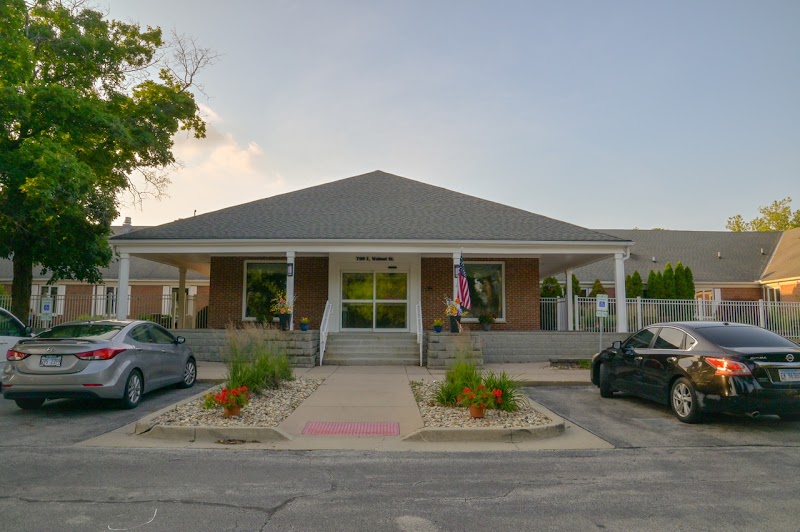
700 EAST WALNUT, BLOOMINGTON, IL 61701 (309) 827-8004
For profit - Limited Liability company 88 Beds GOLDWATER CARE Data: November 2025 2 Immediate Jeopardy citations
Trust Grade
0/100
#529 of 665 in IL
Last Inspection: February 2025

Within standard 12-15 month inspection cycle. Federal law requires annual inspections.

Overview

Goldwater Care Bloomington has received a Trust Grade of F, indicating significant concerns and a poor overall quality of care. Ranked #529 out of 665 facilities in Illinois, they are in the bottom half, and #7 out of 7 in McLean County, meaning there are no better options locally. Despite a trend of improvement with issues decreasing from 48 in 2024 to 19 in 2025, the facility still faces serious challenges, including a concerning staffing turnover rate of 62%, which is higher than the state average. The facility has incurred $248,040 in fines, which is higher than 94% of Illinois facilities, suggesting ongoing compliance issues. Specific incidents include a critical failure to prevent a resident's fall that led to a severe injury and eventual death, and a serious lapse in monitoring a resident's respiratory condition that resulted in a 15-hour delay in necessary medical attention. While there are some efforts to improve, families should weigh these significant weaknesses against any potential strengths before making a decision.

Trust Score
F
0/100
In Illinois
#529/665
Bottom 21%
Safety Record
High Risk
Review needed
Inspections
Getting Better
48 → 19 violations
Staff Stability
⚠ Watch
62% turnover. Above average. Higher turnover means staff may not know residents' routines.
Penalties
✓ Good
$248,040 in fines. Lower than most Illinois facilities. Relatively clean record.
Skilled Nurses
⚠ Watch
Each resident gets only 26 minutes of Registered Nurse (RN) attention daily — below average for Illinois. Fewer RN minutes means fewer trained eyes watching for problems.
Violations
⚠ Watch
87 deficiencies on record. Higher than average. Multiple issues found across inspections.
★☆☆☆☆
1.0
Overall Rating
★☆☆☆☆
1.0
Staff Levels
★☆☆☆☆
1.0
Care Quality
★☆☆☆☆
1.0
Inspection Score
Stable
2024: 48 issues
2025: 19 issues

The Good

  • Full Sprinkler Coverage · Fire safety systems throughout facility
  • No fines on record

Facility shows strength in fire safety.

The Bad

1-Star Overall Rating

Below Illinois average (2.5)

Significant quality concerns identified by CMS

Staff Turnover: 62%

16pts above Illinois avg (46%)

Frequent staff changes - ask about care continuity

Federal Fines: $248,040

Well above median ($33,413)

Significant penalties indicating serious issues

Chain: GOLDWATER CARE

Part of a multi-facility chain

Ask about local staffing decisions and management

Staff turnover is elevated (62%)

14 points above Illinois average of 48%

The Ugly 87 deficiencies on record

2 life-threatening 11 actual harm
Sept 2025 1 deficiency
CONCERN (F) 📢 Someone Reported This

A family member, employee, or ombudsman was alarmed enough to file a formal complaint

Potential for Harm - no one hurt, but risky conditions existed

Safe Environment (Tag F0921)

Could have caused harm · This affected most or all residents

**NOTE- TERMS IN BRACKETS HAVE BEEN EDITED TO PROTECT CONFIDENTIALITY** Based on observations, interviews and record reviews the facility failed to maintain the resident hallways and resident common s...

Read full inspector narrative →
**NOTE- TERMS IN BRACKETS HAVE BEEN EDITED TO PROTECT CONFIDENTIALITY** Based on observations, interviews and record reviews the facility failed to maintain the resident hallways and resident common seating area carpet, in a clean, sanitary, odor free condition. This failure affects all 76 residents that reside in the facility.Findings include: Resident Council Minutes dated [DATE] and [DATE] old business ([DATE]) and new business, documents residents' grievance of unclean carpet. Resident Council minute grievance notes documented a resolution to spot clean the carpets.On [DATE] at 10:20 am, V6 (R5's Family Member) stated the carpet throughout the facility is 'filthy and smells like urine.' V6 also stated Them spot cleaning the halls is not enough. On [DATE] at 10:35 am, V3, Maintenance Director/Housekeeping/Laundry Supervisor toured the facility with this surveyor. V3 stated I figured it was probably the carpet when I heard state was in the building for environmental issues. I ‘ve been here four years. I have tried different ways over the years to tackle the problem. Resident council group continues to complain because it is still a big issue. Last Spring, I had a commercial, carpet cleaning extraction machine. It was old and died. I don't have a commercial extractor available. I have to use a residential carpet cleaner. Basically, it is used for spot cleaning. The carpets need deep cleaned. The residential carpet extractor is the same as the one you can rent for your home. On [DATE] at 10:40 am, V3 Maintenance Director/Housekeeper/ Laundry Supervisor began the tour of the facility. V4 Maintenance Assistant brought a small, residential, upright carpet cleaning extractor to the resident hallway, T- junction of the hallway. V4 stated the residential appliance is what the facility uses to clean the facility carpet. V4 confirmed the facility does not use a commercial extractor /cleaner in the facility. V4 then stated the strength of the cleaner is the same as what is used when cleaning carpets at home. R7's Minimum Data Set (MDS) dated [DATE] documents R7's Brief Interview of Mental Status (BIMS) score of 15 out of a possible 15, indicating no cognitive impairment. On [DATE] at 10:50 am, R7 stated he is blind in one eye and can barely see out of the other. He can't tell if the carpet is soiled. R7 stated I know something stinks in all the hallways. It may well be the carpet.On [DATE] at 11:00 am through 11:25 am, V3 Maintenance Director and this surveyor continued the tour of all common areas and resident lounges. All resident hallways and common areas, East Long Hall, East Short Hall, [NAME] Long Hall, [NAME] Short Hall, Center Hallway, in front of both East and [NAME] Dining rooms and around the nurses' stations all had light green, or light green with beige bordered carpet. All hallways had a faint urine odor. There were copious wide-spread black and brown stains Some of the stains measured approximately six to eight-foot size patches The stains extended the full length of 100 foot on East and [NAME] Long hallways. The stains also dominated the full forty-foot length of the East, West, and Center hallways of the facility. More of the carpet was stained than not, throughout the facility. There was also a foul feces-like odor on the [NAME] long hallway. Also on the [NAME] long hallway, there was an approximately five-foot section of black mold-like substance present that extended approximately six inches out from the baseboard. V3 stated the facility had a toilet overflow awhile back and had to have a plumber out to fix it. That caused this black stain. V3 also stated the facility has had a couple other toilets back up too. V3 stated I can't smell since I had Covid. I can't confirm the odor. Bottom line is the carpet is old and needs to be replaced. In my opinion, a tile surface would be much better and easier to keep clean. On [DATE] at 11:30 am, V8 Certified Nursing Assistant (CNA) stated No, the carpets are not clean comfortable or homelike. They haven't been, since I started working here three years ago. They are dirty and need cleaned. There are odors from the carpet. That is expected when you see all the stains. On [DATE] at 11:35 am, V9 CNA stated I don't smell anything, probably because I am busy and used to it. The condition of the carpet is not even close to being clean. I see housekeeping spot clean at times. That does not seem to make any difference. It needs to be replaced. The worst areas of the carpet are the areas at the nurse's station, (V9, points to the East Hall carpet around the nurse's station to confirm) where a couple of the residents eat. That is why the carpet is soiled with black stains. On [DATE], V10 Agency, Licensed Practical Nurse stated I work in a lot of facilities. I have worked here several times. What stands out to me is the horrible odors from the dirty carpet. I can give all the medication in the world to the residents, but the atmosphere is not conducive to healing. Absolutely, not clean, comfortable, or homelike. It is a shame. This is a very nice home. R2's MDS dated [DATE] documents R2's BIMS score as 15 out of a possible 15, indicating no cognitive impairment. On [DATE] at 11:50 am, R2 stated I have no problem with the care in the facility, they keep me clean and dry. They keep my room neat and tidy. The hallways are atrocious. The carpets are filthy, and they stink. The smell is not in my room, thank God. I am usually in my room or dining room. I don't have any issues with either of those places, where I spend my time in. R4's MDS dated [DATE] documents R4's BIMS score as 15 out of a possible 15, indicating no cognitive impairment. On [DATE] at 12:00pm, R4 stated I had my toilet overflow several weeks ago. Then, as you would expect, there was a strong odor of (feces). I think the carpet outside my room had some seepage, from that situation. I just kept my door closed a couple days. That smell is gone. The normal odor of urine is bad in some areas. I am sure that comes from the carpet. You can look and you will see, the carpet has never been cleaned. It has gotten worse over the past few months. The stains all connect. It is hard to tell the actual color of the carpet now. It is bad. R3's MDS dated [DATE] documents R3's BIMS score as 15 out of a possible 15, indicating no cognitive impairment. On [DATE] at 12:10 pm, R3 stated Occasionally there can be bad odors of urine. It was real bad in the hot weather. Some odor is expected in a nursing home. The carpet, they need to take a scrub brush to. The carpets are terrible. It is filthy, as I am sure you have already noticed.R1 MDS dated [DATE] documents R1's BIMS score as 15 out of a possible 15, indicating no cognitive impairment. On [DATE] at 12:20pm, R1 stated The carpet in the hall looks bad. The carpet is full of stains. I have not noticed any odors out there. My floor is fine. I am glad there isn't carpet in here. On [DATE] at 12:25 pm, V7 (R6's Family Member) stated I am in the facility four to five hours almost every day. I have not noticed any lingering odors from the carpet. I have certainly noticed the condition of the carpet. It is old and full of stains. It does not matter what hall you're on. The carpet is definitely dirty. I have seen them vacuum regularly, that is all. If this were my home, I would recognize it is time to change the carpet. I would have been replacing it a long time ago. On [DATE] at 12:30 pm, V5 Activity Director confirmed the resident council meeting minutes for [DATE] and [DATE] document the carpets in the facility are dirty and the resolution was to spot clean the carpets. V15 stated The residents had been complaining much longer than two months that the carpet is real dirty. They have not complained about an odor, that I recall. The resolution is always the same, to spot clean the carpet. That is not working, obviously. We have invited (V11, Regional Director of Operations) Corporate to attend council group and hear, firsthand from the residents. I believe she is coming next month.The facility CMS Matrix 802 dated [DATE] documents 76 residents reside in the facility.
Aug 2025 1 deficiency 1 Harm
SERIOUS (G) 📢 Someone Reported This

A family member, employee, or ombudsman was alarmed enough to file a formal complaint

Actual Harm - a resident was hurt due to facility failures

Accident Prevention (Tag F0689)

A resident was harmed · This affected 1 resident

**NOTE- TERMS IN BRACKETS HAVE BEEN EDITED TO PROTECT CONFIDENTIALITY** Based on observation, interview and record review the facility failed to assist one (R1) resident while eating causing R1 to spi...

Read full inspector narrative →
**NOTE- TERMS IN BRACKETS HAVE BEEN EDITED TO PROTECT CONFIDENTIALITY** Based on observation, interview and record review the facility failed to assist one (R1) resident while eating causing R1 to spill hot coffee on her left hip and left thigh out of three residents reviewed for Accidents in a sample list of three residents. R1 obtained four separate blisters which required treatment from a Wound Physician. Findings include:R1's Electronic Medical Record (EMR) documents medical diagnoses as Hemiplegia and Hemiparesis following Cerebrovascular Disease affecting Right dominant side, Disorders of the Brain, Morbid Severe Obesity due to excess calories, Epilepsy, Traumatic Brain Injury, Colostomy, Chronic pain due to trauma and Legal Blindness. R1's care plan intervention dated 5/2/25 documents R1 is usually provided with one assist by staff to eat. R1's Visual Bedside Kardex Report dated 8/16/25 documents R1 is usually provided with one assist by staff to eat. This same Kardex documents R1's call light should be within reach. R1's Physician Order Set (POS) dated August 2025 documents a physician order starting 4/22/25 to provide a regular consistency diet with thin liquids. R1's Minimum Data Set (MDS) dated [DATE] documents R1 as moderately cognitively impaired. This same MDS documents R1 requires moderate assistance with eating and is dependent on staff for oral hygiene, toileting, bathing, dressing, personal hygiene, bed mobility and transfers. This same MDS defines moderate assistance as Partial/moderate assistance - Helper does LESS THAN HALF the effort. Helper lifts, holds, or supports trunk or limbs, but provides less than half the effort.R1's Nurse Progress Note dated 8/4/25 at 8:00 AM documents R1 called out and stated she spilled her coffee in bed. R1's Skin Condition Report dated 8/4/25 documents R1 called out after spilling coffee on her Left Lateral Hip and Thigh while in bed eating breakfast at 8:00 AM. This same report documents the hot coffee spill caused a large red, blanchable area measuring 15.0 centimeters (cm) long by 10.0 cm wide with no depth. This same report documents at 1:00 PM R1's Left Hip and Left lateral thigh were re-assessed and found to have four separate intact blisters measuring blister 1 as 4.0 cm long by 2.0 cm wide, blister 2 as 3.0 cm long by 1.0 cm wide, blister 3 as 3.0 cm long by 1.0 cm wide, and blister 4 as 3.5 cm long by 1.0 cm wide. This same report documents R1 complained of moderate pain to area and pain medication order was increased.R1's Wound Initial Evaluation and Management Summary dated 8/7/25 documents R1's Left Lateral Hip wound was from a hot liquid burn that resulted in a ruptured blister. This same report documents R1's Left Lateral Hip burn wound measures 1.0 centimeters (cm) wide by 2.0 cm long by 0.2 cm deep with moderate serous drainage, 100% thick adherent devitalized necrotic tissue with an estimated time to heal as one to two months. R1's Final Report to the State Agency dated 8/10/25 documents R1 stated she was laying in bed, drinking coffee in her personal tumbler and her cup slipped from her hand spilling coffee on her outer left hip/thigh. This same report documents R1 initially was assessed to have a blanchable red area to her Left outer Hip/Thigh which was left open to air. This report documents upon reassessment, R1 had four blisters that had formed on her outer Left Hip/Thigh requiring a medicated treatment with Silvadene cream. This same report documents V12 Wound Physician assessed R1 on 8/7/25 and changed R1's treatment order. This same report documents R1 is moderately cognitively impaired. R1's Wound Evaluation and Management Summary dated 8/14/25 documents R1's Left Lateral Hip burn wound measures 1.0 cm long by 3.5 cm wide by 0.1 cm deep with moderate serous drainage and 100% thick adherent devitalized necrotic tissue.On 8/16/25 at 8:55 AM V6 Licensed Practical Nurse (LPN) and V8 Certified Nurse Aide (CNA) completed a skin check for R1. R1's Left Hip showed three separate open areas. R1's upper Left Hip showed a dime sized open area with a pink wound bed and dark pink periwound, middle Left Hip was the largest of the three open areas, showed an irregular shaped open wound a few inches wide with attached yellow slough, dark red periwound and moderate yellow drainage and R1's medial Left Hip area showed a triangle shaped open area with a pink wound base and pink periwound. R1's dressing did not cover the medial nor the top open areas. On 8/16/25 at 9:10 AM V8 Certified Nurse Aide (CNA) set up R1's breakfast tray. The top of R1's meal ticket was highlighted in green. V8 CNA stated she did not know what the green highlighting meant. V9 CNA entered R1's room and stated she was not sure what the green highlighting meant but thought it may mean R1 was independent in eating. On 8/16/25 at 9:20 AM R1 was laying in her bed with head of bed up 60 degrees eating her breakfast. R1's call light was connected to the far side rail and laying under the fitted sheet. R1 stated she could not reach her call light and did not know where it was. There were no staff in R1's room. R1 stated This is just like the time when I couldn't get them (staff) to answer my call light when I spilled my coffee. On 8/16/25 at 9:25 AM V10 Certified Nurse Aide (CNA) entered R1's room. V10 CNA moved R1's bed away from the wall to be able to reach her call light. V10 CNA then stated R1 wouldn't be able to reach her call light due to it was under her fitted sheet and out of R1's reach. On 8/16/25 at 12:30 PM R1 was laying in her bed with the head of the bed up 60 degrees eating her lunch. R1's pink tumbler cup was on R1's bedside table within her reach. There were no staff present in R1's room. On 8/16/25 at 8:35 AM V6 Licensed Practical Nurse (LPN) stated R1 likes to have coffee in the morning. V6 LPN stated R1 likes to drink her coffee from her own personal tumbler. V6 LPN stated she was R1's nurse on 8/4/25 and heard R1 yelling out from her room. V6 LPN stated when she arrived, R1 had spilled hot coffee 'all over' her Left Hip and Left Lateral Thigh area causing the 'entire' area to be red. V6 LPN stated she removed the wet clothing, cleaned up the coffee and applied a cold washcloth to R1's Left Hip and lateral thigh area. V6 LPN stated later on that afternoon, R1 had developed several blisters from the hot coffee burn. On 8/16/25 at 9:00 AM R1 stated she likes to drink her coffee from her own cup (pointing to a tall pink tumbler with a slide lid and side handle). R1 stated someone set up her breakfast tray that morning (8/4/25) and then left R1 by herself to eat her breakfast. R1 stated she was trying to reach for her cup and couldn't reach it due to the handle was on the far side from her. R1 stated she activated her call light, but no one answered so she tried again to reach for her coffee and ended up spilling it 'all over' her. R1 stated it hurt a little bit when it first happened and hurt ‘a whole lot' later in the day. R1 stated it hurts when V12 Wound Physician ‘cuts on it'. R1 stated He (V15) slices and dices on my hip and boy does it hurt!. On 8/16/25 at 9:15 AM V9 Certified Nurse Aide (CNA) stated R1's Kardex and care plan documents R1 is usually one assist with eating. On 8/16/25 at 11:30 AM V3 Minimum Data Set (MDS) nurse stated R1's MDS section for eating, R1's care plan Activity of Daily Living (ADL) section for eating and R1's Kardex do not match. On 8/16/25 at 12:10 PM V4 Assistant Director of Nurses (ADON)/Wound Nurse stated R1 spilled hot coffee on herself the morning of 8/4/25. V4 stated the staff alerted V4 and she went to R1's room to assess R1. V4 Wound Nurse stated R1 had a large, reddened area on her outer Left Hip and Thigh which later blistered. V4 Wound Nurse stated R1 did not have any prior wounds that were being treated by the facility. On 8/16/25 at 1:50 PM V13 Certified Nurse Aide (CNA) stated staff have to get R1 set up just like R1 wants or R1 won't be able to manage eating by herself. On 8/16/25 at 2:45 PM V15 Certified Nurse Aide (CNA) stated V14 CNA served R1 her breakfast tray on 8/4/25. V15 CNA stated R1 ended up spilling her hot coffee on her Left Hip. V15 CNA stated he heard R1's call light sounding but not sure how long. V15 CNA stated the staff are all very busy at that time of morning trying to get everyone ready for breakfast. V15 CNA stated R1 needs set up assistance with her meals but 'the staff never stay in the room' with R1. On 8/16/25 at 3:00 PM V1 Administrator stated R1's Minimum Data Set (MDS) assessment does not match R1's care plan and R1's Kardex. V1 Administrator confirmed R1's Electronic Medical Record (EMR) does not include any documented refusals from R1 of staff being present for meals to assist R1 if necessary. V1 Administrator stated the facility does not have a policy on serving hot liquids to cognitively impaired residents. On 8/16/25 at 3:40 PM V2 Director of Nurses (DON) stated staff should follow the MDS and care plan. V2 DON confirmed R1's MDS, care plan and Kardex do not match which could be confusing for staff. V2 DON stated R1 should have been assisted with setting up her tray so that she could manage the drinks which would have prevented her from being burned. V2 DON stated the staff were in-serviced due to R1 being burned and will also in-service the staff on documenting refusals of care.
Jul 2025 3 deficiencies 1 IJ
CRITICAL (J) 📢 Someone Reported This

A family member, employee, or ombudsman was alarmed enough to file a formal complaint

Immediate Jeopardy (IJ) - the most serious Medicare violation

Accident Prevention (Tag F0689)

Someone could have died · This affected 1 resident

**NOTE- TERMS IN BRACKETS HAVE BEEN EDITED TO PROTECT CONFIDENTIALITY** Based on observation, interview, and record review the facility failed to prevent a fall by failing to ensure fall precautions w...

Read full inspector narrative →
**NOTE- TERMS IN BRACKETS HAVE BEEN EDITED TO PROTECT CONFIDENTIALITY** Based on observation, interview, and record review the facility failed to prevent a fall by failing to ensure fall precautions were in place and failed to minimize the risk of injury from a fall by failing to ensure interventions to reduce the risk of injury were in place. The facility also failed to ensure fall precautions and interventions were in place after a fall with injury for one (R1) of three residents reviewed for falls on the sample list of four. This immediate jeopardy began on [DATE] at 8:00 PM when this failure resulted in R1 having a high impact fall on [DATE] from an elevated bed onto the floor. This fall resulted in R1 sustaining a right leg fracture with shattered and displaced bone fragments. This fall contributed to R1's death five days later [DATE]. V1, Administrator was notified of the Immediate Jeopardy on [DATE] at 10:23 AM. The surveyor confirmed by observation, interview, and record review that the Immediate Jeopardy was removed on [DATE], but noncompliance remains at Level Two because additional time is needed to evaluate the implementation and effectiveness of the in-service training. R1's undated Care Plan documents diagnoses including cerebral infarction, cerebral aneurysm, thrombocytopenia, dysarthria and anarthria, rheumatoid arthritis, type II diabetes mellitus with diabetic neuropathy, and pain in right knee. This care plan documents R1 requires maximum assistance of two people for bed mobility and sitting up and R1 requires a mechanical lift for transfers. R1's Fall Care Plan dated 3/2024 documents R1 has a history of falls and contains an intervention dated [DATE] to have fall mats on the floor next to the bed and for the bed to be in the low position when R1 is in bed due to the history of R1 rolling out of the bed onto the floor. This care plan documents R1 has fallen out of bed on [DATE], [DATE], [DATE], [DATE], [DATE], [DATE], [DATE], and [DATE].On [DATE] at 10:08 AM, R1 was lying in bed on a low air loss mattress. R1's bed was elevated three feet from the floor. Fall mats were not lying on the floor beside the bed. At this time R1 was unresponsive. R1 was breathing with mouth open, and breaths were irregular and labored. On [DATE] at 9:25 AM V31, Maintenance Director measured the height of R1's bed frame from the floor in standard position at 22 inches, then measured the bedframe from the floor at the position R1's bed was observed to be (on [DATE]) when R1 was in bed. This bed position measured 32 inches from floor. V31 stated the air mattress was at minimum 4 inches in height which would put R1 36 inches from floor when observed lying in bed. V31 verified this is a high position for bed. The Progress Note by V8 Registered Nurse (RN) dated [DATE] documents on [DATE] at 8:00 PM R1 was found on the floor next to the bed on his back after V13, Certified Nursing Assistant (CNA) heard his screams from another resident room. V8, documents that R1 fell from the bed in the high position with the low air loss mattress on and inflated. R1 complained of right knee pain and required four staff assist including the mechanical lift to transfer R1 to the bed. V8 documents R1's POA (V30) and hospice physician (V25) were notified, and orders were received to keep R1 comfortable with morphine and to not send R1 to the hospital at that time.The Incident Statement dated [DATE] documents, V13 CNA stated she was in another resident room when she could hear R1 screaming. R1's Progress Note dated [DATE] at 8:15 PM documents V32, LPN, contacted hospice staff stating R1 was having continued uncontrolled right knee pain after pain medication was administered as ordered, and staff cannot reposition R1 without extreme pain.R1's Physician Orders dated [DATE] document a new order for a 2-view x-ray of R1's right knee related to pain in the right knee and a one-time administration of 20mg of Morphine to be given for uncontrolled pain. At 3:07 PM on [DATE] V30, R1's Family Member stated she came to see R1 on Monday [DATE]. V30 stated she was notified of the fall on [DATE] around 9:00 or 9:30 PM. V30 stated she had not been in to see R1 all weekend but had called for updates on [DATE] and [DATE] and was told that R1 was just a little sore and bruised. V30 stated when she entered R1's room on [DATE] R1 was receiving a sponge bath from a CNA (unnamed). V30 stated R1 was not being moved but screaming in pain just from touch alone. R1's Biotech X-Ray report dated [DATE] at 11:22 AM documents R1 has an acute comminuted fracture distal femur with 3cm dorsal lateral displacement distal fragments noted. R1's progress notes dated [DATE] document R1 was sent to the local emergency department per family request. R1's Hospital Records dated [DATE] document R1 reported significant pain to the right hip area upon arrival on [DATE] and R1 had obvious gross deformity to the right lower extremity with significant enlargement of the right thigh. Right leg x-ray was completed at 3:32pm on [DATE] with results of acute comminuted fracture distal femoral Meta diaphysis just above prothesis with distal fragment displaced laterally and posteriorly by 4cm and right hip fracture cannot be ruled out. Records document R1's family declined surgical intervention due to R1's bleeding disorder and complications associated with surgery and that R1 was placed in a knee immobilizer and returned to the facility.R1's Nurse Practitioner Visit Note dated [DATE] documents R1 fell out of bed ([DATE]) Friday night when trying to reach something at the request of his roommate. R1 had significant pain throughout the weekend. X-ray's obtained yesterday ([DATE]) confirmed R1 had an acute comminuted distal femur fracture of the right femur just above the prosthetic. R1 considered high risk for surgery and would have required transfer to different hospital. Family opted for conservative treatment. Added scheduled morphine due to R1's pain level in addition to current as needed ordered morphine. Family wishes to continue to focus on comfort. R1's progress note dated [DATE] at 10:50 AM documents R1 expired at facility. R1's death certificate dated [DATE] documents Immune Thrombocytopenic Purpura with contributing factors of ischemic heart disease and fracture of femur related to fall listed as cause of death. Manner of death listed as accident. On [DATE] at 1:51 PM, V34, Deputy Coroner, stated R1's cause of death was listed as Immune Thrombolytic Purpura (ITP) which is a low platelet count, this contributed to R1 being unable to have surgery to set his fracture. V34 stated this was an extensive traumatic fracture and that it contributed to R1's death with manner of death as an accident. V34 stated the significant pain R1 suffered caused stress to his heart and was also a significant factor attributing to his death. On [DATE] at 12:33 PM, V15 Certified Nurse Assistant (CNA) stated she was working the night R1 fell but was not R1's assigned CNA. V15, CNA stated she was in a resident's room when the fall occurred. V15, CNA stated when she entered R1's room after his fall, R1 was screaming out in pain stating his right knee hurt requesting staff to rub it. V15, CNA stated V13, CNA and V15 were performing care for R1 after his fall and R1 was verbalizing and exhibiting signs of excruciating pain. V15 stated two days later, [DATE], between 8:00 pm and 10:00 pm, V15 and an un-named agency CNA were providing incontinence care for R1 when she felt something move in R1's knee. V15 stated she heard a pop sound, and R1 continued to be in significant pain at this time and she reported both pain and the shifting pop in R1's right leg to V8, RN after care completion. On [DATE] at 2:20 PM, V8 stated R1 was on his back on the floor, no mat, when she was called into the room by R1's cries. V8 stated R1 stated a CNA was just in the room prior to the fall. V8 stated R1 asked staff to stretch his leg out after transferring R1 to bed and that is when R1 screamed out in pain several times. On [DATE] at 10:30 AM, V12 Nurse Practitioner (NP), stated she was not aware of R1's fall on Friday, [DATE]th but was notified the following Tuesday, [DATE]th. V12 stated she found out about the entire event on the morning of 7/15 during the scheduled IDT (Interdisciplinary Team) meeting. V12 stated prior to R1's fall he was stable with minimal intermittent confusion, a pleasant man who she enjoyed caring for. V12 stated that had R1 not fallen he would have lived longer. V12 stated she has never observed fall mats in R1's room. On [DATE] at 2:09 PM, V2 Director of Nursing (DON), confirmed that R1's Care Plan included an intervention to have fall mats on the floor next to the bed and at the time of the fall he did not have the mats. V2 stated the mat should have been in place to reduce the risk of R1's injury due to his history of rolling out of bed.The facility fall policy dated [DATE] document's the purpose is to assure the safety of all residents in the facility, when possible. The program will include measures which determine the individual needs of each resident by assessing the risk of falls and implementation of appropriate interventions, and to provide necessary supervision, that assistive devices are utilized as necessary. The Immediate Jeopardy that began on [DATE] was removed on [DATE] when the facility took the following actions to remove the immediacy. 1. On [DATE] V2 Director of Nursing (DON) conducted facility wide audits of all residents' fall care plans. Audits of observations that fall interventions were in place were conducted by Interdisciplinary Team Members (Maintenance Director, Social Services Director, Assistant Director of Nursing, Business Services, and floor RN's)2. On [DATE] V2 DON, V29 Quality Assurance Nurse, and the MDS Coordinator provided education on how to access fall interventions by accessing the resident's Kardex with ongoing education to be provided to staff members on FMLA (Family Medical Leave of Act), vacation, or agency staff.3. On [DATE] V37 [NAME] President of Operations provided education to V1 and V2 regarding the facility's Fall Prevention Program policy that included the DON's responsibilities related to monitoring of the fall prevention program.4. On [DATE] V1 and V2 provided education on the facility's Fall Prevention Program policy to all licensed and certified nursing staff. Ongoing education to be provided to staff members on FMLA, vacation, and all agency staff prior to returning to the facility by V1, V2 or Designee.5. On [DATE] V2 and V29 Quality Assurance (QA) Nurse educated Hospice Company staff on the facility's Fall Prevention Program policy.6. On [DATE] V2 and V29 QA Nurse educated all licensed and certified nursing staff on the facility's Incident Accident policy. Ongoing education to be provided to staff member on FMLA, vacation, and all agency staff prior to returning to the facility by V1, V2 or Designee.7. On [DATE] V2 and V29 educated all licensed and certified nursing staff on the facility's Pain Management policy. Ongoing education to be provided to staff member on FMLA, vacation, and all agency staff prior to returning to the facility by V1, V2 or Designee.8. On [DATE] V2 and V29 educated all licensed and certified nursing staff on the facility's Pain Assessment policy. Ongoing education to be provided to staff member on FMLA, vacation, and all agency staff prior to returning to the facility by V1, V2 or Designee.9. On [DATE] V2 and V29 educated all licensed and certified nursing staff on the facility's Physician-Family Notification - Change in Condition policy. Ongoing education to be provided to staff member on FMLA, vacation, and all agency staff prior to returning to the facility by V1, V2 or Designee.10. On [DATE] V2 and V29 educated licensed and certified nursing staff on the facility's Basic Care Plan policy. Ongoing education to be provided to staff member on FMLA, vacation, and all agency staff prior to returning to the facility by V1, V2 or Designee.11. On [DATE] V2 and V29 educated all Interdisciplinary team (IDT) members on the facility's Comprehensive Care Plan policy. Ongoing education to be provided to staff member on FMLA, vacation, and all agency staff prior to returning to the facility by V1, V2 or Designee.12. On [DATE] V2 and V29 educated all licensed and certified nursing staff on the facility's Resident Rounds guidelines. Ongoing education to be provided to staff member on FMLA, vacation, and all agency staff prior to returning to the facility by V1, V2 or Designee.13. On [DATE] V2 and V29 educated all licensed and certified nursing staff on the facility's Hospice Service policy. Ongoing education to be provided to staff member on FMLA, vacation, and all agency staff prior to returning to the facility by V1, V2 or Designee.14. On [DATE] an impromptu QAPI (Quality Assurance Performance Improvement) meeting was held with the medical director and staff IDT members to discuss deficiency and facility action plan.15. Starting on [DATE] V2, V29 and designee began audits to ensure all new unwitnessed and witnessed falls and the interventions have been added to the resident's care plan. These audits will be ongoing seven days per week for six weeks. Quality Assurance oversight of these audits will be done by V37. The Audit tool dated week end [DATE] documents first audit completed [DATE].The facility presented an abatement plan to remove the immediacy on [DATE] at 1:28 PM. The survey team reviewed the abatement plan and was unable to accept the plan to remove the immediacy. The abatement plan was returned [DATE] at 2:42 PM. The facility presented a revised abatement plan to remove the immediacy on [DATE] at 2:51 PM. The survey team reviewed the abatement plan and was able to accept the plan to remove the immediacy. The abatement plan was approved on [DATE] at 3:16 PM.
SERIOUS (G) 📢 Someone Reported This

A family member, employee, or ombudsman was alarmed enough to file a formal complaint

Actual Harm - a resident was hurt due to facility failures

Quality of Care (Tag F0684)

A resident was harmed · This affected 1 resident

Based on interview and record review the facility failed to ensure timely medical treatment for one (R4) of three residents reviewed for change in condition on a sample list of 6. This failure resulte...

Read full inspector narrative →
Based on interview and record review the facility failed to ensure timely medical treatment for one (R4) of three residents reviewed for change in condition on a sample list of 6. This failure resulted in R4 having an acute ischemic stroke resulting in receptive aphasia. The facility's Physician-Family Notification-Change in Condition Policy dated 11/13/2018 documents that the facility will inform the resident; consult with the resident's physician or authorized designee such as Nurse Practitioner; and if known, notify the resident's legal representative or an interested family member when there is: B) a significant change in the resident's physical, mental, or psychosocial status (i.e., a deterioration in health, mental, or psychosocial status in either life-threatening conditions or clinical complications). On 4/11/2025 the facility held a nurse's meeting, and the V2 (Director of Nursing (DON)) educated the nurses on Documentation Guidelines for Change in Condition. A power point handout dated 2/28/2023 was provided and documents that nurses should always include the resident's signs and symptoms specific to the change in condition including vital signs. This education material also documents that nurses are not to monitor a change in condition without notifying the physician or nurse practitioner first. On 7/21/25 at 9:01 AM, V27 (R4 Family Member) stated that she called R4 on 7/1/25 around 8:00 AM and V27 stated R4's speech was garbled, and she was confused and kept asking V27 if she was there. V27 stated she reported this to V11(Licensed Practical Nurse) the nurse caring for R4 that morning.On 7/22/25 at 10:13 AM, V26 (Certified Nurse Assistant (CNA)) stated that she took care of R4 on July 1, 2025, and R4 wasn't acting right and wasn't making eye contact. V26 stated that R4 was transferring slower than normal and R4 couldn't hold her cup at breakfast and wasn't making sense when she talked.On 7/23/25 at 10:25 AM, V11 (Licensed Practica Nurse-LPN) stated that R4 seemed confused around mid-morning on 7/1/25 when she went to group therapy and V24 (Occupational Therapist (OT)) reported to V11 that R4 was acting nervous and confused. V11 stated that after lunch R4 continued to decline and was kept at the nurses' station for monitoring. Review of R4's electronic medical record does not include evidence that R4's vital signs were measured on 7/1/25. On 7/21/25 at 1:40 PM, V24 (OT) stated that R4 participated in a group therapy session on the morning of 7/1/25 and was having difficulty following one step commands. V24 stated that R4 exhibited confusion off and on during previous therapy sessions, but V24 stated this time it seemed more concerning. Speech Therapy note dated 7/1/25 documents that R4 was unable to effectively participate due to altered mental status.Physical Therapy note dated 7/1/25 documents that R4 needed max cueing for visual, verbal and tactile due to increase in confusion.On 7/22/25 at 10:39 AM, V12 (Nurse Practitioner) stated that she saw R4 the morning of 7/1/25 and resident was confused and seemed out of it. V12 stated she thought it was due to the medications R4 had received that morning but told V11 to monitor and call with any changes. V12 stated that V11 did not contact her that afternoon when R4 declined, and she said V11 should have called to report R4's change in condition and may have resulted in a more positive outcome for R4.On 7/23/25 at 11:57 AM, V2 (DON) stated she assessed R4 around lunch on 7/1/25 and R4 was giving goofy answers to her questions and kept saying that her daughter was at the facility. V2 stated that V11 should have got a set of vital signs on V11 and should have notified V12 when R4's condition worsened.
SERIOUS (G) 📢 Someone Reported This

A family member, employee, or ombudsman was alarmed enough to file a formal complaint

Actual Harm - a resident was hurt due to facility failures

Deficiency F0697 (Tag F0697)

A resident was harmed · This affected 1 resident

**NOTE- TERMS IN BRACKETS HAVE BEEN EDITED TO PROTECT CONFIDENTIALITY** Based on interview and record review the facility failed to conduct a comprehensive pain assessment after a fall with injury, fa...

Read full inspector narrative →
**NOTE- TERMS IN BRACKETS HAVE BEEN EDITED TO PROTECT CONFIDENTIALITY** Based on interview and record review the facility failed to conduct a comprehensive pain assessment after a fall with injury, failed to administer as needed pain medications as ordered by the physician when signs of symptoms of excruciating pain were present, and failed to notify the family and physician when a change in the level of pain was identified for one (R1) of three residents reviewed for pain on a sample size of four. This failure resulted in R1 suffering excruciating pain in which R1 was observed with facial grimacing, yelling and screaming for four days after sustaining a right leg fracture.R1's Progress Note dated [DATE] documents that on [DATE] at 8:00 p.m., R1 was found on floor next to bed on his back after V13, Certified Nursing Assistant (CNA) heard his screams while V13 was in another resident room. V8, Licensed Practical Nurse (LPN), documents that R1 fell from bed in high position with low air loss mattress on and inflated. R1 complained of right knee pain at 7/10 with no previous complaints of pain and required 4 staff assist including mechanical lift to place R1 back in bed. V8 documents V30, R1's family member, and hospice physician were notified, and facility was to keep R1 comfortable with morphine.R1's undated Care Plan documents diagnosis including cerebral infarction, cerebral aneurysm, thrombocytopenia, dysarthria and anarthria, rheumatoid arthritis, type 2 diabetes mellitus with diabetic neuropathy, and pain in right knee. This care plan also documents R1 has a potential for pain and is on pain medication therapy related to terminal diagnosis on hospice care with a start date of [DATE]; goals listed to have any complaint of pain controlled at acceptable level and to be free of discomfort. Interventions include to administer medications as ordered, assess for pain, and to notify physician if pain medication is non-effective.R1's Hospice Care Plan dated [DATE] documents R1 will be pain free or pain will be at tolerable level.R1's Medication Administration Record (MAR) dated [DATE] documents the following orders for Morphine Sulfate (Concentrate) Solution 20 milligrams(mg) per milliliter (ml) with a start date of [DATE]. -Give 0.25ml every 2 hours as needed (PRN) for pain rated 1-3 on a scale of 10.-Give 0.5 ml every 2 hours as needed (PRN) for pain rated 4-7 on a scale of 10.-Give 1.0 ml every 2 hours as needed (PRN) for pain rated 8-10 on a scale of 10.R1's MAR also documents scheduled order for 325mg of acetaminophen, 2 tabs three times a day, and every 4 hours as needed for pain, not to exceed 4000mg per day, with a start date of [DATE].V14, Hospice Registered Nurse (HRN), documented in R1's Hospice Progress Note dated [DATE] that V8, LPN called and stated R1 had fallen and was complaining of pain. V8, LPN stated R1 did not have any morphine in stock currently, and that she (V8) had no access to emergency box to pull bottle of morphine in facility stating, I'm new here. V8, LPN reported V30, R1's family member did not want R1 sent to hospital. Documents hospice attempted contact with V30 but was unable to verify V30's requests to not transport to local emergency department (ED). A new prescription for morphine was sent to the backup pharmacy and a hospice visit was scheduled for the next day, [DATE].V14, HRN, documented in R1's Hospice Progress Note dated [DATE] that V8, LPN called a second time stating R1 had now vomited three times. V14, HRN instructed V8, LPN to administer anti-emetic as ordered.R1's incident statement dated [DATE], documented V13 CNA stated she was in another resident's room when she could hear R1 screaming. V13 stated when she arrived to R1's room he was visualized in bed screaming in pain with several staff around.R1's Hospice Visit Notes dated [DATE], documented V14, HRN, stated R1 could be heard moaning in pain from down the hall. V14 documented having to wait for facility nurse V9, LPN to return from lunch break to get pain medications to relieve R1's acute pain. V14 stated she had to demand that R1 have medication for pain control as V9 stated no morphine had been retrieved from facility emergency backup supply box yet.R1's MAR dated [DATE] documented on [DATE] at 11:27 AM, Fifteen- and one-half hours post fall incident, 1st administration of PRN pain medication. R1 received ordered prn dose of 20mg/1ml Morphine indicated for pain score of 8-10 on pain scale with 10 being the worst pain. MAR documents sporadic administration of PRN morphine with continued high levels of reported pain until order for scheduled administration received on [DATE].R1's Progress Note dated [DATE], at 8:15 PM, documented V32, LPN, contacted R1's hospice stating R1 is having continued uncontrolled right knee pain after pain medication administered as ordered, and staff cannot reposition R1 without extreme pain.R1's Physician Orders dated [DATE] document new order for a 2-view x-ray of right knee related to pain in right knee and a one-time administration of 20mg of Morphine to be given for uncontrolled pain.R1's Hospital Records with print date of [DATE] documented R1 reported significant pain to right hip area upon arrival on [DATE]. R1 had obvious gross deformity to right lower extremity with significant enlargement of right thigh. Right leg x-ray was completed at 3:32pm on [DATE] with results of acute comminuted fracture distal femoral Meta diaphysis just above prothesis with distal fragment displaced laterally and posteriorly by 4cm and right hip fracture cannot be ruled out. Records document R1's family declined surgical intervention due to R1's bleeding disorder and complications associated with surgery and that R1 was placed in a knee immobilizer and returned to facility.R1's Progress Notes dated [DATE] at 9:54 PM documented R1 in extreme pain after return from hospital.R1's Progress Notes dated [DATE] at 8:30 AM documented R1 complains of severe pain in right leg with little positioning.R1's Nurse Practitioner Visit Note dated [DATE] documented R1 fell out of bed ([DATE]) Friday night when trying to reach something at the request of his roommate. R1 had significant pain throughout the weekend. Xray's obtained yesterday ([DATE]) confirmed R1 had an acute comminuted distal femur fracture of the right femur just above the prosthetic. R1 considered high risk for surgery and would have required transfer to different hospital. Family opted for conservative treatment. Added scheduled morphine due to R1's pain level in addition to current as needed ordered morphine. Family wishes to continue to focus on comfort.On [DATE] at 10:08 AM, R1 was lying in bed on a low air loss mattress. R1's bed was elevated three feet from the floor. Fall mats were not lying on the floor beside the bed. At this time R1 was unresponsive and appeared to be actively dying. R1 was breathing with mouth open, and breaths were irregular and labored.R1's Progress Note dated [DATE] at 10:50 a.m. documents R1 expired at facility.R1's Death Certificate dated [DATE] documents Immune Thrombocytopenic Purpura with contributing factors of ischemic heart disease and fracture of femur related to fall listed as cause of death. Manner of death listed as accident.On [DATE] at 1:51 PM, V34, Deputy Coroner, stated R1's cause of death was listed as Immune Thrombolytic Purpura (ITP) which is a low platelet count, this contributed to R1 being unable to have surgery to set his fracture. V34 stated this was an extensive traumatic fracture and the pain associated with this type of fracture is severe. V34 stated that the significant pain R1 suffered after his fall could have possibly caused stress to his heart becoming a significant factor attributing to his death. On [DATE] at 12:33 PM, V15 Certified Nurse Assistant (CNA) stated that she was working the night that R1 fell but was not R1's assigned to care for R1. V15, CNA stated she was in a resident's room when the fall occurred. V15, CNA stated when she entered R1's room after his fall, R1 was screaming out in pain stating his right knee hurt requesting staff to rub it. V15, CNA stated V13, CNA and herself were performing care for R1 after his fall and R1 was verbalizing and exhibiting signs of excruciating pain evidenced by facial grimacing and crying out in pain. V15 stated that 2 days later, [DATE], between 8 pm and 10 pm, herself and un-named agency CNA were providing incontinence care for R1, and she felt something move in R1's knee. V15 stated she heard a pop sound, and R1 continued to be in significant pain at this time which she reported both pain and shifting pop in right leg to V8, RN after care completion. At 3:07 PM on [DATE] V30, R1's family member stated she came to see R1 on Monday [DATE]. V30 stated she was notified of fall on [DATE] sometime around 9:00 or 9:30 PM. V30 stated she had not been in to see R1 all weekend but had called for updates on [DATE] and [DATE]. V30 stated both times she was told that R1 was just a little sore and bruised. V30 stated she entered R1's room on [DATE] and observed R1 receiving a sponge bath from a CNA (unnamed). V30 stated R1 was not being moved but screaming in pain just from touch alone.On [DATE] at 10:30 AM, V12 Nurse Practitioner (NP), stated that she wasn't aware of R1's fall that he had on Friday, [DATE]th but was notified the following Tuesday, [DATE]th. V12 stated that she found out about the entire event on the morning of [DATE] when they had their scheduled IDT meeting. V12 stated she was disappointed in how the staff managed the resident's care over the weekend after his fall. V12 stated they didn't do much for him. V12 stated that she met with R1's wife and son on Tuesday, [DATE]th to discuss the plan and at that point V12 recommended scheduled morphine as well as PRN and a Foley catheter. Facility policy titled Pain Management Program dated [DATE] documents the purpose to effectively manage pain to remove effects of unrelieved pain.On [DATE] at 11:40 AM, V2 DON stated that V8 did have access to the emergency medication box (E-box) to pull morphine, and that she had already educated V8 on E-box procedure for R1. V2 stated V8 should have pulled order morphine the night of the fall to provide R1 pain relief.
Apr 2025 1 deficiency
CONCERN (F) 📢 Someone Reported This

A family member, employee, or ombudsman was alarmed enough to file a formal complaint

Potential for Harm - no one hurt, but risky conditions existed

Deficiency F0727 (Tag F0727)

Could have caused harm · This affected most or all residents

Based on interview and record review the facility failed to employ a registered nurse, eight hours a day, seven days a week. This failure has the potential to affect all 88 residents who reside in the...

Read full inspector narrative →
Based on interview and record review the facility failed to employ a registered nurse, eight hours a day, seven days a week. This failure has the potential to affect all 88 residents who reside in the facility. Findings include: The facility provided census dated 4/9/25 documents 88 residents reside in the facility. The facility provided staffing sheets dated February 3, 7, 17, 21, 27, 28, March 3, 21, 22, 23, 31, and April 4, 2025 document that there was not eight hours per day of registered nursing care provided on those dates. On 4/10/25 at 9:39AM, V5 Scheduler confirmed that on February 3, 7, 17, 21, 27, 28, March 3, 21, 22, 23, 31 and April 4, 2025 there was not eight hours per day of registered nursing care provided on those dates.
Feb 2025 13 deficiencies 1 Harm
SERIOUS (G)

Actual Harm - a resident was hurt due to facility failures

Pressure Ulcer Prevention (Tag F0686)

A resident was harmed · This affected 1 resident

**NOTE- TERMS IN BRACKETS HAVE BEEN EDITED TO PROTECT CONFIDENTIALITY** Based on observation, interview and record review the facility failed to assess, monitor, implement careplan interventions, obta...

Read full inspector narrative →
**NOTE- TERMS IN BRACKETS HAVE BEEN EDITED TO PROTECT CONFIDENTIALITY** Based on observation, interview and record review the facility failed to assess, monitor, implement careplan interventions, obtain treatment orders and failed to prevent cross contamination during wound care for one (R63) resident's facility acquired Left Heel Pressure Ulcer. This failure resulted in R63's Left Heel Pressure Ulcer deteriorating leading to surgical debridement and infection requiring two antibiotic therapies. Findings include: R63's undated Face Sheet documents R63 admitted to the facility on [DATE] with medical diagnoses as Metabolic Encephalopathy, Severe Protein Calorie Malnutrition, Lack of Coordination and Cognitive Communication Deficit. R63's Minimum Data Set (MDS) dated [DATE] documents R63 as severely cognitively intact. This same MDS documents R63 requires maximum assistance for toileting, dressing, personal hygiene and bed mobility. R63's Careplan initiated 10/30/24 does not document R63's Left Heel Stage 4 Pressure Ulcer, Left Heel wound infection and antibiotic therapies prescribed for R63's Left Heel Stage 4 Pressure Ulcer. R63's careplan intervention dated 11/1/24 instructs staff to complete weekly treatment documentation to include measurement of each area of skin breakdown's width, length, depth, type of tissue and exudate and any other notable changes or observations. R63's Physician Order Sheet dated February 2025 documents a physician order starting 2/14/25 with no end date to Cleanse Left Heel with normal saline pat dry, apply Gentamicin Sulfate Ointment 0.1 % to wound bed, and then Calcium Alginate cover with non-adherent pad, and absorbent pad and then wrap foot with gauze, change daily and (PRN) as needed. This same POS documents a physician order starting 2/6/25 and ending 3/6/25 to administer Doxycycline Hydrochloride 100 milligrams (mg) twice daily for 28 days for Osteomyelitis. This same POS documents physician orders to apply pressure relieving boots and float heels starting 12/12/24. R63's Pressure Ulcer Risk assessment dated [DATE] documents R63 as not at risk for obtaining pressure ulcers. The facility was unable to provide Pressure Ulcer Risk Assessments for R63 from 10/28/24-12/3/24. R63's Medical Record does not show any assessment of R63's Left Heel Pressure Ulcer 11/1/24-12/12/24. R63's Skin Condition Report dated 10/31/24 documents R63 has no abnormal skin conditions. R63's Skin Observation Report dated 11/1/24 documents R63's bilateral heels as areas of concern. R63's Skin Condition Report dated 11/13/24 documents R63's Left Heel was pressure wound black, Right Heel non blanchable redness. Float heels when in bed. R63's Medical Record documents the first review by a Registered Dietician was 1/26/25. R63's Laboratory Results Report dated 2/11/25 documents R63's Left Heel wound culture was obtained on 2/6/25 with results of moderate growth of Methylicillin Susceptible Staphaureus (MSSA). R63's Wound Evaluation and Management Summary dated 2/12/25 documents R63's Left Lateral Heel Stage 4 Pressure Ulcer measured at 2.2 cm (centimeters) long by 1.8 cm wide by 0.4 cm deep. This same report documents V21 Wound Physician surgically debrided R63's Left Heel Pressure Ulcer to a Stage 4. This same report documents a wound culture was obtained from R63's Left Lateral Heel Stage 4 Pressure Ulcer. R63's Wound Evaluation and Management Summary dated 2/19/25 documents R63's Left Lateral Heel Stage 4 Pressure Ulcer's wound culture showed Methicillin Susceptible Staph Aureus (MSSA). This same report documents R63 is currently on Doxycycline antibiotic and will be started on Gentamycin Sulfate ointment. On 2/24/25 at 9:30 AM V4 Licensed Practical Nurse (LPN)/Wound Nurse completed the dressing changes for R63's Left Heel. V4 LPN/Wound Nurse placed R63's dressing supplies directly on R63's bedside table that had multiple areas of dried spilled liquids and unknown food debris. V4 LPN then used those same supplies to apply to R63's Left Heel. V4 LPN placed her scissors on R63's contaminated bedside table and then used the contaminated scissors to cut a piece of Calcium Alginate to apply to R63's open Stage 4 Left Heel Pressure Ulcer. On 2/25/25 at 2:00 PM V4 Licensed Practical Nurse (LPN)/Wound Nurse stated R63 admitted to the facility on [DATE] with no pressure ulcers. V4 stated R63 is very compliant with whatever the staff asks her to do. V4 LPN stated cross contaminating R63's Left Heel Stage 4 Pressure Ulcer could cause an infection or cause R63's current wound infection to become worse. On 2/26/25 at 1:00 PM V22 Nurse Practitioner (NP) stated the facility should have included R63's Pressure Ulcer in her careplan, assessed R63's Left Heel weekly and documented all necessary information. V22 NP stated V21 Wound Physician was asked to assess R63's Left Heel Pressure Ulcer after it had opened. V22 NP stated V21 Wound Physician doesn't normally look at closed wounds. V22 NP stated R63's Left Heel was soft prior to it opening. On 2/26/25 at 2:00 PM V2 Director of Nurses (DON) stated R63 admitted to the facility with no pressure ulcers. V2 Director of Nurses (DON) stated she reviewed R63's 11/1/24 shower sheet. V2 DON stated she assessed R63's heels on 11/1/24 and noted that they were 'soft and mushy'. V2 DON stated she should have implemented careplan interventions at that point but did not. V2 DON stated R63 was first noted to have 'boggy' heels on 11/13/24. V2 DON stated V10 Registered Nurse (RN) had noticed on 11/13/24 that R63's heels both had pressure ulcers but did not obtain any physician orders or update R63's careplan. V2 DON stated V21 Wound Physician first saw R63 on 12/12/24 and ordered the moon boots and to float her heels. V2 DON stated the staff should have been floating R63's heels prior to that. V2 DON stated the staff should have been completing weekly assessments of R63's Left Heel Pressure Ulcer from the first time it was noted. V2 DON stated the facility has provided all of the information available but there are Pressure Ulcer Risk Assessments and Skin Evaluations missing and R63's careplan should have been updated. V2 DON stated We (facility) should have caught (R63's) risk for obtaining pressure ulcers earlier. It's really all my fault from the beginning because I didn't do anything from her 11/1/24 shower sheet when we (staff) first noticed (R63) had problems with her heels. We will be inservicing all the nursing staff about pressure ulcers. The facility policy titled Pressure Injury and Skin Condition Assessment revised 1/17/18 documents a skin condition assessment and pressure ulcer risk assessment will be updated quarterly and as necessary. Residents identified will have a weekly skin assessment by a licensed nurse. A wound assessment will be initiated and documented in the resident chart when pressure and/or other ulcers are identified by licensed nurse. At the earliest sign of a pressure injury or other skin problem, the resident, legal representative, and attending Physician will be notified. The initial observation of the ulcer or skin breakdown will also be described in the nursing progress notes. Conduct hand washing in accordance with facility standard/universal precautions. Pressure ulcers and other ulcers will be measured at least weekly and recorded in centimeters in the resdient's clinical record. A wound assessment for each identified open area will be competed and will include site location, size, stage of pressure ulcer, odor, drainage, description and date/initials of the individual performing the assessment.
CONCERN (D)

Potential for Harm - no one hurt, but risky conditions existed

Deficiency F0554 (Tag F0554)

Could have caused harm · This affected 1 resident

**NOTE- TERMS IN BRACKETS HAVE BEEN EDITED TO PROTECT CONFIDENTIALITY** Based on observation, interview, and record review, the facility failed to ensure residents were assessed for self-administratio...

Read full inspector narrative →
**NOTE- TERMS IN BRACKETS HAVE BEEN EDITED TO PROTECT CONFIDENTIALITY** Based on observation, interview, and record review, the facility failed to ensure residents were assessed for self-administration of medication. This failure affects two (R24 and R36) of two residents reviewed for self-administration of medication on the sample list of 41. Findings include: 1. The facility Self-Administration of Medications Policy dated August 2020 documents residents will have a self-administration of medication assessment, a physicians order to self-administer medication, and this will be care planned. On 2/23/25 at 9:14 am, a medicine cup containing R24's morning medications was observed on R24's bedside table. R24's last name was written on said medicine cup. This medicine cup contained the following medications: Glimepiride 2 milligrams (mg); Multivitamin; Omeprazole 20 mg; Plavix 75 mg; Potassium Chloride 20 milliequivalent (mEq); Tamsulosin 0.4 mg; Gabapentin 600 mg and Carbidopa-Levodopa 25-100 mg (two tabs). No licensed nursing staff were present in R24's room during this time. On 2/23/25 at 9:15am, R24 stated, those are my morning meds. I'll take them here shortly. R24's Comprehensive assessment dated [DATE] documents R24 is cognitively intact. R24's Physician Order Sheet (current) does not document an order for self-administration of medication. R24's Electronic Medical Record does not contain a self-administration of medication assessment. R24's Care Plan (current) does not document R24 is able to self-administer medication. 2.) On 2/23/25 at 9:20 AM R226 was sitting in a recliner in R226's room and there was a medication cup containing two white pills on R226's overbed table. R226 stated R226 thought the pills were iron pills. R226 stated the nurses don't always wait for R226 to take R226's medications prior to leaving the room. On 2/23/25 at 9:32 AM V12 Licensed Practical Nurse stated the pills at R226's bedside were two probiotic pills that V12 administered this morning. V12 stated V12 probably should have waited to make sure R226 took all of R226's medications. V12 confirmed there would be a physician's order if R226 was able to self administer medications. R226's February 2025 Medication Administration Record documents Lactobacillus (probiotic) give two tablets daily at 8:00 AM. There are no orders, assessment, or care plan in R226's medical record that documents R226 has been assessed for the ability to self administer medications. On 2/25/25 at 1:07 PM V2 Director of Nursing stated there needs to be a physician's order for residents to self administer medications. V2 confirmed there is no order for R226 to self administer medications. V2 stated the nurses should not be leaving medications at the bedside for residents to take, the nurses should stay with the resident to observe the resident consume the medications.
CONCERN (D)

Potential for Harm - no one hurt, but risky conditions existed

Deficiency F0558 (Tag F0558)

Could have caused harm · This affected 1 resident

Based on observation, interview, and record review the facility failed to ensure resident rooms were equipped with call lights and failed to provide an appropriate call light for three (R7, R11, R66) ...

Read full inspector narrative →
Based on observation, interview, and record review the facility failed to ensure resident rooms were equipped with call lights and failed to provide an appropriate call light for three (R7, R11, R66) of three residents reviewed for accommodations of needs in the sample list of 41. Findings include: The facility's Call Light policy dated 2/2/18 documents the nurse call light system will be available at all times and within easy accessibility for residents who have the ability to use a call light. This policy documents to report call light system problems to to the maintenance department for servicing. 1. On 02/24/25 at 10:33 AM, during the resident council meeting, R7 stated R7 doesn't have a call light and hasn't had one since moving into the room that is shared with R11. R7 stated a lot of times R7 has to find R11's call light because R11 is unable to find it. R7 stated R11 needs staff assistance for transfers, but R11 self transfers because staff don't answer the call light timely. On 2/24/25 at 11:27 AM, R7's/R11's room contained only one call cord with one call light that was attached to R11's bed. There was a desk bell on R11's overbed table. R7's side of the room did not contain a call light or bell. R11 was asked about the call light and bell, R11 was confused and did not understand. At 11:28 AM V19 Certified Nursing Assistant (CNA) stated R7's/R11's call light box only allows for one cord and R7 uses a bell as a call light. V19 stated R7 and R11 shared the call light. On 2/24/25 at 11:32 AM, V19 Maintenance stated V19 was not aware that R7's/R11's room only has one call light. V19 stated the staff should have notified the maintenance department. V19 confirmed each resident should have their own call light. On 2/24/25 at 2:22 PM, V18 Maintenance Director stated V18 had been working on R7's/R11's call light and trying to find call light cords since both residents were moved into the room together. V18 confirmed that R7 and R11 began sharing the room in October 2024 and there has only been one call light in that room since then. On 2/25/25 at 9:13 AM V2 Director of Nursing and V4 Assistant Director of Nursing in January 2025 they became aware that R7 and R11 were sharing a call light and were told by maintenance staff that parts had been ordered. R7's Census and R11's Census document R7 and R11 have shared a room since 10/21/24. 2. On 2/23/25 at 8:58 AM R66 was lying in bed and R66's flat, touch pad style call light was on the floor mat beside R66's bed, out of R66's reach. On 2/23/25 at 12:16 PM R66 was in bed and R66's call light was on the floor. On 2/23/25 at 1:04 PM V15 and V16 CNA turned R66 in bed, dressed R66, and transferred R66 with a full mechanical lift into a geriatric chair. R66 had no functional movement of R66's arms and did not assist the staff during these cares. On 2/23/25 at 9:31 AM V16 CNA stated R66 isn't able to use the call light since R66 is unable to use R66's arms. V16 stated R66 isn't able to activate the call light with R66's chin or head. At 12:50 PM V16 confirmed R66's call light was on the floor, out of R66's reach. At 1:21 PM V16 stated R66 yells out to alert staff that R66 is in pain and when R66 wants pain medication. On 2/24/25 at 2:48 PM V14 stated R66 isn't able to use R66's call light, staff have tried positioning it near R66's head and feet, and no other style of call light has been used. R66 agreed with V14's statement. R66 stated R66 just yells out for staff or asks R66's room mate to turn on the call light. V13 and V14 CNAs used wedge cushions to position R66 onto R66's side at a 90 degree angle to the mattress and placed the call light next to R66's hand. R66 attempted to activate the touch pad call light and was inconsistently able to activate the call light by poking it with R66's finger. R66 stated R66 is only able to activate the call light when lying in this exact position due to R66's limited hand movement. On 2/24/25 at 3:18 PM V3 Licensed Practical Nurse stated staff tried using a bell as a call light for R66, but R66 wasn't able to use it. V3 stated R66 said R66 would use a mouth type call light that is activated by blowing into it, which is what R66 used at the hospital, but this facility does not have that style of call light. On 2/24/25 at 9:13 AM V2 Director of Nursing confirmed R66 has not had any other call lights attempted or trialed besides the flat touch pad style. V2 stated V2 was not aware that there are other styles of call lights that could be used. R66's MDS 1/13/25 documents R66 as cognitively intact, has impaired range of motion to both upper and lower extremities, is dependent on staff assistance for activities of daily living, and has frequent pain. R66's Care Plan dated 1/9/25 documents R66 has limited physical mobility related to quadriplegia and to ensure call light is within reach and encourage use. R66's Progress Note dated and recorded by V22 Nurse Practitioner 1/9/25 documents R66 is a new admission following a fall at home with cervical ligament injury and disc fracture of C4-C5 and associated cord compression of C3-C4. R66 underwent a laminectomy and developed cord compression and quadriplegia and was transferred to a hospital rehabilitation center prior to admitting to current facility.
CONCERN (D)

Potential for Harm - no one hurt, but risky conditions existed

Deficiency F0661 (Tag F0661)

Could have caused harm · This affected 1 resident

Based on interview and record review the facility failed to complete a discharge summary for one resident (R75) out of one resident reviewed for discharge in a sample list of 41 residents. Findings i...

Read full inspector narrative →
Based on interview and record review the facility failed to complete a discharge summary for one resident (R75) out of one resident reviewed for discharge in a sample list of 41 residents. Findings include: The facility was not able to provide a policy in regards to documentation upon a resident being discharge to home or to another facility. V1 stated at 11:18 AM on 2/26/25 was We only have this policy about transferring or discharging a resident. No information about what needs to be documented in the discharge summary or recapitulation of stay. R75 Electronic Medical Record (EMR) documents R75 admitted to facility on 11/6/24 and discharged on 11/27/24. R75's Electronic Medical Record does not include a discharge summary or recapitulation of stay while here at the facility. R75's Care Plan initiated 11/16/24 documents R75 wishes to return to her home in (Local CIty) and son whom she lives with. The careplan continues to document: to establish a pre-discharge plan with me/family/caregivers and evaluate progress and revise plan as needed. On 2/25/25 V2 at 11:30 AM V2, Director of Nursing, stated V2 finished documenting on R75, the nurse who discharges the resident should have documented the information in the Progress notes of EMR. V2 stated she did the part for the nurses but the other disciplines did not chart any information.
CONCERN (D)

Potential for Harm - no one hurt, but risky conditions existed

Deficiency F0676 (Tag F0676)

Could have caused harm · This affected 1 resident

**NOTE- TERMS IN BRACKETS HAVE BEEN EDITED TO PROTECT CONFIDENTIALITY** Based on observation, interview, and record review the facility failed to provide services to address a decline in walking and t...

Read full inspector narrative →
**NOTE- TERMS IN BRACKETS HAVE BEEN EDITED TO PROTECT CONFIDENTIALITY** Based on observation, interview, and record review the facility failed to provide services to address a decline in walking and transfer ability for one (R42) of 24 residents in the sample of 41. Findings include: On 2/23/25 between 10:30 AM and 4:00 PM and on 2/24/25 between 8:32 AM and 4:00 PM intermittent random observations were conducted of R42 who was sitting in a wheelchair near the nurses' station on R42's unit. On 2/25/25 at 10:33 AM V14 Certified Nursing Assistant (CNA) and V3 Licensed Practical Nurse (LPN) transferred R42 out of bed into a wheelchair and propelled R42 out into the hallway. On 2/25/25 at 3:12 PM R42 walked approximately 50 feet with wheeled walker and extensive assistance from V13 and V14 CNAs and V3 LPN. V3 had hold of the front of R42's walker to apply resistance pressure while walking backwards. V13 used a gait belt and assisted R42 with walking while V14 followed with the wheelchair. R42's gait was unsteady and R42 leaned forward with feet outstretched trailing behind R42. V3 stated if V3 did not apply resistance on R42's walker, R42 would fly forward. V14 stated staff doesn't walk with R42 due to not having enough time. V13 stated staff only walk with R42 occasionally/as needed if R42 looks like R42 is getting restless. On 2/25/25 at 10:57 AM V10 Registered Nurse stated within the last two months R42 has declined, R42 no longer walks, R42 has been using the wheelchair and needs extensive assistance from staff for transfers. On 2/25/25 at 11:44 AM V3 stated R42's balance and physical ability has declined within the last three weeks. V3 confirmed the wheelchair is R42's primary mode of locomotion. R42's Minimum Data Set, dated [DATE] documents R42 has short and long term memory impairment, R42 used supervision/touch assistance from staff for transfers and walking up to 150 feet, and a walker was the only mobility device used during the look back period. R42's Care Plan (current) documents R42 has an activity of daily living self performance deficit related to disease process of Huntington's Disease. This care plan documents an intervention dated 3/31/24 that R42 is independent with supervision for transfers and ambulation and sometimes needs one assist. This care plan has not been updated with R42's current level of functioning. R42's Nursing Notes document R42 fell on 1/5/25, 1/14/25 and 2/15/25. There is no documentation that therapy or restorative nursing services were offered or implemented to address R42's decline in walking and transfers. On 2/25/25 at 9:13 AM V2 Director of Nursing and V4 Assistant Director of Nursing stated R42 has not had therapy offered or implemented recently after R42 started using the wheelchair. V2 stated the facility does not have restorative nursing programs implemented/documented. At 9:56 AM V2 stated R42 last received therapy services on 7/22/24. The facility's Restorative Nursing Program dated 1/4/19 documents the purpose of the program is to promote each resident's ability to maintain or regain the highest degree of independence as safely possible. This policy documents residents will be screened for restorative nursing needs upon admission, annually, quarterly and with significant changes in condition, and will be determined by the interdisciplinary team as needed and/or may be determined as a continuation of care following therapy services. This policy documents restorative programs will include individualized goals and measurable objectives that are documented on the resident's plan of care, implementation of interventions will be documented, and resident's progress will be periodically reviewed by the nurse.
CONCERN (D)

Potential for Harm - no one hurt, but risky conditions existed

ADL Care (Tag F0677)

Could have caused harm · This affected 1 resident

**NOTE- TERMS IN BRACKETS HAVE BEEN EDITED TO PROTECT CONFIDENTIALITY** Based on interview and record review the facility failed to provide showers as scheduled for one (R35) of two residents reviewed...

Read full inspector narrative →
**NOTE- TERMS IN BRACKETS HAVE BEEN EDITED TO PROTECT CONFIDENTIALITY** Based on interview and record review the facility failed to provide showers as scheduled for one (R35) of two residents reviewed for showers in the sample list of 41. Findings include: On 2/24/25 at 10:33 AM during the resident council meeting, R35 stated R35 is suppose to have showers twice per week, but has only been getting showers five or six times per month. R35's MDS dated [DATE] documents R35 is cognitively intact and requires substantial/maximal assistance from staff for bathing. R35's shower task documents R35 is scheduled for showers on Mondays and Thursdays and does not document that R35 was offered a shower after 2/17/25. On 2/25/25 at 2:36 PM V27 Certified Nursing Assistant (CNA) stated We work with four CNAs on the [NAME] Hall, which is not enough because we don't always get showers done. It would be nice to have a shower aide. On 2/24/25 R35's February 2025 shower documentation was requested. V2 provided R35's shower sheets dated 2/2/25, 2/11/25 and 2/14/25. On 2/24/25 at 12:43 PM V2 confirmed all February 2025 shower documentation was provided for R35 and confirmed R35 should receive showers twice weekly as scheduled. The facility's Bathing- Shower and Tub Bath policy dated 1/31/18 documents the purpose of the policy is to ensure resident's cleanliness to maintain proper hygiene and dignity. This policy documents bathing will be offered according to resident's preferred frequency or twice per week and document bathing in the resident's electronic medical record.
CONCERN (D)

Potential for Harm - no one hurt, but risky conditions existed

Deficiency F0679 (Tag F0679)

Could have caused harm · This affected 1 resident

**NOTE- TERMS IN BRACKETS HAVE BEEN EDITED TO PROTECT CONFIDENTIALITY** Based on observation, interview, and record review the facility failed to provide and implement activities of interest for one (...

Read full inspector narrative →
**NOTE- TERMS IN BRACKETS HAVE BEEN EDITED TO PROTECT CONFIDENTIALITY** Based on observation, interview, and record review the facility failed to provide and implement activities of interest for one (R42) of 24 residents reviewed for activities in the sample list of 41. Findings include: On 2/23/25 between 10:30 AM and 4:00 PM and on 2/24/25 between 8:32 AM and 4:00 PM intermittent random observations were conducted of R42 who was sitting in a wheelchair near the nurses' station on R42's unit. There was an overbed table in front of R42 with snacks and drinks. Staff provided feeding assistance for meals. R42 did not participate in any individual or group activities. R42's Minimum Data Set (MDS) dated [DATE] documents R42 has cognitive impairment. R42's MDS dated [DATE] documents reading books/magazines/newspapers, listening to music, doing things with groups of people, and spending time outdoors are R42's preferred activities. R42's Care Plan (current) documents R42 has a diagnoses of Huntington's Disease and R42 enjoys spending time in R42's room, time with family/friends, going outside, going to group activities with snacks and R42 prefers to observe when attending group activities. This care plan includes interventions to allow R42 to use the outside area for leisure time; encourage R42 to attend group activities such as movies, snacks, and live music; paint nails when allowed; provide additional one to ones as needed; and provide assistance with visual telecommunication with family. On 2/25/25 at 10:33 AM V3 Licensed Practical Nurse stated R42 didn't go to any group activities yesterday since R42 doesn't like BINGO. V3 stated R42 likes music, watching television and enjoys snacks, but staff have to assist R42 with these things. V3 confirmed staff did not provide any of these activities for R42 yesterday while R42 sat near the nurse's station. On 2/25/25 at 11:02 AM V11 Activity Director stated R42 did not attend any group activities on 2/24/25 since R42 doesn't like BINGO. V11 stated R42 likes socialization and to sit and talk with staff. V11 stated yoga, BINGO, coloring, and current events were the group activities offered yesterday. V11 stated V11 sat and talked with R42 for about 15 minutes on 2/23/25, and that was the only activity provided for R42 that day. At 11:10 AM V17 Activity Aide stated R42 loves to listen to music and enjoys coffee. V17 stated V17 sat and talked with R42 for about 10-15 minutes on 2/24/25 at approximately 9:00 AM. V17 stated that was the only activity provided for R42 on 2/24/25. V17 stated R42 sits near the nurses station since staff have to keep a close eye on R42 will fall. Both V11 and V17 confirmed the weather was appropriate and neither offered to take R42 outside. On 2/25/25 at 1:07 PM V2 Director of Nursing stated R42 fell outside on the patio in June 2024 and the intervention was to lock the patio so that R42 could not go outside unattended. V2 stated activity staff used to provide one to one activities with R42, but they no longer do that. The facility's Activities Program dated 11/7/19 documents the purpose of this policy is to provide an ongoing activity program that is appealing to residents' interests and to enhance the residents' highest practicable level of physical, mental, and psychosocial well-being. This policy documents to identify and involve each resident in activities of interest, including activities that promote educational and intellectual thought, are useful/purposeful, relate to previous work, and are physically active. This policy documents the activity program will include four to seven organized activities daily and a combination of large and small groups, one to ones, and self-directed activities based on resident's interests, and adjust as needed in order to meet the needs of the residents.
CONCERN (D)

Potential for Harm - no one hurt, but risky conditions existed

Accident Prevention (Tag F0689)

Could have caused harm · This affected 1 resident

**NOTE- TERMS IN BRACKETS HAVE BEEN EDITED TO PROTECT CONFIDENTIALITY** Based on interview and record review the facility failed to provide supervision to prevent falls and thoroughly investigate fall...

Read full inspector narrative →
**NOTE- TERMS IN BRACKETS HAVE BEEN EDITED TO PROTECT CONFIDENTIALITY** Based on interview and record review the facility failed to provide supervision to prevent falls and thoroughly investigate falls for one (R42) of one resident reviewed for falls in the sample list of 41. Findings include: R42's Minimum Data Set (MDS) dated [DATE] documents R42 has severe cognitive impairment, requires substantial/maximal staff assistance for toileting and supervision/touch assistance for transfers and walking, and R42 had had two ore more falls without injuries since the last assessment. R42's MDS dated [DATE] documents R42 uses a walker for mobility, is dependent on staff for toileting and supervision/touch staff assistance for eating, transfers and walking, and R42 had two or more falls without injury and two or more falls with minor injury since the last assessment. R42's Nursing Notes document the following: On 6/9/24 at 10:00 AM R42 had an unwitnessed fall outside in the gated patio and R42 was transferred to the emergency room for evaluation. On 6/10/2024 the interdisciplinary team (IDT) reviewed R42's fall. R42 had been sitting outside in the patio area just a few minutes prior to coming through the patio door with two small abrasions to R42's chin and ear. Steristrips were applied. The root cause of the fall was Huntington's Disease, Unsteady Gait, Supervision. The post fall intervention was for R42 to have supervision when ambulating to the patio and [NAME]-walker will be discussed with R42's family. On 1/14/25 at 7:15 PM R42 had an unwitnessed fall when R42 was found next to R42's bed after leaving the dining room without assistance. On 2/15/25 at 10:40 PM R42 had an unwitnessed fall in R42's room. R42's Fall Report dated 6/9/24 does not document when R42 was last toileted prior to the fall. R42's Fall Report dated 1/14/25 documents R42 was last observed eating in the dining room just prior to the fall. There is no documentation as to when R42 was last toileted prior to the fall. This report documents R42's disease process continues to play a major role in R42's balance and ambulation and staff have started introducing the possibility of R42 using a wheelchair. R42's Fall Report dated 2/15/25 documents R42 had a shower, staff assisted R42 to bed and R42 attempted to self transfer. This report documents the IDT discussed this fall, R42 is becoming more unsteady due to Huntington's Disease and R42 will be encourage to use a wheelchair as R42's balance continues to decline. This investigation does not document when R42 was last toileted and checked on prior to the fall. On 2/25/25 at 10:57 AM V10 Registered Nurse stated R42 had an unwitnessed fall in June 2024 while outside on the patio. V10 stated there was no staff outside with R42 when the fall occurred and R42 was bleeding from R42's chin and was sent to the hospital. V10 stated R42 has declined within the last two months, R42 needs supervision and to be near the nurse's station. On 2/25/25 at 2:50 PM V23 Licensed Practical Nurse stated R42 is unbalanced when R42 walks and V23 likes to check on R42 when V23 comes on duty at 6:00 pm. R42 is often still eating in the dining room at that time. V23 stated R42 doesn't like the wheelchair and tries to use the wheeled walker. R42 has rigid movements and tries to be independent. V23 stated V23 brings R42 to the East wing to be closely monitored and was unsure if there was any staff present in the dining room when R42 left the dining room and fell while self transferring in R42's room. V23 confirmed R42's fall was unwitnessed. V23 stated one to one supervision would help prevent R42 from falling, but V23 is unsure if the facility is able to accommodate that. V23 stated R42 does not tell staff when R42 needs to be toileted/changed and staff have to check/change R42 every two hours. On 2/25/25 at 9:13 AM V2 Director of Nursing stated V2 completes the fall investigations. V2 confirmed V2 had no additional documentation to provide for R42's fall investigations for falls on 6/9/24, 1/14/25 and 2/15/25. V2 stated the nurses are suppose to complete a fall packet, but one was not completed for these falls. V2 stated V2 has to track staff down to get statements and sometimes it is hard because the facility uses agency staff. V2 confirmed the fall packets included forms that request information on when the last time the resident was checked on, what they were doing at that time, and the last time toileted prior to the fall. V2 stated R42 fell on 6/9/24 while out on the patio and no staff was present with R42 at that time. V2 stated R42's falls on 1/14/25 and 2/15/24 were also unwitnessed and the root cause was R42 fell while trying to self transfer. The facility's Falls Folder documents to complete all documents in the folder for each fall and give to the Director of Nursing at the end of the shift. This folder includes a form with questions including if the resident fell near a bed, toilet or chair; how the resident was positioned when found; a description of the surrounding area and floor; who was in the area when the resident fell; and if any assistive devices were used. This folder includes a form titled CNA (Certified Nursing Assistant) Post Fall Report that asks for when the last time the resident was checked on and toileted prior to the fall and the residents activity when he or she was last checked on. The facility's Fall Prevention Program dated 11/21/17 documents safety interventions will be implemented for each resident at risk for falls and the fall incident report will be reviewed by the IDT to ensure appropriate care and services were provided and to determine possible safety interventions. This policy documents residents will be checked approximately every two hours or as care planned to assure they are in a safe position.
CONCERN (D)

Potential for Harm - no one hurt, but risky conditions existed

Incontinence Care (Tag F0690)

Could have caused harm · This affected 1 resident

**NOTE- TERMS IN BRACKETS HAVE BEEN EDITED TO PROTECT CONFIDENTIALITY** 2. The Electronic Medical Record under the section Medical Diagnoses documents the primary diagnosis for R28 is Non-Surgical Ort...

Read full inspector narrative →
**NOTE- TERMS IN BRACKETS HAVE BEEN EDITED TO PROTECT CONFIDENTIALITY** 2. The Electronic Medical Record under the section Medical Diagnoses documents the primary diagnosis for R28 is Non-Surgical Orthopedic/Musculoskeletal with the date of 1/9/2020 and Urinary Tract Infection (UTI) with the date of 1/2/2025. On 2/24/25 at 10:59 AM, V5, CNA, performed incontinence care for R28. V5 used no-rinse peri wash and sprayed R28's peri area directly on the skin and then took the dry washcloth and proceeded to clean between the vaginal folds. When V5 saw there was BM (bowel movement) on the cloth she proceed to change the area on the cloth and went between the vaginal folds again. V5 moved the bedside table with the same gloves she was wearing after cleaning R28. V5 went to the bathroom, washed her hands, donned on another pair of gloves and asked R28 to turn to her left side and face the wall so V5 could continue with care. V4 LPN (Licensed Practical Nurse) was in the room assisting V5 with R28's incontinence care. V5 continued with cleaning R28 until there was no visible BM on the cloth. V5 then turned R28 back onto her back and cleaned the perineal area again and still there was visible BM on the wash cloth after washing between the labia. On 2/24/25 at 11:13Am, V4 LPN, stated I don't remember (R28) having an UTI maybe she had it while at the hospital. On 2/24/25 at 11:36 AM, R28 stated I don't remember because I took lots of medication while I was at the hospital. Based on observation, interview and record review the facility failed to prevent cross contamination during incontinence care and urinary catheter care, failed to have physician's orders for catheters and catheter care, and failed to provide appropriate catheter care for three (R66, R28, R63) of four residents reviewed for urinary care in the sample list of 41. Findings include: The facility's Urinary Catheter Care policy dated 2/14/19 documents hand hygiene should be performed prior to handling urinary catheters, position the catheter below the level of the bladder to prevent back flow of urine into the bladder or tubing, and to use a bag or similar device to prevent the catheter bag from touching the floor and other surfaces. This policy documents to record catheter insertion in the nursing notes and treatment record. The facility's Incontinence Care policy dated 4/20/21 documents use a clean part of a soapy cloth when wiping genitalia and move in downward strokes between the labia for female residents. This policy documents to change gloves and perform hand hygiene after providing incontinence care and to avoid touching clean surfaces while wearing soiled gloves. 1. On 2/23/25 at 8:58 AM, R66 was in bed, the bed was positioned low to the floor, and R66's urinary catheter was uncovered and lying on the floor mat next to the bed. R66 stated R66 had a urinary tract infection approximately three weeks ago. On 2/23/25 at 1:04 PM, V15 and V16 Certified Nursing Assistants (CNAs) dressed R66 and transferred R66 with a full mechanical lift into a geriatric chair. R66's catheter bag was connected to the strap of the mechanical lift sling, approximately a foot above R66's bladder, during the transfer. At 1:21 PM V15 pushed R66 in the geriatric chair down the hallway with R66's catheter bag trailing behind directly on the floor, confirmed with V16. On 2/23/25 at 1:21 PM V16 confirmed R66's urinary catheter bag was attached to the mechanical lift sling, positioned above R66's bladder during R66's transfer. V16 stated that is where staff are suppose to hang the urinary catheter bag during mechanical lift transfers. V16 confirmed R66's urinary catheter bag was not in a protective bag/privacy bag. V16 stated V16 has not received any training on whether catheter bags should be covered. V16 stated urinary catheter bags should not be touching the floor. On 2/24/25 at 2:48 PM, V14 CNA provided R66's incontinence and urinary catheter care and was assisted by V13 CNA. R66 was incontinent of large soft bowel movement. V14 cleansed R66's buttocks and did not remove R66's contaminated gloves prior to applying a clean brief. V14 applied a new pair of gloves and cleansed R66's catheter. V14 did not perform hand hygiene between changing gloves, prior to R66's catheter care. R66's bed was lowered to the floor and R66's urinary catheter was touching the floor. On 2/24/25 at 3:00 PM V14 stated V14 thought it was acceptable to move from soiled to clean when providing incontinence cares and that there was no need to perform hand hygiene between glove changes. R66's Discharge Instructions dated 1/7/25 document to follow up with urology within four weeks. R66's Progress Note dated 1/9/25, recorded by V22 Nurse Practitioner, documents R66's urinary catheter was inserted on 12/12/24 and will need to be changed every 30 days next due on 1/11/25. R66's medical record does not contain active physician's orders for R66's urinary catheter size or changes, documentation that R66 has seen a urologist, or documentation that R66's urinary catheter has been changed since admitting to the facility. R66's Urine Culture dated 2/6/25 documents R66's urine contained Escherichia coli (bacteria found in bowel movement) and Enterococcus faecalis (bacteria), both greater 100,000 colony forming units per milliliter, indicating infection. On 2/25/25 at 1:03 PM, V3 Licensed Practical Nurse/LPN, stated R66's catheter is not changed at the facility due to difficulty with insertion at the hospital prior to admission. V3 stated there should be active physician's orders for catheters including size. On 2/25/25 at 1:07 PM, V2 Director of Nursing confirmed V14 should have changed gloves prior to applying a clean brief. V2 stated V14 should have either washed V14's hands or used an alcohol based hand sanitizer prior to applying gloves and providing R66's urinary catheter care. V2 confirmed R66 does not have an active order for catheter size and changes. On 2/26/25 at 10:24 AM V2 stated R66's hospital discharge orders included to schedule a urology follow up appointment, but V2 was unable to find information that an appointment was ever made. V2 stated V2 had to obtain R66's urinary catheter size from R66's hospital records. 3. R63's undated Face Sheet documents medical diagnoses as Metabolic Encephalopathy, Severe Protein Calorie Malnutrition, Lack of Coordination and Cognitive Communication Deficit. R63's Minimum Data Set (MDS) dated [DATE] documents R63 as severely cognitively intact. This same MDS documents R63 requires maximum assistance for toileting, dressing, personal hygiene and bed mobility. On 2/24/25 at 9:55 AM V4, LPN, completed incontinence care for R63. V4 LPN applied no rinse wash to a dry washcloth. R63 was incontinent of urine and feces. V4 used the dry washcloth to wipe over R63's perianal area several times using the same parts of the washcloth. V4 LPN did not dry R63's skin after providing incontinence care. On 2/25/25 at 2:50 PM V4 Licensed Practical Nurse (LPN) stated the water in the resident rooms takes a long time to warm up. V4 stated R63 might have decided to refuse incontinence care if she had to wait for the water to warm up, so V4 used a dry washcloth with no rinse wash. V4 stated she did not think she needed to dry R63's skin after washing due to she used a no rinse wash. V4 stated she should have warmed up the water first so that R63 would not have to wait for warm water. V4 stated she should have used another dry washcloth to pat dry R63's skin. V4 LPN stated she should have used a clean area of the washcloth to cleanse R63's perianal area. V4 LPN stated cross contamination could cause an infection.
CONCERN (D)

Potential for Harm - no one hurt, but risky conditions existed

Deficiency F0697 (Tag F0697)

Could have caused harm · This affected 1 resident

**NOTE- TERMS IN BRACKETS HAVE BEEN EDITED TO PROTECT CONFIDENTIALITY** Based on observation, interview, and record review the facility failed to assess pain for one (R66) of two residents reviewed fo...

Read full inspector narrative →
**NOTE- TERMS IN BRACKETS HAVE BEEN EDITED TO PROTECT CONFIDENTIALITY** Based on observation, interview, and record review the facility failed to assess pain for one (R66) of two residents reviewed for pain in the sample list of 41. Findings include: The facility's Pain assessment dated [DATE] documents a pain assessment tool will be utilized to determine a resident's pain level and pain will be assessed upon admission, as indicated by diagnoses, and when as needed (PRN) pain medications are administered. Pain assessments will be documented in the nursing notes or on the Medication Administration Record (MAR). On 2/23/25 at 8:46 AM R66 stated R66 takes muscle relaxers that don't really help R66's pain. R66 stated R66 has quadriplegia and muscle spasms throughout R66's body. R66 stated R66 rates R66's pain on a 0 to 10 scale as a 10 even after medications are administered, but R66 stated R66 does not want to be drowsy for therapy. At this time R66's legs spasmed and R66's legs drew up toward R66's waist. On 2/23/25 at 1:04 PM V15 and V16 Certified Nursing Assistants dressed R66 and used a full mechanical lift to transfer R66 from the bed into a geriatric chair. R66's arms and legs spasmed while V15 and V16 assisted R66 with dressing. On 2/23/25 at 1:21 PM V16 stated R66 yells out to alert staff if R66's is in pain, which is usually about twice per day. V16 stated the nurse administers pain medications which seems to help R66's pain. R66's Minimum Data Set, dated [DATE] documents R66 as cognitively intact and R66 had frequent pain within the last five days that affects sleeping and participating in activities of daily living. R66 rated R66's pain as a 10 on a 0-10 scale. R66's Physician Order dated 1/9/25 documents to assess pain six times daily. R66's February 2025 MAR documents R66 receives Baclofen 25 milligrams (mg) by mouth daily at bedtime, Baclofen 10 mg by mouth twice daily, Baclofen 10 mg by mouth daily PRN, Acetaminophen 650 mg by mouth every four hours as needed for pain rated 1-3, Gabapentin 100 mg by mouth three times daily, and Tizanidine Hydrochloride 2 mg by mouth daily at bedtime. Acetaminophen was administered 10 times and PRN Baclofen was administered five times. There are no documented pain assessments before and after PRN Baclofen administration. This MAR does not document R66's order for pain assessment monitoring six times per day was implemented until 2/24/25. R66's nursing notes document R66's complaints of pain, but does not record R66's pain rating. On 2/25/25 at 1:07 PM, V2 Director of Nursing stated pain assessments should be documented on the MAR and completed every shift as well as before and after PRN pain medication administration.
CONCERN (E)

Potential for Harm - no one hurt, but risky conditions existed

Resident Rights (Tag F0550)

Could have caused harm · This affected multiple residents

**NOTE- TERMS IN BRACKETS HAVE BEEN EDITED TO PROTECT CONFIDENTIALITY** Based on interview and record review the facility failed to provide timely call light response for six (R7, R11, R22, R26, R35, ...

Read full inspector narrative →
**NOTE- TERMS IN BRACKETS HAVE BEEN EDITED TO PROTECT CONFIDENTIALITY** Based on interview and record review the facility failed to provide timely call light response for six (R7, R11, R22, R26, R35, R226) of nine residents reviewed for call light response times in the sample list of 41. Findings include: 1. On 2/24/25 at 10:33 AM, a resident council meeting was held. During the meeting R22 stated it takes a long time for call lights to be answered, R22's room mate (R26) cries and calls out, so R22 turns the call light on for R26. R22 stated R22 has had to go looking for staff because no one responds to the call light. R22 stated R22's/R26's room gets overlooked because it is in the corner and not on the main part of the hallway. R35 stated R35 has waited for over an hour for R35's call light to be answered and especially during breakfast and when staff are giving showers. R7 stated R7 turns the call light on for R7's room mate, R11, since a lot of times R11 isn't able to find the call light. R7 stated R11 waits a long time for the call light to be answered and often ends up getting out of bed by herself, but R11 is suppose to have assistance from staff. R7 stated R11 can't wait and ends up taking herself to the bathroom. These residents stated call light wait times has been an ongoing issue brought up in the resident council meetings that hasn't been resolved. On 2/24/25 at 11:34 AM V11 Activity Director confirmed call lights has been an ongoing concern brought up in the resident council meetings. V11 stated call light audits have been conducted and the longest has been about 30 minutes. The Resident Council Minutes dated 10/1/24, 11/5/24, 12/4/24-12/6/24, 1/15/25, and 2/4/25 document concerns with call light response times taking too long. R7's Minimum Data Set (MDS) dated [DATE] documents R7 as cognitively intact. R11's MDS dated [DATE] documents R11 has moderate cognitive impairment and requires supervision/touching assistance from staff for toileting and transfers. R35's MDS dated [DATE] documents R35 as cognitively intact and R35 requires substantial/maximal assistance of staff for transfers, toileting, dressing and hygiene. R22's MDS dated [DATE] documents R22 as cognitively intact and requires setup/clean up to supervision/touch assistance from staff for Activities of Daily Living. R26 MDS dated [DATE] documents R26 as cognitively intact and is dependent on staff for toileting, transfers, hygiene, and dressing. 2. On 02/23/25 at 9:20 AM R226 stated on an unidentified date R226's call light was on for 45 minutes. R226's admission MDS dated [DATE] documents R226 as cognitively intact and requires partial/moderate assistance from staff for hygiene, dressing and transfers and supervision/touch assistance for walking. The facility's Call Light policy dated 2/2/18 documents all staff should assist in answering call lights and to answer call lights promptly.
CONCERN (E)

Potential for Harm - no one hurt, but risky conditions existed

Deficiency F0659 (Tag F0659)

Could have caused harm · This affected multiple residents

4. On 2/23/25 at 9:14am, R24 was sitting in a recliner in R24's room. An open bottle of Calcium Carbonate Ultra Strength 1000 milligrams (mg) was observed on a table next to R24's recliner. No license...

Read full inspector narrative →
4. On 2/23/25 at 9:14am, R24 was sitting in a recliner in R24's room. An open bottle of Calcium Carbonate Ultra Strength 1000 milligrams (mg) was observed on a table next to R24's recliner. No licensed nursing staff were present in R24's room during this time. On 2/25/25 at 9:15am, R24 was sitting in a recliner in R24's room. An open bottle of Calcium Carbonate Ultra Strength 1000mg was observed on a table next to R24's recliner. No licensed nursing staff were present in R24's room during this time. On 2/25/25 at 9:16am, R24 stated R24 takes the Calcium Carbonate when needed for heartburn. R24's Physician Order Sheet (current) does not document an order for Calcium Carbonate 1000mg. The facility Medication Storage Policy dated 7/2/19 documents the facility should not administer/provide bedside medications or biologicals without a Physician/Prescriber order. 3.) On 2/23/25 at 9:11 AM there was a tube of menthol topical gel on R36's bed. R36 stated the staff apply the gel to R36's shoulders as needed and R36 always keeps this medication in R36's room. R36's medical record did not contain an active order for the menthol gel or that the medication may be stored at R36's bedside. R36's February 2025 Medication Administration Record does not document an order or administration of the topical menthol gel. On 2/23/25 at 11:22 AM V12 Licensed Practical Nurse stated R36 uses the topical menthol gel and it is applied by staff. V12 stated R36 used to have an order to keep that medication in R36's room. V12 confirmed R36 does not have an active order for this medication or that it may be kept at the bedside. On 2/25/25 at 1:07 PM V2 Director of Nursing confirmed all medications administered should have an active order. V2 stated medications should be stored in the medication cart/medication room unless there is an order to keep the medication in the resident's room. Based on observation, interview and record review the facility failed to ensure four residents (R19, R65, R24, R226) had physician orders for medications which were in residents rooms out of four residents reviewed for qualified persons in a sample of 41 residents. Findings include: 1. R65's undated Face Sheet documents medical diagnoses of Rhabdomyolosis, Metabolic Encephalopathy and Cognitive Communication Deficit. R65's Physician Order Sheet (POS) dated February 2025 does not document a physician order for Magnesium Oxide 500 milligrams (mg). This same POS does not document a physician order for R65 to have medications left at his bedside. On 2/23/25 at 10:40 AM R65 had a bottle of Magnesium Oxide 500 mg sitting on his bedside dresser. On 2/25/24 at 1:30 AM R65 had a bottle of Magnesium Oxide 500 mg sitting on his bedside dresser. On 2/23/25 at 10:45 AM R65 stated the bottle of Magnesium Oxide belongs to him. R65 stated he buys the Magnesium Oxide and keeps it in his room. On 2/25/25 at 1:40 PM V2 Director of Nurses (DON) stated R65 has been known to go to a store, buy over the counter medications and leave them in his room. V2 DON stated the facility was not aware that R65 had the bottle of Magnesium Oxide and will remove it promptly due to R65 is not supposed to have medications kept at his bedside. 2. R19's undated Face Sheet documents medical diagnoses of Bilateral Primary Osteoarthritis of Knee, Alzheimer's Disease, Morbid Obesity and Obstructive Sleep Apnea. R19's Physician Order Sheet (POS) dated February 2025 does not document a physician order for Zeasorb Antifungal powder nor another bottle of antifungal powder 1%. This same POS does not document a physician order for R19 to have medications left at her bedside. On 2/23/25 at 11:08 AM one bottle of Zeasorb antifungal powder was sitting on R19's bedside dresser. On 2/23/25 at 1:25 AM one bottle of Zeasorb antifungal powder and another bottle of antifungal powder 1% was sitting R19's bedside dresser. On 2/23/25 at 11:10 AM R19 stated she occasionally gets gaulded under her breasts and the staff will put the antifungal powder on. R19 stated They (staff) all know it is there. They use it and then leave it in here so they have it handy the next time. On 2/25/25 at 1:45 PM V2 Director of Nurses (DON) stated R19 does not have an order to self administer medications and should not have any medication left at her bedside. V2 DON stated all medications should have a physician order and only the residents with self administration assessments and have a physician order to keep their medication at the bedside should have them sitting in the resident room. V2 DON stated other residents could have access to medications left unattended.
CONCERN (E)

Potential for Harm - no one hurt, but risky conditions existed

Infection Control (Tag F0880)

Could have caused harm · This affected multiple residents

2. February 23, 2025 at 9:00 AM while doing the facility tour R28, R33 and R49 rooms door's had signage for Enhance Barrier Precaution (EBP) and there was no equipment carts outside the rooms for the ...

Read full inspector narrative →
2. February 23, 2025 at 9:00 AM while doing the facility tour R28, R33 and R49 rooms door's had signage for Enhance Barrier Precaution (EBP) and there was no equipment carts outside the rooms for the staff to have access to gowns, gloves or masks to don before entering the rooms. R28's Electronic Medical Record (EMR) section titled Diagnosis documents R28 on 1/2/25 has the diagnosis of Urinary Tract Infection (UTI) and this is the reason for her EBP status. R33 EMR documents R33 receives hospice services and has incontinence of both bowel and bladder and has had skin breakdown, reason for his EBP status R49 EMR documents R49 has the need for enhanced barrier precautions related to presence of chronic wounds, nonpressure. V4, Infection Control Preventionist stated on 2/24/25 at 11:13 AM, The reason we did not have the equipment carts outside the rooms is because the residents would run right into the cart. The staff knows the gowns, gloves and masks are available to them in the Utility room on each unit. Based on observation, interview, and record review the facility failed to implement Enhanced Barrier Precautions (EBP) for four (R66, R28, R33, R49) of four residents reviewed for infection control in the sample list of 41. Findings include: The facility's Enhanced Barrier Precautions policy dated 5/7/24 documents EBP is an intervention designed to reduce the transmission of multidrug-resistant organisms by using gowns and gloves during high contact resident care activities for residents with indwelling medical devices or chronic wounds. The Centers for Disease Control and Prevention Consideration for Use of Enhanced Barrier Precautions in Skilled Nursing Facilities dated June 2021 documents Facilities should develop a method to identify residents with wounds or indwelling medical devices, and post clear signage outside of resident rooms indicating the type of PPE (Personal Protective Equipment) required and defining high risk resident care activities. Gowns and gloves should be available outside of each resident room, and alcohol-based hand rub should be available for every resident room (ideally both inside and outside of the room). 1. On 2/23/25 at 8:58 AM there was an EBP sign posted on R66's room door that indicated to wear gown and gloves for high contact resident care activities that included toileting, dressing, and transfers. There was no PPE cart containing gowns near R66's room. On 2/23/25 at 12:50 PM V16 Certified Nursing Assistant (CNA) entered R66's room and emptied R66's catheter. V16 was not wearing a gown while handling R66's urinary catheter bag. On 2/23/25 at 1:04 PM V16 and V15 CNAs dressed R66, handled R66's urinary catheter bag, and transferred R66 from the bed into a geriatric chair with a full mechanical lift. V15 and V16 were not wearing gowns during R66's care. On 2/23/25 at 1:21 PM V16 was asked about EBP and V16 stated V16 was unsure what that was. On 2/24/25 at 2:48 PM V13 and V14 CNAs provided R66's incontinence care and urinary catheter cleaning/care. V13 and V14 were not wearing gowns during R66's care. V13 confirmed EBP signage posted on R66's room door and that neither V13 or V14 wore gowns during R66's observed care. V13 stated a gown is suppose to be worn for the cares listed on the sign. V13 stated V13 did not know if the sign was posted for R66 or R66's room mate and was unsure the reason why EBP was needed. V13 stated it is confusing to know if the resident is on contact precautions or EBP. On 2/24/25 at 3:29 PM V14 CNA stated V14 has to ask the nurses about who is on transmission based precautions (TBP), because sometimes signs aren't posted. When asked about EBP, V14 stated that is used for influenza, COVID-19, and we wear gown, gloves and mask. When asked about EBP, stated that is used for influenza, COVID, and we wear mask, gown, gloves. Asked about difference between EBP and TBP and V14 was unsure. V14 stated the facility has not provided any training on EBP. R66's Physician Order dated 1/10/25 documents EBP due to urinary catheter.
Dec 2024 1 deficiency
CONCERN (D) 📢 Someone Reported This

A family member, employee, or ombudsman was alarmed enough to file a formal complaint

Potential for Harm - no one hurt, but risky conditions existed

Quality of Care (Tag F0684)

Could have caused harm · This affected 1 resident

**NOTE- TERMS IN BRACKETS HAVE BEEN EDITED TO PROTECT CONFIDENTIALITY** Based on observation, interview, and record review the facility failed to notify the physician of the deterioration of a wound a...

Read full inspector narrative →
**NOTE- TERMS IN BRACKETS HAVE BEEN EDITED TO PROTECT CONFIDENTIALITY** Based on observation, interview, and record review the facility failed to notify the physician of the deterioration of a wound and failed to provide wound care as ordered by the physician for one (R1) of three residents reviewed for wounds on the sample list of three. Findings include: The facility's Skin Condition Assessment & Monitoring Pressure and Non Pressure policy revised on 6/8/18 documents, Physician ordered treatments shall be initialed by the staff on the electronic Treatment Administration Record after each dressing change. This policy documents that the physician will be notified of any changes to the wound. R1's Minimum Data Set, dated [DATE] documents R1 is cognitively intact. On 12/31/24 at 9:00 AM, R1 stated she had a doctor's appointment on 12/19/24. R1 stated while in her doctor's appointment R1 transferred from her wheelchair to an exam table with assistance of office staff. R1 stated during the transfer R1 sustained a laceration from a piece of metal sticking out on the exam table. R1 stated she was sent to the local emergency room where they had to apply stitches to the laceration. R1 further stated the wound nurse and nurses at the facility are not changing R1's dressing. R1 stated they tell me they will do it at the end of their shift, and they leave without changing the dressing. R1 stated several nurses tell R1 that they don't have time to change R1's dressing. R1's Physician Order dated 12/19/24 documents R1 has 29 sutures to the right front shin as a result of trauma at a doctor's appointment. This order documents instructions for staff to cleanse the area with normal saline, pat dry, apply medical honey to an open area missing a suture, cover with an absorbent dressing, and wrap with an adhesive bandage every day shift. On 12/31/24 at 10:21 AM, V4 Registered Nurse changed the dressing to R1's right shin. R1's shin had a 16 centimeter by nine centimeter, V-shaped laceration with sutures. The sutures were not approximated on one area of the laceration. This area was purple in color and had a strong odor. At that time, V4 Registered Nurse stated he saw R1's wound for the first time two days ago. V4 stated the center of the wound is not healing well, and V4 made V2 Director of Nursing/Wound Nurse aware of his concerns two days ago. V4 stated V2 contacts the physician when staff have a concern with a wound or treatment. V4 stated the center of R1's wound edges are not approximated and there is a foul odor from the absorbent dressing that V4 removed which contained brown drainage. R1's Progress Notes do not document that the physician was notified of changes in R1's wound. R1's Progress Notes dated 12/20/24 to 12/26/24 do not contain documentation that R1's treatment to the right shin was completed. R1's electronic Treatment Administration Record does not document the treatment to the right shin was completed 12/20/24 to 12/26/24. On 12/31/24 at 12:24 PM, V3 Quality Assurance Nurse stated if a treatment is left blank with no documentation of completion on the electronic Treatment Record, then the dressing change was not done.
Dec 2024 3 deficiencies
CONCERN (D) 📢 Someone Reported This

A family member, employee, or ombudsman was alarmed enough to file a formal complaint

Potential for Harm - no one hurt, but risky conditions existed

ADL Care (Tag F0677)

Could have caused harm · This affected 1 resident

**NOTE- TERMS IN BRACKETS HAVE BEEN EDITED TO PROTECT CONFIDENTIALITY** Based on observation, interview and record review the facility failed to provide showers/bathing assistance for two of six resid...

Read full inspector narrative →
**NOTE- TERMS IN BRACKETS HAVE BEEN EDITED TO PROTECT CONFIDENTIALITY** Based on observation, interview and record review the facility failed to provide showers/bathing assistance for two of six residents (R8, R9) reviewed for showers in the sample list of 11 residents. Findings include: The Bathing-Shower and Tub Bath policy revised 1/31/18 documents a shower, tub bath or bed/sponge bath will be offered according to resident preference two times per week or as needed or requested. The 10/1/24 Resident Council Meeting Minutes document residents are not consistently getting showers or teeth brushed. The 11/1/24 Resident Council Meeting Minutes document residents are having to ask for showers. On 12/26/24 at 6:53 AM, R8 stated last week I never got my shower, and I'm not sure why. R8 stated R8 asked about a shower, but never received one. R8 stated R8's normal shower days are Monday, Wednesday and Friday. R8 stated R8 does not always receive R8's showers. On 12/24/24 at 8:00 AM, R9 stated he has not received a shower since he was admitted to the facility. R9 stated he has asked staff for some wet wipes so R9 can clean himself in his room and the staff stated they did not have them anymore. R9 stated R9 has been at the facility about three weeks. R9 further stated he has not received a sponge bath or shower from the staff. R9's hair appeared greasy and R9 had an odor. R9's electronic medical record documents R9 was admitted to the facility on [DATE]. R9's Minimum Data Set, dated [DATE] documents R9 is cognitively intact. On 12/26/24 at 6:57 AM, V16 Certified Nursing Assistant (CNA) stated a lot of residents have dementia and behaviors and we don't have enough aides on the floor to care for them and showers don't get completed sometimes. V16 stated once we give a shower and come out of shower room all the call lights are on and many residents are fall risks, so we do daily showers, but not all of them get done. On 12/26/24 at 6:15 AM, V5 Registered Nurse stated she does not feel the showers are being done consistently. V5 stated the CNAs get weekly shower sheets and that's how they know who needs showers. V5 stated for a while those were not being updated when new residents admitted to the facility and showers were being missed. On 12/26/24 at 8:00 AM, V2 Director of Nursing stated she did not have shower sheets for R8 or R9.
CONCERN (F) 📢 Someone Reported This

A family member, employee, or ombudsman was alarmed enough to file a formal complaint

Potential for Harm - no one hurt, but risky conditions existed

Infection Control (Tag F0880)

Could have caused harm · This affected most or all residents

Based on interview and record review the facility failed to have an operational Legionella water management plan. This failure has the potential to affect all 72 residents residing in the facility. F...

Read full inspector narrative →
Based on interview and record review the facility failed to have an operational Legionella water management plan. This failure has the potential to affect all 72 residents residing in the facility. Findings include: The Water Management Program for Prevention of Legionella Growth documents that this procedure policy was last reviewed on 6/27/23. This policy documents additional monitoring or action may need implemented for the following risk factors, hot water temperature dropping where Legionella can grow, areas in pipes with stagnation. In areas where water is not used or is off the facility will do routine flushing of water lines (i.e. Running water for 15 minutes weekly in sinks or showers not in use, etc.). The Facility Assessment last reviewed 12/2024, does not contain a procedure to conduct a facility risk assessment to identify potential Legionella growth and other waterborne pathogens in the facility water system or specific testing protocols and acceptable ranges for control measures. On 12/26/24 at 5:30 AM, V15 Maintenance Director stated the out of order room which has a zipper wall in front of the door has been closed for a few months after finding water leakage on the wall in the room that adjoins to the shower room which is also closed. V15 stated water from the shower room was seeping thru the wall into the adjoining room. V15 stated after seeing water damage on wall V15 closed the room and the shower room and removed the wall adjoining the rooms. V15 stated it's an old building and the tiling between the rooms was broken. V15 stated they did find mold in the wall which they removed. V15 stated no one has tested the water in the facility in the two years he has worked here for Legionella. V15 stated the facility runs water in the rooms that are out of order for 10 minutes once a month. V15 stated he has never been told the water needed tested. On 12/24/24 at 12:45 PM, V1 Administrator stated V15 is responsible for overseeing the facilities Water Management Plan and any testing of water that needs done. The Daily Census sheet dated 12/23/24 documents 72 residents residing in the facility.
CONCERN (F) 📢 Someone Reported This

A family member, employee, or ombudsman was alarmed enough to file a formal complaint

Potential for Harm - no one hurt, but risky conditions existed

Safe Environment (Tag F0921)

Could have caused harm · This affected most or all residents

Based on observation, interview and record review the facility failed to ensure water temperatures were at comfortable levels. This failure has the potential to affect all 72 residents in the facility...

Read full inspector narrative →
Based on observation, interview and record review the facility failed to ensure water temperatures were at comfortable levels. This failure has the potential to affect all 72 residents in the facility. Findings include: The Shower and Tub policy last revised 1/31/18 documents for staff to turn on water and ensure that water is a comfortable and safe temperature. Temperature should be 100-110 degrees Fahrenheit. The Room Water Temperature log dated 11/22/24 through 12/23/24 documents resident room temperatures are obtained twice weekly in Main Room, East Room, Main Building Temperature and East Building Temperature. The Resident Council Meeting Minutes for 7/2/24 document a concern with no hot water in the beauty shop and the showers are getting cold. The Maintenance Department documents that the water tank is still being reviewed to be replaced. Resident Council Meeting Minutes dated 9/5/24 document the temperature of the water on the west side of the building is colder than normal. The Maintenance Department documents they will turn off shower room water when not in use, so it does not draw all the hot water. 12/24/24 at 8:15 AM, V15 Maintenance Director obtained random water temperature readings in resident rooms and shower rooms. One room was 74 degrees Fahrenheit after four minutes of hot water running, and one room was 99 degrees Fahrenheit after several minutes of hot water running. V15 stated he was going to the check boilers in the basement. V15 stated the water temperatures in resident rooms should not be this low. V15 stated the water temperature should be between 100 degrees Fahrenheit and 110 degrees Fahrenheit. On 12/24/24 at 8:30 AM, V15 stated he checks water temperatures twice a week on Monday and Friday. V15 stated he checks one room on each side of the building. V15 stated it could be possible other rooms have different temperatures depending on their location. The Daily Census sheet dated 12/23/24 documents 72 residents residing in the facility.
Nov 2024 3 deficiencies
CONCERN (D) 📢 Someone Reported This

A family member, employee, or ombudsman was alarmed enough to file a formal complaint

Potential for Harm - no one hurt, but risky conditions existed

ADL Care (Tag F0677)

Could have caused harm · This affected 1 resident

Based on observation, interview, and record review the facility failed to provide fingernail care for one (R1) of five residents reviewed for hygiene in the sample list of five. Findings include: The ...

Read full inspector narrative →
Based on observation, interview, and record review the facility failed to provide fingernail care for one (R1) of five residents reviewed for hygiene in the sample list of five. Findings include: The facility's Nail Care policy dated 1/25/18 documents to monitor fingernail and toenail condition and provide cleaning and trimming during bathing assistance. On 11/6/24 at 9:19 AM R1's fingernails were long, approximately 1/4 inch past R1's fingertips, and jagged. There was a black substance underneath R1's fingernails. R1's Minimum Data Set date 10/28/24 documents R1 has moderate cognitive impairment and requires supervision/touching assistance from staff for personal hygiene. R1's care plan dated 11/1/24 does not document R1 refuses cares. On 11/6/24 at 1:43 PM V10 Certified Nursing Assistant (CNA) stated R1 is cooperative with cares. V9 CNA stated R1 is scheduled for showers on Tuesdays and Fridays. V9 and V10 stated fingernail care is done by the CNAs. V10 stated the CNAs should be providing fingernail care as part of morning cares. At this time R1 self propelled his wheelchair to the nurse's station. R1's fingernails remained long and dirty, confirmed by V9. V9 stated V9 will get R1's fingernails taken care of right away. On 11/6/24 at 1:59 PM V2 Director of Nursing stated fingernail care is expected to be done as part of morning cares and on shower days.
CONCERN (D) 📢 Someone Reported This

A family member, employee, or ombudsman was alarmed enough to file a formal complaint

Potential for Harm - no one hurt, but risky conditions existed

Incontinence Care (Tag F0690)

Could have caused harm · This affected 1 resident

**NOTE- TERMS IN BRACKETS HAVE BEEN EDITED TO PROTECT CONFIDENTIALITY** Based on observation, interview and record review the facility failed to have physician orders for urinary catheters and documen...

Read full inspector narrative →
**NOTE- TERMS IN BRACKETS HAVE BEEN EDITED TO PROTECT CONFIDENTIALITY** Based on observation, interview and record review the facility failed to have physician orders for urinary catheters and document and report changes in urinary condition for two (R1, R5) of three residents reviewed for urinary catheters in the sample list of five. Findings include: The facility's Urinary Catheter Care policy dated 2/14/19 documents the nurse will insert the smallest sized urinary catheter as ordered by the physician and record catheter insertion in the nursing notes and treatment record. The facility's Physician-Family Notification-Change in Condition policy dated 11/13/18 documents to notify the resident's representative/family and physician when there is a significant change in the resident's physical, mental or psychosocial status. 1.) On 11/6/24 at 9:19 AM R1 stated R1 no longer has a urinary catheter since it was removed last night/early this morning. R1 stated R1 did not like the urinary catheter and R1 had tried to pull it out. R1 stated R1's urine had been dark and bloody. R1's Minimum Data Set (MDS) dated [DATE] documents R1 has moderate cognitive impairment. R1's Care Plan dated 10/23/24 documents R1 is on enhanced barrier precautions related to urinary catheter use. R1's Care Plan dated 11/4/24 documents R1's urinary catheter use and includes interventions to change catheter as ordered and to monitor for urinary tract infection symptoms including changes in urine characteristics. R1's active November 2024 Physician Orders does not include orders for urinary catheter size and frequency of catheter changes. R1's Progress Note dated 10/29/24, recorded by V5 Nurse Practitioner, documents per nursing staff R1 pulled out his urinary catheter yesterday, an eight hour voiding trial (bladder emptying) was attempted, R1 was unable to urinate after eight hours, the bladder scan showed greater than 1000 milliliters (ml) of urine in R1's bladder, and a urinary catheter was reinserted. R1's urine was cloudy with a significant amount of sediment. V5 ordered a urinalysis and a urology consult. R1's Nursing Note dated 11/3/2024 at 8:05 PM documents R1 opened his urinary catheter bag on his bed, which leaked dark/amber colored onto his bed. There is no documentation in R1's electronic medical record of R1 pulling out his catheter, voiding trial, and monitoring or changes of R1's urine besides V5's 10/29/24 note and R1's 11/3/24 nursing note. There is no documentation that R1's family (V16) was notified R1 removed R1's catheter, R1 failed a voiding trial, or V5's orders on 10/29/24. On 11/6/24 at 10:23 AM V3 Director of Nursing stated R1 doesn't have a urinary catheter because R1 pulled the catheter out last evening. On 11/6/24 at 10:36 AM V7 Licensed Practical Nurse stated R1 had ongoing dark/blood tinged urine since R1 kept trying to remove his catheter, so V5 referred R1 to urology. V7 stated within three days of admission R1 pulled out his catheter, we assisted him to the toilet and did a voiding trial. V7 stated the voiding trial was unsuccessful since the bladder scan showed 999 ml of urine in R1's bladder, so a urinary catheter was reinserted. V7 stated V7 reported this to V5, but did not notify V16 (R1's Family) that day. On 11/6/24 at 11:19 AM V6 Registered Nurse stated V6 cared for R1 two times last week, R1's urine has been tea colored with sediment and sometimes blood tinged/pink ,and V6 encouraged R1 to drink more fluids. V6 stated V6 had heard that R1 had pulled out his catheter which could have caused trauma and the pink urine. V6 stated V16 was concerned about R1's urinary trauma and blood tinged urine due to R1's history of anemia (low blood count), so V6 contacted the on call physician group, but did not receive a call back prior to the end of V6's shift. V6 stated V6 thought V6 documented this information in R1's nursing notes. On 11/6/24 at 1:59 PM V2 Director of Nursing (DON) stated if the facility is changing the resident's catheter, there should be physician orders for catheter changes and the catheter size. V2 confirmed staff should have been documenting R1's urine monitoring/changes and catheter removal in R1's nursing notes, and notified V16 of these changes. 2.) On 11/6/24 at 1:16 PM R5 was sitting in a wheelchair near the front lobby. R5's urinary catheter collection bag contained dark yellow urine. R5 stated R5 has been in the facility for about five months and has had the catheter for about that time. R5 stated R5 was unsure how often the catheter is changed. R5's MDS dated [DATE] documents R5 is cognitively intact and has a urinary catheter. R5's Care Plan dated 6/20/24 documents R5 uses a urinary catheter related to urinary retention, but does not document catheter size. R5's Physician Order dated 9/8/24 documents to change urinary catheter monthly, but there are no orders for the catheter size. R5's Nursing Note dated 10/8/2024 at 5:33 PM documents R5's urinary catheter was changed as ordered, but does not document the catheter size.
CONCERN (D) 📢 Someone Reported This

A family member, employee, or ombudsman was alarmed enough to file a formal complaint

Potential for Harm - no one hurt, but risky conditions existed

Respiratory Care (Tag F0695)

Could have caused harm · This affected 1 resident

**NOTE- TERMS IN BRACKETS HAVE BEEN EDITED TO PROTECT CONFIDENTIALITY** Based on observation, interview, and record review the facility failed to have physician orders and care plans for oxygen, and m...

Read full inspector narrative →
**NOTE- TERMS IN BRACKETS HAVE BEEN EDITED TO PROTECT CONFIDENTIALITY** Based on observation, interview, and record review the facility failed to have physician orders and care plans for oxygen, and monitor oxygen saturation levels for three (R1, R2, R4) of three residents reviewed for oxygen in the sample list of five. Findings include: The facility's undated Oxygen Therapy General Standard policy documents oxygen is administered according to physician's orders and there will be ongoing resident assessments for oxygen administration, including assessing oxygen saturation levels. This policy documents oxygen flow rate will be increased or decreased based on the physician's orders or protocol. 1.) On 11/6/24 at 9:19 AM There was an oxygen concentrator in R1's room. R1 was in R1's room and was not wearing oxygen. R1 stated R1 has been in the facility for a few weeks and has been using oxygen prior to today. R1 stated the facility has been trying to wean R1 off of oxygen. R1's Nursing Note dated 10/23/2024 at 4:00 PM documents R1 admitted to the facility using oxygen at 4 liters per minute (l/min). There is no documentation that R1 had physician orders for oxygen use prior to 10/25/24. R1's Physician Order dated 10/25/24 and stop date 10/29/24 documents oxygen at 2 l/min as needed for oxygen saturation (SPO2) less than 90%. R1's Physician Order dated 10/29/24 and stop date 11/1/24 documents to wean down oxygen to 2 l/min to keep SPO2 greater than 89% and check SPO2 every shift. R1's active physician order dated 11/1/24 documents oxygen goal to keep SPO2 90-95%, check every shift. R1's October and November 2024 Medication/Treatment Administration Records (MARs/TARs) document administration of R1's oxygen orders, but does not indicate the oxygen flow rate or R1's SPO2. R1's ongoing SPO2 log only documents 12 recorded entries between 10/25/24 and 11/6/24. There are no entries prior to 10/25/24. On 11/6/24 at 10:36 AM V7 Licensed Practical Nurse (LPN) stated R1 has used oxygen intermittently since admitting to the facility and R1 removes his oxygen at times. On 11/6/24 at 12:10 PM V2 Director of Nursing (DON) confirmed R1 admitted to the facility with oxygen and should have had oxygen orders entered into his electronic medical record upon admission. V2 stated oxygen saturation should be checked every shift and documented on the MARs/TARs and vitals section of the resident's electronic medical record. 2.) On 11/6/24 at 9:26 AM R2 was lying in bed wearing oxygen at 3 l/min per nasal cannula. R2 stated R2 has been in the facility for about two weeks and R2 wears oxygen all of the time. R2 was unsure how often staff check R2's SPO2. R2's admission MDS dated [DATE] documents R2 has moderate cognitive impairment. R2's Nursing Note dated 10/15/2024 at 9:47 PM documents R2 admitted to the facility after hospital admission for respiratory failure secondary to pneumonia, and R2 reported shortness of breath with exertion (physical effort). R2's Nursing Note dated 10/21/2024 at 10:54 AM documents R2 complained of not feeling well. R2's lung sounds were clear on the left and diminished on the right, and SPO2 was 87% on room air. Oxygen was implemented at 2 l//min per nasal cannula and SPO2 was 93%. R2's Nursing Note dated 10/27/24 at 5:54 PM documents R2 complained of not feeling well. R2 was on oral antibiotics for pneumonia and SPO2 was 93% on 3 l/min. R2 was transferred to the local hospital. R2's Nursing Note dated 10/28/24 at 12:37 AM documents R2 admitted to the hospital. R2's active November 2024 Physician Orders do not include orders for oxygen use or monitoring SPO2. R2's ongoing SPO2 log documents 18 recorded entries from 10/9/24-11/6/24, and oxygen use is noted on 10/21/24. R2's Care Plan dated 11/1/24 documents R2 has pneumonia and to monitor vital signs every shift and as needed. This care plan does not document oxygen use. 3.) On 11/6/24 at 9:53 AM R4 was in bed asleep wearing oxygen at 2 l/min per nasal cannula. At 12:00 PM R4 was in bed wearing oxygen at 2 l/min. R4 stated R4 wears oxygen at 2 l/min and it is mostly used at night. R4's MDS dated [DATE] documents R4 as cognitively intact. R4's Physician Order dated 12/24/23 documents to change oxygen tubing weekly and as needed. There are no physician orders for oxygen and the l/min needed. R4's ongoing SPO2 log documents R4 has used oxygen since October 2023. R4's Care Plan with last review date 8/9/24 does not document R4's oxygen use. On 11/6/24 at 1:02 PM V2 DON stated oxygen should be included in the resident's care plan. V2 confirmed residents who use oxygen should have physician orders for oxygen use. .
Sept 2024 1 deficiency
CONCERN (D) 📢 Someone Reported This

A family member, employee, or ombudsman was alarmed enough to file a formal complaint

Potential for Harm - no one hurt, but risky conditions existed

Resident Rights (Tag F0550)

Could have caused harm · This affected 1 resident

**NOTE- TERMS IN BRACKETS HAVE BEEN EDITED TO PROTECT CONFIDENTIALITY** Based on interview and record review the facility failed to provide timely toileting for one (R4) resident resulting in an incon...

Read full inspector narrative →
**NOTE- TERMS IN BRACKETS HAVE BEEN EDITED TO PROTECT CONFIDENTIALITY** Based on interview and record review the facility failed to provide timely toileting for one (R4) resident resulting in an incontinence episode out of four residents reviewed for timeliness of cares in a sample list of four residents. Findings include: R4's undated Face Sheet documents R4's medical diagnoses as Muscle Wasting and Atrophy, Diabetes Mellitus Type II, Morbid Obesity, Chronic Obstructive Pulmonary Disease (COPD), Weakness, Dependence on Wheelchair, Left Above the Knee Amputation and Spinal Stenosis. R4's Minimum Data Set (MDS) dated [DATE] documents R4 as cognitively intact. This same MDS documents R4 requires maximum assistance with toileting, bathing, dressing and personal hygiene. R4's Careplan intervention dated 3/11/24 documents R4 requires the assistance of two staff to transfer with a total body mechanical lift. Resident Council Minutes dated 7/2/24 document New business: Certified Nurse Aide (CNA)/Nursing Concerns Answer call buttons quicker (two residents said they waited two hours). CNA comes into the room to turn off the call button and leaves without helping. R4's Concern/Grievance Form dated 9/15/24 documents R4 waited two and a half hours to go the the bathroom on 9/14/24 at 9:30 PM. This same form documents R4's concerns was 'partially substantiated' due to call light check time of one hour and 20 minutes. This same form documents Educated staff on importance of timely response to call lights and that they are the responsibility of all staff not just your own assignment. On 9/19/24 at 9:50 AM R4 stated I was so upset the other night. It was Saturday (9/14/24) night after supper. I normally eat supper, then use the bedpan and then go to bed. So, Saturday night, I ate my supper and told one of the Certified Nurse Aides (CNA) (V24) that I needed to use the restroom. There were only two CNA's (V23, V24) on duty that night for our whole unit. We (facility) really need more than that. The staff told me they were short handed that night. So, after I told (V24) I needed to use the bedpan, I went to my room and put on my call light. I had put on my call light four times that night and either (V23) or (V24) would come in, shut my light off and say they would be back but they would never come back so I would put my light back on. I know I am not the only person that needs help. I am willing to wait my turn but I can't hold my bladder that long. I have to wait for help because I only have one leg. I don't wet my pants unless I can't get help to the bedpan. That night (9/14) I had to wait two and a half hours before they (V23, V24) helped me to the bedpan. By that time, I had wet all over myself, my pants and it was all over my wheelchair. I smelled so bad of urine. I was just humiliated. (R4 had tears rolling down her cheeks as she was describing this incident). I should not have to wait so long. This isn't the first time this has happened. I had to wait four hours one time a couple of months ago. I talked to (V2) Director of Nurses (DON) about that one. That is why they (facility) moved me to this unit (West). I was told that the [NAME] unit had more staff to be able to help me. I have just had enough. Nothing is changing. This facility needs more staff so that I don't have to sit in my own urine for hours at a time. On 9/19/24 at 1:15 PM V2 Director of Nurses (DON) stated V2 was aware of R4's concern from 9/14/24. V2 stated I interviewed the staff and reviewed the call light time logs. (R4's) light was listed on that log as being activated for one hour and twenty minutes the late evening of 9/14/24. The staff should have not made (R4) wait that long to use the bedpan. I am sure that was embarrassing for (R4). I educated the staff about responding to call lights and/or resident requests for assistance timely. I have been working on getting staff to answer lights more timely. I will inservice again and again and it still happens. The facility policy titled Dignity revised 4/23/18 documents the facility shall promote care for residents in a manner and in an environment that maintains or enhances each resident's dignity and respect in full recognition of his or her individuality. Staff shall carry out activities in a manner which assists the resident to maintain and enhance his/her self-esteem and self-worth.
Jul 2024 1 deficiency 1 Harm
SERIOUS (G) 📢 Someone Reported This

A family member, employee, or ombudsman was alarmed enough to file a formal complaint

Actual Harm - a resident was hurt due to facility failures

Accident Prevention (Tag F0689)

A resident was harmed · This affected 1 resident

**NOTE- TERMS IN BRACKETS HAVE BEEN EDITED TO PROTECT CONFIDENTIALITY** Based on observation, interview, and record review, the facility failed to respond to a resident requesting to be put to bed in ...

Read full inspector narrative →
**NOTE- TERMS IN BRACKETS HAVE BEEN EDITED TO PROTECT CONFIDENTIALITY** Based on observation, interview, and record review, the facility failed to respond to a resident requesting to be put to bed in a timely manner. This failure affected one (R1) out of three residents reviewed for falls in a sample list of six residents, resulting in R1 falling and sustaining a left rib fracture. Findings include: 1. R1's Minimum Data Set (MDS), dated [DATE], documents R1 as mildly cognitively impaired. This same MDS documents R1 as requiring substantial/maximum assistance for toileting, upper and lower body dressing and chair/bed to chair transfer. R1's undated Face Sheet documents Medical diagnoses of Hemiplegia And Hemiparesis Following Cerebral Infarction Affecting Left Non-Dominant Side, Muscle Weakness (Generalized), Abnormalities Of Gait And Mobility, Symptoms And Signs Involving The Musculoskeletal System among others. R1's Careplan, dated 10/26/24, documents R1 is at risk for falls due to hemiplegia and weakness and lists an intervention to make sure call light is always within reach. R1's Fall Risk Assessment, dated 3/4/2024, documents R1 is at risk for falls. R1's Fall Investigation, dated 7/8/24, documents R1 had an unwitnessed fall at R1's bedside at 11:15 PM on 7/8/24. This same fall investigation documents R1 was oriented to person and place and called for help prior to the fall. This fall investigation documents R1 complained of left sided extremity pain. R1's fall investigation documents, (R1) stated 'I was leaning over in my chair and slipped out of my chair and hit the floor.' This same fall investigation documents first aid initiated to Left forearm by elbow; site cleansed with wound cleanser and 3 steri-strips applied and wrapped with gauze dressing. This fall investigation documents per (R1) request, narcotic pain medication administered. R1's X-Ray of the chest report, dated 07/09/2024 at 3:22 PM, documents, Clinical indication: Pain. Impression: Stable radiograph with no evidence of acute cardiopulmonary disease. R1's Computerized Tomography Scan of Chest, dated 7/10/24, documents, Impression: Left sixth rib fracture. R1's Nurse Progress Note, dated 07/08/2024 at 11:15 PM, documents, Resident had an un-witnessed fall 07/08/2024 11:15 PM Location of Fall: Resident's room. This nurse was summoned to the resident's room due to complaint of resident lying on his bedroom floor. Upon entering resident found on floor in a left side lying position. Resident complained of left sided extremity pain. Resident able to move upper and lower extremity equally on Right side of body. Resident strengths equal to baseline weakness prior to fall. Four centimeter curved skin tear noted to Left outer forearm proximal to elbow. Resident denies headache, dizziness, nausea at this time. On 7/16/24 at 10:50 AM R1 stated R1 fell from his wheelchair later in the night after R1 had requested to go to bed earlier in the evening. R1 stated he is in the hospital at this time due to pain from a fractured rib. On 7/16/24 at 10:50 AM V3 R1's Family Member stated V3 was notified that R1 fell from the wheelchair in his room and received skin tears to the arm. V3 stated the nurse told V3 that R1 was watching television and fell from his wheelchair. V3 stated that their son was visiting R1 on 7/8/24 and left the facility around 6:30 PM due to R1 requesting to go to bed. Hospital Records dated 7/10/24 at 11:25 AM state that R1 presented to the ER today after falling out of his wheelchair yesterday landing on his chest and sustaining what was found after evaluation to be a left sixth rib fracture. The Hospital Records document R1 had had a chest X-ray at the nursing home where he resides which did not reveal a fracture but the Computed Tomography in the Emergency Department did. The Hospital Records document R1 was admitted for pain control. On 7/18/24 at 1:41 PM V1 and V2 state that care plans are updated after a fall. V1 and V2 acknowledged at R1's care plan was updated on 7/8/24. R1 care plan now states On 7/8/24, I had a fall from my wheelchair. CNA staff will be educated on my bedtime preferences. On 7/18/24 at 1:57 PM V15 stated R1 was up in the wheelchair upon V15 arrival to shift at 7:30 PM. V15 stated R1 wanted to go to bed. V15 stated 30 min later, V15 checked on R1 and R1 was napping in the chair. V15 stated V15 next saw R1 laying on the floor, on his left side facing the door. V15 stated the nurse assessed R1. V15 stated R1's hemi-walker was in a different position, as if R1 attempted to transfer self to bed and fell.
Jul 2024 4 deficiencies 1 Harm
SERIOUS (G) 📢 Someone Reported This

A family member, employee, or ombudsman was alarmed enough to file a formal complaint

Actual Harm - a resident was hurt due to facility failures

Deficiency F0697 (Tag F0697)

A resident was harmed · This affected 1 resident

**NOTE- TERMS IN BRACKETS HAVE BEEN EDITED TO PROTECT CONFIDENTIALITY** Based on observation, interview, and record review the facility failed to ensure narcotic pain medication was obtained to be giv...

Read full inspector narrative →
**NOTE- TERMS IN BRACKETS HAVE BEEN EDITED TO PROTECT CONFIDENTIALITY** Based on observation, interview, and record review the facility failed to ensure narcotic pain medication was obtained to be given as ordered resulting in R5 experiencing uncontrolled pain for 24 hours. The facility also failed to timely administer requested pain pain medication for one (R5) of five residents reviewed for medications in the sample list of 11. Findings include: On 7/2/24 at 12:06 PM R5 was sitting in a wheelchair in R5's room, and R5's left leg was in a cast. R5 stated R5 is waiting for requested pain medication that R5 had reported to V3 Certified Nursing Assistant (CNA) about 30 minutes ago. R5 stated R5 fractured R5's left ankle in two places prior to admitting to the facility. R5 stated at first the facility was not managing R5's pain, since the hospital hadn't sent prescriptions for pain medications R5 went an entire day without the ordered pain medication. R5 stated R5's leg hurt so bad that day that R5 was crying, and R5 rated the pain a 10 on a 0-10 scale. R5's ongoing Diagnoses List includes a diagnosis of displaced bimalleolar fracture of the left lower leg, subsequent encounter for closed fracture with routine healing. R5's admission Minimum Data Set, dated [DATE] documents R5 is cognitively intact and during the last five days R5 had constant pain rated a 9 on a 0-10 scale that frequently affected sleep, therapy participation, and daily activities. R5's Care Plan dated 6/28/24 documents R6 has a fracture related to Osteoporosis and includes an intervention to administer pain medication as ordered. R5's Order Summary Report dated 6/18/24 includes orders for Norco (narcotic pain medication) 5-325 milligrams (mg) give one tablet by mouth every 6 hours as needed (PRN) for left ankle fracture, Acetaminophen Extra Strength Oral Tablet give 500 mg by mouth every 4 hours PRN for pain, and Tramadol Hydrochloride (narcotic pain medication) give 50 mg every 8 hours PRN for pain. R5's Pain assessment dated [DATE] at 11:24 PM documents R5 has left ankle pain related to recent fracture/surgery, rated as very severe almost constantly which almost constantly affects sleep and daily activities. R5's June 2024 Medication Administration Record (MAR) does not document between 6/18/24 and 6/19/24 R5 received any scheduled pain medication, or any PRN pain medication was administered other than Acetaminophen on 6/19/24 at 12:22 PM and Norco on 6/19/24 at 4:26 PM (almost 24 hours after R5's admission.) This MAR documents on 6/19/24 R5's pain was rated 6 at 12:00 AM, 7 at 6:00 AM, Not Applicable at 12:00 PM, 9 at 12:22 PM when PRN Acetaminophen was administered, 10 when PRN Norco was given at 4:26 PM, and 0 at 6:00 PM. This MAR documents Norco was given on 6/19/24 at 9:40 PM with pain rated 8; 6/20/24 at 3:40 AM for pain rated 6 and at 10:40 AM for pain rated 5. R5's July 2024 MAR documents PRN Tramadol 100 mg was given on 7/2/24 at 12:57 PM (over an hour after R5's request) for pain rated 5. R5's Nursing Notes document the following: On 6/18/24 at 4:48 PM R5 admitted to the facility with left ankle pain. On 6/18/24 at 11:12 PM R5 had left ankle pain and R5 receives scheduled pain medication which is effective in managing R5's pain. On 6/20/2024 at 1:01 PM documents the following: R5's family called to discuss R5's pain medications and that Norco is ineffective. R5 was sent with unsigned prescriptions for pain medication from the hospital that were forwarded yesterday to the Nurse Practitioner for review. On 6/20/24 the electronically signed prescriptions were located in the bin containing electronic facsimiles (fax) and Oxycodone (narcotic) and Tramadol were ordered from pharmacy. There is no documentation in R5's medical record that attempts were made to notify the physician and obtain R5's ordered narcotic pain medication prior to 6/19/24. On 7/2/24 at 12:38 PM V4 MDS Coordinator stated R5 admitted late afternoon from the hospital and R5's narcotic prescriptions were not signed by a physician. V4 stated there wasn't a practitioner in the building to sign the prescriptions. V4 stated the facility has a medical group on call to contact to request prescription signatures and V4 was the nurse manager on call the day R5 admitted , V4 would have instructed the nurse to contact the medical group to sign R5's prescriptions. V4 confirmed attempts were not made to obtain R5's Norco until 6/19/24, and Tramadol and Oxycodone on 6/2024. V4 stated (R5's) pain increased unfortunately since we couldn't back track (change what happened). On 7/2/24 at 12:47 PM (45 minutes after R5's interview) V5 LPN stated V3 CNA reported earlier that R5 requested pain medication. V5 stated V5 has been busy with a new admission and hospital transfer and V5 forgot to administer R5's pain medication. On 7/2/24 at 1:58 PM V6 CNA stated R5 was in a lot of pain the night R5 admitted to the facility. V6 stated R5 called to request pain medication, R5 was in a lot of pain, and the nurse didn't have the pain medication because it hadn't been delivered. V6 stated R5 did not get out of bed that evening, we tried ice packs, and R5 required assistance of two staff for bed mobility due to the amount of pain R5 was in. V6 stated R5 had facial expressions of pain and tears in R5's eyes. On 7/2/24 at 2:35 PM V2 Director of Nursing stated the hospital is suppose to send prescriptions electronically signed which are sent to pharmacy and then pharmacy will dispense the medication. V2 stated the nurses should look at the hospital discharge orders and enter the orders onto the order list that is sent to pharmacy, and then the pharmacy is suppose to reach out to the facility to notify us if they don't have a signed prescription. V2 stated the nurse is then responsible for notifying the physician to obtain the signed prescription, the facility has a Nurse Practitioner who rounds daily who is available to sign prescriptions, and that should not have happened (referring to R5's lack of pain medication). On 7/3/24 at 9:18 AM V2 stated V2 expects the nurses to administer pain medication as soon as possible when requested, and it should be a priority. On 7/2/24 at 2:45 PM V8 Pharmacist stated R5's Norco prescription was faxed to the pharmacy on 6/19/24 at 2:37 PM and two tablets were pulled from the backup medication supply. V8 stated R5's Norco was not previously obtained from the backup medication supply due to the pharmacy not having a valid signed prescription for the medication. V8 stated on 6/18/24 at 6:10 PM the facility faxed electronic prescriptions to the pharmacy for R5's narcotic pain medications that were not signed by a physician. V8 stated V8 notified R5's physician's office at 9:19 AM on 6/19/24 to request signed prescriptions for R5's Norco, Oxycodone, and Tramadol orders, and had not gotten a response by 12:26 PM so V8 contacted the office again and was informed the physician would be rounding at the facility that day. V8 stated the pharmacy received R5's Oxycodone and Tramadol signed prescriptions on 6/19/24 at 4:42 PM and the medications were dispensed on 6/20/24 since the fax was received after 4:00 PM. V8 stated the medications can be delivered the same day if the facility calls to request it and the facility can contact the after hours pharmacy to obtain medications. V8 stated neither Tramadol or Oxycodone were pulled from the backup medication supply. V8 confirmed there is no documentation that the facility contacted the after hours pharmacy to obtain R8's Oxycodone or Tramadol. On 7/3/24 at 9:39 AM V9 Nurse Practitioner was asked what are the potential consequences for R5 going without pain medication for 24 hours. V9 stated besides discomfort, it could cause increased heart rate and blood pressure. V9 stated it is more so unfortunate for (R5) to experience the pain when going 24 hours without pain medication, and the pharmacy doesn't always send medications quickly. V9 stated R5's pain is effectively managed now with Tramadol and scheduled Acetaminophen and the first few days R5 was using pain medication quite frequent, which was probably due to R5 trying to catch up on the pain. The facility's backup medication supply list includes Norco 5-325 mg and Tramadol 50 mg. The facility provided pharmacy policy titled Controlled Substance Prescriptions, dated 2018, documents a signed written prescription must be obtained in order to dispense controlled medications. The facility provided pharmacy policy titled Emergency Pharmacy & Emergency Kits, dated 2018, documents the emergency pharmacy is available 24 hours per day for emergency needs through the emergency medication supply or by special order from the pharmacy. Once orders are verified and prescriptions are verified for controlled medications, the nurse can remove the required medication from the emergency supply and if the medication is not available in this supply the nurse should contact the after hours emergency pharmacy if necessary. The facility's Pain Assessment policy dated 7/6/18 documents medications will be administered when requested, assess pain control effectiveness when PRN medication is administered and during medication administration, and notify the physician when there is inadequate pain control. This policy documents pain interventions will be balanced with adequate response in order to provide comfort, maintain functional status, and in accordance with the resident's wishes and plan of care.
CONCERN (D) 📢 Someone Reported This

A family member, employee, or ombudsman was alarmed enough to file a formal complaint

Potential for Harm - no one hurt, but risky conditions existed

Accident Prevention (Tag F0689)

Could have caused harm · This affected 1 resident

**NOTE- TERMS IN BRACKETS HAVE BEEN EDITED TO PROTECT CONFIDENTIALITY** Based on observation, interview, and record review the facility failed to ensure a severely cognitively impaired resident (R6) d...

Read full inspector narrative →
**NOTE- TERMS IN BRACKETS HAVE BEEN EDITED TO PROTECT CONFIDENTIALITY** Based on observation, interview, and record review the facility failed to ensure a severely cognitively impaired resident (R6) did not exit the facility unnoticed (elopement). The facility failed to ensure staff were trained on exit door alarms and identifying residents at risk for elopement, supervise R6, assess elopement/wandering risk, develop and implement a care plan and interventions for wandering/exit seeking behaviors, identify triggers for exit seeking behaviors, and monitor departure alert device placement for three (R6, R7, R8) of three residents reviewed for elopement in the sample list of 11. Findings include: 1.) R6's Nursing Note dated 7/2/2024 at 10:03 PM documents the following: At 8:10 PM the nurse (V14 Agency Licensed Practical Nurse (LPN)) received a call from an unidentified pedestrian reporting a resident (identified as R6) was walking in socks outside of the facility near the street, and R6 attempted to step onto the curb and tripped, causing R6 to fall and hit R5's head on the pavement. V14 went out the front door of the facility to the back parking lot and found a staff member and the pedestrian with R6, who was sitting on the cement next to the back stairwell. R6 receives Plavix (blood thinner) and R6 was sent to the emergency room. R6's family was notified that R6 had eloped from the facility (left unnoticed.) V14 found R6's wheelchair sitting in the middle of the therapy room with the therapy doors open and the alarm sounding. V14 last observed R6 self propelling his wheelchair on the long hallway of the East wing during V14's medication pass. R6's admission Minimum Data Set (MDS) dated [DATE] documents R6 has severe cognitive impairment. R6's Care Plan dated 6/7/24 documents R6 is at risk for elopement and wanders related to disorientation to place, exit seeking, and impaired safety awareness; and includes interventions dated 6/7/24 for departure alert device, check placement every shift and functioning per facility policy; offer diversions, structured activities, food, conversation, television, and books to distract R6 from wandering; identify patterns of wandering to determine if it is purposeful, aimless, or escapist, or if R6 is looking for something and intervene as appropriate. R6's Behavior Tracking dated 6/5/25-7/2/24 documents 6/23/24 as the only day that R6 has wandered, and does not identify wandering/exit seeking as a targeted behavior or specific interventions to address/prevent this behavior. R6's care plan and behavior tracking does not identify family visiting as a trigger for R6's exit seeking/wandering or interventions to implement after family visits. R6's Wandering Risk assessment dated [DATE] documents a departure alert device was placed on R6 and R6 is in common areas for safety and observation. R6's Elopement Risk and Community Survival Skills assessment dated [DATE] documents R6 has dementia, the physical ability to leave the facility, history of wandering and elopement attempts, and verbalizes intent to leave the facility. This assessment documents R6 is not able to verbalize how to move/navigate/negotiate safely on community streets (such as crossing safely, maintaining safe distance from cars, use of sidewalks, safely/carefully propel wheelchair); and R6 is considered at risk for elopement and should be placed on the Elopement Risk Protocol and care planned. R6's Nursing Notes document the following: R6's departure alert device was not in place on 6/12/24, 6/14/24, 6/19/24, and 6/30/24. On 6/12/24 at 6:47 AM R6 was awake until 4:30 AM with increased confusion and wandering behaviors. R6 had a departure alert device in place and frequently self propels in wheelchair throughout the halls and units. R6 does not follow instructions and is unable to be redirected without one to one attention from staff for the majority of the shift. On 7/2/24 at 1:44 AM R6 became combative, hitting, and yelling at staff when staff tried to redirect R6 from going to the other side of the building. On 7/3/24 between 11:50 AM and 11:58 AM the exit doors located at the end of the East hall near therapy and in the therapy gym led to a stairwell and an elevator to reach the ground floor near the parking lot and east entrance of the facility, which was near the street. On 7/3/24 at 11:26 AM R6 was sitting in a wheelchair near the East nurse's station and there was no departure alert device on R6 or R6's wheelchair. On 7/13/24 at 11:46 AM R6 was unable to state the facility's name or how long R6 has lived in the facility. R6 recalled leaving the facility last evening, but was unable to provide details. On 7/3/24 at 1:44 PM the door alarm computer system, viewed and confirmed with V22 Maintenance Director, showed the therapy gym door alarm was activated on 7/2/24 at 7:56 PM. On 7/3/24 at 11:30 AM V13 Certified Nursing Assistant (CNA) confirmed a departure alert device was not on R6 or R6's wheelchair. V13 stated R6 does not wear a departure alert device. V13 stated R6 wanders around the building and has tried to go out exit doors, we try to give R6 something to do such as reading the newspaper, but it is hard to keep R6 occupied. On 7/3/24 at 11:27 AM V12 CNA stated R6 self propels his wheelchair and wanders, but does not wear a departure alert device. V12 stated the list of residents with departure alert devices is kept behind the nurses station. This list, dated 3/13/24, was viewed with V12 at the East nurse's station and did not include R6. R7 and R8 were included on the list. On 7/3/24 between 11:33 AM and 11:44 AM V18 (R6's Family) stated V18 was notified last evening that R6 was found outside of the facility in the parking lot. V18 stated if R6 had gotten to the street, R6 could have been hit by a car. V18 stated R6 has been in the facility for approximately one month after being hospitalized for a stroke. V18 stated R6 sees his family leave and then talks about going home and does not remember things after you tell him. V18 stated staff try to distract R6 when family leaves and a lot of times V19 Wound Nurse takes R6 with V19 during V19's medication pass. V18 stated last night there was a newer nurse working who was not familiar with R6. V18 stated about a month ago V20 Social Services Director reported R6 had tried to go through an exit door at the end of a hallway and a departure alert device was placed on R6, but V18 has not seen the device being used. On 7/3/24 between 11:48 AM and 11:58 AM V2 Director of Nursing confirmed the departure alert device list had not been updated since March 2024 and social services is responsible for applying the departure alert device and updating the list. On 7/3/24 at 12:11 PM V20 Social Services Director stated V20 used to maintain the departure alert device list, but activity staff were suppose to be updating the list. V20 confirmed this list should have been updated to include R6. V20 stated this device was applied after R6 sounded an exit door, this was updated on R6's care plan on 6/7/24, and is still a current intervention. On 7/3/24 at 12:26 PM V21 CNA stated R6 wanders daily, has tried to go out the exit doors at the end of the halls, and a few nights ago became combative when staff tried to stop R6 from leaving the East wing. V21 stated the nurses should document the behaviors as well as the CNAs as part of their charting. V21 stated R6's exit seeking is triggered when R6's family leaves after visiting and R6 tries to go with his family, causing R6 to get upset and agitated. V21 stated R6 requires close supervision and gets up on his own to walk. V21 stated R6 needs to be in a locked facility and V21 does not feel that R6 or R7 are appropriate for this facility since R7 also sounds door alarms. On 7/3/24 at 1:11 PM V14 Agency LPN stated 7/2/24 was V14's first time working at the facility and V14 was only told in report that R6 wanders the hallways and sits by the nurses station. V14 stated no one had told V14 that R6 was an elopement risk. V14 stated that night V14 last saw R6 in his wheelchair facing the nurses station at 7:30 PM while V14 was passing medications. V14 stated at 8:10 PM V14 received a telephone call from an unidentified pedestrian who witnessed R6 walking near the road/parking lot and R6 fell and hit his head on the concrete. V14 confirmed staff were not aware that R6 had left the facility prior to this telephone call. V14 stated V14 was found sitting on the cement step near the stairwell/elevator entrance. V14 did not recall R6 wearing a departure alert device. V14 stated there were two CNAs working the East wing with V14 when R6 eloped, and none of these staff were familiar with the East wing. V14 stated at the time of R6's elopement there were three door alarms sounding, including the therapy gym door and the hall exit door near therapy, believed to be triggered by caregivers of other residents. V14 stated these alarms sound similar to call lights, so V14 was unsure which sound was a door alarm. V14 stated it was frustrating that none of the staff from the [NAME] wing came to answer the door alarms. On 7/3/24 at 1:48 PM V15 CNA stated we were swamped last night on the East side, there were lots of families visiting and requests for care needs. V15 stated there was a fairly new CNA and an agency nurse working the East wing with V15. V15 stated there were a lot of call lights going off and V15 did not know the difference between the sounds of call lights and door alarms. V15 stated V15 noticed there was an unidentified family member at the front entrance at 8:08 PM who reported that a resident (R6) was outside and had fallen. V15 stated V15 had only worked on the East side twice and was unsure which residents were high risk for elopement and needed to be watched closely. V15 stated V15 last observed R6 with the nurse around 7:00 PM. On 7/3/24 at 2:08 PM V16 CNA stated V16 was hired at the end of May 2024, V16 was not as familiar with the East wing and R6 admitted after V16's East wing orientation. V16 stated V16 was pulled to work R6's unit at 7:00 PM on 7/2/24. V16 confirmed there was one nurse and another CNA working on the East wing at that time. V16 stated V16 was getting residents ready for bed and heard an alarm that sounds similar to a call light, which was confusing. V16 stated V16 checked the therapy hall and camera and did not see any residents, and V16 thought family had set off a door alarm. V16 stated the alarm panel is vague and doesn't specify which door, it just said East/Therapy door, which is difficult to determine which door is alarming. V16 stated it would have been helpful to know the layout of the building and exit doors. V16 stated V16 asked V14 and V15 about the sounding alarm, and they didn't know what it was either. V16 stated V16 last saw R6 close to 8:00 PM with V14 LPN, and R6's wheelchair was found in the therapy gym which is the door R6 went out. V16 stated V16 was unaware that the therapy gym had an exit door and the gym is supposed to be locked at night. V16 was asked how V16 knows which residents are at high risk for elopement, and V16 replied we just rely on staff to give report. V16 stated It was a bit chaotic that night because none of us working on East were family with that unit. On 7/3/24 at 3:22 PM V17 CNA stated V17 arrived to work on 7/2/24 at 8:23 AM and the assigned nurse and CNAs were outside with R6 who was found on the east side of the building near the stairs. V17 stated R6's wheelchair was found in the therapy gym and the gym door alarm was sounding. V17 stated R6 was not wearing a departure alert device, because the device sounds another alarm when the resident is close to the door, and that alarm was not sounding. V17 stated R6 is very active and sundowns (increased behaviors in the afternoon/evenings), and had one to one supervision when V17 previously worked the East wing. V17 stated V17 had not received any training on identifying residents at risk for elopement or on the facility's door alarms. V17 stated prior to R6's elopement, V16 was not aware that R6 was at risk for elopement. 2.) On 7/3/24 at 12:42 PM V23 LPN stated R7 wears a departure alert device and the nurses are responsible for checking and documenting this device placement. On 7/3/24 at 12:59 PM R7 was not wearing a departure alert device and R7's wheelchair did not contain this device, verified with V6 CNA. The facility's Departure Alert Device list dated 3/13/24 includes R7 and R8. The facility's Departure Alert Device binder provided by V20 Social Services Director, includes exit seeking profiles for R7 and R8 who use the device. R7's MDS dated [DATE] documents R7 has severe cognitive impairment and wandered four to six days during the seven day review period. R7's Care Plan dated 5/7/24 documents R5 wanders related to Alzheimer's Disease/Dementia and does not include an intervention for a departure alert device. R7's July 2024 MAR does not document checks for departure alert device placement. On 7/3/24 at 2:02 PM V20 Social Services Director stated V20 is responsible for updating the care plans for wandering and elopement risk. V20 reviewed the Departure Alert Device binder and confirmed R7 uses the device. V20 confirmed R7's care plan does not include use of this device. 3.) On 7/3/24 at 12:59 PM R8 was wearing a departure alert device on the right ankle, verified with V6 CNA. R8's MDS dated [DATE] documents R8 has moderate cognitive impairment. R8's undated Exit Seeking Profile documents R8 may be looking for R8's spouse. The last documented elopement risk assessment in R8's medical record was completed on 3/13/24 and documents R8 is at risk for elopement, should be placed on the Elopement Risk Protocol, and care planned for elopement. R8's Care Plan with review date of 5/14/24 does not document R8 has wandering or exit seeking behaviors, or that R8 uses a departure alert device. R8's July 2024 MAR does not document checks for departure alert device placement. On 7/3/24 at 12:11 PM V20 stated elopement risk assessments should be completed annually, quarterly, and with any changes in wandering behaviors. On 7/3/24 at 2:02 PM V20 confirmed R8's departure alert device use and confirmed R8's care plan does not document wandering/exit seeking behaviors or the use of the departure alert device. The facility's Elopement Device policy dated 9/13/19 documents this device will be used as an intervention to prevent elopement, and nursing staff are responsible for inspecting device placement daily which should be on the arm or leg.
CONCERN (D) 📢 Someone Reported This

A family member, employee, or ombudsman was alarmed enough to file a formal complaint

Potential for Harm - no one hurt, but risky conditions existed

Deficiency F0760 (Tag F0760)

Could have caused harm · This affected 1 resident

**NOTE- TERMS IN BRACKETS HAVE BEEN EDITED TO PROTECT CONFIDENTIALITY** Based on observation, interview, and record review the facility failed to ensure medications were administered timely as ordered...

Read full inspector narrative →
**NOTE- TERMS IN BRACKETS HAVE BEEN EDITED TO PROTECT CONFIDENTIALITY** Based on observation, interview, and record review the facility failed to ensure medications were administered timely as ordered resulting in repeated significant medication errors for two (R2, and R5) of five residents reviewed for medications in the sample list of 11. Findings include: On 7/2/24 between 9:15 AM and 11:45 AM V5 Licensed Practical Nurse (LPN) was the only nurse working on the East wing of the facility. On 7/3/24 at 9:36 AM V11 LPN was the only nurse working on the East wing. On 7/2/24 at 10:35 AM V5 was administering medications on R1's, R2's, and R5's hallway. V5 stated V5 is assigned to 25 residents, there is an hour window to give medications before/after the scheduled time, and V5 is behind with medication administration today. On 7/2/24 at 11:45 AM V5 stated V5 did not complete the East wing 8:00 AM medication pass until 10:00 AM-10:30 AM. V5 stated V5 has been having difficulty getting the medications administered timely since the facility changed to having only one nurse on the East wing, and due to not having a routine since V5 is an agency nurse. V5 stated if the late medication is a ordered more frequently than daily V5 saves that resident for last at the time of the scheduled medication pass, and V5 should have been notifying the physician. 1.) R2's June 2024 and July 2024 Medication Administration Audit Reports document the following: Lyrica (pain medication) 50 mg is scheduled to be given at 8:00 AM, 2:00 PM, and 8:00 PM, and was administered over 90 minutes late for 37 doses in June and four doses in July. Levetiracetam (seizure medication) 1000 mg is scheduled to be given at 8:00 Am and 1500 mg at 4:00 PM, and was administered over 90 minutes late for 22 doses in June and two doses in July. On 7/2/24 R2's 8:00 AM medications were administered between 10:01 AM and 10:03 AM. 2.) On 7/2/25 at 12:06 PM R5 was eating lunch in R5's room. R5 stated R5 often doesn't get Reglan (gastric reflux medication) before R5's meals as it should be given, and R5 has not yet received the noon dose. R5 stated a few times R5 had to wait until midnight for R5's bedtime medications to be given. R5's MDS dated [DATE] documents R5 is cognitively intact. R5's June 2024 and July 2024 Medication Administration Audit Reports document the following: Reglan 5 mg is scheduled to be given at 7:30 AM, 11:30 AM, and 4:30 PM. 10 doses of Reglan were given over 90 minutes late in June, three in July, with some doses being given within 15 minutes of the next scheduled dose. Reglan was administered at 12:57 PM on 7/2/24. Insulin Lispro 10 units is scheduled to be given at 8:00 AM, 11:00 AM, and 5:00 PM. 10 doses were given over 90 minutes late in June, and two doses in July. Insulin Lispro was given on 6/21/24 at 12:51 PM and 5:48 PM. Levetiracetam 500 mg is scheduled to be given at 8:00 AM and 8:00 PM. Six doses of Levetiracetam were given over 90 minutes late in June, including one at 11:40 PM, and two doses in July. R5's June 2024 Medication Administration Record documents R5's blood glucose level was 51 (significantly low) on 6/21/25 at 5:00 PM. On 7/27/24 at 11:27 AM V7 LPN stated V7 often started medication administration for East wing at 6:30 PM and would not be finished until 10:00 PM. On 7/2/24 at 1:00 PM V10 LPN stated V10 stated nurses have an hour window to administer medications and V10 usually has to start evening medication pass two hours early in order to finish on time, which is difficult to do. On 7/2/24 at 2:32 PM V2 Director of Nursing stated the facility staffs one nurse on the East wing on day and evening shifts, and that wing used to have 2 nurses assigned. V2 stated V2 thinks it was better when the facility had their own nurses staffed on that unit and we are working on getting contracted nurses to help with consistency. The facility provided pharmacy policy, undated and titled, Medication Administration General Guidelines, documents medications are to be given within one hour before/after the scheduled time, unless otherwise ordered; and there should be a documented explanatory note when medications are not given at the ordered time.
CONCERN (F) 📢 Someone Reported This

A family member, employee, or ombudsman was alarmed enough to file a formal complaint

Potential for Harm - no one hurt, but risky conditions existed

Deficiency F0725 (Tag F0725)

Could have caused harm · This affected most or all residents

**NOTE- TERMS IN BRACKETS HAVE BEEN EDITED TO PROTECT CONFIDENTIALITY** Based on observation, interview, and record review the facility failed to sufficiently staff nurses and Certified Nursing Assist...

Read full inspector narrative →
**NOTE- TERMS IN BRACKETS HAVE BEEN EDITED TO PROTECT CONFIDENTIALITY** Based on observation, interview, and record review the facility failed to sufficiently staff nurses and Certified Nursing Assistants for 10 (R1, R2, R3, R4, R5, R6, R7, R9, R10, R11) of 11 residents reviewed for staffing in the sample list of 11. This failure has the potential to affect all 72 residents residing in the facility. Findings include: The Facility's Facility assessment dated [DATE]-[DATE] documents an average daily census of 68 residents and staffs based on resident population and their needs for care/support. This assessment includes a staffing plan for 10 nurses per day and 21 nurse aides per day. The facility's Midnight Census Report dated 7/1/24 documents 72 residents reside in the facility, R1-R6 and R11 reside on the East wing and R7-R10 reside on the [NAME] wing. The facility's Daily Assignment Sheet dated 6/18/24-7/2/24 document two Certified Nursing Assistants (CNAs) were assigned to East Wing on two days for dayshift and four days for evening shift, and one nurse was assigned daily for the East Wing. The Daily Assignment Sheet dated 5/26/24 documents two CNAs were assigned East Wing for day/evening shifts and [NAME] wing on evening shift. The Resident Council Minutes dated 2/6/24 and 3/5/24 document concerns with call light timeliness and beds not being made. The Resident Council Minutes dated 4/2/24 documents concerns of call light times and not having showers for two weeks due to staffing issue. The Resident Council Minutes dated 5/14/24 documents concerns of call light wait times. 1.) On 7/2/24 between 9:15 AM and 11:45 AM V5, Licensed Practical Nurse (LPN), was the only nurse working on the East wing of the facility. On 7/3/24 at 9:36 AM V11 LPN was the only nurse working on the East wing. On 7/2/24 at 10:35 AM V5 was administering medications on R1's, R2's, and R5's hallway. V5 stated V5 is assigned to 25 residents, there is an hour window to give medications before/after the scheduled time, and V5 is behind with medication administration today. On 7/2/24 at 11:45 AM V5 stated V5 did not complete the East wing 8:00 AM medication pass until 10:00 AM-10:30 AM. V5 stated V5 has been having difficulty getting the medications administered timely since the facility changed to having only one nurse on the East wing, and due to not having a routine since V5 is an agency nurse. On 7/2/24 at 9:31 AM R1 stated R1 has not been getting R1's bedtime medications on time and therefor it takes R1 awhile to fall asleep. R1 stated there have been a few nights where R1 didn't call staff to provide incontinence cares and R1 was left incontinent during the night. On 7/2/25 at 12:06 PM R5 was eating lunch in R5's room and R5's left leg was in a cast. R5 stated R5 often doesn't get Reglan (gastric reflux medication) before R5's meals as it should be given, and R5 has not yet received the noon dose. R5 stated a few times R5 had to wait until midnight for R5's bedtime medications to be given. R5 stated R5 is waiting for requested pain medication that R5 had reported to V3 Certified Nursing Assistant (CNA) about 30 minutes ago. R5 stated R5 fractured R5's left ankle in two places prior to admitting to the facility. R1's Minimum Data Set (MDS) dated [DATE] documents R1 is cognitively intact. R1's Concern/Complement Forms dated 5/28/24 and 6/19/24 document R1's bedtime medications are not administered timely. R1's May-July 2024 Medication Administration Audit Reports document 31 doses of Eliquis (anticoagulant) were given at least 90 minutes late. These reports document R1's daily scheduled medications are frequently given over 90 minutes late. R2's June 2024 and July 2024 Medication Administration Audit Reports document 41 doses of Lyrica (pain medication) and 24 doses of Levetiracetam (seizure medication) were given at least 90 minutes late. These reports document R2's daily scheduled medications are frequently given over 90 minutes late. R3's June 2024 and July 2024 Medication Administration Audit Reports document R3's daily medications were given over 90 minutes late on 20 days between 6/1/24 and 7/2/24. R4's June 2024 and July 2024 Medication Administration Audit Reports document R4's daily medications were given over 90 minutes late on 10 days between 6/21/24 and 7/2/24. R5's MDS dated [DATE] documents R5 is cognitively intact. R5's June 2024 and July 2024 Medication Administration Audit Reports document 13 doses of Reglan, 12 doses of Insulin Lispro, and seven doses of Levetiracetam were given at least 90 minutes late. R5's July 2024 Medication Administration Record documents PRN (as needed) Tramadol 100 mg was given on 7/2/24 at 12:57 PM (over an hour after R5's request) for pain rated 5. These reports document R5's daily scheduled medications are frequently given over 90 minutes late. On 7/27/24 between 11:27 AM and 3:22 PM V5, V7, V10 LPNs and V17 CNA were interviewed. V7 LPN stated V7 there is only one nurse assigned to East wing, and V7 often started medication administration for East wing at 6:30 PM and would not be finished until 10:00 PM. V7 stated the [NAME] wing could use more CNAs on night shift, because the residents weren't always getting changed timely. At 12:47 PM (45 minutes after R5's interview) V5 LPN stated V3 CNA reported earlier that R5 requested pain medication. V5 stated V5 has been busy with a new admission and hospital transfer, and V5 forgot to administer R5's pain medication. V10 LPN stated V10 stated nurses have an hour window to administer medications and V10 usually has to start evening medication pass two hours early in order to finish on time, which is difficult to do. V10 states one nurse on East is not enough making it difficult to get medications administered timely. V10 stated we work with two CNAs on East which seems to be enough during the night, but not enough during the busier time of 6:00 PM to 10:00 PM when residents want to go to bed. V17 CNA stated V17 has staffing concerns and feels the facility is understaffed. V17 stated residents aren't being changed and are soaking wet with urine when V17 has arrives for V17's evening shifts. On 7/2/24 at 2:32 PM V2 Director of Nursing stated the facility staffs one nurse on the East wing on day and evening shifts, and that wing used to have 2 nurses assigned. V2 stated for dayshift the facility staffs three CNAs on East and four on West, and then evening shift drops down to three CNAs on [NAME] and two on East. V2 stated CNA and nurse shifts are 6:00 AM-6:00 PM and 6:00 PM-6:00 AM. 2.) R6's admission MDS dated [DATE] documents has severe cognitive impairment. R6's Care Plan dated 6/7/24 documents R6 is at risk for elopement and wanders related to disorientation to place, exit seeking, and impaired safety awareness. R6's Nursing Note dated 7/2/2024 at 10:03 PM documents the following: At 8:10 PM the nurse (V14 Agency LPN) received a call from an unidentified pedestrian reporting a resident (identified as R6) was walking in socks outside of the facility and near the street, and witnessed R6 attempt to step onto the curb and tripped, causing R6 to fall and hit R6's head on the pavement. R6's family was notified that R6 had eloped from the facility (left unnoticed.) V14 found R6's wheelchair sitting in the middle of the therapy room with the therapy doors open and the alarm sounding. On 7/3/24 between 1:11 PM and 3:22 PM V14 Agency LPN, V15, V16, V17 CNAs were interviewed. V14 Agency LPN stated V14 and two CNAs were assigned to the East wing (R6's unit) on 7/2/24 when R6 eloped from the facility, which is not enough staff when you have a resident, like R6, who needs one to one supervision. V15 CNA stated we were swamped last night on the East side, there were lots of families visiting and requests for care needs. V15 confirmed there was one nurse and two CNAs assigned to the East wing between 6:00 PM and 8:00 PM. V15 stated I don't feel one nurse and two CNAs is enough staff for the East side. That side is very busy and we are constantly in rooms and answering call lights. V16 CNA stated was pulled to work R6's unit at 7:00 PM on 7/2/24, and confirmed there was one nurse and another CNA working on the East wing at that time. V16 stated V16 does not feel the facility has enough staff, two CNAs for each wing is not enough, especially with having residents who wander. V16 stated R7 wanders to the lobby and doesn't always have a sitter, R9 and R10 also wander. V17 CNA stated V17 arrived to work on 7/2/24 at 8:23 AM and there was no staff present on the East wing. V17 stated the assigned nurse and CNAs were outside with R6, and R11 was walking towards the front exit door. V17 stated R6 is very active and sundowns (increased behaviors in the afternoon/evenings) and had one to one supervision when V17 previously worked the East wing. V17 stated V17 is very concerned about the facility's staffing and it seems that they are understaffed. V17 stated the East nurse is overloaded with passing medications and can't help much with anything else. V17 stated there are not enough staff on the East wing to deal with resident behaviors and residents who need someone to sit with them for one to one supervision.
Jun 2024 2 deficiencies
CONCERN (D) 📢 Someone Reported This

A family member, employee, or ombudsman was alarmed enough to file a formal complaint

Potential for Harm - no one hurt, but risky conditions existed

Notification of Changes (Tag F0580)

Could have caused harm · This affected 1 resident

**NOTE- TERMS IN BRACKETS HAVE BEEN EDITED TO PROTECT CONFIDENTIALITY** Based on interview and record review the facility failed to notify a resident's Power of Attorney (POA) of a fall with injury fo...

Read full inspector narrative →
**NOTE- TERMS IN BRACKETS HAVE BEEN EDITED TO PROTECT CONFIDENTIALITY** Based on interview and record review the facility failed to notify a resident's Power of Attorney (POA) of a fall with injury for one of three residents (R1) reviewed for notifications on the sample list of three. Findings include: R1's undated Face Sheet documents R1's medical diagnoses includes a history of Left Femur Fracture, Muscle Weakness, Abnormalities of Gait and Mobility, Hemiplegia and Hemiparesis following Cerebral Infarction, Dislocation of Left Shoulder Joint, Homonymous Bilateral Field Defects on Left Side, Optic Neuritis and Trochanteric Bursitis. R1's Minimum Data Set (MDS) dated [DATE] documents R1 as moderately cognitively impaired. R1's Electronic Medical Record (EMR) documents V4 as R1's Power of Attorney (POA). R1's Nurse Progress Note dated 6/7/24 at 9:05 PM documents (R1) assisted to bathroom before bedtime tonight by (V5) Certified Nurse Aide (CNA). (R1) stood up to sit on toilet and his legs became unstable. (V5) CNA assisted (R1) to a sitting position on the ground and called for the nurse. (R1) reports he did not hit his head as well as (V5) CNA stating (R1) was slowly slid from standing to sitting on the ground with no head injury. (R1) assisted via lift (total body mechanical lift) with (V5) and (V7 Registered Nurse/RN) off of the floor and onto his bed. (R1) Left Forearm has two skin tears which were cleansed, and steri-strips applied. R1's Skin Evaluation dated 6/8/24 documents new skin concerns for R1's Left Forearm measuring 2.0 centimeters (cm) and a second skin tear to R1's Left Forearm measuring 3.0 cm. This same report documents bruising around both skin tears. On 6/20/24 at 8:30 AM V4 stated The facility never notified me of (R1's) fall on 6/7/24. (R1) called me and told me. I did ask (V6) Care Plan Coordinator (CPC) who told me that the facility is supposed to notify the family when someone falls. (R1's) Left Arm was bruised and he got skin tears because of this situation. On 6/21/24 at 8:45 AM V7 (RN) stated V4 (R1's POA) was not called about R1's fall on 6/7/24 due to V7 was told by V5 (CNA) that R1 was lowered to the floor. V7 stated We (staff) are not required to notify anyone if the resident was lowered. It should have been done in hindsight, but I didn't realize (R1) had fallen. On 6/21/24 at 10:25 AM V6 (CPC) stated V4 (R1's) Power of Attorney (POA) asked V6 on 6/10/24 if R1 had fallen on 6/7/24. V6 stated (V4) wanted to know why she hadn't been notified. I looked through the documentation and there was nothing to show that they (staff) called (V4). (V4) is (R1's) POA and should have been notified. I let (V2) Director of Nurses (DON) know that same day (6/10/24) what (V4's) concerns were. On 6/21/24 at 12:30 PM V2 (DON) stated anytime a resident falls with or without injury the Power of Attorney (POA) should be notified. V2 stated the previous fall nurse is no longer with us (facility). She should have been the one to make sure everything was being handled timely, but I guess she didn't. The facility policy titled 'Physician-Family Notification-Change in Condition' revised 11/13/2018 documents the purpose of this policy is to ensure that medical care problems are communicated to the attending Physician or authorized designee and family/responsible party in a timely, efficient, and effective manner. The facility will inform the resident, consult with the resident's Physician or authorized designee such as Nurse Practitioner; and if known, notify the resident's legal representative or an interested family member when there is an accident involving the resident which results in injury and has the potential for requiring Physician intervention.
CONCERN (D) 📢 Someone Reported This

A family member, employee, or ombudsman was alarmed enough to file a formal complaint

Potential for Harm - no one hurt, but risky conditions existed

Accident Prevention (Tag F0689)

Could have caused harm · This affected 1 resident

**NOTE- TERMS IN BRACKETS HAVE BEEN EDITED TO PROTECT CONFIDENTIALITY** Based on interview and record review the facility failed to implement fall prevention interventions and complete a thorough fall...

Read full inspector narrative →
**NOTE- TERMS IN BRACKETS HAVE BEEN EDITED TO PROTECT CONFIDENTIALITY** Based on interview and record review the facility failed to implement fall prevention interventions and complete a thorough fall investigation for one (R1) resident out of three residents reviewed for falls in a sample list of three residents. Findings include: R1's undated Face Sheet documents R1's medical diagnoses as a history of Left Femur Fracture, Muscle Weakness, Abnormalities of Gait and Mobility, Hemiplegia and Hemiparesis following Cerebral Infarction, Dislocation of Left Shoulder Joint, Homonymous Bilateral Field Defects on Left Side, Optic Neuritis and Trochanteric Bursitis. R1's Minimum Data Set (MDS) dated [DATE] documents R1 as moderately cognitively impaired. This same MDS documents R1 as requiring maximum assistance for toileting, dressing and moderate assistance with personal hygiene and transferring on and off the toilet. R1's Physician Order Sheet (POS) dated June 2024 documents a physician order dated 1/30/24 for R1 to wear Left Arm immobilizer at all times except for dressing and showering. R1's Care Plan documents a fall intervention dated 7/14/23 which documents R1 is to wear a Left Arm immobilizer due to Hemiparesis of Left Arm. This same care plan documents an intervention dated 1/30/24 for R1 to use a hemi-walker and a gait belt with assistance of two staff. R1's Post Fall Investigation dated 6/7/24 documents R1 had a witnessed fall at 9:05 PM while being transferred from the toilet to his wheelchair. This same report documents immediate interventions taken to prevent repeat fall as increased staff assistance assigned for care. This same report documents R1 obtained two separate skin tears on his Left Forearm during fall on 6/7/24. R1's Skin Evaluation dated 6/8/24 documents new skin concerns for R1's Left Forearm measuring 2.0 centimeters (cm) and a second skin tear to R1's Left Forearm measuring 3.0 cm. This same report documents bruising around both skin tears. R1's Nurse Progress Note dated 6/7/24 at 9:05 PM documents (R1) assisted to bathroom before bedtime tonight by (V5) Certified Nurse Aide (CNA). (R1) stood up to sit on toilet and his legs became unstable. (V5) CNA assisted (R1) to a sitting position on the ground and called for the nurse. (R1) reports he did not hit his head as well as (V5) CNA stating (R1) was slowly slid from standing to sitting on the ground with no head injury. (R1) assisted via lift (total body mechanical lift) with (V5 and V7 Registered Nurse/RN) off of the floor and onto his bed. (R1) Left Forearm has two skin tears which were cleansed, and steri-strips applied. R1's Electronic Medical Record (EMR) documents R1 as six feet four inches tall and weighs 275 pounds on 6/4/24. On 6/20/24 at 8:30 AM V4 (R1's Power of Attorney) stated V5 (CNA) was assisting R1 to the bathroom. V4 stated V5 was assisting R1 back off the toilet by herself when R1 fell towards the wall and slid to the floor. V4 stated R1 is supposed to have two people assisting him because of his size. V4 stated R1 told her that when he fell, he fell up against the wall/door area so that no one could get in or out. V4 stated V5 (CNA) had to pull R1 over to be able to get the door open so that another person could get into help. V4 stated (R1) is supposed to use two people for transferring. This is nothing new. (R1 ' s) Left Arm was bruised and he got skin tears because of this situation. On 6/21/24 at 8:10 AM R1 stated V5 (CNA) assisted R1 to the toilet on the evening of 6/7/24 by herself. R1 stated V5 used a gait belt, and he used his hemi-walker. R1 stated Once I was finished on the toilet, I had to stand four times to get up. That toilet is pretty low, and I am pretty tall. I finally got to standing and walked to my wheelchair which was just outside the bathroom door. My wheelchair doesn't fit in the bathroom with my walker because the bathroom is so small. I got to my wheelchair and the legs of my walker got caught in the spokes of the wheelchair. I leaned into (V5) and then (V5) and I both went down to the floor. I did fall but I slid down the inside of my entry door to my room. (V5) tried to help me but I tower over her. (V5) just wasn't strong enough to keep me from falling. I wouldn't say (V5) lowered me. I did fall but the door actually broke my fall. After that (V5) went and got help. (V7) Registered Nurse (RN) and another nurse (V16) used the lift (total body mechanical lift) to get me back up. I didn't hit my head that I know of. I wish it never would have happened. (V5) CNA kept apologizing to me. They (facility) just need more help. On 6/21/24 at 8:45 AM V7 (RN) stated on 6/7/24 V5 (CNA) notified V7 that R1 was on the floor in his room. V7 stated V7 went to investigate and found that R1 was directly inside R1's room behind the entry door blocking the entrance to R1's room. V7 stated (V5) CNA, (V16) RN and me had to push (R1's) door open enough to get into (R1's) room. We (V5, V7, V16) had to push (R1) over with the main door enough to be able to get in. Once we got in, I assessed (R1). (R1) had been sitting up against the inside of the entry door to (R1's) room but had fallen over to his Right side when (V5) left to get help. (R1) had his gait belt on and the wheelchair and his hemi-walker were shoved aside towards the end of his feet. (V5) was by herself transferring (R1) and he is a very large and tall person. (R1) should not be transferred with only one person. (R1) can't use his Left side due to his stroke (Cerebral Vascular Accident). That was quite a situation that night. (R1) is lucky he only got two skin tears and a couple of bruises. (R1) could have been seriously injured. On 6/21/24 at 8:50 AM V5 (CNA) stated V5 assisted R1 out of his bed, to the bathroom and then to his wheelchair by herself. V5 stated I used my gait belt. (R1) is a very tall and big man. Once (R1) started leaning I tried to catch him but (R1) is very large and I am only five foot four inches tall and 140 pounds. I think (R1) is twice my size. I did the best I could. After (R1) fell, I went to get help. I left (R1) in a sitting position inside his room door. When we (V5, V7, V16) came back to get (R1) up, he had fallen over to his Right side. We (V5, V7, V16) had to push the door open enough for me to crawl through. I was able to get through to (R1's) closet and then move through the closet to (R1's) roommate's side of the closet and then finally out to be able to face (R1). I was able to pull him up enough to get the door open so that (V7 and V16) could get through. That was quite a time! V5 stated V5 should have gotten help to assist R1 off the toilet. V5 stated I won't be doing that again. (R1) is such a nice guy. I hate that he had to go through that. On 6/21/24 at 1:00 PM V2 (Director of Nurses) stated R1's fall investigation was not thorough. V2 stated the facility should have contacted V5 (CNA) since V5 was directly involved in R1's fall. V2 stated There are some changes that need to be made. We (facility) should always try to find out the entire story of what happened. In (R1's) case, we (facility) stopped short. I will be doing some in-servicing about falls with staff. The facility policy titled 'Fall Prevention Program' revised 11/21/2017 documents safety interventions will be implemented for each resident identified at risk.
Apr 2024 1 deficiency
CONCERN (D) 📢 Someone Reported This

A family member, employee, or ombudsman was alarmed enough to file a formal complaint

Potential for Harm - no one hurt, but risky conditions existed

Accident Prevention (Tag F0689)

Could have caused harm · This affected 1 resident

**NOTE- TERMS IN BRACKETS HAVE BEEN EDITED TO PROTECT CONFIDENTIALITY** Based on observation, interview, and record review, the facility failed to store and maintain caustic cleaning chemicals in a ma...

Read full inspector narrative →
**NOTE- TERMS IN BRACKETS HAVE BEEN EDITED TO PROTECT CONFIDENTIALITY** Based on observation, interview, and record review, the facility failed to store and maintain caustic cleaning chemicals in a manner to prevent access by an ambulatory resident diagnosed with dementia. This failure has the potential to affect one resident (R1) out of five reviewed for safety on the sample of five. Findings include: R1's Census Detail documents R1 was admitted to the facility 9/1/22. This same Census Detail documents R1 was discharged to the hospital 4/21/24. R1's Nurses Notes dated 4/21/24 document R1 was sent to the hospital for unwitnessed possible ingestion of unknown substance. R1's Diagnoses List documents R1's medical diagnoses includes Anxiety, Major Depression, Dementia with Behavioral Disturbance, Gastro-Esophageal Reflux Disease, Disorder of Phosphorus Metabolism, Adrenocortical Insufficiency, Hyponatremia/ Hypo-Osmolality, and a history of Gastro-Intestinal Hemorrhage. R1's Minimum Data Set, dated [DATE] documents R1 could not provide any comprehensible answers during a Brief Interview for Mental Status being scored with a -0- out of a possible 15, rating R1 is severely cognitively impaired, and experiencing inattention, disorganized thinking with unclear or illogical flow of ideas. This same Minimum Data Set documents R1 could ambulate greater than 150 feet with supervision. This Minimum Data Set documents R1 displayed behaviors such as hitting or scratching self, throwing items, pacing, wandering, rummaging, and throwing food or bodily wastes. On 4/24/24 at 9:25 AM, V5, Housekeeper, stated, I worked this past Saturday (4/20/24) and a CNA (Certified Nursing Assistant) borrowed a spray bottle of (name brand) cleaner. CNAs borrow the cleaner from me regularly, they usually bring it back to me but this CNA never did. I didn't know her name because she worked for an agency. V5 concluded by stating, When I came in to work the following Sunday (4/21/24) I heard that (R1) had gotten a hold of the (name brand) cleaner. On 4/24/24 at 9:25, V5 displayed a bottle of the name brand cleaner which was labeled as a diluted quaternary ammonia product with an Environmental Protection Agency List N disinfectant number 47371-129-675. The Material Safety Data Sheet for this name brand cleaner documents this product is caustic, corrosive to metals, skin irritant, and causes serious eye irritation. On 4/24/24 at 11:36 AM, V8, Licensed Practical Nurse, stated, I was busy with another resident (R6) who was fighting us and I had called the police and Emergency Medical Technicians (EMT's) for assistance to get (R6) to the hospital. After the police and EMT's got there, I had left the room to go print transfer documents for (R6) and I saw (R1) with the bottle of (name brand) cleaner in her hands and it was opened. V8 continued, When I took the bottle from (R1) she said something like 'I need to finish that' or 'do I need to finish that.' V8 further stated, (R1) wasn't able to tell me if she had drank any of the cleaner so I told the EMT's to take (R1) to the hospital as a precaution and I would call another ambulance for (R6). V8 concluded by stating, I smelled around (R1's) mouth and I couldn't smell any of the cleaner, and there were no red marks or burns around (R1's) mouth. On 4/24/24 at 12:02 PM, V10, Power of Attorney for R1, stated, I got a call about 3:00 AM Sunday morning and the nurse who called told me (R1) had gotten a hold of some (name brand) cleaner. Well, I am concerned that any resident in a nursing home could get a hold of something caustic like that. Things like that should be locked up. V10 continued, They told me she picked it up from behind the nurses station, so they know a lot of those residents wander around so why don't they put a door and a lock at the nurses station. On 4/24/24 at 2:26 PM, V9, Agency Certified Nursing Assistant, stated, I was working this past Saturday night into Sunday morning. There was a resident (R6) who was out in the common area coughing, then the nurse (V8) told me (R6) tested positive for covid and was going to the hospital. V9 continued, The nurse had taken (R6) back to the room and I thought I better do some cleaning around the area where (R6) was in the common areas, so I picked up the bottle of (name brand) cleaner from the nurses station and started wiping surfaces. Then I heard screaming so I thought I should go see what that was about and I put the bottle of cleaner back where I got it form behind the nurses station. V9 further stated, I can easily reach the back side of the nurses station from the front side, and they didn't have any place to lock the cleaner, I put it back right where I found it behind where the masks and gloves were sitting at the nurses station. V9 concluded by stating, I was in the room with the EMT's and police as they were asking me questions about (R6) and the nurse (V8) came and said 'I need the EMT's stat' (urgently), so I followed them out into the hallway and the nurse said she had seen (R1) with a bottle of cleaner and wanted (R1) sent out to the hospital because she couldn't determine if (R1) had drank any of it. On 4/24/24 at 2:35 PM, the nurses station on the facility's west residential hallway was constructed of a wooden base approximately 30 inches high, with a counter top approximately 20 inches wide from front to back. There was a raised portion on each end of the counter top to protect the computer screens from public view. There were medical masks and gloves sitting on one of these raised portions at one end of the station, and a large water keg at the other end. The back of the counter top was easily reachable from the front of the nurses station. R1's emergency room Report dated 4/21/24 was inconclusive as to wether R1 had ingested any cleaner, but did document the absence of any chemical burns around R1's mouth and throat. On 4/24/24 at 2:15 PM, V1, Administrator, stated, The chemicals should have been locked and we have done education for all staff to keep them locked, and we are doing monitoring rounds every day to make sure nothing like that is out in the open where residents can reach them.
Apr 2024 2 deficiencies
CONCERN (D) 📢 Someone Reported This

A family member, employee, or ombudsman was alarmed enough to file a formal complaint

Potential for Harm - no one hurt, but risky conditions existed

Transfer Notice (Tag F0623)

Could have caused harm · This affected 1 resident

**NOTE- TERMS IN BRACKETS HAVE BEEN EDITED TO PROTECT CONFIDENTIALITY** Based on interview and record review the facility failed to notify a resident and resident representative in writing of an invol...

Read full inspector narrative →
**NOTE- TERMS IN BRACKETS HAVE BEEN EDITED TO PROTECT CONFIDENTIALITY** Based on interview and record review the facility failed to notify a resident and resident representative in writing of an involuntary facility-initiated discharge. This failure affects one of five residents (R1) reviewed for involuntary discharge in a sample list of five residents. Findings Include: The facility's policy Bed Hold and Return to the Facility reviewed 9/16/17 states: Medicaid-eligible residents who are on therapeutic leave or are hospitalized beyond the State's bed-hold policy must be readmitted to the first available bed even if the residents have outstanding Medicaid balances. Once readmitted , however, these residents may be transferred if the facility can demonstrate that non- payment of charges exists and documentation and notice requirements are followed. R1's Care Plan updated 3/7/24 includes the following diagnoses: Alcoholic Cirrhosis of the Liver, Chronic Atrial Fibrillation, Long Term Use of Anticoagulant, Anemia, Depression, Aseptic Necrosis of Bilateral Femurs, Dysphagia, [NAME] Matter Disease, and Amyotropic Lateral Sclerosis. R1's Minimum Data Set (MDS) dated [DATE] documents R1 is cognitively intact, but unable to complete Brief Inventory of Mental Status (BIMS). R1's Progress Notes dated 4/2/24 document R1 was admitted to the hospital from the facility on 4/2/24 with a diagnosis of perianal abscess. On 4/15/24 at 10:52AM V4, R1's Family member, stated R1 is ready to discharge back to the facility, however facility staff told V4 they would not take R1 back. On 4/15/24 at 10:00AM V3, Social Service Director stated (R1) was alert and oriented and able to make needs known, but because (R1) has Lou GehrigsDisease (Amyotropic Lateral Sclerosis) and had trouble speaking because of muscle weakness the BIMS assessment could not be completed. V3 further stated The facility will not be readmitting (R1) from the hospital because (R1's) behavior was too difficult for the staff to manage. (R1) had trouble swallowing and required 1:1 assistance to eat and refused to come to the dining room to be fed. (R1) cursed at staff. (R1) did not want (R1's) bed to be put in lowest position and fall mats on the floor even though (R1) was at risk for falls. (R1) refused personal care at times. We have had several tags already because (R1) reported complaints to the state. V3 verified that (R1) nor his representative were notified of the facility's intent to involuntarily discharge (R1).
CONCERN (D) 📢 Someone Reported This

A family member, employee, or ombudsman was alarmed enough to file a formal complaint

Potential for Harm - no one hurt, but risky conditions existed

Safe Transfer (Tag F0626)

Could have caused harm · This affected 1 resident

**NOTE- TERMS IN BRACKETS HAVE BEEN EDITED TO PROTECT CONFIDENTIALITY** Based on interview and record review the facility failed to allow a hospitalized resident to return to the facility. This failur...

Read full inspector narrative →
**NOTE- TERMS IN BRACKETS HAVE BEEN EDITED TO PROTECT CONFIDENTIALITY** Based on interview and record review the facility failed to allow a hospitalized resident to return to the facility. This failure affects one of five residents (R1) reviewed for involuntary discharge in a sample list of five. Findings Include: R1's Care Plan updated 3/7/24 includes the following diagnoses: Alcoholic Cirrhosis of the Liver, Chronic Atrial Fibrillation, Long Term Use of Anticoagulant, Anemia, Depression, Aseptic Necrosis of Bilateral Femurs, Dysphagia, [NAME] Matter Disease,and Amyotropic Lateral Sclerosis. R1's Minimum Data Set (MDS) dated [DATE] documents R1 is cognitively intact, but unable to complete Brief Inventory of Mental Status (BIMS). R1's Progress notes from 1/2/24 to 4/2/24 document R1 refused offers to go to the dining room to be fed at least 94 times. R1's Progress notes from 1/2/24 to 4/2/24 document R1 refused offers of fall mats and bed in lowest position at least 15 times. There is no documentation to support R1 experienced a fall during this period. There is no documentation to support alternative care options were discussed with R1 to address these refusals. R1's progress note dated 4/2/24 at 3:24PM documents R1 C/O (complained of) pain in the scrotum. Writer assessed resident and noted bloody discharge with yellow pus, wound nurse, DON (Director of Nursing) and MD (Medical Doctor) notified. (R1) requested to be sent to ER (Emergency Room) for further evaluation. The Note documents R1's Vital Signs as Blood Pressure 119/84, Temperature 99.8 degrees Fahrenheit, Oxygen Saturation 93% on room air, and Heart Rate 108. The note documents 911 was called and R1 was transported to the emergency room at 3:00PM. R1's progress note dated 4/2/24 at 10:25PM documents admitted to (hospital) for perianal abscess. On 4/15/24 at 10:00AM V3, Social Service Director stated R1 was alert and oriented and able to make needs known, but because (R1) has Lou GehrigsDisease (Amyotropic Lateral Sclerosis) and had trouble speaking because of muscle weakness the BIMS assessment could not be completed. V3 further stated The facility will not be readmitting (R1) from the hospital because (R1's) behavior was too difficult for the staff to manage. (R1) had trouble swallowing and required 1:1 assistance to eat and refused to come to the dining room to be fed. (R1) cursed at staff. (R1) did not want (R1's) bed to be put in lowest position and fall mats on the floor even though (R1) was at risk for falls. (R1) refused personal care at times. We have had several tags already because (R1) reported complaints to the state. On 4/15/24 at 10:52AM V4, R1's Family member stated (The facility) will not take (R1) back. The hospital is ready to discharge (R1) and I called to tell (the facility) and was told they would not take (R1) back. (R1) was diagnosed with Lou GehrigsDisease and I know (R1) takes a lot of care, but so do other residents. I really don't know where (R1) will go. On 4/15/24 at 1:43PM V5, Hospital Registered Nurse (RN) stated I am (R1's) Charge Nurse at (hospital). I have not observed any behavior such as cursing, refusing care, or other concerning behavior. There was no such behaviors reported or documented as far as I know since (R1) has been here. The facility's policy Bed Hold and Return to the Facility reviewed 9/16/17 states Conditions for Return to Facility: Residents whose hospitalization or therapeutic leave exceeds the bed-hold period may return to the facility to their previous room if available or immediately upon the first availability of a bed in a semi-private room if the resident: (A) Requires the services provided by the facility; and (B) Is eligible for Medicare skilled nursing facility services or Medicaid nursing facility services; and (C) The facility is able to meet the needs of the resident. The following are circumstances under which a resident may not be permitted to return to the facility following a hospitalization or therapeutic leave: The resident's clinical or psychiatric needs cannot be met in the facility; The resident's health has improved sufficiently so the resident no longer needs the services provided by the facility; The safety of individuals in the facility is endangered due to the clinical or behavioral status of the resident; The health of individuals in the facility would otherwise be endangered; Medicaid-eligible residents who are on therapeutic leave or are hospitalized beyond the State's bed-hold policy must be readmitted to the first available bed even if the residents have outstanding Medicaid balances. Once readmitted , however, these residents may be transferred if the facility can demonstrate that non- payment of charges exists and documentation and notice requirements are followed.
Mar 2024 2 deficiencies
CONCERN (D) 📢 Someone Reported This

A family member, employee, or ombudsman was alarmed enough to file a formal complaint

Potential for Harm - no one hurt, but risky conditions existed

ADL Care (Tag F0677)

Could have caused harm · This affected 1 resident

**NOTE- TERMS IN BRACKETS HAVE BEEN EDITED TO PROTECT CONFIDENTIALITY** Based on observation, interview, and record review, the facility failed to provide assistance for oral care for one of three res...

Read full inspector narrative →
**NOTE- TERMS IN BRACKETS HAVE BEEN EDITED TO PROTECT CONFIDENTIALITY** Based on observation, interview, and record review, the facility failed to provide assistance for oral care for one of three residents (R2) reviewed for oral care on the sample of three. Findings Include: R2's March 2024 Medical Diagnoses List documents R2 is diagnosed with Amyotrophic Lateral Sclerosis, Alcoholic Necrosis of Liver, [NAME] Matter Disease, Depression, Anemia, and Difficulty Walking. R2's Minimum Data Set, dated [DATE], documents R2 is cognitively intact. R2's Care Plan, dated 1/14/24, documents R2 is at risk for Activities of Daily Living Deficit and requires the assistance of one staff member for oral care. R2's February 2024- 3/6/24 Task Documentation for Oral Care documents eight days with no oral care and multiple days where oral care was only provided once per day. On 3/6/24 ay 12:20 PM, R2 stated facility staff have not offered to help him brush his teeth in two months or more. R2 stated the last time he brushed his teeth was when his sister assisted him. R2's teeth appear dark with a lot of debris noted. On 3/7/24 at 2:45 PM, V2, Director of Nursing, confirmed R2 needs assistance with oral care and staff should be assisting him at least twice per day. When completed staff should be documenting in R2's electronic medical record (EMR).
CONCERN (D) 📢 Someone Reported This

A family member, employee, or ombudsman was alarmed enough to file a formal complaint

Potential for Harm - no one hurt, but risky conditions existed

Quality of Care (Tag F0684)

Could have caused harm · This affected 1 resident

**NOTE- TERMS IN BRACKETS HAVE BEEN EDITED TO PROTECT CONFIDENTIALITY** Based on interview and record review, the facility failed to implement a wound intervention and complete wound treatments for on...

Read full inspector narrative →
**NOTE- TERMS IN BRACKETS HAVE BEEN EDITED TO PROTECT CONFIDENTIALITY** Based on interview and record review, the facility failed to implement a wound intervention and complete wound treatments for one of three residents (R2) reviewed for wounds on the sample of three. Findings Include: The facility's Pressure Ulcer Prevention Policy, dated 1/15/18, documents specialty mattresses such as low air loss or alternating pressure may be used as determined clinically appropriate. The facility's Skin Condition Assessment and Monitoring: Pressure and Non-Pressure policy, dated 6/8/18, documents the purpose of the policy is to establish guidelines for assessing, monitoring and documenting the presence of skin breakdown, pressure injuries, and other non-pressure skin conditions and assuring interventions are implemented. The resident's Care Plan will be revised as appropriate to reflect alteration of skin integrity, approaches, and goal for care. Physician ordered treatments will be initialed by staff on the electronic Treatment Administration Record after each administration. R2's March 2024 Medical Diagnoses List documents R2 is diagnosed with Amyotrophic Lateral Sclerosis, Alcoholic Necrosis of Liver, [NAME] Matter Disease, Depression, Anemia, and Difficulty Walking. R2's Minimum Data Set, dated [DATE], documents R2 is cognitively intact. R2's Care Plan, dated 1/14/24, documents R2 has impaired skin and staff should minimize pressure over bony prominences. The same Care Plan documents R2 is at risk for further impaired skin breakdown and a documented intervention is the use of an air mattress. R2's February 2024 Electronic Treatment Administration Record (ETAR) has 19 physician ordered wound/skin treatments not documented as complete. On 3/6/24 ay 12:20 PM, R2 stated facility nursing staff have missed multiple wound treatments over the past month in February. R2 stated he had an air mattress at one point, however, it kept deflating, and instead of getting him a new one, they took it away and he has been on a regular mattress for a while now. On 3/7/24 at 2:45 PM, V2, Director of Nursing, confirmed pressure reducing interventions in resident's plan of care should be in place. V2 also confirmed physician ordered wound treatments need to be completed per the physician order and documented in the residents ETAR when completed.
Feb 2024 1 deficiency
CONCERN (D) 📢 Someone Reported This

A family member, employee, or ombudsman was alarmed enough to file a formal complaint

Potential for Harm - no one hurt, but risky conditions existed

ADL Care (Tag F0677)

Could have caused harm · This affected 1 resident

**NOTE- TERMS IN BRACKETS HAVE BEEN EDITED TO PROTECT CONFIDENTIALITY** Based on interview and record review, the facility failed to provide showers to a dependent resident. This failure affected one ...

Read full inspector narrative →
**NOTE- TERMS IN BRACKETS HAVE BEEN EDITED TO PROTECT CONFIDENTIALITY** Based on interview and record review, the facility failed to provide showers to a dependent resident. This failure affected one of three residents (R56) reviewed for showers on the sample list of 31. Findings Include: The facility's Bathing Policy, dated 11/28/12, documents showers must be offered per resident preference at least twice per week and documented in the resident's Electronic Medical Record (EMR) when completed. R56's Medical Diagnoses, dated February 2024, documents R56 is diagnosed with Diabetes, Spinal Stenosis, Asthma, and Arthropathy. R56's Minimum Data Set, dated [DATE], documents R56 is completely cognitively intact and requires substantial maximum assistance for showering. The undated [NAME] Wing Shower Schedule documents R56 is to receive showers on Sundays and Wednesdays. R56's Electronic Medical Record (EMR) Bathing Task for February 2024 documents R56 received showers on 2/11/24, 2/14/24, and 2/16/24. Written shower sheets for R56 documented showers were also given on 2/4/24 and 2/7/24. No showers were documented for 2/18/24, 2/21/24, and 2/25/24. On 2/28/24 at 9:40 AM, R56 stated she gets showers occasionally but does not get offered showers twice per week all of the time. R56 stated, Sometimes staff just don't offer, or they make an excuse as to why they can't do it. R56 stated she is supposed to get a shower on Sundays and Wednesdays, but this past Sunday no one gave her a shower. On 2/28/24 at 3:05 PM, V2, Director of Nursing/DON, confirmed some showers aren't documented in the EMR like they should be. V2 confirmed showers should be offered to residents twice per week and should be documented in the residents EMR after they are completed.
Feb 2024 16 deficiencies 1 Harm
SERIOUS (G) 📢 Someone Reported This

A family member, employee, or ombudsman was alarmed enough to file a formal complaint

Actual Harm - a resident was hurt due to facility failures

Deficiency F0692 (Tag F0692)

A resident was harmed · This affected 1 resident

**NOTE- TERMS IN BRACKETS HAVE BEEN EDITED TO PROTECT CONFIDENTIALITY** Based on observation, interview, and record review, the facility failed to obtain and monitor weights, failed to complete nutrit...

Read full inspector narrative →
**NOTE- TERMS IN BRACKETS HAVE BEEN EDITED TO PROTECT CONFIDENTIALITY** Based on observation, interview, and record review, the facility failed to obtain and monitor weights, failed to complete nutritional assessments, and failed to monitor nutritional status for residents. This failure affects two (R10, R22) of three residents reviewed for body weight in a sample list of 32 residents. These failures resulted in R10 experiencing an unintended unmonitored significant weight loss of over 40 lbs.(pounds) in 3 months, placing R10 at risk for multiple clinical issues and hospitalization. Findings include: 1. R10's undated Face Sheet documents R10 admitted to facility on 9/22/23. This same Face Sheet documents R10's medical diagnoses of Diabetes Mellitus Type II, Pulmonary Edema, Dementia, Chronic Kidney Disease Stage 3, Heart Failure, Abnormalities of Gait and Mobility, Schizophrenia, and Anxiety. R10's Minimum Data Set (MDS), dated [DATE], documents R10 as severely cognitively impaired. This same MDS documents R10 required maximum assistance for eating, dressing, toileting, bed mobility and transfers. R10's Physician Order Sheet (POS), dated January 2024, documents a physician order, dated 1/22/24, to obtain weekly weights. This same POS does not document a routine weight order prior to 1/22/24. R10's Careplan does not include a focus area, goal, or interventions for Nutrition or weight monitoring. R10's Electronic Medical Record (EMR) documents R10's weight on 10/9/23 as 177.0 pounds (lbs), 10/17/23 as 176.0 pounds (lbs), 1/5/24 as 134.0 lbs and weight on 1/31/24 as 131.5 lbs. This same EMR does not document a completed nutritional assessment for R10's length of stay. On 2/1/24 at 2:30 PM, R10 was sitting in wheelchair in the resident community lounge area. R10 was attempting to adjust shirt due to R10's shirt being very loose fitting. R10's face was pale with both cheeks slightly sunk in. On 1/31/24 at 11:10 AM, V2, Director of Nurses (DON), stated, Weights are to be obtained for the first three days of a resident's stay and then weekly for four weeks. After that, if the resident's weight is stable, it can be reduced to monthly, assuming the Physician signs off on that. Every resident should be weighed at least monthly. If a resident refuses to be weighed, then the staff should re-attempt, and document the resident's refusals. The staff should communicate these things to the management team, so the Interdisciplinary Team (IDT) can review and possibly initiate new interventions. I don't know why (R10's) weight was not done for November and December. Once that was brought to our attention, we (facility) re-weighed her and she did actually lose that much weight. That is unhealthy to lose that much weight that fast. On 2/1/24 at 7:50 AM, V16, Licensed Dietician, stated, Every resident should be weighed by the facility policy. This facility's policy requires a new resident to be weighed daily for the first three days, then weekly for four weeks. I am not sure what happened with (R10's) weights. (R10) should have been weighed at least monthly. For some reason, (R10's) weight was obtained in October as 176 pounds (lbs) on 10/17/23, and 134 lbs on 1/5/24. (R10) does not have any weights documented in between those two dates. There does not seem to be any reasonable explanation for that dramatic weight loss. I do not know why the facility did not weigh (R10), but I do know her nutritional status affects her clinical status. If (R10) did lose 44.5 lbs in three months without purpose, then there is a clinical reason behind it. I would expect the facility to do a complete assessment on (R10) to determine the cause of her weight loss. That much weight loss is not healthy even when it is intended, which (R10's) is not. The facility caused harm by putting (R10) at high risk of multiple clinical issues from not monitoring her unintended dramatic weight loss. This could have resulted in a hospitalization or even death caused by a clinical status change brought on by weight loss that was not monitored. 2. R22's undated Face Sheet documents an admission date of 12/18/23, and discharge date of 1/15/24. This same Face Sheet documents R22's medical diagnoses as Wedge Compression Fracture of Lumbar Vertebrae, Protein Calorie Malnutrition, Diabetes Mellitus Type II, Atrial Fibrillation, Repeated Falls, Weakness, and Long term use of Anti-Coagulants. R22's Minimum Data Set (MDS), dated [DATE], documents R22 as moderately cognitively impaired. This same MDS documents R22 as dependent on staff for assistance with toileting, personal hygiene, bed mobility and supervision with eating. R22's Physician Order Sheet (POS), dated December 2023, documents a physician order to obtain R22's height and weight on 12/19/23. This same POS documents a physician order to obtain daily weights for three days starting 12/20/23-12/22/23 and then weekly weight x four weeks. R22's Physician Progress Note, dated 12/29/23, documents R22's weight as 109.6 lbs. R22's Electronic Medical Record (EMR) does not document any other weights obtained by facility during entire stay. On 1/31/24 at 11:15 AM, V2, Director of Nurses (DON), stated R22's Hospital records, dated 12/6/23, documents a weight of 149.0 pounds (lbs) and V7's progress note on 12/29/23 states her weight as 109.6 lbs. V2 stated R22's weight loss seems too dramatic, and does not believe it to be true weight loss. V2, DON, stated, We (facility) did not obtain any weights for (R22). I don't have a good answer as to why. Maybe the staff thought since (R22) was on hospice they don't need to get her weight. I really do not know. I will have to inservice my staff on these things. They are important pieces of information that involves the resident's care and well-being. On 1/31/24 at 4:00 PM, V15, Certified Dietary Manager (CDM), stated the Dietary department reviews the residents weight in weekly weight meetings. V15 stated, (R22's) weight was recorded on section K of the Minimum Data Set (MDS), so that is what I used. I didn't question it since that was on the MDS. That information should be accurate. I should have asked about the follow up weights but did not. I did let (V16) Licensed Dietician know that (R22) had admitted so that (V16) could review. (V16) Licensed Dietician did call me on 1/11/24 to ask the staff to obtain a height and weight because it was not listed in the Electronic Medical Record (EMR). On 1/31/24 at 4:15 PM, V11, Minimum Data Set (MDS) Coordinator, stated the staff attempted to get R22's weight on admission and R22 refused. V11 stated V11 used the hospital weight on 11/30/23 of 140 pounds (lbs) to enter on R22's MDS assessment as facility obtained weight. V11 stated no re-attempts were made to obtain R22's weight. V11, MDS, stated, I asked (R22) to be weighed and she refused. I did not go back and ask her again. I did not ask the staff to attempt to get her weight. I should have tried again or had the staff try. On 2/1/24 at 7:53 AM, V16, Licensed Dietician, stated, All new residents should be weighed seven times in the first five weeks. That weight gives me a good solid indicator of the nutritional status of that resident. If there is no weight or height obtained, as with (R22), I cannot complete the nutritional assessment. This is super important. I repeat, I cannot do any assessment without that information. We have no idea if (R22) gained or lost weight. (R22) admitted to the facility on hospice, so there is reason alone to think she might have lost weight. On 2/1/24 at 4:05 PM, V7, Medical Director, stated the weight documented in V7's progress note was incorrect. V7 stated R22 did not appear to have lost 40 lbs during her stay at facility. V7 stated R22's weight was unknown to V7. The facility policy titled 'Weights', revised 10/17/2019, documents, each resident shall be weighed on admission or at least monthly thereafter or in accordance with the Physician orders. Re-weight should be obtained if there is a difference of five pounds or greater (loss or gain) since previous recorded weight. Re-weight should be obtained as soon as possible after an unanticipated weight change is noted and prior to calling the physician within 72 hours. Efforts should be made to obtain all weights and re-weights by the 10th of each month. Undesired or unanticipated weight gain or loss of 5% in 30 days, 7.5 % in three months or 10% in six months shall be reported to the Physician, Dietician and/or Dietary Manager as appropriate. Weekly weights may be discontinued if the resident's weight has remained stable for four consecutive weeks or as determined by the Physician, Dietician or Interdisciplinary Team (IDT).
CONCERN (D) 📢 Someone Reported This

A family member, employee, or ombudsman was alarmed enough to file a formal complaint

Potential for Harm - no one hurt, but risky conditions existed

Deficiency F0553 (Tag F0553)

Could have caused harm · This affected 1 resident

**NOTE- TERMS IN BRACKETS HAVE BEEN EDITED TO PROTECT CONFIDENTIALITY** Based on record review and interview, the facility failed to invite residents and/or resident representatives to care plan meeti...

Read full inspector narrative →
**NOTE- TERMS IN BRACKETS HAVE BEEN EDITED TO PROTECT CONFIDENTIALITY** Based on record review and interview, the facility failed to invite residents and/or resident representatives to care plan meetings for two of two residents (R22, R48) reviewed for care plans in a sample list of 32 residents. Findings include: 1. R48's Minimum Data Set (MDS), dated [DATE], documents R48 as moderately cognitively impaired. R48's Electronic Medical Record (EMR) does not document a careplan meeting. On 1/30/24 at 3:30 PM, V10 (R48's) Power of Attorney (POA) stated, We like it there. The staff are pretty good. They miss things sometimes, but all in all they are good. I can't take care of (R48) at home anymore. I have never been asked to go to a careplan meeting. I didn't know they had those. That seems like a good idea to get together to talk about (R48) and how we can help him the best ways we can. 2. R22's undated Face Sheet documents R22 admitted to facility on 12/18/23 and discharged on 1/15/24. R22's Minimum Data Set (MDS), dated [DATE], documents R22 as moderately cognitively impaired. This same MDS documents R22 as dependent on staff for toileting, personal hygiene, and bed mobility, and requiring supervision with eating. R22's Electronic Medical Record (EMR) does not document a careplan meeting during R22's stay at facility. On 1/30/24 at 9:50 AM, V29 (R22) family member stated the family nor R22 was never invited to a care plan meeting. V29 stated, Someone from the family would call the facility or be present in the facility almost every day. We had many concerns. We would report our concerns to (V1) but nothing would get done. It was like living in the movie (movie title) where everything just repeated over and over with no changes. On 2/1/24 at 1:30 PM, V15, Receptionist, stated V15 notifies residents in person with a paper notification and/or mails a paper notification to the resident representatives. V15 stated there is no record of who is invited and no sign in sheets for who attends. V15 stated there is no way to verify if a care plan meeting happened or who was present.
CONCERN (D) 📢 Someone Reported This

A family member, employee, or ombudsman was alarmed enough to file a formal complaint

Potential for Harm - no one hurt, but risky conditions existed

Notification of Changes (Tag F0580)

Could have caused harm · This affected 1 resident

**NOTE- TERMS IN BRACKETS HAVE BEEN EDITED TO PROTECT CONFIDENTIALITY** Based on record review and interview, the facility failed to notify the Physician and resident/resident representative of change...

Read full inspector narrative →
**NOTE- TERMS IN BRACKETS HAVE BEEN EDITED TO PROTECT CONFIDENTIALITY** Based on record review and interview, the facility failed to notify the Physician and resident/resident representative of changes and monitoring issues with residents weights. This failure affects two (R10, R22) residents out of three residents reviewed for notification of changes in a sample list of 32 residents. Findings include: The facility policy titled 'Weights', revised 10/17/2019, documents each resident shall be weighed on admission or at least monthly thereafter or in accordance with the Physician orders. 1. R10's undated Face Sheet documents R10 admitted to the facility on [DATE]. This same Face Sheet documents R10's medical diagnoses of Diabetes Mellitus Type II, Pulmonary Edema, Dementia, Chronic Kidney Disease Stage 3, Heart Failure, Abnormalities of Gait and Mobility, Schizophrenia, and Anxiety. R10's Minimum Data Set (MDS), dated [DATE], documents R10 as severely cognitively impaired. This same MDS documents R10 requires maximum assistance for eating, dressing, toileting, bed mobility and transfers. R10's Physician Order Sheet (POS), dated January 2024, documents a physician order, dated 1/22/24, to obtain weekly weights. R10's Electronic Medical Record (EMR) documents R10's weight on 10/9/23 as 177.0 pounds (lbs), 10/17/23 as 176.0 pounds (lbs), 1/5/24 as 134.0 lbs and weight on 1/31/24 as 131.5 lbs. There were no weights documented in November or December 2023 for R10. This same EMR does not document Physician or Power of Attorney (POA) notification of weights not being done nor R10's subsequent weight loss. 2. R22's undated Face Sheet documents an admission date of 12/18/23 and discharge date of 1/15/24. This same Face Sheet documents R22's medical diagnoses as Wedge Compression Fracture of Lumbar Vertebrae, Protein Calorie Malnutrition, Diabetes Mellitus Type II, Atrial Fibrillation, Repeated Falls, Weakness, and Long term use of Anti-Coagulants. R22's Minimum Data Set (MDS), dated [DATE], documents R22 as moderately cognitively impaired. This same MDS documents R22 as dependent on staff for assistance with toileting, personal hygiene, bed mobility and supervision with eating. R22's Physician Order Sheet (POS), dated December 2023, documents a physician order to obtain R22's height and weight on 12/19/23. This same POS documents a physician order to obtain daily weights for three days starting 12/20/23-12/22/23, and weekly weight x four weeks. R22's Electronic Medical Record (EMR) does not document Physician or Power of Attorney (POA) notification that weights were not obtained during the entire stay. On 1/30/24 at 9:50 AM, V29 (R22's family member) stated the facility did not weigh R22. V29 stated, This was mentioned to the V1 Administrator, and she told us she would take care of it, but never did. On 2/1/24 at 8:00 AM, V2, Director of Nurses (DON), stated the facility should have obtained R10's and R22's weights. V2, DON, stated if for some reason the weight was not obtained, then the facility should have notified V7, Physician, Power of Attorney (POA), and nurse management so that the follow up could be completed. V2, DON, stated V2 would inservice staff on importance of communication from floor staff to management staff. V2 stated, I don't think we have a policy on that, it is just the expectation from our staff.
CONCERN (D)

Potential for Harm - no one hurt, but risky conditions existed

Comprehensive Care Plan (Tag F0656)

Could have caused harm · This affected 1 resident

**NOTE- TERMS IN BRACKETS HAVE BEEN EDITED TO PROTECT CONFIDENTIALITY** Based on record review and interview, the facility failed to include a nutritional plan of care in the comprehensive care plan f...

Read full inspector narrative →
**NOTE- TERMS IN BRACKETS HAVE BEEN EDITED TO PROTECT CONFIDENTIALITY** Based on record review and interview, the facility failed to include a nutritional plan of care in the comprehensive care plan for a resident with significant weight loss for one of three residents (R10) reviewed for care plans in a sample list of 32 residents. Findings include: 1. R10's undated Face Sheet documents R10 admitted to facility on 9/22/23. This same Face Sheet documents R10's medical diagnoses of Diabetes Mellitus Type II, Pulmonary Edema, Dementia, Chronic Kidney Disease Stage 3, Heart Failure, Abnormalities of Gait and Mobility, Schizophrenia, and Anxiety. R10's Electronic Medical Record (EMR) documents R10's weight on 10/9/23 as 177.0 pounds (lbs), 10/17/23 as 176.0 pounds (lbs), 1/5/24 as 134.0 lbs and weight on 1/31/24 as 131.5 lbs. R10's Minimum Data Set (MDS), dated [DATE], documents R10 as severely cognitively impaired. This same MDS documents R10 required maximum assistance for eating, dressing, toileting, bed mobility and transfers. R10's Physician Order Sheet (POS), dated January 2024, documents a physician order, dated 1/22/24, to obtain weekly weights. This same POS does not document a routine weight order prior to 1/22/24. R10's Careplan, initiated 9/22/2023, does not include a focus area, goal, or interventions for Nutrition or weight monitoring. On 1/31/24 at 3:45 PM, V11, Minimum Data Set (MDS)/Care Plan Registered Nurse (RN), stated R10's careplan should have included a section on R10's nutritional needs. V11 stated R10's careplan should have included her diet, any dietary needs, and weight monitoring. The facility policy titled 'Comprehensive Care Plan', revised 11/17/2017, documents the facility will develop and implement a comprehensive person centered care plan for each resident, consistent with the resident rights, that includes measurable objectives and timeframes to meet a resident's medical, nursing, mental and psychosocial needs that are identified in the comprehensive assessment.
CONCERN (D)

Potential for Harm - no one hurt, but risky conditions existed

Deficiency F0661 (Tag F0661)

Could have caused harm · This affected 1 resident

**NOTE- TERMS IN BRACKETS HAVE BEEN EDITED TO PROTECT CONFIDENTIALITY** Based on interview and record review, the facility failed to complete a recapitulation of stay post discharge for one of (R79) o...

Read full inspector narrative →
**NOTE- TERMS IN BRACKETS HAVE BEEN EDITED TO PROTECT CONFIDENTIALITY** Based on interview and record review, the facility failed to complete a recapitulation of stay post discharge for one of (R79) of two residents reviewed for discharge summaries in a sample list of 32 residents. Findings include: 1. R79's undated Face Sheet documents R79 admitted to facility on 12/8/23, and discharged on 12/19/23 to home. R79's Physician Order Sheet (POS), dated December 2024, documents a physician order, dated 12/19/23, of OK to discharge to home on [DATE] with Home Health, Physical Therapy (PT), Occupational Therapy (OT) and Home Care Aide (HCA). R79's Discharge Instructions for Medication, dated 12/19/23, documents, OK to discharge home on [DATE] with Home Health, Physical Therapy (PT), Occupational Therapy (OT) and Home Care Aide (HCA). R79's Recapitulation of Stay Summary, dated 12/19/23, documents R79 was discharged to home on [DATE] in stable condition. R79's Nurse Progress Note, dated 12/19/23 at 10:50 AM, documents, Patient discharged home on [DATE]. On 2/1/24 at 2:00 PM, V2, Director of Nurses, confirmed R79's Recapitulation of Stay/Discharge Summary did not include medications to be sent home with the resident or any home health, PT, OT or HCA orders that were ordered by physician. The undated facility policy titled 'Discharge or Transfer of a Resident' documents the facility is to document a discharge summary which includes notes on specific instructions given (medication, dressings, etc) to resident and responsible parties in lay terminology.
CONCERN (D) 📢 Someone Reported This

A family member, employee, or ombudsman was alarmed enough to file a formal complaint

Potential for Harm - no one hurt, but risky conditions existed

ADL Care (Tag F0677)

Could have caused harm · This affected 1 resident

**NOTE- TERMS IN BRACKETS HAVE BEEN EDITED TO PROTECT CONFIDENTIALITY** Based on interview and record review, the facility failed to provide timely showers for one (R22) resident out of three resident...

Read full inspector narrative →
**NOTE- TERMS IN BRACKETS HAVE BEEN EDITED TO PROTECT CONFIDENTIALITY** Based on interview and record review, the facility failed to provide timely showers for one (R22) resident out of three residents reviewed for bathing in a sample list of 32 residents. Findings include: R22's undated Face Sheet documents R22 admitted to facility on 12/18/23 and discharged on 1/18/24. R22's Minimum Data Set (MDS), dated [DATE], documents R22 as moderately cognitively impaired. This same MDS documents R22 as dependent on staff for assistance with toileting, personal hygiene, bathing, bed mobility and supervision with eating. R22's Electronic Medical Record (EMR) documents one shower given on 12/19/23 for the entire length of stay. On 2/1/24 at 8:05 AM, V2 Director of Nurses (DON), stated the facility is unable to provide any further documentation than what is already in the EMR. V2 stated, We have looked and cannot find any paper shower sheets completed for (R22). I would like to say we (facility) gave (R22) more than one shower, but I have no documentation to prove it. V2, DON, stated the expectation would be to offer two baths/showers per week and document those baths/showers as either given or refused.
CONCERN (D) 📢 Someone Reported This

A family member, employee, or ombudsman was alarmed enough to file a formal complaint

Potential for Harm - no one hurt, but risky conditions existed

Pressure Ulcer Prevention (Tag F0686)

Could have caused harm · This affected 1 resident

Based on observation, interview, and record review, the facility failed to maintain a dressing to a stage four pressure sore for one of three residents (R29) reviewed for pressure sores in a sample li...

Read full inspector narrative →
Based on observation, interview, and record review, the facility failed to maintain a dressing to a stage four pressure sore for one of three residents (R29) reviewed for pressure sores in a sample list of 32 residents. Findings include: R29's Physician Order Set (POS), dated 02/02/24, documents: Coccyx Wound care: Normal saline Dressing care: Calcium Alginate, Silver Impregnated (medicated wound debridement gauze), Gauze Cut to size, Silver Alginate to the base of the coccygeal wound bed, apply lightly moist (gauze) (squeeze out), ( name brand thick layered cotton pad), and tape daily and PRN (as needed) if soiled or loose. R29's Care Plan, updated 2/1/24, documents the following: I have Stage IV Pressure Ulcer on Coccyx, that is managed by (Private Hospital) Wound Center and blister/vascular wound on right distal extremity. My Pressure ulcer will show signs of healing and remain free from infection through review date. Administer medications as ordered. Monitor/document for side effects and effectiveness. Administer treatments as ordered and monitor for effectiveness. Date Initiated: 01/10/2024. On 02/01/24 at 10:10 AM, V21, Certified Nursing Assistant (CNA) stated R29 was asleep when V21 came in at 6:00 am this morning. V21 stated V21 got busy and had not been back to provide any care to R29's. On 02/01/24 at 10:24 AM, V21 and V22, CNA's, entered R29's room to provide incontinence care and indwelling urinary catheter care. V21, CNA, and V22, CNA, turned R29 to a left side lying position. R29 was not incontinent of bowel. R29 had a Stage IV Coccyx Pressure Ulcer approximately the size of a dollar bill. R29's Coccyx Pressure Ulcer did not have the physician ordered treatment dressing on it. R29's Coccyx Pressure Ulcer had copious amounts of thick - dark yellow drainage. The drainage had saturated R29's disposable, 24 inch wide by 18 inch long, plastic backed, cotton pad under her buttocks. There was a cloth linen saver pad, beneath the disposal pad, that had a yellow wet area approximately six inches in diameter. V21 and V22 confirmed there was no pressure ulcer treatment dressing on R29 coccyx, on the disposable cotton pad, cloth linen saver or in R29's bed linens as they repositioned R29 and searched under and around resident. R29 stated R29 had been incontinent of bowel overnight, causing her Stage IV pressure ulcer to burn. Two unidentified CNA's completed incontinence care but did not mention R29's pressure ulcer had come off. R29 also stated, It (pressure ulcer treatment dressing) must have been (off), because I haven't needed changed (incontinence care) since, so no one has looked at it (coccyx pressure ulcer) until now. I would have thought the CNA's would have reported that I needed a new cover (pressure ulcer treatment dressing) on my wound. V20, Licensed Practical Nurse (LPN), entered R29's room to assess R29's coccyx pressure ulcer. V20, LPN, searched R29's bed linens and soiled pads, and stated she also did not find a wound dressing in R29's bed. V20, LPN, stated, Anytime a CNA finds a wound dressing off the CNA's should have reported it. On 2/1/24 at 3:10 PM, V2, Director of Nursing, stated, The CNA's (Certified Nursing Assistants) should have reported immediately, to the nurse (unidentified), that (R29's) coccyx (Stage IV) dressing treatment) was off when they did (R29's) incontinence care. R29's Health Status Note, dated 2/1/2024 at 2:58 PM, documents the following: Note Text: Resident continues to (be) monitored closely after an incident occurred. Monitor for incontinent care and wound care. The facility policy Skin Condition Assessment and Monitoring -Pressure and Non-Pressure, revised 06/08/18, documents the following: Purpose: To establish guidelines for assessing, monitoring and documenting the presence of skin breakdown, pressure injuries and other non-pressure skin conditions and assuring interventions are implemented. Guidelines: Pressure and other ulcers (diabetic, arterial, venous) will be assessed and measured at least weekly by licensed nurse and documented in the resident's clinical record. Non-pressure skin conditions (bruises/contusions, abrasions, lacerations, rashes, skin tears, surgical wounds, etc.) will be assessed for healing progress and signs of complications or infection weekly. The same policy documents: A skin condition assessment and pressure ulcer risk assessment (formal name) will be completed at the time of admission/readmission. The pressure ulcer risk assessment will be updated quarterly and as necessary. Residents identified will have a weekly skin assessment by a licensed nurse. A wound assessment will be initiated and documented in the resident chart when pressure and/or other non-pressure skin conditions are identified by licensed nurse. Each resident will be observed for skin breakdown daily during care and on the assigned bath day by the CNA. Changes shall be promptly reported to the charge nurse who will perform the detailed assessment. If the resident receives a shower, it will be necessary to have the resident stand or be returned to bed to visualize the buttock area and groin. Care givers are responsible for promptly notifying the charge nurse of skin breakdown. At the earliest sign of a pressure injury or other skin problem, the resident, legal representative, and attending physician will be notified. The initial observation of the ulcer or skin breakdown will also be described in the nursing progress notes The same policy documents: Dressings which are applied to pressure ulcers, skin tears, wounds, lesions or incisions shall include the date of the licensed nurse who performed the procedure. Dressing will be checked daily for placement, cleanliness, and signs and symptoms of infection.
CONCERN (D)

Potential for Harm - no one hurt, but risky conditions existed

Accident Prevention (Tag F0689)

Could have caused harm · This affected 1 resident

**NOTE- TERMS IN BRACKETS HAVE BEEN EDITED TO PROTECT CONFIDENTIALITY** 3. R48's Minimum Data Set (MDS), dated [DATE], documents R48 as moderately cognitively impaired. R48's Nurse Progress Note, dat...

Read full inspector narrative →
**NOTE- TERMS IN BRACKETS HAVE BEEN EDITED TO PROTECT CONFIDENTIALITY** 3. R48's Minimum Data Set (MDS), dated [DATE], documents R48 as moderately cognitively impaired. R48's Nurse Progress Note, dated 1/12/24, documents R48 slid out of the wheelchair with new intervention of placing nonslip mat in wheelchair. R48's fall investigation, dated 1/12/24, documents R48 was observed lying on R48's back on the floor. This same investigation documents R48 stated, I slid out' of the wheelchair. R48's Summary of Fall, dated 1/15/24, documents R48's root cause of fall was (R48) slid out of wheelchair. Restless at times. On 1/30/24 at 3:20 PM, V10, R48's Power of Attorney (POA), stated R48 uses a total body mechanical lift for transfers. V10 stated R48 almost slid out of his wheelchair the week before he fell on 1/12/24.' V10 stated V10 reported to staff R48 was sliding out of his wheelchair, and two staff members assisted R48 back to a sitting position. V10 stated, (R48) might not have fallen on 1/12/24 if the staff put that sticky mat down in his wheelchair after he was sliding out of it the week before he fell. I told them (staff) to use that sticky mat then but they didn't. I am glad (R48) didn't get hurt but sure wish he wouldn't have fallen. That probably could have been prevented. On 1/31/24 at 3:30 PM, V2, Director of Nurses (DON), stated the facility should have put something in place such as the non skid mat for R48 to sit on before he slid out of his wheelchair on 1/12/24. V2, DON, stated staff should have notified the nurse managers of V10 concerns the week before of R48 sliding out of his wheelchair. V2, DON, stated there is a problem with floor staff communicating to management staff of resident and family concerns. Based on observation, interview, and record review, the facility failed to provide safe mechanical lift transfers, failed to thoroughly investigate mechanical lift transfer incidents, and failed to implement fall interventions for three of six residents (R45, R51, and R48) reviewed for accident/falls on the sample list of 32. Findings include: The facility policy Fall Prevention Program, dated 01/21/2017, documents the following: Purpose: To assure the safety of all residents in the facility, when possible. The program will include measures which determine the individual needs of each resident by assessing the risk of falls and implementation of appropriate interventions to provide necessary supervision and assistive devices are utilized as necessary. Quality Assurance Programs will monitor the program to assure ongoing effectiveness. The facility policy Accidents and Incidents, reviewed 04/07/2019, documents: 5. All incident/accident reports are reviewed, signed, and investigated by: a.The Administrator; and b. The Director of Nursing or the Assistant Director of Nursing. 1. R51's Diagnoses list documents an admission diagnosis on 8/23/23 as follows: Hemiplegia and Hemiparesis Following Cerebral Infarction Affecting Left Non-Dominant Side. R51's Minimum Data Set (MDS), dated [DATE], documents R51's Brief Interview of Mental Status (BIMS) score as 14 out of a possible 15, indicating no cognitive impairment. R51's admission Fall Risk Assessment, dated 8/23/23, documents R51 was not at risk for falls. R51's Witnessed Fall report, dated 9/15/23, signed by V5, Registered Nurse, documents the following: Patient (R51) flipped out of the (mechanical stand lift). R51's Interdisciplinary Note, dated 9/18/23, documents the following: Summary of the fall: Resident (R51) had a witness (witnessed) fall on 9/15/23, resident was being transferred by a (mechanical stand lift), resident slipped out and was lowered to the floor. Resident denied any pain. Fall protocol initiated. MD (unidentified) and POA (unidentified family, R51 is his own person) notified. Root cause of fall: Improper transfer Intervention and care plan updated: Staff re-education on proper transfers. PT/OT to evaluate STS ( mechanical stand lift) transfer. Interventions in place at time of fall: non-skid footwear at all times, call light always within reach, most used items kept within reach. R51's Care Plan, updated 01/12/24, documents the following: I am at risk for falls d/t (due to) Hemiplegia and weakness. Non-ambulatory On 9/15/23, I (R51) slipped out of the (mechanical stand lift ) during a transfer and was lowered to the floor. Staff education provided, I am currently receiving PT/OT (Physical and Occupational Therapy) for post left hip rehab (rehabilitation) therapy to evaluate transfer with sit to stand. On 01/30/24 at 11:15 AM, R51 was seated in a specialty wheelchair. R51's left arm and left leg were flaccid. R51's left shoulder had a stabilizer brace in place. R51 stated he had a stroke and has pain in his shoulder that requires the shoulder remain stable with the brace. R51 also stated R51 fell out of the (mechanical stand lift) a few months ago (9/15/23). The belt was not fastened tight enough and I (R51) slid right out. I did not get hurt. On 1/31/24 at 11:40 AM, V2, Director of Nursing, confirmed R51 had a fall from the mechanical stand lift on 9/15/23. V2 stated the root cause of the fall was an improper transfer, with interventions that included staff re-education on proper use of mechanical lift, and R51 physical and occupational therapy. 2. R45's MDS, dated [DATE], documents R45's BIMS score as 15 out of a possible 15, indicating no cognitive impairment. R45's Health Status Note, dated 1/13/2024 at 07:00 AM, documents the following: Note Text: Resident stated to this nurse, she (R45) obtained a bruise on the left side of her head due to hitting it, while transferring on day shift 2 (two) days ago. On assessment this nurse observed a small knot on her forehead where the resident was complaining of pain and discomfort. This nurse administered pain medication and notified (V2, Director of Nursing) of situation. This nurse notifying POA (family member unidentified, resident is her own person) and doctor (unidentified) of situation. R45's Incident IDT Note, dated 01/15/2024 at 2:42 PM, signed by V2, Director of Nursing, documents the following: Summary of the incident: Resident stated that when getting up in bed (sic) to get set-up with the (mechanical stand lift) machine, she (R45) jerked her (R45) head to the left and accidentally hit the bar with the lateral side of her forehead. Root cause of incident: Resident accidentally jerked head to the left side and hit head. Intervention and care plan updated: (V7, Medical Director/Physician) to assess resident during rounds. R45's Geriatric Rounding Service Note, dated 01/15/24, and signed by V7, MD document V7, MD, assessed R45's after a mechanical stand lift transfer. V7 documents : R45 Does have some pain in the area of the bump, which is over the left temporal area, sometimes (pain) extends down to the lateral left eye. R45's Health Status Note, dated 10/23/2023 at 05:49 AM, documents the following: Resident sustained 2.5 x 3 cm (two and one half centimeter long, by three centimeter wide) skin tear to dorsal right hand during (identified as a full mechanical lift) transfer to bathroom. Resident denies pain or discomfort and no signs of infection noted. Area cleaned with wound cleaner and covered with (cushioned foam dressing). Fax (facsimile) sent to physician (unidentified) for dressing change orders. POA (unidentified, Power of Attorney) at bedside and notified. Will continue to monitor. R45's Care Plan, dated 11/27/23, documents the following: I am at risk for impaired skin integrity d/t (due to) impaired mobility. I will have intact skin, free of redness, blisters or discoloration through the next review date monitor skin tear to dorsal right hand follow MD orders for tx ( treatment) Date Initiated: 10/23/2023 (date of R45's incident with transfer) The same Care Plan documents: I am at risk for an ADL (activities of daily living) Self Care Performance Deficit r/t (related to) Limited Mobility. I will maintain current level of function through my review date Initiated: 09/26/2023. The same Care Plan documents: Toilet use: I require an assist of 1 (one) with toileting. I am continent of bowel and bladder with the potential for urinary incontinence. Transfer I require an assist of 1 (one) with transfers using a mechanical (stand) lift. On 1/31/24 at 2:05 PM, R45 stated, I was seated on the edge of the bed and the CNA's (unidentified) were trying to hook the sit to stand (mechanical stand lift) straps to the machine. They had the grab bar (mechanical lift) right up to my head. I could see something out of the the corner of my eye, turned my head to see what was going on. The bar hit my forehead. I got a big knot out of the deal. That is not usually where the sit stand is positioned. The grab bar is a handle bar. I usually reach forward to get to the bar, when they hook the straps up. It is not supposed to be up in my face when they attach the straps. I don't know why they would turn the bar that close to my head. They were not paying attention to what they were doing. That is why it happened. On 01/31/24 at 2:05 PM, R45 stated, I did have another bad incident when CNA's (unidentified) were pushing the (mechanical stand) lift into the bathroom. I was holding on to the handle bars and the girl (unidentified) pushed the (mechanical stand lift) into the doorjamb. The lock (door jamb), cut a skin tear on my hand. The nurse cleaned it up and put a dressing on it. On 1/31/24 at 3:35 PM, V2, Director of Nursing, reviewed R45's medical records and provided an incident note. V2 confirmed R45 hit her head while being transferred with the mechanical stand lift on 1/13/24. V2 acknowledged V2 did not complete a thorough investigation of the incident by failing to interview staff and assess the mechanical stand lift used during R45's transfer. On 1/31/24 at 3:35 PM, V2, Director of Nursing, reviewed R45's medical records and provided incident notes. V2 confirmed R45 hit her head, while being transferred with the sit to stand on 1/13/24. V2, DON, stated V2 did not feel it was a facility failure because R45 had jerked her head an caused the bump. V2 acknowledged she did not interview staff about the occurrence. V2 also stated a cluster shingles surfaced on 1/17/24 and was believed to be a result of the bump. V2 also confirmed R45 received a skin tear on her hand during a sit to stand transfer, but stated the resident had her hand on the out side of the grab bar causing the injury. On 2/1/24 at 3:15 PM, V8, Maintenance Director, reviewed a manufacturers mechanical stand lift, safety guide book. The safety guide book displayed pictures of the lift. V8 confirmed the mechanical stand lift handlebars had to have been 'pushed to far forward', in order for R45 to hit her head.
CONCERN (D) 📢 Someone Reported This

A family member, employee, or ombudsman was alarmed enough to file a formal complaint

Potential for Harm - no one hurt, but risky conditions existed

Incontinence Care (Tag F0690)

Could have caused harm · This affected 1 resident

**NOTE- TERMS IN BRACKETS HAVE BEEN EDITED TO PROTECT CONFIDENTIALITY** Based on observation, record review, and interview, the facility failed to ensure residents indwelling urinary catheter tubing w...

Read full inspector narrative →
**NOTE- TERMS IN BRACKETS HAVE BEEN EDITED TO PROTECT CONFIDENTIALITY** Based on observation, record review, and interview, the facility failed to ensure residents indwelling urinary catheter tubing was secured to prevent pain or discomfort. This failure affects two (R43, R29) residents out of three residents reviewed for incontinence care in a sample list of 32 residents. Findings include: The facility policy titled 'Urinary Catheter Care', revised 2/14/19, documents resident urinary indwelling catheter tubing will be secured to prevent trauma and tension. 1. R43's undated Face Sheet documents R43's date of birth as 7/5/1942. This same Face Sheet documents medical diagnoses of Alzheimer's Disease, Rheumatoid Arthritis, Spinal Stenosis, Pulmonary Embolism, Weakness, and Chronic Pain. R43's Minimum Data Set (MDS), dated [DATE], documents R43 as moderately cognitively intact. This same MDS documents R43 requires maximum assistance for eating, bed mobility, transfers, dressing and personal hygiene. On 2/1/24 at 9:25 AM, V22 and V37, Certified Nurse Aides (CNAs), provided perineal and catheter care for R43. R43's urinary catheter drainage tubing securement device was attached to her inner left thigh area, without R43's urinary tubing in place. R43 stating 'ouch' and 'oh that hurts' referring to her urinary catheter tubing placement as staff were assisting with turning and positioning. V22 and V37m CNAs, completed cares for R43 and left the room without ensuring R43's urinary catheter drainage tubing was placed in the securement device. On 2/1/24 at 3:00 PM, V2, Director of Nurses (DON), stated the staff should always make sure to secure R43's urinary catheter drainage tubing. V2 stated the pulling on the drainage tube could be painful and could cause 'problems' for R43. V2, DON, stated V2 would provide inservicing to staff on proper catheter care procedures. 2. R29's Physician Order Sheet, dated 02/02/24, documents the following: Change 16 in (inches long) fr (french- type) 10 cc (cubic centimeter) balloon ( internal anchor), (name brand indwelling urinary) catheter q (every) 30 days, every day shift every 30 days until 02/11/2024 at 23:59 (11:59 pm). (name brand indwelling urinary) Catheter care q shift, two times a day. R29's Care Plan, updated 02/01/24, documents the following: I have a Catheter ( indwelling urinary catheter) 16 inch, 10 cc balloon possibly d/t (due to) nephrotic syndrome, hx (history) of urinary retention, obstructive uropathy. Date Initiated: 01/11/2024 I will remain free from catheter related trauma through my next review date. Monitor for any pain or discomfort due to my catheter. On 2/1/24 at 7:40 AM, R29 was lying in bed with a bedside, urinary indwelling catheter drainage bag attached to the lower bed frame bar. R29 stated, I am in so much pain and my catheter (urinary indwelling catheter) feels like it is falling out. I need a band on my leg to hold it. I do not want the anchor that sticks (adhesive urinary catheter tubing support device) to my leg. You can see it. My leg got really irritated from that (adhesive urinary catheter tubing support device) when they changed my catheter the other day. They took it (adhesive urinary catheter tubing support device) off, but never brought me the band (non- adhesive urinary catheter tubing support device) to replace it. R29 then pulled back the covers to reveal R29's urinary catheter tubing was taut, pulling on R29's urethra. The urinary indwelling catheter tubing extended, taut, down to the bedside drainage bag. R29 did not have on a urinary indwelling catheter tubing secure device. R29 stated, This catheter is hurting my vagina. It is pulling so hard and gets worse as that bag (bedside urinary drainage bag) fills up. R29's urinary bedside drainage bag contains approximately 30 cc of clear yellow straw colored urine. R29 then rubbed her abdomen and stated, I told several people this morning that my stomach is hard and I am in a lot of pain. I am on hospice now and they said they would make sure I was comfortable. I am not. On 2/1/24 at 7:55 AM, V17, Licensed Practical Nurse, prepared R29's routine pain medication for administration. V17 entered R29's room assessed R29's abdomen pain and catheter urethra insertion site. V17 confirmed R29 had no catheter tubing support device to prevent the tubing from pulling on R29's urethra. V17 provided R29's routine pain medications and left R29's room to obtain a urinary indwelling catheter tubing securing device.
CONCERN (D)

Potential for Harm - no one hurt, but risky conditions existed

Respiratory Care (Tag F0695)

Could have caused harm · This affected 1 resident

Based on observation, interview, and record review, the facility failed to provide oxygen humidifier bottle once depleted, and change oxygen nasal cannula, oxygen tubing, and humidifier bottle accordi...

Read full inspector narrative →
Based on observation, interview, and record review, the facility failed to provide oxygen humidifier bottle once depleted, and change oxygen nasal cannula, oxygen tubing, and humidifier bottle according to physician order and facility policy. This failure affected one of one resident ( R29) reviewed for respiratory on the sample list of 32. Findings include: R29's Physician Order Sheet (POS), dated 02/02/24, documents the following: Admit to (private company) hospice with primary diagnosis of Congestive Heart Failure (build up of fluids causes shortness of breath). The same POS documents: 02 (oxygen) at (administer) 2-3L/NC ( two to three liters per minute via nasal cannula) to keep sats ( blood oxygen saturation) above 90 %. Change change o2 tubing weekly night shift. 01/31/24 11:15 AM, R29 was lying in bed. R29's had a bedside oxygen concentrator next to her bed. The oxygen bedside concentrator had a totally empty humidifier bottle, dated 1/22/24. R29 had an undated nasal cannula actively delivering three liters of oxygen per minute into R29's nose. R29 stated R29's nares were dry. R29 then stated, I told a CNA (Certified Nursing Assistant) last night she was supposed to tell the nurse. It (dry nares) is even worse this morning. R29 adjusted the nasal cannula to show R29's bilateral nares are visibly dry and red. R29 stated, I am blind, I can not see the bottle. I can only say my nose is terribly dry. On 1/31/24 at 11:20 AM, V23, Licensed Practical Nurse (LPN), confirmed the water humidifier bottle on R29's oxygen concentrator is dry and dated 1/22/24 . V23, LPN, stated, I am agency ( works for an outside company) and don't know when this should be changed in this facility. Routine in other facilities is weekly and and also PRN (as needed). I will have to get the humidifier bottle changed. It should have been changed before it ran dry. On 1/31/24 at 11:39 AM, V2, Director of , stated, It is our policy to change the tubing and humidifiers (water bottles) every week and PRN. (as needed) The facility policy Oxygen & Respiratory Equipment- Changing / Cleaning, dated as revised 01/07/2019, documents the following: Guidelines: Purpose: 1. To provide guidelines to employees for changing all disposable respiratory supplies. 2. To ensure the safety of residents by providing maintenance of all disposable respiratory supplies. 3. To minimize the risk of infection transmission. Procedure: 4. Oxygen Humidifiers. a. Oxygen humidifiers should be changed weekly or as needed and will be dated when changed. (There is no documented direction for the oxygen nasal cannula and tubing to be changed)
CONCERN (D)

Potential for Harm - no one hurt, but risky conditions existed

Infection Control (Tag F0880)

Could have caused harm · This affected 1 resident

**NOTE- TERMS IN BRACKETS HAVE BEEN EDITED TO PROTECT CONFIDENTIALITY** Based on observation, record review, and interview, the facility failed to complete hand hygiene during incontinence care for on...

Read full inspector narrative →
**NOTE- TERMS IN BRACKETS HAVE BEEN EDITED TO PROTECT CONFIDENTIALITY** Based on observation, record review, and interview, the facility failed to complete hand hygiene during incontinence care for one (R41) out of four residents reviewed for Infection Control in a sample list of 32 residents. Findings include: R41's undated Face Sheet documents medical diagnoses of Alzheimer's Disease, Dementia, Lymphadema, Malignant Neoplasm of Prostrate, History of Falling, Spondylosis and Hypertension. R41's Minimum Data Set (MDS), dated [DATE], documents R41 as severely cognitively impaired. This same MDS documents R41 requires moderate staff assistance for bathing, dressing, toileting, and personal hygiene. On 2/1/24 at 9:00 AM, V33, Certified Nurse Aide (CNA), completed incontinence care for R41. V33, CNA, did not perform hand hygiene after touching R41's urine soaked incontinence brief, and cleansing R41's front and back perineal areas before applying new incontinence brief. V33, CNA, wore the same pair of disposable gloves throughout entire procedure. On 2/1/24 at 9:15 AM, V33, Certified Nurse Aide (CNA), stated V33 should have changed her gloves between cleaning R41 and providing a new incontinence brief. V33 stated, I know better than that. I am always washing my hands. I don't know why I didn't do that this time. On 2/1/24 at 10:00 AM, V2, Director of Nurses (DON), stated hand hygiene should be performed when moving from a dirty to clean area. V2, DON, stated V2 will inservice staff to ensure correct techniques are used. The facility policy titled 'Hand Hygiene', revised 1/10/2018, documents staff should perform hand hygiene before and after having contact with a resident's intact skin, after contact with bodily fluids or excretions and/or if hands will be moving from a contaminated body site to a clean body site.
CONCERN (D)

Potential for Harm - no one hurt, but risky conditions existed

Deficiency F0919 (Tag F0919)

Could have caused harm · This affected 1 resident

**NOTE- TERMS IN BRACKETS HAVE BEEN EDITED TO PROTECT CONFIDENTIALITY** Based on observation, record review, and interview, the facility failed to address a residents malfunctioning call light. This f...

Read full inspector narrative →
**NOTE- TERMS IN BRACKETS HAVE BEEN EDITED TO PROTECT CONFIDENTIALITY** Based on observation, record review, and interview, the facility failed to address a residents malfunctioning call light. This failure affects one (R64) out of two residents reviewed for call lights in a sample list of 32 residents. Findings include: R64's Minimum Data Set (MDS), dated [DATE], documents R64 as cognitively intact. R64's Call Light Report, dated 2/1/24, documents R64's call light was activated from 10:12 AM-11:59 AM on 2/1/24. On 2/1/24 at 10:12 AM, R64's call light lit up on ceiling outside R64's room. On 2/1/24 at 10:28 AM, V20, Licensed Practical Nurse (LPN), entered R64's room to answer activated call light. On 2/1/24 at 10:35 AM, V34, Housekeeper, mopped R64's floor. On 2/1/24 at 10:40 AM, R64 was sitting in stationary chair next to bed. R64 was attempting to get up independently. R64's floor was very wet and slick. On 2/1/24 at 10:40 AM, R64 stated, I don't know where everybody is but I have to get up. Come help me get up. I turned on my call light a long time ago and no one has helped me. I am not supposed to get up by myself or I might fall. I don't want to get hurt. Please help me. R64 was not offered/given any other type of call system while R64's call light was malfunctioning. On 2/1/24 at 10:30 AM, V20, Licensed Practical Nurse (LPN), stated R64's call light will not shut off. V20, LPN, stated, I even pulled the plug from the wall to see if it would reset but that did not work. I am calling (V8, Maintenance Director) now. As V37, Certified Nurse Aide (CNA), was walking by, V20, LPN, informed V37 to not worry about answering R64's call light since it was broken. On 2/1/24 at 10:42 AM, V17, Registered Nurse (RN), stated, The Certified Nurse Aides (CNA) answer the call lights. All the CNA's are busy now. (R64) is going to have to wait. On 2/1/24 at 10:50 AM, V8, Maintenance Director, stated R64's call light was completely broken in two separate areas. V8 stated R64's call light was not functioning due to a short in the wires. The facility policy titled 'Call Light', revised 2/2/2018, documents call bell system defects will be reported to maintenance promptly for servicing. Check room frequently until system is repaired. Hand bells will be provided for the alert dependent residents when positioned out of reach of a permanent call light when needed.
CONCERN (E)

Potential for Harm - no one hurt, but risky conditions existed

Resident Rights (Tag F0550)

Could have caused harm · This affected multiple residents

**NOTE- TERMS IN BRACKETS HAVE BEEN EDITED TO PROTECT CONFIDENTIALITY** 2. R25's undated Face Sheet documents R25 admitted to facility on 2/10/2022. This same Face Sheet documents R25's medical diagno...

Read full inspector narrative →
**NOTE- TERMS IN BRACKETS HAVE BEEN EDITED TO PROTECT CONFIDENTIALITY** 2. R25's undated Face Sheet documents R25 admitted to facility on 2/10/2022. This same Face Sheet documents R25's medical diagnoses of Chronic Obstructive Pulmonary Disease, Acute and Chronic Respiratory Failure with Hypoxia, Diabetes Mellitus Type II, Severe Protein Calorie Nutrition, Altered Mental Status, Dementia, Cognitive Communication Deficit, Urine Retention, and History of Pneumonia. R25's Minimum Data Set (MDS), dated [DATE], documents R25 as severely cognitively impaired. This same MDS documents R25 requires moderate assistance with bathing, dressing and personal hygiene. On 01/30/24 at 3:38 PM, R25 was walking independently without shoes on from R25's room to the resident community sitting area. R25's soiled incontinence brief was placed sideways over R25's Right Hip. R25 was holding onto the incontinence brief with both hands, one in front and one in back while walking in hallway with other residents and staff in the area. R25's hair was shoulder length, straight and appeared very oily. R25's fingernails showed a brown substance underneath R25's fingernails. On 1/30/24 at 3:45 PM, V40, Certified Nurse Aide (CNA), assisted R25 from the resident community sitting area to walk in front of other residents over to a scale to be weighed. V40 then walked R25 back to the resident community sitting area and assisted R25 to sit in a chair, without providing incontinence care or assisting R25 with Activities of Daily Living (ADL). On 1/30/24 at 3:55 PM, V40 stated, I didn't even see that (R25) didn't have on non-skid socks. I should have taken (R25) down to get changed. I saw (R25's) incontinence brief on her hip. That should have been changed. (R25's) hair looks super greasy today. I didn't comb her hair today. (R25) will do whatever you ask, you just have to tell her what to do. (R25) never refuses cares. 3. R41's undated Face Sheet documents medical diagnoses of Alzheimer's Disease, Dementia, Lymphadema, Malignant Neoplasm of Prostate, History of Falling, Spondylosis, and Hypertension. R41's Minimum Data Set (MDS), dated [DATE], documents R41 as severely cognitively impaired. This same MDS documents R41 requires moderate staff assistance for bathing, dressing, toileting and personal hygiene. On 2/1/24 at 8:20 AM, R41 was standing at a dining room table. R41's incontinence brief showed from the back. R41's incontinence brief appeared to be saturated. R41 was using both hands to try to pull up the saggy incontinence brief and sweatpants. V8, Maintenance Director, assisted R41 from the dining room. V8 walked with R41 down the hall and encouraged R41 to sit in a chair in the resident lounge area across from west hall nurses station. V33, Certified Nurse Aide (CNA), saw R41 as he was being seated in the resident lounge area, and stated V33 would get (R41) changed in a few minutes. On 2/1/24 at 9:03 AM, V33, Certified Nurse Aide (CNA), assisted R41 from the same position in the resident lounge to walk to R41's bathroom to provide incontinence care. On 2/1/24 at 11:25 AM V33 Certified Nurse Aide (CNA) stated V33 assisted R41 out of bed at 6:30-6:45 AM and had not provided any cares to him since that time. V33 stated R41 got cleaned up and went down to breakfast. V33 CNA stated, I should have gotten to him earlier, but I just didn't have time. 4. R40's care plan (2/1/2024) documents R40 has cognitive impairment, dementia, and a self-care performance deficit for activities of daily living. The same record documents R40 requires staff assistance to clean self and adjust clothing. On 1/30/2024 at 11:11AM, R40 was seated in a wheelchair in R40's room. R40 had dark colored liquid stains on R40's chin and a palm-sized liquid stain on the chest area of R40's shirt. Food particles were also adhered to the stained areas of R40's shirt. V6 (Certified Nurse Aide) entered R40's room and retrieved a disposable wipe to clean R40's face. V6 did not attempt to clean R40's shirt or change R40's clothing. On 2/1/2024 at 12:30 PM, R40 was seated at a dining room table eating lunch and had spilled food and food particles spread across the front of R40's shirt. On 2/1/2024 at 2:13 PM, R40 was seated in a recliner in R40's room and was wearing the same soiled shirt worn during lunch. R40 stated not exactly when asked if facility staff attempt to clean R40's clothing after meals and snacks or offer to change R40's clothing when soiled. On 2/2/2024 at 10:40 AM, V28 (Registered Nurse) reported R40 does not resist cares from staff. The facility policy Dignity, dated 11/28/12, documents the following: Guidelines: The facility shall promote care for residents in a manner and in an environment that maintains or enhances each resident's dignity and respect in full recognition of his or her individuality. The facility shall consider the resident's life style and personal choices identified through the assessment processes to obtain a picture of his or her individual needs and preferences. Staff shall carry out activities in a manner which assists the resident to maintain and enhance his/her self esteem and self-worth. Maintaining a resident's dignity should include but is not limited to the following: Encouraging and assisting residents to dress in their own clothes, rather than hospital- type gowns, and appropriate footwear for the time of day and individual preferences; Placing labels on each resident's clothing in a way that is inconspicuous and respects his or her dignity (for example, placing labeling on the inside of shoes and clothing or using a color-coding system); Refraining from practices demeaning to residents such as leaving urinary catheter bags uncovered, refusing to comply with a resident's request for bathroom assistance during meal times, and restricting residents from use of common areas open to the general public such as lobbies and restrooms, unless they are on transmission-based isolation precautions or are restricted according to their care planned needs. Based on observation, interview and record review, the facility failed to ensure dignity was maintained by speaking to a resident in a derogatory manner (R29), and failing to provide timely incontinence care and meet resident hygiene needs (R25, R41 and R40). (R25, R29, R41 and R40) are four of four residents reviewed for dignity in the sample of 32. Findings include: 1. R29's Diagnosis list, updated 01/08/24, documents the following: Anxiety Disorder, Depression, Legal Blindness, Immunodeficiency Unspecified Localized Swelling, Mass and Lump Lower Limb Bilateral, and Pressure Ulcer Sacral Region, Stage IV. R29's Minimum Data Set (MDS), dated [DATE], documents R29's Brief Interview of Mental status score of 12 out of a possible 15, indicating moderate cognitive impairment. R29's Care Plan, updated 02/01/24, documents the following: I am receiving (Private Company) Hospice services. I will be made comfortable. I am at risk for abuse/neglect related to: blindness, impaired mobility, anxiety/depression. 02/01/24: I (R29) reported an incident. I will be cared for in a safe manner and verbalize to staff any incidences of abuse or neglect through review date. Educate resident to speak to staff if feeling uncomfortable with a situation. Ensure safety if feeling unsafe. I have a Right valgus impacted femur fracture R/T (related to): hx (history) of fall Staff to assist with ADL's (activities of daily living- hygiene, grooming, and toileting are included as ADLs) as needed. On 02/01/24 at 10:10 AM, V21, Certified Nursing Assistant (CNA), stated R29 was asleep when V21 came in at 6:00 am this morning. V21 stated V21 got busy and had not been back to provide any care to R29. On 02/01/24 at 10:24 AM, V21 and V22, CNA's, entered R29's room to provide incontinence and urinary indwelling catheter care. V21 completed R29's catheter care. V21, CNA, and V22, CNA, turned R29 to a left side lying position. R29 was not incontinent of bowel at that time. R29's bed was soiled by R29's open Stage IV Coccyx pressure ulcer, approximately the size of a dollar bill. R29's Coccyx Pressure ulcer did not have a treatment dressing on it. R29's Coccyx pressure ulcer had copious amounts of thick - dark yellow drainage oozing from it. The oozing drainage had had totally saturated R29's disposable, 24 inch wide by 18 inch long, plastic backed pad under her buttocks. There was a cloth linen saver pad beneath the disposal pad that had a yellow wet area approximately six inches in diameter. R29 stated over the night shift, an unidentified CNA answered R29's call light. R29 stated to the unidentified CNA that she was incontinent of bowel, and the bowel movement was causing R29's Stage IV Coccyx pressure ulcer to burn. R29 stated the unidentified CNA rolled R29 over, and told R29 'finish going in your bed'. The unidentified CNA said she would be back in R29's room when R29 finished having her bowel movement and would change R29 then. R29 also stated, No one wants to lay in poop for any length of time. I was so embarrassed. I was crying when she told me that ('finish going in your bed'). She (unidentified CNA) just kept on going out of my room. About five minutes later, I put on my call light and she returned with help. Neither mentioned the dressing being off. It (pressure ulcer dressing) must have been (off) because I haven't needed changed (incontinence care) since, so no one has looked at it (coccyx pressure ulcer) until now. I would have thought the CNA's would have reported that I needed a new cover (wound dressing) on my wound. R29's Health Status Note, dated 2/1/2024 at 2:58 PM, documents the following: Note Text: Resident continues to (be) monitored closely after an incident occurred. Monitor for incontinent care and wound care. On 2/2/24 at 12:55 PM, V1, Administrator/Abuse Prevention Coordinator, confirmed V1 had completed an investigation regarding this situation. V1 provided an Illinois Department of Public Health (IDPH) final report, dated 2/1/24, and stated she has educated staff on providing timely care, but could not substantiate abuse. The same IDPH report documents in the final summary R29 was interviewed during the facility investigation. R29 seemed to feel a bit shameful about having a bowel movement on the pad in her bed.
CONCERN (E) 📢 Someone Reported This

A family member, employee, or ombudsman was alarmed enough to file a formal complaint

Potential for Harm - no one hurt, but risky conditions existed

Deficiency F0761 (Tag F0761)

Could have caused harm · This affected multiple residents

**NOTE- TERMS IN BRACKETS HAVE BEEN EDITED TO PROTECT CONFIDENTIALITY** Based on observation, record review, and interview, the facility failed to properly store medications by leaving medication cart...

Read full inspector narrative →
**NOTE- TERMS IN BRACKETS HAVE BEEN EDITED TO PROTECT CONFIDENTIALITY** Based on observation, record review, and interview, the facility failed to properly store medications by leaving medication cart unlocked and by leaving medications at the bedside for three (R22, R43 and R56) residents out of three residents reviewed for medication storage in a sample list of 32 residents. Findings include: 1. R56's Care Plan, initiated on 11/13/2023, documents R56's medical diagnosis of Hypertension, Pulmonary Embolism, Anemia, Embolism, Spinal Stenosis, and Diabetes Mellitus Type II. R56's Physician Order Sheet (POS), dated February 2024, does not document Physician orders for Nasa [NAME] 55 micrograms (mcg) per spray nor Timolol Maleate 0.5% eye drops. On 2/1/24 at 10:50 AM, R56 was sitting in a wheelchair in R56;s room. R56's Nasa [NAME] 55 micrograms (mcg) per spray nasal spray and opened bottle of Timolol Maleate 0.5% eye drops were sitting on R56's bedside table. Neither of these medications were labeled. There were no licensed nursing staff present in R56's room. R56's room was adjacent to resident sitting lounge, with nine other residents were sitting. On 2/1/24 at 10:53 AM, R56 stated, (V20) Licensed Practical Nurse (LPN) came in here this morning and left the medicine on my table. When the nurses get busy, they do that. I try to do it myself, but sometimes I have to try two or three times to make sure I get the drops in. On 2/1/24 at 11:30 AM, V20, Licensed Practical Nurse (LPN), stated medications should not be left at the bedside. V20 confirmed R56 does not have a self-administration of medication assessment, and should not have medications that are not ordered. V20 stated V20 would get the medications removed from R56's room. 2. R43's undated Face Sheet documents R43's medical diagnoses of Alzheimer's Disease, Rheumatoid Arthritis, Spinal Stenosis, Pulmonary Embolism, Weakness, and Chronic Pain. R43's Minimum Data Set (MDS), dated [DATE], documents R43 as moderately cognitively intact. This same MDS documents R43 requires maximum assistance for eating, bed mobility, transfers, dressing and personal hygiene. R43's Physician Order Sheet (POS), dated January 2024, documents a physician order for Aspercreme to be applied to joints as needed. On 1/31/24 at 11:30 AM, V36, R43's Power of Attorney (POA), picked up a unlabeled tube of Aspercreme from R43's top of bedside dresser and applied it generously to R43's Right Knee and upper thigh area. On 1/31/24 at 11:33 AM, V36, R43's Power of Attorney (POA), stated, I put this cream on (R43) all the time. They (staff) leave it here for me to do. No one has ever trained me to apply the cream. (R43) can't do it herself and that way she does not have to wait on the staff. That would take forever. 3. R22's undated Face Sheet documents an admission date of 12/18/23 and discharge date of 1/15/24. This same Face Sheet documents R22's medical diagnoses as Wedge Compression Fracture of Lumbar Vertebrae, Protein Calorie Malnutrition, Diabetes Mellitus Type II, Atrial Fibrillation, Repeated Falls, Weakness, and Long term use of Anti-Coagulants. R22's Minimum Data Set (MDS), dated [DATE], documents R22 as moderately cognitively impaired. This same MDS documents R22 as dependent on staff for assistance with toileting, personal hygiene, bed mobility and supervision with eating. R22's Physician Order Sheet (POS), dated January 2024, documents a physician order, starting 12/8/23 and discontinued 1/8/24, for Vyzulta Opthalmic Solution 0.024% one drop in each eye at bedtime for Glaucoma. This same POS documents a physician order, starting 1/8/24 and discontinued 1/22/24, for Vyzulta Opthalmic Solution 0.024% one drop in each eye at bedtime for Glaucoma. This same POS documents a physician order for Cosopt ophthalmic solution 2-0.5% one drop in each eye at morning and at bedtime. R22's Physician Progress Note, dated 1/8/24, documents R22's family was concerned R22 was not receiving prescribed eye drops and an Eliquis pill was found on the floor. This same note documents, Plan: Discussed the Glaucoma drops. Certainly that needs to be done appropriately and other medications administered. On 1/30/24 at 9:50 AM, V29, R22's family member stated, The nurses would leave (R22's) pills on the table and expect us to give them to her because we have medical background. One nurse brought in a tube of prescription cream with someone else's name on it and asked that my sister put it on (R22's) back since she (the nurse) couldn't reach (R22's) back over the bedside table. On 2/1/24 at 4:05 PM, V7, Medical Director, stated R22's family did report to V7 that R22 was not receiving her medication as ordered, R22 was not receiving her eye drops, and that family found an Eliquis pill on the floor in R22's side of her room. V7 stated all of the family concerns that were reported to him were relayed to the nurse on duty (V38, Licensed Practical Nurse (LPN). 4. On 2/1/24 at 8:35 AM, V17, Registered Nurse (RN), walked away from the unlocked medication cart on west hall. V17, RN, left the computer screen open to a residents MAR and left the medication cart unlocked while V17 RN walked into a resident room closing the door behind her. V17, RN, did not have a visual of her unlocked medication cart for five minutes. On 2/1/24 at 8:40 AM, V17, Registered Nurse (RN), stated V17 should have locked the medication cart and closed the computer screen. On 2/1/24 at 2:30 PM, V2, Director of Nurses (DON), stated medications should be locked up on the medication cart or in the nurses locked medication room. V2, DON, stated medications that are not stored properly could put other residents at risk. V2, DON, stated R22, R43, and R56 do not have a self administration assessment completed and would not be safe to self administer medications. 5. On 2/1/24 at 7:45 AM until 7:55 AM during continuous observation, an unlocked medication cart was parked in the short resident room hallway. There were no staff present. At 7:55 AM, V17, Registered Nurse (RN), opened a resident's bedroom door and walked over to the unlocked medication cart. V17 acknowledged V17 left the resident medication cart unlocked, and out of V17's views. 6. On 02/01/24 at At 10: 45 AM, V17, RN, was on the phone. V17's resident medication cart was parked down a resident room hallway, adjacent to a group of unidentified residents seated in the resident lounge. V20, Licensed Practical Nurse, passed by V17's resident medication cart. V20 acknowledged V17's medication cart was unlocked and out of V17's view. V20, LPN, locked V17's medication cart and stated, This should be automatic. The med (medication) carts are always supposed to be locked when out of our view. The facility policy Medication Storage, dated revised 07/02/2019, documents the following: Purpose: To ensure proper storage, labeling and expiration dates of medications, biologicals, syringes and needles. Guidelines: General Storage Procedures 3.2 Facility should ensure that all medications and biologicals, including treatment items, are securely stored in a locked cabinet/cart or locked medication room that is inaccessible by residents and visitors.
CONCERN (E)

Potential for Harm - no one hurt, but risky conditions existed

Deficiency F0883 (Tag F0883)

Could have caused harm · This affected multiple residents

**NOTE- TERMS IN BRACKETS HAVE BEEN EDITED TO PROTECT CONFIDENTIALITY** Based on record review and interview, the facility failed to offer and/or document refusals of Pneumococcal Polysaccharide Vacci...

Read full inspector narrative →
**NOTE- TERMS IN BRACKETS HAVE BEEN EDITED TO PROTECT CONFIDENTIALITY** Based on record review and interview, the facility failed to offer and/or document refusals of Pneumococcal Polysaccharide Vaccination (PPSV) 23 and/or Pneumococcal Conjugate Vaccine (PCV) 13, 15 or 20 to four residents (R25, R41, R43, R48) out of five residents reviewed for immunizations in a sample list of 32 residents. Findings include: 1. R25's undated Face Sheet documents R25's date of birth as 3/15/1941, and was admitted to facility on 2/10/2022. This same Face Sheet documents R25's medical diagnoses of Chronic Obstructive Pulmonary Disease, Acute and Chronic Respiratory Failure with Hypoxia, Diabetes Mellitus Type II, Severe Protein Calorie Nutrition, Altered Mental Status, Dementia, Cognitive Communication Deficit, Urine Retention, and History of Pneumonia. R25's Minimum Data Set (MDS), dated [DATE], documents R25 as severely cognitively impaired. This same MDS documents R25 requires moderate assistance with bathing, dressing, and personal hygiene. R25's Electronic Medical Record (EMR) documents R25 received Pneumococcal Polysaccharide Vaccine 23 (PPSV23) on 2/11/2013, and Pneumococcal Conjugate Vaccine (PCV) 13 on 8/6/2015. R25's EMR does not document R25 was offered nor refused the Pneumococcal Conjugate Vaccine (PCV 13, 15 , 20) and/or PPSV 23 since admission. 2. R41's undated Face Sheet documents admission date of 8/24/2020 and birth date of 2/22/1942. This same Face Sheet documents R41's medical diagnoses of Alzheimer's Disease, Dementia, Lymphadema, Malignant Neoplasm of Prostrate, History of Falling, Spondylosis and Hypertension. R41's Minimum Data Set (MDS), dated [DATE], documents R41 as severely cognitively impaired. This same MDS documents R41 requires moderate staff assistance for bathing, dressing, toileting, and personal hygiene. R41's Electronic Medical Record (EMR) documents R41 received Pneumococcal Polysaccharide Vaccine 23 (PPSV23) on 10/29/2001, and Pneumococcal Conjugate Vaccine (PCV) 13 on 4/12/2016. R41's EMR does not document R41 was offered nor refused the Pneumococcal Conjugate Vaccine (PCV 13, 15 , 20) and/or PPSV 23 since admission. 3. R43's undated Face Sheet documents R43's date of birth as 7/5/1942. This same Face Sheet documents medical diagnoses of Alzheimer's Disease, Rheumatoid Arthritis, Spinal Stenosis, Pulmonary Embolism, Weakness and Chronic Pain. Minimum Data Set (MDS), dated [DATE], documents R43 as moderately cognitively intact. This same MDS documents R43 requires maximum assistance for eating, bed mobility, transfers, dressing, and personal hygiene. R43's Electronic Medical Record (EMR) documents R43 received Pneumococcal Polysaccharide Vaccine 23 (PPSV23) on 11/14/2020. R43's EMR does not document R43 was offered nor refused the Pneumococcal Conjugate Vaccine (PCV 13, 15 , 20) and/or PPSV 23. 4. R48's undated Face Sheet documents R48 was admitted to facility on 11/11/2021. This same Face Sheet documents R48's date of birth as 1/27/1941. This same Face Sheet documents R48's medical diagnoses of Cerebral Infarction, Diabetes Mellitus Type II, Morbid Obesity, Alzheimer's Disease, Cerebral Aneurysm unruptured, Rheumatoid Arthritis, Chronic Kidney Disease Stage 3, Dysphagia, Heart Failure, Atrial Fibrillation, Edema, and Hypertension. R48's Minimum Data Set (MDS), dated [DATE], documents R48 as moderately cognitively impaired. This same MDS documents R48 as requiring maximum assistance for dressing, personal hygiene, bed mobility, and total assistance of two staff and a total body mechanical lift for transfers. R48's Electronic Medical Record (EMR) documents R48 received the Pneumococcal Polysaccharide Vaccine 23 (PPSV23) on 1/1/2014 and Pneumococcal Conjugate Vaccine 13 (PCV) on 12/12/16. R48's EMR does not document R48 was offered nor refused the Pneumococcal Conjugate Vaccine (PCV 13, 15, 20) and/or PPSV 23 since admission. On 2/1/24 at 8:15 AM, V3, Assistant Director of Nurses (ADON), stated the facility is unable to provide any documentation for R25, R41, R43, and R48 being offered, receiving, or refusing any of the Pneumococcal vaccinations. V3, ADON, stated, We (facility) have looked all over and just aren't able to find anything. The facility policy titled 'Influenza and Pneumococcal Immunizations', revised 4/21/2022, documents the purpose is to minimize the risk of residents acquiring, transmitting, or experiencing complications from Influenza and/or Pneumonia. Each resident is offered a Pneumococcal Vaccination per Center for Disease Control and Prevention (CDC) recommendations unless the immunizations is contraindicated or the resident has already been immunized. The resident's medical record includes documentation that indicates the resident either received or did not receive the Pneumococcal Vaccination due to medical contraindications or refusal.
CONCERN (F)

Potential for Harm - no one hurt, but risky conditions existed

Deficiency F0924 (Tag F0924)

Could have caused harm · This affected most or all residents

**NOTE- TERMS IN BRACKETS HAVE BEEN EDITED TO PROTECT CONFIDENTIALITY** Based on observation, interview, and record review, the facility failed to maintain safe handrails. This failure has the potenti...

Read full inspector narrative →
**NOTE- TERMS IN BRACKETS HAVE BEEN EDITED TO PROTECT CONFIDENTIALITY** Based on observation, interview, and record review, the facility failed to maintain safe handrails. This failure has the potential to affect all 69 residents in the facility. Findings include: On 1/31/2024 at 2:54 PM, the handrail located between rooms [ROOM NUMBERS] was loose and the end portion approximately four feet in length was completely detached from the wall. On 1/31/2024 at 2:57 PM, V8 (Maintenance Director) observed the loose handrail and reported the handrail needed some bolts replaced to properly secure the rail to the wall surface. The Long-Term Care Facility Application for Medicare and Medicaid (2/2/2024) documents 69 residents reside in the facility.
Jan 2024 11 deficiencies 1 IJ
CRITICAL (J) 📢 Someone Reported This

A family member, employee, or ombudsman was alarmed enough to file a formal complaint

Immediate Jeopardy (IJ) - the most serious Medicare violation

Quality of Care (Tag F0684)

Someone could have died · This affected 1 resident

**NOTE- TERMS IN BRACKETS HAVE BEEN EDITED TO PROTECT CONFIDENTIALITY** Failures at this level required more than one deficient practice statement. A. Based on interview and record review, the facilit...

Read full inspector narrative →
**NOTE- TERMS IN BRACKETS HAVE BEEN EDITED TO PROTECT CONFIDENTIALITY** Failures at this level required more than one deficient practice statement. A. Based on interview and record review, the facility failed to assess a resident with previous medical history of Respiratory illness and hospitalizations who was in acute respiratory distress, and failed to notify the Physician timely of a change in respiratory condition for a resident. These failures resulted in R17 experiencing respiratory distress for a period of 15 hours, with a low oxygen level, and yelling out to staff of being unable to breathe before R17 was transferred to a local hospital in respiratory distress. This failure affects one (R17) of three residents reviewed for a change in condition. R17 experienced respiratory distress for a period of 15 hours, with a low oxygen level and yelling out to staff being unable to breathe. R17 was eventually transferred to a local hospital with respiratory distress. The Immediate Jeopardy began on 12/12/23 when staff failed to assess R17 and notify the physician of R17's complaints of respiratory distress for a period of 15 hours. V1, Administrator, was notified of the Immediate Jeopardy on 1/18/2024 at 9:24 AM. The surveyor confirmed by observation, interview, and record review, that the Immediate Jeopardy was removed on 1/19/24, but noncompliance remains at Level Two because additional time is needed to evaluate the implementation and effectiveness of the in-service training through ongoing Quality Assurance Performance Improvement (QAPI) review. Findings include: Facility Assessment, dated 7/30/23-1/30/24, documents residents who are experiencing acute care episodes or exacerbations of diseases are immediately given a full report to physician and follow their orders. R17's undated Face Sheet documents an admission date of 10/17/23, with medical diagnoses of Chronic Obstructive Pulmonary Disorder (COPD) with Acute Exacerbation, Metabolic Encephalopathy, Diabetes Mellitus, Acute and Chronic Respiratory Failure with Hypoxia, Protein Calorie Malnutrition, Hepatic Failure, Heart Failure, Severe Sepsis with Septic Shock, and Anemia. R17's Minimum Data Set (MDS), dated [DATE], documents R17 as moderately cognitively impaired, and requires moderate assistance from staff for dressing, personal hygiene and mobility. This same MDS documents R17 does not have a medical diagnosis of Anxiety. R17's Care plan intervention, dated 10/17/23, instructs staff to monitor for difficulty breathing on exertion. This same care plan did not include a focus area, goal, nor interventions for Oxygen therapy. R17's current Electronic Medical Record (EMR) shows the last set of vital signs obtained for R17 was on 12/12/23 at 12:11 PM, and were within normal limits. This same EMR documents R17 had a previous hospitalization from 10/20/23 to 11/2/23, with diagnoses of Acute on Chronic Respiratory Failure and Sepsis. R17's Physician Progress Note, dated 12/11/23, documents R17 had a moderate cough productive of clear sputum. Lungs clear bilaterally with no rales, rhonchi or wheezes. This same note documents a physician order for Mucinex 600 milligrams (mg) twice daily. R17's Physician Order Sheet (POS), dated December 2023, does not document a physician order for Mucinex 600 mg twice daily. R17's Medication Administration Record (MAR), dated December 2023, documents R17 was administered one puff of scheduled Fluticasone-Salmeterol Inhaler 500-50 micrograms (mcg)/ACT on 12/12/23 at 4:00 PM, and 12/13/23 at 8:00 AM per physician order. This same MAR documents R17 was administered Ipratropium/Albuterol inhalation solution 0.5-2.5 milligrams (mg) per 3 milliliters (ml) on 12/12/23 at 8:00 PM and on 12/13/23 at 8:00 AM per physician order. This same MAR documents R17's Lisinopril 5 mg and Atenolol 50 mg were both held at 7:43 AM on 12/13/23 due to 'low blood pressure.' R17's Nurse Progress Notes document: -12/12/23 at 6:21 PM, documents At 5:35 PM (R17) complained of difficulty breathing during wound care. Care was paused and (V22, Licensed Practical Nurse/LPN) was notified of (R17's) complaint. At 6:00 PM, (R17) was reassessed due to pale color and increased work of breath noted upon exhalation. At 6:05 PM, a second notification via (V27, Certified Nurse Aide/CNA) was sent to (V22, LPN). At 6:08 PM (R17) was reassessed with oxygen saturation at 77%. Nasal canula in place and functioning properly. (V22, LPN) notified at shift change and at bedside. (V22, LPN) administering treatment at 6:11 PM. Will continue to monitor. -12/13/23 at 4:52 AM, documents Every hour (R17) hollers out very loudly for help. Does not use the call light. (R17) says he can not breathe. (V22) tried to educate (R17) that if he can holler that loud, he is breathing fine. (R17) was given breathing treatments whenever the time was appropriate. Despite (V22) trying to educate (R17), he continued to holler out. It is my estimation that (R17's) problem is much more anxiety related than physical. -12/13/23 at 7:43 AM, documents R17's Lisinopril 5 milligrams (mg) (blood pressure medication) and Atenolol 50 mg (blood pressure medication) was held due to low blood pressure. -12/13/24 at 9:14 AM, documents, Weekly wound rounds completed this shift. (R17) not well tolerated. (R17) complained of difficulty breathing. Oxygen saturation was 88% on 3 Liters per Nasal Canula with heart rate of 74. Pulse oximetry kept in place during wound assessment. Decreased oxygen saturation noted during care, while rolling in bed from Left to Right. Message sent to (V30, Nurse Practitioner) via voice to voice call, advising change of condition and request for breathing treatment to be administered as needed. Power of Attorney (POA) advised to call back via voice message. Will continue to monitor. -12/13/23 at 9:47 AM, documents, Received orders from (V30) Nurse Practitioner to send (R17) to emergency room for further evaluation and treatment. R17's hospital records, dated 12/13/23-12/15/23, document R17's admission diagnoses as Sepsis, Loculated Pleural Effusion, and Empyema. This same hospital record documents R17's Hospital emergency room note, dated 12/13/23, documents, (R17) presents to emergency room from facility complaining of worsening shortness of breath and cough. Alert and oriented, ill-appearing, in mild distress with wheezes, rhonchi and crackles noted bilaterally. (R17) was chronically on 3 Liters (L) of Oxygen and in the emergency department was placed on 6 L of Oxygen. (R17) had a blood pressure of 70/50 and was given a fluid bolus and Antibiotics. (R17) Chest X-Ray reveals bilateral infiltrates. (R17) was transferred to the Intensive Care Unit (ICU) for Septic Shock and Acute on Chronic Respiratory Failure. (R17's) CT (Computerized Tomography) of chest showed Left sided Empyema. (R17) was transferred to Critical Care Unit (CCU) in critical condition. These same hospital records documents, (R17's) Final diagnosis and diagnosis during hospitalization of Septic Shock from Left Sided Loculated Pleural Effusion, Bilateral Pneumonia, Acute on Chronic Hypoxic Respiratory Failure secondary to Left Sided Loculated Pleural Effusion, Concern for Bacterial Pneumonia, Concern for Acute Adrenal Insufficiency, Acute Kidney Injury from Septic Shock, Hyperkalemia, Chronic Normocytic Anemia with Iron and Folate Deficiency, Chronic Stage III-IV Sacral Wound with history of Osteomyelitis and 54 millimeter (mm) Abdominal Aortic Aneurysm. (R17) was made comfort care on 12/15/23 at 12:45 AM and passed away at 12:52 AM. These same hospital records document R17's cause of death as Septic Shock from Left Sided Empyema/Loculated Pleural Effusion. R17's Computerized Tomography (CT) of chest/pelvis and abdomen results, dated 12/13/23, documents, Impression: Findings suspicious for Empyema on the Left side, Emphysematous changes in lungs, Bilateral lower lung zone infiltrates, Right Pleural Effusion, 54 millimeter (mm) Infrarenal Abdominal Aortic Aneurysm. On 1/17/24 at 9:30 AM, V47, Minimum Data Set (MDS)/Careplan Coordinator, stated the designated department head would add in careplans for the resident need, and V47 reviews the entire careplan afterwards as a back up system. V47 stated any resident who receives Oxygen should have a separate Oxygen careplan. V47 stated the interventions should include keeping the head of bed raised, following the physician order for Oxygen use, obtaining Oxygen saturation levels every shift, and monitoring for signs and symptoms of low Oxygen levels. On 1/11/24 at 1:10 PM, V22, Licensed Practical Nurse (LPN), stated V22 was R17's nurse on the evening of 12/12/23 and early morning of 12/13/24. V22 stated, (R17) was always complaining he couldn't breathe. All the time. (R17) would not use his call light he would just bang on the table and yell out. That night (12/13/23), (R17) was at it again. (R17) was yelling loud enough you could hear it down the hall. I went into (R17's) room and told him he can't be in that much respiratory distress since he had enough lung power to yell that loud. (R17) had already had whatever medication was ordered to help him breathe. (R17) just needed to calm down. (R17) was short of breath from yelling out. We (staff) boosted (R17) up in bed. I personally believe that (R17) had anxiety issues. (R17) doesn't have that diagnosis but I know that is the problem. (R17) could breathe just fine. I know this since (R17) was yelling so loud. You can't yell that loud and be in respiratory distress at the same time. (R17) yelled out all the time. (R17) had just gotten out of the hospital from his respiratory problems. I am sure the Physician already knew (R17) had breathing problems, so there would be no need for me to call him. What am I supposed to do, call the doctor in the middle of the night and tell him (R17) couldn't breathe? I am sure the doctor would love that since he already knew that was a common complaint of (R17's). I don't remember getting any vital signs. I didn't listen to (R17's) lungs. There was no need to. (R17) was just having anxiety not breathing problems. The vital signs would be in (R17's) Electronic Medical Record (EMR). That is where the CNA's document them. If the vitals are not in (R17's) EMR then they were not done. On 1/11/24 at 1:30 PM, V19, Wound Nurse, stated V19 was providing wound care to (R17's) roommate on the evening of 12/12/23. V19 stated R17 was yelling out saying he couldn't breathe. V19 stated R17 would normally yell out in place of using his call light. V19 stated, That night was different. (R17) was very short of breath. (R17) skin was dusky looking, and he just didn't look right. There was something more than his normal yelling. You could tell (R17) really couldn't breathe. I had (V27, CNA) working with me so I stayed with (R17) and sent (V27) to go get (R17's) nurse. (V27) returned to (R17's) room a few minutes later, but (V22) (R17's) nurse never showed up. We (V19, V27) stayed with (R17) for ten more minutes or so. I sent (V27) again to get (V22), but that time neither (V27, CNA, V22, LPN) of them returned. So, I called out into the hall and asked another CNA to sit with (R17) and I went to get (V22) myself. (V22) was sitting at the nurses desk. When I explained to (V22) LPN what was going on with (R17), (V22) exclaimed 'If (R17) can yell, he can breathe. It is just behaviors.' I found a pulse oximeter and obtained (R17's) oxygen saturation. It was 77%. (R17's) skin was still dusky, and he still didn't look good. I told (V22) LPN (R17) was not stable, but he did not take it seriously. I even checked the Pulse Oximeter on my own finger to make sure it was working properly. It was. There was nothing wrong with the machine. There was something wrong with (R17). At that point, (V22, LPN) came in and assessed (R17), and I left the situation. The next morning, I went in to provide wound care to (R17) again, and the same situation happened again. I really thought (V22, LPN) would have sent (R17) out the night before because of his change in condition, but (R17) was still in his room. (R17) was still having trouble breathing so I called (V30, Nurse Practitioner) to ask to get (R17) sent in to the emergency room. (V30) called back and gave the order to send (R17) to the emergency room. On 1/17/24 at 12:10 PM, V30, Nurse Practitioner (NP), stated the expectation of the provider is for the facility to ensure all of the Physician orders are completed and non-pharmacological interventions are carried out before calling for new orders. V30, NP, stated after all of the existing orders and non-pharmacological interventions are completed, then the facility should call the provider to obtain new orders. V30 stated R17 did have an established medical history of co-morbidities with medications in place to maintain R17 as stable. V30 stated, Early intervention is the best way to prevent decline in health. When the facility delayed medical treatment, assessments/monitoring or notification to the provider then that would have caused harm (medical decline) to (R17). As it sounds, (R17) was having respiratory distress that was not addressed. The facility should have notified the provider of (R17's) worsening condition. V30 stated V30 would have sent R17 to the emergency room for further clinical support on the evening of 12/12/23 when staff initially noted R17's change in condition. V30 stated, It is standard for nurses to hold blood pressure medications if a resident's blood pressure is low, but you have to look at the bigger picture. (R17) had been in respiratory distress all night which could contribute to his low blood pressure. That should have been reported as well. On 1/23/24 at 10:10 AM, V6, Assistant Director of Nurses (ADON)/Licensed Practical Nurse (LPN), stated R17 was seen by V39, Medical Director/Physician, on 12/11/23. V6 stated V39's Physician Progress Note that documented a new order for Mucinex was 'overlooked'. V6 stated facility does not review the physician progress notes, only the written orders. The facility policy titled 'Physician-Family Notification-Change in Condition', revised 11/13/18, documents the facility will inform the resident, consult with the resident's physician or authorized designees such as Nurse Practitioner, and if known, notify the resident's legal representative or an interested family member when there is a significant change in the resident's physical, mental or psychosocial status and/or a need to alter treatment significantly and/or a decision to transfer or discharge the resident from the facility. The Immediate Jeopardy that began on 12/12/23 was removed on 1/19/24, when the facility took the following actions to remove the immediacy. 1. V2, DON, started inservicing staff on change of condition with proper physician notification, documentation, and proper respiratory assessment; initiated on 1/18/24 by V2, Director of Nursing, and V46, Regional Clinical Nurse. V2 stated this inservicing will be on-going until 100% of staff has been inserviced. V2 stated staff on vacation or Family Medical Leave Act (FMLA) will be inserviced before returning to work. 2. V2 confirmed new hire staff will have immediate training as it relates to accurate documentation, proper respiratory assessment, and change of condition with proper MD and Power of Attorney (POA) notification. V2 stated agency staff will be trained by nurse management as a 1:1 in service. V2, DON, stated all staff will be trained prior to working with residents. 3. V19 and V22 confirmed they have received one on one inservicing related to respiratory assessment, follow through interventions, proper documentation, and physician notification. Education was provided by V2, Director of Nursing, on 1/18/24 for V19, Wound Nurse/LPN and 1/19/24 for V22, LPN. 4. A facility wide audit was conducted for all residents to identify those residents at risk for respiratory conditions or complications. A list of those residents at risk have been identified and lists have been placed at the nurses stations in binders. On 1/23/24 at 9:40 AM, V2, DON, stated the first audit was completed 1/18/24 and will be ongoing. The facility provided documentation of audits being completed 1/18/24, 1/19/24, 1/22/24 and 1/23/24. 5. Nursing staff have been provided with appropriate assessment tools including change of condition assessment and interact pathways and assessments to conduct appropriate respiratory assessment. V9, LPN, and V3, RN, both confirmed they had been inserviced on 1/19/24 by V2, DON, and V47, MDS/CP Coordinator/LPN, on residents at risk for oxygen distress/complications, use of EMR assessments, and manually triggering 72 hour assessment. V9, LPN, showed the binder on west nurses station and V3 showed the binder on east nurses station. 6. Audits will be conducted five days per week to ensure residents with change of condition have been assessed with proper notification and reviewed during QAPI meetings for at least six months. On 1/23/24 at 9:45 AM, V2, DON, stated these audits began on 1/18/24 and will be ongoing. V2, DON, stated audit was completed by V2, DON, and V6, ADON. The facility provided documentation of audits being completed 1/18/24, 1/19/24, 1/22/24 and 1/23/24. 7. Emergency QAPI meeting was held with the medical director on 1/18/24. V2 stated the meeting was conducted by V46, Regional Clinical Nurse, and included all members of the QAPI team including V39, Medical Director. 8. On 1/19/24, V2, Director of Nursing, confirmed the IDT team was inserviced with all members present. V2 stated V46, Regional Clinical Nurse, provided the inservice to the IDT team on 1/18/24. 9. A facility wide audit was done to identify all residents with orders for oxygen and careplans updated on 1/18/24. The facility provided documentation of audits being completed 1/18/24, 1/19/24, 1/22/24 and 1/23/24. B. Based on observation, interview, and record review, the facility failed to monitor and follow physician orders for wound care for one of three residents (R3) reviewed for wounds in a sample list of 23 residents. Findings include: R3's undated Face Sheet documents an admission date of 11/14/23. This same Face Sheet documents R3's medical diagnoses of Spondylosis of Lumbar Region without Myelopathy or Radiculopathy, Syndrome of Inappropriate secretion of Antidiuretic Hormone, Anxiety, Depression, Disorders of the eyelids, Exposure Keratoconjunctivitis, Legal Blindness, Seizure Disorder, Waldenstrom Macroglobulinemia, Methicillin Resistant Staphylococcus Aureas MRSA), Pressure Ulcer of Sacrum Stage IV, Right Femur Fracture and Obstructive and Reflex Uropathy. R3's Minimum Data Set (MDS), dated [DATE], documents R3 as cognitively intact. This same MDS documents R3 as legally blind and requiring maximum one person assist for toileting, upper and lower body dressing and moderate assistance for chair/bed to chair transfer. R3's Initial Wound Evaluation and Management Summary, dated 12/7/23, documents R3's Right Upper Lateral Leg partial thickness venous wound as a fluid filled blister cluster wound measuring 5.5 centimeters (cm) long by 9.0 cm wide by not measurable depth. This same summary documents Additional wound detail: increased bilateral lower extremity (BLE) edema with several fluid blisters to BLE. This cluster is tense and may rupture. If the blisters rupture then start Vaseline soaked gauze covered with absorbent pad and wrap with gauze daily and as needed. R3's Nurse Progress Note, dated 12/9/23 at 9:51 AM, documents, Blood filled blister noted on (R3's) Lateral side of Right Knee. Blister is 15.0 centimeters (cm) x 6.0 cm wide. Redness and warmth noted around the blister. (R3) reported pain 7/10. As needed Percocet offered, it was not effective. As needed Acetaminophen #3 offered. R3's Wound Evaluation and Management Summary, dated 12/13/23, documents V32, Wound Physician, did not assess R3's Right Upper Lateral Leg partial thickness venous wound due to a recent wound related hospitalization. R3's Weekly Skin Observation, dated 12/30/23, does not document R3's Right Upper Lateral Distal extremity vascular wound. R3's Wound Rounds report, dated 1/8/24, does not document R3's Right Upper Lateral Distal extremity open wound. R3's Careplan, dated 1/10/24, instructs staff to complete treatment as ordered by physician. This same careplan includes an intervention dated 1/10/24 that instructs staff to Monitor dressing to Right Distal leg vascular wound per order to ensure it is intact and adhering. Report loose dressing to treatment nurse. This same care plan does not include a focus area, goal nor interventions for R3's Right Distal Extremity vascular wound prior to 1/10/24. R3's Physician Order Sheet (POS), dated January 2024, documents a physician order starting 1/5/24 to monitor blisters to Right Lower Leg every shift. Cleanse with normal saline, apply border foam twice daily. This same POS documents a physician order to complete weekly skin observations. R3's Treatment Administration Record (TAR), dated January 2024, documents a physician ordered treatment starting 12/22/23 and discontinued 1/3/24 to cleanse Right Lower Extremity and apply bordered foam every three days. This physician ordered treatment was not signed off as completed. This same TAR documents a physician order starting 1/5/24 and discontinued 1/11/24 to monitor blisters to Right Lower Leg every shift, cleanse with normal saline, pat dry and apply bordered foam twice daily. This treatment was not signed out as completed on 1/5/24, 1/6/24, 1/7/24 and 1/8/24. On 1/10/24 at 10:45 AM, V19, Wound Nurse, completed wound care for R3's Right Upper Outer Distal vascular wound. R3's incontinence brief, Coccyx dressing, incontinence pads, mattress and sheet R3 was laying on were completely saturated with light yellow liquid. V19, Wound Nurse, used disinfectant wipes to attempt to clean R3's bed mattress due to linens being excessively saturated. R3's bed linens were completely saturated from R3's upper shoulders to below feet. V19, Wound Nurse, removed the foam to expose a large open area the shape and size of a hand held eraser. This area was very red with white edges, open and draining large amount of clear/yellow drainage. The dressing on R3's Right Upper Lateral Distal extremity was grossly saturated with yellow drainage and dated 1/8/24. V19, Wound Nurse, applied non-adhesive dressing to R3's Right Upper Lateral Distal extremity wound and wrapped with gauze. On 1/10/24 at 11:40 AM, V19, Wound Nurse, stated R3's legs should have been wrapped. V19 stated, I was not aware of the area on (R3's) Right Upper Lateral Distal extremity. It had been open before but healed. Since it is open again, apparently for a few days according to the dressing we found dated 1/8/24. That dressing should have been changed twice per shift. On 1/17/24 at 10:30 AM, V19, Wound Nurse, stated R3 has first appointment at an offsite wound clinic on 1/25/24. V19 stated R3 had first wound assessment for this Right Upper Lateral distal extremity wound on 12/7/23. V19 stated V32, Wound Physician, did not see R3 on 12/13/23 due to R3 being hospitalized from [DATE]-[DATE]. V19, Wound Nurse, stated V32, Wound Physician, signed off on R3 on 1/3/24, due to R3 was going to start going to the wound clinic. V19 stated V32's last time assessing R3's wounds was 12/7/23. V19 stated, I did the assessments but did not measure (R3's) Right Upper Lateral Distal wound. I just leave the same measurements in the assessments every week because you have to put something in for the computer system to allow you to move on to the next date. I should have really assessed (R3's) wounds on the weeks that (V32) Wound Physician wasn't there to do it.
SERIOUS (G) 📢 Someone Reported This

A family member, employee, or ombudsman was alarmed enough to file a formal complaint

Actual Harm - a resident was hurt due to facility failures

Free from Abuse/Neglect (Tag F0600)

A resident was harmed · This affected 1 resident

**NOTE- TERMS IN BRACKETS HAVE BEEN EDITED TO PROTECT CONFIDENTIALITY** Based on observation, interview, and record review, the facility failed to protect the residents right to be free from mental, v...

Read full inspector narrative →
**NOTE- TERMS IN BRACKETS HAVE BEEN EDITED TO PROTECT CONFIDENTIALITY** Based on observation, interview, and record review, the facility failed to protect the residents right to be free from mental, verbal, and physical abuse by other residents. This failure affects six of six residents (R8, R19, R20, R23, R18 and R19) reviewed for abuse in a sample list of 23 residents. Ths failure resulted in R18 verbally and mentally abusing R8, and R8 experiencing fear and tearfulness. Findings include: 1. R8's undated Face Sheet documents medical diagnoses of Cerebral Infarction, Dysarthria, Heart Failure, and Slurred Speech. R8's Minimum Data Set (MDS), dated [DATE], documents R8 as cognitively intact. R18's Minimum Data Set (MDS), dated [DATE], documents R18 as severely cognitively impaired. This same MDS documents R18 as independent in mobility. This same MDS documents R18 was assessed to have physical behavioral symptoms (such as hitting, kicking, pushing, scratching, grabbing, abusing others sexually) that occurred one to three days in the prior week of assessment. R8's Nurse Progress Notes do not document R8's report of mental and verbal abuse from R18 on 1/8/24. R8's Abuse Risk Assessment, dated 11/15/23, documents R8 is at risk for abuse. R8's Careplan does not include a focus area, goal, nor interventions for being at risk for abuse. On 1/9/24 at 12:05 PM, R8 was laying in bed in R8's room. R8 stated, I have a problem with my roommate (R18). (R18) has something very wrong with her. (R18) is not right. (R18's) husband comes to visit her every day. (R18) has accused me before of sleeping with her husband, and I have just laughed it off. Nothing came of those other times. But last night was something different. I felt bad for (R18) before last night, and now I am just scared of her. Last night, (R18) started screaming and yelling at me saying I was sleeping with her husband. Saying I wanted her husband's big d***. I just told (R18) to shut up. (R18) was all red faced and p***** off. (R18) was seeing red. (R18) accused me of sleeping with her husband and yelled 'You b****! You b****! You b****!' at me. (R18) just kept yelling 'You want to hook up with him! I will get you!'. I would never do such a thing. That would be horrible. I am a tough cookie, but that really scared me. I do not want (R18) back in my room after her threatening me like that. (R18) scares me. I told (V9) Licensed Practical Nurse (LPN) last night I wanted (R18) moved. (V9) told me she let (V2) Director of Nursing (DON) know what happened. (R18) slept in here last night. I did not get much sleep because I was afraid (R18) was going to start in again, and no one would be here to help me. R8 was making good eye contact, smiling, and conversational throughout initial portions of interview. R8 did not make good eye contact, became tearful when talking about (R18), and cried through remainder of interview. On 1/9/24 at 12:25 PM, V9, Licensed Practical Nurse (LPN), stated R8 informed V9 on the evening of 1/8/24 around 9:30 PM of R18 yelling at R8. V9, LPN, stated, (R8) reported to me that (R18) was yelling at her and accusing her of sleeping with and having sex with (R18's) husband. (R8) never told me (R18) was using foul language. I let (V2) Director of Nurses (DON) know right then since (V2) was working the floor on the other side. I just let (V2) know. (V2) said we would talk about a possible room change in the morning. I did not assess (R8) since she did not report being physically hurt in any way. I did not report this to the physician. I just reported it to (V2). On 1/9/24 at 12:30 PM, R8's allegation of mental and verbal abuse was reported to V1, Administrator. V1, Administrator, was also informed of R8's statement of not wanting R18 in R8's room, and that R8 claimed R8 was scared of R18. On 1/9/24 at 2:08 PM, R8 was laying in bed in R8's room. R18 was sitting in the wheelchair in R18 and R8's shared room with R8. No staff were present in or around R8 and R18's shared room. On 1/11/24 at 2:00 PM, V1, Administrator, stated the abuse investigation was started immediately after being made aware of the allegation on 1/9/24. V1, Administrator, stated R8 can be tearful at times because R8 is sensitive to situations. V1 stated, We (facility) thought it was a roommate issue until the abuse allegation was reported to me on 1/9/24. Then I knew it was more than that. (R18) does have behaviors with other residents. When (R18) has those behaviors towards her previous roommates, we (facility) move (R18) to another room. We are having a hard time finding the right fit for (R18) due to her behaviors. I do think (R18) yelled at and accused (R8), but (R8) did not cry about it when I spoke with her. 2. R19's undated Face Sheet documents medical diagnoses of Dementia, Depression, Spinal Stenosis, Osteoarthritis, Low Back Pain, Morbid Obesity, Chronic Heart Failure, and Chronic Kidney Disease Stage 4. R19's Minimum Data Set (MDS), dated [DATE], documents R19 as cognitively intact. This same MDS documents R19 as requiring maximum assistance for bathing, dressing, toileting and bed mobility. R18's Minimum Data Set (MDS), dated [DATE], documents R18 as severely cognitively impaired. This same MDS documents R18 as independent in mobility. This same MDS documents R18 was assessed to have physical behavioral symptoms (such as hitting, kicking, pushing, scratching, grabbing, abusing others sexually) that occurred one to three days in prior week of assessment. R19's undated Final Incident Report to State Agency documents R19 reported an altercation with roommate (R18). This same report documents, (R18) was moved. On 1/11/24 at 2:20 PM, R19 stated, I had an old roommate (R18) that accused me of trying to have relations with her husband. I think that was a week or so ago. (R18) got so mad one night because she really thought I was trying to take her husband that she threw a plastic cup at me. You know the ones they serve the coffee in. (R18) threw it right at me. It hit my bed and fell to the floor. (R18) then wheeled over and tried to grab my bedside table. (R18) was trying to throw my bedside table at me. (R18) was yelling all kinds of (expletive) words at me. Calling me all kinds of names. (R18) can't use her legs very well, but she is strong in her arms. I was scared of her after that. I made them (facility) move her. They (facility) just moved her across the hall and I guess she did the same thing to that lady over there. On 1/11/24 at 2:35 PM, V1, Administrator, was notified of R19's allegation of abuse by R18. V1 stated she would start an investigation. 3. R20's MDS dated R20's MDS dated [DATE] documents R20 is cognitively intact. R9's Minimum Data Set (MDS), dated [DATE], documents R9 is cognitively intact and exhibited verbal and physical behaviors towards others one to three days during the seven day look back period. R9's undated diagnoses list documents R9 has a diagnosis of psychotic disorder with delusions as of 1/10/24. R9's Physician/Prescriber Order Sheet, dated 1/10/24, documents R9's diagnoses of Dementia with moderate behavioral disturbances. R9's Nursing Note, dated 12/10/23 at 12:36 AM, recorded by V42, Licensed Practical Nurse (LPN), documents R9 complained about R9's room mate (R20) not allowing R9 to turn on the room light during the night, and R9 requested for R9 or R20 to change rooms. There is no documentation that this request was followed up on. R9's and R20's undated census document R9 and R20 shared a room from 11/22/23 until 12/19/23, when R9 was hospitalized . R9's Nursing Note, dated 12/19/2023 at 3:11 AM, recorded by V40, LPN, documents at 2:15 AM, a Certified Nursing Assistant (CNA) reported R9 was hitting R20 with the call light and bed control. This note documents R9 was asked what was going on and R9 reported R9 wanted the tv on and room mate (R20) kept turning the tv off. R9 denied hitting R20 and called R20 a liar. V40 instructed the CNA to bring R9 out of the room to watch tv. This note documents when V40 turned around, R9 slapped R20 on the left forearm, R9 denied hitting R20, and R9 stated R20 hit R9. This note documents R9 was transferred into a wheelchair, and while the CNA brought R9 out of the room, R9 reached over and squeezed/pinched R20's foot causing pain. This note documents R9 was sent to the emergency room for a psychiatric evaluation, and the local police came to the facility and obtained statements. R20's Nursing Note, dated 12/19/2023 at 3:30 AM, documents at approximately 2:15 AM, R20 was hit several times by room mate R9 with the call light and bed controller. R20 had red marks on R20's left anterior forearm. R20 reported that R9 had turned the tv volume to 70 and refused to turn it down, so R20 turned the tv off. R9 and R20 fought over the tv for several minutes. When V42 LPN turned away, R9 loudly slapped R20's left forearm. The facility's Initial/Final Report to the Illinois Department of Public Health, dated 12/22/23, documents the following: On 12/19/23 at 3:30 AM, (R9) was physically and verbally aggressive towards room mate, (R20). (R9) was yelling at (R20) after (R20) asked (R9) to turn the television (tv) volume down causing (R9/R20) to argue. (R20) reported that (R9) hit (R20's) left forearm with the remote and call light. (R9) was witnessed to pinch (R20's) foot. (R20) had a red mark and complaints of stinging to the left forearm. The Nurse (V40 Licensed Practical Nurse(LPN)) intervened and (R9) was sent to the hospital. On 1/16/24 at 1:33 PM, R9 stated R9 used to reside with another resident who was a troublemaker. R9 stated, It's my tv, and R9 had the tv down low. R9 stated there wasn't any physical hitting, it was all verbal, and nurses and CNAs witnessed the incident. R9 stated anyone around could hear the commotion. R9 stated R9 isn't saying R9 is innocent, she mouthed off and I (R9) mouthed back. R9 stated the staff knew R9 wanted a different room mate. On 1/16/24 at 1:44 PM, R20 stated R20 had a room mate who physically attacked me. R20 stated R9 woke R20 up with the tv volume at 70, and R20 told R9 to turn the tv volume down. R20 stated R9 came over to R20's bed and hit R20's hand with the bed remote that caused bruising. R20 stated R20 called for staff and R9 continued to hit R20 as the staff removed R9 from the room. R20 stated the staff witnessed the incident. R20 stated R20 did not feel afraid of R9, but R20 felt like R20 could not defend herself. On 1/16/24 at 12:32 PM, V42, LPN, stated V42 recalls the night of 12/10/23, R9 had turned on R9's call light and was mad because R20 was upset with R9 for turning on the room light to go to the bathroom. V42 stated V42 explained to R20 that R9 needed the light on to be able to get to the bathroom, and R9 wanted R20 to be moved out of R20's room. V42 stated R9 does not like people in R9's room. V42 stated V42 was able to calm both R9 and R20 down, both R9/R2 went to bed, and V42 passed onto the dayshift nurse that R9 wanted R20's room moved. V42 stated V42 is not sure who takes care of resident room changes. V42 confirmed R20's room was not changed until after R9's/R20's incident on 12/19/23. On 1/16/24 at 12:46 PM, V40, LPN, stated V40 recalled R9's/R20's incident on 12/19/23. V40 stated V41, CNA, came running up the hall and told V40 to immediately go to R9's room, since R9 and R20 were arguing over the tv. V40 stated R9 was sitting in a recliner next to R20, and R20 reported R9 took R20's call light and started whipping R20 with it. V40 stated V40 turned V40's back to get the CNAs and V40 heard a smack. V40 stated R9 had smacked R20 on the arm, and there was a red mark on R20's arm. V40 stated R9 transferred into a wheelchair and while removing R9 from the room, R9 grabbed and squeezed R20's foot as hard as she could. V40 stated that was the first time V40 has observed R9 to be abusive to R9's room mates. On 1/16/24 at 1:06 PM, V41, CNA, stated R9 has had many conflicts with roommates, You have to run to her (R9's) room when you hear something. V41 stated V41 witnessed R9 with the bed control slapping R20's left arm and as R9 was removed from the room, R9 grabbed R20's leg and banged R9's fist on R20's leg. V41 confirmed R9's actions towards R20 were intentional and not an accident. On 1/16/24 at 3:21 PM, V1, Administrator, stated V1 did not feel like abuse occurred for R9's/R20's incident, because R9 did not have the wilful intent to cause harm since R9 has dementia. V1 stated R9 would not have done that if R9 didn't have dementia, and V1 is under the understanding when a resident has dementia they don't have the wilful intent to cause harm. 4. R23's MDS, dated [DATE], documents R23 has severe cognitive impairment. R23's Social Service Note, dated 8/17/2023 at 1:20 PM, documents R23's room was moved after staff determined the room was unsafe due to room mate's (R9) behavior. R23's and R9's undated census document R23 and R9 shared a room from 7/19/23 until 8/1/23. On 1/16/24 at 12:46 PM, V41, CNA, stated on an unidentified date, V41 heard screaming from R9's/R23's room, V41 went to the room, R9 was yelling at R23, and R9 picked up R9's walker and hit R23's leg with the walker. V41 stated V41 went to get V3, Registered Nurse, V41 returned to the room, and R9 hit R23's leg again with the walker. V41 stated R9's actions were intentional and not an accident. R41 stated R23 did not respond to R9's actions as R23 is generally a quiet person.
SERIOUS (G) 📢 Someone Reported This

A family member, employee, or ombudsman was alarmed enough to file a formal complaint

Actual Harm - a resident was hurt due to facility failures

Pressure Ulcer Prevention (Tag F0686)

A resident was harmed · This affected 1 resident

**NOTE- TERMS IN BRACKETS HAVE BEEN EDITED TO PROTECT CONFIDENTIALITY** Based on observation, interview, and record review, the facility failed to provide treatment and services to prevent worsening o...

Read full inspector narrative →
**NOTE- TERMS IN BRACKETS HAVE BEEN EDITED TO PROTECT CONFIDENTIALITY** Based on observation, interview, and record review, the facility failed to provide treatment and services to prevent worsening of a residents (R3) pressure ulcer. The facility also failed to assess, monitor, and follow physician orders for resident's wounds. These failures affect two (R3, R14) out of four residents reviewed for Pressure Ulcers in a sample list of 23 residents. These failures resulted in a deterioration R3's Stage IV Sacral Pressure Ulcer with grey tissue, foul odor and substantial amount of drainage from the wound. Findings include: 1. R3's undated Face Sheet documents an admission date of 11/14/23. This same Face Sheet documents R3's medical diagnoses of Spondylosis of Lumbar Region without Myelopathy or Radiculopathy, Syndrome of Inappropriate secretion of Antidiuretic Hormone, Anxiety, Depression, Disorders of the eyelids, Exposure Keratoconjunctivitis, Legal Blindness, Seizure Disorder, Waldenstrom Macroglobulinemia, Methicillin Resistant Staphylococcus Aureas MRSA), Pressure Ulcer of Sacrum Stage IV, Right Femur Fracture and Obstructive and Reflex Uropathy. R3's Minimum Data Set (MDS) dated [DATE] documents R3 as cognitively intact. This same MDS documents R3 as legally blind and requiring maximum one person assist for toileting, upper and lower body dressing and moderate assistance for chair/bed to chair transfer. R3's Hospital Wound Assessment Summary, dated 11/13/23, (day before discharge) documents R3's Stage IV Coccyx Pressure Ulcer as having 76-100% red granulation tissue, 1-25% yellow slough, moderate amount of drainage and measuring 18.5 centimeters (cm) long by 10.5 cm by 4.2 cm including wound at Right lower edge of main Coccyx wound measuring 7.0 cm long by 3.8 cm wide by 0.1 cm deep. R3's Hospital Discharge Record, dated 11/14/23, documents a physician order to place a negative pressure wound vacuum (wound vac) set at 125 millimeters (mm) Hg (Mercury) continual negative pressure over R3's Coccyx wound every three days and as needed. R3's admission Observation, completed 11/15/23, documents, Pressure wound present on Coccyx. See Wound Nurse Wound Assessment. This same assessment does not document wound description or measurements of R3's Coccyx Pressure Ulcer. R3's Pressure Ulcer Risk assessment dated [DATE] documents R3 is at risk for Pressure Ulcers. R3's Wound Assessment Details Reports, dated 11/14/23, 11/22/23, 11/29/23, 12/4/23, 12/7/23, 12/26/23, and 1/8/23, all document R3's Stage IV Coccyx Pressure Ulcer as 100% beefy red, having no drainage and measuring 14.0 centimeters (cm) long x 4.0 cm wide by 0.0 cm deep. R3's Careplan, dated 11/20/23, instructs staff to monitor pressure ulcer on Coccyx and follow physician orders for treatment. This same careplan does not include a focus area, goal nor interventions for R3's Stage IV Pressure Ulcer prior to 11/20/23. R3's Wound Evaluation and Management Summary documents the folllowing: - 11/16/23 documents an initial assessment of R3's Stage IV Coccyx Pressure Ulcer as having heavy serosanguinous drainage measuring 14.0 cm long x 15. 0 cm wide x 4.0 cm deep. This same evaluation documents physician orders to start Vitamin C 500 milligrams (mg) twice daily, Multivitamin daily, Zinc Sulphate 220 mg daily for 14 days, protein supplement three times per day, Registered Dietician (RD) consultation, upgrade offloading chair cushion, reposition per facility protocol and refer (R3) to plastic surgeon for flap closure. - 12/13/23 documents V32, Wound Physician, did not assess R3's Right Upper Lateral Leg partial thickness venous wound due to a recent wound related hospitalization(currently in the hospital). - 1/3/24 documents V32, Wound Physician, is signing off (case) due to R3 to see offsite wound clinic. R3's Electronic Medical Record (EMR) does not document R3 being seen by a wound clinic. R3's Medication Administration Record (MAR), dated November 2023, does not include physician orders for Vitamin C 500 milligrams (mg) twice daily, Multivitamin daily, Zinc Sulphate 220 mg daily for 14 days, protein supplement three times per day, Registered Dietician (RD) consultation, upgrade offloading chair cushion, reposition per facility protocol and refer (R3) to plastic surgeon for flap closure. R3's MAR, dated December 2023, documents a physician order starting 12/23/23 for a daily Multi Vitamin and Vitamin C 500 milligrams (mg) twice daily. The same MAR does not include physician orders for Zinc Sulfate 220 mg daily or protein supplement three times per day. R3's Treatment Administration Record (TAR), dated November 2023, a physician order starting 11/16/23 and ending on 11/18/23, to apply wound vacuum to (R3's) Coccyx wound. Apply oil emulsion over exposed bone medially prior to placing sponge for wound vac. Setting 125 mmHg continuous. Change every three days. This treatment was documented as not completed on 11/16/23 and 11/18/23, with a note referring to 'see nurse progress note'. This same TAR documents a physician order starting and ending on 11/17/23, and again starting 11/19/23 and ending on 11/30/23, documents apply saline moistened gauze covered with absorbent pad to (R3's) Sacral Stage IV Pressure Ulcer daily. This same TAR does not document R3's Sacral Pressure Ulcer dressing change as being completed on 11/19/23, 11/21/23, 11/22/23 and 11/24/23. This same TAR does not document treatment orders for R3's Stage IV Pressure Ulcer wound from 11/14/23-11/16/23. R3's Nurse Progress Notes do not document R3's physician ordered wound vac being applied or refused nor use of alternate saline dressing as ordered. On 1/10/24 at 10:45 AM, V19, Wound Nurse, completed wound care for R3's Stage Four Pressure Ulcer on Coccyx and R3's Right outer calf wound. V18, Certified Nurse Aide (CNA), assisted with positioning of R3 during wound care. R3's incontinence brief, Coccyx dressing, incontinence pads, mattress, and sheet R3 was laying on, were completely saturated with light yellow liquid. V19, Wound Nurse, used disinfectant wipes to attempt to clean R3's bed mattress due to linens being excessively saturated. R3's Coccyx bandage was grossly saturated with pieces of cotton on inside of bandage separated into ball shaped pieces. R3's Coccyx bandage was not dated or initialed. R3's bed linens were completely saturated from R3's upper shoulders to below feet. R3's Coccyx Stage Four Pressure Ulcer was a large open area with undermining at edges covered with grey slough, copious amount of brown/grey drainage and had very foul odor that permeated the room. On 1/10/24 at 11:00 AM, V19, Wound Nurse, stated, (R3) should never have been left in this mess. V19 also stated, We (facility) are trying to heal (R3's) wounds not make them worse. I just can't believe what condition (R3) has been left in. I can not tell you when (R3's) Coccyx dressing was changed last because it was not dated. Some of that drainage was from (R3's) Coccyx wound, but I believe most of it was from (R3's) Right outer calf and other weeping areas on (R3's) lower legs. (R3) has Methylicillin Resistant Staphylococcus Aureus (MRSA) in her Coccyx wound already. That is why (R3) is on contact isolation precautions. I am going to have to do some training with the staff. On 1/17/24 at 8:25 AM, V48, Receptionist, stated R3 had an appointment at the local wound clinic on 11/20/23, but did not attend that, and has her next appointment scheduled for 1/25/24. V48 stated R3 has not been to any other wound clinic. On 1/17/24 at 10:30 AM, V19, Wound Nurse, stated R3 has first appointment at an offsite wound clinic on 1/25/24. V19 stated R3 admitted to facility on 11/14/23, had first wound assessment on 11/14/24, and was seen by V32, Wound Physician, on 11/16/23, 11/30/23, and 12/7/23. V19 stated V32 did not see R3 on 12/13/23, due to R3 being hospitalized from [DATE]-[DATE] for R3's wound infection. V19 stated, (V32) signed off on (R3) on 1/3/24 due to (R3) was going to start going to the wound clinic. (V32's) last time assessing (R3's) wounds was 12/7/23. I have assessed (R3's) wound weekly since then when (R3) was not in the hospital. (R3) has been in the hospital most of that time so there are some assessments that are not done. I did the assessments, but did not measure (R3's) Coccyx wound. I just leave the same measurements in the assessments every week because you have to put something in for the computer system to allow you to move on to the next date. I should have really assessed (R3's) wounds on the weeks that (V32) Wound Physician wasn't there to do it. V19, Wound Nurse, stated R3's Coccyx wound was not 100% beefy granulation as documented. V19, Wound Nurse, stated R3's Coccyx wound 'appears larger' and no beefy granulation tissue was present. V19, Wound Nurse, stated, (R3's) Coccyx wound appears worse to me. There is no granulation tissue. All the tissue we can see is grey. It has a foul odor and there is a substantial amount of drainage. This is much worse than when (R3) came back from the hospital. 2. R14's undated Face Sheet documents an admission date of 9/9/23, with medical diagnoses list includes Wedge Compression Fracture of Second Lumbar Vertebrae, Anxiety, Hypertension, Urinary Tract Infection (UTI). R14's Minimum Data Set (MDS), dated [DATE], documents R14 is cognitively intact. This same MDS documents R14 requires maximum assistance for bed mobility, transfers and bathing. R14's Pressure Ulcer Risk Assessment, dated 12/30/23, documents R14 is at moderate risk of obtaining a pressure ulcer. R14's Care plan documents R14 requires one assist for bed mobility. This same care plan does not include a focus area, goal, nor interventions for R14's Coccyx pressure ulcer. R14's Physician Order Sheet (POS), dated 9/30/23, to apply a Hydrocolloid dressing over R14's Coccyx area every three days and as needed. R14's Treatment Administration Record (TAR), dated January 2024, documents a physician order starting 9/30/23 to apply a Hydrocolloid dressing over R14's Coccyx area every three days and as needed. R14's Wound Assessment Details Report, dated 1/2/24, documents R14's Coccyx Pressure Ulcer as Stage II measuring 0.3 centimeters (cm) long by 0.3 cm wide by 0 depth. R14's Wound Assessment Details Report, dated 1/10/24, documents R14's Coccyx Pressure Ulcer as Stage II measuring 1.0 centimeters (cm) long by 2.0 cm wide by 0 depth. On 1/10/24 at 9:10 AM, V19, Wound Nurse, completed wound care for R14's Coccyx wound. R14 did not have a previous dressing in place to Coccyx. R14's Coccyx area showed three nickel sized open areas that were red with small amount of clear drainage. Several small tinted areas noted on inside of R14's incontinence brief located directly in line with where R14's open wounds would come in contact. V19 cleansed areas then applied Zinc cream and bordered foam over R14's open wounds. On 1/10/24 at 9:30 AM, V19, Wound Nurse, stated, (R14) had a Stage One Pressure Ulcer on her Coccyx. Now it looks like it has opened in a few small spots. So that would make it a Stage Two. I hate to see that (R14's) wound has gotten worse, but hopefully we can get it heading back the right direction. We (facility) have been out of the Hydrocolloid dressings so I have been putting on Zinc and foam until we get our supply truck in on Wednesday. I know I put on the wrong dressing, but that is only because we (facility) do not have the ones ordered by the Physician. We (facility) have standing orders but those are to be used if there is not an order in place. (R14) does have an order, we are just out of the supplies. The facility policy titled 'Pressure Injury and Skin Condition Assessment', revised 1/17/18, documents the resdient's care plan will be revised as appropriate, to reflect alteration of skin integrity, approaches and goals for care.
SERIOUS (G) 📢 Someone Reported This

A family member, employee, or ombudsman was alarmed enough to file a formal complaint

Actual Harm - a resident was hurt due to facility failures

Accident Prevention (Tag F0689)

A resident was harmed · This affected 1 resident

**NOTE- TERMS IN BRACKETS HAVE BEEN EDITED TO PROTECT CONFIDENTIALITY** Based on observation, interview, and record review, the facility failed to respond to a residents call light in a timely manner;...

Read full inspector narrative →
**NOTE- TERMS IN BRACKETS HAVE BEEN EDITED TO PROTECT CONFIDENTIALITY** Based on observation, interview, and record review, the facility failed to respond to a residents call light in a timely manner; failed to thoroughly investigate and provide increased supervision to prevent a residents fall; failed to complete fall risk assessments and implement fall interventions; failed to timely report a fall with head injury to the physician; failed to complete post fall assessments; and failed to complete post fall neurological assessments for a resident. These failures affects three (R3, R7, R21) out of four residents reviewed for falls in a sample list of 23 residents, resulting in R3 falling and sustaining a femur fracture. Findings include: 1. R3's Minimum Data Set (MDS), dated [DATE], documents R3 as cognitively intact. This same MDS documents R3 as legally blind and requiring maximum one person assist for toileting, upper and lower body dressing and moderate assistance for chair/bed to chair transfer. R3's undated Face Sheet documents Medical diagnoses of Spondylosis of Lumbar Region without Myelopathy or Radiculopathy, Syndrome of Inappropriate secretion of Antidiuretic Hormone, Anxiety, Depression, Disorders of the eyelids, Exposure Keratoconjunctivitis, Legal Blindness, Seizure Disorder, Waldenstrom Macroglobulinemia, Methicillin Resistant Staphylococcus Aureas MRSA), Pressure Ulcer of Sacrum Stage IV, Right Femur Fracture, and Obstructive and Reflex Uropathy. R3's Careplan intervention, dated 11/18/23, documents R3 requires prompt response to all requests, follow facility fall protocol. R3's Fall Risk Assessment, dated 12/22/23, documents R3 is at risk for falls. R3's Fall Investigation, dated 1/1/24, documents R3 had an unwitnessed fall in R3's bathroom at 2:20 AM on 1/1/24. This same fall investigation documents R3 was cognitively intact and call light had been activated prior to fall. This fall investigation documents R3 complained of pain in Right Shoulder and Groin area. R3's fall investigation documents, (R3) stated she had to use the restroom and did not want to wait for help. This same fall investigation documents per (R3) request, (R3) sent out to emergency room for evaluation due to pain that could not be controlled with current pain medication orders. R3's X-Ray of Right Hip report, dated 1/1/24, documents, Clinical indication: Right Hip pain after fall, possible fracture. Impression: Remote fractures of the Left Superior and Inferior Pubic Rami. There is small question of small Lateral Cortical step-off with the lateral aspect of the Right Femoral Neck and [NAME] nondisplaced fracture is not excluded. Recommendation is for Computerized Tomography (CT) of the Right Hip for further characterization. R3's Magnetic Resonance Imaging (MRI) of Pelvis without contrast, dated 1/4/24, documents, Impression: Nondisplaced, mildly impacted subcapital fracture of the Right Femur with mild surrounding marrow edema. Partial-thickness tearing at the origin of the bilateral Hamstring tendons. R3's Nurse Progress Note, dated 1/1/24 at 2:20 AM, documents, Notified by (V38) Certified Nurse Aide (CNA) after returning from supply room downstairs that (R3) was sitting on her bottom in her room in restroom. (R3) stated she had to go to the restroom and could not wait. Call light was on. (V38) was in another resident's room during time of incident. (R3) stated she could not remember how she ended up on the floor. No new injuries noted. Vital signs stable. (R3) transferred safely back into bed. (R3) stated her pain medication was not controlling her pain and expressed she did not want me to leave her side. I explained to (R3) that I could not give her anymore pain medication due to her orders but would give it as soon as her orders allowed. (R3) expressed she wanted to go to the emergency room to get looked at because she was now feeling increased pain in her Right Shoulder and groin area with movement. 911 notified to transport (R3) to emergency room. On 1/16/24 at 8:05 AM, R3 stated R3 fell on the early morning of 1/1/24. R3 stated, I had to use the bathroom. They (staff) have told me I will get septic if I let urine or bowel movement get into my wound on my bottom. I had to go really bad. I put on my call light and waited 35 minutes. I know I am blind, but I know it was 35 minutes because I keep the television on to help me keep track of time. An entire sitcom show played while I was waiting for someone to help me to the bathroom. Finally, because they (staff) just kept telling me I would get an infection in my wound, I just got up with the wheelchair and made it to the bathroom. That was no small feat. I used the bathroom and tried to lock my brakes on my wheelchair, but apparently I didn't get my brakes locked. I ended up on the floor of the bathroom. My call light was still sounding. It took another 15-20 minutes before anyone came to answer my call light. Then (V38) Certified Nurse Aide (CNA) came in and saw me on the floor. (V38) told me she would be back. So, (V38) CNA and (V24) Licensed Practical Nurse (LPN) came back in around 15 minutes later. They (V24, V38) helped me get back into my wheelchair. (V24) did not do any kind of assessment to see if I was hurt. (V24) asked me if I was having pain and I told her 'I always have pain'. After I got in bed, (V24) told me I 'should be ok' and would get me pain medication when it was due. I told (V24) right then that I think I needed to be sent to the emergency room. So, (V24) complied. On 1/16/24 at 11:15 AM, V24, Licensed Practical Nurse (LPN), stated V24 was the nurse for R3 on the night/early morning of 1/1/24 when R3 fell. V24 stated, We (facility) have been short staffed a lot lately. The residents have had to wait longer on call lights than what they should have to. We (staff) just do the best we can. V24 also stated, We (staff) have to prioritize who needs the help the most. I am sure (R3) had to wait if she said she did. (R3) is absolutely alert and oriented. I had been in (R3's) room a couple times earlier in the night helping her to the bathroom. I think (R3) was being checked for a Urinary Tract Infection (UTI) the day before she fell. On 1/11/24 at 10:00 AM, V2 Director of Nurses (DON), stated R3 fell on 1/1/24 at 2:20 AM while taking herself to the bathroom. V2 stated, (R3) told me that she had already been to the bathroom and was transferring herself back to the wheelchair when she fell. V2 stated R3 was sent to the emergency room and was admitted to the hospital. V2 stated R3 was in hospital for several days due to a hip fracture from the fall. V2, DON, stated R3's call light was on at the time of her fall. V2 stated R3's X-Ray was not clear whether she had a fracture or not. V2 stated the hospital records did show that it could not determine if the fracture was caused by the fall or by other disease process. So the question is did (R3) fall and obtain the fracture or did the fracture cause her to fall. The hospital record said it was undetermined. Either way (R3) should not have been up by herself. The staff should have answered (R3's) call light more timely so that (R3) did not get up independently. The facility call light tracking record for R3's room and bathroom, dated 12/31/23 at 11:00 PM through 1/1/24 at 11:59 PM, documents R3's call light was activated at 12:04 AM for a total of 12 minutes, and again at 2:51 AM for a total of 13 minutes. This same report does not document R3's call light being activated at time of fall (2:20 AM) on 1/1/24. This same report also documents R3's call light was activated at 2:59 AM for five minutes, 3:39 AM for two minutes, 4:03 AM for two minutes, and 4:16 AM for 16 seconds. On 1/18/24 at 12:45 PM, V43, Maintenance Director, stated the facility has a computerized program to track call lights. V43 stated by the report, you can see what time the call light was activated, de-activated, what room/bed the call light was used for, etc. V43 stated R3's call light report does not show when R3's call light was activated. V43 stated sometimes the system misses activations and he will look into that. V43 stated unsure why R3's call light report documents R3's call light was activated after R3 was sent to the hospital (2:51 AM, 2:59 AM, 3:39 AM, 4:03 am and 4:16 am). V43 stated, I will have to assess my systems to see what happened. I don't really know.2. R7's undated diagnoses list documents R7's diagnoses include Parkinson's Disease and Dementia. R7's Minimum Data Set (MDS), dated [DATE], documents R7 has severe cognitive impairment, requires substantial/maximal assistance of staff for toileting and dressing, requires supervision/touching assistance for sit to standing movement, transfers, and walking, and R7 is frequently incontinent of urine. R7's Care Plan, dated as 1/9/24, documents R7 is at risk for acute pain related to recent surgical three screw fixation of left femoral neck fracture. R7's Care Plan, revised 1/10/24, documents R7 is at risk for falls and includes, but is not limited to, the following interventions: -1/4/24 R7's name will be placed on the get up list to be out of bed prior to shift change. -1/4/24. Offer to assist R7 to the bathroom while conducting rounds during the night. -1/3/24 R7 returned from the hospital and therapy will work with R7 on strengthening and gait. R7 is to have increased supervision and attempt to keep R7 visually in the common areas. -11/30/23 R7 fell while not using R7's walker. R7 did not sleep well the night before which affected R7's safety awareness. Monitor R7's sleeping habits at night and continue frequent checks. -11/11/23 Remind R7 to sit back and upright in the chair, or encourage R7 to lie down if R7 appears tired. -11/10/23 physical and occupational therapy to evaluate and treat. Continue to remind R7 to use walker when ambulating. -9/3/23 Attempted to ambulate without walker. Encourage R7 to use walker when ambulating. R7's fall investigation, dated 11/17/23 at 7:00 AM, documents R7 had an unwitnessed fall, and R7 slipped out of the chair in the lounge. R7's Fall IDT (Interdisciplinary Team) Note, dated 11/07/2023 at 11:53 AM, documents the root cause of the fall as R7 has diagnoses of Parkinson's Disease and Dementia, has severe cognitive impairment, has a lack of safety awareness, often ambulates without assistance, and R7 slipped out of the chair. The post fall intervention is documented as Resident (R7) is in the safest environment possible, continue current interventions. R7's fall investigation, dated 11/10/23 at 9:10 AM, documents R7 had a witnessed fall while attempting to independently ambulate without R7's walker. R7's Fall IDT Note, dated 11/10/23 at 11:33 AM, documents the root cause as R7's poor safety awareness, attempt to ambulate without assistance and R7's legs were weak and gave out. The new intervention is for physical and occupational therapy to evaluate and to continue to remind R7 to use R7's walker. R7's fall investigation, dated 11/11/23 at 7:00 AM, documents R7 had a witnessed fall when R7 fell forward out of R7's chair. R7's Fall IDT Note, dated 11/13/23 at 11:28 AM, documents root cause as R7 has Dementia and Parkinson's Disease and frequently rests in the alcove when tired. The interventions already in place in included reminders to use the walker and recommending frequent rest periods. The new intervention was to remind R7 to sit back and upright when in a chair, and encourage to lie down when R7 looks tired. R7's fall investigation, dated 11/30/23 at 11:10 AM, documents R7 was walking out of R7's room and housekeeping and room mate report R7 had fallen. This report documents the room mate did not see the fall, but heard the crash. R7 reported falling and self transferring after the fall. R7's Fall IDT Note, dated 11/30/23 at 11:30 AM, R7's room mate witnessed R7 fall in R7's room, R7 was not using R7's walker, R7 lost balance and fell. R7 had self transferred post fall and was observed again without R7's walker. The root cause of the fall is R7's diagnosis of Parkinson's disease, severe cognitive impairment, lack of safety awareness, and R7 forgets to use R7's walker. R7 did not sleep well the night prior and seemed restless prior to the fall. New intervention is documented as monitor R7's sleep habits, encourage to lie down at night and continue frequent checks. There are no documented staff interviews for the investigations of falls on 11/7/23, 11/10/23, 11/11/23, and 11/30/23, and there is no documentation when R7 was last observed prior to the falls, R7's activity at that time, or when R7 was last toileted or provided incontinence cares. R7's Nursing Note, dated 1/1/2024 at 3:34 PM, documents R7 was more confused than usual and not easily redirected, R7 seems more unbalanced and was repeatedly not using R7's walker. This note documents the physician was contacted and orders received for urinalysis and to start antibiotic on 1/2/24. There is no documentation that an increase in supervision or frequency of monitoring R7 was implemented after this note. R7's Nursing Note, dated 1/2/2024 at 11:00 PM, documents R7 stated R7 fell in R7's room earlier this evening and there was no witnesses to this. R7 complained of left groin discomfort and left hip pain. R7's Nursing Note, dated 1/2/2024 at 11:15 PM, documents R7's family spoke to R7 on the phone and R7 requested to go to the emergency room for evaluation. The facility's Report to IDPH (Illinois Department of Public Health) Regional Office, dated 1/10/24, documents R7 stated R7 was self transferring to the chair when R7 fell, R7 was able to get off of the floor and into the recliner after falling. This report documents R7 returned from the hospital on 1/2/24 with no new orders, and on the morning of 1/4/24, the hospital contacted the facility to report that after further review of R7's imaging, R7 has a fracture and requested R7 return to the hospital. This report documents R7 has a history of repeated falls, shuffled gait, and likes to ambulate independently. This report documents R7 to have increased supervision and attempt to keep R7 visually in common areas. The fall investigation, dated 1/2/24 at 11:00 PM, includes interviews with V9 Licensed Practical Nurse (LPN) and V41 Certified Nursing Assistant (CNA), but does not document when R7 was last observed/check on, R7's activity at that time, and when R7 was last toileted or provided incontinence cares. V41's witness statement dated 1/3/24 documents V41 was completing rounds and heard R7's room mate calling for help. This note documents the room mate reported hearing R7 fall, but did not witness it since the curtain was pulled. V41 asked R7 if R7 fell, and R7 reported yes. R7 was asked how R7 got into the recliner, and R7 stated R7 stood on R7's own to transfer into the recliner. R7's Hip and Pelvis X-ray dated 1/3/24 at 12:51 AM documents History: Per ordering provider: Unwitnessed fall, left hip pain. Acute impacted subcaptial femoral neck fracture on the left (let hip fracture). R7's Response History Report, dated 12/19/23-1/17/24, documents to check R7's location every hour and the last completed check on 1/2/24 was at 2:22 PM. R7's fall investigation, dated 1/4/24 at 3:25 AM, documents V50, CNA, witnessed R7 standing near R7's dresser, removing R7's wet incontinence brief, and R7 fell to the floor onto R7's left side. R7's fall investigation, dated 1/4/24 at 7:00 AM, documents R7 had an unwitnessed fall and was found asleep on the floor mat beside R7's bed. There is no documentation when R7 was last checked on or assisted with toileting/incontinence cares prior to these falls. On 1/17/24 at 12:23 PM, V9, LPN, stated that night (1/2/24), R7 had been walking without R7's walker, which is usual for R7. V9 stated V9 did not think R7 had 15 minute checks in place that night, but that is an intervention that can be used if the resident is confused. V9 stated 15 minute checks are documented on a paper flowsheet. V9 stated we just watched him (R7) closely that night. V9 stated R7's fall was not witnessed, R7 told R7's family that R7 fell, so V9 went to check on R7. V9 stated R7 reported that R7 self transferred off of the floor as R7 was physically able to do that. V9 stated prior to the fall R7 was in R7's room in R7's recliner, but did not recall when R7 was last observed prior to the fall. V9 stated the nurses document information such as when last checked on and last toileted on a form. On 1/17/24 at 12:43 PM, V2, Director of Nursing (DON), stated the facility is in the process of transitioning from paper fall investigations to computerized forms. V2 stated, What you have for R7's falls, is the entire investigation. V2 confirmed there is no documentation to identify the last time R7 was checked on and R7's activity at that time, or when R7 was last toileted/provided incontinence cares prior to the falls. V2 stated staff should keep frequent eyes on R7 when R7 is up and about and obtain R7's walker. V2 stated 15 minute checks are implemented post fall and at the nurse's discretion if the resident is more confused or has gait changes. V6, Assistant DON, stated 15 minute checks are documented in the task section of the resident's electronic medical record. At 1:05 PM, V2 stated therapy and increased supervision were the post fall interventions for R7's fall on 1/2/24. V2 stated the root cause and post fall interventions are documented in the IDT notes. V2 confirmed the 1/4/24 post fall intervention is to offer toileting during the night while conducting rounds. At 1:11 PM, V6, ADON, stated R7 is incontinent and also uses the toilet, R7's room mate is checked and changed every two hours during the night, and staff should be checking and offering toileting to R7 when checking R7's room mate during the night. V6 stated staff should also be offering R7 toileting routinely during the day as well. On 1/17/24 at 4:16 PM, V30, Nurse Practitioner, stated usually when there are changes in a resident's condition such as increased confusion, the nursing staff will increase supervision and monitoring. V30 stated if frequent checks or increased monitoring were implemented for R7 it would have lowered R7's risk for falling. 3.) R21's Minimum Data Set, dated [DATE], documents R21 has severe cognitive impairment, is dependent on staff when moving from sitting to standing position, requires substantial/maximal assistance of staff for toileting, and is frequently incontinent of bowel and bladder. The only documented Fall Risk Assessment in R21's electronic medical record is dated 12/11/23. R21's Nursing Note, dated 12/11/2023 at 2:08 AM, documents R21 was found lying on the floor beside R21's bed with R21's head against the night stand. R21 was unsure how R21 fell out of bed and reported pain to the back of R21's head. This note documents R21 had a red area to the left forehead and denied pain to the area. R21's Post Fall Investigation, dated 12/11/23, documents R21 had an unwitnessed fall at 1:45 AM. R21 was found on the floor of R21's room with R21's head positioned near the night stand. This investigation documents conflicting information, recorded by V51, CNA, that R21 was sleeping prior to the fall when last checked at 12:00 AM, R21 was toileted at 12:00 AM, and R21 was repositioned last at 11:00 PM bed check. R21's undated Fall/Incident Investigation Documentation documents R21 was found on the floor at 1:45 AM on 12/11/23, and was last observed by the CNA sleeping at 12:00 AM. R21's current interventions include low bed, nonskid footwear, call light within reach, and staff to supervise toileting. Fall mats were placed beside the bed as the new intervention. The root cause is identified as R21 has diagnoses of Dementia, polyneuropathy, and insomnia, has severe cognitive impairment, and R21 was unable to state the cause of the fall. Attempts were made to contact V51, but were unsuccessful. On 1/16/24 at 10:21 AM, V2, DON, stated fall risk assessments are completed upon admission, quarterly, and post fall, and V2 confirmed these assessments are documented in the assessment section of the resident's electronic medical record. V2 stated V2 completes the typed summary of the fall investigation, and the nurses and CNAs fill out the other fall forms. V2 reviewed R21's fall investigation and confirmed documented information is conflicted as to when R21 was last toileted/changed prior to the fall. V2 stated R21 either attempted to get up or rolled from the bed, and R21 wasn't able to say what the cause was. V6, ADON, stated R21 was incontinent and also required toileting assistance, during the night R21 should have been on a check and change program. V2, DON, stated the expectation is for staff to check for incontinence/change R21 at least every two hours. At 10:55 AM, V2 provided R7's Fall Risk Assessment, dated 12/21/22, and V2 stated that was the last assessment V2 could locate prior to 12/11/23. At 11:04 AM, V2 confirmed R21's entire fall investigation was provided. The facility's Fall Policy and Procedure, revised 12/6/23, documents fall risk assessments are completed upon admission, quarterly and with changes in condition, and interventions are based on the identification of high fall risk. This policy documents to assess for injury, initiate neurological protocol, assess root cause, and initiate a timeline of events. This policy documents nursing staff are responsible for ensuring safety precautions are consistently implemented and maintained. 4.) R21's Minimum Data Set ,dated 12/11/23, documents R21 has severe cognitive impairment. R21's Nursing Note, dated 12/11/2023 at 2:08 AM, documents R21 was found lying on the floor beside R21's bed with R21's head against the night stand. R21 was unsure how R21 fell out of bed and reported pain to the back of R21's head. This note documents R21 had a red area to the left forehead and denied pain to the area. This note documents neurological assessments were initiated and the Nurse Practitioner was notified by fax (electronic facsimile). There are no documented post fall assessments in R21's medical record after 12/12/23 at 6:57 PM. The last documented post fall neurological assessment in R21's medical record is dated 12/11/23 at 4:30 PM. On 1/16/24 at 10:21 AM, V2, Director of Nursing, stated post fall assessments are documented as part of the neurological assessments or in a progress note, and the facility has both paper and electronic forms. V2 stated the neurological assessments have time frames that start every 15 minutes four times, then every 30 minutes four times, then hourly four times, then every four hours. V2 confirmed post fall assessments continue for 72 hours after the fall. V2 stated the nurses notify the resident's power of attorney, physician and nurse manager on call. V2 stated if there is no injury from the fall, then the physician/provider can be notified by sending an electronic facsimile. V2 stated if there is an injury, then V2 would expect the staff to call the provider. V2 stated V2 would not consider complaints of head pain and reddened forehead post fall as an injury, and the facility's policy is to monitor if the resident does not take an anticoagulant. At 10:55 AM, V2 stated V2 was unable to locate any additional post fall and neurological assessments. On 1/17/24 at 12:20 PM, V30, Nurse Practitioner (NP), stated the provider should be notified with every resident fall. V30 stated there are notifications that can be made by fax for an uncomplicated witnessed fall with no injuries and no need for clinical support or emergency medicine, and other notifications should require a telephone call to the provider. V30 stated when a resident has an unwitnessed fall, a complete neurological exam should be completed and the provider should be called, not faxed, regardless of whether or not they are on an anti-coagulant. V30 stated, There are neurological processes that may be affected that may only show up with further diagnostic testing such as a Computerized Tomography (CT) exam. The facility can not always tell if there is an internal bleed or some other internal injury and would need to notify the physician by phone to receive prompt instructions for further care of the resident. In those cases, a fax is not an acceptable form of notification. The facility's Physician-Family Notification- Change in Condition policy, revised 11/13/18, documents the facility will consult with the resident's physician or Nurse Practitioner when there is an accident involving the resident that results in injury and has the potential for requiring physician intervention. The facility's undated Neurological Assessment policy documents: Unless otherwise ordered by the physician, neuro (neurological) checks will be completed along the following schedule: Q (every) 15 minutes times 1 hour, Q 30 minutes x 2 hours, Q 4 hours x 24 hours and then Q shift X 48 hours. Notify physician immediately regarding any changes in the neurological assessment or other signs of possible increased intracranial pressure i.e.(for example), headache, change in mentation, vomiting or irregular breathing.
CONCERN (D) 📢 Someone Reported This

A family member, employee, or ombudsman was alarmed enough to file a formal complaint

Potential for Harm - no one hurt, but risky conditions existed

Report Alleged Abuse (Tag F0609)

Could have caused harm · This affected 1 resident

**NOTE- TERMS IN BRACKETS HAVE BEEN EDITED TO PROTECT CONFIDENTIALITY** Based on interview and record review, the facility failed to timely report allegations of abuse to the State Survey Agency and A...

Read full inspector narrative →
**NOTE- TERMS IN BRACKETS HAVE BEEN EDITED TO PROTECT CONFIDENTIALITY** Based on interview and record review, the facility failed to timely report allegations of abuse to the State Survey Agency and Administrator for three (R20, R9, R23) of six residents reviewed for abuse in the sample list of 23. Findings include: 1. R9's Nursing Note, dated 12/19/2023 at 3:11 AM, recorded by V40, LPN, documents at 2:15 AM, a Certified Nursing Assistant (CNA) reported R9 was hitting R20 with the call light and bed control. R9 and R20 had been arguing over the tv volume and R20 had turned off the tv. V40 turned around to tell the CNA to bring R9 out of the room, and R9 slapped R20 on the left forearm. This note documents R9 was transferred into a wheelchair and while R9 was removed from the room, R9 reached over and squeezed/pinched R20's foot causing pain. This note documents R9 was sent to the emergency room for a psychiatric evaluation, the local police came to the facility and obtained statements, and V40 notified R9's Power of Attorney, the Nurse Practitioner, and the on-call nurse manager. On 1/16/24 at 1:44 PM R20 stated R20 had a room mate who physically attacked me (R20). R20 stated R9 woke R20 up with the tv volume at 70 and R20 told R9 to turn the tv volume down. R20 stated R9 came over to R20's bed and hit R20's hand with the bed remote, which caused bruising. R20 stated R20 called for staff and R9 continued to hit R20 as the staff removed R9 from the room. R20 stated R20 did not feel afraid of R9, but R20 felt like R20 could not defend herself. The facility's Initial/Final Report to the Illinois Department of Public Health (IDPH), dated 12/22/23, documents the following: On 12/19/23 at 3:30 AM (R9) was physically and verbally aggressive towards room mate, (R20). (R9) was yelling at (R20) after (R20) asked (R9) to turn the television (tv) volume down causing (R9/R20) to begin arguing. (R20) reported that (R9) hit (R20's) left forearm with the remote and call light. (R9) was witnessed to pinch (R20's) foot. (R20) had a red mark and complaints of stinging to left forearm. The Nurse (V40 Licensed Practical Nurse(LPN)) intervened and R9 was sent to the hospital. There is no documentation as to when R9's/R20's incident was reported to V1, Administrator, and to the State Survey Agency. On 1/16/24 at 12:46 PM, V40, Licensed Practical Nurse/LPN stated V40 recalled R9's/R20's incident on 12/19/23. V40 stated V41, Certified Nursing Assistant/CNA, came running up the hall and told V40 to immediately go to R9's room since R9/R20 were arguing over the tv. V40 stated R9 was sitting in a recliner next to R20, and R20 reported R9 took R20's call light and started whipping R20 with it. V40 stated V40 turned around to get the CNAs and heard a smack. V40 stated R9 had smacked R20 on the arm, and R20's arm had a red mark. V40 stated R9 transferred into a wheelchair, and while removing R9 from the room, R9 grabbed and squeezed R20's foot as hard as she could. V40 stated V40 notified an unidentified nurse manger on call, and the nurse manager is responsible for reporting the incident to V1, Administrator. On 1/16/24 at 3:02 PM, V2, Director of Nursing (DON), stated abuse allegations should be reported to V1 within an hour, and when V2 is notified of incidents, V2 asks the staff if V1 has been notified. V2 stated if V1 has not been notified, then V2 reports the incident to V1. V2 did not recall if V2 was the nurse manager who was notified of R9's/R20's 12/19/23 abuse allegation. On 1/17/24 at 12:38 PM, V6, Assistant DON, stated V6 was the nurse manager on call who was notified of R9's/R20's incident during the early morning of 12/19/23. V6 was unable to give a time of when V6 was notified. V6 stated V6 reported the incident to V1 immediately after V6 was notified. On 1/16/24 at 3:21 PM, V1, Administrator, was asked when V1 was notified of R9's/R20's abuse allegation and who reported the allegation to V1. V1 stated it would have been reported to V1 immediately after the incident, and V1 thought V2, Director of Nursing ,reported the incident to V1. V1 did not provide a date and time that this allegation was reported to V1 and IDPH, as requested. V1 stated the initial and final report of this allegation was submitted as one report to IDPH. V1 confirmed the facility's initial/final report of R9's/R20's abuse allegation is dated as 12/22/23, three days after the incident. V1 stated staff are expected to immediately report allegations of abuse to V1, and then V1 submits the initial report to IDPH right away. V1 confirmed allegations of abuse are to be reported to IDPH within two hours, and confirmed the facility's investigation of R9's/R20's abuse allegation does not document who reported the incident and when this incident was reported to V1. At this time, V1 was requested to provide documentation confirming submission of the initial report to IDPH. At 4:02 PM, V1 confirmed all of the documentation of R9's/R20's abuse allegation has been provided. V1 stated V1 is still looking for a confirmation receipt of submission of R9's/R20's initial report, and V1 should have an electronic mail confirmation that documents the facility submitted the report through the IDPH electronic reporting system. On 1/17/24 at 9:15 AM, V1 stated V1 located the initial report for R9's/R20's abuse allegation and V1 had marked the wrong box for the report that was previously provided. V1 provided the report to IDPH Regional Office, dated 12/19/23, but there is no documented submission time. V1 stated this initial report was sent to IDPH on the morning of 12/19/23. V1 stated V1 has been unable to locate a confirmation receipt of submission to IDPH for this report. 2. R23's MDS, dated [DATE], documents R23 has severe cognitive impairment. R23's Social Service Note, dated 8/17/2023 1:20 PM, documents R23's room was moved after staff determined the room was unsafe due to room mate's (R9) behavior. R23's and R9's undated census document R23 and R9 shared a room from 7/19/23 until 8/1/23. On 1/16/24 at 12:46 PM, V41, CNA, stated on an unidentified date, V41 heard screaming from R9's/R23's room. V41 went to the room, R9 was yelling at R23, and R9 picked up R9's walker and hit R23's leg with the walker. V41 stated V41 went to get V3, Registered Nurse. V41 returned to the room, and R9 hit R23's leg again with the walker. V41 stated R9's actions were intentional and not an accident. V41 stated V41 was present when V3 called V1 to immediately report this incident. V41 stated R23 was moved to another room that night and they never shared a room again. On 1/17/24 at 11:01 AM, V49, Social Services Director, referring to 8/17/23 note, stated R23 would fall asleep in R23's chair and R9 would wake R23 to go to activities. V49 stated staff felt R9's behavior of throwing a deck of cards towards R23 was unsafe for R23 to remain R9's room mate. V49 stated, This incident was discussed in morning meeting, with (V1) present, and we determined (R23) would not be moving back in with (R9). V49 stated the incident happened on 8/1/23, the day R23 changed rooms. There are no documented abuse investigation files and reports for these incidents. On 1/17/24 at 1:25 PM, V1 stated V1 was aware of the incident of R9 throwing a deck of cards at R23. V1 stated R9 threw the cards to get R23's attention. V1 confirmed this incident was not reported to IDPH, and the facility did not have an abuse investigative file for this incident. V1 stated because R9 has Dementia, R9's act was not done with the intent to harm, but done to get R23's attention. V1 stated V1 did not consider this to be an abuse allegation. On 1/18/24 at 9:50 AM, V1 stated V1 was not aware of an incident where R9 used a walker to hit R23's leg. V1 confirmed that is something that would have been reported to IDPH and investigated. V1 stated V1 will follow up on this information. The facility's Abuse Prevention and Reporting - Illinois policy revised 4/14/22 documents: Abuse is the willful infliction of injury, unreasonable confinement, intimidation, or punishment with resulting physical harm, pain or mental anguish. Abuse also includes the deprivation by an individual, including a caretaker, of goods or services that are necessary to attain or maintain physical, mental, and psychosocial well-being. Instances of abuse of all residents, irrespective of any mental or physical condition, cause physical harm, pain or mental anguish. It includes verbal abuse, sexual abuse, physical abuse, and mental abuse including abuse facilitated or enabled through the use of technology. Willful, as used in this definition of abuse, means the individual must have acted deliberately, not that the individual must have intended to inflict injury or harm. Employees are required to report any incident, allegation or suspicion of potential abuse, neglect, exploitation, mistreatment or misappropriation of resident property they observe, hear about, or suspect to the administrator immediately, or to an immediate supervisor who must then immediately report it to the administrator. Reports should be documented and a record kept of the documentation. All alleged violations involving abuse, neglect, exploitation or mistreatment, including injuries of unknown source and misappropriation of resident property, are reported immediately, but not later than 2 hours after the allegation is made, if the events that cause the allegation involve abuse or result in serious bodily injury; or not later than 24 hours if the events that cause the allegation do not involve abuse and do not result in serious bodily injury, to the administrator of the facility and to other officials (including to the State Survey Agency and adult protective services where state law provides for jurisdiction in long term care facilities) in accordance with State law through established procedures.
CONCERN (D) 📢 Someone Reported This

A family member, employee, or ombudsman was alarmed enough to file a formal complaint

Potential for Harm - no one hurt, but risky conditions existed

ADL Care (Tag F0677)

Could have caused harm · This affected 1 resident

**NOTE- TERMS IN BRACKETS HAVE BEEN EDITED TO PROTECT CONFIDENTIALITY** Based on observation, interview, and record review, the facility failed to provide weekly showers for two (R3, R4) residents out...

Read full inspector narrative →
**NOTE- TERMS IN BRACKETS HAVE BEEN EDITED TO PROTECT CONFIDENTIALITY** Based on observation, interview, and record review, the facility failed to provide weekly showers for two (R3, R4) residents out of eight residents reviewed for Activities of Daily Living in a sample list of 23 residents. Findings include: 1. R3's undated Face Sheet documents an admission date of 11/14/23. This same Face Sheet documents R3's medical diagnoses of Spondylosis of Lumbar Region without Myelopathy or Radiculopathy, Syndrome of Inappropriate secretion of Antidiuretic Hormone, Anxiety, Depression, Disorders of the eyelids, Exposure Keratoconjunctivitis, Legal Blindness, Seizure Disorder, Waldenstrom Macroglobulinemia, Methicillin Resistant Staphylococcus Aureas (MRSA), Pressure Ulcer of Sacrum Stage IV, Right Femur Fracture, and Obstructive and Reflex Uropathy. R3's Minimum Data Set (MDS), dated [DATE], documents R3 as cognitively intact. This same MDS documents R3 as legally blind and requiring maximum one person assist for toileting, bathing, and upper and lower body dressing, and moderate assistance for chair/bed to chair transfer. R3's Electronic Medical Record (EMR) does not document showers or bedbaths being given or refused weekly. The facility is unable to provide documentation of R3 receiving a shower or bedbath for six of nine weeks reviewed, dating 11/17/23-1/17/24. On 1/16/24 at 8:10 AM, R3 stated R3 has not had a shower or bedbath for 'weeks.' R3 stated R3 would not want a shower, but would like a bedbath. R3 stated, I start to feel dirty after a week or so. I like to be clean. I use hand sanitizer many times throughout the day to help reduce the germs, but a bath would be nice. 2. R4's undated Face Sheet documents an admission date of 11/30/23, with medical diagnoses of Subluxation of Lumbar Vertebrae, Low Back Pain, Right Hip Pain, and Bilateral Osteoarthritis of Knees. R4's Minimum Data Set (MDS), dated [DATE], documents R4 as cognitively intact. This same MDS documents R4 as requiring moderate assistance of one person for bathing and transfers. R4's Care Plan, initiated on 11/30/23, documents R4 requires one person assistance for showers. R4's Electronic Medical Record (EMR) does not document any showers or bed baths being given or refused since admission. The facility is unable to provide documentation of R4 receiving or refusing a shower or bedbath since admission. On 1/9/24 at 11:00 AM, R4 was laying in bed in R4's room. R4 stated, I haven't had a shower since I have been here. Honestly, I don't really want a shower, but I wouldn't mind a decent bed bath. No one has given me a bed bath since I have gotten here either. It makes me feel dirty. If I don't get cleaned up soon I will end up with another Urinary Tract Infection (UTI). The staff are good to me here, but there just isn't enough of them. Sometimes I have to wait for five minutes to get my light answered. I am waiting on a pain pill now. The nurses are pretty good, but they are busy too. On 1/11/24 at 10:35 AM, V2, Director of Nursing (DON) stated residents should receive showers at least once per week. V2 stated some residents prefer showers more frequently, but should definitely receive showers or bedbaths weekly, at minimum. V2 stated, (R4) is alert and oriented. If (R4) said she hasn't had a shower then we should believe her. I will follow up on this with training to the staff. V2, DON, stated the residents showers or bedbaths are supposed to be documented. V2 stated R3 and R4's showers were not documented as given or refused. V2, DON, stated when a resident admits to facility showers are discussed at that time, and should be added to the shower books kept at each nursing station. V2 stated residents have the right to refuse a shower or bedbath, but that refusal should be documented. The facility policy titled 'Bathing-Shower and Tub Bath', revised 1/31/18, documents a shower, tub bath or bed/sponge bath will be offered according to resident preference two times per week or according to the resident's preferred frequency and as needed or requested. Document bathing task and assistance provided in the EMR, including pertinent observations.
CONCERN (D) 📢 Someone Reported This

A family member, employee, or ombudsman was alarmed enough to file a formal complaint

Potential for Harm - no one hurt, but risky conditions existed

Incontinence Care (Tag F0690)

Could have caused harm · This affected 1 resident

**NOTE- TERMS IN BRACKETS HAVE BEEN EDITED TO PROTECT CONFIDENTIALITY** Based on observation, interview, and record review, the facility failed to provide timely incontinence care and/or urinary cathe...

Read full inspector narrative →
**NOTE- TERMS IN BRACKETS HAVE BEEN EDITED TO PROTECT CONFIDENTIALITY** Based on observation, interview, and record review, the facility failed to provide timely incontinence care and/or urinary catheter care for three residents (R3, R5, R19) out of three residents reviewed for incontinence care in a sample list of 23 residents. Findings include: 1. R3's undated Face Sheet documents an admission date of 11/14/23. This same Face Sheet documents R3's medical diagnoses of Spondylosis of Lumbar Region without Myelopathy or Radiculopathy, Syndrome of Inappropriate secretion of Antidiuretic Hormone, Anxiety, Depression, Disorders of the eyelids, Exposure Keratoconjunctivitis, Legal Blindness, Seizure Disorder, Waldenstrom Macroglobulinemia, Methicillin Resistant Staphylococcus Aureas MRSA), Pressure Ulcer of Sacrum Stage IV, Right Femur Fracture, and Obstructive and Reflex Uropathy. R3's Minimum Data Set (MDS,) dated 12/27/23, documents R3 as cognitively intact. This same MDS documents R3 as legally blind and requiring maximum one person assist for toileting, bathing, upper and lower body dressing and moderate assistance for chair/bed to chair transfer. R3's Physician Order Sheet (POS), dated January 2024, documents a physician order starting 1/11/24 to provide catheter care every shift. On 1/10/24 at 10:50 AM, V19, Wound Nurse/Licensed Practical Nurse (LPN), completed wound care for R3's Coccyx Pressure Ulcer. R3's front perineal area was very dark red with scattered white patches. R3's urinary catheter drainage tubing was covered with yellow dried discharge. R3's rear perineal area was covered with yellow, thick, wet looking discharge. On 1/16/24 at 8:10 AM, R3's urinary catheter drainage bag was laying flat on floor, with spigot side down directly touching the floor. V37, Certified Nurse Aide (CNA), stepped on R3's urinary catheter bag with entire Left shoe while providing urinary catheter care. On 1/10/24 at 10:52 AM, V19, Wound Nurse, stated, It is obvious no one has been in here to clean (R3) up. (R3) has a large amount of yellow discharge that has been there for a very long time. This isn't from infection or vaginal discharge. It is just from not being cleaned. (R3) doesn't usually have this amount of crustiness. It is gross. I feel bad for (R3). On 1/10/24 at 11:50 AM, V37, Certified Nurse Aide (CNA), stated V37 was assigned to R3 this shift. V37 stated, I have been in (R3's) room today, but have not provided perineal care, catheter care, and have not turned or positioned (R3). (R3) put her light on earlier and wanted a pain pill, so I told the nurse about that. Other than that, I have not been in (R3's) room since I got here at 6:00 AM. 2. R5's undated Face Sheet documents medical diagnoses of Dementia without Behavioral Disturbances, Psychotic Disturbance, Mood Disturbance, Anxiety, Hypertension and Basal Cell Carcinoma. R5's Minimum Data Set (MDS), dated [DATE], documents R5 as severely cognitively impaired. R5's Care Plan intervention, dated 9/5/23, documents R5 requires one person physical assist with bathing, transfers and personal hygiene. On 1/12/24 at 8:10 AM, R5 laying in bed with covers kicked to the bottom of the bed. R5 laying on back with knees up revealing her incontinence brief that was tan colored due to saturation. R5's room smelled strongly of urine. On 1/12/24, completed continual observations from 8:10 AM-11:10 AM. During this time, R5 was not been provided incontinence care by staff. R5 was not assisted out of bed the entire time. R5 was not placed on the bedpan or assisted to the bathroom the entire time. On 1/12/24 at 10:45 AM, V33, Certified Nurse Aide (CNA), stated, I check on all my people all the time. I can not be in 10 or 15 places at one time. I get to them (residents) as I can. (R5) was wet but I have not had time to change her yet. I am going to do that before lunch. 3. R19's undated Face Sheet documents medical diagnoses of Dementia, Depression, Spinal Stenosis, Osteoarthritis, Low Back Pain, Morbid Obesity, Chronic Heart, Failure and Chronic Kidney Disease Stage 4. R19's Minimum Data Set (MDS), dated [DATE], documents R19 as cognitively intact. This same MDS documents R19 as requiring maximum assistance for bathing, dressing, toileting and bed mobility. On 1/11/24 at 2:15 PM, R19 stated, Oh honey. They (staff) let me lay in my own pee for hours and hours. I can't hold my pee you know, so I have to just pee in bed. I put on my light for them to come change me. I don't ever lay on a bedpan. They just spill that thing anyway. Some of the girls (staff) are real good, but some will just let you lay in your own pee. A few of them will change my diaper, but not the wet pads and sheets underneath me. That is awful. God gave me this beautiful color skin and laying in pee will give me sores. It smells. I feel bad for anyone that comes into my room. My family visits me all the time. I am so embarrassed for them to smell my stinky room. If the staff would just change me and the sheets, it wouldn't smell so bad. On 1/12/24, completed continual observations from 8:10 AM-10:30 AM. During this time, R19 had not been provided incontinence care by staff. On 1/12/24 at 10:50 AM, V33, Certified Nurse Aide (CNA), showed R19's incontinence brief and linens that were removed from R19 during bedbath. R19's incontinence brief was fully saturated with dark yellow urine with brown ring at edge. R19's incontinence pad was wet with urine. On 1/12/24 at 10:15 AM, V33, Certified Nurse Aide (CNA), stated, (R19) sometimes refuses cares and will cuss staff out. I went in there when I first got here at 6:00 AM and asked (R19) if she needed changed, and she yelled at me, so I haven't been in there since. On 1/12/24 at 1:45 PM, V2, Director of Nurses (DON), stated staff are to provide urinary catheter care at least once per shift, perineal care after each incontinent episode and turn/reposition residents at least every two hours. V2 stated residents should be kept clean and dry at all times. V2 stated when residents are incontinent, it can cause their skin to breakdown.
CONCERN (D) 📢 Someone Reported This

A family member, employee, or ombudsman was alarmed enough to file a formal complaint

Potential for Harm - no one hurt, but risky conditions existed

Deficiency F0712 (Tag F0712)

Could have caused harm · This affected 1 resident

**NOTE- TERMS IN BRACKETS HAVE BEEN EDITED TO PROTECT CONFIDENTIALITY** Based on interview and record review, the facility failed to provide timely Physician visits for two (R7, R20) residents out of ...

Read full inspector narrative →
**NOTE- TERMS IN BRACKETS HAVE BEEN EDITED TO PROTECT CONFIDENTIALITY** Based on interview and record review, the facility failed to provide timely Physician visits for two (R7, R20) residents out of four residents reviewed for Physician Visits in a sample list of 23 residents. Findings include: 1.) R7's undated census documents R7 admitted to the facility on [DATE]. R7's medical record only contained physician progress notes, dated 8/28/23, 10/23/23, and 12/18/23, recorded by V39, Physician, and 9/1/23, recorded by V30, Nurse Practitioner. 2.) R20's undated census documents R20 admitted to the facility on [DATE]. R20's medical record only contained physician progress notes, dated 11/27/23 and 1/8/24, recorded by V39, Physician. On 1/18/24 at 1:09 PM, V6, Assistant Director of Nursing, stated V6 verified there are no other physician or nurse practitioner visits besides what is uploaded in R7's and R20's electronic medical record. V6 stated V6 checked the residents' paper charts as well, and the physician progress notes are sent to the facility and uploaded into the resident's electronic medical record.
CONCERN (D) 📢 Someone Reported This

A family member, employee, or ombudsman was alarmed enough to file a formal complaint

Potential for Harm - no one hurt, but risky conditions existed

Infection Control (Tag F0880)

Could have caused harm · This affected 1 resident

**NOTE- TERMS IN BRACKETS HAVE BEEN EDITED TO PROTECT CONFIDENTIALITY** Based on observation, interview, and record review, the facility failed to prevent cross contamination during wound care of Pres...

Read full inspector narrative →
**NOTE- TERMS IN BRACKETS HAVE BEEN EDITED TO PROTECT CONFIDENTIALITY** Based on observation, interview, and record review, the facility failed to prevent cross contamination during wound care of Pressure Ulcers for two (R3, R14) residents out of three residents reviewed for Infection Control in a sample list of 23 residents. Findings include: 1. R3's undated Face Sheet documents an admission date of 11/14/23. This same Face Sheet documents R3's medical diagnoses of Spondylosis of Lumbar Region without Myelopathy or Radiculopathy, Syndrome of Inappropriate secretion of Antidiuretic Hormone, Anxiety, Depression, Disorders of the eyelids, Exposure Keratoconjunctivitis, Legal Blindness, Seizure Disorder, Waldenstrom Macroglobulinemia, Methicillin Resistant Staphylococcus Aureas MRSA), Pressure Ulcer of Sacrum Stage IV, Right Femur Fracture, and Obstructive and Reflex Uropathy. R3's Minimum Data Set (MDS), dated [DATE], documents R3 as cognitively intact. This same MDS documents R3 as legally blind and requiring maximum one person assist for toileting, upper and lower body dressing and moderate assistance for chair/bed to chair transfer. R3's Careplan, dated 11/20/23, instructs staff to monitor pressure ulcer on Coccyx and follow physician orders for treatment. This same careplan does not include a focus area, goal, nor interventions for R3's Stage IV Pressure Ulcer prior to 11/20/23. On 1/10/24 at 10:45 AM, V19, Wound Nurse, completed wound care for R3's Stage Four Pressure Ulcer on Coccyx. V19, Wound Nurs,e did not provide a clean field to place dressings on. V19, Wound Nurse, placed dressings on R3's bedside dresser without cleaning off dresser. R3's dressings came into direct contact with other items on R3's dresser. V19, Wound Nurse, applied contaminated wound supplies directly to R3's Stage IV Coccyx Pressure Ulcer. 2. R14's undated Face Sheet documents an admission date of 9/9/23, with medical diagnoses list includes Wedge Compression Fracture of Second Lumbar Vertebrae, Anxiety, Hypertension, Urinary Tract Infection (UTI). R14's Minimum Data Set (MDS), dated [DATE], documents R14 is cognitively intact. This same MDS documents R14 requires maximum assistance for bed mobility, transfers and bathing. R14's Care plan, dated R14, requires one assist for bed mobility. This same care plan does not include a focus area, goal nor interventions for R14's Coccyx pressure ulcer. On 1/10/24 at 9:10 AM, V19, Wound Nurse, completed wound care for R14's Coccyx wound. V19, Wound Nurse, did not set up a clean field to place R14's dressings on. V19, Wound Nurse, used R14's previously used tube of Zinc cream sitting on R14's bedside dresser to apply with gloved finger directly to R14's open pressure wound from contaminated tube. On 1/10/24 at 11:00 AM, V19, Wound Nurse, stated V19 should have provided a clean field for supplies. V19 stated using contaminated supplies could contribute to the worsening of wounds. V19, Wound Nurse, stated, I was just so appalled at the condition (R3) was in being so saturated. I forgot to set up the clean field. V19, Wound Nurse, stated V19 should have not used a contaminated tube of Zinc to apply to R14's open pressure ulcers. On 1/18/24 at 1:45 PM, V1, Administrator, stated the facility does not have a policy to guide the nurses on how to complete a clean dressing change. V1 stated, I have looked for a policy for this and asked for corporate help, but we can not find anything that pertains to the actual dressing change.
CONCERN (E) 📢 Someone Reported This

A family member, employee, or ombudsman was alarmed enough to file a formal complaint

Potential for Harm - no one hurt, but risky conditions existed

Investigate Abuse (Tag F0610)

Could have caused harm · This affected multiple residents

**NOTE- TERMS IN BRACKETS HAVE BEEN EDITED TO PROTECT CONFIDENTIALITY** Based on observation, interview, and record review, the facility failed to protect a resident after an allegation of resident to...

Read full inspector narrative →
**NOTE- TERMS IN BRACKETS HAVE BEEN EDITED TO PROTECT CONFIDENTIALITY** Based on observation, interview, and record review, the facility failed to protect a resident after an allegation of resident to resident abuse, failed to thoroughly investigate abuse allegations, and failed to maintain thorough documentation of abuse allegations for six residents (R8, R9, R18, R19, R20, R23) out of six residents reviewed for abuse in a sample list of 23 residents. Findings include: 1. R8's undated Face Sheet documents medical diagnoses of Cerebral Infarction, Dysarthria, Heart Failure, and Slurred Speech. R8's Minimum Data Set (MDS), dated [DATE], documents R8 as cognitively intact. On 1/9/24 at 12:30 PM, R8's allegation of mental and verbal abuse by R18 was reported to V1, Administrator. V1, Administrator, was also informed of R8's statement of not wanting R18 in R8's room, and that R8 claimed R8 was scared of R18. On 1/9/24 at 2:08 PM, R8 was laying in bed in R8's room. R18 was sitting in the wheelchair in R18 and R8's shared room with R8. On 1/11/24 at 2:00 PM, V1, Administrator, stated the abuse investigation was started immediately after being made aware of allegation on 1/9/24. V1 stated, I do not know why (R18) was put back in (R8's) room after they were supposed to be separated. I was in the middle of my investigation. We (facility) were trying to figure out which room to place (R18). Room changes can be a real juggle when you have a high census. V1 stated the facility policy does state to separate residents who are involved in abuse allegations throughout the remainder of the investigation. 2. R19's undated Face Sheet documents medical diagnoses of Dementia, Depression, Spinal Stenosis, Osteoarthritis, Low Back Pain, Morbid Obesity, Chronic Heart Failure, and Chronic Kidney Disease Stage 4. R19's Minimum Data Set (MDS), dated [DATE], documents R19 as cognitively intact. This same MDS documents R19 as requiring maximum assistance for bathing, dressing, toileting, and bed mobility. R19's undated Final Incident Report to State Agency documents R19 reported an altercation with roommate (R18). (R18) was moved. This same report does not include investigation, staff or resident interviews, or final conclusion of incident. On 1/11/24 at 2:35 PM, V1, Administrator, was notified of R19's allegation of abuse by R18. V1 stated she would start an investigation. V1 stated R19 has a history of making false allegations and being very verbally abusive towards staff. V1, Administrator, stated was not aware of any allegations reported by staff regarding R18 and R19. On 1/19/24 at 9:35 AM, V1, Administrator, stated, It was just like I thought. (R18) yelled at (R19) so we moved (R18). (R19) said (R18 threw a cup at her, but (R19) did not tell us about the bedside table being involved. (R19) has a history so I am sure she is embellishing. The investigation is finalized and reported to the State Agency. I did not have to interview anyone really since we (staff) all know about (R19's) history of making allegations. I did talk to my management team about room placement. 3. The facility's Initial/Final Report to the Illinois Department of Public Health (IDPH), dated 12/22/23, documents the following: On 12/19/23 at 3:30 AM, R9 was physically and verbally aggressive towards room mate, R20. R9 was yelling at R20 after R20 asked R9 to turn the television (tv) volume down causing R9/R20 to begin arguing. R20 reported R9 hit R20's left forearm with the remote and call light. R9 was witnessed to pinch R20's foot. R20 had a red mark and complaints of stinging to left forearm. The Nurse (V40 Licensed Practical Nurse(LPN)) intervened and R9 was sent to the hospital. This investigation does not document when this incident was reported to V1, Administrator, who reported the incident to V1, and the time it was initially reported to the state survey agency. R9's Nursing Note, dated 12/19/2023 at 3:11 AM, recorded by V40, LPN, documents at 2:15 AM a Certified Nursing Assistant (CNA) reported (R9) was hitting (R20) with the call light and bed control. (R9) and (R20) had been arguing over the tv. (V40) turned to tell the CNA to bring (R9) out of the room, and (R9) slapped (R20) on the left forearm. (R9) was transferred into a wheelchair, and while (R9) was removed from the room, (R9) reached over and squeezed/pinched (R20's) foot causing pain. This note documents R9 was sent to the emergency room for a psychiatric evaluation, the local police came to the facility and obtained statements, and V40 notified R9's Power of Attorney, the Nurse Practitioner, and the on-call nurse manager. On 1/16/24 at 1:44 PM, R20 stated R20 had a room mate who physically attacked me (R20). R20 stated R9 woke R20 up with the tv volume at 70, and R20 told R9 to turn the tv volume down. R20 stated R9 came over to R20's bed and hit R20's hand with the bed remote, which caused bruising. R20 stated R20 called for staff and R9 continued to hit R20 as the staff removed R9 from the room. R20 stated the staff witnessed the incident. R20 stated R20 did not feel afraid of R9, but R20 felt like R20 could not defend herself. On 1/16/24 at 12:46 PM, V40, LPN, stated V40 recalled R9's/R20's incident on 12/19/23. V41, CNA, told V40 to immediately go to R9's/R20's room as they were arguing over the tv. V40 stated R20 reported that R9 took R20's call light and started whipping R20 with it. V40 stated V40 turned V40's back to get the CNAs and heard a smack. V40 stated R9 had smacked R20 on the arm, and there was a red mark on R20's arm. V40 stated R9 transferred into a wheelchair, and while removing R9 from the room, R9 grabbed and squeezed R20's foot as hard as she could. V40 stated V40 notified an unidentified nurse manger on call, and the nurse manager is responsible for reporting the incident to V1, Administrator. On 1/16/24 at 1:06 PM, V41, CNA, recalled the incident with R9/R20, and stated V41 witnessed R9 with the bed control slapping R20's left arm. V41 stated as they moved R9 out of the room, R9 grabbed R20's leg and banged R9's fist on R20's leg. V41 stated V41 told R9 that R9 can't do that, it's abuse. V41 confirmed R9's actions towards R20 were intentional, and not an accident. On 1/16/24 at 3:21 PM, V1, Administrator, was asked when V1 was notified of R9's/R20's abuse allegation and who reported the allegation to V1. V1 stated it would have been reported to V1 immediately after the incident, and V1 thought V2 Director of Nursing reported the incident to V1. V1 confirmed the abuse investigation does not document when V1 was notified, who reported this incident to V1, and when the allegation was reported to the State Survey Agency. V1 stated V1 interviewed staff and residents as part of this investigation, and V1 will provide documentation of the interviews that were conducted. At 4:02 PM, V1 provided a page of typed staff and resident interviews titled Interviews for Resident to Resident (R9 and R23) 1/19/24 (not 12/19/23). This page does not document the date and time the interviews were conducted, and there is no documentation R9 and V41 were interviewed. This page documents R23 stated R23 feels safe in the facility, and R23 does not want R9 as a roommate. There is no documentation R23 was asked to give details of the incident. V1 stated V1 conducted the interviews on 12/19/23. V1 confirmed there are no documented times of the interviews, and confirmed these are all of the interviews that were conducted for the investigation. V1 stated V1 is still looking for a confirmation receipt of submission of R9's/R20's initial report, and V1 should have an electronic mail confirmation that documents the facility submitted the report through the IDPH electronic reporting system. On 1/17/24 at 9:15 AM, V1 stated V1 must have documented the wrong date on the interview page, and confirmed both the month and the year were incorrect. V1 stated V1 has not been able to locate a confirmation of receipt of submission of the initial report to IDPH. 4.) R23's MDS, dated [DATE], has severe cognitive impairment. R23's Social Service Note, dated 8/17/2023at 1:20 PM, documents R23's room was moved after staff determined the room was unsafe due to room mate's (R9) behavior. R23's and R9's undated census document R23 and R9 shared a room from 7/19/23 until 8/1/23. On 1/16/24 at 12:46 PM, V41, CNA, stated on an unidentified date, V41 heard screaming from R9's/R23's room, V41 went to the room. R9 was yelling at R23, and R9 picked up R9's walker, and hit R23's leg with the walker. V41 stated V41 went to get V3, Registered Nurse. V41 returned to the room, and R9 hit R23's leg again with the walker. V41 stated R9's actions were intentional and not an accident. V41 stated V41 was present when V3 called V1 to immediately report this incident. V41 stated R23 was moved to another room that night, and they never shared a room again. On 1/17/24 at 11:01 AM, V49, Social Services Director, referring to 8/17/23 note, stated R23 would fall asleep in R23's chair, and R9 would wake R23 to go to activities. V49 stated staff felt R9's behavior of throwing a deck of cards towards R23 was unsafe for R23 to remain R9's room mate. V49 was unsure who the staff were that witnessed this incident, and stated the cards did not hit R23, they landed in front of R23's wheelchair. V49 stated, This incident was discussed in morning meeting, with (V1) present, and we determined (R23) would not be moving back in with (R9). V49 stated the incident happened on 8/1/23, the day that R23 changed rooms. There are no documented abuse investigation files for these incidents involving R9 and R23. On 1/17/24 at 1:25 PM, V1 stated V1 was aware of the incident of R9 throwing a deck of cards at R23. V1 stated R9 threw the cards to get R23's attention. V1 confirmed V1 did not have an abuse investigation file for this incident. V1 stated because R9 has Dementia, R9's act was not done with the intent to harm, but done to get R23's attention, so V1 did not consider this to be an abuse allegation. V1 stated V1 was unsure who the staff were that witnessed and reported this incident. V1 was asked to provide any documentation V1 may have regarding the incident. On 1/18/24 at 9:50 AM, V1 stated V1 was not aware of an incident where R9 used a walker to hit R23's leg. V1 confirmed that is something that would have been reported and investigated, and V1 stated V1 will follow up on this information. V1 did not provide any additional documentation as requested for the card incident. The facility's Abuse Prevention and Reporting - Illinois policy, revised 4/14/22, documents: Abuse is the willful infliction of injury, unreasonable confinement, intimidation, or punishment with resulting physical harm, pain or mental anguish. Abuse also includes the deprivation by an individual, including a caretaker, of goods or services that are necessary to attain or maintain physical, mental, and psychosocial well-being. Instances of abuse of all residents, irrespective of any mental or physical condition, cause physical harm, pain or mental anguish. It includes verbal abuse, sexual abuse, physical abuse, and mental abuse including abuse facilitated or enabled through the use of technology. Willful, as used in this definition of abuse, means the individual must have acted deliberately, not that the individual must have intended to inflict injury or harm. Reports should be documented and a record kept of the documentation. Supervisors shall immediately inform the administrator or person designated to act as administrator in the administrator's absence of all reports of incidents, allegations or suspicion of potential abuse, neglect, exploitation, mistreatment or misappropriation of resident property. Upon learning of the report, the administrator or a designee shall initiate an incident investigation. All incidents will be documented, whether or not abuse, neglect, exploitation, mistreatment or misappropriation of resident property occurred, was alleged or suspected. Any incident or allegation involving abuse, neglect, exploitation, mistreatment or misappropriation of resident property will result in an investigation. The appointed investigator will, at a minimum, attempt to interview the person who reported the incident, anyone likely to have direct knowledge of the incident and the resident, if interviewable. Any written statements that have been submitted will be reviewed, along with any pertinent medical records or other documents.
CONCERN (E) 📢 Someone Reported This

A family member, employee, or ombudsman was alarmed enough to file a formal complaint

Potential for Harm - no one hurt, but risky conditions existed

Deficiency F0740 (Tag F0740)

Could have caused harm · This affected multiple residents

**NOTE- TERMS IN BRACKETS HAVE BEEN EDITED TO PROTECT CONFIDENTIALITY** 2.) R18's undated Face Sheet documents an admission date of 11/27/23. This same Face Sheet documents R18's medical diagnoses as ...

Read full inspector narrative →
**NOTE- TERMS IN BRACKETS HAVE BEEN EDITED TO PROTECT CONFIDENTIALITY** 2.) R18's undated Face Sheet documents an admission date of 11/27/23. This same Face Sheet documents R18's medical diagnoses as Anxiety, Alzheimer's Disease, Altered Mental Status, Difficulty in Walking, Acute Kidney Failure and Congestive Heart Failure. R18's Minimum Data Set (MDS), dated [DATE], documents R18 as severely cognitively impaired. This same MDS documents R18 as independent in mobility. This same MDS documents R18 was assessed to have physical behavioral symptoms (such as hitting, kicking, pushing, scratching, grabbing, abusing other sexually) occurred one to three days in prior week of assessment. R18's Careplan, initiated 11/27/23, does not document a focus area, goal nor interventions prior to 1/16/24 for R18's documented verbal and physical behaviors. R18's Behavior tracking sheet, dated November 2023, document R18 had behaviors of yelling, screaming, pushing, threatening behavior, abusive language and rejection of care on 11/27/23. This same sheet documents R18 had threatening behavior on 11/28/23. R18's Behavior tracking sheet, dated December 2023, document R18 had yelling, screaming, biting and/or threatening behaviors on 12/1/23, 12/2/23, 12/4/23-12/7/23, 12/12/23-12/14/23, 12/18/23, 12/19/23, 12/21/23, 12/25/23, 12/26/23, 12/29/23 and 12/30/23. R18's Behavior tracking sheet, dated January 2024, document R18 had wandering and/or threatening behaviors on 1/5/24, 1/6/24, 1/8/24, 1/10/24, 1/12/24, 1/14/24, 1/15/24 and 1/17/24. R18's Nurse Progress Note dated: 1/1/24 at 9:57 AM, documents, (R18) throwing objects in room. Attempted to redirect with no success. (R18) shutting down and not communicating with staff at this time. 1/10/24 at 9:55 AM, documents (R18's) roommate (R8) reported that (R18) called her 'b****' several times. (R8) asked to have (R18) removed from her room. (R18) moved to another room. R18's Electronic Medical Record (EMR) does not document R18 being verbally abusive towards R8 on 1/8/24 nor does it documents R18 throwing a cup and yelling at R19. On 1/17/24 at 1:00 PM, V2, Director of Nurses (DON), stated resident behaviors should be care planned to allow staff to know what to do to prevent or reduce resident behaviors. V2 stated Certified Nurse Aides (CNA) need to work on documenting resident behaviors. V2, DON, stated this was a problem that was already identified by the facility, and an inservice to staff was already scheduled to educate staff on documenting resident behaviors as well as other areas of cares provided by staff. On 1/17/24 at 2:30 PM, V6, Assistant Director of Nurses (ADON)/Psychotropic Nurse, confirmed R18 did not have a behavioral careplan initiated until 1/16/24. V6, ADON, stated facility has a behavioral services Nurse Practitioner come to facility to provide services every two weeks. V6 stated, If there is a resident not on the list then I can add them and the NP will come out. V6, ADON, stated R18 had not been seen by any behavioral health service, and a new patient appointment has been made for R18 to obtain behavioral services. Based on interview and record review, the facility failed to document/monitor/track resident behaviors, report behaviors to the physician, and develop/implement behavioral care plans. This failure affects five (R9, R20, R22, R23, R18) of six residents reviewed for abuse in the sample list of 23. Findings include: The facility's Abuse Prevention and Reporting - Illinois policy, dated as revised 4/14/22, documents, Resident Assessment: As part of the resident social history evaluation and MDS (Minimum Data Set) assessments, staff will identify residents with increased vulnerability for abuse, neglect, exploitation, mistreatment or misappropriation of resident property, or who have needs and behaviors that might lead to conflict. Through the care planning process, staff will identify any problems, goals, and approaches, which would reduce the chances of abuse, neglect, exploitation, mistreatment or misappropriation of resident property for these residents. Staff will continue to monitor the goals and approaches on a regular basis. 1.) On 1/16/24 at 1:33 PM, R9 stated R9 used to reside with another resident who was a troublemaker. R9 stated it's my tv, and R9 had the tv down low. R9 stated there wasn't any physical hitting, it was all verbal, and nurses and Certified Nursing Assistants (CNAs) witnessed the incident. R9 stated anyone around could hear the commotion. R9 stated R9 isn't saying R9 is innocent, she mouthed off and I (R9) mouthed back. R9 stated the staff knew R9 wanted a different room mate. On 1/16/24 at 1:44 PM, R20 stated R20 had a roommate who physically attacked me. R20 stated R9 woke R20 up with the tv volume at 70, and R20 told R9 to turn the tv volume down. R20 stated R9 came over to R20's bed and hit R20's hand with the bed remote that caused bruising. R20 stated R20 called for staff and R9 continued to hit R20 as the staff removed R9 from the room. R20 stated R20 was not surprised by R9's actions. On 1/16/24 at 2:04 PM, R22 stated R22's first roommate (R9) went nuts and would throw things such as shoes towards R22 because R9 was upset trying to tell R22 what time it was. R22 stated this happened multiple times. R9's MDS, dated [DATE], documents R9 had physical behaviors towards others and other behaviors one to three days during the seven day review period. R9's MDS, dated [DATE], documents R9 is cognitively intact and exhibited verbal and physical behaviors towards others one to three days during the seven day look back period. R9's undated diagnosis list documents R9 has a diagnoses of psychotic disorder with delusion as of 1/10/24. R9's October 2023 Behavior Tracking documents R9 had no behaviors during the month. R9's November 2023 Behavior Tracking documents on 11/15/23 R9 had behaviors of hitting/kicking, pushing, grabbing, pinching/scratching/spitting, biting, abusive language and threatening behavior, and documents R9 has exhibited these behaviors before. R9 had behaviors of abusive language noted on 11/23/23. R9's December 2023 Behavior Tracking documents R9 had abusive language and biting noted on 12/5/23 and 12/16/23. These behavior tracking reports identify wandering and attempts of elopement as R9's targeted behaviors and does not identify physical and verbal behaviors as targeted behaviors. R9's Nursing Note, dated 8/16/2023 at 11:36 PM, documents R9 was pacing in the hallway, removed the fire extinguisher from the wall and swung the extinguisher at V41, CNA. R9's Nursing Note, dated 8/17/2023 at 5:24 PM, documents R9 was seen in the hallway tapping a sleeping female resident on the shoulder telling the resident to wake up. R9 was easily redirected. There is no documentation R9's physical behaviors noted in August 2023 were reported to R9's physician prior to 8/21/23. R9's Physician Progress Note, dated 8/21/23, documents R9 has exhibited behavioral problems, roommate had to be moved due to R9 throwing a pillow on roommate and throwing cards at room mate, R9 picked up a fire extinguisher and threatened a CNA with it, R9 tried to feed another resident, and R9 kicked another unidentified resident. R9's Nursing Note, dated 11/16/2023 at 10:24 PM, documents R9 refused to sleep in R9's room due to complaints of roommate (R22) coughing. This note documents, Patient (R9) continuously repeated either I go or she go. R9's Nursing Note, dated 11/17/23 at 7:14 PM, documents R9 and roommate (R22) got into a verbal argument in their room, each wanted the other resident moved to another room, and R22 was moved to another room. R9's Nursing Note, dated 12/10/23 at 12:36 AM, recorded by V42, Licensed Practical Nurse (LPN), documents R9 complained about R9's roommate (R20) not allowing R9 to turn on the room light during the night, and R9 requested for R9 or R20 to change rooms. There is no documentation this request was followed up on. R9's and R20's undated census document R9 and R20 shared a room from 11/22/23 until 12/19/23, when R9 was hospitalized . R9's Nursing Note, dated 12/19/2023 at 3:11 AM, recorded by V40, LPN, documents at 2:15 AM, a Certified Nursing Assistant (CNA) reported R9 was hitting R20 with the call light and bed control. This note documents R9 was asked what was going on, and R9 reported R9 wanted the tv on and roommate (R20) kept turning the tv off. R9 denied hitting R20 and called R20 a liar. V40 instructed the CNA to bring R9 out of the room to watch tv. This note documents when V40 turned around, R9 slapped R20 on the left forearm, R9 denied hitting R20, and R9 stated R20 hit R9. This note documents R9 was transferred into a wheelchair and while the CNA brought R9 out of the room, R9 reached over and squeezed/pinched R20's foot causing pain. R9's Care Plan, dated 12/29/23, documents R9 can be verbally and physically aggressive and includes interventions Analyze times of day, places, circumstances, triggers, and what de-escalates behavior and document. Assess and anticipate resident's needs: food, thirst. toileting needs, comfort level, body positioning, pain etc. (etcetera). Modify environment: (Adjust room temperature to comfortable level, Reduce noise, dim lights, place familiar objects in room). Assess resident's understanding of the situation. Allow time for the resident to express self and feelings towards the situation. Provide positive feedback for good behavior. Emphasize the positive aspects of compliance. Monitor/document/report PRN (as needed) any s/sx (signs/symptoms) of resident posing danger to self and others. There is no documentation that R9 had a care plan to address R9's physical and verbal behaviors prior to 12/21/23. R9's care plan does not address specific verbal and physical behaviors directed towards staff and other residents, R9's history of not getting along with room mates, or that R9 should not have a room mate. R20's MDS, dated [DATE], documents R20 is cognitively intact. R20's Social Service Note, dated 12/20/2023 at 10:24 AM, documents a psychosocial assessment was completed and R20 reported R9 often did things to intentionally provoke resident (R20). This note documents R20 was relieved that R9 would not be returning to room with R20, and described R9 as not a nice person. R22's MDS, dated [DATE], documents R22 as cognitively intact. R22's undated census documents R22 admitted to R9's room on 11/16/23, and transferred to another room on 11/17/23. R22's Nursing Note, dated 11/17/2023 at 10:16 PM, documents V2, Director of Nursing, was notified R22 and roommate got into a verbal argument in their room, staff separated the residents, both residents were upset and wanted the other resident to move rooms. R22 was moved to another room. R23's MDS, dated [DATE], documents R23 has severe cognitive impairment. R23's Social Service Note, dated 8/17/2023 1:20 PM, documents R23's room was moved after staff determined the room was unsafe due to roommate's (R9) behavior. R23's and R9's undated census document R23 and R9 shared a room from 7/19/23 until 8/1/23. On 1/16/24 at 12:32 PM, V42, LPN, stated V42 recalls the night of 12/10/23. R9 had turned on R9's call light and was mad because R20 was upset with R9 for turning on the room light to go to the bathroom. V42 stated V42 explained to R20 that R9 needed the light on to be able to get to the bathroom, and R9 wanted R20 to be moved out of R20's room. V42 stated R9 does not like people in R9's room. V42 stated V42 was able to calm both R9 and R20 down, both R9/R2 went to bed, and V42 passed onto the dayshift nurse that R9 wanted R20's room moved. V42 confirmed R20's room was not changed until after R9's/R20's incident on 12/19/23. V42 stated R9 has poured water on a roommate before, and has had fights with R22 and R23, both prior room mates. V42 stated V42 was only told about this and did not witness these situations. V42 stated R9 is combative and fights with staff during the night and has hit staff with a gait belt, which was about five or six months ago. On 1/16/24 at 12:46 PM, V40, LPN, stated V40 recalled R9's/R20's incident on 12/19/23. V40 stated V41, CNA, came running up the hall and told V40 to immediately go to R9's room since R9/R20 were arguing over the tv. V40 stated R20 reported R9 took R20's call light and started whipping R20 with it. V40 stated V40 turned V40's back to get the CNAs V40 heard a smack. V40 stated R9 had smacked R20 on the arm and there was a red area on R20's arm. V40 stated while removing R9 from the room, R9 grabbed and squeezed R20's foot as hard as she could. V40 stated R9 was brought to the lobby and was yelling at the CNAs calling them n word (racial slur), saying big fat lying (racial slur) in a provoking manner and asking staff what are you going to do about it. V40 stated R9 can be very cruel and V41, CNA, is aware of prior incidents with R9 and roommates that V41 mentioned to V40 that night. V40 stated V41, CNA, was angry because this has happened after R9 had prior incidents with prior room mates and V41 said R9 needs to be in a private room. On 1/16/24 at 1:06 PM, V41, CNA, stated R9 has had many conflicts with roommates, You have to run to her (R9's) room when you hear something. V41 stated V41 witnessed R9 with the bed control slapping R20's left arm and as R9 was moved out of the room, R9 grabbed R20's leg and banged R9's fist on R20's leg. V41 stated V41 has told the nurses R9 needs a private room, and this is the third roommate R9 has had problems with. V41 stated R20 said R9 always tells R20 what to do. V41 stated V41 has only heard about prior incidents involving R9 and R22, and R9 had poured water on R23. On 1/16/24 at 2:08 PM, V9, LPN, stated R9 can't get along with roommates she doesn't play well in the sandbox. V9 stated R9 is verbally rude and direct, and can be aggressive at times. V9 described R9 as just getting really angry and stated sometimes R9 is that way in the common area towards other residents. On 1/16/24 at 2:21 PM, V25, LPN, stated V25 has witnessed R9 to be verbally aggressive to other residents, like high school bullying. V25 stated last week, R9 was with a group of residents, and R9 called out a resident for itching their back saying it was gross. V25 stated R9's behaviors usually start around 4:00 PM. V25 stated sometimes R9 can be nice, but if you get in R9's way then R9 gets upset. V25 stated R9 will tell other residents to shut up when they have verbal behaviors, and R9 is bad with R9's roommates to the point where no one wants to be R9's roommate. V25 stated R9 calls CNAs f (expletive) n (racial slur). V25 stated R9's behaviors should be documented in a behavior progress note, and the CNAs should be charting under the task section in the electronic medical record. V25 confirmed the only targeted behavior monitoring noted in R9's task section is wandering. On 1/16/24 at 3:02 PM, V2, Director of Nursing (DON), stated when a resident requests a room change or voices concern with roommate, V2 would expect the nurse to assess the situation and work it out between the individuals, and if the complain is still thereat after attempts have been made to calm the situation, then the nurse should reach out to the on call nurse manager to discuss. On 1/17/23 at 12:38 PM, V2 and V6, Assistant DON, confirmed resident to resident behaviors should be reported to the physician, and confirmed the staff who witnessed R9 throw a deck of cards at R23 should have documented the incident and notified the physician. V2 stated physician notification should be documented in a nursing note or under the miscellaneous section of the medical record. At 3:18 PM, V2 stated V2 was still looking for documentation of R9's/R23's incident in August. V2 provided R9's Physician Progress Note dated 8/21/23 and stated the physician was notified, but it was a few days after the incident. On 1/16/24 at 3:21 PM, V1, Administrator, stated, There's a plan for (R9) to move to our sister facility which has private rooms, and we will reach out to that facility to determine if they have a bed available prior to putting a roommate in with (R9). On 1/17/24 at 9:24 AM, V47, MDS/Care Plan Coordinator, stated care plans should be updated with behaviors and interventions, and V47 reviews nursing notes and behavior tracking to obtain this information. V47 reviewed R9's care plan and confirmed verbal and physical aggression was not part of R9's care plan prior to 12/21/23. V47 stated the staff communicate to each other rather than coming to V47 or nurse management to report resident behaviors and that is something we are working on. V47 confirmed staff should be reporting behaviors to nurse management and documenting the behaviors. V47 stated R9's room mates have been moved multiple times to address R9's problem with room mates. V47 stated V47 thought R9's verbal and physical behaviors towards staff were new at the end of December 2023. On 1/17/24 at 9:51 AM, V49, Social Services, stated V49 is responsible for developing behavioral care plans and V49 reviews staff documentation of resident behaviors. V49 confirmed behavioral interventions are resident specific. V49 gave the example that if a resident has behaviors towards their tablemate then an appropriate intervention would be to have that resident go to the dining room earlier.
Oct 2023 2 deficiencies
CONCERN (D) 📢 Someone Reported This

A family member, employee, or ombudsman was alarmed enough to file a formal complaint

Potential for Harm - no one hurt, but risky conditions existed

Free from Abuse/Neglect (Tag F0600)

Could have caused harm · This affected 1 resident

**NOTE- TERMS IN BRACKETS HAVE BEEN EDITED TO PROTECT CONFIDENTIALITY** Based on interview and record review, the facility failed to protect the residents (R2, R3) rights to be free from verbal and ph...

Read full inspector narrative →
**NOTE- TERMS IN BRACKETS HAVE BEEN EDITED TO PROTECT CONFIDENTIALITY** Based on interview and record review, the facility failed to protect the residents (R2, R3) rights to be free from verbal and physical abuse from a staff member for two (R2, R3) residents out of three residents reviewed for abuse in a sample list of five residents. Findings include: The facility policy titled 'Abuse Prevention and Reporting', reviewed 12/17/21, documents residents have the right to be free from abuse, neglect, misappropriation of resident property and exploitation. Abuse is the willful infliction of injury, unreasonable confinement, intimidation, or punishment with resulting physical harm or mental anguish. 1.) R3's Minimum Data Set (MDS), dated [DATE], documents R3 as severely cognitively impaired. This same MDS documents R3 as requiring assistance of one person for transfers, bed mobility, personal hygiene, toileting and dressing. R2's Minimum Data Set (MDS), dated [DATE], documents R2 as cognitively intact. R3's Electronic Medical Record (EMR) documents R3 shares a room with R2. R3's Care Plan does not include R3 being at risk of abuse. On 10/11/23 at 11:40 AM, R2 stated, (V6) Certified Nurse Aide (CNA) brought my roommate (R3) into our room one night (9/29/23). (V6) pulled the curtain in between our beds and I asked him to open it back up because it makes my area so much colder. (V6) opened the curtain back up. I heard and saw (V6) yelling at (R3) to get into bed. (R3) doesn't sleep in his bed. (R3) usually sleeps in the lounge. (V6) just kept yelling at (R3), calling him names and cussing at (R3). Then I saw (R3) try to get back up. (R3) was standing in front of his bed and I saw (V6) use both hands to push (R3's) chest so hard it made (R3) fall back onto the bed. I told (V10) Certified Nurse Aide (CNA) about it on 10/1/23. No one ever came and talked to me or anything. I should have told somebody about it since (R3) can't speak up for himself, but you just don't know who you can trust. 2.) R2's Minimum Data Set (MDS), dated [DATE], documents R2 as cognitively intact. This same MDS documents R2 as requiring assistance of one person for bed mobility, personal hygiene, toileting, dressing and extensive assistance of two people using a mechanical lift for transfers. On 10/11/23 at 11:45 AM, R2 stated, The same night (V6) Certified Nurse Aide (CNA) was yelling at my roommate (R3), (V6) CNA screamed and cussed at me for telling (V6) to stop abusing (R3). I didn't tell anybody about that. I don't think (V6) would have badly hurt either of us (R2, R3), but he should not have treated (R3) or me that way. The next morning (9/30/23), (V6) CNA got real mad about something, and was yelling and cussing down the hallways. I heard him yelling and cussing outside my door. I was so scared that night. (V6) CNA verbally abused me and (R3) earlier in the night, and later that night, they (staff) had to call the cops on him because of his behaviors. We were all scared that night. I told (V10) Certified Nurse Aide (CNA) about it on 10/1/23. On 10/11/23 at 12:15 PM, V2, Director of Nurses (DON), stated V6, CNA, was a new employee that had been not following the facility rules. V2 stated V6 clocked in late or out early, was taking too many breaks and generally not pleasant to other staff. V2, DON, stated, The night of 9/29/23 and morning of 9/30/23, I came in around 1:00 AM 9/30/23, to observe (V6) to see if he was performing as expected. I don't know what happened prior to 1:00 AM. I was not informed of any incidents with any of the residents that might have happened that night. I did observe (V6) being rude to other staff members that night. At around 5:30 AM, (V6) was told to be sure to give report to the oncoming shift, and then I wanted to speak with him. (V6) became very angry. (V6) started yelling at me, calling me bad names, and cussing at me. (V6) threw the garbage can all over the nurses station on the west end. (V6) threw soiled (incontinence briefs) at me. (V6) was very agitated, yelling, and cussing loudly. By this point, I called the police to have (V6) escorted off of the property. The other staff closed the fire doors to help contain (V6). (V6) was yelling and cussing loudly right outside of resident rooms, including (R2's) room on the short hall, on the way to the front of the building. The other staff were closing resident doors, while the police escorted (V6) to the front of the building where the bird enclosure is. (V6) was yelling and cussing the entire way. I did not go back and check on any of the residents, nor did I instruct staff to check on any of the residents. On 10/12/23 at 9:20 AM, V10 Certified Nurse Aide (CNA) stated, (R2) liked me and would tell me things that upset him. (R2) told me all about (V6) CNA exploding that morning (9/30). I didn't work that day. I worked the next day (10/1) on day shift. (R2) called me in his room to tell me that (V6) had taken (R3, R2's roommate) in (R2's) room to force (R3) to go to bed. (R3) does not sleep in his bed. (R2) told me that (V6) was trying to force (R3) to go to bed. (R3) was agitated at (V6) and was trying to walk away from (V6). (V6) then pushed (R3) down on (R3's) bed. Then (V6) CNA yelled and cussed at (R2) telling (R2) to mind his own business. (R2) told me he was really scared of (V6). I didn't actually witness anything. I don't know if anything happened or not. I didn't tell anyone about that night because I thought they would have already known about it. I guess I should have but I thought they (facility) would have looked into the morning (9/30) blow up and (R2) would have told them then. On 10/12/23 at 4:00 PM, V1, Administrator, stated all staff should immediately report any allegation or suspicion of abuse. V1 stated, (V6) Certified Nurse Aide (CNA) was relieved of his duties on the morning of 9/30/23, and will not be re-hired for this facility. That was due to an incident on the morning of 9/30/23, where (V6) had an altercation with staff and (V2) DON. As far as we (facility) knew, there was no resident involvement at that time. We (facility) will be doing more inservicing for our abuse policy.
CONCERN (D) 📢 Someone Reported This

A family member, employee, or ombudsman was alarmed enough to file a formal complaint

Potential for Harm - no one hurt, but risky conditions existed

Abuse Prevention Policies (Tag F0607)

Could have caused harm · This affected 1 resident

**NOTE- TERMS IN BRACKETS HAVE BEEN EDITED TO PROTECT CONFIDENTIALITY** Based on interview and record review, the facility failed to follow their abuse prevention policy by failing to report allegatio...

Read full inspector narrative →
**NOTE- TERMS IN BRACKETS HAVE BEEN EDITED TO PROTECT CONFIDENTIALITY** Based on interview and record review, the facility failed to follow their abuse prevention policy by failing to report allegations of staff to resident verbal and physical abuse to the Abuse Coordinator. This failure affects two (R2, R3) of three residents reviewed for abuse in a sample list of five residents. Findings include: The facility policy titled 'Abuse Prevention and Reporting', reviewed 12/17/21, documents residents have the right to be free from abuse, neglect, misappropriation of resident property and exploitation. Abuse is the willful infliction of injury, unreasonable confinement, intimidation, or punishment with resulting physical harm or mental anguish. Facility staff are to report any allegation of abuse immediately to the Abuse Coordinator. R3's Minimum Data Set (MDS), dated [DATE], documents R3 as severely cognitively impaired. R2's Minimum Data Set (MDS), dated [DATE], documents R2 as cognitively intact. The Initial Incident Report to the State Agency, dated 10/11/23, documents R2's allegations of abuse were reported by the State Agency to the facility on [DATE],3 and investigation was initiated. On 10/11/23 at 11:40 AM, R2 stated, I saw (V6) Certified Nurse Aide (CNA) verbally and physically abuse (R3) the evening of 9/29/23. (V6) CNA also verbally abused me on the same evening during the same time. I told (V10) Certified Nurse Aide (CNA) about it on 10/1/23. No one ever came and talked to me or anything. I should have told somebody about it, but you just don't know who you can trust. On 10/11/23 at 11:45 AM, R2 stated, The same night (V6) Certified Nurse Aide (CNA) was yelling at my roommate (R3), (and) (V6) CNA screamed and cussed at me for telling (V6) to stop abusing (R3), the next morning (9/30/23), I heard (V6) CNA yelling and cussing outside my door. I told (V10) Certified Nurse Aide (CNA) about it on 10/1/23. On 10/12/23 at 9:20 AM, V10, Certified Nurse Aide (CNA), stated, (R2) told me on 10/1/23 all about (V6) CNA exploding that morning (9/30). I didn't work that day. I worked the next day (10/1) on day shift. I didn't actually witness anything. I don't know if anything happened or not. I didn't tell anyone about that night because I thought they would have already known about it. I guess I should have, but I thought they (facility) would have looked into the morning (9/30) blow up, and (R2) would have told them then. On 10/12/23 at 4:00 PM, V1, Administrator, stated all staff should immediately report any allegation or suspicion of abuse. V1 stated, Because the staff did not report these allegations to me, I am now late in starting my investigation on this matter. (V6) Certified Nurse Aide (CNA) was relieved of his duties on the morning of 9/30/23, and will not be re-hired for this facility. That was due to an incident on the morning of 9/30/23 where (V6) had an altercation with staff and (V2) DON. As far as we (facility) knew, there was no resident involvement. It was the responsibility of (V10) CNA to report (R2's) allegations as soon as (R2) reported to (V10), and (V10) CNA did not report this to anyone.
Sept 2023 1 deficiency 1 Harm
SERIOUS (G) 📢 Someone Reported This

A family member, employee, or ombudsman was alarmed enough to file a formal complaint

Actual Harm - a resident was hurt due to facility failures

Accident Prevention (Tag F0689)

A resident was harmed · This affected 1 resident

**NOTE- TERMS IN BRACKETS HAVE BEEN EDITED TO PROTECT CONFIDENTIALITY** Based on observation, interview, and record review, the facility failed to implement IDT (Inter-Disciplinary Team) and fall care...

Read full inspector narrative →
**NOTE- TERMS IN BRACKETS HAVE BEEN EDITED TO PROTECT CONFIDENTIALITY** Based on observation, interview, and record review, the facility failed to implement IDT (Inter-Disciplinary Team) and fall care planned fall interventions, failed to update the fall care plan after a fall, and failed to ensure a call light and personal belongings were within reach for one of three residents (R1) reviewed for falls with injury in the sample of three. These findings resulted in R1 falling face forward out of her wheelchair, resulting in R1 experiencing increased pain and fracturing her left femur which required surgical intervention. Findings include: The facility's Fall Prevention Program policy, dated 11-21-17, documents, Purpose: To assure the safety of all residents in the facility, when possible. The program will include measures which determine the individual needs of each resident by assessing the risk of falls and implementation of appropriate interventions to provide necessary supervision and assistive devices are utilized as necessary. Quality Assurance Programs will monitor the program to assure ongoing effectiveness. The fall prevention program includes the following components: Methods to identify risk factors. Care plan incorporates identification of all risk/issue, addresses each fall, interventions are changed with each fall, as appropriate, (and) preventative measures. All assigned nursing personnel are responsible for ensuring ongoing precautions are put in place and consistently maintained. Accident/Incident Reports involving falls will be reviewed by the Interdisciplinary Team (IDT) to ensure appropriate care and services were provided and determine possible safety interventions. The Director of Nursing, or designee, is responsible for monitoring the Fall Prevention Program, including further staff education programs, purchase of additional equipment, or other appropriate environmental alterations. Fall/safety interventions may include by are not limited to: The nurse call light device will be placed within the resident's reach at all times. The resident's personal possessions will be maintained within reach when possible. Residents who require staff assistance will not be left alone after being assisted to bathe, shower, or toilet. Nursing personnel will be informed of residents who are at risk of falling. The fall risk interventions will be identified on the care plan. The frequency of safety monitoring will be determined by the resident's risk factors and plan of care. In the event safety monitoring is initiated for 15-30-minute periods, a documentation record will be used to validate observations. R1's Order Summary Report, dated 9-22-23, documents R1 is an [AGE] year-old with the diagnoses of Chronic Instability of the Knee, Mild Intellectual Disabilities, History of Falling, Syncope and Collapse, Morbid Severe Obesity, Cognitive Communication Deficit, Chronic Pain, Abnormal Posture, Fracture of the Left Femur with subsequent encounter for Closes Fracture, and Hypertension. R1's Fall Plan of Care, dated 9-20-23, documents the following fall interventions: Be sure my call light is within easy reach for me and encourage me to use it for assistance as needed. Ensure all my personal items are in easy reach and not on the floor. R1's MDS (Minimum Data Set) Assessment, dated 8-13-23, documents R1 is cognitively intact, requires extensive assistance with transfers, bed mobility, and toileting. This same MDS documents R1 has had no falls between 5-13-23 and 8-13-23. R1's Witnesses Fall Report, dated 8-18-23 at 9:30 PM, and signed by V6, (LPN/Licensed Practical Nurse) documents, Resident in spa room with CNA (Certified Nursing Assistant) assisting (R1) being re-positioned in wheelchair and (R1) fell forward and hit face on toilet seat. Immediate Action Taken: Re-positioned in wheelchair and taken back to her room and placed in bed. Injury Location: Bruise to face. R1's IDT (Inter-Disciplinary Team) Health Status Note, dated 8-21-23 at 11:28 AM, documents, 8-18-23 resident fall was witnessed by staff in restroom. (R1) reached for sink and slid out of wheelchair, hitting her face on the sink. (R1) did have a bloody nose and bruising to the right side of her face. (V4/R1's Physician) notified. Care plan updated. CS (Central Supply) to work on ordering (R1) a seatbelt or chest harness for additional support for resident to not slide out of wheelchair. Assessment will be performed on (R1) and new belt to make sure (R1) can release herself prior to initiating assistive device. R1's Comprehensive Care Plan, dated 9-20-23, does not include any documentation regarding R1's fall on 8-18-23, or a revision to update or revise R1's fall interventions following R1's fall on 8-18-23. R1's Progress Notes, dated 8-27-23 at 11:00 AM, document, (R1) found in floor in her room. (R1) states she was reaching for her book and fell forward from her wheelchair. Found face forward with left leg bent under her. (R1) Hoyer (mechanical lift) back to bed. (R1) complains of pain in left knee on little movement. R1's Progress Notes, dated 8-27-23 at 11:20 AM, document R1 was sent to the hospital for increased complaints of pain to the left knee. R1's Hospital Emergency Department Notes, dated 8-27-23, document, (R1) arrived at the emergency department for left leg pain after falling out of her wheelchair this morning, and R1 was complaining of left anterior lower jaw pain and left leg pain. These same notes document R1 had a fall a week prior resulting in a facial injury. ` R1's X-Ray Left Femur, dated 8-27-23, documents, Findings: Displaced and mildly angulated distal left femoral (left thigh) fracture. Left hip osteoarthritis. R1's Operative Procedure Note, dated 8-31-23, documents R1 had an open reduction and internal fixation of the femur shaft fracture with intramedullary (inner tissue) implant. R1's Final Report to Public Health Department, dated 9-5-23 and signed by V1 (Administrator) and V2 (Director of Nursing) documents, On 8-27-23 (R1) was observed on the floor in resident's room. Upon assessment (R1) stated that she was reaching for her book and fell forward in her wheelchair. (R1) was mechanically lifted back to bed with assist of two clinical staff members, offered pain medication, leg immobilizer, and ice applied. (R1) assessed further and complaints of pain to left knee. (V4/R1's Primary Physician) was called and order obtained to send (R1) to emergency department for evaluation. (R1) was admitted to hospital and was not returned to facility at this time. Conclusion: Surgery to repair (R1's) left hip was postponed due to diagnosis of sepsis due to aspiration pneumonia. (R1) had a recent decline prior to the fall and diet was changed to pureed after speech therapy evaluation on 8-1-23. Postoperative Diagnosis: Open reduction internal fixation of left distal femur peri-prosthetic fracture. On 9-22-23 at 9:10 AM, R1 was sitting in a high back padded chair with the foot of the chair elevated and R1's legs elevated. R1 had a bedside table across the front of her and was eating breakfast. R1 had non-skid socks on and a non-skid pad under her buttocks. R1 stated, The day I fell (8-27-23), I was brushing my teeth and fell forward out of my chair. I am top heavy and have fell (sic) out of my chair several times. I broke my knee when I fell. The staff was just in my room right before I fell. I am in no pain right now. On 9-22-23 from 11:25 AM to 11:52 AM, R1 was sitting in her room in a high back padded chair with the foot of the chair elevated and R1's legs elevated. R1 was not in reach of her call light or belongings, and was approximately four feet away from her bed, call light, and bedside table. R1 was fidgety and moving her feet. On 9-22-23 at 10:00 AM, V5 (CNA/Certified Nursing Assistant) stated, I was taking care of (R1) on the day she fell (8-27-23). I had just taken (R1) to the toilet and left her in her room in her wheelchair. I came out of another resident's room and saw (R1) laying on the floor in front of her wheelchair. (R1) had fell (sic) forward out of her wheelchair and her legs were crossed under her. I immediately yelled at staff to get the nurse. The nurse (V6/Licensed Practical Nurse/LPN) came in the room and assessed (R1) and we noticed (R1's) left knee looked out of place. (V6) called 911 while I stayed with (R1) and then the ambulance came and took (R1) to the hospital. I did not notice (R1) to have any other injuries. On 9-22-23 at 11:52 AM, V5 (CNA) stated, I took (R1) to her room today and left her in her chair while I went to find help and get the (mechanical lift). I guess I must have left her in there without her call light. I really did not think about it. On 9-22-23 at 11:05 AM, V2 (Director of Nursing) stated, The IDT team did not meet about (R1's) fall on 8-18-23 (Friday) until 8-21-23 (Monday). The IDT team does not meet about falls over the weekend until Mondays. There were no fall interventions put into place after (R1's) fall on 8-18-23 from the nurse that I am aware of. I did not realize nurses could update the care plans with new fall interventions. The IDT team met on 8-21-23, and decided to order a self-releasing harness for (R1) to keep her from falling out of her wheelchair. I do not believe we (the facility) ever received the harness before (R1) fell out of her wheelchair again on 8-27-23. I know (R1) has had multiple falls from slipping out or falling forward out of her wheelchair. The IDT did not re-evaluate (R1's) fall interventions or put anything else into place while we were waiting on the harness. (R1's) fall care plan does not include documentation or interventions addressing (R1's) fall on 8-17-23. On 9-22-23 at 11:55 AM, V6 (LPN) stated, I was (R1's) nurse both times (R1) fell (8-17-23 and 8-27-23). I do not recall doing any fall interventions following (R1's) fall on 8-17-23. (R1) fell face first out of her wheelchair and had a bloody nose. I did not know I could implement fall interventions or document on the care plan. The only thing different we (the facility) did was do neurological checks for 72 hours after her fall on 8-17-23. (R1) fell face first out of her chair on 8-27-23 and I sent her to the emergency room immediately. (R1) broke her leg. (R1) did not have any kind of harness or seat belt on when she fell on 8-27-23. On 9-22-23 at 12:00 PM, V2 stated, (R1) should not have been left in her room without her call light or other belongings in reach. On 9-22-23 at 12:00 PM, V1 (Administrator) stated, (V5) should not have left (R1) in her room without her call light within reach. (V5) will need to be disciplined.
Aug 2023 2 deficiencies
CONCERN (D) 📢 Someone Reported This

A family member, employee, or ombudsman was alarmed enough to file a formal complaint

Potential for Harm - no one hurt, but risky conditions existed

ADL Care (Tag F0677)

Could have caused harm · This affected 1 resident

Based on observation, interview, and record review, the facility failed to ensure a resident was provided incontinence care and provided clean pants for one of three residents (R1) reviewed for assist...

Read full inspector narrative →
Based on observation, interview, and record review, the facility failed to ensure a resident was provided incontinence care and provided clean pants for one of three residents (R1) reviewed for assistance with ADL's (Activities of Daily Living) in the sample of three. Findings include: The Facility's Bowel and Bladder Assessment and Toileting Programs policy, dated 12-3-18, documents, Purpose: Based on the resident's comprehensive assessment the facility will ensure that each resident with bowel and bladder incontinence will receive appropriate treatment and services. The goal is to keep the resident dry by telling them to void at regular intervals. R1's current Electronic Diagnoses Listing documents R1 has diagnoses of Cognitive Communication Deficit, Unspecified Dementia, Mixed Incontinence, and Angioedema. R1's MDS (Minimum Data Set) Assessment, dated 7-28-23, documents R1 is severely cognitively impaired, requires assistance of one staff for transfers and toileting, requires extensive assistance of one staff for dressing, and is frequently incontinent of bowel and bladder. R1's Care Plan, dated 8-4-23, documents, I am at risk for impaired skin integrity due to urinary incontinence and impaired mobility. Provide incontinent care for each incontinent episode. I am at risk for an ADL self-care performance deficit due to Dementia, Fatigue, and Angioedema. Dressing: I require an assist of one with dressing. Encourage me to do as much for myself as possible. Assist with adjusting clothing. On 8-11-23 from 9:30 AM through 10:25 AM, R1 was sitting in a wheelchair at the end of the hallway, across from the nursing desk. R1 was crying. The top of both sides of the front of R1's pants had multiple dried, crusty, yellowish-white areas and R1's genital area of the pants was wet. At 10:25 AM, V9 (MDS/Minimum Data Set Coordinator) approached R1 and pushed R1 in the wheelchair from the end of the hallway to the front lobby to watch birds in the aviary. V9 stood with R1 in front of the bird aviary until 10:35 AM. At 10:35 AM, V9 pushed R1 in her wheelchair into the dining room and pushed R1 up to a dining room table where activities were taking place. From 10:35 AM through 11:25 AM, R1 remained in the dining room with the same pants that had debris on them, and were wet in the groin area. At 11:25 AM, V10 (CNA/Certified Nursing Assistant) pushed R1 to her room and changed R1's adult brief. V10 did not change R1's soiled pants after providing incontinence care, and then proceeded to push R1 in the wheelchair out to the dining room. On 8-11-23 at 11:40 AM, V10 (CNA) stated, When I changed (R1) at 11:25 AM her (adult brief) was wet with urine. I did not change (R1's) pants today. I did not even notice they were soiled. On 8-11-23 at 12:00 PM, V9 stated, I did not even notice (R1) was incontinent or had dirty pants when I pushed her to the bird aviary and then into activities. I should have looked and made sure (R1) got incontinence care and clean clothes.
CONCERN (D) 📢 Someone Reported This

A family member, employee, or ombudsman was alarmed enough to file a formal complaint

Potential for Harm - no one hurt, but risky conditions existed

Incontinence Care (Tag F0690)

Could have caused harm · This affected 1 resident

Based on observation, interview, and record review, the facility failed to ensure a resident was toileted as directed by the resident's plan of care for one of three residents (R1) reviewed for toilet...

Read full inspector narrative →
Based on observation, interview, and record review, the facility failed to ensure a resident was toileted as directed by the resident's plan of care for one of three residents (R1) reviewed for toileting in the sample of three. Findings include: The Facility's Bowel and Bladder Assessment and Toileting Programs policy, dated 12-3-18, documents, Purpose: Based on the resident's comprehensive assessment the facility will ensure that each resident with bowel and bladder incontinence will receive appropriate treatment and services to restore as much normal bowel or bladder functioning as possible. If the resident is identified as being incontinent: The resident's plan of care will be developed to address the issues, goals, and appropriate interventions for elimination program, using an interdisciplinary approach. Toileting Programs: To reduce resident incontinence episodes and restore as much bowel and bladder incontinence as possible by trying to identify a voiding pattern and implement a toileting program. Scheduled toileting: A behavioral technique that calls for scheduled toileting at regular intervals on a planned basis to match the resident's voiding habits or needs. The goal is to keep the resident dry by telling them to void at regular intervals. R1's current Electronic Diagnoses Listing documents R1 has diagnoses of Cognitive Communication Deficit, Unspecified Dementia, Mixed Incontinence, and Angioedema. R1's MDS (Minimum Data Set) Assessment, dated 7-28-23, documents R1 is severely cognitively impaired, requires assistance of one staff for transfers and toileting, and is frequently incontinent of bowel and bladder. R1's Care Plan, dated 8-4-23, documents, I am at risk for impaired skin integrity due to urinary incontinence and impaired mobility. Offer me the toilet prior to activities. On 8-11-23 from 9:30 AM through 10:25 AM, R1 was sitting in a wheelchair at the end of the hallway, across from the nursing desk. R1 was crying. The top of both sides of the front of R1's pants had multiple dried, crusty, yellowish-white areas and R1's genital area of the pants was wet. At 10:25 AM, V9 (MDS/Minimum Data Set Coordinator) approached R1 and pushed R1 in the wheelchair from the end of the hallway to the front lobby to watch birds in the aviary. V9 stood with R1 in front of the bird aviary until 10:35 AM. At 10:35 AM, V9 pushed R1 in her wheelchair into the dining room and pushed R1 up to a dining room table where activities were taking place. From 10:35 AM through 11:25 AM, R1 remained in the dining room with the same pants that were wet in the groin area. On 8-11-23 at 11:40 AM, V10 (CNA/Certified Nursing Assistant) stated, I have not toileted (R1) yet today. The last time (R1) was toileted was around 9:00 AM by (V11/CNA). I am not aware of (R1) having specific times to toilet. I did not know (R1's) care plan states to toilet (R1) before activities. On 8-11-23 at 11:50 AM, V11 (CNA) stated, The last time (R1) was toileted today was at 9:00 AM. I am not aware of (R1) having specific times. (R1) should be toileted at least every two hours. On 8-11-23 at 12:00 PM, V9 stated, I did not even notice (R1) was incontinent. I did not know (R1) needed to be toileted before attending activities.
Aug 2023 2 deficiencies
CONCERN (D) 📢 Someone Reported This

A family member, employee, or ombudsman was alarmed enough to file a formal complaint

Potential for Harm - no one hurt, but risky conditions existed

Report Alleged Abuse (Tag F0609)

Could have caused harm · This affected 1 resident

Based on observation, interview, and record review, the facility failed to report an injury of unknown origin immediately to the Administrator and to the State Agency for one (R1) of three residents r...

Read full inspector narrative →
Based on observation, interview, and record review, the facility failed to report an injury of unknown origin immediately to the Administrator and to the State Agency for one (R1) of three residents reviewed for injury of unknown origin on the sample list of five. Findings include: On 8/3/23 at 10:00 AM, V4, Certified Nurse's Aide, lifted R1's shirt. [NAME] and yellow discoloration covered R1's chest. A purple black bruise was on R1's right side, extending from the right underarm to the top of the right hip. On 8/7/23 at 10:15 AM, V2, Director of Nursing, stated V9 Licensed Practical Nurse) called V2 late Sunday night ,July 23, 2023, and asked if she was aware of the bruising on R1. V2 stated V2 was not aware of the bruises. V9 stated there was no documentation about the bruises. V2 stated V9 told her the Certified Nurse's Assistant were saying they heard it may have happened during a transfer. V2 stated she can not say if it occurred during a transfer, and is unsure which staff were reporting the bruise. V2 stated V2 did not notify the Administrator until the next day. V2 stated she did begin to obtain witness statements. V9's witness statements, dated 7/23/23, documents on 7/23/23, V14, Certified Nurse's Assistant, reported to V9 that R1 had a large bruise to the right side. This note documents when notifying V11 (R1's Wife), she (V11) stated on 7/21/23, she notified V6, Agency Nurs,e of the bruise. On 8/7/23 at 11:01 AM, V1, Administrator, stated V1 was first made aware he was bruised on the morning of 7/24/23. It was an injury of unknown origin. (V2, Director of Nursing) was notified before me. V1 stated V2 obtained statements, and discovered V11 reported the bruise to V6. V1 stated V6 did not report the bruise to her or document anything about it. V1 stated V6 is no longer working in the facility, and V6 should have notified her of the bruise on 7/21/23. V1 stated she did not notify the State Agency.
CONCERN (D) 📢 Someone Reported This

A family member, employee, or ombudsman was alarmed enough to file a formal complaint

Potential for Harm - no one hurt, but risky conditions existed

Accident Prevention (Tag F0689)

Could have caused harm · This affected 1 resident

**NOTE- TERMS IN BRACKETS HAVE BEEN EDITED TO PROTECT CONFIDENTIALITY** Based on observation, interview, and record review, the facility failed to provide safe transfers for one (R1) of three resident...

Read full inspector narrative →
**NOTE- TERMS IN BRACKETS HAVE BEEN EDITED TO PROTECT CONFIDENTIALITY** Based on observation, interview, and record review, the facility failed to provide safe transfers for one (R1) of three residents reviewed for injury on the sample list of 5. Findings include: On 8/3/23 at 10:00 AM, V4, Certified Nurse's Aide, lifted R1's shirt. [NAME] and yellow discoloration covered R1's chest. A purple black bruise was on R1's right side extending from the right underarm to the top of the right hip. R1's care plan contains an intervention, dated 5/21/23, to transfer R1 with a full mechanical lift. On 8/7/23 at 12:30 PM, V5, Certified Nurse's Assistant (CNA), stated, The bruising on (R1) was caused from the sit to stand lift. We had been using the sit to stand to transfer him since he admitted to the facility. We started using the full mechanical lift after (R1) was seen to have bruising. (R1) has been leaning to the left and fighting when we have him in the sit to stand. V5 stated V5 didn't know they had changed his transfer status in May. On 8/3/23 at 1:50 PM, V12, CNA, stated V12 worked on 7/21/23, and at about 1:00 PM, V12 transferred R1 with the sit to stand to the toilet, and during the transfer, R1 was yelling it hurt. V12 stated R1 refused to allow them to transfer him off the toilet with the sit to stand, so R1 had to be lifted manually off of the toilet. V12 stated the bruising spread to the front of R1's chest that night. V12 stated the bruise on his side happened after a transfer on 7/19/23, when he tried to get out of the sit to stand. On 8/3/23 at 10:15 AM, V2, Director of Nursing, stated after interviewing staff it was determined the bruising was caused by using the sit to stand to transfer R1. On 8/7/23 at 1:37 PM, V16, R1's Physician, stated the bruises on R1's chest and R1's side are consistent with leaning and becoming combative while using the sit to stand lift. On 8/7/23 at 11:01 AM, V1, Administrator, stated R1 was admitted on [DATE], and was getting therapy at first. V1 stated R1 started out with a sit to stand lift. V1 stated R1 doesn't like the mechanical lifts. V1 stated R1 was changed to a full mechanical lift in May. V1 stated the bruises were due to using the sit to stand lift. V1 stated the staff should have been using the full mechanical lift.
Mar 2023 2 deficiencies
CONCERN (D)

Potential for Harm - no one hurt, but risky conditions existed

Deficiency F0883 (Tag F0883)

Could have caused harm · This affected 1 resident

**NOTE- TERMS IN BRACKETS HAVE BEEN EDITED TO PROTECT CONFIDENTIALITY** Based on interview and record review, the facility failed to ensure residents were educated on and offered the influenza and/or ...

Read full inspector narrative →
**NOTE- TERMS IN BRACKETS HAVE BEEN EDITED TO PROTECT CONFIDENTIALITY** Based on interview and record review, the facility failed to ensure residents were educated on and offered the influenza and/or pneumococcal vaccinations. This failure affects two of five residents (R1, R2) reviewed for immunizations on the sample of five. Findings include: 1. R1's Transfer/Discharge Report, dated March 13, 2023, documents R1 admitted to the facility on [DATE]. R1's Medical Records does not document R1 received Influenza vaccination or education related to Influenza or the vaccination. On 3/13/23 at 3:30pm, V3, Assistant Director of Nursing, stated R1's medical records did not document education was given to V8, R1's Family, related to the Influenza vaccination. V3 stated there is a box to check if a resident receives the vaccination for consent and education, but R1 did not receive the vaccination. There is no documentation the Influenza vaccination was offered or declined. 2. R2's Electronic Census documents R2 admitted to the facility on [DATE]. R2's Electronic Medical Record documents R2 received an Influenza vaccination on 11/14/2013, and that R2 is Not eligible for an Influenza vaccination, but no documentation as to why. R2's EMR documents R2 received a Pneumonia vaccination, one dose on 10/1/2012. There are no additional vaccinations documented for R2. There is no documentation of education related to Influenza or Pneumococcal vaccinations, nor that these were offered and/or refused by R2. On 3/13/23 at 11:50am, R2 stated R2 was unsure if R2 is up to date with the Influenza and Pneumococcal vaccinations. R2 stated R2 has not been offered to receive either vaccination, nor been provided education related to these vaccinations. The facility's Pneumococcal Pneumonia Vaccination Policy, dated April 2022, documents all residents admitted will be screened to determine eligibility for the new Pneumococcal pneumonia vaccine. The resident or legal representative is provided education and copies of vaccine information statements regarding the benefits and the potential side effects of the vaccinations and a signed consent is obtained. The facility's undated Influenza Vaccination Policy documents all residents will be screened to determine risk factors prior to giving the vaccination. The resident and/or power of attorney for healthcare will be educated as to the benefits and risks of receiving the vaccination and given copies of the vaccine information statement. Each resident is offered the vaccination annually between October first and March 31st unless the vaccination is medically contraindicated, or the resident has already received the vaccination during this time period. the choice to receive or decline the influenza vaccination will be documented on the vaccination consent.
CONCERN (D)

Potential for Harm - no one hurt, but risky conditions existed

Deficiency F0886 (Tag F0886)

Could have caused harm · This affected 1 resident

**NOTE- TERMS IN BRACKETS HAVE BEEN EDITED TO PROTECT CONFIDENTIALITY** Based on interview and record review, the facility failed to perform COVID-19 testing upon a resident's change in condition for ...

Read full inspector narrative →
**NOTE- TERMS IN BRACKETS HAVE BEEN EDITED TO PROTECT CONFIDENTIALITY** Based on interview and record review, the facility failed to perform COVID-19 testing upon a resident's change in condition for one of five residents (R4) reviewed for Infection Control on the sample of five. Findings include: R4's Electronic Census documents R4 re-admitted to the facility on [DATE], and discharged to the hospital on 2/24/23. R4's Bowel and Bladder electronic medical record, dated 2/23/23 at 8:51pm, documents R4 had diarrhea. R4's Progress Note,s dated 2/24/23 at 1:59am, documents R4 had 11 large loose watery stools over period of 6 hours. R4 currently is unable to stop the flow of stool, and it's a continual watery evacuation. R4 also had two episodes of emesis along with the watery stools. R4 shaking and unable to take anything by mouth due to severe nausea. R4's Progress Notes, dated 2/24/23 at 11:48am, document the facility called the hospital, and were told R4 was admitted with diagnoses including COVID-19 positive and lactic acidosis. R4's Molecular COVID-19 testing, dated 2/24/23 at 2:58am, documents R4 tested positive for COVID-19. On 3/13/23 at 2:30pm, V4, Infection Preventionist, stated R4 should have been tested immediately due to R4's change in condition with gastrointestinal symptoms, but was not. V4 stated R4 tested positive for COVID-19 when R4 was sent to the hospital for the gastrointestinal symptoms. The facility's COVID-19 Testing Log, dated 2/23/23 at 10:26am, documents R4 tested negative for COVID-19. There is no additional documentation on this log documenting R4 received testing for COVID-19 after developing gastrointestinal symptoms later in the day on 2/23/23 or on 2/24/23 prior to being sent to the local emergency room.
Jan 2023 11 deficiencies
CONCERN (D)

Potential for Harm - no one hurt, but risky conditions existed

Deficiency F0552 (Tag F0552)

Could have caused harm · This affected 1 resident

Based on interview and record review, the facility failed to obtain informed consent to increase the dosage of a prescribed psychotropic anti-anxiety medication for one of six residents (R8) reviewed ...

Read full inspector narrative →
Based on interview and record review, the facility failed to obtain informed consent to increase the dosage of a prescribed psychotropic anti-anxiety medication for one of six residents (R8) reviewed for psychotropic medications on the sample list of 40. Findings include: R8's Physician Order Sheet (POS), dated January 2023, documents R8 is prescribed Buspirone (anti-anxiety) medication 7.5 milligrams two times per day. This order was started on 8/30/22. R8's Antianxiety Medication Consent, dated 2/9/22, documents a consent for Buspirone 2.5 milligrams per day. On 1/24/23 at 3:45 PM, V1, Administrator, confirmed R8's Buspirone dose was increased to 7.5 milligrams two times per day on 8/30/22, and the facility should have obtained informed consent for this increase.
CONCERN (D)

Potential for Harm - no one hurt, but risky conditions existed

Comprehensive Care Plan (Tag F0656)

Could have caused harm · This affected 1 resident

**NOTE- TERMS IN BRACKETS HAVE BEEN EDITED TO PROTECT CONFIDENTIALITY** Based on interview and record review, the facility failed to initiate a Care Plan including resident centered interventions for ...

Read full inspector narrative →
**NOTE- TERMS IN BRACKETS HAVE BEEN EDITED TO PROTECT CONFIDENTIALITY** Based on interview and record review, the facility failed to initiate a Care Plan including resident centered interventions for three residents (R28, R36, R2) of 21 residents reviewed for Care Plans in a sample list of 40 residents. Findings Include: 1. R28's progress notes, printed [DATE], includes the following diagnoses: Dementia, Psychotic Disturbance, and Anxiety. R28's Care Plan, with a review date of [DATE], documents R28 experiences wandering and delusions, in which R28 believes R28's deceased (spouse) is coming to get R28 and their children. There are no Dementia specific resident centered interventions included in R28's Care plan to address R28's Dementia care. 2. R36's electronic medical record documents a current Physician's Order, dated [DATE], Please call Hospice with any concerns regarding (R28) including change of condition, falls, and death. R36's Care Plan, revised [DATE], does not include any hospice related interventions. On [DATE] at 1:08 PM, V4, Minimum Data Set Coordinator, stated V4 is fairly new to the position. (V4) started in June and has been playing catch up since then. V4 stated V4 also works the floor so it has been hard to catch up on all of the Care Plans. V4 stated V4 has been doing it all by (V7's) self and just now got help. 3. R2's Physician Order Sheet (POS), dated [DATE], documents R2 has orders for oxygen four liters nasal cannula every shift for shortness of breath, and orders to cleanse R2's pressure ulcer to the left Heel, cover with Silver Alginate and bordered foam once per day and as needed. R2's Comprehensive Plan of Care does not document R2's medical need for oxygen due to shortness of breath, and does not document that R2 has a pressure ulcer on R2's left heel. R2's Care Plan also does not include measurable objectives or interventions for R2's oxygen use or pressure ulcer care. On [DATE] at 11:11 AM, V1, Administrator, confirmed R2's Comprehensive Plan of Care should include R2's medical need and related care, objectives, and interventions for oxygen use and pressure ulcer care.
CONCERN (D)

Potential for Harm - no one hurt, but risky conditions existed

Deficiency F0679 (Tag F0679)

Could have caused harm · This affected 1 resident

**NOTE- TERMS IN BRACKETS HAVE BEEN EDITED TO PROTECT CONFIDENTIALITY** Based on observation, interview, and record review, the facility failed to provide an ongoing program for group activities in or...

Read full inspector narrative →
**NOTE- TERMS IN BRACKETS HAVE BEEN EDITED TO PROTECT CONFIDENTIALITY** Based on observation, interview, and record review, the facility failed to provide an ongoing program for group activities in order to support psychosocial well-being for one of one resident (R61) reviewed for Activities on the sample list of 40. Findings include: During the survey, 1/22/23 through 1/24/23, the facility did not provide any communal dining or group activities for residents. R61's Minimum Data Set, dated [DATE], documents R61 is cognitively intact, and R61 feels it is very important to R61 to do R61's favorite activities and to do things with groups of people. R61's Comprehensive Care Plan, dated 12/1/22, documents R61 enjoys playing Bingo and will participate in group activities when desired. Staff are to invite and encourage R61 to participate in activities of interest, and assist R61 to and from those activities. R61's Care Plan also documents R61 may experience loneliness when in isolation due to Covid-19. On 1/22/23 at 9:00 AM, R61 stated the facility had been restricting residents from communal dining and group activities for the majority of the last couple months due to Covid-19 outbreaks in the facility. R61 stated R61 gets very lonely, and doesn't have much family. R61 stated without group activities, R61 just stays in R61's room and feels very isolated and can get sad. R61 stated R61 wants to play Bingo and watch movies with other residents. On 1/22/23 at 10:00 AM, V3, Assistant Director of Nurses/Infection Preventionist, confirmed the facility has had Covid-19 outbreaks in the facility since November 2022, and have been restricting communal dining and group activities to decrease the spread of Covid-19. On 1/24/23 at 11:11 AM, V1, Administrator, stated the facility was not aware they could permit communal dining or group activities during an outbreak of Covid-19, and understand it is hard on the residents like R61 when they don't get to participate in group activities.
CONCERN (D)

Potential for Harm - no one hurt, but risky conditions existed

Accident Prevention (Tag F0689)

Could have caused harm · This affected 1 resident

**NOTE- TERMS IN BRACKETS HAVE BEEN EDITED TO PROTECT CONFIDENTIALITY** Based on interview and record review, the facility failed to identify the root cause for a fall or initiate resident centered in...

Read full inspector narrative →
**NOTE- TERMS IN BRACKETS HAVE BEEN EDITED TO PROTECT CONFIDENTIALITY** Based on interview and record review, the facility failed to identify the root cause for a fall or initiate resident centered interventions to prevent a fall for one resident (R28) of five residents reviewed for accidents in a sample list of 40 residents. Findings Include: R28's progress notes, printed 1/28/23, includes the following diagnoses: Diabetes with Neuropathy, Chronic Obstructive Pulmonary Disease, Macular Degeneration, Congestive Heart Failure, Difficulty Walking, Muscle Atrophy, Weakness, History of Falling, Dementia, Psychotic Disturbance, and Anxiety. R28's Care Plan includes a problem, initiated 3/1/22, documenting, (R28) is at risk for falling due to dementia; macular degeneration; and weakness. R28's Minimum Data Set (MDS), dated [DATE], documents R28 requires extensive assistance of two or more staff to transfer. R28's Progress note, dated 9/12/22 at 4:23 PM, documents, (R28) has a diagnoses of dementia, and major depressive disorder and (Physician's) orders for Zoloft (antidepressant) and Seroquel (antipsychotic). (R28) has had increased behaviors this quarter, including having delusions and wandering. When (R28) is wandering with delusions, (R28) can be difficult to re-direct. R28's Progress note, dated 9/15/22 at 10:30AM, documents, (R28) has tested positive for COVID-19 (Human Coronavirus) during routine antigen testing. R28's Progress note, dated 9/15/22 at 10:40AM, documents, (R28) was moved to room (new room #). R28's Progress note, dated 9/15/22 at 11:40PM, documents, Observed (R28) on the floor in bathroom sitting by the toilet, confused and not tracking, bleeding moderate amount on floor and on her back and shoulder. Cleansed with soap and water found a laceration about 2 centimeters in length and 0.5 centimeters width (abdominal) gauze pressure dressing applied and bleeding controlled. No other injuries noted, assisted back to wheelchair. Vital Signs and neurological signs Within Normal Limits for resident. Notified Advanced Practice Nurse on and OK to send to emergency room to be checked also notified Power of Attorney. R28's Progress note, dated 9/16/22 at 3:41AM, documents, Report received from emergency room, and Computerized Tomography was negative, put 2 staples in back of (R28's) head, on laceration and will be sending (R28) back per ambulance. R28's Fall Details Report, dated 9/15/22 at 11:40PM, does not include a root cause analysis. R28's Care Plan was not updated to include interventions to address R28's move following Covid diagnosis prior to the fall, and no new interventions were included to address fall risk following R28's fall. On 1/23/23 at 2:00PM, V4, Registered Nurse (RN) (Minimum Data Set) MDS Coordinator, stated, I can see that a newly Covid positive resident with a room move would be at risk for a fall. I did add the fall to (R28's) Care Plan, but no new interventions On 1/25/23 at 2:00PM, V1, Administrator, stated, I can see where we could have done a better Job with (R28's) fall. The facility's policy Fall Assessment and Management, revised April 2019, states, The potential for falls will be care planned when appropriate, based on the result of a Fall Risk Assessment. The interdisciplinary care plan will be person centered to reflect the specific needs and risk factors of the resident. This policy also states Care planning after a fall: 1. A licensed nurse will consult with the resident's care givers and other interdisciplinary team members in regards to future intervention, and resident specific risk factors.
CONCERN (D)

Potential for Harm - no one hurt, but risky conditions existed

Unnecessary Medications (Tag F0759)

Could have caused harm · This affected 1 resident

Based on observation, interview, and record review, the facility failed to administer medications in accordance with Physician's Orders and manufacturer's recommendations for one of three residents (R...

Read full inspector narrative →
Based on observation, interview, and record review, the facility failed to administer medications in accordance with Physician's Orders and manufacturer's recommendations for one of three residents (R18) reviewed for medication administration in the sample list of 40. The facility had 2 medication errors out of 32 opportunities resulting in a 6.25% medication error rate. Findings include: R18's electronic diagnosis list documents diagnoses including Gastrointestinal Hemorrhage, Gastro Esophageal Reflux Disease and Age Related Osteoporosis. R18's Physician's Orders document an order for Sucralfate (antiulcer medication) tablet 1 Gram by mouth dated 7/1/22 and an order for Calcium Carbonate-Vitamin D tablet chewable 1200-1000 mg (milligram) give one tablet by mouth dated 7/2/22. On 1/23/23 at 9:05 AM, V7, Registered Nurse, prepared R18's medications. V7 removed one Sucralfate 1 Gram tablet from the medication card. R18's Sucralfate medication card had warning labels on the card documenting, do not take with antacids, take at least two hours before or two hours after your other medications and take on empty stomach one hour before or 2-3 hours after meal. V7 removed one Calcium with Vitamin D 600-500 mg tablet from the medication card and placed it in the medication cup with the other eleven medications. V7 entered R18's room and handed R18 the medication cup containing R18's medications. R18 was eating breakfast and stated R18 was having trouble chewing up the bacon. R18 took all of R18's medications and continued eating R18's breakfast. On 1/24/23 at 8:33 AM, V16, Pharmacist, stated that Sucralfate should be given at least an hour before a meal. On 1/24/23 at 12:12 PM, V7 confirmed V7 gave R18 one Calcium Carbonate Vitamin D from the card of Calcium Carbonate-Vitamin D 600-500 mg and, confirmed R18's orders are for Calcium Carbonate-Vitamin D 1200-1000 mg. The facility's Medication Administration policy, dated 1/11/10, documents, Objective: To provide accuracy during medication pass to assure quality care for residents. Policy: It is the policy of this facility to accurately administer medication following physician's orders. 6. Compare label with MAR (Medication Administration Record).
CONCERN (D)

Potential for Harm - no one hurt, but risky conditions existed

Deficiency F0761 (Tag F0761)

Could have caused harm · This affected 1 resident

Based on observation and interview, the facility failed to maintain visual control of medications, and failed to prepare only one residents medication at a time for two of two residents (R21, R61) rev...

Read full inspector narrative →
Based on observation and interview, the facility failed to maintain visual control of medications, and failed to prepare only one residents medication at a time for two of two residents (R21, R61) reviewed for medication storage in the sample list of 40. Findings include: On 1/24/23 at 9:12 AM, there was a medication cart parked in the hallway just inside the nurses station up against a wall. The medication cart was completely accessible to passersby in the hall way. There was no nurse or any other employee in visual control of the medication cart. A nurse could be heard on the telephone around the corner from the medication cart. There were two medication cups with medication inside the cups. Both cups had initials of two residents on them. One cup had R61's initials, and the other cup had R21's initials on it. There were several water cups with initials on them sitting on the medication cart also. At 9:15 AM, V7, Registered Nurse, returned to the medication cart. V7 confirmed the medications were prepared for R61 and R21, and stated V7 was heading that way to give them medications but got a telephone call. V7 placed R21's medication cup inside the cart and took R61's medication cup and the medication cart and headed to R61's room. R61's medication cup had several medications in the cup, and R21's medication cup only had one brown pill inside of it. V7 walked away, and did not confirm which medications were inside the medications cups. R61's Medication Administration Record, dated 1/1/23 through 1/31/23, documents R61's scheduled medication for the 8:00 AM medication pass were Claritin 10 mg (milligrams), Ferrous Fumarate 324 mg, Floranex tablet, Prilosec 20 mg, Vitamin D 2,000 mg, Zinc 30 mg, Apixaban (blood thinner) 2.5 mg and Flecainide Acetate(antihypertensive) 50 mg. R21's Medication Administration Record, dated 1/1/23 through 1/31/23, documents R21's is scheduled medication for the 8:00 AM medication pass are Aspirin 81 mg and Senna tablet 8.6 mg. R21's medication cup only had one brown tablet in the cup, which is what the Senna tablet looks like. On 1/24/23 at 3:00 PM, V1, Administrator, confirmed V7 should not have prefilled medication cups or left them unattended on the medication cart. The facility's Medication Administration policy, dated 1/11/20, documents, Objective: To provide accuracy during medication pass to assure quality care for residents. Policy: It is the policy of this facility to accurately administer medication following physician's orders. Procedure: 1. Be prepared prior to starting med (medication) pass. 3. Try to avoid interruptions.
CONCERN (D)

Potential for Harm - no one hurt, but risky conditions existed

Infection Control (Tag F0880)

Could have caused harm · This affected 1 resident

Based on observation, interview, and record review, the facility failed to observe appropriate Contact Droplet Precautions for one known COVID (Human Coronavirus) positive resident. In addition, the f...

Read full inspector narrative →
Based on observation, interview, and record review, the facility failed to observe appropriate Contact Droplet Precautions for one known COVID (Human Coronavirus) positive resident. In addition, the facility failed to utilize staff Personal Protective Equipment correctly during one observation. This failure affects one (R43) of five residents reviewed for COVID in a sample list of 40 residents. Findings include: On 1/22/23 at 9:00AM, R43 was observed sitting outside the door to (R43's) room in a wheelchair. R43 was not wearing a mask. The door to R43's room was open to the hall. R43's roommate (also COVID positive) could be seen in bed in the room. Isolation signs were observed on the door. When staff observed surveyor, R43 was wheeled back into R43's room. R43 was not observed to be in close proximity to other residents. R43's Progress note, dated 1/23/23 at 10:19AM, documents, Resident COVID Positive-however has a dry cough. Remains in good spirits and vital signs Within Normal Limits. Will continue to monitor. On 1/24/23 at 9:00AM, V2, Director of Nursing, confirmed R43 tested positive for COVID and was on contact droplet isolation. V2 stated, (R43) should have been in the room with the door shut or at least been wearing a mask. On 1/24/23 at 9:00AM, V14, Licensed Practical Nurse, was observed on R43's hall working at a medication cart. V14 was wearing an N95 respirator. The top strap was around V14's head. but the bottom strap, which should also have been behind V14's head, was tucked into the mask in the front. On 1/24/23 at 1:00PM, V14 stated V14 was aware both straps should be around the back of my head, but the bottom strap had broken and I just tucked it in. V14 verified V14 was aware for an N95 mask to be effective it had to be strapped on correctly or it would not seal. The facility's Contact Droplet Precautions Protocol, with a revised date of 7/26/21, states, Limit transport for essential purposes only. When transporting, resident should be wearing a mask.
CONCERN (D)

Potential for Harm - no one hurt, but risky conditions existed

Deficiency F0914 (Tag F0914)

Could have caused harm · This affected 1 resident

**NOTE- TERMS IN BRACKETS HAVE BEEN EDITED TO PROTECT CONFIDENTIALITY** Based on observation, interview, and record review, the facility failed to provide full visual privacy for one of 20 residents (...

Read full inspector narrative →
**NOTE- TERMS IN BRACKETS HAVE BEEN EDITED TO PROTECT CONFIDENTIALITY** Based on observation, interview, and record review, the facility failed to provide full visual privacy for one of 20 residents (R32) reviewed for privacy in the sample list of 40. Findings include: R32's Care Plan, dated 1/10/23, documents diagnoses including Anxiety, Major Depressive Disorder, Insomnia and Personal History of Transient Ischemic Attack. R32's Minimum Data Set (MDS), dated [DATE], documents R32 is cognitively intact. On 1/22/23 at 8:30 AM, R32 was in a room with a roommate, and there was no privacy curtain hanging from the ceiling to go around R32's bed. There were hooks hanging on the track, but no curtain. R32 stated R32 does not have a privacy curtain, and R32's roommate has lots of family that visits. R32 stated R32 cannot have privacy during personal cares when the roommates family is present because R32 does not have a privacy curtain to close around R32's bed. On 1/24/23 at 11:13 AM, R32 still did not have a privacy curtain hanging from the ceiling to go around R32's bed. At this time, R32 stated, still no curtain! On 1/24/23 at 11:16 AM, V1, Administrator, stated residents should all have privacy curtains in their rooms.
CONCERN (E)

Potential for Harm - no one hurt, but risky conditions existed

Respiratory Care (Tag F0695)

Could have caused harm · This affected multiple residents

Based on observation, interview, and record review, the facility failed to change and label oxygen tubing and humidification bottles (R9, R2, R35, R38), failed to clean CPAP (Continuous Positive Airwa...

Read full inspector narrative →
Based on observation, interview, and record review, the facility failed to change and label oxygen tubing and humidification bottles (R9, R2, R35, R38), failed to clean CPAP (Continuous Positive Airway Pressure) mask, tubing, and humidifier (R275), and failed to obtain physician orders for changing oxygen tubing, changing humidification bottles and cleaning of the CPAP mask, tubing and humidifier for five of five residents (R275, R9, R2, R35, R38) reviewed for oxygen in the sample list of 40. Findings include: 1). On 1/22/23 at 9:22 AM, R275 was lying in bed wearing a CPAP (Continuous Positive Airway Pressure Device). R275 said, No one cleans the mask, but it should be cleaned. R275 is not able to clean the parts of the device. On 1/22/23 at 11:04 AM, R275's airway pressure device mask was lying on R275's bed. R275's Order Summary Report, dated 1/9/23, documents diagnoses including Emphysema, Acute Respiratory Failure with Hypoxia, Obstructive Sleep Apnea and Abnormalities of Breathing. R275's Care Plan, updated on 1/9/23, does not document R275's use of a positive airway pressure device. R275's Physician Order Sheet (POS), dated 1/9/23, documents, may have CPAP use at home settings, may be on in the evening and off in the morning. Monitor being applied at night. R275's Facility Medical Record has no documentation regarding R275's CPAP mask, tubing or humidifier being cleaned. 2.) On 1/22/23 at 9:56 AM, R9 had oxygen on at 2 liters per minute (LPM) via a nasal cannula, and an oxygen concentrator in R9's room. The oxygen tubing was not dated as to indicate when it was changed, and the humidification container was not dated as to when it was applied. R9's Order Summary Report, dated 12/30/22, documents diagnoses including Dependence on Supplemental Oxygen, Chronic Respiratory Failure with Hypoxia, Acute and Chronic Respiratory Failure, Chronic Diastolic (Congestive) Heart Failure and Chronic Obstructive Pulmonary Disease. R9's Care Plan, updated on 1/12/23, does not document R9's use of oxygen 2 liters per minute (LPM) via a nasal cannula and an oxygen concentrator. R9's Physicians Order Sheet (POS), dated 12/30/22, documents an order for Oxygen: Wean Oxygen to Keep SPO2> 90% (oxygen saturation greater than 90 percent). R9's Facility Medical Record has no documentation regarding R9's nasal cannula, tubing or humidifier being changed weekly. On 1/22/23 at 10:00 AM, V11, R9's Power of Attorney (POA), said, The facility has never changed (R9's) oxygen tubing, nasal cannula or humidifier bottle. On 1/24/23 at 11:11 AM, V1, Administrator, said, All oxygen tubing and humidifier bottles should be changed weekly, dated and initialed. CPAP (Continuous Positive Airway Pressure)/Bi-PAP (Bilevel positive Airway Pressure) masks, tubing and humidifiers should be cleaned weekly. There are currently no orders in the residents Treatment Administration Record (TAR) for the changing of oxygen tubing and humidifiers or for the cleaning of CPAP and Bi-PAP masks, tubing and humidifiers. We had a nurse changing them on Sundays, but we are working on entering them into the residents TAR. 3.) R35's current Physician's Orders document an order for oxygen 2-4 liters via a nasal cannula continuously, titrate back down to 2 liters as breathing improves, dated 10/9/20. On 1/22/23 at 9:15 AM, R35 had an oxygen concentrator in R35's room and the concentrator is set at 2.5 liters. There is no date on the tubing or humidification bottle to indicate when they had been changed. R35's Treatment Administration Record, dated 1/1/23 through 1/31/23, does not document when or if the tubing and humidification bottle had been changed. 4.) R38's current Physician's Orders do not document an order for oxygen administration. On 1/22/23 at 8:28 AM, there was an oxygen concentrator at the end of R38's bed. The oxygen concentrator had oxygen tubing and a humidification bottle attached, and the tubing and humidification bottle were dated 12/27/22. R38 was not wearing the oxygen. R38's Medication Administration Record and Treatment Administration Record, dated 1/1/23 through 1/31/23, does not document any oxygen administration, or any documentation indicating when to change oxygen tubing and humidification bottle. R38 had a Physician's Order that was discontinued on 9/29/21 for oxygen as needed to keep oxygen saturation above 90% (percent), start on 1-2 liters and titrate if necessary. 5.) R2's Physician Order Sheet (POS), dated January 2023, documents R2 has orders for Oxygen four liters nasal cannula every shift for Shortness of Breath. There was no order to change or date the oxygen tubing or humidifier bottle. There was no documentation on R2's Treatment Administration Record that R2's oxygen tubing or humidifier bottle are changed. On 1/22/23 at 9:30 AM, R2 was in bed with on oxygen at 4 liters via a nasal cannula. The oxygen tubing was partially on the floor, and the tubing and humidifier bottle were undated. On 1/22/23 at 10:00 AM, V3, Assistant Director of Nurses (ADON), confirmed oxygen tubing and humidifier bottles should be dated when changed, and tubing should not be on the floor. On 1/24/23 at 11:11 AM, V1, Administrator, confirmed when a resident has an order for oxygen, there should also be an order to change and date the oxygen tubing and humidifier bottle, and it should be documented on the resident's Treatment Administration Record. The facility's Oxygen policy, dated 5/4/18, documents, 13. Nasal cannula's, oxygen tubing, humidifiers and reservoirs will be tagged with date and initials of date of change. 15. Guidelines for changing respiratory equipment will be as follows: A. Oxygen tubing - weekly. B. Humidifier bottle - weekly. The Facility's CPAP (Continuous Positive Airway Pressure) /Bi-Level (Bi-PAP) (Bilevel Positive Airway Pressure), Positive Airway Pressure Therapy Policy dated 2/2014 documents, 6. Cleaning of CPAP/BiPAP mask, tubing and humidifiers must be cleaned weekly. 8. Cleaning of CPAP/BiPAP equipment will be performed with soap and water and rinsed thoroughly, or you may use (specific cleaning solution) CPAP/BiPAP mask cleaning solution as directed.
CONCERN (E)

Potential for Harm - no one hurt, but risky conditions existed

Medication Errors (Tag F0758)

Could have caused harm · This affected multiple residents

3.) R28's Medication Administration Record (MAR) for January 2023 includes the following orders for psychotropic medication: 1. Zoloft (antidepressant) Tablet 25 MG Give 25 mg by mouth at bedtime rela...

Read full inspector narrative →
3.) R28's Medication Administration Record (MAR) for January 2023 includes the following orders for psychotropic medication: 1. Zoloft (antidepressant) Tablet 25 MG Give 25 mg by mouth at bedtime related to Generalized Anxiety Disorder 2. Seroquel (antipsychotic) Tablet 25 MG Give 1 tablet by mouth two times a day for Depression. R28's last documented psychotropic medication assessment is dated 12/25/19, and does not include the Seroquel. 4.) R36's Medication Administration Record (MAR) for January 2023 includes the following orders for psychotropic medication: 1. Lorazepam (antianxiety) Tablet 0.5 Milligrams Give 0.5 mg by mouth two times a day for Anxiety 2. Quetiapine Fumarate (Antipsychotic) Tablet Give 12.5 mg by mouth every 48 hours related to Delusional Disorder R36's Psychotropic Medication Assessments are documented for 4/14/22 and 10/12/22. There is no quarterly assessment documented for 7/2022. On 01/23/23 at 1:08 PM, V4, Minimum Data Set Coordinator, stated she realized that the assessments were not completed for this resident so did complete it today. V4 stated V 4 is fairly new to the position. (V4) started in June and has been playing catch up since then. V4 also works the floor so it has been hard to catch up on all of the assessments. V4 stated V4 has been doing it all by (V4's) self with the MDS (Minimum Data Set) and just now got help. The facility's Psychotropic medication policy, with a revised date of 11/28/17, states, B) Dose, Duration, Monitoring 3. Quarterly evaluation or more frequently if needed to determine if a reduction is warranted. 2.) R44's Care Plan, dated 3/11/21, documents diagnoses including unspecified Psychosis, Generalized Anxiety Disorder, Delusional Disorders, Major Depressive Disorder, Unspecified Dementia, Alzheimer's Disease and Other Symptoms and Signs Involving Cognitive Functions and Awareness. R44's Physician's Orders document orders for Lorazepam (antianxiety) 0.5 mg (milligrams) give 25 mg at bedtime dated 8/1/22 and Seroquel (antipsychotic) 25 mg at bedtime dated 8/1/22. R44's medical record documents the last Quarterly Psychotropic Medication Assessment for Lorazepam and Seroquel was dated 4/15/22. On 1/23/23 at 1:08 PM, V4, Minimum Data Set Nurse, stated V4 is playing catch up with the Psychotropic medication assessment since starting the position in June of 2022. V4 confirmed the last Quarterly Psychotropic Medication Assessment that was completed before today for R44 was on 4/15/22. Based on interview and record review, the facility failed to complete Quarterly Psychotropic Medication Assessments for four of six residents (R8, R28, R36, R44) reviewed for Psychotropic Medications on the sample list of 40. Findings include: 1.) R8's Physician Order Sheet (POS), dated January 2023, documents R8 is diagnosed with Dementia, Psychotic Disturbance, Mood Disturbance, Delusional Disorder, Anxiety Disorder, and Major Depressive Disorder. R8 is prescribed Sertraline (Antidepressant) 37.5 milligrams at bedtime, Seroquel (Antipsychotic) 25 milligrams by mouth two times per day, and Buspirone (Antianxiety) medication 7.5 milligrams two times per day. R8's Psychoactive Medication Quarterly Evaluation, dated 2/10/22, only includes the medication Sertraline. R8's Psychoactive Medication Quarterly Evaluation, dated 1/22/23, is the only other psychotropic medication assessment the facility completed within the last year. On 1/24/23 at 11:11 AM, V1, Administrator, confirmed the facility could not provide any other assessments for R8's Psychotropic medications, and should have completed Quarterly Psychotropic Medication Assessments for all of R8's prescribed Psychotropic Medications.
CONCERN (F)

Potential for Harm - no one hurt, but risky conditions existed

Deficiency F0802 (Tag F0802)

Could have caused harm · This affected most or all residents

Based on observation, interview, and record review, the facility failed to deliver meals to residents in a timely manner and at a palatable temperature. This failure has the potential to affect all 60...

Read full inspector narrative →
Based on observation, interview, and record review, the facility failed to deliver meals to residents in a timely manner and at a palatable temperature. This failure has the potential to affect all 60 residents residing in the facility. Findings include: On 1/22/23 at 10:00 AM, V11, R9's Power of Attorney, said, (R9's) breakfast is over an hour late today, usually they are only a half hour late. V11 said V11 visits R9 every morning, and R9's breakfast is always late, and usually cold. On 1/22/23 at 10:05 AM, V6, Registered Nurse (RN), said, The residents were not served breakfast yet on the East wing; the kitchen is running late.They are late today, they are not usually this late. On 1/22/23 at 10:15 AM, 16 trays were delivered to the East Hall and passed by nursing staff, and all were delivered to the residents by 10:30 AM. On 1/23/23 at 9:00 AM, 20 trays were delivered to the [NAME] Hall and passed out by nursing staff. On 1/23/23 at 10:00 AM, R275 said, The food is always several minutes late, and usually warm enough to eat. Sometimes the food is not very hot, but I just eat it. Dinner is usually late too. On 1/23/23 at 10:40 AM, during the group interview, R56 stated, Meals are consistently served late, and the food temperature is consistently cold. R56 also stated, The dietary staff need to pay more attention to what people order and likes and dislikes. R10 stated, During every meal service there is something that (R10) ordered missing from (R10's) tray. On 1/23/23 at 11:45 AM, V10, Dietary Manager, said On 1/22/23, the cook called off for the breakfast serving, so the trays were running over a hour late. On 1/22/23, the lunch trays were also over a hour late because we were trying to catch up from breakfast. The kitchen attempts to get the trays to the floor as soon as possible, but since all the residents are eating in their rooms it is harder to deliver all the trays on time. On 1/24/23 at 12:00 PM, V5, Certified Nursing Assistant (CNA), said, The kitchen doesn't always deliver the trays on time and since the residents been eating in their rooms it seems like they have been late often. On 1/24/23 at 12:30 PM, R68 said, The food is always delivered late, and rarely hot. Since residents began eating in their rooms the food is not very hot. Facilities Dining Times; Breakfast 7:30am-9:00am, Lunch 12:00pm-1:00pm and Dinner 5:30pm-6:30pm. The facility's Resident Census and Conditions of Residents document, dated 1/24/23, documents 60 residents reside in the facility. Facilities Resident Council Meeting Minutes, dated 12/6/22 and 1/10/23, have documented concerns regarding portion size, mismatched food, and temperatures.
Understanding Severity Codes (click to expand)
Life-Threatening (Immediate Jeopardy)
J - Isolated K - Pattern L - Widespread
Actual Harm
G - Isolated H - Pattern I - Widespread
Potential for Harm
D - Isolated E - Pattern F - Widespread
No Harm (Minor)
A - Isolated B - Pattern C - Widespread

Questions to Ask on Your Visit

  • "What changes have you made since the serious inspection findings?"
  • "Why is there high staff turnover? How do you retain staff?"
  • "Can I speak with families of current residents?"
  • "What's your RN coverage like on weekends and overnight?"

Our Honest Assessment

Strengths
  • • Licensed and certified facility. Meets minimum state requirements.
Concerns
  • • Multiple safety concerns identified: 2 life-threatening violation(s), Special Focus Facility, 11 harm violation(s), $248,040 in fines, Payment denial on record. Review inspection reports carefully.
  • • 87 deficiencies on record, including 2 critical (life-threatening) violations. These warrant careful review before choosing this facility.
  • • $248,040 in fines. Extremely high, among the most fined facilities in Illinois. Major compliance failures.
  • • Grade F (0/100). Below average facility with significant concerns.
Bottom line: This facility is on CMS's Special Focus list for poor performance. Consider alternatives strongly.

About This Facility

What is Goldwater Care Bloomington's CMS Rating?

CMS assigns GOLDWATER CARE BLOOMINGTON an overall rating of 1 out of 5 stars, which is considered much below average nationally. Within Illinois, this rating places the facility higher than 0% of the state's 100 nursing homes. A rating at this level reflects concerns identified through health inspections, staffing assessments, or quality measures that families should carefully consider.
How is Goldwater Care Bloomington Staffed?

CMS rates GOLDWATER CARE BLOOMINGTON's staffing level at 1 out of 5 stars, which is much below average compared to other nursing homes. Staff turnover is 62%, which is 16 percentage points above the Illinois average of 46%. High turnover can affect care consistency as new staff learn residents' individual needs.

What Have Inspectors Found at Goldwater Care Bloomington?

State health inspectors documented 87 deficiencies at GOLDWATER CARE BLOOMINGTON during 2023 to 2025. These included: 2 Immediate Jeopardy (the most serious level, indicating potential for serious harm or death), 11 that caused actual resident harm, and 74 with potential for harm. Immediate Jeopardy findings are rare and represent the most serious regulatory concerns. They require immediate corrective action.
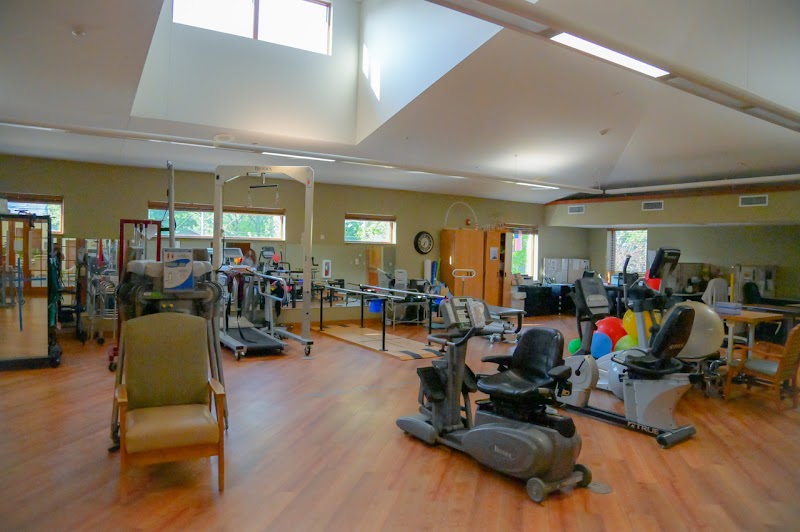
Who Owns and Operates Goldwater Care Bloomington?

GOLDWATER CARE BLOOMINGTON is owned by a for-profit company. For-profit facilities operate as businesses with obligations to shareholders or private owners. The facility is operated by GOLDWATER CARE, a chain that manages multiple nursing homes. With 88 certified beds and approximately 73 residents (about 83% occupancy), it is a smaller facility located in BLOOMINGTON, Illinois.
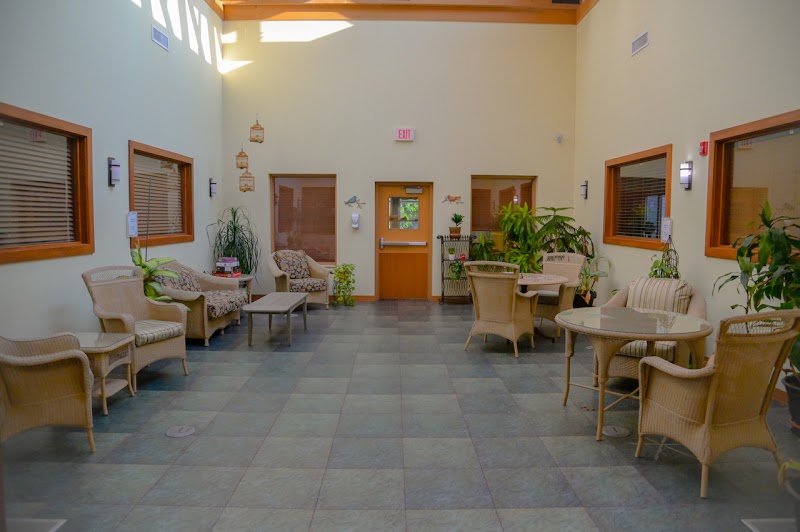
How Does Goldwater Care Bloomington Compare to Other Illinois Nursing Homes?

Compared to the 100 nursing homes in Illinois, GOLDWATER CARE BLOOMINGTON's overall rating (1 stars) is below the state average of 2.5, staff turnover (62%) is significantly higher than the state average of 46%, and health inspection rating (1 stars) is much below the national benchmark.

What Should Families Ask When Visiting Goldwater Care Bloomington?

Based on this facility's data, families visiting should ask: "What changes have been made since the serious inspection findings, and how are you preventing similar issues?" "How do you ensure continuity of care given staff turnover, and what is your staff retention strategy?" "Can you walk me through typical staffing levels on day, evening, and night shifts?" "Can I visit during a mealtime to observe dining assistance and food quality?" These questions are particularly relevant given the facility's Immediate Jeopardy citations, the facility's high staff turnover rate, and the below-average staffing rating.

Is Goldwater Care Bloomington Safe?

Based on CMS inspection data, GOLDWATER CARE BLOOMINGTON has documented safety concerns. Inspectors have issued 2 Immediate Jeopardy citations (the most serious violation level indicating risk of serious injury or death). The facility is currently on the Special Focus Facility watch list (a federal program monitoring the lowest-performing 1% of nursing homes nationwide). The facility has a 1-star overall rating and ranks #100 of 100 nursing homes in Illinois. Families considering this facility should ask detailed questions about what corrective actions have been taken since these incidents.

Do Nurses at Goldwater Care Bloomington Stick Around?

Staff turnover at GOLDWATER CARE BLOOMINGTON is high. At 62%, the facility is 16 percentage points above the Illinois average of 46%. High turnover means new staff may not know residents' individual needs, medications, or preferences. It can also be disorienting for residents, especially those with dementia who rely on familiar faces. Families should ask: What is causing the turnover? What retention programs are in place? How do you ensure care continuity during staff transitions?

Was Goldwater Care Bloomington Ever Fined?

GOLDWATER CARE BLOOMINGTON has been fined $248,040 across 5 penalty actions. This is 7.0x the Illinois average of $35,559. Fines at this level are uncommon and typically indicate a pattern of serious deficiencies, repeated violations, or failure to correct problems promptly. CMS reserves penalties of this magnitude for facilities that pose significant, documented risk to resident health or safety. Families should request specific documentation of what issues led to these fines and what systemic changes have been implemented.

Is Goldwater Care Bloomington on Any Federal Watch List?

GOLDWATER CARE BLOOMINGTON is currently an SFF Candidate, meaning CMS has identified it as potentially qualifying for the Special Focus Facility watch list. SFF Candidates have a history of serious deficiencies but haven't yet reached the threshold for full SFF designation. The facility is being monitored more closely — if problems continue, it may be added to the official watch list. Families should ask what the facility is doing to address the issues that led to this status.