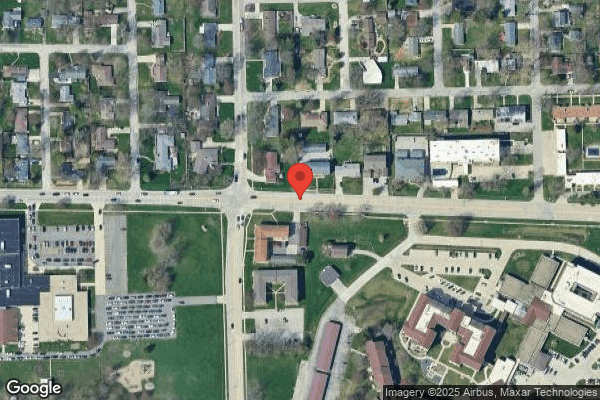




WESTMINSTER VILLAGE

2025 EAST LINCOLN STREET, BLOOMINGTON, IL 61701 (309) 663-6474
Non profit - Corporation 48 Beds Independent Data: November 2025
Trust Grade
58/100
#195 of 665 in IL
Last Inspection: April 2024

Within standard 12-15 month inspection cycle. Federal law requires annual inspections.

Overview

Westminster Village in Bloomington, Illinois, has a Trust Grade of C, which means it is average compared to other facilities. It ranks #195 out of 665 nursing homes in Illinois, placing it in the top half, and #3 out of 7 in McLean County, indicating that only two local options are better. Unfortunately, the facility is worsening in terms of issues reported, increasing from 8 in 2023 to 15 in 2024. Staffing is a strong point here, with a 5/5 star rating and a turnover rate of 39%, which is lower than the state average, meaning staff are likely to stay long-term and become familiar with residents' needs. However, the facility has faced some concerning incidents, such as a failure to provide adequate feeding assistance to residents, resulting in significant weight loss, and not using safe assistive devices, which led to a resident dislocating their shoulder. Additionally, there was a minor issue with food safety, as opened food items were not labeled with dates, which could pose a risk to all residents. Overall, while there are strengths in staffing and ranking, these significant health and safety concerns need to be addressed.

Trust Score
C
58/100
In Illinois
#195/665
Top 29%
Safety Record
Moderate
Needs review
Inspections
Getting Worse
8 → 15 violations
Staff Stability
○ Average
39% turnover. Near Illinois's 48% average. Typical for the industry.
Penalties
✓ Good
$12,149 in fines. Lower than most Illinois facilities. Relatively clean record.
Skilled Nurses
✓ Good
Each resident gets 87 minutes of Registered Nurse (RN) attention daily — more than 97% of Illinois nursing homes. RNs are the most trained staff who catch health problems before they become serious.
Violations
⚠ Watch
26 deficiencies on record. Higher than average. Multiple issues found across inspections.
★★★★☆
4.0
Overall Rating
★★★★★
5.0
Staff Levels
★★★★☆
4.0
Care Quality
★★★☆☆
3.0
Inspection Score
Stable
2023: 8 issues
2024: 15 issues

The Good

  • 5-Star Staffing Rating · Excellent nurse staffing levels
  • 4-Star Quality Measures · Strong clinical quality outcomes
  • Full Sprinkler Coverage · Fire safety systems throughout facility
  • No fines on record
  • Staff turnover below average (39%)

    9 points below Illinois average of 48%

Facility shows strength in staffing levels, quality measures, fire safety.

The Bad

Staff Turnover: 39%

Near Illinois avg (46%)

Typical for the industry

Federal Fines: $12,149

Below median ($33,413)

Minor penalties assessed

The Ugly 26 deficiencies on record

2 actual harm
Apr 2024 14 deficiencies 1 Harm
SERIOUS (G)

Actual Harm - a resident was hurt due to facility failures

Deficiency F0692 (Tag F0692)

A resident was harmed · This affected 1 resident

**NOTE- TERMS IN BRACKETS HAVE BEEN EDITED TO PROTECT CONFIDENTIALITY** Based on observation, interview, and record review the facility failed to provide feeding assistance, implement nutritional reco...

Read full inspector narrative →
**NOTE- TERMS IN BRACKETS HAVE BEEN EDITED TO PROTECT CONFIDENTIALITY** Based on observation, interview, and record review the facility failed to provide feeding assistance, implement nutritional recommendations, evaluate nutritional supplement intakes, notify the physician of significant weight loss, and ensure significant weight loss was evaluated by a dietitian for two (R5, R21) of two residents reviewed for nutrition in the sample list of 31. These failures resulted in R5 experiencing a severe weight loss of 16.65% (percent) in six months and R21 experiencing a 15.6% severe weight loss in two months. Findings include: The facility's Nutrition (Impaired)/Unplanned Weight Loss- Clinical Protocol dated September 2017 documents the physician will be notified of significant weight loss including persistent changes in baseline appetite/food intake, and the physician will help identify medical conditions that may cause the weight change and will consider if any additional diagnostic testing is indicated. This policy documents the staff and physician will identify and implement appropriate interventions to address weight loss and will monitor the resident's nutritional status including response to interventions. 1.) R5's Minimum Data Set (MDS) dated [DATE] documents R5 has moderate cognitive impairment, requires setup assistance for meals, and has had a significant weight loss of 5% or more in one month or 10% or more in six months that was not prescribed. R5's Weight Log documents R5's weight as follows: 107.1 lbs (pounds) on admission of 9/7/23 105.8 lbs on 9/17/23 101.5 lbs on 10/1/23 (5.2% loss since 9/7/23) 100.5 lbs on 11/1/23 96.0 lbs on 12/1/23 (10.4% loss since 9/7/23) 95.2 on 1/1/24 (11.1% loss since 9/7/23) 92.6 lbs on 2/1/24 (13.5% loss since 9/7/23) 90.5 lbs on 3/1/24 (15.5% loss since 9/7/23) 85.7 lbs on 4/1/24 (5.3% since 3/1/23) 84.6 lbs on 4/3/24 (16.65% since 10/1/23) R5's Care Plan dated 1/15/24 documents an intervention for supervision/touching assistance for eating with the helper providing verbal cues/touching/steadying trunk. R5's Care Plan dated 9/20/23 documents R5 is at risk for malnutrition, is underweight, and has a Body Mass Index (BMI) of less than 19. This care plan includes interventions to assist with feeding as needed, encourage oral intake, offer snacks between meals and document acceptance, nutritional supplement 120 ml (milliliters) three times daily (TID), frozen nutritional supplement PRN (as needed), obtain weights as ordered, and notify the physician of significant weight loss. There is no documentation in R5's medical record that any new nutritional interventions were implemented after 12/18/23. R5's Meal Intake with date range 3/12/24-4/10/24 documents of the 88 meals 11 meals had 0-25% consumed, 28 meals had 26-50% consumed, and two meals were refused. R5's March and April Medication Administration Records (MARs) document to administer the frozen nutritional supplement PRN and does not document that R5 was offered this supplement. R5's Nutrition/Dietary Notes document R5 was evaluated by V20 Registered Dietitian (RD) on 9/13/23, 12/18/23, and 3/15/24. On 9/13/23 V20 recommended adding nutritional supplement 60 ml three times daily and a frozen nutritional supplement PRN. On 12/18/23 V20 documented R5's weight loss is likely secondary to decreased appetite and oral intake, and behaviors of refusing meals, supplements, and medications. V20 recommended to increase the nutritional supplement to 120 ml three times daily, continue with the frozen nutritional supplement PRN, and R5's family will encourage the frozen nutritional supplement in the afternoon. On 3/15/24 V20 documented R5 requires varying levels of feeding assistance including independent, supervision, and fully dependence on staff. V20 did not document new recommendations to address R5's continued significant weight loss. There is no documentation that R5's weight is monitored more frequently than on a monthly basis, R5's October significant weight loss was evaluated by V20 Registered Dietitian or that any new nutritional interventions were implemented after 9/13/23 until 12/18/23. There is no documentation that V20 evaluated R5 after 12/18/23 until 3/15/24. There is no documentation that R5's trending significant weight loss that began on 10/1/23 was reported to or evaluated by a physician. On 4/08/24 at 11:53 AM R5 was sitting in the dining room and had not taken any bites of food from the meal which consisted barbecued ground beef sandwich, mashed potatoes with gravy, peas, and lemon dessert bar. No staff was sitting with R5 to provide cueing or assistance. At 12:14 PM V24 Certified Nursing Assistant sat next to R5 and offered assistance/cueing. R5 only accepted a few bites of food from V24. V24 asked R5 if R5 wanted something else to eat and R5 did not respond. V24 did not offer R5 a frozen nutritional supplement. At 12:19 PM V13 Registered Nurse (RN) sat down beside R5 and fed R5 bites of food. At 12:26 PM R5 ate half of R5's sandwich and 75% of the mashed potatoes with V13's assistance. On 4/9/24 at 11:30 AM R5's Family (V12) stated R5's family visit often at meal time to feed R5, as R5 eats better when someone assists R5 with meals. V12 stated R5's family are concerned that staff may not be assisting R5 with meals. R5 ate 75% of the noon meal on 4/9/24, with V12's assistance. On 4/10/24 at 11:40 AM R5 was sitting in the dining room with a small cup of the nutritional supplement and a plate of ground meat, green beans and mashed potatoes with gravy. R5 was able to use the fork to take bites of mashed potatoes, but had difficulty getting bites of the ground meat and green beans as they fell off of R5's fork. No staff was sitting with R5 to provide cueing or assistance. V11 Certified Nursing Assistant (CNA) was asked if any residents require eating assistance in this dining room (where R5 was eating). V11 stated there are no residents who require help with eating on a consistent basis. At 12:00 PM V11 began giving R5 bites of food, after it was pointed out that R5 was having difficulty eating. At 12:30 PM V11 was asked how much of the noon meal R5 consumed and V11 stated I don't know, I walked away. On 4/10/24 at 2:15 PM V14 (R5's Family) stated R5 typically does better if someone assists R5 with meals and R5 eats better with a spoon instead of a fork. V14 stated R5 does not show interest in the frozen nutritional supplement and asked if there were alternative options to this supplement and if R5 could be weighed weekly instead of monthly. On 4/10/24 at 10:18 AM V2 DON (Director of Nursing) stated V20 RD reviews the weights monthly and V20's recommendations are given to the physician to review, which is how the physician is notified of weight loss. V2 stated the frozen nutritional supplement is given by the nurses and signed out on the MAR when given. At 12:55 PM V2 confirmed R5's weight loss has not been reported to or evaluated by a physician. At 1:31 PM V2 stated staff should offer assistance if R5 is not eating or having difficulty eating, but R5 does not always accept assistance. V2 stated maybe we should schedule R5's frozen nutritional supplement to be given routinely. On 4/10/24 at 11:57 AM V20 RD stated if there isn't a nutrition note, then V20 likely did not see R5 during the months that were not documented in R5's dietary notes (October 2023, November 2023, January 2024, and February 2024). V20 stated V20 runs a weight report monthly to see if there are any significant weight changes and then V20 follows up on those weight changes. V20 stated V20 originally spoke with R5's family and they were going to give R5's frozen nutritional supplement in the afternoons, and R5 refuses R5's supplements at times. V20 confirmed staff should offer the frozen nutritional supplement at meals if R5 has poor appetite or isn't eating, and this supplement could prevent further weight loss. V20 stated V20 talks with the nurses to determine if supplements are given and accepted. V20 stated the nutritional supplement 60 ml TID was ordered in September 2023 and increased in December 2023 to 120 ml TID. V20 confirmed there were no other nutritional interventions implemented between September 2023 and December 2023. V20 stated V20 gives V20's recommendation forms to the nurses to follow up with the physician. V20 stated a big part of R5's weight loss is R5's poor intakes and poor appetite, and confirmed staff should offer assistance when R5 is having difficulty eating or poor appetite. V20 confirmed if staff do not assist R5 when needed, this could contribute to R5's weight loss. On 4/10/24 at 12:55 PM V20 confirmed there were no new nutritional interventions recommended or implemented for R5 after 12/18/23. 2.) R21's Physician Order dated 3/9/24 documents to administer (nutritional supplement) twice daily (does not specify Original or Plus version) and may substitute with (comparable alternate nutritional supplement) 120 ml TID. R21's March and April 2024 MARs document administration of this order, but do not document if or when the alternate supplement was given or the amount of (nutritional supplement) given. R21's Weight Log documents R21's weight as follows: 81.5 lbs (admission weight) on 12/12/23 78.4 lbs on 12/31/23 75.6 lbs on 1/1/24 (7.2% loss since 12/12/23) 74.1 lbs on 1/14/24 68.8 lbs on 2/1/24 (15.6% loss since 12/12/23 and 9% loss since 1/7/24) 69.8 lbs on 3/1/24 74.6 lbs on 4/1/24 and 70.1 lbs on 4/3/24 R21's Dietary/Nutrition Note dated 12/19/23 documents R21's BMI is 15.1, R21 is underweight related to inadequate oral intake and poor appetite. This note documents V20's recommendation of (nutritional supplement) Plus twice daily that is provided by R21's family, and give (comparable alternate nutritional supplement) 120 ml TID when unavailable. This note documents R21's family requested to be notified when supplement is running low. R21's Dietary/Nutrition Note dated 3/7/24 documents R21 accepts the comparable alternate nutritional supplement when the ordered supplement is unavailable. This note documents R21's meal intakes average 50-75%, but vary with occasional poor intakes and refusal of meals. This note documents the recommendation to continue with the same supplement amount and frequency noted on 12/19/23. There is no documentation in R21's medical record that R21's trending weight loss that began on 12/31/23 was reported to or evaluated by a physician. On 4/08/24 at 11:48 AM R21 was eating independently in the dining room. At 12:26 PM R21 ate approximately 75% of R21's meal. On 4/08/24 at 12:35 PM R21 stated R21's weight was down to 62 lbs at one time, and R21 didn't like that. R21 stated R21 has difficulty gaining weight and last week R21 weighed 70 lbs. R21 stated R21's appetite is pretty good and R21 has an upcoming doctor appointment to have R21's esophagus stretched, which usually helps with R21's eating. R21 stated the nurses give R21 a nutritional supplement that R21 likes. On 4/10/24 at 9:44 AM V7 Registered Nurse stated R21 gets (nutritional supplement) per orders and (comparable alternate nutritional supplement) can be given if the (nutritional supplement) is unavailable. V7 entered the medication room and showed the nutritional supplement bottles that are administered to R21. This supplement was not the Plus version of the (nutritional supplement) as ordered. On 4/10/24 at 1:31 PM V2 confirmed there is no documentation that R21's physician was notified of R21's weight loss. On 4/10/24 at 11:57 AM V20 RD stated there is a difference in the Original and Plus versions of (R21's ordered nutritional supplement). V20 stated (nutritional supplement) Plus is R21's preferred supplement that R21 was taking at home, and R21 should receive one bottle (237 ml) twice daily. V20 confirmed (nutritional supplement) Plus is ordered for R21 and provided by R21's family. V20 stated V20 was not aware that R21 was not receiving the ordered supplement and V20 will need to follow up on this right away as the Original and Plus supplements do not have equivalent nutritional content. V20 stated more of the Original will need to be given to equal the amount of Plus ordered. V20 confirmed the order should specify Plus, and not receiving the ordered supplement could have contributed to R21's weight loss.
CONCERN (D)

Potential for Harm - no one hurt, but risky conditions existed

Deficiency F0554 (Tag F0554)

Could have caused harm · This affected 1 resident

**NOTE- TERMS IN BRACKETS HAVE BEEN EDITED TO PROTECT CONFIDENTIALITY** Based on observation, interview, and record review the facility failed to assess for the ability to self administer medications ...

Read full inspector narrative →
**NOTE- TERMS IN BRACKETS HAVE BEEN EDITED TO PROTECT CONFIDENTIALITY** Based on observation, interview, and record review the facility failed to assess for the ability to self administer medications for three (R37, R97, R101) of three residents reviewed for self administration of medication in the sample list of 31. Findings include: 1.) On 4/08/24 at 10:04 AM there were bottles of saline nasal spray and artificial tears at R37's bedside and in R37's bathroom. R37's Minimum Data Set, dated [DATE] documents R37 has moderate cognitive impairment. R37's Order Summary dated 4/9/24 does not include orders for saline nasal spray or artificial tears. R37's medical record does not document orders to self administer medications or that medications may be kept at the bedside. There is no assessment of R37's ability to self administer medications. 2.) On 4/08/24 at 10:24 AM there were two tubes of Diclofenac (topical pain reliever) 1% on R97's night stand. R97 stated R97 was unsure about the medication use. 4/9/24 at 11:31 AM the Diclofenac tubes were on R97's night stand. R97's Brief Interview for Mental Status (BIMS) Score dated 4/4/24 documents a score of 4, indicating severe cognitive impairment. R97's Order Summary dated 4/9/24 does not include an order for Diclofenac. R97's medical record does not document orders to self administer medications or that medications may be kept at the bedside. There is no assessment of R97's ability to self administer medications. 3.) On 4/08/24 at 10:21 AM there was a bottle of Flonase and three tablets of medication in a medication cup on R101's overbed table. R101 stated the tablets were Tums that R101 takes once per day. R101's BIMS dated 4/4/24 documents a score of 12, indicating moderate cognitive impairment. R101's medical record does not include orders to self administer medications or that medications can be kept at the bedside. There is no assessment of R101's ability to self administer medications. On 4/09/24 at 11:46 AM V7 Registered Nurse stated residents may keep medications at the bedside if approved by the physician and there is an order to keep the medication at bedside. V7 stated V7 just got an order today for R101 to keep Tums in R101's room. V7 confirmed R101 does not have an order to keep Flonase at the bedside or for self administration. V7 confirmed R97 does not have an order for Diclofenac. V7 confirmed R37 does not have orders for saline nasal spray and artificial tears. On 4/09/24 at 12:36 PM V2 Director of Nursing stated residents should have an assessment for the ability to keep medications at the bedside and orders for self administration of medications. The facility's Bedside Medication Storage policy dated 10/25/14 documents residents are allowed to self administer medications once assessed and deemed appropriate, there is a written physician order, and the medications must be stored in a manner that prevents access by other residents. This policy documents medications may be kept at the bedside as indicated on the Medication Administration Record and the care plan. This policy documents nurses and nurse aides should report unauthorized medications found at the bedside and the medications should be given to the nurse to return to the resident's representative.
CONCERN (D)

Potential for Harm - no one hurt, but risky conditions existed

Investigate Abuse (Tag F0610)

Could have caused harm · This affected 1 resident

Based on interview and record review the facility failed to investigate an injury of unknown origin for one (R16) of three residents reviewed for accidents in the sample list of 31. Findings include:...

Read full inspector narrative →
Based on interview and record review the facility failed to investigate an injury of unknown origin for one (R16) of three residents reviewed for accidents in the sample list of 31. Findings include: The facility's Abuse Policy dated June 2023 documents allegations or suspicions of abuse, neglect, mistreatment, misappropriation of resident property, or injuries of unknown origin will be reported to the facility's Administrator, Director of Nursing, or other designated staff. This policy documents injuries are considered of unknown source when the source of the injury was not observed or could not be explained by the resident and is suspicious due to the extent or location of the injury or number of injuries at one time or over time. This policy documents injuries of unknown source will be investigated within two hours of receipt of notification and the results of the investigation will be reported to the Illinois Department of Public Health within five days. R16's Nursing Note dated 3/14/2024 at 6:32 AM documents R16 fell and required the use of a full mechanical lift to transfer R16 off of the floor since R16 was unable to stand. R16's Nursing Note dated 3/15/24 at 2:22 PM documents R16 had congestion and coughing. R16's Nursing Notes dated 3/16/24 at 3:30 AM and 10: 39 PM document R16 complained of right flank and right back pain. On 3/17/24 R16 was transferred to the hospital for complaints of pain and congestion and on 3/17/24 the facility was notified at 10:48 AM that R16 had diagnoses of right rib fractures and would be returning to the facility. R16's Order Summary dated 4/9/24 documents a diagnoses of multiple rib fractures of right side. There is no documentation that the cause of R16's rib fractures was identified or that the fractures were investigated. On 4/09/24 at 12:13 PM V2 Director of Nursing (DON) and V3 Assistant DON stated they were unaware that R16 had rib fractures. V2 stated R16 went to the hospital on a Saturday and the nurse did not notify V2 of R16's rib fractures, and V2 should have been notified. V2 confirmed this injury would have been investigated if V2 was notified. V2 and V3 were uncertain as to the cause of R16's rib fractures. V3 stated V3 did not think it was related to R16's fall since R16 had a chest x-ray on 3/14/24 after the fall, and it did not identify any fractures. V3 stated V3 questions whether the rib fractures were due to R16 coughing as R16 had respiratory symptoms when R16 fell (3/14/24). On 4/9/24 at 4:00 PM V1 Administrator stated V1 is now doing an investigation into R16's rib fractures.
CONCERN (D)

Potential for Harm - no one hurt, but risky conditions existed

Deficiency F0657 (Tag F0657)

Could have caused harm · This affected 1 resident

**NOTE- TERMS IN BRACKETS HAVE BEEN EDITED TO PROTECT CONFIDENTIALITY** Based on record review and interview the facility failed to conduct careplan meetings for one of one residents (R21) reviewed fo...

Read full inspector narrative →
**NOTE- TERMS IN BRACKETS HAVE BEEN EDITED TO PROTECT CONFIDENTIALITY** Based on record review and interview the facility failed to conduct careplan meetings for one of one residents (R21) reviewed for careplan meetings in the sample list of 31. Findings include: On 4/08/24 at 12:41 PM R21 stated the facility does not have care plan meetings with R21 or R21's family. R21's medical record documents she admitted to the facility on [DATE] and Minimum Data Sets were completed on 12/18/23 and 2/16/24. On 4/09/24 at 10:25 AM, V8 Social Services Director (SSD) stated R21 last had a care plan meeting on 12/28/23 and residents have a care plan meeting every quarter. On 4/9/24 at 11:30 AM, V9 Assistant SSD stated V8 was still working on getting R21's care plan information and R21's care plan meeting was scheduled today for 4/11/24. On 4/9/24 at 2:35 PM, V10 Minimum Data Set (MDS)/Care Plan Coordinator stated R21 has not had a careplan meeting since 12/28/23 and V10 follows the MDS schedule to set up care plan meetings every 90 days. V10 stated V10 has 95 residents to keep track of and it (R21's care plan meeting) got missed. V10 stated as soon as V10 realized R21's careplan meeting was missed V10 called today to schedule a meeting with R21's family on 4/11/24 at 3:00pm. The facility policy titled Care Plans- Comprehensive revised October 2010 documents the Care Planning/ Interdisciplinary Team is responsible for the review and updating of careplans: when there has been a significant change in the residents condition, when desired outcome is not met and when the resident has been readmitted to the facility from a hospital stay; and at least quarterly. The policy further states the resident has the right to refuse to participate in the development of his/her care plan and medical and nursing treatments. When such refusals are made, appropriate documentation will be entered into the residents clinical records.
CONCERN (D)

Potential for Harm - no one hurt, but risky conditions existed

Quality of Care (Tag F0684)

Could have caused harm · This affected 1 resident

**NOTE- TERMS IN BRACKETS HAVE BEEN EDITED TO PROTECT CONFIDENTIALITY** Based on observation, interview, and record review the facility failed to document and follow up on a change in condition for on...

Read full inspector narrative →
**NOTE- TERMS IN BRACKETS HAVE BEEN EDITED TO PROTECT CONFIDENTIALITY** Based on observation, interview, and record review the facility failed to document and follow up on a change in condition for one (R28) of 14 residents reviewed for change in condition in the sample list of 31. Findings include: On 4/08/24 at 10:54 AM R28 stated R28 has a right elbow goose egg and swelling that started about three weeks ago and R28 has told the nurses about it. R28 stated the nurses told R28 that R28 needed to see the doctor, but R28 has not yet seen R28's physician to evaluate R28's elbow. R28's right elbow had swelling approximately the size of a golf ball. R28's Minimum Data Set, dated [DATE] documents R28 is cognitively intact. There is no documentation in R28's medical record of R28's right elbow swelling or that R28 has been evaluated for this complaint. On 4/09/24 at 3:19 PM V25 Registered Nurse stated V25 noticed R28's swollen right elbow last Thursday (4/4/24) when R28 complained about it. V25 described the swelling as soft fluid, and similar to gout. V25 stated V25 left a note for R28's physician in the physician's folder, and the physician rounds on Fridays. V25 stated V25 was unsure if R28's physician saw R28 on 4/5/24 and thought R28 was seen by the physician today. V25 stated there is a place to document physician notification in the progress notes and V25 did not document a description of R28's right elbow or R28's complaint in R28's medical record. On 4/10/24 at 1:31 PM V2 Director of Nursing stated if it isn't urgent, the nurse can put a note in the physician's folder. V2 stated any resident changes the nurses find should be documented in a progress note. At 2:30 PM V2 stated V2 just spoke with V28 Physician regarding R28's right elbow, and V28 order an elastic bandage wrap to be applied and V28 will evaluate R28 during V28's next visit. V2 confirmed there is no documentation that R28's right elbow was assessed or reported to V28. The facility's Change in a Resident's Condition or Status dated February 2021 documents changes in a resident's condition including a need to alter treatment significantly and for problems that will not normally resolve without intervention will be reported to the resident's physician and the nurse will document information related to the change in condition in the resident's medical record.
CONCERN (D)

Potential for Harm - no one hurt, but risky conditions existed

Pressure Ulcer Prevention (Tag F0686)

Could have caused harm · This affected 1 resident

**NOTE- TERMS IN BRACKETS HAVE BEEN EDITED TO PROTECT CONFIDENTIALITY** Based on observation, interview, and record review the facility failed to complete a comprehensive wound assessment for new pres...

Read full inspector narrative →
**NOTE- TERMS IN BRACKETS HAVE BEEN EDITED TO PROTECT CONFIDENTIALITY** Based on observation, interview, and record review the facility failed to complete a comprehensive wound assessment for new pressure injuries for two residents (R149, R150) of three residents reviewed for pressure ulcers in a sample list of 31. Findings Include: 1. R150's Nursing admission History dated 3/15/24 at 6:08PM documents R150 was cognitively intact and required staff assistance for transfer and Activities of Daily Living (ADLs) and R150's skin was intact. R150's Minimum Data Set (MDS) dated [DATE] documents R150 has two Stage II pressure Ulcers. R150's Order Summary printed 4/10/24 at 4:03PM includes a physician's order originating 3/27/24 for Right buttock open area: Cleanse with Normal Saline, apply hydrocolloid every evening shift every 3 day(s). This order summary also documents a physician's order originating 4/9/24 for Left buttock open area: Cleanse with NS, apply skin prep around wound bed, apply hydrocolloid every evening shift every 3 day(s). There is no comprehensive wound assessment documented for R150. On 4/8/24 at 9:40AM, R150 was observed sitting in a wheelchair in her room. There was a cushion in the wheelchair under R150. R150 stated My bottom is getting more sore all the time. It hurts, but they (Staff) leave me in this wheelchair staring at the wall. That recliner over there (R150 gestured to the recliner across the room) would be more comfortable, and I could move around better, but they don't take the time to help me move to it. 2. R149's Minimum Data Set (MDS) dated [DATE] documents R149 as cognitively intact, requiring substantial staff assistance for transfer and toileting, and at risk for pressure ulcers, but had no pressure ulcers at the time of the assessment. R149's Treatment Administration Record for 4/1/24 through 4/30/24 includes a treatment initiated 4/2/24 for R (right) buttock pressure area: Cleanse with NS (normal saline), apply skin prep around wound bed, apply hydrocolloid every 3 days and PRN (as needed) every night shift every 3 day(s) There is no comprehensive wound assessment documented for R149. R149's Care Plan was not updated to include the pressure ulcer until 4/9/24. The facility policy Instructions for Implementation of Wound Protocol updated 3/2024 does not identify staff responsible for initial wound assessments. On 4/8/24 at 1:00PM V3, Assistant Director of Nursing reported the facility had only one active pressure ulcer. The resident V3 identified was R33. On 4/10/24 at 2:00PM, V10, Care Plan Coordinator stated I do the full wound assessment weekly but I have only been made aware of (R149, R150) since 4/9/24. V10 verified there was no documentation of appearance of periwound, wound bed, presence of drainage or pain to the open area (for R149 and R150).
CONCERN (D)

Potential for Harm - no one hurt, but risky conditions existed

Accident Prevention (Tag F0689)

Could have caused harm · This affected 1 resident

**NOTE- TERMS IN BRACKETS HAVE BEEN EDITED TO PROTECT CONFIDENTIALITY** Based on observation, interview, and record review the facility failed to ensure oxygen canisters were secure (R101), thoroughly...

Read full inspector narrative →
**NOTE- TERMS IN BRACKETS HAVE BEEN EDITED TO PROTECT CONFIDENTIALITY** Based on observation, interview, and record review the facility failed to ensure oxygen canisters were secure (R101), thoroughly investigate falls, and care plan and implement fall interventions (R5). R101 and R5 are two of three residents reviewed for accidents in the sample list of 31. Findings include: 1.) On 4/08/24 at 10:19 AM and 1:42 PM there were two unsecured, free standing, Oxygen cylinders at the end of the hall near R101's doorway. On 4/08/24 at 2:48 PM V2 Director of Nursing stated we have a room to store oxygen, we have liquid oxygen, and sometimes hospice delivers oxygen cylinders to the facility without notifying us. V2 stated oxygen cylinders should be secured. V2 observed the unsecured oxygen cylinders near R101's room and confirmed they were not stored appropriately. V2 stated the oxygen cylinders belong to R101 who was recently admitted to hospice, and hospice must have delivered the oxygen. V2 stated the cylinders will need to be placed in the oxygen storage room. The facility's Oxygen Therapy policy dated March 2024 documents Oxygen will be used and stored in a manner to ensure resident and staff safety. 2.) On 4/08/24 at 10:34 AM R5 was lying in bed and the pressure sensor for R5's bed alarm was not connected to an alarming device. There was a pressure sensor pad in R5's wheelchair that was connected to an alarming device. At 10:38 AM V26 Certified Nursing Assistant (CNA) stated R5 does attempt to self transfer at times. At 12:17 PM R5 was sitting in a wheelchair in the dining room, and there was a chair alarm in place. At 3:44 PM V27 CNA assisted R5 to sit on the side of the bed. R5's bed pressure sensor was not connected to an alarming device. V27 stated R5 was lying in bed when V27 arrived for second shift and staff should be using the alarming device connected to R5's chair pressure sensor to connect to the pressure sensor in R5's bed. On 4/09/24 at 10:48 AM R5 was sitting in the wheelchair in the dining room and the pressure sensor in R5's wheelchair was not connected to an alarming device. On 4/09/24 at 10:58 AM V7 Registered Nurse stated R5 uses a chair and bed alarm and the CNAs are responsible for checking the functioning of the alarms. V7 confirmed R5's pressure sensor was not connected to an alarming device, and should be. On 4/09/24 at 11:02 AM V11 CNA stated fall interventions including alarms are documented as part of the CNA tasks in the resident's electronic medical record. V11 stated R5 has used bed and chair alarms since R5 admitted to the facility. R5's Minimum Data Set (MDS) dated [DATE] documents R5 requires substantial/maximal assistance of staff for transfers and is occasionally incontinent of urine. R5's MDS dated [DATE] documents R5 has moderate cognitive impairment, is occasionally incontinent of urine, and requires substantial/maximal assistance for toileting and partial/moderate assistance for transfers. R5's Care Plan dated 1/15/24 documents R5 admitted to the facility on [DATE], is high risk for falls, and does not include interventions to use bed and chair alarms. Bed and chair alarms are not listed in the tasks section of R5's electronic medical record. R5's fall investigation documents R5 had an unwitnessed fall and was found on the floor next to R5's bed on 11/27/23 at 4:12 PM. The investigation documents R5 stated R5 was attempting get to R5's walker to walk in room and check clothes in R5's dresser, and this is documented as the root cause of the fall. R5's fall investigation documents R5 had an unwitnessed fall in R5's room on 12/18/23 at 3:44 PM, and was found by an unidentified CNA on the floor in front of R5's wheelchair. R5 was unable to explain what happened. The documented root cause of the fall is R5 gets restless in the afternoon and wants to go somewhere. R5's fall investigation documents R5 had a witnessed fall out of bed on 12/25/23 at 1:19 AM and R5 was unable to give details of the fall. The documented root cause of the fall is R5 was incontinent of urine and wanted to go to the bathroom. These fall investigations are not thorough and do not document the last time R5 was checked on/R5's activity prior to the fall, when R5 was last toileted prior to the fall, or if there were any alarming devices in place during R5's falls. There is no documentation that any staff were interviewed regarding these falls. On 4/10/24 at 10:06 AM V3 Assistant Director of Nursing provided R5's fall investigations and confirmed all documentation was provided. V3 stated V3 only interviews the nurse who documents the fall in the nursing notes. At 11:23 AM V3 reviewed R5's fall investigations and stated they could be better and that is something V3 is working on. V3 confirmed there is no documentation that staff were interviewed to determine the last time R5 was checked on/toileted, activity prior to the fall, or if alarming devices were implemented. V3 stated R5 is incontinent but also uses the toilet, and staff should toilet before/after meals and every two hours. V3 stated R5's 11/27/24 fall intervention was 15 minute checks, 12/25/23 fall intervention was bed positioned low to floor, and 12/18/23 fall intervention was to determine unmet needs such as hunger/thirst. V3 stated the bed and chair alarms were implemented as interventions when R5 admitted and should be documented as part of R5's care plan and tasks in order for the CNAs to see the interventions. The facility's Falls and Fall Risk Management policy dated 1/2/24 documents staff will identify causes and resident centered interventions to try to prevent falls and minimize complications related to falls, and alarm use efficacy will be monitored. The facility's Clinical Protocol for Falls dated 1/2/24 documents nursing staff will evaluate and document falls, and lists examples such as when and where they happen and any observation of the event.
CONCERN (D)

Potential for Harm - no one hurt, but risky conditions existed

Incontinence Care (Tag F0690)

Could have caused harm · This affected 1 resident

2.) R31's Care Plan dated 2/19/24 documents antibiotics were ordered to treat a Urinary Tract Infection. This Care Plan documents R31 has an indwelling urinary catheter due to urinary retention and in...

Read full inspector narrative →
2.) R31's Care Plan dated 2/19/24 documents antibiotics were ordered to treat a Urinary Tract Infection. This Care Plan documents R31 has an indwelling urinary catheter due to urinary retention and includes interventions for contact isolation due to colonization of MRSA (Methicillin Resistant Staphylococcus Aureus (multidrug resistant organism), and to provide catheter care every shift. On 4/09/24 at 1:26 PM V15 and V11 Certified Nursing Assistants (CNAs) entered R31's room. V15 applied gloves, removed R31's shoes, and used the same gloves to clean R31's urinary catheter tubing. V15 did not retract R31's foreskin or clean R31's penis during R31's catheter care. On 4/10/24 at 1:31 PM V2 Director of Nursing/Infection Preventionist stated the foreskin should be retracted and the penis cleansed during urinary catheter care. V2 stated V15 should have changed V15's gloves after removing R31's shoes and prior to providing catheter care. 3.) R97's Care Plan dated 4/5/24 documents R97 has an indwelling urinary catheter and includes an intervention to use a dignity cover over the collection bag. On 4/08/24 at 11:46 AM R97 was sitting in the wheelchair in the dining room. R97's urinary catheter collection bag was uncovered and hanging underneath of R97's wheelchair. The base of the bag was touching the floor and did not contain a dignity cover. At 12:40 PM R97's urinary collection bag was touching the floor when V24 CNA transported R97 out of the dining room. On 4/10/24 at 1:31 PM V2 stated urinary collection bags should be in a privacy bag for dignity and infection control, to prevent the bag from touching the floor. The facility's Nursing Patient Care Policy & Procedure dated 2/14/24 documents to perform hand hygiene, apply gloves, cleanse the suprapubic and pubic area, and for uncircumcised males retract foreskin and cleanse in a circular motion from the urinary meatus down to the shaft of the penis. Keep (urinary) drainage bag off the floor. Based on observation, interview, and record review the facility failed to perform complete urinary catheter care, failed to prevent cross contamination during urinary catheter care, and failed to maintain the urinary collection bag in a dignity bag and off the floor for three residents (R33, R31, R97) of four residents reviewed for catheter care in a sample list of 31 residents. Findings Include: 1. R33's Physician's Orders for 4/1/24 to 4/30/24 document a Physician's order for urinary catheter care daily and as needed. On 4/10/24 at 11:00 AM V22, Certified Nurse's Aide (CNA) and V23 Certified Nurse's Aide (CNA) proceeded to perform catheter care for R33. R33 was wearing a pull up style incontinence garment. R33 had a bowel movement prior to care. V23 retracted R33's foreskin and cleaned R33's penis from tip to base. V23 cleansed the catheter tubing from insertion site downward. Both CNAs turned R33 to the left side. V23 removed the incontinence brief and cleaned R33's gluteal cleft and buttocks. Both CNA's placed a clean incontinence brief on R33 and covered R33. Neither CNA checked R33's creases between the thighs and the genitals for soiling or cleansed that area. V23 stated I should have washed the cracks between (R33's) thighs.
CONCERN (D)

Potential for Harm - no one hurt, but risky conditions existed

Medication Errors (Tag F0758)

Could have caused harm · This affected 1 resident

**NOTE- TERMS IN BRACKETS HAVE BEEN EDITED TO PROTECT CONFIDENTIALITY** 2.) R14's current diagnosis sheet includes the following Diagnoses: Anxiety, Depression, and Dementia. R14's Medication Administ...

Read full inspector narrative →
**NOTE- TERMS IN BRACKETS HAVE BEEN EDITED TO PROTECT CONFIDENTIALITY** 2.) R14's current diagnosis sheet includes the following Diagnoses: Anxiety, Depression, and Dementia. R14's Medication Administration Sheet (MAR) for 4/1/24 through 4/31/24 includes the following physician's orders for psychotropic medications: Seroquel (antipsychotic) 25 milligrams twice daily, Ativan (antianxiety) 0.5 milligrams every hour as needed, Zoloft (antidepressant) 50 milligrams daily. The Psychoactive Medication assessment dated [DATE] documents R14 has behaviors of anxiety and constantly yelling out. There is no documentation in R14's medical record to indicate nonpharmacological interventions have been attempted for R14. There is no documentation of interventions attempted to address R14's behaviors or R14's response to interventions. On 4/10/24 at 2:00PM V10, Care Plan Coordinator stated I do not have documentation of nonpharmacological interventions or response to interventions. Based on interview and record record review the facility failed to complete/accurately complete psychotropic medication assessments, quantify behaviors to justify the use of psychotropic medication, and attempt nonpharmacological interventions for behaviors for two residents (R14,R5) of five residents reviewed for psychotropic medications in a sample list of 31 residents. 1.) R5's Order Summary Report dated 4/10/24 documents R5 was admitted to the facility on [DATE] with diagnoses including Anxiety Disorder, Major Depressive Disorder, Delusional Disorder, and Paranoid Personality Disorder. This Order Summary documents orders for Buspirone HCL (hydrochloride) (antianxiety) 5 mg (milligrams) one table three times a day related to Anxiety Disorder and Major Depressive Disorder with a start date of 12/8/23, Escitalopram Oxalate (antidepressant) 10 mg every morning related to Anxiety Disorder and Major Depressive Disorder with a start date of 3/21/24 and Mirtazapine (antidepressant) 7.5 mg related to Major Depressive Disorder with a start date of 12/29/23. R5's Medical Record documents Psychoactive Medication Monitoring (assessments) with the first one dated 11/10/23 for Mirtazapine 15 mg. There is no behavior identified on this assessment for the Mirtazapine and the assessment does not list nonpharmacological interventions. R5's next Psychoactive Medication Monitoring assessment is dated 12/14/23 for Mirtazapine 15 mg at bedtime and Buspirone 5 mg three times a day. The behaviors are not quantified on this assessment and the assessment does not document nonpharmacological interventions. R5's last Psychoactive Medication Monitoring assessment is dated 3/15/24 for Buspar 5 mg three times a day and Mirtazapine 7.5 mg at bedtime and Escitalopram 5 mg daily. The behaviors are not quantified and there are no nonpharmacological interventions documented on the assessment. R5's Medical Record does not document a psychotropic medication assessment for the increased dose of Escitalopram 10 mg every morning started on 3/21/24. On 4/10/24 at 3:00 PM, V3 Assistant Director of Nursing confirmed the behaviors are not quantified on the psychotropic medication assessments and confirmed there is no assessment for R5's increase of Escitalopram. The facility's Psychotropic Drug Policy and Procedure with a revised date of March, 2024 documents, It is the policy of (the facility) that psychotropic drugs are not to be used if avoidable and never as a chemical restraint. They are to be used with a physician's order, written permission of the resident or legal representative, and an appropriate diagnosed indication need. Behavior Monitoring will document specific behavior that indicates the need for administration of the medication. There will be an assessment on admission and quarterly concerning the resident's response and progress while receiving the medication.
CONCERN (D)

Potential for Harm - no one hurt, but risky conditions existed

Deficiency F0883 (Tag F0883)

Could have caused harm · This affected 1 resident

**NOTE- TERMS IN BRACKETS HAVE BEEN EDITED TO PROTECT CONFIDENTIALITY** Based on interview and record review the facility failed to maintain documentation of immunization status, and offer/administer ...

Read full inspector narrative →
**NOTE- TERMS IN BRACKETS HAVE BEEN EDITED TO PROTECT CONFIDENTIALITY** Based on interview and record review the facility failed to maintain documentation of immunization status, and offer/administer Pneumococcal and Influenza (Flu) Vaccines for three (R31,R21,R26) of five residents reviewed for immunizations in the sample list of 31. Findings include: The facility's Influenza and Pneumococcal Immunization policy dated April 2024 documents the facility will offer residents pneumonia vaccinations and Influenza vaccinations based on the Centers for Disease Control and Prevention (CDC) Guidelines, and the Nursing Department is responsible for ensuring residents receive the pneumonia and Influenza vaccine and documentation is completed. This policy documents that residents will be screened annually for Influenza vaccination during the months of October 1st (or as soon as its available for the season) - March 31st unless immunization is medically contraindicated or the resident has already been immunized during this time period. On admission all residents will be offered the appropriate Pneumococcal vaccine if they have not been vaccinated, unless contraindicated. The CDC Pneumococcal Vaccine Timing for Adults dated 3/15/23 documents to make sure Pneumococcal vaccinations are up to date and recommends for people over age [AGE] who have only received Pneumococcal polysaccharide vaccine (PPSV23), to have Pneumococcal Conjugate (PCV15) or Pneumoccocal Conjugate (PCV20) at least one year after the most recent Pneumococcal vaccination. The CDC Influenza Vaccine Timing for Adults dated 3/21/24 documents to ensure all adults age [AGE] or older are up to date and offered a Influenza Vaccine annually between the months of September- March. R31's Electronic Medical Record reviewed 4/10/24 documents R31 admitted to facility on 3/18/24, that R31 received Flu Vaccine on 9/26/2022, the Pneumovax (no specified type) on 12/14/1995, and PCV13 on 8/6/15. R31's medical record documents R31 is over age [AGE]. R31's medical record does not document that Flu or Pneumonia vaccines were offered. R21's Electronic Medical Record reviewed 4/10/24 documents R21 is over age [AGE]. R21 has no record of immunizations in R21's medical record or documentation that Influenza and Pneumonia vaccines were offered after admitting to the facility on 2/5/24. R26's Electronic Medical Record reviewed 4/10/24 documents R26 was admitted to the facility on [DATE], that R26 is over age [AGE], and that R26 received PPSV23 on 1/1/2000. There is no documentation that the Pneumococcal vaccine was offered to R26 after R26 was admitted to the facility. On 4/10/24 at 11:00 AM, V3 Assistant Director of Nursing was asked what the process is in regards to offering vaccinations to residents. V3 stated that Flu, Pneumonia, and COVID vaccines are offered on admission. V3 stated that they also review hospital records for immunizations. V3 was asked about documenting consent/declination of vaccinations. V3 stated that they have a form, but the form was missed for R31, R21 and R26. V3 was unable to provide documentation showing Flu and Pneumococcal vaccines were offered on admission to R31, R21, and R26. V3 confirmed R21's medical record did not document R21's Flu and Pneumonia vaccination status.
CONCERN (D)

Potential for Harm - no one hurt, but risky conditions existed

Deficiency F0887 (Tag F0887)

Could have caused harm · This affected 1 resident

**NOTE- TERMS IN BRACKETS HAVE BEEN EDITED TO PROTECT CONFIDENTIALITY** Based on record review and interview the facility failed to offer and administer COVID-19 vaccination boosters to two (R31, R21)...

Read full inspector narrative →
**NOTE- TERMS IN BRACKETS HAVE BEEN EDITED TO PROTECT CONFIDENTIALITY** Based on record review and interview the facility failed to offer and administer COVID-19 vaccination boosters to two (R31, R21) of five residents reviewed for COVID-19 vaccinations in a sample list of 31 residents. Findings include: 1. R31's undated face sheet includes diagnoses of History of COVID-19, Hypertension, Metabolic Encephalopathy, Hypo-Osmolality and Hyponatremia. R31's Electronic Medical Record reviewed 4/10/24 documents R31 received a COVID-19 Vaccine on 5/3/2022, and R31 was admitted to the facility on [DATE]. R31's medical record does not document education was provided to R31 regarding COVID-19 vaccination, nor does it document a COVID-19 booster was offered or administered. 2. R21's undated face sheet includes diagnoses of Pneumonia, Anemia and Cerebral Infarction. R21's Electronic Medical Record reviewed 4/10/24 documents R21 was admitted to the facility on [DATE]. This record does not document that COVID-19 vaccinations were offered or given to R21, or of vaccine history/status. On 4/10/24 at 11:00 AM V3 Assistant Director of Nursing was asked what the process is in regards to offering vaccinations to residents. V3 stated that Flu, Pneumonia and COVID vaccines are offered on admission. V3 stated that they also review hospital records for immunizations. V3 was asked about documenting consent/declination of vaccinations. V3 stated that they have a form, but the form was missed on R31 and R21. V3 was unable to provide documentation showing COVID-19 Vaccinations were offered on admission to R31 and R21. V3 confirmed R21's medical record did not document R21's COVID-19 vaccination status. The facility policy titled Offering COVID-19 Immunization revised January 2024 documents the facility will make available the latest Sars-COVID-19 immunizations for all residents and all residents will be offered upon admission unless immunization is medically contraindicated or the resident has already been immunized during this time period. If the vaccine is not available during this time frame, every reasonable attempt to obtain the vaccine will be made. This policy documents there will be documented consent or refusal of the COVID-19 vaccine.
CONCERN (E)

Potential for Harm - no one hurt, but risky conditions existed

Respiratory Care (Tag F0695)

Could have caused harm · This affected multiple residents

**NOTE- TERMS IN BRACKETS HAVE BEEN EDITED TO PROTECT CONFIDENTIALITY** Based on observation, interview, and record review the facility failed to obtain orders for oxygen, failed to store, change, and...

Read full inspector narrative →
**NOTE- TERMS IN BRACKETS HAVE BEEN EDITED TO PROTECT CONFIDENTIALITY** Based on observation, interview, and record review the facility failed to obtain orders for oxygen, failed to store, change, and label oxygen and nebulizer tubing in accordance with facility policy (R16, R19, R26) and failed to provide routine cleaning of a humidifier (R15). R15, R16, R19, R26 are four of five residents reviewed for respiratory care in the sample list of 31. Findings include: 1.) On 04/08/24 at 11:18 AM there was a humidifier on the table in R15's room. R15 stated R15 was unsure what the machine is used for. There is no documentation in R15's medical record that R15 uses a humidifier or routine cleaning/care of the humidifier. On 4/08/24 at 1:51 PM V13 Registered Nurse confirmed R15's humidifier and stated V13 is unsure how often it is used. V13 stated R15's family brought in the humidifier and provides care/maintenance for the machine. On 4/09/24 at 12:53 PM V2 Director of Nursing (DON) stated V2 provides a list of humidifiers to housekeeping staff to clean monthly. V2 stated V2 was unaware that R15 had a humidifier, which was brought in a couple months ago. V2 stated we do not obtain physician orders for humidifier use and the facility does not have a policy for humidifiers. 2.) On 04/08/24 at 10:44 AM and 1:40 PM R16's undated nebulizer mask and tubing were lying uncovered on top of R16's night stand. There were droplets of medication in the nebulizer chamber. At 10:44 AM R16 stated R16 had a respiratory infection that is improving, and R16 takes nebulizer treatments at least daily. R16's March and April 2024 Medication Administration Record documents R16's Albuterol nebulizer was administered six times, with the last administration on 4/7/24. R16's medical record does not document orders for routine changing of nebulizer equipment. 3.) On 04/08/24 at 11:24 AM R19 was lying in bed wearing oxygen at 2.5 liters per nasal cannula. The humidification bottle was dated 3/20/24 and the tubing was not labeled with date. R19's Physician Order dated 8/2/23 documents to change R19's oxygen tubing and humidification bottle weekly on Wednesdays. 4.) On 4/08/24 at 10:13 AM R26's oxygen tubing and nasal cannula was lying on the floor, and the tubing was dated 4/4/24. R26's oxygen concentrator did not contain a storage bag for R26's oxygen tubing. R26 stated R26 only wears oxygen at night. On 4/09/24 at 11:25 AM R26's oxygen tubing was labeled with a date of 4/4/24. R26's Order Summary dated 4/9/24 documents R26 admitted on [DATE], and does not include orders for oxygen administration or to routinely change oxygen tubing and humidification bottle. On 4/09/24 at 12:53 PM V2 DON stated oxygen and nebulizer tubing should be changed weekly and labeled with a date, nebulizer tubing should be cleaned after use and stored in bag when not in use, and nasal cannulas should be stored in a bag when not in use. V2 stated yesterday V2 saw that R26 had thrown R26's nasal cannula on the floor. V2 stated we could provide a bag for R26's oxygen tubing, but R26 won't use it. V2 was asked if R26's oxygen tubing was changed and V2 stated V2 would have to look at the labeled date on the tubing. On 4/09/24 at 3:48 PM V2 stated there should be oxygen orders and orders for routine changing of oxygen and nebulizer tubing. The facility's Oxygen Therapy policy dated March 2024 documents the physician's order for oxygen administration should include the device and liter flow rate, oxygen tubing will be labeled with a date and changed weekly, and the tubing will be stored in a bag to prevent contact with the floor. The facility's Nebulizer Therapy policy dated 3/20/23 documents orders after nebulizer treatment administration, rinse the pieces used to administer the medication, allow to air dry, and once dry store the tubing covered. This policy documents to change the disposable nebulizer equipment weekly and label with a date.
CONCERN (E)

Potential for Harm - no one hurt, but risky conditions existed

Infection Control (Tag F0880)

Could have caused harm · This affected multiple residents

Based on observation, interview, and record review the facility failed to implement enhanced barrier precautions as recommended by the Centers for Disease Control and Prevention. This failure affects ...

Read full inspector narrative →
Based on observation, interview, and record review the facility failed to implement enhanced barrier precautions as recommended by the Centers for Disease Control and Prevention. This failure affects five (R31, R97, R149, R150, R33) of five residents reviewed for enhanced barrier precautions in the sample list of 31. Findings include: 1.) On 4/09/24 at 1:26 PM V11 and V15 Certified Nursing Assistants entered R31's room and provided urinary catheter care. V11 and V15 did not wear gowns during R31's care and there was no signage posted on R31's door to indicate enahanced barrier precautions (EBP) use when providing R31's cares. R31's Care Plan dated 2/19/24 documents antibiotics were ordered to treat a Urinary Tract Infection. This Care Plan documents R31 has an indwelling urinary catheter due to urinary retention and includes interventions for contact isolation due to colonization of MRSA (Methicillin Resistant Staphylococcus Aureus (multidrug resistant organism). On 4/10/24 at 2:30 PM V2 Director of Nursing/Infection Preventionist stated the facility does not have a policy for EBP yet. V2 provided a copy of EBP signage and stated the policy will be based on the EBP signage. The EBP signage provided by V2, documents to perform hand hygiene upon entering and leaving the room, wear gloves and gown for the following high contact resident care activities - dressing, bathing/showering, transferring, changing linens, providing hygiene, changing incontinence briefs, assisting with toileting, device care/use (central lines, urinary catheters, feeding tubes, tracheostomy), and wound care (any skin opening that requires a dressing). 2.) R97's Care Plan dated 4/5/24 documents R97 has an indwelling urinary catheter. On 4/8/24 at 10:24 AM there was no signage posted on R97's doorway to indicate EBP use when providing R97's cares. On 4/9/24 at 1:14 PM V11 and V15 provided R97's urinary catheter care. V11 and V15 did not wear gowns during R97's care. The CDC Consideration for Use of Enhanced Barrier Precautions in Skilled Nursing Facilities dated June 2021 documents a recommendation for EBP use (gloves and gown) when providing high contact cares for residents with indwelling devices or wounds to prevent the spread of multidrug resistant organisms. 3.) R149's Order summary printed 4/10/24 at 3:38PM includes the following Physician's order: Right buttock pressure area: Cleanse with Normal Saline, apply skin prep around wound bed, apply hydrocolloid every 3 days and PRN (as needed) every night shift. On 4/8/24 at 9:00AM, R149 was observed sitting in R149's room. R149 had a urinary catheter in place with the drainage bag on her chair. There was no sign on R149's door indicating enhanced barrier precautions and there was no PPE (Personal Protective Equipment) available upon entering R149's room. 4.) R150's Order Summary printed 4/10/24 at 4:03PM includes a physician's order originating 3/27/24 for Right buttock open area: Cleanse with Normal Saline, apply hydrocolloid every evening shift every 3 day(s). This order summary also documents a physician's order originating 4/9/24 for Left buttock open area: Cleanse with NS (normal saline), apply skin prep around wound bed, apply hydrocolloid every evening shift every 3 day(s). On 4/10/24 at 11:15AM, R150's treatment was observed being applied by V6, Registered Nurse (RN) R150 had a Stage II pressure ulcer on right and left buttocks. V6 did not wear a gown during R150's wound treatment. There was no sign on R150's door indicating enhanced barrier precautions and there was no PPE available upon entering R150's room. 5.) On 4/10/24 at 10:50AM, V6 was observed applying a wound treatment to the open pressure ulcers on R33's right and left buttocks. V6 did not wear a gown while completing the treatment to R33's open wound. On 4/10/24 at 11:00 AM, V22 Certified Nurse's Aide (CNA) and V23 Certified Nurse's Aide (CNA) proceeded to perform catheter care for R33. Neither V22 nor V23 wore a gown. There was no sign on R33's door indicating enhanced barrier precautions and there was no PPE available upon entering R33's room. V22 stated (R33) isn't on any isolation so we just need to wear gloves.
CONCERN (F)

Potential for Harm - no one hurt, but risky conditions existed

Food Safety (Tag F0812)

Could have caused harm · This affected most or all residents

**NOTE- TERMS IN BRACKETS HAVE BEEN EDITED TO PROTECT CONFIDENTIALITY** Based on observation, interview and record review the facility failed to label opened prepared foods with the date and time in t...

Read full inspector narrative →
**NOTE- TERMS IN BRACKETS HAVE BEEN EDITED TO PROTECT CONFIDENTIALITY** Based on observation, interview and record review the facility failed to label opened prepared foods with the date and time in the refrigerator. This failure has the potential to affect all 90 residents who reside in the facility. Findings Include: The facility's midnight census as of 4/8/24 is documented as 90. On 4/08/24 at 9:00AM, [NAME] slaw, whipped topping, and sour cream were observed in the refrigerator not labeled with a date or the time in which they were opened. At this same time, (V21), Dietary Manager stated I can't say how long these items have been in the refrigerator since they are not labeled. I will discard them. Food items should definitely be labeled with the date and time opened before being placed in the refrigerator.
Mar 2024 1 deficiency 1 Harm
SERIOUS (G) 📢 Someone Reported This

A family member, employee, or ombudsman was alarmed enough to file a formal complaint

Actual Harm - a resident was hurt due to facility failures

Accident Prevention (Tag F0689)

A resident was harmed · This affected 1 resident

**NOTE- TERMS IN BRACKETS HAVE BEEN EDITED TO PROTECT CONFIDENTIALITY** Based on observation, interview, and record review the facility failed to utilize the safest assistive devices for one resident ...

Read full inspector narrative →
**NOTE- TERMS IN BRACKETS HAVE BEEN EDITED TO PROTECT CONFIDENTIALITY** Based on observation, interview, and record review the facility failed to utilize the safest assistive devices for one resident (R1) of three residents reviewed for falls in a sample list of three residents. This failure resulted in (R1) slipping from a sit to stand lift and sustaining a dislocated shoulder requiring closed reduction. Findings Include: 1. R1's Care Plan updated 3/5/24 includes the following diagnoses: Fall, Chronic kidney Disease Type III, Congestive Heart Failure, Muscle Weakness, Difficulty Walking, Unsteadiness on Feet, Abnormal Gait, Lack of Coordination, and Abnormal Postures. This Care Plan documents R1 is High Risk for Falls. R1's Minimum Data Set (MDS) dated [DATE] documents R1 is moderately cognitively impaired, has functional limitations to all four extremities, uses a manual wheelchair and is totally dependent to roll wheelchair 150 Feet. This MDS also documents R1 is dependent for Sit to Stand, Toilet Transfer, and Toilet hygiene. R1's Care Profile Audit Report printed 3/26/24 documents: On 2/21/24 at 11:26AM Sit-to-Stand (lift). On 2/21/24 at 2:43PM (Sling type mechanical lift). On 2/27/24 at 7:36AM (Sling type mechanical lift). R1's Physical Therapy Note dated 3/10/24 by V12, Physical Therapy Assistant (PTA) documents Precautions/Contraindications: Fall risk, Lower extremity Edema, Low Activity tolerance, (sling type Mechanical Lift) transfer, Left Lower Extremity Numbness, Limited bilateral shoulder flexion, Bilateral Hand and Wrist Edema, and Left Quadriceps Weakness. R1's Incident Note dated 03/11/2024 at 12:39PM by V6, Registered Nurse (RN) documents (R1) assisted to toilet with Sit to stand lift, two CNAs used sit to stand trial to clean (R1) when (R1) slid out of sling and was lowered by CNA to floor. Range of Motion Within Normal Limits, (R1) complains of pain in Right upper arm. (R1) assisted by three staff and (sling type mechanical lift) to bed. (R1) complains of increasing pain in Right shoulder and inability to move. Grip equal and pulses even bilaterally. Power of Attorney present and requesting (R1) to be seen. Ambulance called and R1 sent to emergency room at approximately 11:45AM. R1's emergency room report from 3/11/24 at 4:11PM documents reports to Emergency Department status post fall with obvious right shoulder deformity. R1's X-ray dated 3/11/24 at 1:45PM documents Comparison to 2/12/24 (Chest X-Ray) Impression: Right Glenohumeral Shoulder Dislocation. Further notes by emergency room staff document R1 required closed reduction for shoulder dislocation. On 3/26/24 at 2:00PM V6, RN stated I was (R1's) nurse the day (R1) slid out of the sit-to-stand. I hadn't worked that hall for a while and I thought (R1) was using a sit to stand so I told the CNAs they could use the sit-to-stand to clean (R1) after a bowel movement. (V8 and V9) Certified Nurse's Aides (CNAs) transferred (R1) from the chair to the toilet using a (sling type mechanical lift). (R1) had a bowel movement and so they could clean (R1), the CNA's used a sit to stand lift. They reported to me that when they stood (R1), (R1) was weak and began to slip so they eased (R1) to the floor. (R1) was in between the toilet and the door on the floor when I got to the room. (R1) was moaning a little and said her right shoulder hurt. We got the (sling type mechanical lift) and put (R1) in bed. I didn't see any redness or swelling. I put ice on the shoulder and elevated (R1's) right arm on a pillow. R1's power of attorney was here and requested we send (R1) to the hospital. I notified (V3, Assistant Director of Nursing) and we sent (R1) to the hospital. On 3/26/24 at 2:30PM V8, Certified Nurse's Aide (CNA) stated I was with (R1) when (R1) fell (3/11/24). We moved (R1) to the toilet with a (sling type mechanical lift). We thought we could clean (R1) easier with the (sit to stand lift) so we stood (R1) up from the toilet with the sit-to-stand lift. (R1) was too weak and slipped out of the sit to stand sling. (V9) Certified Nurse's Aide and I assisted (R1) to the floor. Once we had (R1) on the floor (R1) was moaning in pain and I thought (R1's) shoulder looked a little crooked. (V6) came in and the three of us got (R1) in the (Sling type mechanical lift) and took (R1) back to bed so (V6) could look at (R1). (R1's) family member was here and asked (R1) be sent to the hospital and that is what we did. On 3/26/24 at 3:00PM V4, Occupational Therapist, Director of Therapy verified the Physical Therapy noted 3/10/24 documents (R1) required a (sling type mechanical lift) for transfer. On 3/26/24 at 4:00PM V10, Nurse Practitioner, stated I wasn't there so I couldn't say for certain the fall from the lift caused (R1's) shoulder dislocation, but (R1) was a larger person and slipping out of a lift, would have put pressure on (R1's) shoulders.
Jun 2023 6 deficiencies
CONCERN (D)

Potential for Harm - no one hurt, but risky conditions existed

Deficiency F0578 (Tag F0578)

Could have caused harm · This affected 1 resident

**NOTE- TERMS IN BRACKETS HAVE BEEN EDITED TO PROTECT CONFIDENTIALITY** 2. R185's Census (6/23/23) documents R185 was admitted to the facility 6/8/23. R185's Electronic Medical Record, in it's entire...

Read full inspector narrative →
**NOTE- TERMS IN BRACKETS HAVE BEEN EDITED TO PROTECT CONFIDENTIALITY** 2. R185's Census (6/23/23) documents R185 was admitted to the facility 6/8/23. R185's Electronic Medical Record, in it's entirety as available at the time of review (6/20/23 at 3:46 pm), did not document any code status to direct staff what actions to take in a life saving situation involving R185. On 6/21/23 at 11:26 am, R185 stated, I have talked about this (life saving measures) with my kids. At my stage of life I would want them to try (to resuscitate) a little bit but I wouldn't want them to keep dragging it out for a long time. R185's Minimum Data Set, dated [DATE] documents R185 received a score of 14 out of a possible 15 during a Brief Interview for Mental Status (BIMS), rating R185 as cognitively intact. Based on interview and record review the facility failed to honor resident's right to choose to receive or decline treatments including life saving interventions by failing to incorporate the resident's choices regarding cardiopulmonary resuscitation into their medical record and plan of care according to the facility policy. This failure affects two of two residents (R85, R185) reviewed for advanced directives on the sample list of 31. Findings include: The facility policy Advance Directives, admission Policy dated July 2022 documents the following: (The facility) recognizes an individual's right to formulate an advance directive and will use its best effort to inform its residents of this right. Procedure: Upon admission, the resident (or the appropriate surrogate decision maker as outlined by the Health Care Surrogate Act or Powers-of-Attorney, if resident is mentally incapacitated) will be given an informational packet which explains advance directives and the resident's right to formulate same. Social Service / Nurse will request at the time of admission whether or not the resident has executed an advance directive. 1. R85's Physician Order Summary Sheet dated June 2023 documents the following diagnoses: Chronic Kidney Disease Stage IV and Intra-Abdominal Lymph Nodes- Diffuse Large B-Cell Lymphoma. The same POS does not document Advance Directives/Code Status. R85's Electronic Medical Record (EMR) did not document R85's desire to have or not to have life savings interventions. Advance Directives were not documented in R85's electronic medical record. R85's Care Plan dated 6/14/23 documents R85 was admitted to the facility on [DATE] but does not document any Advance Directives/Code Status. On 6/20/23 at 1:20 PM V6 Registered Nurse reviewed R85's Electronic and Paper Medical Record and confirmed R85 does not have a POLST (Physician Order For Life-Sustaining Treatment) form or Advance Directive recorded anywhere in her medical record. V6 stated R85 came from Assisted Living (sister facility) and they may have a copy of R85's Advance Directives/Code Status but it is not currently in her chart. V6 stated the facility considers everyone a full code until the POLST is filled out and signed by the physician. On 6/20/23 at 1:45 PM V1 Administrator confirmed R85's Advance Directives/Code Status should be recorded in her medical record, there should be a physician order for code status, and it should also be on R85's Care Plan. V1 stated R85 was admitted from Assisted Living (sister facility) and usually the Advance Directive/Code Status is obtained from there upon admission however this time it was not. R85's POLST form was requested but never brought into the facility and therefore not recorded in R85's medical record. V1 stated the facility would obtain a copy and have a physician review it and get it in R85's medical record. On 6/20/23 at 2:58 PM V1 Administrator provided a copy of R85's POLST form. R85's POLST form documents V10 (R85's Power of Attorney), on behalf of R85, declined life saving interventions and chose selective treatment only. R85's POLST form is dated 6/20/23 and signed by V11 Nurse Practitioner.
CONCERN (E)

Potential for Harm - no one hurt, but risky conditions existed

Respiratory Care (Tag F0695)

Could have caused harm · This affected multiple residents

**NOTE- TERMS IN BRACKETS HAVE BEEN EDITED TO PROTECT CONFIDENTIALITY** Based on observation, interview, and record review, the facility failed to maintain respiratory equipment in a sanitary manner a...

Read full inspector narrative →
**NOTE- TERMS IN BRACKETS HAVE BEEN EDITED TO PROTECT CONFIDENTIALITY** Based on observation, interview, and record review, the facility failed to maintain respiratory equipment in a sanitary manner according to facility policy, and failed to follow facility policy for documenting maintenance of respiratory equipment. This failure affects four residents (R7, R10, R21, and R24) out of four reviewed for respiratory care on the sample list of 31. Findings include: 1. On 6/20/23 at 10:36 am, R10 was seated in a cushioned chair in R10's own room. R10's oxygen concentrator was operating at 2.5 liters per minute. R10 was receiving oxygen therapy through nasal cannula prongs inserted directly into R10's nostrils. The nasal cannula tubing and humidifier bottle were not dated to indicate the most recent changing of the tubing and humidifier bottle, and there was no receptacle to contain the nasal cannula tubing when not in use. There was a nebulizer machine on the bedside bureau in R10's room with oxygen tubing attached and the tubing for the nebulizer was likewise undated to indicate when the most recent changing of the tubing was. R10's current Physician Order Sheet (6/21/23) did not document any instructions for changing R10's nasal cannula tubing nor humidifier bottle. R10's Treatment Administration Record (TAR) dated for June 2023 did not document any instructions for the changing of R10's nasal cannula tubing, humidifier bottle, nor nebulizer tubing. This TAR did not document any changes of R10's tubings nor humidifier bottle. 2. On 6/20/23 at 10:40 am, 1:07 pm, and 6/21/23 at 12:40 pm, R7 was laying in bed in R7's own room with an oxygen concentrator operating at 2 liters per minute. The nasal cannula prongs were directly in R7's nostrils as R7 was receiving oxygen therapy at the time of observations. R7's nasal cannula tubing and humidifier bottle were not dated to indicate the most recent changing of the tubing and humidifier bottle. There was not any kind of receptacle to store the tubing in when not in use. R7's current Physician Order Sheet (6/22/23) documents to Change oxygen humidifier and tubing every week, night shift every Wednesday. The facility policy Oxygen Therapy dated 9/10/22 documents, Oxygen tubing will be changed and filter cleaned weekly. The tubing will be stored in a bag or other containment so it does not lie on the floor, along with a date as to when the tubing was changed. The humidifier bottle will be replaced weekly and/ or when empty and dated, documented on weekly oxygen housekeeping list. On 6/21/23 at 10:49 am, V3, Assistant Director of Nursing, stated, The 'weekly oxygen housekeeping list' is the TAR (Treatment Administration Record). V3 continued to state, The nurses did not follow the policy for dating the tubings and humidifier bottles, and they should have been documenting the changes on the TAR. The facility routine is to change the tubings and bottles on Sunday nights and it is just one of those things we do and forget about documenting. 3. On 6/21/23 at 10:40 AM R24 was wearing her oxygen per nasal cannula. The tubing and humidifier bottle were not dated or initialed for last date changed. On 6/21/23 at 1:30 PM V3 Assistant Director of Nurses (ADON) stated oxygen tubing and humidifier bottles should be changed weekly on Sundays. V3 confirmed this has not been a physician order and has not been documented on the resident's Treatment Administration Record up until now and it should have been. V3 confirmed the nurses should also be dating and initialing the tubing and humidifier bottle when changing them. V3 confirmed this is a standard of practice that should be followed when administering oxygen. V3 stated the facility added the order to change oxygen tubing and humidifier bottles to the POS and TAR today (6/21/23) for all resident's currently receiving oxygen therapy. R24's Physician Order Sheet (POS) dated June 2023 documents R24 is diagnosed with Acute on Chronic Combined Systolic (Congestive) and Diastolic (Congestive) Heart Failure and is currently on Hospice Care. The same POS documents an order for Oxygen at two - ten liters per minute via nasal cannula as needed for Dyspnea. The same POS does not document an order to change oxygen tubing or humidifier bottles. R24's Care Plan dated 4/26/23 documents R24 is on Oxygen therapy due to Congestive Heart Failure and the staff are to provide oxygen as ordered by the physician and change oxygen tubing and humidifier bottle weekly. R24's Treatment Administration Record (TAR) dated June 2023 documents the order to change oxygen tubing and humidifier bottle was added on 6/21/23 and not completed before this date. 4. On 6/21/23 at 10:10 AM R21's Continuous Positive Airway Pressure (CPap) mask was laying on her bedside table. The mask appeared dirty and had debris on the soft plastic that touches the resident's face and mouth. It did not appear to have been cleaned recently. On 6/21/23 at 1:30 PM V3 ADON stated CPap masks and tubing should be cleaned daily. V3 confirmed this is a standard of practice that should be followed when caring for a CPap machine. V3 stated the order to wash the CPap mask was added to R21's Physician Orders as of today (6/21/23). R21's Physician Order Sheet (POS) dated June 2023 documents R21 was admitted on [DATE], is diagnosed with Obstructive Sleep Apnea, and is to use a CPap machine when sleeping. The same POS documents on 6/21/23 an order was added to wash R21's CPap mask daily with soapy water and air dry. R21's Treatment Administration Record (TAR) dated June 2023 documents the order to wash the CPap mask was added on 6/21/23 and not completed before this date. R21's Care Plan dated 6/21/23 documents R21 has a history of oxygen saturation drops due to Obstructive Sleep Apnea and uses a CPap machine. The CPap mask should be cleaned daily with soapy water. The facility's CPap Cleaning Policy dated 5/15/22 documents CPap machines are ordered by the physician and used by individual residents to aid in sleep disorders. Staff are responsible for the cleaning and maintenance of the machine unless otherwise directed. Daily Cleaning includes placing the tubing, the nasal or face mask and headgear (if appropriate) into a sink with warm, soapy water. Agitate in the water for approximately five minutes, rinse well with warm water and allow to dry until all moisture is gone. This should be done every morning.
CONCERN (E)

Potential for Harm - no one hurt, but risky conditions existed

Deficiency F0757 (Tag F0757)

Could have caused harm · This affected multiple residents

Based on interview and record review the facility failed to review resident's medication orders to prevent duplicate therapy and the potential for excess dosage for four of four residents (R135, R5, R...

Read full inspector narrative →
Based on interview and record review the facility failed to review resident's medication orders to prevent duplicate therapy and the potential for excess dosage for four of four residents (R135, R5, R13, R136) reviewed for duplicate medications in the sample list of 31. Findings include: The facility's admission Medication Regimen Review with a Revision date of 10/1/18 documents, An electronic medication regimen review (MRR) will be performed within 72 hours or an agreed upon timeframe of admission by a licensed pharmacist per written authorization from the facility. Significant medications issues identified by the consultant pharmacist during the admission Medication Regimen Review, must be communicated to the prescriber or designee and resolved by 11:59 P.M. the following day, per the IMPACT Act. Procedure 1. The consultant pharmacist will routinely access an electronic file to identify new admissions. 2. The consultant pharmacist will conduct an electronic comprehensive review of each patient's medication therapy. 7. The pharmacist's analysis of the medication regimen includes: 7.2 Review of appropriate dose with special consideration of age, disease state, pharmacodynamics and pharmacokinetics. The 2021-2022 Lexicomp Drug Reference Handbook documents, Safety: Acetaminophen-induced hepatotoxicity, which can be life threatening, has been associated with doses greater than 4 grams a day. 1.) R135's Order Summary Report dated 6/21/23 documents a diagnosis of acute Kidney Failure. This Order Summary documents orders for Acetaminophen Suppository Insert 650 mg (milligrams) rectally every 4 hours as needed for Pain or elevated temperature with a start date of 6/2/23. This has a potential total of 3,900 mg. This Order Summary documents an order for Tylenol Oral Tablet (Acetaminophen) Give 1500 mg by mouth every 12 hours as needed for Pain with a start date of 6/6/23. This has a potential total of 3,000 mg. This Order Summary documents an order for Tylenol Tablet 325 MG (Acetaminophen) Give 2 tablets by mouth every 4 hours as needed for Pain or elevated temperature with a start date of 6/2/23. This has a potential total of 3,900 mg. The above prescribed Tylenol/Acetaminophen has the potential to exceed the maximum daily dose of 4 grams. The potential total dosage in 24 hours adds up to 10,800 mg (10.8 grams). 2.) R5's Order Summary Report dated 6/21/23 documents diagnoses including Pulmonary Hypertension and Transient Cerebral Ischemic Attack. This Order Summary documents orders for Acetaminophen Suppository Insert 650 mg rectally every 4 hours as needed for Pain or elevated temperature with a start date of 11/27/22. This has a potential total of 3,900 mg. This Order Summary documents an order for Norco Oral Tablet 5-325 MG (Hydrocodone-Acetaminophen) Give 1 tablet by mouth every 8 hours as needed for Moderate/severe pain with a start date of 1/30/23. This has a potential total of 975 mg. This Order Summary has an order for Tylenol Oral Tablet 325 MG (Acetaminophen) Give 650 mg by mouth three times a day for pain with a start dated of 3/31/23. This has a potential total of 1,950 mg. This Order Summary has an order for Tylenol Tablet 325 MG (Acetaminophen) Give 2 tablets by mouth every 4 hours as needed for Pain with a start date of 12/14/22. This has a potential total of 3,900 mg. The above prescribed Tylenol/Acetaminophen/Norco has the potential to exceed the maximum daily dose of 4 grams. The potential total dosage in 24 hours adds up to 10,725 mg (10.725 grams). 3.) R13's Order Summary Report dated 6/21/23 documents diagnoses including Metabolic Encephalopathy and Acute Kidney Failure. This Order Summary documents an order for Acetaminophen Suppository Insert 650 mg rectally every 4 hours as needed for Pain or elevated temperature with a start date of 10/6/22. This has a potential total of 3,900 mg. This Order Summary documents an order for Acetaminophen Tablet Give 500 mg by mouth every 6 hours as needed for pain with a start date of 10/7/22. This has a potential total of 2,000 mg. This Order Summary documents an order for Tylenol Tablet 325 MG (Acetaminophen) Give 2 tablets by mouth every 4 hours as needed for Pain or elevated temperature with a start date of 10/6/22. This has a potential total of 3,900 mg. The above prescribed Tylenol/Acetaminophen has the potential to exceed the maximum daily dose of 4 grams. The potential total dosage in 24 hours adds up to 9,800 mg (9.8 grams). 4.) R136's Order Summary Report dated 6/21/23 documents diagnoses including Cystitis and Hypertension. This Order Summary documents an order for Acetaminophen Oral Tablet 500 mg (Acetaminophen) Give 2 tablets by mouth two times a day with a start date of 6/12/23. This has a potential total of 2,000 mg. This Order Summary documents an order for Acetaminophen Suppository Insert 650 mg rectally every 4 hours as needed for Pain or elevated temperature with a start date of 6/12/23. This has a potential total of 3,900 mg. This Order Summary documents an order for Tylenol Tablet 325 MG (Acetaminophen) Give 2 tablets by mouth every 4 hours as needed for Pain or elevated temperature with a start date of 6/12/23. This has a potential total of 3,900 mg. The above prescribed Tylenol/Acetaminophen has the potential to exceed the maximum daily dose of 4 grams. The potential total dosage in 24 hours adds up to 9,800 mg (9.8 grams). On 6/22/23 at 1:38 PM, V3 Assistant Director of Nursing stated regarding the Tylenol that the pharmacist reviews the medication records but not sure if they review for duplicate Tylenol therapy. V3 confirmed if the Tylenol are separate orders in the computer that there is nothing to stop them from giving too much Tylenol. V3 stated that it is probably a mixture between what they come back from the hospital with and the facility's standing orders.
CONCERN (E)

Potential for Harm - no one hurt, but risky conditions existed

Deficiency F0761 (Tag F0761)

Could have caused harm · This affected multiple residents

**NOTE- TERMS IN BRACKETS HAVE BEEN EDITED TO PROTECT CONFIDENTIALITY** Based on observation, interview and record review the facility failed to document an open date on insulin when opened and failed...

Read full inspector narrative →
**NOTE- TERMS IN BRACKETS HAVE BEEN EDITED TO PROTECT CONFIDENTIALITY** Based on observation, interview and record review the facility failed to document an open date on insulin when opened and failed to secure a controlled substance in a medication refrigerator for four of four residents (R15, R137, R21, R87) reviewed for medication storage and labeling in the sample list of 31. Findings include: The facility's Storage and Expiration Dating of Medications, Biologicals policy with a revision dated of 7/21/22 documents, 5. Once any medication or biological package is opened, Facility should follow manufacturer/supplier guidelines with respect to expiration dates for opened medications. Facility staff should record the date opened on the primary medication container (vial, bottle, inhaler) when the medication has shortened expiration date once opened or opened. 5.3 If a multi-dose vial of an injectable medication has been opened or accessed (e.g. {example} needle-punctured), the vial should be dated and discarded within 28 days unless the manufacturer specifies a different (shorter or longer) date for that opened vial. The facility's Storage and Expiration Dating of Medications, Biologicals policy with a revision date of 7/21/22 documents, 12. Controlled Substances Storage: 12.1 Facility should ensure that Schedule II - V controlled substances are only accessible to licensed nursing, Pharmacy, and medical personnel designated by Facility. 12.2 After receiving controlled substances and adding to inventory, Facility should ensure that Schedule II-V controlled substances are immediately placed into a secured storage area (i.e. {for example}, a safe, self-locked cabinet, or locked room, in all cases in accordance with Applicable Law). 12. 3 Facility should ensure that all controlled substances are stored in a manner that maintains their integrity and security. 12.4 Controlled Substances stored in the refrigerator must be in a separate container and double locked. 1.) R15's Order Summary Report dated 6/22/23 documents a diagnosis of Type 2 Diabetes Mellitus with Diabetic Chronic Kidney Disease and has order for Humalog KwikPen Subcutaneous Solution Pen injector Inject as per sliding scale with a start date of 4/8/23. This Order Summary documents an order for HumuLIN 70/30 KwikPen Subcutaneous Suspension Pen-injector (70-30) 100 unit/ml (milliliter) inject 18 units subcutaneously one time a day with a start date of 6/7/23. On 6/22/23 at 8:35 AM, V6 Registered Nurse completed a medication cart review. R15's HumuLIN 70/30 (insulin) vial with approximately 1/4 of the vial remaining was not dated with an open date. R15's Humalog Kwik Pen (insulin) was not dated with an open date and had been used. R15's Humilin 70/30 Kwik Pen injector was not labeled with an open date and had been used. 2.) R137's Order Summary Report dated 6/22/23 documents a diagnosis of Type 2 Diabetes with an order for Insulin Lispro 100 unit/ml (milliliters), Inject 10 units subcutaneously three times a day with a start date of 6/14/23. On 6/22/23 at 8:35 AM, V6 completed a medication cart review. R137's Insulin Lispro 100 unit/ml did not have an open date documented on the insulin vial. 3.) R21's Order Summary Report dated 6/22/23 documents a diagnosis of Type 2 Diabetes Mellitus with an order for Insulin Deglu[DATE] unit/ml, inject 60 units subcutaneously one time a day with a start date of 6/14/23. On 6/22/23 at 8:35 AM, V6 completed a medication cart review. R21's Insulin Deglu[DATE] unit/ml injector pen was not labeled with an open date. V6 confirmed there was no open date labeled on R15, R137 and R21's insulin. 4.) R87's Order Summary Report dated 6/22/23 documents diagnoses including Chronic Obstructive Pulmonary Disease and Alzheimer's Disease with an order for Morphine Sulfate (Concentrate) Oral Solution 20 mg (milligrams)/ml (milliliters) give 0.25 ml by mouth every two hours as needed for moderate/severe pain or shortness of breath with a start date of 6/5/23. On 6/22/23 at 8:35 AM, V6 completed a medication room review. The medication refrigerator was not locked and the drawer inside the refrigerator that had a lock on it was not locked. V6 opened the drawer and was unaware that there was medication inside the drawer. V6 confirmed R87's Morphine was inside the unlocked drawer. V6 took the Morphine and stated that V6 would get it logged into the narcotic count book. On 6/22/23 at 1:38 PM, V3 Assistant Director of Nursing stated that insulin should be dated as soon as it is opened and confirmed that R87's Morphine should have been locked in the refrigerator.
CONCERN (F)

Potential for Harm - no one hurt, but risky conditions existed

Infection Control (Tag F0880)

Could have caused harm · This affected most or all residents

b. The facility water management plan (8/2022) fails to fully document the required facility water system risk assessment where Legionella and other pathogens could grow and spread in the facility wat...

Read full inspector narrative →
b. The facility water management plan (8/2022) fails to fully document the required facility water system risk assessment where Legionella and other pathogens could grow and spread in the facility water system. The same record did not document the required consideration of the ASHRAE (American Society of Heating, Refrigerating and Air-Conditioning Engineers) standard or the (CDC) Centers for Disease Control and Prevention Water Management Program toolkit. The plan did not identify any specific testing protocols, acceptable ranges for control measures, or any corrective actions when control limits are not maintained to reduce the risk of waterborne pathogens in the facility water system. On 6/23/2023 at 10:30AM, V12 (Director of Facilities and Property) reported not being aware if the facility completed a comprehensive water system risk assessment for waterborne infections and reported the facility was not testing water for the presence of waterborne pathogens. V12 was not aware of any additional policy to the one above. The Resident Census and Conditions of Residents report (6/23/2023) documents 36 residents reside in the facility. Failures at this level required more than one deficient practice statement. A. Based on observation, interview, and record review, the facility failed to implement infection control measures to protect oxygen tubing from cross contamination for a resident isolated with a drug resistant infection. This failure affects one resident (R10) out of four reviewed for respiratory care on the sample list of 31. B. Based on interview and record review, the facility failed to develop a water management plan that included the required risk assessment, control measures, and testing protocols to reduce the risk of growth of Legionella and other pathogens in the facility's water system. This failure has the potential to affect all 36 residents in the facility. Findings include: a. On 6/20/23 at 10:36 am, there were posted signs on R10's room door to indicate R10 was being isolated with contact precautions requiring gown and gloves to be worn in the room. R10 was seated in a cushioned chair in R10's own room. R10's oxygen concentrator was operating at 2.5 liters per minute. R10 was receiving oxygen therapy through nasal cannula prongs inserted directly into R10's nostrils. There was no receptacle to contain the nasal cannula tubing when not in use. The nasal cannula tubing was not dated to indicate when the most recent change of tubing had been. R10's current Physician Order Sheet (6/22/23) documents, Maintain contact isolation due to multi-drug resistant organism in urine, dated as initiated 6/19/23. On 6/20/23 at 2:50 pm, V9, Registered Nurse, stated, (R10) is in isolation for MRSA (Methicillin Resistant Staphylococcus Aureus) in the urine, to be safe we gown and glove to go in the room. On 6/20/23 at 2:53 pm, R10 was laying in bed and the nasal cannula tubing was laying on the floor between R10's chair and the oxygen concentrator so that the nasal prongs were in direct contact with the carpeted floor. There was not any kind of receptacle present to contain the nasal cannula while not in use. On 6/21/23 at 10:13 am, R10 was in bed in R10's own room, laying supine, with the head of the bed elevated. R10 was receiving oxygen therapy with the nasal cannula prongs directly in R10's nostrils. R10's nasal cannula tubing was not dated to indicate the tubing had been changed from the point when the tubing was laying on the floor. R10's current Physician Order Sheet (6/21/23) did not document any instructions for changing R10's nasal cannula tubing. R10's Treatment Administration Record (TAR) dated for June 2023 did not document any changes of R10's nasal cannula tubing. On 6/21/23 at 10:49 am, V3, Assistant Director of Nursing, stated that the tubing being left on the floor, and then (R10) using the tubing, was very much so a concern. The facility policy Oxygen Therapy dated 9/10/22 documents, The tubing will be stored in a bag or other containment so it does not lie on the floor, along with a date as to when the tubing was changed. The humidifier bottle will be replaced weekly and/ or when empty and dated, documented on weekly oxygen housekeeping list. On 6/21/23 at 10:49 am, V3, Assistant Director of Nursing, stated, The 'weekly oxygen housekeeping list' is the TAR (Treatment Administration Record).
MINOR (C)

Minor Issue - procedural, no safety impact

Abuse Prevention Policies (Tag F0607)

Minor procedural issue · This affected most or all residents

Based on interview and record review, the facility failed to develop their abuse prevention policy to include the required 2 hour time frame for reporting allegations of abuse the state survey agency ...

Read full inspector narrative →
Based on interview and record review, the facility failed to develop their abuse prevention policy to include the required 2 hour time frame for reporting allegations of abuse the state survey agency (Illinois Department of Public Health). This failure has the potential to affect all 36 residents residing on the certified parts of the facility. Findings include: The facility policy Abuse Policy - (Facility Name) dated June 2023 documents, This facility will immediately (within 24 hours) report such instance, suspicion, or allegation of abuse, neglect, mistreatment, misappropriation of property, or injury of unknown source to the Illinois Department of Public Health. This statement is repeated Upon receiving a report of an instance, suspicion, or allegation of abuse, neglect, mistreatment, misappropriation of property, and injuries of an unknown source concerning a resident of (Facility Name), the Administrator or Director of Nursing will submit a facility incident report to IDPH (Illinois Department of Public Health) not more than 24 hours after receiving the report. This same policy did not document the required prohibition of abuse through the use of technology, such as audio and video recording of residents. On 6/22/23 at 1:38 pm, V1, Administrator, confirmed the facility's abuse policy directed that allegations of abuse be reported to IDPH within 24 hours. V1 then stated she was not aware that the requirement for reporting abuse allegations to IDPH was 2 hours. The facility's Resident Census and Conditions of Residents dated 6/23/23 documents 36 residents reside in the certified parts of the facility.
Jun 2023 2 deficiencies
CONCERN (D) 📢 Someone Reported This

A family member, employee, or ombudsman was alarmed enough to file a formal complaint

Potential for Harm - no one hurt, but risky conditions existed

Notification of Changes (Tag F0580)

Could have caused harm · This affected 1 resident

Based on interview and record review, the facility failed to ensure a family and physician were adequately notified of multiple changes in a residents condition for one of three residents (R1) reviewe...

Read full inspector narrative →
Based on interview and record review, the facility failed to ensure a family and physician were adequately notified of multiple changes in a residents condition for one of three residents (R1) reviewed for change in condition and notification on the sample list of four. Findings include: The facility's Change in a Resident's Condition or Status policy dated February 2021 documents the facility promptly notifies the resident, his/her attending physician and the resident representative of changes in the residents medical/mental condition and/or status. The nurse will notify the residents attending physician when there has been a significant change in the resident's physical/emotional/mental condition, need to alter the resident's treatment significantly, need to transfer the resident to a hospital. A significant change of condition is a major decline or improvement in the residence status that will not normally resolve itself without intervention by staff or by implementing standard disease related clinical interventions, impacts more than one area of the residence health status, requires interdisciplinary review and/or revision to the care plan. Prior to notifying the physician or health care provider, the nurse will make detailed observations and gather relevant and pertinent information for the provider. The nurse will notify the resident representative when there is a significant change in the residence physical, mental, or psychosocial status. This policy documents the nurse will record in the residence medical record information relative to changes in the residence medical/mental condition or status. R1's Progress Notes dated as follows document: 5/4/23 9:31pm, 5/5/23 at 3:16pm, 5/6/23 at 6:38pm, Urinary catheter draining amber urine. 5/5/23 7:07am- Urinary catheter patent and draining medium yellow urine. 5/8/23 2:40pm, Hematuria noted to urinary catheter. There is no documentation V4, R1's Physician was notified. 5/8/23 5:34pm- Urinary catheter in place, gross hematuria noted. There is no documentation of physician or family notification of the gross hematuria. 5/17/23 6:32pm- R1's Oxygen (O2) Saturation is 82% on room air. R1 responds with verbal stimuli. R1 appeared to be tired, sleepy. Mild amount of sanguineous drainage noted in R1's urinary catheter. Oxygen placed at 2 Liters via nasal cannula at this time, O2 Saturation up to 93%. V4, R1's Physician notified. 5/17/23 8:21pm, R1's condition deteriorated, arousable but fell a sleep, lethargic, speech clear, face pale. Mild amount of blood in urinary catheter. V4 was notified with orders received to send R1 to the emergency room. On 6/6/23 at 8:20am, V5, R1's Family stated V5, V6 and V7, all R1's family had seen R1 on 5/17/23 at around 2:30pm and R1 was alert, talking, acting as R1 normally does. V5 stated R1 has Prostate Cancer and at times has blood in R1's urine. V5 stated R1 has required blood transfusions in the past. V5 stated V5, V6 and V7 had left the facility and V13, Registered Nurse (RN) called V5 and stated R1's oxygen level was low so V13 had contacted V4, R1's Physician and received orders for Oxygen. V5 stated V13, Registered Nurse (RN) did not mention R1 was having additional changes in condition at that time. V5 stated when the family had returned to the facility shortly, within an hour after hearing from V13, R1 was incoherent, reaching out with arms/confused, very hot and evident (R1) had a fever. V5 stated V5 spoke with V4, R1's Physician who stated V4 had not been adequately informed of R1's condition decline and if V4 had, V4 would have given orders to send V4 to the hospital sooner than what V4 did. On 6/7/23 at V7, R1's family visited R1 at the facility on Tuesday May 16th 2023. V7 stated R1 was in good spirits, still able to sit up in bed and eat meals. V7 stated V5, V6 and V7 went back to the facility on 5/17/23 around 10am and R1 seemed to be a little better and was excited to see family. V7 stated they talked with R1 for a little bit then left. V7 stated on 5/17/23, V5, V6 and V7 came back to the facility and R1 was asleep and the family thought R1 was just tired from therapy, so they had left the facility and went to get dinner to let R1 rest. V7 stated V5, V6 and V7 came back to the facility between 6pm and 7pm after being notified R1's Oxygen levels had dropped dangerously low and the facility had applied oxygen. V7 stated when V5, V6 and V7 entered the room, R1 was curled up in a ball like fetal position and shaking, trembling uncontrollably. V7 stated V13, RN did not seem to know much and said R1's Oxygen was just a little low, otherwise R1 was okay. V7 stated R1 had declined dramatically from the morning of 5/17/23. V4 told the family that V4 had not been notified of the change in R1's condition aside from a low Oxygen level and V4 stated R1 needed to go to the hospital. On 6/6/23 at 12:20pm, V4, R1's Physician stated the facility called V4 on 5/17/23 at around 6:00pm or 6:30 pm to notify V4 that R1's O2 Saturation had dropped low but did not report R1 had additional signs/symptoms of a change in condition. V4 stated V4 gave orders according to what the facility had reported to V4 which was low O2 Saturation, including to administer Oxygen and some oral Lasix (Diuretic) medication due to R1's history of low O2 Saturation with fluid accumulation in the past due to blood product transfusion. V4 stated V4 was upset that when the facility called V4 regarding R1 on 5/17/23 at around 6:00pm that R1's O2 Saturation had dropped low, V13, Registered Nurse (RN) did not give V4 additional details of R1's decline to the point of R1's clinical status including the lethargy, hard to arouse. V4 stated it was not until V5, R1's Family called V4 on 5/17/23 a little bit later, that V4 heard about R1's lethargy and difficulty to arouse. V4 stated R1 answers questions appropriately and cognitively intact. V4 stated lethargy in a resident, such as R1 who is alert and cognitively intact and interacts is a sign/symptom that V4 should be notified of so V4 could ensure V4 is able to make care decisions based on the signs/symptoms.V4 stated V13 told V4 that V13 could arouse R1 so V13 did not report R1's lethargy. V4 stated V4 educated the nurse that lethargy in a resident who is alert/awake/talkative is a very important sign/symptom to notify V4 of and that the nurse should have notified V4 of R1's lethargy decreased cognition/difficulty to arouse as those are signs of sepsis. V4 stated if V4 would have been notified of the additional signs/symptoms, V4 could have sent R1 to the hospital sooner than V4 did. V4 stated the facility is at fault for not notifying V4 of R1's overall condition including additional signs/symptoms as V4 should have been done. V4 could not recall being notified of R1's hematuria or gross hematuria on 5/8/23.
CONCERN (D) 📢 Someone Reported This

A family member, employee, or ombudsman was alarmed enough to file a formal complaint

Potential for Harm - no one hurt, but risky conditions existed

Incontinence Care (Tag F0690)

Could have caused harm · This affected 1 resident

Based on interview and record review, the facility failed to identify the size of urinary catheter used, failed to document orders for urinary catheter cares and ensure urinary catheter care was compl...

Read full inspector narrative →
Based on interview and record review, the facility failed to identify the size of urinary catheter used, failed to document orders for urinary catheter cares and ensure urinary catheter care was completed and documented. These failures affect one of three residents (R1) reviewed for urinary catheters on the sample list of four. Findings include: R1's Nursing admission Screening/History form dated 5/4/23 documents R1 has a urinary catheter that was last changed on 5/1/23. There is no documentation of the size of tubing or balloon of R1's urinary catheter. R1's Order Summary Report documents an order dated 5/4/23 for (urinary) catheter every shift but does not document details for R1's urinary catheter including the catheter tube size/balloon size, how often to change R1's urinary catheter or orders for urinary catheter care. R1's Care Plans dated 5/16/23 documents R1's urinary catheter is to be changed monthly but does not document details regarding size of tubing or balloon size. These Care Plans document R1 is to receive urinary catheter care every shift and as needed. R1's Care Plans also document to monitor for signs and symptoms of Urinary Tract Infections (UTI) including blood tinged urine, deepening of urine color, fever, chills and altered mental status, but does not document what to do if R1 exhibits signs and symptoms of a UTI. On 6/7/23 at 3:55pm, V3, Assistant Director of Nursing (ADON) stated the facility could not find documentation R1 received urinary catheter care every shift. The facility did not provide a urinary catheter policy as requested, only aCatheter Procedure policy dated 6/7/23 regarding urinary catheter irrigation.
Oct 2022 3 deficiencies
CONCERN (D)

Potential for Harm - no one hurt, but risky conditions existed

Deficiency F0578 (Tag F0578)

Could have caused harm · This affected 1 resident

**NOTE- TERMS IN BRACKETS HAVE BEEN EDITED TO PROTECT CONFIDENTIALITY** Based on interview and record review, the facility failed to honor resident's right to choose to receive or decline treatments i...

Read full inspector narrative →
**NOTE- TERMS IN BRACKETS HAVE BEEN EDITED TO PROTECT CONFIDENTIALITY** Based on interview and record review, the facility failed to honor resident's right to choose to receive or decline treatments including life saving interventions by failing to accurately incorporate resident's choices regarding cardiopulmonary resuscitation into their medical record and plan of care according to the facility policy. This failure affects one of one resident (R81) reviewed for advanced directives on the sample list of 23. Findings include: The facility policy Advance Directives, admission Policy dated July 2022 documents the following: (The facility) recognizes an individual's right to formulate an advance directive and will use its best effort to inform its residents of this right. Procedure: 1. Upon admission, the resident or the appropriate surrogate decision maker as outlined by the Health Care Surrogate Act or Powers-of-Attorney, if resident is mentally incapacitated) will be given an informational packet which explains advance directives and the resident's right to formulate same. 2. Social Service / Nurse will request at the time of admission whether or not the resident has executed an advance directive. R81's Physician Order Summary Sheet (POS) dated 10/12/22 documents the following diagnoses: Alzheimer Disease, Unspecified,Chronic Kidney Disease Stage III, Other Specified Liver Disease, and Current Pathological Fracture Right Femur. The same POS does not document Advance Directives. R81's Electronic Medical Record (EMR) was reviewed. R81 EMR did not document R81's desire to have or not to have life savings interventions. Advance Directives were not found in electronic medical record. R81's Care Plan documents R81 was admitted to the facility on [DATE]. R81's same Care Plan documents all three potential directives: 1. Advance directives-DNR (Do Not Resuscitate)-comfort focused. 2. Advance directives-DNR-selective treatment. 3. Advance directives-Full Code. On 10/13/22 at 10:48 am V8, Registered Nurse reviewed R81's Electronic and Paper Medical Records and stated (R81) does not have a POLST (Advance Directive, Physician Order For Life-Sustaining Treatment form). (R81's) POLST is blank. I meant to get a hold of the family when (R81) was admitted (10/10/22). R81 came from the Dementia Care Unit (sister facility). They may have one over there, but we don't. We just consider everyone a full code until we get the POLST filled out. On 10/13/22 at 11:40 am V1, Administrator stated, (R81's) POLST should be on (R81's) chart. I will have to track it down. It might be on the Memory Care Unit over in Assisted Living. On 10/13/22 at 11:45 am V4, Memory Care Director stated (R81) does not have a POLST. We have called her (R81) POA (V7, Power of Attorney/Family Member). (V7, POA) would like (R81) to have selective treatment, DNR (Do Not Resuscitate). It still has to be signed by the physician (V9, Medical Director). On 10/13/22 at 12:35 PM V1, Administrator provided a copy of R81's POLST form. R81 POLST form documents V7 on behalf of R81 declined life saving interventions selective treatment only. R81's POLST form is dated 10/13/22, and signed by V9, Medical Director.
CONCERN (D)

Potential for Harm - no one hurt, but risky conditions existed

Deficiency F0698 (Tag F0698)

Could have caused harm · This affected 1 resident

**NOTE- TERMS IN BRACKETS HAVE BEEN EDITED TO PROTECT CONFIDENTIALITY** Based on observation, interview and record review, the facility failed to identify the type of dialysis access and provide monit...

Read full inspector narrative →
**NOTE- TERMS IN BRACKETS HAVE BEEN EDITED TO PROTECT CONFIDENTIALITY** Based on observation, interview and record review, the facility failed to identify the type of dialysis access and provide monitoring or care to the dialysis access site for one of one resident (R8) reviewed for dialysis on the sample list of 23. Findings Include: R8's Hospital History and Physical dated 07/20/22 (five days prior to R8's admission) was provided to the facility and filed in resident paper chart documents R8 receives hemodialysis Tuesday, Thursday and Saturday. R8's Physician Order Summary Report Sheet (POS) dated 10/12/22 documents the following diagnoses list, on admission to the facility 7/25/22: End Stage Renal Disease, Dependence on Renal Dialysis, Long Term 'Current Use of Insulin, Type II Diabetes Mellitus with Unspecified Complications, Anemia Unspecified, and Primary Encounter for Orthe Orthopedic Aftercare. The same POS does not document a physician order for resident hemodyalysis treatments. The corresponding Medication Administration Record and Treatment Administration Record do not document R8's dialysis site, or monitoring. R8's Minimum Data Set (MDS) dated [DATE] documents R8's Brief Interview of Mental Status score of 15 out of a possible 15 indicating no cognitive impairment. The same MDS documents R8 receives specialized treatment dialysis prior to admission and while residing in the facility. 10/12/22 at 1:00 PM V2, Director of Nursing confirmed the facility has not been monitoring R8's dialysis site, has not followed the facility policy and acknowledged the facility does not have a physician's order even though R8 has been going to an outside private dialysis center since admitted . V2, DON stated R8 was the first resident the facility has had in a very long time that was on Dialysis and it took awhile to find (the contract). On 10/12/22 at 2:20 R8 stated The facility does not ever look at this site (R8 raised her left sleeve and showed antecubital/upper arm.) This shunt (AV dialysis access site) is very close to the skin. I wash it every morning and watch to make sure it is not bleeding or infected. (Private) Dialysis Center is great. They check the thrill and bruit before they do my treatments Tuesday, Thursday and Saturdays. They do not let us eat at the dialysis center because of Covid. I take a protein bar with me and eat it in the van after my five hour treatment. R8's Care Plan dated 7/25/22 documents the following: Ongoing dialysis treatment for ESRD. Will have no complications r/t (related to) hemodyalysis. Transfer to dialysis unit Tues-Thurs-Sat and follow changes in schedule related to treatment for left fracture ankle. Check AV (aterovenous) fistula for bruit/thrill every shift. The same care plan does not document the location of the dialysis fistula or any directions in monitoring for bleeding, signs and symptoms of infection, who to contact in the event of an emergency regarding the dialysis site and no directions to avoid taking blood pressures in the fistula arm. R8's Progress Notes for September and October do not document assessments of R8's left upper arm AV dialysis access site. The facility protocol Hemodyalysis Care Process dated October 2022 directs staff to monitor Hemodyalysis site every shift for signs and symptoms of infection, bleeding, keep site clean, do not take blood pressure in the dialysis access arm, assess thrill and bruit every shift, and contact emergency dialysis center for medical emergencies. Document assessments in the medical record.
CONCERN (F)

Potential for Harm - no one hurt, but risky conditions existed

Food Safety (Tag F0812)

Could have caused harm · This affected most or all residents

Based on observation, interview, and record review, the facility failed to prevent the potential for cross-contamination and foodborne illness to maintain a can opener and mixer in a safe sanitary con...

Read full inspector narrative →
Based on observation, interview, and record review, the facility failed to prevent the potential for cross-contamination and foodborne illness to maintain a can opener and mixer in a safe sanitary condition These failures have the potential to affect all 34 residents residing in the facility. Findings include: 1. On 10/11/22 at 9:45 am initial tour with V5, Certified Dietary Manager/ Director of Dining Services (CDM) confirmed a commercial manual table top mounted can opener gears had a build up of dark brown grease-like substance with adhering metal fragments. V5, CDM stated That looks pretty bad. It is supposed to be cleaned after each use. It is obvious that didn't happen. 2. On 10/13/22 at 10:55 am V5, Certified Dietary Manager/Director of Dining Services (CDM) toured the kitchen. V5, CDM confirmed the free standing commercial size four foot tall mixer was clean and ready for use. The commercial mixer had an approximately six inch long, four inch diameter mixer attachment holder. The attachment holder placement was directly over the extra large multi-gallon mixing bowl. The attachment holder neck had paint chipped off , exposed metal and patches of a rust-like substance. The mixer attachment holder was held in place with two extra large, approximately one and a half inch bolts that were corroded with a rust-like substance. V5, Certified Dietary Manager stated, I don't know what we can do to fix the problem. We may have to have the attachment neck sand blasted and recoated. It is not going to be used again until I get it cleaned up. The Resident Census and Conditions of Residents report dated 10/11/22 documents 34 residents residing in the facility.
Understanding Severity Codes (click to expand)
Life-Threatening (Immediate Jeopardy)
J - Isolated K - Pattern L - Widespread
Actual Harm
G - Isolated H - Pattern I - Widespread
Potential for Harm
D - Isolated E - Pattern F - Widespread
No Harm (Minor)
A - Isolated B - Pattern C - Widespread

Questions to Ask on Your Visit

  • "Can I speak with families of current residents?"
  • "What's your RN coverage like on weekends and overnight?"

Our Honest Assessment

Strengths
  • • 39% turnover. Below Illinois's 48% average. Good staff retention means consistent care.
Concerns
  • • Multiple safety concerns identified: 2 harm violation(s), Payment denial on record. Review inspection reports carefully.
  • • 26 deficiencies on record, including 2 serious (caused harm) violations. Ask about corrective actions taken.
  • • $12,149 in fines. Above average for Illinois. Some compliance problems on record.
  • • Grade C (58/100). Below average facility with significant concerns.
Bottom line: Mixed indicators with Trust Score of 58/100. Visit in person and ask pointed questions.

About This Facility

What is Westminster Village's CMS Rating?

CMS assigns WESTMINSTER VILLAGE an overall rating of 4 out of 5 stars, which is considered above average nationally. Within Illinois, this rating places the facility higher than 99% of the state's 100 nursing homes. This rating reflects solid performance across the metrics CMS uses to evaluate nursing home quality.

How is Westminster Village Staffed?

CMS rates WESTMINSTER VILLAGE's staffing level at 5 out of 5 stars, which is much above average compared to other nursing homes. Staff turnover is 39%, compared to the Illinois average of 46%. This relatively stable workforce can support continuity of care.

What Have Inspectors Found at Westminster Village?

State health inspectors documented 26 deficiencies at WESTMINSTER VILLAGE during 2022 to 2024. These included: 2 that caused actual resident harm, 23 with potential for harm, and 1 minor or isolated issues. Deficiencies causing actual harm indicate documented cases where residents experienced negative health consequences.

Who Owns and Operates Westminster Village?

WESTMINSTER VILLAGE is owned by a non-profit organization. Non-profit facilities reinvest revenue into operations rather than distributing to shareholders. The facility operates independently rather than as part of a larger chain. With 48 certified beds and approximately 40 residents (about 83% occupancy), it is a smaller facility located in BLOOMINGTON, Illinois.

How Does Westminster Village Compare to Other Illinois Nursing Homes?

Compared to the 100 nursing homes in Illinois, WESTMINSTER VILLAGE's overall rating (4 stars) is above the state average of 2.5, staff turnover (39%) is near the state average of 46%, and health inspection rating (3 stars) is at the national benchmark.

What Should Families Ask When Visiting Westminster Village?

Based on this facility's data, families visiting should ask: "Can I visit during a mealtime to observe dining assistance and food quality?" "How do you handle medical emergencies, and what is your hospital transfer rate?" "Can I speak with family members of current residents about their experience?"

Is Westminster Village Safe?

Based on CMS inspection data, WESTMINSTER VILLAGE has a clean safety record: no substantiated abuse findings (meaning no confirmed cases of resident harm), no Immediate Jeopardy citations (the most serious violation level indicating risk of serious injury or death), and is not on the Special Focus Facility watch list (a federal program monitoring the lowest-performing 1% of nursing homes). The facility has a 4-star overall rating and ranks #1 of 100 nursing homes in Illinois. While no facility is perfect, families should still ask about staff-to-resident ratios and recent inspection results during their visit.

Do Nurses at Westminster Village Stick Around?

WESTMINSTER VILLAGE has a staff turnover rate of 39%, which is about average for Illinois nursing homes (state average: 46%). Moderate turnover is common in nursing homes, but families should still ask about staff tenure and how the facility maintains care continuity when employees leave.

Was Westminster Village Ever Fined?

WESTMINSTER VILLAGE has been fined $12,149 across 1 penalty action. This is below the Illinois average of $33,200. While any fine indicates a compliance issue, fines under $50,000 are relatively common and typically reflect isolated problems that were subsequently corrected. Families should ask what specific issues led to these fines and confirm they've been resolved.

Is Westminster Village on Any Federal Watch List?

WESTMINSTER VILLAGE is not on any federal watch list. The most significant is the Special Focus Facility (SFF) program, which identifies the bottom 1% of nursing homes nationally based on persistent, serious quality problems. Not being on this list means the facility has avoided the pattern of deficiencies that triggers enhanced federal oversight. This is a positive indicator, though families should still review the facility's inspection history directly.