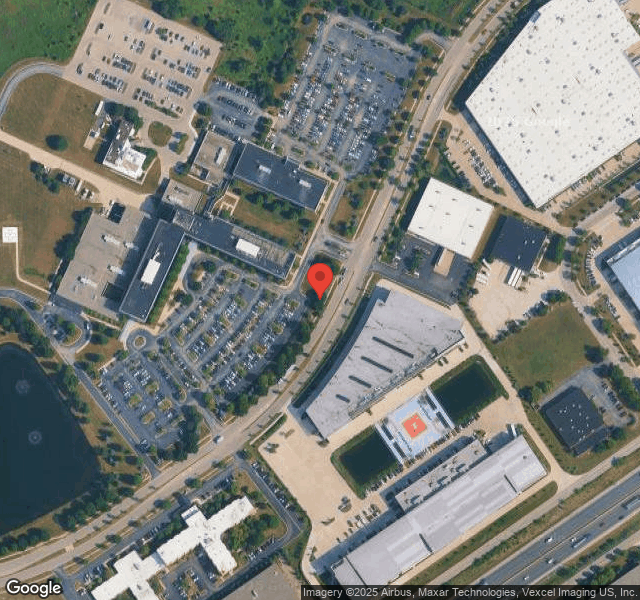

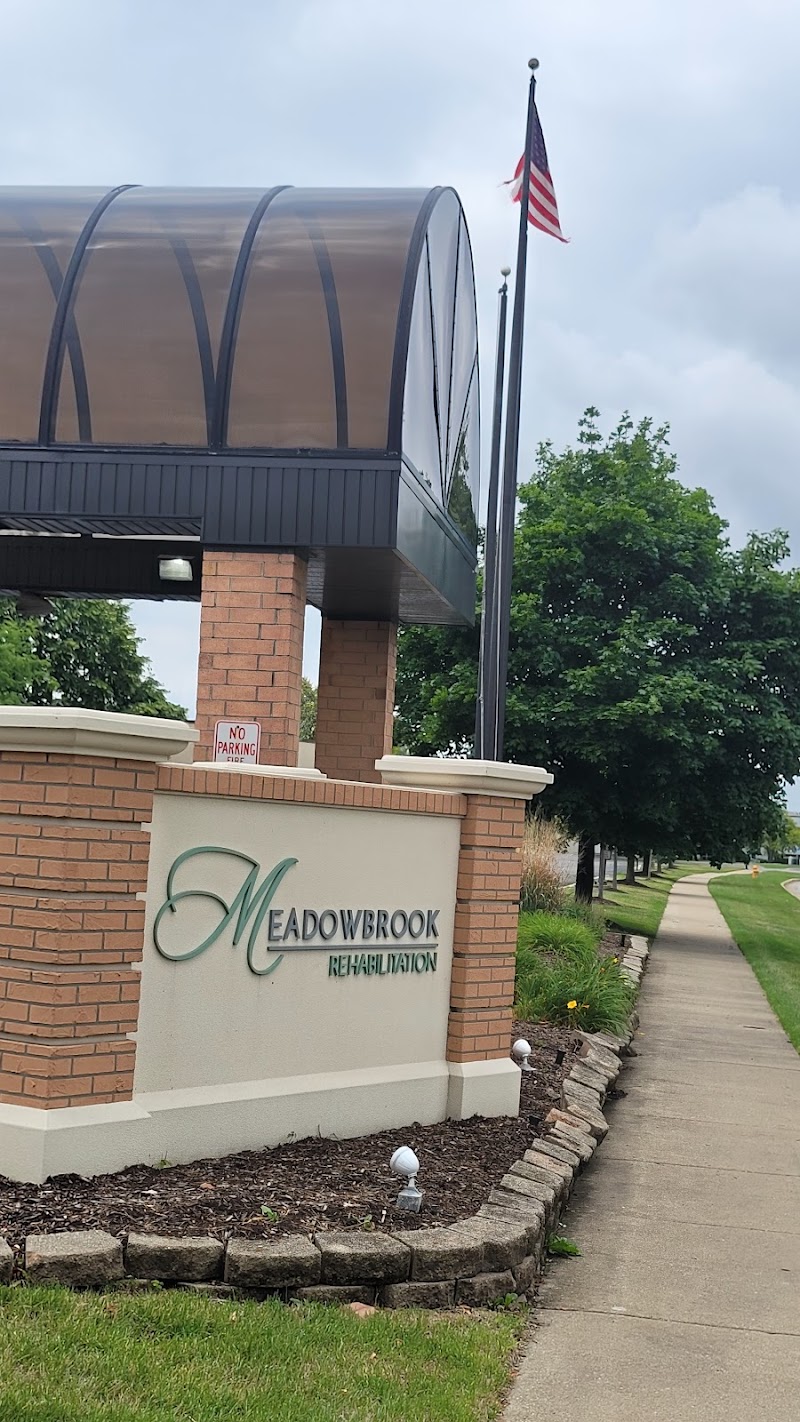
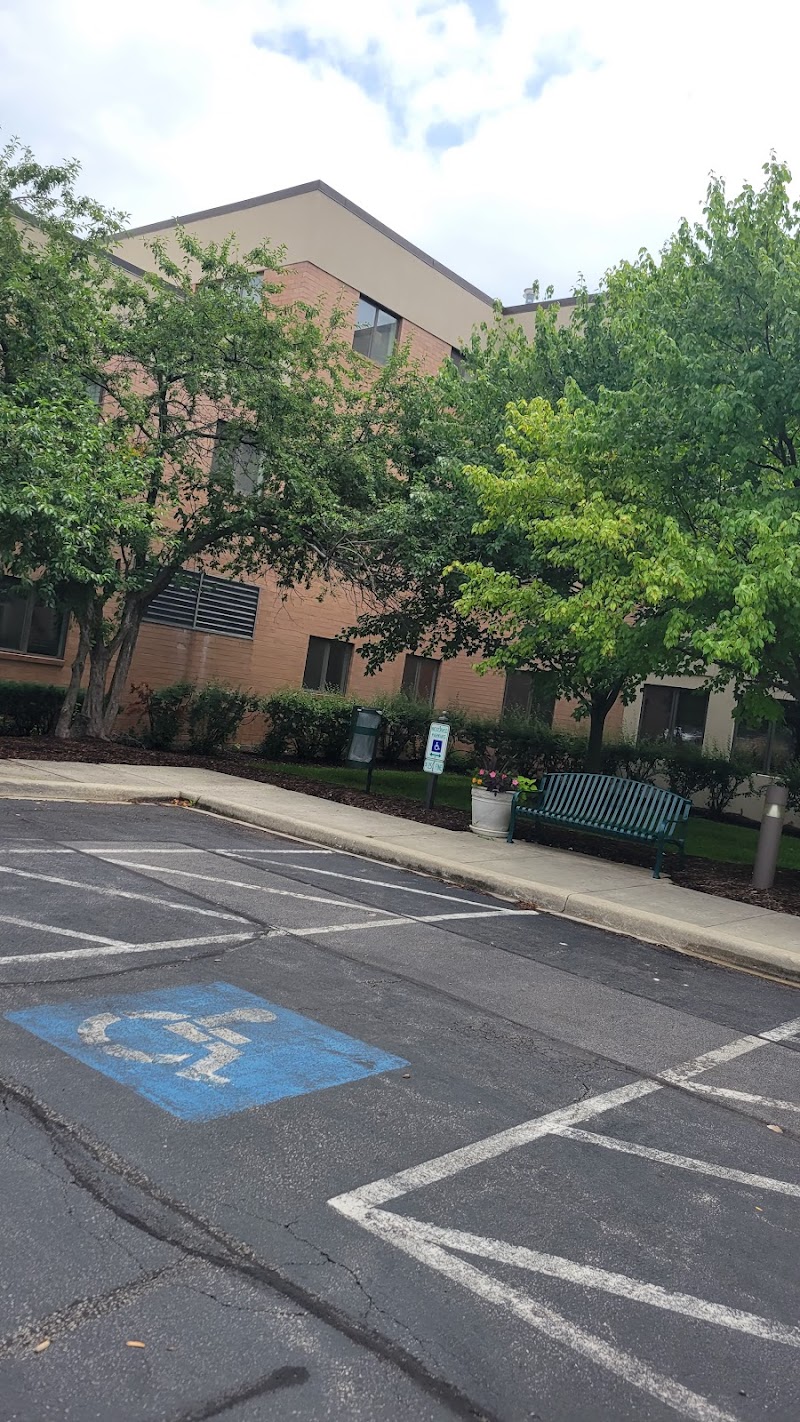
MEADOWBROOK MANOR

431 WEST REMINGTON BOULEVARD, BOLINGBROOK, IL 60440 (630) 759-1112
For profit - Corporation 298 Beds Independent Data: November 2025 1 Immediate Jeopardy citation
Trust Grade
0/100
#579 of 665 in IL
Last Inspection: June 2024

Within standard 12-15 month inspection cycle. Federal law requires annual inspections.

Overview

Meadowbrook Manor in Bolingbrook, Illinois, has received a Trust Grade of F, indicating significant concerns about the care provided, which places it among the lowest-rated facilities. It ranks #579 out of 665 in Illinois and #13 out of 16 in Will County, meaning it is in the bottom half of local options. Although the facility is showing signs of improvement, with the number of reported issues decreasing from 21 in 2024 to 9 in 2025, it still has a troubling history, including a critical incident involving sexual abuse by a staff member and serious neglect that led to severe injuries for residents. Staffing is below average, with a rating of 2/5 stars and a turnover rate of 43%, slightly better than the state average. Additionally, the facility has faced fines totaling $217,320, which raises concerns about compliance with care standards. Though there is average RN coverage, the facility has struggled with specific incidents of neglect, such as failing to administer necessary medications to hospice residents, which resulted in a seizure for one resident. Families should weigh these significant weaknesses against any signs of improvement when considering this facility for their loved ones.

Trust Score
F
0/100
In Illinois
#579/665
Bottom 13%
Safety Record
High Risk
Review needed
Inspections
Getting Better
21 → 9 violations
Staff Stability
○ Average
43% turnover. Near Illinois's 48% average. Typical for the industry.
Penalties
✓ Good
$217,320 in fines. Lower than most Illinois facilities. Relatively clean record.
Skilled Nurses
✓ Good
Each resident gets 51 minutes of Registered Nurse (RN) attention daily — more than average for Illinois. RNs are trained to catch health problems early.
Violations
⚠ Watch
48 deficiencies on record. Higher than average. Multiple issues found across inspections.
★☆☆☆☆
1.0
Overall Rating
★★☆☆☆
2.0
Staff Levels
★★★☆☆
3.0
Care Quality
★☆☆☆☆
1.0
Inspection Score
Stable
2024: 21 issues
2025: 9 issues

The Good

  • Full Sprinkler Coverage · Fire safety systems throughout facility
  • No fines on record
  • Staff turnover below average (43%)

    5 points below Illinois average of 48%

Facility shows strength in fire safety.

The Bad

1-Star Overall Rating

Below Illinois average (2.5)

Significant quality concerns identified by CMS

Staff Turnover: 43%

Near Illinois avg (46%)

Typical for the industry

Federal Fines: $217,320

Well above median ($33,413)

Significant penalties indicating serious issues

The Ugly 48 deficiencies on record

1 life-threatening 4 actual harm
Jul 2025 1 deficiency 1 Harm
SERIOUS (G) 📢 Someone Reported This

A family member, employee, or ombudsman was alarmed enough to file a formal complaint

Actual Harm - a resident was hurt due to facility failures

Accident Prevention (Tag F0689)

A resident was harmed · This affected 1 resident

**NOTE- TERMS IN BRACKETS HAVE BEEN EDITED TO PROTECT CONFIDENTIALITY** Based on interviews and record reviews, the facility failed to implement safety interventions and provide supervision to prevent...

Read full inspector narrative →
**NOTE- TERMS IN BRACKETS HAVE BEEN EDITED TO PROTECT CONFIDENTIALITY** Based on interviews and record reviews, the facility failed to implement safety interventions and provide supervision to prevent two residents from injury. These failures resulted in R2 sustaining a laceration and a displaced bilateral nasal bone fracture and acute fracture of the bony nasal septum and R3 sustaining a head laceration requiring 5 staples and being admitted to the hospital. This applies to 2 of 6 residents (R2 and R3) reviewed for falls in a sample of 12. The findings include:1.R2's records showed that she was a [AGE] year-old female admitted to the facility on [DATE], with diagnoses including dementia, psychosis, restlessness and agitation. R2's record showed that on 5/29/25, R2 fell from her bed. R2's 5/29/25 FRI (Facility Reported Incident) to the Illinois Department of Public Health showed that V5 CNA (Certified Nurse's Assistant) reported that she removed the floor mats and began providing ADL (activities of daily living) care to R2. During care, V5 realized she did not have all the necessary supplies. V5 turned towards the dresser to retrieve the remaining items, the resident fell from the bed and struck her face on the floor. R2 was taken to the local community hospital. R2's 5/29/25 hospital records showed that R2 sustained a laceration to her forehead and acute mild displaced bilateral nasal bone fracture and acute fracture of the bony nasal septum with leftward bowing. R2's 5/29/25 progress notes showed that R2 returned to the facility with sutures (number of sutures not indicated) in place to be removed in 7 days. R2's 10/18/24 care plan showed a focus on high risk for falls/injury/trauma with interventions including provided with high/low bed with floor mattress to further meet resident's safety needs.On 6/25/25 at 2:57 pm V5 said that she was providing care for R2, and she had removed the mat from the side of R2's bed, had R2's bed in a high position and then took 1 or 2 steps away from R2's bed to get wipes and a brief off the dresser. V5 said that she had her back turned away from R2 when R2 fell off the bed and hit the floor. V5 said that she saw blood and went and got the nurse. V5 said that R2 was awake at the time and that R2 has a tendency of trying to get out of the bed and falling.On 6/25/25 at 1:58 pm V9 NP (Nurse Practitioner) said that R2's laceration and nasal fracture was caused by the staff not putting the mat back next to the bed and putting bed rails up before walking away from the resident. V9 said by V5 not having the safety measures in place it caused R2 to fall causing a laceration and fractured nose.On 6/27/25 at 4:15 pm V1 (Administrator) said that V5 should have gotten the wipes and briefs before attempting to provide incontinence care for R2. V1 said that V5 should have lowered the bed and put the mats back in place and made sure the bed rails were up before she stepped away to get the needed items. V1 said that when R2 fell out of the bed it caused a fracture to her nose and a laceration. V1 said that R2 has a history of falling and attempting to get out of the bed causing falls. V1 said that staff should have been monitoring her even closer knowing she had the behaviors of attempting to get out of bed. V1 said that if V5 had put all those interventions in place, it could have prevented R2 from falling.On 6/27/25 at 1:34 pm V2 (Assistant Director of Nursing) said that when R2 fell on 5/29/25 the fall caused a nasal fracture to R2. V2 said that V5 should have brought the items to provide care before starting. V2 said that V5 should not have walked away, leaving the bed in a high position, the bed rails not up, and not putting the mats back. V2 said if those safety precautions were in place, V5 would have been proactive and that would have kept R2 safe and kept her from falling.2. R3's electronic health records showed that he is a [AGE] year-old male admitted to the facility with diagnoses including Parkinson's disease, dementia, restlessness, agitation, and history of falls. R3's 6/14/25 FRI Final report that was sent to the Illinois Department of Public Health showed that on 6/14/25 around 7:30 PM R3 was being pushed in his wheelchair when he fell forward out of his wheelchair hitting his head on the floor and sustained a laceration to his forehead. R3 was sent to the hospital and admitted to the hospital. R3 received five staples to his forehead from the laceration. R3's 6/14/25 hospital report shows that on 6/14/25 R3 was being pushed in a wheelchair by staff when R3 caught his foot on the floor and fell forward out of the wheelchair, hitting the front of his head on the ground. R3 sustained a large laceration to the frontal scalp and was admitted to the hospital. R3's 6/15/25 5:43 pm progress note showed that R3 returned to the facility with five staples to his forehead. R3's 6/14/25 care plan showed R3 had a risk for falls related to Parkinson's disease, dementia with agitation, anxiety, confusion and a history of falls. R3's intervention's included anticipate resident's needs, resident needs a safe environment with even floors, and staff to recline high back chair when moving resident and ensure proper positioning in chair.On 6/25/25 at 2:46 PM V7 CNA (Certified Nurse's Assistant) said that she was the CNA for R3 on 6/14/25 and she had asked V3 CNA to help her transfer R3 to bed. V7 said that V3 was pushing R3 in his wheelchair and she saw that R3's feet were on the floor and not on the footrest. V7 said that she did not tell V3 that R3's feet were on the floor and not on the footrests and she should have.On 6/25/25 at 4:37 PM V3 CNA said that on 6/14/25 when he was pushing R3 in his wheelchair he did not look were R3's feet were when he started pushing him. V3 said as he was pushing R3, R3 started going forward trying to get out of the wheelchair and then fell out of the wheelchair.On 6/26/25 at 1:58 pm V9 NP said that if R3's feet were on the footrest they would not have caught on the floor causing R3 to fall. The fall caused the laceration to R3's forehead.On 6/27/25 at 4:15 pm V1 (Administrator) said that V7 should have told V3 that R3's feet were on the ground when she saw V3 pushing R3. V1 said that could have prevented R3 from falling. V1 said V3 should have stopped pushing R3 when he saw R3 trying to get out of the chair. V1 said if staff had provided those two interventions it could have prevented R3 from falling and obtaining a laceration to his forehead.On 6/27/25 at 1:34 PM V2 (Assistant Director of Nursing) said that R3's feet should have been on the footrest. V2 said that the CNA should have put R3's feet on the footrest before pushing him down the hall so his foot would not have caught on the floor causing him to fall. V2 said that V7 should have told V3 that R3's feet were on the floor when he was pushing the wheelchair to prevent R3 from falling.
Jun 2025 3 deficiencies 2 Harm
SERIOUS (G) 📢 Someone Reported This

A family member, employee, or ombudsman was alarmed enough to file a formal complaint

Actual Harm - a resident was hurt due to facility failures

Free from Abuse/Neglect (Tag F0600)

A resident was harmed · This affected 1 resident

**NOTE- TERMS IN BRACKETS HAVE BEEN EDITED TO PROTECT CONFIDENTIALITY** Based on interview and record review, the facility failed to protect the residents' right to be free from neglect when the facil...

Read full inspector narrative →
**NOTE- TERMS IN BRACKETS HAVE BEEN EDITED TO PROTECT CONFIDENTIALITY** Based on interview and record review, the facility failed to protect the residents' right to be free from neglect when the facility failed to ensure medications were obtained and hospice orders were followed for 2 (R1, R2) residents, admitted to the facility for a hospice respite stay. This failure resulted in R1 experiencing seizures after not receiving anticonvulsant medications and requiring hospitalization. This applies to 2 of 4 residents (R1, R2) reviewed for neglect in the sample of 8. The findings include: 1. The EMR (Electronic Medical Record) shows R1 was admitted to the facility on [DATE] for a respite stay. The EMR continues to show R1 was transferred to the local hospital on May 23, 2025 due to experiencing a seizure at the facility. R1 did not return to the facility. R1 had multiple diagnoses including cognitive social deficit following cerebral infarction, epilepsy not intractable, with status epilepticus, depression, bilateral peripheral vertigo, Type 2 diabetes, chronic respiratory failure, dementia, frontotemporal neurocognitive disorder, cerebral infarction, aphasia, and hemiplegia affecting his right, dominant side. R1's Discharge MDS (Minimum Data Set) dated May 23, 2025 shows R1 had moderately impaired cognition, required partial/moderate assistance with eating, substantial/maximal assistance with oral hygiene, and was dependent on facility staff for toilet hygiene, lower body dressing, and personal hygiene. R1 was always incontinent of urine and frequently incontinent of stool. The EMR shows, on May 14, 2025, V21 (Admissions Director) uploaded R1's history and physical provided by the hospice provider to R1's medical record for R1's respite stay. V22's (Physician) history and physical documentation dated April 1, 2025 shows R1 took multiple medications, including, Lantus insulin, 20 units subcutaneously once a day, and levetiracetam (Keppra) (anti-seizure medication) 500 mg. (Milligrams), 1 tablet orally every 12 hours. On May 22, 2025, at 2:40 PM, V19 (RN-Registered Nurse) documented, [R1] arrived by ambulance to the facility at 10:10 [AM] and was taken to [room number]. I performed a head-to-toe assessment. Patient is nonverbal but follows directions. He is alert to self. Calm and cooperative. He laughs at everything you say to him. Eyes are PERL (Pupils Equal and Reactive to Light). No glasses with him. Hearing is WNL (Within Normal Limits) bilaterally. He has his own teeth that are in poor condition. His lungs are clear in all fields. Heart tones are strong and rhythmic with no peripheral edema noted. Bowel sounds are active in four quadrants. Skin is intact. Resident does not display any signs of discomfort or distress. Resident was wet before exam. Incontinent of bowel and bladder. Vitals taken and charted. Resident will not be able to use his call light effectively. Endorsed to oncoming nurse that we did not receive a diet, official med list, and no report was received about resident. Nurse stated understanding. The facility does not have documentation to show V19 (RN) attempted to locate R1's home medications in his belongings. The facility also does not have documentation to show V19 notified the physician or hospice provider that R1 did not have medications from home, or clarified R1's respite medication orders, or that V19 attempted to order R1's medications from the pharmacy. On May 22, 2025 at 10:45 PM, V20 (RN) documented, Per admission Director, med list and the rest of medications discuss with [V3] (Daughter of R1), who supposed to come later tonight, however, no show up. Writer then called hospice supervisor/manager and made aware, also left a message to the daughter with no return call yet. Comfort package available, the resident in good disposition and aura, no agitation/restlessness noted. Per CNA(Certified Nursing Assistant), the resident was fed with good food and fluid intake, diet verified with the hospice supervisor/manager to be regular/thin/take meds whole. Still anticipating daughter would come with the rest of meds to be reconciled and put in the system. The facility does not have documentation to show V20 (RN) attempted to locate R1's home medications in his belongings. The facility does not have documentation to show V20 notified the physician or hospice provider that she was unable to locate R1's medications from home, clarification regarding R1's respite medication orders, or that V20 attempted to order R1's medications from the pharmacy. On June 4, 2025, at 4:19 PM, V21 (admission Director) said, R1's hospice company sent his admission paperwork to the facility prior to R1's admission. V21 continued to say she uploaded the hospice paperwork to the EMR so R1's medical information and medication list was available to the nurse who admitted R1. V21 said, I confirmed with the hospice company that the medications listed were the most up-to-date list of medications. I provide an admission notification sheet with all of the resident's specific information and everything that is important about the person and gave one to the receptionist and one to the nurse. The sheet showed [R1] was coming to the facility at 10:00 AM on May 22, 2025, and that the family was bringing the medications. On June 6, 2025, at 9:38 AM, V21 (Admissions Director) continued to say, Every hospice respite resident has a written report from me that shows everything about the resident, including if the family is providing the medications. The written report is given to the nurses. The reason the family brings the medications from home is because the medications are paid for by the hospice company. We ask the families to bring the medications in their original pharmacy bottle that is labeled with the resident's name on it and the medication instructions. Everyone here knows this is how respite residents are done. I couldn't make it any easier for the nursing staff. The medications and the resident's medical information are all scanned into the medical record before the resident ever comes to the facility. On June 4, 2025 at 12:40 PM, V3 (Daughter of R1) said, [R1] went to the facility from home. It was a respite stay for five days. Hospice arranged for him to go there. I sent the actual medications in a bag with his belongings, and they called and said they could not find them. I have done a respite stay at this facility before, and I know how it works. Even if they weren't able to find the medications, they could have looked at the medication list provided by hospice and ordered the medications. [R1] has not had a breakthrough seizure in over 20 years. [V10] (Hospice Manager of Admissions) said she called the facility and spoke to [V19] (RN), and he started reading the medications they didn't have. Obviously, he had the list if he was reading the medications from it, and he could have ordered the medications from that list if he couldn't find the medications I sent. On June 4, 2025 at 1:01 PM, V10 (Hospice Manager of Admissions) said, On May 22, 2025, I received a call from [V19] (RN), and he said we have your patient here and the family only sent his comfort pack medications. I said the family was given clear instructions to send all the medications. I asked which medications they were missing, and we went through the list, including the insulin and seizure medication. I reached out to [V3] (Daughter of R1), and she said she realized she had forgotten to include the insulin in the package with the medications because it was in her refrigerator, but the rest of the medications were in the resident's belongings. She said she would have her daughter drop off the insulin later in the day. I called the facility three times after that to speak to [V19] and each time I was never able to speak to him, just left on hold. I finally called again and left my name and number for him to call me back. Around 9:30 PM, I received a call from the facility that [R1's] medications had still not arrived. I said, check the bag because the family said the medications were in there. The nurse asked when the medications should be taken and was able to say the names of the medications. I said, please check his bag, or otherwise, we need to put in a stat order for the medications. She said she would get back to me, but she never did. The next morning, I received a call around 9:30 AM to 10:00 AM from the nurse and was told [R1] was different than usual. The next thing I know, I got a call around 12:30 PM from the facility that they had to send [R1] out 911 because he was found non-responsive and having a seizure. I reached out to the emergency room to tell them they were getting our hospice patient, and they told me he was already at the hospital and had a witnessed seizure and he required Versed (central nervous system depressant). This respite stay had been in the works for weeks before his arrival to the facility. The responsible and right thing to do was to provide the medications. On June 4, 2025 at 3:01 PM, V20 (RN) said she worked a double shift from 2:00 PM to 10:00 PM on May 22, 2025, and 10:00 PM on May 22, 2025 to 6:00 AM on May 23, 2025. V20 continued to say R1 was under her care during the two shifts she worked. V20 said, When I came that day and got report from the nurse on the prior shift, the nurse was confused and overwhelmed. Apparently, [R1] came from home, and no one gave report or a recent medication list. I worked 16 hours and had the resident the whole time. I did not give him any medications that night. From the medication list that came with [R1], I saw he takes Keppra (anti-seizure medication). I did not look through [R1's] belongings for his medications. If I am not the admitting nurse, I don't have to go through the patient's belongings. This should have been taken care of prior. I did not think it was an emergency that [R1] was not getting his medications. On June 4, 2025 at 3:28 PM, V23 (RN) said, I worked from 6:00 AM to 2:00 PM on May 23, 2025. The CNA came to me and said something was wrong with [R1]. I went to see the resident and he appeared to be having a seizure. I called for [V13] (NP-Nurse Practitioner) to come see the resident and she said to send him out 911. I called [V10] (Hospice Manager of Admissions) and said I needed the medications for [R1]. We had a medication list in the admission packet, and it showed [R1] needed insulin and Keppra and other things. I dug through [R1's] belongings and found all of his medications. They were here with his things the whole time. On May 23, 2025 at 9:00 PM, V18's (Physician) hospital documentation shows R1 presented to the emergency room with a witnessed seizure requiring Versed 2 mg. [R1] is a [AGE] year-old male presenting with witnessed seizure. EMS (ambulance) reports patient was post-ictal upon their arrival and had another seizure that required 2 mg. of Versed and resolved with this. Granddaughter is at bedside; states patient was recently transferred to the nursing home and has not had his medications for the past 36 hours. Patient's daughter is on the phone and states patient usually takes Keppra and has not had a breakthrough seizure for 30 years. No fall or injury from witnessed seizure per EMS. Hospital documentation shows R1's blood sugar was 219 (reference range 70-99 mg/dL (milligrams/deciliter) upon admission to the hospital. Facility documentation dated May 23, 2025 at 9:55 AM shows R1's blood sugar was 180 mg/dL (Milligrams/deciliter). R1's May 2025 MAR (Medication Administration Record) shows R1 did not receive any medications, including his insulin or levetiracetam while residing in the facility. On June 5, 2025 at 10:47 AM, V14 (Pharmacist) said, R1's insulin was a long-acting insulin, meant to control his blood sugar over the course of time, and that R1's Keppra medication should not be stopped and if a dose is missed, a seizure is possible. On June 5, 2025 at 3:14 PM, V15 (Pharmacist/General Manager) said, elevated blood sugars are possible when insulin doses are missed, and some people will have breakthrough seizures when anti-seizure medication such as Keppra doses are missed. V15 continued to say had the facility staff ordered R1's medications STAT, the medications could have been available to the facility staff for administration to the resident within four hours. On June 5, 2025 at 9:59 AM, V13 (NP) said, I went to see [R1] on May 23. He was seizing. I asked if he had an order for IV (Intravenous) Ativan (benzodiazepine medication). He did not. He was actively seizing, so he had to go the emergency room. If they would have called me for medication orders, I would have ordered them. He missed doses of his seizure medication, and he ended up having a seizure. What more is there to say? 2. The EMR shows R2 was admitted to the facility on [DATE] for a hospice respite stay and was discharged to her home on April 19, 2025. R2 had multiple diagnoses including heart failure, type 2 diabetes, hypertension, repeated falls, hallucinations, stress incontinence, and the presence of an automatic implantable cardiac defibrillator. R2's MDS dated [DATE] shows R2 had severe cognitive impairment, required supervision with eating, partial/moderate assistance with oral hygiene, was dependent on facility staff for toilet hygiene, and required substantial/maximal assistance with all other ADLs (Activities of Daily Living). R2 was frequently incontinent of bowel and bladder. On April 10, 2025 at 4:05 PM, V20 (RN) documented R2 was admitted to the facility from home after going to the emergency room following a fall. V20 continued to document R2 was admitted to the facility under hospice care. On June 5, 2025 at 1:52 PM, V5 (Son of R2) said, on April 10, 2025 R2 was getting ready to leave home for a respite stay at the facility. V5 continued to say just before R2 left home, she sustained a fall in the bathroom and had to be taken to the emergency room prior to going to the facility. R2 received staples, in the emergency room, to close a laceration on her head prior to going to the facility. V5 said, R2's medications were with her belongings when she went to the facility. When she returned home from the facility on April 19, 2025, her home medications had remained with her belongings, untouched, with the same number of pills in the bottles, and other medications were present in her belongings, some of which R2 had not taken for over four years. The Client Medication Report for R2, provided to the facility by the hospice company on April 10, 2025 shows multiple medication orders for R2, including the following: Quetiapine 50 mg. every night at bedtime for restlessness, and Ambien 5 mg. every night at bedtime for insomnia. The facility does not have documentation to show the order for R2's scheduled Quetiapine or Ambien were ever entered into the EMR or that R2 ever received the Quetiapine and Ambien as shown on the hospice Client Medication Report. The EMR shows the facility had two medication lists for R2; one list from the emergency room dated April 10, 2025, and one list from the hospice provider dated April 10, 2025. The facility does not have documentation to show the facility called the hospice provider to clarify which medications R2 should have received while residing at the facility. On June 9, 2025 at 9:18 AM, V4 (Hospice Nurse) said, R2 had her home medications with her when she went from the emergency room to the facility. V4 said, I had called the facility to notify them [R2] had to be rerouted to the hospital due to her fall at home. I reminded them her medications were with her in her luggage, and she would be a little late getting to the facility. On June 10, 2025 at 10:22 AM, V4 (Hospice Nurse) said, [R2] has not been of sound mind for a long time. As she was transitioning to her later stages in the hospice process, [R2] was getting more anxious and restless. At one point, at home, she was found outside, trying to shovel snow. We discontinued her Trazadone, and we put her on scheduled doses of Quetiapine and Ambien as comfort measures for her end-of-life process. She started having more falls, including two at the facility between April 10 and April 14, 2025, due to her restlessness with the dying process, and it was important she received those medications. If she was not receiving those medications, she would have become more anxious and uncomfortable. The plan for hospice patients is to keep them comfortable. On June 9, 2025 at 10:04 AM, V24 (Former DON-Director of Nursing) said, he was always notified when a resident was coming to the facility for a respite stay. V24 said he assisted R2's nurse and entered all of R2's medication orders into the EMR. V24 said, The nurse should have called the doctor and asked which medication list she should follow, the one from the emergency room, or the one from hospice. The nurse didn't communicate that to me. I was just helping out and put in the orders. I did not call the doctor to clarify the orders. On June 9, 2025 at 12:51 PM, V13 (NP) read the facility's Abuse and Neglect policy and said if the facility's Neglect Policy shows neglect is the failure to provide goods and services to a resident that are necessary to avoid physical harm, pain, mental anguish, or emotional distress, then the residents should have gotten their medications or technically that is neglect. V13 continued to say, The nursing staff should have brought up the medication concerns to higher up people such as the DON (Director of Nursing) or the supervisor and obtained the medications. They have the definition of neglect right in their policy. The facility's Abuse Policy and Procedure dated 10/24/2022 and reviewed on 2/18/25 shows: The facility prohibits abuse, neglect, misappropriation of property, and exploitation of its residents, including verbal, mental, sexual, or physical abuse, corporal punishment, and involuntary seclusion. The facility has a no tolerance philosophy: persons found to have engaged in such conduct will be terminated. Definitions: Neglect is a facility's failure to provide, or willful withholding of adequate medical care, mental health treatment, psychiatric rehabilitation, personal care, or assistance with activities of daily living that is necessary to avoid physical harm, mental anguish, or mental illness of a resident. Neglect is also the failure to provide goods and services to a resident that are necessary to avoid physical harm, pain, mental anguish or emotional distress.
SERIOUS (G) 📢 Someone Reported This

A family member, employee, or ombudsman was alarmed enough to file a formal complaint

Actual Harm - a resident was hurt due to facility failures

Deficiency F0760 (Tag F0760)

A resident was harmed · This affected 1 resident

**NOTE- TERMS IN BRACKETS HAVE BEEN EDITED TO PROTECT CONFIDENTIALITY** Based on interview and record review, the facility failed to ensure a hospice resident, admitted to the facility for a respite s...

Read full inspector narrative →
**NOTE- TERMS IN BRACKETS HAVE BEEN EDITED TO PROTECT CONFIDENTIALITY** Based on interview and record review, the facility failed to ensure a hospice resident, admitted to the facility for a respite stay, was administered anticonvulsant medication and insulin as shown on the hospice records and provided by the resident's family. This failure resulted in R1 experiencing seizures after not receiving anticonvulsant medications and requiring hospitalization. This applies to 1 of 4 residents (R1) reviewed for medication administration in the sample of 8. The findings include: The EMR (Electronic Medical Record) shows R1 was admitted to the facility on [DATE] for a respite stay. The EMR continues to show R1 was transferred to the local hospital on May 23, 2025 due to experiencing a seizure at the facility. R1 did not return to the facility. R1 had multiple diagnoses including cognitive social deficit following cerebral infarction, epilepsy not intractable, with status epilepticus, depression, bilateral peripheral vertigo, Type 2 diabetes, chronic respiratory failure, dementia, frontotemporal neurocognitive disorder, cerebral infarction, aphasia, and hemiplegia affecting his right, dominant side. R1's Discharge MDS (Minimum Data Set) dated May 23, 2025 shows R1 had moderately impaired cognition, required partial/moderate assistance with eating, substantial/maximal assistance with oral hygiene, and was dependent on facility staff for toilet hygiene, lower body dressing, and personal hygiene. R1 was always incontinent of urine and frequently incontinent of stool. The EMR shows, on May 14, 2025, V21 (Admissions Director) uploaded R1's history and physical provided by the hospice provider to R1's medical record for R1's respite stay. V22's (Physician) history and physical documentation dated April 1, 2025 shows R1 took multiple medications, including, Lantus insulin, 20 units subcutaneously once a day, and levetiracetam (Keppra) (anti-seizure medication) 500 mg. (Milligrams), 1 tablet orally every 12 hours. On May 22, 20256 at 2:40 PM, V19 (RN-Registered Nurse) documented, [R1] arrived by ambulance to the facility at 10:10 [AM] and was taken to [room number]. I performed a head-to-toe assessment. Patient is nonverbal but follows directions. He is alert to self. Calm and cooperative. He laughs at everything you say to him. Eyes are PERL (Pupils Equal and Reactive to Light). No glasses with him. Hearing is WNL (Within Normal Limits) bilaterally. He has his own teeth that are in poor condition. His lungs are clear in all fields. Heart tones are strong and rhythmic with no peripheral edema noted. Bowel sounds are active in four quadrants. Skin is intact. Resident does not display any signs of discomfort or distress. Resident was wet before exam. Incontinent of bowel and bladder. Vitals taken and charted. Resident will not be able to use his call light effectively. Endorsed to oncoming nurse that we did not receive a diet, official med list, and no report was received about resident. Nurse stated understanding. The facility does not have documentation to show V19 (RN) attempted to locate R1's home medications in his belongings. The facility also does not have documentation to show V19 notified the physician or hospice provider that he was unable to find R1's medications from home, clarification regarding R1's respite medication orders, or that V19 attempted to order R1's medications from the pharmacy. On May 22, 2025 at 10:45 PM, V20 (RN) documented, Per admission Director, med list and the rest of medications discuss with [V3] (Daughter of R1), who supposed to come later tonight, however, no show up. Writer then called hospice supervisor/manager and made aware, also left a message to the daughter with no return call yet. Comfort package available, the resident in good disposition and aura, no agitation/restlessness noted. Per CNA (Certified Nursing Assistant), the resident was fed with good food and fluid intake, diet verified with the hospice supervisor/manager to be regular/thin/take meds whole. Still anticipating daughter would come with the rest of meds to be reconciled and put in the system. The facility does not have documentation to show V20 (RN) attempted to locate R1's home medications in his belongings. The facility does not have documentation to show V20 notified the physician or hospice provider that she was unable to locate R1's medications from home, clarification regarding R1's respite medication orders, or that V20 attempted to order R1's medications from the pharmacy. On June 4, 2025 at 12:40 PM, V3 (Daughter of R1) said, [R1] went to the facility from home. It was a respite stay for five days. Hospice arranged for him to go there. I sent the actual medications in a bag with his belongings, and they called and said they could not find them. I have done a respite stay at this facility before, and I know how it works. Even if they weren't able to find the medications, they could have looked at the medication list provided by hospice and ordered the medications. [R1] has not had a breakthrough seizure in over 20 years. [V10] (Hospice Manager of Admissions) said she called the facility and spoke to [V19] (RN), and he started reading the medications they didn't have. Obviously, he had the list if he was reading the medications from it, and he could have ordered the medications from that list if he couldn't find the medications I sent. On June 4, 2025 at 3:01 PM, V20 (RN) said she worked a double shift from 2:00 PM on May 22, 2025 to 10:00 PM, and 10:00 PM to 6:00 AM on May 23, 2025. V20 continued to say R1 was under her care during the two shifts she worked. V20 said, When I came that day and got report from the nurse on the prior shift, the nurse was confused and overwhelmed. Apparently, [R1] came from home, and no one gave report or a recent medication list. I worked 16 hours and had the resident the whole time. I did not give him any medications that night. From the medication list that came with [R1], I saw he takes Keppra (anti-seizure medication). I did not think it was an emergency that [R1] was not getting his medications. On June 4, 2025 at 3:28 PM, V23 (RN) said, I worked from 6:00 AM to 2:00 PM on May 23, 2025. The CNA came to me and said something was wrong with [R1]. I went to see the resident and he appeared to be having a seizure. I called for [V13] (NP-Nurse Practitioner) to come see the resident and she said to send him out 911. I called [V10] (Hospice Manager of Admissions) and said I needed the medications for [R1]. We had a medication list in the admission packet, and it showed [R1] needed insulin and Keppra and other things. I dug through [R1's] belongings and found all of his medications. They were here with his things the whole time. On May 23, 2025 at 9:00 PM, V18's (Physician) hospital documentation shows R1 presented to the emergency room with a witnessed seizure requiring Versed 2 mg. [R1] is a [AGE] year-old male presenting with witnessed seizure. EMS reports patient was post-ictal upon their arrival and had another seizure that required 2 mg. of Versed and resolved with this. Granddaughter is at bedside; states patient was recently transferred to the nursing home and has not had his medications for the past 36 hours. Patient's daughter is on the phone and states patient usually takes Keppra and has not had a breakthrough seizure for 30 years. No fall or injury from witnessed seizure per EMS. Facility documentation dated May 23, 2025 at 9:55 AM shows R1's blood sugar was 180 mg/dL (Milligrams/deciliter). Hospital documentation shows R1's blood sugar was 219 (reference range 70-99 mg/dL upon admission to the hospital. On June 5, 2025 at 10:47 AM, V14 (Pharmacist) said, R1's insulin was a long-acting insulin, meant to control his blood sugar over the course of time, and that R1's Keppra medication should not be stopped and if a dose is missed, a seizure is possible. On June 5, 2025 at 3:14 PM, V15 (Pharmacist/General Manager) said, elevated blood sugars are possible when insulin doses are missed, and some people will have breakthrough seizures when anti-seizure medication such as Keppra doses are missed. On June 5, 2025 at 9:59 AM, V13 (NP) said, I went to see [R1] on May 23. He was seizing. I asked if he had an order for IV (Intravenous) Ativan (benzodiazepine medication). He did not. He was actively seizing, so he had to go the emergency room. If they would have called me for medication orders, I would have ordered them. He missed doses of his seizure medication, and he ended up having a seizure. What more is there to say? V13 continued to say if R1's medications were not available, facility staff should have attempted to contact her, and she would have given orders for all of his medications. The facility's policy entitled Respite Care, dated 06/01/2024 shows, Procedure: .2. Medications will be ordered from the facility's pharmacy unless otherwise specified by the family. If the family failed to supply the medications on time, the facility will use its pharmacy, and the bill will be charged to the family.
CONCERN (D) 📢 Someone Reported This

A family member, employee, or ombudsman was alarmed enough to file a formal complaint

Potential for Harm - no one hurt, but risky conditions existed

Deficiency F0757 (Tag F0757)

Could have caused harm · This affected 1 resident

**NOTE- TERMS IN BRACKETS HAVE BEEN EDITED TO PROTECT CONFIDENTIALITY** Based on interview and record review, the facility failed to ensure a resident did not receive unnecessary medications. This app...

Read full inspector narrative →
**NOTE- TERMS IN BRACKETS HAVE BEEN EDITED TO PROTECT CONFIDENTIALITY** Based on interview and record review, the facility failed to ensure a resident did not receive unnecessary medications. This applies to 1 of 3 residents (R2) reviewed for pharmacy services in the sample of 8. The findings include: The EMR (Electronic Medical Record) shows R2 was admitted to the facility on [DATE] for a hospice respite stay and was discharged to her home on April 19, 2025. R2 had multiple diagnoses including heart failure, Type 2 diabetes, hypertension, repeated falls, hallucinations, stress incontinence, and the presence of an automatic implantable cardiac defibrillator. R2's MDS (Minimum Data Set) dated April 19, 2025 shows R2 had severe cognitive impairment, required supervision with eating, partial/moderate assistance with oral hygiene, was dependent on facility staff for toilet hygiene, and required substantial/maximal assistance with all other ADLs (Activities of Daily Living). R2 was frequently incontinent of bowel and bladder. On April 10, 2025 at 4:05 PM, V20 (RN-Registered Nurse) documented R2 was admitted to the facility from home after going to the emergency room following a fall. V20 continued to document R2 was admitted to the facility under hospice care. On June 5, 2025 at 1:52 PM, V5 (Son of R2) said, on April 10, 2025 R2 was getting ready to leave home for a respite stay at the facility. V5 continued to say just before R2 left home, she sustained a fall in the bathroom and had to be taken to the emergency room prior to going to the facility. R2 received staples, in the emergency room, to close a laceration on her head prior to going to the facility. V5 said, R2's medications were with her belongings when she went to the facility. When she returned home from the facility on April 19, 2025, her home medications had remained with her belongings, untouched, with the same number of pills in the bottles that were there when the resident left home, and other medications were present in her belongings, some of which R2 had not taken for over four years. V5 continued to say, because the facility ordered the medications R2 was no longer taking and not on the hospice list, V5 was charged $150 by the pharmacy provider. The EMR shows the facility had two medication lists for R2. One list was from the local hospital emergency room, and one list was from the hospice provider. R2's After Visit Summary from the local hospital dated April 10, 2025 shows, Your Medication List - ASK your doctor about these medications. The After Visit Summary from the local hospital shows the following medications for R2: Acetaminophen (pain reliever) Albuterol inhaler (for wheezing) as needed Ascorbic Acid (vitamin supplement) Atorvastatin (cholesterol medication) daily Calcium carbonate (supplement) Carvedilol (cardiac medication) 3.125 mg (milligrams) twice daily Multivitamin Cholestyramine-Aspartame (bile acid binder) 4 grams daily Furosemide (diuretic) twice daily Gabapentin (peripheral pain medication) twice daily Nitroglycerin (cardiac medication) as needed Pantoprazole (stomach medication) twice daily Extended-release Potassium Chloride (electrolyte) daily Sertraline (antidepressant) daily Trazadone (antidepressant) daily Vitamin D (supplement) R2's Client Medication Report from the hospice provider, dated April 10, 2025 shows the following medication orders for R2: Acetaminophen daily at bedtime for pain Ambien (insomnia medication) daily at bedtime Bisacodyl (for constipation) as needed Furosemide twice daily Gabapentin twice daily Haloperidol (agitation medication) as needed Hyoscyamine (for secretions) as needed Lorazepam (for anxiety) as needed Morphine (pain medication) as needed Pantoprazole twice daily Prochlorperazine (for nausea) as needed Quetiapine (restlessness) daily at bedtime Senna (stool softener) daily as needed Sertraline daily The facility does not have documentation to show facility staff called the hospice provider to clarify which medications R2 should have received while residing at the facility for her hospice respite stay. R2's April 2025 MAR (Medication Administration Record) shows R2 received the following medications during her stay at the facility that were not on R2's hospice medication list: Atorvastatin - R2 received 6 doses from April 11, 2025 to April 18, 2025 Carvedilol - R2 received 13 doses from April 12, 2025 to April 19, 2025 Cholestyramine Aspartame - R2 received 8 doses from April 12, 2025 to April 19, 2025 Potassium Chloride - R2 received 9 doses from April 11, 2025 to April 19, 2025 On June 9, 2025 at 10:04 AM, V24 (Former DON-Director of Nursing) said, The nurse should have called the doctor and asked which medication list she should follow, the one from the emergency room, or the one from hospice. The nurse didn't communicate that to me. I was just helping out and put in the orders. I did not call the doctor to clarify the orders. On June 9, 2025 at 9:18 AM, V4 (Hospice Nurse) said, R2 had her home medications with her when she went from the emergency room to the facility. V4 said, I had called the facility to notify them [R2] had to be rerouted to the hospital due to her fall at home. I reminded them her medications were with her in her luggage, and she would be a little late getting to the facility. V4 continued to say the facility should have contacted the hospice provider to clarify what medications R2 was taking if there was any conflict between the medication list provided by the hospital and list provided by hospice since R2 was under contract with the hospice company. The facility's undated policy entitled Hospice Care Policy and Procedure shows, Policy: To establish protocols and procedures to ensure communication and provision of care between facility staff and hospice providers. Procedure: .3. The facility's Director of Nursing is the clinical staff member responsible for working with Hospice representatives to coordinate care to the resident provided by facility and hospice staff. The facility's Social Service Director is the staff member responsible for contact with Hospice agencies whenever there is a concern related to resident care. 4. The Director of Nursing and/or the Social Services Director will be responsible for .d. Obtaining the following information from Hospice: .vi. Hospice medication information specific to each resident.
Apr 2025 1 deficiency
CONCERN (E) 📢 Someone Reported This

A family member, employee, or ombudsman was alarmed enough to file a formal complaint

Potential for Harm - no one hurt, but risky conditions existed

ADL Care (Tag F0677)

Could have caused harm · This affected multiple residents

**NOTE- TERMS IN BRACKETS HAVE BEEN EDITED TO PROTECT CONFIDENTIALITY** Based on observation, interview, and record review, the facility failed to ensure residents receive showers as shown on the faci...

Read full inspector narrative →
**NOTE- TERMS IN BRACKETS HAVE BEEN EDITED TO PROTECT CONFIDENTIALITY** Based on observation, interview, and record review, the facility failed to ensure residents receive showers as shown on the facility's shower schedule, and failed to ensure residents receive assistance with shaving and fingernail care. This applies to 4 of 4 residents (R1, R2, R3, and R4) reviewed for ADL (Activities of Daily Living) assistance in the sample of 4. The findings include: 1. On April 10, 2025 at 9:17 AM, R1 was lying in bed in his room. No sign was present to show R1 was in isolation. R1 had beard growth approximately 1/4 inch to 1/2 inch long, and long fingernails. R1's scalp hair had copious amounts of white flakes present. R1's hands were severely contracted and R1 said he is unable to perform personal care due to his contracted hands and paralysis. R1 said he does not like having long facial hair or fingernails. R1 also said he does not like receiving bed baths and he prefers to receive showers. R1 continued to say that since the facility moved him to a different room in March 2025, the level of care he has been receiving has been different and he has not been receiving showers, which he prefers. The EMR (Electronic Medical Record) shows R1 was admitted to the facility on [DATE]. The EMR continues to show R1 left the facility against medical advice on August 28, 2023. R1 was readmitted to the facility on [DATE] with multiple diagnoses including, displaced fracture of the first cervical vertebrae, functional quadriplegia, hallucinations, paresthesia of skin, major depressive disorder, UTI (Urinary Tract Infection), abnormal posture, need for assistance with personal care, hypertension, migraines, Covid-19, history of falling, nicotine dependence, morbid obesity, seborrheic dermatitis, COPD (Chronic Obstructive Pulmonary Disease), encephalopathy, and spinal cord injury. R1's MDS (Minimum Data Set) dated February 28, 2025 shows R1 is cognitively intact, dependent on facility staff for all ADLs including showering, has an indwelling urinary catheter, and is always incontinent of stool. R1's care plan for ADL self-care performance deficit, initiated on December 4, 2024 shows multiple interventions initiated on December 4, 2024 including, Bathing: Requires 2 staff participation with bathing. Dependent of 2+ staff for shower transfers using full body mechanical lift machine. Check nail length and trim and clean on bath day and as necessary. R1's care plan for actual impairment to skin integrity, initiated on December 4, 2024 shows multiple interventions initiated on December 4, 2024 including, Avoid scratching and keep hands and body parts from excessive moisture. Keep fingernails short. The EMR shows the following order for R1 dated March 26, 2025: Strict contact/droplet isolation due to Covid-19 x 10 days. All services to be provided in room. The EMR shows the following order for R1 dated April 7, 2025: Covid isolation discontinued. The facility's shower schedule shows R1 should receive a shower on Tuesdays during the afternoon (PM) shift (2:00 PM to 10:00 PM), and on Fridays during the day shift (6:00 AM to 2:00 PM). Based on the shower schedules provided by the facility, R1 should have received showers on March 4, 7, 11, 14, 18, 21, 25, and 28, 2025, and April 1, 4, and 8, 2025. R1's shower sheets show R1 received a bed bath on March 4, and 27, 2025. On March 11, and 18, 2025, V15 (CNA-Certified Nursing Assistant) documented R1 received a shower bath. R1's shower sheet dated March 28, 2025 shows R1 received a bed bath due to being in isolation. The facility does not have documentation to show R1 received his scheduled showers on March 21, 2025, April 1, 4, and 8, 2025, or that R1 refused to receive a bed bath/shower on those days. The facility does not have documentation in POC (Point of Care) to show R1 received a shower/ bed bath during the previous 30 days. On April 10, 2025 at approximately 3:10 PM, V15 (CNA) said when she writes shower bath on a resident's shower sheet, it means she gave a bed bath, not a shower. On April 14, 2025 at 9:47 AM, V2 (DON-Director of Nursing) said residents can still receive a shower if they are in isolation for Covid-19. 2. On April 10, 2025 at 9:15 AM, R2 was lying in bed in the room he shared with R1. No sign was present on R2's door to show R2 was in isolation. R2's breakfast tray was on the bedside table near his bed. The breakfast on the tray was not eaten. R2 said he could not reach his breakfast tray and was waiting for facility staff to set up the breakfast tray near him. R2 said he has not received a bed bath or shower for quite a few days. The EMR shows R2 was admitted to the facility on [DATE] with multiple diagnoses including, generalized osteoarthritis, unspecified head injury, diabetes, obstructive and reflux uropathy, gastritis, congenital stenosis and stricture of the esophagus, OSA (Obstructive Sleep Apnea), difficulty walking, cognitive communication deficit, repeated falls, weakness, presence of cardiac pacemaker, and heart failure. R2's MDS dated [DATE] shows R2 is cognitively intact, requires supervision with eating, partial/moderate assistance with oral hygiene, substantial/maximal assistance with toilet hygiene, showering, lower body dressing, bed mobility, and transfers between surfaces. R2 has an indwelling urinary catheter and is always continent of stool. R2's care plan for ADL self-care performance deficit, initiated March 24, 2025 shows multiple interventions initiated on March 24, 2025 including, Bathing: [R2] requires substantial/maximal assistance from staff participation with bathing. Provide a sponge bath when a full bath or shower cannot be tolerated. [R2] requires substantial/maximal assistance from staff. The EMR shows the following order for R2 dated March 26, 2025: Strict contact/droplet isolation due to Covid-19 x 10 days. All services to be provided in room. The facility's undated shower schedule shows R2 should receive a shower on Tuesdays during the afternoon shift (2:00 PM to 10:00 PM), and on Fridays during the day shift (6:00 AM to 2:00 PM). Based on the shower schedules provided by the facility, R2 should have received showers on March 25, and 28, 2025 and April 1, 4, and 8, 2025. R2's shower sheets show R2 refused a shower on March 25, and had a bed bath on March 28 and April 1 due to being in isolation. The facility does not have documentation to show R2 received a shower or bed bath on April 4, or 8, 2025, or that R2 refused to receive a bed bath/shower on those days. The facility does not have documentation in POC to show R2 received a shower/bed bath since he was admitted to the facility on [DATE]. 3. On April 14, 2025 at 10:18 AM, R3 was lying in bed in his room. R3 had long fingernails. R3 had a dark substance underneath his fingernails. R3 said, They don't give you a shower twice a week. The EMR shows R3 was admitted to the facility on [DATE]. The EMR continues to show R3 was transferred to the local hospital on February 9, 2025 and returned to the facility on February 16, 2025. R3 has multiple diagnoses including left femur fracture, COPD (Chronic Obstructive Pulmonary Disease), atrial fibrillation, PVD (Peripheral Vascular Disease), anxiety disorder, diabetes, acute kidney failure, heart failure, chronic pain, depression, unsteadiness on feet, altered mental status, metabolic encephalopathy, and DVT (Deep Vein Thrombosis) of the left lower extremity. R3's MDS dated [DATE] shows R3 has moderate cognitive impairment, requires setup assistance with eating, partial/moderate assistance with oral and personal hygiene, substantial/maximal assistance with lower body dressing, and is dependent on facility staff for toilet hygiene, showering, bed mobility, and transfers between surfaces. R3 is occasionally incontinent of bowel and bladder. R3's care plan for ADL self-care performance deficit, initiated on November 3, 2024 shows multiple interventions initiated on November 3, 2024, including, Bathing: Requires 2 staff participation with bathing. Dependent of 2+ staff for shower transfers using full body lift machine. Bathing: Provide with a sponge bath when a full bath or shower cannot be tolerated. R3's care plan for actual impairment to skin integrity, revised on February 17, 2025 shows multiple interventions initiated on November 2, 2024 including, Avoid scratching and keep hands and body parts from excessive moisture. Keep fingernails short. The facility's undated shower schedule shows R3 should receive a shower on Wednesdays during the day shift (6:00 AM to 2:00 PM), and on Saturdays during the afternoon shift (2:00 PM to 10:00 PM). Based on the shower schedules provided by the facility, R3 should have received showers on March 19, 22, 26, and 29, 2025 and April 2, 5, and 9, 2025. R3's shower sheets show R3 refused to be showered on March 26, 2025. The facility does not have documentation to show R3 received a shower or bed bath on March 22, and 29, 2025 and April 2, and 9, 2025 or that R3 refused a shower/bed bath on those days. The facility does not have documentation in POC to show R3 received a shower/bed bath during the previous 30 days. 4. On April 10, 2025 at 3:25 PM, R4 was sitting up in a high-back wheelchair. R4 was unable to answer questions due to his cognitive status and medical condition. The EMR shows R4 was admitted to the facility on [DATE]. R4 has multiple diagnoses including, encephalopathy, UTI (Urinary Tract Infection), diabetes, pleural effusion, chronic Hepatitis C, Alzheimer's disease, gastrostomy tube, dementia, glaucoma, dysphagia, heart disease, history of kidney and prostate cancer, delirium, absence of kidney, and weakness. R4's MDS dated [DATE] shows R4 has moderate cognitive impairment and is dependent on facility staff for all ADLs. R4 has an indwelling urinary catheter and is always incontinent of stool. R4's care plans were reviewed. R4's care plan for ADL Self-care performance deficit, initiated on March 7, 2025 shows multiple interventions dated March 7, 2025 including, [R4] is totally dependent on 2 staff to provide a bath and as necessary, and provide with a sponge bath when a full bath or shower cannot be tolerated. [R4] is dependent from staff. The facility's undated shower schedule shows R4 should receive a shower on Mondays during the day shift (6:00 AM to 2:00 PM), and Thursdays during the afternoon shift (2:00 PM to 10:00 PM). Based on the shower schedules provided by the facility, R4 should have received showers on March 10, 13, 17, 20, 24, 27, and 31, 2025 and April 3, and 7, 2025. The shower sheets show R4 received bed baths on March 17, 20, 24, and April 3, 2025. The facility does not have documentation to show R4 received showers/bed baths on March 10, 13, 27, and 31, 2025 and April 7, 2025 or that R4 refused to receive a shower/bed bath on any of those days. The facility does not have documentation in POC to show R4 received a shower/bed bath during the previous 30 days. On April 10, 2025 at 10:57 AM, V5 (RN/WCN-Registered Nurse/Wound Care Nurse) said, When the CNA gives a shower, they fill out the shower sheet. If the resident has an open wound, then the nurse goes to the room and assesses the resident right away and will let me know. Either they bring me the shower sheets, or I pick them up every day. V5 continued to say the shower sheets she provided were the most up-to-date shower sheets she had and there were no outstanding shower sheets. The facility's undated shower schedules for residents residing on the floor where R1, R2, R3, and R4 reside show daily shower assignments based on the resident's room number. The shower schedule shows each resident has a day of the week and a shift when the resident should be showered. Each resident room shows two different days of the week when showers should take place. The shower schedules show: 1. Shave your residents including females when appropriate. 2. Remember to fill out the shower sheet and report any findings to nurse for the nurse to assess. 3. Please report any refusal in the beginning of the shift to your supervisor as showers need to be done 2 times a week. Please remember to also chart in POC. The facility's undated policy entitled, Shower Policy and Procedure shows, Policy: It is the policy of this facility that all residents be bathed and groomed appropriately on a regular basis. Purpose: To establish a mechanism for ensuring that residents receive baths/showers on a routine basis. To ensure that nursing is notified of residents who refuse showers, and to establish a mechanism for ensuring that residents who refuse showers are offered a shower the next shift/following day. Procedure: 1. A schedule of showers for each room/resident has been established to ensure that each resident receives at least one shower on the day shift and one on the PM shift per week.3. When showers are given, the staff giving the resident the shower/bed bath will document on the Point of Care that shower was given; refusals will also be documented on the Point of Care by the staff who attempted to provide the shower. 4. If a resident refuses a shower, the nurse on the unit will be notified and the following shift will attempt to give the resident his/her shower. 5. Should the resident continue to refuse showers; the Director of Nursing/Designee will visit the resident and attempt to intervene to determine reason for refusal and to provide resident education about importance of person hygiene. 6. In the event the resident continues to refuse showers/bed baths, the POA (Power of Attorney) will be notified, and his/her assistance will be requested to encourage the resident to take his/her shower/bed bath. 7. Continued refusal of showers will be documented on Point of Care and a care plan will be developed to address resident refusal.
Feb 2025 2 deficiencies 1 IJ
CRITICAL (J) 📢 Someone Reported This

A family member, employee, or ombudsman was alarmed enough to file a formal complaint

Immediate Jeopardy (IJ) - the most serious Medicare violation

Free from Abuse/Neglect (Tag F0600)

Someone could have died · This affected 1 resident

**NOTE- TERMS IN BRACKETS HAVE BEEN EDITED TO PROTECT CONFIDENTIALITY** Based on interviews and record review, the facility failed to protect residents from sexual abuse from a housekeeper (V4). This ...

Read full inspector narrative →
**NOTE- TERMS IN BRACKETS HAVE BEEN EDITED TO PROTECT CONFIDENTIALITY** Based on interviews and record review, the facility failed to protect residents from sexual abuse from a housekeeper (V4). This failure resulted in R1 and R2 being sexually abused by V4 on January 25, 2025. This applies to 2 of 3 residents (R1 and R2) reviewed for abuse in the sample of 22. This resulted in Immediate Jeopardy. The Immediate Jeopardy began on January 25, 2025 when R2 reported to the facility that she was sexually assaulted by V4. V1 (Administrator), V3 (acting Director of Nursing) and V15 (Part-time Nursing Consultant) were notified of the Immediate Jeopardy on February 18, 2025 at 10:37 AM. The surveyor confirmed by observation, interview, and record review that the Immediate Jeopardy was removed on February 18, 2025, but non-compliance remains at Level Two because additional time is needed to evaluate the implementation and effectiveness of the in-service training. The findings include: R2 had multiple diagnoses including chronic obstructive pulmonary disease, paroxysmal atrial fibrillation, thrombocytopenia and need for assistance with personal care, based on the face sheet. R2's admission MDS (minimum data set) dated November 21, 2024 showed that the resident was cognitively intact (BIMS (Brief Interview for Mental Status) of 15) and required maximum to total assistance from the staff with all her ADLs (activities of daily living). R2's progress notes dated January 25, 2025 at 3:10 PM created by V5 (LPN/Licensed Practical Nurse) showed in-part, Resident reported alleged inappropriate touching by staff, prompting immediate head-toe assessment, which showed no new bruising, and resident denied pain, or distress. [Physician] immediately notified and ordered to send her to ER (emergency room) for evaluation, but resident refused to go to ER. Provided education resident continues to refuse to go. POA (Power of Attorney) made aware. R2's progress notes dated January 25, 2025 at 6:53 PM showed, Offered for resident to be sent to the ER for evaluation. Resident refused after multiple attempts. Notified son and [Physician]. R2's electronic records including, progress notes and care plans showed no documentation that the resident had behavior of falsely accusing staff and/or residents of any abuse or inappropriate behavior towards her or other residents. On January 30, 2025, at 2:08 PM, R2 was in bed, alert and oriented. In the presence of V3 (Acting Director of Nursing), R2 stated that on Saturday (January 25, 2025) a tall, black man wearing a mask, fondled her breast and placed his hand inside her disposable brief and touched her vaginal area. The same tall, black man told her (R2), It's been a long time since you had a penis. R2 stated that she asked the man to stop what he was doing. R2 added that after the sexual assault, the man told her, I will see you later. According to R2, the sexual assault happened after breakfast, and she believes that the tall black man who sexually assaulted her was a housekeeper because he had a mop or a broom with him. During the same interview, R2 stated that after her sexual assault, she heard her roommate (R1) saying, that hurts. R2 stated that she was unable to see what was going on with R1 because the curtain between them was drawn. R2 believes that the same tall black man was inside R1's room. R2 stated that she did not call for help and/or immediately reported the sexual assault because she was in shock of what had happened to her. According to R2, she only reported the incident to her (Family) and her (Family) called the nurse. R2 stated that after her (Family) informed the nurse of the incident, multiple facility staff and police had talked to her, then she reported her sexual assault and what she had heard from her roommate (R1). R2 stated that she was offered several times by the facility to go to the hospital after the sexual assault, but she refused. On February 11, 2025, at 10:52 AM, R2 was in bed, alert and oriented and once again R2 stated that on Saturday (January 25, 2025) she was sexually assaulted by a tall black man wearing a mask. R2 was unable to recall the specific time but believed it was after breakfast. R2 stated that she saw the tall black man enter her room and he started cleaning using either a mop or a broom. R2 stated that it is a daily occurrence for the housekeeper to clean her room, so she did not pay attention to what was going on. She closed her eyes to sleep, then she was awakened to find the same tall black man fondling her breast and sucking her nipple, while his other hand was inside her disposable brief, touching her vaginal area. According to R2 during the sexual assault, the man commented, It's been a long time since you had a penis. R2 stated that she told the man to stop and to go away and the man told her, I will see you later. R2 stated that after leaving her side of the room, she saw the tall black man went to her roommate's (R1) side of the room. R2 stated that the curtain between her and R1 was drawn, and she could not see what was going on in R1's room, but she heard R1 said, Ouch, it hurts then she saw the tall black man leave their room. R2 stated that she was in shock, and she just wanted the man to leave her alone. R2 stated, that she cried the next day because she cannot believe what happened. R2 added, even up to now, I would start crying when I remember it. According to R2 she was traumatized. During the same interview, R2 was asked about the added information that she shared with regards to her nipple being sucked during the sexual assault because this information was not mentioned when she was first interviewed by the surveyor on January 30, 2025 in the presence of V3. R2 responded, I thought that I told you guys about that. R2's late entry progress notes dated January 30, 2025 at 3:13 PM, created by V11 (Licensed Clinical Psychologists) showed in-part under summary and treatment, Resident was referred secondary to allegations of being sexually assaulted by a janitorial staff member. Resident open and willing to address her emotions. Reported an increase of racing thoughts at night, feels uneasy at times, also reported feelings of anger secondary to incident. R2's late entry progress notes dated February 4, 2025 at 1:22 PM, created by V11 (Licensed Clinical Psychologist) showed in-part, Resident continued to discuss and work through negative emotions secondary to incident that occurred a few weeks ago. She shared that the thoughts have affected her ability to sleep some nights. She also expressed feeling angry at times. The progress notes documented under statements that pertain to treatment goals showed, The other day I couldn't sleep because it kept going on in my mind. How do you expect me to feel? one day I'm ok and the next day I'm not. On February 19, 2025 at 11:39 AM, V11 stated that she first saw R2 on January 30, 2025 because the resident was referred by the facility. Stated that during her talk to R2, the resident told her that that a male housekeeping staff had touched her breast and had his hand inside her brief. V11 stated that during this initial meeting with R2, the resident had verbalized increased of racing thoughts at night, feeling uneasy and angry due to being touched without her consent by the housekeeper. According to V11, she made a follow up visit to R2 on February 4, 2025. V11 stated that during this visit, R2 expressed having difficulty sleeping at some nights and feeling angry at times because of being inappropriately touched by the housekeeper. R1 had multiple diagnosis including, hemiplegia and hemiparesis following cerebral infarction affecting left non-dominant side, flaccid hemiplegia affecting left non-dominant side, vascular dementia without behavioral disturbance and severe morbid obesity due to excess calories, based on the face sheet. R1's quarterly MDS dated [DATE] showed that the resident was severely impaired with cognition (BIMS of 7) and required total assistance from the staff with most of her ADLs. R1's progress notes dated January 25, 2025 at 9:08 PM created by V5 (LPN) showed, [Physician] called back and was notified that alleged staff was touching resident inappropriately. [Physician] stated to let nursing supervisor know and follow protocol. R1's progress notes dated January 26, 2025 at 9:47 AM, created by V9 (Physician) as a late entry showed that the resident was seen because of an unusual incident at the facility where R1's roommate (R2) alleged that a housekeeper had inappropriately touched her (R2). The progress notes documented that V9 examined R1 in the presence of the nurse and no new findings were documented. R1's transfer form dated January 28, 2025 at 11:55 AM, showed that the resident was sent to the hospital for evaluation for inappropriate touch. R1's progress notes dated January 29, 2025 at 10:27 AM, showed that the resident returned to the facility at around 1:20 AM post medical examination of alleged incident. There was no new order, and no result reported at the time. R1's hospital records dated January 28, 2025 showed that the resident was at the emergency department for further evaluation of possible sexual abuse and an SA (sexual assault) kit was performed per son's request. R1's electronic records including, progress notes and care plans showed no documentation that the resident had behavior of falsely accusing staff and/or residents of any abuse or inappropriate behavior towards her or other residents. On January 30, 2025 at 1:57 PM, R1 was in bed, alert and was able to respond verbally to simple questions and at times responds using gestures. In the presence of V3 (Acting Director of Nursing), R1 was asked if anyone had inappropriately touched her at the facility. R1 stated, he put his finger and using her right hand pointed at her disposable brief. R1 was asked if the person placed his finger inside her disposable brief and R1 nodded. R1 was asked if the person touched her vaginal area, and the resident nodded. R1 stated, he needs to be put away. R1 was asked to describe who had inappropriately touched her vaginal area and the resident stated, African American. R1 was not able to give further description, and she was not able to give the date and time of the incident. On February 11, 2025 at 11:14 AM, R1 was in bed, alert and was able to respond verbally to simple questions and would also respond using gestures. R1 was again asked if anyone had inappropriately touched her at the facility, R1 nodded. Using her right hand, she pointed at her disposable brief and stated, here. R1 was asked what the person did, and she responded, finger while pointing at her disposable brief. R1 described the person as, African American man. R1 was asked if the person placed his finger inside her brief and touched her vaginal area, R1 responded yes while nodding. R1 was not able to give further description, and she does not remember when the incident happened. On February 3, 2025 at 2:13 PM, V8 (Detective) stated that the local police department had received the allegation of sexual abuse on January 25, 2025 and a police officer had made the report. V8 stated that on January 27, 2025 he went to the facility to speak to R2. During his conversation with R2, the resident informed him that a black man, wearing a mask fondled her breast and placed his hand inside her brief and touched her vagina. R2 described the man as the worker that comes to clean her room. V8 stated that a photo lineup was established but R2 was not able to identify the person that touched her because of the mask. According to V8, during his interview with R2, the resident also told him that she heard her roommate (R1) saying, don't touch me but she cannot see what was going on in her roommate's area because the curtain was drawn. V8 stated that he talked to R1 (roommate) and the resident had informed him that her private area was touched by someone that worked there, but no other information was given by R1. V8 stated that the facility identified the male housekeeper working on January 25, 2025 at R1 and R2's unit, to be V4 (Housekeeper). V8 stated that he spoke to V4 on January 27, 2025. He was told by V4 that he was inside R2's room in the morning (he does not remember the exact time) of January 25, 2025 to clean the room. According to V4 while inside R2's room, cleaning, he (V4) noticed food spills on R2's gown by the chest area. He (V4) used a towel to clean the spill on R2's gown and during that time, R2 told V4 to stop and not to touch her. V8 stated that V4 was inside R2 and R1's room on January 25, 2025 and admitted that he had physical contact with R2. V8 added that V4 was a housekeeper and should have not touched R2. V8 was asked about R2's allegation of being touched on her vaginal area and he (V8) responded that he was still investigating and will be talking to V4 again. V8 was asked about R2's allegation regarding her roommate (R1). V8 cannot give any information about it and stated that his investigation for both R1 and R2's cases are still ongoing and no further information could be shared. According to V8, he had the video footage that the facility gave him but had not looked at the said video footage yet. V8 stated that his investigation of the case is still on going and that there is no final determination yet. According to V8, The good thing is that he (V4) acknowledged that he was inside their room. As a housekeeper he should not touch a patient. V8 added that there is no projected date when he can complete the investigation. On February 11, 2025, at 1:42 PM, V8 (Detective) stated the State Police sexual assault kit was performed for R1 at the hospital and the result will not be available in about five to six months. V8 stated that when he talked to V4 (housekeeper), he acknowledged that he was inside R1 and R2's room on January 25, 2025 to clean. V4 also admitted that he used a towel to clean the spill on R2's gown by the chest area, on January 25, 2025. According to V8, V4 admitted to having physical contact with R2, which should not have occurred because V4 was a housekeeper and not a nursing staff. During the same interview, V8 was asked if R2 had mentioned to him on January 27, 2025 when he talked to the resident about her allegation that the housekeeper had sucked her nipple and that the housekeeper told her, It's been a long time since you had a penis. V8 stated that R2 had told him about it. V8 stated that when he started to ask V4 about R2's allegation of being touched in her vaginal area, V4 requested to have an attorney and V4 was not questioned further about R1 and R2's case. According to V8 he had not shared any information to the facility about R1 and R2's case because the investigation was still an ongoing/open case. Review of the initial report to the State Agency made on January 25, 2025 at 7:20 PM, facility reported that on January 25, 2025 at 4:56 PM, R2 made an allegation of abuse. R2 alleged that a staff member spoke to her and touched her inappropriately. The initial report showed that no injuries and no complaints of pain was made by R2. The staff member was immediately suspended pending investigation. The Police was notified, and the Physician was made aware with order to send R2 to the hospital for further evaluation and treatment. R2's responsible party was also made aware. Review of the same initial report showed an addendum which read, Upon initial investigation it was alleged by resident that her roommate was also touched inappropriately. Roommate [R1] with head to toe assessment with no injuries or pain noted. Roommate did not indicate any concern. Resident with no concerns. [Physician] and responsible party aware. Review of the facility's final report to the State Agency made on January 30, 2025 at 5:52 PM, regarding R2's allegation of abuse on January 25, 2025 showed, Resident (R2) alleged to her family that a male staff member wearing a blue shirt touched her inappropriately. She also stated he spoke to her inappropriately. [R2] later stated, that her roommate [R1] had also been touched and spoken to inappropriately. [R2] would not have been able to determine this as the curtains between the beds were drawn. The residents were both assessed with no skin alterations, visible injuries, pain, and both remained at their baseline for cognition. Resident [R2] initially refused to go to the hospital and later went to appointment for medical treatment and currently being treated for UTI (urinary tract infection) with IV (intravenous) (antibiotic). [R1's] (Family) arrived and requested to have [R1] sent to ER (emergency room) for (evaluation). Resident [R1] (primary care physician) and hospital evaluation with no findings. The same final report showed, Interviews with staff and residents could not substantiate abuse. The facility presented the statement of V4 obtained by V1 (administrator) via phone made on January 25, 2025 (no time was documented), as part of the facility investigation. V4's statement showed that V4 worked at the facility on January 25, 2025, during the morning shift as a housekeeper. V4 acknowledged that he swept and mopped inside R1 and R2's room. The statement documented in-part, While in there I did speak with the ladies by saying good morning while they were eating breakfast. After cleaning the room, I took the garbage out. I never spoke to the residents inappropriately or touched them inappropriately. After my workday I clocked out and left the building. The housekeeping schedule for January 25, 2025, showed that V4 was assigned to multiple rooms at the second floor east hallway, including the rooms of R1 and R2. V4's January 2025 time sheet showed that he clocked in on January 25, 2025 at 6:38 AM and clocked out the same day at 3:06 PM. Further review of V4's January 2025 time sheet showed no other activity past January 25, 2025. The facility presented documentation from Human Resources that on January 30, 2025, V6 (Housekeeping Supervisor) received a text message from V4 that he was resigning and will not be returning at the facility. On January 30, 2025, at 4:03 PM, V5 (Licensed Practical Nurse) stated that she was R1 and R2's nurse on January 25, 2025 during the morning (6:00 AM - 2:00 PM) and afternoon shifts (2:00 PM - 10:00 PM). V5 stated that on January 25, 2025 at around 3:00 PM, she received a call from V10 (Family of R2) telling her to check on R2 because the resident was scared because a black guy was in her room. She told V10 that she was just inside R2's room, and the resident did not say anything to her. After hanging up the phone with V10 she went to talk to R2. While V10 was listening on R2's phone, the resident informed her that a tall black guy touched her breast and placed his hand inside her brief and told her that she hasn't had a penis for a long time. V5 stated that after hearing R2's allegation she immediately informed V12 (Nursing supervisor) and then called V1 (Administrator) on his cellular phone to report the allegation. According to V5, since she also worked during the morning shift, she was aware that there was only one black male staff in the unit, and it was the housekeeper (V4). According to V5, he had seen V4 cleaning resident rooms. V5 stated that R2 did not report to her any abuse allegation during the morning shift and that she only learned about the allegation after R2's family (V10) called her to check on the resident. V5 stated that when she received the report from R2, V4 was no longer in the building. V5 stated that after she reported to V1 she went back to R2 to assess the resident. R2 informed her that she was touched on her breast and on her private area by a black guy holding a mop. R2 had no bruising, no bleeding and no visible injury and/or complaint of pain. According to R2, she was touched on her vaginal area and no object was inserted. According to V5, R2 did not say anything to her after the sexual assault because she was scared and that the tall black guy told her (R2) that he will be back. V5 stated that V12 notified R2's physician about the allegation and the physician ordered for R2 to be sent to the hospital for evaluation. V5 added that R2 refused and that V1 also offered to send R2 to the hospital, but R2 refused. V5 added that after she completed assessing R2, the resident told her to check on her roommate (R1). R2 told her, Just check on her (R1). V5 stated that she assessed R1 with V12 (Nursing Supervisor). According to V5, R1 was hard of hearing. She asked R1 in the presence of V12, if she saw a black guy in her room and R1 nodded indicating yes. She asked R1 if he was touched by the black guy that she saw in her room and R1 nodded indicating yes. She asked R1, where she was touched and R1 pointed to her private area below her waist. V5 stated that she is a regular second floor nurse and had been assigned to R1 and R2. V5 stated that R1 is oriented x 1 (to person) and R2 is cognitively intact, good historian and reliable. According to V5, R1 and R2 had never made any false allegations towards any staff or other residents in the past. On February 11, 2025, from 1:55 PM through 3:05 PM, the video footage for the second floor east hallway and dining room for January 25, 2025 was observed with V3 (acting Director of Nursing). V3 explained that he had reviewed the footage on February 4 and 5, 2025 and that the video footage time was indicating daylight saving time and that one hour should be deducted from the posted time on the video to determine the actual time. To be able to watch the video clearly and identify the staff, the video footage must be zoomed in. On January 25, 2025 at 12:10 PM (actual time), a tall black man wearing a blue shirt, parked the housekeeping cart outside of R1 and R2's room (east hallway) and went inside the said room carrying a mop. V3 identified the tall black man as V4 (housekeeper). After 26 seconds, V4 came out of the room with the trash can. At 12:11 PM, V7 (CNA/Certified Nursing Assistant) went inside R1 and R2's room. From 12:11 PM through 12:30 PM, both V4 and V7 were observed going in and out of R1 and R2's room. At 12:30:26 PM, V4 went out of R1 and R2's room without the mop that he brought in the room (at 12:10 PM), he then moved the housekeeping cart away from R1 and R2's room. At 12:30:49 PM, V7 came out of R1 and R2's room with a food tray. At 1:28 PM, V4 was cleaning tables inside the unit dining room. At 1:30:20 PM, V4 went out of the unit dining room towards the east hallway without taking his housekeeping cart. While walking along the east hallway, V4 pulled out something from his back pocket which V3 believed was a towel or rug and on the same back pocket a small rectangular item was left hanging which according to V3 looks like a mask. At 1:30:44 PM, V4 went inside R1 and R2's room. According to V3, he had reviewed the same video footage and confirmed that prior to V4 entering R1 and R2's room at 1:30:44 PM, no other staff had entered the said room. At 1:37:08 PM, V4 went out of R1 and R2's room and was observed walking back and forth in the east hallway. V3 stated that V4 was inside R1 and R2's room for approximately seven minutes without staff present and without his housekeeping cart outside of the room for easy access to the cleaning supplies. At 2:30:26 PM, the housekeeping cart was observed along the east hallway, V4 came out of another resident's room, placed a broom and a dustpan in the housekeeping cart, then went inside R1 and R2's room without any visible cleaning supplies. At 2:31:40 PM, V4 went out of R1 and R2's room without any visible items or cleaning supplies at hand. At 2:32 PM, V4 went inside R1 and R2's room and at 2:32:01 PM, went back out and proceeded to go inside another resident's room at the east hallway. At 2:33:37 PM, V4 again went inside R1 and R2's room and at 2:34:20 PM, V4 came out of the room with a garbage bag and talked to a staff identified by V3 as V13 (CNA). According to V3, he asked V13 what they were talking about and V13 stated that according to V4, R2 wanted to be boosted up in bed. At 2:35:12 PM, V4 again went inside R1 and R2's room and came out at 2:37:09 PM carrying a mop (which he brought in the room at 12:10 PM and was only taken out). During the review of the video footage, V3 stated that he was wondering why V4 kept on going in and out of R1 and R2's room, after he was inside the same room from 12:10 PM through 12:30 PM cleaning while V7 (CNA) was inside the room. V3 added that he wanted to ask V4 what he was doing going in and out of R1 and R2's room after 12:30 PM and what he was doing inside the room for at least seven minutes (from 1:30:44 PM through 1:37:08 PM). V3 stated that he attempted to call V4 on February 7, 2025, but he did not answer. On February 11, 2025 at 4:24 PM, V3 (acting Director of Nursing) stated that he had been working at the facility for two years. V3 stated that there was no documentation, and he was not aware of any history of false allegations from R1 and R2 towards any staff or other residents. According to V3 he only started to review the video footage for the second floor east hallway for January 25, 2025 on February 4, 2025 until February 5, 2025 after being asked by the surveyor on February 3, 3025, if he had seen the footage. V3 stated that V1 (Administrator) had conducted the sexual abuse investigation of R2, including R1. V3 stated that he had assisted with the interviews with the nurses and the CNAs (Certified Nursing Assistants). According to V3, he had not spoken to R1 and R2 during the investigation and stated that it was his first time hearing the allegation from R1 and R2 when he was with the surveyor on January 30, 2025. V3 stated that after hearing R1 and R2's sexual assault allegation on January 30, 2025 (with the surveyor), he immediately informed their nursing consultant (V14) who was in the building. V3 stated that he and V14 then informed V1 (Administrator) of what R1 and R2 told the surveyor. V3 stated that over the phone, he informed V1 that R1 had pointed at her private area when R1 was asked, if anyone had touched her inappropriately. V3 also told V1 that R1 made a comment that the person needs to be punished or put away. V3 added that he also informed V1 that according to R2 a tall, black man wearing a mask which she (R2) identified as a housekeeper had touched her breast and had placed his hand inside her brief and touched her private area. V3 stated, as far as I know, this is the same information that [V1] got from [R2]. On February 11, 2025 at 4:40 PM, V1 (Administrator) stated that he was not aware of R1 and R2 making any false allegations towards any staff or residents in the past. V1 stated that during the investigation process before February 4, 2025 (cannot give the date) he watched the video footage of the second floor east hallway for January 25, 2025 and I could not make anything out, to believe that anything had transpired. V1 stated that the sexual assault allegation was reported to the police, and it was up to the resident to press a case. According to V1, V8 (Detective) came to the facility to talk to the residents but he (V8) did not tell him anything about what the resident said during his interview. V8 however told him that he showed pictures to R2, but the resident cannot identify anybody. V1 stated that he gave V8, V4's information because he fit the description of what R2 had said. V1 stated that during his interview of R2, the resident said that a black male with a broom or a mop came over and touched the top of her gown and had his hand inside her brief. According to V1, he asked R2 if the black male went under her hospital gown and she said, no. V1 added that during his interview with R2, the resident said that the black male mentioned something like, seems a long time since you had a penis. V1 stated that during his interview with R1, he asked the resident how she was doing and R1 responded that she was okay. He asked R1 if she was injured in any way, R1 responded, no. He asked R1 what year it is, and the resident responded, 2000. He asked R1, Did anything happened to you? and the resident responded, No and then R1 handed him the remote and said, I'm hungry. According to V1, based on his conversation with R1, the resident was not able to say that she was sexually abused by anyone at the facility. V1 was asked the reason why the facility did not substantiate R2's sexual abuse allegations towards V4, since R2 is cognitively intact and had been consistent with expressing her sexual assault allegations on multiple interviews held by and/or made in the presence of the facility staff. V1 stated that R2 had a change in her mental status recently according to her physician. V1 added that when the facility interviewed the staff, no one heard or witnessed the sexual assault, and when other residents were interviewed, no one reported being sexually assaulted at the facility by any staff member, therefore the facility was not able to substantiate R2's allegation of sexual abuse and her (R2) allegation that her roommate (R1) was also sexually abused. On February 11, 2025 at 5:20 PM, V1 (Administrator) and V3 (acting Director of Nursing) confirmed that V4 was the only tall black man working at the second floor as a housekeeper on January 25, 2025. V1 was asked if he was notified by V3 and V14 (Nursing consultant) over the phone on January 30, 2025 about R1's allegation made in the presence of V3 and the surveyor, that she was inappropriately touched on her vaginal area by a black male and R1 commenting, he needs to be put away. V1 responded that he does not remember being informed about it. V1 and V3 were notified of R2's interview that day, after confirmation with V8 (Detective) with regards to the resident's allegation that on January 25, 2025, the tall black housekeeper had sucked her nipple in addition to what she (R2) had alleged during the interview on January 30, 2025 at 2:08 PM with V3. V1 and V3 were informed that according to V8, V4 admitted to V8 that he had physical contact with R2 because he wiped the food spill on R2's gown by the chest area on January 25, 2025 while he was inside the resident's room, cleaning. The facility submitted an addendum to their final report to the State Agency on February 12, 2025, 2025 at 2:15 PM. The addendum documented that on February 11, 2025, the facility re-interviewed R2 who stated that, she woke up to find the employee's mouth on her breast and screamed for him to stop. The addendum documented that R1 was re-interviewed to inquire about any inappropriate behavior from the former employee and R1 was unable to recall/provide details or information of any incident. The addendum showed that on February 12, 2025, the facility contacted the local police to confirm the new information provided by the surveyor on February 11, 2025. The local Police informed V1 (Administrator) that the former employee admitted to wiping food off of [R2's] shirt, then resident said, not to touch her like that and former employee left the room. Local police stated they could not share what [R2] said. Local police confirmed investigation is still pending. The same addendum showed, Housekeepers should not have physical contact with residents. With this new information the facility now sustains resident [R2's] allegation that she was touched inappropriately by the former employee. The facility's abuse policy and procedure dated November 15, 2022 showed, Residents have the right to be free from abuse, neglect, exploitation, misappropriation of property or mistreatment. The policy also showed that sexual abuse is non-consensual contact of any type with a resident. The Immediate Jeopardy began on January 25, 2025. The facility presented a removal plan to remove the immediacy on February 18, 2025 at 12:46 PM. The survey t[TRUNCATED]
CONCERN (F) 📢 Someone Reported This

A family member, employee, or ombudsman was alarmed enough to file a formal complaint

Potential for Harm - no one hurt, but risky conditions existed

Investigate Abuse (Tag F0610)

Could have caused harm · This affected most or all residents

**NOTE- TERMS IN BRACKETS HAVE BEEN EDITED TO PROTECT CONFIDENTIALITY** Based on interviews and record review, the facility failed to thoroughly investigate the allegation of sexual abuse made by R1 a...

Read full inspector narrative →
**NOTE- TERMS IN BRACKETS HAVE BEEN EDITED TO PROTECT CONFIDENTIALITY** Based on interviews and record review, the facility failed to thoroughly investigate the allegation of sexual abuse made by R1 and R2. R1 and R2 had consistently expressed being sexually assaulted by a housekeeper (V4) and the facility failed to investigate allegations after obtaining additional information, initially not substantiating R1 and R2's allegations of sexual abuse on January 25, 2025. These failures have the potential to affect all 237 residents who reside at the facility. The findings include: The facility's daily census on January 30, 2025, showed that there were 237 residents in the facility. R2 had multiple diagnoses including chronic obstructive pulmonary disease, paroxysmal atrial fibrillation, thrombocytopenia and need for assistance with personal care, based on the face sheet. R2's admission MDS (minimum data set) dated November 21, 2024, showed that the resident was cognitively intact (BIMS (Brief Interview for Mental Status) of 15) and required maximum to total assistance from the staff with all her ADLs (activities of daily living). R2's progress notes dated January 25, 2025 at 3:10 PM created by V5 (LPN/Licensed Practical Nurse) showed in-part, Resident reported alleged inappropriate touching by staff, prompting immediate head-toe assessment, which showed no new bruising, and resident denied pain, or distress. [Physician] immediately notified and ordered to send her to ER (emergency room) for evaluation, but resident refused to go to ER. Provided education resident continues to refuse to go. POA (Power of Attorney) made aware. R2's electronic records including, progress notes and care plans showed no documentation that the resident had behavior of falsely accusing staff and/or residents of any abuse or inappropriate behavior towards her or other residents. On January 30, 2025, at 2:08 PM, R2 was in bed, alert and oriented. In the presence of V3 (Acting Director of Nursing), R2 stated that on Saturday (January 25, 2025) a tall, black man wearing a mask, fondled her breast and placed his hand inside her disposable brief and touched her vaginal area. The same tall, black man told her (R2), It's been a long time since you had a penis. R2 stated that she asked the man to stop what he was doing. R2 added that after the sexual assault, the man told her, I will see you later. According to R2, the sexual assault happened after breakfast, and she believes that the tall black man who sexually assaulted her was a housekeeper because he had a mop or a broom with him. During the same interview, R2 stated that after her sexual assault, she heard her roommate (R1) saying, that hurts. R2 stated that she was unable to see what was going on with R1 because the curtain between them was drawn. R2 believes that the same tall black man was inside R1's room. R2 stated that she did not call for help and/or immediately report the sexual assault because she was in shock of what had happened to her. According to R2, she only reported the incident to her (family member) and her (family member) called the nurse. R2 stated that after her (family member) informed the nurse of the incident, multiple facility staff and police had talked to her, then she reported her sexual assault and what she had heard from her roommate (R1). On February 11, 2025, at 10:52 AM, R2 was again interviewed about the events of January 25, 2025. R2 was unable to recall the specific time but believed it was after breakfast and again stated that V4 had fondled her breast while his other hand was inside her disposable brief, touching her vaginal area. R2 repeated the statement that the man commented, It's been a long time since you had a penis. R2 stated that she told the man to stop and to go away and the man told her, I will see you later. R2 stated that after leaving her side of the room, she saw the tall black man went to her roommate's (R1) side of the room. R2 stated that the curtain between her and R1 was drawn, and she could not see what was going on in R1's room, but she heard R1 said, Ouch, it hurts then she saw the tall black man leave their room. R2 stated that she was in shock, and she just wanted the man to leave her alone. R2 stated, that she cried the next day because she cannot believe what happened. R2 added, even up to now, I would start crying when I remember it. According to R2 she was traumatized. R2's late entry progress notes dated January 30, 2025 at 3:13 PM, created by V11 (Licensed Clinical Psychologists) showed in-part under summary and treatment, Resident was referred secondary to allegations of being sexually assaulted by a janitorial staff member. Resident open and willing to address her emotions. Reported an increase of racing thoughts at night, feels uneasy at times, also reported feelings of anger secondary to incident. R2's late entry progress notes dated February 4, 2025 at 1:22 PM, created by V11 (Licensed Clinical Psychologist) showed in-part, Resident continued to discuss and work through negative emotions secondary to incident that occurred a few weeks ago. She shared that the thoughts have affected her ability to sleep some nights. She also expressed feeling angry at times. The progress notes documented under statements that pertain to treatment goals showed, The other day I couldn't sleep because it kept going on in my mind. How do you expect me to feel? one day I'm ok and the next day I'm not. On February 19, 2025 at 11:39 AM, V11 stated that she first saw R2 on January 30, 2025 because the resident was referred by the facility. Stated that during her talk to R2, the resident told her that that a male housekeeping staff had touched her breast and had his hand inside her brief. V11 stated that during this initial meeting with R2, the resident had verbalized increased of racing thoughts at night, feeling uneasy and angry due to being touched without her consent by the housekeeper. According to V11, she made a follow up visit to R2 on February 4, 2025. V11 stated that during this visit, R2 expressed having difficulty sleeping at some nights and feeling angry at times because of being inappropriately touched by the housekeeper. R1 had multiple diagnosis including, hemiplegia and hemiparesis following cerebral infarction affecting left non-dominant side, flaccid hemiplegia affecting left non-dominant side, vascular dementia without behavioral disturbance and severe morbid obesity due to excess calories, based on the face sheet. R1's quarterly MDS dated [DATE] showed that the resident was severely impaired with cognition (BIMS of 7) and required total assistance from the staff with most of her ADLs. R1's progress notes dated January 25, 2025 at 9:08 PM created by V5 (LPN) showed, [Physician] called back and was notified that alleged staff was touching resident inappropriately. [Physician] stated to let nursing supervisor know and follow protocol. R1's progress notes dated January 26, 2025 at 9:47 AM, created by V9 (Physician) as a late entry showed that the resident was seen because of an unusual incident at the facility were in R1's roommate (R2) alleged that a housekeeper had inappropriately touched her (R2). R1's electronic records including, progress notes and care plans showed no documentation that the resident had behavior of falsely accusing staff and/or residents of any abuse or inappropriate behavior towards her or other residents. On January 30, 2025 at 1:57 PM, R1 was in bed, alert and was able to respond verbally to simple questions and at times responds using gestures. In the presence of V3 (Acting Director of Nursing), R1 was asked if anyone had inappropriately touched her at the facility. R1 stated, he put his finger and using her right hand pointed at her disposable brief. R1 was asked if the person placed his finger inside her disposable brief and R1 nodded. R1 was asked if the person touched her vaginal area, and the resident nodded. R1 stated, he needs to be put away. R1 was asked to describe who had inappropriately touched her vaginal area and the resident stated, African American. R1 was not able to give further description, and she was not able to give the date and time of the incident. R1 was interviewed again on February 11, 2025 and once again verbally responded to the questions and used gestures. R1 confirmed the information obtained in the earlier interview of January 30, 2025. On February 3, 2025 at 2:13 PM, V8 (Detective) stated that the local police department had received the allegation of sexual abuse on January 25, 2025 and a police officer had made the report. V8 stated that on January 27, 2025 he went to the facility to speak to R2. During his conversation with R2, the resident informed him that a black man, wearing a mask fondled her breast and placed his hand inside her brief and touched her vagina. R2 described the man as the worker that comes to clean her room. V8 stated that a photo lineup was established but R2 was not able to identify the person that touched her because of the mask. According to V8, during his interview with R2, the resident also told him that she heard her roommate (R1) saying, don't touch me but she cannot see what was going on in her roommate's area because the curtain was drawn. V8 stated that he talked to R1 (roommate) and the resident had informed him that her private area was touched by someone that worked there, but no other information was given by R1. V8 stated that the facility identified the male housekeeper working on January 25, 2025 at R1 and R2's unit, to be V4 (Housekeeper). V8 stated that he spoke to V4 on January 27, 2025. He was told by V4 that he was inside R2's room in the morning (he does not remember the exact time) of January 25, 2025 to clean the room. V8 added that V4 told V8 that R2's gown had spills and V4 used a towel to clean the food spills by the chest area and during that time, R2 told V4 to stop and not to touch her. V8 stated that V4 was inside R2 and R1's room on January 25, 2025 and admitted that he had physical contact with R2. V8 added that V4 was a housekeeper and should have not touched R2. V8 was not able to share any additional information since the case was under investigation. According to V8, he had the video footage that the facility gave him but had not looked at the said video footage yet. V8 stated that his investigation of the case is still on going and that there is no final determination yet. According to V8, The good thing is that he (V4) acknowledged that he was inside their room. As a housekeeper he should not touch a patient. V8 added that there is no projected date when he can complete the investigation. On February 11, 2025, at 1:42 PM, V8 (Detective) stated that when he talked to V4 (housekeeper), V4 acknowledged that he was inside R1 and R2's room on January 25, 2025 to clean. V4 also admitted that he used a towel to clean the spill on R2's gown by the chest area, on January 25, 2025. According to V8, V4 admitted to having physical contact with R2, which should not have occurred because V4 was a housekeeper and not a nursing staff. During the same interview, V8 was asked if R2 had mentioned to him on January 27, 2025 when he talked to the resident about her allegation that the housekeeper had sucked her nipple and that the housekeeper told her, It's been a long time since you had a penis. V8 stated that R2 had told him about it. V8 stated that when he started to ask V4 about R2's allegation of being touched in her vaginal area, V4 requested to have an attorney and V4 was not questioned further about R1 and R2's case. According to V8 he had not shared any information to the facility about R1 and R2's case because the investigation was still an ongoing/open case. Review of the facility's final report to the State Agency made on January 30, 2025 at 5:52 PM, regarding R2's allegation of abuse on January 25, 2025 showed, Resident (R2) alleged to her family that a male staff member wearing a blue shirt touched her inappropriately. She also stated he spoke to her inappropriately. [R2] later stated, that her roommate [R1] had also been touched and spoken to inappropriately. [R2] would not have been able to determine this as the curtains between the beds were drawn. The residents were both assessed with no skin alterations, visible injuries, pain, and both remained at their baseline for cognition. Resident [R2] initially refused to go to the hospital and later went to appointment for medical treatment and currently being treated for UTI (urinary tract infection) with IV (intravenous) (antibiotic). [R1's] (family member) arrived and requested to have [R1] sent to ER (emergency room) for (evaluation). Resident [R1] (primary care physician) and hospital evaluation with no findings. The same final report showed, Interviews with staff and residents could not substantiate abuse. The facility presented the statement of V4 obtained by V1 (administrator) via phone made on January 25, 2025 (no time was documented), as part of the facility investigation. V4's statement showed that V4 worked at the facility on January 25, 2025, during the morning shift as a housekeeper. V4 acknowledged that he swept and mopped inside R1 and R2's room. The statement documented in-part, While in there I did speak with the ladies by saying good morning while they were eating breakfast. After cleaning the room, I took the garbage out. I never spoke to the residents inappropriately or touched them inappropriately. After my workday I clocked out and left the building. The housekeeping schedule for January 25, 2025, showed that V4 was assigned to multiple rooms at the second-floor east hallway, including the rooms of R1 and R2. V4's January 2025 time sheet showed that he clocked in on January 25, 2025, at 6:38 AM and clocked out the same day at 3:06 PM. Further review of V4's January 2025 time sheet showed no other activity past January 25, 2025. The facility presented documentation from Human Resources that on January 30, 2025, V6 (Housekeeping Supervisor) received a text message from V4 that he was resigning and will not be returning at the facility. On January 30, 2025, at 4:03 PM, V5 (Licensed Practical Nurse) stated that she was R1 and R2's nurse on January 25, 2025 during the morning (6:00 AM - 2:00 PM) and afternoon shifts (2:00 PM - 10:00 PM). V5 stated that on January 25, 2025 at around 3:00 PM, she received a call from V10 (R2's family) telling her to check on R2 because the resident was scared because a black guy was in her room. She told V10 that she was just inside R2's room, and the resident did not say anything to her. After hanging up the phone with V10 she went to talk to R2. While V10 was listening on R2's phone, the resident informed her that a tall black guy touched her breast and placed his hand inside her brief and told her that she hasn't had a penis for a long time. V5 stated that after hearing R2's allegation she immediately informed V12 (Nursing supervisor) and then called V1 (Administrator) on his cellular phone to report the allegation. According to V5, since she also worked during the morning shift, she was aware that there was only one black male staff in the unit, and it was the housekeeper (V4). According to V5, he had seen V4 cleaning resident rooms. V5 stated that R2 did not report to her any abuse allegation during the morning shift and that she only learned about the allegation after R2's family (V10) called her to check on the resident. V5 stated that when she received the report from R2, V4 was no longer in the building. V5 stated that after she reported to V1 she went back to R2 to assess the resident. R2 informed her that she was touched on her breast and on her private area by a black guy holding a mop. R2 had no bruising, no bleeding and no visible injury and/or complaint of pain. According to R2, she was touched on her vaginal area and no object was inserted. According to V5, R2 did not say anything to her after the sexual assault because she was scared and that the tall black guy told her (R2) that he will be back. V5 stated that V12 notified R2's physician about the allegation and the physician ordered for R2 to be sent to the hospital for evaluation. V5 added that R2 refused and that V1 (Administrator) also offered to send R2 to the hospital, but R2 refused. V5 added that after she completed assessing R2, the resident told her to check on her roommate (R1). R2 told her, Just check on her (R1). V5 stated that she assessed R1 with V12 (Nursing Supervisor). According to V5, R1 was hard of hearing. She asked R1 in the presence of V12, if she saw a black guy in her room and R1 nodded indicating yes. She asked R1 if he was touched by the black guy that she saw in her room and R1 nodded indicating yes. She asked R1, where she was touched and R1 pointed to her private area below her waist. V5 stated that she is a regular second floor nurse and had been assigned to R1 and R2. V5 stated that R1 is oriented x 1 (to person) and R2 is cognitively intact, good historian and reliable. According to V5, R1 and R2 had never made any false allegations towards any staff or other residents in the past. On February 18, 2025 at 9:42 AM, V5 confirmed the accuracy of the interview made to her by the surveyor on January 30, 2025 at 4:03 PM. V5 was asked if she informed V1 (Administrator) of the information she received from R1 during the resident's assessment and interview on January 30, 2025 after the resident's roommate (R2) told her to check on R1. According to V5 she did not inform V1 because I assumed that (V12/Nursing Supervisor) informed (V1), because she (V12) was present during the assessment. V5 added that after she and V12 assessed and interviewed R1 on January 25, 2025, both V1 and V12 went to R1 and interviewed the resident. On February 18, 2025 at 10:15 AM, V1 (Administrator) was asked if V5 (Licensed Practical Nurse) and/or V12 (Nursing Supervisor) had informed him about any information they obtained from R1 on January 30, 2025 during their interview and assessment of the resident. According to V1, he was not informed by either V5 or V12. On February 11, 2025, from 1:55 PM through 3:05 PM, the video footage for the second-floor east hallway and dining room for January 25, 2025 was observed with V3 (acting Director of Nursing). V3 explained that he had reviewed the footage on February 4 and 5, 2025 and that the video footage time was indicating daylight saving time and that one hour should be deducted from the posted time on the video to determine the actual time. To be able to watch the video clearly and identify the staff, the video footage must be zoomed in. On January 25, 2025 at 12:10 PM (actual time), a tall black man wearing a blue shirt, parked the housekeeping cart outside of R1 and R2's room (east hallway) and went inside the said room carrying a mop. V3 identified the tall black man as V4 (housekeeper). At 12:11 PM, V7 (CNA/Certified Nursing Assistant) went inside R1 and R2's room. From 12:11 PM through 12:30 PM, both V4 and V7 were observed going in and out of R1 and R2's room. At 12:30:26 PM, V4 went out of R1 and R2's room without the mop that he brought in the room (at 12:10 PM), he then moved the housekeeping cart away from R1 and R2's room. At 12:30:49 PM, V7 came out of R1 and R2's room with a food tray. At 1:28 PM, V4 was cleaning tables inside the unit dining room. At 1:30:20 PM, V4 went out of the unit dining room towards the east hallway without taking his housekeeping cart. While walking along the east hallway, V4 pulled out something from his back pocket which V3 believed was a towel or rug and on the same back pocket a small rectangular item was left hanging which according to V3 looks like a mask. At 1:30:44 PM, V4 went inside R1 and R2's room. According to V3, he had reviewed the same video footage and confirmed that prior to V4 entering R1 and R2's room at 1:30:44 PM, no other staff had entered the said room. At 1:37:08 PM, V4 went out of R1 and R2's room and was observed walking back and forth in the east hallway. V3 stated that V4 was inside R1 and R2's room for approximately seven minutes without staff present and without his housekeeping cart outside of the room for easy access to the cleaning supplies. At 2:30:26 PM, the housekeeping cart was observed along the east hallway, V4 came out of another resident's room, placed a broom and a dustpan in the housekeeping cart, then went inside R1 and R2's room without any visible cleaning supplies. At 2:31:40 PM, V4 went out of R1 and R2's room without any visible items or cleaning supplies at hand. At 2:32 PM, V4 went inside R1 and R2's room and at 2:32:01 PM, went back out and proceeded to go inside another resident's room at the east hallway. At 2:33:37 PM, V4 again went inside R1 and R2's room and at 2:34:20 PM, V4 came out of the room with a garbage bag and talked to a staff identified by V3 as V13 (CNA). According to V3, he asked V13 what they were talking about and V13 stated that according to V4, R2 wanted to be boosted up in bed. At 2:35:12 PM, V4 again went inside R1 and R2's room and came out at 2:37:09 PM carrying a mop (which he brought in the room at 12:10 PM and was only taken out). During the review of the video footage, V3 stated that he was wondering why V4 kept on going in and out of R1 and R2's room, after he was inside the same room from 12:10 PM through 12:30 PM cleaning while V7 (CNA) was inside the room. V3 added that he wanted to ask V4 what he was doing, going in and out of R1 and R2's room after 12:30 PM and what he was doing inside the room for at least seven minutes (from 1:30:44 PM through 1:37:08 PM). V3 stated that he attempted to call V4 on February 7, 2025, but he did not answer. On February 11, 2025, at 4:24 PM, V3 (acting Director of Nursing) stated that he had been working at the facility for two years. V3 stated that there was no documentation, and he was not aware of any history of false allegations from R1 and R2 towards any staff or other residents. According to V3 he only started to review the video footage for the second-floor east hallway for January 25, 2025 on February 4, 2025 until February 5, 2025 after being asked by the surveyor on February 3, 3025, if he had seen the footage. V3 stated that V1 (Administrator) had conducted the sexual abuse investigation of R2, including R1. V3 stated that he had assisted with the interviews with the nurses and the CNAs (Certified Nursing Assistants). According to V3, he had not spoken to R1 and R2 during the investigation and stated that it was his first time hearing the allegation from R1 and R2 when he was with the surveyor on January 30, 2025. V3 stated that after hearing R1 and R2's sexual assault allegation on January 30, 2025 (with the surveyor), he immediately informed their nursing consultant (V14) who was in the building. Stated that he and V14 then informed V1 (Administrator) of what R1 and R2 told the surveyor. V3 stated that over the phone, he informed V1 that R1 had pointed at her private area when R1 was asked, if anyone had touched her inappropriately. V3 also told V1 that R1 made a comment that the person needs to be punished or put away. V3 added that he also informed V1 that according to R2 a tall, black man wearing a mask which she (R2) identified as a housekeeper had touched her breast and had placed his hand inside her brief and touched her private area. V3 stated, as far as I know, this is the same information that [V1] got from [R2]. On February 11, 2025 at 4:40 PM, V1 (Administrator) stated that he was not aware of R1 and R2 making any false allegations towards any staff or residents in the past. V1 stated that during the investigation process before February 4, 2025 (cannot give the date) he watched the video footage of the second floor east hallway for January 25, 2025 and I could not make anything out, to believe that anything had transpired. V1 stated that the sexual assault allegation was reported to the police, and it was up to the resident to press a case. According to V1, V8 (Detective) came to the facility to talk to the residents but he (V8) did not tell him anything about what the resident said during his interview. V8 however told him that he showed pictures to R2, but the resident cannot identify anybody. V1 stated that he gave V8, V4's information because he fit the description of what R2 had said. V1 stated that during his interview of R2, the resident said that a black male with a broom or a mop came over and touched the top of her gown and had his hand inside her brief. According to V1, he asked R2 if the black male went under her hospital gown and she said, no. V1 added that during his interview with R2, the resident said that the black male mentioned something like, seems a long time since you had a penis. V1 stated that during his interview with R1, he asked the resident how she was doing and R1 responded that she was okay. He asked R1 if she was injured in any way, R1 responded, no. He asked R1 what year it is, and the resident responded, 2000. He asked R1, Did anything happened to you? and the resident responded, No and then R1 handed him the remote and said, I'm hungry. According to V1, based on his conversation with R1, the resident was not able to say that she was sexually abused by anyone at the facility. V1 was asked the reason why the facility did not substantiate R2's sexual abuse allegations towards V4, since R2 is cognitively intact and had been consistent with expressing her sexual assault allegations on multiple interviews held by and/or made in the presence of the facility staff. V1 stated that R2 had a change in her mental status recently according to her physician. V1 added that when the facility interviewed the staff, no one heard or witnessed the sexual assault, and when other residents were interviewed, no one reported being sexually assaulted at the facility by any staff member, therefore the facility was not able to substantiate R2's allegation of sexual abuse and her (R2) allegation that her roommate (R1) was also sexually abused. On February 11, 2025 at 5:20 PM, V1 (Administrator) and V3 (acting Director of Nursing) confirmed that V4 was the only tall black man working at the second floor as a housekeeper on January 25, 2025. V1 was asked if he was notified by V3 and V14 (Nursing consultant) over the phone on January 30, 2025 about R1's allegation made in the presence of V3 and the surveyor, that she was inappropriately touched on her vaginal area by a black male and R1 commenting, he needs to be put away. V1 responded that he does not remember being informed about it. V1 and V3 were notified of R2's interview that day, after confirmation with V8 (Detective) with regards to the resident's allegation that on January 25, 2025, the tall black housekeeper had sucked her nipple in addition to what she (R2) had alleged during the interview on January 30, 2025 at 2:08 PM with V3. V1 and V3 were informed that according to V8, V4 admitted to V8 that he had physical contact with R2 because he wiped the food spill on R2's gown by the chest area on January 25, 2025 while he was inside the resident's room, cleaning. The facility submitted an addendum to their final report to the State Agency on February 12, 2025, 2025 at 2:15 PM. The addendum documented that on February 11, 2025, the facility re-interviewed R2 who stated that, she woke up to find the employee's mouth on her breast and screamed for him to stop. The addendum documented that R1 was re-interviewed to inquire about any inappropriate behavior from the former employee and R1 was unable to recall/provide details or information of any incident. The addendum showed that on February 12, 2025, the facility contacted the local police to confirm the new information provided by the surveyor on February 11, 2025. The local Police informed V1 (Administrator) that the former employee admitted to wiping food off of [R2's] shirt, then resident said, not to touch her like that and former employee left the room. Local police stated they could not share what [R2] said. Local police confirmed investigation is still pending. The same addendum showed, Housekeepers should not have physical contact with residents. With this new information the facility now sustains resident [R2's] allegation that she was touched inappropriately by the former employee. The facility's abuse policy and procedure dated November 15, 2022 showed, Residents have the right to be free from abuse, neglect, exploitation, misappropriation of property or mistreatment. The policy also showed that sexual abuse is non-consensual contact of any type with a resident. The facility's abuse investigation and reporting policy dated July 2017 showed in-part, All reports of abuse, neglect, exploitation, misappropriation of resident property, mistreatment and/or injuries of unknown source (abuse) shall be promptly reported to local, state and federal agencies (as defined by current regulations) and thoroughly investigated by facility management.
Jan 2025 2 deficiencies
CONCERN (E) 📢 Someone Reported This

A family member, employee, or ombudsman was alarmed enough to file a formal complaint

Potential for Harm - no one hurt, but risky conditions existed

ADL Care (Tag F0677)

Could have caused harm · This affected multiple residents

**NOTE- TERMS IN BRACKETS HAVE BEEN EDITED TO PROTECT CONFIDENTIALITY** Based on observation, interview and record review, the facility failed to provide assistance to residents who required staff ass...

Read full inspector narrative →
**NOTE- TERMS IN BRACKETS HAVE BEEN EDITED TO PROTECT CONFIDENTIALITY** Based on observation, interview and record review, the facility failed to provide assistance to residents who required staff assistance for ADL (Activities of Daily Living) care. This applies to 4 of 6 residents (R2, R11, R12 and R13) reviewed for ADL care in a sample of 13. The findings include: 1. Face sheet, dated 1/7/25, shows R11's diagnoses included ideopathic progressive neuropathy, weakness, low back pain, reduced mobility, lack of coordination, open wounds of the toes, and chronic kidney disease. MDS (Minimum Data Set), dated 10/4/24, shows R11 was cognitively intact, R11 was always incontinent of bowel/bladder, and R11 was dependent on staff for toileting hygiene, bathing/showering, dressing, hygiene, tub/shower transfers, and chair/bed transfers. Care plan, dated 2/27/23, shows R11 had decreased balance, mobility, and strength, and R11 was dependent on two staff for using a full body mechanical lift machine for transfers. On 1/7/25 at 10:19 AM, R11 was lying in his bed and expressed frustration that the staff were not assisting him to get him out of bed. R11 stated he requested to be gotten out of bed at approximately 9:00 AM earlier that morning. R11stated when he puts his call light on, staff respond, turn off the light and tell him they will return, but do not. R11 stated he lived at the facility for 2 years and prefers to get up out of bed after breakfast. On 1/7/25, R11 remained in bed until 10:50 AM. 2. Face sheet, dated 1/7/25, shows R12's diagnoses included fracture of left pubis and anterior wall of left acetabulum, head contusion, depression and anxiety, colostomy, and history of falls. MDS, dated [DATE], shows R12's cognition was intact and R12 required substantial/maximal assistance from staff for toileting hygiene. Care plan, dated 10/28/24, shows R12 had a colostomy and staff were to check and change R12 approximately every two hours. On 1/7/25 at 10:25 AM, R12's call light was on above the door of her room. R12 stated, I can't get a CNA (Certified Nurses Assistant) to change my colostomy and it's full! The colostomy bag was inflated and bulging from beneath her night gown. R12 stated My daughter is coming and I don't want her to see me like this! It's full! R12 stated she had already waited an hour since her initial request to staff to care for the colostomy. At 10:28 AM, V12 (CNA) came into R12's room and stated she was coming and that she needed to care for one more resident prior to assisting R12 with her colostomy bag. R12 stated, I will be back! Just under an hour later at 11:20 AM, R12's colostomy bag was changed. 3. Face sheet, dated 1/7/25, shows R2's diagnoses included fracture of upper and lower right fibula dorsalgia, chronic kidney disease, difficulty walking, cognitive communication deficit, and wedge compression fracture thoracic vertebra. MDS, dated [DATE], shows R2 was cognitively intact, was frequently incontinent of urine/bowel, was dependent on staff to move from lying to sitting on the side of the bed, and was dependent on staff for toileting. Care plan, dated 1/6/25, shows R2 was to be checked and changed approximately every two hours or as needed and staff were to assist with toilet hygiene and urinal use. On 1/6/25, R2 stated he waited hours at night and no staff would come to his room when he needed assistance with using his urinal. R2 stated there were not enough staff in the facility to answer call lights at night and R2 was happy to see the AM shift staff because they were very helpful. 4. Face sheet, dated 1/7/25, shows R13's diagnoses included fracture of right patella, chronic obstructive pulmonary disease, asthma, shortness of breath, chronic kidney disease, history of falls, spondylosis, spinal stenosis, and pain in left leg. MDS, dated [DATE], shows R13 was cognitively intact, required substantial/maximal assistance from staff for dressing and bathing, and required partial/moderate assistance for oral /toileting/personal hygiene. R13's care plan, dated 12/26/24, shows R13 had impaired balance, limited mobility, weakness, and functional limitations requiring partial/moderate assistance from staff to use the toilet. The care plan shows staff were to assist with toileting needs upon getting up in the AM, after meals, and before bedtime and as needed. The care plan also shows staff were to set up all needed hygiene items and ensure they are within reach. On 1/7/25 at 10:27 AM, R13 stated she was waiting for staff to assist her because she needed pain pills and warm water and grooming supplies so that she can wash up for the day. R13 stated she sometimes waits an hour for staff to respond to her call light and bring her washing/grooming items or medications for pain. Facility Policy Activities of Daily Living (ADLs), Supporting, dated 2001, shows, Residents will be provided with care, treatment and services as appropriate to maintain or improve their ability to carry out activities of daily living (ADLs). Resident who are unable to carry out activities of daily living independently will receive services necessary to maintain good nutrition, grooming and personal and oral hygiene 2. Appropriate care and services will be provided for residents who are unable to carry out ADLs independently . including appropriate support and assistance with a: Hygiene .c. Elimination
CONCERN (E) 📢 Someone Reported This

A family member, employee, or ombudsman was alarmed enough to file a formal complaint

Potential for Harm - no one hurt, but risky conditions existed

Deficiency F0725 (Tag F0725)

Could have caused harm · This affected multiple residents

**NOTE- TERMS IN BRACKETS HAVE BEEN EDITED TO PROTECT CONFIDENTIALITY** Based on observation, interview, and record review, the facility failed to provide sufficient staffing to meet the care needs of...

Read full inspector narrative →
**NOTE- TERMS IN BRACKETS HAVE BEEN EDITED TO PROTECT CONFIDENTIALITY** Based on observation, interview, and record review, the facility failed to provide sufficient staffing to meet the care needs of facility residents. This applies to 4 of 6 residents (R2, R11, R12 and R13) reviewed for staffing in a sample of 13. The findings include: 1. MDS (Minimum Data Set), dated 10/4/24, shows R11 was cognitively intact, R11 was always incontinent of bowel/bladder, and R11 was dependent on staff for toileting hygiene, bathing/showering, dressing, hygiene, tub/shower transfers, and chair/bed transfers. On 1/7/25 at 10:19 AM, R11 was lying in his bed and expressed frustration that the staff were not assisting him to get him out of bed. R11 stated he requested to be gotten out of bed at approximately 9:00 AM earlier that morning. R11 stated when he puts his call light on, staff respond, turn off the light and tell him they will return but do not. R11 stated he lived at the facility for 2 years and prefers to get up out of bed after breakfast. On 1/7/25, R11 remained in bed until 10:50 AM. On 1/7/25 at 10:28 AM, V12 (CNA - Certified Nursing Assistant) stated they were short of staff at the facility more than frequently. V12 stated that morning there were only three CNAs for the 45 residents on the unit. V12 stated she had many residents requiring two staff to transfer/reposition and there were only three CNAs assigned to the 45 residents on the unit. V12 stated she was a strong CNA and she was trying to get to all the residents as fast as she could but some of the residents were having to wait for care. Facility document, dated 1/7/25, shows of the 46 residents on the Pavillion Unit, 26 residents required the assistance of two staff for transfers. On 1/7/25 at 1:18 PM, V14 (Staffing Coordinator) reviewed the schedules dated 12/23/24 to 1/6/24. The schedules showed the facility was short staffed during approximately one third of the shifts worked at the facility (14 of 44 shifts were short). Facility assessment, dated 11/2024, shows the facility nursing and CNA staffing was to be based per unit and acuity. 2. MDS, dated [DATE], shows R12's cognition was intact and R12 required substantial/maximal assistance from staff for toileting hygiene. On 1/7/25 at 10:25 AM, R12's call light was on above the door of her room. R12 stated, I can't get a CNA to change my colostomy and it's full! The colostomy bag was inflated and bulging from beneath her night gown. R12 stated My daughter is coming and I don't want her to see me like this! It's full! R12 stated she had already waited an hour since her initial request to staff to care for the colostomy. At 10:28 AM, V12 (CNA) came into R12's room and stated she was coming and that she needed to care for one more resident prior to assisting R12 with her colostomy bag. R12 stated, I will be back! Almost an hour later at 11:20 AM, R12's colostomy bag was changed by staff. 3. MDS, dated [DATE], shows R2 was cognitively intact, was frequently incontinent of urine/bowel, was dependent on staff to move from lying to sitting on the side of the bed, and was dependent on staff for toileting. On 1/6/25, R2 stated he waited hours at night and no staff would come to his room when he needed assistance with using his urinal. R2 stated there were not enough staff in the facility to answer call lights at night and R2 was happy to see the AM shift staff because they were very helpful. R2 stated the facility did not have enough staff to answer resident call lights. Grievance, dated 1/3/25, shows V13 (R2's Family) expressed concern regarding R2's care needs not being met. 4. MDS, dated [DATE], shows R13 was cognitively intact, required substantial/maximal assistance from staff for dressing and bathing, and required partial/moderate assistance for oral /toileting/personal hygiene. On 1/7/25 at 10:27 AM, R13 stated she was waiting for staff to assist her because she needed pain pills and warm water and grooming supplies so that she can wash up for the day. R13 stated she sometimes waits an hour for staff to respond to her call light and bring her washing/grooming items or medications for pain. On 1/7/25 at 10:30 AM, V16 (CNA) stated the unit was short staffed and she was assigned 16 residents - of which 4 or 5 residents required two staff for transfers/repositioning. V16 stated it was difficult to perform care for all of her assigned residents. On 1/7/25, V11 (RN - Registered Nurse) stated the facility was short staffed that day and often. V11 stated the CNAs are assigned approximately 15 residents but many of the residents require two people each to care for them. V11 stated on 1/7/25 the unit had 45 residents and only 3 CNAs working. On 1/6/25 at 11:07 AM, V3 (CNA) and V4 (CNA) both stated two staff called off on their unit which caused both of the CNAs to have 15 residents each which was more than usual.
Dec 2024 1 deficiency
CONCERN (D) 📢 Someone Reported This

A family member, employee, or ombudsman was alarmed enough to file a formal complaint

Potential for Harm - no one hurt, but risky conditions existed

Quality of Care (Tag F0684)

Could have caused harm · This affected 1 resident

Based on interview and record review, the facility failed to change a resident's rectal tube collection bag according to manufacturer guidelines. This failure effects 1 of 1 residents (R1) reviewed fo...

Read full inspector narrative →
Based on interview and record review, the facility failed to change a resident's rectal tube collection bag according to manufacturer guidelines. This failure effects 1 of 1 residents (R1) reviewed for quality of care in a sample of 3. The findings include: On December 17, 2024 at 8:07 AM, V3 (Family Member) said R1 had a tube inserted into his rectum and the waste was collected into a bag. V3 said the facility staff had not changed the bag and it had been on for three days. V3 said the bag was leaking and so the staff wrapped a plastic bag around the collection bag and hung it on the bed. V3 said the staff would remove the bag, empty out the waste into the toilet, and reattach the bag to the tubing. V3 said she believed they were supposed to put a new bag on every day. V3 said V4 (ADON/Assistant Director Of Nursing) met up with her on December 13, 2024 and was told they would order new bags. V3 said she asked V4 how often the bags were supposed to be changed, to which V4 said the bags should be changed daily. V3 said on December 14, 2024, V8 (RN/Registered Nurse) came to look at the collection bag because it was leaking and cleaned the top of the bag and said she believed it was leaking because the CNAs (Certified Nurse Assistants) were not tightening the bag when reattaching it. On December 17, 2024 at 2:05 PM, V5 (RN/Registered Nurse) said she did not have to change the bag on her shift, but they empty the stool from the bag and reattach it to the tube. V5 said she did this with the CNA (Certified Nurse Assistant). V5 said she empties the bag at the end of the shift when the bag is full and as needed. On December 17, 2024 at 2:56 PM, V6 (CNA) said when R1 initially came to the facility, he only had one replacement collection bag. V6 said she takes the bag off, takes it to the bathroom, cleans it out, and clips the bag back to the tubing. On December 17, 2024 at 4:13 PM, V8 (RN) said she was the supervisor over the unit for the weekend and spoke with V3 (Family Member). V8 said V3 thought the bag was leaking and V8 shook the bag in front of V3 to show it was not leaking. V8 said the CNAs undo the seal and empty the stool. V8 said if the CNAs do not snap the bag back into the tube properly, it could cause leaking. V8 said she was not aware the bag needed to be changed every day. On December 17, 2024 at 2:48 PM, V9 (RN) said she took care of R1 last week. V9 said they are not supposed to empty the bag, they are supposed to change it. V9 said there was no hole to squeeze and empty the stool. On December 18, 2024 at 9:20 AM, V4 (ADON) said if she was the floor nurse, she would grab a basin and empty the stool at bedside and reattach the bag to the tubing. On December 17, 2024 at 12 PM, V7 (Clinical Nurse Specialist) said she was the nurse specialist for the company with the rectal tubes. V7 said it was not the practice to empty the bag and replace it. V7 said there was a filter and rinsing out the bag would not maintain the filter. V7 said the bag was not made to be emptied. V7 said when she trained people on the use of the bag, she would tell them to change the bag every time it was full. V7 said the risk of dumping the stool was if the resident had Clostridium Difficile, pouring it out could cause the spores to become airborne and would increase the risk of spreading. At 3:26 PM, V7 said she reviewed the manufacturer guidelines, which showed not to reuse the device, and although it did not specify the collection bag, she said it was all inclusive of all the equipment in the kit. V7 said every part of the device was not designed to be reused. On December 17, 2024 at 3:51 PM, V2 (DON/Director of Nurses) said the rectal collection bag can be emptied into a basin and reattached back into place. V2 said it was a task for the nurse. V2 said the facility did not have a policy for rectal tubes so they would be following the manufacturer guidelines. The Manufacturer Guidelines for Flexi-Seal Signal Fecal Management System showed 13. This device is for single use only and should not be re-used. Re-use may lead to increased risk of infection or cross contamination. Physical properties of the device may no longer be optimal for intended use.
Nov 2024 1 deficiency
CONCERN (D) 📢 Someone Reported This

A family member, employee, or ombudsman was alarmed enough to file a formal complaint

Potential for Harm - no one hurt, but risky conditions existed

Pressure Ulcer Prevention (Tag F0686)

Could have caused harm · This affected 1 resident

**NOTE- TERMS IN BRACKETS HAVE BEEN EDITED TO PROTECT CONFIDENTIALITY** Based on interview and record review the facility failed to provide treatments to pressure ulcers as ordered by the physician fo...

Read full inspector narrative →
**NOTE- TERMS IN BRACKETS HAVE BEEN EDITED TO PROTECT CONFIDENTIALITY** Based on interview and record review the facility failed to provide treatments to pressure ulcers as ordered by the physician for 2 (R1, R5) of 3 residents reviewed for pressure ulcer treatments in the sample of 21. The findings include: 1. The EMR (Electronic Medical Record) shows R1 was admitted to the facility on [DATE]. R1 was transferred to the local hospital on October 6, 2024 and diagnosed with Covid-19 and altered mental status. R1 returned to the facility on October 11, 2024. On October 21, 2024, R1 was transferred to the local hospital and diagnosed with encephalopathy. R1 was readmitted to the facility on [DATE]. On November 3, 2024, R1 experienced labored breathing at the facility and was transferred to the local hospital where he was diagnosed with acute hypoxic respiratory failure. R1 returned to the facility on November 15, 2024. R1 has multiple diagnoses including, traumatic subdural and subarachnoid hemorrhage, craniotomy, hepatic encephalopathy, gastrostomy tube, cirrhosis of the liver, acute respiratory failure with hypoxia, hypertension, metabolic encephalopathy, pleural effusion, unstageable pressure ulcer, dysphagia, cognitive communication deficit, mitral valve insufficiency, UTI (Urinary Tract Infection), altered mental status, alcohol use, diseases of the pancreas, and history of venous thrombosis. R1's MDS (Minimum Data Set) dated October 31, 2024 shows R1 has moderate cognitive impairment and is totally dependent on facility staff for all ADLs (Activities of Daily Living). R1 has an indwelling urinary and is frequently incontinent of stool. R1 has bilateral upper and lower extremity range of motion limitations. R1's MDS continues to show R1 receives greater than 51 percent of his total number of calories from tube feeding. On September 10, 2024, V5 (WCN/RN-Wound Care Nurse/Registered Nurse) documented R1 was admitted to the facility with an unstageable pressure ulcer. The pressure ulcer measurements were 1.0 cm. (centimeters) by 0.5 cm. by unknown cm. deep. The EMR shows the following order for R1 dated September 11, 2024: Medihoney external gel. Apply to coccyx topically every day shift for skin condition. Clean with NSS (Normal Saline Solution), pat dry. Apply medihoney gel on wound bed. Cover with dry dressing. Change daily. The facility does not have documentation to show the wound treatment was administered as ordered on September 14, 15, 20, 21, 23, 25, 30, 2024 and October 2, 3, 2024. 2. The EMR shows R5 was admitted to the facility on [DATE]. R5 has multiple diagnoses including, heart disease, adult failure to thrive, hypertension, anemia, asthma, chronic kidney disease, dementia, emphysema, feeding difficulties, and abnormal gait and mobility. R5's MDS dated [DATE] shows R5 is cognitively intact and is dependent on facility staff for all ADLs. R5 is always incontinent of urine and frequently incontinent of stool. R5's wound care assessment dated [DATE] shows R5 has a Stage 3 pressure ulcer on her sacrum. The pressure ulcer measurements on November 13, 2024 were 8.0 cm. long by 9.0 cm. wide, by 0.2 cm. deep. The EMR shows the following order for R5 dated November 5, 2024: Medihoney wound and burn dressing external paste. Apply to sacrum topically every day shift for skin condition/wound healing. The facility does not have documentation to show R5's wound treatment was administered as ordered on November 6, 13, 14, and 15, 2024. On November 14, 2024 at 12:37 PM, V4 (WCN/RN) said, I am in charge of the care nurses. There are three of us; me, V5 (WCN/RN), and V9 (WCN/LPN-Licensed Practical Nurse). We do all the treatments in the facility. If the dressing comes off, then the floor nurses will help us out with that, otherwise, we are responsible for doing the dressing changes. On November 18, 2024 at 9:41 AM, V10 (Physician/Medical Director) said he cares for R1 and R5. V10 said he expects nursing staff to follow all orders for wound care treatments. V10 continued to say R1 and R5's wounds did not decline due to missing wound care treatments. On November 19, 2024 at 11:41 AM, V7 (Wound Care NP-Nurse Practitioner) said she is responsible for all wound care orders, and it is her expectation nursing staff provide wound treatments as ordered. The facility's policy entitled Administering Medications, revised April 2019 shows: Medications are administered in a safe and timely manner, and as prescribed. 22. The individual administering the medication initials the resident's MAR (Medication Administration Record) on the appropriate line after giving each medication and before administering the next ones.24. Topical medications used in treatments are recorded on the resident's treatment record (TAR).
Oct 2024 5 deficiencies
CONCERN (D) 📢 Someone Reported This

A family member, employee, or ombudsman was alarmed enough to file a formal complaint

Potential for Harm - no one hurt, but risky conditions existed

Grievances (Tag F0585)

Could have caused harm · This affected 1 resident

**NOTE- TERMS IN BRACKETS HAVE BEEN EDITED TO PROTECT CONFIDENTIALITY** Based on observation, interview, and record review, the facility failed to follow their policy to fully investigate a grievance/...

Read full inspector narrative →
**NOTE- TERMS IN BRACKETS HAVE BEEN EDITED TO PROTECT CONFIDENTIALITY** Based on observation, interview, and record review, the facility failed to follow their policy to fully investigate a grievance/concern and ensure grievances by family members are resolved. This applies to 1 of 3 residents (R7) reviewed for grievances in the sample of 7. The findings include: On October 7, 2024 at 10:22 AM, V14 (Family of R7) said, Someone from our family goes to the facility every single day to be with (R7). Of course, we love him and want to be with him, but our main concern is that we frequently find him soiled with urine or stool, and our main concern is we want to make sure he is dry. He has wounds on his scrotum from being wet all the time. When they heal, they come back. I frequently spoke to V7 (Former Administrator) about our concerns regarding timely incontinence care, but he no longer works there. He was very aware of everything and would always say he would get back to me. The other day I came in and (R7's) pants and sleeve were wet with urine. How would you feel going to visit your father and finding him soiled like that? How many times do we need to ask for this and nothing changes? On October 8, 2024, continuous observations of R7 were done from 8:47 AM to 11:15 AM. R7 was not able to answer questions due to his cognitive status. R7 was asleep for most of the observation period. During the continuous observation period, R7 remained sitting in a high back wheelchair in the dining room. No staff approached R7 to check his incontinence brief or take him from the room to provide incontinence care during the continuous observation period. On October 8, 2024, at 11:15 AM, V10 (Nursing Assistant Supervisor) said incontinent residents should be checked for incontinence and changed at least every two hours. V11 (CNA/Certified Nursing Assistant) said she was assigned to care for R7. V11 said R7 had been in the dining room since at least 7:00 AM this morning. V11 continued to say she had not brought R7 back to his room to change his incontinence brief between 7:00 AM and 11:15 AM. V11 continued to say she was too busy with other residents and was unable to transfer R7 back to bed until 1:30 PM to change his incontinence brief. At 11:29 AM, V10 (Nursing Assistant Supervisor) and V12 (CNA) transferred R7 back to bed to do a skin check and perform incontinence care. V13 (Family of R7) was also present. V10 removed R7's incontinence brief and said the brief was slightly damp with urine. V10 used disposable wipes to clean R7's bilateral groin areas. As V10 wiped R7's right groin area, the wipe became covered with a brown substance and a strong odor was present. V10 disposed of the soiled wipe and used a new disposable wipe to clean R7's left groin area. As V10 used the disposable wipe to clean, the wipe again became covered with a brown substance and a strong odor was present. Multiple disposable wipes were necessary to clean R7's bilateral groin areas. V10 and V12 turned R7 to his left side in the bed. A six-inch round protective dressing was covering R7's sacral area. The dressing was transparent, and no wound was visible through the dressing. Two open areas were noted on R7's scrotum. V10 (Nursing Assistant Supervisor) used a disposable wipe to clean R7's rectal area. A scant brown substance was visible on the disposable wipe, and V10 said, I think maybe he just had a wet fart. V13 (Family of R7) said, This is a concern we have voiced over and over again since his admission in April 2024. We just want him to be kept clean. He has a wound on his scrotum, and we do not want it to get worse. He needs to be kept clean and dry. We have made a request to make sure (R7) is put back to bed every day after lunch with the hope that if he is put back to bed, they will at least check and change him once a day. That is the only reason we requested for him to be put back to bed just so he receives incontinence care, and as you can see, that still is not happening. The EMR (Electronic Medical Record) shows R7 was admitted to the facility on [DATE]. R7 has multiple diagnoses including, cerebral atherosclerosis, palliative care, hypertension, COPD (Chronic Obstructive Pulmonary Disease), PTSD (Post-Traumatic Stress Disorder), depression, vascular dementia, restlessness and agitation, history of falling, history of UTI (Urinary Tract Infection), non-pressure chronic ulcer of the right lower leg, and aggressive behaviors. R7's MDS (Minimum Data Set) dated July 12, 2024 shows R7 has moderate cognitive impairment and is dependent on facility staff for all ADLs. R7 is always incontinent of bowel and bladder. On June 2, 2024 at 8:55 AM, V15 (Social Services) documented, [V14] (Daughter of R7) requested to speak with MOD (Manager on Duty-writer). Writer introduced self. [V14] stated she came to see her dad and when she got here, resident and his blankets was soiled. CNA was already in room helping resident. Writer informed nursing staff of situation and completed concern form. Writer told [V14] where to contact self, if she needs anything. [V14] thanked writer. On October 5, 2024 at 12:54 PM, V8 (Supervisor) documented: Resident daughter c/o (complained of) resident in bed soiled. Changed resident's brief and shirt. Daughter wants to file complaint. Complaint form provided to resident. Resident resting comfortable in bed, call light within reach. The facility's Grievance/Concern Form dated October 5, 2024 shows the following statement by V14 (Daughter of R7): When I arrived at 11:47 AM, two CNAs were putting my father in the bed. When I walked in, I checked my father, and he was soiled with urine and feces. His shirt was wet, and his pants were just pulled down to his feet. The grievance form continues to show R7 was immediately provided pericare, a bed bath, and clean linen. The facility does not have documentation to show an investigation was completed, including names of any witnesses and their account of the alleged incident, the resident's account of the alleged incident, the employee's account of the alleged incident, accounts of any other individuals involved, or recommendations for corrective action. On October 8, 2024 at 1:08 PM, V2 (DON-Director of Nursing) said he thought the family's grievance from October 5, 2024 was resolved. They provided care immediately and provided cream and new linen. V2 could not provide documentation to show an investigation had been completed to determine why care had not been provided to R7, if staff or the resident had been interviewed, and what corrective action had been put in place to ensure the incontinence care concern would not be repeated. The facility's undated policy entitled, Grievance/Concern Policy and Procedure shows: Policy: It is the policy of [the facility] to make every effort to promptly and satisfactorily resolve any complaint, grievance, or concern brought to the attention of the facility. This includes grievances filed for missing property and allegations of improper resident treatment. (Allegations of abuse are addressed in facility Abuse Policy and Procedure.) Procedure: 1. Residents and visitors may voice grievances without threat of discrimination or reprisal. Such grievances may include those with respect to treatment that has been provide as well as that which has not been provided, staff or resident behaviors, and any other concerns about the resident's stay in the facility. 2. Individuals may file grievances/concerns orally, in writing, or anonymously. 3. Grievance/Concern forms are located at the front desk in the lobby and can be completed and returned to the receptionist. Receptionist will notify Administrator immediately of grievance/concern. 4. The facility has designated Administrator as the designated point of contact for grievances/concerns.8. Grievance/Concern Investigations will include (as appropriate) the following information: a. Date/time of alleged incident, b. Circumstances surrounding the alleged incident, c. Location of alleged incident, d. Names of any witnesses and their account of alleged incident, e. Resident's account of alleged incident, f. Employee's account of alleged incident, g. Accounts of any other individuals involved, h. Recommendations for corrective action .
CONCERN (D) 📢 Someone Reported This

A family member, employee, or ombudsman was alarmed enough to file a formal complaint

Potential for Harm - no one hurt, but risky conditions existed

Free from Abuse/Neglect (Tag F0600)

Could have caused harm · This affected 1 resident

**NOTE- TERMS IN BRACKETS HAVE BEEN EDITED TO PROTECT CONFIDENTIALITY** Based on interview and record review, the facility failed to protect a resident's right to be free from physical abuse. This app...

Read full inspector narrative →
**NOTE- TERMS IN BRACKETS HAVE BEEN EDITED TO PROTECT CONFIDENTIALITY** Based on interview and record review, the facility failed to protect a resident's right to be free from physical abuse. This applies to 2 of 3 residents (R4, R5) reviewed for abuse in the sample of 7. The findings include: The facility's initial report to IDPH (Illinois Department of Public Health) dated September 23, 2024 shows: [R5] involved in physical altercation with [R4]. Staff responded and immediately separated residents. Placed on 1:1 supervision. Both residents assessed. [R5] has discoloration to back of right hand with superficial skin tear to right wrist. [R4] observed with minimal bump to top of left forehead and skin tear to lip. Provided with first aide . The facility's final report to IDPH dated September 27, 2024 shows, Original allegation: [R5] resident involved in physical altercation with [R4]. Both residents assessed and family and MD notified. Facts determined: .3. Both residents have severe impairment. Summary and analysis of the evidence: [R5] and [R4] have a BIMS (Brief Interview for Mental Status) indicating severe impairment. [R4] walked into the room of [R5] looking for her own personal items and as a result a physical altercation took place. Residents were immediately redirected, assessed, and a room change initiated. Follow up will continue with psychiatric services and monitoring in place. There have no further incidents between these two residents. Conclusion and action taken: Based on the interview of the staff involved, and the residents being severely cognitively impaired, abuse could not be substantiated. Psychiatric support to be provided as well as well-being checks. Family and MD is aware and satisfied with the investigation. On October 7, 2024 at 9:46 AM, R4 was sitting in a chair in the dining room. R4 was not able to be interviewed due to her cognitive status. The EMR (Electronic Medical Record) shows R4 was admitted to the facility on [DATE]. R4 has multiple diagnoses including, dementia with behaviors, hypertension, major depressive disorder, anxiety disorder, psychosis, auditory hallucinations, spinal stenosis, delusional disorder, chronic kidney disease, Alzheimer's disease, wandering, repeated falls, and insomnia. R4's MDS (Minimum Data Set) dated July 10, 2024 shows R4 has moderate cognitive impairment, requires partial/moderate assistance with showering and lower body dressing, and supervision with all other ADLs (Activities of Daily Living). R4 is occasionally incontinent of urine and always continent of stool. On September 23, 2024 at 1:32 PM, V17 (Physician) documented, I performed the examination of the patient. Formulated plan of care and medical decision making. I reviewed the note by [V19] (NP-Nurse Practitioner) and agree with the documented findings and plan of care.Assessment/Plan: Altercation with another resident. Patient has some bruising to her forehead. Will monitor. Neuro checks. On October 7, 2024 at 9:40 AM, R5 was sitting in a chair in the dining room. R5 could not be interviewed due to her cognitive status. V16 (Nurse) said, [R5] wanders, but is doing better since she got to the dementia unit. She did get in an altercation with another resident but has not had any further altercations since she came to the dementia unit. She cannot answer questions due to her dementia. The EMR shows R5 was admitted to the facility on [DATE] with multiple diagnoses including Alzheimer's disease, dementia, left knee pain, skin rash, anxiety disorder, chronic kidney disease, major depressive disorder, traumatic brain injury, repeated falls, psychosis, low back pain, wandering. R5's MDS dated [DATE] shows R5 has severe cognitive impairment, requires supervision with eating, oral hygiene, bed mobility, and transfers between surfaces, partial/moderate assistance with lower body dressing and personal hygiene, and substantial/maximal assistance with toilet hygiene and showering. R5 is occasionally incontinent of urine, and always continent of stool. On September 23, 2024 at 3:37 PM, V16 (Nurse) documented, Redness to right hand, scratches noted. Cleaned with normal saline, covered for protection. On October 7, 2024 at 11:15 AM, V2 (DON-Director of Nursing) said his final report to IDPH on September 27, 2024 was inaccurate. V2 said R5 entered R4's room and started going through R4's belongings in R4's dresser. V2 continued to say, [R4] told [R5] to get out of here. [R4] attempted to push [R5] away. [R5] responded by hitting [R4] with a hairbrush. [R4] had slight swelling and a bruise on her forehead and a cut on her lip, and [R5] had scratches on the top of her hand from [R4] grabbing her wrists and scratching her. It was unsubstantiated because they both have dementia. The facility's policy entitled Abuse Policy and Procedure, reviewed 11/15/2022 shows: Policy Statement: Residents have the right to be free from abuse, neglect, exploitation, misappropriation of property or mistreatment. This includes but is not limited to corporal punishment, involuntary seclusion, and any physical or chemical restraint not required to treat the resident's medical symptoms. Purpose: The purpose of this policy and the Abuse Prevention Program is to describe the process for identification, assessment, and protection of residents from abuse, neglect, misappropriation of property, and exploitation.Definitions: Physical Abuse is the infliction of injury on a resident that occurs other than by accidental means and that requires medical attention. Physical abuse includes hitting, slapping, pinching, kicking and controlling behavior through corporal punishment.
CONCERN (D) 📢 Someone Reported This

A family member, employee, or ombudsman was alarmed enough to file a formal complaint

Potential for Harm - no one hurt, but risky conditions existed

Investigate Abuse (Tag F0610)

Could have caused harm · This affected 1 resident

**NOTE- TERMS IN BRACKETS HAVE BEEN EDITED TO PROTECT CONFIDENTIALITY** Based on interview and record review, the facility failed to follow their policy to conduct a thorough abuse investigation follo...

Read full inspector narrative →
**NOTE- TERMS IN BRACKETS HAVE BEEN EDITED TO PROTECT CONFIDENTIALITY** Based on interview and record review, the facility failed to follow their policy to conduct a thorough abuse investigation following a resident-to-resident physical altercation. This applies to 2 of 3 residents (R4, R5) reviewed for abuse in the sample of 7. The findings include: On October 7, 2024 at 9:40 AM, R5 was sitting in a chair in the dining room. R5 could not be interviewed due to her cognitive status. V16 (Nurse) said, [R5] wanders, but is doing better since she got to the dementia unit. She did get in an altercation with another resident but has not had any further altercations since she came to the dementia unit. She cannot answer questions due to her dementia. On October 7, 2024 at 9:46 AM, R4 was sitting in a chair in the dining room. R4 was not able to be interviewed due to her cognitive status. The EMR (Electronic Medical Record) shows R4 was admitted to the facility on [DATE]. R4 has multiple diagnoses including, dementia with behaviors, hypertension, major depressive disorder, anxiety disorder, psychosis, auditory hallucinations, spinal stenosis, delusional disorder, chronic kidney disease, Alzheimer's disease, wandering, repeated falls, and insomnia. R4's MDS (Minimum Data Set) dated July 10, 2024 shows R4 has moderate cognitive impairment, requires partial/moderate assistance with showering and lower body dressing, and supervision with all other ADLs (Activities of Daily Living). R4 is occasionally incontinent of urine and always continent of stool. The EMR shows R5 was admitted to the facility on [DATE] with multiple diagnoses including Alzheimer's disease, dementia, left knee pain, skin rash, anxiety disorder, chronic kidney disease, major depressive disorder, traumatic brain injury, repeated falls, psychosis, low back pain, wandering. R5's MDS dated [DATE] shows R5 has severe cognitive impairment, requires supervision with eating, oral hygiene, bed mobility, and transfers between surfaces, partial/moderate assistance with lower body dressing and personal hygiene, and substantial/maximal assistance with toilet hygiene and showering. R5 is occasionally incontinent of urine, and always continent of stool. The facility's initial report to IDPH (Illinois Department of Public Health) dated September 23, 2024 shows: [R5] involved in physical altercation with [R4]. Staff responded and immediately separated residents. Placed on 1:1 supervision. Both residents assessed. [R5] has discoloration to back of right hand with superficial skin tear to right wrist. [R4] observed with minimal bump to top of left forehead and skin tear to lip. Provided with first aide . The facility's final report to IDPH (Illinois Department of Public Health) dated September 27, 2024 shows, Original allegation: [R5] resident involved in physical altercation with [R4]. Both residents assessed and family and MD notified. Facts determined: .3. Both residents have severe impairment. Summary and analysis of the evidence: [R5] and [R4] have a BIMS (Brief Interview for Mental Status) indicating severe impairment. [R4] walked into the room of [R5] looking for her own personal items and as a result a physical altercation took place. Residents were immediately redirected, assessed, and a room change initiated. Follow up will continue with psychiatric services and monitoring in place. There have no further incidents between these two residents. Conclusion and action taken: Based on the interview of the staff involved, and the residents being severely cognitively impaired, abuse could not be substantiated. Psychiatric support to be provided as well as well-being checks. Family and MD is aware and satisfied with the investigation. On October 7, 2024 at 11:15 AM, V2 (DON-Director of Nursing) said his final report to IDPH on September 27, 2024 was inaccurate. V2 said R5 entered R4's room and started going through R4's belongings in R4's dresser. V2 continued to say, [R4] told [R5] to get out of here. [R4] attempted to push [R5] away. [R5] responded by hitting [R4] with a hairbrush. [R4] had slight swelling and a bruise on her forehead and a cut on her lip, and [R5] had scratches on the top of her hand from [R4] grabbing her wrists and scratching her. It was unsubstantiated because they both have dementia. On October 8, 2024 at 12:32 PM, V2 (DON) showed the interviews he conducted during the investigation of resident-to-resident abuse between R4 and R5 on September 23, 2024. V2 provided statements from R4 and R5. V2 did not have documentation to show possible witnesses, including residents or staff members were interviewed to determine if physical abuse could be substantiated. On October 9, 2024 at 9:41 AM, V18 (Corporate Consultant) said, We are struggling with substantiating something if we didn't see it. V18 said the policy for conducting a thorough investigation should have been followed and statements from staff and residents should have been obtained during the investigation. The facility's policy entitled Abuse Policy and Procedure, reviewed 11/15/2022 shows: Purpose: The purpose of this policy and the Abuse Prevention Program is to describe the process for identification, assessment, and protection of residents from abuse, neglect, misappropriation of property, and exploitation.IV. Investigation: As soon as possible after an allegation of abuse, neglect, mistreatment, misappropriation of resident property, or exploitation, the administrator or designee will initiate an investigation into the allegation which may include the following elements: interviewing all persons who may have knowledge of the alleged incident, including, but not limited to: all persons who reported the suspicion, allegation or incident, the alleged victim (if the victim is unable to be interviewed, this shall be documented), the alleged perpetrator (if the alleged perpetrator is a resident who cannot be interviewed, this shall be documented), any witnesses or potential witnesses to the alleged occurrence or incident, any staff having contact with the resident during the period of the alleged incident, roommates, other residents, family or visitors. A review of the medical record, including care plan, a review of all circumstances surrounding the incident, and physicians will be notified of any incident and any medical treatment will be done as ordered. The investigation shall conclude whether the allegation of abuse, neglect, mistreatment, misappropriation of resident property, or exploitation can likely be sustained. Records of the investigation shall be maintained.
CONCERN (D) 📢 Someone Reported This

A family member, employee, or ombudsman was alarmed enough to file a formal complaint

Potential for Harm - no one hurt, but risky conditions existed

ADL Care (Tag F0677)

Could have caused harm · This affected 1 resident

**NOTE- TERMS IN BRACKETS HAVE BEEN EDITED TO PROTECT CONFIDENTIALITY** Based on observation, interview, and record review, the facility failed to provide timely incontinence care to a resident who is...

Read full inspector narrative →
**NOTE- TERMS IN BRACKETS HAVE BEEN EDITED TO PROTECT CONFIDENTIALITY** Based on observation, interview, and record review, the facility failed to provide timely incontinence care to a resident who is dependent on facility staff for all ADLs (Activities of Daily Living), including toilet hygiene. This applies to 1 of 3 residents (R7) reviewed for timely incontinence care in the sample of 7. The findings include: On October 8, 2024, continuous observations of R7 were done from 8:47 AM to 11:15 AM. R7 was not able to answer questions due to his cognitive status. R7 was asleep for most of the observation period. During the continuous observation period, R7 remained sitting in a high back wheelchair in the dining room. No staff approached R7 to check his incontinence brief or take him from the room to provide incontinence care during the continuous observation period. On October 8, 2024, at 11:15 AM, V10 (Nursing Assistant Supervisor) and V11 (CNA-Certified Nursing Assistant) were approached by this surveyor to request a skin and incontinence check for R7. V10 said incontinent residents should be checked for incontinence and changed at least every two hours. V11 (CNA) said she was assigned to care for R7. V11 said R7 had been in the dining room since at least 7:00 AM this morning. V11 continued to say she had not brought R7 back to his room to change his incontinence brief between 7:00 AM and 11:15 AM. V11 continued to say she was too busy with other residents and was unable to transfer R7 back to bed to do a skin check at that moment and since R7's family wanted R7 transferred back to bed after lunch, she would like to wait until 1:30 PM to put R7 in bed and change his incontinence brief. At 11:29 AM, V10 (Nursing Assistant Supervisor) returned with a different CNA (V12) to transfer R7 back to bed to do a skin check and perform incontinence care. V13 (Family of R7) was also present. V10 pushed R7's high back wheelchair from the dining room to his room and used a total body mechanical lift to transfer R7 back to bed with V12's assistance. V10 removed R7's incontinence brief and said the brief was slightly damp with urine. V10 used disposable wipes to clean R7's bilateral groin areas. As V10 wiped R7's right groin area, the wipe became covered with a brown substance and a strong odor was present. V10 disposed of the soiled wipe and used a new disposable wipe to clean R7's left groin area. As V10 used the disposable wipe to clean, the wipe again became covered with a brown substance and a strong odor was present. Multiple disposable wipes were necessary to clean R7's bilateral groin areas. V13 (Family of R7) said, This is a concern we have voiced over and over again since his admission in April 2024. We just want him to be kept clean. He has a wound on his scrotum, and we do not want it to get worse. He needs to be kept clean and dry. I do not think the person who cleaned him the last time did a good job and left him with stool between his legs. V10 and V12 turned R7 to his left side in the bed. A six-inch round protective dressing was covering R7's sacral area. The dressing was transparent, and no wound was visible through the dressing. Two open areas were noted on R7's scrotum. V10 (Nursing Assistant Supervisor) used a disposable wipe to clean R7's rectal area. A scant brown substance was visible on the disposable wipe, and V10 said, I think maybe he just had a wet fart. V10 and V12 continued incontinence care on R7 and used a mechanical lift to transfer R7 back to his high back wheelchair so he could eat lunch in the dining room with his family present. On October 8, 2024 at 1:08 PM, V2 (DON-Director of Nursing) said incontinence care should be performed every two hours or sooner if needed. The EMR (Electronic Medical Record) shows R7 was admitted to the facility on [DATE]. R7 has multiple diagnoses including, cerebral atherosclerosis, palliative care, hypertension, COPD (Chronic Obstructive Pulmonary Disease), PTSD (Post-Traumatic Stress Disorder), depression, vascular dementia, restlessness and agitation, history of falling, history of UTI (Urinary Tract Infection), non-pressure chronic ulcer of the right lower leg, and aggressive behaviors. R7's MDS (Minimum Data Set) dated July 12, 2024 shows R7 has moderate cognitive impairment and is dependent on facility staff for all ADLs. R7 is always incontinent of bowel and bladder. On October 5, 2024 at 12:54 PM, V8 (Supervisor) documented: Resident daughter c/o (complained of) resident in bed soiled. Changed resident's brief and shirt. Daughter wants to file complaint. Complaint form provided to resident. Resident resting comfortable in bed, call light within reach. R7's wound care assessment dated [DATE] shows R7 has MASD (Moisture-Associated Skin Damage) on his scrotum. The wound care assessment shows R7's MASD of the scrotum measures 1.5 cm. (centimeters) by 1.0 cm. by 0.1 cm., was facility-acquired, and was identified on September 17, 2024. R7's care plan, initiated April 10, 2024 shows R7 has actual impairment to skin integrity r/t (related to) several risk factors. At risk for moisture AEB (As Evidenced By) incontinent of bowel and bladder. Multiple interventions, initiated April 10, 2024 include, Peri care after each incontinent episode and [R7] will be turned and repositioned at least every two hours while in bed and every hour while up in wheelchair and Offer bedpan/urinal and glass of water in conjunction with turning schedule.
CONCERN (D) 📢 Someone Reported This

A family member, employee, or ombudsman was alarmed enough to file a formal complaint

Potential for Harm - no one hurt, but risky conditions existed

Accident Prevention (Tag F0689)

Could have caused harm · This affected 1 resident

**NOTE- TERMS IN BRACKETS HAVE BEEN EDITED TO PROTECT CONFIDENTIALITY** Based on observation, interview, and record review, the facility failed to follow their policy to assess a resident for elopemen...

Read full inspector narrative →
**NOTE- TERMS IN BRACKETS HAVE BEEN EDITED TO PROTECT CONFIDENTIALITY** Based on observation, interview, and record review, the facility failed to follow their policy to assess a resident for elopement risk within the first 24 hours and implement interventions to prevent elopement and exit seeking. This applies to 1 of 5 residents (R1) reviewed for supervision and elopement in the sample of 7. The findings include: The EMR (Electronic Medical Record) shows R1 was admitted to the facility on [DATE]. R1 has multiple diagnoses including, Parkinson's disease, chronic kidney disease, heart failure, atrial fibrillation, aortic aneurysm, thrombocytopenia, adult failure to thrive, dementia, anxiety, and bilateral hearing loss. R1's MDS (Minimum Data Set) dated September 30, 2024 shows R1 has moderate cognitive impairment, requires supervision with eating, substantial/maximal assistance with showering, and partial/moderate assistance with all other ADLs (Activities of Daily Living). R1 is always continent of bowel and bladder. The facility does not have documentation to show an elopement risk assessment was completed for R1 within 24 hours of admission to the facility. R1's Elopement Risk assessment dated 9/27 shows an elopement risk score of 10. The form shows 7 or higher - high risk. Document approaches and interventions to minimize elopement risk in the care plan. The facility does not have documentation to show approaches and interventions to minimize elopement were put in place for R1 after completing the elopement risk assessment and obtaining a score of high risk for elopement. On October 7, 2024 at 9:25 AM, R1 was lying in bed in his room. R1 was unable to answer questions due to his cognitive status. V20 (Nurse) was standing outside of R1's room preparing medications. V20 said, [R1] normally stays on this floor, but he can walk around by himself. Yesterday he tried to get on the elevator, but luckily, we saw him, so we stopped him. He does not wear any type of alarm device. We don't have those here. On October 6, 2024 at 3:27 PM, V20 (Nurse) documented the following behavior observation: Exit seeking. On October 7, 2024 at 11:15 AM, V2 (DON-Director of Nursing) said, [R1] wanders within the unit and needs to be redirected. He is fairly new to the facility. I was not aware that he tried to leave the floor. Nothing was reported to me. There was a breakdown in communication of his exit seeking. I don't know if there is a process for doing elopement risk assessments on residents. If someone tries to get out or is exit seeking, we put their pictures at the front desk to identify them as an elopement risk. On October 7, 2024 at 12:00 PM, two pieces of paper were taped to the back of the reception desk. The papers were labeled 10/4/24 and pictures of 13 residents and their names were shown on the papers. The papers were not labeled elopement risk. R1's picture and name were not on the papers. On October 8, 2024 at approximately 8:40 AM, two pieces of paper were taped to the back of the reception desk. The papers were labeled, At risk and 10/4/24 and pictures of 13 residents and their names were shown on the papers. The papers were not labeled elopement risk. R1's picture and name were not on the papers. On October 8, 2024 at approximately 2:20 PM, V2 (DON) said, [R1's] elopement risk assessment should have been done within 24 hours of his admission. The staff need to be made aware of a resident who can possibly elope. After we determine someone is an elopement risk, we notify the staff and figure out what interventions should be put in place. We put a yellow bracelet on the resident to notify the staff the resident is an elopement risk. I believe [R1] was given a yellow bracelet. On October 8, 2024 at 2:32 PM, R1 was lying in bed in his room. R1 was asked to show his wrists. R1 was not wearing a yellow bracelet. The facility's policy entitled, Wandering and Elopements revised March 2019 shows: The facility will identify residents who are at risk of unsafe wandering and strive to prevent harm while maintaining the least restrictive environment for residents. Policy Interpretation and Implementation: 1. A resident with a memory care diagnosis will be assessed for elopement risk within the first 24 hours or first business day after resident admission. However, if upon admission, the resident is displaying or verbalizing the desire to leave then the admitting nurse can immediately alert staff that the resident could be a high risk for elopement and should be monitored closely. The risk assessment is completed by Social Service Department. 2. If identified as at risk for wandering, elopement, or other safety issues, the resident's care plan will include strategies and interventions to maintain the resident's safety. 3. If an employee observes a resident leaving the premises, he/she should: a. attempt to prevent the resident from leaving in a courteous manner, b. get help from other staff members in the immediate vicinity, if necessary; and c. instruct another staff member to inform the Charge Nurse or Director of Nursing Services that a resident is attempting to leave or has left the premises.
Jun 2024 10 deficiencies
CONCERN (D)

Potential for Harm - no one hurt, but risky conditions existed

Deficiency F0583 (Tag F0583)

Could have caused harm · This affected 1 resident

**NOTE- TERMS IN BRACKETS HAVE BEEN EDITED TO PROTECT CONFIDENTIALITY** Based on observation and interview the facility failed to ensure a residents health care information was protected from view by ...

Read full inspector narrative →
**NOTE- TERMS IN BRACKETS HAVE BEEN EDITED TO PROTECT CONFIDENTIALITY** Based on observation and interview the facility failed to ensure a residents health care information was protected from view by unauthorized individuals. This applies to 1 of 35 residents (R123) reviewed for privacy in the sample of 35. The findings include: On June 26, 2024, at 9:29 AM, R123's MAR (Medication Administration Record) laptop screen, including identifying information, picture, and medication orders, was opened in view of the 200 hallway. The laptop computer screen was unlocked and there was no Nurse working at the cart. At the same time, R40 was sitting in her room doorway and was able to view the computer screen that was on top of the medication cart, that was parked across from R40's doorway. R40 asked for the nurse requesting medication. There was no nurse near the medication cart. V20 (Laundry Aide) was passing clothing to the rooms around the medication cart. R123's screen was in view of V20 as she passed by the medication cart numerous times on June 26, 2024, at 9:30 AM. On June 26, 2024, at 9:35 AM, V21 (Restorative Aide) walked out of the room next to where the medication cart was parked, stopped in front of the medication cart, stared at the laptop screen and used the hand sanitizer that was on top of the medication cart. On June 26, 2024, at 9:39 AM, V19 (Licensed Practical Nurse-LPN) returned to the medication cart, noticed R123's MAR was open in view on the laptop screen. V19 stated I'm guilty, I don't know how to cover the screen, there's a button to push, that hides the screen, but I don't know how to do it. R123's healthcare information was visible on the screen for anyone to see for ten minutes. R123 was admitted to the facility on [DATE], with multiple diagnoses including myasthenia gravis, type 2 diabetes, chronic obstructive pulmonary disease, schizophrenia and Alzheimer's disease according to R123's face sheet. R123's MDS (Minimum Data Set) dated April 18, 2024, showed R123 was moderately cognitively impaired and was dependent on staff assistance for bathing, toileting, lower body dressing, and personal hygiene, extensive assistance for oral hygiene, bed mobility and transfer. R123 was not interviewable. R40 was admitted to the facility on [DATE], with multiple diagnoses including bipolar disorder, asthma, schizoaffective disorder, polyneuropathy and generalized osteoarthritis. R40'2 MDS, dated [DATE], showed R40 was cognitively intact, and required supervision to complete toileting, bathing, dressing, oral hygiene, bed mobility and transfer. The facility's policy titled Confidentiality of Information and Personal Privacy, stated October 2017, showed 1. The facility will safeguard the .confidentiality of all personal and medical records, .4. Access to resident personal and medical records will be limited to authorized staff .
CONCERN (D)

Potential for Harm - no one hurt, but risky conditions existed

ADL Care (Tag F0677)

Could have caused harm · This affected 1 resident

**NOTE- TERMS IN BRACKETS HAVE BEEN EDITED TO PROTECT CONFIDENTIALITY** Based on observation, interview and record review, the facility failed to provide assistance in grooming for residents that need...

Read full inspector narrative →
**NOTE- TERMS IN BRACKETS HAVE BEEN EDITED TO PROTECT CONFIDENTIALITY** Based on observation, interview and record review, the facility failed to provide assistance in grooming for residents that need assistance with personal hygiene. This apples to 3 of 3 residents (R127, R183, R12) reviewed for ADL (activities of daily living) in the sample of 35. The findings include: 1. R183's face sheet included diagnoses of unspecified dementia, unspecified severity, with other behavioral disturbance, spinal stenosis, site unspecified. R183's quarterly MDS (minimum data set) dated April 10, 2024 showed that R183 was moderately impaired in cognition and requires supervision with touching assistance for personal hygiene. On June 24, 2024 at 10:47 AM, R183 is seated in wheelchair in dining room in activities and noted to have multiple facial hair covering her chin. When asked, R183 stated that she would like them removed. R183's care plan revised April 14, 2024 included that R183 has an ADL self-care performance deficit related to impaired balance, limited mobility, functional limitations, weakness, poor safety awareness with diagnosis of Dementia. Interventions included for staff to assist resident with proper dressing and grooming every day and to ensure resident is well groom upon getting up in AM and as needed (assist with washing face, combing hair, shaving facial hair when needed ). 2. R127's face sheet included diagnoses of unspecified dementia, unspecified severity, without behavioral disturbance, psychotic disturbance, mood disturbance, and anxiety, combined forms of age-related cataract, bilateral. R127's quarterly MDS dated [DATE] included that R127 was moderately impaired in cognition and requires substantial maximal assistance in personal hygiene. On June 24, 2024 at 10:46 AM, R127 was seated in wheelchair in the dining room and noted to have multiple facial hair covering chin and teeth with extensive food debris and whitish hardened substance. R127 did not respond adequately to queries and just nodded. R127's care plan revised February 18, 2024 included that R127 has an ADL self-care and mobility performance deficit related to decreased strength and endurance, impaired cognition, unsteady balance, multiple medical conditions/diagnosis. Interventions for the same included to provide and assist with grooming and oral care every shift and as needed. On June 24, 2024 at 1:07 PM, R127 was seen fed by V11 (Registered Nurse Supervisor) and noted that R127's front teeth appeared loose as she was eating. V11 agreed that R127 has excessive build up and stated that R127's teeth may also have tartar built up. V11 added that the Dentist comes in to see the residents and she does not know how often. V11 was also notified about R127's and R183's facial hairs. V11 stated that the CNA's (Certified Nursing Assistant) are supposed to remove the facial hairs during shower days and as needed are responsible for oral care. 3. R12 MDS dated [DATE], showed R12 was cognitively impaired and required assistance with ADLs including partial staff assistance with eating. R12's care plan that was initiated on April 13, 2023, shows R12's eating intervention include Partial/Moderate assistance from staff during meals. offer and assist with fluids during meals, in between shifts, and as needed. On June 24, 2024, R12 was observed during lunch time. At 12:10 PM, V39 (Activity Aid) served R12 her pureed lunch tray. R12's tray included mashed potatoes, puree vegetables, and one cup of apple juice. R12 was given her spoon and was left alone. R12 started using her bare hands to eat her food. From 12:13PM to 12:19PM, staff did not prompt or assist R12 with her meal. At 12:19PM, R12 was observed sleeping in her wheelchair. Finally, at 12:33PM V24 handed R12 her spoon, however R12 immediately put the spoon down on her tray. On June 25, 2024, at 12:23 PM, R12 was seen in the dining room with 4 residents on the table having lunch. R12 was seen with her meal tray and eating, scooping the pureed food with her bare hands. There was no staff seen beside her. On her tray she had mashed potatoes, pureed vegetables, one cup of apple juice, three cups of chocolate pudding. There was no staff assisting R12 who was using her bare hands to eat her meal. The facility's policy titled Assistance with meals .2 facility staff will serve residents trays and will help residents who require assistance with eating.3 Resident who cannot feed themselves will be fed with attention to safety, comfort, and dignity. Adaptive devices will be provided for resident who need or request them.
CONCERN (D)

Potential for Harm - no one hurt, but risky conditions existed

Pressure Ulcer Prevention (Tag F0686)

Could have caused harm · This affected 1 resident

Based on observation, interview, and record review, the facility failed to provide wound care as needed for a resident who has a stage 4 ulcer with heavy drainage. This applies to 1 of 8 residents (R...

Read full inspector narrative →
Based on observation, interview, and record review, the facility failed to provide wound care as needed for a resident who has a stage 4 ulcer with heavy drainage. This applies to 1 of 8 residents (R181) reviewed for pressure ulcers in the sample of 35. The findings include: On June 25, 2024, at 12:31 PM, V11 and V34 (Both Wound Care Nurse) provided wound care to R181. R181's wound dressing was heavily saturated with discharge and was noted with brown discoloration on the outside of the dressing. V11 and V34 both stated that R181 has multiple wounds/pressure ulcers on her body which include a stage 4 pressure ulcer on the sacrum and right buttock. V34 stated that R181's wound care is to be done daily and as needed. When the dressing is changed as needed, the nurse usually signs it on the TAR (Treatment Administration Record), or they document it in the progress notes. The dressing from the sacrum was observed to be almost detached from R181 related to the heaviness of the discharge. On June 26, 2024, at 10:17 AM, V32 and V33 (Both Certified Nursing Assistants/CNA) provided incontinence care to R181. The dressing to the sacrum and right buttocks was again heavily soiled with discharge and with brown discoloration seen from the outside of the dressing. On June 26, 2024, at 2:01 PM, V2 (Director of Nursing/DON) stated R181's dressing should be change daily and as needed. Due to incontinence, ensure that her wound dressing is clean and dry. V2 also said the staff must ensure wound care or dressing change as needed when or if the dressing is saturated with discharge or other body fluids to prevent infection and deterioration of the wound. R181's Physician Order Summary (POS) shows: (Wound Cleanser)- apply to gluteal fold and sacrum topically every dayshift for skin/wound related to stage 4 pressure ulcer of the sacral region and right buttock. Cleanse with wound cleanser, pat to dry, pack area with gauze soaked with (Wound Cleanser) solution and cover with dry dressing. (Wound Cleanser) apply to right gluteal fold and sacrum topically every 1 hour as needed for skin/wound. R181's Active Pressure Ulcer Care Plan shows: R181 was admitted with pressure injury to her Sacrum. She is at risk for developing unavoidable skin breakdown or ulcers, slow healing due to advanced age, incontinence of bowel and bladder, decreased mobility. Her overall Braden Scale scored 7. Contributing diagnoses unspecified dementia with other behavioral disturbance, age-related osteoporosis without current pathological fracture, moderate protein-calorie malnutrition, and adult failure to thrive. The same care plan shows multiple interventions which include to monitor dressing to ensure it is intact/dry/clean and adhered. Report loose dressing to treatment nurse.
CONCERN (E)

Potential for Harm - no one hurt, but risky conditions existed

Deficiency F0582 (Tag F0582)

Could have caused harm · This affected multiple residents

**NOTE- TERMS IN BRACKETS HAVE BEEN EDITED TO PROTECT CONFIDENTIALITY** Based on interview and record review, the facility failed to notify in writing the resident/resident's representatives that thei...

Read full inspector narrative →
**NOTE- TERMS IN BRACKETS HAVE BEEN EDITED TO PROTECT CONFIDENTIALITY** Based on interview and record review, the facility failed to notify in writing the resident/resident's representatives that their Medicare Part A services were ending. This applies to 4 of 4 residents (R18, R103, R142, R231) reviewed for SNF ABN (Skilled Nursing Facility Advance Beneficiary Notice of Non-coverage) in the sample of 35. The findings include: 1. R18's face sheet showed R18 was admitted to the facility on [DATE], and continues to reside in the facility. R18's MDS (Minimum Data Set) dated April 30, 2024, showed R18 had moderately impaired cognition. R18's SNF (Skilled Nursing Facility) Beneficiary Notification Review showed R18's Medicare Part A services episode start date was March 13, 2024, and last covered day of services was April 30, 2024. The SNF ABN CMS (Central Management Services) form 10055 showed V38 (Social Services) filled out the form showing verbal notice was provided to R18's guardian. R18's progress notes were reviewed from April 28, 2024, to May 1, 2024, and there was no documentation that R18's Medicare Part A services were ending and no documentation showing resident/resident representative were notified, how they were notified, or that paper copy of ABN was be provided. 2. R103's face sheet showed R103 was admitted to the facility on [DATE], and continues to reside in the facility. R103's MDS dated [DATE], showed R103 was cognitively impaired. R103's SNF Beneficiary Notification Review showed R103's Medicare Part A Services started on May 25, 2024, and last covered day of Part A services was June 23, 2024. The SNF ABN CMS (Central Management Services) form 10055 showed V38 (Social Services) filled out the form showing verbal notice was provided to R103's guardian. R103's progress notes from June 21, 2024, to June 25, 2024, were reviewed and there was no documentation that R103's Medicare Part A services were ending and no documentation showing resident/resident representative were notified, how they were notified, or that paper copy of ABN would be provided. 3. R142's face sheet showed R142 was admitted to the facility on [DATE], and continues to reside in the facility. R142's MDS dated [DATE], showed R142 was cognitively intact. R142's SNF Beneficiary Notification Review showed R142's Medicare Part A Services started on May 5, 2024, and last covered day of Part A services was June 8, 2024. The SNF ABN CMS form 10055 showed V38 (Social Services) filled out the form showing verbal notice was provided to R142's emergency contact and not R142. R142's progress notes from May 3, 2024, to June 10, 2024, were reviewed and there was no documentation that R142's Medicare Part A services were ending and no documentation showing resident was notified, how they were notified, or that paper copy of ABN would be provided. 4. R231's face sheet showed R231 was admitted to the facility on [DATE], and continues to reside in the facility. R231's MDS dated [DATE], showed R231's cognition was cognitively impaired. R231's SNF Beneficiary Notification Review showed R231's Medicare Part A Services started on April 9, 2024, and last covered day of Part A services was June 5, 2024. The SNF ABN CMS form 10055 showed V38 (Social Services) filled out the form showing verbal notice was provided to R142's family member. R231's progress notes from April 7, 2024, to June 7, 2024, were reviewed and there was no documentation that R231's Medicare Part A services were ending and no documentation showing resident/resident representative were notified, how they were notified, or that paper copy of ABN would be provided. On June 26, 2024, at 3:25 PM, V1 (Administrator) said when social services notify the family over the phone that their family member's Medicare Part A benefits are ending, they do not mail/provide them with a certified copy of the information.
CONCERN (E)

Potential for Harm - no one hurt, but risky conditions existed

Deficiency F0761 (Tag F0761)

Could have caused harm · This affected multiple residents

**NOTE- TERMS IN BRACKETS HAVE BEEN EDITED TO PROTECT CONFIDENTIALITY** 9. On [DATE], at 12:20 PM, the medication cart for hall 200A was reviewed for medication storage with V25 (Licensed Practical Nu...

Read full inspector narrative →
**NOTE- TERMS IN BRACKETS HAVE BEEN EDITED TO PROTECT CONFIDENTIALITY** 9. On [DATE], at 12:20 PM, the medication cart for hall 200A was reviewed for medication storage with V25 (Licensed Practical Nurse-LPN). R75's Tresiba insulin pen was unopened, stored in the medication cart, dispensed date of [DATE]. The insulin pen label showed refrigerate when not opened. V25 stated this insulin pen should be in the refrigerator. R75's physician order dated [DATE], showed Tresiba insulin 18 units give at bedtime daily. 10. On [DATE], at 3:05 PM, the medication cart for hall 200B was reviewed with V37 (Registered Nurse-RN). Two unopened insulin pens for R140 were stored in the medication cart. One Lispro insulin pen was dispensed on [DATE], and Glargine insulin pen was dispensed on [DATE], and both were labeled refrigerate until opened. R140's physician orders showed R140 was to be administered Insulin glargine 100unit/ml (milliliter) 20 units one time daily, and Insulin Lispro 6 units, three times a day with meals. The facility provided a policy Storage and Expiration of Medications, Biologicals, Syringes and Needles dated [DATE], showed .11. Facility should ensure all medications and biologicals are stored at their appropriate temperatures according to the United States Pharmacopeia guidelines for temperature ranges . Based on observation, interview, and record review, the facility failed to label and date medications after being opened to determine expiration dates, failed to remove medications that were expired based on the date that it was opened, failed to remove the used medications of residents that no longer reside in the facility, and failed to ensure that unused insulin was stored in the refrigerator as recommended by the pharmacy. This applies to 8 of 10 (R44, R75, R95, R114, R132, R140, R153, R217) residents reviewed for medication storage and labeling. The findings include: On [DATE], at 10:47 AM, the 4A medication cart was checked with V40 (Nurse), and the following were observed. 1. R153 has 2 bottles of Dorzolamide Timolol 0.2% eye drops which were opened on [DATE]. The pharmacy medication guidelines show to discard this medication 42 days after it was opened. 2. R44's Lumigan 0.01% eye drops was opened and not dated. The pharmacy medication guidelines show to discard this medication 42 days after it was opened. 3. R95's Lantus Kwik Pen was opened and not dated. The pharmacy medication guidelines show to discard this medication 28 days after it was opened. 4. Latanoprost eye drops noted to be opened and not dated. This medication was mixed with other active medications. V40 stated that the resident who owned this medication was already discharged . In addition, there were 3 tablets of Norco 5-325 mg (milligrams) found in the narcotic box. This Norco has no written label from the pharmacy (Resident's name and medication name) and was only labeled with a handwritten note which indicates that it is Norco 5-325 mg. On [DATE], at 11:01 AM, the 1st floor's back medication cart was checked with V26 (Nurse), and the following were observed: 5. R217 has 2 Insulin Lispro not in use but being stored in the medication cart. The label sticker on the insulin Lispro's bag shows to refrigerate medication until it is opened, then room temperature. 6. R114's Insulin Lispro was opened and not dated. The pharmacy medication guidelines show to discard this medication 28 days after opened. 7. R132's Insulin Glargine Kwik Pens remained unused but stored in the cart. The label sticker on the insulin Glargine's bag shows to refrigerate medication until opened, then room temperature. 8. There was an unused Levemir Flex Pen stored in the cart. V26 stated that the resident who owned it was already discharged . On [DATE], at 2:11 PM, V2 (Director of Nursing/DON) state that staff should label and date the insulin and refrigerate the insulins that are currently not being used or new. Narcotic's should have the pharmacy label of the resident's name and the name of the medication. If the narcotic is discontinued or the resident is discharged the medication should be destroyed.
CONCERN (E)

Potential for Harm - no one hurt, but risky conditions existed

Menu Adequacy (Tag F0803)

Could have caused harm · This affected multiple residents

Based on observation, interview, and record review, the facility failed to use serving scoop sizes as shown on facility menu spread sheet for mechanical soft and pureed consistency beef cubed steak. T...

Read full inspector narrative →
Based on observation, interview, and record review, the facility failed to use serving scoop sizes as shown on facility menu spread sheet for mechanical soft and pureed consistency beef cubed steak. This applies to 10 of 10 residents (R23, R54, R76, R84, R123, R147, R156, R188, R216 and R241) reviewed for dining in the sample of 35. The findings include: Facility Spring/Summer menu spread sheet for week 3 Monday showed to use #6 scoop to serve ground cubed steak with mushroom and gravy for mechanical soft diets and pureed beef cubed steak with broth for pureed diets respectively. Recipe for 'Ground Cube Steak with Mushroom Gravy' included serving size: #6 scoop. The recipe also included to serve 3 oz (ounce) ground protein portion with #6 scoop, may add additional gravy if necessary to keep moist. Recipe for 'Pureed Beef Cubed Steak with Mushroom Gravy' included serving size: #6 scoop. The recipe also showed to portion with #6 scoop. On June 24, 2024 at 11:45 AM, the meal service was observed at the facility kitchen with V7 (Cook) plating the main meal entree items at the tray line and V8 (Cook) plating other side menu items. V7 used a #12 scoop to plate ground (mechanical soft) beef cubed steak and R54, R84, R147, R156, R188 and R241 received the same. V7 used a #8 scoop to plate pureed consistency beef cubed steak and R23, R76, R123 and R216 received the same. No additional gravy was served for both consistency diets. On June 24, 2024 at 12:15 PM, V8 stated that she followed the spread sheet for regular consistency beef cubed steak which showed to serve 3 oz protein and assumed that the scoop sizes used provided 3 oz of protein. On June 26, 2024 at 11:35 AM, V18 (Dietitian) stated that the facility should follow the spread sheet approved by the Dietitian as the meals are planned based on calories and nutrition information. Facility policy and procedure manual (dated 2021) showed that Dipper/Ladle Equivalents included as follows: #12 scoop =1/3 cup or 2.67 fluid oz, #8 scoop =1/2 cup or 4 fluid oz, #6 scoop=2/3 cup or 5.3 fluid oz. Facility policy and procedure manual (dated 2021) showed that Serving Portions included as follows: Policy: Food will be served in portions indicated on the cycle menu and on the standardized recipes. Procedure: Serving portions will be controlled by the use of the following utensils: ladles, scales, scoops, spoodles. Prior to serving the meal, the director of food and nutrition services or person in charge will check the serving utensils to ensure that the correct ones are used. Facility diet listing report showed that R54, R84, R147, R156, R188 and R241 were on mechanical soft consistency diets and that R23, R76, R123, R216 were on pureed consistency diets.
CONCERN (E)

Potential for Harm - no one hurt, but risky conditions existed

Infection Control (Tag F0880)

Could have caused harm · This affected multiple residents

**NOTE- TERMS IN BRACKETS HAVE BEEN EDITED TO PROTECT CONFIDENTIALITY** 3. On June 25, 2024, at 10:31 AM, R1 was observed in her room lying in bed asleep. V23 (CNA-Certified Nursing Assistance) provid...

Read full inspector narrative →
**NOTE- TERMS IN BRACKETS HAVE BEEN EDITED TO PROTECT CONFIDENTIALITY** 3. On June 25, 2024, at 10:31 AM, R1 was observed in her room lying in bed asleep. V23 (CNA-Certified Nursing Assistance) provided morning care to R1 that included personal care and transfer. V23 did not use a gown as per EBP (Enhance Barrier Precaution) protocol. V23 stated at 10:57AM that she forgot about the EBP since she was on vacation the previous week. R1's EMR (Electronic Medical Record) showed R1 was admitted to the facility on [DATE], with multiple diagnoses including Idiopathic progressive neuropathy, Extended spectrum Beta lactamase (ESBL) in urine on April 11, 2024, and May 16, 2024 R1's Physician order Sheet (POS) dated May 9, 2024, indicated the Physician ordered Enhance Barrier Precautions related to history of Extended spectrum Beta lactamase (ESBL). The facility's policy titled Enhance Barrier Precaution, dated May 04, 2017, showed EBP is an approached of targeted gown and glove use during high contact resident care activities, designed to reduce the transmission of S Aureus and Multidrug resistant Organism (MDRO) . Example of high contact resident care activities includes Dressing .providing hygiene . changing brief . 4. On June 24, 2024, at 10:22 AM, R21 was lying in bed in her room and the indwelling urinary catheter drainage bag and tubing were lying directly on the floor, the tubing contained dark amber color urine with sediment present. There was no cover for the drainage bag. R21 was admitted to the facility on [DATE], with multiple diagnoses including multiple sclerosis, type 2 diabetes mellitus, neuromuscular dysfunction of the bladder and chronic cystitis and hematuria. R21's care plan dated March 11, 2024, showed R21 had a suprapubic catheter and the intervention for maintenance included Ensure covered drainage bag off the floor and below bladder level and away from entrance room door. The Facility's policy Catheter Care, Urinary dated September 2014, showed Infection Control .2. b. Be sure the catheter tubing and drainage bag are kept off the floor .5. R214's face sheet included diagnoses of Alzheimer's disease with late onset, dementia in other diseases classified elsewhere, unspecified severity, with other behavioral disturbance, personal history of other diseases of urinary system, presence of urogenital implants, other hydro nephrosis, pressure ulcer of sacral region, stage 2, need for assistance with personal care. R214's POS (Physician Order Sheet) included Urinary Catheter. R214's admission MDS (minimum data set) dated June 10, 2024 showed that R214 was moderately impaired in cognition. R214's care plan initiated June 7, 2024 and revised June 25, 2024 included that R214 has a urinary catheter in placed upon readmit in the facility dated June 3, 2024 due to [urinary] retention and diagnosis of obstructive and reflux uropathy. On June 24, 2024 at 01:55 PM, R214's catheter, which was partially out of privacy bag, and the tubing was seen lying on the floor under R214's bed. This was relayed to V10 (Certified Nursing Assistant) who came in with R214's room meal tray. V10 stated that the catheter was supposed to be inside the privacy bag and hooked on to the bed side rails. On June 26, 2024 at 11:32 AM, V2 (Director of Nursing) stated that the catheter should be enclosed in a privacy bag and the tubing and bag off the floor for infection prevention. Facility Policy and procedure titled Catheter Care, Urinary (revised September 2014) included as follows: Purpose: The purpose of this procedure is to prevent catheter -associated urinary tract infections. Infection Control: Be sure that the catheter tubing and drainage bag are kept off the floor. Based on observation, interview, and record review, the facility failed to follow standard infection control practices with regards to hand hygiene and use of personal protective equipment (PPE) during provisions of care. In addition, the facility also failed to handle soiled linens in a sanitary manner, and failed to ensure that an indwelling urinary catheter bag is not touching the floor. This applies to 4 of 35 (R1, R21, R67, R214) reviewed for infection control in the sample of 35. The findings include: 1. On June 24, 2024, at 2:38 PM, V30 (Certified Nursing Assistant/CNA) rendered incontinence care to R67 who was wet with urine and had a bowel movement. V30 cleaned R67's perineum, changed incontinence brief, pulled R67's pants back in place, and helped reposition R67. V30 changed her gloves in between tasks, however, V30 did not perform hand hygiene all throughout the care. 2. On June 26, 2024, at 10:02 AM, V29 (Housekeeper) was observed walking in the 400-hallway carrying soiled linens with her gloved hands all the way to the shower room, where she placed the soiled linen in a hamper. The soiled linens were not in a plastic bag. V29 came out of the shower room still wearing the soiled gloves and she went back to the bedroom where she came from. V1 (Administrator) interpreted for V29 because V29 was Spanish speaking only. On June 6, 2024, at around 10:15 AM, V29 stated that the resident was transferred to the hospital. She stripped off the bed linens from the bed including the pillowcases and carried the soiled items to the shower room to throw it in the dirty hamper. V1 (Administrator) stated that staff are supposed to put the soiled linen in the plastic bag. V29 was supposed to remove her gloves and wash hands before she left the shower room. On June 26, 2024, at 1:53 PM, V2 (Director of Nursing/DON) stated that staff must perform hand hygiene before providing care, in between tasks, and after completing the care, to prevent cross contamination and infection. Facility's Hand Hygiene/Washing Policy and Procedure with revision date of August 2019 shows: Policy Statement: This facility considers hand hygiene the primary means to prevent the spread of infections. 7. Use alcohol-based hand rub containing at least 62% alcohol; or, alternatively soap, (antimicrobial or non-antimicrobial) and water for the following situations: a. Before moving from a contaminated body site to a clean body site during resident care. j. After contact with blood and body fluids. k. After handing used dressings, contaminated equipment, etc. m. After removing gloves. 8. Hand hygiene is the final step after removing and disposing of personal protective equipment. 9. The use of gloves does not replace hand washing/hygiene. Integration of glove use along with routine hand hygiene is recognized as the best practice for preventing healthcare-associated infections.
CONCERN (F)

Potential for Harm - no one hurt, but risky conditions existed

Food Safety (Tag F0812)

Could have caused harm · This affected most or all residents

Based on observation, interview, and record review, the facility failed to ensure that the dishwashing machine was maintained at temperatures to properly sanitize the dishes. This applies to all 245 r...

Read full inspector narrative →
Based on observation, interview, and record review, the facility failed to ensure that the dishwashing machine was maintained at temperatures to properly sanitize the dishes. This applies to all 245 residents that receive foods prepared in the facility kitchen. The findings include: Facility provided information that on June 24, 2024 the residents census was 250 residents which included 5 residents on NPO (Nothing by Mouth) status. On June 24, 2024 at 9:40 AM, during initial tour of the facility kitchen, V6 (Dietary Aide) was seen putting soiled dishes on dish racks and running it through the conveyor belt of the dishwashing machine. During continuous observation between 9:41-9:49 AM, the dishwashing machine showed temperatures fluctuating at the following temperatures : Wash 160-165 degrees Fahrenheit, Rinse 160-163 degrees Fahrenheit, and Final Rinse 150-170 degrees Fahrenheit. A test strip was tested twice during the same time period and showed dark brown and tan color. V4 (Food Service Director) and V5 (Director of Culinary Services) who were in the vicinity, stated that the temperature gauge should show 180 degrees Fahrenheit and the test strip should turn from black to orange color. Dish machine test strip guidance for single use FDA (Food and Drug Administration) Food Code Compliance 160 degree Fahrenheit dishwashing machine temperature showed that high color contrast change is needed to verify that proper sanitizing temperature is reached. Directions on the same includes as follows: 1. Attach the test strip to a utensil or rack by wrapping around and slipping the color bar through the slit 2. If the color bar has turned bright orange, the dishwasher is maintaining the proper temperature. Facility policy and procedure titled machine Washing and Sanitizing for high temperature dishwashing machine (revised 2017) included as follows: Policy: Dishwashing machines will be operated in accordance with manufacturer's instructions. Dishwashing machines may be used for cleaning and sanitizing tableware, utensils, equipment, pots and pans. Procedure: Dishwashing machines using hot water for sanitizing may be used if the temperature of the wash water is no less than that specified by the manufacturer, which may vary from 150-165 degrees Fahrenheit, depending on the type of machine, and if the final rinse temperature is no less than 180 degrees Fahrenheit. The paper thermometer turns color when it registers 160 degrees Fahrenheit which sanitizes the plate, tableware, utensils etc. (160 degrees Fahrenheit on the dish or utensil surface reflects 180 degrees Fahrenheit at the manifold where the temperature of the dish machine final rinse is measured).
CONCERN (F)

Potential for Harm - no one hurt, but risky conditions existed

Deficiency F0868 (Tag F0868)

Could have caused harm · This affected most or all residents

Based on interview and record review, the facility failed to hold quarterly and as needed QAPI (Quality Assurance Performance Improvement) committee meetings and failed to have the required members in...

Read full inspector narrative →
Based on interview and record review, the facility failed to hold quarterly and as needed QAPI (Quality Assurance Performance Improvement) committee meetings and failed to have the required members in attendance. This applies to all 250 residents who reside in the facility. The findings include: Form 671, dated June 25, 2024, showed the facility census was 250. The facility's last annual survey was September 14, 2023. The facility provided attendance records for their QAPI committee meetings. According to the QAPI meeting attendance records, the QAPI meetings held since the last annual survey, were dated January 18, 2024, and April 15, 2024. The previous QAPI meeting attendance record was dated July 26, 2023. There was no QAPI quarterly meeting held between July 26, 2023, and January 18, 2024. On June 26, 2024, at 2:10 PM, V1 (Administrator) stated there should have been a quarterly meeting in October 2023, but it was not scheduled. V1 also stated the meeting was not rescheduled to either November 2023 or December 2023, because during those months the facility was going through a covid outbreak. V1 stated during the months of November and December 2023, there were 62 residents and 37 staff members who tested positive for covid. There was no evidence a QAPI committee meeting was held in response to the covid outbreak. The Medical Director did not attend the April 15, 2024, QAPI meeting as there was no signature indicating the Medical Director's attendance. V1 stated the Medical Director was on vacation and his associate also did not come to the meeting. The facility document titled Meadowbrook Manor-Quality Assurance Committee Members, dated May 14, 2024, showed the QA committee meets quarterly and as needed. The facility's undated policy titled Quality Assurance Performance Improvement Program, showed The QAPI program focuses on indicators of outcomes of care and quality of life. It seeks to assure our residents receive the highest degree of excellence and individual care by continuously and objectively measuring the structural, procedural and outcome components of services rendered against pre-established criteria of long-term care standards. When a pattern reveals that a problem is identified, appropriate follow up will be instituted to improve resident care and services.
CONCERN (F)

Potential for Harm - no one hurt, but risky conditions existed

Deficiency F0887 (Tag F0887)

Could have caused harm · This affected most or all residents

**NOTE- TERMS IN BRACKETS HAVE BEEN EDITED TO PROTECT CONFIDENTIALITY** Based on interview and record review, the facility failed to offer the Covid-19 vaccine to residents and/or staff members. This...

Read full inspector narrative →
**NOTE- TERMS IN BRACKETS HAVE BEEN EDITED TO PROTECT CONFIDENTIALITY** Based on interview and record review, the facility failed to offer the Covid-19 vaccine to residents and/or staff members. This applies to all 250 residents residing in the facility. The findings included: On June 25, 2024, at 2:10 PM, V1 (Administrator) said the facility had been in Covid-19 outbreak status in November and December 2023. They had 37 staff members and 62 residents test positive for Covid-19. On June 25, 2024, 4 of 5 (R2, R61, R116, R159) reviewed for Covid-19 vaccine status. R2's EMR (Electronic Medical Record) showed R2 was admitted to the facility on [DATE]. R2's immunization record showed R2's last Covid-19 vaccine was given October 24, 2022. There was no documentation that any further Covid-19 vaccines had been offered or refused. R61's EMR showed R61 was admitted to the facility on [DATE]. R61's immunization record showed R61's last Covid-19 vaccine was given on October 27, 2022. There was no documentation that any further Covid-19 vaccines had been offered or refused. R116's EMR showed R116 was admitted to the facility on [DATE]. R116's immunization record showed R116's last Covid-19 vaccine was given on October 24, 2022. There was no documentation to show any further Covid-19 vaccines had been offered or refused. R159's EMR showed R159 was admitted to the facility on [DATE]. R159's immunization showed R159's last Covid-19 vaccine was given October 27, 2022. There was no documentation to show any further Covid-19 vaccines had been offered or refused. On June 25, 2024, at 2:38 PM, V3 (IP/Infection Preventionist) stated they follow the state guideline for Covid-19 vaccinations, and they educate all their staff and residents on the Covid-19 vaccine. V3 said V11 (IP/Part- time) oversees offering the Covid-19 vaccine to the staff. V3 said when the government was paying for the Covid-19 vaccine, we would offer the Covid-19 vaccine to everyone, but now we educate and encourage them to use their insurance and get vaccinated on their own. V3 said we did not offer any Covid-19 vaccines in 2023 and 2024. V3 said they have not done any tracking since 2023 or 2024 when everything changed. On June 26, 2024, at 3:56 PM, V11 confirmed there was no documentation tracking the staff's Covid-19 vaccination status for 2023 or 2024 and stated they do not ask new hires about their Covid-19 vaccine status either. V11 said there isn't any documentation to show any education has been provided to the staff about getting the Covid-19 vaccine. On June 25, 2024, at 12:20 PM, V41 (Maintenance Director) and V42 (Maintenance) stated they haven't been offered the Covid-19 vaccine in two years. V41 stated he had to go to local pharmacy. The facility provided the Updated Interim Guidance for Nursing Homes Following the End of the Public Health Emergency dated May25, 2023. The guidance showed .2. Vaccination remains critically important in reducing risk of hospitalization and death due to Covid-19. Facilities should encourage residents, staff, and families to remain up to date with Covid-19 vaccination, including all eligible booster doses.
May 2024 1 deficiency
CONCERN (D) 📢 Someone Reported This

A family member, employee, or ombudsman was alarmed enough to file a formal complaint

Potential for Harm - no one hurt, but risky conditions existed

Drug Regimen Review (Tag F0756)

Could have caused harm · This affected 1 resident

**NOTE- TERMS IN BRACKETS HAVE BEEN EDITED TO PROTECT CONFIDENTIALITY** Based on observation, interview, and record review the facility failed to timely address recommendations from the pharmacist. Th...

Read full inspector narrative →
**NOTE- TERMS IN BRACKETS HAVE BEEN EDITED TO PROTECT CONFIDENTIALITY** Based on observation, interview, and record review the facility failed to timely address recommendations from the pharmacist. This applies to 2 of 4 residents (R1, R2) reviewed for monthly medication reviews. Findings include: 1. R1 was admitted to the facility on [DATE] with diagnoses that include urinary tract infection, edema, altered mental status, dementia, depression, unspecified psychosis, constipation, difficulty walking, and weakness. R1's care plan dated 4/17/24 includes R1 uses psychotropic medications and has potential for complications/adverse reactions/side effects. Interventions include to consult with pharmacy, MD (Medical Doctor) / Psych to consider dosage reduction when clinically appropriate. R1 is at risk for adverse reaction related to polypharmacy. Interventions include request physician to review and evaluate medications. Review pharmacy consult recommendations and follow up as indicated. On 4/18/24 V8's (Pharmacist) consultation report states R1 was admitted with an order for an antipsychotic, quetiapine 25mg twice daily. R1's diagnosis / indication unclear. Antipsychotics have a box warning for increased risk of mortality in older adults with psychosis related dementia. Additionally, they are associated with other potentially serious adverse effects including movement disorders, metabolic abnormalities and orthostatic hypotension. V8's consultation report recommended evaluation for a gradual dose reduction of quetiapine 25 mg daily and clarification of diagnosis/indication. V8 identified R1 had a PRN (as needed) order for lorazepam. V8 recommended Lorazepam be discontinued or a stop date be added that does not exceed 14 days from initiation. V8's rationale for recommendation; CMS (Centers for Medicare & Medicaid Services) requires that PRN orders for non-antipsychotic psychotropic drugs be limited to 14 days unless the prescriber documents the diagnosed specific condition being treated, the rationale for the extended time period, and the duration of the PRN order. Review of the reports for quetiapine and lorazepam both were signed by V3 (NP/Nurse Practitioner) psych signature dated 5/03/24. V3's written response to recommendations for quetiapine was change in condition, discontinue quetiapine. V3 wrote to continue lorazepam for 14 days. Surveyor was not able to interview V3 after multiple attempts. 2. R2 was admitted to the facility on [DATE]. R2's diagnoses include dementia, hypertension, anemia, atrial fibrillation, major depressive disorder, unspecified psychosis, delusional disorders, impulsiveness and anxiety. R2's care plan dated 3/24/24 states R2 is at risk for polypharmacy interventions that includes request physician to review and evaluate medications. Review pharmacy consult recommendations and follow up as indicated. R2's care plan states R2 is receiving psychoactive medications and is at risk for potential adverse effects. On 9/07/23 the pharmacy made recommendations for R2 to the practitioner. The pharmacy consultation report states R2 receives risperidone 0.25mg twice daily since 2-2023 for expressions or indications of distress related to dementia. The pharmacy recommendation was to attempt a GDR (gradual dose reduction) of risperidone to 0.125 mg every morning and 0.25 mg every evening with the goal of discontinuation while concurrently monitoring for reemergence of target and or withdrawal symptoms. On 5/7/24 at 4:26 PM, V8 (Pharmacist) stated the facilities policy dictates how long it should take to respond to pharmacy recommendations. V8 stated the prescriber should be reevaluating anxiolytics (lorazepam) every 14 days as per CMS regulations. V8 stated the prescriber should be monitoring any psychotropic medication. V8 then stopped the interview stating she could not answer any specific questions. On 5/7/24 at 4:35 PM, V2 (DON/Director of Nursing) stated he is responsible for making sure pharmacy recommendations are given to the appropriate physician and NP (Nurse Practitioner) and it is his responsibility to follow up to see that the recommendations are carried through. V2 stated he dates and writes the response directly on the pharmacy recommendation report. V2 stated he wrote f/u w/ psych (follow up with psych) on the recommendations reports. V2 stated he placed the pharmacy recommendations for R1 in V3's mailbox. V2 stated he did not recall when he put the recommendations for R1 in V3's mailbox and he did not date it. V2 DON stated he does not have a time frame for how long it should take to provide a response to pharmacy recommendations except they should be in a timely manner. V2 stated he did not submit the 9/07/23 pharmacy recommendations for R2 to the practitioner. On 5/7/24 at 5:16 PM, V9 (General Manager Pharmacist) stated side effects for quetiapine can include sedation, weakness, dizziness, gastrointestinal upset, confusion weight gain or weight loss. V9 stated the goal of a GDR is to try and eliminate anti-psychotics but it is ultimately up to the prescriber. V9 stated he did not have a time frame as to how long it should take for a prescriber to respond to pharmacy recommendations. V9 stated if he has concerns, he contacts the prescriber directly. On 5/7/24 at 6:17 PM, V1 (Administrator) stated pharmacy recommendations for psychotropics should be called to the prescriber immediately. Pharmacy recommendations should not be stuck in a mailbox. V1 stated the DON or ADON (Assistant Director of Nursing) is responsible for notifying the prescriber of those recommendations and documenting. The website accessdata.fda.gov information sheet on quetiapine states there is increased mortality in elderly patients with dementia. Antipsychotic drugs are associated with an increased risk of death. Quetiapine is not approved for elderly patients with dementia related psychosis. The facility provided policy Medication Regimen Reviews (MRR) dated May 2019 states the goal of the MRR is to promote positive outcomes while minimizing adverse consequences and potential risks associated with medication. If the physician does not provide a timely or adequate response or the consultant pharmacist identifies that no action has been taken, he/she contact the Medical Director or the Administrator. Copies of medication regimen review reports, including physician responses are maintained as part of the permanent medical record.
Mar 2024 1 deficiency
CONCERN (D) 📢 Someone Reported This

A family member, employee, or ombudsman was alarmed enough to file a formal complaint

Potential for Harm - no one hurt, but risky conditions existed

Accident Prevention (Tag F0689)

Could have caused harm · This affected 1 resident

**NOTE- TERMS IN BRACKETS HAVE BEEN EDITED TO PROTECT CONFIDENTIALITY** Based on interviews and record reviews, the facility failed to implement care plan interventions for transfers to prevent falls....

Read full inspector narrative →
**NOTE- TERMS IN BRACKETS HAVE BEEN EDITED TO PROTECT CONFIDENTIALITY** Based on interviews and record reviews, the facility failed to implement care plan interventions for transfers to prevent falls. This applies to 1 of 3 (R1) residents reviewed for falls. Findings include the following: R1 was admitted to the facility on [DATE], after an episode of nausea, diarrhea and treatment at a local hospital. R1 has been previously treated at the same hospital for post fall and fracture of the left tibia and right fibular fracture. During the first hospital stay, R1 was recommended rehab but she declined. Upon the second admission to the hospital, R1 was then transferred to the facility. R1 was admitted to the facility with the following diagnosis: hypertension, diabetes, history of falls, displaced fracture of the medial malleolus of left tibia, nondisplaced fracture of the lateral malleolus of right fibula, neuropathy, and protein calorie malnutrition. R1 received surgical treatment of the left ankle in Mexico after a fall. R1's medications included Insulin, Eliquis, Norco as needed, Gabapentin, and Lisinopril. R1's plan of care included a two-person assistance with transfers. R1 was also coded per her MDS (Minimum Data Set) Assessment of May 3, 2023, to need extensive 2-person assistance with transfers and hygiene. Special instructions on R1's orders documented, Special instructions: Slide board transfer with extensive 2 person NWB (Non weight bearing). Resident also had an order for CAM boots (boots used to keep the foot/ankle in alignment during healing process). On May 10, 2023, V8 (Certified Nurse Aide) transferred R1 without assistance. The facility incident report documents that R1 was lowered to the floor to her buttocks while being transferred from the shower chair to the wheelchair. The physician and family members were notified of the incident per the fall review on May 10, 2023. No injuries noted from the incident. Two days later, R1 complained of pain and X-Rays were taken and results were noted to be negative. The physician was notified of the results with no new orders. Facility incident investigation concluded that R1 was improperly transferred and V8 was terminated for not following R1's plan of care. V2 (Director of Nursing) confirmed during interview of March 15, 2024, that V8 attempted to transfer R1 by herself. V2 also stated that due to R1's mobility issues, R1 needed a two-person transfer.
Feb 2024 2 deficiencies
CONCERN (D) 📢 Someone Reported This

A family member, employee, or ombudsman was alarmed enough to file a formal complaint

Potential for Harm - no one hurt, but risky conditions existed

ADL Care (Tag F0677)

Could have caused harm · This affected 1 resident

Based on observation, interview, and record review, the facility failed to provide incontinence care to a resident dependent on staff for toileting hygiene. This applies to 1 of 3 residents (R1) revi...

Read full inspector narrative →
Based on observation, interview, and record review, the facility failed to provide incontinence care to a resident dependent on staff for toileting hygiene. This applies to 1 of 3 residents (R1) reviewed for incontinence care. The findings include: On February 20, 2024, at 10:37 AM, R1 told V17 (CNA/Certified Nurse Assistant) she was very wet. V17 uncovered R1 and R1's incontinence pad and fitted sheet were wet. R1 said she had requested to be changed twice since 10 PM the night before and she was not changed. R1 said the staff would get called away before providing incontinence care. R1 said she could feel wetness under her back and on her legs. V17 rolled R1 and there was a foul odor and yellow, dried areas as well as wet stains on the fitted sheet. R1 had redness on the perineal and perianal area, as well as the top of her thighs. V17 said she needed to change the entire bedding. V17 removed the fitted sheet and wet marks were visible on the mattress. R1's face sheet showed R1 was admitted with diagnoses including osteomyelitis of the left hand, chronic obstructive pulmonary disease, type 2 diabetes mellitus, epidermolysis bullosa, and chronic kidney disease. R1's MDS (Minimum Data Set) dated January 30, 2024, showed R1 was cognitively intact. R1 required supervision for eating, oral hygiene, moderate assistance for upper body dressing, substantial assistance for personal hygiene, and was dependent on staff for toileting hygiene, shower/baths, lower body dressing, and putting on/taking off footwear. On February 20, 2024, at 10:58 AM, V17 said it was not noted to me the resident was wet. V17 said she started her shift at 6 AM and it was the first time she had provided incontinence care for R1. On February 21, 2024, at 09:56 AM, V21 (CNA) said she provides incontinence care every two hours. On February 21, 2024, at 10:03 AM, V22 (CNA) said she should offer the residents incontinence care every two hours. On February 21, 2024, at 04:37 PM, V2 (DON/Director of Nursing) said residents should be rounded and checked for incontinence care every two hours and as needed. V2 said the staff are supposed to check and change the residents at the start of their shift. The facility's Perineal Care policy revised February 2018 showed the purposes of this procedure are to provide cleanliness and comfort to the resident, to prevent infections and skin irritation, and to observe the resident's skin condition.
CONCERN (E) 📢 Someone Reported This

A family member, employee, or ombudsman was alarmed enough to file a formal complaint

Potential for Harm - no one hurt, but risky conditions existed

Accident Prevention (Tag F0689)

Could have caused harm · This affected multiple residents

**NOTE- TERMS IN BRACKETS HAVE BEEN EDITED TO PROTECT CONFIDENTIALITY** Based on observation, interview, and record review, the facility failed to follow fall precaution interventions for residents wh...

Read full inspector narrative →
**NOTE- TERMS IN BRACKETS HAVE BEEN EDITED TO PROTECT CONFIDENTIALITY** Based on observation, interview, and record review, the facility failed to follow fall precaution interventions for residents who were at high risk for falls. The facility also failed to create safe environments to decrease the risk of falls and failed to supervise and reassess a resident who smoked. This applies to 5 of 5 residents (R3, R4, R5, R8, R9) reviewed for accidents and supervision. The findings include: 1. On February 21, 2024, at 11:24 AM, R3's bed alarm was alarming. R3's room was across from the dining room. R3 was laying in bed and had her legs on the fall mat next to her bed. R3 attempted to move, and the bed alarm continued to alarm. Four staff were observed in the dining hall. At 11:52 AM, a CNA (Certified Nurse Assistant) walks past R3's room. At 11:54 AM, an activity aide walks past R3's room. At 11:56 AM, a housekeeping staff is standing outside R3's room and a CNA walks into the room next door to R3. At 11:57 AM, the housekeeping staff enters R3's room to clean the room. At 11:58 AM, surveyor enters room and housekeeping staff is in the bathroom cleaning the room. R3's bed alarm is still going off and her legs are still off the bed. At 12:07 PM, V15 (CNA) enters room and repositions R3 off the fall mat and fully onto the bed. At 12:10 PM, V15 said the alarm goes off if R3 is moving, gets up, or falls. At 12:40 PM, V14 (CNA) did not lower R3's bed to the lowest position prior to leaving the room. On February 21, 2024, at 4:37 PM, V2 (DON/Director of Nursing) said residents who are high fall risks should have their beds in the lowest position. V2 said other fall interventions include bed alarms, floor mats, keeping the resident in the common area, anticipating needs, and resident centered care. V2 said the staff should address bed alarms if they are going off and if non-direct care staff hear the alarm, they should inform the clinical team to intervene. R3's face sheet showed R3 was admitted with diagnoses including Alzheimer's disease, dementia, psychosis, mood disorder, cerebrovascular disease, spondylosis, and disorientation. R3's MDS (Minimum Data Set) dated January 30, 2024, showed R3 was moderately impaired for decision making. R3 required partial assistance for eating and transfers, and substantial assistance for oral hygiene, toileting hygiene, shower/bathing, upper and lower body dressing, putting on/taking off footwear, and personal hygiene. R3's POS (Physician Order Sheet) showed R3 was put on hospice on January 24, 2024, with the Terminal Diagnosis of Alzheimer's Disease. R3's care plan showed R3 was at a high risk for falls with interventions such as low bed with left side thick floor mats, needs a safe environment with even floors free from spills and/or clutter; the bed in low position at night, provided with bed and chair pad alarms, on at all times to alert staff when resident attempts to stand and transfer self or walk unassisted. 2. On February 21, 2024, at 1:53 PM, a CNA pointed our R4 was sitting in his wheelchair in the patio. R4 was sitting with two other residents and no staff were present. R4 had a fall sensor alarm pad on his wheelchair and was facing away from the building. R4 was smoking a cigarette and had ash dust on his shirt, sweatshirt, and pants. R4 had a vape next to him on the table. R4 was unable to tell surveyor his last name or his birthday. R4 was holding the cigarette and then explained ow! and drops the rest of his cigarette. No staff are present to supervise smoking. R4 then picks up his vape and begins vaping. At 2:04 PM, V23 (CNA) entered the patio and said he started at 2 PM and was supposed to supervise the smokers. On February 21, 2024, at 4:37 PM, V2 said the residents who smoke need to be supervised. V2 said he would not allow a resident who is spilling ash on themselves to smoke a cigarette. V2 also said if they are a high risk for falls, the resident should not be unsupervised in the patio. R4's face sheet showed diagnoses including hemiplegia and hemiparesis, chronic obstructive pulmonary disease, tremor, peripheral autonomic neuropathy, lack of coordination, and reduced mobility. R4's MDS dated [DATE], showed R4 had moderate cognitive impairment and required supervision for eating, substantial assistance for oral hygiene and upper body dressing, and was dependent on staff for shower/bathing, toileting hygiene, lower body dressing, putting on/taking off footwear, and personal hygiene. R4's care plan showed R4 was high risk for falls and to continue with pad alarms (wheelchair and bed pad alarm) on at all times to alert staff when resident attempts to stand or transfer self-unassisted. R4's POS (Physician Order Sheet) showed R4 required continuous oxygen administration. R4's Smoking Risk assessment was last completed on November 12, 2022, which showed the facility was aware the resident had cognitive loss. 3. On February 20, 2024, at 10:20 AM, R5 said her bathroom commode was missing the piece of rubber on one of the legs. R5 said the leg had been missing the rubber piece since she got to the facility on January 12, 2024. R5 said every time she went to the bathroom, she was worried she was going to fall and have an accident. R5 said the staff take her to the bathroom and were aware the commode was missing the tip. Surveyor observed the toilet commode, which was placed above the toilet. The front right leg was missing the rubber tip, making it two inches shorter than the other three legs. The front right leg was not touching the ground. There was a bed pan on the ground next to the front right leg. At 1:57 PM, R5's call light was going off and R5 was sitting in her wheelchair. At 2:02 PM, V2 (DON) answered R5's call light and R5 requested to be taken to the toilet. V2 begins assisting her to the bathroom and R5 said the commode was missing the rubber piece at the bottom of the leg and V2 said he was going to request a new commode. R5 replied by saying it had been like this since she was admitted , and the nurses and CNAs were aware. R5 told V2 the staff had used the bed pan underneath the leg to balance the commode. R5 said we've used it that way for weeks and weeks and weeks and now we can't use it that way. It's not a new thing. At 2:22 PM, V24 (CNA) began assisting R5 back to the bed to use the bed pan. V24 transferred R5 from the wheelchair to the bed and then back from the bed to the wheelchair without using a gait belt. V24 asked R5 to hug her around the neck and grabbed her around the waist and lifted her. On February 21, 2024, 3:17 PM, V25 (Restorative Director) said the staff should be using gait belts to safely transfer the resident. V25 said the staff should not be hugging or holding the residents to transfer them and all the staff get trained on safe transfers upon hire. On February 21, 2024, at 3:23 PM, V26 (Restorative Aide) said he walked with R5 every day and she required a gait belt to get her up from the chair. V26 said using the gait belt is the safest way to transfer the residents. On February 21, 2024, at 4:37 PM, V2 said the staff should be using gait belts to transfer the residents and they should not be hugging the residents to lift them up. V2 said it was improper body mechanics and safety for the resident and staff was a priority. V2 also said the staff should not have used a bed pan to balance the commode and his expectation was the staff notify administration to get it replaced. R5's face sheet showed R5 was admitted with diagnoses including cellulitis of right lower limb, hypertension, unsteadiness on feet, abnormalities of gait and mobility, lack of coordination, chronic pain syndrome, and weakness. R5's MDS dated [DATE], showed R5 was cognitively intact and required supervision for eating, partial assistance for oral hygiene, substantial assistance for upper body dressing and personal hygiene, and was dependent on staff for toileting hygiene, shower/bathing, lower body dressing, putting on/taking off footwear, and transfers. R5's care plan showed she was at risk for falls with interventions including needing a safe environment with even floors free from spills and/or clutter. R5's ADL (Activities of Daily Living) care plan showed to apply gait belt at all times, and her transfer code was partial/moderate assistance of 1 staff with gait belt. 4. On February 21, 2024, at 1:32 PM, R8 and R9's room call light was active. R8 was in the bathroom sitting on the toilet and linen were visible on the ground around the toilet. At 1:36 PM, R9 said the toilet was leaking and making the ground wet. V17 (CNA) assisted R8 with toileting hygiene and then left the room. R8 came out of the bathroom and said she put the towels on the ground because her shoes got wet, and she was slipping when she would try to get back up off the toilet. R8 said the toilet had been leaking for a few weeks. At 1:42 PM, V17 said she just told the maintenance staff about the toilet. R8 said the toilet had started out leaking a bit but progressively got worse. R8 continued to say she had told the CNAs about it, and said they put it in the maintenance binder. On February 21, 2024, at 1:47 PM, V27 (Maintenance Staff) and V28 (Maintenance Director) said they were not informed about the toilet leaking prior to V17 telling them. At 1:48 PM, Surveyor reviewed at the maintenance binder on the first floor and no record of broken toilet for R8 and R9's room was found. On February 21, 2024, at 4:37 PM, V2 said the staff should intervene and notify the housekeeping staff if there are towels on the floor and find out why the resident had placed the towels on the floor. V2 said if there was a maintenance request, it should be addressed immediately. R8's face sheet showed R8 was admitted with diagnoses including type 2 diabetes mellitus, unsteadiness on feet, need for assistance with personal care, and weakness. R8's MDS dated [DATE], showed R8 was cognitively intact and required partial assistance for toilet transfer and substantial assistance for toileting hygiene. R8's care plan showed R8 was at risk for falls with interventions including needing a safe environment with even floors free from spills and/or clutter. R9's face sheet showed R9 was admitted with diagnoses including muscle weakness, lack of coordination, need for assistance with personal care, and morbid obesity. R9's MDS dated [DATE] showed R9 was cognitively intact and required supervision for toilet transfer and toileting hygiene. R9's care plan showed R9 was at risk for falls with interventions including needing a safe environment with even floors free from spills and/or clutter. The facility's Fall Risk Assessment Policy revised March 2018 showed The staff and attending physician will collaborate to identify and address modifiable fall risk factors and interventions to try to minimize the consequences of risk factors that are not modifiable. The facility's Safe Lifting and Movement of Residents policy revised in July 2017 showed In order to protect the safety and well-being of staff and residents, and to promote quality care, this facility uses appropriate techniques and devices to lift and move residents. Staff responsible for direct resident care will be trained in the use of manual (gait/transfer belts, lateral boards) and mechanical lifting devices. The facility Safety and Supervision of Residents policy revised in July 2017 showed Our facility strives to make the environment as free from accident hazards as possible. Resident safety and supervision and assistance to prevent accidents are facility-wide priorities. Safety risks and environmental hazards are identified on an ongoing basis .Employees shall be trained on potential accident hazards and demonstrate competency on how to identify and report accident hazards and try to prevent avoidable accidents. The care team shall target interventions to reduce individual risks related to hazards in the environment, including adequate supervision and assistive devices. The facility's Smoking Policy reviewed December 8, 2022, showed It is the goal of this facility to establish and maintain safe resident smoking practices. If a resident is deemed unsafe to smoke independently, arrangements will be made for the individual to be supervised when smoking. This will also be documented in the resident's care plan. Each resident who desires to continue smoking will be assessed on a quarterly basis or more often if the resident condition warrants. As an extra measure of safety, the facility has smoking aprons for residents. These aprons will be kept at the Reception Desk. Receptionists will assist the residents with putting the aprons on and removing them when the resident has finished smoking. Smokers who use oxygen and request to smoke are required to follow all smoking restrictions outlined in this policy and must never smoke while using or wearing oxygen.
Nov 2023 1 deficiency
CONCERN (D) 📢 Someone Reported This

A family member, employee, or ombudsman was alarmed enough to file a formal complaint

Potential for Harm - no one hurt, but risky conditions existed

Investigate Abuse (Tag F0610)

Could have caused harm · This affected 1 resident

**NOTE- TERMS IN BRACKETS HAVE BEEN EDITED TO PROTECT CONFIDENTIALITY** Based on observation, interview, and record review the facility failed to ensure an alleged allegation of verbal abuse was inves...

Read full inspector narrative →
**NOTE- TERMS IN BRACKETS HAVE BEEN EDITED TO PROTECT CONFIDENTIALITY** Based on observation, interview, and record review the facility failed to ensure an alleged allegation of verbal abuse was investigated. This applies to 1 of 5 residents (R2) reviewed for abuse in the sample of 5. The findings include: R2's face sheet shows she is an [AGE] year-old female with diagnoses including hypertension, major depressive disorder, chronic kidney disease stage 3, weakness, osteoporosis, and spinal stenosis. R2's Minimum Data Set assessment dated [DATE] shows she has no behaviors of psychosis including no delusions or hallucinations and requires moderate assistance with toileting, personal hygiene, transfers and frequently incontinent of urine. On 11/6/23 at 10:00 AM, R2 was observed sitting in her wheelchair. She said a few weeks ago in the evening hours about 10:00 PM, she was in her room sitting in her wheelchair. She heard a noise and pulled the privacy curtain back and a female staff member said, There you go again you nosey little B****. I was crying so hard; I went to the nurse's station and tried to find someone, and no one was there. No one came to check on me, does anyone care. It hurt my feelings. I reported this to a staff member. On 11/6/23 at 10:23 AM, V5 Licensed Practical Nurse (LPN) said R2 is alert and oriented. A few weeks ago, R2 was very distraught and emotional. She said she was in her room in the evening hours, and she pulled the privacy curtain back, a staff member lashed out at her and yelled at her. She was venting to other residents about what happened, and she said it felt good to get if off her chest. I reported this to V2 Director of Nursing (DON) and V4 (Social Services). On 11/6/23 at 11:28 AM, V4 (Social Services) said she could not recall the date, but R2 reported she was in her room, and she pulled back the privacy curtain and a staff yelled at her and said it was none of her business. I know there was more to the story, but I cannot recall. I'm bad I did not document this but made a note in my notebook. V4 said she reported this to V2. On 11/6/23 at 9:48 AM, R3 said R2 was upset about something that happened to her. She was crying about a staff member being mean to her. Some of the aides are not nice and half of them I don't know their names because they don't wear name tags. On 11/6/23 at 12:17 PM, V2 repeatedly denied any concerns/allegations were reported to him regarding R2. V2 was informed that two staff members stated they reported to him the concern/allegation regarding R2. V2 denied having any knowledge of this concern/allegation. V2 said he just knew that R2 was referred to psych for her depression but denied knowing anything else in regard to R2. On 11/6/23 at 12:30 PM, V1 (Administrator) said I know there was a statement made to one of the nurses regarding R2. I know V2 Director of Nursing (DON) investigated that, and he told me there was no concern or issue. V1 said he was not aware of the allegation because he was on vacation. V1 was informed that V2 said he did not know of any concerns regarding R2 and V1 replied oh sh**. V1 said now he knows what R2 alleged, he will initiate an abuse investigation, this should have been investigated as alleged abuse. The undated note provided by V4 documents R2's statement, R2 was in her room about 9:00 PM, she heard a noise and pulled back the privacy curtain and someone Yelled you are always causing trouble .we are sick of you. The Abuse Investigations reviewed from April 2023 to November 2023, showed there was no investigation conducted regarding R2's alleged allegation. The Grievance Log binder was provided and reviewed, there were no grievances related to R2. The facility's Abuse Prevention Program Policy revised 3/21 states. It is the policy of this facility to prohibit and prevent resident abuse, neglect, exploitation, mistreatment and misappropriation .The following Procedures shall be implemented when an employee or agent becomes aware of abuse or neglect of a resident or of an allegation of suspected abuse .employees are required to immediately report any incident, allegation or suspicion of protentional abuse .to the administrator In the absence of the Administrator, reporting can be made to the DON .upon learning of the report, the Administrator or in the absence of the Administrator, the DON shall initiate an incident investigation .All incidents, allegations or suspicion of abuse .will be documented.
Sept 2023 9 deficiencies
CONCERN (D)

Potential for Harm - no one hurt, but risky conditions existed

Deficiency F0688 (Tag F0688)

Could have caused harm · This affected 1 resident

Based on observation, interview and record review the facility failed to assess and provide supportive device/splint to a resident, to prevent further reduction in ROM (range of motion). This applies...

Read full inspector narrative →
Based on observation, interview and record review the facility failed to assess and provide supportive device/splint to a resident, to prevent further reduction in ROM (range of motion). This applies to 1 of 3 residents (R62) reviewed for range of motion in the sample of 35. The findings include: R62 had multiple diagnoses which included down syndrome, alzheimer's disease and dementia with other behavioral disturbance, based on the face sheet. R62's quarterly MDS (minimum data set) dated July 27, 2023, showed that the resident was severely impaired with cognition and was totally dependent from the staff with all his ADLs (activities of daily living). The same MDS showed that R62 had functional limitation in range of motion on both upper and lower extremities. On September 11, 2023, at 11:41 AM, R62 was in bed alert but non-verbal. R62 had contracture of his left hand. V21 (CNA/Certified Nursing Assistant) stated that R62 does not use any splint or device on the left hand. On September 12, 2023, at 1:58 PM, R62 was sitting in his reclining wheelchair. R62 was alert and was able to minimally respond to simple questions. R62 had contracture of the left hand. R62 was not able to open his left hand and fingers when asked by V2 (Director of Nursing). V2 was prompted to ask the OT (Occupational Therapist) to evaluate R62 for the need for therapy and/or any splint/device. On September 12, 2023, at 4:01 PM, V23 (Occupational Therapist) stated that she had evaluated R62 that day at around 3:15 PM per request of V2. V23 stated that during the evaluation she noticed that R62's left hand middle finger and ring finger were getting contracted at the PIP (proximal interphalangeal) joint and with pain on PROM (passive range of motion). According to V23, based on her evaluation of R62, the resident needed occupational therapy services three times per week for four weeks and R62 will be provided with an orthotic splint (palm grip) to the left hand to prevent further contracture deformity of the left-hand fingers. V23 stated that the orthotic splint will be applied one hour at a time per day and the number of application hours will be gradually increased, as tolerated by R62. R62's occupational therapy evaluation and treatment plan dated September 12, 2023, created by V23 showed in-part, [Patient] shows [left] hand contracture at PIP joint of [middle finger] and [ring finger], so [patient] will benefit from orthotic management for [left upper extremity] at hand with staff education to prevent further [contracture deformity] at this time. On September 13, 2023, at 12:17 PM, V2 (Director of Nursing) stated that as part of the nursing service, the nursing staff should monitor any changes in a resident's range of motion, including any need for splint to maintain the resident's range of motion, and to refer to the therapy department for evaluation, to receive any services or for any recommendation for splint/device application.
CONCERN (D)

Potential for Harm - no one hurt, but risky conditions existed

Deficiency F0694 (Tag F0694)

Could have caused harm · This affected 1 resident

**NOTE- TERMS IN BRACKETS HAVE BEEN EDITED TO PROTECT CONFIDENTIALITY** Based on observation, interview, and record review, the facility failed to ensure that the port of entry of the PICC (Peripheral...

Read full inspector narrative →
**NOTE- TERMS IN BRACKETS HAVE BEEN EDITED TO PROTECT CONFIDENTIALITY** Based on observation, interview, and record review, the facility failed to ensure that the port of entry of the PICC (Peripherally Inserted Central) line was visible for assessment. This applies to 2 of 4 residents (R191, R343) reviewed for PICC lines in the sample of 35. The findings include: 1. On September 11, 2023, at 11:11 AM, R191 was resting in bed. R191 had a PICC line to her right arm which was covered with a transparent dressing dated 9/7/23. However, the port of entry of the PICC line was not visible for assessment. 2. Face sheet showed that R343 was admitted to the facility on [DATE], from the hospital. On September 11, 2023, at 12:41 PM, and on September 12 at 11:16 AM, R343 was resting in bed. R343 had a PICC line in the left upper arm which was covered with a dressing dated September 5, 2023. The port of entry was not visible for assessment. On September 13, 2023, 3:21 PM, V4 (Assistant Director of Nursing/ADON) stated that staff should change the central line/PICC line dressing once a week and as needed. If the dressing is soiled it needs to be changed. The port of entry needs to be visible, so staff can see if there are signs of swelling, redness, drainage, or leaking of IV (intravenous) fluids. If a resident comes from the hospital, the dressing should be changed within 24 hours for an assessment to ensure that there is no infection.
CONCERN (D)

Potential for Harm - no one hurt, but risky conditions existed

Unnecessary Medications (Tag F0759)

Could have caused harm · This affected 1 resident

Based on observation, interview, and record review, the facility failed to follow the physician's order to administer medication and failed to follow the pharmacy recommendation of not crushing a dela...

Read full inspector narrative →
Based on observation, interview, and record review, the facility failed to follow the physician's order to administer medication and failed to follow the pharmacy recommendation of not crushing a delayed release medication. There were 2 errors out of 26 opportunities resulting to 7.69% medication error rate. This applies to 2 of 4 residents (R74, R141) reviewed for medication pass in the sample of 35. The findings include: 1. On September 12, 2023, at 9:05 AM, V26 (Nurse) administered multiple medications to R74. The medications included Aspirin, Clonazepam, Cardizem ER, Furosemide, Escitalopram, Glipizide, Memantine, and Quetiapine. R74's MAR (Medication Administration Record) (MAR) showed all the above-mentioned medications were scheduled to be given in the morning along with Incruise Ellipta inhaler. However, the Incruise Ellipta was not given during the medication administration but V26 signed the MAR to show that Incruise Ellipta was given at 9:05 AM. On September 13, 2023, at 9:33 AM, V26 stated that the Incruise Ellipta was not available on September 12, 2023, and she called the pharmacy for a re-fill. 2. On September 12, 2023, at 9:10 AM, V27 (Nurse) administered multiple medications to R141 which included Aspirin 81 mg (milligrams) DR (Delayed Release). V27 crushed all medications including Aspirin DR and administered it to R141. The facility's pharmacy list for Common Oral Dosages That Should Not Be Crushed indicates medications that are Coat Core (CC), Controlled Dose (CD), Controlled Release (CR), Delayed Release (DR), Enteric Coated (EC), Extended Release (ER), etc.
CONCERN (D)

Potential for Harm - no one hurt, but risky conditions existed

Deficiency F0808 (Tag F0808)

Could have caused harm · This affected 1 resident

**NOTE- TERMS IN BRACKETS HAVE BEEN EDITED TO PROTECT CONFIDENTIALITY** Based on observation, interview and record review, the facility failed to serve diets as ordered by the Physician. This applies...

Read full inspector narrative →
**NOTE- TERMS IN BRACKETS HAVE BEEN EDITED TO PROTECT CONFIDENTIALITY** Based on observation, interview and record review, the facility failed to serve diets as ordered by the Physician. This applies to 3 of 3 residents (R11, R166, R183) reviewed for diet orders in the sample of 35. The findings include: 1. On September 11, 2023, at 12:14 PM, during lunch meal service in the 3rd floor dining room, R183 received a mechanical soft consistency chicken, mashed potatoes, broccoli, and a glass of yellow colored thin consistency juice. R183's diet ticket on tray showed nectar thick liquids. V30 (Restorative Aide) who was in the area, stated that the juice was lemonade and was not thickened. V30 looked through the drinks placed on the service counter and showed a thickened juice prepackaged container and stated that it should have been served instead. On September 12, 2023, at 12:35 PM, R183 was seen seated upright in his bed and did not adequately respond to queries. R183 had a bottle (16.9 fluid ounces) of regular consistency lemon flavored tea at bedside with about a 1/4 of the container empty. R183's nurse V9 (Registered Nurse) stated that R183 was fed by V14 CNA (Certified Nursing Assistant). On September 12, 2023, at 2:08 PM V14 stated that he fed R183 in the room, mechanical soft consistency and regular fluids. V14 added He drank the lemonade that they gave him and the [NAME] tea that he has in the room. Progress Note written by V9 dated September 9, 2023, included CNA reported resident coughing when being fed regular texture food for breakfast and coughing when swallowing thin liquids. At lunch time, writer fed res (resident) mechanical soft food and nectar thick juice. Res tolerated food well. No coughing noted. Ate approximately 50% and drank two cups of nectar thick juice. Hospice made aware. NP [Nurse Practitioner] made aware. Diet downgraded to mechanical soft and nectar thick fluids. R183's diet order on POS (physician order sheet) included General diet, Mechanical Soft texture, Nectar consistency (order start date September 9, 2023). 2. On September 11, 2023, at 12:20 PM, R11 received a lunch tray with canned diced peaches for dessert. R11's diet ticket on tray showed ice cream or yogurt and did not receive either of the same. This was relayed to V15 (CNA) who stated that it should have been passed out with the meal. R11's diet order on POS included ice cream or yogurt for lunch and dinner (order start date December 22, 2021). 3. On September 11, 2023, at 12:21 PM, R166 received a regularly consistency meal with canned diced peaches for dessert. R166's diet ticket on tray showed yogurt and did not receive the same. R166 looked across at another resident eating yogurt and stated, what about me, I didn't get any. This was relayed to V16 (Activity Aide) who was assisting with tray pass. R166's diet order on POS included yogurt all meals (order revised date May 1, 2023). On September 13, 2023, at 10:46 AM, V29 (Dietitian Consultant) stated that the facility should follow the diet orders on the diet ticket. V29 added that the CNA's are responsible to pass out the supplements and liquids as shown on the diet card.
CONCERN (E)

Potential for Harm - no one hurt, but risky conditions existed

ADL Care (Tag F0677)

Could have caused harm · This affected multiple residents

**NOTE- TERMS IN BRACKETS HAVE BEEN EDITED TO PROTECT CONFIDENTIALITY** 4. R16's face sheet included diagnoses of unspecified dementia, unspecified severity, with other behavioral disturbance, other a...

Read full inspector narrative →
**NOTE- TERMS IN BRACKETS HAVE BEEN EDITED TO PROTECT CONFIDENTIALITY** 4. R16's face sheet included diagnoses of unspecified dementia, unspecified severity, with other behavioral disturbance, other abnormalities of gait and mobility, attention, and concentration deficit, need for assistance with personal care. R16's admission MDS dated [DATE], showed that R16 was severely impaired in cognition (not scored) and required extensive one person assistance with ADL's. On September 11, 2023, at 11:36 AM R16 was in dining room with multiple long (about 1/4 inch) chin hairs. 5. R33's face sheet included diagnoses of alzheimer's disease, unspecified, dementia in other diseases classified elsewhere, unspecified severity, with other behavioral disturbance, attention and concentration deficit, other symptoms and signs involving cognitive functions and awareness. R33's quarterly MDS dated [DATE], showed that R33 was severely impaired in cognition and required extensive one person assistance with ADLs. On September 11, 2023, at 11:25 AM, R33 was in the dining room with behavior outbursts and noted to have multiple long (about 1/4 inch) chin hairs. 6. R173's face sheet included diagnoses of dementia in other diseases classified elsewhere, unspecified severity, with other behavioral disturbance, other symptoms and signs involving cognitive functions and awareness, need for assistance with personal care, muscle weakness (generalized). R173's quarterly MDS dated [DATE], showed that R173 was severely impaired in cognition and required extensive one person assistance with ADLs. On September 11, 2023, at 12:01 PM, R173 was seen in dining room seated in the chair and noted to have multiple long chin hairs. 3. The electronic medical record shows that R159 is a [AGE] year-old who has multiple medical diagnoses which include obesity, spinal stenosis, diabetes, and adult failure to thrive. R159s Minimum Data Sheet (MDS) dated [DATE], shows that R159 requires total assistance for personal hygiene and toileting. R159's active physician order sheet (POS) shows that R159 was being given Furosemide (Lasix) 40 milligrams tablet via gastric tube once a day. In addition, R159 also receives gastric tube feeding of Glucerna 1.2 at 75ml (milliliters) per hour for 22 hours with 150 ml (milliliters) of water flushes every 4 hours. On September 12, 2023, at 1:47 PM, V34 (Director of Nursing Assistant) rendered incontinence care to R159 who was heavily saturated with urine and had a bowel movement. The urine overflowed to the incontinence pad, flat sheet, and mattress. V34 stated that R159 was a heavy wetter, she (V34) also said that V28 (R159's primary CNA) informed her that R159 was last changed around 11:30 AM. On September 13, 2023, at 3:14 PM, V4 (Assistant Director of Nursing/ADON) stated that staff must check and change the resident every 2 hours and as needed depending on the resident's condition. Staff should take it into account if a resident has Lasix (water pill) and has gastric tube feeding and anticipate the needs of the resident. For R159's condition he should have been checked more often. Based on observation, interview and record review, the facility failed to assist residents identified as needing assistance with personal hygiene and incontinence care. This applies to 6 of 6 residents (R16, R33, R62, R136, R159 and R173) reviewed for ADLs (activities of daily living) in the sample of 35. The findings include: 1. R62 had multiple diagnoses which included down syndrome, alzheimer's disease, dementia with other behavioral disturbance and need for assistance with personal care, based on the face sheet. R62's quarterly MDS (minimum data set) dated July 27, 2023, showed that the resident was severely impaired with cognition and was totally dependent on the staff for all his ADLs including personal hygiene. On September 11, 2023, at 11:41 AM, R62 was in bed alert but non-verbal. R62's fingernails were long, and he had accumulation of long facial hair. V21 (CNA/Certified Nursing Assistant) and V22 (CNA) were present during the observation. V21 stated that R62 needed his fingernails trimmed and facial hair shaved. On September 12, 2023, at 1:58 PM, R62 was sitting in his reclining wheelchair. R62 was alert and was able to minimally respond to simple questions. R62's fingernails were long with black substances underneath and the resident had accumulation of long facial hair. R62 responded, yes when asked if he wanted the staff to shave him. R62 also responded, yes when asked if he wanted the staff to trim and clean his fingernails. V2 (Director of Nursing) was present during the observation and interview of R62. R62's active care plan last revised on August 6, 2023, showed that the resident had functional and self-care deficit in performing ADLs. The same care plan showed multiple interventions which included provision of total assistance with grooming and personal care. 2. R136 had multiple diagnoses which included dementia without behavioral disturbance, based on the face sheet. R136's quarterly MDS dated [DATE], showed that the resident was moderately impaired with cognition and required extensive assistance from the staff with most of her ADLs including personal hygiene. On September 11, 2023, at 1:51 PM, R136 was sitting in her wheelchair inside her room. R136 was alert and verbally responsive. R136's fingernails were long, jagged with black substances underneath. R136 wanted the staff to trim and clean her fingernails. V13 (LPN/Licensed Practical Nurse) was informed of R136's fingernails and the request to have her fingernails trimmed and cleaned. R136's active care plan last revised on July 8, 2023, showed that the resident had ADL self-care deficit. The same care plan showed multiple interventions which included provision of extensive staff assistance with personal hygiene. On September 13, 2023, at 12:15 PM, V2 (Director of Nursing) stated that it is part of the nursing care and service to provide assistance to all residents needing assistance with shaving of unwanted facial hair, and trimming and cleaning of fingernails to ensure that proper hygiene and grooming.
CONCERN (E)

Potential for Harm - no one hurt, but risky conditions existed

Incontinence Care (Tag F0690)

Could have caused harm · This affected multiple residents

**NOTE- TERMS IN BRACKETS HAVE BEEN EDITED TO PROTECT CONFIDENTIALITY** 4. R185's face sheet included diagnoses of neuromuscular dysfunction of bladder, unspecified, presence of urogenital implants, u...

Read full inspector narrative →
**NOTE- TERMS IN BRACKETS HAVE BEEN EDITED TO PROTECT CONFIDENTIALITY** 4. R185's face sheet included diagnoses of neuromuscular dysfunction of bladder, unspecified, presence of urogenital implants, unspecified dementia, unspecified severity, with other behavioral disturbance, personal history of other infectious and parasitic diseases, need for assistance with personal care. R185's Physician Order Sheet included to record output (fluids out via Point of Care) for urinary catheter. On September 11, 2023, at 10:44 AM, R185 was lying in bed with right side of bed close to the wall. R185 stated that he has a urinary catheter and added that it is somewhere on the side of the bed. R185's urinary catheter bag, that appeared bulging and completely full of clear urine, was seen laying sideways on the floor under the right side of the bed. V31 (Certified Nursing Assistant) was called to the room and V31 stated It should not be on the floor and should have been in a bag and hung at the side of the bed [rail]. Regarding the full bag, V31 stated It should not be like that. The night shift was supposed to empty it. I usually empty it before lunch. On September 13, 2023, V2 (Director of Nursing) stated the [urinary] catheter bag should not be on the floor for infection control protocol to reduce the risk of contamination. It [the bag] should be emptied every shift and inputs and outputs monitored. R185's care plan included as follows: monitor and document intake output as per facility policy. Facility policy and procedure titled Catheter Care (Revised September 2014) included as follows: Infection Control: 2.b Be sure the catheter tubing and drainage bag are kept off the floor. d. Empty the collection bag at least every eight (8) hours. Based on observation, interview, and record review, the facility failed to provide incontinence and indwelling urinary catheter care in a manner that would prevent infection. In addition, the facility also failed to ensure that a urinary bag was not touching the floor. This applies to 4 of 7 residents (R106, R185, R191, R343), reviewed for incontinence and urinary catheter care in the sample of 35. The findings include: 1. The electronic medical record (EMR) showed that R343 is 76 years-old, with multiple medical diagnoses which include benign prostatic hyperplasia (BPH), bacteremia, and need assistance for personal care. On September 12, 2023, at 11:16 AM, V28 (Certified Nursing Assistant/CNA) rendered incontinence care to R343 who was wet with urine. R343 was uncircumcised, V28 cleaned R343 from front to back, however, V28 did not retract R343's foreskin during peri-care. 2. R191 is 80 years-old who has multiple medical diagnoses which include urinary tract infection (UTI). R191s Minimum Data Set (MDS) dated [DATE], shows that R191 was totally dependent on staff for toileting and hygiene. On September 11, 2023, at 11:11 AM, R191 was resting in bed. She had an indwelling urinary catheter and was on contact precaution/isolation which according to V38 (CNA), was for CRE (Carbapenem-resistant Enterobacterales) in the urine. On September 12, 2023, at 2:30 PM, V37 (Certified Nursing Assistant/ CNA) rendered perineal and indwelling urinary catheter care to R191. V37 wiped R191 from back to front. V37 did not thoroughly clean R191 and just lightly dabbed R191's frontal perineum (pubic area) and urinary catheter with wet wipes. 3. R106 is 93 years-old who has multiple medical diagnoses which include weakness, unsteadiness on feet, and history of severe sepsis with septic shock. On September 13, 2023, at 12:52 PM, V39 and V40 (CNAs) assisted R106 to the bathroom for toileting. R106 was able to stand and pivot. At 1:00 PM, after R106 used the toilet, V39 and V40 assisted R106 to stand up. V39 proceeded to clean R106 from front to back. V39 wiped R106 three times using the same wet wipes by folding it repeatedly and using different sides. On September 13, 2023, at 3:11 PM, V4 (Assistant Director of Nursing/ADON) stated that when a staff is providing peri-care and catheter care, the staff must wipe from the port of entry down the catheter away from the resident to ensure bacteria is not being introduced into the resident and prevent UTI. If a resident is uncircumcised, the staff must retract penile foreskin to prevent potential infection. When wiping/cleaning the resident multiple times during the peri-area, the staff should use different wipes. Facility's Perineal Care Policy and Procedure with revised date of February 2018 indicates: Purpose: The purpose of this procedure is to provide cleanliness and comfort to the resident, to prevent infection and skin irritation, and to observe the resident's skin condition. Procedure for male resident: d. Retract foreskin of the uncircumcised male.
CONCERN (E)

Potential for Harm - no one hurt, but risky conditions existed

Infection Control (Tag F0880)

Could have caused harm · This affected multiple residents

**NOTE- TERMS IN BRACKETS HAVE BEEN EDITED TO PROTECT CONFIDENTIALITY** 5. R92 was admitted to the facility on [DATE], according to his face sheet. R92's diagnoses included left femur fracture, diabet...

Read full inspector narrative →
**NOTE- TERMS IN BRACKETS HAVE BEEN EDITED TO PROTECT CONFIDENTIALITY** 5. R92 was admitted to the facility on [DATE], according to his face sheet. R92's diagnoses included left femur fracture, diabetes, and the need for assistance with personal care, according to his physician's order summary report. R92 was noted cognitively intact and cooperative during care. R92's most recent minimum data set assessment (dated August 8, 2023) noted R92 was always incontinent of bowels. R92's care plan documented multiple current focus problems including, a high risk of infection due to his suprapubic (abdominally inserted) urinary catheter, a potential for infection due to his peripheral intravenous site (noted at his left hand), and pressure injuries of his skin with open areas to his buttocks. On September 13, 2023, at 11:45 AM, V33 (Certified Nursing Assistant/CNA) rendered incontinence care to R92 when loose stool was noted by V5 (Wound Care Nurse) during wound care to buttocks. V3 (Assistant Director of Nursing/Infection Preventionist) and V5 were present at R92's bedside during incontinence care. V3 assisted with positioning of R92 onto his side during incontinence care. While V33 leaned forward over R92's bed, wiping soft stool from his buttocks, it was noted that multiple braids of V33's hair fell forward and rested on R92's bed sheet. After the surveyor pointed to V33's hair braids resting on R92's bed sheet, V5 reached around V33 and pulled V33's hair braids to V33's back. V33 continued to render incontinence care, and it was noted two more times during this episode of incontinence care that V33's hair braids came to rest on R92's bed sheet, and V5 pulled the hair to V33's back. V3 confirmed she noted V33's hair on R92's bed sheet and stated it was her expectation that staff hair should not be on the resident's bed during care. V5 agreed with V3. On September 13, 2023, at 3:25 PM, regarding the concern of staff's hair resting on R92's bed linen during care, V3 explained, It's not okay .that's not acceptable. V3 reported the concern is contamination of the resident's bed by her (V33's) hair touching, contacting the bed, and that the concern is about spreading germs to the resident or from resident to resident. On September 13, 2023, at 4:50 PM, V2 (Director of Nursing) and V36 (Quality Assurance Director), confirmed it was not acceptable for staff hair to rest on resident's linen due to concerns of contamination of resident's bed. On September 13, 2023 at 12:15 PM, V1 (Administrator) stated the facility did not have a dress code policy for Nursing staff, and also provided the one-page document (undated), Section VI General Standards of Employee Conduct, Uniforms, which stated in part, Because of the type of services the Nursing Center provides, and the contact with residents .all employees are expected to present a neat .appearance. Based on observation, interview, and record review, the facility failed to follow standard infection control practices related to hand hygiene, gloving and prevention of cross contamination during provisions of care. In addition, the facility failed to post signage and isolation cart set-up for TBP (Transmission Based Precaution). This applies to 5 of the 35 residents (R15, R92, R106, R191, R343) reviewed for infection control in the sample of 35. The findings include: 1. On September 11, 2023, at 11:11 AM, R191 was resting in bed. R191 had an indwelling urinary catheter and was on contact precaution/isolation which according to V38 (Certified Nursing Assistant/CNA), for CRE (Carbapenem-resistant Enterobacterales) in the urine. R191's active care plan showed that she remained on isolation for CRE. On September 12, 2023, at 2:30 PM, V37 (CNA) rendered incontinence care to R191, V37 cleaned R191 from back to front, and placed a new incontinence brief while using same soiled gloves. After V37 applied R191's brief, V37 removed his gloves and left the room without hand hygiene. 2. On September 12, 2023, at 11:16 AM, V28 (Certified Nursing Assistant/CNA) rendered incontinence care to R343 who was wet with urine. V28 cleaned R343's peri-area from front to back, she applied new incontinence brief and pad, assisted R343 to turn and reposition, and straightened his bed linens while wearing the same soiled gloves all throughout the care. 3. On September 13, 2023, at 1:00 PM, V39 assisted R106 to the toilet, changed R106's disposable brief, provided incontinence care, and straightened R106's clothes. During this process, V39 changed her gloves multiple times in between tasks but did not perform hand hygiene after removal of soiled gloves and before donning clean gloves. On September 13, 2023, at 3:00 PM, V4 (Assistant Director of Nursing/ADON) stated that staff are to wash hands and change gloves during provisions of care while moving from a dirty task to a clean task. The staff should also perform hand hygiene after removal of gloves and before donning clean gloves. This is to prevent spread of infection, and cross contamination. Facility's Hand Washing/Hand Hygiene Policy and Procedure with revised dated of August 2019 shows: Policy Statement: This facility considers hand hygiene the primary means to prevent the spread of infection. Policy Interpretation and Implementation: 6. Wash hands with soap and water for the following situations: a. When hands are visibly soiled. b. After contact with a resident with infectious diarrhea including, but not limited to infections caused by norovirus, salmonella, shigella and C. difficile. 7. Use an alcohol-based hand rub containing at least 62% alcohol; or alternatively, soap and water for the following situations: h. Before moving from a contaminated body site to a clean body site during resident care; j. After contact with blood or bodily fluids; m. After removing gloves; n. Before and after entering isolation precaution settings; 8. Hand hygiene is the final step after removing and disposing of personal protective equipment. 9. The use of gloves does not replace hand washing/hand hygiene. Integration of glove use along with routine hand hygiene is recognized as the best practice for preventing healthcare-associated infections. 4. R15 had multiple diagnoses which included hemiplegia and hemiparesis following cerebral infarction affecting right dominant side and type 2 diabetes mellitus, based on R15s face sheet. On September 11, 2023, at 12:02 PM, R15 was sleeping in bed inside her room. R15 had an indwelling urinary catheter in place draining clear urine inside a drainage bag. V13 (LPN/Licensed Practical Nurse) stated that R15 was receiving IV (intravenous) antibiotic due to UTI (urinary tract infection) and ESBL (Extended Spectrum Beta-Lactamase) in the urine. No posted sign on the door or on the wall outside the room for contact precaution or to see the nurse before entering the room, and no contact precaution set up was in place, including PPEs (Personal Protective Equipment) like gown and biohazard containers/isolation bins available inside or outside the room. R15's urine culture obtained on September 5, 2023, showed a result of Escherichia coli ESBL greater than 100,000 colonies per milliliter. This urine culture was reported to the facility on September 7, 2023. R15's order summary report dated September 7, 2023, showed an order for, Contact Isolation (gown & glove) every shift for UTI (urinary tract infection) with ESBL for 5 Days. R15's progress notes dated September 11, 2023 (4:22 PM) created by the Infectious disease Nurse Practitioner showed in-part under plan, Instructed nursing to place patient on contact isolation while on treatment. R15's order details showed an order dated September 7, 2023, for an IV (intravenous) antibiotic medication, every 12 hours for UTI with ESBL for 5 days. R15's MAR (medication administration record) showed that this IV antibiotic was started on September 7, 2023, and completed on September 12, 2023. The facility's policy regarding transmission-based precautions last revised in October 2018 showed, Transmission-Based Precautions are initiated when a resident develops signs and symptoms of transmissible infection; arrives for admission with symptoms of an infection; or has a laboratory confirmed infection; and is at risk of transmitting the infection to other residents. The same policy under interpretation and implementation showed in part, 5. When a resident is placed on transmission-based precautions, appropriate notification is placed on the room entrance door and on the front of the chart so that the personnel and visitors are aware of the need for and the type of precaution. a. The signage informs the staff of the type of CDC precautions, instructions for use of PPE, an/or instructions to see a nurse before entering a room. On September 13, 2023, at 12:20 PM, V2 (Director of Nursing) acknowledged that the facility failed to post the signage on R15's door for the isolation precaution, what PPE to use when entering the room and also acknowledged that no isolation set up including PPE drawers and isolation bins were put in place from September 7, 2023, through September 11, 2023. According to V2, the posting of the isolation precaution signage and provision of isolation set up should be in place to ensure that infection control is maintained. During the same interview, V2 stated that R15's urine was contained because of the use for an indwelling urinary catheter and that the staff uses standard precaution of using gloves when caring and/or emptying the urinary catheter tubing and drainage bag. V2 stated that R15's isolation precaution was discontinued on September 12, 2023, because of the order and the completion of the IV antibiotic.
CONCERN (F)

Potential for Harm - no one hurt, but risky conditions existed

Food Safety (Tag F0812)

Could have caused harm · This affected most or all residents

**NOTE- TERMS IN BRACKETS HAVE BEEN EDITED TO PROTECT CONFIDENTIALITY** Based on observation, interview and record review, the facility failed to wash dishes in a sanitary manner. This applies to 228...

Read full inspector narrative →
**NOTE- TERMS IN BRACKETS HAVE BEEN EDITED TO PROTECT CONFIDENTIALITY** Based on observation, interview and record review, the facility failed to wash dishes in a sanitary manner. This applies to 228 residents receiving oral diet at the facility. The findings include: Facility Resident Census and Conditions of Residents form (Form 672) dated September 11, 2023, showed that the facility census was 234. Facility gave additional information that 6 residents received nothing by mouth. On September 11, 2023, at 9:52 AM, V18 (Dietary Aide) was loading dishes into the dishwasher that showed 160 degrees Fahrenheit on the final rinse gauge. V19 (Dietary Aide) who was in the vicinity, stated that the booster for the dish machine is new, and the temperature will increase to 180 degrees Fahrenheit as the dishes are being washed. As V18 continued to load the dishes for the next ten minutes the gauge was noted to fluctuate between 160-162 degrees Fahrenheit. On September 11, 2023, at 10:06 AM, V19 ran a test strip through the dish machine and stated that the black line on the test strip should turn orange. However, the test strip remained black. After another couple minutes, V19 ran another test strip and the second test strip also remained black. The gauge on the dish machine also remained between 160-162 degrees Fahrenheit. This was relayed to V17 (Dietary Director) who stated that the final rinse temperature should be 180 degrees Fahrenheit, and the test strip should have turned color to orange. On September 11, 2023, at 10:10 AM, V20 (Maintenance Technician) came into the kitchen and was seen adjusting the gauge. After the adjustment, the temperature gauge for the final rinse showed 180 degrees Fahrenheit and the test strip that was passed through the machine turned orange. On September 11, 2023, at 10:15 AM, V20 stated I tried to turn it [knob on the gauge] to get the correct temperature. They did not tell me earlier about it. On September 13, 2023, at 10:48 AM, V29 (Dietitian Consultant) stated that the final rinse temperature should be 180 degrees Fahrenheit and that the test strip should turn orange to make sure that the dishes are sanitized properly. The directions on the test strip ([NAME] 8769) showed as follows: 1. Attach the test strip to a utensil or rack by wrapping around and slipping the color bar through the slit under the [NAME] name. Wash the item. 2. If the color bar has turned bright orange, the dishwasher is maintaining the proper temperature. Facility Policy and Procedure titled 'Machine Washing and Sanitizing' (revised 2017) included as follows: Policy: Dishwashing machines will be operated in accordance with manufacturer's instructions. Dishwashing machines may be used for cleaning and sanitizing tableware, utensils, equipment, pots, and pans. Procedure: High Temperature Dishwashing Machine Dishwashing machines using hot water for sanitizing may be used if the temperature of the wash water is no less than that specified by the manufacturer, which may vary from 150 to 165-degree Fahrenheit, depending on the type of machine, and if the final rinse temperature is no less than 180-degree Fahrenheit. The final rinse temperature is tested with a paper thermometer. Place the paper thermometer on the plate or utensil prior to loading the dishwashing machine rack. Run the loading dishwashing machine rack through the dishwashing machine. Check the paper thermometer when the rack comes out of the machine. The paper thermometer turns color when it registers 160-degree Fahrenheit which sanitizes the plate, tableware, utensil etc. (160-degree Fahrenheit on the dish or utensil surface reflects 180-degree Fahrenheit at the manifold where the temperature of the dishwashing machine final rinse is measured).
MINOR (C)

Minor Issue - procedural, no safety impact

Deficiency F0574 (Tag F0574)

Minor procedural issue · This affected most or all residents

Based on observation, interview, and record review, the facility failed to inform residents about the State Ombudsman program and provided erroneous information regarding the State Public Health Hotli...

Read full inspector narrative →
Based on observation, interview, and record review, the facility failed to inform residents about the State Ombudsman program and provided erroneous information regarding the State Public Health Hotline. This applies to all 234 residents in the facility. The findings include: Facility Resident Census and Conditions of Residents form (Form 672) dated September 11, 2023, showed that the facility census was 234. On September 12, 2023, at 10:30am, a meeting was held with a group of residents active in the Resident Council, so stated by each of R1, R19, R45, R64, R107, R114, R158, R167, R172, and R200. During the meeting, each of R1, R19, R45, R64, R107, R114, R158, R167, R172, and R200 stated they had not been informed of an Ombudsman program nor how to access such a program. On September 11, September 12, and September 13, 2023, there was a poster showing a phone number for the state Ombudsman program and for the state Public Health Hotline. The posted phone numbers were posted at approximately 5 feet 1 inch above the floor in a type face font not greater than 50 points On September 12, 2023, at 11:30am, R392 was in a wheelchair in the common area near the hallway connecting the Lobby with the 1st floor Nurses station. R392 was directed at the posting of the information regarding the Ombudsman program and stated, I can't see that. R392 was not able to see the information posted regarding the Ombudsman program nor the state Public Health Hotline. The facility provided a copy of their standard admission contract. The contract contains, on page 22, phone numbers for the Ombudsman program and the state Public Health Hotline. The number listed in the contract for the Ombudsman Program reaches an answering machine for the East Central Illinois Council on Aging. On September 14, 2023, at 8:58am, V35 (Executive Services Assistant) stated she could find information on the Ombudsman Program for the region of the facility but doesn't have such information ready at hand. The facility admission contract listed the Public Health Hotline telephone number as a TDD number (Telecommunications Device for the Deaf). On September 14, 2023, at 10:12am, The State Public Health Hotline provided no TDD services.
Jan 2023 1 deficiency 1 Harm
SERIOUS (G) 📢 Someone Reported This

A family member, employee, or ombudsman was alarmed enough to file a formal complaint

Actual Harm - a resident was hurt due to facility failures

Accident Prevention (Tag F0689)

A resident was harmed · This affected 1 resident

**NOTE- TERMS IN BRACKETS HAVE BEEN EDITED TO PROTECT CONFIDENTIALITY** Based on observation, interview and record review, the facility failed to ensure that a safety measure was implemented by not pr...

Read full inspector narrative →
**NOTE- TERMS IN BRACKETS HAVE BEEN EDITED TO PROTECT CONFIDENTIALITY** Based on observation, interview and record review, the facility failed to ensure that a safety measure was implemented by not providing adequate assistance for a resident requiring total assistance with two-person assist during transfer using mechanical transfer lift device. Based on observation, interview and record review the facility failed to follow R1's physician orders and treatment plan. That requires R1 to be transferred using the mechanical lift and two-person transfer. This failure resulted in R1 sustaining an acute displaced comminuted fracture of the left tibia. This applies to 1 of 3 residents (R1) reviewed for transfers with use of mechanical transfer lift device. The findings include: The EMR (Electronic Medical Record) shows that R1, an [AGE] year-old, was admitted to the facility on [DATE]. The POS (Physician Order Sheet) for the month of January 2023 shows R1's diagnoses includes but not limited to anxiety disorder, major depressive disorder, cerebral infarction, paraplegia, TIA (transient ischemic attack), atrial fibrillation, seizure, lymphedema, venous insufficiency, peripheral vascular disease, encephalitis, history of bilateral knee replacement (20 years ago.) The POS also shows Special Instructions for ***** TRANSFER CODE: Mechanical Full body lift with TOTAL 2-Person Assist). The most recent MDS (Minimum Data Set) dated 12/29/2022 shows R1's BIMS (Brief Interview Mental Status) score was 14/15, cognitively intact in cognition. R1 was also assessed for 0 hallucination, 0 for behavior, though some rejection of care that occurs occasionally. R1's assessment for Functional Status shows a score of 3/3 for bed mobility (extensive assistance/2-person physical assist); 4/3 for transfer (total assistance with 2 plus person physical assist); 3/3 for dressing (extensive with two-person assist). The Functional Limitation in Range of Motion shows R1 has impairment on one side of the body for the upper extremity (shoulder, elbow, wrist and hand) and impairment to both sides to the lower extremities (hip, knee, ankle and foot). The current care plan with a date initiated on 12/29/2022 shows that R1 has a functional and self-care deficit in performing ADLs (Activities of Daily Living) due to impaired mobility, physical limitations, decreased in strength, endurance, balance, tolerance and coordination related to seizure, paraplegia, and anxiety disorder. The care plan shows that R1 requires two-person assistance in bathing, including transfer in and out of shower room. R1 also requires extensive assist with two-persons assistance for mobility and repositioning in bed. R1 was also assessed needing extensive assist of two-person in dressing, toilet use. The care plan also shows that R1 requires total assist of two-person in transfer using the full body lift device. The progress notes dated 1/9/2023 shows that R1 was on antibiotic treatment for UTI (urinary tract infection). R1 also was tested positive for Covid infection on 12/30/2022. The progress notes dated 1/12/2023 shows that R1 was seen by a nurse practitioner. The notes shows that R1's general appearance was appropriate, grooming and hygiene is fair, speech was of impaired rate, impaired rhythm, low volume, and normal prosody with mild latency of response, the mood was described as constricted mood and congruent affect, thought processes showed normal associations/impaired processes/abstractions, thought content shows R1 did not endorse suicidal ideation, homicidal ideation, violent ideation, auditory/visual hallucinations, or delusions, insight/judgment are fair, was alert and oriented times/x 2-3, mild deficits in short and long-term memory, mildly impaired attention, mildly impaired concentration. The facility's incident report with initial date report of 1/18/2023 and final report of 1/25/2023 shows that R1 complained of pain to LLE (left lower extremity), some swelling and bluish discoloration on 1/16/2023. Medical Doctor/MD was notified, an x-ray was done, and result obtained on 1/17/2023 with result of questionable hairline fracture of the tibia (shin). It was recommended that R1 be sent to the hospital for further evaluation. On 1/17/2023, R1 was sent to the hospital. R1's hospital x-ray of the lower extremities shows an acute displaced comminuted intraarticular fracture of the proximal left tibia. Review further of the facility's investigation shows the following: Date of incident: 1/14/2023 Interview of (R1) dated 1/16/2023 by V2 (Director of Nursing) shows: CNA (Certified Nurse Assistant) fell on top of me when assisting me to bed. You know I tripped when I was walking, then I slid out of chair, he carried me and placed me in the bed, then fell on top of me. During this interview by V2, R1 denied pain, have non-pitting edema to bilateral lower extremities, left shin area discoloration. Interview of V7 (CNA from staffing agency) by V2 on 1/16/2023: I was assigned to (R1) on 1/14/2023 from 6:00 A.M. through 10:00 P.M. (double shifts). When I assisted (R1) to bed, she complained of lower extremity pain. I used a full Hoyer lift (mechanical transfer lift device) to transfer her. The female CNA from staffing agency had assisted me during (R1's) transfer. Interview of V9 (LPN/License Practical Nurse) by V2 on 1/16/2023: I was assigned to (R1) on 1/14/2023 from 6:00 A.M. through 10:00 P.M. (double shifts). (V7) came to inform me that (R1) complained of lower extremity pain. I immediately went into see (R1) who seemed to be confused and stated that she was assisted to sit on toilet, then he carried me in to bed and fell on top of me. I performed an assessment to (R1), noted bilateral lower extremity edema. On 1/27/2023 at 11:19 A.M., V2 stated that on 1/14/2022 after dinner, R1 had complained of left leg pain after being transferred by V7. V2 added that R1 is bedbound and seldom gets out of bed. V2 also stated that due to current UTI, R1 is with bout of confusion. V2 stated that V7 informed her V8 (the only female CNA from staffing agency on 1/14/2023 evening shift) had helped during transfer of R1 to bed using the transfer lift device. V2 stated that upon interview with V8 on 1/16/2023, V8 stated that she never assisted V7 or other CNA using the total lift transfer device. V2 stated that V7 transferred R1 to bed on 1/14/2023 after dinner by himself, then after transfer, R1 complained of left leg pain. V2 added that R1 was assisted only by one staff which was V7 for transfer using the transfer device and that R1 required two-person assist. V2 also added that V7 stated that there was no fall incident. V2 concluded that she cannot substantiate if R1 fell but can assure that only one person versus two had transferred R1 to bed using the total lift device. V2 stated that R1 was transferred to the hospital and was admitted on [DATE]. V2 added that R1 had returned to the facility on 1/24/2023. V2 added that while R1 was at the hospital, R1 had suffered a hypotensive episode, increased confusion related to encephalopathy. V2 stated that R1's POA (Power of Attorney) had decided no aggressive treatment and R1 was placed on hospice care. On 1/27-28/2023 at different times, the following staff that took care of R1 from 1/14/2023-1/17/2023 were interviewed: 1/27/2023 at 2:04 P.M., V7(CNA-Certified Nurse Aide) stated that after dinner at 8:00 P.M. on 1/14/2023, he transferred R1 to bed via the total lift transfer device. V7 stated that a female CNA from agency working on the same floor where he was assigned, second floor) had helped him during R1's transfer. V7 stated that there was no fall incident, but R1 had complained of left leg pain and that she immediately informed V9 (R1's nurse). 1/27/2023 at 2:50 P.M., V8 (the only female CNA from agency working on the second floor on 1/14/2023) stated that V7 never asked her to help transfer R1. V8 stated that she was on the opposite side of the hallway and had not helped any CNA with transfer lift device the evening of 1/14/2023. 1/28/2023 at 11:00 A.M., V9 (LPN-Nurse) stated that V7 (CNA) came to informed her on 1/14/2023 at around 8:00 P.M. that R1 complained of left leg pain after being R1 was transferred by V7. V9 added that she immediately assessed R1 and noted bilateral lower extremities edema which was an on and off issue with R1 due to lymphadenopathy. V9 also added that she provided R1 with Tylenol with good result. V9 also added that she also took care of R1 on 1/15/2023 (AM and PM/double shifts) and on 1/17/2023, morning shift, when R1 was sent to the hospital for further evaluation. V9 added that R1 had not complained of pain after that, some minimal swelling. However, on 1/17/2023, there was a marked bruise noted already on R1's left leg, just slightly below the knee. 1/27/2023 at 2:35 P.M., V10 (LPN for R1 during the night shift 10:00 P.M. through 6:00 A.M. on 1/14/15 and 16,2023. V10 stated that R1 slept well at night and no complaints of pain. V10 also added that she did not receive a report from her CNA's if R1 had bruises so there was no need for V10 to check R1's skin since she was asleep most of the nights. On 1/27/2023 at 2:30 P.M., V14 (RN/Registered Nurse) stated that she received a report from V12 that R1 has a bruise and some swelling to the left leg and an x-ray is pending. V14 stated that R1 was monitored and complaint of no pain. The above staff have all stated that R1 was usually in bed and had stayed in bed during the time they took care of her from 1/14/2023-1/17/2023. The hospital record documented by the orthopedic consultation report dated 1/18/2023 shows an [AGE] year-old in hospital due to left knee pain. She is non-ambulatory, with history of herpetic encephalitis. She does not move her legs; she has been in this state for about 13 years. Per family, someone tried to lift her and fell on to her, at the (nursing facility) and after that she was found to have pain. She came to ER and found to have a proximal tibia fracture. She has history of left partial knee replacement estimated at about 20 years ago. She goes from bed to reclining chair via a Hoyer lift. The x-ray result done at the hospital dated 1/17/2023 shows acute displaced comminuted fracture of the left tibia (shin). On 1/27/2023 at 11:00 A.M., R1 was observed lying in bed. R1 stated a male CNA fell on top of me assisting me to bed, the Hoyer lift tripped and fell on me also the CNA. It happened near that door (R1 was pointing at her entrance door to her room adjacent to the bathroom door). With R1's permission, and together with V2, R1's lower extremities were checked. R1's left leg has a faded bruise surrounding the left leg. There was also a darker bruise that surrounds the left leg proximal to the left knee. On 1/27/2023 at 3:00 P.M., V18 (Director of Therapy Department/Occupational Therapist) stated that two-person physical assist is a must when transferring a resident using a mechanical transfer lift device. On 1/27/2023 at 2:45 P.M., V19 (R1's Attending Physician) stated that she followed R1's care at the hospital related to the fracture and encephalopathy. V19 stated that R1's comminuted fracture was acute, meaning it occurred very recently, and that kind of fracture was caused from an impact and it just did not happen spontaneously. The facility's policy with last reviewed date of 11/2021 regarding Resident Transfer Protocol shows this policy is to attempt to protect both its residents and employees from injury in the course of transferring residents 1. All residents will be assigned a transfer technique that identifies the kind of transfer that is appropriate for their individual needs according to following; -independent; one person transfer; Sit to stand Lift requires two-person assist; Total Mechanical Lift requires two-person assists .
Dec 2022 7 deficiencies
CONCERN (D)

Potential for Harm - no one hurt, but risky conditions existed

Incontinence Care (Tag F0690)

Could have caused harm · This affected 1 resident

**NOTE- TERMS IN BRACKETS HAVE BEEN EDITED TO PROTECT CONFIDENTIALITY** 3. R126's EMR (electronic medical record) showed R126 was admitted to the facility on [DATE], with multiple diagnoses including ...

Read full inspector narrative →
**NOTE- TERMS IN BRACKETS HAVE BEEN EDITED TO PROTECT CONFIDENTIALITY** 3. R126's EMR (electronic medical record) showed R126 was admitted to the facility on [DATE], with multiple diagnoses including dementia, stage four pressure ulcer of the sacrum, protein-calorie malnutrition, dysphagia, and gastrostomy status. R126's MDS (minimum data set) dated November 4, 2022, showed R126 had severe cognitive impairment and was totally dependent on facility staff for toilet use. On December 7, 2022, at 11:40 AM, during wound care with V6 (Wound Nurse) and V18 (CNA/Certified Nursing Assistant), R126's indwelling urinary catheter was not secured to R126's leg. On December 7, 2022, at 1:01 PM, R126's indwelling urinary catheter was assessed with V15 (CNA). V15 stated R126's indwelling urinary catheter was not secured to R126's leg. V15 continued to say she will notify the nurse so the nurse can apply a new securement device. On December 7, 2022, at 1:31 PM, V2 (DON/Director of Nursing) stated indwelling urinary catheters should be secured to the resident's leg. V2 continued to say if a nurse or CNA sees an indwelling urinary catheter is not secured, either the nurse or the CNA can reapply a securement device. The facility policy titled, Catheter Care, Urinary revised September 2014, showed Purpose: The purpose of this procedure is to prevent catheter-associated urinary tract infections . Changing Catheters: 2. Ensure that the catheter remains secured with a leg strap to reduce friction and movement at the insertion site. (Note: Catheter tubing should be strapped to the resident's inner thigh). 2. R113's diagnoses in EMR (electronic medical records) included unspecified Dementia, unspecified severity, with other behavioral disturbance, presence of urogenital implants, personal history of malignant neoplasm of prostate, chronic kidney disease, stage 3, need for assistance with personal care, chronic systolic (congestive) heart failure. R113's admission 5 Day MDS (minimum data set) dated 11/23/2022 showed that R113 was cognitively impaired. R113's POS (Physician Order Sheet) included that R113 had a urinary catheter inserted on 12/01/22 due to urine retention. On 12/06/22 at 11:02 AM, R113 was in the dining room with catheter tubing wrapped around the front of both ankles. One end of the tube was threaded through the right leg of R113's pants and the other side was inside a privacy bag attached to the back of his wheelchair. R113 was trying to propel himself forward and pointing to the tubing and groin and stated Its pulling on me and it's putting pressure to my kidneys. R113 was told not to move and a nurse will be notified. While R113's nurse was trying to be located, V12 (Certified Nursing Assistant) was seen starting to wheel R113 forward with the catheter tubing still wrapped around his ankles. V12 was stopped and notified that R113's was in distress about catheter tubing pulling against his groin. V12 exclaimed that she did not notice and proceeded to unwrap the tubing from R113's legs and stated that it should have been secured properly. V12 added that she is going to take R113 to the bathroom to adjust and fix the tubing correctly. On 12/06/22 at 11:13 AM, when R113's tubing placement was checked in his bathroom in the presence of V13 (Licensed Practical Nurse), it was noted to to be dislodged from the hook that anchored the tubing on his leg. V13 stated that the catheter tubing should be anchored and will fix it. Based on observation, interview, and record review the facility failed to provide incontinence care in a manner that would prevent infection and maintain hygiene. The facility also failed to ensure that the urinary catheter tubing is secure to prevent friction at the insertion site. This applies to 3 of 12 (R10, R113 and R126) residents reviewed for incontinence care and urinary catheter in the sample of 36. The findings include: 1. R10 has multiple diagnoses which include severe protein-calorie malnutrition and functional quadriplegia based on R10's face sheet. R10's quarterly MDS (minimum data set) dated November 17, 2022, showed that the resident is severely impaired with regards to daily decision making. The MDS showed that R10 requires extensive assistance from staff with most of his ADLs (activities of daily living) including toilet use and personal hygiene. The same MDS showed that R10 is always incontinent of bowel and bladder functions. On December 7, 2022, at 10:45 AM, R10 was in bed, awake but non-verbal. V17 (CNA/Certified Nursing Assistant) provided incontinence care to R10. R10's disposable brief observed wet with urine. V17 used several disposable cleansing wipes (at the same time) and wiped R10's bilateral groin area, then the penile and scrotal area. V17 wiped R10 in this manner one time using the same cleansing wipes without changing side or folding the wipes. During the procedure, V17 did not retract R10's foreskin (uncircumcised) to clean the area. On December 7, 2022, at 11:30 AM, V2 (Director of Nursing) stated that when providing incontinence care to an uncircumcised male resident, the foreskin should be retracted to properly clean the area, to prevent potential infection and to maintain hygiene. On December 7, 2022, at 2:45 PM, V2 stated that when providing incontinence care, the staff should not reuse the same cleansing wipes. If they are to use the same wipes during incontinence care, the staff should not reuse the same used portion/part of the cleansing wipes to clean the different areas of the perineum including genital area to prevent cross contamination and potential urinary infection. Review of the facility's perineal care policy and procedure dated February 2018 showed under purpose, The purposes of this procedure are to provide cleanliness and comfort to the resident, to prevent infections and skin irritation, and to observe the resident's skin condition. The same policy and procedure showed in-part under steps in the procedure for male residents, d. Retract foreskin of the uncircumcised male. Review of the facility's perineal/incontinence care staff teaching guidelines showed in-part, The resident will be provided perineal/incontinence care (Cleaning the genital/anal area) to prevent infection and odors and to maintain skin integrity and resident dignity. Perineal care done at least daily or whenever the area is soiled with urine or feces. The same guidelines showed in-part under male resident, Retract the foreskin if the resident is uncircumcised. Grasp the penis, clean the tip using circular motion. Start at the urethral opening and move outward the shaft of penis with firm downward stroke and the scrotum. Use the different part of the cleansing wipe for each stroke/time. Return the foreskin to its natural position in uncircumcised resident.
CONCERN (D)

Potential for Harm - no one hurt, but risky conditions existed

Deficiency F0692 (Tag F0692)

Could have caused harm · This affected 1 resident

**NOTE- TERMS IN BRACKETS HAVE BEEN EDITED TO PROTECT CONFIDENTIALITY** Based on observation, interview, and record review the facility failed to follow their policy to weigh a resident monthly. This...

Read full inspector narrative →
**NOTE- TERMS IN BRACKETS HAVE BEEN EDITED TO PROTECT CONFIDENTIALITY** Based on observation, interview, and record review the facility failed to follow their policy to weigh a resident monthly. This applies to 1 of 9 residents (R126) reviewed for weight loss in a total sample of 36 residents. The findings include: On December 6, 2022, at 3:45 PM, R126 was lying in bed with tube feeding infusing through a gastrostomy tube. R126 was not interviewable due to her cognitive status. R126's EMR (electronic medical record) showed R126 was admitted to the facility on [DATE], with multiple diagnoses including dementia, stage four pressure ulcer of the sacrum, protein-calorie malnutrition, dysphagia, and gastrostomy status. R126's MDS (minimum data set) dated November 4, 2022, showed R126 had severe cognitive impairment and was totally dependent on facility staff for eating. R126's care plan for unplanned/unexpected weight loss, initiated October 24, 2022, showed multiple goals, including weight maintenance. An intervention dated October 24, 2022, showed, Monitor and evaluate any weight loss, determine percentage lost and follow facility protocol for weight loss. The EMR showed the following order for R126 dated September 23, 2022, NPO (Nothing by Mouth) Diet. The EMR continued to show the following order dated October 19, 2022, Glucerna 1.2 75 ml (Milliliters) an hour for 18 hours with 350 ml water flush every 6 hours. R126's EMR showed the following documentation and weights for R126: On August 2, 2022, 148.8 pounds. On September 7, 2022, 144.2 pounds. On September 13, 2022, 144.2 pounds. September 15 to September 19, 2022, R126 hospitalized for gastrointestinal bleeding. On September 28, 2022, 135.5 pounds. On October 5, 2022, 130.7 pounds (a significant weight loss of 9.36 percent in one month). November 2022, no weights obtained; and On December 6, 2022, 125.4 pounds (a 13.04 percent weight loss in three months). The facility does not have documentation to show R126 was reweighed in the month of October following the five-pound weight loss documented on October 5, 2022. The facility does not have documentation to show R126 was weighed during the month of November 2022. A progress note dated August 30, 2022, at 5:53 PM by V23 (Dietitian) showed, To deter ongoing weight gain, recommend change tube feeding to Glucerna 1.2, 75 ml for 18 hours with 300 ml flush every six hours. On December 6, 2022, at 1:17 PM, V11 (Dietitian) stated R126 lost weight in October, but she thought R126's weight stabilized during the month of November. Upon review of the medical record with V11, V11 said R126 was not weighed during the month of November 2022, and R126's last weight was on October 5, 2022. V11 continued to say the facility should obtain weights on R126 every month. V11 did not state R126's weight loss was desirable. A progress note dated December 6, 2022, at 2:13 PM by V11 (Dietician) showed Suggest increase Glucerna 1.2, 75 ml for 20 hours with 350 ml flush every six hours. Monitor for tolerance. Request weekly weights times four weeks. On December 7, 2022, at 1:34 PM, V2 (DON/Director of Nursing) stated residents are to be weighed monthly. V2 continued to say R126 was not weighed in November. V2 said every month when the dietitian has recommendations, she will complete a form and put it in a binder for the ADON (assistant director of nursing) to review. V2 stated there were no dietary recommendations from V11 in the month of November. On December 7, 2022, at 2:58 PM, V2 stated she did not have any recommendations from V11 regarding R126's December 2022 weight. V2 continued to say she had not notified V19 (physician) of R126's weight obtained on December 6, 2022. The undated facility policy titled, Weight Monitoring, showed Policy: To ensure the client maintains acceptable parameters of nutritional status unless their clinical condition demonstrates that this is not possible, the client's body weight is monitored. Procedure: . Clients are weighed monthly. The monthly weight is compared to the previous weights to determine significant and insidious weight changes. Clients with a 5 percent weight change in one month are re-weighed. Finalized weights are entered in the computer monthly. Significant weight change is defined as 5 percent in one month, 7.5 percent in three months, and 10 percent in six months . Once a significant weight change has been identified, the director of nursing or person in charge notifies the physician, dietician, diet technician, and the director of food services.
CONCERN (D)

Potential for Harm - no one hurt, but risky conditions existed

Deficiency F0888 (Tag F0888)

Could have caused harm · This affected 1 resident

Based on observation, interview, and record review, the facility failed to ensure that all staff who refused to be vaccinated for COVID-19 has documented valid reason for not receiving the vaccination...

Read full inspector narrative →
Based on observation, interview, and record review, the facility failed to ensure that all staff who refused to be vaccinated for COVID-19 has documented valid reason for not receiving the vaccination. This has the potential to affect all 219 residents residing in the facility. The findings include: The Resident Census and Conditions form dated 12/5/2022 showed the facility census as 219 residents. Facility submitted a copy of documents of all their vaccinated and unvaccinated staff. There were 6 unvaccinated staff in the facility which include V21 and V22 (both certified nursing assistants/CNA). V21 has requested for medical exemption from receiving COVID-19 vaccine on 9/0/2021. However, up to this moment there was no supporting document for medical exemption. V22 has requested exemption for religious accommodation dated 10/8/2021. However, there was no complete documentation or supporting document for her religious exemption except for the word I just don't want it. On 12/07/22 at 1:54 PM, V5 (ADON) stated that V21 does not have an exemption. V21 just doesn't want to be vaccinated. On 12/8/22 at 1:00 PM, V1 (director of nursing/DON) stated that V21 and V22 are actively working in the facility. On 12/5/22 around 3:30 PM- 4:00 PM, V22 was in the 3rd floor dining room assisting the residents.V22 was wearing a surgical mask. Facility's staffing schedule dated 12/5/22-12/7/22 shows that V22 was on the schedules. Facility Policy and Procedure for Vaccination shows: Vaccination Exemptions: a. Facility will allow for exemptions to staff with recognize medical conditions or religious beliefs, observances, or practices. Religious and Medical Forms will be available in the HR office. d. In instances where a staff member meets the requirements for an exemption and is therefore unvaccinated, the facility will implement additional precautions to mitigate transmission and spread of COVID-19. This will include: ii. All non-vaccinated must always wear N-95 and protective eye wear in the facility unless eating or drinking during break times. Reasonable Accommodation: Employees in need of an exemption from this policy due to a medical reason or because of a sincerely held religious belief must submit a completed Request for Accommodation Form to the human resources department to begin the interactive accommodation process as soon as possible after vaccination deadline has been announced. Accommodations will be granted where they do not cause the facility undue hardship or pose a direct threat to the health and safety of others.
CONCERN (E)

Potential for Harm - no one hurt, but risky conditions existed

Deficiency F0808 (Tag F0808)

Could have caused harm · This affected multiple residents

Based on observation, interview and record review, the facility failed to serve diets as ordered by the Physician. This applies to 5 of 5 residents (R50, R52, R66, R115, R137) observed for dining in t...

Read full inspector narrative →
Based on observation, interview and record review, the facility failed to serve diets as ordered by the Physician. This applies to 5 of 5 residents (R50, R52, R66, R115, R137) observed for dining in the sample of 36. The findings include: On 12/05/22 starting at 12:10 PM, the meal service was observed in the 3rd floor dining room for the closed unit. 1. On 12/05/22 at 12:14 PM, R137 was seen receiving feeding prompts/assistance from V10 (hospice aide). R137 received a pureed meal with pureed dessert (peach crisp) and nectar thick liquid water. R137's meal tray ticket showed enhanced vanilla pudding (#8 scoop), whole milk and yogurt. When V10 was asked why these items were not served, she stated that she does not know as she works for Hospice. R137's diet order on POS (physician order sheet) included no added salt diet, pureed texture, nectar consistency, yogurt, whole milk all meals, super pudding lunch and dinner (status active). 2. On 12/05/22 at 12:16 PM, R115 was observed being fed by V9 CNA (certified nursing assistant). R115 received a pureed meal with pureed dessert. R115's meal tray ticket showed whole milk, ice cream or pudding. When V9 was asked why R115 did not receive these items, she stated that the trays come prepared, and the dietary staff are the ones who put these items on the tray. R115's diet order on POS included general diet, pureed texture, thin consistency, whole milk with meals, super pudding with lunch and dinner (status active). 3. On 12/05/22 at 12:20 PM, R66 received regular meal of tuna noodle casserole and broccoli, peach crisp dessert and water to drink. R66 was seen scraping her plate with her fork and remarked There is nothing more there to eat. R66's meal tray ticket showed enhanced vanilla pudding (#8 scoop) and whole milk. This information was relayed to V8 (Licensed Practical Nurse) who was in the vicinity. R66's diet order on POS included general diet, regular texture, thin consistency, super pudding lunch and dinner, whole milk three times daily (status active). 4. On 12/05/22 at 12:28 PM, R50 was noted to receive a regular consistency meal of tuna noodle casserole and broccoli and dessert of apple crisp. R50 barely ate a few bites and stated that she doesn't like the food. R50's tray ticket showed chocolate ice cream, magic cup, whole milk. When asked whether she would like milk and ice cream R50 stated I'll have some. Relayed the same to V8 who stated, Those should come from the kitchen. V8 then stated that she can provide milk from the unit refrigerator and proceeded to give 2% milk to R50 from the unit refrigerator. R50's diet order on POS included no added salt diet, regular texture, thin consistency, whole milk with meals; yogurt all meals; likes chocolate ice cream (dislikes vanilla flavor), (status active). 5. On 12/05/22 at 12:31 PM, R52 received tuna noodle casserole with broccoli and dessert. R52's meal tray ticket showed Magic cup. When V8 was notified of the same, she stated that she would call the kitchen to bring some up to the floor. R52's diet order on POS included low concentrated sweets diet, mechanical soft texture, honey consistency, magic cup lunch and dinner (status active). On 12/06/22 at 11:22 AM, V3 (Food Service Director) stated that the supplemental foods are sent separate to the main dining room on the respective floors and stored in the cold holding well of the steam table. V3 stated that only the hot foods are sent on the trays. V3 stated that the CNA's should read the resident's meal tickets and supply the residents with these nutritional supplements taken from the cold holding area. V3 stated that moving forward she will send a separate container with the supplemental foods to the closed unit as she is afraid that the agency staff may not be aware of the process the facility has in place. On 12/06/22 at 01:12 PM, V11 (Dietitian) stated that the nutrition supplement interventions are recommended for weight loss or food preference and provides extra calories and protein. V11 added that the residents should receive the diet as ordered.
CONCERN (E)

Potential for Harm - no one hurt, but risky conditions existed

Deficiency F0813 (Tag F0813)

Could have caused harm · This affected multiple residents

Based on observation, interview and record review, the facility failed to store food in the unit refrigerators as per facility policy guidance. This applies to 6 of 6 residents (R2, R50, R52, R66, R10...

Read full inspector narrative →
Based on observation, interview and record review, the facility failed to store food in the unit refrigerators as per facility policy guidance. This applies to 6 of 6 residents (R2, R50, R52, R66, R100, R186) reviewed for dining in the sample of 36. The findings include: Residents identified to receive either milk or other supplemental foods items that is stored in the 3rd floor closed unit refrigerator included R2, R50, R52, R66 and R100. On 12/06/22 at 9:35 AM, the 3rd floor closed unit refrigerator was checked in the presence of V14 (activity aide). The refrigerator was noted to have multiple unlabeled food items in containers and in plastic bags, a zip lock bag with waffles, all of which were stored with milk, frozen desserts other food supplements. One 8 oz/ounce whole milk carton was noted with date use by 12/02/22. Stored on the bottom shelf over spills of food were multiple labeled small plastic containers with food items. V14 identified that these food items belonged to R186, brought in by her family. V14 also stated that the other food items in the containers or plastic bags belonged to employees. On 12/06/22 at 09:42 AM, the 2nd floor unit refrigerator was checked in the presence of V13 (Licensed Practical Nurse). There was an unlabeled container in a plastic bag along with other drinks and nutrition desserts. V13 stated that she does not know if the food item belonged to a resident or staff and that this unit refrigerator is used to store resident's food that should be labeled and dated. On 12/06/22 at 09:57 AM, V16 (environmental director) was noted cleaning out the refrigerator on the 3rd floor closed unit. V16 stated that she is going to throw all the undated food out from the refrigerator. V16 added that the CNA's (certified nursing assistants) are supposed to date and label the resident foods as they place it in the unit refrigerator and that her department usually cleans the refrigerator out periodically. The unit refrigerator was then seen moved out of the unit and V16 remarked that the ice formation was not adequate, so the refrigerator was going to be replaced. On 12/06/22 at 01:15 PM, V11 (dietitian) stated that the unit refrigerator is for the residents and all foods should be labeled and dated. On 12/07/22 at 4:36 PM, V2 (director of nursing) verified that the unit refrigerators should only be used to store the resident's food. Facility policy titled Food Brought by Family/Visitor included as follows: 7. Foods brought by family/visitors that is left with the resident to consume later will be labeled and stored in a manner that it is clearly distinguishable from facility -prepared food. b. Perishable foods must be stored in re-sealable containers with tightly fitting lids in the refrigerator. Containers will be labeled with the resident's name, the item and the use by date.
CONCERN (F)

Potential for Harm - no one hurt, but risky conditions existed

Infection Control (Tag F0880)

Could have caused harm · This affected most or all residents

Based on record review and interview, the facility failed to follow their policy and procedure with regards to water management program related to monitoring and surveillance. This applies to all 219...

Read full inspector narrative →
Based on record review and interview, the facility failed to follow their policy and procedure with regards to water management program related to monitoring and surveillance. This applies to all 219 residents in the facility. The findings include: The Resident Census and Conditions form dated 12/5/2022 showed the facility census as 219 residents. On 12/07/2022 at 1:09 PM, V1 (administrator) stated that a company comes to test their water for Legionella testing, but V1 was not aware of the frequency of testing the water for Legionella. Facility presented a copy of documentation that shows the last time their water was tested for Legionella was on 6/7/2021. Facility's Policy and Procedure for Legionella Water Management Program shows: Legionella is a condition caused by the presence of the bacterium Legionella, which can reside in facility water distribution systems. Legionella can cause severe respiratory disease called Legionnaires' disease which can affect vulnerable populations, such as the elderly or immunocompromised. Legionella and other water-borne pathogens, such as Pseudomonas, spread through droplets of water and through contaminated devices using facility water, such as ice machine or showers. Examples of where Legionella may grow: - Hot and cold storage tanks - Water heaters - Faucets - Shower heads and hoses - Pipes, valves, and fittings - Infrequently used equipment such as eyewash stations - Medical equipment such as CPAP, BIPAP machines Facility's Monitoring and Surveillance shows: Facility Maintenance Director/Designee conducts monthly environmental cultures. Sampling results are reviewed by the Infection Control Coordinator. Control Measures: - Temperature at a variety of points. - Chloride level at each level - If level is below normal, corrective action will be taken Review Process: On a monthly basis, the Infection Control Coordinator review surveillance reports with the Quality Assurance Committee and with the Water Management Program Team. The Water Management Team reviews the facility water system and program design annually and make appropriate changes based on applicable rules, regulations and standards. The Water Management Program Facility presented a copy of their water temperature log. However, they were unable to present a documentation for monitoring of Chlorine level or surveillance report that the Maintenance Director conducted monthly. On 12/07/2022 at 12:21 PM, V20 (maintenance director) stated that he started 5 days ago. V20 doesn't know anything about the water testing. V20 further stated they have no folder or binder that monitors the water. V20 stated he doesn't know anything about it. On 12/07/2022 at 12:53 PM, V4 (infection control coordinator) stated that the maintenance director (V20) and administrator (V1) are the ones who communicates with the company that tested water for any contamination. On 12/07/2022 at 3:38 PM, V1 (administrator) stated that they don't have any documentation to show that the chlorine level was checked.
MINOR (C)

Minor Issue - procedural, no safety impact

Deficiency F0848 (Tag F0848)

Minor procedural issue · This affected most or all residents

Based on observation and interview the facility failed to ensure their arbitration agreement included a provision for an arbitration venue convenient for both parties. This applies to all 219 residen...

Read full inspector narrative →
Based on observation and interview the facility failed to ensure their arbitration agreement included a provision for an arbitration venue convenient for both parties. This applies to all 219 residents and their representatives who choose to enter into an arbitration agreement with the facility. The findings include: The Resident Census and Conditions form dated 12/5/2022 showed the facility census as 219 residents. On December 5, 2022, at 9:30 AM during the entrance conference, V1 (administrator) stated the facility does offer arbitration agreements. At that time, V1 stated he was unsure if any residents or their representatives had signed arbitration agreements with the facility. The facility's document titled Healthcare Arbitration Agreement between resident and [name of the facility] dated July 2, 2022, shows a lack of provision for an arbitration venue convenient for both parties. On December 7, 2022, at 11:35 AM, the facility's arbitration agreement was reviewed with V1. It was noted, and V1 confirmed, that the facility's arbitration agreement did not include a required provision for the selection of a venue for arbitration that is convenient to both parties. V1 stated that no residents or their representatives has signed or entered into arbitration agreements. V1 stated that the facility's arbitration agreement was last updated on July 2022.
Understanding Severity Codes (click to expand)
Life-Threatening (Immediate Jeopardy)
J - Isolated K - Pattern L - Widespread
Actual Harm
G - Isolated H - Pattern I - Widespread
Potential for Harm
D - Isolated E - Pattern F - Widespread
No Harm (Minor)
A - Isolated B - Pattern C - Widespread

Questions to Ask on Your Visit

  • "What changes have you made since the serious inspection findings?"
  • "What safeguards are in place to prevent abuse and neglect?"
  • "Can I speak with families of current residents?"
  • "What's your RN coverage like on weekends and overnight?"

Our Honest Assessment

Strengths
  • • 43% turnover. Below Illinois's 48% average. Good staff retention means consistent care.
Concerns
  • • Multiple safety concerns identified: Federal abuse finding, 1 life-threatening violation(s), 4 harm violation(s), $217,320 in fines. Review inspection reports carefully.
  • • 48 deficiencies on record, including 1 critical (life-threatening) violation. These warrant careful review before choosing this facility.
  • • $217,320 in fines. Extremely high, among the most fined facilities in Illinois. Major compliance failures.
  • • Grade F (0/100). Below average facility with significant concerns.
Bottom line: This facility has a substantiated abuse finding. Extreme caution advised. Explore alternatives.

About This Facility

What is Meadowbrook Manor's CMS Rating?

CMS assigns MEADOWBROOK MANOR an overall rating of 1 out of 5 stars, which is considered much below average nationally. Within Illinois, this rating places the facility higher than 0% of the state's 100 nursing homes. A rating at this level reflects concerns identified through health inspections, staffing assessments, or quality measures that families should carefully consider.

How is Meadowbrook Manor Staffed?

CMS rates MEADOWBROOK MANOR's staffing level at 2 out of 5 stars, which is below average compared to other nursing homes. Staff turnover is 43%, compared to the Illinois average of 46%. This relatively stable workforce can support continuity of care.

What Have Inspectors Found at Meadowbrook Manor?

State health inspectors documented 48 deficiencies at MEADOWBROOK MANOR during 2022 to 2025. These included: 1 Immediate Jeopardy (the most serious level, indicating potential for serious harm or death), 4 that caused actual resident harm, 41 with potential for harm, and 2 minor or isolated issues. Immediate Jeopardy findings are rare and represent the most serious regulatory concerns. They require immediate corrective action.

Who Owns and Operates Meadowbrook Manor?

MEADOWBROOK MANOR is owned by a for-profit company. For-profit facilities operate as businesses with obligations to shareholders or private owners. The facility operates independently rather than as part of a larger chain. With 298 certified beds and approximately 235 residents (about 79% occupancy), it is a large facility located in BOLINGBROOK, Illinois.

How Does Meadowbrook Manor Compare to Other Illinois Nursing Homes?

Compared to the 100 nursing homes in Illinois, MEADOWBROOK MANOR's overall rating (1 stars) is below the state average of 2.5, staff turnover (43%) is near the state average of 46%, and health inspection rating (1 stars) is much below the national benchmark.

What Should Families Ask When Visiting Meadowbrook Manor?

Based on this facility's data, families visiting should ask: "What changes have been made since the serious inspection findings, and how are you preventing similar issues?" "What safeguards and monitoring systems are in place to protect residents from abuse or neglect?" "Can you walk me through typical staffing levels on day, evening, and night shifts?" "Can I visit during a mealtime to observe dining assistance and food quality?" These questions are particularly relevant given the facility's Immediate Jeopardy citations, the substantiated abuse finding on record, and the below-average staffing rating.

Is Meadowbrook Manor Safe?

Based on CMS inspection data, MEADOWBROOK MANOR has documented safety concerns. The facility has 1 substantiated abuse finding (meaning confirmed case of resident harm by staff or other residents). Inspectors have issued 1 Immediate Jeopardy citation (the most serious violation level indicating risk of serious injury or death). The facility has a 1-star overall rating and ranks #100 of 100 nursing homes in Illinois. Families considering this facility should ask detailed questions about what corrective actions have been taken since these incidents.

Do Nurses at Meadowbrook Manor Stick Around?

MEADOWBROOK MANOR has a staff turnover rate of 43%, which is about average for Illinois nursing homes (state average: 46%). Moderate turnover is common in nursing homes, but families should still ask about staff tenure and how the facility maintains care continuity when employees leave.

Was Meadowbrook Manor Ever Fined?

MEADOWBROOK MANOR has been fined $217,320 across 2 penalty actions. This is 6.2x the Illinois average of $35,252. Fines at this level are uncommon and typically indicate a pattern of serious deficiencies, repeated violations, or failure to correct problems promptly. CMS reserves penalties of this magnitude for facilities that pose significant, documented risk to resident health or safety. Families should request specific documentation of what issues led to these fines and what systemic changes have been implemented.

Is Meadowbrook Manor on Any Federal Watch List?

MEADOWBROOK MANOR is not on any federal watch list. The most significant is the Special Focus Facility (SFF) program, which identifies the bottom 1% of nursing homes nationally based on persistent, serious quality problems. Not being on this list means the facility has avoided the pattern of deficiencies that triggers enhanced federal oversight. This is a positive indicator, though families should still review the facility's inspection history directly.