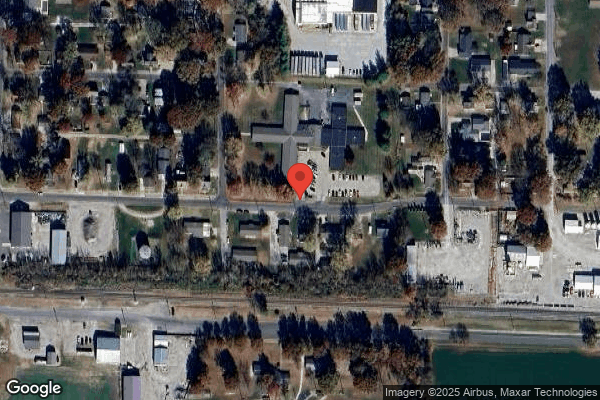
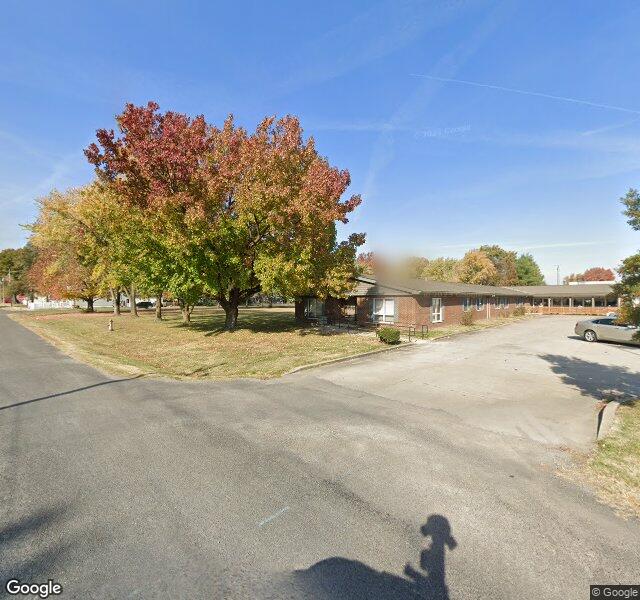
EVERCARE OF BREESE

1155 NORTH FIRST STREET, BREESE, IL 62230 (618) 526-4521
For profit - Limited Liability company 112 Beds Independent Data: November 2025 1 Immediate Jeopardy citation
Trust Grade
18/100
#357 of 665 in IL
Last Inspection: January 2025

Within standard 12-15 month inspection cycle. Federal law requires annual inspections.

Overview

Evercare of Breese has a Trust Grade of F, indicating significant concerns about the facility's quality of care. It ranks #357 out of 665 in Illinois, placing it in the bottom half of nursing homes in the state, and is #3 out of 4 in Clinton County, with only one local option rated higher. The facility's trend is worsening, with reported issues increasing from 3 in 2024 to 6 in 2025. Staffing is a concern, rated 1 out of 5 stars with 0% turnover, which is good, but the overall staffing quality is poor compared to state averages. The facility has faced substantial fines totaling $145,842, which is higher than 76% of Illinois facilities, pointing to ongoing compliance problems. RN coverage is below average, with less coverage than 91% of state facilities, which is critical for monitoring resident health. Specific incidents include a failure to monitor a resident's deep tissue injury that led to gangrene and multiple amputations, a serious fall that resulted in a fractured hip due to inadequate supervision, and another incident where a resident had an unwitnessed fall after the facility did not implement proper fall prevention measures. While the facility has a low staff turnover, which is a positive aspect, the significant fines, poor RN coverage, and serious incidents highlight serious weaknesses that families should consider.

Trust Score
F
18/100
In Illinois
#357/665
Bottom 47%
Safety Record
High Risk
Review needed
Inspections
Getting Worse
3 → 6 violations
Staff Stability
○ Average
Turnover data not reported for this facility.
Penalties
✓ Good
$145,842 in fines. Lower than most Illinois facilities. Relatively clean record.
Skilled Nurses
⚠ Watch
Each resident gets only 16 minutes of Registered Nurse (RN) attention daily — below average for Illinois. Fewer RN minutes means fewer trained eyes watching for problems.
Violations
⚠ Watch
12 deficiencies on record. Higher than average. Multiple issues found across inspections.
★★☆☆☆
2.0
Overall Rating
★☆☆☆☆
1.0
Staff Levels
★★☆☆☆
2.0
Care Quality
★★★☆☆
3.0
Inspection Score
Stable
2024: 3 issues
2025: 6 issues

The Good

  • Full Sprinkler Coverage · Fire safety systems throughout facility
  • No fines on record

Facility shows strength in fire safety.

The Bad

2-Star Overall Rating

Below Illinois average (2.5)

Below average - review inspection findings carefully

Federal Fines: $145,842

Well above median ($33,413)

Significant penalties indicating serious issues

The Ugly 12 deficiencies on record

1 life-threatening 3 actual harm
Sept 2025 2 deficiencies
CONCERN (D) 📢 Someone Reported This

A family member, employee, or ombudsman was alarmed enough to file a formal complaint

Potential for Harm - no one hurt, but risky conditions existed

Deficiency F0583 (Tag F0583)

Could have caused harm · This affected 1 resident

**NOTE- TERMS IN BRACKETS HAVE BEEN EDITED TO PROTECT CONFIDENTIALITY** Based on interview and record review the facility failed to follow the privacy policy for 1 (R5) of 3 residents reviewed for pri...

Read full inspector narrative →
**NOTE- TERMS IN BRACKETS HAVE BEEN EDITED TO PROTECT CONFIDENTIALITY** Based on interview and record review the facility failed to follow the privacy policy for 1 (R5) of 3 residents reviewed for privacy in the sample of 3.Findings include: R5's Undated Face Sheet documents he was initially admitted to the facility on [DATE]. R5's Quarterly Minimum Data Set (MDS) dated [DATE] documents he is alert. On 9-17-2025 10:35 AM V10, Former LPN stated she received a text message on her personal cell phone on 9/6/2025 which included V1 Administrator, V3 ADON and V24 RNC and it had R5's first and last name and documented detailed health information regarding R5 which she felt was not appropriate to communicate via cell phone text message because it is not secure or encrypted and it's a HIPPA/privacy violation. V10 stated the text message was initiated by V3. V10 stated she responded to the text message immediately, Please delete my name and do not message me again. Probably shouldn't put HIPAA information with an employee you banned from your facility. An undated text message sent at 12:21 PM documents V3, ADON initiated the text message which included V1, V3, V10 and V24. The text message read resident name (R5) he pulled his midline out this morning. He did this twice with PICC when we tried to treat previously. A urine was collected because he was increasingly confused and urine was very mocousy and odorous. He has a midline that we were treating him for EBSL in his urine but pulled it out this morning. He has about 10 more doses to go before completion of therapy. We have tried wrapping it in coban and putting long sleeves on him but he is confused and doesn't remember one day from the next. I know we ow have to get approval for reinsertion. I feel like if we don't treat him then he is going to go septic and end up in the hospital or worse. What do you suggest? Thank you.Three undated screenshots of the text messages were submitted and reviewed for evidence which showed the above information.R5's Nursing Notes dated September 2025, no documentation of staff sending a text message with his medical information in it. On 9/12/2025 at 10:15 AM V1, Administrator stated they don't text message resident names or medical information because that would be a privacy/HIPPA issue.On 9/17/2025 at 10:50 AM V24, Regional Nurse Consultant stated she received a text message recently (date unknown) that had a resident's first and last name and medical information in it. V24 stated the text message was from V3, ADON and she knew immediately it was an issue because text messages are not secure for resident medical information, and it was a HIPPA/privacy issue. On 9/17/2025 at 11:00 AM V1, Administrator stated V3 the ADON sent her a text message on her cell on 9/6/2025, the text message included a resident's first and last name and detailed medical information. V1 stated she inserviced all staff, including V3 regarding not text messaging resident's names or medical information because text messages or not encrypted or secure and it is a HIPPA/privacy issue. V1 stated she expected all staff to follow the facility policies and procedures, including the facility's privacy policy. On 9/17/2025 at 11:05 AM V3, ADON confirmed the phone number was hers that initiated the text message and stated she recalled the resident's name was R5 and she meant to text message the R5's name and medical information to V1, and V25, [NAME] President of Operations and V24, RNC but she accidently put the wrong person in the group which included V10, Former LPN, after V10 replied with no to message her anymore she realized she text messaged the wrong person and stopped any further text messages regarding R5 and his medical care. V3 stated sending the text message to V10 was an accident and she knew better than to text message a resident's name and medical information but it was a weekend and she needed guidance on how to proceed with caring for R5. V3 stated V1 inserviced her on 9/8/2025 regarding not text messaging resident's names and medical information because it's not secure or encrypted and stated she won't text message resident information again. The Facility's HIPPA Policy and Procedure, dated 6/1/2025, documents this policy applies to all employees with access to personal health information (PHI.) This includes all administrative, clinical and support staff. Definition: PHI: any information recorded in any form, that relates to health, provision of health care that can be linked to an individual. Staff members will receive training on HIPAA policies and procedures, with additional training provided as rules and regulations evolve. This training includes but is not limited to privacy practices, security measures and breach notification procedures. Violations of this policy may result in disciplinary action.
CONCERN (D) 📢 Someone Reported This

A family member, employee, or ombudsman was alarmed enough to file a formal complaint

Potential for Harm - no one hurt, but risky conditions existed

Pharmacy Services (Tag F0755)

Could have caused harm · This affected 1 resident

**NOTE- TERMS IN BRACKETS HAVE BEEN EDITED TO PROTECT CONFIDENTIALITY** Based on interview and record review, the facility failed to prescribe physician ordered medications upon admission for 2 (R1 an...

Read full inspector narrative →
**NOTE- TERMS IN BRACKETS HAVE BEEN EDITED TO PROTECT CONFIDENTIALITY** Based on interview and record review, the facility failed to prescribe physician ordered medications upon admission for 2 (R1 and R3) of 3 residents reviewed for pharmacy services in a sample of 3. Findings include: 1. R1's Undated Face Sheet documents she was initially admitted to the facility on [DATE] with diagnosis including anxiety disorder, major depressive disorder, bipolar disorder and panic disorder. R1 was covered by Med A benefits. R1's Hospital Discharge Paperwork, dated 8/7/2025, documents continue these medications which included Austedo XR 24 milligrams (mg) take 48 mg by mouth daily for treatment of depression and Vraylar 3 mg 1 capsule by mouth daily for treatment of depression. R1's Physician's Summary Report, dated 8/7/2025 documented do not send on Austedo XR 24 milligrams (mg) 2 tablets by mouth a day for treatment of depression and Vraylar 3 mg give 1 capsule by mouth once a day for treatment of depression. R1's Medication Administration Record (MAR), dated 8/2025, documents no Austedo 48 mg daily for treatment of depression or Vraylar 3 mg daily for treatment of depression was documented administered. 2. R3's Undated Face Sheet, documents she was initially admitted to the facility on [DATE] and diagnosis including diabetes mellitus due to underlying condition with diabetic polyneuropathy. R1 was covered by Med A benefits. R3's Hospital After Visit Summary, dated 7/18/2025 documents Ozempic 1 mg into the skin once a week for treatment of diabetes was marked out and a handwritten note documented, Not while at facility. R3's MAR dated 8/2025, no documentation staff administered the physician prescribed medication Ozempic 1 mg into the skin once a week for treatment of diabetes. On 9/12/2025 at 2:00 PM V9, Pharmacist stated he receives resident's medication list upon admission to the facility, and he fills the prescriptions he can. When a medication is over the facility $200 threshold per medication he completes a high cost form which shows the current medication and the cost of it and then he documents an alternative lower cost medication and the cost of it then he emails the form to administration at the facility and they forward it to the resident's provider to see what they want to do which is either order the high price medication or chose to prescribe the low cost medication. When he receives a resident's medication list and staff document do not send or not while at facility he doesn't fill or send those medications and doesn't complete a high cost form because staff are communicating not to send the medication and if in the future the facility requests those medications marked that and if they are high cost medications, he would then send the facility the high cost form with an alternative low cost so the resident's provider can approve either medication. V9 stated R3's hospital discharge medication list dated 8/17/2025 was sent to him to fill the medications and the medication Ozempic 1 mg to treat diabetes was documented not while at facility. V9 stated R3 was prescribed no other medication to treat diabetes while she resided at the facility. V9 stated R1's POS dated 8/7/2025 was sent to the pharmacy with handwritten documentation do not send on the medications Austdro 24 mg take 48 mg by mouth daily for depression and Vraylar 3 mg by mouth daily for depression. V9 stated he didn't know what staff documented not to send the medications, but he didn't question it. On 9/12/2025 at 2:25 PM V11, Pharmacy [NAME] Director stated the facility has a $200 threshold for each medication the facility fills, if the medications cost more than that threshold the pharmacy staff are instructed to complete a high cost medication form and documents a lower cost alternative medication on the form and email it to the facility then the provider decides what medication they want to prescribe and the facility sends it back to the pharmacy and the medication is filled. V11 stated R3's Ozempic 1 mg medication to treat diabetes was an injectable and they are always expensive, V11 stated Ozempic is a high-cost medication and cost around $1500.00 a month. V11 stated R1's medication Austrdro 48 mg daily for depression is very expensive and costs $6,000.00 for a 14-day supply and Vraylar 3 mg for depression is also expensive as it cost $700.00 for a 14-day supply. V11 stated these medications for R1 and R3 were not filled from the pharmacy because staff handwrote a note on the medication list that stated, do not send or not while at facility. V11 stated she was the billing director, and she didn't know who documented not to send the medication on the resident's medication lists that were sent to the pharmacy. On 9/16/2025 at 10:00 AM V23, Nurse Practitioner stated she wasn't aware the facility wrote on R1's and R3's admission medication list that was sent to pharmacy with a handwritten note not to fill medications. V23 stated the facility staff don't have the authority to not fill physician prescribed medications and it most definitely should not be occurring. V23 stated R1 has multiple mental health diagnoses including major depressive disorder and abruptly stopping any of those medications including Austedo and Vraylar to treat her major depressive disorder could cause her to downward spiral into a deep depression and ultimately, she could be so depressed she commits suicide. V23 stated R3 had a diagnosis of diabetes and that's what the injectable medication, Ozempic 1 mg was prescribed to treat. V23 stated R3 wasn't prescribed any other medication to treat diabetes while at the facility and she wasn't aware facility staff put a handwritten note on R3's medication list sent to the pharmacy documented, Not while at the facility. V23 stated she should have known staff were making that decision to not treat R3's diabetes because she would have at least ordered staff to check R3's blood sugar a few times a day and if it was high she would've prescribed sliding scale insulin. V23 stated she knows why the facility isn't filling all the resident's medications, it's because residents on Med A have the facility is responsible for paying for their medications and the facility is always harping her to prescribe lower cost medications and she can't sometimes. On 9/17/2025 at 11:00 AM V1 Administrator, V3 Assistant Director of Nurses and V24 Regional Nurse Consultant stated they were not aware of facility staff writing on resident medication lists that are sent to pharmacy with handwritten notes documenting do not send or not while at the facility. V1 stated pharmacy staff should've questioned that because they know facility staff do not have the authority to document a note like that and not to send the medication or notify her or V2, Interim Director of Nurse of what's going on so they can look into it. V1 stated the facility has a $200 per medication threshold and the pharmacy knows that so when there is a high cost medication the pharmacy emails her a high cost form that documents the current prescribed medication and an alternative lower cost medication and she forwards these forms to the provider, the provider ultimately decides what medication is to be prescribed and the facility will pay for it if the resident is on Med A. No staff stated they were aware of staff documenting handwritten notes on residents' medications lists and sending it to the pharmacy. On 9/18/2025 at 11:44 AM V1, Administrator responded to an email and stated, We do not have a formal policy, we request pharmacy provides alternatives and recommendations regarding medications over $200 that must still be approved by the resident physician. No one goes without medications, if there is no alternative to a high cost medication or the physician declines an alternative/generic, the medication is still provided to the resident.An Undated Physician's Orders Entering and Processing Policy, documents to provide general guidelines when receiving, entering, and confirming physician or prescriber's orders. (a prescriber is noted as physician, nurse practitioner, and a physician's assistant.) Fax or call the orders to the appropriate pharmacy as needed. If pharmacy is integrated with EHR (Electronic Health Record), orders will be automatically transmitted. Notify the resident's physician (if not the prescribing physician), for verification if applicable.
Jul 2025 1 deficiency
CONCERN (D) 📢 Someone Reported This

A family member, employee, or ombudsman was alarmed enough to file a formal complaint

Potential for Harm - no one hurt, but risky conditions existed

Safe Environment (Tag F0584)

Could have caused harm · This affected 1 resident

**NOTE- TERMS IN BRACKETS HAVE BEEN EDITED TO PROTECT CONFIDENTIALITY** Based on observation, interview, and record review, the facility failed to ensure resident's rooms are maintained at comfortable...

Read full inspector narrative →
**NOTE- TERMS IN BRACKETS HAVE BEEN EDITED TO PROTECT CONFIDENTIALITY** Based on observation, interview, and record review, the facility failed to ensure resident's rooms are maintained at comfortable temperature for 2 out of 3 residents (R1 and R2) reviewed for homelike and comfortable environment in a sample of 4. Findings Include: 1. R2's Face Sheet, print date of 07/07/25, documented he has diagnoses of but not limited to Chronic obstructive pulmonary disease, obstructive sleep apnea, and Ischemic Cardiomyopathy. R2's Minimum Data Set (MDS), dated [DATE], documented he is cognitively intact with a Brief Interview for Mental Status (BIMS) of 15 out of 15 and he is dependent on staff or requires substantial/maximal assistance with his activities of daily living (ADLs). On 07/02/25 at 1:40 PM, R2 was lying in bed with just a sheet on the lower half of his body. He did not have on any clothing on the upper half of his body. He had a small osculating fan sitting on his over the bed table blowing directly on him. The room was warm and stuffy. R2's room did not have any air conditioning vents in it and there was no individual air unit of any kind in his room. On 07/02/25 at 1:40 PM, R2 said they have been having problems with the air in the facility for the last four or five days. He said it has been getting hot in his room and the only air vents are out in the hallway, and he doesn't have any in his room. R2 said they have been checking the temperatures in the hallway, but they haven't checked the temperature in his room. R2 said he has heart problems and doesn't tolerate the heat very well. He said when the Certified Nursing Assistants (CNAs) come in and do patient care and they shut the door it gets even hotter. He said the CNAs are sweating and he even starts to sweat. He said sometimes it feels like it is over 100 degrees in there. On 07/02/25 at 2:50 PM, R2 stated they came in and offer to move him to another room after this surveyor had left the room. He said they had never offered before that. He said they also came in and temped his room and they had never done that before either. R2 said they didn't tell him what the temperature was after they took it. This surveyor took a calibrated thermometer into R2's room and asked if I could test and see how hot it was in his room, and he agreed. This surveyor laid the thermometer on the over the bed table with nothing touching it. This surveyor stayed in the room and talked with R2 and after five minutes of lying on the table the thermometer read 79 degrees. This surveyor continued to speak with R2 and after another five minutes the thermometer was checked again and it still read at 79 degrees. This surveyor was just standing in the room with R2 and had sweat on my forehead. R2 said the room even gets hotter than it was now especially between 10:00 AM and 11:00 AM when the sun is directly over his part of the building. 2. R1's Face Sheet, print date of 07/07/25, documented R1 has diagnoses of but not limited to Chronic Embolism and Thrombosis of unspecified vein, urinary tract infection, and disorder of the bone. R1's MDS, dated [DATE], documented R1 is cognitively intact with a BIMS of 15 out of 15 and she requires substantial/maximal assistance to dependent on staff for her ADLs. On 07/02/25 at 1:30 PM, R1 said they have been having an issue with the air conditioner. She said the first night it was out she sit up for four hours because it was so hot, and she was unable to sleep. She said finally one of the nurses got her a fan and she was able to get some rest. She said sometimes the heat in the room gets bad and it is miserable in there. R1 said they are waiting on a part for the air conditioner. On 07/02/25 at 1:30 PM, V4, CNA said it has been hot on the hallway and the air hasn't been working for a few days. She said she knows they have been trying to get someone to come in and look at it. V4 said they gave the residents box fans to help with the heat but trying to work in the heat was miserable. On 07/02/25 at 1:50 PM, V5, Licensed Practical Nurse (LPN) said it was the weekend before this last weekend is when the air went out. She said she knows because she was working that weekend. V5 said she call management and told them what was going on, but they didn't do anything. She said they told them to close the blinds and to turn off the lights. V5 said all the residents were miserable. V5 said they didn't offer to move any of the residents that she is aware of. She said the nurse's stations doesn't have any air conditioning vents in the hallways are the only vents there are the residents don't have vents in their rooms. V5 said they had their maintenance guy look at it and the regional maintenance director came in and said it's hotter than Satan's Breath in here. On 07/02/25 at 1:50 PM, The east wing nurse's station was warm and muggy. On 07/02/25 at 2:15 PM, V7, CNA said they have been having an issue with the air not working right for a couple of weeks now. She said it has been miserable in the building for the residents and the workers especially during that hot spell they had not too long ago. On 07/07/25 at 9:40 AM, Room temperature (temps) log was reviewed and documented temps were taken on 07/03/25, 07/04/25, 07/05/25, 07/06/25, and 07/07/25 there were no room temps documented prior to 07/03/25. The temperatures were as follows: R2's room temperatures: 07/03/25 at 09:09 AM room was 76 degrees and at 12:42 PM room was 79 degrees. 07/04/25 at 10:07 AM room was 75 degrees. 07/05/25 at 11:41 AM room was 76 degrees. 07/06/25 at 08:23 AM room was 76 degrees. 07/07/25 at 08:15 AM room was 75 degrees. R1's room temperatures: 07/03/25 at 09:09 AM room was 76 degrees and at 12:41 PM room was 78 degrees. 07/04/25 at 10:07 AM room was 75 degrees. 07/05/25 at 11:41 AM room was 77 degrees. 07/06/25 at 08:22 AM room was 74 degrees. 07/07/25 at 08:15 AM room was 74.9 degrees. Facility grievance, dated 06/24/25, documented residents were wanting air conditioners in their rooms. The facility's policy Extreme Temperatures, with a review date of 06/30/25, documented Purpose To assure the comfort and safety of residents and to prevent heat stress of residents during periods of extreme heat.
May 2025 1 deficiency 1 Harm
SERIOUS (G) 📢 Someone Reported This

A family member, employee, or ombudsman was alarmed enough to file a formal complaint

Actual Harm - a resident was hurt due to facility failures

Accident Prevention (Tag F0689)

A resident was harmed · This affected 1 resident

**NOTE- TERMS IN BRACKETS HAVE BEEN EDITED TO PROTECT CONFIDENTIALITY** Based on interview and record review the facility failed to properly transfer and use appropriate assistive devices for transfer...

Read full inspector narrative →
**NOTE- TERMS IN BRACKETS HAVE BEEN EDITED TO PROTECT CONFIDENTIALITY** Based on interview and record review the facility failed to properly transfer and use appropriate assistive devices for transfers for 1 of 3 (R2) resident investigated for falls. This failure resulted in R2 sustaining a left knee periprosthetic fracture of the tibial component. Findings include: R2's EMR (Electronic Medical Record) undated documents that the resident was readmitted to the facility on [DATE]. R2's EMR dated 2/9/22 documents a diagnosis of other abnormalities of gait and mobility. R2's EMR dated 11/5/24 documents a diagnosis of difficulty in walking, not elsewhere classified. R2's EMR dated 8/14/24 documents a diagnosis of unspecified fracture of left fibula, subsequent encounter for closed fracture with routine healing. R2's MDS (Minimum Data Set) dated 7/26/24 documents a BIMS (Brief Interview for Mental Status) score of 15 out of 15. The MDS documents that the resident was independent for roll left and right. The MDS documents that the resident required substantial/maximal assistance for sit to lying. The MDS documents that the resident required partial/moderate assistance for lying to sitting on side of bed. The MDS documents that the resident was dependent for sit to stand, chair/bed to chair transfer, and toilet transfer. R2's Care Plan dated 4/30/25 documents (R2) is at risk for falls. She had a L knee replacement and is unstable ambulating and transferring herself. R2's Care Plan dated 4/30 /25 documents The resident has had an actual fall with serious injury. R2's Nursing Note dated 8/3/24 at 1:15 PM documents cna (Certified Nursing Assistant) came to this nurse to let this nurse know that resident was lowered to the ground. CNA stated resident stated that her left leg gave out and then she was lowered her to the ground. States her left knee hurts. ROM (Range of Motion) WNL (Within Normal Limits). Transferred back to wheelchair. V/S (Vital Signs)-97.2-102-22-102/64-spo2 (oxygen saturation)-97%. On call NP (Nurse Practitioner)-for (V6) notified. No number to contact for her husband. Will monitor. Tylenol given for pain. R2's Nursing Note dated 8/14/24 at 5:30 AM documents X-ray results of tib/fib back- results showed fracture involving distal fibula. Management notified. X ray results were also taken on 8-4 of femur and tib/fib, results were negative on 8-4. R2's NP Progress Note dated 10/8/24 documents Patient is being seen today for a skilled nursing home visit. She was recently admitted to the facility following hospitalization for UTI, debility and septic joint. She underwent arthrocentesis with orthopedic surgery and IV antibiotics during her hospital stay. She then fell in the facility and now has a left knee periprosthetic fracture of the tibial component. She is A&O x 3 and can verbalize her needs. She was seen today in-her room while sitting in her wheelchair. She has been released from her immobilizer and is WBAT to her LLE. Although, she now reports she reinjured her right knee by twisting while in the wheelchair. She states she doesn't have any pain but is unable to stand on it and now it is red again and swollen. She is utilizing the wheelchair for ambulation. Staff has no acute concerns at this time. On 5/20/25 at 9:15 AM, V4, PTA (Physical Therapy Assistant) stated that (R2) started off as (Mechanical) lift for transfers and then transitioned to a sit-to-stand for transfer when she got here in July of 2024. On 5/20/25 at 10:48 AM, V5, CNA stated that she was helping (R2) to the bathroom on 8/3/24. She stated that (R2) was a one assist with a gait belt. She stated that she was assisting (R2) to the bathroom. She stated that about the time they made to the doorway of the bathroom, that (R2's) leg gave out and was she assisted to the floor. She stated that they used a (Mechanical) lift to get her up off the floor. On 5/20/25 at 10:50 AM, V4, PTA stated that on the day of (R2's) fall, she was supposed to be transferred using a sit-to-stand device. On 5/20/25 at 12:32 PM, V4, PTA stated that the CNA transferring (R2) improperly lead to her having a fracture leg. She stated that the therapy was working with contact guard assist with (R2) but she was not released yet. Facility's policy undated documents It is policy of this facility to ensure that residents are handled and transferred safely to prevent or minimize risks for injury and provide and promote a safe, secure, and comfortable experience for the resident while keeping the employees safe in accordance with current standards and guidelines. 1. The interdisciplinary team or designee will evaluate and assess each resident's individual mobility needs, taking into account other factors as well, such as weight and cognitive status. 2. The resident's mobility needs will be addressed on admission and reviewed quarterly, after a significant change in condition or based on direct care staff observations or recommendations.
Jan 2025 2 deficiencies 1 IJ
CRITICAL (J)

Immediate Jeopardy (IJ) - the most serious Medicare violation

Pressure Ulcer Prevention (Tag F0686)

Someone could have died · This affected 1 resident

**NOTE- TERMS IN BRACKETS HAVE BEEN EDITED TO PROTECT CONFIDENTIALITY** Based on observation, interview and record review the facility failed to monitor and treat a suspected deep tissue injury (SDTI)...

Read full inspector narrative →
**NOTE- TERMS IN BRACKETS HAVE BEEN EDITED TO PROTECT CONFIDENTIALITY** Based on observation, interview and record review the facility failed to monitor and treat a suspected deep tissue injury (SDTI) for 1 of 4 (R7) reviewed for pressure ulcers in the sample of 25. This failure resulted in R7 documented as having an SDTI reported as first being observed on 8/20/2024 to the right toe(s) with no skin monitoring or treatments implemented until 10/8/2024. At that time gangrene was present, requiring hospitalization with right second toe amputation on 10/19/2024. Subsequently R7 required additional amputation to her right lower extremity, above the right knee on 11/30/2024. The Immediate Jeopardy began on 8/20/2024 when staff documented a skin area of concern on R7's right toe(s.) No assessment or treatment was documented on her right toe(s) until 10/8/2025 when she was hospitalized , diagnosed with gangrene, osteomyelitis and had her right 2nd toe was amputated on 10/19/2024. Due to worsening infection R7 was re-hospitalized and additional amputation to her right lower extremity, above the right knee on 11/30/2024. On 1/30/2025 at 2:35 PM V1, Administrator and V2, DON were notified of the Immediate Jeopardy. The surveyor confirmed by observation, interview and record review, the Immediate Jeopardy was removed on 1/31/2025, but remains at Level Two because additional time is needed to evaluate the implementation and effectiveness of the in-service training. Findings include: R7's admission Record dated 1/29/25 documents R7's initial admission date to the facility as 5/9/17. Diagnoses listed on this same document include, but are not limited to: Cerebral Infarction due to embolism of unspecified cerebral artery, Chronic obstructive pulmonary disease, type II Diabetes Mellitus, Morbid obesity, and Osteomyelitis. R7's Braden Scale for Predicting Pressure Ulcer Risk dated 2/24/2021 documents she is a risk for pressure ulcers. No further updated Braden Scales were documented. R7's Minimum Data Set (MDS), dated [DATE] documents in section C, Cognitive Patterns that R7 has a Brief Interview for Mental Status (BIMS) score of 14, cognitively intact. This resident is at risk of developing pressure ulcers. No unhealed pressure ulcers. R7's Physician's Order Sheet (POS) dated 8/2024 documents an order dated 12/20/2022 weekly skin checks on shower days Tuesdays and Fridays. R7's Skin Observation Tool dated, 6/19/2024 documents R7 had an area on her left elbow. No other skin areas documented. R7's Medical Record dated 6/20/2024 through 8/20/2024 no weekly skin assessments documented. R7's Dialysis Foot Skin Assessment, dated 7/24/2024 documents no areas of concern on feet. R7's Minimum Data Set (MDS), dated [DATE] documents resident alert, no pressure ulcers, at risk of pressure ulcers. R7's Nurse Practitioner Progress Note, dated 8/20/2024 documents skin is warm and dry, with no rashes, good skin turgor, no suspicious skin lesions. R7's CNA (Certified Nurse Aide) Shower Sheet, dated 8/1/2024 through 8/19/2024 no skin areas of concern documented. 8/20/2024, 8/23/2024, 8/27/2024 and 8/30/2024 documents right foot/toe lateral and medial bruising and left heel soft spot. A nurse signed each page of the shower sheets. Comments documented: sent to V3, ADON, wound nurse. R7's Nurse Nursing Note, dated 8/21/2024 at 9:48 AM, documents dialysis nurse called to report area to resident left heel and right great toe. Wound nurse informed. R7's Physician's Order Sheet (POS) dated 8/2024 documents left heel treatment start date 8/26/2024 left heel cleanse with normal saline or wound cleanser, paint with betadine, leave OTA (open to air) may cover if open and draining daily and PRN (when necessary) every day shift for wound care. No physician's order for treatment to resident's right toe. R7's Care Plan dated 8/26/2024 documents R7 has potential impairment to skin integrity r/t (related to) fragile skin, edema and dry areas. Treatments ongoing as per MD (physician) orders. 8/26/2024 left heal DTI, wound company nurse practitioner treatment, treatment in place. Goal: resident will maintain or develop clean and intact skin by the review date. Interventions: float heels while in bed and encourage resident to elevate legs as often as possible, air mattress on bed, encourage side to side positioning with turn and reposition every 2 hours, follow facility protocols for treatment of injury, keep skin clean and dry, use lotion on dry skin. Offload heels by applying heel protectors when in bed. Educate to leave heel boots on, weekly treatment documentation to include measurement of each area of skin breakdown's width, length, depth, type of tissue and exudate and any other notable changes or observations. R7's Treatment Administration Record (TAR) dated 8/2024 staff documents 8/26/2024 through 8/31/2024 left heel treatment was administered. No documentation left heel treatments 8/21/2024 through 8/25/2024. No documentation of right toe wound being treatment. R7's Dialysis Progress Note dated, 8/21/2024 at 10:50 AM documents pt (patient) c/o (complaint of) feet hurt. Upon inspection large, darkened area noted to left heel/bottom of foot area and right great toe/top of right foot noted to have large red/purple area. Facility nursing home nurse, Former Administrator notified of areas. She states she will pass information along to restorative nurse. R7's Wound - Weekly Observation Tool dated 8/21/2024, 8/28/2024, 9/4/2024, 9/10/2024, 9/17/2024, 9/24/2024, and 10/1/2024, documents dialysis reported an area to L (left) heel and R toe. L heel noted DTI (Deep Tissue Injury), order entered. The left heel first observation dated 8/21/2024 documents DTI measured 4.2 centimeters (CM) x 3.6 cm. No documentation of area on right toe documented. R7's POS, dated 9/2024, documents an order dated 9/4/024 wound company to evaluate and treat left heel wound. No physician's order to treat the right toe. R7's CNA Shower Sheet, dated 9/24/2024 documents dressing on (R7s) right foot. No nurse signature documented on shower sheet, or physicians order for a dressing documented. R7's Wound - Weekly Observation Tool dated 10/8/2024 documents first observation SDTI on R (right) 1-2 toe crease, measured 0.4 cm x 2.8 cm 100% slough with red peri wound tissue. R7's TAR dated 10/9/2024 through 10/14/2024, documents a physician's order cleanse areas between right great toe and second toe with normal saline or wound cleanser. Apply betadine moistened gauze and cover with dry dressing every day shift for wound management. R7's Nurse Progress Note, dated 10/15/2024 at 1:46 PM documents Weekly Wound Assessment- wound company nurse practitioner V16 seen resident this morning. L heel measures at 1.9 cm x 2.0 cm. Healing well. Continue with betadine paint and air dry. R 2nd and 3rd toe new area measures at 2.0 cm x 6.65 cm x 1.0 cm. Wound Nurse Practitioner explained to resident and family member regarding the need to be sent out to hospital for further workup with vascular regarding the new wound. Resident has abundance of purulent drainage and pain at the site. Applied moist betadine gauze bandage. Resident is a diabetic and currently receiving dialysis. Resident agreed to go to local hospital to be seen vascular. Will f/u (follow up) in 1 week. R7's Hospital Discharge Paperwork dated 10/21/2024, documents was hospitalized [DATE] through 10/21/2024 documents hospitalization chief complaint worsening right toe wound. Resident stated wound has been present for a month has been present for 1 month but has been worsening and is painful. Right second toe dry gangrene and osteomyelitis. Acute on chronic right second toe wound x 1 month. Status post amputation of right 2nd toe on 10/19/2024. MRI showed Osteomyelitis (bone infection) involving first and second phalanges (toes) as well as base of first digital phalanax (toe.) R7's POS dated 10/2024, documents an order dated 10/15/2024 send to local hospital for evaluation and treatment related to right toe wound. R7's POS dated 10/2024, documents an order dated 10/22/2024 right great inner toe apply betadine paint and let air dry daily and PRN every day shift for wound care. No treatments were documents as administered between 10/8/2024 and 10/15/2024. No physician's order to treat the resident right toe wound. R7's TAR dated 10/2024, staff documented treatment per physician's orders was completed 10/26/2024 through 10/31/2024. R7's Hospital Discharge paperwork dated 12/3/2024 documents she was admitted to the hospital with chief compliant status post right foot 2nd toe amputation due to wound was worse and had osteomyelitis in all toes on right foot at that time. An above the knee amputation was done on 11/30/2024 due to the worsening right foot wound. On 1/30/2025 at 10:00 AM, R7 was observedl lying in bed. She had an above the knee right leg amputation and her left foot was in a boot. R7 her feet hurt all the time and the pain started in 8/2024. R7 stated her right foot was a 6/10 on pain scale and 8/10 on her left foot. R7 stated at that time that if her right foot doesn't get any better that they are going to amputate it. On 1/30/2025 at 10:25 AM V10, LPN, and V3, ADON, provided wound care to R7 with no issues. R7's left 2nd toe and 5th toe darkened. Skin between all toes is dark. Left heel scabbed over and dark. Right leg above the knee stump was dry with no open areas. On 1/30/2024 at 10:20 AM V3, ADON stated each resident should have 2 shower sheets done per week and a licensed nurse should also be assessing each resident head to toe skin assessment and documentation should be in each resident's medical record. She stated she wasn't aware of R7's right toe wound on 8/20/2024 even though it's documented on the shower sheet that it was sent to her. She stated staff were documenting information in a phone communicate app at that time and she didn't see the message regarding the right toe. V3 confirmed she wasn't aware of any skin breakdown or issues with the resident's right toe until 10/8/2024, that was her first assessment of the resident's right toe and she documented her assessment in the resident's medical record. On 1/29/2025 at 8:45 AM V15, Dialysis Clinical Manager stated they check resident's feet at dialysis once a month. On 8/21/2024 the resident told dialysis staff that her feet hurt. Upon assessment of her feet she had a large dark area noted to left heel and right great/top of right foot noted to have large red/purple area. The facility was notified of the skin areas of concern. On 1/29/2025 at 12:30 PM, V2 Director of Nurses (DON) stated when residents are admitted to the facility on e of the standing orders is for the resident to have a weekly skin assessment. V2 expects nurses to assess and document weekly skin assessments in the resident's medical record. When a new skin area is identified as a concern, she expects the nurse to assess the area and document what it looks like and measurements, she also expects the nurse to notify the physician and get a treatment in place immediately. When two areas of skin concern are identified at the same time the nurse should assess and document both areas of skin concern in the resident's medical record. V2 stated she knows the wound nurse practitioner was seeing the resident for her left heel and right toe but wasn't sure when she initially assessed the resident's wounds. On 1/29/2025 at 12:38 PM V6, MDS/Care Plan Coordinator stated when a new skin concern is identified he expects the care plan to be updated immediately/within 24 hours. Residents are assessed quarterly for pressure ulcer risk assessment. On 1/29/2025 at 12:45 PM V3, Assistant Director of Nurses (ADON) stated the wound nurse practitioner started assessing the resident's wound on her left heel on 9/10/2024 and right toe 10/15/2024. She was made aware of the area on the resident's right toe on 10/15/2024, V3 stated she was so focused on treating the resident's left heel that she wasn't aware of the area of concern on her right foot. On 1/29/2025 at 12:55 PM V5, CNA Coordinator stated when staff document a 1 on resident's shower sheets it means bruising was observed and the nurse should go follow up on that documentation/finding. On 1/29/2025 at 2:15 PM V13, CNA recalled documenting on R7 on 8/20/2024 and stated she documented bruising on her right foot but it was of two darkened areas than bruising and her left heel was soft. V13 stated she told the nurse (name unknown) about the areas of concern and the nurse signed her shower sheet to prove she was aware of the areas. On 1/30/2025 at 11:00 AM V16, Certified Wound Nurse Practitioner stated the resident has a lot of comorbidities including end stage renal failure and diabetes. V16 stated despite these comorbidities, when a wound is observed by staff she expects staff to notify the nurse and the nurse should notify the primary care physician to obtain a wound treatment and to get the treatment in place as soon as possible. The nurse who initially assesses the new wound should the document color, size and presentation of the wound. The first time she assessed the resident's right foot was on 10/15/2024 and her 2nd toe was ischemic (reduced blood flow to specific tissue) and she notified the vascular physician at the local hospital and the resident was sent to the emergency room the same day. When she assessed the resident on 8/20/2024 she didn't do a full skin assessment, she only looks at concerns that the facility notifies her about it. She assessed the resident's left foot but wasn't notified of any concerns or issues regarding her right foot. V16 stated untreated wounds have the potential for serious harm or death due to infection. V16 stated she expected the facility to follow the pressure ulcer policy. On 1/30/2025 at 11:38 AM, V17, Licensed Practical Nurse (LPN) stated she recalled the resident having skin breakdown on her feet in 8/2024 but she couldn't recall what her feet looked like at that time and she recalled messaging the wound nurse (V3) regarding the skin breakdown and she usually documents a nurse progress note when she assesses new skin breakdown but she didn't know if she documented it or not. On 1/30/2025 at 1:08 PM, V3 ADON stated on 10/8/2024 she can only assume the wound on (R7's) foot was worse and staff notified her of it and she assessed and classified it as a SDTI and then on 10/15/2024 when the wound nurse practitioner assessed it was a lot worse and that's why she was sent to the emergency room for further evaluation and treatment. On 1/30/2025 at 1:35 PM, V17 LPN stated she knows for a fact that she reported (R7's) skin breakdown to V3 and this happens all the time that she and other staff including other nurses report to V3 concerns and issues and V3 always says I didn't know about that or no one told me about that. On 1/30/2025 at 2:20 PM V13, CNA reviewed the shower sheet, dated 9/24/2024 she recalled the resident had a dressing on her right foot but she didn't recall any details regarding the dressing. On 1/30/2025 at 2:25 PM V18, Nurse Practitioner stated when nursing staff identify a new skin concern/wound she expects a licensed nurse to assess the area and to notify her or the resident's primary care physician the same day, typically the facility will phone or fax what the wound looks like and measurements and what the wound looks like and document if there is a treatment in place already. V18 expects the facility staff to follow the facility pressure ulcer policy. V18 stated staff should be assessing (R7's) feet because she has diabetes and anything on the foot with diabetes can continue to progress into a wound. Wounds and infections have the potential to lead to death if not treated appropriately and in a timely manner. Review of the facility policy titled, Pressure Injury Prevention and Management dated 9/1/21 documented, The facility is committed to the prevention of avoidable pressure injuries and the promotion of healing of existing pressure injuries. The same policy goes on to define avoidable as meaning, that the resident developed a pressure ulcer/injury, and that the facility did not do one or more of the following: evaluate the resident's clinical condition and risk factors; define and implement interventions that are consistent with resident needs, resident goals, and professional standards of practice; monitor and evaluate the impact of the interventions; or revise the interventions as appropriate. Policy Explanation and Compliance Guidelines includes: 2. The facility shall establish and utilize a systematic approach for pressure injury prevention and management, including prompt assessment and treatment; intervening to stabilize, reduce or remove underlying risk factors; monitoring the impact of the interventions; and modifying the interventions as appropriate .3. c. Licensed nurses will conduct a full body skin assessment on all resident upon admission/re-admission, weekly, and after any newly identified pressure injury. Findings will be documented in the medical record. D. Assessments of pressure injuries will be performed by a licensed nurse, and documented in the medical record . The following mitigating actions are being put into place to prevent future wound development: 1. The facility took the following actions to address the citation and prevent any additional residents from suffering an adverse outcome. (Completion Date: 1/30/25) Skin Assessments were conducted on all residents. No new wound concerns were identified. A medical records review was completed on all residents to ensure weekly skin assessments were completed and treatment recommendations/orders were in place. A care plan audit was conducted to ensure that all active wounds were on the Care Plan and that Care Plan is being followed. An audit was conducted to assure all treatments are in place. 2. The facility took the following actions to prevent an adverse outcome from reoccurring. (Completion Date: 1/30/25) All facility policies and procedures related to skin care, wound care, and pressure injury prevention were reviewed and revised as needed. provided education to all licensed nurses on facility policies and procedures related to skin/wound care, as well as appropriate wound treatment measures, as well as Change of Condition Notifications. provided education to all licensed nurses on appropriate documentation which included transcription and entering of treatment orders on the physician's order sheet in the EHR and the resident's TAR. educated all nurse aides on preventative skin care. will conduct treatment record and nursing documentation audits during morning clinical meetings to ensure accurate and complete documentation of skin related treatments and preventative measures. For residents returning from the hospital, treatment recommendations/orders and wound care appointments will be transcribed and overseen monitor/audit the following: o Observation of treatments 2 times weekly x four weeks and weekly x two weeks o Preventative skin care 2 times weekly x four weeks and weekly x two weeks o Weekly skin assessments weekly x 6 weeks o Treatment recommendations and orders are being added and processed into the EHR and TAR 2 times weekly x four weeks and weekly x two weeks. All findings will be discussed in the Quality Assurance Meeting
CONCERN (F)

Potential for Harm - no one hurt, but risky conditions existed

Deficiency F0727 (Tag F0727)

Could have caused harm · This affected most or all residents

Based on interview and record review the facility failed to insure the services of a registered nurse for at least 8 consecutive hours a day, 7 days a week. This failure has the possibility to affect ...

Read full inspector narrative →
Based on interview and record review the facility failed to insure the services of a registered nurse for at least 8 consecutive hours a day, 7 days a week. This failure has the possibility to affect all 77 residents residing in the facility. Findings include: Facility Assessment Tool undated documents under staff RN minimum of 12 hours per day. Facility's January 2025 Nursing Schedule documents that the facility did not have an RN (Registered Nurse) working on 01/01/25, 01/02/25, 01/04/25, 01/05/25, 01/15/25, 01/16/25, 01/17/25, 01/18/25, 01/19/25, and 01/24/25. On 01/29/25 at 12:50 PM, V2, DON (Director of Nursing) stated that in January, the facility did not have an RN working every day. She stated that the facility did hire a new RN that started January 22nd. On 01/31/25 at 9:58 AM, V1, Administrator supplied a paper that stated (Facility Name) staffs Nurses and CNAs to State and Federal requirements and resident needs. Resident Census and Conditions of Residents dated 01/28/25 documents a census of 77 residents residing in the facility.
Oct 2024 1 deficiency 1 Harm
SERIOUS (G) 📢 Someone Reported This

A family member, employee, or ombudsman was alarmed enough to file a formal complaint

Actual Harm - a resident was hurt due to facility failures

Accident Prevention (Tag F0689)

A resident was harmed · This affected 1 resident

**NOTE- TERMS IN BRACKETS HAVE BEEN EDITED TO PROTECT CONFIDENTIALITY** Based on observation, interview, and record review, the facility failed to provide adequate supervision, implement new care plan...

Read full inspector narrative →
**NOTE- TERMS IN BRACKETS HAVE BEEN EDITED TO PROTECT CONFIDENTIALITY** Based on observation, interview, and record review, the facility failed to provide adequate supervision, implement new care plan fall prevention/interventions, and assure current interventions were in place for 2 of 3 residents (R2 and R3) reviewed for falls in a sample of 3. This failure resulted in R2 having an unwitnessed fall and sustaining a fractured hip that required surgery to repair. Findings include: 1. R2's admission Record, with admission date of 09/07/24, documented R2 has diagnosis of but not limited to Dementia, osteoporosis, abnormalities of gait and mobility, and unilateral primary osteoarthritis, right knee. R2's Minimum Data Set (MDS), dated [DATE], documented R2 is severely cognitively impaired with a Brief Interview of Mental Status (BIMS) of 04 out of 15 and requires partial/moderate assistance with toileting hygiene, shower/bathe, dressing of upper half of body, bed mobility, substantial/maximal assistance with dressing of the lower half of body, putting on/taking off footwear, personal hygiene, and transfer. It further documents walking was not attempted due to medical condition or safety concerns. R2's Care Plan, with admission date of 09/07/24, documented R2 had an actual fall with no injury on 09/12/24 and an unsteady gate. R2's goal is she will resume usual activities without further incident through the review date. Intervention is R2 will use a bed/chair alarm. R2's admission Morse Fall Scale, dated 09/07/24, documented R2 had a score of 80 and was a high risk for falling. It further documented R2 had a history of falls, had more that one diagnoses on her chart, used ambulatory aides such as crutches, cane, or a walker, had a weak gait, and overestimates or forgets limits. The Morse Fall Scale ranges are as follows: High Risk 45 or higher, Moderate risk 25-44, and low risk 0-24. R2's Progress Notes, dated 9/12/2024 at 02:15 AM, documented Incident Note: This nurse was notified by CNA (Certified Nursing Assistant) that resident was found on the floor in the bathroom lying on her side. Nurse completed a physical and neurological assessment on resident. Resident alert, orientated per norm. Able to move all extremities freely with no response of pain or discomfort. Hand grasps equal and strong. No abrasions or abnormalities noted to head or body. Vitals taken - 98.1, 97, 165/90, 20, & 94% RA (room air). No s/s (signs/symptoms) of pain/discomfort noted. Resident assisted back to feet, then bed via CNAs and nurse. Weakness to BIL (bilateral) legs noted on walk over. Neuros initiated due to being unwitnessed. MD (doctor) and DON (Director of Nursing) notified. R2's Post Fall Morse Fall Scale, dated 09/12/24, documented R2 had a score of 95 and was a high risk. R2's Fall Investigation, dated 09/12/24 at 02:15 AM, was reviewed and documented Notes: Interdisciplinary Team (IDT): FALL: Resident attempted to take herself to the bathroom and fell. Resident has been having more difficulty walking. Short, shuffling steps. More difficulty standing up. Resident unable to say what happened at time of her fall. Range of Motion (ROM) within normal limits (WNL). No complaints of (c/o) pain or discomfort. Upon further review and discussion with IDT team, resident will be evaluated by therapy. Power of Attorney (POA) and MD updated. R2's Progress Notes, dated 10/3/2024 at 07:38 AM, documented Nursing Note: Resident was sitting in chair by nursing station, alarm sounded, CNA found resident on floor next to chair laying on left side. Resident was transferred back to chair via (Mechanical) lift. ROM (Range of Motion) in upper extremities wnl (within normal limits), no discomfort. Right lower ext (extremity) rom wnl, no signs of discomfort. left leg is at 90-degree bend, will not straighten. left hip rom wnl while lying, no s/s (sign and symptoms) of pain in it. resident unable to state if she hit her head or not. neuro check is wnl per her norm. hospice called and ordered to send to hospital. Ems (emergency medical services) here at 7:55am, 2 emt (emergency medical technician) transfer with lift pad from wc (wheelchair) to stretcher. hospice to call family. report called to local hospital. R2's Fall Investigation, dated 10/03/24 at 08:06 AM, was reviewed and it documented Notes: Root Cause: resident has dementia and continues to stand and ambulate without walker or assistance of staff. Intervention: Upon return from hospital stay, staff to perform every 15-minute checks until further actions needed. R2's Emergency Department Provider Note, dated 10/03/24, documented [AGE] year-old female with h/o (history of) dementia had an unwitnessed fall at NH (nursing home). Imaging revealed a hip fracture. Pt. (patient) had been on hospice. I contacted pt's family and they opting to revoke hospice to have surgical repair of hip fracture for pain relief. Family opts to stay at this hospital. Anesthesia requested Echocardiogram prior to procedure. Orthopedic, agrees to consult. Plans for surgery Saturday AM most likely. Hospital team agrees to admit. Other incidental findings noted on computed tomography (CT) scan including pulmonary nodules, sclerotic lesion in sacrum, Lumbar (L)1 compression deformity. R2's CT scan, dated 10/03/24, documented IMPRESSION: 1. Acute comminuted impacted intertrochanteric left proximal femur fracture. R2's Procedure Description, dated 10/05/24, documented the operative site was identified and marked prior to taking R2 to the operating room, placed under anesthesia, and then placed onto a fracture table. V13, Surgeon then reduced the left hip to an anatomic alignment, prepped and draped the hip in a sterile fashion. They mad a small incision above the tip of the greater trochanter, dissected through the gluteal fascia, identified the tip of the greater trochanter, the opening [NAME] guidewire was then placed and advanced into the intramedullary canal, images were taken to confirm the position alignment of the wire, placed the gamma nail into the appropriate position, they confirmed positioning, made a small stab incision laterally advanced the trocar down to the lateral aspect of the femur, and then advanced the femoral neck guidewire into a center position, once satisfied with the positioning they got the appropriate length screw, placed the lag screw over the guidewire, placed the top locking screw, and then confirmed the lag screw was locked within the nail. They then utilized an outrigger device made a small stab incision laterally, advanced to the lateral aspect of the femur, drilled and filled out with an appropriate length distal locking screw. All the wounds were then irrigated, the incision was closed with skin staples, and a sterile dressing was then applied. On 10/15/24 at 11:25 AM, V11, Certified Nursing Assistant (CNA) stated she was working on the day R2 fell and broke her hip. V11 said R2 would not stay in her wheelchair, and they had an alarm on it and her bed. She said they would give her washcloths to fold to keep her occupied, try talking with her, and putting her up at the nurse's station and she would still try to get up. V11 stated on the day she fell she was in the shower room trying to give another resident their shower and had them up in the lift when R2's alarm went off and she said she couldn't leave her resident up in the lift to go and check the alarm. V11 said they placed R2 in a public place to be better observed. She said R2 would always take of her shoes and socks, but she wasn't sure if she took them off on this day. V11 said when the alarm was going off, she wasn't sure if someone was there at the nurse's station or not. V11 stated R2 should have never been here at the facility it was the wrong place for her, and she required a lot of 1:1 attention. On 10/15/24 at 11:46 AM, V12, CNA she was working the middle hall on the 200 side. She said she was in the first room on the left-hand side of the hall getting a resident up when she heard an alarm going off. She said she wasn't sure if anyone was at the nurse's station due to no one answered the alarm right away. V12 no one said they were putting anyone up at the nurse's station, so she was unaware there was anyone sitting up there. She said she covered her resident up and put his bed back down in the low position because he was also a fall risk and went out into the hall and that was when she saw R2 lying on her right side on the floor. She said the nurse was out in the dining room passing medications, so she stayed with R2 and hollered down to the nurse and she came right away to assess R2. V12 said R2 stated to her that she thought her hip was broke so they got the Hoyer lift and assisted R2 up and back into her wheelchair so the nurse could finish assessing her. V12 stated usually they are made aware when they place someone at the nurse's station but if anyone said anything she didn't hear it because she was in a room with a resident trying to get them up for breakfast. V12 said sometimes R2 requires 1:1 attention and they will call the family in to help but she said one time the family told them that is why we brought her to you. On 10/15/24 at 3:16 PM, V6, ADON stated R2 was pretty much a 1:1 from the day she came to the facility, and they just couldn't accommodate that. 2. On 10/10/24 at 3:33 PM, R3 was sitting up in his wheelchair by the nurse's station he does not have any access to a call light where he is sitting, there were no nurses or CNAs sitting at the nurse's station, R3 did not have any type of cushion observed in his wheelchair, and there were no sensory/wheelchair alarm observed on his wheelchair. On 10/15/24 at 10:55 AM, R3 was observed sitting in the dining room in his wheelchair. There were no sensory/wheelchair alarm observed and there was no dycem cushion observed in his wheelchair. R3's admission Record, with an admission date of 06/21/24, documented R3 has diagnoses of but not limited to unspecified nondisplaced fracture of second cervical vertebra, multiple fractures of ribs, and traumatic subdural hemorrhage without loss of consciousness. R3's MDS, dated [DATE], documented R3 is cognitively intact with a BIMS of 13 out of 15 and he requires partial/moderate assist with shower/bathe, dressing of lower body, transfer, independent with upper body dressing, bed mobility, substantial/maximal assistance with putting on/taking off footwear, and he is always continent of bowel and bladder. R3's Care Plan, with admission date of 06/21/24, documented R3 has had an actual fall with no injury Poor Balance, Unsteady gait on 9/24/2024, 10/2/24-resident had another fall from w/c with no injury. Interventions include but are not limited to I have a sensor alarm in my w/c, I have dycem in my w/c, I will be evaluated by PT, and I will be involved in the activity fall program. On 10/15/24 at 10:55 AM, R3 verified for this surveyor he did not have his wheelchair alarm in place and that he didn't have any cushion under him. R3 stated he has had falls since being here at the facility and sometimes they will put his alarms on and sometimes they don't. R3's admission Morse Fall Scale, dated 06/21/24, documented R3 was a high risk for falls with a score of 55. R3's Electronic Medical Record and Fall/incident assessments July, August, September, and October were reviewed and documented R3 had an unwitnessed fall on 07/03/24, 07/07/24, 8/27/24, 09/01/24, 09/04/24, 10/02/24, and a witnessed fall on 09/24/24. On 10/15/24 at 11:10 AM, V9, CNA was questioned what interventions/assistance is needed to prevent R3 from having falls? V9 stated alarms on his wheelchair and his bed, non-skid socks, activities, and they will also place him at the nurse's station to monitor him. V9 stated R3 hasn't had any falls since he has been working here (a couple of weeks). When this surveyor asked V9 if he could show me R3's alarm he stated it isn't on him now, but he usually does have them on. He said you can see it hanging from the back of his chair when it's on him. There is a pad he sits on and when he tries to stand up the alarm will sound. He said R3 will sometimes get anxious and that is when he starts to get up out of his chair. On 10/15/24 at 12:50 PM, V6, Assistant Director of Nursing (ADON) stated she would expect the staff to make sure the resident's alarms are in place. She said they should know their patients and when they come on shift, they need to be checking to make sure the alarms are in place. V6 said they have been having an increase in falls lately due to some of the new resident's cognitive impairment. The facility's Resident and Staff Safety Policy, dated 02/14/13, documented Resident Safety: The Nursing home will ensure that each resident receives adequate supervision and assistance devices to prevent accidents. The intent of this provision is that the facility identifies each resent at risk for accidents and or falls, and adequately plans care and implements procedures to prevent accidents. The facility's Fall Prevention Policy and Procedure, not dated, documented Purpose To provide guidelines for routine fall risk assessments and fall precautions strategies. It further documented Policy all assessments are to be properly documented and resident specific precautions are to be taken as appropriate
Jul 2024 1 deficiency
CONCERN (D) 📢 Someone Reported This

A family member, employee, or ombudsman was alarmed enough to file a formal complaint

Potential for Harm - no one hurt, but risky conditions existed

Infection Control (Tag F0880)

Could have caused harm · This affected 1 resident

**NOTE- TERMS IN BRACKETS HAVE BEEN EDITED TO PROTECT CONFIDENTIALITY** Based on observation, interview, and record review, the facility failed to follow their infection control policy and procedure f...

Read full inspector narrative →
**NOTE- TERMS IN BRACKETS HAVE BEEN EDITED TO PROTECT CONFIDENTIALITY** Based on observation, interview, and record review, the facility failed to follow their infection control policy and procedure for 1 of 3 residents (R18) who was on contact isolation precautions for Clostridium difficile (C-diff). Findings include: R18's Face Sheet, with a print date of 07/17/24, documented R18 has a diagnosis of but not limited to enterocolitis due to clostridium difficile. R18's Minimum Data Set (MDS), dated [DATE], documented R18 is cognitively intact with a Brief Interview for Mental Status (BIMS) of 14 out of 15, and requires assistance with his activities of daily living (ADL). R18's Progress Notes, dated 7/2/2024 at 5:41 PM, documented R18 was admitted to the local hospital with pneumonia and C-diff. On 07/17/24 at 11:02 AM, V21, Certified Occupational Therapy Assistant (COTA) was in R18's room on the north end of the 100-hall doing therapy with him using exercise bands. V21 was observed not wearing a gown or gloves. She also was observed to have an over the bed table with her computer, stackable objects, a blue tote with different items in it, and a gripper on the table. On 07/17/24 at 11:10 AM V21, COTA came out of R18's room with the table and the bag. She left the table in the hallway against the wall while she went up to the nurse's station to wash her hands. After she was done doing hand hygiene, she got the table and pushed it down past the nurse's station to the very end of the south 100 hallway without any kind of sanitation/cleaning being done to the table or the content on the table. On 07/16/24 at 12:39 PM, V6, Licensed Practical Nurse (LPN) stated when someone comes back positive for C-diff they will put that person on isolation, and staff will use gloves and gowns when going into the resident's room. On 07/16/24 at 12:56 PM, V7, Certified Nurse's Assistant (CNA) said when someone is on isolation for C-diff they are put in a room by themselves and when the staff go into the room, they are to wear a gown and gloves to be on the safe side. On 07/17/2024 at 9:30 AM, V2, Director of Nursing (DON) stated R18 is the only resident in the facility at this time who has C-diff. She said he just finished up his antibiotic and his stools are starting to be more formed. V2 said when someone is confirmed to have C-diff they will immediately move the resident to another room especially if they both don't have C-diff and she would expect treatment to be started immediately. V2 said she would expect staff to be wearing a gown and gloves when going into a room with someone who has C-diff. On 07/17/24 at 12:46 PM, V2, Director of Nursing stated she would absolutely expect for staff to wear the proper personal protective equipment (PPE) when caring for a resident who is on isolation for C-diff. On 07/18/24 at 2:35 PM, V11, Infection Control Preventionist (ICP) stated if someone was positive for C-diff they would be placed on contact isolation. She would expect any staff who went into the room to give any kind of care to wear a gown and gloves and that includes occupational therapy, she would expect them to do proper hand washing after they were done with the resident's care. She stated staff should not be bringing anything into a room of a resident who has C-diff. If it's bed linens or something like that, they should be disposing of the dirty ones in the dirty linen bin in the resident's room. If they are bringing in any kind of therapy equipment, they should be wiping it down with the appropriate disinfectant wipe before bringing it out of the room. The facility's policy Infection Control Practices Clostridium Difficile, revised date of 03/2004, documented Purpose: The purposes of this procedure are to provide guidelines for the care of persons with Clostridium Difficile, verified by culture or by evidence of positive cytotoxin assay, and to prevent transmission of Clostridium Difficile to others. It further documented Infection Control Protocol and Safety 4. Wear appropriate personal protective equipment (e.g. gloves, gown, mask, eyewear, etc. as necessary) to prevent exposure to spills, splashes of blood or other potentially infectious materials. 5. Maintain clean technique and isolation precautions as indicated. 6. After completion of the procedure, clean, store and/or dispose of equipment and supplies in the appropriate manner as identified per facility infection control policy.
Feb 2024 1 deficiency 1 Harm
SERIOUS (G) 📢 Someone Reported This

A family member, employee, or ombudsman was alarmed enough to file a formal complaint

Actual Harm - a resident was hurt due to facility failures

Deficiency F0697 (Tag F0697)

A resident was harmed · This affected 1 resident

**NOTE- TERMS IN BRACKETS HAVE BEEN EDITED TO PROTECT CONFIDENTIALITY** Based on interview and record review the facility failed to provide pain management for one of three residents (R2) reviewed for...

Read full inspector narrative →
**NOTE- TERMS IN BRACKETS HAVE BEEN EDITED TO PROTECT CONFIDENTIALITY** Based on interview and record review the facility failed to provide pain management for one of three residents (R2) reviewed for pain management in the sample of six. This failure resulted in R2 having to endure increased untreated pain for a prolonged period of time Findings Include: R2's Minimum Data Set, dated [DATE], documented that R2 is cognitively intact. R2's Pain Care Plan, dated 8/8/23, documented, (R2) has complaint of pain at times related to Osteoarthritis. The nursing (staff) monitors his pain each shift and prn (as needed). He (R2) is offered pain medications as per medical doctor orders. On 1/30/24 at 11:30 AM, R2 stated, I hurt a lot. I have to take pain medicine R2's Physicians Order Sheet (POS), dated 12/29/23, documented that R2 was admitted to hospice with a diagnosis of Colon Cancer. R2's POS, dated 1/18/24, documented, Morphine Sulfate 20 mg (milligrams)/ML (Milliliters) by mouth in the morning every Monday, Wednesday, and Friday prior to Dialysis. R2's POS, dated 1/2/24, documented, Tramadol 50 mg 1 tablet every 4 hours when needed for pain. R2 POS, dated 1/8/24, documented, Morphine sulfate 20 mg/ml give 0.25 ml by mouth every one hour as needed for pain. R2's Nurses Note, dated 1/24/23 at 1:21 AM, documented, Received call from night nurse that evening shift agency nurse must have took med cart (medicine cart) keys home with her. Call placed to (Agency) representative and (Facility's) Pharmacy, message left for both to call this writer back. Call placed to administrator and updated on situation. R2's Nurses Note, dated 1/24/23 at 08:49 AM, documented, Call placed to (Facility's) Pharmacy, request to receive extra set of keys to lock box on each med cart for back up. Faxed over ID information on each lock box, pharmacy will send out keys. R2's Nurses Note, dated 1/24/23 at 9:52 AM, documented, Call placed to agency nurse that worked evening shift prior, to check once she gets home for keys. R2's Nurses Note dated 1/24/23 at 3:50 PM agency nurse returned keys to the facility. On 1/31/24 at 3:00 PM, V2, Director of Nursing, stated, He (R2) did not receive his medications on the morning of 1/24/24 due to not having keys to the lock box. On 1/31/24 at 1:17 PM, V13, Dialysis Nurse, stated, When he returned from the hospital, the family decided to continue dialysis even though he is on hospice, but his pain was not in control. The treatment team decided that he would receive morphine before leaving the facility on Monday, Wednesday, and Friday. On the 24th of January (R2) came to dialysis, but he was complaining of pain and hollering out. I gave him Tylenol, but it did not help. He is usually in a lot of pain. I called the facility, and they stated they didn't have keys to get into the lock box to give him medications. We had to stop his treatment, because he was yelling I want to go home I'm hurting. We sent him back to the facility, but he usually carries a lot of fluid. I set up a dialysis on Saturday, but it wasn't ideal because they were only going to remove the fluid. On 2/1/24 at 11:01 AM, V15, Nurse Practitioner, stated, From my perspective yes he (R2) should have received it (pain medications). The inability to get it, they should have reached out to hospice or our office. If he didn't complete dialysis because of pain that's a problem. I don't believe it is detrimental to him (to miss dialysis). He does very well with his blood pressure and electrolytes. It's not great that he missed a day, but it's not detrimental. The Facility's Pain Policy, undated, documented, 1. To provide effective pain assessment and management that helps remove the adverse psychological and physiological effects of unrelieved pain. It continues, 4. To ensure optimal patient comfort through a proactive pain control plan, which is mutually established with the patient, family, and members of the health care team.
Nov 2022 3 deficiencies
CONCERN (D)

Potential for Harm - no one hurt, but risky conditions existed

Deficiency F0558 (Tag F0558)

Could have caused harm · This affected 1 resident

**NOTE- TERMS IN BRACKETS HAVE BEEN EDITED TO PROTECT CONFIDENTIALITY** Based on observation, interview, and record review, the facility failed to ensure call lights were within residents' reach and e...

Read full inspector narrative →
**NOTE- TERMS IN BRACKETS HAVE BEEN EDITED TO PROTECT CONFIDENTIALITY** Based on observation, interview, and record review, the facility failed to ensure call lights were within residents' reach and easily accessible for 2 of 5 residents (R13, R28) reviewed for accommodation of needs in a sample of 19. Findings include: 1. R13's Face Sheet, with a print date of 11/17/22, documents R13 has diagnoses of Parkinson's Disease, and Multiple Fractures of Pelvis with Stable Disruption of Pelvic Ring, Initial Encounter for Closed Fracture. R13's Minimum Data Set (MDS), dated [DATE], documents R13 is moderately cognitively impaired, and requires extensive assistance, 2 plus person physical assist with bed mobility, dressing, toilet use, and personal hygiene. She also requires 2 plus person physical assist with transfer. R13's Care Plan, with an admission date of 08/05/22, documents The resident has an Activities of Daily Living (ADL) self-care performance deficit. It further documents TOILET USE: The resident is able to: extensive assistance of two staff members. TRANSFER: The resident is able to: extensive assistance of two staff and a sit to stand. It also documents Encourage the resident to use bell to call for assistance. On 11/14/22 at 9:50 AM, R13 was sitting in a recliner in her room. One call light was wrapped around the far bedrail, and the other call light was draped over the other bedrail and out of R13's reach. On 11/16/22 at 9:10 AM, R13 was sitting in her recliner in her room. One call light was wrapped around the far bedrail, and the other call was draped over the other bedrail and out of R13's reach. On 11/16/22 at 10:48 AM, V10, Certified Nursing Assistant (CNA) stated R13 can use her call light when she needs assistance. 2. R28's Face Sheet, with a print date of 11/17/22, documents R28 has diagnoses of Multiple Fractures of Pelvis with Stable Disruption of Pelvic Ring, Initial Encounter for Closed Fracture, and other Abnormalities of Gait and Mobility. R28's MDS, dated [DATE], documents R28 is cognitively intact, and requires extensive assistance, 2 plus person physical assist with bed mobility, transfer, walking in room, locomotion on unit, toilet use, and personal hygiene. R28's Care Plan, with an admission date of 10/14/22, documents the resident has an ADL self-care performance deficit, TOILET USE: The resident is able to: extensive assistance of two staff with walker and gait belt. TRANSFER: The resident is able to: she is an extensive two person with walker and gait belt and encourage the resident to use bell to call for assistance. It further documents Ensure call light is within reach at all times and encourage her to use it when needing assistance. On 11/16/22 at 10:15 AM, This surveyor was on the 200 hallway and heard R28 calling out and asking if there was a nurse out there. This surveyor went to R28's door to talk with R28. R28 was sitting in a recliner in her room, she stated I can't reach my buzzer. R28's call light was lying over on her bed, and out of R28's reach. At this time V18 came in the room and R28 told them that she couldn't get her call light and she needed help getting to the bathroom. V18 then gave R28 her call light and went to get a CNA to help R28 to the bathroom. On 11/17/22 at 09:38 AM, V3, Nurse Manager/Licensed Practical Nurse (LPN) stated the call lights need to be always in reach of the residents. On 11/17/22 at 10:53 AM, V1, Administrator stated the call lights should be always within reach. The facility's Policy and Procedure for Call light, use of, with no date noted, documents Purpose 1. To respond promptly to resident's call for assistance. 2. To assure call system is in proper working order. It further documents 8. When providing care to residents be sure to position the call light conveniently for resident to use.
CONCERN (D)

Potential for Harm - no one hurt, but risky conditions existed

Infection Control (Tag F0880)

Could have caused harm · This affected 1 resident

2. On 11/15/22 at 10:10 AM V11, Certified Nursing Assistant, CNA, assisted R6 with incontinent care. R6 was incontinent of urine. V11 folded R6's undergarment between her legs. V11 then, using wash cl...

Read full inspector narrative →
2. On 11/15/22 at 10:10 AM V11, Certified Nursing Assistant, CNA, assisted R6 with incontinent care. R6 was incontinent of urine. V11 folded R6's undergarment between her legs. V11 then, using wash cloth and peri wash, cleansed R6 inner labia and groin. V11 changed gloves and assisted R6 onto her left side and cleansed R6's left buttock and partial right buttock. V11 then removed R6's soiled undergarment. V11 then assisted R6 onto her back and with the same soiled gloves applied R6's clean undergarment, pulled covers up and raised R6's bed with the remote. 3. On 11/14/22 at 12:50 PM V14, CNA, and V11, assisted R34 with peri care. R34 had a bowel movement. V14, operating the controls, assisted R34 into a standing position. V11, using wash cloths and peri wash cleanse R34's anus and buttocks. Using the same soiled gloves V11 pulled up R34's incontinent brief and pants up. V14 pulled R34 back and towards chair. V11, using the same soiled gloves, grabbed hold of the handrails, and pushed R34's wheelchair beneath him. V14 then lowered R34 into the wheelchair. The facility's Hand-Washing policy, dated 2/17/22, documents 1. Purpose: To remove germs from hands and prevent the spread of infection. b. Handwashing should be done at the following times: ii Before and after caring for each resident iii. After contact with blood, body fluids and contaminated items iv. Whenever hands are obviously soiled. Based on observation, interview and record review the Facility failed to ensure hand hygiene was performed prior to and during a Peripherally Inserted Central Catheter (PICC) dressing change as well as while providing incontinent care to prevent the spread of infection for 3 of 12 residents (R18, R6, R34) reviewed for infection control in the sample of 19. Findings include: 1. R18's Physician's Orders dated 11/10/2022 documents, Change PICC dressing weekly on Mondays and PRN (as needed) if it becomes loose, soiled or moist. On 11/15/2022 at 11:06 AM, V12, Registered Nurse (RN) picked up a bag of medication from the medication storage area and entered R18's room to administer R18's Intravenous (IV) medication. R18 was observed with a PICC line located in R18's left arm. The transparent dressing was soiled with blood underneath. V12 stated she is going to change R18's dressing. Without the benefit of hand hygiene, V12 applied nonsterile gloves and proceeding to pick up a plastic bag from the bottom of the trash can. V12 then began removing R18's PICC line dressing. V12 touched the trash bag again and threw away the old dressing. V2, Director of Nursing entered to room to assist. V12 began palpating the PICC line site with her gloves and stated, Somethings not right. V12 threw the non-sterile gloves away, opened the sterile dressing kit and donned sterile gloves, without the benefit of hand hygiene. V18 cleansed the PICC site and again stated, something is not right. V12 then used her sterile gloves to grab a non-sterile package from a chair behind her. V2 opened the package for V18 so she could apply the cap. R18's Progress Notes dated 11/15/22 at 12:10 PM documents, PICC line had blood under PICC line drsg. (dressing). Dressing removed and cleaned. New drsg applied. New injection caps applied. On 11/15/2022 at 2:10 PM, V18 donned gloves, without the benefit of hand hygiene and hooked R18's IV tubing to the lumen of the PICC and began the infusion. On 11/16/2022 at 11:38 AM, V2 stated, There were some issues with infection control during the dressing change. (V12) should have performed hand hygiene before opening the sterile package and donning the sterile gloves. I would expect hand hygiene, even with alcohol rub, between glove changes. The Facility's Midline Catheter-Dressing Change Policy/Procedure, undated, documents, 3. Perform hand hygiene. 4. Assemble equipment and open packages. 5. Explain to patient. Provide privacy. 6. Apply non-sterile gloves. 7. Open dressing kit using aseptic technique. 8. Put on mask. 9. Stabilize the catheter and remove old dressing from site and dispose of in plastic bag. 10. Remove securement device used to stabilize catheter. 11. Remove non-sterile gloves and dispose of in plastic bag. Perform hand hygiene.
CONCERN (E)

Potential for Harm - no one hurt, but risky conditions existed

Incontinence Care (Tag F0690)

Could have caused harm · This affected multiple residents

**NOTE- TERMS IN BRACKETS HAVE BEEN EDITED TO PROTECT CONFIDENTIALITY** Based on observation, interview and record review, the facility failed to provide complete incontinence care for 4 of 6 resident...

Read full inspector narrative →
**NOTE- TERMS IN BRACKETS HAVE BEEN EDITED TO PROTECT CONFIDENTIALITY** Based on observation, interview and record review, the facility failed to provide complete incontinence care for 4 of 6 residents (R1, R4, R6, R7) reviewed for incontinent care in a sample of 19. Findings include: 1. R6's Care Plan, dated 4/18/22, documents (R6) has an ADL (activity of daily living) deficit related to weakness, removal of R (right) hip, no weight bearing and confusion due to dx (diagnosis) of Dementia. (R6) is unable to communicate her needs to staff. It continues Toileting: (R6) is incontinent of B&B (bowel and bladder). Ensure (R6) is clean and dry by checking on her every 2-3 hours and prn (as needed) when she is hollering out or restless. (R6) is resistive when receiving peri care from staff. It also documents (R6) is always incontinent of bowel and bladder. Staff check (R6) at least every 2 hours. Provide peri care when needed and change. With last revision date 11/29/21. It continues Clean peri-area with each incontinence episode. INCONTINENT: Check every 2-3 hours and prn for incontinence. Wash, rinse, and dry perineum. Change clothing PRN after incontinence episodes. R6's Minimum Data Set, MDS, dated [DATE], documents that R6 is severely cognitively impaired, frequently incontinent of urine, always incontinent of bowel and requires extensive assist of 2 staff physically for toileting. On 11/15/22 at 10:10 AM, V11, Certified Nursing Assistant (CNA), assisted R6 with incontinent care. R6 was incontinent of urine. V11 folded R6's undergarment between her legs. V11 then, using wash cloth and peri wash, wiped down each side of the groin. V11 then opened R6's labia and wiped. V11 turned R6 onto her right side and cleansed R6's left buttock and partial right buttock. V11 then assisted R6 onto her back and applied clean undergarment. V11 did not cleanse R6's peri area, inner thighs, and entire right buttock. 2. R7's Care Plan, dated 5/5/21, documents that (R7) has functional bladder incontinence r/t (related to) decreased mobility, dx of Osteoarthritis and chronic pain. (R7) does not use the toilet or bedpan, she will inform staff when she needs to be changed. Incontinent of bowel also. It continues Clean peri-area with each incontinence episode. R7's MDS, dated [DATE], documents that R7 is always incontinent of urine and bowel and totally dependent on 2 staff physically for toileting. On 11/15/22 at 10:39 AM, V11 assisted R7 with incontinent care. R7 was incontinent of urine. V11 folded R7's undergarment between her legs. V11 then, using wash cloth and peri wash, wiped down each side of the groin. V11 then opened R7's labia and wiped. V11 turned R7 onto her left side and cleansed R7's right buttock and partial left buttock. V11 then applied lotion to R7's right buttock and partial right buttock. V11 then assisted R7 onto her right buttock and applied lotion to R7's left buttock. V11 then assisted R7 onto her back and applied clean undergarment. V11 did not cleanse R7's peri area, inner thighs, and entire left buttock. 3. R1's Care Plan, dated 9/14/2021, documents (R1) has self-care deficit r/t Cerebral Palsy. She is able to feed herself, wash her face and hands and brush her teeth. She is in Restorative Hygiene and Feeding programs. (R1) is dependent on staff for all other ADL'S. It continues TOILET USE: Incontinent of B&B. Check at least q 2 hours and prn for incontinence. Wears incontinent briefs. R1's MDS, dated [DATE], documents that R1 is severely cognitively impaired, always incontinent of bowel and urine and is totally dependent physically on 2 staff for toileting. R1's Physician Order Sheet list Urinary Tract Infection as R1 diagnosis. On 11/14/22 at 1:31 PM V15, CNA, and V13, CNA, assisted R1 with repositioning and toileting. V15 and V13 assisted R1 into the bed. V13 opened R1's undergarment and folded it between her legs revealing a moderately urine soiled incontinent brief. V15 then using a washcloth and peri wash cleansed R1's lower abdomen, each side of R1's groin and inner labia. V15 and V13 then assisted R1 onto her right side and cleansed R1's left buttock. V15 and V13 then assisted R1 onto her back and applied cleaned incontinent brief. V15 and V13 did not cleanse R1's outer labia and R1's right buttock. 4. R4's Care Plan, dated 3/9/21, (R4) has an ADL self-care performance deficit r/t Impaired balance, Muscle weakness and Morbid obesity It continues TOILET USE: (R4) requires an extensive assist of 2 staff for toileting. It also documents (R4) has urgency/frequency bladder incontinence r/t Renal mass/lesion. INCONTINENT: Check and as required for incontinence. Wash, rinse, and dry perineum. Change clothing PRN after incontinence episodes. R4's MDS, dated documents that R4 is always incontinent of urine and requires extensive assist of 2 staff physical assist. On 11/17/22 at 10:40 AM V11 and V14, CNA, assisted R4 with incontinent care. R4 was incontinent of urine. V11 and V14 opened R4's brief and rolled between R4's leg revealing a heavily soiled undergarment. Using a washcloth and peri wash V14 cleansed R4's groin and peri area. V11 then cleansed R4's labia. V11 and V14 then turned R4 onto her left side. V11 then using peri wash and a washcloth cleansed R4's right buttock and partial left buttock. V11 and V14 then turned R4 onto her back and applied clean undergarment. On 11/17/2022 at 1:43 PM V13, Licensed Practical Nurse (LPN), stated that she expects the staff to cleanse all area of incontinence. stated that she would expect the staff to turn the residents to both sides and cleanse the entire buttock. V13 stated that she would expect the staff to cleanse all areas including entire buttocks, inner and outer labia, groin, and peri area. On 11/17/2022 at 1:00 PM V1, Administrator, stated that she expects all areas that could be potentially soiled to be clean. V1 stated that this includes inner thighs and residents to be turned side to side and clean entire buttocks. The facility's Perineal policy, dated 2/6/12, documents Procedure: a. Female Perineal Care: b. Ask resident to separate and flex knees. If she is unable to spread her legs and flex her knees, the perineal area can be with the resident on the side with legs flexed. d. Wet wash cloth and apply soap or peri wash to wet wash cloth. e. Use one glove to stabilize and separate the labia, with other hand, wash from front to back. f. wet wash cloth and rinse g. pat dry with dry wash cloth or towel.
Understanding Severity Codes (click to expand)
Life-Threatening (Immediate Jeopardy)
J - Isolated K - Pattern L - Widespread
Actual Harm
G - Isolated H - Pattern I - Widespread
Potential for Harm
D - Isolated E - Pattern F - Widespread
No Harm (Minor)
A - Isolated B - Pattern C - Widespread

Questions to Ask on Your Visit

  • "What changes have you made since the serious inspection findings?"
  • "Can I speak with families of current residents?"
  • "What's your RN coverage like on weekends and overnight?"

Our Honest Assessment

Strengths
  • • Licensed and certified facility. Meets minimum state requirements.
Concerns
  • • Multiple safety concerns identified: 1 life-threatening violation(s), 3 harm violation(s), $145,842 in fines. Review inspection reports carefully.
  • • 12 deficiencies on record, including 1 critical (life-threatening) violation. These warrant careful review before choosing this facility.
  • • $145,842 in fines. Extremely high, among the most fined facilities in Illinois. Major compliance failures.
  • • Grade F (18/100). Below average facility with significant concerns.
Bottom line: Trust Score of 18/100 indicates significant concerns. Thoroughly evaluate alternatives.

About This Facility

What is Evercare Of Breese's CMS Rating?

CMS assigns EVERCARE OF BREESE an overall rating of 2 out of 5 stars, which is considered below average nationally. Within Illinois, this rating places the facility higher than 0% of the state's 100 nursing homes. A rating at this level reflects concerns identified through health inspections, staffing assessments, or quality measures that families should carefully consider.

How is Evercare Of Breese Staffed?

CMS rates EVERCARE OF BREESE's staffing level at 1 out of 5 stars, which is much below average compared to other nursing homes.

What Have Inspectors Found at Evercare Of Breese?

State health inspectors documented 12 deficiencies at EVERCARE OF BREESE during 2022 to 2025. These included: 1 Immediate Jeopardy (the most serious level, indicating potential for serious harm or death), 3 that caused actual resident harm, and 8 with potential for harm. Immediate Jeopardy findings are rare and represent the most serious regulatory concerns. They require immediate corrective action.

Who Owns and Operates Evercare Of Breese?

EVERCARE OF BREESE is owned by a for-profit company. For-profit facilities operate as businesses with obligations to shareholders or private owners. The facility operates independently rather than as part of a larger chain. With 112 certified beds and approximately 82 residents (about 73% occupancy), it is a mid-sized facility located in BREESE, Illinois.

How Does Evercare Of Breese Compare to Other Illinois Nursing Homes?

Compared to the 100 nursing homes in Illinois, EVERCARE OF BREESE's overall rating (2 stars) is below the state average of 2.5 and health inspection rating (3 stars) is at the national benchmark.

What Should Families Ask When Visiting Evercare Of Breese?

Based on this facility's data, families visiting should ask: "What changes have been made since the serious inspection findings, and how are you preventing similar issues?" "Can you walk me through typical staffing levels on day, evening, and night shifts?" "Can I visit during a mealtime to observe dining assistance and food quality?" "How do you handle medical emergencies, and what is your hospital transfer rate?" These questions are particularly relevant given the facility's Immediate Jeopardy citations and the below-average staffing rating.

Is Evercare Of Breese Safe?

Based on CMS inspection data, EVERCARE OF BREESE has documented safety concerns. Inspectors have issued 1 Immediate Jeopardy citation (the most serious violation level indicating risk of serious injury or death). The facility has a 2-star overall rating and ranks #100 of 100 nursing homes in Illinois. Families considering this facility should ask detailed questions about what corrective actions have been taken since these incidents.

Do Nurses at Evercare Of Breese Stick Around?

EVERCARE OF BREESE has not reported staff turnover data to CMS. Staff turnover matters because consistent caregivers learn residents' individual needs, medications, and preferences. When staff frequently change, this institutional knowledge is lost. Families should ask the facility directly about their staff retention rates and average employee tenure.

Was Evercare Of Breese Ever Fined?

EVERCARE OF BREESE has been fined $145,842 across 2 penalty actions. This is 4.2x the Illinois average of $34,537. Fines at this level are uncommon and typically indicate a pattern of serious deficiencies, repeated violations, or failure to correct problems promptly. CMS reserves penalties of this magnitude for facilities that pose significant, documented risk to resident health or safety. Families should request specific documentation of what issues led to these fines and what systemic changes have been implemented.

Is Evercare Of Breese on Any Federal Watch List?

EVERCARE OF BREESE is not on any federal watch list. The most significant is the Special Focus Facility (SFF) program, which identifies the bottom 1% of nursing homes nationally based on persistent, serious quality problems. Not being on this list means the facility has avoided the pattern of deficiencies that triggers enhanced federal oversight. This is a positive indicator, though families should still review the facility's inspection history directly.