PAVILION OF BRIDGEVIEW, THE
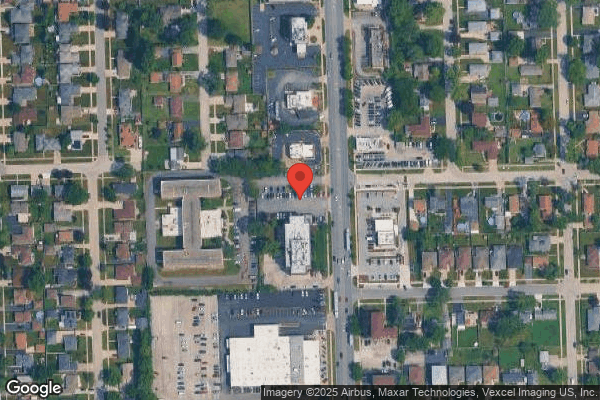
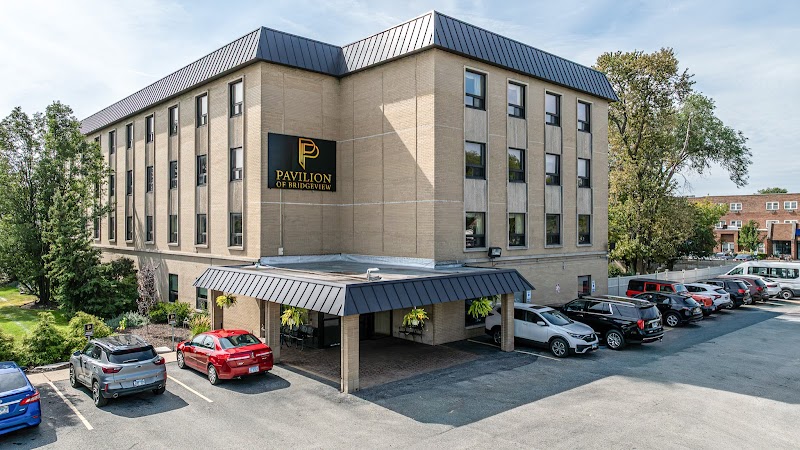
8100 SOUTH HARLEM AVENUE, BRIDGEVIEW, IL 60455 (708) 594-5440
For profit - Corporation 146 Beds PAVILION HEALTHCARE Data: November 2025
Trust Grade
45/100
#176 of 665 in IL
Last Inspection: October 2024

Within standard 12-15 month inspection cycle. Federal law requires annual inspections.

Overview

The Pavilion of Bridgeview has a trust grade of D, which means it is below average and has some concerning issues. Ranking #176 out of 665 facilities in Illinois places it in the top half, while its county rank of #56 out of 201 indicates that only a few local options are better. The facility is on an improving trend, decreasing from four issues in 2024 to just one in 2025, but it still has a high number of deficiencies, totaling 31. Staffing is below average with a rating of 2 out of 5 stars, although the turnover rate of 34% is lower than the state average. There have been serious incidents, including a resident sustaining a femur fracture due to inadequate supervision during a shower and another resident suffering a head injury from improper incontinence care, resulting in hospitalization. The facility also reported $29,706 in fines, which is average compared to other facilities in Illinois. While the RN coverage is average, having more RNs than many facilities can help catch problems that CNAs might miss. Overall, families should weigh these strengths and weaknesses carefully when considering this nursing home.

Trust Score
D
45/100
In Illinois
#176/665
Top 26%
Safety Record
High Risk
Review needed
Inspections
Getting Better
4 → 1 violations
Staff Stability
○ Average
34% turnover. Near Illinois's 48% average. Typical for the industry.
Penalties
✓ Good
$29,706 in fines. Lower than most Illinois facilities. Relatively clean record.
Skilled Nurses
○ Average
Each resident gets 37 minutes of Registered Nurse (RN) attention daily — about average for Illinois. RNs are the most trained staff who monitor for health changes.
Violations
⚠ Watch
31 deficiencies on record. Higher than average. Multiple issues found across inspections.
★★★★☆
4.0
Overall Rating
★★☆☆☆
2.0
Staff Levels
★★★☆☆
3.0
Care Quality
★★★★☆
4.0
Inspection Score
Stable
2024: 4 issues
2025: 1 issues

The Good

  • Full Sprinkler Coverage · Fire safety systems throughout facility
  • No fines on record
  • Staff turnover below average (34%)

    14 points below Illinois average of 48%

Facility shows strength in fire safety.

The Bad

Staff Turnover: 34%

12pts below Illinois avg (46%)

Typical for the industry

Federal Fines: $29,706

Below median ($33,413)

Moderate penalties - review what triggered them

Chain: PAVILION HEALTHCARE

Part of a multi-facility chain

Ask about local staffing decisions and management

The Ugly 31 deficiencies on record

4 actual harm
Apr 2025 1 deficiency 1 Harm
SERIOUS (G) 📢 Someone Reported This

A family member, employee, or ombudsman was alarmed enough to file a formal complaint

Actual Harm - a resident was hurt due to facility failures

Accident Prevention (Tag F0689)

A resident was harmed · This affected 1 resident

**NOTE- TERMS IN BRACKETS HAVE BEEN EDITED TO PROTECT CONFIDENTIALITY** Based on interview and record review, the facility failed to provide a resident with adequate staff supervision during a shower ...

Read full inspector narrative →
**NOTE- TERMS IN BRACKETS HAVE BEEN EDITED TO PROTECT CONFIDENTIALITY** Based on interview and record review, the facility failed to provide a resident with adequate staff supervision during a shower for a resident who requires substantial maximal assistance with bathing/showering. This failure applies to one of three residents (R2) reviewed for accidents/supervision and resulted in R1 sustaining a femur fracture. Findings include: R2 has a diagnoses history of Paraplegia, Multiple Sclerosis, Morbid Obesity, and Cognitive Communication Deficit who was admitted to the facility 04/06/2024. The facility's Incident Investigation Report dated 04/09/2025 documents on 04/01/2025 R2 was taken for her regularly scheduled shower, she was set up with her items per usual with the shower chair locked, she reported she dropped the towel and when she reached down to grab the towel, she slid from the shower chair; Upon interview with the CNA (Certified Nursing Assistant) stated she set the resident up per her request, lathered the soap and towel and allowed her privacy per the resident's request; R2 was admitted to the hospital for closed fracture of the distal left femur; R2 is at high risk for falls due to weakness and impaired mobility, she is paraplegic, has limited range of motion to her left upper and lower extremities to where she will require staff assistance; based on staff interviews, R2 clearly prefers and or requests privacy during showers so staff should always respect that preference by allowing sufficient space and avoiding unnecessary exposure; This includes maintaining a respectful distance while offering assistance that maintains that privacy; Plan of care in place and updated. Witness statement from R2 dated 04/03/2025 documents the Director of Nursing called R2 on the phone to interview her regarding her fall in the shower room and R2 reported on 04/01/2025 her CNA (Certified Nursing Assistant) V4 set her up in the shower, when she reached for a towel that fell, she slid from the shower chair. Undated Witness statement from V4 (CNA) documents she placed R2 in the chair and transported her to the shower room and R2 informed her that she would use the call light when she was ready to come out so she will set everything up for her, R2 requested her privacy and she is alert and oriented to person, place, time, and situation; the chair was locked to secure her, R2 informed her she tried to reach and grab her towel and fell over in the chair. Undated Witness statements from V8 (Registered Nurse) and V9 (Licensed Practical Nurse) stated they heard R2 yelling for help in the shower room and responded to assist, and she reported she dropped her towel and fell from the chair. R2's Fall Risk Evaluation dated 04/06/2024 documents she had 1-2 falls in the past three months, and had predisposing risk factors including 1-2 predisposing diseases present, balance problem while standing, requires use of assistive devices, and takes 1-2 high risk medications. R2's Quarterly Minimum Data Set assessment dated [DATE] documents she requires substantial maximal assistance with most activities of daily living including bathing/showering self, and tub/shower and toilet transfers. R2's Current Care Plan initiated 04/08/2024 documents she has an ADL (Activity of Daily Living) self-care performance deficit related to Hemiplegia, Impaired balance, Limited Mobility, and Limited ROM. R2 has weakness and impaired mobility she has a diagnosis of Multiple Sclerosis. R2 is a paraplegic and has limited range of motion to her Left upper and Lower extremities. She requires staff assist. She has spasticity and rigidness to extremities that inhibit movement; she is non ambulatory and transfers via sit to stand with assist with interventions including: she requires extensive assist of (1-2) staff to provide bath/shower twice a week and as necessary; and R2 requires Mechanical Lift (sit to stand) with (2) staff assistance for transfers. R2's Current Care Plan initiated 04/08/2024 documents she is at risk for incontinence related to Impaired Mobility, Physical limitations due to weakness and impaired mobility, having diagnoses of Multiple Sclerosis, Paraplegia and requires staff assist; she is non ambulatory and transfers via sit to stand with assist with interventions including check every two hours, upon request, and as needed for incontinence. R2's Current Care Plan initiated 04/06/2024 documents she is at risk for falls due to weakness and impaired mobility, and diagnoses of Multiple Sclerosis and Paraplegia and has limited range of motion to her left upper and lower extremities, and requires staff assist; R2's Current Shower/Bathing Care Plan initiated 11/06/2024 documents she enjoys her shower on scheduled days and would prefer privacy at times. R2's Incident progress note dated 4/1/2025 at 5:00 PM documents she was heard screaming for help in the shower room. Staff observed she was on her knees, leaning forward with left shoulder against the wall then sat back placing her buttocks on the floor and legs bent backwards on each side. Shower room call light is not on. R2 verbalized that she is taking her shower and was trying to get a towel, but the chair flipped over, and she ended on the floor. Her left leg is in severe pain, and she complained of severe pain on left leg. Physician notified and ordered to call 911 due to possible fracture or dislocation; at 11:21 PM Post Fall Evaluation documents the fall was not witnessed. Fall occurred in the bathroom. Resident was reaching for item(s) at time of the fall; Fall resulted in an emergency room visit/hospitalization and R2 was admitted due to a closed fracture of left femur. R2's progress note dated 4/2/2025 at 03:03 AM documents she was admitted to Christ Hospital with an admitting diagnosis of a closed fracture to left femur. R2's Fall Risk assessment dated [DATE] documents she was heard screaming for help from the shower room, staff observed her on her knees with the shower room call light not on, she reported she was taking her shower and was attempting to get a towel, her chair flipped over and she ended up on the floor and her left leg is in severe pain with predisposing situational risk factors included requesting privacy during her shower. R2's Hospital Report dated 04/01/2025 documents she received an Orthopedic Surgery Consult due to left femur fracture, she presented with left knee pain after a fall in the shower, her Multiple Sclerosis limits her ability to ambulate, emergency department x-rays revealed a distal femur fracture. On 04/14/2025 at 10:19 AM V6 (Restorative Aide) stated she's worked in the facility for nearly five years. V6 stated she is familiar with R2 and she had been in the facility nearly a year. V6 stated R2 was very alert. V6 stated R2 did not have a history of refusing care. V6 stated R2 requires sit to stand assistance with a mechanical lift for transfers with two person assistance. V6 stated R2 was able to reposition her legs in the sit to stand equipment, could hold on to the bars on the mechanical lift however her hands were shaky. V6 stated R2 could sometimes unhook herself from the sling. V6 stated R2 needed staff to provide her with incontinence care and could not clean herself after an incontinent episode. V6 stated she has had experience showering R2 and R2 would allow her to be present while she was in the shower. V6 stated there is typically one person in the shower with R2. V6 stated R2 needed assistance with showering. V6 stated she would let R2 clean her face, neck and upper body and she would try to clean her bottom however because of the shakiness of R2's hands she would assist her with cleaning her lower body. V6 stated R2 has never asked her to be left unattended while in the shower. V6 stated if R2 did ask for privacy during a shower, she wouldn't be able to leave her unattended however she could have possibly turned her back or pulled the curtain closed. V6 stated however, she would not have been able to leave R2 unattended. V6 stated she cannot leave a resident unattended in the shower that is not independent. V6 stated she could notify the nurse that R2 requested privacy during a shower, but couldn't leave her unattended. On 04/14/2025 at 10:42 AM V7 (Certified Nursing Assistant) stated she has worked at the facility for four months and has worked with R2 only a few times. V7 stated R2 would ask for privacy while having a bowel movement and we would usually just step outside the door but never too far away. V7 stated R2 required sit to stand assistance with a mechanical lift for transfers with two-person assistance. V7 stated R2 is relatively independent and likes to do things on her own but during showers a staff would always be with her. V7 stated she has never provided a shower to R2 however if R2 requested privacy during a shower she would have closed the curtain and stayed inside the shower. V7 stated the shower is relatively big and she could stand on the opposite side with the curtain closed. V7 stated there is no situation she could think of where she would leave R2 alone in the shower. V7 stated she wouldn't leave R2 alone in the shower because of her fall risk and in case she needed help with something. On 04/14/2025 at 11:00 AM V4 (Certified Nursing Assistant) stated she did not work with R2 often. V4 stated R2 was alert and oriented times four. V4 stated 04/01/2025 may have been her first time working with R2. V4 stated she assisted R2 to the shower on 04/01/2025 sometime after 3PM during the second shift. V4 stated when she and R2 arrived to the shower, she set R2 up, handed her all her personal items, put on her shower cap and shoes, locked her chair, and handed her the call light because R2 requested for her to step out and give her privacy. V4 stated she insisted on staying in the shower to help R2, however R2 was adamant about her stepping out and giving her privacy to shower herself. V4 stated she stepped out of the shower within arm's reach and then afterward heard R2 fall in the shower. V4 stated R2 reported to her verbatim that she dropped her towel, tried to reach over and pick it up and ended up slipping out of the chair. V4 stated she was not inside the shower room when this incident took place but was within arm's reach outside the shower room door. V4 stated R2 required moderate assistance and sometimes supervision for the majority of daily tasks. V4 stated R2 requires a sit to stand for transfers which is provided by the aide but other than that can do things for herself. V4 stated R2 has physical limitations from the legs down but is able to perform other hygiene tasks on her own. V4 stated if residents that need assistance for transfers and hygiene tasks ask for privacy while showering, she has to respect that, and was always told they have the right to have privacy if they are alert and oriented. On 04/14/2025 at 12:11 PM V3 (Director of Nursing/Registered Nurse) stated she spoke to R2 on 04/03/2025 as part of the investigation into her fall incident on 04/01/2025. V3 stated R2 told her on 04/01/2025 she was in the shower washing her upper body, the towel dropped to the floor and she went down to grab the towel and she flipped over. V3 stated she asked R2 did she ask for assistance during this incident and asked her why didn't she pull the call light and R2 replied she had the call light and thought she could reach the towel herself and when she bent down the call light was no longer in reach. V3 stated when she interviewed V4 (Certified Nursing Assistant) she said she had literally just stepped outside the door because R2 insisted she wanted her privacy during her shower. V3 stated that V4 informed she set R2 up in the shower room, asked her if she wanted her to stay, R2 replied no she wanted her privacy, and V4 honored her request. V3 stated V4 reported her cart was across on the other side of the wall and she went to grab something off of the cart and R2 was heard yelling for help. V3 stated R2 requires sit to stand with transfers and as far as bathing she knows she requires the extensive assistance of one staff member but is care planned for two if she needs extra assistance because she has Multiple Sclerosis. V3 stated as far as she knows there is usually one staff assisting R2 with showers and they promote R2's independence with cleaning areas that she can reach and clean herself such as her upper body. V3 stated R2 can't reach her back or peri area. V3 stated based on the level of assistance R2 needs there should be a staff present as much as needed for her safety. V3 stated with R2 being a relatively younger lady we should provide a level of independence as well as keeping her safe so there's always a fine line and we have to keep them safe and promote their autonomy. V3 stated ways to promote privacy for R2 is having staff at arm's reach, if there's a shower curtain pull the curtain back, step off to the side, or be in a position to be able to reach her if she needs assistance such as if she drops a towel or if she's ready for them to wash her back or needs an extra item. V3 stated yes staff should educate R2 on her safety needs if she requests them to leave the shower room and provide her with privacy. V3 stated the shower bath policy states we should never leave the resident unattended and the fall management policy does state that the facility has to honor their preferences while keeping them safe and therefore V4 should have been with R2 but felt she was honoring her request for privacy as well. V3 stated, do we leave residents unattended?; no. V3 stated in this instance although R2 was asking for privacy and it was her choice, she cannot refute the policy. V3 stated if R2 still insists on privacy during showers the staff can ask the nurse for assistance as well. The facility's Shower/Tub Bath Policy received 04/10/2025 states: Stay with the resident throughout the bath. Never leave the resident unattended in the tub or shower. The facility's Fall Management Policy received 04/10/2025 states: The facility's challenge is to balance protecting the resident's right to make choices and the facility's responsibility to comply with regulations. The responsibility to respect a resident's choices is balanced by considering the potential impact of these choices on other residents and the facility's obligation to protect the residents from harm. The facility will educate the resident regarding significant risks relate to a residents choice.
Oct 2024 1 deficiency
CONCERN (D)

Potential for Harm - no one hurt, but risky conditions existed

Smoking Policies (Tag F0926)

Could have caused harm · This affected 1 resident

**NOTE- TERMS IN BRACKETS HAVE BEEN EDITED TO PROTECT CONFIDENTIALITY** Based on observations, interviews, and record review, the facility failed to implement their policy to adequately monitor reside...

Read full inspector narrative →
**NOTE- TERMS IN BRACKETS HAVE BEEN EDITED TO PROTECT CONFIDENTIALITY** Based on observations, interviews, and record review, the facility failed to implement their policy to adequately monitor residents during smoking times, ensure residents' turn over their smoking materials, and determine who is an active smoker for 2 (R6 and R81) of 3 residents reviewed for smoking in the sample of 48. Findings include: 1. R6 is a [AGE] year old female admitted to the facility on [DATE] with diagnosis including but not limited to Benign Neoplasm of Meninge, Cognitive Communicating Deficit, Dysphagia, Weakness, Chronic Viral Hepatitis C, and Encephalopathy. According to R6's MDS (Minimum Data Set) assessment dated [DATE], under section C, R6 has BIMS (Brief Interview of Mental Status) score of 13 indicating intact cognition. R6's care plan dated 11/20/2023 reads in part, (R6) is a smoker. Interventions: Instruct resident about the facility policy on smoking: locations, times, safety, concerns; Notify charge nurse immediately if it is suspected resident has violated facility smoking policy. R6's Smoking assessment dated [DATE] reads in part, Which of the following products does (R6) use? Tobacco. No additional smoking safety or interventions documented in R6's smoking assessment. 2. R81 is a [AGE] year old male admitted to the facility on [DATE] with diagnosis including but not limited to Type 2 Diabetes Mellitus, Weakness, Major Depressive Disorder, Personal History of Transient Ischemic Attack, and Chronic Kidney Disease. According to R81's MDS (Minimum Data Set) assessment dated [DATE], under section C, R81 has BIMS (Brief Interview of Mental Status) score of 15 indicating intact cognition. R81's care plan dated 07/23/2024 reads in part, (R81) is a smoker. Interventions: Instruct (R81) about the facility policy on smoking: locations, times, safety, concerns; Notify charge nurse immediately if it is suspected (R81) has violated facility smoking policy. R81's Smoking assessment dated [DATE] reads in part, Smoking Safety Notes: Does not smoke. 3. On 09/30/2024 at 11:35 AM V1 (Administrator) provided a list listing of residents who smoke, R6 and R81 not listed on the list. On 10/01/2024 at 03:24 PM Surveyor observed R81 smoking alone on the smoking patio. No smoke monitor nor other staff present on the smoking patio at this time. Surveyor observed code pad leading to the smoking patio. On 10/01/2024 at 03:28 PM Surveyor interview R81 who stated, I have been smoking independently since I've been here, so for seven months. I keep my cigarettes and lighter in my room. Staff gave me the code to go outside. My (family member) came on Friday to bring me cigarettes. Usually, I buy my own cigarettes when I get my money by the end of the month. On 10/01/2024 at 03:30 PM Surveyor interviewed V1 (administrator) who stated, R81 should not be smoking independently, staff should be monitoring resident during smoking times. R81 signs himself in and out, R81 doesn't have money to buy cigarettes, his (family member) came here over the weekend though, so they probably brought R81 cigarettes. On 10/02/2024 at 11:15 AM Surveyor observed R6 smoking on the smoking patio. V23 (Activity Aid) present on the smoking patio. On 10/02/2024 at 11:24 AM Surveyor interview R6 who stated, I stopped smoking two months ago, but I restarted this morning. I had cigarettes from yesterday, somebody gave them to me, but there was no available staff to take me out to the smoking patio. I don't know who gave the cigaretts, I don't know if he works here or lives here but I see him all the time. On 10/02/2024 at 11:30 AM Surveyor interview V23 (Activity Aid) who stated, I am a smoking monitor. I assist smokers during smoking times. I get the cigarettes and lighter for the smokers from the receptionist, the receptionist holds on to the cigarettes and lighters. There are no residents who are allowed to keep cigarettes and lighters in their room. Before any resident is allowed to smoke, they have to sign a Smoker's Contract. There is no existing smokers' list, usually, the social service tells us who is allowed to smoke. I check with social service infrequently, usually, when there is a new resident who is trying to go out to smoke. R6 and one other resident are our only smokers. R81 is a smoker who can smoke independently and doesn't need assistance and monitoring. R81 is well enough to have a code to the security door an let himself out. I monitor smoking times it in the morning, at 11:00 AM and 1:30 PM. There is a 3rd smoking time 6:30 PM and that's when CNAs and nurses assist smokers. On 10/02/2024 at 11:52 AM Surveyor interview V25 (Social Service Director) who stated, there are two identified smokers in the facility, there are also additional smokers, who don't have cigarettes at this time but identify as smokers. They should be listed on the smokers' list. Cigarettes and lighters are labeled and stored at the front desk, residents should not have access to cigarettes and lighters without monitoring. The independent smokers still have to be monitored, no one should be on the smoking patio, smoking alone. Smoking residents always require supervision. On 10/02/2024 at 12:20 PM Surveyor interview V2 (Director of Nursing) who stated, nurses and CNAs monitor smokers during 6:30 PM smoke break, but I'm not sure who is assigned to do it. It's mostly CNA who is available. There is a list of smokers at the front desk. On 10/02/2024 at 12:25 PM Surveyor walked over to the front desk to verify the smokers' list; no list found. 4. The facility Smoking Program Details document dated 09/10/2024 reads in part, There are 3 designated smoking times daily for 15 minutes each time. Cigarettes and all smoking materials are kept at the receptionist desk and available for the designated staff member who is doing the monitoring. Smoking areas are located on the patios in the backyard and during inclement weather outside the front door. Residents are monitored during each smoking time. Current list of residents who smoke: (R6 and R81) not listed. The Facility Smoking Safety Policy dated January 2016 reads in part, Per facility policy, all residents who choose to smoke are required to turn over smoking materials for the health, safety, and security reason. All residents shall receive monitoring consistent with policy, and plan od care.
May 2024 3 deficiencies
CONCERN (D) 📢 Someone Reported This

A family member, employee, or ombudsman was alarmed enough to file a formal complaint

Potential for Harm - no one hurt, but risky conditions existed

ADL Care (Tag F0677)

Could have caused harm · This affected 1 resident

**NOTE- TERMS IN BRACKETS HAVE BEEN EDITED TO PROTECT CONFIDENTIALITY** Based on observation, interview, and record review the facility failed to ensure a resident who required extensive assist with t...

Read full inspector narrative →
**NOTE- TERMS IN BRACKETS HAVE BEEN EDITED TO PROTECT CONFIDENTIALITY** Based on observation, interview, and record review the facility failed to ensure a resident who required extensive assist with toileting was provided incontinent care in a timely manner for 2 or 4 residents (R2, R9) reviewed for Activities of Daily Living (ADL) in the sample of 13. The findings include: 1. R9's Physician Orders printed 5/5/24 showed her original admission to the facility was 4/19/24 with diagnoses to include: dementia, major depressive disorder, and diabetes. An Order dated 4/29/24 shows to turn and reposition every 2 hours and as needed. R9's Care Plan initiated on 4/30/24 shows she has an ADL deficit related to confusion, impaired balance, and limited mobility. She has a diagnosis of dementia and requires total assist with ADLs., is non ambulatory, and is incontinent of bowel and bladder. This care plans shows an intervention for bed mobility: the resident requires (extensive assist) by 2 staff to turn and reposition. An intervention for Personal Hygiene shows R9 is totally dependent on (1) staff for hygiene. The Toilet Use intervention dated 5/1/24 shows the resident is not toileted. R9's progress noted dated 4/29/24 at 9:18PM shows she was readmitted to the facility . wound to sacrum .requires total assistance x 2 staff to accomplish ADL tasks at this time. On 5/4/24 at 9:27 AM, R9 was in the dining room in a reclining wheelchair. R9's chair was in the reclining position, with R9 resting on her back and bottom. Her legs were in the upright position, and her knees were bent. At 11:53AM, R9 was still in the back of the dining room in her wheelchair, in the reclined position. At 11:57AM, R9 was served lunch and V6 (Certified Nurse Assistant-CNA) began feeding R9. R9 remained sitting on her bottom, and her legs remained in the upright position, extending off the bottom of the chair. At 12:07PM, V4 (CNA) said she would be changing R9 after lunch. On 5/4/24 at 1:02PM, V4 wheeled R9 in her reclining chair to her room. V4 said she was assigned to R9 for the day, and R9 was already up in her chair when her shift started (at 7:00AM). V4 said this is the first time she has changed R9 (6 hours after her shift started). V4 and V5 (CNA) used a mechanical lift to transfer R9 from her chair to her bed. V4 removed R9's pants and incontinence brief. The front of R9's brief appeared wet with urine. After cleaning R9's perineal area, V4 rolled her to her left side to remove her brief. The back of R9's brief was visibly saturated with urine. R9 had a bordered dressing to her coccyx that was saturated, no longer adhering to her skin, and falling off. V4 placed R9 on her back and said her dressing was wet and needed changed. V4 said she did not know R9 had a wound to her bottom, this was the first time she had seen it. V4 verified her (R9's) incontinence brief was saturated with urine. V9 was asked if there were any special interventions in place for R9 regarding her wound, care etc., and she said not that I'm aware of, she just came back recently from the hospital. On 5/5/24 at 9:58AM, V3 (Wound Care Nurse) said R9 should be turned and repositioned every 2 hours and she should be checked for [incontinence brief] changes every 2 hours. It is very important for incontinence care every 2 hours and as needed to keep R9's wound dressing clean and dry. On 5/5/24 at 11:49AM, V15 (Registered Nurse-RN) said it is important to keep residents clean and dry, especially if they have a wound. V15 said the residents should be checked every 2 hours for toileting, or as needed. On 5/5/24 at 11:55AM, V16 (RN) said it is important to make sure the residents are clean and dry. V16 said toileting and incontinence care should be done frequently, every 2 to 2.5 hours or as needed. 2. R2's facility assessment dated [DATE] shows she has severe cognitive impairment, is always incontinent of bowel and bladder, and is dependent on staff for toileting. R2's ADL care plan revised on 4/15/24 shows she requires total assistance by one staff with personal hygiene, and toilet use. R2's care plan for bowel and bladder incontinence revised 4/15/24 has an intervention to check for incontinence care every 2 hours and as needed. On 5/4/24 at 9:23AM, R2 was sitting in her wheelchair in the dining room at a table, drinking apple juice. R2 was observed at 9:40AM, in the dining room, resting her head on the table. At 10:07AM, R2 was sitting in her wheelchair, in the dining room. At 11:02AM, V5 wheeled R2 from the dining room table to her room. V5 said she started her shift at 7:00AM, she was the assigned aide for R2, and this was the first time she was changing R2 (4 hours after the start of her shift). V5 said she checked her around 8 and she did not need changed then. V5 put a gait belt on R2 and helped her stand from the wheelchair and pivot to the bed. Upon standing, the back of R2's pants were visibly wet with urine. After assisting R2 to bed, V5 removed her pants and incontinence brief. R2's incontinent brief was saturated with urine and soiled with stool. V5 cleaned R2's peri-area, and used multiple wipes to clean R2's bottom of stool. A new incontinence brief and clean pants were put on R2, and V5 transferred her back to her chair and wheeled her to the dining room. On 5/4/24 at 9:50 AM, V5 said R2 is not able to tell them she needs go to the bathroom and she is usually incontinent of urine. On 5/4/24 at 10:00AM V4 said they normally take R2 to the bathroom after breakfast, and after lunch. On 5/5/24 at 12:16AM, V16 (CNA) said R2 should be toileted about every 2 hours, she should be taken to the bathroom after breakfast and after lunch.
CONCERN (D) 📢 Someone Reported This

A family member, employee, or ombudsman was alarmed enough to file a formal complaint

Potential for Harm - no one hurt, but risky conditions existed

Deficiency F0685 (Tag F0685)

Could have caused harm · This affected 1 resident

Based on interview and record review the facility failed to ensure a referral was made for a hearing aid request for 1 of 3 residents (R2) reviewed for resident rights in the sample of 13. The findin...

Read full inspector narrative →
Based on interview and record review the facility failed to ensure a referral was made for a hearing aid request for 1 of 3 residents (R2) reviewed for resident rights in the sample of 13. The findings include: R2's facility assessment date 4/19/24 shows she has severe cognitive impairment, and is dependent on staff for Activites of Daily Living. This assessment shows R2 has minimal hearing difficulty. R2's physician order set printed 5/5/24 shows she has a diagnosis of dementia. R2's order set shows an order on 10/13/23 may have audiology evalation and May recieve the services of dentist/opthamologist, and audiologist PRN. On 5/4/24 at 2:28 PM, V33 (family member) said she had reported concerns to the director (V34). On 5/6/24 at 10:38AM, V34 (Liaison) said she is the liaison and does take resident and family complaints. V34 said she is usually the first one the family contacts, especially in the beginning. V34 said R2's family member contacted her on March 17, 20204, about concerns with Activity of Daily Living care and she reported those to the Director of Nursing (DON). V34 said there was a request made in the beginning of the year, February 2024, asking if she [R2] could have hearing aids. V34 said she let V2 (DON) know. V34 said if a concern is brought to her, she passes it on to the appropriate department. On 5/6/24 at 9:20AM, V1 (Administrator) said they have an audiology service that comes to the facility to see the residents. V1 said social services puts together the request for audiology. If a request is made for a resident, they would make a referral to audiology. On 5/6/24 at 11:36AM, V2, DON, said she was not aware a request was made for R2 to get hearing aids. V2 said social services may have received the request for hearing aids. V2 said if there was a request made, or if the resident had to go out to be seen by audiology, there would be an order. V2 reviewed R2's orders and verified there was no order for audiology. V2 said if a request was made, they would contact the place to schedule the appointment if it was an outside office, or would add the resident to the schedule for R2 to be seen in house. V2 said she would have made sure an evaluation was done if she received the request. On 5/6/24 at 2:38PM, V35 (Social Service Director) said if a request is made for hearing aids, she would add the resident to the list and have the audiologist see the resident on the next visit. V35 said they have an audiologist that comes every 6-8 weeks, and she provides them with a list of residents who need evaluations. V35 said she was unsure when the audiologist was last at the facility, but they will be at the facility on 5/10/24. V35 said she just started in this position March 25, 2024, and no list was provided to her on who was last seen, or who still needed to be seen. V35 said she did not have a request for R2 to seen by audiology. V35 verified R2 was not on the list to be seen on 5/10/24 but could be added if needed. On 5/6/24 at 4:39 PM, V1 verified that a referral was never made to audiology, and that R2 was added to the list to be seen on 5/10/24. The facility policy Care of Hearing Impaired Resident revised 11/2013 shows Arrange for consultation with an otologist if needed.
CONCERN (D) 📢 Someone Reported This

A family member, employee, or ombudsman was alarmed enough to file a formal complaint

Potential for Harm - no one hurt, but risky conditions existed

Pressure Ulcer Prevention (Tag F0686)

Could have caused harm · This affected 1 resident

**NOTE- TERMS IN BRACKETS HAVE BEEN EDITED TO PROTECT CONFIDENTIALITY** Based on observation, interview, and record review the facility failed to ensure pressure relieving interventions were in place ...

Read full inspector narrative →
**NOTE- TERMS IN BRACKETS HAVE BEEN EDITED TO PROTECT CONFIDENTIALITY** Based on observation, interview, and record review the facility failed to ensure pressure relieving interventions were in place for a resident with a pressure injury, failed to ensure a pressure injury dressing was kept clean and intact, and failed to assess and implement treatment for a resident with a newly identified pressure injury for 2 of 3 residents (R3, R9) reviewed for pressure injury in the sample of 13. The findings include: 1. R9's Physician Orders printed 5/5/24 showed her original admission to the facility was 4/19/24 with diagnoses to include dementia, major depressive disorder, and diabetes. An Order dated 4/29/24 shows to turn and reposition every 2 hours and as needed, and offload heels while in bed every shift. A physician ordered dated 5/1/24 shows coccyx-clean with NSS [normal saline solution], apply medihoney, calcium alginate, cover with bordered dressing every 8 hours as needed for wound care if soiled or displaced. R9's record shows her weight on 4/29/24 was 129.2 pounds. R9's Care Plan initiated on 4/30/24 shows she has an ADL deficit related to confusion, impaired balance, and limited mobility. She has a diagnosis of dementia and requires total assist with ADLs., is non ambulatory, and is incontinent of bowel and bladder. This care plans shows an intervention for bed mobility: the resident requires (extensive assist) by 2 staff to turn and reposition. An intervention for Personal Hygiene shows R9 is totally dependent on (1) staff for hygiene. The Toilet Use intervention dated 5/1/24 shows the resident is not toileted. R9's care plan initiated on 5/1/24 shows R9 has actual skin impairment .pressure ulcer - stage 3 - Coccyx. Interventions include pressure relieving mattress to protect the skin while in bed, keep skin clean and dry. There were no interventions to off load heels while in bed, or to turn and reposition every 2 hours as needed. R9's progress noted dated 4/29/24 at 9:18PM shows she was readmitted to the facility . wound to sacrum .requires total assistance x 2 staff to accomplish ADL tasks at this time. On 5/4/24 at 9:27 AM, R9 was in the dining room in a reclining wheelchair. R9's chair was in the reclining position, with R9 resting on her back and bottom. Her legs were in the upright position, and her knees were bent. At 11:53AM, R9 was still in the back of the dining room in her wheelchair, in the reclined position. At 11:57AM, R9 was served lunch and V6 (Certified Nurse Assistant-CNA) began feeding R9. R9 remained sitting on her bottom, and her legs remained in the upright position, extending off the bottom of the chair. The back of her chair had been raised, with her sitting in a partial upright position. At 12:07PM, V4 (CNA) said she would be changing R9 after lunch. On 5/4/24 at 1:02PM, V4 wheeled R9 in her reclining chair to her room. V4 said she was assigned to R9 for the day, and R9 was already up in her chair when her shift started (at 7:00AM). V4 said this is the first time she has changed R9 (6 hours after her shift started). V4 and V5 (CNA) used a mechanical lift to transfer R9 from her chair to her bed. V4 removed R9's pants and incontinence brief. The front of R9's brief appeared wet with urine. After cleaning R9's perineal area, V4 rolled her to her left side to remove her brief. The back of R9's brief was visibly saturated with urine. R9 had a bordered dressing to her coccyx that was saturated, no longer adhering to her skin, and falling off. V4 placed R9 on her back and said her dressing was wet and needed changed. V4 said she did not know R9 had a wound to her bottom, this was the first time she had seen it. V4 verified her incontinence brief was saturated with urine. V9 was asked if there were any special interventions in place for R9 regarding her wound, care etc., and she said, not that I'm aware of, she just came back recently from the hospital. On 5/4/24 at 1:30PM, V7 (LPN) was preparing the new dressing for R9. V7 said this was the first time he saw R9's wound. V7 and V3(Wound Care Nurse) turned R9 on her side and removed the soiled dressing, partially in place to the coccyx. There was an irregular pale white shaped wound to the left and right buttock area extending over a small portion of the coccyx. The wound edges were pink and slightly red around the outer most aspect. The inside of the wound appeared clean. V7 cleaned the wound with normal saline, applied medihoney, and placed a calcium alginate square dressing over the wound. V7 then covered the wound with a bordered foam dressing, dating the outer dressing. No date was observed on the soiled dressing that was removed. After completing the wound care, V7 and V3 left. V4 finished covering R9 and left the room. R9's heels were left resting directly on the bed. At 2:55PM, V7 went into R9's room. R9's heelswere resting on the mattress, and her toes were resting on the end of the bed. R9 had a box attached to the foot of the bed, controlling the air mattress. The top of the box had a white sticker that said, continuous 150. V7 said they always put R9's heels up, but he wasn't sure where the pillow was, maybe they sent it to laundry. After looking around R9's room, V7 left the room and got a pillow and came back in and placed it under the lower portion of R9's legs, by the ankles. V7was asked to verify the setting on the air mattress pump. V7 said yes the arrow on the dial was set at 120. V7 said the company adjusts the setting when they set the bed up, we (nurses) don't touch it. On 5/4/24 at 3:07PM, V3 said the air mattress setting is determined by resident weight. V3 looked at R9's machine and said it should be set at continuous- 150 (what the sticker showed on top). She looked at the machine and said it was between 130 and 150. V3 changed the dial to align with 150. She said if it's too firm, it defeats the purpose, and if it's too soft it wouldn't help either. The weight needs to be distributed evenly. V3 looked at the sticker and said she placed it on the machine based of [R9's] weight. On 5/4/24 at 1:40PM, V7 said R9 should be repositioned every 2 hours, and her heels should be elevated when she is in bed. V7 said the goal would be to keep R9's dressing clean and intact. On 5/5/24 at 9:58AM, V3 said R9 should have her heels offloaded while in bed. She should have an air loss mattress and be turned and repositioned every two hours. If she is up in her chair, they should be checking to see if she needs her [incontinence brief] changed. They can also reposition her in her chair every two hours. V3 said it is very important for R9 to have incontinent care every 2 hours and as needed to keep her dressing as clean and dry as possible. She does not have a catheter, so they have to keep her clean. On 5/5/24 at 11:51AM, V16 (RN) looked at the setting on R9's air mattress machine. V16 verified the arrow on the dial was set at 180. V16 said the machine is set when the company sets the mattress up. V16 pointed at the white sticker that said, continuous 150 and said she did not know why it was set at 180, and she would change it to 150 because that is what the sticker said. V16 said it is important to keep residents clean and dry. Toileting and incontinence care should be done every 2 to 2.5 hours. V16 said when R9 is up in her chair, they should be taking her to bed for toileting/incontinence care and laying her down, so she is not sitting there on her bottom. V16 said they try not to keep her up a long time, and it would be hard to reposition her in her chair. On 5/5/24 at 1:10PM, V2 (Director of Nursing) said pressure ulcer interventions include an air mattress, turning and repositioning every two hours, and keeping the resident clean of urine and stool. V2 said it is very important to check the resident every two hours to make sure they are clean and dry. 2. R3's Facility assessment dated [DATE] shows she had severe cognitive impairment and required partial to moderate assistance from staff with toileting, upper and lower body dressing, and personal hygiene. This assessment shows she required supervision or touching assistance with sitting to standing, toilet transfers, and walking. This assessment showed she was at risk for skin impairment but had no unhealed pressure injuries. R3's Physician Orders printed 5/5/24 shows she had diagnoses to include dementia, type II diabetes with foot ulcer, major depressive disorder, generalized anxiety, and morbid obesity. R3's order dated 12/5/23 shows Skin assessment one time a day every 7 days. On 5/4/24 at 11:20AM, V3 (Wound Care Nurse) said on admission, R3 had wounds, but they resolved. V3 said R3 had no wounds when she discharged to the hospital (3/17/24), that were identified to her. On admission she had MASD (moisture associated skin disorder) to her abdominal fold, a skin tear to her left buttock cheek, pressure ulcer to left inner foot, fungal infection to her right great toe, and skin stripping to right. V3 said the last assessment by wound care, was completed on 11/22/23. V3 said the nurse will notify her (wound care) of any new skin concerns. The nurse would assess the new wound, call the doctor and obtain orders, and notify her. She will then do the assessment. On 5/5/24 at 12:16PM, V29 (CNA) said she cared for R3 prior to her going to the hospital. V29 said right before she left, she had an opening on her heel. She could not remember for sure which heel. V29 said it looked like a sore, it was red, and it hurt to touch. V29 said it looked like if you had a scab, and then pulled the scab off, there was definitely dead skin there. V29 said R3 said her heel was hurting. I was showering her, and she said it hurt. The CNAs do skin checks during showers, and she would report anything .scratches, redness, bruise, cracked skin, anything that doesn't look right to the nurse. V29 said they also document on the shower sheet. V29 said R3's nurse was not on the floor, so she reported the sore to the nurse covering the other side (V30-LPN), and she came and looked at it. V29 said R3 did not say how it happened, just said it hurt. On 5/5/24 at 12:35PM, V30 said she was working on the floor with R3 on a previous shift. V30 said an activity girl (V31-Activity Director) told her that R3 had a sore on her foot. V30 said she told [V31] to make sure she reported it to the wound care nurse. V30 said she was not R3's nurse and did not assess the wound. She said she did not report it to R3's nurse (V32-nurse) that day, because it was towards the end of the shift. On 5/5/24 at 1:00PM, V31 said she remembered R3. V31 said she reported a wound she saw on R3's heel to the nurse. V31 said she noticed R3 had been very busy. She had croc like shoes on, and her heel was out of the back (soft, rubber, slipper like shoes that slide on and off, leaving the back of the foot exposed). V31 said R3 did not have socks on, and the back of her heel was out. That's how she saw it. V31 said she told the nurse (V30) right away. She remembers V30 went over and looked at it and was cleaning it. V31 verified the date she noticed the sore was on 3/15/24, which was election day at the facility. She had it noted on her calendar. On 5/5/24 at 1:10PM, V2 (DON) said it sounds like R3 could have had a blister to the back of her heel from walking in her crocs. The blister may have opened, caused from friction to the heel. V2 reviewed R3's record and said there was no assessment of the wound. V2 said when a new wound is found the nurse should provide first aide, notify the doctor, obtain an order, and wound care would follow up. V2 said yes she believe a blister to the heel would be considered a pressure injury. R3's Bath/Skin check list dated 3/11/24 and 3/14/24 shows yes in the skin clear box. No areas of concern are identified on the body diagram on these sheets. Review of R3's progress notes show no assessment or identification of a wound to R3's heel, prior to her discharge to the hospital on 3/17/24. An assessment of R3's heel wound was requested and not provided by the facility. The facility policy Prevention of Pressure Ulcers/Injuries revised 1/2019 shows: 1. Pressure ulcers are usually formed when a resident remains in the same position for an extended period of time causing increased pressure or a decrease of circulation (blood flow) to that area and subsequent destruction of tissue. 2. The most common site of a pressure ulcer is where the bone is near the surface of the body including the back of the head around the ears, elbows, shoulder blades, backbone, hips, knees, heels, ankles, and toes. Risk Assessment 5. CNAs will inspect the skin on a daily basis when performing or assisting with personal care or ADL.s b. Inspect pressure points (sacrum, heels, buttocks, coccyx, elbows, ischium, trochanter, etc.). Mobility/Repositioning At least every two hours, reposition residents who are reclining and dependent on staff for repositioning. Risk Factor-Friction and Shear 9. Shoes need to be monitored for proper fit to avoid development of blisters, corns, and calloused areas. The Pressure Ulcer/Skin Breakdown - Licensed Professional Policy revised 12/2018 shows: Assessment and Recognition 2. In addition the nurse shall describe and document/report the follow a. Full assessment of the pressure sore including location, stage, length, width and depth, presence of exudates or necrotic tissue. Treatment/Management 1. The physician will order pertinent wound treatment, including pressure reduction surfaces, wound cleaning and debridement approaches, dressing .
Dec 2023 3 deficiencies
CONCERN (D) 📢 Someone Reported This

A family member, employee, or ombudsman was alarmed enough to file a formal complaint

Potential for Harm - no one hurt, but risky conditions existed

Quality of Care (Tag F0684)

Could have caused harm · This affected 1 resident

**NOTE- TERMS IN BRACKETS HAVE BEEN EDITED TO PROTECT CONFIDENTIALITY** Based on interview and record review, the facility failed to identify a vascular diabetic wound until it was necrotic for one of...

Read full inspector narrative →
**NOTE- TERMS IN BRACKETS HAVE BEEN EDITED TO PROTECT CONFIDENTIALITY** Based on interview and record review, the facility failed to identify a vascular diabetic wound until it was necrotic for one of three residents (R2) reviewed for wounds in the sample of 12. Findings include: R2's electronic medical record show R2 was admitted to the facility on [DATE] with diagnoses that include dementia, diabetes and chronic kidney disease. On 12/1/23 at 10:22 AM, V20 (R2's son) said when R2 was still at the facility, he noted a large wound on R2's left foot by his heels that was black. V20 also said the time he was visiting R2, no staff was turning and repositioning R2. V20 said he had reported his concerns to the staff. R2's Wound Assessment detail report dated 9/27/23 show R2's Braden scale was high risk. Wound Information: -Facility Acquired, Vascular diabetic ulcer left heel. Purple ecchymosis (dark purple) 75% and necrotic 25% with bloody drainage. Wound measurement- 3.70 centimeters (cm) x 2.8 cm x 0.10 cm. R2's electronic treatment sheet dated 9/28/23 show left heel cleanse with normal saline (NSS) paint with betadine cover with ABD pad and kerlix. On 12/1/23 at 12:10PM, V8 (Wound Nurse) said R2 was admitted to the facility with no wounds. V8 said on 9/27/23, R2 was found to have an open area to his left heel. V8 said by the time the wound was found it was necrotic (with dead cells) and dark purple measuring 3.70 centimeters (cm) x 2.8 cm x 0.10 cm. V8 said staff has been told to check residents skin and report to her any abnormality. This surveyor requested R2's skin assessments prior to 9/27/23. There were no skin assessments provided except R2's shower sheet dated 9/26/23 with notes: indicate location of breakdown, heels-dark. V8 said she was not made aware of this. V8 said skin assessments should be done to check any resident skin abnormalities/open areas. On 12/1/23 at 1:45 PM, V2 (Director of Nursing-DON) said after R2's wound to the left heel was found, the care plan was updated with interventions put into place of monitoring residents skin, offloading heels and monitoring staff to turn and reposition residents in bed. V2 also said staff had to be reeducated to notify her and the wound nurse of any skin abnormality so interventions will be put into place sooner. R2's careplan shows: R2 has actual skin impairment to skin integrity and remains at risk for further skin breakdown . intervention dated 10/2/23 includes, monitor skin during AM. HS care, monitor document location size and treatment of skin injury .off load heels when in bed.
CONCERN (D) 📢 Someone Reported This

A family member, employee, or ombudsman was alarmed enough to file a formal complaint

Potential for Harm - no one hurt, but risky conditions existed

Accident Prevention (Tag F0689)

Could have caused harm · This affected 1 resident

**NOTE- TERMS IN BRACKETS HAVE BEEN EDITED TO PROTECT CONFIDENTIALITY** Based on observation, interview, and record review, the facility failed to ensure fall interventions were in place for a residen...

Read full inspector narrative →
**NOTE- TERMS IN BRACKETS HAVE BEEN EDITED TO PROTECT CONFIDENTIALITY** Based on observation, interview, and record review, the facility failed to ensure fall interventions were in place for a resident who is at high risk for falls. This failure applied to one of three residents (R1) reviewed for safety in the sample of 12. Findings include: R1's face sheet shows she is [AGE] year-old female with diagnoses including metabolic encephalopathy, dementia, unspecified severity with agitation, major depressive disorder, scoliosis, unsteadiness on feet, repeated falls, muscle weakness and difficulty walking. R1's Final Incident Report dated 11/10/23 documents on 11/8/23 at 9:00 AM, (R1) sustained a fall from her bed resulting in a laceration over her right eye requiring skin glue. R1's CNA (Certified Nursing Assistant) was completing her morning activities of daily living and when she turned to get the wheelchair, (R1) fell out of her bed. (R1) was sent out to the local hospital and returned the same day, she sustained a laceration above the right eye with skin glue applied. R1's Minimum Data Set assessment shows she's severely cognitively impaired, requires extensive two person assist with dressing and extensive assist with transfers and toileting. On 12/1/23 at 9:53 AM, R1 was observed in the dining room with a healed laceration above her right eye. R1 said she had a fall but could not recall the details. A sign was posted above R1's bed in her room showing she is extensive assist with two staff. On 12/1/23 at 9:45 AM, V11 (RN) said R1 has dementia, and her behaviors are progressing. She was R1's nurse when she fell on [DATE]. She was in another resident's room and heard crying from R1's room. When she entered R1's room, R1 was on the floor. She had a three-to-four-inch laceration above her right eye and was bleeding. V11 said V21 (Former CNA) said she rolled out of bed. V11 said she called out for help and R1 was transferred to the local hospital. She is not sure how R1 was transfered, but each resident has a sign above their bed that indicates how they transfer. On 12/1/23 at 9:57 AM, V12 (Restorative Aide) said R1 is an extensive two person assist with transfers and bed mobility. She has a history of falls and attempts to get out of bed. She was here when R1 had her fall on 11/8/23. When she entered the room, R1 was laying on the floor mat on the floor. Her bedside table was near her head. Her bed was not in the lowest position and her side rail was in an upright position. She was bleeding above her right eye. V21 (Former CNA) said she walked out of the room to grab something and R1 rolled out of bed. The bed should have been in the lowest position and the side rail should have been down. V12 said V21 no longer works at the facility. On 12/1/23 at 12:35 PM, V2 (DON) said V21 was terminated because of the incident related to R1. On 12/1/23 at 1:21 PM, V2 (DON) said V21 was providing care and left R1 at the bedside to grab a chair and R1 fell on the floor mat on the floor. She was not sure what R1 hit her head on. R1 had a laceration above her eye. R1 is a fall risk and requires two persons assist with cares. R1's bed should be in a low position and the side rails should be upright for safety. V21's statement dated 11/8/23 documents she did not see R1 fall. I stepped out of the room to grab a chair after I dressed her. R1 rolled onto the floor from the bed. I heard her fall and she was on the floor mat. R1's current care plan initiated on 3/10/23 documents she is a HIGH risk for falls related to confusion, dementia, history of fall, muscle weakness, unsteadiness on feet and difficulty walking with interventions for a safe environment the bed in a low position and side rails as ordered. The care plan documents R1 has a self care deficit with interventions for half side rails up for safety during care provision, requires extensive two person assist with toileting, transferring and bed mobility. The facility's Fall Management Policy revised 2015 states, Based on previous evaluations and current data, the staff will identify interventions related to the residents' specific risks and causes to try to prevent the resident from falling and try to minimize complications from falling . All residents shall be screened for the potential for falls, using the fall risk screening tool .staff will initiate falling prevention protocol .
CONCERN (D) 📢 Someone Reported This

A family member, employee, or ombudsman was alarmed enough to file a formal complaint

Potential for Harm - no one hurt, but risky conditions existed

Infection Control (Tag F0880)

Could have caused harm · This affected 1 resident

Based on interview and record review, the facility failed to ensure that a resident was not housed in the same room as a resident that was placed on contact isolation to prevent the spread of infectio...

Read full inspector narrative →
Based on interview and record review, the facility failed to ensure that a resident was not housed in the same room as a resident that was placed on contact isolation to prevent the spread of infection for one of three residents (R5) reviewed for infection control in the sample of 12. Findings include: R5's Face Sheet shows diagnoses of: malignant neoplasm of the rectum, urinary retention and colostomy. R5's Urine Culture Report from 8/17/23 shows that he has no current infections. R4's Nursing Notes date 9/25/23 shows, Resident transported into the unit .from oncology appt (infusion visit) .(urinary) catheter still in placed .chemo implanted port remain intact .resident return from appt (appointment) with a scheduled f/u (follow up) oncology/infusion visit . R4 and R5's Census Reports show that they resided in the same room on 9/27/23. R4's Nursing Notes dated 9/27/23 shows, Discussed with nurse on duty new order for Macrobid (antibiotic) 100 mg (milligrams) BID (twice a day) x 7 days r/t (related to) E.Coli ESBL (Extended-spectrum beta-lactamases) and contact isolation. R5's Census Report shows that R5 was moved to a different room on 10/2/23 (5 days after R4 was placed on isolation). R5's Nursing Notes do not document that R5 had a room change between 9/27/23 and 10/2/23. R4's Census Report shows that R4 was in the same room between 9/27/23 to 10/2/23. On 12/1/23 at 11:04 AM, V5 (Infection Control/Licensed Practical Nurse) said that anyone diagnosed with and who is receiving treatment for ESBL should be placed on isolation immediately. V5 said that if the resident has a roommate, either the resident or the roommate should be moved out of the room to prevent the spread of infection. V5 said that they have never had an issue with finding appropriate placement for a resident on contact isolation. V5 said that room changes should be documented in the nursing notes when they are done. At 2:19 PM, V5 said that when R4 developed ESBL, they spoke about it, and they were going to move R5 to a different room. The facility's Contact Precautions Policy revised on 5/22 shows, Contact Precautions require the use of gown and gloves on every entry into a resident's room. The resident is given dedicated equipment .and is placed into a private room .
Sept 2023 2 deficiencies
CONCERN (D) 📢 Someone Reported This

A family member, employee, or ombudsman was alarmed enough to file a formal complaint

Potential for Harm - no one hurt, but risky conditions existed

Quality of Care (Tag F0684)

Could have caused harm · This affected 1 resident

Based on interview and record review the facility failed to follow their practice of identifying the name of the resident with the transportation company to ensure that the correct resident was sent t...

Read full inspector narrative →
Based on interview and record review the facility failed to follow their practice of identifying the name of the resident with the transportation company to ensure that the correct resident was sent to the correct appointment for one of three residents (R5) reviewed for right resident This failure resulted in R5 being dropped off at a non-dialysis clinic. R5 was subsequently taken to hospital for evaluation, Findings include: R5's face sheet shows R5 has diagnosis of hypertensive chronic kidney disease with stage 5 chronic kidney disease, type 2 diabetes with neuropathy, asthma, fluid overload, acute respiratory failure with hypoxia, pleural effusion, anemia, unspecified dementia, acute on chronic systolic heart failure, end stage renal disease, dependent on renal dialysis. MDS dated 7.28.23 denotes in-part BIMS score 10 (cognitive deficits). Section G for functional status denotes extensive assist and 1-person physical assist. R5 progress notes dated 8.24.23 completed by V2 (Director of Nursing) denotes in-part this writer was notified by the receptionist that the resident was taken to a doctor's office by transportation instead of dialysis. Transportation company was contacted to pick up the resident and refused. Author personally went with a second nurse to pick up the resident and transport to dialysis. However, the doctor's office called 911 and resident was transferred to Hospital. This writer took the residents personal belongings, wheelchair and oxygen to facility and stored appropriately. MD and Family made aware. R5 progress notes dated 8.25.23 resident hospitalized DX (diagnosis) ESRD (end stage renal disease). On 9.14.23 at 12:28 pm, V3 (Administrator) said she was made aware by the receptionist that R5 was dropped off at the wrong facility (clinic) on 8.24.23. V3 said V2 (DON) and the social worker went to pick R5 up from that facility. V3 said when the DON got there the medics was there also to take R5 to the hospital. V3 said what happened was the transportation company arrived to the nursing home, stood near the door and said is he ready . V3 said the receptionist figured the transporter was talking about R5 because he said he . V3 said the receptionist call the unit to let them know that the transportation has arrived to take the resident to their appointment. V3 said when the residents go to dialysis, they do not have an escort, V3 said when the resident goes to appointments they will be escorted. V3 said R5's daughter did voice concerns regarding R5 going to wrong appointment. V3 (Administrator) said she did not complete an investigation; she did not complete an incident report regarding R5 being transported and left at the incorrect facility (clinic) on 8.24.23. V3 said this has never happened before. V3 said she did not have practices/policy in place on 8.24.23 for the staff to clarify/ask the transportation company driver who was the resident that is identified as he. V3 said the receptionist has been in-serviced. Review of the in-service presented by V3 dated 8.24.23, denotes topic: transportation pickup protocol, receptionist must verify with driver who they are picking up, write the name of company and phone number on appointment sheet. There is 3 receptionist names noted on the in-service. V3 said the CNA (Certified Nursing Assistant) that brought R4 down to the vehicle has not been in-serviced on the facility practice. V3 then said she doesn't know if that person was a Nurse or CNA. V2 (DON-Director of Nursing) said V21 (Nurse) brought R5 downstairs to the transportation vehicle. On 9.15.23 at 12:10 PM, V20 (Receptionist) said she was sitting at the receptionist desk when a gentle man from the transportation company came inside the facility, stood near the door, and said, is he ready and turned and left the facility. V20 said she pressed the button to let him out the facility. V20 said she then called up to the nursing unit, informed V21 (Nurse) to bring R5 down, because his transportation had arrived. V20 said she figured the guy was talking about R5 because it was only 2 appointments one male and one female. V20 said she figured the guy was talking about R5 also because he picked R5 up before for dialysis. V20 said the nurse brought R5 down and took him outside to the transportation van/car. V20 said she later got a call saying R5 was dropped off at the wrong clinic appointment. V20 said she doesn't know what time she got the call. V20 said she doesn't know the name of the person that called her. V20 said the transportation guy did not show his phone with R5 name on it for verification, V20 said she would not have been able to see his phone because he was too far for her to see. V20 said the resident should not be handed off to the transportation company before the transportation company identify the resident they are picking up. V20 said a different transportation company/person picks R5 up often for his dialysis appointment. On 9.14.23 at 2:33 pm, V21 (Nurse) said on 8.24.23 she received a call from V20 stating to bring R5 down because his transportation had arrived for dialysis. V21 said when she brought R5 down to the front desk, she did not see the guy from the transportation company. V21 said she asked V20 (Receptionist) where the guy was, V20 replied you know they don't like to wait and to take R5 outside. V21 said she thought that was unusual because she has never had to take the resident out the building, the company is usually waiting in the lobby/corridor. V21 said she took R5 out the door as she went up to the van she said R5's first and last name. V21 said the driver responded with a sigh, as though he was irritated. V21 said the guy did not respond if the resident name was correct or not that he was there to pick up. V21 said she doesn't remember if the window was down for the guy to hear. V21 said she doesn't know if the guy heard her or not. V21 said the guy got out the driver side of the vehicle. V21 said as the guy got out the vehicle and came around to where she was with R5, he asked if she could put R5 on the lift, V21 said she responded to him that she did not know how to work the lift on his vehicle. V21 said she handed R5 off to the guy from the transportation company. V21 said she came back inside the facility. V21 said she has not had an in-service on the transportation pick-up protocol. V21 said she told the facility the same thing she told surveyor. V21 said the resident should not be handed off to the transportation driver/company if they have not been identified to be the correct resident that they are picking up. On 9.15.23 at 10:18 am, V22 (personnel at clinic) said she is one of the managers at the non-dialysis clinic, V22 said based on the information that was gathered for this incident, R5 was observed sitting in the clinic waiting area by himself. The clinic staff inquired about R5 wellbeing and if R5 had an appointment. V22 said the clinic staff checked the appointment list, and their patient list, R5 name was not noted. V22 said the clinic staff checked other office suites for R5 to see if R5 had an appointment in one of the other suites. V22 said R5 did not have an appointment in the other clinics. V22 said R5 complained of difficulty breathing, and short of breath. V22 said R5 was noted using oxygen via nasal canula, and the oxygen tank was low. V22 said because R5 was on oxygen and was complaining of difficulty breathing the clinic called 911 and R5 was agreeable to them calling 911. V22 said R5 said the driver just dropped him off and left. V22 said R5 said he was thinking he was in the wrong clinic. V22 said the driver did not inform the clinic of anything related to R5. V22 said R5 had paperwork with him, and the nursing home name was listed and the nursing home was notified that R5 had been dropped off. V22 said the clinic was in communication with V2 (Director of Nursing). V22 said V2 informed the clinic that it will be a while before the transportation company could come and get R5. V22 said V2 was informed that 911 will be summoned and V2 then replied that she will come and get R5. V22 said V2 and the medics arrived just at the same time. On 9.19.23 at 12:03 pm, V2 (Director of Nursing) said the driver took R5 to the wrong appointment, investigation findings reviewed with V2 of V21 (Nurse) taking R5 outside to the driver and did not verify that R5 was the correct resident to be picked up at that time. V2 said the driver came in the building and said the words he, V2 was informed that the receptionist did not clarify who the driver was referring to as he, nor did the receptionist inquire about the name of the resident to be picked up. V2 said she did not do the investigation and she would have to ask the administrator about details. R5 physician order sheet dated 8.11.23 denotes orders for dialysis 3x week on Tuesday, Thursdays, and Saturday (address noted). R5 was dropped off on 8.24.23 to address (address number). R5 was not dropped off to address listed on physician orders. Oxygen per Nasal canula at 3 liters per minute continuous, every shift monitors and record that 02 (oxygen) sats remain above 92%.
CONCERN (D) 📢 Someone Reported This

A family member, employee, or ombudsman was alarmed enough to file a formal complaint

Potential for Harm - no one hurt, but risky conditions existed

Accident Prevention (Tag F0689)

Could have caused harm · This affected 1 resident

**NOTE- TERMS IN BRACKETS HAVE BEEN EDITED TO PROTECT CONFIDENTIALITY** Based on observations, interviews, and records reviewed the facility failed to implement fall prevention interventions for two r...

Read full inspector narrative →
**NOTE- TERMS IN BRACKETS HAVE BEEN EDITED TO PROTECT CONFIDENTIALITY** Based on observations, interviews, and records reviewed the facility failed to implement fall prevention interventions for two residents at high risk for falls. This failure affected two of three residents (R2 and R9) reviewed for fall prevention interventions The findings include: 1. R2's diagnosis include but are not limited to Amyotrophic Lateral Sclerosis, Weakness, and Osteoarthritis. On 9/14/23 at 11:29 AM, V9, Certified Nursing Assistant (CNA), said R2 was at risk for falls. On 9/14/23 at 3:15 PM, V10, Registered Nurse, said on 9/5/23 I observed R2 sitting on the floor. V10 said R2 had been sitting in a chair in his room and I believe he was trying to get his walker. V10 said I didn't know if R2 had fallen before. V10 said R2 had been walking independently with a walker and he was working with physical therapy. On 9/15/23 at 9:26 AM, V2, Director of Nursing, said R2 was admitted with a history of falls. V2 said R2 had a fall on 8/12/23. V2 said R2 had lost his balance on 8/12/23 and he was not using a walker. V2 said R2 was independent with walking and physical therapy only recommend he use a walker. V2 said on 9/5/23 R2 slid from a chair trying to self transfer. V2 said R2 was able to ambulate freely with a walker and R2 had a steady gait. V2 said Amyotrophic Lateral Sclerosis (ALS) is definitely a fall risk factor for R2. V2 said on 5/31/23 R2 had a fall risk evaluation score of 10, high risk. V2 said anything greater than 10 is a fall risk. V2 said on 8/12/23 R2's fall risk evaluation score was 22. V2 said R2 was able to continue to ambulate independently with a walker and he could transfer independently. On 9/15/23 at 10:42 AM, V11, Licensed Practical Nurse (LPN), said if a resident is at high risk for falls they should not walk independently because they are unsteady. On 9/15/23 at 11:52 AM, V16, Director of Rehab, said R2 was issued a walker for ambulation on 8/1/23. V16 said R2 used the walker independently. V16 said R2's ALS was progressing. V16 said we had to educate and encourage R2 to use the walker. V16 said R2's falls were in his room. V16 said R2 needed assistance. V16 said while a patient is on therapy case load, they are not independent with transfers or ambulation. V16 said R2 needed assistance getting up from the toilet seat. V16 said realistically R2 was not going to improve because of his ALS diagnosis. V16 said over the last couple weeks R2's diagnosis was advancing and we discussed it in morning meeting. V16 we (therapy) told the team R2 needs more assistance. V16 said R2 was not safe to be independent, we would not be providing therapy services if he was safe to be independent with ambulation and transfers. On 9/15/23 at 2:58 PM, V4, CNA, said R2 fell in his room on 9/5/23. V4 said R2 was very independent and went to the washroom independently. V4 said on 9/5/23 I checked R2 on my first round and he was okay. V4 said at about 5:00 PM, I was in the dining room for 30 minutes and then went to pass meal trays. V4 said the next time she saw R2 was when he was on the floor. V4 said if R2 was a fall risk he would not be walking independently. V4 said if he was at risk for falls, I would have stayed with R2, even if he shooed me away. V4 said on 9/5/23 R2 was becoming a fall risk and he had a wheelchair on 9/5/23. V4 said if you are a fall risk, you gotta be in a wheelchair all the time. R2's Functional Status assessment dated [DATE] notes he requires limited assistance with bed mobility, transfers, toilet use, and personal hygiene. R2's fall risk reviews dated 5/31/23 and 8/12/23 as reviewed with V2 are noted to not include a score. R2's 8/12/23 incident report notes he has a history of falls and weakness. R2's 9/5/23 incident report notes predisposing physiological factor of history of falls and gait imbalance. R2's physical therapy progress report notes impairments limitations in range of motion, safety awareness, strength impairments, postural alignment/control and balance deficits. Continued services are necessary in order to analyze gait pattern, improve balance, increase independence with gait, minimize falls and promote safety awareness. Ambulation walk 10 feet = supervision or touching assistance. For toilet use and transfer. R2's care plan indicates he has weakness and requires assistance from staff with moving in bed, has limited mobility. Intervention dated 5/31/23 states assist with ambulation and transfers. Requires extensive assistance by 1 staff 2. R9's diagnosis include but are not limited to Cerebral Infarction, Hemiplegia and Hemiparesis, Muscle Weakness, Difficulty in Walking, Osteoarthritis of Knee, Altered Mental Status On 9/14/23 at 12:37 PM, R9 observed sitting in the dining room in a black wheelchair. No roll back device or anti-tip bars observed on the wheelchair. On 9/14/23 at 12:37 PM, V24, Registered Nurse (RN), identified R9 to the surveyor. V24 reported that R9 is post stroke, is at risk for skin impairments and is on an altered diet. V24 said I think R9 is a 2 person assist with the gaitbelt and he is able to pivot for transfers. On 9/14/23 at 2:36 PM, V7, LPN, said R9 is confused and requires total care from staff. V7 said R9 requires the use of a mechanical lift for transfers. V7 said I was told R9 tries to get out of bed. On 9/15/23 at 9:26 AM, V2 said R9 has an anti rolling mechanism on his wheelchair. V2 presented a picture of R9 in a wheelchair with a silver box in the back and anti-tip bars. The surveyor asked when the picture was taken and V2 said on 9/14/23 after 1:00 PM. V2 said maybe restorative or maintenance had R9's wheelchair when the surveyor observed R9 on 9/14/23. V2 said I just added the anti-tip bars. R9's care plan initiated on 6/28/23 identifies R9 at risk for falls related to deconditioning and gait/balance problems. Intervention dated 9/4/23 notes Antiroll back mechanism applied to wheel chair.
Jul 2023 9 deficiencies
CONCERN (D)

Potential for Harm - no one hurt, but risky conditions existed

Deficiency F0554 (Tag F0554)

Could have caused harm · This affected 1 resident

Based on observation, interview and record review, the facility failed to perform assessment to determine safe self-administration for one of one resident (R95) reviewed for self-administration of med...

Read full inspector narrative →
Based on observation, interview and record review, the facility failed to perform assessment to determine safe self-administration for one of one resident (R95) reviewed for self-administration of medication in a sample of 26. Findings include: On 07/11/2023 at 10:58 AM, during observation rounds, R95 was observed lying on the bed with bedside table in front of him. Bedside table was observed with R95's Fluticasone Furoate/Vilanterol Inhaler 100/25 micrograms (mcg)/inhalation (inh) and R78's Fluticasone proprionate 50 mcg/actuation (act). On 07/12/2023 at 10:31AM during observation with V23 (Registered Nurse), R95's Fluticasone Furoate/Vilanterol Inhaler 100/25 micrograms (mcg) and R78's Fluticasone proprionate 50 mcg/actuation (act) was again observed at the bedside table. On 07/12/2023 at 10:31AM, V23 removed the medications and stated that it should not be there. On 07/12/2023 at 11:02 AM, V2 (Director of Nursing) stated that if the resident gets anxious and prefers to have their inhalers at bedside, they obtain an order from the physician and leave it at the bedside. She said that no assessment is being done or completed for self-administration of medication. On 07/13/2023 at 11:14 AM, V3 (Assistant Director of Nursing) said that to determine if the resident can safely self-administer medication, the resident has to be assessed first, provide education, and return demonstration has to be done and document the findings and determine that the resident is safe to self-administer. She also mentioned that self-administration has to be included in the care plan. On 07/13/2023 at 12:36 PM, V17 (Care Plan Coordinator) stated that if the resident is self-administering medication, it has to be included in the care plan. V17 reviewed R95's care plan and said that R95 did not have care plan for medication self-administration. R95's Order Summary Report dated 7/13/2023 indicated admission date of 02/03/2023 and diagnoses including unspecified glaucoma and unqualified vision loss of both eyes, and order for Fluticasone Furoate/Vilanterol Inhaler 100/25mcg/inh with order date of 5/12/2023. Order Summary Report did not indicate order for fluticasone propionate for R95. Care plan revised 6/25/2022 did not indicate self-administration of medication. Facility Policy: Title: Self - Administration of Medications Revised 4/2017 Policy Statement: Residents have the right to self-administer medications if the interdisciplinary team has determined that it is clinically appropriate and safe for the resident to do so. Policy Interpretation and Implementation 1. As part of their overall evaluation, the staff and practitioner will assess each resident's mental and physical abilities to determine whether self-administering medications is clinically appropriate for the resident. 2. In addition to general evaluation of decision-making capacity, the staff and practitioner will perform a more specific skill assessment, including (but not limited to) the resident's; a. Ability to read and understand medication labels; b. Comprehension of the purpose and proper dosage and administration time for his or her medications; c. Ability to remove medications from a container and to ingest and swallow (or otherwise administer) the medication; and d. Ability to recognize risks and major adverse consequences of his or her medications. 5. The staff and practitioner will document their findings and the choices of residents who are able to self-administer medications. 8. Self-administered medications must be stored in a safe and secure place, which is not accessible by other residents. If safe storage is not possible in the resident's room, the medications of residents permitted to self-administer will be stored on a central medication cart or in the medication room. 13. The staff and practitioner will periodically (for example, during quarterly MDS [Minimum Data Set] reviews) reevaluate a resident's ability to continue to self-administer medications.
CONCERN (D)

Potential for Harm - no one hurt, but risky conditions existed

Deficiency F0578 (Tag F0578)

Could have caused harm · This affected 1 resident

Based on interview and record review, the facility failed to follow its policy in displaying prominently in the medical record whether a resident has executed an advance directive for one resident (R2...

Read full inspector narrative →
Based on interview and record review, the facility failed to follow its policy in displaying prominently in the medical record whether a resident has executed an advance directive for one resident (R2) reviewed for code status in a sample of 26 residents. Findings include: During record review on 7/12/23 at 10:30 am, R2's electronic record was noted with no code status. The DNR (Do Not Resuscitate) binder and R2's chart was also not with no code status for R2. On 7/12/23 at 11:30 am. V2 (Director of Nursing) stated that the code should be in the resident's record. V2 also stated that the code status can be found in the DNR binder and patient's chart. V2 updated the medical record during the interview process. On 7/12/23 at 1:00 pm, both V29 (RN) and V30 (LPN) both stated that the code status should be in the resident's chart, binder or in the computer. Facility policy titled Advance Directive revised 11/2020 reads; Policy Statement: Advance directive will be respected in accordance with the state law and facility policy. Policy Interpretation and Implementation. 7. information about whether the resident has executed an advance directive shall be displayed prominently in the medical record. 8. the plan of care for each resident will be consistent with his or her documented treatment preference and /or advance directive. Physician order dated 7/12/23 reads; Do not Intubate, POLST (Physician Orders for Life Sustaining Treatment): Do Not Attempt Resuscitation/DNR. All updated during the interview process. Care plan reads; Code Status: DNR.
CONCERN (D)

Potential for Harm - no one hurt, but risky conditions existed

Comprehensive Assessments (Tag F0636)

Could have caused harm · This affected 1 resident

Based on interview and record review, the facility failed to comprehensively assess at the time of the required comprehensive assessment for one of six residents (R9) reviewed for resident assessment ...

Read full inspector narrative →
Based on interview and record review, the facility failed to comprehensively assess at the time of the required comprehensive assessment for one of six residents (R9) reviewed for resident assessment in a sample of 26. Findings include: On 07/11/2023 at 11:37 AM during observation rounds, R9 was observed sitting on bed and stated that she feels like she is losing weight and has never met the dietitian. On 07/13/2023 at 2:05 PM, V22 (MDS [Minimum Data Set] Coordinator) said that all comprehensive assessments are usually done between 3-5 days before the assessment date. On 07/14/2023 at 10:20 AM, V25 (Registered Dietitian) said that she tries to within the 7 days before and after the assessment date, comprehensive assessment is done on residents. V25 reviewed R9's electronic health record and stated that she should have an assessment for 5/3/2023. R9's Order Summary Report dated 7/13/2023 indicated admission date of 4/29/2022, and diagnoses including iron deficiency anemia unspecified and anxiety disorder unspecified. Dietary Progress Notes from 08/11/2022 to 7/12/2023 were reviewed and the last progress note noted from the dietitian was 2/4/2023. MDS Assessment was reviewed and noted last assessment date of 5/3/2023 which was label as annual assessment. Facility unable to provide policy.
CONCERN (D)

Potential for Harm - no one hurt, but risky conditions existed

Deficiency F0657 (Tag F0657)

Could have caused harm · This affected 1 resident

**NOTE- TERMS IN BRACKETS HAVE BEEN EDITED TO PROTECT CONFIDENTIALITY** Based observation, interview, and record review the facility failed to provide ongoing assessment and revise care plan for a res...

Read full inspector narrative →
**NOTE- TERMS IN BRACKETS HAVE BEEN EDITED TO PROTECT CONFIDENTIALITY** Based observation, interview, and record review the facility failed to provide ongoing assessment and revise care plan for a resident who has hearing impairment. This deficiency affects one (R8) of one resident in the sample of 26 reviewed for Sensory impairment. Findings include: On 7/11/23 at 11:30 am, R8 is alert and oriented, able to verbalize needs to staff but because R8 is hard of hearing, he requires speakers to adjust their tone and volume and speak distinctly to be heard and understood. He said that he has had hearing problems for a while. He said he went to audiologist last month and failed the test. He said that he is scheduled for follow up appointment soon for possible hearing aid device. He said that he has been in the facility for 7 months. On 7/12/23 at 1:28 pm, V1 Administrator said that R8 is the one making his own medical appointment and will inform the nurse for his transportation arrangement. She said that they don't have copy of his medical record from his audiologist. They will call R8's audiologist and have them fax it to the facility. Review R8's audiology record dated 6/27/23 given by V1 Administrator indicated: History: The patient, a male, [AGE] year-old, presents to audiology for an initial evaluation of hearing due to patient report of hearing loss. Patient reports gradual hearing loss bilaterally over the last few months. Patient noted that he has needed the volume loud on the television. Patient reports occupational noise exposure (meat packing factory) without use of hearing protection for 10 years. Impressions: Mild to profound sensorineural hearing loss bilaterally with poor word recognition scores. Recommendations: 1. Follow up the referring provider. 2. Utilize good listening skills including reducing background noise when possible and emphasizing face to face conversation for maximum use of visual cues. 3. Audiologic re-evaluation if a change in hearing is noted or if medically indicated. 4. Consider trial with amplification, pending medical clearance. Patient to be provided IDPH list pending medical clearance given asymmetric hearing loss. Discussed given poor word recognition scores, patient may have limited success with traditional amplification. On 7/12/23 at 11:53 am, V17 Care Coordinator said that she formulated the nursing care plan for all resident in the facility. She said that she hasn't seen or spoken with R8 for a while. She can't remember when she assessed him. Review R8 comprehensive care plan with V17. No care plan for hearing impairment was formulated. Informed her that R8 complained of hard of hearing and was sent out for audiologist evaluation last 6/27/23. R8 has mild to profound sensorineural hearing loss bilaterally. Recommendation of ear amplification. V17 said she is not aware that R8 has hearing impairment and had audiologist consultation. She said that usually in their morning meeting they discussed who goes to the doctor for follow up, but she was not notified. She said that R8's hearing impairment should be care planned. On 7/13/23 at 10:50 am, V21 RN said that she is the assigned nurse for R8. She does not have problem with communication with R8 because she speaks louder and closer in front so she could have a face-to-face conversation with him. On 7/13/23 at 10:58 am, V11 CNA said that she does not have a problem communicating with R8 because she speaks louder to him. On 7/13/23 at 12:49 pm, V22 MDS/ Resident assessment Coordinator said that she does the MDS/Resident assessment Section B Hearing for R8 dated 1/5/23 (Admission) and 4/26/23 (Significant change) both assessments indicated that R8 has adequate hearing. V22 said that she speaks loudly when she talks to him, and he needs more time to response. She does not find him having hard of hearing. She said that she is not aware that R8 has difficulty hearing and has appointment with audiologist on 6/27/23. She said that if they notified her, she will re-assess him and will have a revision in MDS section B. Facility's policy on Comprehensive person-centered care plan indicates: Policy statement: A comprehensive, person-centered care plan that includes measurable objectives and timetables to meet the resident's physical, psychosocial and functional need is developed and implemented for each resident. Policy interpretation and implementation: 8. The comprehensive, person-centered care plan will: m. Aid in preventing or reducing decline in the resident's functional status and or functional levels 10. Identifying problem areas and their causes and developing interventions that are targeted and meaningful to the resident are the endpoint of an interdisciplinary process. 13. Assessment of residents are ongoing and care plan are revised as information about the residents and the resident conditions change. 14. The IDT (interdisciplinary team) must review and update the care plan Facility's policy on Clinical protocol sensory impairments indicates: Assessment and recognition: 1. As part of the initial screening, the staff and physician will help identify individuals with sensory impairment, scope of hearing taste, vision, smell, and touch. a. Relevant details would include, for example, the nature of visual impairment, scope of hearing loss, whether taste deficit is specific for sweet, sour, or salty foods, response to pinprick and light touch on neurological exam
CONCERN (D)

Potential for Harm - no one hurt, but risky conditions existed

Deficiency F0658 (Tag F0658)

Could have caused harm · This affected 1 resident

Based on observation, interview, and record review the facility failed to follow its Providers Orders for Infusion Therapy policy by not obtaining intravenous flush orders at the time intravenous medi...

Read full inspector narrative →
Based on observation, interview, and record review the facility failed to follow its Providers Orders for Infusion Therapy policy by not obtaining intravenous flush orders at the time intravenous medication is ordered. This failure effects 1 of 2 residents (R112) reviewed for Intravenous administration in a sample of 26. Findings Include: On 7/11/2023 at 12:00 pm, V20 (Nurse) was observed flushing intravenously, 10 milliliters of normal saline, administering R112 intravenous antibiotic therapy, flushing with 10 milliliters of normal saline in the left antecubital by (peripherally inserted central catheter-PICC) line. R112 did not have an order for intravenous flushes. V20 said I thought it was an order for flushing. On 7/11/2023 at 1:00 pm, V3 (Assistant Director of Nursing - ADON) said the intravenous flush orders should be obtained when the antibiotic orders where given. An Order Summary Report dated 7/7/2023 indicates R112 has an order for Piperacillin Sodium-Tazobactam Solution Reconstituted with 3.375 grams intravenously every six hours for urinary tract infection for 7 days. Facility Policy: Provider Orders for Infusion Therapy 1/8/2023 Policy: The purpose of this policy is to provide guidelines for infusion therapy to be administered with principles of safe and effective order writing so that all prescribed medications are administered safely and accurately. General Guidelines: 6. Orders for flushing protocols should also be written at the time of the intravenous medication order writing if not already present in the resident's medical record.
CONCERN (D)

Potential for Harm - no one hurt, but risky conditions existed

Deficiency F0660 (Tag F0660)

Could have caused harm · This affected 1 resident

Based on interview and record reviewed, the facility failed to follow its policy in developing a post-discharge plan with the resident's family for one resident (R130) reviewed for discharge planning ...

Read full inspector narrative →
Based on interview and record reviewed, the facility failed to follow its policy in developing a post-discharge plan with the resident's family for one resident (R130) reviewed for discharge planning in a sample of 26 residents. Finding include. During review of closed records on 7/13/23 at 1:30 pm, R130's progress note was noted to still have R130 as out on pass. On 7/13/23 at 2:15 pm, V8 (Social Service Director) stated that R130 went out on a pass with family and decided not to return to the facility. V8 updated the resident's chart after surveyor made V8 aware during the interview. On 7/13/23 at 12:45 pm, V22 (MDS Coordinator) unable to be reached. Nursing notes dated 4/10/23 at 7:41 am, reads; Resident noted out on pass with family, writer spoke with resident sister and stated resident would like to stay overnight and will return in AM, nursing supervisor made aware. Facility policy dated 11/2020 reads: Discharge Summary and Plan. Policy statement: When a resident discharge is anticipated, a discharge summary and post-discharge plan will be developed to assist the resident to adjust to his/her new living environment. Policy Interpretation and implementation. 4. the post-discharge plan will be developed by the Care Planning/Interdisciplinary Team with the assistance of the resident and his or her family and will include: c. a description of the resident 's stated discharge goals. C. when a resident is discharge home, a post-discharge plan of care will be completed to convey continuity of care to the resident, family and/or home agency
CONCERN (D)

Potential for Harm - no one hurt, but risky conditions existed

ADL Care (Tag F0677)

Could have caused harm · This affected 1 resident

Based on observation interview and record review the facility failed to ensure residents who were dependent on staff for shaving and fingernail care received those services for 1 of 5 residents (R112)...

Read full inspector narrative →
Based on observation interview and record review the facility failed to ensure residents who were dependent on staff for shaving and fingernail care received those services for 1 of 5 residents (R112) reviewed for (Activities of Daily Living- ADL) assistance in a sample of 26. Findings include: On 7/11/2023 at 11:30 am, V19 (Certified Nursing Assistant-CNA) observed with writer R112 face unshaved and fingernails long. V20 said R112 should be shaved and fingernails should be cut down. On 7/11/2023 at 12:00 pm, V20 observed with writer R112 face unshaved and fingernails long. V20 said R112 should be shaved and his fingernails should be cut down. On 7/11/2023 at 1:00 pm, V3 (Assistant Director of Nursing-ADON) observed with writer R112 face unshaved and fingernails long. V3 said R112 should not look like this and said he should be shaved and his fingernails should be cut down. A care plan dated 11/2/2022 indicates that R112 has focus of ADL self-care performance deficit related to diagnosis of Dementia, right above the knee amputation, and hypertension. An intervention of personal hygiene: The resident requires extensive assistance by (1) staff with personal hygiene and oral care. Facility Policy: 11/2015 A.D.L CARE (Activity of Daily Living) Policy: To meet the grooming and hygiene needs of residents with dignity and privacy. To encourage residents to achieve independence while providing the assistance needed. The basis of ADL care should be implemented whenever a procedure or task occurs. Basics for ADL care: Ask the resident for permission to assist with or perform ADL care.
CONCERN (D)

Potential for Harm - no one hurt, but risky conditions existed

Pressure Ulcer Prevention (Tag F0686)

Could have caused harm · This affected 1 resident

Based on observation, interview and record review the facility failed to follow orders per their Order Summary Report to off load heels while in bed. This failure effects 1 of 8 residents (R112) revie...

Read full inspector narrative →
Based on observation, interview and record review the facility failed to follow orders per their Order Summary Report to off load heels while in bed. This failure effects 1 of 8 residents (R112) reviewed for prevention of pressure ulcers in a sample of 26. Findings include: On 7/11/2023 at 11:30 am, R112 was observed with V19 (Certified Nursing Assistant-CNA) with his left heel laying on the bed, V19 said I don't know if R112 foot should be elevated on pillows or not. On 7/11/2023 at 12:00 pm, V20 (Nurse) said R112 left heel should be elevated on pillows to prevent any skin breakdown. On 7/11/2023 at 1:00 pm, V3 (Assistant Director of Nursing-ADON) observed R112 left heel laying on the bed and said his left heel should be off loaded while in bed to try and prevent a pressure ulcer. On 7/13/2023 at 8:00 am, R112's left heel was observed laying on the bed. R112 said the pillow was there only one day. An Order Summary Report dated 7/14/2023 indicated that R112 has an order to off load heels while in bed every shift prescribed on 12/20/2022. Facility Policy: 1/20/2019 Prevention of Pressure Ulcers/Injuries Purpose: The purpose of this procedure is to provide information regarding identification of pressure ulcers/injuries risk factors and interventions for specific risk factors. Preparation: Review the resident's care plan and identify the risk factors as well as the interventions designed to reduce or eliminate those considered modifiable. Mobility/Repositioning: 10. When in bed, every attempt should be made to float heels (keep heels off the bed).
CONCERN (D)

Potential for Harm - no one hurt, but risky conditions existed

Deficiency F0688 (Tag F0688)

Could have caused harm · This affected 1 resident

**NOTE- TERMS IN BRACKETS HAVE BEEN EDITED TO PROTECT CONFIDENTIALITY** Based on observation, interview and record review, the facility failed to provide range of motion (ROM) exercises to one residen...

Read full inspector narrative →
**NOTE- TERMS IN BRACKETS HAVE BEEN EDITED TO PROTECT CONFIDENTIALITY** Based on observation, interview and record review, the facility failed to provide range of motion (ROM) exercises to one resident (R34) out of eight residents reviewed for ROM in a sample of 26. Finding includes: On 07/11/23 11:34 AM, R34 was observed in her room with V10 (RN). R34 has bilateral hand contractures with no split on. V10 reviewed both R34 physician order and care plan; no split was ordered. V10 said that R34 should have a splint to prevent further contractures. On 7/12/2023 at 10:30 am, V8 (Physical Therapy Director) said that R34 was discharged from occupational therapy and referred to restorative program on 5/25/2023 while awaiting for bilateral hand splints. V8 said that restorative nurse should have carried out the recommendation of ROM from Occupational therapy. On 7/12/2023 at 10:35 am, review of care plan with V2 (DON/Restorative Nurse) and V8 did not indicate that R34 should be on bilateral progressive hand splints. Rather, the care plan indicated that R34 wears right hand splint daily 6-7 days per week which was not applied either. R34 is an [AGE] year old female who was admitted on [DATE] with a diagnosis not limited to primary hypertension, anemia, anxiety, and muscle wasting and atrophy. Restorative Nursing: Policy: Each resident admitted to the facility shall be assessed by a nurse within the first 72 hours of admission regarding rehabilitative nursing care to be administered. Based on the individual resident needs the following programs are available: AROM Splint assistance. Range of Motion: Range of motion may be done on each resident every day during bath time without a physician's order. Restorative Assessment Procedure The following will be restorative assessment procedure: Upon admission of a new resident: - Need to complete a transfer assessment, ROM assessment, motorized wheelchair assessment, any ADL assessments needed, and a Functional Endurance Assessment.
Jun 2023 1 deficiency 1 Harm
SERIOUS (G) 📢 Someone Reported This

A family member, employee, or ombudsman was alarmed enough to file a formal complaint

Actual Harm - a resident was hurt due to facility failures

Free from Abuse/Neglect (Tag F0600)

A resident was harmed · This affected 1 resident

Based on observation, interview, and record review, the facility failed to ensure that 1 of 3 residents (R1) reviewed for abuse, was free from abuse from a staff member. This failure resulted in R1 su...

Read full inspector narrative →
Based on observation, interview, and record review, the facility failed to ensure that 1 of 3 residents (R1) reviewed for abuse, was free from abuse from a staff member. This failure resulted in R1 suffering an abrasion to her face, sore ribs, and feeling angry and taken advantage of. Findings include: On 6/27/2023 at 11:45 AM, V1 (Administrator/Abuse Coordinator) states she reviewed tapes of the incident that occurred on 6/18/2023, resident was in and out of her room making noise. Resident attempted to leave and went downstairs at about 4:00 AM then went to her room. At around 6:15 AM, R1 came down again and got through the front doors. V5 (CNA) came downstairs and grabbed the back of R1's wheelchair and pulled R1 backwards, and V1 believes resident knocked her own glasses off her face. On 6/27/23 at approximately 2:35 PM, while reviewing incident video with V1 (Administrator/Abuse Coordinator). V1 states there is no one at the reception desk at 6:00 AM in the morning. Observed at 6:15:43 AM, R1 comes into view propelling herself in a wheelchair and pushing a rollator walker and approaches the exit door. R1 pushing on the bell (which V1 states alerts the staff) several times and fidgets with the door. Eventually R1 pulls open the sliding glass exit door at 6:17:03 AM and goes through the door into the vestibule. The second exit door opens automatically and R1 goes out the door and is sitting at the entrance of the facility. Observed at 6:17:46 AM, V5 (CNA) comes into view and walks out of the doors and without any pause or hesitation, immediately grabs the resident's wheelchair and starts to pull her backwards towards the sliding glass doors. R1 starts swinging her hands backwards as if trying to remove or keep V5 from moving her. V5 uses left hand and is consistently trying to move R1's hand. V5 at one point tries to propel R1 forward and R1's feet stops the forward progress. V5 then turns R1 backwards and pulls R1 into the vestibule. About halfway into the vestibule, R1 stands up and V5 immediately grabs R1 by the back of her shirt and pulls R1 down and backward into the wheelchair. R1 falls back into the chair and R1 rocks and tilts to the left side a couple of times before stabilizing. V5 then continues to pull the resident backwards in the wheelchair into the facility. V5 then sits in a chair in the lobby with R1 in front of her. R1 moves her upper body forward and V5 pulls her back by R1's shirt. R1 again starts to strike behind her. V5 then gets up and starts wheeling R1 backwards down the hallway. R1 starts resisting and swinging backwards. V5's left hand and arm is observed moving erratically with R1's and there is a lot of swinging and movement near the left of R1's face that is difficult to see on the video. R1 then tries to hold onto one of the side rails in what looks like an attempt to stop V5 from moving her. V5 pulls R1's hands away from the safety railings. V5 is holding onto R1's arms and at some point, during the scuffling, R1's glasses are knocked off. Observed at 6:19:23 AM, V6 (RN) coming down the hallway. V6 is seen talking to resident for a short time and R1 is talking and pointing. R1 is not swinging at V6 or trying to hit her. There is no physical altercation between V6 and R1. R1 appears to then leave with V6 calmly and voluntarily. On 6/27/23 at 2:47 PM, while still viewing the video tape of the incident surveyor asked V1 (Administrator) if she thought V5 did anything inappropriate in the video. V1 states she doesn't like the approach V5 took to go get R1. V1 states, She [V5] doesn't know how to handle aggressive resident's, which is apparent from this [video]. On 6/27/2023 at 11:02 AM, R1 states that V5 (CNA) worked every other day and is always nasty. R1 states that V5 was taunting her, and she went to go find the nurse to get medication. R1 states she didn't know why she was doing that, and she just ignored her. R1 states she couldn't find the nurse and she was done at this point. She took her stuff and walker. R1 states she went down to the first level with her stuff and went to open the door downstairs and the alarm went off. V5 states she tried to get up from the wheelchair to take her walker and leave. R1 states V5 (CNA) said Sit Down, and the CNA pushed her down into the chair. R1 states she tried to get up again to leave and the 2nd time she shoved me back into the chair and my glasses fell. I tried to get up a 3rd time and she closed fist punched me in the left eye. R1 states they have cameras in the facility. R1 states V5 (CNA) smacked her with a closed fist. R1 states, I certainly did not see that coming. R1 states she was wheeled to her room, and she called 911. On 6/29/2023 at 10:34 AM, R1 states, It made me angry when V5 was pushing me back when I wanted to leave. She had no right to put her hands on me. I have 4 broken ribs and it got irritated when she pushed me, and it was painful. She smacked me in the face with a closed fist. I was in shock that she punched me. I didn't think they were supposed to do things like that. While crying R1 states I was angry that V5 took advantage of my handicap, and I wasn't able to defend myself. I couldn't stand up and defend myself! On 6/28/23 at 1:59 PM, V5 states R1 and another resident were cursing, talking loud, and saying racist things. The first time R1 went to get on the elevator I attempted to stop her and she said, leave me the F*** alone. V5 states she called V6 the supervisor because the nurse was not available. Later she was doing her rounds and V9 (nurse) called her and said that R1 had gotten out and can she go get R1. V5 states R1 was inside the 2 glass doors, and I attempted to push her inside and she stopped. When I first saw her, I just grabbed the back of the wheelchair she was sitting in. I told her you can't go out the doors. I grabbed the wheelchair turned it and she kept stopping it with her feet, so I turned it around and backed into the door. Surveyor asked, At any point did the resident try to get out of the chair. V5 said, No she was just fighting a lot. She was swinging her arms back to hit me because she didn't want me pushing the wheelchair. Surveyor asked, At any point did you pull her back into the chair. V5 states, No, I didn't pull her back into the chair. She was always in the chair. V5 states R1 was alert and oriented and she (V5) had worked with her before. V5 states, Yes, at 6 am it was appropriate for her to pull R1 into the facility against her will. Surveyor asked, do you think it is appropriate to pull someone down from behind into a wheelchair. V5 states, No, of course not. They can hurt themselves. V5 states I would think that is abuse if I saw someone do that. Surveyor asked if it is appropriate to pull R1 back into the facility when she is fighting and saying she doesn't want to go in. There was a long pause and V5 said, Ordinarily, no. Surveyor asked, why was it okay to do it this time with R1. V5 states, because of the time of day and no one was waiting for her. On 6/27/2023 at 12:57 PM, V4 (Licensed Practical Nurse) states he remembers R1. V4 states, R1 was alert and oriented and cooperative. On 6/27/23 V3 (CNA) states R1 was a nice lady. V3 states R1 was alert and oriented and could transfer by herself. V3 states R1 kept to herself and stayed in her room. V3 states R1 was never combative, and she never got any reports that she was. On 6/28/2023 at 10:10 AM, V6 (RN) states R1 is completely alert and oriented. V6 states the first time V5 (CNA) called her because R1 had left the unit. V6 states she saw her downstairs. V6 states, R1 was saying she didn't want to be at the facility. V6 states she tried to calm her down and eventually got her to go back upstairs. V6 states she got a 2nd call, said the resident was trying to leave. V6 states when she got to the lobby, V5 was trying to get R1 back to the unit. V5 was wheeling her backwards and R1 was swinging and resisting by swinging her arms. V6 states, I intervened and told V5 to just go. V6 states she told R1 to calm down. She said she wanted to go. V6 states she told R1 leaving against medical advice (AMA) and R1 said she would sign anything because she wanted to go. I believe R1 is self-responsible for her care. She has the competence to sign the AMA form and leave if she wants. I believe that she has the right to leave, and we would just document that she refused to sign AMA if she didn't sign the form. V5 states, if she had seen R1 outside, the first thing she would do is talk to R1, tell her to stay calm, and redirect her to the facility. V6 states, I wouldn't approach the situation with aggression so that it does not escalate. Police report dated 6/18/2023 and reported at 6:20 AM documents: Officer was told when he arrived that R1 was sent to the hospital. Officer interviewed resident in the Emergency Room. R1 told officer she tried to leave the facility and was stopped physically by her CNA. R1 stated she was struck in her left eye by a closed fist of the CNA. R1 advised the officer that her CNA also pushed her by the shoulder into a chair. Officer observed redness upon R1's upper left cheek near her eye. Nurse told officer that R1 tried to leave and was told she couldn't leave based on her mind and no means of transport or shelter and that R1 was restrained at this time and the process was started to have R1 involuntarily committed. Hospital records dated 6/18/23 documents R1 reported that the CNA at the facility pushed her down into a chair and after that, punched her in the face. Page 11 documents: Patient presents to the emergency room with reports of abuse at her nursing home. Patient is to be Alert and oriented times 3. No evidence of active psychiatric disease clouding her decision making. Emergency Department (ED) Notes: Patient states: I was hit in the left eye by a CNA at the facility she was living. The CNA kept pushing her down every time she tried to get up. V15 (nurse) from the facility stated they were petitioning the patient, psych evaluation, due to patient attempting to leave against medical advice and being combative with the staff members. R1's left eye was noted to be red with a small abrasion. R1's MDS (Minimum Data Set) dated June 13, 2023, documents R1's cognition to be intact. R1's Abuse and Neglect Care Plans documents the following intervention: Approach in a friendly, calm manner; treat with dignity and respect. Dated 3/20/2023. The facility's Abuse Prevention Program policy dated 10-2022 documents the following. This facility therefore prohibits abuse, neglect, exploitation, misappropriation of property, and mistreatment of residents.
Jun 2023 2 deficiencies 1 Harm
SERIOUS (G) 📢 Someone Reported This

A family member, employee, or ombudsman was alarmed enough to file a formal complaint

Actual Harm - a resident was hurt due to facility failures

Accident Prevention (Tag F0689)

A resident was harmed · This affected 1 resident

**NOTE- TERMS IN BRACKETS HAVE BEEN EDITED TO PROTECT CONFIDENTIALITY** Based on observation, interview, and record review the facility failed to safely provide incontinence care to a resident by not ...

Read full inspector narrative →
**NOTE- TERMS IN BRACKETS HAVE BEEN EDITED TO PROTECT CONFIDENTIALITY** Based on observation, interview, and record review the facility failed to safely provide incontinence care to a resident by not having two staff members provide the care. This failure resulted in a resident hitting his head which resulted in a five day hospitalization for a subdural hematoma. This applies to 1 of 3 residents (R1) reviewed for safety and supervision in the sample of 17. The findings include: R1's admission Record dated 6/16/23 shows he is a [AGE] year old male and his diagnoses include, but are not limited to, Alzheimer's disease, severe protein calorie malnutrition, type 2 diabetes, acute respiratory failure, attention and concentration deficit following non-traumatic subarachnoid hemorrhage, anemia, heart disease, disorder of the brain, encephalopathy, cerebral infarction, dementia, altered mental status, and anxiety. R1's Minimum Data Set (MDS) dated [DATE] shows R1 is not cognitively intact and requires extensive assistance by two or more staff members for bed mobility (how a resident moves to and from lying position, turns side to side, and positions body while in bed). R1's current Care Plan provided by the facility shows R1 is blind, hard of hearing, and is on anticoagulant (blood thinners) therapy and therefore, should avoid activities that could result in injury. This same care plan shows R1 has an ADL (activities of daily living) self-care performance deficit and requires extensive assistance by two staff to turn and reposition him in bed and for his toileting needs. R1's Medication Review Report dated 6/16/23 shows R1 has an order for Apixaban (anticoagulant) to be given twice a day both prior to (4/25/23) and after R1 was hospitalized (5/31/23) for his head injury. R1's After Visit Summary from the hospital dated 5/31/23 shows he was hospitalized from [DATE] to 5/31/23. R1's Facility Transfer Report (FTR) dated 5/31/23 from the hospital shows R1's hospital admitting diagnoses includes intracranial hemorrhage for which he was admitted on [DATE]. The FTR includes a consult note from the hematologist with the reason for consultation being subdural hematoma on anticoagulation therapy. The FTR includes a Neurocritical Care Attending Note which shows, Patient is critically ill and at high risk of clinical deterioration due to acute subdural hematoma. The FTR includes a brain CT scan which shows, Impressions: New from prior study 4/20/23, a subtle small right frontoparietal hyperdense extra-axial fluid collection, most likely subdural hematoma. The facility's Incident Note for R1 on 5/27/23 at 7:12 AM shows Upon CNA during rounds resident was being cared for and was turned over in bed to be changed and was turned to (SIC) far and bumped his head against the siderail, with further observation resident noted having reddened area to right side of head. The facility's Health Status Note for R1 on 5/28/23 at 12:59 AM shows, Resident was admitted to hospital with admitting dx (diagnosis) right frontal subdural hematoma . On 6/16/23 at 9:28 AM, R1 was lying in his bed with his left leg hanging off the edge of the bed and his head about a third of the way down from the top of the bed. There was a sign above R1's head of bed showing R1 is blind and wears hearing aids. R1 was unable to engage in a conversation or answer questions. On 6/16/23 at 9:38 AM, V15, CNA, was observed as she provided incontinence care, including turning and positioning, to R1 without any other staff assistance. On 6/16/23 at 9:44 AM, V16, Licensed Practical Nurse (LPN), said R1 requires total assistance with his care. On 6/16/23 at 11:32 AM, V13, Certified Nursing Assistant (CNA), said she was providing incontinence care for R1. V13 said she turned R1 on his side and he jolted forward and hit his head on the side rail, so she went and got the nurse to assess him. When the nurse was finished, V13 finished cleaning R1 and was lowering R1's bed and the fan fell over and hit R1 on his head in the same area where he had just hit it on the side rail. V13 said there was a red area on R1's right temple area. V13 said she was providing R1's care by herself. V13 said R1 needs two people to do his incontinence care because he moves around a lot, but no one was helping her. On 6/16/23 at 11:17 AM, V14, LPN, said she was the day nurse the morning after R1 hit his head. V14 said R1 had a hematoma to his right frontal forehead. V14 said she told V2, (DON) Director of Nursing, that R1 was taking blood thinners and V2 recommended they send R1 to the hospital.
CONCERN (D) 📢 Someone Reported This

A family member, employee, or ombudsman was alarmed enough to file a formal complaint

Potential for Harm - no one hurt, but risky conditions existed

ADL Care (Tag F0677)

Could have caused harm · This affected 1 resident

**NOTE- TERMS IN BRACKETS HAVE BEEN EDITED TO PROTECT CONFIDENTIALITY** Based on observation, interview and record review the facility failed to ensure a resident who requires extensive assistance wit...

Read full inspector narrative →
**NOTE- TERMS IN BRACKETS HAVE BEEN EDITED TO PROTECT CONFIDENTIALITY** Based on observation, interview and record review the facility failed to ensure a resident who requires extensive assistance with Activities of Daily Living (ADLs) was changed and repositioned in a timely manner for 1 of 6 residents (R3) reviewed for ADLs in the sample of 17. The findings include: R3's Minimum Data Set assessment dated [DATE] shows that his cognition is impaired, needs extensive assistance of 2+ staff members for bed mobility and is always incontinent of bowel. R3's Physician's Order Sheet shows an order dated 2/7/23 and 5/11/23 for, Turn/Reposition every two hours and as needed. On 6/16/23 at 9:29 AM, R3 was laying in bed on his back. At 10:20 AM, V11, Certified Nursing Assistant (CNA) went in the room and provided care to R3's roommate but said that R3 was not on his assignment. R3 was still in bed and on his back. At 12:23 PM, V11 said that he reviewed the schedule and R3 is on his assignment. V11 went into the room and provided incontinence care. R3 was still positioned on his back. V11 pulled back R3's brief and there was a small amount of dried stool present on his scrotum. V11 then turned R3 to the side. R3 had dried stool present on his buttock area. R3's buttock area was reddened with an excoriated area on his right buttock approximately 2 inches x 1/4 inch. After incontinence care was performed, V11 asked R3 if he would like to get up. R3 responded with, It doesn't matter. V11 then placed R3 back onto his back and did not get him up. On 6/16/23 at 12:23 PM, V11 said that he had not provided any care to R3 due to him not knowing that R3 was on his assignment but he would assume that someone had provided care. On 6/16/23 at 2:13 PM, V10 (CNA) said that all incontinent residents should be checked and changed every 2 hours. V10 said that all residents should be repositioned every two hours as well. V10 said that day shift starts at 7:00 AM. R3's ADL Care Plan shows, Bed Mobility: Requires extensive to total assistance x 2 staff to turn and reposition in bed .Totally dependent on 2 staff for toilet use. R3's Bowel Incontinence Care Plans shows,Check [R3] every two hours and assist with toileting as needed. The facility's Incontinence Care Policy dated 3/2014 shows, Bedridden, incontinent residents must be turned every two (2) hours and inspected for fecal incontinence.
Apr 2022 9 deficiencies 1 Harm
SERIOUS (G)

Actual Harm - a resident was hurt due to facility failures

Accident Prevention (Tag F0689)

A resident was harmed · This affected 1 resident

**NOTE- TERMS IN BRACKETS HAVE BEEN EDITED TO PROTECT CONFIDENTIALITY** Based on interview and record review the facility failed to ensure adequate supervision to resident (R58) who has multiple episo...

Read full inspector narrative →
**NOTE- TERMS IN BRACKETS HAVE BEEN EDITED TO PROTECT CONFIDENTIALITY** Based on interview and record review the facility failed to ensure adequate supervision to resident (R58) who has multiple episodes of falls to prevent from future falls as indicated in his care plan. R58 was left unattended/unsupervised in the dining room and sustained a right hip fracture requiring hospitalization. This deficiency affects one (R58) of 3 residents in a sample of 26 reviewed for Fall prevention management. Findings include: R58 is admitted on [DATE] with diagnosis to include Dementia, Psychosis, Chronic Obstructive Pulmonary Disease and Depression. R58 is at high risk of falls. He has a total of 10 episodes of multiple falls from 5/17/21 to 4/19/22. Most recent fall sustained right hip fracture requiring hospitalization. R58's fall prevention care plan intervention dated 7/14/21 indicated: place resident in supervised area while awake. R58's progress notes dated 4/19/22 indicated: Unwitnessed fall at approximately 11:15pm, R58 sustained a fall while sitting in his wheelchair in the dining room. Staff responded to R58's call for help and the resident was found lying on his right. There was no break in his skin noted and R58 was complaining of right-sided hip pain. R58's physician gave orders to transfer him to hospital for further evaluation. Tylenol 650mg was given orally for pain. Vital signs: BP135/71, PR 68, RR 19, T-97.6F, 97% O2 sat on room air. On 4/21/22 at 2:02pm V2 Director of Nursing (DON) said that R58 is a demented resident who needs constant supervision/monitoring due to high risk of falls and multiple incidents of falls. He was placed in the dining room late in the evening for supervision because he tends to get out of bed when he was in his room. He was monitored by CNA, but staff left him unattended without informing the nurse on the floor that the CNA needs to leave R58 in the dining room. R58 was found on the floor complaining of right hip pain. R58 was sent out to the hospital for evaluation and was admitted for a right hip fracture. On 4/21/22 at 2:50pm, V2 DON said that they don't have a fall coordinator to complete the root cause analysis of the fall. V2 said that they usually discuss it during the morning meeting, but they have not done it this week due to current survey in the facility. R58 was re-admitted on [DATE] from the hospital with diagnosis of right hip fracture due to fall. R58's care plan was not yet updated as of 4/21/22. On 4/22/22 at 10:03am observed R58 lying in bed sleeping, his bed is pushed to the wall by the window and has floor mat on the right side of the bed. On 4/22/22 at 10:08am, V32 LPN said that she has been taking care of R58. He is confused, can be combative and resistive to care. He has poor safety awareness and attempts to get out from bed. He needs closer supervision due to his fall risk and multiple fall incidents. V32 said he had fall recently in the dining room and sustained right hip fracture. No surgery was ordered due to his age. They are keeping him in bed with 2-person log rolling using abductor pillow or 2 pillows. No abductor pillow or 2 pillows found at bedside of R58. On 4/22/22 at 10:11am, V11 RN said that he worked on 4/19/22 (3-11 shift) the day that R58 fell. V11 said that V14 CNA placed R58 in the dining room for closer supervision because he was restless, agitated and attempts to get out from bed. V11 said that V14 told him that she was leaving at 11pm when her shifts end, leaving R58 unattended in the dining room. V11 said that he did not go to the dining room because he must do his charting at the nursing station. V11 said that V33 CNA from 11-7 shift did not stay with R58 because she must do her rounds. Then V11 heard R58 yelling for help from the dining room. V11 said he found R58 lying on the floor on his right side and complaining of pain. R58 was sent to the hospital for evaluation per his physician order. V11 said that if he had sat next to R58 in the dining room then the fall could have been prevented. On 4/22/22 at 10:23am, V2 DON said that R58 should be placed by the nursing station rather than in the dining room for closer 1:1 supervision by V11. On 4/22/22 at 12:10pm, V33 said that she is the assigned CNA for R58 on 4/19/22. V33 said that they have 2 CNAs and 1 Nurse on 4th floor for 11-7 shift. V33 said that she arrives on the unit at 11pm and saw R58 in the dining room by himself. V33 said that the nurse did not tell her to stay with R58 in the dining room for close supervision. V33 said that she made her rounds and checked her other residents. V33 said that if she knew that she needed to stay with R58 for close supervision, she would've stayed with the resident and prevented the fall. Facility's fall risk screening policy indicated the nursing staff in conjunction with the attending physician, consultant pharmacist, therapy staff and others will seek to identify and document resident risk factors for falls. Interpretation and implementation: 1) Based on the result of screening a plan of care will be developed and updated as needed. This plan of care will be reviewed with the resident and his family for input and review. 6) The staff with the support of the attending physician, will evaluate functional and psychological factors that may increase fall risk, including ambulation, mobility, gait, balance, excessive motor activity, activities of daily living (ADL) capabilities, activity tolerance, continence and cognition. 8) The staff and attending physician will collaborate to identify and address modifiable fall risk factors and interventions to try to minimize the consequences of risk factors that are not modifiable. 9) The care plan will be developed and updated including identified risk and developed interventions. Facility's fall committee: 1. On a daily basis the fall committee will review all accidents/incidents/unusual occurrences that have occurred within the last 24hrs period. 2. The facility's IDT (interdisciplinary team) will meet and review all resident accident/incidents/unusual occurrences. This team provides investigation and interventions. 3. Based on this review, the meeting will determine how or if the care plan goals and approaches need revisions or additions and or make other recommendations in an effort to prevent reoccurrences Facility's Fall prevention activities Pre and post falls 4. For residents who have been identified at risk for falls upon admission, a care plan shall be developed which includes the resident and his family input for interventions that have or have not worked in the past. Additional interventions will be developed to promote a safe environment. The residents' individual needs for staff assistance will be assessed. Then the resident will be a placed on a fall prevention program. 6. As a fall occurs the nurse on duty will initiate a new intervention to prevent further falls. The pan of care will be updated at this time. The revisions to the fall care will be monitored for effectiveness and adjustments made as needed. The fall committee will review the revised plan of care and the resident's response at fall committee.
CONCERN (D)

Potential for Harm - no one hurt, but risky conditions existed

Resident Rights (Tag F0550)

Could have caused harm · This affected 1 resident

Based on observation interview and record review the facility failed to ensure that each resident's dignity was maintained during a transfer of a resident from the bed to a shower chair, leaving the r...

Read full inspector narrative →
Based on observation interview and record review the facility failed to ensure that each resident's dignity was maintained during a transfer of a resident from the bed to a shower chair, leaving the resident's body exposed and the room door open for 1 of 8 residents (R112) reviewed for dignity in a sample of 26. Findings include: On 4/19/2022 at 10:40am R112 was observed from his bedroom door being transferred via a mechanical lift with the left side of his body exposed. V28 (Certified Nursing Assistant-cna) said we should have closed the door before starting care. V29 (Certified Nursing Assistant-cna) said I'm sorry I should have closed the door. On 4/20/2022 at 1:00pm V2 (Director of Nursing-DON) said I expect the nursing staff to close the resident's door any time they are providing care or transferring a resident. 4/21/2022 a care plan that indicates R112 has an activity of daily living deficit related to history of falling, weakness, unsteady gait, poor balance and coordination, Goal will improve current level of function in transfers and grooming through the review date, intervention of transfer requires limited assistance times one staff to move between surfaces. A focus R112 is at risk for fall due to impaired cognition with poor safety awareness, confusion, and a history of falling. A diagnosis of bipolar disorder and Major Depressive Disorder. Facility Policy: revised on 11/2013, 12/2016 Quality of Life-Dignity: Each resident shall be cared for in a manner that promotes and enhances quality of life, dignity, respect, and individuality. Interpretation and Implementation: 10. Staff shall promote, maintain, and protect resident privacy, including bodily privacy during assistance with personal care and during treatment procedures.
CONCERN (D)

Potential for Harm - no one hurt, but risky conditions existed

Pressure Ulcer Prevention (Tag F0686)

Could have caused harm · This affected 1 resident

**NOTE- TERMS IN BRACKETS HAVE BEEN EDITED TO PROTECT CONFIDENTIALITY** Based on observation, interview and record review the facility failed to follow its policy for prevention/treatment of skin impa...

Read full inspector narrative →
**NOTE- TERMS IN BRACKETS HAVE BEEN EDITED TO PROTECT CONFIDENTIALITY** Based on observation, interview and record review the facility failed to follow its policy for prevention/treatment of skin impairment by failure to ensure proper functioning of special low air loss (LAL) mattress in place for resident who has stage 4 pressure ulcers. This failure affects two (R12 and R221) residents in a sample of 26 reviewed for pressure ulcer prevention and treatment management program. Findings include: R12 is admitted on [DATE] with diagnosis to include unspecified protein-calorie malnutrition, adult failure to thrive, Epilepsy, Coronary Artery Disease, Dementia, Hypertension, Muscle weakness. Wound physician report dated 4/14/22 indicated Stage 4 Pressure ulcer of right heel full thickness, 2.5x 1.7x0.3cm, light serous exudate, 100% slough. On 4/19/22 at 12:30pm observed R12's special low air loss mattress panel control turned on but no light for low pressure or static. On 4/20/22 at 10:23am, observed V22 Wound Care Nurse (WCN) and V7 Restorative Aide perform wound care to R12's stage 4 right heel. Observed R12's special mattress (LAL) was on but no light for low pressures or static. Showed mattress control to V22 WCN, who said that the mattress is provided by hospice services. V22 WCN said that he does not touch the control panel, only the hospice nurse manages the control when they come in. V22 WCN said that there should be a light on low pressure control. V22 WCN said he does not check the LAL mattress control when he does wound care. V22 WCN said he will call the hospice services to check the mattress. R221 is admitted on [DATE] with diagnosis to include Chronic respiratory failure with hypoxia, Congestive heart failure, Dementia, Cerebrovascular Disease, Type 2 Diabetes Mellitus with diabetic chronic kidney disease, Severe protein calorie malnutrition. Wound physician wound report dated 4/14/22 indicated: Stage 4 sacrum Pressure ulcer full thickness, cluster wound, measures 8x12.5x3.7cm, moderate serous, 10% slough, 75% granulation tissue and 15% skin. Wound progress deteriorated. On 4/19/22 at 12:45pm observed R221's special low air loss mattress panel control turned on but no light for low pressure or static. On 4/20/22 at 10:52am, observed V22 Wound Care Nurse and V7 CNA performed wound care to R221's Stage 4 sacral pressure ulcer. V22 WCN said that R221 was admitted with sacral stage 4 pressure ulcer. Observed R221's special mattress (LAL) was on but no light for low pressures or static. Showed mattress control to V22 WCN, he said that the mattress is provided by hospice services. V22 said that he does not touch the control panel, only the hospice nurse manages the control when they come in. V22 said that there should be light on low pressure control. V22 said he does not check the LAL mattress control when he does wound care. V22 said he will call the hospice services to check the mattress. On 4/21/22 at 8:57am, V2 Director of Nursing (DON) said that even though the special LAL mattress is provided by hospice service, the wound care nurse and floor nurse should monitor the bed and make sure that the LAL mattress are functioning properly. The control panel should have light on low pressure. Facility's policy on Support Surface Guidelines Policy: the purpose of this procedure is to provide guidelines for the assessment of appropriate pressure reducing and relieving devices for resident at risk for skin breakdown. Facility's policy on Prevention of Pressure ulcers/injuries Purpose: to provide information regarding identification of pressure ulcer/injury risk factors and interventions for specific risk factors. Preparation: Review the resident's care plan and identify the risk factors as well as the interventions designed to reduce or eliminate those considered modifiable. Monitoring/Documentation: 3. Review the intervention and strategies for effectiveness on an ongoing basis. Facility's unable to provide manufacture's guidelines in usage of special low air loss mattress for both residents- R12 and R221.
CONCERN (D)

Potential for Harm - no one hurt, but risky conditions existed

Incontinence Care (Tag F0690)

Could have caused harm · This affected 1 resident

**NOTE- TERMS IN BRACKETS HAVE BEEN EDITED TO PROTECT CONFIDENTIALITY** Based on observation, interview and record review the facility failed to provide adequate monitoring and catheter care for a res...

Read full inspector narrative →
**NOTE- TERMS IN BRACKETS HAVE BEEN EDITED TO PROTECT CONFIDENTIALITY** Based on observation, interview and record review the facility failed to provide adequate monitoring and catheter care for a resident admitted with an indwelling urinary catheter for 2 of 4 resident's (R79 and R221) reviewed for indwelling catheter in a sample of 26. Findings include: 1. On 4/19/2022 10:45am R79 was observed with an indwelling urinary catheter draining to gravity at his bedside, R79 said I've had my catheter for year's I know how to maintain it myself. On 4/20/2022 at 1:30pm V2 (Director of Nursing-DON) said there should be orders for all residents with indwelling urinary catheter. A record review of R79 (physician order sheet-pos) dated for April 2022 indicates a diagnosis of end-stage renal disease, benign prostatic hyperplasia without lower urinary tract symptoms, retention of urine dependence on renal dialysis. The pos did not indicate that R79 had an indwelling urinary catheter upon admittance on 4/14/2022. A day after surveyor observation, on 4/20/2022, an Physician order was documented to Insert indwelling urinary catheter (18fr-French) with a (10cc-millimeter) balloon. A care-plan that indicates a Focus that R79 has an indwelling urinary catheter 18fr and a 30cc balloon for Urinary retention, intervention to provide catheter care every shift and as needed, Position the urinary catheter bag below the level of the bladder, keep tubing off the floor, monitor intake and output, Monitor and record report to medical doctor for signs and symptoms of urinary tract infection , change catheter bag and tubing every two weeks and as needed, change catheter monthly and as needed. Facility Policy: revised on 3/2014 and 11/2020 Foley Catheter Insertion, Male Resident Purpose: the purpose of this procedure is to provide for the aseptic insertion of a urinary catheter. Preparation: 1.Verify that there's a physician's order for this procedure. Facility Policy: revised 11/2013 Urinary Continence and Incontinence-Screening and Management Policy Interpretation and Implementation Indwelling Catheter 22. The physician will identify situations in which an indwelling urethral or suprapubic catheter are indicated and will document why other alternatives are not feasible. a. Indwelling catheters shall not be used as a substitute for nursing care of the resident with urinary incontinence. b. If an indwelling catheter is needed, staff will monitor for and report complications such as evidence of a symptomatic infection. 2. On 4/19/22 at 12:45pm observed R221 lying in bed with indwelling catheter connected to drainage bag. R221 is alert ad oriented x3. She said that she came into the facility with catheter due to her pressure ulcer. Review of R221's medical record indicated that she was admitted on [DATE] with Stage 4 pressure ulcer on Sacrum. No order of indwelling catheter documented in R221's physician order sheet. On 4/20/21 at 9:52am V2 Director of Nursing said that there should be an order written in the physician order sheet for resident who has indwelling urinary catheter indicating the size of the catheter, clinical/medical indication and care for the catheter.
CONCERN (D)

Potential for Harm - no one hurt, but risky conditions existed

Pharmacy Services (Tag F0755)

Could have caused harm · This affected 1 resident

Based on observation, interviews and record review, the facility failed to follow its policy on discarding medication from a medication cart after a resident has expired for I of 3 medication carts re...

Read full inspector narrative →
Based on observation, interviews and record review, the facility failed to follow its policy on discarding medication from a medication cart after a resident has expired for I of 3 medication carts reviewed for storage and labeling. Findings include: On 4/19/22 at 11:00am during medication cart inspection, the following medications were found in the 3rd floor medication cart for R46 who expired on 4/13/22. (Morphine sulphate 100/5ml, Compazine 10mg, Haldol/ 2mg con, bisacodyl 10mg/supp and atropine 1% oral solu.) During an interview on 4/20/22 at 11:45am with V2 (Director of Nursing), V2 stated that all expired medications from the floors are collected once a week and returned to the pharmacy. V31 (LNP) stated that when a resident expires, the medications are put in the pharmacy return bin for pick up by the pharmacy. Facility Policy Dated 12/2017 Titled: storage of Medication and Medical Supplies. Policy statement, the facility shall store all drugs and biologicals and medical supplies in a safe, secure and orderly manner. Policy Interpretation and Implementation .6. The facility shall not use discontinued, outdated, or deteriorated drugs or biologicals. All such drugs shall be returned to the dispensing pharmacy or destroyed.
CONCERN (E)

Potential for Harm - no one hurt, but risky conditions existed

Deficiency F0583 (Tag F0583)

Could have caused harm · This affected multiple residents

**NOTE- TERMS IN BRACKETS HAVE BEEN EDITED TO PROTECT CONFIDENTIALITY** Based on observation, interviews, and record review, the facility failed to follow its policy on providing privacy during medica...

Read full inspector narrative →
**NOTE- TERMS IN BRACKETS HAVE BEEN EDITED TO PROTECT CONFIDENTIALITY** Based on observation, interviews, and record review, the facility failed to follow its policy on providing privacy during medication administration for five of five residents R45, R79, R80, R111 and R322 reviewed during medication administration in a sample of 26 residents. Findings include: On 4/19 - 4/20/22 at 8AM during medication administration, V4, V11, V24, V25 and V26 were observed administering medications to the above residents, the doors were open, and the privacy curtains were not drawn. During an interview with V2 (Director of Nursing), V2 stated that the door is only to be closed when providing care in a double room. V4 (Registered Nurse), stated I do not provide privacy when a resident is in a private room. V4 stated I did not know I am supposed to close the door for med pass. V11, V24, V25 and V26 (LPNs) all stated that the door should have been closed during medication administration. Facility Policy Dated 11/2013 Titled: Residents Right Guidelines for All Nursing Procedures. Purpose; To provide general guidelines for residents right while caring for the resident. General Guidelines 1- For any procedure that involves direct resident care, follow these (a. Knock and gain permission before entering the resident's room . (f. close the room entrance door and provide for the resident's privacy R111 is admitted on [DATE]. R111's care plan indicates he has terminal prognosis related to Alzheimer's disease and requires hospice care. On 4/19/22 at 12:56pm, V19 Hospice Nurse assessed R111 without pulling the privacy curtain. R111 has roommate and his roommate's (3) family members at bedside that can visually observe V19 Hospice Nurse assessing and taking vital signs to R111. On 4/20/22 at 10:04am V2 Director of Nursing (DON) said that Hospice nurse is expected to provide privacy of resident when he is assessing and providing care/treatment. Curtain should be pulled to provide privacy from the roommate and his family.
CONCERN (E)

Potential for Harm - no one hurt, but risky conditions existed

Deficiency F0688 (Tag F0688)

Could have caused harm · This affected multiple residents

Based on observation, interview and record review, the facility failed to ensure that four (R15, R19, R27, R113) out of five residents reviewed for limited range of motion, maintain and/or improved to...

Read full inspector narrative →
Based on observation, interview and record review, the facility failed to ensure that four (R15, R19, R27, R113) out of five residents reviewed for limited range of motion, maintain and/or improved to their highest level of range of motion in a sample of 26 residents. Findings Include: 1. On 4/19/2020 at 12:00pm, this surveyor observed R15 in her room. R15 has a diagnosis not limited to flexion deformity, right ankle and toes. R15 states in her care plan: Focus: I require use of ankle foot orthotic (AFO) to right leg to aid in mobility/positioning and/or to prevent any further contractual (Dx: flexion deformity to right ankles and toes). Interventions/Task: Apply AFO in the morning and off at bed time. R15, did not have AFO applied to her right leg. Follow up visit on 4/20/2022, at 11:00am, R15 was observed again by this surveyor with no AFO applied. V3, RN (Registered Nurse), on 4/20/22 at 11:05am said that the AFO should have been on. On 4/22/2022 at 10:27am, V2, DON (Director of Nursing), said that if there is any order, the expectation is for the staff to carry out the order. Facility Physician Services Policy Statement: Policy Interpretation and Implication 5. Nursing staff are to carry out all physicians orders. 2. On 4/19/2022 at 11:55am, this surveyor observed R19 in her room laying on her bed. R19 has a diagnosis not limited to contracture of muscle, right upper arm; contracture of muscle, left upper arm; contracture, right knee; contracture, left knee. R19, has an order to 'apply hand carrot to left hand daily as tolerated, on in morning, off at bedtime, and apply palm protector to right hand daily as tolerated, on in morning and off at bedtime. R19 care plan indicates that R19 requires hand protector daily to right hand and blue hand carrot to left hand daily to prevent further contractures and skin break down. Dx: Chronic Contractures. R19 care plan also indicates bilateral knee contracture and requires use of bilateral knee splint to prevent further contractures. Intervention: Passive ROM (range of motion) to bilateral wrists, fingers, hips and knees (6-10 reps x 2) daily as tolerated 6 - 7 days per week. On 4/19/2022, at 12:00pm V4, RN said that the carrot and hand protector should have been applied on R19, but she was not sure who was supposed to put it on the resident. On 4/20/22 at 2:00 pm, V7 (Restorative CNA), said that R19's right hand protector, blue hand carrot to left hand, and bilateral knee splint should have been on. V7 was off on 4/19/2022 and V7 said that when she is off, the Certified Nurse's Aide (CNA) carries out the duties of a restorative CNA. On 4/20/22 at 2:40pm, V6 (CNA), said that when V7 is off, the CNAs are supposed to perform ROM and apply splints on the residents. On 4/22/2022 at 10:27am, V2, DON (Director of Nursing), said that if there is any order, the expectation is for the staff to carry out the order. Facility Restorative Nursing Policy and Procedure indicates: -Based on the individual resident needs the following programs are available: AROM, PROM, and Splint Assistants. -Range of Motion: Range of motion may be done on each resident every day during bath time without a physician's order. Facility policy on Range of Motion Exercises/Splinting Purpose The purpose of this procedure is to exercise the resident's joints and muscles. Preparation: 2. Verify that is a physician's order for this procedure. If there is no order for treatment, contact the attending physicians. 3. On 4/19/2022, at 12:10pm, R27 was observed in her room lying on his bed. This surveyor observed that R27 has a left hand contracture. R27 has a diagnosis not limited to muscle waiting. On 4/19/2022, at 12:10pm, V4 said that R27 should have a splint on his left hand but does not know who was supposed to apply it. On 4/20/22 at 2:00pm, V7 (Restorative CNA) said that she doesn't do anything to R27's left hand because R27 doesn't have an order. Restorative record shows that passive range of motion (ROM) was ordered for left shoulder, left elbow, left wrist, and left ankle (6-10) reps each x 2 daily as tolerated 6-7 days per week. On 4/21/2022, V4 said that R27 was discharged from Occupational therapy (OT) program on 11/11/2021. R27's discharge summary indicates that the resident was referred to restorative program: Restorative Program Established/Trained: = Restorative Range of Motion Program. Right Upper Extremities Active Range of Motion (RUE AROM) and Left Upper Passive Range of Motion (LUE PROM) within available range as tolerated 1 set x 10 reps each plane. Restorative nurse was not present throughout this survey. On 4/22/2022 at 12:10pm, V2 said that the restorative nurse is expected to carry out OT recommendation. Facility Restorative Nursing Policy and Procedure indicates: -Based on the individual resident needs the following programs are available: AROM, PROM, and Splint Assistants. -Range of Motion: Range of motion may be done on each resident every day during bath time without a physician's order. 4. On 4/19/2022 at 12:30pm, R113 was observed sleeping in her room. No hand splints were observed. A follow-up observation was done on 4/20/22 at 11:00am, and R113 did not have any splints on. On 4/20/22 at 11:03am, V5, LPN (Licensed Practical Nurse), said that R113 should have the splints on. On 4/22/2022 at 10:27am, V2, DON (Director of Nursing), said that if there is any order, the expectation is for the staff to carry out the order. Facility Restorative Nursing Policy and Procedure indicates: -Based on the individual resident needs the following programs are available: AROM, PROM, and Splint Assistants. -Range of Motion: Range of motion may be done on each resident every day during bath time without a physician's order. Facility policy on Range of Motion Exercises/Splinting Purpose The purpose of this procedure is to exercise the resident's joints and muscles. Preparation: 2. Verify that is a physician's order for this procedure. If there is no order for treatment, contact the attending physicians. Facility Physician Services Policy Statement: Policy Interpretation and Implication 5. Nursing staff are to carry out all physicians orders.
CONCERN (E)

Potential for Harm - no one hurt, but risky conditions existed

Deficiency F0809 (Tag F0809)

Could have caused harm · This affected multiple residents

Based on interviews and record review, the facility failed to follow its policy in providing bedtime snacks to five of five residents (R10, R31 R35, R99 and R118) in a sample of 26 residents reviewed ...

Read full inspector narrative →
Based on interviews and record review, the facility failed to follow its policy in providing bedtime snacks to five of five residents (R10, R31 R35, R99 and R118) in a sample of 26 residents reviewed for receiving snacks at bedtime. Findings include: On 4/20/22 at 10:30am during residents' council meeting, the above residents stated that snacks were not offered at bedtime. During an interview on 4/20/22 with V1 (Administrator), V1 stated that bedtime snacks should be given at bedtime on each floor. V1 stated that dietary staff brings snacks to all floors at bedtime. V2 (Director of Nursing) stated that the dietary department brings snacks to the floor and distribute to all residents who are scheduled to have snacks at bedtime. V2 stated that extra snacks are available for residents who want snacks, and nursing staff is responsible for distributing the snacks to residents. V9 (Dietary Manger) stated that snacks are distributed to 12 residents who are on the list for snacks. V9 stated that snacks are given at 10am, 2pm and 8pm, extra snacks are left for the rest of the residents for nursing staff to distribute to the residents. V9 stated that cookies, juice and peanut butter are left with the nursing staff to be distributed to the residents. Facility Policy Titled: Nourishments will be provided to clients at approximately bedtime. Procedure: Food and nutrition will deliver the bedtime nourishment (snack) as planned on the .nursing unit after the evening meal Client will receive an appropriate bedtime snack according to their diet order, nursing will distribute the bedtime nourishments.
CONCERN (F)

Potential for Harm - no one hurt, but risky conditions existed

Food Safety (Tag F0812)

Could have caused harm · This affected most or all residents

Based on observation, interview and record review the facility failed to ensure the strength of the sanitizing solution for disinfection of food contact surfaces and equipment meets the manufacturer's...

Read full inspector narrative →
Based on observation, interview and record review the facility failed to ensure the strength of the sanitizing solution for disinfection of food contact surfaces and equipment meets the manufacturer's guidelines; failed to follow its policy for monitoring the temperature inside the refrigerator and freezer; and failed to dispose of opened food products dated for over a year. This failure has the potential to affect the entire 121 residents in the facility reviewed for food storage and sanitation. Findings include: On 4/19/22 at 9:40am, Rounds made in the kitchen with V8 Cook. Surveyor asked for temperature log for walk-in refrigerator and walk-in freezer. V8 [NAME] searched the temperature binder, no temperature monitoring log for the month of April was found. V8 found the logs for the months of February and March. V8 [NAME] said I remember, last Friday I spilled coffee on the April temperature log and tossed it away because it was soaked. I came back on Monday, but I forgot to replace the temperature log that I threw away. V8 [NAME] said that she should've replaced it. V8 [NAME] said that they did not log the temperature from the weekend to Monday and she will replace it now. V8 said they should monitor daily refrigerator and freezer temperatures and document it. Observed (2) 1 gallon Mayonnaise labeled 2/26/22 and 1-gallon pickled relish labeled 2/16/21. No expiration date indicated on the container. V8 [NAME] said that the date should be labeled when it was opened. On 4/19/22 at 9:50am, V9 Dietary Manager (DM) said that those labels are the dates when the items were delivered, not when it was opened. Verified with V9 that the gallon of pickled relish was dated 2/16/21, so it was more than 1 year in the refrigerator. V9 said that it probably hasn't been used, and it should be thrown away. V9 said that all three gallons does not have expiration dates and should be thrown away. On 4/20/22 at 9:44am V9 Dietary Manager tested the sanitary bucket containing solution of water and chemical sanitizer prepared by V21 Dietary Aide with test strip. The test strip used did not meet the manufacturer standard of 200ppm to 400ppm. The color strip reading was at 0. V9 said that it probably does not have the appropriate strength of sanitizing solutions. V9 showed to surveyor where they got the chemical sanitizer dispensing solution. V9 said that the dispenser is not loading accurate amount of sanitizing solutions. V9 said that the first dispensing load should be disposed and get the second one with appropriate load of sanitizing solution. Facility's policy on Storage of Refrigerated foods Policy: Refrigerated food is stored in a manner that ensures food safety and preservation of nutritive value and quality. Procedure: Air temperature inside the refrigerator is checked and recorded twice daily. The reading on both the external and internal thermometers is recorded. Facility's policy on Storage of Frozen foods. Policy: Frozen foods are maintained at a temperature level that keeps frozen foods solid. Procedure: Air temperature inside the freezer is checked and recorded twice daily. Facility's policy on Sanitation bucket wiping cloths food contact surfaces and equipment too large to immerse in the sink Policy: Wiping cloths kept in a sanitation bucket containing a solution of water and chemical sanitizer are used to sanitize food contact surfaces and equipment too large to immerse in the three-compartment sink. Procedure: In the red sanitation bucket mix the water and the chemical sanitizer. The most common chemical sanitizers are chlorine, iodine and quaternary ammonia. Sanitizing of food contact surfaces and equipment is accomplished according to the following chart: Quaternary- concentration: 150-400 or 200-400 per manufacturer's directions. Using an appropriate test strip, the strength of the sanitizing solution will be tested each time the sanitation buckets are changed. Facility did not provide policy on recommendation of maximum storage period of opened food container and food expiration policy.
Understanding Severity Codes (click to expand)
Life-Threatening (Immediate Jeopardy)
J - Isolated K - Pattern L - Widespread
Actual Harm
G - Isolated H - Pattern I - Widespread
Potential for Harm
D - Isolated E - Pattern F - Widespread
No Harm (Minor)
A - Isolated B - Pattern C - Widespread

Questions to Ask on Your Visit

  • "Can I speak with families of current residents?"
  • "What's your RN coverage like on weekends and overnight?"

Our Honest Assessment

Strengths
  • • 34% turnover. Below Illinois's 48% average. Good staff retention means consistent care.
Concerns
  • • Multiple safety concerns identified: 4 harm violation(s), $29,706 in fines, Payment denial on record. Review inspection reports carefully.
  • • 31 deficiencies on record, including 4 serious (caused harm) violations. Ask about corrective actions taken.
  • • $29,706 in fines. Higher than 94% of Illinois facilities, suggesting repeated compliance issues.
  • • Grade D (45/100). Below average facility with significant concerns.
Bottom line: Trust Score of 45/100 indicates significant concerns. Thoroughly evaluate alternatives.

About This Facility

What is Pavilion Of Bridgeview, The's CMS Rating?

CMS assigns PAVILION OF BRIDGEVIEW, THE an overall rating of 4 out of 5 stars, which is considered above average nationally. Within Illinois, this rating places the facility higher than 99% of the state's 100 nursing homes. This rating reflects solid performance across the metrics CMS uses to evaluate nursing home quality.
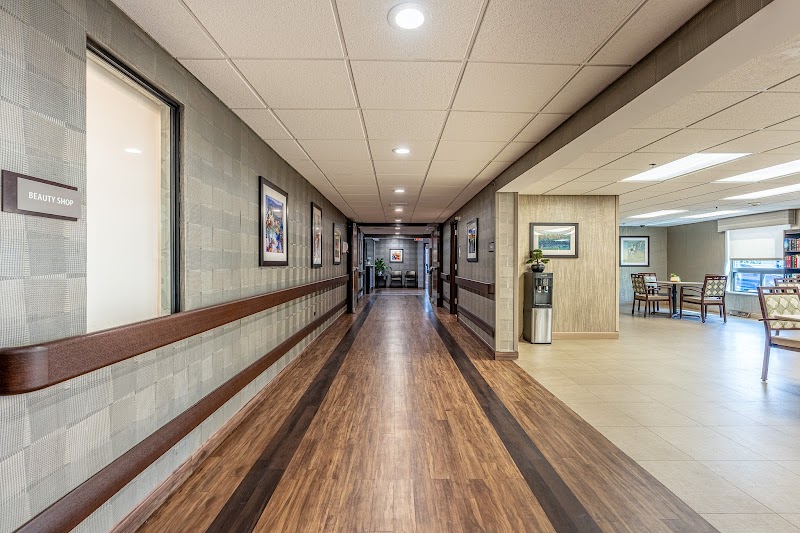
How is Pavilion Of Bridgeview, The Staffed?

CMS rates PAVILION OF BRIDGEVIEW, THE's staffing level at 2 out of 5 stars, which is below average compared to other nursing homes. Staff turnover is 34%, compared to the Illinois average of 46%. This relatively stable workforce can support continuity of care.

What Have Inspectors Found at Pavilion Of Bridgeview, The?

State health inspectors documented 31 deficiencies at PAVILION OF BRIDGEVIEW, THE during 2022 to 2025. These included: 4 that caused actual resident harm and 27 with potential for harm. Deficiencies causing actual harm indicate documented cases where residents experienced negative health consequences.
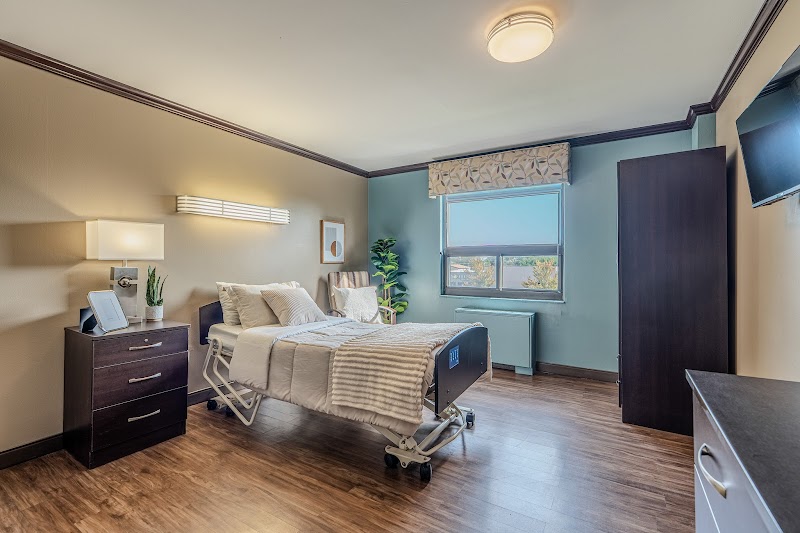
Who Owns and Operates Pavilion Of Bridgeview, The?

PAVILION OF BRIDGEVIEW, THE is owned by a for-profit company. For-profit facilities operate as businesses with obligations to shareholders or private owners. The facility is operated by PAVILION HEALTHCARE, a chain that manages multiple nursing homes. With 146 certified beds and approximately 135 residents (about 92% occupancy), it is a mid-sized facility located in BRIDGEVIEW, Illinois.
How Does Pavilion Of Bridgeview, The Compare to Other Illinois Nursing Homes?

Compared to the 100 nursing homes in Illinois, PAVILION OF BRIDGEVIEW, THE's overall rating (4 stars) is above the state average of 2.5, staff turnover (34%) is significantly lower than the state average of 46%, and health inspection rating (4 stars) is above the national benchmark.

What Should Families Ask When Visiting Pavilion Of Bridgeview, The?

Based on this facility's data, families visiting should ask: "Can you walk me through typical staffing levels on day, evening, and night shifts?" "Can I visit during a mealtime to observe dining assistance and food quality?" "How do you handle medical emergencies, and what is your hospital transfer rate?" "Can I speak with family members of current residents about their experience?" These questions are particularly relevant given the below-average staffing rating.

Is Pavilion Of Bridgeview, The Safe?

Based on CMS inspection data, PAVILION OF BRIDGEVIEW, THE has a clean safety record: no substantiated abuse findings (meaning no confirmed cases of resident harm), no Immediate Jeopardy citations (the most serious violation level indicating risk of serious injury or death), and is not on the Special Focus Facility watch list (a federal program monitoring the lowest-performing 1% of nursing homes). The facility has a 4-star overall rating and ranks #1 of 100 nursing homes in Illinois. While no facility is perfect, families should still ask about staff-to-resident ratios and recent inspection results during their visit.

Do Nurses at Pavilion Of Bridgeview, The Stick Around?

PAVILION OF BRIDGEVIEW, THE has a staff turnover rate of 34%, which is about average for Illinois nursing homes (state average: 46%). Moderate turnover is common in nursing homes, but families should still ask about staff tenure and how the facility maintains care continuity when employees leave.

Was Pavilion Of Bridgeview, The Ever Fined?

PAVILION OF BRIDGEVIEW, THE has been fined $29,706 across 2 penalty actions. This is below the Illinois average of $33,376. While any fine indicates a compliance issue, fines under $50,000 are relatively common and typically reflect isolated problems that were subsequently corrected. Families should ask what specific issues led to these fines and confirm they've been resolved.

Is Pavilion Of Bridgeview, The on Any Federal Watch List?

PAVILION OF BRIDGEVIEW, THE is not on any federal watch list. The most significant is the Special Focus Facility (SFF) program, which identifies the bottom 1% of nursing homes nationally based on persistent, serious quality problems. Not being on this list means the facility has avoided the pattern of deficiencies that triggers enhanced federal oversight. This is a positive indicator, though families should still review the facility's inspection history directly.