Aperion Care Burbank
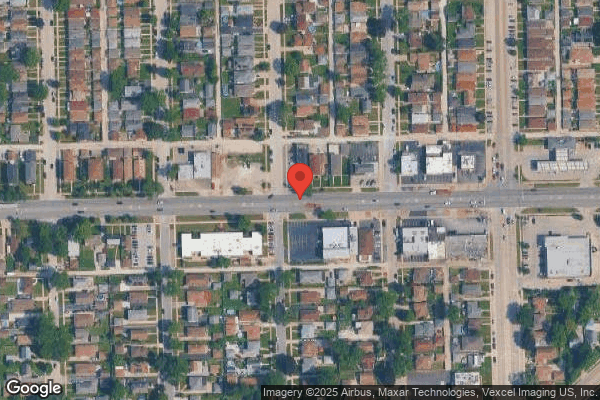
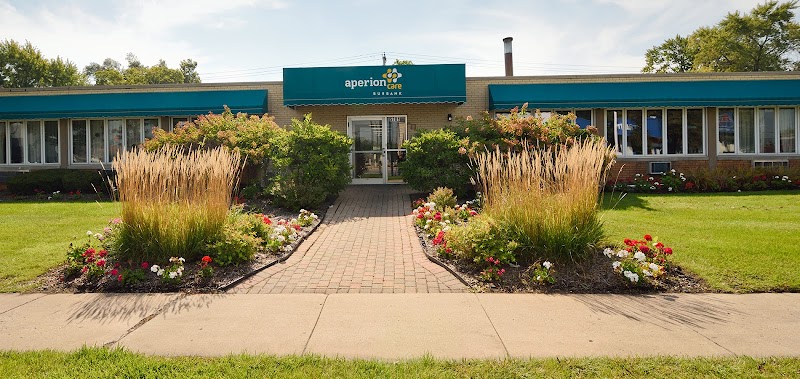
5701 WEST 79TH STREET, BURBANK, IL 60459 (708) 499-5400
For profit - Corporation 56 Beds APERION CARE Data: November 2025
Trust Grade
5/100
#331 of 665 in IL
Last Inspection: August 2024

Within standard 12-15 month inspection cycle. Federal law requires annual inspections.

Overview

Aperion Care Burbank has received a Trust Grade of F, indicating significant concerns about the quality of care provided. They rank #331 out of 665 facilities in Illinois, placing them in the top half, but their poor grade raises red flags. The facility is experiencing a worsening trend, with issues increasing from 8 in 2023 to 11 in 2024. Staffing is rated at 2 out of 5 stars, with a turnover rate of 55%, which is around the state average, suggesting that staff may not be very stable or experienced. However, they do provide more RN coverage than 79% of Illinois facilities, which is a positive aspect since RNs are crucial for catching potential problems. Unfortunately, the facility has incurred $85,241 in fines, which is concerning and indicates repeated compliance issues. Recent inspections revealed serious incidents, including a resident falling and sustaining a head injury due to inadequate assistance during transfers, and another resident developed a pressure ulcer that was not properly addressed. While some aspects like RN coverage are commendable, the overall quality and care have significant weaknesses that families should carefully consider.
Trust Score
F
5/100
In Illinois
#331/665
Top 49%
Safety Record
High Risk
Review needed
Inspections
Getting Worse
8 → 11 violations
Staff Stability
⚠ Watch
55% turnover. Above average. Higher turnover means staff may not know residents' routines.
Penalties
○ Average
$85,241 in fines. Higher than 64% of Illinois facilities. Some compliance issues.
Skilled Nurses
✓ Good
Each resident gets 52 minutes of Registered Nurse (RN) attention daily — more than average for Illinois. RNs are trained to catch health problems early.
Violations
⚠ Watch
23 deficiencies on record. Higher than average. Multiple issues found across inspections.
★★☆☆☆
2.0
Overall Rating
★★☆☆☆
2.0
Staff Levels
★★★☆☆
3.0
Care Quality
★★☆☆☆
2.0
Inspection Score
Stable
2023: 8 issues
2024: 11 issues

The Good

  • Full Sprinkler Coverage · Fire safety systems throughout facility
  • No fines on record

Facility shows strength in fire safety.

The Bad

2-Star Overall Rating

Below Illinois average (2.5)

Below average - review inspection findings carefully

Staff Turnover: 55%

Near Illinois avg (46%)

Higher turnover may affect care consistency

Federal Fines: $85,241

Well above median ($33,413)

Moderate penalties - review what triggered them

Chain: APERION CARE

Part of a multi-facility chain

Ask about local staffing decisions and management

The Ugly 23 deficiencies on record

7 actual harm
Nov 2024 2 deficiencies 1 Harm
SERIOUS (G) 📢 Someone Reported This

A family member, employee, or ombudsman was alarmed enough to file a formal complaint

Actual Harm - a resident was hurt due to facility failures

Accident Prevention (Tag F0689)

A resident was harmed · This affected 1 resident

**NOTE- TERMS IN BRACKETS HAVE BEEN EDITED TO PROTECT CONFIDENTIALITY** Based on interview and record review, the facility failed to provide the 2 persons assistance while turning one dependent reside...

Read full inspector narrative →
**NOTE- TERMS IN BRACKETS HAVE BEEN EDITED TO PROTECT CONFIDENTIALITY** Based on interview and record review, the facility failed to provide the 2 persons assistance while turning one dependent resident (R1) in bed. This failure affected one resident of three reviewed for accidents. This failure resulted in R1 falling to the floor and sustaining a frontal hematoma and laceration requiring glue to close. The findings include: R1 has diagnoses of Paraplegia, Complete, Dementia, Major Depressive Disorder, Mononeuropathy of Bilateral Lower Limbs, Cataract, Hemiplegia and Hemiparesis Following Cerebral Infarction, Contracture, and Immobility Syndrome (Paraplegic). Progress Note, dated 2/15/24, documents R1 is a 2 person assist with bed mobility. R1's MDS (Minimum Data Set), dated 8/7/24, notes a BIMS (Brief Interview for Mental Status) score of 3, impaired. R1 is noted to have no physical or verbal behavioral symptoms. R1 is noted to have Functional Limitation in Range of Motion to her lower extremity on both sides. Section GG notes R1 is dependent on staff for toileting hygiene, sit to lying or lying to sitting on side of the bed and transfers. R1 requires substantial/maximal assistance with the helper does more than half the effort for rolling left to right. R1 had 0 falls since the prior assessment. R1's fall risk assessment score is 14, dated 8/5/24. R1's Restorative Observations, dated 8/5/24, notes right and left lower extremity paralysis/paresis. Existing contracture or limited range of motion. R1's care plan designates requires assistance with bed mobility related to weakness. Intervention include provide assist of 1-2 staff as needed. R1's Fall Initial, dated 10/24/24, noted R1 noted on floor by CNA (Certified Nursing Assistant) upon during rounds. Unwitnessed fall, precipitating and contributing factors: R1 confused, forgets to use call light and incontinent. New injuries observed raised area/ swelling/discoloration noted to right forehead. 911 called. R1's IDT Fall Committee Meeting Note: resident was observed on the floor and stated she wanted to reposition herself and rolled over to the floor. Review of V4 incident statement documents R1 observed on the floor. 911 called and transported resident to hospital for evaluation. V8's statement, as I was doing rounds at about 4:00 AM I walked into (R1's) room to do a safety check and (R1) was on the floor. (R1) stated she rolled out of bed and hit her head. Both statements are dated 10/24/24. No statement from V13 was provided. Fire Department record, dated 10/24/24, documents, dispatched for the fall victim. Upon arrival crew located the patient laying supine on the floor. Alert and oriented times three. Patient's nurse stated the patient was being changed and cleaned in bed when she was rolled out. Patient hit her head on the floor when she fell. Staff had already performed general wound care to the patient's forehead. Patient's history and meds was obtained from staff on scene. Call received at 3:43AM and ambulance on scene at 3:50AM. Hospital records, dated 10/24/24, presents with mechanical fall out of bed, (R1) states nurses were changing her diaper and rolled her over and she kept rolling and fell to the ground. (R1) head strike with frontal hematoma. Additionally pain in knee with a hematoma just below the right knee. Contracture and external rotation of right hip. Pain in right knee with hematoma over right tibial tuberosity. Mental status: Alert and oriented to person, place, and time. Neurological: positive for headaches. Imaging results for bilateral hips, pelvis, knees, right tibia and femur listed as results pending. Emergency Department Course: 10/24/24 agreeable to return to nursing home after irrigation and skin glue repair of laceration. On 11/19/24 at 10:01AM, R1 was observed in bed with a bump on the right side of her forehead, scabbed over in the center, pink skin, and dry without drainage. R1 was asleep. On 11/19/24 at 11:45AM, V4 said, The CNA (Certified Nursing Assistant) called me to the room. I went to the resident room; after assessing (R1), I called 911 because the physician told me to send her to the hospital. At baseline, (R1) is alert and oriented x 2, and she is very responsive and has periods of confusion. (R1) is a 2 person assist for transfers and she typically sleeps throughout the night. (R1) had been checked not long before the fall. Whatever I wrote is what happened. V4 said she didn't remember more than what was written. On 11/19/24 at 1:57PM, V8, CNA, said, I don't know who (R1) is. I don't remember someone falling and getting a goose egg or large bump on their head. I have had people fall but I don't know their names. Some people are 2 person assists because they are combative. On 11/20/24 at 12:54PM, V13, CNA, said, On 10/24/24, there was only 2 CNAs that night. V13 I was coming to east hall (opposite R1 hall) and the nurse called me and said they had a fall. I went in the room and (R1) was on the floor next to the bed. V13 said she was trying to change her diaper and she fell. The surveyor who is she? V13 said V8 by name. V13 said, (V8) told me she was trying to change (R1's) diaper in bed. I did not help in turning or changing R1 before the fall, I was on the East hall. They called 911 and I came back to my hall. On 11/20/24 at 11:50AM, R1 was in bed alert and oriented place and self, confused about time. The surveyor asked R1 what happened to her head? R1 she had a raised area, size and shape of an egg, with a scab in the center. R1 said her head and ankle hurt. R1 said, You should have seen it before; it was bigger and ugly. The girl was turning me and was pushing me, and I kept saying stop, you're going to push me out. The girl kept pushing, and next thing I knew, I fell to the floor. V15, Director of Nursing, was brought to the room, and R1 repeated the incident that the girl pushed her out of bed. R1 said, It hurt my shoulder and my head. R1 was on air mattress. R1's right leg was contracted, with knee bent, and foot towards R1's torso. R1's left leg extended out in front of her. On 11/19/24 at 12:11PM V5, CNA, said, (R1) needs 2 persons to turn her. (R1) can't help with positioning and is heavy, and 2 people are needed to turn her. We don't have a rail for (R1). I have not seen R1 kick, fidget, or try to get of the bed. (R1's) cognition goes in and out; she does get confused. On 11/19/24 at 12:49PM V7, CNA, said, (R1) is 2 persons assist for cares. (R1) never tries to get up or out of bed. (R1) can't roll out of the bed, and she can't help to turn. (R1) is cooperative. (R1) had a fall; when I came back to work R1's face was swollen, all on the right side was swollen. (R1) said they were trying to roll her over and she fell. (R1) told me that. It can be possibly true. (R1) can't sit up in the bed and she can't stand or doesn't try to walk. On 11/20/24 at 10:25AM, V11, MDS (Minimum Data Set) Nurse, said, When the fall was discussed with the team, we were told the fire department picked (R1) off the floor after the fall. Per the documentation, (R1) rolled off the bed. At 10:43AM, V11 presented Functional Ability assessment, dated 8/7/24. V11 said, (R1's) bed mobility is dependent. (R1) needs 2 person assistance. In the facility when someone is dependent, we use 2 people or more. (R1) has no behaviors that would mean she needs 2 persons for assistance. For turning and repositioning in bed, (R1) needs 2 people. (R1) has no strength in arms and legs. (R1) does not have the strength to turn herself in bed. I have no idea how she rolled out of bed. When they talked about the fall, I wondered too. Vased on our assessment, (R1) is dependent and can't roll herself. The binder at the nurses' station tells how many people can help. The staff gets trained to use 2 people. The staff is told if they use 2 people for the transfer, then they need to use 2 for bed mobility and changing briefs. On 11/20/24 at 11:07AM, V10, Restorative Nurse, said, Anyone with a fall risk score below a 9 are at risk. (R1) was not part of the falling leaf program when she fell, and she is not now. Based on assessments, (R1) needs extensive assistance with care; she needs a lot of help. (R1) cannot get up, she can assist with slight movement, but staff would need to do the turning. (R1) can be between 1 to 2 person assist with bed mobility, it depends on staff. I can do (R1) by myself. It is in the [NAME] in computer chart; you can see how much staff (R1) needs for care. V10 read from [NAME] and documented BED MOBILITY with assistance. V10 said, There is no direction if she needs 1 or 2 person, it depends on the person. Observation record will show if she has contractures. (R1) was not able to walk before the fall. I went over the fall. (R1) is on a bed mobility restorative program. The program says (R1) will practice repositioning in bed, and she does not use rails for program. On 11/20/24 at 12:03PM, V12, Restorative Aid, said, For (R1's) bed mobility, I go in and I turn her side to side, with another person at all times. I move her contracted leg as much as she can bear. (R1's) right leg is contracted and her left leg she does not bend. The CNA and I are doing all the work to turn her, she is dependent on staff. I have never seen her turn or try to roll. In all the time I have worked with (R1), she has never tried to roll or initiate the roll in bed. On 11/20/24 at 12:28PM, V15, Director of Nursing, said, I started last week. Paraplegia affects the ability to use legs. Facility fall prevention program, dated 11/21/2017, states the program will include measures which determine the individual needs of each resident by assessing the risk of falls and implementation of appropriate interventions to provide necessary supervision and assistive devices are utilized as necessary. The fall prevention program includes the following components: use and implementation of professional standards of practice. Care plan incorporates: Preventative measures. Safety interventions will be implemented for each resident identified at risk. Direct care staff will be oriented and trained in the Fall Prevention Program. Residents will be observed approximately every two hours to ensure the resident is safely positioned in the bed or chair and provide care as assigned in accordance with the plan of care.
CONCERN (D) 📢 Someone Reported This

A family member, employee, or ombudsman was alarmed enough to file a formal complaint

Potential for Harm - no one hurt, but risky conditions existed

Medical Records (Tag F0842)

Could have caused harm · This affected 1 resident

Based on interviews and records reviewed the facility failed to have accurate record of one resident's fall (R1). This failure affected one of three residents reviewed for accuracy of resident records...

Read full inspector narrative →
Based on interviews and records reviewed the facility failed to have accurate record of one resident's fall (R1). This failure affected one of three residents reviewed for accuracy of resident records. The findings include: On 11/19/24 at 11:45AM, V4, Licensed Practical Nurse (LPN), note was with V4. V4 said, The CNA (Certified Nursing Assistant) called me to the room. Whatever I wrote is what happened. V4 said she didn't remember more than what was written. On 11/19/24 at 1:57PM V8, CNA, said, I don't know who (R1) is. I don't remember someone falling and getting a goose egg or large bump on their head. I have had people fall, but I don't know their names. On 11/20/24 at 12:54PM, V13, CNA, said, On 10/24/24, there was only 2 CNAs that night. I was coming to east hall (opposite R1's hall) and the nurse called me and said they had a fall. I went in the room, and (R1) was on the floor next to the bed. She was trying to change her diaper and she fell. The surveyor who is she? V13 said V8 by name. V13 said, (V8) told me she was trying to change (R1's) diaper in bed. I did not help in turning or changing (R1) before the fall, I was on the East hall. I did not give a statement for the fall. On 11/20/24 at 11:50AM, R1 was in bed, alert and oriented place and self, confused about time. The surveyor asked R1 what happened to her head? She had a raised area, size and shape of an egg, with a scab in the center. R1 said her head and ankle hurt. R1 said, You should have seen it before it was bigger and ugly. The girl was turning me and was pushing me, and I kept saying stop, you're going to push me out. The girl kept pushing, and next thing I knew, I fell to the floor. R1 repeated the incident for V15, Director of Nursing, that the girl pushed her out of bed. R1 said, It hurt my shoulder and my head. R1 was on an air mattress. R1's right leg was contracted, with knee bent and foot towards R1's torso. R1's left leg was extended out in front of her. On 11/20/24 at 12:28PM, V15, DON, said, I started here last week. On 11/20/24 at 1:10PM, V14, Regional Nurse Consultant, said, 'we are going to investigate what (V13) and (R1) said. R1 has diagnoses of Paraplegia, Complete, Dementia, Major Depressive Disorder, Mononeuropathy of Bilateral Lower Limbs, Cataract, Hemiplegia and Hemiparesis Following Cerebral Infarction, Contracture, and Immobility Syndrome (Paraplegic). R1's Fall Initial, dated 10/24/24, noted R1 was noted on floor by CNA upon during rounds. Unwitnessed fall, precipitating and contributing factors: R1 confused, forgets to use call light and incontinent. New injuries observed raised area/ swelling/discoloration noted to right forehead. 911 called. R1's IDT Fall Committee Meeting Note: resident was observed on the floor and stated she wanted to reposition herself and rolled over to the floor. There is no record of R1 stating she was rolled out of bed during care to the facility during the fall investigation. Fire Department record, dated 10/24/24, documents, dispatched for the fall victim. Upon arrival crew located the patient laying supine on the floor. Alert and oriented times three. Patient's nurse stated the patient was being changed and cleaned in bed when she was rolled out. Patient hit her head on the floor when she fell. Staff had already performed general wound care to the patient's forehead. Patient's history and meds was obtained from staff on scene. Call received at 3:43AM and ambulance on scene at 3:50AM. Hospital records, dated 10/24/24,documents, presents with mechanical fall out of bed, R1 states nurses were changing her diaper and rolled her over and she kept rolling and fell to the ground. R1 head strike with frontal hematoma.
Sept 2024 1 deficiency 1 Harm
SERIOUS (G) 📢 Someone Reported This

A family member, employee, or ombudsman was alarmed enough to file a formal complaint

Actual Harm - a resident was hurt due to facility failures

Accident Prevention (Tag F0689)

A resident was harmed · This affected 1 resident

Based on interview and record review, the facility failed to prevent a fall by providing a two person assist with bed mobility during ADL (Activity of Daily Living) care. This affected one of three (R...

Read full inspector narrative →
Based on interview and record review, the facility failed to prevent a fall by providing a two person assist with bed mobility during ADL (Activity of Daily Living) care. This affected one of three (R2) residents reviewed for safety during direct care. This resulted in rolling of the bed during direct care and sustaining a head injury requiring 9 sutures. Findings include: Facility final report to the department, dated 9/19/24, denotes thorough investigation completed, including staff and resident interviews. On 9/13/2024 resident was observed on the floor in his room. Head to toe assessment completed. Minimal bleeding noted to right forehead. First aid rendered, and pressure applied to area. Neuro checks initiated and completed. NO change in LOC (level of consciousness). ROM (range of motion) at baseline. Resident denied pain. MD (Medical Doctor) gave orders to send resident to ER (Emergency Room). Staff Interviews revealed staff was present at the time of the fall. Based on the investigation, the root cause of the fall was resident stated he was attempting to reposition himself in his bed, lost his balance, rolled over the side of the bed onto the edge of the floor mat. Staff could not reach him in time to break the fall. Resident returned from ER with sutures to the right forehead. CT (Computed Tomography) scans negative. Care plans were reviewed and updated. Facility incident report, dated 9/13/2024 for witness fall, location (room #) room, The CNA (Certified Nursing Assistant) verbalized that she was doing ADL (Activities of Daily Living) care in the morning, the resident abruptly turned on his side, lost his balance and rolled over. The CNA tried to grab the resident but was unsuccessful and the resident landed at the edge of the floormat. The resident verbalized that he rolled over and landed at the edge of the floor mat. Physical assessment done, vital signs taken and are all within normal limits, wound dressing done. Pain medication administered. Sent to (hospital name) for further evaluation. Injury type: face. Oriented to place, person, and situation. Predisposing environmental factors- there was already a safety intervention in place. Predisposing physiological factors- gait imbalance. R2 hospital records, dated 9/13/24, denotes chief complaint-fall, physical exam- 4 cm (centimeters) laceration overlying his forehead, simple. clinical impression head injury, forehead laceration. Laceration repair- location: forehead, length: 4 cm, number of sutures: 9 sutures. R2 MDS (Minimum Data Set), dated 07/29/24, denotes in section GG for functional abilities and goals denotes roll left and right: the ability to roll from lying on back to left and right side, and return to lying on back on the bed, 02 is noted, 02 substantial/maximal assistance- helper does more than half the effort. Helper lifts or holds trunk or limbs and provides more than half the effort. On 9/19/24 at 10:59am, R2 was observed alert to person, place, time, and situation, R2 observed sitting in a high back wheelchair. R2 said he was being washed up in bed, the girl told him to roll over, and he rolled too far and fell out of bed. R2 said he hit his head on the floor. R2 said it was one girl that was washing him up at the bedside. R2 observed with 2-inch laceration to the forehead with multiple sutures in place. R2 had purplish discoloration around the right eye and purplish discoloration under the left eye. R2 said he feels safe at the facility. On 9/19/24 at 11:37am, V1 (CNA-Certified Nursing Aide) said, I was giving (R2) a bed bath, I was washing (R2's) back, (R2) was laying on his left side, his back was facing me. (R2) turned a little more and fell out of bed. The air in the air mattress was increased on my side, and that contributed to pushing (R2) out of the bed. V1 said she did bring R2 closer to her before the turn, and R2 had room on the side of the bed for the turn. V1 said, The air in the air mattress always does that. V1 admitted to putting the air mattress on static mode when providing R2 care. V1 said, (R2) fell on the floor, he landed on the floor mat, but his head landed on the corner of the floor mat. V1 said she observed blood on R2's forehead. V1 said she went and got the nurse right away. V1 said she was on the opposite side of where R2 fell, and she could not catch R2 before he fell. V1 said R2 was not resisting to care. V1 said R2 is one assist with turning, repositioning, and bed mobility. V1 said the plan for R2 is to move his bed to the wall. V1 admitted the current plan of 2-persons assist with bed mobility for R2. V1 admitted the current plan of 2-person assist with turning and repositioning R2. On 9/19/24 at 1:50pm, V2 (Director of Nursing) said the facility does not put the air mattress on static mode during care / ADL care. V2 said after R2's fall, the facility plan is to use two people for turning and repositioning all residents that use an air mattress, regardless of body weight, V2 said this is for safety, it will prevent resident from rolling out of bed. On 9/19/24 at 2:42pm V4 (Restorative aide) said R2 need substantial to max assist with bed mobility, tuning from side to side. V4 said R2 needs two-person assist with bed mobility. V4 said R2 required two-persons assist prior to the fall. V4 said R2 sometimes does not want two people assisting him. On 9/20/24 at 10:13am V6 (Physical therapy manager) said R2 has weakness on his left side. R2 can roll to his left side but he will not stay in that position too long. V6 said she was not there when the fall occurred, she knows sometimes those air mattresses are slippery. R2's most current plan of care was presented by V2. R2's plan of care does not address the use of 2 person assist with bed mobility, does not address the use of two person assist with turning and repositioning while in use of air mattress. The operator's manual for R2's bed denotes, in static mode, the mattress provides a firm surface that makes it easier for the patient to transfer or position. The static mode will help ensure the patient does not bottom out when in a sitting position. Facility policy titled Fall prevention program, last revision date 11/21/2027, denotes to assure the safety of all residents in the facility, when possible. The program will include measures which determine the individual needs of each resident by assessing the risk of falls and implementation of appropriate intervention to provide necessary supervision and assistive devices are utilized as necessary. Quality Assurance Program will monitor the program to assure ongoing effectiveness. Guidelines: methods to identify risk factors, methods to identify residents at risk, assessments time frames, use and implementation of professional standards of practice, communication with direct care staff. Safety interventions will be implemented for each resident identified at risk. The admitting nurse and assigned CNA are responsible for initiating safety precautions at the time of admission. All assigned nursing personnel are responsible for ensuring ongoing precautions are put in place and consistently maintained. Facility Comprehensive care plan policy, with revision date of 11/17/17, denotes to develop a comprehensive care plan that directs the care team and incorporate the residents' goals, preference, and services that are to be furnished to attain or maintain the residents highest practicable physical, mental, and psychosocial well-being.
Aug 2024 7 deficiencies 2 Harm
SERIOUS (G)

Actual Harm - a resident was hurt due to facility failures

Pressure Ulcer Prevention (Tag F0686)

A resident was harmed · This affected 1 resident

**NOTE- TERMS IN BRACKETS HAVE BEEN EDITED TO PROTECT CONFIDENTIALITY** Based on observation, interview, and record review, the facility failed to identify, assess, and implement interventions in prev...

Read full inspector narrative →
**NOTE- TERMS IN BRACKETS HAVE BEEN EDITED TO PROTECT CONFIDENTIALITY** Based on observation, interview, and record review, the facility failed to identify, assess, and implement interventions in preventing the development of pressure ulcer for one (R19) of three residents in the sample of 37 reviewed for pressure ulcer. This failure resulted in R19 developing an unstageable pressure ulcer on the sacral area. Findings include: R19 is an [AGE] year old, female, initially admitted in the facility on 06/14/22, with diagnoses of Hemiplegia and Hemiparesis Following Unspecified Cerebrovascular Disease Affecting Right Dominant Side; Parkinson's Disease without Dyskinesia, Without Mention of Fluctuations; and Neurocognitive Disorder with Lewy Bodies. R19's MDS (Minimum Data Set), dated 07/02/24, recorded: Section C, BIMS (Brief Interview for Mental Status) score of 99, which means R19 was unable to complete the interview; and Section M0150 Risk of Pressure Ulcers/Injuries - R19 is at risk of developing pressure ulcers/injuries. R19's Care plan on potential for alteration in nutrition, dated 09/06/23, documented: Intervention - Assess for changes in elimination, changes in skin integrity (04/02/24). Braden Observation, dated 01/03/24, documented a score of 16.0, which means R19 is at risk for development of pressure ulcers. Weekly Skin Observation, dated 08/05/24, documented R19 had intact skin. Her progress notes, dated 08/05/24, also documented intact skin. R19's shower sheets, dated July 2024, recorded normal skin. Shower sheet, dated 08/06/24, documented an open area on R19's sacrum. There was no documentation in the progress notes/wound notes, dated 08/06/24, addressing R19's open area on the sacrum. R19's Wound Assessment Details, dated 08/09/24, recorded an Unstageable Facility Acquired Pressure Ulcer on the sacrum with measurements: 2.7cm length x 2.4 width x depth unknown. R19's POS (Physician Order Sheet), dated 08/09/24, documented: Cleanse sacrum with wound cleanser then apply calcium alginate with silver then cover with foam dressing daily and PRN (when needed) one time a day for wound. On 08/12/24 at 11:40 AM, R19 was observed in the dining room attending activities. She was sitting in her wheelchair. R19 was awakeand alert, but did not respond when greeted. On 8/12/2024 at 1:10 PM, V24 (Wound Care Nurse) was observed performing wound care on R19. R19 was in bed, on a low air loss mattress, turned to left side, with a pressure ulcer on the sacral area. The sacral pressure ulcer had 30% slough, 70% granulation tissue, with clean wound edges. There was no discharge noted on the wound. Current measurements were taken as 2.7 cm (centimeters) x 2.4 cm. According to V24, R19's sacral wound is an unstageable pressure ulcer, facility acquired. V24 added, She had an old pressure ulcer healed on the sacrum, it reopened. She is nutritionally compromised and also incontinent. On 08/14/24 at 11:05 AM, V23 (Wound Nurse Practitioner) stated, I was contacted a week ago regarding sacral wound; it is a facility acquired. The last time I saw her was last January 2024, she had a wound on the sacrum and was healed. It reopened 08/09/24 as Unstageable. I was first notified on 08/09/24, and I gave orders for calcium alginate. Facility has to follow its skin protocol. With fragile scar tissue, it can open in a matter of hours. On 08/14/24 at 11:10 AM, V24, Wound Care Nurse, stated, I am not here every day. When I came back on 08/09/24, I was informed that she has a wound on the sacrum. When I assessed it, it was Unstageable. I notified (V23) right away. If I am not here, nurses should notify Director of Nursing (DON), and she notifies (V23). On 08/14/24 at 11:15 AM, V6 (Registered Nurse, RN) stated, The CNAs (Certified Nurse Assistants) usually check residents' skin during shower and incontinence care. If there are any skin issues per CNA, I do the assessment myself and I tell DON. I also sent a message to the Wound Care Nurse. On 08/14/24 at 11:55 AM, V20, Certified Nursing Assistant/CNA stated skin assessments on residents are done during morning care and changing. If skin issues are noted, the CNAs notify the nurse on duty. On 08/14/24 at 12:23 PM, V2, Director of Nursing, stated, (V24) is the Wound Care Nurse, and she is not here every day. She works Mondays, Wednesdays, Fridays, and PRN (as needed). Floor nurses do wound care. The nurses and CNAs do the skin assessment. CNAs assess skin during ADL (activities of daily living) care. If there are skin issues, CNAs notify nurses. Nurses will do the assessment, and if there are open areas or redness, the nurse will call the Primary Physician and ask for orders or treatment orders. On (R19), the wound on the sacrum was identified by (V24) on 08/09/24 as Unstageable. I was not here that time. They just told me over the phone that she (R19) had an open area on the sacrum. I told (V24) to do the assessment and implement interventions and notify (V23). In the shower sheet, on 08/06/24, there was an open area. I believe (V22, CNA) reported it to the nurse. The nurse will document under wound observation note. Staff has to assess the body of residents on a daily basis. If they found any redness, they have to inform the nurse, and the nurse will check/assess and inform the doctor and put all the necessary interventions. There is a weekly skin assessment completed by treatment nurse. CNAs do the skin assessment and it is recorded on a daily basis via plan of care. The nurse who identified the skin issue will do the first treatment. V2 was asked to present documentation from the plan of care, dated 08/06/24, relative to R19's open area to the sacrum, but nothing was presented during the course of this survey. On 08/14/24 at 1:34 PM, V25 (Medical Director) stated, If a resident is not mobile, they have to move the resident every two hours or so, feed resident properly; change resident on time; and if there are skin issues, contact wound care team immediately. Facility's Policy titled, Pressure Ulcer Prevention, dated 1/15/18, documented the following: Purpose: To prevent and treat pressure sores/pressure injury. Guidelines: 2. Inspect the skin several times daily during bathing, hygiene, and repositioning measures. May use lotion on dry skin.
SERIOUS (G)

Actual Harm - a resident was hurt due to facility failures

Accident Prevention (Tag F0689)

A resident was harmed · This affected 1 resident

**NOTE- TERMS IN BRACKETS HAVE BEEN EDITED TO PROTECT CONFIDENTIALITY** Based on observation, interview, and record review, the facility failed to ensure one dependent resident (R21) was safely transp...

Read full inspector narrative →
**NOTE- TERMS IN BRACKETS HAVE BEEN EDITED TO PROTECT CONFIDENTIALITY** Based on observation, interview, and record review, the facility failed to ensure one dependent resident (R21) was safely transported in a wheelchair. This failure affected one (R21) of two residents reviewed for falls in a sample of 37. This failure resulted in R21 falling forward out of a wheelchair while being pushed by staff, hitting R21's head, and sustaining a contusion to right forehead, requiring transfer to a local hospital for emergent care. Findings include: R21 is an [AGE] year-old resident admitted to the facility on [DATE], with diagnoses including but not limited to generalized anxiety disorder, moderate intellectual disabilities, muscle wasting and atrophy, and history of falling. Minimum Data Set (MDS), dated [DATE], documents R21's Brief Interview for Mental Status (BIMS) score as 00, which indicates severe cognitive impairment. MDS, dated [DATE], also documents R21 is dependent on staff for wheelchair mobility and toileting hygiene; needs substantial/maximal assistance for oral hygiene, shower/bathe self, lower body dressing and putting on/taking off footwear; needs partial/moderate assistance is needed for upper body dressing and personal hygiene; and needs supervision or touching assistance for eating. Fall risk assessments completed on R21 document the following: 11/20/2023 - Fall risk score =18; At risk for falls 02/19/2024 - Fall risk score = 14; At risk for falls 04/29/2024 - Fall risk score = 14; At risk for falls 07/12/2024 - Fall risk score = 16; At risk for falls 07/29/2024 - Fall risk score = 14; At risk for falls Care plan for R21, dated 11/21/2023, documents: Focus: I am at risk for falls and injury related to falls. I have history of fall. Risk factors: Requiring assistance with activities of daily living (ADL's), possible medication side effects, cataract, right leg cast in place. Goal: I will have interventions in place and reviewed as needed to address risk for falls and injury related to fall through next review. Interventions: All essential/personal items placed closer to bed and within resident's reach. Send to hospital for evaluation. Neurochecks as ordered. Bump to Forehead: assess for pain, provided pain interventions as appropriate. Assess for altered cognition, decline in safety awareness. Assess for side effects of medications. Assist with ADLs, anticipate and meet resident's needs. Assist with toileting upon awakening, before and after meals, during rounds and before bedtime. Progress note, dated 07/12/2024, documents: While (V31) Certified Nursing Assistant (CNA) was wheeling (R21) back to his room; (R21) abruptly became agitated and noted to slide his body down landing on the floor and bumping his head. Certified Nursing Assistant unable to prevent fall in a timely manner due to resident's abrupt agitated behavior. Upon staff interview of incident, (R21) stated, 'I wanted her (referring to V31) to wheel me faster back to my room.' (R21) assisted safely back to wheelchair. Vital signs taken. Body assessment completed with discoloration/redness noted to the right side of forehead. Pain assessment completed with no complaints of pain made. Range of motion assessed and within resident's baseline. Level of consciousness within resident's normal range. First aid rendered to affected site per medical doctor (MD) orders. Neuro checks initiated. (R21) assisted safely to bed. Activities of daily living (ADL) care rendered. Bed in lowest position with call light in reach. MD made aware and gave orders to send (R21) to hospital for further evaluation. MD orders carried out. (V32) Case worker made aware. Plan of care ongoing. Progress note, dated 07/12/2024, documents: (R21) is being transported via ambulance to hospital. Order summary with signed bed hold policy sent with (R21). Report called and given to emergency room nurse. MD made aware. (V32) made aware. All departments made aware. Local hospital emergency room note dated, 07/12/2024, reads: [AGE] year-old man with history of hypertension, hyperlipidemia, benign prostatic hypertrophy, failure to thrive, not on blood thinners here for evaluation of head injury. Patient coming from facility after falling out of wheelchair, hit head, sustained small contusion to right forehead. Fall initial occurrence note, dated 07/12/2024, documents description of occurrence: While CNA (V31) was wheeling resident back to his room; resident abruptly became agitated and noted to slide his body down landing on the floor and bumping his head. CNA (V31) unable to prevent fall in timely manner due to resident's abrupt agitated behavior. On 08/12/2024 at 10:04 AM, R21 was sitting at table in a wheelchair in the activity room. Bruise noted to forehead, purple in color, and slightly smaller than quarter sized. On 08/13/2024 at 9:54 AM, R21 was in a wheelchair in activity room. Bruise remained purple in color and remained slightly smaller than a quarter in size. On 08/13/24 at 10:07 AM, V6 (Registered Nurse) stated, The bruise on his forehead is from his fall last July. The bruise did not fade out. He has not had any falls since last one in July. He sometimes is a bit aggressive with movement, but not all the time. No aggressive attitude. Bruise has remained since fall last month. It was a little bigger, not much. When asked what interventions are in place to keep him safe, V6 stated he had fall mats and low bed in place. On 08/14/24 at 9:49 AM, (V2) Director of Nursing (DON), stated, The bruise on (R21's) forehead has been there since his fall on 07/12/2024. It doesn't heal. He keeps messing with his face. He has not had a fall since the one in July. On 08/14/24 at 3:39 PM V29, (Certified Nursing Assistant/CNA), stated, I have worked here about a month. I have worked with (R21). He is a fall risk. The interventions we have in place are place call light in reach, lower his bed, and floor mats. I can't think of anything else at the moment. He does not have any behaviors. I am not aware of any falls. On 08/14/24 at 12:43 PM, V27 (CNA stated, I have worked here 3-4 months. I have taken care of (R21) before. Sometimes he gets a little aggressive. Nothing too crazy. Sometimes when someone sits where (R21) wants to sit, he makes noises or will ball up his fists and shake them. I have not been here when he has had a fall. I know (R21) is a high fall risk. The interventions we have in place are that we get (R21) up so someone is watching him. Staff is always in the activity/dining room so we can watch (R21). I am not aware of any other interventions in place to keep him from falling. On 08/14/24 at 11:57 AM, (V2) Director of Nursing (DON), stated, (R21) is confused. He can't walk and does not want to go to another facility. He loves it here. He has a lot of pictures. He has behaviors sometimes. He is resistive with care or does not want to be put to bed. He sometimes become restless. He has had 2 falls. The first one he rolled over on his bed, and the last one, (V31) was wheeling (R21), and he became restless and leaned forward and ended up on the floor. We sent him out to the hospital. The family is very concerned about him. They want him to be sent out to hospital for any fall. He sustained bruising to the head. He hit is head when he hit the floor. Sometimes he is just restless once in a while. When he is in bed he just moves around once in a while. He sometimes looks for his pictures, and if they are on the floor, he will try to get them. CNAs know if his pictures on the floor, to pick up and give to him because he will look for it. When he gets restless like that, we give him time and talk to him. He started to move that time in the wheelchair, and he lost his balance in the chair. A lot of times he is in the dining area, and he is leaning on the table. We are careful with him because he is leaning a lot of time without a table in front of him. We have people all the time in the dining room to watch him. I tell them to always check on (R21). He is high risk for falls. Interventions when he is in bed his bed is in low, low position and we have a floor mat, and always redirect him. When he is restless, we give him space and redirect him. We listen to him. We tell him to always stay by the table. He is alert with confusion. He is total care. He is dependent with all ADLS. Eating is fine, but he is total assist for everything else. When a risk assessment is 14-18, that means high risk for falls. For (R21) is high risk. Care plan states he has poor safety awareness. He is not aware what he is doing. V2 was asked when V31 was pushing him did he have leg rests? V2 replied, I am not sure. (R21) was sent out to the hospital; we did not report because it was no injury. His hematoma to forehead is not serious so we did not report it When asked, what is your expectation for CNA's? How should they propel resident in wheelchair? V2 responded, They should make sure resident is safe and tell them what they are doing and make sure they are not moving. Yes, if he leans forward, the CNA will tell him to lean back. The expectation is for the CNA to transport safely, so the resident is safe and does not get harmed. V2 was sked, When he fell on July 12, what intervention did you add to prevent further falls? V2 replied, We make sure to ask for assistance, and to stop pushing the chair. On 08/14/2024, investigation was provided, conducted by V2 regarding R21's fall on 07/12/2024. Investigation includes statement from V31 as follows: While I was wheeling resident back to his room; all of a sudden he became agitated and slide his body down landing on the floor and bumping his head. It happened so fast and I couldn't get to him fast enough. I then made sure he was safe and called for the nurse to see him. On 08/14/24 at 4:16 PM, V25, Medical Director, stated. I have been Medical Director since about 2015. I am not by the computer, but I can try to log in. I remember most of my patients, but do not remember everything. I am logging in now. I recall the name (for R21), but I want to be sure. I get calls on everything that happens. I am sure I was called regarding his fall. He has anxiety and dementia no other psych diagnoses. The psychiatrist would be better to ask that question. When asked what is the expectation MD has of staff regarding falls, he stated, Obviously they need to be assessed and sent to the hospital, and they will do evaluation and testing. When asked if this fall could have been prevented? V25 stated, Obviously they could have held them from falling forward. Did you ask the CNA? If I am on the street and see someone falling, I will try and prevent it. I think everyone will try to do that. I have not seen behaviors whenever I have seen him. Fall Prevention Program Policy, dated 11/28/12, states: Purpose: To assure the safety of all residents in the facility, when possible. The program will include measures which determine the individual needs of each resident by assessing the risk of falls and implementation of appropriate interventions to provide necessary supervision and assistive devices are utilized as necessary. Guidelines: The Fall Prevention Program includes the following components: Use and implementation of professional standards of practice. Standards: Safety interventions will be implemented for each resident identified at risk. Fall/safety interventions may include but are not limited to: Direct care staff will be oriented and trained in the Fall Prevention Program Transfer conveyances shall be used to transfer residents in accordance with the plan of care.
CONCERN (D)

Potential for Harm - no one hurt, but risky conditions existed

Medication Errors (Tag F0758)

Could have caused harm · This affected 1 resident

**NOTE- TERMS IN BRACKETS HAVE BEEN EDITED TO PROTECT CONFIDENTIALITY** Based on interview and record review, the facility failed to obtain informed consent prior to administering a psychotropic medic...

Read full inspector narrative →
**NOTE- TERMS IN BRACKETS HAVE BEEN EDITED TO PROTECT CONFIDENTIALITY** Based on interview and record review, the facility failed to obtain informed consent prior to administering a psychotropic medication for one (R17) of five residents reviewed for unnecessary medications in a sample of thirty-seven. Findings include: R17 is an [AGE] year-old resident admitted to the facility on [DATE], with diagnoses that include but are not limited to: Dementia, major depressive disorder, schizophrenia, and Alzheimer's disease. Medication order, dated 05/27/2023, documents order as: Lexapro Oral Tablet 20 mg - Give 0.5 tablet by mouth in the morning related to Major Depressive Disorder. Medication consent, dated 05/28/2023, documents Lexapro 0.5 mg tablet. On 08/14/24 at 11:57 AM, V2, Director of Nursing (DON), stated, Every one of us is in charge of psychotropic medication. I am DON so I am in charge. For (R17), her order is for 10 mg Lexapro. Stock is 20 mg, but her order is for 0.5 tab so 10 mg. This consent is not correct. It should be for 0.5 tab of 20 mg, not 0.5 mg tablet. I believe this is the only consent I have for this resident for Lexapro. This consent is not correct. I believe this is just a clerical error. I cannot answer for that nurse, and I did not check it either, so yes, it is wrong. It is written there. The consent should read Lexapro 20 mg - 0.5 tablet. It is confusing for my nurses, but the consent is wrong. We have the order, but the consent is wrong. On 08/15/24 at 12:41 PM, V2, DON, stated, I did not have any other consents for (R17) other than what I already provided to you. Psychotropic Medication-Gradual Dosage Reduction Policy, dated 11/28/12, documents: Purpose: To ensure that residents are not given psychotropic drugs unless psychotropic drug therapy is necessary to treat a specific or suspected condition as per current standards of practice and are prescribed at the lowest therapeutic dose to treat such conditions. Guidelines: Informed consent shall be obtained as follows: a) Psychotropic medication shall not be administered without the informed consent of the resident or the authorized resident representative.
CONCERN (D)

Potential for Harm - no one hurt, but risky conditions existed

Deficiency F0790 (Tag F0790)

Could have caused harm · This affected 1 resident

**NOTE- TERMS IN BRACKETS HAVE BEEN EDITED TO PROTECT CONFIDENTIALITY** Based on observation, interview, and record review, the facility failed to provide routine dental services to meet resident's ne...

Read full inspector narrative →
**NOTE- TERMS IN BRACKETS HAVE BEEN EDITED TO PROTECT CONFIDENTIALITY** Based on observation, interview, and record review, the facility failed to provide routine dental services to meet resident's needs. This failure applies to three of six residents (R41, R51, and R30) reviewed for dental services. Findings include: 1. R41 is a [AGE] year-old, male, initially admitted in the facility on 12/22/22, with diagnoses not limited to Chronic Respiratory failure with hypoxia, Chronic Congestive Heart Failure, Severe Protein with Malnutrition, and Chronic Kidney Disease stage 3. On 08/12/24 at 10:41 AM, observed R41 with missing and discolored teeth. R41's current oral/dental care plan, initiated 09/13/2023, documents he exhibits dental/mouth problems as evidenced by: some missing/broken natural teeth and has the potential for further alteration and/or complications related to it; continue all interventions including Coordinate arrangements for Dental care. There was no documentation in R41's medical records of being seen by the Dental Hygienist from June 2023 to August 2024. R41's dental consult, dated 06/13/2024, documents he was not seen by the dentist because he was in the hospital. 2. On 08/13/24 at 7:20 AM, observed R51's teeth with heavy tarter buildup and abnormal in appearance. R51 stated the staff don't clean her teeth, and she has lost some teeth since she's been in the facility. R51 is a [AGE] year-old female, initially admitted in the facility on 04/11/24, with diagnoses not limited to dysphasia, Type 2 Diabetes with out complications, Parkinson's Disease, and Systemic Lupus Erythematosus R51's current oral/dental care plan, initiated 04/11/2024, documents she has Impaired Dentition; obvious or likely cavity or broken natural teeth, continue interventions which include Coordinate arrangements for dental care as ordered. There was no documentation in R51's medical records of being seen by the Dental Hygienist from April 2024 to August 2024. 3. R30 is a [AGE] year-old female, initially admitted in the facility on 10/23/2018, with diagnoses not limited to Chronic Respiratory failure with hypoxia, Vitamin D Deficiency, Cerebral Ischemia, and Alzheimer's Disease with early onset. On 08/12/24 at 10:41 AM, R30 was sitting in the dining area; observed her to have missing, discolored teeth and tarter buildup. R30's care plan, initiated 10/13/2023, for oral/dental care documents she has an alteration in Dental status (broken or carious teeth). There was no documentation in R30's medical records of being seen by the Dental Hygienist from June 2023 to August 2024. On 08/14/24 at 11:12 AM, V2 (Director of Nursing) stated, Upon admission, residents receive an oral assessment and residents who require dental care are referred to the dental provider. All residents need to be seen by the hygienist because this is part of their services. When the hygienist comes to the facility, they are given the current census for that day, and will also be informed if there are any residents who need to be prioritized based on their dental status. If a resident is not available when the hygienist comes to the facility, Social Services is informed so that the resident is prioritized when the hygienist returns. When the dental hygienist or dentist sees residents, a report is provided to the facility for that visit. If residents refuse dental care, their families are notified and asked to assist with encouraging the residents to receive dental care. (R41), (R51), and (R30) have no history of refusing dental care. V2 stated R51 was admitted to the facility in April 2024, and she is not sure why she wasn't seen by the dental hygienist on 06/13/2024, when other residents were seen. V3 (Social Services Director) stated, The Dental Hygienist comes to the facility every three months and was last at the facility in June. When the dentist or hygienist sees residents and provides reports for those residents, the reports are uploaded to the resident's chart. On 08/14/24 at 3:50 PM, V1 (Administrator) agreed residents should be seen by the dental hygienist for regular cleaning. V2 (Director of Nursing) could not explain why R51 was not seen by the Dental Hygienist on 06/13/2024, although V2 confirmed she had returned to the facility from the hospital from the previous day. Email communication from the facility's Dental Provider to the facility, dated 08/14/2024, documents: Residents who are active on our dental program are seen about every three months by the dentist for an exam and also seen monthly, or every other month by the hygienist for a cleaning. They are able to see any resident at the facility for an assessment at no cost, even if the resident is not active on our dental program. The dentists and hygienists submit all of their visit notes in our clinical portal. These notes are sent to the facility as well.
CONCERN (F)

Potential for Harm - no one hurt, but risky conditions existed

Abuse Prevention Policies (Tag F0607)

Could have caused harm · This affected most or all residents

**NOTE- TERMS IN BRACKETS HAVE BEEN EDITED TO PROTECT CONFIDENTIALITY** Based on interview and record review, the facility failed to follow its policy in conducting background checks for eight (R1, R9...

Read full inspector narrative →
**NOTE- TERMS IN BRACKETS HAVE BEEN EDITED TO PROTECT CONFIDENTIALITY** Based on interview and record review, the facility failed to follow its policy in conducting background checks for eight (R1, R9, R13, R32, R34, R39, R46 and R55) of ten residents in a sample of 37 reviewed for admission screening; and failed to implement pre-employment screening on seven (V11, V12, V13, V14, V15, V16 and V17) of 10 employees reviewed for background checks. This deficiency has the potential to affect all 55 residents currently residing in the facility. Findings include: Per census report, there are 55 residents currently residing in the facility. The following documentation were presented during review of residents' admission screening: R1 is a [AGE] year old, female, initially admitted in the facility on 07/11/24, with diagnoses of Systemic Lupus Erythematosus, Unspecified. Her name was checked under Department of Dorrections, local, and national sex offender websites on 08/09/24, which was 29 days post admission. R9 is a [AGE] year old, female, admitted in the facility on 07/24/24, with diagnoses of Acute on Chronic Combined Systolic (Congestive) and Diastolic (Congestive) Heart Failure. Her CHIRP (Criminal History Information Response Process) was checked on 08/12/24, which was 19 days after admission in the facility. R13 is a [AGE] year old female, admitted in the facility on 06/28/24, with diagnoses of Unspecified Dementia, Unspecified Severity, without Behavioral Disturbance, Psychotic Disturbance, Mood Disturbance, and Anxiety. Her name was checked in the state and local sex offender websites on 07/16/24, and Department of Corrections on 07/16/24. R32 is a [AGE] year old, male, initially admitted in the facility on 07/23/24, with diagnoses of Hemiplegia and Hemiparesis Following Cerebral Infarction Affecting Right Dominant Side. His name was checked under national sex offender registry on 08/13/24. R34 is an [AGE] year old, male, admitted in the facility on 06/25/24, with diagnoses of Hemiplegia and Hemiparesis Following Cerebral Infarction Affecting Left Non-Dominant Side. His CHIRP was run on 07/16/24, which was 21 days post admission. His name was checked under local and national sex offender websites on 07/16/24 and in Department of Corrections on 07/16/24 also. R55 is a [AGE] year old, female, admitted in the facility on 06/28/24, with diagnoses of Metabolic Encephalopathy. Her name was checked in the Department of Corrections, state, and national sex offender websites on 07/03/24, which was 5 days post admission. R39 is a [AGE] year old, male, initially admitted in the facility on 08/03/24, with diagnoses of Vascular Dementia, Unspecified Severity, without Behavioral Disturbance, Psychotic Disturbance, Mood Disturbance, and Anxiety. Per facility's list of identified offenders, R39 is an identified offender currently residing in the facility. His name was checked under local and national sex offender registry on 08/13/24, which was 10 days post admission. His name was also checked under Department of Corrections on 08/13/24. R46 is a [AGE] year old, female, admitted in the facility on 07/22/24, with diagnoses of Cerebral Palsy. CHIRP was conducted on 08/12/24. Her name was checked under state sex offender website on 08/13/24. CNAs (Certified Nurse Assistants) V11, V12, V13, V14, and V15, V16 (Housekeeping), and V17 (Cook) has no documentation on when state health agency registry was checked. Facility also was not able to provide documentation that sex offender and Department of Corrections websites were checked prior to employment. There was no documentation provided by facility if Office of Inspector General was checked prior to their start of work. On 08/13/24 at 10:25 AM, V5 (Admissions Director) was asked regarding residents' admission screening. V5 stated, We do the CHIRP on the day they were admitted . State and National sex offender registry sites should be checked prior to admission. On 08/13/24 at 11:36 AM, V1 (Administrator) was also asked regarding staff and residents' admission background checks. V1 replied, For Healthcare Worker Background Check, healthcare registry and websites should be checked on the day of interview, prior to hire. I have staff who checked the background - the receptionist. No, we only checked the local department of health registry and nothing else. V4 (Receptionist) was interviewed on 08/13/24 at 11:50 AM regarding background checks on staff. V4 verbalized, I am the staff doing the background checks on staff and residents also. I didn't do any documentation except the registry. We only do the state health agency registry. We know that we have to check the sex offender websites; the Department of Corrections and others, but I did not do those. On 08/14/24 at 3:03 PM, V1 stated, Background checks on residents - we do CHIRP, sex offender websites; Department of Corrections prior to admission. For staff - we check the registry; sex offender websites and other sites on the day of interview. We do this to maintain patients' safety. On 08/14/24 at 4:16 PM, V25, Medical Director, stated, Staff have credentials and should be certified with what they are doing; facility should check background checks. We normally do it, that is the law, facility has to follow the protocol, it's the law and it is required. Facility's policy titled, admission of Identified Offender - Illinois, dated 1/24/18, stated the following: Guidelines: 1. Screened on Sex Offender web sites. 2. Criminal History record information requested. 3. Facility must review screenings and all supporting documentation to determine if the placement is appropriate. Facility's policy titled, Abuse Prevention and Reporting - Illinois, dated 10/24/22 documented the following: Guidelines: This facility affirms the right of our residents to be free from abuse, neglect, exploitation, misappropriation of property, deprivation of goods and services by staff or mistreatment. This facility therefore prohibits abuse, neglect, exploitation, misappropriation of property, and mistreatment of residents. In order to do so, the facility has attempted to establish a resident sensitive and resident secure environment. The purpose of this policy is to assure that the facility is doing all that is within its control to prevent occurrences of abuse, neglect, exploitation, misappropriation of property, deprivation of goods and services by staff and mistreatment of residents. This will be done by: Conducting pre-employment screening of employees and pre-admission screening of residents Abuse Prevention: Pre-Employment Screening of Potential Employees Prior to a new employee starting a work schedule, this facility will: Check the Illinois Health Care Worker Registry on any individual being hire for prior reports of abuse, neglect or misappropriation of resident property, previous fingerprint results, and the sex offender website links on the registry; and Initiate an Illinois State Police live scan fingerprint check for any unlicensed individual being hired without previous fingerprint check. Pre-admission Screening of Potential Residents This facility shall check the criminal history background check on any resident seeking admission to the facility in order to identify previous criminal convictions. This facility will: Request a Criminal History Background Check within 24 hours after admission of a new resident, Check for the resident's name on the Illinois Sex Offender Registration Website Check for the resident's name on the Illinois Department of Corrections sex registrant search page.
CONCERN (F)

Potential for Harm - no one hurt, but risky conditions existed

Food Safety (Tag F0812)

Could have caused harm · This affected most or all residents

Based on observation, interview, and record review, the facility failed to follow their policy and procedures for preparing and storing food under sanitary conditions by not ensuring all staff enterin...

Read full inspector narrative →
Based on observation, interview, and record review, the facility failed to follow their policy and procedures for preparing and storing food under sanitary conditions by not ensuring all staff entering the kitchen wore hair restraints, not discarding food past their used and best by dates, and not keeping the food prep area free of potentially contaminated objects. This failure applies to all 55 residents in the facility. Findings include: On 08/12/24 at 9:25 AM, a sign was on the door entering the kitchen stating hairnets must be worn when entering the kitchen. Observed multiple grilled cheese sandwiches with a use by date of 08/11/2024, and a fat free milk carton with best buy date of 08/08/2024 stored in the refrigerator. V17 (Cook) stated the grilled cheese sandwiches and milk carton should have been removed from the refrigerator. 16 fat free milk cartons, with a use by date of 08/11/2024, were stored in the freezer. On 08/12/24 at 11:02 AM, a personal phone was on the food prep table, where rolled up silverware were placed that were being used for lunch. V4 (Receptionist) walked through the kitchen twice without donning a hair net. A personal phone and car keys were on the top level of the food prep table where V28 (PM Cook) was preparing tuna. The facility's Hair Restraint Policy received and reviewed 08/14/2024 states: Staff shall wear hair restraints in all food production areas. The facility's Food Storage Policy received and reviewed 08/14/2024 states: Food shall be stored at appropriate methods to ensure the highest level of food safety. Discard food that has passed the expiration date, and discard food that has been prepared in the facility after seven days of storing under proper refrigeration. The facility's HACCP (Hazard Analysis and Critical Control Points) and Foodborne Illness Policy received and reviewed 08/14/2024 states: Physical hazards are part of the potential hazards that are typically the cause for food contamination. Physical hazards are foreign objects such as hair and dirt that inadvertently get into food. According to the CDC (Centers for Disease Control), using contaminated equipment has been identified among the common factors that are responsible for foodborne illness.
CONCERN (F)

Potential for Harm - no one hurt, but risky conditions existed

Deficiency F0925 (Tag F0925)

Could have caused harm · This affected most or all residents

Based on observation and record review, the facility failed to follow their policy and procedures for preparing food under sanitary conditions by not ensuring garbage and waste disposal in the food pr...

Read full inspector narrative →
Based on observation and record review, the facility failed to follow their policy and procedures for preparing food under sanitary conditions by not ensuring garbage and waste disposal in the food prep was covered when not in use. This failure applies to all 55 residents in the facility. Findings include: On 08/12/24 at 9:25 AM, surveyor observed gnats in the kitchen, and a large garbage bin next to the food prep area open without the lid when not in use. On 08/12/24 at 11:02 AM, surveyor observed a large garbage bin next to the food prep area, open without the lid when not in use. The facility's Garbage and Rubbish Disposal Policy received and reviewed 08/14/2024 states: Garbage and rubbish will be disposed of to ensure a clean and sanitary kitchen that does not encourage insects or rodents. All garbage and rubbish containing food waste are covered when not in immediate use so as to be inaccessible to vermin.
Mar 2024 1 deficiency 1 Harm
SERIOUS (G) 📢 Someone Reported This

A family member, employee, or ombudsman was alarmed enough to file a formal complaint

Actual Harm - a resident was hurt due to facility failures

Quality of Care (Tag F0684)

A resident was harmed · This affected 1 resident

**NOTE- TERMS IN BRACKETS HAVE BEEN EDITED TO PROTECT CONFIDENTIALITY** 2. R6's admission Record, (dated 3/8/24), shows she was admitted to the facility on [DATE], with a fracture of her left upper ar...

Read full inspector narrative →
**NOTE- TERMS IN BRACKETS HAVE BEEN EDITED TO PROTECT CONFIDENTIALITY** 2. R6's admission Record, (dated 3/8/24), shows she was admitted to the facility on [DATE], with a fracture of her left upper arm. R6's diagnoses include, but are not limited to, Alzheimer's disease, repeated falls, and syncope with collapse. R6's Order Summary Report (dated 3/8/24) shows and order from 1/18/24 whereby R6 is to keep a shoulder immobilizer in place. R6's Care Plan initiated on 1/18/24 shows R6 had an open reduction internal fixation (ORIF) (surgical repair) of her left upper arm bone (humerus) and should keep her shoulder immobilizer in place. R6's Fall-Initial Occurrence Note, dated 1/28/24, shows R6 had an unwitnessed fall in her room at 8:30 AM and was found lying on the floor. R6 reported pain to her right upper leg at a level of 7 on a 0 to 10 pain scale. R6 was sent to the hospital for evaluation and treatment. R6's Nurse's Note, dated 1/28/24 at 8:10 AM, shows R6 was found on the floor near her bedside with complaints of right leg pain. R6 was given pain medication, assisted back to bed, then the physician was notified and R6 was sent to the Emergency Department for evaluation. R6's Progress Note, dated 1/28/24 at 3:00 PM, shows R6 was admitted to the hospital with a diagnosis of closed, non-displaced fracture of her right femur. On 3/8/24 at 11:29 AM, V8, Registered Nurse (RN), said she was summoned to R6's room after the CNA (Certified Nursing Assistant) found R6 on the floor (on 1/28/24). V8 said she did an assessment of R6, and R6 complained of right hip pain. R6 said she and four staff members rolled a blanket under R6 and used it to lift R6 to her to bed. V8 said she then contacted the physician and was given orders to send R6 to the hospital. V8 said she called 911 and R6 was taken to the hospital by ambulance. V8 said she later contacted the hospital for an update on R6, and was told R6 had a hip fracture and would need surgery. On 3/8/24 at 12:04 PM, V2, Director of Nursing/DON, said if a resident is found on the floor, the nurse needs to assess the resident and if there is hip pain, they need to leave them on the floor. V2 said when the ambulance, (EMS) emergency medical services arrives, they need to immobilize the resident and transfer them. V2 said staff should not move them because it could add insult to injury. V2 also said staff should never use a blanket to transfer a patient off the floor; it's not safe and they could drop the person. The facility's Transfers-Manual Gait Belt and Mechanical Lifts Policy (revised 1/19/18) shows, .manual lifting is not permitted. Based on interview and record review, the facility failed to immediately transfer a resident to the emergency room after a fall that resulted in left hip pain and a fracture. This failure resulted in a surgical delay in treatment (more than 7 hour) for R5 who was experiencing left leg pain and had a fracture. The facility also failed to ensure a resident (R6) was not transferred from the floor after a fall and complaints of right upper leg pain prior to emergency medical services arriving. These failures apply to 2 of 4 residents (R5 and R6) reviewed for quality of care in the sample of 14. The findings include: 1. R5's Fall-Initial Occurrence Note, dated 12/29/23, shows R5 had a fall in the dining room at 1:46 PM and landed on the floor and her left side. R5's Progress Notes, dated 12/29/23 at 8:44 PM, shows, Left leg new onset of pain .MD (Medical Doctor) notified of new pain onset, new orders received. x-ray of left leg. R5's X-ray report shows a reported dated and time of 12/30/23 at 12:10 AM. The report shows R5 had an impacted intratrochanter fracture with varus deformity of the left hip. R5's Progress Notes, dated 12/30/23 at 7:30 AM, shows, Resident noted to have pain in left leg with grimaced face. MD made aware and ordered transfer out to hospital for evaluation. (more than 17 hours after R5's fall and 7 hours after receiving x-ray results showing a hip fracture) R5's Hospital Notes shows she had a left femur cephalomedullary nailing on 12/30/23. On 3/8/24 at 11:45 AM, V8 (Registered Nurse) said she did an assessment after R5 fell. V8 said R5 was not complaining of pain, but she also is not able to articulate very well if she is having pain. V8 said she called the physician and he ordered a STAT (Immediate) x-ray of her left leg to make sure there were no injuries. On 3/8/24 at 1:26 PM, V18 (Registered Nurse) said she works from 3:00 PM to 11:00 PM. V18 said on 12/29/23, it appeared R5 was having pain so she called the doctor and he ordered stat x-rays to be done. V18 said she was unsure if x-ray came during her shift. On 3/8/24 at 2:01 PM, V8, Registered Nurse, said when she came in on 12/30/23, she noticed R5 was in pain. R5 was grimacing. V8 said she looked up the x-ray results and it showed a fracture, so she called the physician and sent R5 out to the hospital. V8 said she is not sure when x-ray came, but the nurse should be looking for the results within three hours. V8 said sometimes the x-ray company calls to let the staff know of the results, but sometimes they just fax the report. V8 said it is the nurse's responsibility to follow up on any x-ray results. V8 said she is unsure why R5 was not sent out when the x-ray results were received. On 3/8/24 at 1:54 PM, V2 (Director of Nursing) said if a stat x-ray is ordered, the x-ray company will arrive within 3 hours and she thinks they have 4 hours to read the x-rays and send the report. V2 said typically the x-ray company calls if there is a fracture, but sometimes they just fax the report. V2 said she is not sure why it took so long for the nurse to review the report and send R5 out to the hospital. V2 said sometimes if a resident has had a fall and is having pain, they would not wait for x-ray results, they would just send the resident to the hospital for evaluation. The facility's Physician Notification of Laboratory/Radiology/Diagnostic Results Policy, revised on 3/14/18, shows, STAT or Same Day orders will be called to the laboratory service by the nurse who transcribes the order. A nurse is responsible for monitoring the receipt of test results. Test results should be reported to the physician or other practitioner who ordered them .x-ray or other diagnostic tests reveal suspected findings which may require immediate intervention including but not limited to: Pneumonia, New fracture.
Oct 2023 6 deficiencies 1 Harm
SERIOUS (G) 📢 Someone Reported This

A family member, employee, or ombudsman was alarmed enough to file a formal complaint

Actual Harm - a resident was hurt due to facility failures

Pressure Ulcer Prevention (Tag F0686)

A resident was harmed · This affected 1 resident

**NOTE- TERMS IN BRACKETS HAVE BEEN EDITED TO PROTECT CONFIDENTIALITY** Based on observation, interview, and record review, the facility failed to implement interventions in preventing the reopening o...

Read full inspector narrative →
**NOTE- TERMS IN BRACKETS HAVE BEEN EDITED TO PROTECT CONFIDENTIALITY** Based on observation, interview, and record review, the facility failed to implement interventions in preventing the reopening of a healed pressure ulcer and worsening of an existing pressure ulcer for two (R18 and R29) of four residents in the sample of 27 reviewed for skin breakdown. This deficiency resulted in R18's healed pressure ulcer on the sacrum reopening and being identified as a facility acquired, Stage 3 wound. Findings include: 1. R18 is a [AGE] year-old, male, admitted in the facility on 07/24/23. with diagnosis of Multiple Sclerosis. According to Skin Wound Report. dated 07/24/23, he was admitted with Stage 2 pressure injury on the sacrum, measuring 1cm (centimeter) x 1cm x 0.1cm. R18's Care plan on pressure ulcer to sacrum related to immobility, dated 08/23/23, documented: Interventions: Avoid positioning the resident on sacrum; Encourage and assist with turning and repositioning at regular intervals as allowed and tolerated every shift and when requested for comfort; Facility follow policies/protocols for the prevention/treatment of skin breakdown. R18's NP (Nurse Practitioner) wound notes recorded the following: 08/30/23 - Integumentary: Wound status is healed. The wound is currently classified as a Category/Stage II wound with etiology of pressure ulcer and is located on the sacrum. The wound measures 0cm length x 0cm width x 0cm depth. 09/20/23 - Integumentary: Wound status is open. The date acquired was 09/20/23. The wound is currently classified as a Category/Stage III wound with etiology of pressure ulcer and is located on the sacrum. The wound measures 7cm length x 8cm width x 0.2cm depth. There is a small amount of serosanguineous drainage noted. There is large granulation within the wound bed. There is a small amount of necrotic tissue within the wound bed including adherent slough. The periwound skin appearance exhibited: scarring, maceration. R18's Wound Assessment Details Report, dated 10/18/23, documented: Sacral wound/Stage 3 pressure ulcer, date identified 09/20/23, facility acquired. Measurements: 3cm x 4cm x 0.10cm. On 10/22/23 at 10:00 AM, R18 was observed lying on his back, in bed, with head of bed slightly elevated, watching TV (television). R18 was asked if he has an active wound. R18 stated, I have a pressure ulcer in the lower back. At 12:10 PM, wound care was observed on R18. R18 has an indwelling urinary catheter and wears an incontinence brief. It was observed the brief was dry, but with scant amount of serosanguineous drainage. V4 (Registered Nurse, RN) stated during wound care, The discharge was coming from his sacral wound. Treatment is clean with soap and water and apply (ointment) and zinc, leave it open to air. It was noted R18's wound is open, with pinkish to reddish wound bed. It was also observed 10:00 AM to 12:10 PM, R18 was lying on his back in bed, watching TV. On 10/23/23, random observation every 15 to 30 minutes interval was conducted from 10:10 AM to 12:48 PM, which showed R18 was not repositioned, nor was his sacral wound offloaded. From 10:10 AM to 11:00 AM, R18 was observed in bed, lying on his back in a semi-sitting position. From 11:15 AM to 12:10 PM, he was observed in bed, lying on his back, with head of bed elevated to a 90 degree-angle. From 12:35 PM to 12:48 PM, he was lying on his back again in a semi-sitting position. At 1:50 PM, he was again observed lying on his back, in bed. R18 was asked if he is turned or repositioned while in bed. R18 stated, No, I am not turned. When I'm asleep, I sleep on my side. But when I am awake, no, they don't turn me. On 10/23/23 at 12:56 PM, V7 (Wound Care Nurse) stated, He is verbal; does not like to be in the wheelchair. He was admitted with Stage 2 pressure ulcer on the sacrum on 07/24/23, healed on 08/30/23. No hospitalizations since admission. It reopened on 09/20/23 as Stage 3, measuring 7cm x 8cm x 0.2cm. It reopened because he is noncompliant with repositioning. On 10/23/23 at 1:39 PM, V6 (Certified Nurse Assistant, CNA) stated, He cannot turn himself, but he is willing to be turned. He is compliant with turning, awake and asleep. We do turning and repositioning every two hours. V4, Registered Nurse/RN was also asked regarding R18 and repositioning. V4 mentioned, We do side turning every two hours. He is able and compliant. On 10/23/23 at 4:23 PM, V9, Wound Nurse Practitioner stated, His sacral wound was healed on 08/30/23. It reopened to Stage 3 on 9/20/23. I don't have anything documented for the opening. Scar tissues are very fragile for reopening. After a wound is healed, it is prone to reopen. To prevent sacral pressure ulcer from developing and worsening, in general - turning and repositioning per protocol, in general about 2-3 hours; nutrition; use of low air loss mattress. I expect staff for early identification of skin issues and implementation of preventative measures like use of low air loss mattress, following up of nutritional status, offloading, turning and repositioning. R18's NP Wound Notes, dated 10/25/23, recorded: Wound status is open. The wound is currently classified as a Category/Stage III wound with etiology of pressure ulcer and is located on the sacrum. The wound measures 6cm length x 9cm width x 0.1cm depth. There is a small amount of serosanguineous drainage noted. There is medium red, pink granulation within the wound bed. The periwound skin appearance exhibited: scarring, maceration, ecchymosis. 2. R29 is a [AGE] year old male, admitted in the facility on 07/13/23 with diagnoses of Hemiplegia, Unspecified Affecting Left Nondominant Side; Nontraumatic Acute Subdural Hemorrhage; Malignant Neoplasm of Prostate; Cerebral Infarction, Unspecified and Aphasia Following Cerebral Infarction. According to MDS (Minimum Data Set), dated 7/20/23, Section M, R29 was admitted with a Stage 3 pressure ulcer. R29's care plan, dated 09/06/23, regarding pressure ulcer on sacral buttocks documented: Interventions: Educate the resident/family/caregivers as to causes of skin breakdown; including: transfer/positioning requirements; importance of taking care during ambulating/mobility, good nutrition and frequent positioning; Follow facility policies/protocols for the prevention/treatment of skin breakdown; Minimize pressure over bony prominences R29's Skin Wound Report, dated 07/13/23, recorded: Stage 3 pressure injury on the sacrum, measurements of 1cm x 1cm x 0.1cm. R29's NP (Nurse Practitioner) notes documented the following: 07/26/23 - Integumentary: The wound is currently classified as a Category/Stage III wound with etiology of pressure ulcer and is located on the sacrum. The wound measures 2.5cm length x 2.5cm width x 0.1cm depth. 08/02/23 - Integumentary: The wound is currently classified as Unstageable/Unclassified wound with etiology of pressure ulcer and is located on the sacrum. The wound measures 4cm length x 4.5cm width. There is large pink granulation within the wound bed. There is a small amount of necrotic tissue within the wound bed including eschar and adherent slough. 08/09/23 - Integumentary: The wound is currently classified as Unstageable/Unclassified wound with etiology of pressure ulcer and is located on the sacrum. The wound measures 5cm length x 5cm width. There is a large amount of necrotic tissue within the wound bed including adherent slough. The periwound skin appearance exhibited: scarring, maceration. On 10/23/23 at 12:56 PM, V7, Wound Care Nurse, stated, He is nonverbal; he is alert; he has a sacral ulcer, admitted with 07/19/23 his sacral wound increased in size to 2.5, he had multiple comorbidities, he had a history of head trauma. He had sepsis and infections; been in and out of the hospital. He also had prostate cancer. There were no recorded hospitalizations on R29 from 07/13/23 to 08/09/23 per census report. On 10/24/23 at 12:34 PM, V4 stated, He is turned every two hours. We put him in the reclining chair during daytime and stays there for about five to six hours. On 10/25/23 at 8:19 AM, V9, Wound Care Nurse Practittioner, was asked regarding length of time should a resident with sacral pressure ulcer can sit in the wheelchair or reclining chair. V9 stated, Residents who have pressure ulcers on the sacrum can be up and be put in wheelchair or reclining chair in two to four hours. Putting pressure on the sacrum will not allow blood flow. Blood flow facilitates wound healing. Facility's policy titled Skin Condition Assessment and Monitoring - Pressure and Non Pressure dated 6-8-18 stated in part but not limited to the following: Purpose: To establish guidelines for assessing, monitoring and documenting the presence of skin breakdown, pressure injuries and other non-pressure skin conditions and assuring interventions are implemented.
CONCERN (D) 📢 Someone Reported This

A family member, employee, or ombudsman was alarmed enough to file a formal complaint

Potential for Harm - no one hurt, but risky conditions existed

ADL Care (Tag F0677)

Could have caused harm · This affected 1 resident

**NOTE- TERMS IN BRACKETS HAVE BEEN EDITED TO PROTECT CONFIDENTIALITY** Based on interview and record review, the facility failed to ensure incontinence care was provided for a resident who required e...

Read full inspector narrative →
**NOTE- TERMS IN BRACKETS HAVE BEEN EDITED TO PROTECT CONFIDENTIALITY** Based on interview and record review, the facility failed to ensure incontinence care was provided for a resident who required extensive staff assistance with mobility and toileting. This failure applied to one of five residents (R157) reviewed for activities of daily living. Findings include: R157 was an [AGE] year-old male with a diagnoses history of Partial Paralysis Following a Stroke Affecting the Right Dominant Side, Pressure Ulcer of the Sacral Region, Dysphagia, Vascular Dementia, Metabolic Encephalopathy, Neuralgia and Neuritis, and Blindness in Right Eye, who was admitted to the facility 04/09/2023. R157's admission Minimum Data Set assessment documents he required extensive two-person assistance with bed mobility, transfers, and toilet use. R157's most current care plan, initiated 04/09/2023, documents he had a self-care deficit with activities of daily living with incomplete and unclear interventions regarding the level of staff assistance he required; he had bowel and bladder incontinence with incomplete and unclear interventions regarding what kind of assistance he required with incontinence care. R157's point of care incontinence care reports from August and September 2023 documents multiple shifts with missing information regarding incontinence care provision. On 10/24/23 at 3:35 PM, V2 (Director of Nursing) stated, The CNA's (Certified Nursing Assistants) sometimes provide incontinence care and forget to document it. Missing incontinence care documentation indicates it wasn't provided. The facility's incontinence care policy. reviewed 10/25/2023. states: An incontinent resident will be checked periodically in accordance with the assessed incontinent episodes or every two hours and provided perineal and genital care after each episode.
CONCERN (D) 📢 Someone Reported This

A family member, employee, or ombudsman was alarmed enough to file a formal complaint

Potential for Harm - no one hurt, but risky conditions existed

Deficiency F0692 (Tag F0692)

Could have caused harm · This affected 1 resident

**NOTE- TERMS IN BRACKETS HAVE BEEN EDITED TO PROTECT CONFIDENTIALITY** Based on observation, interview, and record review, the facility failed to follow their policy and procedures for ensuring resid...

Read full inspector narrative →
**NOTE- TERMS IN BRACKETS HAVE BEEN EDITED TO PROTECT CONFIDENTIALITY** Based on observation, interview, and record review, the facility failed to follow their policy and procedures for ensuring residents at risk for nutrition problems received adequate feeding supervision and assistance ,and failed to ensure consistent monitoring of meal intake. This failure applied to two of three residents (R51 and R157) reviewed for nutrition. Findings include: 1. R51 is a [AGE] year-old female with a diagnoses history of Skin Cancer, and Anxiety Disorder, who was admitted to the facility 08/11/2023. R51's Current care plan, Initiated 08/12/2023, documents she has a diagnosis of cancer and is at risk for weight loss, pain, fatigue and other complications related to cancer with interventions including observe nutritional intake and refer to dietician as needed; she has a nutritional problem or potential nutritional problem with interventions including encourage oral intake of meals and snacks. R51's nutrition progress note, dated 08/14/2023, documents she is patient admitted following hospitalization for syncope, colitis, nausea and vomiting, and Bone Cancer post chemo with a diagnoses history of Skin Cancer, Hypertension, and Chronic Kidney Disease; her meal intake is good at 75-100% consistently. Estimated daily nutritional needs are 1923-2456 kcals. Plan including advise regular diet. Follow via referrals and reports. No other nutrition progress notes were available in R51's medical records from 08/15/2023 - 10/24/2023. R51's admission Minimum Data Set assessment, dated 08/18/2023, documents she requires supervision when eating. R51's initial Dietary assessment, dated 08/21/2023, documents she requires supervision with meals. On 10/23/23 at 12:10 PM, R51 stated she lost 85 pounds due to lack of appetite and chemo medications. R51 stated once in a while they'll give her a protein shake, but otherwise her daughter brings it to her. R51 stated she is not receiving any appetite boosters. R51 stated her oncologist is aware of this, and suggested to keep up on protein such as chicken and bananas. R51 stated the facility does nothing to help with her appetite issues. On 10/23/23 at 12:14 PM, V16 (Certified Nursing Assistant) collected R51's lunch tray, which was mostly untouched. V16 asked R51 if she was done eating, and after R51 responded yes, V16 collected her tray without cueing, prompting, or encouraging her to eat more. R51 stated her lasagna is too salty and some of the food at the facility is really nasty which is to be expected. R51 stated she believes the quality of the food quality is a cause of her not wanting to eat. On 10/24/23 at 12:25 PM, V17 (Certified Nursing Assistant) collected R51's lunch tray, which was 25% eaten, without observing how much she ate or prompting, cueing, or encouraging her to eat more. R51 stated to the surveyor she would drink small vanilla protein shakes every other day if provided to her. R51 stated she doesn't believe they are aware of her need to consume protein supplements. R51's current physician orders do not include a protein shake supplement. R51's point of care reports for amount of food eaten from 10/01/2023 - 10/24/2023 documents she ate 75-100% of her lunch meal independently on 10/23/2023 and ate 51-75% of her lunch meal on 10/24/2023, which was inconsistent with the surveyors observations; and documents multiple meals with missing information regarding the amount of food eaten. On 10/24/23 12:44 PM, V2 (Director of Nursing) stated, (R51) is a cancer patient so we don't want her to lose weight unless she was obese. The CNA's (Certified Nursing Assistants) should be monitoring how much R51 eats because she eats independently, and inform the nurse of how much she ate as well as document the amount. the CNA's should prompt, cue, or encourage R51 to eat more or offer substitutes. V2 stated she has never heard of R51 complaining about the food. 2. R157 was an [AGE] year-old male, with a diagnoses history of Partial Paralysis Following a Stroke Affecting the Right Dominant Side, Pressure Ulcer of the Sacral Region, Dysphagia, Vascular Dementia, Metabolic Encephalopathy, Neuralgia and Neuritis, and Blindness in Right Eye, who was admitted to the facility 04/09/2023. R157's Most current care plan, initiated 04/09/2023, documents he has a self-care deficit with activities of daily living and requires assistance from staff with eating although the level of assistance is incomplete and unclear. R157's most current care plan, initiated 08/04/2023, documents he had a nutritional problem or potential nutritional problem, leaves 25% or more of my food uneaten at most meals with interventions including Monitor/document/report as needed any signs or symptoms of dysphagia including Pocketing, Choking, Coughing, Drooling, Holding food in mouth, Several attempts at swallowing, Refusing to eat, or Appearing concerned during meals; Monitor/record/report to physician any signs or symptoms of malnutrition including Emaciation (Cachexia), muscle wasting, significant weight loss: 3lbs in 1 week, >5% in 1 month, >7.5% in 3 months, >10% in 6 months with interventions including: Provide, serve diet as ordered. Monitor intake and record each meal; Registered Dietitian to evaluate and make diet change recommendations as needed. R157's weight measurements from June - September 2023 document he weighed 262.0 pounds 06/01/2023 and weighed 245 pounds 09/01/2023 indicating a 6% weight loss in three months ,and weighed 258 pounds 08/01/2023, indicating a 5% weight loss in one month. R157's nutrition assessment, dated 08/02/2023, documents his Diet to be regular; His meal intake decreased from last review to <50%. R157's quarterly Minimum Data Set assessment, dated 08/15/2023, documents he required supervision and setup only for meals. Per R157's census report he was in the hospital from [DATE] - 08/24/23, 09/06/23 - 09/12/23, and on 09/14/2023. R157's nutrition progress note, dated 08/25/2023, documents he was readmitted with acute weight loss during hospitalization: down 5% since 8/1/23. He was readmitted following hospitalization for altered mental status, elevated troponin, decreased appetite/weakness for two days. Meal intake poor on readmission. R157 returned from hospital with diet consistency downgraded to pureed. R157's progress note, dated 8/25/2023 at 6:57 PM, documents he is alert with periods of confusion noted at times. During dinner, R157 was noted to have poor motivation to eat dinner meal. Various attempts of encouragement made. Writer attempted offering meal substitutions numerous times; however, R157 still continues to deny meal. writer will continue to encourage and motivate resident during meals. Family made aware of R157's poor oral intake. R157's nutrition progress note, dated 09/05/2023, documents he had significant weight loss (5%) since last month due to acute weight loss during hospitalization last month. Meal intake variable. R157 takes dinner poorly and refuses at times; staff to encourage and offer substitutes. R157's August and September 2023 point of care reports for amount of food eaten and eating ability documents he was receiving fluctuating levels of assistance from total dependence on two or more staff with eating to setup and cleaning assistance only, and fluctuating levels of meal intake from total refusals to 76-100% of meals with most meals ranging from 0-75% with or without staff assistance as well as multiple meals in August with missing information for amount of food eaten and eating ability. On 10/24/23 at 3:30 PM, V18 (Registered Nurse) stated R157 was a feeder. V2 (Director of Nursing) stated R157 was originally able to feed himself, but after one of his hospitalizations was not able to feed himself. V2 could not confirm when R157 was not able to feed himself.
CONCERN (D)

Potential for Harm - no one hurt, but risky conditions existed

Deficiency F0790 (Tag F0790)

Could have caused harm · This affected 1 resident

**NOTE- TERMS IN BRACKETS HAVE BEEN EDITED TO PROTECT CONFIDENTIALITY** Based on observation, interview, and record reviews, the facility failed to follow their policy and procedure for providing dent...

Read full inspector narrative →
**NOTE- TERMS IN BRACKETS HAVE BEEN EDITED TO PROTECT CONFIDENTIALITY** Based on observation, interview, and record reviews, the facility failed to follow their policy and procedure for providing dental services by not following up on the status of the dentist's recommendation for a tooth extraction for a dependent resident with a loose tooth. This failure applied to one of one residents (R26) reviewed for dental care. Findings include: R26 is an [AGE] year old female with a diagnoses history of Cerebral Ischemia (Insufficient Blood Flow to the Brain), Apraxia Following Stroke, Parkinsonism, Abnormal Posture, Cancer of the Gastrointestinal Tract, and Dysphasia, who was admitted to the facility 02/27/2018. On 10/23/23 at 11:55 AM, V19 (Family Member) stated R26's loose tooth developed last year, and initially the facility wasn't going to have it pulled; then later was supposed to acquire a dentist, but there was no follow up to that. V19 stated he is concerned R26's loose tooth could fall out and she could accidentally swallow it and choke. V19 lifted R26's mouth open to reveal a front upper tooth loose. R26 was physically impaired, and unable to lift her own head up. R26's current oral/dental care plan, initiated 06/15/2023, documents she requires assistance and encouragement from staff with oral hygiene with interventions including discuss oral health concerns with resident/responsible party; report changes in oral status to physician; monitor effectiveness of medications/treatments as ordered. R26's dental consult form, dated 11/10/2022, documents V19 (Family Member) verbally agreed to extraction when in facility. Director of Nursing signed extraction consent form; patient understands that extraction of upper front tooth right of midline has been recommended due to not having alternative to extraction. Form includes both R26's son and dentist's signature. On 10/25/23 at 1:22 PM, V2 (Director of Nursing) stated once the Dentist comes, the facility relies on the Dentist to schedule the extraction. V2 stated if the Dentist never schedules the extraction, she doesn't know what would be the next step, because it's the Dentist's responsibility to schedule the extractions because they see residents once a month. On 10/25/23 at 1:49 PM V1 (Administrator) stated some of the Dentists will pull the teeth in the nursing facility, and if necessary, they will refer residents out to a specialist. V1 stated maybe the Director of Nursing should have followed up on the recommendation for R26's tooth extraction. V1 stated the Dentist the facility informed him R26 was not able to stand long enough for the x-rays, which is why they didn't complete the extraction. V1 stated the Dentist informed V1 they had notified V19 (Family Member) of this. V1 stated if R26 couldn't stand, the x-ray the facility would ask what the Dentist's recommendation would be for what would happen next, such as monitoring the tooth. V1 stated if the recommendation would be to monitor the tooth, the facility would monitor the tooth each day. V1 stated the importance of monitoring R26's tooth would be prevent ingesting the tooth, developing an infection in the area, or developing any pain in the area. The facility's Oral-Dental Care Policy, reviewed 10/25/2023, states: The purpose is To assess for the presence of absent teeth and state of oral hygiene and need for referral to dentist. Notify Social Service if Dental referral is needed.
CONCERN (E) 📢 Someone Reported This

A family member, employee, or ombudsman was alarmed enough to file a formal complaint

Potential for Harm - no one hurt, but risky conditions existed

Pharmacy Services (Tag F0755)

Could have caused harm · This affected multiple residents

Based on observation, interview, and record review, the facility failed to follow professional standards of practice by not administering medications within the scheduled times ordered, failed to have...

Read full inspector narrative →
Based on observation, interview, and record review, the facility failed to follow professional standards of practice by not administering medications within the scheduled times ordered, failed to have a physician order before administering a medication, and failed to ensure that staff do not document medications as given in the electronic medication administration record (EMAR) without administering the medications to residents. This failure affected three residents (R18, R44 and R208) of five residents reviewed for medication administration and have the potential to affect all 51 residents currently residing in the facility. Findings include: 10/22/23 at 10:15AM, surveyor asked V4 (Registered Nurse/RN) if she is still passing medication, and she said she is done with med pass. During observation of the residents on the floor, R208 stated at 10:18AM, she has not received her morning medication. At 10:34AM, R44 also told surveyor he has not received his medication; he does not know what the delay is. At 10:40 AM, surveyor asked V3 (Licensed Practical Nurse/LPN) the assigned nurse for R44 and R208 if she is done with medication pass, and she said yes. Surveyor then informed her R44 and R208 stated they have not received their morning medication and she said, Oh, I think I have a few more residents on that end. At 10:40AM, followed V3 (LPN) opened her electronic medication administration record in the computer, and it showed all R208's morning medications have turned green in color. Surveyor asked V3 if the green color indicated the medications have been given, and she said yes. V3 prepared 9 pills for R208 and gave them to the resident, but did not sign the electronic medical administration record (EMAR) (because it was already signed). At 11:00AM, V3 started to prepare medications for R44, and again all his medications were already signed out as given. V3 prepared 6 pills for R44 administered them, and did not sign the EMAR. As V3 was leaving resident's room, he was coughing, and V3 asked him if he wanted cough syrup, resident said yes. V3 went to her medication cart and poured 10ml of Robitusssin cough syrup and administered it to resident. V3 was asked her why the residents' medications were signed out before being administered and she said, I was going to come back and give it, I was just busy this morning, I know I am not supposed to sign out the medications before giving them. The medications administered to R208 and R44 were scheduled to be given at 9:00AM. R44 did not any physician's order for a cough syrup per record review. Review of EMAR showed V3 signed out all the medications as given at 9:00AM. On 10/22/23 at 1:05PM, observed V4 (RN) for medication pass for R18, and noted the three due medications were already signed out as given before we got to the resident's room. V4 prepared three pills and administered them to the resident, did not sign the EMAR. V4 said, Oh, I must have clicked it in error; I am not supposed to sign the medications before they are given. On 10/23/2023 at 3:15PM, V2 (Director of Nursing/DON) said, Nurses must follow the five rights of medication administration: right medication, right time, right dose, right patient, and right route. Medications should be signed out after it is given; nurses should check the medication for the due time, administer the medications and then sign, this is done in case the resident refuses any of the medications so the nurse can document the refusal.4 At 12:17PM, V2 said the facility requires a doctor's order before administering any medication to a resident, including cough syrup. Medication administration policy (undated) states in part, medications are administered as prescribed in accordance with good nursing principles and practice and only by persons legally authorized to do so. Under procedures 5. Five rights- right resident, right drug, right dose, right route, and right time are applied for each medication being administered. Under administrations: 2. Medications are administered in accordance with written orders of the prescriber. 10. Medications are administered 1 hour before or after scheduled time. Documentation (including electronic), 1. The individual who administers the medication dose records the administration on the resident's MAR directly after the medication is given.
CONCERN (E)

Potential for Harm - no one hurt, but risky conditions existed

Unnecessary Medications (Tag F0759)

Could have caused harm · This affected multiple residents

Based on observation, interview, and record review, the facility failed to have a five percent (5%) or lower medication error rate. There were ten medication errors out of 25 medication opportunities ...

Read full inspector narrative →
Based on observation, interview, and record review, the facility failed to have a five percent (5%) or lower medication error rate. There were ten medication errors out of 25 medication opportunities resulting in a 40% medication error rate. This failure applied to four (R18, R44, R51 and R208) residents observed during the medication administration task. Findings include: On 10/22/2023 at 10:50AM, observed medication administration for R208 with V3 (Licensed Practical Nurse/LPN). V3 opened her electronic medication administration record (EMAR) for the resident to prepare her medications, and the surveyor noticed the resident's medications are green in color, indicating they have been administered. V3 stated she was not supposed to sign off the medications before they are given. V3 then prepared nine different pills in separate medicine cups for the resident, and confirmed she has nine pills when surveyor asked her to confirm her own records. V3 administered the nine pills to the resident. Review of physician order for the resident during medication reconciliation showed the following medications that were scheduled for 9:00AM, were signed out as given at 9:00AM by V3 but were not administered to the resident during medication administration observation. 1.Budesonide-Formoterol Fumarate Inhalation Aerosol 160-4.5 MCG/ACT (Budesonide-Formoterol Fumarate Dihydrate)1 puff inhale orally two times a day related to unspecified asthma, uncomplicated. 2.Cetirizine HCl Oral Tablet 10 MG (Cetirizine HCl) Give 1 tablet by mouth one time a day for Allergies, Carvedilol Oral Tablet 6.25 MG 3. (Carvedilol) Give 1 tablet by mouth two times a day related to hypertensive heart disease with heart failure. 4. Sertraline HCl Oral Tablet 50 MG (Sertraline HCl) Give 2 tablet by mouth one time a day related to major depressive disorder, recurrent, unspecified.5. hydralazine HCl Oral Tablet 100 MG (Hydralazine HCl) Give 1 tablet by mouth three times a day for vasodilator, lower blood pressure related to hypertensive heart disease with heart failure. 6. Norethindrone-Eth Estradiol Oral Tablet 1-35 MG-MCG (Norethindrone & Eth Estradiol) Give 1 tablet by mouth one time a day for Oral contraceptive, Treat menstrual bleeding. On 10/22/2023 at 11:00AM, observed medication administration for R44 with V3, and noted again the resident's medications in the electronic medication administration record (EMAR) are green in color and have been signed as given by V3. She prepared 6 medications for the resident and administered a 10ml of Robitussin cough syrup to R44. Per medication reconciliation, R44 have an order for the following medications that were signed out but not given: 1. Allopurinol Tablet 100 MG. Give 1 tablet by mouth one time a day for Gout related to gout, unspecified. 2. Tamsulosin HCl Capsule 0.4 MG Give 1 capsule by mouth one time a day related to retnetion of urine, unspecified. R44 does not have any physician order for Robitussin. On 10/22/2023 at 1:05PM, observed medication administration with V4 (RN for R18), and again noted resident's medications are green in color, already signed out as given. When presented with this observation, V4 said, I don't know what happened, I might have clicked them in error, I am not supposed to sign the medications before they are given. V4 prepared three medications and administered them to R18. Per medication reconciliation, R18 has an order for the following medication that was not administered: Cyclobenzaprine HCl Oral Tablet 5 MG (Cyclobenzaprine HCl) Give 1 tablet by mouth three times a day related to Multiple Sclerosis. On 10/23/2023 at 3:15PM, V2 (Director of Nursing/DON) said, Nurses must follow the five rights of medication administration: right medication, right time, right dose, right patient, and right route. Medications should be signed out after it is given; nurses should check the medication for the due time, administer the medications and then sign. This is done in case the resident refuses any of the medications so the nurse can document the refusal. At 12:17PM, V2 said the facility requires a doctor's order before administering any medication including cough syrup to a resident. Medication administration policy (undated) states in part, medications are administered as prescribed in accordance with good nursing principles and practice and only by persons legally authorized to do so. Under procedures 5. Five rights- right resident, right drug, right dose, right route, and right time are applied for each medication being administered. Under administrations: 2. Medications are administered in accordance with written orders of the prescriber. 10. Medications are administered 1 hour before or after scheduled time. Documentation (including electronic), 1. The individual who administers the medication dose records the administration on the resident's MAR directly after the medication is given.
Sept 2023 2 deficiencies 1 Harm
SERIOUS (G) 📢 Someone Reported This

A family member, employee, or ombudsman was alarmed enough to file a formal complaint

Actual Harm - a resident was hurt due to facility failures

Free from Abuse/Neglect (Tag F0600)

A resident was harmed · This affected 1 resident

**NOTE- TERMS IN BRACKETS HAVE BEEN EDITED TO PROTECT CONFIDENTIALITY** Based on interview and record review, the facility failed to prevent or determine how an injury of unknown origin occurred. This...

Read full inspector narrative →
**NOTE- TERMS IN BRACKETS HAVE BEEN EDITED TO PROTECT CONFIDENTIALITY** Based on interview and record review, the facility failed to prevent or determine how an injury of unknown origin occurred. This affected one of three residents (R6) reviewed injury of unknown origin. This failure resulted in R6 sustaining an injury to the right knee receiving seven sutures at the local hospital. Findings Include: R6 is a [AGE] year old with the following diagnosis: chronic venous hypertension with ulcer of the left lower extremity, venous, insufficiency, chronic obstructive pulmonary disease, congestive heart failure, and Alzheimer's disease. R6's Care Plan, dated 8/23/23, documents R6 has a potential for impairment of skin integrity related to fragile skin, impaired mobility, and incontinence. The Change of Condition Evaluation, dated 8/27/23, documents R6 had a change in condition of a skin wound and this occurred in the afternoon. R6 had no changes in mental status observed. There were no other changes of condition documented besides a skin tear to the right knee. The Hospital Records, dated 8/27/23, documents R6 was sent to the hospital when staff noted a linear laceration to the right knee. R6 does not have any pain and does not recall how this occurred. Staff denied any falls or witnesses to the injury. R6 was alert and oriented times two. The laceration to the right knee was 2.5 cm horizontally. R6 received seven sutures to the right knee during a laceration repair. On 9/6/23 at 5:35PM, V9 (Wound Nurse Practitioner) stated the older a resident becomes the more fragile skin becomes. V9 endorsed if a resident has a disease related to lack of circulation then wounds can develop easier than residents who don't have circulation issues. V1 stated the facility should be monitoring residents as best as they can to prevent any wounds. On 9/7/23 at 1:48PM, V2 (Director of Nursing/DON) stated when V14 (CNA) got R6 in bed, a skin tear was found to R6's right knee. V2 endorsed R6 was not able to say what happened. V2 reported assuming R6 bumped R6's leg, but was not able to confidentially say how the wound occurred. V1 stated the skin tear was about one to two inches long. V2 reported R6 was sent the hospital because of the skin tear and increased confusion. Per the documentation, R6 did not have any changes in mental status. V2 stated seeing a blood stain on R6's pants once R6 was in bed but was not able to see the blood stain before due to R6 having dark pants. On 9/7/23 at 2:29PM, V14 stated V14 put R6 in the bed and started to undress R6. V14 endorsed when V14 pulled on R6's pants, a cut was found to the top of the right knee. V14 stated when V14 asked R6 what happened, R6 couldn't say. V14 denied any falls and denied R6 hitting any part of R6's body when getting into bed. On 9/8/23 at 12:42PM, V1 (Administrator) stated R6 was sent to the hospital after obtaining a new skin tear in the facility. When asked what an injury of unknown origin is, V1 replied, It's an injury that can't be explained how it happened by the resident or staff. V1 denied R6 being able to explain how the skin tear happened. The policy titled, Abuse, Neglect and Misappropriation of Resident Property, that has no date documents, .Purpose: This policy's purpose is to ensure that resident rights are protected by providing a method for investigation and reporting of allegations of mistreatment, neglect, abuse, including injuries of unknown source, unusual occurrences and misappropriation of resident property .Policy Interpretation and Implementation: . 8. The facility will ensure that all allegations of mistreatment, neglect or abuse, including injuries of unknown source, are reported immediately to the Administrator of the facility. The Administrator and/or other officials shall notify ISDH in accordance with ISDH Guidelines.
CONCERN (D) 📢 Someone Reported This

A family member, employee, or ombudsman was alarmed enough to file a formal complaint

Potential for Harm - no one hurt, but risky conditions existed

Report Alleged Abuse (Tag F0609)

Could have caused harm · This affected 1 resident

**NOTE- TERMS IN BRACKETS HAVE BEEN EDITED TO PROTECT CONFIDENTIALITY** Based on interview and record review, the facility failed to follow their abuse policy by not reporting an injury of unknown ori...

Read full inspector narrative →
**NOTE- TERMS IN BRACKETS HAVE BEEN EDITED TO PROTECT CONFIDENTIALITY** Based on interview and record review, the facility failed to follow their abuse policy by not reporting an injury of unknown origin to the regulatory agency. This affected one of three (R6) residents reviewed for abuse policy reporting. Findings Include: R6 is a [AGE] year old with the following diagnosis: chronic venous hypertension with ulcer of the left lower extremity, venous, insufficiency, chronic obstructive pulmonary disease, congestive heart failure, and Alzheimer's disease. The Change of Condition Evaluation, dated 8/27/23, documents R6 had a change in condition of a skin wound and this occurred in the afternoon. There were no other changes of condition documented besides a skin tear to the right knee. The Hospital Records, dated 8/27/23, documents R6 was sent to the hospital when staff noted a linear laceration to the right knee. R6 does not have any pain and does not recall how this occurred. Staff denied any falls or witnesses to the injury. The laceration to the right knee was 2.5 cm horizontally. R6 received seven sutures to the right knee during a laceration repair. On 9/7/23 at 1:48PM, V2 (Director of Nursing/DON) stated when V14 (CNA) got R6 in bed, a skin tear was found to R6's right knee. V2 endorsed R6 was not able to say what happened. V2 reported R6 was sent the hospital because of the skin tear. V2 stated, I reported it to the doctor and the Administrator. It didn't need to be reported to IDPH (Illinois Department of Public Health) because it wasn't a fall. On 9/8/23 at 12:42PM, V1 (Administrator) stated R6 was sent to the hospital after obtaining a new skin tear in the facility. When asked what an injury of unknown origin is, V1 replied, It's an injury that can't be explained how it happened by the resident or staff. V1 endorsed a risk management investigation is completed within the facility, but is not sent to IDPH. V1 stated, We didn't need to send an incident report to IDPH because it was a skin tear. Skin tears do not need to be reported. You might not know how a skin tear happened so it doesn't need to be reported. V1 denied R6 being able to explain how the skin tear happened. There is no documentation the facility notified the IDPH Regional Office of the injury of unknown origin for R6. The policy titled, Abuse, Neglect and Misappropriation of Resident Property, that has no date documents, .Purpose: This policy's purpose is to ensure that resident rights are protected by providing a method for investigation and reporting of allegations of mistreatment, neglect, abuse, including injuries of unknown source, unusual occurrences and misappropriation of resident property .Policy Interpretation and Implementation: . 8. The facility will ensure that all allegations of mistreatment, neglect or abuse, including injuries of unknown source, are reported immediately to the Administrator of the facility. The Administrator and/or other officials shall notify ISDH in accordance with ISDH Guidelines.
Aug 2022 4 deficiencies
CONCERN (D)

Potential for Harm - no one hurt, but risky conditions existed

Deficiency F0757 (Tag F0757)

Could have caused harm · This affected 1 resident

**NOTE- TERMS IN BRACKETS HAVE BEEN EDITED TO PROTECT CONFIDENTIALITY** Based on observations, interviews, and record reviews, the facility failed to follow their policy for monitoring and assessing s...

Read full inspector narrative →
**NOTE- TERMS IN BRACKETS HAVE BEEN EDITED TO PROTECT CONFIDENTIALITY** Based on observations, interviews, and record reviews, the facility failed to follow their policy for monitoring and assessing signs of involuntary movement disorder by not observing and reporting tongue thrusting for a resident who is taking psychotropic medications. This failure applied to one (R22) of six residents in a total sample of 26 residents reviewed for unnecessary medications. Findings include: R22 is a [AGE] year-old female with a diagnoses history of Schizophrenia, Bipolar Disorder, Major Depressive Disorder - Recurrent, and Altered Mental status who was originally admitted to the facility 05/24/2022. On 8/01/22 at 11:15 AM, observed R22 in her room lying in bed watching television, with visible tongue thrusting. On 8/01/22 at 3:23 PM, R22 stated she hears voices, with noticeable tongue thrusting. On 8/03/22 at 11:22 AM, surveyor observed R22's tongue thrusting while sitting in her wheelchair in her room watching television. R22's current face sheet does not include an involuntary movement disorder. R22's Admissions Abnormal Involuntary Movement Scale (AIMS), dated 5/24/2022, and quarterly AIMS, dated 7/12/2022, documents no abnormal tongue movement. R22's Current physician order sheet documents an active order, effective 5/24/2022, for 200 mg antipsychotic medication tablet by mouth one time daily, for diagnosis of schizophrenia, and 10 mg antipsychotic tablet by mouth twice daily for diagnosis bipolar disorder. R22's Quarterly Psychotropic Medication Review, dated 7/12/2022, documents 200 mg antipsychotic and 10 mg antipsychotic for diagnosis of schizophrenia and bipolar disorder; no side effects noted. R22's July 2022 and August 2022 Medication Administration Record documents she received 200mg antipsychotic medication tablet by mouth daily for schizophrenia, and 10 mg antipsychotic medication tablet by mouth twice daily for bipolar disorder. On 8/03/22 at 11:46 AM, V8 (Certified Nursing Assistant) stated she has been working for the facility since December, and noticed R22's tongue thrusting some time ago. V8 stated she reported R22's tongue thrusting to V14 (Licensed Practical Nurse), who then observed R22 and stated he had no concerns, but will continue monitoring her. On 8/03/22 12:15, PM V4 (Registered Nurse) stated R22 is her patient and does take psychotropic medications. V4 stated she is not sure how long R22 has been thrusting her tongue. V4 stated no one has ever reported R22's tongue thrusting to her, and she personally has never observed her doing so. V4 stated tongue thrusting is concerning, and if observed the facility would let the physician know R22 was exhibiting this involuntary movement and the physician would advise on how to address it. V4 stated if tongue thrusting is exhibited and not reported to the physician, R22 could be uncomfortable and there could be a need to change her medication. V4 stated tongue thrusting is a side effect of psychotropic medication. On 8/03/22 at 12:58 PM, V9 (Psychiatrist) stated he did observe R22 thrusting her tongue today. V9 stated this was his first time seeing R22. V9 stated R22's tongue thrusting is a sign of an involuntary movement disorder. V9 stated R22 is taking high doses of psychotropic medications. V9 stated R22's schizophrenia is well managed, and therefore her dosage may be decreased. V9 stated he is going to reduce her psychotropic medications to determine if there is an improvement in her tongue thrusting and keep her condition stabilized. V9 stated any signs of involuntary movement observed in an individual taking psychotropic medications should be addressed. V9 stated signs of an involuntary movement disorder include tongue thrusting, and involuntary movements of the trunk and upper and lower extremities. V9 stated once an involuntary movement disorder associated with psychotropic medications has developed, it is permanent. On 8/03/22 at 2:30 PM, V10 (Medical Director) stated an involuntary movement disorder is a side effect of psychotropic medication, and the medication has to be stopped if causing side effects. V10 stated if a resident develops signs of an involuntary movement disorder, he would send them out to the hospital to be evaluated and monitored closely to make sure they don't get worse. V10 stated the facility should be monitoring for signs of abnormal involuntary movements, and if he receives a call this has been observed in one of the resident's, he would recommend the facility contact the psychiatrist because it is a psychiatric issue. On 8/03/22 at 2:30 PM, V7 (Minimum Data Set Coordinator/Registered Nurse) stated all nurses are responsible to conduct an Abnormal Involuntary Movement Scale (AIMS) Assessment. V7 stated AIMS assessments are conducted on admission, every six months, and upon any acute changes in a resident's condition. V7 stated tongue thrusting is considered an acute change. V7 stated no one in the facility had observed or notified her or V2 (Director of Nursing) R22 is thrusting her tongue. V7 stated she did become aware of R22's tongue thrusting today, and notified V9 (Psychiatrist) while he was in the facility today. V7 stated any involuntary movements observed in a resident taking psychotropic medications should be immediately reported to the physician. V7 reported Extrapyramidal Symptoms (repetitive, involuntary facial movements, such as tongue twisting, chewing motions and lip smacking, cheek puffing, and grimacing) associated with psychotropic medications are repetitive movements. V7 stated if staff observe a resident with tongue thrusting, they should report it to the nurse as well as V2 Director of Nursing and herself. The facility's Abnormal Involuntary Movement Scale (AIMS) Policy, reviewed 8/03/2022, states The purpose of the Policy - Abnormal Involuntary Movement Scale (AIMS) - records the occurrence of abnormal involuntary movement disorder (a neurological disorder characterized by involuntary movements of the face and jaw) of residents receiving psychotropic medications. To assess the presence of movement and non-movement side effects, and to follow the severity of abnormal involuntary movement disorder over time. The psychiatrist/Nurse Practitioner shall work with the resident to determine the most appropriate course of treatment, considering both the effects of Tardive Dyskinesia and the resident's psychiatric condition.
CONCERN (E)

Potential for Harm - no one hurt, but risky conditions existed

Resident Rights (Tag F0550)

Could have caused harm · This affected multiple residents

**NOTE- TERMS IN BRACKETS HAVE BEEN EDITED TO PROTECT CONFIDENTIALITY** 3. On 8/01/2022 at 12:25 PM, R12 was lying in bed. Observed urinary catheter collection bag hanging on bed frame not within a pr...

Read full inspector narrative →
**NOTE- TERMS IN BRACKETS HAVE BEEN EDITED TO PROTECT CONFIDENTIALITY** 3. On 8/01/2022 at 12:25 PM, R12 was lying in bed. Observed urinary catheter collection bag hanging on bed frame not within a privacy bag, with approximately 100ml clear dark yellow urine within collection bag. On 8/2/22 at 11:11 AM, R12 was lying in bed watching television. Observed urinary catheter collection bag hanging on bed frame, not within a privacy bag, with approximately 100ml clear yellow urine within bag. On 8/03/2022 at 10:14 AM, observed R12 lying in bed, with urinary collection bag hanging on bed frame, not in a privacy bag with approximately 50cc of clear yellow urine in collection bag. 4. On 8/01/2022 at 11:19 AM, R43's urinary collection bag was hanging on bed frame and not in privacy bag. Noted approximately 200ml dark yellow urine noted in bag. On 8/02/2022 at 11:10 AM, R43 was lying in bed asleep, noted urinary collection bag hanging on bed frame not in a privacy bag with approximately 500ml of dark yellow urine observed in bag. Record review of document submitted by the facility titled Dignity, with a revision date of 4/23/2018, under guidelines states: The facility shall promote care for resident in manner and in an environment that maintains or enhances each resident each resident's dignity and respect in full recognition of his or her individuality. The facility shall consider the resident's life style and personal choices identified through the assessment processes to obtain a picture of his or her individual needs and preferences. Under maintaining a resident's dignity should include but not limited to the following: Bullet point number six states Refraining from practices demeaning to residents such as leaving urinary catheter bags uncovered , refusing to comply with a residents request to for the bathroom assistance during meal times, and restricting from use of common areas open to general public such a lobbies and restrooms, unless they are on transmission-based isolation precautions or are restricted according to their care planned needs. Based on observation, interview, and record review, the facility failed to follow their policy to promote care for residents in a manner and in an environment that maintains or enhances each residents dignity by not assisting residents with toileting, feeding, and not containing urinary catheter collection bags in privacy bags. These failures applied to four (R4, R12, R28, and R43) of 27 residents reviewed for dignity. Findings include: 1. R28 is a [AGE] year old female admitted into the facility on [DATE] with diagnoses that include dysphasia, hypotension, and hyperlipidemia. R28 has a BIMS (Brief Interview for Mental Status ) of 00 (severe cognitive impairement), but is able to make all needs known. R28's current care plan includes a focus area for communication with intervention that staff will anticipate and meet her needs and the use of alternative forms of communication such as sounds, gestures and facial expressions, and validate resident's message by repeating aloud. R28's MDS (Minimum Data Set) assessment, (Section G) documents R28 requires a two person assist with toileting. R4 is a [AGE] year old male admitted into the facility on [DATE], with diagnoses that include dysphagia, cerebral infarction, hemiplegia, and hemiparesis. R28 and R4 share a room. On 8/02/2022 at 10:42a AM, surveyor noted R28 sitting in her room in a wheelchair. Surveyor entered into the resident's room and noted R28 to be very anxious and moving in her chair, and trying to push the tray table away. R28 notified surveyor she needed to use the bathroom by using gestures touching her head, pointing to her brief, and then pointing to the bathroom. Surveyor confirmed with resident by asking if she needed to go to the bathroom, and R28 responded yes. V5 (Certified Nursing Assistant/CNA) was also in the room, standing at R4's bed, clipping R4's fingernails. Surveyor notified V5 that R28 needed to be toileted, and V5 responded by saying, She can't go to the bathroom because she has an incontinence brief on, and I am busy with another resident; she has on a brief .I am helping another resident. I need to clean her nails before lunch. Lunch is served at 11:30 AM. On 8/02/2022 at 11:15 AM, V6 (CNA) said, (R28) will tell us what she needs, she is able to understand us and let us know something is wrong with her; she use gestures sometimes. No she does not have a communication board. 2. R4's MDS (Section G) dated 07/19/2022 documents R4 requires one person physical assist for feeding. Review of R4's current plan of care does not include any focus area or interventions related to R4's needs related to eating/feeding assistance. On 8/01/2022 at 12:28 PM, R4 was observed to be struggling to eat his lunch with his hands. R4 had food all over his clothing. No staff were observed to be assisting R4 with his meal. On 8/02/2022 at 12:08 PM, R4 was in his room eating with his hands; there were pieces of mechanically ground ham in R4's lap. There was no one assisting resident to eat. On 8/04/2022 at 11:33 AM, V2 (DON) said, Yes (R4) should have feeding assistance because sometimes he is so messy, you have to help him. Every day he should have assistance. He is a one person assist with feeding. Resident should be checked every two hours, as needed, and at resident request. I expect for them (staff) to acknowledge the resident and then take them to the bathroom. Depending on the situation, if I am in the room and the resident asked to go to the bathroom, and I am in the room talking to another resident I should say 'excuse me, I will right back.' If staff are providing care, and they can wait they should say 'excuse me, I will be right back' and take the other resident to the bathroom and start back. The rooms are small, so you can put the resident on the toilet and then start back caring for the other resident until they are done. Staff have to prioritize. It depends on the situation, for example, if I'm in the room cutting fingernails and a resident needs to use the bathroom, I will tell the resident please hold on with the nail,s and take the other resident to the bathroom. It depends, if the resident has a problem with their bladder and can only hold it for like few minutes and some can be right away. Some people don't have control over their bladder so you have to assume they have to go right away. Even if they start to or have already gone you still have to assume that they need to go and take them. Some resident still have the urge even if they started, they should be allowed to go because they can dribble but want to finish in the toilet. Yes, it is important to maintain their ability to use the bathroom all of our residents are here because they need some type of assistance they are not able to take care of themselves; that's why we are here. Yes that is a priority, they should be taken immediately (to the bathroom). If they urinate on themselves, that can make them feel uncomfortable. If you urinate on yourself you will feel uncomfortable. With (R28) she will begin to cry and will not stop until she get what she needs. Yes, I expect staff that is working with her to be able to understand her and make sure all her needs are being met.
CONCERN (E)

Potential for Harm - no one hurt, but risky conditions existed

Unnecessary Medications (Tag F0759)

Could have caused harm · This affected multiple residents

Based on observation, interview, and record review, the facility failed to follow physician orders by not giving medications as ordered and not following their medication administration policy for fou...

Read full inspector narrative →
Based on observation, interview, and record review, the facility failed to follow physician orders by not giving medications as ordered and not following their medication administration policy for four (R4, R8, R26, and R42) of 27 residents reviewed during the medication administration survey task. Findings include: Twenty-six opportunities of medication administration were observed, and six of the twenty-six medications were not administered in accordance with physician's orders, resulting in a medication error rate of 23.08%. 1. On 8/02/2022 at 9:32 AM, V3 (Licensed Practical Nurse) dispensed and administerd the following medications to R8: amlodipine 5mg tablet, aspirin 81mg chewable tablet, metoprolol tartrate 25mg tablet, pyridoxine 100mg tablet, Aricept 5mg two tablets, quetiapine fumarate 100mg tablet, senna 8.6mg 2 tablets, namenda 10mg tablet, and thiamine 100mg tablet. V3 (Licensed Practical Nurse) said several medications were unavailable, but had been ordered. R8's Physician's Order report, dated 8/03/2022, showed R8 has current orders for amlodipine besylate 5mg one tablet daily, aspirin 81mg chewable tablet daily, metoprolol tartrate 25mg tablet daily, pyridoxine 100mg tablet daily, Aricept 5mg two tablets daily, quetiapine fumarate 100mg tablet twice daily, senna 8.6mg tablet 2 tablets twice daily, namenda 10mg tablet twice daily, and thiamine 100mg tablet daily. R8 was not administered pyridoxine 100mg, quetiapine fumarate 100mg, and two senna 8.6mg tablets by V3 (Licensed Practical Nurse). 2. On 8/02/2022 at 9:57 AM, V3 (Licensed Practical Nurse) dispensed and administered the following medications to R26: potassium chloride extended release 20meq tablet, tamsulosin 0.4mg capsule, furosemide 40mg tablet, Tylenol 325mg two tablets, and metoprolol succinate extended release 50mg tablet. V3 said multiple stock meds are on back order, only calcium carbonate 75mg tablet is available, and V3 would notify R26's physician to administer stock on hand. R26's Physician's Order report, dated 8/03/2022, showed R8 has current orders for potassium chloride extended release 20meq tablet daily, calcium carbonate tablet chewable 1000mg tablet daily, tamsulosin 0.4mg capsule daily, furosemide 40mg tablet, Tylenol 325mg two tablets three times daily, and metoprolol succinate extended release 50mg tablet daily. R26 was not administered calcium carbonate 1000mg chewable tablet. 3. On 8/02/2022 at 10:15 AM, V3 (Licensed Practical Nurse) dispensed and administered the following medications to R4: amlodipine besylate 2.5mg tablet and aspirin 81mg tablet. At 10:26 AM, V3 said if a medication is unavailable, she would call the pharmacy for status of medication, then the resident's physician. When asked if the facility has an automated medication dispensing system, V3 (Licensed Practical Nurse) said, Yes but I don't like to use it, the other one we had was better and didn't require two nurses to remove a medication. R4's Physician's Order report, dated 8/03/2022, showed R4 has current orders for amlodipine besylate 2.5mg tablet daily, aspirin 81mg tablet daily, and colace 100mg capsule daily. R4 was not administered colace 100mg capsule. 4. On 8/02/2022 at 10:33 AM, V3 (Licensed Practical Nurse) dispensed and administered the following medications to R42: carbidopa-levodopa extended release 25-100mg tablet, donepezil 10mg tablet, amlodipine 10mg tablet, memantine 10mg tablet, losartan potassium 25mg tablet, and acetaminophen 500mg two tablets. R42's Physician's Order report, dated 8/03/2022, showed R4 has current orders for carbidopa-levodopa extended release 25-100mg tablet three times daily, donepezil 10mg tablet daily, amlodipine besylate 10mg tablet daily, memantine 10mg tablet daily, losartan potassium 25mg tablet daily, acetaminophen 500mg two tablets three times daily, and senokot S 8.5-50mg two tablets twice daily. R42 did not receive two senokot 8.5-50mg tablets. On 8/04/2022 at 11:58 AM, V2 (Director of Nursing) said her expectations of nursing when administering medications, is to do the five rights and make sure the medication is available. She said if the medication is not available, they should check to see if available in our medication dispensing system or emergency box, then call pharmacy if unavailable to see when the medication is coming. V2 (Director of Nursing) also said if a medication is missed, staff should inform their doctor, because it's an order that must be given. She said staff should ask the physician if the medication can be given when delivered. When asked if an antipsychotic medication is a significant medication, V2 (Director of Nursing) said all medications are significant and should be given as ordered. Medication Administration policy, revised date of 1/01/2015, provided by facility that showed documentation of medication administration includes the date, time, and initials of the licensed nurse who administered the medication. Policy also showed medications must be administered in accordance with a physician's order, e.g., right medication, right time.
CONCERN (F)

Potential for Harm - no one hurt, but risky conditions existed

Food Safety (Tag F0812)

Could have caused harm · This affected most or all residents

Based on observation, interview, and record review, the facility failed to follow their policy and procedures for preparing food under sanitary conditions and safe food storage by not discarding opene...

Read full inspector narrative →
Based on observation, interview, and record review, the facility failed to follow their policy and procedures for preparing food under sanitary conditions and safe food storage by not discarding opened and unused foods past their expiration date, not using hand hygiene after contact with surfaces and upon re-entry into the kitchen, not thoroughly washing hands, and not ensuring cleaning linens contained appropriate levels of cleaning and sanitation solutions before use. This failure has the potential to affect all 55 residents currently in the facility. Findings include: On 8/1/22 at 10:31 AM, observed a 32 oz container of thickened dairy milk, with a labeled open date of 1/12/2022, and a use by date of 5/20/2022; a 46 ounce container of thickened cranberry cocktail, with a labeled open date of 1/12/2022, and a use by date of 4/26/2022; a 46 ounce container of thickened cranberry cocktail, with a labeled received date of 12/28/2021, and a use by date of 4/26/2022, which had been opened per V11 (Cook); and an unopened 32 ounce container of thickened dairy drink, labeled as received 3/22/2022, and a use by date of 5/15/2022. V11 stated the thickened beverages are used for residents receiving honey thickened beverages. On 0/02/22 from 9:50 AM to 10:35 AM, V13 (Dietary Manager) stated she is the Dietary Manager. Surveyor observed: *V13 entered the kitchen without performing hand hygiene, and laid down meal tickets on the top level of the food prep table. *V11 (Cook) washed her hands for less than 20 seconds, then donned gloves to make puree. *V11 wipeed food prep area with a wet towel, and laid the towel over the side of the sink area where the sanitizer solution and soap buckets are located. *Cleaning towels stored on side of the sink where the sanitizer solution and soap buckets are located. *A dusty fan blowing air towards the food prep area and on the cleaning towels stored over the side of the sink where the sanitation and soap buckets are located. *V11 grabbed her mask with gloved hands then continued to place meal cards on clean trays. *V12 (Dietary Aide) doffed gloves, washed hands for less than 20 seconds, donned gloves then begin handling clean dishes. *V11 removed a large pan of Brussels sprouts from the hotbox, set it down on the food prep area where the dusty fan was blowing air, and remove the plastic wrap from over the Brussels Sprouts. *V11 grabbed a wet towel stored on the side of the sink, wiped the food prep table, placed it underneath the hotbox door while removing food, then grabbed that towel and began wiping the steam table and steam tray lids. *V11 washed her hands for less than 20 seconds, grabbed her apron with bare hands, then grabbed a tray of ham from the refrigerator, placed it in the hot box, wiped food prep area with a wet towel then donned gloves. On 8/03/22 at 1:44 PM, V11 (Cook) stated, The drink cartons that had been opened and past the used by date should have been tossed out. V11 stated she used the towel that contained sanitizer solution to wipe the food prep areas yesterday. V11 stated, The sanitizer solution cleans and sanitizes. The towels stored on the side of the sink in the food prep area are used to clean up excess water and clean. Cleaning towels for the kitchen can be stored inside or outside of the sanitation and soapy water buckets. V11 stated, Hands should be washed at least 20-30 seconds. V11 stated when preparing the purees yesterday, there were a couple of times where she may have cleaned her hands for approximately 10 seconds. V11 stated there is no specific reason that she cleaned her hands under 20 seconds. V11 stated, Hands should be washed for 20-30 seconds to ensure there is no contamination from bacteria etc. when coming in and out of the kitchen and while working in the kitchen performing different tasks. The fan used in the kitchen is cleaned once weekly. If the fan has dust on it, it should be turned off and cleaned. Someone does clean the fan weekly, however, any staff can clean it if they notice it needs cleaning. The fan needs to be cleaned when used in the kitchen to prevent dust particles and contamination from encountering food. V11 stated she should have washed her hands yesterday after touching her apron to prevent contamination of food if there was anything on the apron. On 8/04/22 at 12:36 PM, V13 (Dietary Manager) stated, Cleaning towels can be stored on the inside or outside of the sanitizer an soapy water buckets, but should be reinserted in the sanitizer solution or soapy water before using them for infection control purposes to prevent contamination. The facility's Proper Hand Washing and Glove Use Policy, states: The proper procedure for washing hands is as follows: Scrub 15 to 20 seconds or more. All employees will wash hands upon entering the kitchen from any other location, and between all tasks. Employees will wash hands before and after handling foods, after touching any part of the uniform, face. Hands are washed before donning gloves and after removing gloves. Gloves are changed any time hand washing would be required. This includes if the gloves become contaminated by touching the face, uniform, or other non-food contact surface. The facility's Food Storage Policy states: Discard food that has passed the expiration date.
Understanding Severity Codes (click to expand)
Life-Threatening (Immediate Jeopardy)
J - Isolated K - Pattern L - Widespread
Actual Harm
G - Isolated H - Pattern I - Widespread
Potential for Harm
D - Isolated E - Pattern F - Widespread
No Harm (Minor)
A - Isolated B - Pattern C - Widespread

Questions to Ask on Your Visit

  • "Can I speak with families of current residents?"
  • "What's your RN coverage like on weekends and overnight?"

Our Honest Assessment

Strengths
  • • Licensed and certified facility. Meets minimum state requirements.
Concerns
  • • Multiple safety concerns identified: 7 harm violation(s), $85,241 in fines, Payment denial on record. Review inspection reports carefully.
  • • 23 deficiencies on record, including 7 serious (caused harm) violations. Ask about corrective actions taken.
  • • $85,241 in fines. Extremely high, among the most fined facilities in Illinois. Major compliance failures.
  • • Grade F (5/100). Below average facility with significant concerns.
Bottom line: Trust Score of 5/100 indicates significant concerns. Thoroughly evaluate alternatives.

About This Facility

What is Aperion Care Burbank's CMS Rating?

CMS assigns Aperion Care Burbank an overall rating of 2 out of 5 stars, which is considered below average nationally. Within Illinois, this rating places the facility higher than 0% of the state's 100 nursing homes. A rating at this level reflects concerns identified through health inspections, staffing assessments, or quality measures that families should carefully consider.
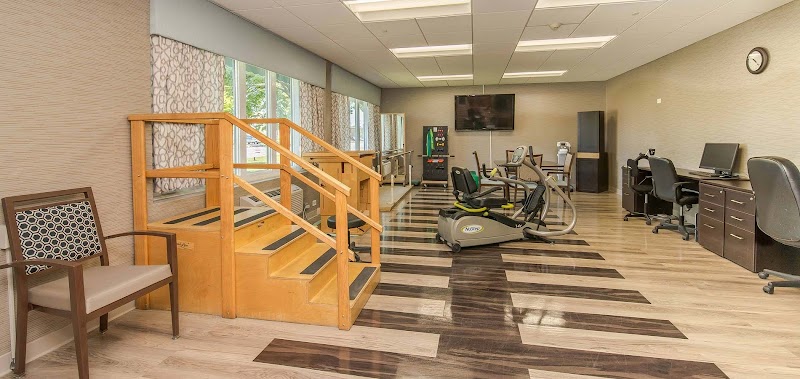
How is Aperion Care Burbank Staffed?
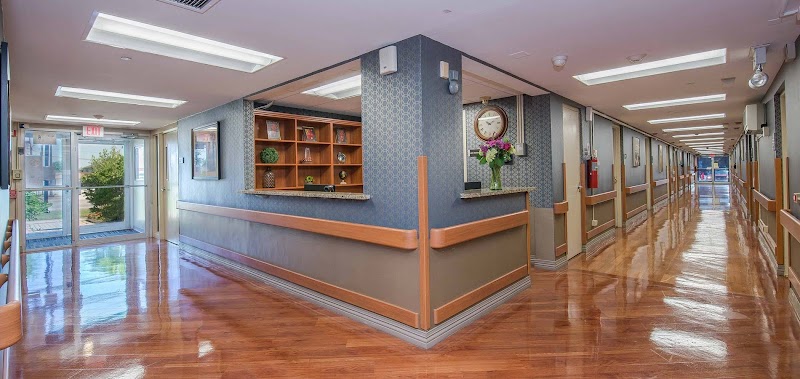
CMS rates Aperion Care Burbank's staffing level at 2 out of 5 stars, which is below average compared to other nursing homes. Staff turnover is 55%, compared to the Illinois average of 46%.

What Have Inspectors Found at Aperion Care Burbank?

State health inspectors documented 23 deficiencies at Aperion Care Burbank during 2022 to 2024. These included: 7 that caused actual resident harm and 16 with potential for harm. Deficiencies causing actual harm indicate documented cases where residents experienced negative health consequences.

Who Owns and Operates Aperion Care Burbank?

Aperion Care Burbank is owned by a for-profit company. For-profit facilities operate as businesses with obligations to shareholders or private owners. The facility is operated by APERION CARE, a chain that manages multiple nursing homes. With 56 certified beds and approximately 50 residents (about 89% occupancy), it is a smaller facility located in BURBANK, Illinois.

How Does Aperion Care Burbank Compare to Other Illinois Nursing Homes?

Compared to the 100 nursing homes in Illinois, Aperion Care Burbank's overall rating (2 stars) is below the state average of 2.5, staff turnover (55%) is near the state average of 46%, and health inspection rating (2 stars) is below the national benchmark.

What Should Families Ask When Visiting Aperion Care Burbank?

Based on this facility's data, families visiting should ask: "Can you walk me through typical staffing levels on day, evening, and night shifts?" "Can I visit during a mealtime to observe dining assistance and food quality?" "How do you handle medical emergencies, and what is your hospital transfer rate?" "Can I speak with family members of current residents about their experience?" These questions are particularly relevant given the below-average staffing rating.

Is Aperion Care Burbank Safe?

Based on CMS inspection data, Aperion Care Burbank has a clean safety record: no substantiated abuse findings (meaning no confirmed cases of resident harm), no Immediate Jeopardy citations (the most serious violation level indicating risk of serious injury or death), and is not on the Special Focus Facility watch list (a federal program monitoring the lowest-performing 1% of nursing homes). The facility has a 2-star overall rating and ranks #100 of 100 nursing homes in Illinois. While no facility is perfect, families should still ask about staff-to-resident ratios and recent inspection results during their visit.

Do Nurses at Aperion Care Burbank Stick Around?

Aperion Care Burbank has a staff turnover rate of 55%, which is 9 percentage points above the Illinois average of 46%. Moderate turnover is common in nursing homes, but families should still ask about staff tenure and how the facility maintains care continuity when employees leave.

Was Aperion Care Burbank Ever Fined?

Aperion Care Burbank has been fined $85,241 across 4 penalty actions. This is above the Illinois average of $33,931. Fines in this range indicate compliance issues significant enough for CMS to impose meaningful financial consequences. Common causes include delayed correction of deficiencies, repeat violations, or care failures affecting resident safety. Families should ask facility leadership what changes have been made since these penalties.

Is Aperion Care Burbank on Any Federal Watch List?

Aperion Care Burbank is not on any federal watch list. The most significant is the Special Focus Facility (SFF) program, which identifies the bottom 1% of nursing homes nationally based on persistent, serious quality problems. Not being on this list means the facility has avoided the pattern of deficiencies that triggers enhanced federal oversight. This is a positive indicator, though families should still review the facility's inspection history directly.