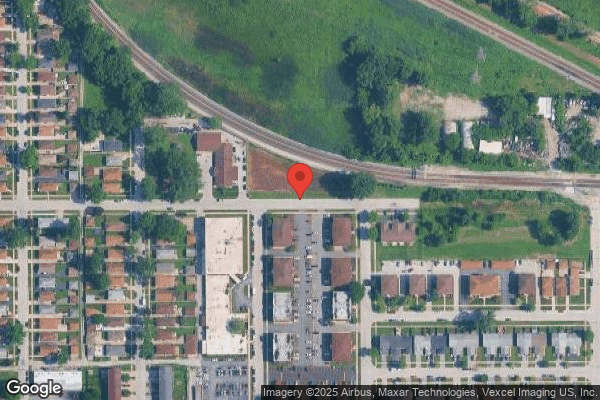

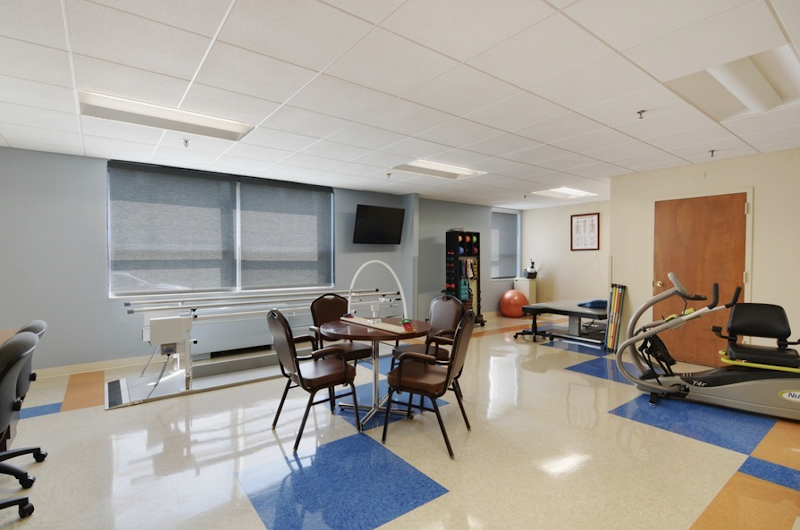
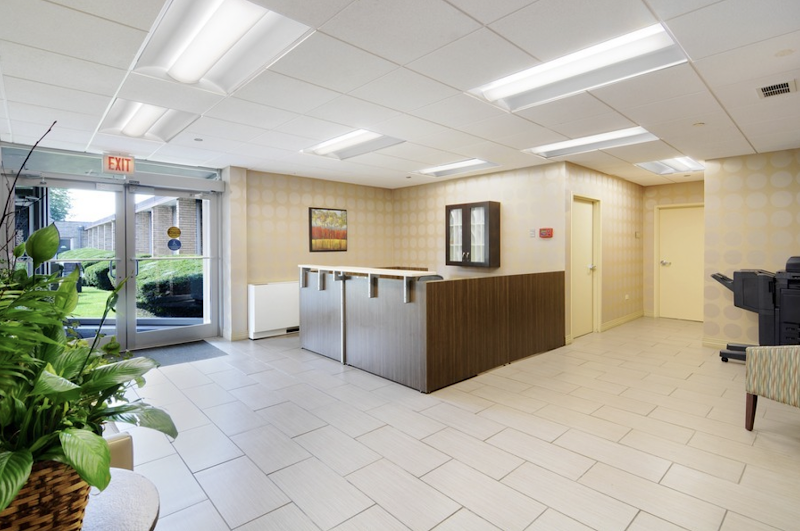
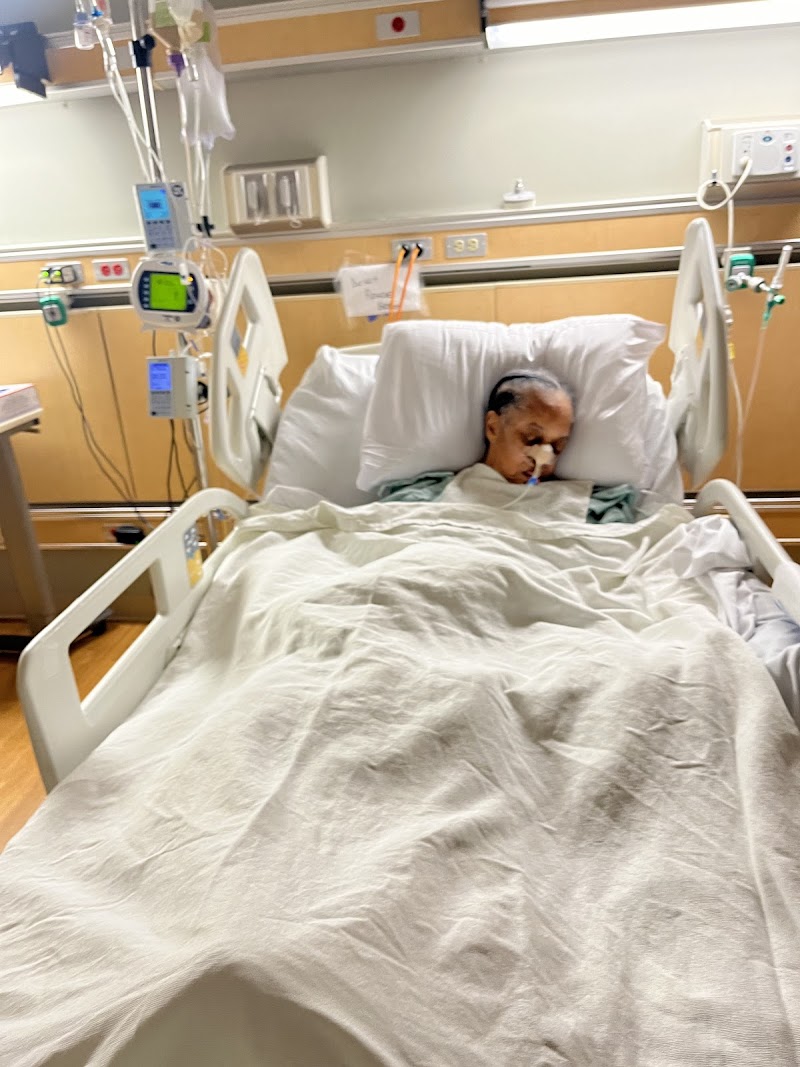
BRIA OF RIVER OAKS

14500 SOUTH MANISTEE, BURNHAM, IL 60633 (708) 862-1260
For profit - Corporation 309 Beds BRIA HEALTH SERVICES Data: November 2025 1 Immediate Jeopardy citation
Trust Grade
0/100
#474 of 665 in IL
Last Inspection: July 2024

Within standard 12-15 month inspection cycle. Federal law requires annual inspections.

Overview

Bria of River Oaks in Burnham, Illinois, has received a Trust Grade of F, indicating significant concerns about the quality of care provided. Ranking #474 out of 665 facilities in Illinois places it in the bottom half statewide, and #154 out of 201 in Cook County means only a few local options are worse. The facility's trend is improving, with issues decreasing from 13 in 2024 to 7 in 2025, but they still have a long way to go. Staffing is a relative strength, with a turnover rate of 35%, which is better than the state average, but the overall staffing rating is only 1 out of 5 stars. However, there are serious and critical incidents of concern, including a failure to report an observed incident of abuse, leading to a resident being sexually assaulted, and another resident being physically assaulted by staff, resulting in injuries. Additionally, a resident experienced a delay in treatment for a fractured hip due to inadequate assessments. While the facility is making some progress, these alarming incidents highlight significant weaknesses that families should carefully consider.

Trust Score
F
0/100
In Illinois
#474/665
Bottom 29%
Safety Record
High Risk
Review needed
Inspections
Getting Better
13 → 7 violations
Staff Stability
○ Average
35% turnover. Near Illinois's 48% average. Typical for the industry.
Penalties
✓ Good
$301,071 in fines. Lower than most Illinois facilities. Relatively clean record.
Skilled Nurses
⚠ Watch
Each resident gets only 27 minutes of Registered Nurse (RN) attention daily — below average for Illinois. Fewer RN minutes means fewer trained eyes watching for problems.
Violations
⚠ Watch
41 deficiencies on record. Higher than average. Multiple issues found across inspections.
★☆☆☆☆
1.0
Overall Rating
★☆☆☆☆
1.0
Staff Levels
★★★☆☆
3.0
Care Quality
★★☆☆☆
2.0
Inspection Score
Stable
2024: 13 issues
2025: 7 issues

The Good

  • Full Sprinkler Coverage · Fire safety systems throughout facility
  • No fines on record
  • Staff turnover below average (35%)

    13 points below Illinois average of 48%

Facility shows strength in fire safety.

The Bad

1-Star Overall Rating

Below Illinois average (2.5)

Significant quality concerns identified by CMS

Staff Turnover: 35%

11pts below Illinois avg (46%)

Typical for the industry

Federal Fines: $301,071

Well above median ($33,413)

Significant penalties indicating serious issues

Chain: BRIA HEALTH SERVICES

Part of a multi-facility chain

Ask about local staffing decisions and management

The Ugly 41 deficiencies on record

1 life-threatening 13 actual harm
Jun 2025 2 deficiencies
CONCERN (E) 📢 Someone Reported This

A family member, employee, or ombudsman was alarmed enough to file a formal complaint

Potential for Harm - no one hurt, but risky conditions existed

Safe Environment (Tag F0584)

Could have caused harm · This affected multiple residents

**NOTE- TERMS IN BRACKETS HAVE BEEN EDITED TO PROTECT CONFIDENTIALITY** Based on observation, interview, and record review, the facility failed to provide comfortable and safe temperature levels of 71...

Read full inspector narrative →
**NOTE- TERMS IN BRACKETS HAVE BEEN EDITED TO PROTECT CONFIDENTIALITY** Based on observation, interview, and record review, the facility failed to provide comfortable and safe temperature levels of 71-81 degrees for residents at the facility. This failure affected 8 residents R1 through R8, who were reviewed for a safe, comfortable environment. Findings Include: On June 23, 2025, between 11:20 a.m. and 11:45 a.m., with V3 (Maintenance Director), several randomly selected rooms were observed to ensure comfortable temperatures. Temperatures in the selected rooms on the second floor where R1, R2, R7, and R8 reside are as follows: room [ROOM NUMBER]-82 degrees; 208-87 degrees; 209-83 degrees; 223-81 degrees; 228-82 degrees. R1 was in bed in the room and stated It's too hot here R1 added that it's been hot for a while. R2 was in the room and stated he was hot, and that the air conditioner had been leaking water, and staff put a blanket underneath it and promised to fix it. R7 was in bed and nodded that she was not comfortable. R8 stated that it's been a few weeks, and they did not fix the air condition. On 6/23/25 between 10:30am and 11:15 am, on the third floor where R3, R4, R5, and R6 reside, the Temperatures are as follows: room [ROOM NUMBER]-81 degrees; 303-83 degrees; 304-86 degrees; 307-84 degrees; 308-86 degrees; 327-82 degrees. R3 was standing in front of the room in the hallway and stated, 'It's too hot,' and asked when the air conditioner would be fixed. R4 stated that the room has been hot for almost a week. R5 was sitting in the wheelchair in the room and stated he's feeling hot. R6 stated that the room was not comfortable. On 6/23/25 at 11:08am, V3 stated that he started working at the facility about 2 months ago and he's been working on some of the room air conditioners. On 6/23/25 at 12:05 p.m., V10 (Corporate Maintenance Director) stated that the expectation is that the temperatures should be between 68-78 degrees for the residents' rooms and that V3 is fairly new to the facility. V10 added We do maintenance twice a year- in Spring before Summer and in the Fall before Winter. V10 explained that he(V10) just heard about the issue of high temperatures in the building today, and that V3 should have informed him(V10) earlier. At this time, V10 presented email documentation that shows that the servicing company told them a technician was on the way to fix the air conditioners. V10 also presented some receipts of fans that were purchased. On 6/24/25 at 1:45pm, V1(Assistant Administrator) presented the latest temperature readings of the above listed rooms. Also, V3 stated that the Maintenance Staff continues to work to maintain acceptable temperatures in the building. Facility's policy titled Excessive Heat with revision date 10/2024 states #1: When a Heat Emergency is declared, when temperatures are extreme, or when the heat index/apparent temperature inside the facility exceeds 80°F, this facility will activate this policy. #2: The facility will take temperatures in the building at least every 4 hours to ensure that they are within acceptable guidelines. #3: If they are running above the accepted guidelines, then they will be taken at least every hour. Facility's Policy titled Heat Emergencies with latest revision date 5/20/2024 states in part: The purpose of this procedure is to provide precautionary and preventative measures for our residents during the hot and humid weather conditions. Keep in mind that older adults are extremely vulnerable to heat related disorders.
CONCERN (E) 📢 Someone Reported This

A family member, employee, or ombudsman was alarmed enough to file a formal complaint

Potential for Harm - no one hurt, but risky conditions existed

Safe Environment (Tag F0921)

Could have caused harm · This affected multiple residents

**NOTE- TERMS IN BRACKETS HAVE BEEN EDITED TO PROTECT CONFIDENTIALITY** Based on observation, interview, and record review, the facility failed to ensure that air conditioners in the second and third ...

Read full inspector narrative →
**NOTE- TERMS IN BRACKETS HAVE BEEN EDITED TO PROTECT CONFIDENTIALITY** Based on observation, interview, and record review, the facility failed to ensure that air conditioners in the second and third floor hallways and in some residents' rooms are in good repair to provide cool, comfortable and functional environment for residents. This failure affected a total of 127 residents (59 residents on the second and 68 residents on the third floor), that were reviewed for functional and comfortable environment. Findings Include: On 6/23/25 at 10:30am after the entrance conference, V2(Director of Nursing) presented the Facility's Census that shows that 59 residents reside on the second floor while 68 residents reside on the third floor. On 6/23/25 between 10:30am and 11:15am during observation with V3(Maintenance Director), the second-floor hallway temperature was 84 Degrees Fahrenheit. Several randomly selected rooms (208, 207, 227, 228, 304, 308, and 310), were observed with air conditioner units that were not functioning properly and blowing warm air. On 6/23/25 between 11:30am and 11:45am, the third-floor hallway temperature was observed with V3 to be 85 degrees. Some randomly selected rooms were observed with air conditioner units that were blowing warm air. The air conditioner unit in room [ROOM NUMBER] was found with blanket underneath to soak up the water dripping from the unit. On 6/23/25 at 11:08am, V3 stated that he(V3) started working at the facility about 2 months ago and he's been working on some of the room air conditioners. On 6/23/25 at 12:05pm, V10(Corporate Maintenance Director) stated that the expectation is that the temperatures should be between 68-78 degrees for the residents' rooms and that V3 is fairly new at the facility. V10 added We do maintenance for the system twice a year- in Spring before Summer and in the Fall before Winter. V10 explained that he(V10) just heard about the issue of high temperatures in the building today, and that V3 should have informed him(V10) earlier. At this time, V10 presented email documentation that shows that the servicing company told them a technician was on the way to fix the air conditioners. V10 also presented some receipts of fans that were purchased. Facility's Job Description for Maintenance Director states: Ensure that supplies and equipment are maintained to provide safe and comfortable environment. Promptly report equipment or facility damage to the administrator. Assist in establishing a preventive maintenance program.
Apr 2025 2 deficiencies 1 Harm
SERIOUS (G) 📢 Someone Reported This

A family member, employee, or ombudsman was alarmed enough to file a formal complaint

Actual Harm - a resident was hurt due to facility failures

Free from Abuse/Neglect (Tag F0600)

A resident was harmed · This affected 1 resident

**NOTE- TERMS IN BRACKETS HAVE BEEN EDITED TO PROTECT CONFIDENTIALITY** Based on the interview and record review, the facility failed to protect the resident's right to be free from physical assault/a...

Read full inspector narrative →
**NOTE- TERMS IN BRACKETS HAVE BEEN EDITED TO PROTECT CONFIDENTIALITY** Based on the interview and record review, the facility failed to protect the resident's right to be free from physical assault/abuse for a resident R9 by the V10 (Activity Aide/CNA). V10 grabbed R9 by the arms, took R9 down to the floor, landed on his back, and held R9 down. This failure resulted in R9 subsequently complaining of pain, He was sent to the hospital and diagnosed with acute bilateral lower back pain and elbow and thumb pain; R9 said he was scared this would happen again. This affects one of three residents (R9) reviewed for physical assault/abuse. Findings include: R9 face sheet shows R9 has muscle wasting and atrophy, anxiety, and right ankle contracture. MDS dated [DATE] section show other behaviors symptoms not directed towards others. On 4/4/25 at 10:11am R9 was observed to be alert to person, place, time and situation. R9 said V10 hit him and slammed him to the floor. R9 said this happened by the fire extinguisher near the Nurses station, R9 escorted surveyor to the area. R9 identified V10 as the perpetrator. R9 said V10 did this to him because V10 told him he (R9) was talking sh#t. R9 said all he wanted to do was smoke. R9 observed with unsteady gait, R9 can make his needs known, some sentences R9 must take his time to explain. R9 said his back hurts. R9 observed with an abrasion to the right elbow area the size of a dime. On 4/4/25 at 10:30 am, V10 (activity aide/CNA) said around 7:40am on Tuesday (4/1/25), V12 (LPN) informed him that R9 could not smoke because he refused to get his blood drawn or something with the lab. V10 said he observed V12 walking and pointing her finger at R9, saying that R9 could not smoke. V10 alleges that R9 was walking behind V12, saying he wanted to smoke and that he has a right to refuse a blood draw. V10 said that's when he intervened and approached R9 by standing in front of R9. V10 demonstrated that he and R9 were inches away from each other's space. V10 alleges R9 was became aggressive by making some movements with his gait. V10 said he has observed R9 having those movements in the past. V10 said R9 had his tablet in one hand and alleges R9 swung on him. V10 said he grabbed R9 bilaterally by the arms. V10 demonstrated that he was holding R9 arms just below the wrist. V10 said he took R9 down to the floor onto his back. V10 said he held R9 down to the floor and continued to hold R9 arms/wrist. V10 said he heard someone yell security. V10 said security came and continued to hold R9 down (V10 demonstrated how he observed V18 kneeling down on one side of R9, holding R9). V10 said he performed CPI (Crisis Prevention Intervention) on R9. V10 said he don't know the whereabouts of the Nurse when asked why the Nurse didn't assist you with CPI. V10 then said everybody came to the incident. V10 said he doesn't know staff names, only V18 (Security) name. When asked to whom he reported this incident, V10 said the social worker V14 (Social Worker) and a short lady knew about it. V10 said the social worker asked him if he was okay and if he needed to get checked out. V10 was asked why he didn't step back when R9 was allegedly aggressive and swung at him; V10 said R9 swung but didn't contact him because he grabbed R9's arms. V10 said he's not going to let any resident hit him. V10 was asked if he had the ability to step away from R9 before R9 allegedly swung at him. V10 said R9 tablet was on the floor somewhere. V10 was asked why he didn't call a code if R9 was displaying aggression. V10 said someone called security. V10 said he was not trained to take a resident by their arms and take them to the ground in the manner that he demonstrated for R9. 4/4/25 at 11:08am V18 (security staff) said he did hold R9 down, he heard someone call security, he responded, he got between R9 and V10 and escorted R9 to his room. V18 said R9 was already standing when he got there. V18 said he don't know who picked R9 up from the floor. V18 said he don't recall who all was at the scene of the incident. V18 said he don't know why V10 involved him in that incident. On 4/5/25 at 1:25pm, V14 (Social Worker) said she was off duty on April 1st, and V10 did not report anything to her. On 4/5/25 at 3:03pm V6 (social service Director) said she was the social worker that asked V10 was he okay and if he needed to go get checked out. V6 said V10 did not inform her that he grabbed R9 by the arms and took R9 down to the floor and held R9 down CPI. V6 said that is not how CPI is performed, V6 said the staff is trained on CPI. V6 said if a resident is being aggressive the staff should announce a code yellow. V6 said code yellow for when the staff needs all staff to respond, it could be for behaviors it could be for aggressive residents, it could be for anything. V6 said its not a policy it is a protocol. V6 said she did not come on duty until 8:30am on 4/1/25. On 4/4/25 at 1:15pm, V12 (LPN) said she did not tell V10 that R9 could not smoke. V12 said the lab staff reported to her that R9 did not want to get his blood drawn and she went into R9's room to educate R9 on importance of getting his blood drawn, V12 said R9 continued to decline the blood draw. V12 said R9 said he wanted to smoke. V12 said her and R9 left the room at the same time. V12 said did say he wanted to smoke. V12 said she went into the Nurse medication room, to finish up. V12 omitted that R9 continued walking behind her in any threatening manner. V12 said a little while after she was summoned to give R9 a PRN (as needed medication for behavior). V9 said V10 did not inform her that he initiated and performed CPI on R9. V12 said V10 did not inform her that he grabbed R9 by the arms and took R9 down to the floor onto his back. V10 said when she administered R9 the medication she only witnessed R9 pacing his room and wanting to come out the room. V12 said R9 did not leave his room. 4/4/25 at 11:45am during a phone interview with V2 (acting administrator) V2 said she was not aware that V10 initiated and performed a crisis prevention intervention technique on R9 on Tuesday morning. 4/5/25 at 9:52am, V2 said V10 should have reported to the Nurse or DON that he performed CPI on R9. V2 said V10 informed her that he grabbed R9's arm and took R9 down to the floor. V2 said she has an idea of how V10 did it. V2 said V10 should not grab R9 by the arms, take him down to the floor, and hold him down. V2 said she will educate the staff on CPI and in-service staff on reporting. Facility's initial report to the department was reviewed with V2; V2 said the staff reported to her that the incident occurred around 7:30 am, not 6:30 am, and the staff reported that it happened near the smoking patio door inside, not on the smoking patio. V2 said the 6:30 am was a typo. V2 verified that the two errors were not reported to her by the surveyor. On 4/5/25 at 10:40AM, V11 (Activity Director) said V10 informed her on Thursday 4/3/25 (V10 came to her office) and stated that there was a situation with him and R9 and he did CPI on R9. V11 said she did not ask details and V10 did not provide further details. V11 said she only mentioned in stand-up meeting that there was a situation, she did not inform V17 (Assistant administrator) or V3 (Director of Nursing) that V10 performed CPI on R9. V11 said V10 should not have grabbed R9 by the arms and taken R9 down to the floor unto his back and held him (R9) there. V11 said that is not CPI. V11 said that is not how V10 was trained to do CPI. On 4/5/25 at 9:18am V3 (Director of Nursing) said she was not aware that V10 (activity aide/ CNA) initiated and performed a crisis prevention intervention technique on R9, by grabbing R9 by the wrist bilaterally and taking R9 down to the floor and holding R9 in that position. V3 said the Nurse called her that morning and it was not mentioned that V3 performed CPI on R9. V3 said she should have been made aware because it should have been documented and R9 should have received an assessment to check for injuries, the actions of V10 would have been reviewed and the number of staff responded would have been reviewed. On 4/5/25 at 1:43pm V16 (RN) said on Tuesday, 4/1/25 she heard commotion in the hallway, she came out the med room to see what was going on, V16 said it wasn't her patient, so she did not pay attention, and she went back to the Nurses medication room. Review of V16 timecard it is denoted that V15 punched out at 8:00am Using a reasonable person concept is reasonable to believe V16 observed something to know that it was not her patient involved in the commotion. On 4/5/25 at 2:07pm V15 (Security Staff) said on Tuesday 4/1/25 he heard commotion, saw people standing around but he didn't go down there because he was on his way out the door, V15 said this was around 7:10am-715am, this is a round about time. Review of V15 timecard it is denoted that V15 punched out at 7:30am. R9 progress note dated 4/3/25 at 4:19pm denotes in-part resident came to the nurse station and complained of pain on his right elbow, the writer assessed the resident no swelling noted around resident elbow only little redness noted around, writer immediately notified NP (Nurse Practitioner) new order call x-ray for right elbow for pain. Portable x-ray called, order noted and carried. R9 hospital after visit summary dated 4/3/25 denotes in-part today's visit reason for visit assault and battery, elbow pain, back pain. Diagnosis: acute bilateral low back pain, elbow pain, and thumb pain (left). R9 emergency room record dated 4/4/25 denotes in-part [AGE] year-old male from nursing home after concern of physical altercation 3 days ago. He is complaining of right elbow pain, left thumb pain, lower back pain. Denies LOS loss of consciousness or head trauma. Was requesting X-ray at the facility however did not receive one so wanted to come to ER. States his pain is controlled. Physical exam shows right elbows chamois and tenderness, left thumb chamois and tenderness, no midline lumbar spinal tenderness or chamois. Musculoskeletal positive for pain. The facility abuse prevention policy dated 1/31/25 denotes in-part this facility affirms the right of our residents to be free from abuse neglect exploitation misappropriation of property or mistreatment. This facility therefore prohibits abuse neglect exploitation misappropriation of property and mistreatment of residents in order to do so the facility has attempted to establish a resident sensitive and resident secure environment. The purpose of this policy is to ensure that the facility is doing all that it is within its control to prevent occurrences of abuse neglect exploitation misappropriation of property and mistreatment of residents. This facility is committed to protecting our residents from abuse neglect exploitation misappropriation of property and mistreatment by anyone including but not limited to facility staff, other residents', consultants, volunteers' staff from other agencies providing services to the individual family members or legal guardians friends or any other individuals. Internal investigation all incidents will be documented, whether or not abuse, neglect, exploitation, mistreatment or misappropriation of resident's property occurred, was alleged or suspected. The resident rights for people living in the long-term care facilities denotes in-part your facility must treat you with dignity and respect and must care for you in a manner that promotes your quality of life. Using a reasonable person concept R9 felt humiliated and scared when V10 grabbed him and took him down to the floor and held him down. During this investigation it is conclude that the facility staffs a Nurse, a Security staff observed and heard commotion and did not respond to protect R9 and respond to gather information that could have been reported to the Administrator, Director of Nursing, pertinent information to conduct abuse or mistreatment investigation and potentially remove a perpetrator from duty on 4/1/25.
CONCERN (D) 📢 Someone Reported This

A family member, employee, or ombudsman was alarmed enough to file a formal complaint

Potential for Harm - no one hurt, but risky conditions existed

Medical Records (Tag F0842)

Could have caused harm · This affected 1 resident

Based on interview and record review the facility failed to follow their behavior management policy and facility practice and document an incident of performing crisis prevention intervention techniqu...

Read full inspector narrative →
Based on interview and record review the facility failed to follow their behavior management policy and facility practice and document an incident of performing crisis prevention intervention techniques for one of one residents R9 reviewed for behavior management and documentation. Findings include: 4/4/25 at 1:15pm V12 (LPN) said she was R9's nurse on 3/31/25 going into that morning of 4/1/25. V12 said V10 did not inform her that he initiated and performed crisis prevention intervention technique on R9, by grabbing R9 by the wrist bilaterally and taking R9 down to the floor and holding R9 in that position. 4/4/25 at 2:16pm V13 (LPN) said she was R9 Nurse on 4/1/25 during the morning shift and V10 did not report to her that he initiated and performed crisis prevention intervention technique on R9, by grabbing R9 by the wrist bilaterally and taking R9 down to the floor and holding R9 in that position. 4/4/25 at 11:45am during a phone interview with V2 (acting Administrator) V2 said she was not aware that V2 initiated and performed a crisis prevention intervention technique on R9 on 4/1/25. During a follow up interview V2 said V10 made her aware after surveyor informed her of allegation of abuse. On 4/5/25 at 9:18am V3 (Director of Nursing) said she was not aware that V10 (activity Aide/ CNA) initiated and performed a crisis prevention intervention ( CPI) technique on R9 on 4/1/25, by grabbing R9 by the wrist bilaterally and taking R9 down to the floor onto his back and holding R9 in that position. V3 said the Nurse called her that morning and it was not mentioned that V3 performed CPI on R9. V3 said she should have been made aware because it should have been documented and R9 should have received an assessment to check for injuries, the actions of V10 would have been reviewed and the number of staff responded would have been reviewed. On 4/5/25 at 10:40AM, V11 (Activity Director) said V10 informed her on Thursday 4/3/25 (V10 came to her office) and stated that there was a situation with him and R9 and he did CPI on R9. V11 said she did not ask details and V10 did not provide further details. V11 said she only mentioned in stand-up meeting that there was a situation, she did not inform V17 (Assistant administrator) or V3 (Director of Nursing) that V10 initiated and performed CPI on R9. V11 said V10 should not have grabbed R9 by the arms and taken R9 down to the floor unto his back and held him (R9) there. V11 said that is not CPI. V11 said that is not how V10 was trained to do CPI. Facility policy titled Behavior Management dated 9/2023 denotes in-part the goal of the facility is to provide a safe, secure environment. In order to foster a safe environment, a consistent staff approach to behavioral problems and emergencies are necessary. The goal is least restrictive behavioral interventions and move through the steps at increments necessary to maintain a safe environment. Staff should remain calm and professional at all times. Demonstrate empathy and offer reassurance of safety. I understand your situation, you are safe here, you don't need to be afraid. Set verbal limits: please keep your voice down, stop swinging your arms etc. Escort to private area: a quiet room with decreased external stimulation for a short amount of time may help calm the resident and provide privacy. After the incident document in the nursing notes: the resident behavior and/symptoms at the onset. An assessment of the resident. Notification of family/physician and subsequent orders. The facility abuse policy with last revision date 1/31/25 denotes in-part Internal investigation all incidents will be documented, whether or not abuse, neglect, exploitation, mistreatment or misappropriation of residents' property occurred, was alleged or suspected.
Mar 2025 2 deficiencies 2 Harm
SERIOUS (G) 📢 Someone Reported This

A family member, employee, or ombudsman was alarmed enough to file a formal complaint

Actual Harm - a resident was hurt due to facility failures

Quality of Care (Tag F0684)

A resident was harmed · This affected 1 resident

**NOTE- TERMS IN BRACKETS HAVE BEEN EDITED TO PROTECT CONFIDENTIALITY** Based on interview and record review, the facility failed to conduct a comprehensive assessment for a resident with a new onset ...

Read full inspector narrative →
**NOTE- TERMS IN BRACKETS HAVE BEEN EDITED TO PROTECT CONFIDENTIALITY** Based on interview and record review, the facility failed to conduct a comprehensive assessment for a resident with a new onset of left leg pain. This affected one out of three residents (R1) reviewed for nursing assessments in a total sample of seven. This failure resulted in R1 being delayed treatment and not sent to the hospital for a fractured left hip for four days. Findings Include: R1 is a [AGE] year old with the following diagnosis: epilepsy, Todd's paralysis, dementia, and chronic kidney disease. The Hospital Records dated 2/22/25 document R1 was admitted to the hospital for left hip fracture post fall. R1 reported falling while trying to get in the wheelchair two days ago. R1 is unable to move the left lower extremity and reported achy and tenderness. R1 is guarded and rated the pain a ten out of ten. R1 reported taking pain medication with minimal relief. R1 was admitted for further evaluation. Upon exam, R1 had extremity pain, limited range of motion, and joint swelling to the left hip. The admitting diagnosis was closed intertrochanteric fracture of the left hip. An x-ray of the left hip dated 2/22/25 documents there is an intertrochanteric fracture to the left hip. The exam was extremely limited due to difficulty in positioning. The Facility Investigation Report dated 2/27/25 documents R1 suffered a fracture to the left hip. R1 reported falling when transferring to the wheelchair but did not report the fall to any staff. No roommates were able to give a statement. All staff interviewed denied witnessing a fall. On 2/17/25, R1 complained of left pain. Pain medication was given and an x-ray of the left knee was negative. The nurse practitioner ordered to continue tramadol which was an order from the most recent hospitalization. Another nurse practitioner assessed R1 on 2/18/25 and had no new orders. On 2/19/25, pain medication was given for generalized pain. R1 complained of pain on 2/21/25. The nurse practitioner assessed R1 and ordered a left hip x-ray which showed a fracture of the left femur. R1 was sent to the hospital and had hip surgery to repair the left femur fracture. On 3/22/25 at 1:23PM, V1 (Nurse) stated V1 first worked with R1 on 2/21/25 and R1 was refusing to eat breakfast so V1 went to assess R1. V1 reported R1 told V1 that R1's left leg hurt very badly and when V1 went to touch the leg R1 screamed out to not touch R1's leg. V1 stated V1 notified the nurse practitioner (V8) and V8 came to the room to assess R1. V1 reported V8 attempted to move R1's left leg but R1 could not move the leg at all on R1's own. V1 stated R1 is a resident who is frequently in the wheelchair self-propelling around the facility so it is abnormal for R1 to stay in bed all day. V1 reported if a resident complains of pain an assessment is completed. V1 stated staff asks where is the pain, when did it start, what it feels like, and what the resident rates the pain if they are alert. V1 reported if a resident isn't alert, V1 will look back in the progress notes to see if there is anything new. V1 denied R1 was able to point or say where the pain was or rate the pain. V1 stated a physical assessment will be completed to touch areas to see where the resident is hurt. V1 reported wherever V1 touches and a resident screams, V1 knows will be the area of most pain. V1 stated V1 will look for any physical difference that are new onset for a resident to make a determination of what is causing the pain. On 3/22/25 at 1:50PM, V3 (Nurse) stated V3 took care of R1 on 2/17/25 and 2/18/25. V3 reported R1 first complaint of pain on 2/17/25 so V3 called the nurse practitioner and an x-ray of the left knee was ordered. V3 stated R1 told V3 the pain was in R1's left leg. V3 denied R1 ever having pain in that area before. V3 reported R1 could not say why the leg was painful. V3 said, I know he has osteoarthritis so I assumed it was that. V3 stated R1 did not get out of bed that day. V3 reported the following day R1 complained of left leg pain and was given pain medication. V3 denied R1 was able to describe the pain. V3 stated when a resident has new onset pain, the nurse is responsible to find out where the pain is at and what the resident rates their pain. V3 reported V3 did not think to ask what caused the pain because the previous hospital stay reported R1 had osteoarthritis. V3 stated R1 never left the bed on either of those days. V3 denied assessing anything other than R1's left knee. V3 reported V3 did not notice R1 not moving the left leg. V3 stated R1 was in pain so V3 thought R1 didn't want to move the leg while it was hurting. On 3/22/25 at 3:04PM, R1 was lying in bed. R1 stated R1 broke R1's left hip after falling out of a wheelchair. R1 was not able to give a date, time frame, or any other details about the fall due to confusion. R1 was able not able to give any other details regarding when x-rays of the leg were taken and what the time frame was from when R1 fell to when R1 was sent to the hospital. R1's mental status was assessed. R1 is alert and oriented times two. R1 reported the date as March 25, 2003, and the location as Chicago, IL. R1 was also able to accurately state R1's name and birth date. R1 stated R1 went to the hospital and had surgery to have the left hip repaired. R1 reported R1 was taking medicine for R1's pain but did not know the name of the medication or how often R1 was taking the medication. R1 stated R1's pain was a ten out of ten. R1 reported moving or touching the left leg made the pain worse. R1 reported the pain felt like electricity that was in R1's whole leg but the worse pain was near the hip. R1 was not able to answer any questions about the nurses or nurse practitioner's assessment of R1's pain. R1 stated R1's pain level is now a three or five after having the surgery. R1 reported R1 is still being given pain medication. R1 denied knowing why R1 was not sent to the hospital sooner. R1 reported R1 uses a wheelchair to go smoke and move around the facility. R1 stated R1 was not getting out of bed when R1 had pain level at a ten out of ten. R1 said, It was the worst pain in my life. R1 reported the pain medication would lower the pain from a ten to an eight when the pain was at it's worst. R1 stated R1 yelled out more than once when staff tried to touch R1. On 3/23/25 at 1:45PM, V7 (CNA) stated R1 is an active resident that first reported pain on 2/17 during V7's shift. V7 reported telling the nurse about R1's pain but was not aware of any other actions the nurse took for R1's pain. V7 stated R1 is a resident that enjoys being up in the wheelchair to go to smoke break but on this day R1 did not get out of bed. V7 reported R1 did not want staff to touch R1 because R1 was in so much pain so staff tried to avoid touching R1 to not make the pain worse. On 3/23/25 at 2:29PM, V8 (Nurse Practitioner) stated R1 kept pointing to the knee area when V8 was first notified of R1's pain on 2/17/25 so V8 put in an order a left knee x-ray. V8 reported when R1's knee was touched R1 had increased pain so V8 thought the pain was coming from the knee or could possibly be a pain from frequent episodes of pancreatitis. V8 stated the left knee x-ray was negative but a couple days later staff notified V8 of R1's leg pain again. V8 reported V8 touched R1's hip and groin area during the second assessment and R1 moved away in pain. V8 denied being made aware of an additional times R1 reported pain other than on 2/17/25 and 2/21/25. V8 stated V8 would have come to assess R1 sooner if V8 was aware R2 was still in pain. On 3/24/25 at 9:45 AM, V9 (Rehab Nurse Practitioner) stated when assessing pain, a nurse should ask questions about where the pain is at and what the level of pain is. V9 reported if a resident can't tell you where the pain is at or what happened then when an assessment is being done, then range of motion should be tested and any imaging should be ordered based off of the assessment. V9 stated if a resident is showing signs of facial grimacing or yelling out then they are in pain. V9 was unable to remember assessing R1 on 2/18/25 and was not able answer why no further imaging was ordered on 2/18/25 when V9 assessed R1. V9 reported the left knee imaging was negative and staff assumed that is where the pain was coming from. On 3/24/25 at 12:54PM, V10 (DON) stated R1 began complaining of pain to the left knee so an x-ray was taken that was negative. V10 reported two or three days later R1 still complained of pain so an x-ray of the hip was completed and showed a fracture to the femur. V10 stated staff should do a complete assessment for a resident to rule out as many causes as possible when there are complaints of new pain. V10 reported staff need to check the pain level and where the pain is at and what the pain feels like during the assessment. V10 stated if pain keeps returning then the physician or nurse practitioner needs to be notified again. V10 reported a hip x-ray was not done at the same time as the knee x-ray because the nurse practitioner said they had to work their way up the leg before they order all the images. On 3/24/25 at 1:49PM, V11 (Primary Physician) stated if a resident is complaining of pain in the leg then V10's concern is an injury to the hip so V11 always orders an x-ray to the hip. V11 reported pain is subjective so staff must go off what the resident is reporting and treat it that way. V11 said, I have seen people who stub their toe and rate the pain a 10 and other people who have a fracture who say the pain is not that bad. You have to get to an answer of what is cause a new onset of pain if possible. V11 stated if the resident can't tell staff where the pain is but there are signs of pain then a full assessment must be done to identify as best as possible where the pain is and what caused the pain. The Hospital Records dated 2/7/25 document R1 admitted to the hospital for increased confusion and was complaining of left hip pain. R1 was unable to state a reason for the pain. On physical exam, R1 had normal extremities. An x-ray of the pelvis was taken to rule out any injuries. The hospital x-ray report dated 2/8/25 documents the left hip had no evidence of fracture but had mild osteoarthritis in both hips. R1 was discharged back to the facility on 2/11/25. A Nursing note dated 2/16/25 documents R1 is in stable condition and denied any pain or discomfort this shift. A Nursing note dated 2/17/25 at 1:26PM documents R1 complained of an increase of pain. The nurse practitioner ordered ibuprofen as needed and an x-ray of the left knee. A Nursing note dated 2/17/25 at 7:23PM documents R1 is alert and oriented time two and able to make needs known. One view of the left knee was unable to be completed because the left knee could not straighten out all the way. A Nursing note dated 2/17/25 at 8:49PM documents R1 is alert but confused. The left knee x-ray results indicate the left knee has moderate osteoarthritis with joint space narrowing from chrondromalacia. Knee bones with osteopenia suggest early demineralization of bone mass. There is no evidence of osseous destruction or acute pathological fracture. The physician was notified of the results. The X-ray Report of the left knee dated 2/17/25 documents the left knee has moderate osteoarthritis with osteopenia. There is no evidence of osseous destruction or acute pathological fracture. A Nurse Practitioner note dated 2/18/25 documents R1 recently returned from the hospital for altered mental status. R1 reported pain to the left leg which appeared to have left knee flexion and contracture present. The x-ray to the left knee showed moderate arthritis present. The nurse practitioner attempted to gently stretch the left lower extremity but R1 yelled out when the nurse practitioner touched R1's left lower limb. Three different pain medications are ordered as needed. A Nursing note dated 2/19/25 documents R1 complained of generalized body pain. Pain medication was administered. Continue plan of care. A Nursing note dated 2/21/25 at 12:17PM documents R1 complained of pain to the left leg and difficulty moving the left leg. R1 was unable to state the level of pain on a pain scale or the exact onset of the pain at this time. R1 only said, It hurts. Don't touch it. Pain medication was administered and the in house nurse practitioner was notified. The nurse practitioner examined R1 and ordered for an x-ray of the left trochanter. A Nursing note dated 2/21/25 at 5:35PM documents R1 complained of pain to the left and right leg and both feet. The X-ray Report of the left hip dated 2/21/25 documents a fracture at the neck of the left femur is seen with displaced distal fragments. Mild osteoarthritis of the hip is also present. A Nursing note dated 2/21/25 at 6:39PM documents the left trochanter x-ray was positive for a fracture to the neck of the left femur and displaced distal fragments. The physician was notified and ordered to send R1 to the hospital. An ambulance was called and was scheduled to arrive in 90 minutes. A Nursing note dated 2/22/25 documents R1's admitting diagnosis as left intertrochanter fracture with displacement. A Nursing note dated 2/26/25 documents R1 readmitted to the facility post left hip surgery. The Medication Administration Record dated 02/2025 documents there is an order to monitor and record pain score every shift. The ordered was discontinued on 2/8/25 when R1 went to the hospital and was not reordered again until 2/26/25. From 2/11/25 through 2/21/25, pain scores were not being assessed and recorded every shift for R1. The Comprehensive Pain assessment dated [DATE] documents R1 denied any reports of pain. R1 did not verbally admit to having any pain and does not show any nonverbal signs of pain such as facial grimacing, restlessness, rubbing, or bracing. The facial pain scale documents the pain score at a zero out of ten. The Comprehensive Pain assessment dated [DATE] documents R1 reported pain to the left knee. R1 has generalized osteoarthritis which could be a reason for the pain. R1 has also had a decrease in physical activity. Pain is relieved by position change and mediation. R1 shows facial grimacing and vocalizes reports of pain. R1 described the pain as aching. The facial pain scale documents the pain hurts even more (four out of ten on the numerical pain scale). AN x-ray of the knee was ordered and an order for ibuprofen 600 mg every six hours as needed as put in by the nurse practitioner. The Comprehensive Pain assessment dated [DATE] documents R1 did not have any reports of pain. R1 did not verbally admit to having any pain and does not show any nonverbal signs of pain such as facial grimacing, restlessness, rubbing, or bracing. The facial pain scale documents the pain score at a zero out of ten. There is no documentation that a Comprehensive Pain Assessment was completed on 2/19/25 or 2/20/25. The Comprehensive Pain assessment dated [DATE] documents R1 reported pain to the left hip. R1 has generalized osteoarthritis which could be a reason for the pain. R1 was withdrawn from activities on this day and pain was increased with repositioning. Pain is relieved with medication. R1 shows facial grimacing, bracing, and vocal complaints to not touch the area that is painful. R1 described the area as aching and discomfort. The facial pain scale documents the pain hurts a whole lot. The numerical pain scale rate the pain a ten out of ten. The Minimum Data Set (MDS) dated [DATE] documents a Brief Interview for Mental Status score as 11 (moderate cognitive impairment). Section GG of the MDS documents R1 uses a wheelchair for a mobility device. R1 needs partial to moderate assistance with bed mobility and substantial to maximal assistance with transfers. R1 is able to self propel in the wheelchair with supervision or touching assistance. Section J of the MDS documents R1 has not received any scheduled or as needed pain medication in the last five days and denied having any pain within the last five days. The Care Plan revised on 2/27/25 documents R1 is at risk for an alteration in comfort related to fracture of femur, arthritis, history of falls, and seizures. Interventions include: assess pain characteristics by duration, location, and quality; and monitor for non-verbal indicators of pain (moaning, crying, grimacing, wincing). There is no documentation that nursing staff did any range of motion testing or any further investigation of R1's cause root cause of the pain until 2/21/25 when an additional x-ray was ordered. The policy titled, Pain Management, dated 10/2024 documents, General: To facilitate and provide guidance on pain observations and management. To facilitate resident independence, promote resident comfort and preserve resident dignity. This will be accomplished through an effective pain management program, providing our residents the means to receive necessary comfort, exercise greater independence, and enhance dignity and life involvement. Guideline: the pain management program is based on a facility wide commitment to resident comfort. Pain is defined as whatever. The experiencing person says it is and exists whenever he or she says it does. Pain Management is defined as the process of alleviating the residence pain to a level that is acceptable to the resident is based on his or her clinical condition and establish treatment goal. Pain management is a multidisciplinary care process that includes the following: observing for the potential for pain, effectively, recognizing the presence of pain, identifying the characteristics of pain, addressing the underlying causes of the residence pain, developing in implementing approaches to pain management, identifying and using specific strategies for different levels and sources of pain, monitoring for the effectiveness of interventions; and modifying approaches as necessary. It is important to recognize cognitive, cultural, familial, or gender specific influences on the resident's ability or willingness to verbalize pain .Policy: 1. Pain is assessed using the comprehensive pain assessment form: upon admission, quarterly, with significant change, following a fall, when new pain is identified, and when existing pain worsens. 2. Pain will be assessed at least once a every shift and documented in the EMAR using the pain scale appropriate for the patient. The following pain scales are available for use: numerical scale and PAINAND scale for the cognitively impaired .6. If pain has not been managed, consistent with the residence goals and needs, the interdisciplinary team may need to reconsider current interventions and revise those interventions as needed; or if pain has been maintained and/or resolved, the nursing staff will work with the physician to taper or discontinue analgesics.
SERIOUS (G) 📢 Someone Reported This

A family member, employee, or ombudsman was alarmed enough to file a formal complaint

Actual Harm - a resident was hurt due to facility failures

Deficiency F0697 (Tag F0697)

A resident was harmed · This affected 1 resident

**NOTE- TERMS IN BRACKETS HAVE BEEN EDITED TO PROTECT CONFIDENTIALITY** Based on interview and record review, the facility failed to assess and identify the underlying cause of a resident's (R1) new o...

Read full inspector narrative →
**NOTE- TERMS IN BRACKETS HAVE BEEN EDITED TO PROTECT CONFIDENTIALITY** Based on interview and record review, the facility failed to assess and identify the underlying cause of a resident's (R1) new onset of pain in the left leg, and failed to inform the primary care provider of continued pain after being adminstered tramadol 50mg. This affected one out of three (R1) residents reviewed for pain management in a total sample of seven. This failure resulted in R1 having increased pain levels for four days before R1 was sent to the hospital for treatment of a left hip fracture. Findings Include: R1 is a [AGE] year old with the following diagnosis: epilepsy, Todd's paralysis, dementia, and chronic kidney disease. The Hospital Records dated 2/22/25 document R1 was admitted to the hospital for left hip fracture post fall. R1 reported falling while trying to get in the wheelchair two days ago. R1 is unable to move the left lower extremity and reported achy and tenderness. R1 is guarded and rated the pain a ten out of ten. R1 reported taking pain medication with minimal relief. R1 was admitted for further evaluation. Upon exam, R1 had extremity pain, limited range of motion, and joint swelling to the left hip. The admitting diagnosis was closed intertrochanteric fracture of the left hip. An x-ray of the left hip dated 2/22/25 documents there is an intertrochanteric fracture to the left hip. The exam was extremely limited due to difficulty in positioning. The Facility Investigation Report dated 2/27/25 documents R1 suffered a fracture to the left hip. R1 reported falling when transferring to the wheelchair but did not report the fall to any staff. No roommates were able to give a statement. All staff interviewed denied witnessing a fall. On 2/17/25, R1 complained of left pain. Pain medication was given and an x-ray of the left knee was negative. The nurse practitioner ordered to continue tramadol which was an order from the most recent hospitalization. Another nurse practitioner assessed R1 on 2/18/25 and had no new orders. On 2/19/25, pain medication was given for generalized pain. R1 complained of pain on 2/21/25. The nurse practitioner assessed R1 and ordered a left hip x-ray which showed a fracture of the left femur. R1 was sent to the hospital and had hip surgery to repair the left femur fracture. On 3/22/25 at 1:23PM, V1 (Nurse) stated V1 first worked with R1 on 2/21/25 and R1 was refusing to eat breakfast so V1 went to assess R1. V1 reported R1 told V1 that R1's left leg hurt very badly and when V1 went to touch the leg R1 screamed out to not touch R1's leg. V1 stated V1 notified the nurse practitioner (V8) and V8 came to the room to assess R1. V1 reported V8 attempted to move R1's left leg but R1 could not move the leg at all on R1's own. V1 stated R1 is a resident who is frequently in the wheelchair self-propelling around the facility so it is abnormal for R1 to stay in bed all day. V1 reported if a resident complains of pain an assessment is completed. V1 stated staff asks where is the pain, when did it start, what it feels like, and what the resident rates the pain if they are alert. V1 reported if a resident isn't alert, V1 will look back in the progress notes to see if there is anything new. V1 denied R1 was able to point or say where the pain was or rate the pain. V1 stated a physical assessment will be completed to touch areas to see where the resident is hurt. V1 reported wherever V1 touches and a resident screams, V1 knows will be the area of most pain. V1 stated V1 will look for any physical difference that are new onset for a resident to make a determination of what is causing the pain. V1 reported staff have to reassess the resident in 30-60 minutes after a pain medication is given to see how they are doing. V1 stated if the pain comes back staff has to contact the doctor to let them know to get additional orders to address the pain. On 3/22/25 at 1:50PM, V3 (Nurse) stated V3 took care of R1 on 2/17/25 and 2/18/25. V3 reported R1 first complaint of pain on 2/17/25 so V3 called the nurse practitioner and an x-ray of the left knee was ordered. V3 stated R1 told V3 the pain was in R1's left leg. V3 denied R1 ever having pain in that area before. V3 reported R1 could not say why the leg was painful. V3 said, I know he has osteoarthritis so I assumed it was that. V3 stated R1 did not get out of bed that day. V3 reported the following day R1 complained of left leg pain and was given pain medication. V3 denied R1 was able to describe the pain. V3 stated when a resident has new onset pain, the nurse is responsible to find out where the pain is at and what the resident rates their pain. V3 reported V3 did not think to ask what caused the pain because the previous hospital stay reported R1 had osteoarthritis. V3 stated R1 never left the bed on either of those days. V3 denied assessing anything other than R1's left knee. V3 reported V3 did not notice R1 not moving the left leg. V3 stated R1 was in pain so V3 thought R1 didn't want to move the leg while it was hurting. V3 stated R1 rated the pain a four or five out of ten. V1 reported nurses must check on a resident after pain medication is given to see if it lowered the pain. V3 stated R1 is alert and oriented times two. On 3/22/25 at 3:04PM, R1 was lying in bed. R1 stated R1 broke R1's left hip after falling out of a wheelchair. R1 was not able to give a date, time frame, or any other details about the fall due to confusion. R1 was able not able to give any other details regarding when x-rays of the leg were taken and what the time frame was from when R1 fell to when R1 was sent to the hospital. R1's mental status was assessed. R1 is alert and oriented times two. R1 reported the date as March 25, 2003, and the location as Chicago, IL. R1 was also able to accurately state R1's name and birth date. R1 stated R1 went to the hospital and had surgery to have the left hip repaired. R1 reported R1 was taking medicine for R1's pain but did not know the name of the medication or how often R1 was taking the medication. R1 stated R1's pain was a ten out of ten. R1 reported moving or touching the left leg made the pain worse. R1 reported the pain felt like electricity that was in R1's whole leg but the worse pain was near the hip. R1 was not able to answer any questions about the nurses or nurse practitioner's assessment of R1's pain. R1 stated R1's pain level is now a three or five after having the surgery. R1 reported R1 is still being given pain medication. R1 denied knowing why R1 was not sent to the hospital sooner. R1 reported R1 uses a wheelchair to go smoke and move around the facility. R1 stated R1 was not getting out of bed when R1 had pain level at a ten out of ten. R1 said, It was the worst pain in my life. R1 reported the pain medication would lower the pain from a ten to an eight when the pain was at it's worst. R1 stated R1 yelled out more than once when staff tried to touch R1. On 3/23/25 at 1:45PM, V7 (CNA) stated R1 is an active resident that first reported pain on 2/17 during V7's shift. V7 reported telling the nurse about R1's pain but was not aware of any other actions the nurse took for R1's pain. V7 stated R1 is a resident that enjoys being up in the wheelchair to go to smoke break but on this day R1 did not get out of bed. V7 reported R1 did not want staff to touch R1 because R1 was in so much pain so staff tried to avoid touching R1 to not make the pain worse. V7 stated R1 had pain all during V7's shift. On 3/23/25 at 2:29PM, V8 (Nurse Practitioner) stated R1 kept pointing to the knee area when V8 was first notified of R1's pain on 2/17/25 so V8 put in an order a left knee x-ray. V8 reported when R1's knee was touched R1 had increased pain so V8 thought the pain was coming from the knee or could possibly be a pain from frequent episodes of pancreatitis. V8 stated the left knee x-ray was negative but a couple days later staff notified V8 of R1's leg pain again. V8 reported V8 touched R1's hip and groin area during the second assessment and R1 moved away in pain. V8 denied being made aware of an additional times R1 reported pain other than on 2/17/25 and 2/21/25. V8 stated V8 would have come to assess R1 sooner if V8 was aware R2 was still in pain. V8 reported V8 continued the tramadol order from the hospital for pain but V8 was not aware that the medication had only a little affect in lower R1's pain. On 3/24/25 at 9:45 AM, V9 (Rehab Nurse Practitioner) stated when assessing pain, a nurse should ask questions about where the pain is at and what the level of pain is. V9 reported if a resident can't tell you where the pain is at or what happened then when an assessment is being done, then range of motion should be tested and any imaging should be ordered based off of the assessment. V9 stated if a resident is showing signs of facial grimacing or yelling out then they are in pain. V9 was unable to remember assessing R1 on 2/18/25 and was not able answer why no further imaging was ordered on 2/18/25 when V9 assessed R1. V9 reported the left knee imaging was negative and staff assumed that is where the pain was coming from. On 3/24/25 at 12:54PM, V10 (DON) stated R1 began complaining of pain to the left knee so an x-ray was taken that was negative. V10 reported two or three days later R1 still complained of pain so an x-ray of the hip was completed and showed a fracture to the femur. V10 stated staff should do a complete assessment for a resident to rule out as many causes as possible when there are complaints of new pain. V10 reported staff need to check the pain level and where the pain is at and what the pain feels like during the assessment. V10 stated if pain keeps returning then the physician or nurse practitioner needs to be notified again. V10 reported pain scores need to be documented in the MAR every shift and every time a pain medication is administered. V10 reported documenting the pain scores allows staff to see if the current plan of treatment is working. V10 stated if the pain continues then the nurse practitioner or physician needs to be notified again until the pain is under control. On 3/24/25 at 1:49PM, V11 (Primary Physician) stated if a resident is complaining of pain in the leg then V10's concern is an injury to the hip so V11 always orders an x-ray to the hip. V11 reported pain is subjective so staff must go off what the resident is reporting and treat it that way. V11 said, I have seen people who stub their toe and rate the pain a 10 and other people who have a fracture who say the pain is not that bad. You have to get to an answer of what is cause a new onset of pain if possible. V11 stated if the resident can't tell staff where the pain is but there are signs of pain then a full assessment must be done to identify as best as possible where the pain is and what caused the pain. The Hospital Records dated 2/7/25 document R1 admitted to the hospital for increased confusion and was complaining of left hip pain. R1 was unable to state a reason for the pain. On physical exam, R1 had normal extremities. An x-ray of the pelvis was taken to rule out any injuries. The hospital x-ray report dated 2/8/25 documents the left hip had no evidence of fracture but had mild osteoarthritis in both hips. R1 was discharged back to the facility on 2/11/25. A Nursing note dated 2/16/25 documents R1 is in stable condition and denied any pain or discomfort this shift. A Nursing note dated 2/17/25 at 1:26PM documents R1 complained of an increase of pain. The nurse practitioner ordered ibuprofen as needed and an x-ray of the left knee. A Nursing note dated 2/17/25 at 7:23PM documents R1 is alert and oriented time two and able to make needs known. One view of the left knee was unable to be completed because the left knee could not straighten out all the way. A Nursing note dated 2/17/25 at 8:49PM documents R1 is alert but confused. The left knee x-ray results indicate the left knee has moderate osteoarthritis with joint space narrowing from chrondromalacia. Knee bones with osteopenia suggest early demineralization of bone mass. There is no evidence of osseous destruction or acute pathological fracture. The physician was notified of the results. The X-ray Report of the left knee dated 2/17/25 documents the left knee has moderate osteoarthritis with osteopenia. There is no evidence of osseous destruction or acute pathological fracture. A Nurse Practitioner note dated 2/18/25 documents R1 recently returned from the hospital for altered mental status. R1 reported pain to the left leg which appeared to have left knee flexion and contracture present. The x-ray to the left knee showed moderate arthritis present. The nurse practitioner attempted to gently stretch the left lower extremity but R1 yelled out when the nurse practitioner touched R1's left lower limb. Three different pain medications are ordered as needed. A Nursing note dated 2/19/25 documents R1 complained of generalized body pain. Pain medication was administered. Continue plan of care. A Nursing note dated 2/21/25 at 12:17PM documents R1 complained of pain to the left leg and difficulty moving the left leg. R1 was unable to state the level of pain on a pain scale or the exact onset of the pain at this time. R1 only said, It hurts. Don't touch it. Pain medication was administered and the in house nurse practitioner was notified. The nurse practitioner examined R1 and ordered for an x-ray of the left trochanter. A Nursing note dated 2/21/25 at 5:35PM documents R1 complained of pain to the left and right leg and both feet. The X-ray Report of the left hip dated 2/21/25 documents a fracture at the neck of the left femur is seen with displaced distal fragments. Mild osteoarthritis of the hip is also present. A Nursing note dated 2/21/25 at 6:39PM documents the left trochanter x-ray was positive for a fracture to the neck of the left femur and displaced distal fragments. The physician was notified and ordered to send R1 to the hospital. An ambulance was called and was scheduled to arrive in 90 minutes. A Nursing note dated 2/22/25 documents R1's admitting diagnosis as left intertrochanter fracture with displacement. A Nursing note dated 2/26/25 documents R1 readmitted to the facility post left hip surgery. The Medication Administration Record dated 02/2025 documents R1 was given scheduled tramadol 50 mg at 9AM and 5PM as ordered. A pain score is documented with each administration of tramadol. The documented pain scores range from zero to eight out of ten. The first documentation of a score higher than zero was on 2/14/25 at the 5PM dose when R1 rated the pain a five out of ten. There is an order to monitor and record pain score every shift. The ordered was discontinued on 2/8/25 when R1 went to the hospital and was not reordered again until 2/26/25. From 2/11/25 through 2/21/25, pain scores were not being assessed and recorded every shift for R1. An order for ibuprofen 600mg every six hours as needed was placed on 2/17/25. The documentation shows R1 only received ibuprofen on 2/21/25 at 9:37AM. There is no pain scored documented with the administration of this medication. The Comprehensive Pain assessment dated [DATE] documents R1 denied any reports of pain. R1 did not verbally admit to having any pain and does not show any nonverbal signs of pain such as facial grimacing, restlessness, rubbing, or bracing. The facial pain scale documents the pain score at a zero out of ten. The Comprehensive Pain assessment dated [DATE] documents R1 reported pain to the left knee. R1 has generalized osteoarthritis which could be a reason for the pain. R1 has also had a decrease in physical activity. Pain is relieved by position change and mediation. R1 shows facial grimacing and vocalizes reports of pain. R1 described the pain as aching. The facial pain scale documents the pain hurts even more (four out of ten on the numerical pain scale). AN x-ray of the knee was ordered and an order for ibuprofen 600 mg every six hours as needed as put in by the nurse practitioner. The Comprehensive Pain assessment dated [DATE] documents R1 did not have any reports of pain. R1 did not verbally admit to having any pain and does not show any nonverbal signs of pain such as facial grimacing, restlessness, rubbing, or bracing. The facial pain scale documents the pain score at a zero out of ten. There is no documentation that a Comprehensive Pain Assessment was completed on 2/19/25 or 2/20/25. The Comprehensive Pain assessment dated [DATE] documents R1 reported pain to the left hip. R1 has generalized osteoarthritis which could be a reason for the pain. R1 was withdrawn from activities on this day and pain was increased with repositioning. Pain is relieved with medication. R1 shows facial grimacing, bracing, and vocal complaints to not touch the area that is panful. R1 described the area as aching and discomfort. The facial pain scale documents the pain hurts a whole lot. The numerical pain scale rate the pain a ten out of ten. The Minimum Data Set (MDS) dated [DATE] documents a Brief Interview for Mental Status score as 11 (moderate cognitive impairment). Section GG of the MDS documents R1 uses a wheelchair for a mobility device. R1 needs partial to moderate assistance with bed mobility and substantial to maximal assistance with transfers. R1 is able to self propel in the wheelchair with supervision or touching assistance. Section J of the MDS documents R1 has not received any scheduled or as needed pain medication in the last five days and denied having any pain within the last five days. The Care Plan revised on 2/27/25 documents R1 is at risk for an alteration in comfort related to fracture of femur, arthritis, history of falls, and seizures. Interventions include: assess pain characteristics by duration, location, and quality; and monitor for non-verbal indicators of pain (moaning, crying, grimacing, wincing). The policy titled, Pain Management, dated 10/2024 documents, General: To facilitate and provide guidance on pain observations and management. To facilitate resident independence, promote resident comfort and preserve resident dignity. This will be accomplished through an effective pain management program, providing our residents the means to receive necessary comfort, exercise greater independence, and enhance dignity and life involvement. Guideline: the pain management program is based on a facility wide commitment to resident comfort. Pain is defined as whatever. The experiencing person says it is and exists whenever he or she says it does. Pain Management is defined as the process of alleviating the residence pain to a level that is acceptable to the resident is based on his or her clinical condition and establish treatment goal. Pain management is a multidisciplinary care process that includes the following: observing for the potential for pain, effectively, recognizing the presence of pain, identifying the characteristics of pain, addressing the underlying causes of the residence pain, developing in implementing approaches to pain management, identifying and using specific strategies for different levels and sources of pain, monitoring for the effectiveness of interventions; and modifying approaches as necessary. It is important to recognize cognitive, cultural, familial, or gender specific influences on the resident's ability or willingness to verbalize pain .Policy: 1. Pain is assessed using the comprehensive pain assessment form: upon admission, quarterly, with significant change, following a fall, when new pain is identified, and when existing pain worsens. 2. Pain will be assessed at least once a every shift and documented in the EMAR using the pain scale appropriate for the patient. The following pain scales are available for use: numerical scale and PAINAND scale for the cognitively impaired .6. If pain has not been managed, consistent with the residence goals and needs, the interdisciplinary team may need to reconsider current interventions and revise those interventions as needed; or if pain has been maintained and/or resolved, the nursing staff will work with the physician to taper or discontinue analgesics.
Mar 2025 1 deficiency
CONCERN (D) 📢 Someone Reported This

A family member, employee, or ombudsman was alarmed enough to file a formal complaint

Potential for Harm - no one hurt, but risky conditions existed

Notification of Changes (Tag F0580)

Could have caused harm · This affected 1 resident

**NOTE- TERMS IN BRACKETS HAVE BEEN EDITED TO PROTECT CONFIDENTIALITY** Based on interview and record review, the facility failed to follow their discharge and change in condition policies and did not...

Read full inspector narrative →
**NOTE- TERMS IN BRACKETS HAVE BEEN EDITED TO PROTECT CONFIDENTIALITY** Based on interview and record review, the facility failed to follow their discharge and change in condition policies and did not notify a family member of a resident's change in condition and needed to be sent out to the hospital. This affectes one out of three residents (R1) reviewed for change in condition policy and procedures. Findings Include: R1 is a [AGE] year old with the following diagnosis: chronic obstructive pulmonary, disease, type 2 diabetes, and left eye glaucoma. A Nurse Practitioner note dated [DATE] documents the nurse practitioner saw R1 for a concern for hyperglycemia and altered mental status. R1 is positive for confusion and hyperglycemia upon assessment. Plan is to transfer to the hospital for medical evaluation. A Nursing note dated [DATE] at 11:42AM documents R1 was sent to the hospital due to altered mental status and uncontrolled hyperglycemia. There is no documentation that a family member was notified of this transfer. A Nursing note dated [DATE] documents R1 admitted to the hospital with a diagnosis of hyperglycemia, pneumonia, diabetic ketoacidosis, and leukocytosis. This surveyor called V1 (R1's Family member) from a blocked number and left a message the first call instructing V1 to answer the following blocked call for an interview. V1 answered the second call without any issues. The same number listed on the complainant contact form is the same number listed as V1 ' s contact information on the face sheet. On [DATE] at 11:26AM, V1 stated the facility does not update families when a resident goes out to the hospital. V1 stated R1 went to the hospital for hyperglycemia and not acting right. V1 reported R1 went to the hospital around [DATE] (V1 was unsure of the exact date) and V1 did not find out R1 was in the hospital until [DATE]. V1 stated V1 was informed by the hospital that the hospital had to call the facility to get V1's information so the hospital could call V1 to updated V1 on R1's condition. V1 reported V1 is R1's power of attorney so V1 should have been notified of R1 going to the hospital and been involved in R1's care the last week of R1's life. V1 stated by the time V1 was notified of R1's condition, R1 was on life support and the first conversation the hospital had was asking V1 to take R1 off life support. V1 said, They robbed me from a week of being with him in his last days. On [DATE] at 12:09PM, V2 (Social Service Director) stated V1 was R1's power of attorney. V2 reported V1 came to the facility around the time R1 expired and told V2 that the nurse didn't notify V1 that R1 went to the hospital. V2 stated normal procedure is that the nurse calls the family when a resident is sent to the hospital. V2 reported an in-service was done with staff about calling family when a resident goes to the hospital. V2 stated it does not matter if a resident is alert and orient that family still needs to be notified of where a resident is being sent. On [DATE] at 12:16PM, V3 (Nurse) stated R1 did not want to eat the morning of [DATE] so V3 took R1's blood sugar. V3 reported the glucose machine said HIGH which meant the blood sugar was too elevated for the machine to give an exact reading. V3 stated V3 gave insulin and called the nurse practitioner. V3 reported taking the blood sugar a second time after the insulin and go the same reading. V3 stated R1 was also saying things that did not make sense. V3 reported R1's baseline was no confusion. V3 reported when a resident has a change in condition the following people must be called the nurse practitioner/physician, the family, and the DON. V3 was unable to remember what number V3 called but stated V3 called R1's power of attorney (V1) and left a message. V3 reported all calls to family or physicians must be documented in a progress note. V3 stated V3 became too busy after sending R1 to the hospital and V3 forgot to document the call. V3 reported if you don't document a call then there is no evidence to prove you made the call. V3 stated a family member should always be called so they know where their loved one is being taken. On [DATE] at 12:37PM, V4 (Acting Administrator) stated the family came into the facility around the day R1 expired and was very heated. V4 reported V1 claimed the nurse never called V1 to say R1 was being transferred to the hospital for a change in condition. V4 stated after interviewing V3, V3 said V3 called and left a message for family but did not document the call due to being too busy. V4 reported information should be documented in a progress note on who was called, what phone number was called, and what time the family was called. V1 confirmed an in-service was done with staff on proper documentation of family notification. On [DATE] at 12:58PM, V5 (DON) stated V1 and other family members came to the facility on [DATE] to have a meeting and request medical records for R1. V5 reported V1 told facility staff that V1 was not called when R1 when to the hospital. V5 stated this was V5's first day on the job but the former DON did an in-service a couple weeks prior about what should be documented after updated family on a resident's condition. V5 reported the facility policy is that family should always be called for a resident's change in condition and the family needs to be aware where the resident is going. V5 stated the nurse needs to document who they spoke with, what time they called, what number was called, if a message was left, and if the voicemail box was full. The Illinois Statutory Short Form Power of Attorney for Healthcare dated [DATE] documents R1 listed V1 as the power of attorney. The SBAR Communication Form dated [DATE] documents R1 had a change in mental status that started on this day. When compared to baseline, R1 has other symptoms or signs or delirium. The form documents family was notified at 9:54AM but there is no documentation of a family name or number that was contacted. The Change in Condition Evaluation dated [DATE] documents R1 had altered mental status with uncontrolled diabetes. The nurse practitioner was notified during rounds. An order was placed to send R1 out to the hospital for medical evaluation. Again it is documented family was notified at 9:54AM but there is no documentation of a family name or number that was contacted. The Transfer Form dated [DATE] documents R1 was listed as the resident representative. The phone number listed on this form is the same phone number documented for R1's contact information on the face sheet. There is one number listed on the face sheet for V1. This number is a different number than what is documented on the Transfer Form. There is no documentation that the number documented for V1 on the face sheet was contacted when R1 went to the hospital on [DATE]. The policy titled, Change In Resident Condition, dated 09/2024 documents, General: It is policy of the facility, except in a medical emergency, to alert the resident, resident's physician and resident's responsible party of a change in condition .Policy: 2. Once the physician has been notified and a plan developed, the nursing or social service staff will alert the resident and family of the issue and any physician orders. The policy titled, Discharges, dated 09/2024 document, .Hospital Transfer: . 4. Inform the resident/patient and the resident's/patient's responsible party of the transfer. 5. Prepare an eINTERACT transfer form. 6. Document in the Progress Notes the condition of the resident/patient, who was notified of the transfer, where the resident/patient is going, mode of transportation, disposition of the resident/patient belongings and medications, and notification to all parties of the discharge. The Staff Education Attendance Record dated [DATE] documents nursing staff were educated on resident's change in condition and hospital transfer. Summary of the in-service includes: physician and family notification must be documented and the documentation needs to include the name of the family member contacted, the telephone number called, and the time the call was made. V3's signature is on the in-service sign in sheet as having received the education.
Dec 2024 2 deficiencies 1 Harm
SERIOUS (G) 📢 Someone Reported This

A family member, employee, or ombudsman was alarmed enough to file a formal complaint

Actual Harm - a resident was hurt due to facility failures

Free from Abuse/Neglect (Tag F0600)

A resident was harmed · This affected 1 resident

**NOTE- TERMS IN BRACKETS HAVE BEEN EDITED TO PROTECT CONFIDENTIALITY** Based on interviews and record reviews, the facility failed to follow their policies and procedures for abuse prevention and beh...

Read full inspector narrative →
**NOTE- TERMS IN BRACKETS HAVE BEEN EDITED TO PROTECT CONFIDENTIALITY** Based on interviews and record reviews, the facility failed to follow their policies and procedures for abuse prevention and behavior management by not calling for assistance or physically intervening during a resident-to-resident verbal and physical altercation; the facility also failed to identify an incident of abuse. This failure applied to two (R2, R3) of two residents reviewed for abuse and resulted in R2 sustaining a compression fracture of the spine, developing anxiety, and feeling unsafe in the facility after an altercation with another resident. Findings include: R2 is a [AGE] year-old male with a diagnoses history of Bipolar Disorder, Depression, Muscle Wasting, and Atrophy who was admitted to the facility on [DATE]. On 11/25/2024 at 12:11 PM, R2 stated that last Thursday (11/21/2024) morning at around 6 AM, the nurse came to his room and, cut on the light and advised she wouldn't leave it on for too long. R2 stated he responded that it was ok because he didn't get sleep anyway. R2 stated the nurse was in the room caring for another resident who was dependent on staff for care. R2 stated during his conversation with the nurse, R3 began making nasty comments about the light being on and him being on the phone, and he replied that he didn't complain when R3 was playing his music loud all night. R2 stated shortly after this R3 grabbed him by the neck, knocked him over the bed and stood over him choking him. R2 stated he tried to defend himself. R2 stated while this was happening, he heard yelling from the hall, stating they were fighting. R2 stated it took staff a few minutes to respond to his room, and there was no security on the floor at all. R2 stated after R3 attacked him, he sustained a compression fracture in his lower back and couldn't stand for too long, so he had to use a walking stick. R2 stated because of this incident, he now has anxiety. R2 stated he has no trust in the facility because there is no security, and he doesn't feel safe. R2 stated there should be security on every floor. R2's progress notes dated 11/21/2024 between 7:11 AM to 5:11 PM documents he was observed in an altercation where he was the recipient and found with a small scratch on his forehead, he was sent to the hospital for evaluation, and returned to the facility with a diagnosis of a compression fracture of the spine with a cervical collar in place. R2's x-ray report dated 11/21/2024 documents he arrived via ambulance with complaints of being attacked by his roommate due to a conflict about loud music; he complained of pain in his neck, back, and right shoulder and was found on examination with a compression fracture of (L3 Vertebra) the spine. R3 is a [AGE] year-old male with a diagnoses history of Single Episode Major Depressive Disorder, Anxiety Disorder, Cocaine Abuse, and Suicidal Ideations who was admitted to the facility 09/27/2024. R3's progress note dated 11/21/2024 at 07:00 AM documents he was observed demonstrating aggressive behavior towards a room peer. Final Abuse Investigation Report dated 11/28/2024 with witness statements included documents it was reported by staff that on 11/21/2024 at approximately 6:20 AM R3 was aggressive towards R2 and R2 sustained a scratch to his forehead; R3 was petitioned for transfer to the hospital for pscyh evaluation, and R2 was sent to the hospital for further evaluation; R2 reported that R3 came over to his corner of the room and attacked him after they exchanged words; two staff members reported they were present and while in the process of staff redirecting both residents away from each other R3 suddenly and abruptly charged towards R2; R2 was examined at the hospital and an X Ray revealed a compression fracture of the spine and an order was placed for a back brace; After investigation it was determined by the facility that R3 was responding to internal stimuli based on his diagnoses of Severe Mental Illness and history of depression, and substance use and abuse did not occur and was unsubstantiated. A witness statement from V5 (Registered Nurse) dated 11/21/2024 documents that at approximately 6:20 AM, he heard voices coming from R2 and R3's room, and when he responded, he observed R3 rush from his bedside towards R2. He attempted to separate them, and as R3 let go, he stood behind the door when he heard security. A witness statement from V18 (Registered Nurse) dated 11/21/2024 documents that while passing medication, she heard the nurse assistant shouting for security, as she approached the nurses station, she saw the nurse assistant V19 (Certified Nursing Assistant) calling for the elevator, she immediately walked past V19, and paged security and they arrived a few seconds later, and they all entered R2 and R3's room. A witness statement from V19 documents on the morning of 11/21/2024 at approximately 6:15 AM, while conducting rounds with a patient, she heard a noise, and before arriving at the area where the noise was coming from, the nurse already separated the residents. On 11/25/2024 between 11:15 AM - 12:15 PM V5 (Registered Nurse) stated he was working the 11 PM -7AM shift on the morning of 11/21/2024 during the physical assault incident with R2 and R3. V5 stated he was at the nurse's station performing medication administration between 6:20 AM - 6:30 AM, and V7 (Certified Nursing Assistant) was in R3 and R2's room providing patient care to another resident during the incident. V5 stated while preparing medications, he heard a high voice, went to R2 and R3's room, and opened the door. when he entered the room, he saw V7 behind another resident's closed curtain and R3 heading towards R2. V5 stated R2 was sitting on the side of his bed on closest to the door and R3 was approaching R2. V5 stated he attempted to stop R3 by calling his name and asked what was going on and attempting to redirect him. V5 reported R3 stated he wanted to hurt R2 and felt like choking him. V5 stated he told R3 to stop and reminded him he had no right to hurt another resident. V5 stated R3 ignored this and continued making threats towards R2. V5 stated that R2 was responding to what R3 was saying, but he could not hear what R2 said. V5 stated he attempted to stop R3 from reaching R2 by sticking his hand out; however, R3 pushed past his hand and overpowered him, pounced on R2, and grabbed R2 by the neck. V5 stated that when R3 began attacking R2, he yelled out and told V7 to call security for him. V5 stated that V7 then left the room, and security was paged. V5 stated during this time, R3 was still on R2's neck, and they eventually fell on the floor. V5 stated he attempted to separate them, but he couldn't. V5 stated they were struggling then got up, R3 grabbed R2 again and was holding him, and they were arguing back and forth. V5 stated that during the struggle, they were blocking the door. V5 stated he pleaded with R3 to let R2 go. V5 stated V16 (Security) was the first to respond and had to knock on the door multiple times because the door was blocked. V5 stated he was able to move them from the door although they were still holding onto one another. V5 stated he then opened the door and security entered the room. V5 stated V16 and two other security staff were able to separate R3 and R2. V5 stated V7 was already in the room when he initially heard yelling coming from the room and he is not sure what took place during that time before he entered the room. On 11/25/2024 at 3:53 PM, V7 (Certified Nursing Assistant) stated on the morning of 11/21/2024, she knocked on the door, turned on the light, and told R2 she wouldn't be long because she knew he didn't like the light on that early in the morning. V7 stated she was preparing to get another resident in the room dressed and R3 has a speaker and was playing music. V7 stated R3 responded to what she told R2 about the light saying (profane word) that he don't run (profane word) in this room you can turn the light on. V7 stated that R2 responded well, I don't say anything about you having your speaker on all night. V7 stated R3 responded back to R2 with a comment regarding no one saying anything about him being on the phone. V7 stated R3 then got up and just charged at R2 and began choking him. V7 stated she was in the process of providing incontinence care to the other resident during this situation. V7 stated R3 physically attacking R2 happened so fast she was caught off guard and just began yelling out for security. V7 stated the V5 (Registered Nurse) responded immediately and entered the room. V7 stated after V5 entered the room, she ran out the room to get security because they had not come up to the floor yet. V7 stated she went down to the first floor to get security and encountered them on the first floor. V7 stated security were already on their way up. V7 stated V16 (Security) and another male security staff went up to respond to the incident. V7 stated she attempted to verbally redirect R3 during their argument however he wasn't receptive or following redirection, and she tries to stay out of his way because he is aggressive. V7 stated she couldn't intervene when R3 attacked R2 because she could potentially be hurt. V7 stated when residents become verbally aggressive, she is trained to go and get the charge nurse and try to deescalate the situation by separating the residents before it becomes a bigger issue. V7 stated R3 was at times aggressive. V7 stated R3 does not like redirection and if asked to do something by nurses he'll just become defiant and verbally aggressive. On 11/25/2024 at 4:19 PM V1 (Administrator) stated all staff are trained on CPI (Non-Violent Crisis Prevention and Intervention) techniques. On 12/02/2024 at 3:09 PM V1 (Administrator) stated there are only security stationed on the behavioral unit but not the other areas of the facility. V1 stated she expects any and all staff to intervene in an incident of physical assault. V1 stated that the expectation is that during a verbal altercation, the staff will intervene immediately and stop the verbal altercation before it escalates. V1 stated during the incident between R2 and R3 this could have been done by staff by verbally redirecting the resident, calming them down, reassuring them that they are nearly done with their duties, and offering them the option to step outside or allowing them to get the nurse to temporarily place them in a different room, as well as talking them down from their aggression. V1 stated if the resident is not receptive to redirection, she would expect staff to seek help from someone else by calling the nurse, and not leaving patients unattended to in the meantime. V1 stated if a verbal altercation escalates such as in the case of R3 and R2 where it escalated from verbal aggression to physical aggression, staff could have initiated CPI (Non-Violent Crisis Prevention Intervention) or attempted to separate them. V1 stated while R2 and R3 were arguing V7 (Certified Nursing Assistant) should have called for help. V1 stated V7 reported that after a short verbal exchange between R3 and R2, that R3 rushed at R2. V1 stated if there was more dialogue that occurred than what was reported and the residents were not receptive to verbal redirection, staff should have called for support immediately before anything escalated. V1 stated staff are expected to verbally and physically intervene in the middle of residents being physically aggressive ensuring the safety of the residents while support staff arrive to the area of incident. V1 stated once R3 physically attacked R2 the expectation is that V7 would hold R3's wrist and guide his hand away from R2. V1 stated this would have allowed V7 to feel a lot safer because once she's able to grab hold of R3's arm and walk him away she wouldn't have to worry about removing anyone from each other. V1 stated once V5 (Registered Nurse) entered the room V5 could have assisted V7 by physically intervening and performing a side by side and then removing R3 from the room. V1 stated V5 and V7 should have ensured that R3 and R2 were physically separated prior to V7 leaving to go and get security. V1 stated there were numerous other staff present on the unit on 11/21/2024 during the incident when R3 attacked R2 and if V5 could not physically separate them he could have yelled for help and any staff could have assisted. V1 stated she wasn't aware that V7 was uncomfortable with intervening in an incident of physical aggression between residents. V1 stated she expects every staff in the facility to be aware of their responsibility in ensuring the resident's safety and understand their roles and responsibilities in doing so or either resigning if they don't feel comfortable with intervening with residents during incidents of physical aggression. On 12/03/2024 at 12:03 PM V1 (Administrator) stated abuse was not substantiated regarding R3 becoming physically aggressive with R2 because both have a diagnosis of mental illness and R3 was exhibiting poor impulse control, and it was more of a sporadic event. V1 stated in this situation with R3 she would say his actions were not willful, were impulsive, and he's never been this way before. When asked by surveyor if she believed R3 physically attacking R2 after becoming verbally aggressive with him were accidental V1 stated R3's behaviors were out of character for him. V1 stated examples of willful behavior include premeditation, and high intent. V1 stated to her willful sounds like something planned or orchestrated. V1 stated she considers the verbal aggression and physical attack by R3 towards R2 accidental. The facility's Abuse Policy received 11/26/2024 states: The facility affirms the right of our residents to be free from abuse. This facility therefore prohibits abuse of residents. In order to do so, the facility has attempted to establish a resident sensitive and resident secure environment. The purpose of this policy is to assure that the facility is doing all that is within its control to prevent occurrences of abuse of residents. This will be done by: Identifying occurrences of potential mistreatment. Abuse means any physical or mental injury inflicted upon a resident other than by accidental means. Abuse is willful infliction of injury with resulting physical harm or mental anguish to a resident. This assumes all instances of abuse of residents cause physical harm or mental anguish. The term (willful) in the definition of (abuse) means the individual must have acted deliberately, not that the individual must have intended to inflict injury or harm. Physical Abuse is the infliction of injury on a resident that occurs other than by accidental means and that requires medical attention. Physical abuse includes hitting, slapping, and kicking. Verbal abuse is the use of oral language that willfully includes disparaging and derogatory terms to residents regardless of the individuals age, ability to comprehend, or disability. The facility's Behavior Management Policy received 11/26/2024 states: Residents who exhibit aggressive behavior pose care challenges to staff and other residents. Strategies to Reduce Aggressive Behavior De-escalation: When confronted with situations where the resident is becoming combative or has begun to be combative; Redirection - Provide options for other activities or places if appropriate. Environmental Control - If a resident is becoming violent, assess the surrounding areas and move other residents to a safer location. CPI (Non-Violent Crisis Prevention and Intervention) Techniques - Use techniques learned in CPI training. The facility's CPI Policy received 11/26/2024 states: Crisis intervention is a small segment of time in which staff members must intervene with another person to address behavior that may escalate into disruptive or even violent incidents. The goal is to intervene in a way that provides for care, welfare, safety and security of all who are involved in a crisis situation. Responsible Party: All Staff. ==
CONCERN (E) 📢 Someone Reported This

A family member, employee, or ombudsman was alarmed enough to file a formal complaint

Potential for Harm - no one hurt, but risky conditions existed

Safe Environment (Tag F0584)

Could have caused harm · This affected multiple residents

**NOTE- TERMS IN BRACKETS HAVE BEEN EDITED TO PROTECT CONFIDENTIALITY** -- Based on observations and interviews, the facility failed to follow their policy and procedures for housekeeping and maintena...

Read full inspector narrative →
**NOTE- TERMS IN BRACKETS HAVE BEEN EDITED TO PROTECT CONFIDENTIALITY** -- Based on observations and interviews, the facility failed to follow their policy and procedures for housekeeping and maintenance by not keeping residents' room in clean condition, not replacing heavily soiled mattresses when needed, not removing unclean clothes from the room in a timely manner, and not ensuring residents windows were covered or that windows coverings were replaced when needed. This failure applied to nine (R2, R4, R5, R6, R7, R8, R9, R10, R11) of nine residents reviewed for environment. Findings include: On 11/25/2024 at 11:44 AM Observed R4 and R5's window partially covered with torn paper blinds. R4 stated he would prefer his window covers to be replaced. On 11/25/2024 at 12:11 PM R2 stated he was previously living in room R9 and R10's current room. R2 stated housekeeping in that room was bad. R2 stated staff are not responding timely when residents pee and poop and leave a mess behind. R2 stated that one-night last week, there were dirty/soiled linens and briefs left in the shower room, and he had to tell staff in order for them to do anything about it. R2 stated his window covers were torn, and it took a week for them to be repaired, and they still don't fully cover the window. R6 is a [AGE] year-old female with a diagnoses history of Dementia, Psychosis, Schizophrenia, Schizoaffective Disorder, Malignant Neoplasm of Breast, Rhabdomyolysis, HIV, COPD, and Heart Failure who was admitted t to the facility 06/14/2014. R7 is a [AGE] year-old female with a diagnoses history of Bipolar Disorder, Schizophrenia, Anxiety Disorder, and Depression who was admitted to the facility 09/25/2023. On 11/25/2024 at 12:59 PM Observed from the hallway R6's room with a strong odor. Upon entering R6's room observed a large garbage left on the floor in the bathroom, observed a sheet around the base of the bathroom toilet, observed the toilet with a large amount of feces in it. Observed the odor in R6 and R7's bathroom to be so strong it was intolerable. V15 (Maintenance) stated those items shouldn't be in R6 and R7's bathroom. V15 stated the condition of R6's bathroom doesn't make any sense. V8 (Certified Nursing Assistant) stated R6 and R7 wear adult briefs but they take them off. Observed R6 and R7's mattresses stained and smelled of urine. On 11/25/2024 at 1:07 PM V8 (Certified Nursing Assistant) stated R6 pees on the floor, in the vents, and everywhere she wants and does not comply when redirection of her behavior is attempted. V8 stated anyone in nursing can report that a mattress needs to be replaced and provide the room number where the mattress is located. On 11/25/2024 at 1:20 PM Observed a pair of pants placed on the bed next to R6 covered in gnats. V4 (Licensed Practical Nurse) stated those were the pants R6 had been wearing in the morning, and they are now wet. Observed R6's pants with a large wet stain in the crotch area. V4 stated that both R6's and R7's beds were stained and smelled like urine. On 11/25/2024 at 4:19 PM V1 (Administrator) stated R6 does have a history of taking off her clothes. V1 stated when R6 does remove soiled or unclean clothes, the certified nursing assistants should remove those items, place them in a bag, and have them laundered. They should also remove any linen and clean the area. V1 stated if the resident's room is found to have strong odors, the staff should go in, identify the source of the odor, and clean it. V1 confirmed that R6 does urinate in different places, and she would have to speak with staff who work with her daily to find out the frequency. V1 stated if staff observe residents' mattresses to be soiled and with odors, they should immediately clean and wipe down the mattresses, tidy, and make the bed. V1 stated if the mattress cannot be cleaned, they can be replaced. V1 stated she was informed that R6 placed the sheet in front of the toilet and the garbage bag in the bathroom. V1 stated the issue with R6 being able to place items such as a sheet and garbage bag in the bathroom or place items in the toilet is that it stops others from being able to use the bathroom as they should. V1 stated that if staff were there to redirect R6's behaviors, they should clean up after her immediately. V1 stated she spoke with the nurses and CNA's (Certified Nursing Assistants), Housekeeping, Maintenance, and activities staff and told them she was sure someone came into R6 and R7's room and observed the condition it was in when the surveyor observed it and it's everyone's job to address these issues immediately. V1 stated under no circumstances should the surveyor have found R6 and R7's room in the condition it was in. On 11/26/2024 at 12:52 PM Observed R8's room window without any covering. R8 stated we have no curtain and we need one. Observed R9 and R10's room window partially covered with paper blinds. R9 and R10 stated they would like the window to be completely covered by the blinds. Observed R6 and R7's room window with no covering. Observed R11's room window with no covering. R11 stated he has no curtain and would like one. On 12/02/2024 at 4:43 PM, V14 (Maintenance Director) stated he and V1 (Administrator) have been working on getting window treatments for residents. V14 stated the residents in the Annex take down blinds and are destructive, which is why the facility started using paper blinds. V14 stated that the paper blinds should be replaced regularly if they are damaged. Housekeeping staff also have access to the blinds, and it is both the responsibility of the housekeeping and maintenance staff to replace damaged paper blinds. V14 stated the blinds should cover the full width of the window. V14 stated staff should replace missing or torn blinds immediately. V14 stated the facility has an adequate supply of paper blinds and just recently ordered more.
Oct 2024 2 deficiencies 1 Harm
SERIOUS (G) 📢 Someone Reported This

A family member, employee, or ombudsman was alarmed enough to file a formal complaint

Actual Harm - a resident was hurt due to facility failures

Accident Prevention (Tag F0689)

A resident was harmed · This affected 1 resident

**NOTE- TERMS IN BRACKETS HAVE BEEN EDITED TO PROTECT CONFIDENTIALITY** - Based on interview and record review the facility failed to ensure staff was aware of a high risk falls resident required supe...

Read full inspector narrative →
**NOTE- TERMS IN BRACKETS HAVE BEEN EDITED TO PROTECT CONFIDENTIALITY** - Based on interview and record review the facility failed to ensure staff was aware of a high risk falls resident required supervision and monitoring and failed to prevent a resident from falling from the wheelchair while on 1:1 monitoring by staff. This affected two of three residents (R1, R2) reviewed for supervision. This failure resulted in R1 suffering a left arm fracture after falling while walking in the hallway unsupervised or without monitoring, and R2 from falling from the wheelchair and sustaining a laceration to the right ear. Findings Include: 1. R1 is a [AGE] year-old with the following diagnosis: dementia, schizophrenia, unsteadiness on feet, and displaced fracture of the left humerus. A Nursing note dated 9/22/24 at 8:30 PM documents that the nurse was notified by staff that R1 was observed getting off the floor in the annex (hallway on the first floor). As the nurse was waiting for the elevator to go downstairs, R1 came off the elevator and ambulated to R1's room. The nurse immediately followed R1 to the room to assess R1, but R1 refused. R1 requested not to be touched and to be left alone. The physician was notified with an order to observe for 72 hours. A Nursing note dated 9/22/24 at 10:20 PM documents that upon rounding, R1 complained of pain in the left upper arm. The swelling was noted in the left upper arm, but R1 refused any further assessment. The physician was notified, and an order was placed to send R1 to the hospital for an evaluation. A Nursing note dated 9/23/24 documents that R1 was admitted to the hospital with a diagnosis of a humeral head fracture. A Nursing note dated 10/3/24 documents R1 readmitted from the hospital and was alert and oriented times four. R1 had a diagnosis of a fracture related to a fall. The Ambulance Run Sheet dated 9/22/24 documents R1 was transported to the hospital status post fall. There was a deformity noted to the left shoulder area. The Hospital Record dated 9/23/24 documents that R1 is alert and oriented times four and arrived from a nursing home with a complaint of left shoulder pain. R1 reported being pushed and then fell. R1 was unable to raise the left arm upward. The x-ray of the left shoulder showed an acute displaced spiral fracture of the left proximal humeral shaft. The fracture extends through the left medial humeral head through the greater tuberosity of the left humeral head. There is associated soft tissue swelling. R1 was then transferred to a hospital with orthopedic capabilities. The Hospital Record dated 9/30/24 documents R1 was a direct transfer from an outside hospital after being admitted there for left arm pain following a fall at a nursing home. R1 reported ambulating in the hall when R1 suddenly felt as if R1 was pushed towards the wall, resulting in a fall landing on the left side. Orthopedic surgery was performed, and R1 was discharged back to the facility on [DATE]. On 10/8/24 at 3:12 PM, R1 was laying in bed with a sling to the left arm. R1 requested not to move R1's left arm. There were four sites on the arm covered with gauze and a clear bandage. R1 stated R1 fractured the left arm and had a rod put in the arm during surgery to repair the arm. R1 stated R1 fell down in the hallway on the first floor. R1 reported feeling a push from behind, and R1 ran into the wall and fell to the floor. R1 denied a person pushing R1 but reported it was an evil spirit that pushed R1 into the wall. R1 stated a security guard helped R1 up off the floor, and R1 then walked to R1's room. R1 stated lying in R1's bed until the pain was too bad, and they had to be sent to the hospital. R1 reported that the nurse tried to come into the room to look at R1's arm, but R1 did not want anyone to touch R1's arm at that time, so R1 refused. R1 stated R1 also fell on 7/15/24. R1 reported an evil spirit that also pushed R1 into the wall at that time. R1 stated R1 is still able to get up and walk freely in the building without any assistance or supervision. R1 denied having any other interventions put in place after the most recent fall. R1's orientation was assessed, and R1 is alert and oriented times four. R1 was able to correctly state the date, president, date of birth , location, and what kind of building the facility is. On 10/8/24 at 3:36 PM, V11 (Nurse) was not able to answer if R1 was a high fall-risk resident or not. The surveyor asked if there was a Fall Binder staff could reference, and V11 went into the cabinet and handed the surveyor the Fall Binder. R1 was not listed on the High Fall Risk List, and no interventions were listed for R1 to prevent any falls. There was no date on the sheet indicating when the lists were last updated. V11 stated the binder was updated by the restorative department, but V11 did not know when the lists needed to be updated. On 10/9/24 at 1:46 PM, V12 (Nurse) reported that R1 is now a high fall-risk resident since fracturing R1's arm. V12 was unaware of the details of the fall or what caused the fall. The surveyor asked V12 for the Fall Binder that is located at the nurse's station for staff reference. V12 was unable to find the binder at this time and stated that the restorative department is currently updating the binder. On 10/9/24 at 3:06 PM, the surveyor asked V12 for the Fall Binder on the second floor. This time, V12 was able to hand the surveyor a binder for review. R1 was now listed on the High Fall Risk List, but R1's fall interventions were not listed on the intervention sheet. There was no date on the sheet indicating when the lists were last updated. On 10/9/24 at 11:00 AM, V4 (Restorative Nurse) stated that management notifies staff of the fall risks on the floor by in-services, and staff is also supposed to monitor new admissions for falls. V4 reported that the restorative will notify the staff once the restorative evaluation is complete if a resident is at high fall risk. V4 stated that the nurses should also be aware of residents who are at high fall risk after completing the fall risk evaluation. V4 reported restorative CNAs round on the floor to make sure all fall precautions are in place as well as the hourly rounds nurses/CNAs perform. V4 stated the facility has a restorative binder that lists the high fall-risk residents so the staff can reference the binder if needed. V4 confirmed the binder is updated every time someone is added, discharged , or as needed. V4 reported that R1's fall was unwitnessed, but security did see R1 getting up off the floor. V4 reported that R1 walks around without any assistive devices and has no issues with gait. V4 stated due to R1's noncompliance, the facility was not able to determine the cause of the fall but denied interviewing R1 due to R1 being in the hospital. V4 reported that R1 came back about a week later, so the investigation was closed out based on staff interviews. V4 stated is a high fall risk now. V4 reported that R1 has had a previous fall, but there were no injuries from that, and staff is on alert to pay attention to R1 while R1 is walking. V4 stated that since this is the second fall, it is hard to discover why R1 fell, so R1's a high fall risk based on that. At this time, V4 was shown the copy of the High Fall List Residents from the binder on the second floor. V4 was not able to point out R1's name on the list. when asked why R1's name is not on the high fall risk list, V4 said the list probably hasn't been updated since R1's return, but R1 should be on the list. On 10/9/24 at 1:20 PM, V6 (Nurse) stated V6 was in the middle of passing night meds around 8:30 PM when the secretary called to tell V6 that R1 was seen getting up off the floor. V6 reported as V6 was going down stairs, R1 came off the elevator and went to R1's room. V6 stated R1 told V6 that R1 fell and got up off the floor but then R1 requested to be left alone. V6 reported that R1 is alert and oriented at times two but also confused at times. V6 stated that R1 did not have any mental status changes that night and normally does not need much physical help with care. V6 denied R1 being a high fall risk at the time of the fall on 9/22. V6 then confirmed being able to look up on the computer which residents are a high fall risk and does not remember seeing that information in R1's chart. V6 reported that R1 had no interventions in place at the time of the fall because there was no need. V6 stated that R1 then reported pain, and V6 could see the left arm swelling through R1's clothing, so an order was placed to send R1 to the hospital. V6 confirmed that R1 had a fracture to the left arm. V6 denied making any changes to R1's plan of care since this fall. V6 stated that R1 is still able to walk around the building freely and was just doing so last night. V6 said, I don't know about a fall binder at the nurse's station. They have never told me there is a binder at the desk to look at. On 10/9/24 at 2:36 PM, V8 (Security) stated around 8:30 PM, R1 walked past V8, and from the look of it, R1 was reaching for the handrail and missed it or slipped off it. V8 reported that there was a big boom that sounded like something had hit the wall. V8 stated the fall happened right after the kitchen doors going to the dining room. V8 reported walking to the area when the boom was heard the boom and saw R1 on the ground. V8 asked R1 if R1 was ok and went to tell the secretary to call the nurse. V8 reported R1 was a little discombobulated and was only able to tell V8 that R1 fell but not how. V8 reported that R1 was alone with no one staff or residents near R1. V8 stated staff tells security who is a fall risk. V8 denied thinking R1 was a high fall risk because R1 walks normal. V8 denied being aware of where V8 can look up information about high fall risks. On 10/9/24 at 3:03 PM, V9 (DON) stated R1 is completely independent and doesn't normally have a problem with walking, but doe does have a diagnosis of unsteadiness of the feet. V9 was not able to recall if R1 was a high fall risk before the fall on 9/22. V9 reported high fall risk residents are identified by the Fall Risk Evaluation, with the score being greater than 10. V9 stated the Fall Risk Evaluations should be scored correctly so the facility can identify who is at high risk of falls. V9 said, Every resident who has a fall is considered a high fall risk after that. V9 reported the facility has fall risk binders on each floor to let staff know who is a fall risk and what their interventions are. V9 stated the binder is updated based on each fall occurrence. V9 reported staff can refer to the binder if they are unsure who is a high fall risk. V9 reported Restorative is responsible for updating the binder. On 10/10/24 at 1:34 PM, V14 (Primary Physician) stated R1 fell and was sent to the hospital. V14 reported a CT scan was performed when R1 was up on the floor, which showed R1 needed surgery, so R1 was transferred to a hospital with orthopedic surgery. V14 denied R1 having any issues with R1's gait but reported that R1 is very psychotic. When asked how this can affect a resident's gait, V14 stated that R1 is on psych medications, so R1 has a risk of falling on those medications. V14 remembers R1 falling in 07/2024 but could not remember the details. V14 was aware R1 did not have any injuries with that fall. When asked if a resident should be considered a high fall risk after a fall, V14 said, It easy to say they should have considered her a high fall risk, but it is not easy to do. V14 reported if a resident has had weakness or has had a history of falls, then they need to be a high fall risk. V14 stated the staff should be aware of who is a high fall risk in the facility so they can monitor them. The Final Facility Incident Report Form dated 9/27/24 documents that the nurse was notified by security that R1 was observed getting off the floor in the annex. The floor was dry and free of clutter. The nurse attempted to do a head assessment on R1 but refused. Later, R1 verbalized pain, and the physician ordered R1 to be sent to the hospital for a medical evaluation. R1 was admitted to the hospital with a diagnosis of a fracture of the left humerus. R1 is alert and oriented times two and was admitted to the facility with a diagnosis of weakness, unsteadiness on feet, and lack of coordination. R1 is able to express self and ambulates independently. After investigation, the fall was determined unavoidable. R1 is not complained with treatment plan the facility. Upon readmission, R1 will be re-educated on safety precautions with emphasis on treatment compliance. The Fall Investigation Report 7/15/24 documents R1 fell onto the right shoulder in the hallway in front of the nurse's station at about 4:05 AM. R1 is alert and oriented times three. The root cause of the fall is documented as improper footwear. There is no documentation that R1 was not wearing the correct footwear in any other documentation. The Fall Investigation Report dated 9/22/24 documents R1 was noted getting off the floor by security. This was an unwitnessed fall. R1 refused a head-to-toe assessment and was able to ambulate back to R1's room. Nursing staff encouraged R1 to take rest periods when walking long distances upon returning from the hospital. Physical therapy will evaluate and treat as needed. There is no root cause documented for this fall. The Fall Risk Evaluation dated 7/15/24 documents the reason for this assessment as post-fall. The score of this assessment is documented at a two. A score of 10 or higher indicates a resident is at high risk for falls. On the assessment, it is documented that R1 does not have a history of falls within the past 1 to 6 months, even though R1 had a fall on this day. If the assessment was scored correctly, then R1 should have been considered a high fall risk on this day. A Fall Risk Evaluation dated 7/30/24 documents the reason for this assessment is an initial/admission assessment. The score of this assessment is documented as a three. Again, this assessment documents that R1 does not have a history of falls within the past one to six months, even though R1 had a fall two weeks prior to this assessment. If this assessment was scored correctly, then R1 should have been considered a high fall risk again on this day. The Fall Risk Evaluation dated 10/3/24 documents the reason for this assessment as initial/admission. It is documented that R1 has an unsteady gate and has a history of falls within the past one to six months. The score for this assessment is 15, indicating that R1 is now considered at high risk for falls. The Physical and Occupational Therapy Evaluation were completed on 10/9/24, which indicates R1 is appropriate for both services. R1 has an impaired safety awareness and presents with impairments and strength, gross motor coordination, fine motor coordination, follow through, planning, problem-solving, self-modification, use of coping strategies, balanced, mobility, attention, self-monitoring, and dexterity resulting in limitations and/or participation restrictions in the areas of self-care, mobility, learning and applying knowledge, and general tasks and demands. The Care Plan dated 6/21/19 documents that R1 is at high risk for falls. The interventions initiated on 9/23/24 document R1 is encouraged to rest when walking long distances. There is another intervention that was initiated on 7/15/24 that documents R1 is to have therapy evaluated and treated as indicated. A date of 9/23/24 is documented next to this intervention as well. The Minimum Data Set (MDS) dated [DATE] documents a Brief Interview for Mental Status score as a ten (moderate cognitive impairment). Section GG of the MDS indicates R1 has no impairment on the upper or lower extremities and does not use a mobility device. R1 needs supervision or touching assistance with ADL care, bed mobility, transfers, and walking. The policy titled, Fall Prevention And Management, dated 08/2024 documents, General: This facility is committed to maximizing each resident's physical, mental, and psychosocial well-being. While preventing all fall is not possible, the facility will identify and evaluate those residents at risk for falls, plan for preventive strategies, and facilitate as safe an environment as possible. All resident falls shall be reviewed, and the resident's existing plan of care shall be evaluated and modified as needed. Upon admission: .2. Residents at risk for falls will have fall risk identified on the interim plan of care and the ISP with interventions implemented to minimize fall risk. 2 .R2 is a [AGE] year-old with the following diagnosis: hemiplegia to the right side following cerebrovascular disease, epilepsy, aphasia, and vascular dementia. A Nursing note dated 9/1/24 documents the CNA made the nurse aware that during meal time, R2 was observed sliding out of the wheelchair. To prevent a fall, the CNA slid R2 from the chair to the floor, where R2 rested on R2's buttocks. A skin tear was noted to the right ear. The physician was made aware and an order was placed to send R2 to the hospital for evaluation. R2 returned from the emergency department with a treatment order for the laceration. A Nurse Practitioner note dated 9/4/24 documents that R2 was seen in the emergency department on 9/1 for a fall and received a prescription for the ear laceration. R2 has a sitter at the bedside who is in the room at all times. The plan is to continue the mupirocin and follow up with the physician outside of the facility. R2 is a fall risk and has a sitter at the bedside. The Hospital Records dated 9/1/24 document R2 presented to the emergency department post fall with an ear laceration. Per the paramedics, R2 was being fed by a CNA when R2 slid forward and hit R2's ear on the dresser nearby. This caused a skin avulsion (a traumatic injury that occurs when layers of skin are torn or cut off, exposing the underlying tissue, muscle, or bone) to the top of the helix of the ear exposing cartilage. All imaging was negative for injury. On 10/08/24 at 3:22 PM, R2 was lying in bed visiting with V13 (R2's family member). There is a raised scab on the top of the right ear, about one inch long and a quarter of an inch high. R2 was not able to answer many questions due to aphasia and cognitive impairment. V13 reported that R2 did have a fall in R2's room at the beginning of 09/2024. V13 stated that V13 was told by another family member that R2 slid out of the wheelchair before staff could grab R2. V13 reported that R2 cut R2's ear open somehow during the fall. On 10/9/24 at 10:45 AM, V2 (Nurse) stated at the time of R2's fall, R2 was being monitored by a CNA (V5) during lunch. V2 reported that R2 required 1:1 monitoring and slid out of the wheelchair during the time of being monitored. V2 stated R2 began leaning out of the chair before V5 noticed and R2 was able to fall. V2 reported a laceration to R2's ear. V2 stated that R2 is dependent on all ADL care and cannot walk. V2 stated if 1:1 monitoring is done the proper way then a resident should not fall all the way out of the wheelchair. On 10/9/24 at 11:40 AM, V4 (Restorative Nurse) stated that R2 was not able to speak, but through staff interviews, V4 was able to find out staff lowered R2 to the floor when R2 began sliding out of the wheelchair while being fed lunch. V4 was unaware that R2 began sliding out of the wheelchair, and V5 did not notice immediately. V4 said, I don't know if she (V5) was attending to another person, while R2 was slipping and caught R2 as R2 was falling. V4 stated that R2 is a high fall risk due to the limitations of movement on one side of R2's body, which requires more monitoring. On 10/9/24 at 12:58 PM, V5 (Former CNA) stated R2 was in a wheelchair facing the bed, and V5 was to the left of R2 feeding R2. V5 reported that R2 did like a little jump up, but R2 was caught. V5 confirmed the wheelchair moved when R2 made the jerking movement, and V5 eased R2 down to the floor. V5 stated that on the way down, R2's ear scraped the bedside table or dresser. V5 reported the ear was bleeding due to the skin being open. V5 stated V5 was just told V5's assignment was to sit in R2's room with three other roommates and watch the 4 men. V5 reported it was to keep an eye on them so no one fell. V5 reported thinking all the residents in that room are high falls risks but V5 only worked at the facility about three weeks so V5 was not familiar with everyone. V5 stated the high fall risks were never explained to V5. V5 was not aware of how to find out which residents are high fall risks. V5 reported the facility took V5 off the schedule after the investigation due to things didn't add up with their investigation and they didn't want me back. On 10/9/24 at 3:03 PM, V9 (DON) stated V5 was feeding R2, and V5 said R2 slid out of the wheelchair. V9 reported that V5 told V9 that before V5 could grab R2 all the way, V5 broke the fall by lowering R2 to the floor. V9 stated according to what V5 said, R2 hit R2's ear on the dresser. V9 confirmed that at the time of the fall, R2 was a 1:1 observation, where a staff member stayed in the room to monitor the residents. V9 said, I just didn't understand her reasoning of what happened. V9 reported that 1:1 monitoring can be different depending on the resident, but safety is the main importance when a resident is 1:1. V9 stated that R2 was a 1:1 monitoring resident before V9 started working at the facility, so V9 could not say why R2 needed 1:1 monitoring. The Fall Investigation Report 9/1/24 documents that staff lowered R2 to the floor during the lunch meal when they noticed R2 sliding out of the wheelchair. A skin tear was noted in the right ear. The physician ordered R2 to the hospital for evaluation. Upon investigation, the CNA assisted R2 to the floor once they noticed R2 sliding from the wheelchair. An anti-slip mat was placed in the wheelchair to prevent R2 from sliding while sitting in the chair. The Fall Risk Evaluation dated 9/1/24 documents the reason for assessment as post-fall. This evaluation's score is 22, indicating that R2 is at high risk for falls. Any score of 10 or greater makes R2 at high risk for falls. The Enhanced Supervision Monitoring Tool 9/1/24 documents R2 is currently on one to one monitoring. The monitoring tool documents R2 was with staff at the time of the fall and did not have any behaviors. The Care Plan dated 7/2/19 documents that R2 is at high risk for falls. There is no documentation on what kind of monitoring R2 requires in the interventions of the care plan. The Minimum Data Set (MDS) dated [DATE] documents a Brief Interview for Mental Status score as eight (moderate cognitive impairment). Section GG of the MDS documents that R2 has impairments to one side on the upper and lower extremities. R2 uses a wheelchair as a mobility eight. R2 is dependent with all ADL care and transfers. R2 is a substantial/maximal assist with bed mobility. R2 is not able to walk. The policy titled, Fall Prevention And Management, dated 08/2024 documents, General: This facility is committed to maximizing each resident's physical, mental, and psychosocial well-being. While preventing all fall is not possible, the facility will identify and evaluate those residents at risk for falls, plan for preventive strategies, and facilitate as safe an environment as possible. All resident falls shall be reviewed, and the resident's existing plan of care shall be evaluated and modified as needed. Upon admission: .2. Residents at risk for falls will have fall risk identified on the interim plan of care and the ISP with interventions implemented to minimize fall risk.
CONCERN (D) 📢 Someone Reported This

A family member, employee, or ombudsman was alarmed enough to file a formal complaint

Potential for Harm - no one hurt, but risky conditions existed

Quality of Care (Tag F0684)

Could have caused harm · This affected 1 resident

**NOTE- TERMS IN BRACKETS HAVE BEEN EDITED TO PROTECT CONFIDENTIALITY** Based on the interview and record review, the facility failed to follow the hospital discharge instructions by not scheduling a ...

Read full inspector narrative →
**NOTE- TERMS IN BRACKETS HAVE BEEN EDITED TO PROTECT CONFIDENTIALITY** Based on the interview and record review, the facility failed to follow the hospital discharge instructions by not scheduling a follow-up appointment to evaluate an ear laceration. This affected one of three residents (R2) reviewed for follow-up appointments. Findings Include: R2 is a [AGE] year-old with the following diagnosis: hemiplegia to the right side following cerebrovascular disease, epilepsy, aphasia, and vascular dementia. A Nursing note dated 9/1/24 documents the CNA made the nurse aware that during meal time, R2 was observed sliding out of the wheelchair. To prevent a fall, the CNA slid R2 from the chair to the floor, where R2 rested on R2's buttocks. A skin tear was noted on the right ear. The physician was made aware, and an order was placed to send R2 to the hospital for evaluation. R2 returned from the emergency department with a treatment order for the laceration. There was also a referral to see an outside physician in three days. The primary physician and family were notified. A Nurse Practitioner note dated 9/4/24 documents that R2 was seen in the emergency department on 9/1 for a fall and received a prescription for the ear laceration. The plan is to continue the mupirocin and follow up with the physician outside (plastic surgeon) of the facility. The Hospital Records dated 9/1/24 document R2 presented to the emergency department post fall with an ear laceration. Per the paramedics, R2 was being fed by a CNA when R2 slid forward and hit R2's ear on the dresser nearby. This caused a skin avulsion (a traumatic injury that occurs when layers of skin are torn or cut off, exposing the underlying tissue, muscle, or bone) to the top of the helix of the ear exposing cartilage. Plastic surgery was consulted, and it was recommended not to put the skin back at this time. Plastics suggested using an antibacterial ointment three times a day, and R2 can follow up at the office. Evaluation for a skin graft will be performed at the follow-up appointment. On 10/8/24 at 3:22 PM, R2 was lying in bed visiting with V13 (R2's family member). There was a raised scab on the top of the right ear about one inch long and a quarter of an inch high. The scab is intact and dry. R2 was not able to answer many questions due to aphasia and cognitive impairment. V13 reported that R2 did have a fall in R2's room at the beginning of 09/2024. V13 stated that V13 was told by another family member that R2 slid out of the wheelchair before staff could grab R2. V13 reported that R2 cut R2's ear open somehow during the fall. V13 denied being aware of R2 going out to any appointments to check on the healing of R2's ear. On 10/9/24 at 10:45 AM, V2 (Nurse) stated R2 had a scrape or tear to the right ear after the fall on 9/1/24. V2 reported that all hospital orders must be confirmed with the physician and put into the system once they are confirmed. V2 stated if a resident needs a follow-up appointment, then the scheduler must be made aware so they can make the appointment. V2 reported the importance of a resident going to the follow-up appointment to see if anything with their care needs to be changed or stopped. V2 was unaware that R2 went to a follow-up appointment for the ear laceration because wound care took over the management of the wound. On 10/9/24 at 11:00 AM, V3 (Wound Care Coordinator) stated that R2 was supposed to go to a follow-up appointment, but V3 was unaware that R2 went to the follow-up appointment. V3 reported the in-house physician or nurse practitioner would sometimes decide not to send a resident to a follow-up appointment. V3 stated since the wound is considered healed, V3 no longer needs to see R2. V3 confirmed there was a scab to the right ear the last time V3 saw R2. V3 reported that the follow-up appointment was to have R2's ear looked at for possible reconstructive surgery. V3 then stated that V3 had managed the wound and had made the decision not to send R2 to the follow-up appointment because V3 considered the wound healed. V3 was unable to remember if V3 spoke with the physician or nurse practitioner about this decision. V3 reported this conversation should have been documented because it looks like the conversation did not happen with a physician about the appointment because nothing is documented. On 10/9/24 at 3:03 PM, V9 (DON) stated wound care was in charge of overseeing the laceration to R2's ear. V9 confirmed that wound care needs to have a conversation with the physician about follow-up appointments and document the conversations. V9 reported that the primary physician doesn't halt any specialty appointments because they are part of specialty care. V9 stated that the only reason a resident should not go to a follow-up appointment is if the staff member calls the office and the office says the resident no longer needs the appointment. On 10/10/24 at 12:15 PM, V10 (Transportation/Scheduler) stated that V10 spoke with the wound care nurse, and V3 confirmed that R2 no longer needed to go to the follow-up appointment because the wound was healing. V10 denied making any appointment for R2 to be seen by plastic surgery. On 10/10/24 at 1:34 PM, V14 (Primary Physician) stated that once cartilage is damaged, it cannot regrow like skin can. The surveyor notified V14 that a scab was still on R2's ear where the laceration was and asked what the plan was if the scab came off. V14 said, A small scab will not change his life. V14 admitted to overriding/canceling specialty or follow-up appointments if the issue is not life-threatening. The Skin Screen dated 9/3/24 documents R2 has an abrasion to the right ear due to a fall. Wound care was notified. No open areas or drainage was noted from the wound. The wound has a scab. The Physician Order Summary was reviewed, and the order, placed on 9/1/24, was documented to schedule a follow-up appointment with an outside physician (plastic surgeon) in three days (around 9/4/24) for further evaluation and treatment of the laceration. Section M of the Minimum Data Set, dated [DATE] documents R2 does not have any skin concerns. The Treatment Administration Record updated 09/2024 documents an order for the right ear to be cleansed with normal saline and padded dry, with a bacitracin application done daily. This order was discontinued on 9/23/24. The mupirocin was ordered on 9/2/24 and discontinued on 9/4/24. These orders were changed and discontinued by a physician at the facility, not the plastic surgeon. The policy titled, Skin: Non-Pressure Ulcer, dated 01/2024, documents, General: To provide guidance on the completion of stasis ulcers, skin tears, foot observations, bruises, and rashes. Policy: 1. When the resident is identified as having a stasis ulcer, skin tear, bruise, or rash, the appropriate documentation is completed. There is no documentation from V14 or a discussion with V14 that R2 no longer needed to be seen by the plastic surgeon. There is no documentation reporting that the wound healed. There is no documentation that the facility contacted the plastic surgery office and gave any information about the condition of R2's ear after R2 returned to the facility.
Sept 2024 1 deficiency
CONCERN (F) 📢 Someone Reported This

A family member, employee, or ombudsman was alarmed enough to file a formal complaint

Potential for Harm - no one hurt, but risky conditions existed

Menu Adequacy (Tag F0803)

Could have caused harm · This affected most or all residents

**NOTE- TERMS IN BRACKETS HAVE BEEN EDITED TO PROTECT CONFIDENTIALITY** Based on observation, interview, and record review, the facility failed to serve an portion of food that meets the needs and pre...

Read full inspector narrative →
**NOTE- TERMS IN BRACKETS HAVE BEEN EDITED TO PROTECT CONFIDENTIALITY** Based on observation, interview, and record review, the facility failed to serve an portion of food that meets the needs and preferences of the residents. This failure applies to all 238 residents receiving meals from the facility. Findings include: R1 is a [AGE] year-old female, with a diagnoses history of Psychosis, Auditory Hallucinations, Bipolar Disorder, Post Traumatic Stress Disorder, Schizoaffective Disorder, Recurrent Major Depressive Disorder, Non-Toxic Multi Nodular Goiter, and Abnormal Results of Thyroid Function, who was admitted to the facility 3/22/2023. R3 is a [AGE] year-old female, with a diagnoses history of Dementia, Schizophrenia, COPD, Dysphagia, Extrapyramidal Movement Disorder, and Hypothyroid Disorder, who was admitted to the facility 01/27/2021. On 09/13/2024 at 9:50 AM, V6 (Certified Nursing Assistant) stated, (R1) and (R3) could eat all day. The food portions are too small. (R1) eats pureed meals and they provide a scoop of pureed foods which doesn't seem adequate. The meal portions served are too small. R5 is a [AGE] year-old female with a diagnoses history of Type 2 Diabetes Mellitus, Mild Protein Calorie Malnutrition, and Chronic Kidney Disease, who was admitted to the facility 03/17/2024. On 09/13/2024 at 9:50AM, R5 stated, The food is okay sometimes, but not really enough. R5 opened his breakfast tray that was sitting at the bedside table and said, This is what I get for breakfast. There was one hard-boiled egg, one slice of bread, a half cup of grits, and a small cup of juice in resident's tray. R6 is an [AGE] year-old female, with a diagnoses history of COPD, Heart Failure, Weakness, and Anemia, who was admitted to the facility 03/17/2024. On 9/13/2024 at 10:00AM, R6 was asked about food, and stated, It is okay sometimes, but they don't give you enough. R6 was asked if they can get seconds if the portion was not sufficient, and she stated, No, you can ask, but they never give it to you. Food Committee Meeting Report, dated 07/29/2024, documents residents would like to see more meat for breakfast. Resident Council Meeting Reports and Grievances from July - August 2024 document multiple requests for bigger portions. Food Quality and Palatability Policy, received and reviewed 09/13/2024, states: Food is prepared and served in a manner to meet resident's needs.
Aug 2024 2 deficiencies 1 Harm
SERIOUS (G) 📢 Someone Reported This

A family member, employee, or ombudsman was alarmed enough to file a formal complaint

Actual Harm - a resident was hurt due to facility failures

Quality of Care (Tag F0684)

A resident was harmed · This affected 1 resident

**NOTE- TERMS IN BRACKETS HAVE BEEN EDITED TO PROTECT CONFIDENTIALITY** Based on interview and record review, the facility failed to 1) identify emergency care was needed for two residents who exhibit...

Read full inspector narrative →
**NOTE- TERMS IN BRACKETS HAVE BEEN EDITED TO PROTECT CONFIDENTIALITY** Based on interview and record review, the facility failed to 1) identify emergency care was needed for two residents who exhibited a change in physical and mental status. These failures applied to two (R1, R2) of four residents reviewed for nursing care and resulted in R1 experiencing a delay in care of two hours before emergency services were called, after being assessed with high blood pressure and mental status change; R1 was admitted to the hospital with a critical change in neurological condition; this failure also resulted in R2 going into cardiac arrest approximately two hours after the nurse assessed R2 with low blood sugar. Findings include: R1 was a [AGE] year old male who admitted to the facility on [DATE] with diagnoses that included history of cerebral infarction, type II diabetes and Dementia. According to the Minimum Data Set, R1 demonstrated mild cognitive impairment, but was able to make needs known to staff. Per nurses notes effective 7/18/24 at 5:14pm, R1 was found in his room vomiting. The nurse on duty (V4 Registered Nurse) assessed vital signs which included abnormal blood pressure (177/94) and decreased oxygen saturation (87%) on room air. V4 administered supplemental oxygen via nasal cannula at two liters. No further vital signs were available for review. V4 documented that R1 had four episodes of vomiting within the hour, looked pale and was confused. In the same note, V4 wrote that R1's physician was notified of R1's condition and received orders to send R1 to the emergency room for evaluation. 911 ambulance run sheet of 7/18/24 indicated that a call was placed from the facility at 7:13pm (two hours after V4 initially assessed R1) and arrived at R1's bedside at 7:25pm. Per the report, paramedics assessed R1 who was alert and complaining of shortness of breath with no relief from O2 (oxygen) via nursing home. Paramedics removed the nasal cannula which at that time was delivering three liters of oxygen and assessed R1 to have 88% oxygen saturation on room air. They then applied a non-rebreather face mask with 15 liters of oxygen which increased saturation to 100%. Blood pressures taken were 175/86 at 7:35pm and 175/97 at 7:40PM. Per emergency room reports, R1 underwent a CT head scan and was diagnosed with a large subdural hematoma (blood in brain) with midline shift. Results of the scan recommended emergent neurosurgical consultation. R1 was discharged and air lifted to an associated hospital for advanced care and treatment. R1 expired in the hospital on 7/21/24. As of 8/1/24, cause of death continues to be investigated and is not available at this time. On 7/31/24 at 2:45pm V12 R1's Physician was interviewed and said that subdural hematomas can be a result of high blood pressure, especially to someone with chronic hypertension (high blood pressure). V12 said, these patients, as they age are at higher risk of developing brain bleeds and strokes and the risk is increased depending on other medical issues the patient may have. V12 said if a patient is experiencing an increase of blood pressure such as the 170's or higher, it is important to assess mental status. If the mental status has decreased from baseline, it is an emergency and the patient should be rushed to the emergency room via 911 to rule out a stroke, brain bleed or hypertensive encephalopathy. Uncontrolled, the increased blood pressure can cause an increase of any bleeding in the brain leading to a shift from the midline. If that happens, the patient will need to see a neurosurgeon right away to evacuate the bleed and the prognosis is usually poor. V12 said they did not receive any notification from staff regarding R1's condition prior to hospitalization and received notification via text on 7/18/24 at 7:10pm that R1 was hospitalized . Review of R1's care plan for hypertension initiated 1/27/23 states in part: Monitor/document/report to Medical Doctor as needed any signs/symptoms of malignant hypertension such as headache, visual problems, confusion, disorientation, lethargy, nausea and vomiting, irritability, seizure activity, difficulty breathing (Dyspnea). R2 was a [AGE] year old male admitted to the facility 2/16/24 with diagnoses that included type II diabetes, chronic kidney disease and hypertension. V7 RN (Registered Nurse) was interviewed via phone on 7/25/24 at 5:20PM and said that they worked the 7am-3pm and 3pm-11pm shifts on 4/18/24 and was the primary nurse caring for R1 during that time. V7 said, during evening (9pm) medication pass, R2 was noted with symptoms related to low blood sugar. V7 assessed the blood sugar to be 70 something which was considered to be low. V7 gave R2 two packets of sugar and two ounces of orange pop to increase the blood sugar and monitored for changes. V7 did not offer R2 any food to eat at that time. V7 said that about 15 minutes after, R2's blood sugar was checked again and was lower- 60 something. V7 gave an emergency glucagon injection which was borrowed from another resident on a different unit. V7 was questioned further and said that they couldn't remember exactly what happened and the times in which they checked on R2. V7 referred the Surveyor to check the chart because everything they did was documented accurately. Per nursing notes recorded by V7 RN on 4/13/24, at approximately 9:15pm, R2 was assessed with symptoms of low blood sugar including sweating and slow with speech. Blood sugar was documented in the note at 9:15PM to be 73. At 9:40pm the next blood sugar documented in the notes was 62. At 9:40pm V7 noted that an emergency medication commonly used to treat severe low blood sugar (glucagon) was administered. At 10:00pm vital signs were taken and recorded in the progress notes by V7 which included a blood sugar result of 107, and V7 wrote states he feels better. R2 was placed back to bed as he wanted to lie down. At 10:56pm, V7 observed R2 in bed slow to respond, and left to retrieve equipment to take vital signs. When V7 returned at 11:00pm R2 was found unresponsive, not breathing and without a pulse. CPR was initiated and at 11:02pm 911 was called. Per the ambulance report, paramedics were called at 11:03pm and facility staff informed dispatch that R2 was last seen well at 10:50pm before going into cardiac arrest. Paramedics arrived at the bedside at 11:11pm, administered lifesaving interventions which included dextrose (sugar) to an intraosseous (bone marrow) catheter, CPR and intubation. Blood sugar checked during CPR at 11:27 was 45. R2 was revived by paramedics prior to reaching the hospital. Per hospital emergency room reports, R2 was transported to the nearest emergency room and was treated for diagnoses of hypoglycemia (low blood sugar), respiratory distress, and cardiac arrest. R2 was treated and discharged from the hospital 4/18/24 to home hospice. Certificate of death reads that R2 expired under care of home hospice on 4/23/24 and listed cause of death Hypoxic Brain Injury. Care plan initiated 3/14/24 stated in part: R2 is at risk for hypo/hyperglycemia related to having a diagnosis of diabetes. Blood sugars and other lab values will be within acceptable parameters according to the physician through next review. On 7/31/24 at 2:45pm V12 R2's Physician was interviewed and said that when it was established that R2 was having symptoms of low blood sugar, the best thing to do would have been to give R2 something to eat. Blood sugars should range typically from 70-120 for people with diabetes. Although juice and sugar will quickly cause the blood sugar to increase, the result is only temporary and does not address the underlying issue. R2 should have quickly gone out to the emergency room after the nurse determined the blood sugar was critically low and a glucagon injection was needed in order to prevent further lowering of the blood sugar. If the blood sugar gets too low, as in the case of R2 and the patient can stop breathing, the brain loses oxygen and can lead to fatality. Based on observation, interview, and record review, facility staff failed to monitor blood sugar levels for two residents who received diabetic medications daily. These failures applied to two (R5, R6) of four residents reviewed for nursing care and resulted in R5 being assessed with severe low blood sugar and mental status decline requiring emergency treatment after not having orders for blood sugar monitoring; and R6 failed to have any documented blood sugars for two weeks. Findings include: R5 is a [AGE] year old male who admitted to the facility 5/10/24 with diagnoses that included type II diabetes, hypertension (high blood pressure) and epilepsy (seizures). At 2:45pm, V11 CNA said on 7/23/24, they were assigned to provide continuous observation for R5 and their roommates. V11 relieved a CNA and believed R5 to be sleeping which was unusual. When V11 went to arouse R5, V11 noticed R5 was not verbally responding as expected and had white foam coming from his nose and mouth. V11 immediately called the nurse for assistance who was passing medications at the end of the hall. On 7/25/24 at 2:09pm V8 LPN (Licensed Practical Nurse) was interviewed and said that on 7/23/24, towards the beginning of the morning shift, they were called to R5's room. R5 was found to be staring and not responding to verbal cues. V8 took vital signs and noted that R5's blood sugar was really low. V8 said they had not seen or assessed R5 prior to being called to the room, and it was unknown how long R5 had been in that state. V8 said they gave the glucagon injection to R5 and called 911 because R5 was also having difficulty breathing and had a low oxygen saturation. V8 could not determine when R5's blood sugar was last checked prior to this incident. V8 said they were aware that R5 received medications for diabetes but was unaware of when blood sugars were scheduled to be checked for R5. Per nurses note on 7/23/24 at 8:12AM R5 was observed in bed with white foam and blood oozing from the nose. Blood glucose checked by nurse was 48. The nurse administered emergency glucagon and called 911. According to vital signs documented in the electronic health record, the last documented blood sugar checked for R5 was on 6/17/24. Physician order sheet active prior to R5's hospitalization included orders for Metformin 1000 mg (milligrams) twice daily, and Insulin glargine (long acting) 30 units once every night. No orders were noted for scheduled blood glucose monitoring. According to hospital emergency room report of 7/23/24, R5 was treated for hypoglycemia (low blood sugar), encephalopathy (brain dysfunction) likely due to hypoglycemia and sepsis. R5 returned to the facility 7/27/24. Orders were placed for blood glucose (sugar) checks to be completed twice daily, in the morning and evening, and were also reflected on the Medication Administration Record. On 7/31/24 insulin glargine was reduced from 28 units to 5 units every night. V3 ADON (Assistant Director of Nursing) was interviewed on 7/31/24 at 11:18am and said that every resident who is receiving insulin should have their blood sugar checked and monitored at least once daily to prevent and treat hypoglycemia. R5's nursing care plan was reviewed and did not include a plan for diabetes management. R6 is a [AGE] year old male admitted to the facility 6/14/23 and had diagnoses that include encephalopathy, type II diabetes and cognitive communication deficit. R6 was observed in bed on 7/25/24 at 2:30pm, alert but not coherent. R6 was receiving continuous gastric feeding and had a Safety Sitter (Certified Nursing Assistant) at the bedside. At 2:45pm, V11 CNA said that they had been sitting in the room since the morning shift began at 7am and V11 had not noted R6 to have their blood sugar checked when the nurse (V8) administered morning medication. At 2:50pm, V8 said R6 was given medication for diabetes in the morning, that all charting and documentation had been completed for the shift and was unable to determine when R6 last had a blood sugar check. R6's electronic health record indicated that no blood sugars had been documented for R6 since 7/10/24. Physician order sheet dated 7/10/24 included an order for blood glucose checks twice daily at 9am and 5pm for type II diabetes. Care Plan initiated 4/17/23 stated in part: R3 is at risk for hypo/hyperglycemia related to having a diagnosis of diabetes. Blood sugars and other lab values will be within acceptable parameters according to the physician through next review. [Blood glucose checks] as ordered. The facility was unable to provide a policy related to managing diabetes upon request.
CONCERN (E) 📢 Someone Reported This

A family member, employee, or ombudsman was alarmed enough to file a formal complaint

Potential for Harm - no one hurt, but risky conditions existed

Deficiency F0726 (Tag F0726)

Could have caused harm · This affected multiple residents

**NOTE- TERMS IN BRACKETS HAVE BEEN EDITED TO PROTECT CONFIDENTIALITY** Based on observation, interview and record review, facility staff failed to 1) identify emergency care was needed for two reside...

Read full inspector narrative →
**NOTE- TERMS IN BRACKETS HAVE BEEN EDITED TO PROTECT CONFIDENTIALITY** Based on observation, interview and record review, facility staff failed to 1) identify emergency care was needed for two residents (R1 and R2) who exhibited a change in physical and mental status; 2) failed to monitor blood sugar levels for two residents (R5 and R6) who received diabetic medications daily; 3) failed to accurately demonstrate insulin preparation and 4) failed to ensure availability of resident specific diabetes medications used for emergencies. Findings include: R1 was a [AGE] year old male who admitted to the facility on [DATE] with diagnoses that included history of cerebral infarction, type II diabetes and Dementia. According to the Minimum Data Set, R1 demonstrated mild cognitive impairment, but was able to make needs known to staff. Per nurses notes effective 7/18/24 at 5:14pm, R1 was found in his room vomiting. The nurse on duty (V4 Registered Nurse) assessed vital signs which included abnormal blood pressure (177/94) and decreased oxygen saturation (87%) on room air. V4 administered supplemental oxygen via nasal cannula at two liters. No further vital signs were available for review. V4 documented that R1 had four episodes of vomiting within the hour, looked pale and was confused. In the same note, V4 wrote that R1's physician was notified of R1's condition and received orders to send R1 to the emergency room for evaluation. On 7/31/24 at 1:04pm V4 (Registered Nurse) was interviewed and said, when they went to administer evening medications to R1 during dinner (5pm), R1 was found in bed with vomit and confused. V4 said after taking vitals, they called for private ambulance however the approximate arrival time was 45 minutes to an hour. V4 said upon hearing this, 911 was called instead. 911 ambulance run sheet of 7/18/24 indicated that a call was placed from the facility at 7:13pm (two hours after V4 initially assessed R1) and arrived at R1's bedside at 7:25pm. Per the report, paramedics assessed R1 who was alert and complaining of shortness of breath with no relief from O2 (oxygen) via nursing home. Paramedics removed the nasal cannula which at that time was delivering three liters of oxygen and assessed R1 to have 88% oxygen saturation on room air. They then applied a non-rebreather face mask with 15 liters of oxygen which increased saturation to 100%. Blood pressures taken were 175/86 at 7:35pm and 175/97 at 7:40PM. Per emergency room reports, R1 underwent a CT head scan and was diagnosed with a large subdural hematoma (blood in brain) with midline shift. Results of the scan recommended emergent neurosurgical consultation. R1 was discharged and air lifted to an associated hospital for advanced care and treatment. R1 expired in the hospital on 7/21/24. As of 8/1/24, cause of death continues to be investigated and is not available at this time. On 7/31/24 at 2:45pm V12 R1's Physician was interviewed and said that subdural hematomas can be a result of high blood pressure, especially to someone with chronic hypertension (high blood pressure). V12 said, these patients, as they age are at higher risk of developing brain bleeds and strokes and the risk is increased depending on other medical issues the patient may have. V12 said if a patient is experiencing an increase of blood pressure such as the 170's or higher, it is important to assess mental status. If the mental status has decreased from baseline, it is an emergency and the patient should be rushed to the emergency room via 911 to rule out a stroke, brain bleed or hypertensive encephalopathy. Uncontrolled, the increased blood pressure can cause an increase of any bleeding in the brain leading to a shift from the midline. If that happens, the patient will need to see a neurosurgeon right away to evacuate the bleed and the prognosis is usually poor. V12 said they did not receive any notification from staff regarding R1's condition prior to hospitalization and received notification via text on 7/18/24 at 7:10pm that R1 was hospitalized . R2 was a [AGE] year old male admitted to the facility 2/16/24 with diagnoses that included type II diabetes, chronic kidney disease and hypertension. V7 RN (Registered Nurse) was interviewed via phone on 7/25/24 at 5:20PM and said that they worked the 7am-3pm and 3pm-11pm shifts on 4/18/24 and was the primary nurse caring for R1 during that time. V7 said, during evening (9pm) medication pass, R2 was noted with symptoms related to low blood sugar. V7 assessed the blood sugar to be 70 something which was considered to be low. V7 gave R2 two packets of sugar and two ounces of orange pop to increase the blood sugar and monitored for changes. V7 did not offer R2 any food to eat at that time. V7 said that about 15 minutes after, R2's blood sugar was checked again and was lower- 60 something. V7 gave an emergency glucagon injection which was borrowed from another resident on a different unit. V7 said every resident with diabetes taking insulin did not have orders for glucagon and V7 did not have access to the emergency medication cabinet. V7 also said they could not confirm if any nurses working at the time had login information to access the cabinet. V7 was questioned further and said that they couldn't remember exactly what happened and the times in which they checked on R2. V7 referred the surveyor to check the chart because everything they did was documented accurately. Per nursing notes recorded by V7 RN on 4/13/24, at approximately 9:15pm, R2 was assessed with symptoms of low blood sugar including sweating and slow with speech. Blood sugar was documented in the note at 9:15PM to be 73. At 9:40pm the next blood sugar documented in the notes was 62. At 9:40pm V7 noted that an emergency medication commonly used to treat severe low blood sugar (glucagon) was administered. At 10:00pm vital signs were taken and recorded in the progress notes by V7 which included a blood sugar result of 107, and V7 wrote states he feels better. R2 was placed back to bed as he wanted to lie down. At 10:56pm, V7 observed R2 in bed slow to respond, and left to retrieve equipment to take vital signs. When V7 returned at 11:00pm R2 was found unresponsive, not breathing and without a pulse. CPR was initiated and at 11:02pm 911 was called. V7 documented a new order for glucagon on the Physician's Order Sheet at 10:25pm. It was also noted that the ordered times for insulin Lispro was modified at 10:09pm to change the 9pm dose to 5pm (dinner time). V3 ADON (Assistant Director of Nursing) was interviewed on 7/31/24 at 11:18am and said the primary cause of low blood sugar is a result of receiving an inappropriate dose of insulin. The nurses should know that blood sugars should be taken prior to meals and rapid acting insulin should be given when meals are immediately available or after the resident is eating. V3 said that the insulin administration times for R2 did not align with the mealtimes and that it was possible that if R2's blood sugar was taken after meals, the result would be increased and not an accurate measure to safely give insulin. V3 also said that the facility does not provide meals at 9pm. Per the ambulance report, paramedics were called at 11:03pm and facility staff informed dispatch that R2 was last seen well at 10:50pm before going into cardiac arrest. Paramedics arrived at the bedside at 11:11pm, administered lifesaving interventions which included dextrose (sugar) to an intraosseous (bone marrow) catheter, CPR and intubation. Blood sugar checked during CPR at 11:27 was 45. R2 was revived by paramedics prior to reaching the hospital. Per hospital emergency room reports, R2 was transported to the nearest emergency room and was treated for diagnoses of hypoglycemia (low blood sugar), respiratory distress, and cardiac arrest. R2 was treated and discharged from the hospital 4/18/24 to home hospice. Certificate of death reads that R2 expired under care of home hospice on 4/23/24 and listed cause of death Hypoxic Brain Injury. On 7/31/24 at 2:45pm V12 (R2's Physician) was interviewed and said that when it was established that R2 was having symptoms of low blood sugar, the best thing to do would have been to give R2 something to eat. Blood sugars should range typically from 70-120 for people with diabetes. Although juice and sugar will quickly cause the blood sugar to increase, the result is only temporary and does not address the underlying issue. R2 should have quickly gone out to the emergency room after the nurse determined the blood sugar was critically low and a glucagon injection was needed in order to prevent further lowering of the blood sugar. If the blood sugar gets too low, as in the case of R2 and the patient can stop breathing, the brain loses oxygen and can lead to fatality. R5 is a [AGE] year old male who admitted to the facility 5/10/24 with diagnoses that included type II diabetes, hypertension (high blood pressure) and epilepsy (seizures). At 2:45pm, V11 CNA said on 7/23/24, they were assigned to provide continuous observation for R5 and their roommates. V11 relieved a CNA and believed R5 to be sleeping which was unusual. When V11 went to arouse R5, V11 noticed R5 was not verbally responding as expected and had white foam coming from his nose and mouth. V11 immediately called the nurse for assistance who was passing medications at the end of the hall. On 7/25/24 at 2:09pm V8 LPN (Licensed Practical Nurse) was interviewed and said that on 7/23/24, towards the beginning of the morning shift, they were called to R5's room. R5 was found to be staring and not responding to verbal cues. V8 took vital signs and noted that R5's blood sugar was really low. V8 said they had not seen or assessed R5 prior to being called to the room, and it was unknown how long R5 had been in that state. V8 said they gave the glucagon injection to R5 and called 911 because R5 was also having difficulty breathing and had a low oxygen saturation. V8 could not determine when R5's blood sugar was last checked prior to this incident. V8 said they were aware that R5 received medications for diabetes but was unaware of when blood sugars were scheduled to be checked for R5. Per nurses note on 7/23/24 at 8:12AM R5 was observed in bed with white foam and blood oozing from the nose. Blood glucose checked by nurse was 48. The nurse administered emergency glucagon borrowed from another resident on the unit and called 911. According to vital signs documented in the electronic health record, the last documented blood sugar checked for R5 was on 6/17/24. Physician order sheet active prior to R5's hospitalization included orders for Metformin 1000 mg (milligrams) twice daily, and Insulin glargine (long acting) 30 units once every night. No orders were noted for scheduled blood glucose monitoring. According to hospital emergency room report of 7/23/24, R5 was treated for hypoglycemia (low blood sugar), encephalopathy (brain dysfunction) likely due to hypoglycemia and sepsis. R5 returned to the facility 7/27/24. Orders were placed for blood glucose (sugar) checks to be completed twice daily, in the morning and evening, and were also reflected on the Medication Administration Record. On 7/31/24 insulin glargine was reduced from 28 units to 5 units every night. V3 ADON (Assistant Director of Nursing) was interviewed on 7/31/24 at 11:18am and said it is expected that every resident who has a diagnosis and receiving medications for treating diabetes should have regular blood sugar monitoring and their own supply of emergency glucagon. V3 said they were unaware of nurses borrowing medications to use in an emergency and that there is always a nurse in the building that has access to the automated emergency cabinet. V3 said while the frequency of the monitoring is determined by the Resident's physician, the times should coincide with administration of insulin and oral medications. V3 said there was a system in place for new orders to be triple checked meaning at least three different nurses or nurse supervisors are responsible for auditing new orders to identify errors or interventions that need to be place. V3 was unaware that insulin administration was scheduled outside of mealtimes for R2. V3 was also unaware that R5- who received long acting insulin did not have any orders for blood sugar monitoring and that R6 did not have blood sugars documented daily as ordered. An observation was conducted on 7/25/24 at 3pm with V10 Registered Nurse. V10 said that they administered insulin to multiple residents during the shift and was asked to demonstrate drawing up a dose of insulin from a vial. Using an insulin syringe, R10 verified drawing up 5 units of insulin however, on observation, Surveyor noted 7 units were drawn which was confirmed with V2 Director of Nursing at 3:27pm. V10 and V11 were also asked to demonstrate how they would administer insulin via an insulin pen, and the nurses demonstrated that they use syringes to draw from the pen in the same manner as the vial. V10 and V11 said that the safety needles that should be used with the insulin pens are not always available for every Resident and are often borrowed from others otherwise the nurses use the syringes. During this observation, V2 said they were unaware of this concern. On 7/31/24 at 2:45pm V12 Physician was interviewed and said that while insulin in vial and pen form are the same, the difference is that the pen allows ease of use and a more accurate dose. In order to draw from the pen, a manufacture compatible needle is screwed to the top and the amount of insulin to be administered is dialed in numbers on the other end allowing a proper dose. On the manufacturer website for insulin lispro, patient education indicated insulin lispro to be a fast acting insulin which starts working in about 15 minutes after injection. Each injection lasts up to 4-5 hours after administration. Insulin lispro manufacture information revised 8/23 states in part; 2.2 Administration Instructions for the Approved Routes of Administration Subcutaneous Injection: Administer the dose of [insulin lispro] within fifteen minutes before a meal or immediately after a meal by injection into the subcutaneous tissue of the abdominal wall, thigh, upper arm, or buttocks. 5.3 Hypoglycemia Hypoglycemia is the most common adverse reaction associated with insulins, including [insulin lispro]. Severe hypoglycemia can cause seizures, may be life-threatening, or cause death. Hypoglycemia can impair concentration ability and reaction time; this may place an individual and others at risk in situations where these abilities are important (e.g., driving or operating other machinery). Hypoglycemia can happen suddenly, and symptoms may differ in each individual and change over time in the same individual. Symptomatic awareness of hypoglycemia may be less pronounced in patients with longstanding diabetes, in patients with diabetic nerve disease, in patients using medications that block the sympathetic nervous system (e.g., betablockers) or in patients who experience recurrent hypoglycemia. Risk Factors for Hypoglycemia The risk of hypoglycemia after an injection is related to the duration of action of the insulin and, in general, is highest when the glucose lowering effect of the insulin is maximal. As with all insulins, the glucose lowering effect time course of [insulin lispro] may vary in different individuals or at different times in the same individual and depends on many conditions, including the area of injection as well as the injection site blood supply and temperature. Other factors which may increase the risk of hypoglycemia include changes in meal pattern (e.g., macronutrient content or timing of meals), changes in level of physical activity, or changes to co-administered medication. Patients with renal or hepatic impairment may be at higher risk of hypoglycemia.
Jul 2024 1 deficiency 1 Harm
SERIOUS (G)

Actual Harm - a resident was hurt due to facility failures

Pressure Ulcer Prevention (Tag F0686)

A resident was harmed · This affected 1 resident

**NOTE- TERMS IN BRACKETS HAVE BEEN EDITED TO PROTECT CONFIDENTIALITY** Based on observation, interview, and record review, the facility failed to prevent the development of an avoidable pressure ulce...

Read full inspector narrative →
**NOTE- TERMS IN BRACKETS HAVE BEEN EDITED TO PROTECT CONFIDENTIALITY** Based on observation, interview, and record review, the facility failed to prevent the development of an avoidable pressure ulcer; failed to timely identify, assess, and treat skin breakdown; failed to provide a plan of care to prevent skin breakdown; failed to provide preventative low air loss mattress; and failed to educate staff on pressure ulcer prevention and treatment. This deficiency applies to 1 resident R77 out of 28 reviewed for pressures in the sample of 28. This failure resulted in R77 sustaining 1 facility-acquired stage 3 sacrum pressure ulcer. Findings include: R77 is [AGE] year-old female admitted to the facility 3/23/23, with diagnoses including but not limited to End Stage Renal Disease, anxiety, and schizoaffective disorder. MDS (Minimum Data Set), dated 3/26/24, showed R77 with no pressure ulcers and at risk for pressure ulcer development, with only a pressure reducing device for chair, but no other pressure ulcer preventative treatments were provided. Care plan, dated 3/24/23, reads, (R77) is at risk for skin complications related to diagnosis of central line associated blood stream infection. Goal: (R77) will maintain adequate skin integrity throughout next review. Interventions: Educate resident on MD (Medical Doctor) orders for wound care. Notify MD of abnormal findings. Registered Dietician to assess and recommend diet. Skin assessment weekly. There were no other care plans developed to prevent R77 from acquiring pressure ulcers. On July 8 at 10:40 AM, R77 stated, I have pain from the wound on my back. I acquired a wound here (pointing to her backside) and turning on my sides helps with the pain. On July 8, 2024, at 10:45 AM observed resident lying on a regular mattress during the interview. R77 indicated the regular mattress has been the only type of mattress she's been on while at the facility. On July 8, at 11:00 AM, surveyor requested wound reports from V5, Wound Nurse. V5, Wound Nurse, indicated all wounds were all on the electronic records. Upon review of the record, R77 showed no wounds that were currently being treated for the resident. On July 8th, surveyor clarified again with V5 if there were any wounds or wound assessments for R77, but did not receive any. On July 09,2024 at 1:30PM, V5, Wound Nurse, provided 3 hand-written skin and wound assessments. Surveyor asked when the assessments were completed. V5 indicated she had completed them on July 8, 2024. On record review, no assessment initialed under wound and skin assessments, no treatment noted by the TAR (Treatment Administration Record), for the month of June and July 2024. On July 9, 2024, at 1:40 PM, V18 (Licensed Practical Nurse) said, The treatment orders are under the TAR (Treatment Administration Record). I don't have a binder with the wound treatment in my cart. On July 9, 2024, at 1:55PM, V12 (Licensed Practical Nurse) said, Wound treatments are found under the TAR (Treatment Administration Record), and I don't have a binder in my medication cart with wound treatment. The Wound Nurse has the wound binder. On July 9, 2024, at 1:58PM, V17 (Registered Nurse) said, Wound treatment orders are under the TAR. The Wound Nurse is responsible for the treatment. If dressing gets soiled, I call the wound nurse and she changes the dressing. I don't have a wound treatment binder in my cart. On July 9, 2024, at 2:00PM, V2 (Director of Nursing) said, Wound treatment is under the TAR (Treatment Administration Record). On July 9, 2024, at 2:24 PM, V18 removed a foam dressing for the median back. The wound had no outer layer of skin, with the wound bed skin exposed and with moderate amount of serous drainage, and sacrum wound pressure ulcer observed with loss of skin and damaged tissue with moderate serous drainage. V18 described median back wound as a skin tear with moderate amount of drainage. V18 described the sacrum wound as a stage 2, and was not aware of that wound and treatment for both wounds. V35, Wound Physician assessment reads, sacrum is a stage 3 measuring 2.3x1.3x0.1cm, and median back skin tear measuring 3.7x1.3x0.1cm. On July 11, 2024, at 10:30AM, V2 (Director of Nursing) said, I expect nurses to call physicians for orders when a wound is identified, and notify Power of Attorney. I expect the Wound Nurse to take pictures of the wound and notify the Wound Physician. The Wound Physician will stage the wound and provide orders. The wound rounds are done on Mondays, and pictures are taken and treatment adjusted per resident's needs. The assessments provided by (V5) on July 9, 2024 at 1:30PM was completed by (V5) July 8, 2024, after talking to surveyor and a Tele visit was completed with (V35, Wound Physician) and orders obtained. The wound nurse did not take pictures of the sacrum wound or the back skin tear prior to 7/8/24. On July 11, 2024, at 12:00PM, V35 (Wound Physician) said, I had a tele visit at 6:36PM on July 8, 2024, to see (R77). It was the first time I have seen the sacrum wound, site 1, acquired on 6/4/24, and the back skin tear, site 2, acquired on 7/8/24. I usually classify the wound with the nurse, and I come to the facility every Monday to round and see residents. The facility called me to see (R77) and the Wound Nurse was not aware that (R77) had wound until 7/8/24. I will see (R77) on Monday to make additional recommendations. On July 09, 2024, at 7:36PM, V1, Administrator, presented, Facility Policy Title Skin Management: Pressure Injury Treatment reviewed 04/2024. Which reads: Guidelines: Implement prevention protocol according to resident needs. Sensory Perception factor: watch for nonverbal cues, assess areas of the body that do not feel pain for an opening redness. Mobility: turn every two hours, reposition in chair every two hours.
Jun 2024 1 deficiency
CONCERN (D) 📢 Someone Reported This

A family member, employee, or ombudsman was alarmed enough to file a formal complaint

Potential for Harm - no one hurt, but risky conditions existed

Free from Abuse/Neglect (Tag F0600)

Could have caused harm · This affected 1 resident

Based on observation, interview, and record review, the facility failed to ensure a resident was free from physical abuse to 1 of 4 residents (R2) reviewed for physical abuse in the sample of 15. The...

Read full inspector narrative →
Based on observation, interview, and record review, the facility failed to ensure a resident was free from physical abuse to 1 of 4 residents (R2) reviewed for physical abuse in the sample of 15. The findings include: The Facility Reported Incident (FRI) as final, dated 4/5/24 (date of incident 3/30/24), documents, Allegation Type: Physical. The FRI show (R2), BIMS (Brief Interview for Mental Status) of 14, alert and oriented with diagnoses of schizophrenia, depression and weakness. (R1) BIMS of 14, alert and oriented x 3 with diagnoses of hypertension, schizophrenia and chronic kidney disease. (R1) was aggressive towards (R2). (R1) stated he heard some sounds and when he opened his eyes, he could see (R2) going through his pants pocket he had out by his dresser. (R1) said he yelled at (R2) for him to stop but (R2) did not (stop) so he got up and hit (R2). Staff overheard a verbal disagreement and in the process (R1) hit (R2) in the face. They were both separated. (R1) was sent to the hospital for psych eval and (R2) was sent to a local hospital for further medical evaluation. R2's progress noted, dated 3/30/24 at 7:14 AM, by V5 (License Practical Nurse-LPN) shows, (R2) got into altercation with his roommate [R1] and (R2) was noted with bleeding laceration on his upper lip. Full body assessment was done, First aid & safety was immediately initiated . Supervisor made aware of the incident & notified the Administrator. MD (Medical Doctor) was contacted and ordered the resident to be sent to the hospital for medical evaluation . R2's Hospital Record, dated 3/30/24, shows, Patient was transferred from (facility). Patient is alert and oriented x2. Per nursing home staff, patient was assaulted/punched by another resident. Dry blood noted around mouth. No other injuries R2's discharge note, dated 3/30/24, shows, You were seen today for: Assault, Facial Injury. with prescription of anti inflammatory medication to be taken for 10 days. On 6/21/24 at 10:10 AM, R2 was sitting in his wheelchair alert and pleasant. R2 said there was an incident in the past, but does not want to discuss further. R2 said he was fine now. On 6/21/24 at 11:25 AM, V3 (Social Service) said she was notified R2 was hit by R1, and counseled both R2 and R1. V3 said the aggressor (R1) admitted he hit R2, because R2 was going thru his pants. R1 said said he got to an altercation and hit R2. He said it was his reaction when he saw R2 going thru his things. V3 said when a resident hits another resident, that was physical abuse. On 6/21/24 at 10:20 AM, V4 (Registered Nurse) said when a resident hits another resident, that is abuse. V4 said the facility protects the residents and make sure they are in good hands. R2 is wheelchair bound so he was rounded often. On 6/21/24 at 2PM, V1 (Administrator) said she completed R1 and R2's investigation when R1 hit R2. R1 and R2 used to be roommates. R1 was now discharged from the facility and R2 was now in another room. The facility Policy on Abuse (undated) shows, Policy- This facility affirms the right of our residents to be free from abuse, neglect, exploitation, misappropriation of property or mistreatment. This facility therefore prohibits abuse, neglect, exploitation, misappropriation of property and mistreatments of residents. In order to do so, the facility has attempted to establish a resident sensitive and resident secure environment. The purpose of this policy is to assure that the facility is doing all that is within its control to prevent occurrences of abuse, neglect, exploitation, misappropriation of property and mistreatment of residents. Definitions: Abuse means any physical or mental injury or sexual assault inflicted upon a resident other than accidental means. Abuse is the willful infliction of injury unreasonable confinement intimidation or punishment with resulting in physical harm, pain, or mental anguish to a resident. This also includes deprivation by an individual, including caretaker of goods or services that are necessary to attain or maintain physical, mental, and psychosocial well-being. Physical Abuse- is the infliction of injury on a resident that occurs other than by accidental means and that requires medical attention. Physical abuse includes hitting, slapping, pinching. Kicking and controlling behavior through corporal punishment.
Jun 2024 1 deficiency
CONCERN (F) 📢 Someone Reported This

A family member, employee, or ombudsman was alarmed enough to file a formal complaint

Potential for Harm - no one hurt, but risky conditions existed

Safe Environment (Tag F0921)

Could have caused harm · This affected most or all residents

Based on observation , interview, and record review, the facility fails to provide a safe, functional, sanitary, and comfortable environment for residents in 10 of 12 resident rooms observed for maint...

Read full inspector narrative →
Based on observation , interview, and record review, the facility fails to provide a safe, functional, sanitary, and comfortable environment for residents in 10 of 12 resident rooms observed for maintenance of interior surfaces. Findings include: The following was observed on 6/8/24 with V7 ( Maintenance Director ) . R15's room wall damage next to toilet room door. Metal door jamb is rotted through. R11's room wall damage at floor wall junction. R12's room wall damage at floor wall junction. R13's room large hole in wall behind headboard of bed. R3's room wall behind toilet large hole rotted through wall . R4's room wall damage in toilet room. R5's room hole in wall at floor wall junction in toilet room . R8's room holes in walls at wall floor junction. R9's room holes in walls at floor wall junction. R10's room holes in wall behind headboard of bed. On 6/9/24 at 1PM, V7 ( Maintenance Director) stated, I am aware of the wall damage in the residents rooms. We are currently re-doing resident rooms and common areas throughout the facility. Facility policy titled General Policy For Environmental Services, dated 6/2015, states Policy Statement : This policy outlines the guidelines and procedures for maintaining cleanliness , hygiene , and proper repair within the premises of the skilled nursing facility . The policy aims to create a safe and comfortable environment for residents, staff , and visitors , while also complying with applicable regulations and standards.
May 2024 2 deficiencies 1 Harm
SERIOUS (G) 📢 Someone Reported This

A family member, employee, or ombudsman was alarmed enough to file a formal complaint

Actual Harm - a resident was hurt due to facility failures

Free from Abuse/Neglect (Tag F0600)

A resident was harmed · This affected 1 resident

**NOTE- TERMS IN BRACKETS HAVE BEEN EDITED TO PROTECT CONFIDENTIALITY** Based on observation, interview, and record review, the facility failed to ensure residents were free from physical abuse. This ...

Read full inspector narrative →
**NOTE- TERMS IN BRACKETS HAVE BEEN EDITED TO PROTECT CONFIDENTIALITY** Based on observation, interview, and record review, the facility failed to ensure residents were free from physical abuse. This applies to 3 of 15 residents (R6, R3 and R1) reviewed for abuse in the sample of 15. This failure resulted in R5 hitting R6 in the face. R6 was sent out to the local hospital and sustained a displaced right maxillary sinus fracture and displaced fracture of the right zygomatic arch. The findings include: 1. The facility's Abuse Final Report, dated 2/9/24, documents on 2/3/24, R6's interview statement: he was in the hallway when R5 approached him saying things that were not making sense .the next thing, he got hit in the face by R5. R5's interview statement he thought R6 hit him in the foot and got mad and hit R6. Interviews of witness: two staff members verbalized they were present with residents, as they observed them having a verbal disagreement .R5 abruptly swung at R6 R6 was sent out to the local hospital for further medical evaluation. CT scan conducted there was a mildly displaced fracture of the right zygomatic arch and displaced fracture of the right maxillary sinus. R5's face sheet shows he is [AGE] year-old male, with diagnoses including bipolar disorder, current episode depressed, severe with psychotic features, paranoid schizophrenia, unspecified psychosis not due to a substance, and violent behavior. R5's current care plan shows he has a history of aggressive, inappropriate, attention-seeking and/or maladaptive behavior .this history includes violent behavior. R6's face sheet shows he is a [AGE] year-old male, with diagnoses including paranoid schizophrenia, anxiety, psychotic disorder with delusions, schizoaffective disorders, bipolar, and major depressive disorder. R6's Hospital Records, dated 2/3/24, documents R6 hit by another patient right side of the face, abrasion and bruising to right side of face. R6's CT (Computed Tomography) scan, dated 2/3/24, documents there is a mildly displaced fracture of the right zygomatic arch, comminuted displaced fracture of the right maxillary sinus and blowout fracture of the floor of the right orbit with herniation of the intraorbital fat. On 5/31/24 at 10:16 AM, R6 was observed standing in the hallway outside of his room located on the annex unit. He said he got beat up a long time ago. On 5/31/24 at 9:36 AM, V8 (Resident Services) said he was here when R5 struck R6 in the face. R5 was aggravated about something, and R6 was pacing the halls back and forth. R5 said R6 was walking back and forth and that seemed to bother him. On 5/31/24 at 12:21 PM, V5 (Assistant SSD) said R5 has a history of aggressive behaviors, but said this was the first incident he had with another resident at the facility. R6 is very calm, compliant, and reports no aggressive behaviors. R5 said R6 was coming to him and R5 had an altercation with R6. If a resident hits another resident that is physical abuse. On 5/31/24 at 1:09 PM, V10 (Registered Nurse/RN) said he was R6's nurse on 2/3/24. He was alerted two residents were fighting. He saw R6 on the floor he was bleeding and had a laceration to his right eye. (R5) admitted to hitting (R6) because he had thought (R6) called him a name. (R5) gets agitated at times and acts out. On 5/31/24 at 1:52 PM, V3 (Assistant Director of Nursing/ADON) confirmed R5 hit R6 in the face. R6 sustained facial fractures. 2. The Facility Reported Incident (FRI) sent to the State Agency, dated 2/28/24, shows: (R3), [AGE] year old, alert and oriented x 3 with diagnoses that include end stage renal disease, schizoaffective disorder and depression. (R4), [AGE] year old, alert and oriented x2-3 with diagnoses of asthma, schizophrenia and bipolar. Allegation type-Physical Abuse. It was reported that (R4) allegedly exhibited physical aggressive behavior towards (R3). (R3) said as she was coming in from the smoking patio, she was trying to get herself through the door when (R4) came around and was also trying to get through the door. (R4) was fussing and then smacked (R3) in the face. (R4) said (R3) was in the way and took too long. (R4) stated he did not intend to hit (R3) but realized only when it had already happened. Staff attempted to redirect (R4) when he abruptly smacked (R3) then he said sorry as he realized what had happened. On 5/31/24 at 11:37 AM, R3 was in the dialysis unit receiving dialysis. R3 said R4 hit her in the face. R3 stated, That hurts! Why? that was unnecessary! I was trying to get out of his way and he just hit me! R3 said V4 (Activity Aide) was there during the incident. On 5/31/24 at 1PM, R4 was lying in bed alert. R4 said he does not recall any incident between him and R3. On 5/31/24 at 11 AM, V4 (Activity Aide) said she was with the residents in the smoking area. V4 said she did not witness the incident, but heard R3 all of a sudden became hysterical. R4 was by R3. R3 pointed to R4 and said. He smacked me! V4 said she separated R4 and R3 and reported the incident to the nurse. On 5/31/24 at 1:20 PM, V7 (License Practical Nurse-LPN) said it was reported to her that R4 hit R3 in the face. V7 said the facility procedure was to place the perpetrator (R4) on 1:1 then notify physician and family. R4 was monitored for further behaviors. 3. The FRI sent to the State Agency, dated 1/8/24, shows: (R1), [AGE] year old, alert and oriented x3 with diagnoses that include weakness and schizoaffective disorder. (R2), [AGE] year old alert and oriented x 3 with diagnoses of weakness, schizophrenia and major depressive disorder. Allegation type-Physical Abuse. It was reported that (R2) allegedly exhibited physical aggressive behavior towards (R1). (R1) stated she sat on her bed when (R2) came into her room and swung at her, hitting her face and walking out her room without saying anything. She stated she did not do anything nor has she interacted with him at anytime. On 5/31/24 at 9:50 AM, R1 was in bed. R1 said she got hit in the face, but does not want to discuss the issue any further. V24 (Licensed Practical Nurse/LPN), who was R1's nurse, said R1 was transferred from another unit due to an incident, but she does not know the details of the incident. On 5/31/24 at 12:35 PM, V5 (Assistant Social Service Director) said R1 was moved to another floor for her safety and R2 was sent to the hospital for psychiatry evaluation. R2 has not been back to the facility at this time. On 5/31/24 at 1:20 PM, V7 (LPN) said R2 was placed on 1:1 supervision after it was reported to her R2 hit R1 without provocation. V7 said R2 was sent to a psych unit per physician order, and had not been back to the facility. On 5/31/24 at 1:20 PM, V7 (LPN) and V5 (Assistant SSD) both said when a resident hits another resident, that is abuse. Abuse was not tolerated in this facility. The facility Policy on Abuse and Neglect, with revised date of 1/40/24, shows, Policy- This facility affirms the right of our residents to be free from abuse, neglect, exploitation, misappropriation of property or mistreatment. This facility therefore prohibits abuse, neglect, exploitation, misappropriation of property and mistreatments of residents. In order to do so, the facility has attempted to establish a resident sensitive and resident secure environment. The purpose of this policy is to assure that the facility is doing all that is within its control to prevent occurrences of abuse, neglect, exploitation, misappropriation of property and mistreatment of residents. Definitions: Abuse means any physical or mental injury or sexual assault inflicted upon a resident other than accidental means. Abuse is the willful infliction of injury unreasonable confinement intimidation or punishment with resulting in physical harm, pain, or mental anguish to a resident. This also includes deprivation by an individual, including caretaker of goods or services that are necessary to attain or maintain physical, mental, and psychosocial well-being. Physical Abuse- is the infliction of injury on a resident that occurs other than by accidental means and that requires medical attention. Physical abuse includes hitting, slapping, pinching. Kicking and controlling behavior through corporal punishment.
CONCERN (D) 📢 Someone Reported This

A family member, employee, or ombudsman was alarmed enough to file a formal complaint

Potential for Harm - no one hurt, but risky conditions existed

Deficiency F0692 (Tag F0692)

Could have caused harm · This affected 1 resident

**NOTE- TERMS IN BRACKETS HAVE BEEN EDITED TO PROTECT CONFIDENTIALITY** Based on interview and record review, the facility failed to ensure a resident with a stage 4 pressure ulcer was assessed by a D...

Read full inspector narrative →
**NOTE- TERMS IN BRACKETS HAVE BEEN EDITED TO PROTECT CONFIDENTIALITY** Based on interview and record review, the facility failed to ensure a resident with a stage 4 pressure ulcer was assessed by a Dietician upon admission for 1 of 3 residents (R7) reviewed for Dietician services in the sample of 15. The findings include: R7's admission Record, dated 5/31/24 ,shows he was admitted to the facility on [DATE] from the hospital with the following diagnoses: gout, weakness, diabetes, mild protein-calorie malnutrition, hyperlipidemia, hypertension, heart failure, end stage renal disease, presence of a cardiac pacemaker, and dependence on renal dialysis. R7's Wound Care Telemedicine Initial Evaluation, dated 3/1/24, shows R7 has a stage 4 pressure wound being present for more than 14 days, and recommended a Dietician consult. R7's Order Summary Report, dated 5/31/24, does not show an order for a Dietician consult. The facility was unable to provide documentation of an assessment/evaluation from the Dietician. On 5/31/24 at 10:35 AM, V18, Dietician, said he normally sees any high risk residents which includes anyone with pressure wounds. V18 said when R7 was admitted to the facility, he was overloaded, super busy, and must have missed R7. V18 said it is important to see residents with a pressure ulcer because wounds automatically increase calorie and protein needs. V18 said R7 is someone he wishes he could have seen. V18 said R7, Unfortunately, he fell through the cracks and I apologize for not seeing him. The facility's Dietitian Consultant Policy (revised 10/11/23) shows the Dietitian will complete high risk notes on residents with wounds and residents on dialysis, and will complete nutrition assessments, including the Initial Assessment.
Jan 2024 1 deficiency 1 IJ
CRITICAL (J) 📢 Someone Reported This

A family member, employee, or ombudsman was alarmed enough to file a formal complaint

Immediate Jeopardy (IJ) - the most serious Medicare violation

Free from Abuse/Neglect (Tag F0600)

Someone could have died · This affected 1 resident

**NOTE- TERMS IN BRACKETS HAVE BEEN EDITED TO PROTECT CONFIDENTIALITY** Based on interview and record review, the facility failed to follow its abuse policy by not reporting an observed incident of ab...

Read full inspector narrative →
**NOTE- TERMS IN BRACKETS HAVE BEEN EDITED TO PROTECT CONFIDENTIALITY** Based on interview and record review, the facility failed to follow its abuse policy by not reporting an observed incident of abuse to the Abuse Coordinator immediately, and failed to prevent a resident (R5) from being sexually assaulted by another resident (R6), for one out of three residents reviewed for abuse in a total sample of eight. This failure resulted in V11 (CNA) observing R5 facedown in the bed crying with R5's naked buttocks exposed, and R6 directly behind R5 in a bed, while R6's pants were around R6's knees. The Immediate Jeopardy began on 12/12/23 when the sexual assault was witnessed. V1 (Administrator) was notified on 12/21/23 at 11:45 AM of the Immediate Jeopardy. The surveyor confirmed by observations, interview, and record review that the Immediate Jeopardy was removed on 12/22/23, but noncompliance remains at Level Two because additional time is needed to evaluate the implementation and effectiveness of the in-service training. Findings include: R5 is a [AGE] year old with the following diagnosis: bipolar disorder, psychosis, cognitive communication deficit, schizophrenia, developmental disorder, and gastrostomy status. R5's Abuse and Neglect Screening, dated 11/24/23, documents R5 is at minimal risk for abuse due to having a diagnosis of depression and a psychiatric history. R5's Care Plan, dated 12/20/22, documents R5 reveals a history of suspected abuse or factors that may increase susceptibility to abuse. R5's Minimum Data Set (MDS), dated [DATE], documents a Brief Interview for Mental Status for as 12 (moderate cognitive impairment). Section E of the MDS documents R5 does not have any hallucinations or delusions. R6 is a [AGE] year old with the following diagnosis: schizophrenia, bipolar disorder, and depression. R6's Minimum Data Set (MDS) does not document a Brief Interview for Mental Status score. Section E of the MDS documents R6 experiences delusions. A Nursing note, dated 12/13/23, documents R5 was assessed for injuries following a reported allegation of inappropriate behavior by another resident. R5 was found to have no apparent injuries. R5 is going to be sent to the hospital for a medical evaluation. The following documentation is regarding R6 being sent to the hospital on [DATE]. The nursing notes as well as the behavior assessments document R6 was not on one to one observation until around 5PM on 12/12/23. The Behavior Assessment, dated 12/12/23 at 10:37 AM, documents R6 is experiencing verbal aggression, hallucinations, and being socially inappropriate. R6 is exhibiting and expressing delusional and hallucinatory behavior in nature. R6 is hearing voices with increased agitation. The psychiatrist was contacted and R6 was calmed/reassured through words. R6's behavior stopped. A Nursing note, dated 12/12/23 at 12:43 PM, documents R6 verbalized hearing voices that are causing agitation with aggression. The psych nurse practitioner was made aware and ordered for a PRN injection for increased anxiety. The Behavior Assessment, dated 12/12/23 at 5:01 PM, documents R6 is experiencing verbal aggression, inappropriate language, hallucinations, and socially inappropriate. R6 is exhibiting auditory hallucinations aggression with increased agitation and using inappropriate profanity. R6 is not easily redirected. The physician and psychiatrist were contacted. Hospitalization is required. A PRN (as needed) psychotropic medication was used A Nursing note, dated 12/12/23 at 5:04 PM, documents R6 kept exhibiting auditory hallucinations with increase agitation. R6 is not easily redirected. The psych nurse practitioner was notified of the behavior and ordered R6 be sent to the hospital for a psych evaluation. R6 was placed on a one-to-one observation until the arrival of the ambulance. A Nursing note, dated 12/12/23 at 10:28PM, documents R6 was picked up by the ambulance and transferred to the hospital for a psych evaluation. An Administrative note, dated 12/13/23, documents it was reported that a peer allegedly demonstrated sexually inappropriate behavior towards R5. An abuse investigation has been initiated per protocol. R5 was transferred to the hospital. The Police Report, dated 12/13/23, documents the police officer was dispatched to the facility in reference to a delayed criminal sexual assault. V1 (Administrator) reported receiving a phone call around 4 PM on a landline phone advising that sexual assault had occurred in the facility. V1 reported the caller was anonymous, and was unable to provide a phone number for the call. The two residents named in the allegation were R5 and R6. V1 further endorsed the caller claimed R6 sexually assaulted R5 on 12/12/23. V1 reported speaking with staff members who worked with R5 and R6 on the listed date of the incident. V1 provided the police officer with voluntary written statements from employees. None of the employees were on the scene. V1 endorsed R6 was removed from the facility around 10 PM and sent to the hospital. V1 stated R5 was going to be transported to the hospital for a sexual assault evaluation. The police officer went to the hospital on [DATE]. The police officer spoke with the nurse at the hospital who stated she was only able to communicate with R5 briefly, and R5 denied being sexually assaulted to the nurse. The nurse reported the evaluation concluded with negative results for any physical evidence of R5 being sexually assaulted. The nurse reported R5 suffers from severe psychosis, and is only able to communicate coherently for short periods of time. The police officer attempted to speak with R5, but had negative results. R5 was observed in the emergency room sitting on the bed in an upright position with knees tucked into his chest, rocking back-and-forth. The police officer attempted to ask R5 common questions, such as R5's name and date of birth . R5 only responded by making moaning and growling sounds. The Hospital Records, dated 12/13/23, document R5 was seen in emergency department due to an alleged sexual assault in the nursing home on [DATE]. A CNA saw R5 allegedly being sexually assaulted, but did not report it to any staff members or to the Director of Nursing. R5 is alert, but has bizarre behavior and is unable to provide any meaningful history. R5 was observed yelling intermittently. R5 was admitted to the hospital due to an elevated lab level and altered mental status. R5 has no physical trauma to the body. A rape kit was performed in the emergency department. On 12/15/23 at 11:34AM, V11 stated on 12/12/23, V11 began getting residents up for dinner, and upon entering a resident room, V11 saw R5 facedown on a bed, with R5's naked buttocks exposed, and the buttocks lifted off the bed. V11 endorsed R6 was directly behind R5 with R6's pants down around the knees, and R6 was doing a hip thrusting motion towards R5's buttocks. V11 confirmed R5 was crying and yelling, but was not able to understand what R5 was yelling. V11 reported when R6 noticed V11 was in the room, R6 ran out of the room while pulling up R6's pants. V11 stated V11 immediately called V13 (Nurse) and V19 (Nurse) into the room while R5 laid in the bed crying. V11 endorsed V13 and V19 asked R5 what happened, and R5 pointed to R5's buttocks and cried. V11 reported R5 was not able to verbally state what R6 did. V11 denied telling V1 about the abuse. V11 stated V11 told the nurses what the abuse so V11 thought they would tell V1. V11 confirmed other staff members kept coming up and asking questions about the incident all night, but no staff called V1. V11 reported asking V19 if V19 was going to notify V1 about the incident, and V19 stated V19 wasn't really sure what happened to (R5) and (R5) seemed to be OK now. V11 confirmed R6 was sent to the hospital that evening but was unsure why. On 12/15/23 at 12:24PM, V13 (Nurse) stated being notified around 4PM that staff needed to monitor R6 as a one to one, due to R6 needing to be sent out to the hospital for a psych evaluation. V13 endorsed R6 was brought down to the first floor to be monitored at some point during the second shift, but V13 could not say when R6 was brought downstairs. V13 reported R5 does have a behavior of wandering into other resident rooms. V13 denied seeing R6 up walking around that evening, but also reported V14 (CNA) was responsible for monitoring R6. V13 denied being notified by V11 or hearing V11 talk about a sexual assault between R5 and R6 that evening. V13 endorsed all abuse should be reported to the Administrator immediately. On 12/15/23 at 1:33PM, V12 (CNA) stated V12 saw R5 wandering in and out of resident's room around 4:30-5:00PM. V12 endorsed R6 was being monitored near the nurse's station, but did see R6 up walking the halls while V12 was taking residents to the dining room for dinner. V12 denied telling other staff R6 was up walking around, and directed R6 to sit back near the elevator. V12 stated V12 heard V11 talking with staff about seeing R6 having sex with R5. V12 confirmed throughout the night a lot of staff members were heard talking about the abuse allegation between R5 and R6, but V12 could not remember exactly who the staff members were. V12 denied reporting the allegation to anyone because V12 thought V11 reported the incident. V12 stated any abuse allegation should be reported to V1 immediately. V12 denied telling any nurses about see R6 up walking around and stated, We were all busy taking residents to the dining room for dinner, so we couldn't stay there and watch R6 the whole time. On 12/15/23 at 1:49PM, V14 (CNA) stated V13 told V14 to monitor R6 on a one to one due to needing to be sent out to the hospital. V14 endorsed R6 was put on monitoring around dinner time, but V14 still had other residents to care for. V14 stated V14 would go take other residents to the dining room and care for them and then come back and check on R6. V14 reported R6 went down to the first floor to be monitored, but was unable to state a timeframe of when. We were all busy taking residents to the dining room for dinner so we couldn't stay there and watch him the whole time. V14 denied seeing or hearing about any sexual assault between R5 and R6 that shift. On 12/15/23 at 2:17PM, V15 (Psychiatric Nurse) stated R6 began having auditory hallucinations with agitation on the first shift. V15 was not able to state exactly what the voices were saying, but recalled R6 stating R6 was hearing something. V15 confirmed calling a Nurse Practitioner, and got an order to give the as needed medication for the hallucinations. V15 reported R6 was still displaying the behaviors after the medication, so the physician ordered to send R6 to the hospital for an evaluation. V15 endorsed speaking with the physician around 4 or 5PM, and at this time R6 was put on one to one monitoring. V15 stated, A resident who is being monitored one to one should never be left unattended, and needs one staff watching them at all times for safety. V15 denied hearing about any allegation between R5 and R6 until 12/13/23. V15 stated that evening, R6 was being aggressive and breaking facility property. On 12/15/23 at 2:36PM, V16 (Assistant Director of Nursing/ADON) stated R6 was being sent to the hospital on second shift due to having hallucinations. V16 endorsed before R6 was sent to the hospital, R6 was put on one to one monitoring around dinner time. V16 reported since staff was busy with other residents at dinner time, R6 was sent down to the first floor at this time to be monitored by staff downstairs. V16 stated R6 left the facility around 10PM that evening. V16 denied having any reports from staff that day about any abuse between R5 and R6. V16 reported the incident being brought to V16 attention the following day on 12/13/23, when V1 called to tell V16 there was an allegation of R6 raping R5. V16 stated staff should report any allegation of abuse to V1 immediately. On 12/15/23 at 3:19PM, V19 stated being told on 12/12/23 that R6 needed to be monitored due to hallucinations, and was going to be sent to the hospital. V19 reported delegating the monitoring to V14 because V19 was busy helping another resident. V19 endorsed being aware R6 went down to the first floor to be monitored, but was not aware of the time R6 went downstairs. V19 first denied V11 called V19 into a resident room where R5 was, but then admitted V11 did call V19 into a resident room where R5 was for assistance. When asked why V11 called V19 into the resident room, V19 stated because (R5's) G tube was open and it was leaking. V19 denied having a feeding infusing at the time V19 was called into the room. V19 confirmed R5 was wearing a hospital gown and did not have on any underwear. V19 denied being told about any abuse between R5 and R6 by V11 or any other staff. On 12/19/23 at 10:55AM, this surveyor interviewed R5 at the hospital where R5 was admitted on [DATE]. R5 was alert and oriented times two. R5 was able to state R5's name, but did not know the date or where R5 was at. R5 was able to state R5 was in a hospital, and R5 came to the hospital from a nursing home. R5 was not able to state where the nursing home was located. R5 would answer questions by saying yes or no or by giving two or three word answers. When asked if R5 felt safe at the facility R5 came from, R5 said no and began to cry. When asked why R5 did not feel safe, R5 stated, He hurt me! R5 then began to scream and cry thing that were unintelligible. After R5 calmed, R5 was asked to point on R5's body where R5 was hurt, and R5 pointed R5's buttocks. R5 then screamed, He hurt my butt! R5 shook head no when asked if R5 wanted to return to the facility after the hospitalization. R5 was unable to remember the date the incident occurred. When asked to describe the person that hurt R5, R5 stated a tall, black man. When asked if R5 told the man to stop hurting R5, R5 shook head yes. R5 was unable to say if anyone else saw the incident. R5 was unable to give a description of exactly what happened due to a communication deficit. On 12/19/23 at 1:17PM, V11 was interviewed again to confirm the statement made from the previous interview. V11 stated again R5 was found face down in the bed with a naked buttocks exposed, with R6 directly behind R5 while they were in bed. V11 stated R6's pants were down around R6's knees, and R6's genitals were exposed as R6 ran out of the room once R6 saw V11. V11 reported telling the nurses what happened immediately after the incident. V11 denied ignoring calls from V1, and reported V11 has given two statements over the phone to V1. On 12/19/23 at 1:35PM, V1 stated an anonymous person called the facility on 12/13/23, and reported R6 raped R5 on 12/12/23. V1 reported the caller confirmed V11 was talking about the incident the day before. V1 denied having any staff report any abuse allegations to V1 on 12/12/23. V1 stated an investigation was initiated, and the police were notified. V1 reported beginning to interview staff members, and all staff denied any incidents or abuse between R5 and R6 on 12/12/23. V1 endorsed the facility has attempted to contact V11 for a statement, but no call has been returned. V1 stated the physician was notified, and R5 was sent to the hospital for an evaluation. V1 denied interviewing R6 due to being at the hospital before the allegation was brought to V1's attention, and denied interview R6 before R6 left for the hospital. V1 stated at the hospital, R5 denied being sexually abused and that it is noted in the police report. V1 stated all staff should report any allegations of abuse immediately to V1, even when V1 in no tin the building. On 12/19/23 at 2:57PM, V18 (Medical Director) stated V18 is not very happy with the staff at the facility due to the delaying of reporting allegation of abuse between R5 and R6. V18 endorsed this incident should have been brought to the nurse's attention immediately. V18 reported assessing R5 while at the hospital, and did not see any physical signs of abuse, and R5 denied being touched while in the emergency room. V18 stated, If staff did not want to report it, then the person who saw it should have called the Administrator to let them know what happened. When asked to define rape versus assault, V18 stated, Assault and rape are different. Rape would be actual penetration where assault can be pretty much anything. It can be an attempt at rape or it could be something as simple as unwanted touching. Assault is a very broad term in regards to an allegation. All forms of assault mean it was unwanted. V18 confirmed assault would still be considered abuse. On 12/19/23 at 6:02PM, V20 (Detective) stated V20 was notified of the allegation on 12/13/23, and went to the facility to begin the investigation. V20 reported seeing R5 at the hospital on [DATE], but R5 was in a psychotic state and was not able to be interviewed. V20 confirmed hospital staff stated R5 denied being abuse, but V20 was not able to personally ask R5 these questions due to R5's mental state. On 12/21/23 at 10:42AM, R6's orientation was checked with basic questioning. R6 was able to state R6's name and reported the dated as December of 2022. R6 was not able to state the day or the day of the week. R6 did know R6 was currently in a nursing home in (city). R6 was not able to state how long R6 has been a resident at the facility, but endorsed it hasn't been too long. When asked where R6 was the previous week, R6 replied, the hospital. When asked why R6 was at the hospital, R6 stated, I broke some TVs and wasn't being good here. R6 was unable to recall why R6 broke the TVs or what lead up to R6 being sent to the hospital. When asked what happened at the hospital, R6 stated, The nurse told me I was being sexually inappropriate and was touching people. R6 was not able to say who R6 was touching or how R6 was touching people. When asked how R6 was sexually inappropriate at the facility, R6 stated, I don't know. I was just touching people before I left. When asked who told R6 that R6 was being sexually inappropriate, R6 replied, A nurse at the hospital told me. R6 then abruptly ended the interview by walking out of the room to the nurse's station. R6 refused to answer any further questions. The Abuse policy, dated 9/30/2023, documents, This facility affirms, the right of a resident to be free from abuse, neglect, exploitation, appropriation of property or mistreatment. This facility, therefore prohibits abuse, neglect, exploitation, appropriation of property, and mistreatment of residents. In order to do so, the facility has attempted to establish a resident sensitive and resident secure environment. The purpose of this policy is to assure that the facility is doing all within its control to prevent occurrences of abuse, neglect, exploitation, misappropriation of property and mistreatment of residents This will be done by: . orienting and training employees on how to deal with stress and difficult situations, and how to recognize and report occurrences of abuse . This facility is committed to protecting a resident from abuse, neglect, exploitation, misappropriation of property and mistreatment by anyone including, but not limited to, facility staff, other residents, consultants, volunteers, staff from other agencies providing services to the individual, family members, or legal guardians, friends, or any other individuals . Definitions: Abuse means any physical or mental injury or sexual assault inflicted upon a resident, other than by accidental means. Abuse is the willful infliction of injury, unreasonable confinement, intimidation, or punishment with resulting physical harm, pain, or mental anguish to a resident . The term willful in the definition of abuse means the individual must have acted deliberately, not that the individual must have intended to inflict injury or harm . Sexual abuse includes but not limited to, sexual harassment, sexual corrosion, or sexual assault. The Immediate Jeopardy that began on 12/12/23 was removed on 12/22/23 when the facility took the following actions to remove the immediacy; 1. Affected resident corrective actions A. R5 - resident assessment to be completed upon return to the facility. Care plans will be reviewed upon return. B. R6 - resident assessment (risk for abuse and risk for aggression and harmful behavior assessment) was completed to identify the need for additional interventions and care plan was revised. R6 discharged from the facility AMA (discharge Against Medical Advice) on 12/22/23, despite facility educating resident on risks of leaving AMA. If the facility receives a referral for possible re-admission of the resident, the resident will go through the admission process which includes but not is not limited to: a) reviewing new/ available medical records, b) reviewing results of background checks, IDPOC (Illinois Department of Corrections), NSOR (National Sex Offender Registry), etc., c) reviewing psychosocial history, to determine if the resident is safe to reside in a nursing home setting and the facility is able to meet his needs. C. V11, V13 and V19 were provided with training on abuse and reporting of any witnessed abuse to the Abuse Coordinator immediately. 2. Immediate Actions and Actions to prevent recurrence. The facility took the following immediate actions to address the citation and prevent any additional residents from suffering an adverse outcome. A. All residents will be assessed for: a. Risk for abuse b. Risk for sexual inappropriate behavior The assessment will be completed by the Social Service Director/DON (Director of Nursing)/ADON (Assistant Director of Nursing). B. The Social Service Director/DON reviewed and updated care plans of all residents who will be determined to be at risk for abuse. C. The Social Service Director/DON reviewed and updated care plans of all residents who will be identified with sexually inappropriate behavior. D. Based on the results of both assessments, the IDT (interdisciplinary team) which includes the DON, ADON, Social Service Director, Administrator, MDS (Minimum Data Set) nurse, will determine the appropriate intervention to protect the residents. E. The Administrator and DON reviewed the facility's policies which includes but not limited to: a. Abuse b. Reporting requirements c. Supervision d. One to one supervision e. Care Planning f. Review and revision of care plans upon re-admission g. Behavior Management of residents who are exhibiting sexual inappropriate behavior There was no revision necessary. F. The [NAME] President (VP) of Policies & Staff education/VP of Regulatory Compliance & Clinical Services provided the Administrator/DON/SSD (Social Service Director)/ADON with education related to the above-mentioned policies and their responsibility to protect the residents and following the abuse policy. G. After the training, Administrator/DON/SSD (Social Service Director)/ADON will provide the staff with training related to the above-mentioned policies, focusing on protecting the residents, reporting an allegation of abuse immediately to the abuse coordinator. The training will include posttests and the acceptable score is 100%. Any staff who did not achieve 100% test results was provided with additional retraining from a trained department head, DON, ADON, SSD or Administrator. H. New hires will be trained by the DON, ADON, SSD or Administrator. To validate retention of knowledge, post-tests will also be used, and the acceptable score is 100%. All staff members who are currently on vacation will also receive the same education via telephone and completed the post test. The staff members were also provided with the same educational materials. Upon their return to work, the Administrator/DON/ADON/SSD will also provide a review of the training provided. I. The facility is not using agency staff. If agency staff are used in the future, the facility will utilize the same process of providing the education to ensure that they (agency staff) will receive the same training as the facility staff. In the future, when agency is used, the Administrator/ DON/ ADON/SSD will provide similar training prior to the start of their shifts. An agency staff will not start the shift without finishing the training first. J. Resident interviews of residents with BIMS (Brief Interview for Mental Status) score of eight (8) and above, in an attempt to identify if they (residents) feel safe in the facility will be completed. The interviews will be done by Social Services Director/ Administrator/ DON. K. The residents who are not interviewable due to cognitive and/or physical deficit will be assessed by DON/ADON/nurses to identify any sign of injury. Any unexplainable identified will be investigated. L. The Administrator/DON/ADON/SSD will conduct daily rounds to identify any concern related to resident's sexual behavior. M. During the weekends, the assigned MOD (manager on duty) will conduct unit rounds to identify any concern related to resident's sexual behavior. Any identified concern will be addressed immediately. N. The DON and/or Administrator will be notified as well of new onset or worsening behavior, for additional interventions. When a resident is identified with a new onset of sexually inappropriate behavior, the IDT will implement a process which includes but is not limited to the following: The facility will reinforce the following process. a. Removing the resident from contact with other residents and be placed on 1:1 enhanced supervision to ensure the safety of other residents. b. Notify the DON/Administrator/SSD. The staff who witnessed an alleged abuse will notify the Abuse Coordinator, immediately. The charge nurse(s) of the resident(s) involved will be responsible for documenting the incident/event in the resident's electronic medical records. The DON/ADON will review documentation to validated that the documentation is completed. c. DON/Administrator/SSD will notify physician/psychiatrist to identify the need for further evaluation. d. If a resident poses an immediate threat to others, resident will be promptly sent out to the hospital for psychiatric evaluation. The resident will be sent out immediately to the hospital once the order is received from the attending physician/psychiatrist. While waiting for the order, the facility will place the resident on 1:1 supervision. e. Pending the arrival of EMT (Emergency Medical Technician) services, resident who possess immediate threat will be placed on 1:1 monitoring to ensure safety of the resident and other residents. O. When admitting new residents, the IDT (Interdisciplinary Team) will review the new admission/potential admission records to identify the risk for abuse and sexual inappropriate behavior. Based on the results of the assessment, the IDT will develop plans of care to address the identified risk. P. An audit will be conducted weekly by Social Services Director/Administrator to ensure that current residents, and new admissions identified to be at risk for abuse and any resident with sexual inappropriate behavior have appropriate care plans and care plans are implemented to protect the residents. Q. All results of the audits and unit rounds will be reported to the QAPI (Quality Assurance Performance Improvement) committee. An Ad-hoc QAPI meeting will be held weekly to review results of the audits and rounds to determine if additional interventions are necessary to ensure compliance. R. The Administrator will monitor completion of this plan of removal.
Nov 2023 2 deficiencies 1 Harm
SERIOUS (G) 📢 Someone Reported This

A family member, employee, or ombudsman was alarmed enough to file a formal complaint

Actual Harm - a resident was hurt due to facility failures

Quality of Care (Tag F0684)

A resident was harmed · This affected 1 resident

**NOTE- TERMS IN BRACKETS HAVE BEEN EDITED TO PROTECT CONFIDENTIALITY** Based on interview and record review, the facility failed to ensure the prescribed treatment order was performed for a resident ...

Read full inspector narrative →
**NOTE- TERMS IN BRACKETS HAVE BEEN EDITED TO PROTECT CONFIDENTIALITY** Based on interview and record review, the facility failed to ensure the prescribed treatment order was performed for a resident with a diabatic foot wound. This failure resulted in R1's diabetic foot wound showing signs and symptoms of an infection and requiring hospitalization. This applies to 1 of 3 residents (R2) reviewed for quality of care in the sample of 19. The findings include: R2's face sheet shows R2 is a [AGE] year-old male admitted to the facility on [DATE], with diagnosis including type 1 diabetes, weakness, schizophrenia, anxiety, hypertension, and alcohol abuse. R2's Wound Progress note, dated 8/28/23, documents a diabetic right plantar full thickness foot wound measuring 1.9cm (centimeters) x 1.5cm x 0.5cm with moderate serous drainage. The treatment includes to apply Iodsorb gel, alginate calcium and gauze dressing daily. R2's Wound Progress Note, dated 9/4/23 and 9/12/23, documents R2's visit has been rescheduled as patient is stable per facility staff. R2's Skin/Wound Evaluation, dated 9/13/23 ,documents the right planter wound measuring 1.0 cm x 1.5 cm x 0.9 cm. R2's nurse note, dated 9/18/23, documents R2 complaining of right foot pain. R2's foot severely swollen and painful. The physician was notified, and orders received to sent out to the local hospital. R2's Wound Progress Note, dated 9/18/23, documents a diabetic right plantar full thickness foot wound measuring 1.9 cm x 1.5cm x 0.5cm with moderate serous drainage. Wound progress: exacerbated due to infection. R2 has a history of treated osteomyelitis with symptoms of worsening pain, swelling, and erythema. R2 requiring an increase level of care and further investigation and likely IV antibiotics for increasing foot infection and history of osteomyelitis and severe pain. V9 (Nurse Practitioner-NP) is also concerned and agrees to send R2 to the local hospital. R2's Treatment Administration Record (TAR) for September 2023 shows: bilateral plantar foot cleanse with normal saline apply Iodosorb gel, apply calcium alginate and cover with bordered gauze every Monday, Wednesday, Friday, Saturday and Sunday. The TAR showed the treatment did not show to perform daily dressings for Tuesday and Thursday. The TAR showed for September there was no documentation the treatment was performed for 5 of 18 days. On 11/3/23 at 11:15 AM, V7 (Wound Nurse) said she started doing wound care sometime in September. The previous wound nurse left and then I took over wounds. The Wound Physician rounds weekly with the Wound Nurse. I enter the treatment orders ordered by the Wound Physician. V7 confirmed R2's treatment should have been changed daily, and she's not sure what happened. On 11/3/23 at 12:23 PM, V3 (Assistant Director of Nursing/ADON) said, The Wound Physician rounds every Monday. I'm not sure why (R2's) wound visit were rescheduled. I don't know how that was missed. If the wound is not being treated as ordered, the wound could get infected. The resident is at risk for infection if the prescribed treatment is not being done. On 11/3/23 at 12:57 PM, V9 (R2's Nurse Practitioner/NP) said R2 had a diabetic wound on his foot. He saw R2 on 9/18/23, when he was sent out to the local hospital. R2's right foot was swollen, his dressing was soggy with drainage. He was being followed by the wound physician and I was afraid of the wound being infected. It's important to follow the prescribed treatment orders for wound care. If the orders are not followed the resident is at risk for infection. The dressing should be changed as ordered. (R2) was sent out to local hospital to rule out osteomyelitis and did not return back to the facility. The facility's Skin Non-Pressure Ulcer Policy dated 6/15, states, To provide guidance on the completion of stasis ulcers, skin tears, foot observations, bruises and rashes. When a resident is identified as having a stasis ulcer, skin tear, bruise or rash the appropriate documentation is completed.
CONCERN (E) 📢 Someone Reported This

A family member, employee, or ombudsman was alarmed enough to file a formal complaint

Potential for Harm - no one hurt, but risky conditions existed

Deficiency F0804 (Tag F0804)

Could have caused harm · This affected multiple residents

Based on observation, interview, and record revie,w the facility failed to ensure residents were served meals at an appetizing temperature for 4 of 4 residents (R6, R15, R16 and R17) reviewed for cold...

Read full inspector narrative →
Based on observation, interview, and record revie,w the facility failed to ensure residents were served meals at an appetizing temperature for 4 of 4 residents (R6, R15, R16 and R17) reviewed for cold food in the sample of 17. The findings include: On 11/4/23 at 12:01 PM, the kitchen staff started plating the noon meal for the 1st floor-north unit. A test tray was plated first of tuna casserole and mixed vegetables. The food was plated on plastic plates. The plastic plates were covered with a clear plastic cover, with a hole on the top of the cover. The food trays were placed on an open food cart. The first cart was delivered to the 1st floor dining room at 12:07 PM. A second cart was delivered to the 1st floor dining room at 12:12 PM. A third cart was brought to the 1st floor dining room at 12:13 PM. Two Certified Nursing Assistants/CNAs started passing out trays to all the residents in the dining room at 12:14 PM. The trays on the 3rd cart that was brought out were passed first. The trays for the residents who where not eating in the dining room were transferred to one of the open carts, and that cart was wheeled out of the dining room to start passing to the residents that were eating in their room at 12:28 PM. At 12:40 PM, R17 was served her meal and said it was cold. At 12:43 PM, R16 was served her meal and said it was cold. At 12:45 PM, R15 was served her meal and said it was cold. All trays were served by 12:48 PM. At 12:49 PM, the test tray was tasted. The tuna casserole and mixed vegetables were not warm. On 11/3/23 at 10:00 AM, R6 said the food is always served cold and does not taste very good. On 11/3/23 at 1:11 PM, V12 (Dietary Manager) said only the second and third floor meals are plated using a heated base and insulated cover. V12 said they are not used on the first floor because they are close to the kitchen. V12 also stated some of the residents on the third floor do not get the heated base and insulated cover because they do not have enough to supply all the plates with them. The facility's Food: Quality and Palatability Policy, dated 5/2014, shows, Food is palatable, attractive and served at the proper temperature.
Aug 2023 8 deficiencies 3 Harm
SERIOUS (G) 📢 Someone Reported This

A family member, employee, or ombudsman was alarmed enough to file a formal complaint

Actual Harm - a resident was hurt due to facility failures

Free from Abuse/Neglect (Tag F0600)

A resident was harmed · This affected 1 resident

**NOTE- TERMS IN BRACKETS HAVE BEEN EDITED TO PROTECT CONFIDENTIALITY** Based on interview and record review, the facility failed to protect the resident's right to be free from physical abuse by anot...

Read full inspector narrative →
**NOTE- TERMS IN BRACKETS HAVE BEEN EDITED TO PROTECT CONFIDENTIALITY** Based on interview and record review, the facility failed to protect the resident's right to be free from physical abuse by another resident. This failure affected one resident (R180) who was physically abused by (R215). As a result of this failure, R180 was taken to the hospital where he was treated for a right temporal sulcal subarachnoid hemorrhage and right temporal hemorrhagic contusion, and was admitted to neuro ICU for further evaluation. Findings include: R180 is a [AGE] year-old male, who has resided at the facility since 2020, with past medical history of weakness, unsteadiness on feet, difficulty walking, Schizophrenia, type 2 diabetes, and anemia. R215's Minimum Data Assessment (MDS), dated [DATE], section G (functional) assessed R215 as requiring supervision for all Activities of daily Living (ADL), including walking in room and corridor. R215's Behavior assessment, dated 5/25/2023, documented behavioral symptoms of physical aggression towards self and others, wondering that affects others. R180's MDS assessment, dated 6/28/2023, assessed R180 as requiring staff supervision for all ADLs. Further review of his medical record did not show any documentation of physical aggression or inappropriate behavior towards staff and peers. R180's Abuse care plan, initiated 1/13/2020, states Resident is at risk of potential abuse/neglect due to diagnosis. He presents behaviors such as being anchored in delusional thoughts, becoming easily agitated and anxious. Goal states Staff will monitor wellbeing of resident and others around him. Resident will have zero episode of being the recipient/aggressor of abuse and neglect throughout next review. Interventions include Assess resident for abuse and neglect upon admission and quarterly. Assure the resident that staff members are available to help and department heads maintain an open-door policy. Assure the resident that he/she is in a safe and secure environment with caring professionals. Explain that psychosocial adjustment is often facilitated by developing a trusting relationship with another person (i.e. social worker, nurse, CNA, peer) and by verbalizing thoughts, needs and feelings. Review of medical record for R215 show a physician progress note, dated 5/10/2023, which state resident was admitted from the hospital where he was sent to by another facility for homicidal ideation after threatening to stab a peer with a sharp object. Nurses note, dated 5/24/2023 at 19:48 PM, reads, Resident approached the nurse's station and started using inappropriate words on nurses, pushed the computer at the station, wanted to destroy the phone at the station, physically assaulted a resident in the hallway, walking in the hallway undressed, Resident was reassured through words/ phrases. PRN (as needed) medication was given but was not successful. Resident was placed on 1 on 1 monitor with the security. Progress note, dated 5/25/2023 at 14:01 PM, reads in part: About 11:20 pm 5/24/23, resident was reported by previous shift of exhibiting aggressive behavior, destruction of property, using inappropriate words to staff and peers. All attempts to redirect/counsel resident was ineffective. PRN was given, not effective. 1:1 monitoring initiated until transport arrived. Writer called MD (Medical Doctor), order to send resident with Petition given and executed. Nurse's progress notes for R180, dated 7/18/2023 at 15:13:00, states, Resident was observed to have a change in plane while walking through the annex hallway. Body assessment conducted and resident was noted with redness to the back of his head. He voiced minimal headache, physician was notified of this and ordered for Tylenol to be provided and for him to be transferred to the hospital for further evaluation. On 7/18/2023 at 21:03, progress note stated a follow-up call was made to the hospital to ascertain the update and his condition presently, stated that he had been evaluated and hospitalized . According to the receiver who picked up the phone call at 5:46 pm, the medical diagnosis is Subarachnoid hemorrhage. Hospital record, dated 7/18/2023, states in part, (R180) is a 63-yer-old man with a past medical history of hypertension, dyslipidemia, chronic atrial fibrillation on anticoagulation etc, who was brought to the ER (Emergency Room) after a fall, he stated he was walking down the hallway when a resident put his foot out intra 10, he fell hitting his head but reports no loss of consciousness. On arrival, CT (Computed tomography) head showed a right temporal sulcal subarachnoid hemorrhage and right temporal hemorrhagic contusion. He was given Kcentra for reversal of anticoagulation and admitted to neuro ICU (Intensive Care Unit) for further evaluation, neurosurgery was consulted. Upon arrival, patient reports intermittent dizziness, repeat CT head showed blossoming of right temporal and frontal orbital contusions. On 08/01/23 at 11:20AM, R180 was in his room, awake, alert, and oriented x 3. R180 stated the day he went to the hospital, he was walking down the hallway on the first floor, and another resident was sitting on the floor in the hallway in front of his room. The resident stuck out his leg and tripped him. R180 asked the resident what he was doing, and he stood up, grabbed him, and started punching him, threw him on the ground, and he hit his head . R180 said he is not sure if any staff was available, but a social worker came and helped him up, put him in a wheelchair and brought him back to his room. R180 added he was sent to the hospital where he spent a couple of days, and was told that he has a brain bleed. On 08/01/23 at 11:55AM, R215 stated the day of the incident, he was sitting on the floor, and a man almost fell. The man called R215 son of a bi#@h, spat on him, and tried to hit him. R215 got up and hit him back, and slammed him on the floor, hitting his head. Staff came and separated them. On 08/01/23 at 12:03PM, V9 (Social worker), said he was not present when the incident occurred. V9 was going to the annex, saw resident on the floor, asked him what happened, and he said he was having a physical altercation with another resident. R215 said he was going out to the patio to get some air, the resident (R215) stated he was sitting on the floor and R180 spat on him. V9 spoke to 2 other residents who confirmed R180 and R215 were involved in a physical altercation. V9 added he assisted R180 into a wheelchair and took him back to his room; R215 was counselled regarding sitting on the floor. V9 reported the incident to the Administrator; the nurses were also aware, because R180 was sent to the hospital. On 08/02/23 at 3:55PM, V1 (Administrator) said she is the abuse coordinator. The day of the incident involving R180 and R215, she was in the facility, but by the time she arrived at the scene, she asked R180 what happened, and he said he fell; R215 said that he was on the floor and was trying to get up and R180 fell. V1 added R180 did not change his story when he came back from the hospital, but only admitted to it after the surveyor notified the facility, stating he was confused and embarrassed after the incident, that's why he did not report it. V1 added R215 also admitted to the altercation, but stated R180 hit him first; he did not admit to it earlier because he was scared. Facility abuse policy, dated 2/07/2017 with a revision date of 9/2017, states in part, The facility affirms the right of residents to be free from abuse, neglect, exploitation, misappropriation of property or mistreatment. To to do so, the facility has established a resident sensitive and resident secure environments. The same document goes further to state, The facility is committed to protecting residents from abuse, neglect, -------- and mistreatment by anyone including, but not limited to facility staff, other residents, consultants, volunteers, staff from other agencies, etc.
SERIOUS (G) 📢 Someone Reported This

A family member, employee, or ombudsman was alarmed enough to file a formal complaint

Actual Harm - a resident was hurt due to facility failures

Pressure Ulcer Prevention (Tag F0686)

A resident was harmed · This affected 1 resident

**NOTE- TERMS IN BRACKETS HAVE BEEN EDITED TO PROTECT CONFIDENTIALITY** Surveyor: [NAME], [NAME] Based on observation, interview, and record review, the facility failed to prevent the development and ...

Read full inspector narrative →
**NOTE- TERMS IN BRACKETS HAVE BEEN EDITED TO PROTECT CONFIDENTIALITY** Surveyor: [NAME], [NAME] Based on observation, interview, and record review, the facility failed to prevent the development and worsening of wound, failed to implement pressure ulcer interventions, and failed to maintain the appropriate amount of linens for incontinence management. These failures affected one (R93), of four residents in the sample of 66, and resulted in R93 re-developing a Stage 4 pressure ulcer to left ischium. Findings include: R93 is a [AGE] year-old, female, admitted in the facility on 02/05/2018, with diagnoses of Vascular Dementia, Unspecified Severity, with Agitation and Pressure Ulcer of Other site, Stage 4 (04/29/19). Per facility's list of residents with pressure ulcers - facility acquired, R93 is on the list. R93 has a Stage 4 pressure ulcer on the left ischium. R93's POS, dated 12/14/19, documented: Daily skin assessment everyday shift for standard care. R93's current POS (Physician Order Sheet) documented: 07/24/23 - Cleanse left ischium with normal saline, skin prep the periwound apply Alginate AG (silver) and cover with a gauze island with border dressing every 24 hours as needed for wound care for 30 days 07/25/23 - Single use (Wound doctor to apply) negative pressure wound therapy (NPWT) dressing to left posterior ischium every seven days. Wound nurse and floor nurse may reinforce as needed for sealing leaks. Wound nurse may reapply new NPWT apparatus as needed every day shift every seven days for wound care for 30 days. R93's Wound Evaluation and Management Summary recorded: 12/07/20 - Stage 4 pressure wound of the left ischium for at least 961 days duration, measurements of 1.5 cm (centimeter) x 1.4 cm x 0.1 cm. 07/31 23 - Stage 4 pressure wound of the left ischium full thickness, measurements of 3.3 cm x 7.4 cm x 0.1 cm. Further review of R93's Wound Evaluation on Stage 4 pressure wound of the left ischium also documented: 04/24/23 - 4.1 cm x 8.2 cm x 0.1 cm; wound progress - no change 05/01/23 - 4.7 cm X 8.0 cm x 0.1 cm; wound progress - deteriorated 05/08/23 - 5.0 cm x 8.8 cm x 0.1 cm; wound progress - deteriorated 05/22/23 - 5.0 cm x 8.5 cm x 0.1 cm; wound progress - improved evidenced by decreased surface area. 06/05/23 - 4.7 cm x 9.3 cm x 0.1 cm; wound progress - deteriorated due to maceration 06/12/23 - 4.5 cm x 11.2 cm x 0.1 cm; wound progress - deteriorated due to maceration On 08/01/23 at 10:00 AM, V14 (Treatment Nurse) was asked if surveyor could see R93's pressure ulcer and observe wound care. V14 stated she (R93) is on NPWT dressing and done every Monday during wound rounds. On 08/01/23 at 10:55 AM, R93 was observed in bed, in supine position. R93 was asked regarding her pressure ulcer. R93 stated, I got this wound while in facility, but I have no idea how I got the pressure sores. It was also observed she (R93) was using an air loss mattress. The mattress was covered with a flat sheet. On top of the flat sheet were two cloth incontinence pads. R93 was not wearing incontinence brief, and was laying on the incontinence pads and flat sheet. V14 was asked regarding the number of sheets used for an air mattress. V14 replied, There should be one pad and a flat sheet. Multiple pads disrupt the therapeutic purpose of the mattress. V18 (Certified Nurse Assistant, CNA) verbalized when interviewed regarding air mattress, We put two incontinence pads on top of a blanket. A small machine like a vacuum taped on R93's upper anterior left thigh was observed flashing. V14 and V18 turned R93 to her right side and observed a crumpled transparent dressing covering the wound and tubing from the machine. The dressing appeared broken and the seal was no longer effective. R93 has a Stage 4 pressure ulcer on the left ischium, currently treated with NPWT every seven days. V14 stated NPWT dressing pulls air from the skin and create a negative pressure while absorbing fluids leaking from the wound. V14 added, We started last May 2023 and her wound is significantly smaller now. I monitor the seal daily when I'm here and nurses does it when I am not working. CNAs report to nurses if they find the seal is broken. I wasn't here when she got the pressure ulcer, I don't know the cause. Right now, her seal is broken. I will do the dressing again with Alginate and will cover it with dry dressing. I don't have another NPWT dressing, it comes with Wound Doctor (V20) and she orders it. She brings it with her during wound rounds on Mondays. So, I will apply NPWT dressing on Monday. V14 did wound care as ordered. Her (R93) pressure ulcer on the left ischium appeared like an irregular pear-shaped wound, with irregular sides, 100% granulation with scar tissue around area. On 08/02/23 at 9:54 AM, V2 (Director of Nursing) was asked regarding R93's pressure ulcer. V2 stated, I couldn't tell you about her pressure ulcers but (V20, Wound Doctor) can tell you what happened. On 08/02/23 at 2:13 PM, V20 was interviewed regarding R93. V20 verbalized, She has a Stage 4 left ischium pressure ulcer on 02/14/18 it did heal and reopened. I cannot give any information about her wounds; I was not there, and I didn't know how it happened. I don't know about prevention. The Wound team is working on the wound treatment. When I go to the facility, they give me a list of residents that I will see. V2, V14, and V20 were unable to provide information regarding R93's Stage 4 pressure ulcer on the left ischium. Facility was asked to present wound notes, dated 2018 to 2019, for R93 but none were provided during course of this survey. R93's care plan recorded: Care plan on Incontinent of the bowel/bladder and at risk for further complications (05/05/20) - Interventions: Observe skin during incontinence changes, notify MD of abnormal findings; Check and change incontinence pad at frequent intervals throughout the shift Care plan on at risk for skin complications (02/06/18) - Interventions: Notify MD (Medical Doctor) of abnormal findings; Observe and assess regularly Facility's policy titled Skin Management: Pressure Injury Treatment/General Wound Treatment review date 1/2023 stated in part but not limited to the following: General Guidelines: Implement prevention protocol according to resident needs General Treatment Guidelines: 10. The staff nurse will notify the Wound Care Nurse upon identification of skin impairment. If the Wound nurse is not available, the staff nurse should document the open area on a skin screen form and alert the Health care provider for treatment orders. Manufacturer's guidelines for the air mattress stated in part but not limited to the following: Installation Step 2 - Cover with a cotton sheet to avoid direct skin contact and reduce friction. The manufacturer's guidelines did not mention use of multiple pads on the air mattress.
SERIOUS (G)

Actual Harm - a resident was hurt due to facility failures

Accident Prevention (Tag F0689)

A resident was harmed · This affected 1 resident

**NOTE- TERMS IN BRACKETS HAVE BEEN EDITED TO PROTECT CONFIDENTIALITY** Based on observation, interview, and record review, the facility failed to properly monitor two cognitively impaired residents (...

Read full inspector narrative →
**NOTE- TERMS IN BRACKETS HAVE BEEN EDITED TO PROTECT CONFIDENTIALITY** Based on observation, interview, and record review, the facility failed to properly monitor two cognitively impaired residents (R190, R224) to prevent harm or injury; failed to identify, evaluate, and follow their facility's policy for an injury investigation by not initiating an investigation or assessment of R190's hematoma to her left elbow; and failed to provide adequate supervision for a resident (R224) with gait/and balance impairment. These failures applies to two of five residents (R190, R224) reviewed for falls and/or injury and resulted in R190 sustaining a hematoma to the left elbow, and R224 sustaining bruises to both knees. Findings include: 1. R190's medical record indicates she has a past medical history not limited to: dementia, conversion disorder with seizures or convulsions, schizophrenia, weakness, unsteadiness on feet, overactive bladder, extrapyramidal and movement disorder. R190's Minimum Data Set Section C-Cognitive Patterns that showed resident's Brief Interview for Mental Status score, dated 06/20/2023, was 12 from a total score of 00-15 which indicates mild cognitive impairment. Section G-Functional Status, dated 07/03/2023 ,showed resident is a one-person physical assist for: bed mobility, transfer, walk in room/corridor, locomotion on/off unit, dressing, toilet use and personal hygiene. R190's care plan, with last completion date of 07/31/2023, reads in part: has lower extremity muscle weakness, is at high risk for falls related to schizophrenia disorder, seizure disorder, unsteady gait; requires the use of an assistive device; at risk for skin complications related to limited mobility, osteoarthritis, friction and fragile skin. No documentation of bruising found. On 07/31/23 at 11:43 AM, R190 was lying in bed. Noted a large purple-blue colored hematoma to resident's left elbow area. R190 said I don't know what happened. When asked if resident had a fall, R190 said I don't know. resident to had slight facial grimacing with movement of her left arm. On 07/31/23 at 1:20 PM, in the third floor dining room, R134 asked, Did you see that big bruise or her arm? while pointing at R190, who was seated a table in this same dining room. Staff were present at this time. R190's physician's note, dated 8/2/2023 at 12:44 reads in part: Date of Service: [DATE]. Diagnoses Billable for this Encounter S50.02XA - Contusion of left elbow, initial encounter. Progress Note: Was notified this morning patient had bruises to her left elbow, with source unknown. Received patient in her room while sitting on her bed. Patient confirmed she fell in the bathroom and hit her elbow on the wall. Observed localized bruises to her left elbow. At this point fracture is not a possibility but will request an x-ray to completely rule it out. Nursing will continue to assess her for pain every shift and medicate accordingly. Electronically signed by: V27 (Nurse Practitioner) on 08/02/2023 at 12:43 PM. No other progress notes regarding R190's injury were documented in resident's medical record at this time. On 08/02/2023 at 2:57 PM, V2 (Director of Nursing) said when the nurse manger (V3) came into work today, he interviewed (R190) who said she fell, an investigation has been initiated, a fall event was recorded, and she was seen by the Nurse Practitioner today. On 08/02/2023 at 3:50 PM, V1 (Administrator) said, For an injury of unknown origin, we investigate, follow up with physician and carry out any orders. When asked why R190's injury was not found or documented on by staff until after surveyor inquired, V1 said, At this time I can't tell you why it was not noticed previously. On 08/02/23 at 3:59 PM, V3 (Nursing Supervisor) said he was informed of R190's bruise to her left elbow when he came in today, about 2 hours ago. V3 said he then went to assess R190 and talked to her nurse who said, it happened on Sunday. V3 added when he talked to R190, she said she had transferred herself to the bathroom, but didn't call or tell anyone about the fall. V3 (Nursing Supervisor) said he then put in a risk management/fall incident report and initiated 72-hour charting after talking to resident and floor nurse. (No 72-hour progress notes were documented in R190'2 medical record at this time). At 4:05 PM, V3 added R190 can ambulate independently in her room and toilet herself, requires daily assistance for grooming/dressing and receives medications daily. When asked is staff should have seen the injury to R190's elbow during one of these daily encounters and prior to surveyor informing staff of the injury on 08/02/2023, V3 said, Yes, we noticed it Sunday. On 08/02/2023 at 5:07 PM, facility provided an incident report for R190's alleged fall incident, with completion date not clearly visible, that indicates an aide observed redness to R109's left elbow during care and resident self-reported falling. The report continues with MD notified and gave order for resident to be monitored and daughter (Power of Attorney) were notified both documented under immediate action taken. Under notes section of same report, it is documented that NP (Nurse Practitioner) was notified on 07/30/2023 at 17:07, POA notified at 17:08. No documentation found at this time in R190's medical record regarding resident's fall incident prior to the physician's note, dated 08/02/2023 at 12:44, nor of any documentation of staff monitoring resident and/or injury as ordered. R190's skin assessment provided by V1 (Administrator) on 08/02/2023 at 9:57 PM, dated 07/30/2023, and indicated bruising to resident's left elbow area. No documentation on assessment indicating resident family or physician were notified of this finding. No progress note was found in R190's medical record indicating this finding on 07/30/2023, or of resident's family and/or physician being notified about this finding. On 08/03/2023 at 09:44 AM, V1 (Administrator) provided R190'2 x-ray to left elbow results dated 08/03/2023 at 01:52 AM that reads in part, soft tissue swelling with no evidence of recent fracture or dislocation. Reviewed R190's progress notes at this time that showed the following: Late entry that reads, 7/31/2023 09:34: Late Entry: Physician's Note: Follow up note to 08/02/2023 note: Note Text: Patient was seen following a complaint of fall in the bathroom over the weekend. Patient is stable and is not in pain at this time. Noted with bruises to her left elbow. Nursing staff will continue to assess her for pain and medicate accordingly. Will continue to monitor her condition with created date of 8/2/2023 17:38:22 (5:38 PM). Also noted a Late Entry/Fall Follow Up note with minimal resident information that is dated for 7/30/2023 17:11 but has a date created of 8/2/2023 17:19:53 (05:19 PM). On 08/03/2023 at 12:56 PM and 1:11 PM, surveyor attempted to call R190's daughter with no answer, message left. At 1:25 PM, supervisor contacted R190's daughter who said that she did not receive a call on 07/30/2023 from the facility. As of this time, no progress notes found in R109's medical record indicating staff are continuously monitoring resident and/or injury to left elbow. Injury investigation policy, last reviewed 09/2022, reads in part: It is the policy of the facility to investigate any unexplained resident injuries. When any staff member notices an unexplained resident injury, it is immediately reported to the DON, administrator and/or designee. If the injury requires treatment at a hospital, or the source of the injury was not observed by any person, or the source of injury could not be explained by the resident and the injury is suspicious because of the extent of the injury or the location of the injury or the number of injuries observed at a point in time, then investigation will immediately begin. Occurrences of serious injury must be reported. 2. R224 is a [AGE] year-old male with a diagnoses history of Bipolar Disorder, Schizoaffective Disorder, Exrapyramidal and Movement Disorder, and Conversion Disorder with Seizures and Convulsions, who was admitted to the facility 01/03/2023. On 07/31/23 11:31 AM, R224 had both knees scabbed. R224 was incoherent with speech and had confused communication. R224's quarterly Minimum Data Set assessment, dated 07/12/2023, documents he has a Brief Interview for Mental Status score of one, and requires limited one person physical assistance with walking activities. R224's Current Care Plan, initiated 01/31/2023, documents he is at high risk for falls related to Seizures, Psych Medication Use, Schizoaffective Disorder, Hypertension, Cataracts, Recurrent Major Depressive Disorder, and Unsteady gait with interventions including Monitor for changes in gait or ability to ambulate. Incident log from August 2022 - July 2023 documents R224 had an incident 07/29/2023, logged at 1:21 PM R224's progress note, dated 7/17/2023, documents R224 is alert and oriented to people and place with disorientation to time. R224 has a Brief Interview for Mental Status score of 10/15, which indicates he has a moderate cognitive deficiency. R224's progress note, dated 7/28/2023, documents he was noted to have unsteady gait/balance presently. R224's progress note, dated 7/29/2023 1:46 PM, documents he was observed with unsteady gait, poor balance. Upon assessment, writer observed bruises on the resident right bilateral back, and reddened right and left knee. R224 unable to state what happened, when and how it happened, resident not coherent in speech. R224's risk management report, dated 07/29/2023, documents immediate action taken after accident/incident includes resident able to ambulate independently with close supervision; mental status at time of incident includes confusion, forgetfulness, and orientation to person only; predisposing psychological factors include confusion, gait imbalance, and noncompliance with safety guidance; fall incident was not witnessed. On 08/02/23 at 01:07 PM, V3 (Licensed Practical Nurse/Nurse Manager) stated V25 (Registered Nurse) called him on the date of his incident, 07/29/2023, and reported he noticed R224 with bruises on back and knees. V3 stated R224 was in his room when these observations were made. V3 stated he then conducted a head-to-toe assessment of R224, and reported R224's redness on back and knee to the physician. V3 stated he then requested a risk management assessment for falls to be performed by V25 immediately and begin neuro checks because his fall was unwitnessed. V3 stated he reported recommended an x-ray be performed based on the observations of R224. V3 stated R224 was still within his baseline of range of motion and mobility after the incident. V3 stated R224 has an unsteady gait. V3 stated R224 requires close monitoring, which includes being aware of his whereabouts. V3 stated he cannot explain why R224 had an unwitnessed fall if staff should be aware of his whereabouts. V3 stated close monitoring involves 2 hour rounding and something could happened during the time the nurse is passing medications and the certified nursing aides are tending to other residents. V3 stated R224 likes to move around, walk back and forth to the dining area and often goes to the nurses station. V3 stated R224 does have a communication deficit and when speaking with him the day of his fall and he was rambling and could not provide a clear answer for what happened to him. V26 stated R224 is confused at times and when speaking with him about his fall he could not provide clear feedback. V3 stated if R224's quarterly minimum data set documents he requires limited one-person physical assistance it means he probably needs someone to walk with him when he's walking around. V3 stated a risk management report includes detailed information regarding fall risk factors, fall circumstances and prevention. On 08/02/23 at 2:08 PM, V25 (Registered Nurse) stated R224 has an unsteady gait. V25 stated prior to R224's fall on 07/29/202,3 he was attempting to walk to the dining area when prompted by staff and his gait/balance was very unsteady. V25 therefore he requested R224 to sit down in a chair and eat his meal. V25 stated when assisting R224 with being seated for his meal he observed R224 with bruised knees and asked him what happened. V25 stated R224 is incoherent most of the time and could not explain what happened to him. V25 stated R224 can sometimes walk with a steady gait/balance but also has times where he suddenly loses his balance. V25 stated, therefore, he requests staff to monitor R224 when he is walking and R224 should have someone by his side when he is walking. The facility's Fall Prevention and Management Policy reviewed 08/03/2023 states: The facility will facilitate as safe an environment as possible. Residents at risk for falls will have fall risk identified on the interim plan of care with interventions implemented to minimize fall risk.
CONCERN (D) 📢 Someone Reported This

A family member, employee, or ombudsman was alarmed enough to file a formal complaint

Potential for Harm - no one hurt, but risky conditions existed

Investigate Abuse (Tag F0610)

Could have caused harm · This affected 1 resident

**NOTE- TERMS IN BRACKETS HAVE BEEN EDITED TO PROTECT CONFIDENTIALITY** Based on interview and record review, the facility failed to initiate an investigation of an allegation of resident-to-resident ...

Read full inspector narrative →
**NOTE- TERMS IN BRACKETS HAVE BEEN EDITED TO PROTECT CONFIDENTIALITY** Based on interview and record review, the facility failed to initiate an investigation of an allegation of resident-to-resident abuse, failed to complete a thorough investigation, and failed to maintain documentation that an alleged violation was thoroughly investigated. This failure affected one resident (R180) who was physically assaulted by another resident (R215). Findings include: R180 is a [AGE] year-old male who has resided at the facility since 2020, with past medical history of weakness, unsteadiness on feet, difficulty walking, Schizophrenia, type 2 diabetes, and anemia. On 08/01/23 11:20AM, R180 was in his room, awake and alert. and oriented x 3. R180 stated the day he went to the hospital, he was walking down the hallway on the first floor, and another resident was sitting on the floor in the hallway in front of his room. The resident stuck out his leg and tripped him. He asked the resident what he was doing and he stood up, grabbed him and started punching him, threw him on the ground, and he hit his head . R180 said he is not sure if any staff were available, but a social worker came and helped him up, put him in a wheelchair and brought him back to his room. R180 added he was sent to the hospital where he spent a couple of days, and was told that he has a brain bleed. On 08/01/23 at 11:55AM, R215 stated the day of the incident, he was sitting on the floor and a man almost fell. The man called R215 son of a b****, spat on him, and tried to hit him. He got up and hit him back and slammed him on the floor, hitting his head. Staff came and separated them. 08/01/23 at 12:03PM, V9 (Social worker), said he was not present when the incident occurred. V9 was going to the annex, saw the resident on the floor, asked him what happened, and he said he was having a physical altercation with another resident. R215 said he was going out to the patio to get some air. The resident (R215) stated he was sitting on the floor, and R180 spat on him. V9 spoke to 2 other residents who confirmed R180 and R215 were involved in a physical altercation. V9 added he assisted R180 into a wheelchair and took him back to his room. R215 was counselled regarding sitting on the floor. V9 reported the incident to the Administrator. The nurses were also aware because R180 was sent to the hospital. R180's Nurse's progress notes, dated 7/18/2023 at 15:13:00, states Resident was observed to have a change in plane while walking through the annex hallway. Body assessment conducted and resident was noted with redness to the back of his head. He voiced minimal headache, physician was notified of this and ordered for Tylenol to be provided and for him to be transferred to the hospital for further evaluation. On 7/18/23 at 21:03 PM, progress note stated a follow-up call was made to the hospital to ascertain the update and his condition presently, stated he had been evaluated and hospitalized . According to the receiver who picked up the phone call at 5:46 pm, the medical diagnosis is Subarachnoid hemorrhage. Hospital record, dated 7/18/2023, states in part, (R180) is a 63-yer-old man with a past medical history of hypertension, dyslipidemia, chronic atrial fibrillation on anticoagulation etc, who was brought to the ER (Emergency Room) after a fall, he stated he was walking down the hallway when a resident put his foot out intra 10, he fell hitting his head but reports no loss of consciousness. On arrival, CT (computed tomography) head showed a right temporal sulcal subarachnoid hemorrhage and right temporal hemorrhagic contusion. He was given Kcentra for reversal of anticoagulation and admitted to neuro ICU (Intensive Care Unit) for further evaluation, neurosurgery was consulted. Upon arrival, patient reports intermittent dizziness, repeat CT head showed blossoming of right temporal and frontal orbital contusions. On 08/02/23 at 3:55PM, V1 (Administrator) said she is the abuse coordinator. when there is an allegation of abuse, she initiates an investigation, involving all the parties, residents, family, staff, and visitors, if applicable. The initial report is done in the first two hours, and then continue with the investigation, re-interview staff and residents, notify physician and family. If the resident needs to be sent out, they will do so with a physician's order. For a resident-to-resident altercation, the aggressor will be sent out if the doctor orders for them to be sent out for evaluation. V1 said the day of the incident, she asked R180 what happened, and he said he fell. R215 said he was on the floor and was trying to get up and R180 fell. R180 did not change his story when he came back from the hospital, but only admitted to it after the surveyor notified the facility, stating he was confused and embarrassed after the incident, that's why he did not report it. V1 added R215 also admitted to the altercation, but stated R180 hit him first, he did not admit to it earlier because he was scared. Abuse policy, revised 9/2017, states under section VII. Internal investigation states in part that all incidents will be documented, whether or not an abuse, neglect, exploitation, mistreatment or misappropriation of resident property occurred, was alleged or suspected. Any incident or allegation involving abuse, neglect ------------------, will result in an investigation
CONCERN (E) 📢 Someone Reported This

A family member, employee, or ombudsman was alarmed enough to file a formal complaint

Potential for Harm - no one hurt, but risky conditions existed

ADL Care (Tag F0677)

Could have caused harm · This affected multiple residents

Based on observation, interview, and record review, the facility failed to provide necessary services to maintain personal hygiene, bathing, and grooming for 4 (R29, R66, R68, R120) of 4 residents rev...

Read full inspector narrative →
Based on observation, interview, and record review, the facility failed to provide necessary services to maintain personal hygiene, bathing, and grooming for 4 (R29, R66, R68, R120) of 4 residents reviewed for activities of daily living in the sample of 66 residents. Findings include, 1. 08/01/23 11:48 AM, R68 was in R68's room, and appeared unclean with pungent urine and body odors prevalent on his person. R68 was asked if he was offered assistance to bathe or wash his face. R68 stated, No it's too dirty in the shower. I'll go when I want to go. R68's Care plan, dated 1/27/2023, reads in part, (R68) has potential risk for alteration self-care motivation related to diagnosis and history of PTSD. Goal: (R68) will comply with the bathing and grooming schedule through the next review. Interventions: Assess and document the deficit that appears to cause poor self-care motivation. Document interventions used to help the person maintain a clean, proper appearance. Discuss the importance of being clean and well dressed in terms of physical comfort and enhanced interpersonal relationships. Emphasize a Look good, fell good policy. Provide strong praise, compliments when the resident complies with grooming/hygiene requests. Overcome resistance by speaking clearly and calmly to the resident. Explain what he/she needs to do. Provide simple (but limited) choices such as, Would you like to take a bath or a shower? Would you like to shower? 2. On 8/01/23 at 11:53 AM, R29 was observed awake in bed and appeared disheveled. There were urine odors eminating from R29's person, and R29 had long and dirty fingernails and hair that required washing. R29's pants showed stains that appeared to be yellowish brown. Surveyor asked if he received assistance to be bathed or to obtain clean clothing, R29 stated, Good luck with that here. Surveyor asked what he meant by that, R29 stated, Look at the shower and see for yourself. 3. On 08/01/23 at 12:14 PM, R66 was observed in R66's room on the bed. R86 appeared to require bathing and had greasy hair, an unclean face, and odors were present in the room. R86 appeared to have unclean clothes that required washing. 4. On 8/1/2023 at 12:25 PM, R120 was in bed in a fetal position. R120 had urine odors and body odor. Surveyor attempted to interview R120, but R120 just looked up and went back to sleep, and remained in the fetal position. On 8/2/2023 at 1:00 PM, V2 (Director of Nursing) was asked to provide shower schedules, but survey team never received schedules after multiple requests. Facility policy, dated 9/2022, titled Activities of Daily Living reads in part, A program of activites of daily living is provided to prevent disability and return or maintain residents at their maximal level of funmctioning based on their diagnosis. The ability of each resident to meet the demands of daily living is determined bya licensed nurse. A program of assistance and instructioin in ADL skills is care planned and implemented. Hygiene: resiodent self-iomage is maintained. Showers or baths are scheduled and assistance is provided when required.
CONCERN (F)

Potential for Harm - no one hurt, but risky conditions existed

Food Safety (Tag F0812)

Could have caused harm · This affected most or all residents

Based on observation, interview, and record review, the facility failed to ensurie ice machine equipment was stored properly, failed to ensure food was stored in a manner to prevent contamination, fai...

Read full inspector narrative →
Based on observation, interview, and record review, the facility failed to ensurie ice machine equipment was stored properly, failed to ensure food was stored in a manner to prevent contamination, failed to ensure storage containers were clean and free of contamination, failed to ensure stored foods were free of spillage, failed to ensure storage equipment was clean and free of rust, and failed to promptly discard food showing signs of expiration. These failures have the potential to affect all 232 residents in the facility. Findings include: On 07/31/23 from 10:05 AM to 10:35 AM, observed: *Several small fruit cups and several small cups of cottage cheese stored in the kitchen cooler, not covered. V23 (Food Services Manager) stated, These food cups should be covered with a lid. V23 asked V24 (Dietary Aide) why the food cups were not covered, and informed him they should be covered. V23 stated the food cups should be covered to prevent contamination from insects, hair, or other sources of contamination. *Several heads of wilted lettuce were stored in the walk-in cooler. *Sugar bin lid with orange substance spilled in multiple areas of lid. The sugar bin had crystallized sugar and colored crystallized sugar. V23 stated the sugar bin lid should be cleaned daily, and when observed with spillage. V23 stated the colored crystallized sugar clump inside the sugar bin is from spilled drink mix, and shouldn't be inside the bin due to possibility of contamination. *Storage rack containing spices, dried foods, and canned goods with multiple rusted shelves. *Large box of dried milk with spillage. V23 stated the dried milk should be thrown out due to spillage. V23 stated the rusted racks could contaminate foods and the facility has replaced rusted racks in the past. *Ice machine in dining area with scoop stored in it. On 08/03/23 at 11:45 AM, V23 (Food Services Manager) stated wilted lettuce should not be stored in cooler, and should be discarded as soon as it was observed wilted. V23 stated this should be done to prevent contamination. The facility's Ice Policy reviewed 08/03/2023 states: Ice scoops will be cleaned and stored in a separate container that limits exposure to dust and moisture retention. The facility's Equipment Policy reviewed 08/03/2023 states: All equipment will be routinely cleaned and maintained in accordance with manufacturer's directions and training materials. All non-food contact equipment will be cleaned and free of debris. The Dining Services Director will submit requests for maintenance or repair to the Administrator and/or Maintenance Director as needed. The facility's Food Storage Dry Goods Policy reviewed 08/03/2023 states: The Dining Services Director or designee regularly inspects the dry storage area to ensure it is not subject to wastewater back flow or contamination by condensation, leakage. The facility's Food Storage Cold Foods Policy reviewed 08/03/2023 states: All foods will be store wrapped or in covered containers.
CONCERN (F) 📢 Someone Reported This

A family member, employee, or ombudsman was alarmed enough to file a formal complaint

Potential for Harm - no one hurt, but risky conditions existed

Safe Environment (Tag F0921)

Could have caused harm · This affected most or all residents

**NOTE- TERMS IN BRACKETS HAVE BEEN EDITED TO PROTECT CONFIDENTIALITY** Based on observation, interview, and record review, the facility failed to maintain a safe, clean, and well maintained environme...

Read full inspector narrative →
**NOTE- TERMS IN BRACKETS HAVE BEEN EDITED TO PROTECT CONFIDENTIALITY** Based on observation, interview, and record review, the facility failed to maintain a safe, clean, and well maintained environment by not ensuring residents residents rooms or the facility were cleaned consistently and thoroughly; and the facility failed to maintain an effective preventative maintenance plan. This failure directly affected 28 residents (R4, R14, R17, R59, R66, R69, R73, R79, R91, R97, R123, R137, R143, R146, R154, R180, R181, R184, R189, R215, R224, R238, R342, R442, and R592 ) and has the potential to affect all 232 residents who currently reside in the facility. Findings include: On 07/31/2023 at 10:30 AM, reviewed resident roster provided by V1 (Administrator) that showed total number of residents as 237. Per CMS form 672, facility submitted a total in-house census of 232 residents. 1. On 07/31/23 at 10:00 AM, the corner of first floor dining room to right of entrance doors with 5 ceiling tiles having visible water damage, and black stained with mold-like appearance to all 5 tiles. The ceiling tile nearest inner corner with half a tile missing that was exposing water pipes, some were wrapped with a cloth-like material all of which contained the same black stained with mold-like appearance to the pipes and cloth material throughout. At 10:12 AM, V1 (Administrator) said maintenance is fixing a leak in conference room ceiling which is causing the delay in preparing this room for survey team. 07/31/23 from 11:14 AM to 2:00 PM, during observations and screening on the third-floor unit, multiple black flying insects were observed flying throughout entire floor and in multiple resident rooms. Reviewed pest control reports from 01/2023 to current with the following issues and concerns: Report, dated 01/26/2023, reads in part, kitchen inspected and checked with big holes in ceiling of dish room, standing water in the dish room, main kitchen has standing water by the drain, around baseboard, light sanitation issues, kitchen needs to be deep cleaned, drains need deep cleaned 2x weekly, drains with food and [NAME] inside. Under area comments, report indicated that room [ROOM NUMBER] was inspected with food and crumbles on the floor, eggs and grits, bread and snickers papers were found. Report, dated 07/19/2023, reads in part under area comments, 3rd floor dining room floor-holes need to be repaired to prevent rodent entry. On 08/01/2023 from 02:10 PM to 03:20 PM, surveyor rounded on all three floors of the facility with V6 (Maintenance Director) and observed the following issues and concerns: At 2:16 PM, a foul odor was noted to R66's bathroom, with several deep scrapes to all four walls of the bathroom and room, several holes to inner bathroom door, several black stained ceiling tiles that had a mold-like appearance to them, and both the soap dispenser and paper towel dispenser visible broken with several components missing. There was a towel on the middle of the bathroom floor with dried black stains with a mold-like appearance with black flying insects around toilet bowl and towel. The hot water temperature was 79 degrees Fahrenheit. V6 said temperatures between 99 to 103 degrees F is fair. 2 floor tiles were missing in R66's room, between bed one and two. When asked what the preventative maintenance plan was, V6 (Maintenance Director) said he goes in rooms and does a thorough inspection upon admission and discharge and that he relies on staff to be his eyes and ears for repairs. When asked if this plan was effective, V6 said for the most part. At 2:25 PM, entered first floor dining room and observed multiple black flying insects throughout dining room. The corner of dining room to the right of entrance doors had 5 ceiling tiles having visible water damage, and black stained with mold-like appearance to all 5 tiles. The ceiling tile nearest inner corner had half a tile missing that was exposing water pipes, some were wrapped with a cloth-like material all of which contained the same dried black stained with mold-like appearance to the pipes and cloth material throughout. When asked what the black stains were, V6 (Maintenance Director) said, I can't say whether it is mold or not, then added he has changed these tiles several times and the issue is due to a condensation problem with the water pipes. V6 could not recall the last time he removed and replaced these ceiling tiles. Multiple areas had pieces of baseboard missing that exposed several holes within the wall. V6 said he didn't know they were missing. At 2:32 PM, entered R97's room and observed several ceiling tiles with water stains and multiple black flying insects throughout room. Room was cluttered with multiple clear green bags of clothing throughout room. When asked where the call lights were for bed R97 and bed 2, V6 (Maintenance Director) was unable to locate the string then said he will have to replace the entire unit. In R97's bathroom, there was a large opening in the ceiling above the bathtub, with a cracked ceiling tile bulging down next to large opening in ceiling. There was rust colored debris over the entire covering over the bathtub, and the hot water faucet for the sink was loose, and only a trickle of water come down from faucet. V6 said he had no idea this bathroom was in the shape that it was in. At 2:43 PM, there were several long and deep scrapes to the hallway wall on second floor leading to the dining room, and a floor machine not in use was at end of hallway on second floor next to R146's room. The toilet in R146's bathroom flushed after the third attempt by V6 (Maintenance Director); call light strings missing for two of four residents within room. The room was cluttered and in state of disarray with bed side tables and multiple clear green bags of clothing noted throughout room. At 2:46 PM, there were two large ceiling tiles in R238's bathroom above the toilet craked and bulging downward, with powder-like residue on floor around toilet. At 2:51 PM, V6 said the second-floor shower room was not in working order. Multiple black flying insects were throughout shower room with several broken and rust colored stains to floor tiles in center of room. At 2:53 PM, the railing next to third floor shower room and across form room [ROOM NUMBER], and railing the corner, were both detached from the wall. At 2:54 PM, multiple blankets and towels with rust-colored stains were under the air conditioning unit, and stuffed within unit in the third-floor dining room. V6 (Maintenance Director) said the unit has over condensation of pipes that could be considered leaking, then proceeded to remove the towels from below and within the unit, leaving the towels in a pile in the corner of dining room. At 2:57 PM, multiple clear green bags of clothing throughout R9's room. R9 said they need to be washed. The hot water faucet in resident's bathroom trickled out. V6 (Maintenance Director) said he unaware of the issue, and has to replace the faucet. The window/privacy curtains to have dingy appearance, and the closet door nearest to the bed one was off the rack and leaning on clothing rod within closet. At 3:01 PM, a floor machine, not in use, was at end of hallway across from room [ROOM NUMBER]. V6 (Maintenance Director) said there is an area on first floor where the floor machines are stored, and should be stored there unless in use. At 3:06 PM, the window blinds in R342's room were dingy and visibly stained with portions of blinds at lower half missing/torn away. Reviewed maintenance repair requisitions from 01/2023 to present, with various requests for maintenance to televisions, beds, mechanical lift, bathroom faucets and call lights. Requisitions, dated 05/03/2023, 05/11/2023, 0521/2023, 05/24/2023, 06/24/2023, 06/26/2023, 07/02/2023, with date of completion indicted. V6 (Maintenance Director) said that doesn't necessarily mean the work wasn't done. Due to time restrictions, unable to verify whether these repair requisitions were completed. On 08/02/2023 at 2:24 PM, R69 said she submitted a repair requisition for a missing ceiling tile in her bathroom last month that has not been replaced. The missing ceiling tile in bathroom as well as bathroom light were not working, and the hot water faucet was continuously running. R69 said, The light and faucet has been broken for over a week. At 3:40 PM, V6 (Maintenance Director) was informed and said he wasn't aware of the issues but will repair immediately. On 08/02/2023 at 3:24 PM, V22 (Housekeeping/Laundry Director) said when soiled or dingy curtains are found, staff are to replace them. Requested a schedule and/or documentation of replacing visibly soiled curtains, including privacy curtains and an overall preventative housekeeping plan from facility, none were provided. Facility only provided daily cleaning procedures and timelines of when to complete specific tasks. On 08/03/2023, reviewed in-service provided by facility, dated 05/08/2023, regarding providing quality care and services to our residents and ensuring this is done in a safe and comfortable environment for all. V1 (Administrator) conducted this in-service in which 83 nursing staff members attended. 2. On 07/31/23 at 10:35 AM, the conference room ceiling tiles noted with dark brown water stains and the wall baseboards are peeling; the dry wall is crumbling. On 07/31/23 12:44 PM, Annex unit screenings on 1st floor: *R17's room- the right side of the wall with areas chipping off, wall peeling. Appears to have water damage, multiple areas bubbled up and white piece falling onto the floor. The door to the cabinet and one drawer in the room is missing. R17 stated, It's been like this for a while. *R4's, R59's, R79's, R137's, and R215's rooms noted with the baseboards exposed with multiple yellow, brown and black discolored stained areas. The drywall is chipping/ crumbling and peeling onto the floor. Mildew odor noted. *R442's room was noted with the baseboards exposed with multiple yellow, brown and black discolored areas. There is an area with a hole in the baseboard next to the bathroom. The baseboard wall areas have peeling paint and crumbling dry wall. *Observations in R123's room on 08/01/23 at 11:39 AM, noted multiple ceiling tiles with dark brown and black discolored stains that have a mold/mildew appearance. The baseboard wall areas have peeling paint and crumbling dry wall. *On 08/01/23 at 11:50 AM, there were multiple ceiling tiles with large dark brown and black discolored stains that have a mold/mildew appearance. R97 stated, That's mold, it's all over in here. The bathroom ceiling tiles are also noted with brown and black spots; tiles are falling in. There is a large area of the ceiling tiles in the bathroom that are missing. At 11:59 AM, R97 stated, I feel depressed being in this place. * On 8/01/2023 at 12:18 PM, R181's room had ceiling tiles with dark brown and black discolored stains that have a mold mildew appearance. R181 stated, There were ceiling tiles that were black, but they changed them before the state came. 3. On 07/31/23 at 11:11 AM, the baseboard was peeling from the wall in R91's room. R91's vent had rust and was caked up with paint. R91stated he would like these things fixed. R91's room floor was extremely sticky. R91 stated, Housekeeping just finished mopping the floor. There was a missing drawer and cabinet door of dresser near the bed in R91's room. Heavy rust was underneath the bathroom sink and on door frame of R91's room. Paint was peeling from wall and there was damaged tile on floor in bathroom of R91's room. On 07/31/23 at 11:17 AM, paint was stripped from the wall in several areas of R154's room. The cabinet by 3rd bed in R154's room had the door detached. The vent in R154's room had heavy buildup. On 07/31/23 at 11:31 AM, the cabinet next to bed in R14's and R224's room had the door detached. The vent in R14's and R154's room had heavy buildup, and the floor in the room was extremely sticky. The walls in R14's and R224's room had cracked and peeled paint. There was a hole in the bathroom wall of R14's and R154's room. On 07/31/23 at 11:44 AM, the cabinet in R180's room had the door detached, and the drawer missing. The floor in R180's room was extremely sticky. R180's bathroom had warped paint and paint peeling from walls. R180's bathroom tile was damaged. On 07/31/23 at 12:01 PM, the bed frames in R143's and R184's room had heavy buildup and rust. The closet shelves in R143's and R184's room had heavy buildup of rust. The vent near R143's bed had heavy buildup. R184's bed frame had rust and heavy buildup. The cabinet near R184's bed had rust. On 07/31/23 at 12:16 PM, the floor in R189's room was extremely sticky, and had heavy buildup. R189 stated, They do need to mop. The drop ceiling panel over R189's bed area was sunken in, with a large water stain and a large amount of dark discolored spots, and a mildew or mold-like appearance. There were water stains in multiple areas of the ceiling in R189's room. R189 stated the water stains on his ceiling over his bed area has been there since he's been in his room. R189 stated his television is not working, and the light over his bed will not turn off. R189 stated, Maintenance is aware of these things and assured they would be taken care of, but never followed up. On 07/31/23 at 12:22 PM, there were multiple holes in the wall of R592's room. Plaster was damaged on the wall near foot of R592's bed. R592's cabinet door wascdetached. 2 large unsightly cutout panels were attached to the walls in R592's room. On 07/31/23 at 12:55 PM, the halls on the 3rd floor of facility were extremely sticky. The 3rd floor shower room had a strong odor, with damaged floor tiles containing heavy buildup, with heavy buildup in corners of walls and floors, and a hole in the wall near the floorThe water was constantly dripping from the shower sprayer. The rail on the wall in the 3rd floor hallway outside shower room was detached from wall. The other shower room and tub rooms were locked. On 08/02/23 from 9:48 AM - 10:25 AM During tour of 3rd floor with V22 (Housekeeping Supervisor), V22 stated, The facility has five housekeepers daily. There is one housekeeper assigned for the 2nd and 3rd floors, and three housekeepers assigned to the first floor. The sticky floors in residents rooms may be due to the disinfectant cleaner being used for the last 6 months. It was noticed that the disinfectant cleaner has not been working since the weather has been warm. V22 stated he contacted a rep regarding replacing the disinfectant cleaner about a month ago, but is unable to place a new order for the product until the first of the month. V22 stated, The buildup on the floors in (R188's) and (R189's) room is mainly a wax and grease buildup. Floor waxing was being scheduled twice weekly, but had to be rescheduled. Waxing was last scheduled in April, and is done every six months, or sooner if needed. V22 stated, The housekeepers use flat mops, and sometimes they don't clean as well as other mops. (R188's) and (R189's) room floor also contains some dirt that can be removed. The broken wheel of (R188's) bed is causing some of the smudging on the floor underneath his bed. V22 stated maintenance should be notified of this when observed by staff. V22 stated he is not sure how long grease and wax buildup takes to form, but it would not form in only one day. During this tour of the 3rd floor, the closet doors in R188's and R189's room were off track. R188 and R189 complained to V22 that their televisions were not working. There was a buildup of dirt and dust in the closet of R188's and R189's room. V22 stated, The buildup of dust and dirt in the closet indicates it was not addressed by housekeeping staff. There were holes in the walls of R188's and R189's room near their roommates bed. R188 reported to V22 that sometimes the toilet stops up. V22 stated, There is an odor in the 3rd floor shower room that smells like a pungent sewage odor. The shower room was cleaned with bleach and is clean and the heavy buildup of the caulking in the corners of the walls and floors is from wear and tear, and should be addressed by maintenance. If housekeeping staff observe that after cleaning stains and buildup remain, they should inform maintenance. V22 stated he would not shower in the 3rd floor shower room. R189 stated the conditions of his room make him feel sad, and like he doesn't want to stay in the facility. V22 stated the bedframes in R143's and R184's room are rusted and very dusty. V22 stated the amount of dust indicates it's being missed by the housekeeping staff. R143's and R184's room closet had heavy buildup of dust and dirt. R14's and R224's room closet door was off track. V22 stated walkthroughs are done by him and his assistant, three times during 1st and 2nd shifts, daily. V22 stated if poor housekeeping and maintenance are observed during these walkthroughs, they should be addressed immediately. V22 stated deep cleanings are done monthly, however, any issues observed with cleaning should be addressed immediately. On 08/02/23 from 10:31 AM - 11:15 AM During tour of 3rd floor with V6 (Maintenance Director), V6 stated (R592's) room needs to have the drywall replaced. The panel covers in (R592's) room were a temporary fix, and were placed prior to her coming to the facility, when he was notified she was being newly admitted to that room. The tile was peeling away from the baseboards of the walls in R592's room. V6 stated the wall tile peeling from the baseboards of R592's room was due to water leaking and plumbing issues. V6 stated the holes in R592's walls are due to the beds being too close to the walls, which occurs often. V6 stated, Room checks are conducted during room changes, new admissions, or discharges. V6 stated he relies on the Certified Nursing Aides, nurses, and all staff to report any maintenance concerns. V6 stated due to the nursing staff working with the residents daily, they should be aware of the resident's room conditions, and therefore relies on theirs, as well as residents reports. V6 stated it is possible to repair the walls in residents rooms within a day, and any disrepair of the tiles should be addressed immediately. V6 stated, (R592's) walls could have been repaired by now. The caulking around R188's and R189's sink was heavily damaged. V6 stated the caulking in R188 and R189's bathroom is not aesthetically pleasing, and should be addressed. V6 stated he can arrange a deep cleaning with V22 (Housekeeping Director) of R188 and R189's bathroom to address the heavy buildup on the door frames, and in the corners of the walls. V6 stated the peeling paint in the residents rooms is also not aesthetically pleasing, and should be addressed. V6 stated the water stained ceiling tile with a large area of discolored black spots with a mold/mildew like appearance over R189's bed indicates there was some water leakage and needs to be replaced. V6 did not acknowledge the black spots on the water stained tile, and could not provide an answer as to whether the facility should have it inspected for mold or mildew. V6 stated he was not aware of the holes in the walls of R188's and R189's room, and will address it. V6 stated the caulking in the 3rd floor shower room needs to be replaced as well as the missing tiles in the shower room. V6 stated the 3rd floor shower room is not aesthetically pleasing. V6 stated the broken cabinet doors and missing drawers in R180's room should be replaced immediately. The caulking around sink in R154's bathroom was heavily damaged and tearing away from the wall. R154's window frame was damaged. V6 stated the vents with heavy buildup should be replaced. V6 stated the pealing baseboard in R91's room should be addressed immediately. V6 stated the window frame damage should be addressed immediately. There were missing drawers of the cabinet in R91's room. V6 stated the missing drawers would be addressed immediately. On 08/02/23 at 1:53 PM, R592 stated the condition of her room is depressing for her, and she would rather live in any other facility but this one. R592 stated, The facility is a sad, sad place to live in. 08/03/23 02:38 PM , V1 (Administrator) stated, The 3rd floor residents are receiving their showers in the shower rooms on the 3rd floor, and no residents go to any other floors to receive showers. 4. R97 is [AGE] years of age. Current diagnoses includes, but is not limited to Major Depressive Disorder. R97's Comprehensive Assessment, dated 6/18/23, documents a Brief Interview for Mental Status (BIMS) score of 14 out of 15. A score of 13-15 indicates the resident is cognitively intact. R123 is [AGE] years of age. Current diagnosie includes, but is not limited to Major Depressive Disorder. R123's Comprehensive Assessment, dated 7/13/23, documents a Brief Interview for Mental Status score of 12 out of 15. A score of 8-12 indicates the resident has moderately impaired cognition. R181 is [AGE] years of age. Current diagnoses includes, but is not limited to Depression. R181's Comprehensive Assessment, dated 5/8/23, documents a Brief Interview for Mental Status score of 14 out of 15. A score of 13-15 indicates the resident is cognitively intact. On 07/31/23 at 11:54 AM, R97 stated, I want to get out of here! I spoke to the nurse and Social Service, and they never told me anything. Multiple ceiling tiles had large dark brown and black discolored stains, and a mold/mildew appearance. R97 stated, That's mold, it's all over in here. The bathroom ceiling tiles were also noted with brown and black spots; tiles are falling in. There was a large area of the ceiling tiles in the bathroom that were missing. At 11:59 AM, R97 stated, I feel depressed being in this place. Social service said the other places had no room for me. On 08/01/23 at 11:39 AM, R123's room was noted to have multiple ceiling tiles with dark brown and black discolored stains, that had a mold/mildew appearance. The baseboard wall areas have peeling paint and crumbling dry wall. On 08/01/23 at 12:18 PM, R181's room had ceiling tiles with dark brown and black discolored stains, that had a mold/mildew appearance. R181 stated, There were ceiling tiles that were black, but they changed them before the state came. Reviewed preventative maintenance plan with last revision date of 01/2023 that reads in part: General: To provide staff with guidance on preventative maintenance within the facility. Daily inspections: check water temperatures and record, observe for burned out light bulbs, including exit lights and check operation of call system(s) including lights in resident rooms and cords. Observe all halls, exit ways, and stairs, to be sure they are free from obstructions. Weekly inspections: repair all ceramic tiles, including loose or missing grout. Repair/replace as needed. Bi-Weekly: inspect all painted surfaces in patient traffic areas. Touch up if needed. Monthly inspections: observe resident room doors and closet doors for proper operation and observe air conditioning units. Inspect drain condensation and drain lines. Quarterly inspections: safety inspection of medical equipment including mechanical lifts. All resident rooms should be inspected for any repairs needed and proper operation of all equipment. The facility's Prevention Maintenance Plan Policy reviewed 08/03/2023 states: Preventative Maintenance Plan includes daily inspections, weekly inspections, and biweekly inspections. Biweekly Inspections include: Check all resident room air vents and grills for cleanliness; Inspect all painted surfaces in patient traffic areas. Touch up if needed. Monthly Inspections include: Observe resident room doors and closet doors for proper operation. Facility did not provide any documentation indicating their preventative maintenance plan was being performed per facility policy. The facility's General Policy for Environmental Services reviewed 08/03/2023 states: This policy outlines the guidelines and procedures for maintaining cleanliness, hygiene, and proper repair within the premises of the skilled nursing facility. The policy aims to create a safe and comfortable environment for the residents while also complying with applicable regulations and standards. Housekeeping procedures include: Regular cleaning, with all residents rooms, common areas, and high-traffic areas should be cleaned daily using appropriate cleaning agents and equipment Floors should be cleaned and maintained regularly, including mopping and polishing. Maintenance and Repair Procedures include: Planned maintenance with regular inspections conducted to identify and address any maintenance issues promptly. Any maintenance or housekeeping concerns including issues with cleanliness, hygiene, or repair should be reported to the designated authority promptly.
CONCERN (F) 📢 Someone Reported This

A family member, employee, or ombudsman was alarmed enough to file a formal complaint

Potential for Harm - no one hurt, but risky conditions existed

Deficiency F0925 (Tag F0925)

Could have caused harm · This affected most or all residents

**NOTE- TERMS IN BRACKETS HAVE BEEN EDITED TO PROTECT CONFIDENTIALITY** Based on observations, interviews, and record reviews, the facility failed to maintain an effective pest control program. This f...

Read full inspector narrative →
**NOTE- TERMS IN BRACKETS HAVE BEEN EDITED TO PROTECT CONFIDENTIALITY** Based on observations, interviews, and record reviews, the facility failed to maintain an effective pest control program. This failure affects all 232 residents who currently reside at the facility. Findings include: On 07/31/2023 at 10:30 AM, reviewed resident roster provided by V1 (Administrator) that showed total number of residents as 237. Per CMS form 672, facility submitted a total in-house census of 232 residents. On 07/31/2023 at 09:45 AM, upon entering facility, multiple black flying insects and pests were observed by surveyor and survey team at front lobby area. At 10:00 AM, while waiting in first floor dining room for conference room to be made available for survey team, multiple black flying insects and pests were observed by surveyor and survey team throughout dining room along with food debris on the floor under multiple tables. On 07/31/2023 at 1:00 PM, observed multiple black flying insects within third-floor dining room and several windows in this same room to be opened with no visible screen on windows. At 1:34 PM, V8 (Certified Nursing Assistant) said she was told by floor supervisor on the Friday (07/28/2023) that staff had to help keep rooms clean and keep food and drink items in the dining rooms to keep the pests down. Reviewed pest control reports from 01/2023 to current with the following issues and concerns: Report, dated 01/26/2023, reads in part under general comments, kitchen inspected and checked with drains found to have food and [NAME] inside. Under area comments, report indicated that room [ROOM NUMBER] was inspected with food and crumbles on the floor, eggs and grits, bread and snickers papers were found and fruit fly activity found in the kitchen dish room. Report, dated 02/08/2023, reads in part under product application summary, target pests are roaches in kitchen dish room. Under area comments, missing floor tiles and holding water and under pest activity/inspection detail, fruit fly activity found within kitchen janitor closet. Report, dated 03/10/2023, reads in part under area comments and inspection detail, fruit fly activity found on first floor north hallway, kitchen main area and dish room. Report, dated 04/14/2023, reads in part under general comments, room [ROOM NUMBER] inspected and treated for ant activity and under inspection detail, indicates black ant activity in room [ROOM NUMBER]. Report, dated 04/26/2023, reads in part under general comments, second monthly kitchen service-south and west halls inspected- ants reported/fruit flies present and under area comments/inspection details, fruit flies present to kitchen janitor closet and floor drain and under area comments, report indicated room [ROOM NUMBER] treated for mice. Report, dated 05/05/2023, reads in part under pest activity, mice and under area comments and inspection detail, kitchen food storage inspected, checked and treated with mice activity found. Report, dated 05/11/2023, reads in part, is a recall service inspection and under pest activity, report indicates activity seen in kitchen dish room but does not indicate from what. Also, it appears that a portion of this report under area comments was removed. Report, dated 06/15/2023, reads in part under area comments and inspection detail, mice activity found in kitchen food storage area and main kitchen area and indicated under area comments, therapy supply room inspected, checked, and treated under radiator was mice dropping and mice hole. Report, dated 07/19/2023, reads in part under area comments, 3rd floor dining room floor-holes need to be repaired to prevent rodent entry. Report, dated 07/26/2023, reads in part under pest activity, fruit flies and mice and under area comments/inspection detail, fruit flies found in kitchen dish room, food storage and main kitchen area and mice found in room [ROOM NUMBER]. Under area comments, fly activity was found to exterior area with no further detail indicated. On 08/01/23 at 11:50 AM, a large amount of small black mouse droppings on the floor against the baseboards and small black flying insects in R97's room. Resident also stated she saw, one mouse last night and one this morning in her room and has been seeing them every day. On 08/01/2023 from 02:10 PM to 03:20 PM, surveyor rounded on all three floors of the facility with V6 (Maintenance Director) and observed multiple black flying insects and pests in the hallways, in resident rooms and bathrooms, as well as within the shower rooms throughout all three floors. When asked about the observed pest control issues, V6 said, Housekeeping handles that. On 08/02/2023 at 3:24 PM, V22 (Housekeeping/Laundry Director) said pest control comes to facility twice a month and as needed, then said a solution for biodegradable matter has been used for the past year that is sprayed around toilets, drains and sinks throughout the facility. When asked if the facility has an effective pest control system in place, V22 gave no response. When asked what the next course of action is given the observed pest control issues that were observed and reviewed during survey, V22 said he will need to consult with pest control vendor for other options. Requested an overall preventative housekeeping plan from facility, none were provided. Facility only provided daily cleaning procedures and timelines of when to complete specific tasks. On 07/31/23 1 North Unit at 11:15 AM, small black flying insects were in R65, R135's room. At 11:54 AM, noted small black flying insects in R97's room during screening. At 12:07 PM, observed multiple small black flying insects in the hallway on the 1st floor. At 12:15 PM, observed small black flying insects in the R218's room during interview. On 08/01/23 at 11:50 AM, R97 stated, Look, they put this sticky pad on my floor one day last week. I saw 1 mouse last night and 1 this morning. I've been seeing them every day. There was a large amount of small black rodent fecal matter on the floor against the baseboards of R97's room. R97 stated, I told Maintenance, but they don't do anything, just come in here. There were small black flying insects in the room. On 08/01/23 at 11:39 AM, R123 stated, I feel depressed most of the time, but I just keep it to myself. I've seen mice almost every day. I feel depressed about the room with mice, they need to fix the holes so they can't come in. On 08/01/23 at 12:18 PM, small black flying insects were in R181's room. R181 stated, I see mice almost every day, I think one is dead in my room now because I keep smelling something. Then I have flies, they attack me. Reviewed facility's pest control policy, last reviewed date of 01/202,3 that reads in part: facility shall maintain an effective and on-going pest control program to ensure that the building is kept free of insects and rodents by ensuring windows are always screened and with the assistance of maintenance services when appropriate, provide pest control services. On 07/31/23 from 10:05 AM - 10:35 AM, flies were in the kitchen and dry storage room. On 07/31/23 at 11:44 AM, the cabinet in R180's room had a door detached and drawer missing. Insects were crawling on floor, and the floor was extremely sticky. On 07/31/23 at 12:01 PM, there were gnats/fruit flies flying around R143's and R184's room. On 07/31/23 at 12:22 PM, R592 stated a mouse comes in her room, and there are flies as well which staff are aware of. On 08/02/23 from 9:48 AM - 10:25 AM R188 reported to V22 that mice jump on the beds and crawl around the floors in his room.
Apr 2023 2 deficiencies
CONCERN (D) 📢 Someone Reported This

A family member, employee, or ombudsman was alarmed enough to file a formal complaint

Potential for Harm - no one hurt, but risky conditions existed

Notification of Changes (Tag F0580)

Could have caused harm · This affected 1 resident

**NOTE- TERMS IN BRACKETS HAVE BEEN EDITED TO PROTECT CONFIDENTIALITY** Based on interview and record review, the facility failed to notify resident's primary care physician of his new onset of seizur...

Read full inspector narrative →
**NOTE- TERMS IN BRACKETS HAVE BEEN EDITED TO PROTECT CONFIDENTIALITY** Based on interview and record review, the facility failed to notify resident's primary care physician of his new onset of seizures and fall. This failure affects one (R1) of three residents reviewed for notification of change in resident condition. Findings include: R1 was admitted on [DATE], with diagnoses listed, in part, but not limited to: Difficulty walking, weakness, unsteadiness on feet, Acute respiratory failure, dependence on renal dialysis. Physician order sheet (POS) indicated: Full Code. Hospice to evaluate for services dated [DATE]. R1 is on hospice care and there is no order in POS. Care plan indicated R1 is at high risk for fall related to psychotropic medication use, edema to lower extremities, Chronic obstructive pulmonary disease (COPD), Shortness of breath. R1 had fall incident on [DATE], which indicated he fell out of chair while eating in the dining while having seizures. R1 sustained a bump on his forehead. On [DATE] at 1:55pm, V9, PCP (Primary care physician), said he oversees Hospice and medical care management of R1. V9 said he is not aware R1 had seizures on [DATE], resulting in a fall with bump on R1's forehead. V9 said he was not notified by the Hospice nurse or facility nurse of this incident. He was not aware R1 had another seizure the following day, leading to cardiac arrest, and R1 died at the hospital. He was informed after the fact R1 died. On [DATE] at 2:09pm, V7, LPN (Licensed Practical Nurse), said on [DATE] at around 12:30pm, the CNA (Certified Nursing Assistant) reported to him R1 was having seizures in the dining room and fell on the floor. He went to the dining room immediately, observed R1 on the floor on his back having seizures and secretions coming out from his mouth. R1 positioned him on his side. R1's seizures lasted for 10 minutes. Assessment was done. V7 observed bump on his forehead. R1 was attempting to get up from the floor after the seizures. R1 was assisted to wheelchair and R1 was placed in bed. V7 called the Hospice nurse, and said they will be there tomorrow to see R1. He did not call V9, R1's Primary care physician (PCP), to report the seizures and fall. V7 said R1 is on Hospice care; for a Hospice resident, they only call the Hospice nurse for any change of resident condition and not the physician . R1 was a full code. On [DATE] at 2:27pm, V14, Hospice Clinical Director, said the Hospice nurse assigned for R1 was not available. V14 said she does not have documentation of their Hospice nurse receiving call from the facility and notifiying their Hospice physician R1 had seizures and fallen. R1 was a full code. On [DATE] at 2:53pm, V3, Nursing Supervisor, said for any resident's change of condition, the PCP and family is notified, but for a Hospice resident, they only notify Hospice nurse. V3 is aware R1 was a full code, and had a new onset of seizures and had fallen, on [DATE], and he sustained bump on his forehead. V3 is also aware the Hospice nurse did not order anything, except they would come to see R1 the following day. Review R1's medical record shows there is no record of neuro check assessments done to R1. R1 does not have order for Hospice care admission. V3 said R1 should have had an order for Hospice services. On [DATE] at 3:07pm, V15, Director of Hospice Development Services, said both parties-- the Hospice nurse and facility-- should notify the PCP if there is a change of condition to a Hospice resident. Facility's policy on Change in resident condition indicates: General: It is the policy of the facility, except in a medical emergency, to alert the resident, resident's physician and resident's responsible party of a change on condition. Policy: 1. Nursing will notify the resident's hospice, physician, or nurse practitioner when: a. the resident is involved in an accident of incident. b. There is a significant change in the resident's physical, mental or emotional status 2. Once the hospice/and or physician has been notified and a plan developed, the nursing or social service staff will alert the resident and family of the issue and any physician orders. 3. Communication with the resident and their responsible party as well as the physician will be documented in the resident's medical record or other appropriate documents. 4. The residents' care plan will be updated as appropriate.
CONCERN (D) 📢 Someone Reported This

A family member, employee, or ombudsman was alarmed enough to file a formal complaint

Potential for Harm - no one hurt, but risky conditions existed

Accident Prevention (Tag F0689)

Could have caused harm · This affected 1 resident

**NOTE- TERMS IN BRACKETS HAVE BEEN EDITED TO PROTECT CONFIDENTIALITY** Based on observation, interview, and record review, the facility failed to implement fall preventions measures to residents who ...

Read full inspector narrative →
**NOTE- TERMS IN BRACKETS HAVE BEEN EDITED TO PROTECT CONFIDENTIALITY** Based on observation, interview, and record review, the facility failed to implement fall preventions measures to residents who are at high risk for falls. This deficiency affects two (R3 and R4) of four residents reviewed for Fall prevention management. Findings include: 1. R3 was admitted on [DATE], with diagnoses listed, in part, but not limited to: Morbid obesity, Hemiplegia and hemiparesis following cerebrovascular accident disease affecting right dominant side. R3's Fall assessment indicated she is at high risk for fall. R3's Care plan indicated she is at high risk for fall related to psychotropic medication use, Cerebrovascular accident, Diabetes Mellitus type 2, Paranoid schizophrenia, non-ambulatory, and wheelchair for locomotion. Intervention: Promote placement of call light within reach and assess resident ability to use. Most recent witnessed fall dated 2/11/23 during transfer from recliner chair to bed using mechanical lift. She was sent to the hospital for evaluation. On 4/12/23 at 12:28pm, R3 was lying in bed in a slanting position towards her left side of the bed; her right arm was off the bed, her left foot pressing the foot board, and her right leg is in flexed position. R3 is morbidly obese, the width of the bed was just enough for the width size of her body when she was laying down. There was no space allowable on her side for her to turn. Her bed was in high position. R3 said she does not have call light, she just yelled for CNA (Certified Nursing Assistant) for assistance. V3, Nursing supervisor, said she needs a bigger bed. V3 said her bed should be in the lowest position. V3 searched for her call light, and found it on the floor at the back of the dresser away from R3. V3 placed the call light and clip within R3's reach. V3 said her call light should be within reach. On 4/13/23 at 12:02 pm, informed V4 (Restorative Nurse/Fall Coordinator) of observation made of R3 with V3, Nursing Supervisor. V4 said she will evaluate R3's bed. V4 said the call light should be within R3's reach, and the bed should be in the lowest position. 2. R4 is admitted on [DATE], with diagnoses listed, in part, but not limited to: Unsteadiness on feet, weakness, Dementia, Difficulty walking, Syncope and collapse, Dislocation of distal interphalangeal joint of left muddle finger, displaced fracture of lateral end of right clavicle, ataxic gait, repeated falls, complete traumatic amputation of two or more lesser toes. R4's Fall assessment indicated he is at high risk for fall. R4's Care plan indicated he is at high risk for fall related to difficulty walking, bilateral lower extremities weakness, amputation of toe or more toes to left foot, Acute osteomyelitis left ankle and foot, use of psychotropic medications. R2 has history of unwitnessed fall on the following dates: 5/19/22, 11/4/22 and 12/14/22. On 4/12/23 at 12:52pm, R4 was lying in bed. His bed was not in lowest position. V3, Nursing Supervisor, was informed, and he adjusted the bed to the lowest position. V3 said the bed should be in the lowest position. On 4/13/23 at 12:02 pm, informed V4 of observation made to R4 with V3, Nursing Supervisor. V4 said R4's bed should be in the lowest position for safety. Facility's policy on Fall Prevention and Management indicates: General: This facility is committed to maximizing each resident's physical, mental and psychosocial well-being. While preventing all falls is not possible, the facility will identify and evaluate those residents at risk for falls, plan for preventive strategies and facilitates as safe an environment as possible. All residents' falls shall be reviewed, and the resident's existing plac of care shall be evaluated and modified as needed. Facility guideline following a fall incident: 4. Care plan to be updated with a new intervention based on root cause analysis after each fall occurrence.
Mar 2023 1 deficiency
CONCERN (D) 📢 Someone Reported This

A family member, employee, or ombudsman was alarmed enough to file a formal complaint

Potential for Harm - no one hurt, but risky conditions existed

Accident Prevention (Tag F0689)

Could have caused harm · This affected 1 resident

**NOTE- TERMS IN BRACKETS HAVE BEEN EDITED TO PROTECT CONFIDENTIALITY** Based on interview and record review, the facility failed to safely use a mechanical lift while transferring a resident causing ...

Read full inspector narrative →
**NOTE- TERMS IN BRACKETS HAVE BEEN EDITED TO PROTECT CONFIDENTIALITY** Based on interview and record review, the facility failed to safely use a mechanical lift while transferring a resident causing the lift to tip over and the resident being lowered to the floor. This affected one of three (R2) residents reviewed for safe transfers. Findings Include: R2 is a [AGE] year old with the following diagnoses: type 2 diabetes with diabetic retinopathy, hemiplegia affecting the right side after a cerebral infarction, and pain disorder exclusively related to psychological factors. R2 admitted to the facility on [DATE]. The Minimum Data Set (MDS), dated [DATE], documents in Section G R2 is totally dependent on a 2 person physical assist with bed mobility and transfers. A Nursing note, dated 2/11/23, documents R2 is lowered to the floor by staff, because the mechanical lift began to till during the transfer. R2 was assessed for injury. R2 had no loss of consciousness or range of motion. There is no redness or swelling noted to R2's head. An ice pack was applied to the back of the head due to R2 complaining of hitting the head. R2 was into the hospital for an evaluation. The Hospital Records, dated 2/11/23, documents R2 presented from the nursing home status post fall from a lift. R2 is complaining of a headache. R2 stated R2 hit the back of the head when the fall occurred. A CT (computer tomography) scan of the head and C-spine were completed. No acute abnormalities were identified. R2 was sent back to the nursing home in stable condition. A Nursing note, dated 2/12/23, documents R2 returned from the emergency department with no new orders. A CT of the head and cervical spine were completed with no abnormalities identified. On 2/23/23 at 12:02PM, R2 reported 2 CNAs (Certified Nursing Assistants) (V3 and V10) were transferring R2 from the wheelchair to the bed and the lift fell over. R2 stated, I was shaking back and forth when they lifted me up then I fell on the floor and hit my head. R2 reported being sent to the hospital but did not have any injuries. On 2/23/23 at 2:54PM, V3 (CNA) stated, (R2) was in the mechanical lift when it fell over. It tipped when I pulled it. The whole lift fell on top of me and the other person held onto (R2). I then was able to lower (R2) down to the floor with the lift. I had (R2) in the chair and put the wrap around (R2). I went to go lift (R2) up, and (R2) was fine. When I went to pull the lift away from the chair to get to the bed, it felt like the wheel was stuck on something because it wouldn't move. I pulled again, and that's when the lift started to move; but it started to tip over right away. On 2/24/23 at 1:27PM, V10 (CNA) stated, We were putting her back to bed from the chair. (V3) lifted (R2) up, and I was helping guide (R2) over to the bed. The lift started tilting over slowly. (V3) was able to grab the bar of the lift and hold it up, and I was behind (R2). (V3) was able to use the lift to lower (R2) down to the floor. For whatever reason, it started going down. (V3) went to go move the lift from where we were at back to bed, and it seemed like it didn't want to go at first. (V3) tried pushing it again, and that's when the lift started moving but then it started tipping right after that. On 2/24/23 at 2:08PM, V11 (Nurse) stated, They (V3 and V10) told me that the wheels locked and didn't move, then all of a sudden when they tried to move (R2) again, it started moving, but the lift started to tilt. (R2) was lying on the floor when I went into the room, but (R2) thought (R2) was in her bed. On 2/24/23 at 3:07PM, V12 (Maintenance Director) stated, I was told about that incident, and we took the lift out of service that day. The lift went up and down. The legs opened and closed so there was no issues. I started pushing it around, and there was no resistance when I was pushing it. I was told that when they were moving (R2) back to bed, then it started tilting over. We also called the company out here that does maintenance on them to assess it and they found no problems with it. We found nothing wrong with it. On 3/2/23 at 1:10PM, V1 (Administrator) stated, When we did our investigation, it showed that nothing was wrong with the lift, so we are also going with a user error. We went over how do use the lift safely when residents are in the lift. The User Manual for the lift with no date documents, Operating Information - WARNING: . Use common sense in all lifts.
Jan 2023 1 deficiency 1 Harm
SERIOUS (G) 📢 Someone Reported This

A family member, employee, or ombudsman was alarmed enough to file a formal complaint

Actual Harm - a resident was hurt due to facility failures

Quality of Care (Tag F0684)

A resident was harmed · This affected 1 resident

**NOTE- TERMS IN BRACKETS HAVE BEEN EDITED TO PROTECT CONFIDENTIALITY** Based on interview and record review, the facility failed to follow their nursing protocols and Emergency Management policy by n...

Read full inspector narrative →
**NOTE- TERMS IN BRACKETS HAVE BEEN EDITED TO PROTECT CONFIDENTIALITY** Based on interview and record review, the facility failed to follow their nursing protocols and Emergency Management policy by not immediately assessing a resident (including taking vitals) who was found unresponsive; they failed to immediately call 911; and they failed to stay with the resident at all times. This failure applied to one (R1) of three residents reviewed for emergency services and resulted in a delay in initiating resuscitative measures and calling 911 and subsequent arrival of paramedics. R1 expired on [DATE]. Findings include: R1 was a [AGE] year old male admitted to the facility [DATE] with diagnoses that included Paranoid Schizophrenia, Major Depressive Disorder and Chronic Obstructive Pulmonary Disease. R1's MDS (Minimum Data Set), dated [DATE], documents R1 was determined to have mild cognitive impairment and was assessed with a Brief Interview Mental Score of 11 out of 15. R1 expired in the facility on [DATE]. Review of R1's medical records include documentation that V4, LPN, wrote progress note, dated [DATE] at 8:30AM, stating he found R1 and 911 was notified. V4 wrote, 911 in facility took over the CPR at 8:40AM. Record review of ambulance run sheet received from local ambulance company, dated [DATE], stated a call was placed placed to EMS (Emergency Medical Services) at 9:20AM. It goes on to read that paramedics arrived at the bedside at 9:26AM. Per EMS, R1 was presented lying on the bed, cold to touch and with signs of rigor mortis (irreversible signs of death). An EKG (electrocardiogram) was obtained and there was no sign of cardiac function. Resuscitation efforts were not performed, and R1 was pronounced dead at 9:40AM. During the course of this survey, surveyor asked for documentation of any nursing assessment, including vitals, for R1 and it was not provided, nor did staff confirm via interviews that an assessment or vitals were completed on R1 when found unresponsive/during code blue. On [DATE] at 5:54PM, V5, Security Guard, said, A resident came to me and said something was wrong with (R1). I went into the room and saw him facing the wall on his knees, legs mangled and hanging from the string he keeps his keys on. It was attached to knob of the closet door. I left the room, told the nurse, and didn't return. The nurse came out and called code blue and all the nurses came down. Honestly, I didn't think to go and help him. I went back to watching the residents in the dining room to supervise and make sure nobody left out. I haven't been back to work since it happened, and I took the rest of the week off. On [DATE] at 6:08PM, V4, Licensed Practical Nurse/LPN, said, When I went to the room, I saw (R1) hanging, and immediately rushed out of the room and called code blue to alert the nurses, and I called 911. Surveyor asked V4 if he assessed R1 prior to leaving the room at this time, and V4 stated that he did not. On [DATE] at 10:10AM, V17, Registered Nurse/RN, said, If we are alone with a resident who is unresponsive, the first thing we do is call out a code blue for all of the nurses to come. Once they relieve me of what I'm doing, I would call 911. I would use a CNA (Certified Nursing Assistant) to call the receptionist to call code blue for me. I wouldn't leave the patient until someone came to relieve me. On [DATE] at 10:32AM, V18, LPN, said, If I was alone with a resident who was unresponsive, I would yell code blue and start compressions immediately. I would yell to get someone's attention to call over the intercom so that I wouldn't leave the resident alone. On [DATE] at 10:48AM, V2, DON (Director of Nursing), said, If they are alone, I expect for staff to start compressions, start yelling code blue, and wait for someone to come in and call 911 and a code for help. On [DATE] at 4:30PM, V2, DON, said, When I talked to V4, LPN, he said that he left the room to get help, which left (R1) unattended. On [DATE] at 1:45PM, V2 was asked what is the expectation of staff during a code, and V2 stated, Nursing staff are expected to check pulse, call for help .start CPR, ask if the person is full code or DNR (Do Not Resuscitate), give directions. I switch out and tell the person who is responsible. They would not do CPR (Cardiopulonary Resuscitation) if the person had a pulse. A lot of people talk about presumed dead, but only if they have a pulse should the staff stop. Surveyor asked V2 who was the designated person running this code, and if a code recording sheet was done or any documentation. V2 responded the recording sheet was not done, and there was not really a designated person running the code I would say that it was (V4, LPN) but from my interviews and written statements, it didn't seem like anyone was running it. The expectation is that V4 would start and when he was relieved, the charge nurse or he would take over when help arrived. Facility policy titled, Emergency Management (revised date 9/22) includes: Policy 1. The objective of the emergency management of a resident is to administer necessary care until the paramedics arrive. 2. Have someone immediately call the physician and 911 an prepare all necessary documents including the transfer form. 3. Do not move the resident, unless they are in immediate danger or need to be repositioned to provide care. 4. Have someone stay with the resident at all times. 5. Monitor and treat, as much as possible the following areas: a. Maintain a patent airway and circulation, begin resuscitative measures if necessary . f. Take vital signs and provide reassurance to the resident. Vitals signs should be taken every 10-15 minutes based on resident need until the resident is stable or transferred .
Aug 2022 7 deficiencies
CONCERN (D)

Potential for Harm - no one hurt, but risky conditions existed

ADL Care (Tag F0677)

Could have caused harm · This affected 1 resident

Based on observation, interview, and record review, the facility failed to provide assistance with grooming for three residents (R106, R119, R150) of ten residents reviewed for activities of daily liv...

Read full inspector narrative →
Based on observation, interview, and record review, the facility failed to provide assistance with grooming for three residents (R106, R119, R150) of ten residents reviewed for activities of daily living in the sample of 36. Findings include: 1. R106's care plan indicates R106 has a self-care deficit in dressing and grooming. On 8/2/22 at 12:00 PM, R106 had an unkempt beard and underarm odor. R106 said, I asked to shave, and they act like they don't hear me. 2. R150's care plan indicates R150 requires extensive physical assist with daily care needs. On 8/2/22 at 1:30 PM, R150 had thick facial hair. R150 said, I guess I'll have to wait for my family to come and shave it. 3. R119's care plan indicates R119 has a self-care deficit and requires assistance with daily care needs. On 8/3/22 at 8:30 AM, R119 had unkempt beard growth. R119 said, I've been wanting to get shaved. On 8/4/22 at 2:45 PM, V2 (Director of Nursing) said, Residents are given two showers or baths a week. If they refuse, it should be documented. Residents should be shaved as needed or when they request it or need it. A policy titled Bathing indicates, All residents are bathed or showered at least one time per week. More frequent bathing or showering is given as needed.
CONCERN (D)

Potential for Harm - no one hurt, but risky conditions existed

Deficiency F0688 (Tag F0688)

Could have caused harm · This affected 1 resident

**NOTE- TERMS IN BRACKETS HAVE BEEN EDITED TO PROTECT CONFIDENTIALITY** Based on observation, interview, and record review, the facility failed to apply a hand splint for one resident (R145) out of te...

Read full inspector narrative →
**NOTE- TERMS IN BRACKETS HAVE BEEN EDITED TO PROTECT CONFIDENTIALITY** Based on observation, interview, and record review, the facility failed to apply a hand splint for one resident (R145) out of ten residents observed for range of motion in the sample of 36. Findings Include: R145's record indicates R145 was admitted on [DATE], with a diagnoses not limited to: difficulty in walking, unsteady feet, and contracture, unspecified hand. R145 has an order for a right hand carrot to prevent further contractures. R145's care plan indicates R145 has a contracture to right hand. On 8/2/2022 at 10:30 AM, R145 was laying in her bed. Surveyor observed R145 had a right hand contracture with no splint. On 8/2/2022 at 11:00 AM, V7 (Licensed Practical Nurse) LPN said R145 should have a splint on. On 8/2/2022 at 11:54 AM V2 (Director of Nursing) said V7 should have the splint on. On 8/3/2022 at 12:00 PM, V11 (Restorative Nurse) said Restorative Certified Nursing Assistants (CNAs) are responsible to apply the splint, but when the aide is off, V11 is supposed to apply the splint. V11 said she did not apply the splint because V11 could not find the splint in R145's room. Facility Policy Guideline: SPLINTS and IMMOBILIZERS DATE: 1/2019 REVISION DATE: 2/2021 GENERAL: Adaptive devices such as splints and immobilizers will be used as ordered by the physician to prevent deformities or further contractures.
CONCERN (D)

Potential for Harm - no one hurt, but risky conditions existed

Deficiency F0790 (Tag F0790)

Could have caused harm · This affected 1 resident

Based on observation, interview, and record review, the facility failed to provide routine dental services for one of ten residents (R53) reviewed for dental services in a sample of 36. Findings incl...

Read full inspector narrative →
Based on observation, interview, and record review, the facility failed to provide routine dental services for one of ten residents (R53) reviewed for dental services in a sample of 36. Findings include: R53's medication review report, dated 8/03/2022, indicated an admission date of 9/10/2016, and a diagnosis of schizoaffective disorder. R53's care plan, dated 3/27/2017, indicated an intervention of Dental evaluation by licensed dentist if warranted. R53's most recent admission assessment did not indicate any oral or dental assessment. Facility was unable to provide dental consult documentation for R53. On 8/02/2022 at 10:50 AM, R53 said she is in pain from head-to-toe. When asked why, R53 opened her mouth and pointed at her teeth. R53 was observed with missing, broken and decayed teeth. On 8/04/2022 at 11:28 AM, V12 (Social Service Director) said if the residents want to see a dentist, he initiates setting up the appointment for them to be seen. V12 said currently, there is no routine dental checkup scheduled for the residents. V12 said if the residents or the nurses do not ask him to schedule dental appointment for the residents, he would not know if they needed it. On 8/04/2022 at 11:43 AM, V2 (Director of Nursing) said there are no routine dental checkups done for the residents. V2 also said an oral assessment is included in the admission assessment, and is done by the nurses on admission. On 8/04/2022 at 12:25 PM, V13 (Registered Nurse) said the admission assessment includes an oral assessment. V13 added if the resident was identified with missing or loose teeth and needs to be seen by a dentist, V13 calls the Nurse Practitioner or physician, and reports to them, then he will initiate setting up the dental appointment for the resident. Facility policy: Guideline: Dental services Review date: 9/2021 indicates: General: To provide for needed dental services to our residents. Responsible Party: Social Service, RN, Licensed Practical Nurse (LPN) Guideline: 1. The admitting nurse performs a dental assessment on each resident on admission. 6. Nursing will document dental issues in the progress notes.
CONCERN (E)

Potential for Harm - no one hurt, but risky conditions existed

Deficiency F0558 (Tag F0558)

Could have caused harm · This affected multiple residents

**NOTE- TERMS IN BRACKETS HAVE BEEN EDITED TO PROTECT CONFIDENTIALITY** Based on observation, interview, and record review, the facility failed to provide call lights within reach for 4 residents (R43...

Read full inspector narrative →
**NOTE- TERMS IN BRACKETS HAVE BEEN EDITED TO PROTECT CONFIDENTIALITY** Based on observation, interview, and record review, the facility failed to provide call lights within reach for 4 residents (R439, R22, R27, and R163) out of 10 residents observed for accommodation of needs in a sample of 36. Findings: 1. R439 was admitted on [DATE] with a diagnoses not limited to end-stage renal disease, and acquired absence of right leg below the knee amputation. On 8/02/22 at 11:30 AM, R439 stated she would like to get up to her wheelchair. Surveyor told R439 to call for assistance, but the call light was not in reach. 2. R27 was admitted on [DATE], with a diagnosis not limited to COVID-19, and is on isolation. On 8/02/22 at 10:30 AM, R27 said he wanted a peanut butter and jelly sandwich. Surveyor asked if he called the staff for assistance, and he said he does not know where his call light is. Surveyor looked around but couldn't see the call light within R27's reach. 3. R163 was admitted on [DATE], with a diagnoses not limited to COVID-19, and is on isolation. On 8/02/22 at 10:30 AM, R163 said that he wanted water. Surveyor asked if he called the staff for assistance, and he said he does not know where his call light is. Surveyor looked around and couldn't see the call light within R163's reach. 4. R22 was admitted on [DATE] with a diagnosis not limited to Low back pain, and unspecified visual loss. On 8/02/22 at 10:40 AM, R22 was observed laying in her bed. R22 said she needs her eye drop. Surveyor asked if she told her nurse. R22 said she does not know where her call light is. On 8/2/2022 V7 (Licensed Practical Nurse) LPN said that the call light should be within reach. On 8/2/2022, V2 (Director of Nursing) said that the call light should be at the resident reach. Facility Policy Guideline: Call Light Response Date: 2/2017 Revision Date: 9/2021 General: To provide the staff with guidance on responding to resident's request and needs. Protocol: 5. When the patient or resident is in bed or confined to bed or chair, provide the call light within easy reach of the patient.
CONCERN (E)

Potential for Harm - no one hurt, but risky conditions existed

Safe Environment (Tag F0584)

Could have caused harm · This affected multiple residents

Based on observation, interview, and record review, the facility failed to ensure window coverings were in place for two of ten residents (R53, R191) and privacy curtains were available for two of ten...

Read full inspector narrative →
Based on observation, interview, and record review, the facility failed to ensure window coverings were in place for two of ten residents (R53, R191) and privacy curtains were available for two of ten residents (R23, R212) reviewed for privacy, in a sample of 36. Findings include: 1. R53's medication review report, dated 8/03/2022, indicated an admission date of 9/10/2016, and diagnoses of schizoaffective disorder, psychotic disorder with delusions, and bipolar disorder. On 8/02/2022 at 10:50 AM, R53's room window was observed with no curtains and facing the street. R53 said, Look at this window, there is no curtain, and there was never any put up. On 8/02/2022 at 12:01 PM, V5 (Maintenance Supervisor) observed R53's room window without curtains, and said there should be curtains on all the windows. 2. R191's medication review report, dated 8/03/2022, indicated an admission date of 06/29/2022, and diagnoses of schizoaffective disorder and suicidal ideations. On 08/02/2022 at 11:23 AM, R191's room window was observed with no curtains, and is facing the smoking area. On 8/02/2022 at 12:09 PM, V5 observed R191's room window without curtains. and said there should be curtains on all windows. 3. R23's medication review report, dated 8/03/2022, indicated an admission date of 1/13/2020, and diagnoses of paranoid schizophrenia and major depressive disorder. On 8/02/2022 at 11:15 AM, R23 was observed with no privacy curtain, and is in a room with three beds. On 8/02/2022 at 12:05 PM, V6 (District Manager Housekeeping) observed R23's bed without a privacy curtain, and said there should be privacy curtains for all residents, except if they are in a private room. 4. On 8/02/2022 at 11:18 AM, R212 was observed with no privacy curtain, and is in a room with three beds. On 8/02/2022 at 12:07PM, V6 observed R212's bed without a privacy curtain, and said there should be privacy curtains for all residents, except if they are in a private room. R212's medication review report, dated 8/03/2022, indicated an admission date of 1/20/2022, and diagnoses of schizophrenia and schizoaffective disorder. Facility Policy: Guideline: Privacy Review date: 9/2021 General: All residents have the right to privacy in their own rooms Responsible Party: All facility staff
CONCERN (E)

Potential for Harm - no one hurt, but risky conditions existed

Safe Environment (Tag F0921)

Could have caused harm · This affected multiple residents

**NOTE- TERMS IN BRACKETS HAVE BEEN EDITED TO PROTECT CONFIDENTIALITY** Based on observation, interview, and record review, the facility failed to maintain a functional and sanitary environment relate...

Read full inspector narrative →
**NOTE- TERMS IN BRACKETS HAVE BEEN EDITED TO PROTECT CONFIDENTIALITY** Based on observation, interview, and record review, the facility failed to maintain a functional and sanitary environment related to bathroom toilets not flushing and toilets accumulated with waste, for four of ten residents (R17, R67, R76, R227) reviewed for environment in a sample of 36. The facility also failed to maintain a functional and sanitary environment for two of three shower rooms with a potential to affect 57 residents on the second floor. Findings include: 1. R17's Physician Order Sheet, dated for 8/4/2022, indicates a Diagnosis of Major Depressive disorder. On 8/2/2022 at 10:30 AM, R17 was standing in the doorway of his room and said, My toilet is filled up and does not work. Surveyor observed R17's toilet filled with waste. R17 said, It's been like that for days. On 8/2/2022 at 11:30 AM, V5 (Maintenance Supervisor) observed R17's toilet filled with waste and unable to flush. V5 said, I did not know the toilet was like that. 2. On 8/2/2022 at 10:35 AM, R67 was in the hallway, and pulled the surveyor in his room, opening the bathroom door. Surveyor observed R67's toilet filled with waste and over-flowing. R67 pointed to V5 in the hallway, and said for days. On 8/2/2022 at 11:35 AM, V5 observed R67's toilet with surveyor, and said, I had no idea the toilet was like this. R67's Physician Oder Sheet, dated 8/3/2022, indicates diagnoses of Aphasia and Urinary Incontinence. 3. R76's Physician Order Sheet, dated 8/3/2022, indicates diagnoses of Dementia and Weakness. On 8/2/2022 at 10:50 AM, R76's toilet was observed overflowing with waste. R76 said, It's been like that for a long time. On 8/2/2022 at 11:40 AM, V5 observed R76's toilet over-flowing with waste, and said, I have not had the chance to do rounds this morning. 4. R227's Physician Order Sheet, dated 8/3/2022, indicates diagnoses of anxiety disorder and Unsteadiness of feet. On 8/2/2022 at 11:00 AM, R227 said, I can't use my washroom. It's backed up with feces and the other residents do not want me to use their washroom, and the hall washroom is locked; we must look for someone for the code. On 8/2/2022 at 11:50 AM, V5 observed R227's toilet over-flowing, and said, They should all have functioning toilets. I will get them working now. Facility Policy: Preventive Maintenance Plan Revision date - 01/2022 General: To provide the staff with guidance on preventive maintenance within the facility. Proof of inspections will be record in the electronic TELS system or on paper trackers provided. Responsible Party: Maintenance Department Policy: A. Daily inspections 5. On 8/2/22 at 11:40 AM, R72 said, The shower room is a mess. There is mold on the ceiling and a hole in the ceiling. The code has been changed on the other shower room and I can't get in there. On 8/2/22 at 11:41 AM, the shower room across from room [ROOM NUMBER] has a hole in the ceiling. There is a black, furry substance on the ceiling over the shower. The shower floor has chipped paint and does not have a non-slip surface. There are missing tiles on the floor at the edge next to the shower floor. There is a loose tile on the wall next to the shower. On 8/3/22 at 9:50 AM, in the shower room across from room [ROOM NUMBER], the black, furry substance on the ceiling has been painted over with white paint. The black color shows through the white paint. The shower floor is unchanged, with chipped paint and it does not have a non-slip surface. There are missing tiles at the edge of the floor next to the shower floor. Five to six black flying insects were observed in the shower. The shower room across from room [ROOM NUMBER] has water dripping from the ceiling and pooled on the floor, and the floors are dirty. On 8/3/22 at 9:50 AM, V5 (Maintenance Supervisor) said, The black substance on the ceiling was mildew from water damage. It was painted with a primer. That helps take care of mildew. The shower floor needs some work, it needs to be surfaced and painted with anti-skid enamel. When asked if the missing tiles and the shower floor are a fall hazard, V5 answered yes. V5 said, Housekeeping is supposed to keep it clean. On 8/4/22 at 1:30 PM, V23 (LPN-Licensed Practical Nurse, Wound Care) said there are 57 residents on the second floor using the showers.
CONCERN (F)

Potential for Harm - no one hurt, but risky conditions existed

Food Safety (Tag F0812)

Could have caused harm · This affected most or all residents

Based on observation, interview, and record review, the facility failed to ensure the strength of the sanitizing solution for disinfection of food contact surfaces met the manufacturer's recommendatio...

Read full inspector narrative →
Based on observation, interview, and record review, the facility failed to ensure the strength of the sanitizing solution for disinfection of food contact surfaces met the manufacturer's recommendation, and failed to use the recommended dish washer water temperature. These failures have the potential to affect all 136 residents in the facility reviewed for food storage and sanitation. Findings include: On 8/2/22 at 9:30 AM, during a tour of the Kitchen with V22 (Dietary Manager), V22 tested the sanitary bucket containing solution of water and chemical sanitizer with test strip. The color strip reading was at 0. The test strip used did not meet the manufacturer standard of 50ppm to 100ppm. On 8/2/22 at 9:30 AM, V22 stated, The color should change, and the reading should be between 200ppm to 400ppm, and the water temperature is not hot enough. Facility policy Titled Warewashing includes 2; all dishware, serviceware, and utensils will be cleaned and sanitized after each use. Procedures: all dish machine water temperature will be maintained in accordance with .for high temperature or low temperature machines Manual Warewashing; all .serviceware that is not processed through the dish machine will be manually washed and sanitized .2, appropriate test strips will be utilized to measure the concentration of the sanitizer solution . Manufactures manual Titled; Low Temp Warewash Instructions includes check operating Temperature; check the water temperature gauge for the correct temperature 120F-140F (49-60 degree callus) . Wash, Rinse & Sanitize Dishware; use chlorine test papers to check sanitizer level (50-100ppm)
Understanding Severity Codes (click to expand)
Life-Threatening (Immediate Jeopardy)
J - Isolated K - Pattern L - Widespread
Actual Harm
G - Isolated H - Pattern I - Widespread
Potential for Harm
D - Isolated E - Pattern F - Widespread
No Harm (Minor)
A - Isolated B - Pattern C - Widespread

Questions to Ask on Your Visit

  • "What changes have you made since the serious inspection findings?"
  • "What safeguards are in place to prevent abuse and neglect?"
  • "Can I speak with families of current residents?"
  • "What's your RN coverage like on weekends and overnight?"

Our Honest Assessment

Strengths
  • • 35% turnover. Below Illinois's 48% average. Good staff retention means consistent care.
Concerns
  • • Multiple safety concerns identified: Federal abuse finding, 1 life-threatening violation(s), 13 harm violation(s), $301,071 in fines, Payment denial on record. Review inspection reports carefully.
  • • 41 deficiencies on record, including 1 critical (life-threatening) violation. These warrant careful review before choosing this facility.
  • • $301,071 in fines. Extremely high, among the most fined facilities in Illinois. Major compliance failures.
  • • Grade F (0/100). Below average facility with significant concerns.
Bottom line: This facility has a substantiated abuse finding. Extreme caution advised. Explore alternatives.

About This Facility

What is Bria Of River Oaks's CMS Rating?

CMS assigns BRIA OF RIVER OAKS an overall rating of 1 out of 5 stars, which is considered much below average nationally. Within Illinois, this rating places the facility higher than 0% of the state's 100 nursing homes. A rating at this level reflects concerns identified through health inspections, staffing assessments, or quality measures that families should carefully consider.

How is Bria Of River Oaks Staffed?

CMS rates BRIA OF RIVER OAKS's staffing level at 1 out of 5 stars, which is much below average compared to other nursing homes. Staff turnover is 35%, compared to the Illinois average of 46%. This relatively stable workforce can support continuity of care.

What Have Inspectors Found at Bria Of River Oaks?

State health inspectors documented 41 deficiencies at BRIA OF RIVER OAKS during 2022 to 2025. These included: 1 Immediate Jeopardy (the most serious level, indicating potential for serious harm or death), 13 that caused actual resident harm, and 27 with potential for harm. Immediate Jeopardy findings are rare and represent the most serious regulatory concerns. They require immediate corrective action.

Who Owns and Operates Bria Of River Oaks?

BRIA OF RIVER OAKS is owned by a for-profit company. For-profit facilities operate as businesses with obligations to shareholders or private owners. The facility is operated by BRIA HEALTH SERVICES, a chain that manages multiple nursing homes. With 309 certified beds and approximately 253 residents (about 82% occupancy), it is a large facility located in BURNHAM, Illinois.

How Does Bria Of River Oaks Compare to Other Illinois Nursing Homes?

Compared to the 100 nursing homes in Illinois, BRIA OF RIVER OAKS's overall rating (1 stars) is below the state average of 2.5, staff turnover (35%) is significantly lower than the state average of 46%, and health inspection rating (2 stars) is below the national benchmark.

What Should Families Ask When Visiting Bria Of River Oaks?

Based on this facility's data, families visiting should ask: "What changes have been made since the serious inspection findings, and how are you preventing similar issues?" "What safeguards and monitoring systems are in place to protect residents from abuse or neglect?" "Can you walk me through typical staffing levels on day, evening, and night shifts?" "Can I visit during a mealtime to observe dining assistance and food quality?" These questions are particularly relevant given the facility's Immediate Jeopardy citations, the substantiated abuse finding on record, and the below-average staffing rating.

Is Bria Of River Oaks Safe?

Based on CMS inspection data, BRIA OF RIVER OAKS has documented safety concerns. The facility has 1 substantiated abuse finding (meaning confirmed case of resident harm by staff or other residents). Inspectors have issued 1 Immediate Jeopardy citation (the most serious violation level indicating risk of serious injury or death). The facility has a 1-star overall rating and ranks #100 of 100 nursing homes in Illinois. Families considering this facility should ask detailed questions about what corrective actions have been taken since these incidents.

Do Nurses at Bria Of River Oaks Stick Around?

BRIA OF RIVER OAKS has a staff turnover rate of 35%, which is about average for Illinois nursing homes (state average: 46%). Moderate turnover is common in nursing homes, but families should still ask about staff tenure and how the facility maintains care continuity when employees leave.

Was Bria Of River Oaks Ever Fined?

BRIA OF RIVER OAKS has been fined $301,071 across 9 penalty actions. This is 8.3x the Illinois average of $36,090. Fines at this level are uncommon and typically indicate a pattern of serious deficiencies, repeated violations, or failure to correct problems promptly. CMS reserves penalties of this magnitude for facilities that pose significant, documented risk to resident health or safety. Families should request specific documentation of what issues led to these fines and what systemic changes have been implemented.

Is Bria Of River Oaks on Any Federal Watch List?

BRIA OF RIVER OAKS is not on any federal watch list. The most significant is the Special Focus Facility (SFF) program, which identifies the bottom 1% of nursing homes nationally based on persistent, serious quality problems. Not being on this list means the facility has avoided the pattern of deficiencies that triggers enhanced federal oversight. This is a positive indicator, though families should still review the facility's inspection history directly.